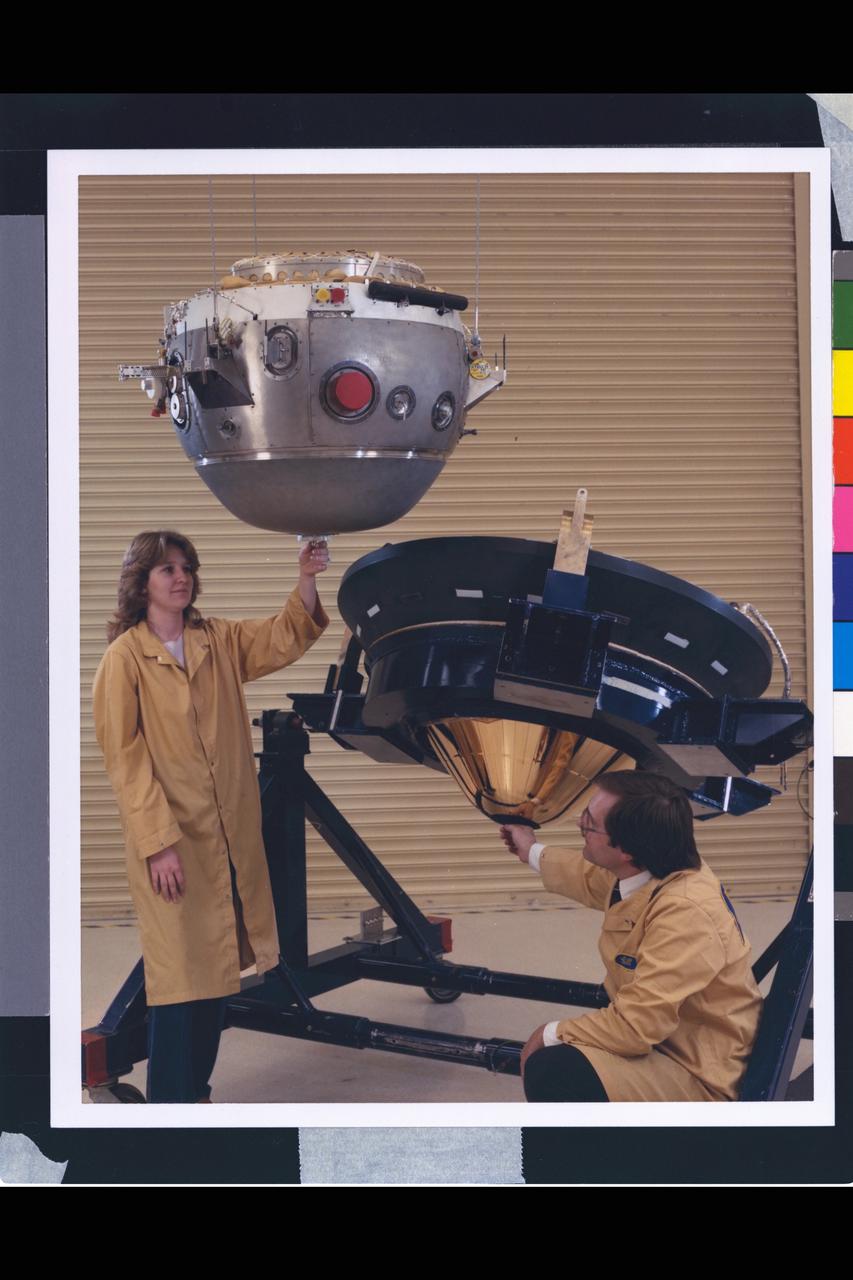
Galileo Regio Mosaic - Galileo over Voyager Data
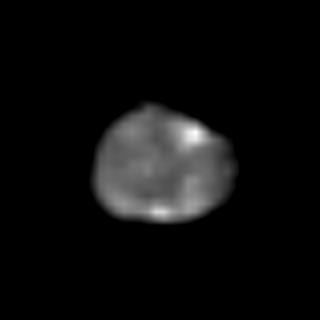
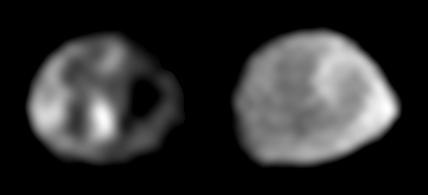
Two Galileo Views of Thebe
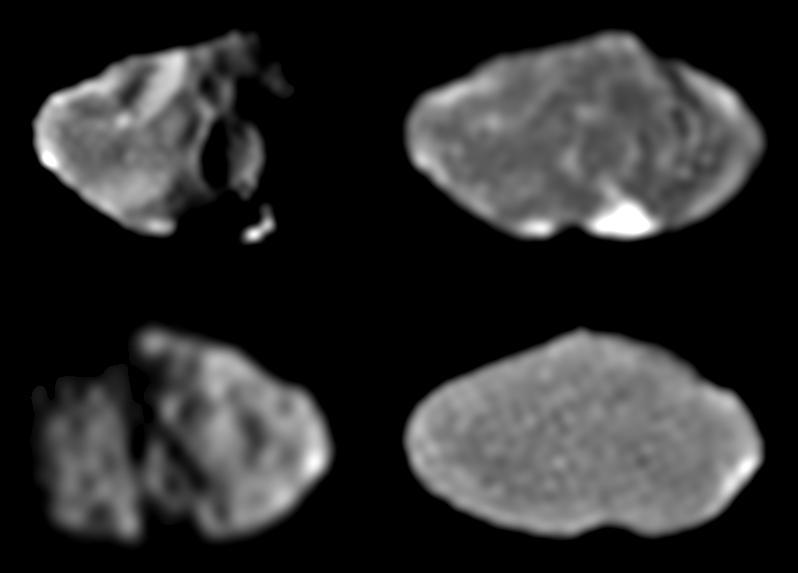
Four Galileo Views of Amalthea
Galileo First Image of Amalthea
View of Callisto from Voyager and Galileo
Galileo Last View of Tvashtar, Io
Artist rendering of NASA Galileo spacecraft flying past Jupiter moon Io. Galileo made multiple close approaches to the volcanically active moon during its time at Jupiter.  http://photojournal.jpl.nasa.gov/catalog/PIA18176
Galileo Over Io Artist Concept
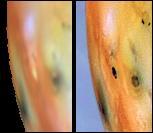
Voyager-to-Galileo Changes, Io Anti-Jove Hemisphere
Uruk Sulcus Mosaic - Galileo over Voyager Data
Galileo Takes a Close-up Look at Prometheus
Galileo PPR Temperature Maps of Loki in October 1999
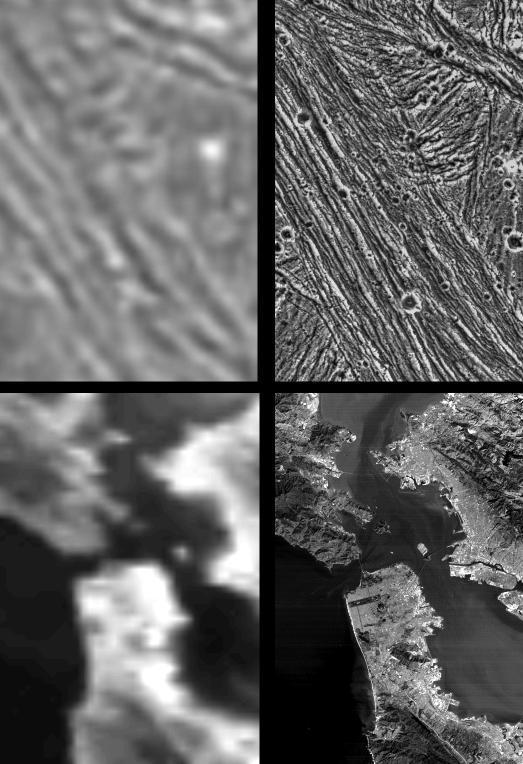
Galileo Resolutions: Ganymede and the San Francisco Bay Area
Io imaging during Galileo 24th orbit
Galileo Discovers Caldera at Prometheus Volcano, Io
Galileo Best View of Loki Volcano on Io
Topographic detail is seen in this stereoscopic view of the Galileo Regio region of Jupiter moon Ganymede. The picture is a computer reconstruction from two images taken by NASA Galileo during 1996.
Stereo View of Ganymede Galileo Region
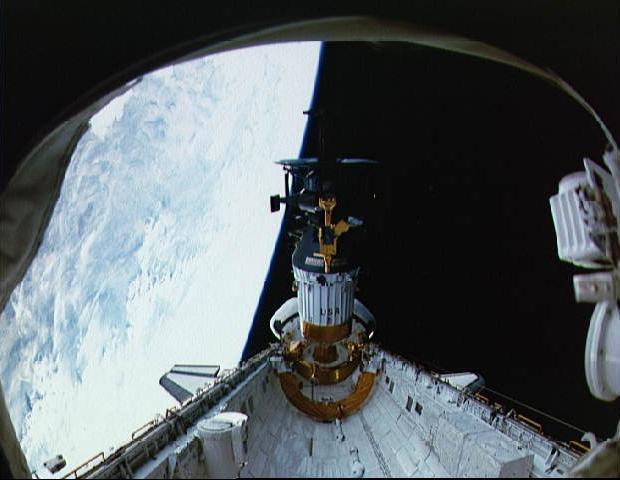
Deployment of NASA Galileo and the IUS from the cargo bay of STS-34 Atlantis at 7:15 p.m. EDT on October 18, 1989. P-35213
Deployment of Galileo and the IUS
These images demonstrate the dramatic improvement in the resolution of pictures that NASA Galileo spacecraft returned compared to previous images of the Jupiter system.  http://photojournal.jpl.nasa.gov/catalog/PIA00277
Ganymede - Comparison of Voyager and Galileo Resolution
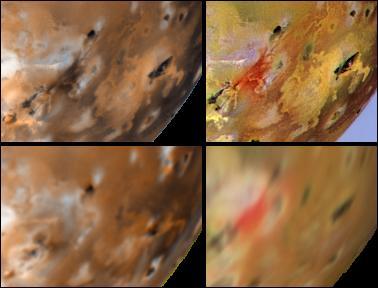
Changes on Io around Volund between Voyager 1 and Galileo Second Orbit
Ganymede Galileo Regio High Resolution Mosaic Shown in Context
Changes around Marduk Between Voyager, and Galileo First Two Orbits
Changes east of Pele between Galileo First Two Orbits
Detail of Ganymede Uruk Sulcus Region as Viewed by Galileo and Voyager
Topographic detail is seen in a stereoscopic view of this part of Jupiter moon Ganymede. This image is a computer reconstruction from two images taken by NASA Galileo spacecraft in 1996.
Stereo View of Ganymede Galileo Regio
White walls and scaffolding had become a common sight in the High Bay 1 clean room in JPL's Spacecraft Assembly Facility by the time the Galileo orbiter was being built. This photo from Nov. 1, 1984 shows that gowning requirements had also become more complex.  Note the fully-opened high-gain antenna; an emblem on the clean room's Wall of Fame depicts it partially opened, as it was at Jupiter.  https://photojournal.jpl.nasa.gov/catalog/PIA23616
Galileo in High Bay 1
This image shows Loki, the most powerful volcano in the solar system, which has been constantly active on Jupiter moon Io. NASA Galileo spacecraft took these images during its approach to Io on October 10, 1999.
Loki as viewed by Galileo NIMS
This color image of the Earth was taken by NASA’s Galileo spacecraft on December 11 as it departed on its 3-year flight to Jupiter, about 2 1/2 days after the second Earth flyby.  http://photojournal.jpl.nasa.gov/catalog/PIA00232
Earth - Departing Image by Galileo
Nine Galileo Views in Natural Color of Main-Belt Asteroid Ida  http://photojournal.jpl.nasa.gov/catalog/PIA00330
Nine Galileo Views in Natural Color of Main-Belt Asteroid Ida
Nine Galileo Views in Exaggerated Color of Main-Belt Asteroid Ida  http://photojournal.jpl.nasa.gov/catalog/PIA00331
Nine Galileo Views in Exaggerated Color of Main-Belt Asteroid Ida
Two sets of laser pulses transmitted from Earth to a spacecraft over a distance of 1.4 million kilometers 870,000 miles in a communications experiment are shown in this long-exposure image made by NASA’s Galileo spacecraft imaging system.  http://photojournal.jpl.nasa.gov/catalog/PIA00230
Galileo Optical Experiment GOPEX
This global view of Europa shows the location of a four-frame mosaic of images taken by NASA Galileo spacecraft in 1996, set into low-resolution data obtained by NASA Voyager spacecraft in 1979.
Context of Europa images from Galileo
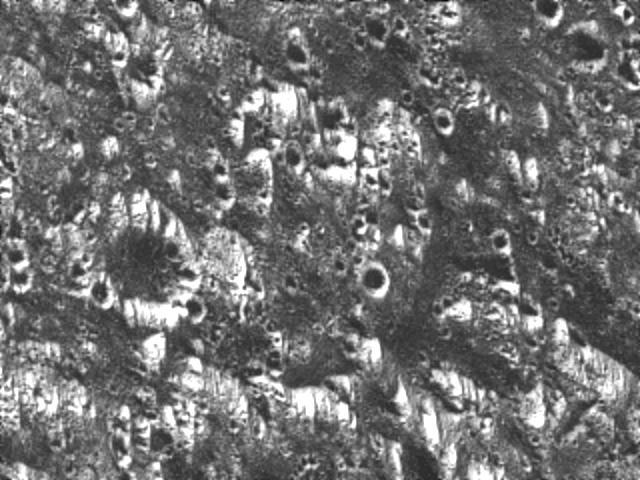
This view of a part of the Galileo Regio region on Jupiter moon Ganymede shows fine details of the dark terrain that makes up about half of the surface of the planet-sized moon.  http://photojournal.jpl.nasa.gov/catalog/PIA00278
Ganymede - Dark Terrain in Galileo Regio
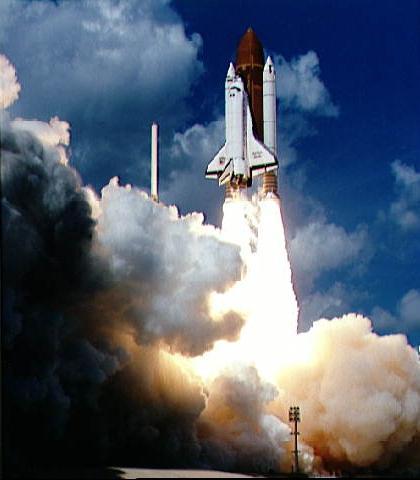
Liftoff of STS-34 Atlantis, carrying NASA Galileo spacecraft and its Inertial Upper Stage IUS booster on October 18, 1989 at 12:35 p.m. EDT. P-35036BC
Launch of Galileo on STS-34 Atlantis
This image shows the region around the Prometheus volcano on Jupiter moon Io. It was observed by NASA Galileo spacecraft in 1996 as it was flying away from a close approach to Io.
Io Prometheus Regions as Viewed by Galileo NIMS
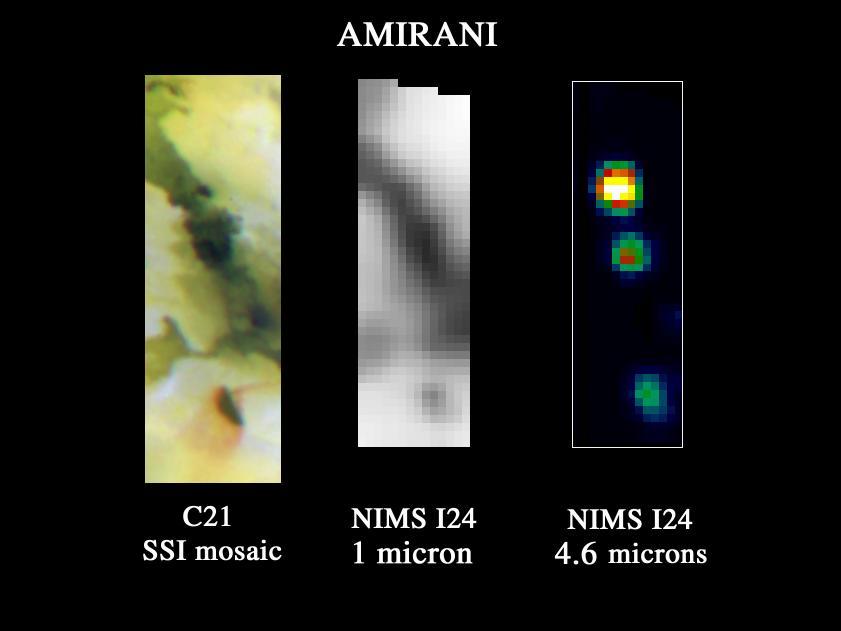
This image is the highest-resolution thermal, or heat image, ever made of Amirani, a large volcano on Jupiter moon Io. It was taken on Oct. 10, 1999, by NASA Galileo spacecraft. Amirani is on the side of Io that permanently faces away from Jupiter.
Galileo NIMS Observes Amirani
This mosaic of images includes the most detailed view of the surface of Jupiter's moon Europa obtained by NASA's Galileo mission.  The topmost footprint is the highest resolution image taken by Galileo at Europa. It was obtained at an original image scale of 19 feet (6 meters) per pixel. The other seven images in this observation were obtained at a resolution of 38 feet (12 meters) per pixel, thus the mosaic, including the top image, has been projected at the higher image scale.  The top image is also provided at its original resolution, as a separate image file. It includes a vertical black line that resulted from missing data that was not transmitted by Galileo. This is the highest resolution view of Europa available until a future mission visits the icy moon.  The right side of the image was previously published as PIA01180. Although this data has been publicly available in NASA's Planetary Data System archive for many years, NASA scientists have not previously combined these images into a mosaic for public release.  This observation was taken with the sun relatively high in the sky, so most of the brightness variations visible here are due to color differences in the surface material rather than shadows. Bright ridge tops are paired with darker valleys, perhaps due to a process in which small temperature variations allow bright frost to accumulate in slightly colder, higher-elevation locations.   http://photojournal.jpl.nasa.gov/catalog/PIA21431
Highest-resolution Europa Image & Mosaic from Galileo
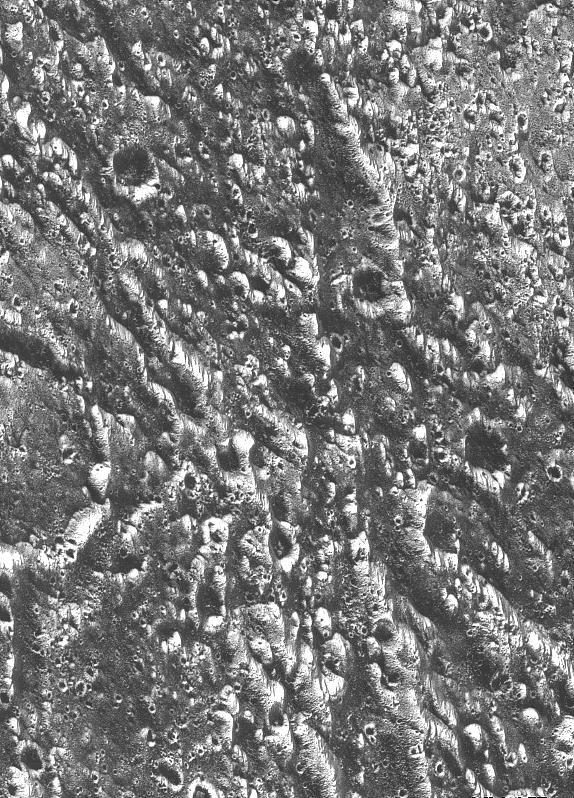
Ancient impact craters shown in this image of Jupiter moon Ganymede taken by NASA Galileo spacecraft testify to the great age of the terrain, dating back several billion years.  http://photojournal.jpl.nasa.gov/catalog/PIA00279
Ganymede - Ancient Impact Craters in Galileo Regio
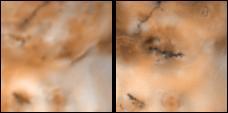
Changes on Io between Voyager 1 and Galileo Second Orbit Around an Unnamed Vent North of Prometheus
Changes on Io around Maui and Amirani between Voyager 1 and Galileo Second Orbit
A mosaic of four Galileo high-resolution images of the Uruk Sulcus region of Jupiter moon Ganymede is shown within the context of an image of the region taken by Voyager 2 in 1979.  http://photojournal.jpl.nasa.gov/catalog/PIA00281
Ganymede - Galileo Mosaic Overlayed on Voyager Data in Uruk Sulcus Region
Two tall volcanic plumes and the rings of red material they have deposited onto surrounding surface areas appear in images taken of Jupiter moon Io by NASA Galileo and Cassini spacecraft in late December 2000 and early January 2001.
Galileo and Cassini Image Two Giant Plumes on Io
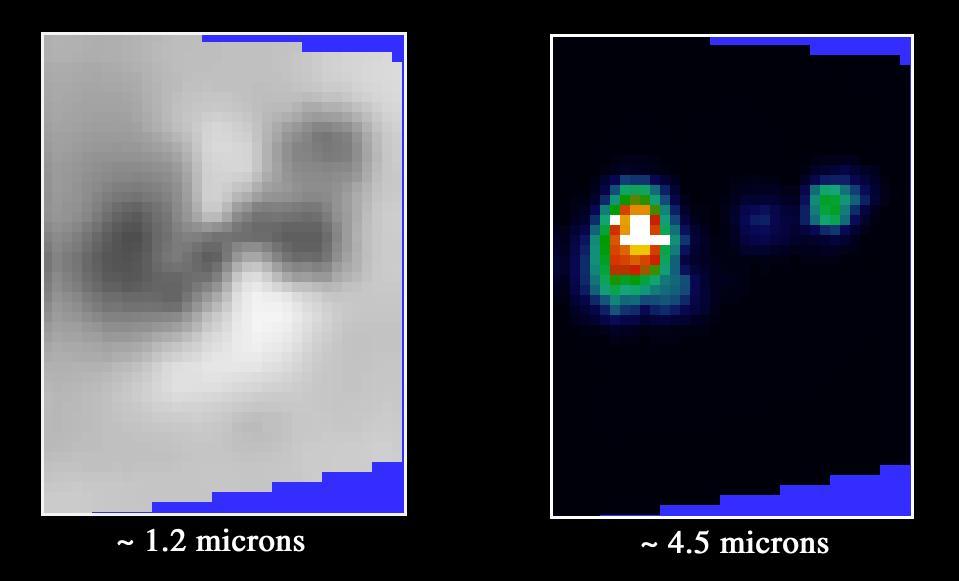
The active volcano Prometheus on Jupiter moon Io was imaged by NASA Galileo spacecraft during the close flyby of Io on Oct.10, 1999. The spectrometer can detect active volcanoes on Io by measuring their heat in the near-infrared wavelengths.
Galileo Near-Infrared Mapping Spectrometer Detects Active Lava Flows at Prometheus Volcano, Io
NASA Galileo spacecraft, which was used to map the mineral and ice properties over the surfaces of the Jovian moons, producing global spectral images for small selected regions on the satellites in 1996-97.
High Spatial Resolution Europa Coverage by the Galileo Near Infrared Mapping Spectrometer NIMS
This image of the crescent moon was obtained by the Galileo Solid State imaging system on December 8 at 5 a.m. PST as NASA Galileo spacecraft neared the Earth.  http://photojournal.jpl.nasa.gov/catalog/PIA00224
Moon - Western Near Side
These four images of the Moon are from data acquired by NASA Galileo spacecraft Near-Earth Mapping Spectrometer during Galileo December 1992 Earth/Moon flyby.  http://photojournal.jpl.nasa.gov/catalog/PIA00231
Moon As Seen By NIMS
At the Kennedy Space Center's (KSC's) Spacecraft and Assembly Encapsulation Facility 2 (SAEF-2), the planetary spacecraft checkout facility, clean-suited technicians work on the Galileo spacecraft prior to moving it to the Vehicle Processing Facility (VPF) for mating with the inertial upper stage (IUS). Galileo is scheduled for launch aboard Atlantis, Orbiter Vehicle (OV) 104, on Space Shuttle Mission STS-34 in October 1989. It will be sent to the planet Jupiter, a journey which will taken more than six years to complete. In December 1995 as the two and one half ton spacecraft orbits Jupiter with its ten scientific instruments, a probe will be released to parachute into the Jovian atmosphere. NASA's Jet Propulsion Laboratory (JPL) manages the Galileo project. View provided by KSC.
STS-34 Galileo processing at KSC's SAEF-2 planetary spacecraft facility
Hubble Views the Galileo Probe Entry Site on Jupiter
Labeled line drawing entitled GALILEO PROBE identifies the deceleration module aft cover, descent module, and deceleration module aeroshell configurations and dimensions prior to and during entry into Jupiter's atmosphere.
Labeled line drawing of Galileo spacecraft's atmospheric probe
During the G7 encounter, NASA Galileo spacecraft observed the shadow of Europa on the clouds of Jupiter during Galileo fourth orbit. The bright spot in the clouds is an atmospheric hot spot.
NIMS Observes Europa Shadow
NASA Galileo spacecraft acquired this global mosaic right during Galileo third orbit on Nov. 4, 1996. The lighter bluish area in the upper latitudes is the Asgard multi-ring structure with crater Burr to the north and Tornasuk to the east.
NIMS Callisto Global Mosaic
Earth Moon Conjuntion image created during Galileo second flyby.  http://photojournal.jpl.nasa.gov/catalog/PIA00134
Earth - Moon Conjunction
Artist concept shows Galileo spacecraft while still approaching Jupiter having a satellite encounter. Galileo is flying about 600 miles above Io's volcano-torn surface, twenty times closer than the closest flyby altitude of Voyager in 1979.
Artist concept of Galileo encountering Io during its Jupiter approach
This image of the moon was obtained by the Galileo Solid State imaging system on Dec. 8 at 7 p.m. PST as NASA Galileo spacecraft passed the Earth and was able to view the lunar surface from a vantage point not possible from the Earth.  http://photojournal.jpl.nasa.gov/catalog/PIA00225
Far Side of the Moon
On June 27, 1996, during Galileo first orbit around Jupiter, a newly discovered impact crater could be seen just right of the center of this image of Jupiter moon Europa returned by NASA Galileo spacecraft camera.  http://photojournal.jpl.nasa.gov/catalog/PIA00294
Europa Active Surface
This montage of 11 images taken by NASA Galileo spacecraft as it flew by the asteroid Gaspra on Oct. 1991, shows Gaspra growing progressively larger in the field of view of Galileo solid-state imaging camera as the spacecraft approached the asteroid.  http://photojournal.jpl.nasa.gov/catalog/PIA00079
Gaspra Approach Sequence
Galileo spacecraft image of the Moon recorded at 9:35 am Pacific Standard Time (PST), 12-09-90, after completing its first Earth Gravity Assist. Western hemisphere of the Moon was taken through a green filter at a range of about 350,000 miles. In the center is Orientale Basin, 600 miles in diameter, formed about 3.8 billion years ago by the impact of an asteroid-size body. Orientale's dark center is a small mare. To the right is the lunar near side with the great, dark Oceanus Procellarum above the small, circular, dark Mare Humorum below. Maria are broad plains formed mostly over 3 billion years ago as vast basaltic lava flows. To the left is the lunar far side with fewer maria, but, at lower left South-Pole-Aitken basin, about 1200 miles in diameter, which resembles Orientale but is much older and more weathered and battered by cratering. The intervening cratered highlands of both sides, as well as the maria, are dotted with bright young craters. This image was "reprojected" so as to center the Orientale Basin, and was filtered to enhance the visibility of small features. The digital image processing was done by DLR, the German Aerospace Research Establishment near Munich, an international collaborator in the Galileo mission. Photo was provided by Jet Propulsion Laboratory (JPL) with alternate number P-37327, 12-19-90.
Western hemisphere of the Moon taken by Galileo spacecraft
This picture contains two images of Jupiter moon Io and its surrounding sky. This image was taken by NASA Galileo spacecraft in 1996.
Io Sodium Cloud Clear Filter and Green-Yellow Filter with Intensity Contours
The mottled face of Jupiter volcanically active moon Io as viewed by NASA Galileo spacecraft.  http://photojournal.jpl.nasa.gov/catalog/PIA00282
Io - Full Disk Centered on Media Regio
This image from NASA Galileo spacecraft is of Prometheus sunlit plume and Io illuminated crescent.
Io Sodium Cloud Clear and Green-Yellow Filters
This observation of a small section of the Asgard terrain reveals compositional variations over the surface of Callisto was captured by NASA Galileo spacecraft in 1996.
Compositional Variations in Callisto Asgard Impact Structure
Mosaic of a belt-zone boundary near Jupiter equator as seen by NASA Galileo orbiter in 1996.
Jupiter Belt-Zone Boundary Methane filter, 732 nm
Roughly true color image of the Great Red Spot of Jupiter as taken by NASA Galileo spacecraft on June 26, 1996.
True Color of Jupiter Great Red Spot
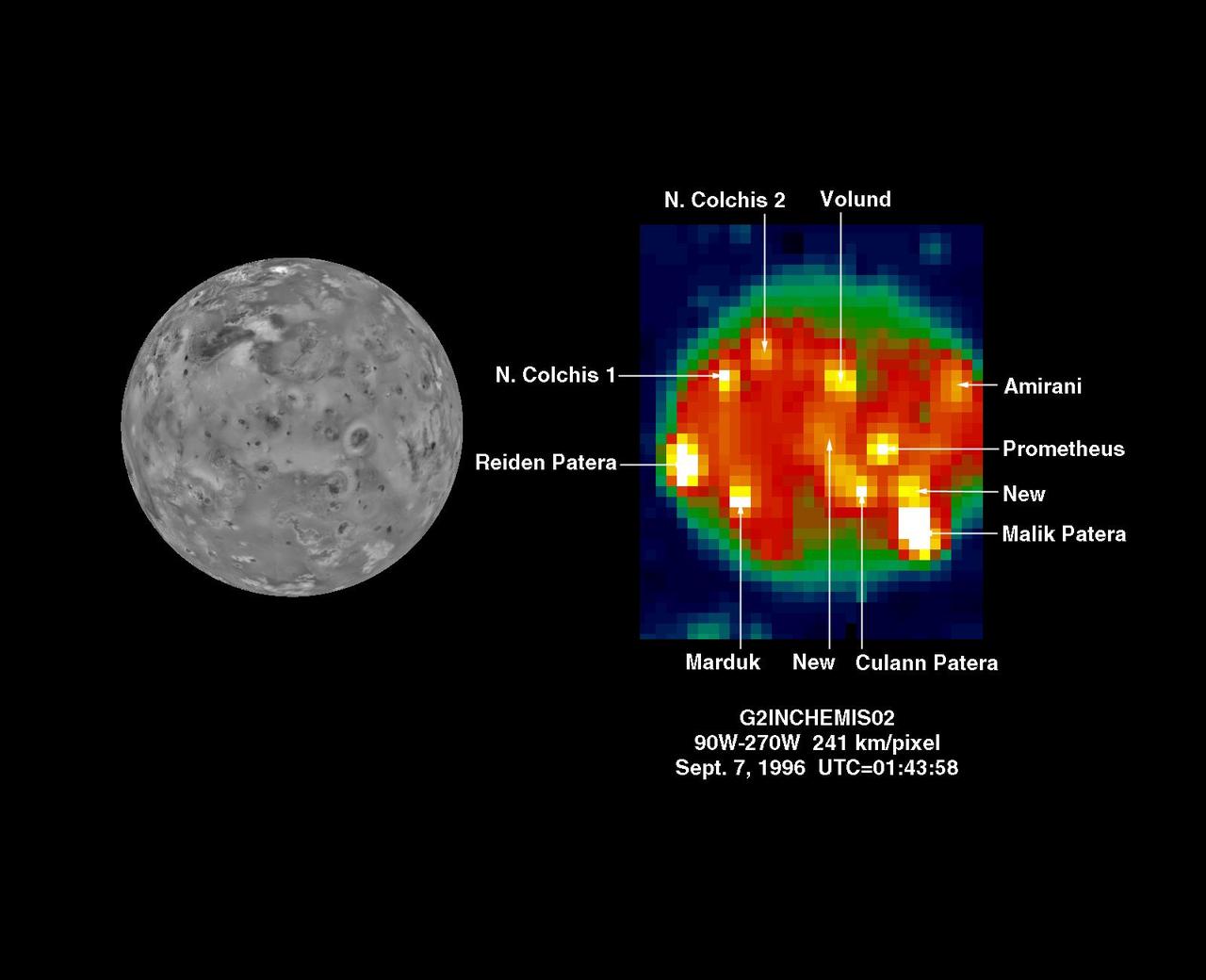
NASA Galileo spacecraft imaged Io at high spectral resolution during the G2 encounter on Sept. 6, 1996.
Hotspots on Io During the Ganymede 2 Encounter
This image from NASA Galileo spacecraft is of Jupiter moon Io and its surrounding sky is shown in false color.
Io Sodium Cloud On-Chip Format Clear and Green-Yellow Filters Superimposed
A very active volcano on Jupiter moon Io, probably composed of erupting lava fountains, was seen by NASA Galileo spacecraft.
Eruption from High Latitude Caldera Viewed by the Near-Infrared Mapping Spectrometer NIMS
Artist: Ken Hodges Composite image explaining Objective and Motivation for Galileo Probe Heat Loads: Galileo Probe descending into Jupiters Atmosphere shows heat shield separation with parachute deployed.   (Ref. JPL P-19180)
ARC-1981-AC81-0174
Galileo Wake probe: 6x6ft w.t. testing
ARC-1983-AC83-0188-7
Galileo probe wind tunnel model assembly
ARC-1982-A82-0582-4
Galileo Wake probe: 6x6ft w.t. testing
ARC-1983-AC83-0188-3
      Colors were mapped onto infrared data from NASA's Galileo mission in this image revealing locations around a crater on the Jovian moon Europa called Manannán where there are signatures of water.      Manannán was created when a comet or asteroid hit the surface of Europa. The blue colors in this image indicate higher concentrations of water ice in the material thrown out of the crater during impact. Yellow and red show the locations of hydrates, chemically altered forms of water that can bind to other elements.      The background black-and-white image was taken by the Galileo solid-state imaging camera, which took images in visible light. The colors correspond to wavelengths of light that are not detectable to the human eye but were observed by Galileo's near-infrared mapping spectrometer.      Galileo orbited Jupiter for almost eight years, concluding its mission in 2003.  https://photojournal.jpl.nasa.gov/catalog/PIA26104
Map of Water Signatures at Europa's Manannán Crater
This image was acquired on May 6, 1997 while Io was in eclipse in Jupiter shadow during NASA Galileo spacecraft eighth orbit, and reveals several dynamic processes.
Io Eclipse/Volcanic Eruption
Jupiter atmospheric circulation is dominated by alternating eastward and westward jets from equatorial to polar latitudes. This image was taken on April 3, 1997, by NASA Galileo spacecraft.
Jupiter Northern Hemisphere in a Methane Band Time Set 1
This image, using data from NASA Galileo mission, shows the first detection of clay-like minerals on the surface of Jupiter moon Europa.
Clay Prints on Europa
Volcanic hot spots are seen in this color temperature map of the Prometheus volcano on Jupiter moon Io created with data obtained by NASA Galileo and Voyager spacecraft.
Prometheus/NIMS
This mosaic of Jupiter’s moon Ganymede consists of more than 100 images acquired with NASA’s Voyager and Galileo spacecrafts, showing irregular lumps beneath the icy surface.
Lumps Within Ganymede
This is an image of Io, taken by NASA Galileo spacecraft during the G2 encounter in September 1996. This is a dayside image of Io on the right against the clouds of Jupiter the blue background.
NIMS: hotspots on Io during G2 continued
Jupiter atmospheric circulation is dominated by alternating eastward and westward jets from equatorial to polar latitudes. This image was taken on April 3, 1997, by NASA Galileo spacecraft.
Jupiter Northern Hemisphere in a Methane Band Time Set 2
Jupiter atmospheric circulation is dominated by alternating eastward and westward jets from equatorial to polar latitudes. This image was taken on April 3, 1997, by NASA Galileo spacecraft.
Jupiter Northern Hemisphere in Violet Light Time Set 1
The anaglyph shows Pwyll crater on Jupiter icy satellite Europa, captured by NASA Galileo Orbiter. 3D glasses are necessary to identify surface detail.
Red-Blue Three Dimensional View of Pwyll crater
Jupiter atmospheric circulation is dominated by alternating eastward and westward jets from equatorial to polar latitudes. This image was taken on April 3, 1997, by NASA Galileo spacecraft.
Jupiter Northern Hemisphere in a Methane Band Time Set 3
Jupiter atmospheric circulation is dominated by alternating eastward and westward jets from equatorial to polar latitudes. This image was taken on April 3, 1997, by NASA Galileo spacecraft.
Jupiter Northern Hemisphere in the Near-Infrared Time Set 4
Jupiter atmospheric circulation is dominated by alternating eastward and westward jets from equatorial to polar latitudes. This image was taken on April 3, 1997, by NASA Galileo spacecraft.
Jupiter Northern Hemisphere in a Methane Band Time Set 1
This mosaic shows the features of Jupiter main visible cloud deck and the hazy cloud layer above it as seen by NASA Galileo spacecraft on April 3, 1997.
Jupiter Northern Hemisphere in Violet Light Time Set 2
NASA Galileo spacecraft imaged most of Europa, including the north polar regions, at high spectral resolution during the G1 encounter on June 28, 1996.
NIMS G1 Observation of Europa
This three dimensional effect is created by superimposing images of Jupiter icy moon, Europa, taken by NASA Galileo Orbiter. 3D glasses are necessary to identify surface detail.
Topography within Europa Mannannan Crater
Jupiter atmospheric circulation is dominated by alternating eastward and westward jets from equatorial to polar latitudes. This image was taken on April 3, 1997, by NASA Galileo spacecraft.
Jupiter Northern Hemisphere in a Methane Band Time Set 2
Bright scars on a darker surface testify to a long history of impacts on Jupiter moon Callisto in this image of Callisto from NASA Galileo spacecraft.
Global Callisto in Color
Global images of Earth from NASA Galileo orbiter on December 11, 1999. In each frame, the continent of Antarctica is visible at the bottom of the globe.
Global Images of Earth
Repeated flybys of Io by NASA Galileo spacecraft have allowed scientists to develop an understanding of Io Tohil-Culann region of interconnected volcanoes and mountains.
Io Culann-Tohil Region in Color
Jupiter atmospheric circulation is dominated by alternating eastward and westward jets from equatorial to polar latitudes. This image was taken on April 3, 1997, by NASA Galileo spacecraft.
Jupiter Northern Hemisphere in the Near-Infrared Time Set 2
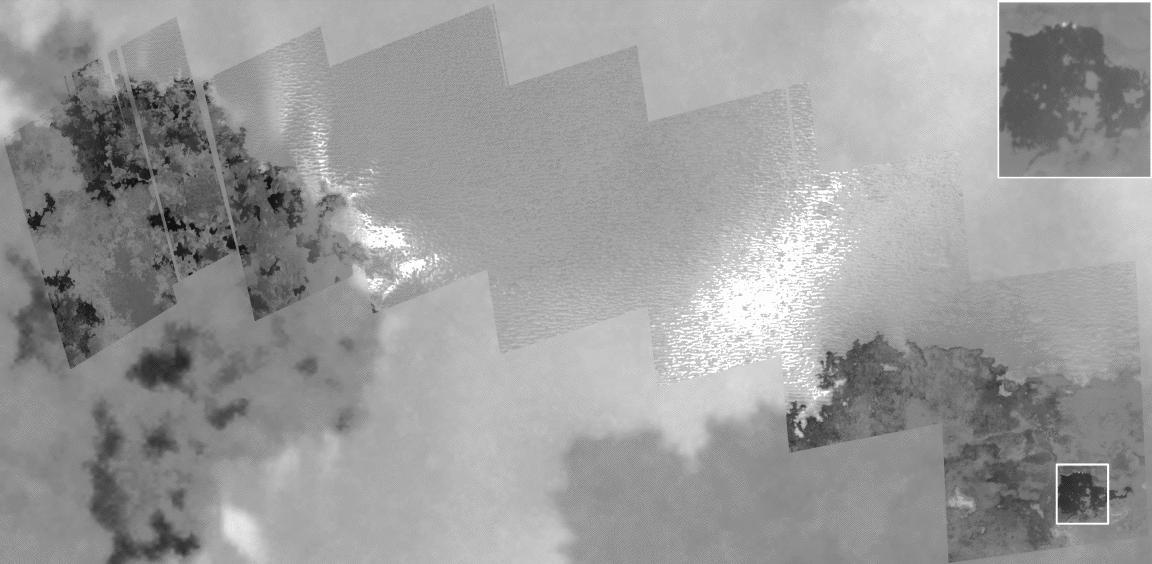
New and older lava flows clustered in the Tvashtar region of Jupiter moon Io appeared as hot spots in a temperature map from NASA Galileo spacecraft in 1999.
Io Tvashtar Area in Infrared: Multiple Lava Flows
Jupiter atmospheric circulation is dominated by alternating eastward and westward jets from equatorial to polar latitudes. This image was taken on April 3, 1997, by NASA Galileo spacecraft.
Jupiter Northern Hemisphere in Violet Light Time Set 3
Jupiter atmospheric circulation is dominated by alternating eastward and westward jets from equatorial to polar latitudes. This image was taken on April 3, 1997, by NASA Galileo spacecraft.
Jupiter Northern Hemisphere in the Near-Infrared Time Set 1
This map shows the temperatures for most of the surface of Ganymede made from data taken by on Jun. 26, 1996 as NASA Galileo approached the sunlit side of the moon.
Temperature Map of Ganymede
Jupiter atmospheric circulation is dominated by alternating eastward and westward jets from equatorial to polar latitudes. This image was taken on April 3, 1997, by NASA Galileo spacecraft.
Jupiter Northern Hemisphere in the Near-Infrared Time Set 3
Pele, one of Io best-known volcanoes, was observed by NASA Galileo spacecraft, during the flyby of Jupiter moon Io on February 22, 2000.
Temperature Map of Pele, Io
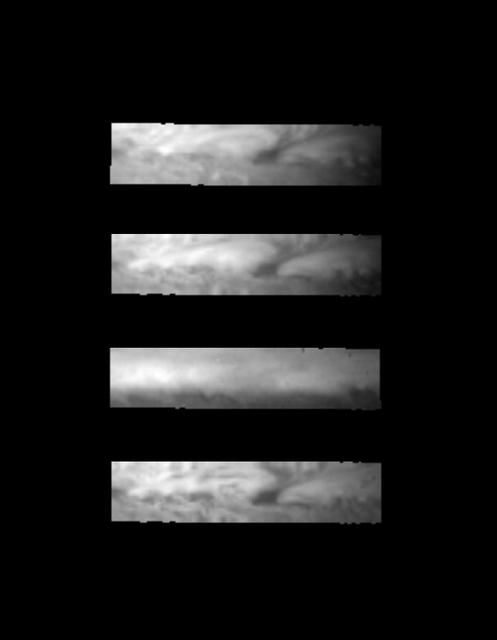
These images, acquired December 17, 1996 by NASA Galileo orbiter, show a small portion of the equatorial region of Jupiter of a dark clearing of clouds in the meteorologically-active troposphere.
NIMS Views of a Jovian Hot
This enhanced color image shows cracks and ridges on Europa surface that reveal a detailed geologic history. The view was captured by NASA Galileo spacecraft on February 2, 1999.
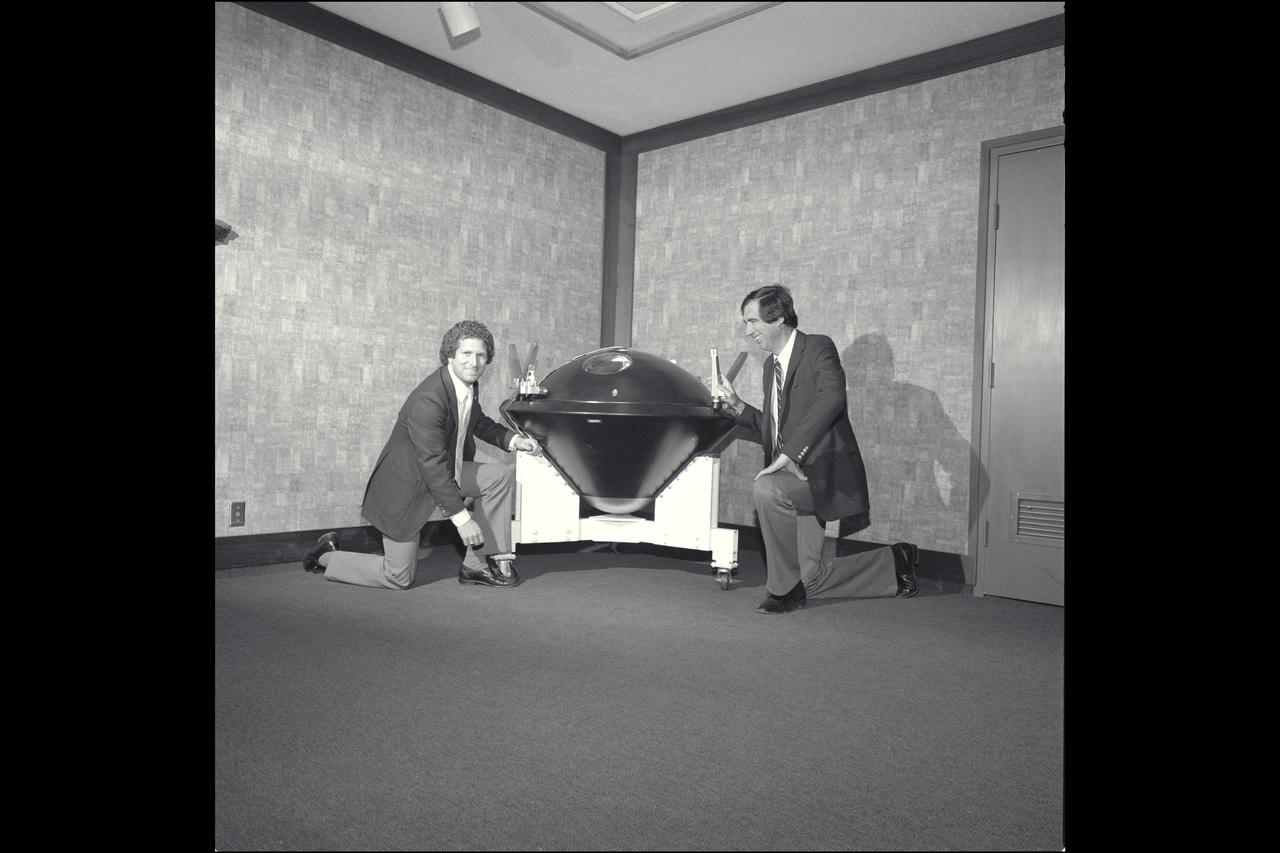
Cracks and Ridges on Europa
Galileo probe heating. Tests at the Ames Hypervolicity Free-Flight Facility (HFF)
ARC-1979-AC79-0892
Galileo Probe Descent module and deceleration module aeroshell (heat shield)
ARC-1984-AC84-0228-3