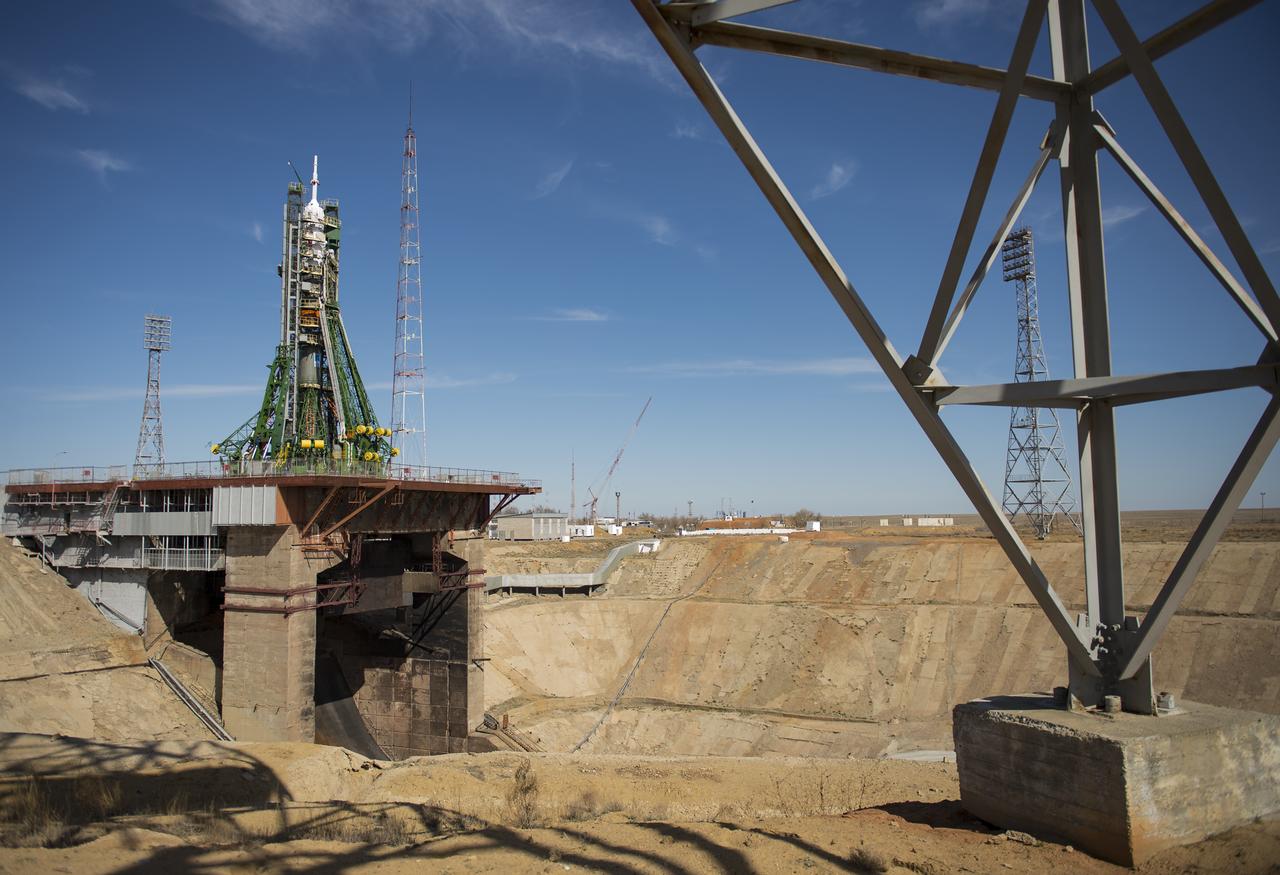
The Soyuz MS-04 spacecraft is seen after the gantry arms closed around the rocket to secure it at the launch pad on Monday, April 17, 2017 at the Baikonur Cosmodrome in Kazakhstan. Launch of the Soyuz rocket is scheduled for April 20 Baikonur time and will carry Expedition 51 Soyuz Commander Fyodor Yurchikhin of Roscosmos and Flight Engineer Jack Fischer of NASA into orbit to begin their four and a half month mission on the International Space Station. Photo Credit: (NASA/Aubrey Gemignani)
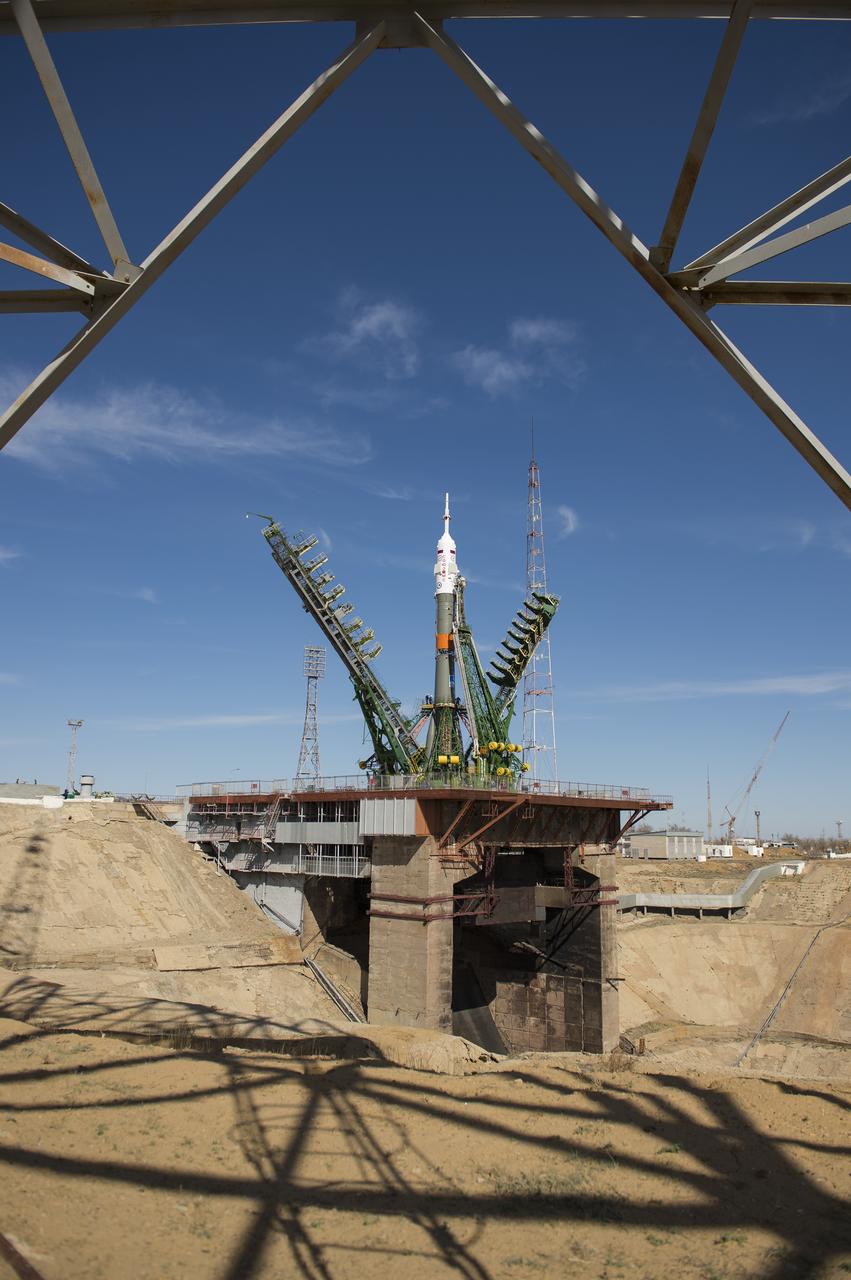
The gantry arms close around the Soyuz MS-04 spacecraft to secure the rocket at the launch pad on Monday, April 17, 2017 at the Baikonur Cosmodrome in Kazakhstan. Launch of the Soyuz rocket is scheduled for April 20 Baikonur time and will carry Expedition 51 Soyuz Commander Fyodor Yurchikhin of Roscosmos and Flight Engineer Jack Fischer of NASA into orbit to begin their four and a half month mission on the International Space Station. Photo Credit: (NASA/Aubrey Gemignani)
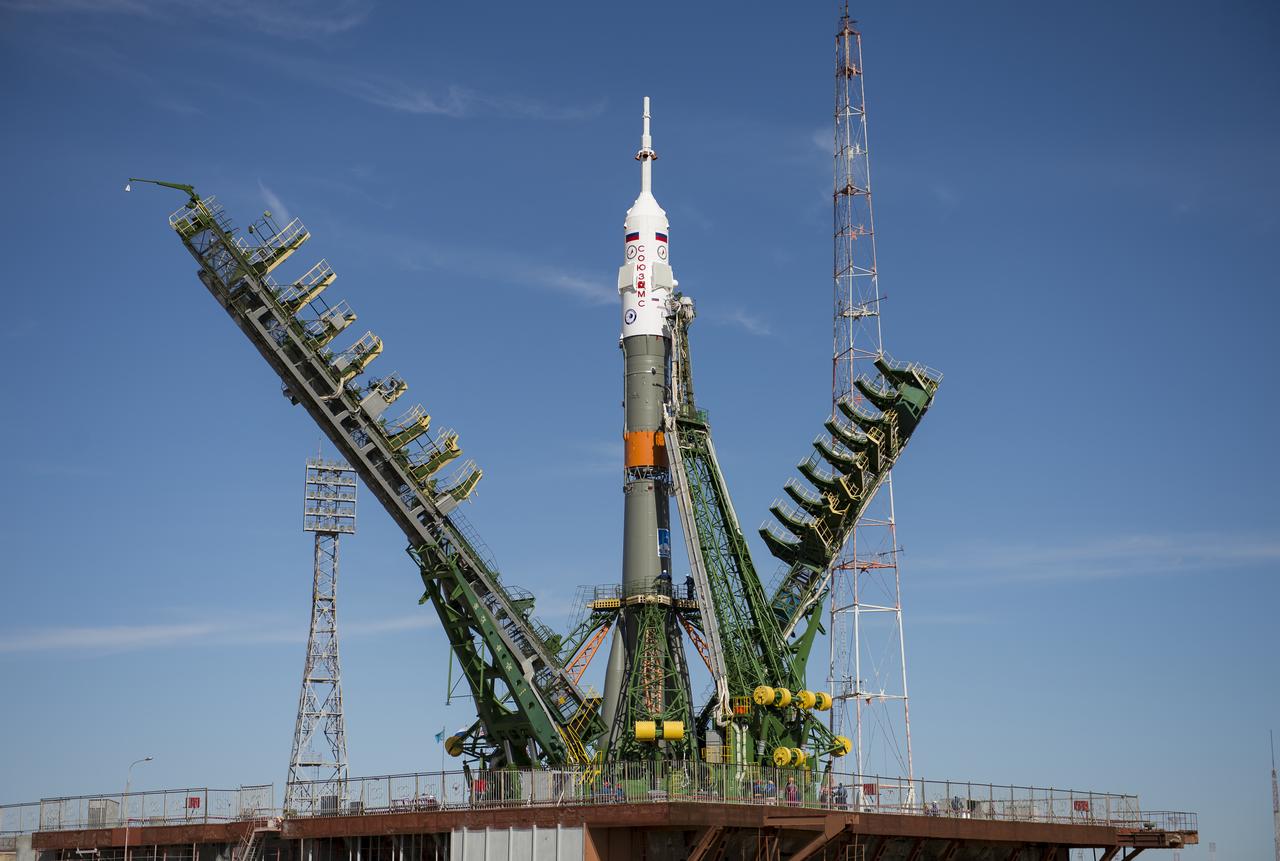
The gantry arms close around the Soyuz MS-04 spacecraft to secure the rocket at the launch pad on Monday, April 17, 2017 at the Baikonur Cosmodrome in Kazakhstan. Launch of the Soyuz rocket is scheduled for April 20 Baikonur time and will carry Expedition 51 Soyuz Commander Fyodor Yurchikhin of Roscosmos and Flight Engineer Jack Fischer of NASA into orbit to begin their four and a half month mission on the International Space Station. Photo Credit: (NASA/Aubrey Gemignani)
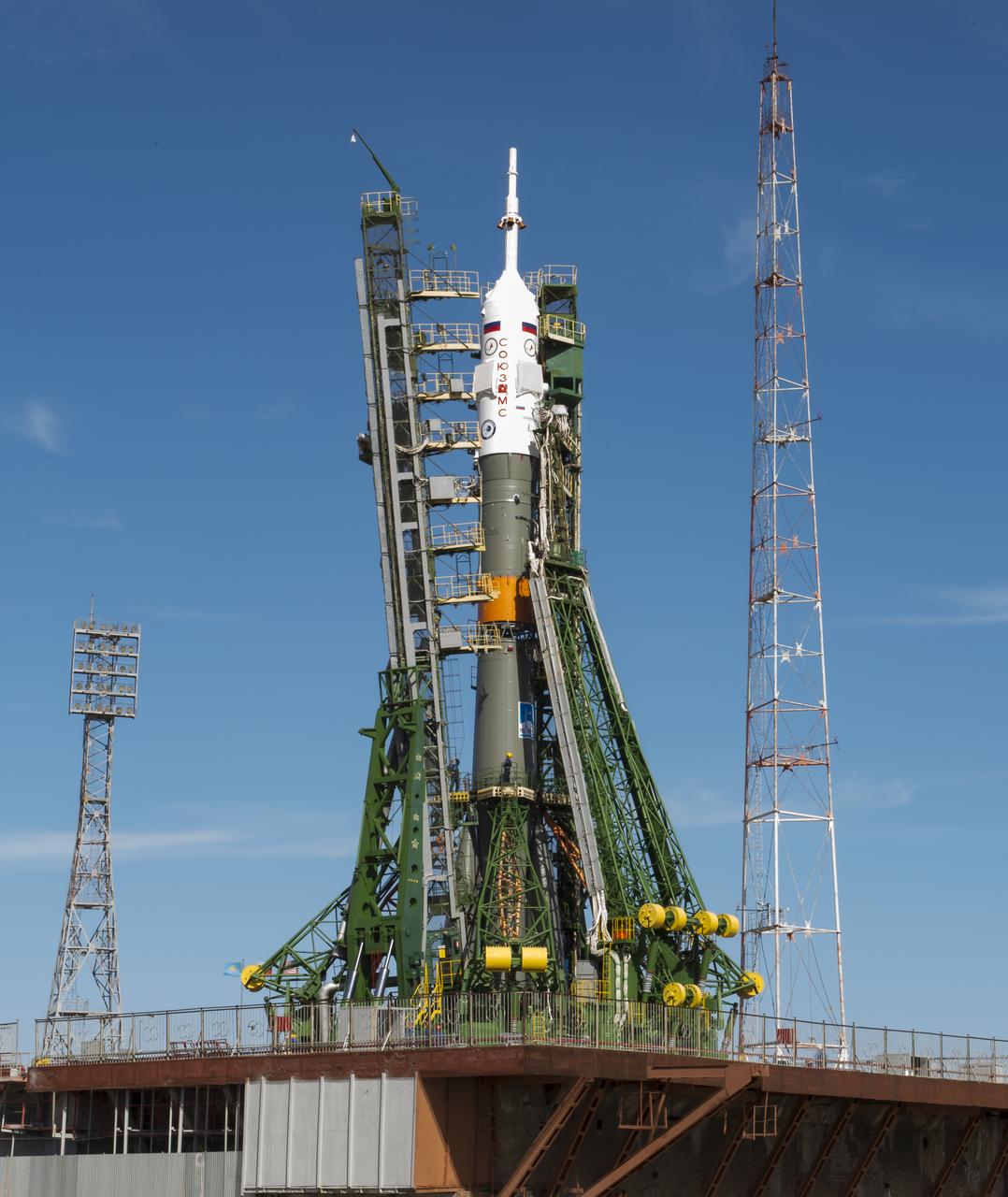
The gantry arms close around the Soyuz MS-04 spacecraft to secure the rocket at the launch pad on Monday, April 17, 2017 at the Baikonur Cosmodrome in Kazakhstan. Launch of the Soyuz rocket is scheduled for April 20 Baikonur time and will carry Expedition 51 Soyuz Commander Fyodor Yurchikhin of Roscosmos and Flight Engineer Jack Fischer of NASA into orbit to begin their four and a half month mission on the International Space Station. Photo Credit: (NASA/Aubrey Gemignani)
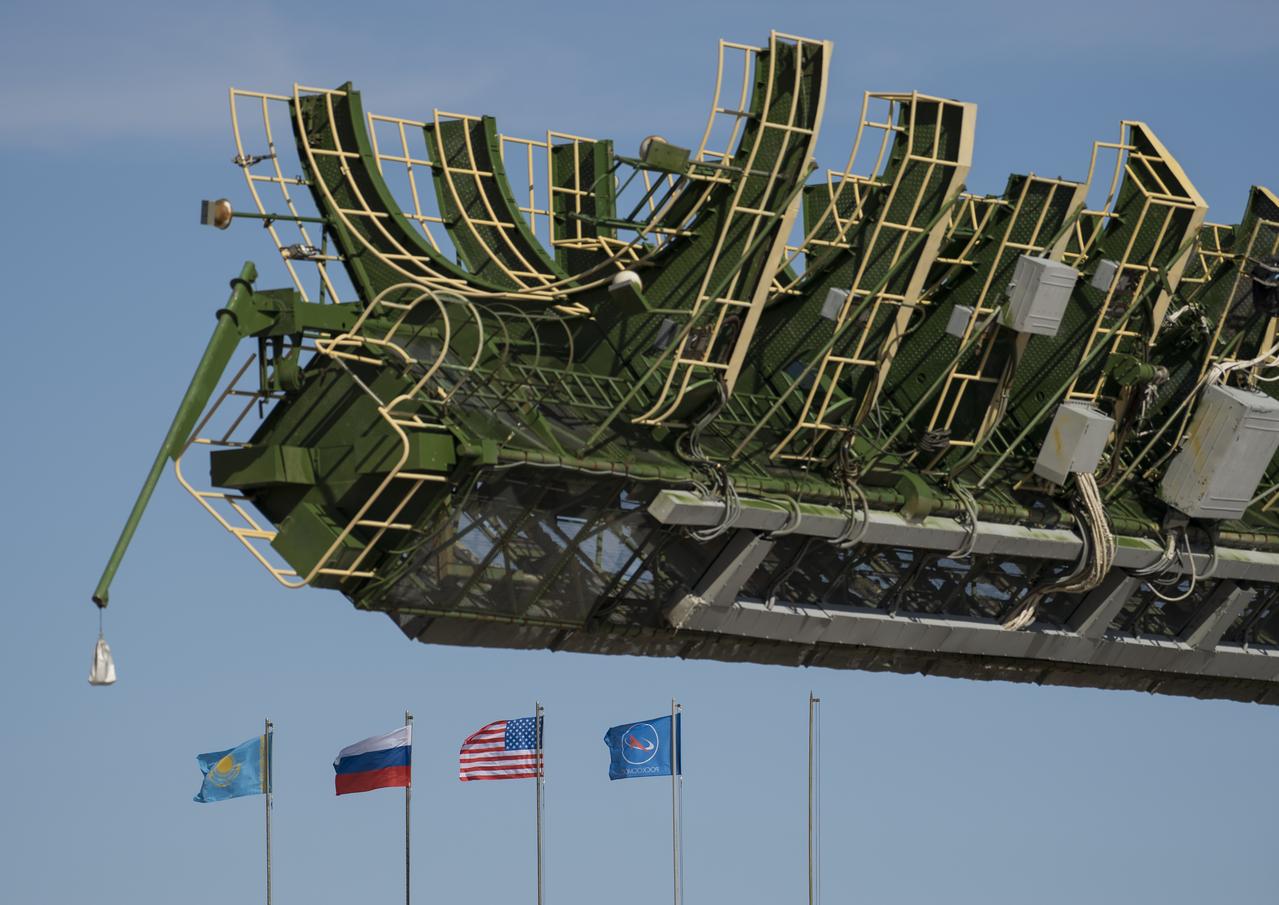
One of the gantry arms is seen before being closed around the Soyuz MS-04 spacecraft to secure the rocket, Monday, April 17, 2017 at launch pad 1 at the Baikonur Cosmodrome in Kazakhstan. Launch of the Soyuz rocket is scheduled for April 20 Baikonur time and will carry Expedition 51 Soyuz Commander Fyodor Yurchikhin of Roscosmos and Flight Engineer Jack Fischer of NASA into orbit to begin their four and a half month mission on the International Space Station. Photo Credit: (NASA/Aubrey Gemignani)
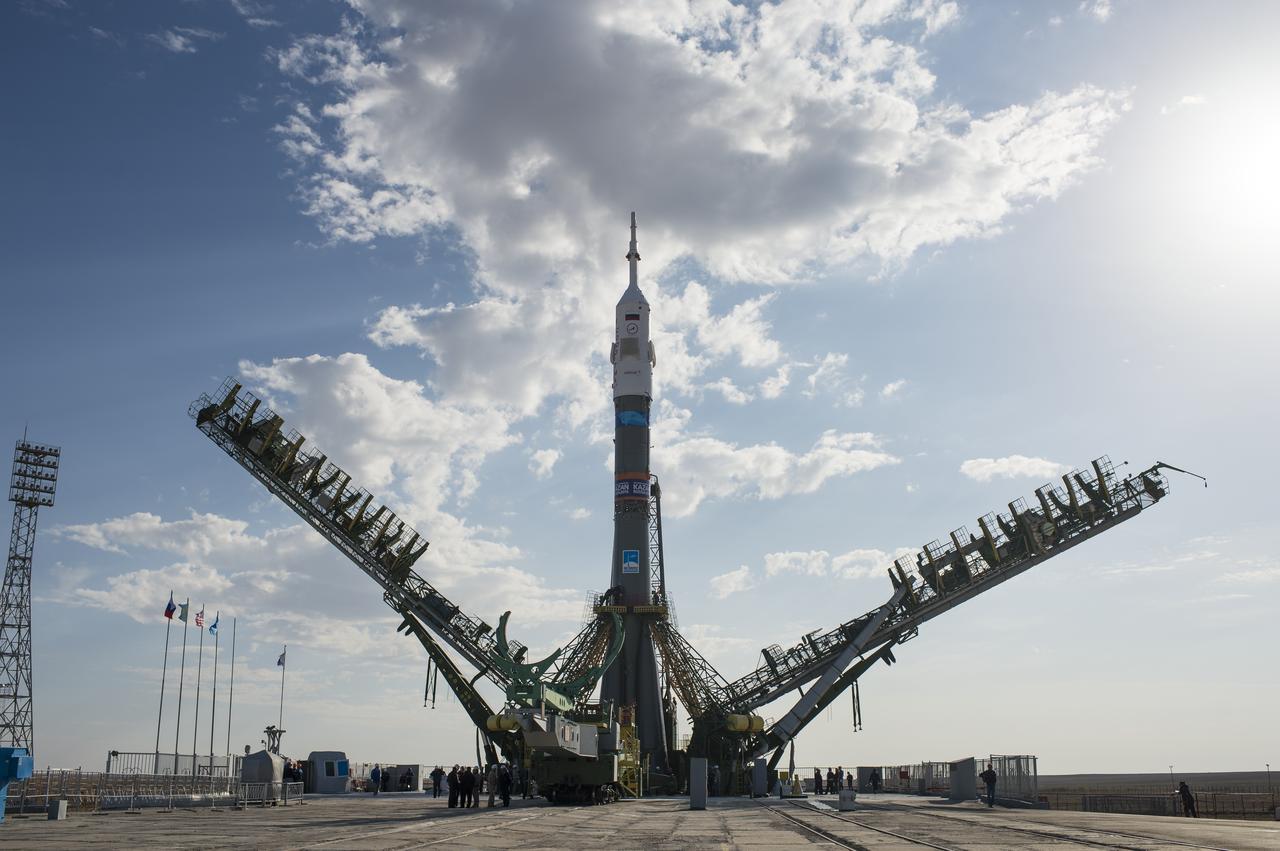
The gantry arms begin to close around the Soyuz TMA-14M spacecraft to secure the rocket at the launch pad Sept. 23, 2014 at the Baikonur Cosmodrome in Kazakhstan. Launch of the Soyuz rocket is scheduled for Sept. 26 and will carry Expedition 41 Soyuz Commander Alexander Samokutyaev of the Russian Federal Space Agency (Roscosmos), Flight Engineer Barry Wilmore of NASA, and Flight Engineer Elena Serova of Roscosmos into orbit to begin their five and a half month mission on the International Space Station. Photo Credit: (NASA/Joel Kowsky)
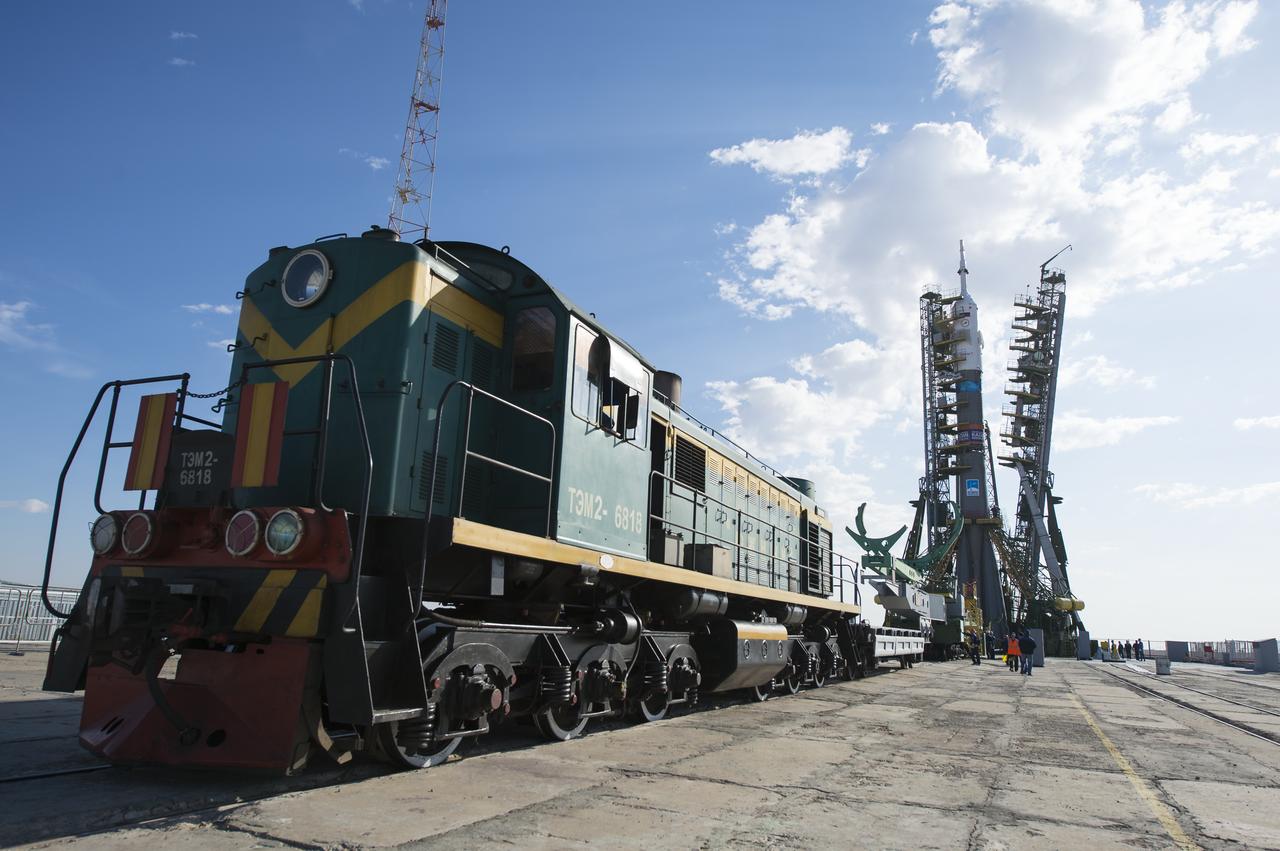
The gantry arms begin to close around the Soyuz TMA-14M spacecraft to secure the rocket at the launch pad Sept. 23, 2014 at the Baikonur Cosmodrome in Kazakhstan. Launch of the Soyuz rocket is scheduled for Sept. 26 and will carry Expedition 41 Soyuz Commander Alexander Samokutyaev of the Russian Federal Space Agency (Roscosmos), Flight Engineer Barry Wilmore of NASA, and Flight Engineer Elena Serova of Roscosmos into orbit to begin their five and a half month mission on the International Space Station. Photo Credit: (NASA/Joel Kowsky)
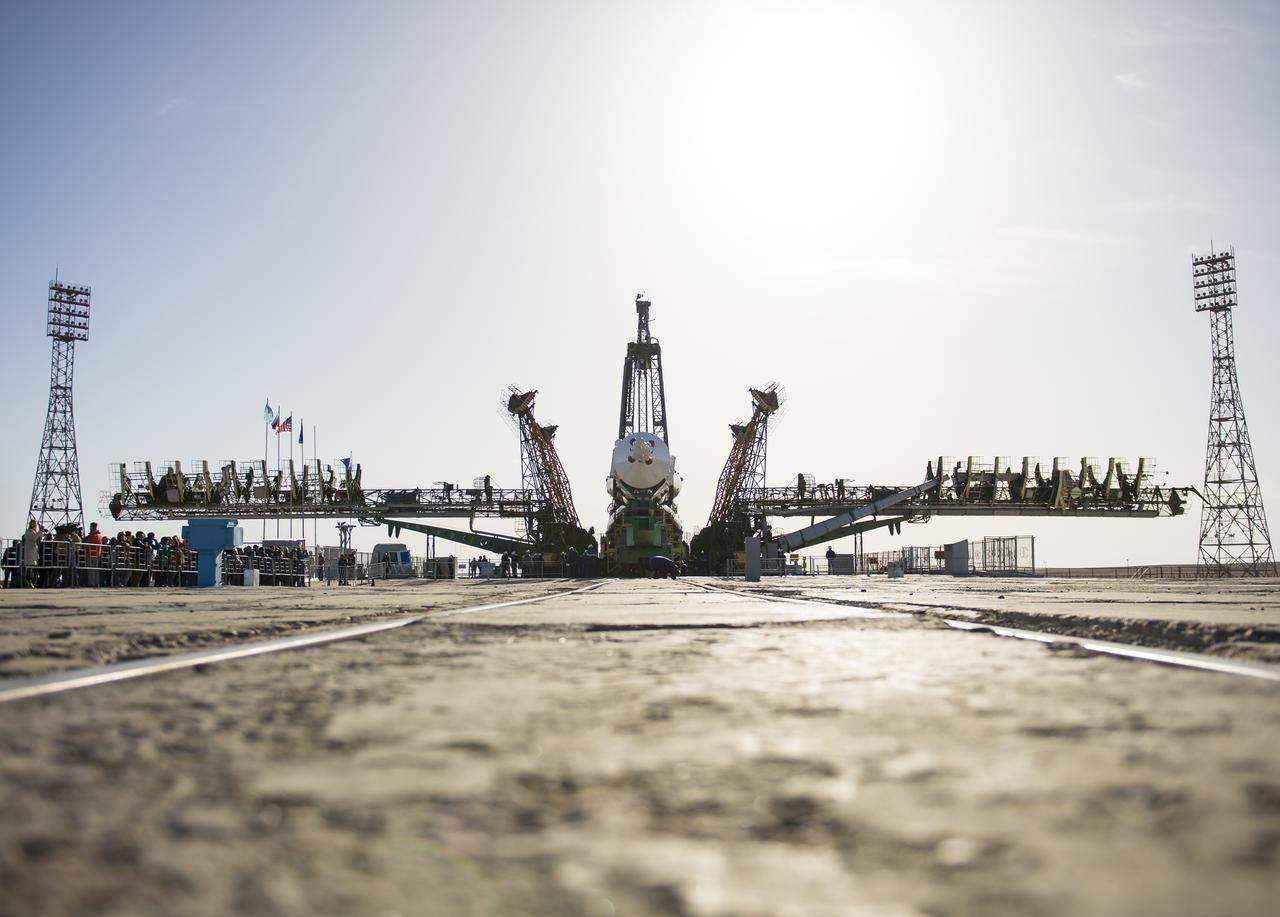
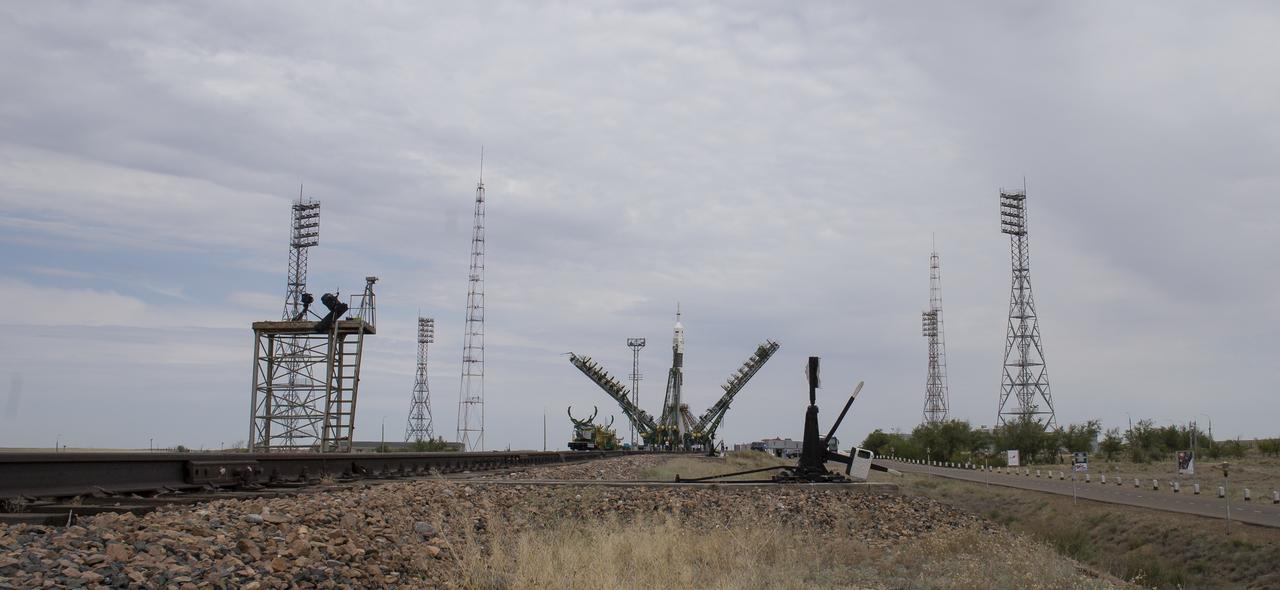
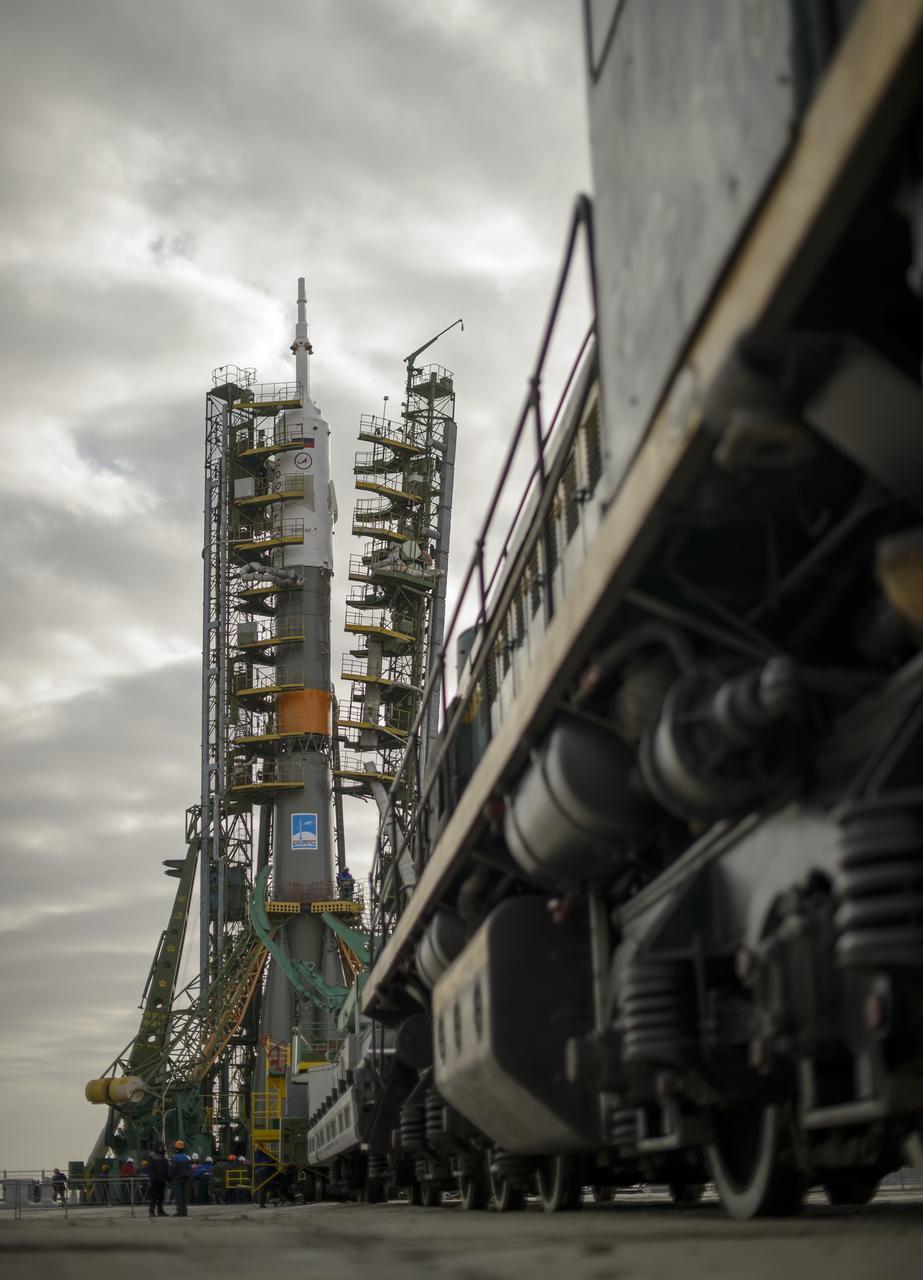
The Soyuz MS-04 spacecraft is seen at the Soyuz launch pad 1 just before it is raised into a vertical position Monday, April 17, 2017 at the Baikonur Cosmodrome in Kazakhstan. Launch of the Soyuz rocket is scheduled for April 20 Baikonur time and will carry Expedition 51 Soyuz Commander Fyodor Yurchikhin of Roscosmos and Flight Engineer Jack Fischer of NASA into orbit to begin their four and a half month mission on the International Space Station. Photo Credit: (NASA/Aubrey Gemignani)
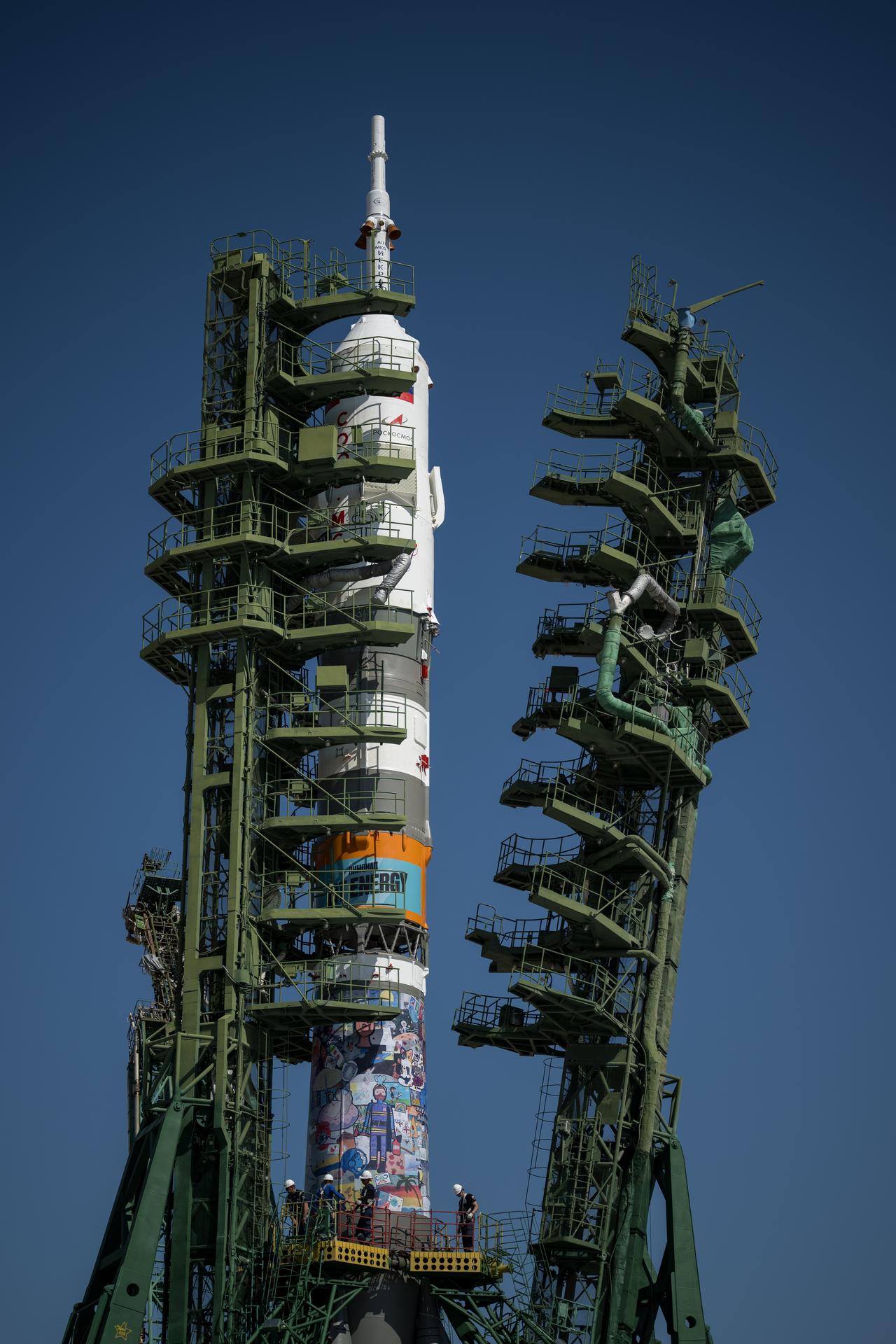
The Soyuz MS-09 rocket is seen as the gantry arms are lowered prior to launch, Wednesday, June 6, 2018 at the Baikonur Cosmodrome in Kazakhstan. Expedition 56 Soyuz Commander Sergey Prokopyev of Roscosmos, flight engineer Serena Auñón-Chancellor of NASA, and flight engineer Alexander Gerst of ESA (European Space Agency) launched at 7:12am EDT (5:12pm Baikonur time) and will spend the next six months living and working aboard the International Space Station. Photo Credit: (NASA/Joel Kowsky)

The Soyuz TMA-14M spacecraft is seen after the gantry arms closed securing the rocket in the veritcal position at the launch pad on Tuesday, Sept. 23, 2014 at the Baikonur Cosmodrome in Kazakhstan. Launch of the Soyuz rocket is scheduled for Sept. 26 and will carry Expedition 41 Soyuz Commander Alexander Samokutyaev of the Russian Federal Space Agency (Roscosmos), Flight Engineer Barry Wilmore of NASA, and Flight Engineer Elena Serova of Roscosmos into orbit to begin their five and a half month mission on the International Space Station. Photo Credit: (NASA/Aubrey Gemignani)
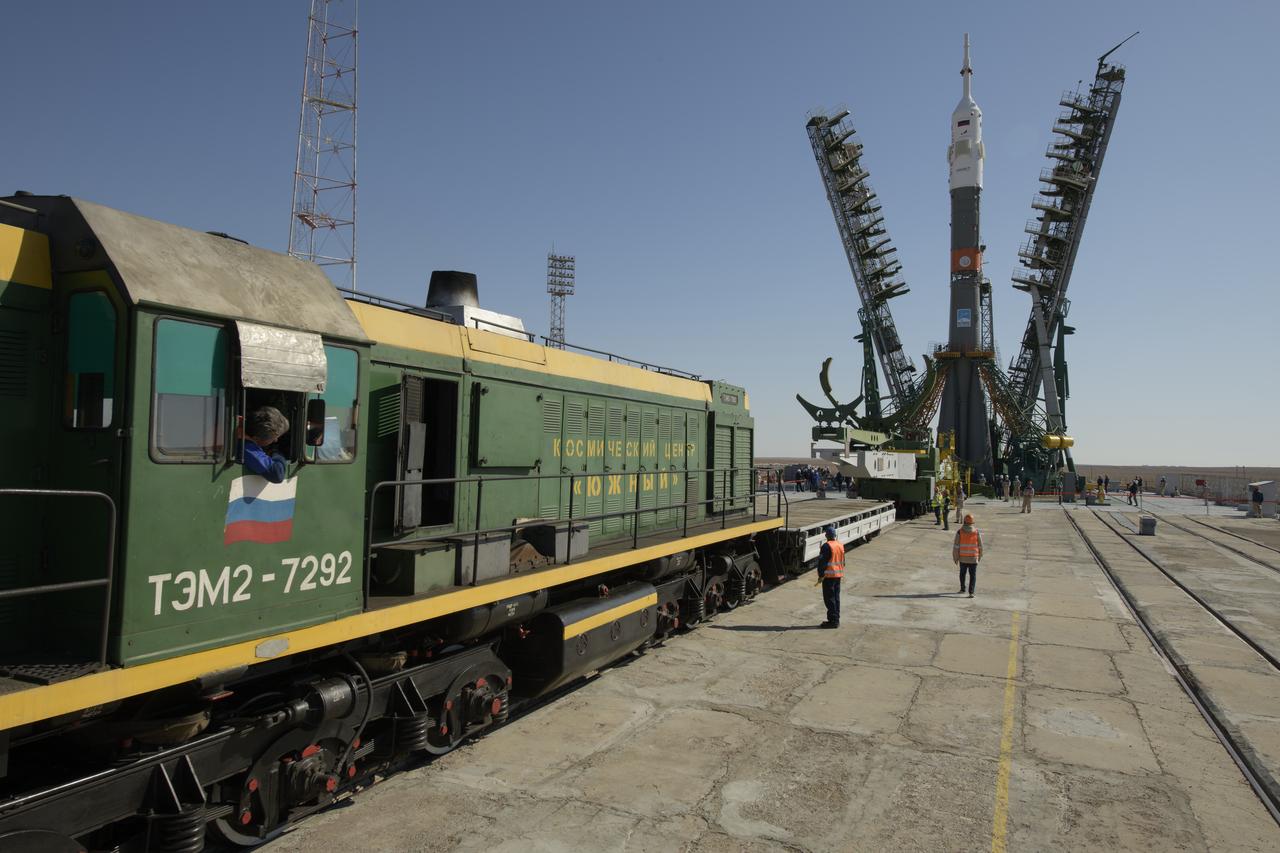
The gantry arms are raised around the Soyuz rocket after it was rolled out to the Site 31 launch pad of the Baikonur Cosmodrome in Kazakhstan, Saturday, July 11, 2026. Expedition 75 crewmembers: NASA astronaut Anil Menon, Roscosmos cosmonauts Pyotr Dubrov and Anna Kikina are scheduled to launch aboard their Soyuz MS-29 spacecraft on July 14. Photo Credit: (NASA/Bill Ingalls)
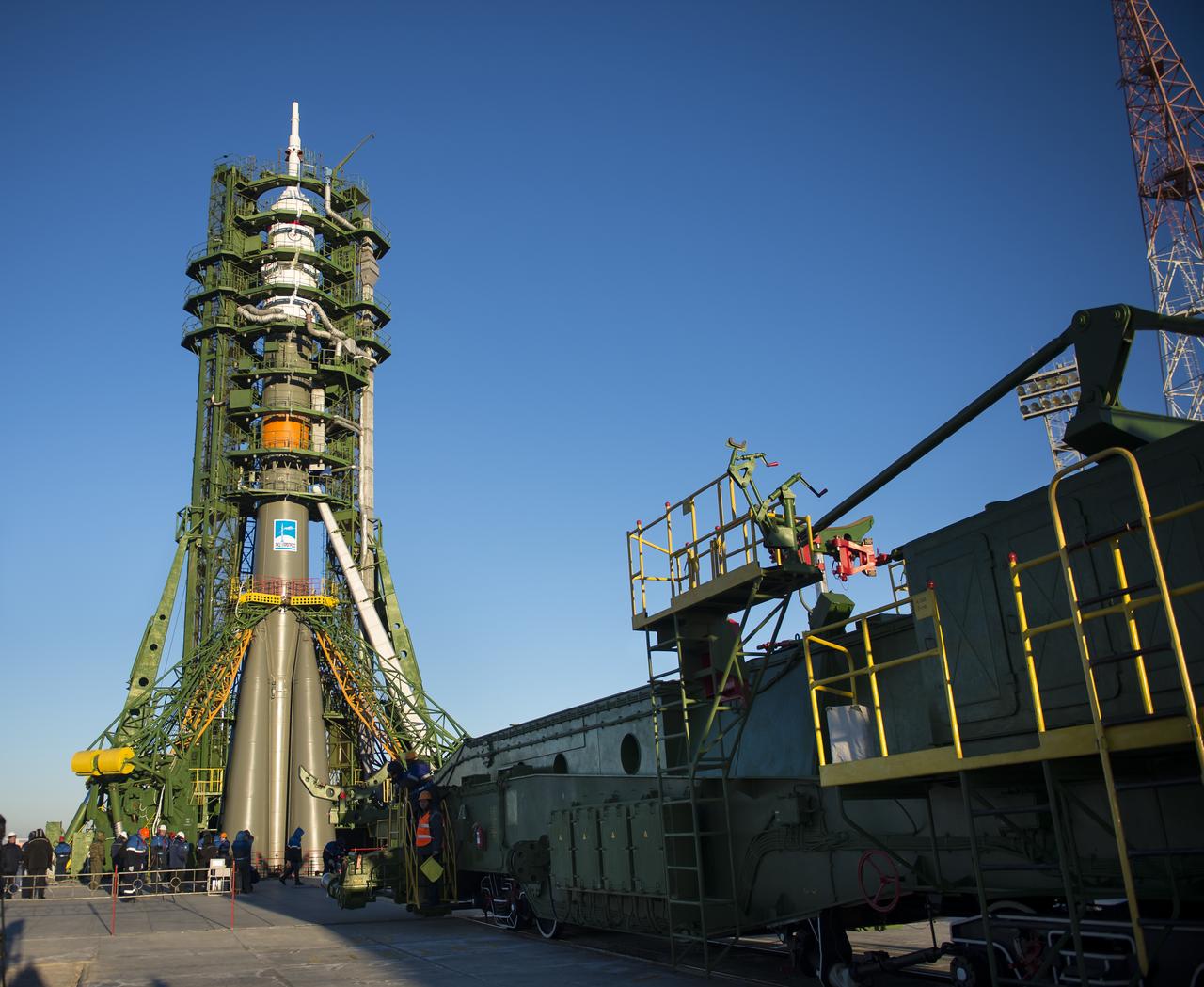
The gantry arms close around the Soyuz rocket after it was raised into vertical position on the launch pad, Monday, Sept. 23, 2019 at the Baikonur Cosmodrome in Kazakhstan. Expedition 61 crewmembers Jessica Meir of NASA, Oleg Skripochka of Roscosmos, and spaceflight participant Hazzaa Ali Almansoori of the United Arab Emirates will launch September 25th on the Soyuz MS-15 spacecraft from the Baikonur Cosmodrome to the International Space Station. Photo Credit: (NASA/Bill Ingalls)
The Soyuz TMA-15M spacecraft is seen after the gantry arms closed to secure the rocket on the launch pad on Friday, Nov. 21, 2014 at the Baikonur Cosmodrome in Kazakhstan. Launch of the Soyuz rocket is scheduled for Nov. 24 and will carry Expedition 42 Soyuz Commander Anton Shkaplerov of the Russian Federal Space Agency (Roscosmos), Flight Engineer Terry Virts of NASA , and Flight Engineer Samantha Cristoforetti of the European Space Agency into orbit to begin their five and a half month mission on the International Space Station. Photo Credit: (NASA/Aubrey Gemignani)

The gantry arms begin to close around the Soyuz TMA-14M spacecraft to secure the rocket at the launch pad Sept. 23, 2014 at the Baikonur Cosmodrome in Kazakhstan. Launch of the Soyuz rocket is scheduled for Sept. 26 and will carry Expedition 41 Soyuz Commander Alexander Samokutyaev of the Russian Federal Space Agency (Roscosmos), Flight Engineer Barry Wilmore of NASA, and Flight Engineer Elena Serova of Roscosmos into orbit to begin their five and a half month mission on the International Space Station. Photo Credit: (NASA/Aubrey Gemignani)
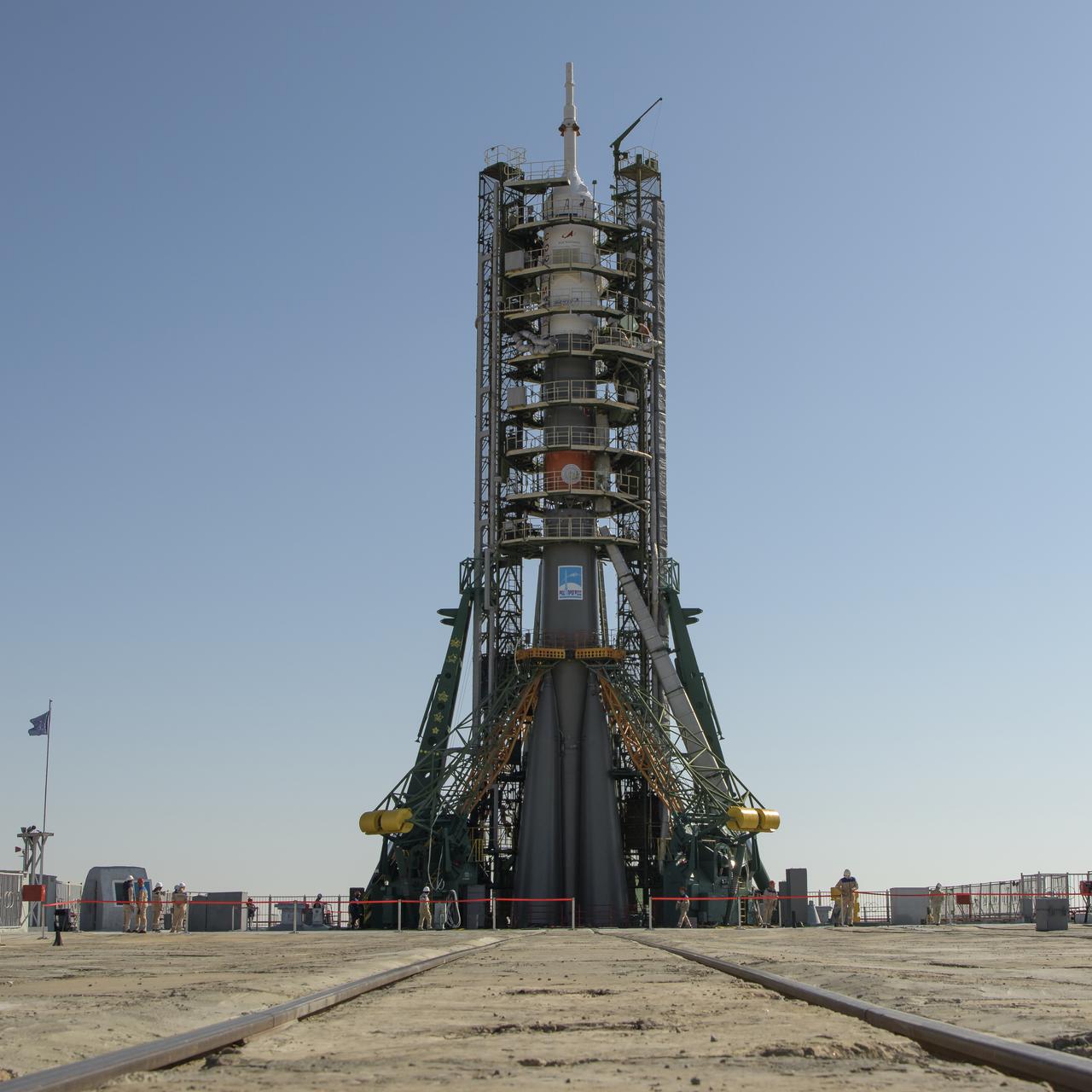
The gantry arms close around the Soyuz TMA-12M spacecraft to secure the rocket at the launch pad on Sunday, March 23, 2014, at the Baikonur Cosmodrome in Kazakhstan. Launch of the Soyuz rocket is scheduled for March 26 and will send Expedition 39 Soyuz Commander Alexander Skvortsov of the Russian Federal Space Agency, Roscosmos, Flight Engineer Steven Swanson of NASA, and Flight Engineer Oleg Artemyev of Roscosmos on a six-month mission aboard the International Space Station. Photo Credit: (NASA/Bill Ingalls)
The gantry arms close around the Soyuz rocket after it was raised into vertical position on the launch pad, Monday, Sept. 23, 2019 at the Baikonur Cosmodrome in Kazakhstan. Expedition 61 crewmembers Jessica Meir of NASA, Oleg Skripochka of Roscosmos, and spaceflight participant Hazzaa Ali Almansoori of the United Arab Emirates will launch September 25th on the Soyuz MS-15 spacecraft from the Baikonur Cosmodrome to the International Space Station. Photo Credit: (NASA/Bill Ingalls)
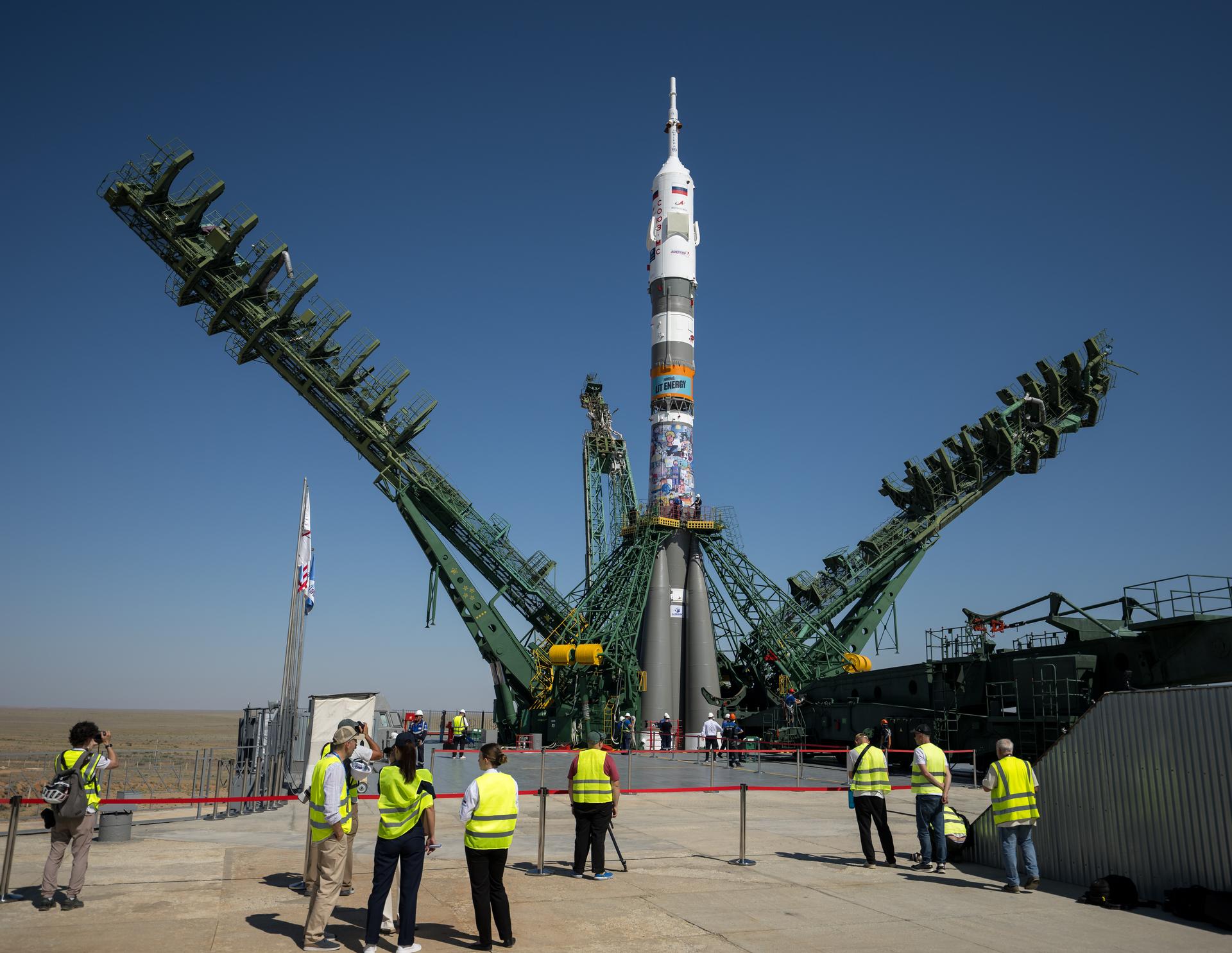
The gantry arms are raised around the Soyuz rocket after it was rolled out to the Site 31 launch pad of the Baikonur Cosmodrome in Kazakhstan, Saturday, July 11, 2026. Expedition 75 crewmembers: NASA astronaut Anil Menon, Roscosmos cosmonauts Pyotr Dubrov and Anna Kikina are scheduled to launch aboard their Soyuz MS-29 spacecraft on July 14. Photo Credit: (NASA/Bill Ingalls)
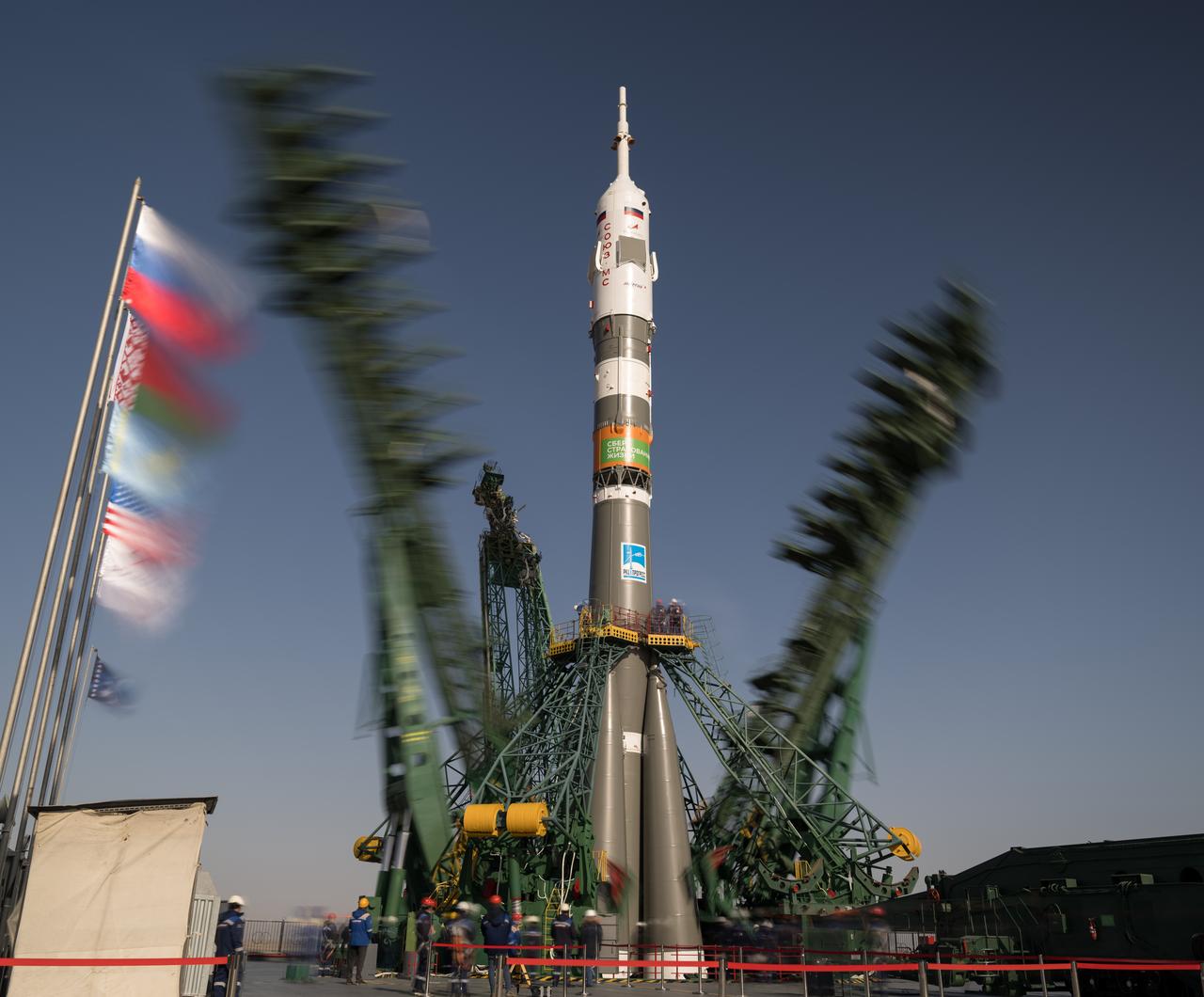
In this 30-second exposure photograph, the gantry arms are seen closing around the Soyuz rocket at launch pad at Site 31, Monday, March 18, 2024, at the Baikonur Cosmodrome in Kazakhstan. Expedition 71 NASA astronaut Tracy Dyson, Roscosmos cosmonaut Oleg Novitskiy, and Belarus spaceflight participant Marina Vasilevskaya are scheduled to launch aboard their Soyuz MS-25 spacecraft on March 21. Photo Credit: (NASA/Bill Ingalls)
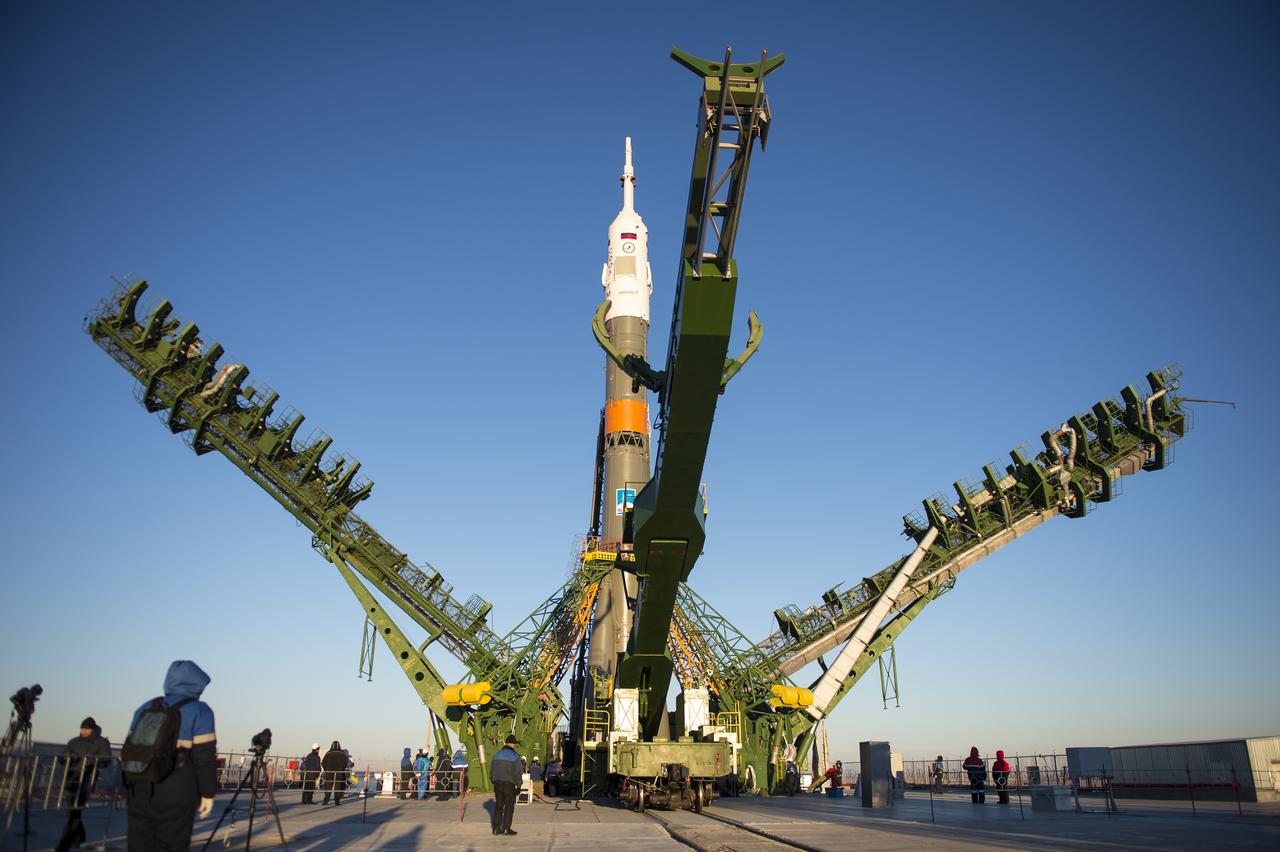
The gantry arms close around the Soyuz TMA-15M spacecraft to secure the rocket at the launch pad on Friday, Nov. 21, 2014 at the Baikonur Cosmodrome in Kazakhstan. Launch of the Soyuz rocket is scheduled for Nov. 24 and will carry Expedition 42 Soyuz Commander Anton Shkaplerov of the Russian Federal Space Agency (Roscosmos), Flight Engineer Terry Virts of NASA , and Flight Engineer Samantha Cristoforetti of the European Space Agency into orbit to begin their five and a half month mission on the International Space Station. Photo Credit: (NASA/Aubrey Gemignani)
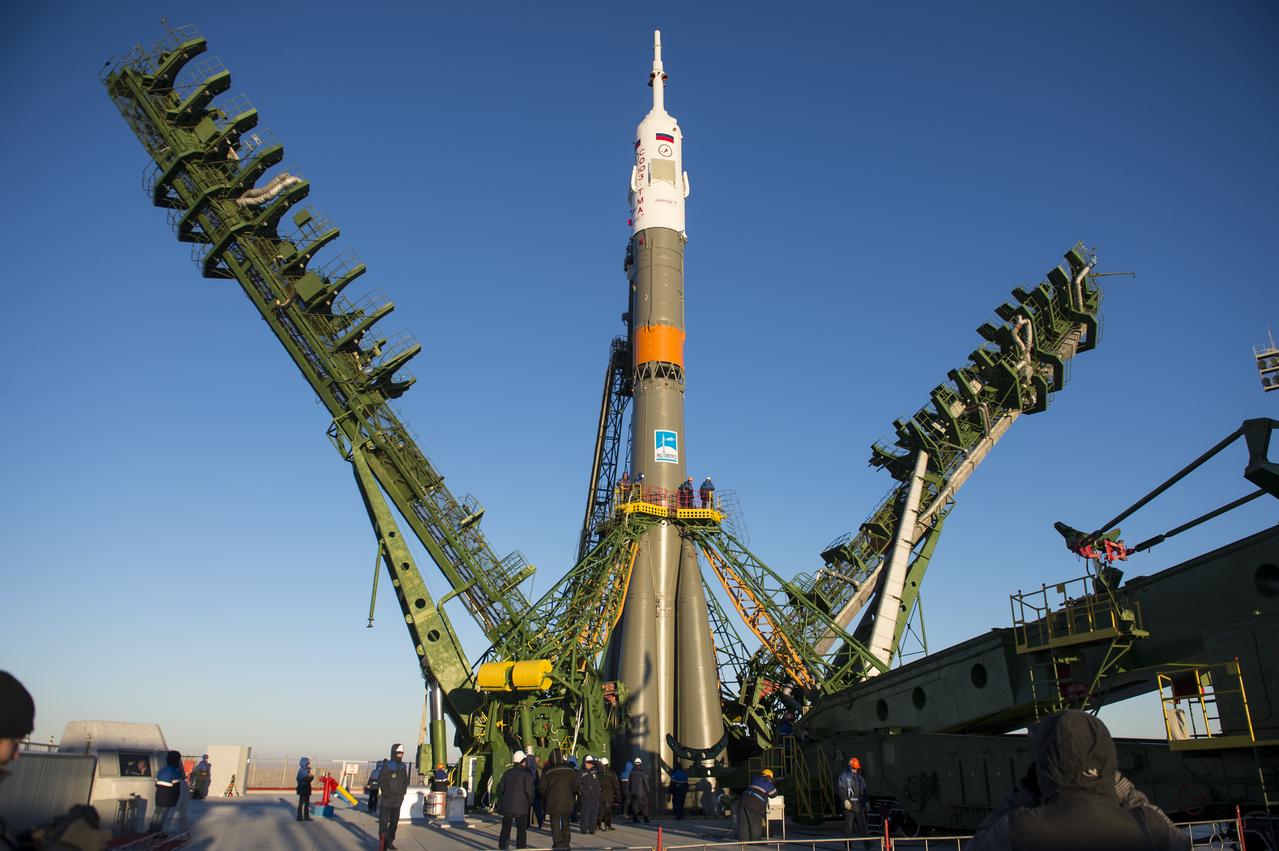
The gantry arms close around the Soyuz TMA-15M spacecraft to secure the rocket at the launch pad on Friday, Nov. 21, 2014 at the Baikonur Cosmodrome in Kazakhstan. Launch of the Soyuz rocket is scheduled for Nov. 24 and will carry Expedition 42 Soyuz Commander Anton Shkaplerov of the Russian Federal Space Agency (Roscosmos), Flight Engineer Terry Virts of NASA , and Flight Engineer Samantha Cristoforetti of the European Space Agency into orbit to begin their five and a half month mission on the International Space Station. Photo Credit: (NASA/Aubrey Gemignani)
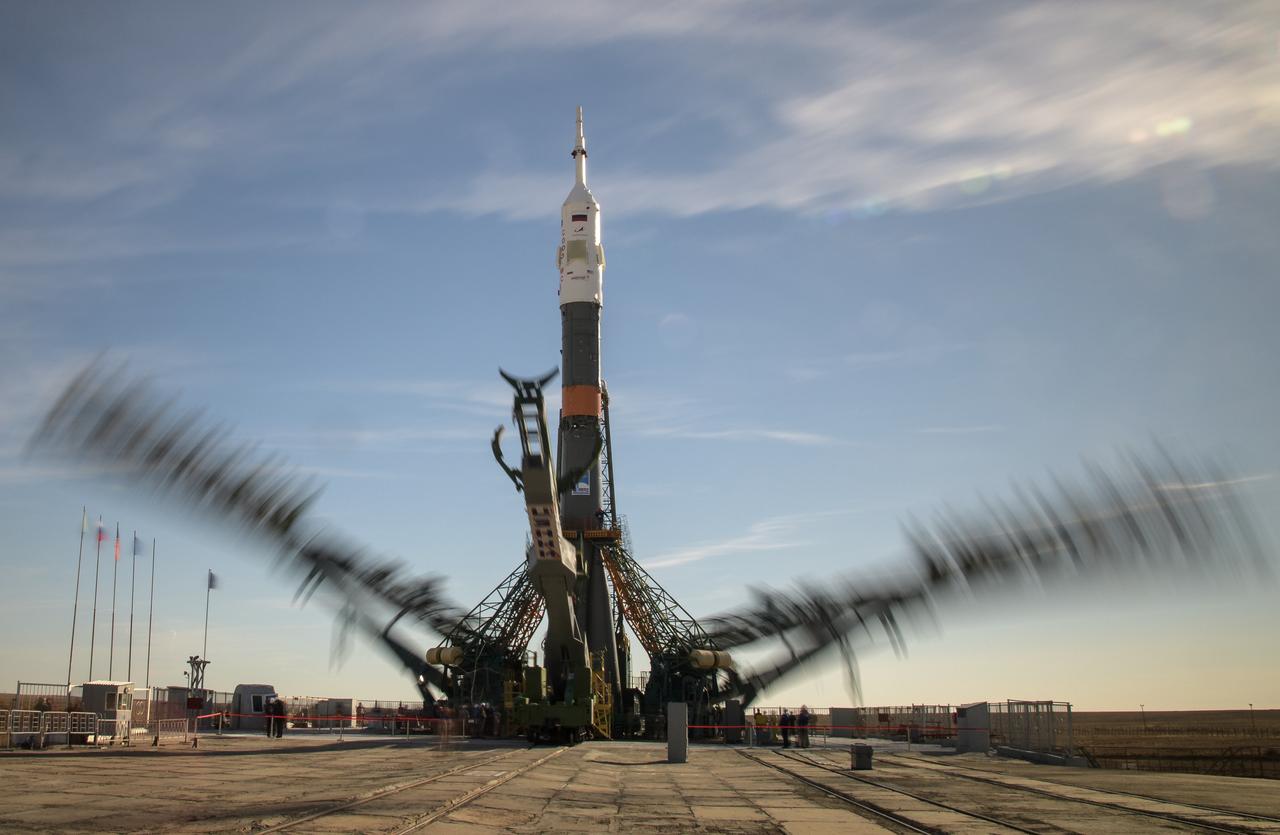
At the Baikonur Cosmodrome in Kazakhstan, launch pad gantry arms are seen closing around the Soyuz rocket in this long exposure photograph, Tuesday, Oct. 9, 2018. Expedition 57 crewmembers Nick Hague of NASA and Alexey Ovchinin of Roscosmos are scheduled to launch on October 11 on the Soyuz MS-10 spacecraft for a six-month mission living and working aboard the International Space Station. Photo Credit: (NASA/Bill Ingalls)
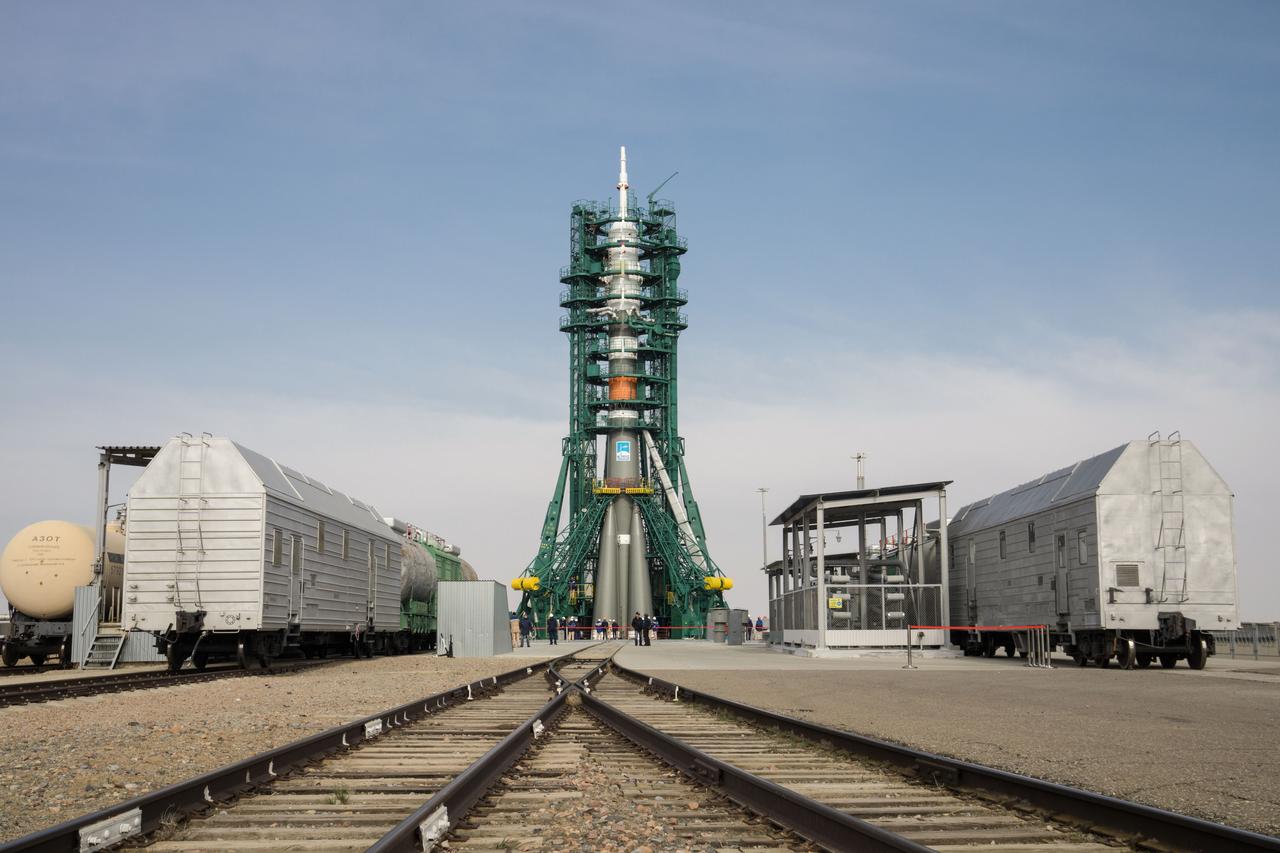
jsc2020e016998 - At the Baikonur Cosmodrome in Kazakhstan, the Soyuz MS-16 spacecraft and its booster stand at their vertical position at the Site 31 launch pad April 6 after the closing of gantry arms following rollout for final preparations for launch. Expedition 63 crewmembers Chris Cassidy of NASA and Anatoly Ivanishin and Ivan Vagner of Roscosmos are set to launch aboard the Soyuz MS-16 April 9 for a six-and-a-half month mission on the International Space Station...NASA/Victor Zelentsov.
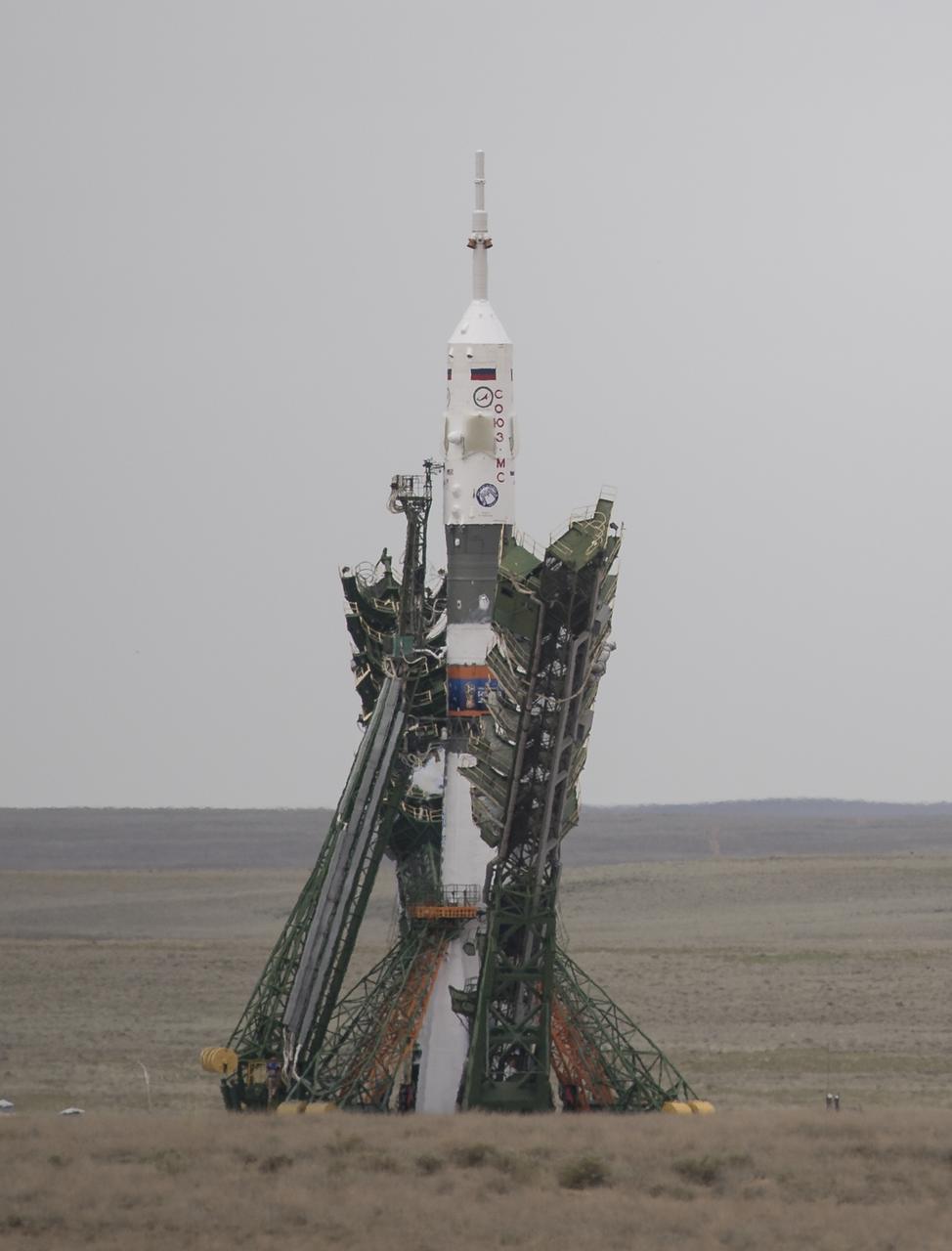
The Soyuz MS-09 rocket is seen as the gantry arms are lowered prior to launch, Wednesday, June 6, 2018 at the Baikonur Cosmodrome in Kazakhstan. Expedition 56 Soyuz Commander Sergey Prokopyev of Roscosmos, flight engineer Serena Auñón-Chancellor of NASA, and flight engineer Alexander Gerst of ESA (European Space Agency) will spend the next six months living and working aboard the International Space Station. Photo Credit: (NASA/Joel Kowsky)
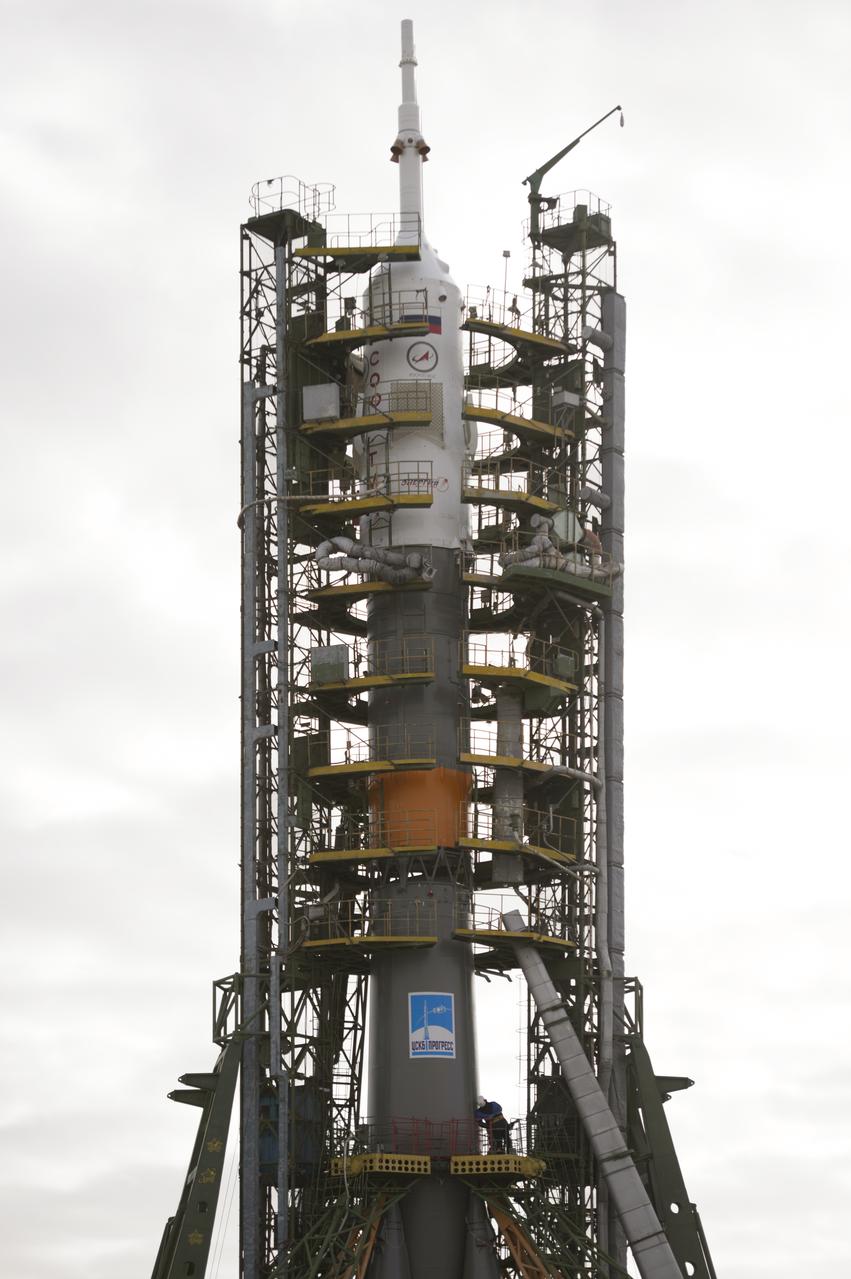
The gantry arms close around the Soyuz TMA-12M spacecraft to secure the rocket at the launch pad on Sunday, March 23, 2014, at the Baikonur Cosmodrome in Kazakhstan. Launch of the Soyuz rocket is scheduled for March 26 and will send Expedition 39 Soyuz Commander Alexander Skvortsov of the Russian Federal Space Agency, Roscosmos, Flight Engineer Steven Swanson of NASA, and Flight Engineer Oleg Artemyev of Roscosmos on a six-month mission aboard the International Space Station. Photo Credit: (NASA/Joel Kowsky)
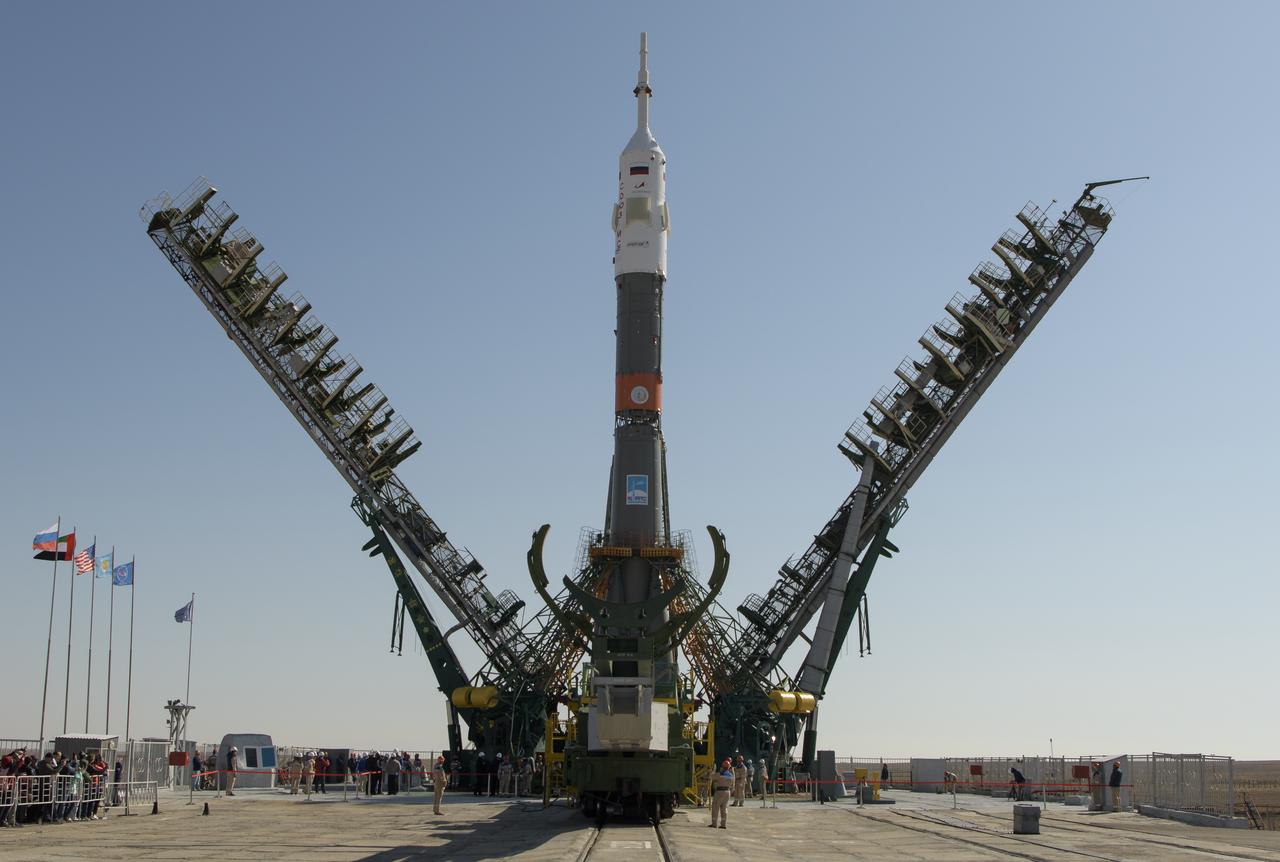
The gantry arms close around the Soyuz rocket after it was raised into vertical position on the launch pad, Monday, Sept. 23, 2019 at the Baikonur Cosmodrome in Kazakhstan. Expedition 61 crewmembers Jessica Meir of NASA, Oleg Skripochka of Roscosmos, and spaceflight participant Hazzaa Ali Almansoori of the United Arab Emirates will launch September 25th on the Soyuz MS-15 spacecraft from the Baikonur Cosmodrome to the International Space Station. Photo Credit: (NASA/Bill Ingalls)

The gantry arms begin to close around the Soyuz TMA-12M spacecraft to secure the rocket, as seen in this long exposure photograph, at the launch pad on Sunday, March 23, 2014, at the Baikonur Cosmodrome in Kazakhstan. Launch of the Soyuz rocket is scheduled for March 26 and will send Expedition 39 Soyuz Commander Alexander Skvortsov of the Russian Federal Space Agency, Roscosmos, Flight Engineer Steven Swanson of NASA, and Flight Engineer Oleg Artemyev of Roscosmos on a six-month mission aboard the International Space Station. Photo Credit: (NASA/Bill Ingalls)
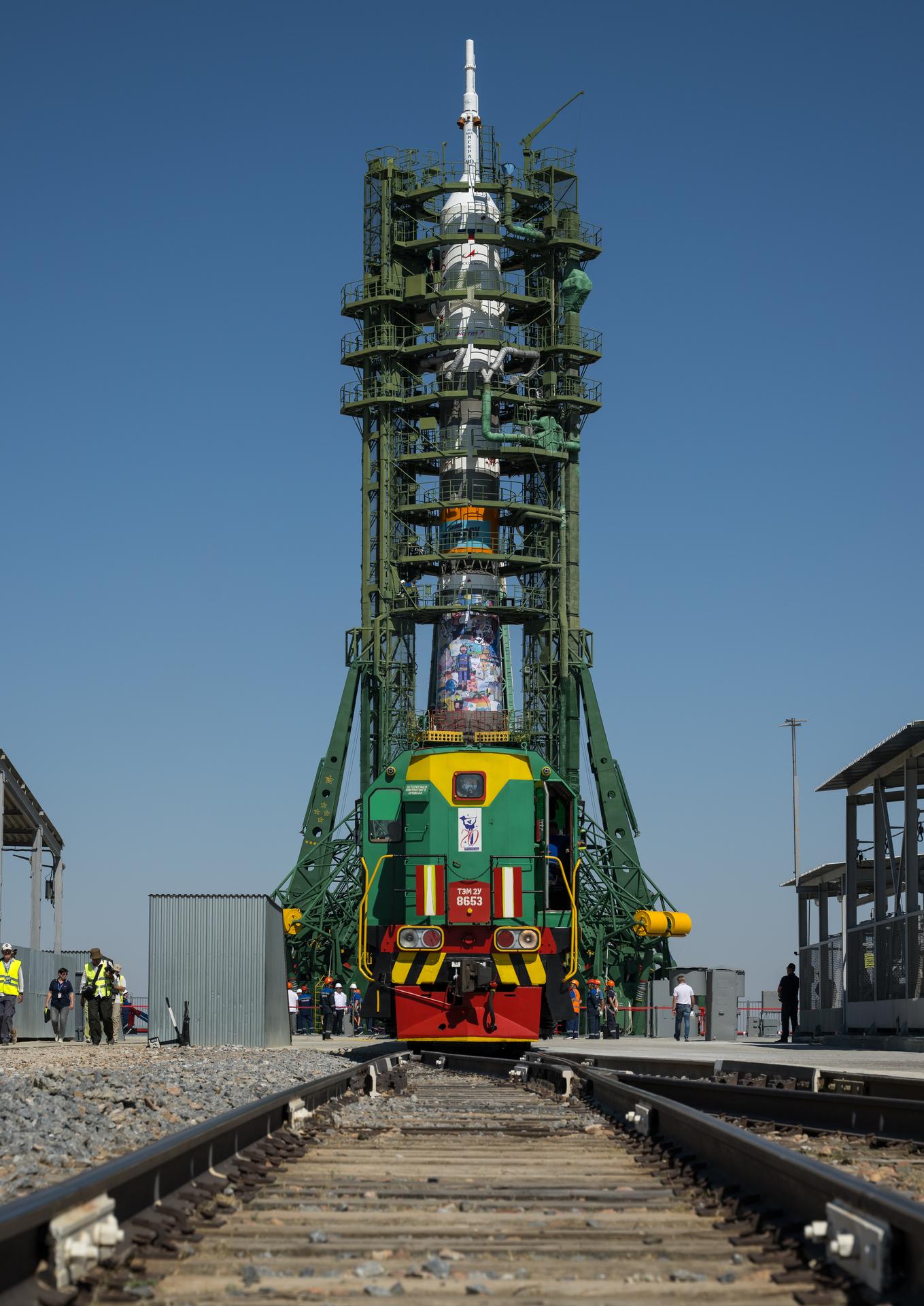
The gantry arms are raised around the Soyuz rocket after it was rolled out to the Site 31 launch pad of the Baikonur Cosmodrome in Kazakhstan, Saturday, July 11, 2026. Expedition 75 crewmembers: NASA astronaut Anil Menon, Roscosmos cosmonauts Pyotr Dubrov and Anna Kikina are scheduled to launch aboard their Soyuz MS-29 spacecraft on July 14. Photo Credit: (NASA/Bill Ingalls)

The gantry arms begin to close around the Soyuz TMA-12M spacecraft to secure the rocket at the launch pad on Sunday, March 23, 2014, at the Baikonur Cosmodrome in Kazakhstan. Launch of the Soyuz rocket is scheduled for March 26 and will send Expedition 39 Soyuz Commander Alexander Skvortsov of the Russian Federal Space Agency, Roscosmos, Flight Engineer Steven Swanson of NASA, and Flight Engineer Oleg Artemyev of Roscosmos on a six-month mission aboard the International Space Station. Photo Credit: (NASA/Joel Kowsky)
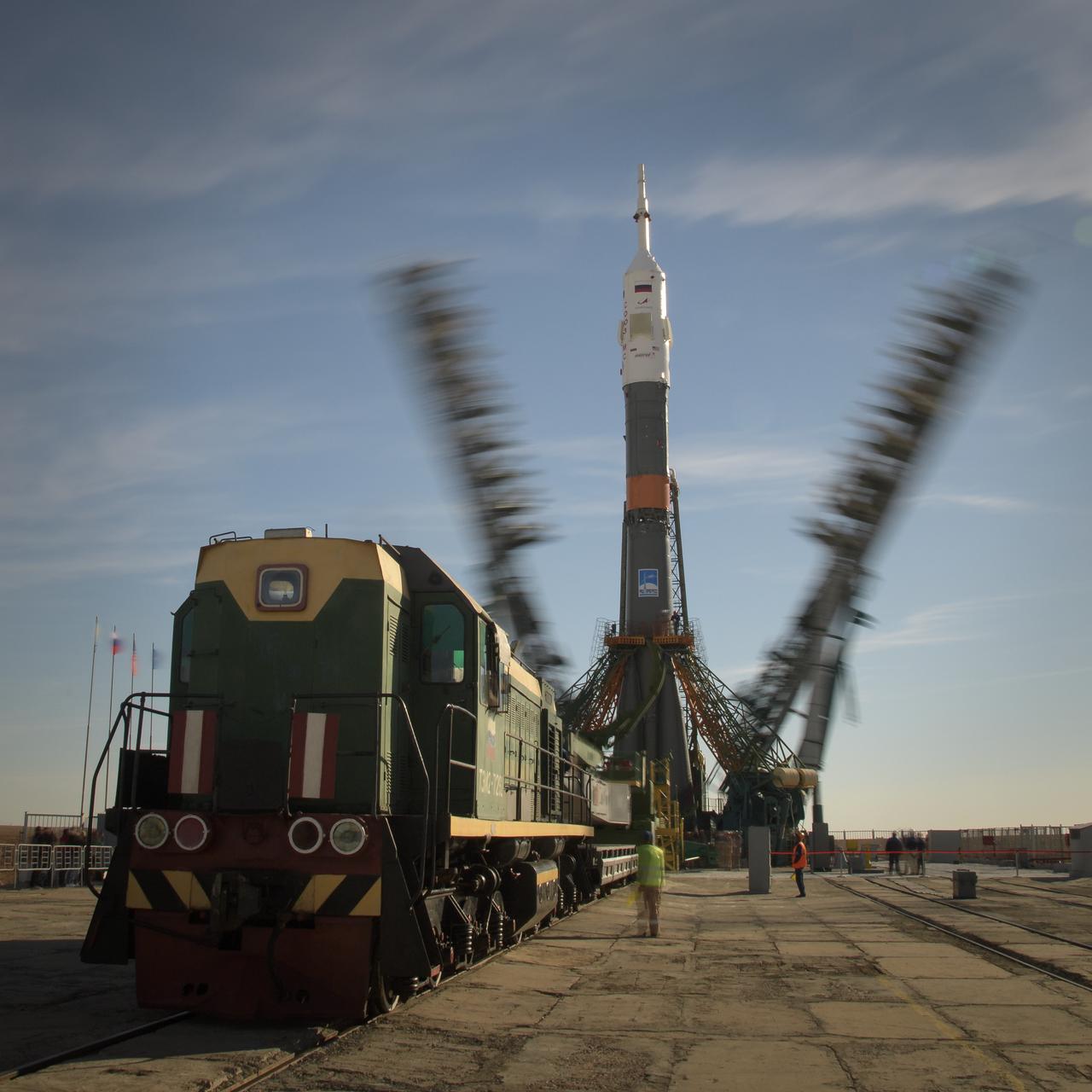
The gantry arms are seen closing around the Soyuz rocket in this long exposure photograph, Tuesday, Oct. 9, 2018 at the Baikonur Cosmodrome in Kazakhstan. Expedition 57 crewmembers Nick Hague of NASA and Alexey Ovchinin of Roscosmos are scheduled to launch on October 11 and will spend the next six months living and working aboard the International Space Station. Photo Credit: (NASA/Bill Ingalls)
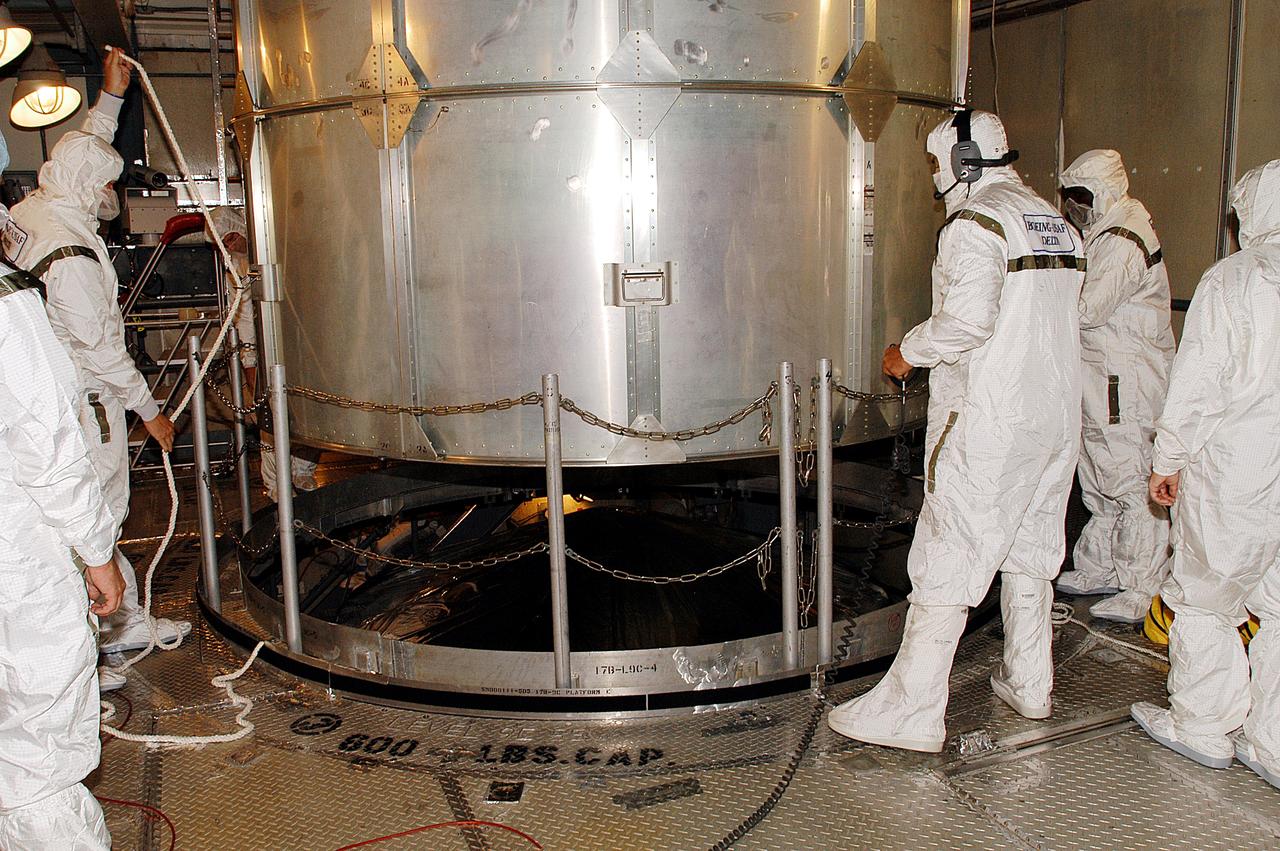
KENNEDY SPACE CENTER, FLA. - The canister is lifted off the Mars Exploration Rover 1 (MER-B) in the gantry on Launch Complex 17-B, Cape Canaveral Air Force Station. The second of twin rovers being sent to Mars, it is equipped with a robotic arm, a drilling tool, three spectrometers, and four pairs of cameras that allow it to have a human-like, 3D view of the terrain. Each rover could travel as far as 100 meters in one day to act as Mars scientists' eyes and hands, exploring an environment where humans can't yet go. MER-B is scheduled to launch June 26 at one of two available times, 12:27:31 a.m. EDT or 1:08:45 a.m. EDT.
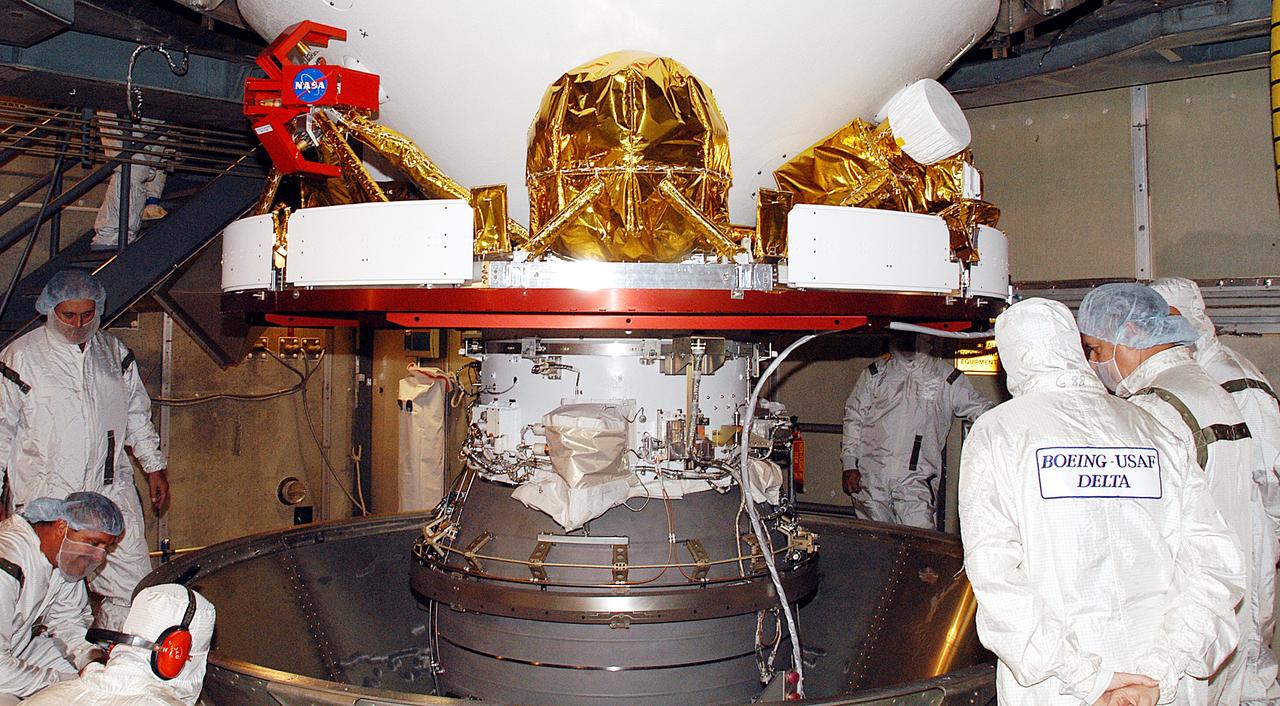
KENNEDY SPACE CENTER, FLA. - In the gantry on Launch Complex 17-B, Cape Canaveral Air Force Station, Mars Exploration Rover 1 (MER-B) is revealed after removal of the canister. The second of twin rovers being sent to Mars, it is equipped with a robotic arm, a drilling tool, three spectrometers, and four pairs of cameras that allow it to have a human-like, 3D view of the terrain. Each rover could travel as far as 100 meters in one day to act as Mars scientists' eyes and hands, exploring an environment where humans can't yet go. MER-B is scheduled to launch June 26 at one of two available times, 12:27:31 a.m. EDT or 1:08:45 a.m. EDT.
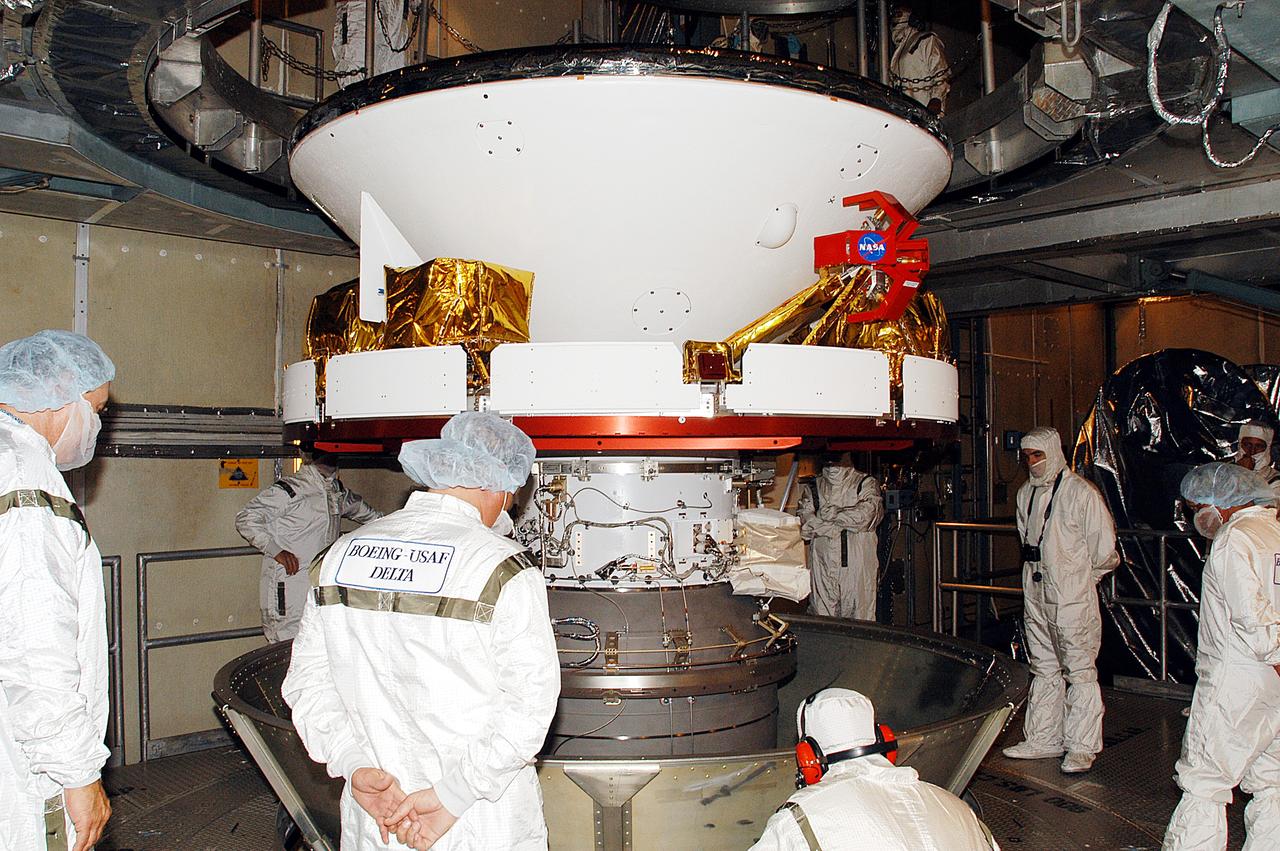
KENNEDY SPACE CENTER, FLA. - In the gantry on Launch Complex 17-B, Cape Canaveral Air Force Station, Mars Exploration Rover 1 (MER-B) is revealed after removal of the canister. The second of twin rovers being sent to Mars, it is equipped with a robotic arm, a drilling tool, three spectrometers, and four pairs of cameras that allow it to have a human-like, 3D view of the terrain. Each rover could travel as far as 100 meters in one day to act as Mars scientists' eyes and hands, exploring an environment where humans can't yet go. MER-B is scheduled to launch June 26 at one of two available times, 12:27:31 a.m. EDT or 1:08:45 a.m. EDT.
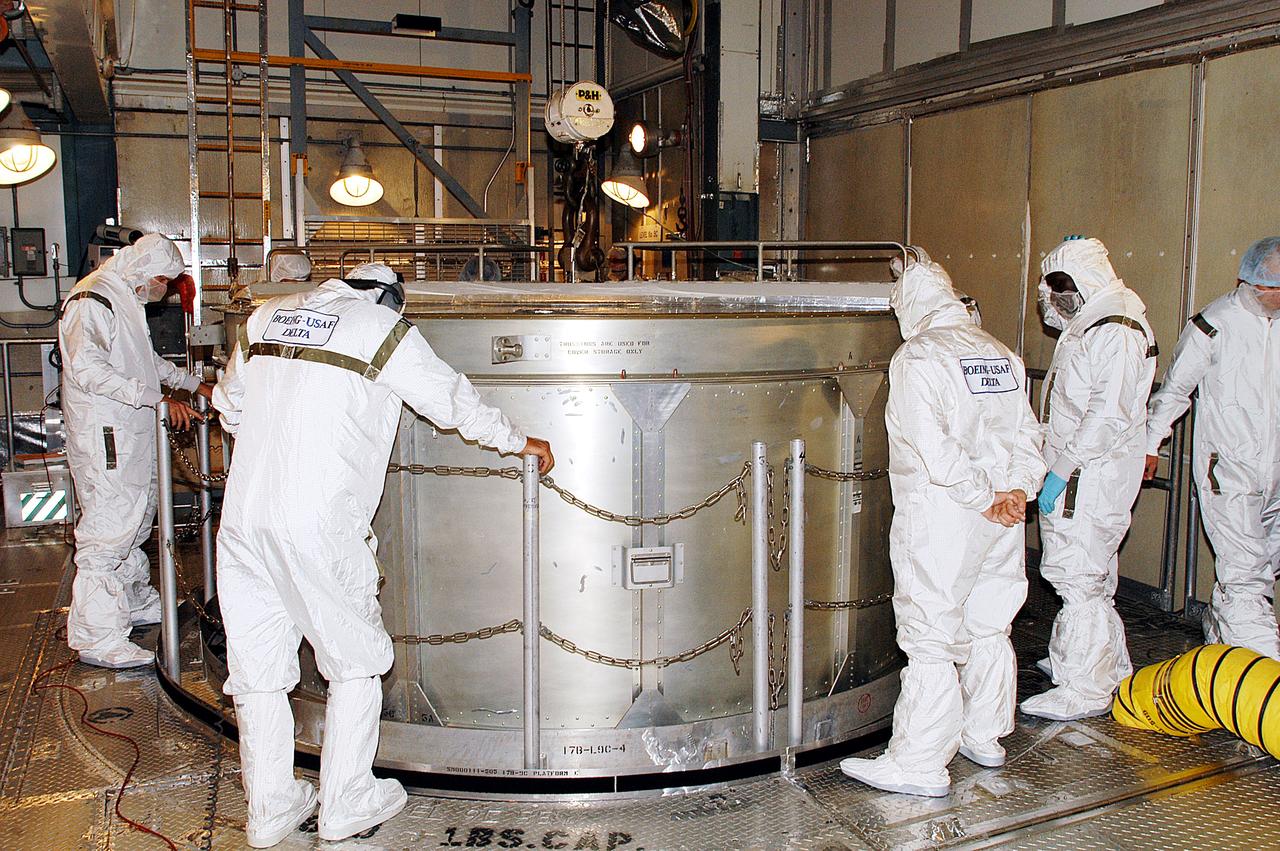
KENNEDY SPACE CENTER, FLA. - In the gantry on Launch Complex 17-B, Cape Canaveral Air Force Station, workers start removing the canister from around the Mars Exploration Rover 1 (MER-B). The second of twin rovers being sent to Mars, it is equipped with a robotic arm, a drilling tool, three spectrometers, and four pairs of cameras that allow it to have a human-like, 3D view of the terrain. Each rover could travel as far as 100 meters in one day to act as Mars scientists' eyes and hands, exploring an environment where humans can't yet go. MER-B is scheduled to launch June 26 at one of two available times, 12:27:31 a.m. EDT or 1:08:45 a.m. EDT.
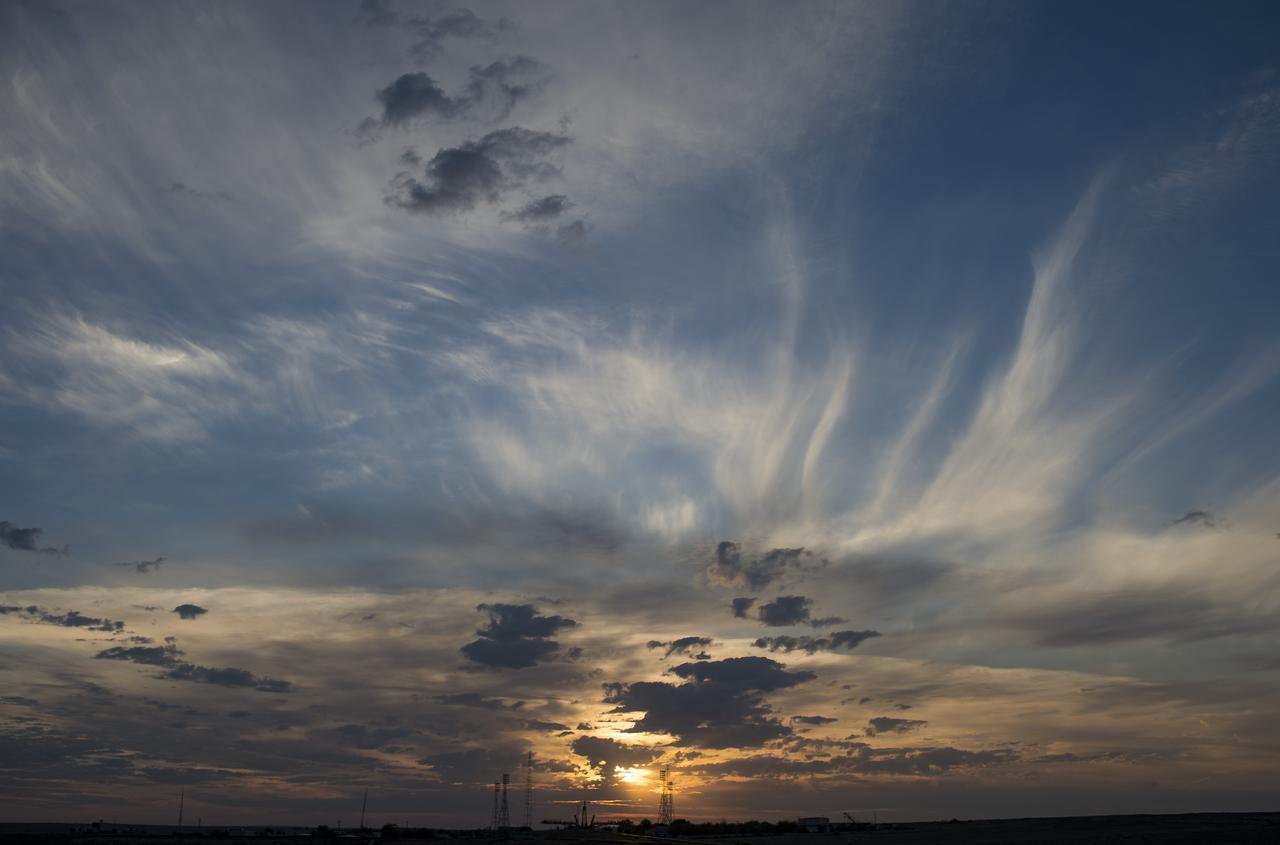
The sun rises behind the Soyuz launch pad as the Soyuz TMA-14M spacecraft is rolled out by train to the launch pad at the Baikonur Cosmodrome, Kazakhstan, Sept. 23, 2014. Launch of the Soyuz rocket is scheduled for Sept. 26 and will carry Expedition 41 Soyuz Commander Alexander Samokutyaev of the Russian Federal Space Agency (Roscosmos), Flight Engineer Barry Wilmore of NASA, and Flight Engineer Elena Serova of Roscosmos into orbit to begin their five and a half month mission on the International Space Station. Photo Credit: (NASA/Joel Kowsky)
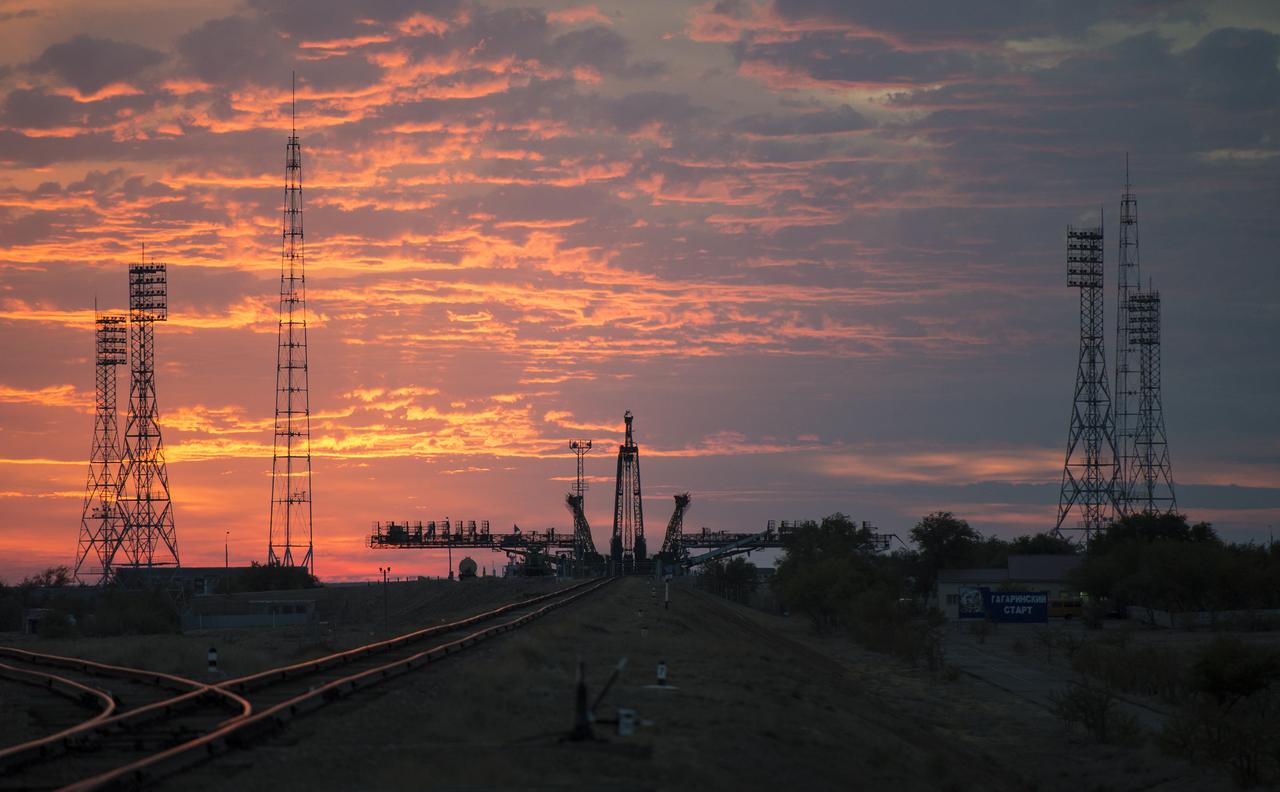
The sun rises behind the Soyuz launch pad as the Soyuz TMA-14M spacecraft is rolled out by train to the launch pad at the Baikonur Cosmodrome, Kazakhstan, Sept. 23, 2014. Launch of the Soyuz rocket is scheduled for Sept. 26 and will carry Expedition 41 Soyuz Commander Alexander Samokutyaev of the Russian Federal Space Agency (Roscosmos), Flight Engineer Barry Wilmore of NASA, and Flight Engineer Elena Serova of Roscosmos into orbit to begin their five and a half month mission on the International Space Station. Photo Credit: (NASA/Joel Kowsky)
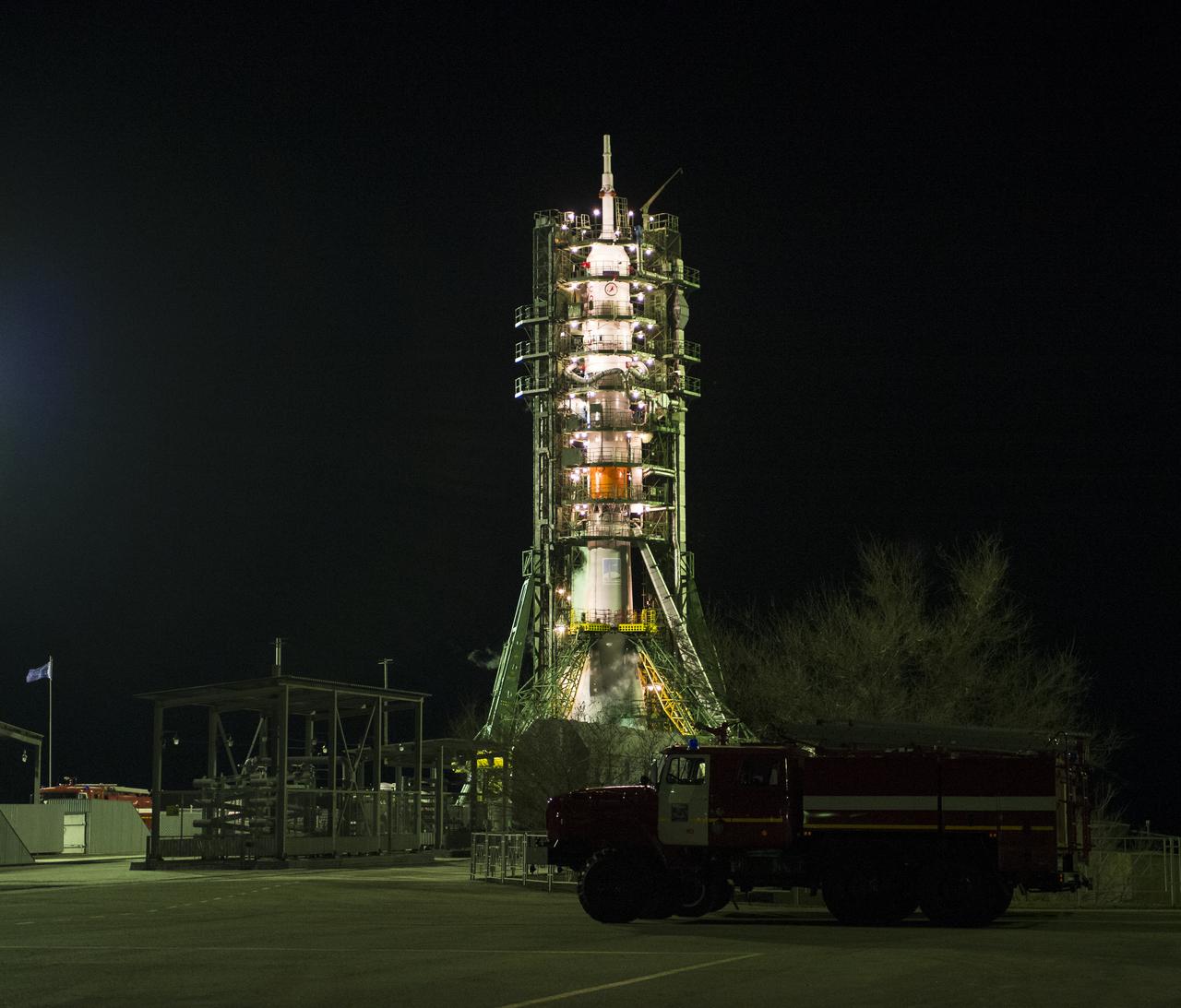
The Soyuz TMA-15M spacecraft is seen on the launch pad just prior to launch on Monday, Nov. 24, 2014 at the Baikonur Cosmodrome in Kazakhstan. Launch of the Soyuz rocket is scheduled for the early hours of Nov. 24 and will carry Expedition 42 Soyuz Commander Anton Shkaplerov of the Russian Federal Space Agency (Roscosmos), Flight Engineer Terry Virts of NASA , and Flight Engineer Samantha Cristoforetti of the European Space Agency into orbit to begin their five and a half month mission on the International Space Station. Photo Credit: (NASA/Aubrey Gemignani)

Workers are seen on a gantry as the service structure arms are raised around the Soyuz rocket, Friday, Dec. 15, 2017 at the Baikonur Cosmodrome in Kazakhstan. Expedition 54 Soyuz Commander Anton Shkaplerov of Roscosmos, flight engineer Scott Tingle of NASA, and flight engineer Norishige Kanai of the Japan Aerospace Exploration Agency (JAXA) are scheduled to launch at 2:21 a.m. Eastern Time (1:21 p.m. Baikonur time) on Dec. 17 and will spend the next five months living and working aboard the International Space Station. Photo Credit: (NASA/Joel Kowsky)
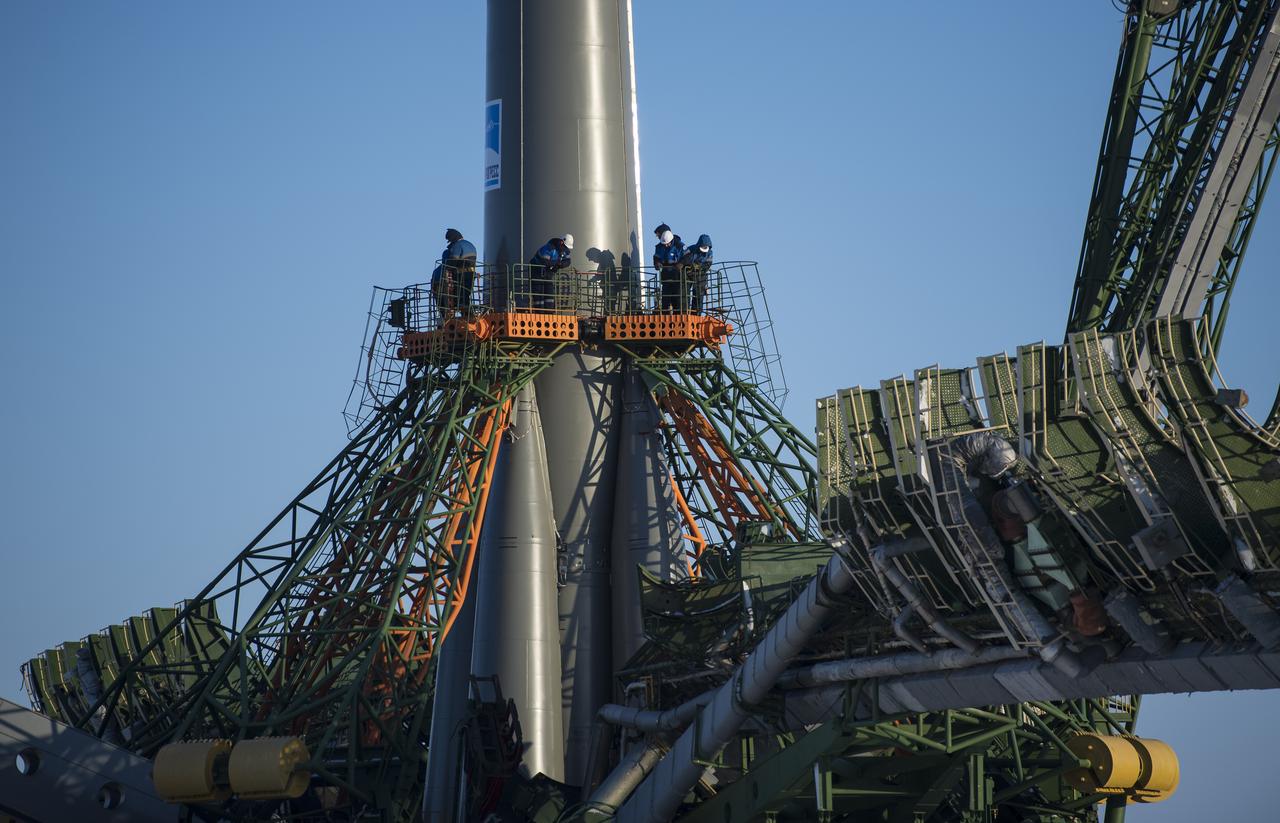
Workers are seen on a gantry as the service structure arms are raised around the Soyuz rocket, Friday, Dec. 15, 2017 at the Baikonur Cosmodrome in Kazakhstan. Expedition 54 Soyuz Commander Anton Shkaplerov of Roscosmos, flight engineer Scott Tingle of NASA, and flight engineer Norishige Kanai of the Japan Aerospace Exploration Agency (JAXA) are scheduled to launch at 2:21 a.m. Eastern Time (1:21 p.m. Baikonur time) on Dec. 17 and will spend the next five months living and working aboard the International Space Station. Photo Credit: (NASA/Joel Kowsky)
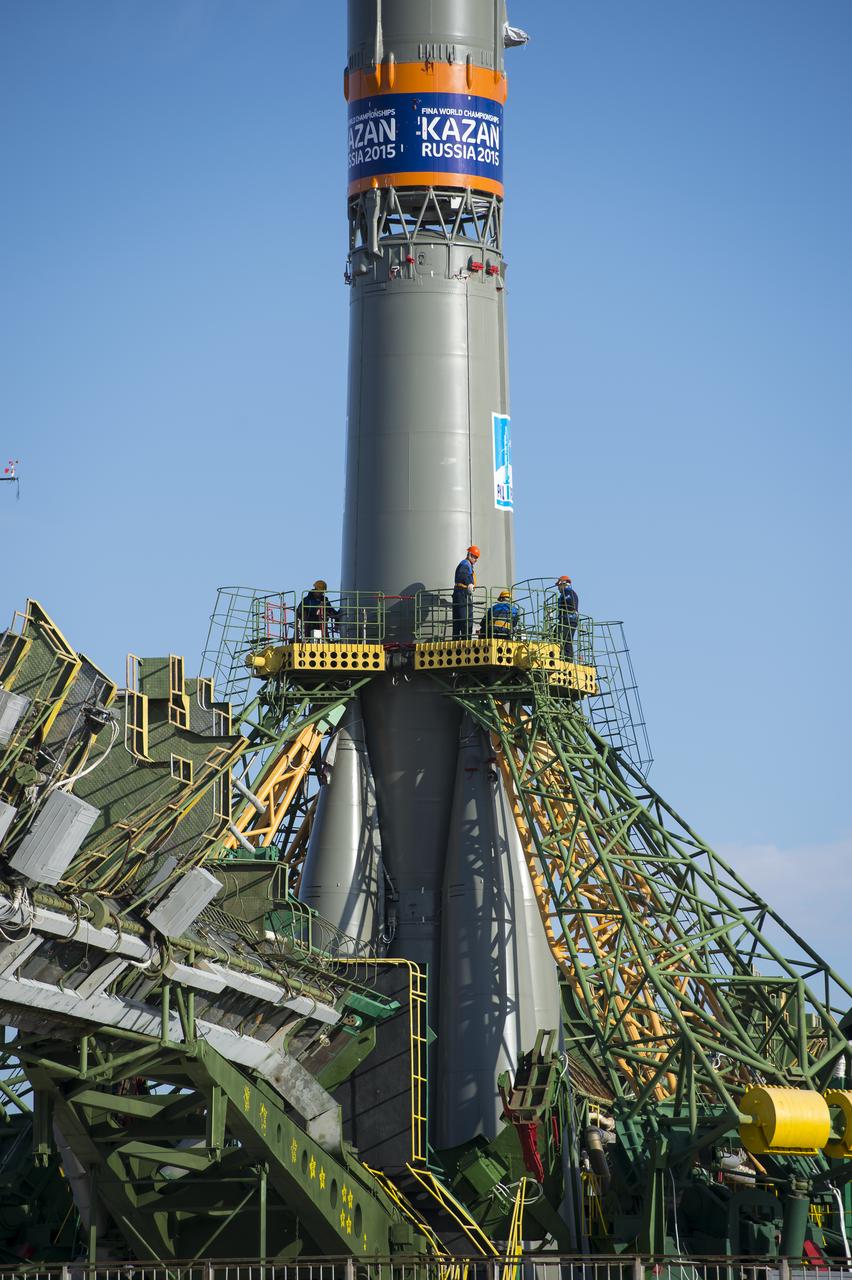
Workers prepare to raise the gantry arms to secure the Soyuz TMA-14M spacecraft at the launch pad Sept. 23, 2014 at the Baikonur Cosmodrome in Kazakhstan. Launch of the Soyuz rocket is scheduled for Sept. 26 and will carry Expedition 41 Soyuz Commander Alexander Samokutyaev of the Russian Federal Space Agency (Roscosmos), Flight Engineer Barry Wilmore of NASA, and Flight Engineer Elena Serova of Roscosmos into orbit to begin their five and a half month mission on the International Space Station. The rocket is adorned with the logo of the 2015 FINA World Aquatics Championships, which will be held in Kazan, Russia. Photo Credit: (NASA/Aubrey Gemignani)
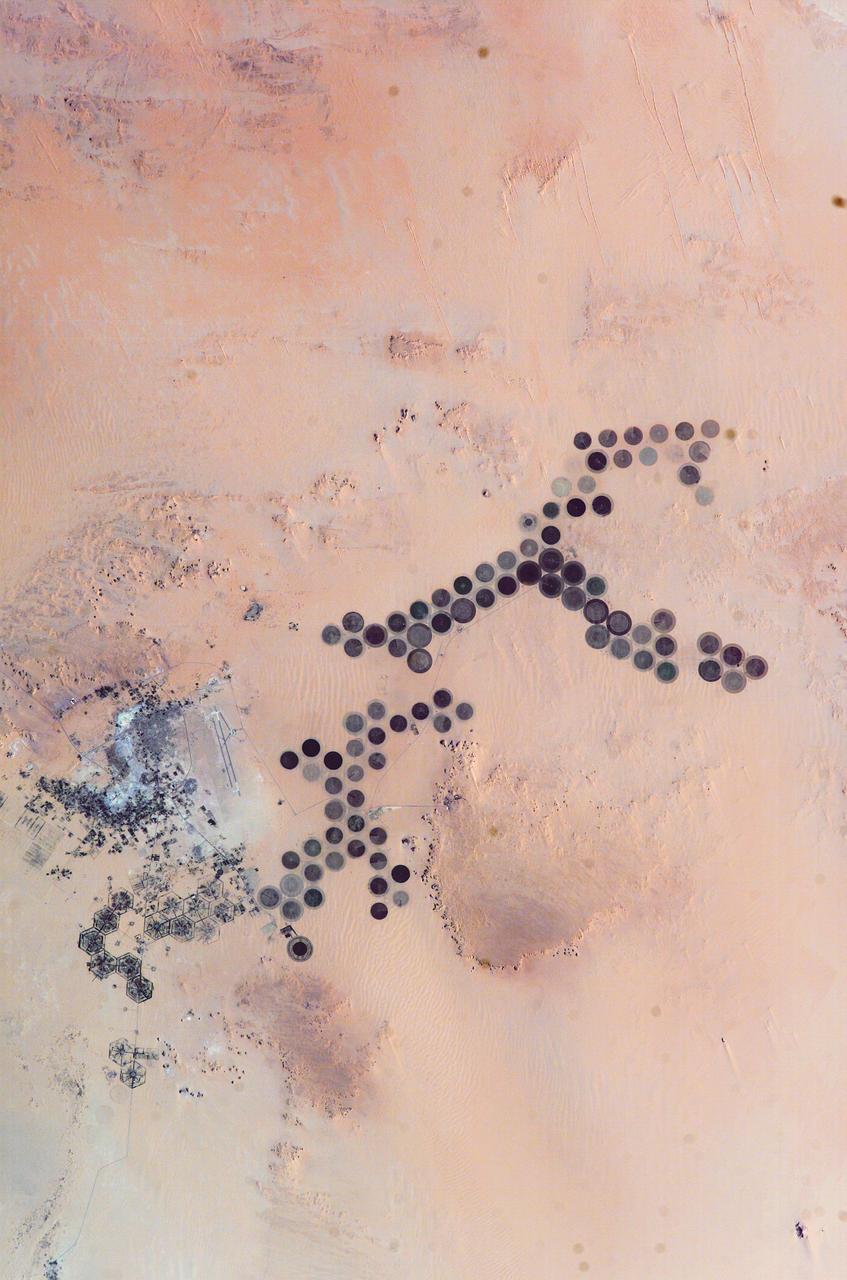
ISS010-E-05266 (28 October 2004) --- The Al Khufrah Oasis is featured in this image photographed by an Expedition 10 crewmember on the International Space Station (ISS). Green circles in the desert frequently indicate tracts of agriculture supported by center-pivot irrigation. The Al Khufrah Oasis in southeastern Libya (near the Egyptian border) is one of Libya’s largest agricultural projects, and is an easy-to-recognize landmark for orbiting crewmembers aboard the Station. The center-pivot irrigation system pumps water under pressure into a gantry or tubular arm from a central source. Anchored by a central pivot, the gantry slowly rotates over the area to be irrigated, thereby producing the circular patterns. Although the field diameters vary, these fields are approximately 0.6 mile (1 kilometer) in diameter. Darker colors indicate fields where such crops as wheat and alfalfa are grown. Lighter colors can indicate a variety of agricultural processes: fields that have been harvested recently; fields that are lying fallow; fields that have just been planted; or fields that have been taken out of production.
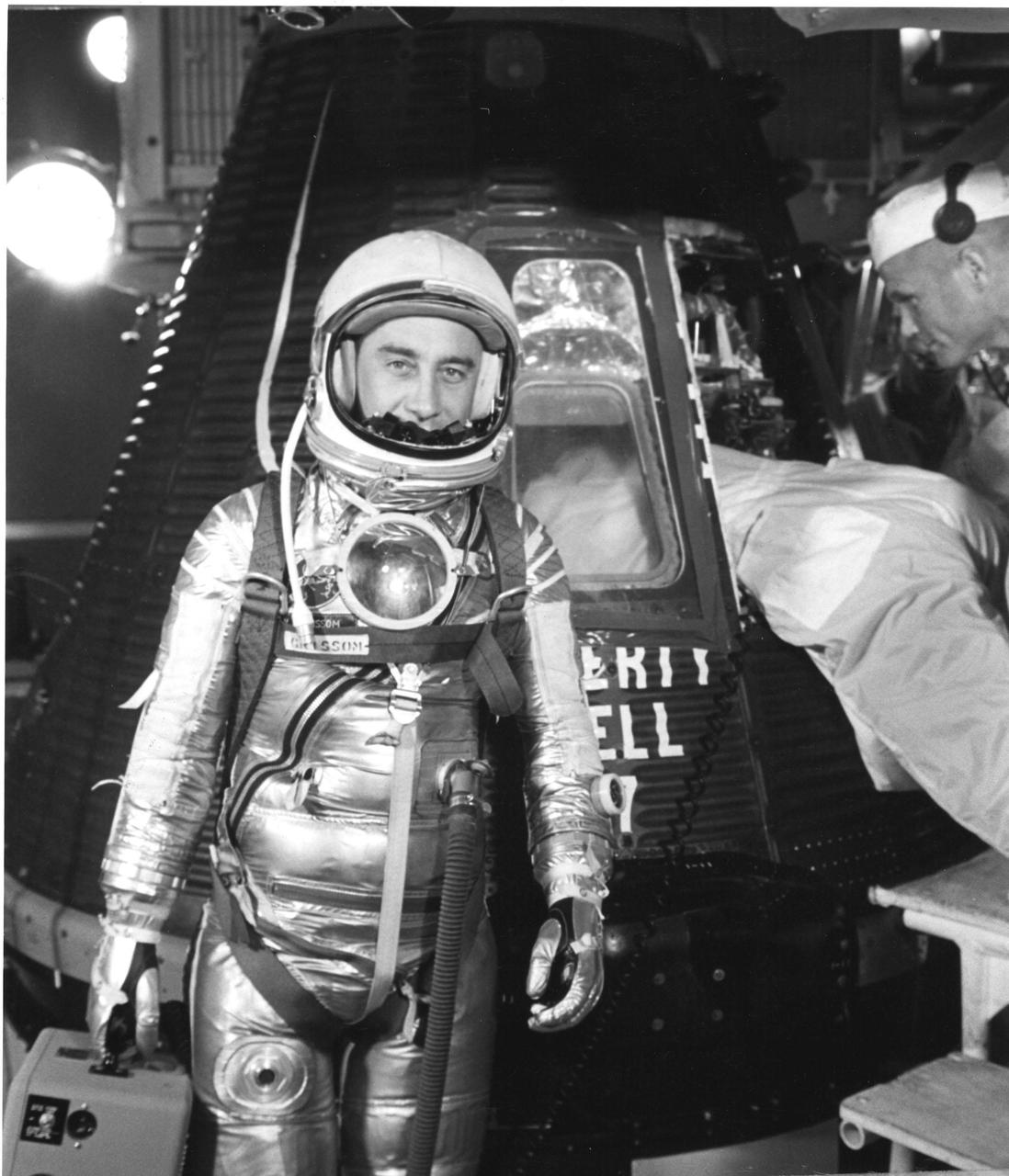
KENNEDY SPACE CENTER, FLA. -- READY FOR FLIGHT - On level three of gantry on pad 5, Project Mercury astronaut Virgil I. 'Gus' Grissom pauses briefly while a technician completes final adjustment in the Liberty Bell 7 spacecraft, which carried Grissom 118 miles into space on Friday, July 21, 1961. The craft's large trapezoidal observation window can be seen behind the pilot. The Pilot Observer Camera, which brought the astronaut's head and shoulders into view, was to reflect the lights on the flight events sequence panel through the 5-inch plexiglas parabolic mirror attached to Grissom's suit, to provide and accurately time record the pilot's voice communications, eye scan pattern and arm motions. The spacecraft sank on landing and has not been recovered. (NASA Photo)
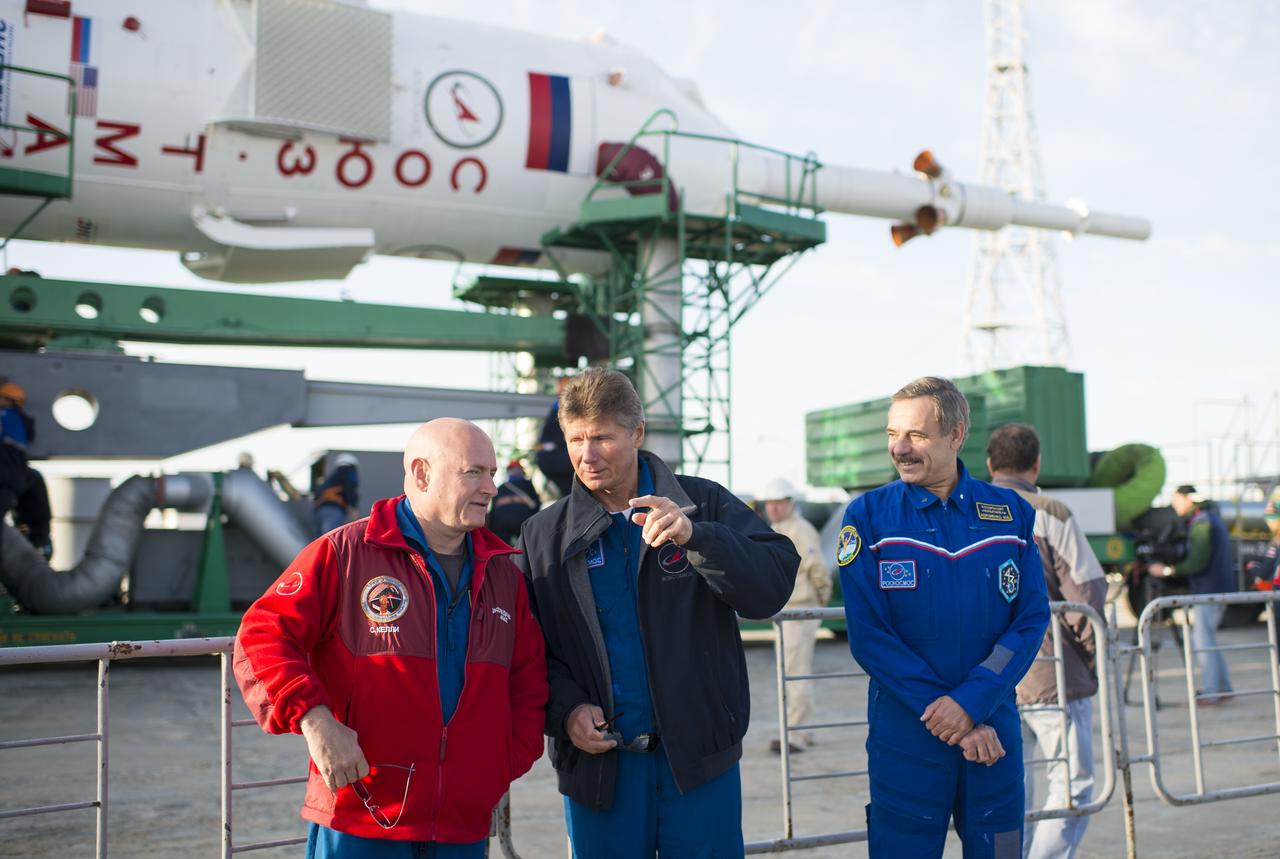
The Expedition 41 backup crew, from left to right, Flight Engineer Scott Kelly of NASA, Soyuz Commander Gennady Padalka of the Russian Federal Space Agency (Roscosmos), and Flight Engineer Mikhail Kornienko of Roscosmos, are photographed in front of the Soyuz TMA-14M spacecraft as it arrives at the launch pad by train on Sept. 23, 2014 at the Baikonur Cosmodrome in Kazakhstan. Launch of the Soyuz rocket is scheduled for Sept. 26 and will send Expedition 41 Soyuz Commander Alexander Samokutyaev of the Russian Federal Space Agency (Roscosmos), Flight Engineer Barry Wilmore of NASA, and Flight Engineer Elena Serova of Roscosmos on a five and a half month mission aboard the International Space Station. Kelly and Kornienko will launch from Baikonur in March 2015 to spend a full year on the International Space Station. Photo Credit: (NASA/Joel Kowsky)
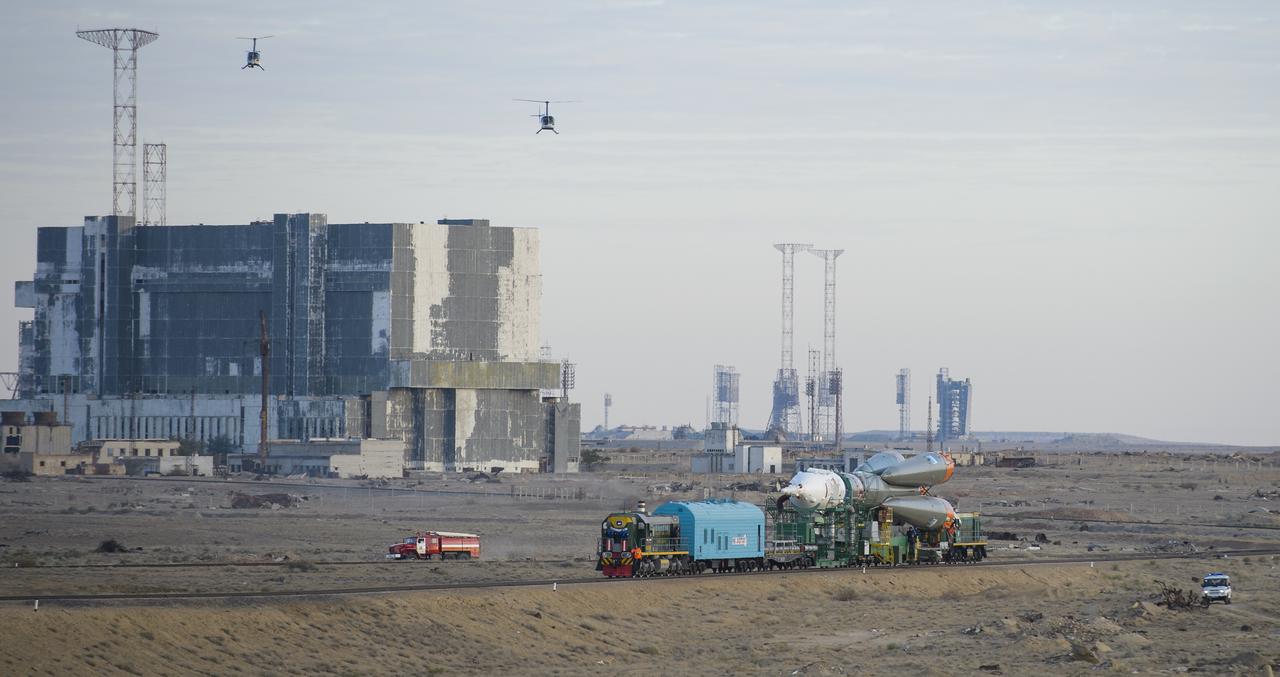
The Soyuz TMA-14M spacecraft is rolled out to the launch pad by train on Tuesday, Sept. 23, 2014 at the Baikonur Cosmodrome in Kazakhstan. Launch of the Soyuz rocket is scheduled for Sept. 26 and will carry Expedition 41 Soyuz Commander Alexander Samokutyaev of the Russian Federal Space Agency (Roscosmos), Flight Engineer Barry Wilmore of NASA, and Flight Engineer Elena Serova of Roscosmos into orbit to begin their five and a half month mission on the International Space Station. Photo Credit: (NASA/Joel Kowsky)
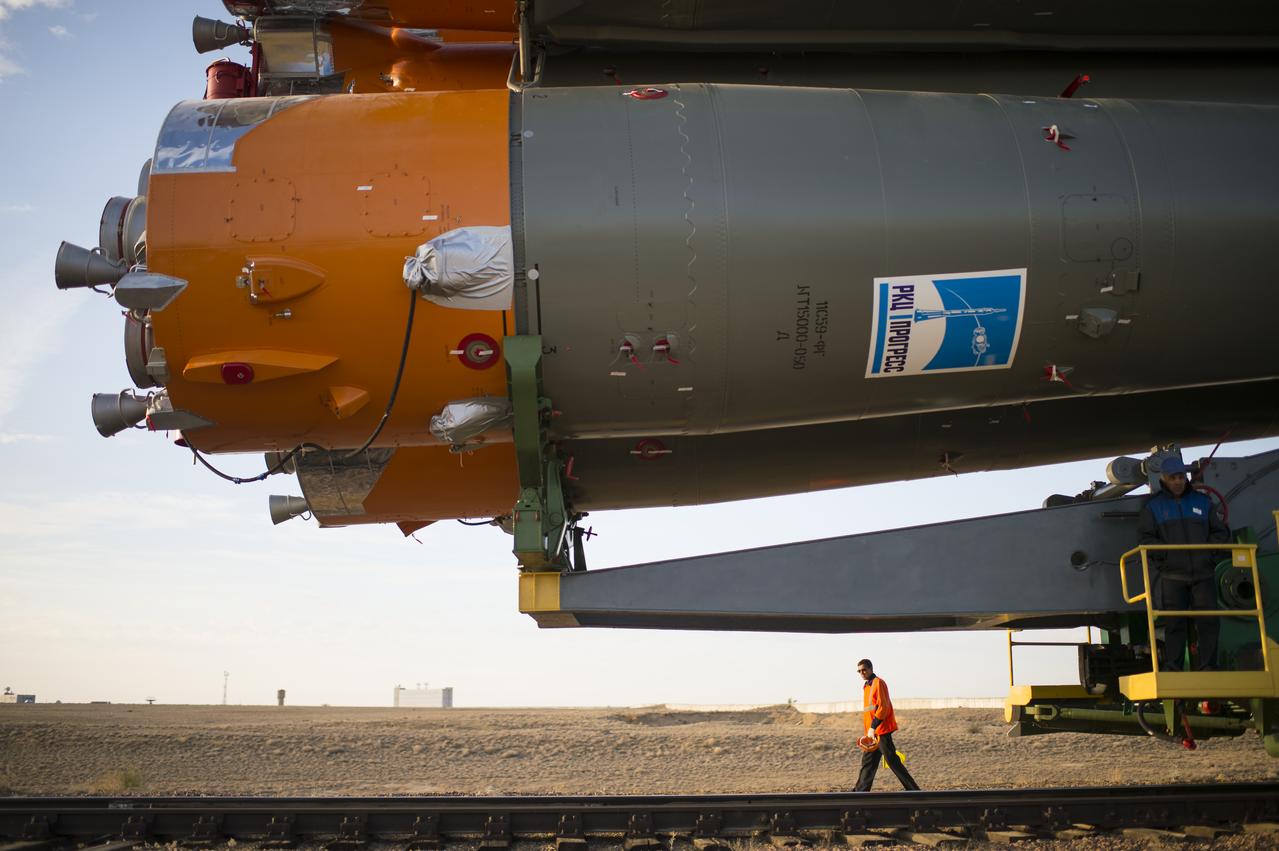
The Soyuz TMA-14M spacecraft is rolled out to the launch pad by train on Tuesday, Sept. 23, 2014 at the Baikonur Cosmodrome in Kazakhstan. Launch of the Soyuz rocket is scheduled for Sept. 26 and will carry Expedition 41 Soyuz Commander Alexander Samokutyaev of the Russian Federal Space Agency (Roscosmos), Flight Engineer Barry Wilmore of NASA, and Flight Engineer Elena Serova of Roscosmos into orbit to begin their five and a half month mission on the International Space Station. Photo Credit: (NASA/Joel Kowsky)
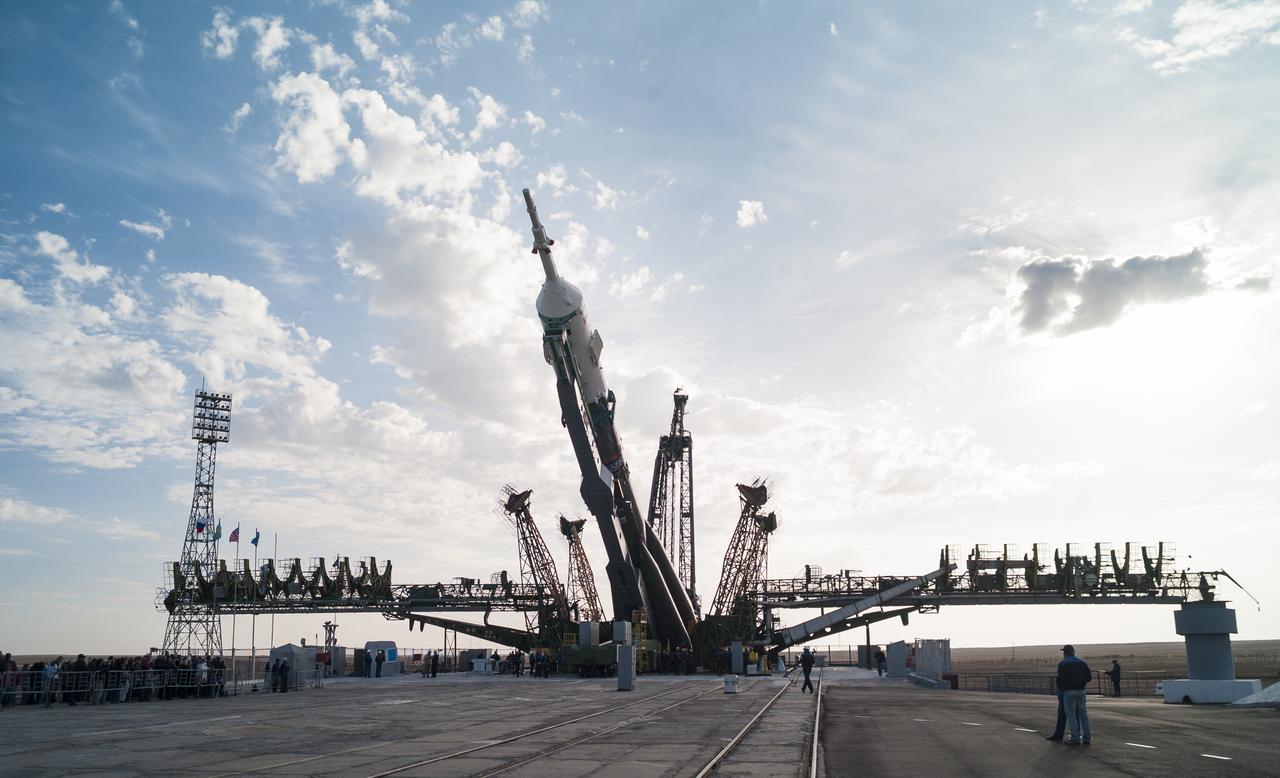
The Soyuz TMA-14M spacecraft is raised into position on the launch pad Sept. 23, 2014 at the Baikonur Cosmodrome in Kazakhstan. Launch of the Soyuz rocket is scheduled for Sept. 26 and will carry Expedition 41 Soyuz Commander Alexander Samokutyaev of the Russian Federal Space Agency (Roscosmos), Flight Engineer Barry Wilmore of NASA, and Flight Engineer Elena Serova of Roscosmos into orbit to begin their five and a half month mission on the International Space Station. Photo Credit: (NASA/Joel Kowsky)
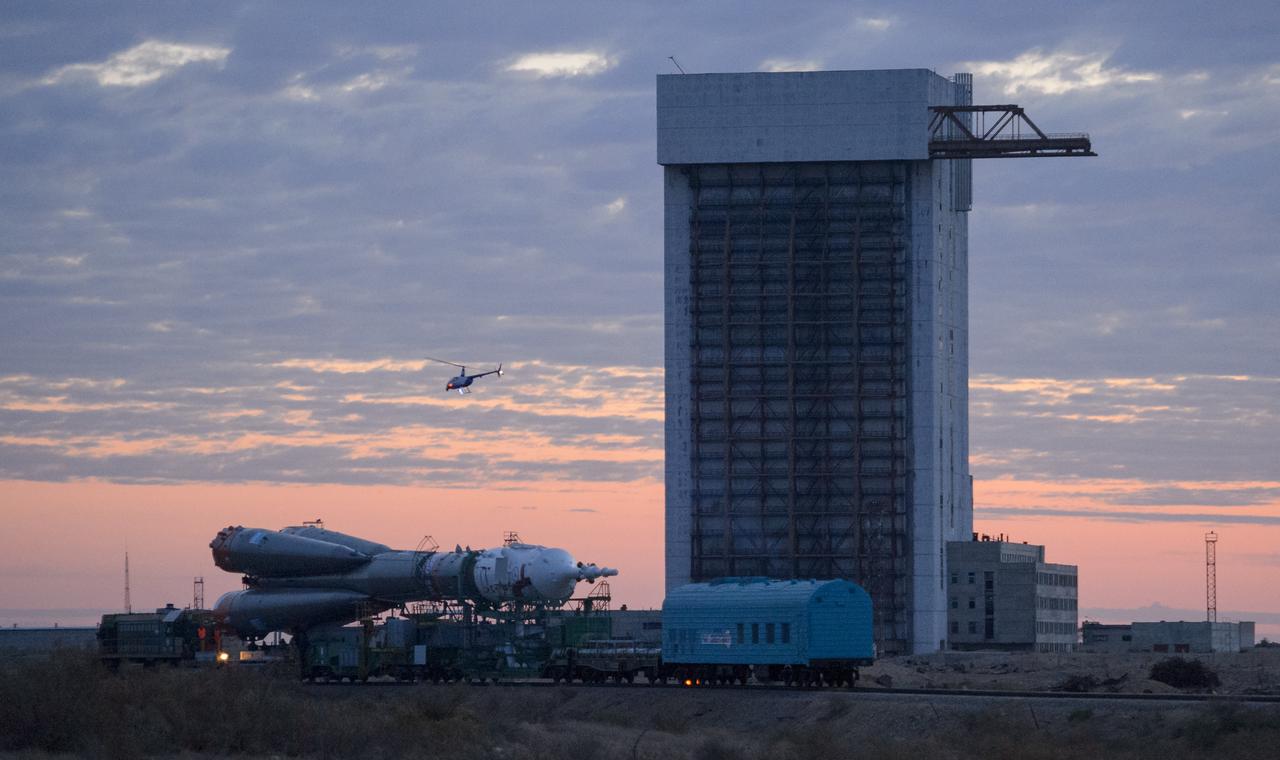
The Soyuz TMA-14M spacecraft is rolled out to the launch pad by train on Tuesday, Sept. 23, 2014 at the Baikonur Cosmodrome in Kazakhstan. Launch of the Soyuz rocket is scheduled for Sept. 26 and will carry Expedition 41 Soyuz Commander Alexander Samokutyaev of the Russian Federal Space Agency (Roscosmos), Flight Engineer Barry Wilmore of NASA, and Flight Engineer Elena Serova of Roscosmos into orbit to begin their five and a half month mission on the International Space Station. Photo Credit: (NASA/Joel Kowsky)