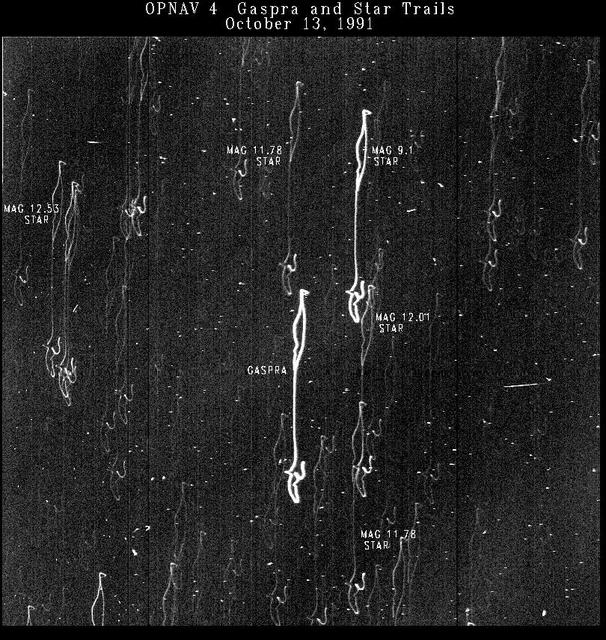
This time-exposure picture of the asteroid Gaspra and background stars is one of four optical navigation images made by NASA Galileo imaging system to improve knowledge of Gaspra location for the spacecraft flyby. http://photojournal.jpl.nasa.gov/catalog/PIA00229

This montage of 11 images taken by NASA Galileo spacecraft as it flew by the asteroid Gaspra on Oct. 1991, shows Gaspra growing progressively larger in the field of view of Galileo solid-state imaging camera as the spacecraft approached the asteroid. http://photojournal.jpl.nasa.gov/catalog/PIA00079

This montage shows asteroid 951 Gaspra top compared with Deimos lower left and Phobos lower right, the moons of Mars. http://photojournal.jpl.nasa.gov/catalog/PIA00078
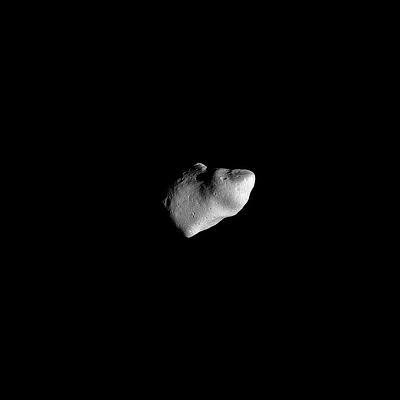
This first image of asteroid 951 Gaspra was taken by NASA Galileo spacecraft on October 29, 1991, from a distance of 16,200 kilometers 10,000 miles. The Sun is shining from the right. http://photojournal.jpl.nasa.gov/catalog/PIA00228
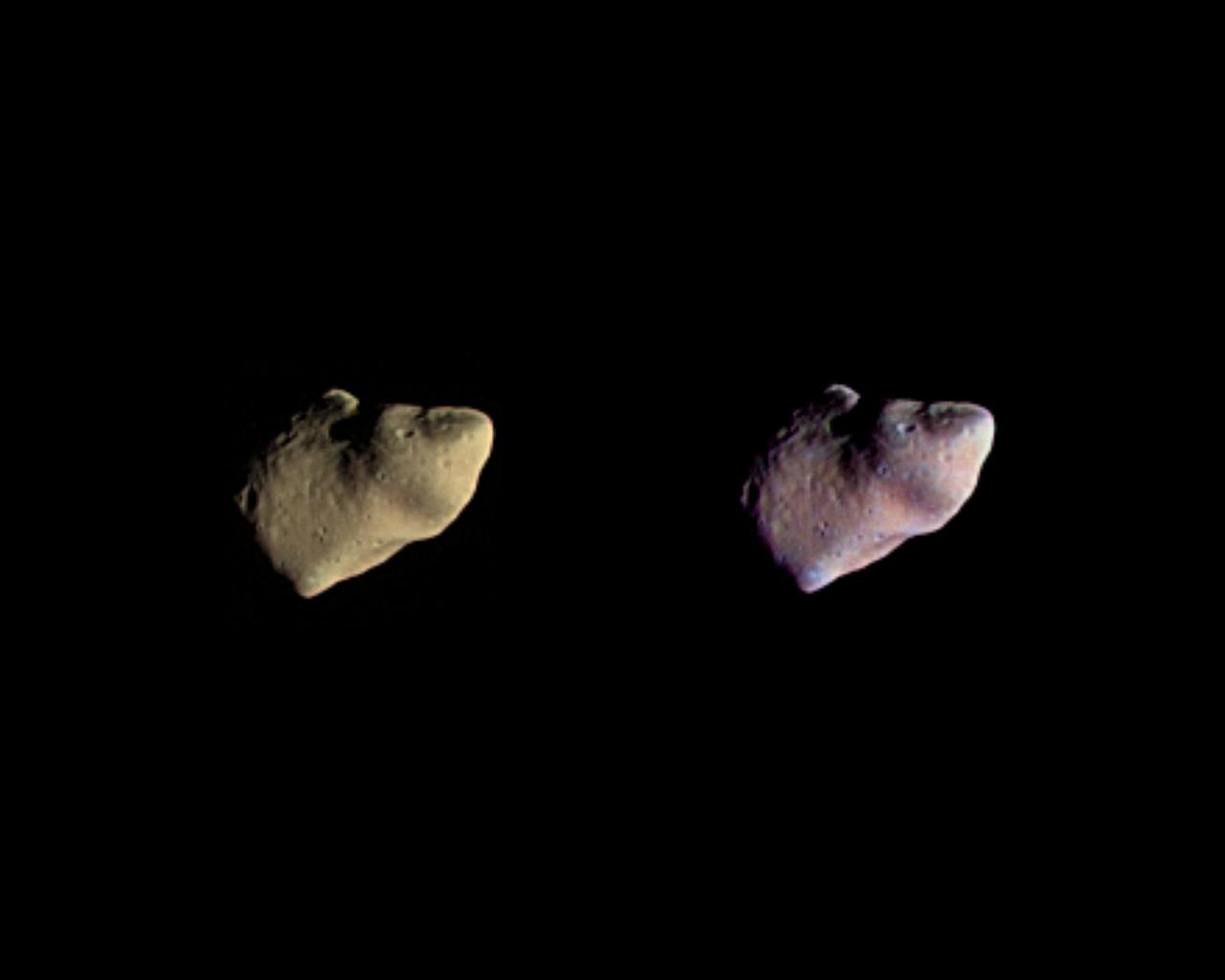
These two color views of the asteroid Gaspra were produced by combining three images taken through violet, green, and infrared filters by NASA's Galileo spacecraft on October 29, 1991. http://photojournal.jpl.nasa.gov/catalog/PIA00125
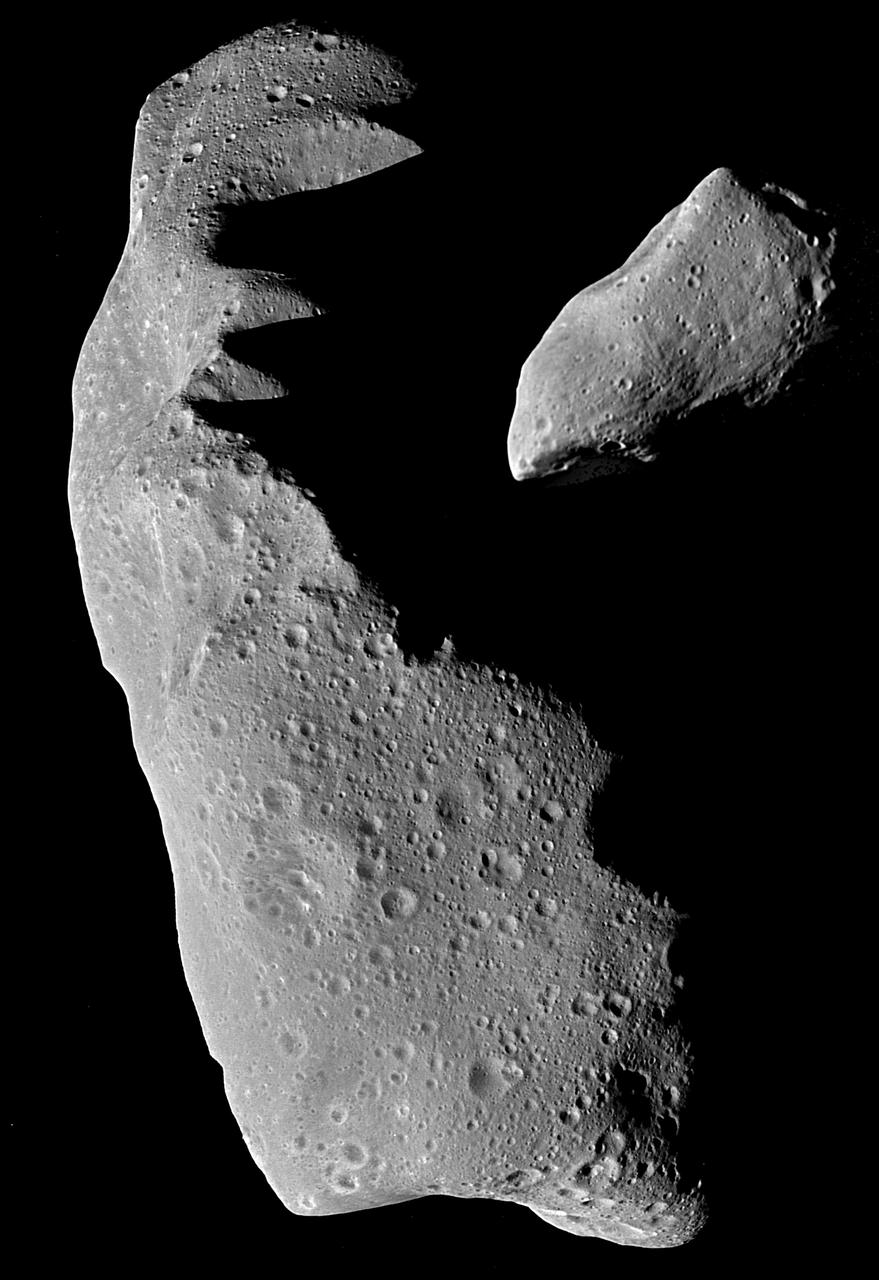
Ida and Gaspra http://photojournal.jpl.nasa.gov/catalog/PIA00332
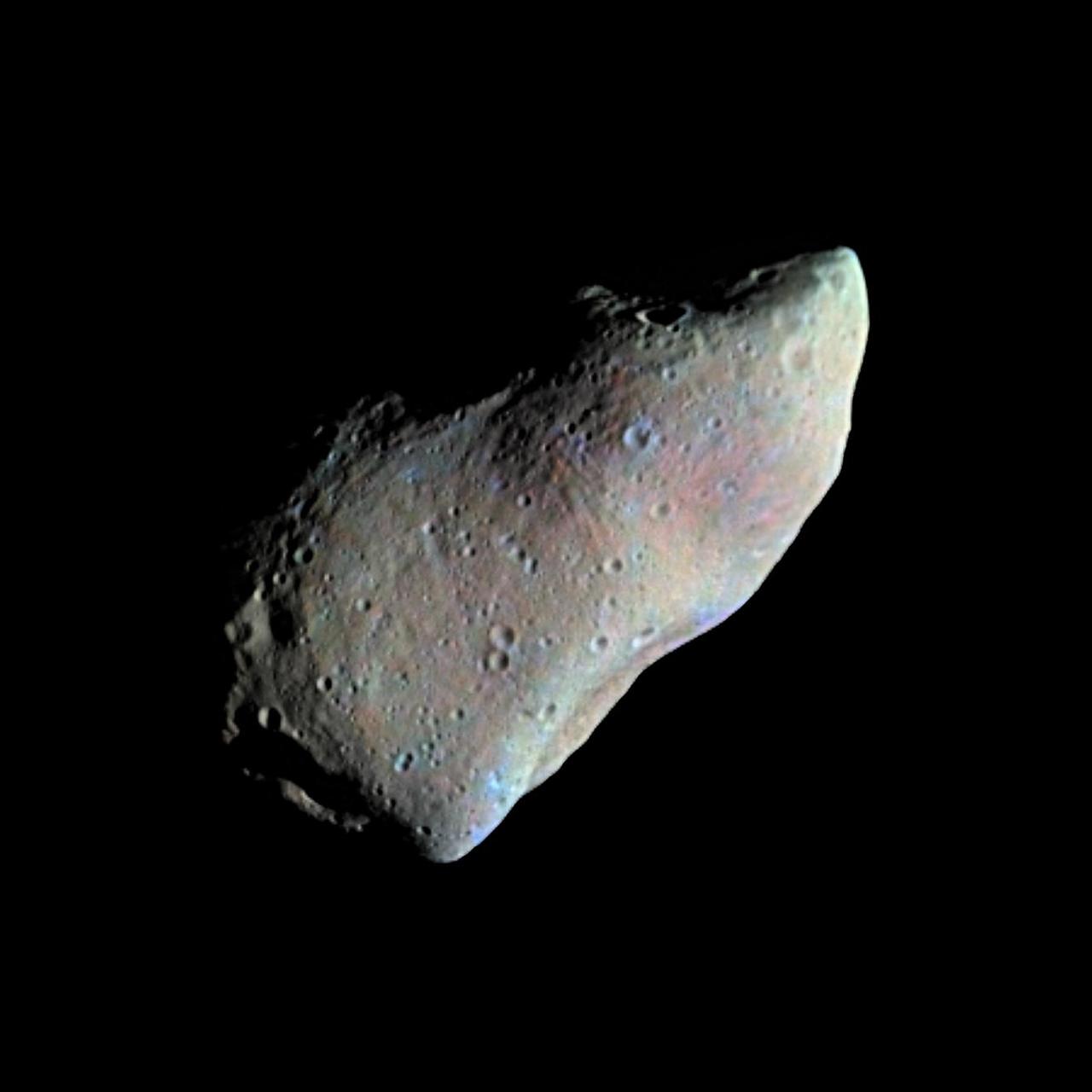
This picture of asteroid 951 Gaspra is a mosaic of two images taken by NASA's Galileo spacecraft from a range of 5,300 kilometers 3,300 miles, some 10 minutes before closest approach on October 29, 1991. http://photojournal.jpl.nasa.gov/catalog/PIA00119
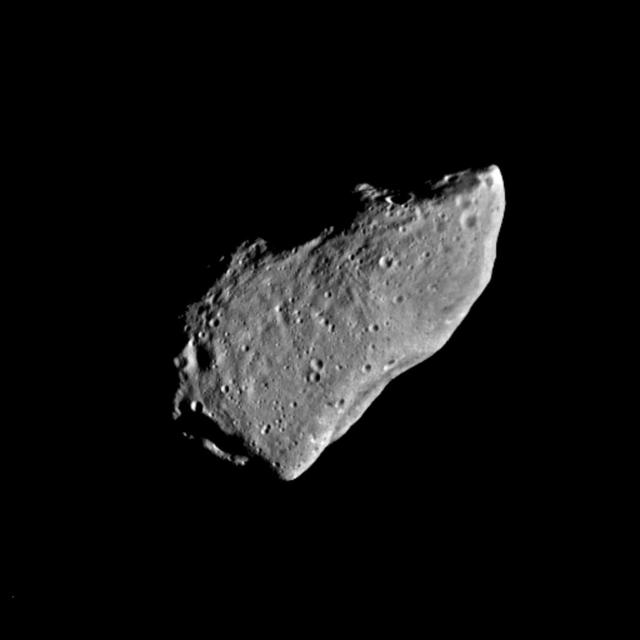
This picture of asteroid 951 Gaspra is a mosaic of two images taken by NASA's Galileo spacecraft from a range of 5,300 kilometers 3,300 miles, some 10 minutes before closest approach on October 29, 1991. http://photojournal.jpl.nasa.gov/catalog/PIA00118
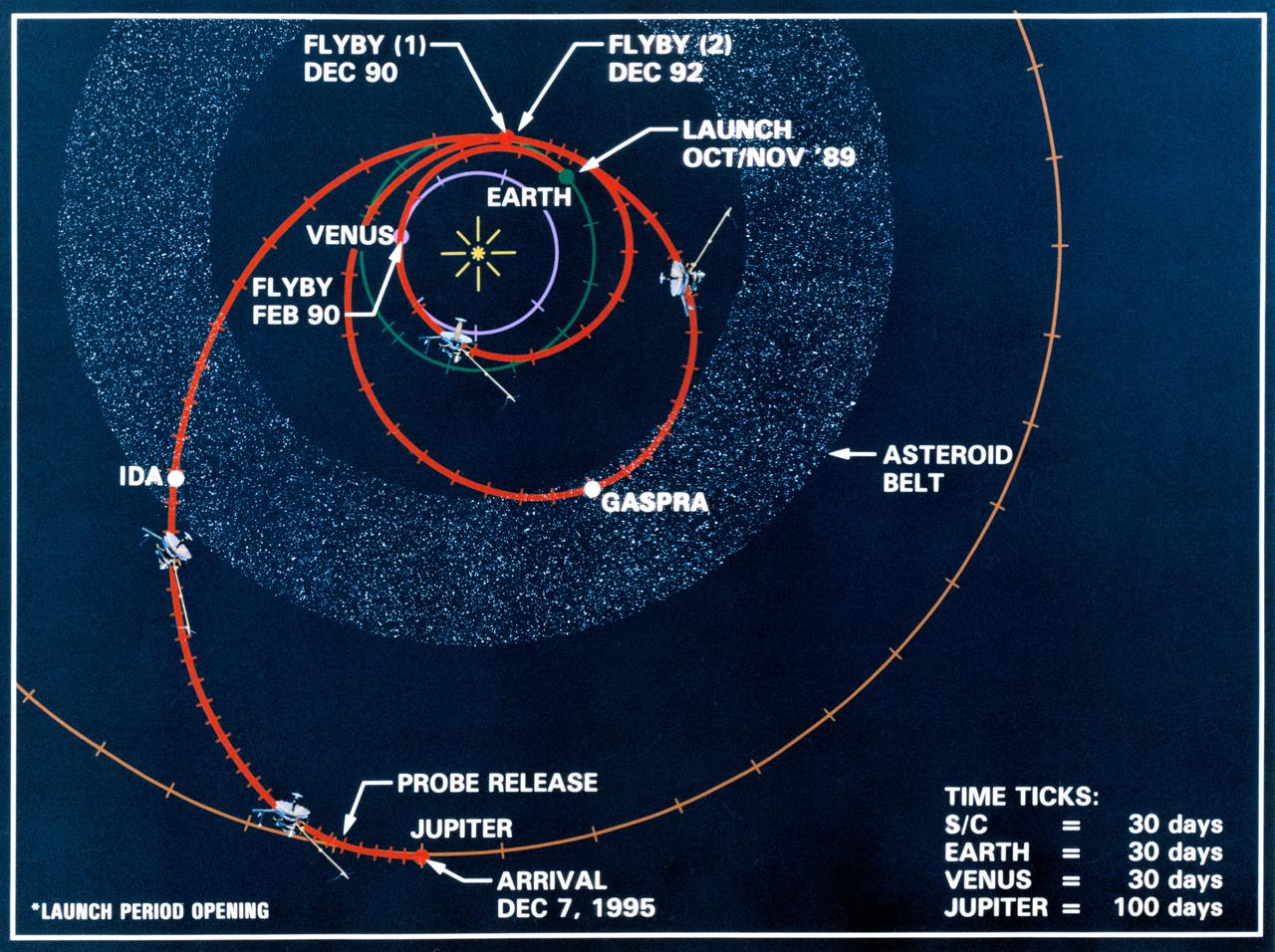
Line drawing charts the Galileo spacecraft's launch from low Earth orbit and its three planetary and two asteroid encounters in the course of its gravity-assisted flight to Jupiter. These encounters include Venus (February 1990), two Earth passes (December 1990 and December 1992), and the asteroids Gaspra and Ida in the asteroid belt. Galileo will release a probe and will arrive at Jupiter, 12-07-95.