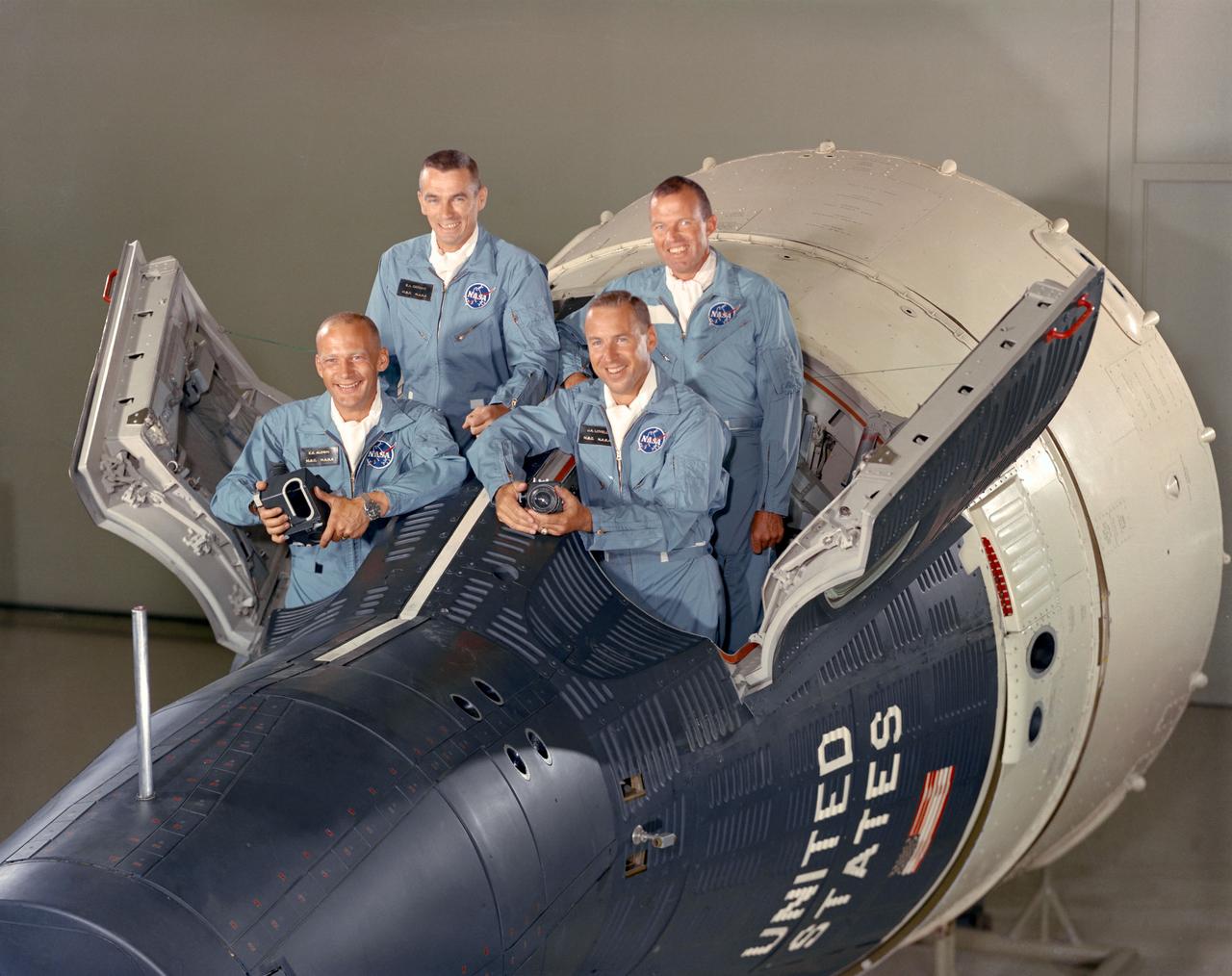
S66-46955 (September 1966) --- The Gemini-12 prime crew (in front) is astronauts James A. Lovell Jr. (right), command pilot, and Edwin E. Aldrin Jr. (left), pilot. In the rear is the Gemini-12 backup crew, astronauts L. Gordon Cooper Jr., (right), command pilot, and Eugene A. Cernan, pilot. Photo credit: NASA
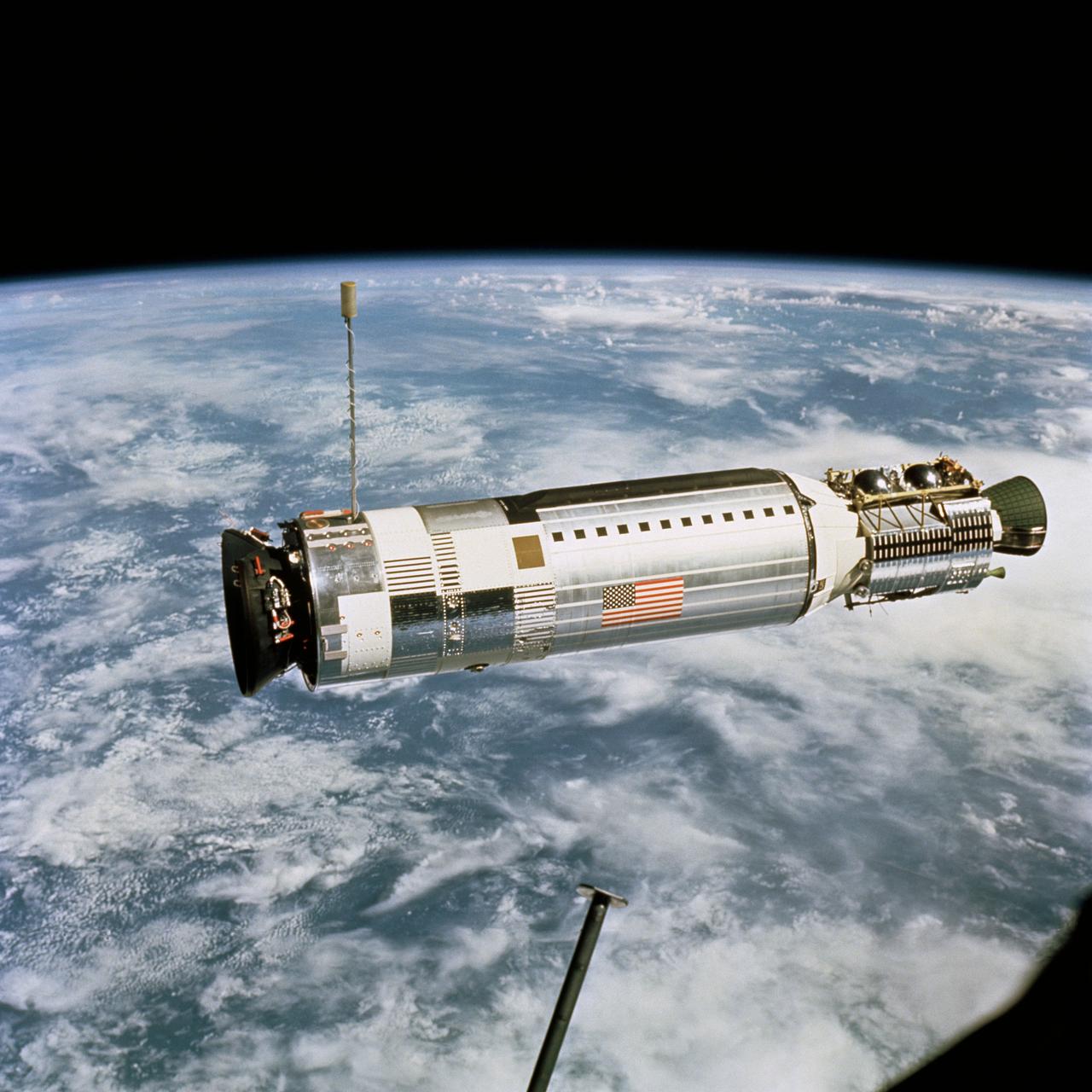
S66-62755 (11 Nov. 1966) --- Excellent stereo and side view of the Agena Target Docking Vehicle as seen from the Gemini-12 spacecraft during rendezvous and docking mission in space. The two spacecraft are 50 feet apart. Photo credit: NASA
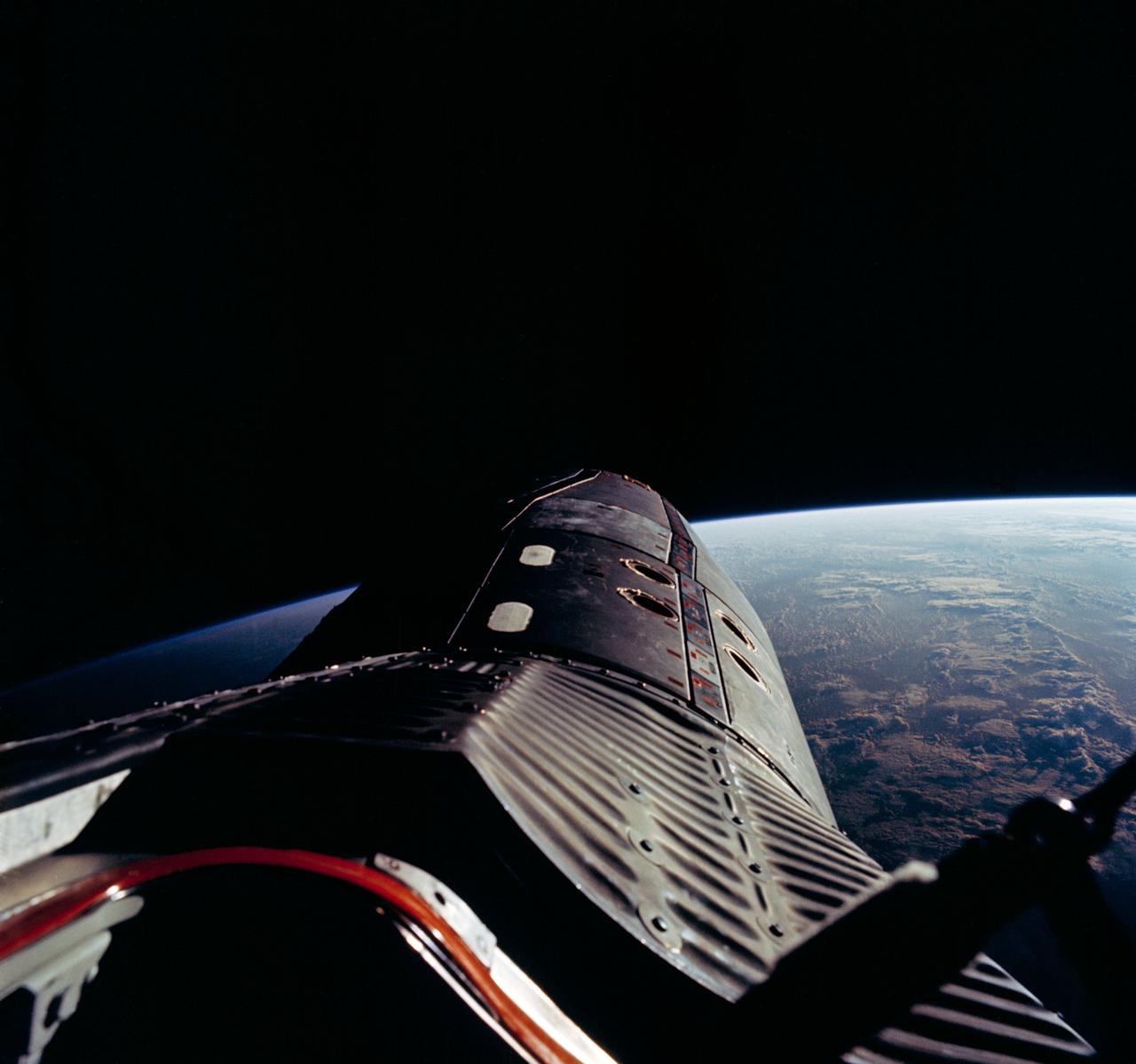
S66-63007 (12 Nov. 1966) --- Astronaut Edwin E. Aldrin Jr., pilot of the Gemini-12 spaceflight, took this picture of the Gemini-12 spacecraft during standup extravehicular activity (EVA) with the hatch open. This is a view looking forward showing the adapter section. Photo credit: NASA
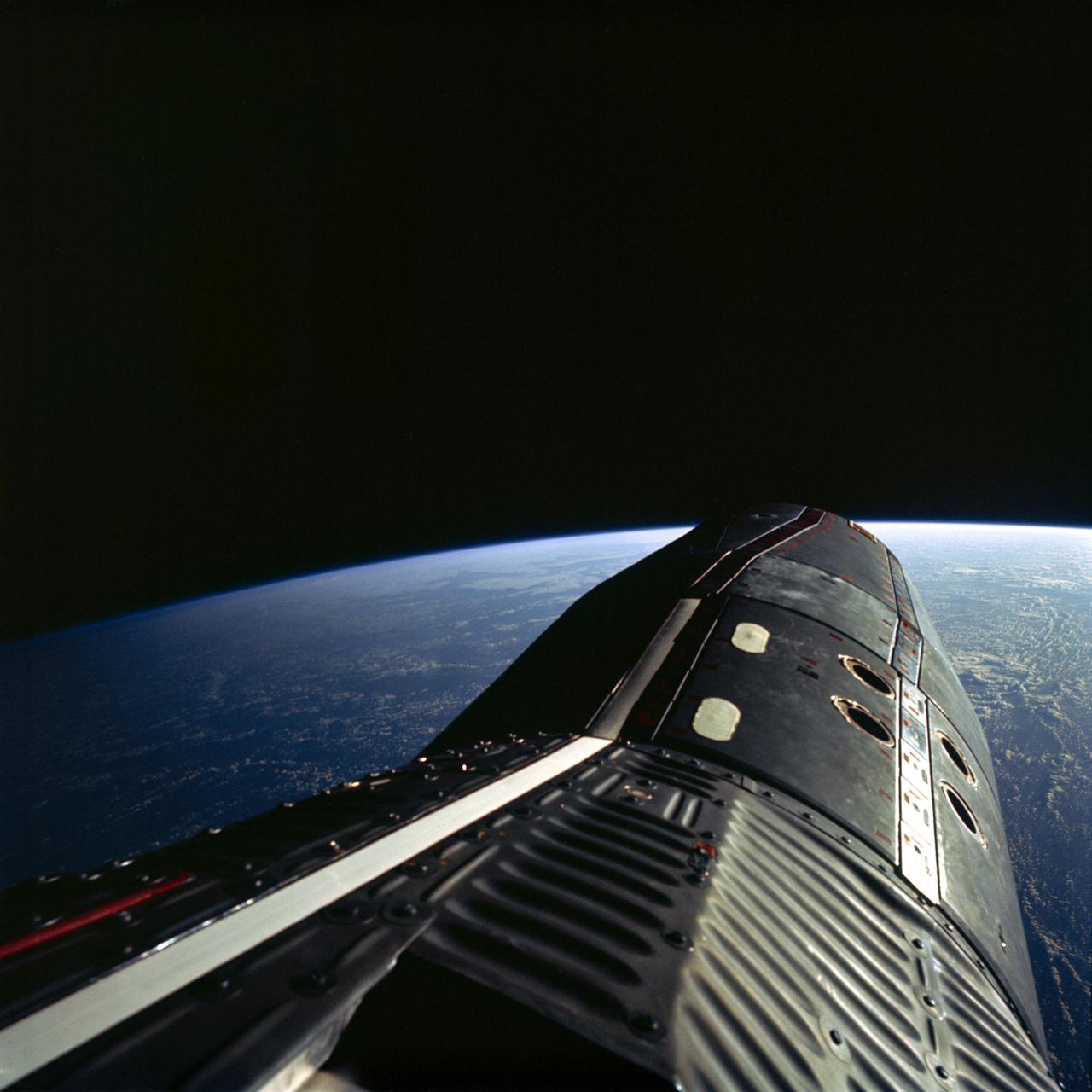
S66-63011 (13 Nov. 1966) --- Astronaut Edwin E. Aldrin Jr., pilot of the Gemini-12 spaceflight, took this picture of the Gemini-12 spacecraft during standup extravehicular activity (EVA) with the hatch open. Photo credit: NASA
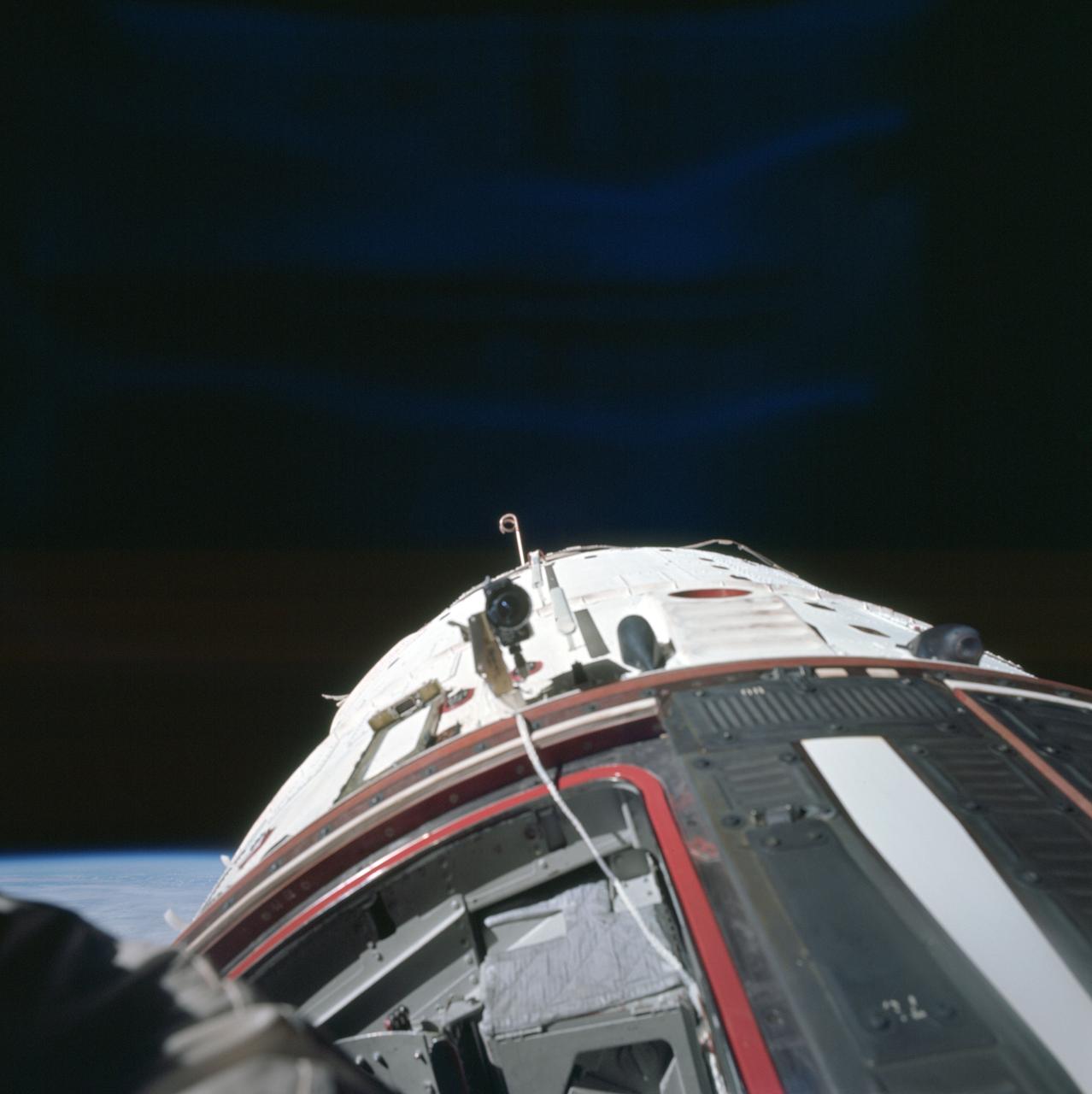
S66-62920 (13 Nov. 1966) --- Astronaut Edwin E. Aldrin Jr., pilot of the Gemini-12 spaceflight, took this picture of the Gemini-12 spacecraft during standup extravehicular activity (EVA) with the hatch open. This is a view to the rear showing the adapter section. Photo credit: NASA
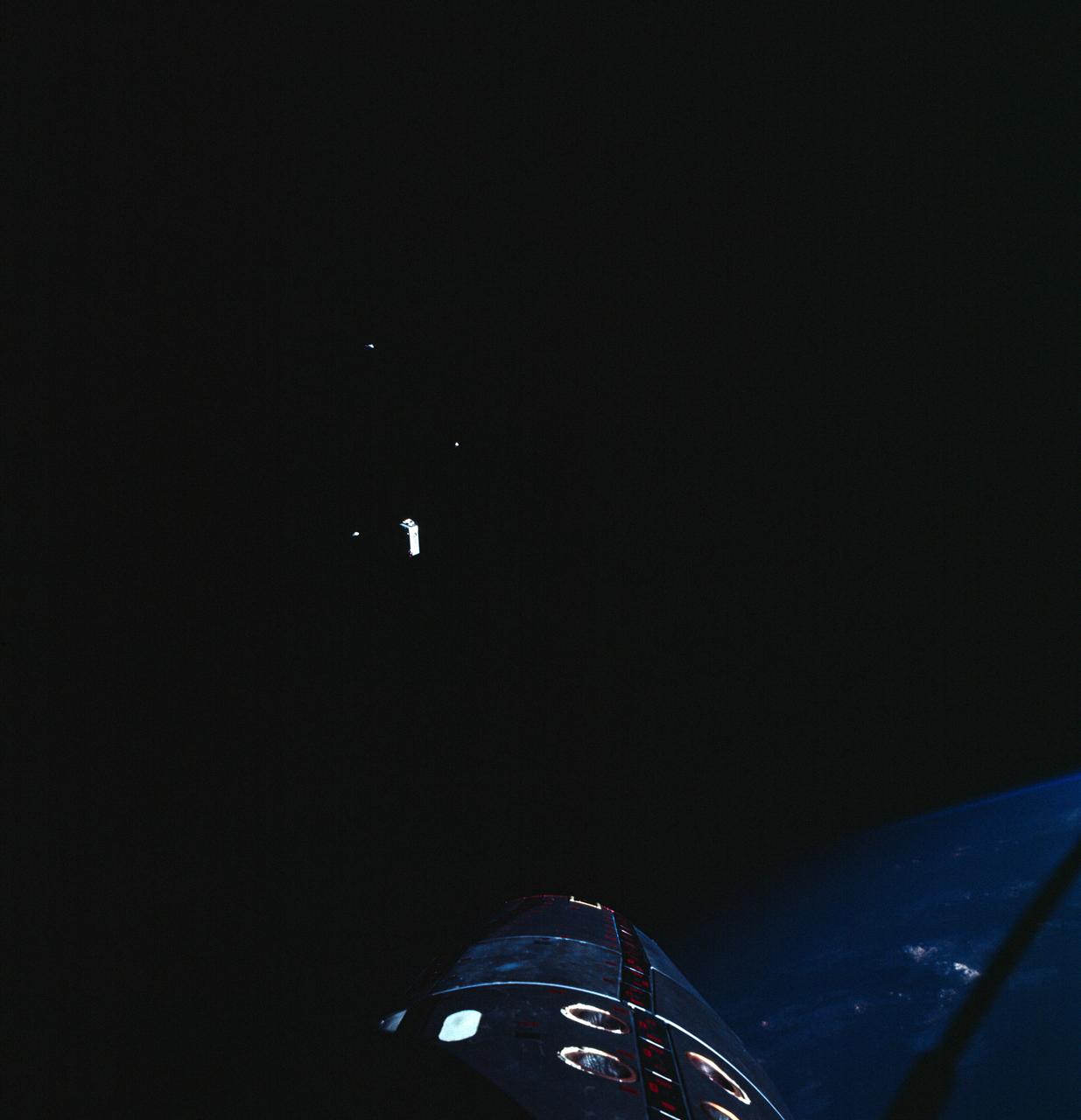
S66-62999 (13 Nov. 1966) --- Jettison of the extravehicular life support system (ELSS) and other equipment from the Gemini-12 spacecraft during its rendezvous mission in space. The nose of the Gemini-12 spacecraft is clearly visible at right edge of photo. Photo credit: NASA
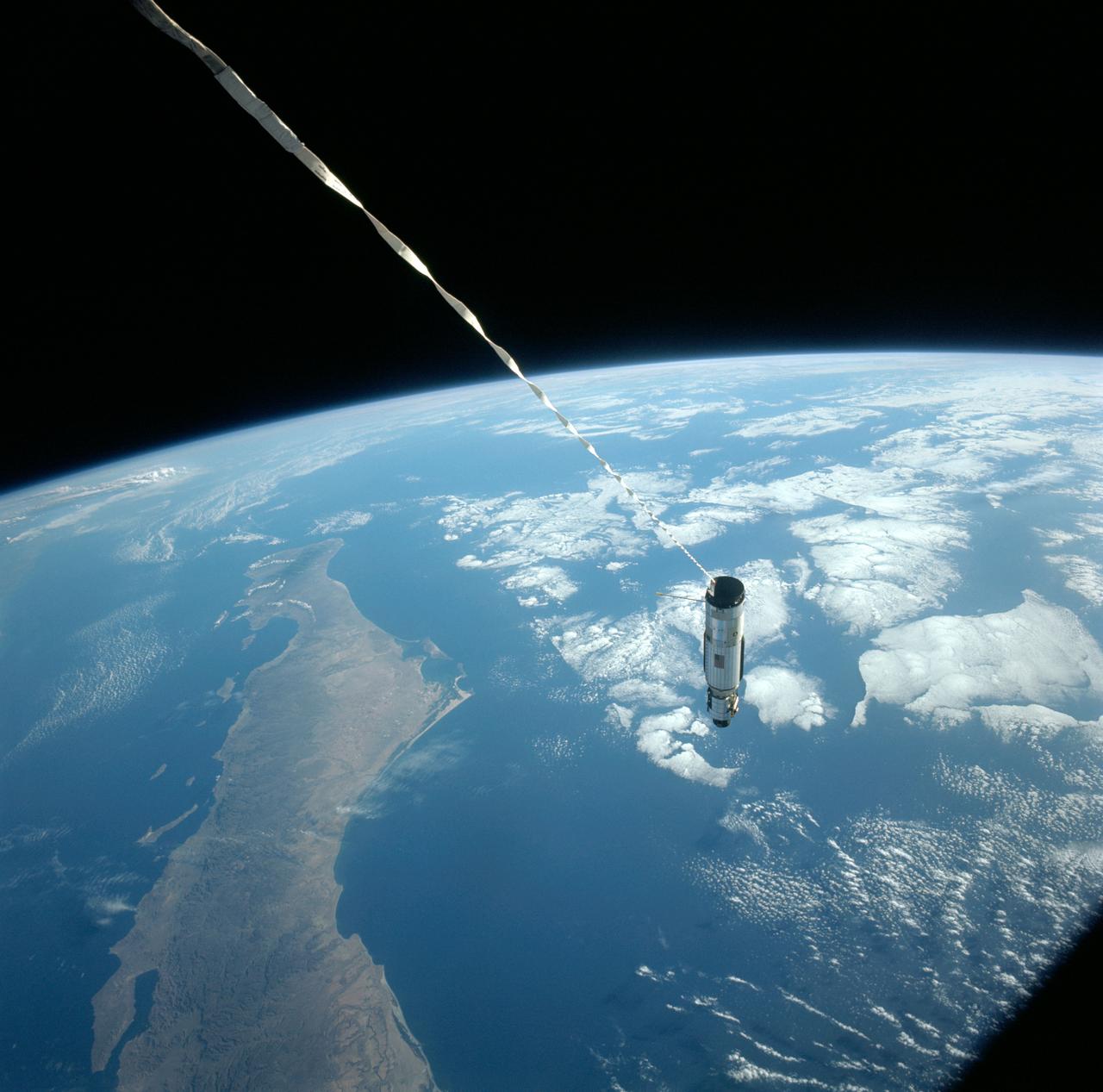
S66-63517 (13 Nov. 1966) --- The Gulf of California area as seen from the Gemini-12 spacecraft during its 30th revolution of Earth. Baja California Sur is the peninsula on the left. At lower left is the mainland of Mexico. A 100-foot tether line connects the Agena Target Docking Vehicle with the Gemini-12 spacecraft. View is looking south. Photo credit: NASA
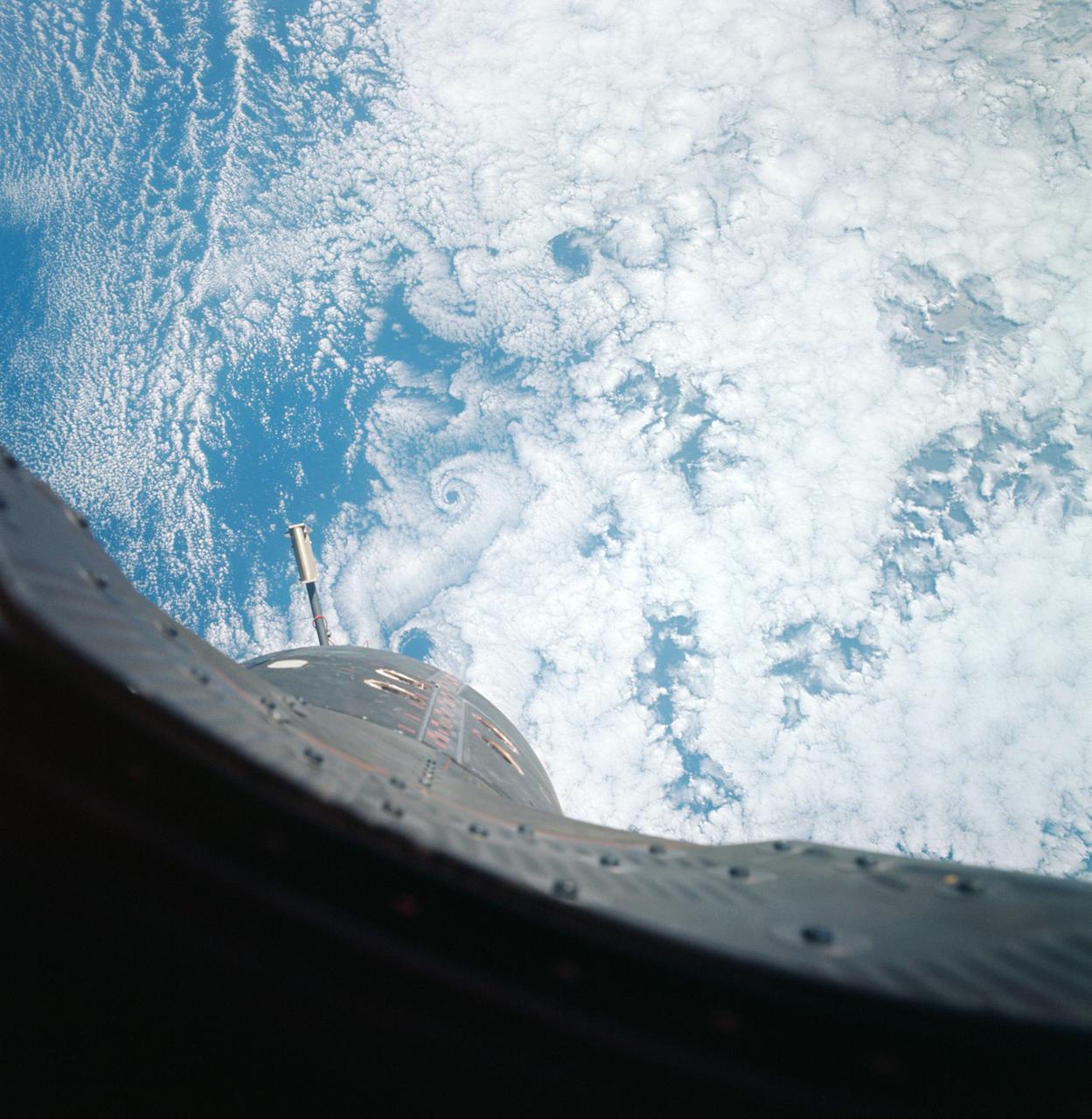
S66-63494 (13 Nov. 1966) --- Guadalupe Island, unique vortices off Baja California, Mexico, as seen from the Gemini-12 spacecraft during its 29th revolution of Earth. Photo credit: NASA
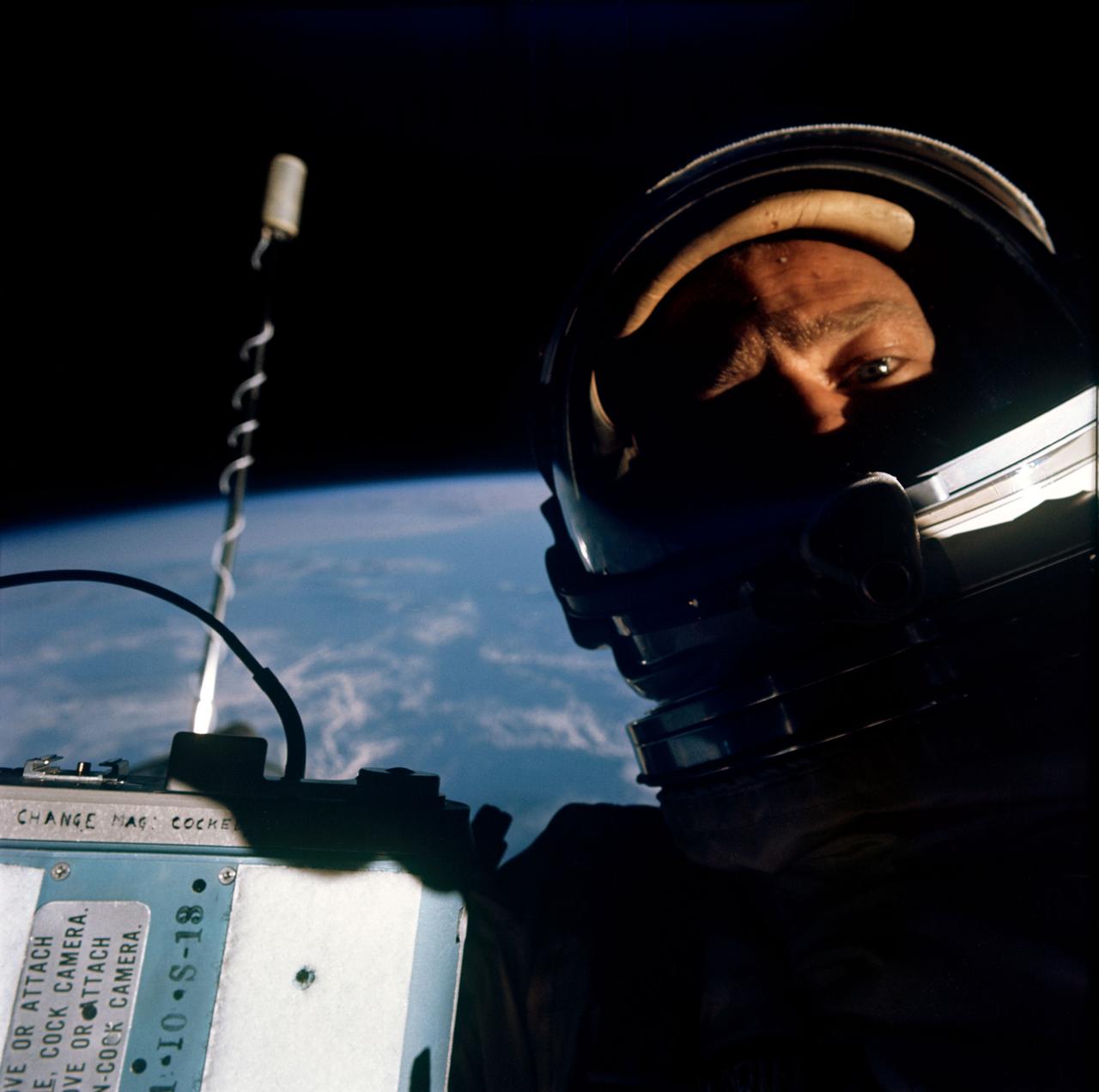
S66-62926 (12 Nov. 1966) --- Astronaut Edwin E. Aldrin Jr., pilot of the Gemini-12 spaceflight, is photographed with pilot's hatch of the spacecraft open. Note: J.A. Maurer camera which was used to photograph some of his extravehicular activity (EVA). Astronaut James A. Lovell Jr. was the command pilot. Photo credit: NASA
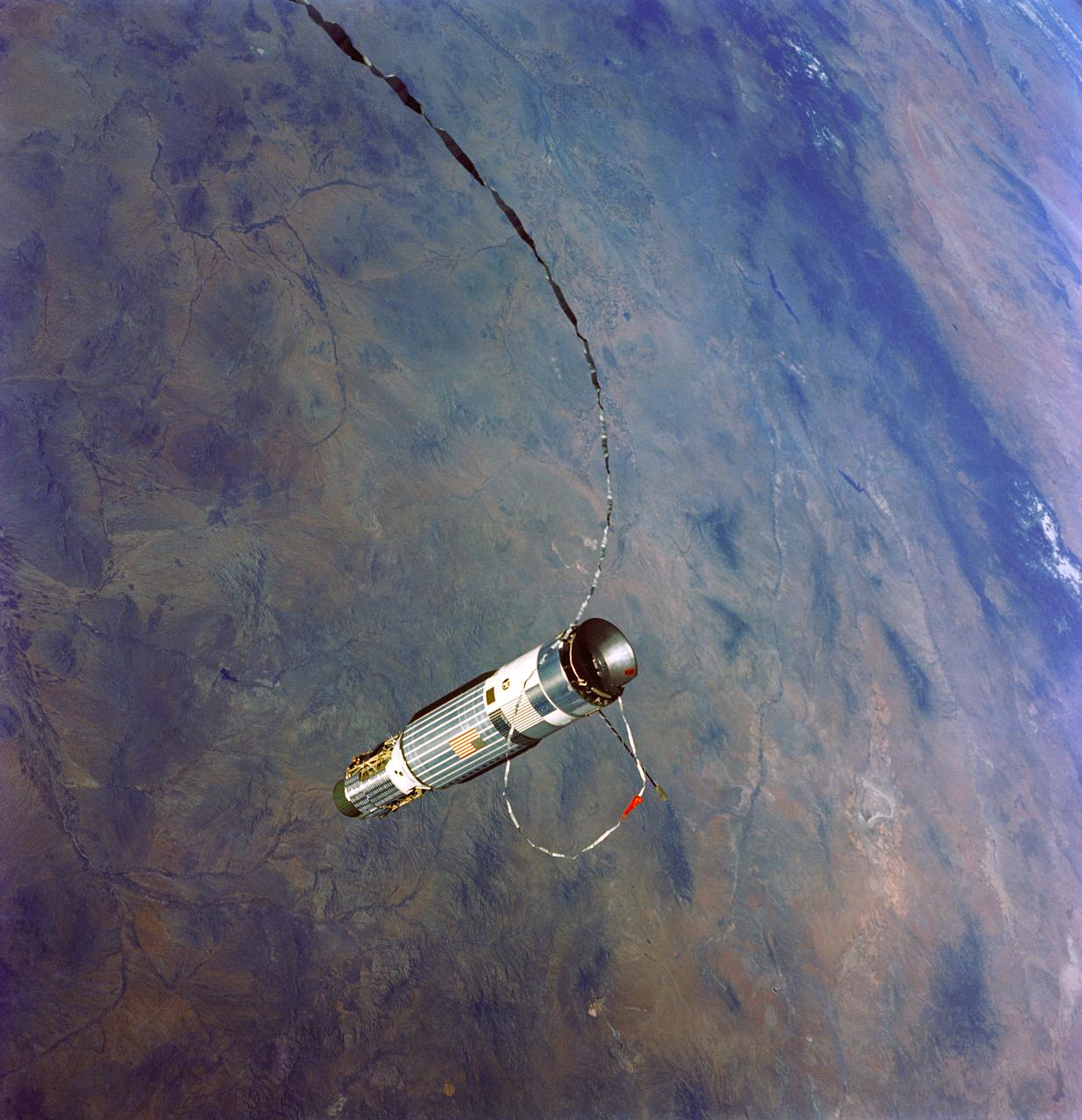
S66-62794 (13 Nov. 1966) --- Northern portion of Sonora, Mexico; southeastern Arizona and southwestern New Mexico, as seen from the Gemini-12 spacecraft during its 30th revolution of Earth. Includes the Tucson, Phoenix, Mogollon Rim, and Painted Desert areas. A 100-foot tether line connects the Agena Target Docking Vehicle with the Gemini-12 spacecraft. Photo credit: NASA.
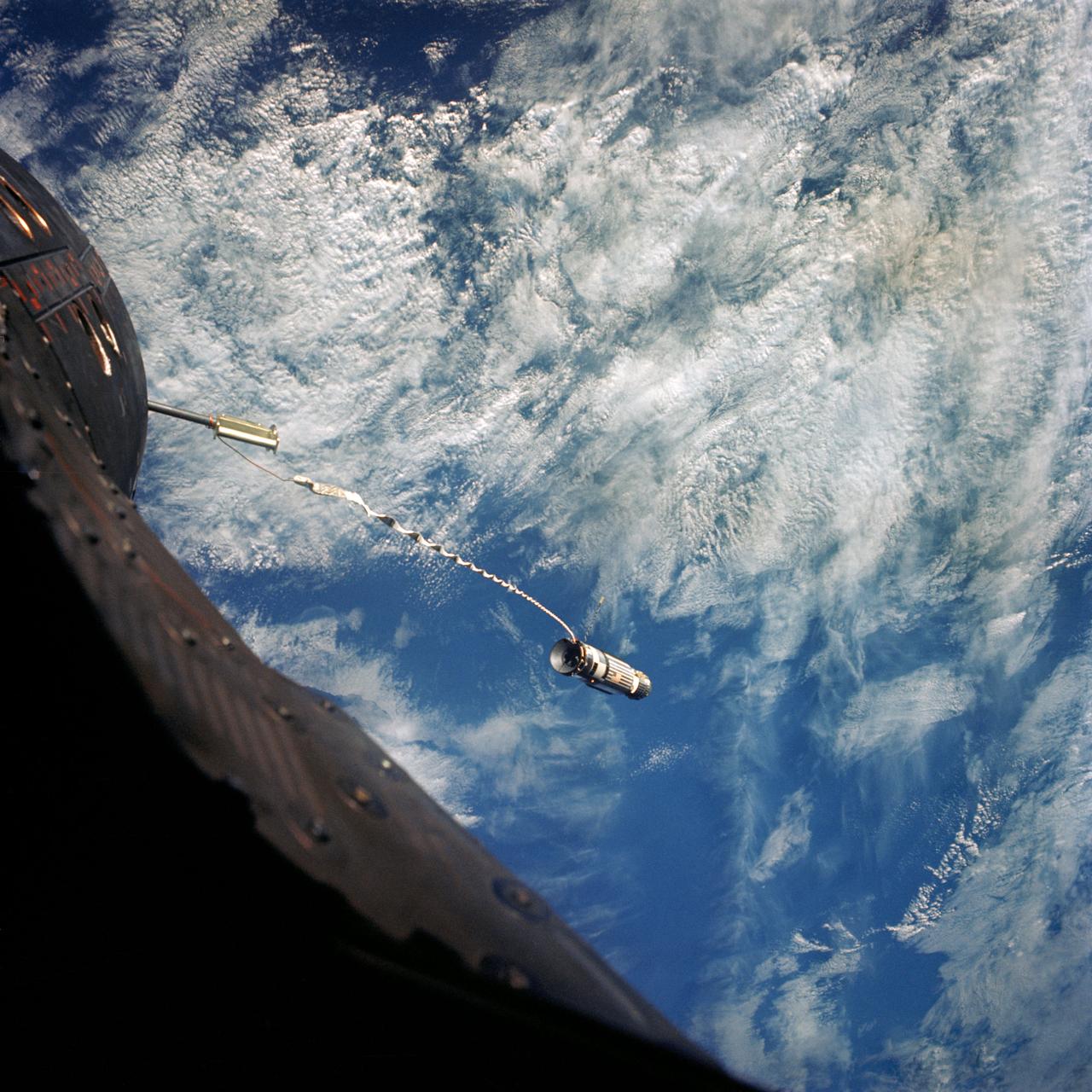
S66-62953 (13 Nov. 1966) --- A 100-foot tether line connects the Agena Target Docking Vehicle with the Gemini-12 spacecraft during its 32nd revolution of Earth. Clouds over the Pacific Ocean are in the background. Photo credit: NASA
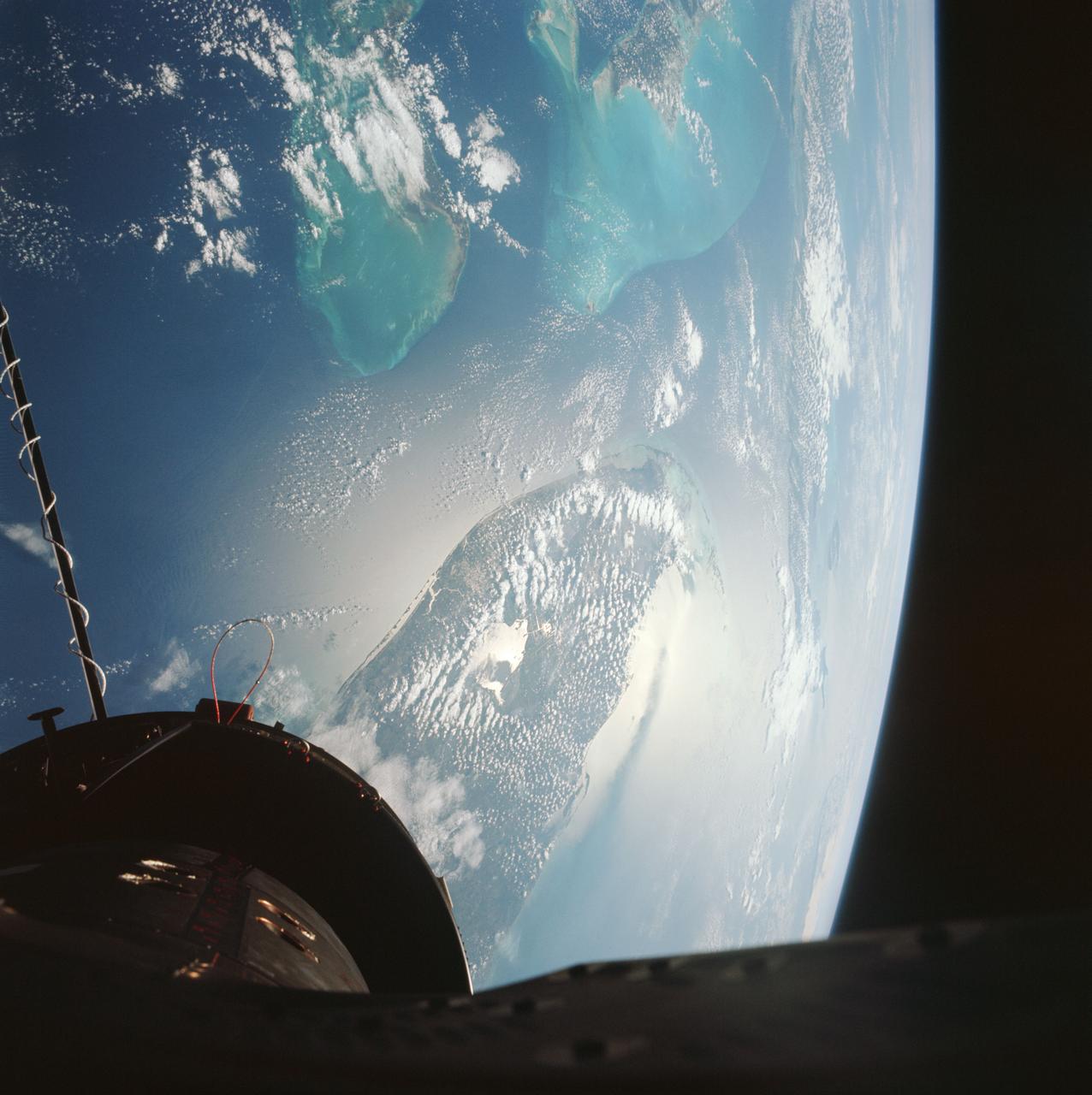
S66-63418 (13 Nov. 1966) --- Florida (south half), Bahamas Islands (Andros-Grand Bahamas-Bimini), and Cuba, looking south as seen from Gemini-12 spacecraft on its 15th revolution of Earth. Photo credit: NASA
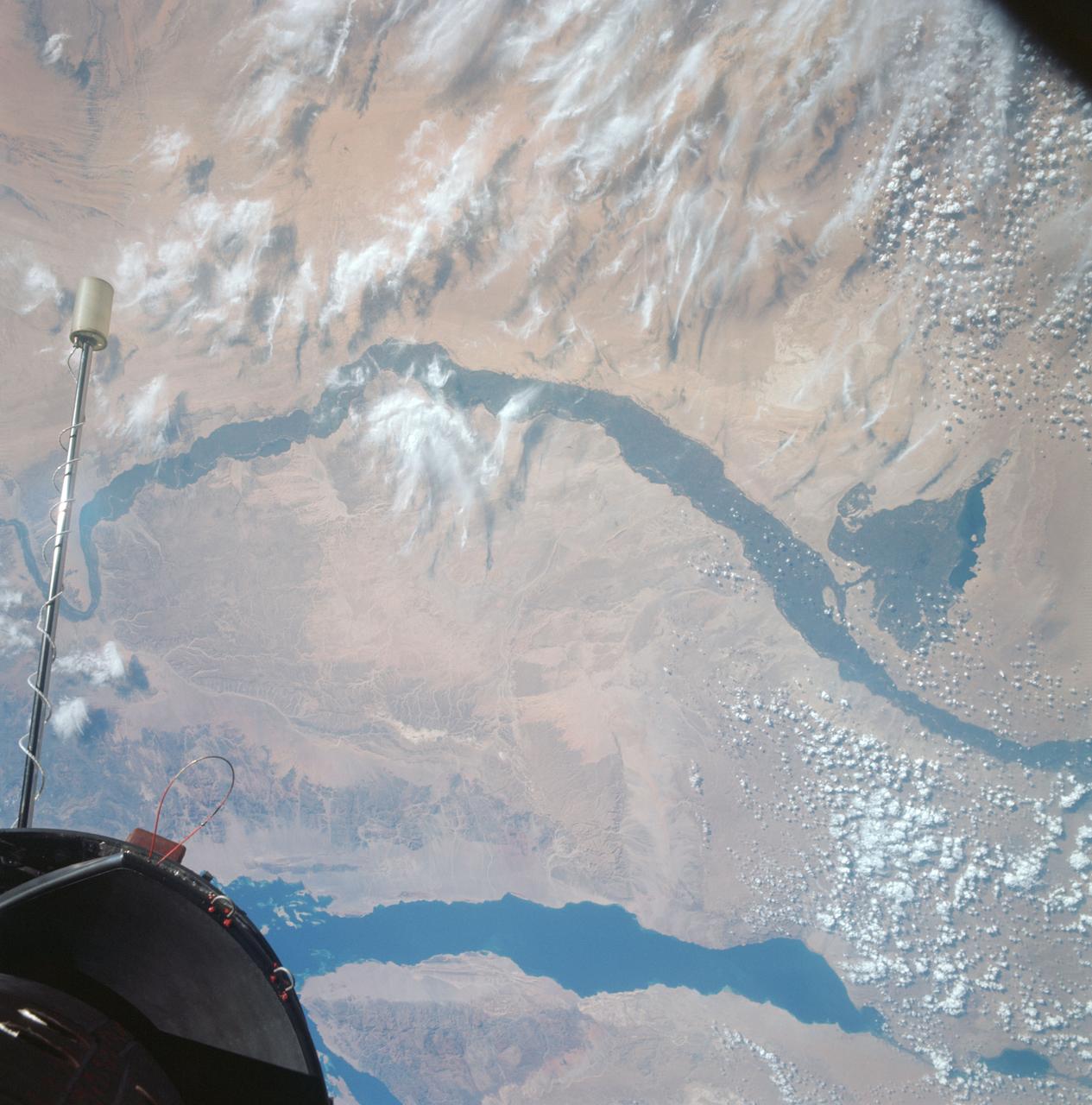
S66-63477 (13 Nov. 1966) --- United Arab Republic (Egypt), the Nile Valley from Luxor to Cairo, El Payium, Gulf of Suez, Sinai as seen from Gemini-12 spacecraft on its 25th revolution of Earth. Photo credit: NASA
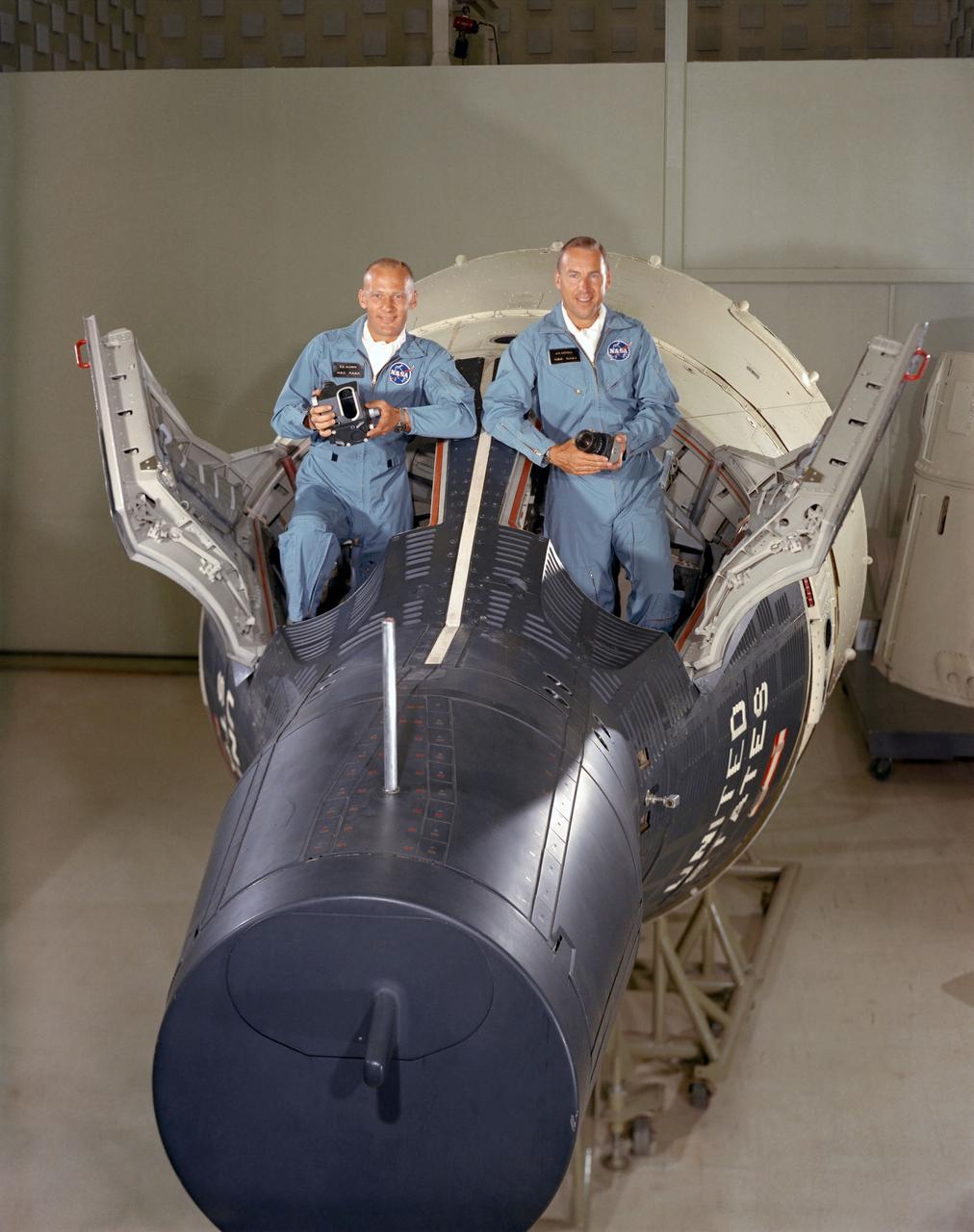
S66-46952 (September 1966) --- Astronauts James A. Lovell Jr. (right), command pilot, and Edwin E. Aldrin Jr., pilot. Photo credit: NASA
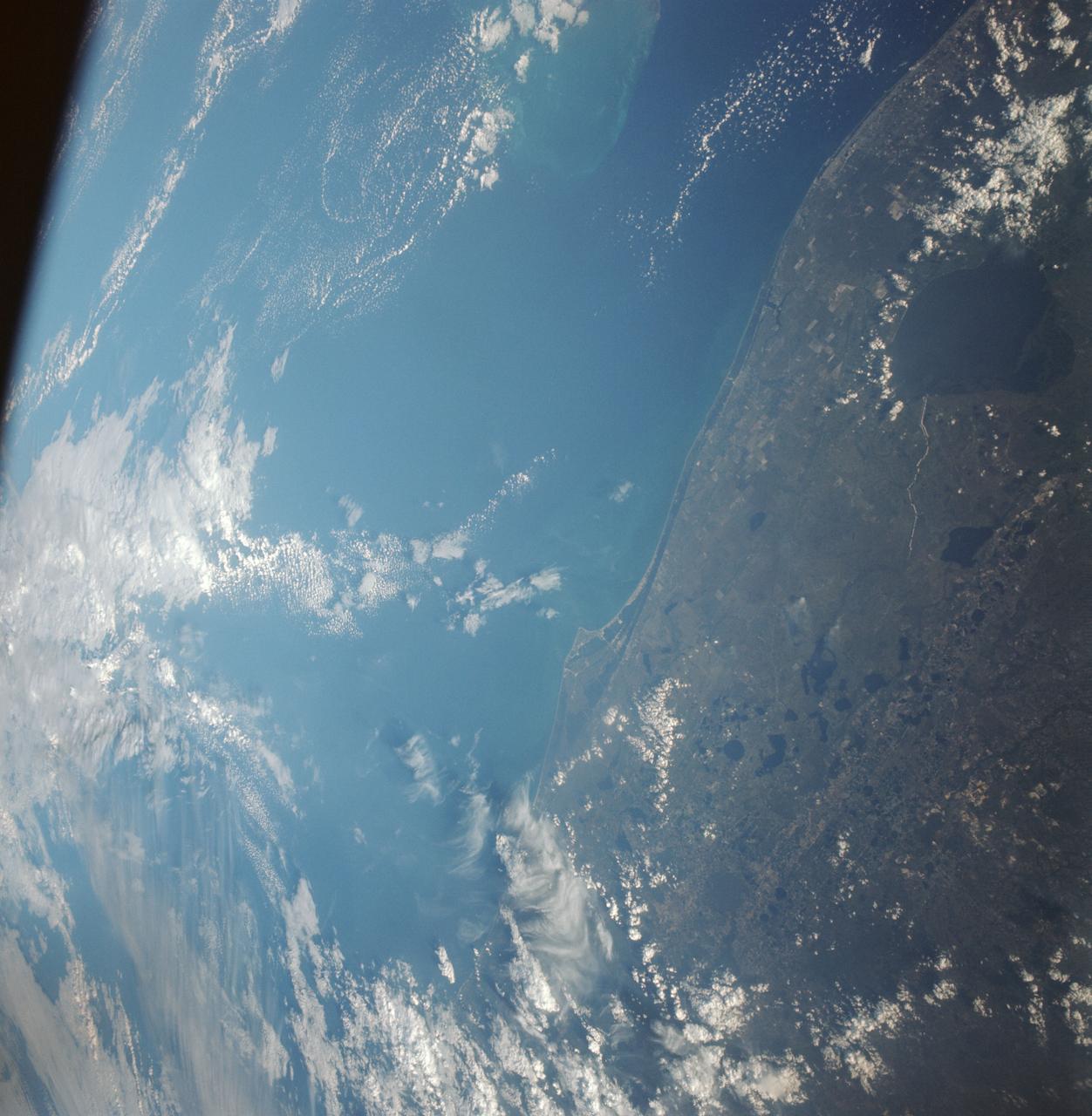
S66-63433 (12 Nov. 1966) --- Cape Kennedy, Palm Beach, Orlando area of Florida as seen from the Gemini-12 spacecraft during it 15th revolution of Earth. Photo credit: NASA
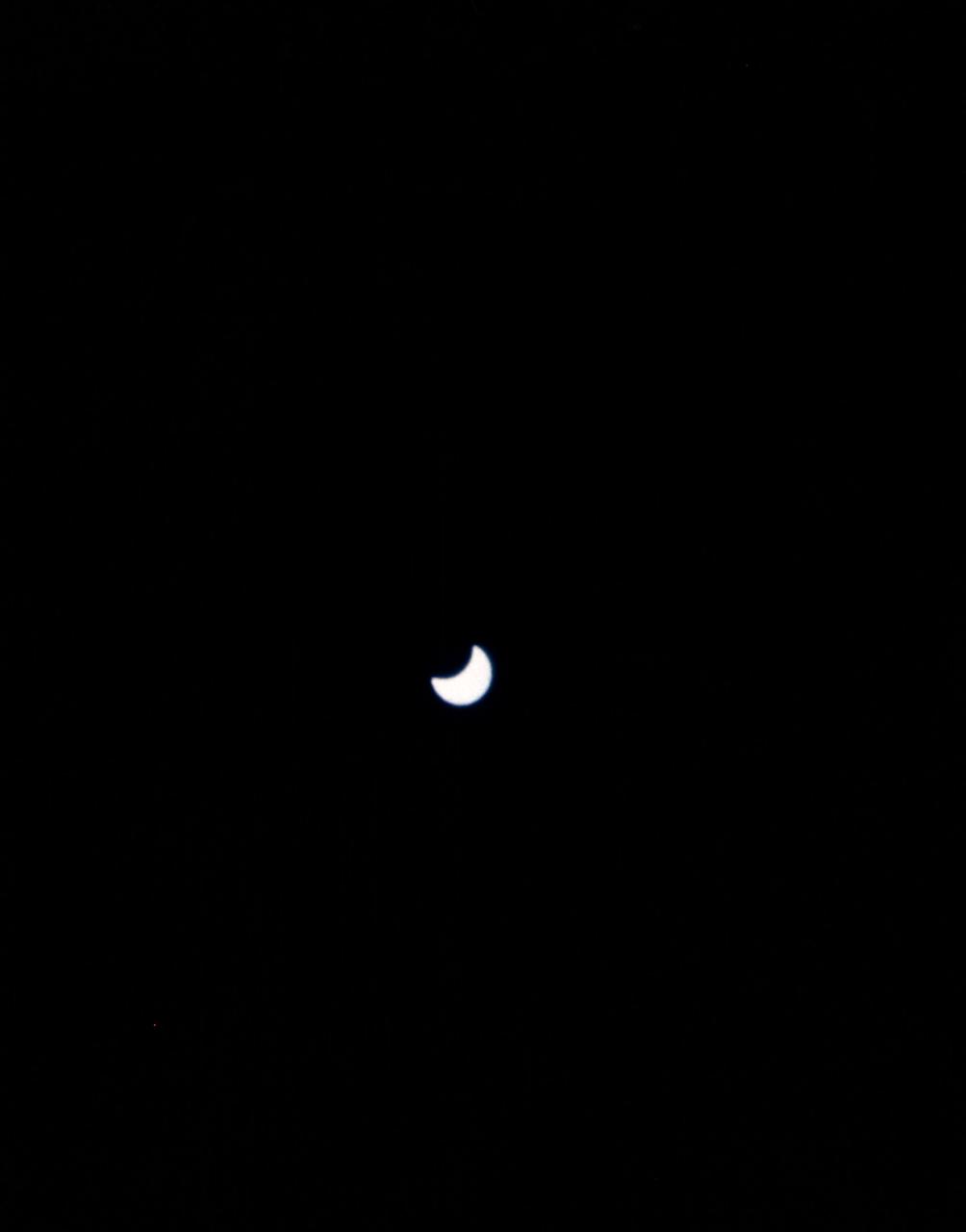
S66-63414 (12 Nov. 1966) --- Partial solar eclipse as seen from the Gemini-12 spacecraft during it 12th revolution of Earth. Crew members for the flight were astronauts James A. Lovell Jr., command pilot, and Edwin E. Aldrin Jr., pilot. Photo credit: NASA
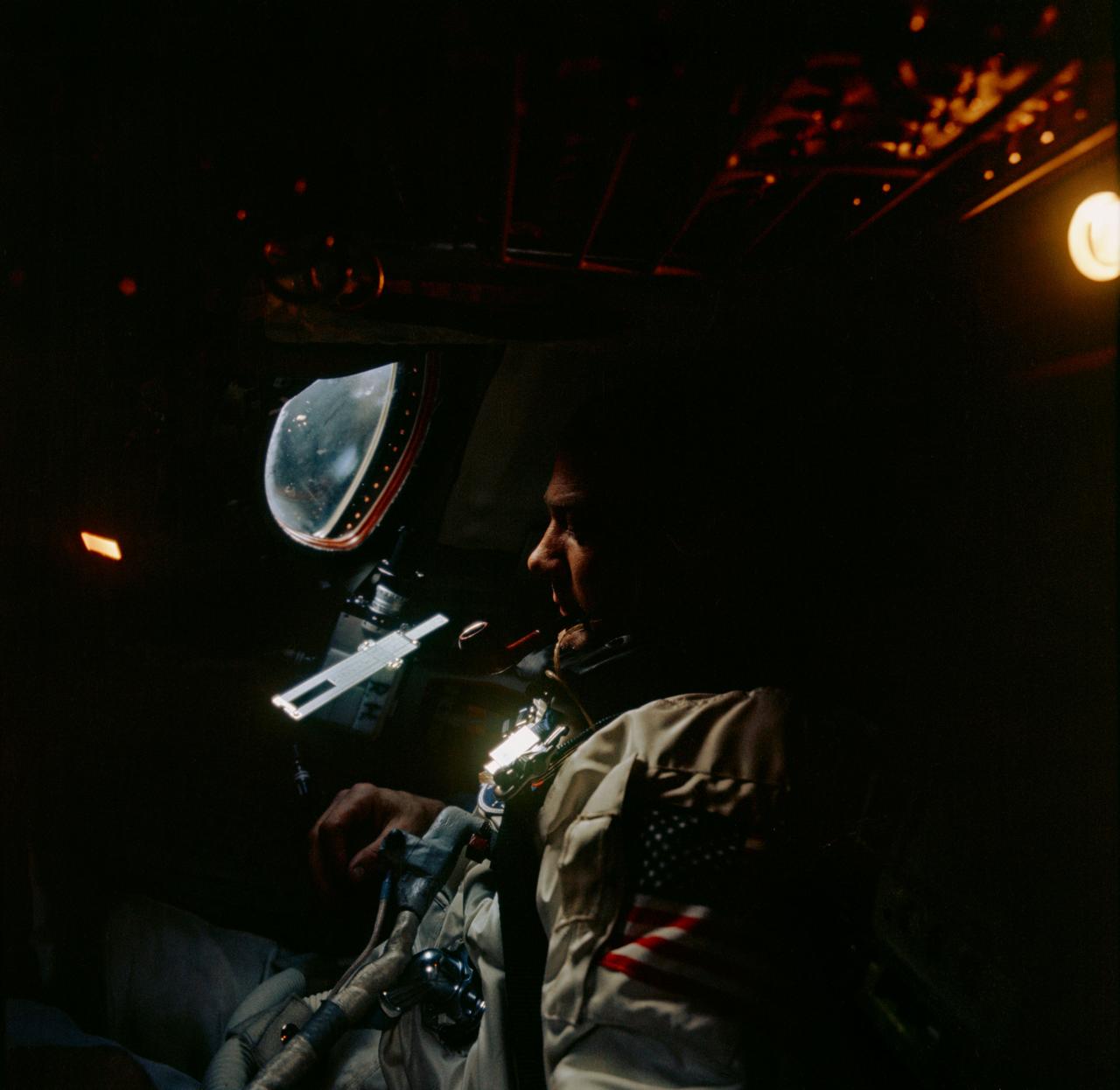
S66-62984 (13 Nov. 1966) --- Astronaut Edwin Aldrin Jr. photographed inside the Gemini-12 spacecraft cabin during the spaceflight. Photo credit: NASA
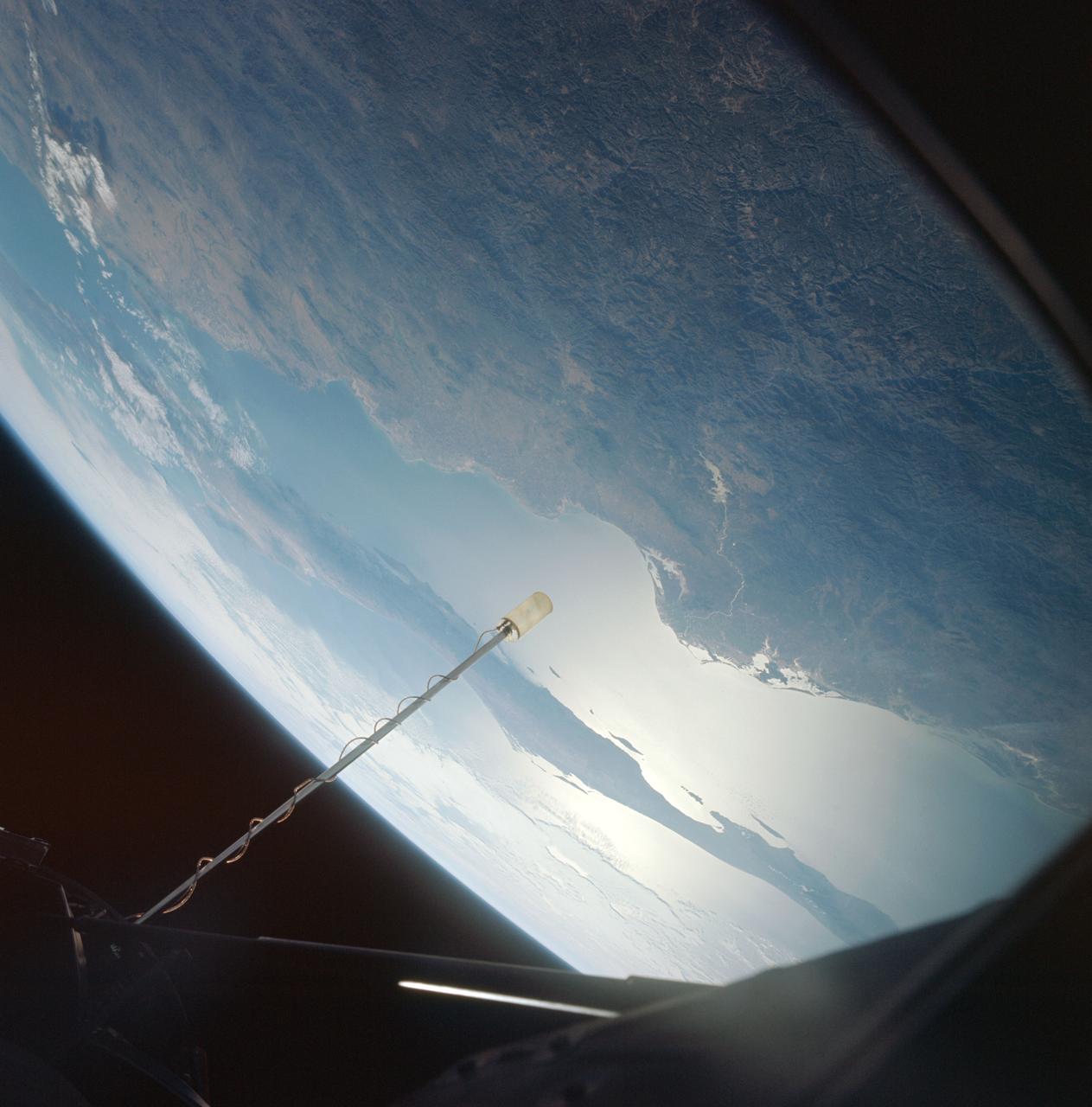
S66-63440 (12 Nov. 1966) --- Area of northwestern Mexico as seen from the Gemini-12 spacecraft during its 16th revolution of Earth. View is looking northwest. Body of water in the foreground is the Gulf of California. Pacific Ocean is in the background. Peninsula in center of picture is Baja California. States of Sonora (upper right) and Sinaloa (lower center) of Mexican mainland is in right foreground. City of Guaymas, Sonora, is near the center of the picture. Photo credit: NASA
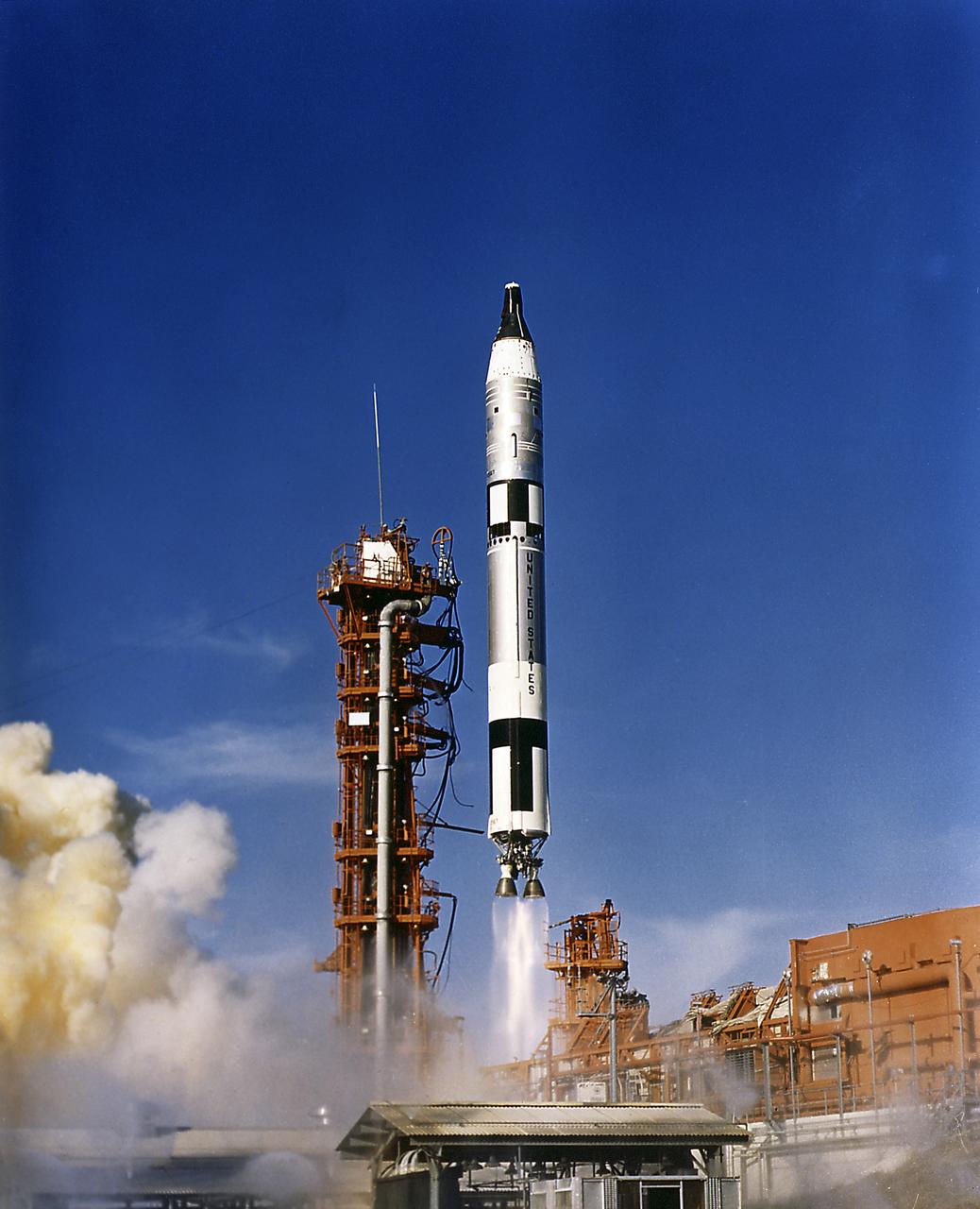
The Gemini 12 astronauts James Lovell and Edwin Aldrin lifted off aboard a Titan launch vehicle from the Kennedy Space Center on November 11, 1966, an hour and a half after their Agena target vehicle was orbited by an Atlas rocket. Launched atop an Atlas booster, the Agena target vehicle (ATV) was a spacecraft used by NASA to develop and practice orbital space rendezvous and docking techniques in preparation for the Apollo program lunar missions. The objective was for Agena and Gemini to rendezvous in space and practice docking procedures. An intermediate step between Project Mercury and the Apollo Program, the Gemini Program's major objectives were to subject two men and supporting equipment to long duration flights, to perfect rendezvous and docking with other orbiting vehicles, methods of reentry, and landing of the spacecraft.
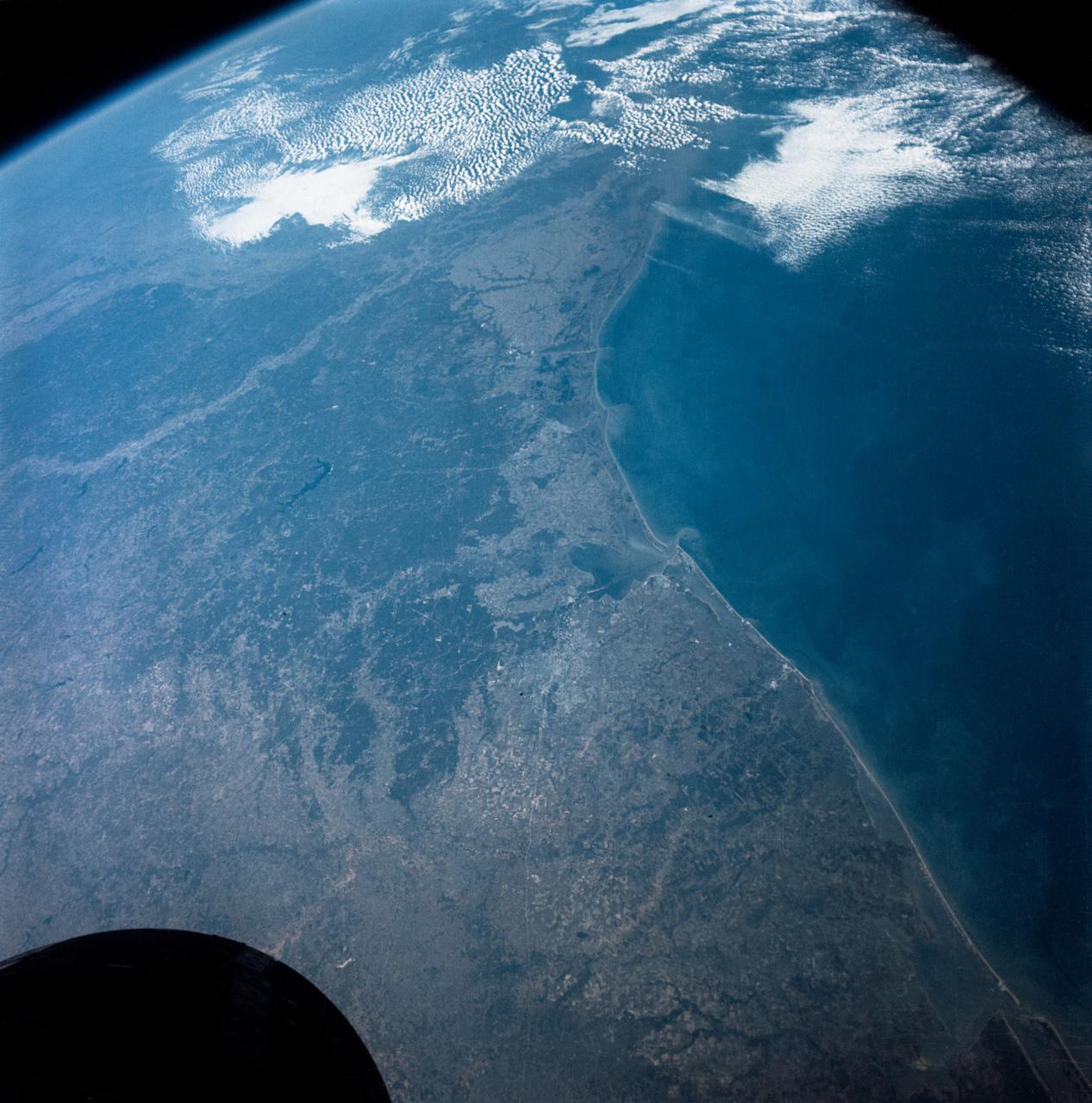
S66-63030 (14 Nov. 1966) --- Gulf Coast area from Matagorda Bay, Texas, to Vermillion Bay, Louisiana, looking east, as seen from the Gemini-12 spacecraft during its 44th revolution of Earth. Galveston Bay is in center of picture. Houston and its environs are clearly visible. Note network of freeways and superhighways. Large lake near left center of picture is the Sam Rayburn Reservoir. Photo credit: NASA
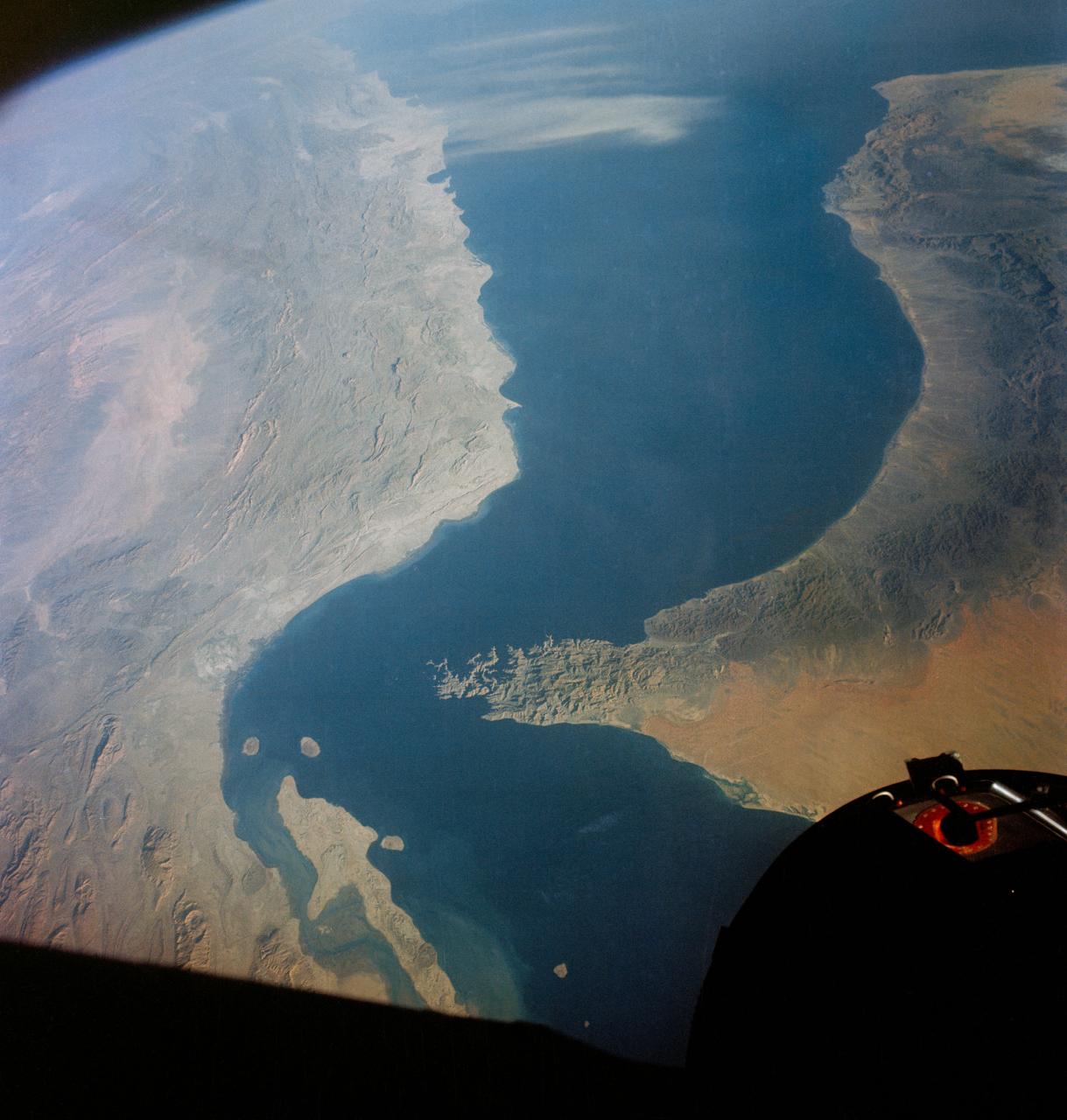
S66-63486 (13 Nov. 1966) --- Iran, Trucial Coast, Oman, Zagros Mountains, and Qishm Island (large island at lower right), as seen from the Gemini-12 spacecraft during its 25th revolution of Earth. Gulf of Oman is large body of water at left and the Persian Gulf is body of water at right. View is looking east. Photo credit: NASA

S66-63485 (13 Nov. 1966) --- Iran, Trucial Coast, Oman, Zagros Mountains, and Qishm Island (large island at lower left), as seen from the Gemini-12 spacecraft during its 25th revolution of Earth. Gulf of Oman is at lower left edge and the Persian Gulf is large body of water in upper half of photo. Photo credit: NASA
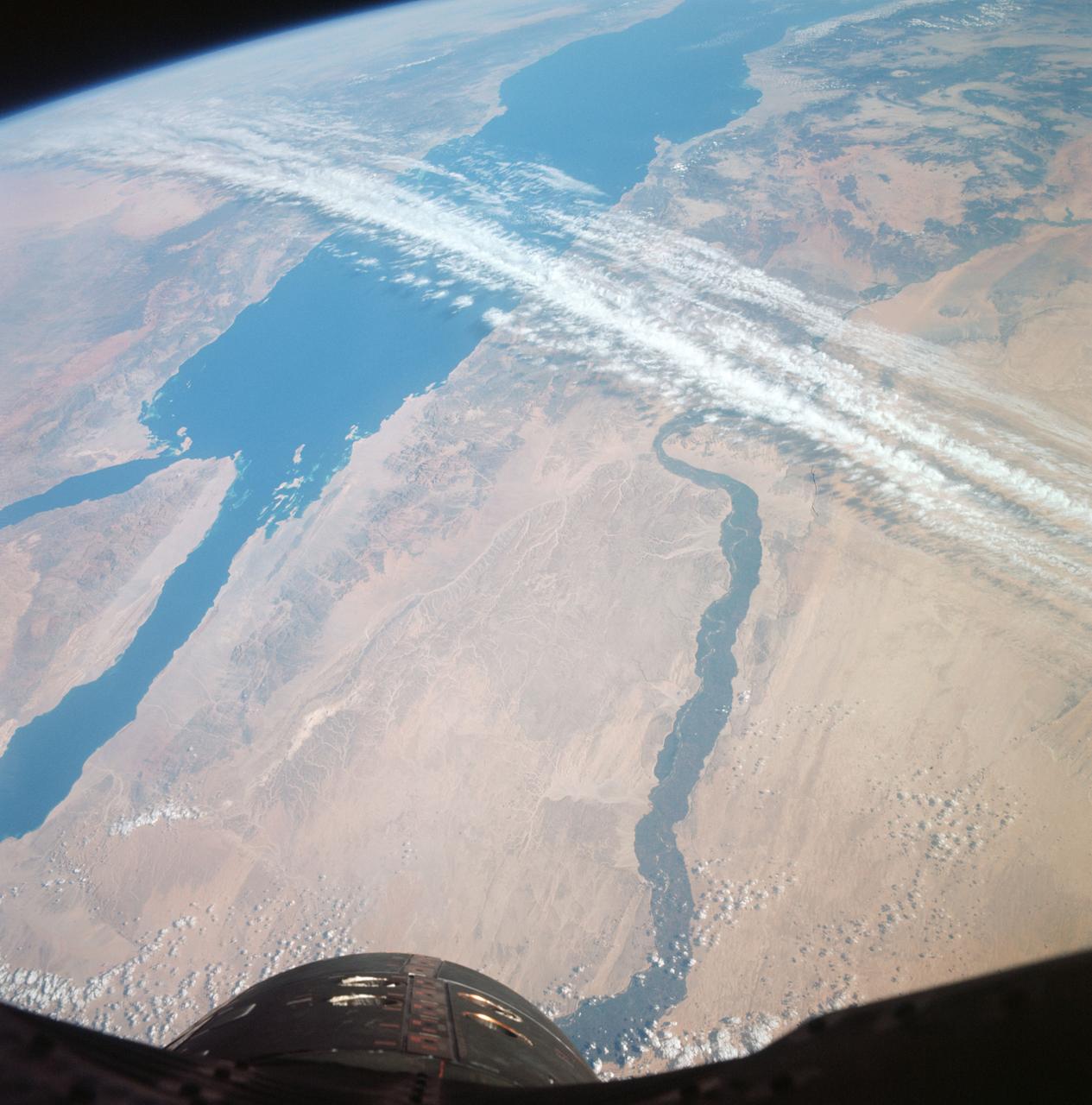
S66-63533 (14 Nov. 1966) --- United Arab Republic (Egypt) area as seen from the Gemini-12 spacecraft during its 39th revolution of Earth, looking southeast. Nile River is in center of picture. At bottom center is the Sinai Peninsula. Arabian Peninsula is at lower left. Large body of water is Red Sea. Gulf of Aqaba is on east side of Sinai Peninsula. Gulf of Suez separates Sinai from Egyptian mainland. Photo credit: NASA
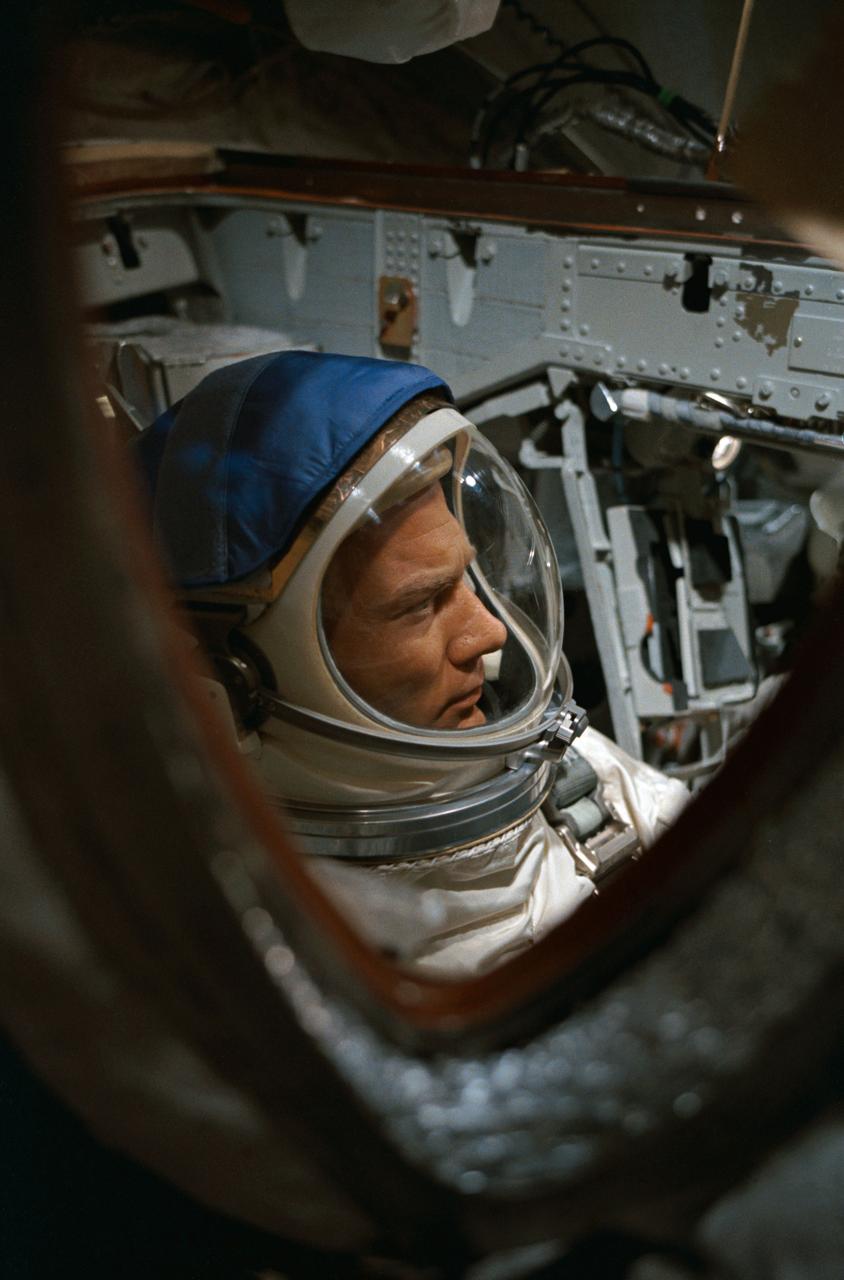
S66-59907 (11 Nov. 1966) --- Astronaut Edwin E. Aldrin Jr., Gemini-12 pilot, is seen in the Gemini-12 spacecraft in the white room atop Pad 19 awaiting the final minutes of the prelaunch countdown. Astronaut James A. Lovell Jr. (out of frame) is the command pilot. The liftoff was at 3:46 p.m. (EST), Nov. 11, 1966. Photo credit: NASA
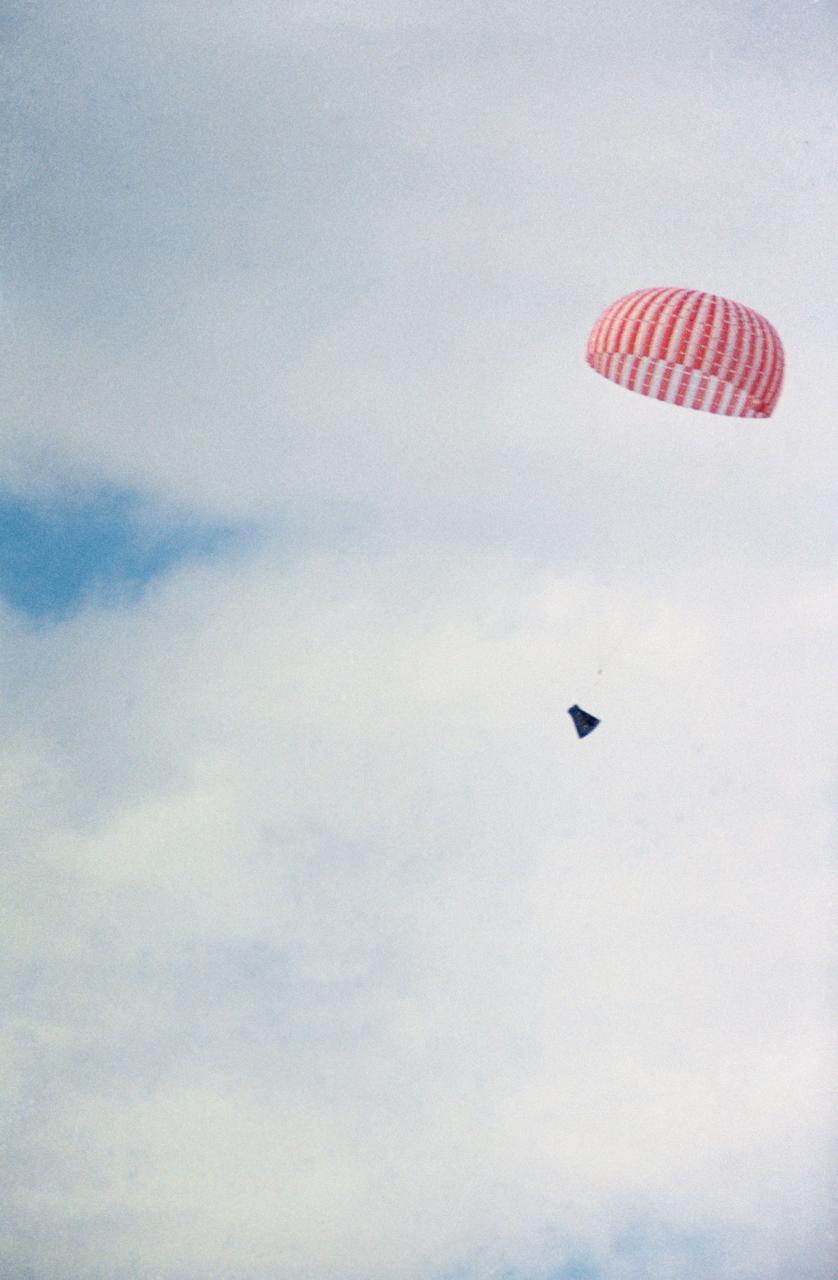
S66-59986 (15 Nov. 1966) --- The Gemini spaceflight program concludes as the Gemini-12 spacecraft, with astronaut James A. Lovell Jr., command pilot, and Edwin E. Aldrin Jr., pilot, aboard, nears touchdown in the Atlantic Ocean 2.5 nautical miles from the prime recovery ship, USS Wasp. Gemini-12 splashed down at 2:21 p.m. (EST), Nov. 11, 1966, to conclude the four-day mission in space. Photo credit: NASA
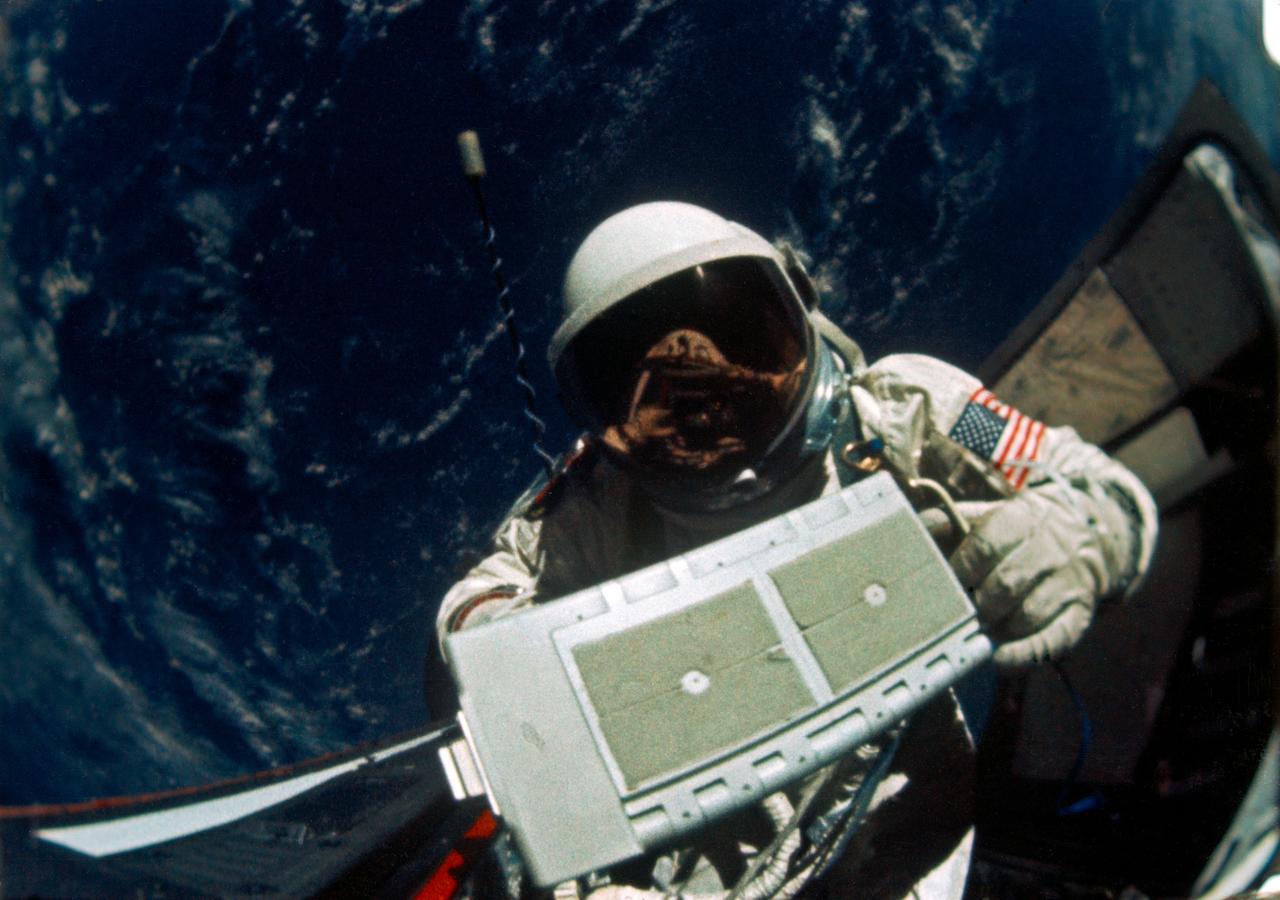
S66-63538 (11 Nov. 1966) --- Astronaut Edwin E. Aldrin Jr., pilot for the Gemini-12 spaceflight, removes micrometeoroid package for return to the spacecraft during extravehicular activity (EVA) on the first day of the four-day mission. Command pilot for the Gemini-12 mission, the last in the Gemini series, was astronaut James A. Lovell Jr. Photo credit: NASA
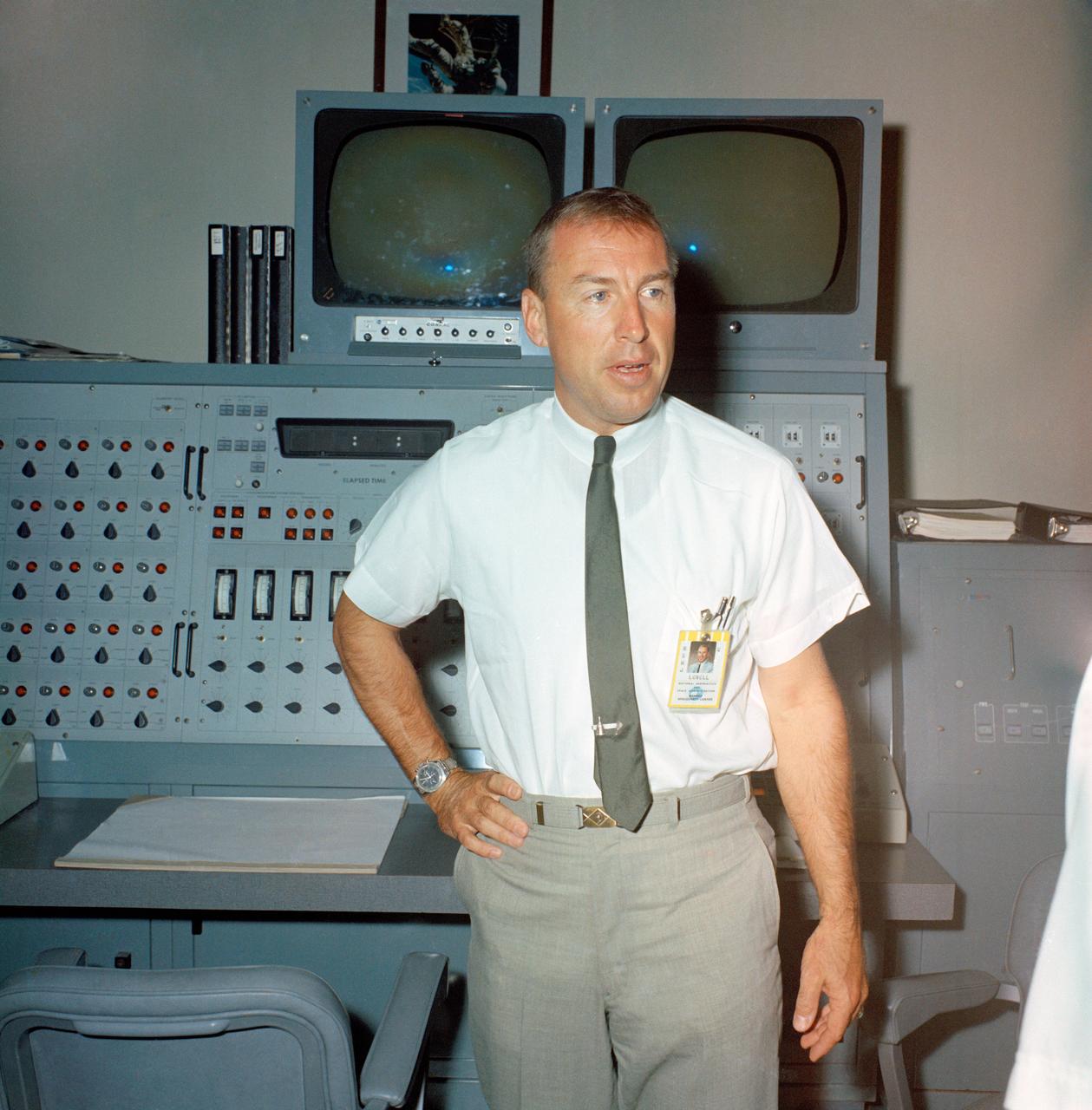
S66-45578 (6 Sept. 1966) --- Astronaut James A. Lovell Jr., prime crew command pilot for the Gemini-12 spaceflight, is pictured in Building 5, Mission Simulation and Training Facility, prior to entering the Gemini Mission Simulator for flight training. Photo credit: NASA
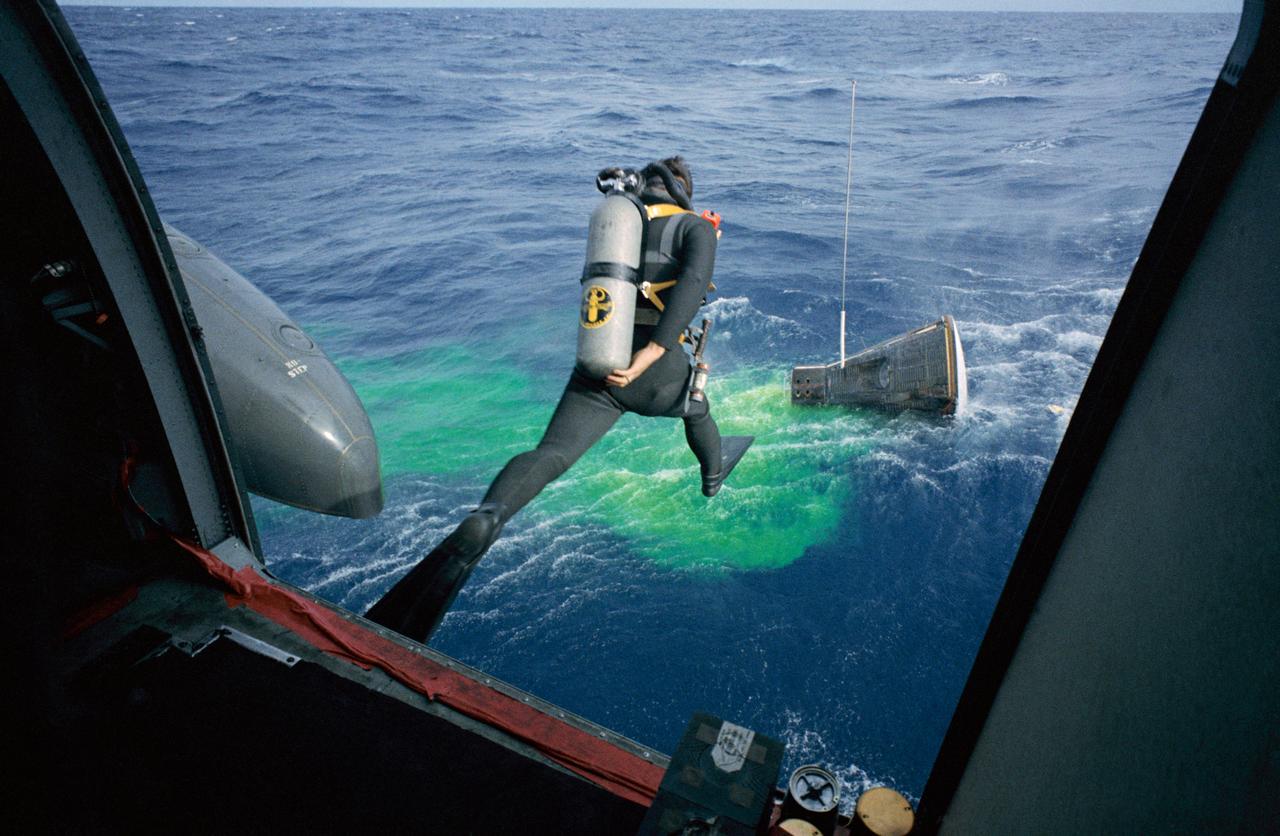
S66-59987 (15 Nov. 1966) --- A Navy frogman leaps from a recovery helicopter into the water to assist in the Gemini-12 recovery operations. Astronauts James A. Lovell Jr., command pilot, and Edwin E. Aldrin Jr., pilot, had just completed their four-day space mission. Photo credit: NASA
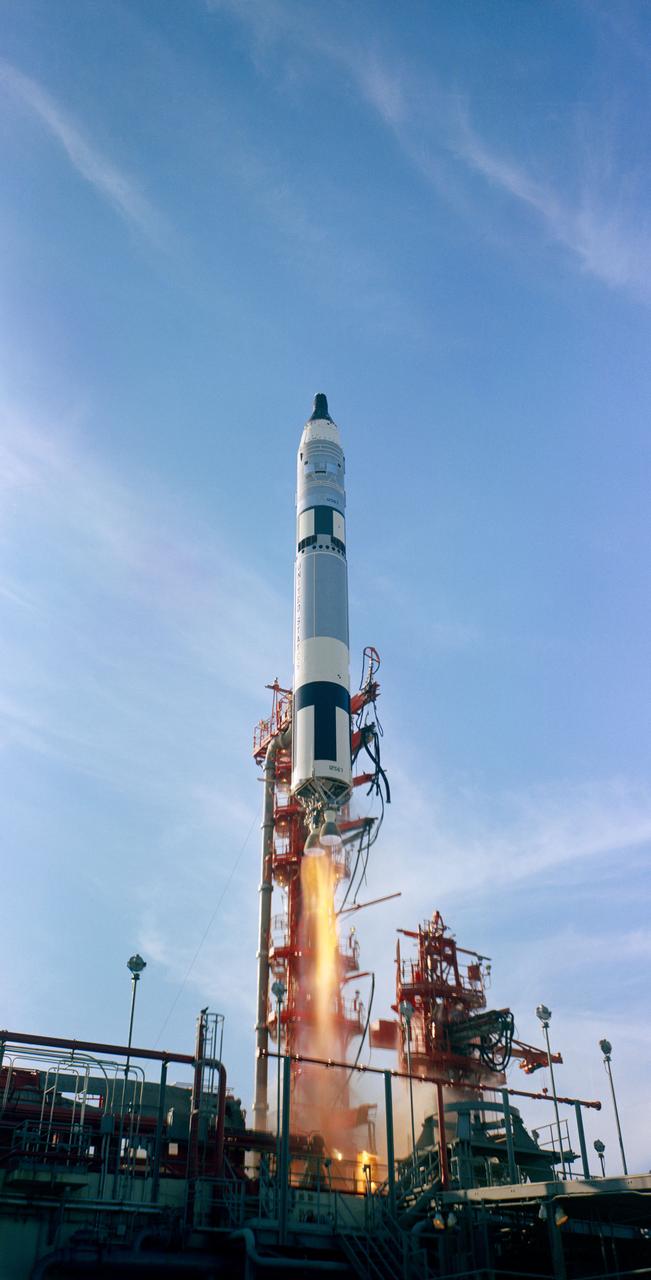
S66-59970 (11 Nov. 1966) --- Gemini-12 spacecraft, carrying astronauts James A. Lovell Jr., command pilot, and Edwin E. Aldrin Jr., pilot, was launched from the Kennedy Space Center's Launch Complex 19 at 3:46 p.m. (EST), Nov. 11, 1966. Photo credit: NASA
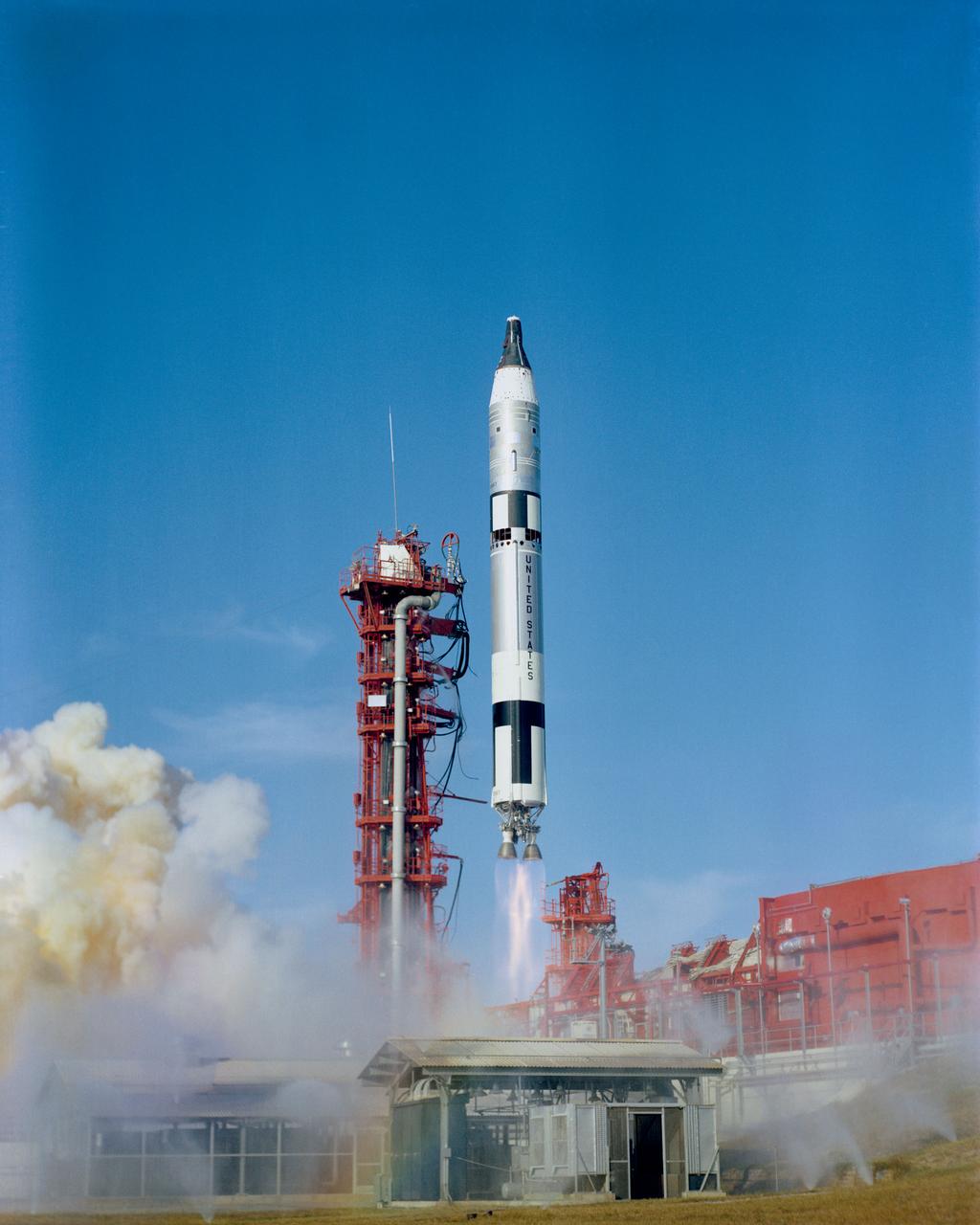
S66-59975 (11 Nov. 1966) --- Gemini-12 spacecraft, carrying astronauts James A. Lovell Jr., command pilot, and Edwin E. Aldrin Jr., pilot, was launched from the Kennedy Space Center's Launch Complex 19 at 3:46 p.m. (EST), Nov. 11, 1966. Photo credit: NASA
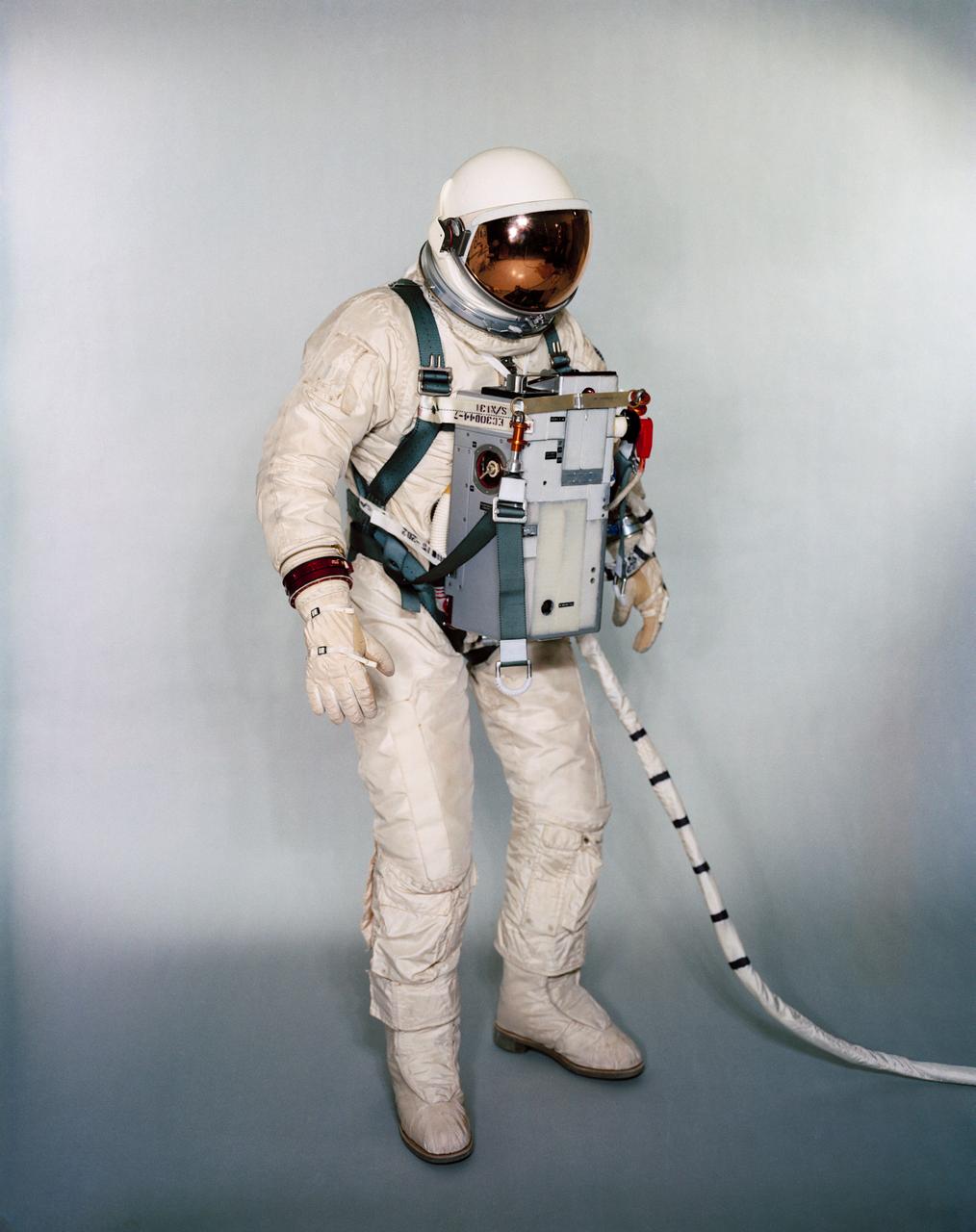
S67-24267 (1966) --- Suited test subject equipped with Gemini-12 Life Support System and waist tethers for extravehicular activity (EVA). Photo credit: NASA
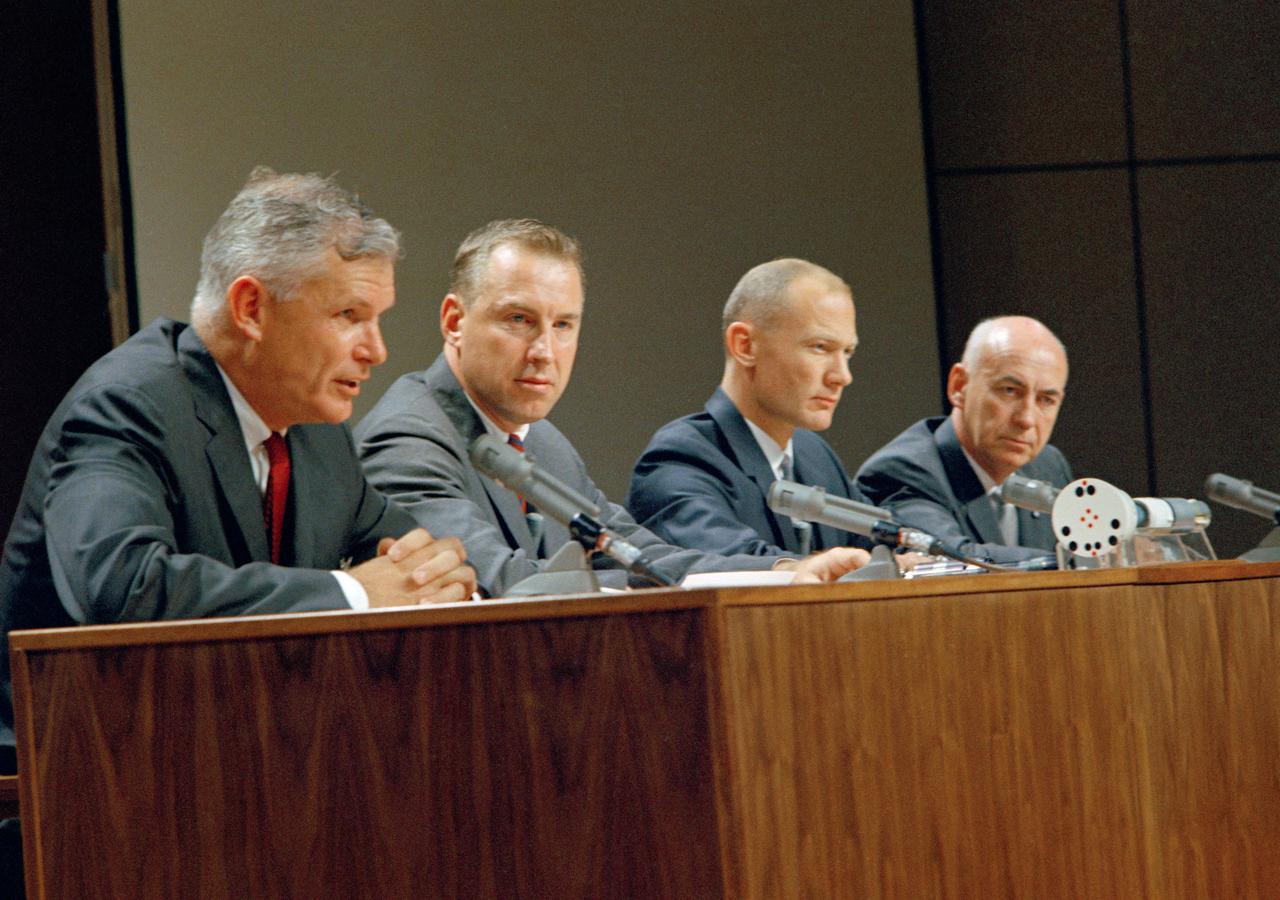
S66-65190 (23 Nov. 1966) --- Two key NASA officials and the Gemini-12 crew explain the Gemini-12 space mission to news media representatives at a postflight press conference in the MSC auditorium. Left to right, are Dr. Robert C. Seamans Jr., NASA Deputy Administrator; astronaut James A. Lovell Jr., command pilot; astronaut Edwin E. Aldrin Jr., pilot; and Dr. Robert R. Gilruth, MSC Director. Photo credit: NASA
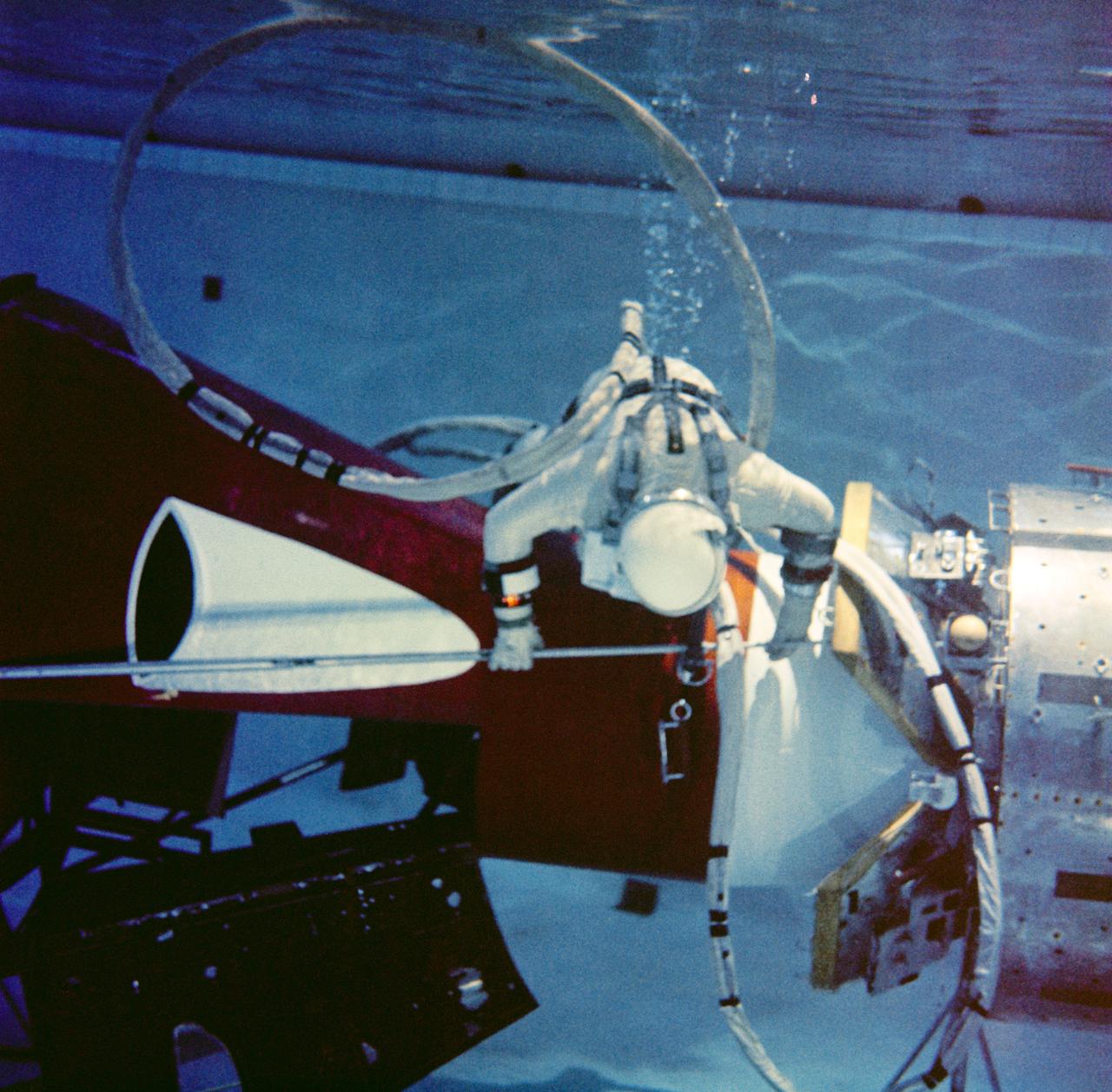
S66-54934 (29 Oct. 1966) --- Astronaut Edwin E. Aldrin Jr., pilot for the Gemini-12 spaceflight, practices work tasks in preparation for his extravehicular activity (EVA) during the flight of Gemini-12. He works with a telescoping handrail he will use to move from the spacecraft to the Agena Target Docking Vehicle. The underwater environment closely simulates the zero-gravity condition found in space. Photo credit: NASA
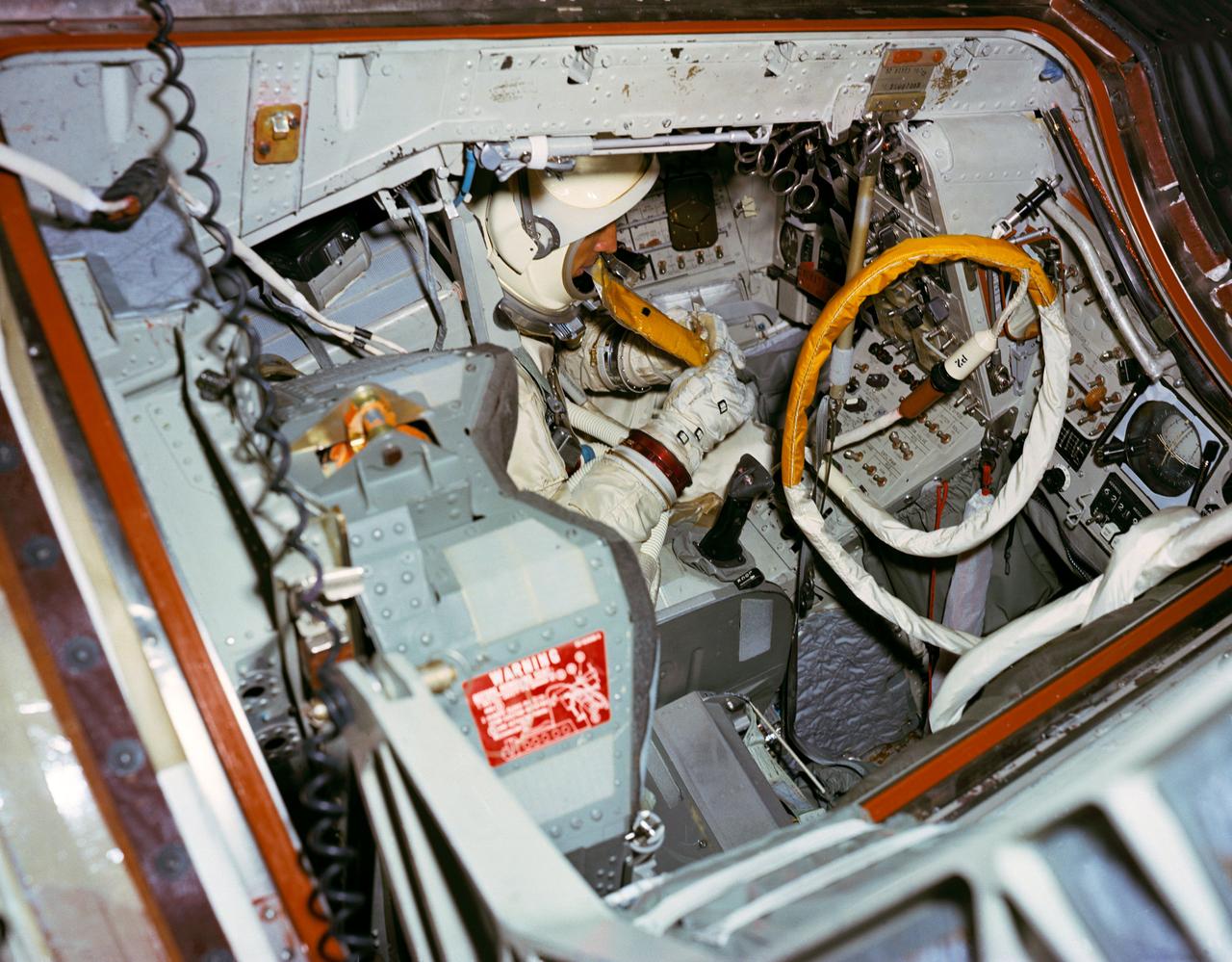
S66-51054 (15 Aug. 1966) --- Astronaut James A. Lovell Jr., prime crew command pilot of the Gemini-12 space mission, simulates using space food packet while seated in the Gemini-12 spacecraft in the 30-feet Altitude Chamber at McDonnell Aircraft Corporation, St. Louis, Missouri. Photo credit: NASA
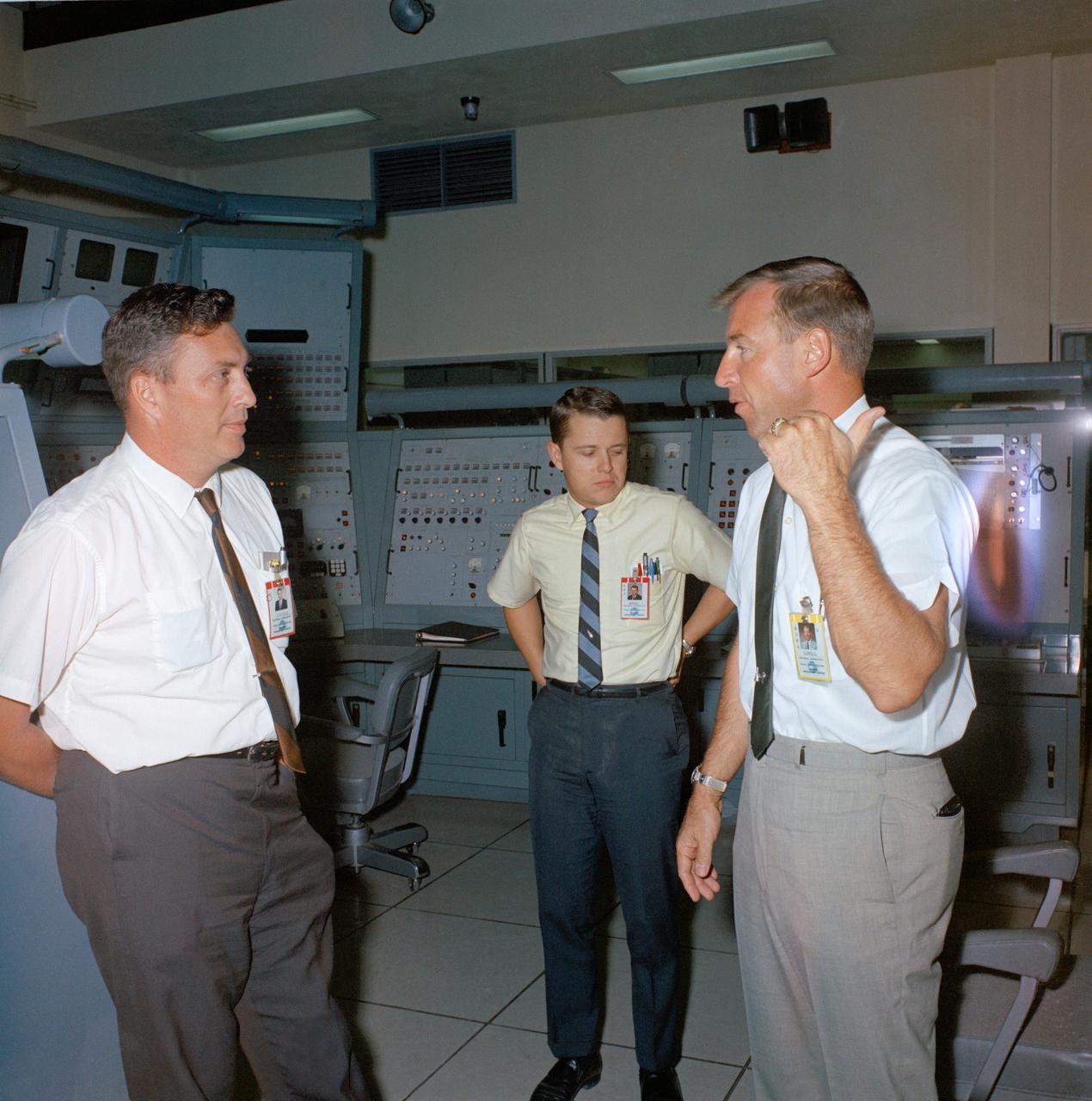
S66-45579 (6 Sept. 1966) --- Astronaut James A. Lovell Jr. (right), prime crew command pilot of the Gemini-12 spaceflight, talks with Burton M. Gifford (left) and Duane K. Mosel (center), both with the Simulation Branch, Flight Crew Support Division. Lovell was preparing to undergo flight training in the Gemini Mission Simulator in Building 5, Mission Simulation and Training Facility. Photo credit: NASA
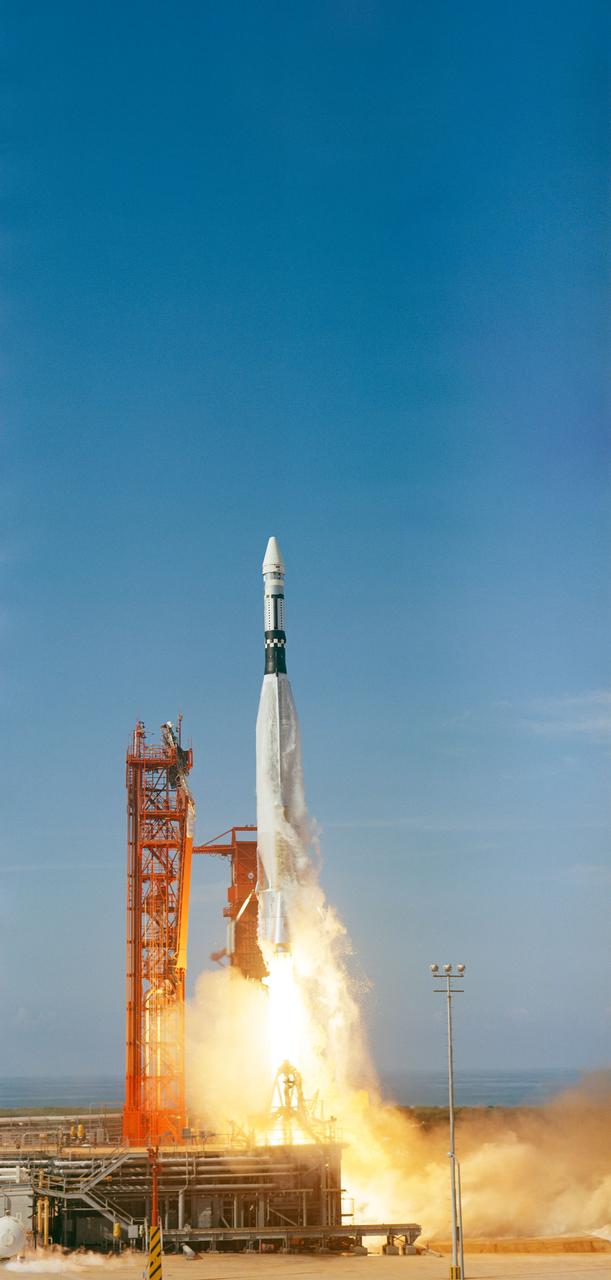
S66-64544 (11 Nov. 1966) --- An Agena Target Docking Vehicle atop its Atlas launch vehicle was launched from the Kennedy Space Center's Launch Complex 14 at 2:08 p.m. (EST), Nov. 11, 1966. The Agena served as a rendezvous and docking vehicle for the Gemini-12 spacecraft. Photo credit: NASA

S66-63537 (11 Nov. 1966) --- Astronaut Edwin E. Aldrin, pilot for the Gemini-12 spaceflight, stands up in the open hatch of the spacecraft during the first day of the four-day mission in space. He prepares a camera for installation on the outside of the spacecraft. Command pilot for the last flight in the Gemini series was astronaut James A. Lovell Jr. Photo credit: NASA
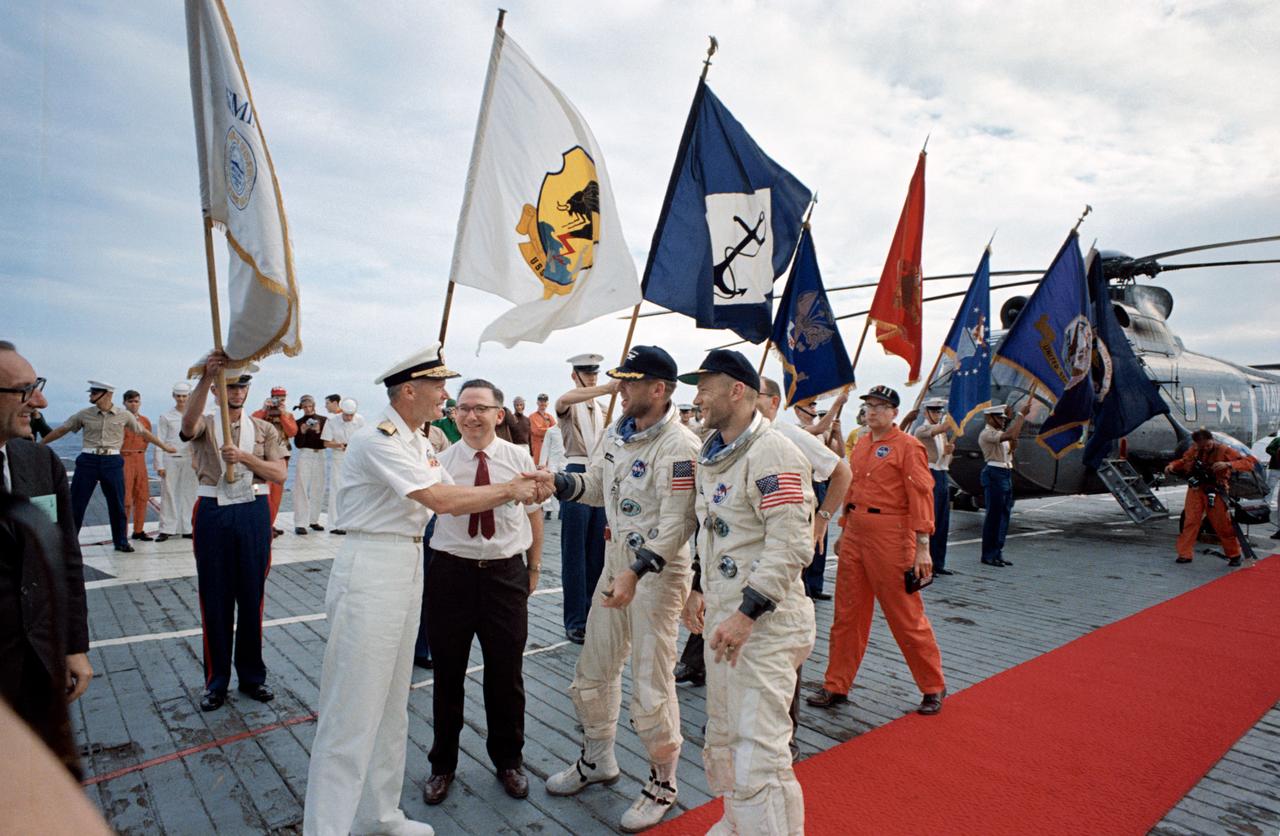
S66-59981 (15 Nov. 1966) --- Astronauts James A. Lovell Jr. (left), command pilot, and Edwin E. Aldrin Jr., pilot, receive official welcome as they arrive aboard the aircraft carrier USS Wasp. Gemini-12 splashed down in the Atlantic Ocean recovery area at 2:21 p.m. (EST), Nov. 15, 1966, to conclude a four-day mission in space. Photo credit: NASA
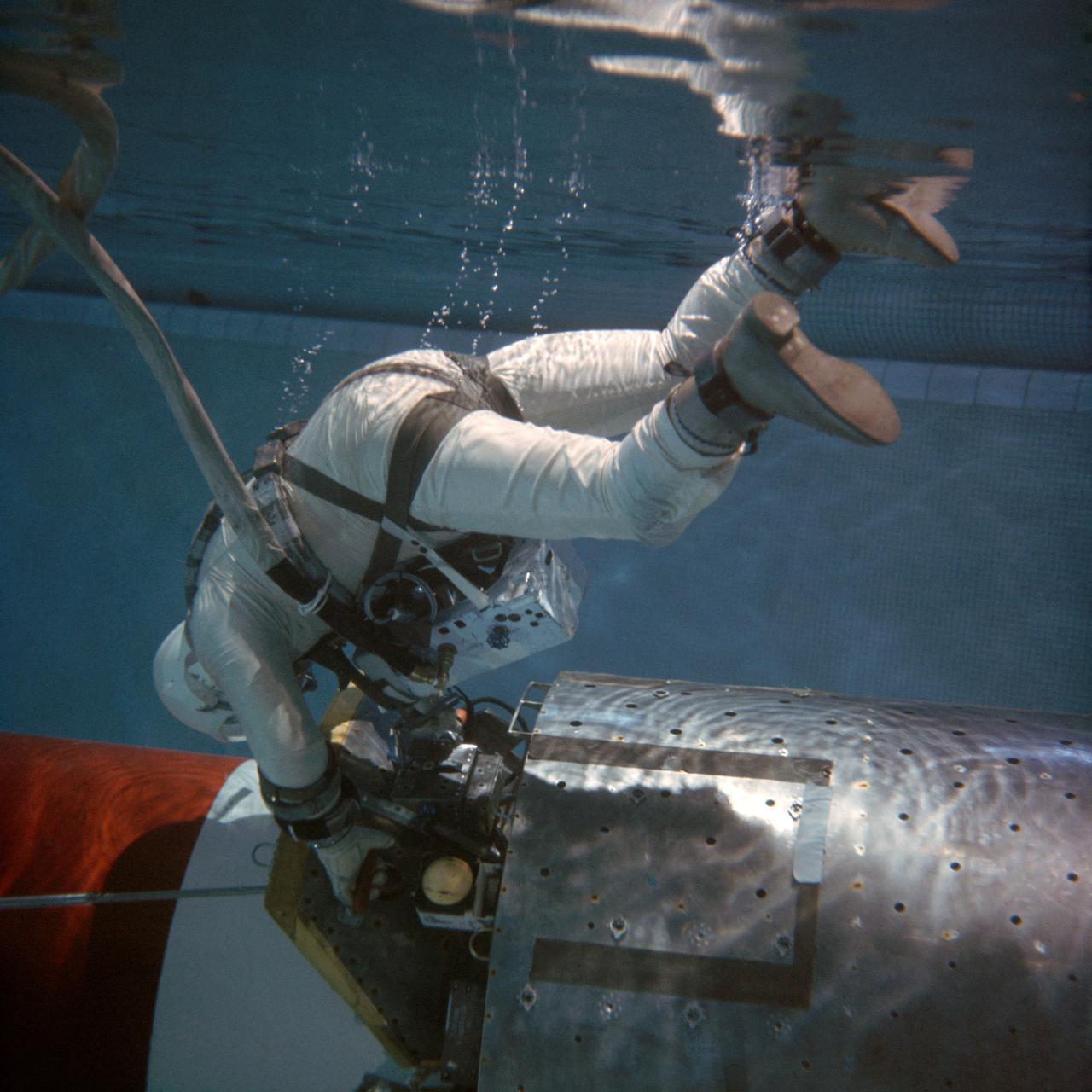
S66-54935 (29 Oct. 1966) --- Astronaut Edwin E. Aldrin Jr., pilot for the Gemini-12 spaceflight, practices extravehicular work tasks during underwater zero-gravity training. He works on the docking collar of the Agena Target Docking Vehicle mock-up using hand-holds to secure himself to the vehicle. The underwater environment closely simulates the zero-gravity condition found in space. Photo credit: NASA
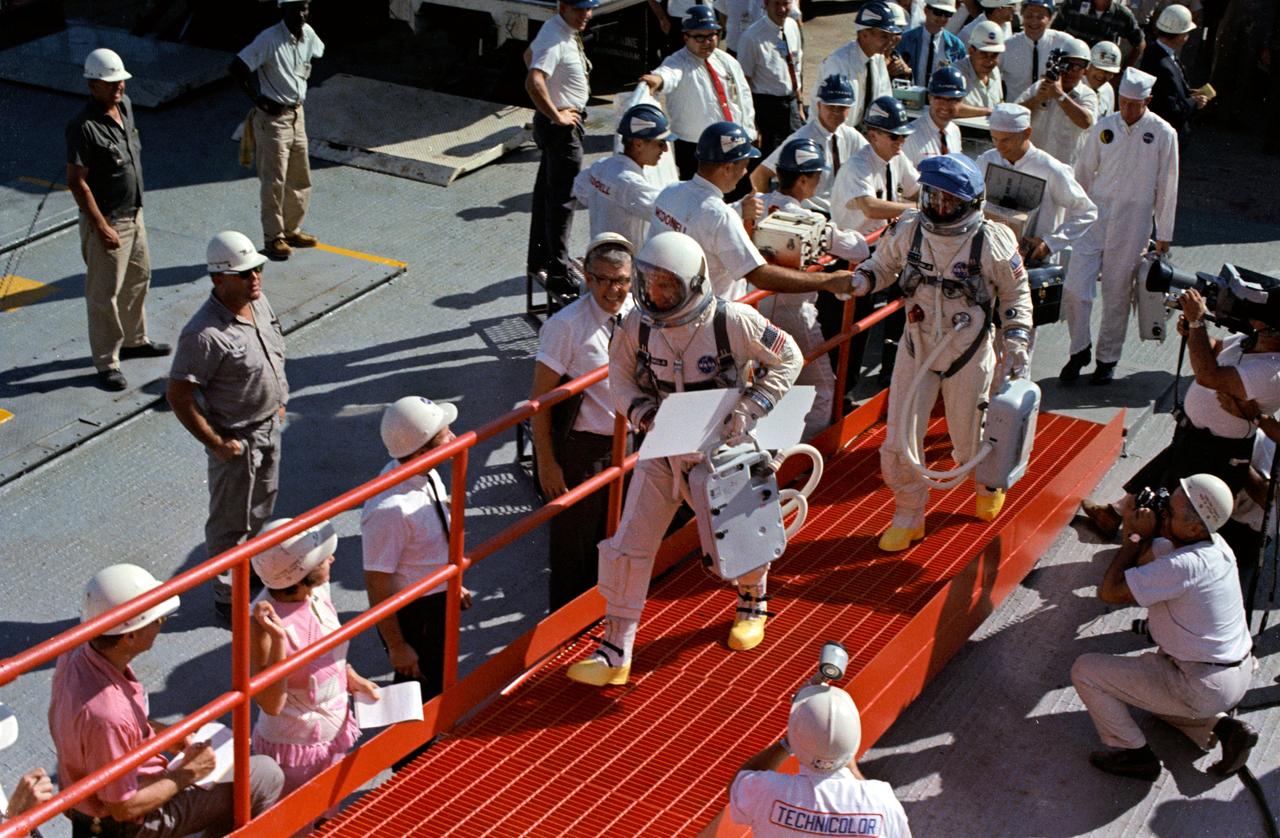
S66-59966 (11 Nov. 1966) --- Astronauts James A. Lovell Jr. (leading), command pilot, and Edwin E. Aldrin Jr., pilot, walk up the ramp at Pad 19 after arriving from the Launch Complex 16 suiting trailer during the prelaunch countdown. Moments later they entered the elevator which took them to the white room and the waiting Gemini-12 spacecraft. Liftoff was at 3:46 p.m. (EST), Nov. 11, 1966. Photo credit: NASA
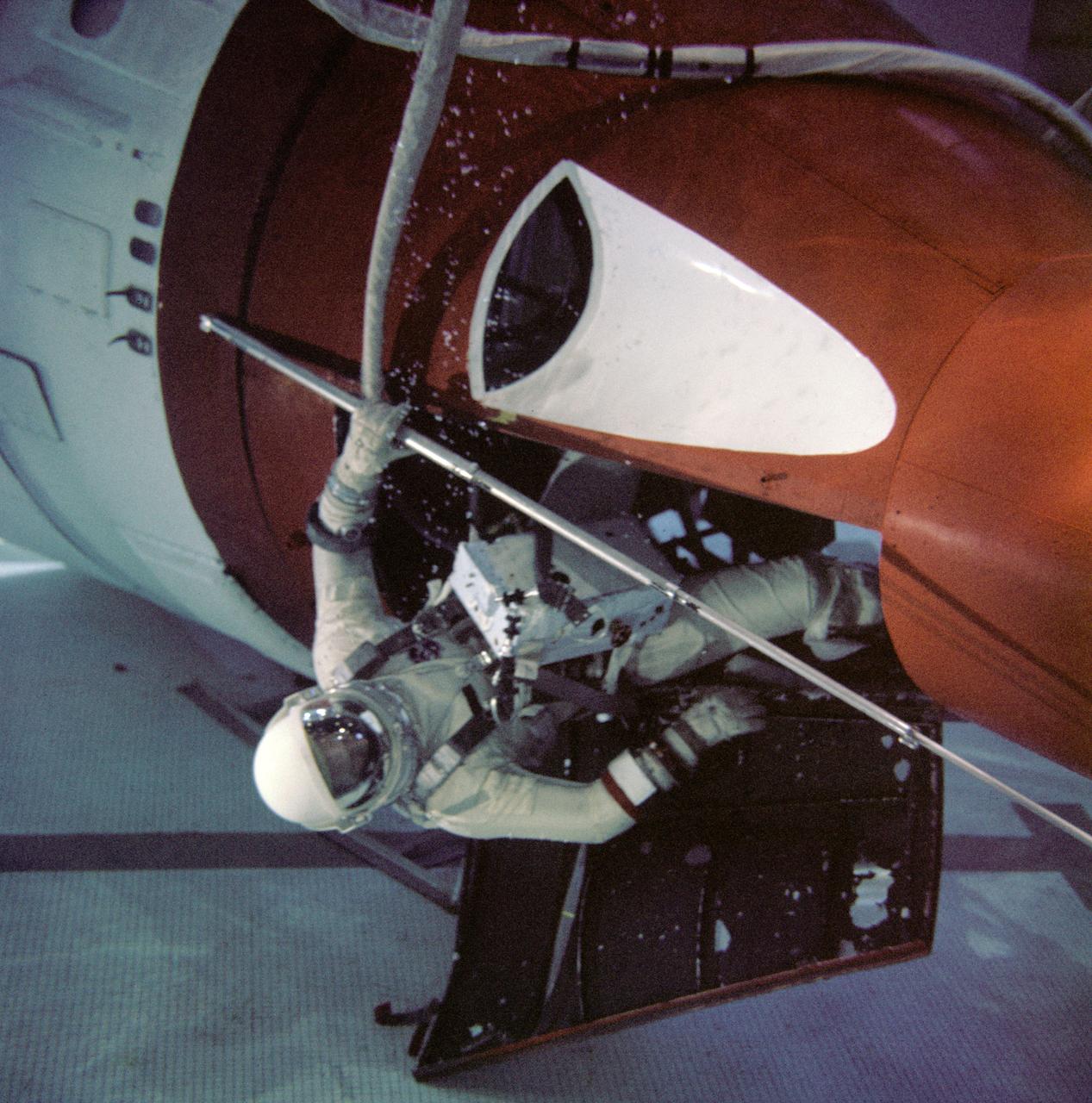
S66-54937 (29 Oct. 1966) --- Astronaut Edwin E. Aldrin Jr., pilot for the Gemini-12 spaceflight, practices egress procedures from a mock-up of his spacecraft during underwater zero-gravity training. He holds a telescoping handrail in his left hand which he will use to move from the spacecraft to the Agena Target Docking Vehicle. The underwater environment closely simulates the zero-gravity condition found in space. Photo credit: NASA
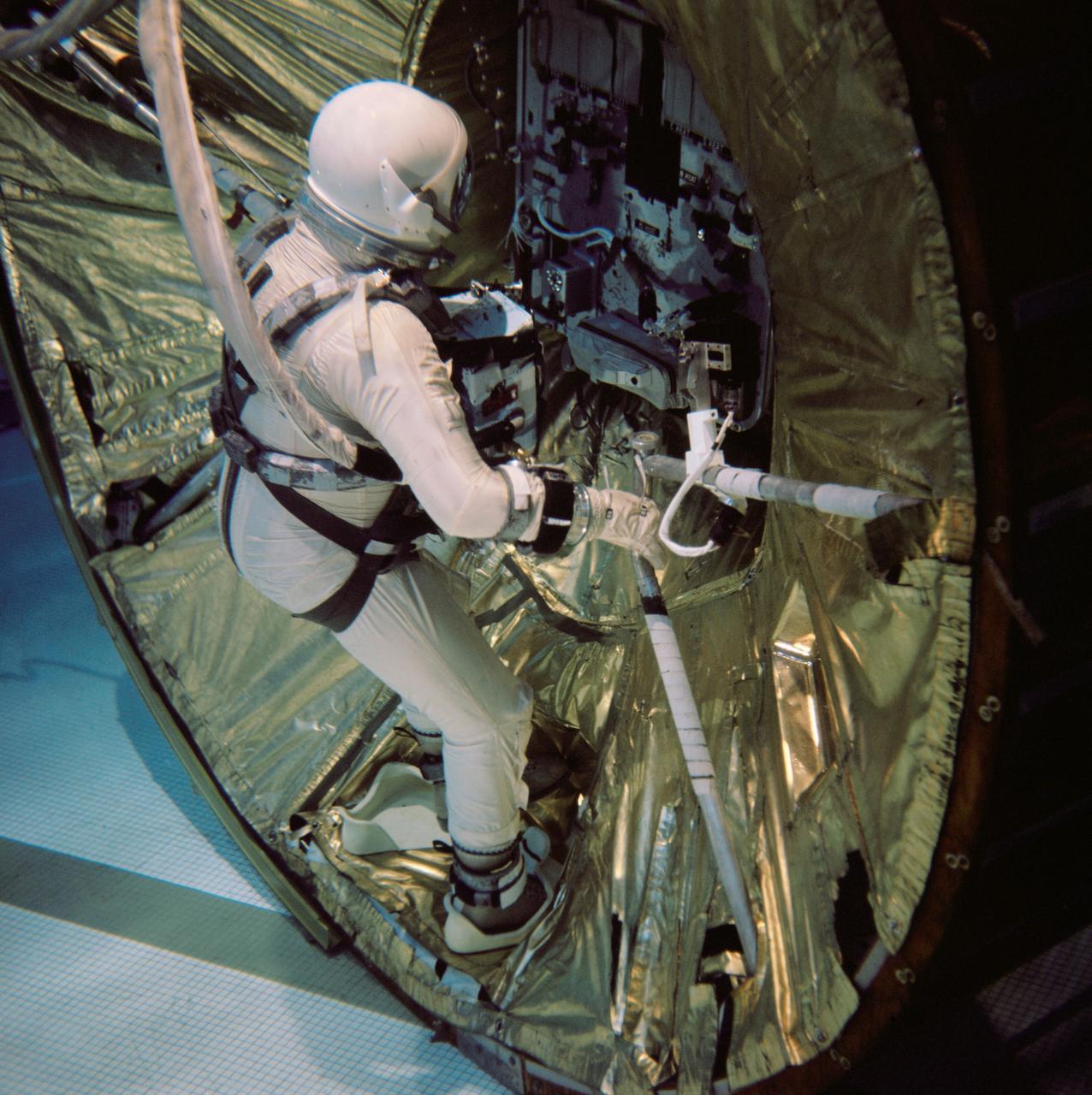
S66-54939 (29 Oct. 1966) --- Astronaut Edwin E. Aldrin Jr., pilot for the Gemini-12 spaceflight, practices work tasks during underwater zero-gravity training. He is placing his feet into a special foot plate in an adapter section of the spacecraft. The foot plate will help secure him to the spacecraft during extravehicular activity (EVA). The underwater environment closely simulates the zero-gravity condition found in space. Photo credit: NASA
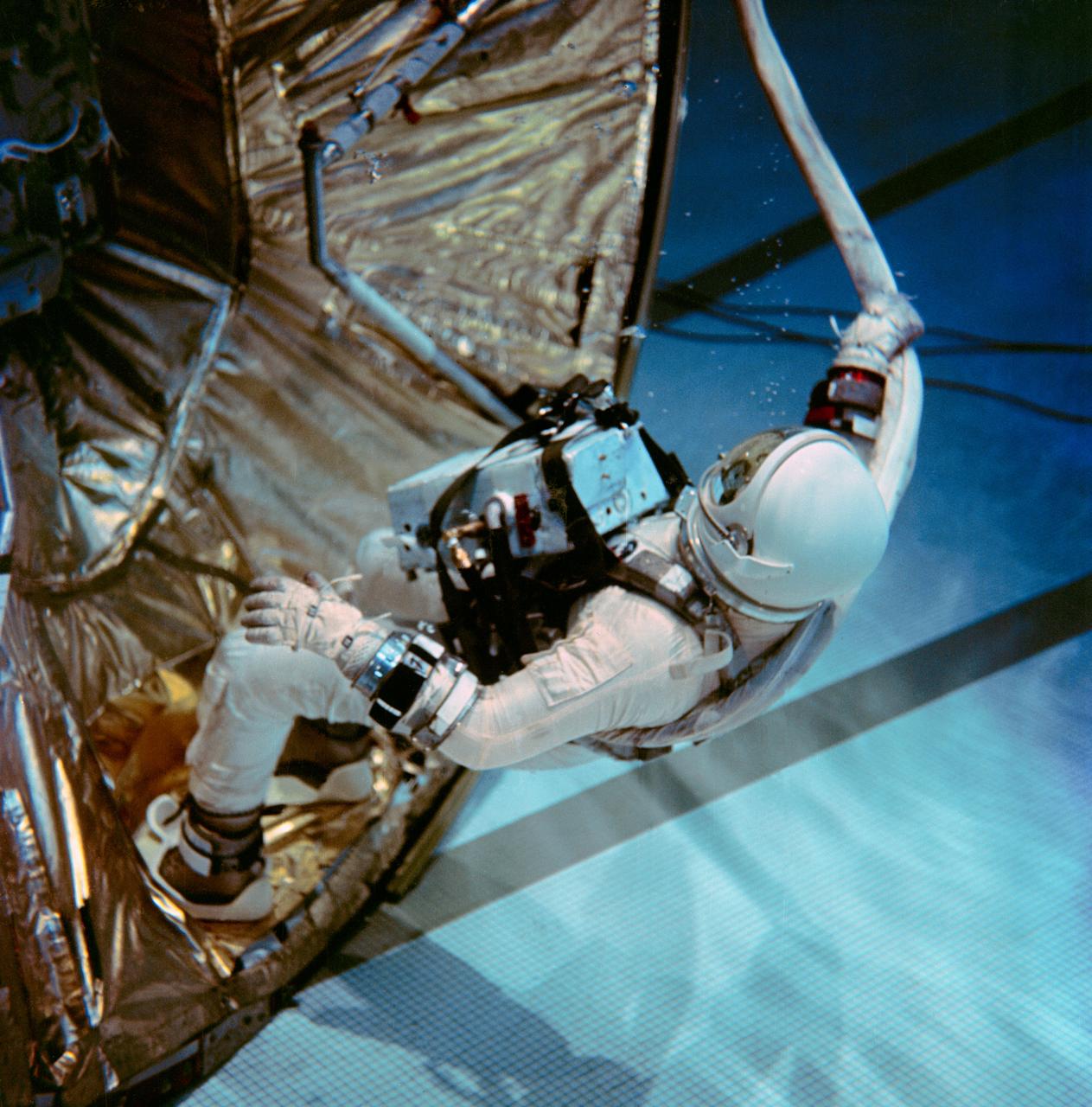
S66-54938 (29 Oct. 1966) --- Astronaut Edwin E. Aldrin Jr., pilot for the Gemini-12 spaceflight, prepares to take a rest position during underwater zero-gravity training. His feet are secured to a mock-up of the adapter section of the spacecraft by a special foot plate. The underwater environment closely simulates the zero-gravity condition found in space. Photo credit: NASA
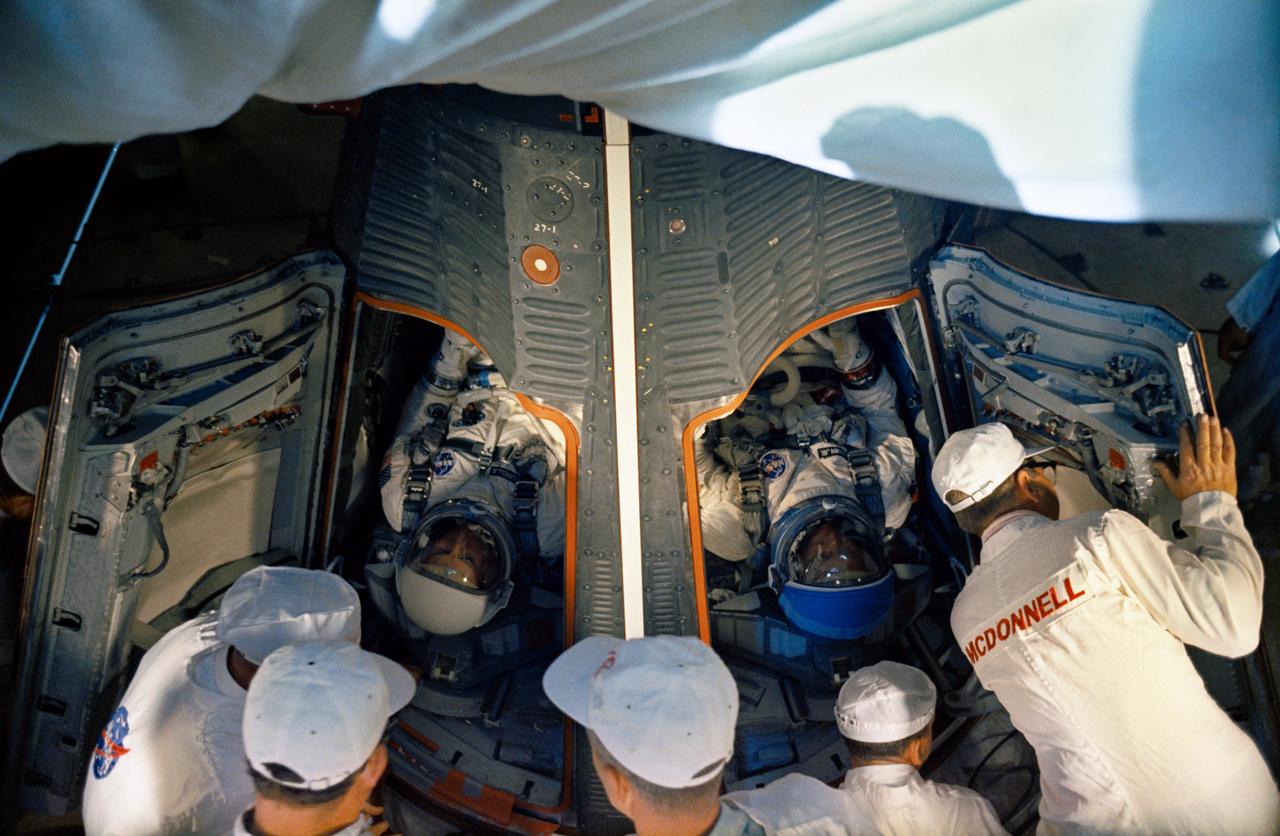
S66-59971 (11 Nov. 1966) --- Technicians prepare to close the hatches of the Gemini-12 spacecraft in the white room atop Pad 19 after insertion of astronaut James A. Lovell Jr. (left), command pilot, and Edwin E. Aldrin Jr., pilot. Liftoff was at 3:46 p.m. (EST), Nov. 11, 1966. Photo credit: NASA
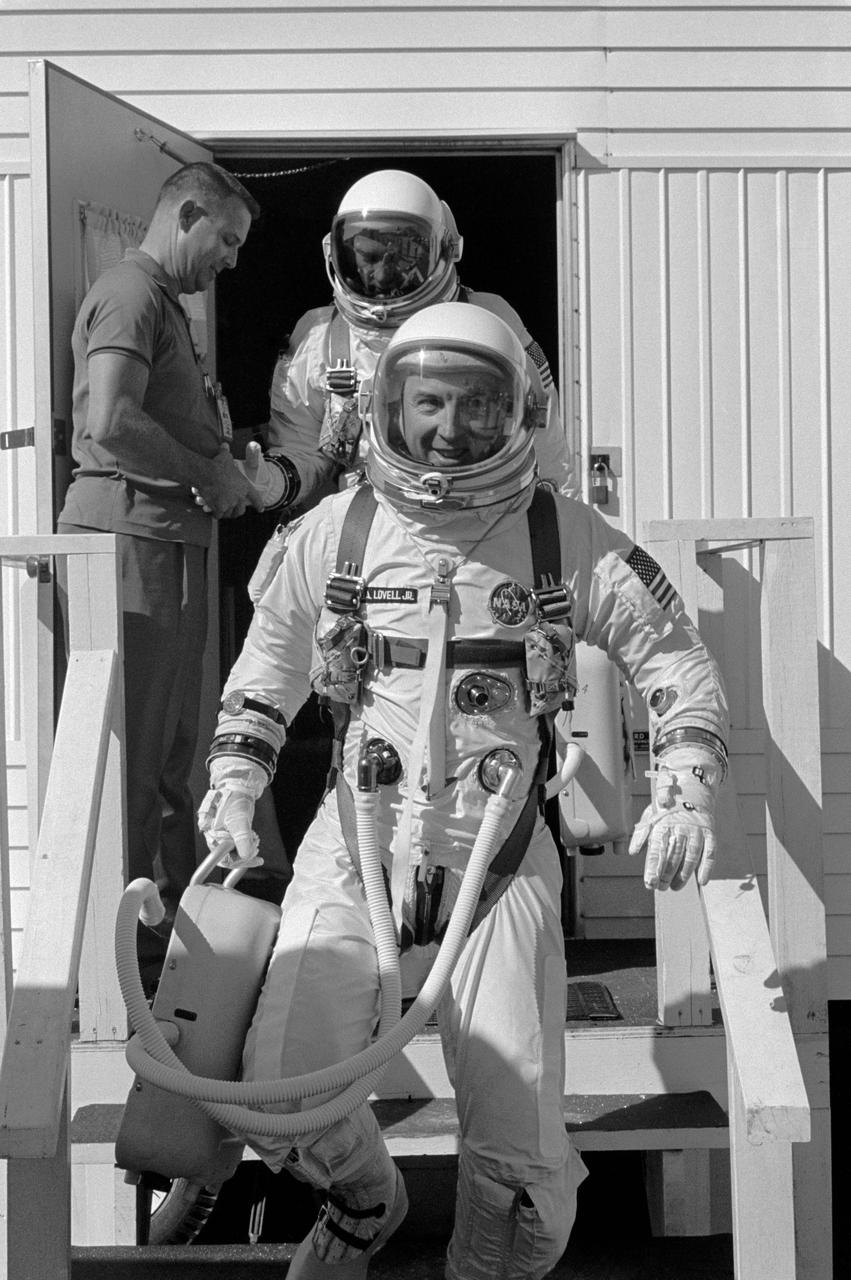
S66-59916 (11 Nov. 1966) --- Prime crew for the Gemini-12 spaceflight, astronauts James A. Lovell Jr. (leading), command pilot, and Edwin E. Aldrin Jr., pilot, leave the suiting trailer at Launch Complex 16 during prelaunch countdown. Moments later they entered a transport van which carried them to Pad 19 and their waiting spacecraft. The liftoff was at 3:46 p.m. (EST), Nov. 11, 1966. Photo credit: NASA
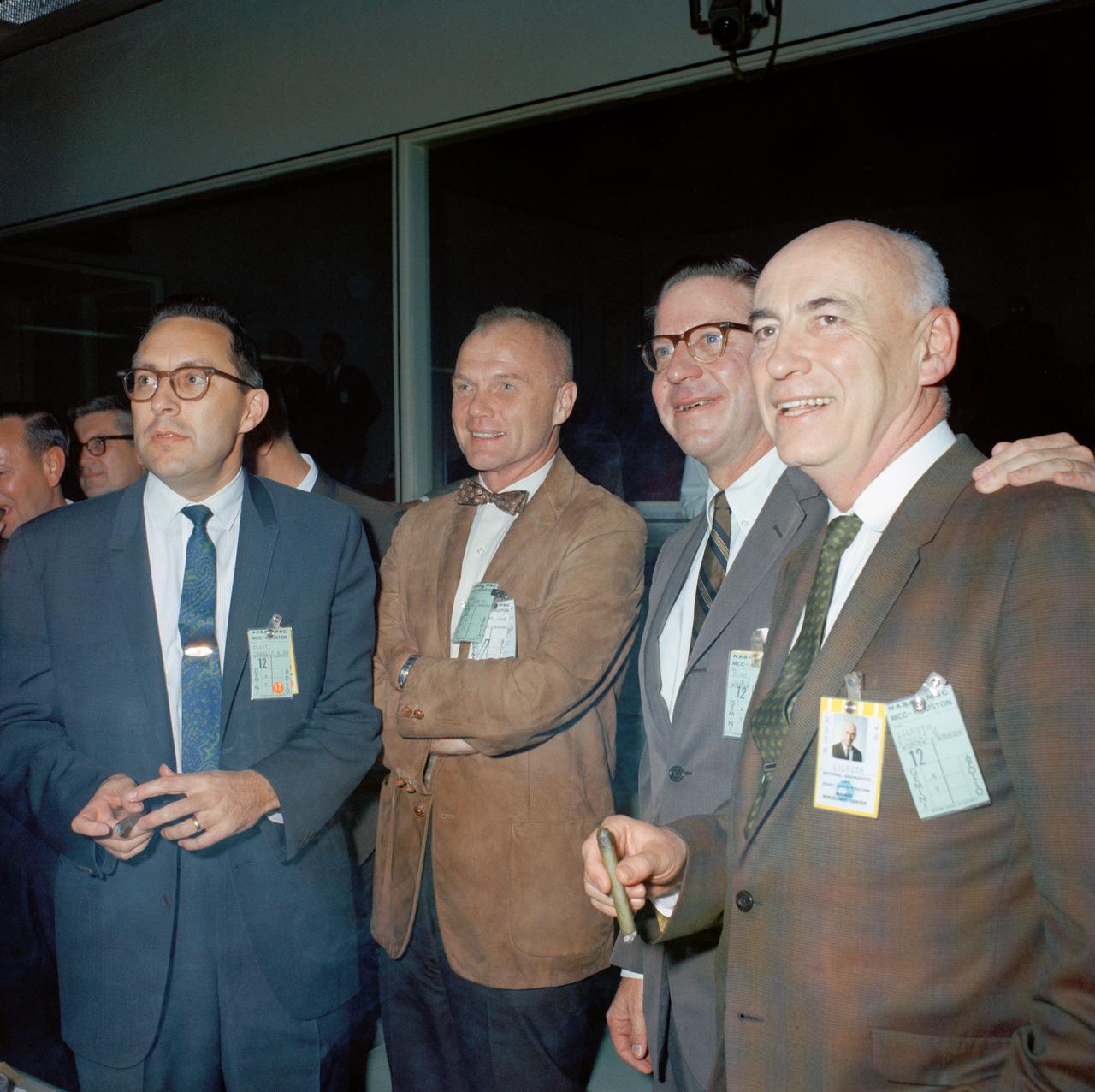
S66-64884 (15 Nov. 1966) --- Watching console activity in the Mission Control Center in Houston during the Gemini-12 splashdown (left to right), are Dr. Charles A. Berry, Director of Medical Research and Operations; astronaut John H. Glenn Jr.; James C. Elms, Director, NASA Electronics Research Center; and Dr. Robert R. Gilruth, Manned Spaceflight Center (MSC) Director. Photo credit: NASA
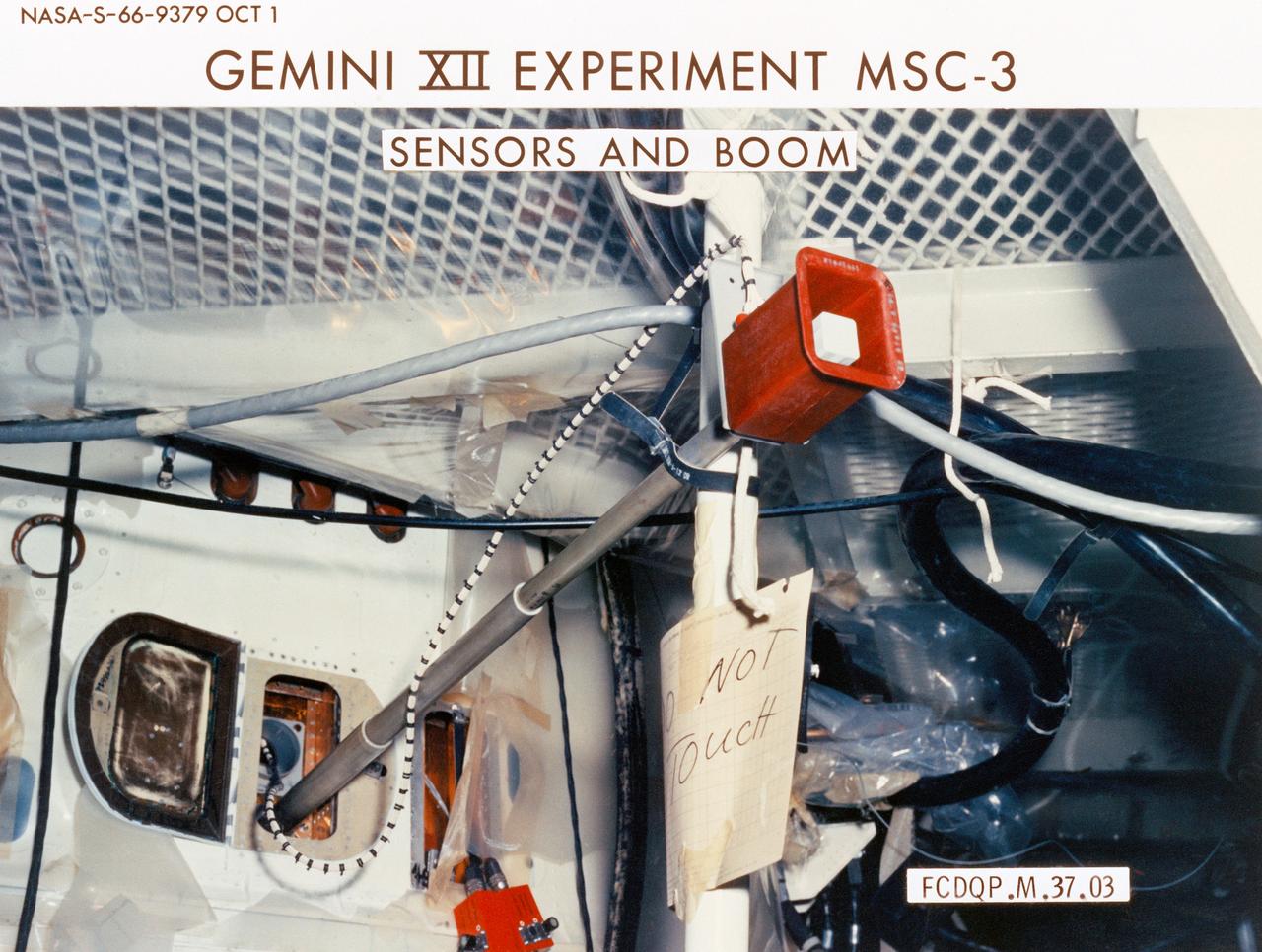
S66-09379 (1 Oct. 1966) --- Tri-Axis Magnetometer-Sensor Unit mounted on telescoping boom. Cable connects Sensor Unit with Electronics Unit mounted on retrograde beam in retrograde adapter section. Objective of experiment is to monitor the direction and amplitude of Earth's magnetic field (Gemini-12). Photo credit: NASA

S66-56738 (4 Oct. 1966) --- Astronaut Edwin E. Aldrin Jr., prime crew pilot of the Gemini-12 spaceflight, undergoes zero-gravity ingress and egress training aboard an Air Force KC-135 aircraft. He practices using camera equipment. Photo credit: NASA
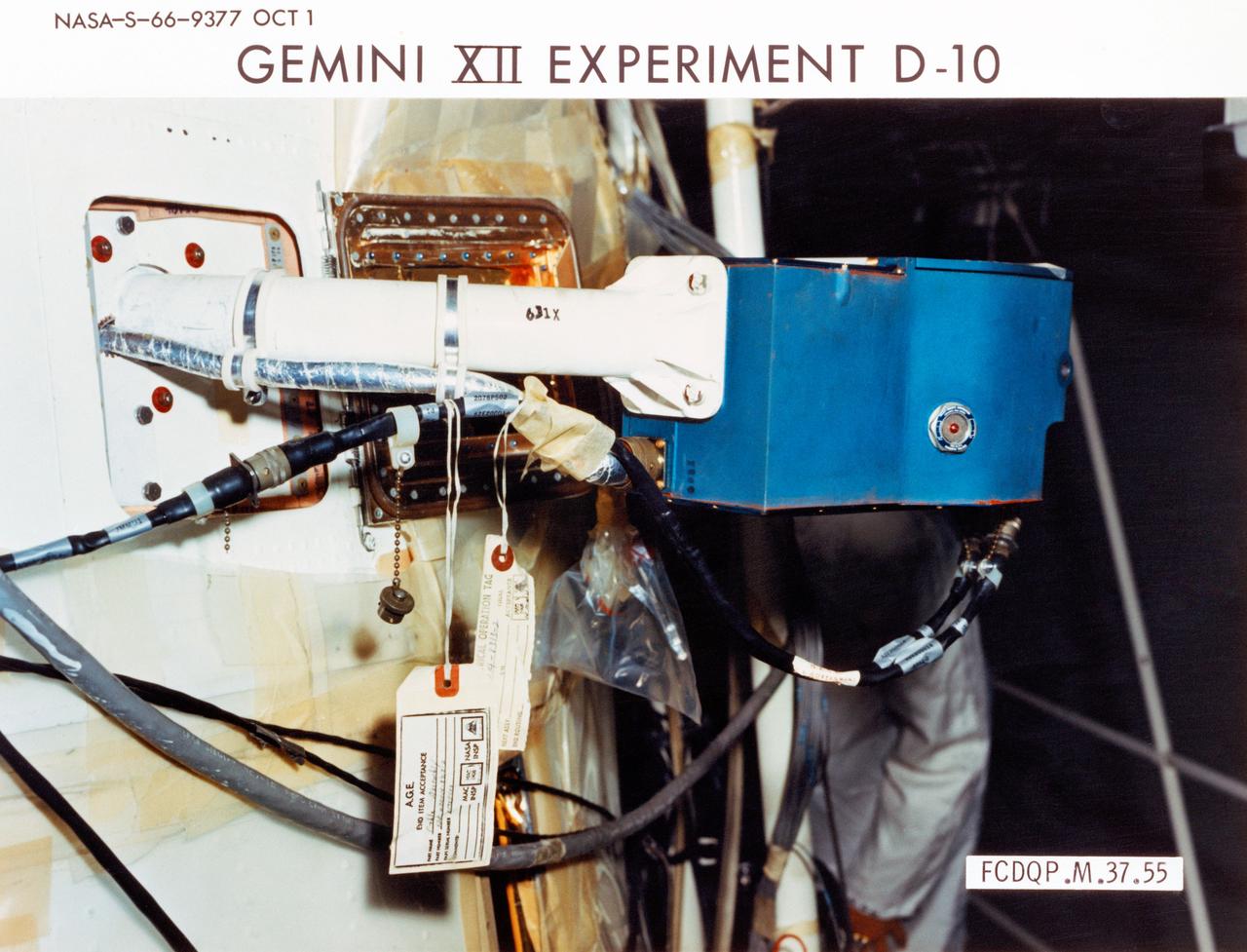
S66-09377 (1 Oct. 1966) --- One of two Ion Sensors which will be used to investigate determination of Gemini-12 spacecraft attitude in yaw and pitch from measurement of ion flow variations. Each sensor is attached to an extendible boom in the retrograde adapter section. Photo credit: NASA
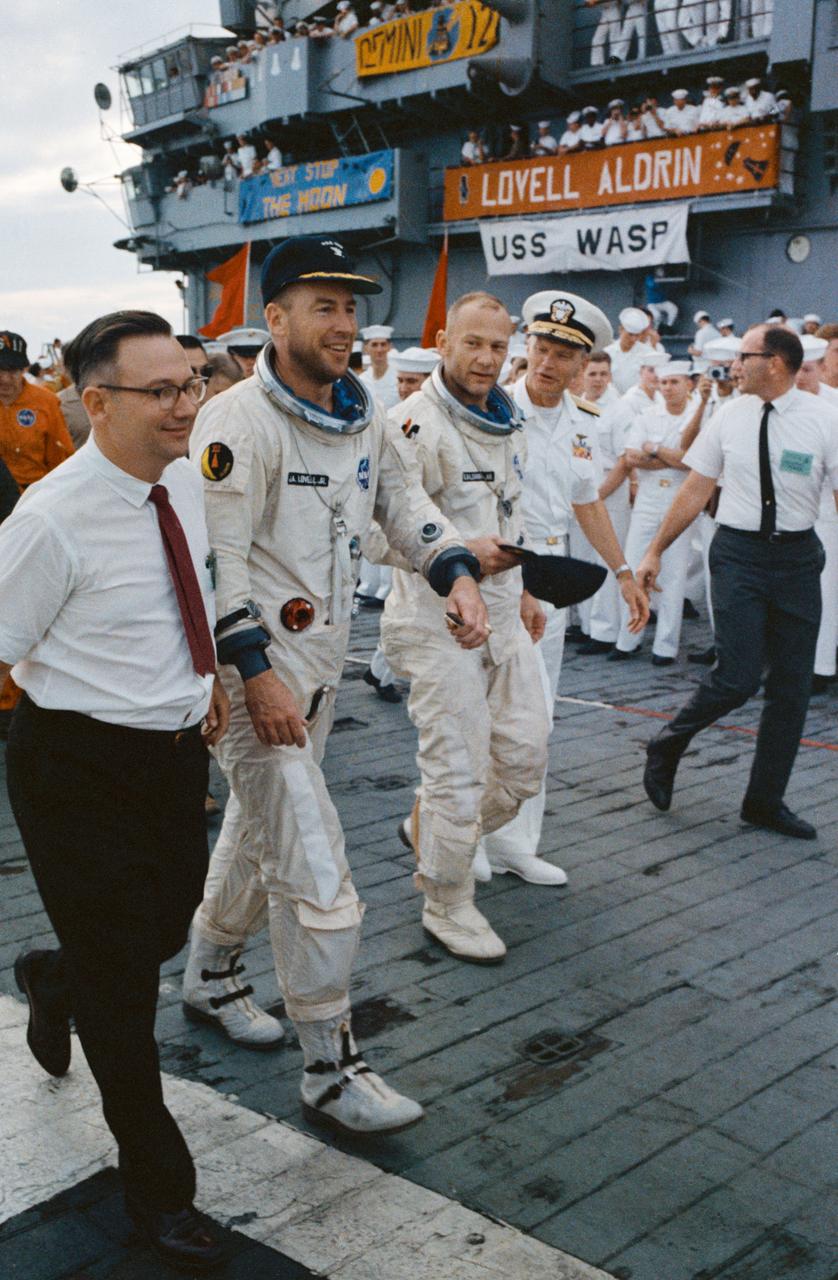
S66-59997 (15 Nov. 1966) --- A happy Gemini-12 prime crew arrives aboard the aircraft carrier, USS Wasp. Astronauts James A. Lovell Jr. (left), command pilot, and Edwin E. Aldrin Jr., pilot, had just been picked up from the splashdown area by helicopter. Photo credit: NASA
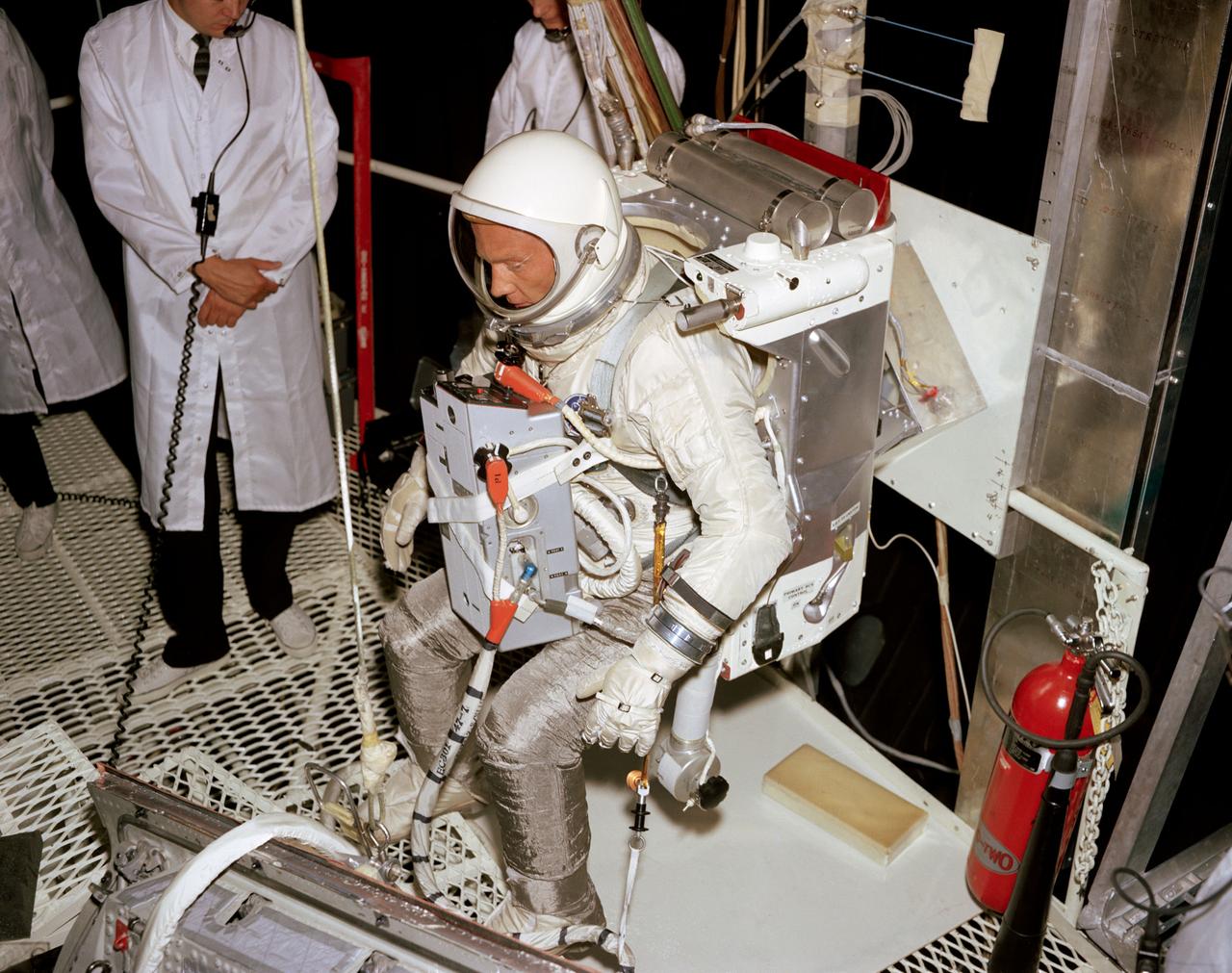
S66-51073 (15 Aug. 1966) --- Astronaut Edwin E. Aldrin Jr., prime crew pilot of the Gemini-12 spaceflight, undergoes evaluation procedures with the Astronaut Maneuvering Unit in the 30-foot altitude chamber at McDonnell. The suited Aldrin is wearing an AMU backpack and an Extravehicular Life Support System (ELSS) chest pack. Photo credit: NASA
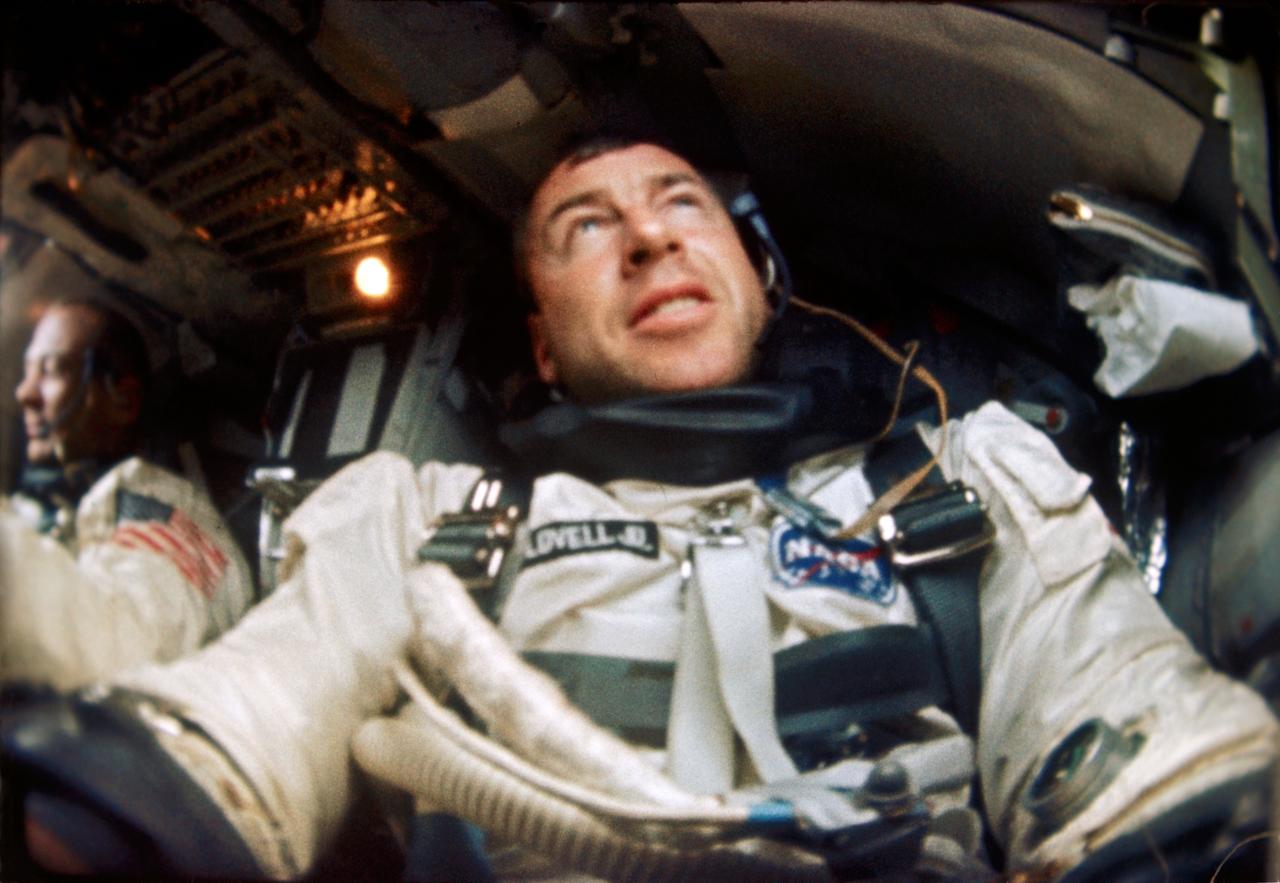
S66-63540 (12 Nov. 1966) --- Astronaut James A. Lovell is photographed inside his Gemini spacecraft during the Gemini-12 mission. Astronaut Edwin Aldrin is seen in the background and to the left. Photo credit: NASA
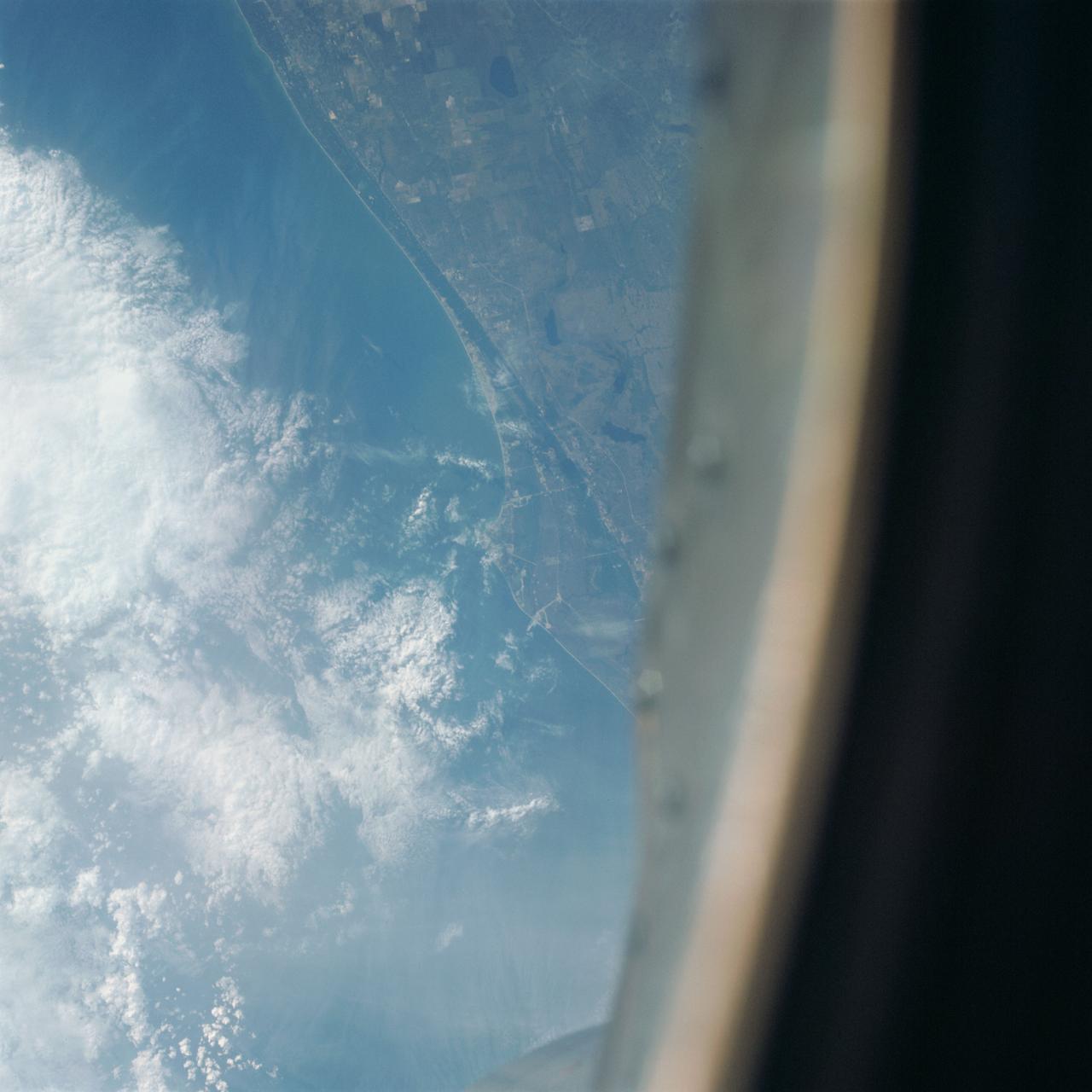
S65-63771 (12 Dec. 1965) --- Kennedy Space Center area on the east coast of Florida as seen from the Gemini-7 spacecraft, during Gemini-6 abort, on its 118th revolution of Earth. Photo credit: NASA
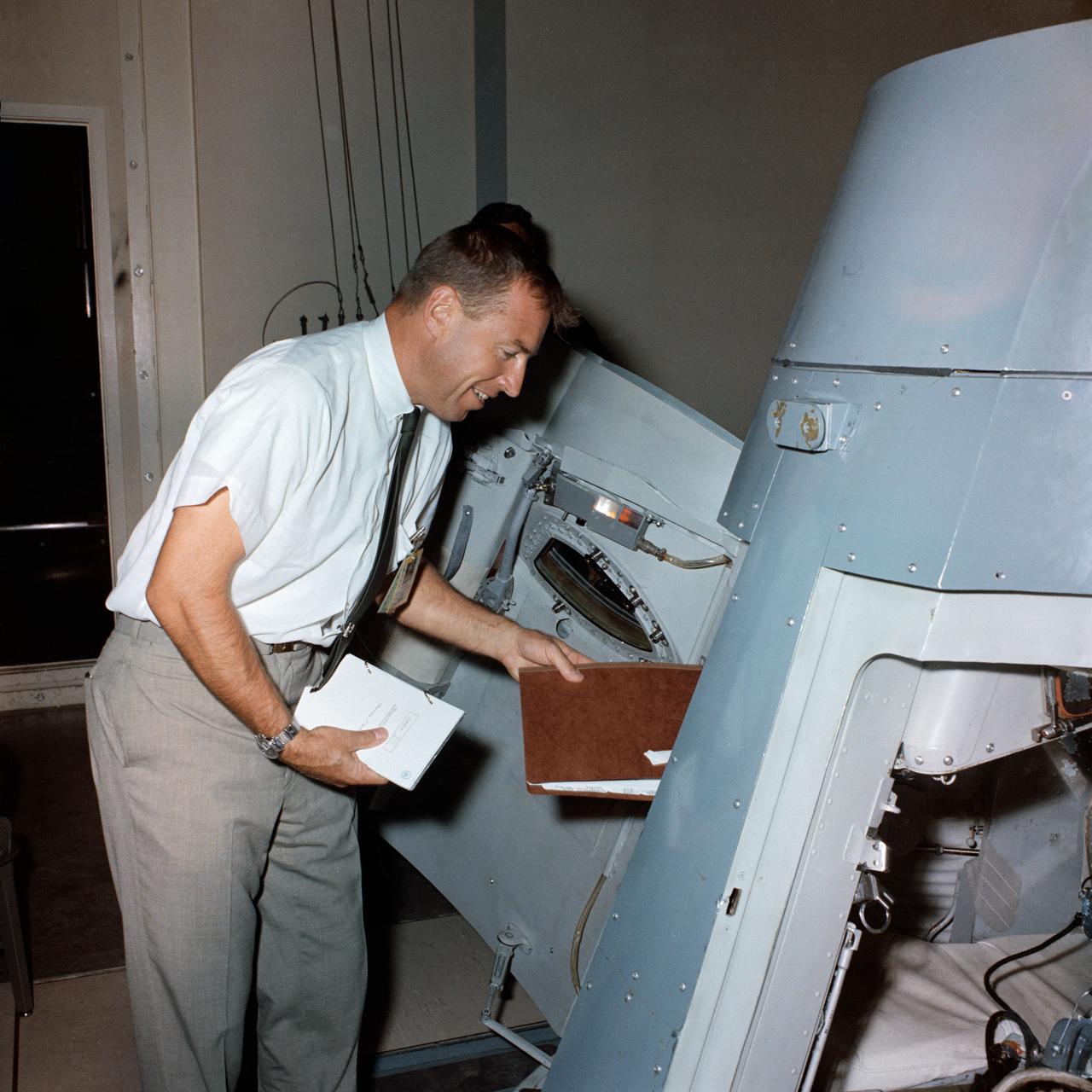
S66-45580 (6 Sept. 1966) --- Astronaut James A. Lovell Jr., prime crew command pilot of the Gemini-12 spaceflight, prepares to enter the Gemini Mission Simulator in Building 5 for flight training. Photo credit: NASA
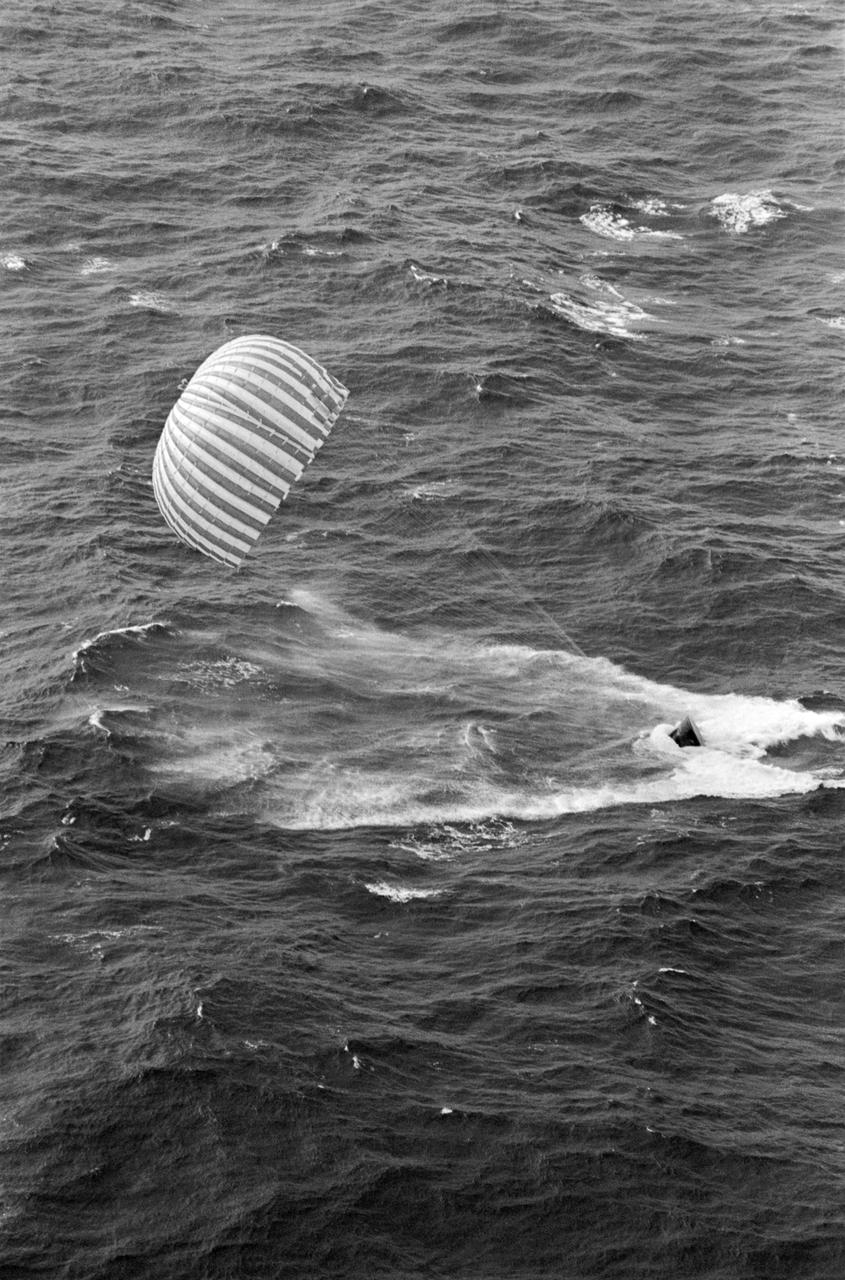
S66-59936 (15 Nov. 1966) --- The last Gemini spaceflight is concluded as the Gemini-12 spacecraft, with astronaut James A. Lovell Jr., command pilot, and Edwin E. Aldrin Jr., pilot, aboard, touches down in the Atlantic Ocean 2.5 nautical miles from the prime recovery ship, USS Wasp. Gemini-12 splashed down at 2:21 p.m. (EST), Nov. 15, 1966, to conclude a four-day mission in space. Photo credit: NASA
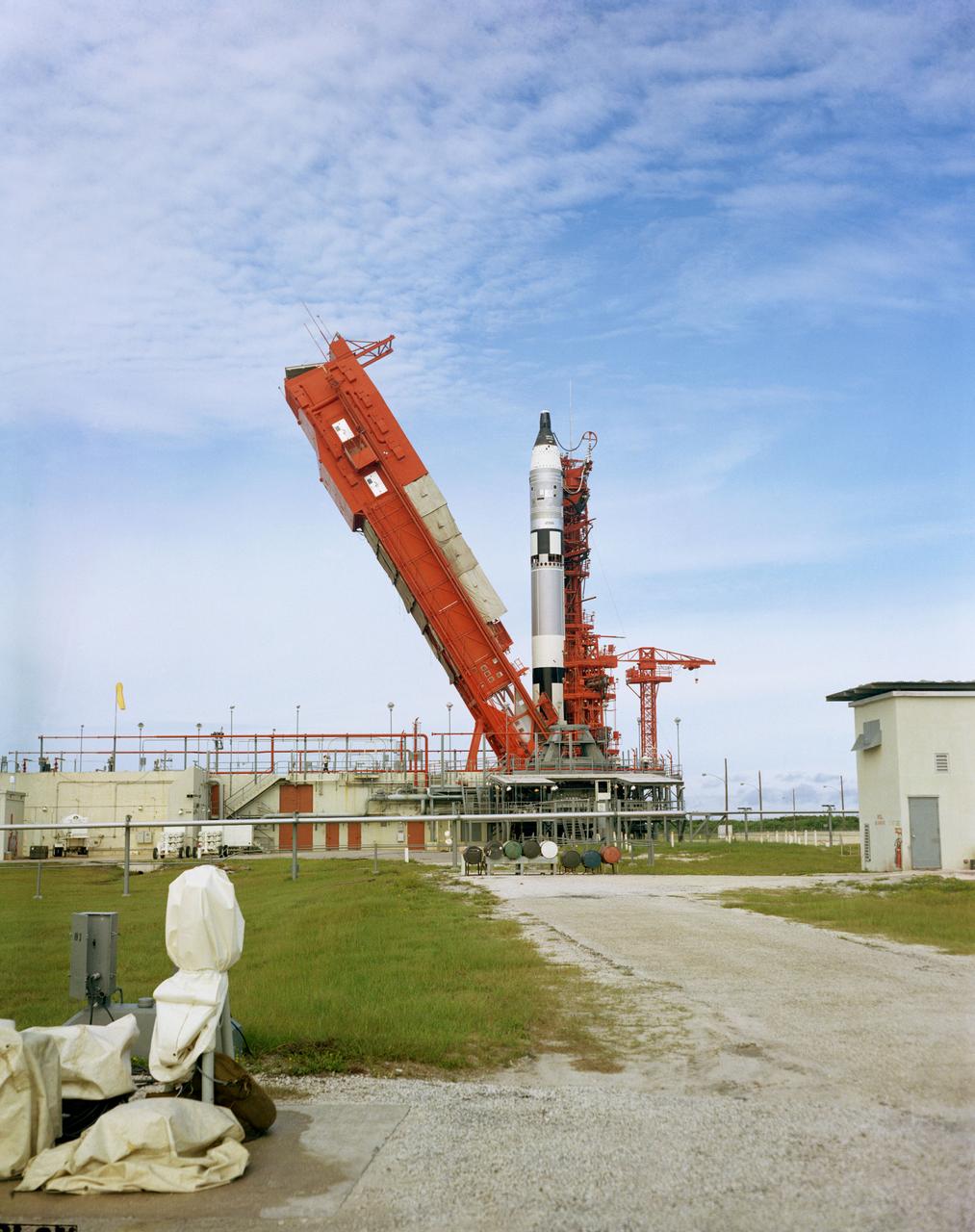
S66-50765 (12 Sept. 1966) --- The erector at Launch Complex 19 is lowered during the Gemini-11 prelaunch countdown. Awaiting the launch in the Gemini-11 spacecraft atop the Gemini Launch Vehicle-11 are astronauts Charles Conrad Jr., command pilot, and Richard F. Gordon Jr., pilot. Liftoff was at 9:42 a.m. (EST), Sept. 12, 1966. Photo credit: NASA
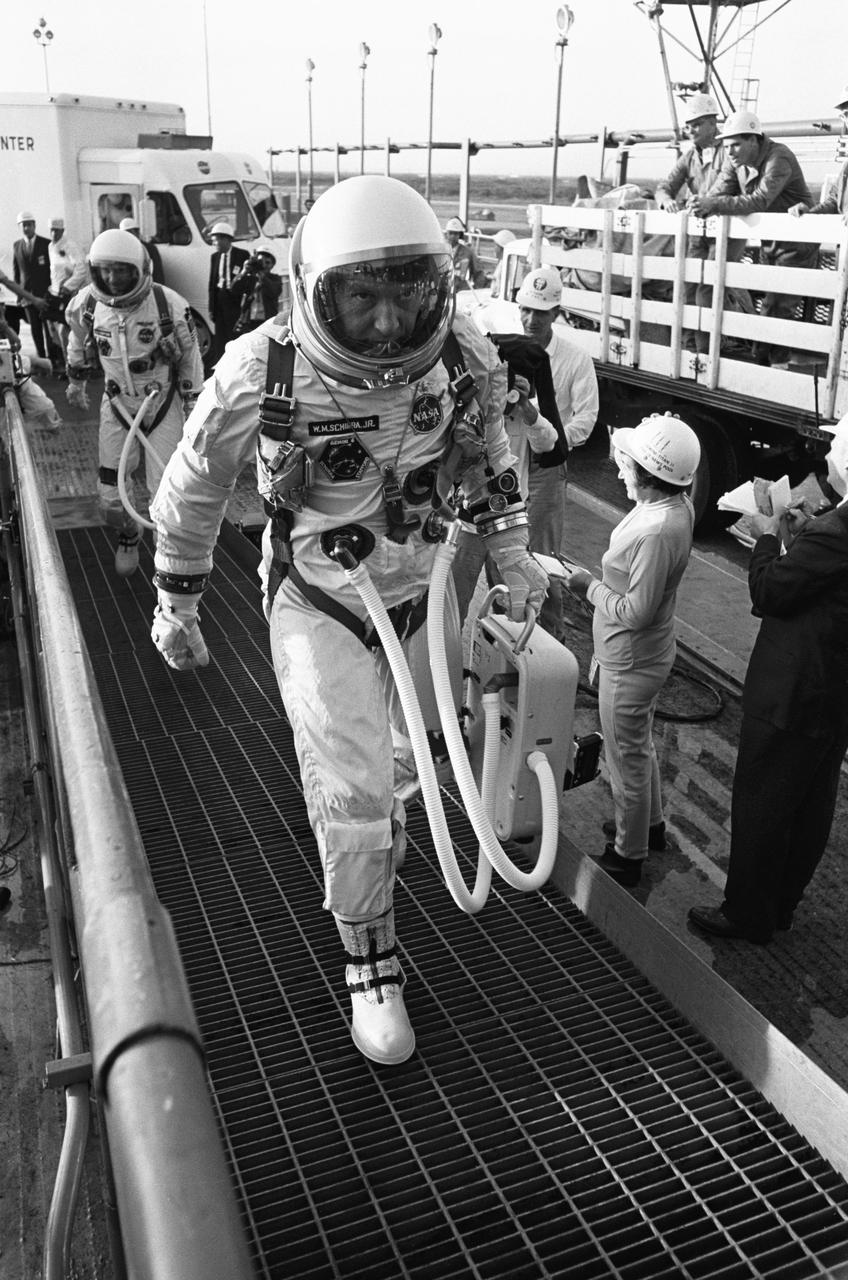
S65-61916 (12 Dec. 1965) --- Astronauts Walter M. Schirra Jr. (foreground), command pilot; and Thomas P. Stafford, pilot, arrive at Pad 19 during the Gemini-6 prelaunch countdown. NASA has planned Gemini-6 as a two-day mission in space. An attempt was made to launch Gemini-6 at 9:54 a.m. (EST) on Dec. 12, 1965. However, seconds after ignition, the first stage engine of the Gemini-6 launch vehicle shutdown due to a faulty release of a liftoff umbilical plug. Photo credit: NASA or National Aeronautics and Space Administration
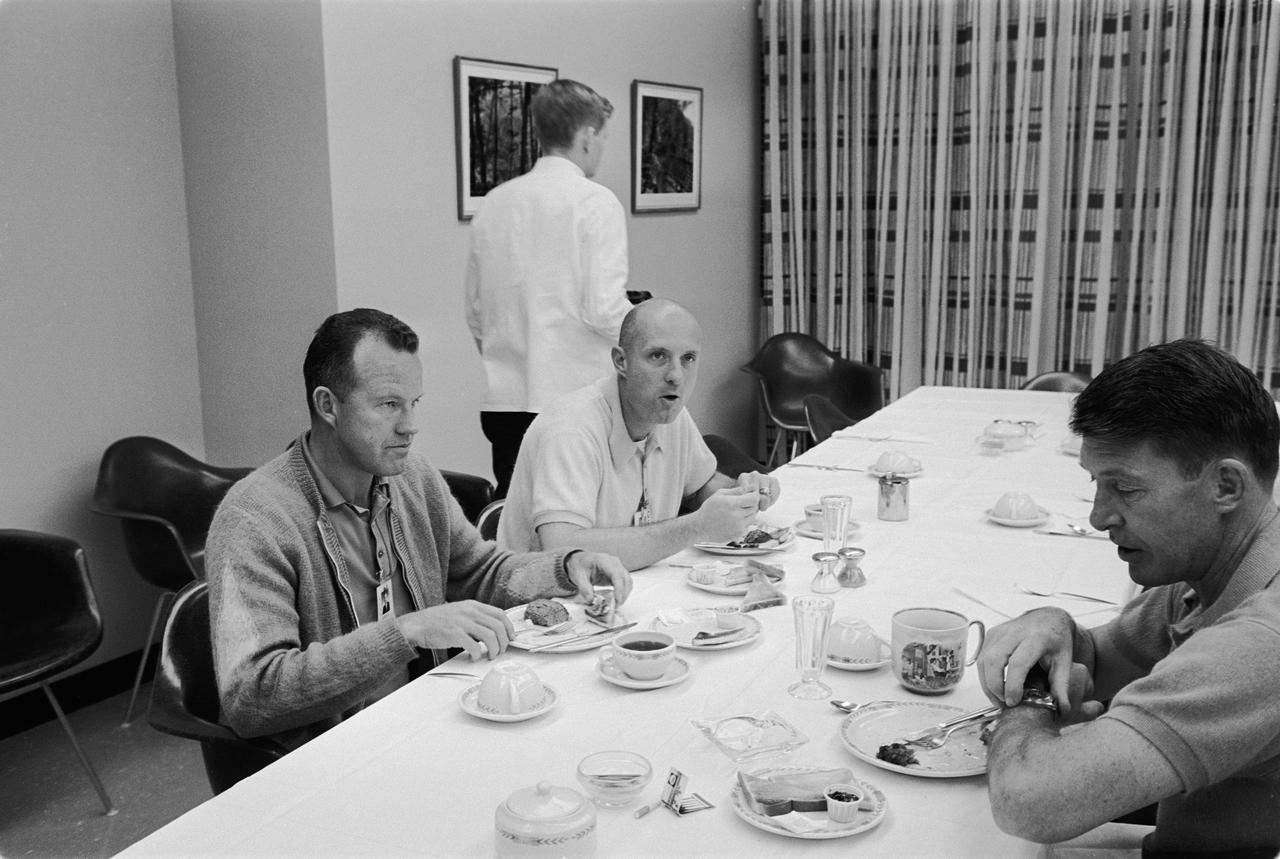
S65-61789 (12 Dec. 1965) --- Astronauts Walter M. Schirra Jr. (right), Gemini-6 command pilot; and Thomas P. Stafford (center), pilot, enjoy a prelaunch breakfast on the morning of the proposed launch of NASA's two-day Gemini-6 spaceflight. At left is astronaut L. Gordon Cooper Jr., command pilot of the Gemini-5 space mission. An attempt was made to launch Gemini-6 from Pad 19 at 9:54 a.m. (EST) on Dec. 12, 1965. However, seconds after ignition, the first stage engine of the Gemini-6 launch vehicle shut down due to a faulty release of a liftoff umbilical plug. Photo credit: NASA or National Aeronautics and Space Administration
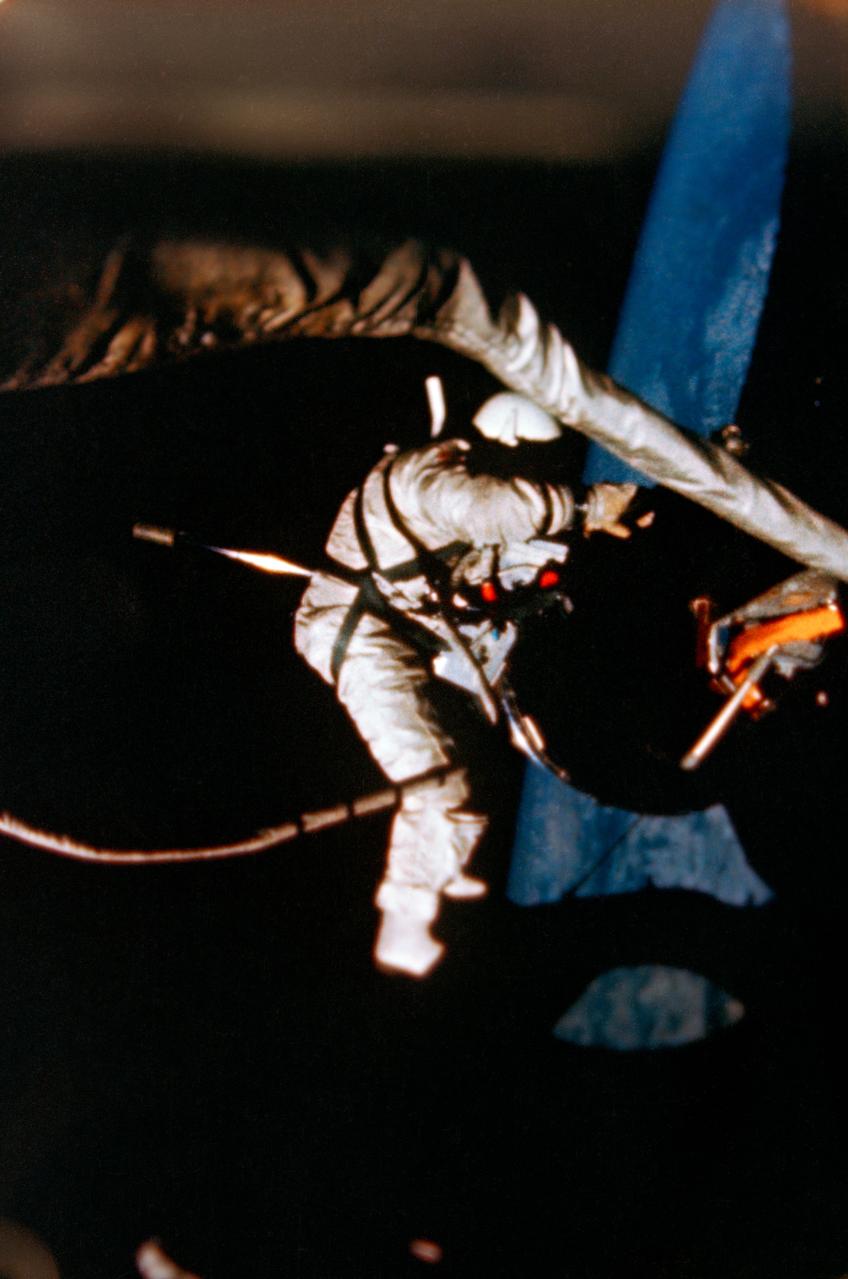
S66-62938 (12 Nov. 1966) --- Astronaut Edwin E. Aldrin Jr., pilot of the Gemini-12 spaceflight, performs extravehicular activity (EVA) during the second day of the four-day mission in space. Photo credit: NASA
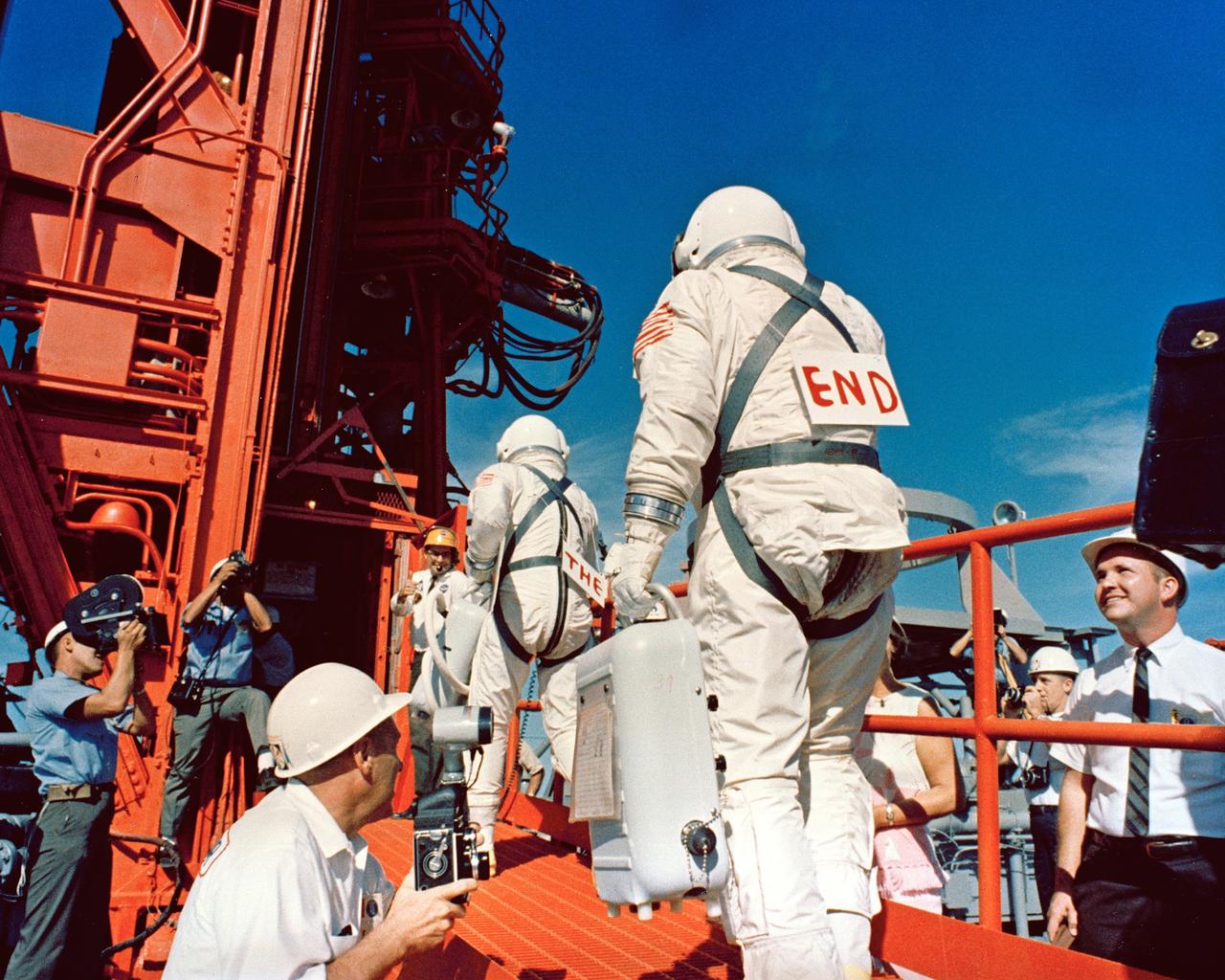
CAPE KENNEDY, Fla. -- At Cape Kennedy Air Force Station in Florida, the crew for Gemini 12 arrives at Launch Complex 19. Command pilot James A. Lovell is followed by pilot Edwin E. Buzz Aldrin Jr. The signs on their backs note that this mission is the final flight of the Gemini Program. Photo Credit: NASA
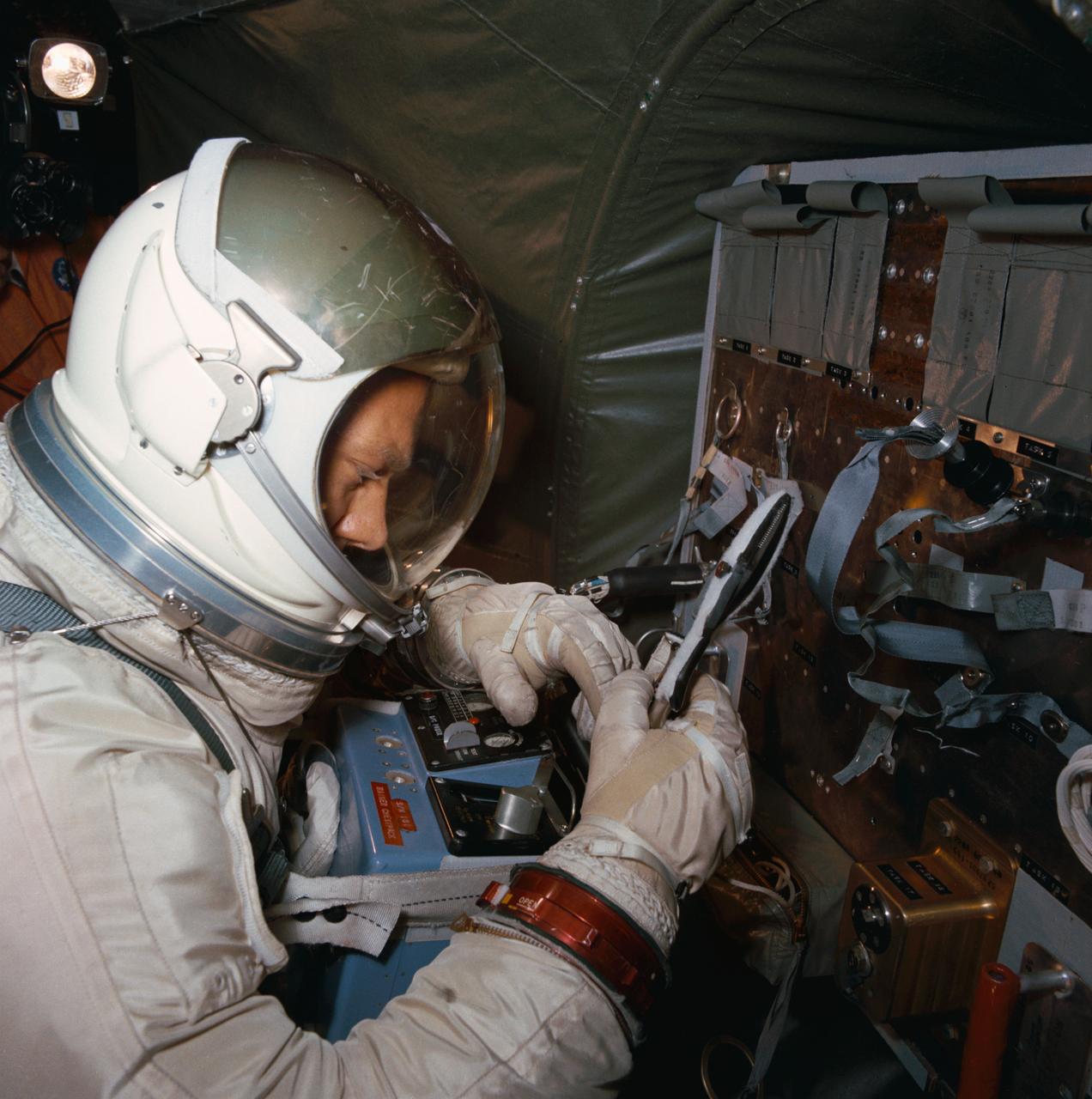
S66-57365 (13 Oct. 1966) --- Astronaut Edwin E. Aldrin Jr., pilot for the Gemini-12 spaceflight, practices work tasks during zero-gravity training. He is standing in a mock-up of the Gemini spacecraft's adapter section onboard an Air Force KC-135 jet aircraft. Photo credit: NASA
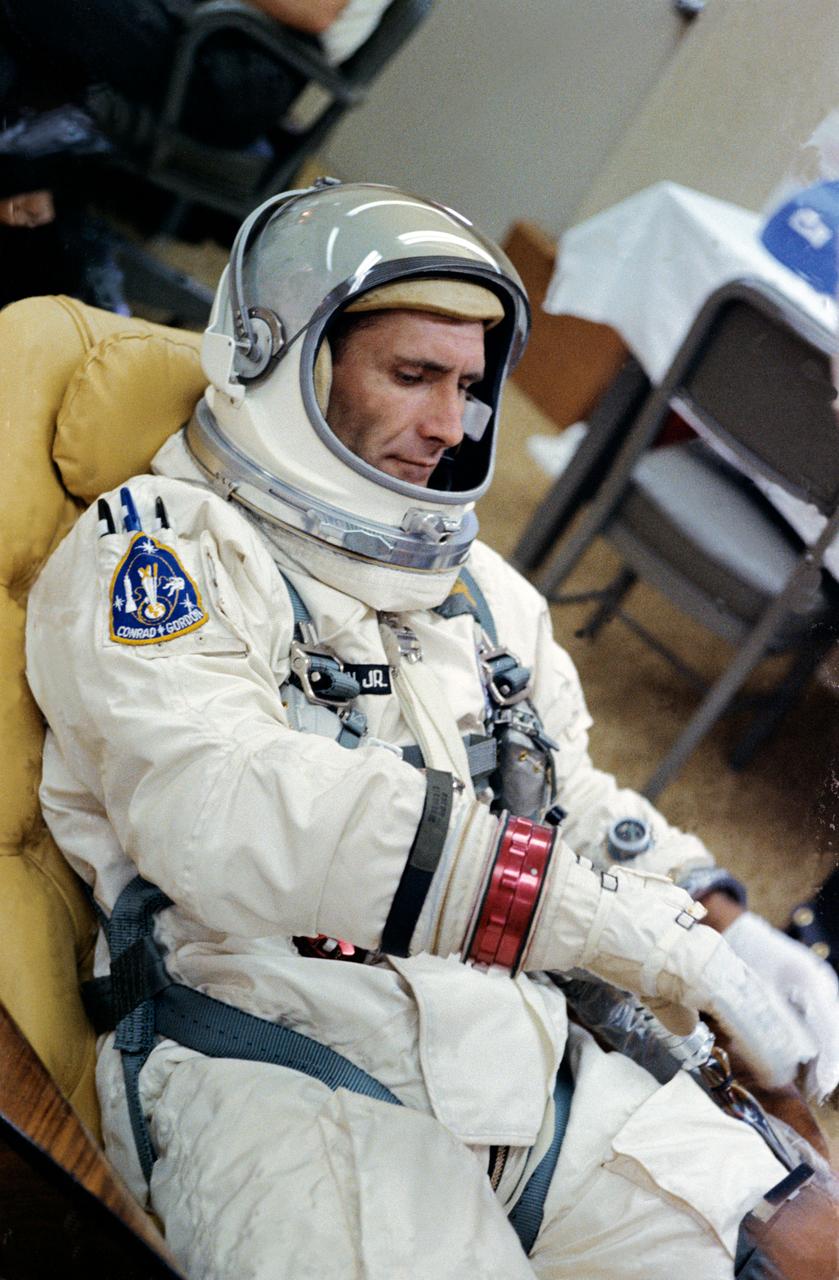
S66-50725 (12 Sept. 1966) --- Astronaut Richard F. Gordon Jr., pilot of the Gemini-11 spaceflight, reclines on a couch as he adjusts his spacesuit in the Launch Complex 16 suiting trailer during the Gemini-11 prelaunch countdown. He is already wearing the full suit and helmet. Photo credit: NASA
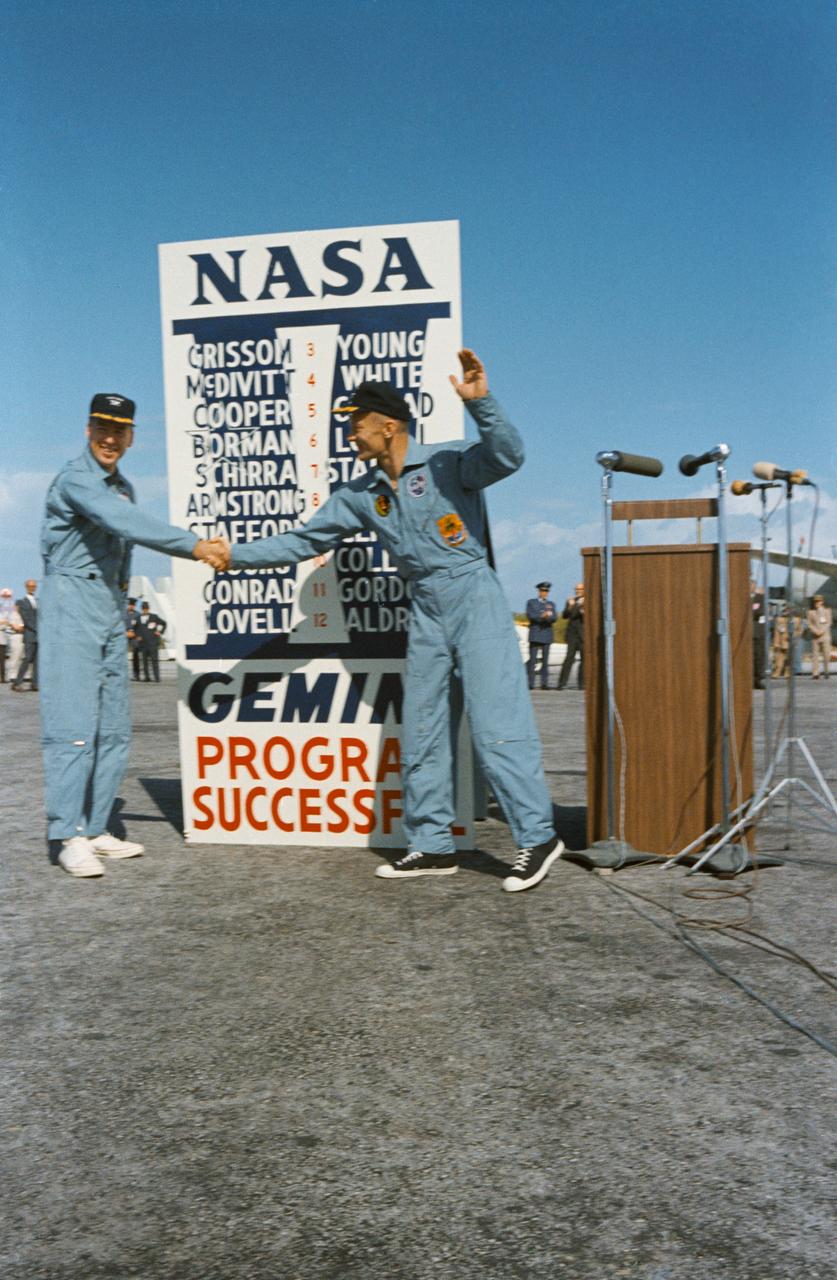
S66-59988 (16 Nov. 1966) --- Gemini-12 astronauts James A. Lovell Jr. (left), command pilot, and Edwin E. Aldrin Jr., pilot, shake hands in front of the National Aeronautics and Space Administration's Gemini progress report sign at the Cape Kennedy skid strip. Photo credit: NASA
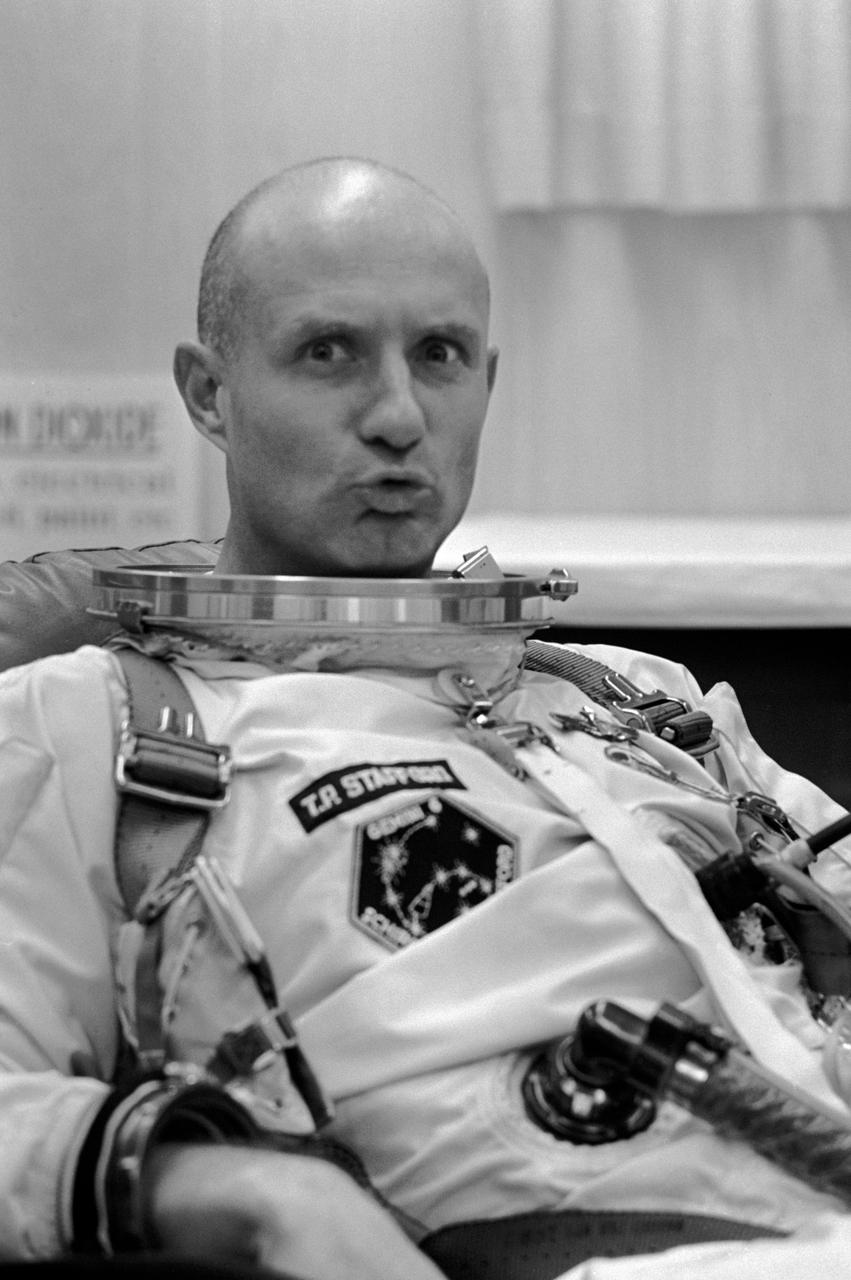
S65-61913 (12 Dec. 1965) --- Astronaut Thomas P. Stafford, pilot, makes a facial gesture at the camera while suiting up in Launch Complex 16 trailer during Gemini-6 prelaunch countdown. NASA has planned a two-day mission in space for astronauts Stafford and Walter M. Schirra Jr. (out of frame), command pilot. An attempt was made to launch Gemini-6 from Pad 19 at 9:54 a.m. (EST) on Dec. 12, 1965. However, seconds after ignition, the first stage engine of the Gemini-6 launch vehicle shutdown due to a faulty release of a liftoff umbilical plug. Photo credit: NASA or National Aeronautics and Space Administration
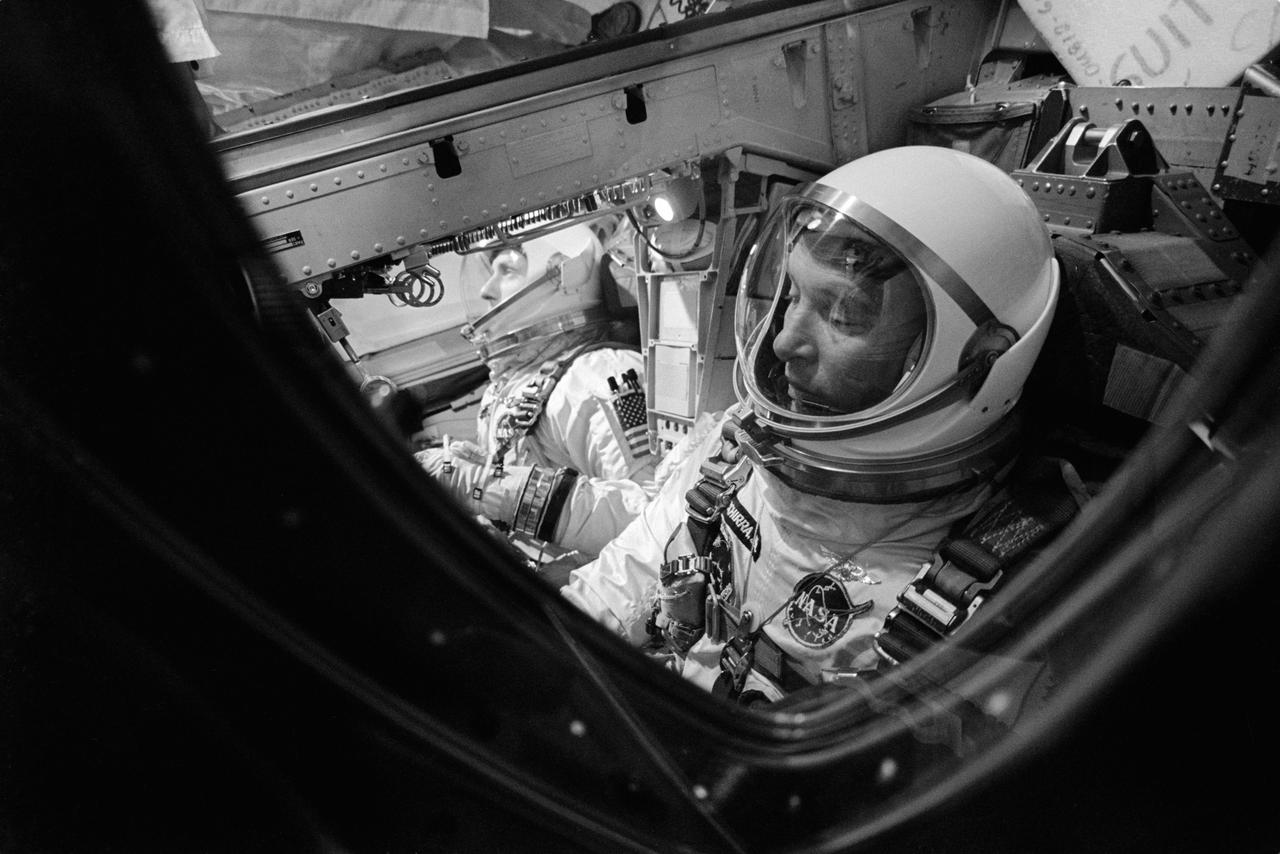
S65-61911 (12 Dec. 1965) --- Astronauts Walter M. Schirra Jr. (foreground), command pilot; and Thomas P. Stafford, pilot, in Gemini-6 spacecraft after hatches are closed during prelaunch countdown. NASA made an attempt to launch Gemini-6 from Pad 19 at 9:54 a.m. (EST) on Dec. 12, 1965. However, seconds after ignition, the first stage engine of the Gemini-6 launch vehicle shutdown due to a faulty release of a liftoff umbilical plug. Photo credit: NASA or National Aeronautics and Space Administration
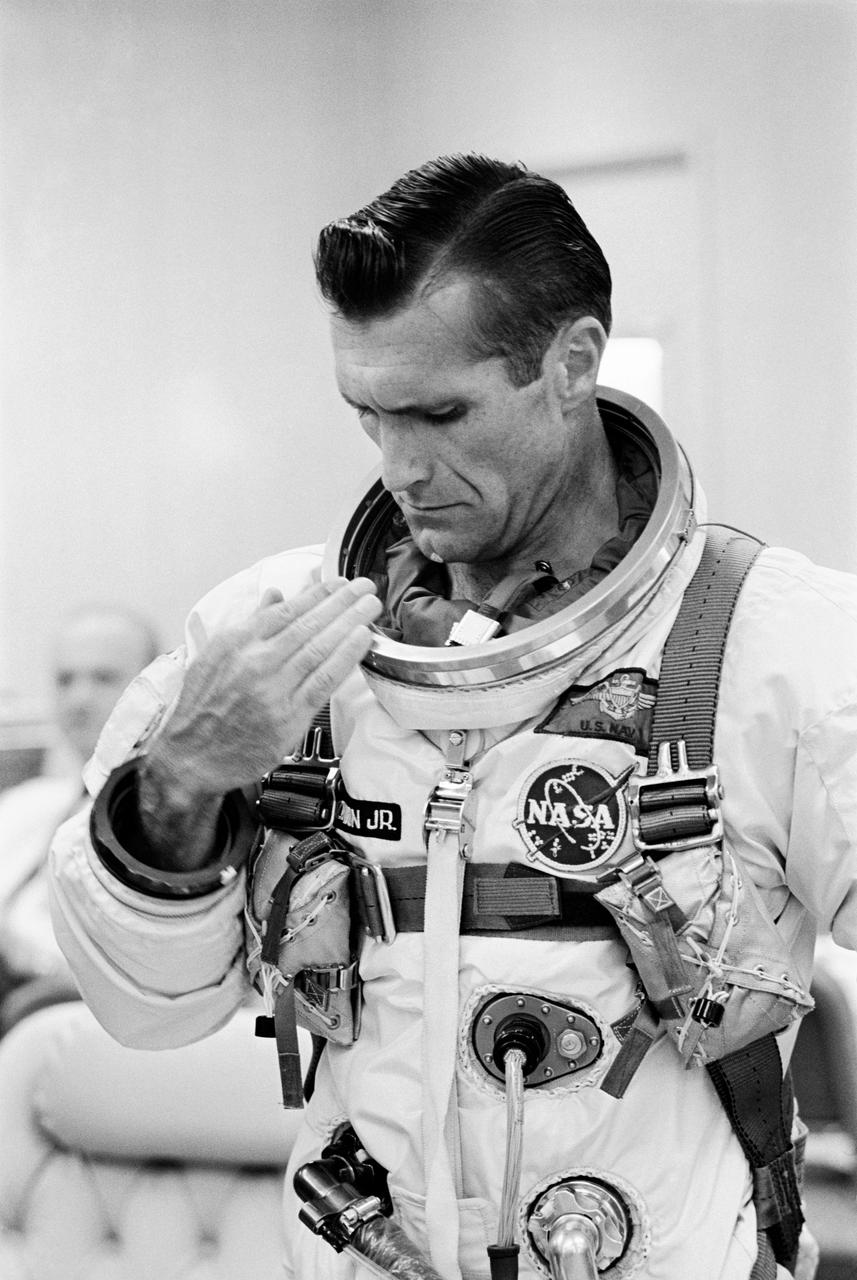
S66-50719 (12 Sept. 1966) --- Astronaut Richard F. Gordon Jr., pilot of the Gemini-11 spaceflight, suits up in the Launch Complex 16 suiting trailer during the Gemini-11 prelaunch countdown. Minutes later astronaut Gordon and Charles Conrad Jr., command pilot, were transported to Pad 19 and their waiting Gemini-11 spacecraft in preparation for their scheduled three-day mission in space. Photo credit: NASA
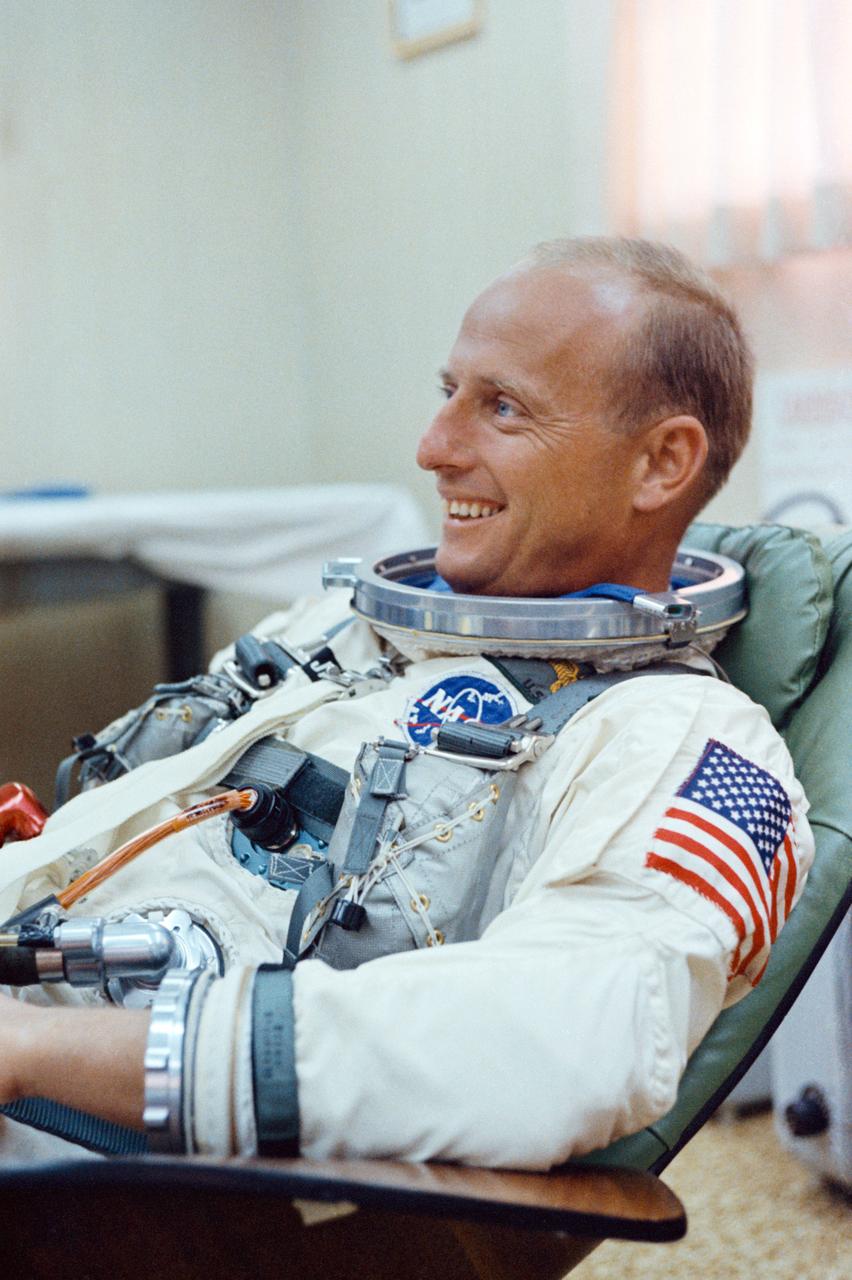
S66-50726 (12 Sept. 1966) --- Astronaut Charles Conrad Jr., command pilot of the Gemini-11 spaceflight, relaxes in Launch Complex 16 suiting trailer during the Gemini-11 prelaunch countdown. Minutes later astronauts Conrad and Richard F. Gordon Jr., pilot, were transported to Pad 19 and their waiting Gemini-11 spacecraft in preparation for their scheduled three-day mission in space. Photo credit: NASA
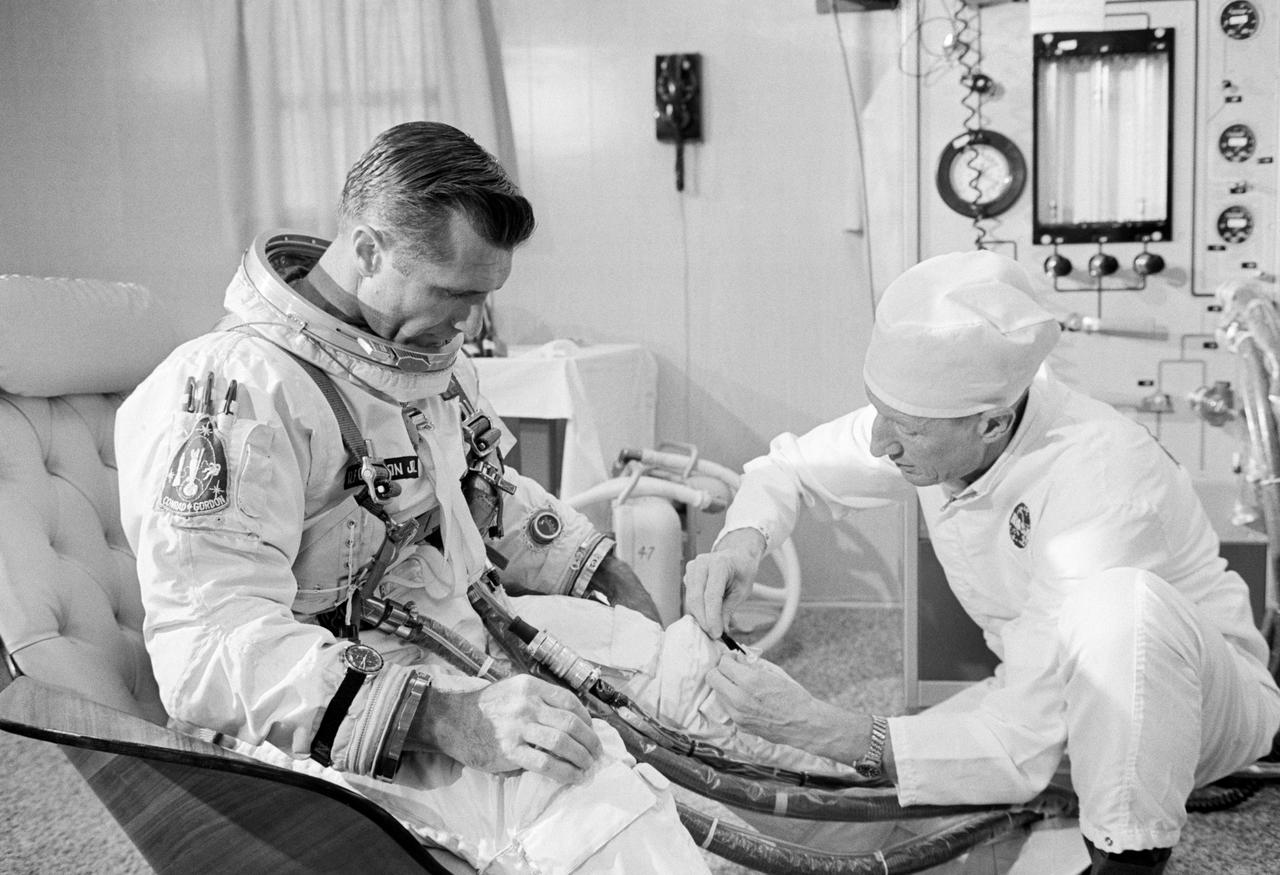
S66-50816 (12 Sept. 1966) --- Astronaut Richard F. Gordon Jr., pilot of the Gemini-11 spaceflight, undergoes suiting up operations in the Launch Complex 16 suit trailer during the Gemini-11 prelaunch countdown. At right is suit technician Clyde Teague. Later, astronaut Gordon and Charles Conrad Jr., command pilot, entered a transport van which carried them to Pad 19 and their waiting spacecraft. The liftoff was at 9:42 a.m. (EST), Sept. 12, 1966. Photo credit: NASA
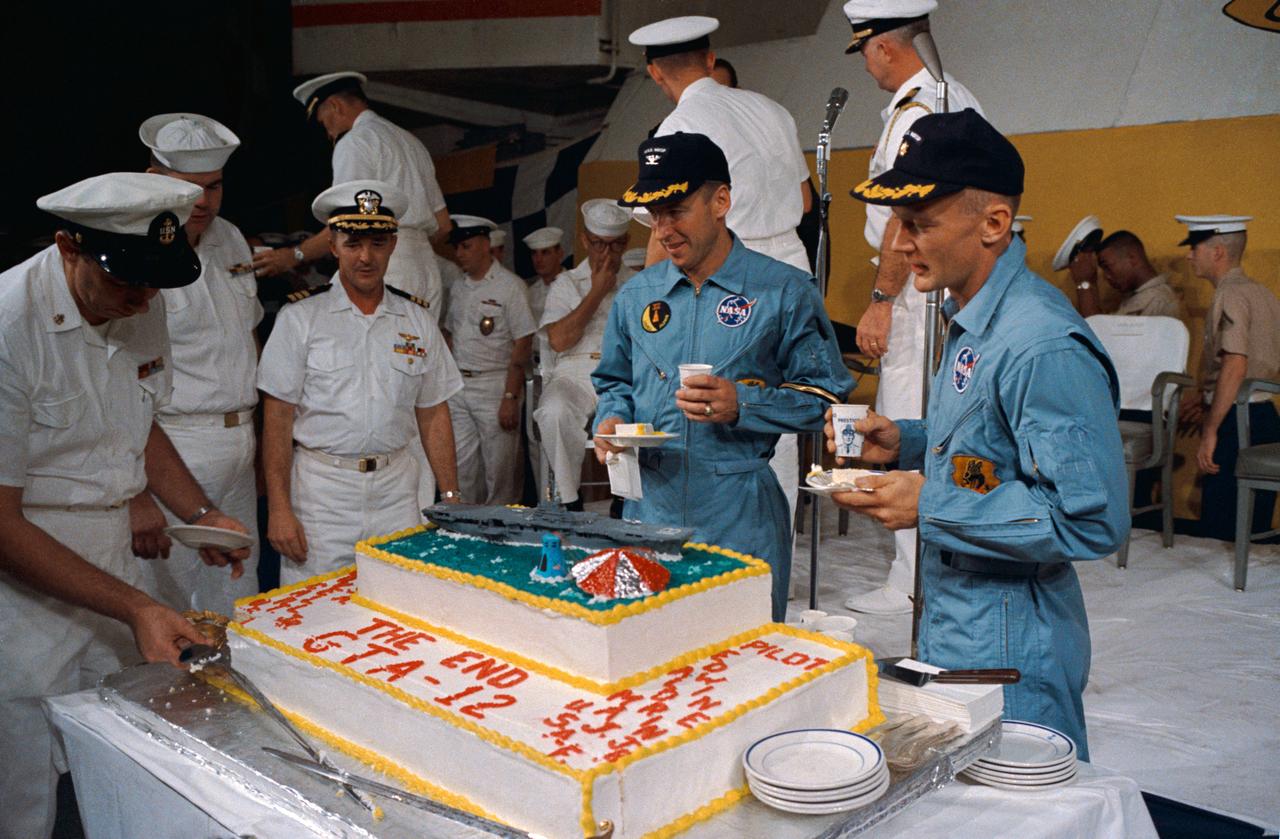
S66-59989 (16 Nov. 1966) --- Gemini-12 astronaut James A. Lovell Jr. (left), command pilot, and Edwin E. Aldrin Jr. (right), pilot, eat a piece of cake presented the two astronauts by crew members of the prime recovery ship, USS Wasp. Gemini-12 splashed down in the Atlantic Ocean at 2:21 p.m. (EST), Nov. 15, 1966, to conclude a four-day mission in space. Photo credit: NASA
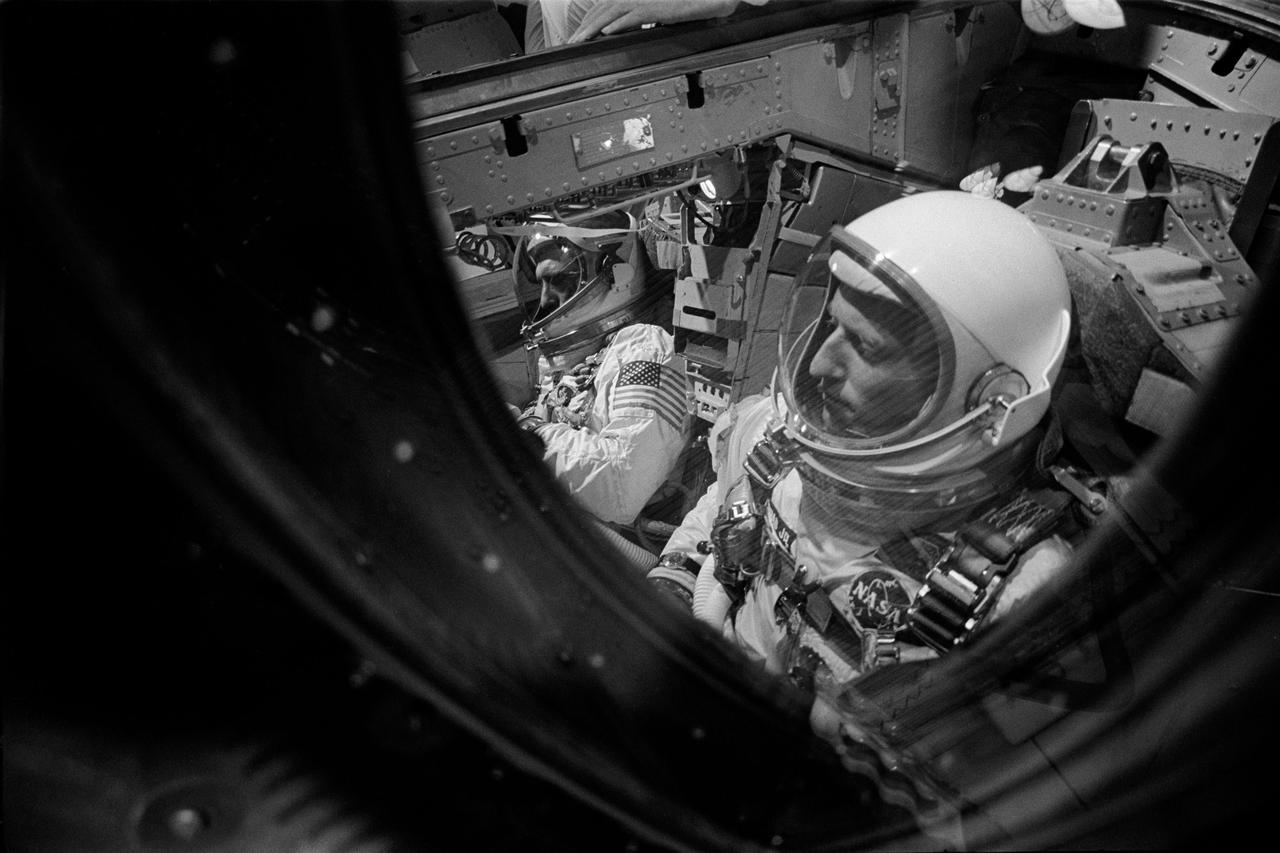
S66-50714 (12 Sept. 1966) --- Astronauts Charles Conrad Jr. (foreground), command pilot, and Richard F. Gordon Jr., pilot, are seen in the Gemini-11 spacecraft in the white room atop Pad 19 awaiting the final minutes of the prelaunch countdown. The Gemini-11 liftoff was at 9:42 a.m. (EST), Sept. 12, 1966. Photo credit: NASA
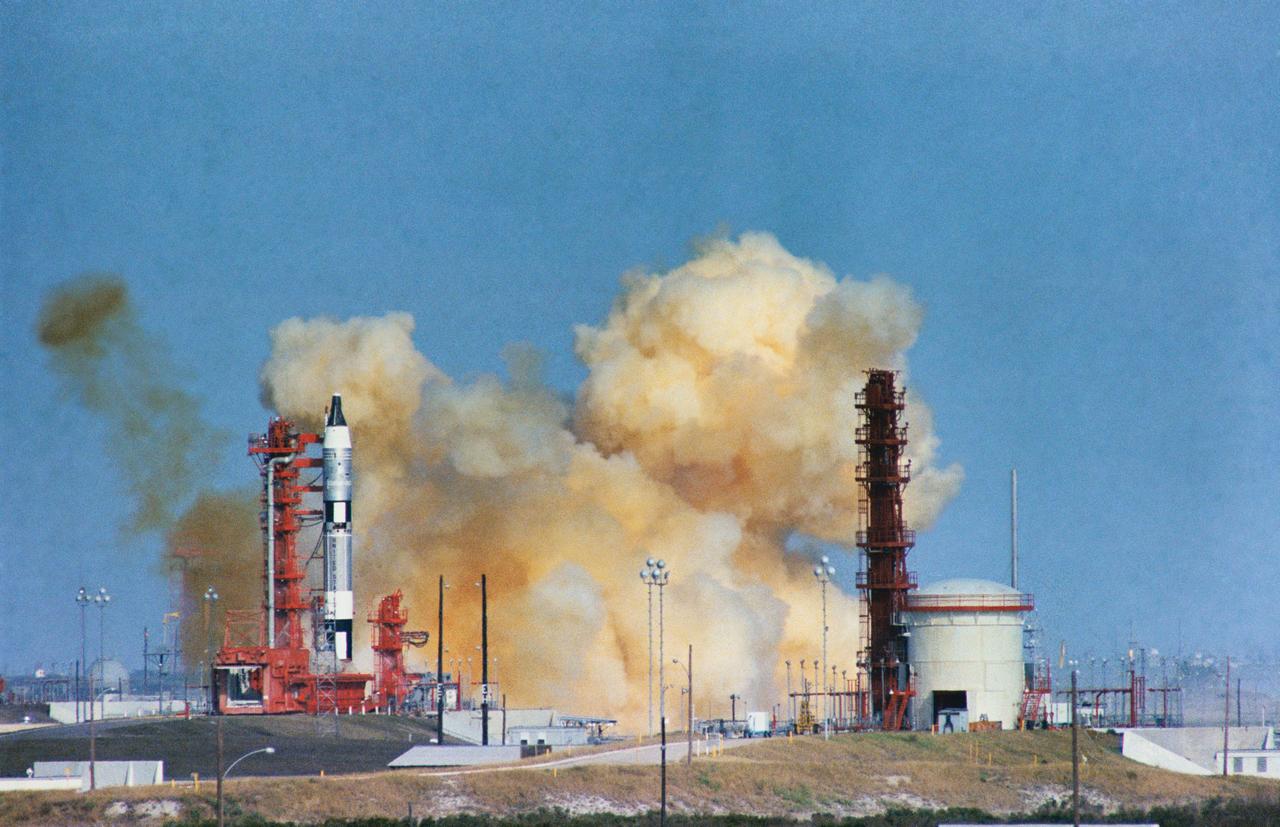
S65-59967 (12 Dec. 1965) --- The National Aeronautics and Space Administration (NASA) attempted to launch Gemini-6 at 9:54 a.m. (EST), Dec. 12, 1965. However, seconds after ignition the first stage engine of the Gemini Launch Vehicle 6 shut down due to a faulty release of a liftoff umbilical plug. Inside the spacecraft were astronauts Walter M. Schirra Jr., command pilot, and Thomas P. Stafford, pilot. Photo credit: NASA or National Aeronautics and Space Administration
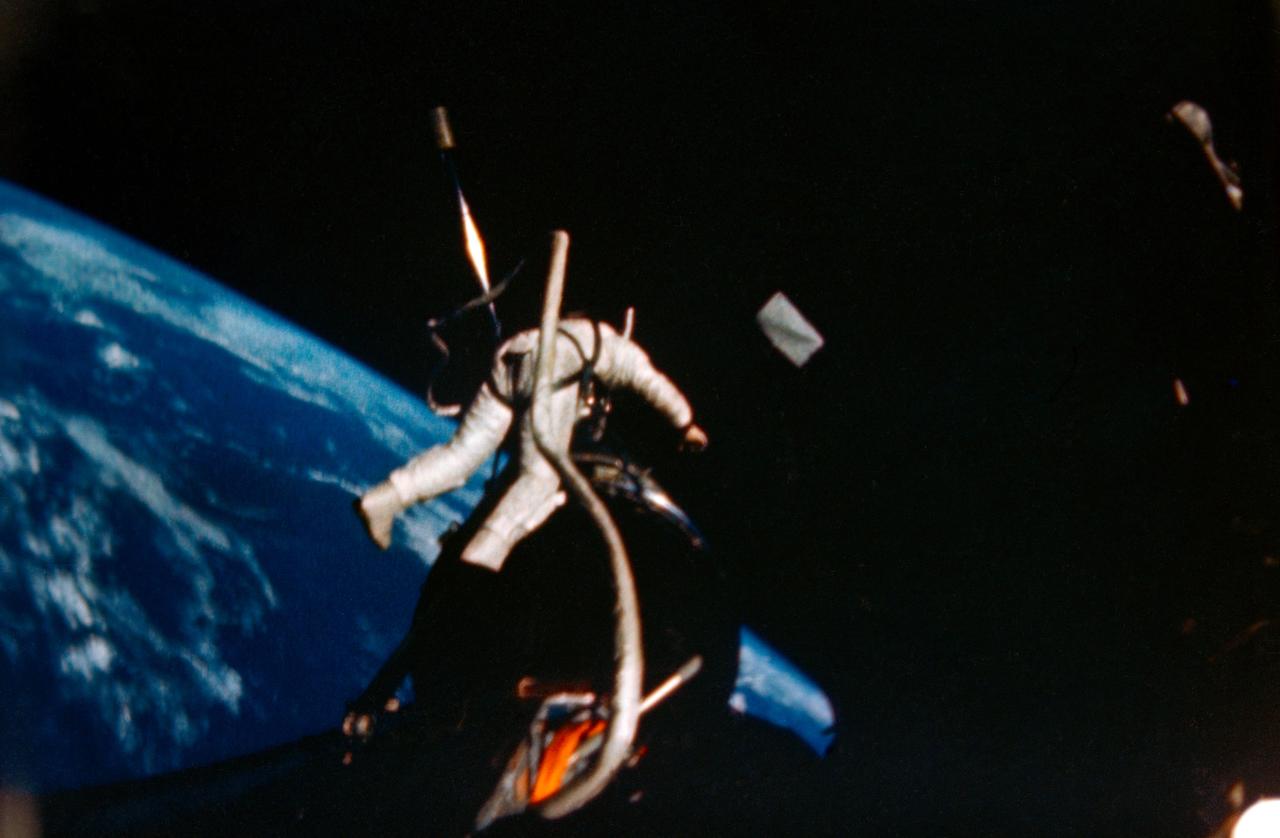
S66-62939 (12 Nov. 1966) --- Astronaut Edwin E. Aldrin Jr., pilot of the Gemini-12 spaceflight, performs extravehicular activity (EVA) during the second day of the four-day mission in space. Aldrin is at the Agena work station. Astronaut James A. Lovell Jr. was the command pilot. Photo credit: NASA
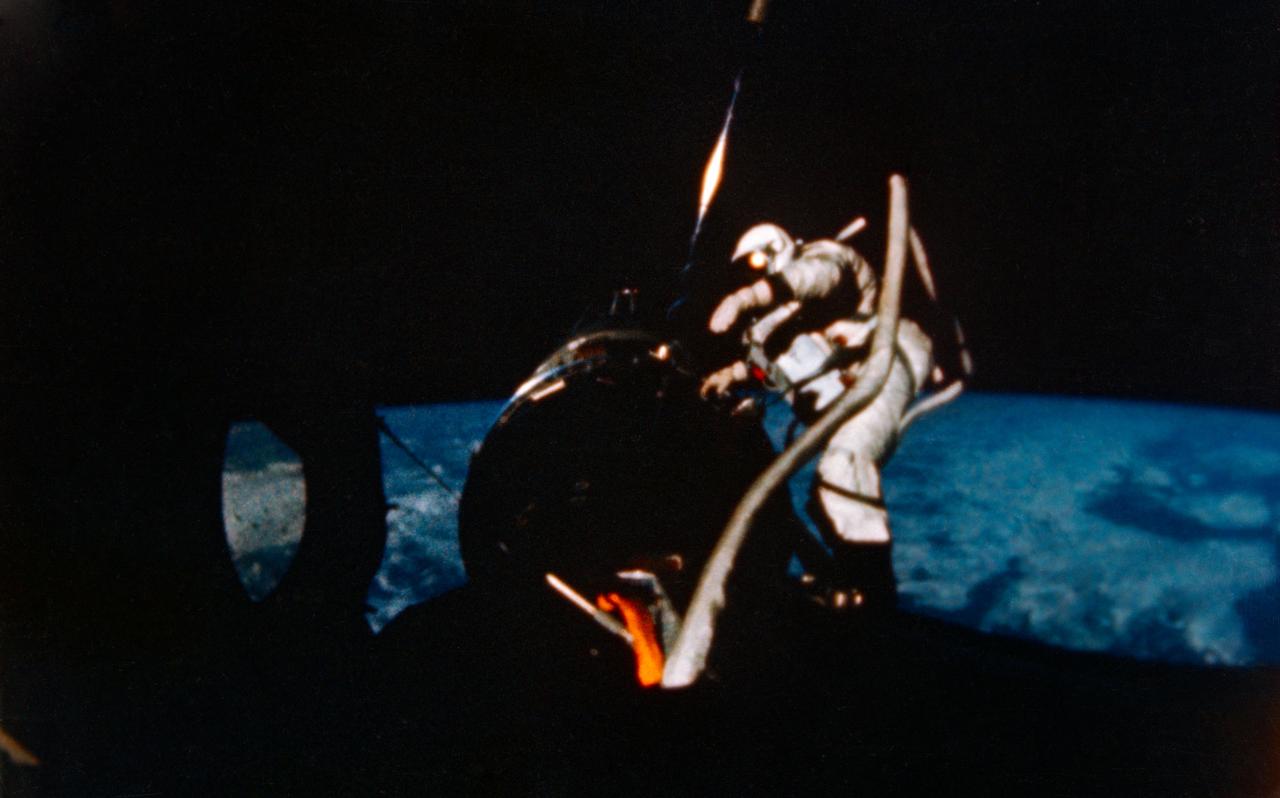
S66-62937 (12 Nov. 1966) --- Astronaut Edwin E. Aldrin Jr., pilot of the Gemini-12 spaceflight, performs extravehicular activity (EVA) during the second day of the four-day mission in space. Aldrin is at the Agena work station. Astronaut James A. Lovell Jr. was the command pilot. Photo credit: NASA
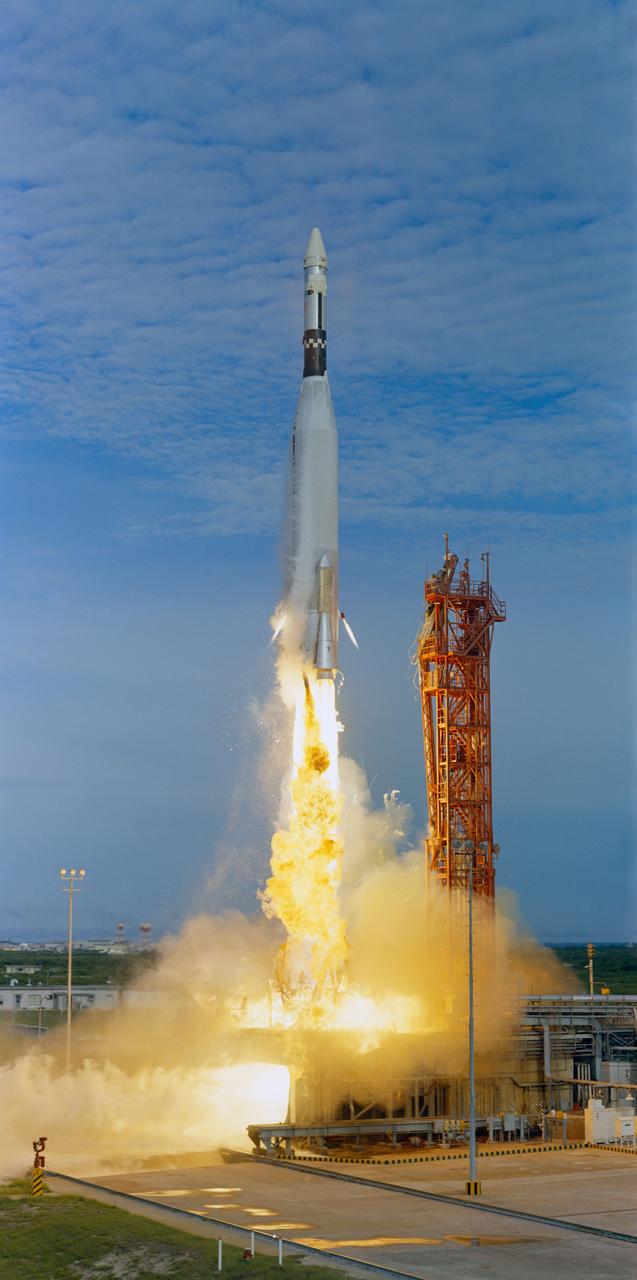
S66-50784 (12 Sept. 1966) --- An Agena Target Docking Vehicle atop its Atlas launch vehicle was launched from the Kennedy Space Center's Launch Complex 14 at 6:05 a.m., Sept. 12, 1966. The Agena served as a rendezvous and docking vehicle for the Gemini-11 spacecraft. Photo credit: NASA
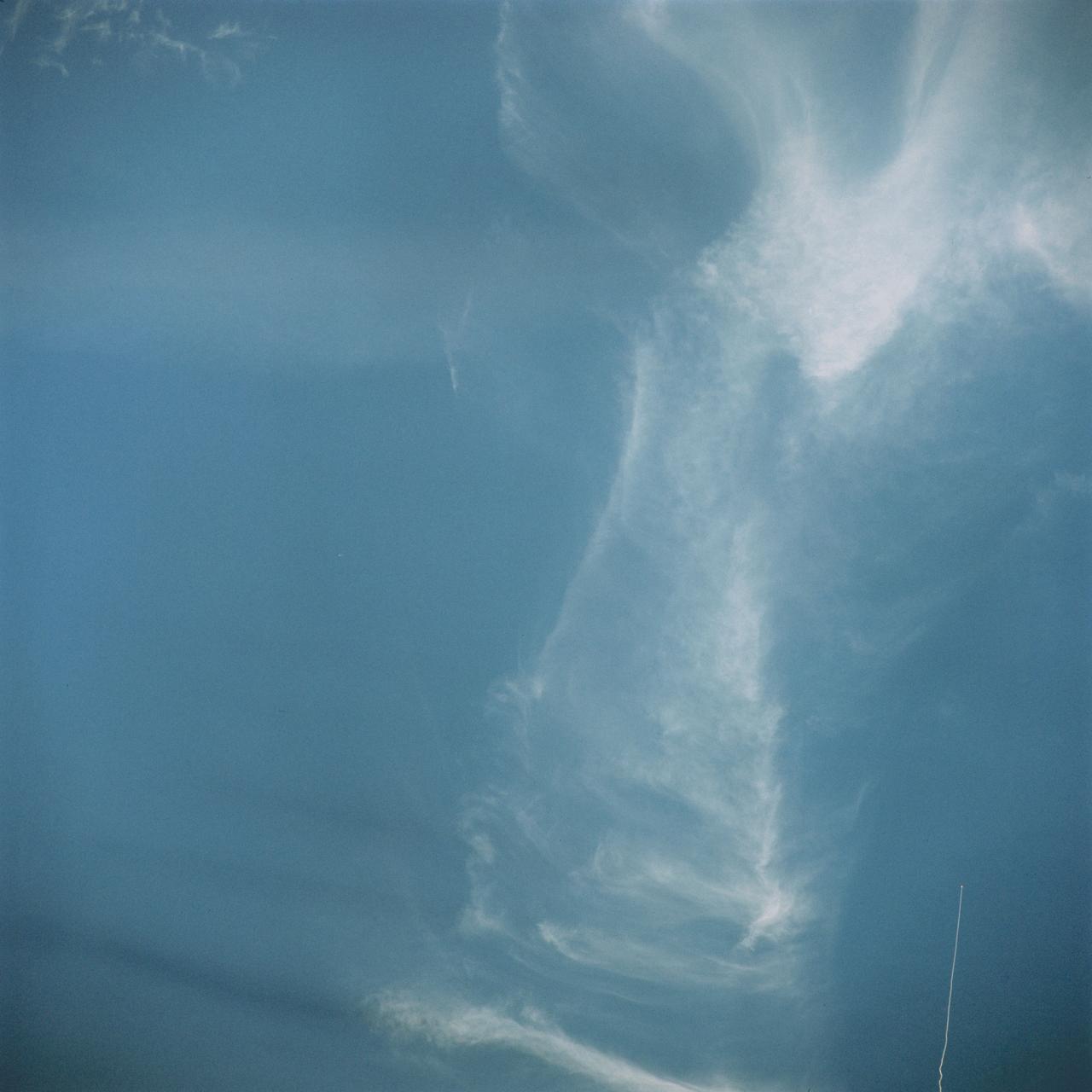
S65-63797 (12 Dec. 1965) --- Polaris, underwater launch, missile and trail, off Florida, as seen from the Gemini-7 spacecraft during its 31st revolution of Earth. Photo credit: NASA
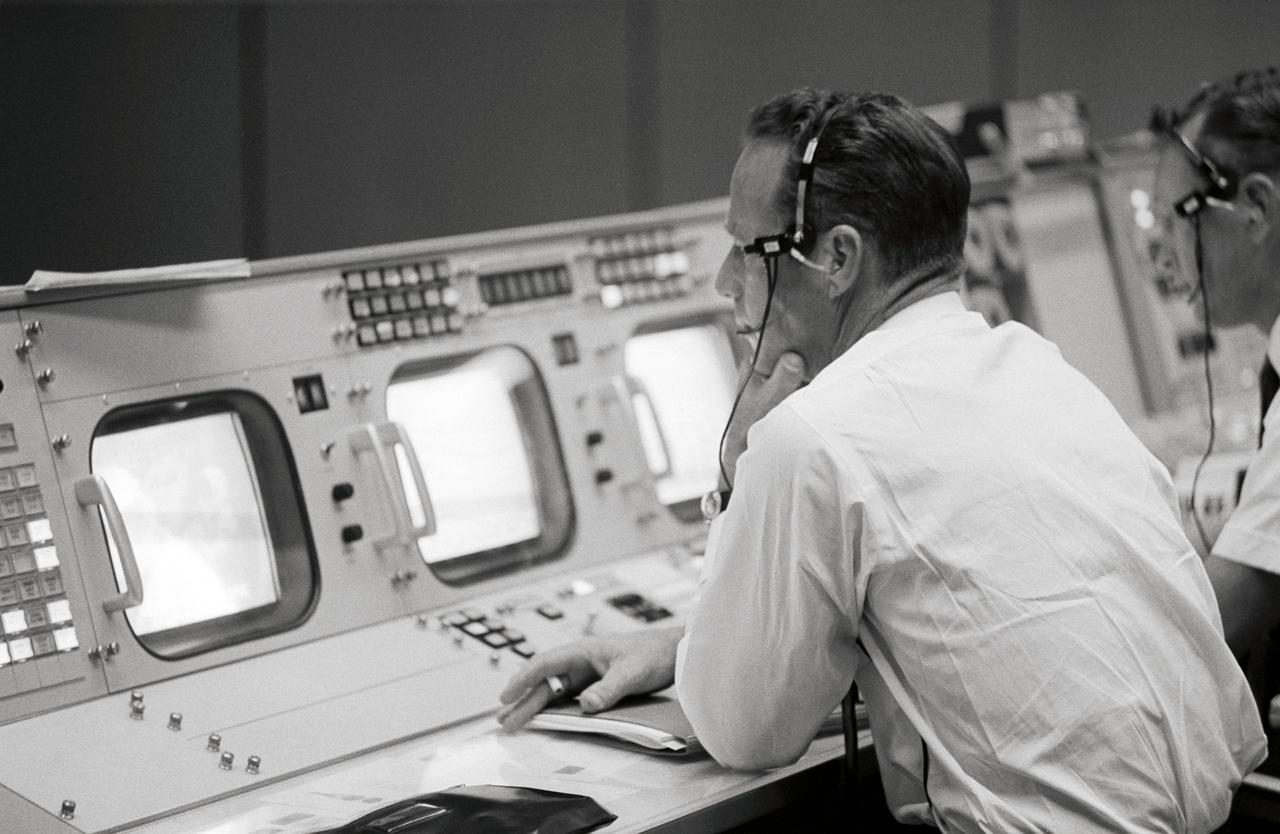
S66-51794 (12 Sept. 1966) --- Astronaut M. Scott Carpenter monitors the Booster Systems Console in the Manned Spacecraft Center (MSC) Mission Control Center during launch of the Gemini-11 spaceflight. Photo credit: NASA
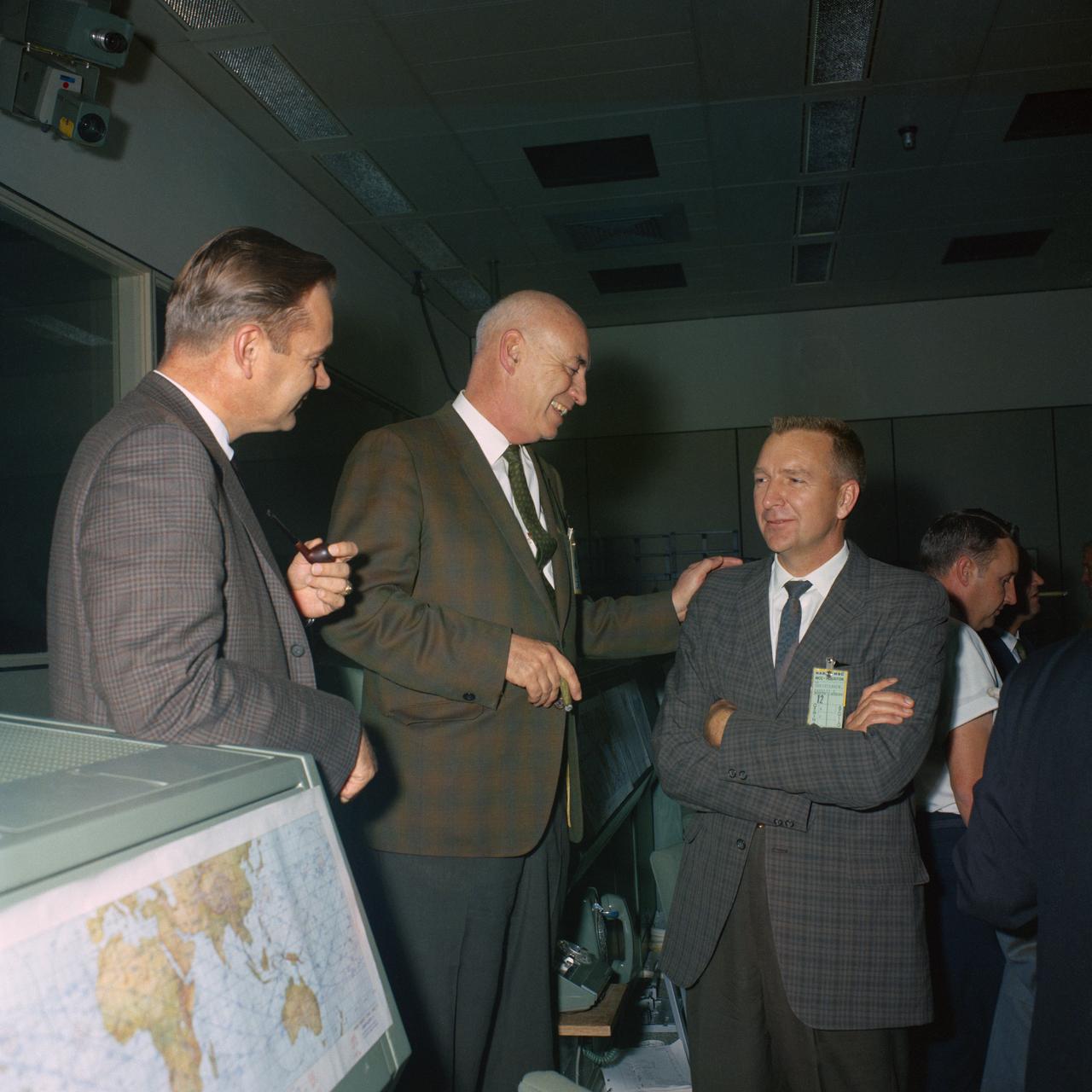
S66-64870 (15 Nov. 1966) --- Dr. Robert R. Gilruth (center) talks to other NASA officials in Mission Control Center near the end of the Gemini-12 mission. Photo credit: NASA
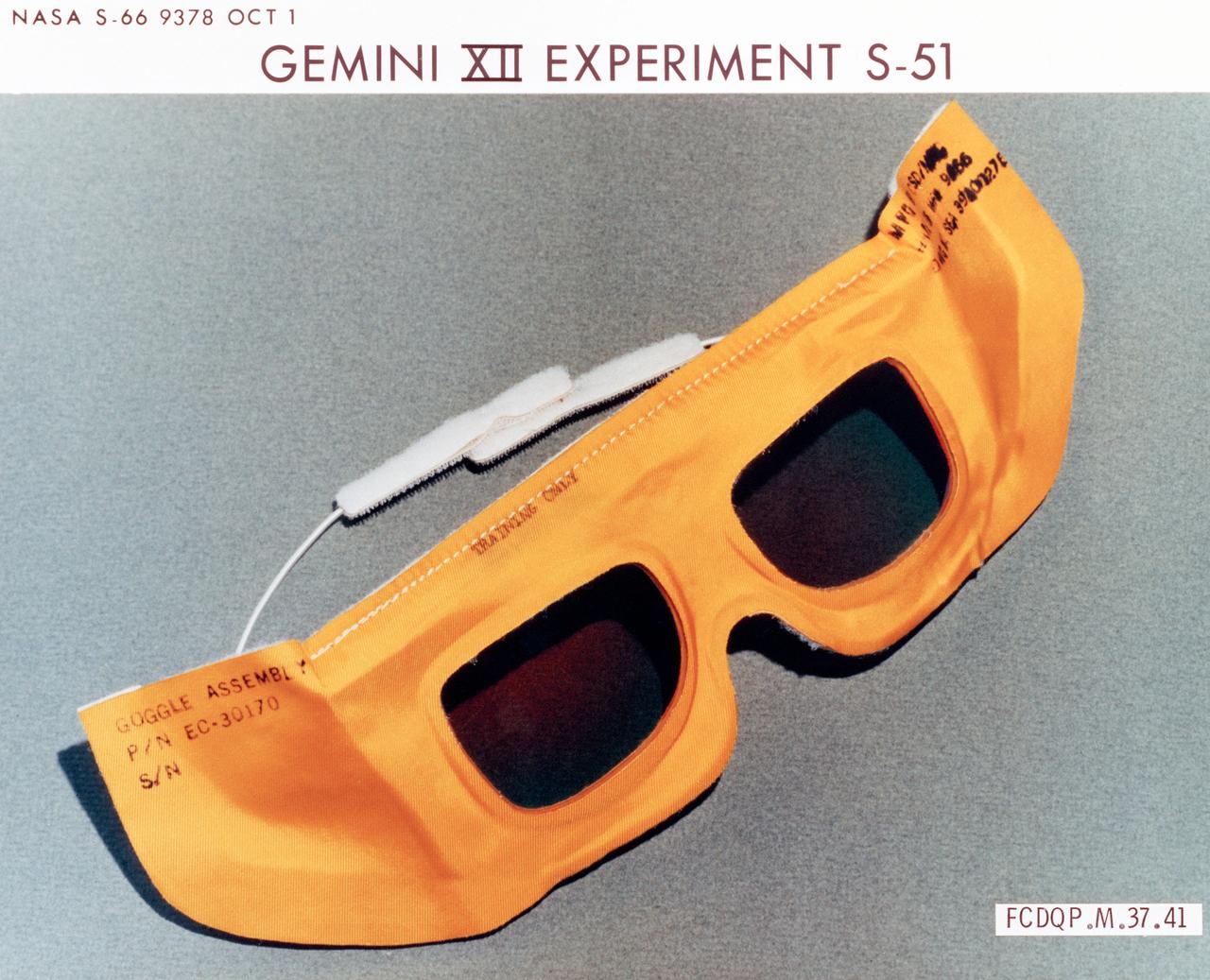
S66-09378 (1 Oct. 1966) --- Goggles which will be worn by Gemini-12 astronaut as he photographs sodium cloud ejected from French Centaure rocket launched from Hammaguir, Algeria. Photo credit: NASA
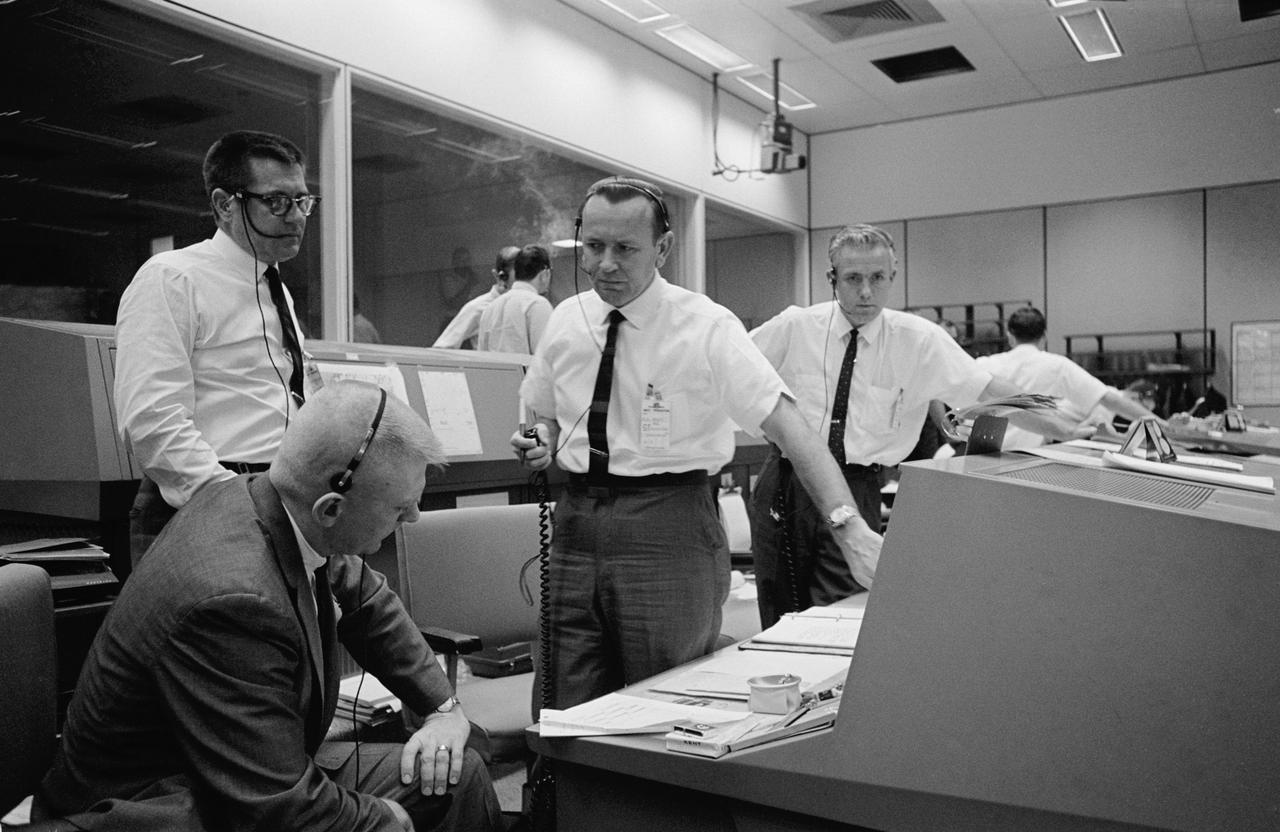
S65-62062 (12 Dec. 1965) --- Discussing the scrubbing of the planned National Aeronautics and Space Administration?s Gemini-6 spaceflight are (from left) William C. Schneider (standing), deputy director, Gemini Program Office of Manned Spaceflight, NASA Headquarters, Washington, D.C.; Eugene F. Kranz (seated), white team flight director; Christopher C. Kraft Jr., red team flight director; and John D. Hodge, blue team flight director. The Gemini-6 mission has been rescheduled for Dec. 15, 1965. Photo credit: NASA or National Aeronautics and Space Administration
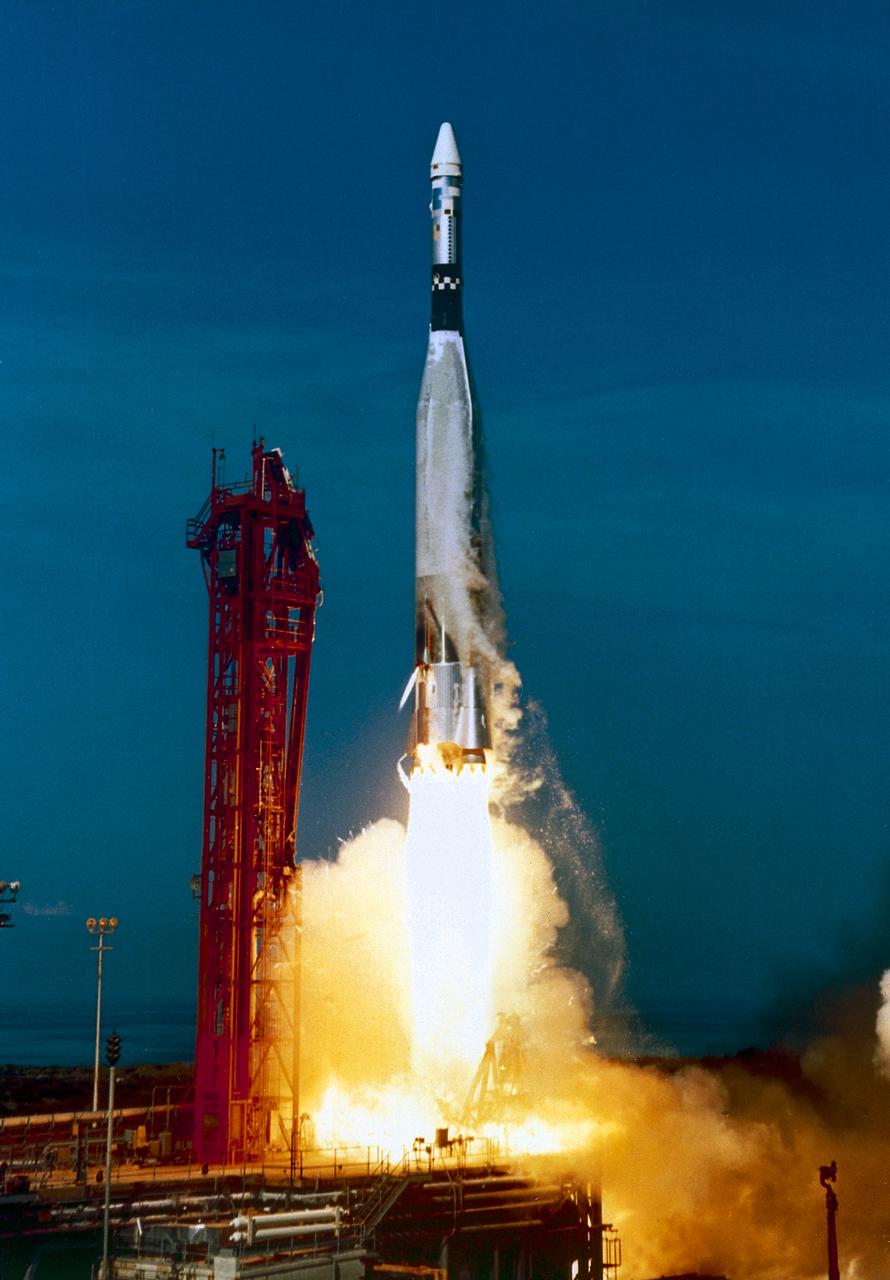
Launched atop an Atlas booster, the Agena target vehicle (ATV) was a spacecraft used by NASA to develop and practice orbital space rendezvous and docking techniques in preparation for the Apollo program lunar missions. This particular launch preceded the Gemini 12, which launched aboard a Titan launch vehicle one and one half hours later. The objective was for Agena and Gemini to rendezvous in space and practice docking procedures. An intermediate step between Project Mercury and the Apollo Program, the Gemini Program's major objectives were to subject two men and supporting equipment to long duration flights, to perfect rendezvous and docking with other orbiting vehicles, methods of reentry, and landing of the spacecraft.
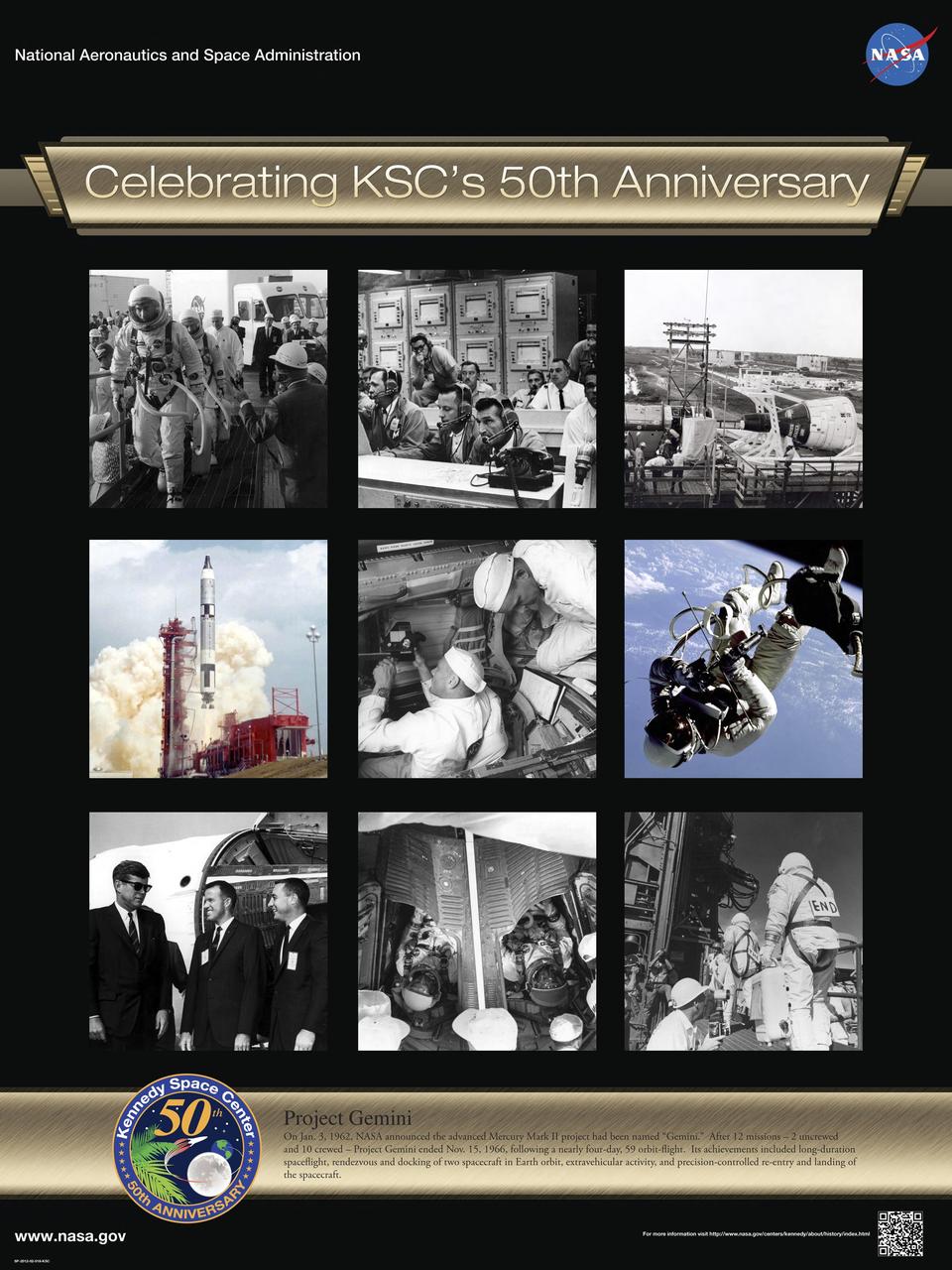
Project Gemini: On Jan. 3, 1962, NASA announced the advanced Mercury Mark II project had been named "Gemini." After 12 missions – 2 uncrewed and 10 crewed – Project Gemini ended Nov. 15, 1966, following a nearly four-day, 59 orbit-flight. Its achievements included long-duration spaceflight, rendezvous and docking of two spacecraft in Earth orbit, extravehicular activity, and precision-controlled re-entry and landing of the spacecraft. Poster designed by Kennedy Space Center Graphics Department/Greg Lee. Credit: NASA
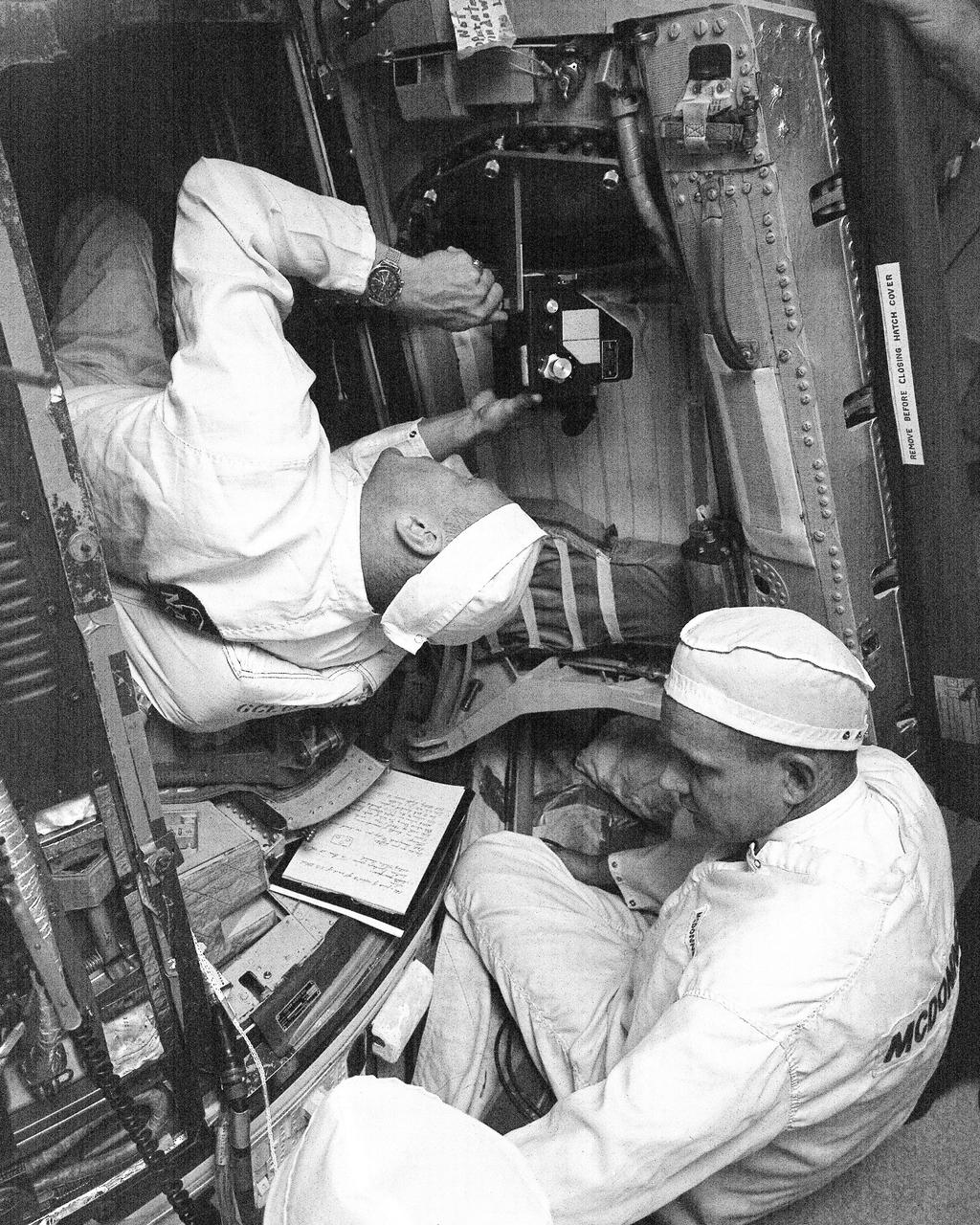
CAPE KENNEDY, Fla. -- At Cape Kennedy Air Force Station in Florida, Gemini 12 pilot Edwin E. Buzz Aldrin Jr., seated in the spacecraft, practice stowing cameras and other equipment he and command pilot James A. Lovell will take along on their upcoming four-day Earth orbital mission. Lovell and Aldrin examined the equipment in the "White Room" atop Launch Complex 19. During Gemini 12, Lovell and Aldrin plan to rendezvous and dock with an Agena target satellite and Aldrin will perform two spacewalks. Photo Credit: NASA
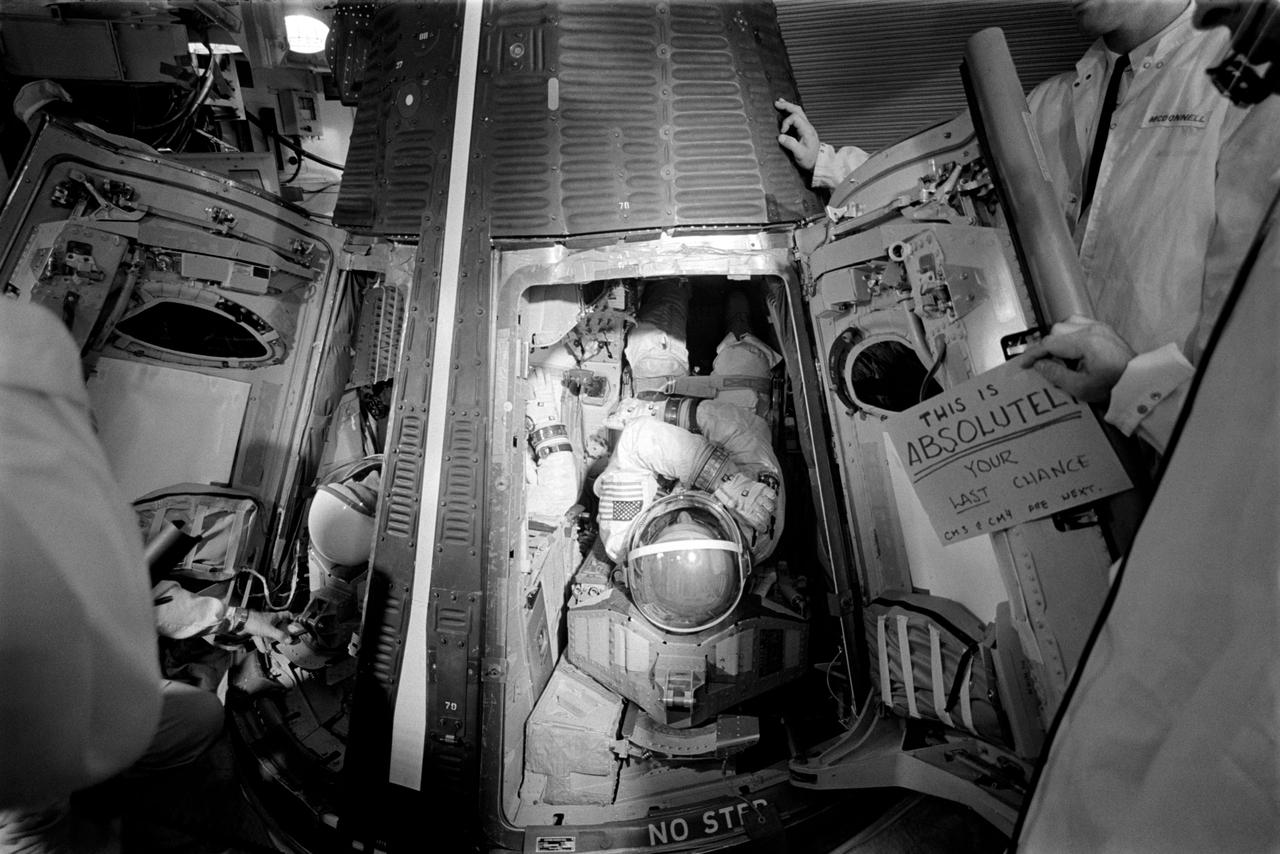
S66-50720 (12 Sept. 1966) --- Preparations are made in the white room atop Pad 19 to close the hatches on the Gemini-11 spacecraft just after insertion during the Gemini-11 prelaunch countdown. On the left is astronaut Charles Conrad Jr., command pilot; and on the right is Richard F. Gordon Jr., pilot. Photo credit: NASA
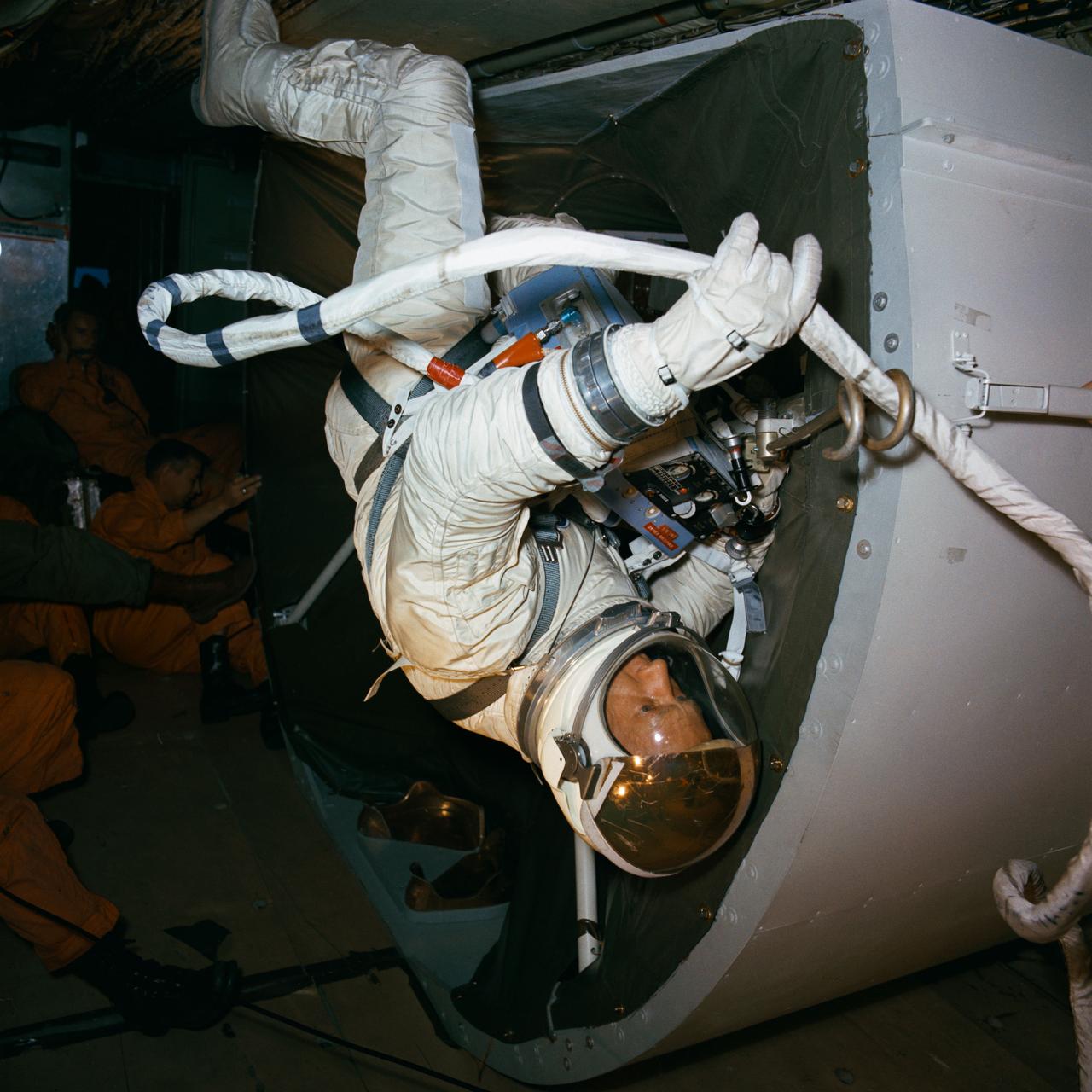
S66-57326 (13 Oct. 1966) --- Astronaut Edwin E. Aldrin Jr., pilot for the Gemini-12 spaceflight, attaches tether to hooks on mock-up of the adapter section of a Gemini spacecraft. He is taking part in zero-gravity training onboard an Air Force KC-135 jet aircraft in preparation for his extravehicular activity (EVA) during the actual mission. Photo credit: NASA
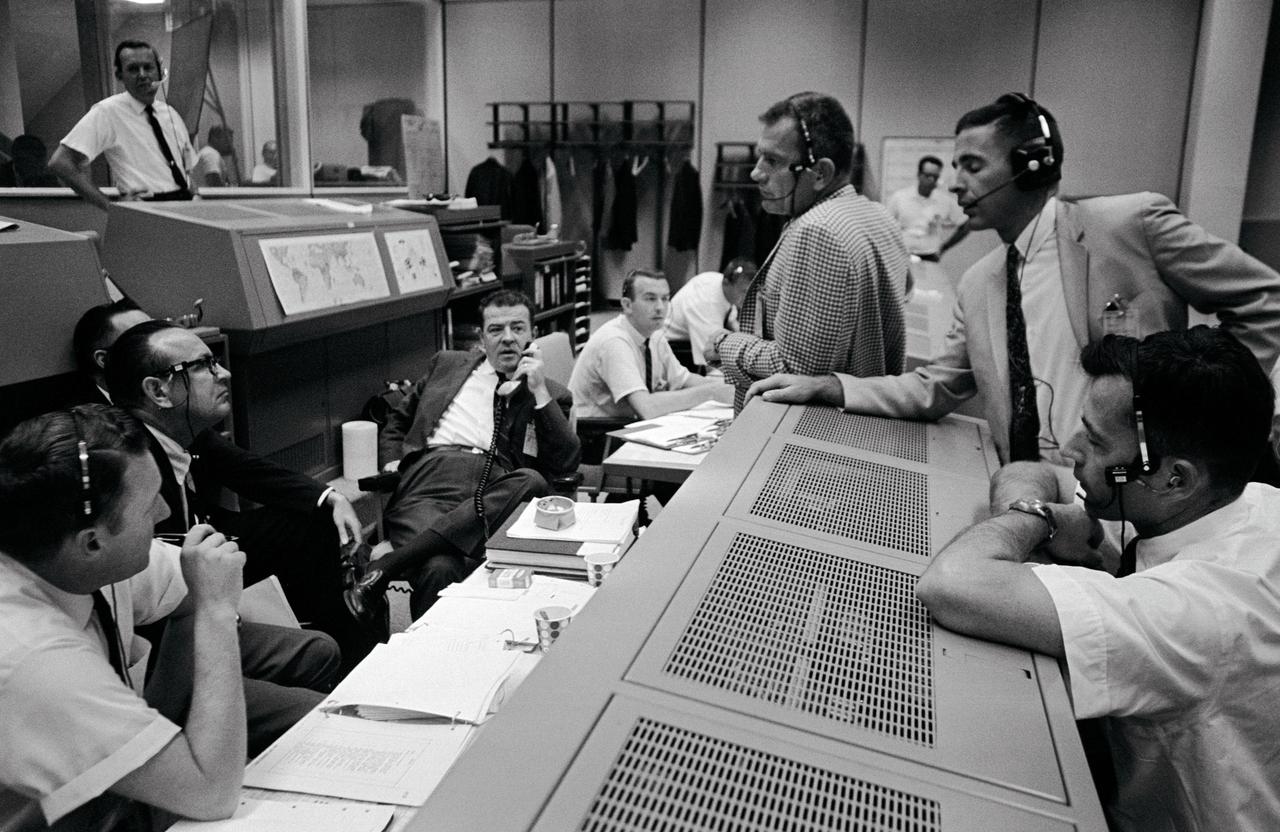
S66-52157 (12 Sept. 1966) --- Discussing the Gemini-11 spaceflight in the Mission Control Center are: (left to right) Christopher C. Kraft Jr., (wearing glasses), Director of Flight Operations; Charles W. Mathews (holding phone), Manager, Gemini Program Office; Dr. Donald K. Slayton (center, checked coat), Director of Flight Crew Operations; astronaut William A. Anders, and astronaut John W. Young. Photo credit: NASA
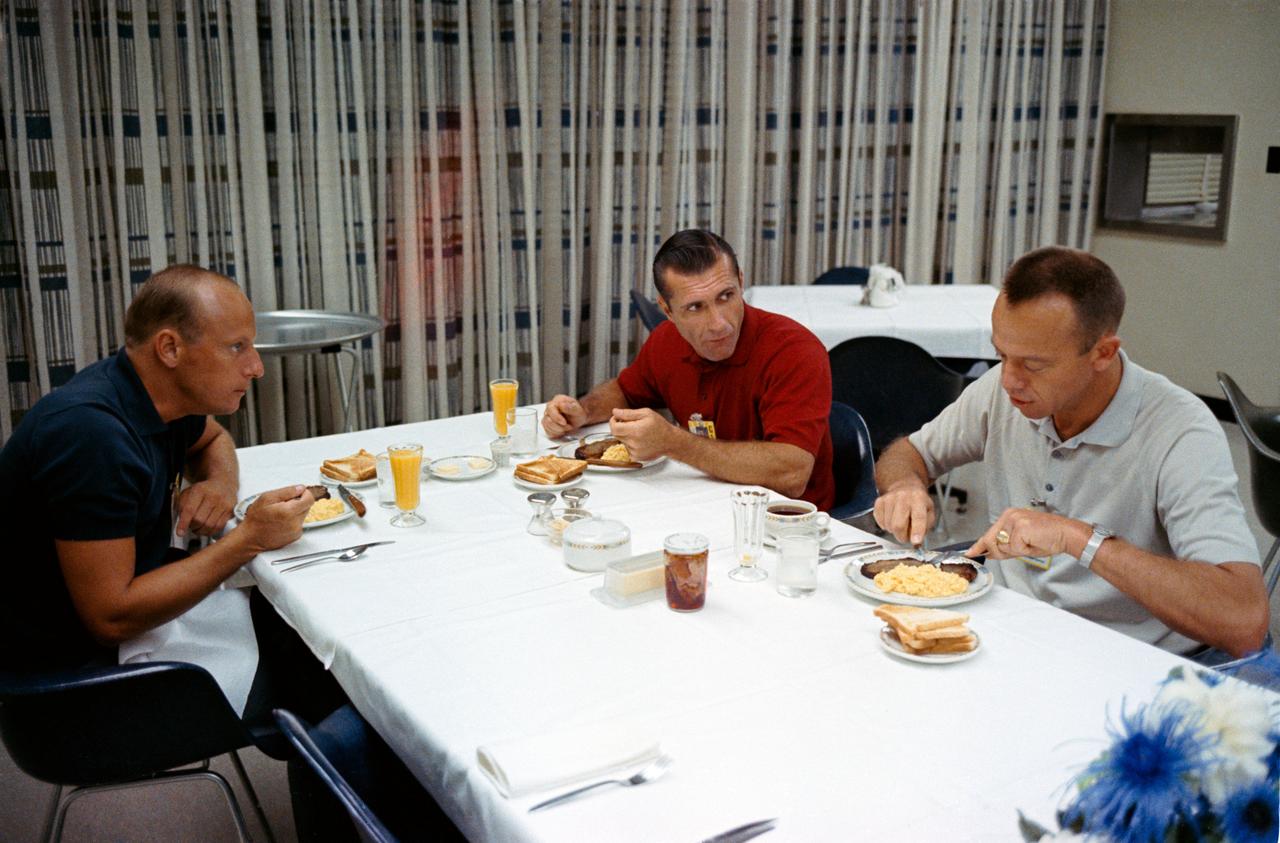
S66-50723 (12 Sept. 1966) --- The Gemini-11 prime crew enjoys a breakfast of steak and eggs with astronaut Alan B. Shepard Jr. (right), Chief, MSC Astronaut Office, on the morning of the scheduled Gemini-11 launch. On left is astronaut Charles Conrad Jr., command pilot. Astronaut Richard F. Gordon Jr. (center) is the pilot. Photo credit: NASA

S66-50715 (12 Sept. 1966) --- Astronaut Charles Conrad Jr., command pilot of the Gemini-11 spaceflight, undergoes suiting up operations in the Launch Complex 16 suit trailer during the Gemini-11 prelaunch countdown. Later, astronauts Conrad and Richard F. Gordon Jr., pilot, entered a transport van which carried them to Pad 19 and their waiting spacecraft in preparation for their scheduled three-day mission in space. Suit technician James L. Garrepy assists. Photo credit: NASA
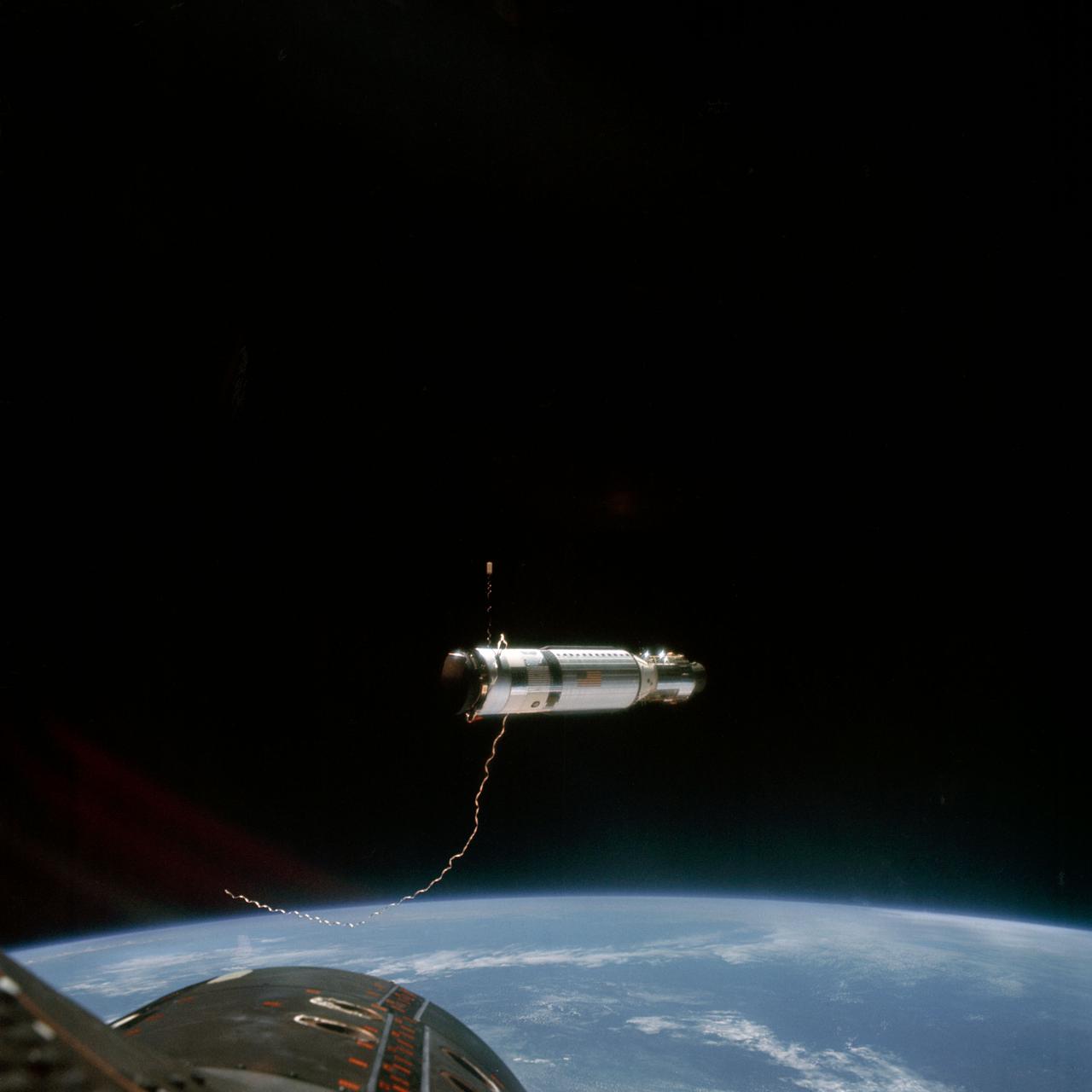
S66-54585 (12-15 Sept. 1966) --- The Agena Target Docking Vehicle at a distance of approximately 80 feet from the Gemini-11 spacecraft. This view was taken after the disconnect of the tether between the two vehicles. Crew members for the Gemini-11 mission are astronauts Charles Conrad Jr., command pilot, and Richard F. Gordon Jr., pilot. Photo credit: NASA

S66-54548 (12-15 Sept. 1966) --- This photograph, taken during one of the 44 orbits the Gemini-11 crew made around Earth, shows the Indian Ocean west of Australia looking northwest. The crew consisted of astronauts Charles Conrad Jr. and Richard F. Gordon Jr. Photo credit: NASA
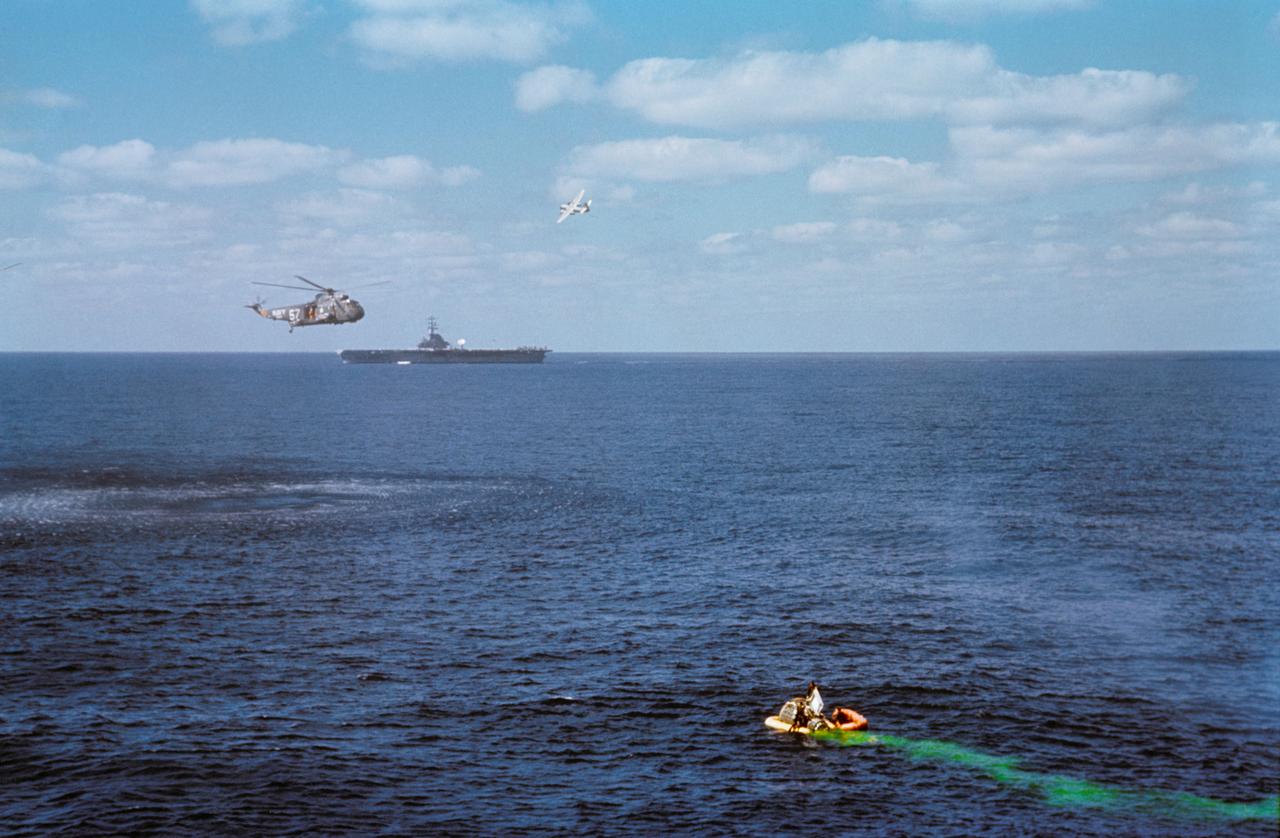
S65-61824 (16 Dec. 1965) --- A helicopter hovers over the Gemini-6 spacecraft after it splashed down 12 miles from the aircraft carrier USS Wasp in the western Atlantic recovery area at 10:29 a.m. Dec. 16, 1965. Photo credit: NASA or National Aeronautics and Space Administration
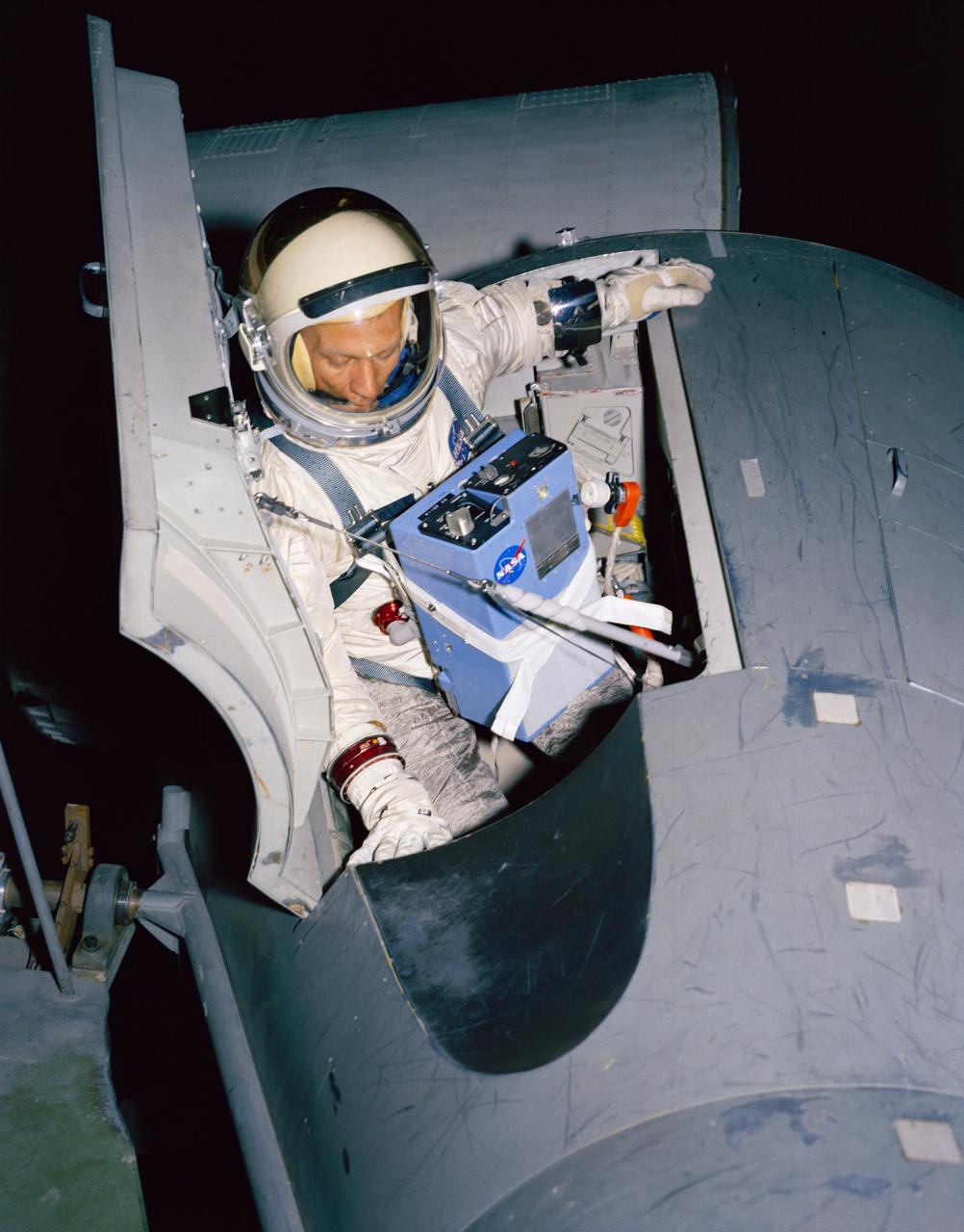
S66-28114 (1 April 1966) --- Astronaut Edwin E. Aldrin Jr., pilot of the Gemini-12 spaceflight, undergoes zero-gravity egress training. A KC-135 Air Force plane, flying a parabolic curve, creates a weightless environment as a training exercise in preparation for spaceflight. Photo credit: NASA
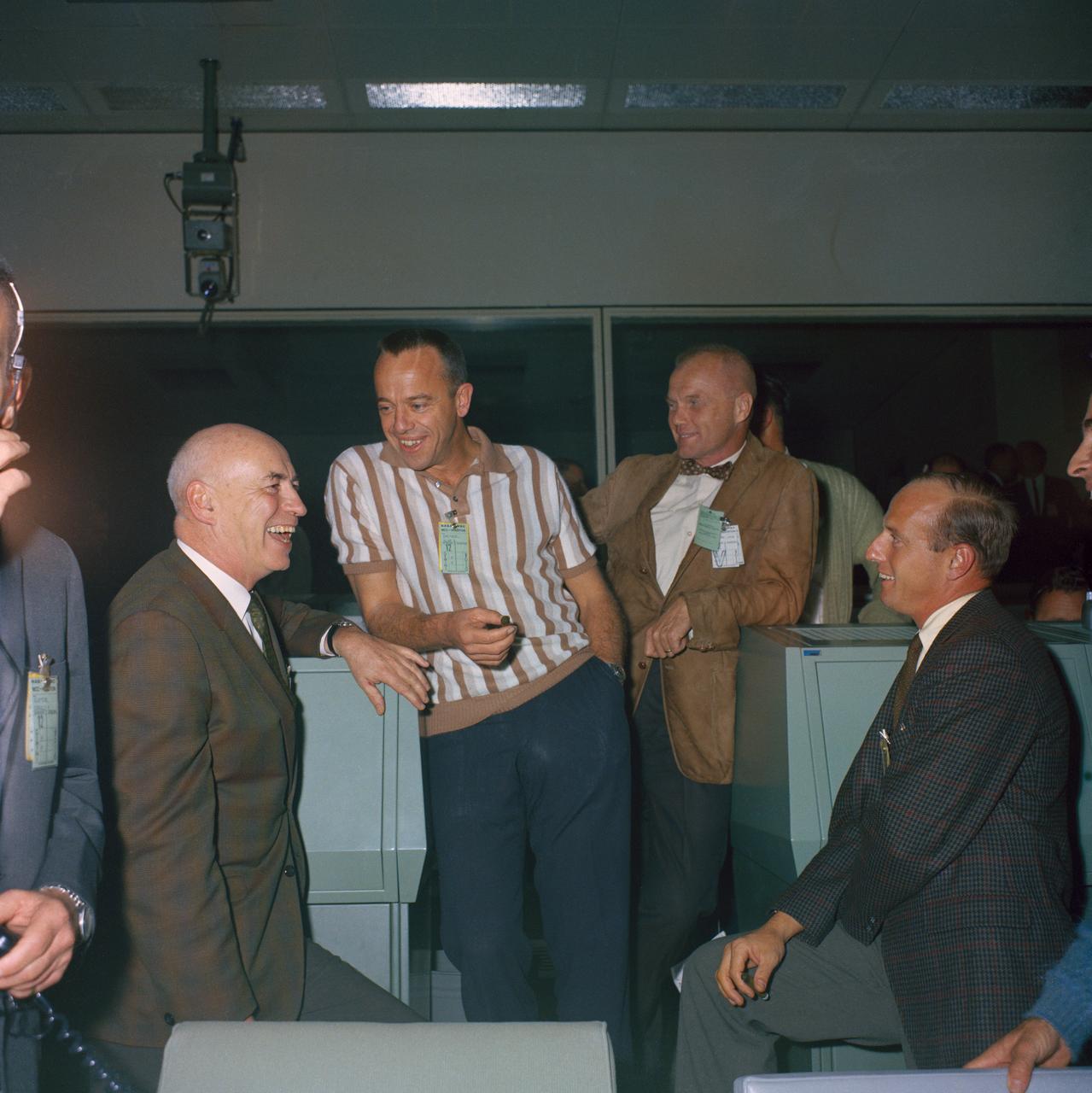
S66-64879 (15 Nov. 1966) --- Dr. Robert R. Gilruth (right), with astronauts, from the left, Charles Conrad Jr., John H. Glenn Jr. and Alan B. Shepard Jr. in Houston's Mission Control Center during the Gemini-12 mission. Photo credit: NASA
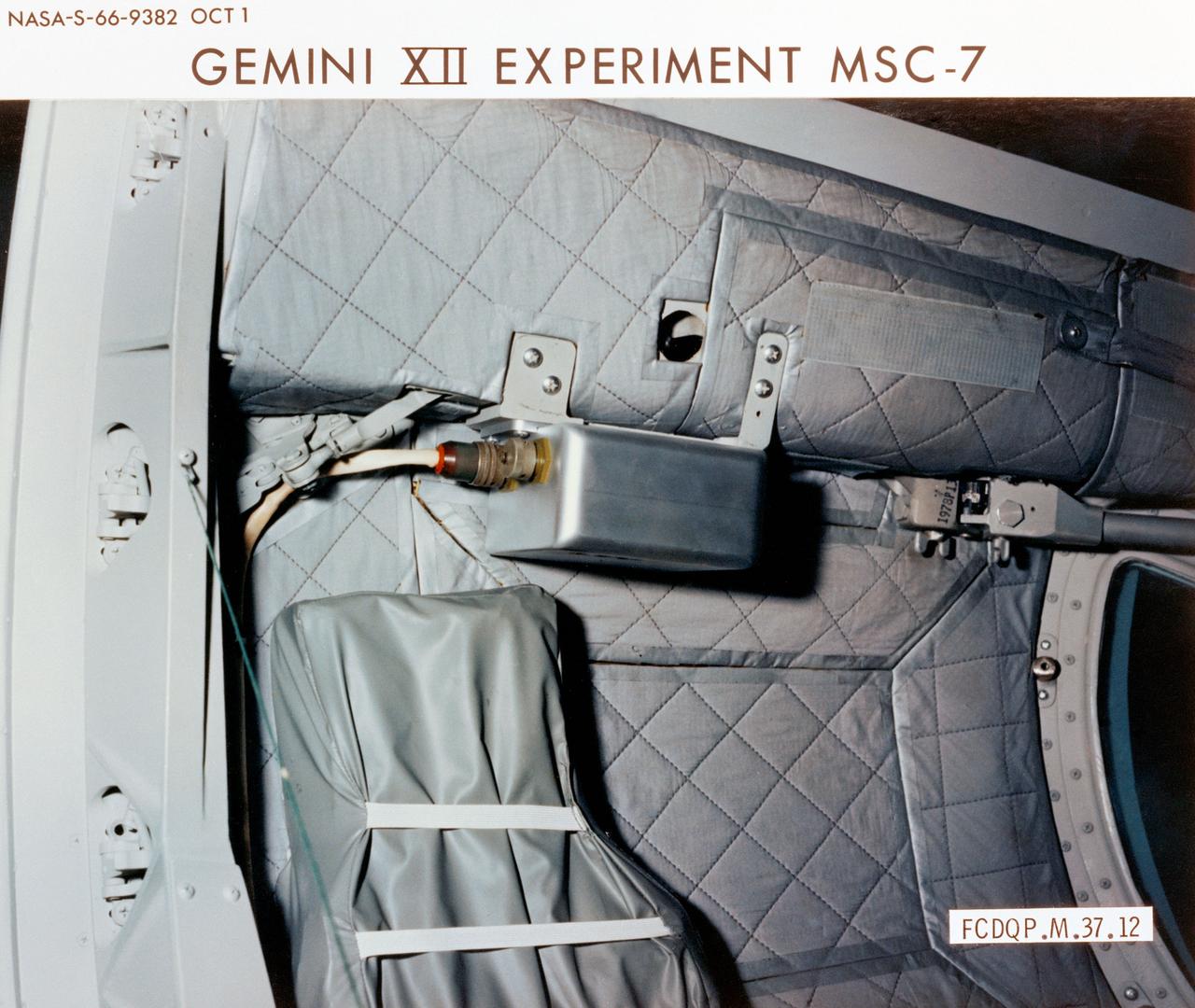
S66-09382 (1 Oct. 1966) --- Gemini-12 Experiment MSC-7 Bremsstrahlung Spectrometer-Spectrometer Analyzer processor installed in cabin. Objective of experiment is to determine the gamma and beta flux and energy spectra induced inside the spacecraft by exterior electrons. Photo credit: NASA
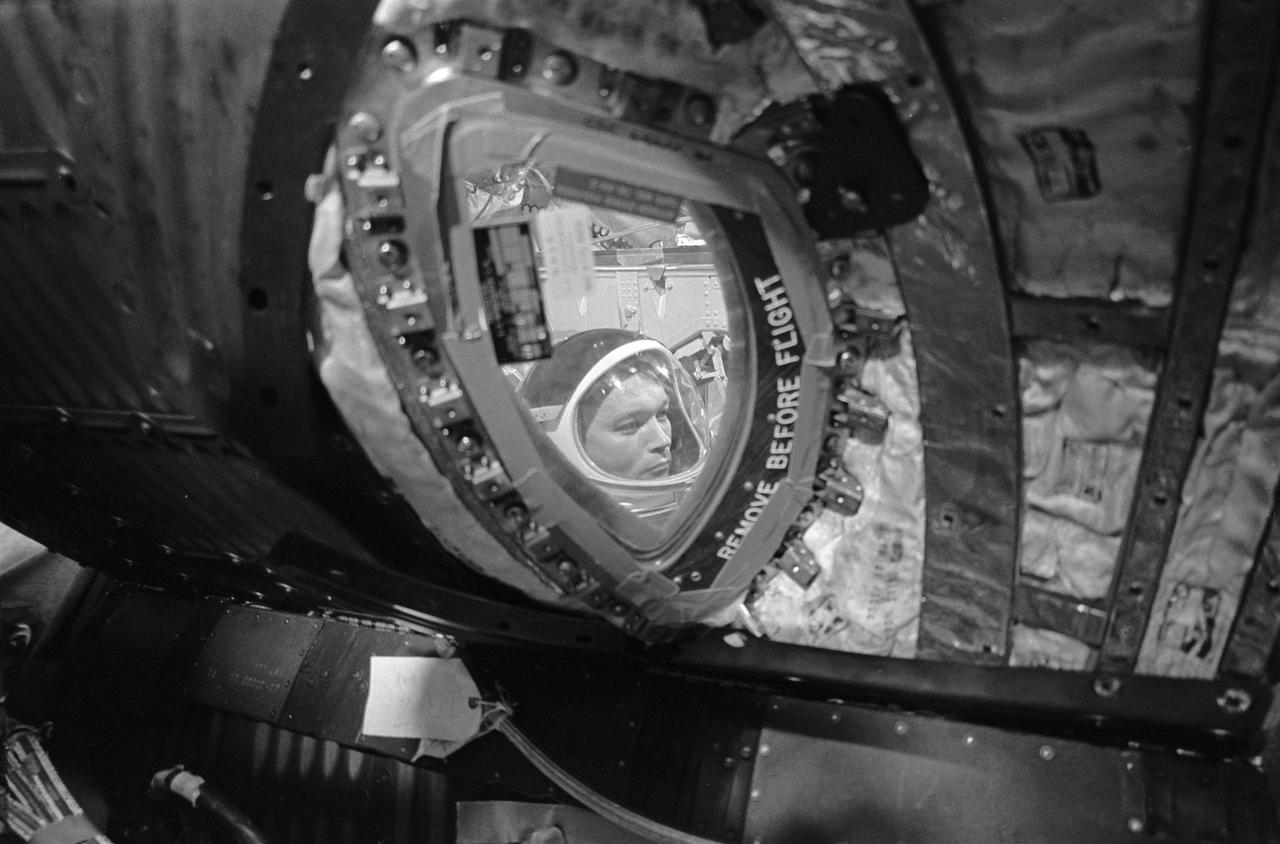
S66-42704 (12 July 1966) --- Astronaut Michael Collins, prime crew pilot for the Gemini-10 spaceflight, is seen through a hatch in the spacecraft during a Simultaneous Launch Demonstration in the White Room atop Pad 19, Cape Kennedy, Florida. Photo credit: NASA
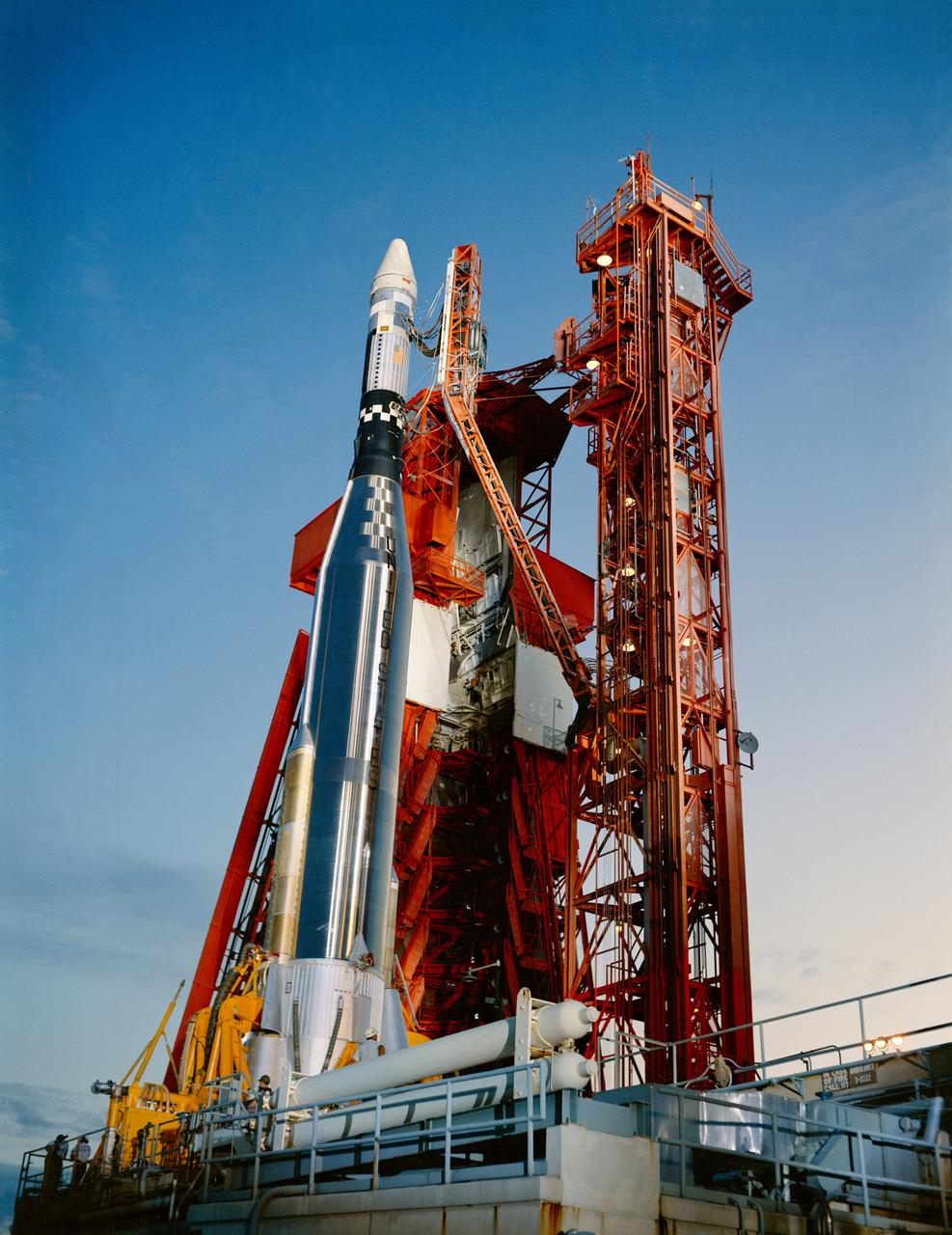
S66-50724 (12 Sept. 1966) --- An Agena Target Docking Vehicle atop its Atlas launch vehicle is ready for launch at Launch Complex 14 at Cape Kennedy, Florida. The Agena served as a rendezvous and docking vehicle for the Gemini-11 spacecraft. Photo credit: NASA
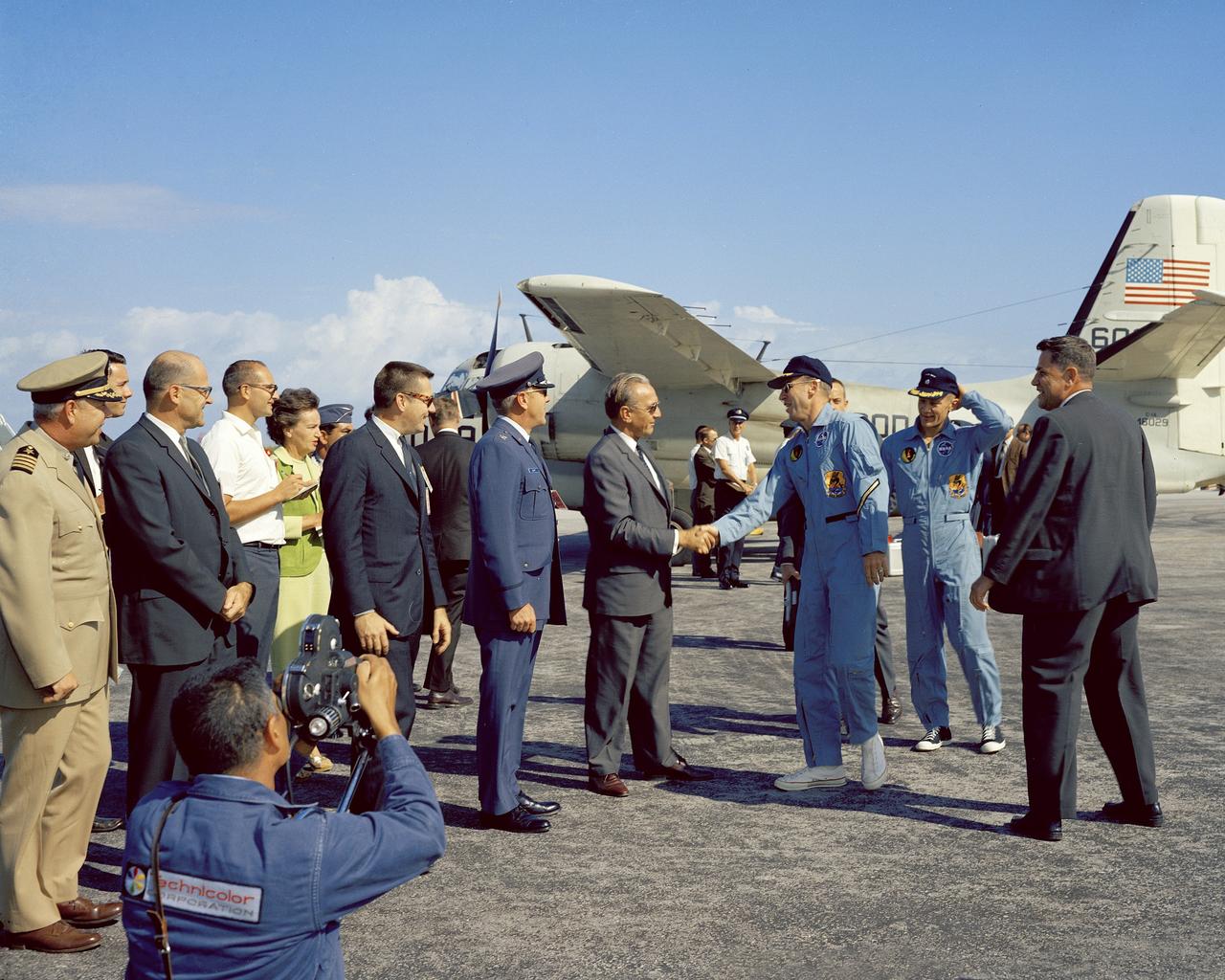
CAPE KENNEDY, Fla. -- At the Cape Kennedy Air Force Station skid strip, Dr. Kurt H. Debus, director of the Kennedy Space Center, greets returning Gemini 12 astronauts James A. Lovell and Edwin E. Buzz Aldrin Jr. following their four-day Earth orbital mission. Photo Credit: NASA
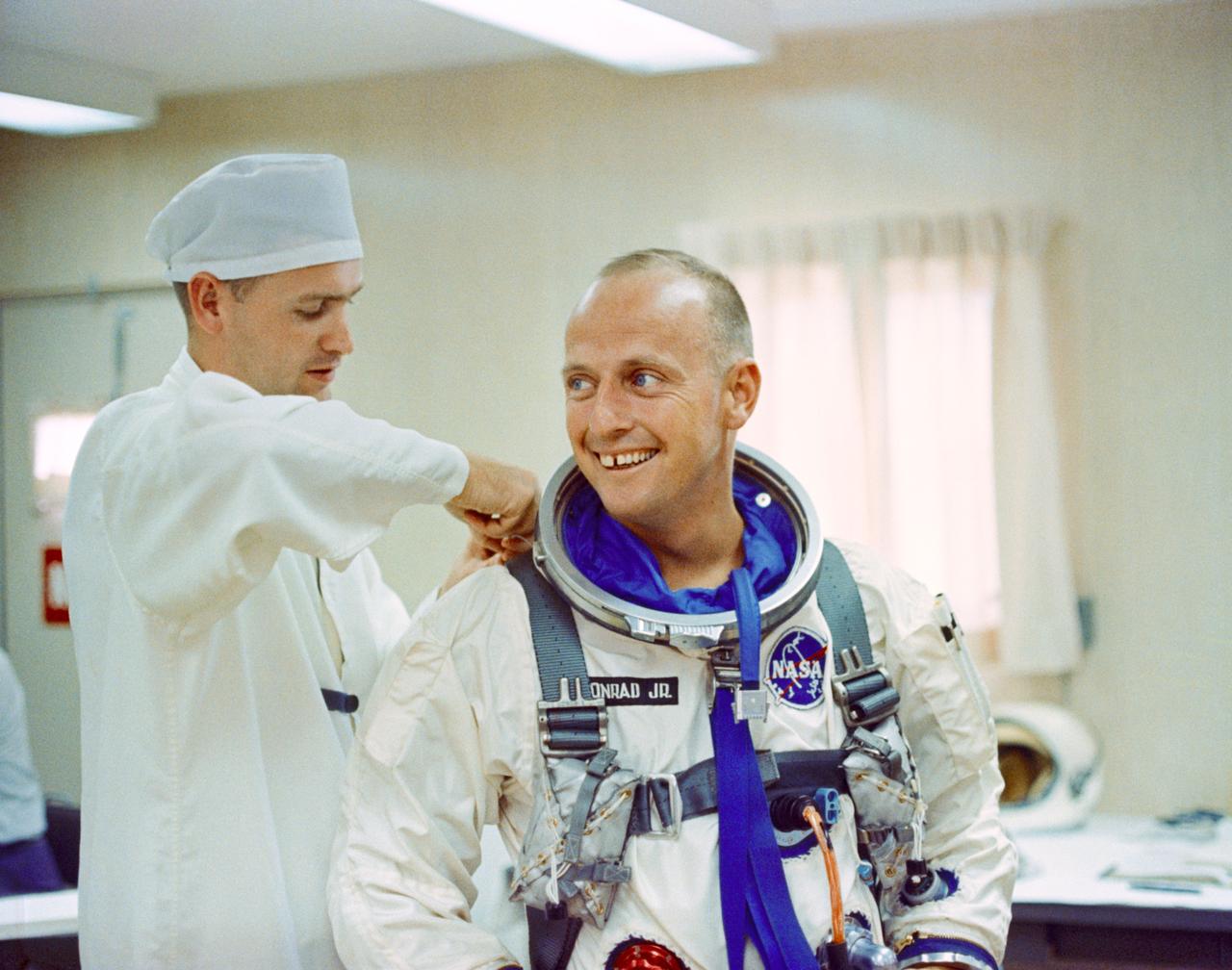
S65-41955 (12 July 1965) --- Astronaut Charles Conrad Jr. receives assistance with his pressure suit during suiting up and ingress test activity at Pad 16, Cape Kennedy, Florida in preparation for the Gemini-5 spaceflight.
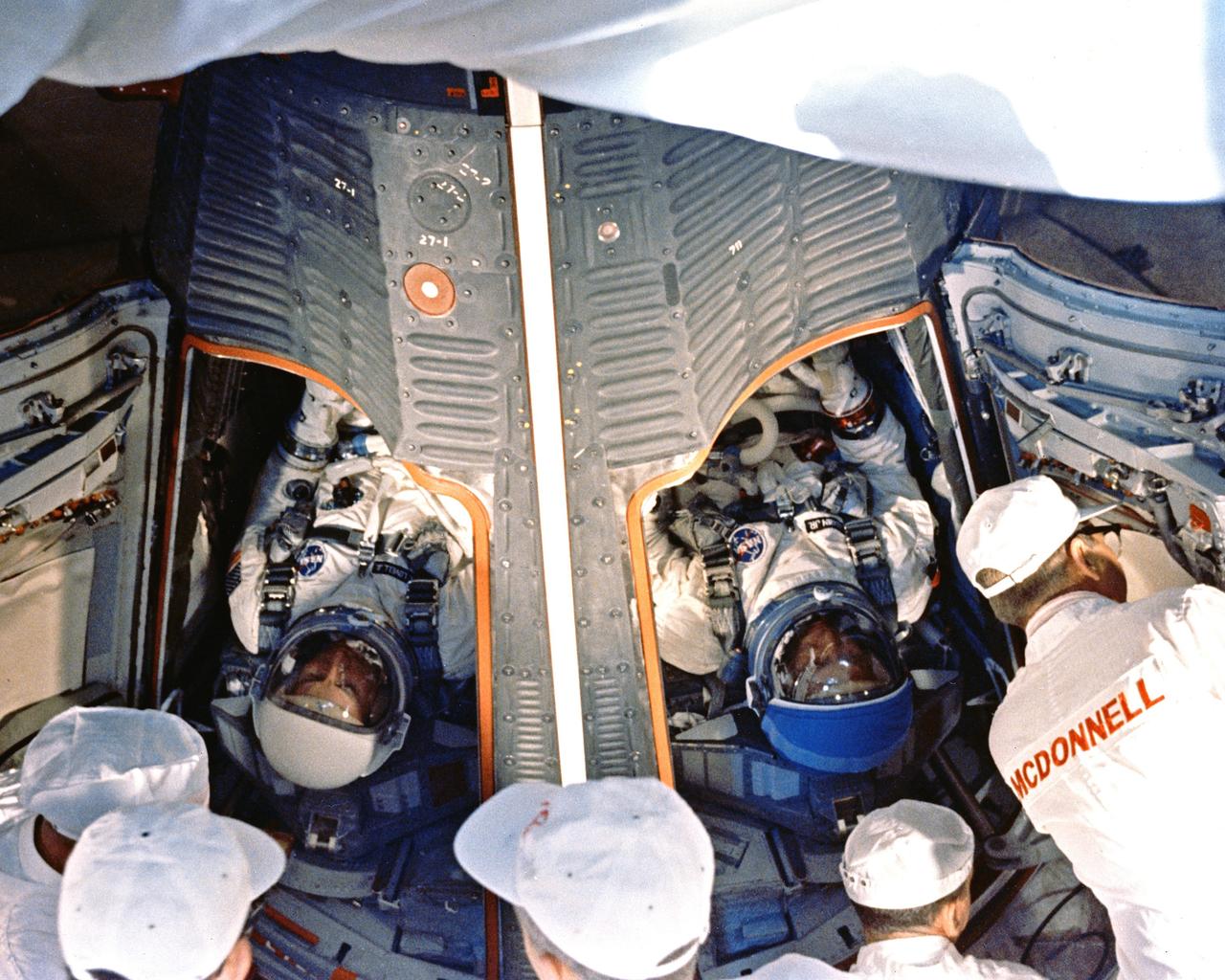
CAPE KENNEDY, Fla. -- At Cape Kennedy Air Force Station in Florida, Gemini 12 command pilot James A. Lovell, left, and Edwin E. Buzz Aldrin Jr. wait for launch as technicians complete preparations of the spacecraft. Photo Credit: NASA
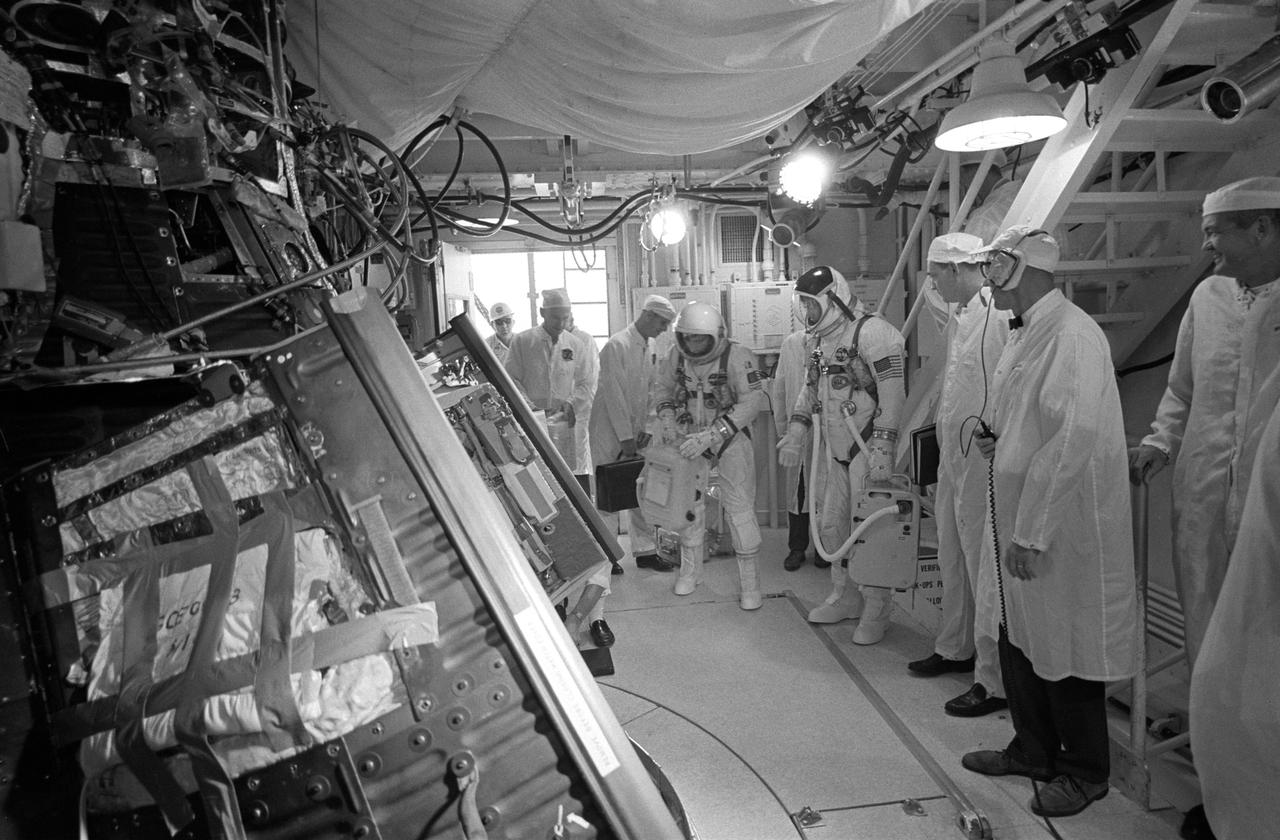
S66-42702 (12 July 1966) --- Gemini-10 prime crew, astronauts John W. Young (left), command pilot, and Michael Collins (right), pilot, check equipment in the White Room atop Pad 19 where they participated in a Simultaneous Launch Demonstration. Photo credit: NASA
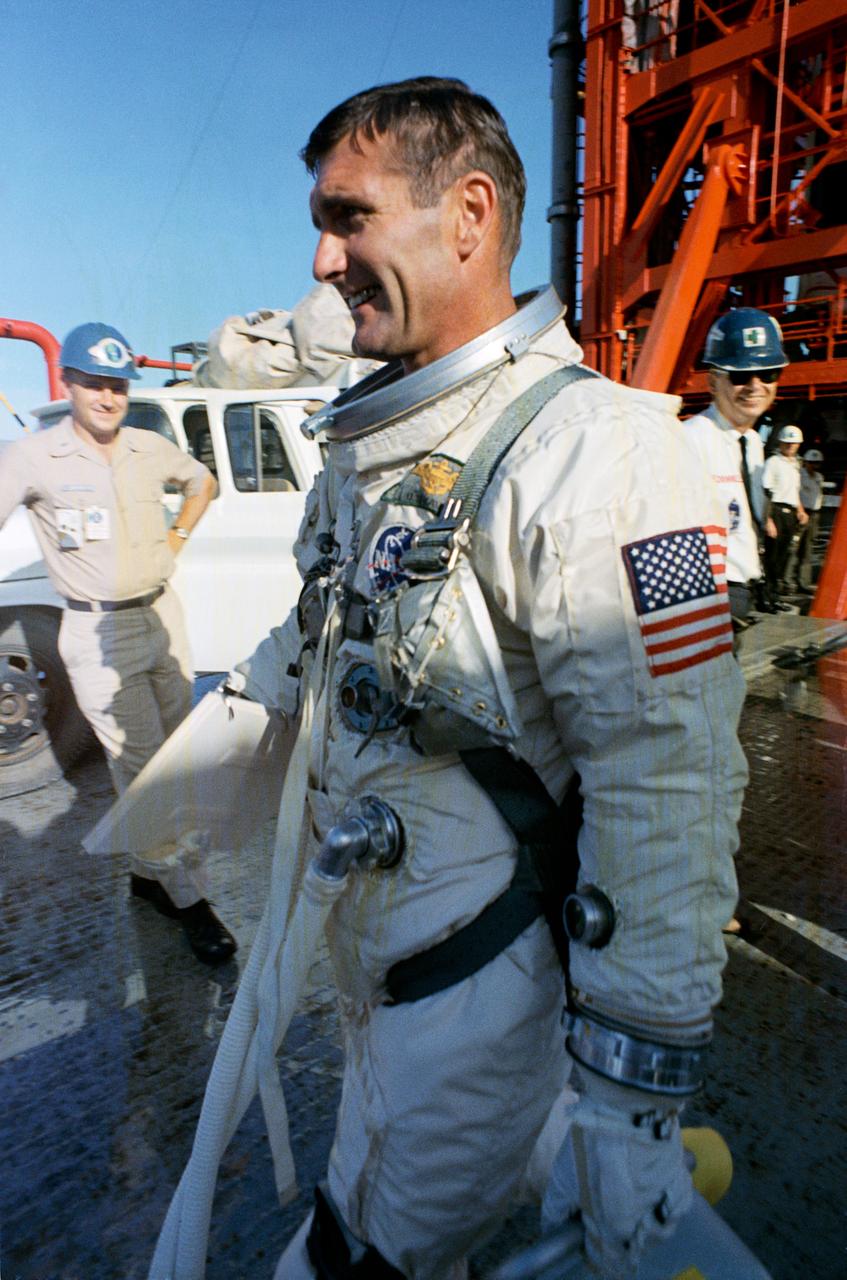
S66-50775 (10 Sept. 1966) --- Astronaut Richard F. Gordon Jr., pilot, walks away from Pad 19 following postponement of the Gemini-11 spaceflight. The mission was rescheduled for Sept. 12, 1966. Photo credit: NASA