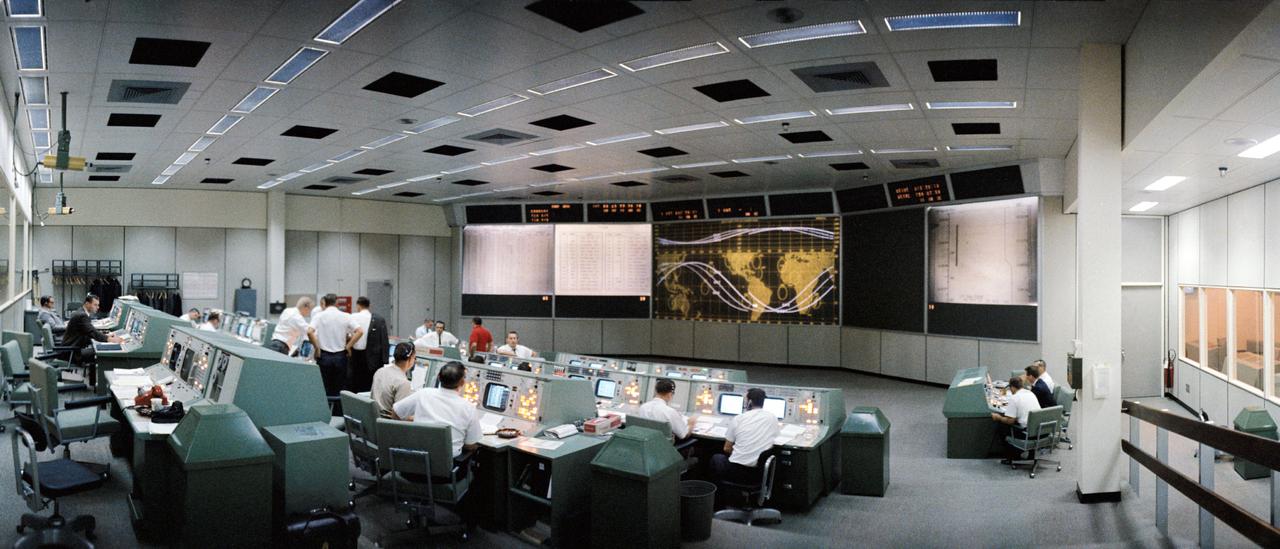
S65-45280 (21-29 Aug. 1965) --- Overall view of the Mission Control Center (MCC), Houston, Texas, during the Gemini-5 flight. Note the screen at the front of the MCC which is used to track the progress of the Gemini spacecraft.
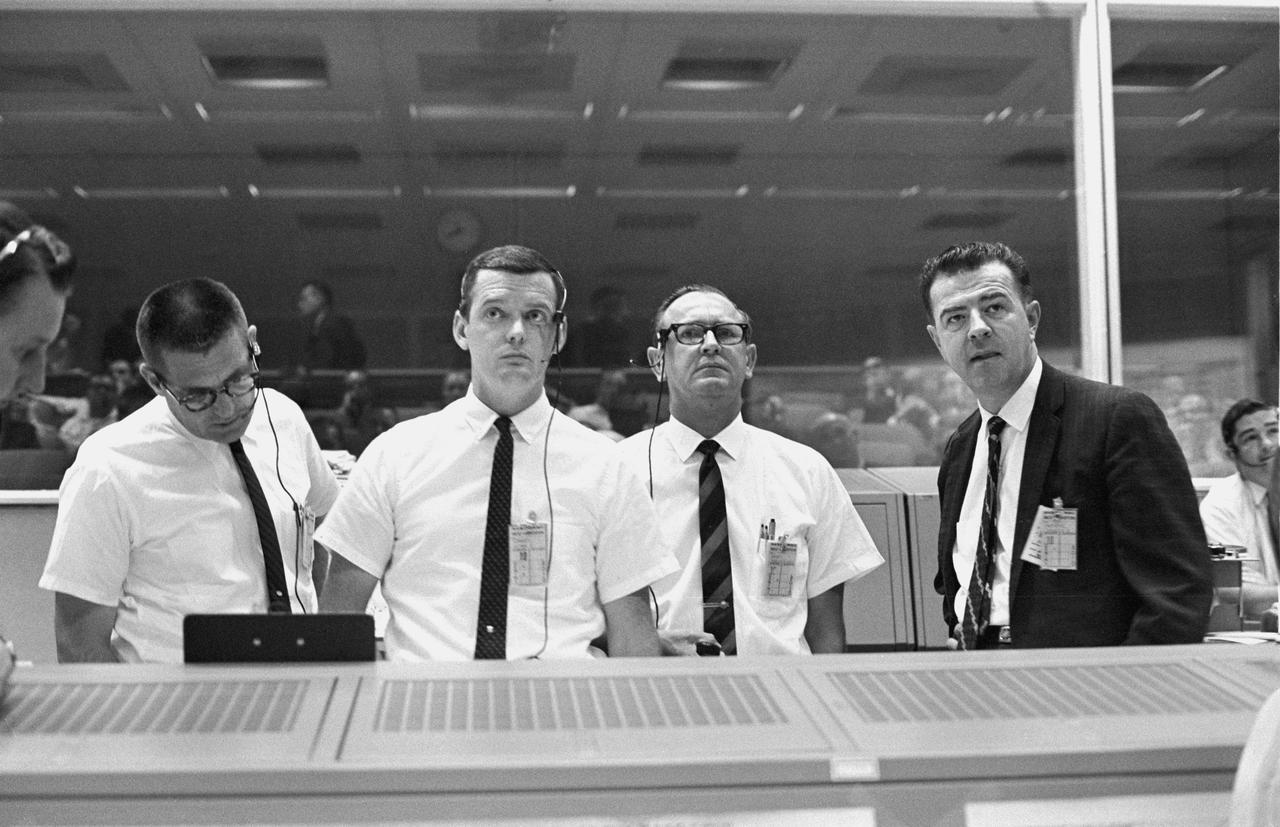
S66-43377 (18 July 1966) --- Standing at the flight director's console, viewing the Gemini-10 flight display in the Mission Control Center, are (left to right) William C. Schneider, Mission Director; Glynn Lunney, Prime Flight Director; Christopher C. Kraft Jr., MSC Director of Flight Operations; and Charles W. Mathews, Manager, Gemini Program Office. Photo credit: NASA
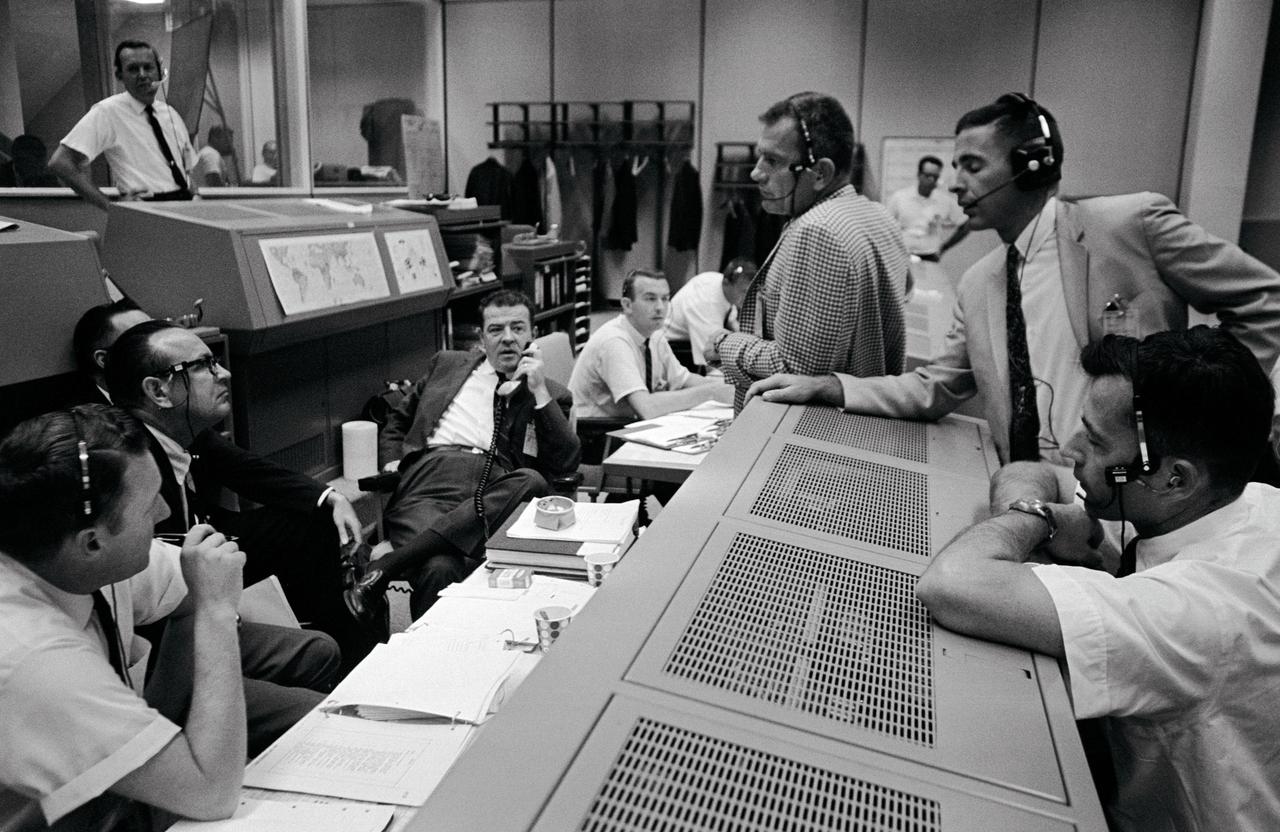
S66-52157 (12 Sept. 1966) --- Discussing the Gemini-11 spaceflight in the Mission Control Center are: (left to right) Christopher C. Kraft Jr., (wearing glasses), Director of Flight Operations; Charles W. Mathews (holding phone), Manager, Gemini Program Office; Dr. Donald K. Slayton (center, checked coat), Director of Flight Crew Operations; astronaut William A. Anders, and astronaut John W. Young. Photo credit: NASA
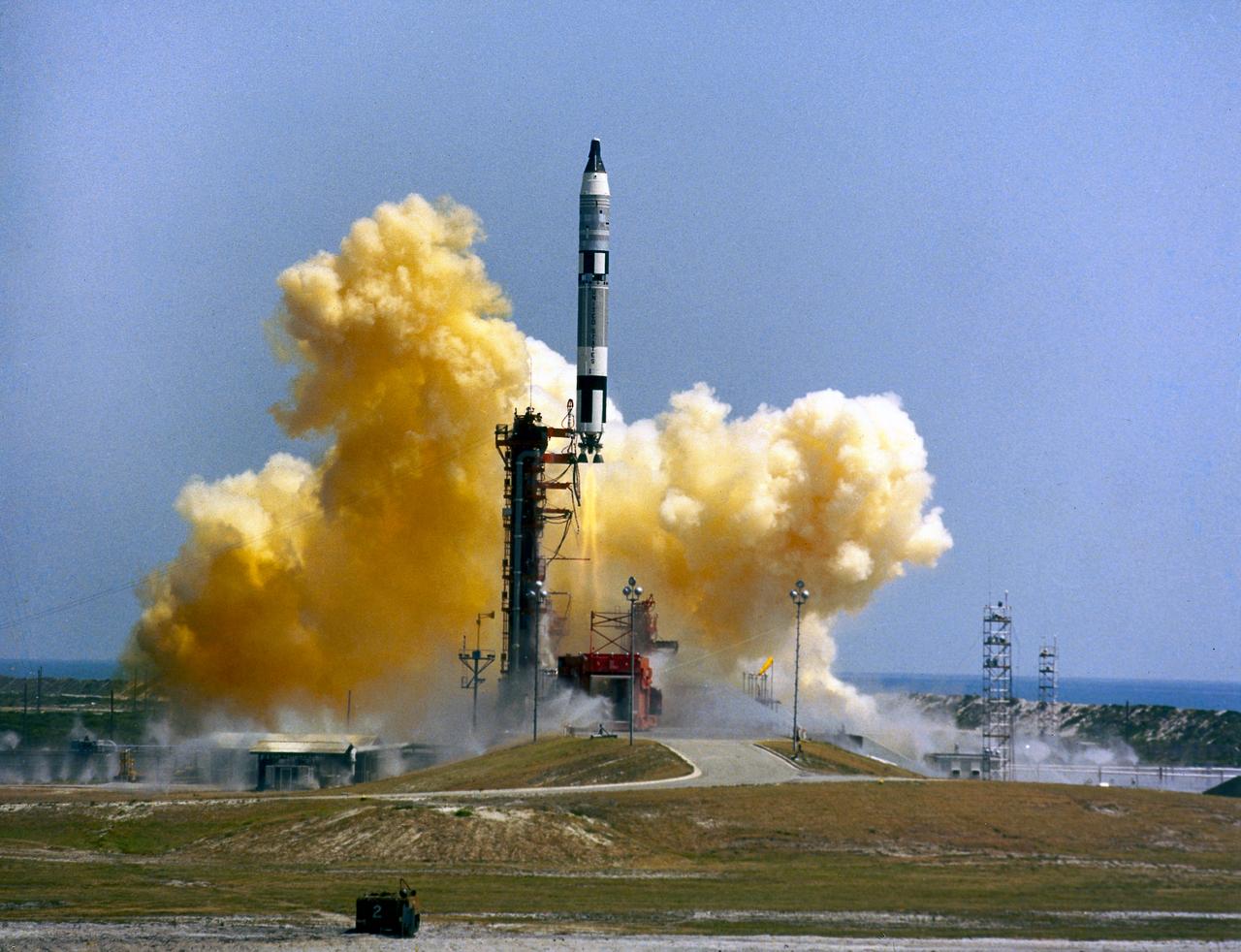
The Titan II liftoff. The Titan II launch vehicle was used for carrying astronauts on the Gemini mission. The Gemini Program was an intermediate step between the Project Mercury and the Apollo Program. The major objectives were to subject are two men and supporting equipment to long duration flights, to effect rendezvous and docking with other orbiting vehicle, and to perfect methods of reentry, and landing the spacecraft.
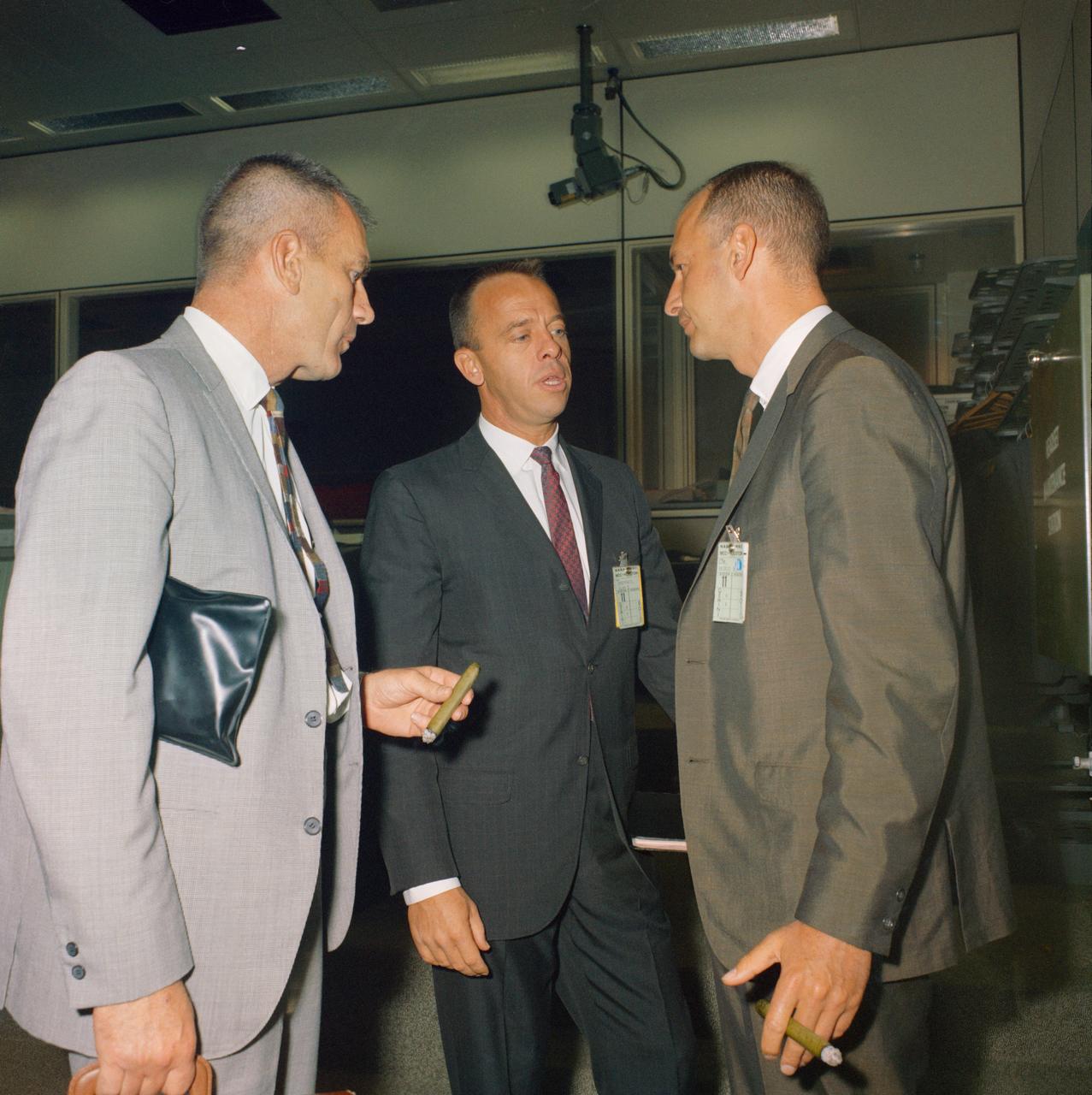
S66-52754 (12 Sept. 1966) --- Three key Manned Spacecraft Center (MSC) officials hold discussion in the Mission Control room during Gemini-11 activity. Left to right, are Donald K. Slayton, MSC Director of Flight Crew Operations; astronaut Alan B. Shepard Jr., Chief, MSC Astronaut Office; and George M. Low, MSC Deputy Director. Photo credit: NASA

S65-63189 (15 Dec. 1965) --- The National Aeronautics and Space Administration's (NASA) Gemini-7 spacecraft as seen from the Gemini-6 spacecraft during their rendezvous mission in space. The two spacecraft are approximately 43 feet apart. This image was taken with a modified 70mm Hasselblad camera, using Eastman Kodak, Ektachrome (S.O. 217) color film. Photo credit: NASA or National Aeronautics and Space Administration
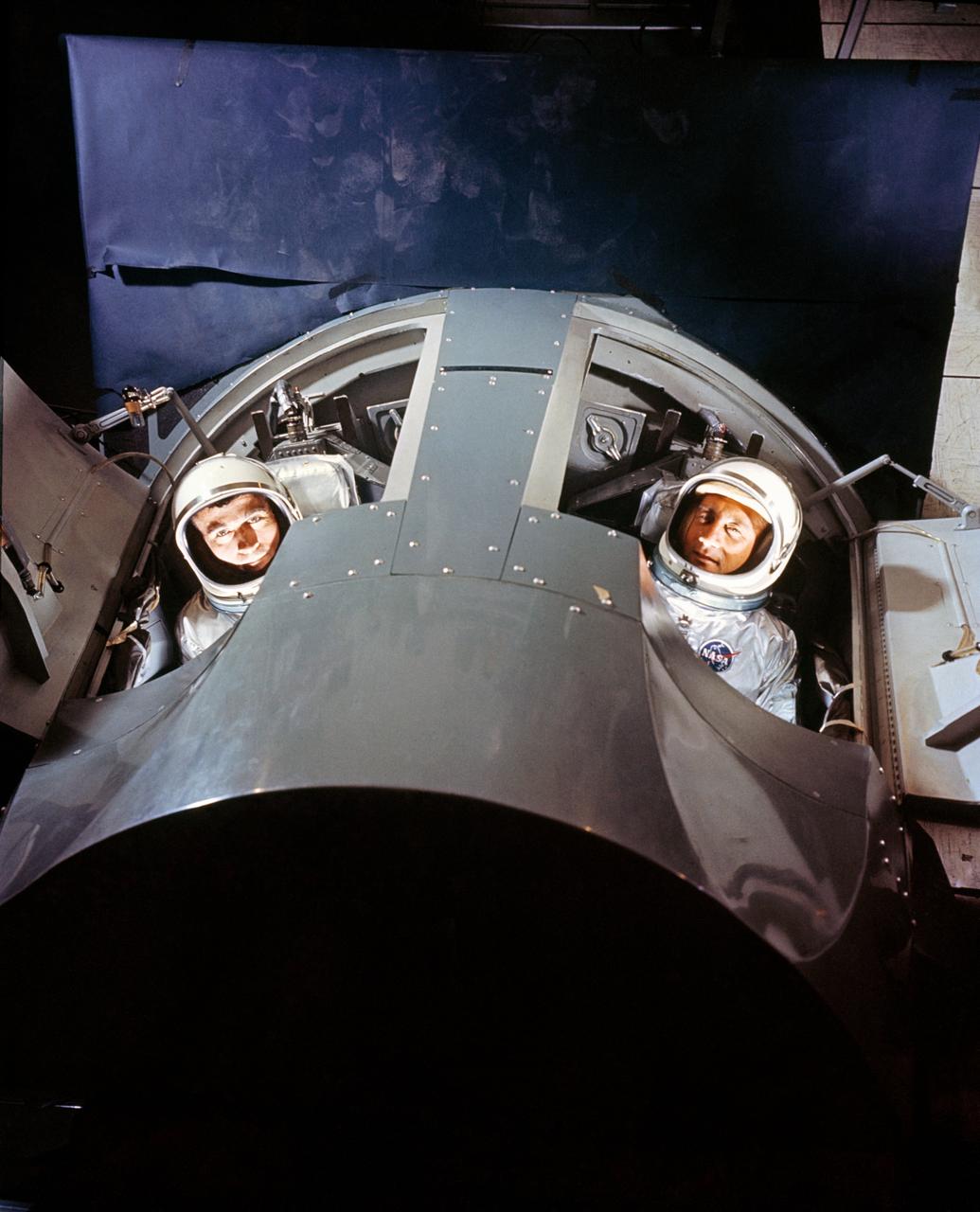
S64-25295 (March 1964) --- Astronauts Virgil I. (Gus) Grissom (right) and John W. Young, prime crew for the first manned Gemini mission (GT-3), are shown inside a Gemini mission simulator at McDonnell Aircraft Corp., St. Louis, MO. The simulator will provide Gemini astronauts and ground crews with realistic mission simulation during intensive training prior to actual launch.
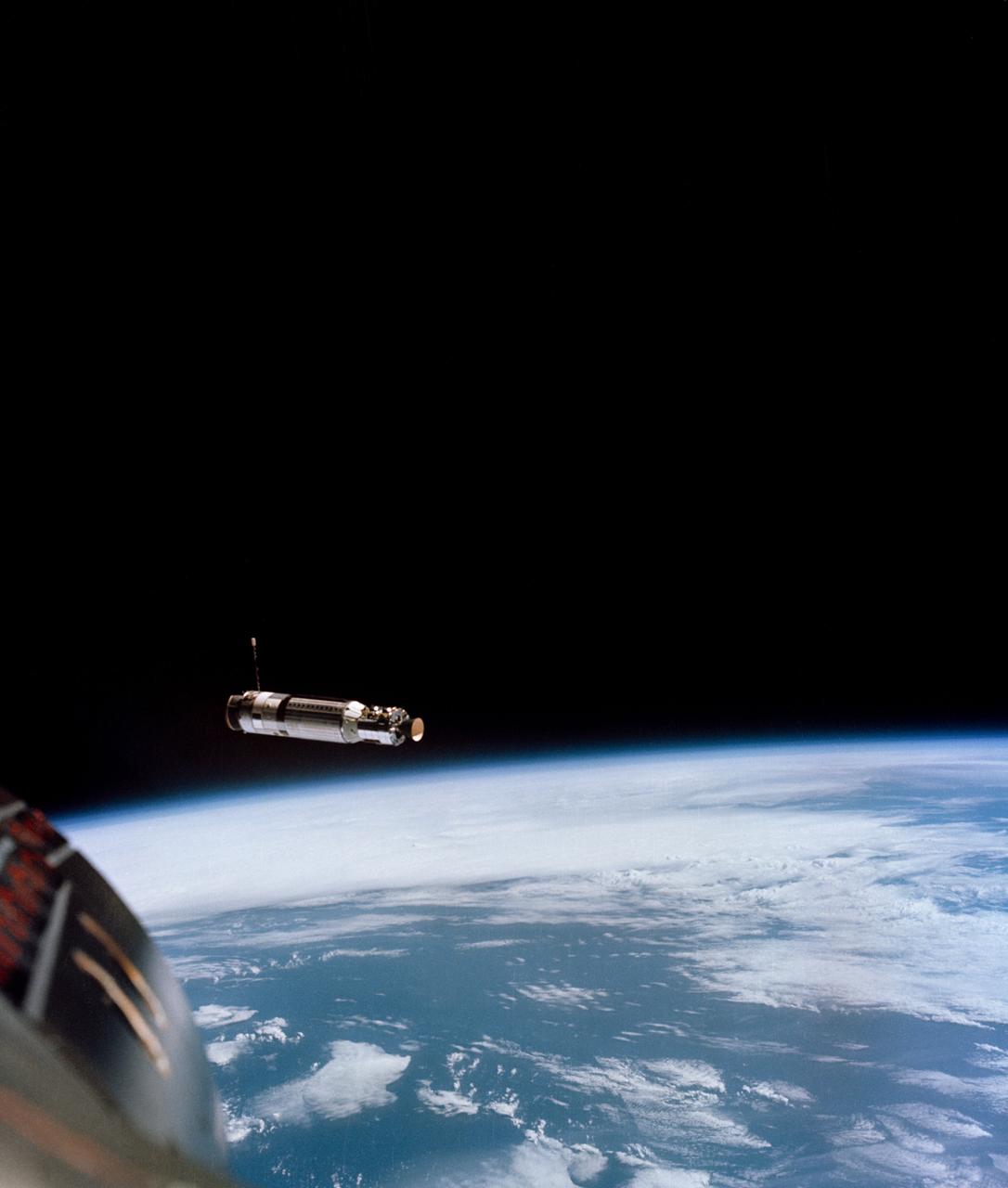
S66-25779 (16 March 1966) --? The Agena Target Docking Vehicle seen from the National Aeronautics and Space Administration?s Gemini-8 spacecraft during rendezvous in space. The Agena is approximately 210 feet away from the nose of the spacecraft (lower left). Crewmen for the Gemini-8 mission were astronauts Neil A. Armstrong, command pilot, and David R. Scott, pilot. Photo credit: NASA
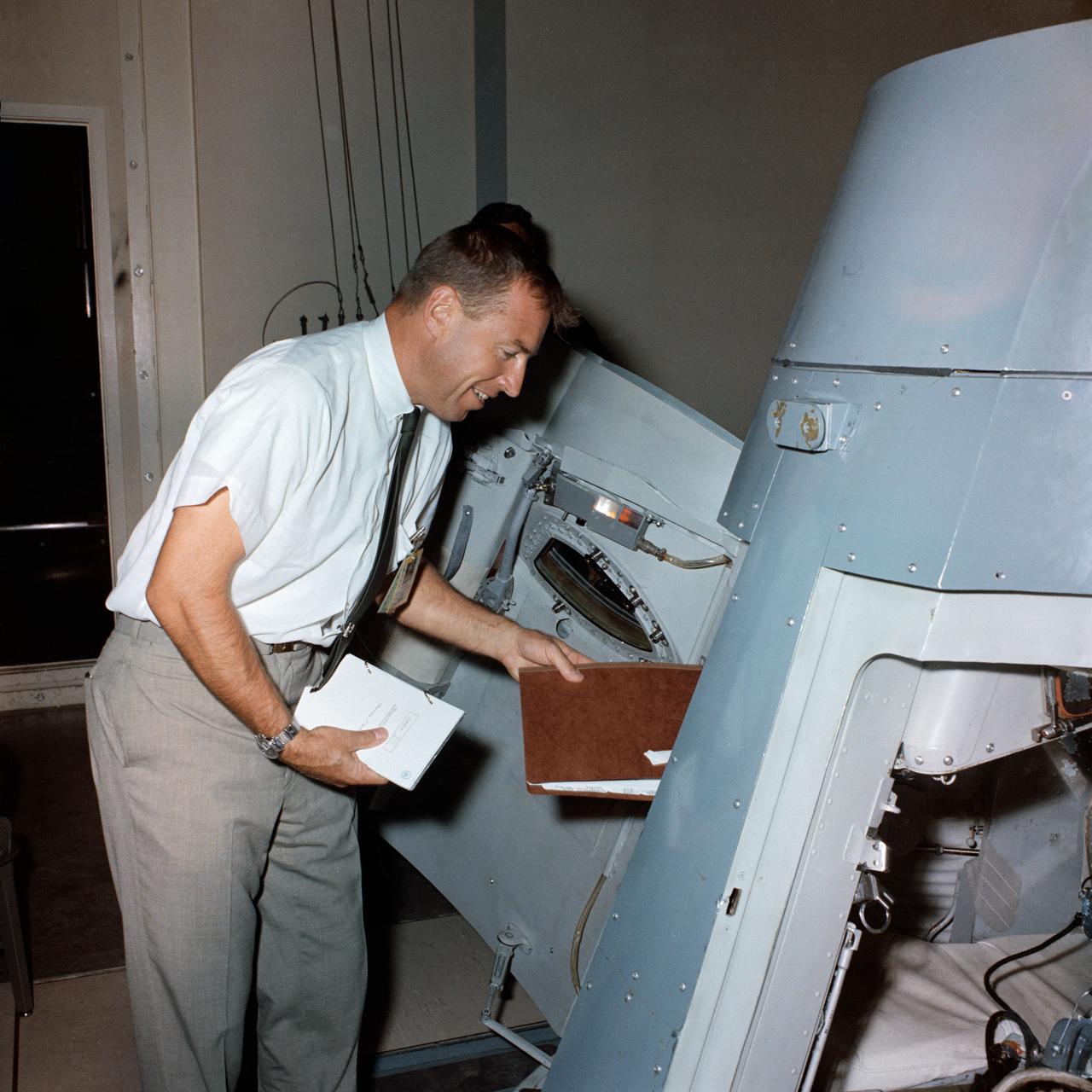
S66-45580 (6 Sept. 1966) --- Astronaut James A. Lovell Jr., prime crew command pilot of the Gemini-12 spaceflight, prepares to enter the Gemini Mission Simulator in Building 5 for flight training. Photo credit: NASA
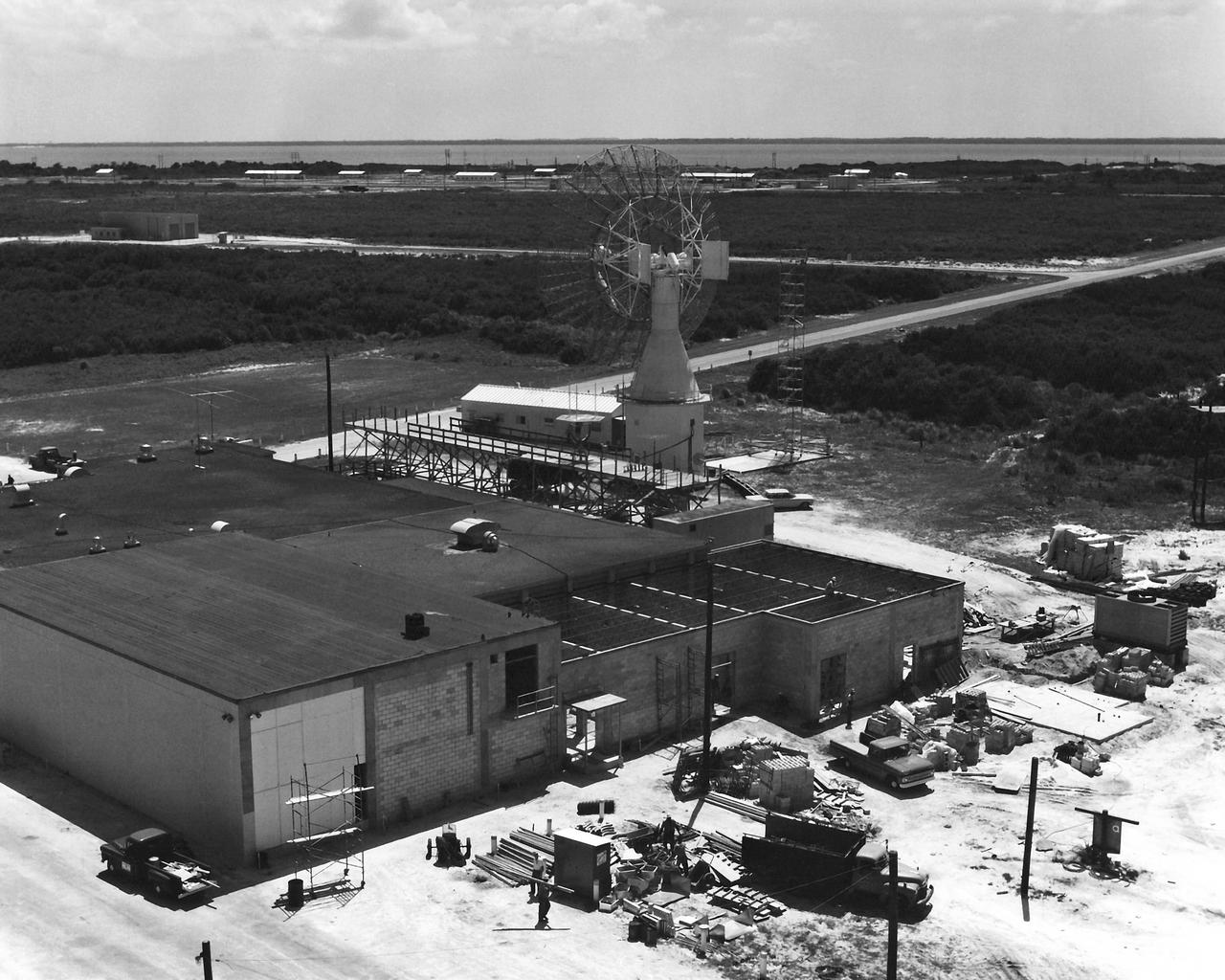
CAPE CANAVERAL, Fla. - Between 1962 and 1963, the Mission Control Center was modified to handle the additional complexities of the Gemini Program. In 1962, Pan American World Airways Inc. was contracted to design an addition to the facility, which wrapped around the east, north, and most of the west and south sides. The Mercury Mission Control Center in Florida played a key role in the United States' early spaceflight program. Located at Cape Canaveral Air Force Station, the original part of the building was constructed between 1956 and 1958, with additions in 1959 and 1963. The facility officially was transferred to NASA on Dec. 26, 1963, and served as mission control during all the Project Mercury missions, as well as the first three flights of the Gemini Program, when it was renamed Mission Control Center. With its operational days behind, on June 1, 1967, the Mission Control Center became a stop on the public tour of NASA facilities until the mid-90s. In 1999, much of the equipment and furnishings from the Flight Control Area were moved to the Kennedy Space Center Visitor Complex where they became part of the exhibit there. The building was demolished in spring 2010. Photo credit: NASA
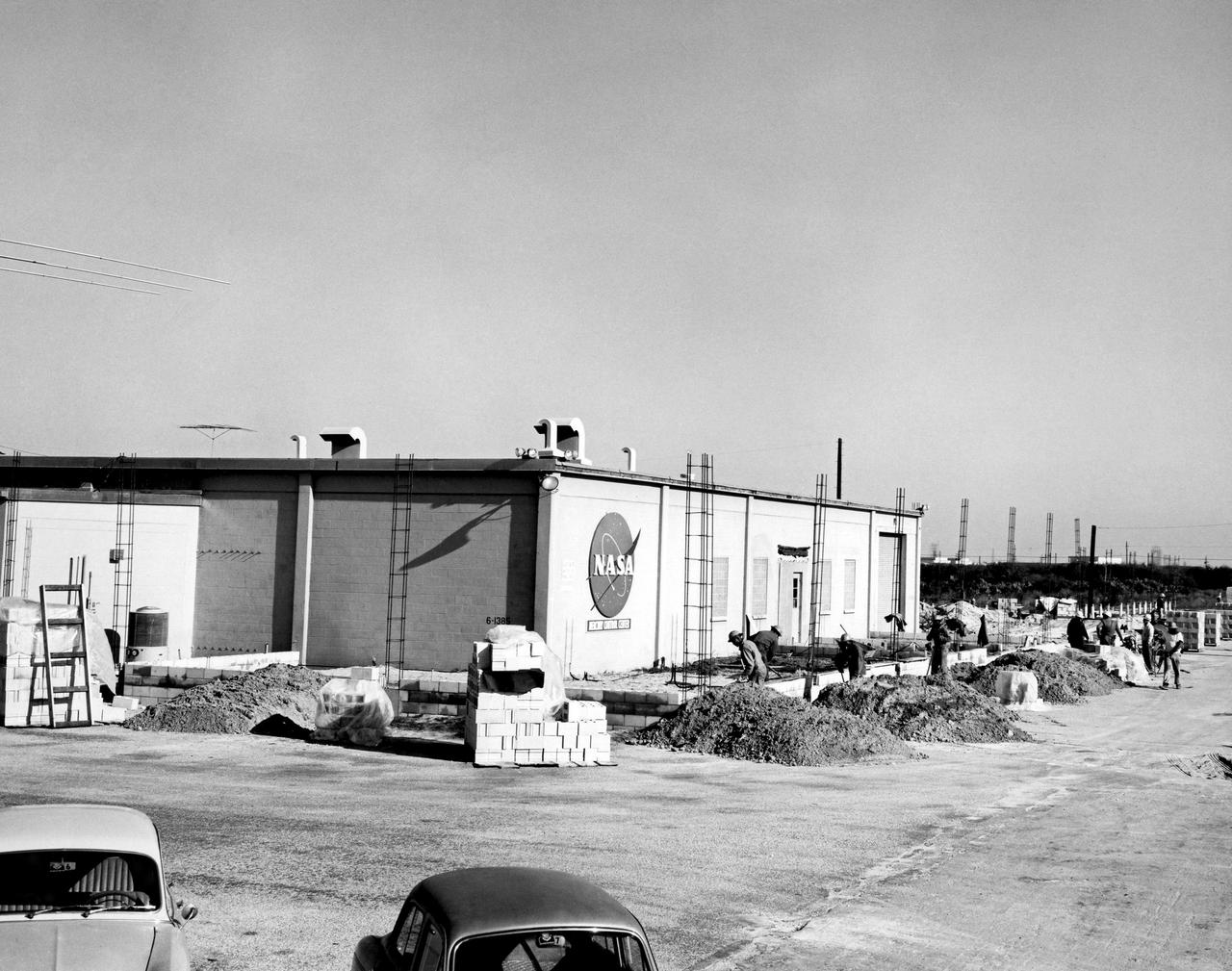
CAPE CANAVERAL, Fla. - Between 1962 and 1963, the Mission Control Center was modified to handle the additional complexities of the Gemini Program. In 1962, Pan American World Airways Inc. was contracted to design an addition to the facility, which wrapped around the east, north, and most of the west and south sides. The Mercury Mission Control Center in Florida played a key role in the United States' early spaceflight program. Located at Cape Canaveral Air Force Station, the original part of the building was constructed between 1956 and 1958, with additions in 1959 and 1963. The facility officially was transferred to NASA on Dec. 26, 1963, and served as mission control during all the Project Mercury missions, as well as the first three flights of the Gemini Program, when it was renamed Mission Control Center. With its operational days behind, on June 1, 1967, the Mission Control Center became a stop on the public tour of NASA facilities until the mid-90s. In 1999, much of the equipment and furnishings from the Flight Control Area were moved to the Kennedy Space Center Visitor Complex where they became part of the exhibit there. The building was demolished in spring 2010. Photo credit: NASA
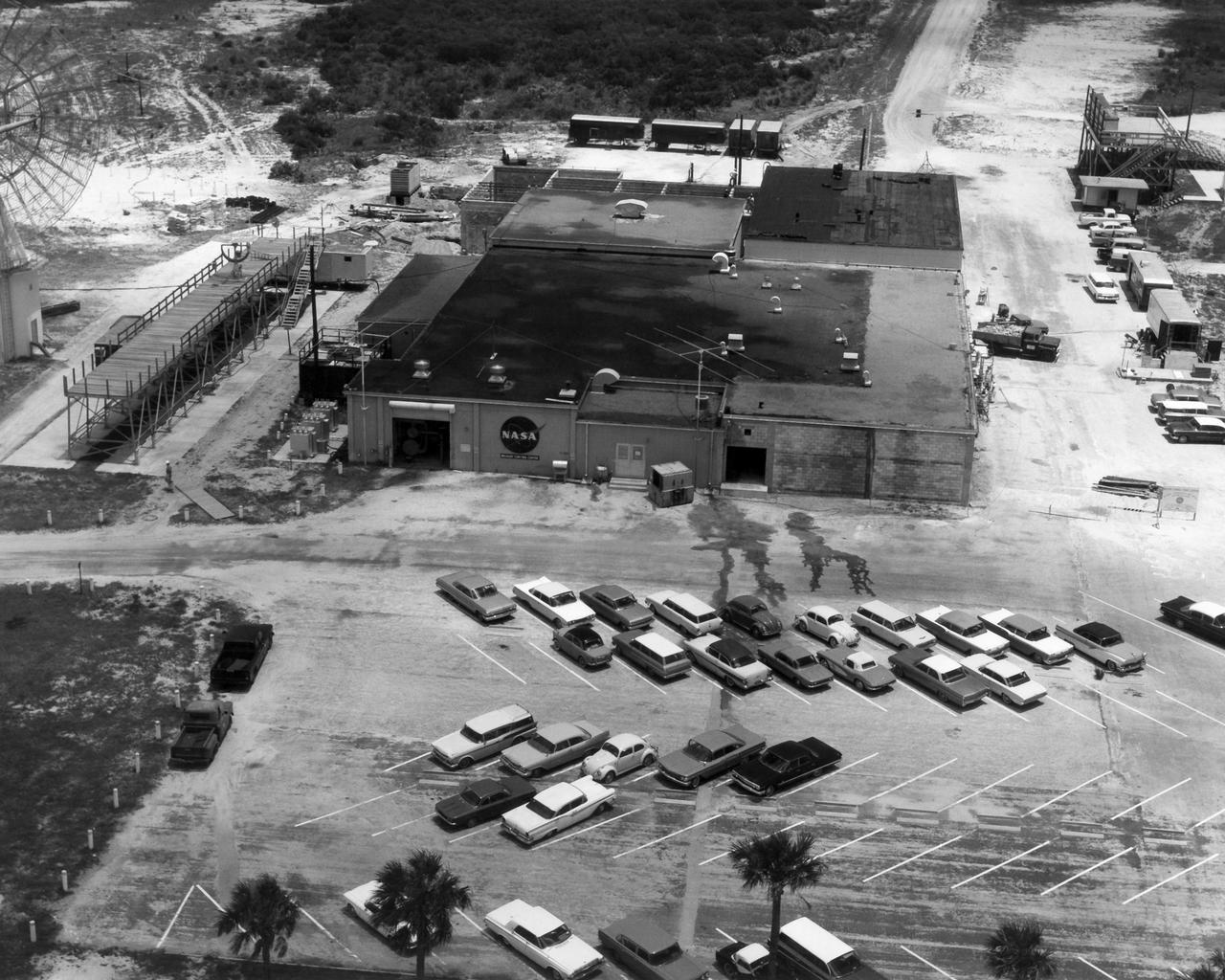
CAPE CANAVERAL, Fla. - Between 1962 and 1963, the Mission Control Center was modified to handle the additional complexities of the Gemini Program. In 1962, Pan American World Airways Inc. was contracted to design an addition to the facility, which wrapped around the east, north, and most of the west and south sides. The Mercury Mission Control Center in Florida played a key role in the United States' early spaceflight program. Located at Cape Canaveral Air Force Station, the original part of the building was constructed between 1956 and 1958, with additions in 1959 and 1963. The facility officially was transferred to NASA on Dec. 26, 1963, and served as mission control during all the Project Mercury missions, as well as the first three flights of the Gemini Program, when it was renamed Mission Control Center. With its operational days behind, on June 1, 1967, the Mission Control Center became a stop on the public tour of NASA facilities until the mid-90s. In 1999, much of the equipment and furnishings from the Flight Control Area were moved to the Kennedy Space Center Visitor Complex where they became part of the exhibit there. The building was demolished in spring 2010. Photo credit: NASA
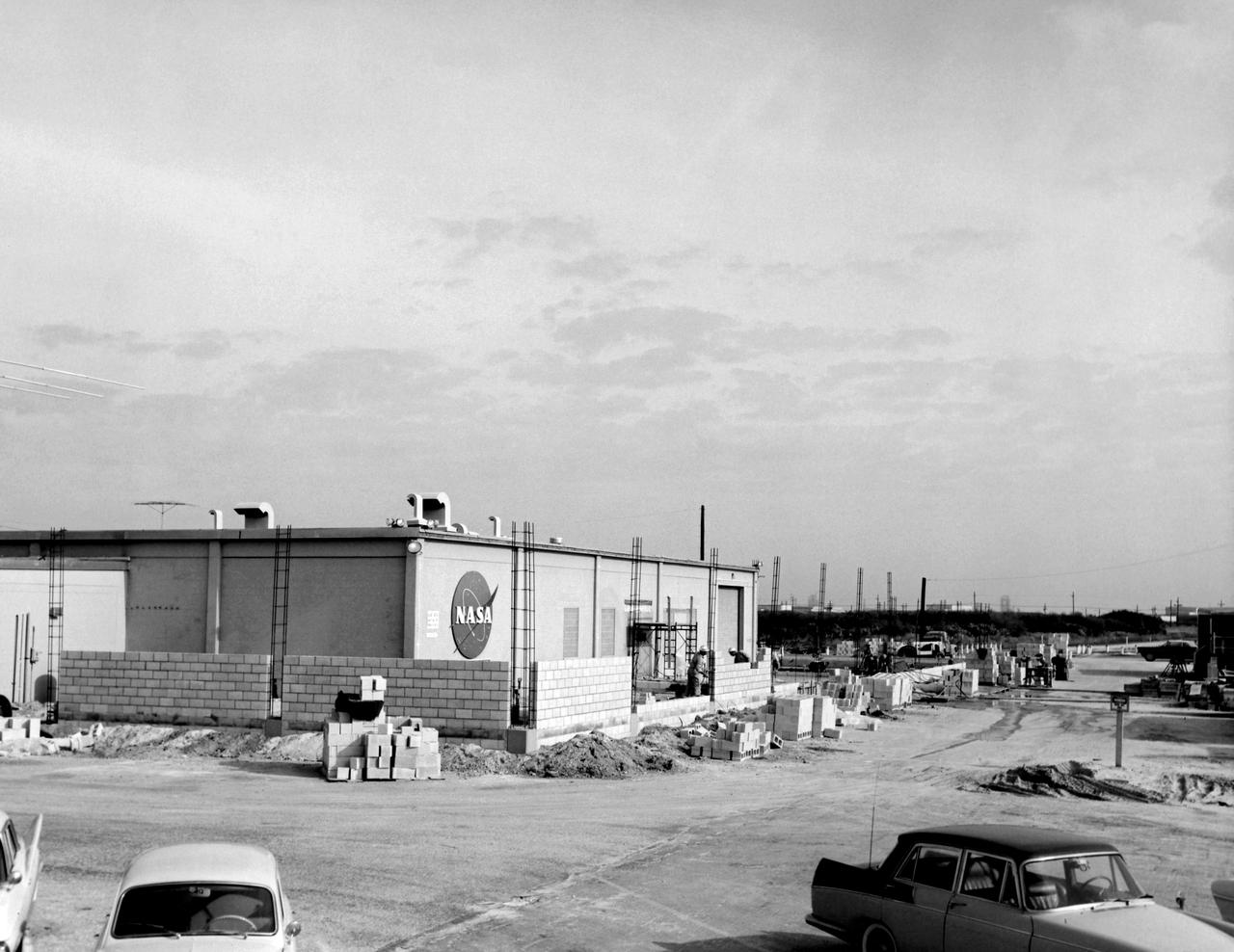
CAPE CANAVERAL, Fla. - Between 1962 and 1963, the Mission Control Center was modified to handle the additional complexities of the Gemini Program. In 1962, Pan American World Airways Inc. was contracted to design an addition to the facility, which wrapped around the east, north, and most of the west and south sides. The Mercury Mission Control Center in Florida played a key role in the United States' early spaceflight program. Located at Cape Canaveral Air Force Station, the original part of the building was constructed between 1956 and 1958, with additions in 1959 and 1963. The facility officially was transferred to NASA on Dec. 26, 1963, and served as mission control during all the Project Mercury missions, as well as the first three flights of the Gemini Program, when it was renamed Mission Control Center. With its operational days behind, on June 1, 1967, the Mission Control Center became a stop on the public tour of NASA facilities until the mid-90s. In 1999, much of the equipment and furnishings from the Flight Control Area were moved to the Kennedy Space Center Visitor Complex where they became part of the exhibit there. The building was demolished in spring 2010. Photo credit: NASA
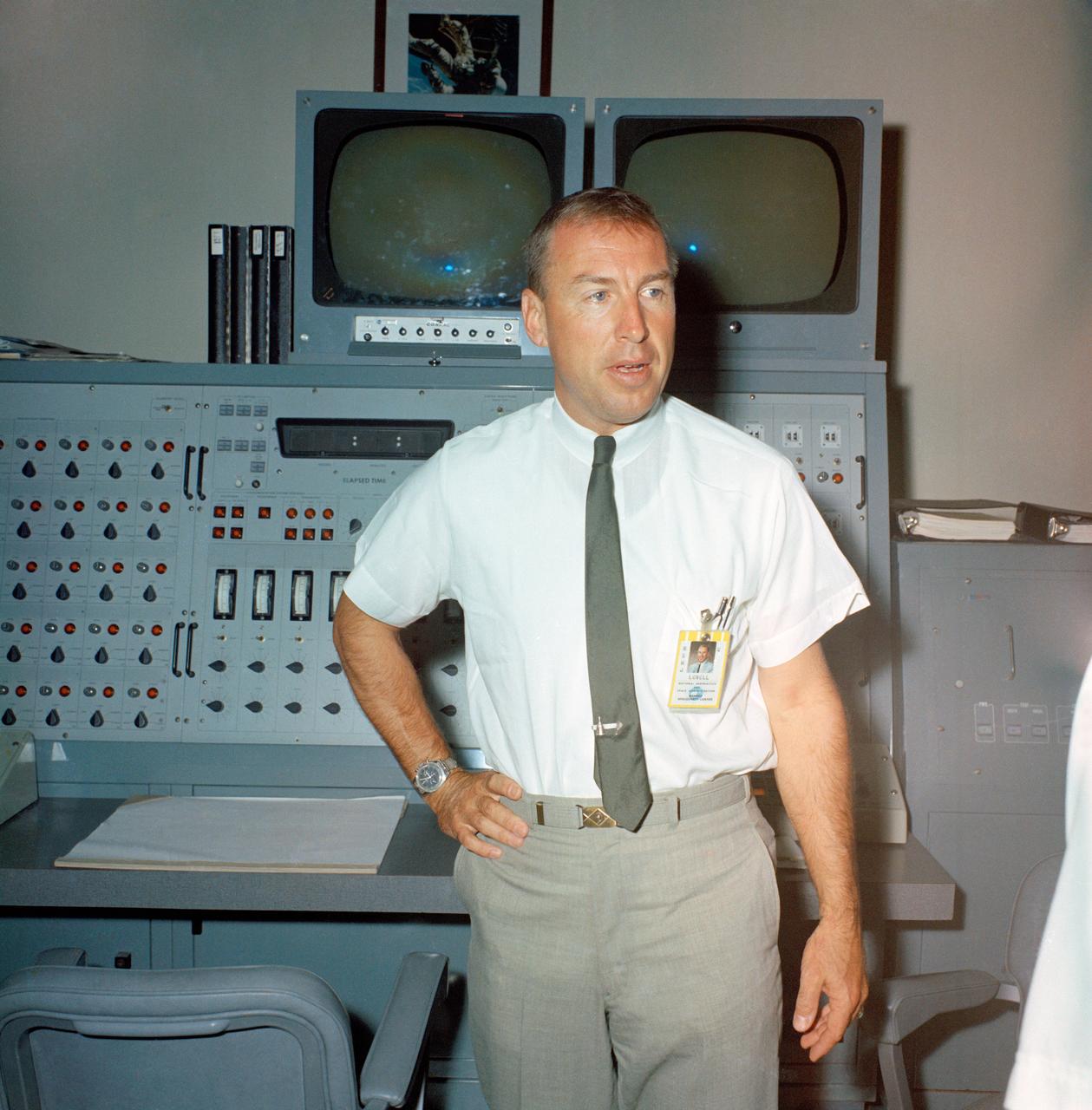
S66-45578 (6 Sept. 1966) --- Astronaut James A. Lovell Jr., prime crew command pilot for the Gemini-12 spaceflight, is pictured in Building 5, Mission Simulation and Training Facility, prior to entering the Gemini Mission Simulator for flight training. Photo credit: NASA
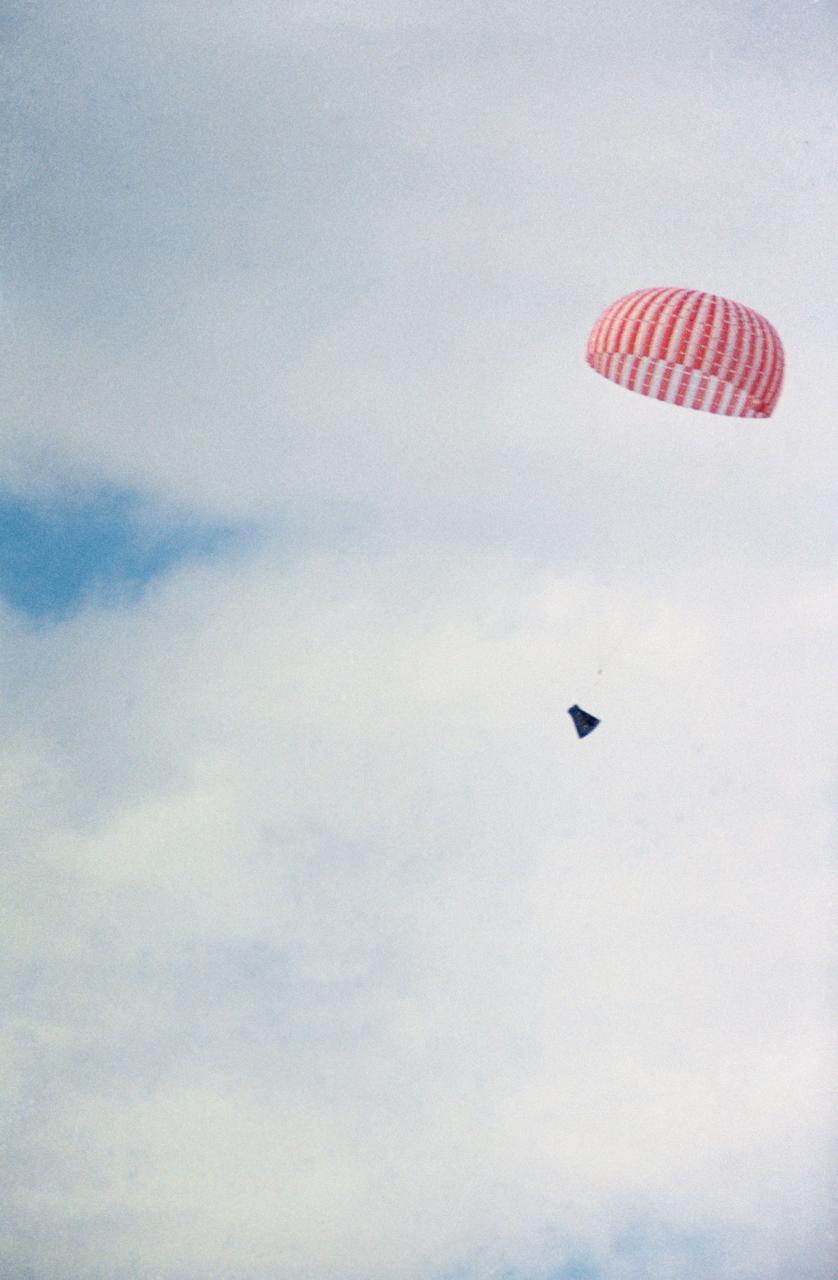
S66-59986 (15 Nov. 1966) --- The Gemini spaceflight program concludes as the Gemini-12 spacecraft, with astronaut James A. Lovell Jr., command pilot, and Edwin E. Aldrin Jr., pilot, aboard, nears touchdown in the Atlantic Ocean 2.5 nautical miles from the prime recovery ship, USS Wasp. Gemini-12 splashed down at 2:21 p.m. (EST), Nov. 11, 1966, to conclude the four-day mission in space. Photo credit: NASA
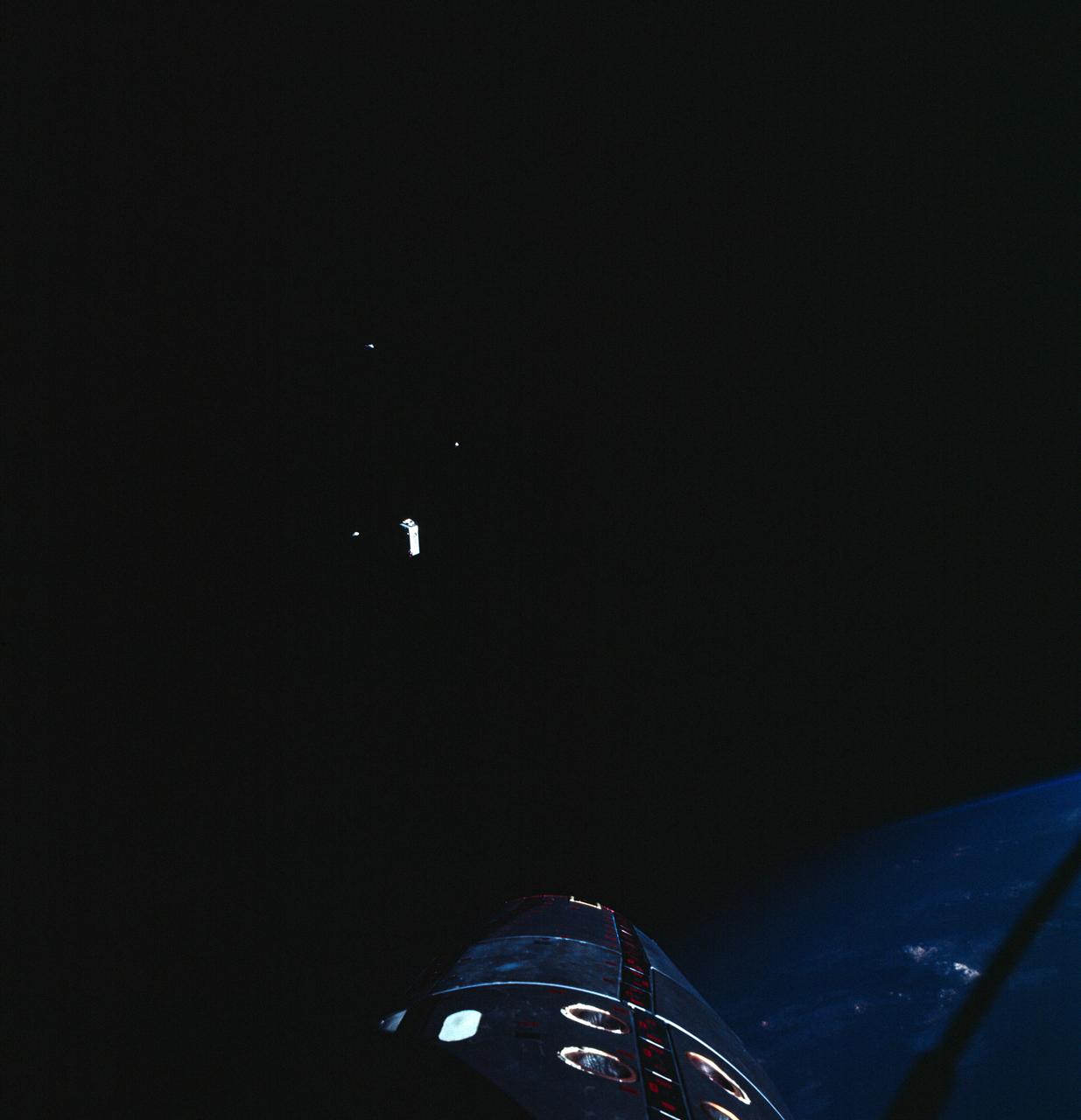
S66-62999 (13 Nov. 1966) --- Jettison of the extravehicular life support system (ELSS) and other equipment from the Gemini-12 spacecraft during its rendezvous mission in space. The nose of the Gemini-12 spacecraft is clearly visible at right edge of photo. Photo credit: NASA
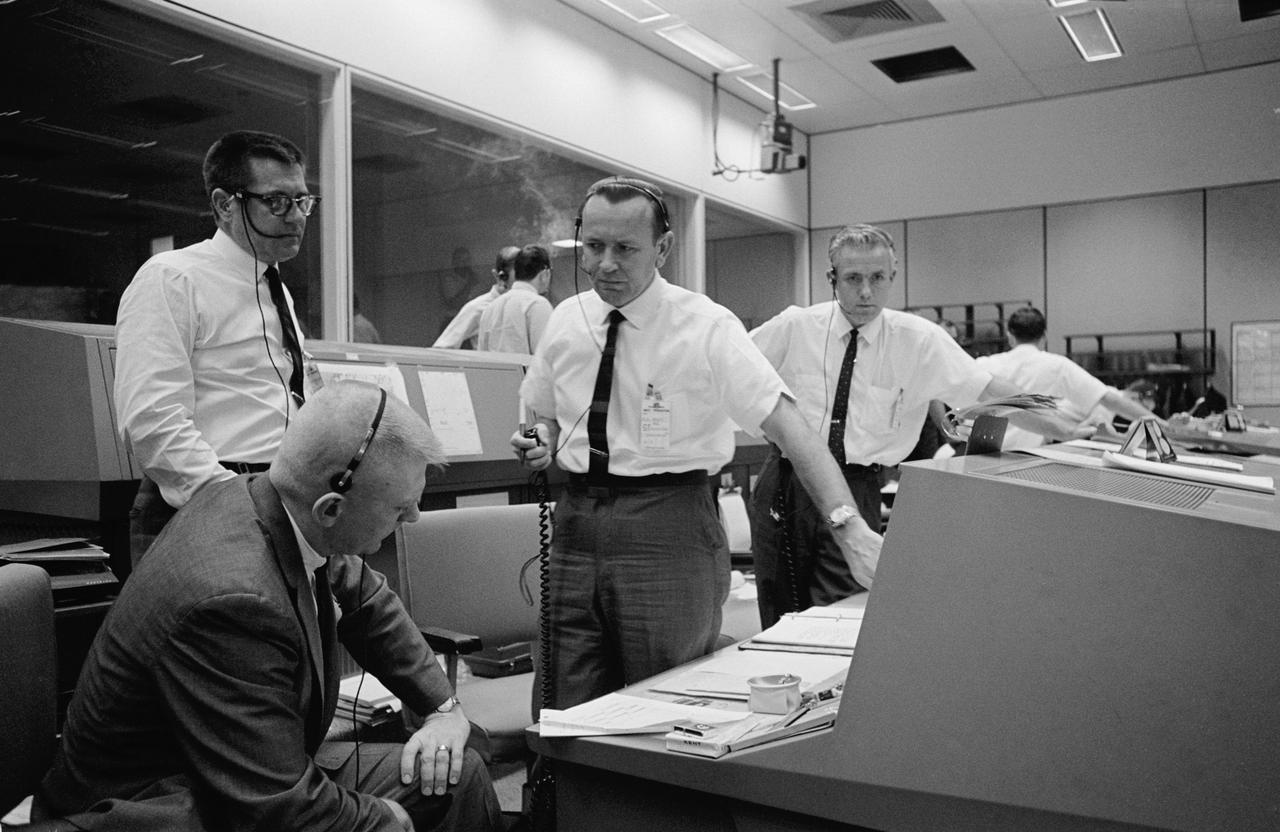
S65-62062 (12 Dec. 1965) --- Discussing the scrubbing of the planned National Aeronautics and Space Administration?s Gemini-6 spaceflight are (from left) William C. Schneider (standing), deputy director, Gemini Program Office of Manned Spaceflight, NASA Headquarters, Washington, D.C.; Eugene F. Kranz (seated), white team flight director; Christopher C. Kraft Jr., red team flight director; and John D. Hodge, blue team flight director. The Gemini-6 mission has been rescheduled for Dec. 15, 1965. Photo credit: NASA or National Aeronautics and Space Administration
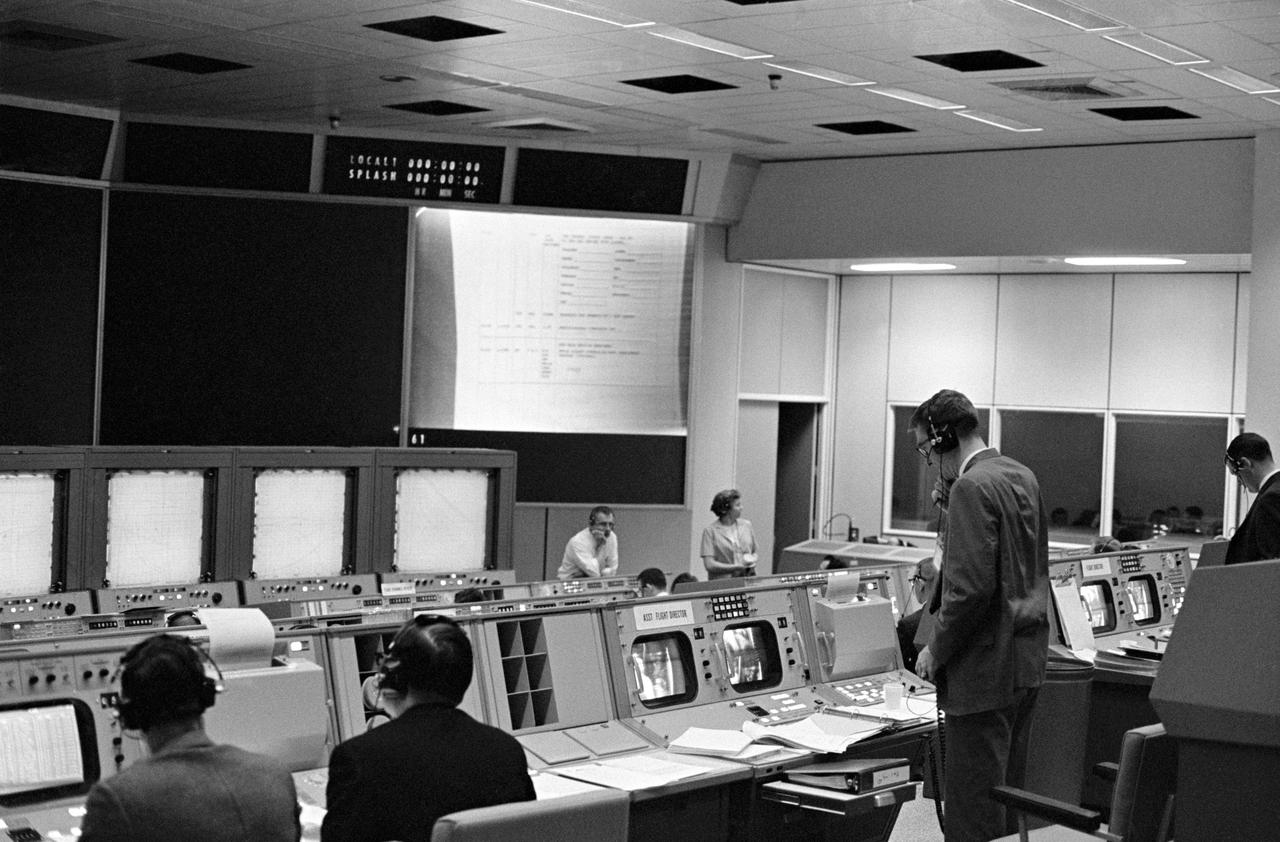
S65-18200 (23 March 1965) --- Overall view of the Mission Control Center at the Manned Spacecraft Center in Houston, Texas during the Gemini-Titan 3 flight.
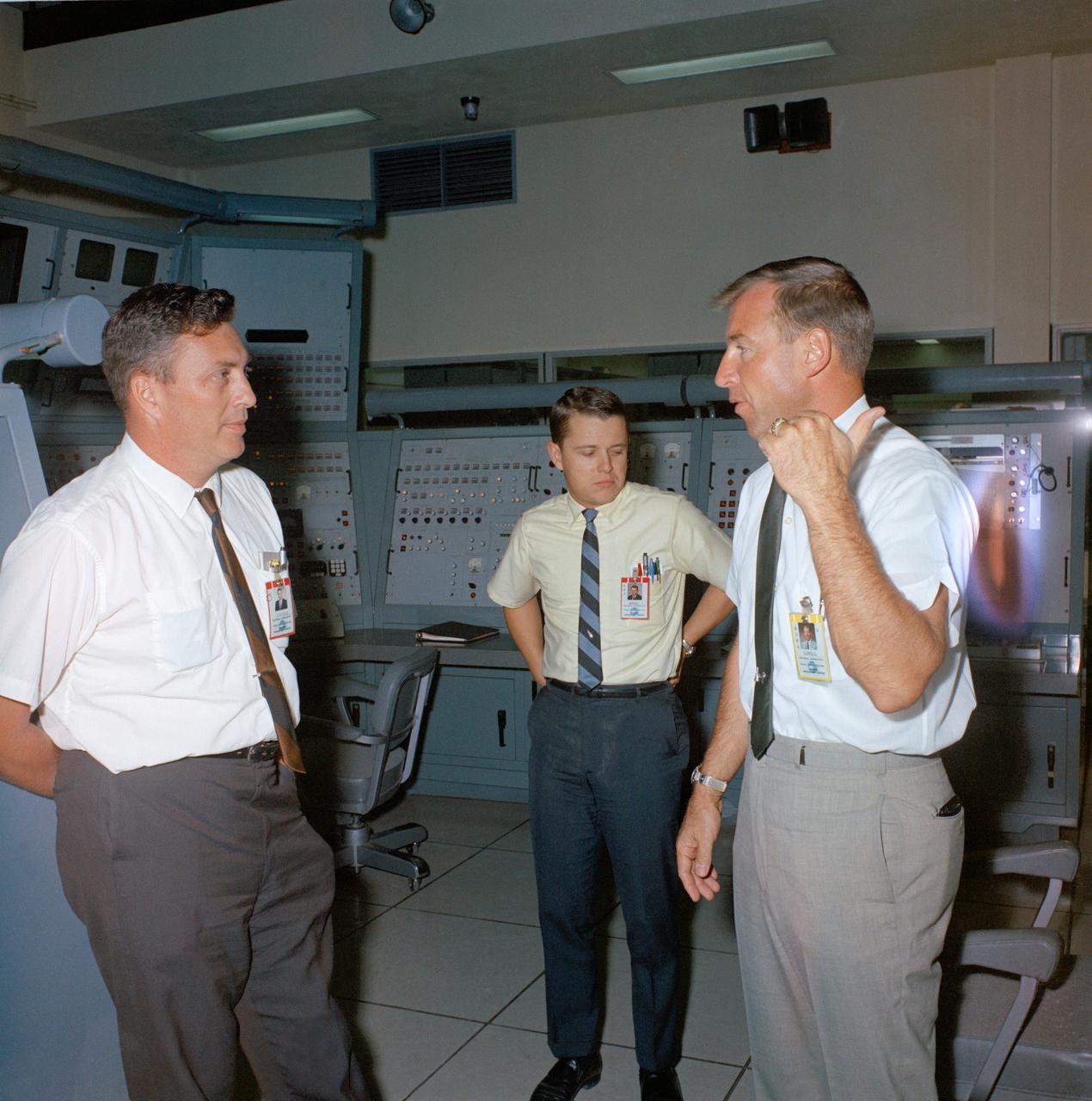
S66-45579 (6 Sept. 1966) --- Astronaut James A. Lovell Jr. (right), prime crew command pilot of the Gemini-12 spaceflight, talks with Burton M. Gifford (left) and Duane K. Mosel (center), both with the Simulation Branch, Flight Crew Support Division. Lovell was preparing to undergo flight training in the Gemini Mission Simulator in Building 5, Mission Simulation and Training Facility. Photo credit: NASA
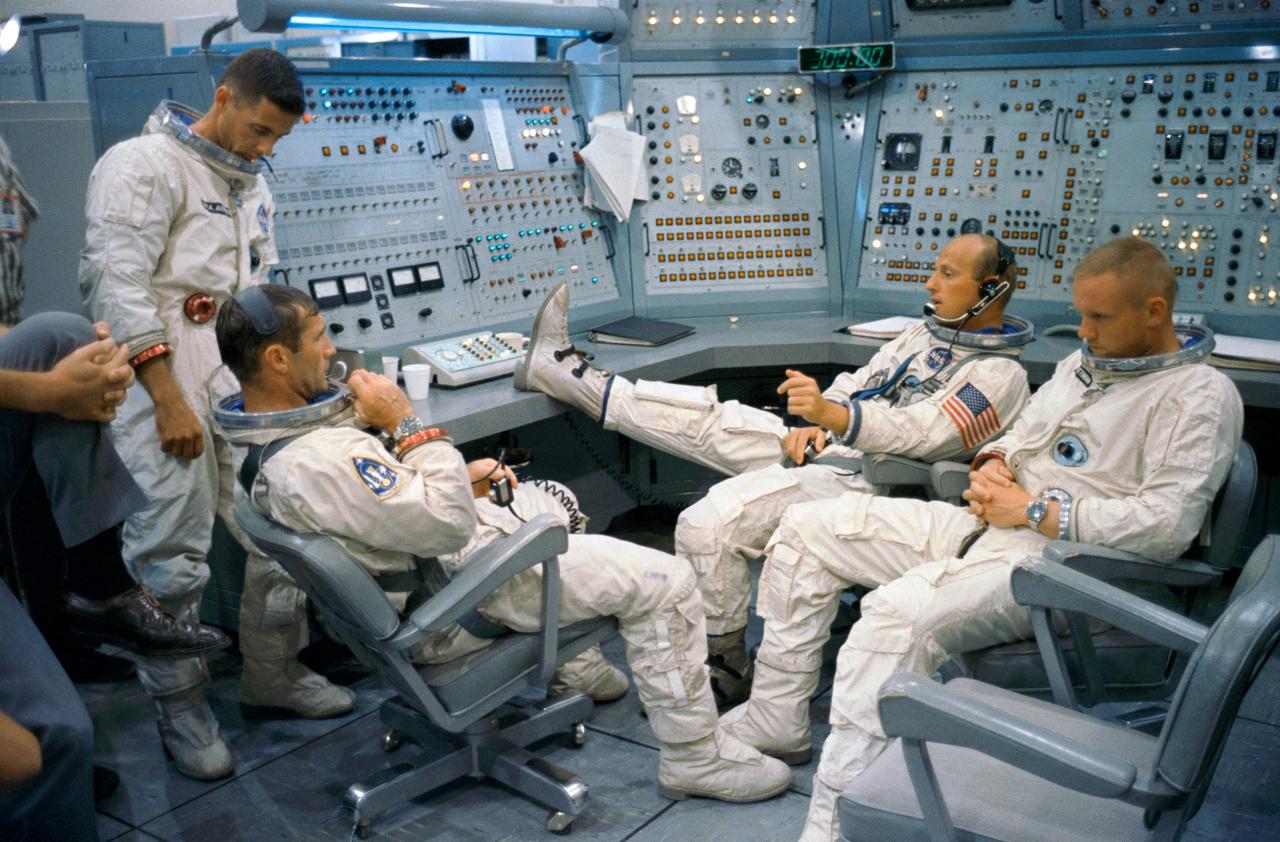
S66-50769 (8 Sept. 1966) --- Gemini-11 prime and backup crews are pictured at the Gemini Mission Simulator at Cape Kennedy, Florida. Left to right are astronauts William A. Anders, backup crew pilot; Richard F. Gordon Jr., prime crew pilot; Charles Conrad Jr. (foot on desk), prime crew command pilot; and Neil A. Armstrong, backup crew command pilot. Photo credit: NASA
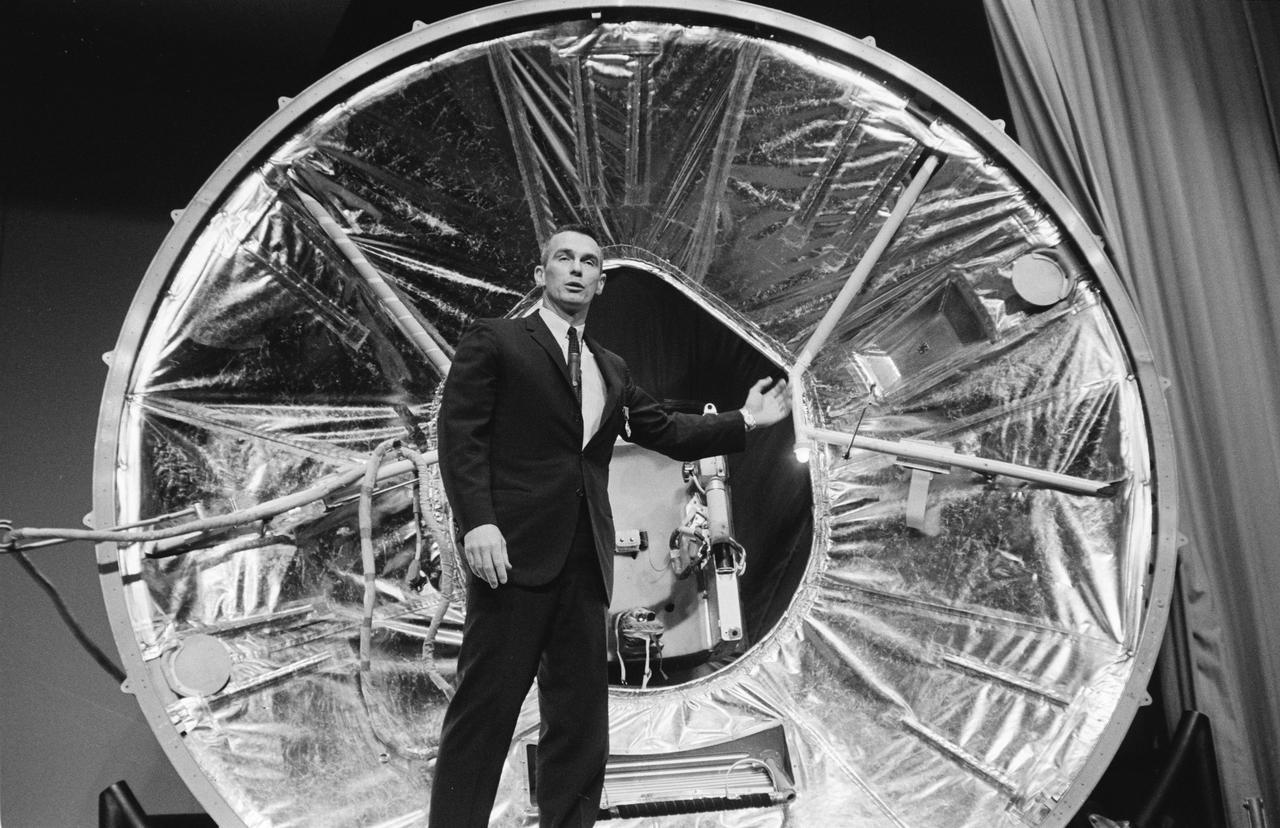
S66-32698 (17 June 1966) --- Astronaut Eugene A. Cernan discusses his Gemini-9A extravehicular activity before a gathering of news media representatives in the MSC auditorium. In the background is an Astronaut Maneuvering Unit (AMU) mock-up mounted in a mock-up of a Gemini spacecraft adapter equipment section. Astronauts Cernan and Thomas P. Stafford completed their three-day mission in space on June 6, 1966. Photo credit: NASA
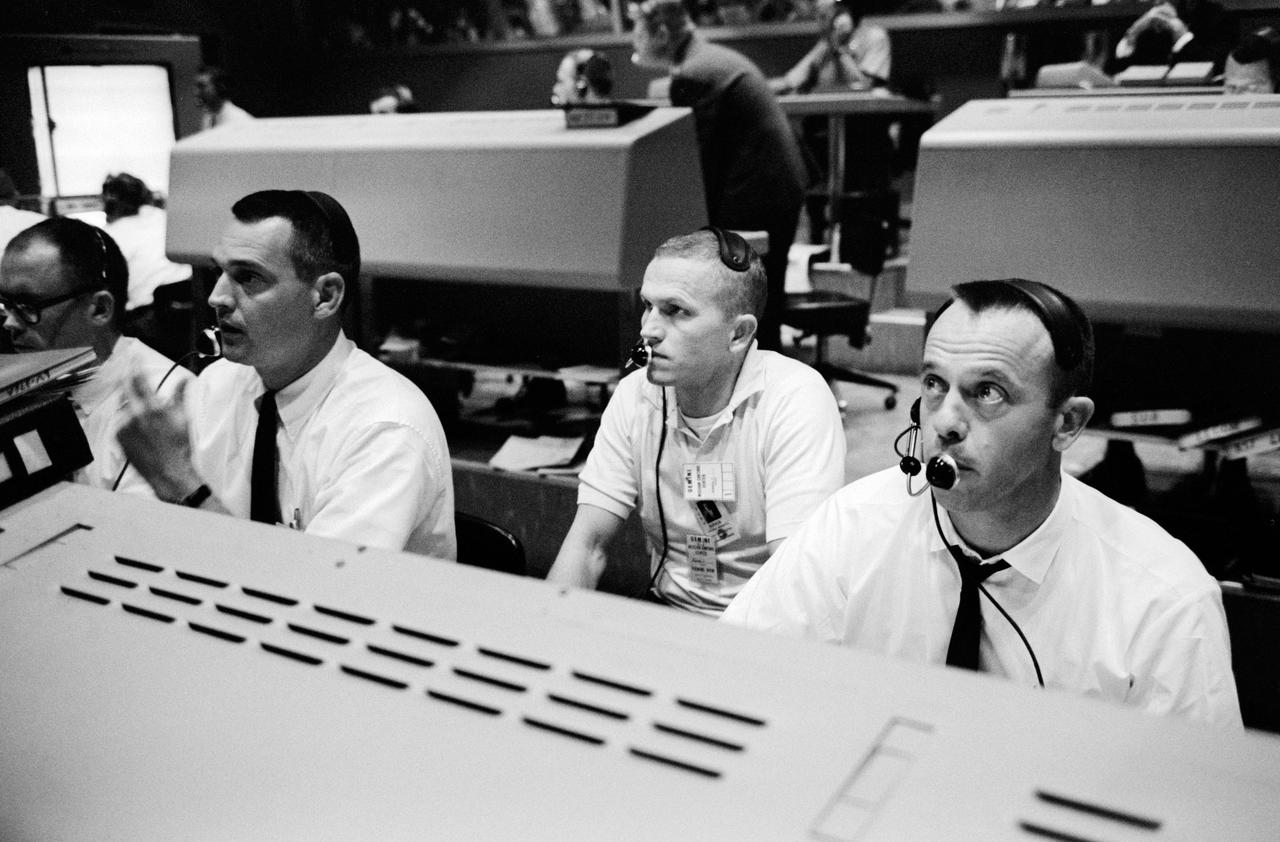
S65-30263 (3 June 1965) --- Shown at their consoles during the liftoff of Gemini-4 (from left) are astronauts Clifford C. Williams Jr., Frank Borman and Alan B. Shepard Jr. Borman was command pilot of the backup crew for the Gemini-4 flight. The three astronauts monitored the flight from the Mission Control Center at Cape Kennedy.
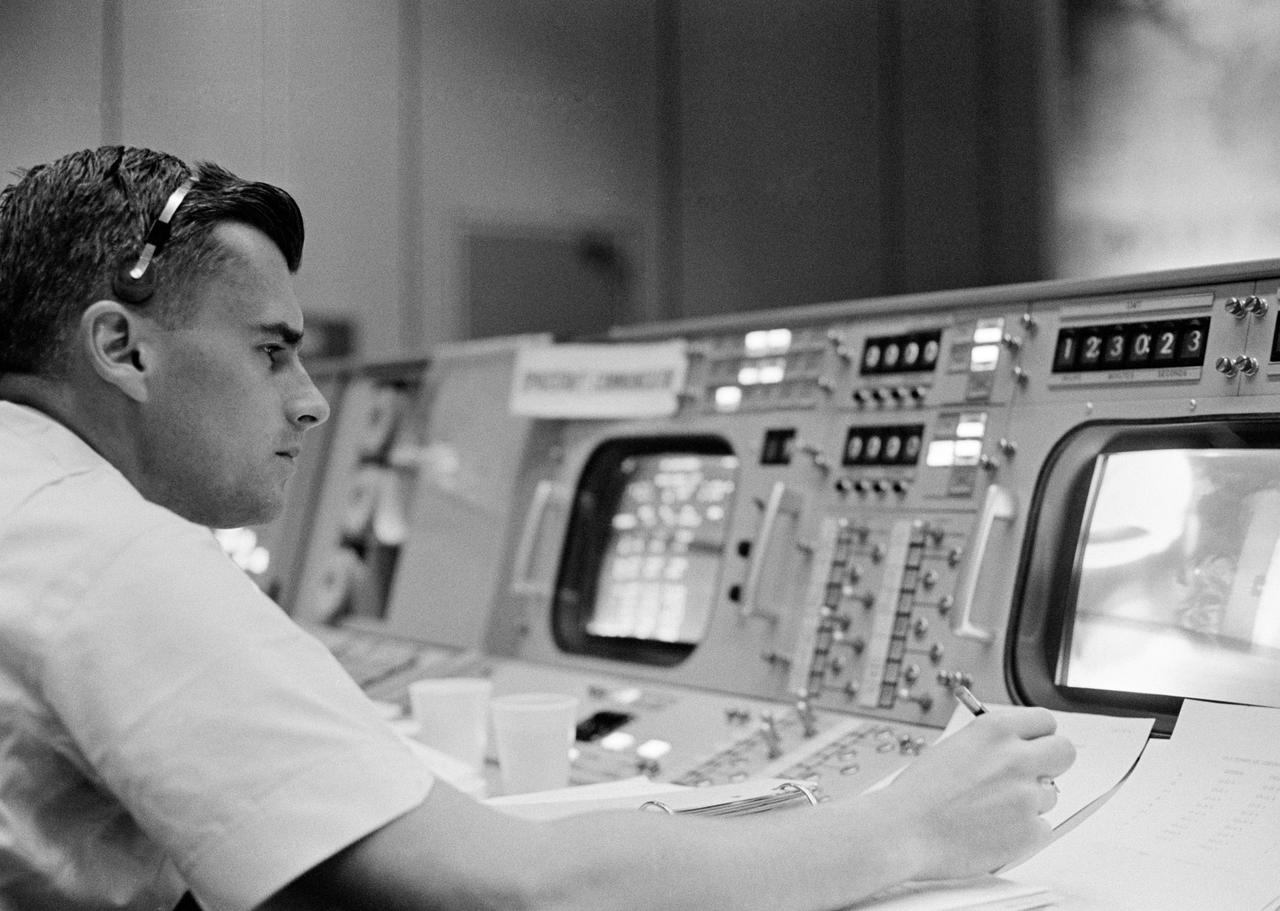
S65-18058 (23 March 1965) --- Astronaut Roger B. Chaffee is shown at console in the Mission Control Center, Houston, Texas during the Gemini-Titan 3 flight.
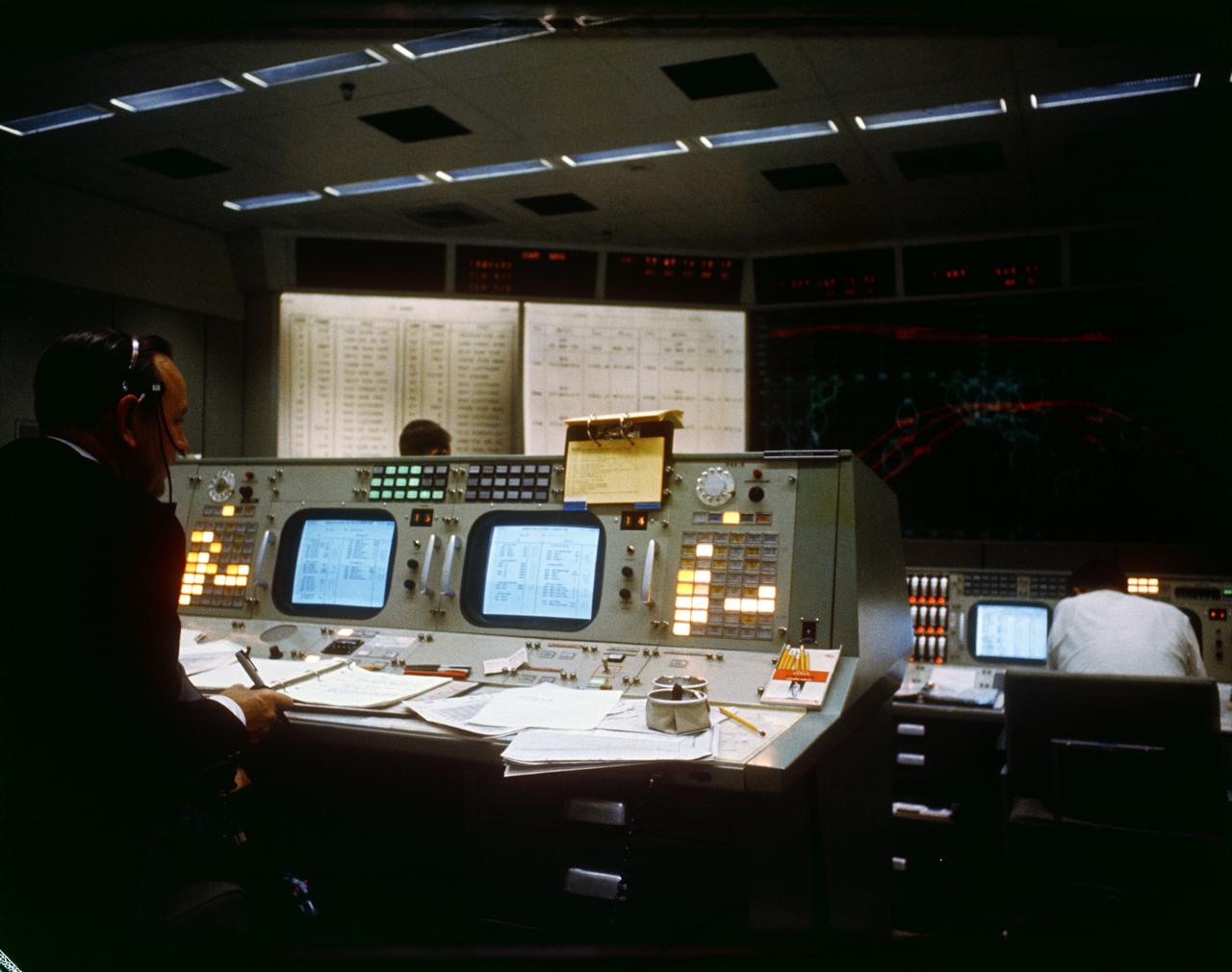
S65-60039 (7 Dec. 1965) --- Christopher C. Kraft Jr. (left), assistant director for Flight Operations, monitors his console in the Mission Control Center during the Gemini-7 spaceflight. Photo credit: NASA
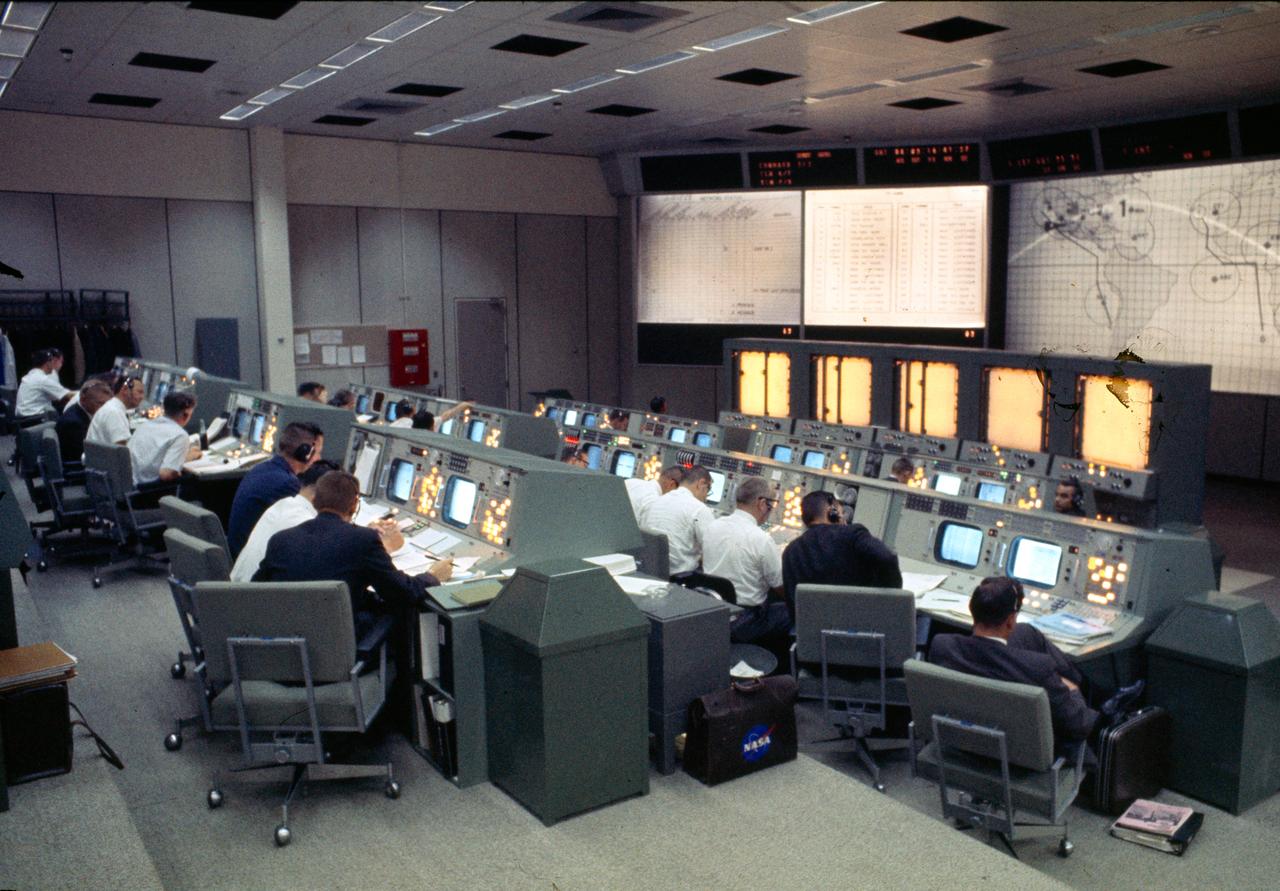
S65-30410 (3 June 1965) --- Overall view of the Mission Control Center in Houston, Texas, during the early hours of the Gemini-Titan 4 spaceflight. Photo credit: NASA
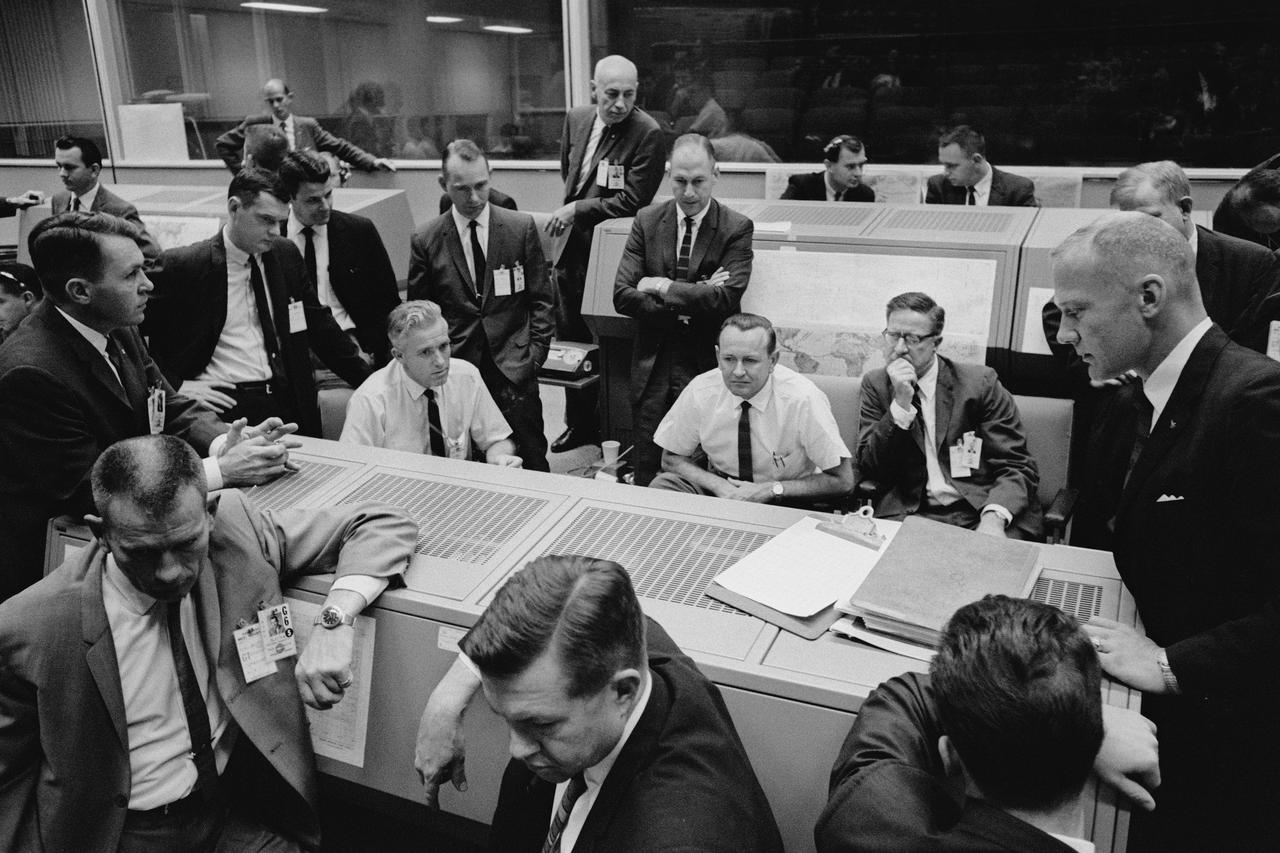
S65-44401 (1965) --- A group of National Aeronautics and Space Administration (NASA) and Manned Spacecraft Center (MSC) officials and personnel watch a Cape Kennedy press conference being telecast in the Mission Control Center (MCC) after the Gemini-6 mission was scrubbed due to the apparent failure of the Agena Target Vehicle to attain orbit.
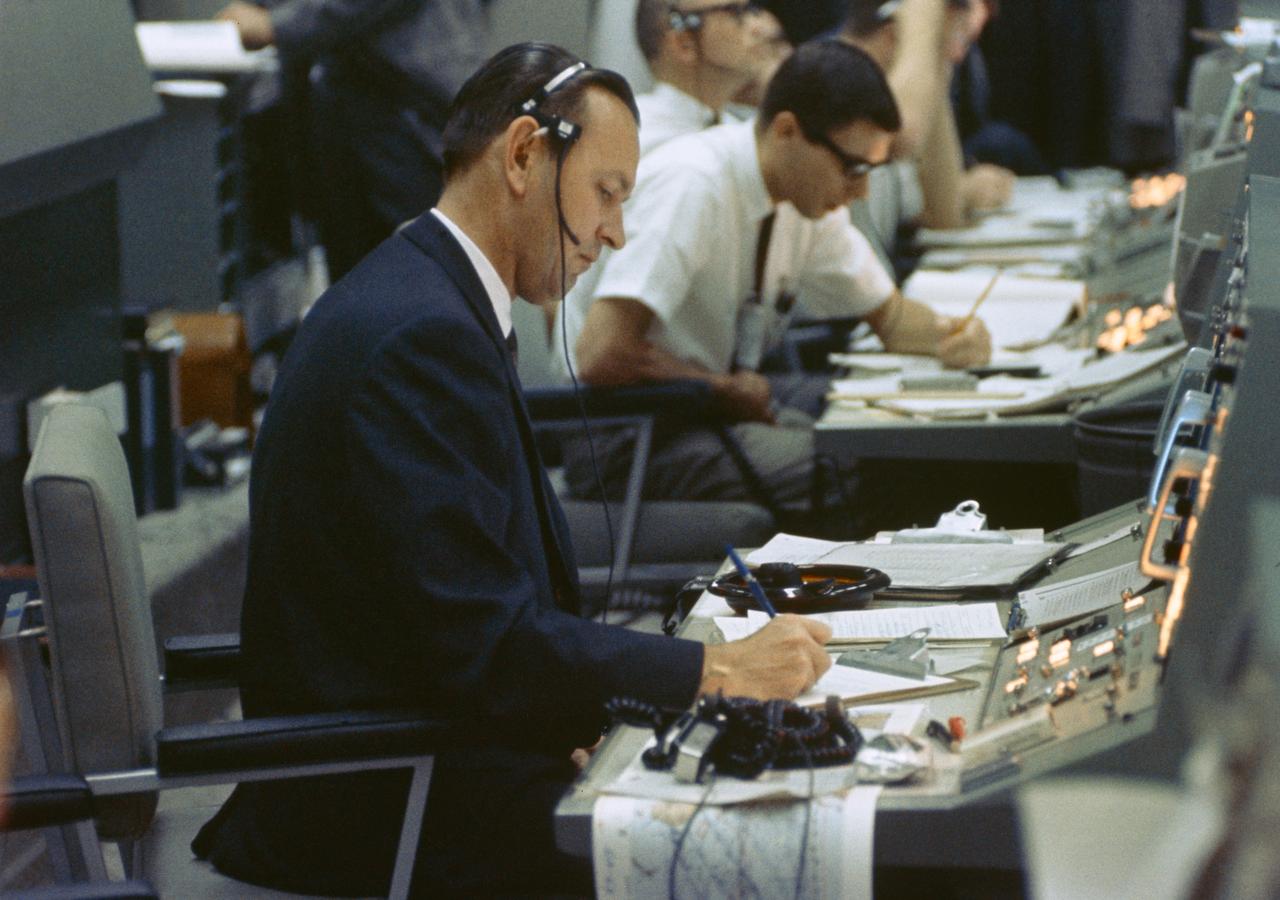
S65-28462 (3-7 June 1965) --- Christopher C. Kraft Jr., assistant director for Flight Operations, at his console in the Mission Control Center during Gemini-4 spaceflight. He served as mission director and as a flight director.
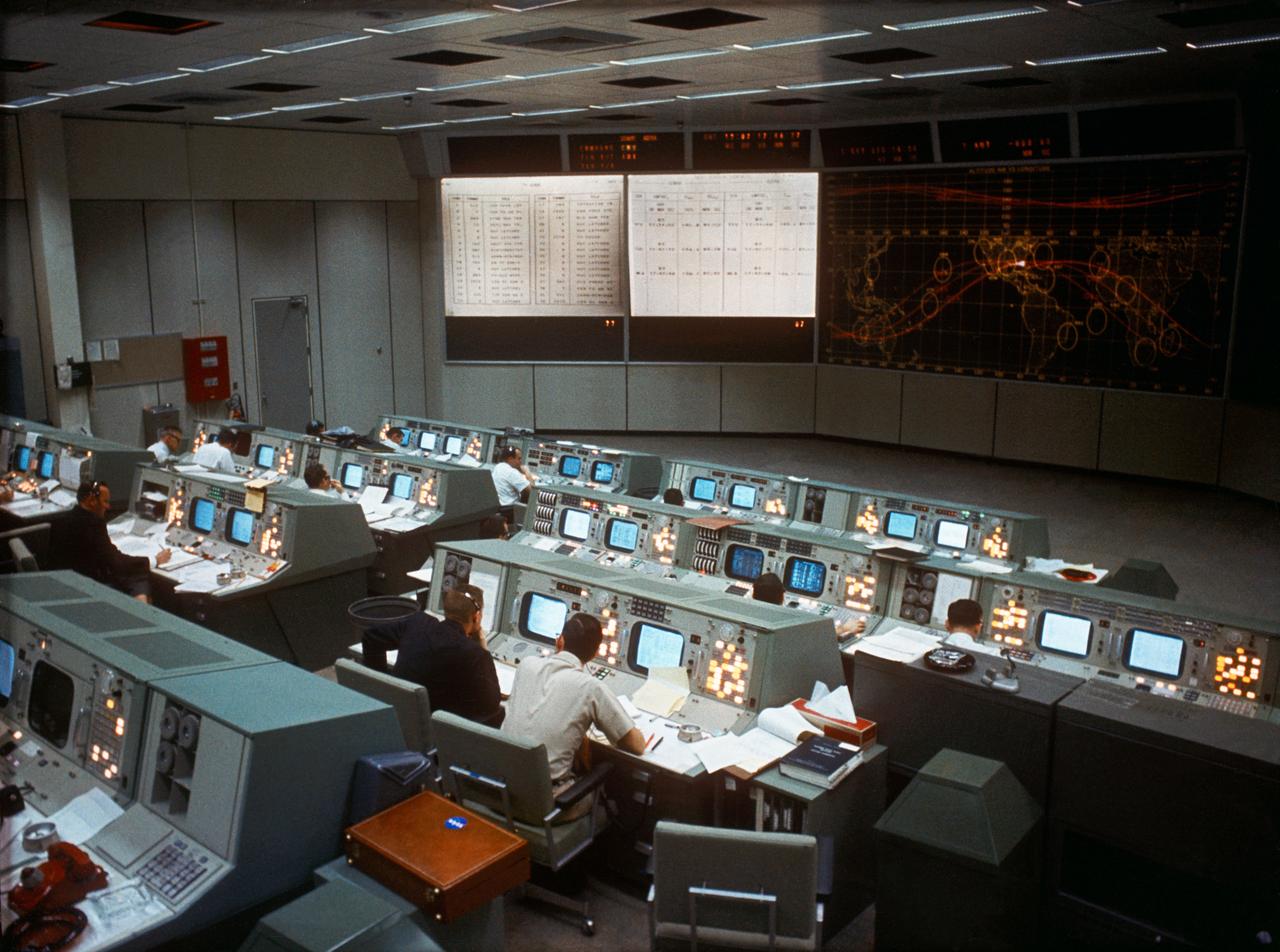
S65-60037 (7 Dec. 1965) --- An overall view of the Manned Spacecraft Center's Mission Control Center, during the National Aeronautics and Space Administration's Gemini-7 spaceflight. Photo credit: NASA
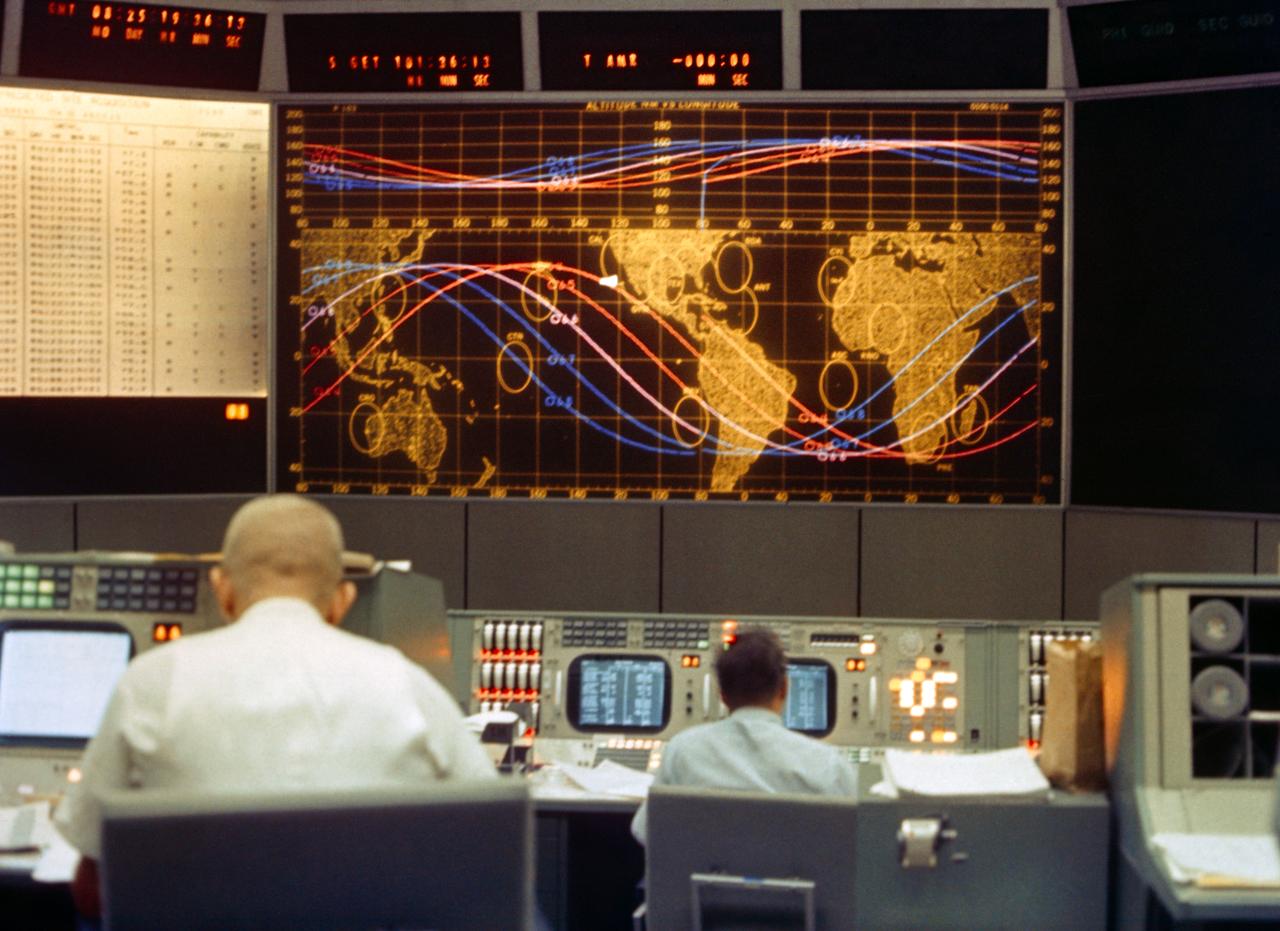
S65-45083 (21-29 Aug. 1965) --- View of the tracking screen at the front of the Mission Control Center during the Gemini-5 spaceflight.
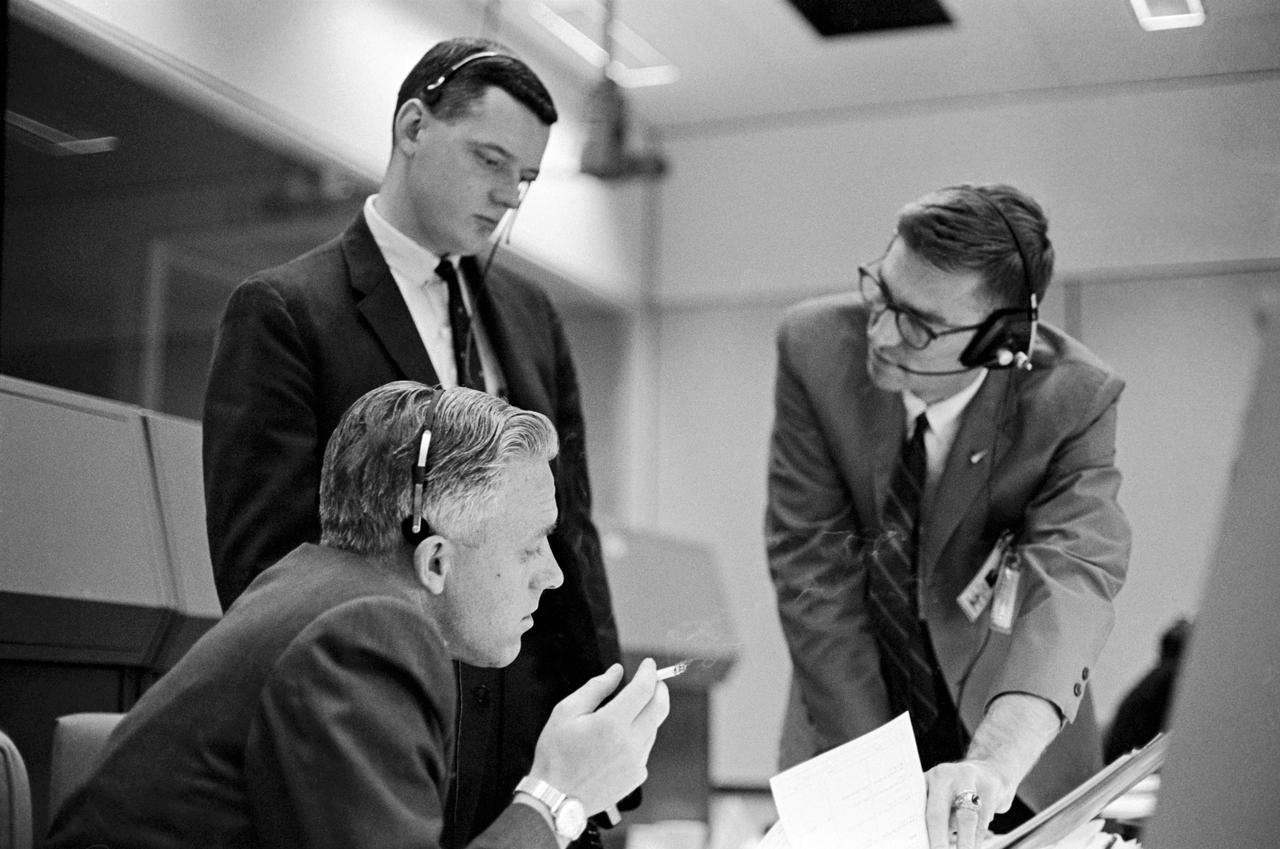
S65-18055 (23 March 1965) --- Flight director John D. Hedge (left), chief, Flight Control Division; Glynn S. Lunney (standing left), chief, Flight Dynamics Branch, Flight Control Division; and James W. Beach, assistant flight director for Gemini-Titan 3, are shown in the Mission Control Center, Houston, Texas during the Gemini-Titan 3 flight.
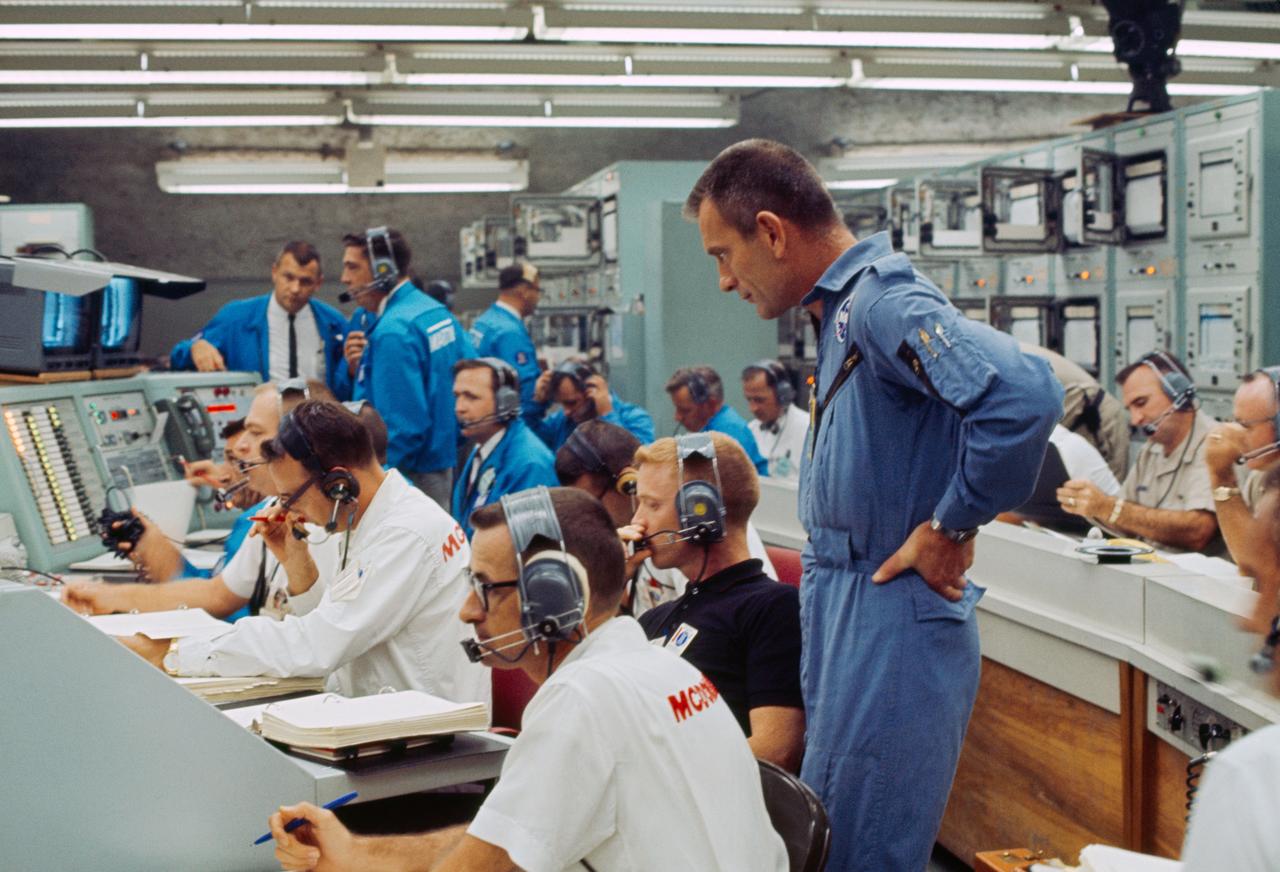
S65-28742 (21 Aug. 1965) --- View of Mission Control Center at Cape Kennedy, Florida, moments after the Gemini-5 spacecraft was launched from Pad 19 on Aug. 21, 1965. Standing at right is astronaut Donald K. Slayton, assistant director for Flight Crew Operations, Manned Spacecraft Center. Seated (wearing dark shirt) is astronaut Russell L. Schweickart. Other NASA and McDonnell Aircraft Col. personnel also monitor the progress of the flight.
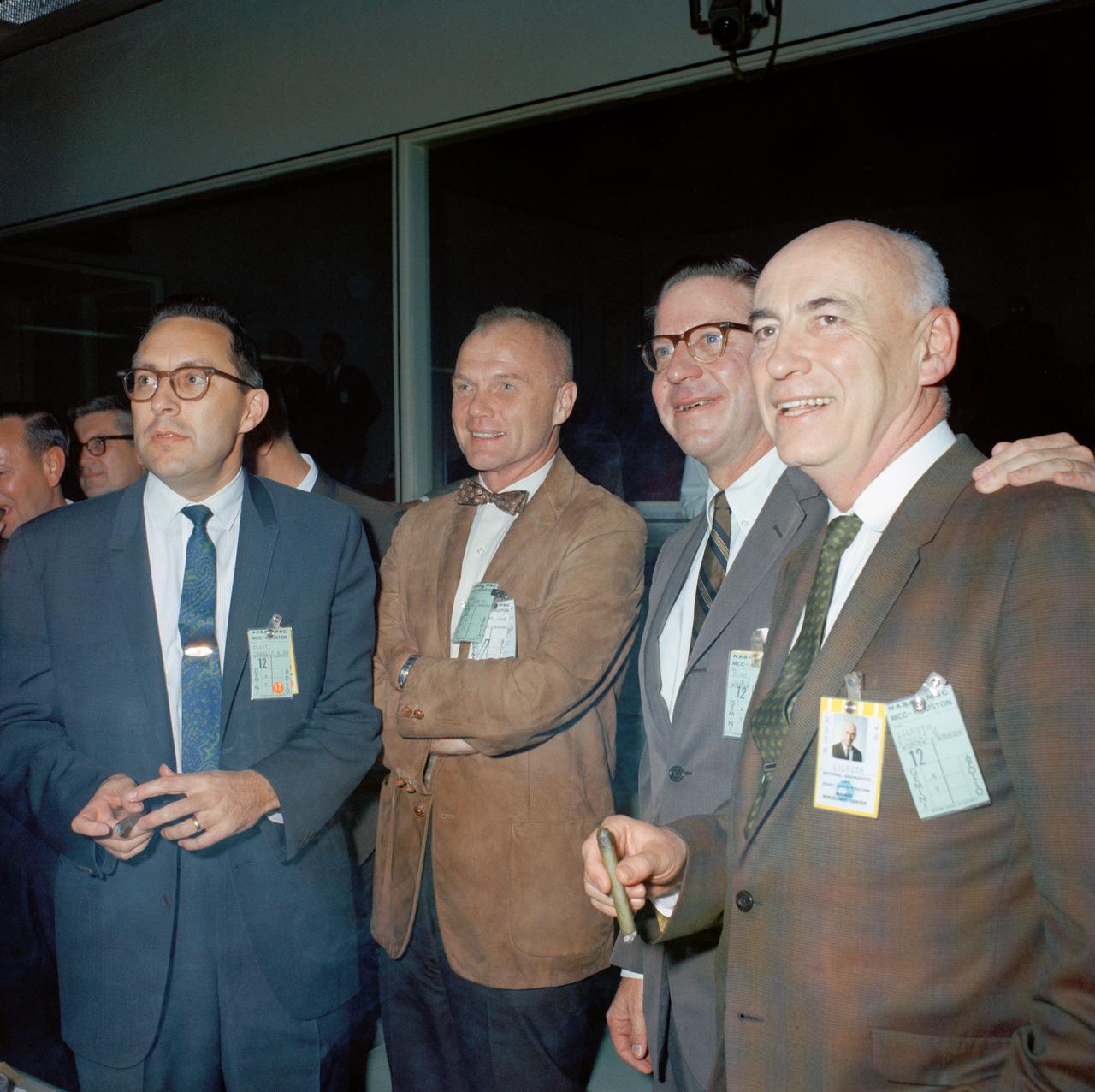
S66-64884 (15 Nov. 1966) --- Watching console activity in the Mission Control Center in Houston during the Gemini-12 splashdown (left to right), are Dr. Charles A. Berry, Director of Medical Research and Operations; astronaut John H. Glenn Jr.; James C. Elms, Director, NASA Electronics Research Center; and Dr. Robert R. Gilruth, Manned Spaceflight Center (MSC) Director. Photo credit: NASA
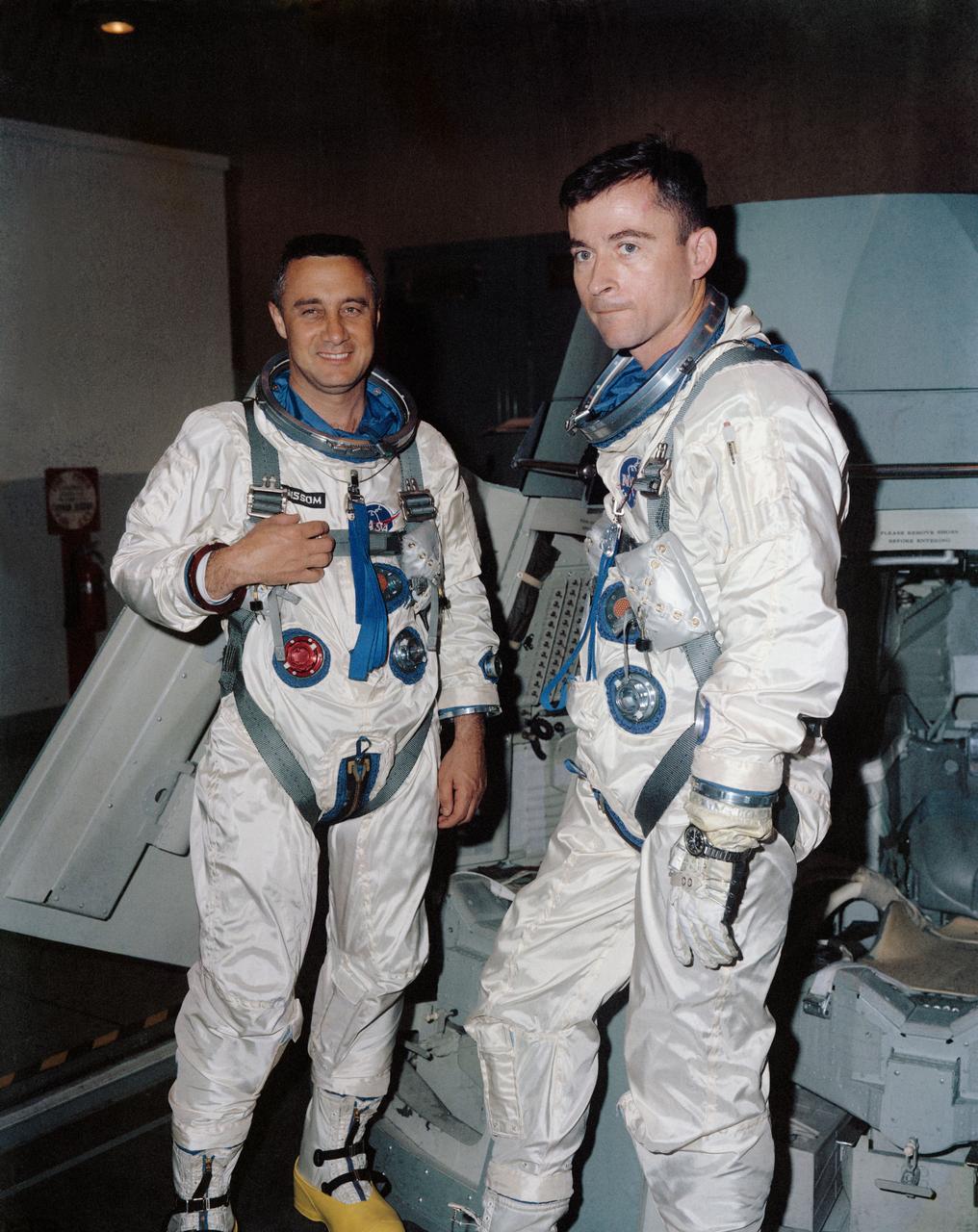
S65-14547 (26 Feb. 1965) --- The Gemini-Titan 3 prime crew, astronauts Virgil I. Grissom (left), command pilot, and John W. Young, pilot, are shown during flight simulation test activity at the Mission Control Center.
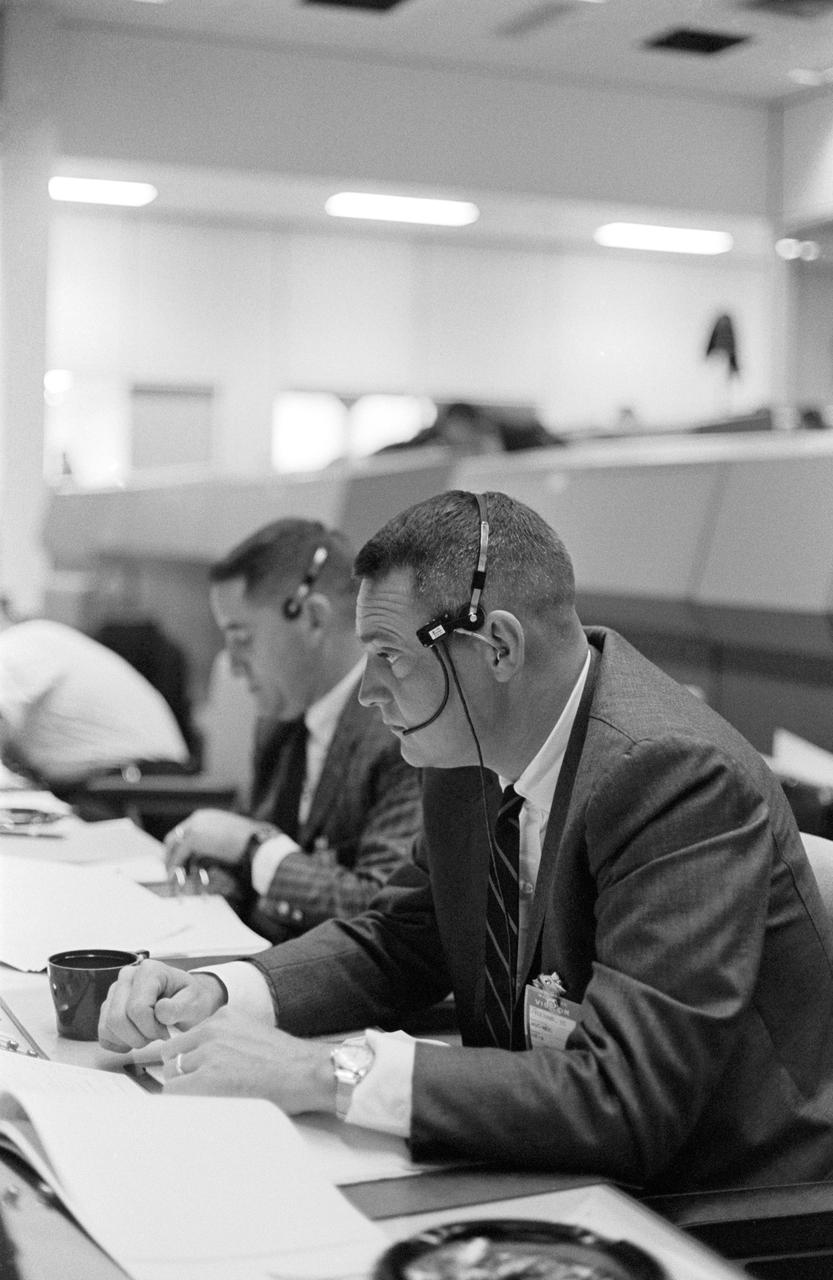
S65-18063 (23 March 1965) --- Astronaut Clifton C. Williams is shown at console in the Mission Control Center (MCC) in Houston, Texas during the Gemini-Titan 3 flight. The GT-3 flight was monitored by the MCC in Houston, but was controlled by the MCC at Cape Kennedy.
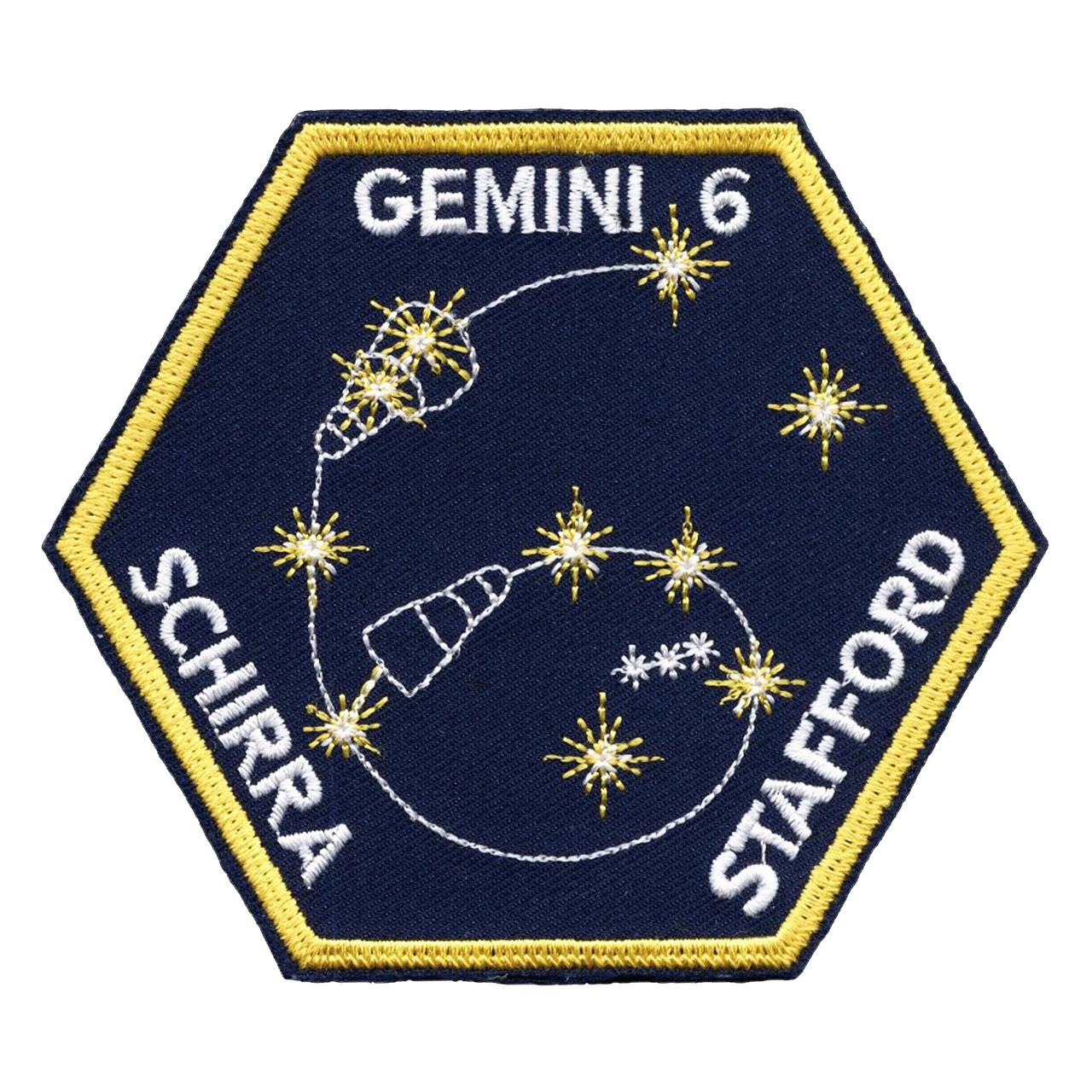
The Gemini 6 patch is hexagonal in shape, reflecting the mission number; and the spacecraft trajectory also traces out the number "6". The Gemini 6 spacecraft is shown superimposed on the "twin stars" Castor and Pollux, for "Gemini".
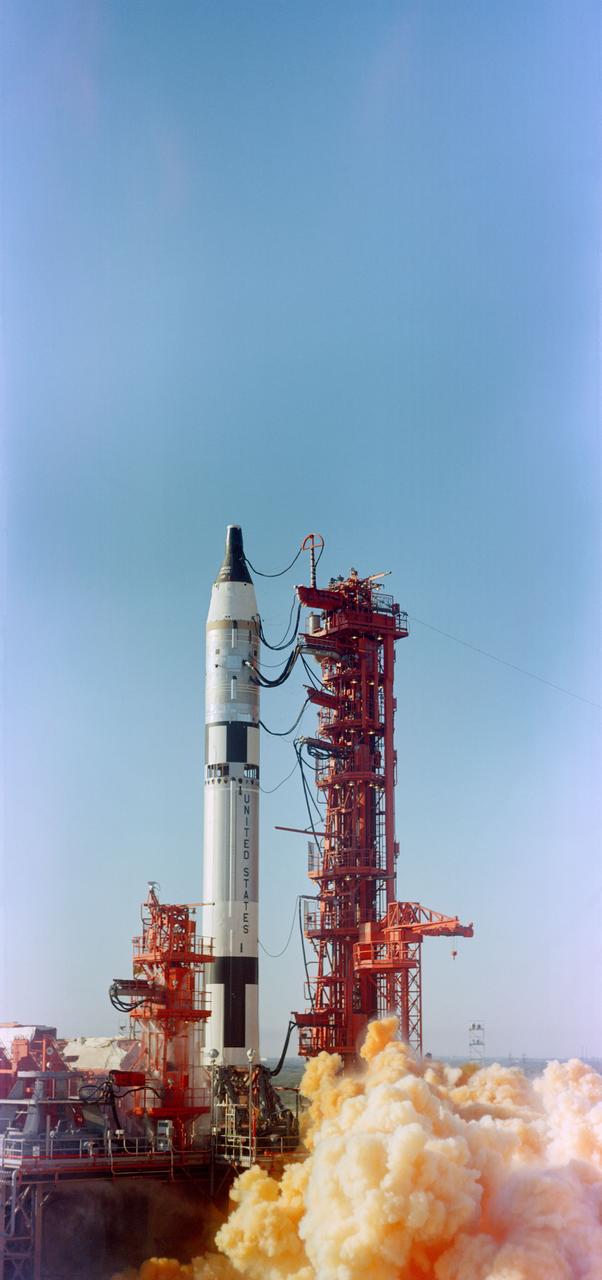
S65-14150 (19 January 1965) --- Launching of the unmanned Gemini 2 flight. The second Titan II Gemini Launch Vehicle (GLV-2) carried the unmanned, instrumented Gemini spacecraft (GT-2) for a suborbital shot preliminary to the first U.S. two-man Gemini mission.
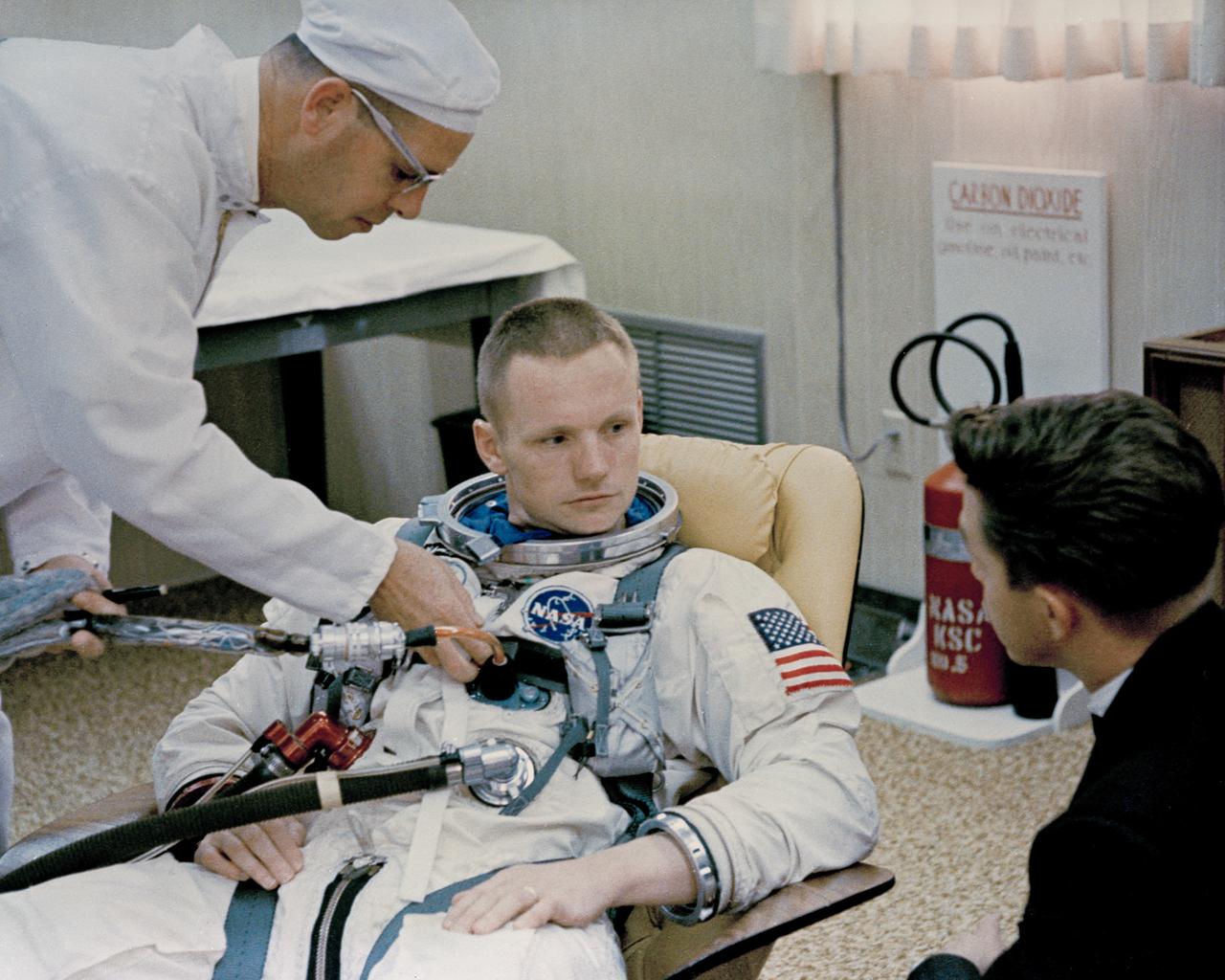
KSC-66C-1849 Gemini 8 Astronaut Neil Armstrong is aided by Suit Technician Jim Garrepy, during preparations for Gemini 8 Mission (jrs)

KSC-66C-1850 Gemini 8 Astronaut Neil Armstrong is aided by Suit Technician Jim Garrepy, during preparations for today’s Gemini 8 Mission (jrs)
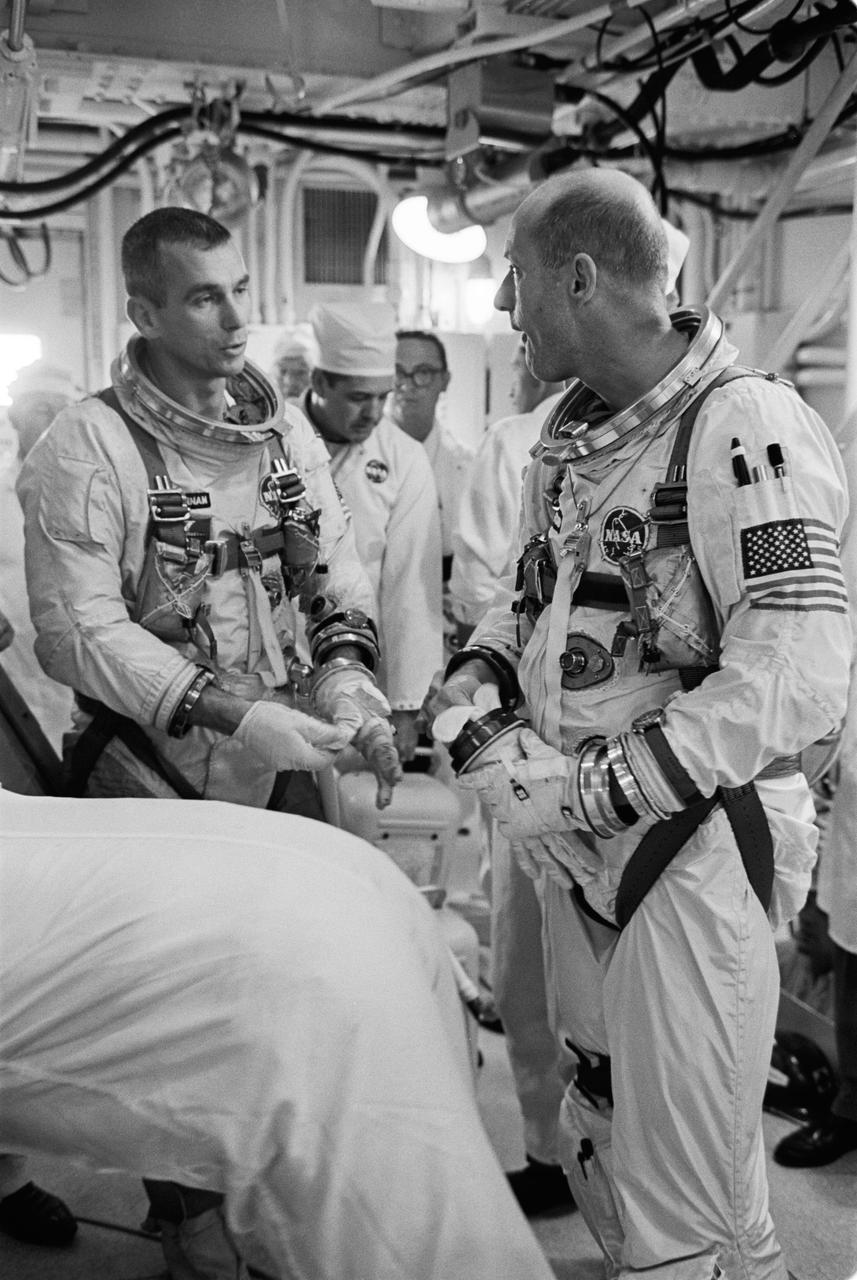
S66-32044 (17 May 1966) --- Astronauts Eugene A. Cernan (left), pilot, and Thomas P. Stafford, command pilot, discuss the postponed Gemini-9 mission just after egressing their spacecraft in the white room atop Pad 19. The Agena Target Vehicle failed to achieve orbit, causing a termination of the mission. The spaceflight (to be called Gemini-9A) has been rescheduled for May 31. A Gemini Augmented Target Docking Adapter will be used as the rendezvous and docking vehicle for the Gemini-9 spacecraft. Photo credit: NASA
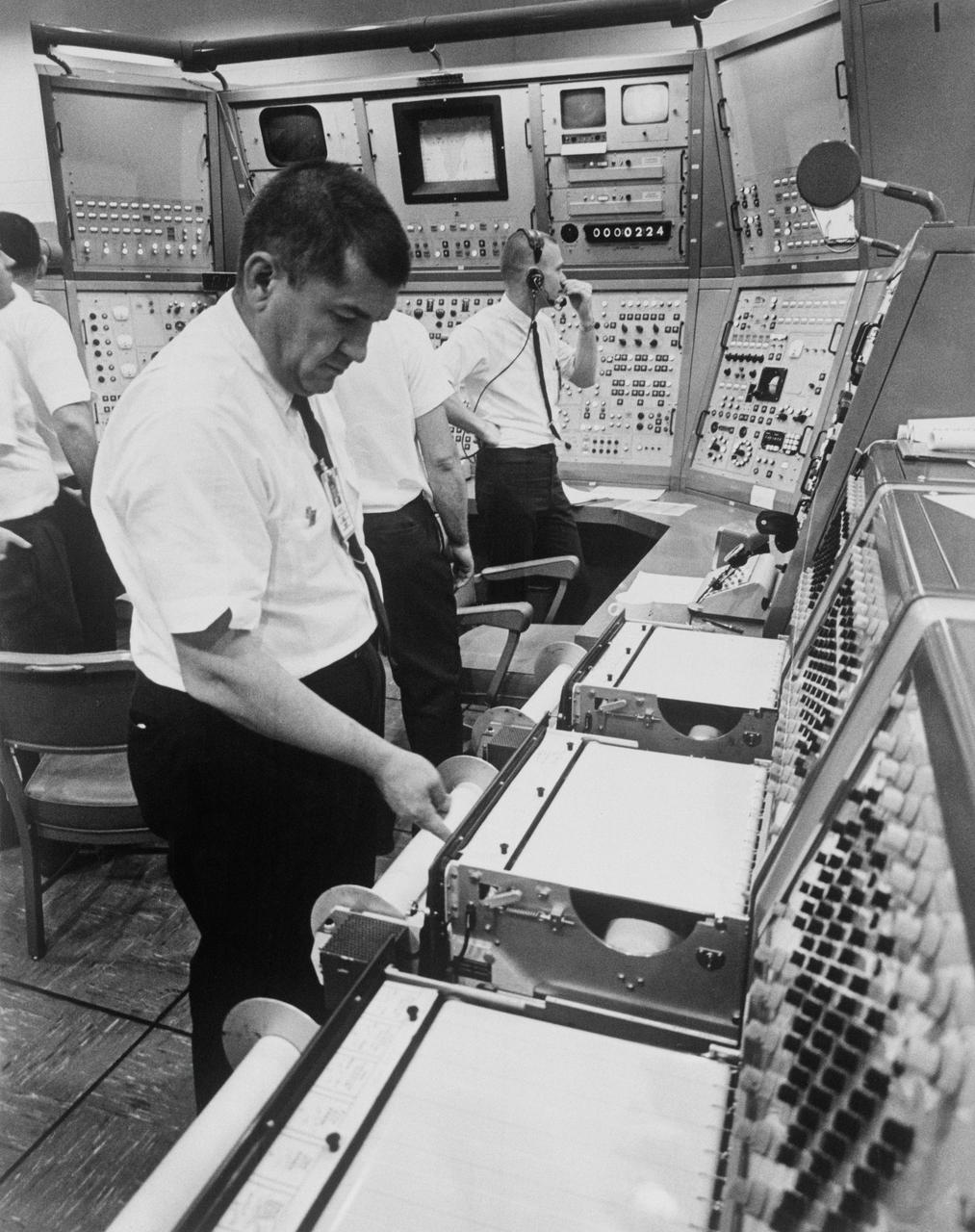
S65-18765 (19 March 1965) --- NASA technicians are shown operating the consoles for the Gemini mission simulator in the Mission Control center during simulations by the Gemini-Titan 3 crew members.
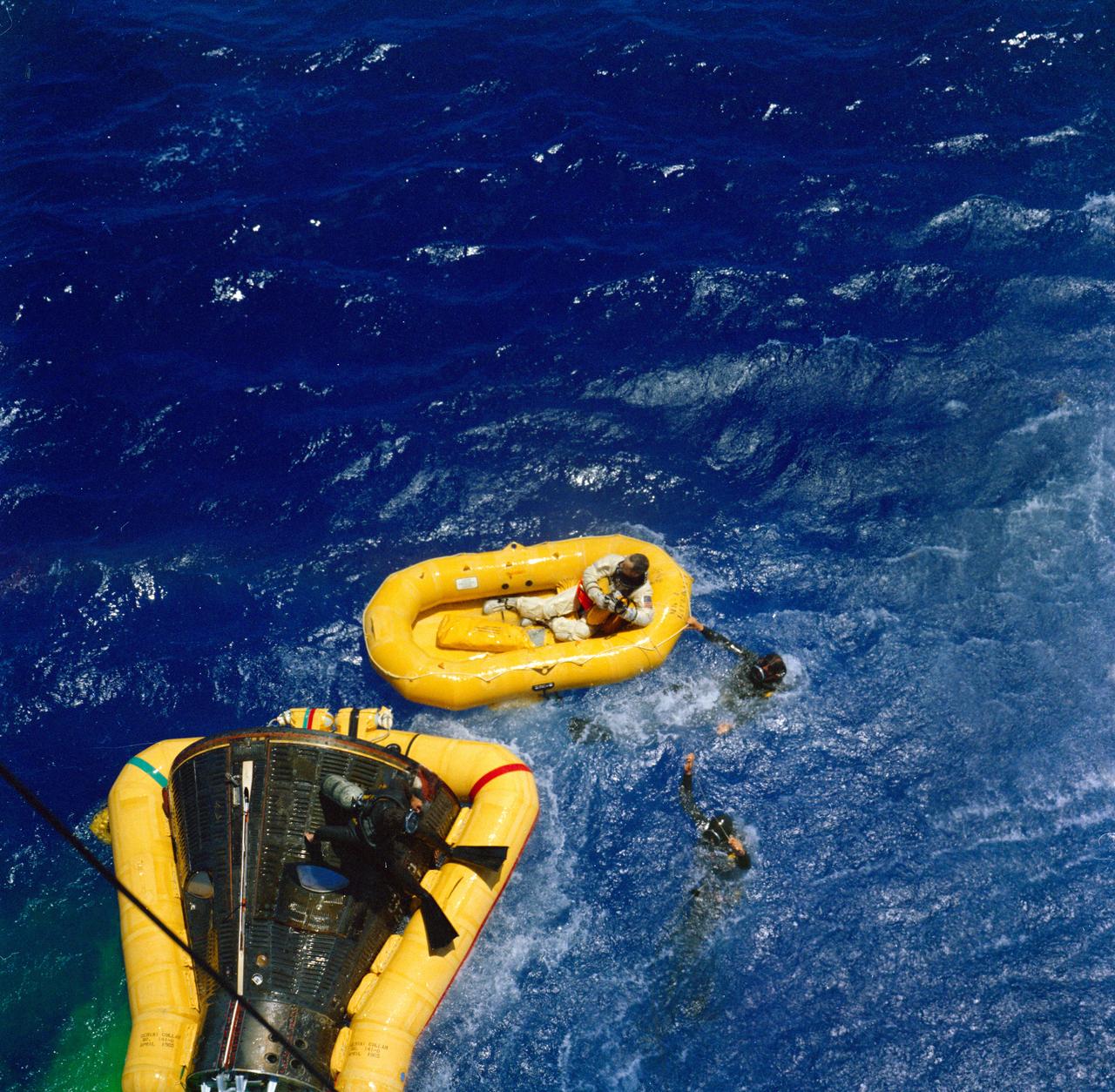
S65-33490 (7 June 1965) --- A United States Navy frogman team participates in the recovery of the Gemini-Titan 4 (GT-4) spacecraft. The USS Wasp was the prime recovery ship for the Gemini-4 mission. The crew of the Gemini-4 spaceflight was astronauts James A. McDivitt, command pilot, and Edward H. White II, pilot.
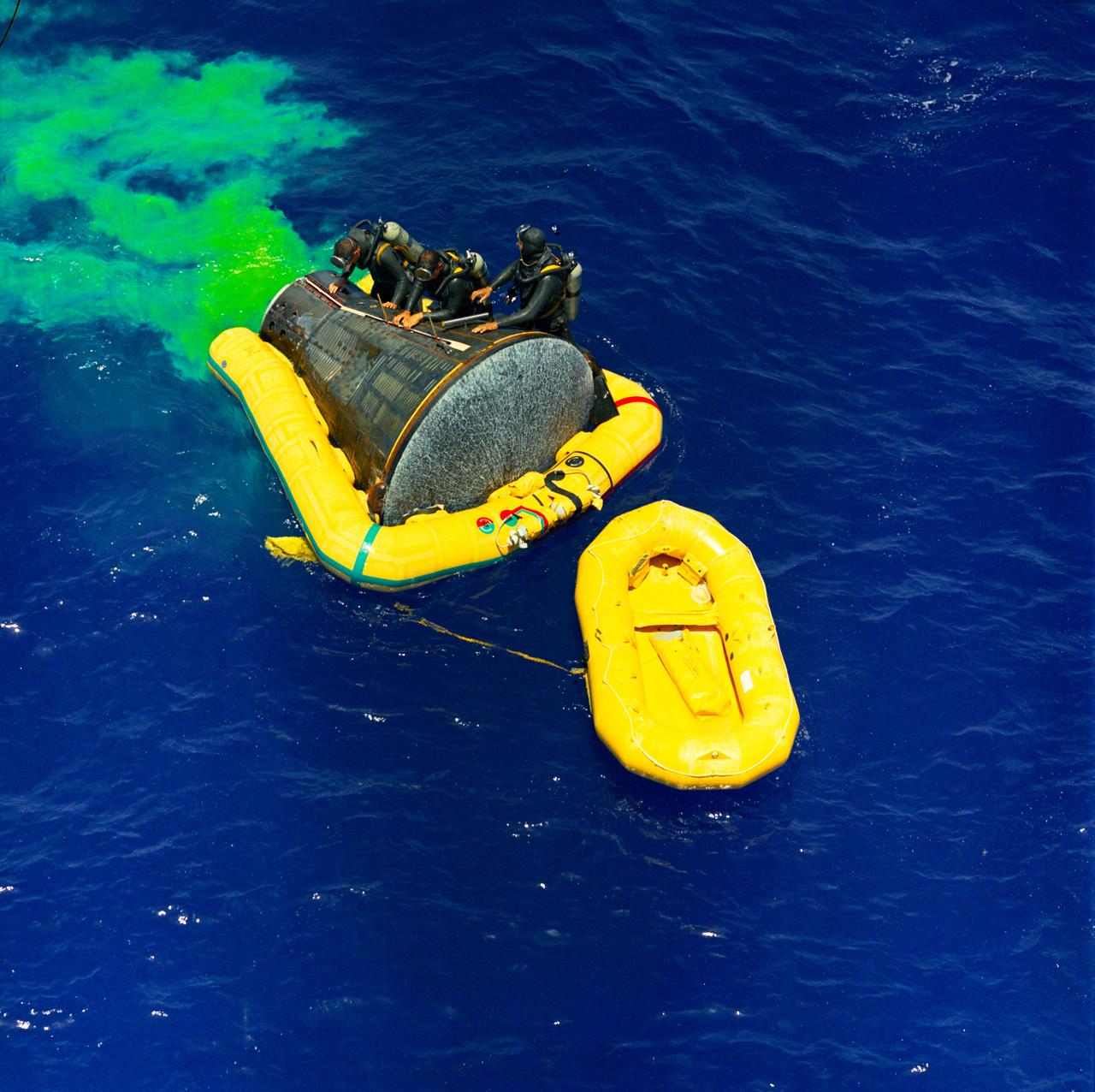
S65-33491 (7 June 1965) --- A United States Navy frogman team participates in the recovery of the Gemini-Titan 4 (GT-4) spacecraft. The USS Wasp was the prime recovery ship for the Gemini-4 mission. The crew of the Gemini-4 spaceflight was astronauts James A. McDivitt, command pilot, and Edward H. White II, pilot.
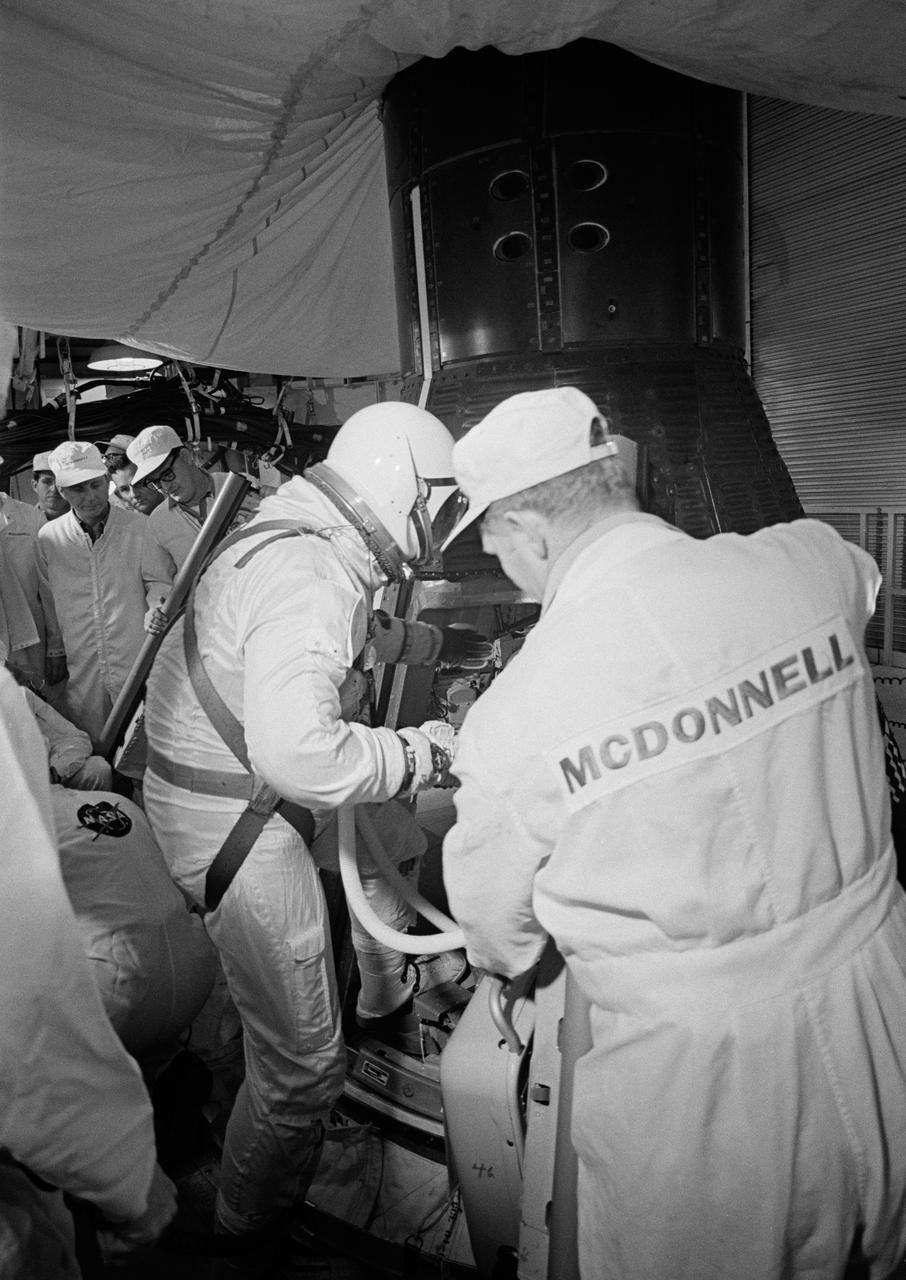
S65-20604 (23 March 1965) --- Astronaut John W. Young, the pilot of the Gemini-Titan 3 three-orbit mission, is assisted by a McDonnell Aircraft Corp. engineer as he enters the Gemini spacecraft in the white room atop the Gemini launch vehicle.

S66-38080 (3 June 1966) --- Astronaut Thomas P. Stafford, command pilot of the Gemini-9A spaceflight, is photographed during the Gemini-9A mission inside the spacecraft by astronaut Eugene Cernan, Gemini-9A pilot. Photo credit: NASA
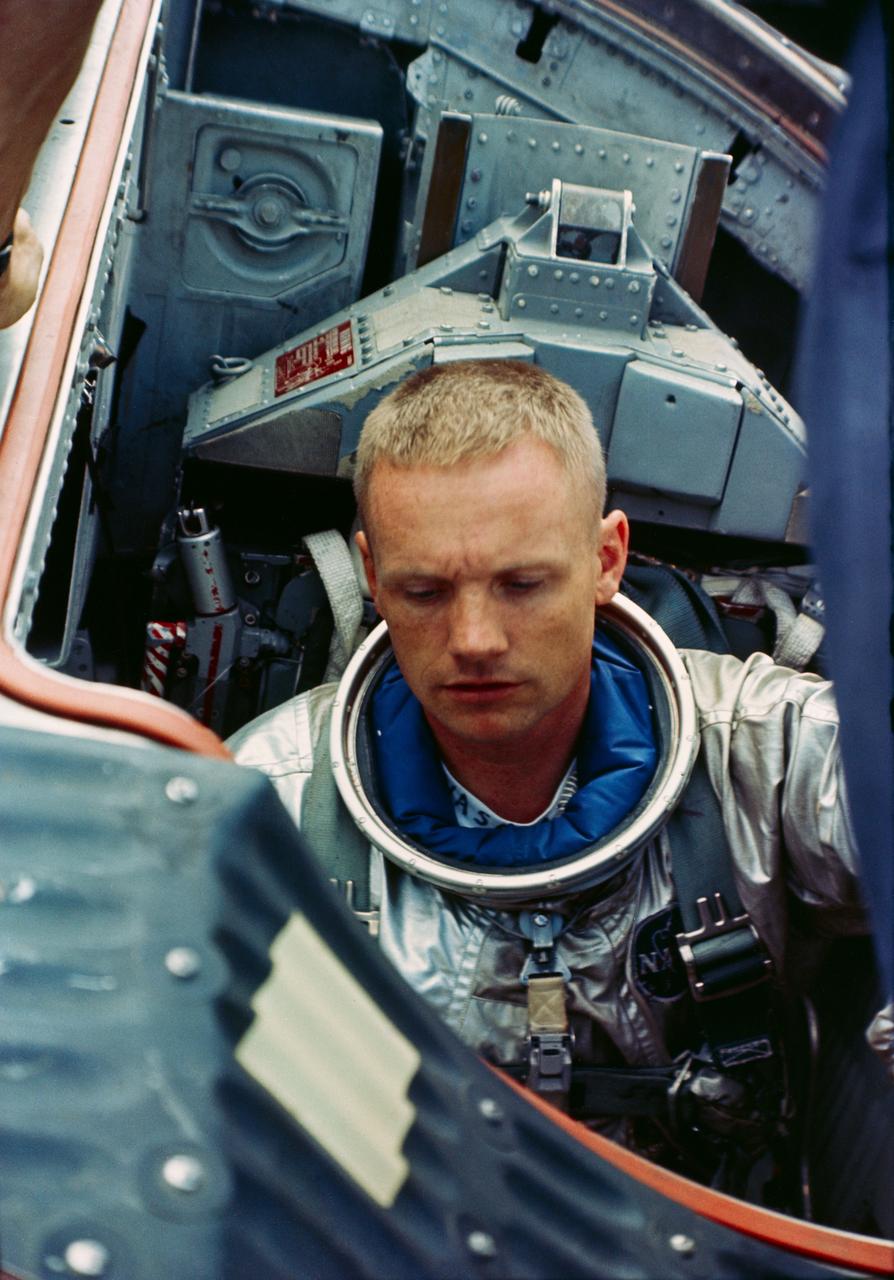
S65-28459 (16 July 1965) --- Astronaut Neil A. Armstrong, command pilot for the Gemini-5 backup crew, inside the Gemini Static Article 5 spacecraft prior to water egress training in the Gulf of Mexico. The training is part of the prelaunch schedule for prime and backup crew on the Gemini-5 mission.
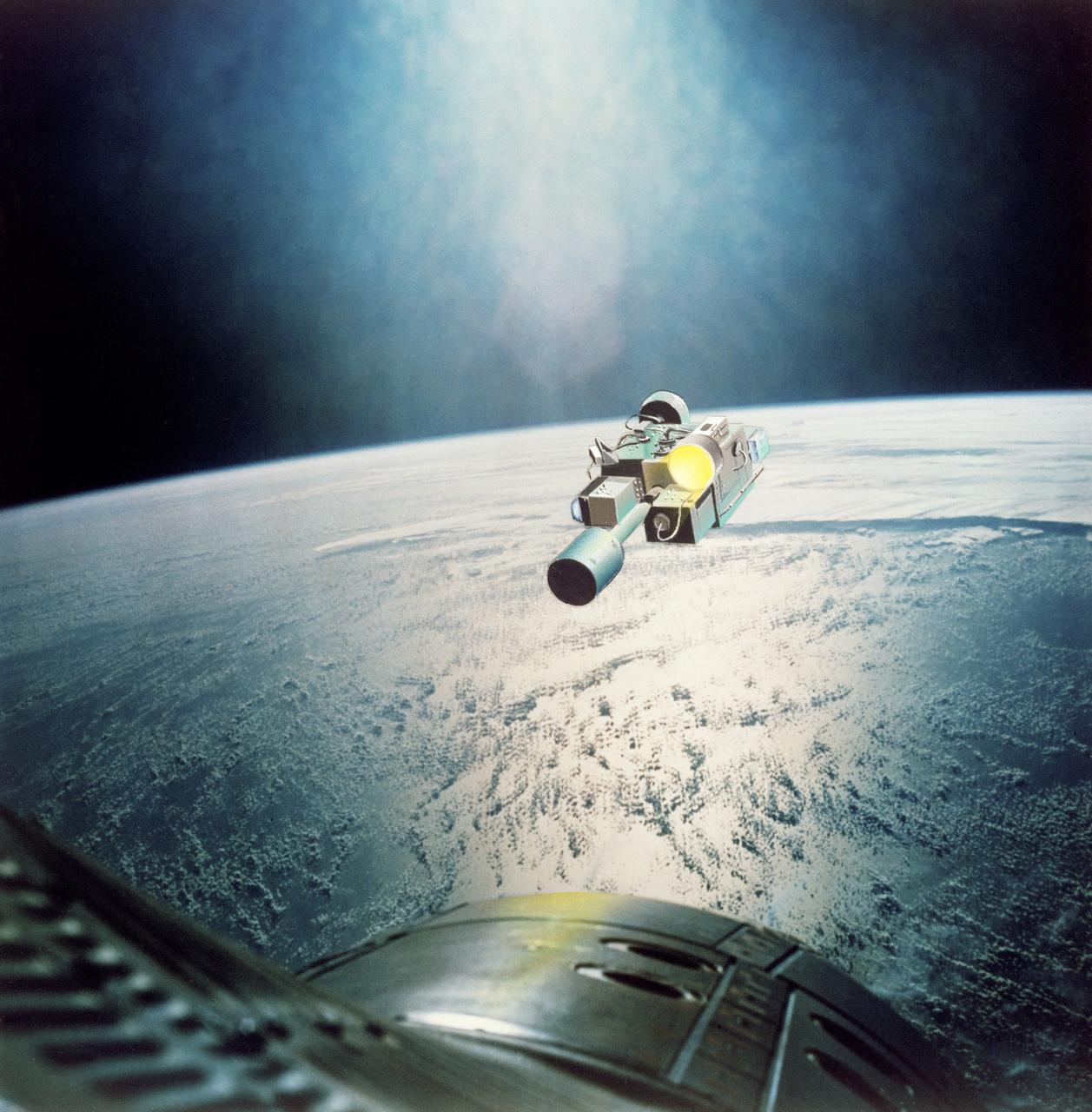
S65-28653 (August 1965) --- Rendezvous Evaluation Pod (REP) in orbit is approached by Gemini spacecraft as seen in this artist's concept using an actual photograph taken on the Gemini-4 mission. The REP is superimposed over a Gemini-4 Earth-sky picture of cloud formations over an ocean. The REP will be used by the crew of the Gemini-5 spacecraft to practice rendezvous techniques.
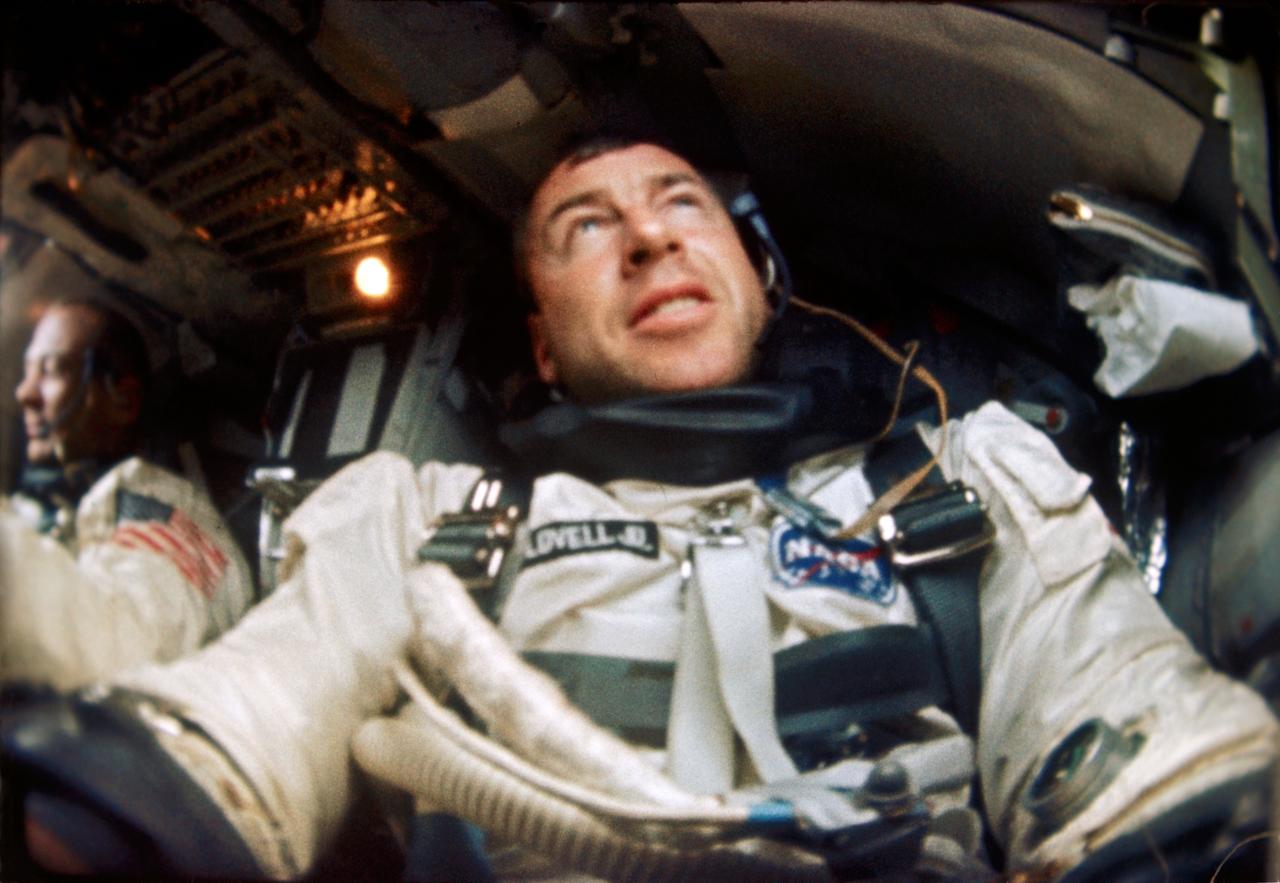
S66-63540 (12 Nov. 1966) --- Astronaut James A. Lovell is photographed inside his Gemini spacecraft during the Gemini-12 mission. Astronaut Edwin Aldrin is seen in the background and to the left. Photo credit: NASA

S65-63171 (15 Dec. 1965) --- The Gemini-7 spacecraft as seen from the Gemini-6 spacecraft during their rendezvous mission in space. Photo credit: NASA or National Aeronautics and Space Administration
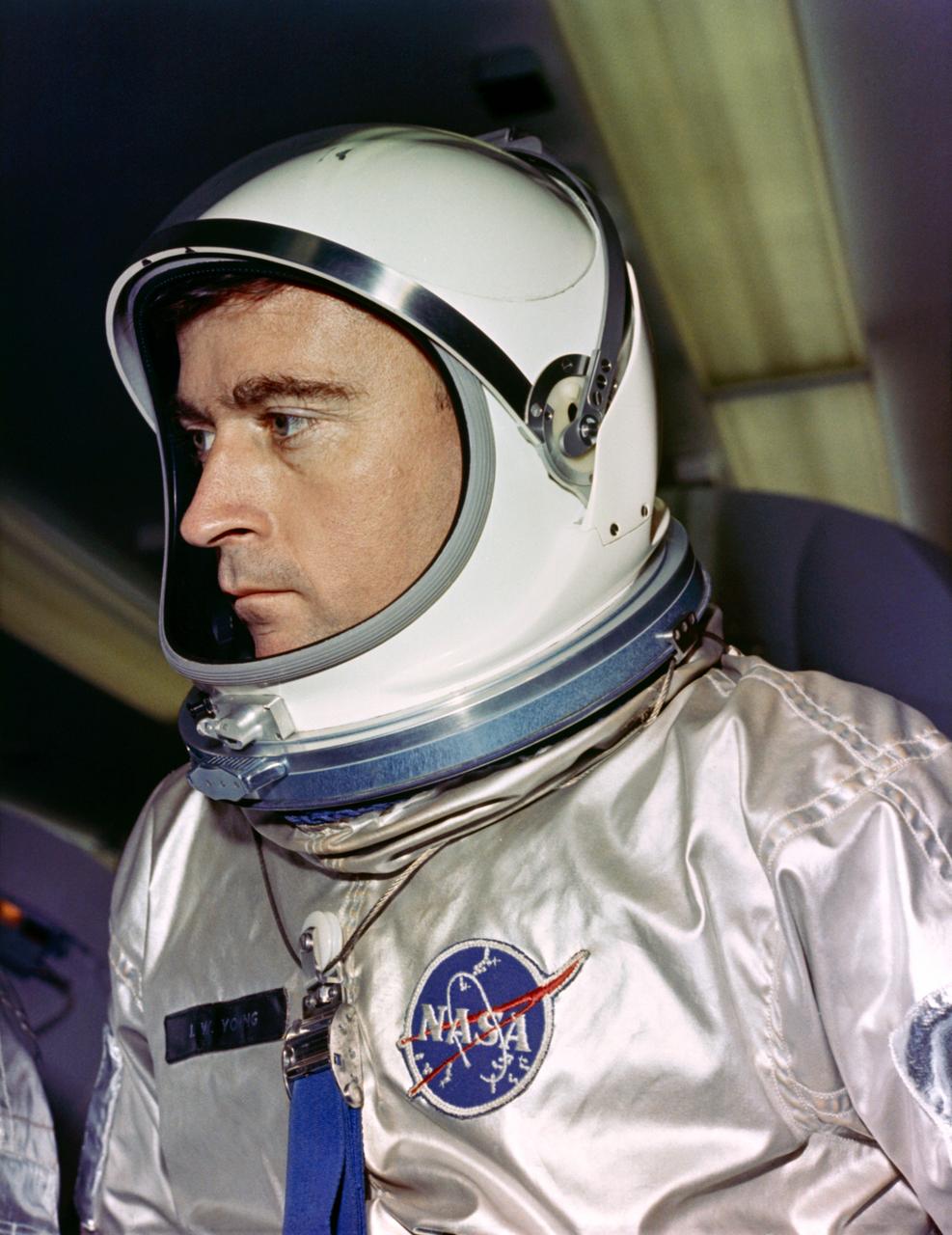
S65-23485 (23 March 1965) --- Astronaut John W. Young, pilot for the Gemini-Titan 3 mission, is in his space suit prior to Gemini-3 launch.
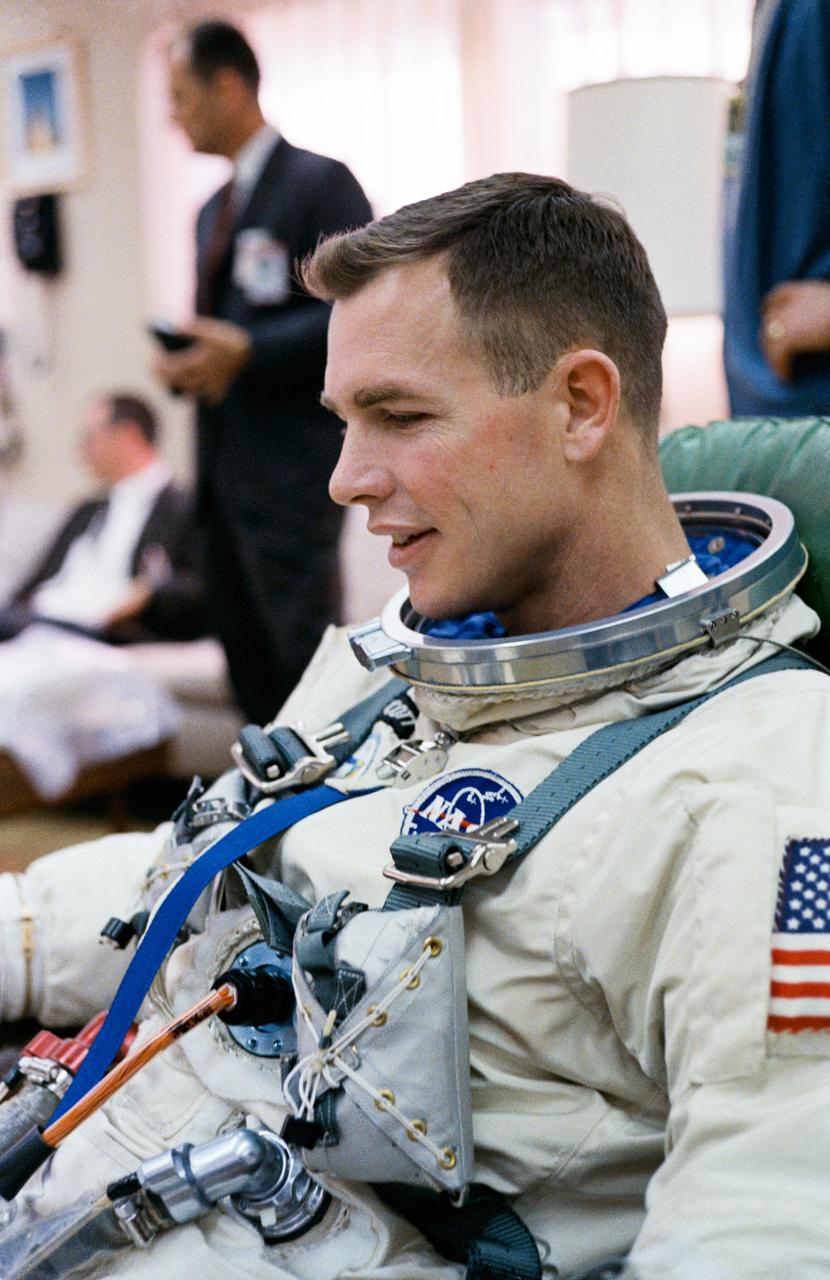
S66-24491 (16 March 1966) --- Astronaut David R. Scott, pilot of the Gemini-8 spaceflight, relaxes in the Launch Complex 16 trailer during suiting up operations for the Gemini-8 mission. Photo credit: NASA

S65-63198 (15 Dec. 1965) --- The Gemini-7 spacecraft as seen from the Gemini-6 spacecraft during their rendezvous mission in space. They are approximately 39 feet apart. Photo credit: NASA or National Aeronautics and Space Administration
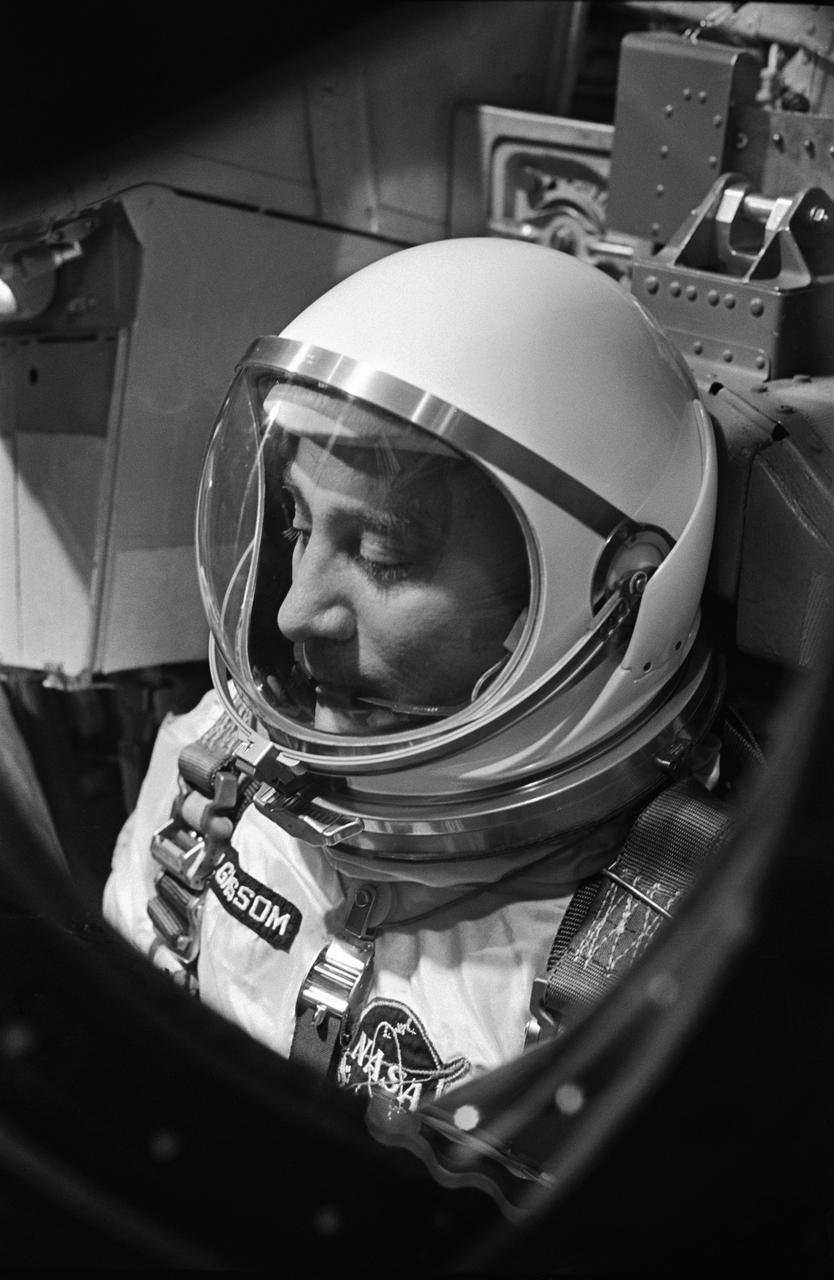
S65-20605 (23 March 1965) --- Astronaut Virgil I. Grissom, the command pilot of the Gemini-Titan 3 mission, is shown through the window of the open hatch on the Gemini spacecraft in the white room on the morning of the launch.
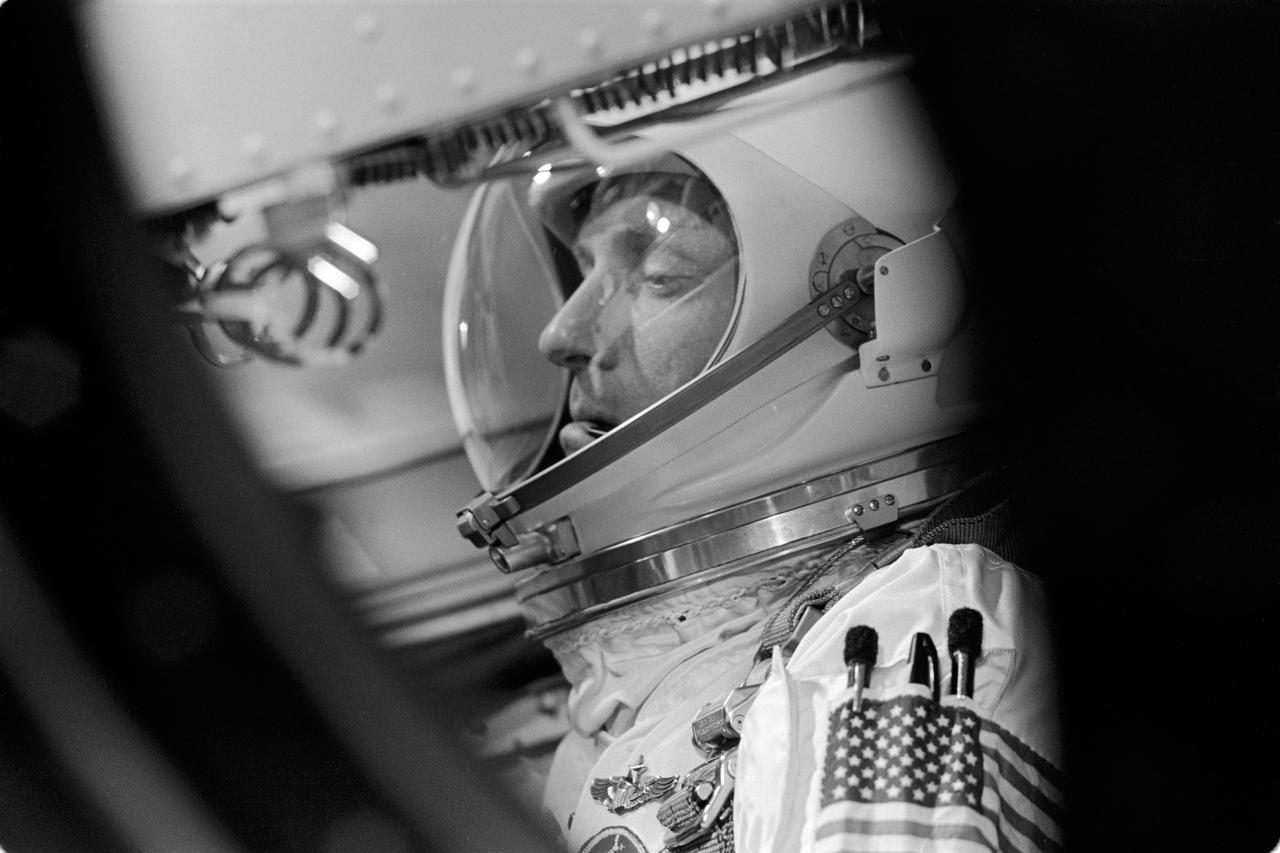
S65-61806 (15 Dec. 1965) --- Astronaut Thomas P. Stafford, Gemini-6 prime crew pilot, is seen through spacecraft window as he awaits the remaining minutes of the Gemini-6 prelaunch countdown. A two-day mission in space was scheduled for astronauts Stafford and Walter M. Schirra Jr. (out of frame), command pilot. NASA successfully launched Gemini-6 from Pad 19 at 8:37 a.m. (EST) on Dec. 15, 1965. An attempt will be made to rendezvous Gemini-6 with Gemini-7. Photo credit: NASA or National Aeronautics and Space Administration
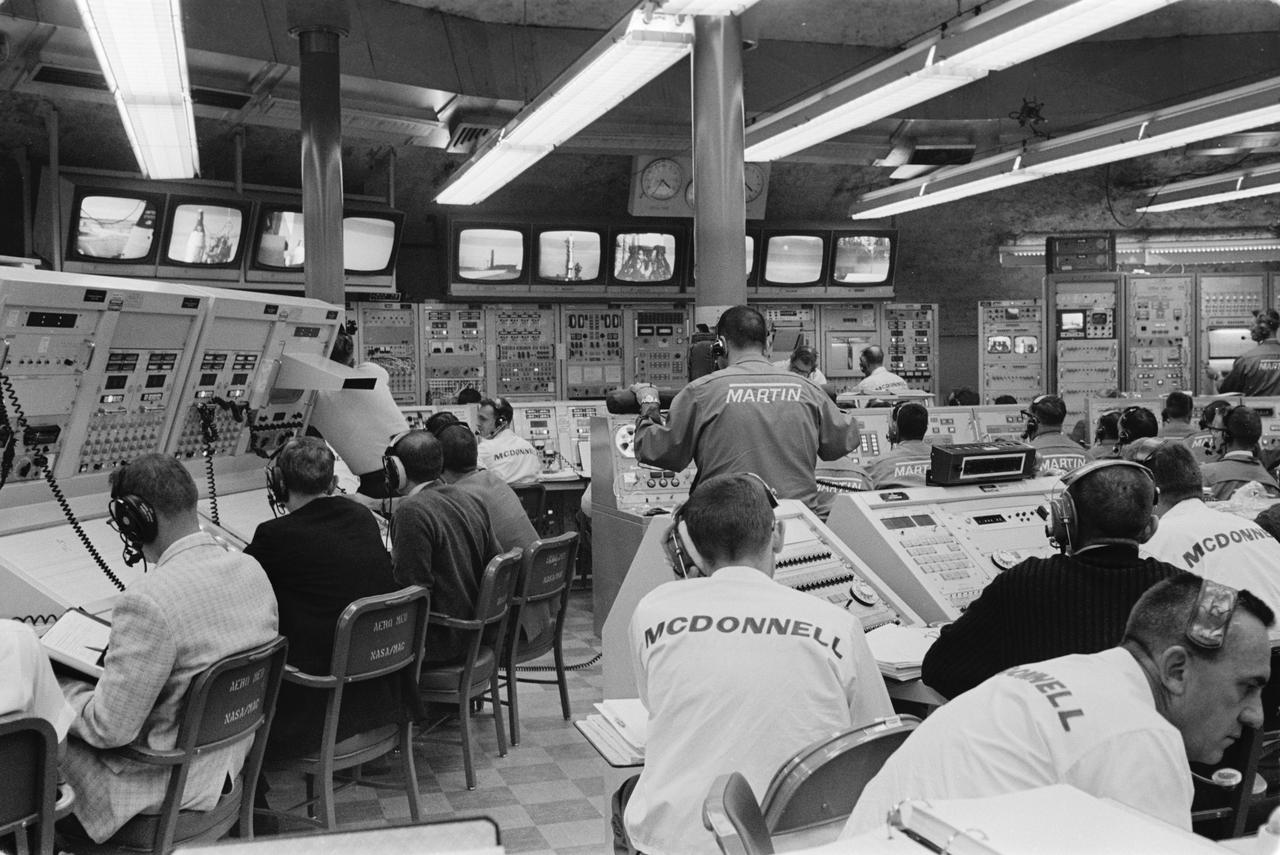
S65-61804 (15 Dec. 1965) --- Overall view of activity in blockhouse at Launch Complex 19 during the final moments of the Gemini-6 prelaunch countdown. The Gemini-6 spacecraft and launch vehicle at Pad 19 are seen on television monitors above consoles. In the spacecraft awaiting liftoff were astronauts Walter M. Schirra Jr., command pilot; and Thomas P. Stafford, pilot. The National Aeronautics and Space Administration successfully launched Gemini-6 at 8:37 a.m. (EST) on Dec. 15, 1965, on a two-day mission in space. An attempt will be made to rendezvous Gemini-6 with Gemini-7. Photo credit: NASA or National Aeronautics and Space Administration
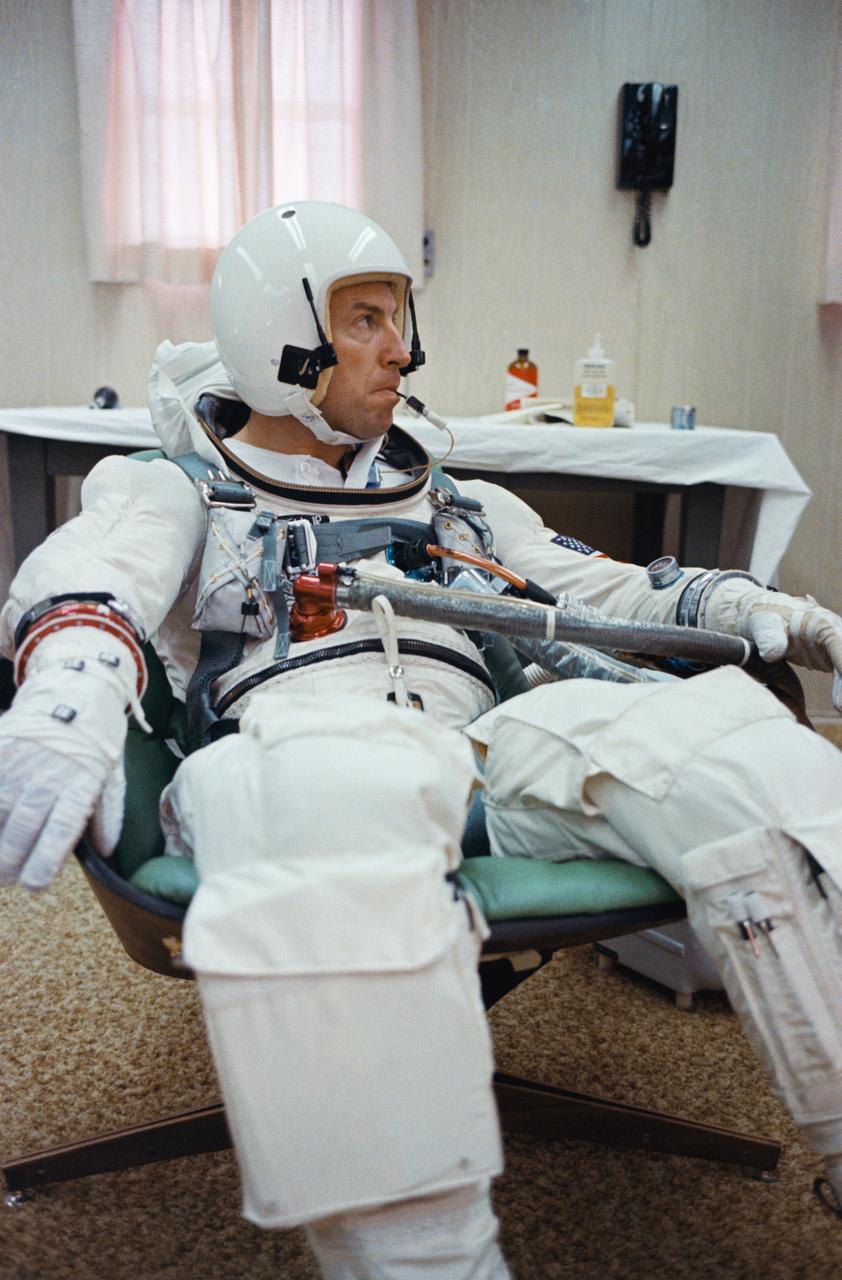
S65-59934 (4 Dec. 1965) --- Gemini-7 pilot James A. Lovell Jr. has a temperature check with an oral temperature probe attached to his spacesuit during a final preflight preparations for the Gemini-7 space mission. The National Aeronautics and Space Administration has planned a 14-day mission for the Gemini-7. The temperature probe allows doctors to monitor astronauts' body temperature at any time during the mission. Photo credit: NASA
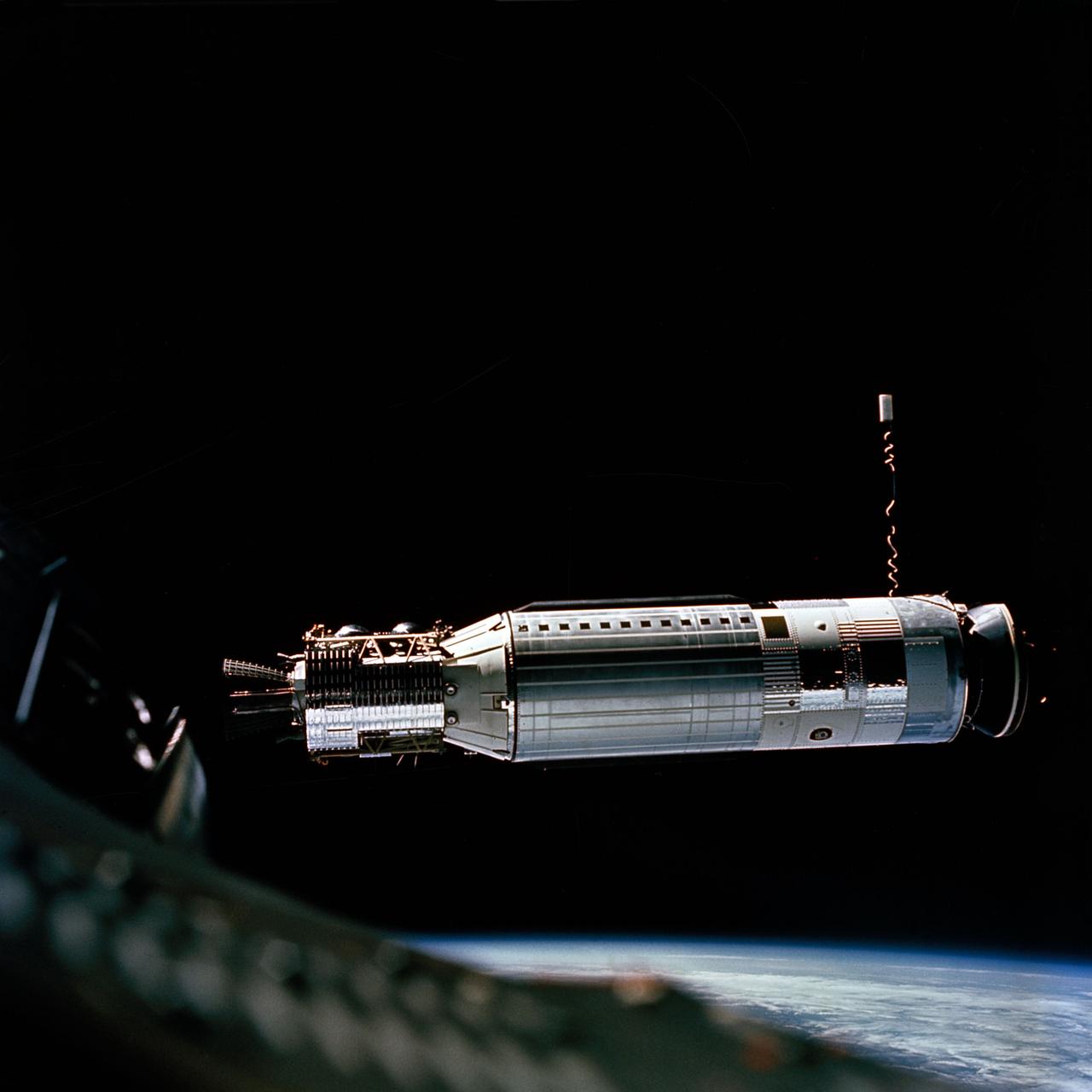
S66-25782 (16 March 1966) --- Closer view of the Agena Target Docking vehicle seen from the Gemini-8 spacecraft during rendezvous in space. Photo credit: NASA
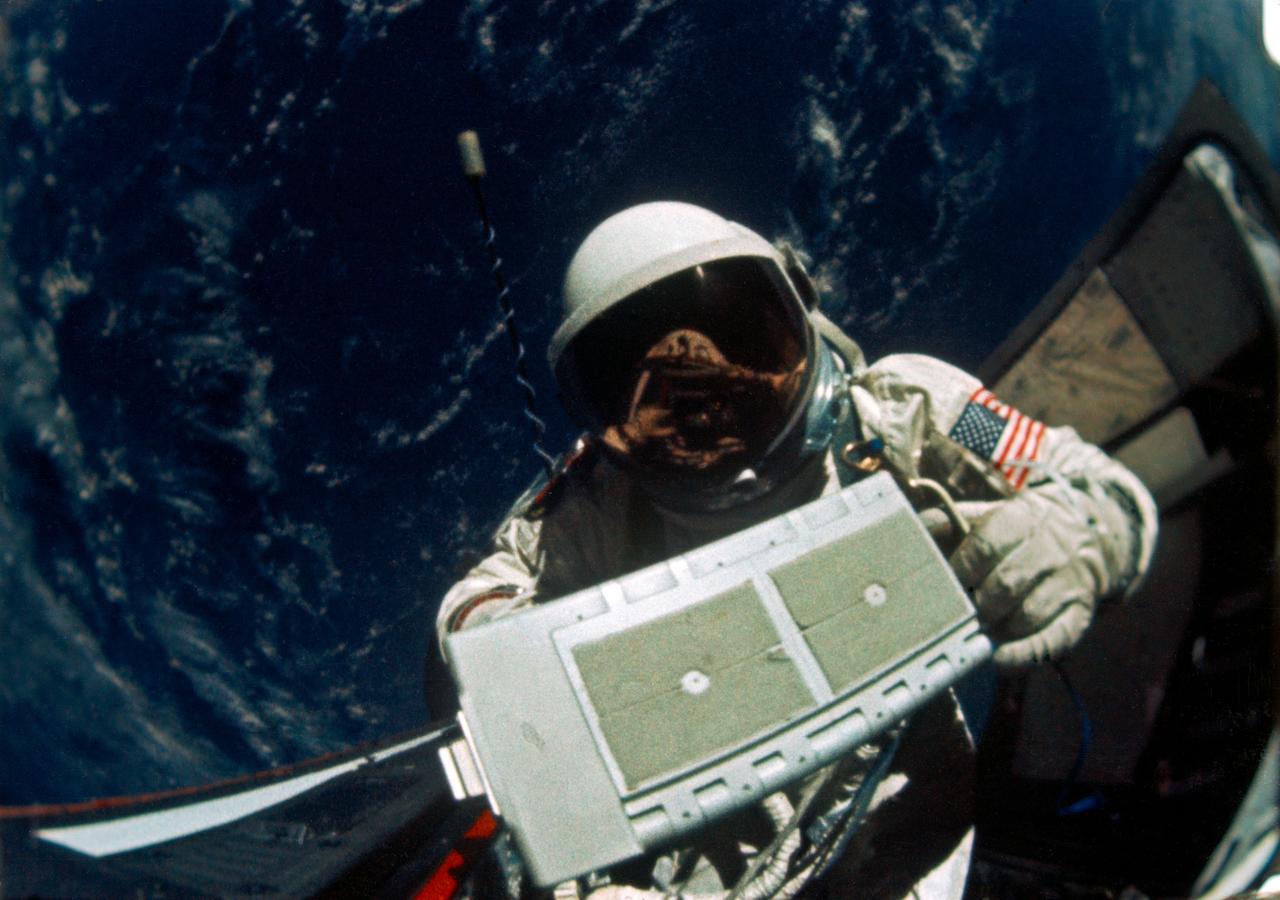
S66-63538 (11 Nov. 1966) --- Astronaut Edwin E. Aldrin Jr., pilot for the Gemini-12 spaceflight, removes micrometeoroid package for return to the spacecraft during extravehicular activity (EVA) on the first day of the four-day mission. Command pilot for the Gemini-12 mission, the last in the Gemini series, was astronaut James A. Lovell Jr. Photo credit: NASA
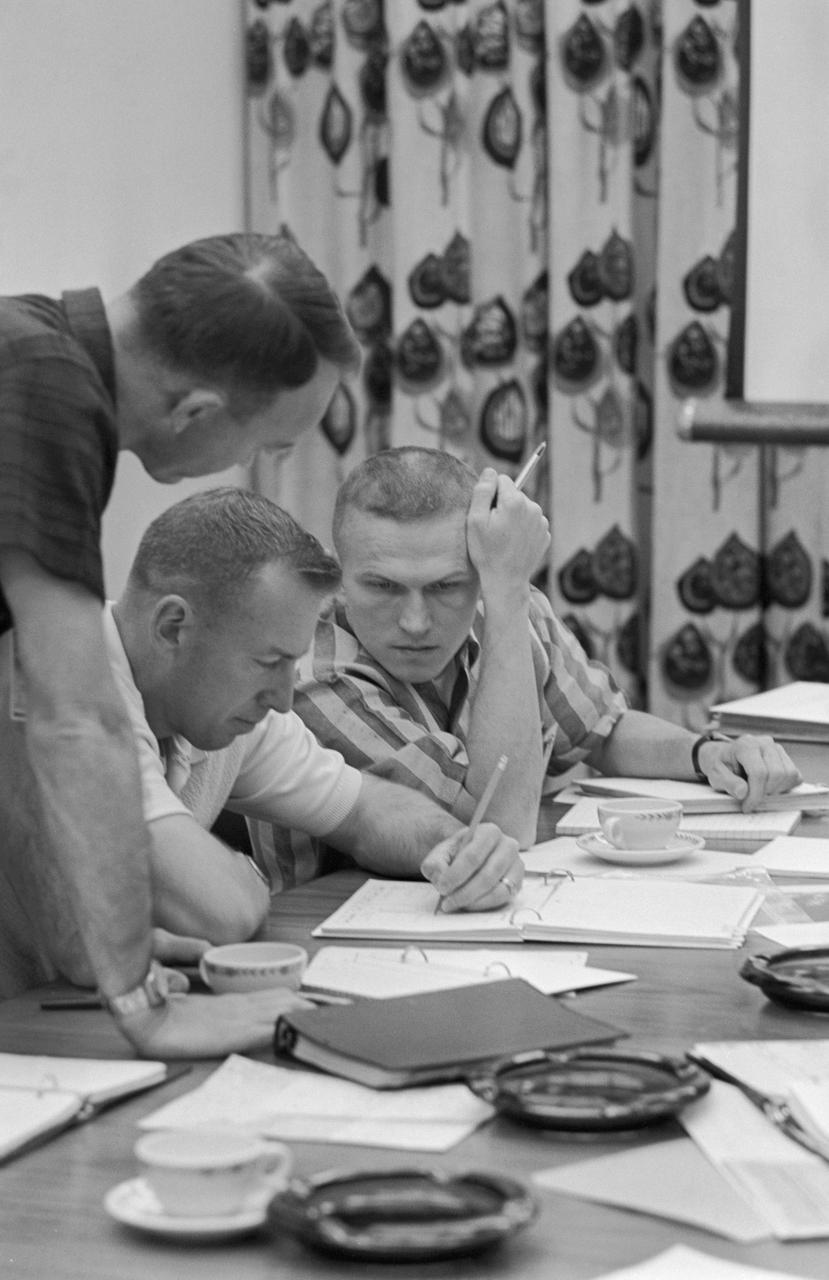
S65-56313 (2 Dec. 1965) --- Gemini-7 astronauts James Lovell Jr. (center) and Frank Borman (right) review mission requirements for their Gemini-7 flight. The two astronauts are scheduled for a 14-day mission. On the fifth day, they will attempt a rendezvous with the Gemini-6 spacecraft to be launched nine days later and piloted by astronaut Walter Schirra Jr. and Thomas Stafford. Photo credit: NASA
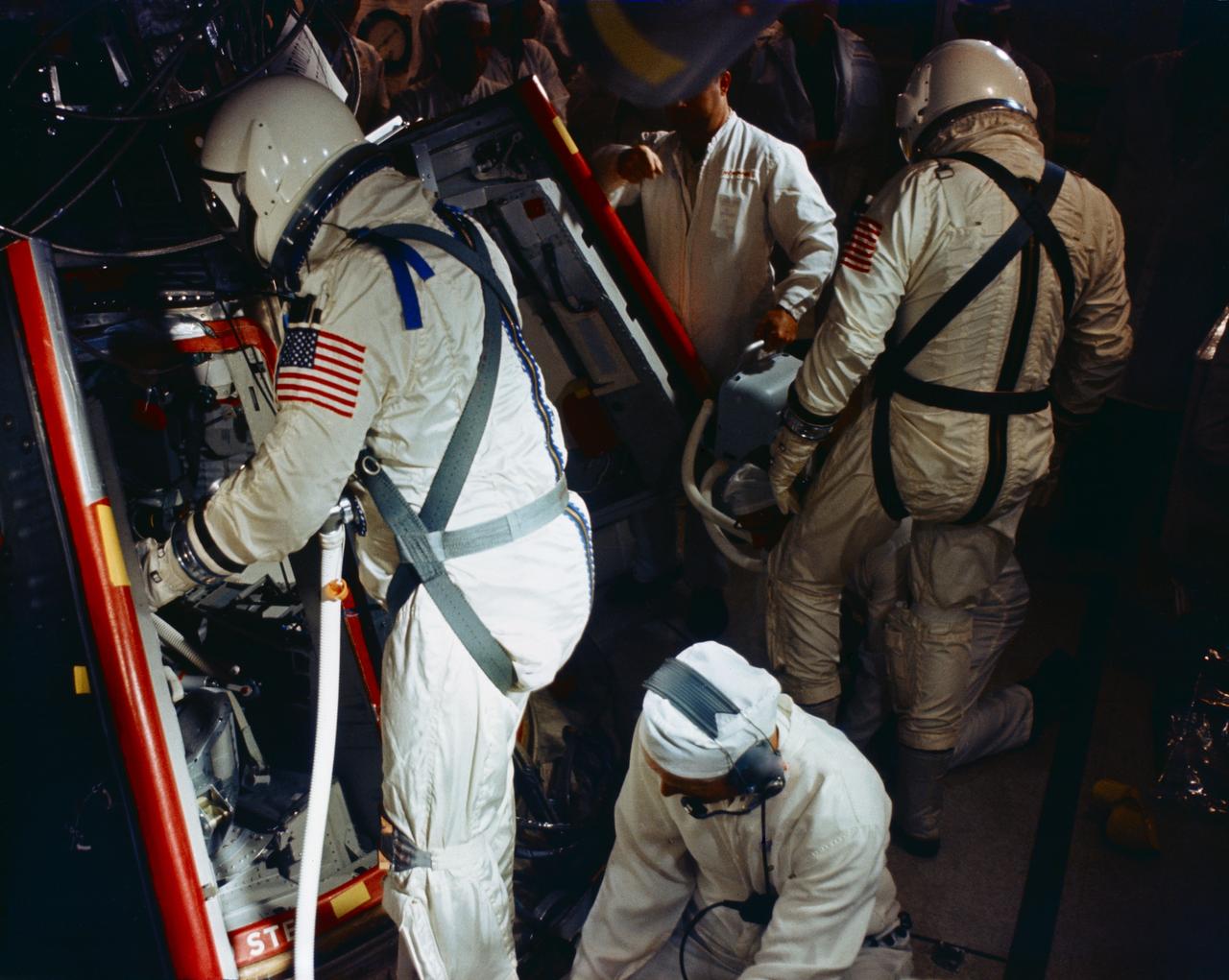
S65-56196 (25 Oct. 1965) --- Astronauts Walter M. Schirra Jr., command pilot; and Thomas P. Stafford, pilot, stand in the white room atop Pad 19 awaiting insertion into their Gemini-6 spacecraft during the prelaunch countdown of the Gemini-Titan-Agena 6 space mission. However, the Gemini-6 liftoff scheduled for Oct. 25 never occurred. The Agena, intended as a rendezvous target vehicle in the mission, failed to achieve orbit. Photo credit: NASA or National Aeronautics and Space Administration
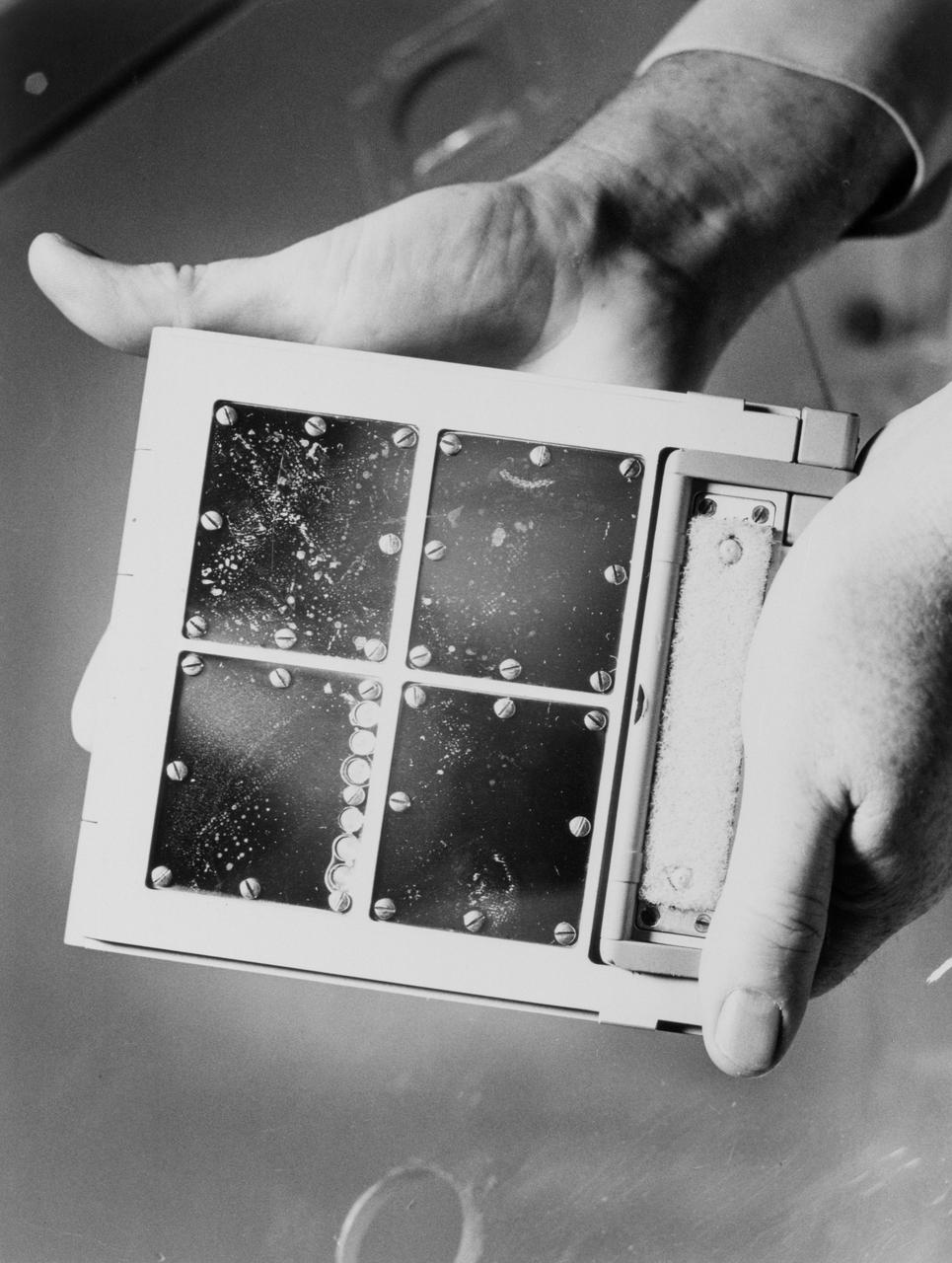
S66-44886 (1 Aug. 1966) --- Four panels of experiment S-10 carried on the Agena Target Vehicle launched for the Gemini-8 mission. This package of test panels was retrieved from the Gemini-8 Agena by astronaut Michael Collins during the Gemini-10 mission. Experimenters expected micrometeorites to bombard the panels during their stay in space. Photo credit: NASA
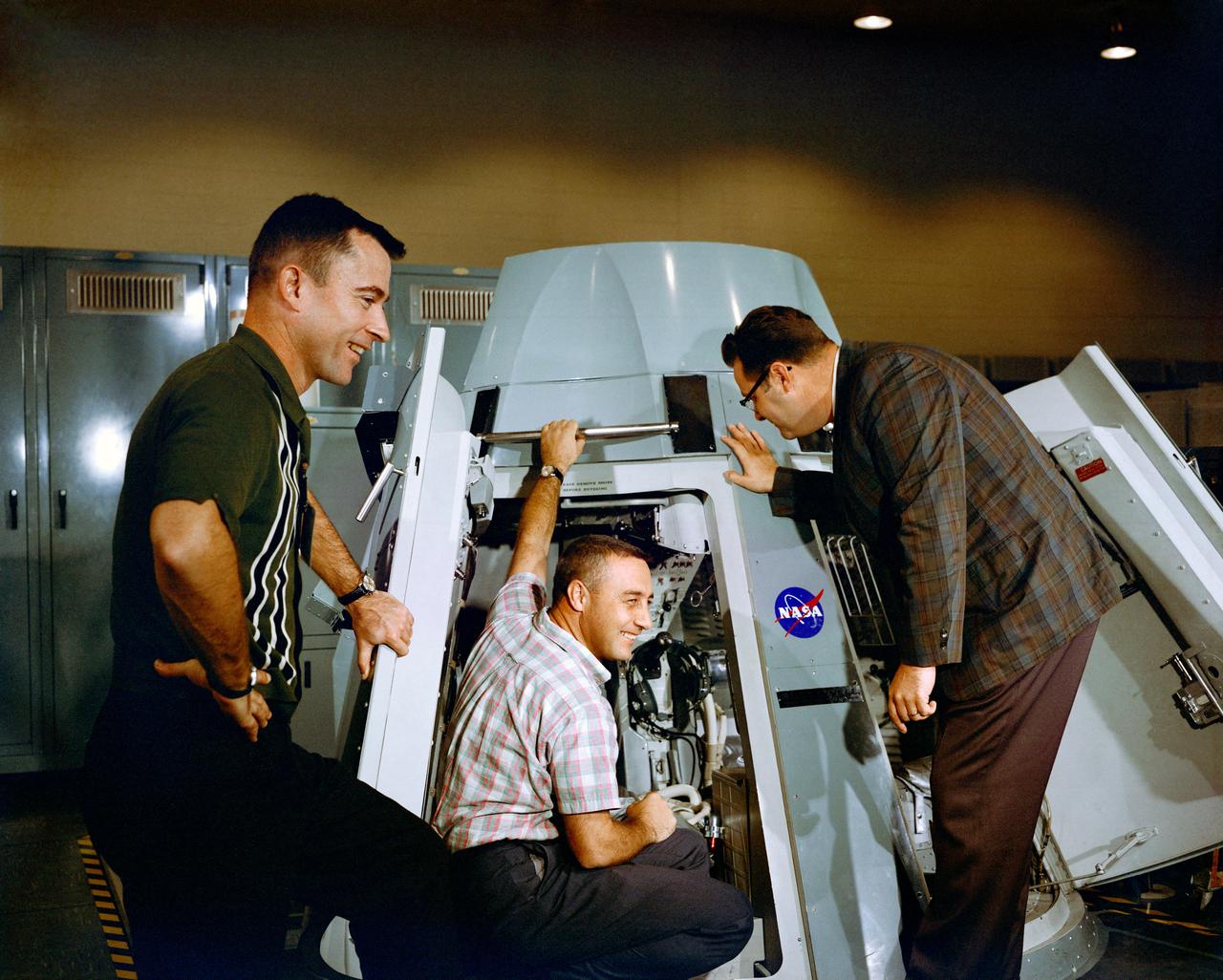
S64-40294 (19 Nov. 1964) --- Astronauts Virgil I. Grissom (center) and John W. Young (left), prime crew for the Gemini-Titan 3 mission, are shown inspecting the inside of Gemini spacecraft at the Mission Control Center at Cape Kennedy, Florida. Riley D. McCafferty is at right. Photo credit: NASA
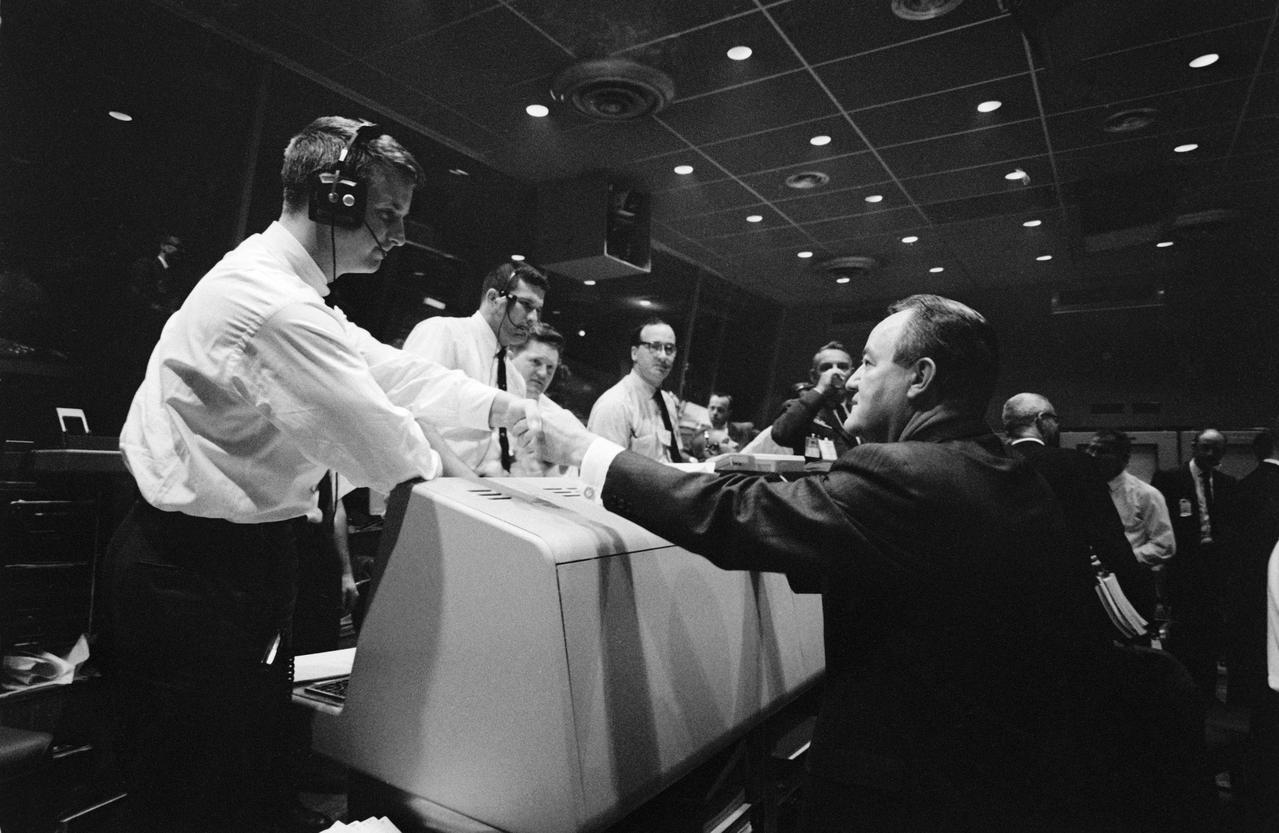
S65-22621 (23 March 1965) --- Vice President Hubert H. Humphrey (right) during visit to the Misson Control Center at Cape Kennedy during the Gemini-3 mission. Crew members on the Gemini-3 mission are astronauts Virgil I. Grissom, command pilot; and John W. Young, pilot.
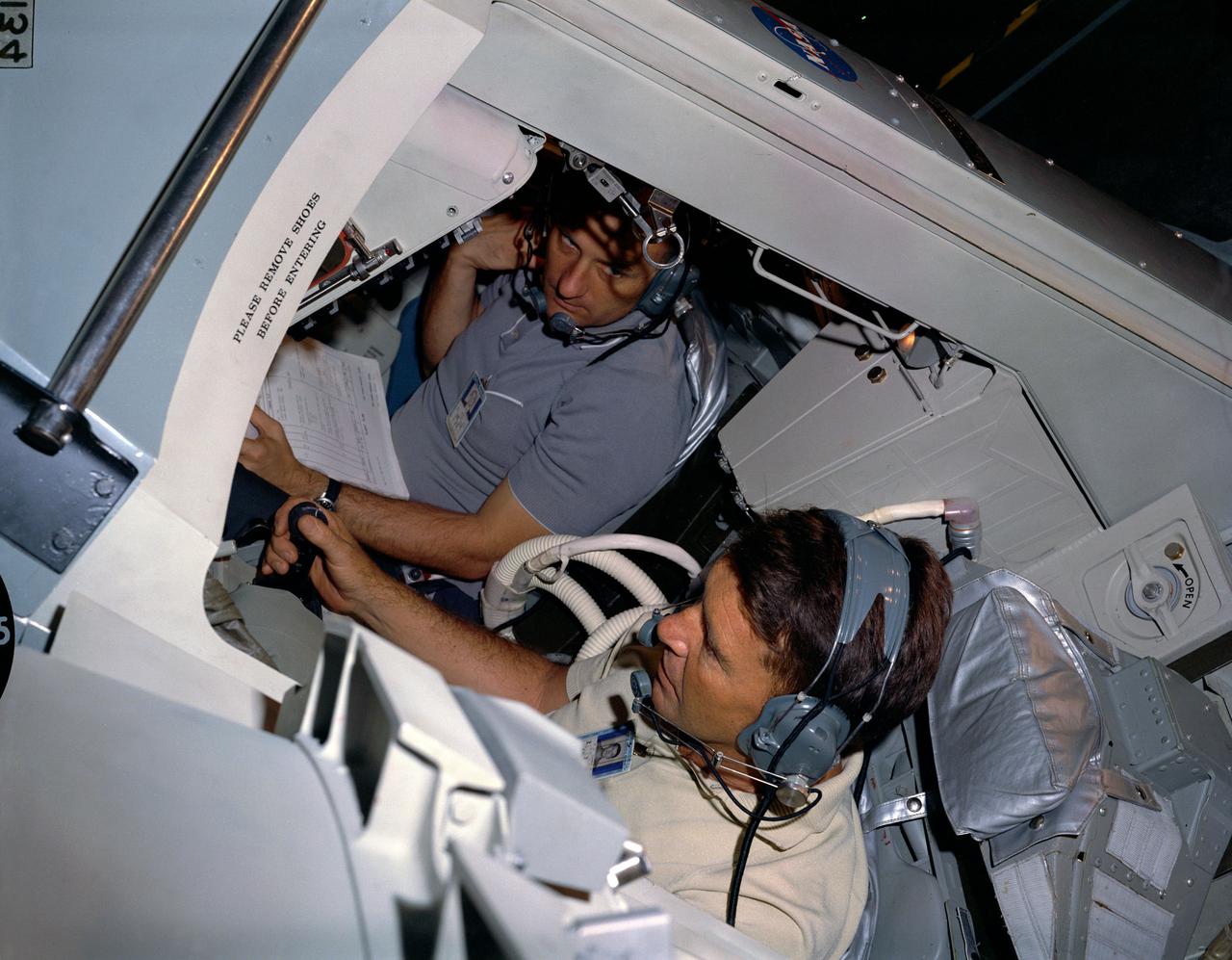
S65-13921 (1965) --- Overhead view of astronauts Walter M. Schirra Jr. (foreground), backup command pilot, and Thomas P. Stafford, backup pilot, as they prepare to run Gemini-Titan 3 simulations in the Gemini mission simulator in the Mission Control Center at Merritt Island, Florida.
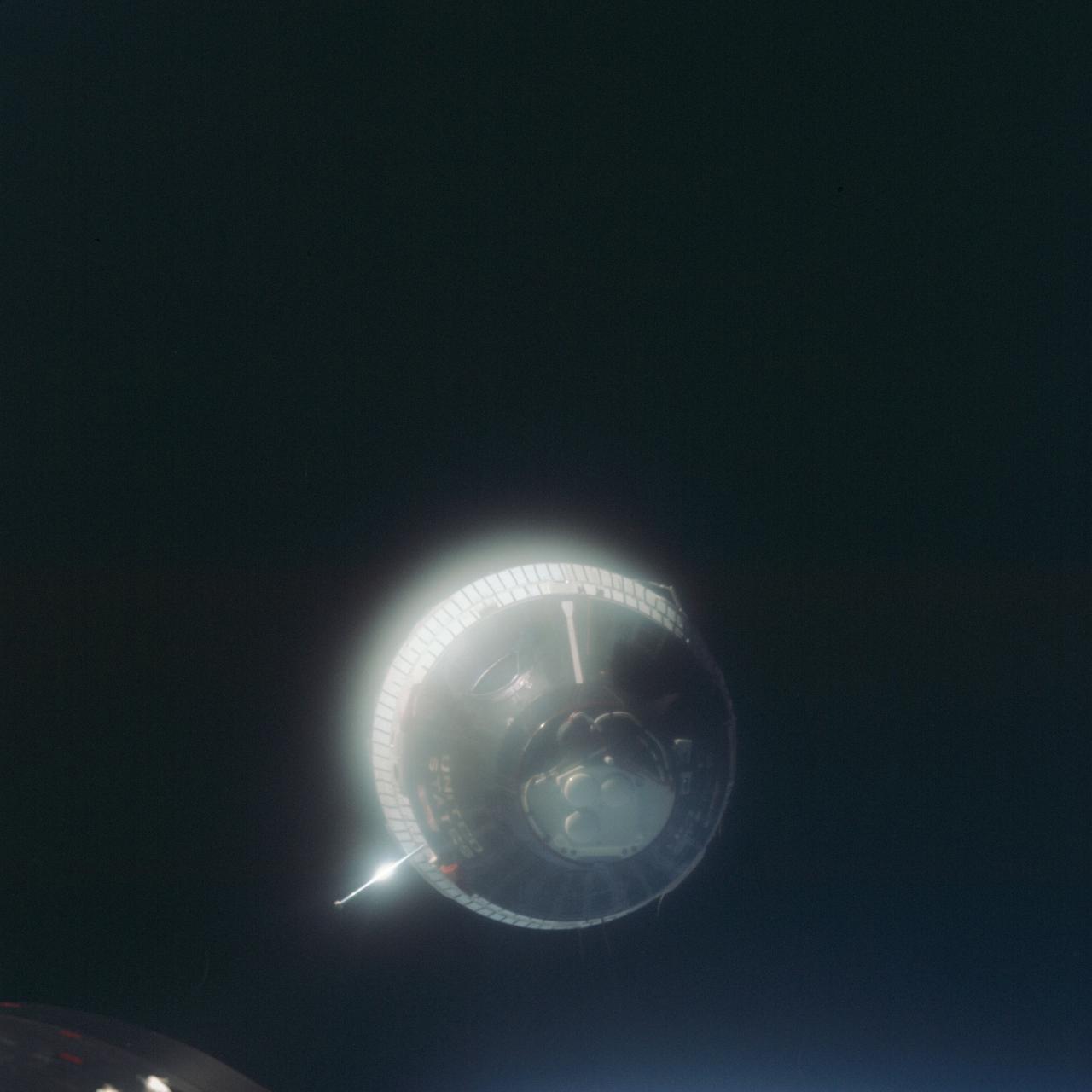
S65-63898 (15 Dec. 1965) --- This picture of the Earth-orbiting Gemini-6 spacecraft against the blackness of space was taken from the Gemini-7 spacecraft during the National Aeronautics and Space Administration's historic rendezvous mission. The two spacecraft are approximately 40 feet apart. This photograph was taken with a modified 70mm Hasselblad camera, using Eastman Kodak, Ektachrome MS (S.O. 217) color film. Aboard the Gemini-6 spacecraft were astronauts Walter M. Schirra Jr. and Thomas P. Stafford. Astronauts Frank Borman and James A. Lovell Jr. were in the Gemini-7 spacecraft. Photo credit: NASA
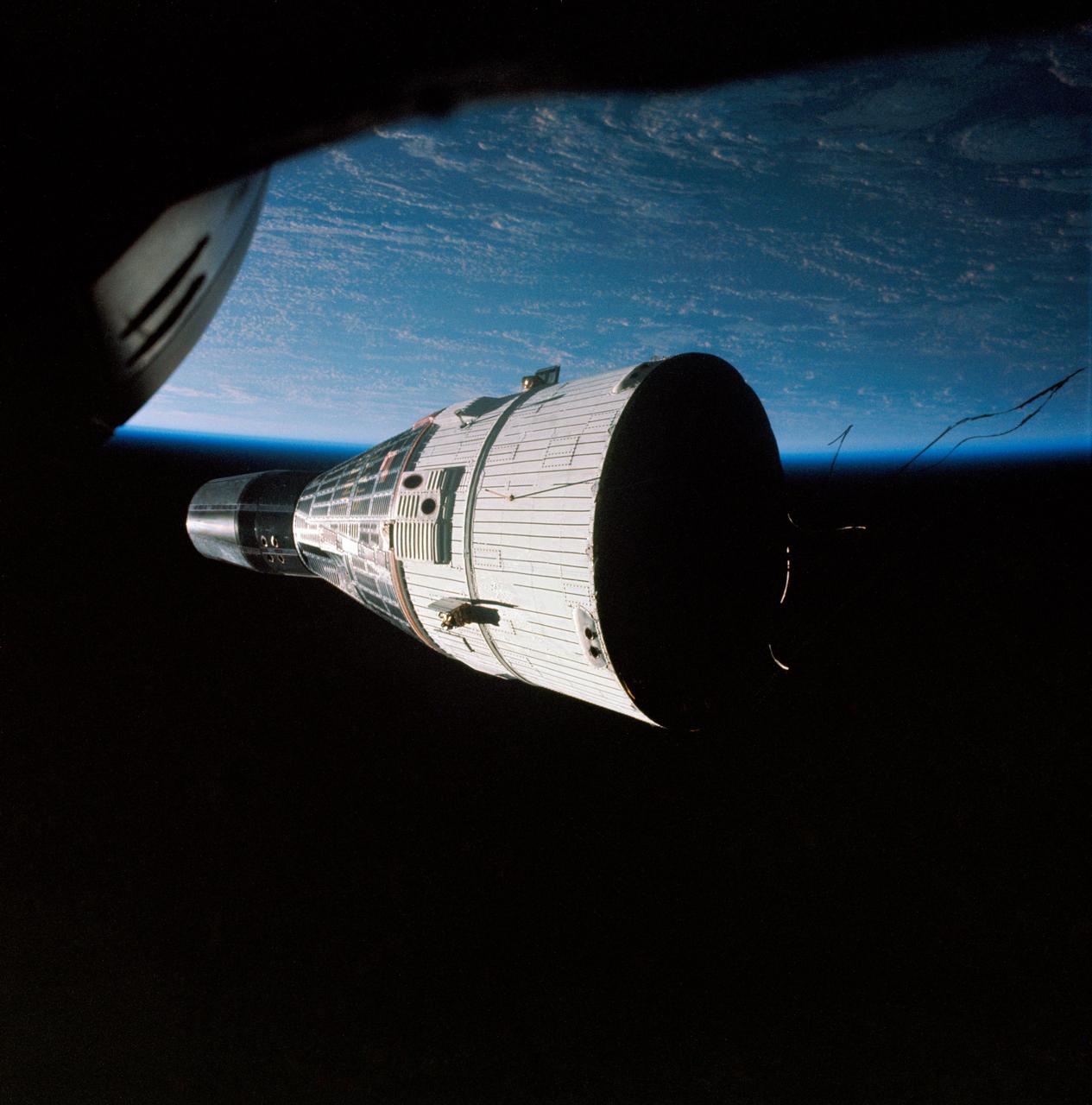
S65-63197 (15 Dec. 1965) --- This historic view of the orbiting Gemini-7 spacecraft was taken from the Gemini-6 spacecraft during their rendezvous mission in space. Astronauts Frank Borman and James A. Lovell Jr. were in the Gemini-7 spacecraft. In the Gemini-6 spacecraft were astronauts Walter M. Schirra Jr. and Thomas P. Stafford. This photograph was taken with a modified 70mm Hassleblad camera, using Eastman Kodak, Ektachrome MS (SO 217) color film. The two National Aeronautics and Space Administration (NASA) spacecraft?s are approximately 34 feet apart. Photo credit: NASA or National Aeronautics and Space Administration
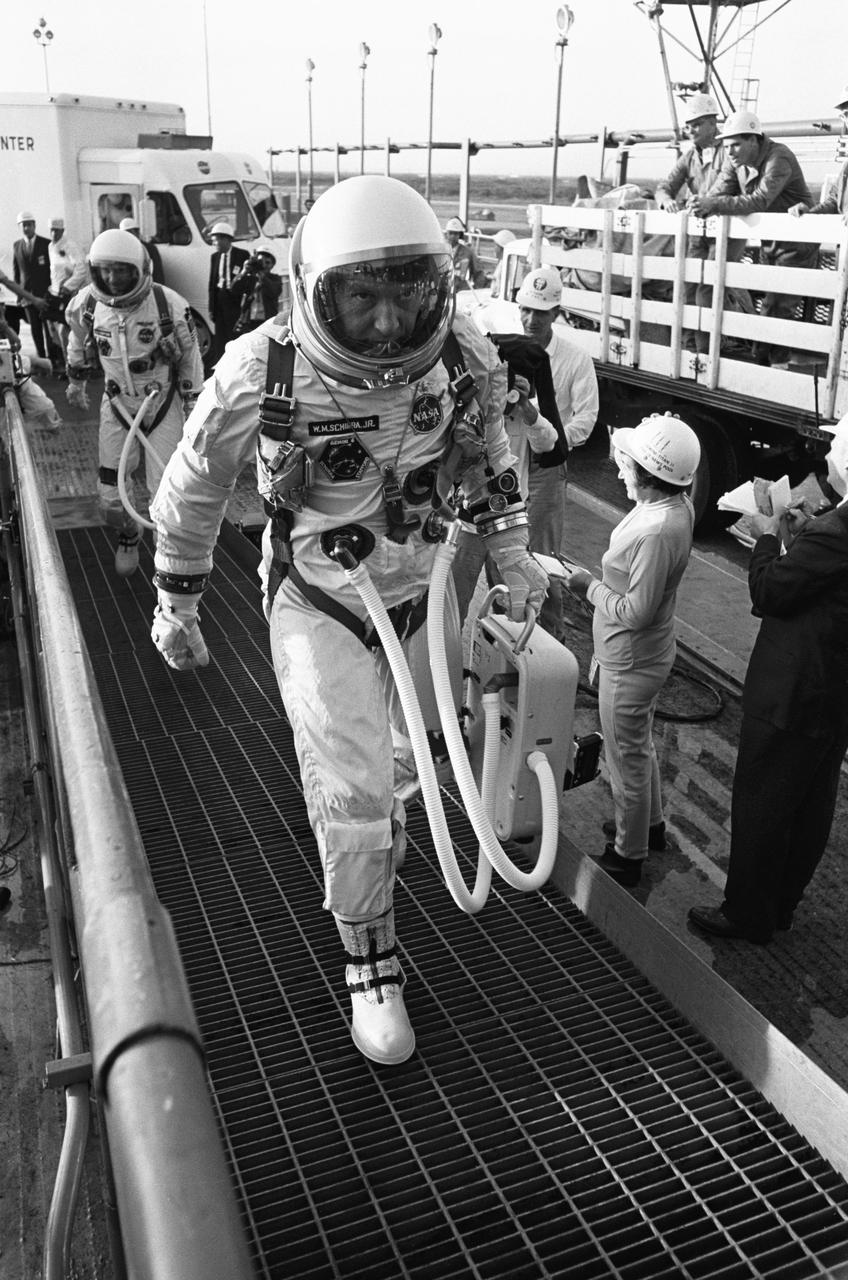
S65-61916 (12 Dec. 1965) --- Astronauts Walter M. Schirra Jr. (foreground), command pilot; and Thomas P. Stafford, pilot, arrive at Pad 19 during the Gemini-6 prelaunch countdown. NASA has planned Gemini-6 as a two-day mission in space. An attempt was made to launch Gemini-6 at 9:54 a.m. (EST) on Dec. 12, 1965. However, seconds after ignition, the first stage engine of the Gemini-6 launch vehicle shutdown due to a faulty release of a liftoff umbilical plug. Photo credit: NASA or National Aeronautics and Space Administration

S65-54129 (November 1965) --- Design for the emblem of the Gemini VII spaceflight. At left of hand-held torch is a Gemini spacecraft. Roman numeral indicates the seventh flight in the Gemini series. Prime crew men for the mission are astronauts Frank Borman, command pilot, and James A. Lovell Jr., pilot. The NASA insignia design for Gemini flights is reserved for use by the astronauts and for other official use as the NASA Administrator may authorize. Public availability has been approved only in the form of illustrations by the various news media. When and if there is any change in this policy, which we do not anticipate, it will be publicly announced. Photo credit: NASA
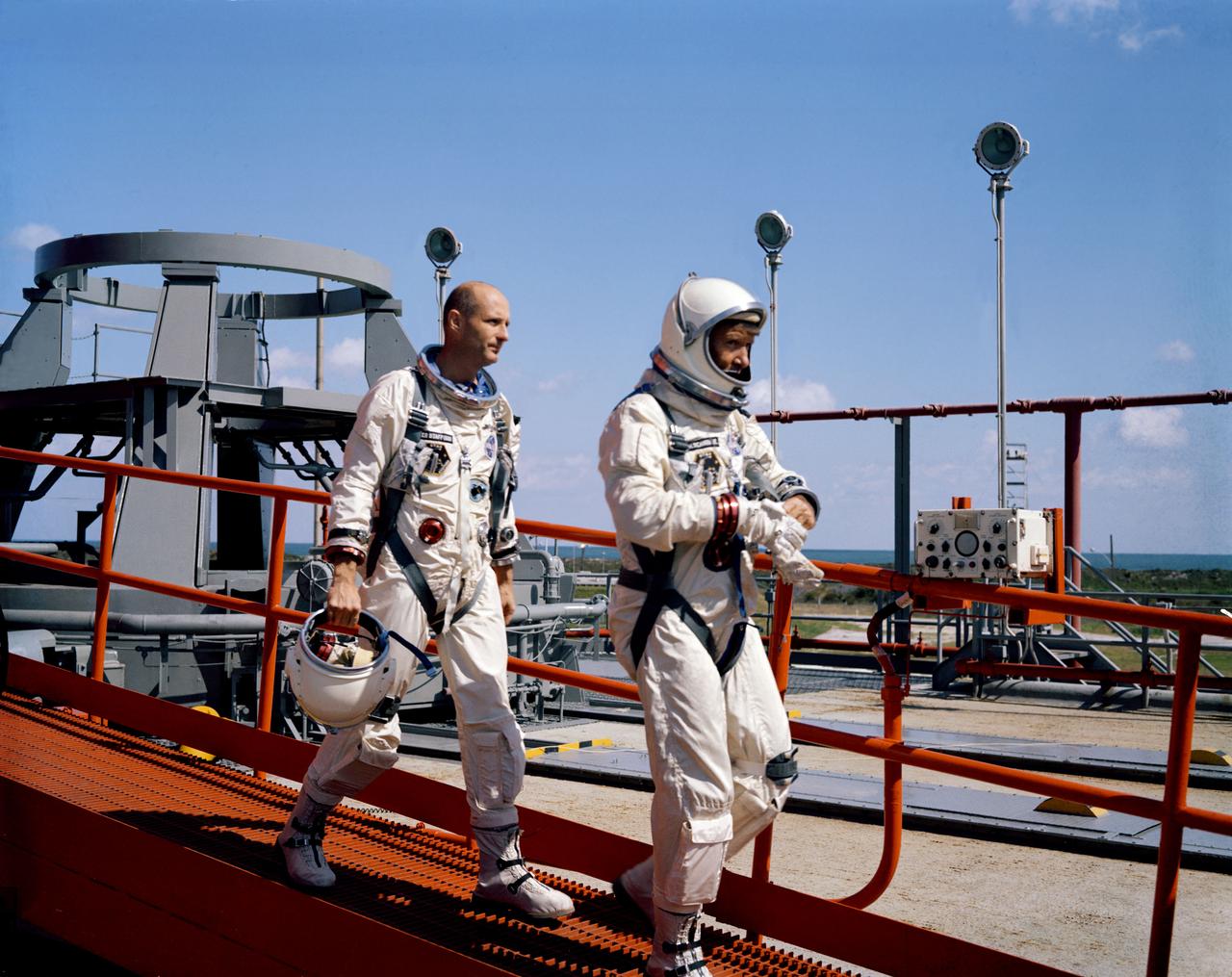
S65-57964 (25 Oct. 1965) --- The prime crew of the Gemini-6 spaceflight walk down the ramp at Pad 19 after leaving the Gemini-6 spacecraft. Astronaut Walter M. Schirra Jr. (leading) is command pilot; and astronaut Thomas P. Stafford is pilot. The Oct. 25 Gemini-6 launch was scrubbed because the Agena, intended as a rendezvous target vehicle in the mission, failed to achieve orbit. Photo credit: NASA or National Aeronautics and Space Administratio
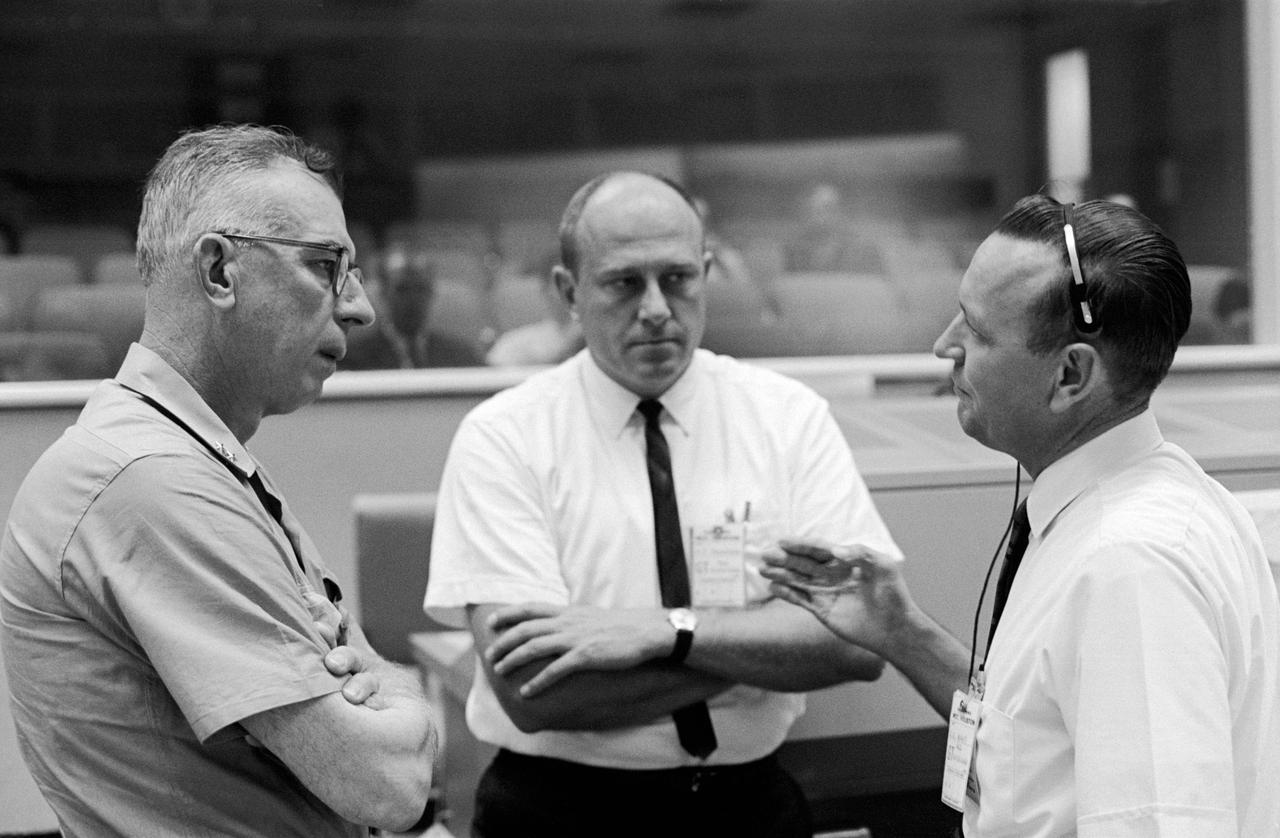
S65-28734 (24 Aug. 1965) --- Rear Admiral W.C. Abhau (left), who will take over command of Task Force 140 for Gemini-6, is shown in the Mission Control Center being briefed on recovery operations for Gemini by Robert F. Thompson (center), NASA recovery coordinator; and Christopher C. Kraft Jr., flight director for Gemini-5.
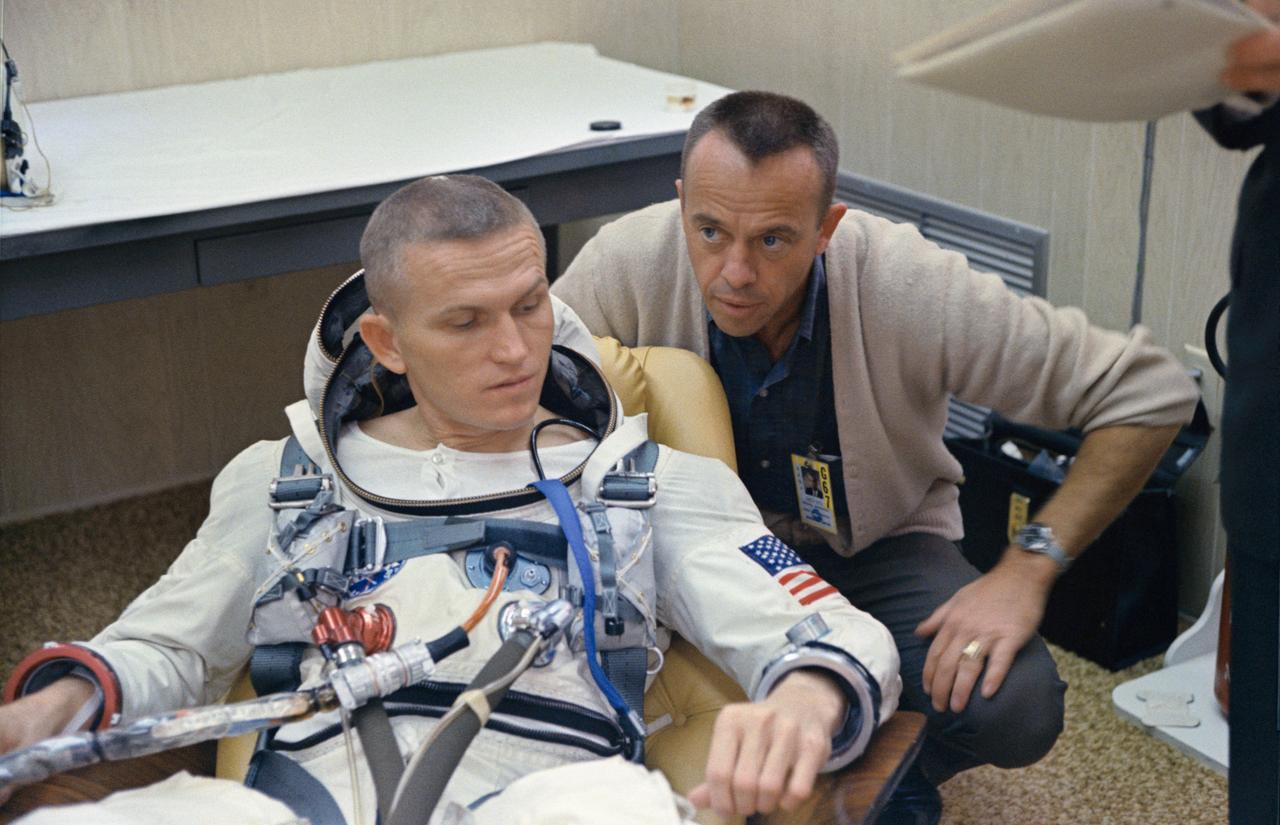
S65-61755 (4 Dec. 1965) --- Astronaut Frank Borman, command pilot of the National Aeronautics and Space Administration's Gemini-7 spaceflight, talks with astronaut Alan Shepard, chief, MSC Astronaut Office, in the suiting up trailer at Launch Complex 16, during the Gemini-7 prelaunch countdown. A 14-day mission in space is scheduled for astronaut Borman and James A. Lovell Jr., pilot. The Gemini-7 liftoff occurred at 2:30 p.m. (EST) on Dec. 4, 1965. Photo credit: NASA
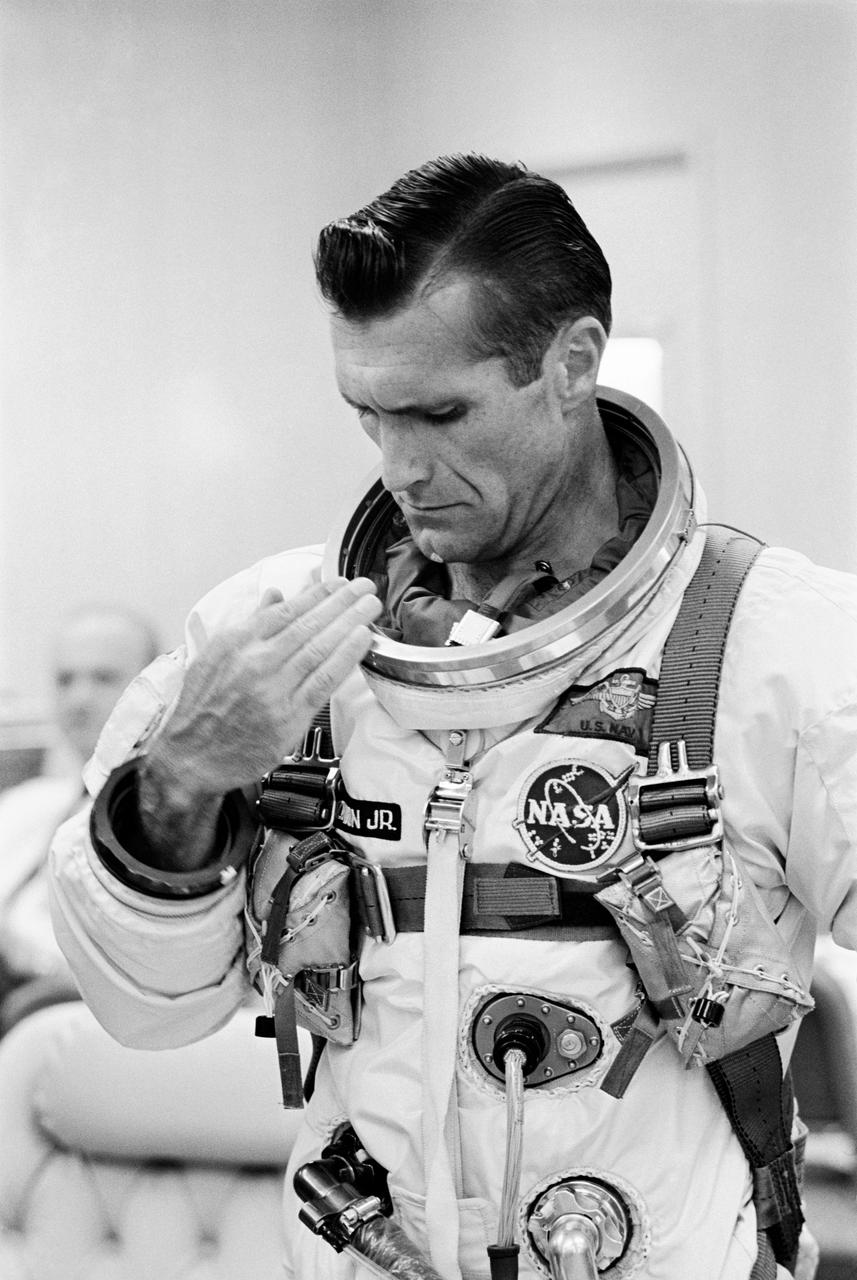
S66-50719 (12 Sept. 1966) --- Astronaut Richard F. Gordon Jr., pilot of the Gemini-11 spaceflight, suits up in the Launch Complex 16 suiting trailer during the Gemini-11 prelaunch countdown. Minutes later astronaut Gordon and Charles Conrad Jr., command pilot, were transported to Pad 19 and their waiting Gemini-11 spacecraft in preparation for their scheduled three-day mission in space. Photo credit: NASA
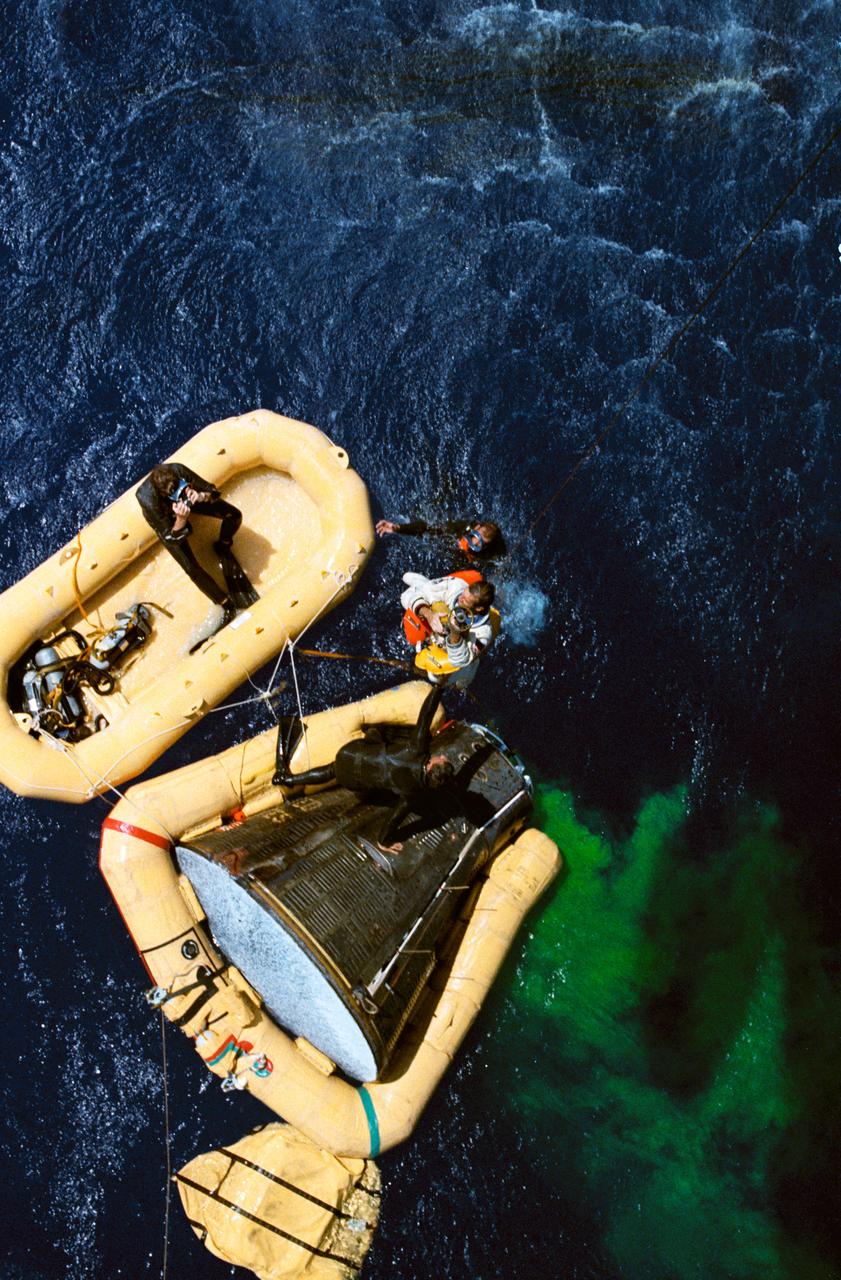
S66-50759 (15 Sept. 1966) --- Astronaut Richard F. Gordon Jr., pilot of the Gemini-11 spaceflight, is hoisted from the water by a recovery helicopter from the prime recovery ship USS Guam. Gemini-11 splashed down in the western Atlantic recovery area at 9 a.m. (EST), Sept. 15, 1966, to conclude the three-day mission in space. Astronaut Charles Conrad Jr. (out of frame) is the Gemini-11 command pilot. Photo credit: NASA
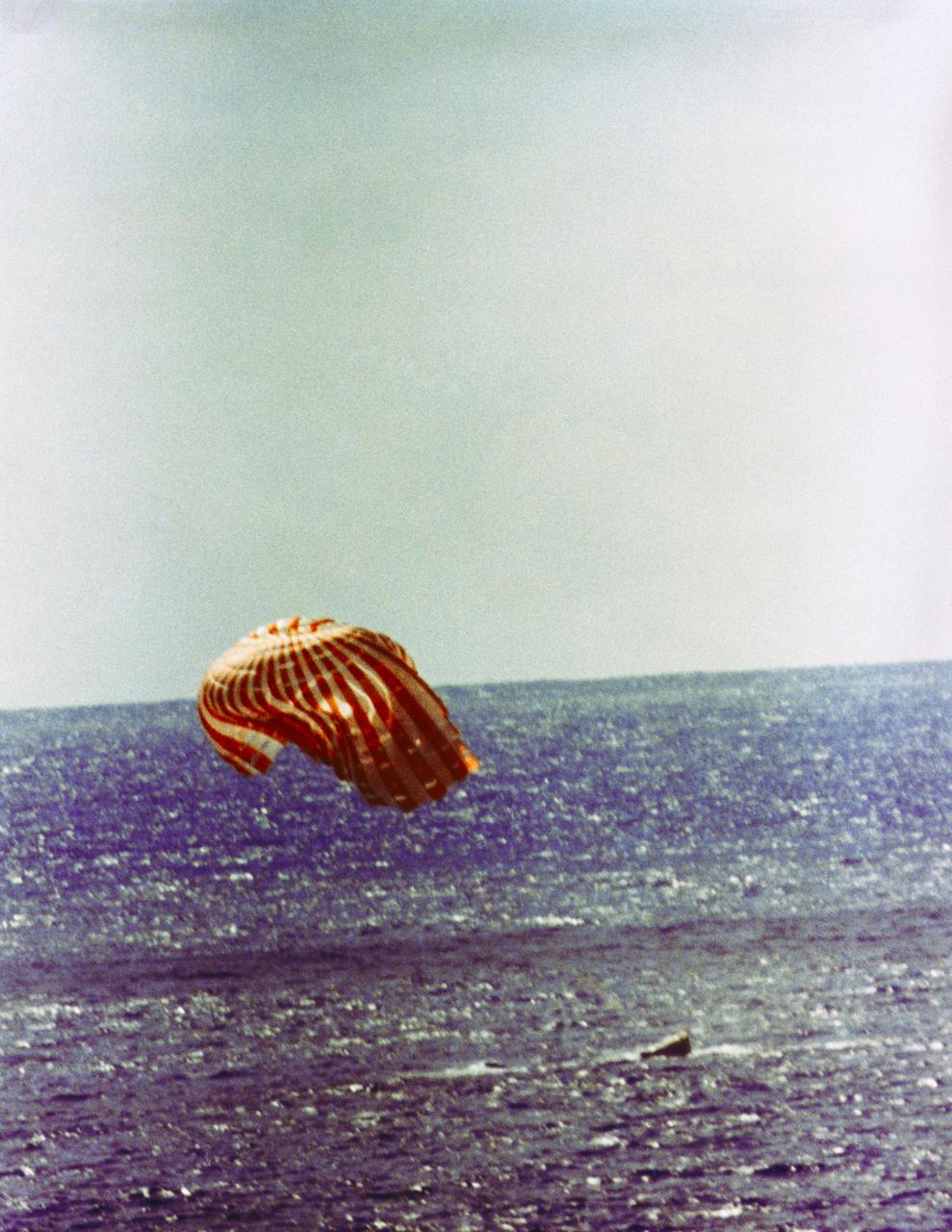
S66-50749 (15 Sept. 1966) --- The Gemini-11 spaceflight is concluded as the Gemini-11 spacecraft, with astronauts Charles Conrad Jr., command pilot, and Richard F. Gordon Jr., pilot, aboard, touches down in the Atlantic Ocean 1.5-2 statute miles from the prime recovery ship, USS Guam. Gemini-11 splashed down at 9 a.m. (EST), Sept. 15, 1966, to conclude a three-day mission in space. Photo credit: NASA
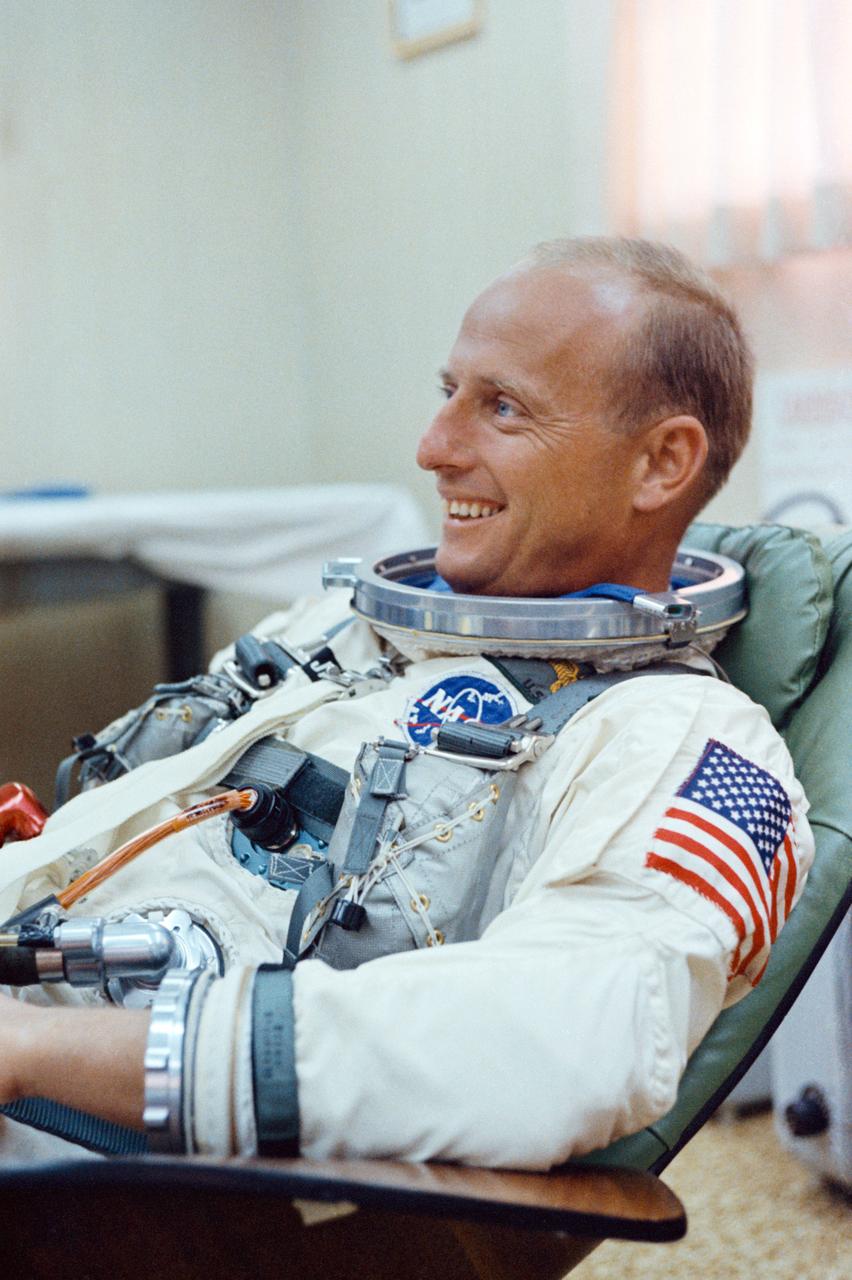
S66-50726 (12 Sept. 1966) --- Astronaut Charles Conrad Jr., command pilot of the Gemini-11 spaceflight, relaxes in Launch Complex 16 suiting trailer during the Gemini-11 prelaunch countdown. Minutes later astronauts Conrad and Richard F. Gordon Jr., pilot, were transported to Pad 19 and their waiting Gemini-11 spacecraft in preparation for their scheduled three-day mission in space. Photo credit: NASA

S66-42742 (18 July 1966) --- The Gemini-10 prime crew, astronauts John W. Young (background), command pilot, and Michael Collins (foreground), pilot, relax in the Launch Complex 16 suiting trailer during the Gemini-10 prelaunch countdown. Minutes later astronaut Young and Collins were transported to Pad 19 and their waiting Gemini-10 spacecraft in preparation for their scheduled three-day mission in space. Photo credit: NASA
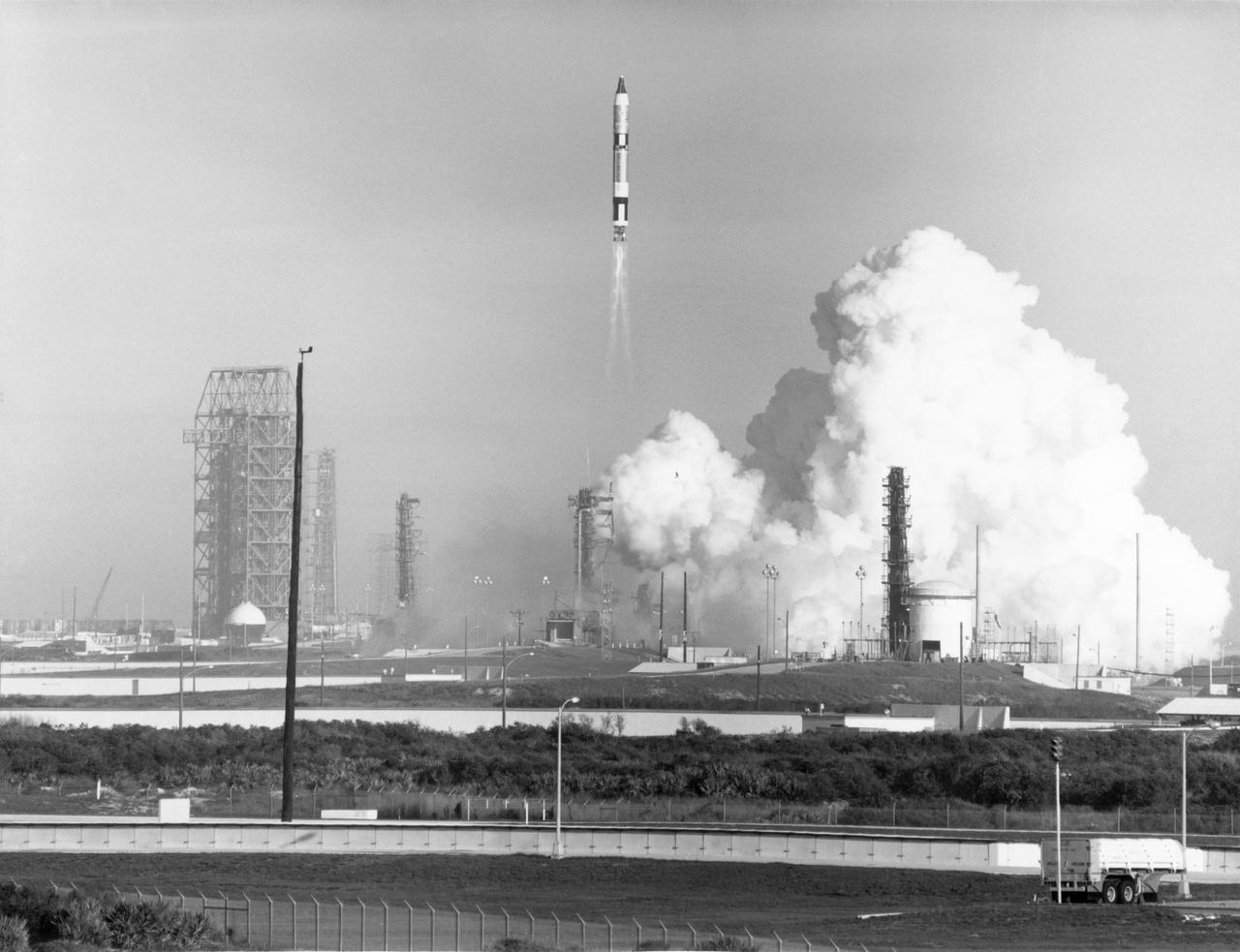
S65-44293 (15 Dec. 1965) --- Gemini-6, carrying astronauts Walter M. Schirra Jr., command pilot, and Thomas P. Stafford, pilot, was launched by the National Aeronautics and Space Administration?s John F. Kennedy Space Center at 8:37 a.m. (EST), Dec. 15, 1965. Gemini-6 completed a highly successful rendezvous mission with Gemini-7.
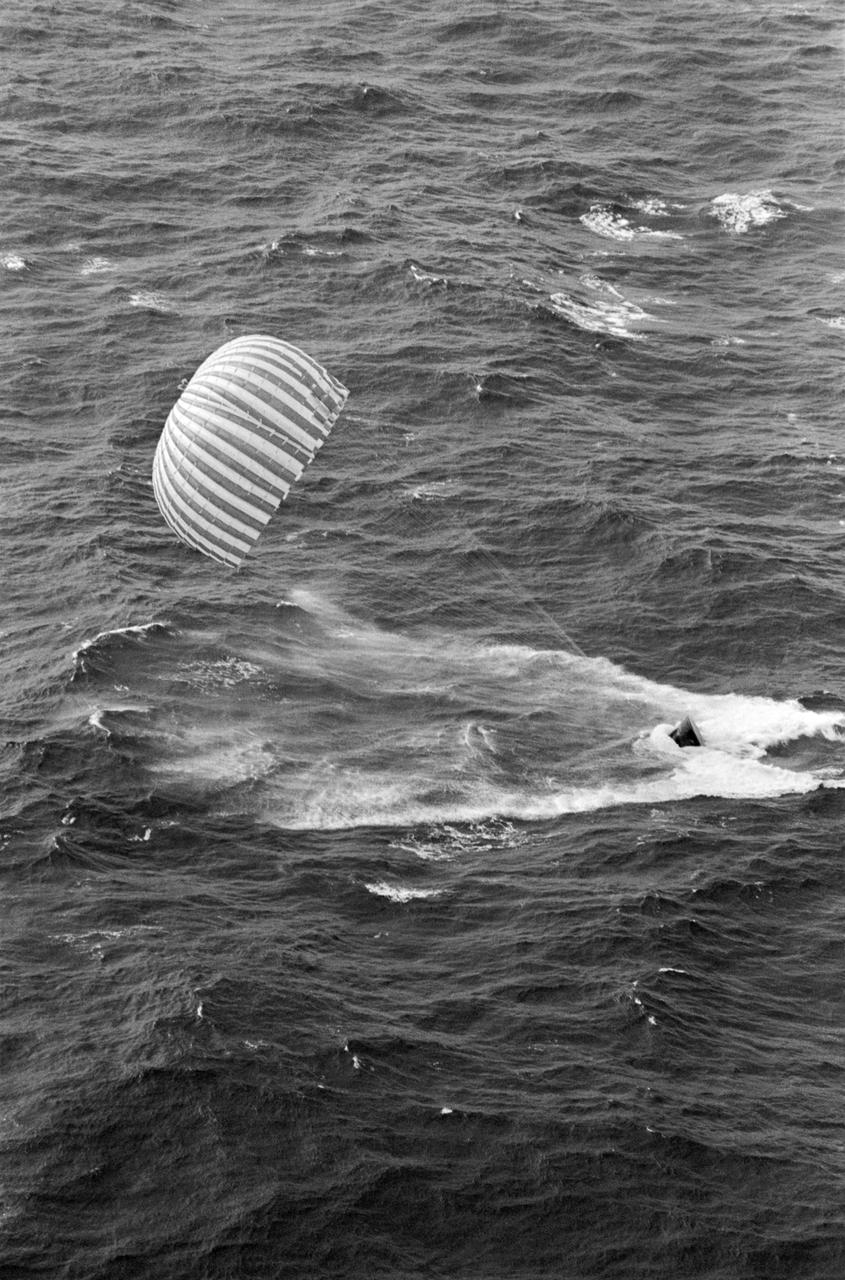
S66-59936 (15 Nov. 1966) --- The last Gemini spaceflight is concluded as the Gemini-12 spacecraft, with astronaut James A. Lovell Jr., command pilot, and Edwin E. Aldrin Jr., pilot, aboard, touches down in the Atlantic Ocean 2.5 nautical miles from the prime recovery ship, USS Wasp. Gemini-12 splashed down at 2:21 p.m. (EST), Nov. 15, 1966, to conclude a four-day mission in space. Photo credit: NASA
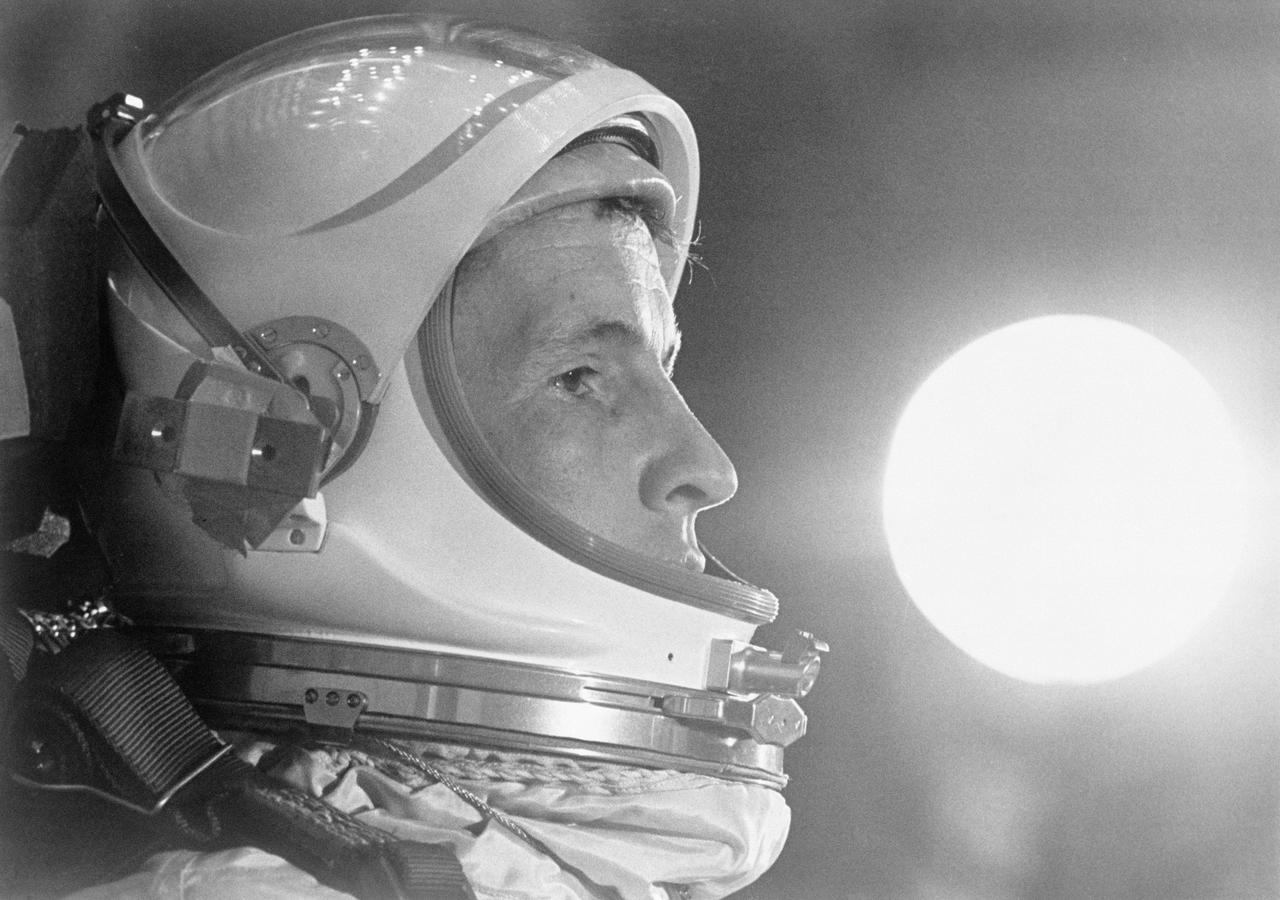
S65-19576 (21 May 1965) --- Astronaut Edward H. White II, pilot of the Gemini-Titan 4 prime crew, goes through a wet mock simulation exercise as part of the checkout procedure for the Gemini-4 spaceflight. The two-man Gemini-4 mission, scheduled no earlier than June 3, 1965, will orbit Earth 62 times in four days. Astronaut James A. McDivitt (out of frame) is the GT-4 prime crew command pilot.
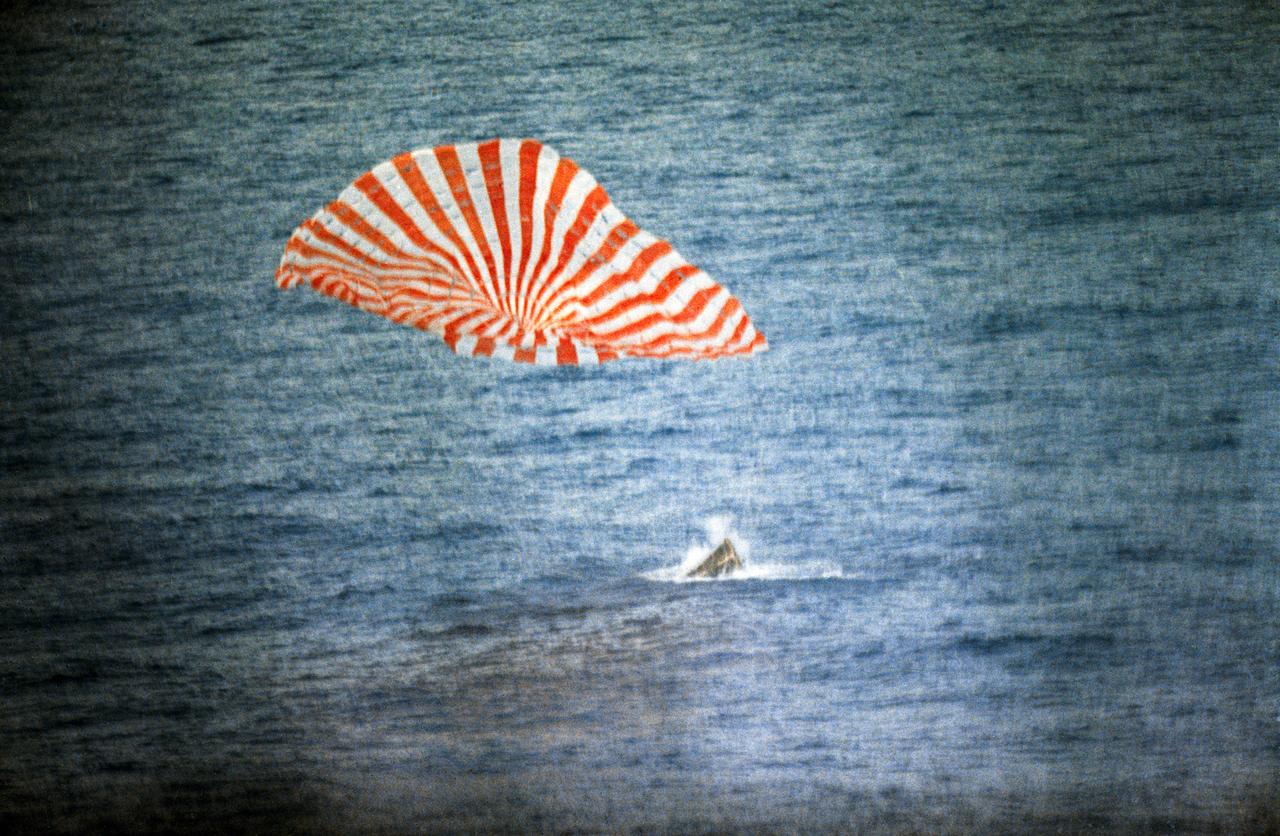
S66-42782 (21 July 1966) --- The Gemini-10 spaceflight is concluded as the Gemini-10 spacecraft, with astronaut John W. Young and Michael Collins aboard, touches down in the Atlantic about four miles from the prime recovery ship, the USS Guadalcanal. Gemini-10 splashed down 540 miles east of Cape Kennedy at 4:07 p.m. (EST), July 21, 1966, to conclude a three-day mission in space. Photo credit: NASA
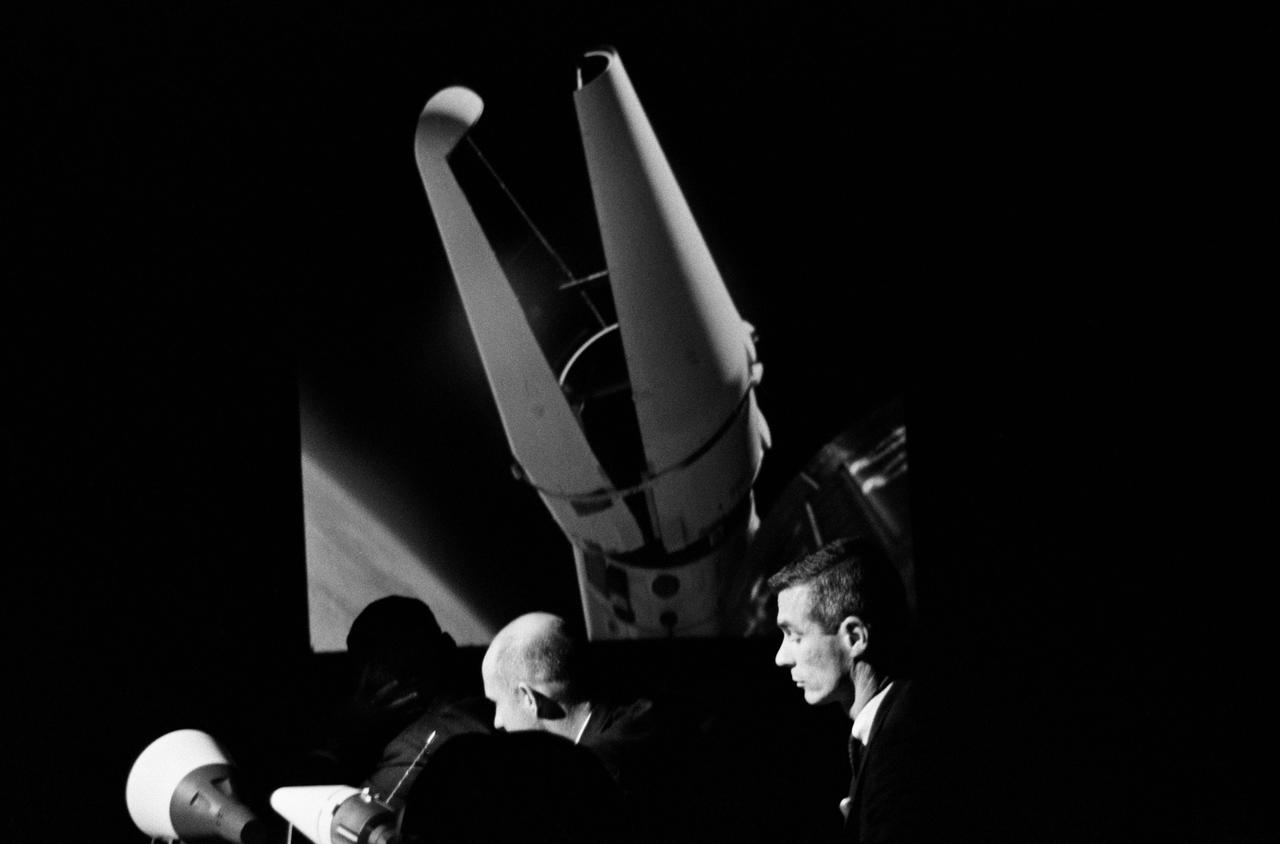
S66-39446 (17 June 1966) --- Movie film of the Gemini-9A and Augmented Target Docking Adapter rendezvous was shown at the Gemini-9A press conference in the MSC auditorium. Astronauts Thomas P. Stafford (left) and Eugene A. Cernan discussed the Gemini-9A/ATDA rendezvous mission during the film. Pictured on the screen, shows a close-up of the ATDA, described by the astronauts as an "angry alligator." Photo credit: NASA
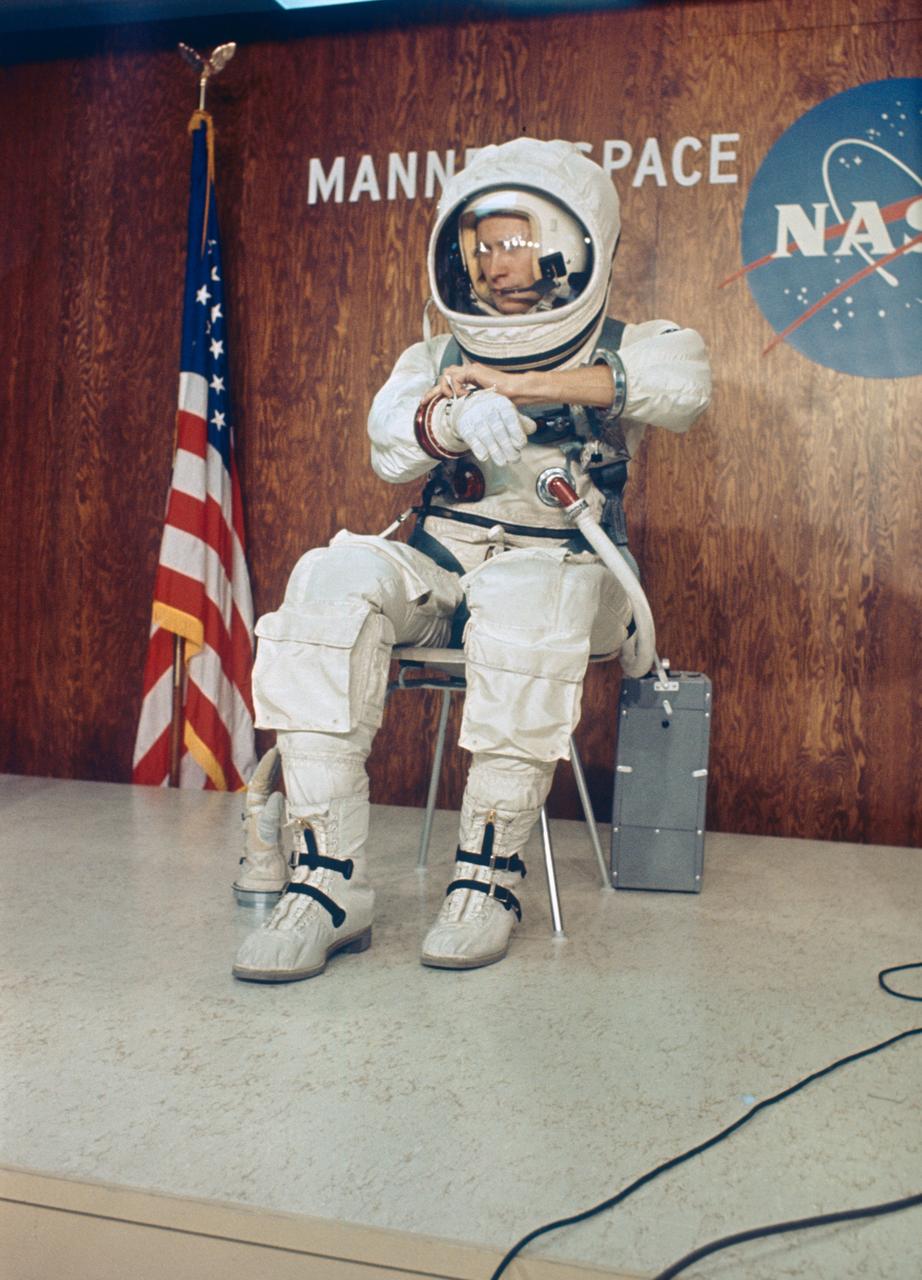
S65-60035 (6 Dec. 1965) --- The new light-weight spacesuit planned for possible use during the Gemini-7 mission is modeled by Fred R. Spross, Gemini Support Office, Crew Systems Division. The spacesuit weighs 16 pounds, including the aviator's crash helmet. The suit is designed so that it may be partially or completely removed during flight. It has two layers of material while the previously used Gemini spacesuit has four layers. Photo credit: NASA
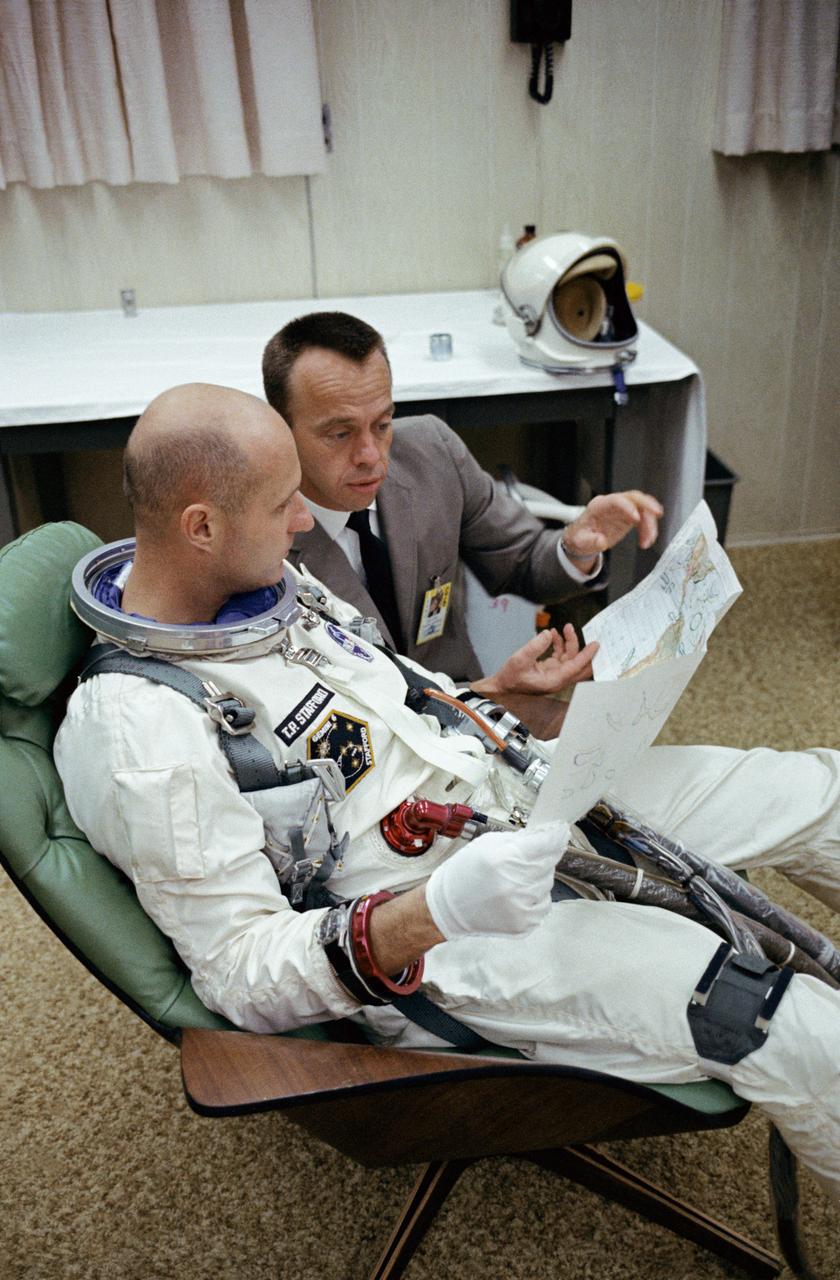
S65-59977 (15 Dec. 1965) --- Astronauts Thomas P. Stafford (foreground), Gemini-6 prime crew pilot; and Alan B. Shepard Jr., chief, Astronaut Office, Manned Spacecraft Center, look over a Gemini mission chart in the suiting trailer at Launch Complex 16 during the Gemini-6 prelaunch countdown at Cape Kennedy, Florida. Photo credit: NASA or National Aeronautics and Space Administration
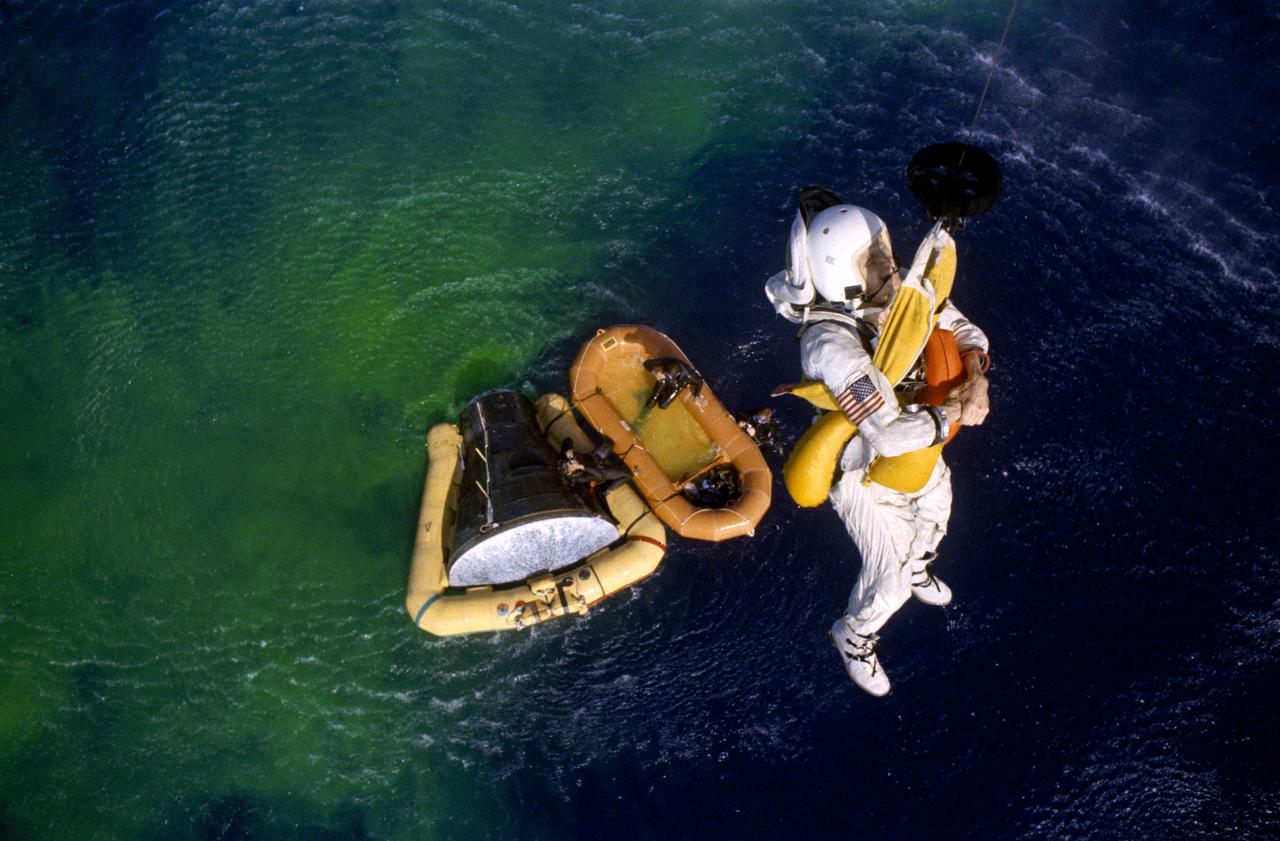
S66-15463 (18 Dec. 1965) --- Astronaut Frank Borman, command pilot of the National Aeronautics and Space Administration's 14-day Gemini-7 spaceflight, is hoisted from the water by a recovery helicopter from the aircraft carrier USS Wasp. Gemini-7 splashed down in the western Atlantic recovery area at 9:05 a.m. (EST), Dec. 18, 1965, to conclude the record-breaking mission in space. Astronaut James A. Lovell Jr. is the Gemini-7 pilot. Photo credit: NASA
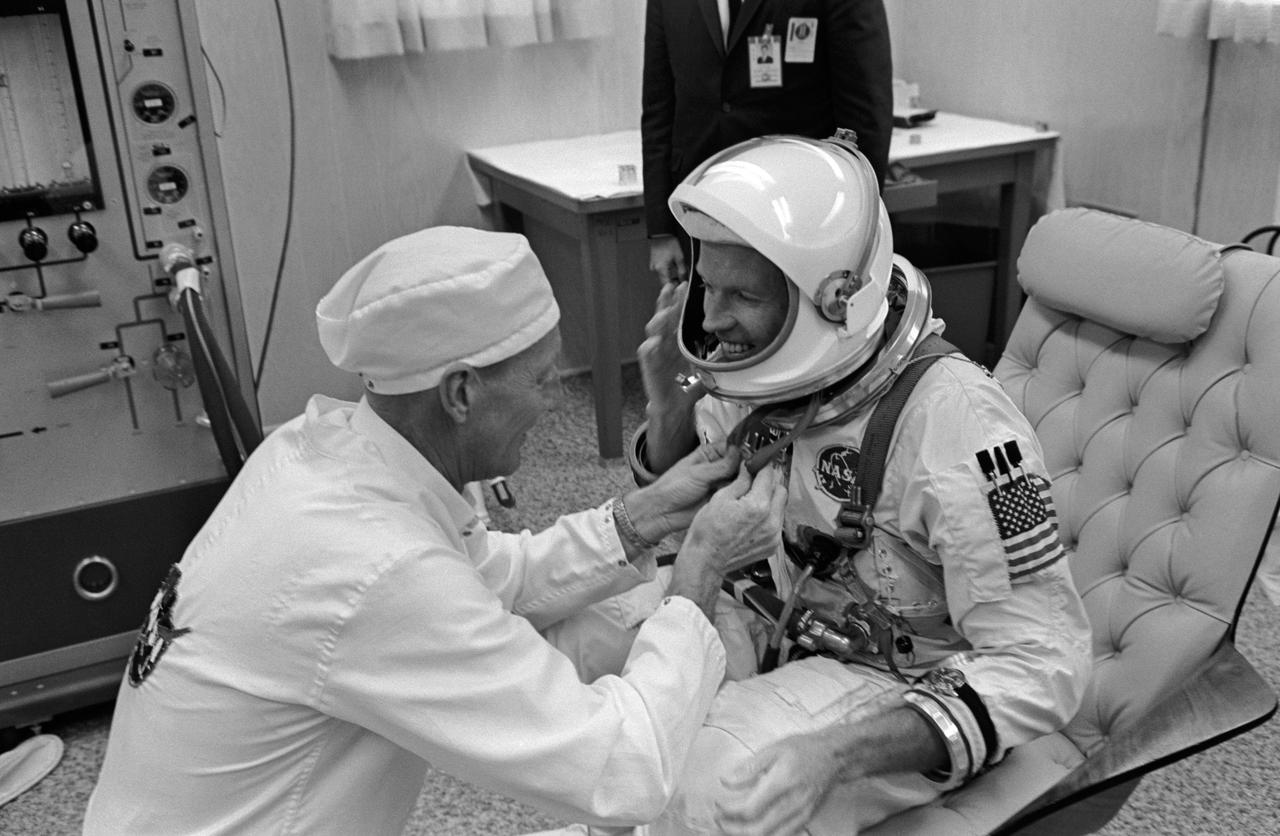
S65-46375 (21 Aug. 1965) --- Astronaut L. Gordon Cooper Jr., Gemini-5 command pilot, gets help with the donning of his spacesuit by NASA suit technician Clyde Teague during suiting up operations. Astronaut Charles Conrad Jr. (out of frame) is Gemini-5 pilot. The two astronauts will fly the Gemini-5 spacecraft for a planned eight-day mission in space.
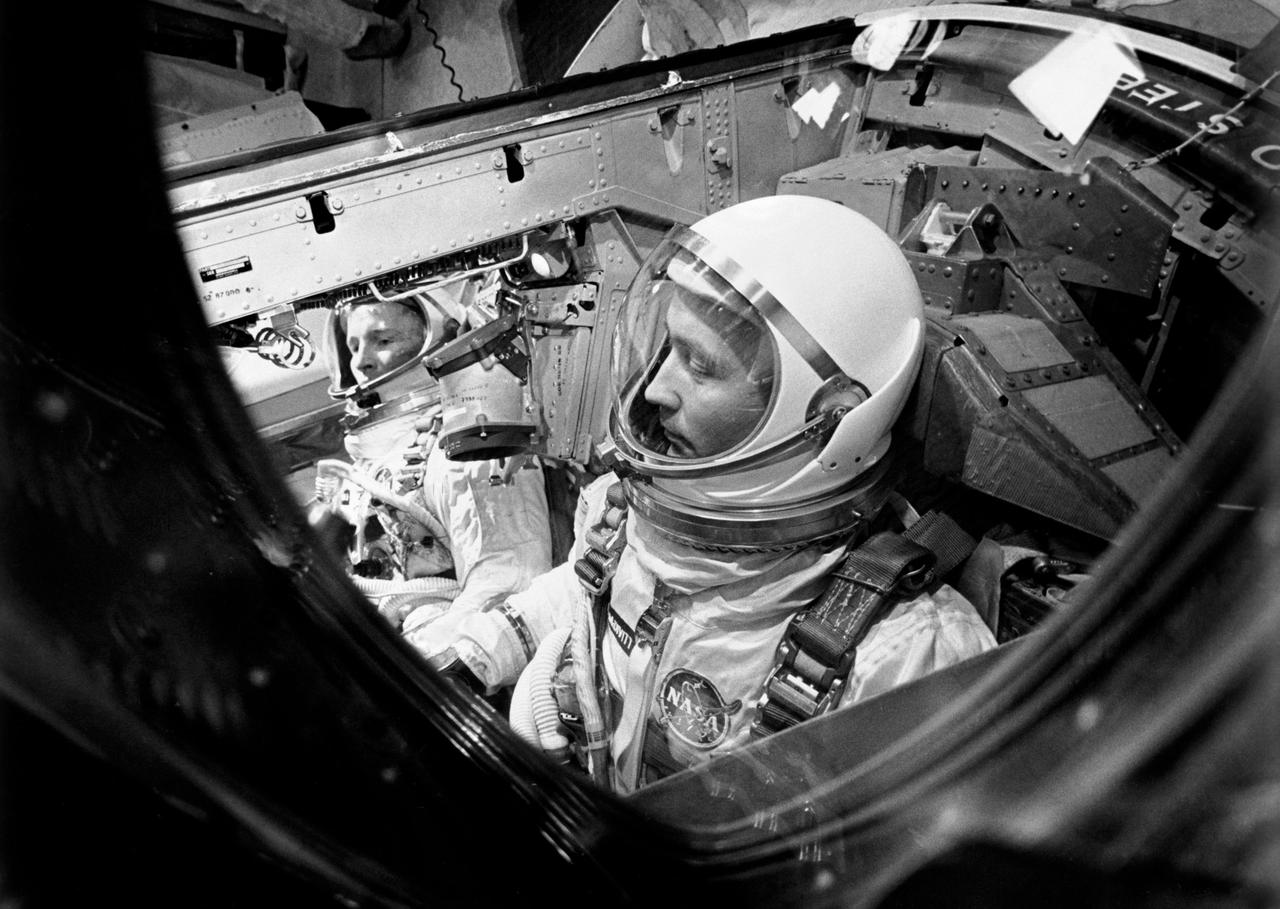
S65-19578 (21 May 1965) --- The Gemini-Titan 4 prime crew, astronauts Edward H. White II (left), pilot, and James A. McDivitt, command pilot, check out the Gemini-4 spacecraft during a wet mock simulation test at Cape Kennedy. The Gemini-4 mission, scheduled no earlier than June 3, 1965, will circle Earth 62 times in four days.
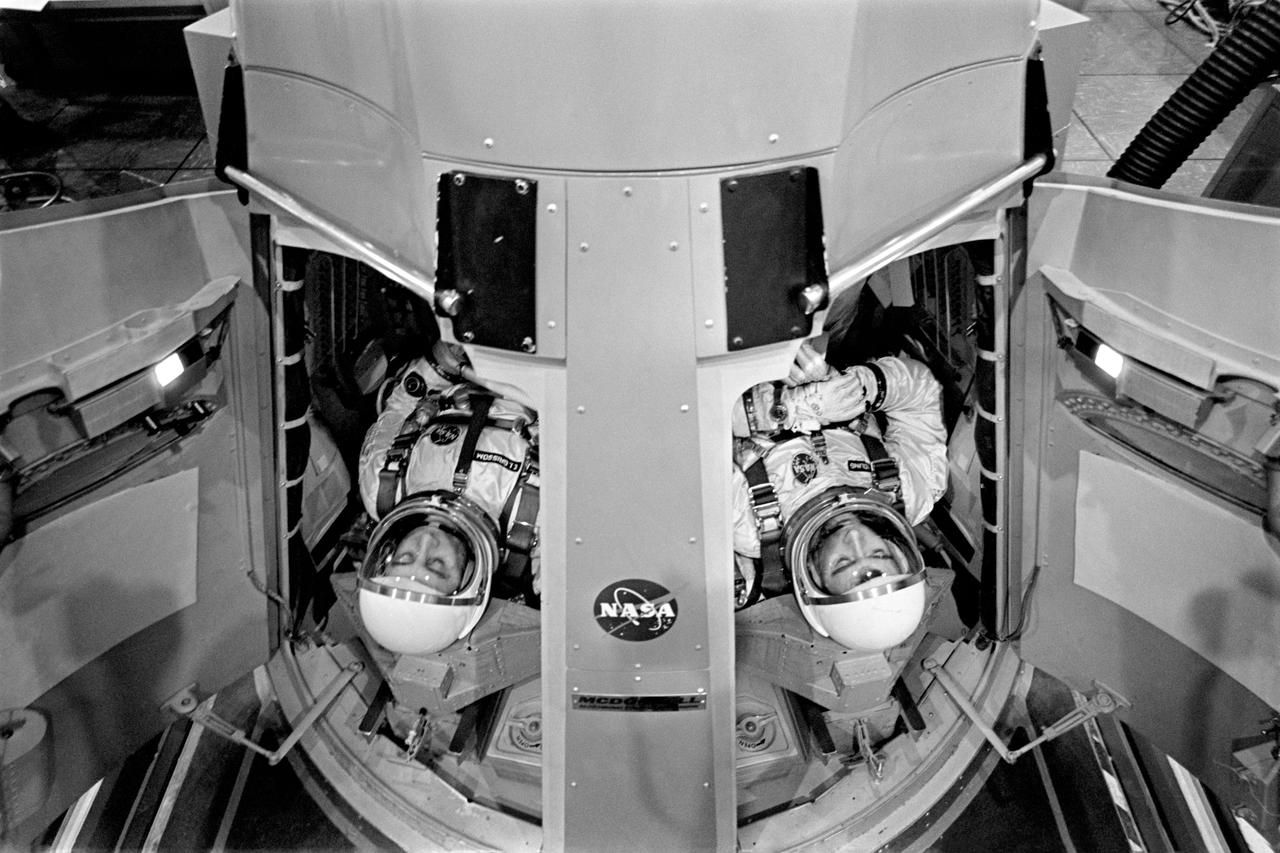
S65-21864 (19 March 1965) --- Astronauts Virgil I. Grissom (left), command pilot; and John W. Young, pilot, prepare to run Gemini-Titan 3 simulations in the Gemini mission simulator at Cape Kennedy, Florida. The NASA GT-3 flight was scheduled for March 23, 1965.
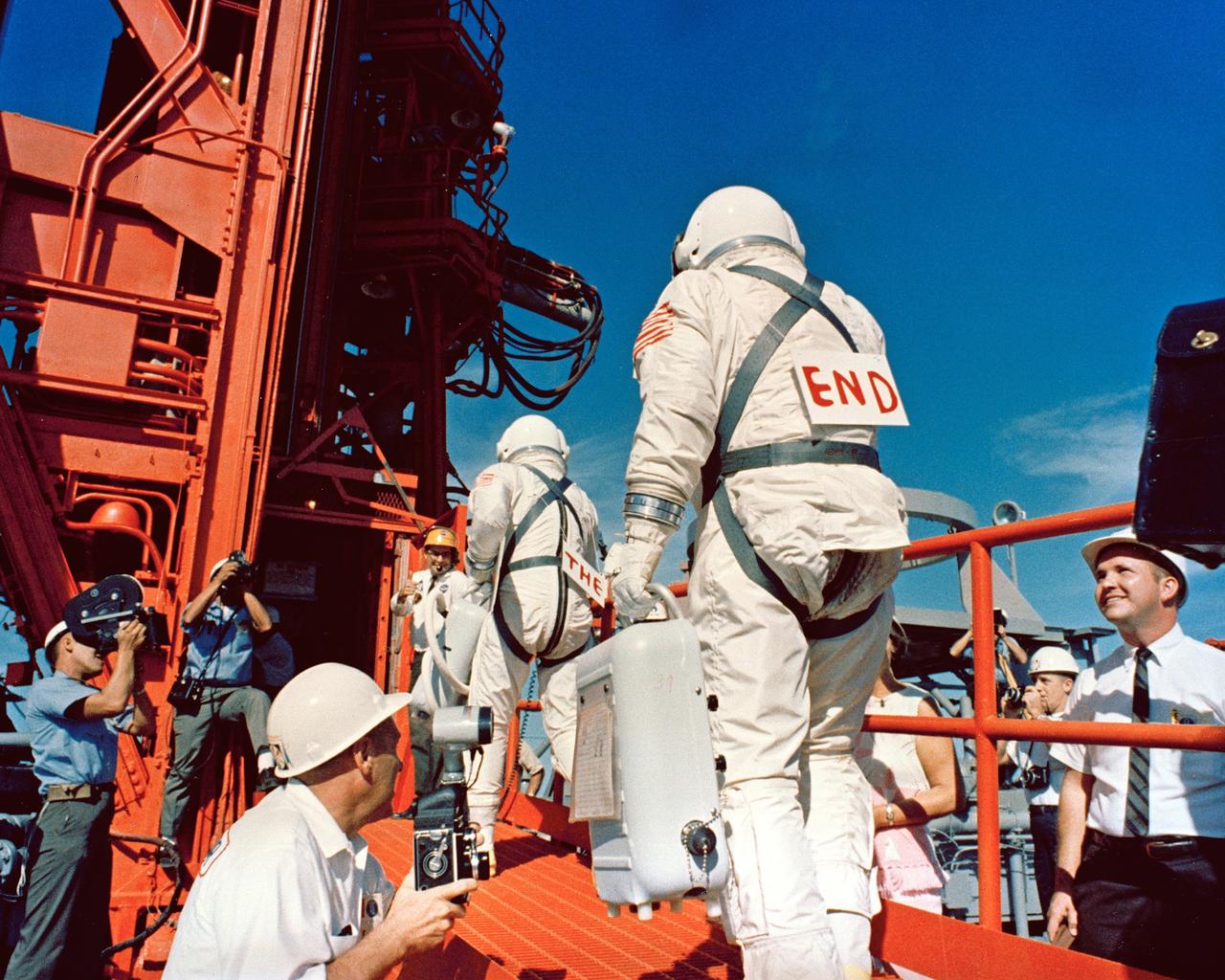
CAPE KENNEDY, Fla. -- At Cape Kennedy Air Force Station in Florida, the crew for Gemini 12 arrives at Launch Complex 19. Command pilot James A. Lovell is followed by pilot Edwin E. Buzz Aldrin Jr. The signs on their backs note that this mission is the final flight of the Gemini Program. Photo Credit: NASA
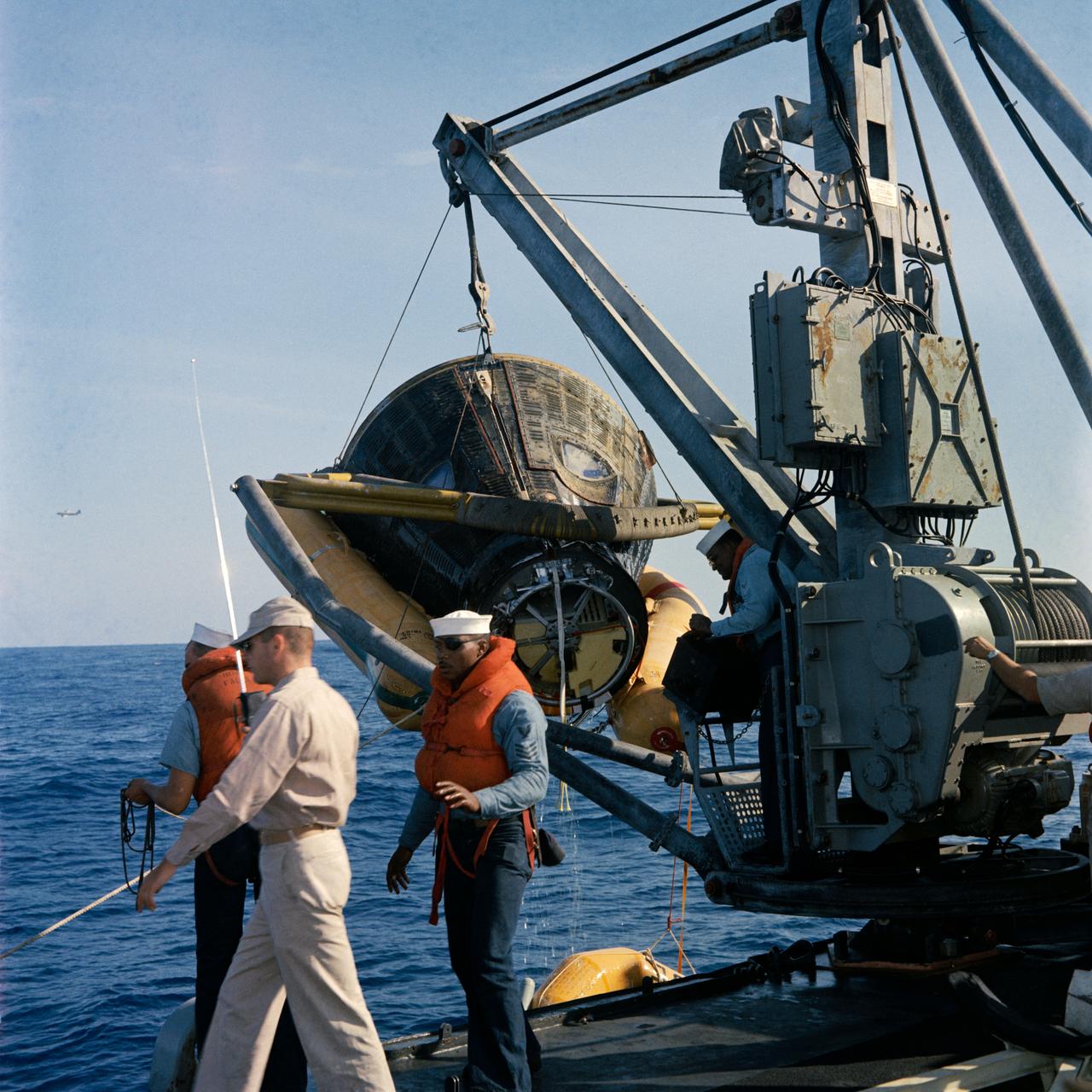
S66-26037 (16 March 1966) --- The Gemini-8 spacecraft, with astronauts Neil A. Armstrong and David R. Scott still aboard, is hoisted aboard the destroyer USS Leonard F. Mason. Trouble with the Gemini-8 Orbit Attitude and Maneuvering System (OAMS) forced an early termination of the mission. Photo credit: NASA
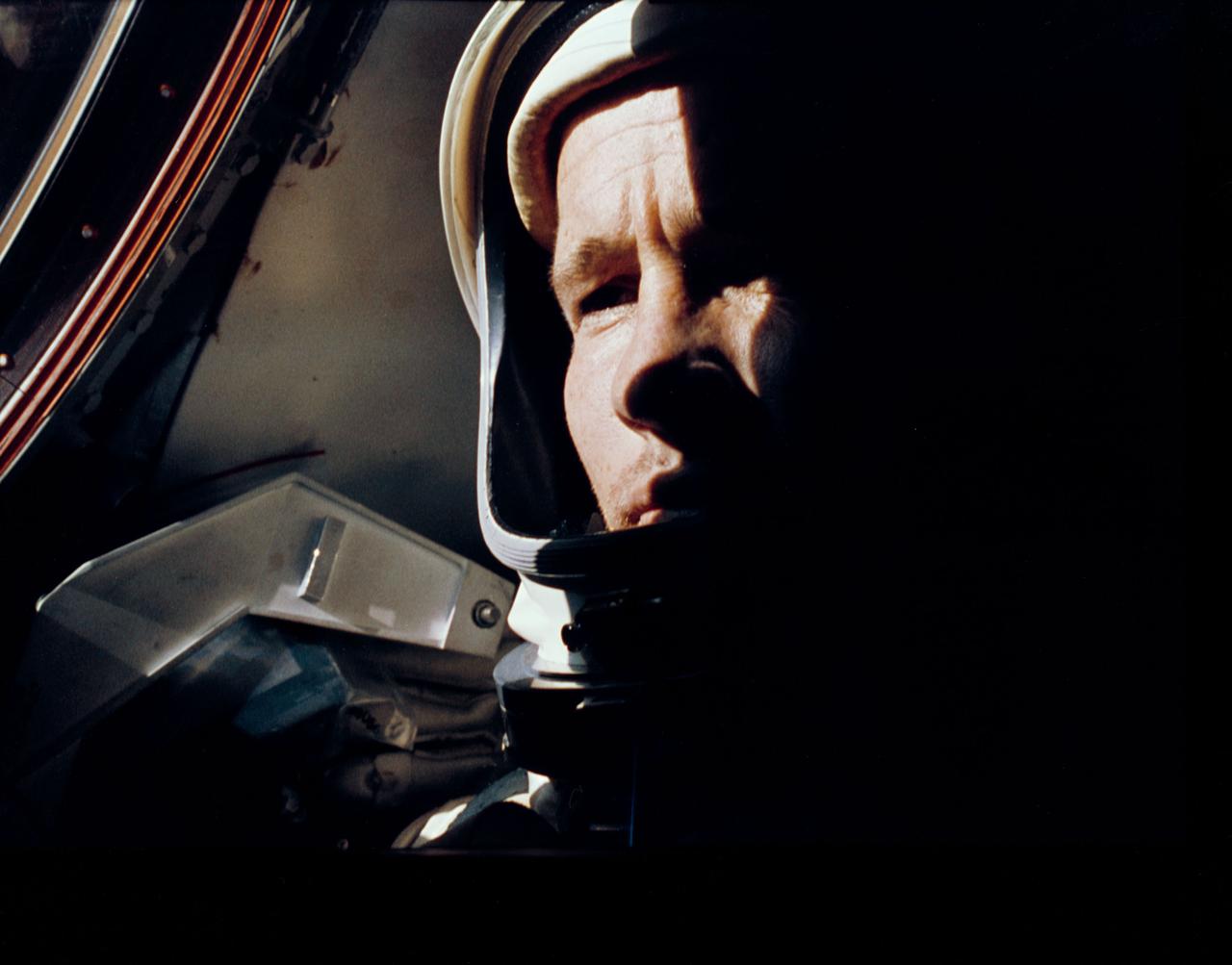
S65-30548 (3-7 June 1965) --- Astronaut Edward H. White II, Gemini IV pilot, is photographed onboard the Gemini-Titan 4 spacecraft during the four-day Earth-orbital mission. Photo credit: NASA
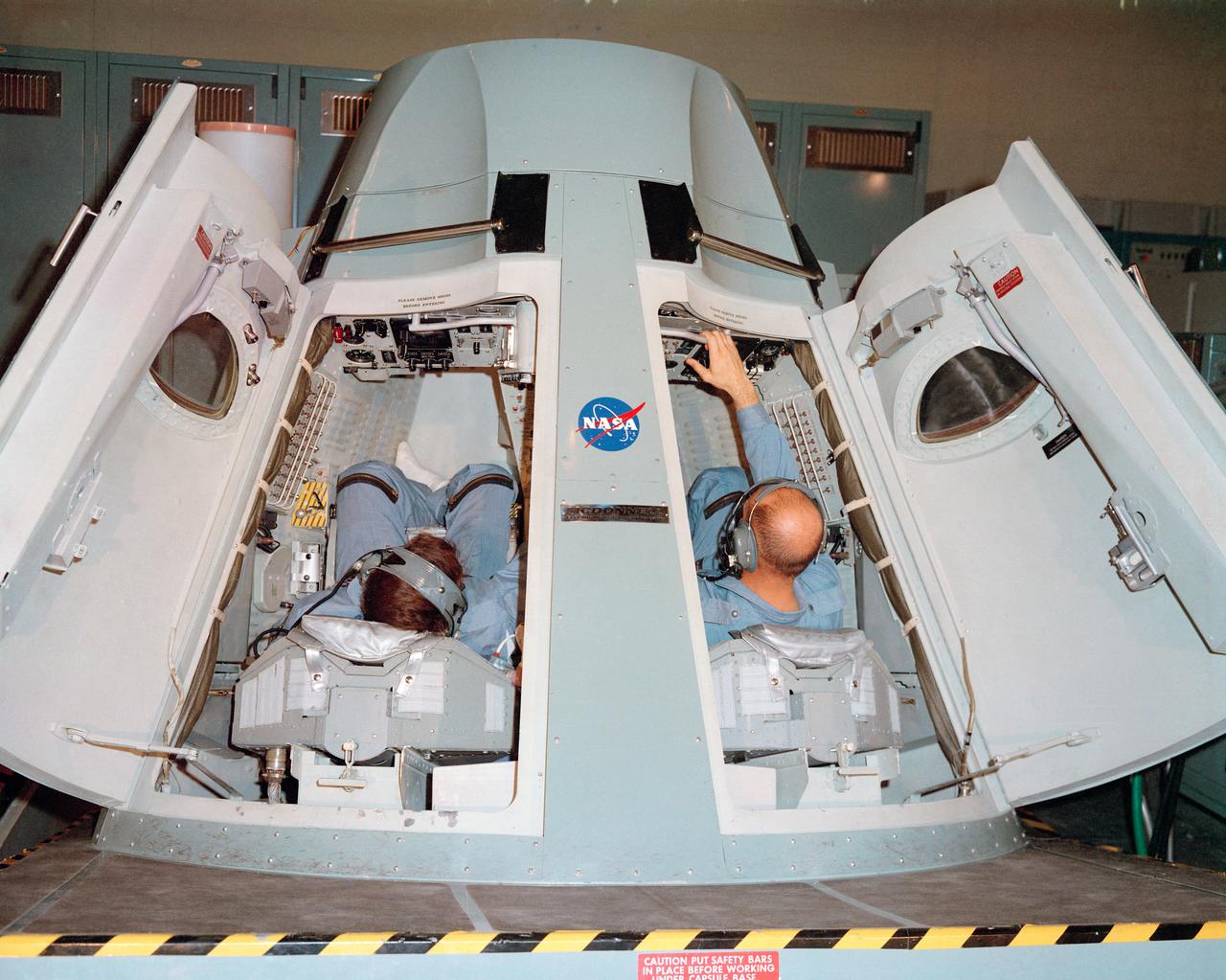
S65-13920 (15 Jan. 1965) --- The Gemini-6 prime crew, astronauts Walter M. Schirra Jr. (left), command pilot, and Thomas P. Stafford, pilot, are pictured in the Gemini simulator during training exercises at the Mission Control Center at Cape Kennedy, Florida. Photo credit: NASA or National Aeronautics and Space Administration
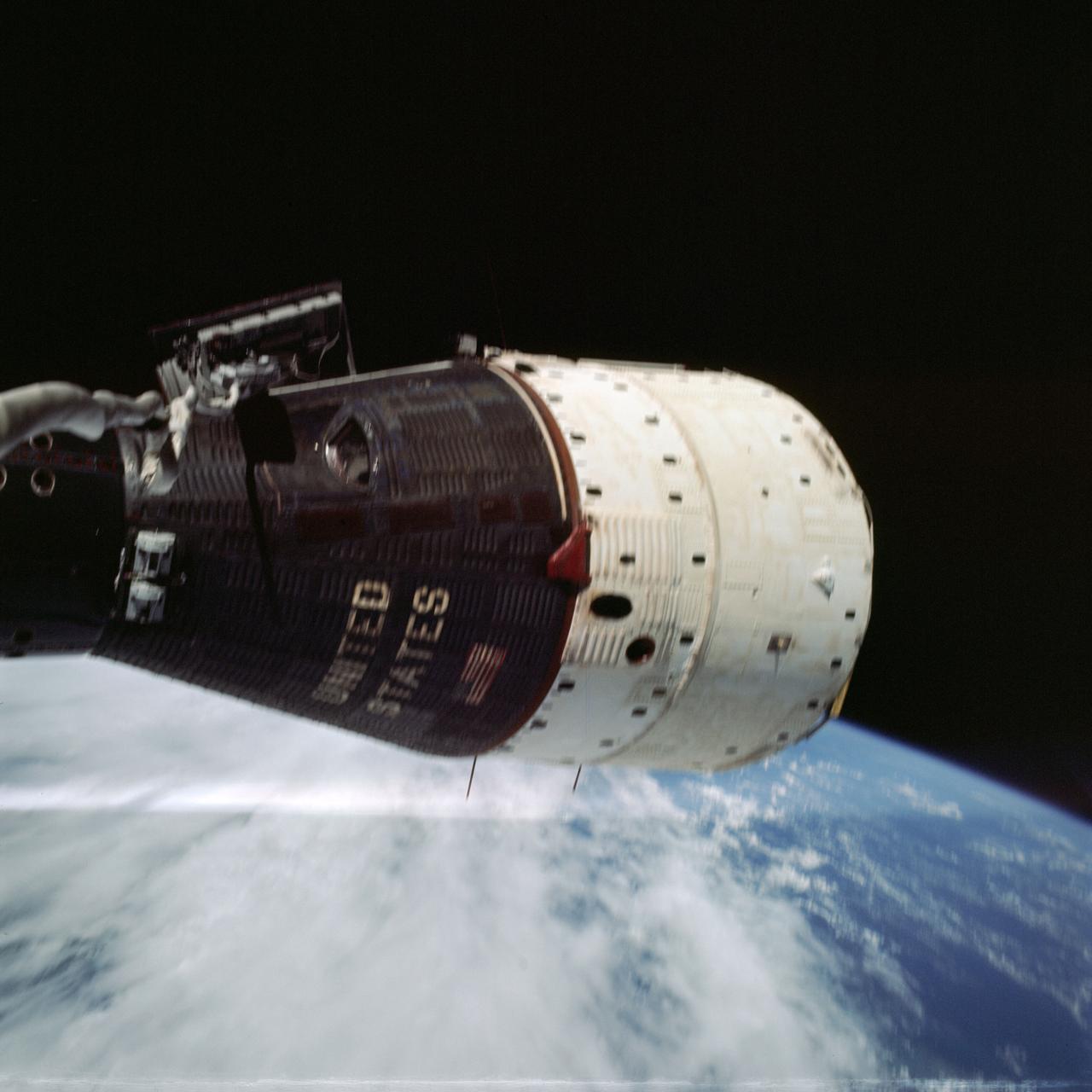
S66-38050 (5 June 1966) --- Astronaut Eugene A. Cernan took this close-up view of the Gemini-9A spacecraft during his extravehicular activity (EVA) on the Gemini-9A mission. Taken during the 32nd revolution of the 72-hour, 21-minute spaceflight. Photo credit: NASA
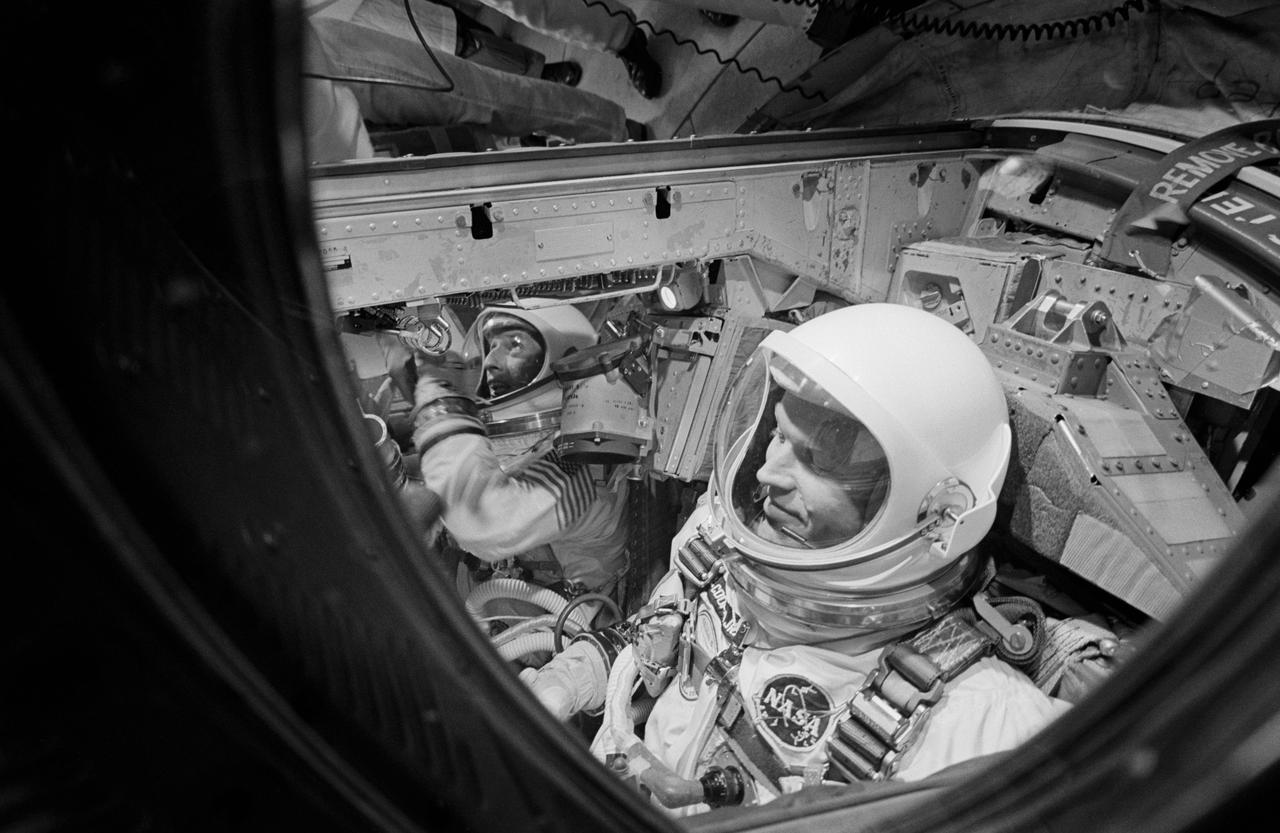
S65-46388 (21 Aug. 1965) --- Astronauts L. Gordon Cooper Jr. (foreground) and Charles Conrad Jr. are pictured in their Gemini-5 spacecraft moments before the hatches are closed. The Gemini-5 spaceflight is planned as an eight-day mission.
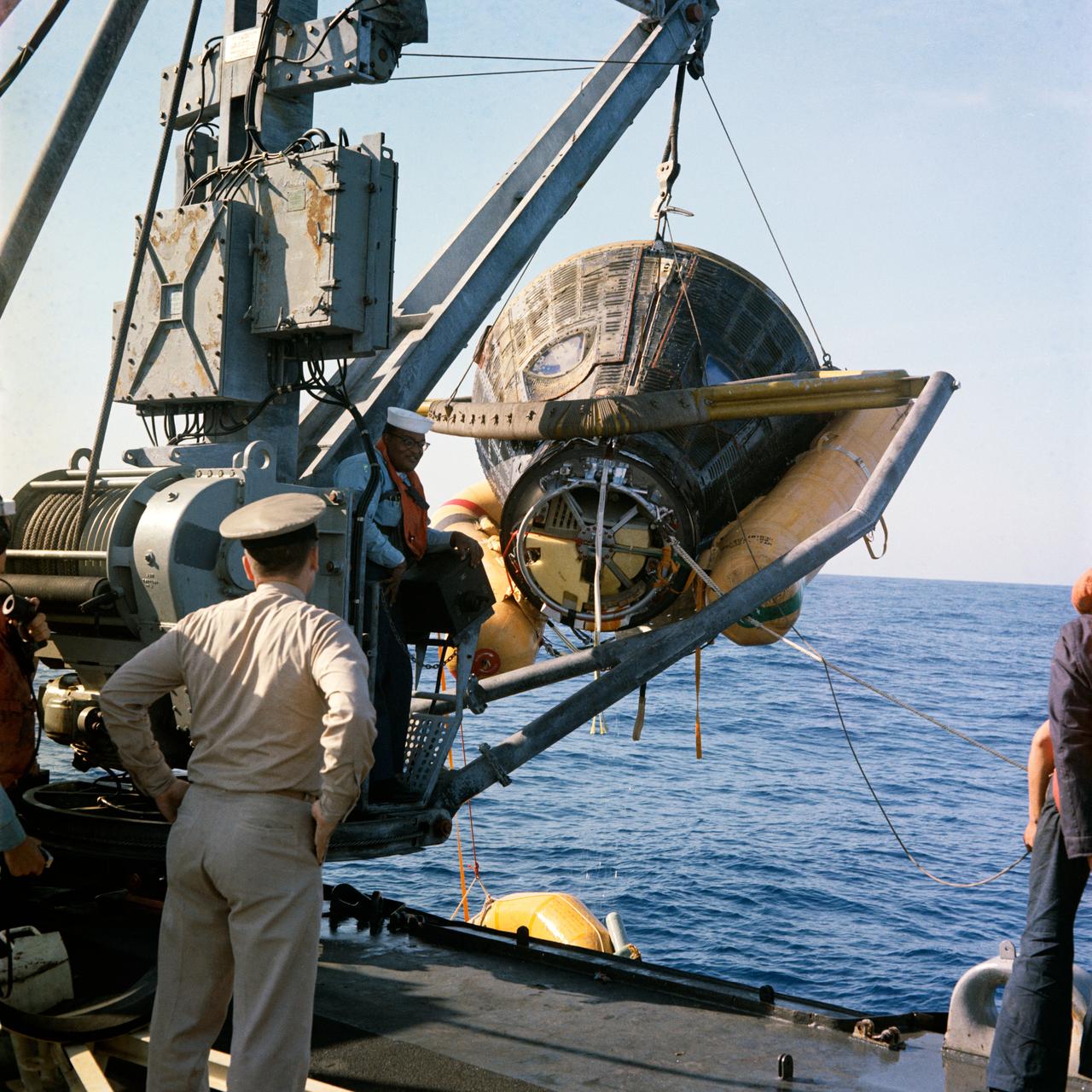
S66-18613 (16 March 1966) --- The Gemini-8 spacecraft, with astronauts Neil A. Armstrong and David R. Scott still aboard, is hoisted aboard the destroyer USS Leonard F. Mason. Trouble with the Gemini-8 Orbit Attitude and Maneuvering System (OAMS) forced an early termination of the mission. Photo credit: NASA
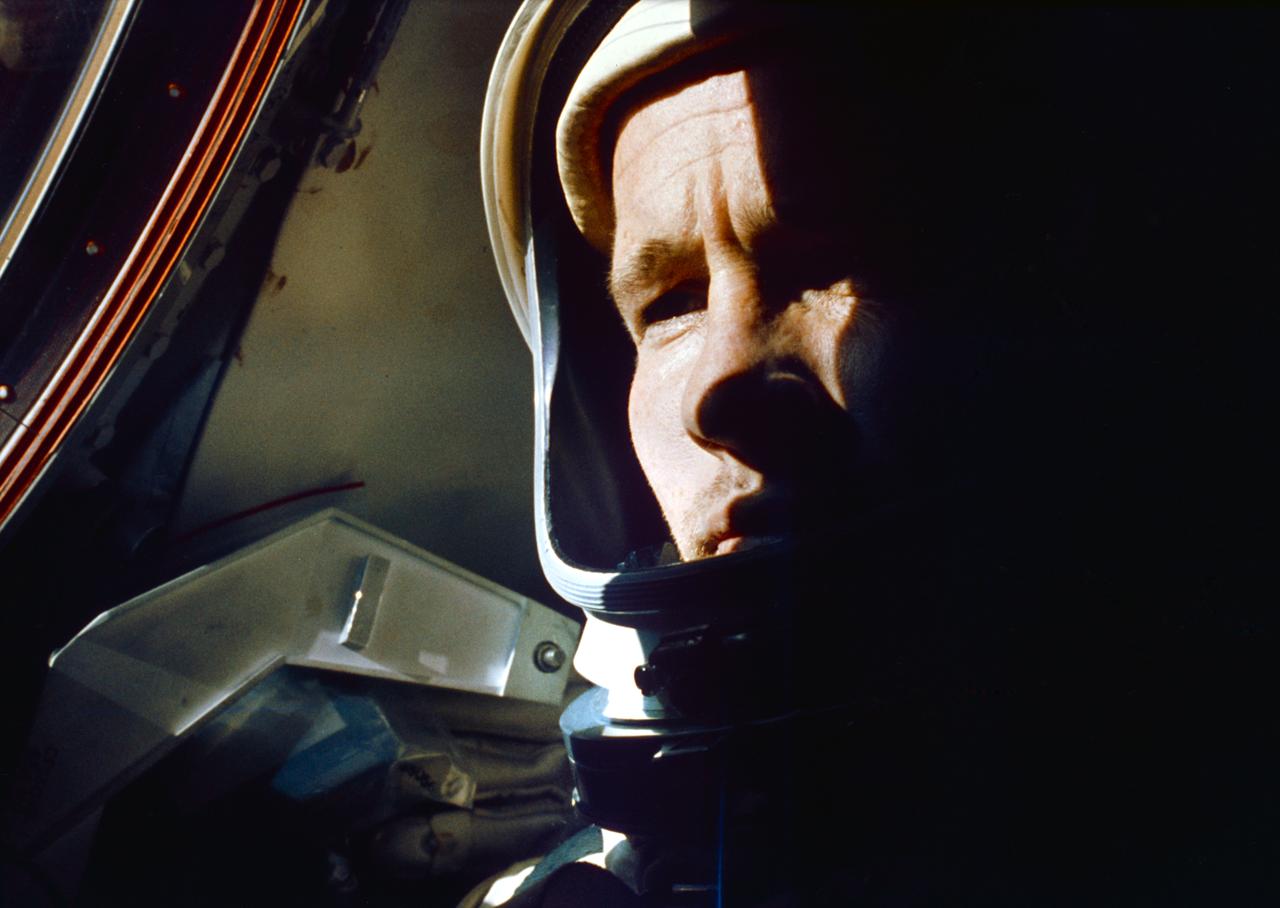
S65-30549 (3-7 June 1965) --- Astronaut Edward H. White II, Gemini IV pilot, is photographed onboard the Gemini-Titan 4 spacecraft during the four-day Earth-orbital mission. Photo credit: NASA
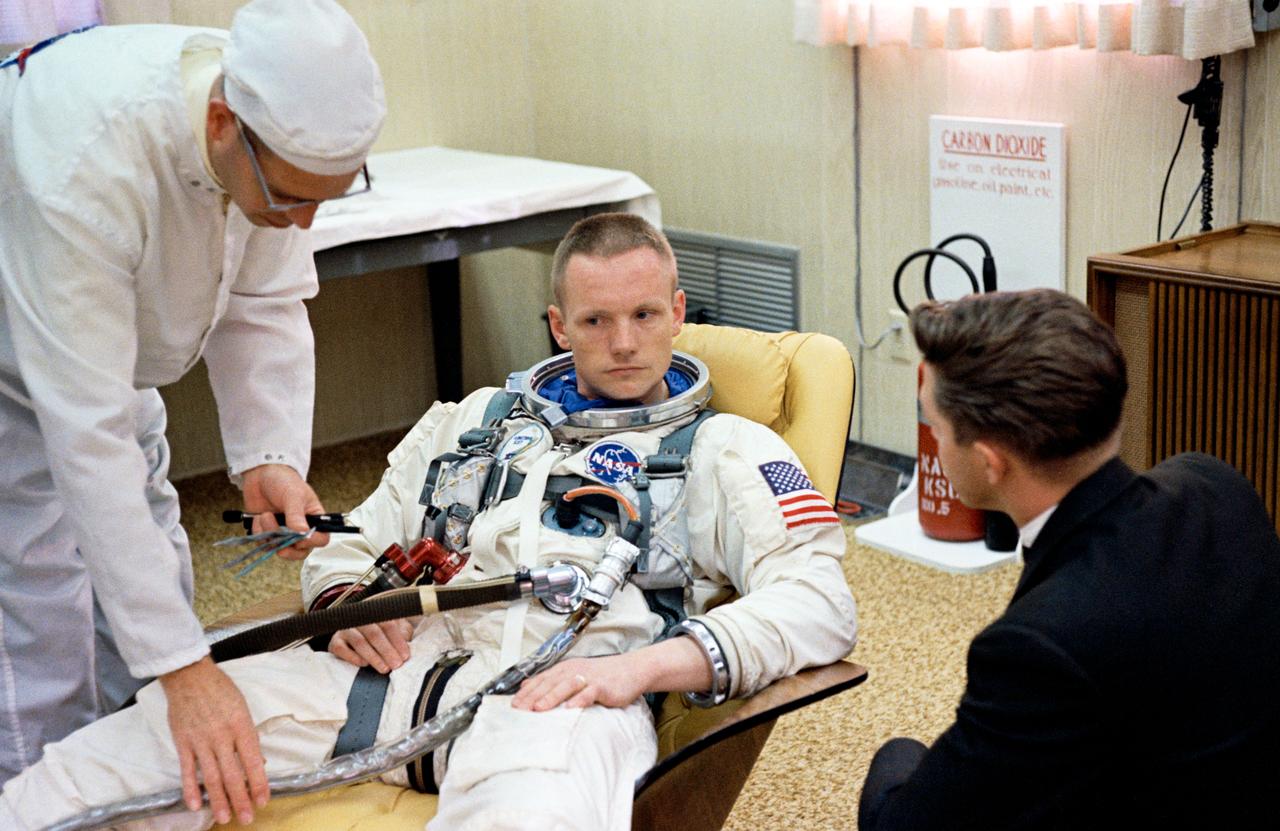
S66-24446 (16 March 1966) --- Astronaut Neil A. Armstrong, command pilot of the Gemini-8 spaceflight, sits in the Launch Complex 16 trailer during suiting up operations for the Gemini-8 mission. Suit technician Jim Garrepy assists. Photo credit: NASA
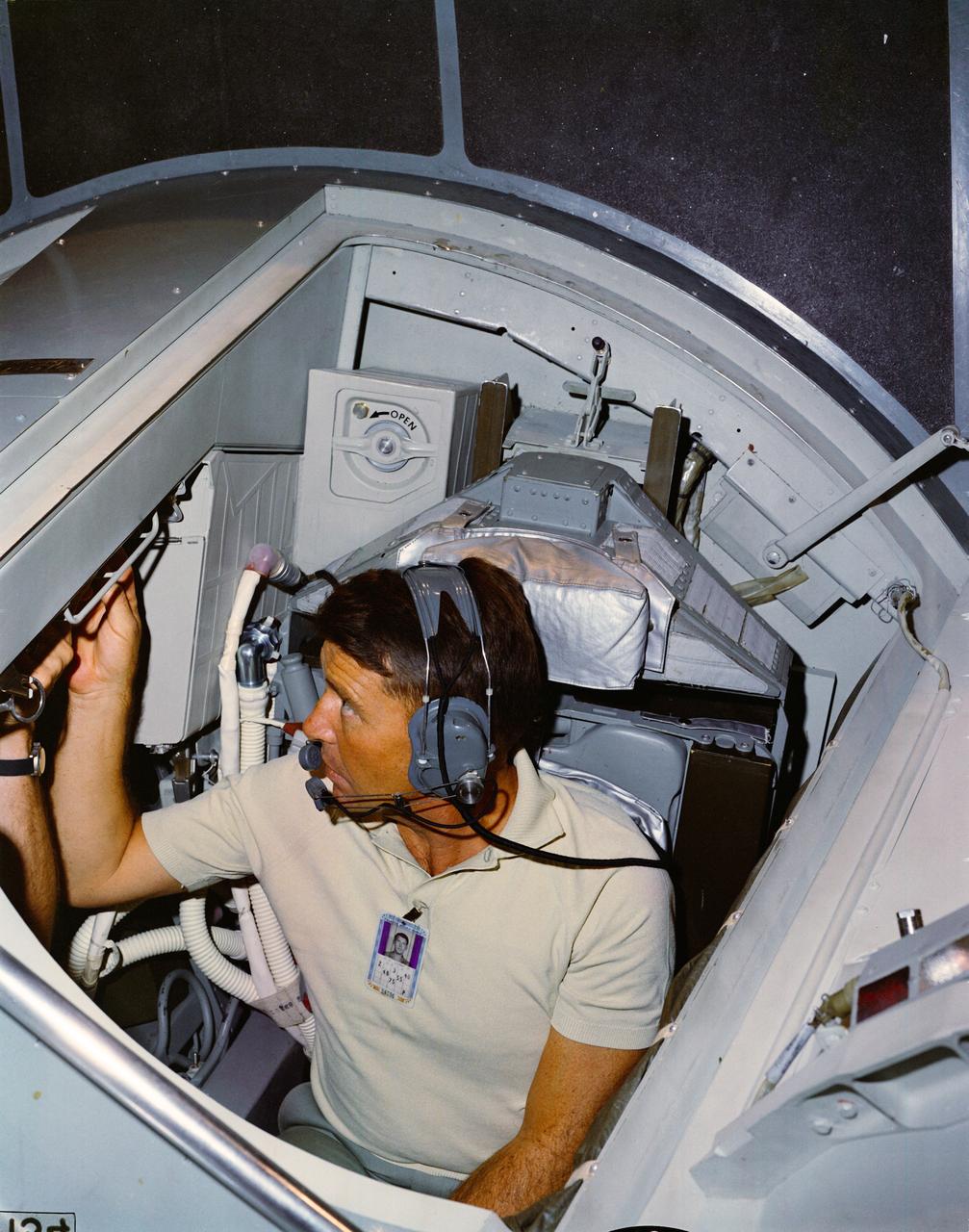
S65-13919 (15 Jan. 1965) --- Astronaut Walter M. Schirra Jr., command pilot of the Gemini-6 prime crew, is pictured in the cockpit of the Gemini simulator at the Mission Control Center at Cape Kennedy, Florida. Photo credit: NASA or National Aeronautics and Space Administration
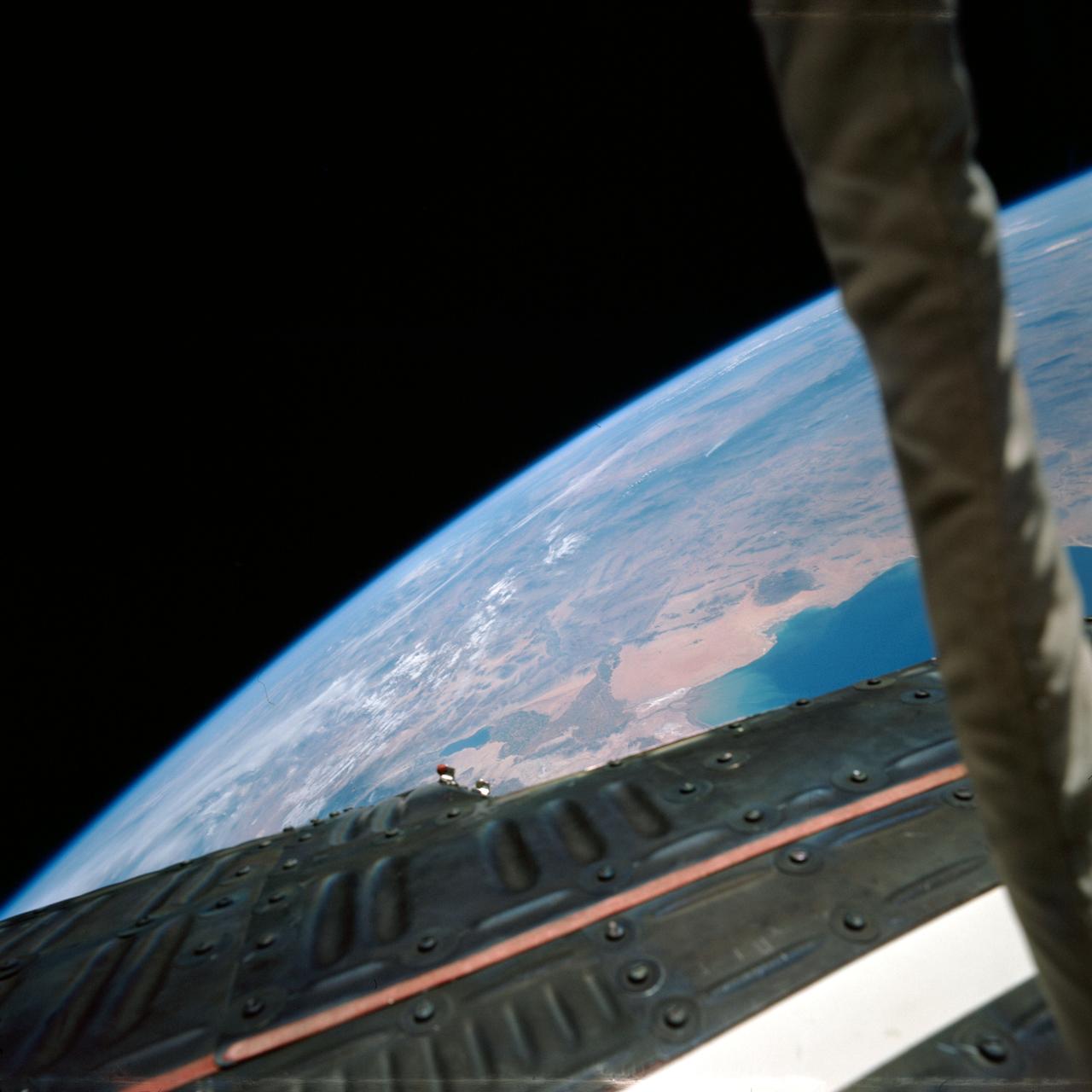
S66-38068 (5 June 1966) --- Astronaut Eugene A. Cernan took this view of the Gemini-9A spacecraft and his umbilical cord (right) over California, Arizona, and Sonora, Mexico, during his extravehicular activity (EVA) on the Gemini-9A mission. Taken during the 32nd revolution of the flight. Photo credit: NASA
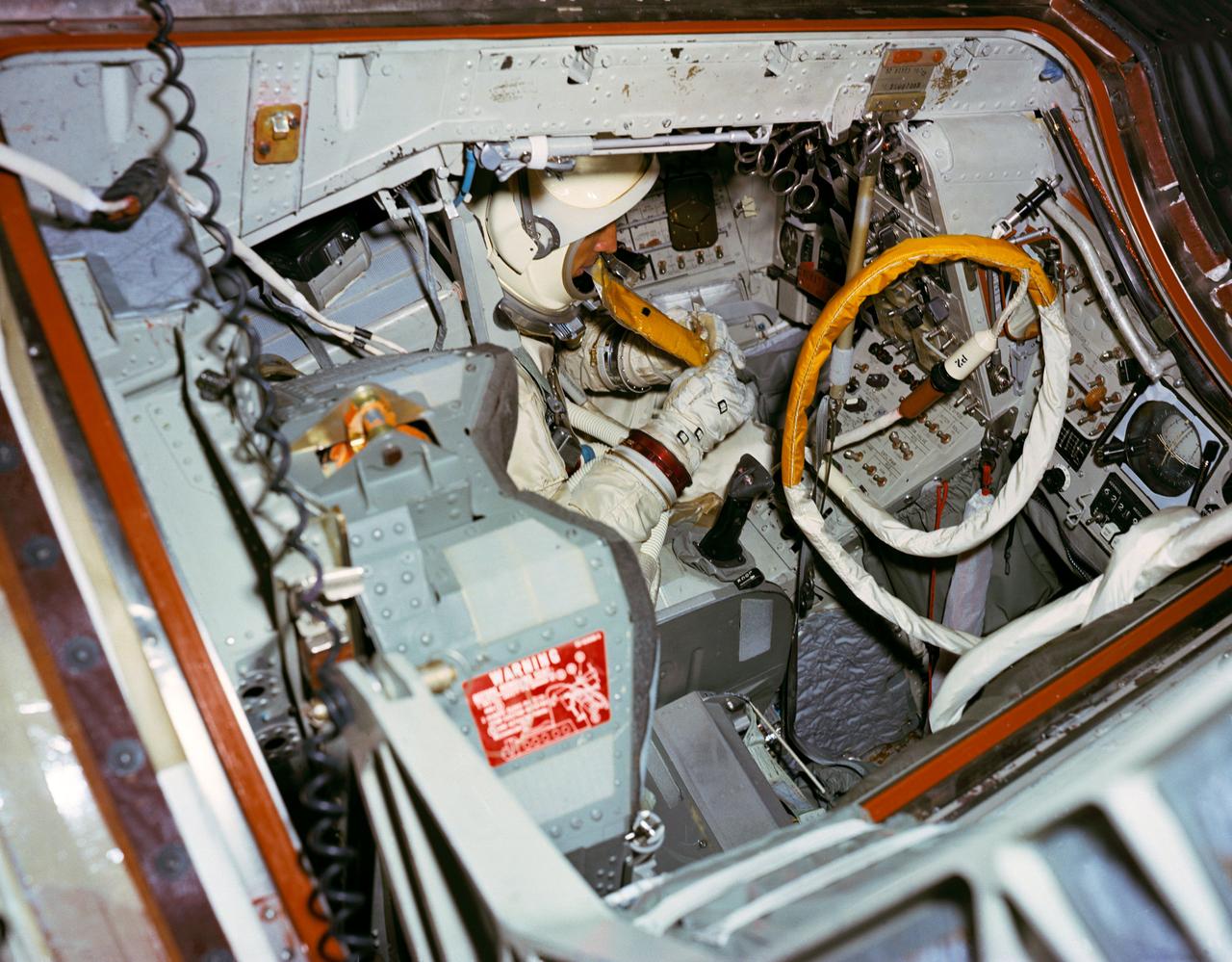
S66-51054 (15 Aug. 1966) --- Astronaut James A. Lovell Jr., prime crew command pilot of the Gemini-12 space mission, simulates using space food packet while seated in the Gemini-12 spacecraft in the 30-feet Altitude Chamber at McDonnell Aircraft Corporation, St. Louis, Missouri. Photo credit: NASA
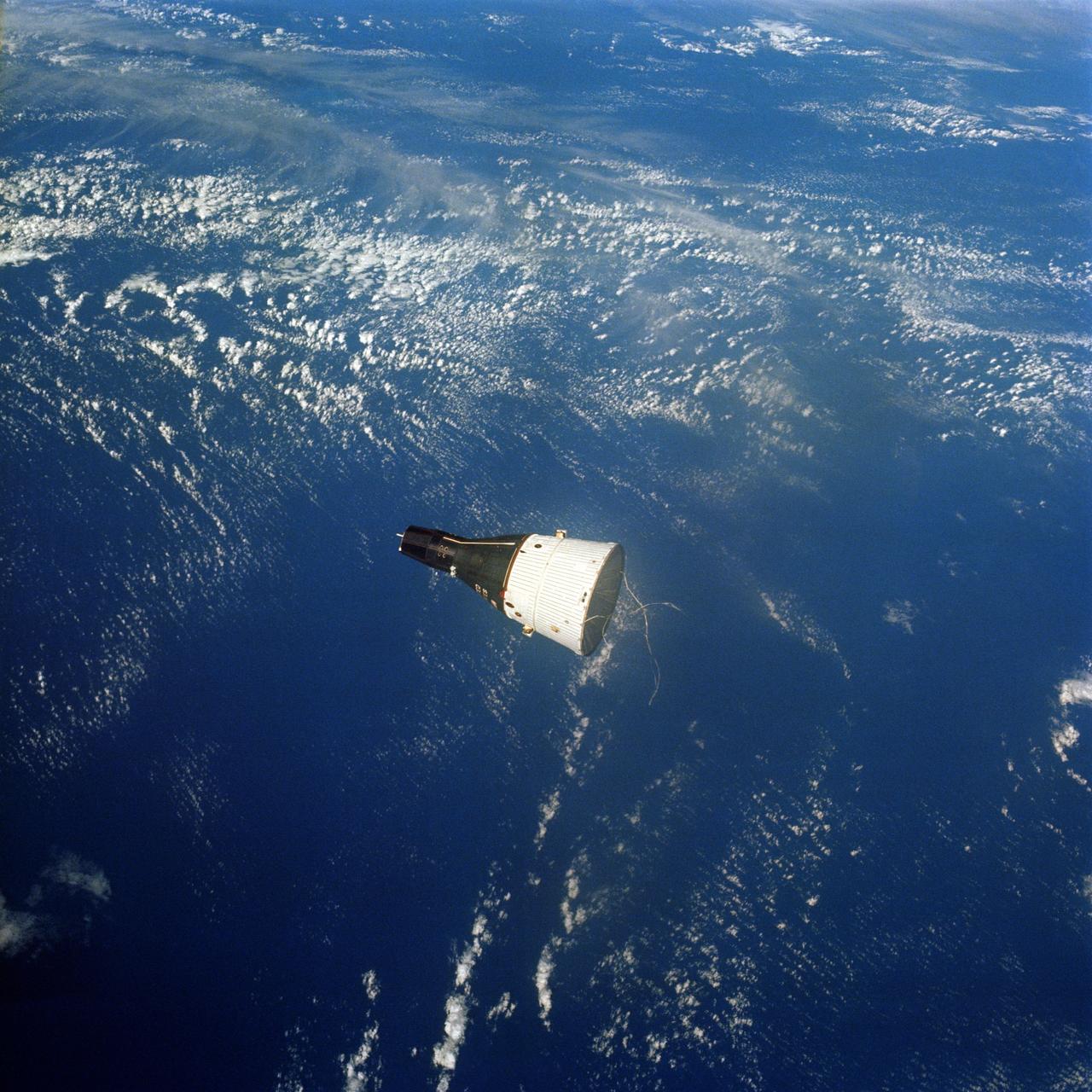
S65-63209 (15 Dec. 1965) --- The Gemini-7 spacecraft as seen from the Gemini-6 spacecraft during their rendezvous mission in space. The two spacecrafts are approximately 122 feet apart. This photo was taken with a modified 70mm Hasselblad camera. Photo credit: NASA or National Aeronautics and Space Administration
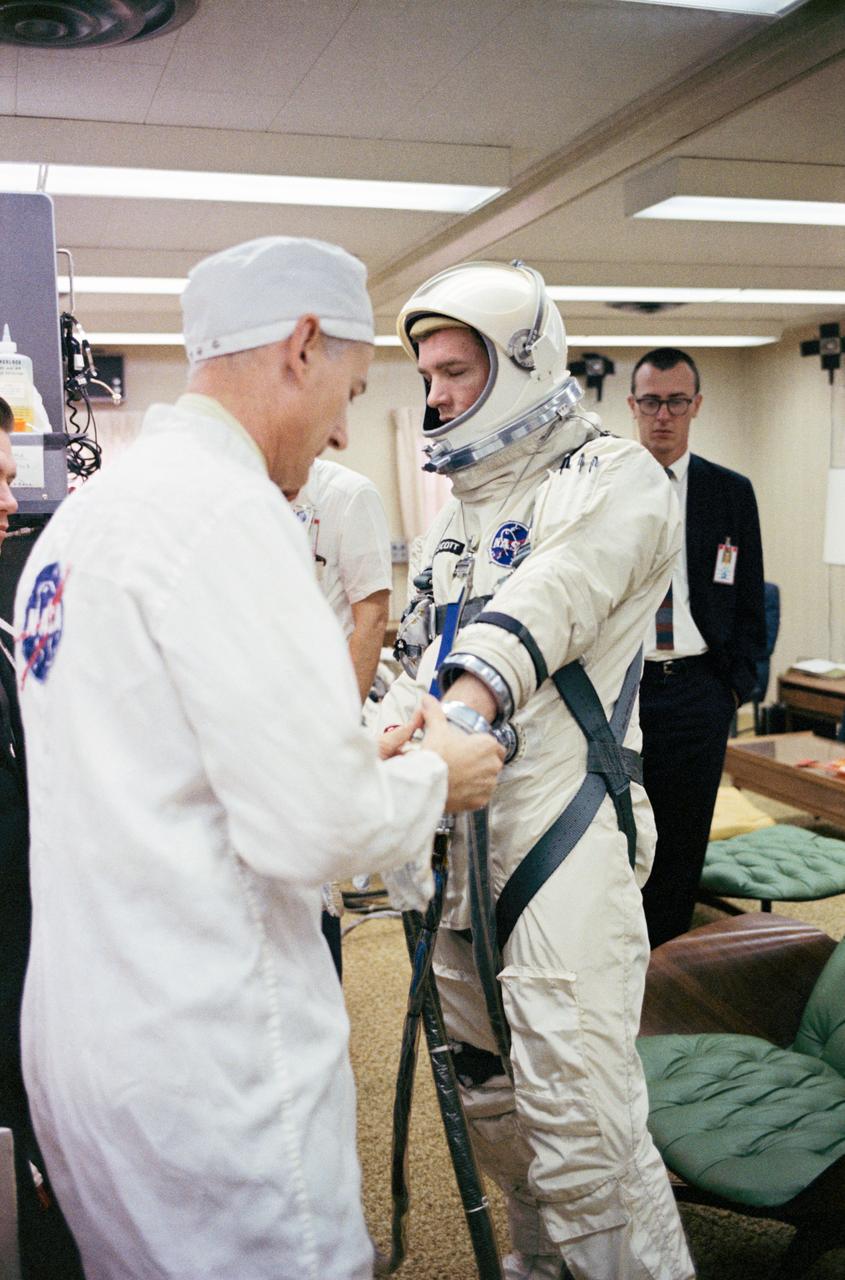
S66-24405 (16 March 1966) --- Astronaut David R. Scott, pilot of the Gemini-8 spaceflight, in the Launch Complex 16 trailer during suiting up operations for the Gemini-8 mission. NASA suit technician Joe Schmitt helps the astronaut put on his gloves. Photo credit: NASA