
Technicians at General Atomics Aeronautical Systems, Inc., (GA-ASI) facility at Adelanto, Calif., carefully install a turboprop engine to the rear fuselage of NASA's Altair aircraft during final assembly operations.

Technician Dave Brown installs a drilling template during construction of the all-composite left wing of NASA's Altair aircraft at General Atomics Aeronautical Systems, Inc., (GA-ASI) facility at Adelanto, Calif.

Technicians at General Atomics Aeronautical Systems, Inc., (GA-ASI) facility at Adelanto, Calif., carefully thread control lines through a bulkhead during engine installation on NASA's Altair aircraft.

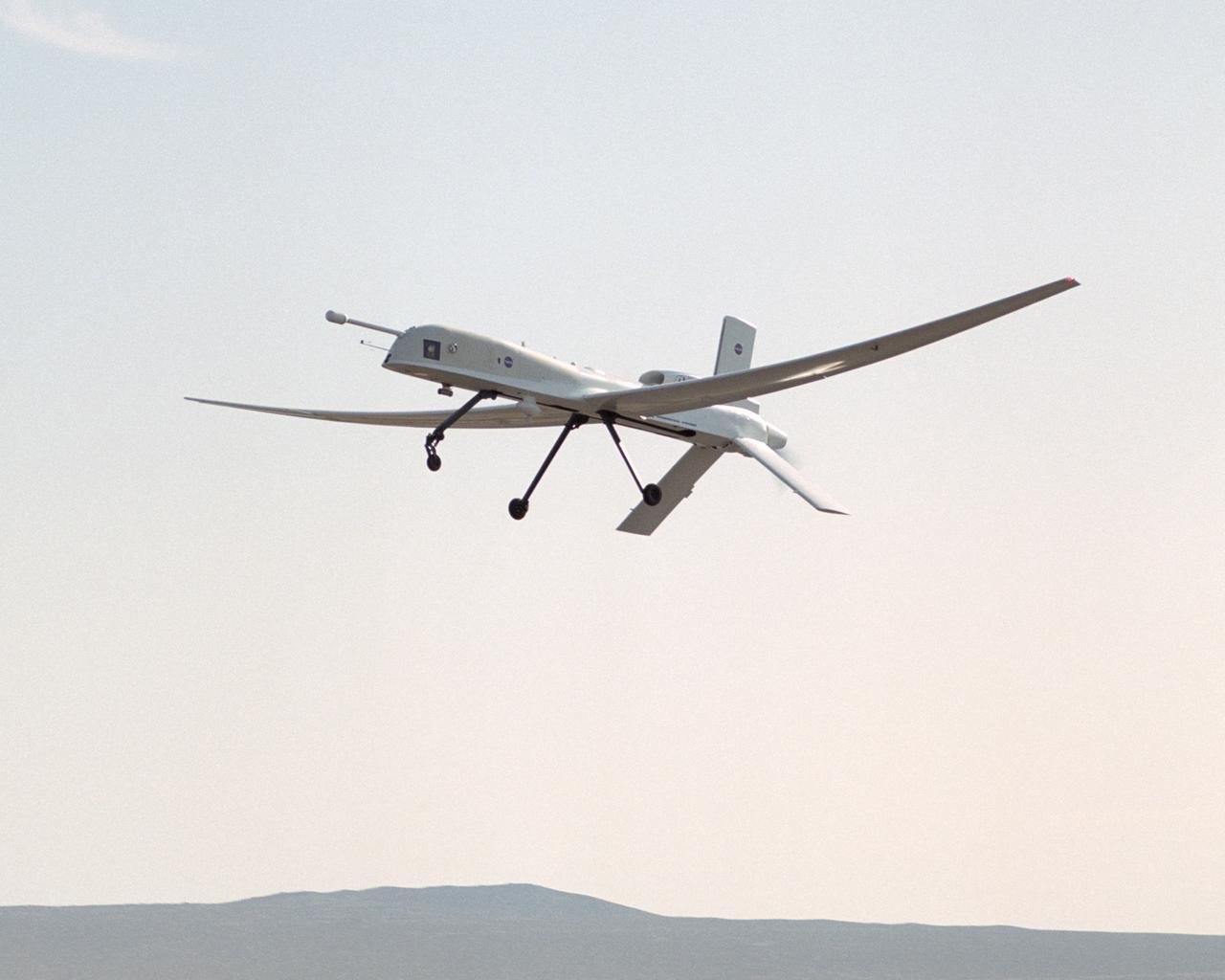
The long wings of General Atomics Altair UAV are in evidence during a series of environmental monitoring missions for NOAA and NASA in the spring of 2005.

NASA's Ikhana unmanned science demonstration aircraft, a civil variant of General Atomics' Predator B, lifts off from Grey Butte airfield in Southern California.

NASA's Ikhana unmanned science demonstration aircraft, a civil variant of General Atomics' Predator B, lifts off from Grey Butte airfield in Southern California.

NASA's Ikhana, a civil variant of General Atomics' Predator B unmanned aircraft, takes to the sky for a morning checkout flight from the Grey Butte airfield.

NASA's Ikhana unmanned long-endurance science aircraft, a civil variant of General Atomics' Predator B, takes to the sky over Southern California's high desert.
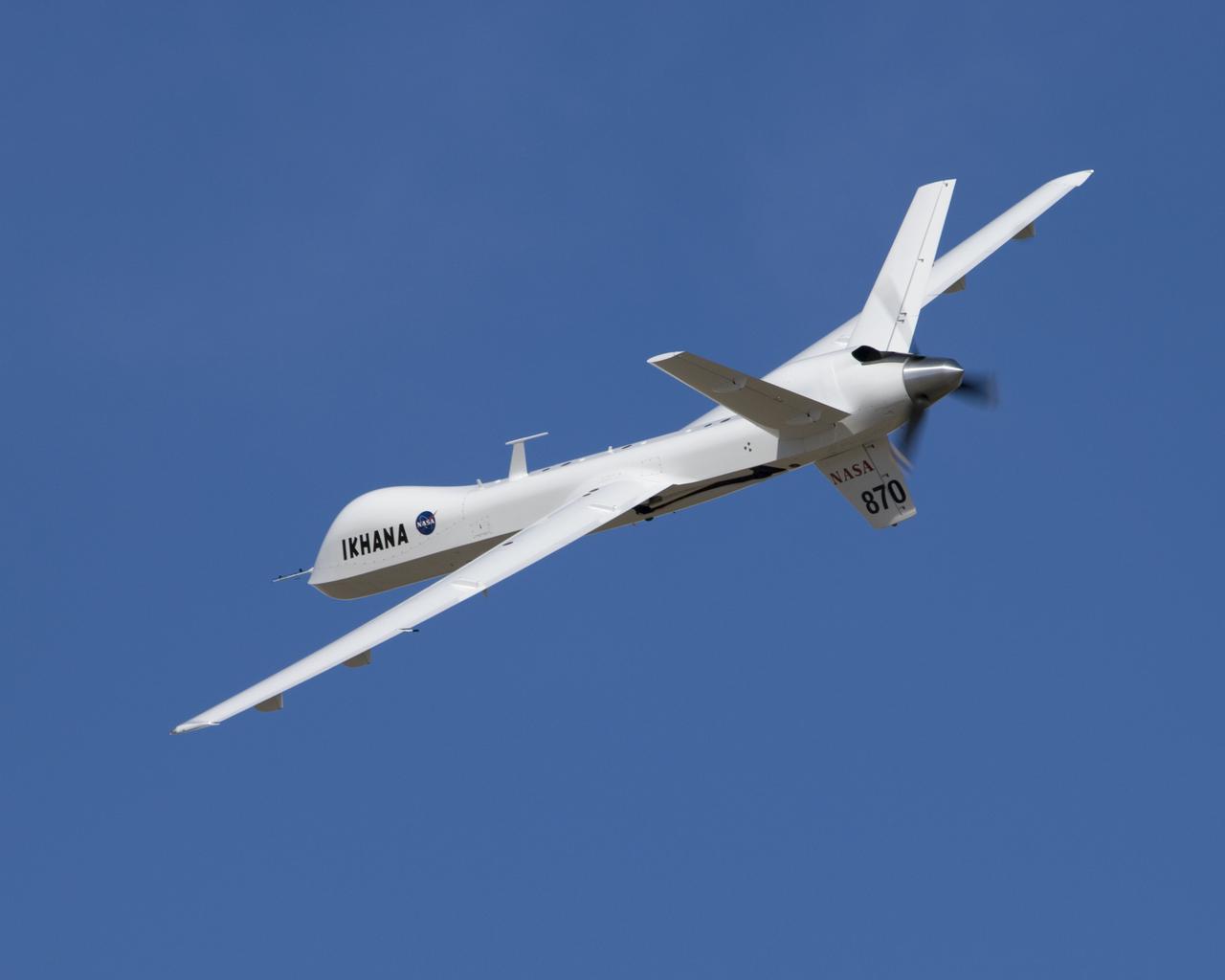
Straight wings, a Y-tail and a pusher propeller distinguish NASA's Ikhana, a civil version of General Atomics Aeronautical system's Predator B unmanned aircraft.
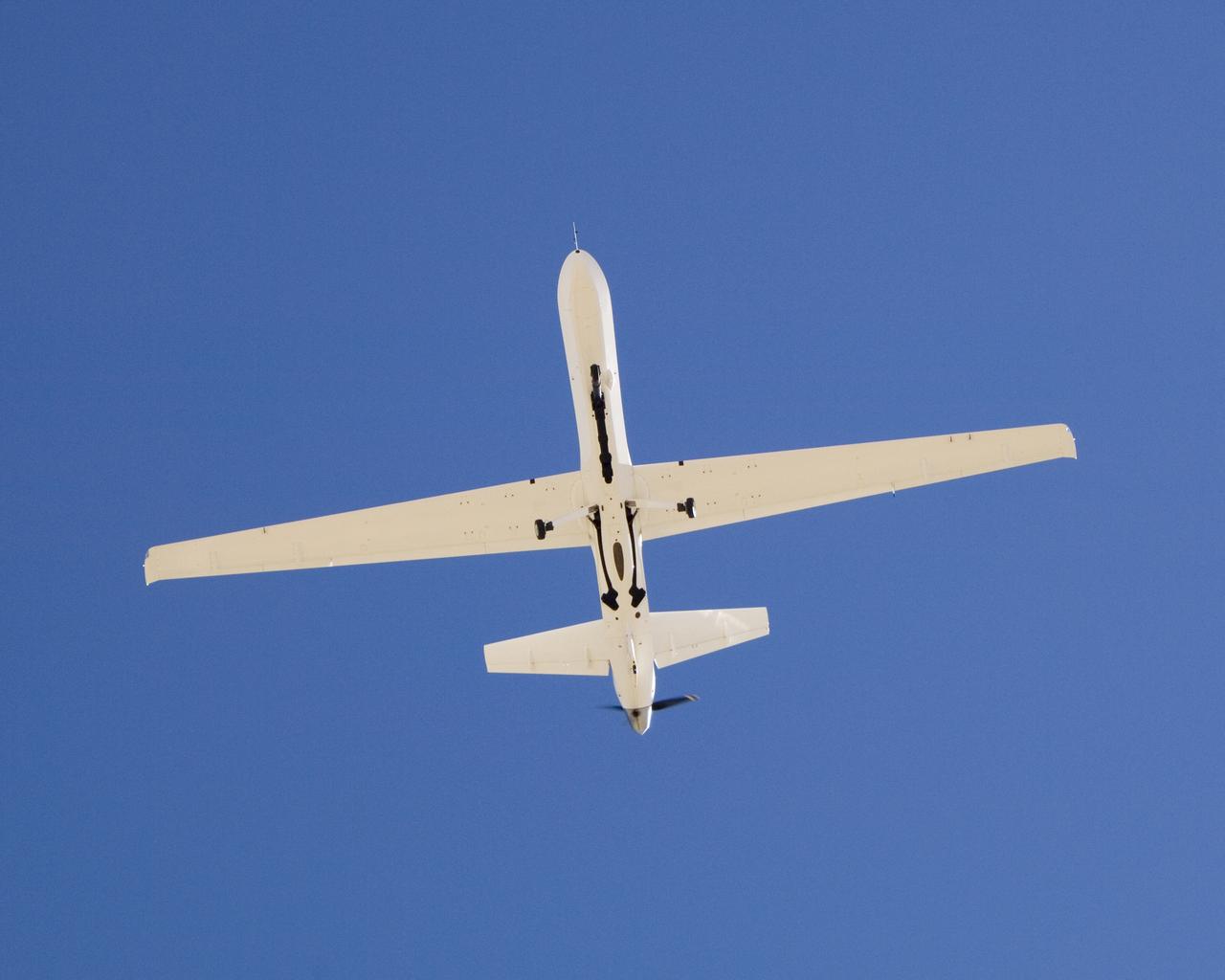
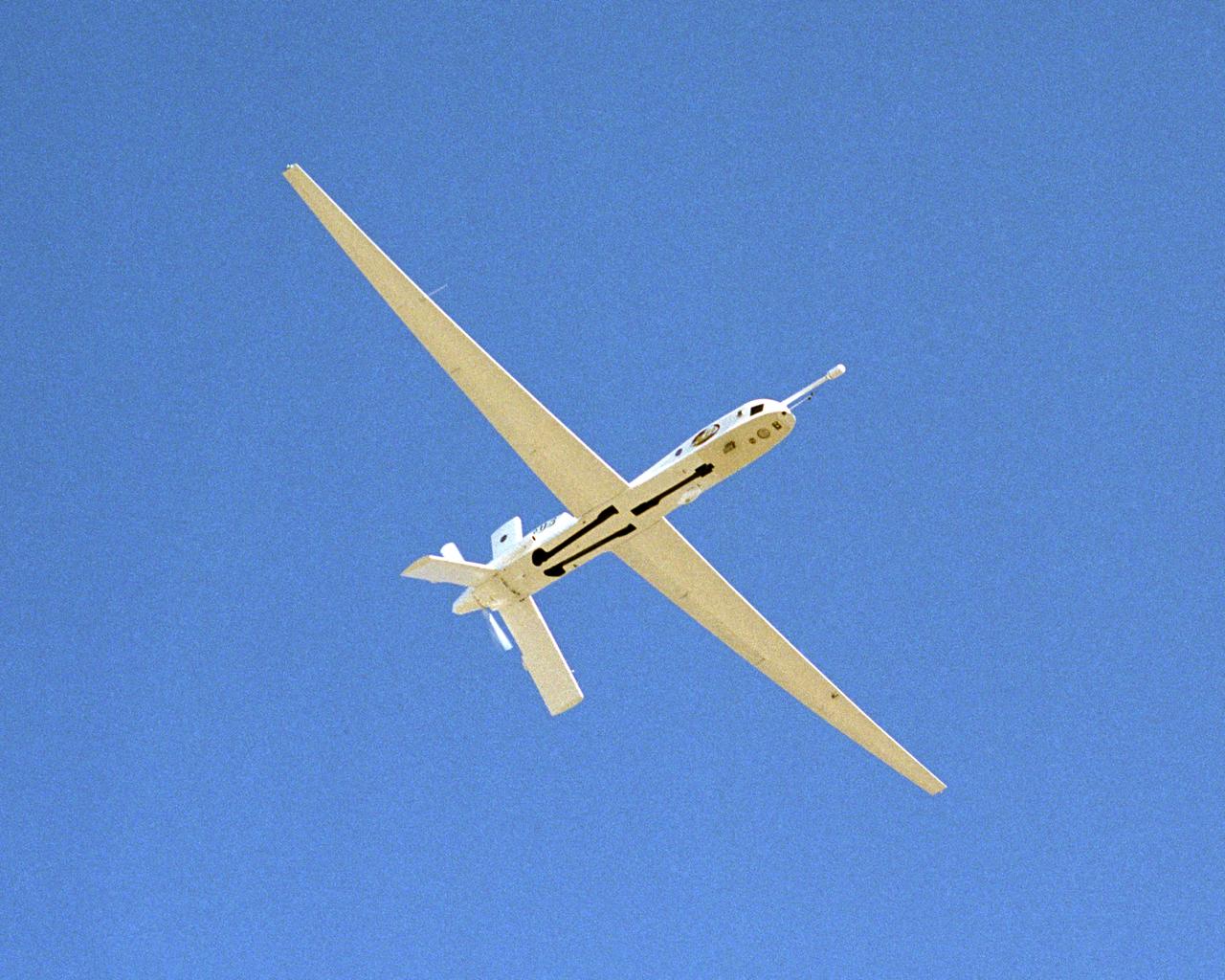
The narrow fuselage of NASA'S Ikhana unmanned science aircraft, a civil version of General Atomics' Predator B, is evident in this view from underneath.
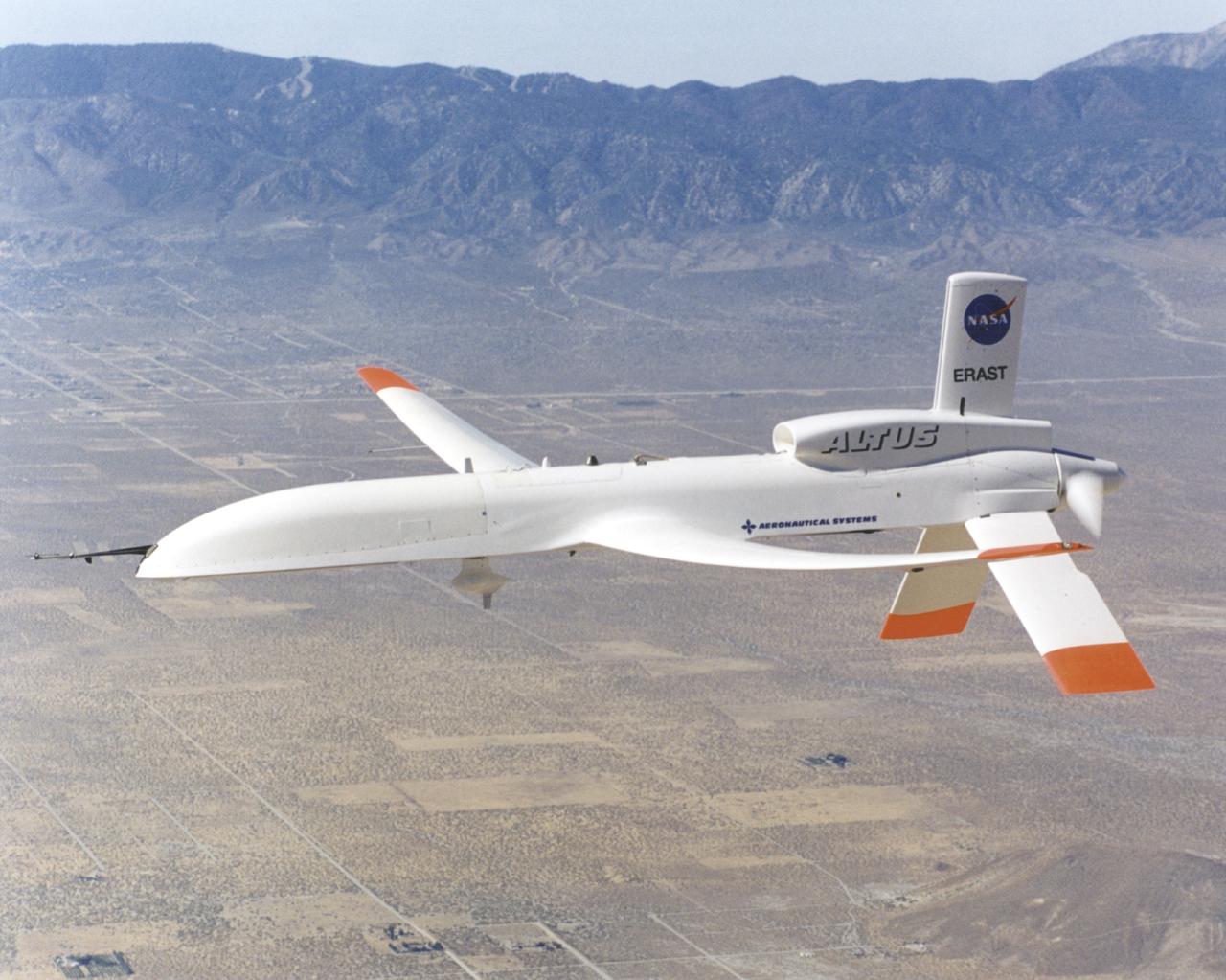
Altus II aircraft flying over southern California desert
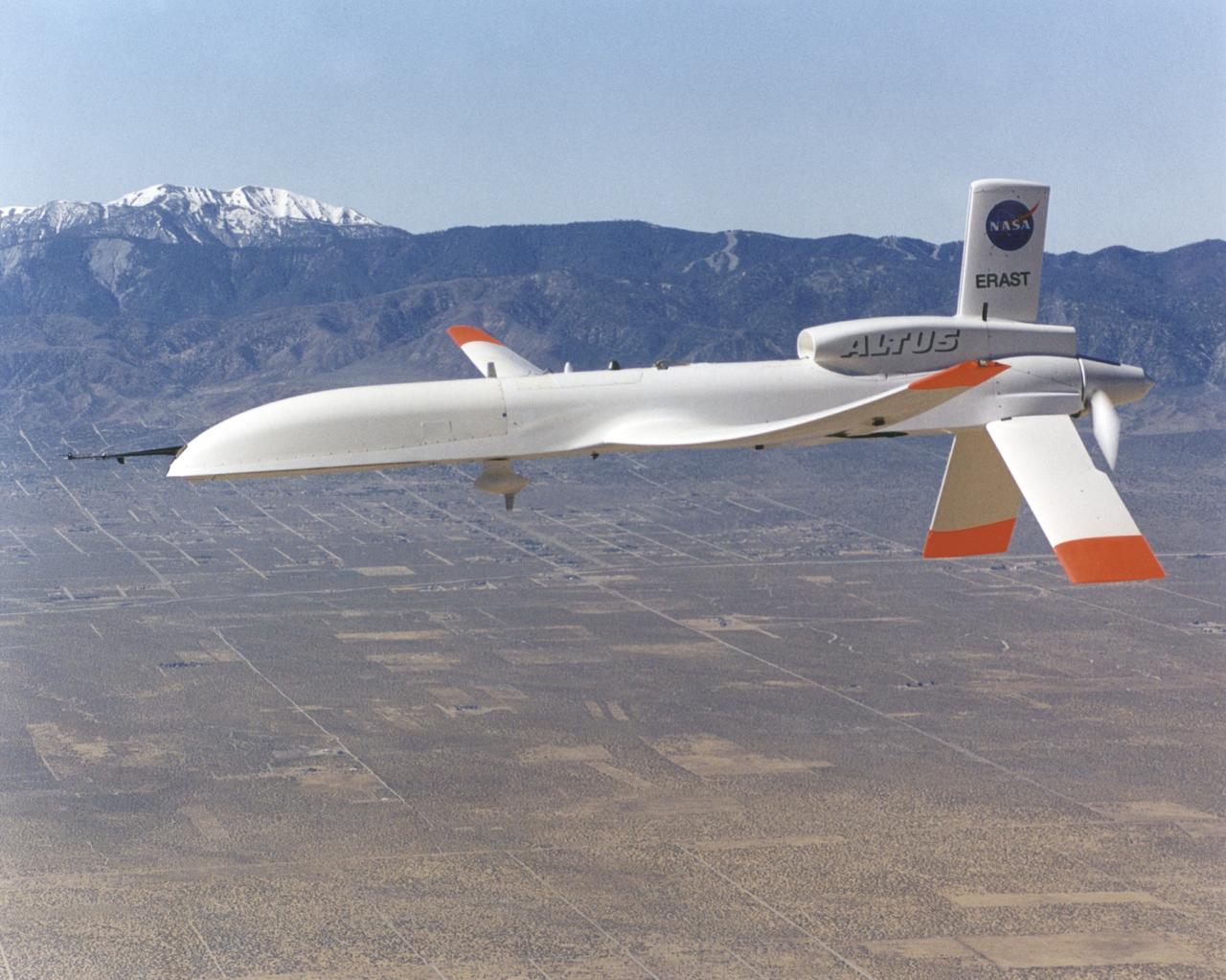
Altus II aircraft flying over southern California desert
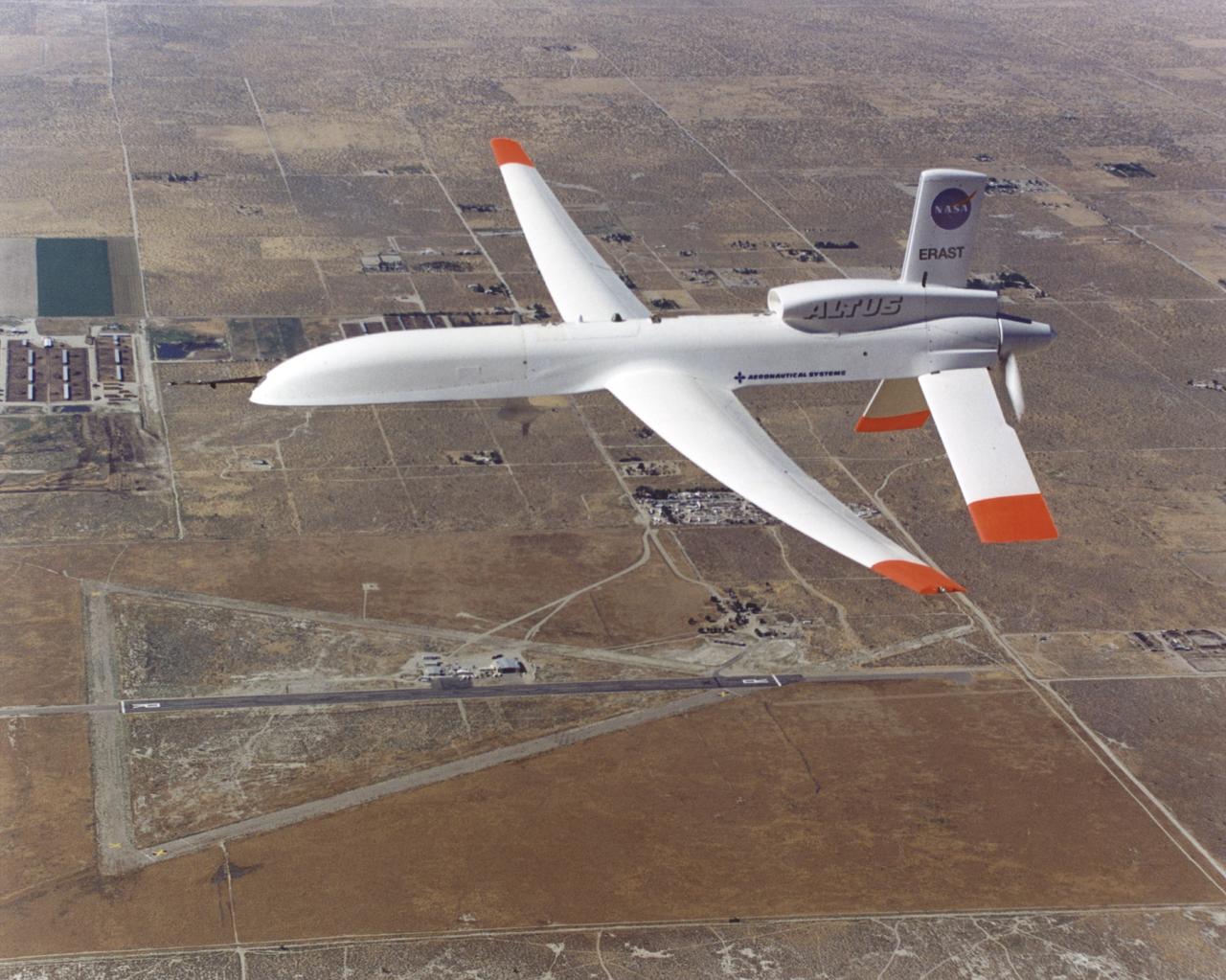
Altus II aircraft flying over southern California desert
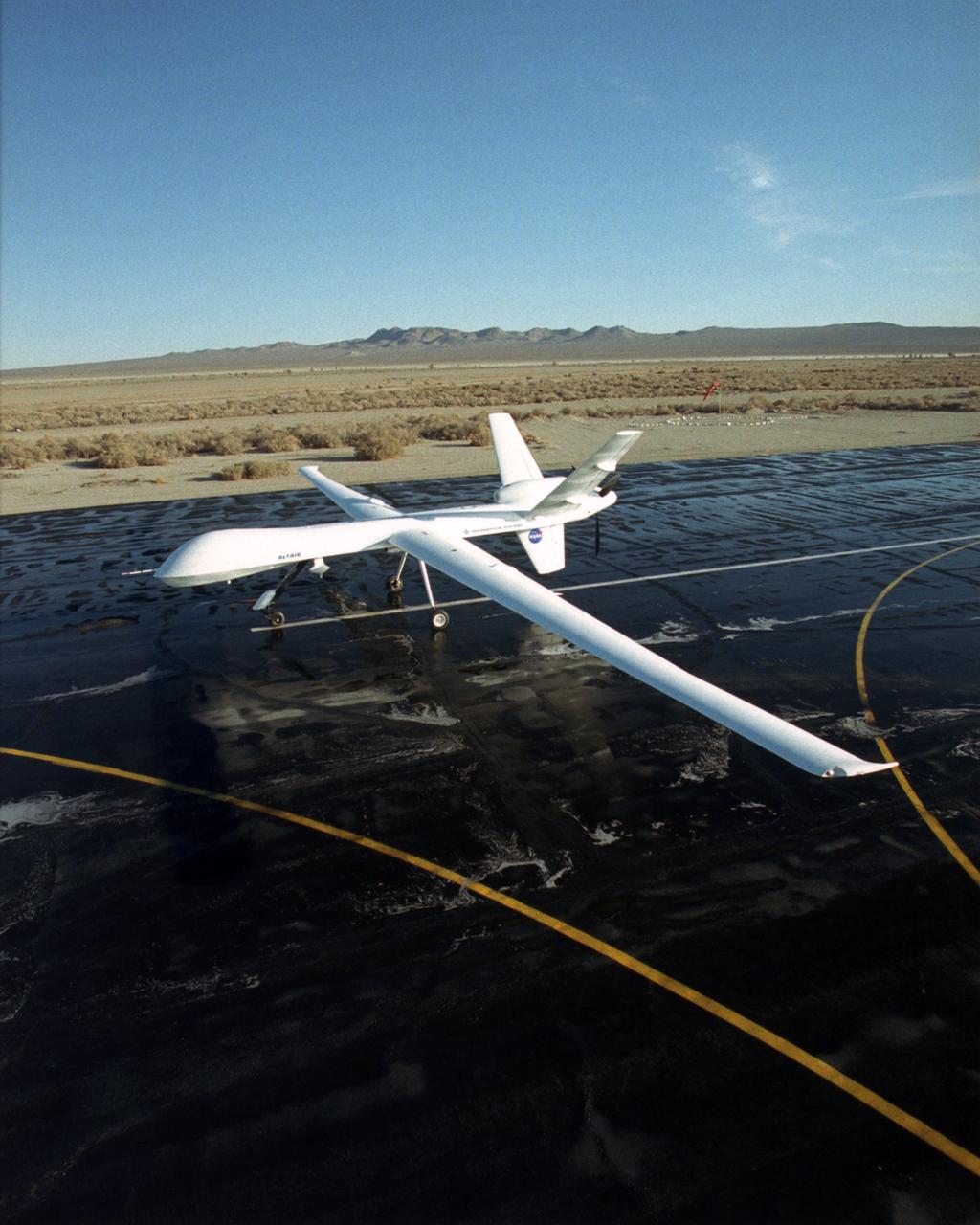
The Altair unmanned aerial vehicle (UAV), built by General Atomics Aeronautical Systems, Inc. for NASA, is poised for flight at GA-ASI's flight test facility at El Mirage, California.

Narrow wings, a Y-tail and rear engine layout distinguish NASA's Ikhana science aircraft, a civil variant of General Atomics' Predator B unmanned aircraft system.

Distinguished by its large nose payload bay, NASA's Ikhana unmanned aircraft does an engine run prior to takeoff from General Atomics' Grey Butte airfield.
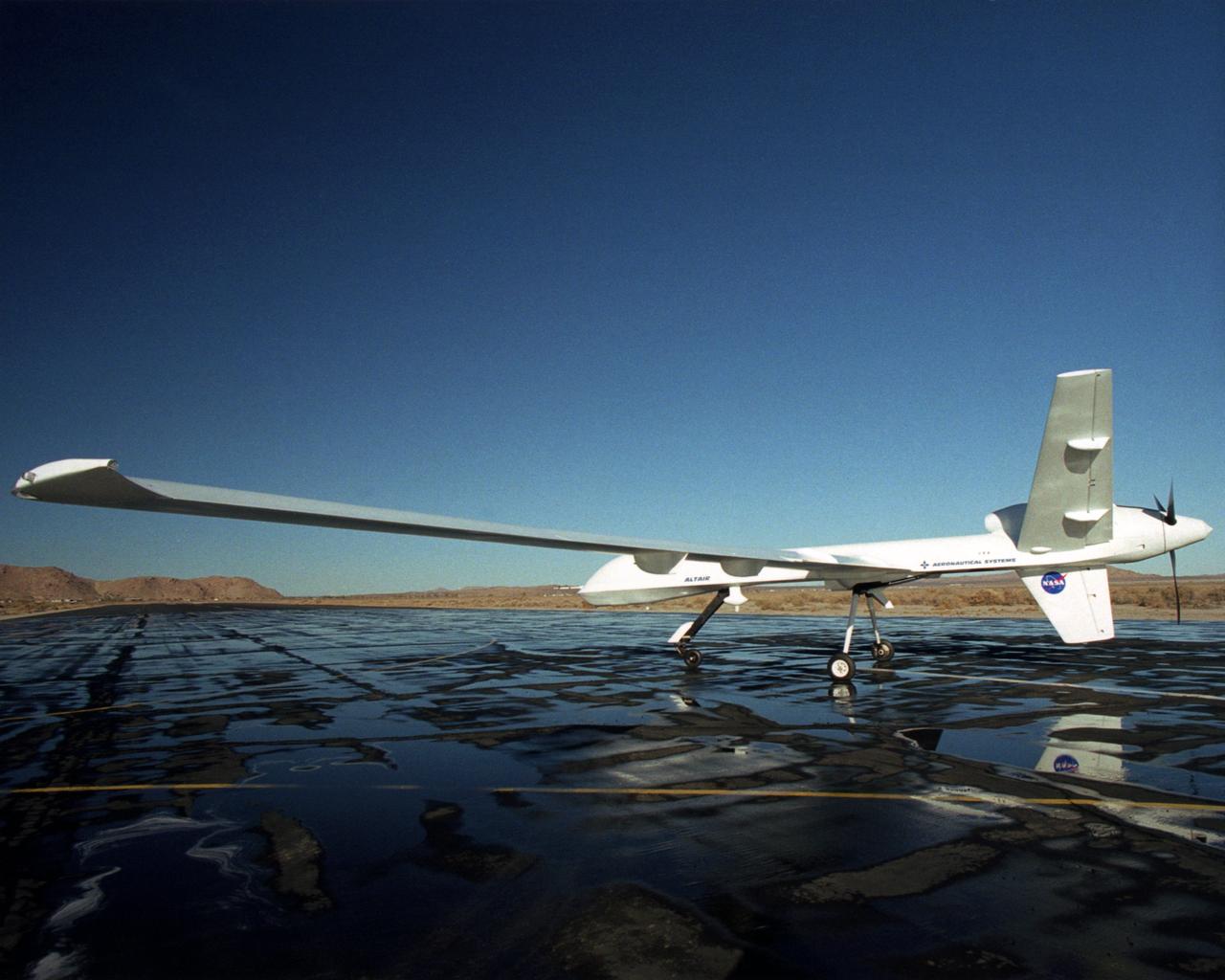
Long wings, a V-tail with a ventral fin and a rear-mounted engine distinguish the Altair, an unmanned aerial vehicle built for NASA by General Atomics Aeronautical Systems, Inc.

General Atomics' uninhabited Altair flew a NOAA/NASA coastal mapping, mammal observation and marine monitoring mission off the California coast in late 2005.
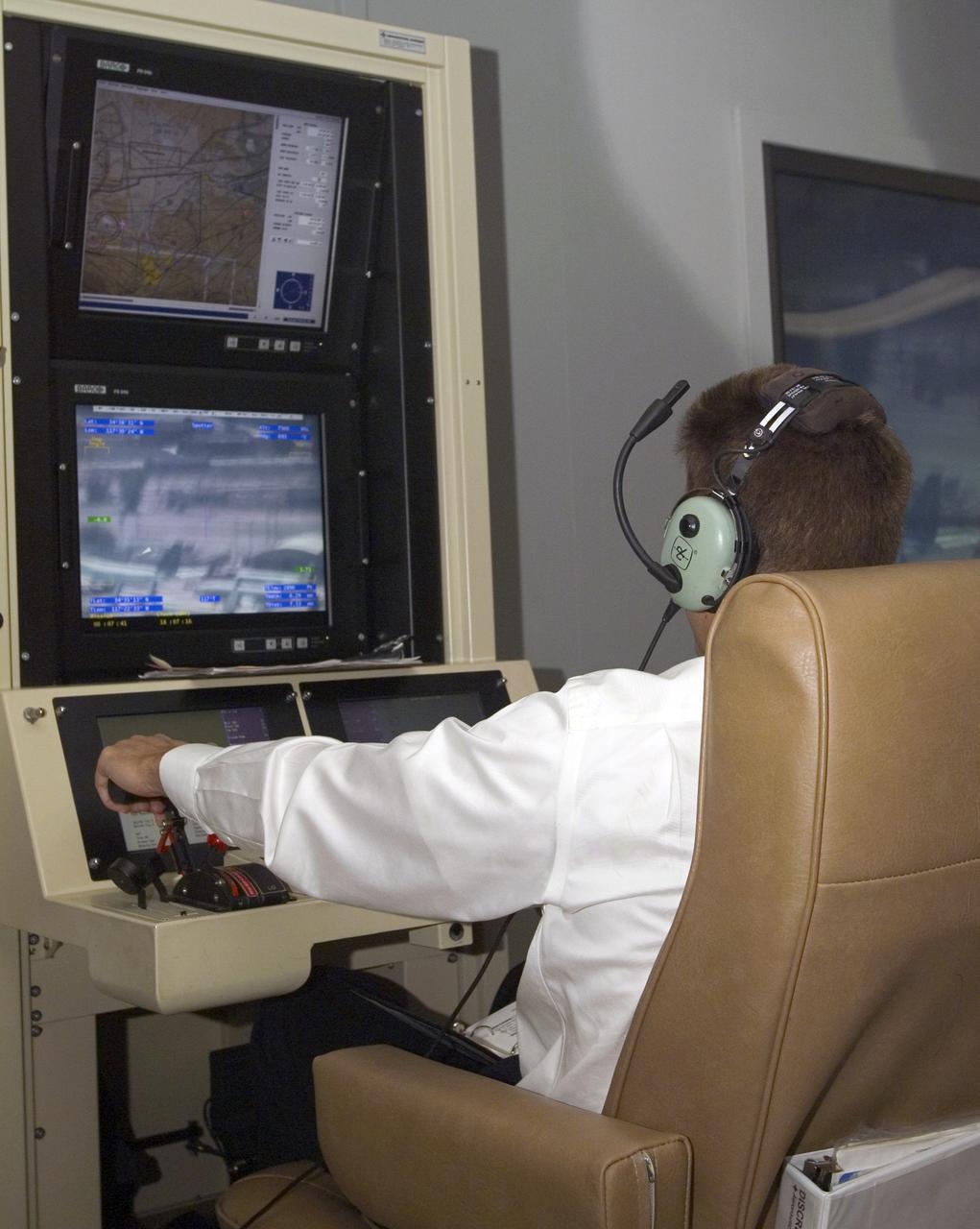
A pilot for General Atomics guides the Altair remotely operated aircraft from a ground control station using both visual and telemetered data.
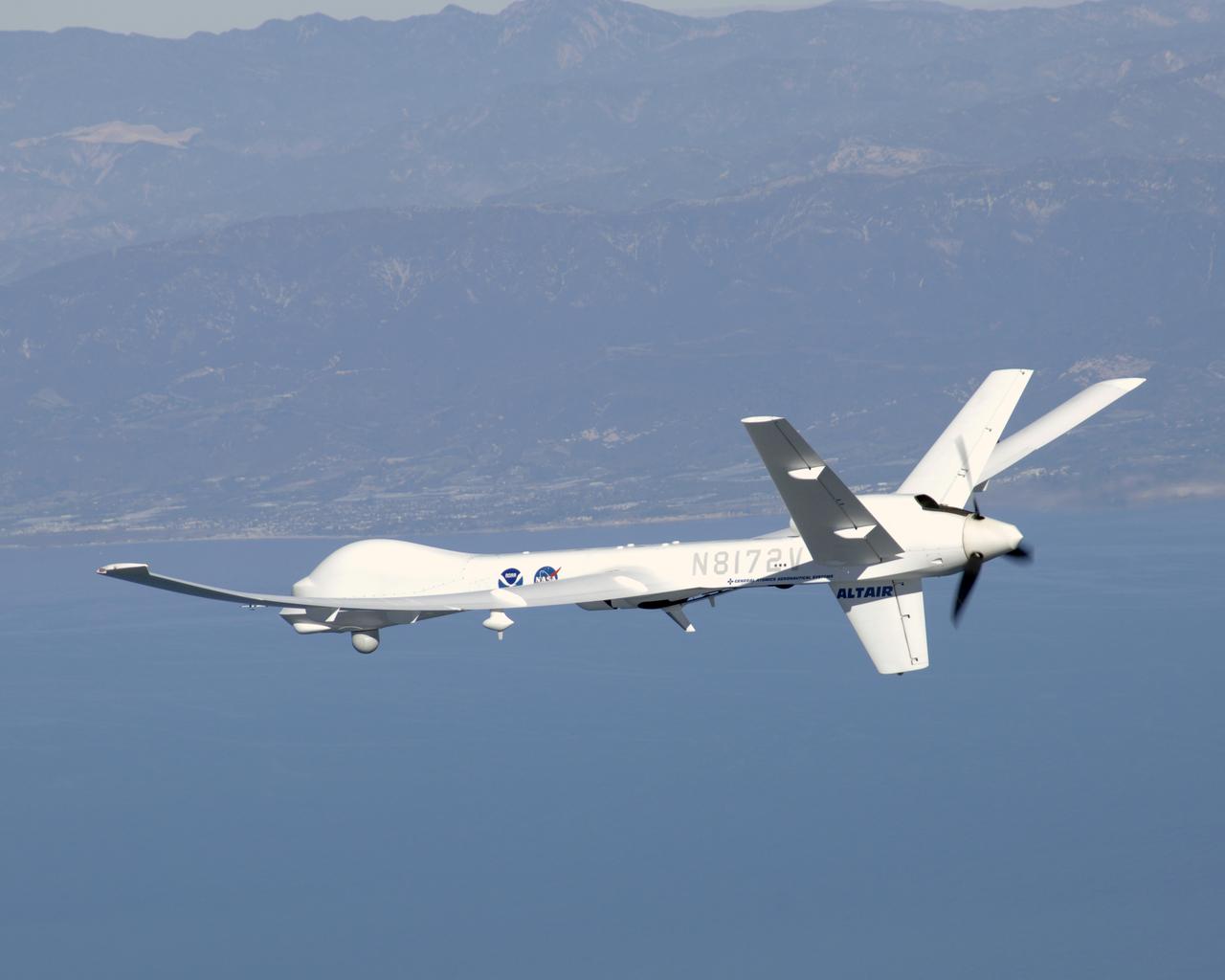
General Atomics' uninhabited Altair flew a NOAA/NASA coastal mapping, mammal observation and marine monitoring mission off the California coast in late 2005.

General Atomics' uninhabited Altair flew a NOAA/NASA coastal mapping, mammal observation and marine monitoring mission off the California coast in late 2005.
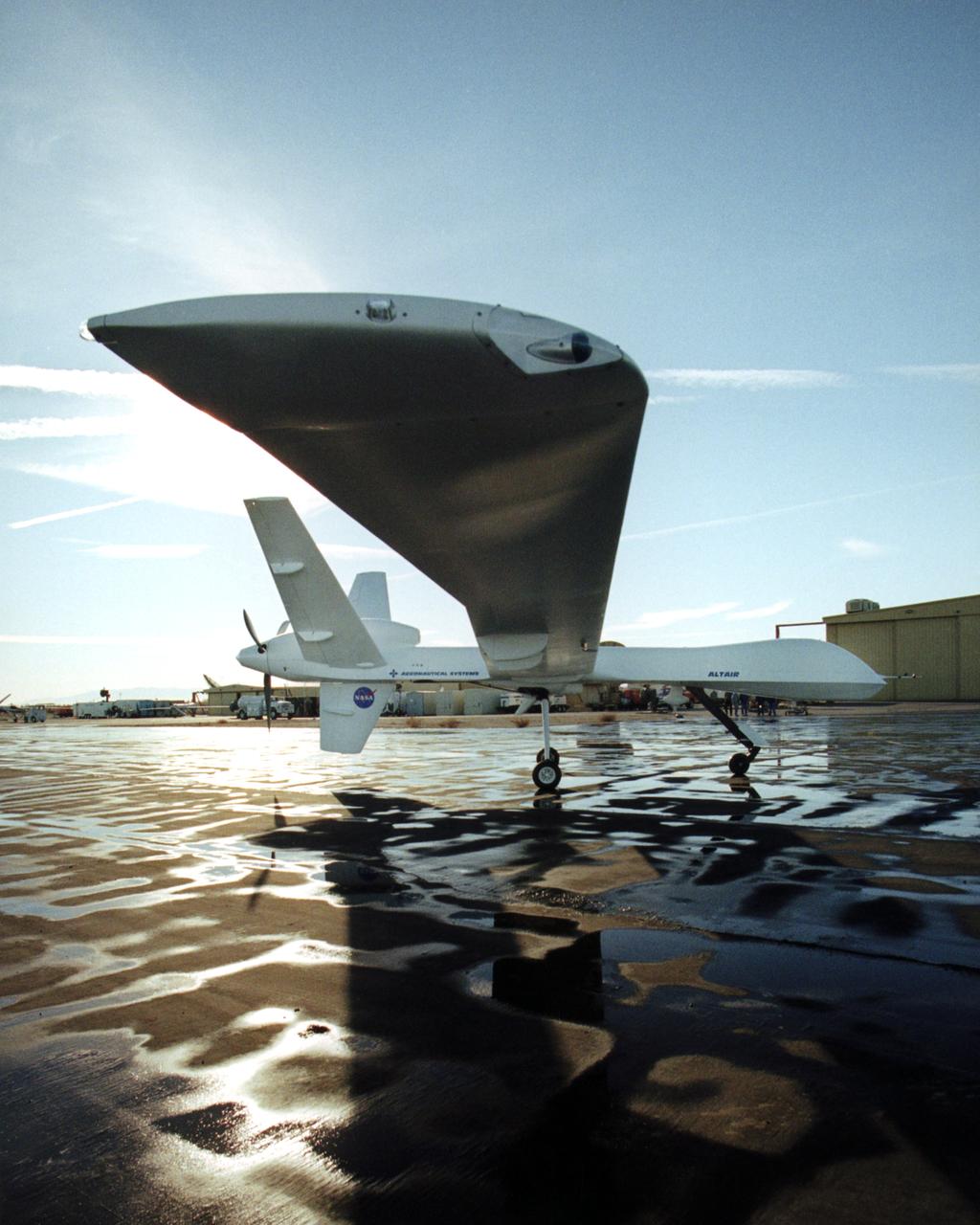
The Altair, a civil variant of the QM-9 Predator B unmanned aerial vehicle (UAV), shows off its lengthy high-aspect ratio wing while on the ramp at General Atomics Aeronautical Systems' flight test facility at El Mirage, California.

The left wing of NASA's Altair unmanned aerial vehicle (UAV) rests in a jig during construction at General Atomics Aeronautical Systems, Inc., (GA-ASI) facility at Adelanto, Calif.

Crew chief Joe Kinn gives NASA's Ikhana unmanned aircraft a final check during engine run-up prior to takeoff at General Atomics Aeronautical Systems' airfield.

Technician Shawn Warren carefully smoothes out the composite skin of an instrument fairing<br>atop the upper fuselage of the Altair unmanned aerial vehicle (UAV) at General Atomics Aeronautical Systems, Inc., facility at Adelanto, Calif.
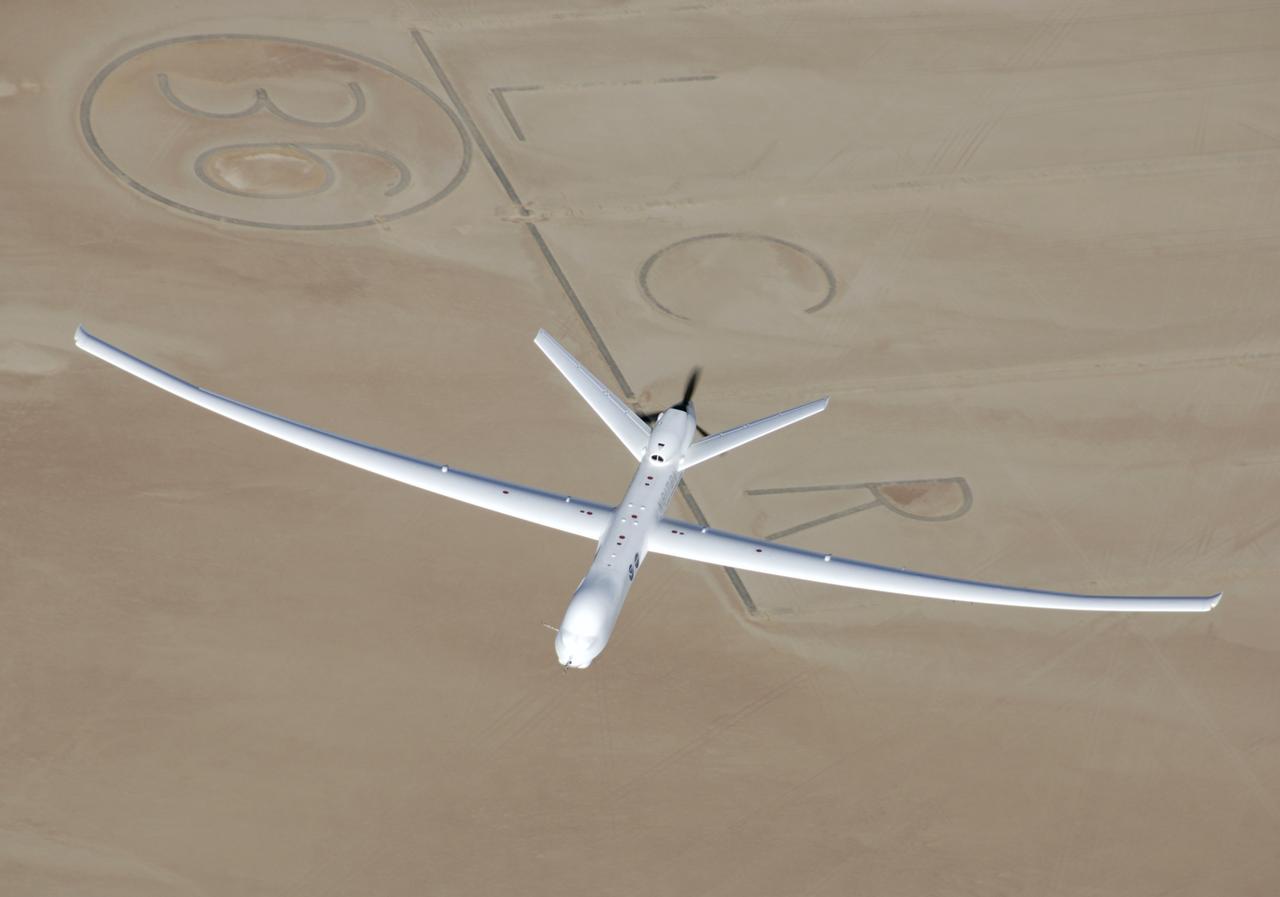
General Atomics' remotely-operated Altair soars over Rogers Dry Lake at Edwards Air Force Base during a NOAA/NASA earth science mission in November 2005.

NASA's Ikhana unmanned science demonstration aircraft, a civil variant of General Atomics' Predator B, on the runway at Edwards Air Force Base after its ferry flight to NASA's Dryden Flight Research Center. NASA took possession of the new aircraft in November, 2006, and it arrived at the NASA center at Edwards Air Force Base, Calif., on June 23, 2007.
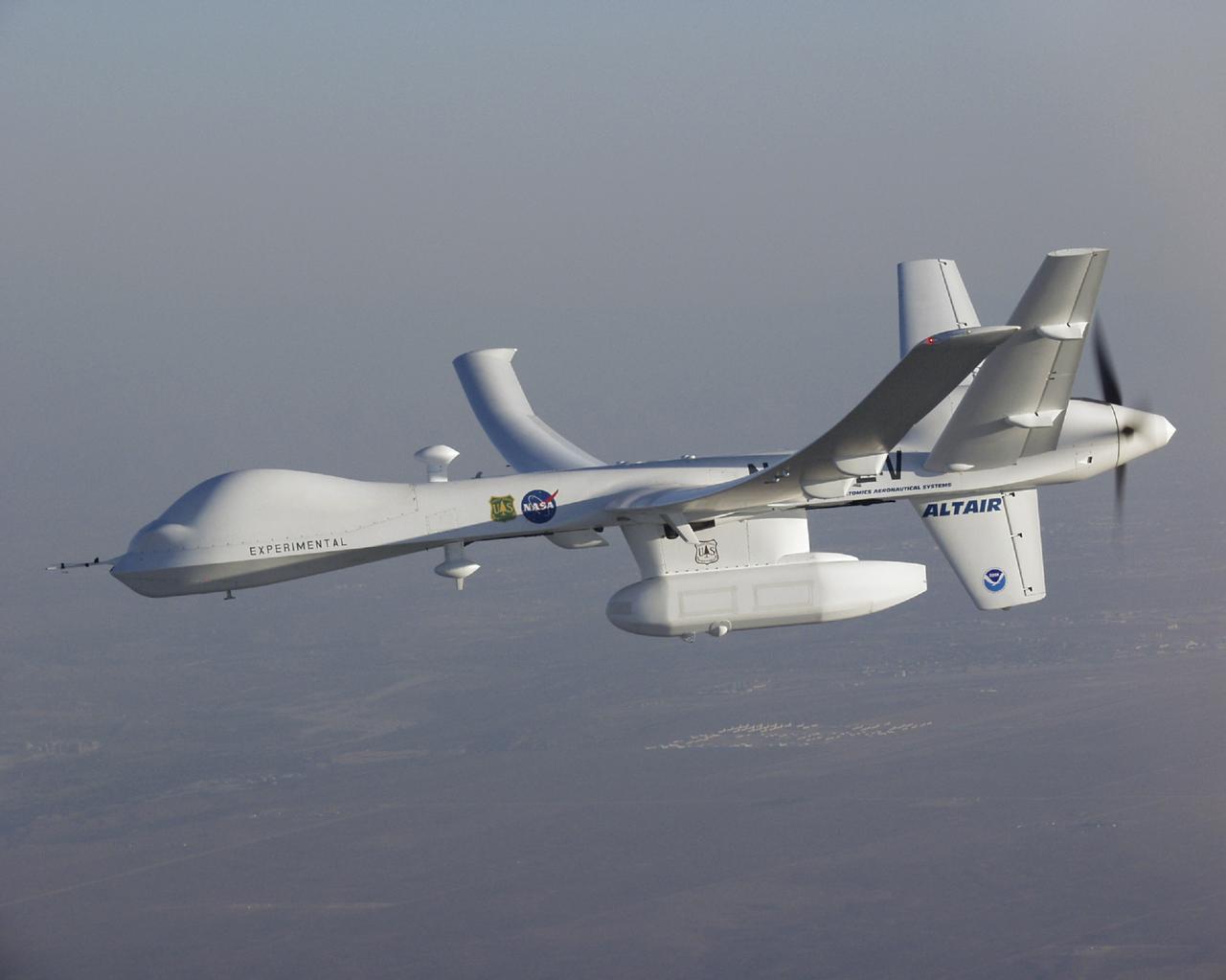
A high-tech infrared imaging sensor in its underbelly pod, the Altair UAS flew repeated passes over the Esperanza fire to aid firefighting efforts.

Equipped with a pod-mounted infrared imaging sensor, the Altair UAS aided fire mapping efforts over wildfires in central and southern California in late 2006.
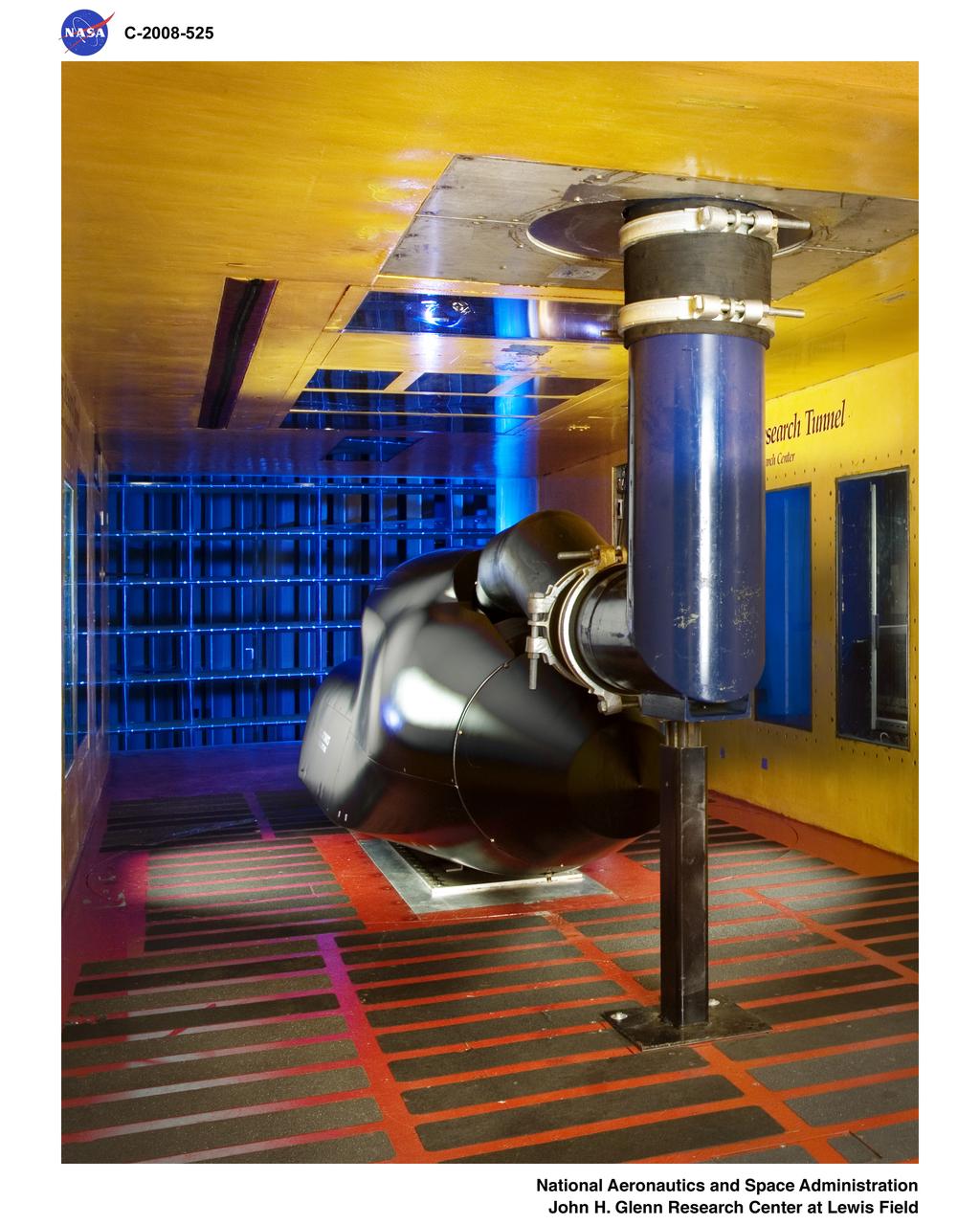
General Atomics - Predator B Inlet Model in the Icing Research Tunnel
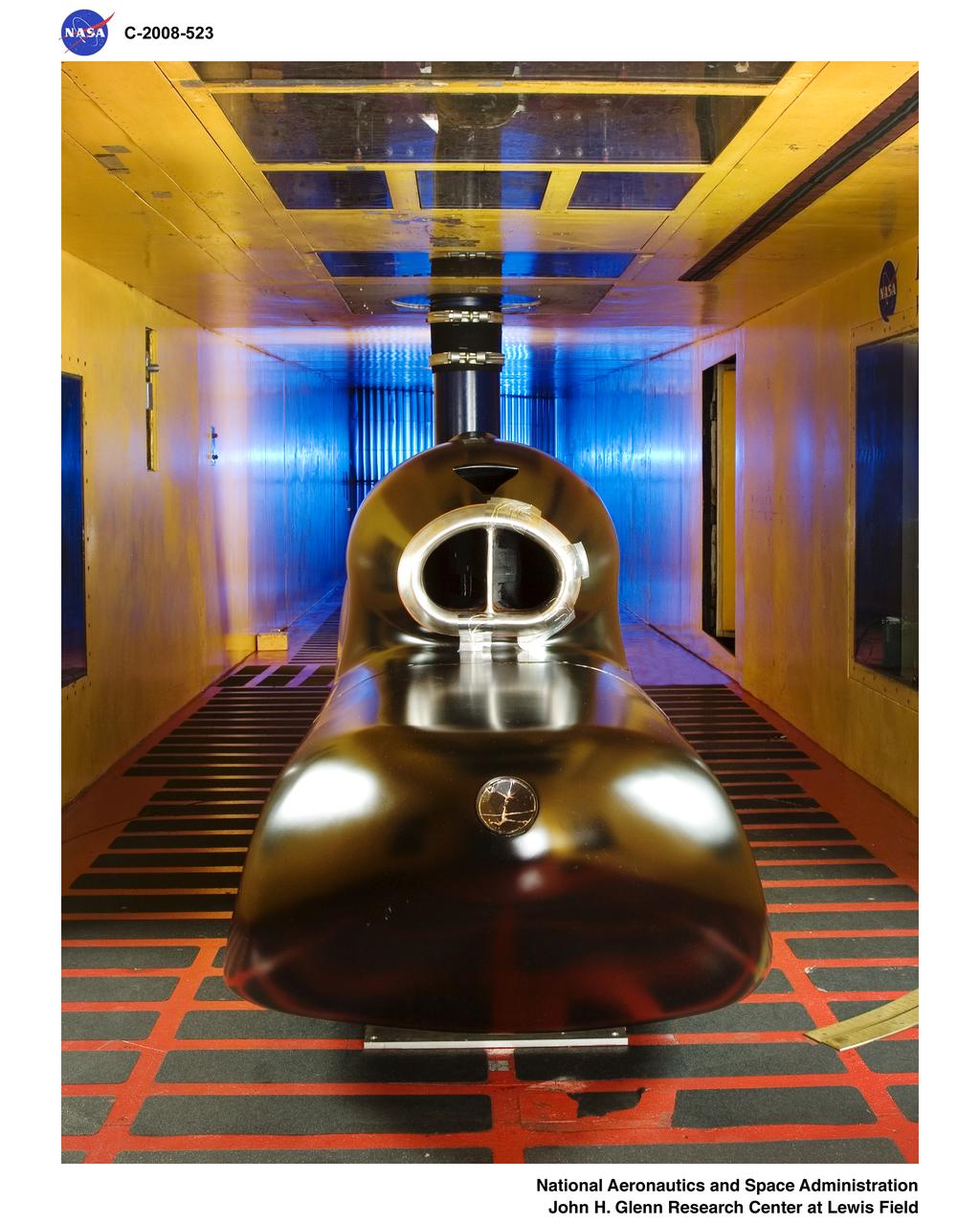
General Atomics - Predator B Inlet Model in the Icing Research Tunnel
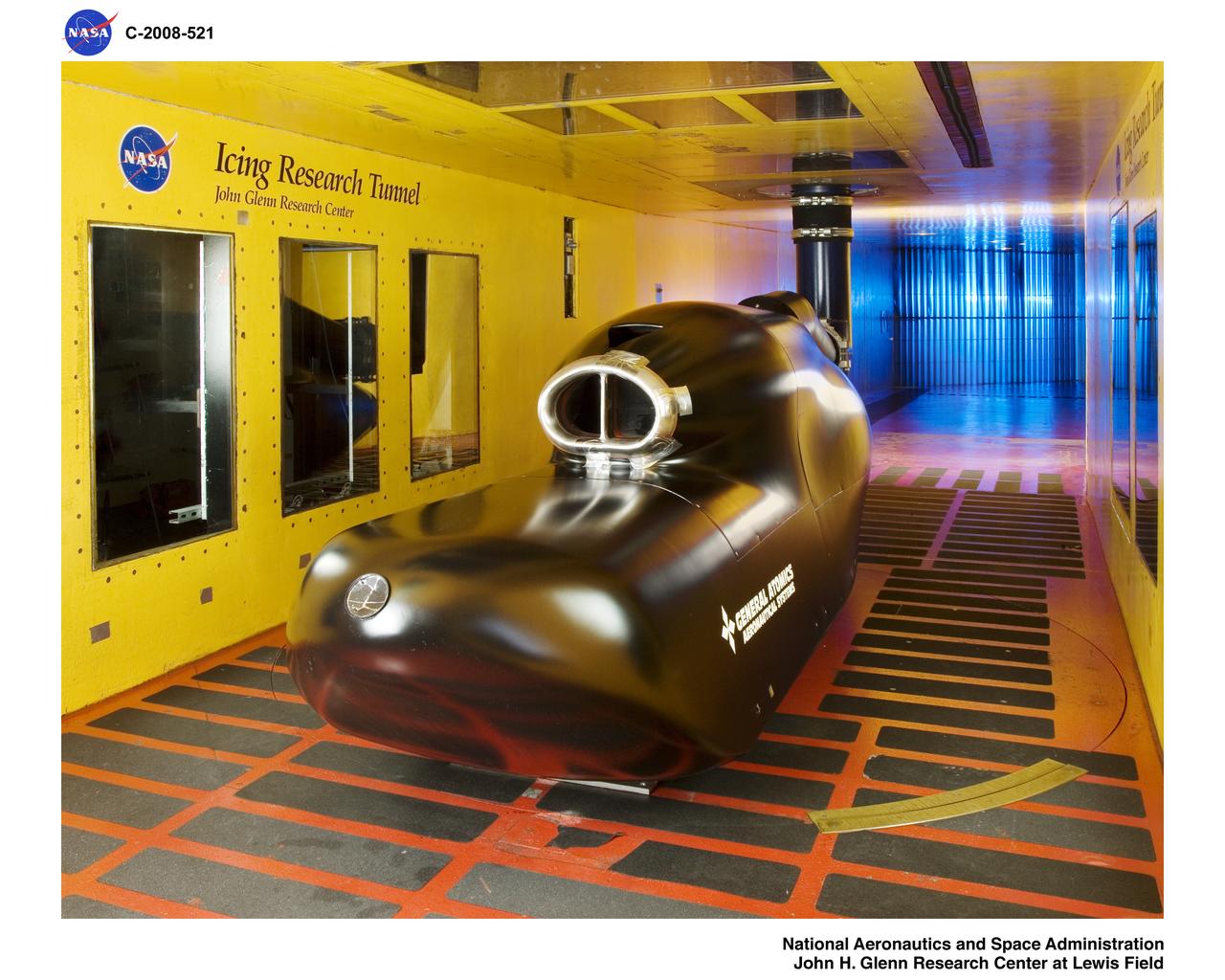
General Atomics - Predator B Inlet Model in the Icing Research Tunnel
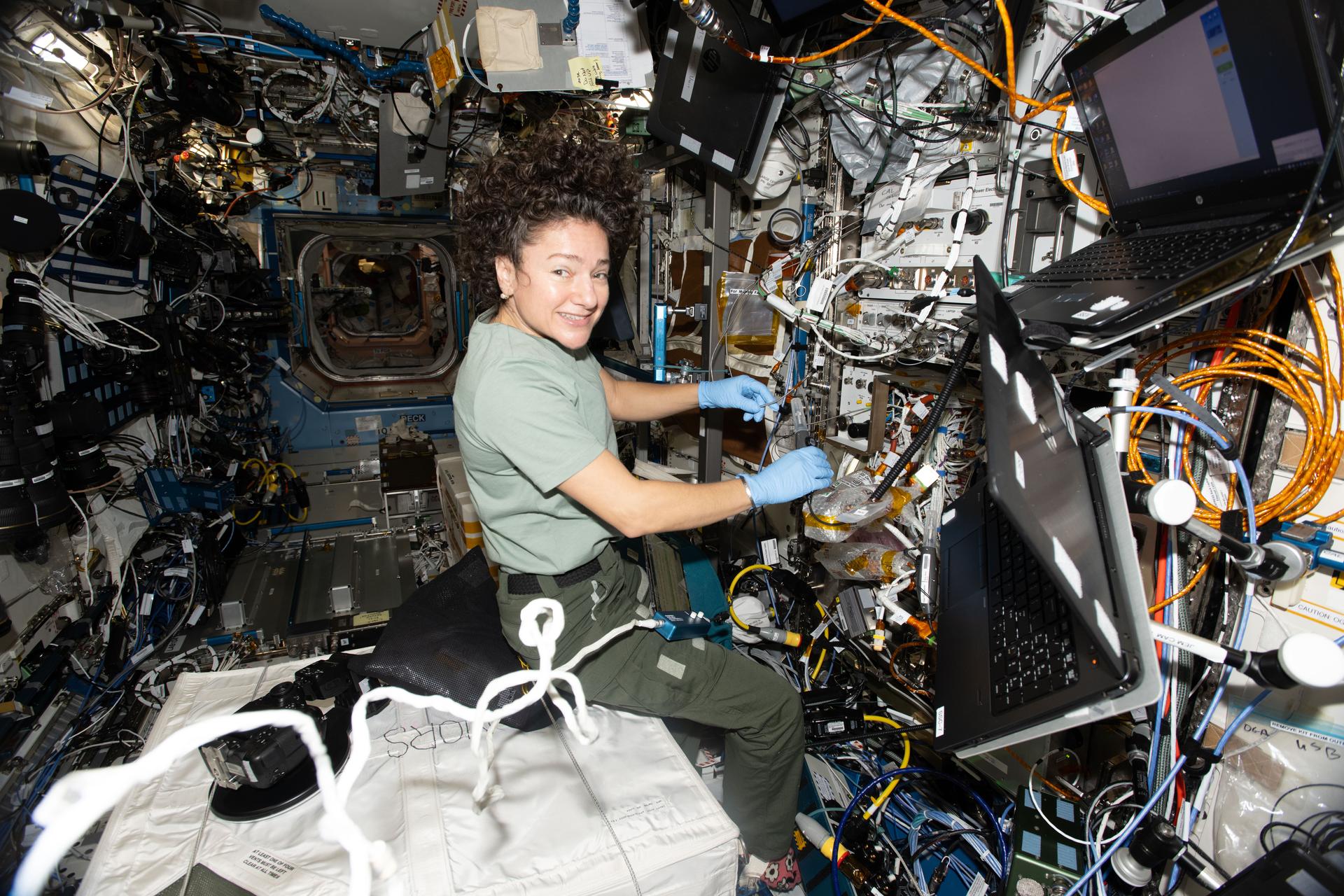
iss074e0545220 (May 4, 2026) --- NASA astronaut and Expedition 74 flight engineer Jessica Meir inspects sensitive fiber cables that emit light to help cool, trap, and study atoms with high accuracy inside the Cold Atom Lab (CAL) aboard the International Space Station. The CAL, a quantum research facility, chills atoms to near absolute zero, providing insights into atomic wave functions, general relativity, and dark matter. Credit: NASA/Jack Hathaway
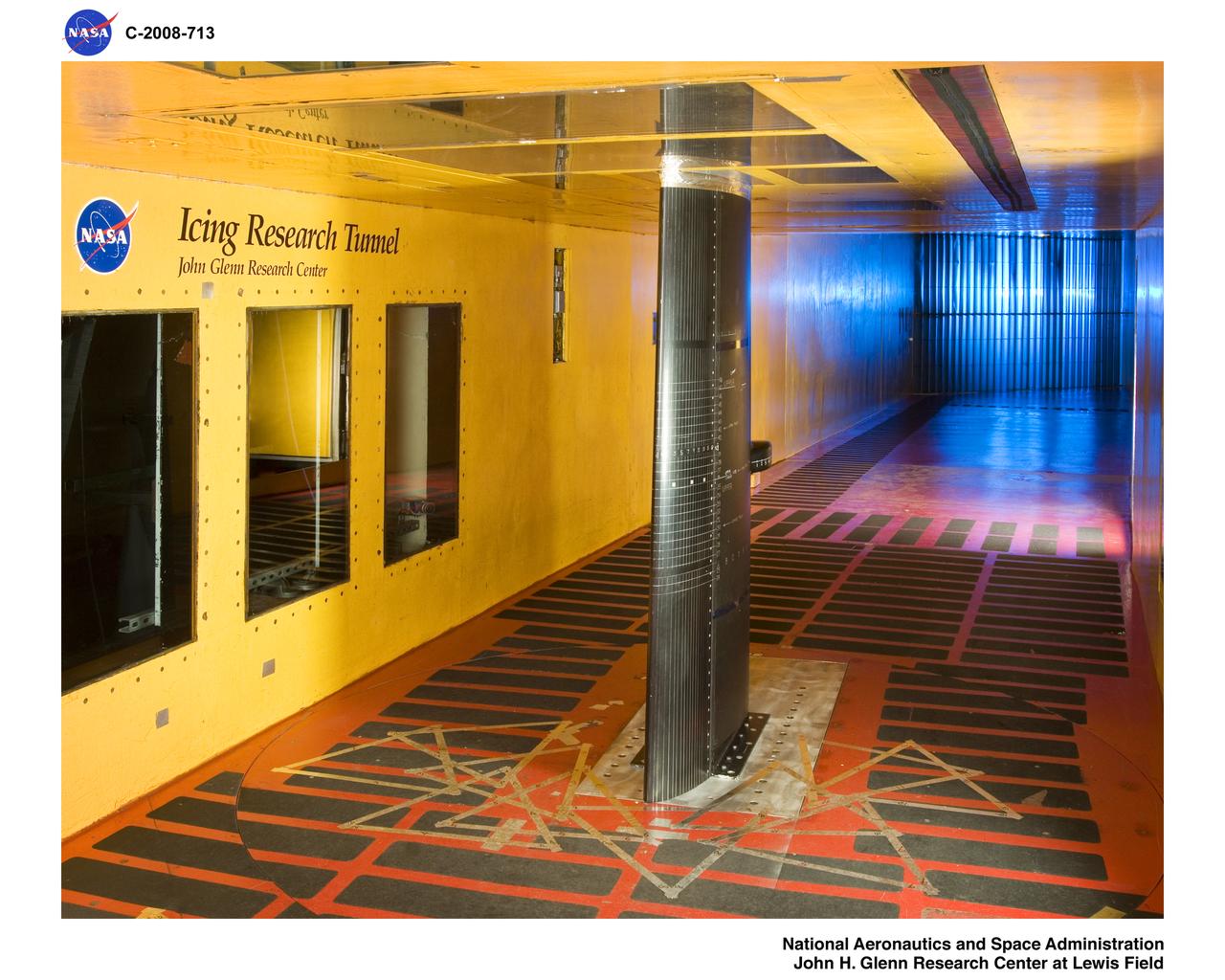
Leading Edge De-Icing Evaluation Test of the General Atomics Predator B Wing Section using Electro-Expulsive De-Icing System (EEDS) Testing conducted in cooperation with Wichita State University
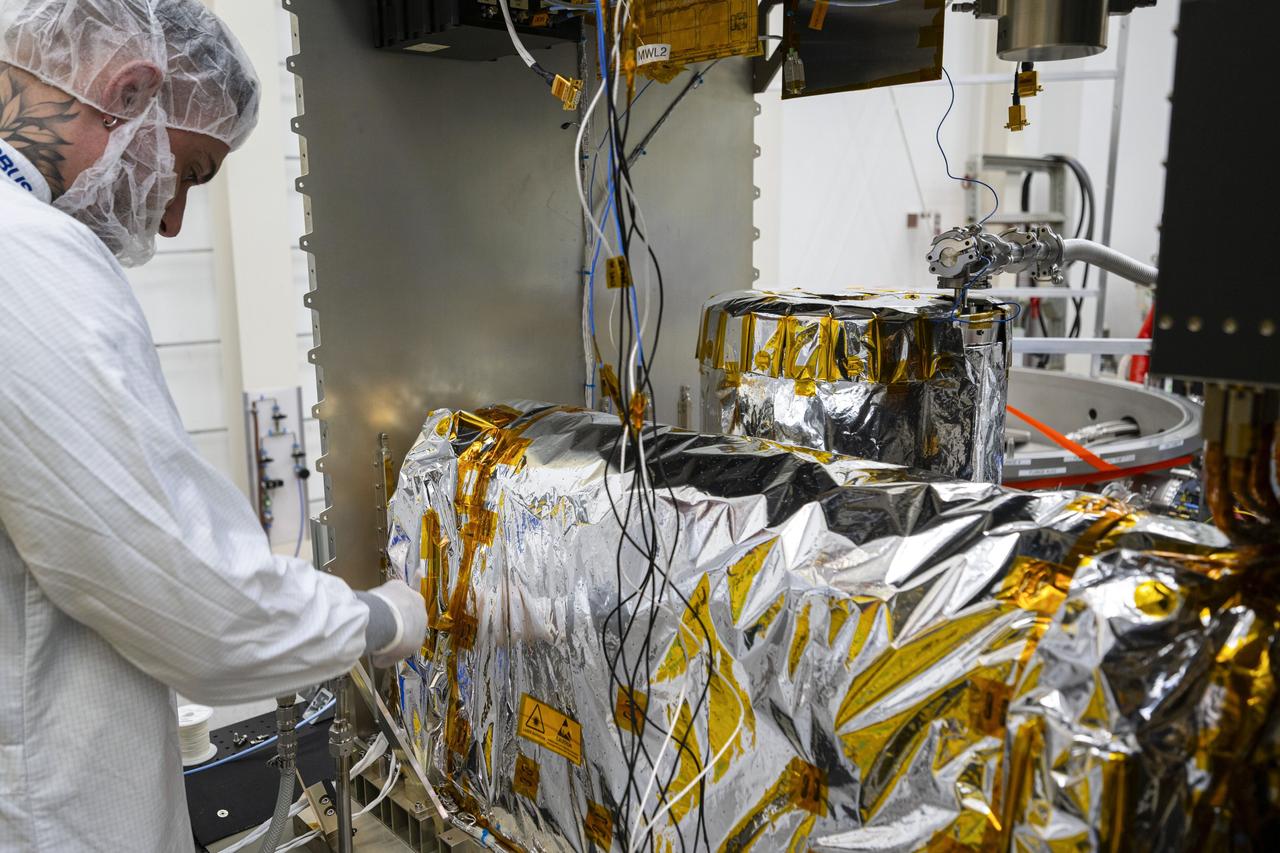
jsc2025e015677 (3/6/2025) --- The closure of the instrument panel of the Atomic Clock Ensemble in Space (ACES) has taken place at Airbus Friedrichshafen, Germany. ACES is an ESA instrument that tests fundamental physics, such as Einstein’s theory of general relativity, from the International Space Station. According to this theory, gravity affects the passing of time—time flies faster at the top of Mount Everest than at sea level. This effect has been proven in experiments on Earth, and ACES will make more precise measurements of this phenomenon and other fundamental physics such as the standard model of particle physics, as it flies 400 km high on the space station. ACES contains two clocks: PHARAO, a caesium atomic clock developed by the French Space Agency CNES, and the Space Hydrogen Maser developed by Spectratime, which uses hydrogen atoms as a frequency reference. The payload will be externally mounted to ESA’s Columbus laboratory on the space station. Image courtesy of S. Corvaja (ESA).
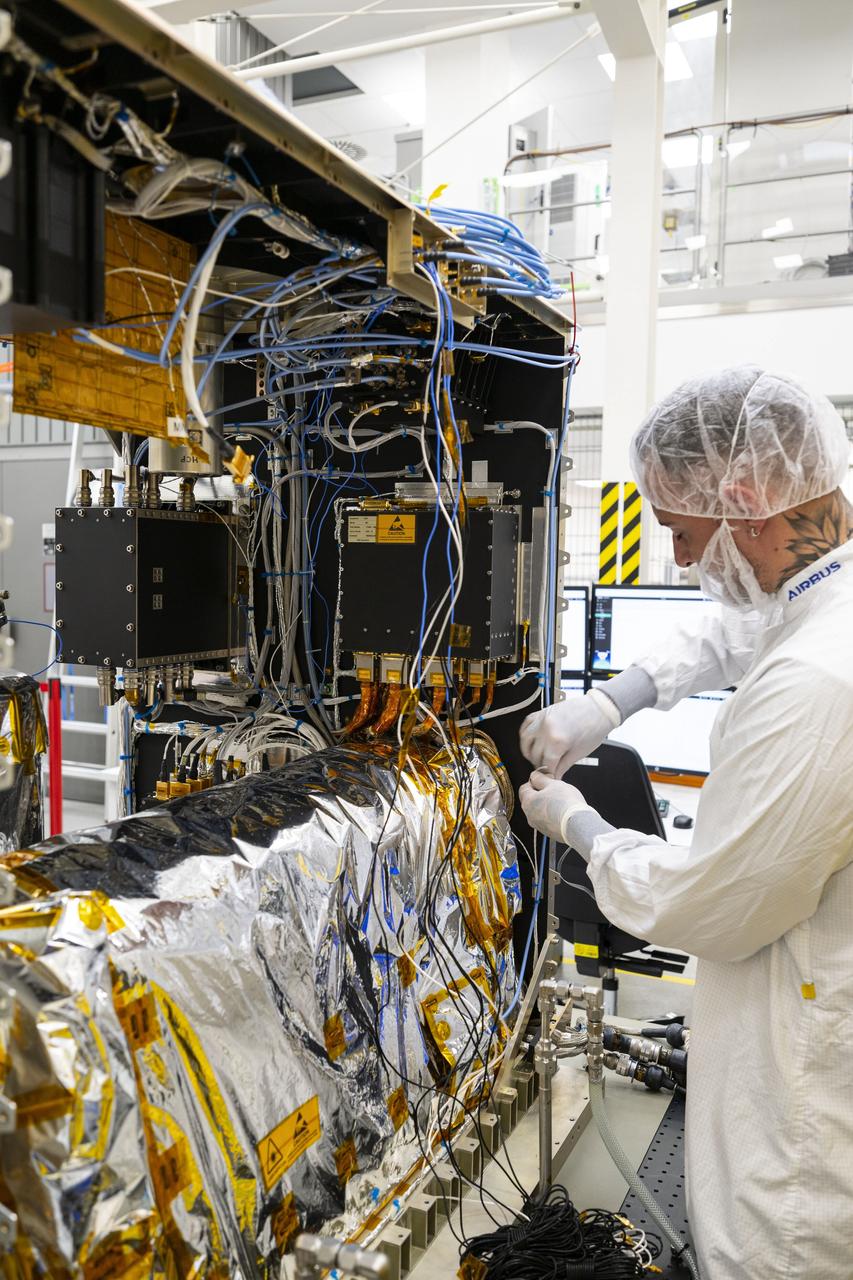
jsc2025e015678 (3/6/2025) --- The closure of the instrument panel of the Atomic Clock Ensemble in Space (ACES) has taken place at Airbus Friedrichshafen, Germany. ACES is an ESA instrument that tests fundamental physics, such as Einstein’s theory of general relativity, from the International Space Station. According to this theory, gravity affects the passing of time—time flies faster at the top of Mount Everest than at sea level. This effect has been proven in experiments on Earth, and ACES will make more precise measurements of this phenomenon and other fundamental physics such as the standard model of particle physics, as it flies 400 km high on the space station. ACES contains two clocks: PHARAO, a caesium atomic clock developed by the French Space Agency CNES, and the Space Hydrogen Maser developed by Spectratime, which uses hydrogen atoms as a frequency reference. The payload will be externally mounted to ESA’s Columbus laboratory on the space station. Image courtesy of S. Corvaja (ESA).
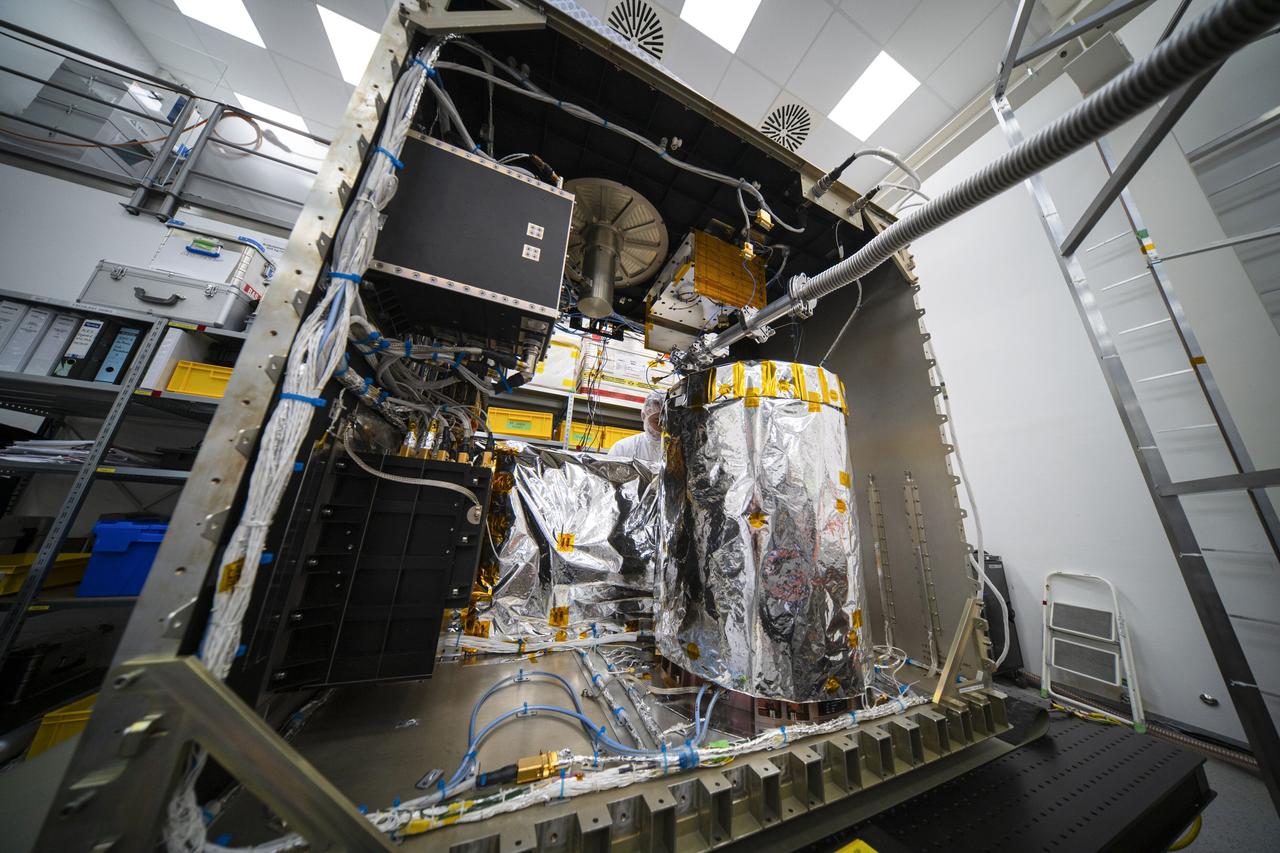
jsc2025e015680 (3/6/2025) --- The closure of the instrument panel of the Atomic Clock Ensemble in Space (ACES) has taken place at Airbus Friedrichshafen, Germany. ACES is an ESA instrument that tests fundamental physics, such as Einstein’s theory of general relativity, from the International Space Station. According to this theory, gravity affects the passing of time—time flies faster at the top of Mount Everest than at sea level. This effect has been proven in experiments on Earth, and ACES will make more precise measurements of this phenomenon and other fundamental physics such as the standard model of particle physics, as it flies 400 km high on the space station. ACES contains two clocks: PHARAO, a caesium atomic clock developed by the French Space Agency CNES, and the Space Hydrogen Maser developed by Spectratime, which uses hydrogen atoms as a frequency reference. The payload will be externally mounted to ESA’s Columbus laboratory on the space station. Image courtesy of S. Corvaja (ESA).
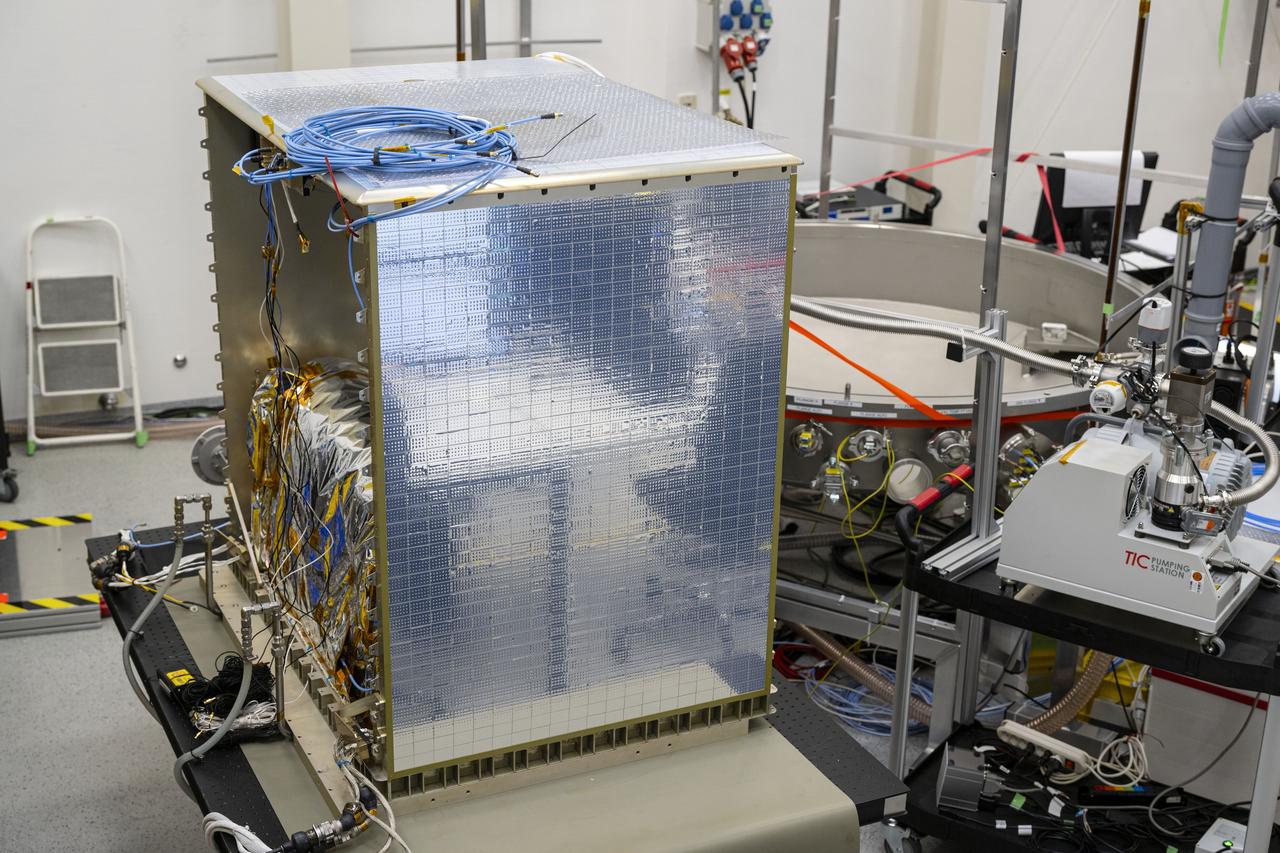
jsc2025e015679 (3/6/2025) --- The closure of the instrument panel of the Atomic Clock Ensemble in Space (ACES) has taken place at Airbus Friedrichshafen, Germany. ACES is an ESA instrument that tests fundamental physics, such as Einstein’s theory of general relativity, from the International Space Station. According to this theory, gravity affects the passing of time—time flies faster at the top of Mount Everest than at sea level. This effect has been proven in experiments on Earth, and ACES will make more precise measurements of this phenomenon and other fundamental physics such as the standard model of particle physics, as it flies 400 km high on the space station. ACES contains two clocks: PHARAO, a caesium atomic clock developed by the French Space Agency CNES, and the Space Hydrogen Maser developed by Spectratime, which uses hydrogen atoms as a frequency reference. The payload will be externally mounted to ESA’s Columbus laboratory on the space station. Image courtesy of S. Corvaja (ESA).

Dr. Marc Pusey (seated) and Dr. Craig Kundrot use computers to analyze x-ray maps and generate three-dimensional models of protein structures. With this information, scientists at Marshall Space Flight Center can learn how proteins are made and how they work. The computer screen depicts a proten structure as a ball-and-stick model. Other models depict the actual volume occupied by the atoms, or the ribbon-like structures that are crucial to a protein's function.
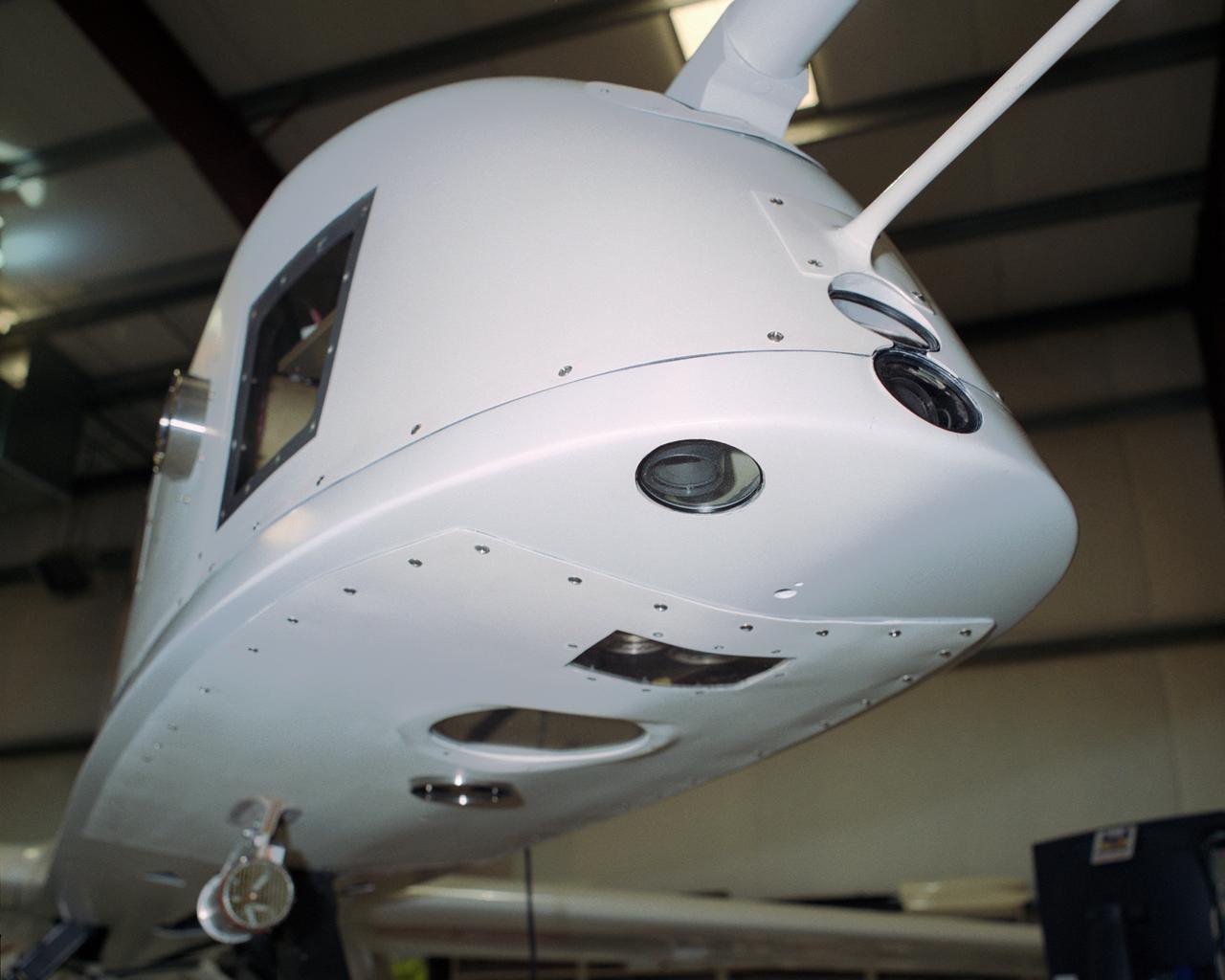
Looking ever so much like an alien spacecraft, the Altus II remotely piloted aircraft shows off some of the instruments and camera lenses mounted in its nose for a lightning study over Florida flown during the summer of 2002.
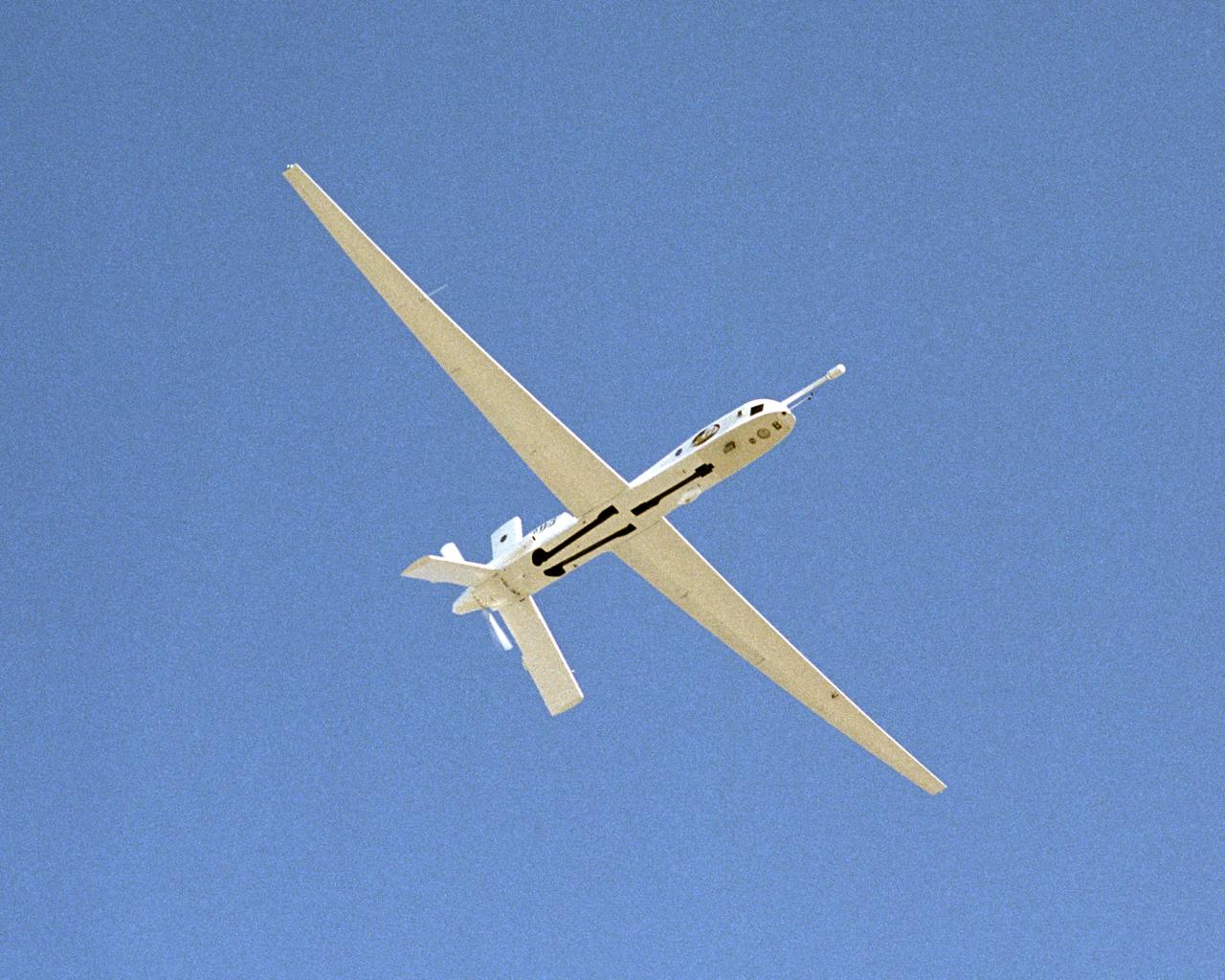
The Altus II remotely piloted aircraft carried a variety of specialized instruments and cameras during a lightning study over Florida during the summer of 2002.
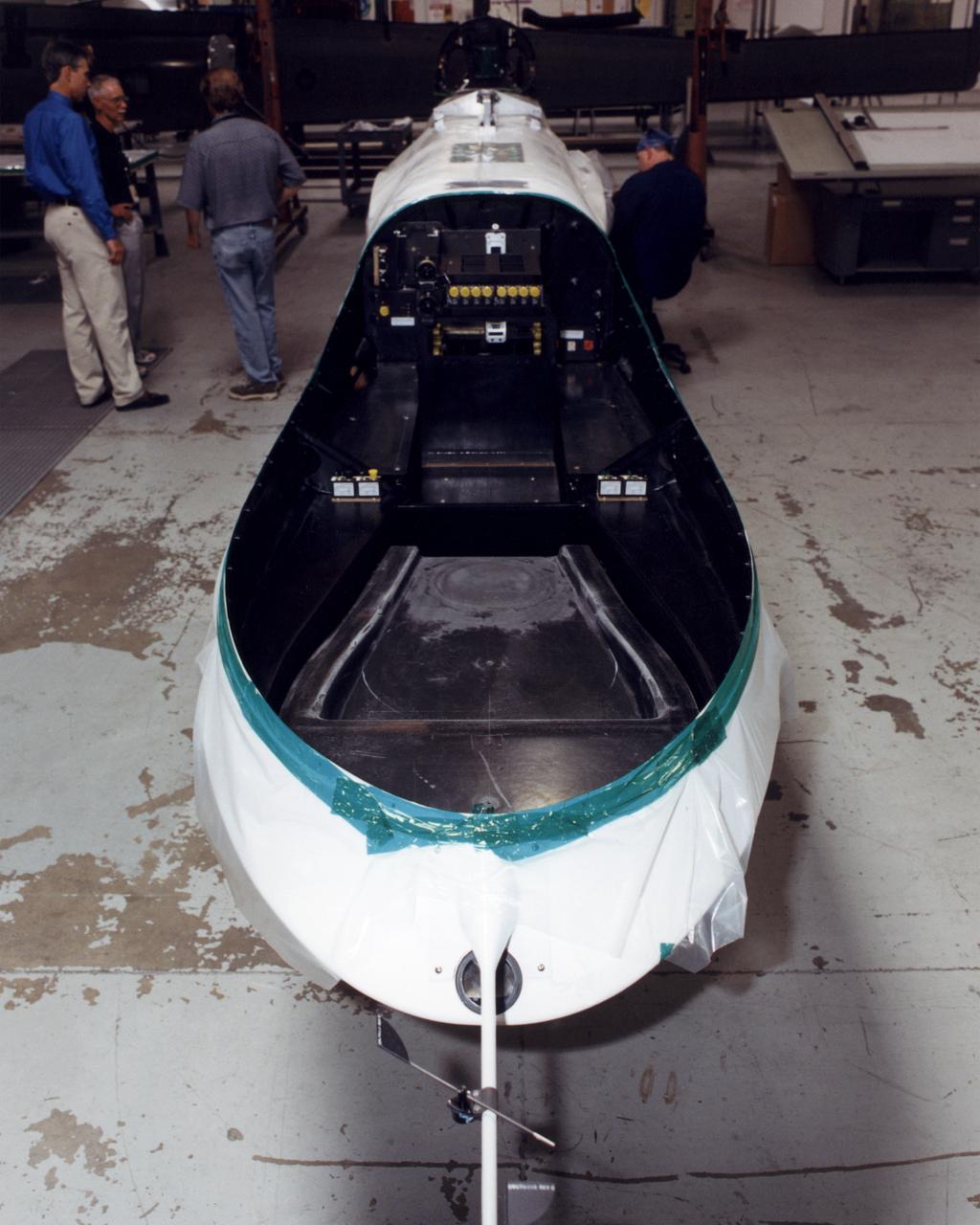
The payload bay in the nose of NASA's Altair unmanned aerial vehicle (UAV) will be able to carry up to 700 lbs. of sensors, imaging equipment and other instruments for Earth science missions.
The remotely piloted Altus II aircraft probed lightning development with a variety of specialized instruments and cameras during a month-long study over Florida during the summer of 2002.
A NASA team studying the causes of electrical storms and their effects on our home planet achieved a milestone on August 21, 2002, completing the study's longest-duration research flight and monitoring four thunderstorms in succession. Based at the Naval Air Station Key West, Florida, researchers with the Altus Cumulus Electrification Study (ACES) used the Altus II remotely piloted aircraft to study thunderstorms in the Atlantic Ocean off Key West and the west of the Everglades. The ACES lightning study used the Altus II twin turbo uninhabited aerial vehicle, built by General Atomics Aeronautical Systems, Inc. of San Diego. The Altus II was chosen for its slow flight speed of 75 to 100 knots (80 to 115 mph), long endurance, and high-altitude flight (up to 65,000 feet). These qualities gave the Altus II the ability to fly near and around thunderstorms for long periods of time, allowing investigations to be conducted over the entire life cycle of storms. The vehicle has a wing span of 55 feet and a payload capacity of over 300 lbs. With dual goals of gathering weather data safely and testing the adaptability of the uninhabited aircraft, the ACES study is a collaboration among the Marshall Space Flight Center, the University of Alabama in Huntsville, NASA's Goddard Space Flight Center in Greenbelt, Maryland, Pernsylvania State University in University Park, and General Atomics Aeronautical Systems, Inc.

A NASA team studying the causes of electrical storms and their effects on our home planet achieved a milestone on August 21, 2002, completing the study's longest-duration research flight and monitoring four thunderstorms in succession. Based at the Naval Air Station Key West, Florida, researchers with the Altus Cumulus Electrification Study (ACES) used the Altus II remotely-piloted aircraft to study thunderstorms in the Atlantic Ocean off Key West and the west of the Everglades. The ACES lightning study used the Altus II twin turbo uninhabited aerial vehicle, built by General Atomics Aeronautical Systems, Inc. of San Diego. The Altus II was chosen for its slow flight speed of 75 to 100 knots (80 to 115 mph), long endurance, and high-altitude flight (up to 65,000 feet). These qualities gave the Altus II the ability to fly near and around thunderstorms for long periods of time, allowing investigations to be to be conducted over the entire life cycle of storms. The vehicle has a wing span of 55 feet and a payload capacity of over 300 lbs. With dual goals of gathering weather data safely and testing the adaptability of the uninhabited aircraft, the ACES study is a collaboration among the Marshall Space Flight Center, the University of Alabama in Huntsville, NASA,s Goddard Space Flight Center in Greenbelt, Maryland, Pernsylvania State University in University Park, and General Atomics Aeronautical Systems, Inc.
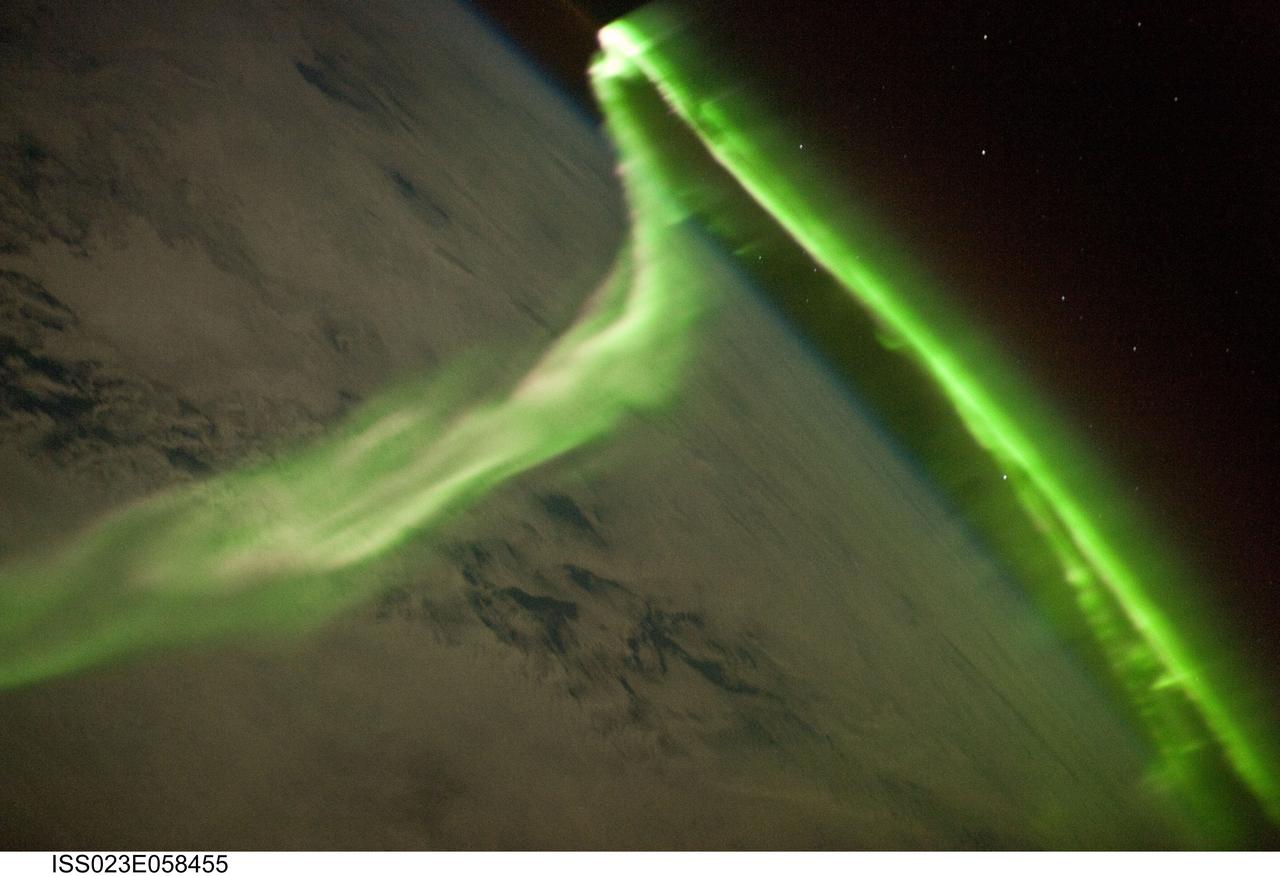
ISS023-E-058455 (29 May 2010) --- Aurora Australis is featured in this image photographed by an Expedition 23 crew member on the International Space Station. Among the views of Earth afforded crew members aboard the ISS, surely one of the most spectacular is of the aurora. These ever-shifting displays of colored ribbons, curtains, rays, and spots are most visible near the North (Aurora Borealis) and South (Aurora Australis) Poles as charged particles streaming from the sun (the solar wind) interact with Earth’s magnetic field, resulting in collisions with atoms of oxygen and nitrogen in the upper atmosphere. The atoms are excited by these collisions, and typically emit photons as a means of returning to their original energy state. The photons form the aurora that we see. The most commonly observed color of aurora is green, caused by photons (light) emitted by excited oxygen atoms at wavelengths centered at 0.558 micrometers, or millionths of a meter. Visible light is reflected from healthy (green) plant leaves at approximately the same wavelength. Red auroras are generated by light emitted at a longer wavelength (0.630 micrometers), and other colors such as blue and purple are also sometimes observed. While auroras are generally only visible close to the poles, severe magnetic storms impacting Earth’s magnetic field can shift them towards the equator. This striking aurora image was taken during a geomagnetic storm that was most likely caused by a coronal mass ejection from the sun on May 24, 2010. The ISS was located over the Southern Indian Ocean at an altitude of 350 kilometers, with the observer most likely looking towards Antarctica (not visible) and the South Pole. The aurora has a sinuous ribbon shape that separates into discrete spots near the lower right corner of the image. While the dominant coloration of the aurora is green, there are faint suggestions of red photon emission as well (light fuscia tones at center left). Dense cloud cover is dimly visible below the aurora. The curvature of Earth’s horizon, or limb, is clearly visible as is the faint blue line of the upper atmosphere directly above at top center. Several stars appear as bright pinpoints against the blackness of space at top right.
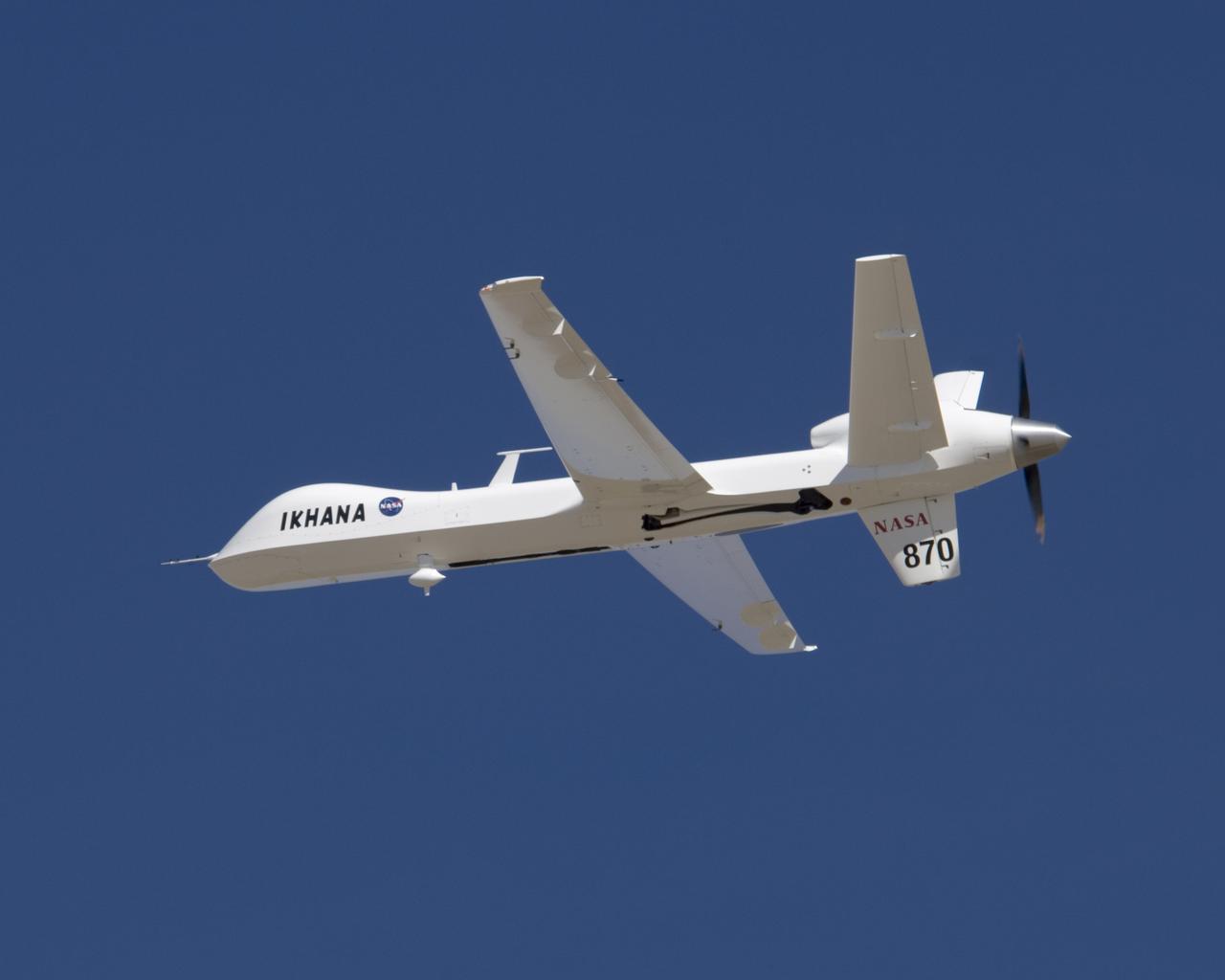
An efficient turboprop engine and large fuel capacity enable NASA's Ikhana unmanned aircraft to remain aloft for up to 30 hours on science or technology flights.
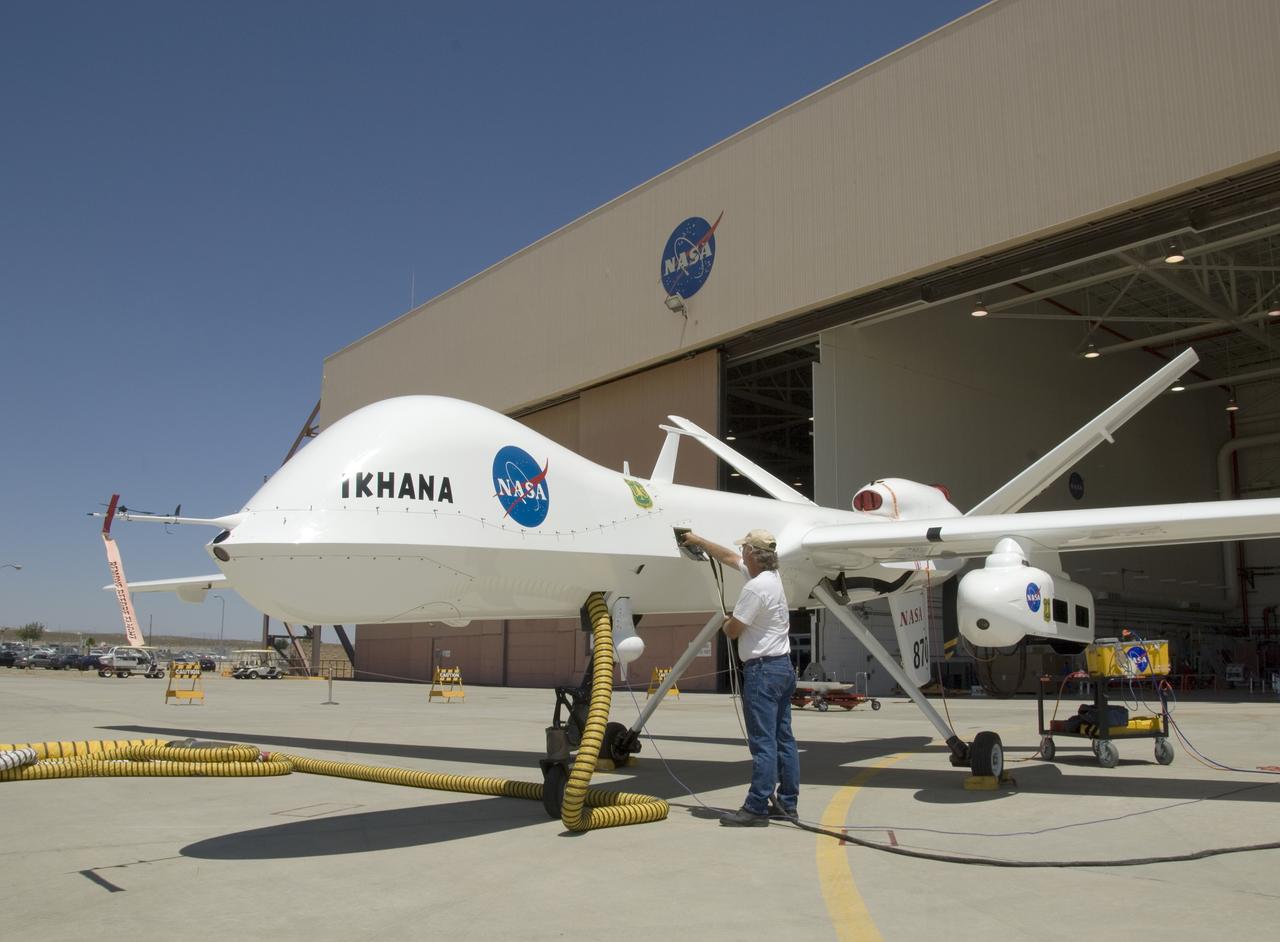
A ground crewman unplugs electrical connections during pre-flight checks of NASA's Ikhana research aircraft. Ikhana's payload pod is mounted on the left wing.

A small nose-mounted television camera enables pilots of NASA's Ikhana unmanned science aircraft to view the flight path ahead.

The bulging fairing atop the forward fuselage of NASA's Ikhana unmanned aircraft covers a variety of navigation, communications and science instruments.

The long, narrow wings of NASA's Altair are designed to allow the unmanned aerial vehicle (UAV) to maintain long-duration flight at high altitudes.
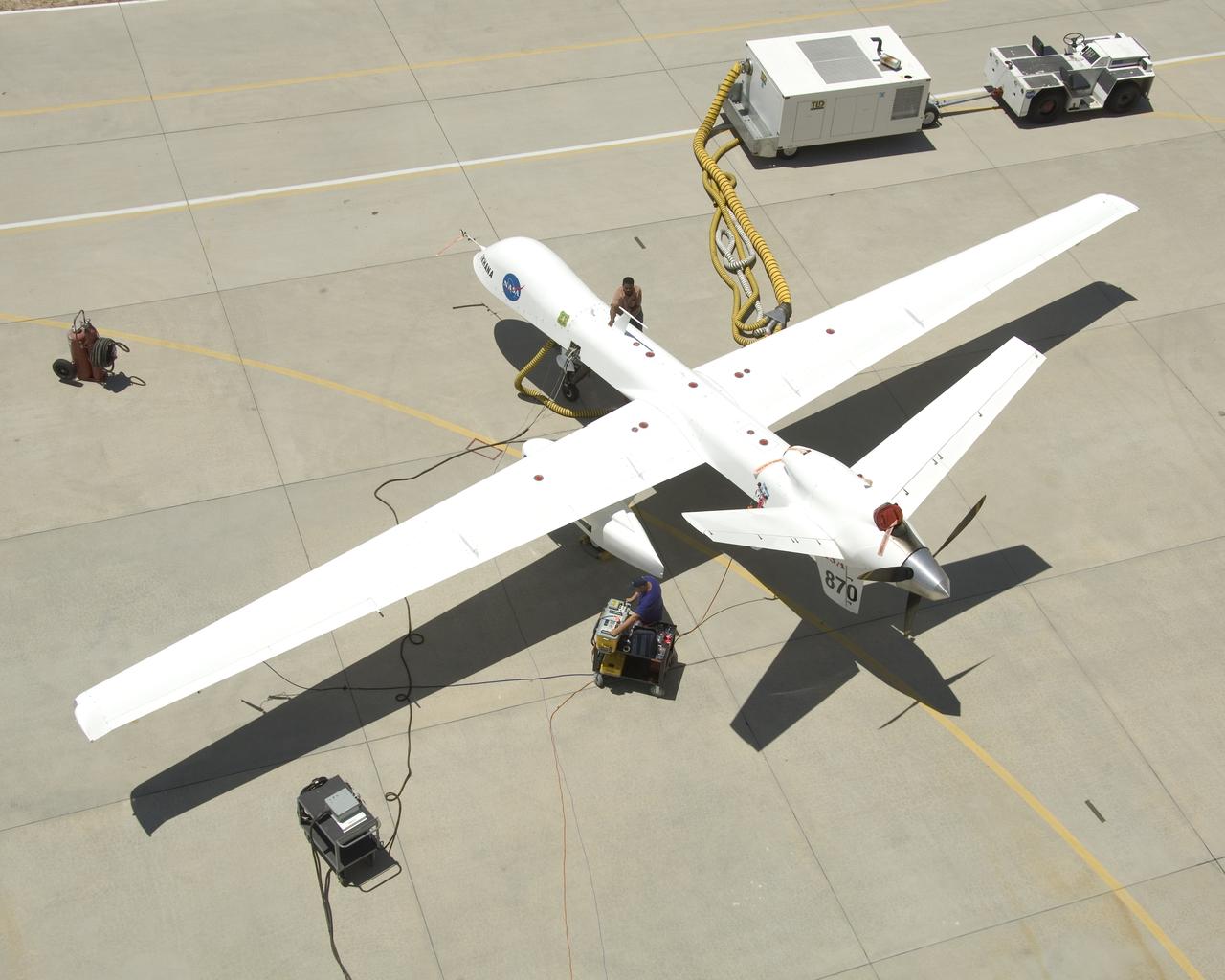
Ground crewmen prepare NASA's Ikhana remotely piloted research aircraft for another flight. Ikhana's infrared imaging sensor pod is visible under the left wing.

Bearing NASA tail number 870, NASA's Ikhana unmanned aircraft is a civil version of the Predator B designed for high-altitude, long-endurance science flights.
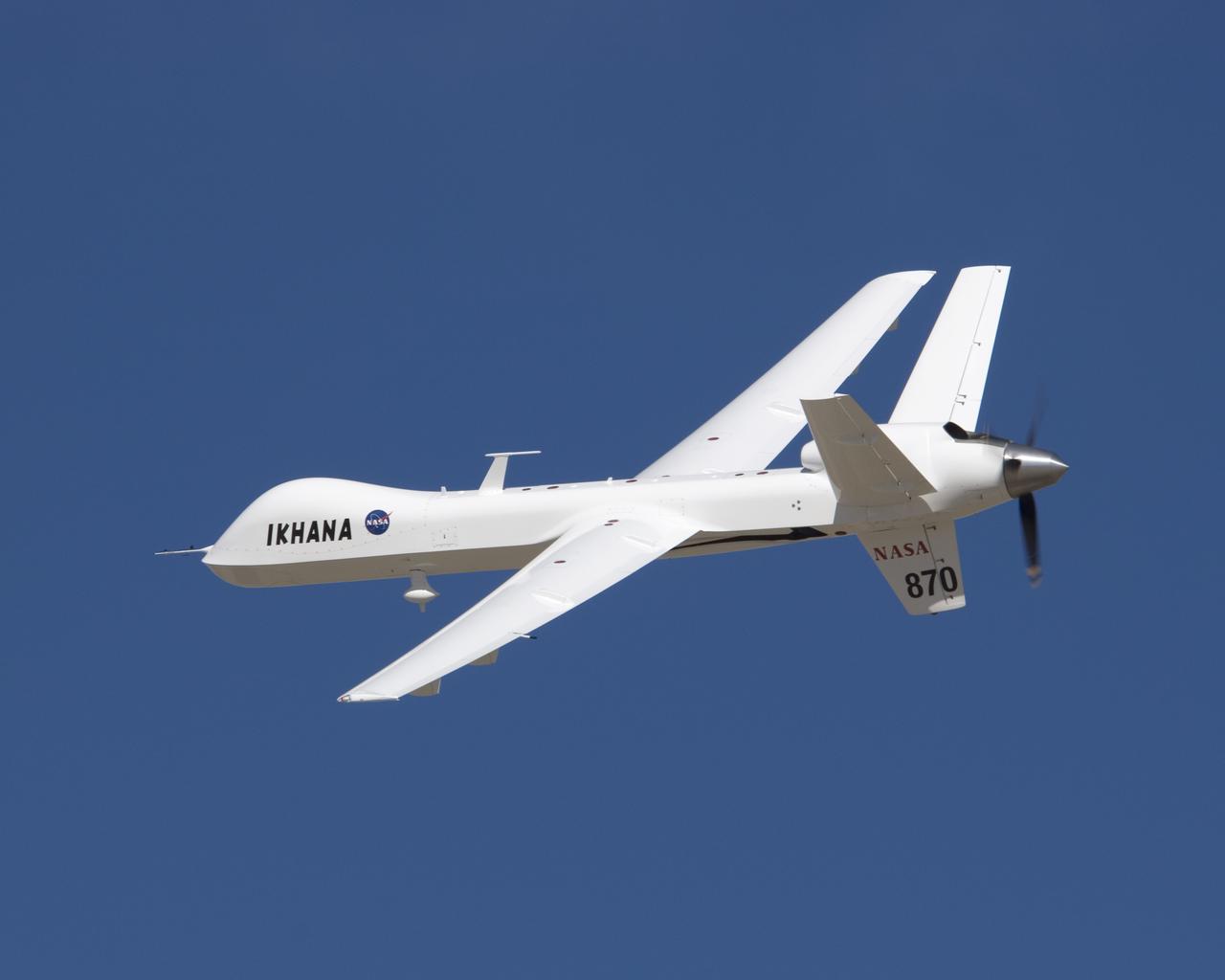
Its white surfaces in contrast with the deep blue sky, NASA's Ikhana unmanned science and technology development aircraft soars over California's high desert.
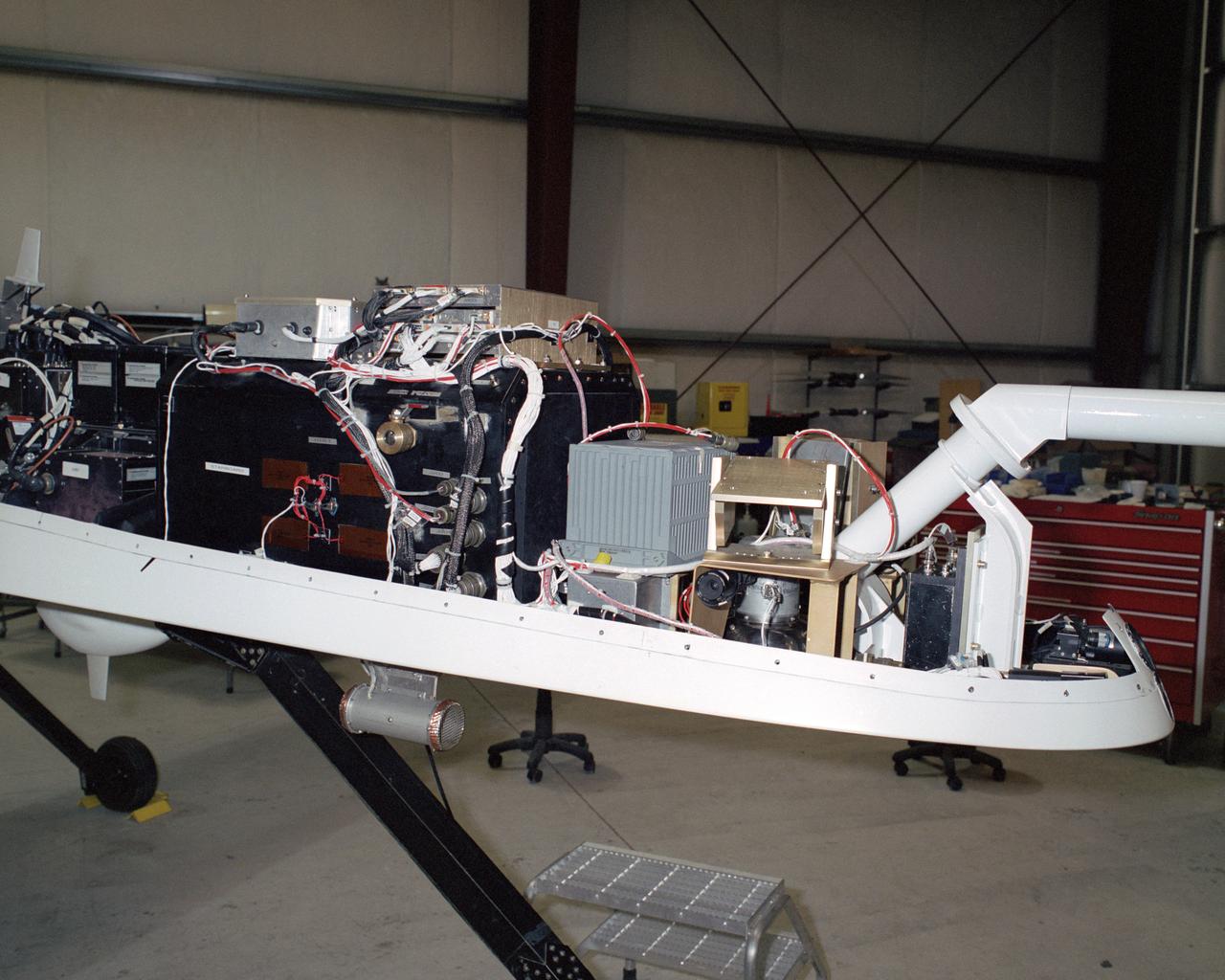
A NASA team studying the causes of electrical storms and their effects on our home planet achieved a milestone on August 21, 2002, completing the study's longest-duration research flight and monitoring four thunderstorms in succession. Based at the Naval Air Station Key West, Florida, researchers with the Altus Cumulus Electrification Study (ACES) used the Altus II remotely-piloted aircraft to study thunderstorms in the Atlantic Ocean off Key West and the west of the Everglades. Using special equipment aboard the Altus II, scientists in ACES will gather electric, magnetic, and optical measurements of the thunderstorms, gauging elements such as lightning activity and the electrical environment in and around the storms. With dual goals of gathering weather data safely and testing the adaptability of the uninhabited aircraft, the ACES study is a collaboration among the Marshall Space Flight Center, the University of Alabama in Huntsville, NASA's Goddard Space Flight Center in Greenbelt, Maryland, Pernsylvania State University in University Park, and General Atomics Aeronautical Systems, Inc.
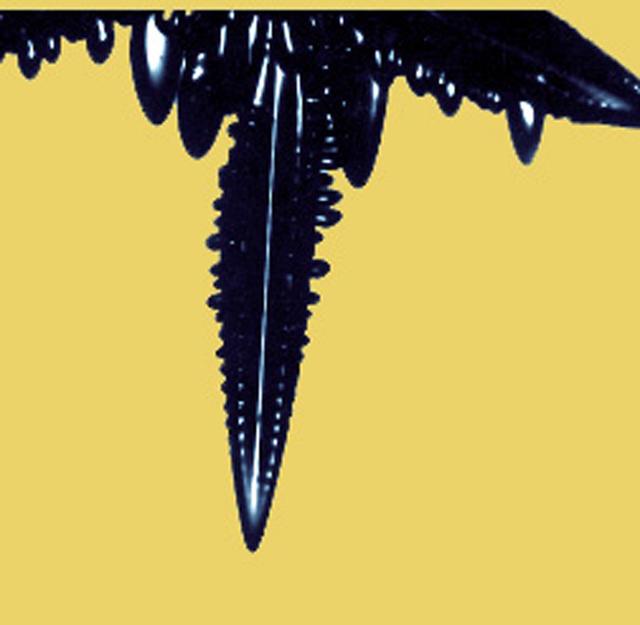
Researchers have found that as melted metals and alloys (combinations of metals) solidify, they can form with different arrangements of atoms, called microstructures. These microstructures depend on the shape of the interface (boundary) between the melted metal and the solid crystal it is forming. There are generally three shapes that the interface can take: planar, or flat; cellular, which looks like the cells of a beehive; and dendritic, which resembles tiny fir trees. Convection at this interface can affect the interface shape and hide the other phenomena (physical events). To reduce the effects of convection, researchers conduct experiments that examine and control conditions at the interface in microgravity. Microgravity also helps in the study of alloys composed of two metals that do not mix. On Earth, the liquid mixtures of these alloys settle into different layers due to gravity. In microgravity, the liquid metals do not settle, and a solid more uniform mixture of both metals can be formed.
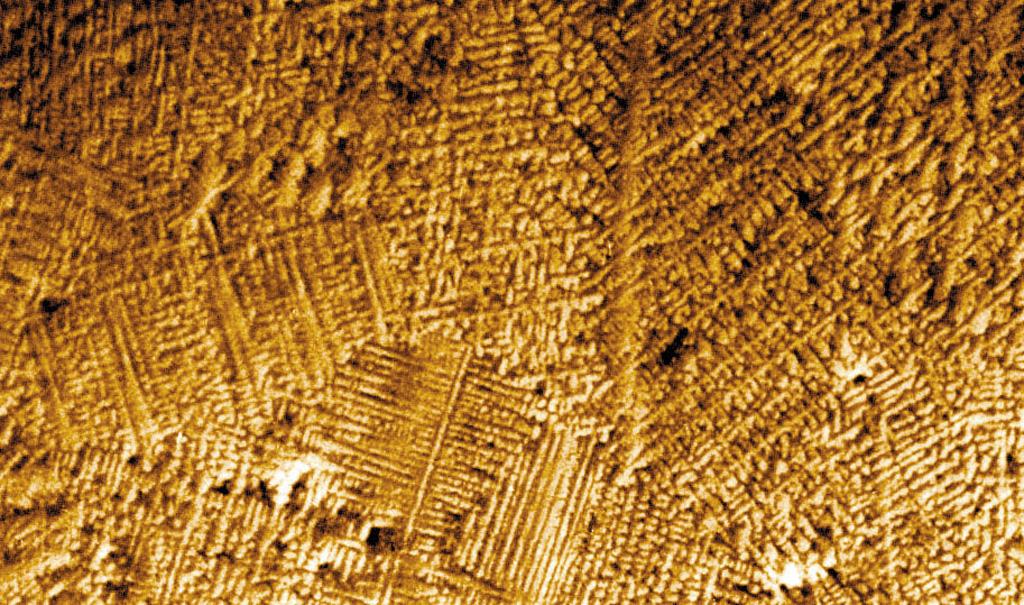
Researchers have found that as melted metals and alloys (combinations of metals) solidify, they can form with different arrangements of atoms, called microstructures. These microstructures depend on the shape of the interface (boundary) between the melted metal and the solid crystal it is forming. There are generally three shapes that the interface can take: planar, or flat; cellular, which looks like the cells of a beehive; and dendritic, which resembles tiny fir trees. Convection at this interface can affect the interface shape and hide the other phenomena (physical events). To reduce the effects of convection, researchers conduct experiments that examine and control conditions at the interface in microgravity. Microgravity also helps in the study of alloys composed of two metals that do not mix. On Earth, the liquid mixtures of these alloys settle into different layers due to gravity. In microgravity, the liquid metals do not settle, and a solid more uniform mixture of both metals can be formed.
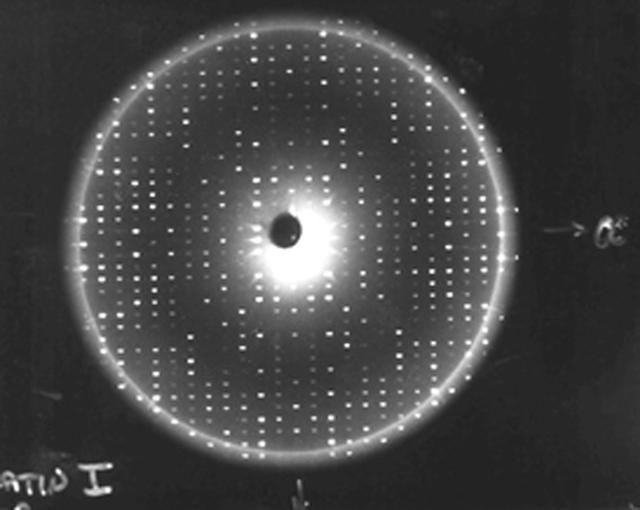
X-rays diffracted from a well-ordered protein crystal create sharp patterns of scattered light on film. A computer can use these patterns to generate a model of a protein molecule. To analyze the selected crystal, an X-ray crystallographer shines X-rays through the crystal. Unlike a single dental X-ray, which produces a shadow image of a tooth, these X-rays have to be taken many times from different angles to produce a pattern from the scattered light, a map of the intensity of the X-rays after they diffract through the crystal. The X-rays bounce off the electron clouds that form the outer structure of each atom. A flawed crystal will yield a blurry pattern; a well-ordered protein crystal yields a series of sharp diffraction patterns. From these patterns, researchers build an electron density map. With powerful computers and a lot of calculations, scientists can use the electron density patterns to determine the structure of the protein and make a computer-generated model of the structure. The models let researchers improve their understanding of how the protein functions. They also allow scientists to look for receptor sites and active areas that control a protein's function and role in the progress of diseases. From there, pharmaceutical researchers can design molecules that fit the active site, much like a key and lock, so that the protein is locked without affecting the rest of the body. This is called structure-based drug design.
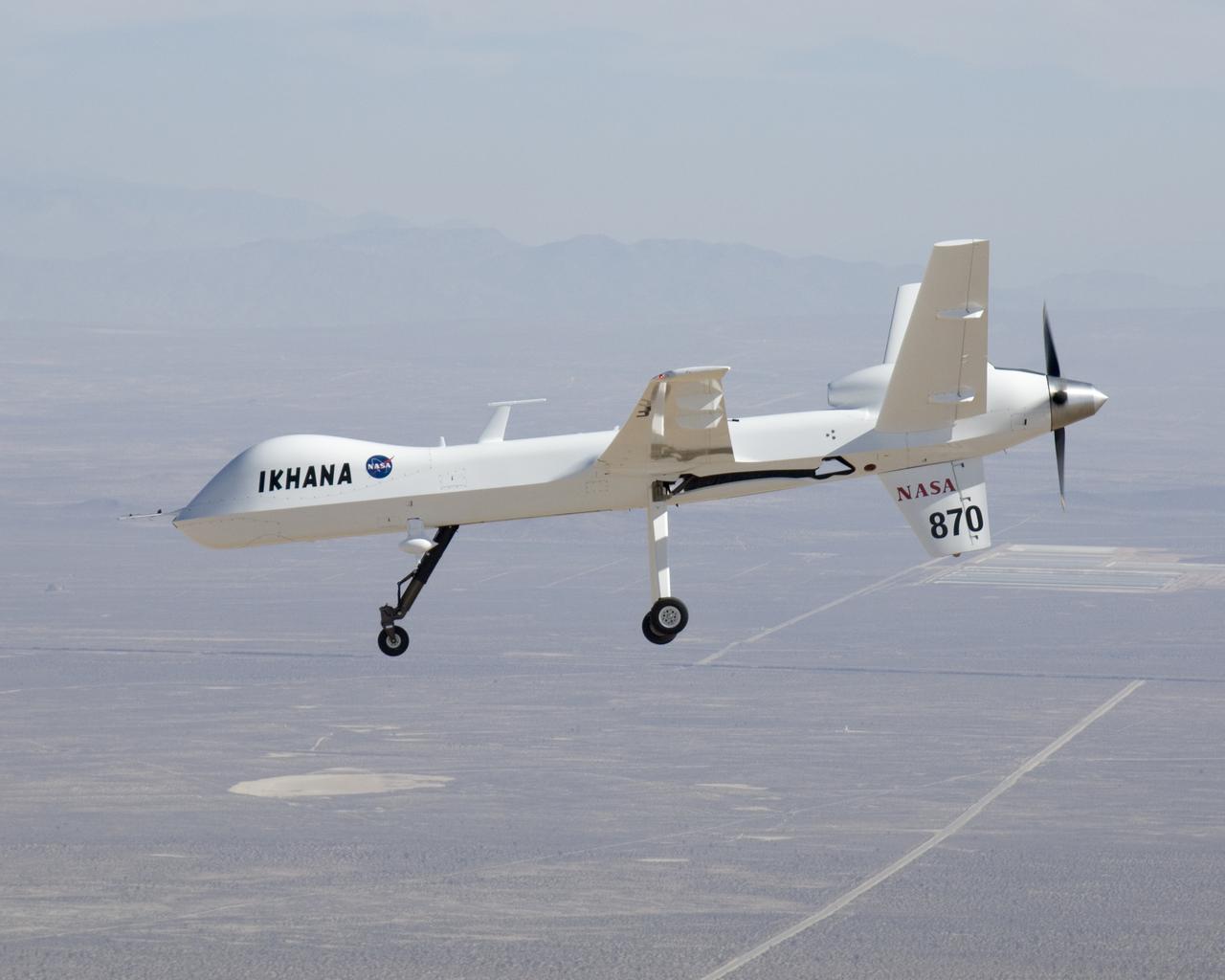
NASA's Ikhana unmanned science demonstration aircraft prepares for landing as it arrives at Edwards Air Force Base, Calif. NASA took possession of the new aircraft in November, 2006, and it arrived at its new home at NASA's Dryden Flight Reseach Center at Edwards AFB, on June 23, 2007.
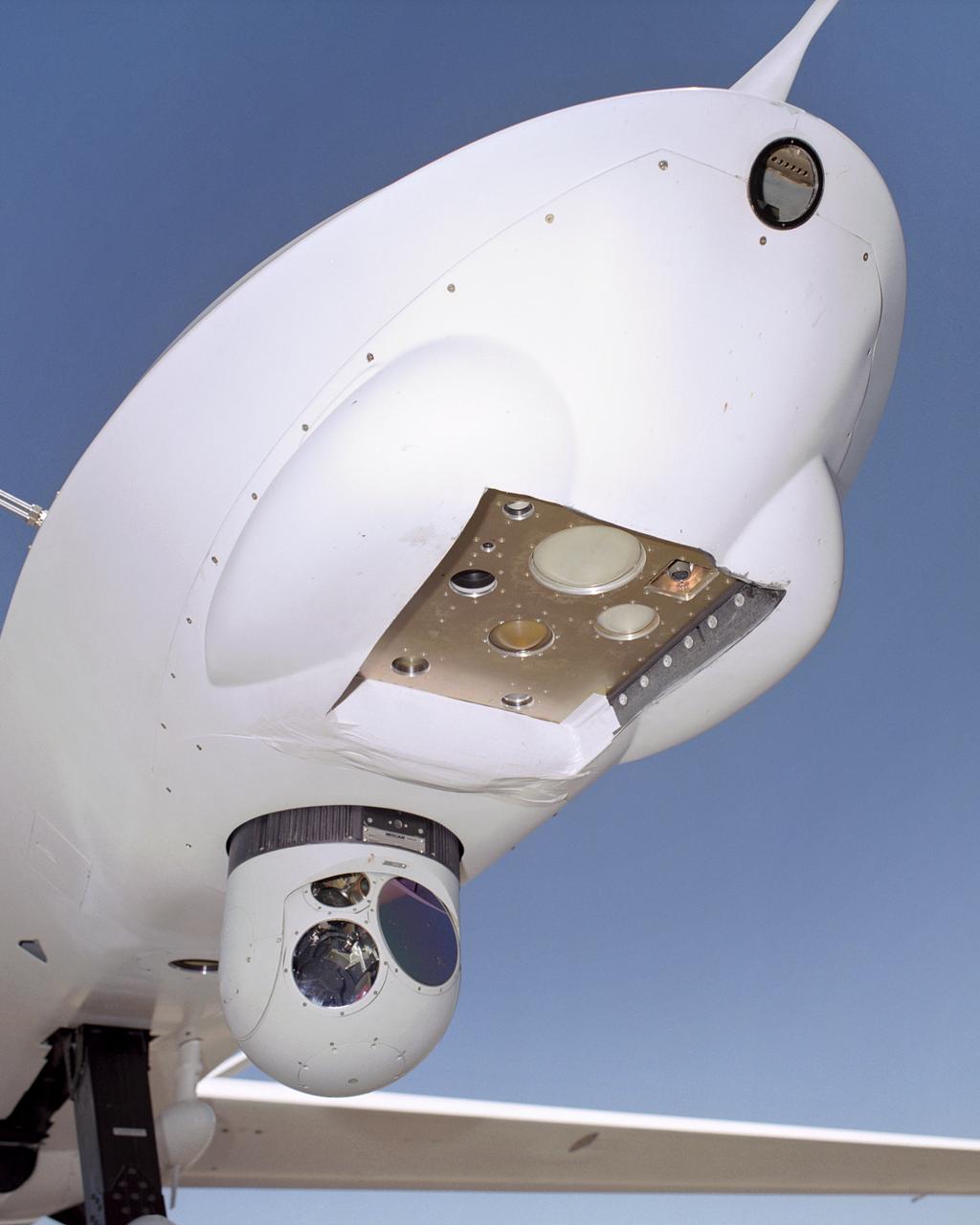
An ocean color senor, a passive microwave vertical sounder and an electro-optical sensor were mounted on the Altair UAV for the NOAA-NASA flight demonstration.
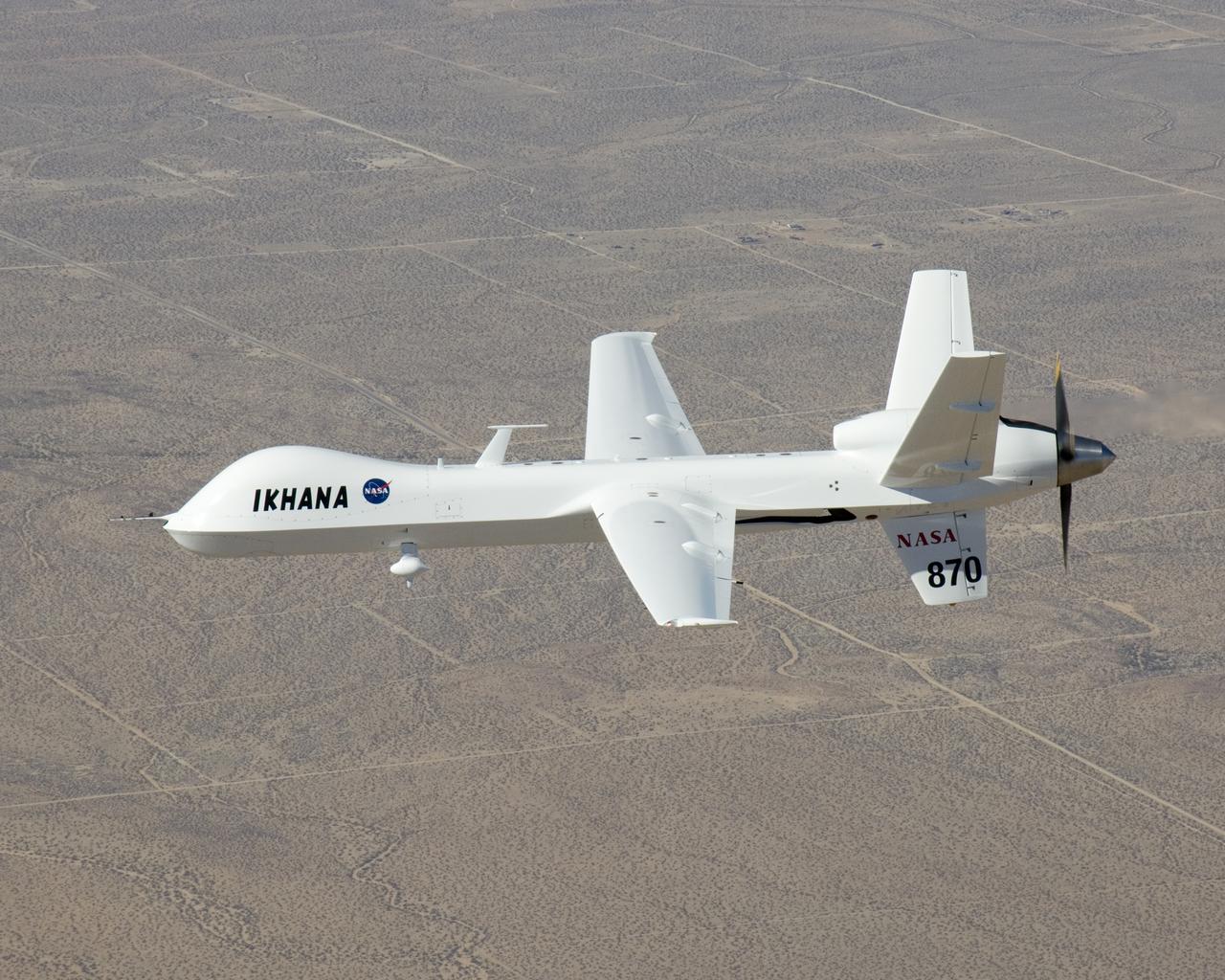
NASA's Ikhana unmanned science demonstration aircraft over Southern California's high desert during the ferry flight to its new home at the Dryden Flight Research Center. NASA took possession of the new aircraft in November, 2006, and it arrived at DFRC at Edwards Air Force Base, Calif., on June 23, 2007.
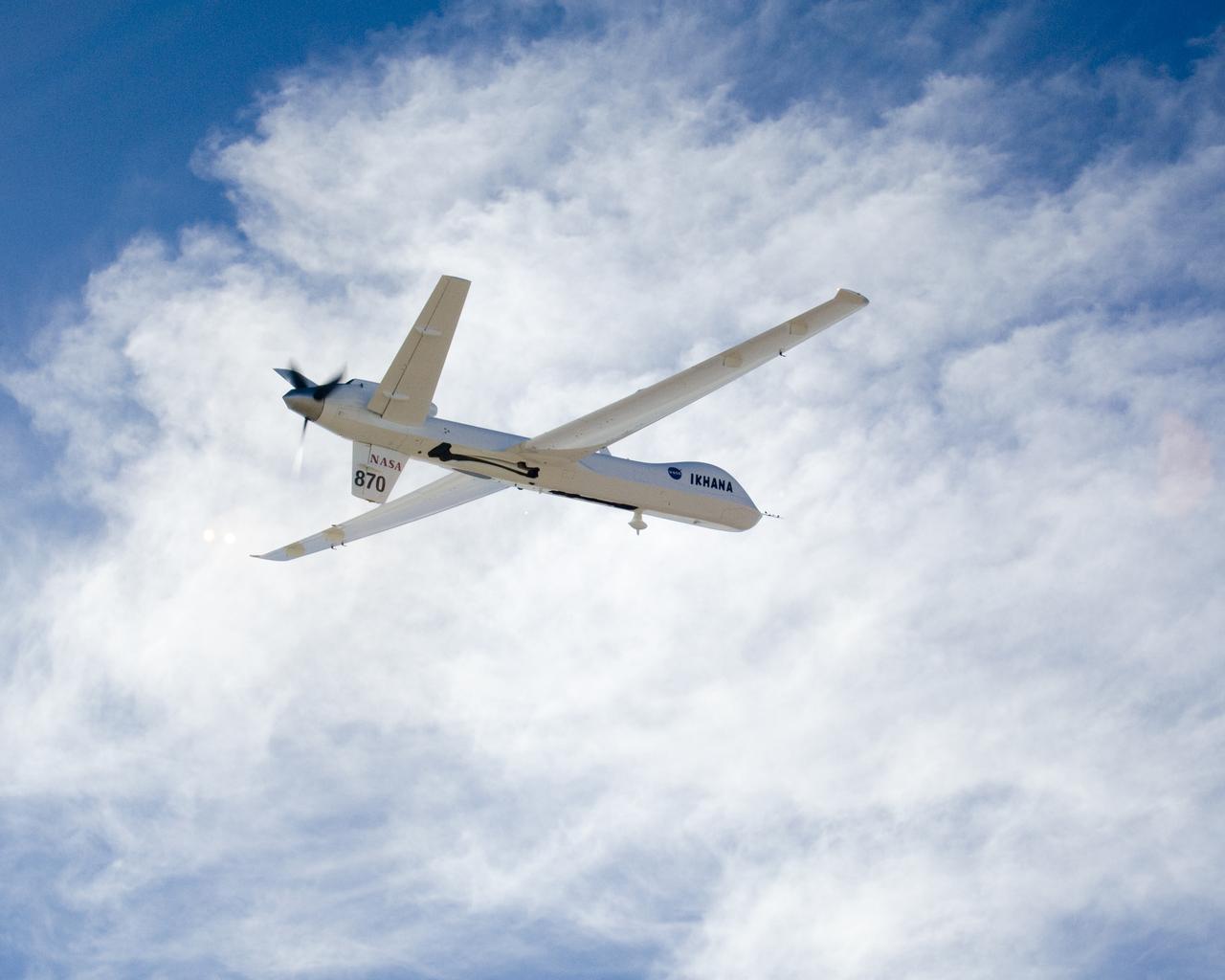
NASA's Ikhana unmanned science demonstration aircraft in flight during the ferry flight to its new home at the Dryden Flight Research Center. NASA took possession of the new aircraft in November, 2006, and it arrived at the NASA center at Edwards Air Force Base, Calif., on June 23, 2007.
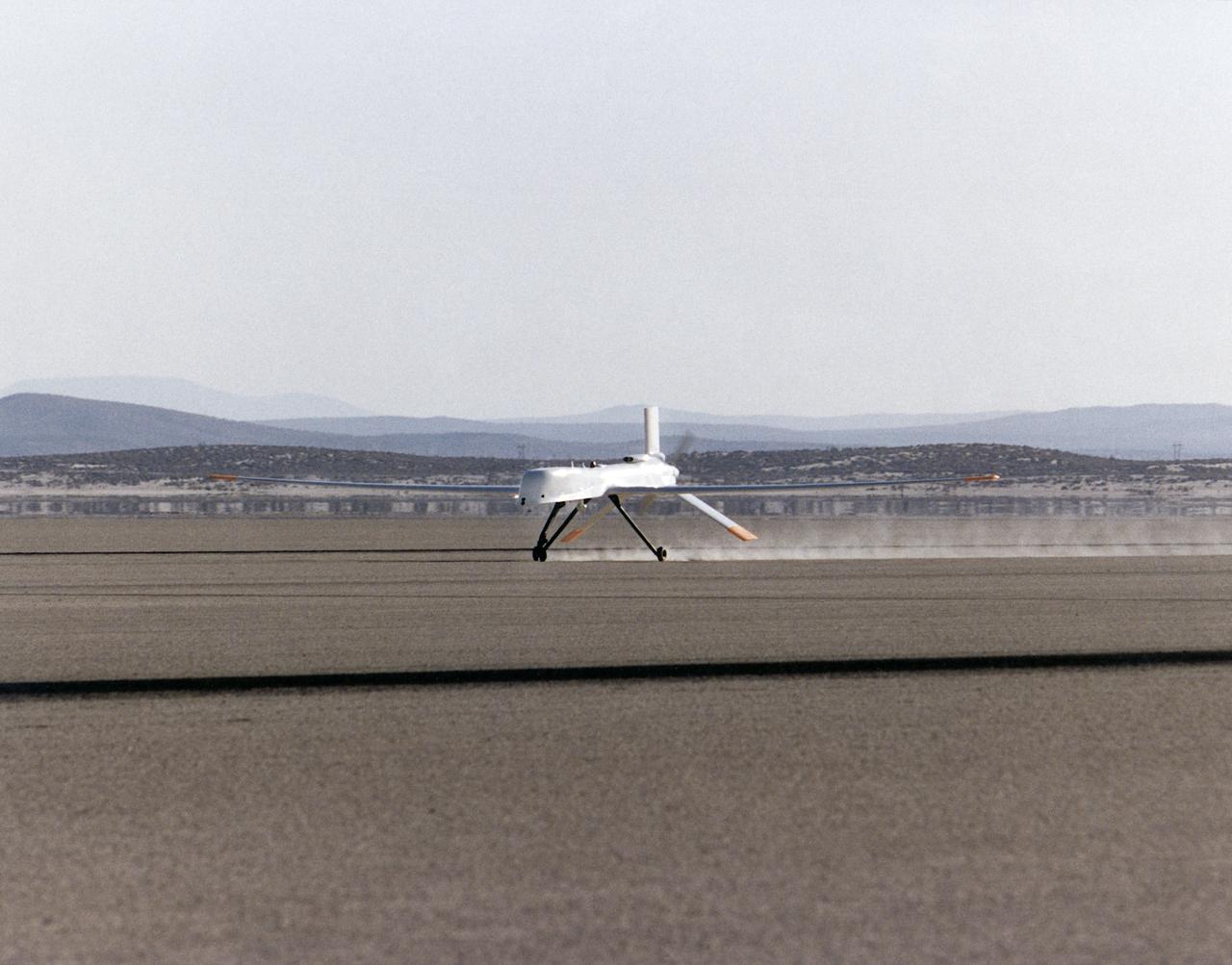
Altus I aircraft landing on Edwards lakebed runway 23
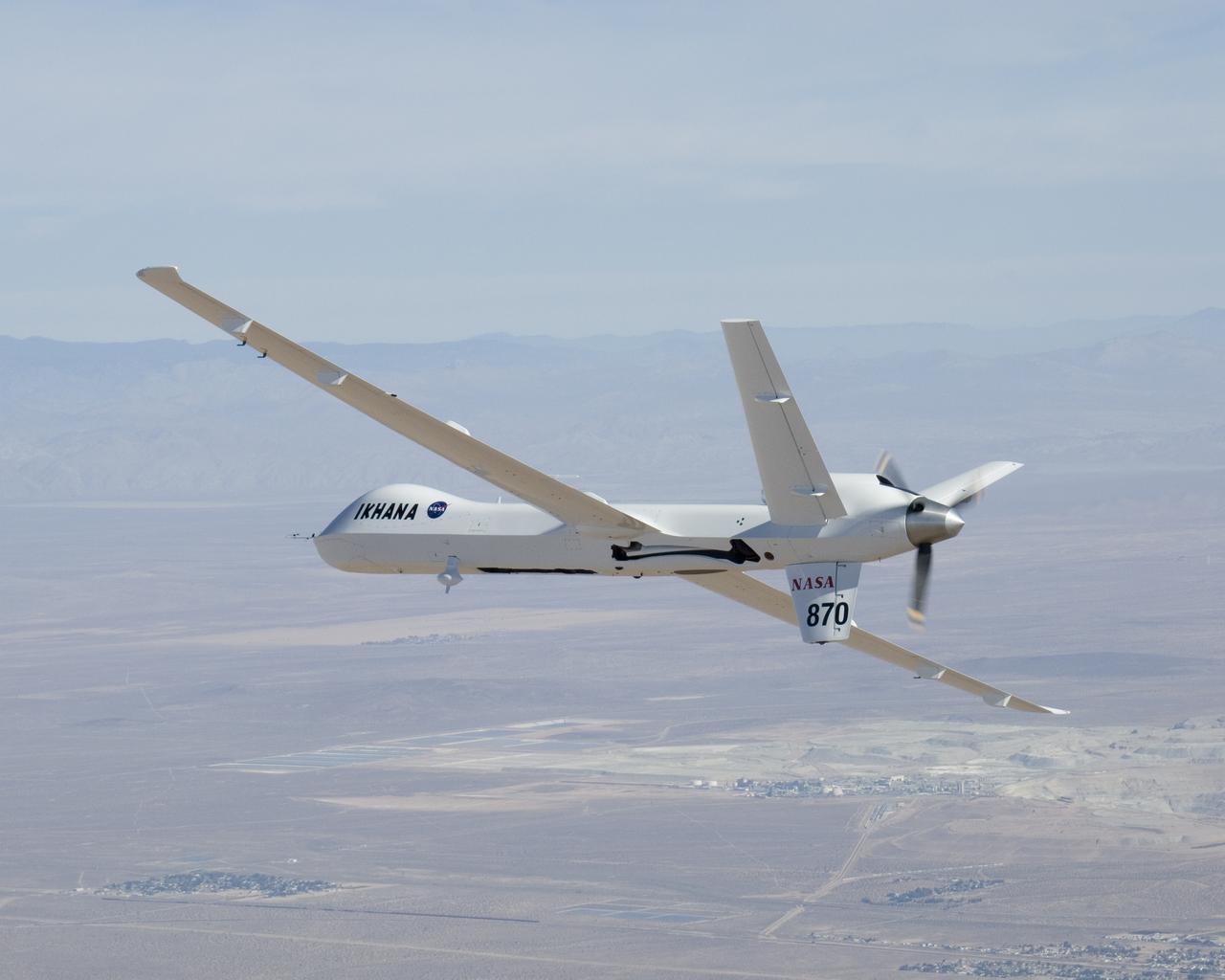
NASA's Ikhana unmanned science demonstration aircraft over the U.S. Borax mine, Boron, California, near the Dryden/Edwards Air Force Base complex. NASA took possession of the new aircraft in November, 2006, and it arrived at the NASA center at Edwards Air Force Base, Calif., on June 23, 2007.

The remotely-piloted Altair unmanned aerial vehicle (UAV) took to the air on its first checkout flight on June 9, 2003 at El Mirage, California.
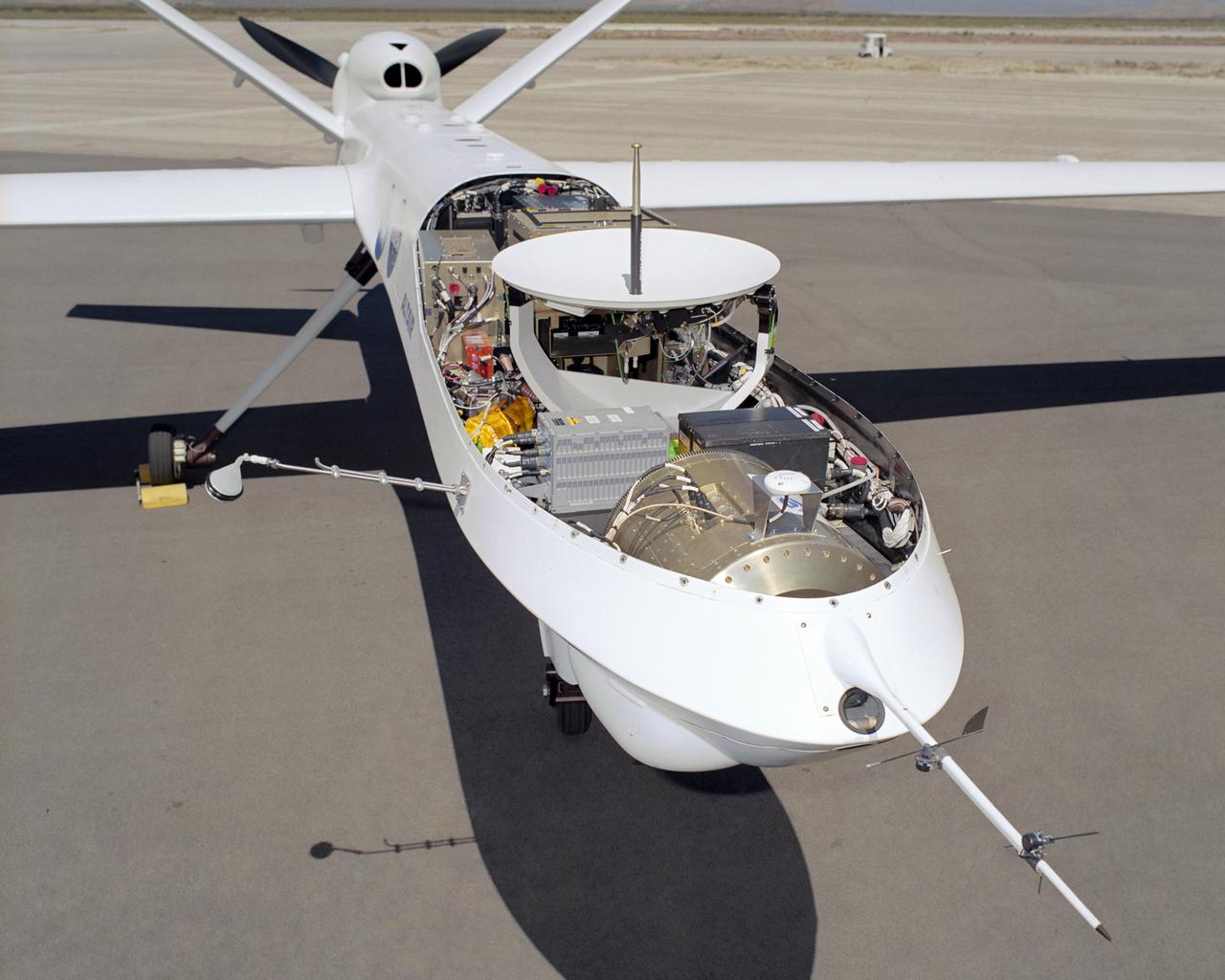
A satellite antenna, electro-optical/infrared and ocean color sensors (front) were among payloads installed on the Altair for the NOAA-NASA flight demonstration
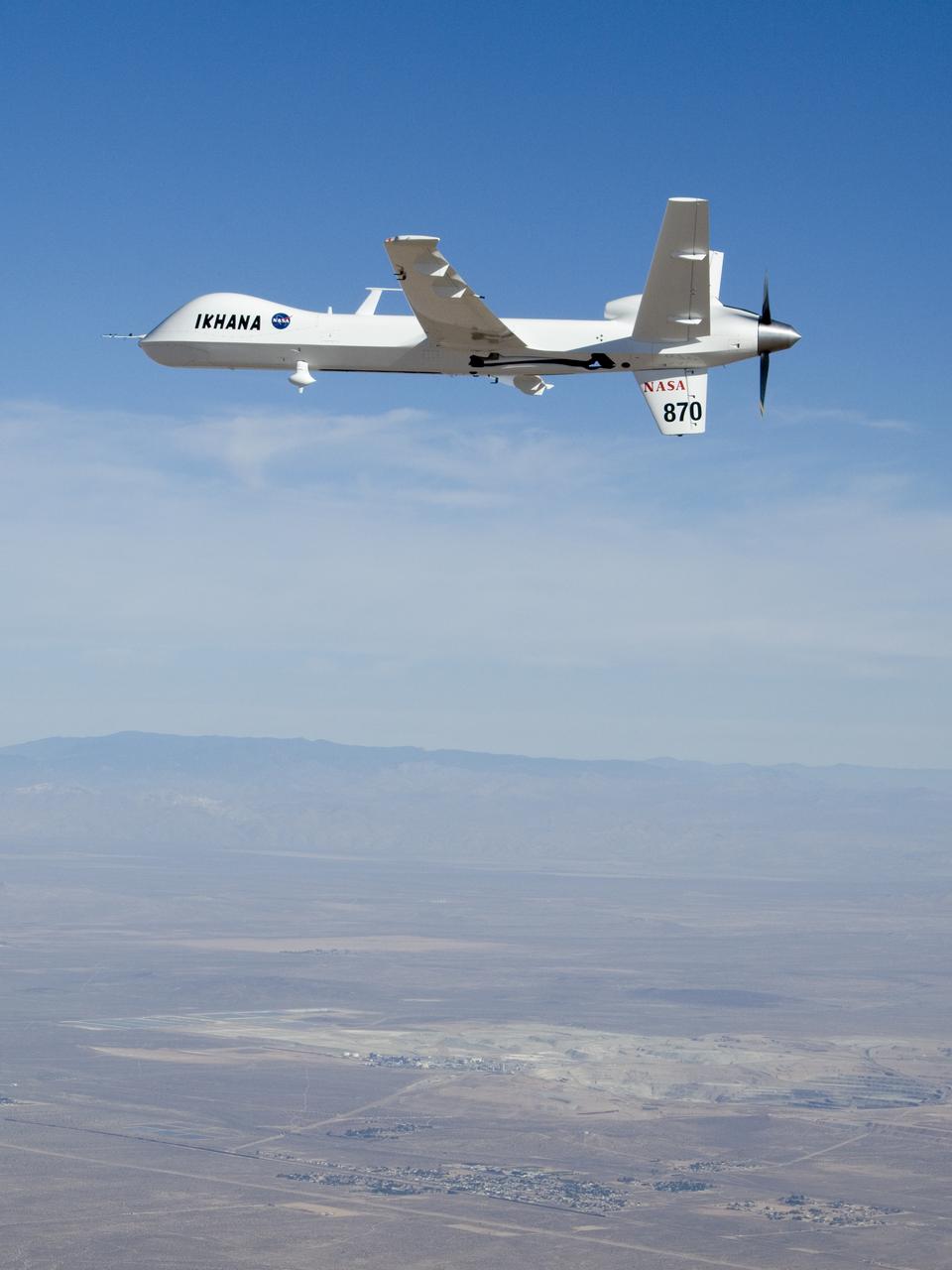
NASA's Ikhana unmanned science demonstration aircraft over the U.S. Borax mine, Boron, California, near the Dryden/Edwards Air Force Base complex. NASA took possession of the new aircraft in November, 2006, and it arrived at the NASA Dryden Flight Research Center at Edwards AFB, Calif., on June 23, 2007.
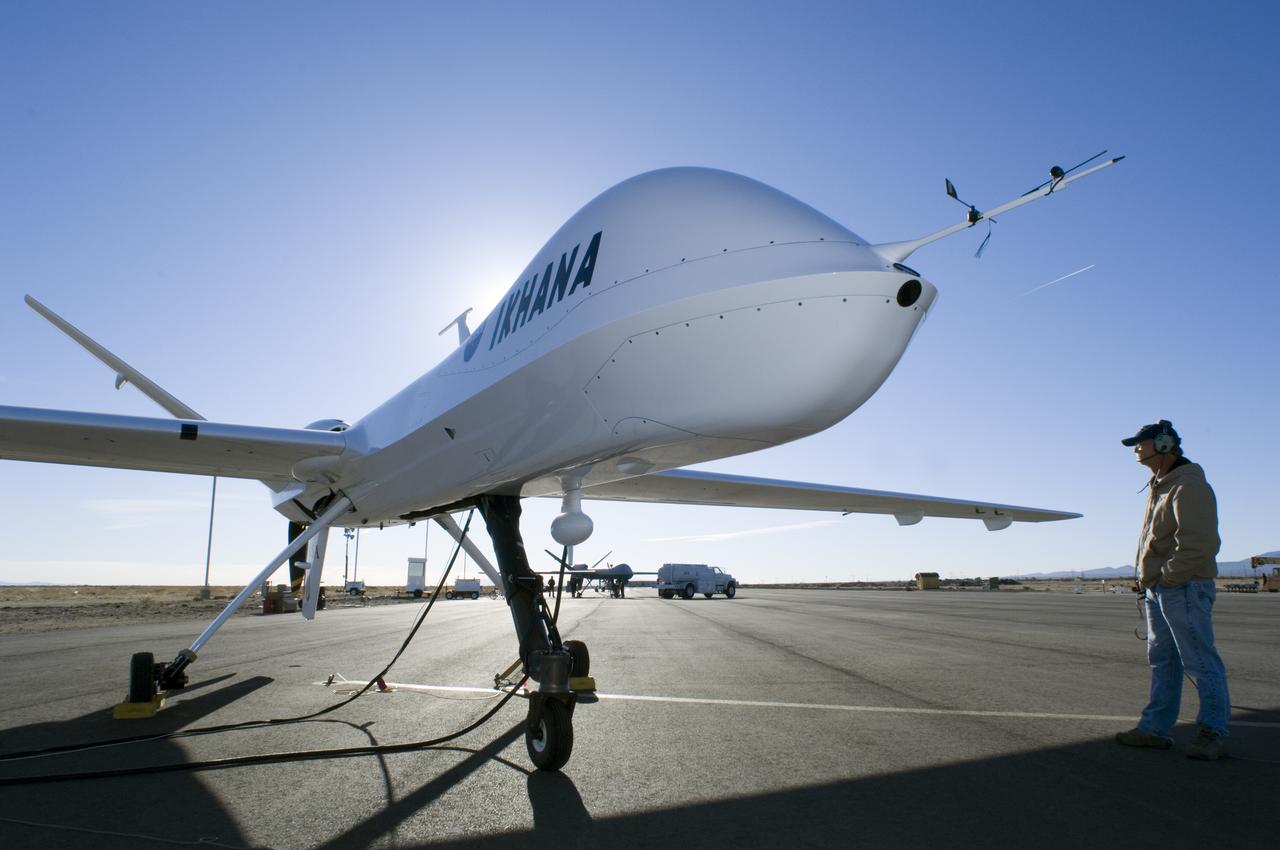
Silhouetted by the morning sun, NASA's Ikhana, a civil version of the Predator B unmanned aircraft, is readied for flight By NASA Dryden crew chief Joe Kinn.

Terrence Hertz, Deputy Associate Administrator for Technology, NASA Aeronautics Research Mission Directorate, at the NOAA/NASA Altair flight demo kickoff.
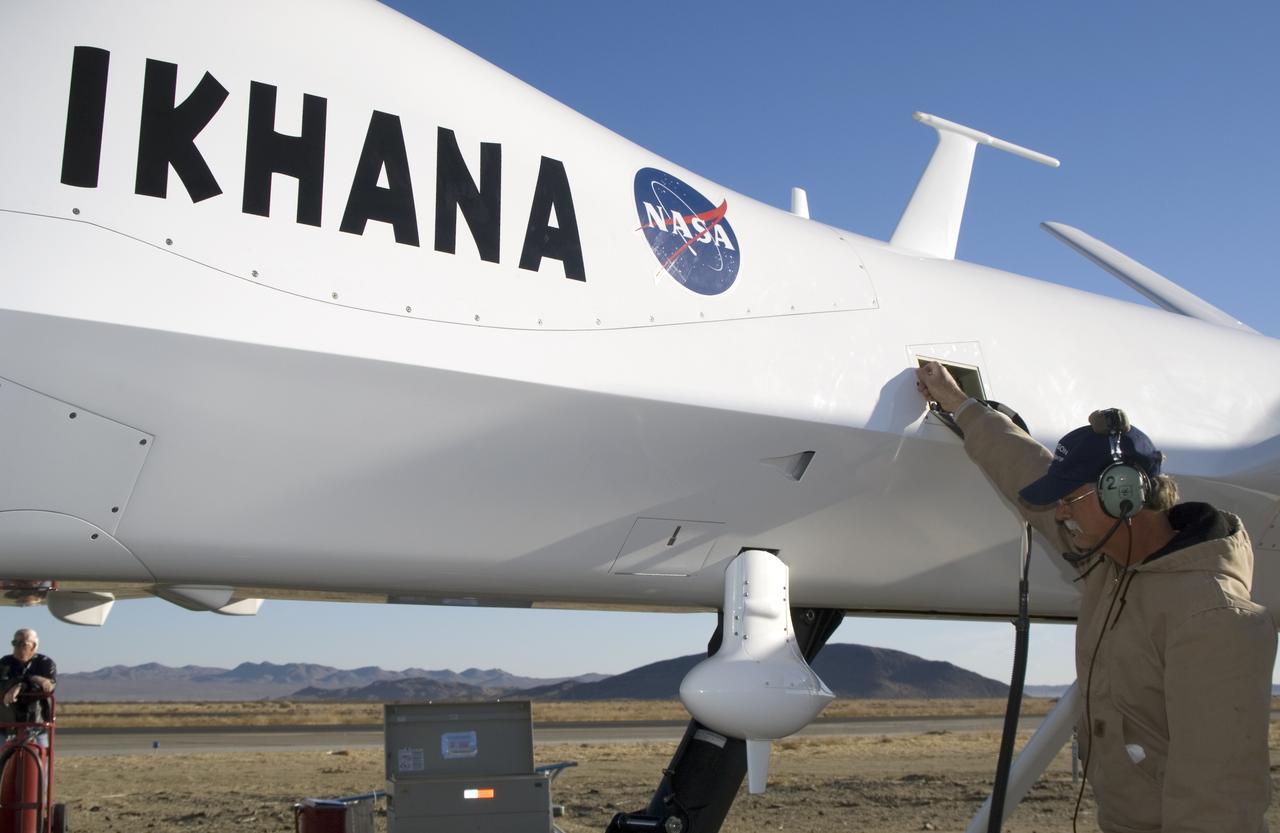
NASA Dryden crew chief Joe Kinn gives final checks to NASA's Ikhana, a civil version of the Predator B unmanned aircraft, prior to a morning checkout flight.
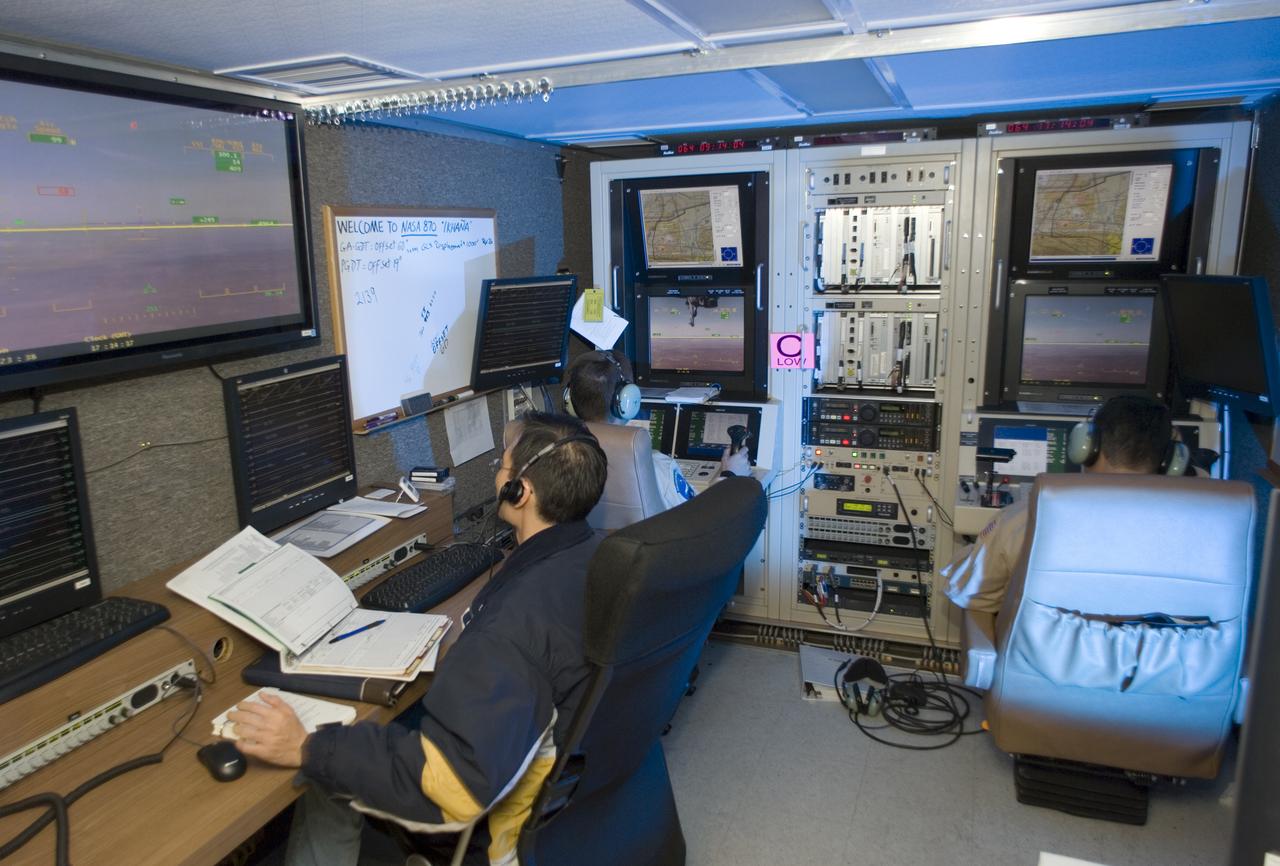
NASA's Ikhana unmanned science aircraft ground control station includes consoles for two pilots and positions for scientists and engineers along the side.
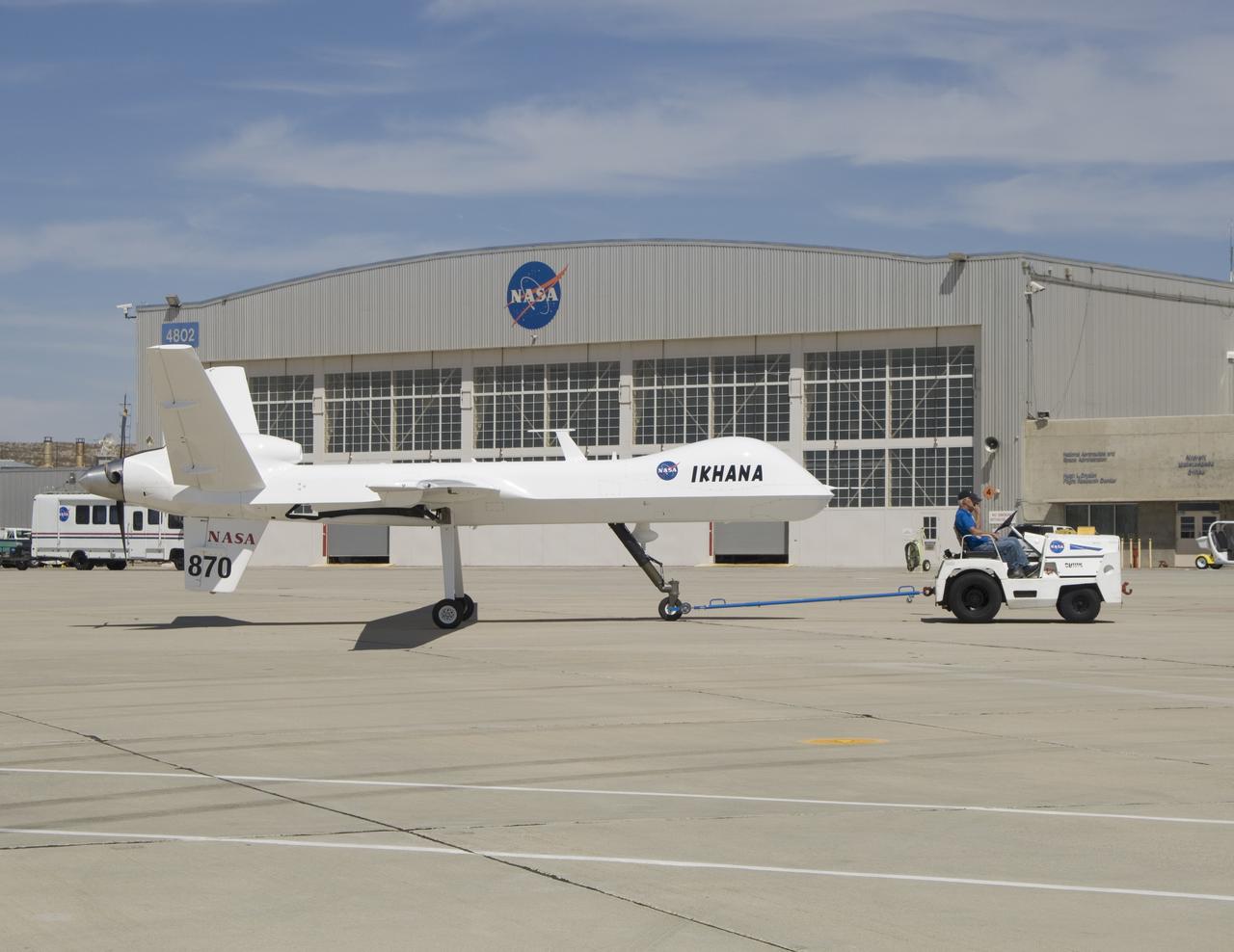
After arriving via a ferry flight on June 23, 2007, NASA's Ikhana unmanned science demonstration aircraft is towed to a hangar at its new home, the Dryden Flight Research Center in Southern California.
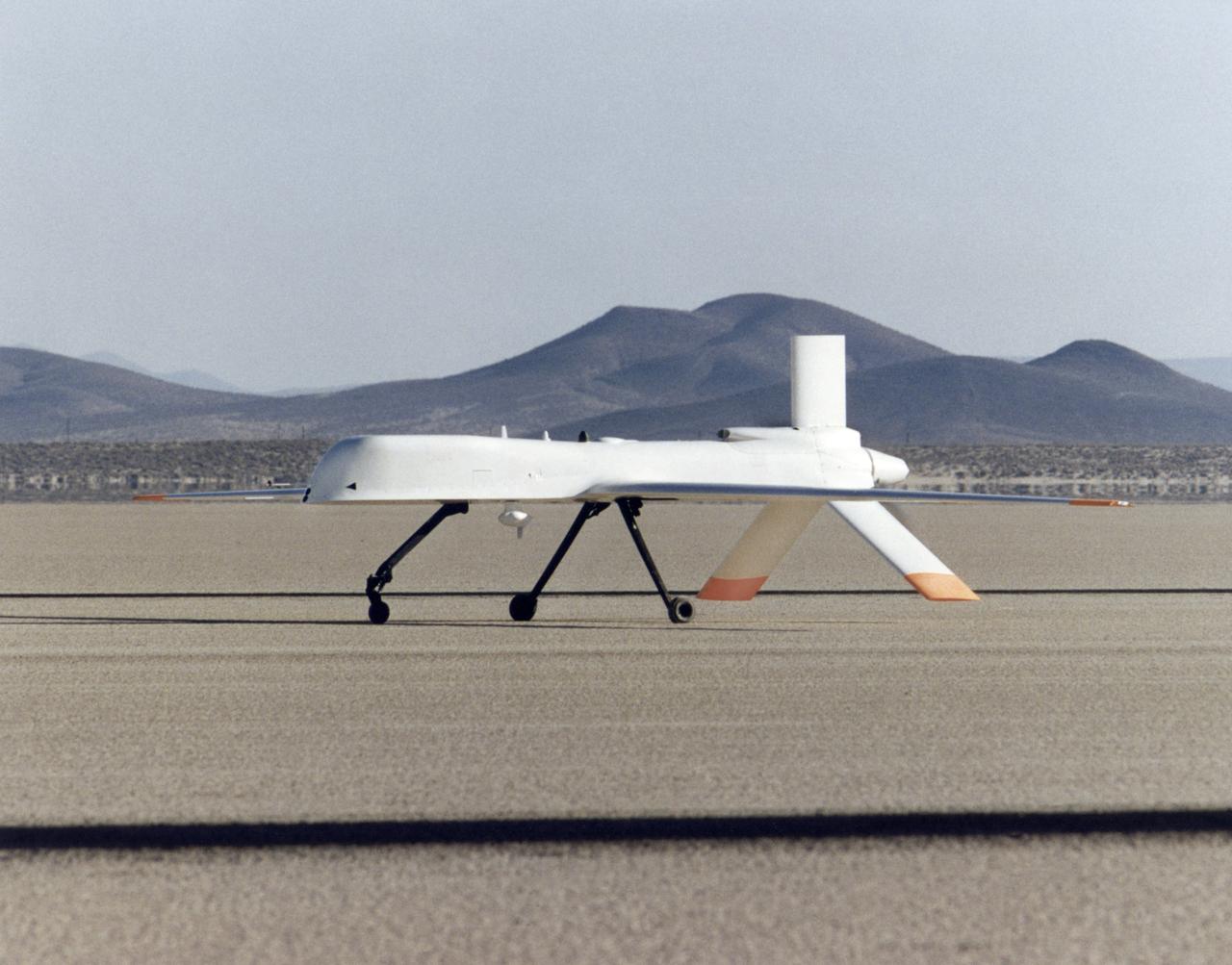
Altus I aircraft on lakebed
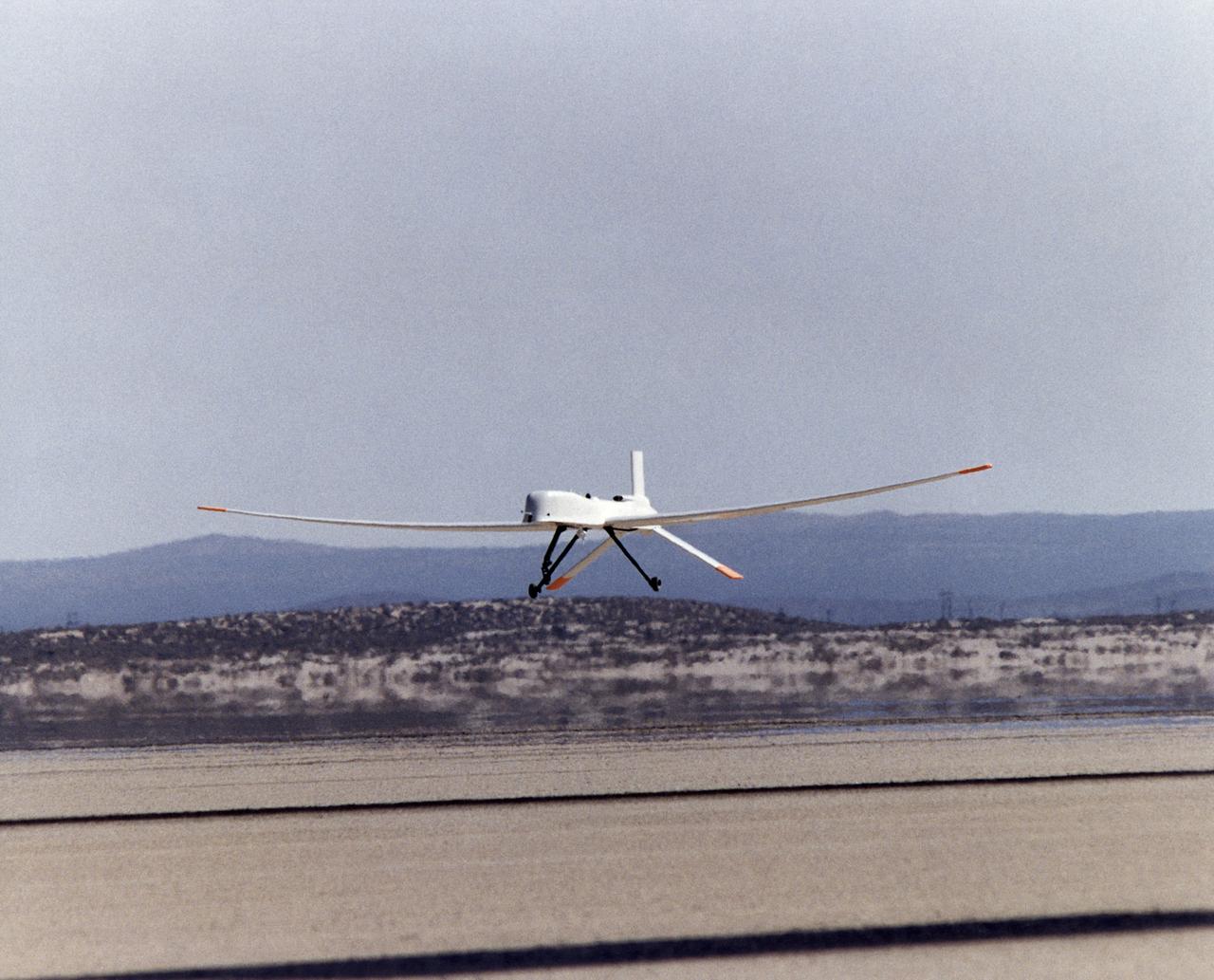
Altus I aircraft taking off from lakebed runway
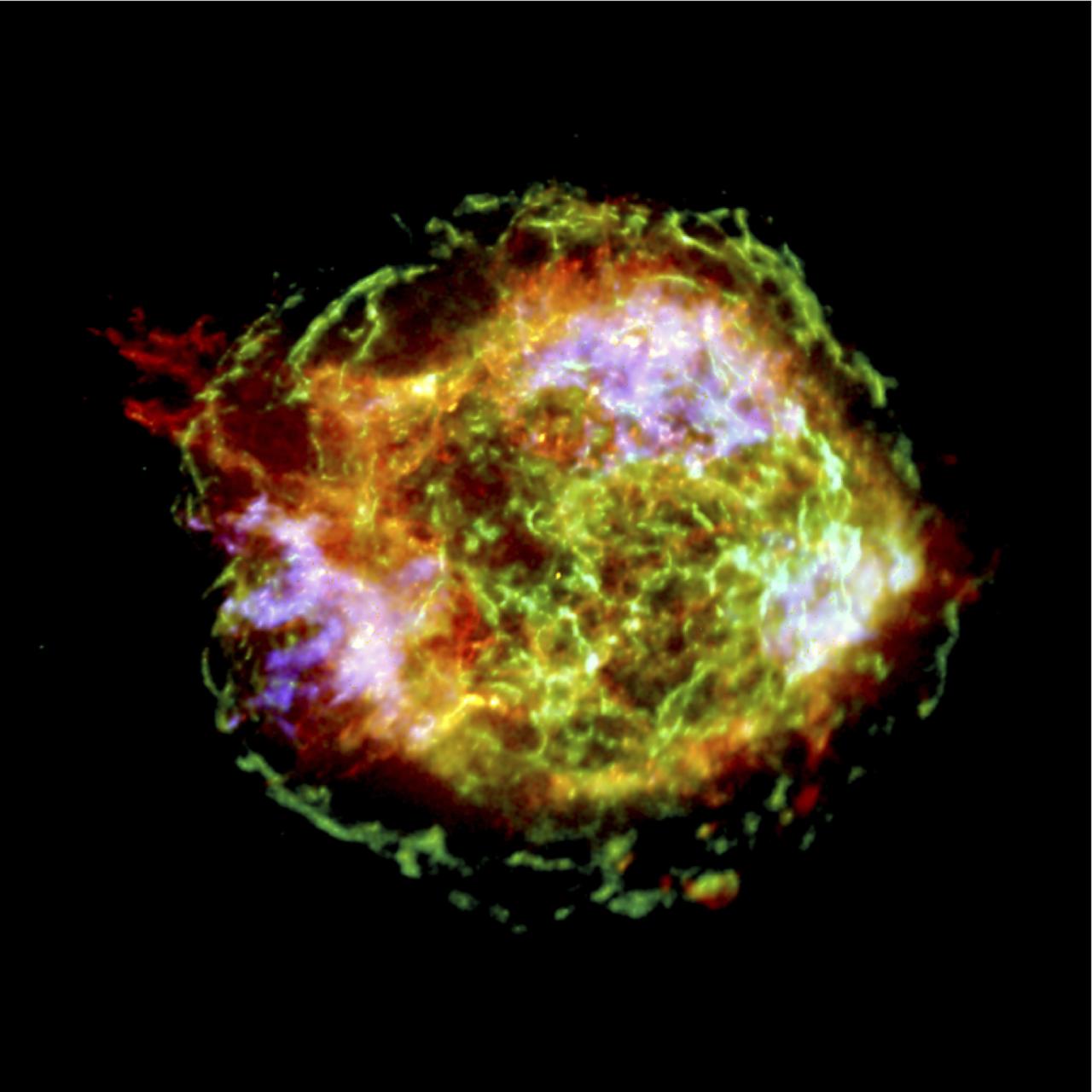
This spectacular Chandra X-Ray Observatory (CXO) image of the supernova remnant Cassiopeia A is the most detailed image ever made of the remains of an exploded star. The one-million-second image shows a bright outer ring (green) 10 light years in diameter that marks the location of a shock wave generated by the supernova explosion. In the upper left corner is a large jet-like structure that protrudes beyond the shock wave, and a counter-jet can be seen on the lower right. The x-ray spectra show that the jets are rich in silicon atoms, and relatively poor in iron atoms. This indicates that the jets formed soon after the initial explosion of the star, otherwise, the jets should have contained large quantities of iron from the star’s central regions. The bright blue areas are composed almost purely of iron gas, which was produced in the central, hottest regions of the star and somehow ejected in a direction almost perpendicular to the jets. The bright source at the center of the image is presumed to be a neutron star created during the supernova. Unlike most others, this neutron star is quiet, faint, and so far shows no evidence of pulsed radiation. A working hypothesis is that the explosion that created Cassiopeia A produced high speed jets similar to, but less energetic than, the hyper nova jets thought to produce gamma-ray bursts. During the explosion, the star may have developed an extremely strong magnetic filed that helped to accelerate the jets and later stifled any pulsar wind activity. CXO project management is the responsibility of NASA’s Marshall Space Flight Center in Huntsville, Alabama.
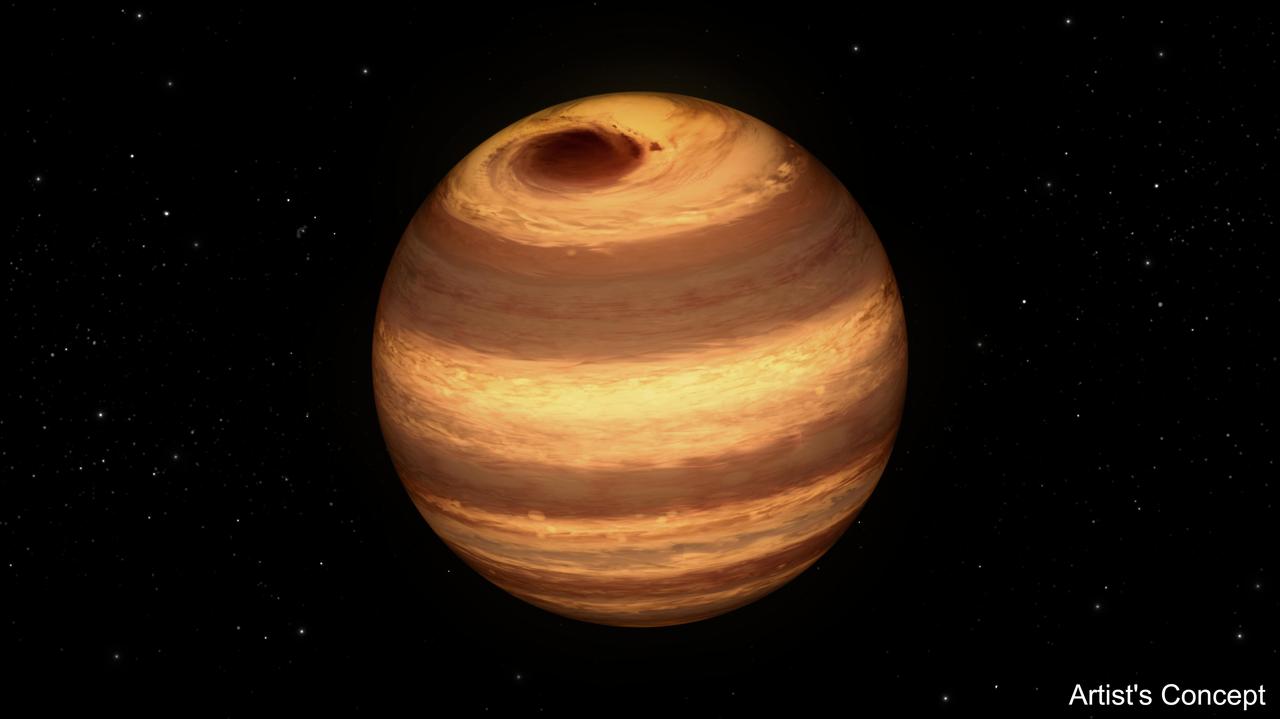
This illustration shows a cool star, called W1906+40, marked by a raging storm near one of its poles. The storm is thought to be similar to the Great Red Spot on Jupiter. Scientists discovered it using NASA's Kepler and Spitzer space telescopes. The location of the storm is estimated to be near the north pole of the star based on computer models of the data. The telescopes cannot see the storm itself, but learned of its presence after observing how the star's light changes over time. The storm travels around with the star, making a full lap about every 9 hours. When it passes into a telescope's field of view, it causes light of particular infrared and visible wavelengths to dip in brightness. The storm has persisted for at least two years. Astronomers aren't sure why it has lasted so long. While planets are known to have cloudy storms, this is the best evidence yet for a star with the same type of storm. The star, W1906+40, belongs to a thermally cool class of objects called L-dwarfs. Some L-dwarfs are considered stars because they fuse atoms and generate light, as our sun does, while others, called brown dwarfs, are known as "failed stars" for their lack of atomic fusion. The L-dwarf W1906+40 is thought to be a star based on estimates of its age (the older the L-dwarf, the more likely it is a star). Its temperature is about 2,200 Kelvin (3,500 degrees Fahrenheit). That may sound scorching hot, but as far as stars go, it is relatively cool. Cool enough, in fact, for clouds to form in its atmosphere. W1906+40 is located 53 light-years away in the constellation Lyra. http://photojournal.jpl.nasa.gov/catalog/PIA20055
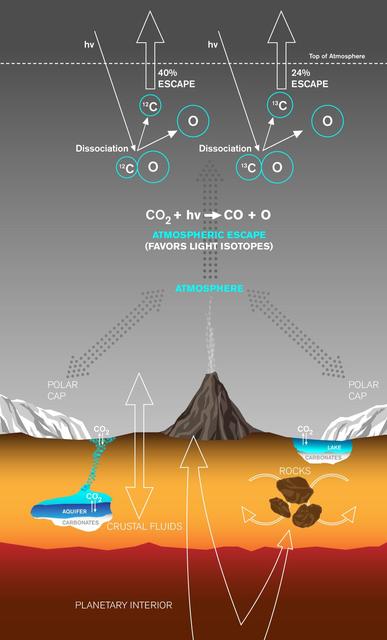
This graphic depicts paths by which carbon has been exchanged between Martian interior, surface rocks, polar caps, waters and atmosphere, and also depicts a mechanism by which carbon is lost from the atmosphere with a strong effect on isotope ratio. Carbon dioxide (CO2) to generate the Martian atmosphere originated in the planet's mantle and has been released directly through volcanoes or trapped in rocks crystallized from magmas and released later. Once in the atmosphere, the CO2 can exchange with the polar caps, passing from gas to ice and back to gas again. The CO2 can also dissolve into waters, which can then precipitate out solid carbonates, either in lakes at the surface or in shallow aquifers. Carbon dioxide gas in the atmosphere is continually lost to space at a rate controlled in part by the sun's activity. One loss mechanism is called ultraviolet photodissociation. It occurs when ultraviolet radiation (indicated on the graphic as "hv") encounters a CO2 molecule, breaking the bonds to first form carbon monoxide (CO) molecules and then carbon (C) atoms. The ratio of carbon isotopes remaining in the atmosphere is affected as these carbon atoms are lost to space, because the lighter carbon-12 (12C) isotope is more easily removed than the heavier carbon-13 (13C) isotope. This fractionation, the preferential loss of carbon-12 to space, leaves a fingerprint: enrichment of the heavy carbon-13 isotope, measured in the atmosphere of Mars today. http://photojournal.jpl.nasa.gov/catalog/PIA20163
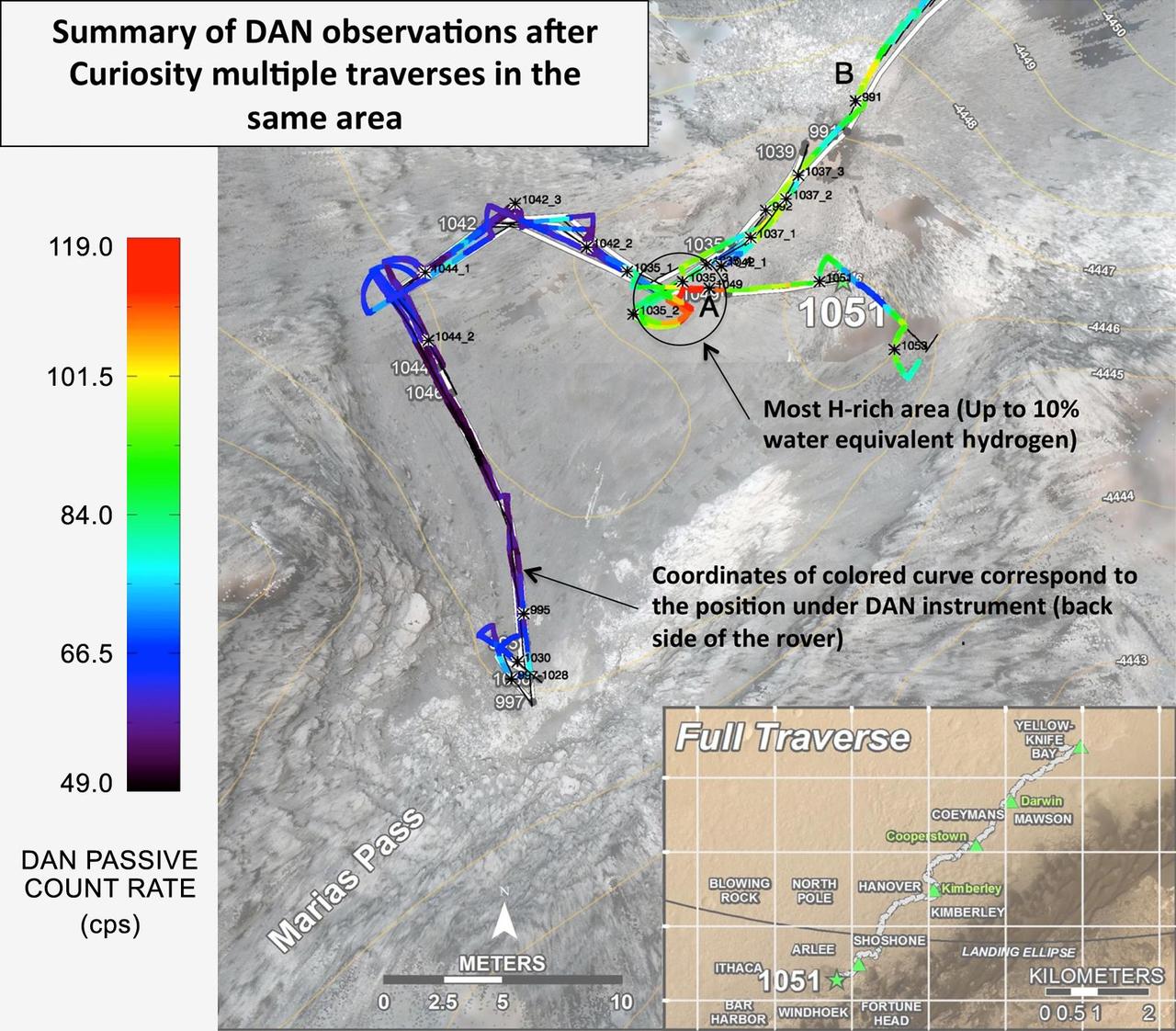
Curiosity's Russian-made instrument for checking hydration levels in the ground beneath the rover detected an unusually high amount at a site near "Marias Pass," prompting repeated passes over the area to map the hydrogen amounts. The instrument is named Dynamic Albedo of Neutrons, or DAN. It detects hydrogen by the effect of hydrogen atoms on neutrons entering the ground either from cosmic rays and Curiosity's power source (DAN's passive mode) or from the instrument's neutron pulse generator (DAN's active mode). DAN recognizes which neutrons have bounced off hydrogen from their rerduced energy level. This map, covering an area about 130 feet (40 meters) across, shows results from DAN's multiple traverses over the area, with color coding for levels of hydrogen detected. The red coding indicates amounts of hydrogen three to four times as high as the amounts detected anywhere previously along Curiosity's traverse of about 6.9 miles (11.1 kilometers) since landing in August 2012. The inset map at lower right shows the full traverse through Sol 1051 (July 21, 2015), with names assigned to rectangles within Gale Crater for geological mapping purposes. The vertical bar at left indicates the color coding according to counts per second in DAN's passive mode. The hydrogen detected by DAN is interpreted as water molecules or hydroxyl ions bound within minerals or water absorbed onto minerals in the rocks and soil, to a depth of about 3 feet (1 meter) beneath the rover. The amount of hydrogen is often expressed as "water equivalent hydrogen" based on two hydrogen atoms per molecule of water. In the same area where DAN detected an unusually high amount of hydration, Curiosity's Chemistry and Camera (ChemCam) instrument detected an unusually high amount of silica in several rock targets. The DAN and ChemCam findings led to the rover's science team choosing a rock target called "Buckskin" for collection of a drilled sample to be analyzed by the rover's internal laboratory instruments. Russia's Space Research Institute developed DAN in close cooperation with the N.L. Dukhov All-Russia Research Institute of Automatics, Moscow, and the Joint Institute for Nuclear Research, Dubna. The neutron generator development was supervised by the late technical designer German A. Smirnov of the All-Russia Institute of Automatics. Moscow. http://photojournal.jpl.nasa.gov/catalog/PIA19809
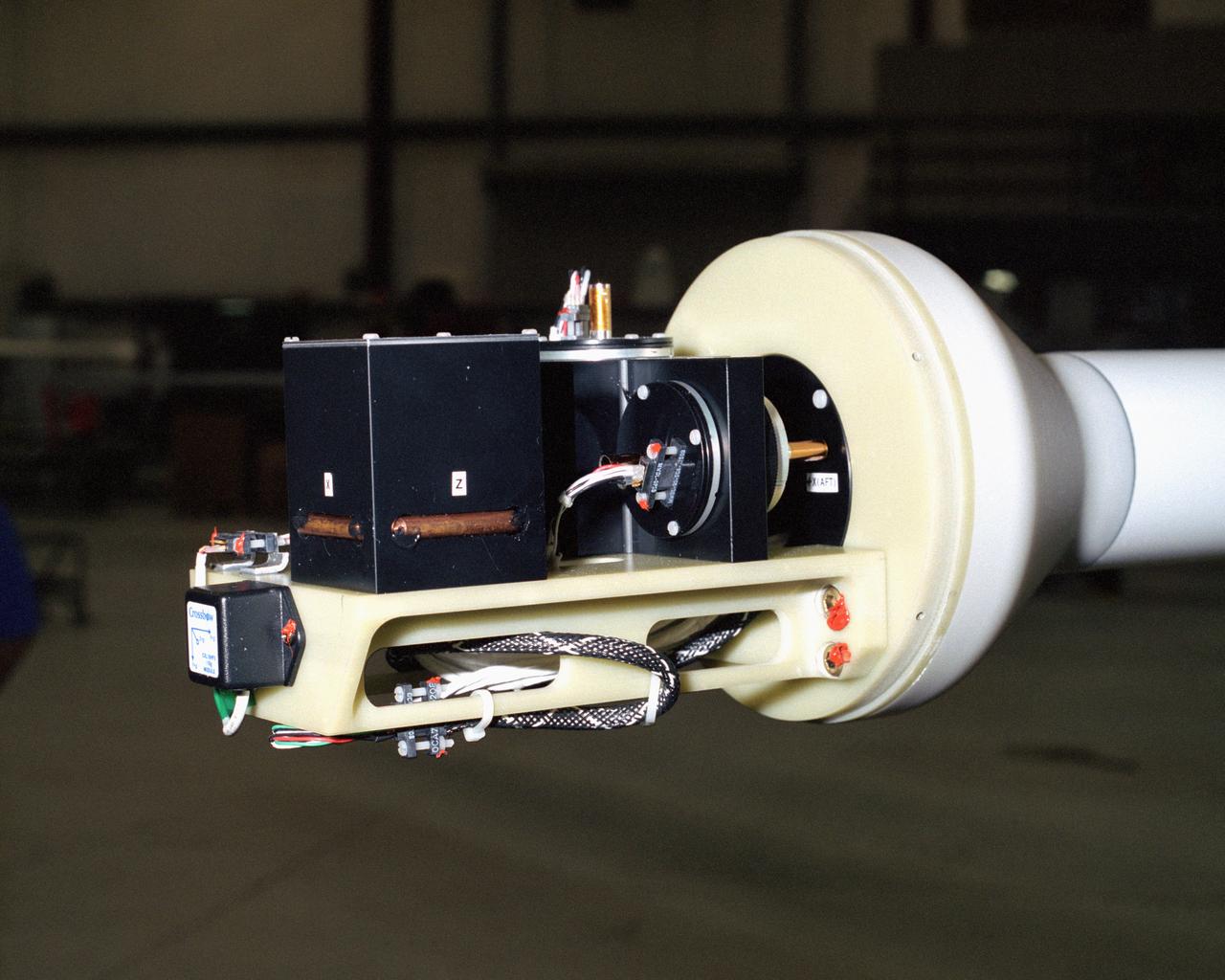
A NASA team studying the causes of electrical storms and their effects on our home planet achieved a milestone on August 21, 2002, completing the study's longest-duration research flight and monitoring four thunderstorms in succession. Based at the Naval Air Station Key West, Florida, researchers with the Altus Cumulus Electrification Study (ACES) used the Altus II remotely-piloted aircraft to study thunderstorms in the Atlantic Ocean off Key West and the west of the Everglades. Data obtained through sensors mounted to the aircraft will allow researchers in ACES to gauge elements such as lightning activity and the electrical environment in and around storms. By learning more about individual storms, scientists hope to better understand the global water and energy cycle, as well as climate variability. Contained in one portion of the aircraft is a three-axis magnetic search coil, which measures the AC magnetic field; a three-axis electric field change sensor; an accelerometer; and a three-axis magnetometer, which measures the DC magnetic field. With dual goals of gathering weather data safely and testing the adaptability of the uninhabited aircraft, the ACES study is a collaboration among the Marshall Space Flight Center, the University of Alabama in Huntsville, NASA's Goddard Space Flight Center in Greenbelt, Maryland, Pernsylvania State University in University Park, and General Atomics Aeronautical Systems, Inc.
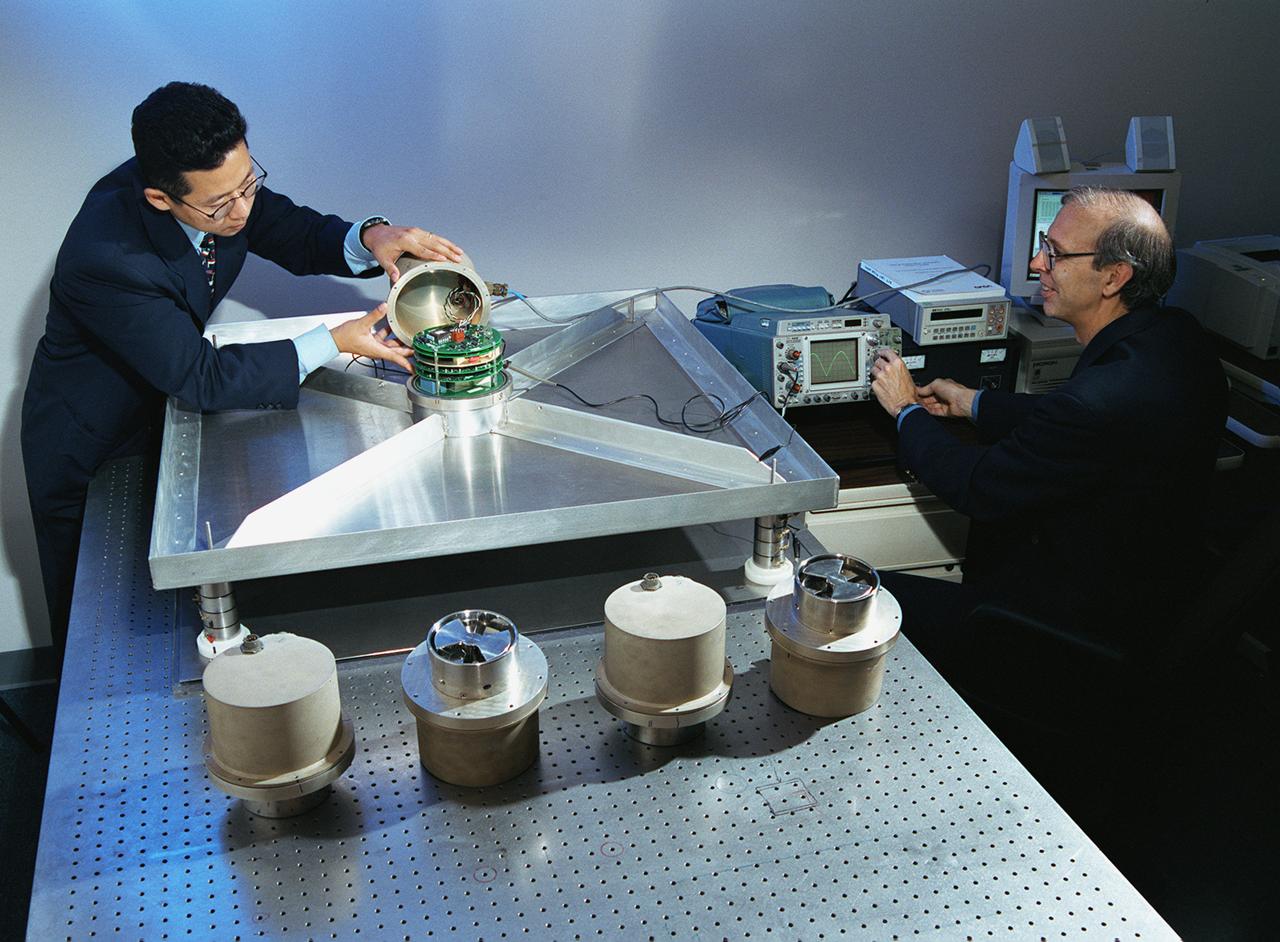
A NASA team studying the causes of electrical storms and their effects on our home planet achieved a milestone on August 21, 2002, completing the study's longest-duration research flight and monitoring four thunderstorms in succession. Radio news media can talk with Dr. Richard Blakeslee, the project's principal investigator, and Tony Kim, project manager at the Marshall Space Flight Center (MSFC), about their results and how their work will help improve future weather forecasting ability. Based at the Naval Air Station Key West, Florida, researchers with the Altus Cumulus Electrification Study (ACES) used the Altus II remotely- piloted aircraft to study a thunderstorm in the Atlantic Ocean off Key West, two storms at the western edge of the Everglades, and a large storm over the northwestern corner of the Everglades. This photograph shows Tony Kim And Dr. Richard Blakeslee of MSFC testing aircraft sensors that would be used to measure the electric fields produced by thunderstorm as part of NASA's ACES. With dual goals of gathering weather data safely and testing the adaptability of the uninhabited aircraft, the ACES study is a collaboration among the MSFC, the University of Alabama in Huntsville, NASA's Goddard Space Flight Center in Greenbelt, Maryland, Pernsylvania State University in University Park, and General Atomics Aeronautical Systems, Inc.
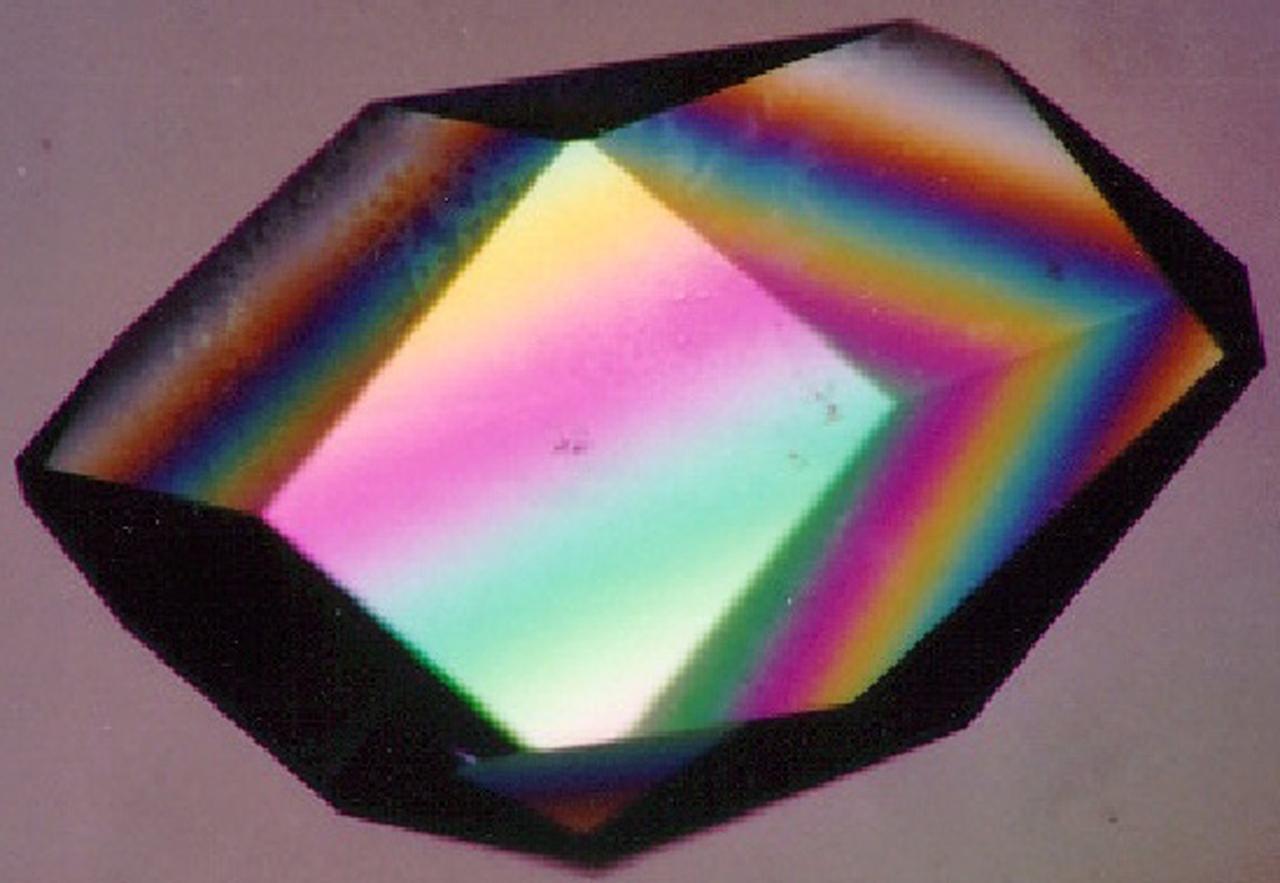
To the crystallographer, this may not be a diamond but it is just as priceless. A Lysozyme crystal grown in orbit looks great under a microscope, but the real test is X-ray crystallography. The colors are caused by polarizing filters. Proteins can form crystals generated by rows and columns of molecules that form up like soldiers on a parade ground. Shining X-rays through a crystal will produce a pattern of dots that can be decoded to reveal the arrangement of the atoms in the molecules making up the crystal. Like the troops in formation, uniformity and order are everything in X-ray crystallography. X-rays have much shorter wavelengths than visible light, so the best looking crystals under the microscope won't necessarily pass muster under the X-rays. In order to have crystals to use for X-ray diffraction studies, crystals need to be fairly large and well ordered. Scientists also need lots of crystals since exposure to air, the process of X-raying them, and other factors destroy them. Growing protein crystals in space has yielded striking results. Lysozyme's structure is well known and it has become a standard in many crystallization studies on Earth and in space.
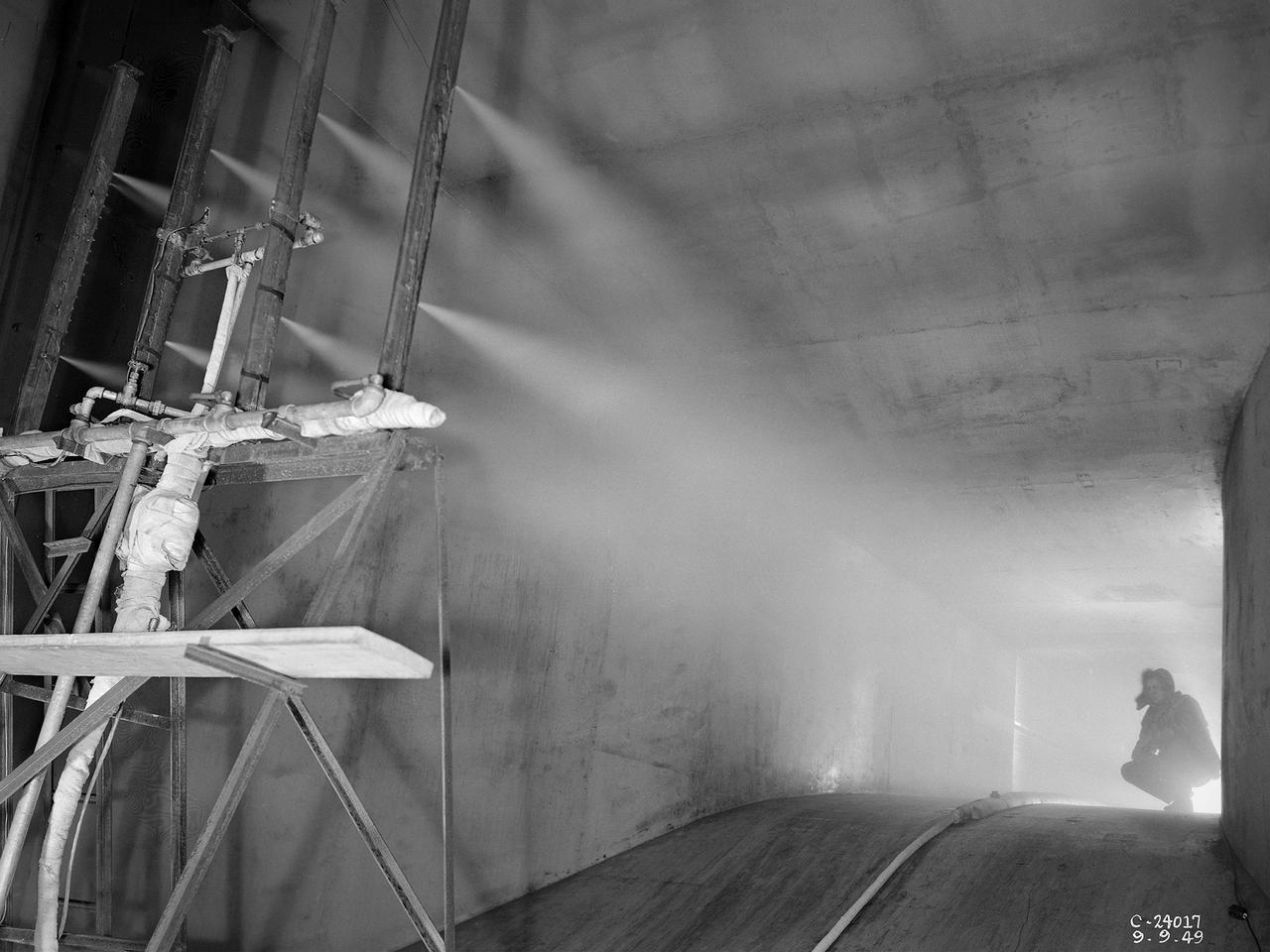
The spray bar system introduces water droplets into the Icing Research Tunnel’s air stream at the National Advisory Committee for Aeronautics (NACA) Lewis Flight Propulsion Laboratory. The icing tunnel was designed in the early 1940s to study ice accretion on airfoils and models. The Carrier Corporation designed a refrigeration system that reduced temperatures to -45° F. The tunnel’s drive fan generated speeds up to 400 miles per hour. The uniform injection of water droplets to the air was a key element of the facility’s operation. The system had to generate small droplets, distribute them uniformly throughout the airstream, and resist freezing and blockage. The Icing Research Tunnel’s designers struggled to develop a realistic spray system because they did not have access to data on the size of naturally occurring water droplets. For five years a variety of different designs were painstakingly developed and tested before the system was perfected. This photograph shows one of the trials using eight air-atomizing nozzles placed 48 feet upstream from the test section. A multi-cylinder device measured the size, liquid content, and distribution of the water droplets. The final system that was put into operation in 1950 included six horizontal spray bars with 80 nozzles that produced a 4- by 4-foot cloud in the test section. The Icing Research Tunnel produced excellent data throughout the 1950s and provided the basis for a hot air anti-icing system used on many transport aircraft.

Altus I aircraft in flight, retracting landing gear after takeoff
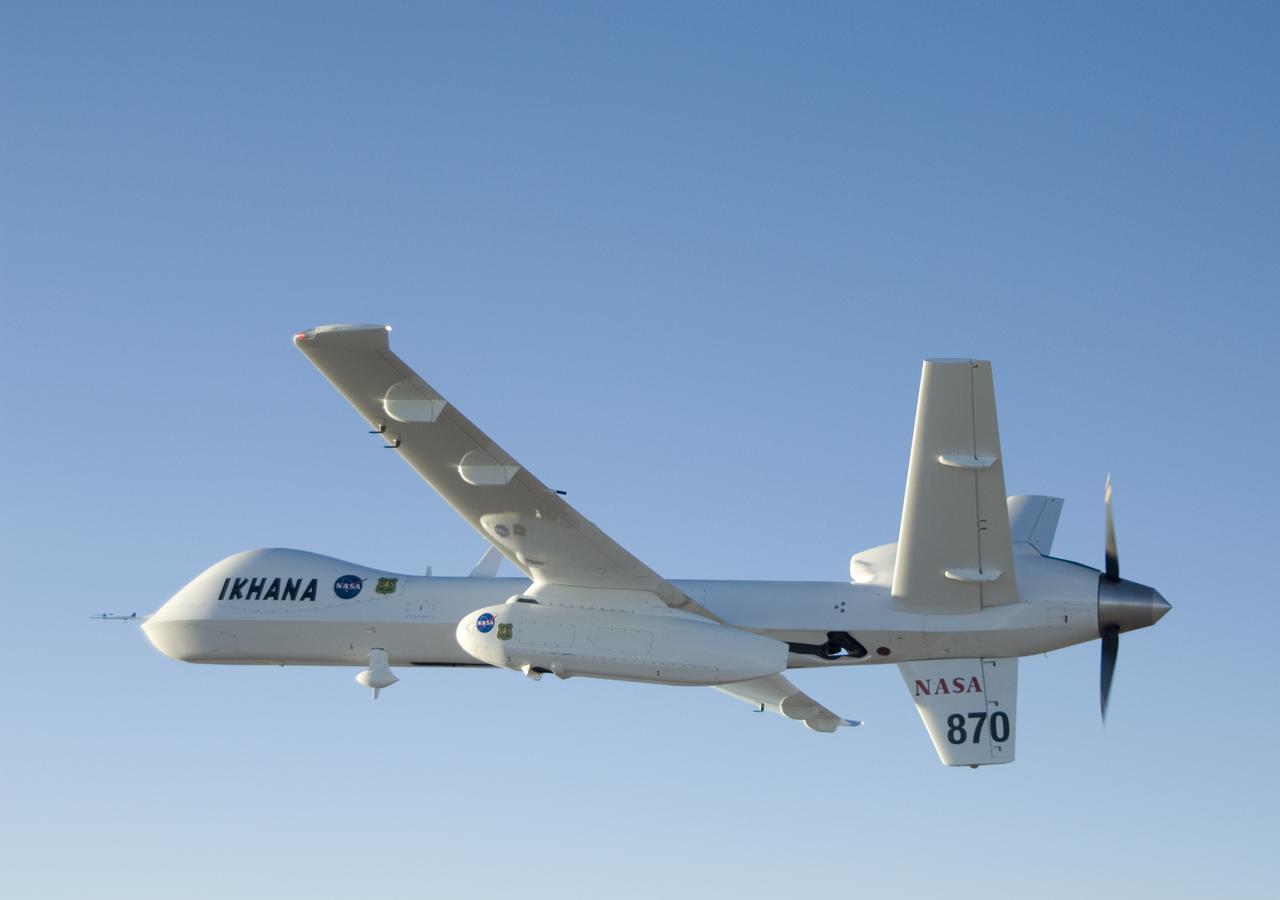
With its thermal-infared sensor pod under its left wing, NASA's Ikhana unmanned aircraft cruises over California during the Western States Fire Mission.

With its sensor pod under its left wing, NASA's remotely piloted Ikhana unmanned aircraft cruises over California during the Western States Fire Mission.
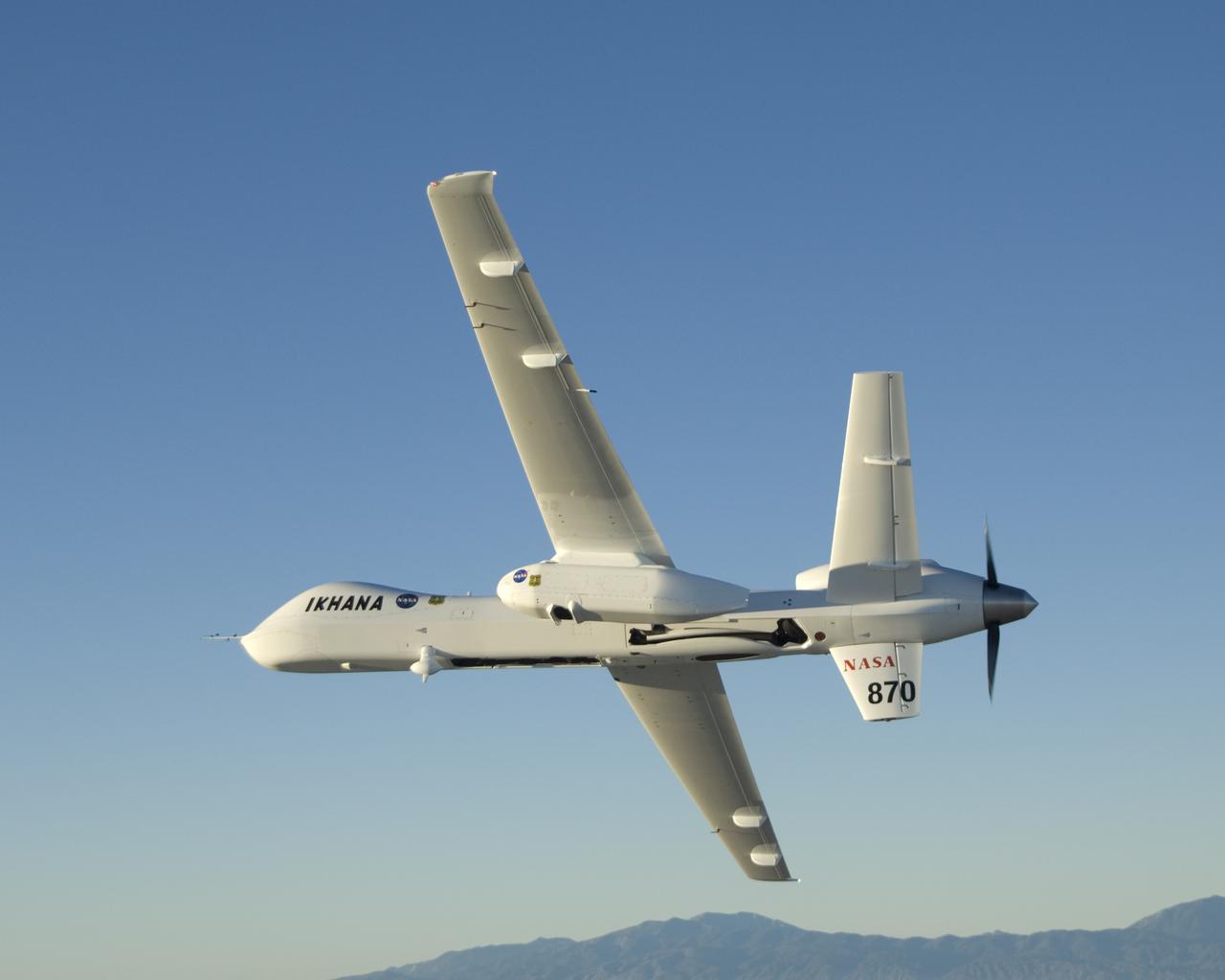
Carrying its sensor pod, NASA's remotely piloted Ikhana unmanned aircraft banks away during a checkout flight in the Western States Fire Mission.
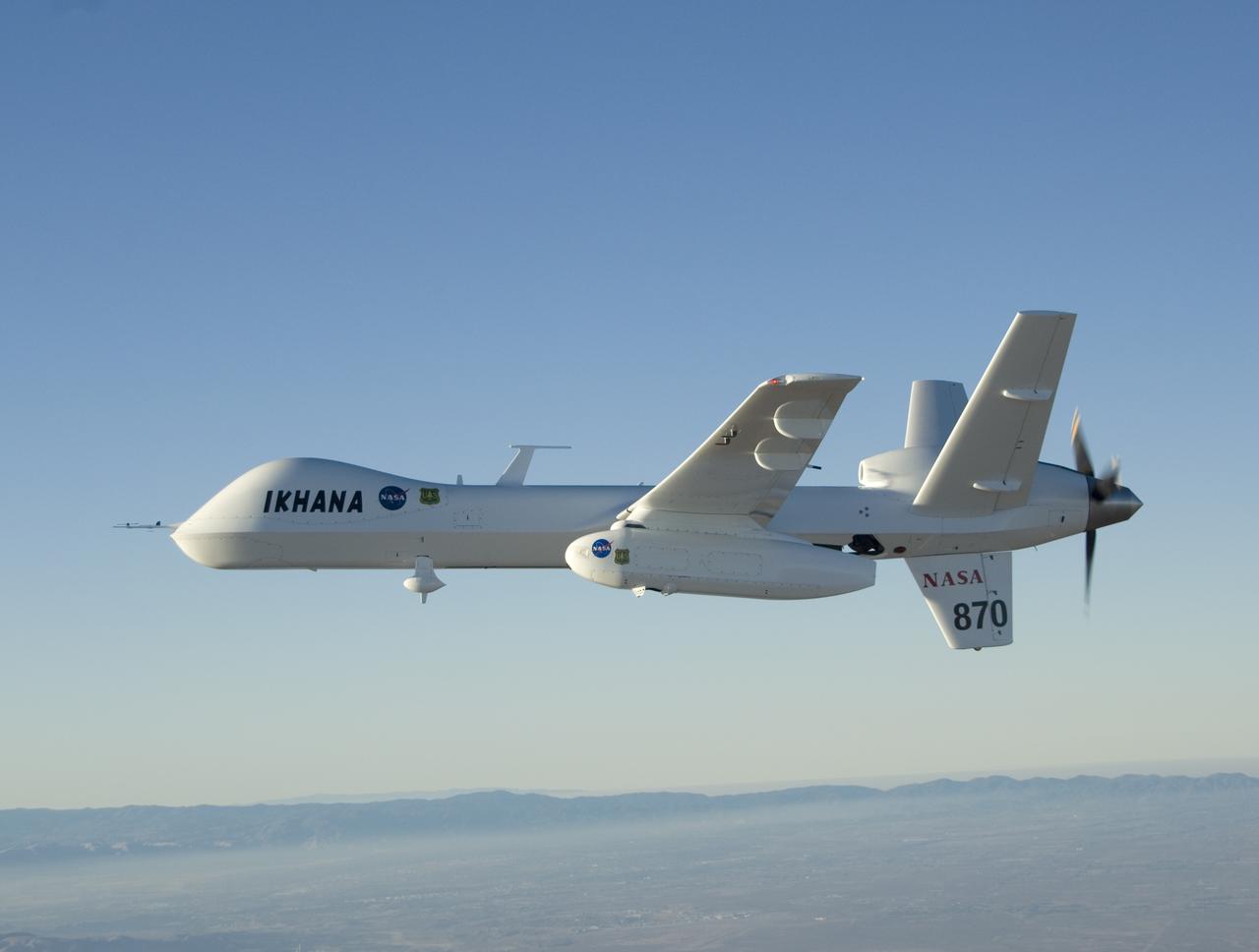
NASA's Ikhana remotely piloted aircraft soars over smoky terrain during a wildfire imaging demonstration mission in the late summer of 2007.

ISS028-E-029679 (21 Aug. 2011) --- A night time view of India-Pakistan borderlands is featured in this image photographed by an Expedition 28 crew member on the International Space Station. Clusters of yellow lights on the Indo-Gangetic Plain of northern India and northern Pakistan reveal numerous cities both large and small in this photograph. Of the hundreds of clusters, the largest are the metropolitan areas associated with the capital cities of Islamabad, Pakistan in the foreground and New Delhi, India at the top?for scale these metropolitan areas are approximately 700 kilometers apart. The lines of major highways connecting the larger cities also stand out. More subtle but still visible at night are the general outlines of the towering and partly cloud-covered Himalayan ranges immediately to the north (left). A striking feature of this photograph is the line of lights, with a distinctly more orange hue, snaking across the central part of the image. It appears to be more continuous and brighter than most highways in the view. This is the fenced and floodlit border zone between the countries of India and Pakistan. The fence is designed to discourage smuggling and arms trafficking between the two countries. A similar fenced zone separates India?s eastern border from Bangladesh (not visible). This image was taken with a 16-mm lens, which provides the wide field of view, as the space station was tracking towards the southeast across the subcontinent of India. The station crew took the image as part of a continuous series of frames, each frame taken with a one-second exposure time to maximize light collection ? unfortunately, this also causes blurring of some ground features. The distinct, bright zone above the horizon (visible at top) is produced by airglow, a phenomena caused by excitation of atoms and molecules high in the atmosphere (above 80 kilometers, or 50 miles altitude) by ultraviolet radiation from the sun. Part of the ISS Permanent Multipurpose Module, or PMM, and a solar panel array are visible at right.
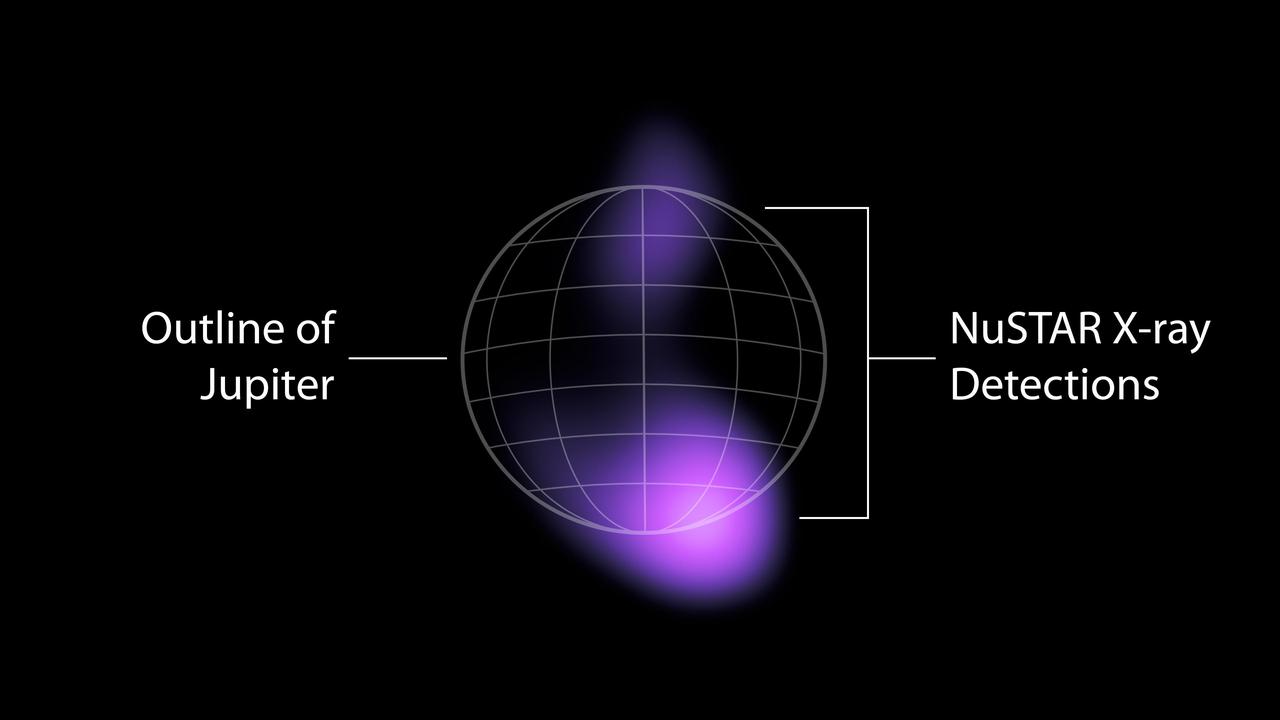
The areas where high-energy X-rays were detected by NASA's NuSTAR (Nuclear Spectroscopic Telescope Array) from the auroras near Jupiter's north and south poles are shown in purple in this graphic. The emissions are the highest-energy light ever seen at Jupiter and the highest-energy light ever detected from a planet in our solar system other than Earth. The light comes from accelerated electrons colliding with the atmosphere. NuSTAR cannot pinpoint the source of the light with high precision, but can only find that it is coming from somewhere in the purple-colored regions. X-rays are a form of light, but with much higher energies and shorter wavelengths than the visible light human eyes can see. NASA's Chandra X-ray Observatory and the ESA (European Space Agency) XMM-Newton observatory have both studied X-rays from Jupiter's auroras – produced when volcanos on Jupiter's moon Io shower the planet with ions (atoms stripped of their electrons). Jupiter's powerful magnetic field accelerates the particles and funnels them toward the planet's poles, where they collide with its atmosphere and release energy in the form of light, including X-rays. Electrons from Io are also accelerated by the planet's magnetic field, according to observations by the Jovian Auroral Distributions Experiment (JADE) and Jupiter Energetic-particle Detector Instrument (JEDI) on NASA's Juno spacecraft, which arrived at Jupiter in 2016. Researchers suspected that those electrons should produce even higher-energy X-rays than those observed by Chandra and XMM-Newton, and the NuSTAR detections confirm that hypothesis. The high-energy X-rays are relatively faint, and required a week of NuSTAR observations to detect. Scientists have detected X-rays in Earth's auroras with even higher energies than what NuSTAR saw at Jupiter, but those emissions can only be spotted by small satellites or high-altitude balloons that get extremely close to the locations in the atmosphere that generate those X-rays. https://photojournal.jpl.nasa.gov/catalog/PIA25131

Huge waves are sculpted in this two-lobed nebula called the Red Spider Nebula, located some 3,000 light-years away in the constellation of Sagittarius. This warm planetary nebula harbors one of the hottest stars known and its powerful stellar winds generate waves 100 billion kilometers (62.4 billion miles) high. The waves are caused by supersonic shocks, formed when the local gas is compressed and heated in front of the rapidly expanding lobes. The atoms caught in the shock emit the spectacular radiation seen in this image. Image credit: ESA/Garrelt Mellema (Leiden University, the Netherlands) <b><a href="http://www.nasa.gov/audience/formedia/features/MP_Photo_Guidelines.html" rel="nofollow">NASA image use policy.</a></b> <b><a href="http://www.nasa.gov/centers/goddard/home/index.html" rel="nofollow">NASA Goddard Space Flight Center</a></b> enables NASA’s mission through four scientific endeavors: Earth Science, Heliophysics, Solar System Exploration, and Astrophysics. Goddard plays a leading role in NASA’s accomplishments by contributing compelling scientific knowledge to advance the Agency’s mission. <b>Follow us on <a href="http://twitter.com/NASAGoddardPix" rel="nofollow">Twitter</a></b> <b>Like us on <a href="http://www.facebook.com/pages/Greenbelt-MD/NASA-Goddard/395013845897?ref=tsd" rel="nofollow">Facebook</a></b> <b>Find us on <a href="http://instagrid.me/nasagoddard/?vm=grid" rel="nofollow">Instagram</a></b>

NASA Spitzer Space Telescope, formerly known as the Space Infrared Telescope Facility, has captured in stunning detail the spidery filaments and newborn stars of theTarantula Nebula, a rich star-forming region also known as 30 Doradus. This cloud of glowing dust and gas is located in the Large Magellanic Cloud, the nearest galaxy to our own Milky Way, and is visible primarily from the Southern Hemisphere. This image of an interstellar cauldron provides a snapshot of the complex physical processes and chemistry that govern the birth - and death - of stars. At the heart of the nebula is a compact cluster of stars, known as R136, which contains very massive and young stars. The brightest of these blue supergiant stars are up to 100 times more massive than the Sun, and are at least 100,000 times more luminous. These stars will live fast and die young, at least by astronomical standards, exhausting their nuclear fuel in a few million years. The Spitzer Space Telescope image was obtained with an infrared array camera that is sensitive to invisible infrared light at wavelengths that are about ten times longer than visible light. In this four-color composite, emission at 3.6 microns is depicted in blue, 4.5 microns in green, 5.8 microns in orange, and 8.0 microns in red. The image covers a region that is three-quarters the size of the full moon. The Spitzer observations penetrate the dust clouds throughout the Tarantula to reveal previously hidden sites of star formation. Within the luminescent nebula, many holes are also apparent. These voids are produced by highly energetic winds originating from the massive stars in the central star cluster. The structures at the edges of these voids are particularly interesting. Dense pillars of gas and dust, sculpted by the stellar radiation, denote the birthplace of future generations of stars. The Spitzer image provides information about the composition of the material at the edges of the voids. The surface layers closest to the massive stars are subject to the most intense stellar radiation. Here, the atoms are stripped of their electrons, and the green color of these regions is indicative of the radiation from this highly excited, or 'ionized,' material. The ubiquitous red filaments seen throughout the image reveal the presence of molecular material thought to be rich in hydrocarbons. The Tarantula Nebula is the nearest example of a 'starburst' phenomenon, in which intense episodes of star formation occur on massive scales. Most starbursts, however, are associated with dusty and distant galaxies. Spitzer infrared observations of the Tarantula provide astronomers with an unprecedented view of the lifecycle of massive stars and their vital role in regulating the birth of future stellar and planetary systems. http://photojournal.jpl.nasa.gov/catalog/PIA05062

Nova Stars are essentially giant fusion reactions occurring in the vacuum of space. Because stars have so much mass, they possess powerful gravitational force—but they don’t collapse because of the outward force generated by nuclear fusion, continually converting hydrogen atoms to helium. Sometimes stars begin orbiting each other, forming a binary star system. Typically this involves a white dwarf star and a red giant. Orbiting the red giant like a moon, the dwarf star rips matter from its companion until it essentially gags on the excess, coughing hot gas and radiation into space. This dramatic phenomenon is relatively common, and the white dwarf is not destroyed in the resulting nova. To learn more about x-ray emissions, read about NASA’s Chandra mission: <a href="http://www.nasa.gov/mission_pages/chandra/main/" rel="nofollow">www.nasa.gov/mission_pages/chandra/main/</a> --- Original caption: In Hollywood blockbusters, explosions are often among the stars of the show. In space, explosions of actual stars are a focus for scientists who hope to better understand their births, lives, and deaths and how they interact with their surroundings. Using NASA’s Chandra X-ray Observatory, astronomers have studied one particular explosion that may provide clues to the dynamics of other, much larger stellar eruptions. A team of researchers pointed the telescope at GK Persei, an object that became a sensation in the astronomical world in 1901 when it suddenly appeared as one of the brightest stars in the sky for a few days, before gradually fading away in brightness. Today, astronomers cite GK Persei as an example of a “classical nova,” an outburst produced by a thermonuclear explosion on the surface of a white dwarf star, the dense remnant of a Sun-like star. Read Full Article: <a href="http://www.nasa.gov/mission_pages/chandra/mini-supernova-explosion-could-have-big-impact.html" rel="nofollow">www.nasa.gov/mission_pages/chandra/mini-supernova-explosi...</a> <b><a href="http://www.nasa.gov/audience/formedia/features/MP_Photo_Guidelines.html" rel="nofollow">NASA image use policy.</a></b> <b><a href="http://www.nasa.gov/centers/goddard/home/index.html" rel="nofollow">NASA Goddard Space Flight Center</a></b> enables NASA’s mission through four scientific endeavors: Earth Science, Heliophysics, Solar System Exploration, and Astrophysics. Goddard plays a leading role in NASA’s accomplishments by contributing compelling scientific knowledge to advance the Agency’s mission. <b>Follow us on <a href="http://twitter.com/NASAGoddardPix" rel="nofollow">Twitter</a></b> <b>Like us on <a href="http://www.facebook.com/pages/Greenbelt-MD/NASA-Goddard/395013845897?ref=tsd" rel="nofollow">Facebook</a></b> <b>Find us on <a href="http://instagrid.me/nasagoddard/?vm=grid" rel="nofollow">Instagram</a></b>
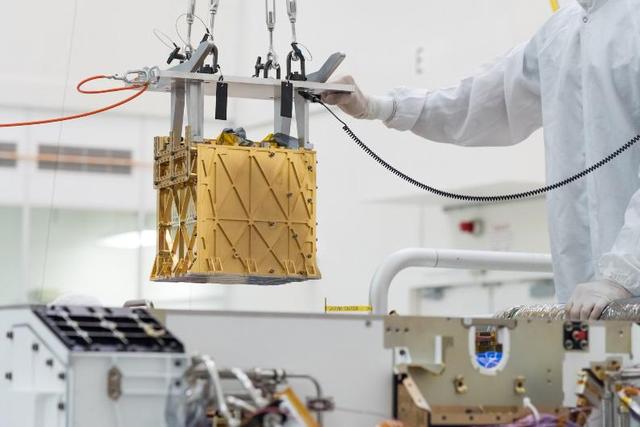
MOXIE (Mars Oxygen In-Situ Resource Utilization Experiment) was launched aboard NASA's Perseverance rover to test a technology for extracting oxygen from the Red Planet's carbon dioxide-rich atmosphere. Audio of MOXIE's air compressor at work on Mars was captured by the microphone on Perseverance's SuperCam instrument on May 27, 2021, the 96th day of the rover's mission. Since Perseverance landed on Mars in 2021, MOXIE generated a total of 122 grams of oxygen – about what a small dog breathes in 10 hours. At its most efficient, MOXIE was able to produce 12 grams of oxygen an hour – twice as much as NASA's original goals for the instrument – at 98% purity or better. On its final, 16th run, on Aug. 7, 2023, the instrument made 9.8 grams of oxygen. MOXIE successfully completed all of its technical requirements and was operated at a variety of conditions throughout a full Mars year, allowing the instrument's developers to learn a great deal about the technology. MOXIE produces molecular oxygen through an electrochemical process that separates one oxygen atom from each molecule of carbon dioxide pumped in from Mars' thin atmosphere. As these gases flow through the system, they're analyzed to check the purity and quantity of oxygen produced. While many of Perseverance's experiments are addressing primary science goals, MOXIE was focused on future human exploration. MOXIE served as the first-ever demonstration of technology that humans could use to survive on, and leave, the Red Planet. An oxygen-producing system could help future missions in various ways, but the most important of them would be as a source of rocket propellant, which would be required in industrial quantities to launch rockets with astronauts for their return trip home. Rather than bringing large quantities of oxygen with them to Mars, future astronauts could live off the land, using materials they find on the planet's surface to survive. This concept – called in-situ resource utilization, or ISRU – has evolved into a growing area of research. A key objective for Perseverance's mission on Mars is astrobiology, including the search for signs of ancient microbial life. The rover will characterize the planet's geology and past climate, pave the way for human exploration of the Red Planet, and be the first mission to collect and cache Martian rock and regolith (broken rock and dust). Subsequent NASA missions, in cooperation with ESA (European Space Agency), would send spacecraft to Mars to collect these sealed samples from the surface and return them to Earth for in-depth analysis. The Mars 2020 Perseverance mission is part of NASA's Moon to Mars exploration approach, which includes Artemis missions to the Moon that will help prepare for human exploration of the Red Planet. Audio file available at https://photojournal.jpl.nasa.gov/catalog/PIA26041
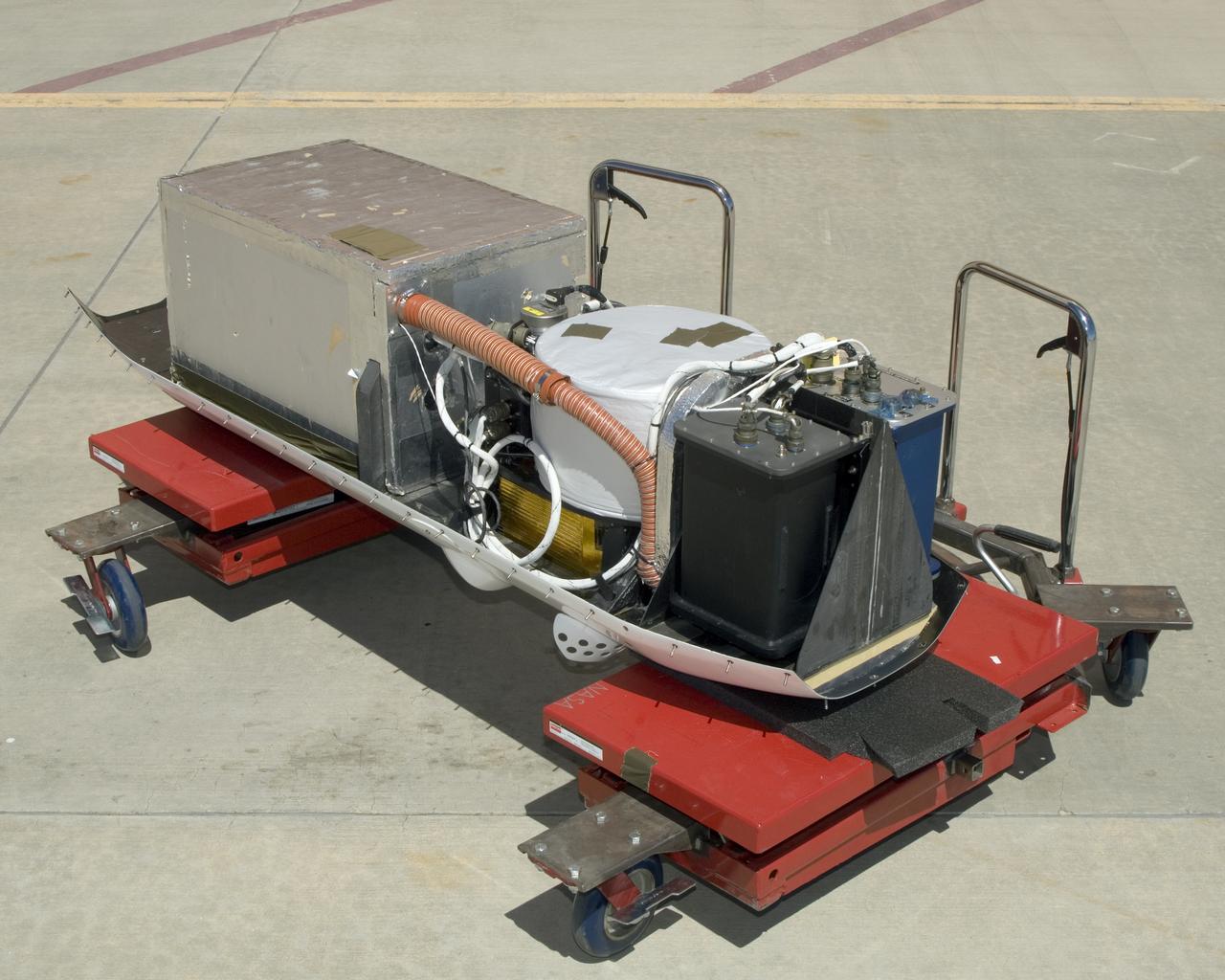
The instruments that make up the Ames Autonomous Module Scanner (AMS) that provided precise thermal-infrared imaging during the Western States Fire Mission in 2007 are detailed in this photo of the AMS as mounted on Ikhana's pod tray. The large foil-covered foam-insulated box at left covers the pressure vessel containing the data system computers and other electronics. The round white-topped assembly is the scan head, including the scan mirror, folded telescope, blackbody references, spectrometer and detectors. Two pressure boxes visible at the forward end of the tray contain the Applanix POS/AV precision navigation subsystem (black) and the power distributor including circuit breakers and ancillary wiring, scan motor controller and the blackbody reference temperature controller (blue).