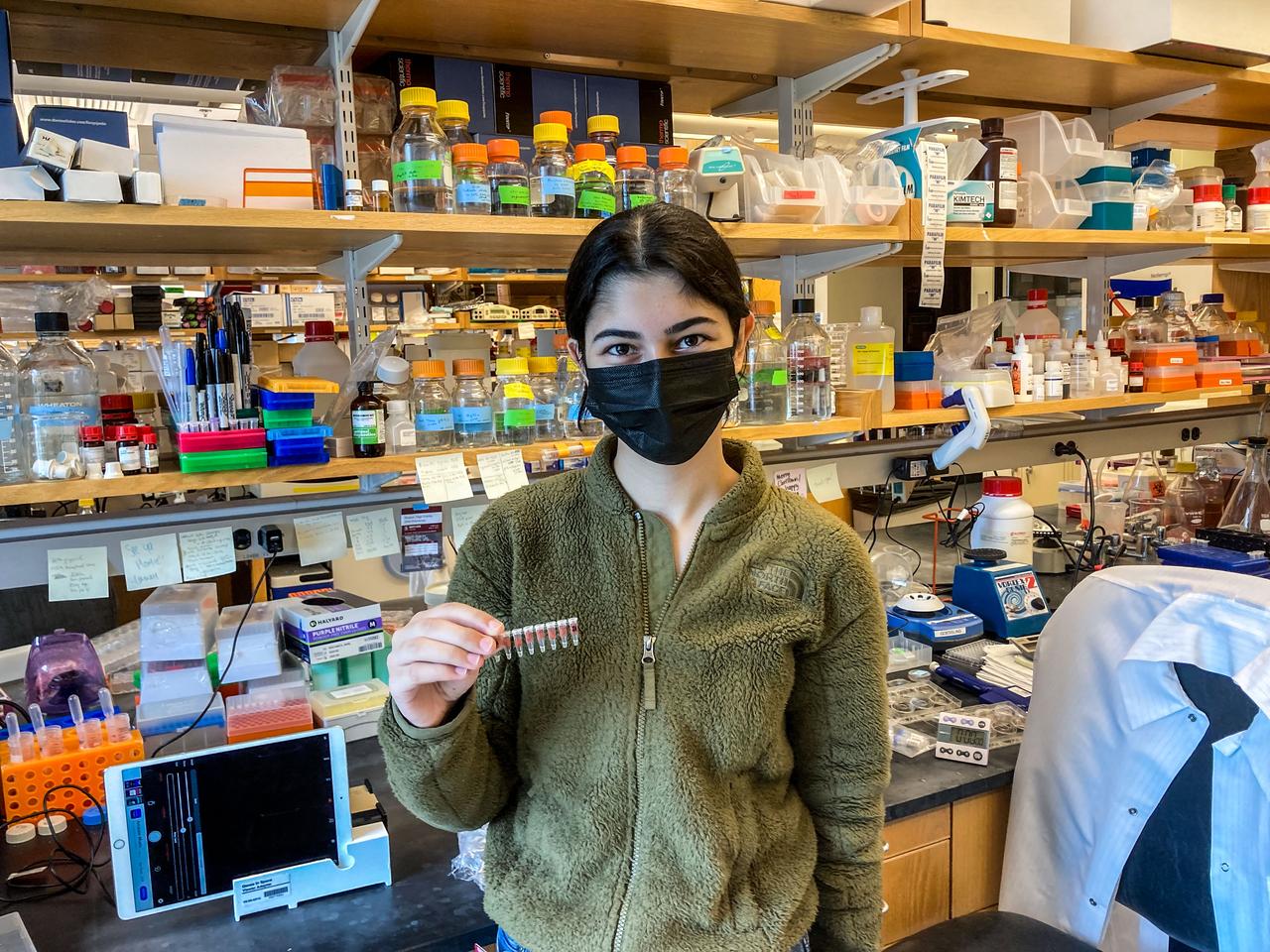
jsc2022e042476 (5/6/2022) --- Selin Kocalar, the student who designed the experiment on which Genes in Space-9 is based, prepares her samples for launch. Image courtesy of Genes in Space.
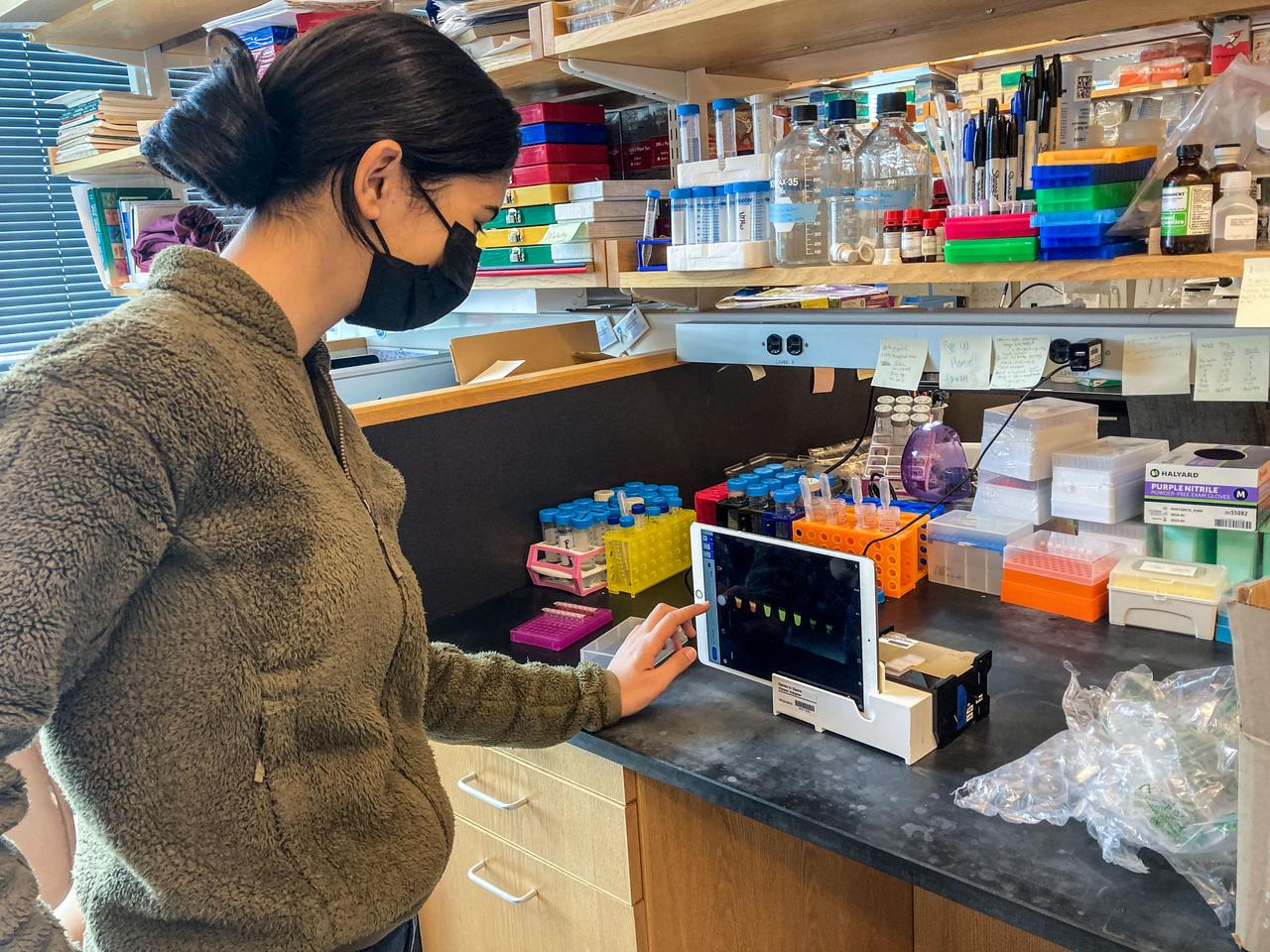
jsc2022e042475 (5/6/2022) --- Selin Kocalar, the student who designed the experiment on which Genes in Space-9 is based, checks the results of her experiment on the ground as she prepares it for launch. Image courtesy of Genes in Space.
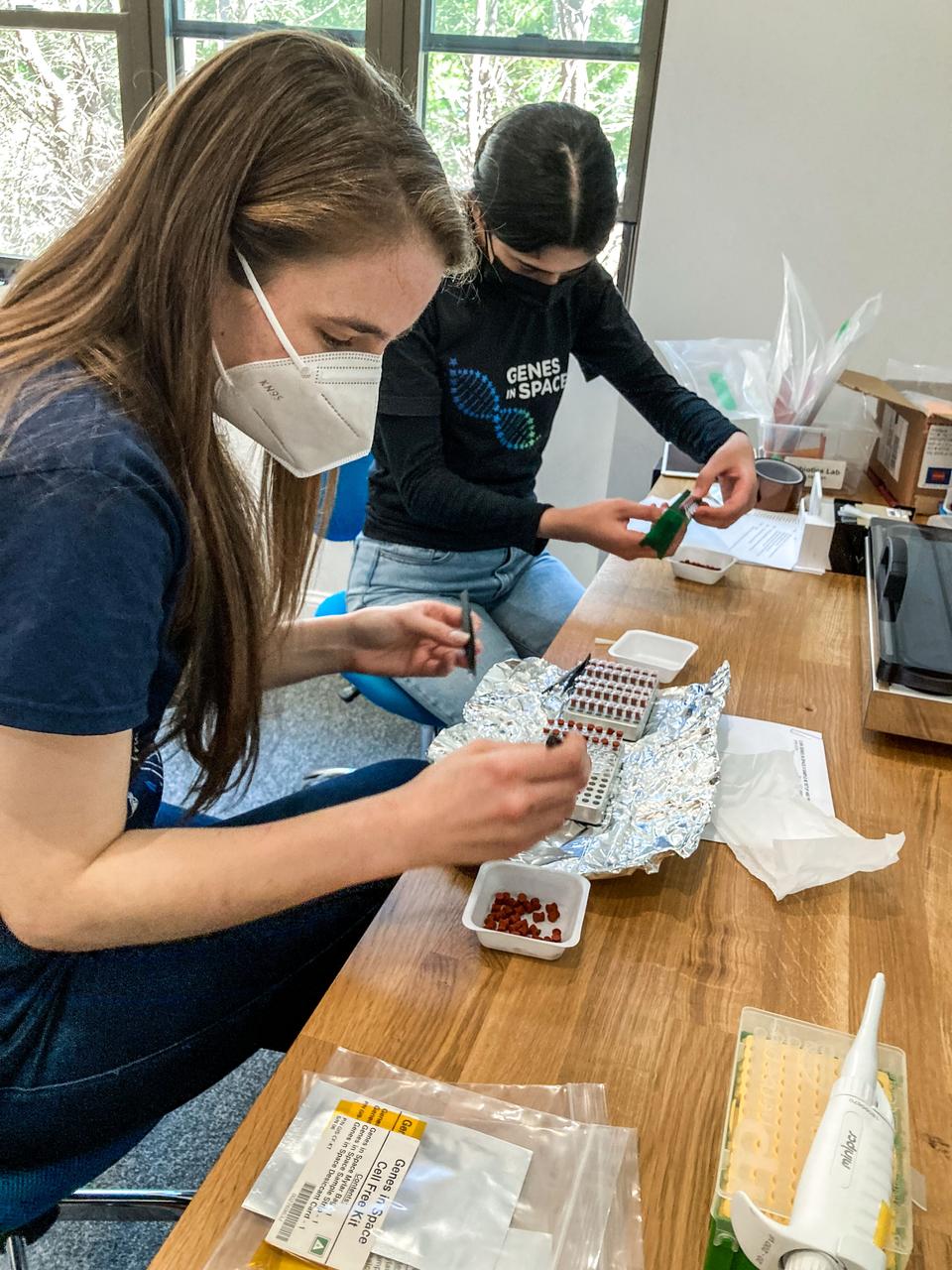
jsc2022e042477 (5/6/2022) --- Selin Kocalar, the student who designed the experiment on which Genes in Space-9 is based, readies her experimental samples for launch alongside her mentor, Bess Miller. Image courtesy of Genes in Space.
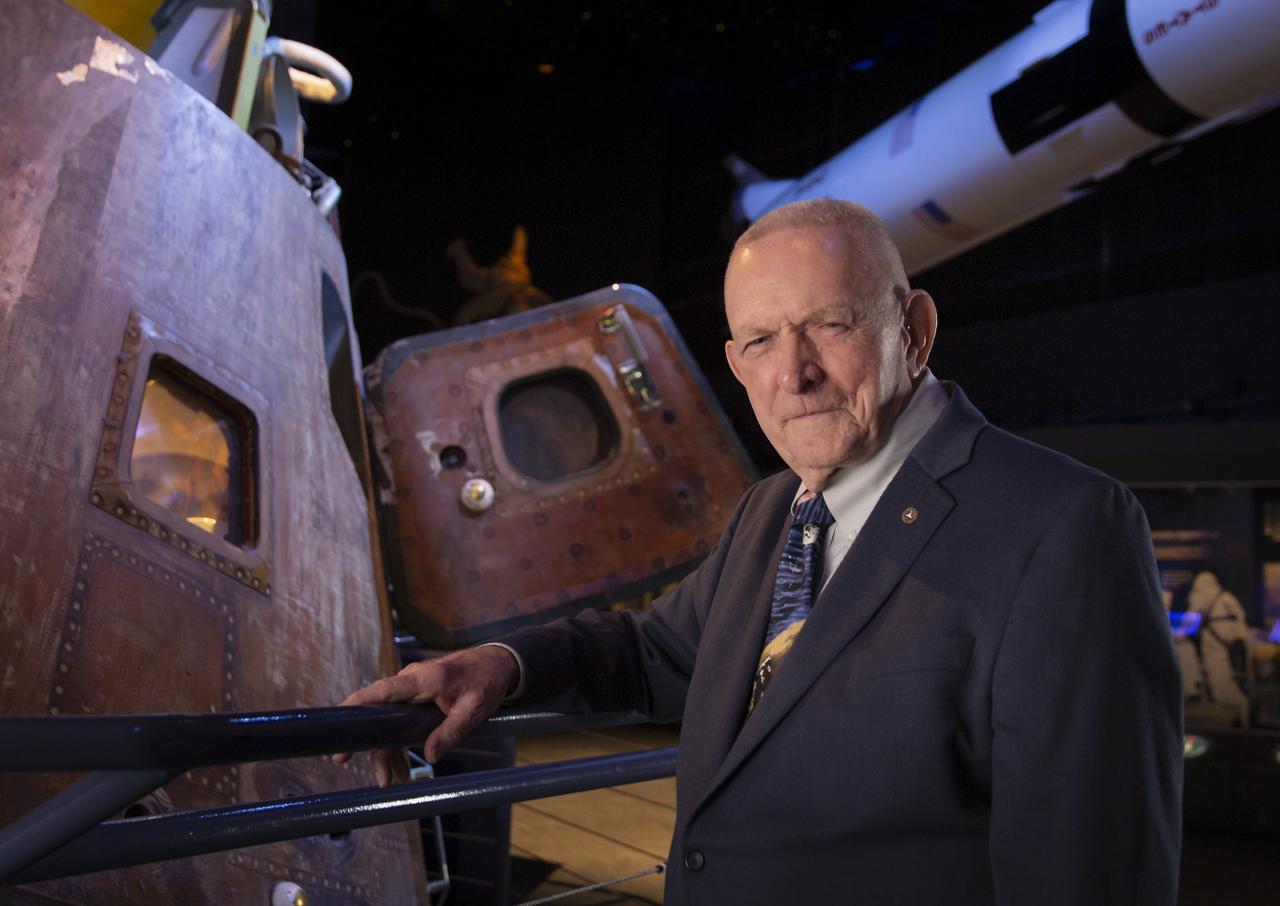
Retired NASA Flight Director and manager Gene Kranz poses for a portrait next to the Apollo 17 Command Module, Thursday, July 11, 2019 at Space Center Houston in Houston, Texas. Photo Credit: (NASA/Bill Ingalls)
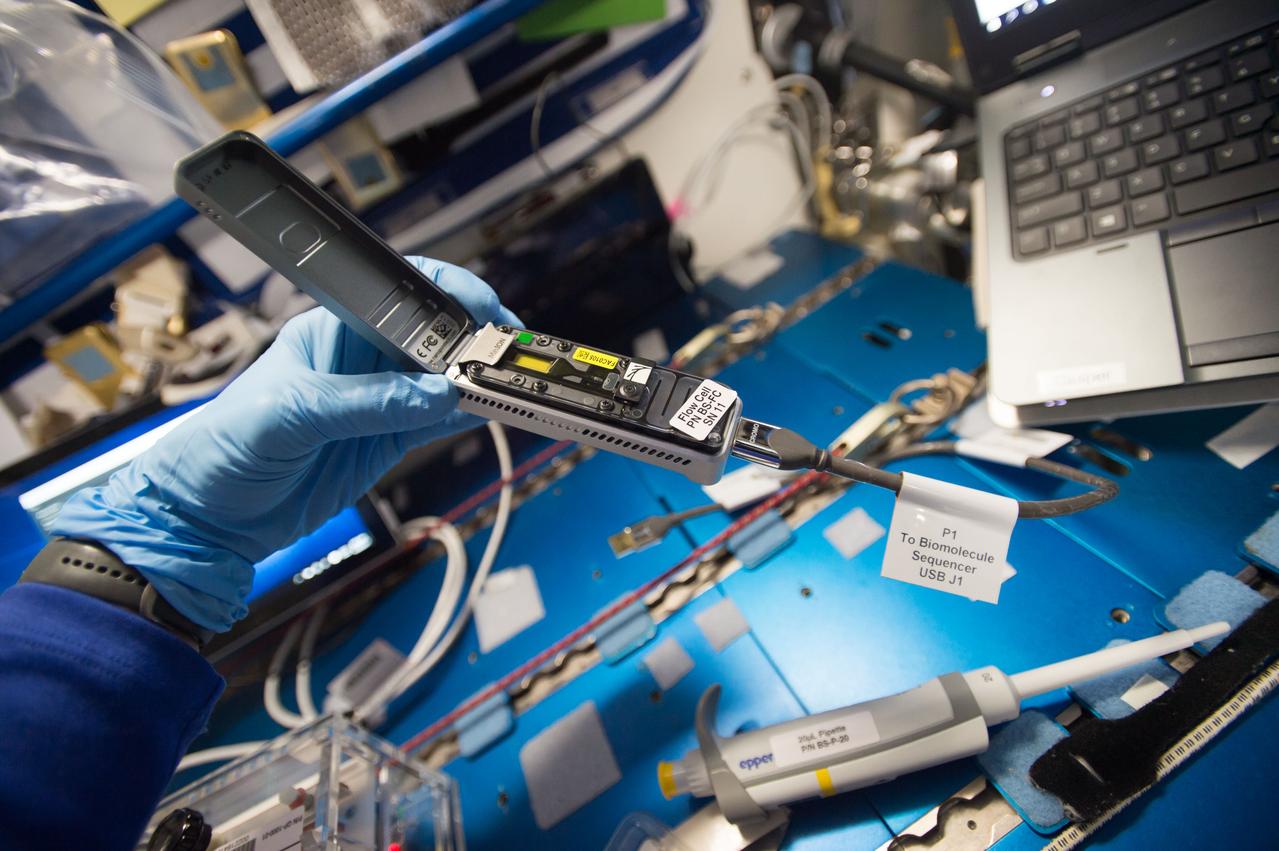
iss052e008880 (6/28/2017) --- View of Genes In Space-3 experiment in the Node 2 module. The Genes in Space-3 experiments demonstrate ways in which portable, real-time DNA sequencing can be used to assay microbial ecology, diagnose infectious diseases and monitor crew health aboard the ISS.
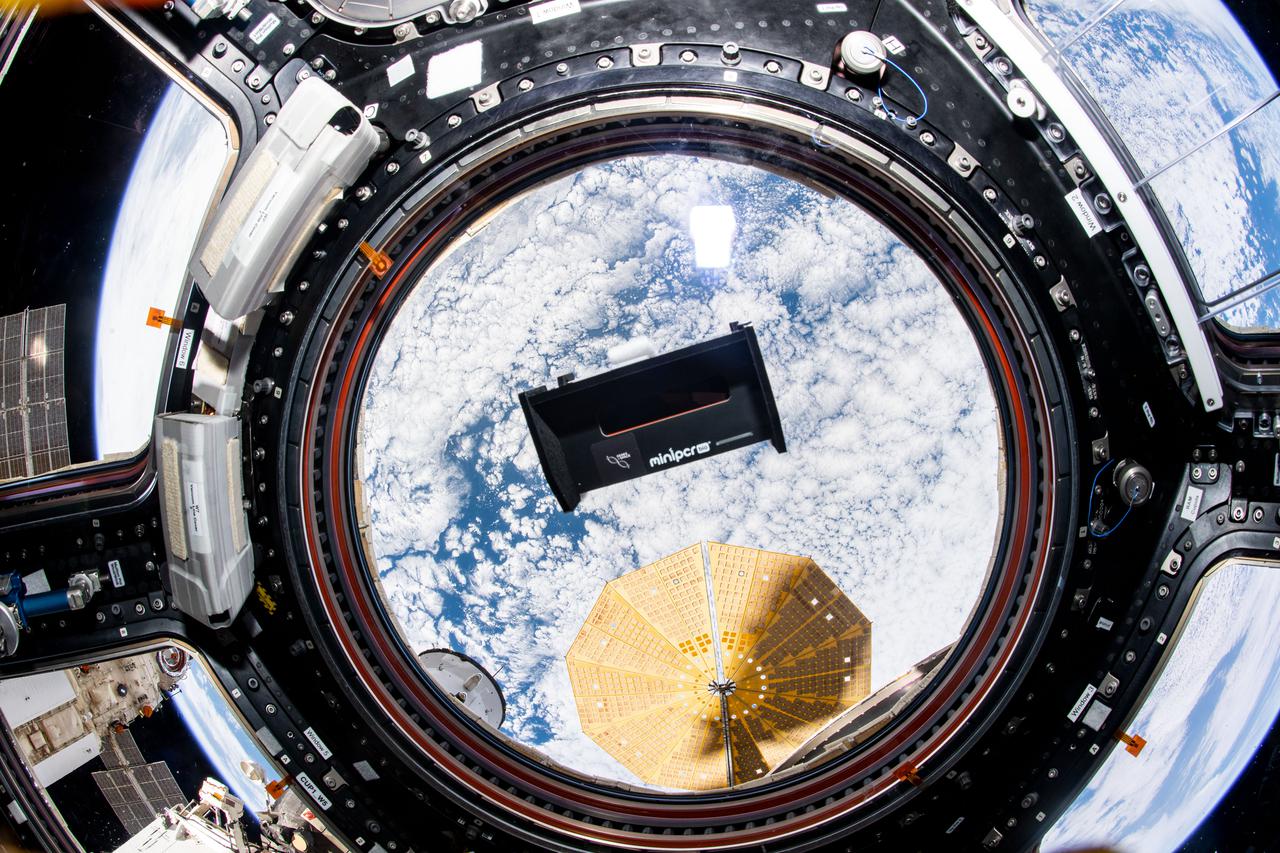
iss065e341636 (9/2/2021) --- A view of the Genes in Space 8 Fluorescence Viewer floating in front of the Cupola module window aboard the International Space Station (ISS). Genes in Space-9 evaluates low-cost and portable BioBits cell-free technology as well as two biological sensors aboard the International Space Station (ISS).
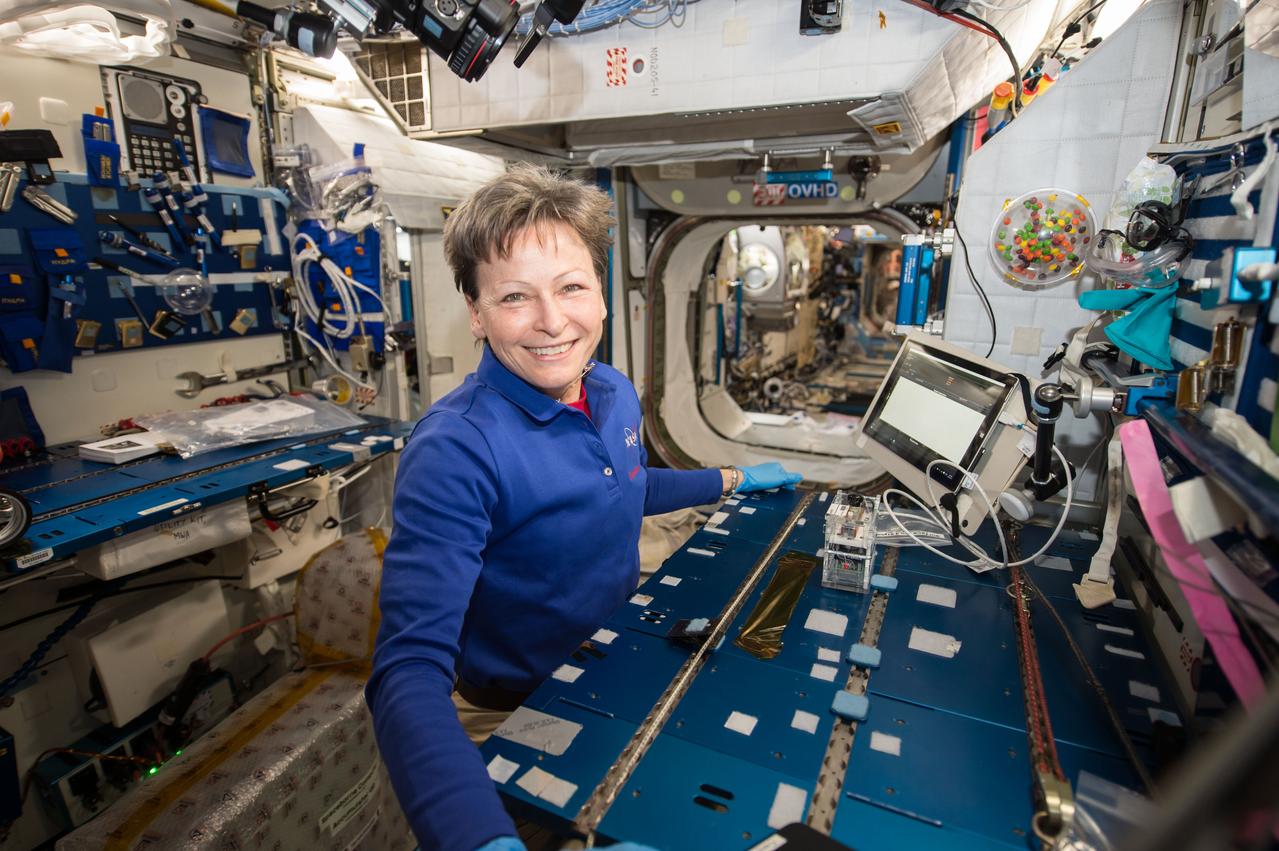
iss052e061925 (8/21/2017) --- NASA astronaut Peggy Whitson is photographed working with the Genes In Space experiment in the Node 2 module. Genes in Space is an innovation challenge including students and teachers across the United States from grades 7 through 12. Students design a pioneering DNA-related experiment to fly on the ISS, providing real-world training in science, technology, engineering and math (STEM) fields and connecting students to the space program.
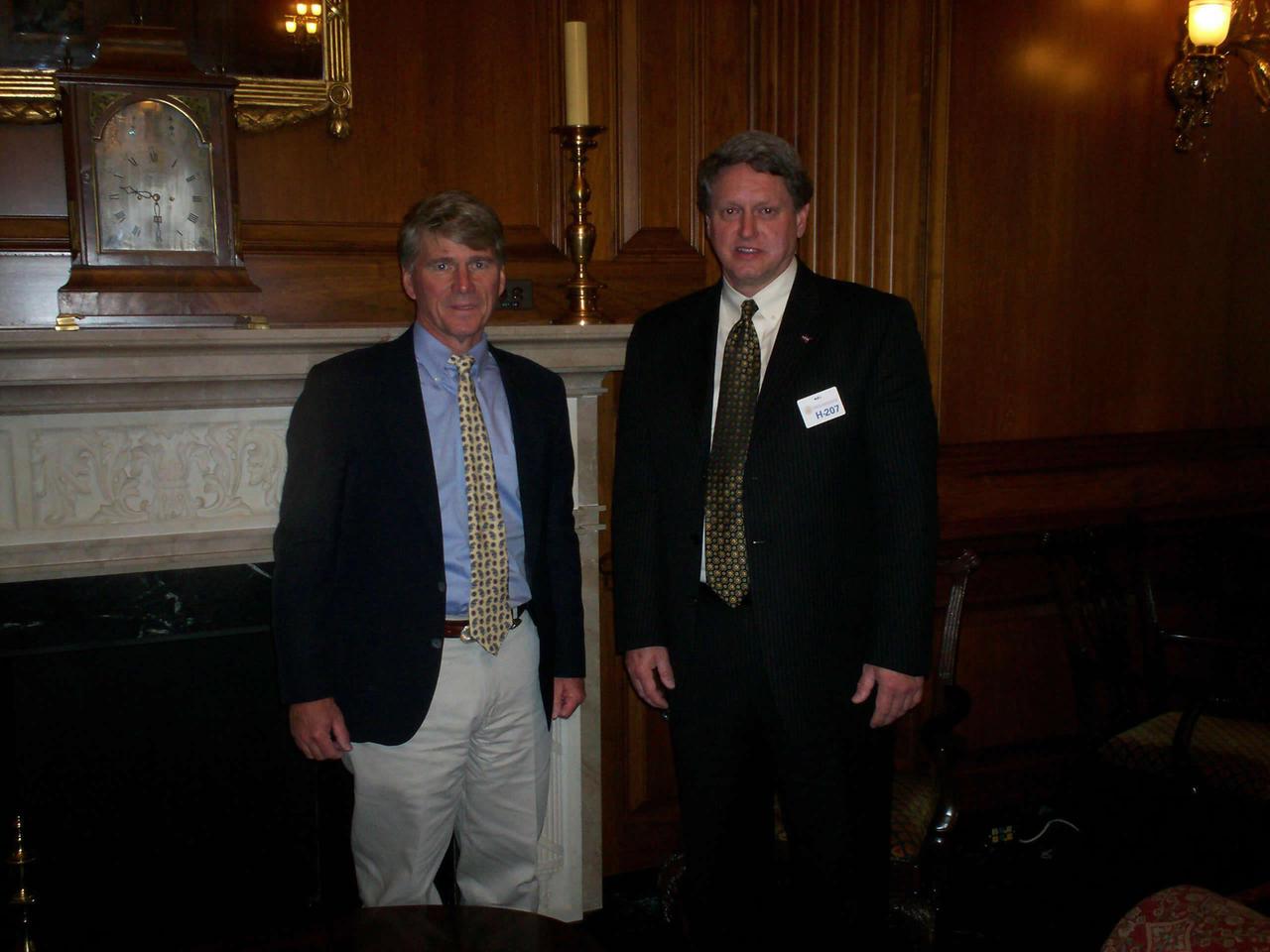
Stennis Space Center Director Gene Goldman (right) visited Washington, D.C,. last month, where he called on Louisiana and Mississippi leaders to update them on work at the rocket engine testing facility. Rep. Gene Taylor, D-Miss., was among those visited by Goldman on March 24.
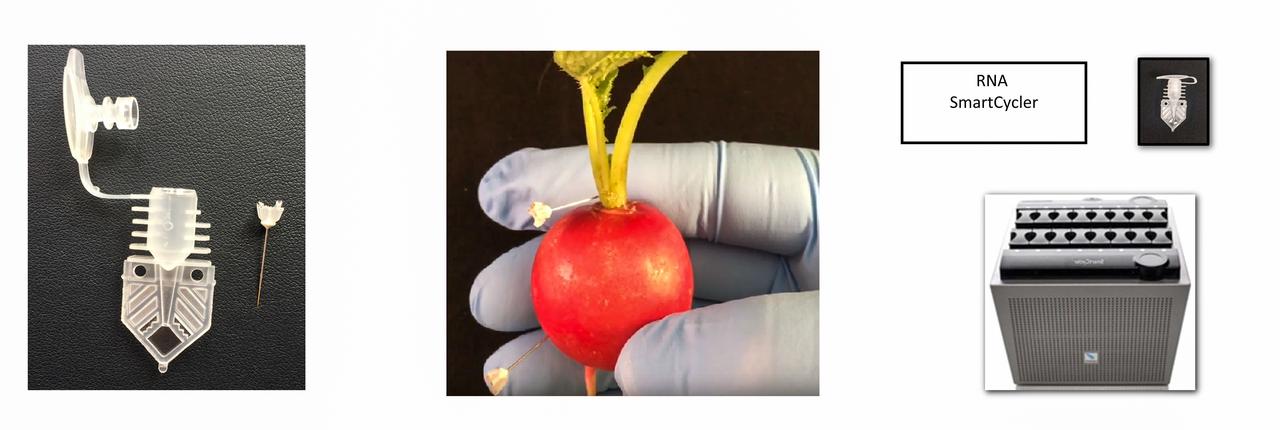
jsc2019e058183 (7/1/2019) --- Gene Sampler technology overview illustrating the direct purification and amplification of genetic material using RNA capture pins and the SmartCycler PCR instrument. Image courtesy of: Dr. Niel D. Crews
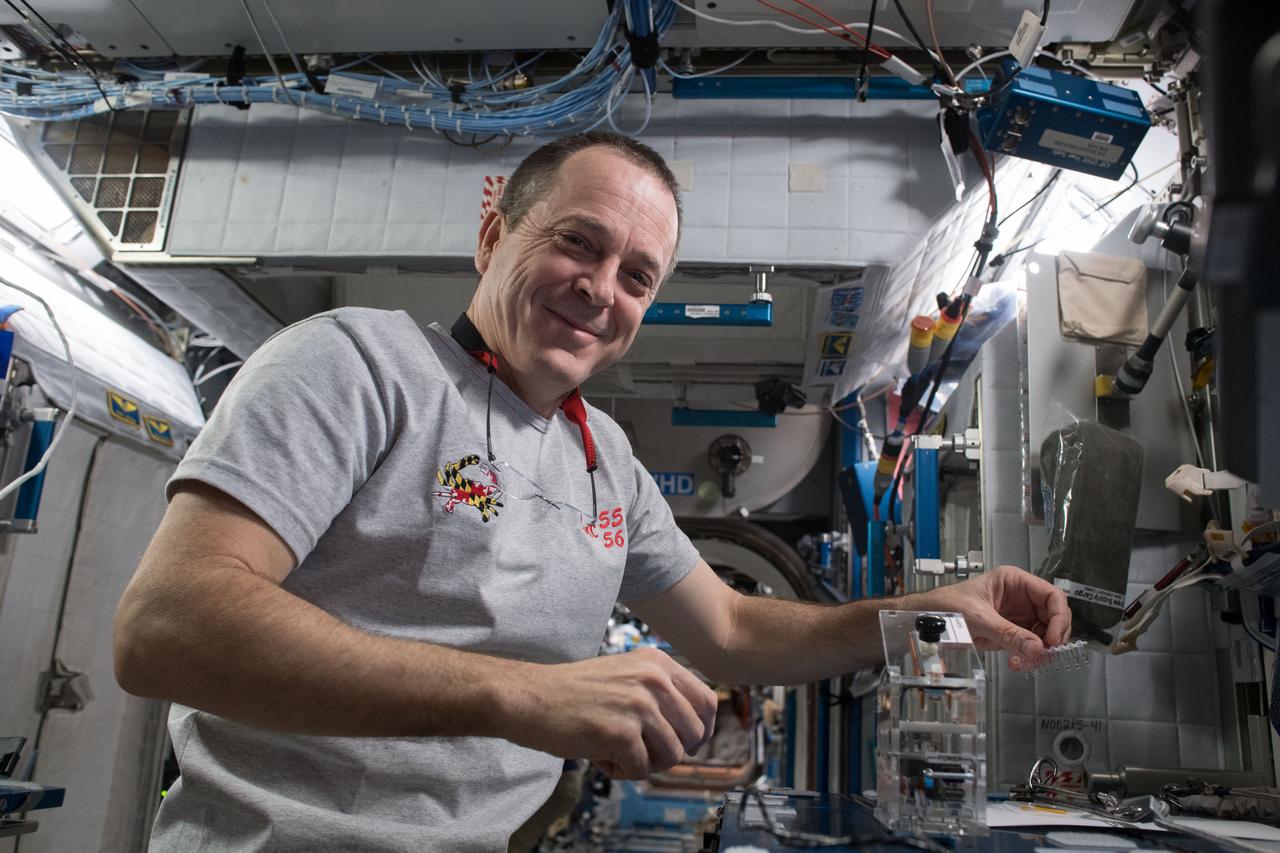
iss055e016053 (4/11/2018) --- NASA astronaut Ricky Arnold works with the student-designed Genes in Space-5 experiment inside the Harmony module. The genetic research is helping scientists understand the relationship between DNA alterations and weakened immune systems possibly caused by living in space. Genes in Space is an innovation challenge including students and teachers across the United States from grades 7 through 12. Students design a pioneering DNA-related experiment to fly on the ISS, providing real-world training in science, technology, engineering and math (STEM) fields and connecting students to the space program.
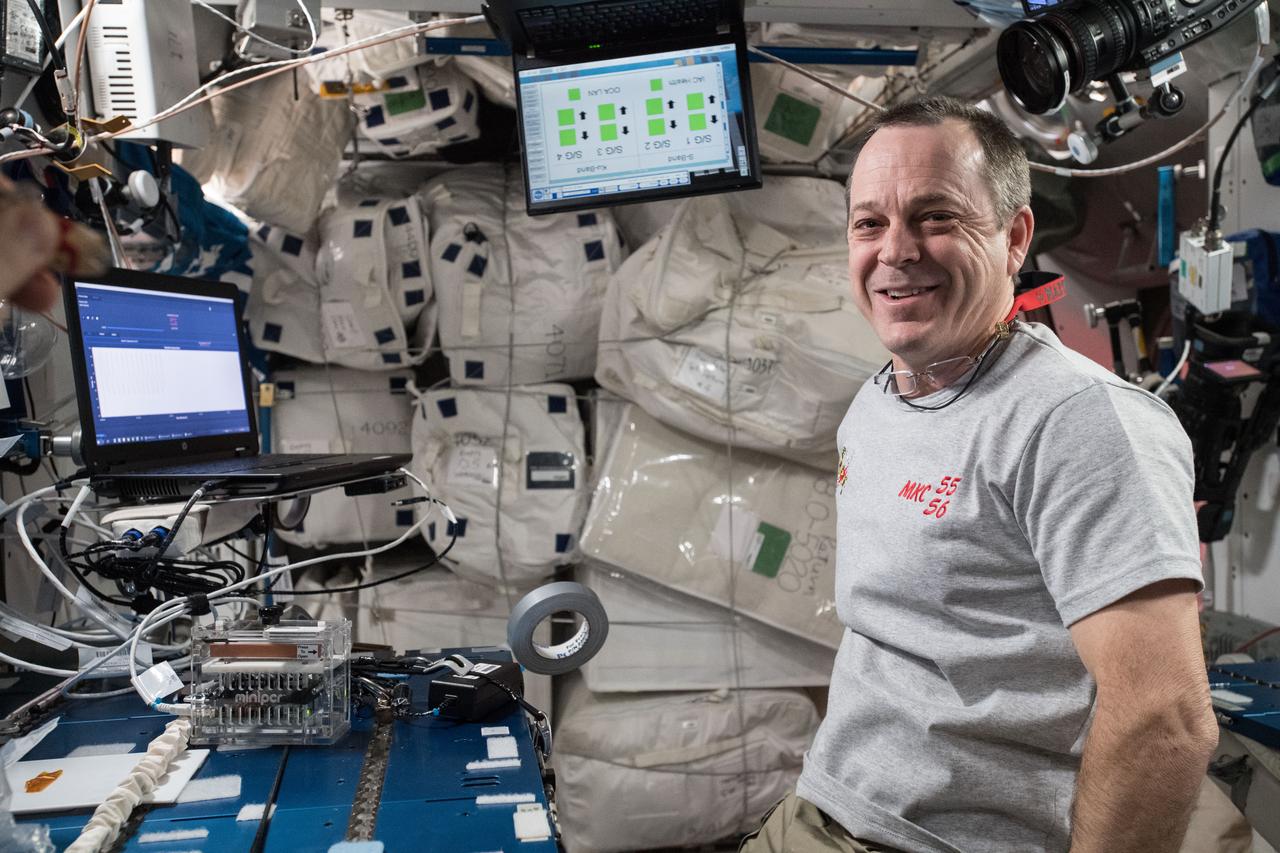
iss055e020319 (April 13, 2018) --- Flight Engineer Ricky Arnold processes of samples inside the Miniature Polymerase Chain Reaction (miniPCR) for the Genes In Space-5 experiment. The research gathered from Genes in Space-5 may be valuable in the development of procedures to maintain astronaut health and prevent an increased risk of cancer on deep space missions. The investigation also provides a deeper understanding of the human immune system, while giving student researchers a direct connection to the space program and offering hands-on educational experiences on Earth and promoting involvement in STEM fields.
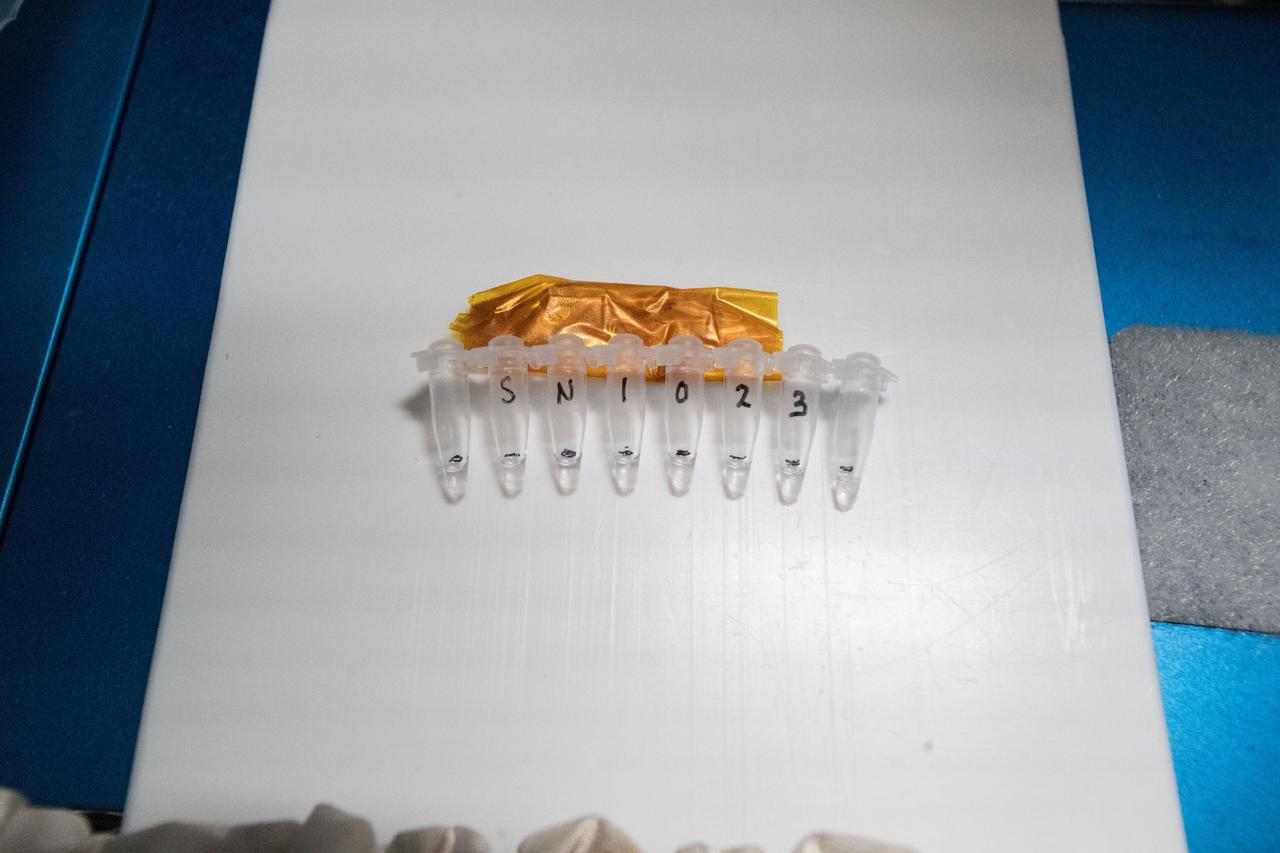
iss055e020316 (4/13/2018) --- Photographic documentation taken during processing of samples in the Miniature Polymerase Chain Reaction (miniPCR) for the Genes In Space-5 experiment onboard the International Space Station (ISS). The genetic research is helping scientists understand the relationship between DNA alterations and weakened immune systems possibly caused by living in space. Genes in Space is an innovation challenge including students and teachers across the United States from grades 7 through 12. Students design a pioneering DNA-related experiment to fly on the ISS, providing real-world training in science, technology, engineering and math (STEM) fields and connecting students to the space program.
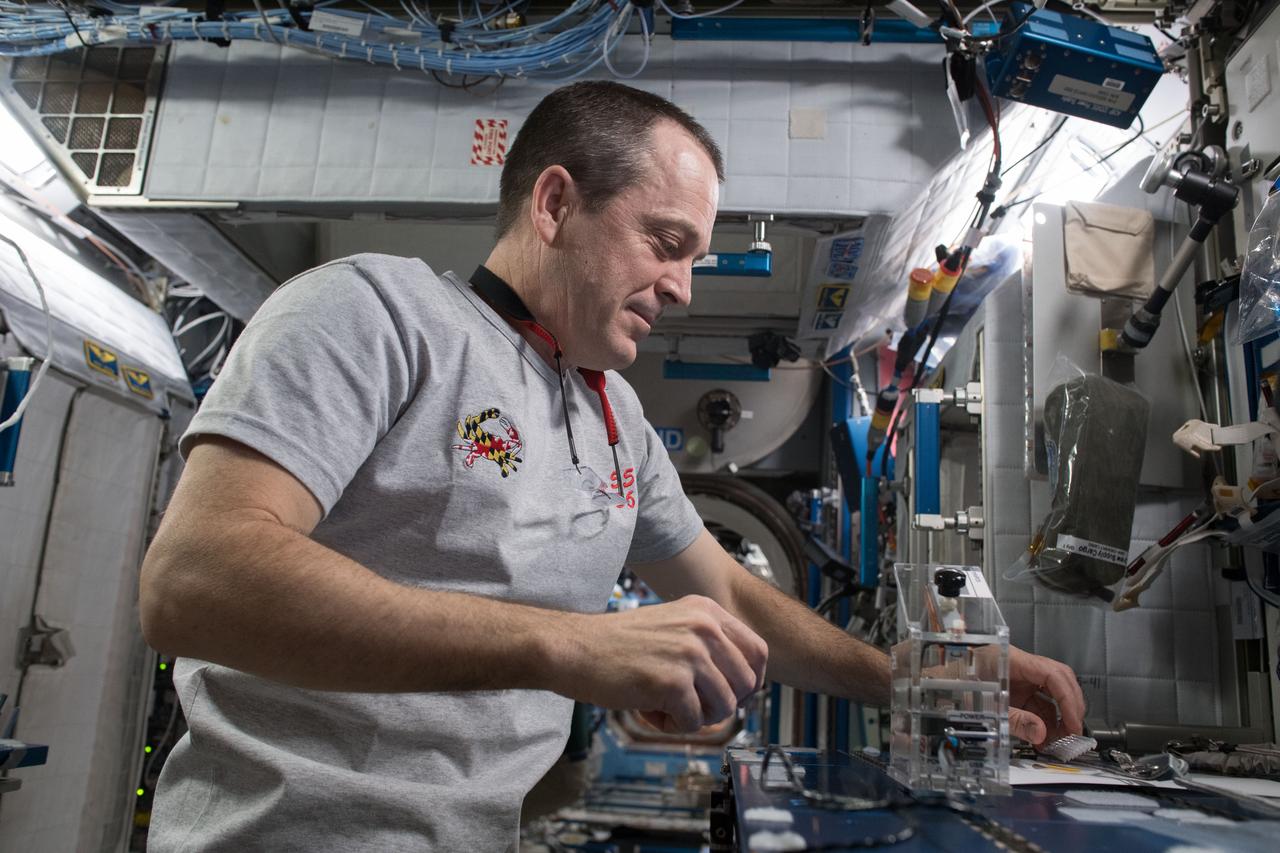
iss055e016052 (4/11/2018) --- NASA astronaut Ricky Arnold works with the student-designed Genes in Space-5 experiment inside the Harmony module. The genetic research is helping scientists understand the relationship between DNA alterations and weakened immune systems possibly caused by living in space. Genes in Space is an innovation challenge including students and teachers across the United States from grades 7 through 12. Students design a pioneering DNA-related experiment to fly on the ISS, providing real-world training in science, technology, engineering and math (STEM) fields and connecting students to the space program.
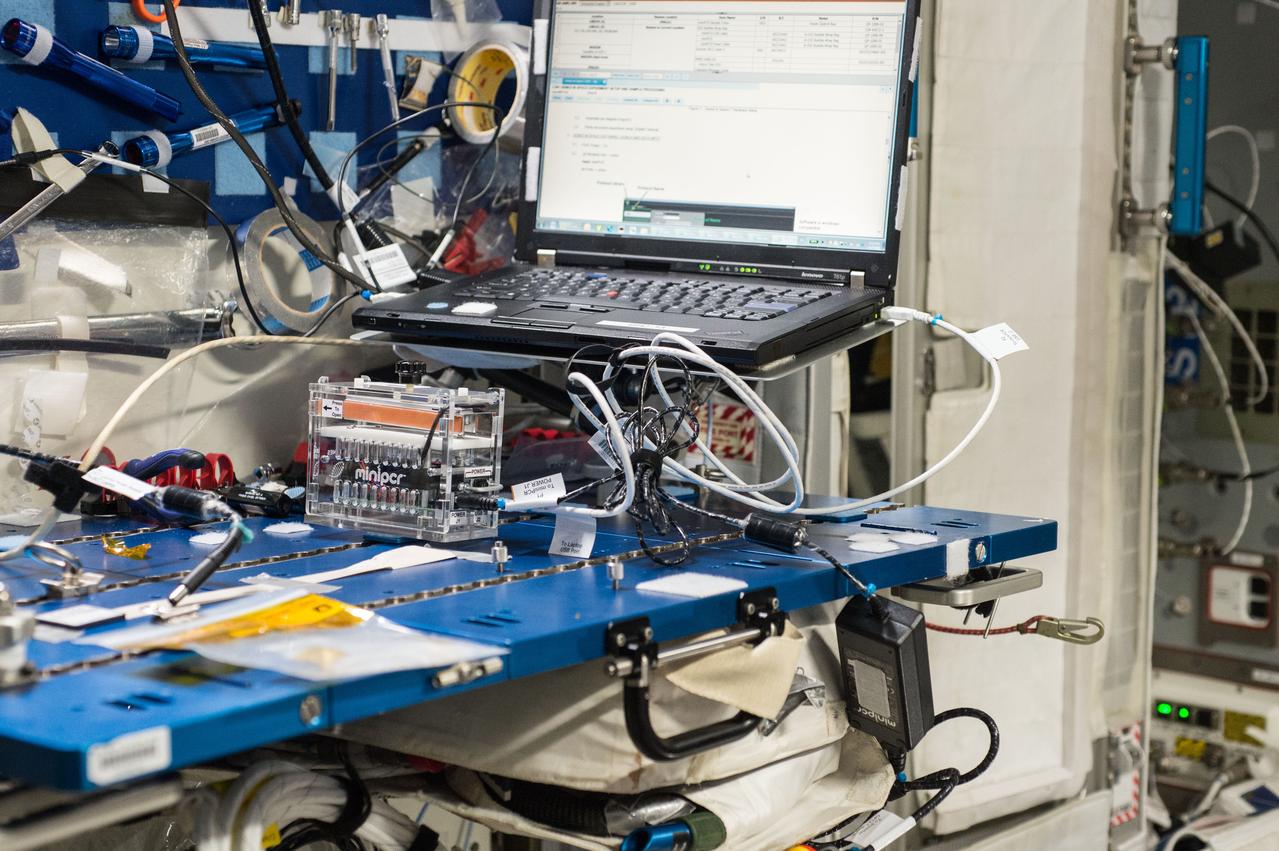
iss047e083547 (4/27/2016) --- Photographic documentation during the Genes in Space experiment showing the polymerase chain reaction (PCR) and miniPCR system as a way to amplify deoxyribonucleic acid (DNA) in space and make it possible to measure and monitor telomere changes during spaceflight. Genes in Space is an innovation challenge including students and teachers across the United States from grades 7 through 12. Students design a pioneering DNA-related experiment to fly on the ISS, providing real-world training in science, technology, engineering and math (STEM) fields and connecting students to the space program.
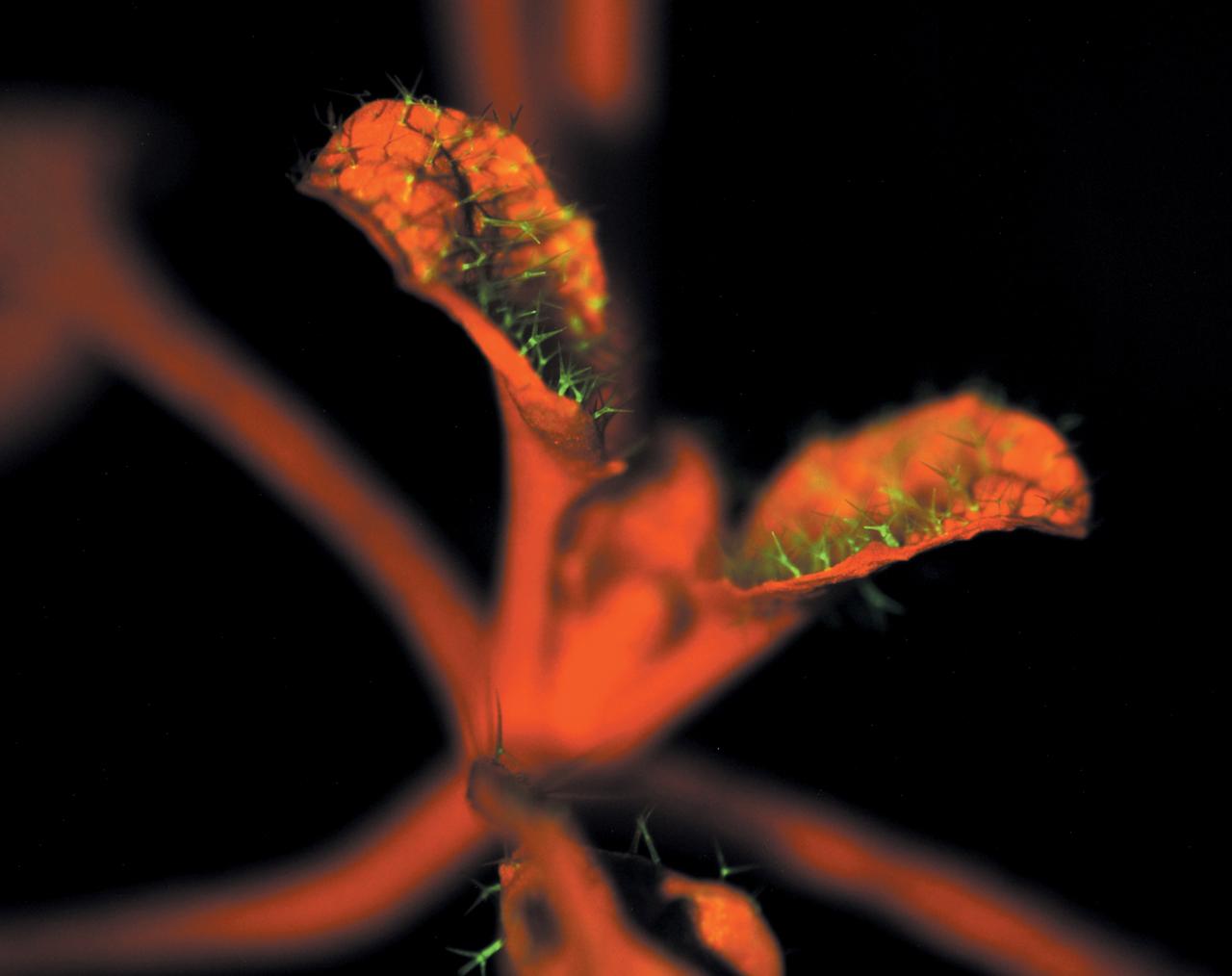
Researchers in Robert Ferl’s lab at the University of Florida in Gainesville, genetically altered this Arabdopsis Thaliana (a brassica species) plant to learn how extreme environments, such as the low atmospheric pressure on Mars, affect plant genes. They inserted green fluorescent protein (GFP) near the on/off switches for anoxia and drought genes. When those genes were turned on after exposure to reduced atmospheric pressure, GFP was turned on as well, causing cells expressing those genes to glow green under a blue light. The natural fluorescence of chlorophyll accounts for the red glow.
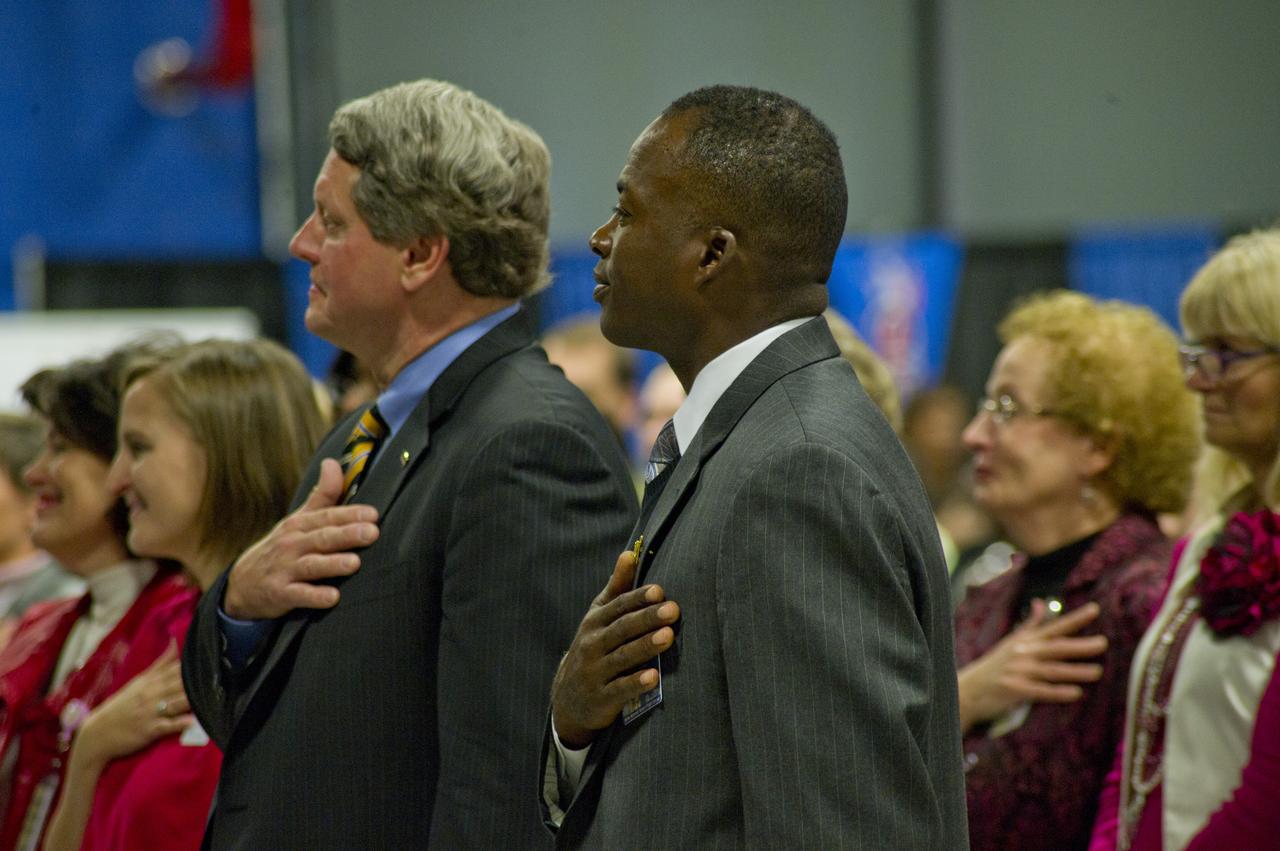
MSFC DEPUTY DIRECTOR GENE GOLDMAN AND SIRAN STACY, KEYNOTE SPEAKER FOR CFC "THANKS FOR GIVING" PROGRAM, WITH HANDS ON HEART DURING SINGING OF NATIONAL ANTHEM
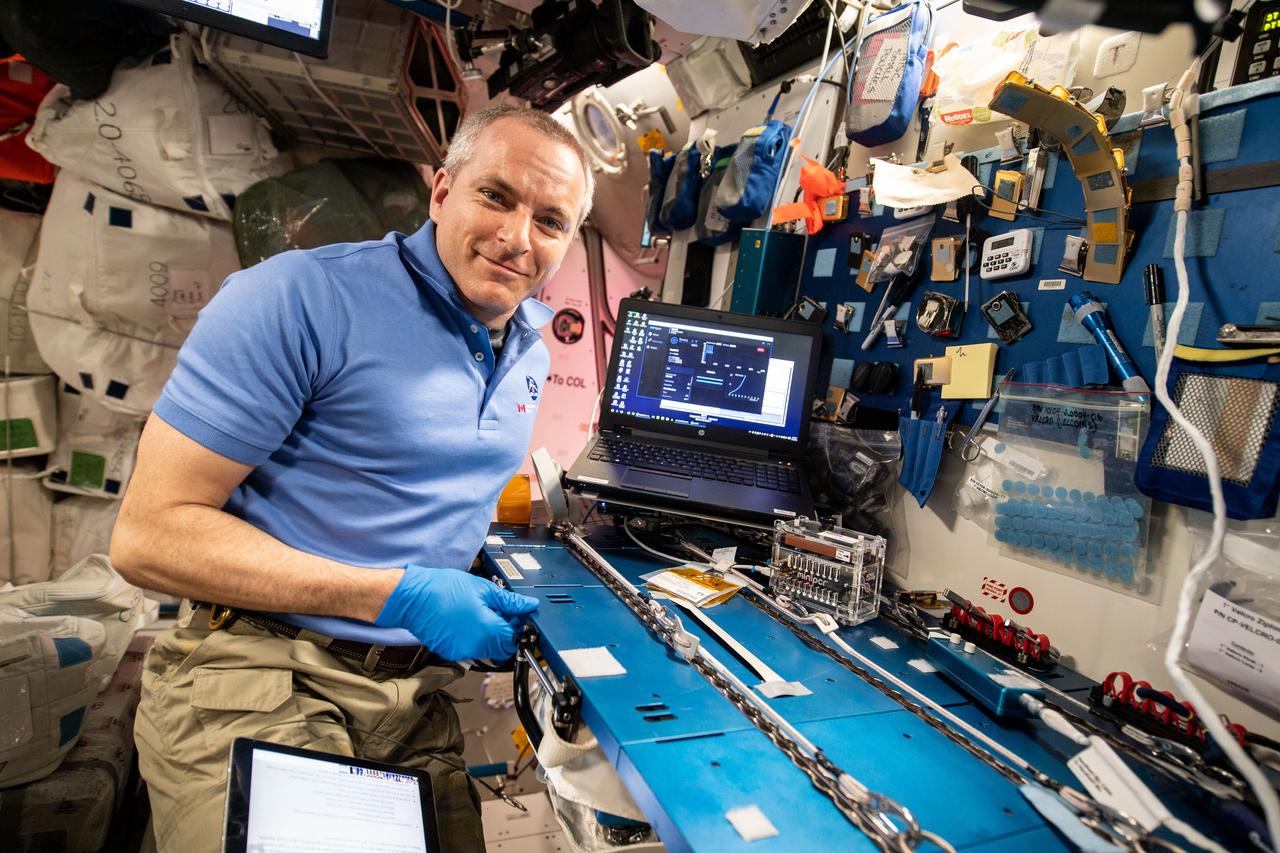
iss059e061607 (5/14/2019) --- Canadian Space Agency (CSA) astronaut David Saint-Jacques works with the miniPCR hardware inside the Columbus laboratory module onboard the International Space Station (ISS) for the Genes In Space-6 experiment that is exploring how space radiation damages DNA and how the cell repair mechanism works in microgravity.
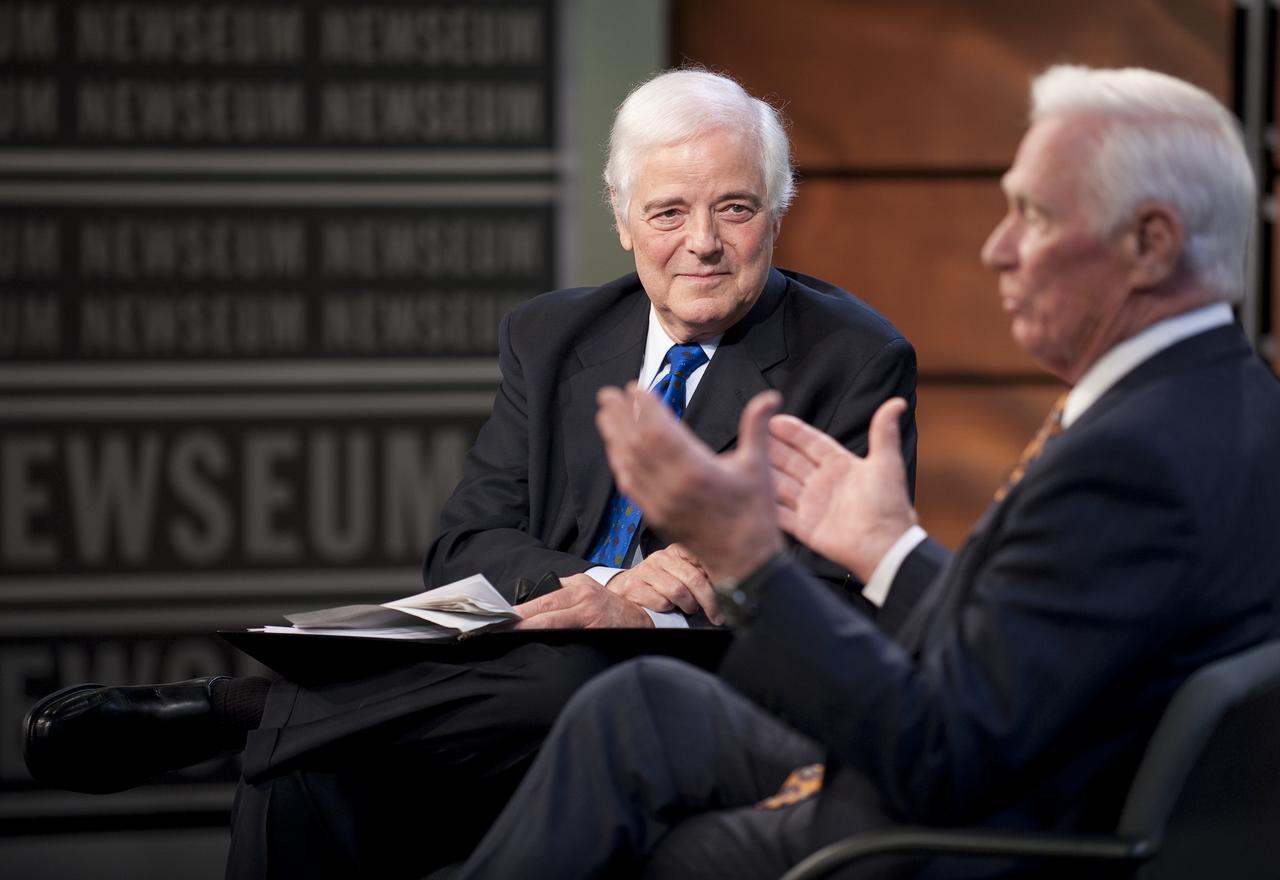
NASA Apollo 10 Astronaut Gene Cernan, right, answers questions from the Newseum's distinguished journalist-in-residence, Nick Clooney during a Newseum TV program celebrating the 40th anniversary of Apollo 10, Monday, May 18, 2009, in Washington. Photo Credit (NASA/Bill Ingalls)

NASA Apollo 10 Astronaut Gene Cernan, right, answers questions from the Newseum's distinguished journalist-in-residence, Nick Clooney during a Newseum TV program celebrating the 40th anniversary of Apollo 10, Monday, May 18, 2009, in Washington. Photo Credit (NASA/Bill Ingalls)
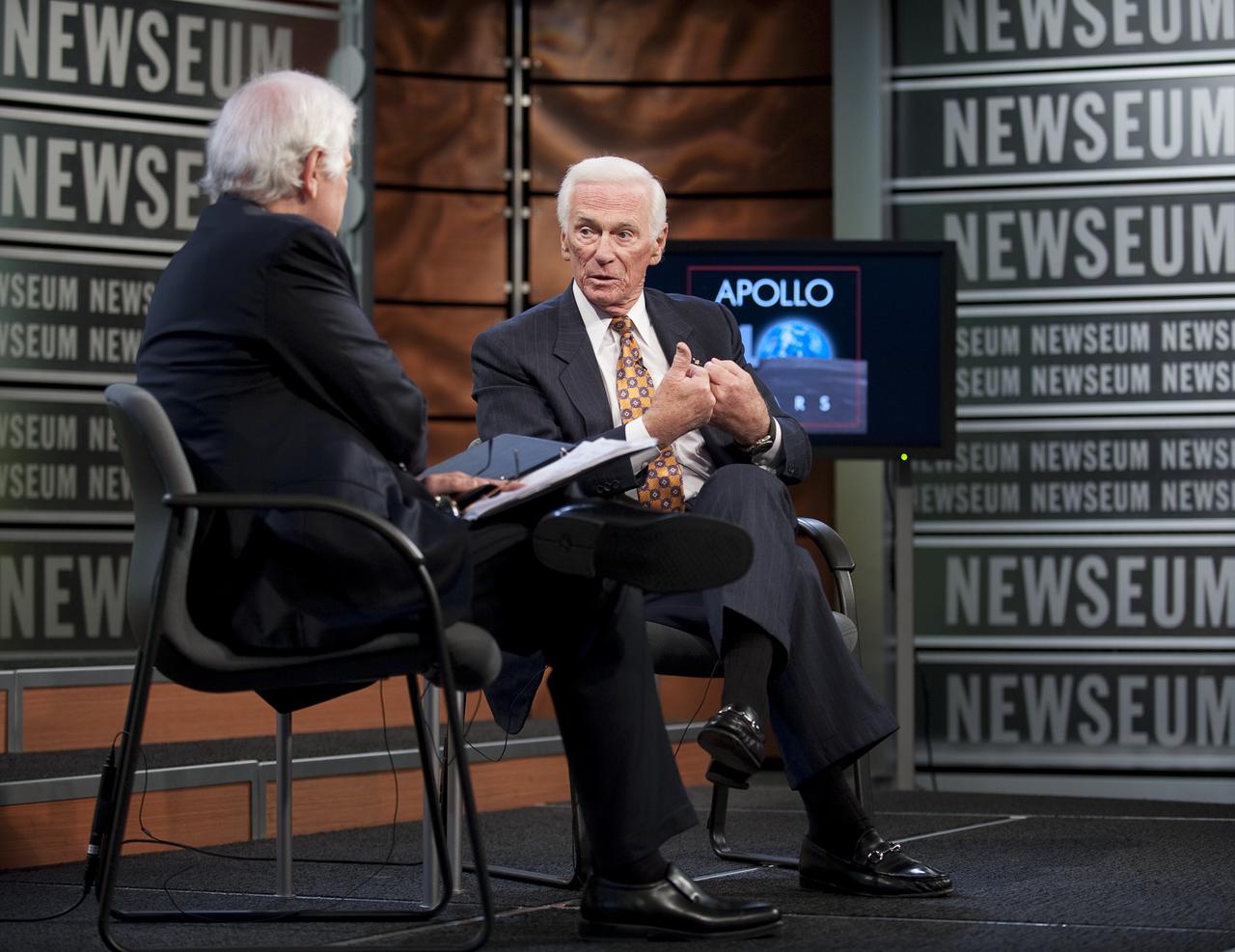
NASA Apollo 10 Astronaut Gene Cernan, right, answers questions from the Newseum's distinguished journalist-in-residence, Nick Clooney during a Newseum TV program celebrating the 40th anniversary of Apollo 10, Monday, May 18, 2009, in Washington. Photo Credit (NASA/Bill Ingalls)
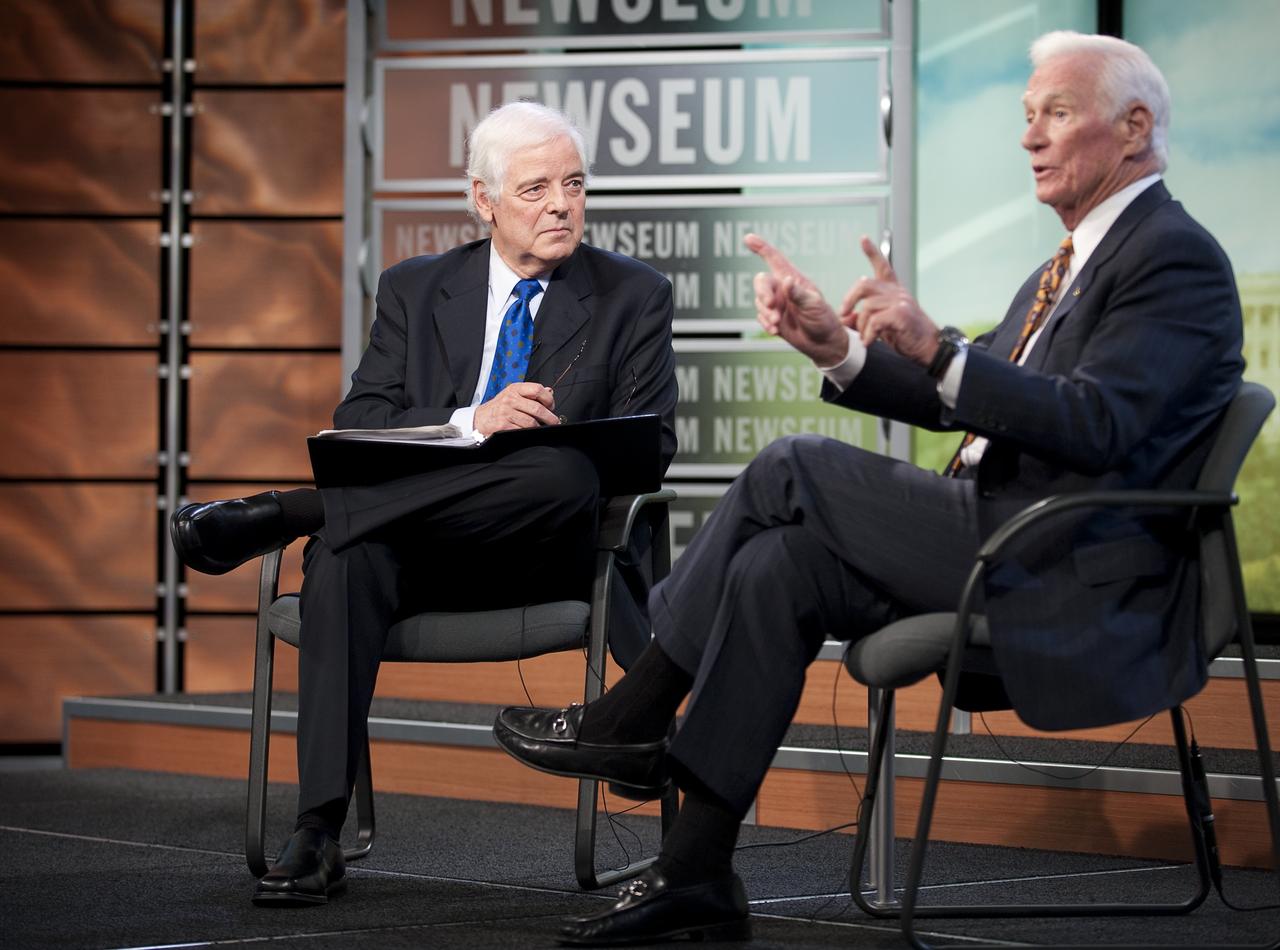
NASA Apollo 10 Astronaut Gene Cernan, right, answers questions from the Newseum's distinguished journalist-in-residence, Nick Clooney during a Newseum TV program celebrating the 40th anniversary of Apollo 10, Monday, May 18, 2009, in Washington. Photo Credit (NASA/Bill Ingalls)
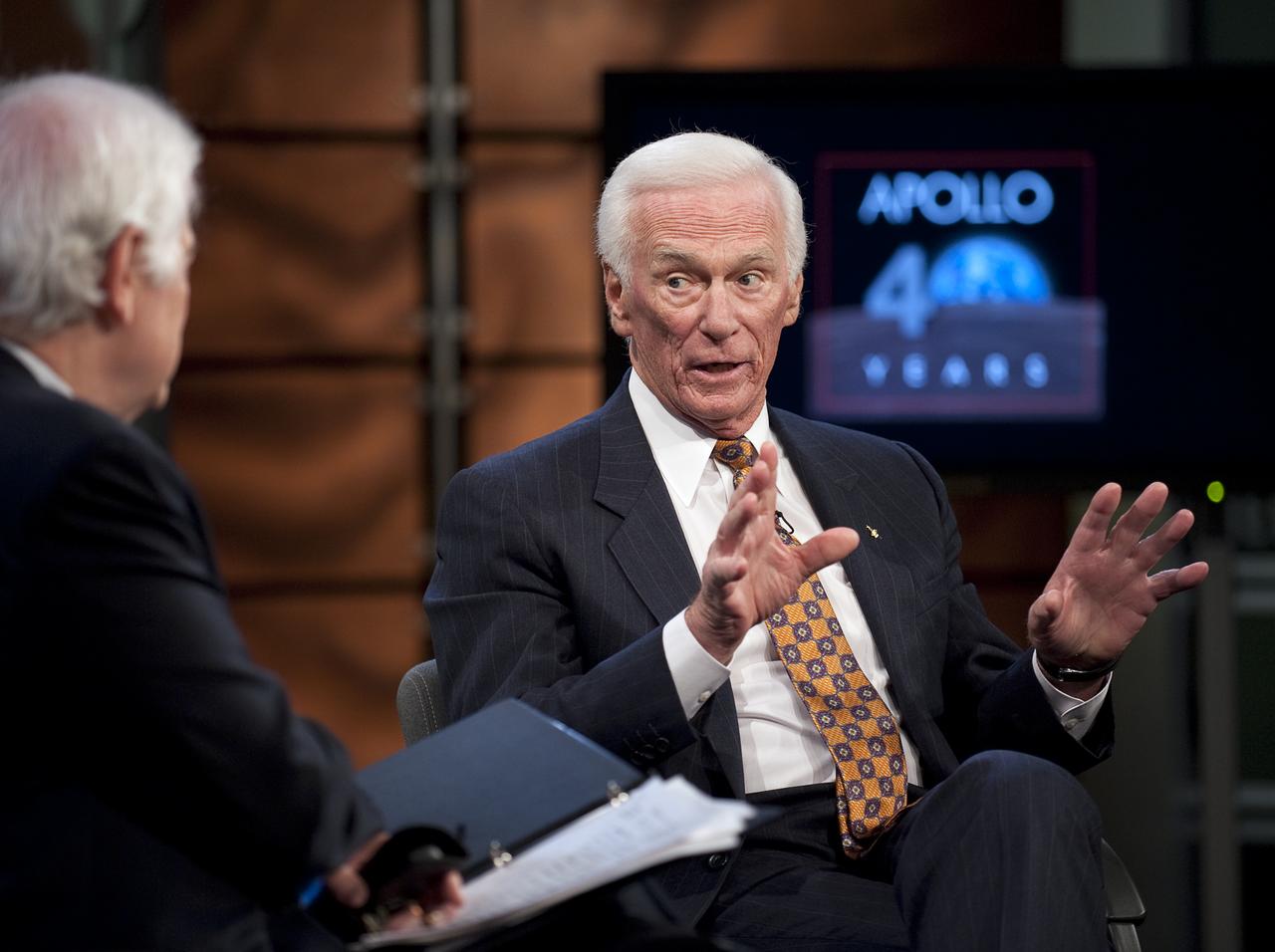
NASA Apollo 10 Astronaut Gene Cernan, right, answers questions from the Newseum's distinguished journalist-in-residence, Nick Clooney during a Newseum TV program celebrating the 40th anniversary of Apollo 10, Monday, May 18, 2009, in Washington. Photo Credit (NASA/Bill Ingalls)
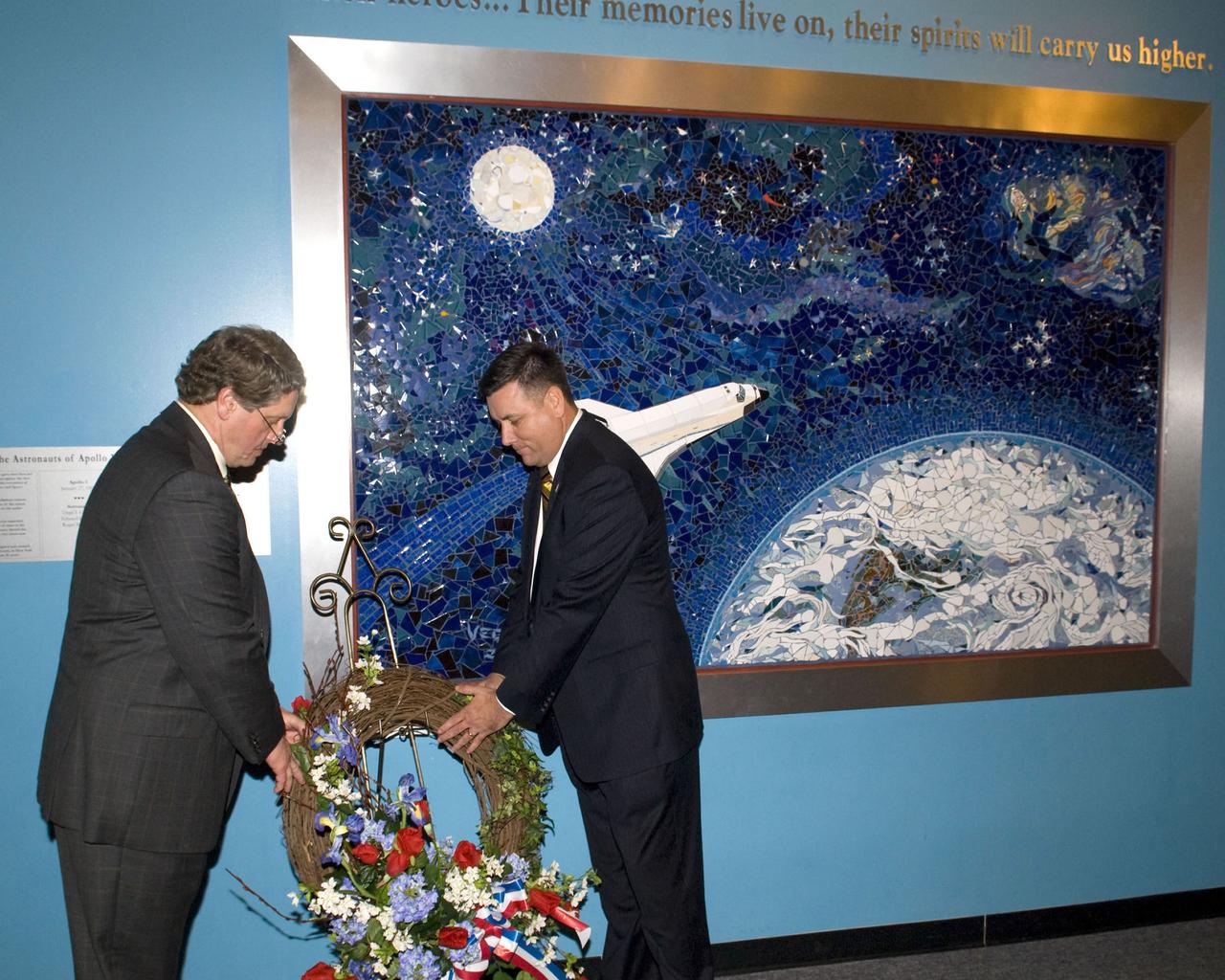
Stennis Space Center Director Gene Goldman (left) and Deputy Director Patrick Scheuermann place a wreath in StenniSphere in memory of the 17 astronauts lost in service of the space program since 1967. The wreath was placed during NASA's 2009 Day of Remembrance, observed each year on the last Thursday of January.
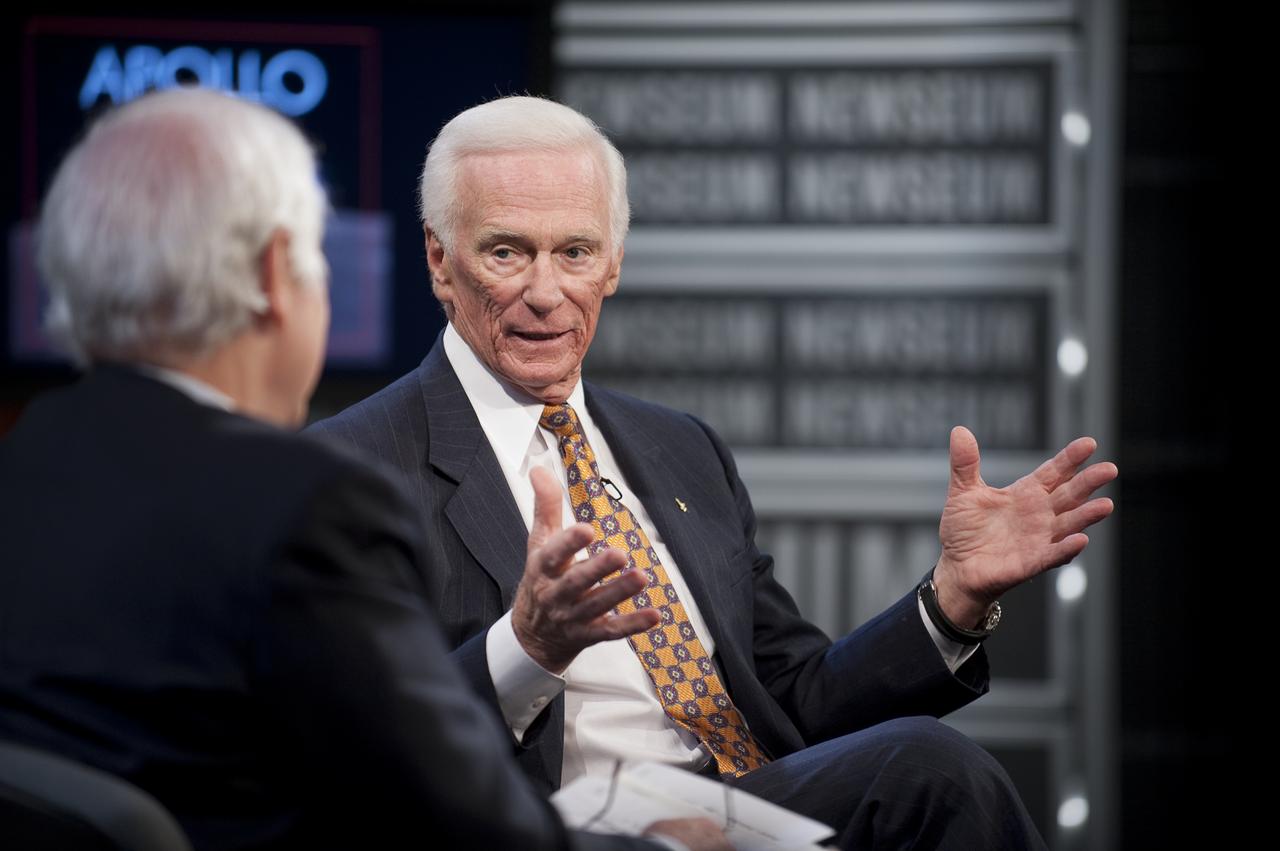
NASA Apollo 10 Astronaut Gene Cernan, right, answers questions from the Newseum's distinguished journalist-in-residence, Nick Clooney during a Newseum TV program celebrating the 40th anniversary of Apollo 10, Monday, May 18, 2009, in Washington. Photo Credit (NASA/Bill Ingalls)
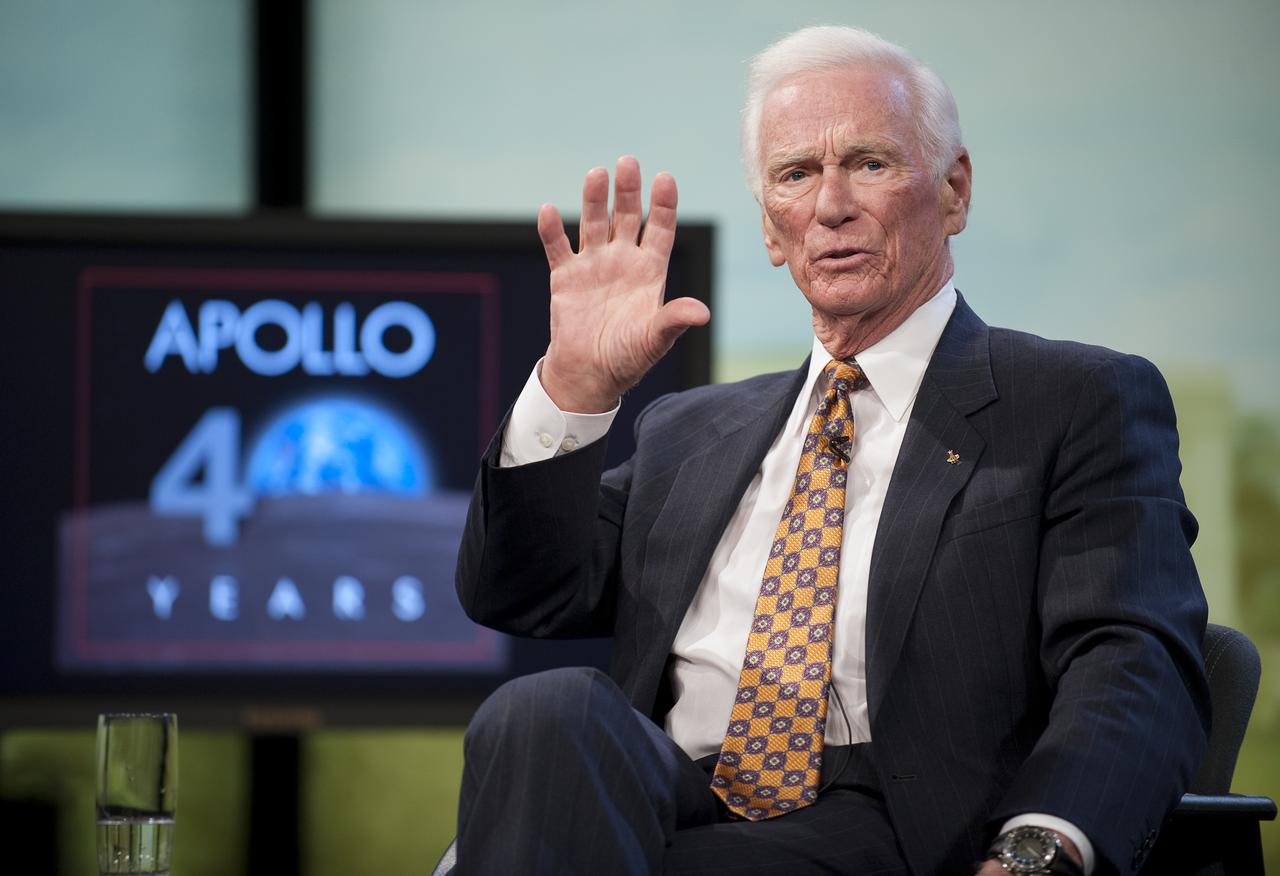
NASA Apollo 10 Astronaut Gene Cernan explains how wonderful the Earth looked from the Moon during a Newseum TV program celebrating the 40th anniversary of Apollo 10, Monday, May 18, 2009, in Washington. Photo Credit (NASA/Bill Ingalls)
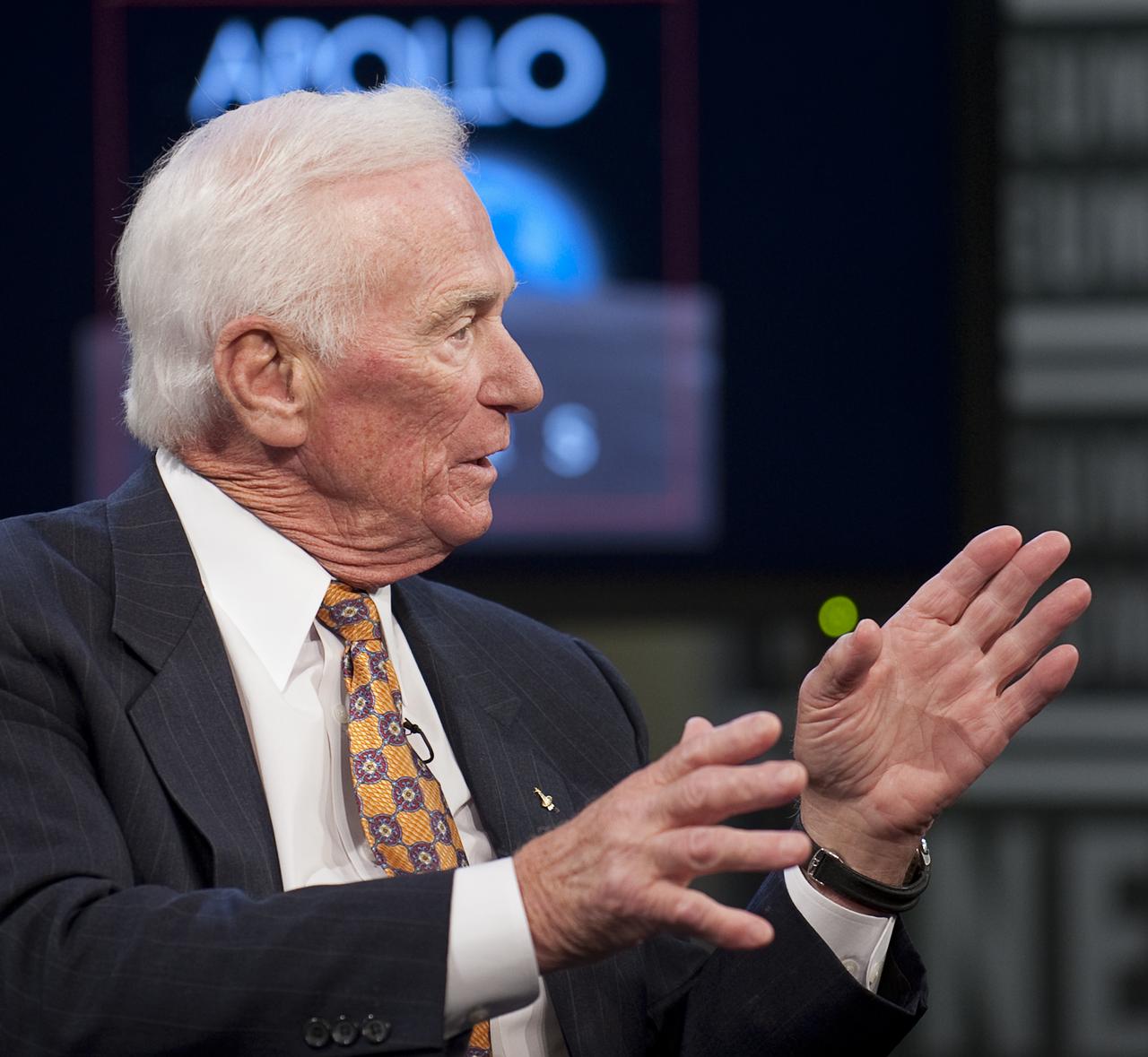
NASA Apollo 10 Astronaut Gene Cernan explains the importance of the nations space program for future generations during a Newseum TV program celebrating the 40th anniversary of Apollo 10, Monday, May 18, 2009, in Washington. Photo Credit (NASA/Bill Ingalls)
During the STS-90 shuttle flight in April 1998, cultured renal cortical cells revealed new information about genes. Timothy Hammond, an investigator in NASA's microgravity biotechnology program was interested in culturing kidney tissue to study the expression of proteins useful in the treatment of kidney diseases. Protein expression is linked to the level of differentiation of the kidney cells, and Hammond had difficulty maintaining differentiated cells in vitro. Intrigued by the improvement in cell differentiation that he observed in rat renal cells cultured in NASA's rotating wall vessel (a bioreactor that simulates some aspects of microgravity) and during an experiment performed on the Russian Space Station Mir, Hammond decided to sleuth out which genes were responsible for controlling differentiation of kidney cells. To do this, he compared the gene activity of human renal cells in a variety of gravitational environments, including the microgravity of the space shuttle and the high-gravity environment of a centrifuge. Hammond found that 1,632 genes out of 10,000 analyzed changed their activity level in microgravity, more than in any of the other environments. These results have important implications for kidney research as well as for understanding the basic mechanism for controlling cell differentiation.
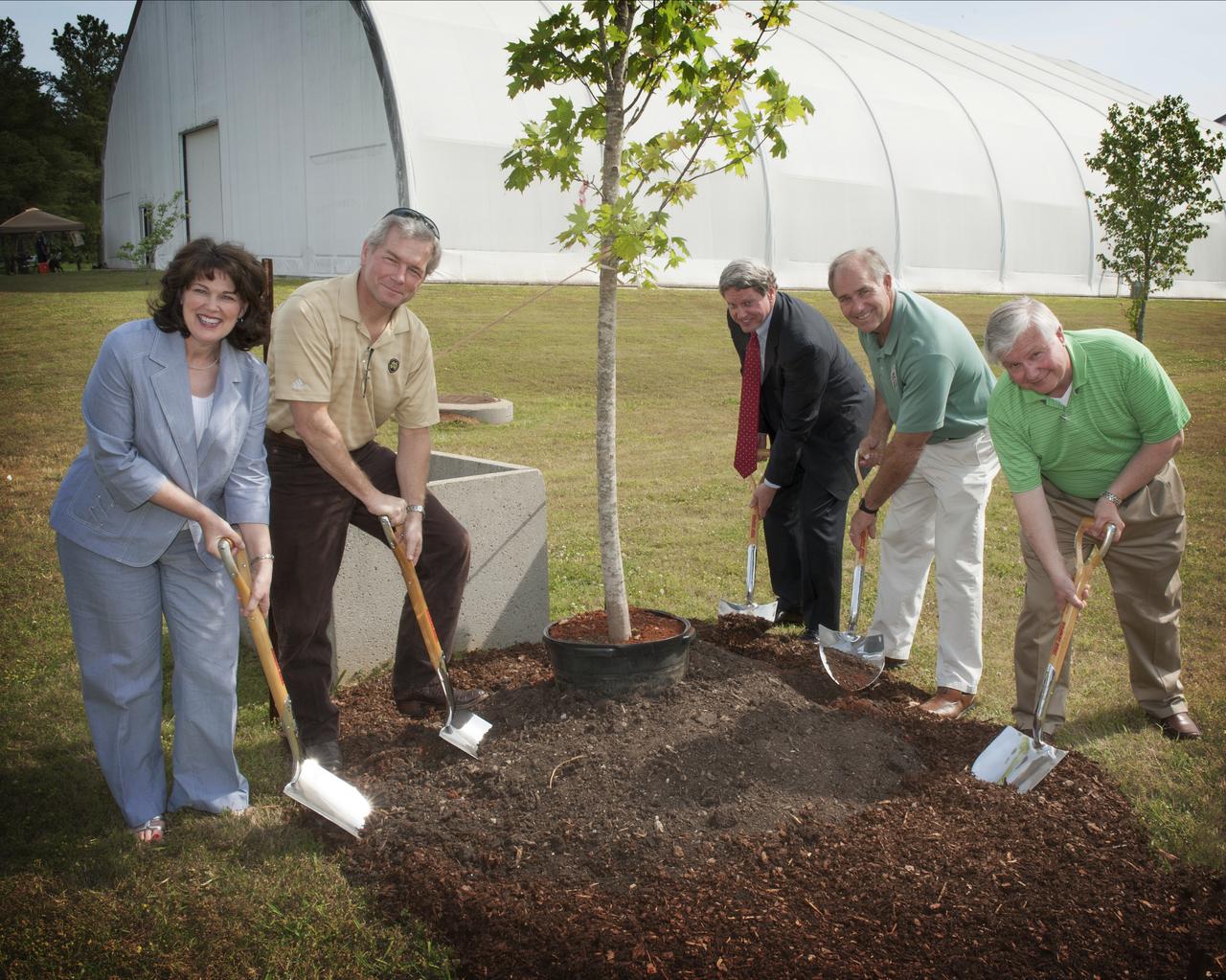
CEREMONIAL TREE PLANTING WIHT (L TO R) ROBIN HENDERSON, STEVE DOERING, GENE GOLDMAN, STEVE CASH, AND ED KIESSLING AT THE 2012 SHE/EARTH DAY EVENT.
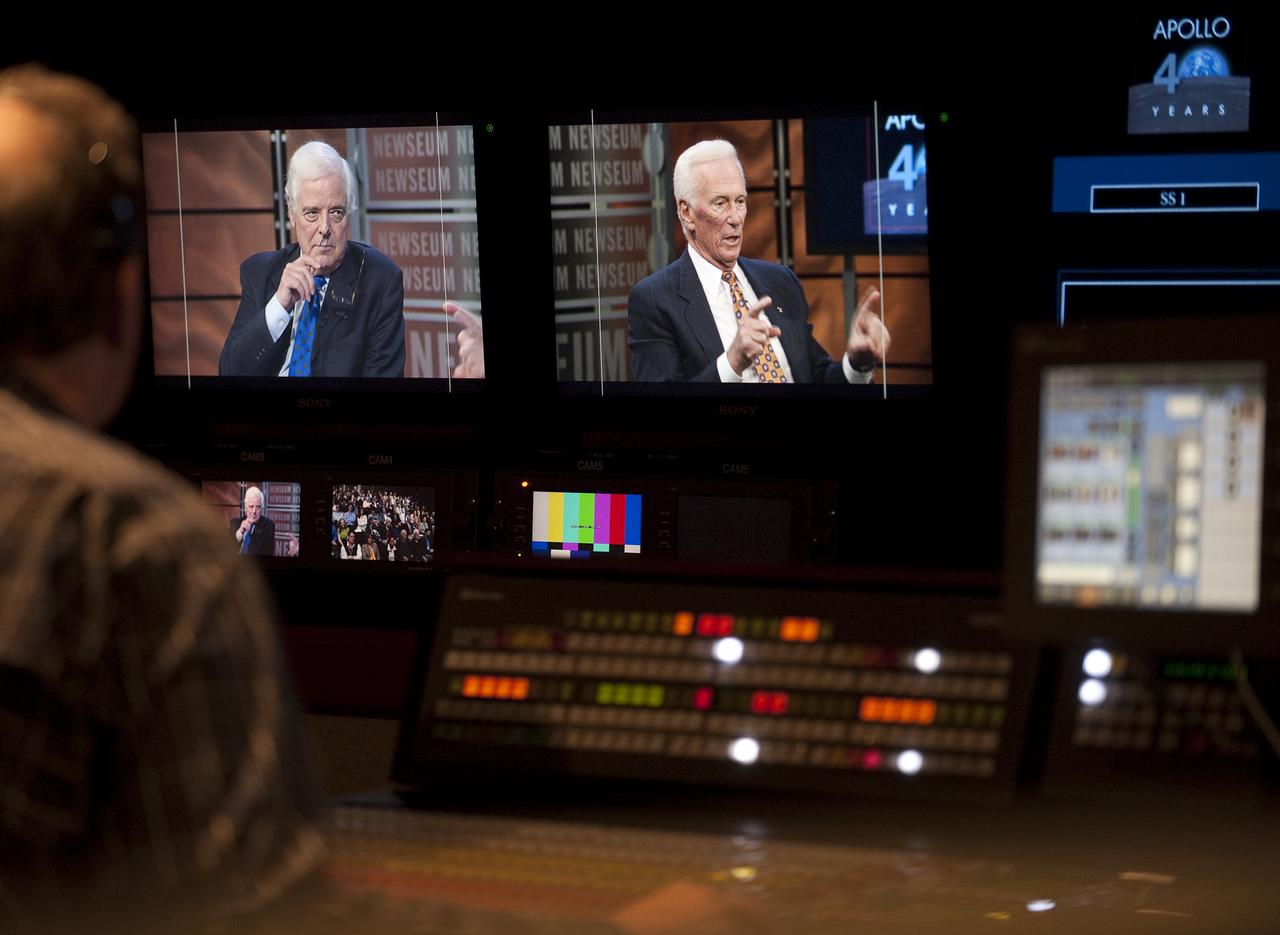
In this image made inside the TV production studio of the Newseum, NASA Apollo 10 Astronaut Gene Cernan, right monitor, answers questions from the Newseum's distinguished journalist-in-residence, Nick Clooney, left monitor, during a Newseum TV program celebrating the 40th anniversary of Apollo 10, Monday, May 18, 2009, in Washington. Photo Credit (NASA/Bill Ingalls)
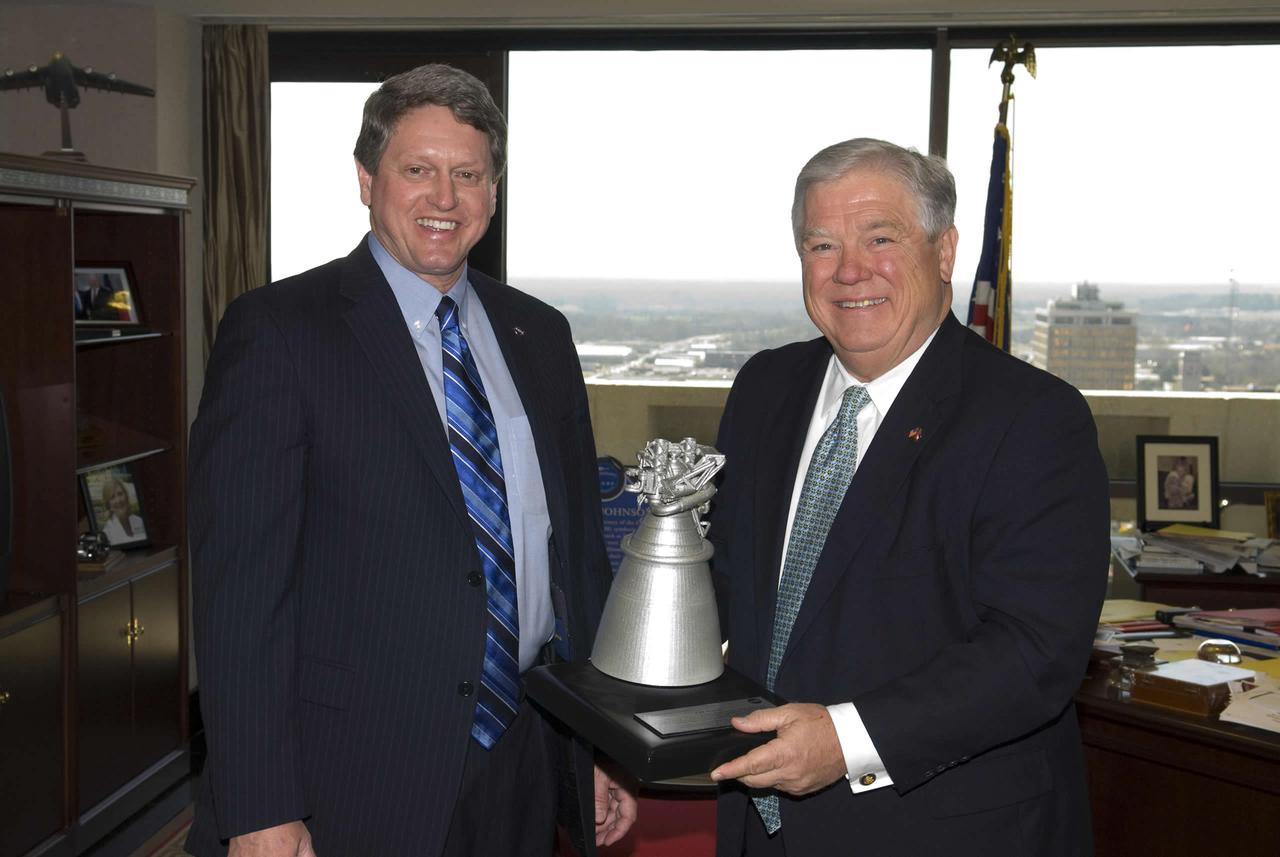
Stennis Space Center Director Gene Goldman visits with Mississippi Gov. Haley Barbour during NASA Day at the Capitol activities on Feb. 19. During the visit, Goldman presented the governor with a model of the J-2X rocket engine currently in development. Stennis engineers did early component testing for the new engine.
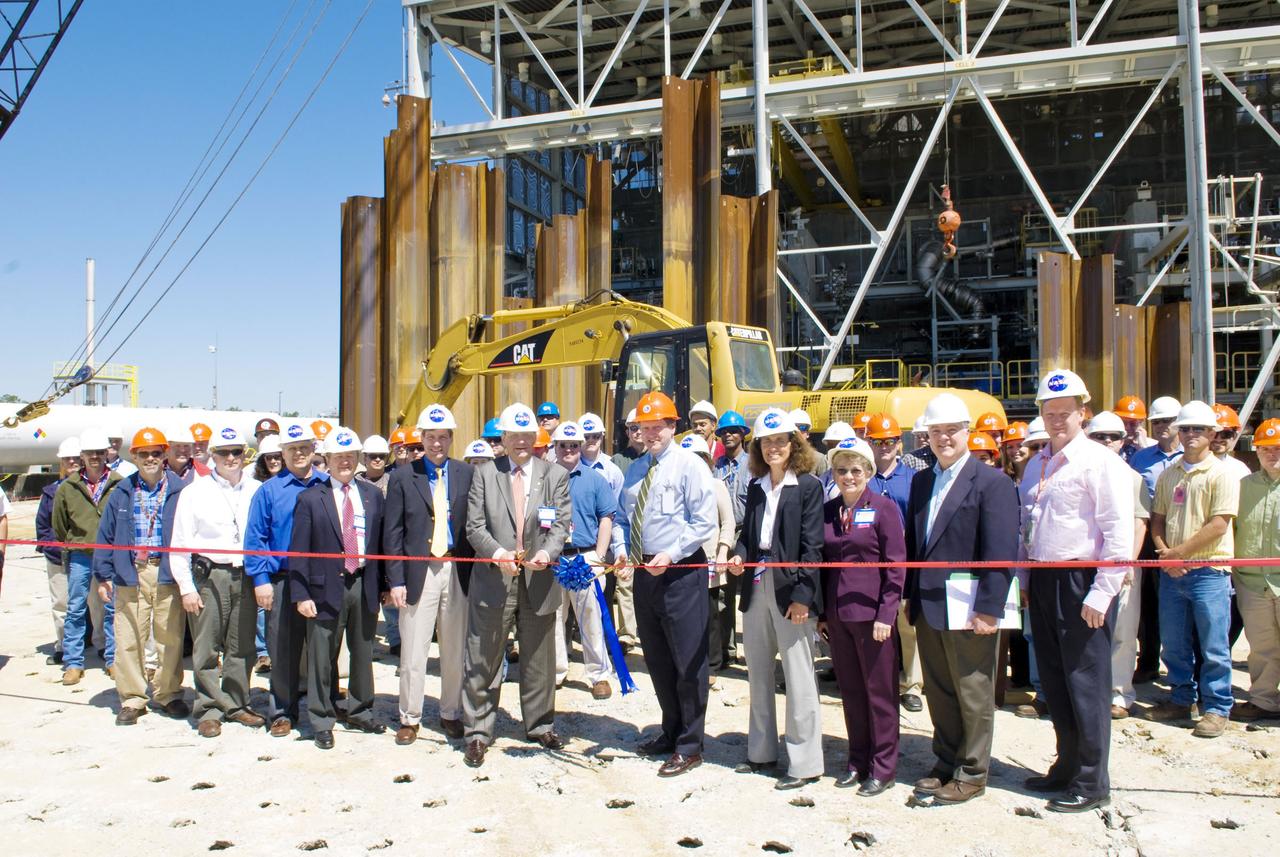
Representatives from NASA, Orbital Sciences Corp. and Aerojet participate in a ribbon-cutting ceremony for construction of a flame deflector trench at Stennis Space Center's E Test Complex. Participants included Orbital CEO J.R. Thompson (center, left) and Stennis Space Center Director Gene Goldman (center, right).

Stennis Space Center Director Gene Goldman (r to l) presents a commemorative photo of a space shuttle main engine test firing to STS-119 Mission Commander Lee Archambault, Pilot Tony Antonelli and Mission Specialists Steve Swanson and Richard Arnold during the crew's May 5 visit to the facility.
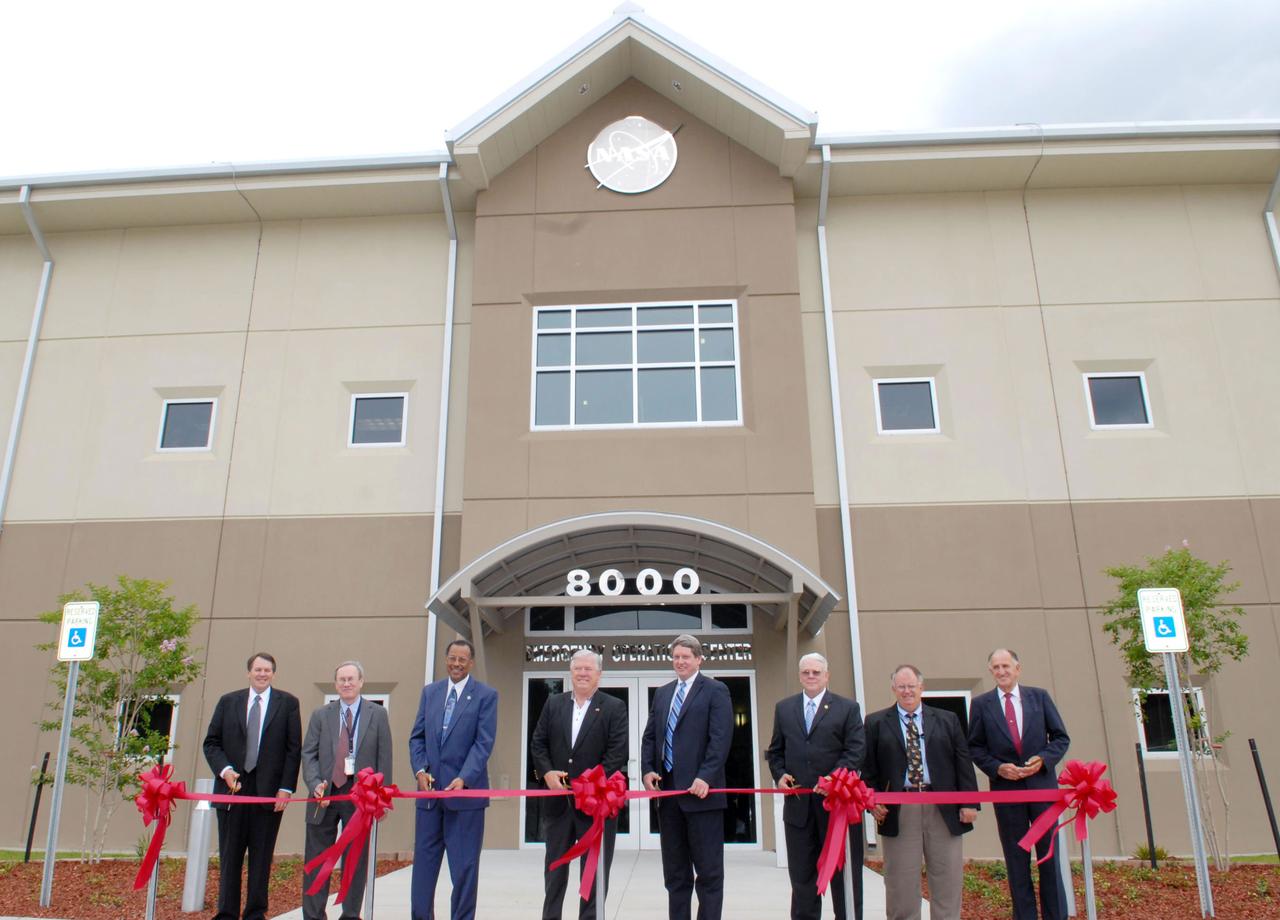
Center Director Gene Goldman and special guests celebrate the opening of the site's new Emergency Operations Center on June 2. Participants included (l t r): Steven Cooper, deputy director of the National Weather Service Southern Region; Tom Luedtke, NASA associate administrator for institutions and management; Charles Scales, NASA associate deputy administrator; Mississippi Gov. Haley Barbour; Gene Goldman, director of Stennis Space Center; Jack Forsythe, NASA assistant administrator for the Office of Security and Program Protection; Dr. Richard Williams, NASA chief health and medical officer; and Weldon Starks, president of Starks Contracting Company Inc. of Biloxi.
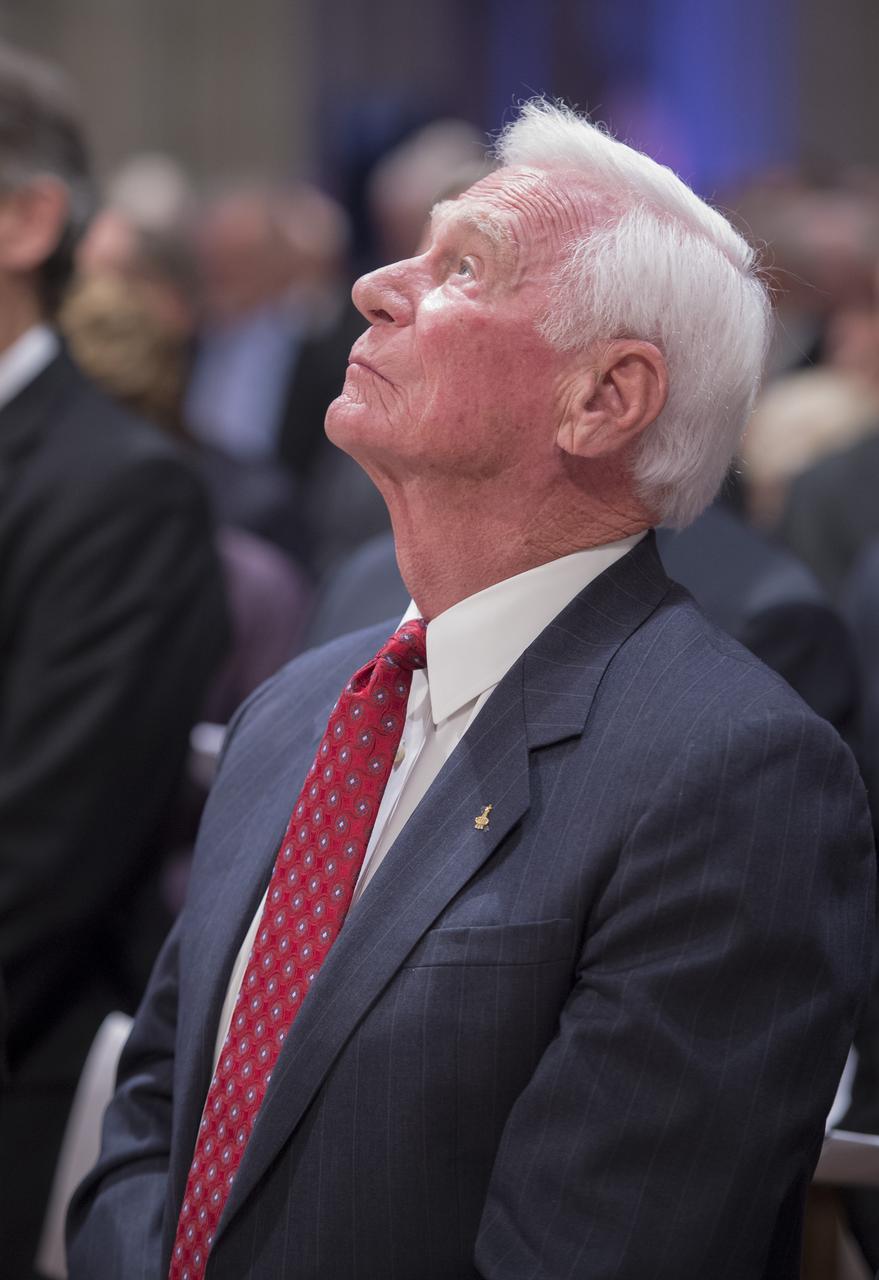
Apollo 17 mission commander Gene Cernan, the last man to walk on the moon, looks skyward during a memorial service celebrating the life of Neil Armstrong at the Washington National Cathedral, Thursday, Sept. 13, 2012. Armstrong, the first man to walk on the moon during the 1969 Apollo 11 mission, died Saturday, Aug. 25. He was 82. Photo Credit: (NASA/Bill Ingalls)
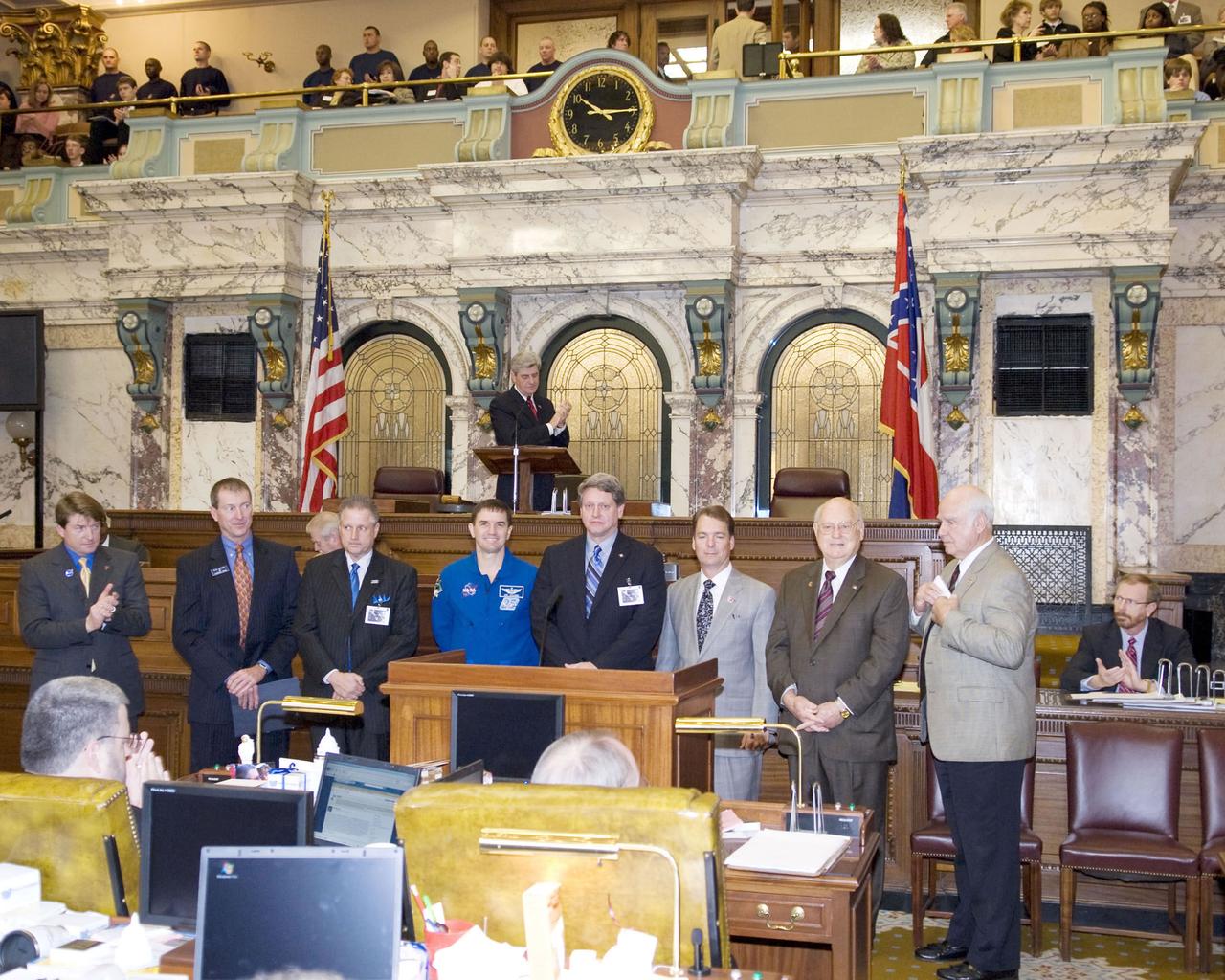
Astronaut Rex Walheim (center) speaks to members of the Mississippi House of Representatives in chambers during NASA Day at the Capitol in Jackson on Feb. 19. Walheim was joined at the podium by members of the Mississippi House of Representatives Gulf Coast delegation, as well as Stennis Space Center Director Gene Goldman (astronaut's immediate right) and NASA's Shared Services Center Director Rick Arbuthnot and Partners for Stennis Executive Director Tish Williams (astronaut's immediate left).
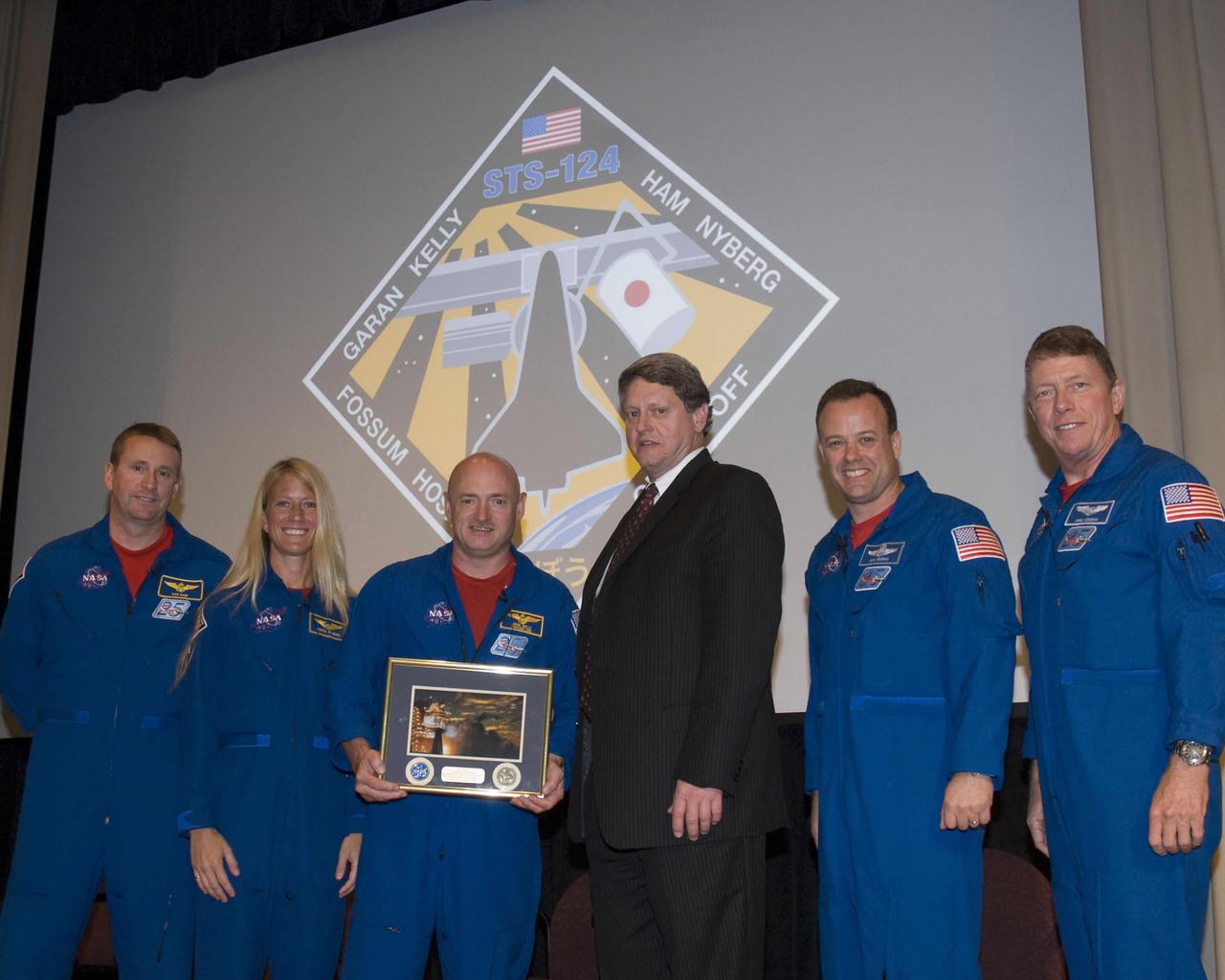
NASA's John C. Stennis Space Center Deputy Director Gene Goldman (center) welcomed members of the STS-124 Discovery space shuttle crew during their July 23 visit to the center. Crew members who visited Stennis were (l to r) Pilot Ken Ham, Mission Specialist Karen Nyberg, Kelly, and Mission Specialists Ron Garan and Mike Fossum.
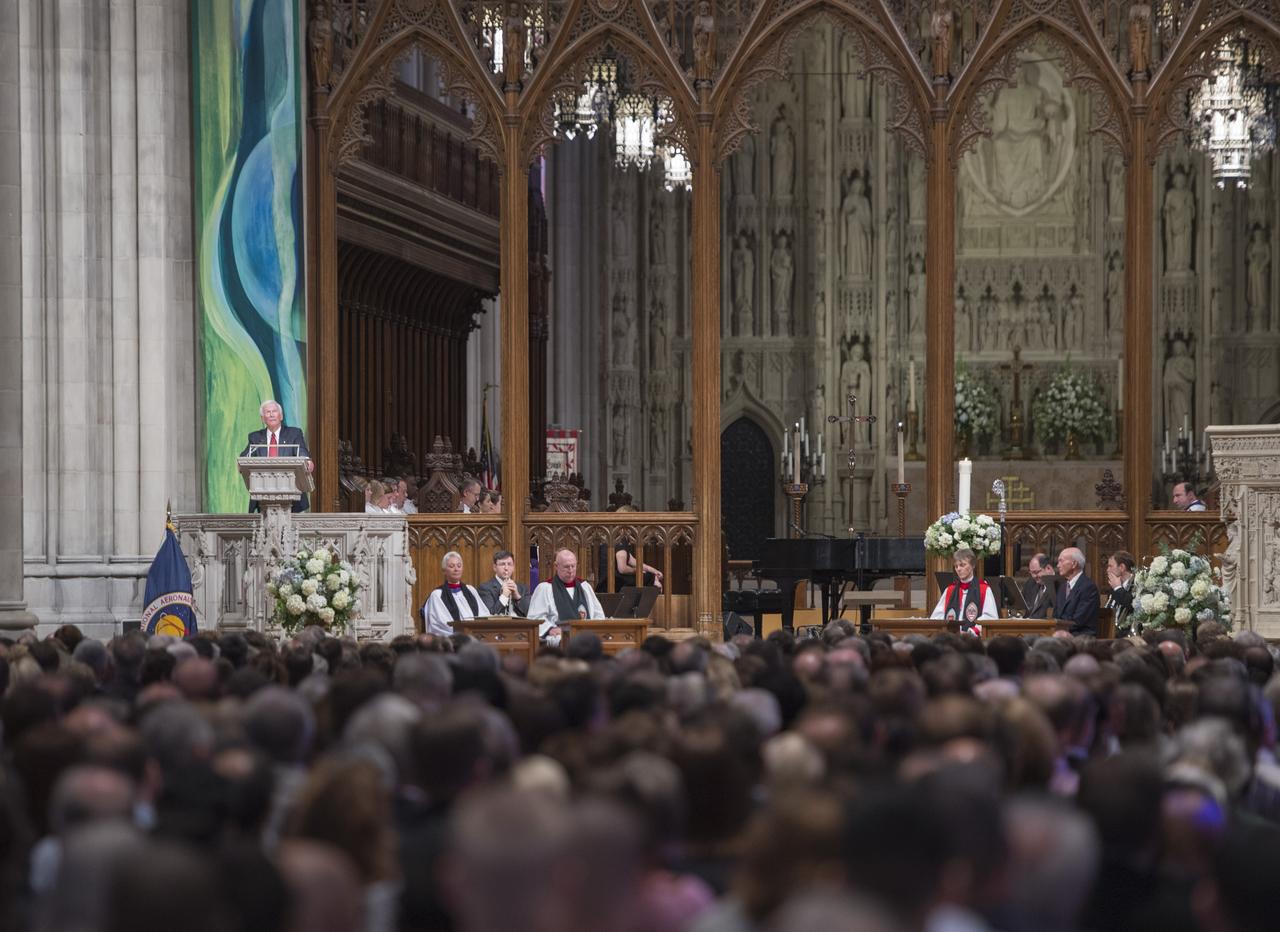
Apollo 17 mission commander Gene Cernan, the last man to walk on the moon, speaks during a memorial service celebrating the life of Neil Armstrong at the Washington National Cathedral, Thursday, Sept. 13, 2012. Armstrong, the first man to walk on the moon during the 1969 Apollo 11 mission, died Saturday, Aug. 25. He was 82. Photo Credit: (NASA/Bill Ingalls)
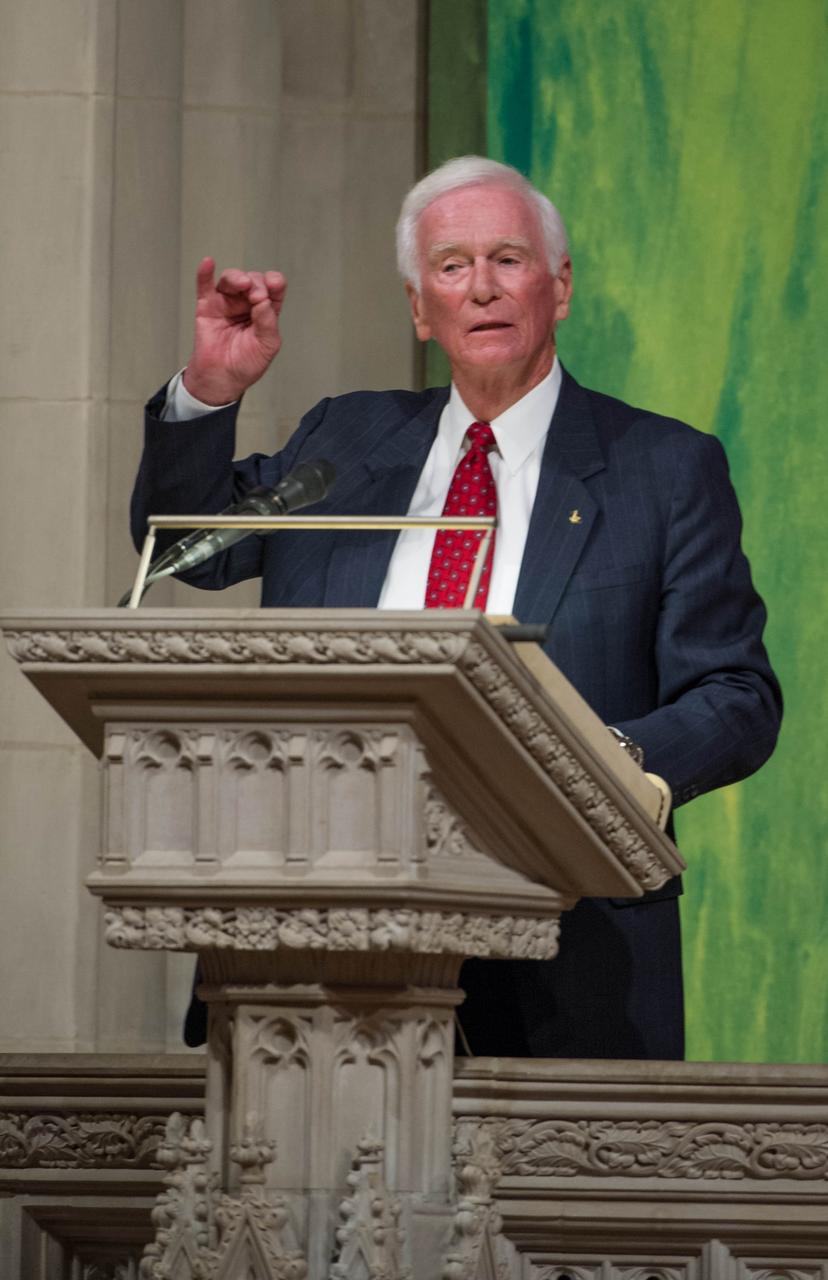
Apollo 17 astronaut Gene Cernan, the last man to walk on the moon, speaks during a memorial service celebrating the life of Neil Armstrong at the Washington National Cathedral, Thursday, Sept. 13, 2012. Armstrong, the first man to walk on the moon during the 1969 Apollo 11 mission, died Saturday, Aug. 25. He was 82. Photo Credit: (NASA/Paul E. Alers)
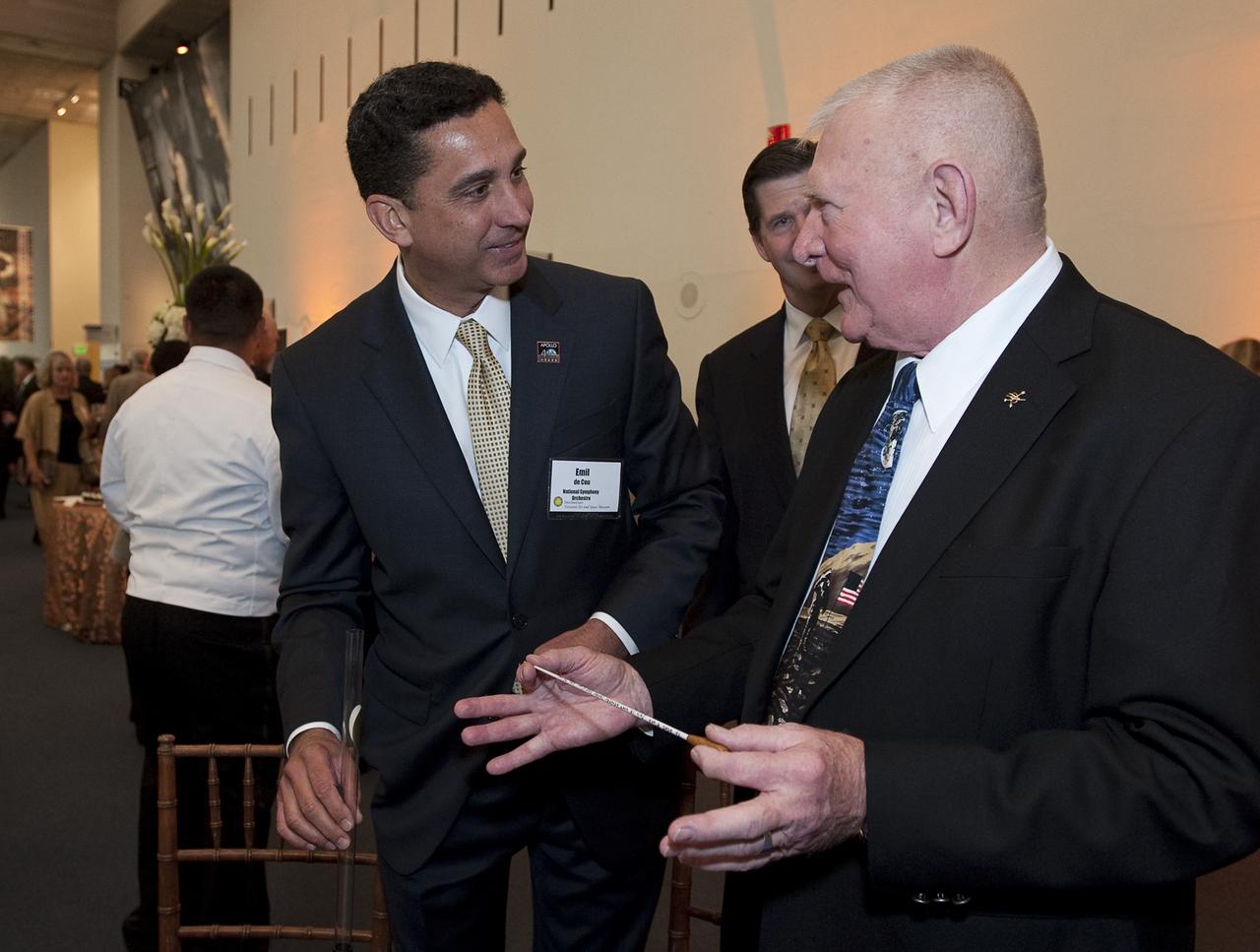
National Symphony Orchestra Conductor Emil de Cou, left, presents a ceremonial baton to retired NASA Flight Director and manager Gene Kranz at the Apollo 40th anniversary celebration held at the National Air and Space Museum, Monday, July 20, 2009 in Washington. Kranz was a guest conductor the night before at the Kennedy Center for the Performing Arts. Photo Credit: (NASA/Bill Ingalls)
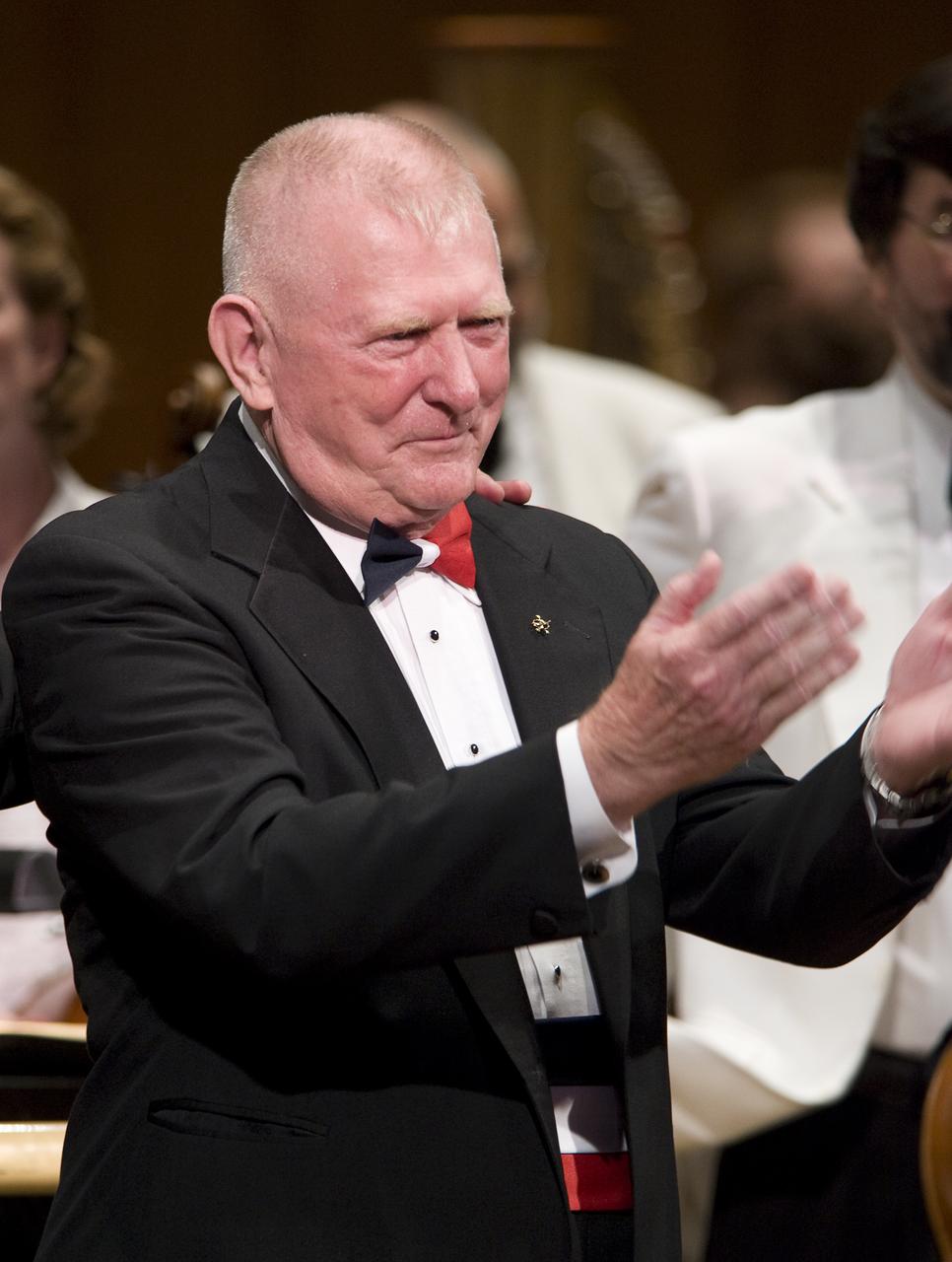
Gene Kranz, retired NASA Flight Director and manager, thanks the audience after having guest conducted of the National Symphony Orchestra during the "Salute to Apollo" ceremony at the Kennedy Center for the Performing Arts, Saturday, July 18, 2009 in Washington. The event was part of NASA's week long celebration of the Apollo 40th Anniversary. Photo Credit: (NASA/Bill Ingalls)
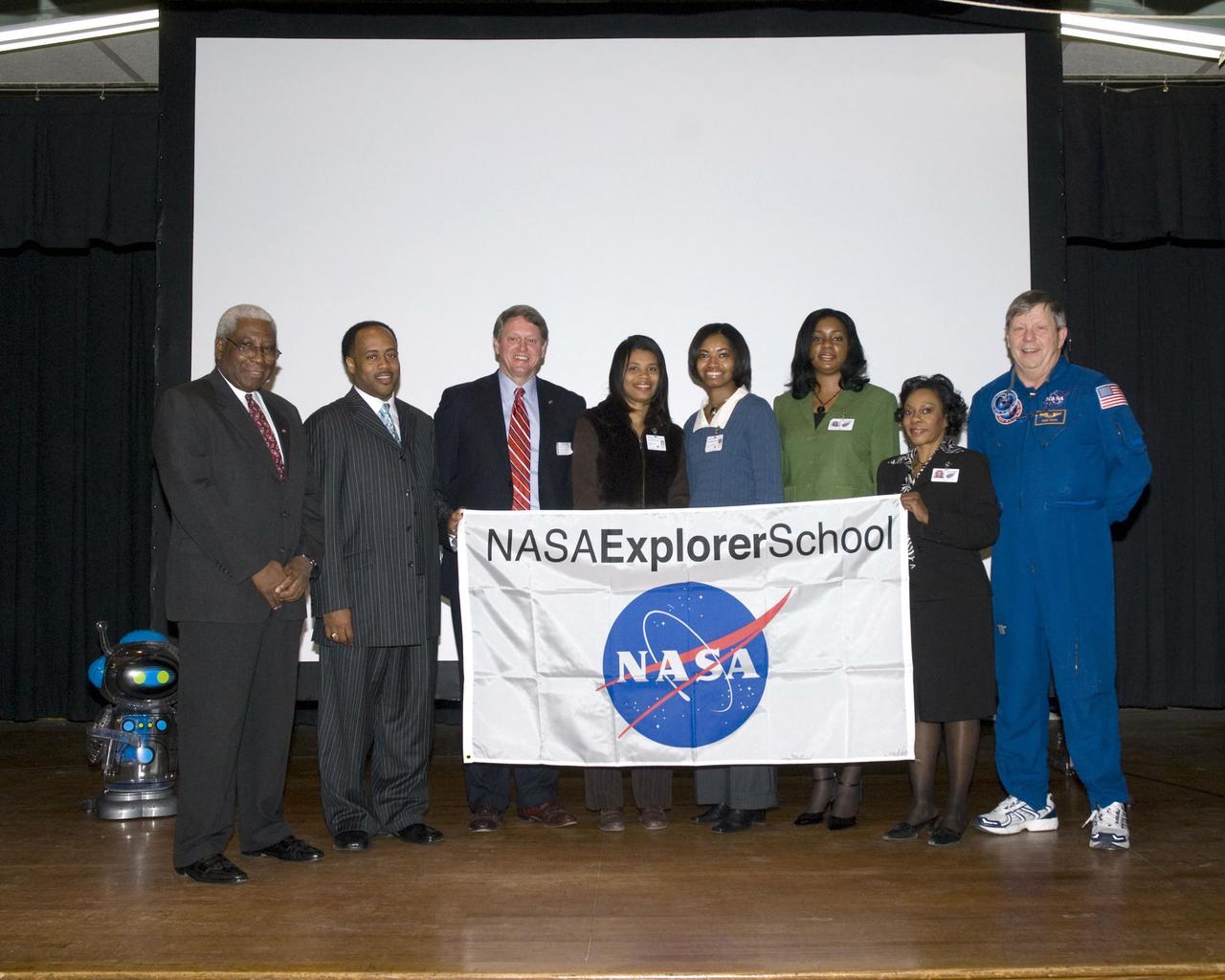
The NASA Explorer School-East Oktibbeha County School District team recently celebrated the start of its three-year partnership with NASA during a two-part kickoff event Nov. 7 and 8. Pictured from left are, Oktibbeha County School District Superintendent Dr. Walter Conley; NES Team Administrator James Covington; Stennis Space Center Deputy Director Gene Goldman; Sharon Bonner; NES Team Lead Yolanda Magee; Andrea Temple; Carolyn Rice; and special guest astronaut Roger Crouch.
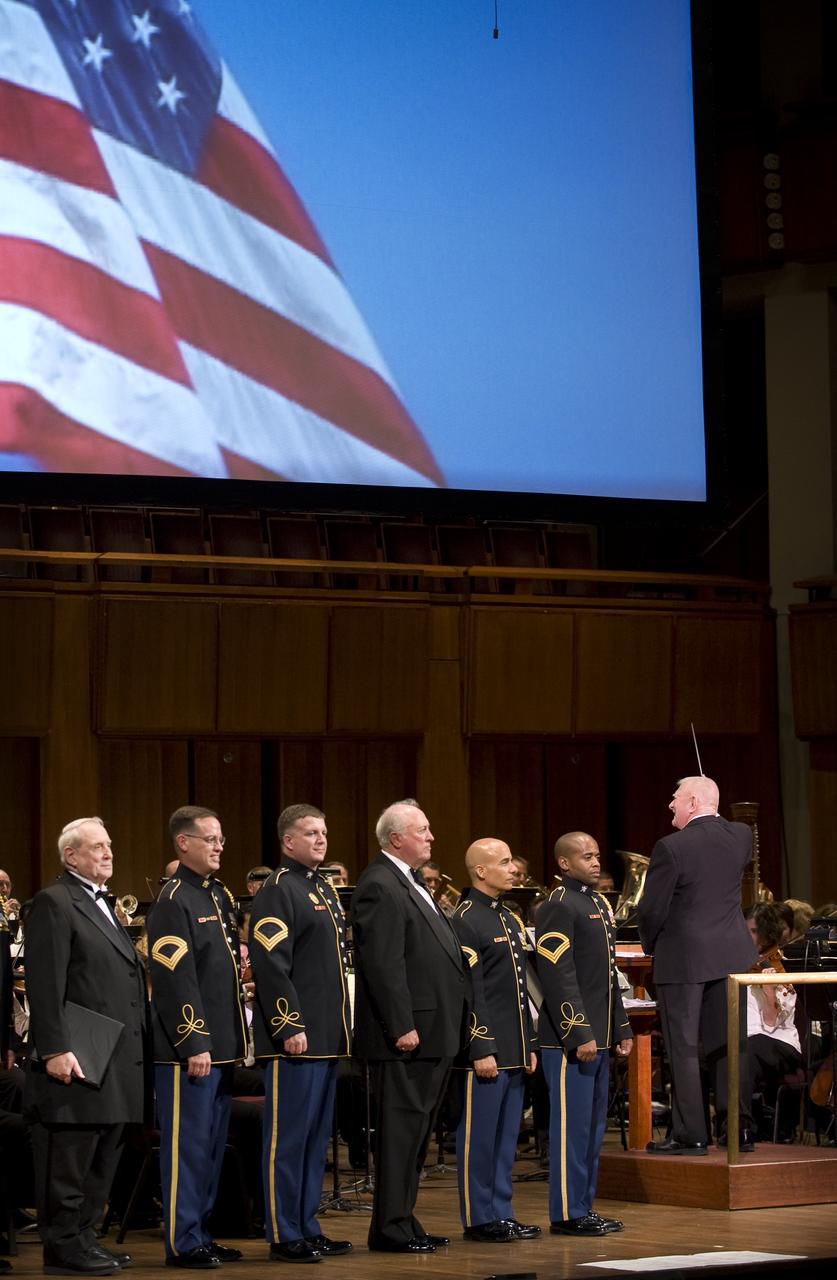
Gene Kranz, retired NASA Flight Director and manager, conducts the National Symphony Orchestra, while the U.S. Army Chorus and Alumni sing during the "Salute to Apollo" ceremony at the Kennedy Center for the Performing Arts, Saturday, July 18, 2009 in Washington. The event was part of NASA's week long celebration of the Apollo 40th Anniversary. Photo Credit: (NASA/Bill Ingalls)
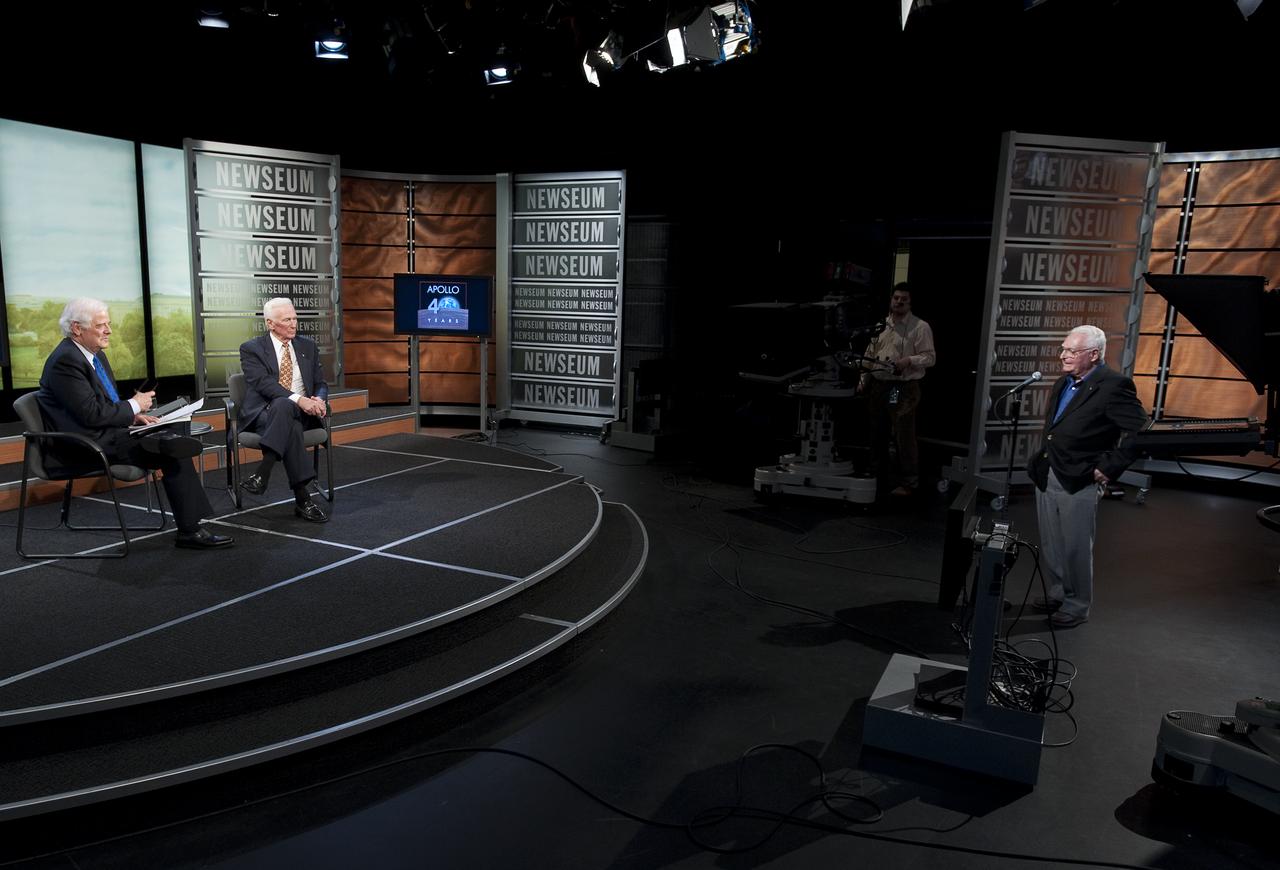
NASA Apollo 10 Astronaut Gene Cernan, on stage, right, and the Newseum's distinguished journalist-in-residence, Nick Clooney, on stage, left, talk with a Stan LeBar, Program Manager of the Apollo TV Lunar Camera who helped see that Apollo 10 was the first mission to broadcast in color from the moon during a Newseum TV program celebrating the 40th anniversary of Apollo 10, Monday, May 18, 2009, in Washington. Photo Credit (NASA/Bill Ingalls)
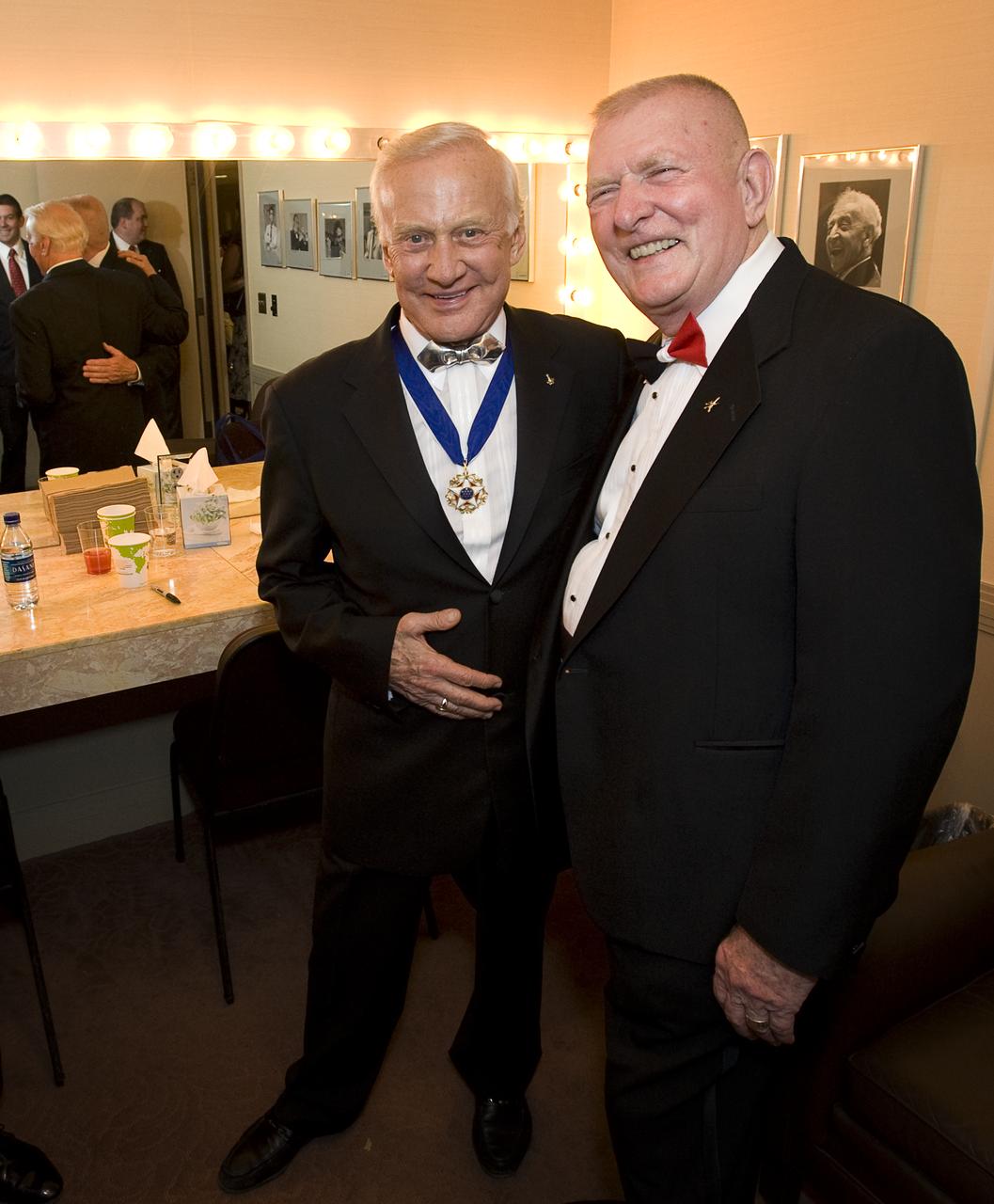
Apollo 11 astronaut Buzz Aldrin, left, meets with Gene Kranz, retired NASA Flight Director and manager, back stage after the "Salute to Apollo" ceremony at the Kennedy Center for the Performing Arts, Saturday, July 18, 2009 in Washington. The event was part of NASA's week long celebration of the Apollo 40th Anniversary. Photo Credit: (NASA/Bill Ingalls)
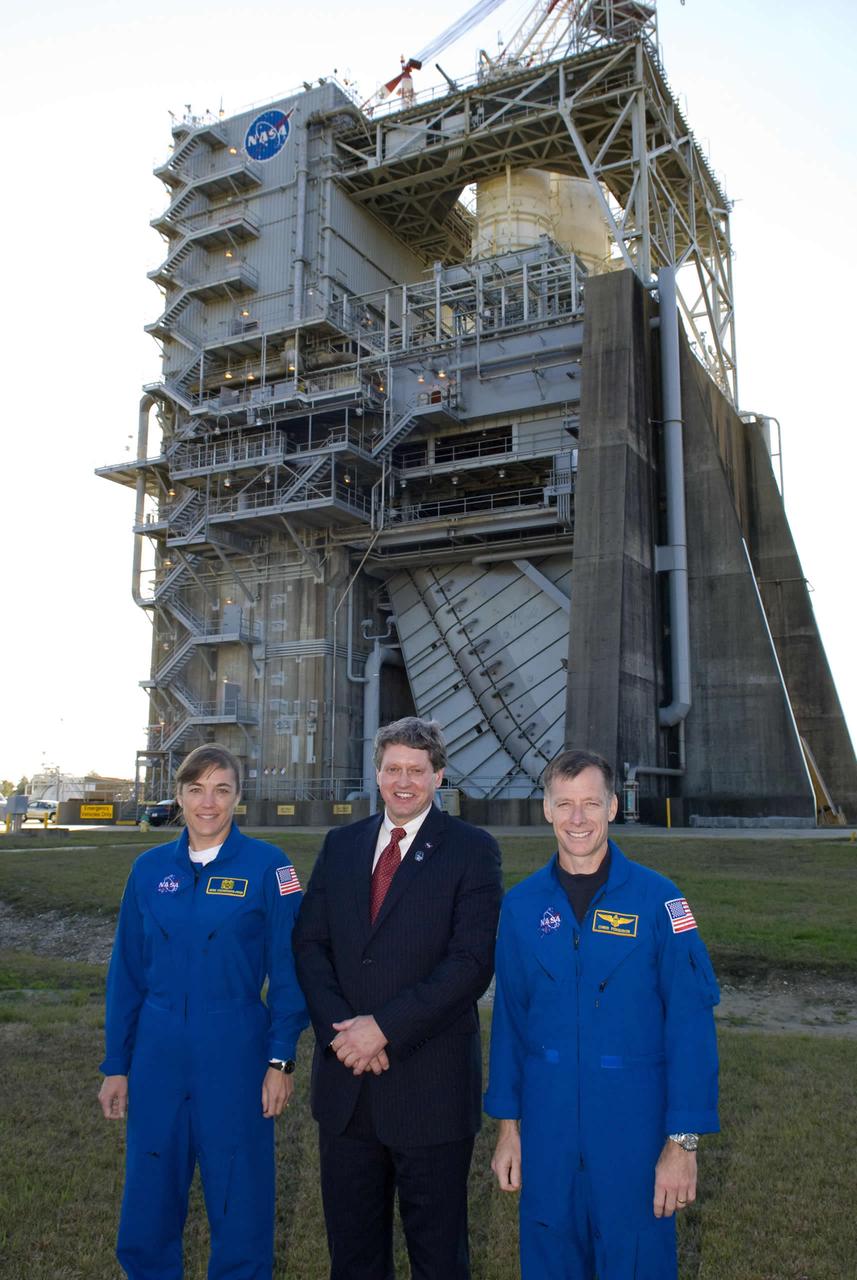
Stennis Space Center Director Gene Goldman (center) stands with astronauts Christopher Ferguson (right) and Heidemarie Stefanyshyn-Piper in front of the A-2 Test Stand during the space shuttle crew members' visit to NASA's rocket engine testing facility Jan. 13. During their visit, Ferguson and Stefanyshyn-Piper reported on the STS-126 space shuttle delivery and servicing mission to the International Space Station. Ferguson served as commander of the mission. Stefanyshyn-Piper served as a mission specialist.
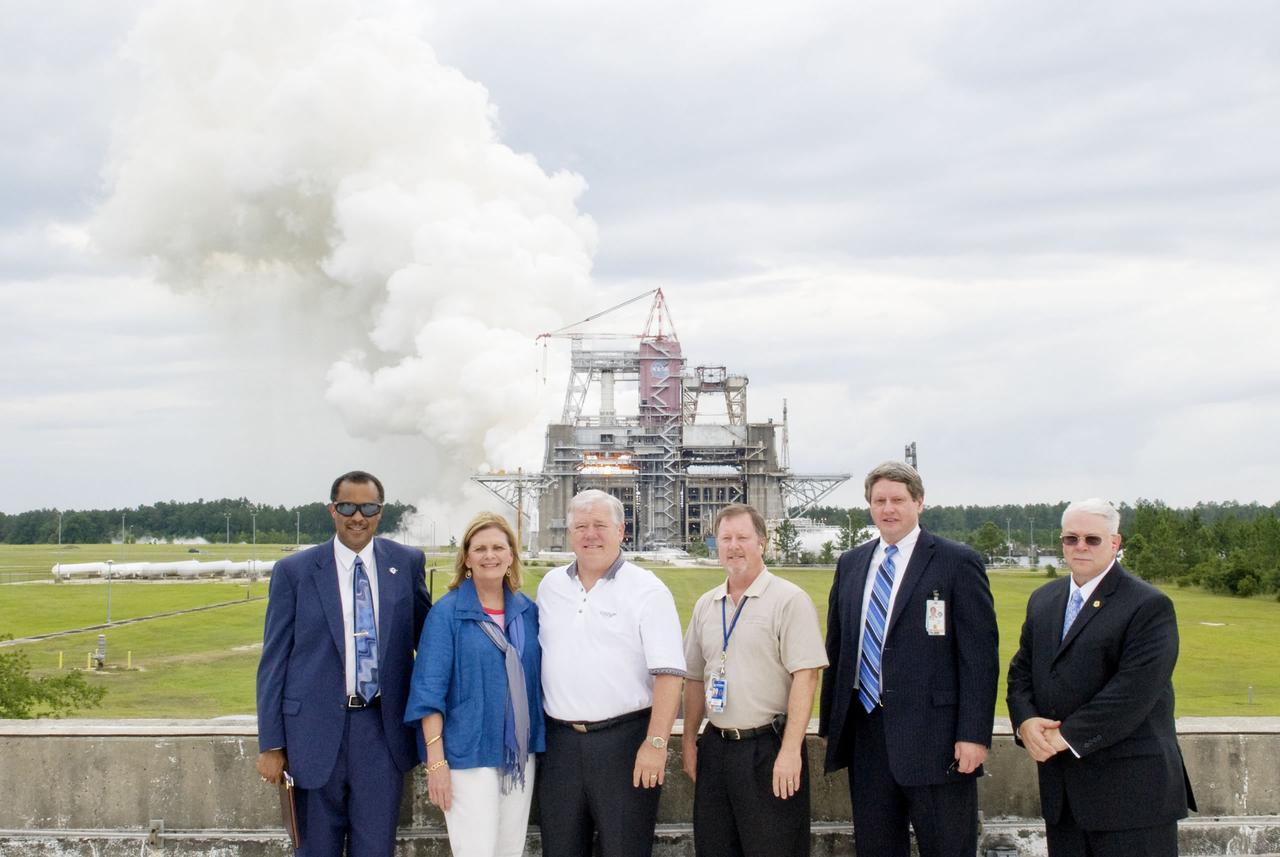
Steam billows from an RS-68 rocket engine test at the B Test Stand at Stennis Space Center on June 2. The test was viewed by Mississippi Gov. Haley Barbour (third from left) and his wife, Marsha, who spent the afternoon at the NASA rocket engine testing center. The governor was joined at the RS-68 test by (l to r) Charles Scales, NASA associate deputy administrator; Jeffrey Wright, Pratt & Whitney Rocketdyne site director at Stennis; Gene Goldman, Stennis director; and Jack Forsythe, NASA assistant administrator for the Office of Security and Program Protection.
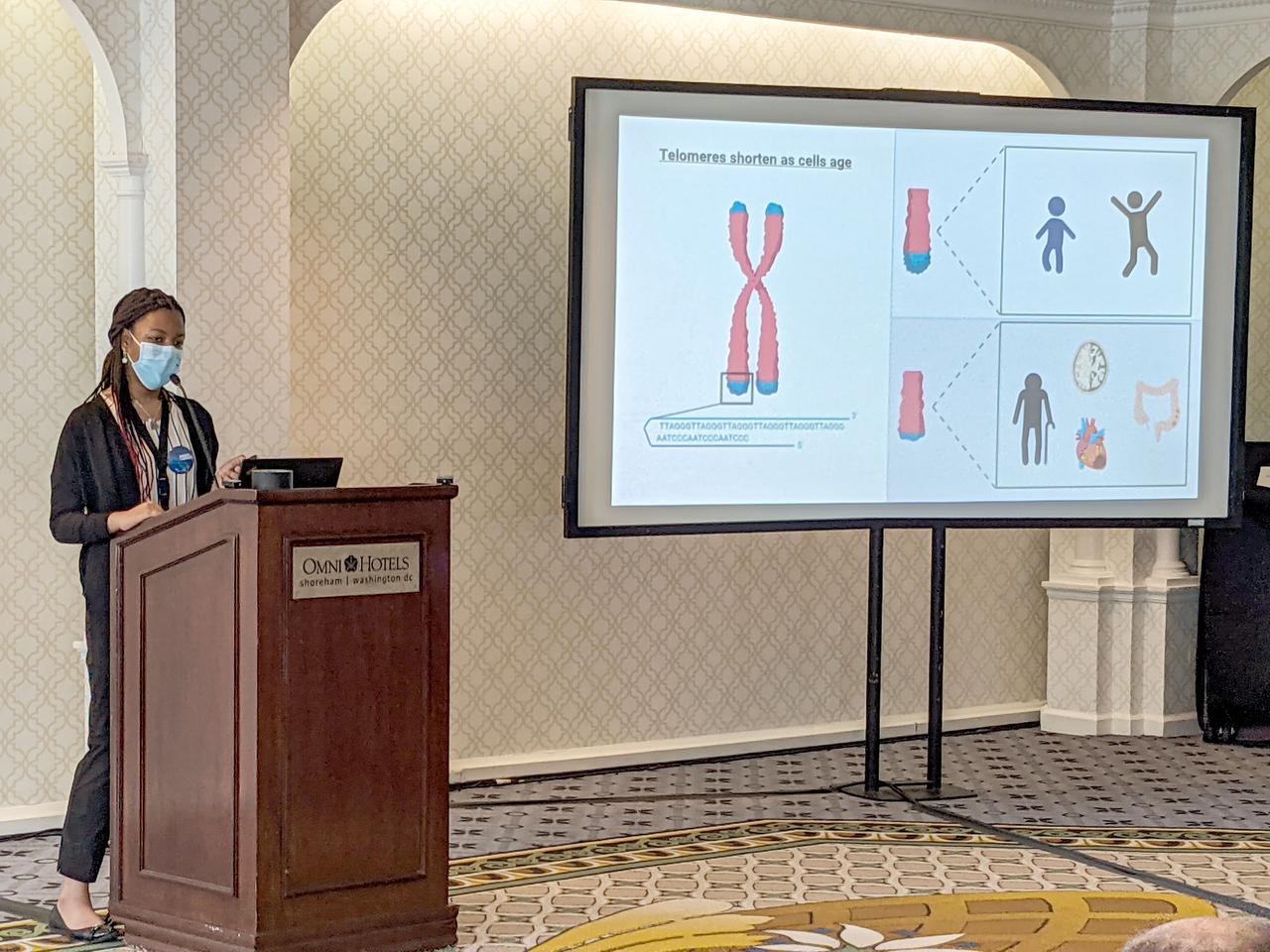
jsc2023e031078 (7/27/2022) --- Pristine Onuoha, Genes in Space-10 winner, presents her idea to contest judges. The Genes in Space program allows for 10 student projects to be selected for spaceflight analysis, which gives students a chance to attempt to solve real-world problems. Image courtesy of Genes in Space.
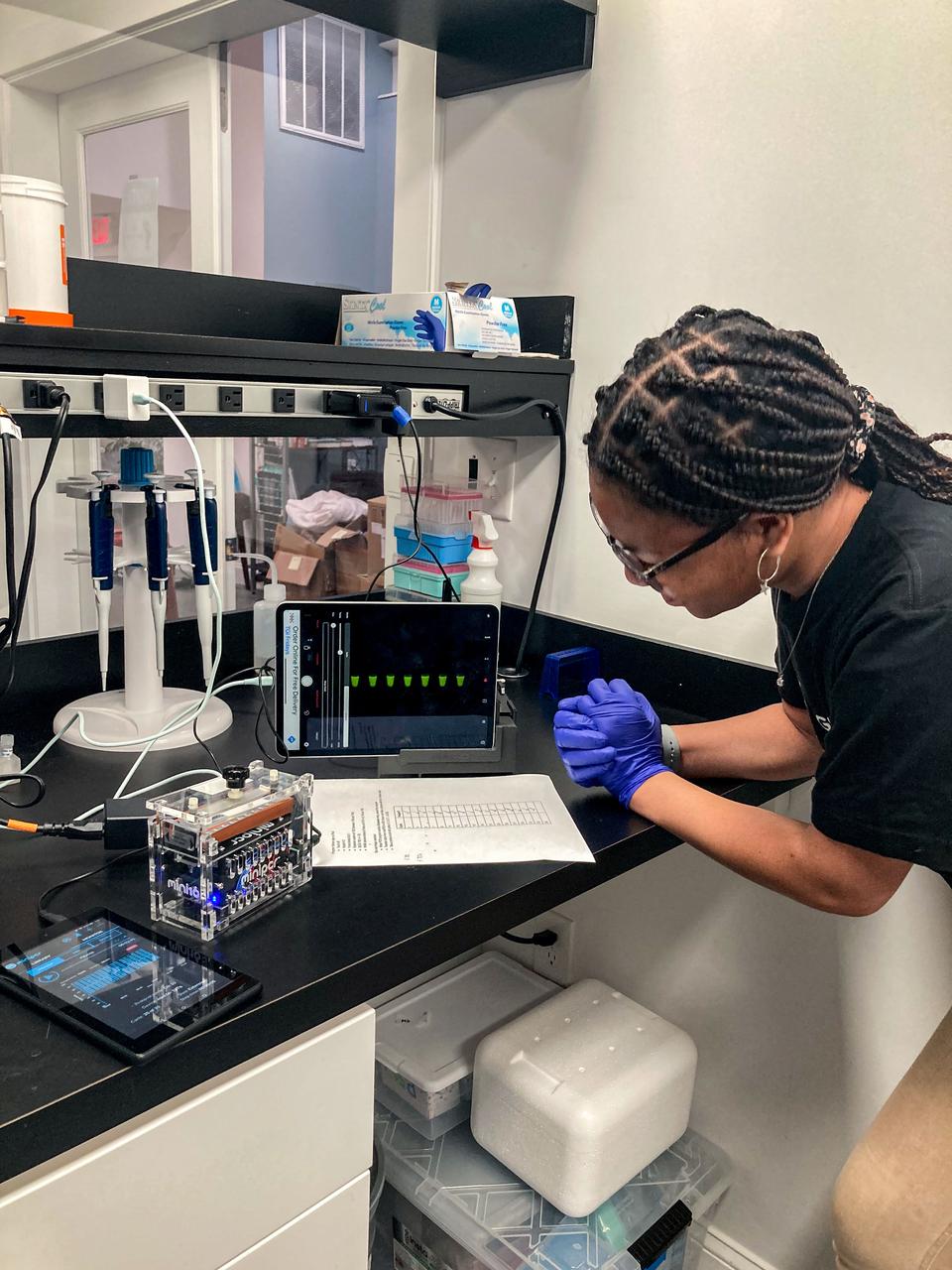
jsc2023e031077 (3/13/2023) --- Pristine Onuoha, the Genes in Space-10 winner, tests her investigation before it launches to the International Space Station. The Genes in Space program allows middle and high school students to design DNA experiments that address a challenge in space exploration. Image courtesy of Genes in Space.

jsc2023e031075 (3/13/2023) --- Genes in Space-10 winner, student Pristine Onuoha (right), and miniPCR biology team member Dr. Ally Huang (left) analyze data in preparation for launch of the Genes in Space-10 investigation to the International Space Station. The Genes in Space program enables students to learn about biotechnology and its potential applications. Image courtesy of Genes in Space.
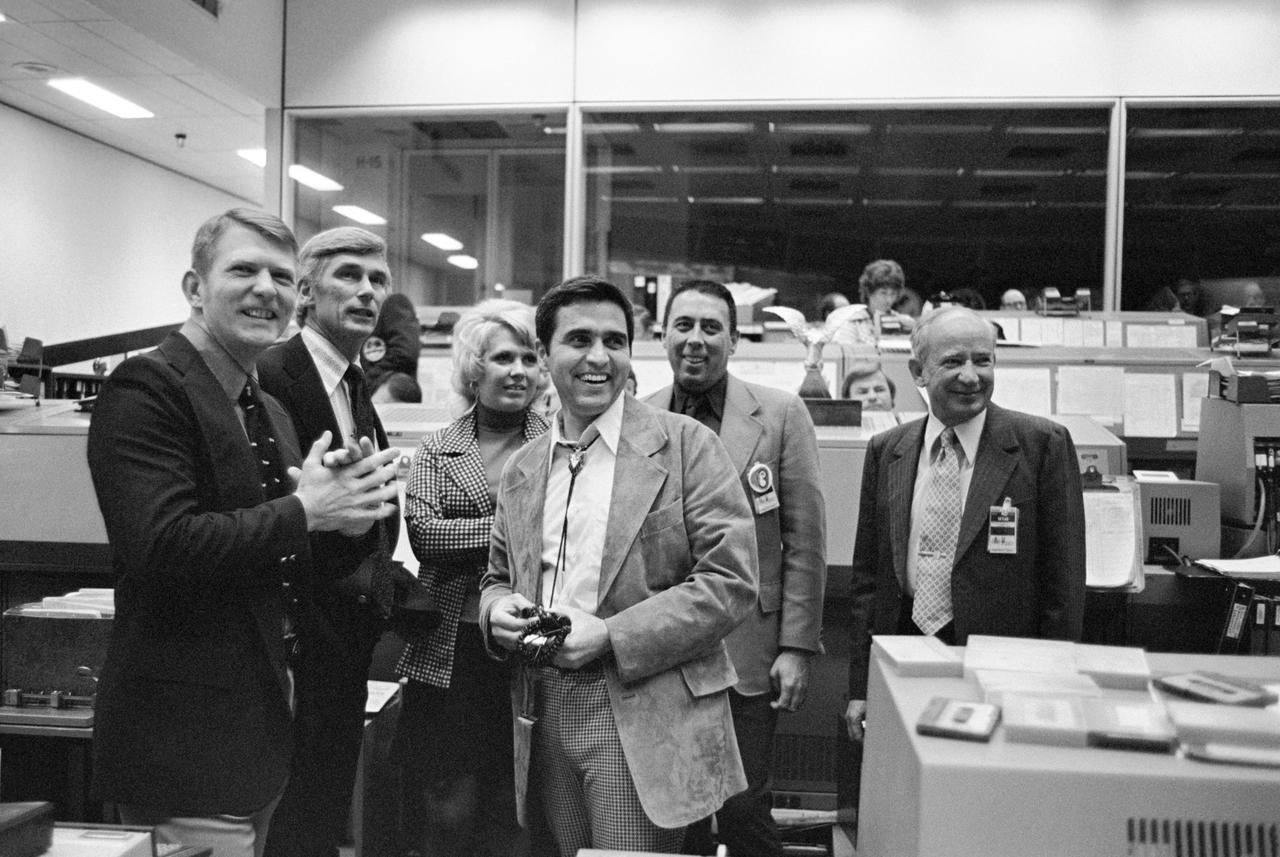
S74-15520 --- Left to right Gene Kranz, Gene Cernan, Karla Garnuch, Harrison Schmitt, George Abbey, and Sigurd A. Sjoberg watching the dedication of the Apollo 17 flag to the Mission Control Center. Photo credit: NASA
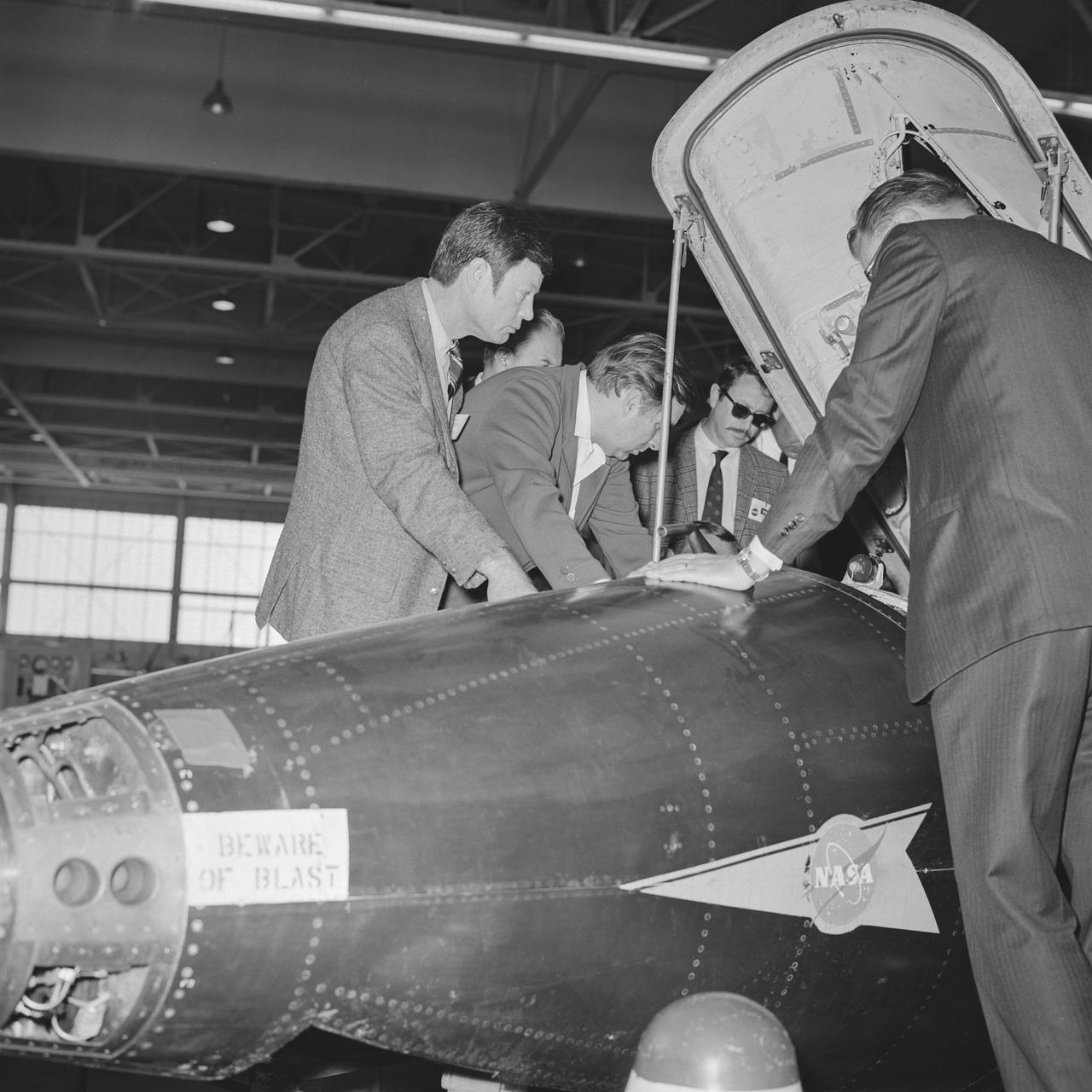
The 1960s Star Trek television series’ cast members visit NASA Dryden Flight Research Center, now Armstrong, in 1967. Chief Medical Officer Leonard ‘Bones’ McCoy played by DeForest Kelley and the show’s creator Gene Roddenberry receive briefing on X-15 cockpit as they view inside.
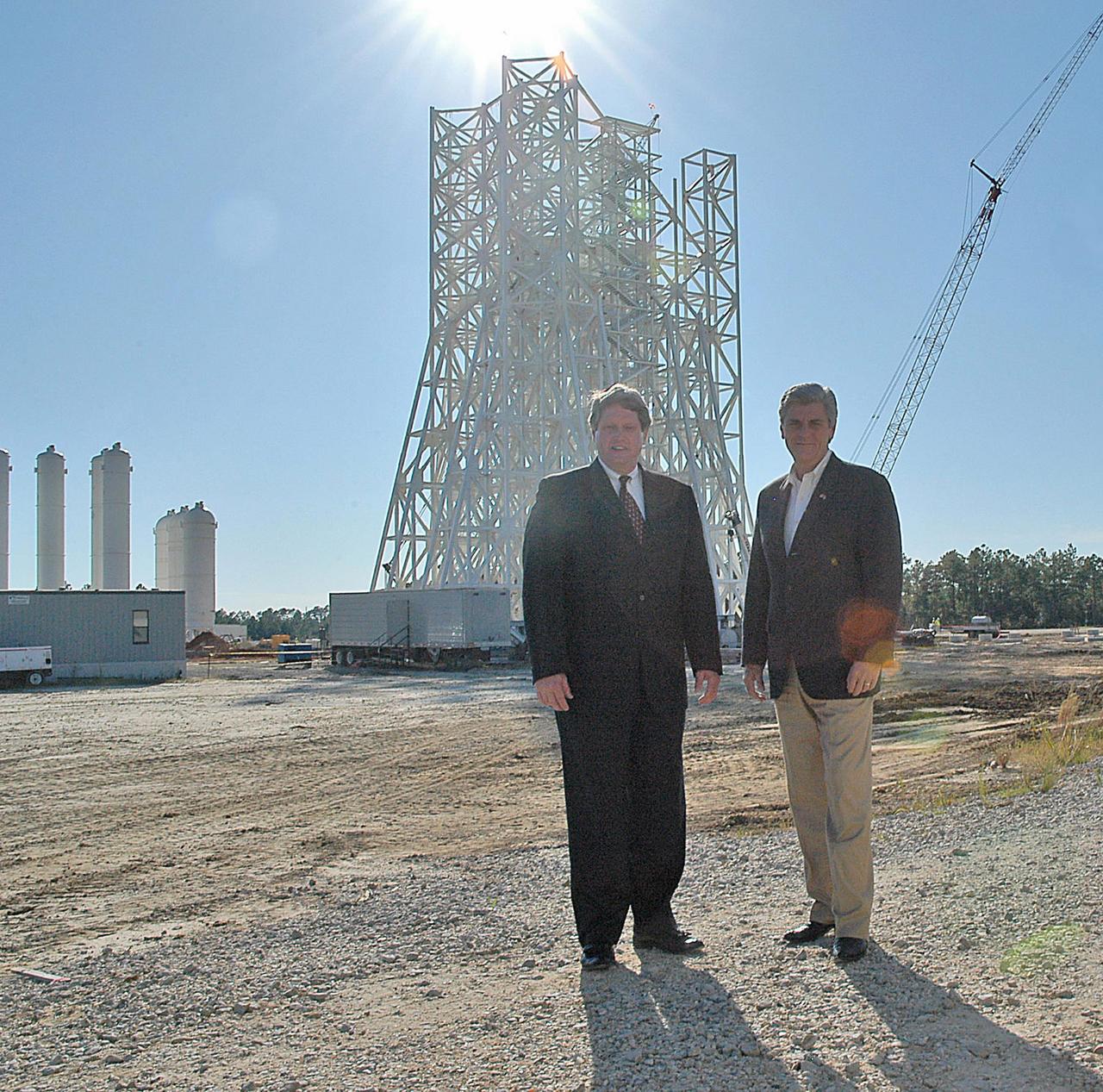
Stennis Space Center Director Gene Goldman (left) stands with Mississippi Lt. Gov. Phil Bryant at the A-3 Test Stand construction site during an Oct. 1 visit by the state official. During his tour, Bryant was updated on construction of the first large test stand at Stennis since the 1960s. The A-3 stand will be used to conduct simulated high-altitude testing on the next generation of rocket engines that will take humans back to the moon and possibly beyond. In addition to touring Stennis facilities, Bryant visited the INFINITY Science Center construction site, where he was updated on work under way to construct a 72,000-square-foot facility that will showcase the science underpinning the missions of NASA and resident agencies at Stennis.
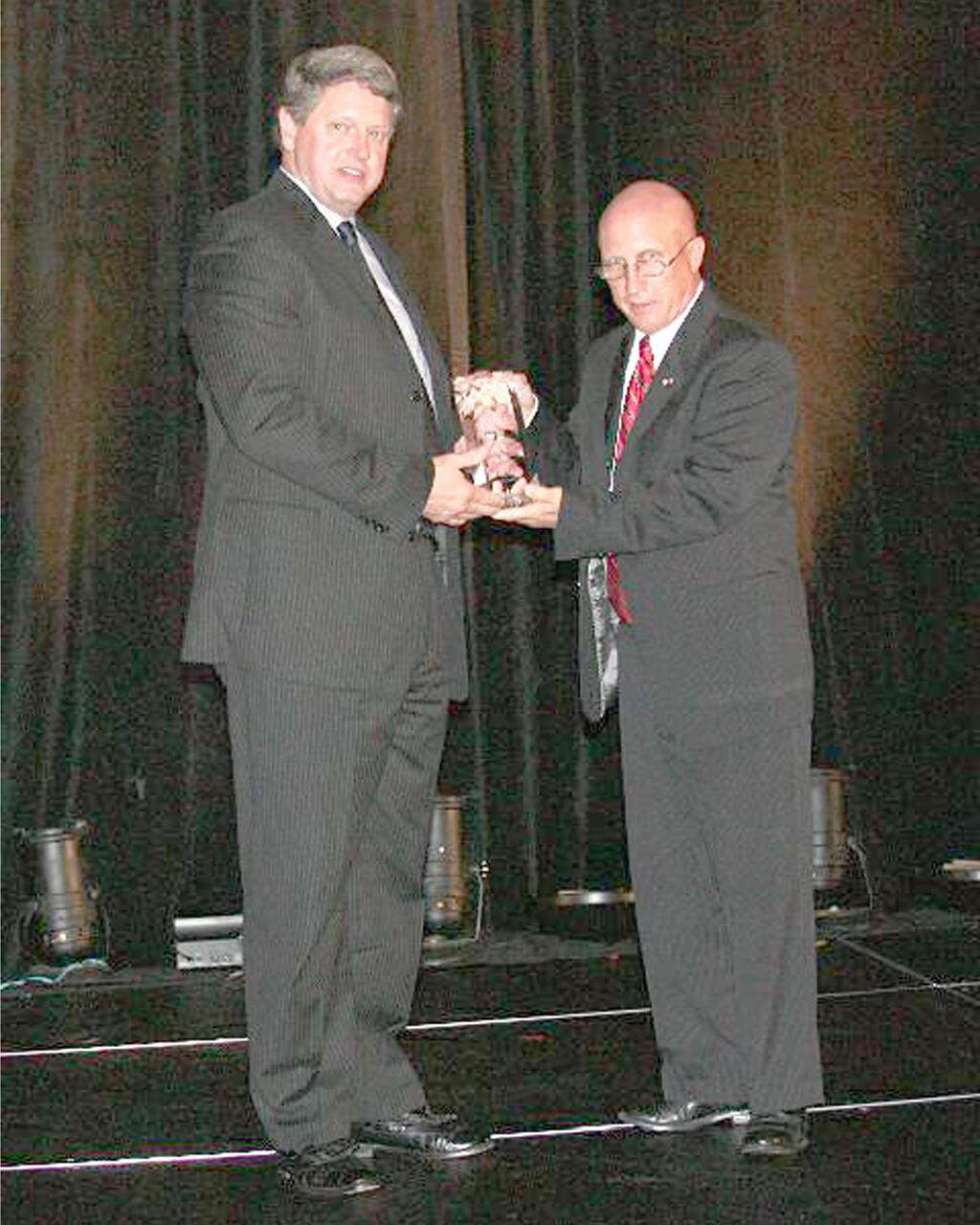
Gene Goldman (left), deputy director of NASA's John C. Stennis Space Center, accepts an Award of Excellence from Jack Zink, executive director of the Hancock County Port and Harbor Commission, during the 2008 Annual Hancock County Awards Gala. The Award of Excellence was presented to recognize Stennis Space Center's contribution to NASA's 50 years of excellence in space exploration.
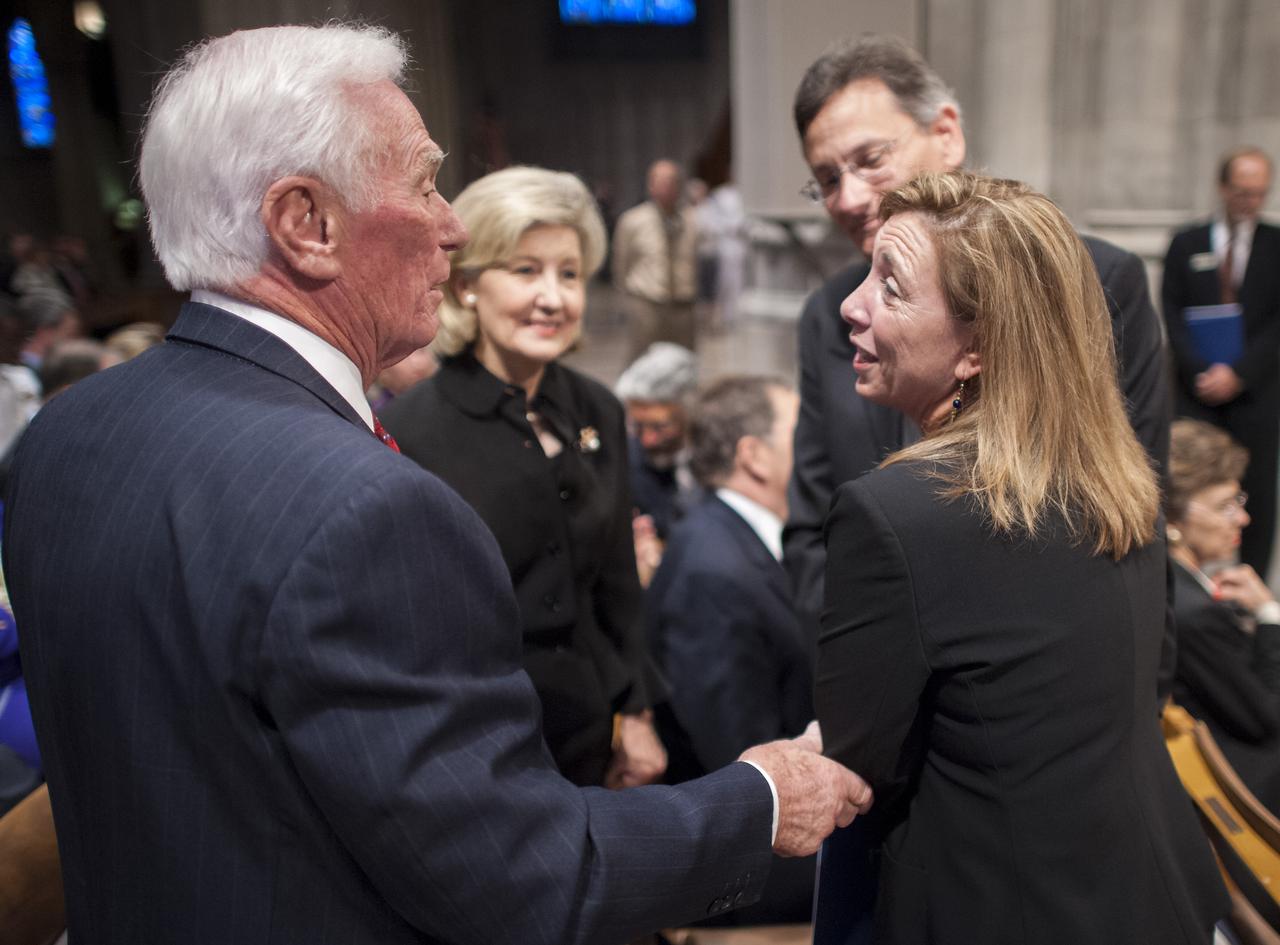
NASA Deputy Administrator Lori Garver, right, shares a moment with Apollo 17 mission commander Gene Cernan, the last man to walk on the moon, left, as U.S. Sen. Kay Bailey Hutchison, R-Texas, center looks on prior to a memorial service celebrating the life of Neil Armstrong, Thursday, Sept. 13, 2012, at the Washington National Cathedral. Armstrong, the first man to walk on the moon during the 1969 Apollo 11 mission, died Saturday, Aug. 25. He was 82. Photo Credit: (NASA/Bill Ingalls)
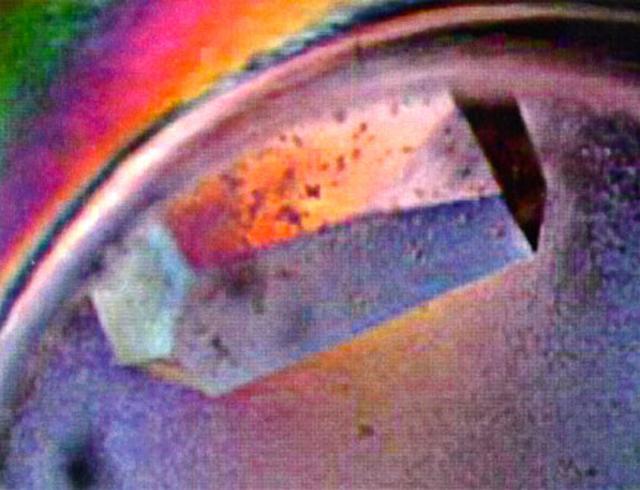
This is a large 2 mm crystal of histone octamer, grown on STS-81. A very dynamic structure which functions in many aspects of gene regulation from control of gene activity to the more subtle mechanisms of genetic imprinting. Principle Investigator is Dan Carter of New Century Pharmaceuticals.
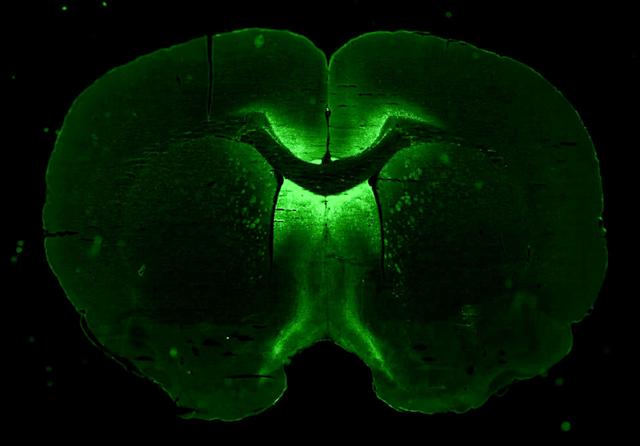
jsc2023e026250 (4/28/2023) --- A preflight vector image of AAV gene therapy that selectively targets neurons to induce axon regeneration. Innovative Paralysis Therapy Enabling Neuroregeneration (Neuronix) demonstrates the formation of three-dimensional neuronal cell cultures in microgravity and tests a neuron-specific gene therapy. Image courtesy of AXONIS Therapeutics, Inc.
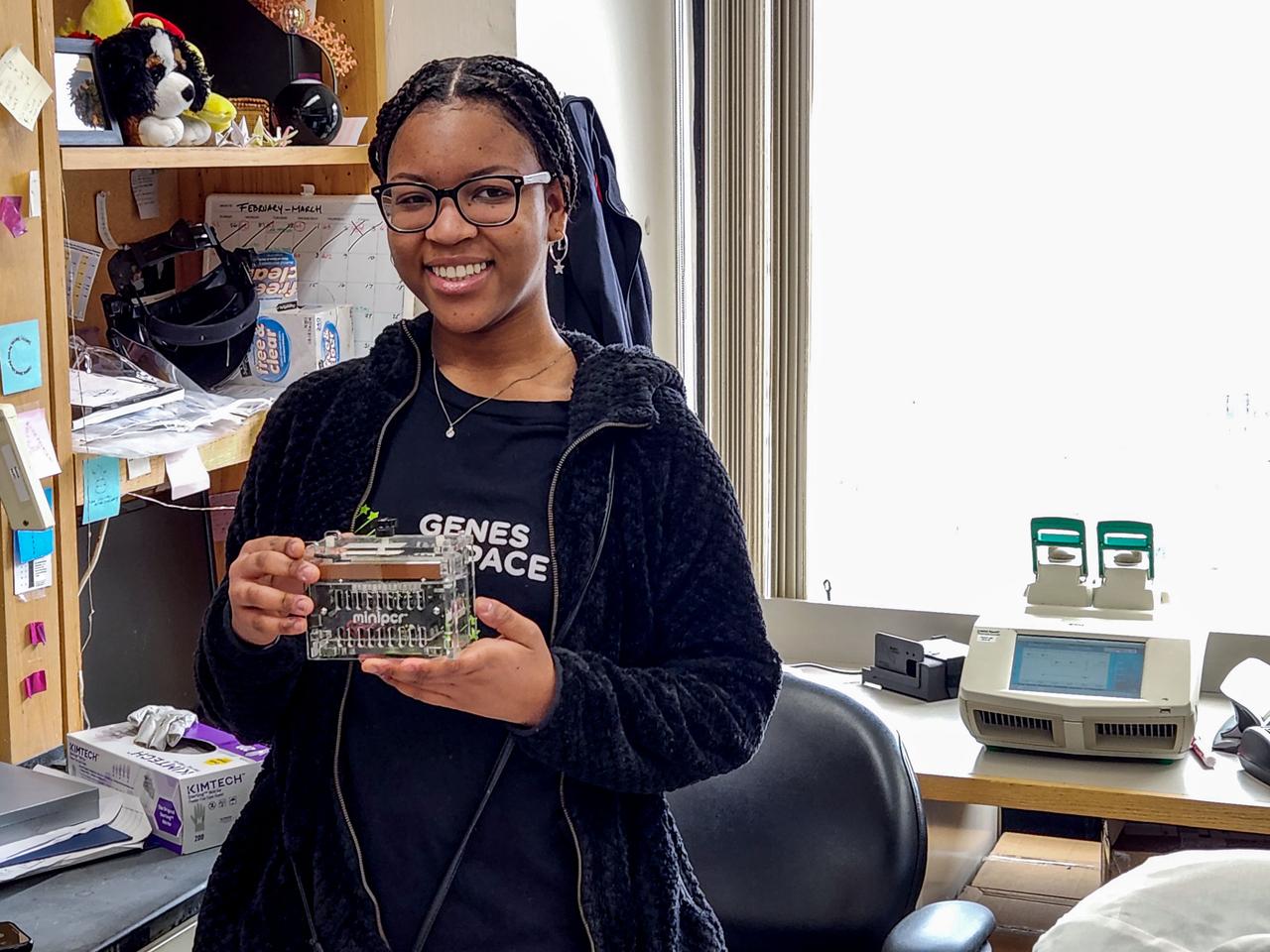
jsc2023e031076 (3/13/2023) --- Genes in Space-10 winner, student Pristine Onuoha, holds the miniPCR device, one of the tools astronauts will use to perform her investigation on the International Space Station. Onuoha’s investigation tests a method of measuring and analyzing DNA length in microgravity. Image courtesy of Genes in Space.
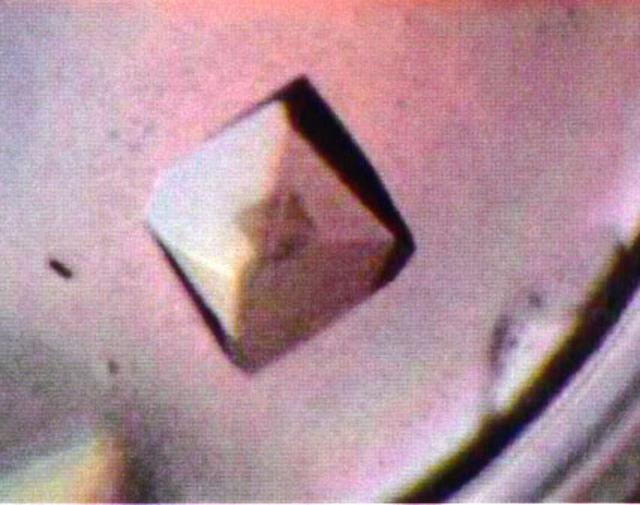
1 mm histone octamer crystal grown on STS-81. A very dynamic structure which functions in many aspects of gene regulation from control of gene activity to the more subtle mechanisms of genetic imprinting. Principle Investigator is Dan Carter of New Century Pharmaceuticals.
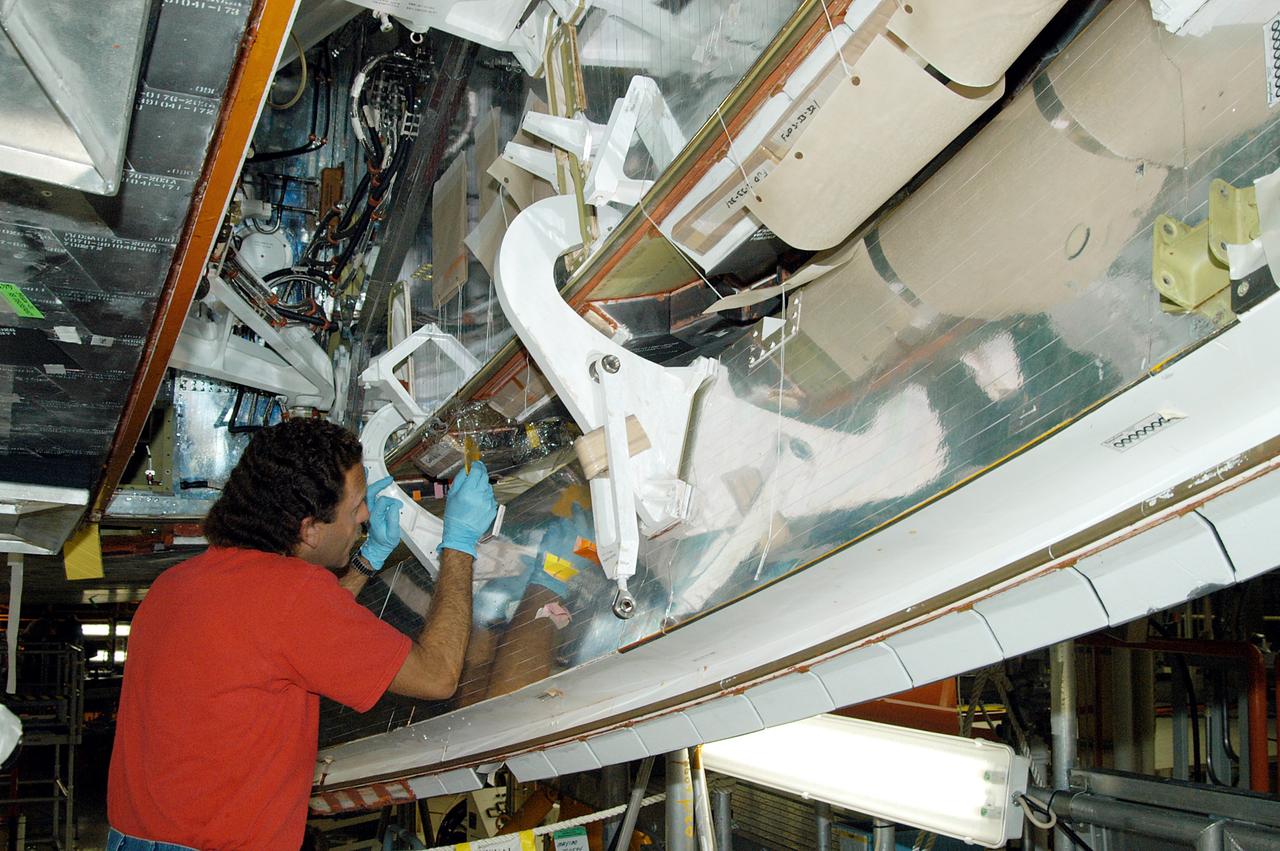
KENNEDY SPACE CENTER, FLA. - In the Orbiter Processing Facility, KSC employee Gene Peavler works in the wheel area on the orbiter Discovery. The vehicle has undergone Orbiter Major Modifications in the past year. Discovery is scheduled to fly on mission STS-121 to the International Space Station.
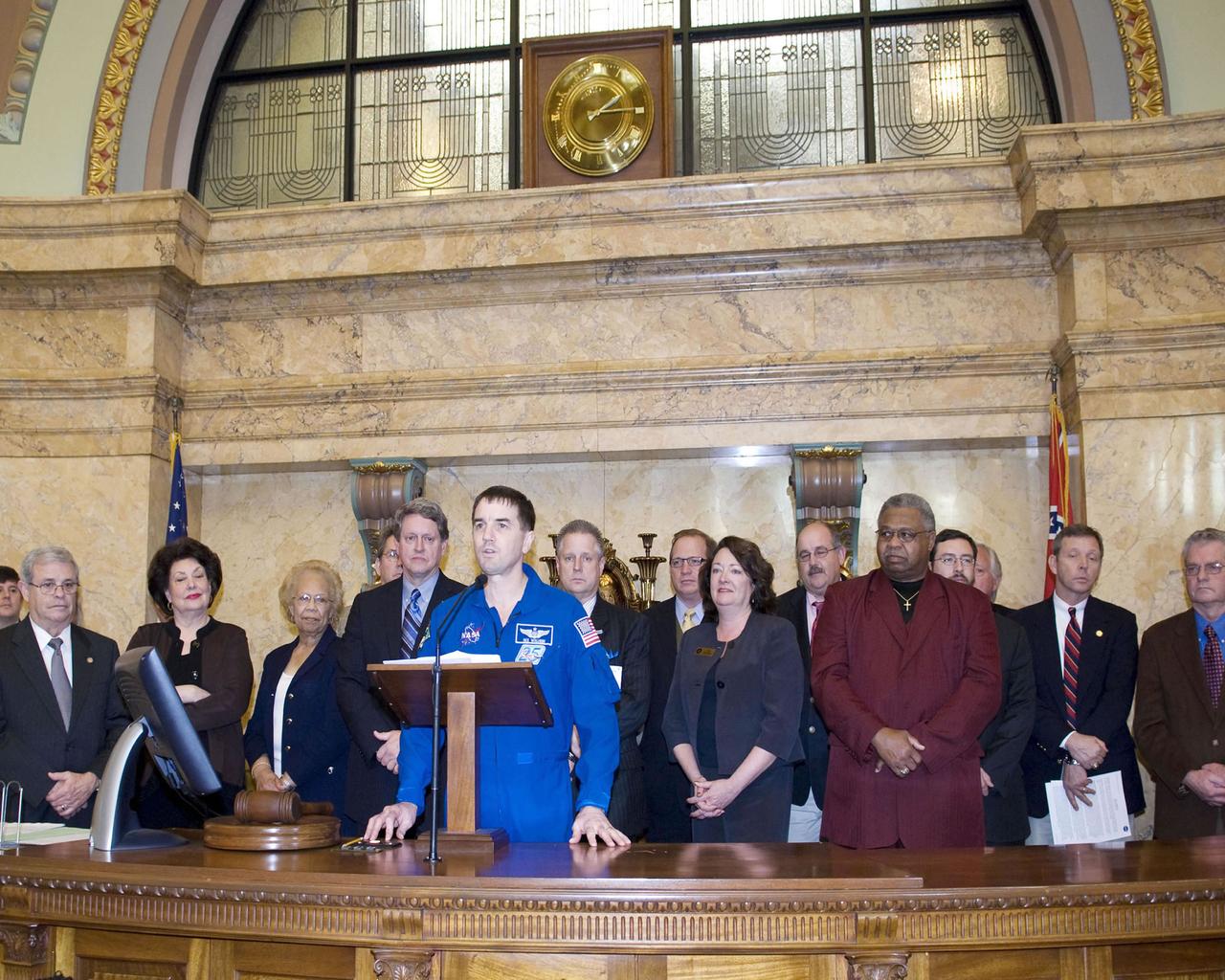
Stennis Space Center leaders and guests visit with Mississippi Senate members in chambers during NASA Day at the Capitol events in Jackson on Feb. 19. Standing at the Senate podium (rear) is Mississippi Lt. Gov. Phil Bryant. Standing at the lectern below are (l to r): Sen. David Baria, D-Bay St. Louis; Partners for Stennis Chair Clay Wagner; NASA Shared Services Center Director Rick Arbuthnot; astronaut Rex Walheim; Stennis Space Center Director Gene Goldman; President Pro Tempore Billy Hewes, R-Gulfport; Sen. Ezell Lee, D-Picayune; and Sen. Tommy Gollott, R-Biloxi.
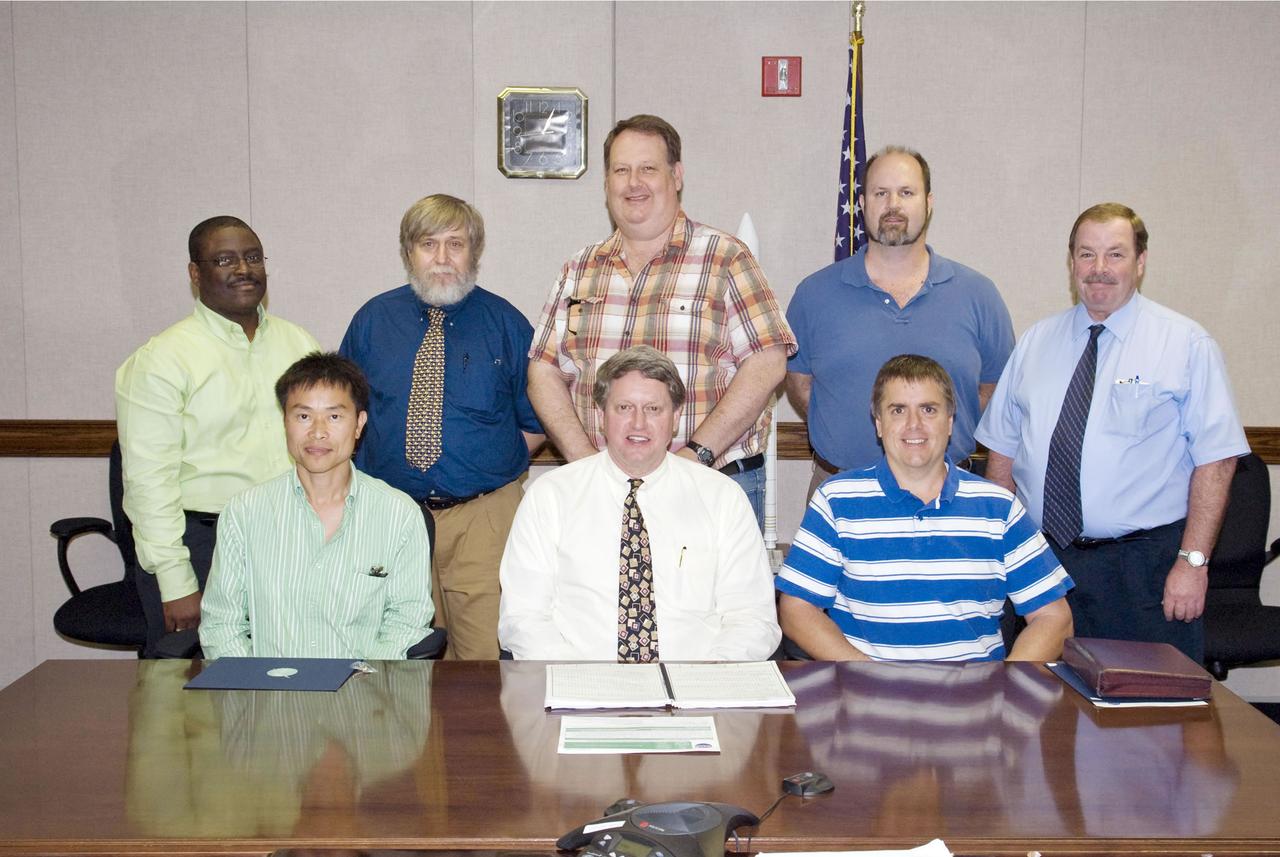
The NASA Engineering & Safety Center recently presented its Group Achievement Award to a Stennis team in recognition of technical excellence in evaluating the operational anomalies and reliability improvements associated with the space shuttle engine cut-off system. Stennis employees receiving the award were: (standing, l to r) Freddie Douglas (NASA), George Drouant (Jacobs Technology Inc.), Fred Abell (Jacobs), Robert Drackett (Jacobs) and Mike Smiles (NASA); (seated, l to r): Binh Nguyen (Jacobs), Stennis Director Gene Goldman and Joseph Lacker (NASA). Phillip Hebert of NASA is not pictured.
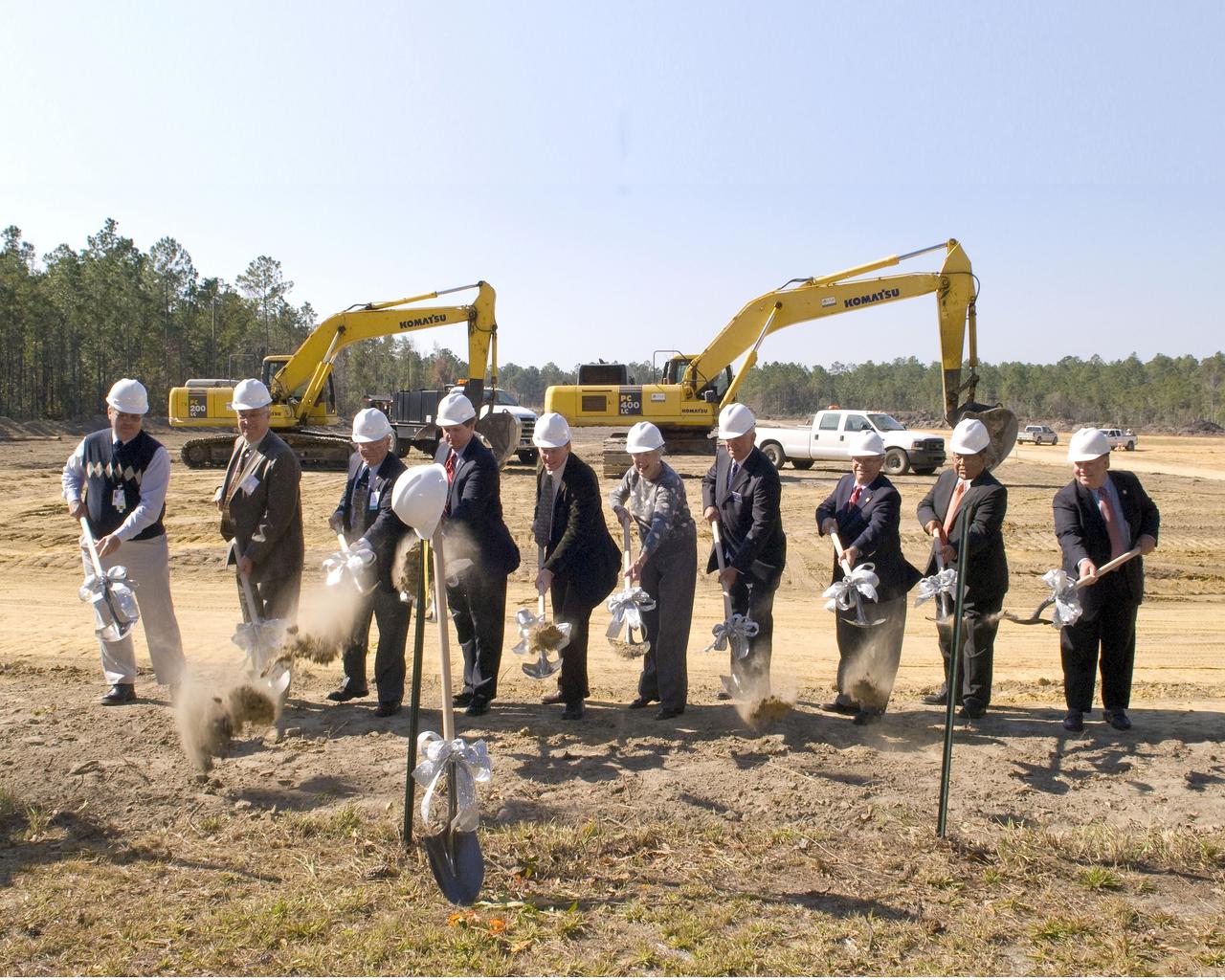
Community leaders from Mississippi and Louisiana break ground for the new INFINITY at NASA Stennis Space Center facility during a Nov. 20 ceremony. Groundbreaking participants included (l to r): Gottfried Construction representative John Smith, Mississippi Highway Commissioner Wayne Brown, INFINITY board member and Apollo 13 astronaut Fred Haise, Stennis Director Gene Goldman, Studio South representative David Hardy, Leo Seal Jr. family representative Virginia Wagner, Hancock Bank President George Schloegel, Mississippi Rep. J.P. Compretta, Mississippi Band of Choctaw Indians representative Charlie Benn and Louisiana Sen. A.G. Crowe.
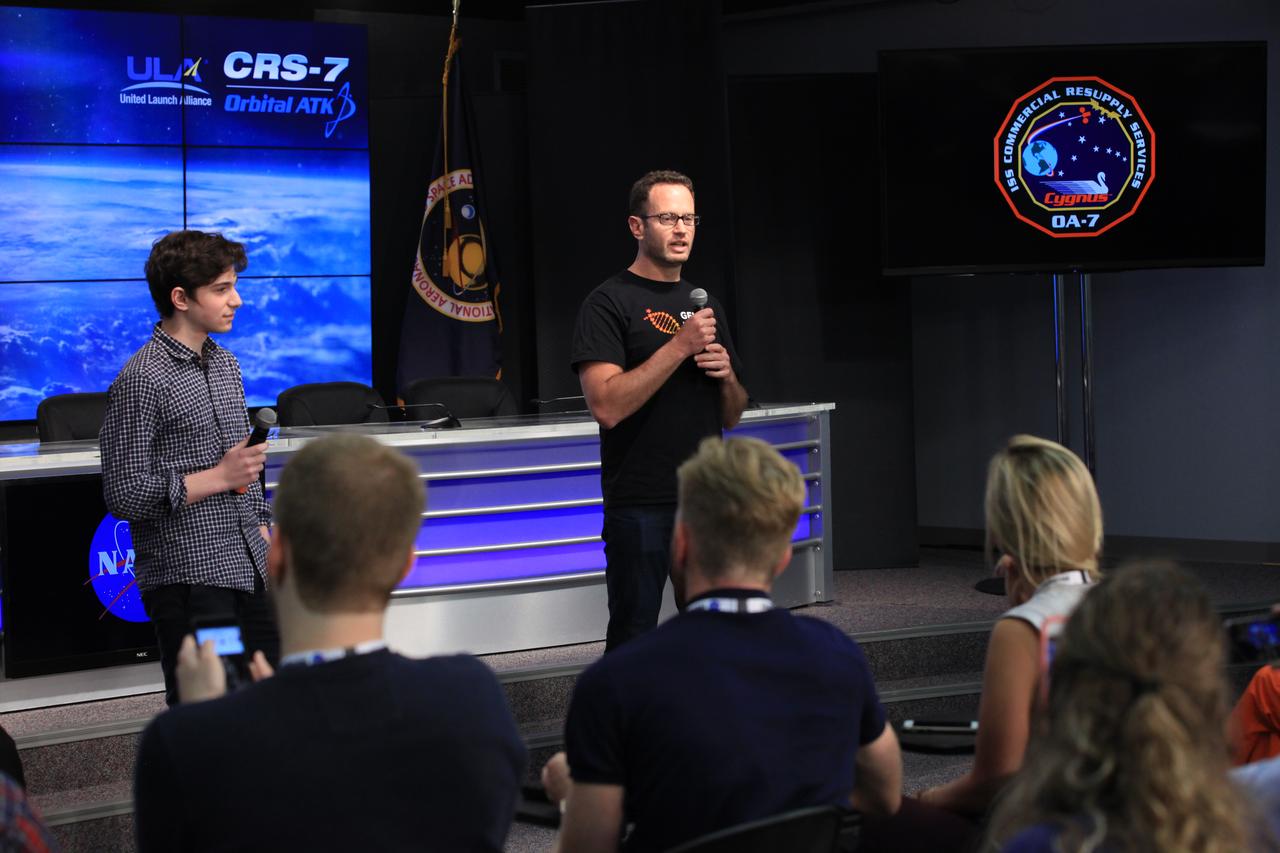
Dr. Sebastian Kraves, at right, co-founder of Genes in Space, discusses the winning experiment for Genes in Space II, during a "What's on Board" science briefing to NASA Social participants at the agency's Kennedy Space Center in Florida. At left is Julian Rubinfien, the student winner of this year's Genes in Space competition. The briefing was for Orbital ATK's seventh commercial resupply services missions, CRS-7, to the International Space Station. Orbital ATK's Cygnus pressurized cargo module is set to launch on the United Launch Alliance Atlas V rocket from Space Launch Complex 41 at Cape Canaveral Air Force Station on April 18. Liftoff is scheduled for 11:11 a.m. EDT.
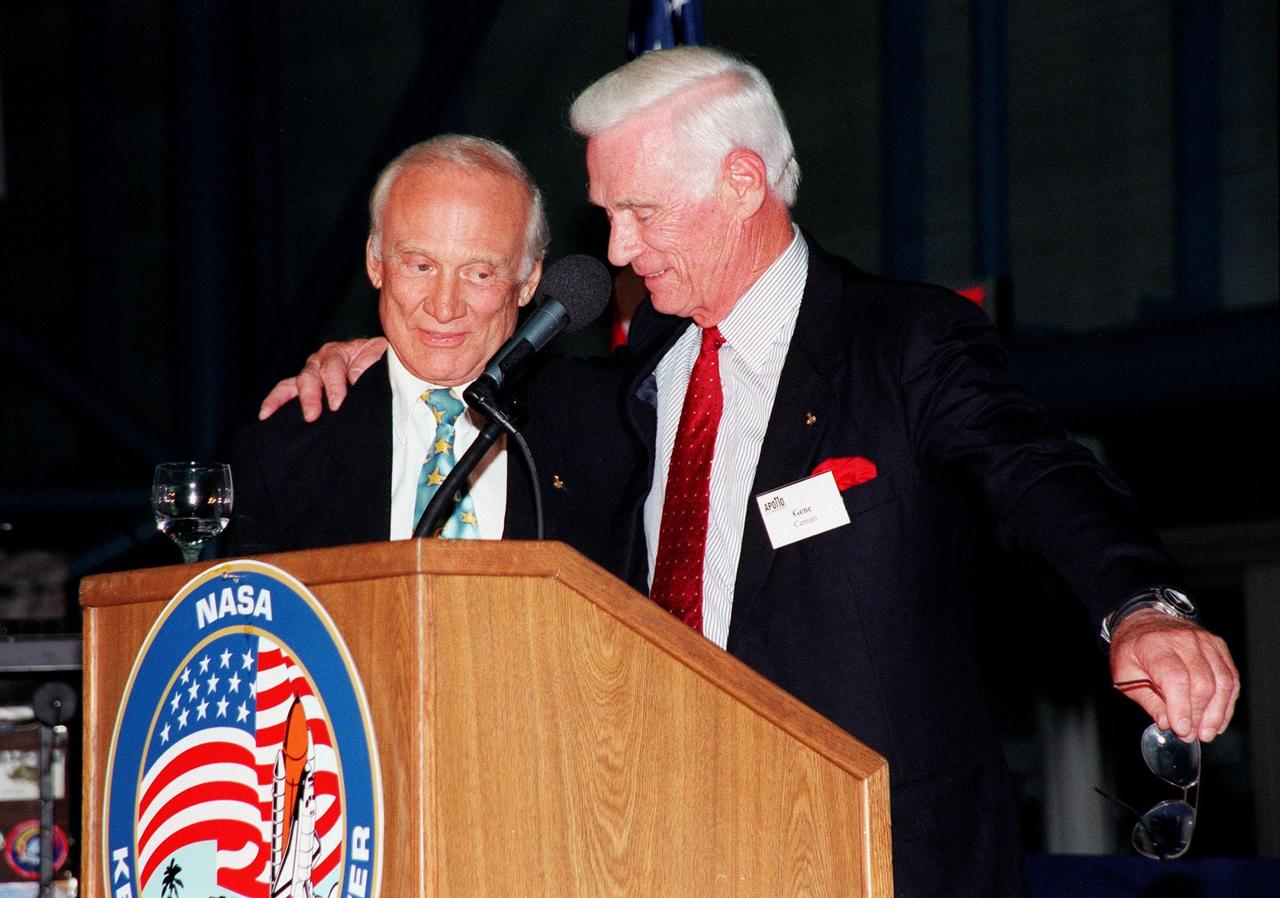
KENNEDY SPACE CENTER, FLA. -- Former Apollo astronauts Edwin "Buzz" Aldrin (left) and Gene Cernan share stories about their missions for an audience attending an anniversary banquet honoring the Apollo program team, the people who made the entire lunar landing program possible. The banquet was held in the Apollo/Saturn V Center, part of the KSC Visitor Complex. This is the 30th anniversary of the Apollo 11 launch and moon landing, July 16 and July 20, 1969. Other guests at the banquet were astronauts Wally Schirra, Gene Cernan and Walt Cunningham. Neil Armstrong was the first man to walk on the moon; Gene Cernan was the last
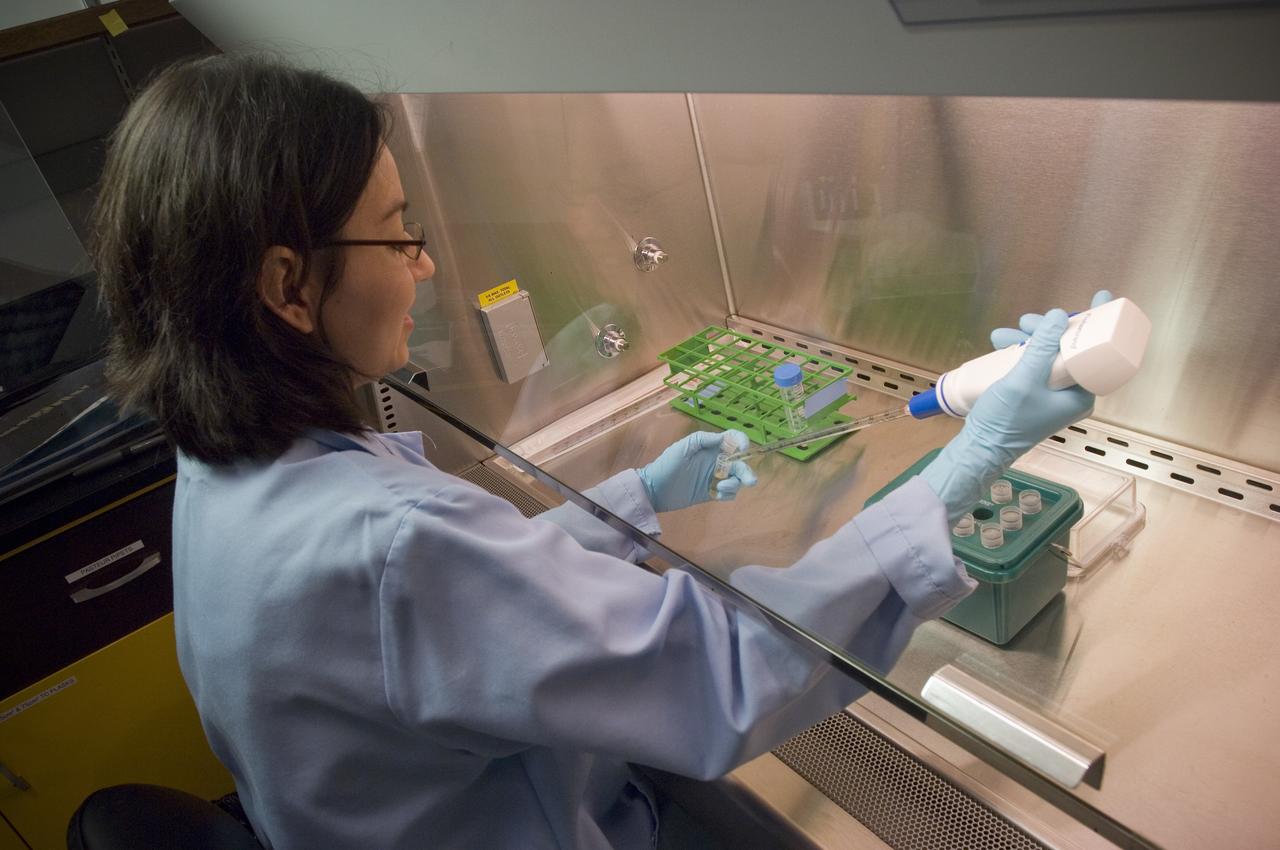
SPEGIS (Streptococcus Pneumoniae Expression of Genes in Space) payload equipment (For STS-118 Space Shuttle Mission)
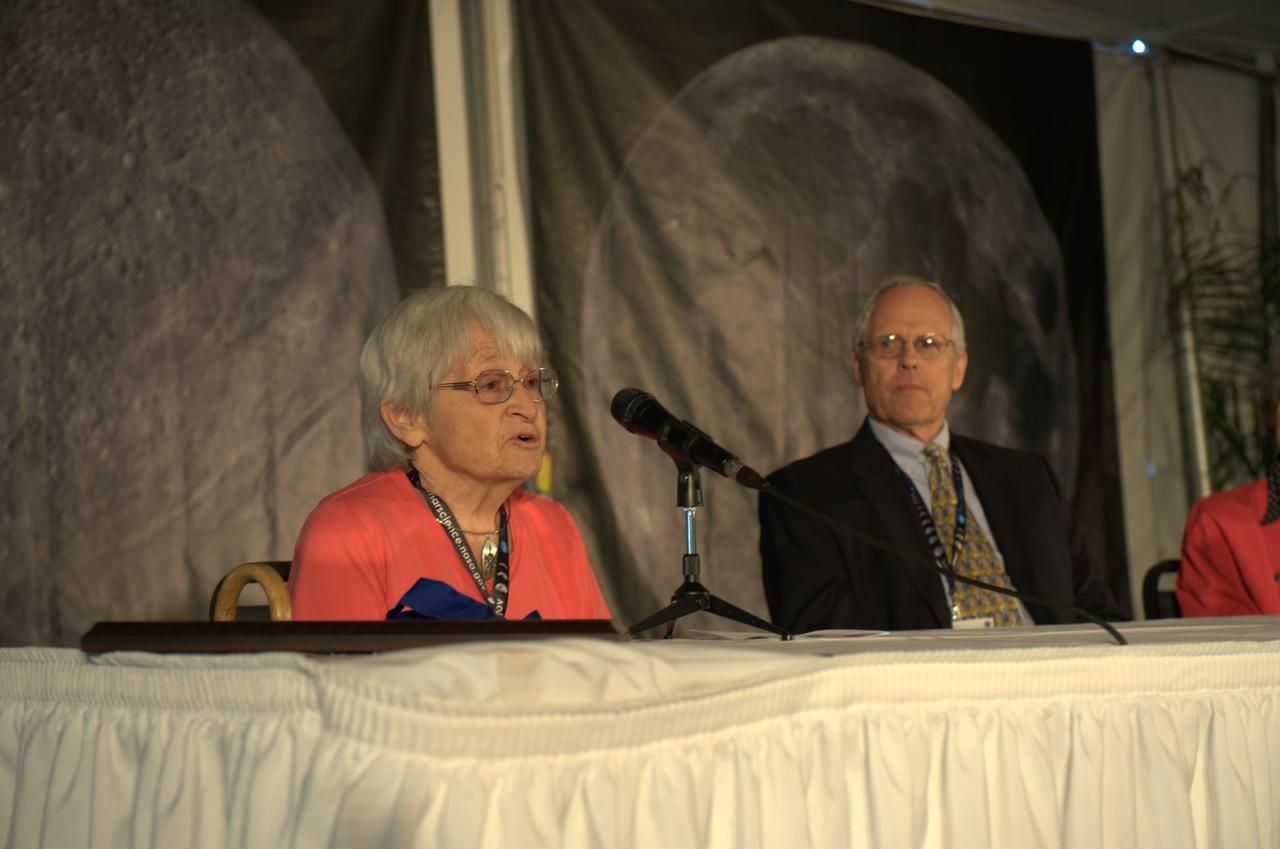
Lunar Science Forum 2011 Shoemaker Award reciepiants Gene Shoemaker on left and G. Jeffrey Taylor on right
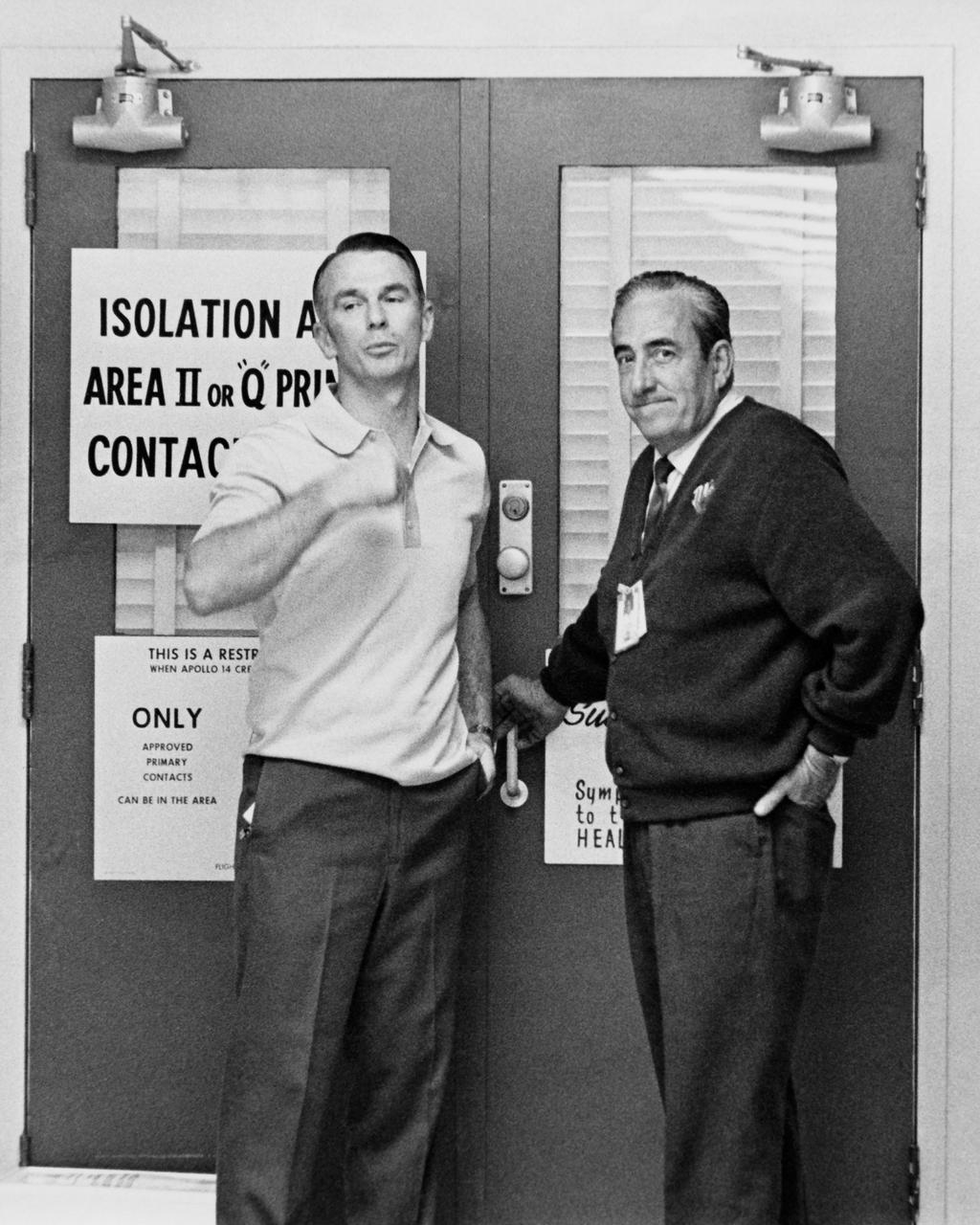
CAPE CANAVERAL, Fla. – Astronaut Gene Cernan, left, stands outside the Astronaut Crew Quarters on Jan. 26, 1971. Photo credit: NASA
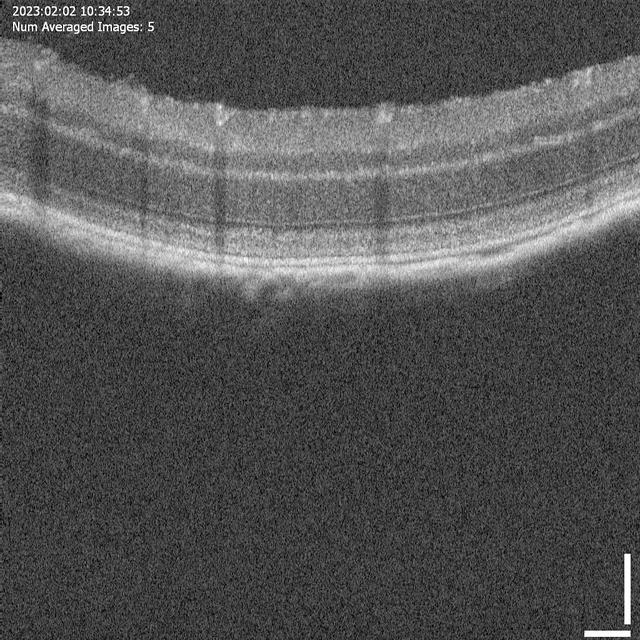
jsc2023e054753 (9/27/2023) --- Optical Coherence tomography image demonstrating the retinal ultrastructure of the mouse retina. Preclinical Validation of a Modifier Gene Therapy to Prevent Spaceflight Associated Oxidative Stress and Apoptosis in Microgravity Mouse Model of Dry Macular Degeneration (Rodent Research-28 or RR-28) tests the effect of a gene therapy on retinal structure and function during spaceflight. (Image courtesy Oculogenex Inc.)
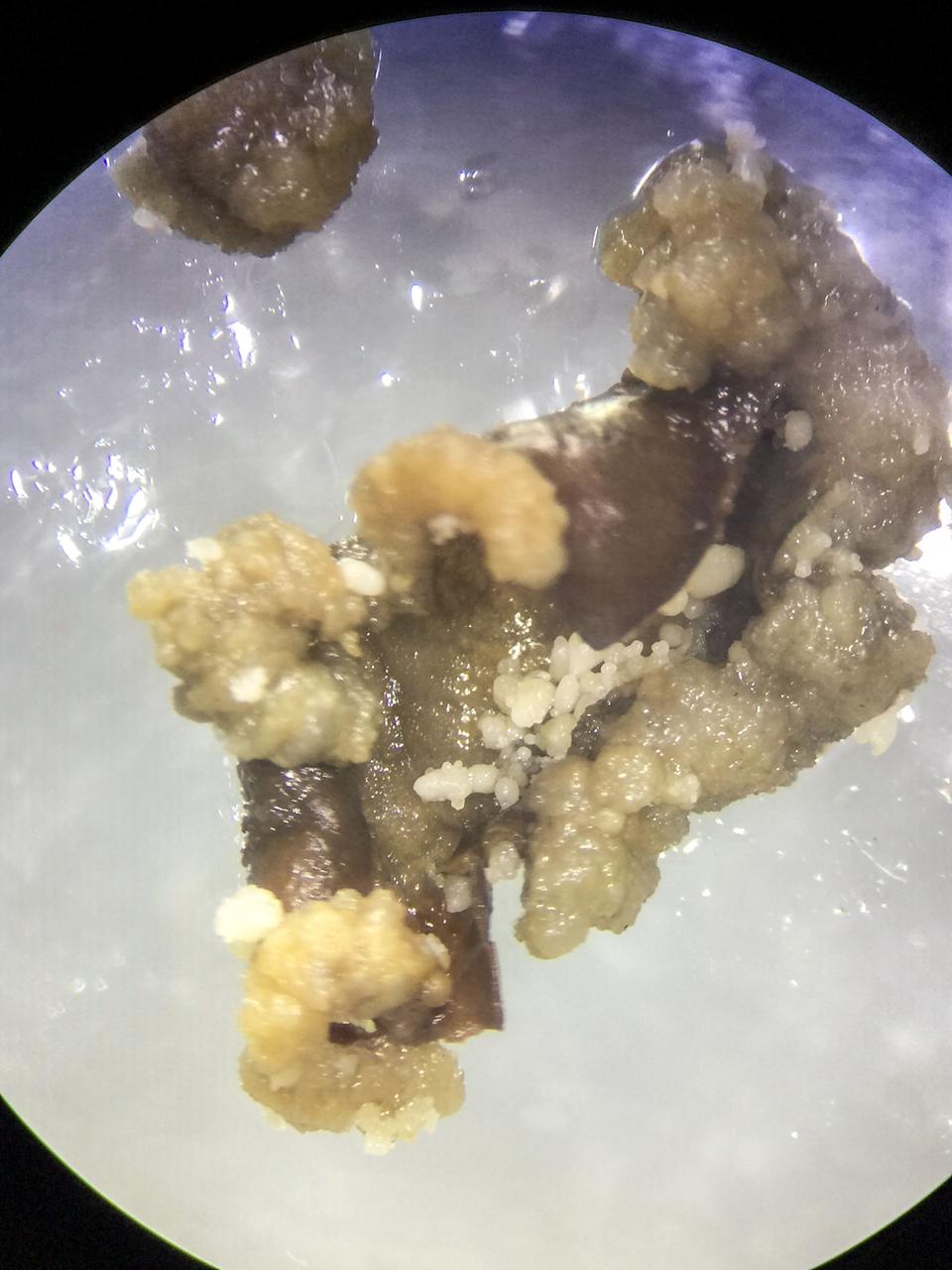
jsc2020e003413 (12/4/2019) --- Preflight imagery of space Cells-01. Space Cells-01 examines gene expression changes and genetic mutations in hemp and coffee plant cells in microgravity. Cell cultures spend approximately one month on the space station then return to Earth for analysis of their physical structure and gene expression and are compared to preflight parameters. Results could help identify new varieties or chemical expressions in the plants and improve understanding of how plants manage the stress of space travel.
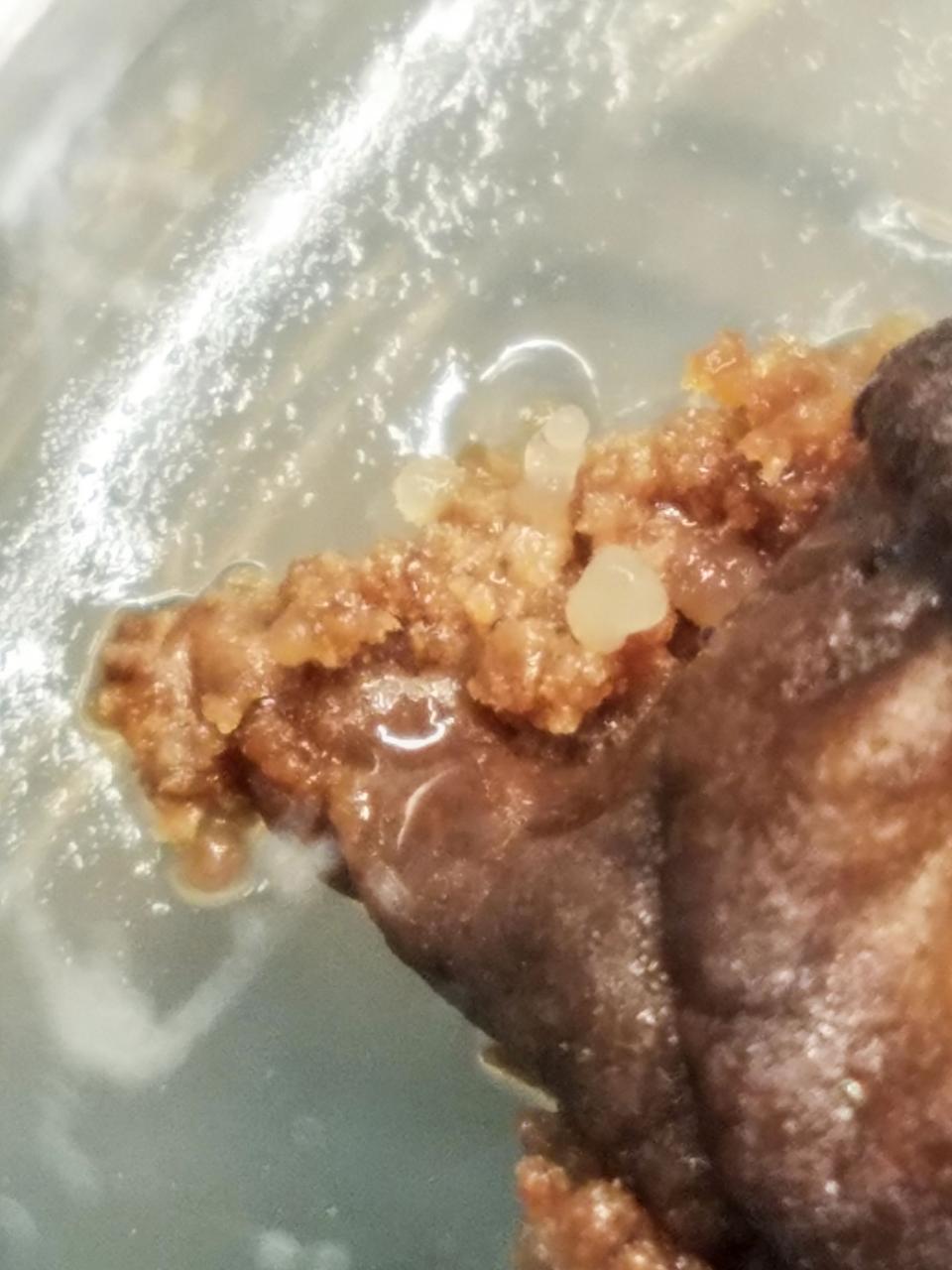
jsc2020e003414 (12/20/2019) --- Preflight imagery of Space Cells-01. Space Cells-01 examines gene expression changes and genetic mutations in hemp and coffee plant cells in microgravity. Cell cultures spend approximately one month on the space station then return to Earth for analysis of their physical structure and gene expression and are compared to preflight parameters. Results could help identify new varieties or chemical expressions in the plants and improve understanding of how plants manage the stress of space travel.
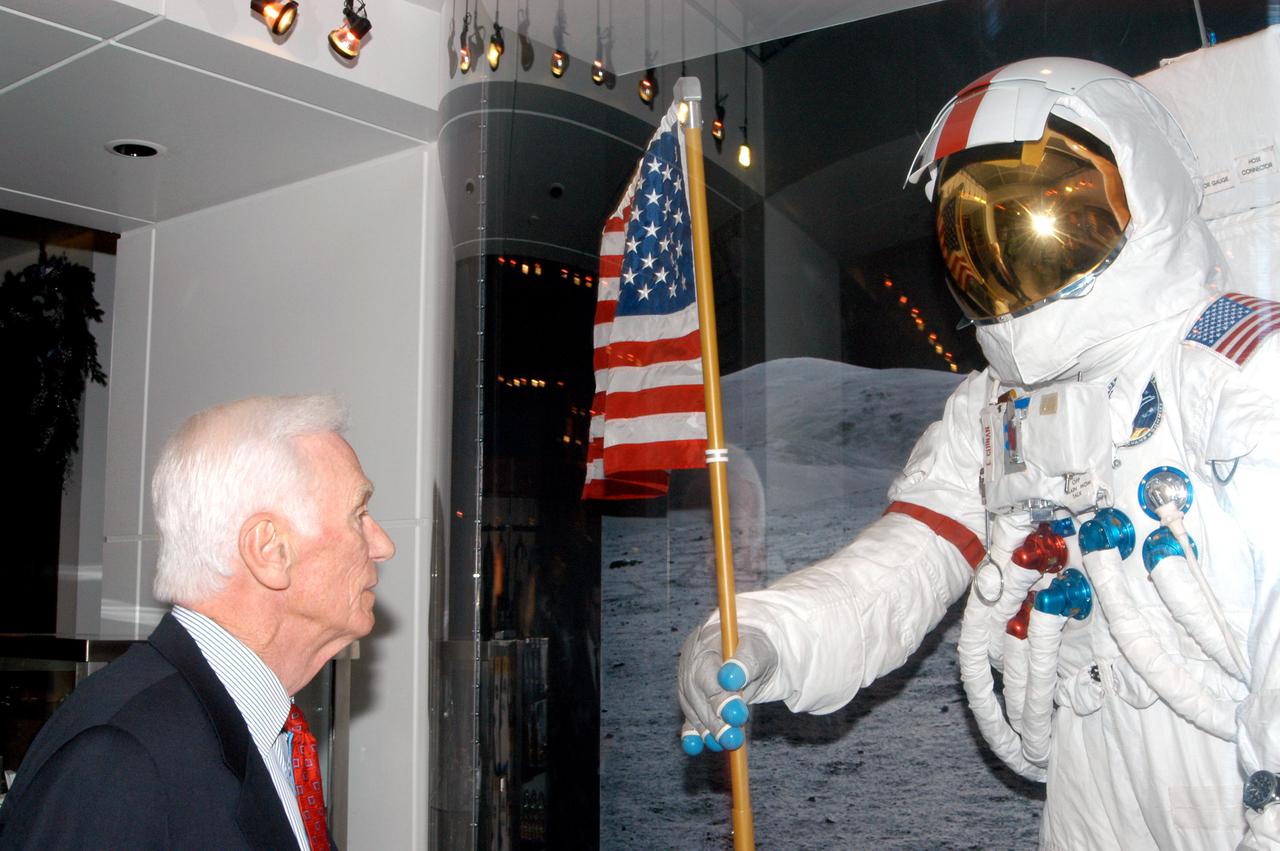
KENNEDY SPACE CENTER, FLA. - Apollo 17 Commander Gene Cernan looks at the Moon landing display in the new Kennedy Space Center Store at Orlando International Airport. NASA’s Kennedy Space Center Director Jim Kennedy and Apollo 17 Commander Gene Cernan participated in the grand opening ceremony. The store will help educate millions of airport visitors about America’s space program and the Vision for Space Exploration. The store is operated by Kennedy Space Center Visitor Complex concessionaire Delaware North Parks and Resorts.
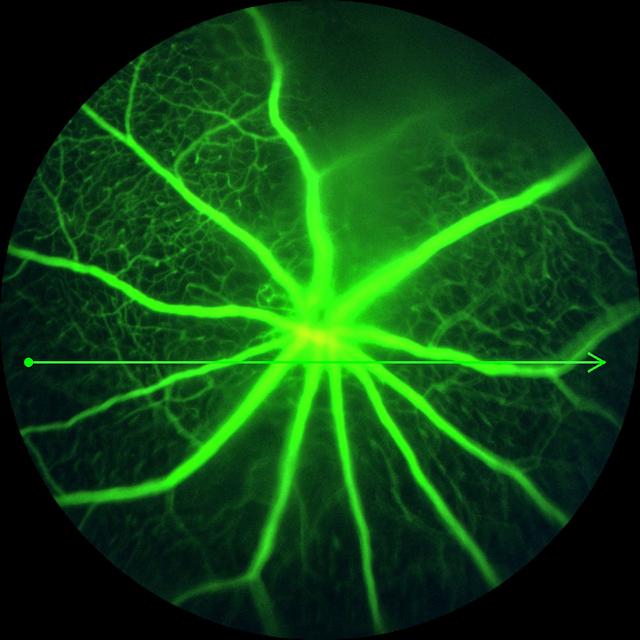
jsc2023e054752 (9/27/2023) --- Fluorescein angiogram of the microvascular circulation of the mouse retina. Preclinical Validation of a Modifier Gene Therapy to Prevent Spaceflight Associated Oxidative Stress and Apoptosis in Microgravity Mouse Model of Dry Macular Degeneration (Rodent Research-28 or RR-28) tests the effect of a gene therapy on retinal structure and function during spaceflight. (Image courtesy Oculogenex Inc.)
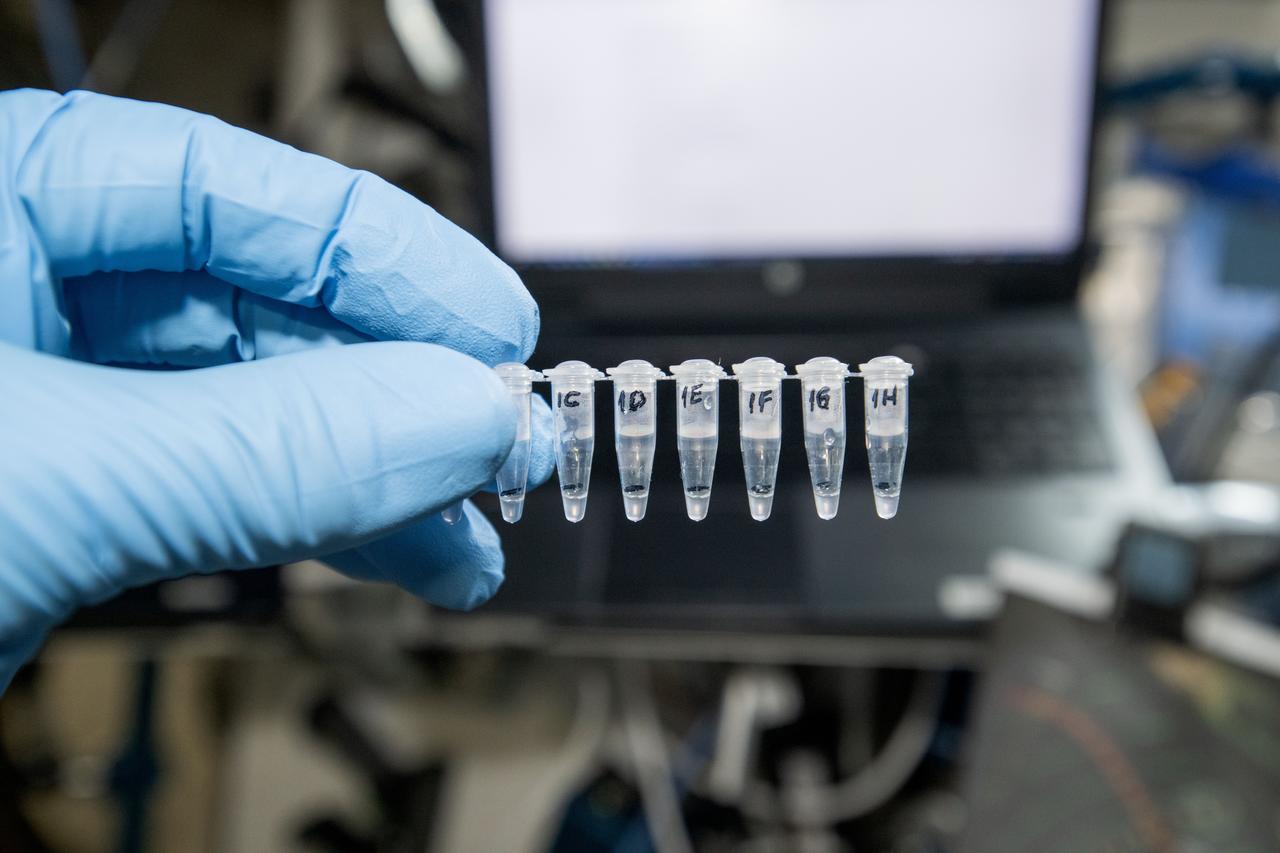
iss072e010035 (Oct. 12, 2024) --- NASA astronaut and Expedition 72 Flight Engineer Don Pettit displays Genes In Space-11 samples validating on-orbit Nucleic Acid Sequenced Based Amplification (NASBA), a novel technique to detect specific RNA sequences that can be applied to studying crucial biological processes, such as viral infection, genomic damage, or gene expression during spaceflight. Genes in Space-11 studies how spaceflight may activate retrotransposons, which are DNA fragments that copy and paste themselves throughout a genome, leading to cancer and other diseases. This investigation tests methods for detecting and measuring retrotransposons that may be adapted to detect other RNAs, including those of viruses that cause illness. Understanding the behavior of retrotransposons in microgravity may shed light on the genetic risks, including cancer, from space travel and support development of ways to protect astronauts during missions.
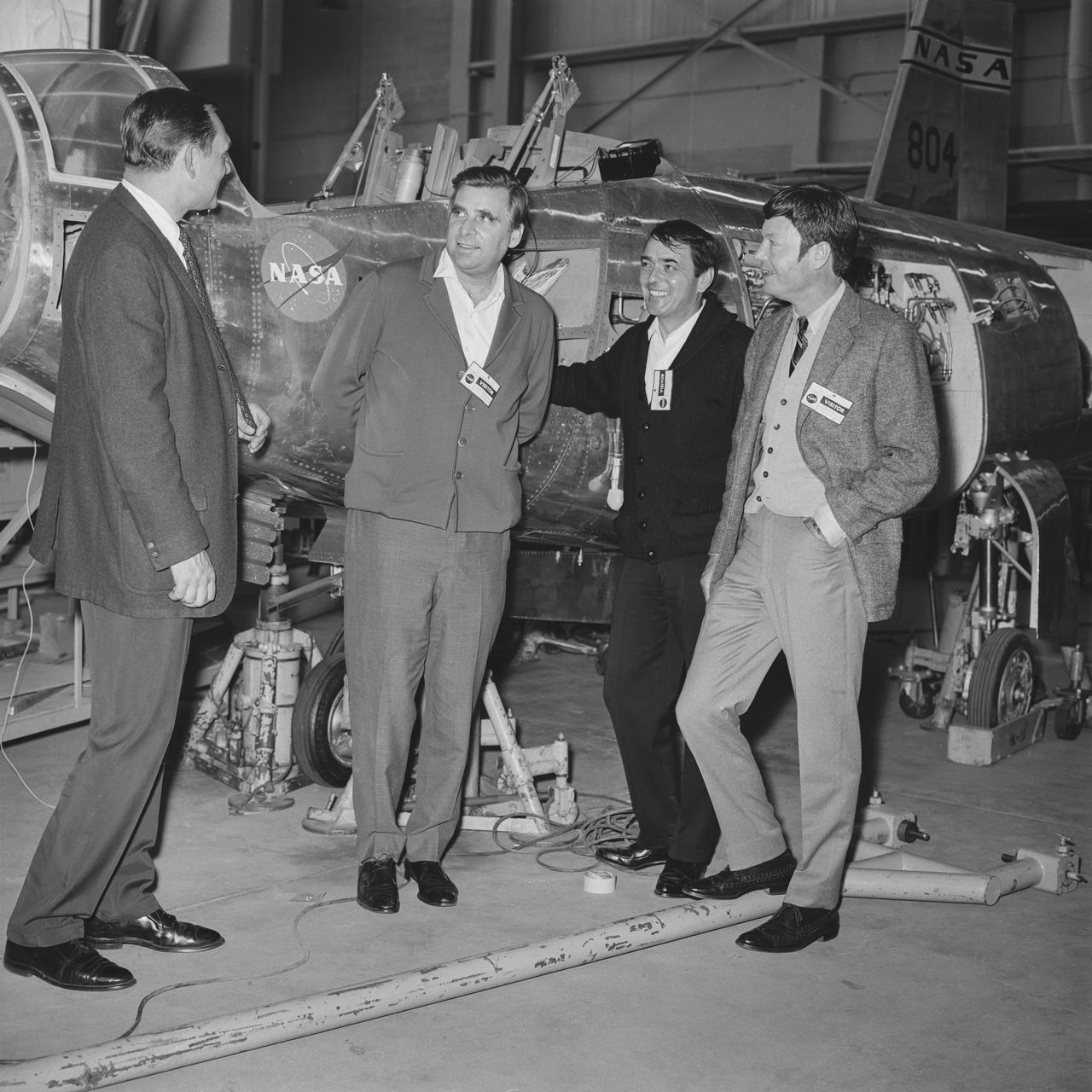
The 1960s Star Trek television series cast members Chief Engineer Montgomery ‘Scotty’ Scott played by James Doohan and Chief Medical Officer Leonard ‘Bones’ McCoy played by DeForest Kelley and the show’s creator Gene Roddenberry receive briefing on NASA Dryden Flight Research Center, now Armstrong, in front of HL-10
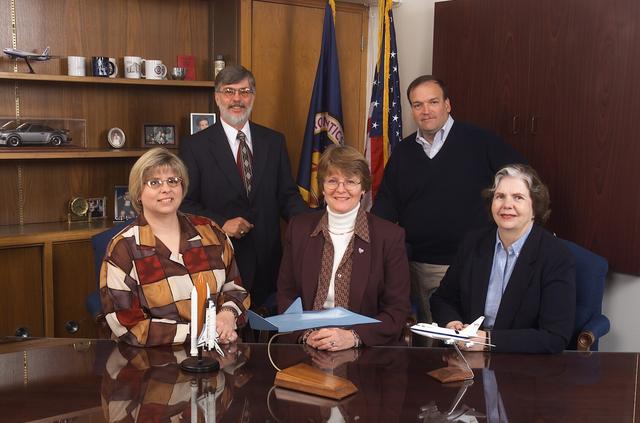
Acquisition Division (Code-JA) staff : Seated L-R; Julie Donley, Connie Cunningham, Grace Ann Weiler; Standing Back L-R; Gene Moses, Charles Duff
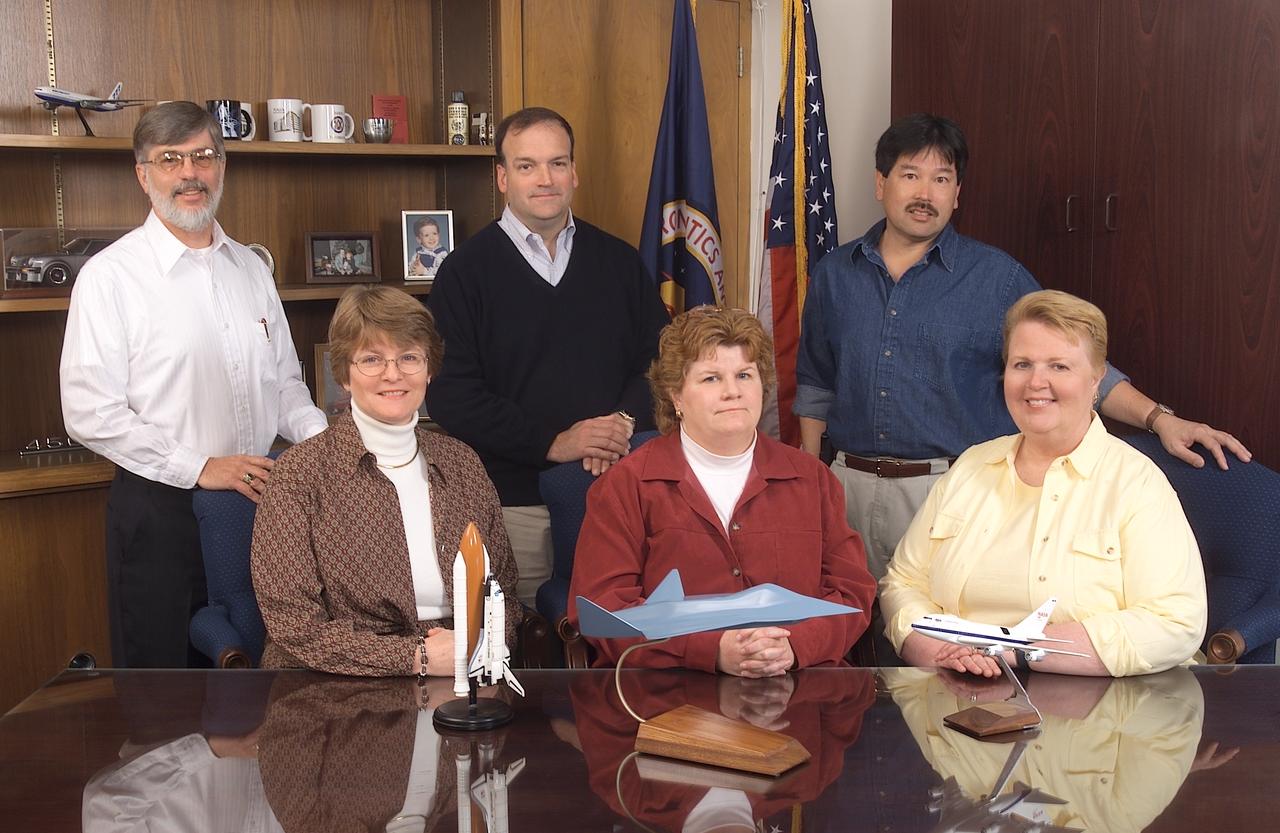
Acquisition Division (Code-JA) staff with Branch Chiefs: Seated L-R; Connie Cunningham, Dee Morison, Carolyn LaFollette: Standing L-R; Gene Moses, Charles Duff, Daryl Wong
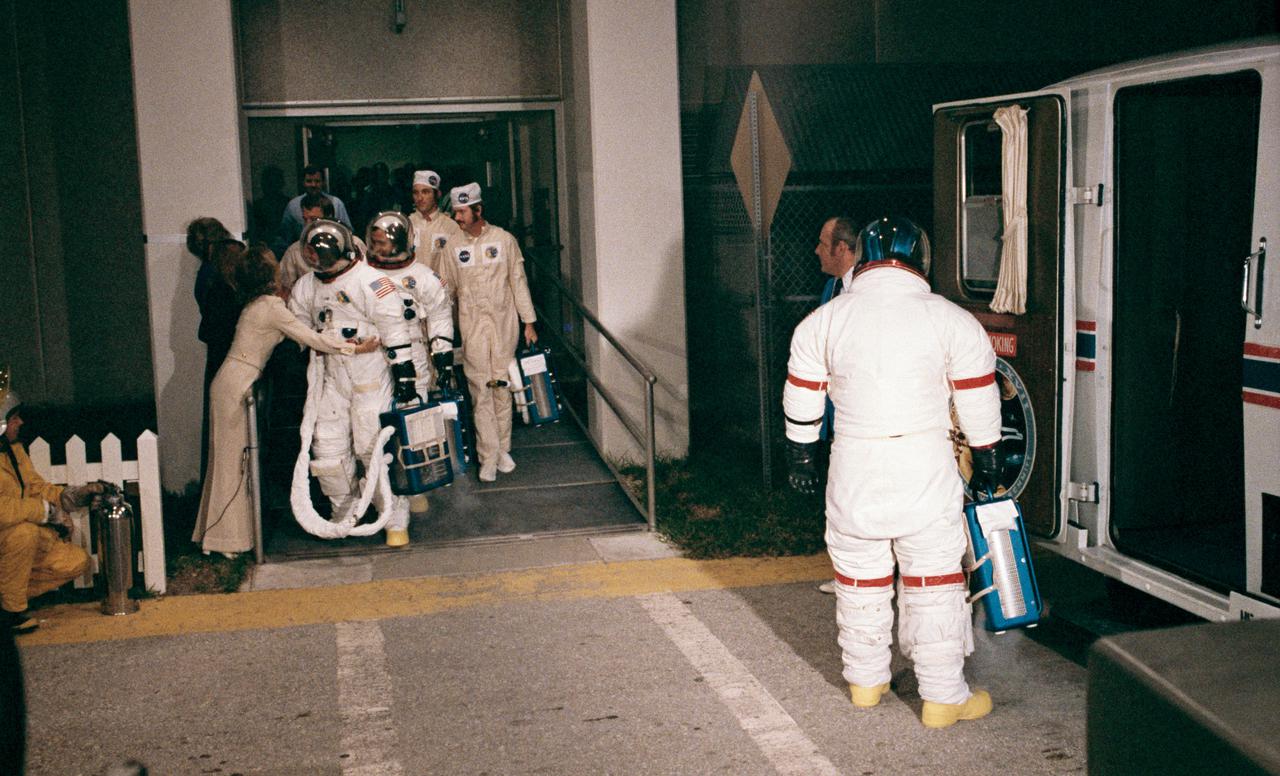
CAPE CANAVERAL, Fla. – Apollo 17 commander Gene Cernan watches as his spacesuit is prepared for liftoff inside the Operations and Checkout Building at NASA's Kennedy Space Center.
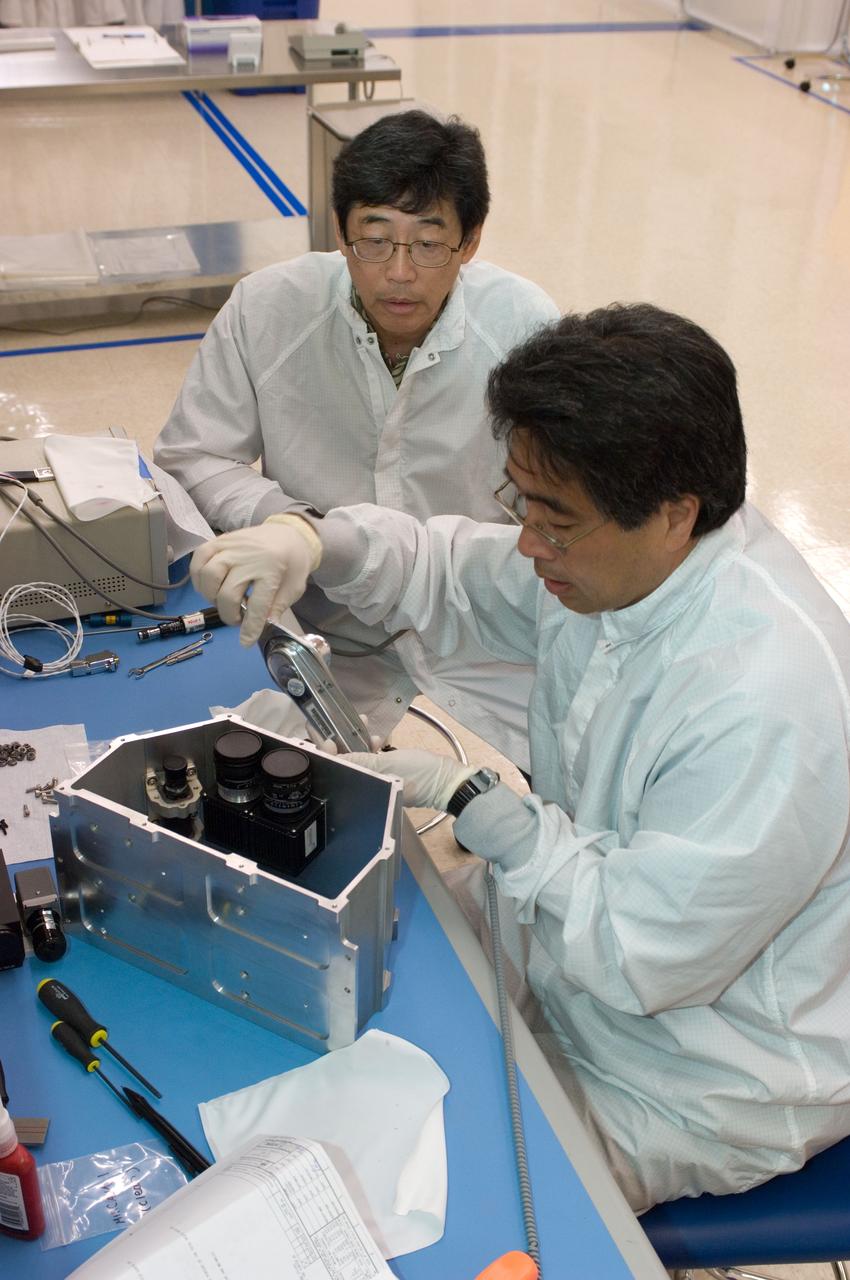
LCROSS flight hardware in clean room at Ames N-240. with P.I.'s and EEL personnel preforming various tasks during assembly Gene Sasaki (frt) and Jerry Wang (bk)
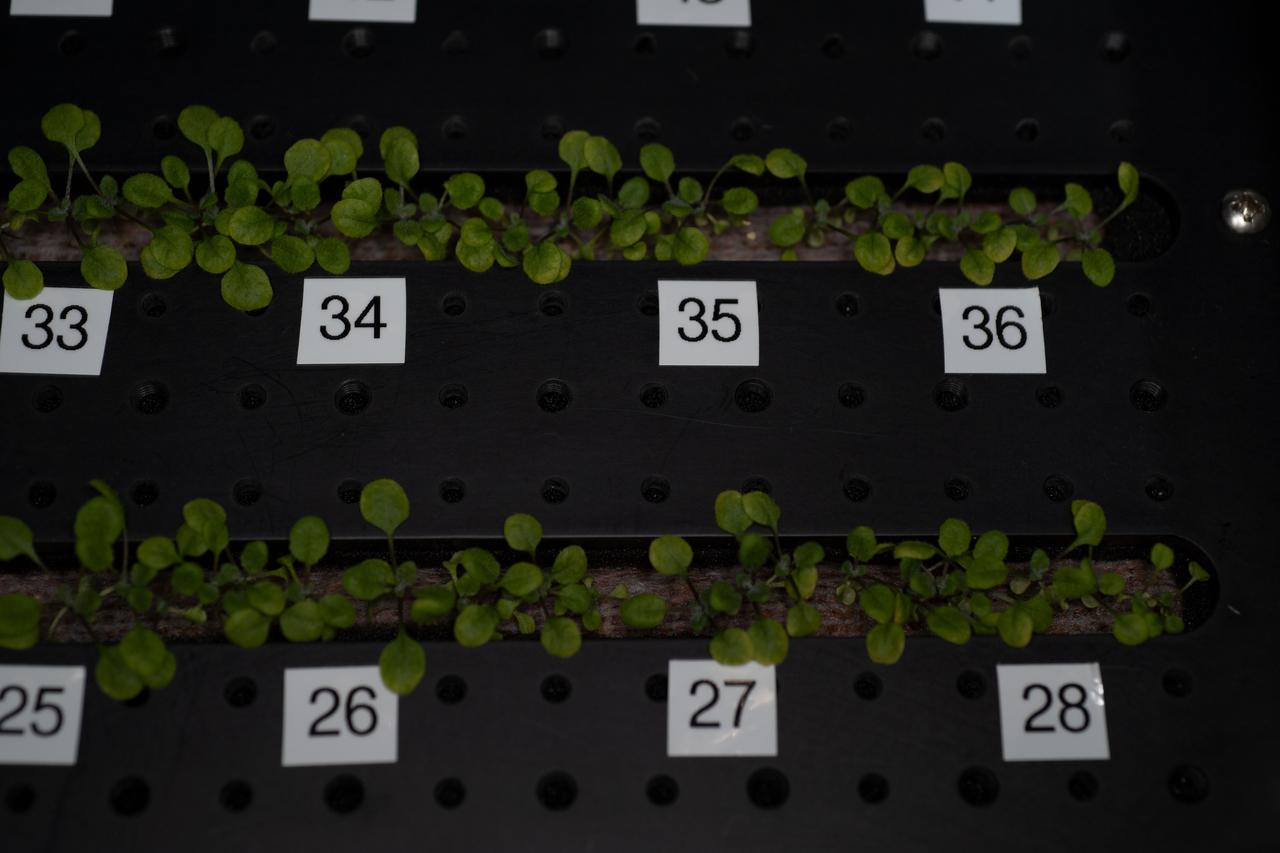
iss069e036842 (July 25, 2023) -- Arabidopsis seedlings grow in Plant Habitat-03, an investigation aboard the International Space Station that assesses if gene adaptations in one generation of plants grown in space can transfer to another.
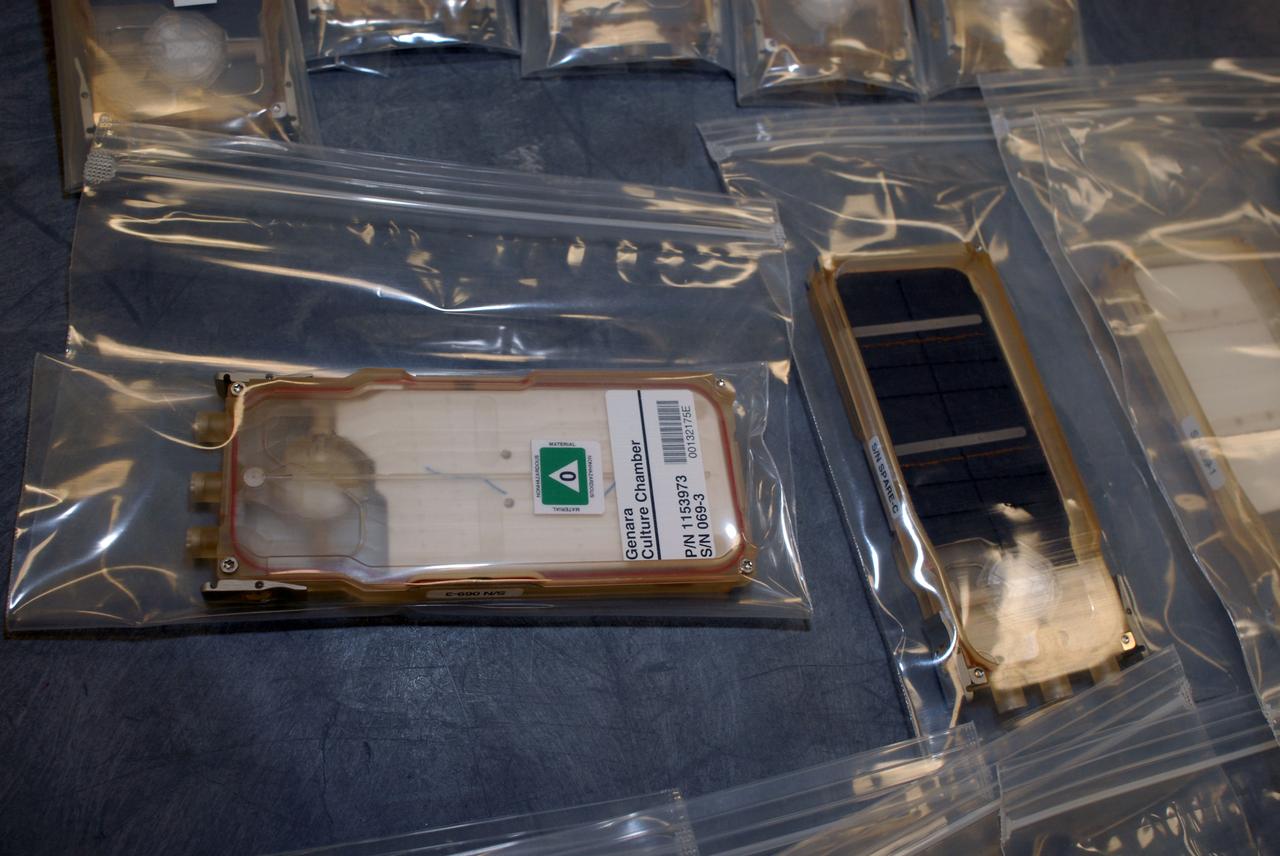
jsc2010e090140 (5/3/2010) --- Preflight photo of Gravity Related Genes in Arabidopsis GENARA-A middeck payload hardware taken in the KSC Space Station Processing Facility (SSPF). Genara-A Culture Chambers.

jsc2010e090142 (5/3/2010) --- Preflight photo of Gravity Related Genes in Arabidopsis GENARA-A middeck payload hardware taken in the KSC Space Station Processing Facility (SSPF). Genara-A Experiment Containers (ECs).
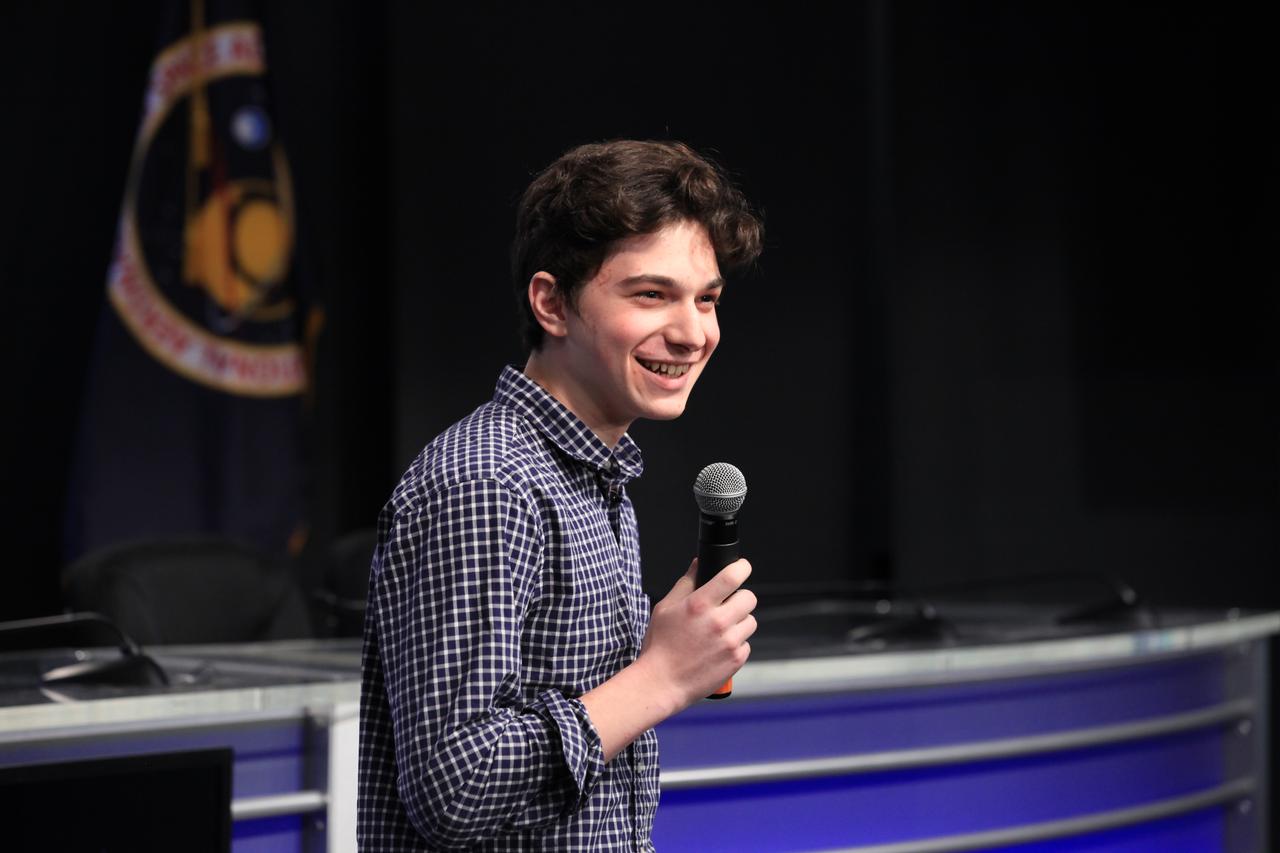
Julian Rubinfien, student winner of the Genes in Space competition, discusses his Genes in Space II winning experiment during a "What's on Board" science briefing to NASA Social participants at NASA's Kennedy Space Center in Florida. The briefing was for Orbital ATK's seventh commercial resupply services mission, CRS-7, to the International Space Station. Orbital ATK's Cygnus pressurized cargo module is set to launch on the United Launch Alliance Atlas V rocket from Space Launch Complex 41 at Cape Canaveral Air Force Station on April 18. Liftoff is scheduled for 11:11 a.m. EDT.
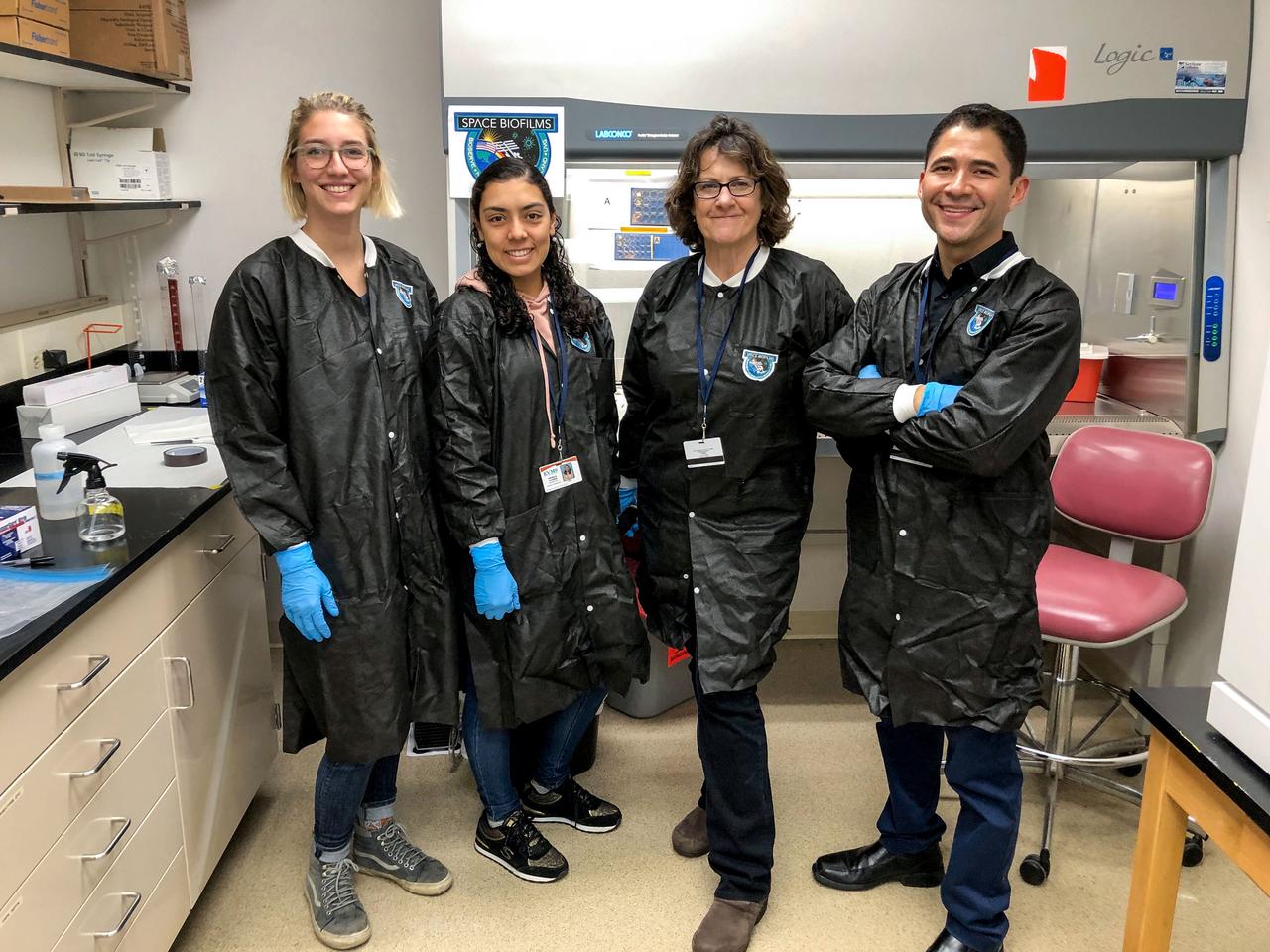
jsc2020e003402 (10/29/2019) --- The Space Bioflilms team, From left to right: University of Colorado, Boulder’s (CU) graduate students Rylee Schauer and Pamela Flores, Implementation Project Manager, BioServe’s Carla Hoehn, and the Principal Investigator, CU’s Luis Zea, Ph.D. The Characterization of Biofilm Formation, Growth, and Gene Expression on Different Materials and Environmental Conditions in Microgravity (Space Biofilms) investigation characterizes the mass, thickness, structure, and associated gene expression of biofilms that form in space by analyzing different microbial species grown on different materials. Biofilm formation can cause equipment malfunction and human illnesses, and could be a serious problem on future long-term human space missions.
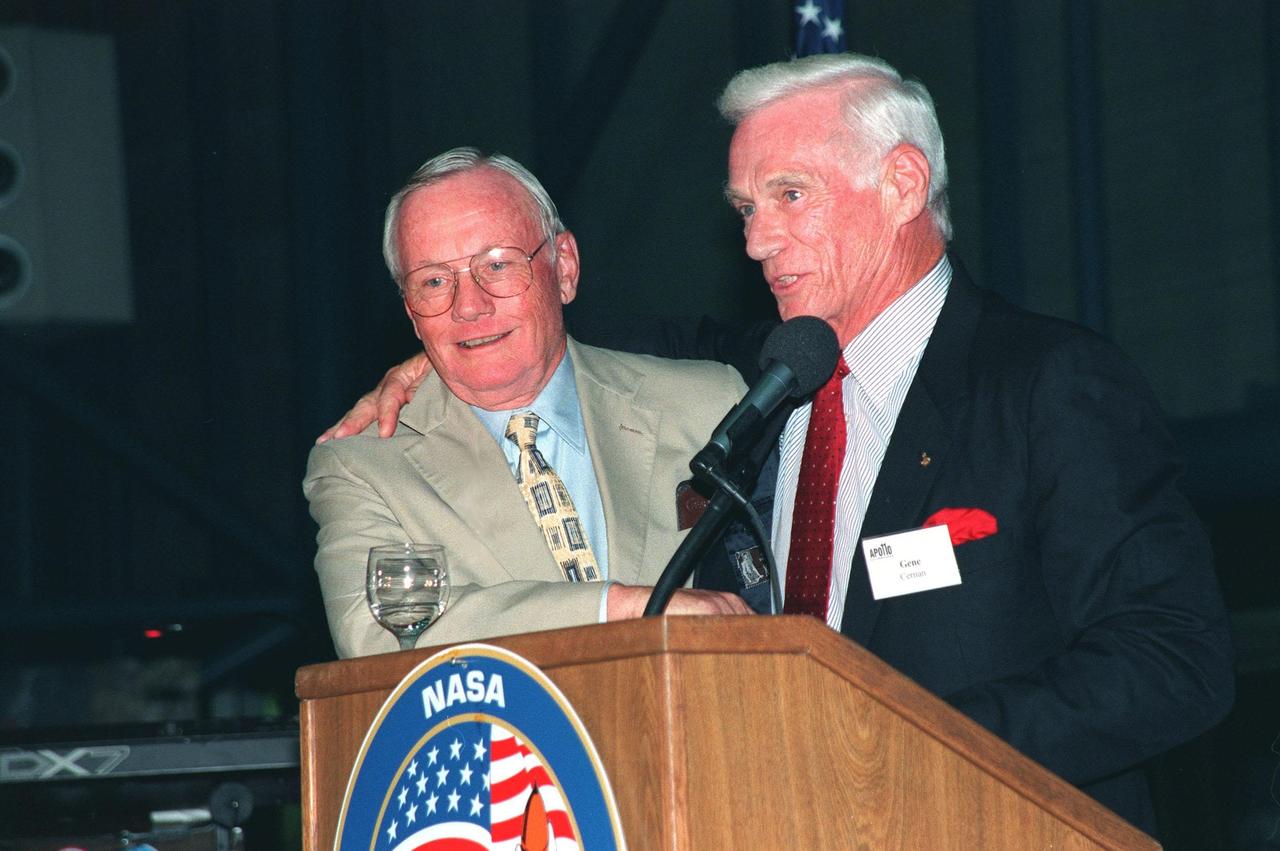
KENNEDY SPACE CENTER, FLA. -- During an anniversary banquet honoring the Apollo program team, the people who made the entire lunar landing program possible, former Apollo astronauts Neil Armstrong (left) and Gene Cernan talk about their experiences. The banquet was held in the Apollo/Saturn V Center, part of the KSC Visitor Complex. This is the 30th anniversary of the Apollo 11 launch and moon landing, July 16 and July 20, 1969. Other guests at the banquet were astronauts Wally Schirra, Edwin "Buzz" Aldrin and Walt Cunningham. Neil Armstrong was the first man to walk on the moon; Gene Cernan was the last
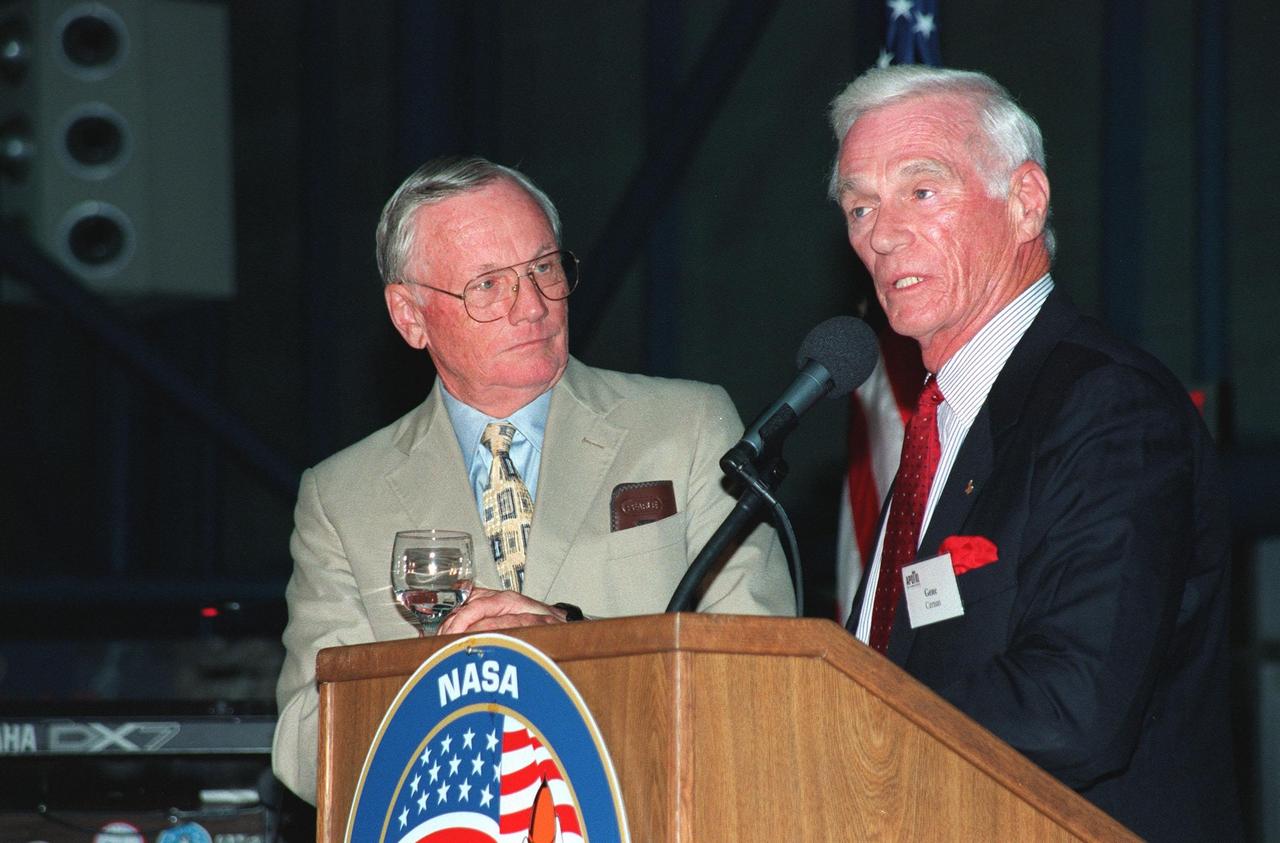
KENNEDY SPACE CENTER, FLA. -- During an anniversary banquet honoring the Apollo program team, the people who made the entire lunar landing program possible, former Apollo astronauts Neil Armstrong (left) and Gene Cernan talk about their experiences. The banquet was held in the Apollo/Saturn V Center, part of the KSC Visitor Complex. This is the 30th anniversary of the Apollo 11 launch and moon landing, July 16 and July 20, 1969. Other guests at the banquet were astronauts Wally Schirra, Edwin "Buzz" Aldrin and Walt Cunningham. Neil Armstrong was the first man to walk on the moon; Gene Cernan was the last
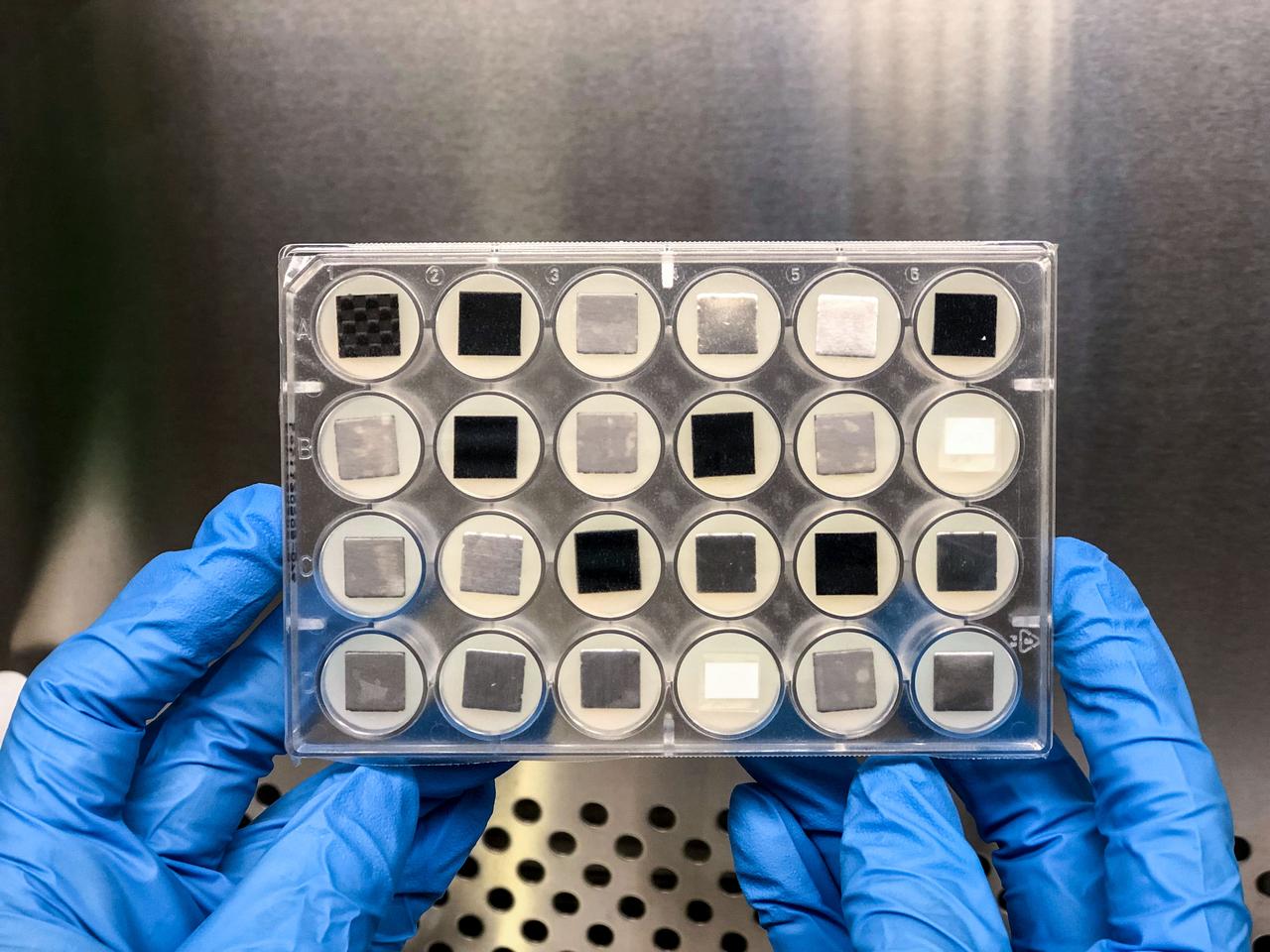
jsc2020e003406 (10/28/2019) --- A preflight view of a Commercial-off-the-shelf (COTS) 24-Well plate in fungal configuration. Each well contains a 1 cm2 coupon inoculated with fungal spores. Seven different materials were included for testing. The Characterization of Biofilm Formation, Growth, and Gene Expression on Different Materials and Environmental Conditions in Microgravity (Space Biofilms) investigation characterizes the mass, thickness, structure, and associated gene expression of biofilms that form in space by analyzing different microbial species grown on different materials. Biofilm formation can cause equipment malfunction and human illnesses, and could be a serious problem on future long-term human space missions.
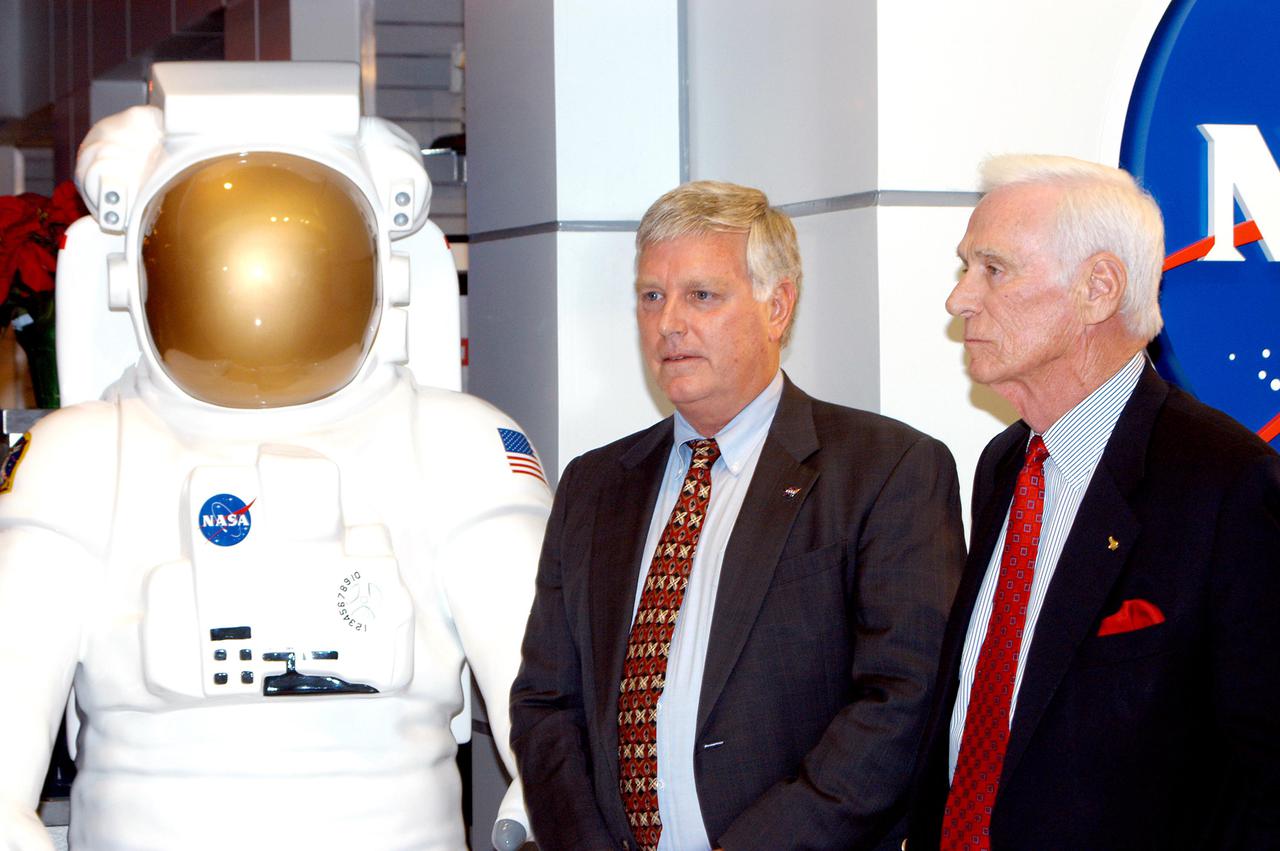
KENNEDY SPACE CENTER, FLA. - Center Director Jim Kennedy (left) and Apollo 17 Commander Gene Cernan stand next to a display of an astronaut at the new Kennedy Space Center Store at Orlando International Airport. NASA’s Kennedy Space Center Director Jim Kennedy and Apollo 17 Commander Gene Cernan participated in the grand opening ceremony of the store that will help educate millions of airport visitors about America’s space program and the Vision for Space Exploration. The store is operated by Kennedy Space Center Visitor Complex concessionaire Delaware North Parks and Resorts.
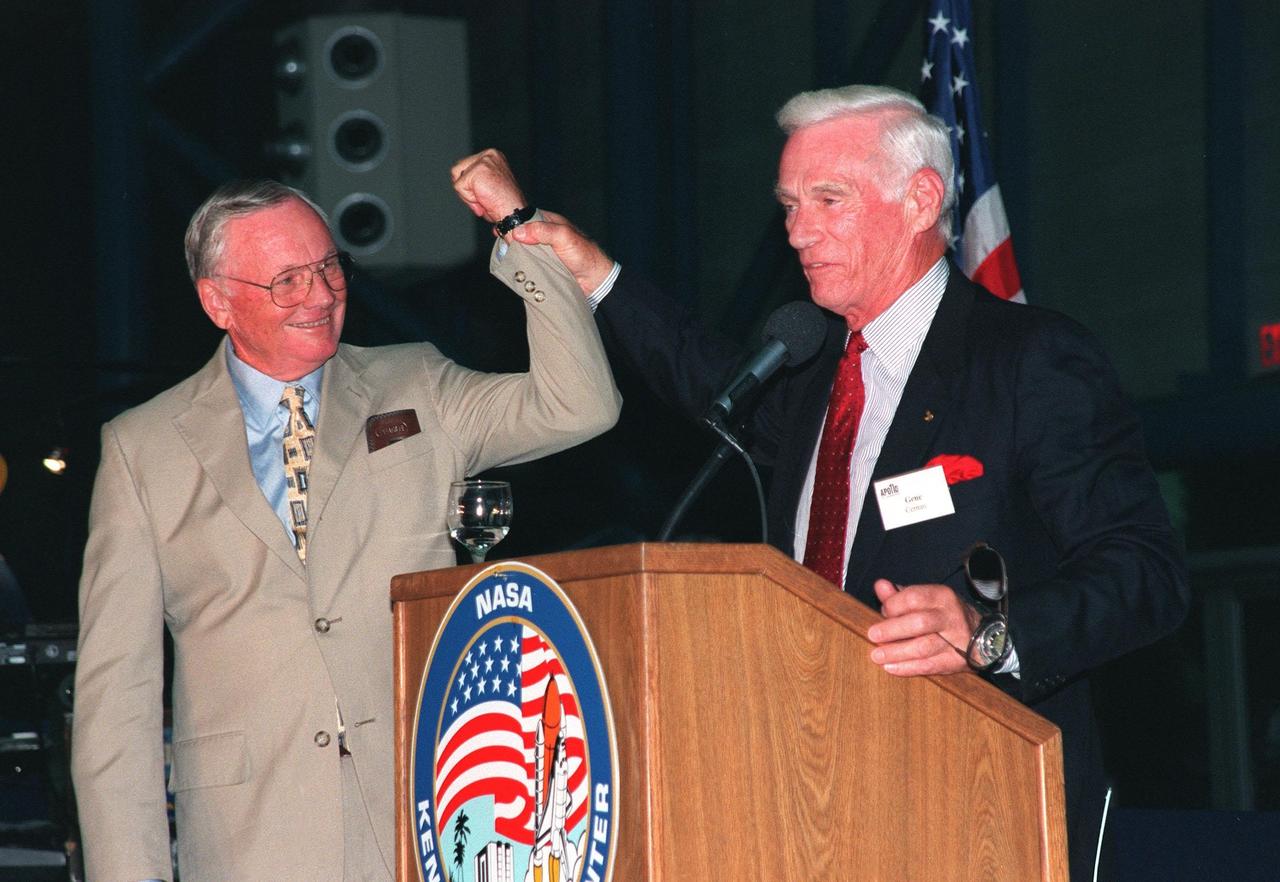
KENNEDY SPACE CENTER, FLA. -- Former Apollo astronauts Neil Armstrong (left) and Gene Cernan entertain the audience during an anniversary banquet honoring the Apollo program team, the people who made the entire lunar landing program possible. The banquet was held in the Apollo/Saturn V Center, part of the KSC Visitor Complex. This is the 30th anniversary of the Apollo 11 launch and moon landing, July 16 and July 20, 1969. Other guests at the banquet were astronauts Wally Schirra, Edwin "Buzz" Aldrin and Walt Cunningham. Neil Armstrong was the first man to walk on the moon; Gene Cernan was the last
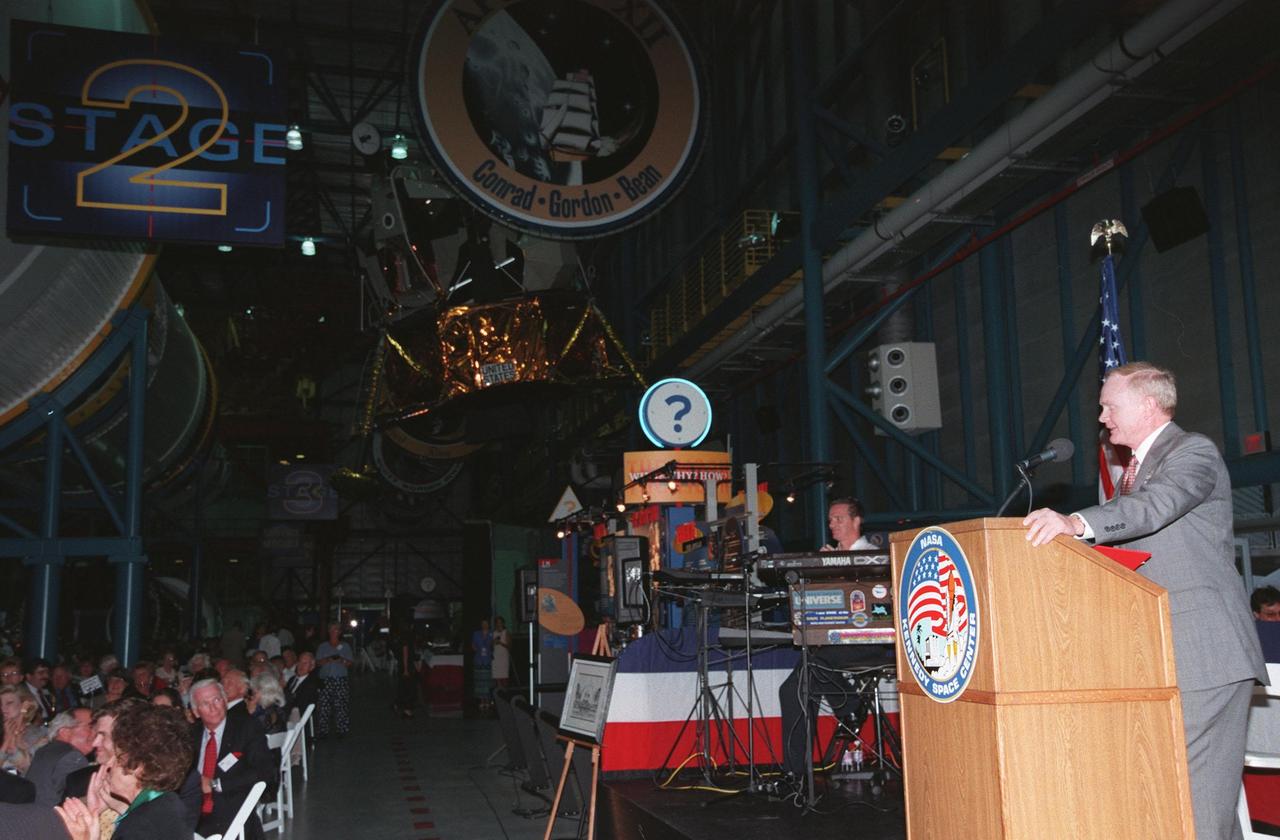
KENNEDY SPACE CENTER, FLA. -- At an anniversary banquet honoring the Apollo program team, the people who made the entire lunar landing program possible, Center Director Roy D. Bridges offers remarks. The banquet was held in the Apollo/Saturn V Center, part of the KSC Visitor Complex. This is the 30th anniversary of the Apollo 11 launch and moon landing, July 16 and July 20, 1969. Among the guests at the banquet were astronauts Neil Armstrong, Edwin "Buzz" Aldrin, Wally Schirra, Gene Cernan and Walt Cunningham. Neil Armstrong was the first man to walk on the moon; Gene Cernan was the last
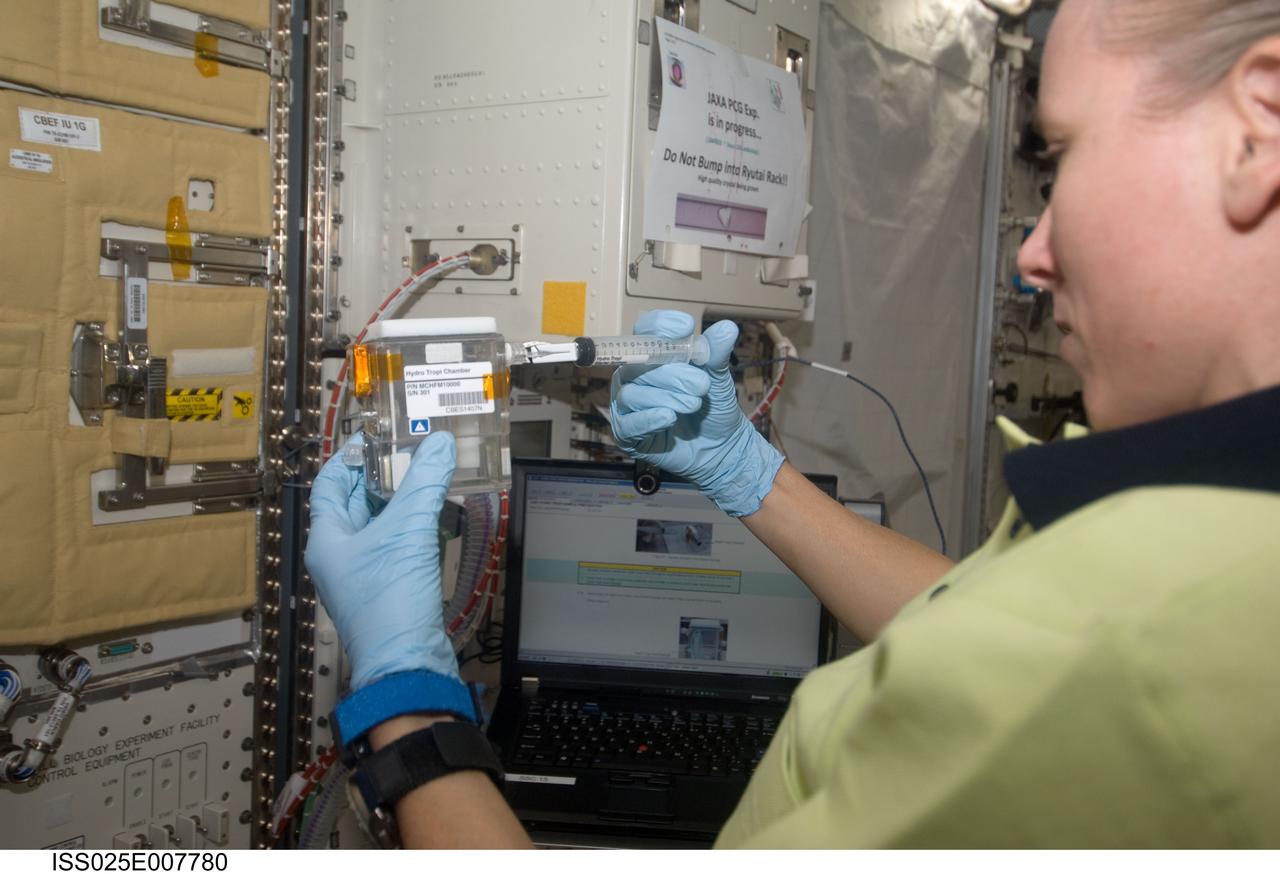
ISS025-E-007780 (18 Oct. 2010) --- NASA astronaut Shannon Walker, Expedition 25 flight engineer, works with the Japan Aerospace Exploration Agency (JAXA) experiment HydroTropi (Hydrotropism & Auxin-Inducible Gene Expression in Roots Grown under Microgravity Conditions) in the Kibo laboratory of the International Space Station.
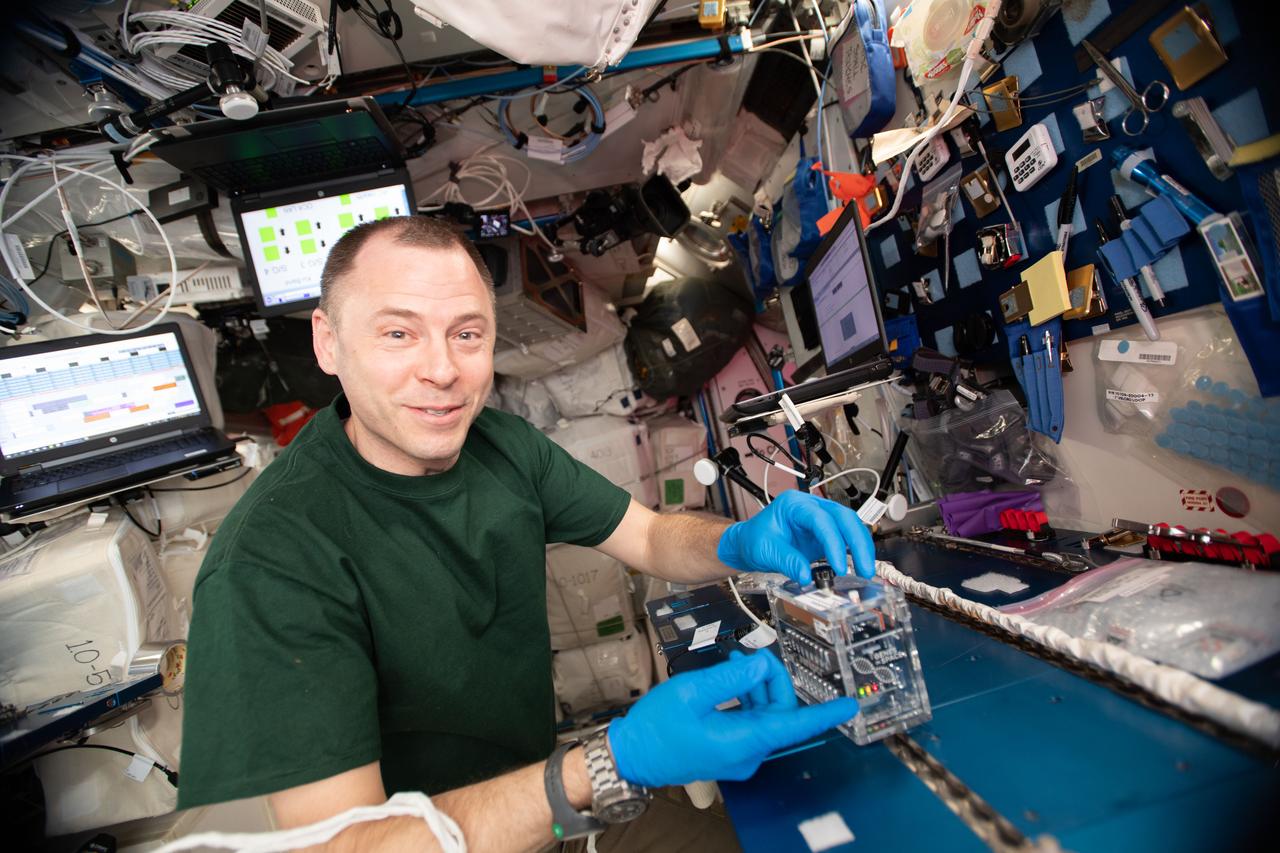
iss059e060940 (May 12, 2019) --- NASA astronaut Nick Hague works with the miniPCR hardware inside the Columbus laboratory module for the Genes In Space-6 experiment that is exploring how space radiation damages DNA and how the cell repair mechanism works in microgravity.
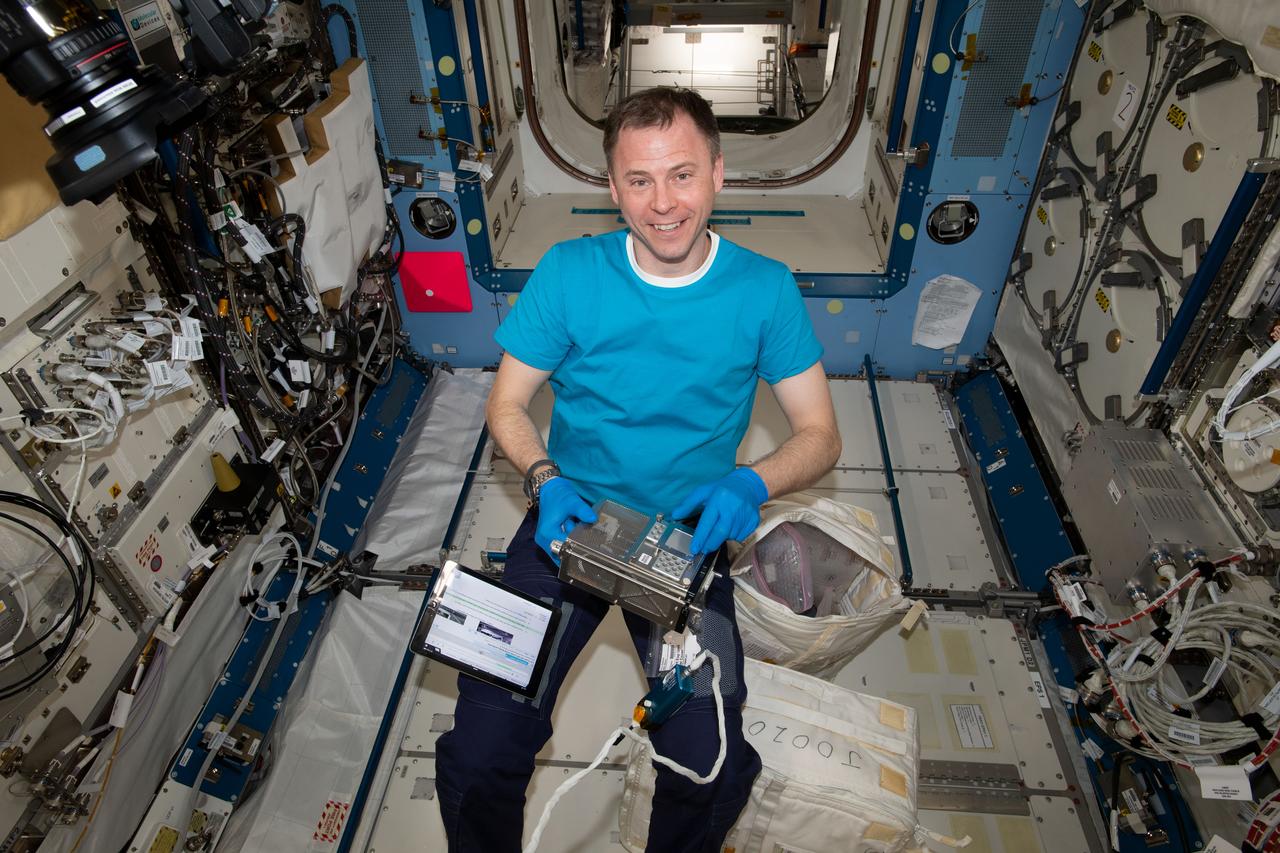
iss060e013799 (July 22, 2019) --- Expedition 60 Flight Engineer Nick Hague of NASA works on research hardware for the Space Moss experiment. The space botany study grows mosses aboard the space station to determine how microgravity affects their growth, development, gene expression, photosynthetic activity and other features.
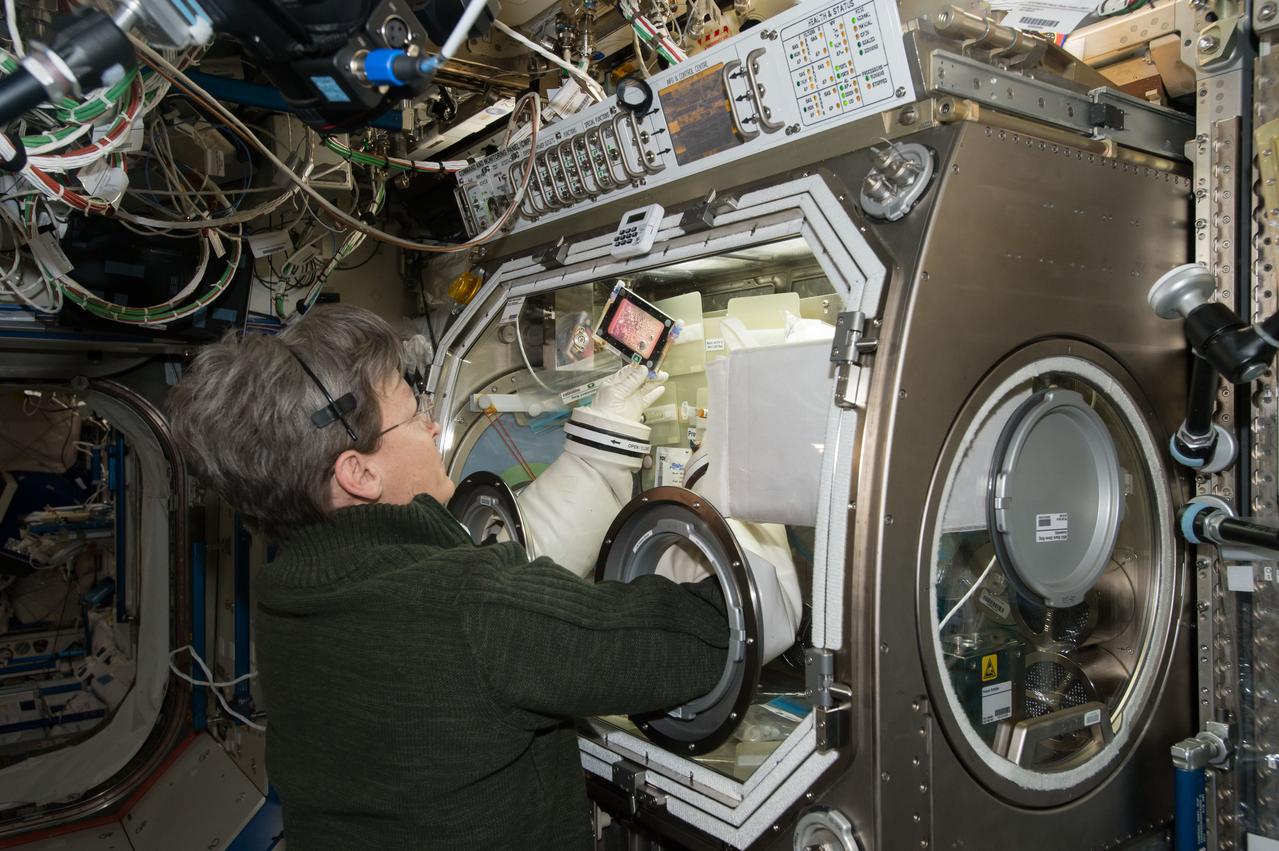
iss050e054453 (3/4/2017) --- NASA astronaut Peggy Whitson during Microgravity Expanded Stem Cells (MESC) clean up, in the Microgravity Science Glovebox (MSG). Microgravity Expanded Stem Cells observes cell growth and morphological characteristics in microgravity and analyzes gene expression profiles of cells grown in microgravity.
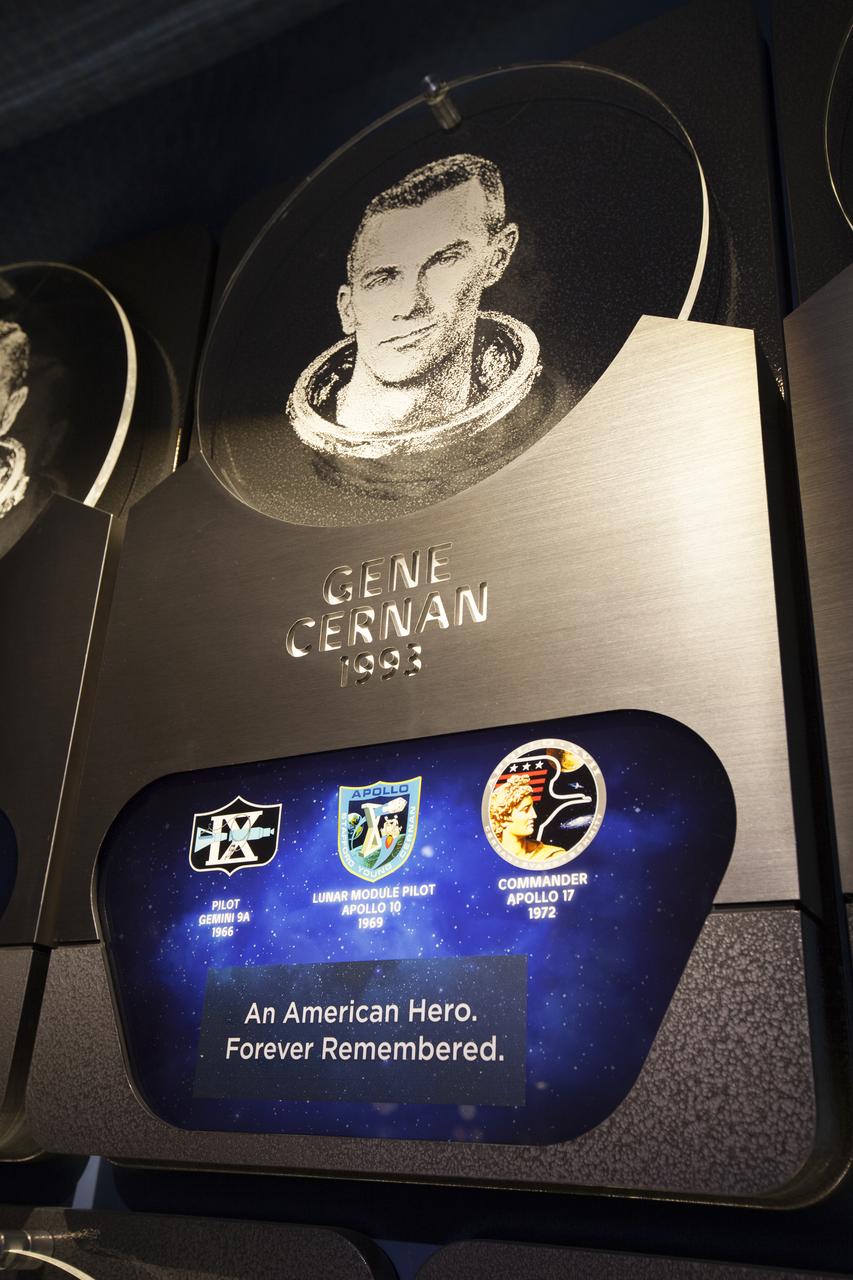
The Astronaut Hall of Fame display for astronaut Gene Cernan is shown following a remembrance ceremony Jan. 18, 2017, at NASA's Kennedy Space Center in Florida. Cernan, who flew on Gemini and Apollo missions, commanded the Apollo 17 mission and was the last person to walk on the moon.
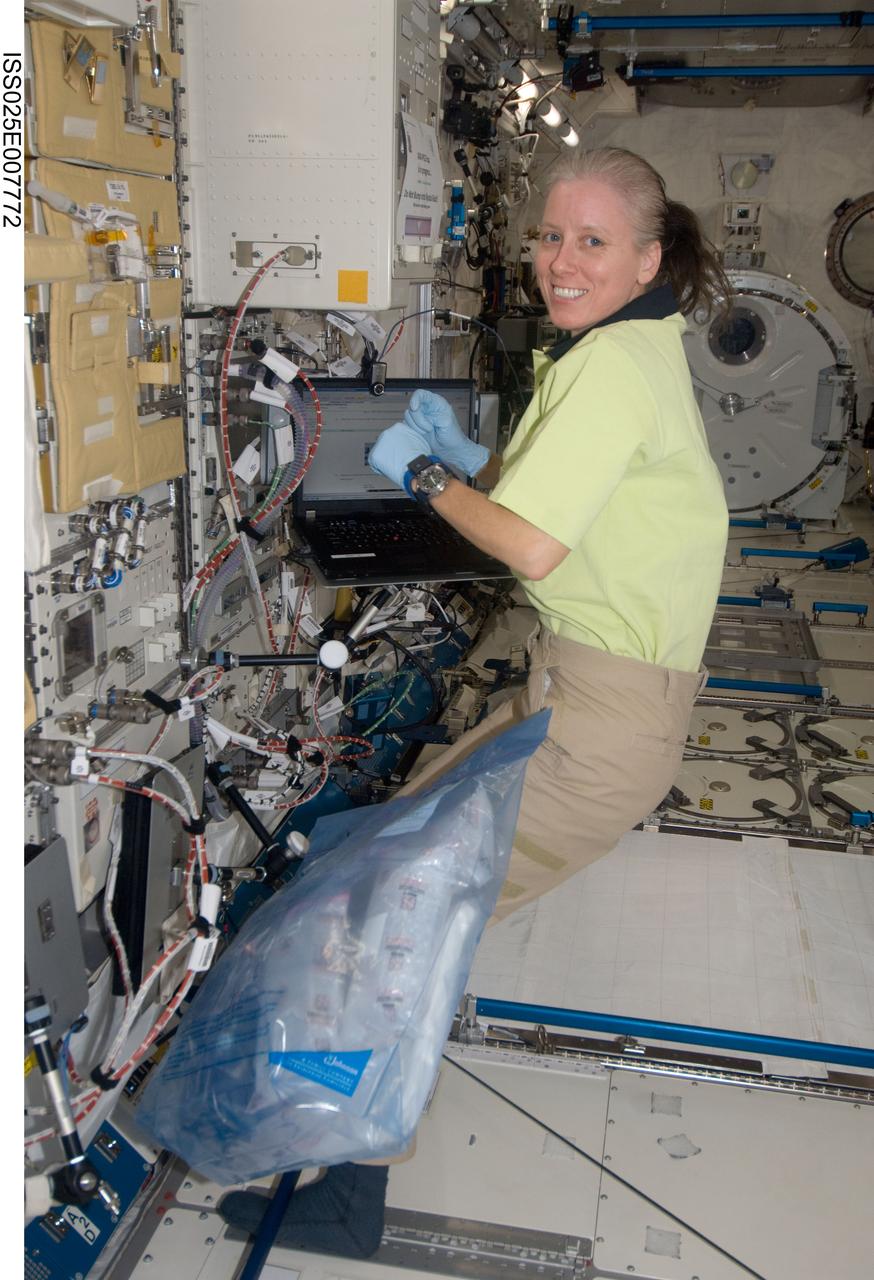
ISS025-E-007772 (18 Oct. 2010) --- NASA astronaut Shannon Walker, Expedition 25 flight engineer, works with the Japan Aerospace Exploration Agency (JAXA) experiment HydroTropi (Hydrotropism & Auxin-Inducible Gene Expression in Roots Grown under Microgravity Conditions) in the Kibo laboratory of the International Space Station.

A photo of astronaut Gene Cernan is displayed alongside a memorial wreath before a remembrance ceremony Jan. 18, 2017, at NASA's Kennedy Space Center in Florida. Cernan, who flew on Gemini and Apollo missions, commanded the Apollo 17 mission and was the last person to walk on the moon.
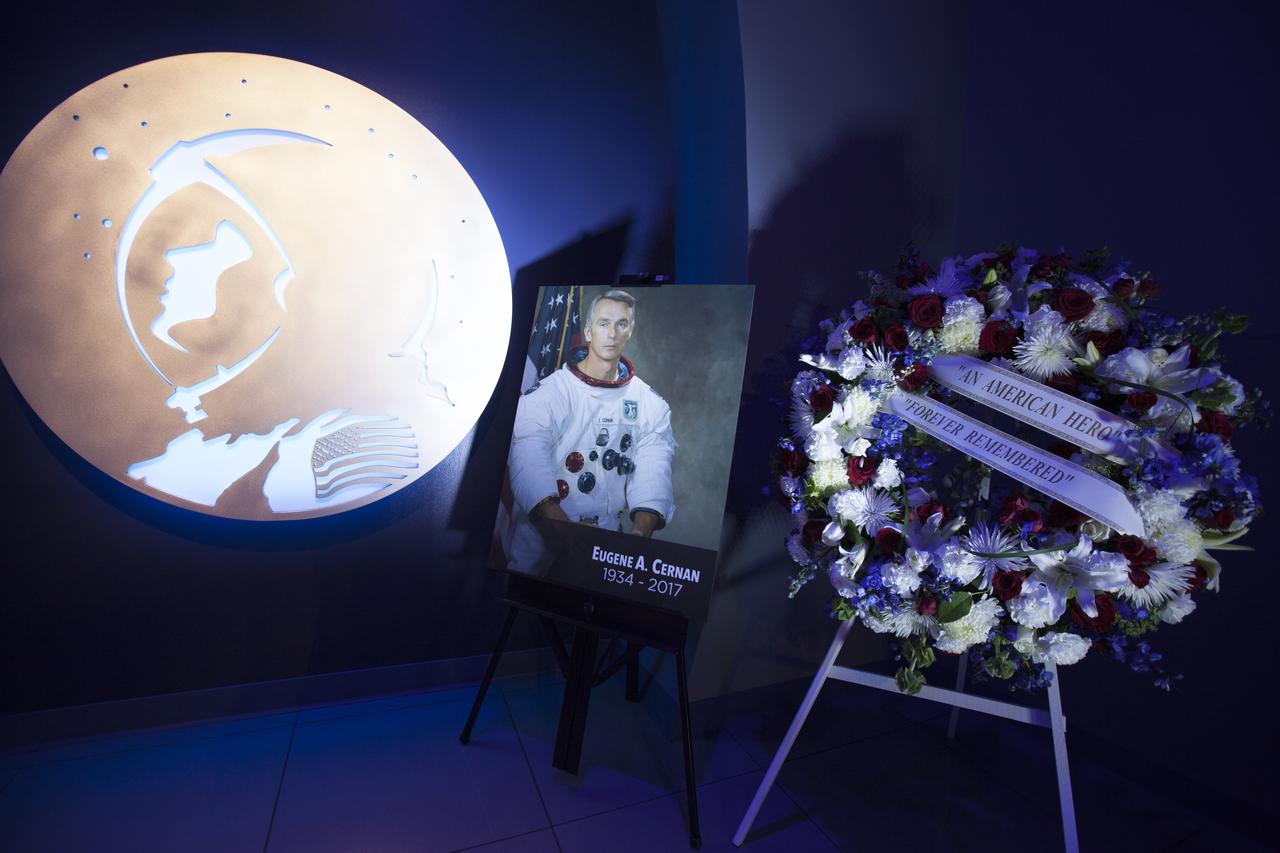
A photo of astronaut Gene Cernan is displayed alongside a memorial wreath before a remembrance ceremony Jan. 18, 2017, at NASA's Kennedy Space Center in Florida. Cernan, who flew on Gemini and Apollo missions, commanded the Apollo 17 mission and was the last person to walk on the moon.
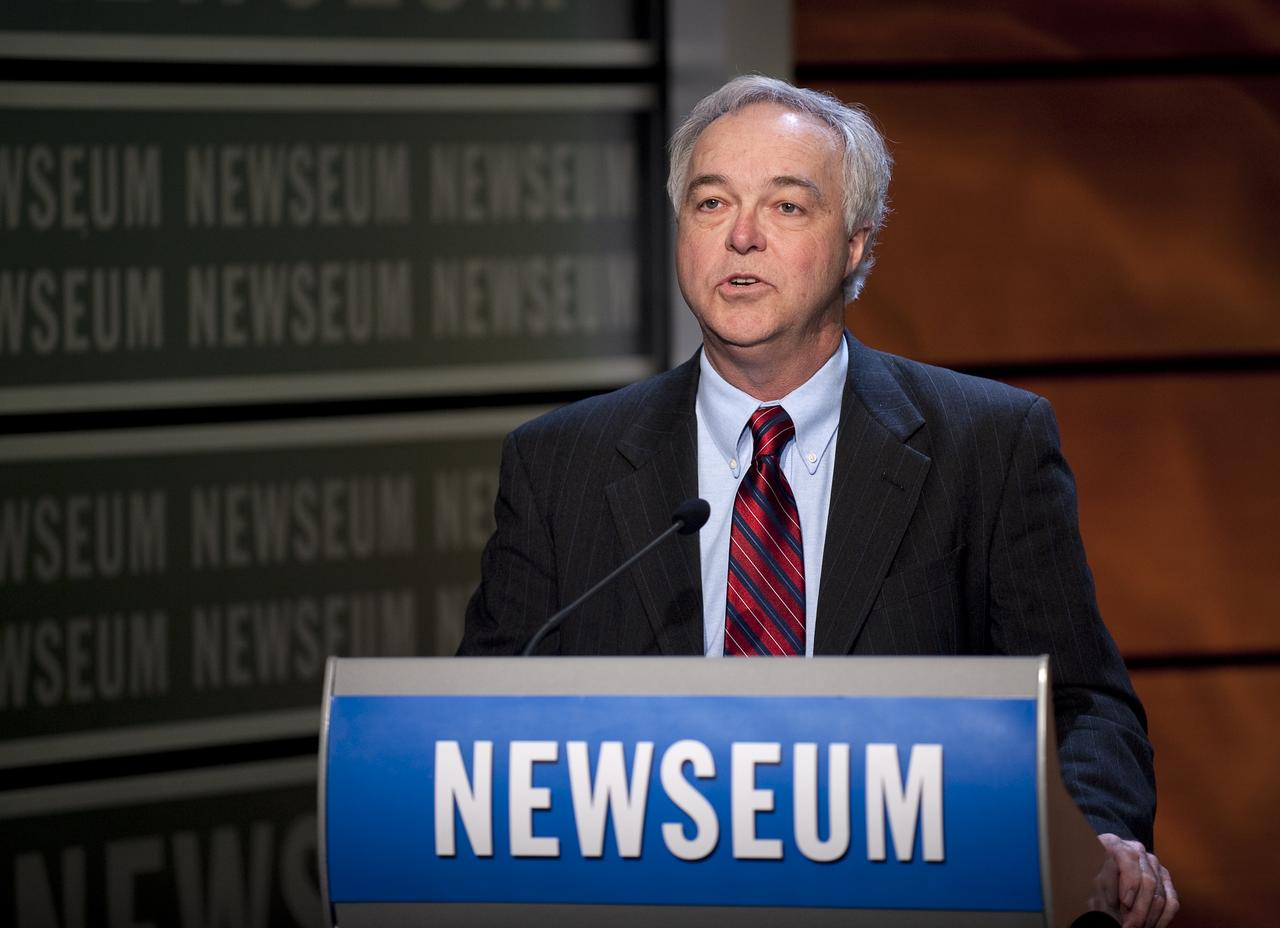
President and Chief Operating Officer of the Newseum, Kenneth Paulson, introduces the Newseum's distinguished journalist-in-residence, Nick Clooney and NASA Apollo 10 Astronaut Gene Cernan during a Newseum TV program celebrating the 40th anniversary of Apollo 10, Monday, May 18, 2009, in Washington. Photo Credit (NASA/Bill Ingalls)
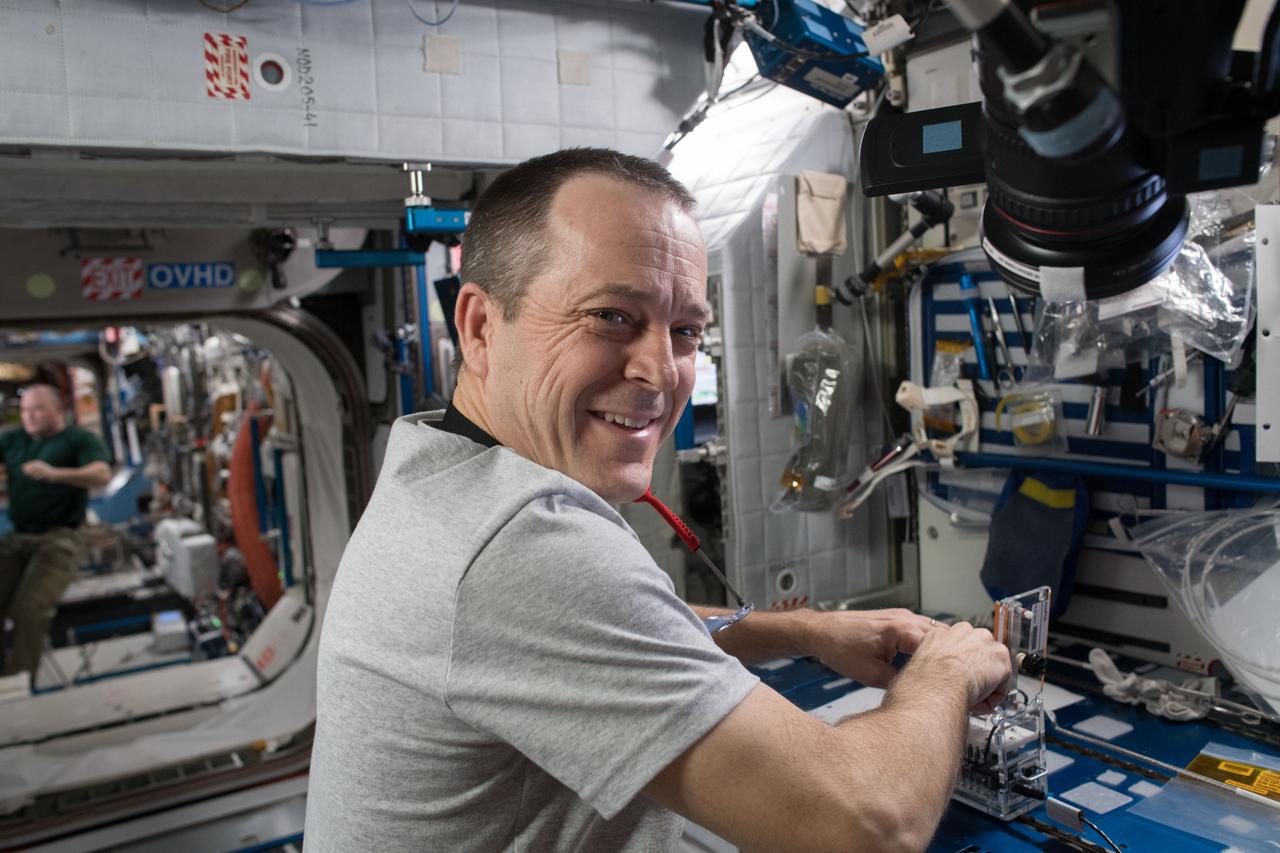
iss055e016051 (April 11, 2018) --- NASA astronaut and Flight Engineer Ricky Arnold works with the student-designed Genes in Space-5 experiment inside the Harmony module. The genetic research is helping scientists understand the relationship between DNA alterations and weakened immune systems possibly caused by living in space.
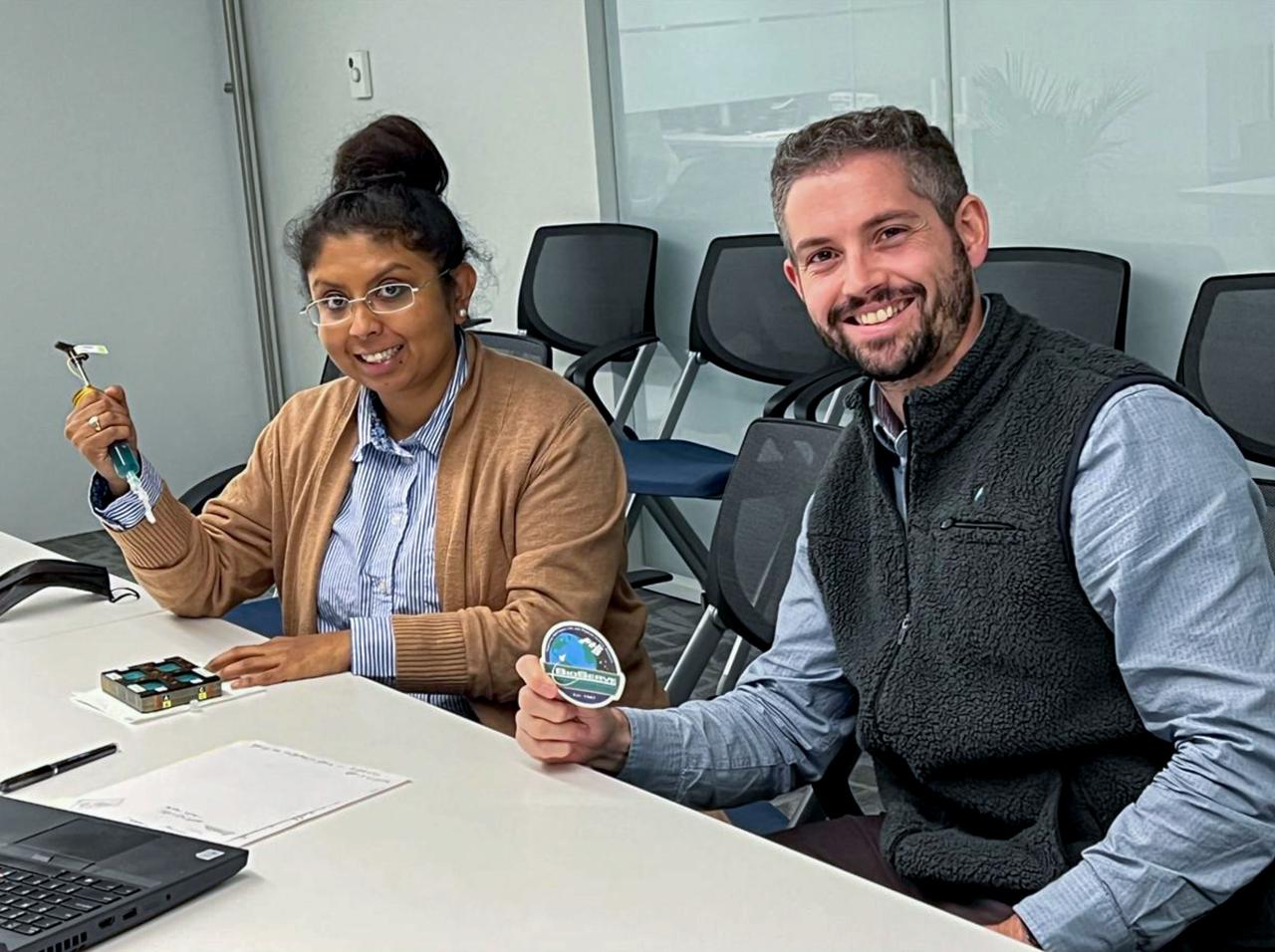
jsc2023e026249 (4/28/2023) --- Drs. Adwitia Dey and Shane Hegarty of AXONIS Therapeutics are pictured with flight hardware for the Innovative Paralysis Therapy Enabling Neuroregeneration (Neuronix) investigation that aims to demonstrate the formation of three-dimensional neuronal cell cultures in microgravity and tests a neuron-specific gene therapy. Image courtesy of BioServe.