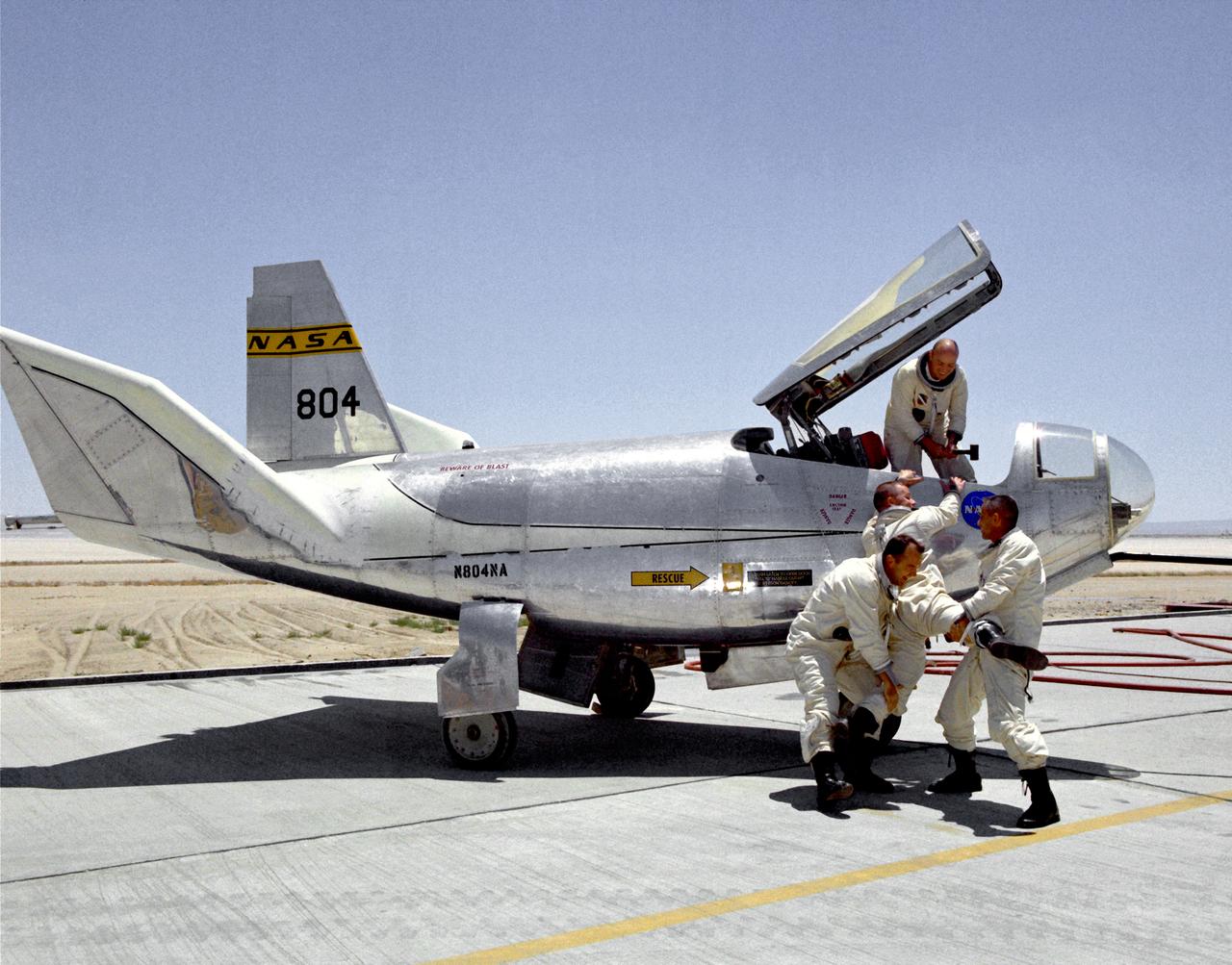
Not every moment of a test pilot's day is serious business. In a moment of levity, NASA pilots Bill Dana (left) and John A. Manke try to drag Air Force test pilot Peter Hoag away from the HL-10 lifting body while Air Force Major Jerauld R. Gentry helps from the cockpit. These four men were the principal pilots for the HL-10 program. This was not the only prank involving the HL-10 and its pilots. Once "Captain Midnight" (Gentry) and the "Midnight Skulkers" sneaked into the NASA hangar and put "U.S. Air Force" on the aircraft using stick-on letters. Later, while Gentry was making a lifting-body flight, his 1954 Ford was "borrowed" from the parking lot, painted with yellow-green zinc-chromate primer, and decorated with large stick-on flowers about one foot in diameter. After Gentry returned from the flight, he was surprised to see what had happened to his car.
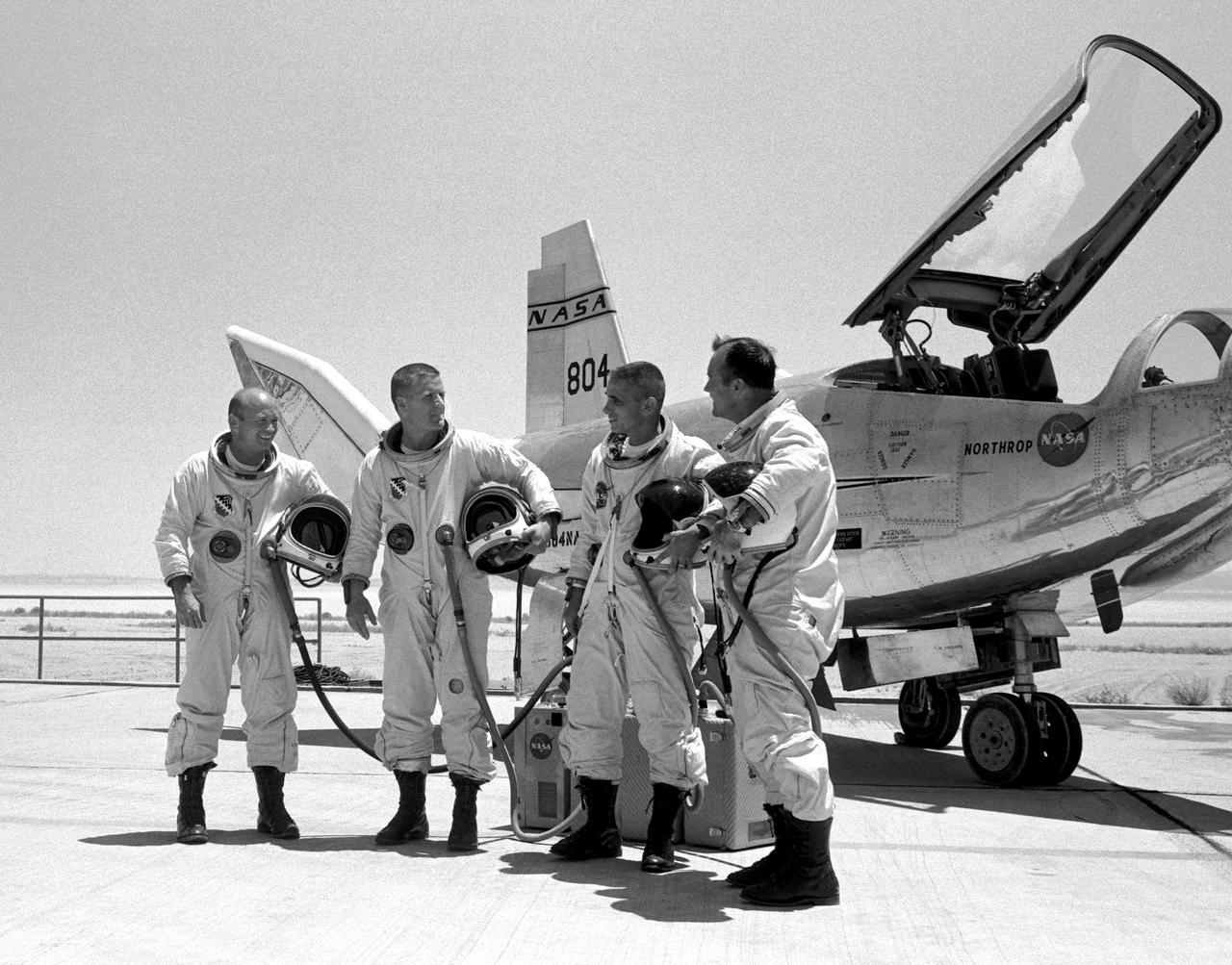
The four principal HL-10 pilots are seen here with the lifting body aircraft. They are, left to right; Air Force Major Jerauld R. Gentry, Air Force test pilot Peter Hoag, and NASA pilots John A. Manke and Bill Dana. All are wearing the pressure suits needed for flying above 50,000 feet.
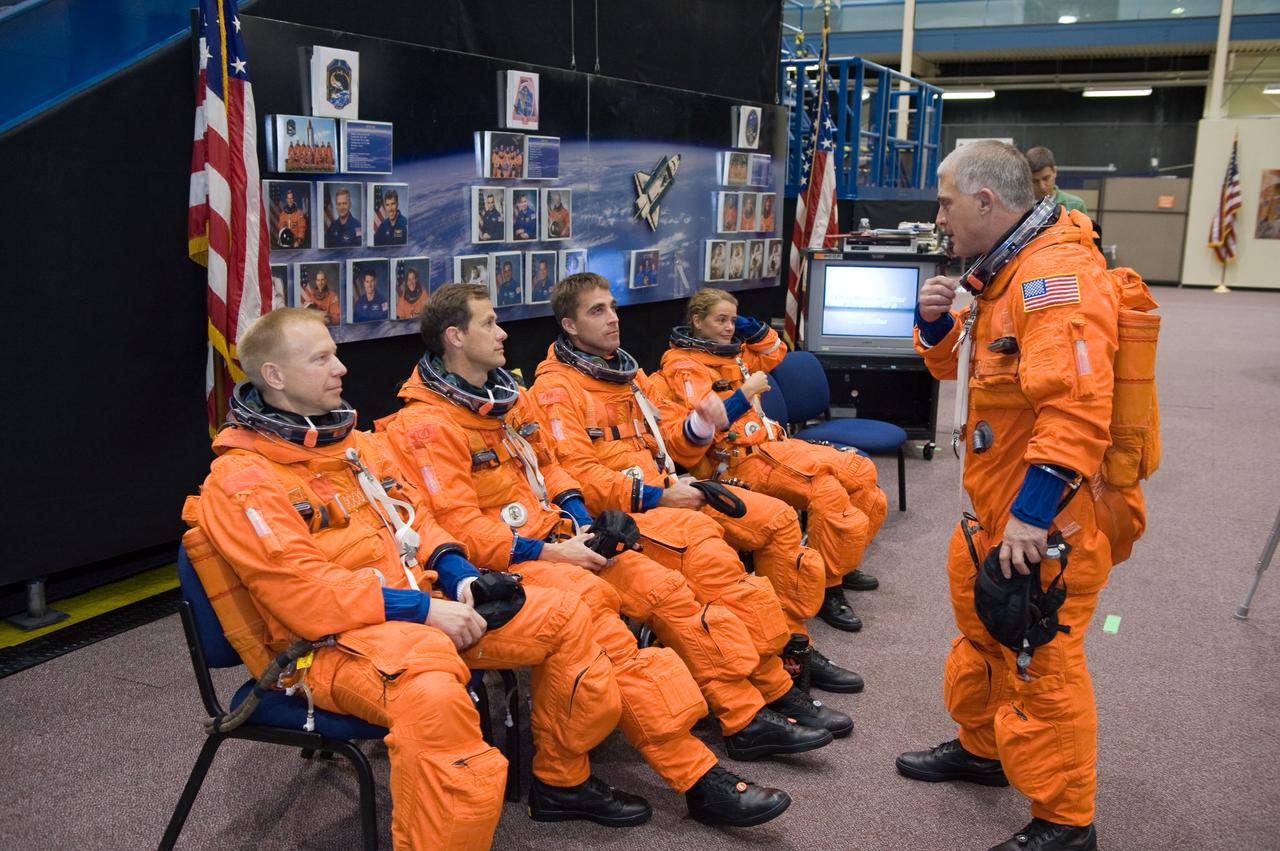
PHOTO DATE: 11-03-08 LOCATION: BLDG 9NW SUBJECT: Place on IO/STS Missions/STS-127/Preflight. Notify Mike Gentry, Kathy Strawn, Nicole Cloutier and Mark Polansky when posted PHOTOGRAPHER: BILL STAFFORD X34753
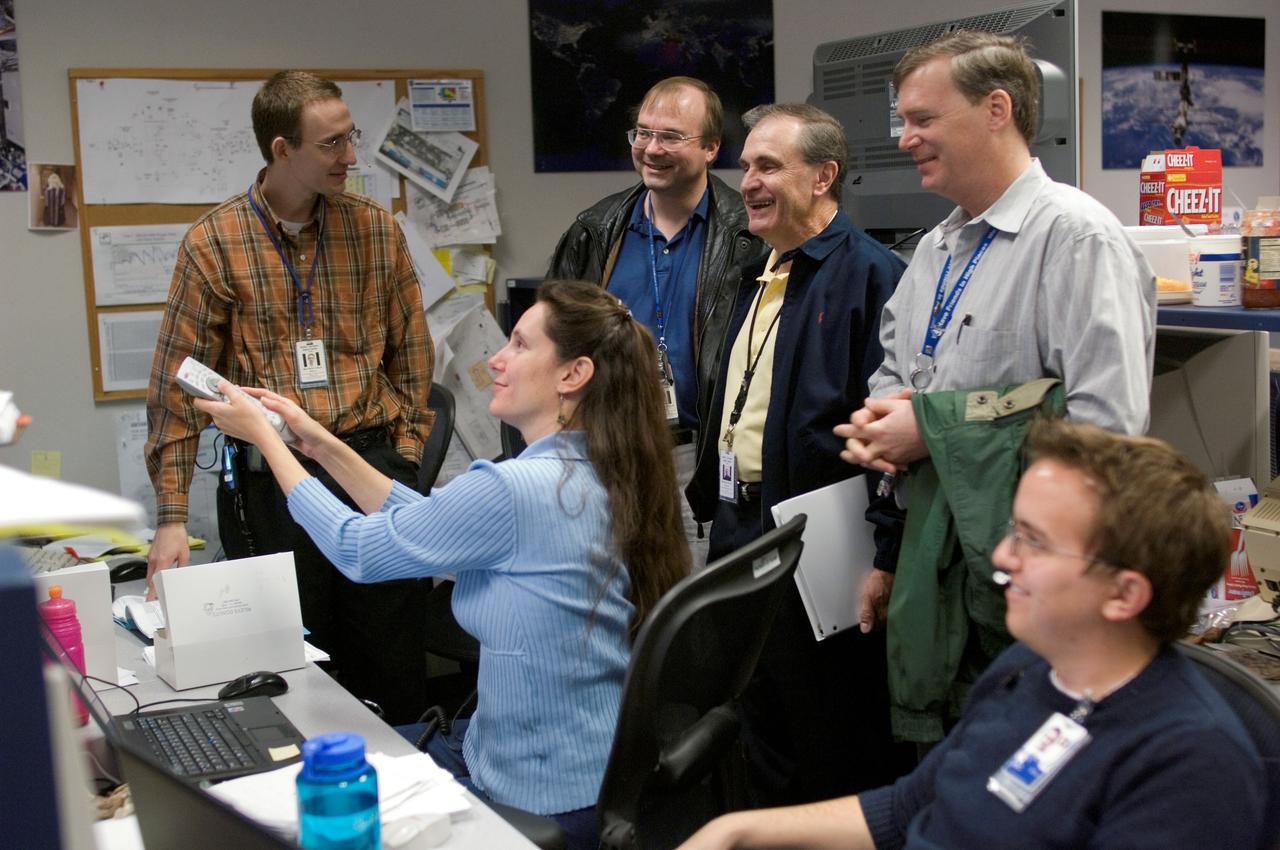
JSC2006-E-54262 ( ) --- MERLIN console operators review the Environmental Control and Life Support (ECLS) system status with ECLS management in preparation for the IMMT. Standing, from the left, are Brandon Dick , Matthew Davis, Richard Reysa and Greg Gentry. Seated are Karen Meyers (left) and Chris Matty.
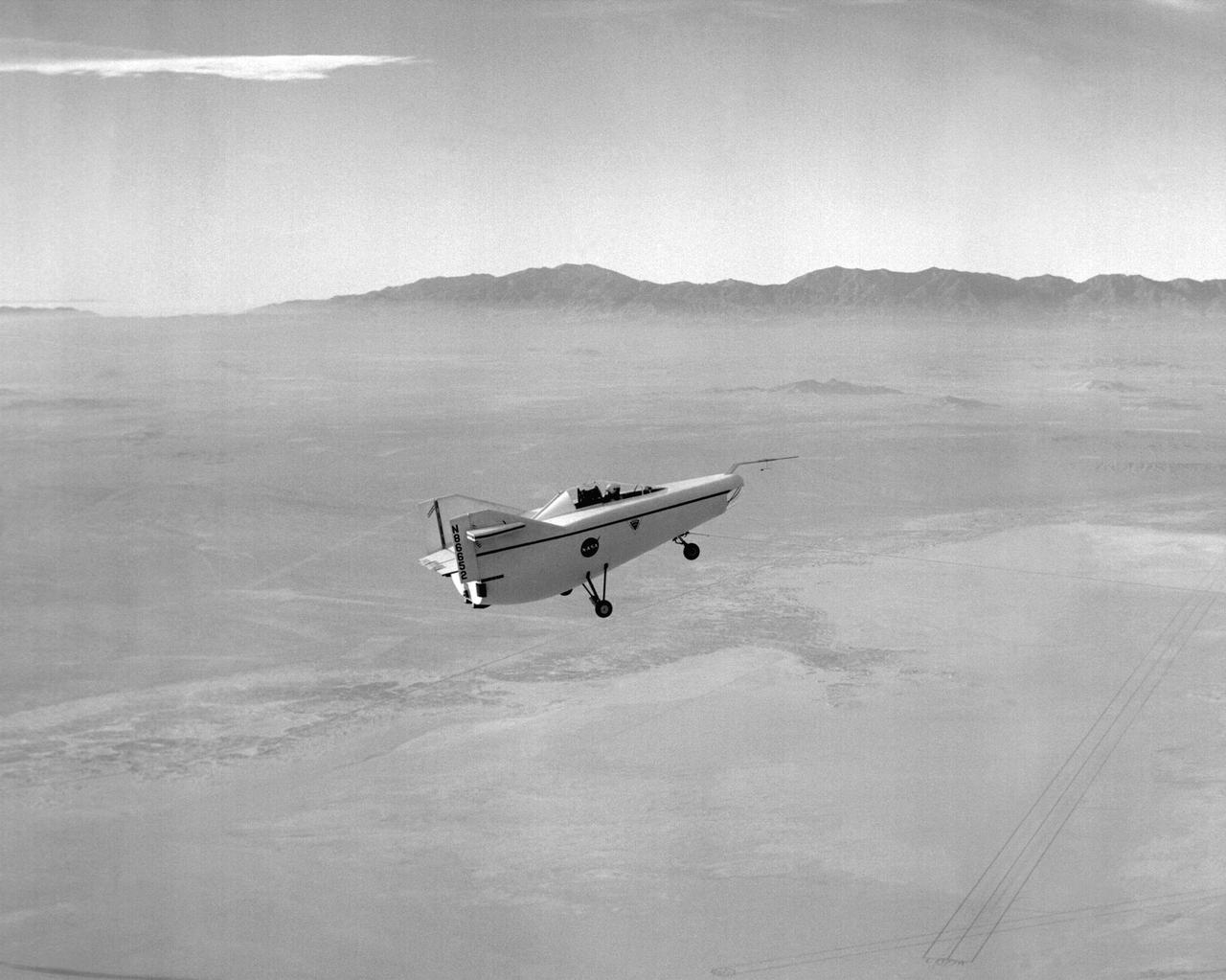
Following the first M2-F1 airtow flight on 16 August 1963, the Flight Research Center used the vehicle for both research flights and to check out new lifting-body pilots. These included Bruce Peterson, Don Mallick, Fred Haise, and Bill Dana from NASA. Air Force pilots who flew the M2-F1 included Chuck Yeager, Jerry Gentry, Joe Engle, Jim Wood, and Don Sorlie, although Wood, Haise, and Engle only flew on car tows. In the three years between the first and last flights of the M2-F1, it made about 400 car tows and 77 air tows.
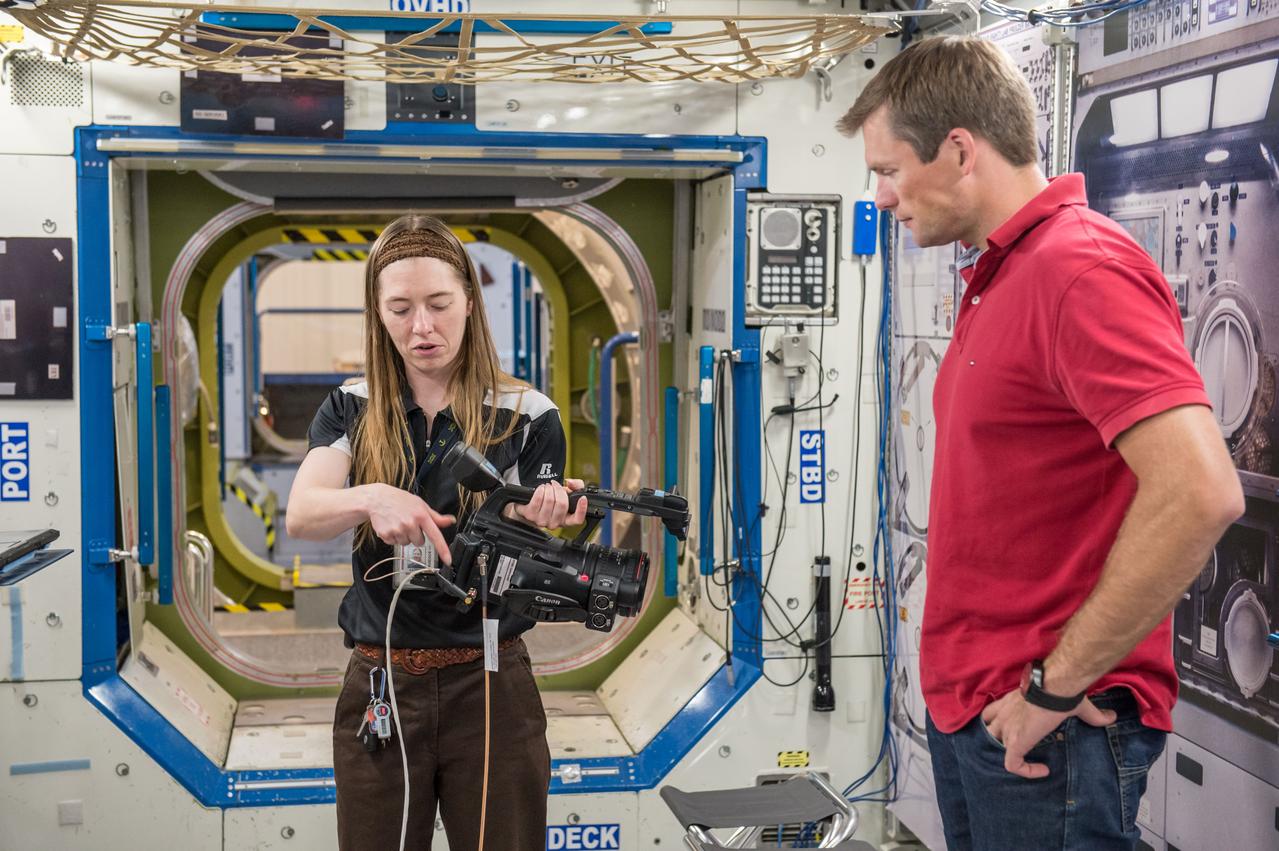
Date:08-19-2014 Location:B9NW Node 1 Subject:Photograph ESA Astronaut Andreas Mogensen on behalf of ESA during INT TV OPS USER training with instructor Katrina Willoughby. Post on IO/ISS Missions/ISS-045/Preflight. Notify Mike Gentry, Kathy Strawn, Jody Russell, Kylie Clem, Kelly Humphries, Jay Bolden, Jason Roberts, Mark Garcia, Dylan Mathis, Carlos Fontanot, Andreas Mogensen, Katrina Willoughby and Melanie Cowan when ready. Photog: David DeHoyos
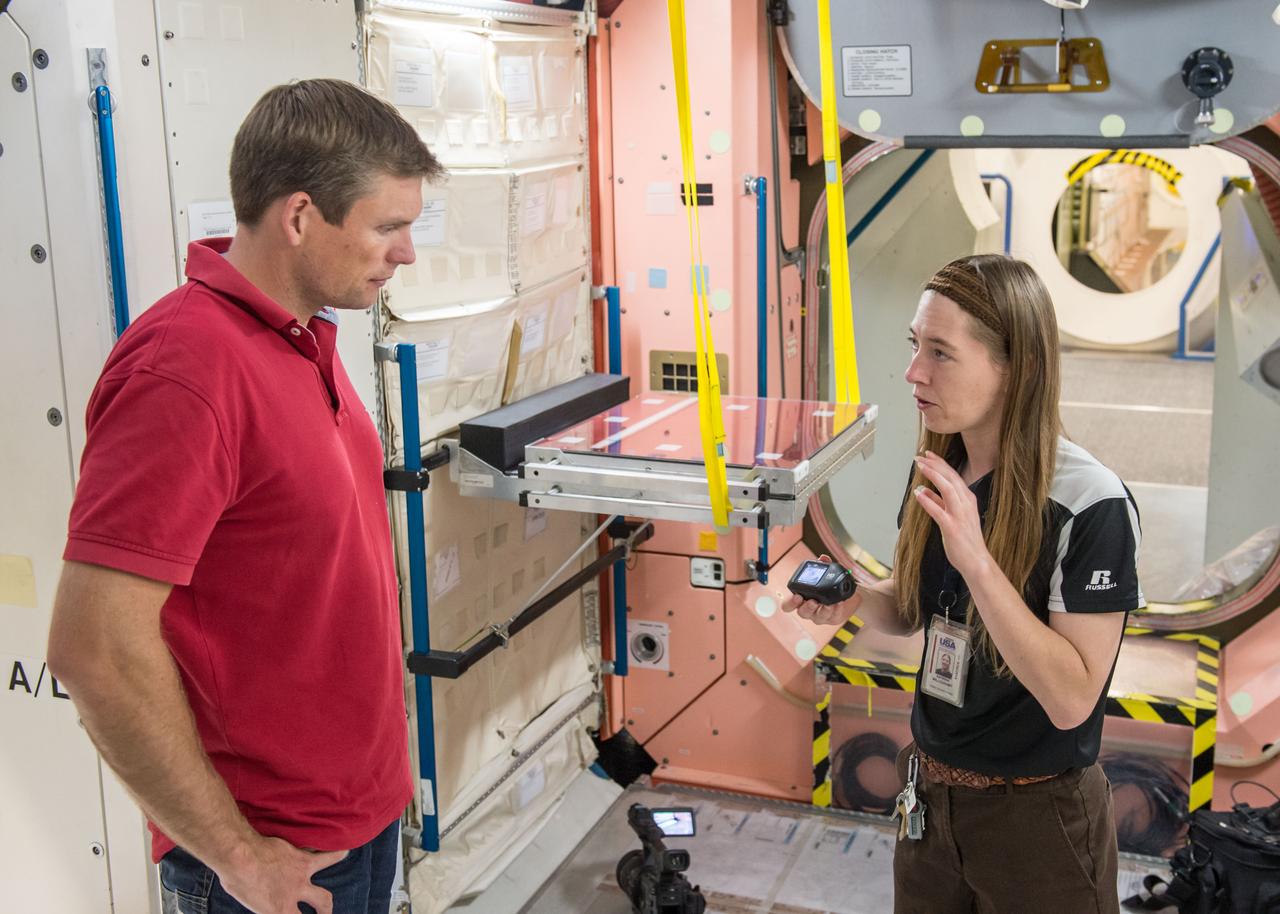
Date:08-19-2014 Location:B9NW Node 1 Subject:Photograph ESA Astronaut Andreas Mogensen on behalf of ESA during INT TV OPS USER training with instructor Katrina Willoughby. Post on IO/ISS Missions/ISS-045/Preflight. Notify Mike Gentry, Kathy Strawn, Jody Russell, Kylie Clem, Kelly Humphries, Jay Bolden, Jason Roberts, Mark Garcia, Dylan Mathis, Carlos Fontanot, Andreas Mogensen, Katrina Willoughby and Melanie Cowan when ready. Photog: David DeHoyos
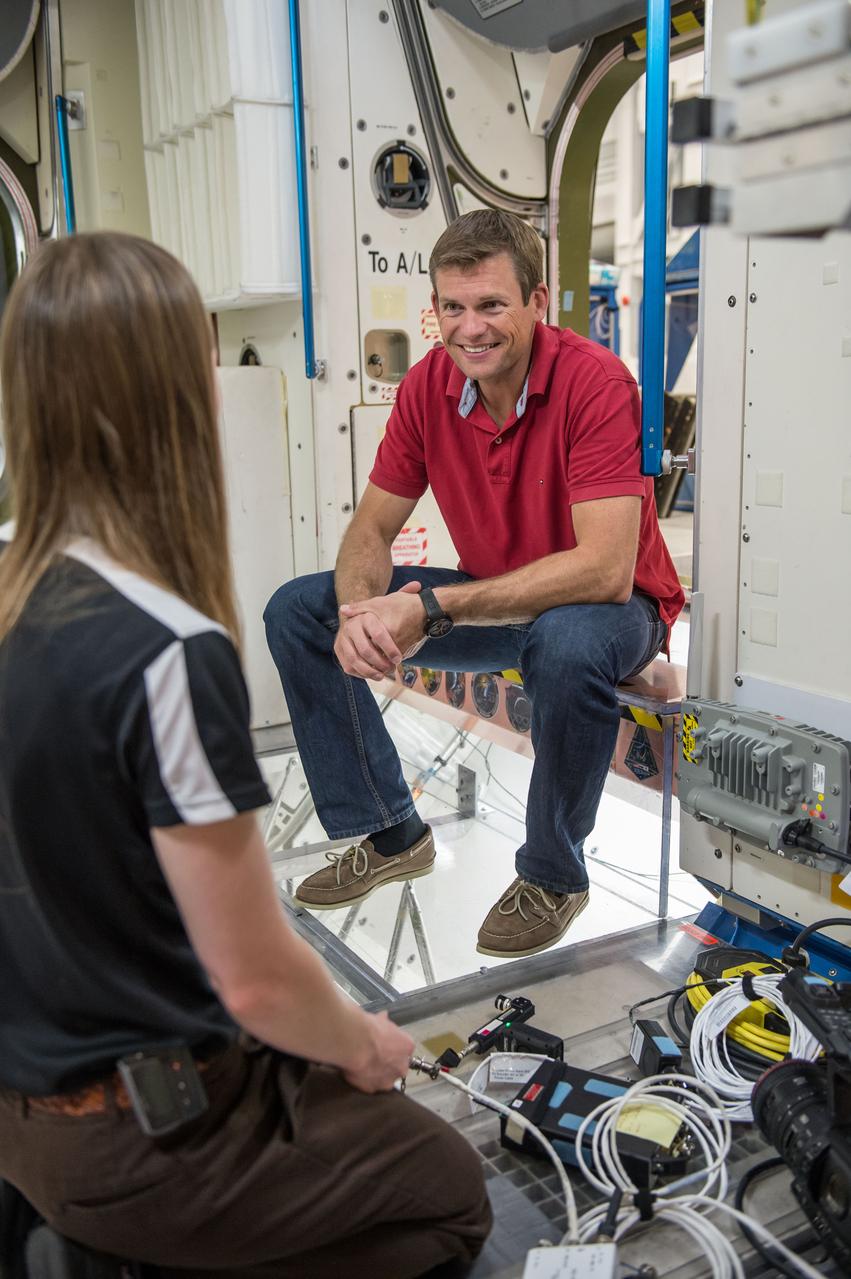
Date:08-19-2014 Location:B9NW Node 1 Subject:Photograph ESA Astronaut Andreas Mogensen on behalf of ESA during INT TV OPS USER training with instructor Katrina Willoughby. Post on IO/ISS Missions/ISS-045/Preflight. Notify Mike Gentry, Kathy Strawn, Jody Russell, Kylie Clem, Kelly Humphries, Jay Bolden, Jason Roberts, Mark Garcia, Dylan Mathis, Carlos Fontanot, Andreas Mogensen, Katrina Willoughby and Melanie Cowan when ready. Photog: David DeHoyos
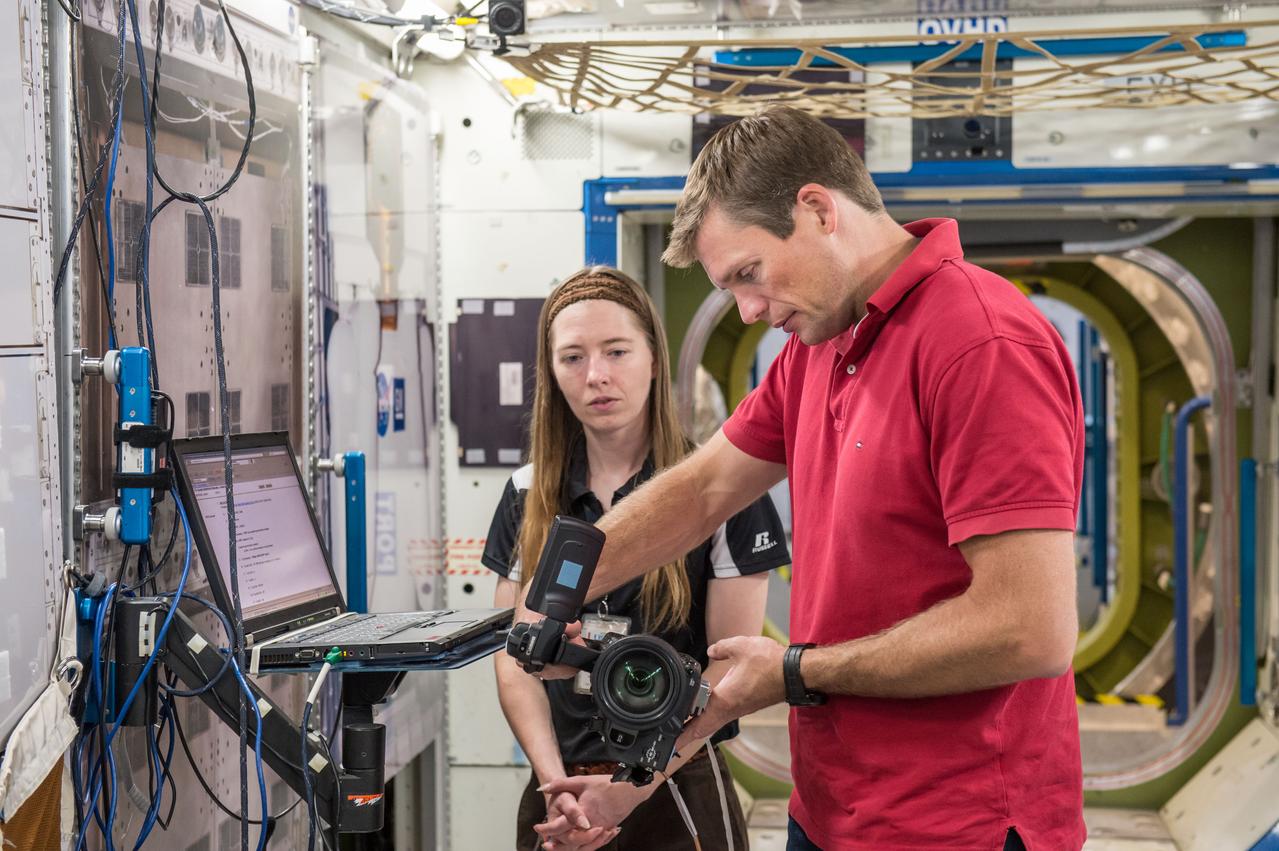
Date:08-19-2014 Location:B9NW Node 1 Subject:Photograph ESA Astronaut Andreas Mogensen on behalf of ESA during INT TV OPS USER training with instructor Katrina Willoughby. Post on IO/ISS Missions/ISS-045/Preflight. Notify Mike Gentry, Kathy Strawn, Jody Russell, Kylie Clem, Kelly Humphries, Jay Bolden, Jason Roberts, Mark Garcia, Dylan Mathis, Carlos Fontanot, Andreas Mogensen, Katrina Willoughby and Melanie Cowan when ready. Photog: David DeHoyos
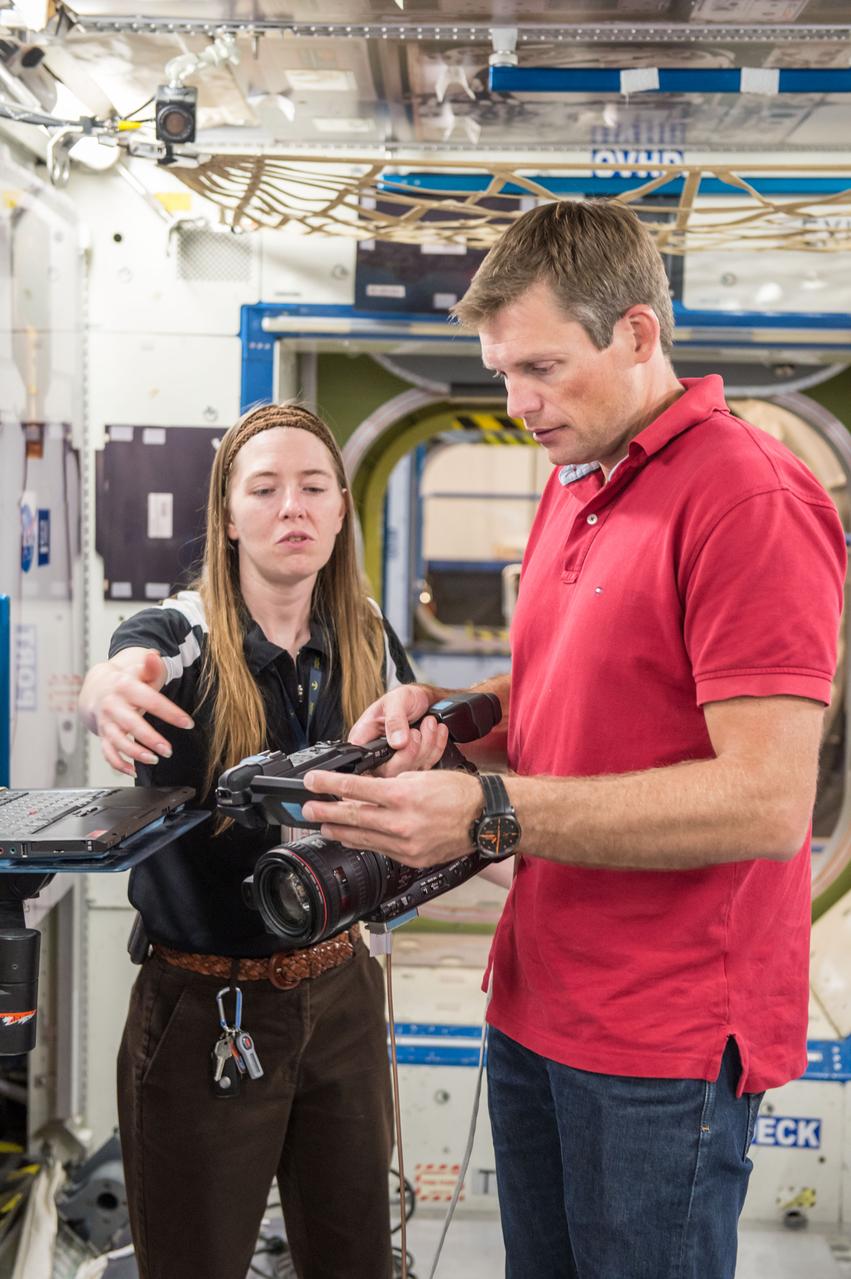
Date:08-19-2014 Location:B9NW Node 1 Subject:Photograph ESA Astronaut Andreas Mogensen on behalf of ESA during INT TV OPS USER training with instructor Katrina Willoughby. Post on IO/ISS Missions/ISS-045/Preflight. Notify Mike Gentry, Kathy Strawn, Jody Russell, Kylie Clem, Kelly Humphries, Jay Bolden, Jason Roberts, Mark Garcia, Dylan Mathis, Carlos Fontanot, Andreas Mogensen, Katrina Willoughby and Melanie Cowan when ready. Photog: David DeHoyos
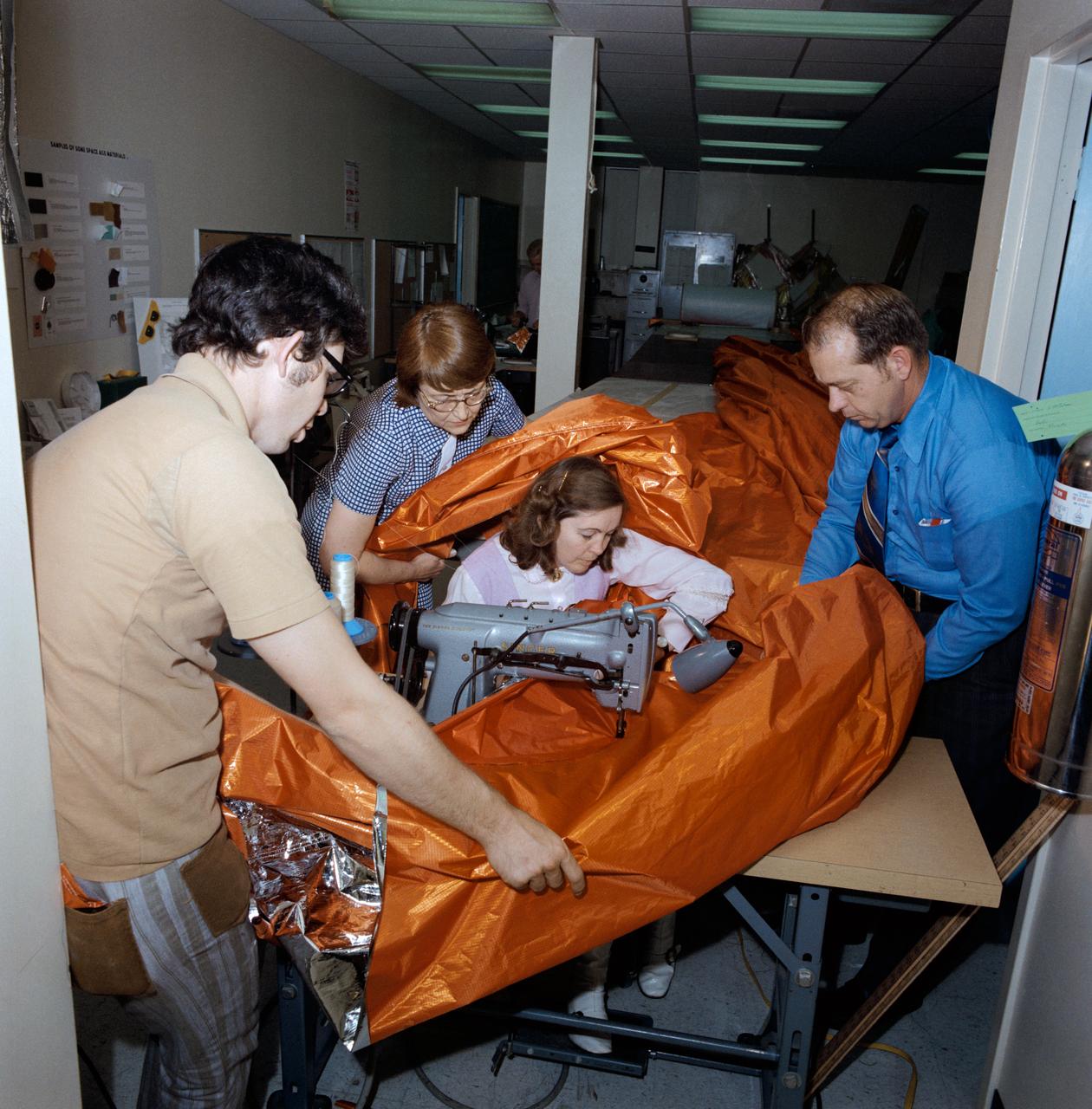
S73-26047 (18 May 1973) --- A sail-like sunshade for possible use as a sunscreen for the Skylab orbital workshop (OWS) is shown being fabricated in the GE Building across the street from the Johnson Space Center. Three persons assist the seamstress feed the material through the sewing machine. The three-layered shade will be composed of a top layer of aluminum Mylar, a middle layer of laminated nylon rip stop, and a bottom layer of thin nylon. Working on the sunshade, from left to right, are Dale Gentry, Elizabeth Gauldin, Alyene Baker and James H. Barnett Jr. Mrs. Baker, a GE employee, operates the double-needle sewing machine. Barnett is head of the Crew Equipment Development Section of JSC's Crew Systems Division. Mrs. Gauldin is also with the Crew Systems Division. Gentry works for GE. The work shown here is part of the crash program underway to prepare a protection device for Skylab to replace the original shield which was lost when the unmanned Skylab 1 launch took place on May 14, 1973. The improvised solar shield selected to be used will be carried to Earth orbit by the Skylab 2 crew, who will deploy it to shade part of the OWS from the hot rays of the sun. Loss of the original shield, as expected, has caused an overheating problem on the OWS. Photo credit: NASA
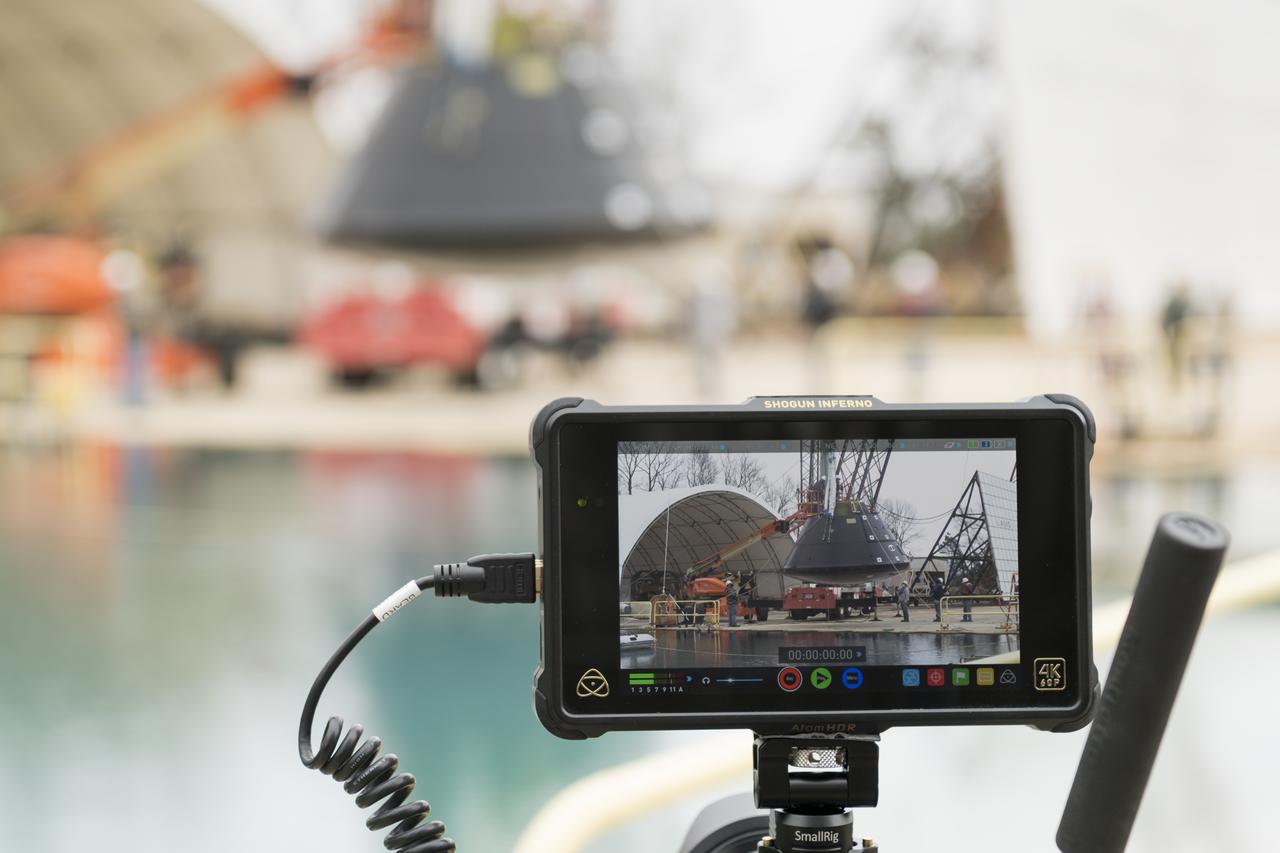
Images of Structural Test Article (STA) vertical water impact testing (WIT) testing at Impact Dynamics Facility NASA Langley Research Center.

This side-rear view of the X-24A Lifting Body on the lakebed by the NASA Flight Research Center shows its control surfaces used for subsonic flight.
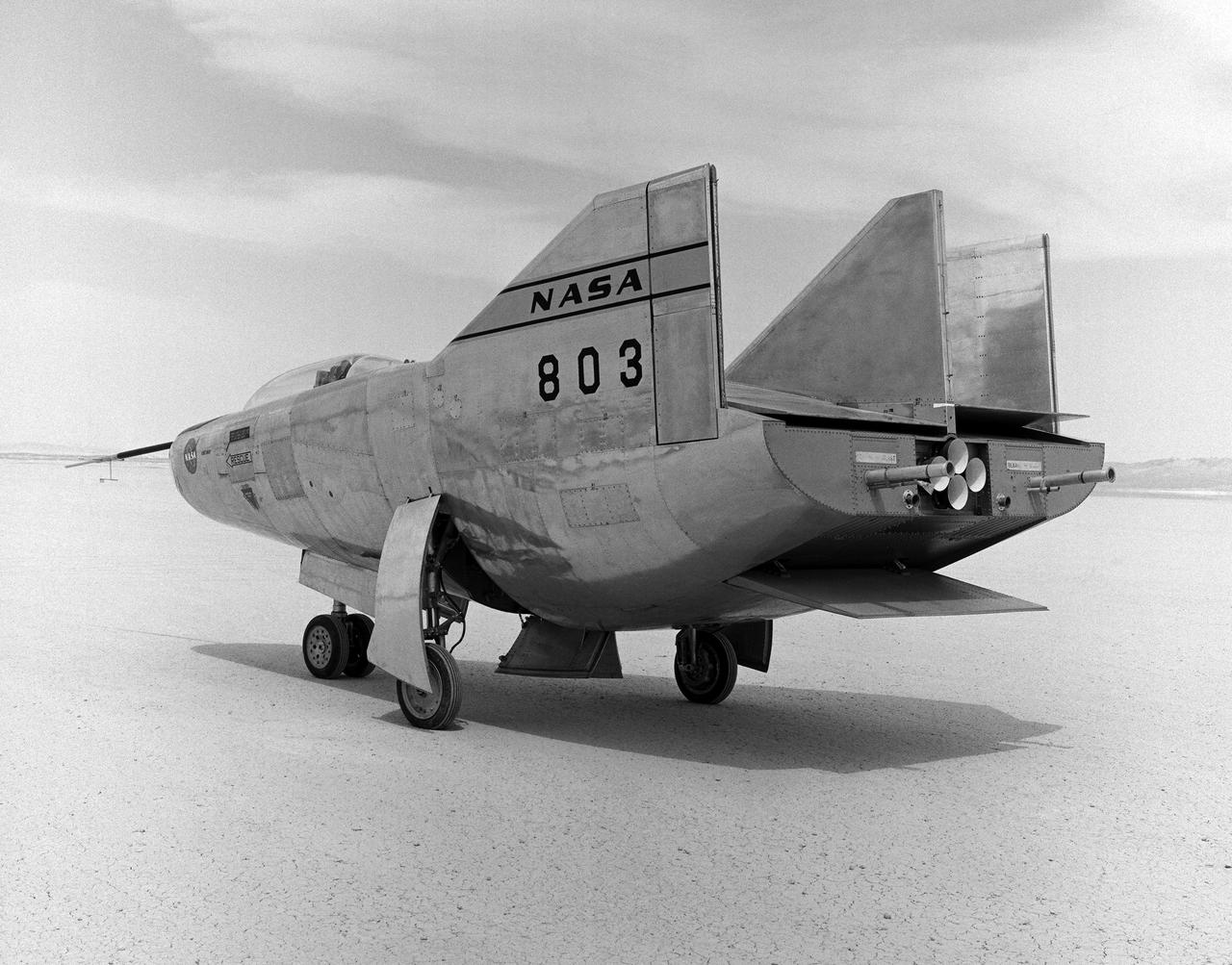
The M2-F3 Lifting Body is seen here on the lakebed next to the NASA Flight Research Center (later the Dryden Flight Research Center), Edwards, California. Redesigned and rebuilt from the M2-F2, the M2-F3 featured as its most visible change a center fin for greater stability. While the M2-F3 was still demanding to fly, the center fin eliminated the high risk of pilot induced oscillation (PIO) that was characteristic of the M2-F2.
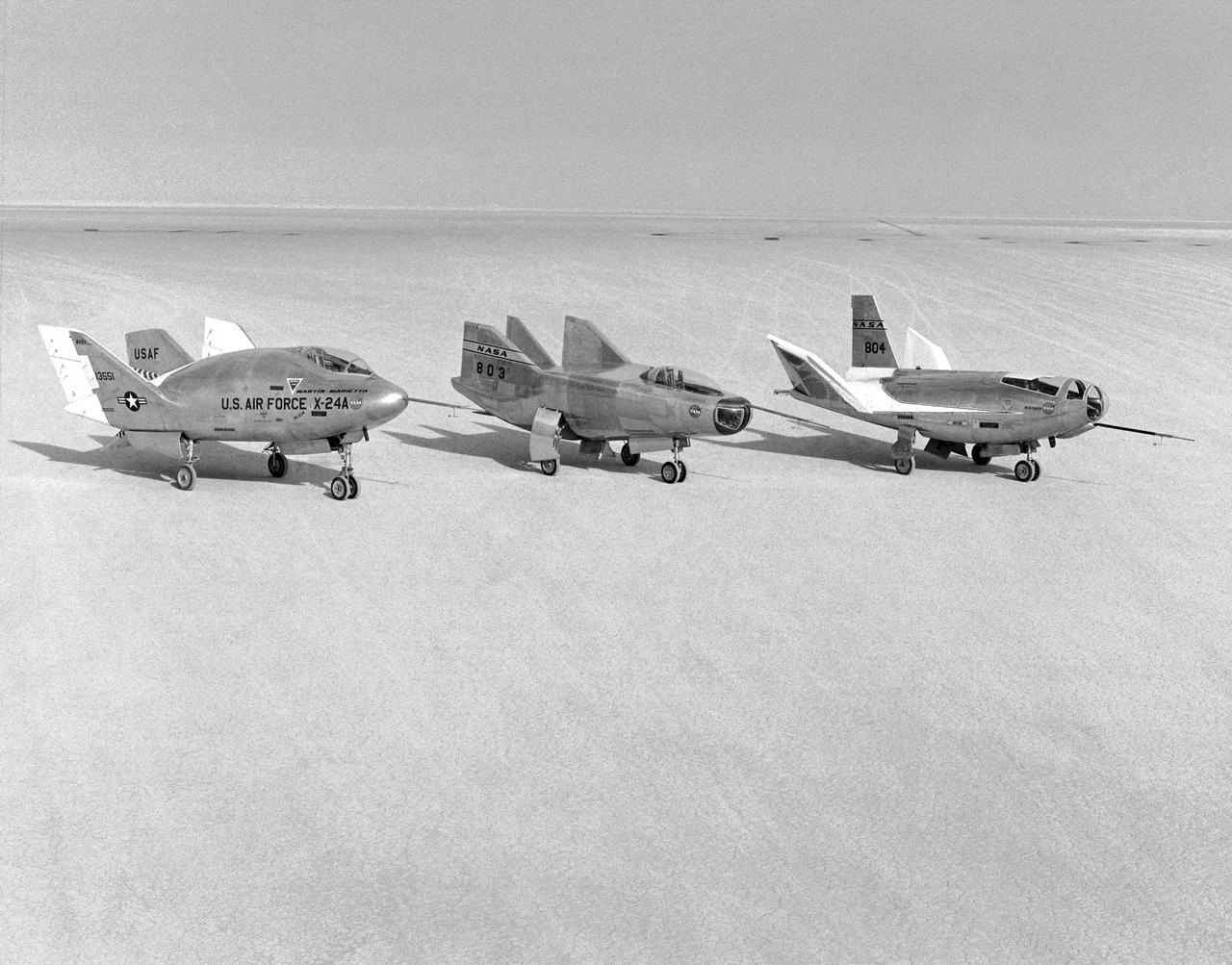
The wingless, lifting body aircraft sitting on Rogers Dry Lake at what is now NASA's Dryden Flight Research Center, Edwards, California, from left to right are the X-24A, M2-F3 and the HL-10. The lifting body aircraft studied the feasibility of maneuvering and landing an aerodynamic craft designed for reentry from space. These lifting bodies were air launched by a B-52 mother ship, then flew powered by their own rocket engines before making an unpowered approach and landing. They helped validate the concept that a space shuttle could make accurate landings without power. The X-24A flew from April 17, 1969 to June 4, 1971. The M2-F3 flew from June 2, 1970 until December 20, 1972. The HL-10 flew from December 22, 1966 until July 17, 1970 and logged the highest and fastest records in the lifting body program.
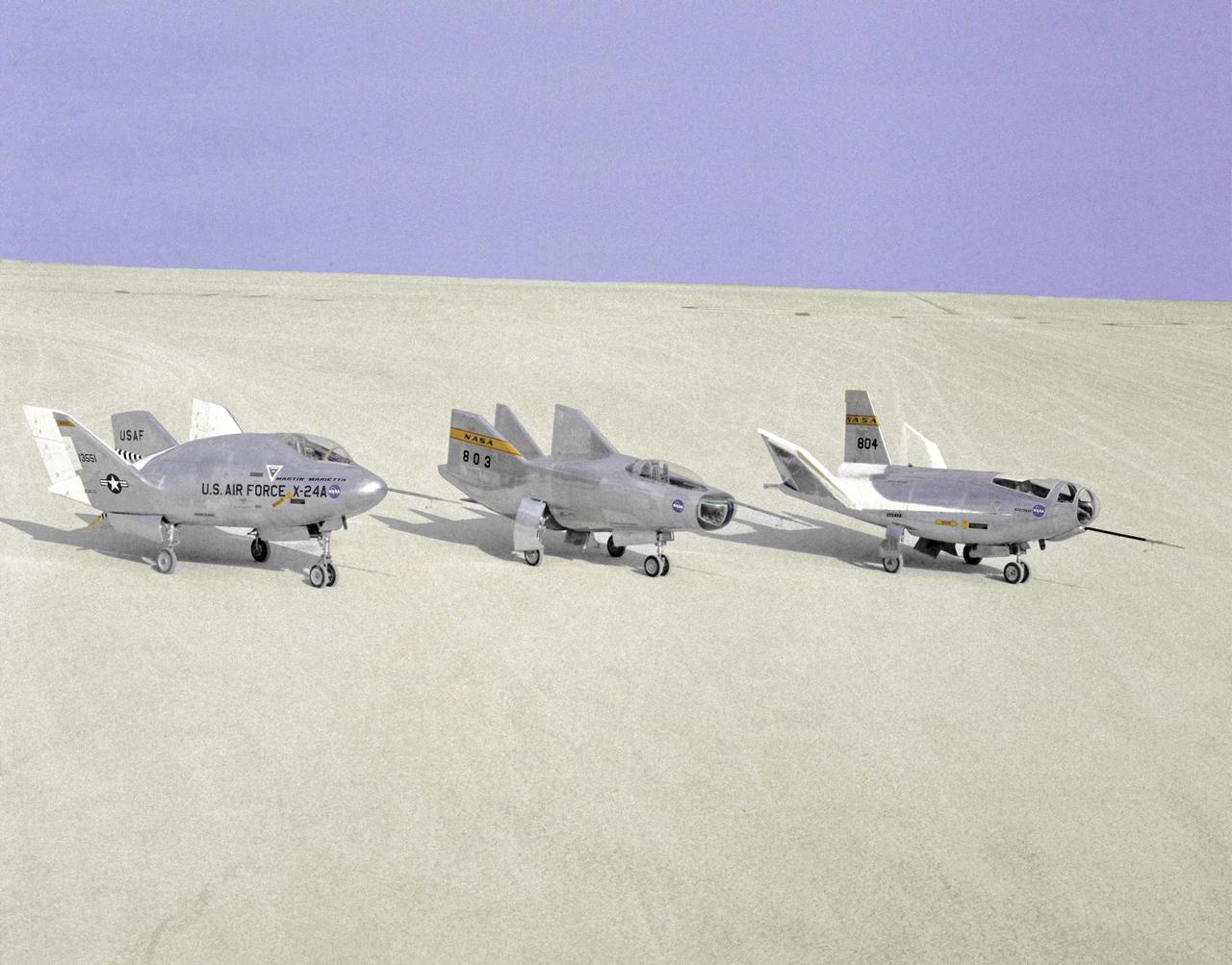
The wingless, lifting body aircraft sitting on Rogers Dry Lake at what is now NASA's Dryden Flight Research Center, Edwards, California, from left to right are the X-24A, M2-F3 and the HL-10. The lifting body aircraft studied the feasibility of maneuvering and landing an aerodynamic craft designed for reentry from space. These lifting bodies were air launched by a B-52 mother ship, then flew powered by their own rocket engines before making an unpowered approach and landing. They helped validate the concept that a space shuttle could make accurate landings without power. The X-24A flew from April 17, 1969 to June 4, 1971. The M2-F3 flew from June 2, 1970 until December 21, 1971. The HL-10 flew from December 22, 1966 until July 17, 1970, and logged the highest and fastest records in the lifting body program.
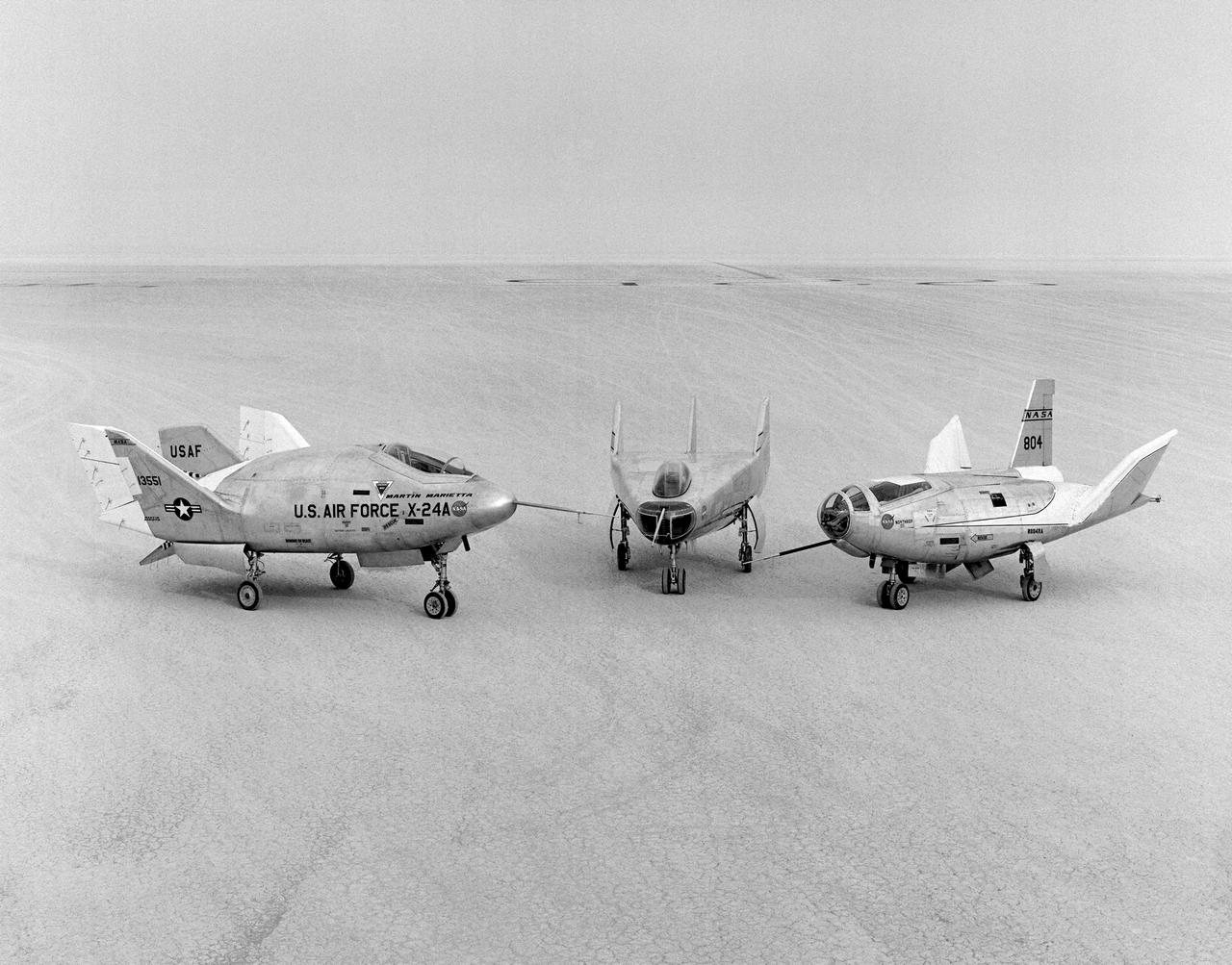
The wingless, lifting body aircraft sitting on Rogers Dry Lake at what is now NASA's Dryden Flight Research Center, Edwards, California, from left to right are the X-24A, M2-F3 and the HL-10. The lifting body aircraft studied the feasibility of maneuvering and landing an aerodynamic craft designed for reentry from space. These lifting bodies were air launched by a B-52 mother ship, then flew powered by their own rocket engines before making an unpowered approach and landing. They helped validate the concept that a space shuttle could make accurate landings without power. The X-24A flew from April 17, 1969 to June 4, 1971. The M2-F3 flew from June 2, 1970 until December 20, 1972. The HL-10 flew from December 22, 1966 until July 17, 1970 and logged the highest and fastest records in the lifting body program.
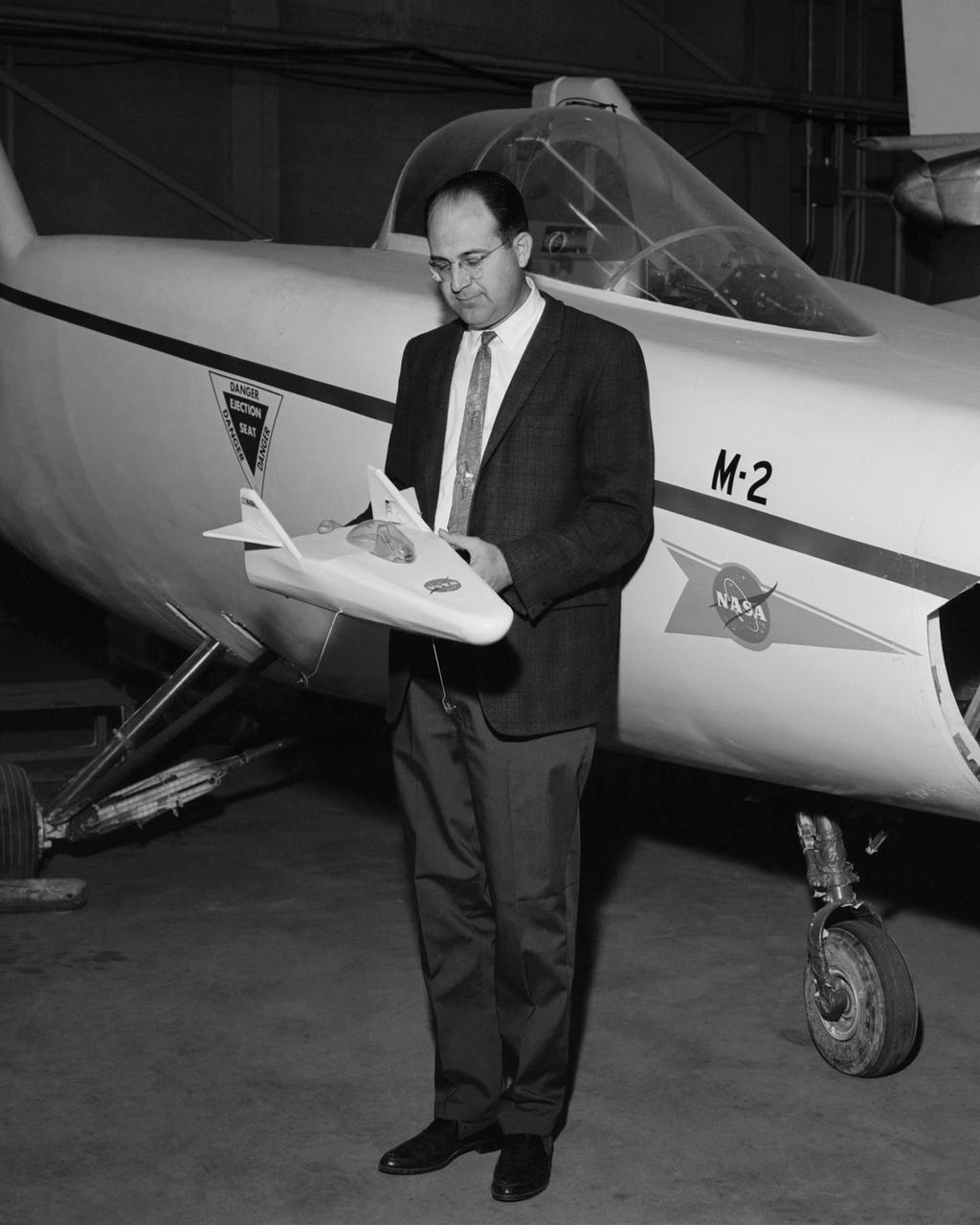
Dale Reed with a model of the M2-F1 in front of the actual lifting body. Reed used the model to show the potential of the lifting bodies. He first flew it into tall grass to test stability and trim, then hand-launched it from buildings for longer flights. Finally, he towed the lifting-body model aloft using a powered model airplane known as the "Mothership." A timer released the model and it glided to a landing. Dale's wife Donna used a 9 mm. camera to film the flights of the model. Its stability as it glided--despite its lack of wings--convinced Milt Thompson and some Flight Research Center engineers including the center director, Paul Bikle, that a piloted lifting body was possible.
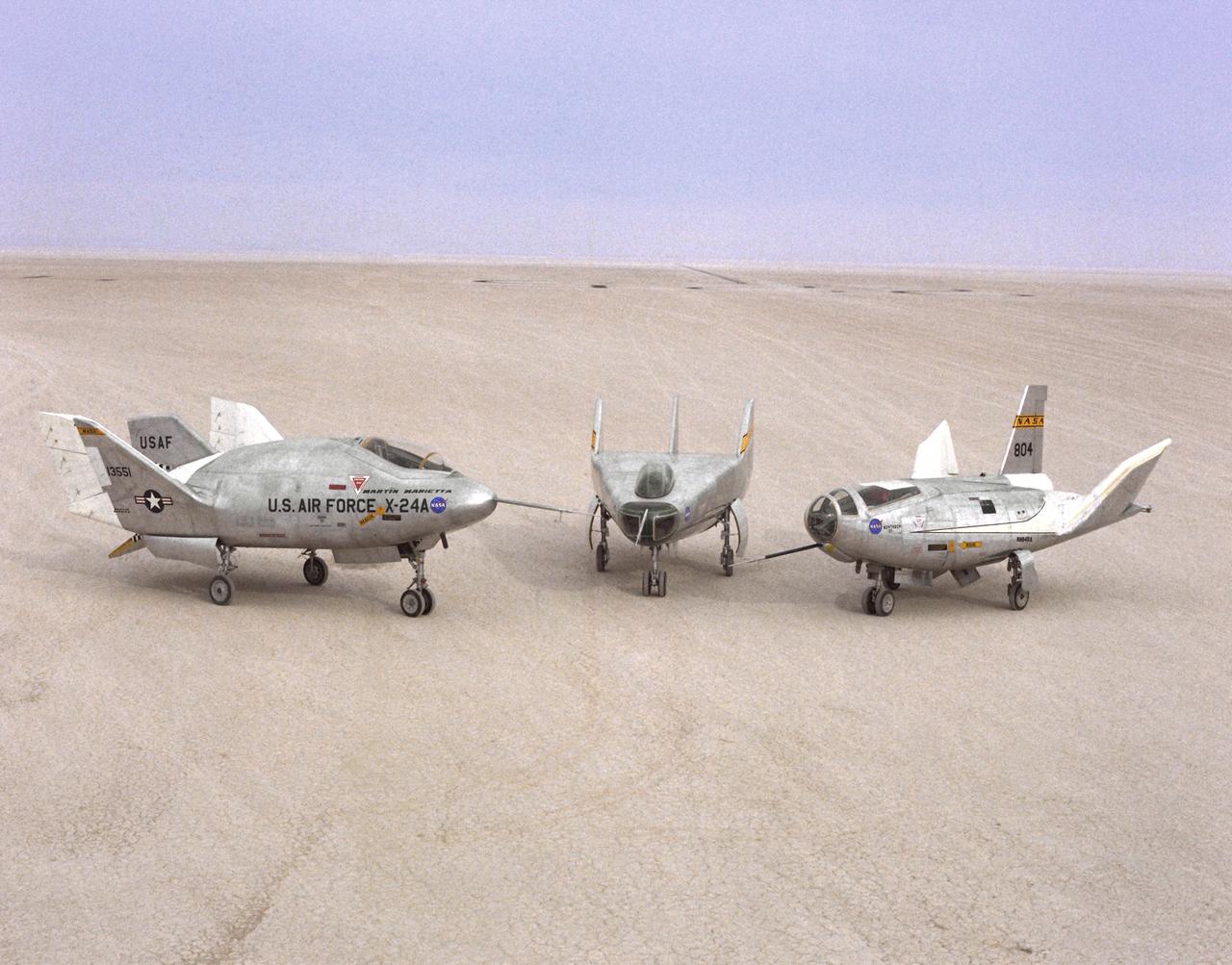
The wingless, lifting body aircraft sitting on Rogers Dry Lake at what is now NASA's Dryden Flight Research Center, Edwards, California, from left to right are the X-24A, M2-F3 and the HL-10. The lifting body aircraft studied the feasibility of maneuvering and landing an aerodynamic craft designed for reentry from space. These lifting bodies were air launched by a B-52 mother ship, then flew powered by their own rocket engines before making an unpowered approach and landing. They helped validate the concept that a space shuttle could make accurate landings without power. The X-24A flew from April 17, 1969 to June 4, 1971. The M2-F3 flew from June 2, 1970 until December 22, 1972. The HL-10 flew from December 22, 1966 until July 17, 1970, and logged the highest and fastest records in the lifting body program.