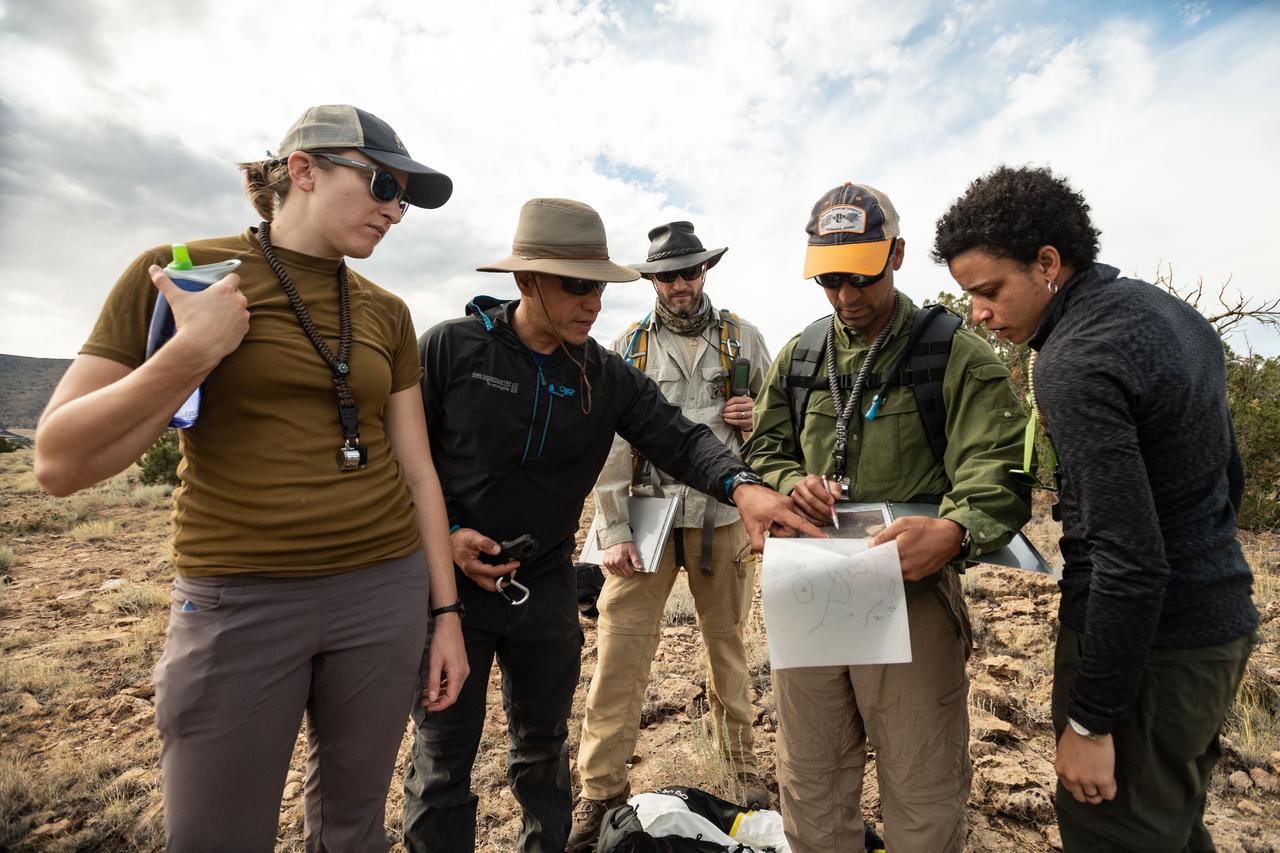
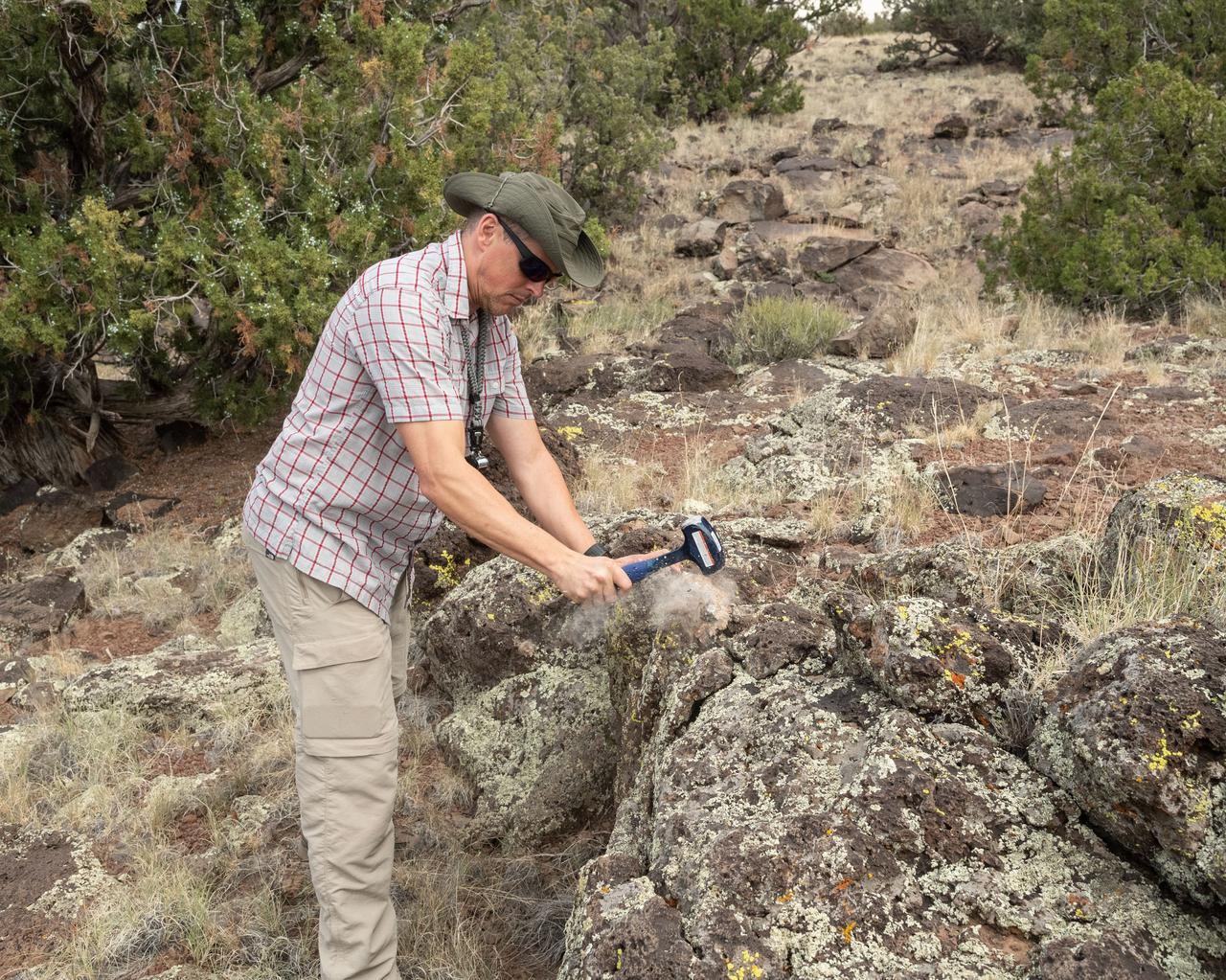
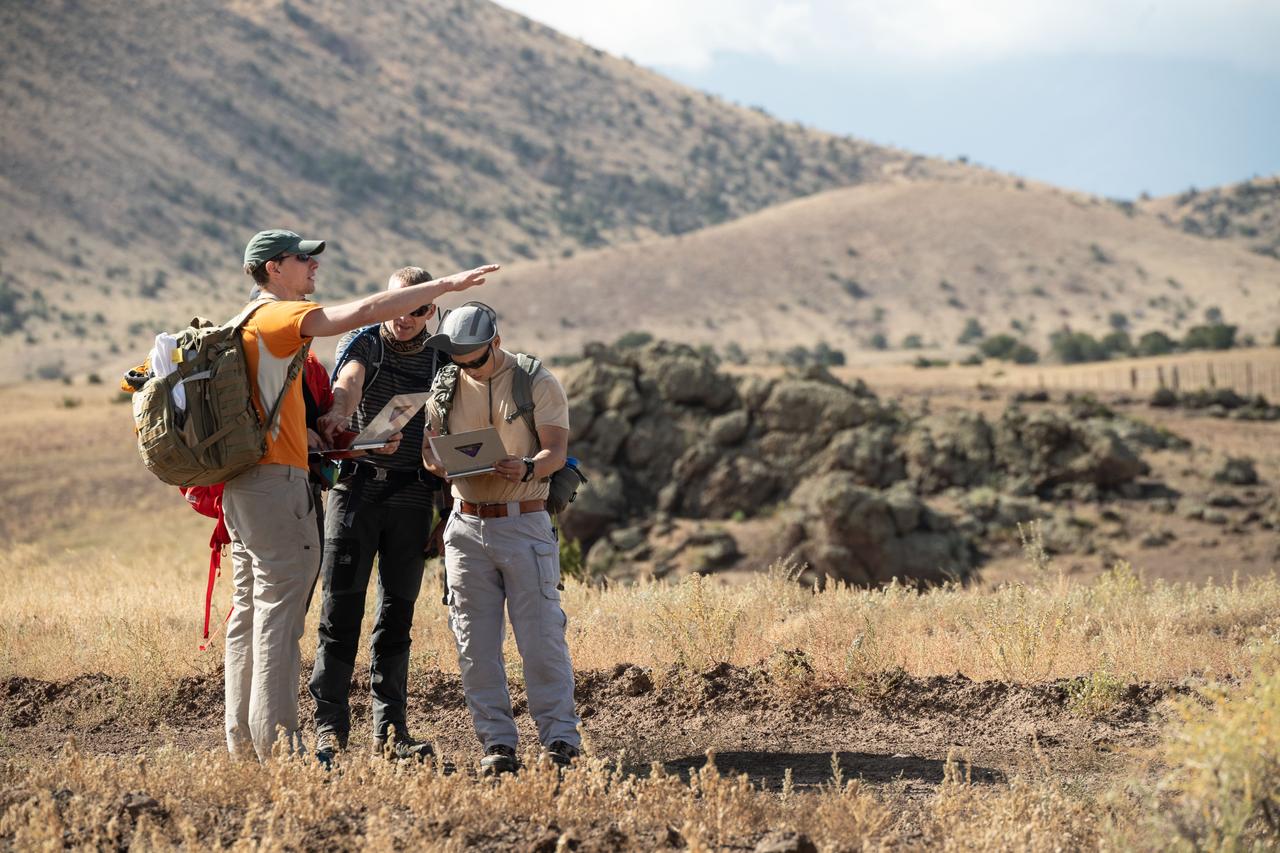
jsc2019e054865 (09-16-19) --- (From left) 2017 NASA astronaut candidates Kayla Barron, Frank Rubio, Raja Chari, and Jessica Watkins with their field instructor during geology training in Arizona. Photo Credit: (NASA/Bill Stafford)
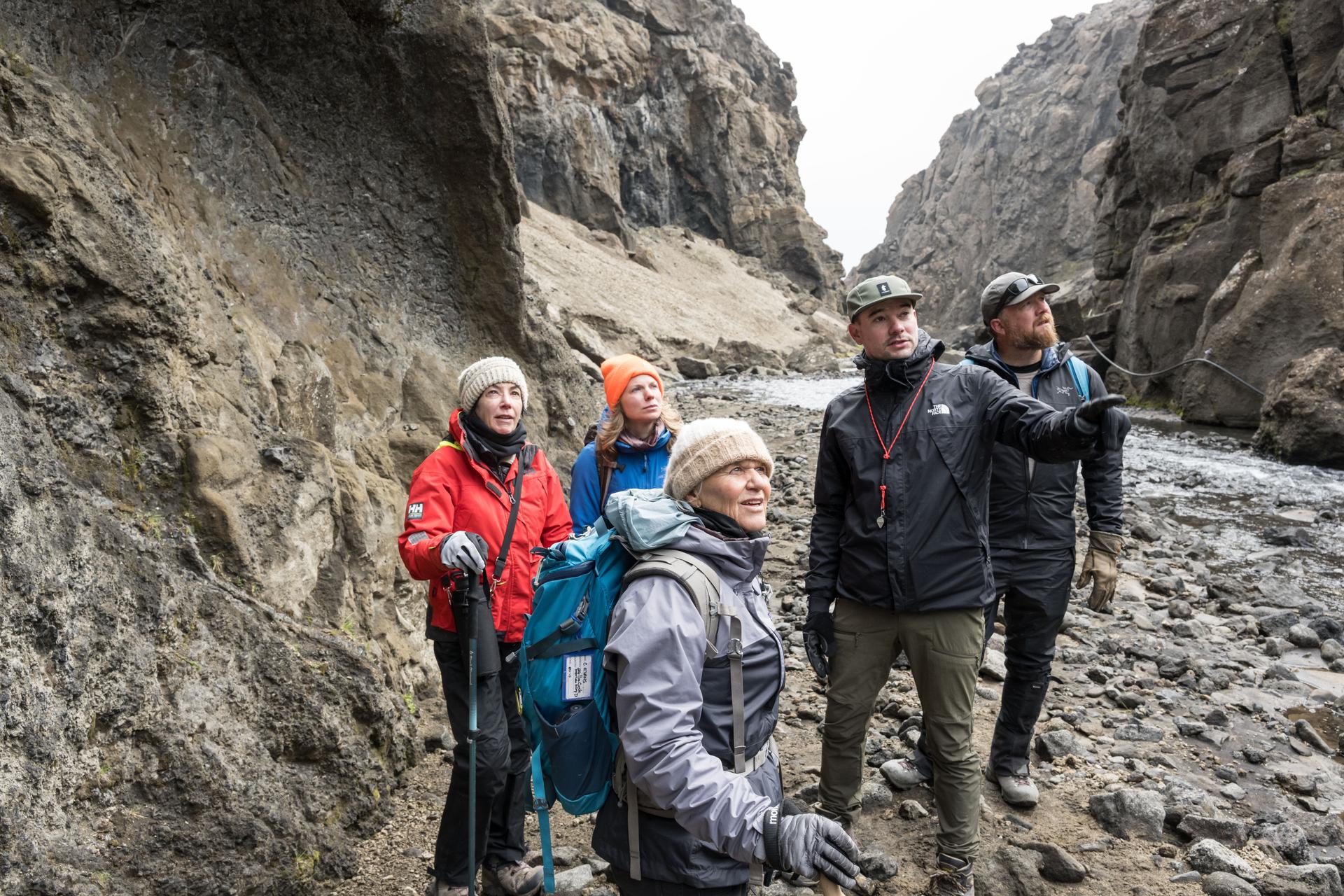
From left, Bridget Scheib, Artemis geology training lead Cindy Evans, NASA astronaut Zena Cardman, geology instructor Jacob Richardson, and Patrick Whelley observe Iceland’s lunar-like landscape during a geology field training expedition. Credit: NASA/James Blair
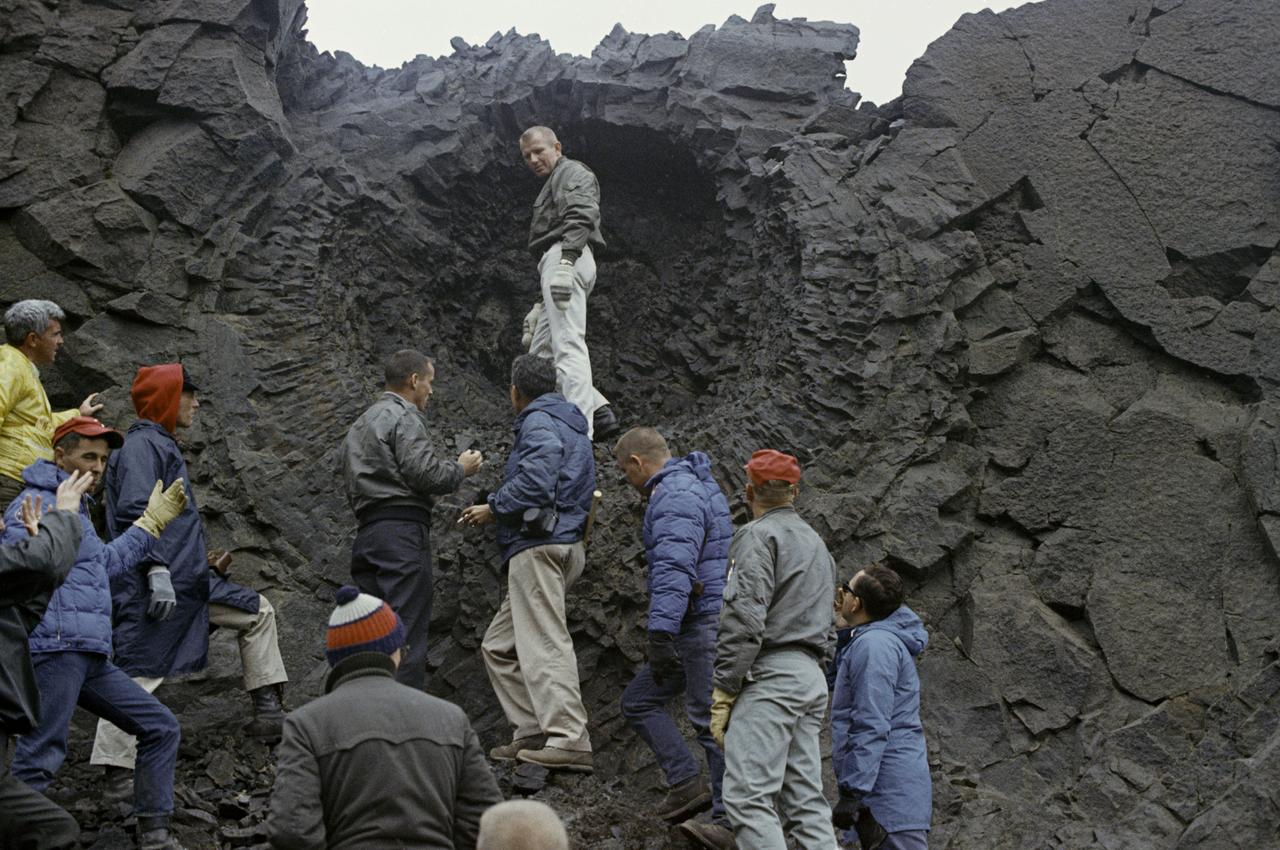
Apollo astronauts study rock formations during a geology field training in Iceland in 1967.
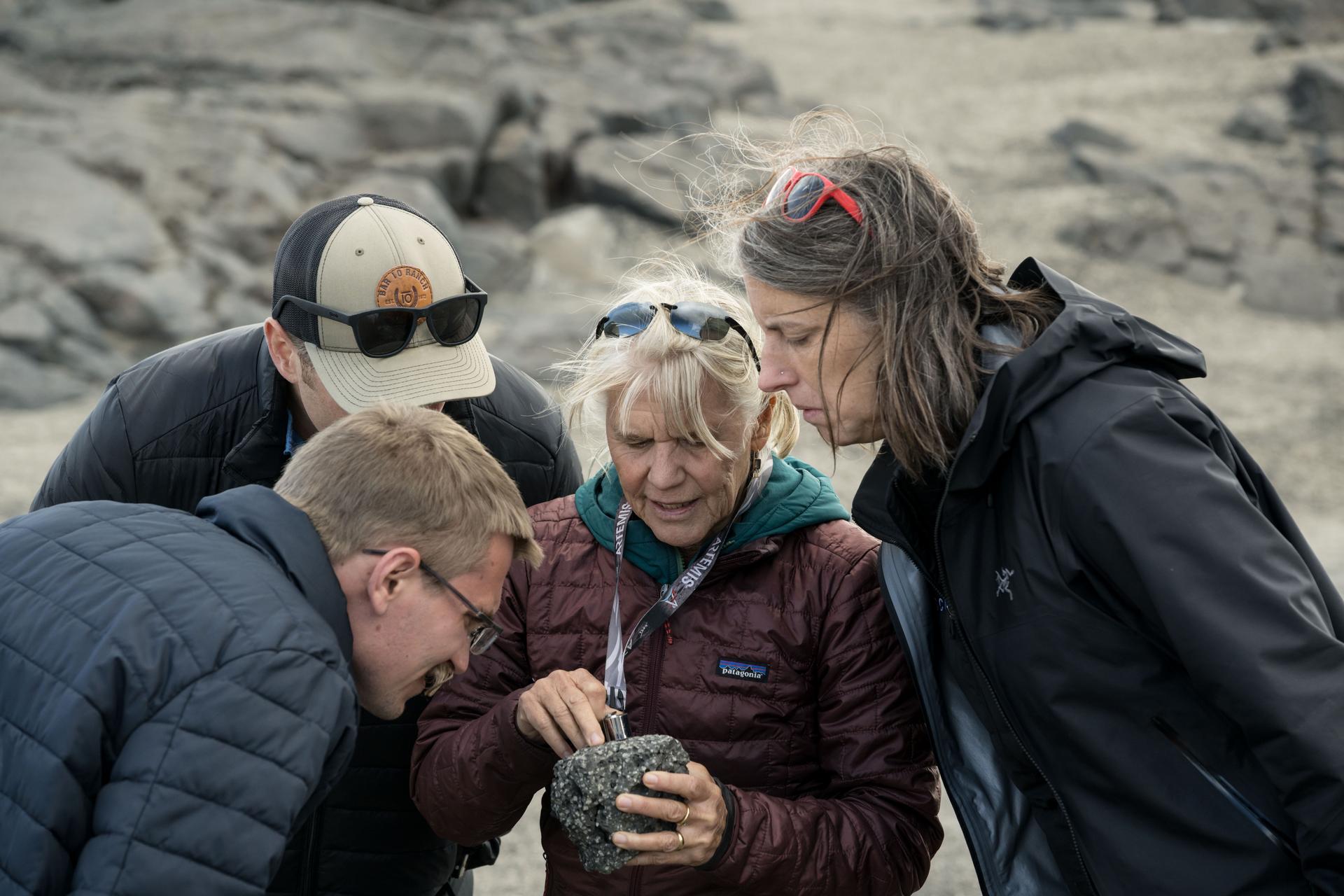
From left, Bryce Prescott, NASA astronaut candidate Cameron Jones, Artemis geology training lead Cindy Evans, and Artemis curation lead Juliane Gross, examine a rock during a geology field training in Iceland. Iceland serves as a lunar stand-in for training astronauts and mission support teams in preparation for lunar surface science missions. Credit: NASA/James Blair
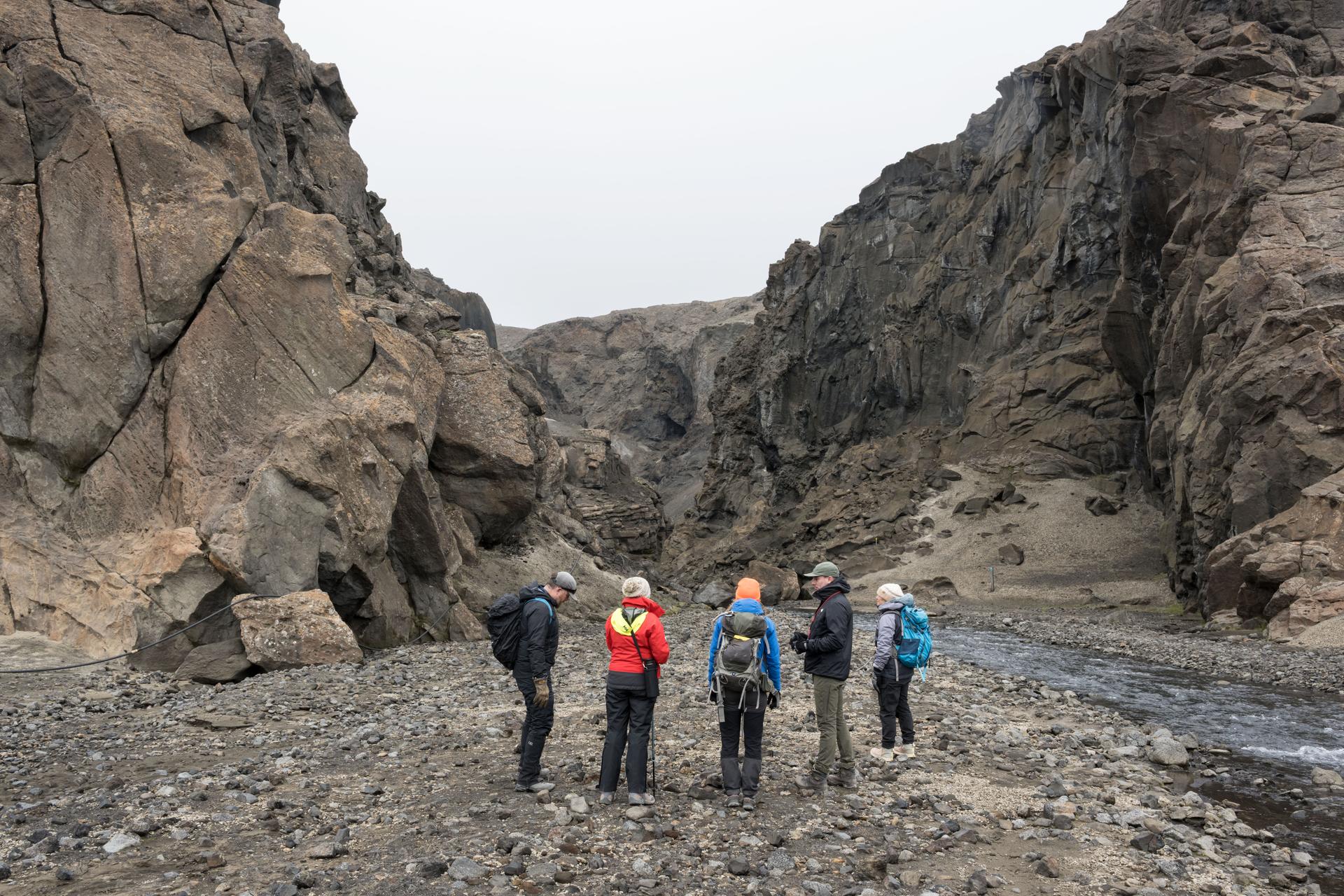
Participants in the Iceland geology field training expedition make observations and discuss the geologic features of the surrounding rocky cliffs in Iceland. Iceland serves as a lunar stand-in for training astronauts and mission support teams in preparation for lunar surface science missions. Credit: NASA/James Blair
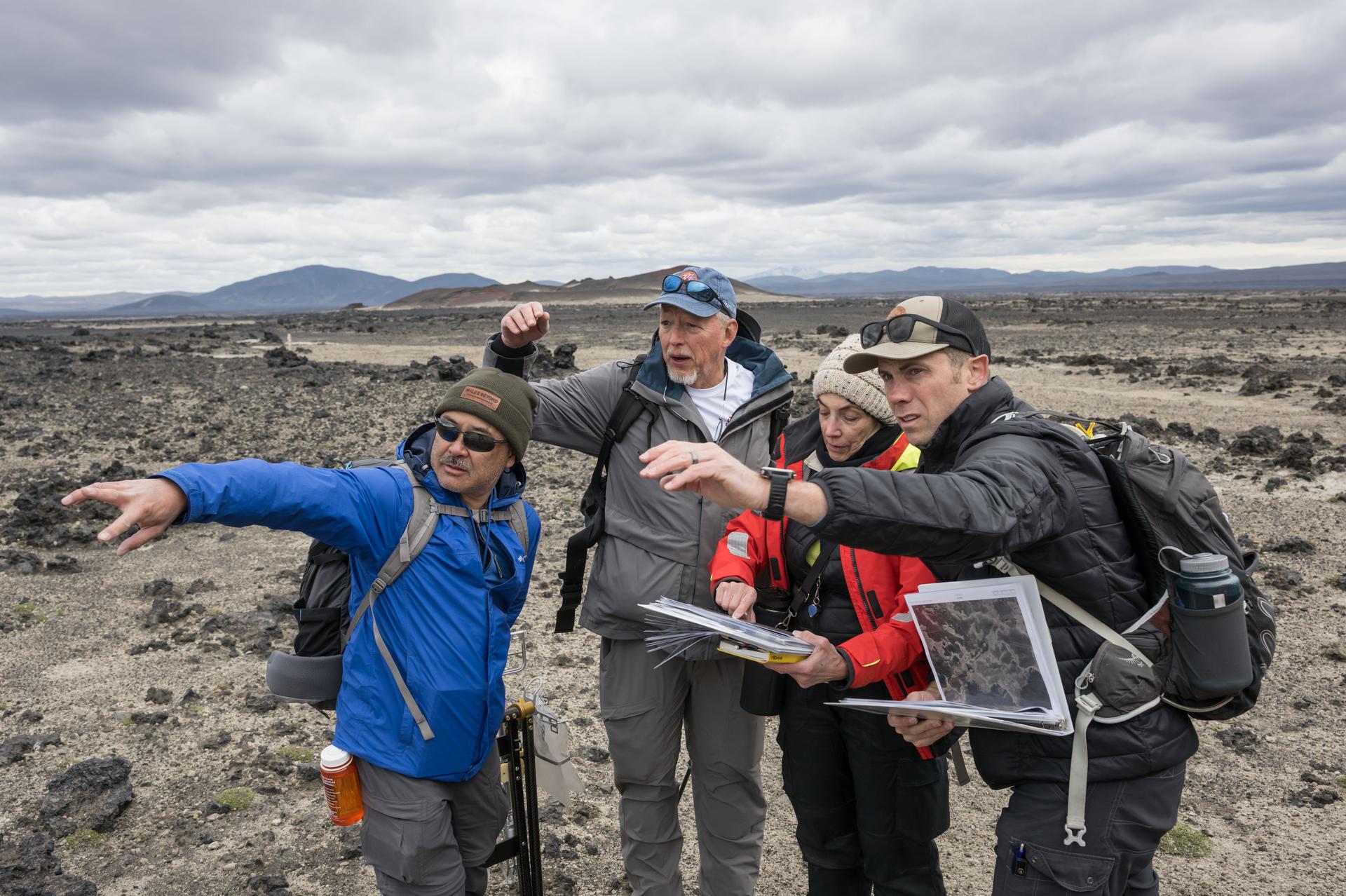
From left, Japan Aerospace Exploration Agency (JAXA) astronaut Aki Hoshide, chief training officer John Ray, EVA task officer Bridget Scheib, and NASA astronaut candidate Cameron Jones participate in a navigation training activity in Iceland as part of an Artemis geology field training expedition. Iceland’s diverse volcanic terrain is an excellent stand-in for lunar and planetary processes and provides an ideal environment in which to simulate surface science operations. Credit: NASA/James Blair
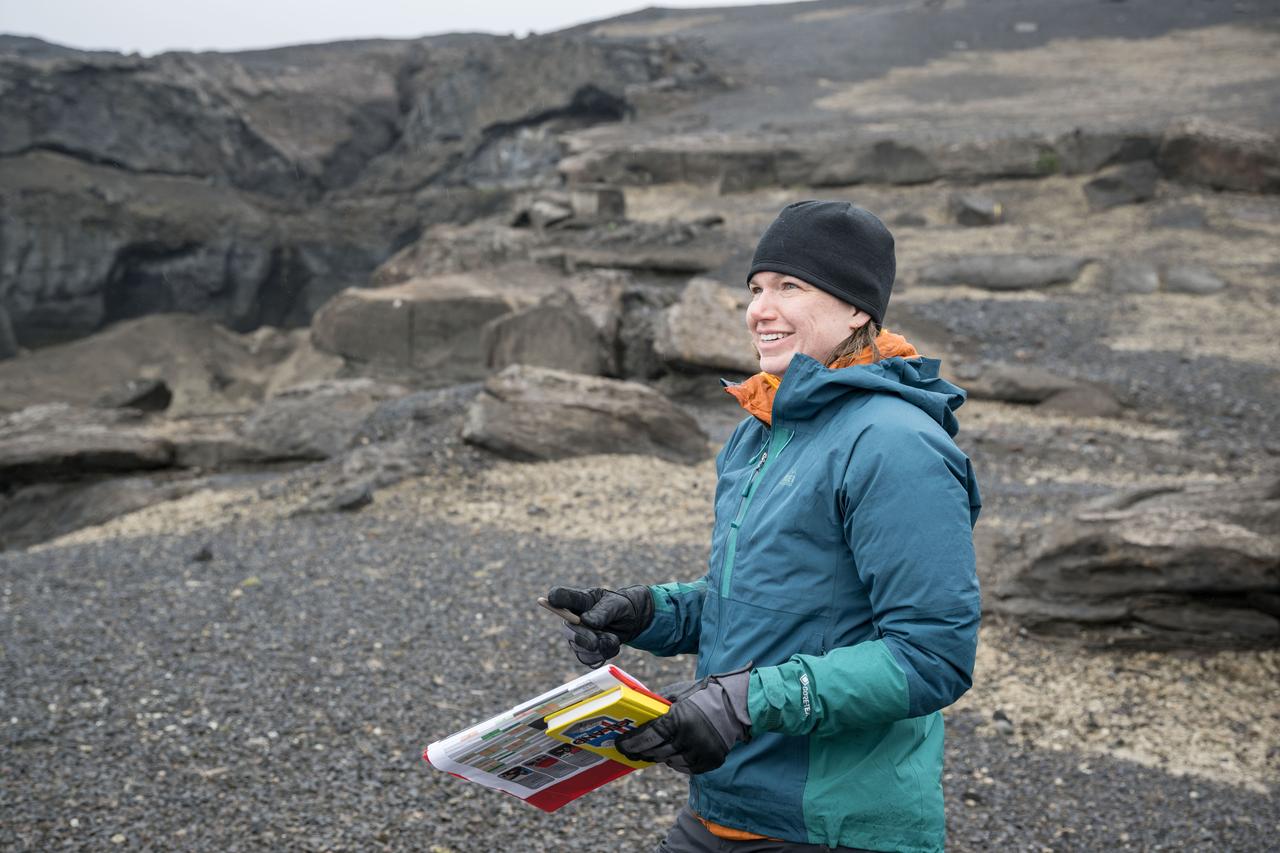
CSA (Canadian Space Agency) astronaut and Artemis II backup crew member, Jenni Gibbons, participates in geology field training in Iceland.
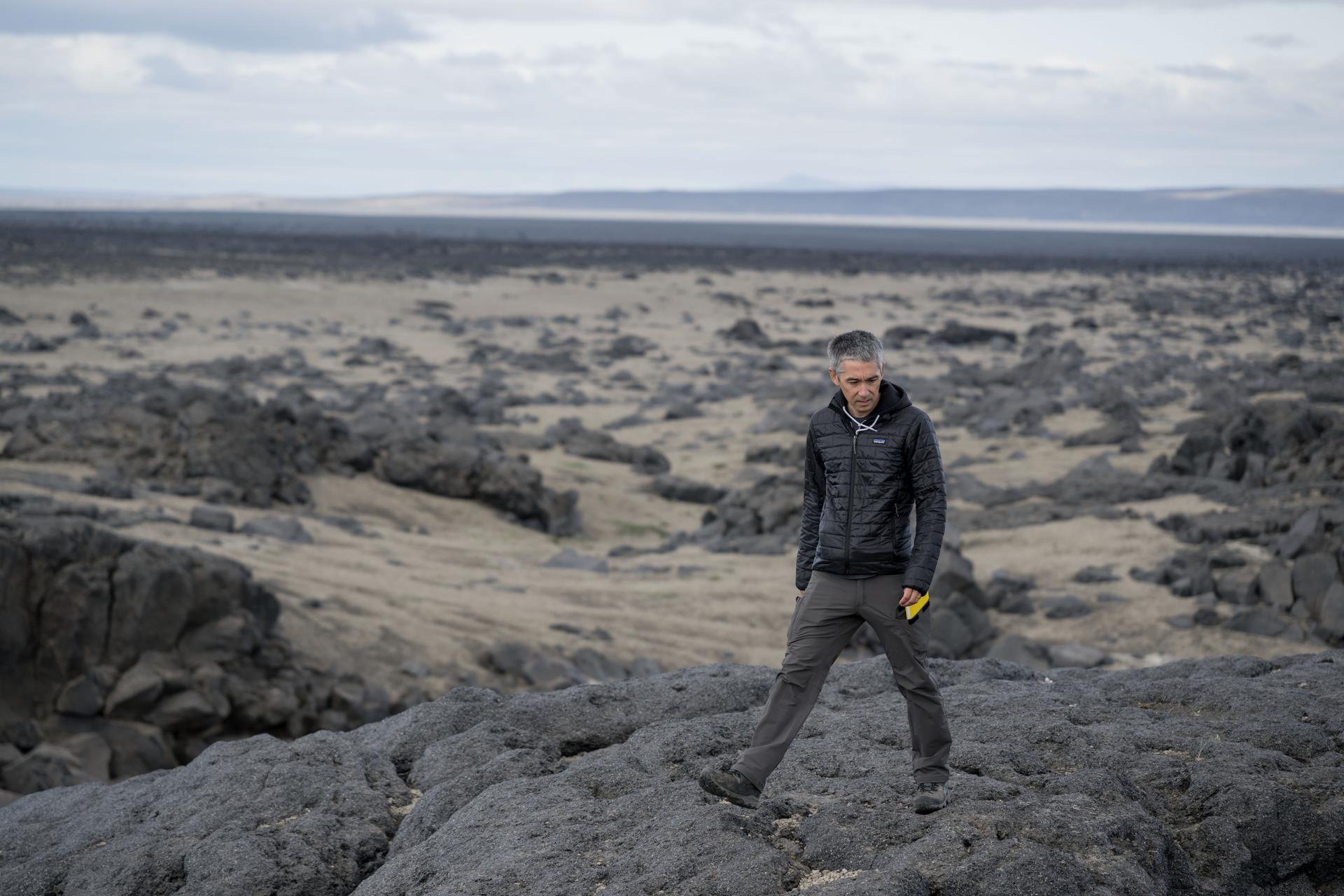
NASA astronaut candidate Yuri Kubo walks across a lava flow in Iceland during an Artemis geology field training expedition. Iceland’s diverse volcanic terrain is an excellent stand-in for lunar and planetary processes and provides an ideal environment in which to simulate surface science operations. Credit: NASA/James Blair
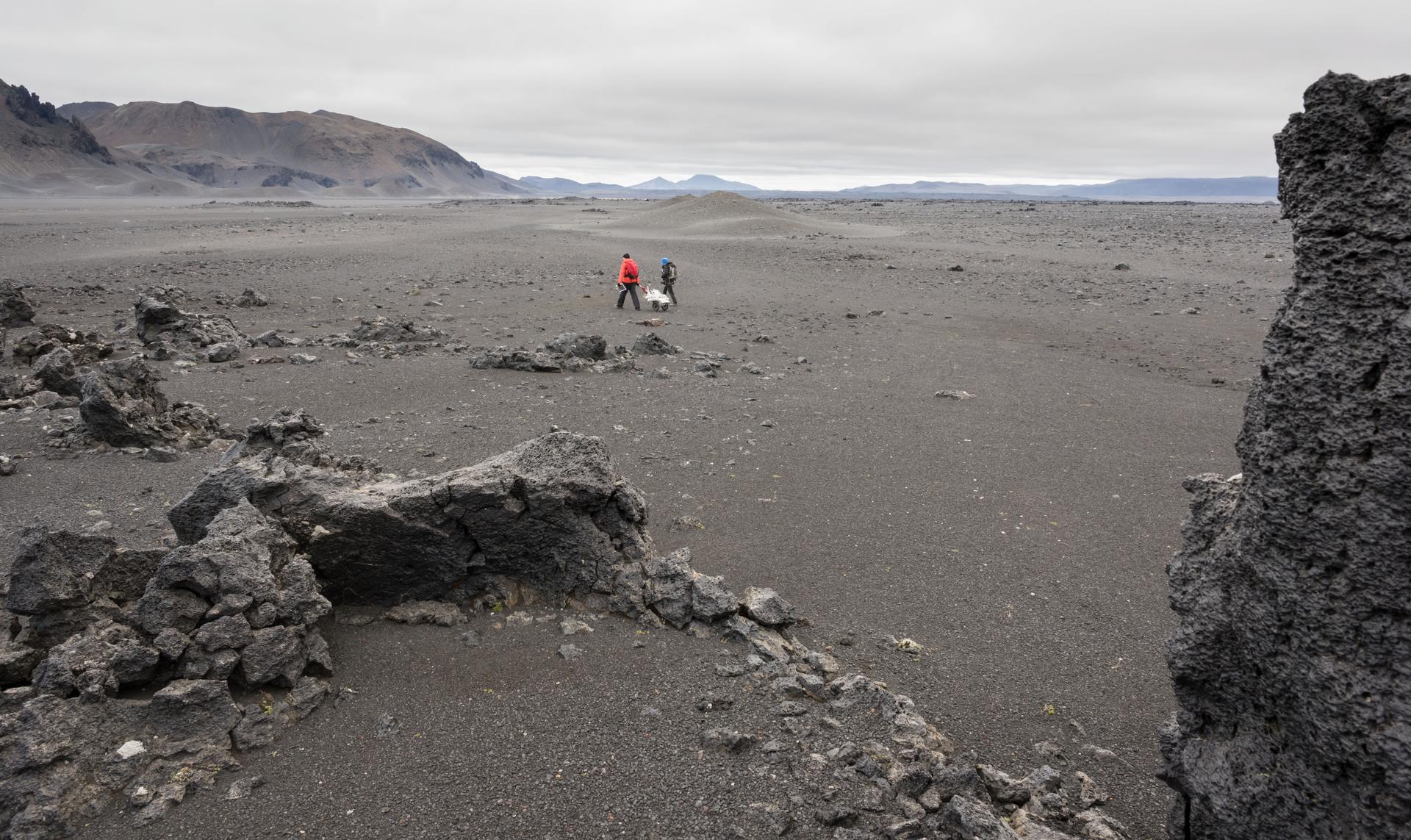
Participants in Artemis geology field training expedition walk a tool cart across a volcanic landscape in Iceland. Iceland’s diverse volcanic terrain is an excellent stand-in for lunar and planetary processes and provides an ideal environment in which to simulate surface science operations. Credit: NASA/James Blair
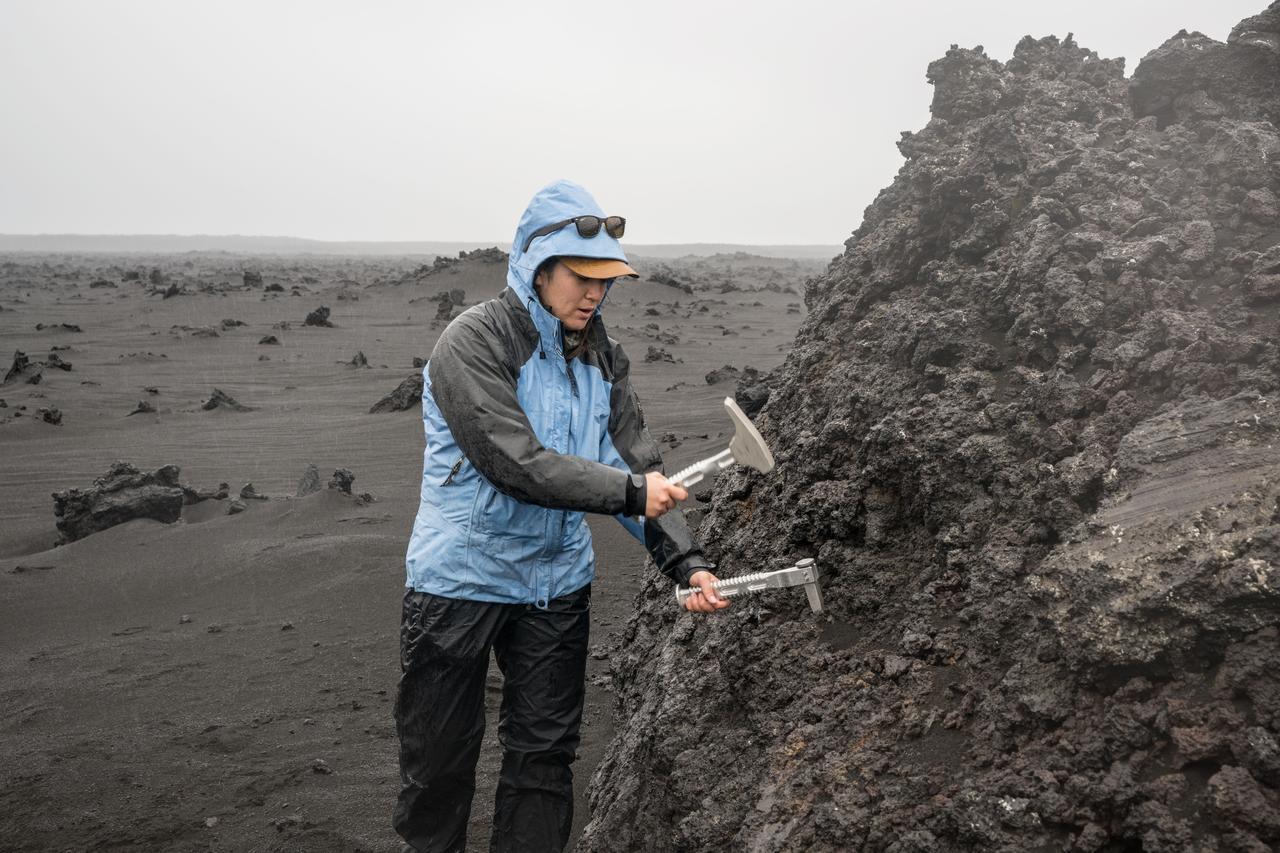
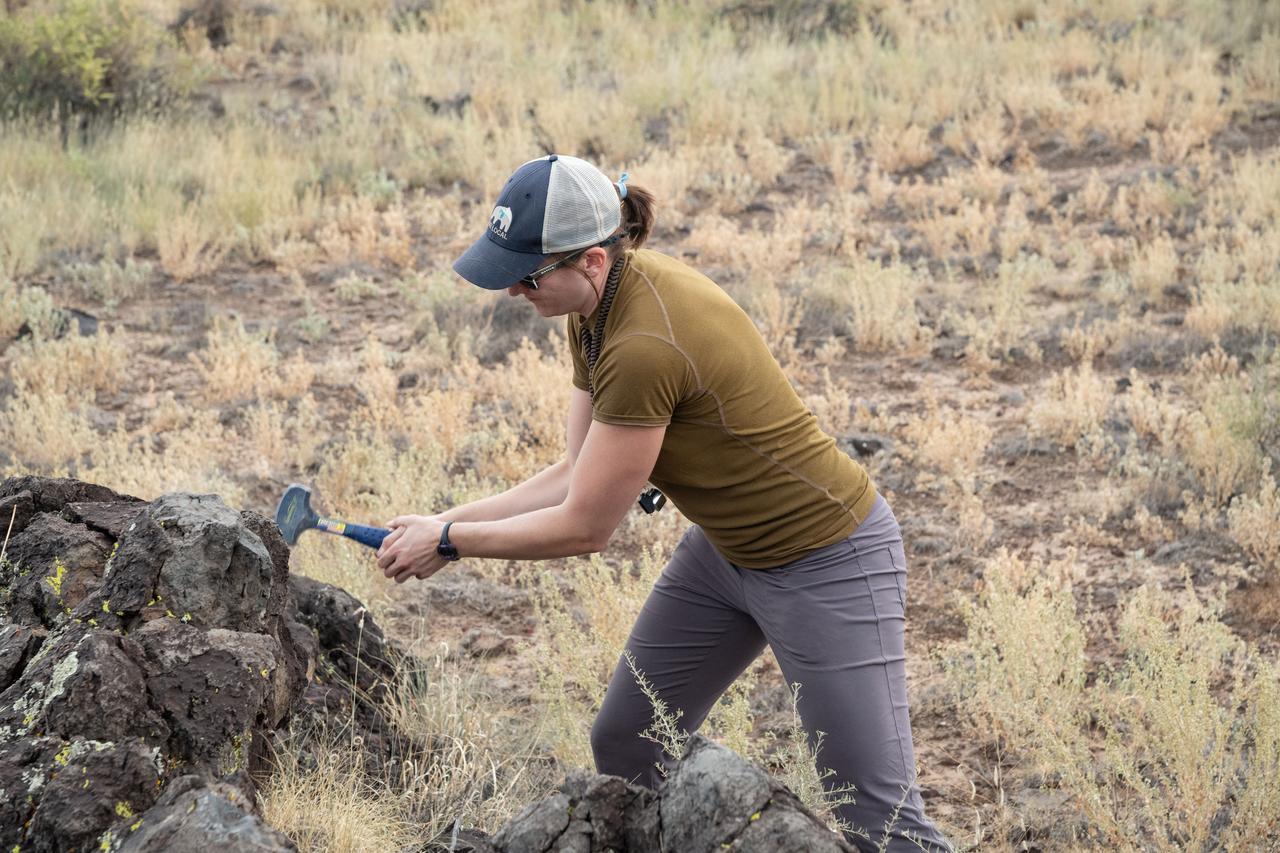
Angela Garcia, Artemis II science officer and exploration geologist, demonstrates how to use a rock hammer and chisel to dislodge a rock sample from a large boulder during the Artemis II field geology training in Iceland.
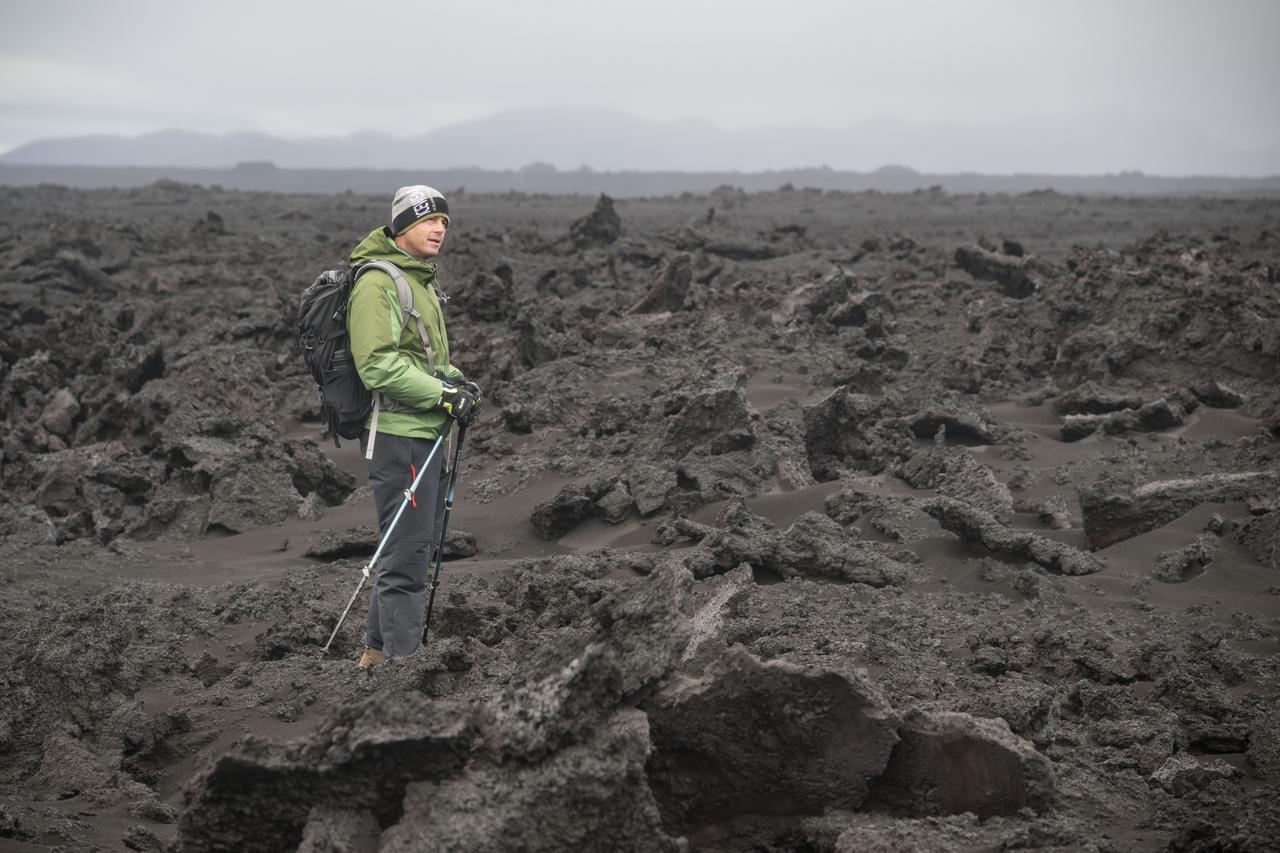
Artemis II Crew Geology Training in Iceland. Nautagil / Holohraun Science Activity. Photo Date: August 1, 2024. Location: Drekagil, Iceland. Photo Credit: NASA/Robert Markowitz
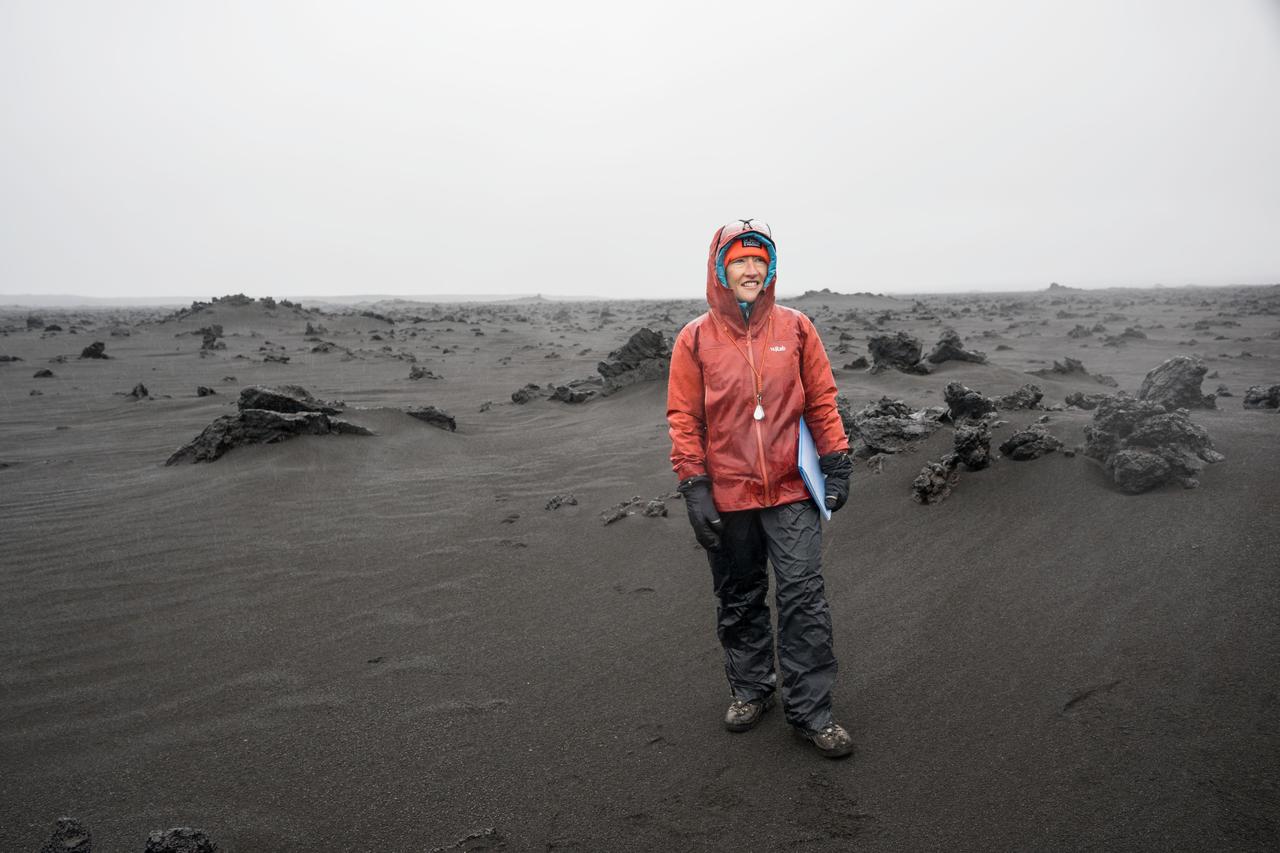
Artemis II Crew Geology Training in Iceland. Nautagil / Holohraun Science Activity. Photo Date: August 1, 2024. Location: Drekagil, Iceland. Photo Credit: NASA/Robert Markowitz

NASA astronaut and Artemis II backup crew member Andre Douglas uses a rock hammer and chisel to break a sample off a large boulder during a geology field training exercise in Iceland.
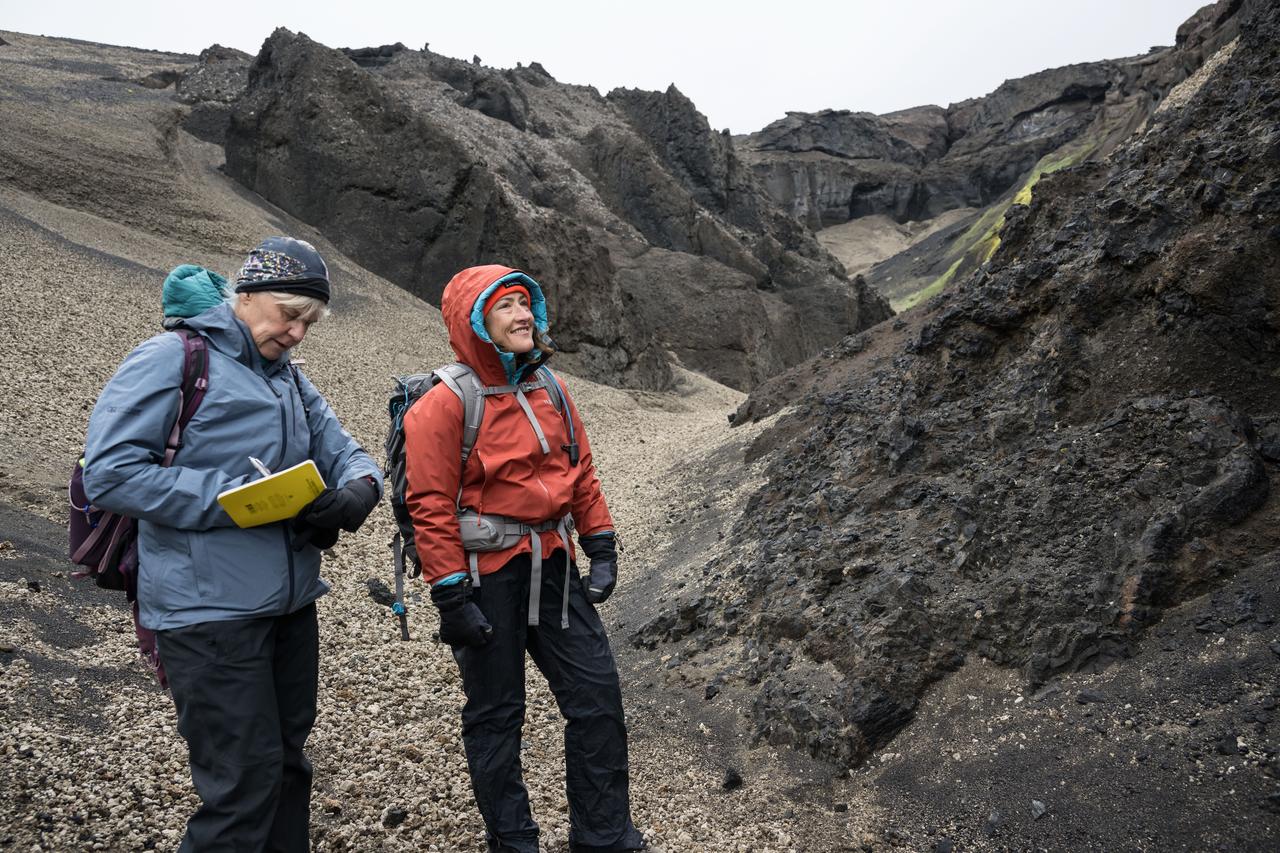
Artemis geology training lead at NASA's Johnson Space Center in Houston, Cindy Evans (left) and NASA astronaut and Artemis II mission specialist Christina Koch study geologic features in Iceland during Artemis II crew geology training in August 2024.
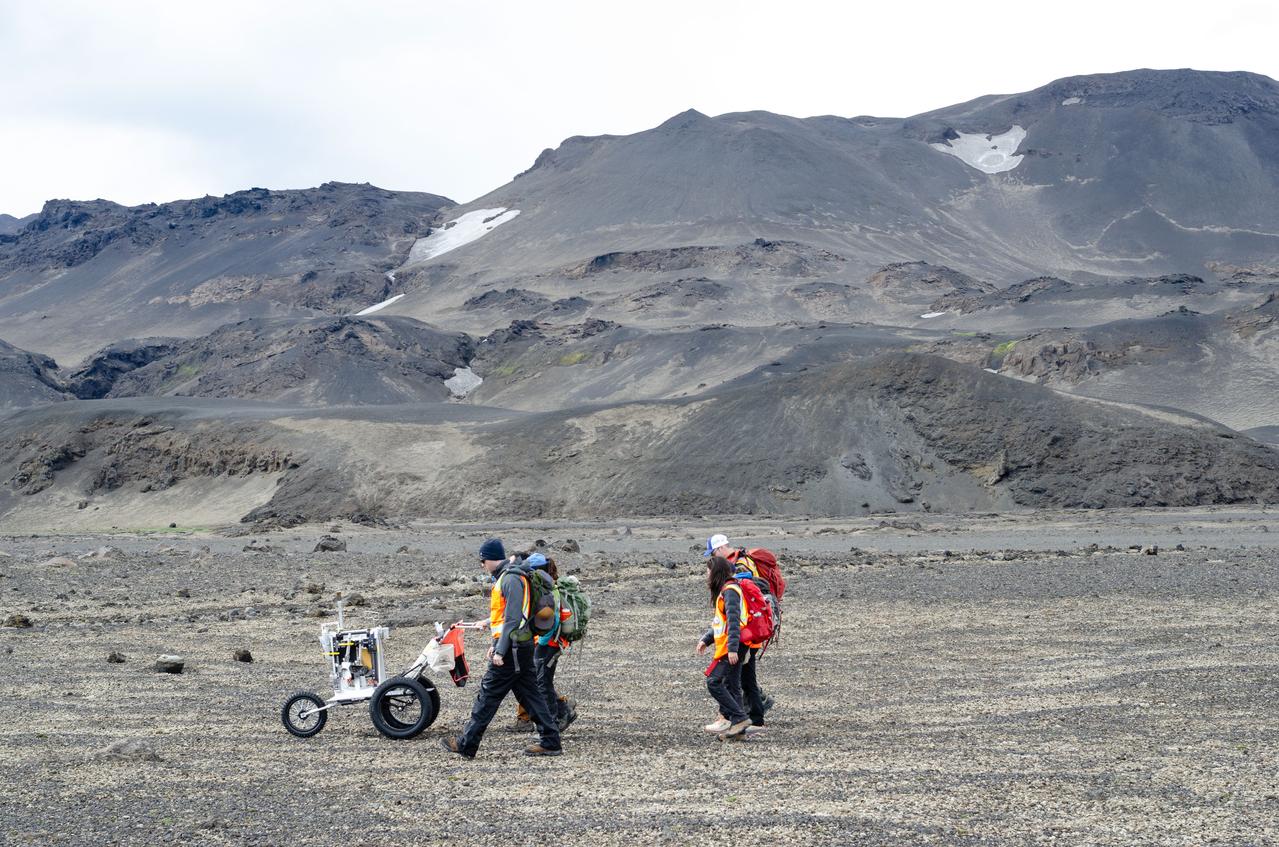
jsc2023e041422 --- Artemis II science trainers push a lunar tool cart across the lunar-like landscape of Iceland during an Artemis II crew geology field training.
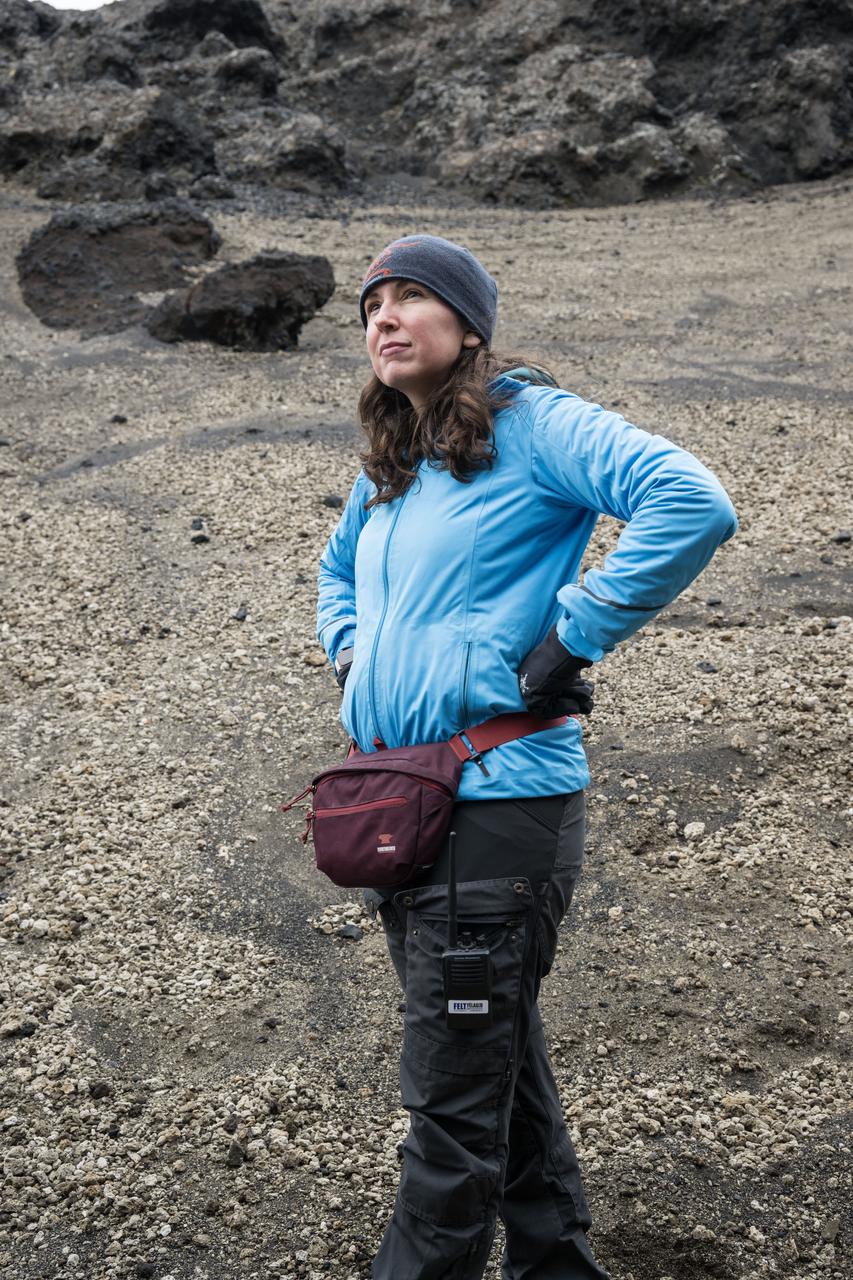
Lunar science lead for Artemis II and Artemis II science officer at NASA’s Goddard Space Flight Center in Greenbelt, Maryland, Kelsey Young, stands in the lunar-like landscape of Iceland during an Artemis II crew geology field training.
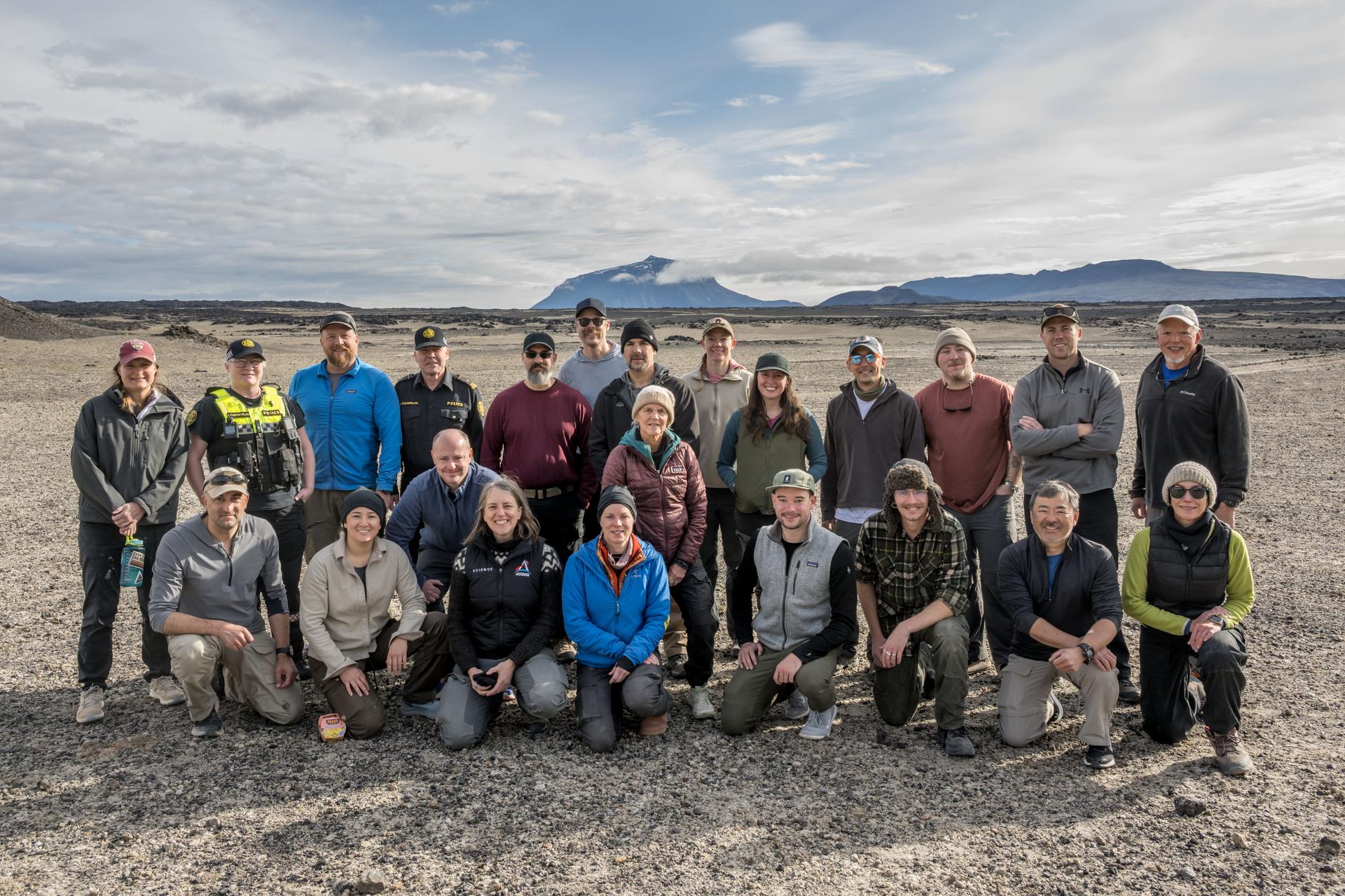
Artemis astronauts, astronaut candidates, mission support team members, and the geology training field team pose in a valley in Iceland’s Vatnajökull national park, accompanied by local park first responders. From front left: Trevor Graff, Angela Garcia, Vincent Lacourt, Juliane Gross, Zena Cardman, Cindy Evans, Jacob Richardson, Bryce Prescott, Aki Hoshide, Bridget Scheib, back row from left: Sarah Korona, Icelandic police officer, Patrick Whelley, Icelandic police officer, John Ramsey, Scott Wray, Marco Lozano, Nichole Ayers, Kelsey Young, Yuri Kubo, Isaac Hollingsworth, Cameron Jones, and John Ray. Credit: NASA/James Blair
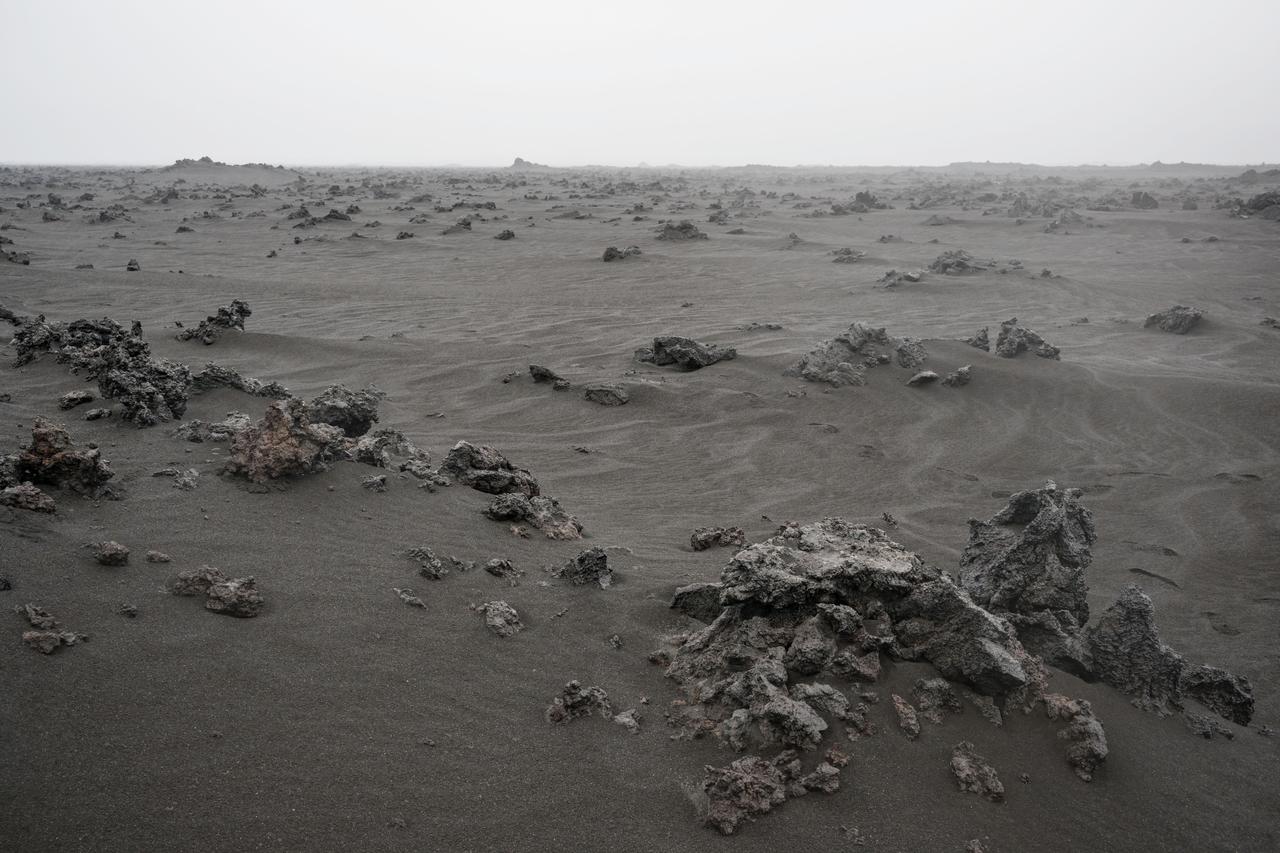
A view of the Holuhraun lava field from the Bárðarbunga volcano, located in Vatnajökull National Park in Iceland. The image shows the rubbly textured basaltic lava flow that has been partially buried by wind-blown sediment. Iceland has been used as a planetary analog for geology training for astronauts since the Apollo missions because of the geologic similarities to the Moon.
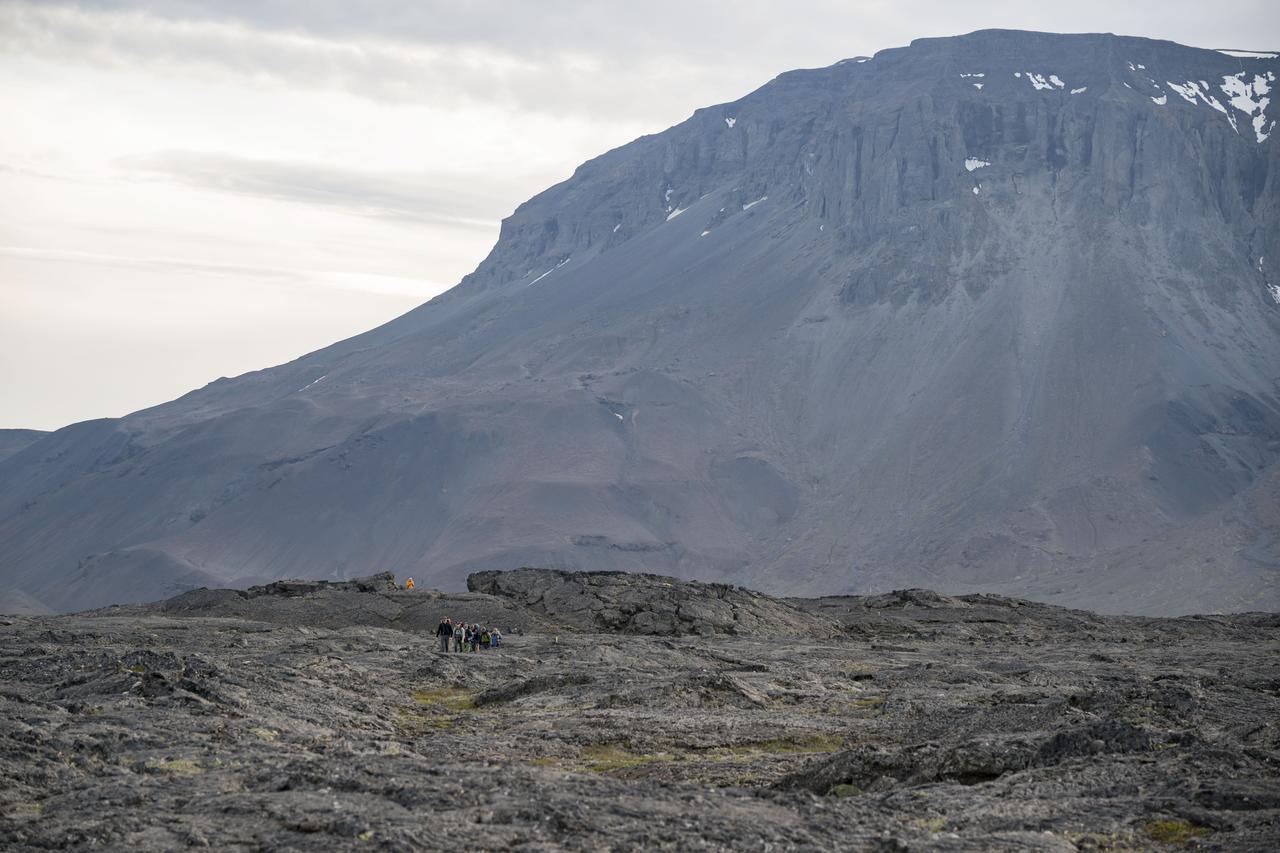
The Artemis II crew, NASA astronauts Reid Wiseman, Victor Glover, Christina Koch, and Canadian Space Agency (CSA) astronaut Jeremy Hansen, and backup crew members NASA astronaut Andre Douglas and CSA astronaut Jenni Gibbons trek across the Icelandic landscape during their field geology training. Credits: NASA/Robert Markowitz
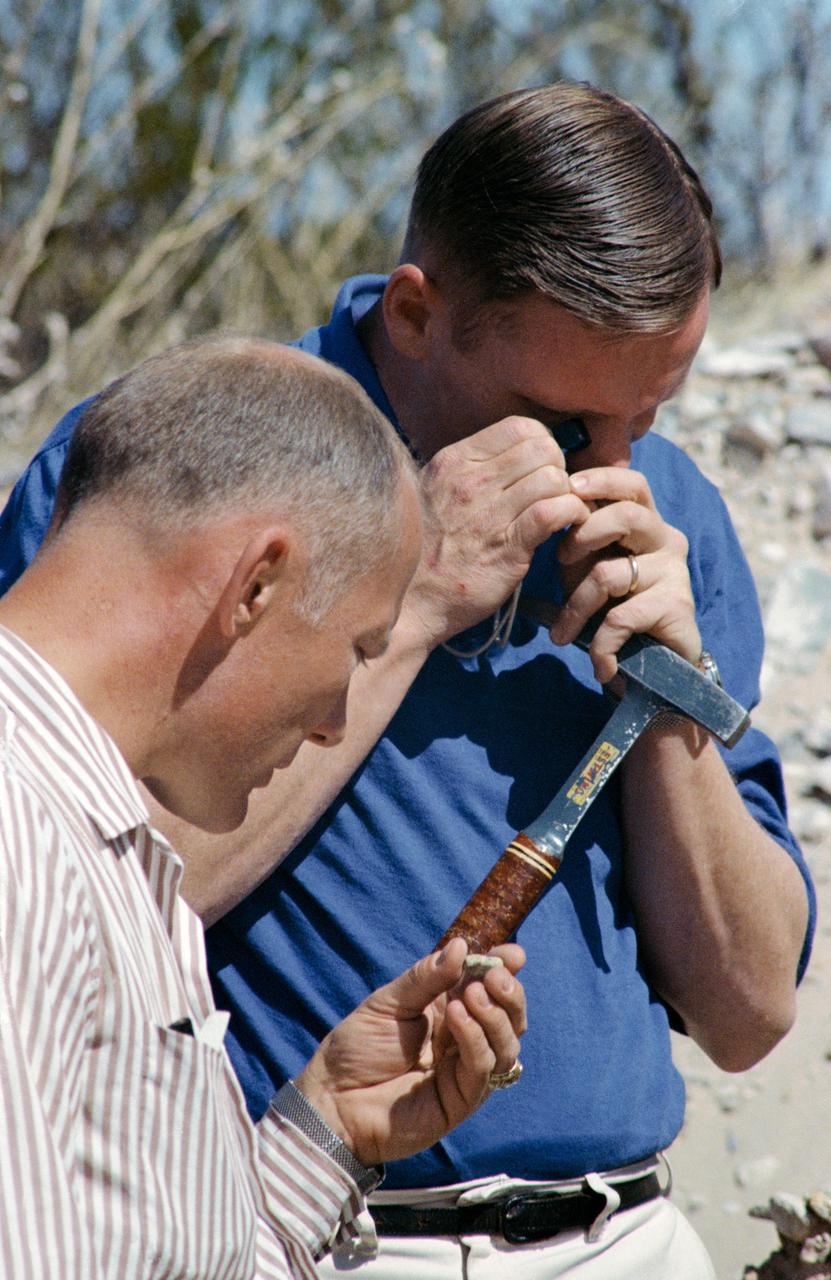
S69-25944 (25 Feb. 1969) --- These two Apollo 11 crew astronauts study rock samples during a geological field trip to the Quitman Mountains area near the Fort Quitman ruins in far west Texas. Neil A. Armstrong (in background) is the Apollo 11 commander; and Edwin E. Aldrin Jr. is the lunar module pilot.
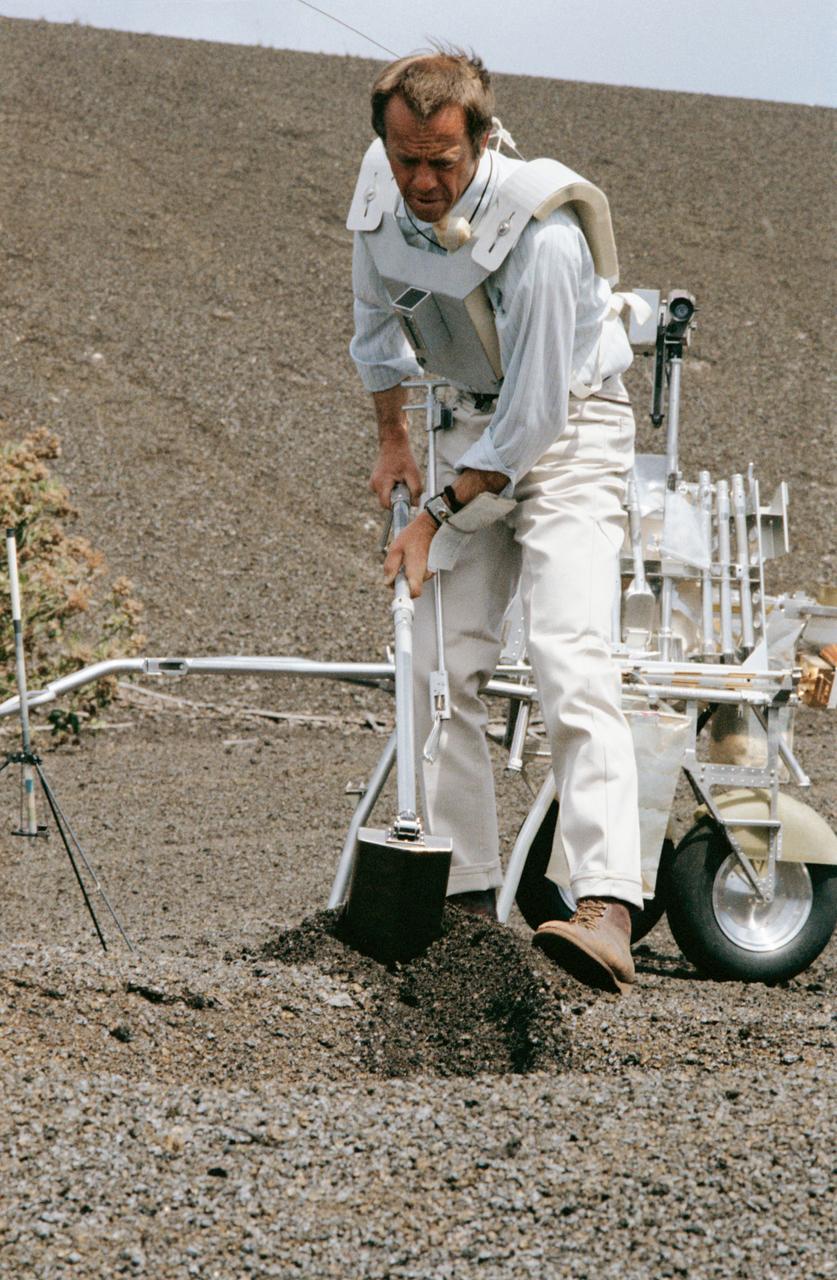
S70-34415 (April 1970) --- Astronaut Alan B. Shepard Jr., prime crew commander of the Apollo 14 mission, uses a trenching tool during a simulation of a traverse on the lunar surface. Members of the Apollo 14 prime and backup crews were in Hawaii to train for the extravehicular activity of their upcoming mission. Features of the terrain at Kapoho and other Hawaiian sites are very similar to those found on the lunar surface. A modular equipment transporter (MET), nicknamed the "Rickshaw" because of its appearance and method of propulsion, is behind Shepard, and a gnomon, one of the Apollo lunar hand tools (ALHT) is at extreme left.
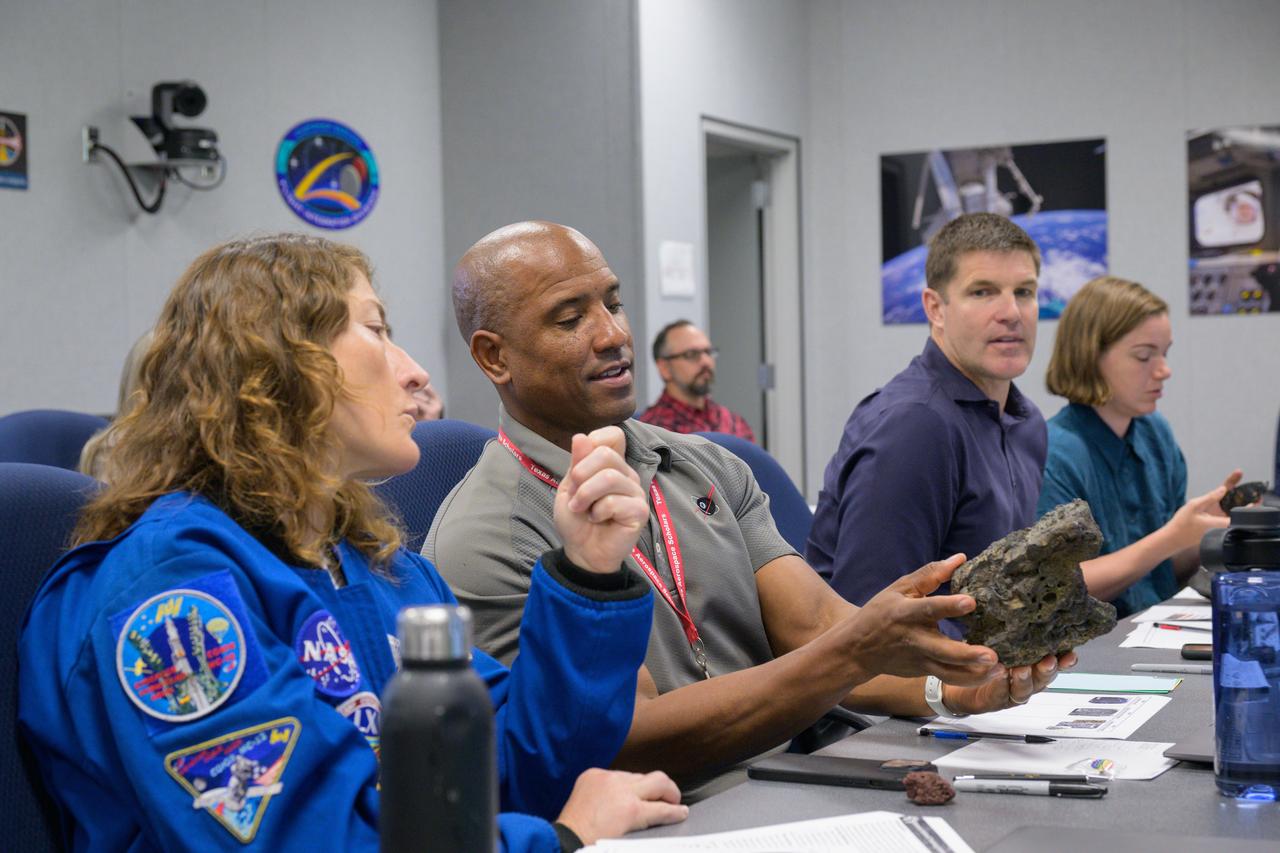
jsc2024e040808 --- Artemis II crew members, from left, NASA astronauts Christina Koch and Victor Glover, CSA (Canadian Space Agency) astronauts Jeremy Hansen and Jenni Gibbons, study rocks during classroom preparation ahead of their fieldwork training in Iceland.
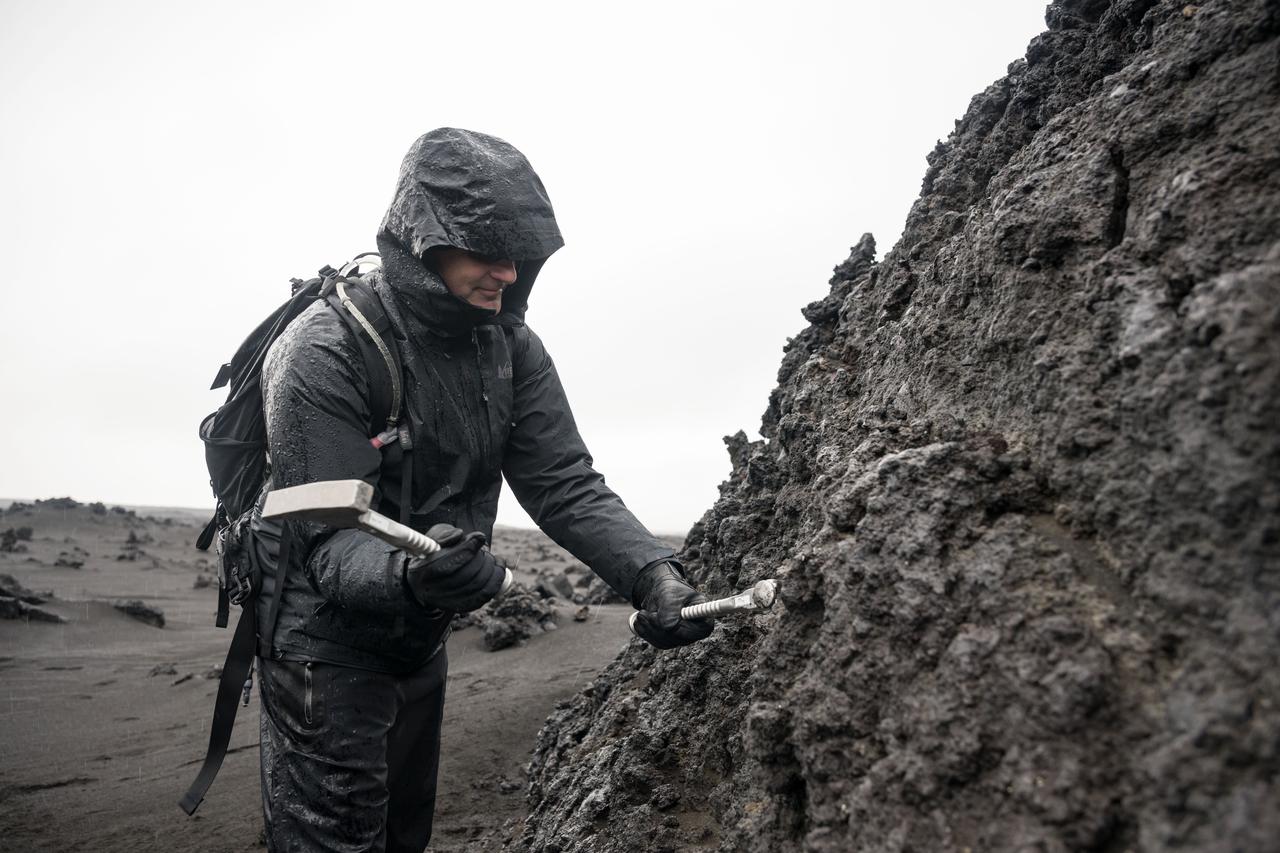
CSA (Canadian Space Agency) astronaut and Artemis II crew member Jeremy Hansen uses a rock hammer and chisel to break a sample off a large boulder during a geology field training exercise in Iceland.
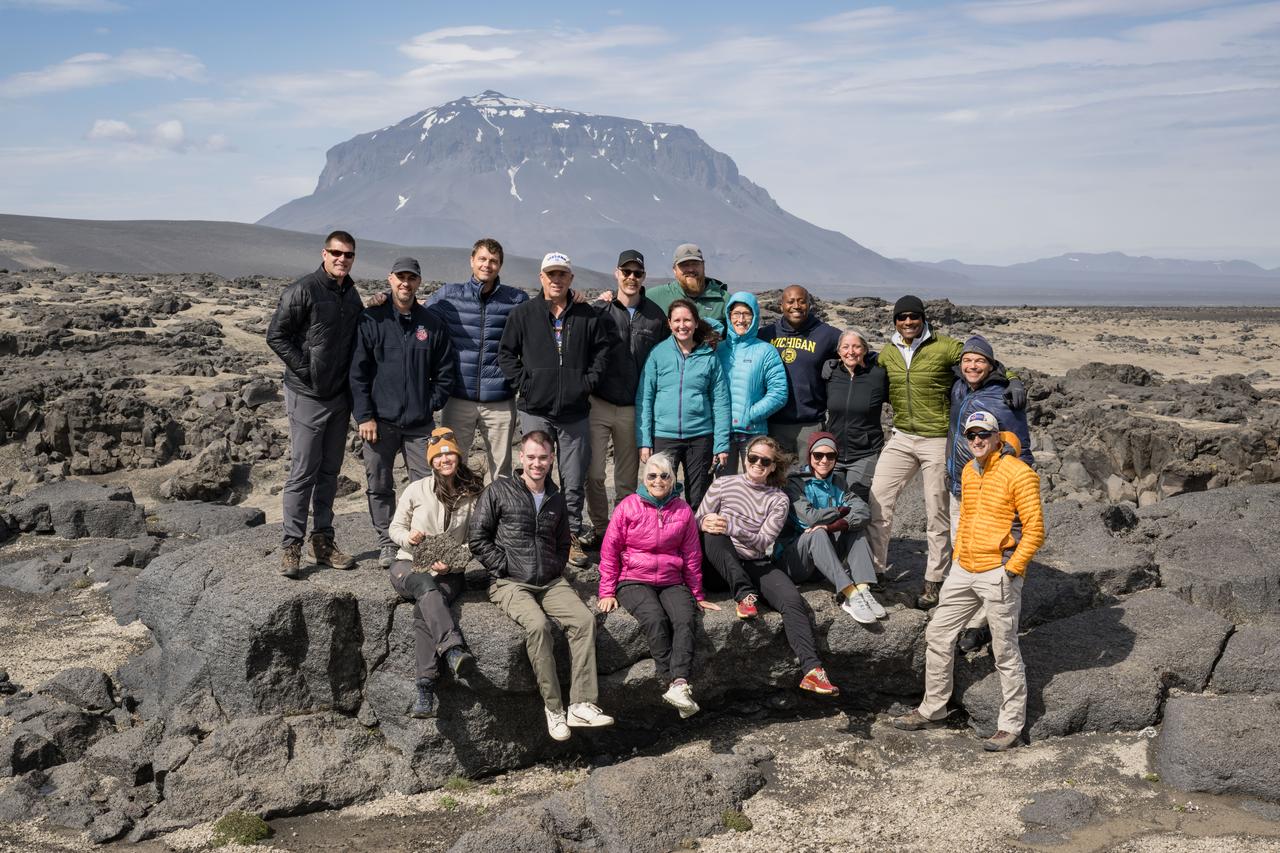
The Artemis II crew astronauts, their backups, and the geology training field team pose in a valley in Iceland’s Vatnajökull national park. From front left: Angela Garcia, Jacob Richardson, Cindy Evans, Jenni Gibbons, Jacki Mahaffey, back row from left: Jeremy Hansen, John Ramsey, Reid Wiseman, Ron Spencer, Scott Wray, Kelsey Young, Patrick Whelley, Christina Koch, Andre Douglas, Jacki Kagey, Victor Glover, Rick Rochelle (NOLS), Trevor Graff.
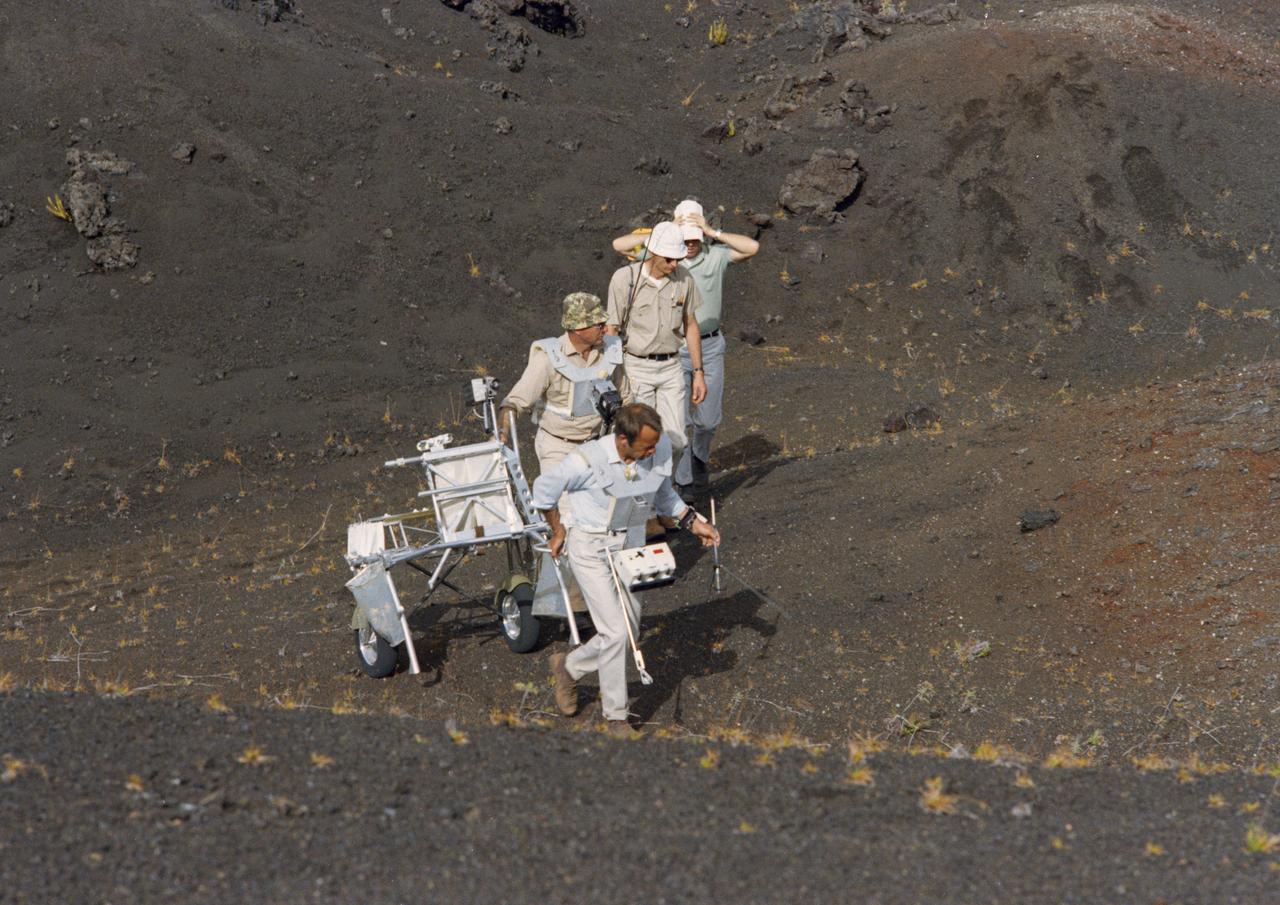
S70-34416 (April 1970) --- At Kapoho, Hawaii, two Apollo 14 prime crew members take part in a simulation of a lunar traverse while two persons from the Manned Spacecraft Center (MSC) observe. The prime and backup crews of the Apollo 14 mission were in Hawaii for several days in April 1970 to visit various sites having features similar to those on the lunar surface. Astronaut Alan B. Shepard Jr. (front), prime crew commander, carries a gnomon (from the Apollo Lunar Hand Tools - ALHT) in his left hand while pulling the Modular Equipment Transporter (MET) with his right hand. He is followed by astronaut Edgar D. Mitchell, prime lunar module pilot, with a Hasselblad lunar surface camera. Michael C. McEwen (second from rear) of the Geology Branch, Lunar and Earth Sciences Division, MSC; and Major William J. Wood of the Lunar Surface Operations Office observe the training activity. Photo credit: NASA
jsc2019e054955 (09-16-19) --- 2017 NASA astronaut candidate Bob Hines during geology training in Arizona. Photo Credit: (NASA/Bill Stafford)
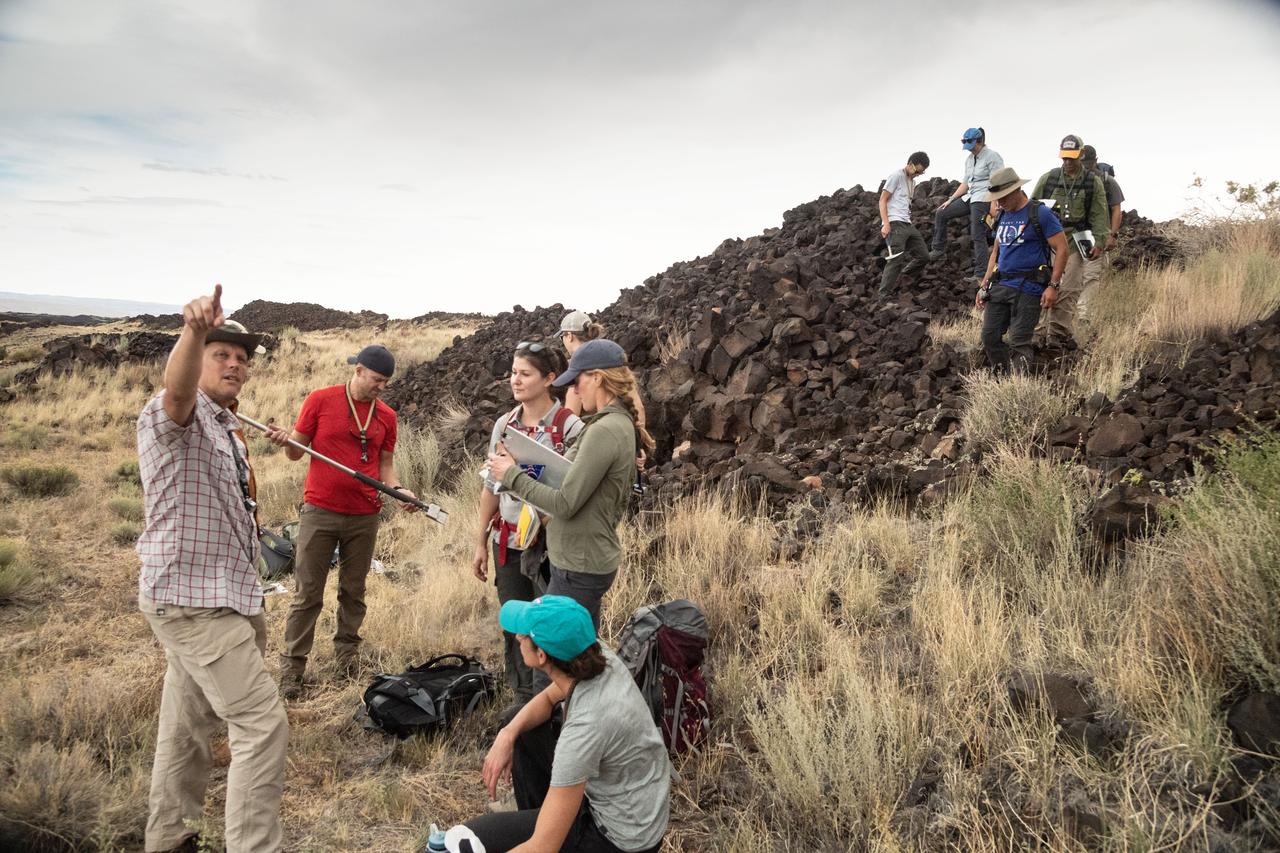
jsc2019e054977 (09-16-19) --- 2017 NASA astronaut candidates gather during geology training in Arizona. Photo Credit: (NASA/Bill Stafford)
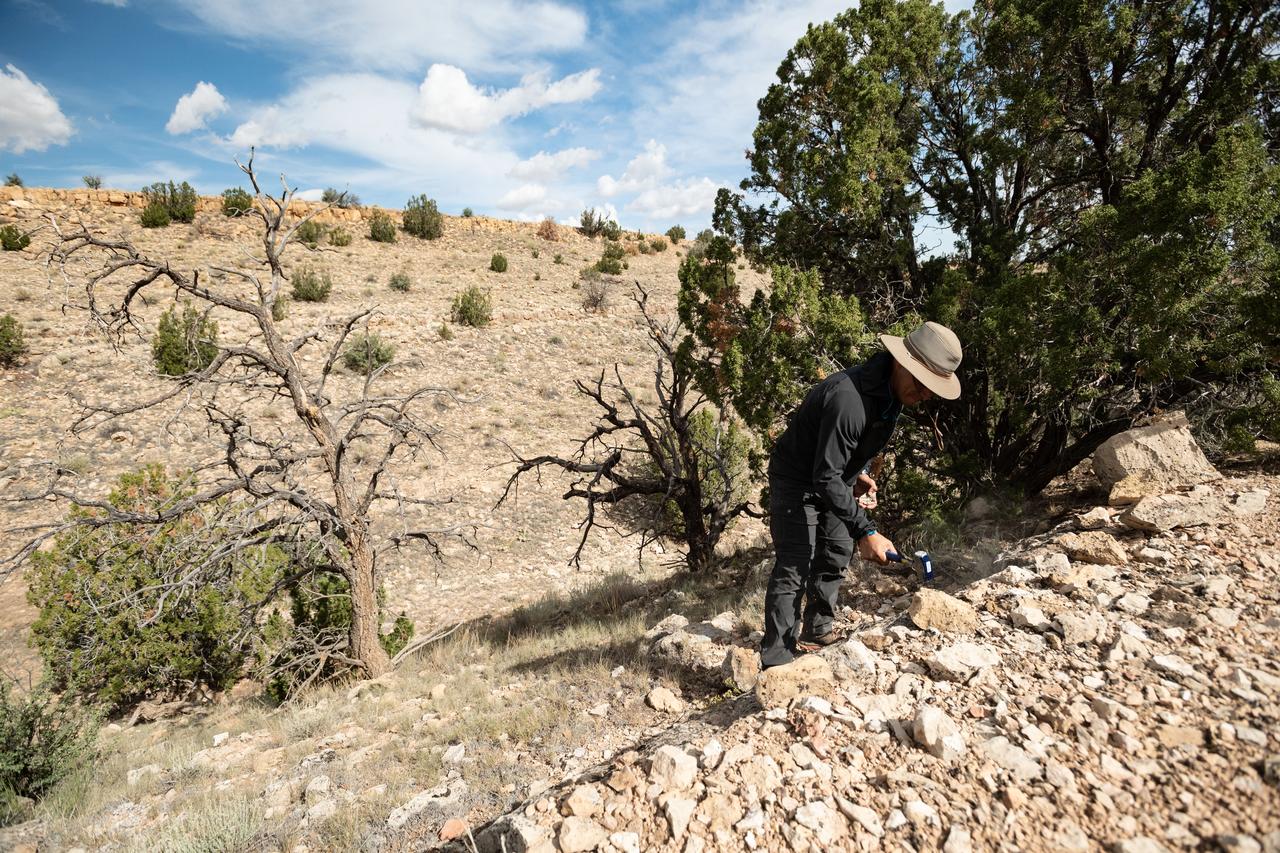
jsc2019e054874 (09-16-19) --- 2017 NASA astronaut candidate Frank Rubio during geology training in Arizona. Photo Credit: (NASA/Bill Stafford)
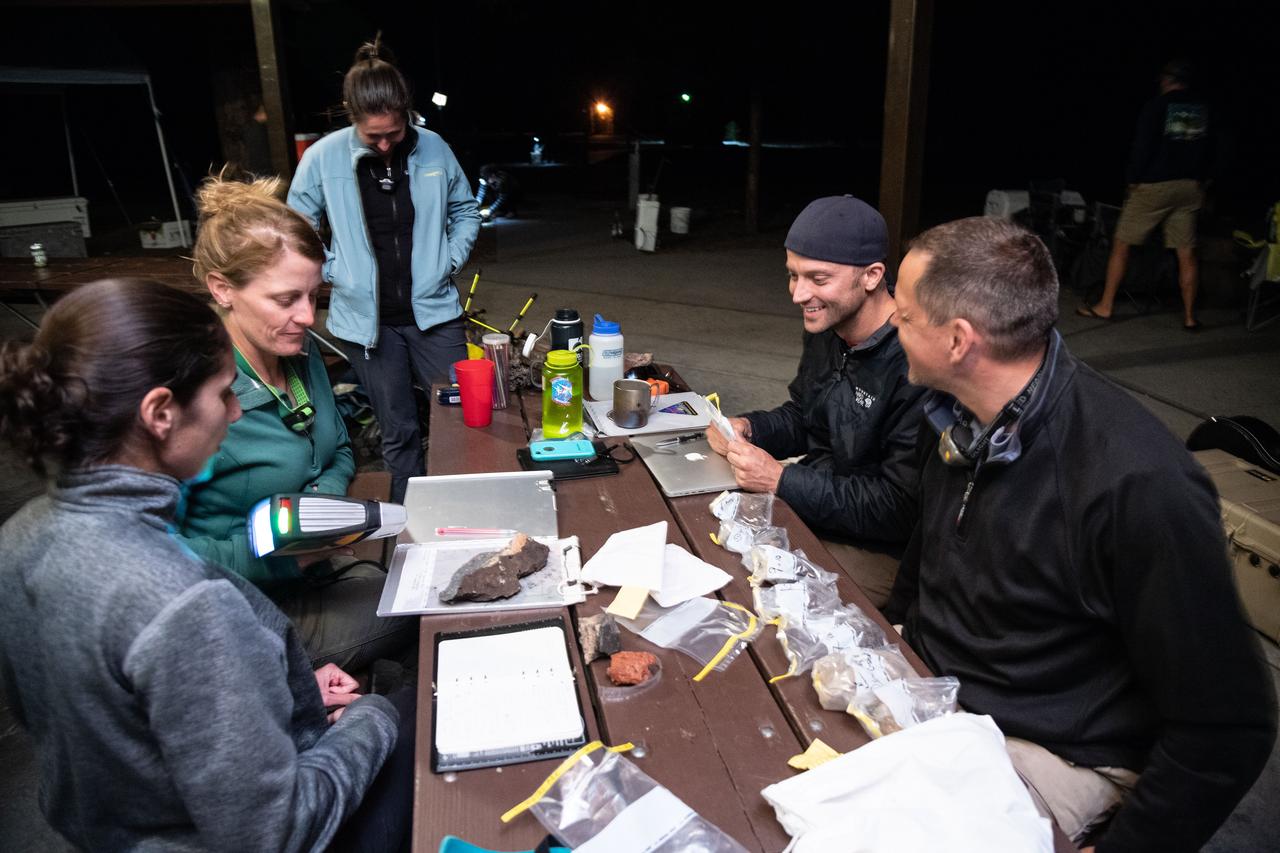
jsc2019e054997 (09-16-19) --- 2017 NASA astronaut candidates gather for data collection during geology training in Arizona. Photo Credit: (NASA/Bill Stafford)
jsc2019e054910 (09-16-19) --- 2017 NASA astronaut candidate Kayla Barron during geology training in Arizona. Photo Credit: (NASA/Bill Stafford)
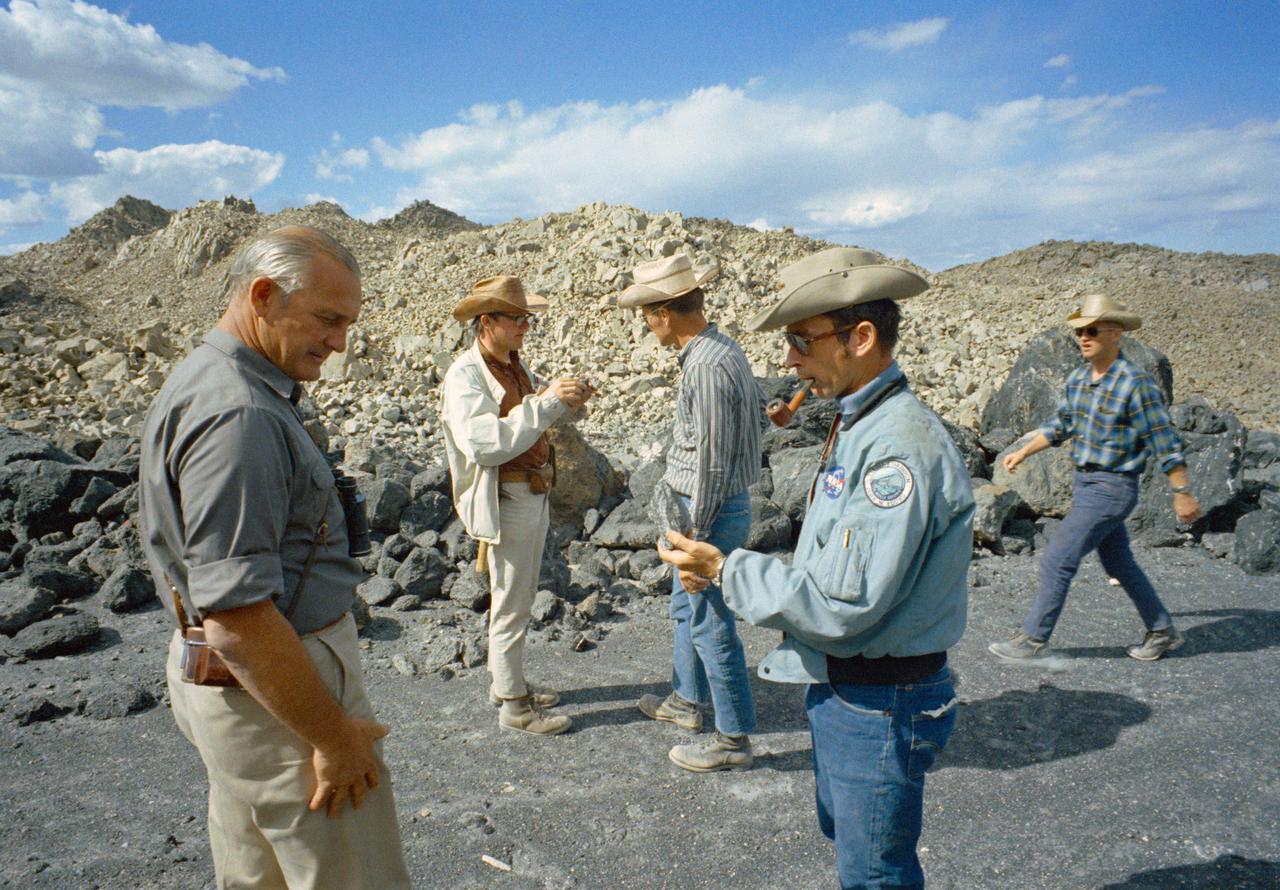
S71-36874 (10 June 1971) --- University of Texas geologist/professor William R. Muelhberger (left) talks with astronaut John W. Young, Apollo 16 commander, during an Apollo 16 geology field trip to Mono Crater, Calif. Astronaut Charles Duke, lunar module pilot, is seen at frame center, talking to geologist David Wones (second left). Astronaut Anthony England, Apollo 16 spacecraft communicator (CAPCOM), is at right. Photo credit: NASA
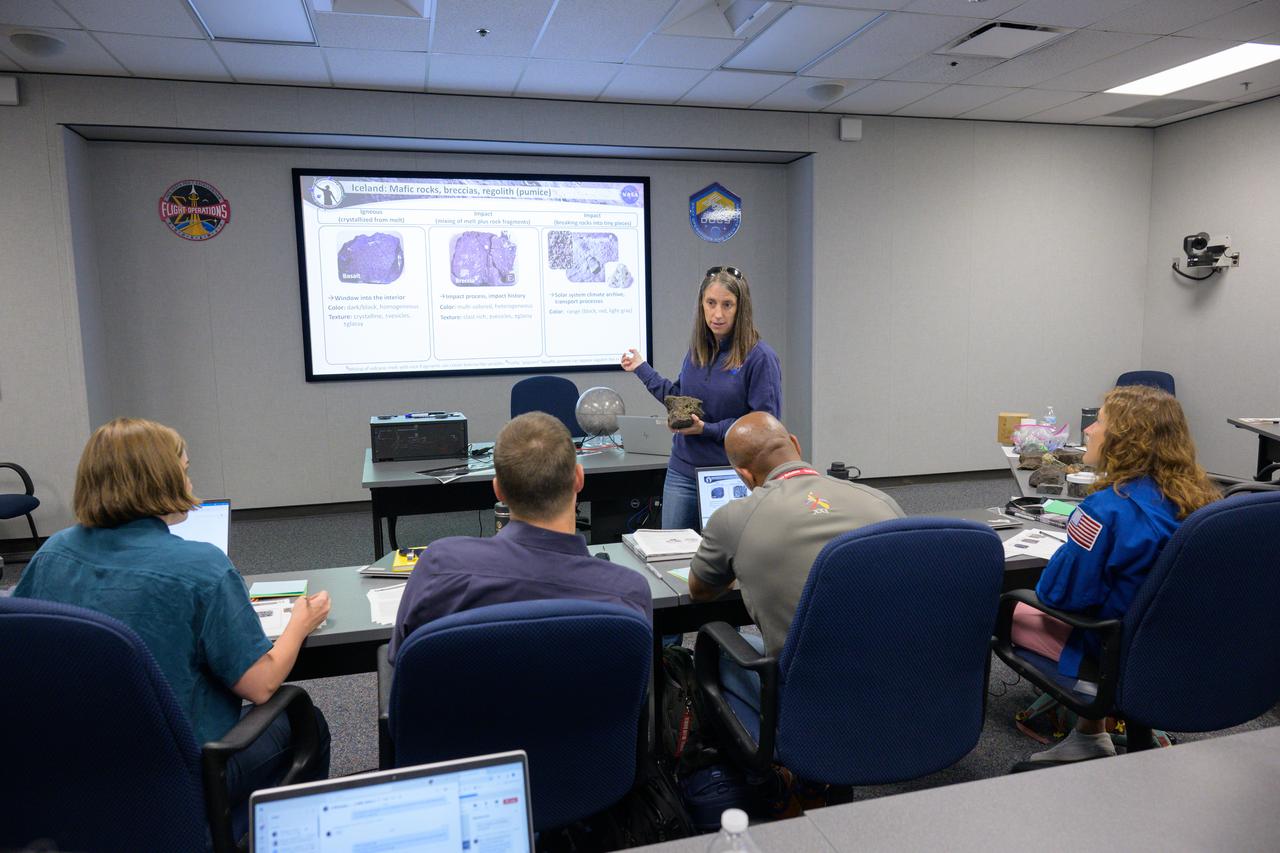
jsc2024e040812 (June 7, 2024) --- Juliane Gross, curation lead for the Artemis Internal Science Team, leads a geology lesson for the Artemis II crew at NASA's Johnson Space Center in Houston. Artemis II crew members pictured are, from left, Canadian Space Agency (CSA) astronauts Jenni Gibbons and Jeremey Hansen, along with NASA astronauts Victor Glover, and Christina Koch.
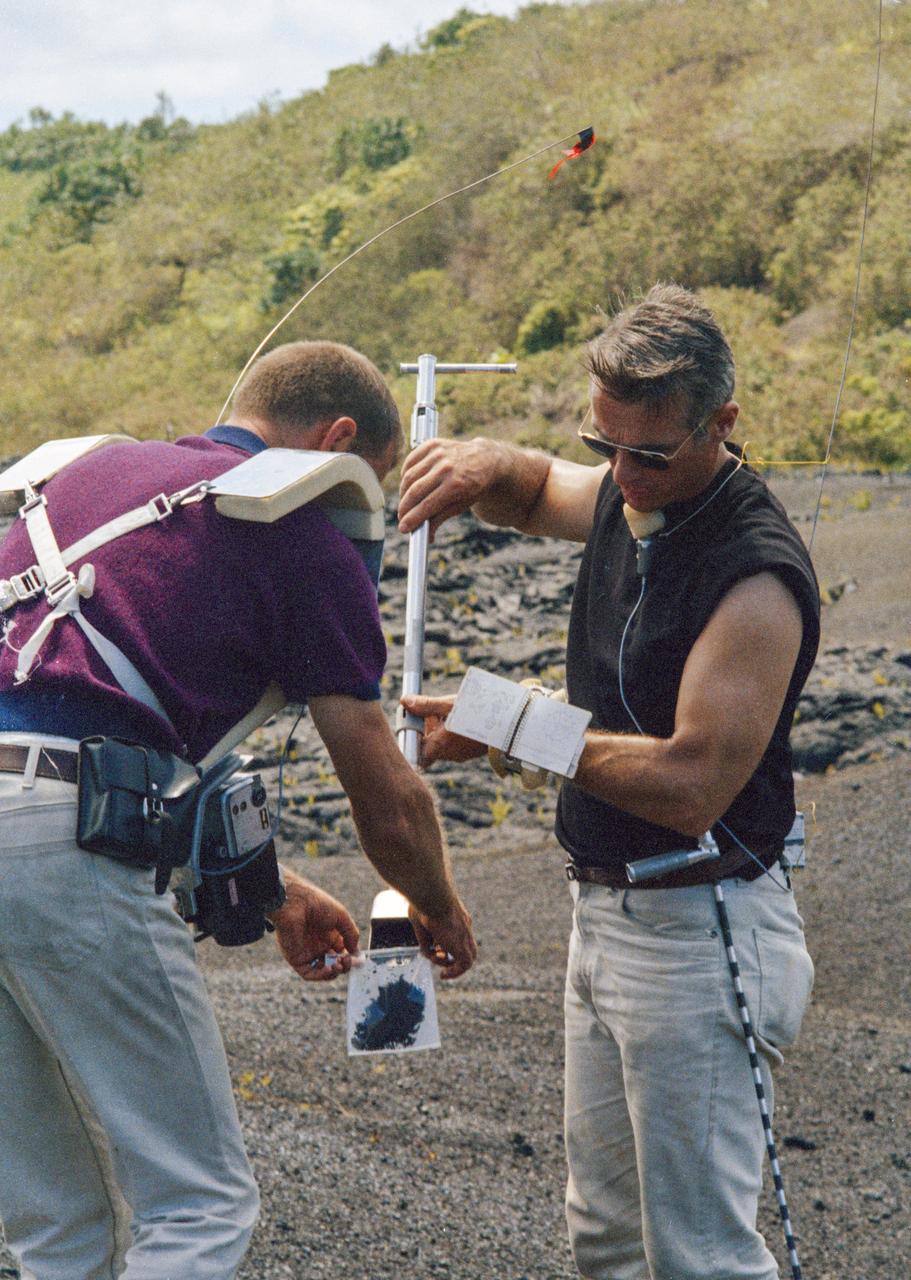
S70-34413 (April 1970) --- Astronaut Eugene A. Cernan (right), backup crew commander of the Apollo 14 lunar landing mission, pours a scoop-full of sample material into a bag held by astronaut Joe H. Engle, Apollo 14 backup crew lunar module pilot. The two joined the prime crew members and other Manned Spacecraft Center (MSC) personnel on a training trip to various areas of Hawaii. Here in Kapoho, the two backup crew members for NASA?s next lunar landing mission are taking part in a full simulation of a traverse on the lunar surface. Note the check-list on Cernan's left wrist. He carries a penetrometer in his belt. The terrain in this area bears many similarities to that on the lunar surface. Photo credit: NASA
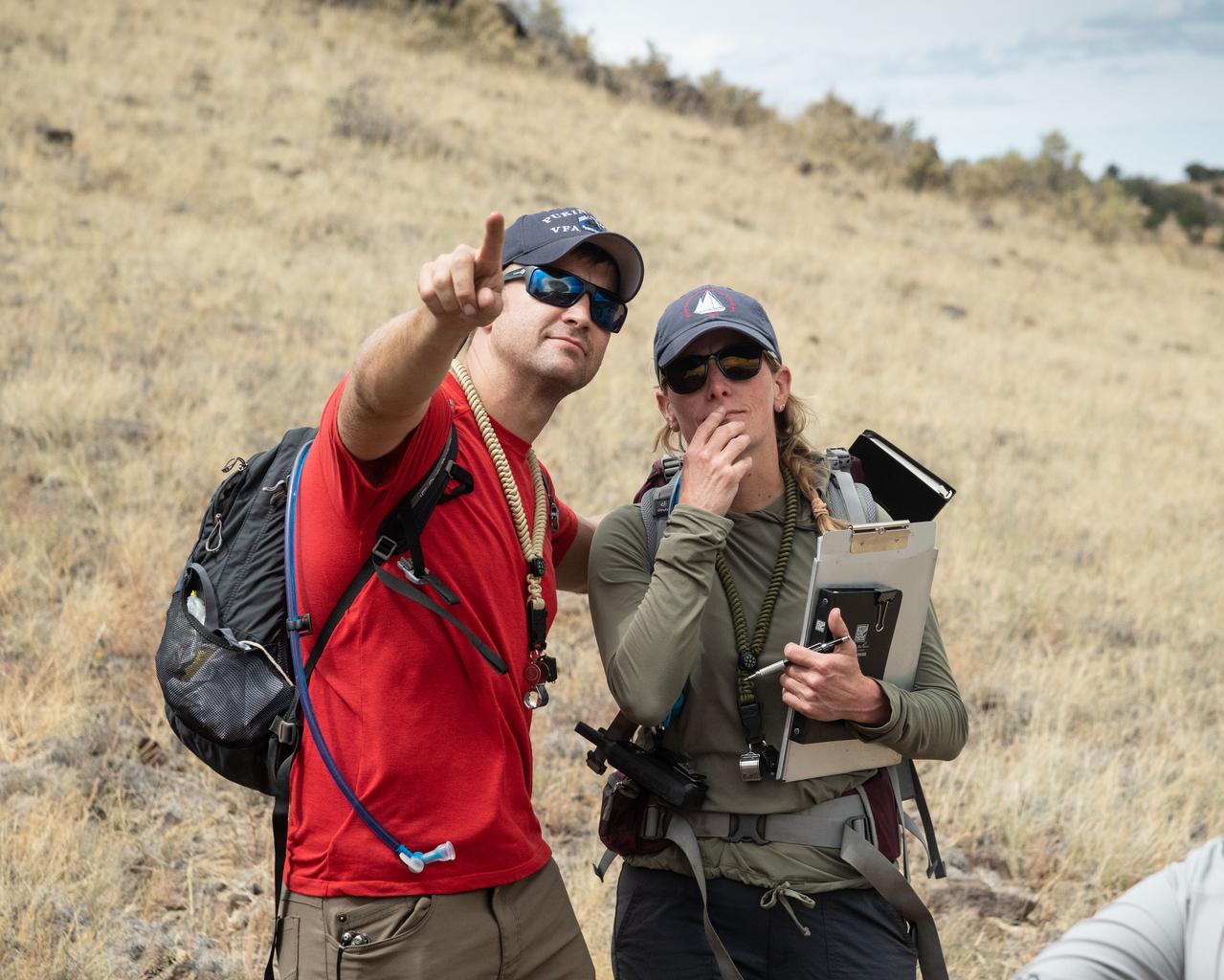
jsc2019e054952 (09-16-19) --- 2017 NASA astronaut candidates Matthew Dominick and Loral O’Hara during geology training in Arizona. Photo Credit: (NASA/Bill Stafford)
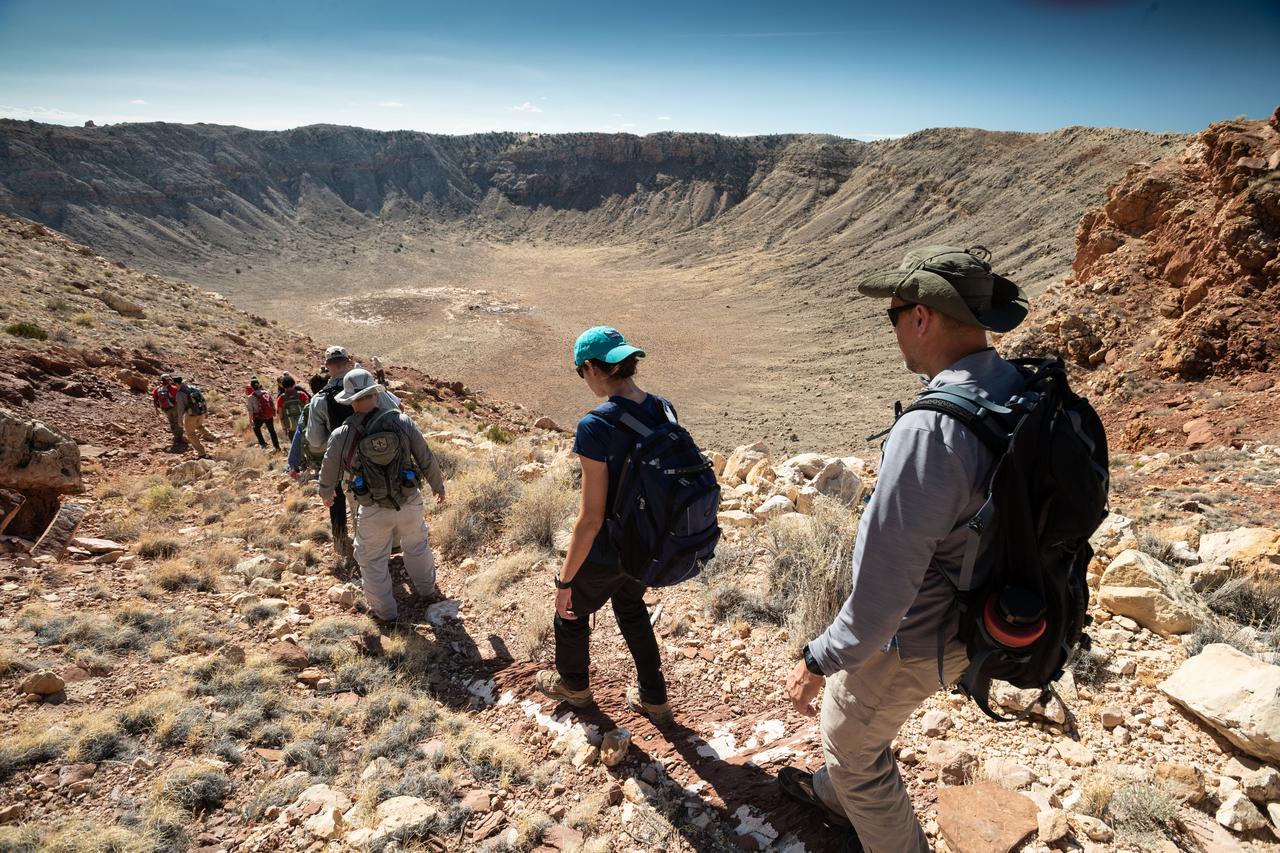
jsc2019e055340 (09-19-19) --- 2017 NASA astronaut candidates hike as a team with their field instructors during geology training in Arizona. Photo Credit: (NASA/Bill Stafford)
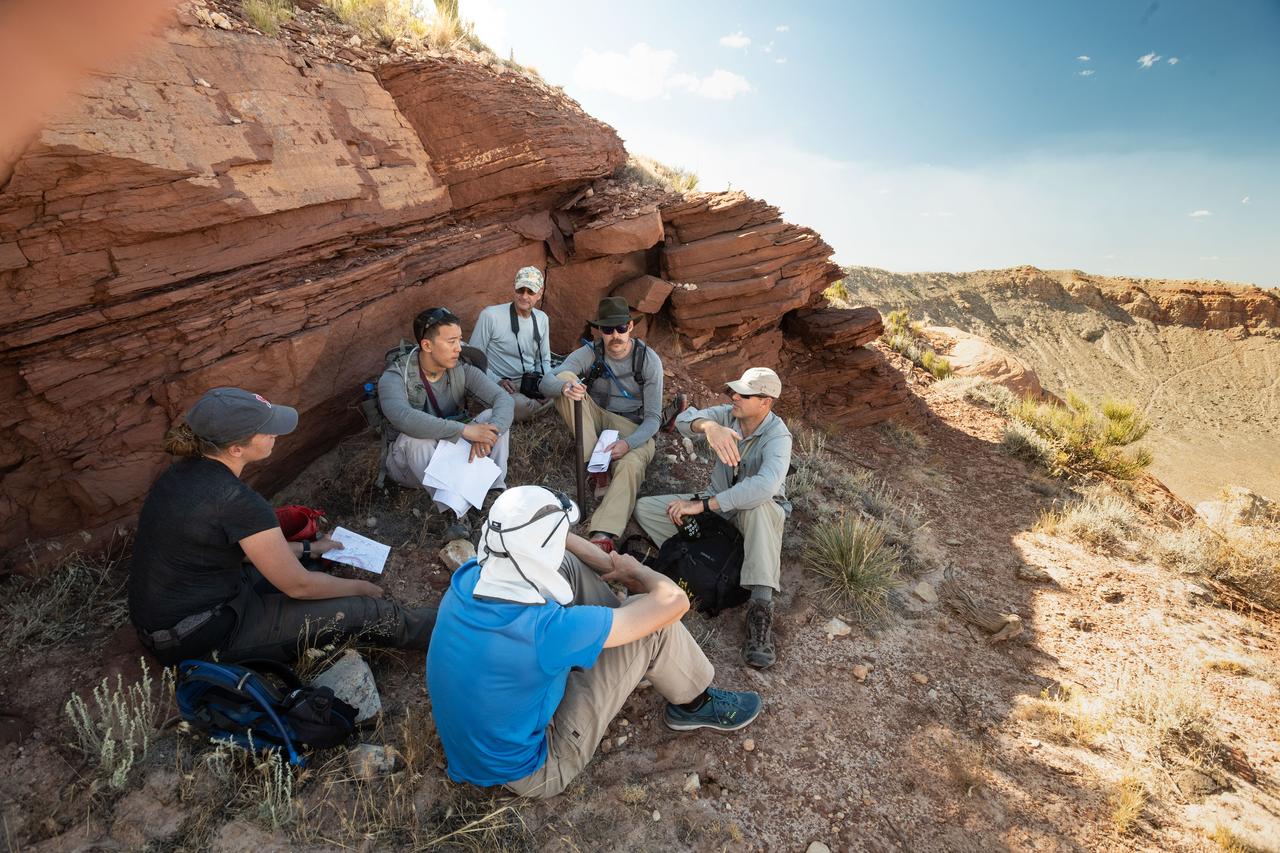
jsc2019e055491 (09-19-19) --- 2017 NASA astronaut candidates gather to discuss further instruction with their field instructor during geology training in Arizona. Photo Credit: (NASA/Bill Stafford)
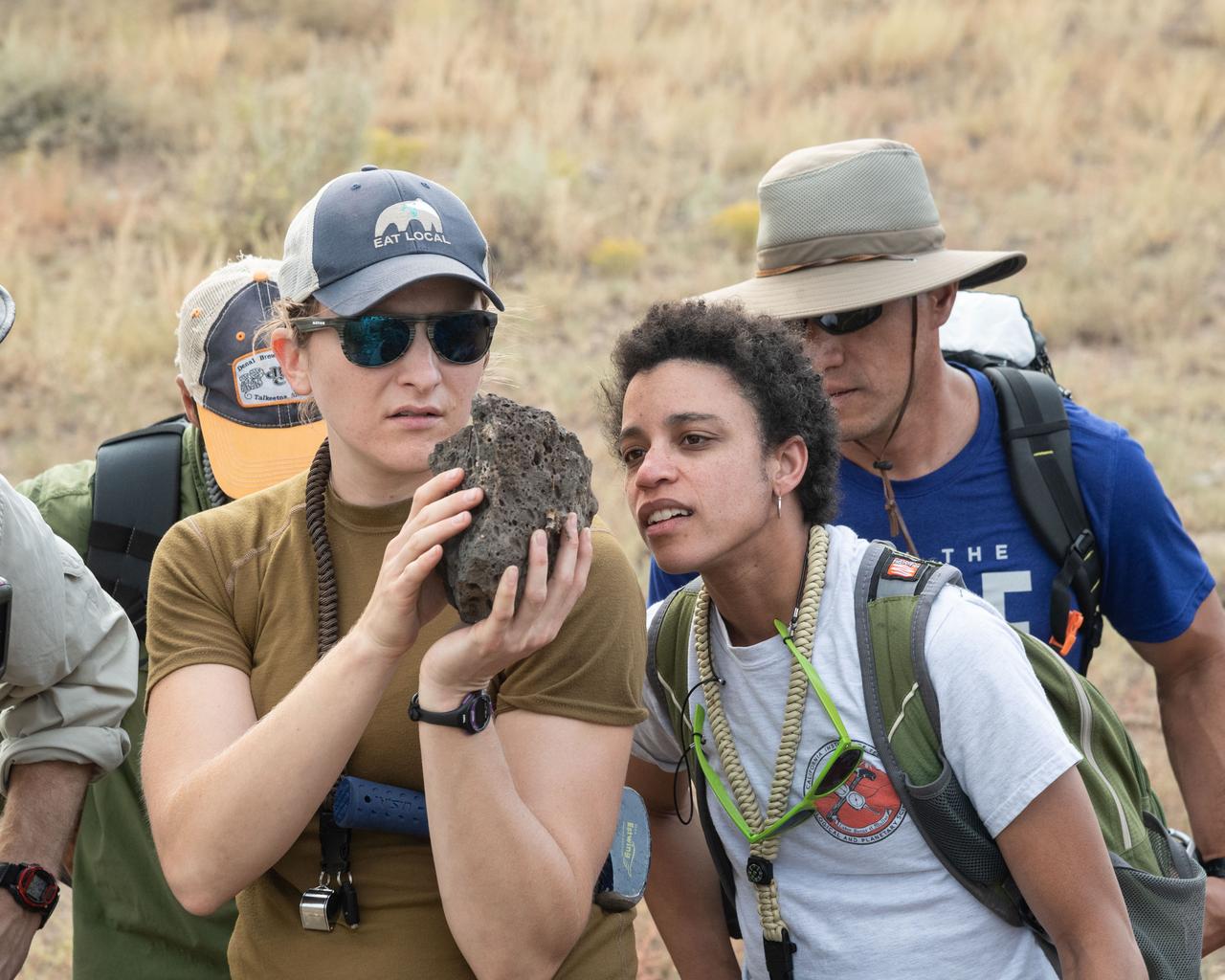
jsc2019e054994(09-16-19) --- 2017 NASA astronaut candidates Kayla Barron (left) and Jessica Watkins (right) examine samples during geology training in Arizona. Photo Credit: (NASA/Bill Stafford)
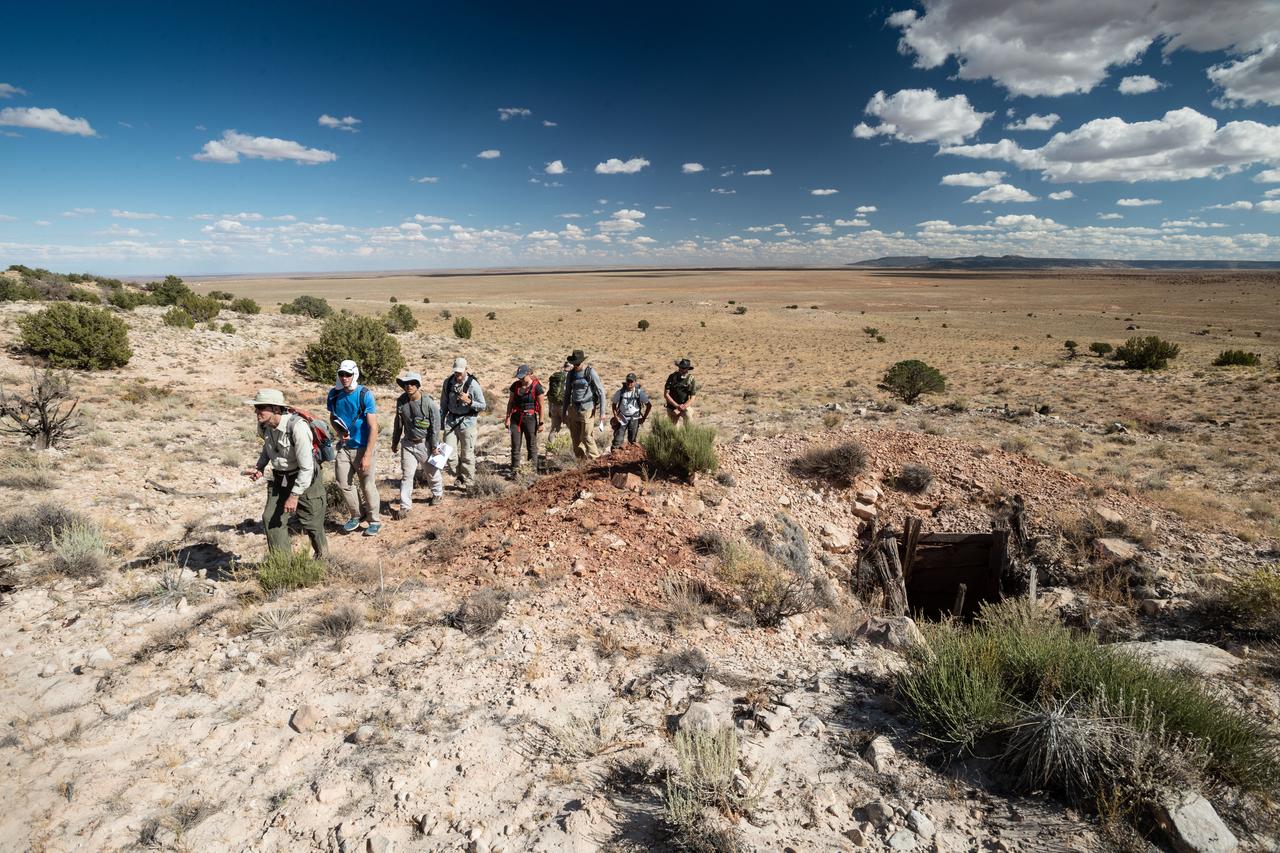
jsc2019e055475 (09-19-19) --- 2017 NASA astronaut candidates hike as a team with their field instructors during geology training in Arizona. Photo Credit: (NASA/Bill Stafford)
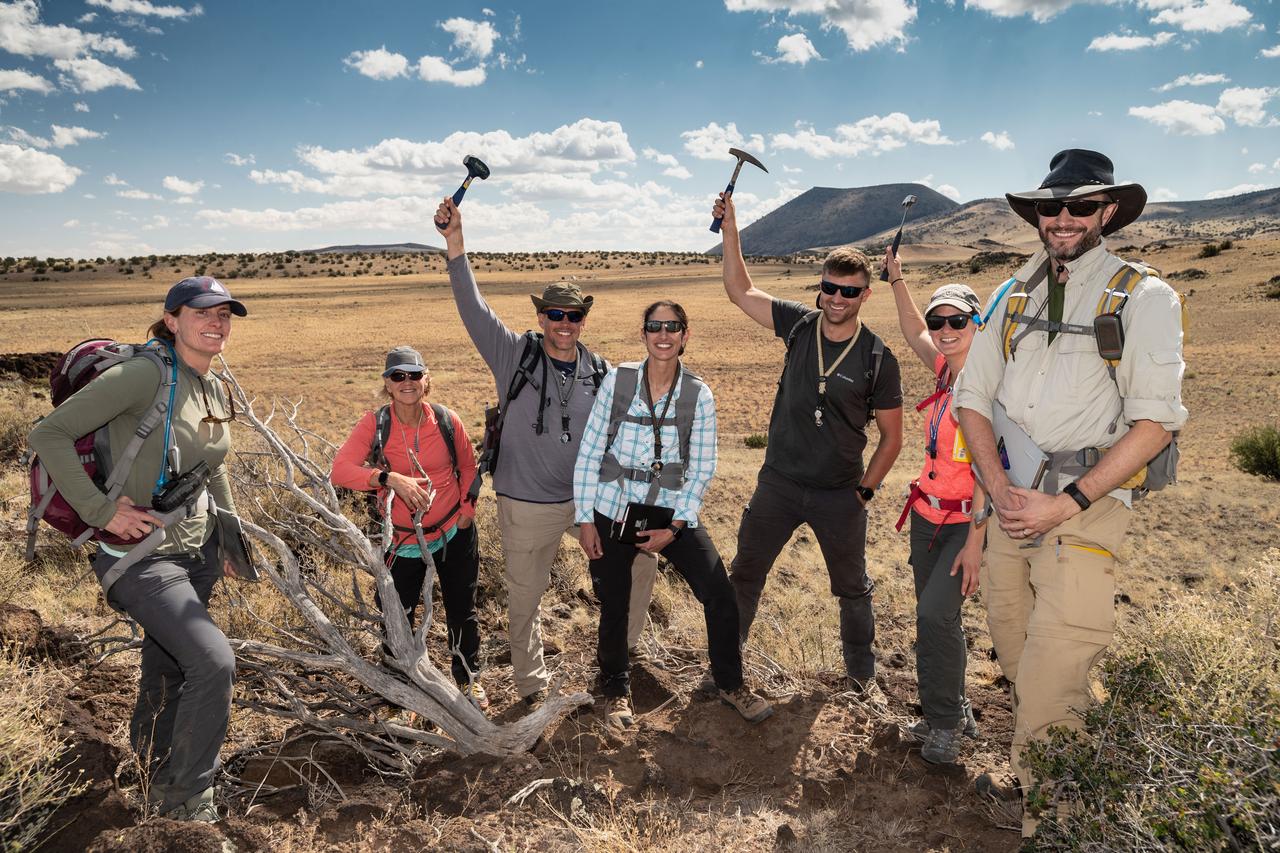
jsc2019e055210 (09-18-19) --- 2017 NASA astronaut candidates take a break with their field instructors during geology training in Arizona. Photo Credit: (NASA/Bill Stafford)

jsc2019e055036 (09-17-19) --- 2017 NASA astronaut candidate Warren Hoburg examines samples during geology training in Arizona. Photo Credit: (NASA/Bill Stafford)
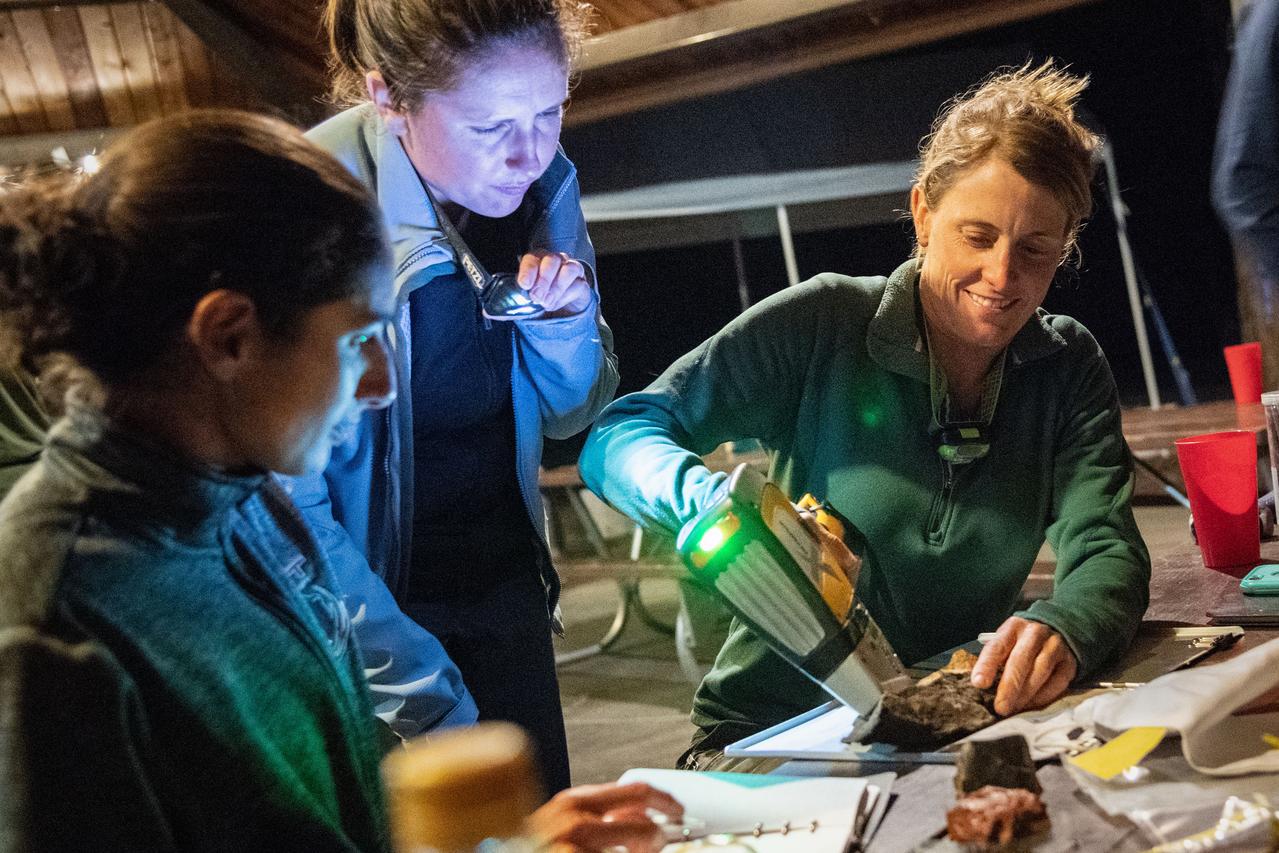
jsc2019e055001 (09-16-19) --- 2017 NASA astronaut candidate Loral O’Hara scans her sample during data collection during geology training in Arizona. Photo Credit: (NASA/Bill Stafford)
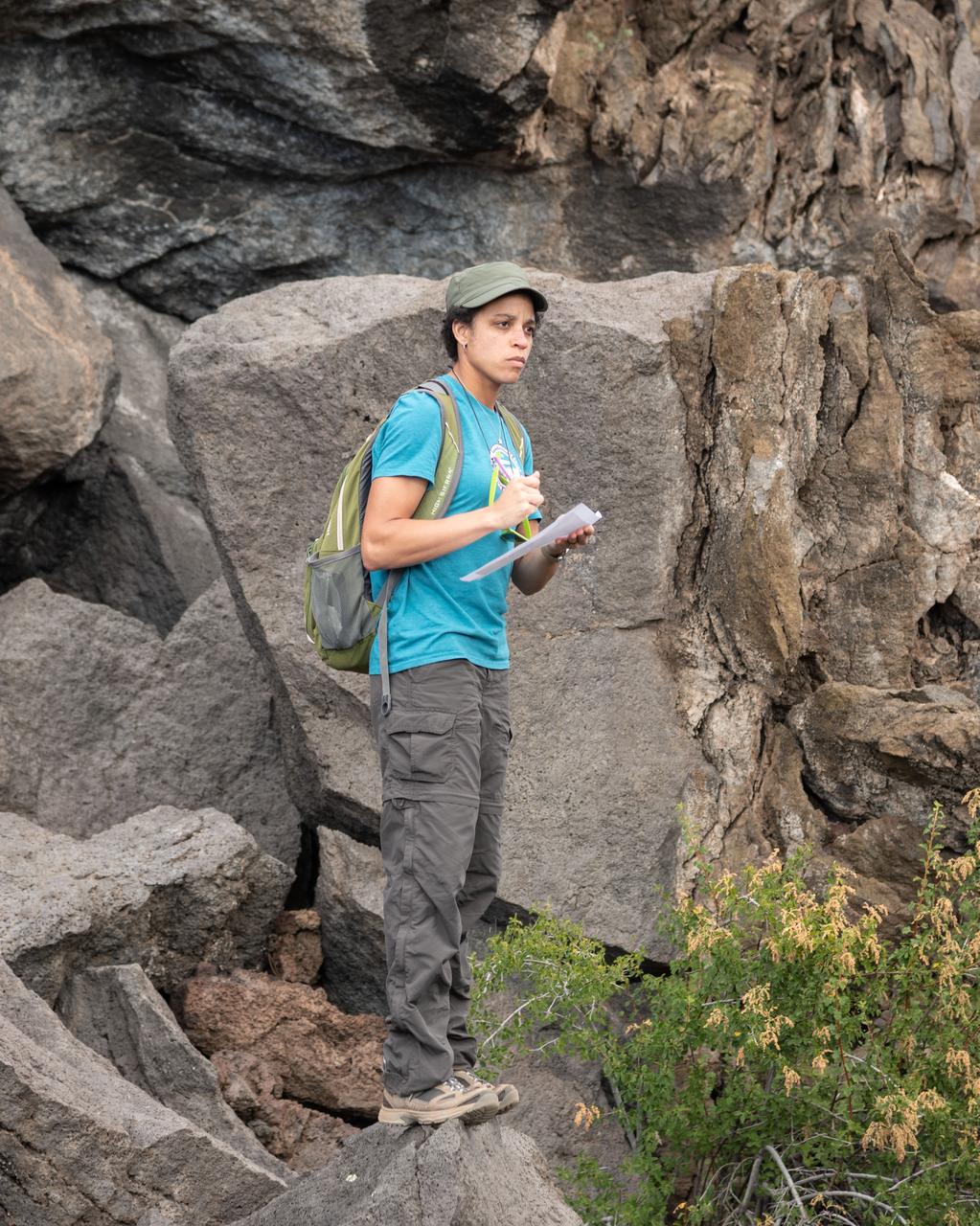
jsc2019e054791 (09-15-19) --- 2017 NASA astronaut candidate Jessica Watkins takes notes during geology training in Arizona. Photo Credit: (NASA/Bill Stafford)
jsc2019e055078 (09-17-19) --- 2017 NASA astronaut candidates Warren Hoburg (left) and Jonny Kim (right) input field data during geology training in Arizona. Photo Credit: (NASA/Bill Stafford)
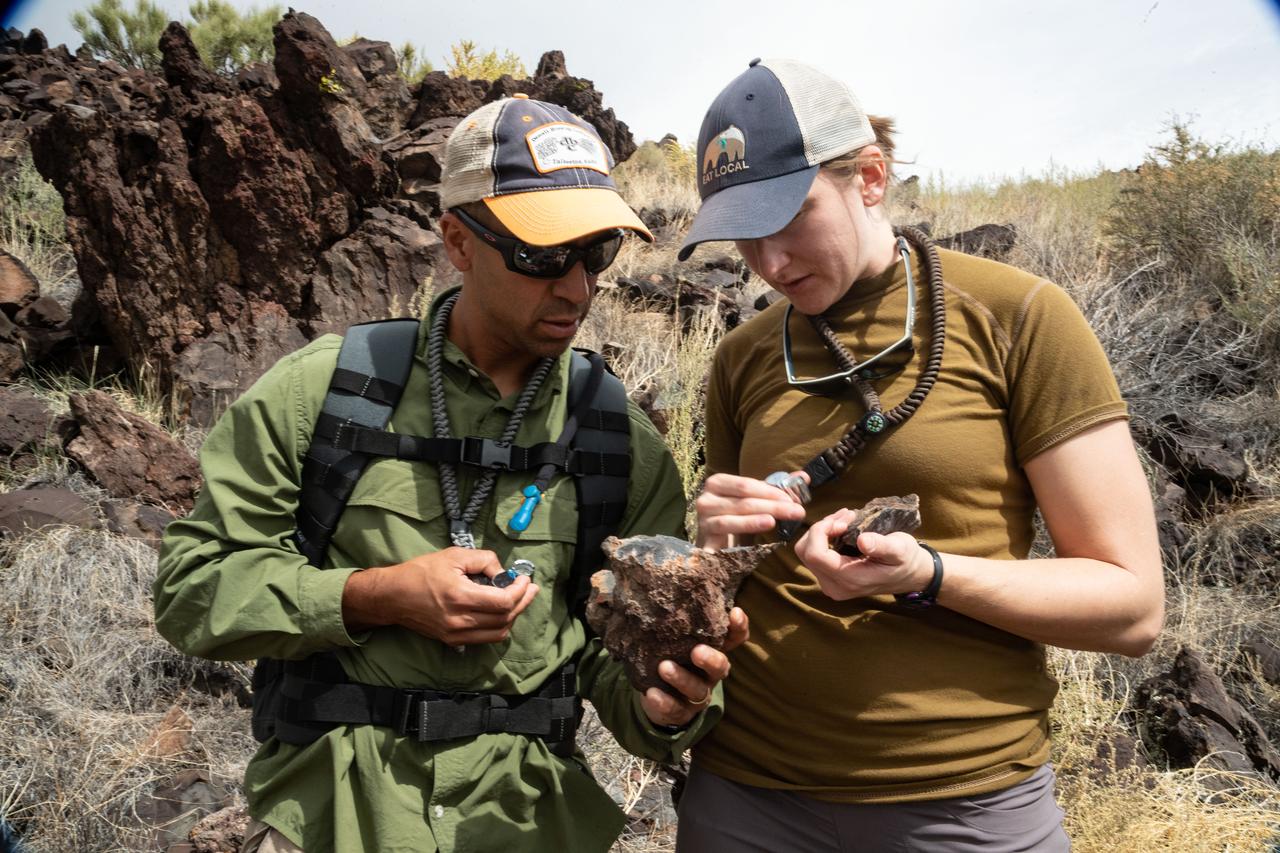
jsc2019e054895 (09-16-19) --- 2017 NASA astronaut candidates Raja Chari and Kayla Barron examines samples during geology training in Arizona. Photo Credit: (NASA/Bill Stafford)

jsc2019e054780 (09-15-19) --- 2017 NASA astronaut candidate Raja Chari examines samples with field instructors during geology training in Arizona. Photo Credit: (NASA/Bill Stafford)
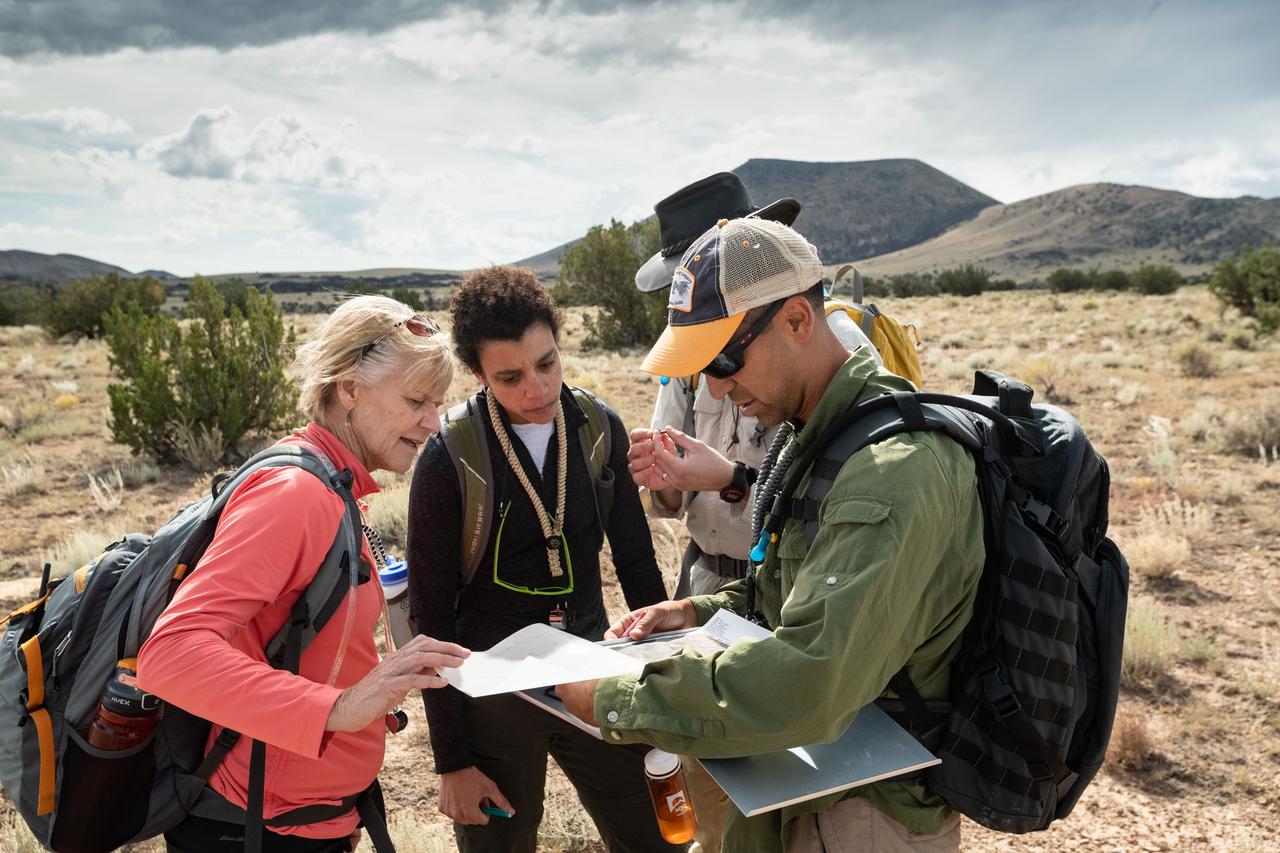
jsc2019e054855 (09-16-19) --- 2017 NASA astronaut candidates Jessica Watkins (center) and Raja Chari (right) with field instructors during geology training in Arizona. Photo Credit: (NASA/Bill Stafford)
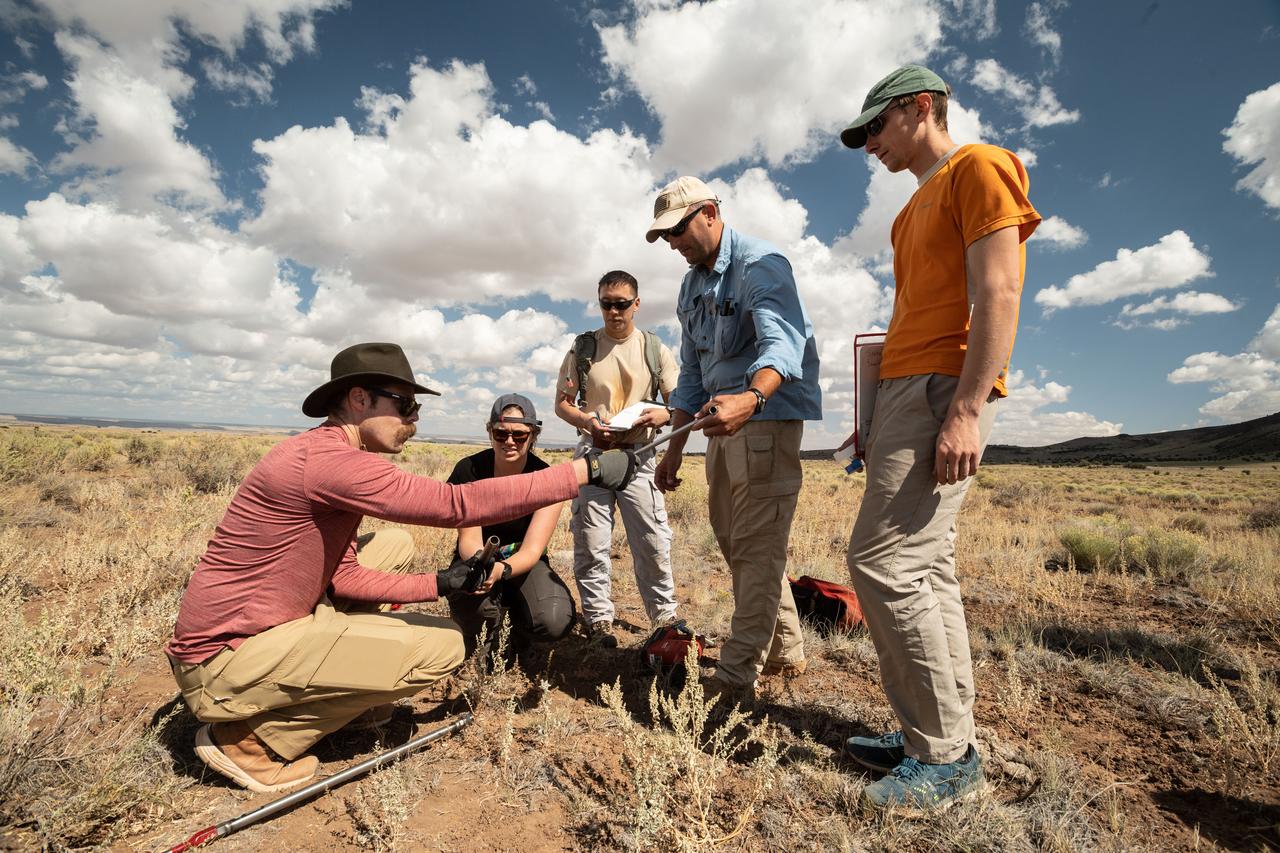
jsc2019e055106 (09-17-19) --- 2017 NASA astronaut candidates gather to review field instrumentation during geology training in Arizona. Photo Credit: (NASA/Bill Stafford)
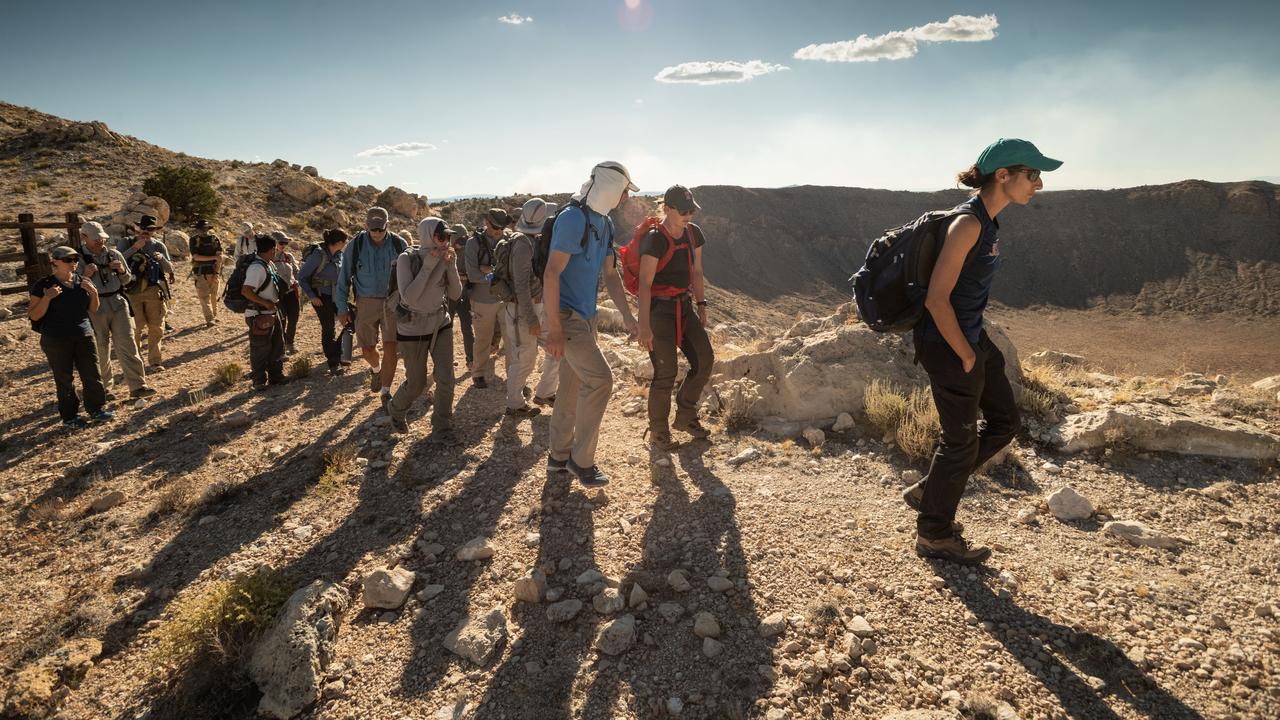
jsc2019e055509 (09-19-19) --- 2017 NASA astronaut candidates hike as a team with their field instructors during geology training in Arizona. Photo Credit: (NASA/Bill Stafford)
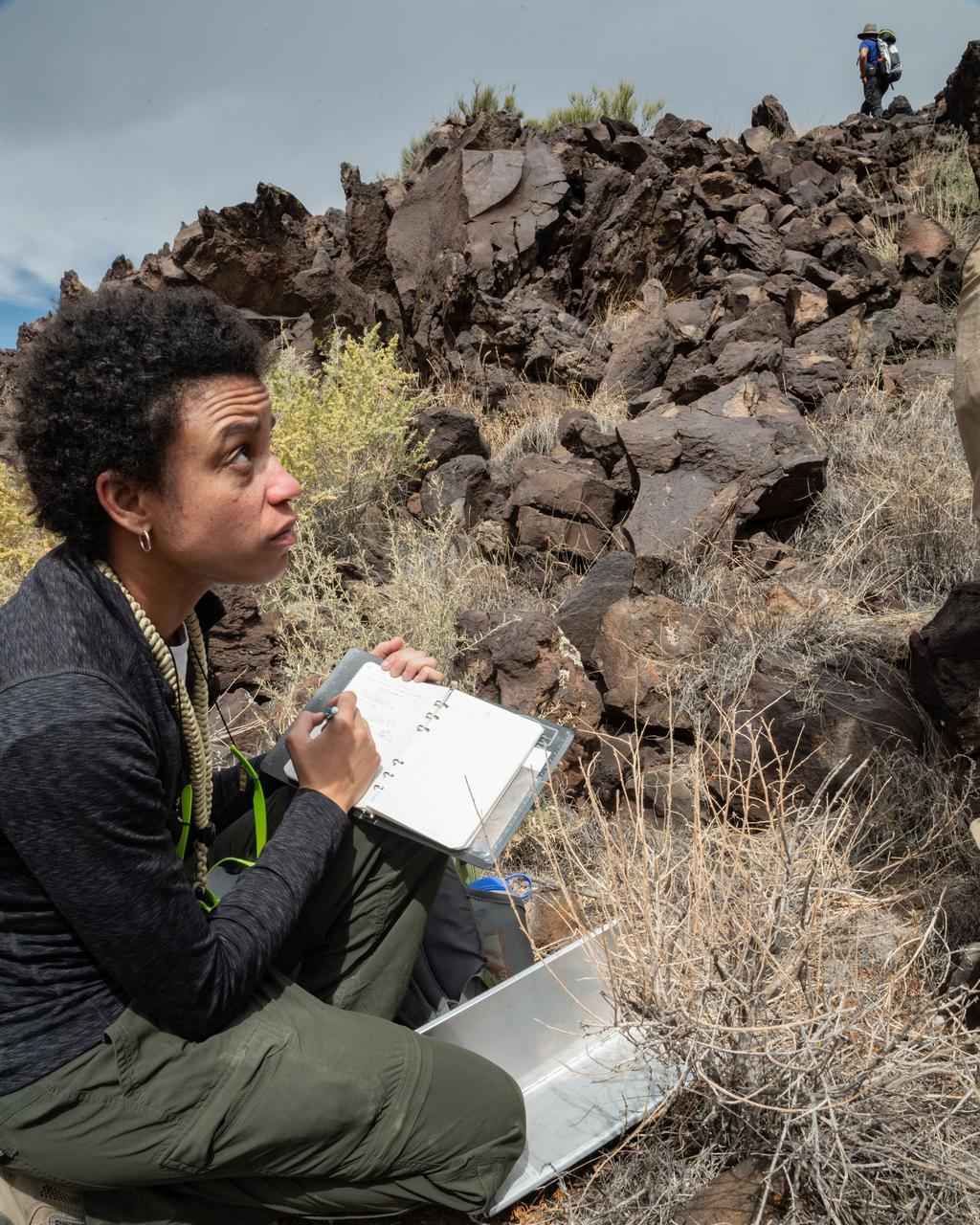
jsc2019e054897 (09-16-19) --- 2017 NASA astronaut candidate Jessica Watkins takes notes during geology training in Arizona. Photo Credit: (NASA/Bill Stafford)
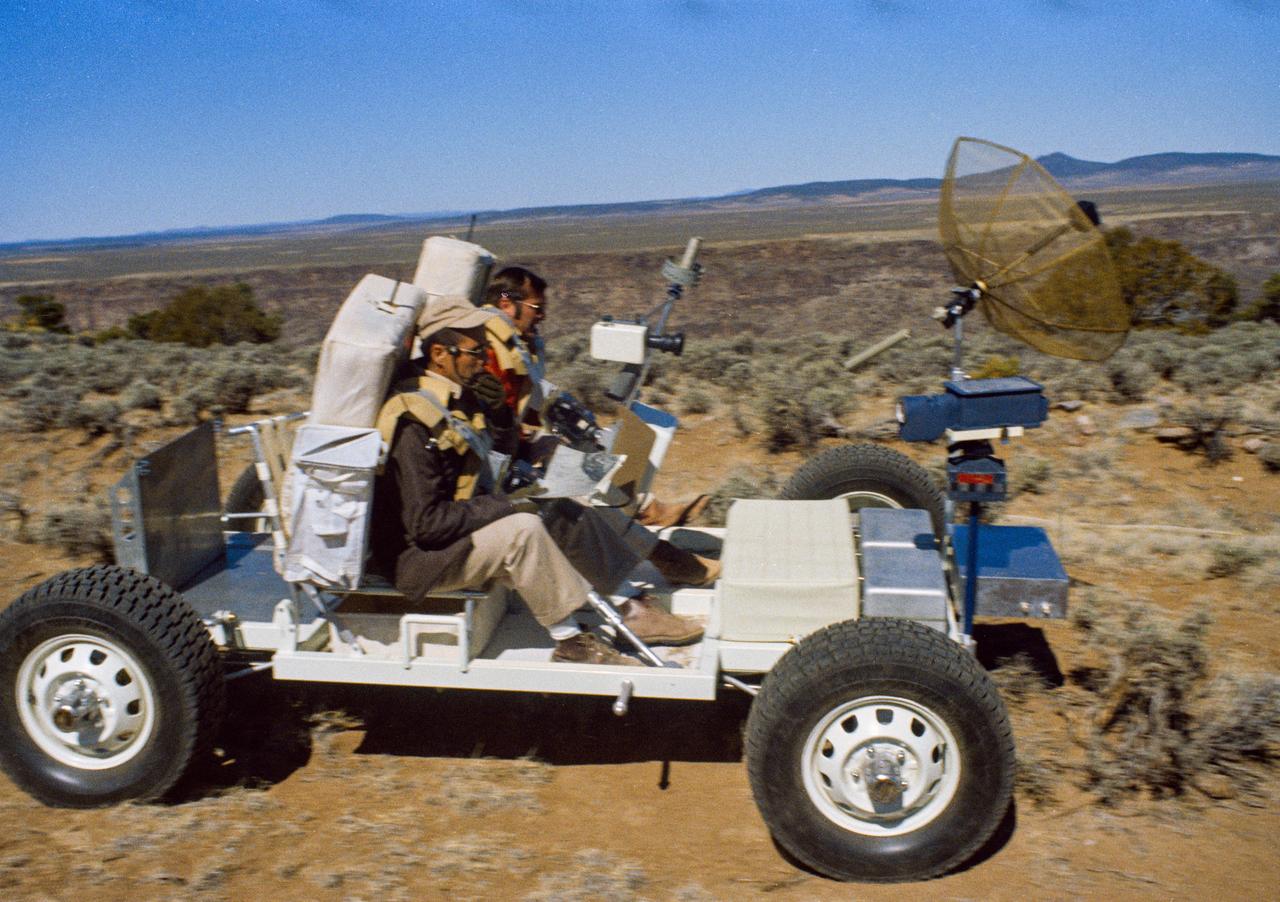
S71-24079 (1971) --- Astronauts Richard F. Gordon Jr., right, and Harrison H. Schmitt ? back-up crew members for the Apollo 15 lunar landing mission -- traverse in an Earth-bound training version of the Apollo Lunar Roving Vehicle (LRV or Rover) during geology training in Hawaii. Photo credit: NASA Note: There are elements of this description that have not been confimred. Please hold any release of descriptive information until such can be confirmed.
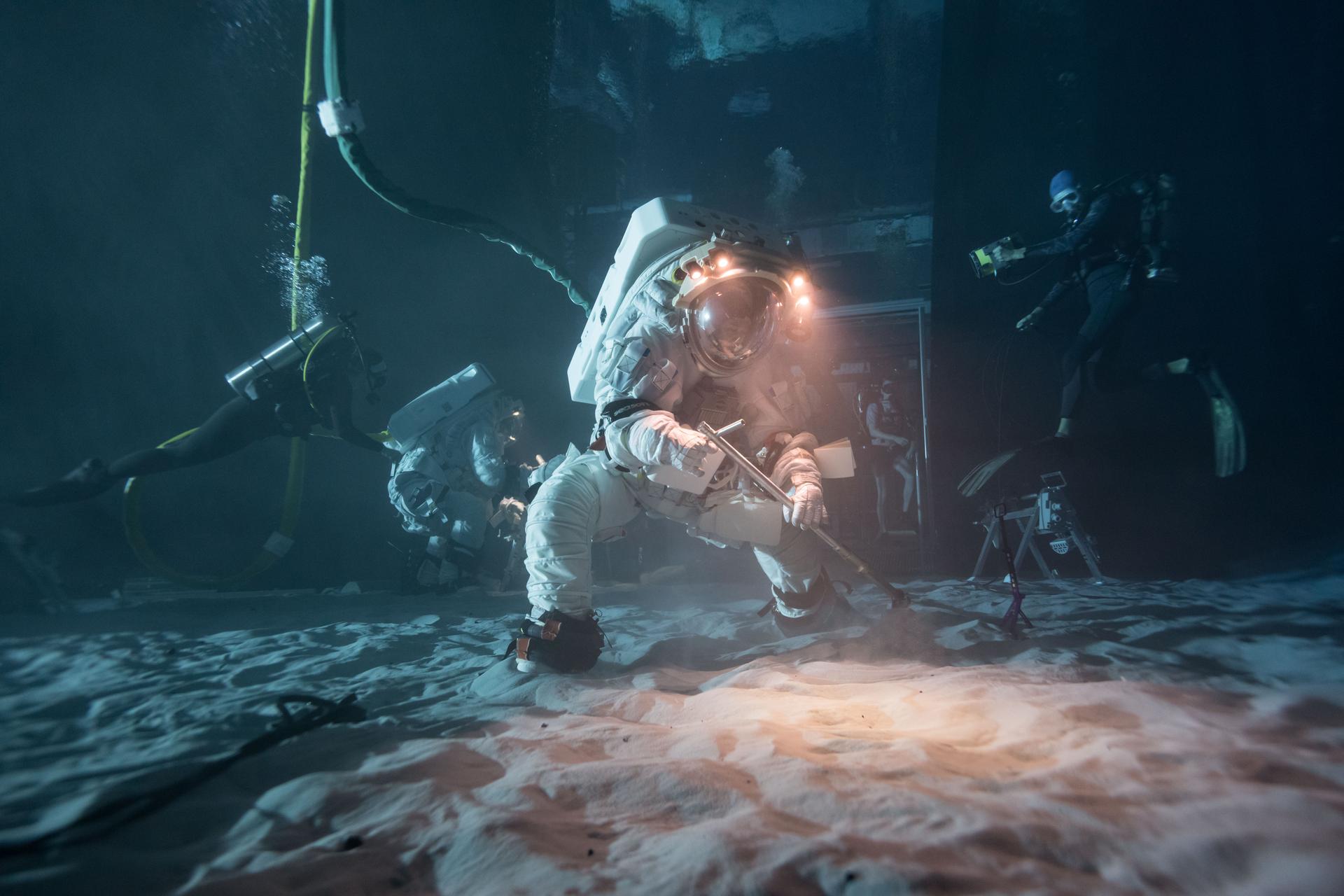
Exploration geologists and Artemis science officers Trevor Graff, left, and Angela Garcia carry out a lunar training development run at NASA’s Neutral Buoyancy Laboratory (NBL) in Houston. The NBL is a 40-foot deep pool at NASA’s Johnson Space Center where astronauts train for spacewalks in a neutrally buoyant environment. During the session, Garcia and Graff conducted tests of Artemis geology tools and deployed a mock lunar payload under low-angle lighting conditions similar to what astronauts will encounter at the Moon’s south pole. A section of the NBL, which contains full-scale mockups of the International Space Station modules, has been transformed into a lunar training area with soil and rocks that mimic the Moon’s landscape. This testing run marked the first time in the Artemis program that two geologists were suited up simultaneously for lunar geology training in the NBL. The team is using insights from these tests to build the training program for astronauts assigned to future landed missions on the Moon. Credit: NASA
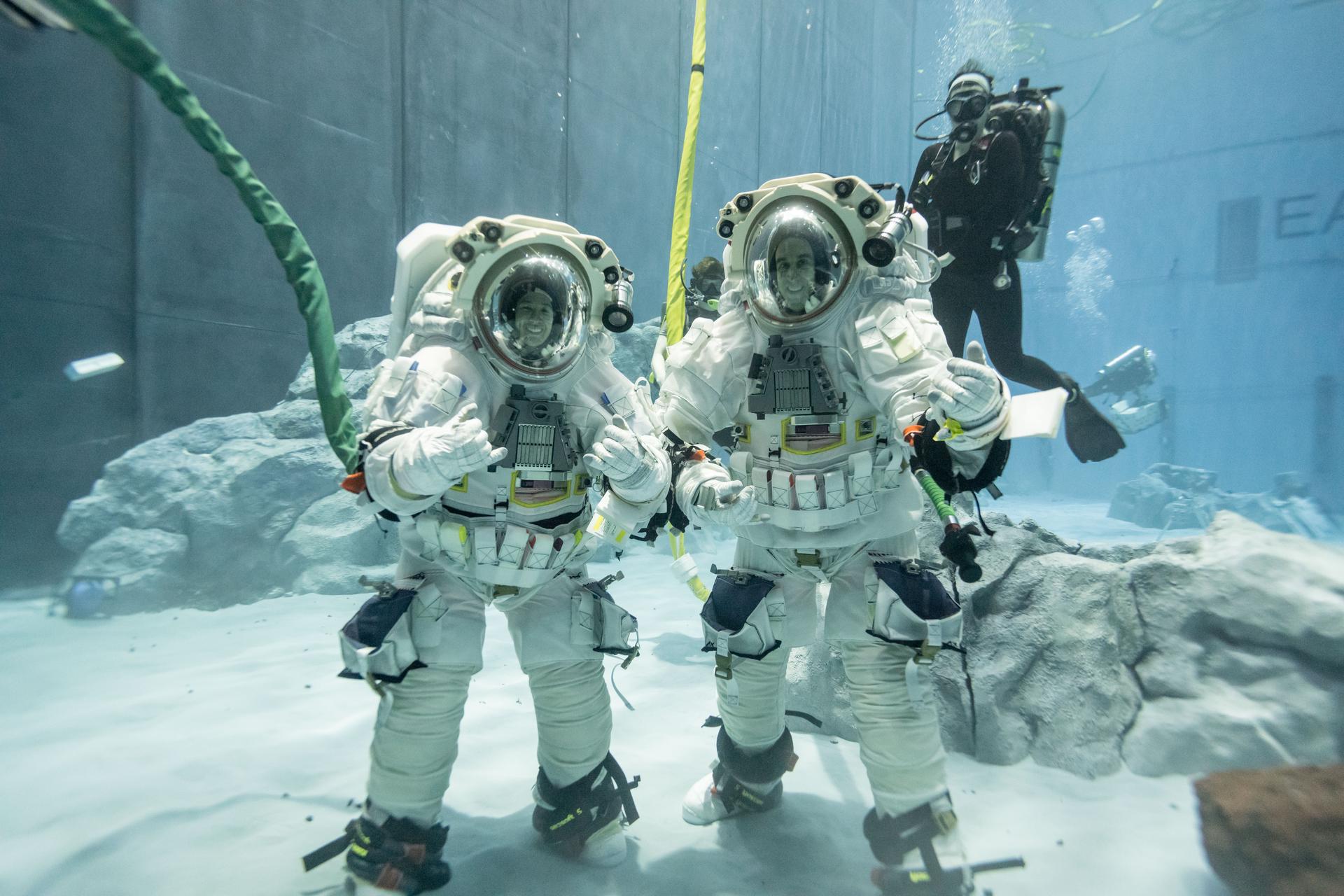
Exploration geologists and Artemis science officers Trevor Graff, left, and Angela Garcia carry out a lunar training development run at NASA’s Neutral Buoyancy Laboratory (NBL) in Houston. The NBL is a 40-foot deep pool at NASA’s Johnson Space Center where astronauts train for spacewalks in a neutrally buoyant environment. During the session, Garcia and Graff conducted tests of Artemis geology tools and deployed a mock lunar payload under low-angle lighting conditions similar to what astronauts will encounter at the Moon’s south pole. A section of the NBL, which contains full-scale mockups of the International Space Station modules, has been transformed into a lunar training area with soil and rocks that mimic the Moon’s landscape. This testing run marked the first time in the Artemis program that two geologists were suited up simultaneously for lunar geology training in the NBL. The team is using insights from these tests to build the training program for astronauts assigned to future landed missions on the Moon. Credit: NASA
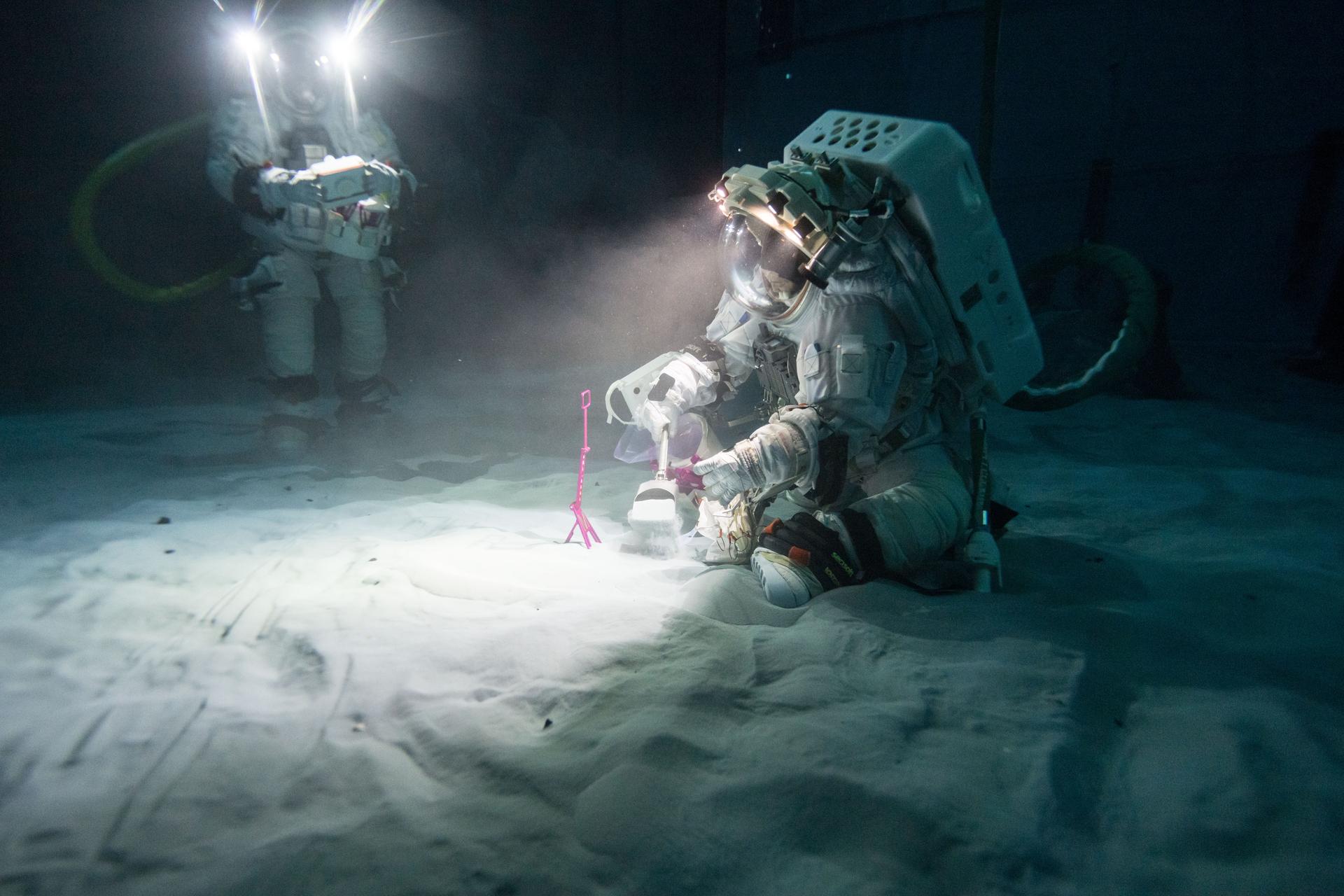
Exploration geologists and Artemis science officers Trevor Graff, left, and Angela Garcia carry out a lunar training development run at NASA’s Neutral Buoyancy Laboratory (NBL) in Houston. The NBL is a 40-foot deep pool at NASA’s Johnson Space Center where astronauts train for spacewalks in a neutrally buoyant environment. During the session, Garcia and Graff conducted tests of Artemis geology tools and deployed a mock lunar payload under low-angle lighting conditions similar to what astronauts will encounter at the Moon’s south pole. A section of the NBL, which contains full-scale mockups of the International Space Station modules, has been transformed into a lunar training area with soil and rocks that mimic the Moon’s landscape. This testing run marked the first time in the Artemis program that two geologists were suited up simultaneously for lunar geology training in the NBL. The team is using insights from these tests to build the training program for astronauts assigned to future landed missions on the Moon. Credit: NASA
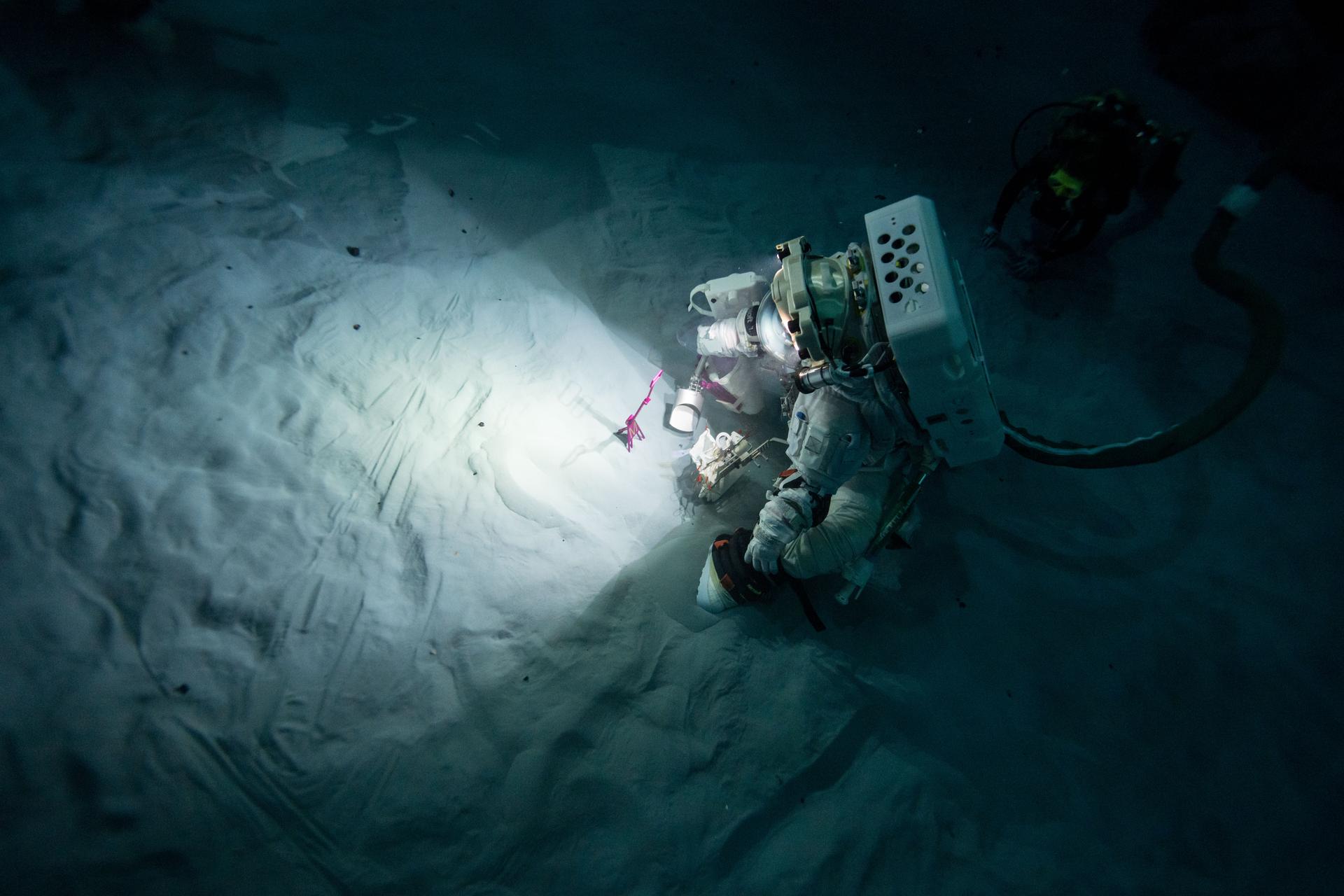
Exploration geologist and Artemis science officer Angela Garcia carries out a lunar training development run at NASA’s Neutral Buoyancy Laboratory (NBL) in Houston. The NBL is a 40-foot deep pool at NASA’s Johnson Space Center where astronauts train for spacewalks in a neutrally buoyant environment. During the session, Garcia and fellow exploration geologist and Artemis science officer Trevor Graff conducted tests of Artemis geology tools and deployed a mock lunar payload under low-angle lighting conditions similar to what astronauts will encounter at the Moon’s south pole. A section of the NBL, which contains full-scale mockups of the International Space Station modules, has been transformed into a lunar training area with soil and rocks that mimic the Moon’s landscape. This testing run marked the first time in the Artemis program that two geologists were suited up simultaneously for lunar geology training in the NBL. The team is using insights from these tests to build the training program for astronauts assigned to future landed missions on the Moon. Credit: NASA
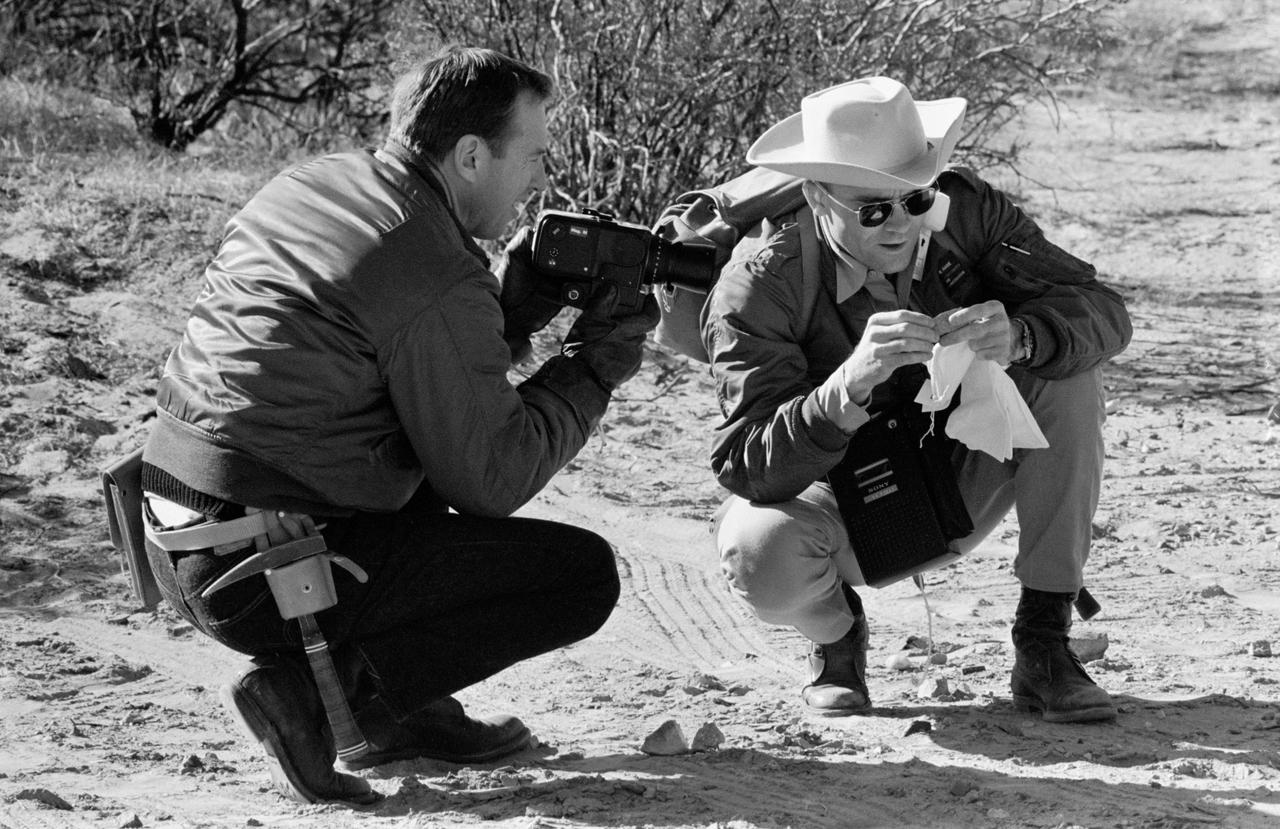
S69-25199 (25 Feb. 1969) --- Two Apollo 11 astronauts study a rock specimen during a geological field trip to the Quitman Mountains area near the Fort Quitman ruins in far west Texas. On the left is James A. Lovell Jr., Apollo 11 backup crew commander; and on the right is Fred W. Haise Jr., backup crew lunar module pilot. Lovell holds a camera which was used in simulating taking pictures of actual lunar samples on the surface of the Moon.
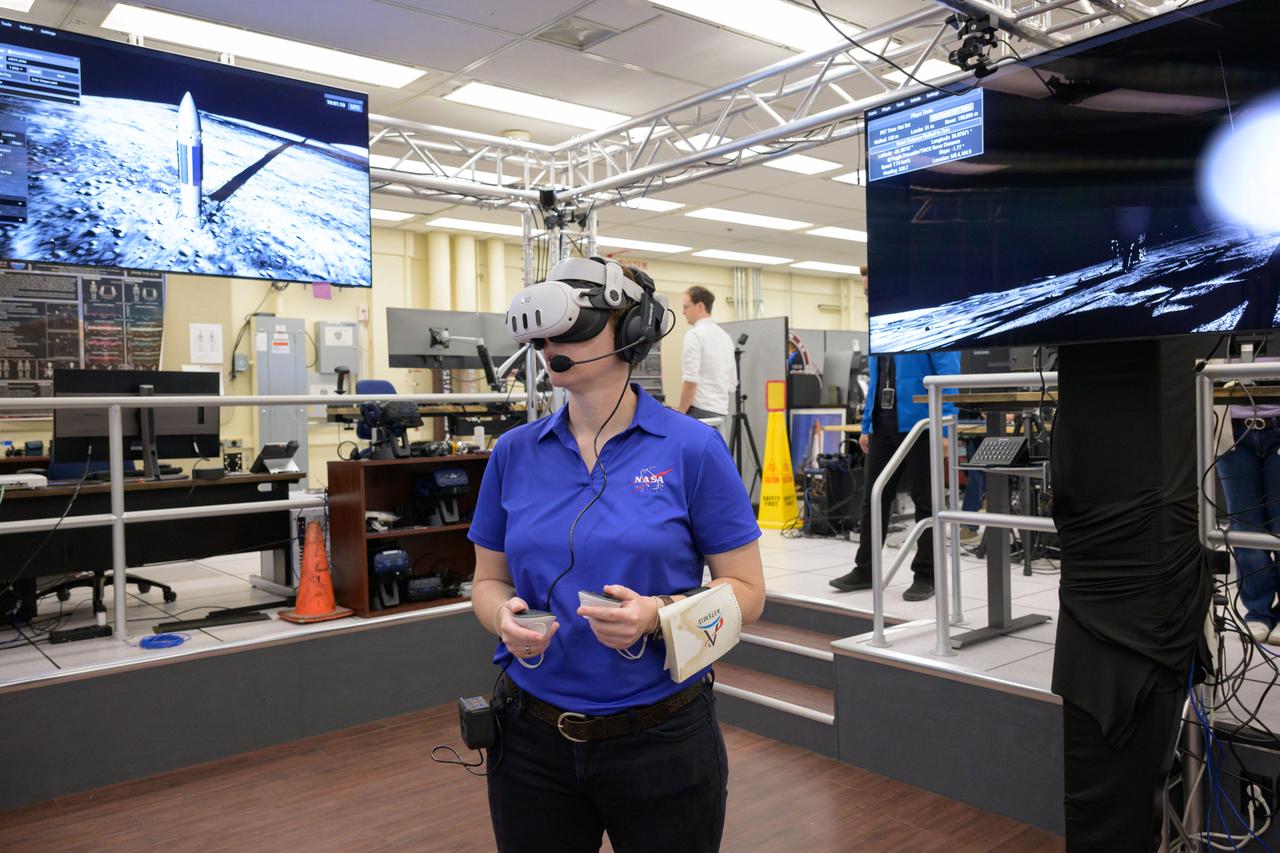
jsc2024e076628 – Tess Caswell, a crew stand-in for the Artemis III Virtual Reality Mini-Simulation, executes a moonwalk in the Prototype Immersive Technology (PIT) lab at NASA’s Johnson Space Center in Houston. The simulation was a test of using VR as a training method for flight controllers and science teams’ collaboration on science-focused traverses on the lunar surface. Credit: NASA/Robert Markowitz
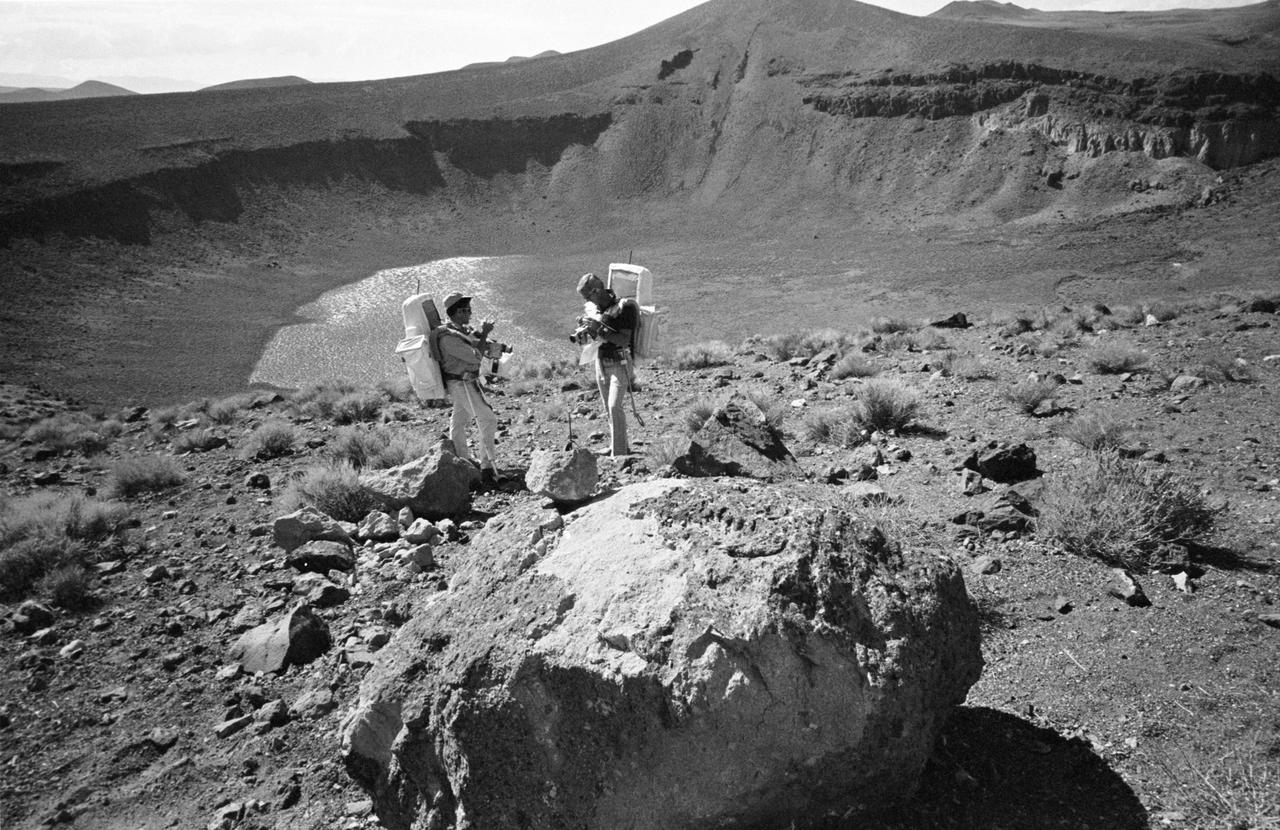
S72-48854 (6 Sept. 1972) --- Two members of the prime crew of the Apollo 17 lunar landing mission examine rock specimens during lunar surface extravehicular activity simulation training on a geological field trip to the Pancake Range area of south-central Nevada. They are astronaut Eugene A. Cernan (right), commander; and scientist-astronaut Harrison H. Schmitt, lunar module pilot. They are standing on the rim of Lunar Crater, which is about 600 feet deep and five-eighths of a mile in diameter. It is a volcanic crater.
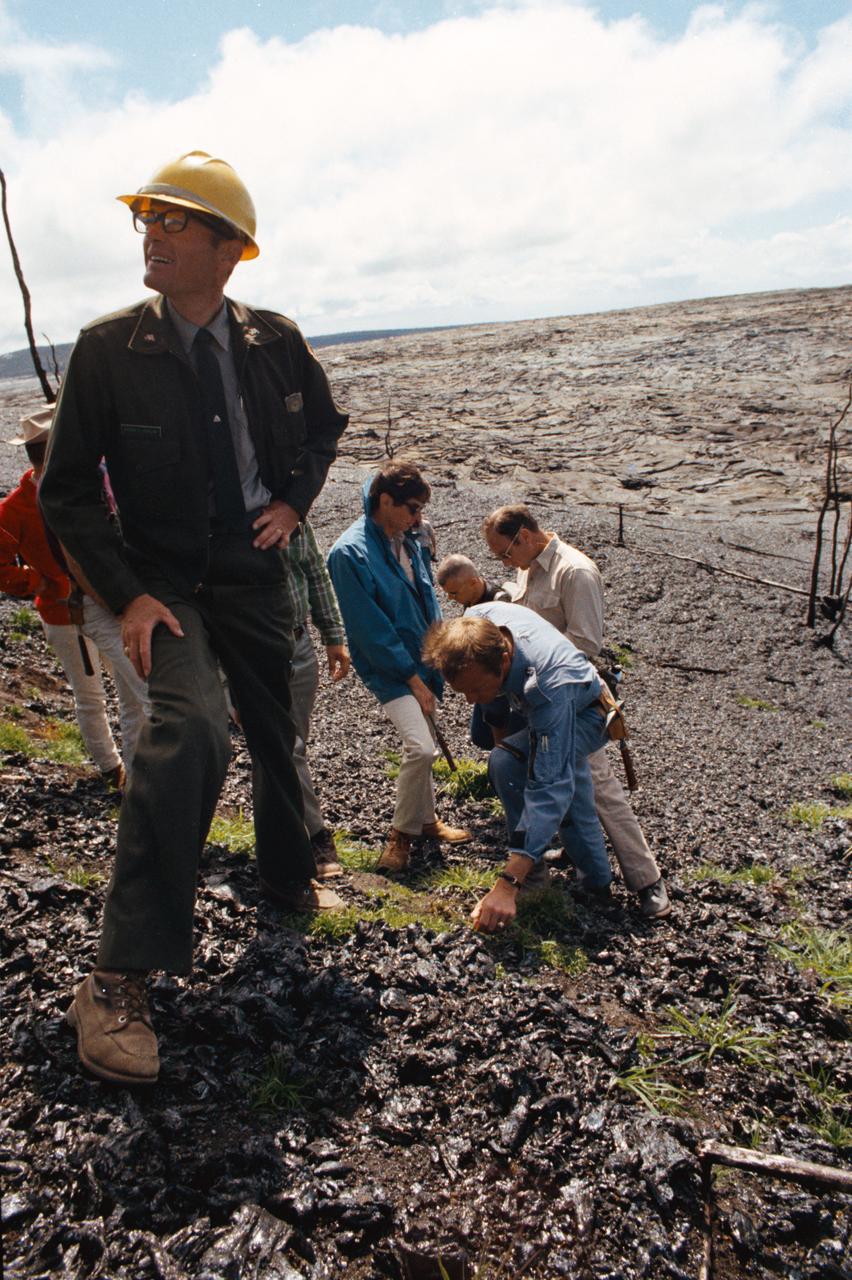
S70-34421 (April 1970) --- Prime crew men and backup crew men, of the Apollo 14 lunar landing mission, look over an area near the site of a volcanic eruption on Dec. 30, 1969. Astronauts Alan B. Shepard Jr. (leaning with left hand on ground) and Edgar D. Mitchell (behind Shepard, wearing dark glasses) are the prime crew men scheduled to walk on the moon. Astronauts Eugene A. Cernan (almost obscured at extreme left) and Joe H. Engle (partially visible, on Cernan's right) are backup crew commander and lunar module pilot, respectively, for the mission. Others in the photograph are Pat Crosland (in hard hat), a geologist and a park ranger in Hawaii Volcanoes State Park; Michael C. McEwen (facing Mitchell) of the Geology Branch, Lunar and Earth Sciences Division, Manned Spacecraft Center (MSC); and astronaut Bruce McCandless II, who made the trip to serve as a spacecraft communicator during simulations of extravehicular activity (EVA) on the lunar surface.

Dr. Lee Silver (pointing foregroung), California Institute of Technology, calls a geological feature near Taos, New Mexico, to the attention of Apollo 16 prime and backup crewmen during a geological field trip. The crewmen, from left to right, are Astronauts Charles M. Duke Jr., lunar module pilot; Fred W. Haise Jr., backup commander; Edgar D. Mitchell, backup Lunar Module pilot; and John W. Young, commander.
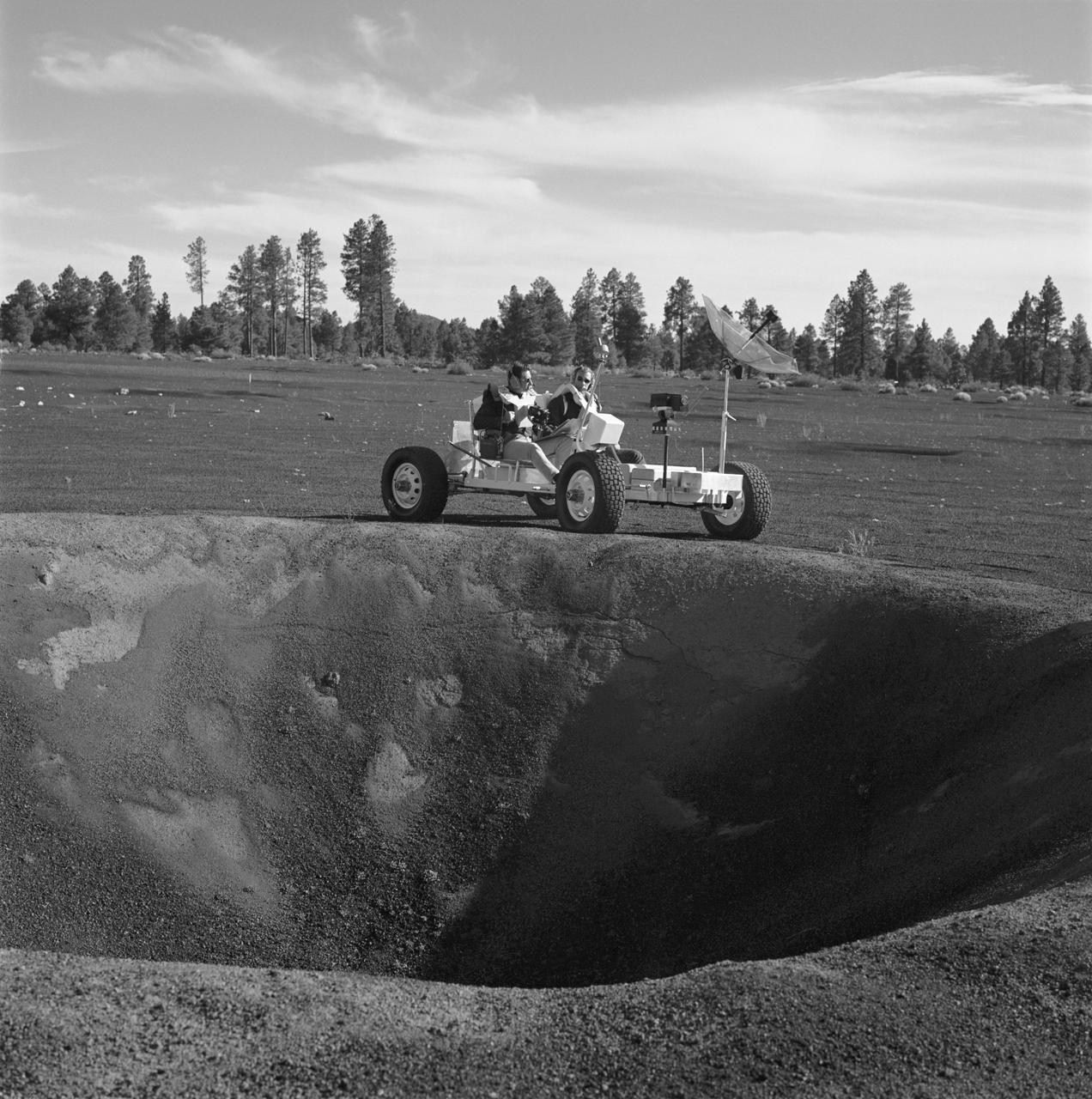
S70-53300 (2-3 Nov. 1970) --- Two Apollo 15 crew members, riding a Lunar Roving Vehicle (LRV) simulator, participate in geology training at the Cinder Lake crater field in Arizona. Astronaut David R. Scott, Apollo 15 commander, seated on the left; and to Scott's right is astronaut James B. Irwin, lunar module pilot. They have stopped at the rim of a 30-feet deep crater to look over the terrain. The simulator, called "Grover", was built by the United States Geological Survey.
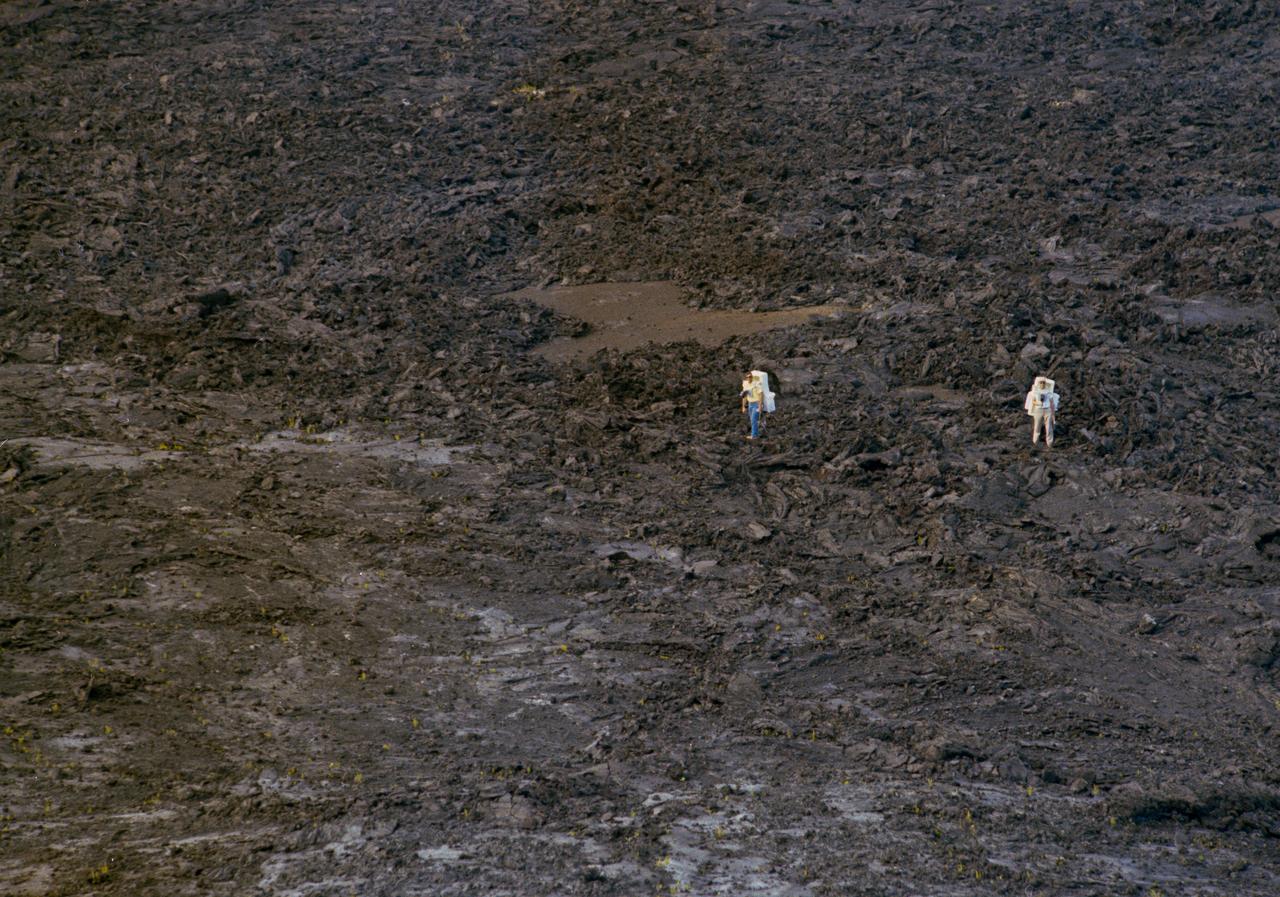
S70-56407 (December 1970) --- Astronauts Richard F. Gordon Jr., left, and Harrison H. Schmitt ? backup crew members for the Apollo 15 mission -- get ?feet-on? experience with an a'a' lava flow during geology training in Hawaii. A?a? is the most common appearance type of lava flow that cools down, to form fragmented, often spiny or rough surfaces. Photo credit: NASA
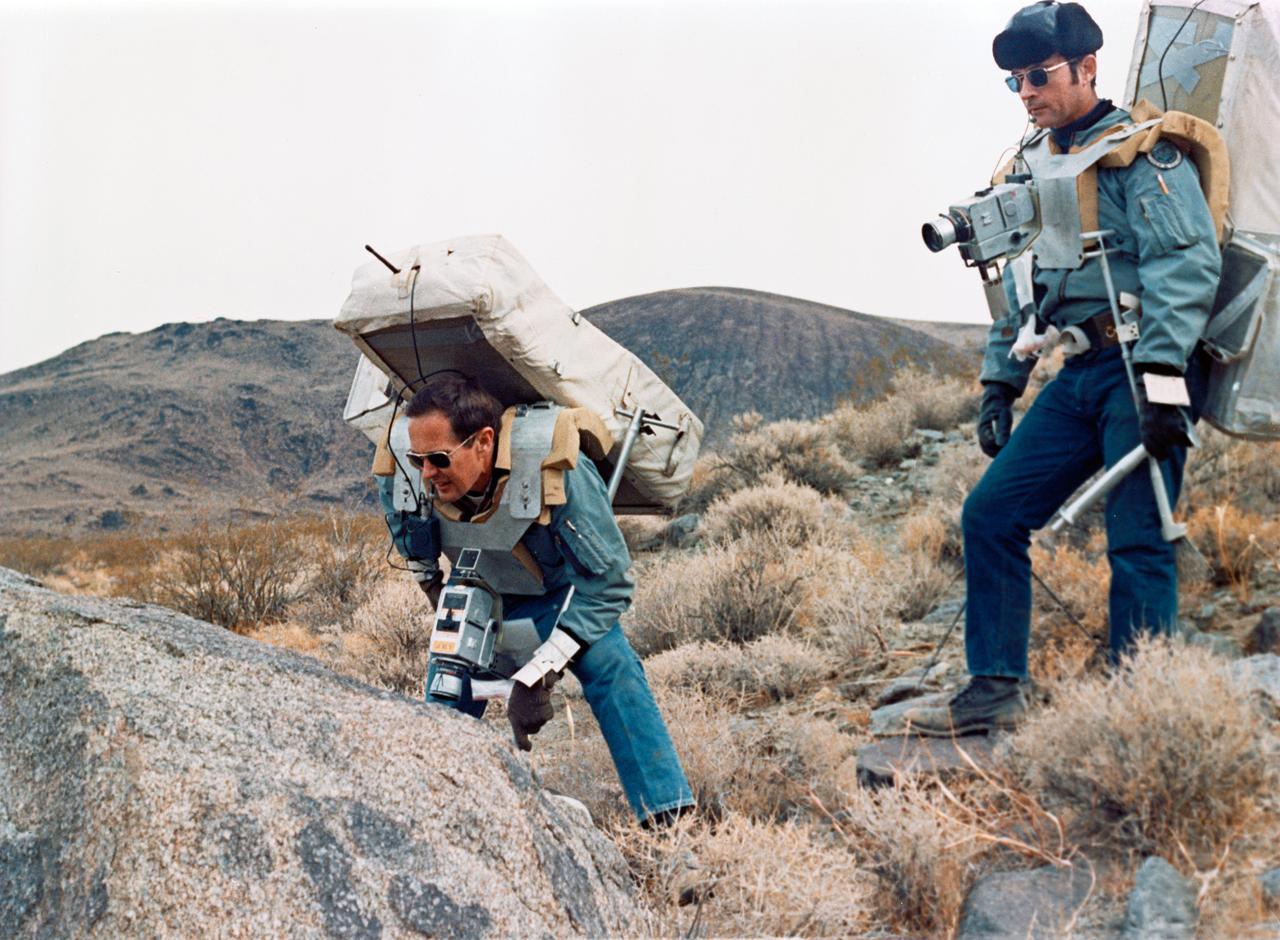
S71-59355 (17-18 Nov. 1971) --- Astronauts John W. Young, right, prime crew commander for Apollo 16, and Charles M. Duke Jr., lunar module pilot, study rock formations along their simulated lunar traverse route. The prime and backup commanders and lunar module pilots for Apollo 16 took part in the two-day geology field trip and simulations in the Coso Range, near Ridgecrest, California, about 160 miles north by northeast of Los Angeles. The training and simulations were conducted Nov. 17 and 18, 1971, at the U.S. Naval Ordnance Test Station.
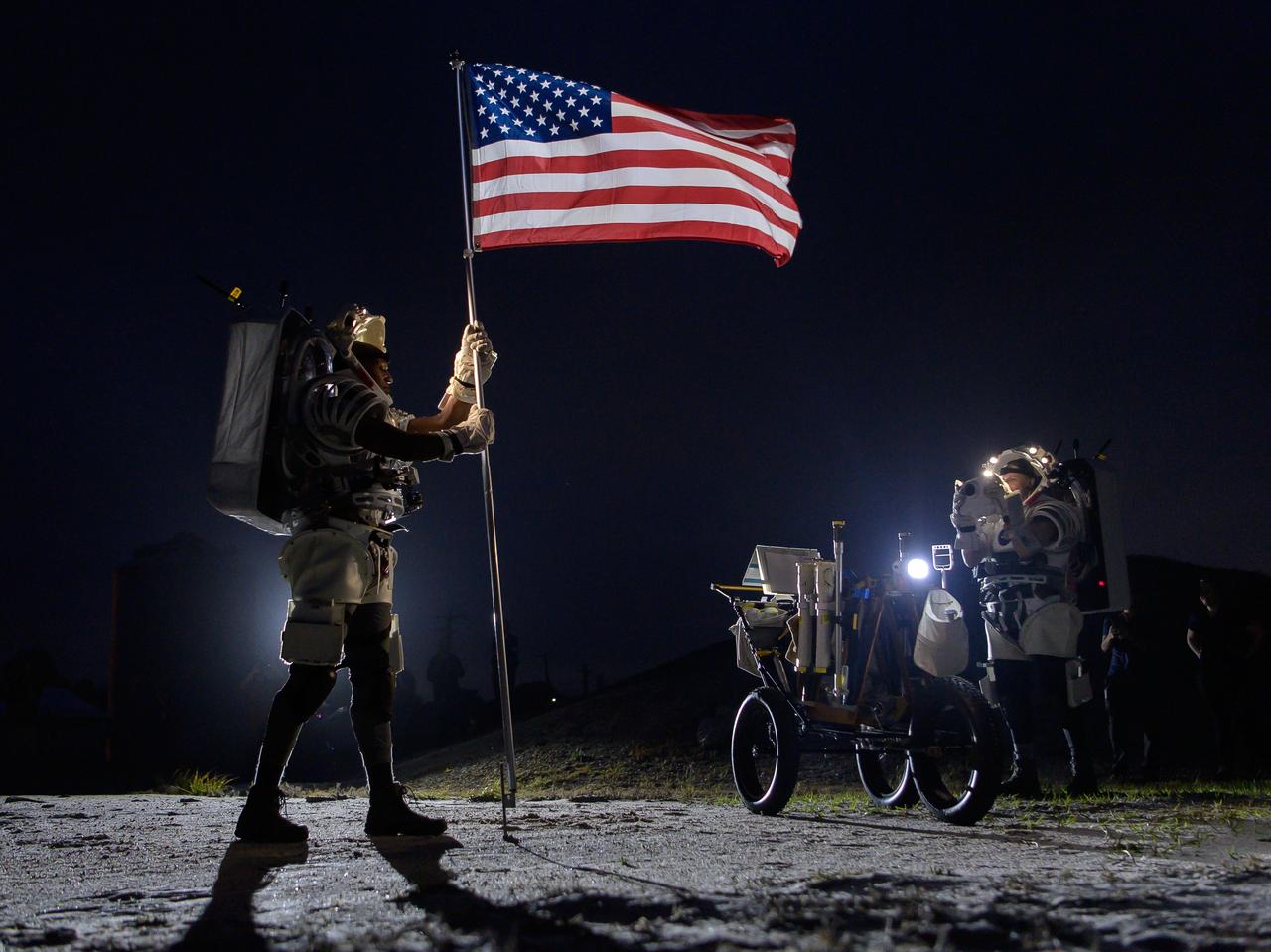
jsc2024e031840 --- NASA astronaut Kate Rubins (right) takes a photo of NASA astronaut Andre Douglas (left) as he raises an American flag during a simulated moonwalk in a rock yard at NASA’s Johnson Space Center. Credit: NASA/Josh Valcarcel
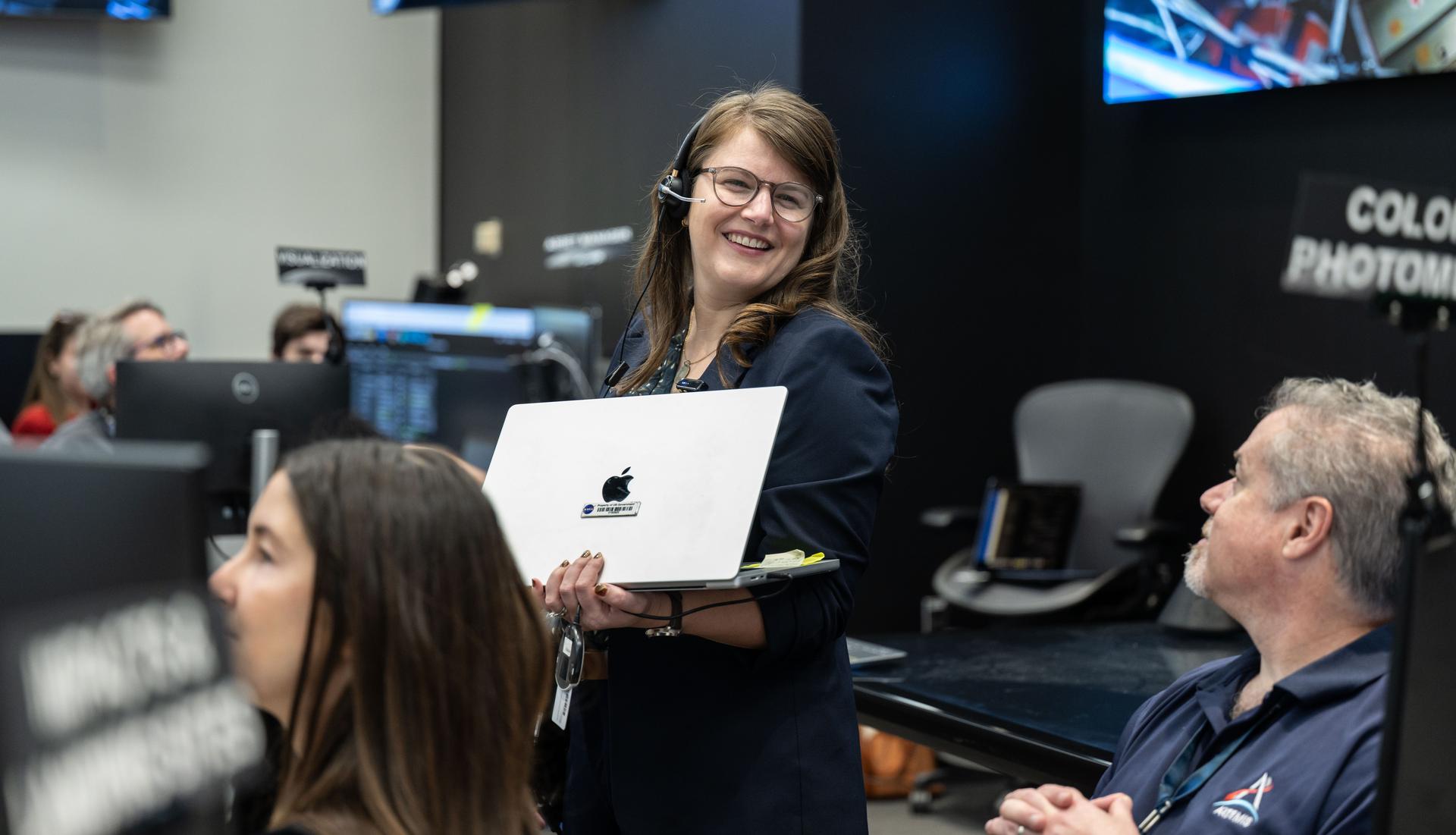
Artemis II deputy lunar science lead, Marie Henderson, reacts to the astronauts' verbal observations of the Moon during their flyby on April 6, 2026. Along with other lunar science team members, Henderson helped train the astronauts in geology both in the classroom and in the field. The team also built the lunar targeting plan that, like an International Space Station spacewalk plan, provides strong, detailed observation guidance, plus flexibility for the crew to make decisions based on what they’re seeing and experiencing in real time. The science team had many moments of celebration during the lunar flyby as the astronauts took images of the Moon and provided verbal descriptions of what they were seeing. This type of information reveals the geologic history of an area and will be critical to collect when future Artemis astronauts explore the Moon's surface. Credits: NASA/Luna Posadas Nava
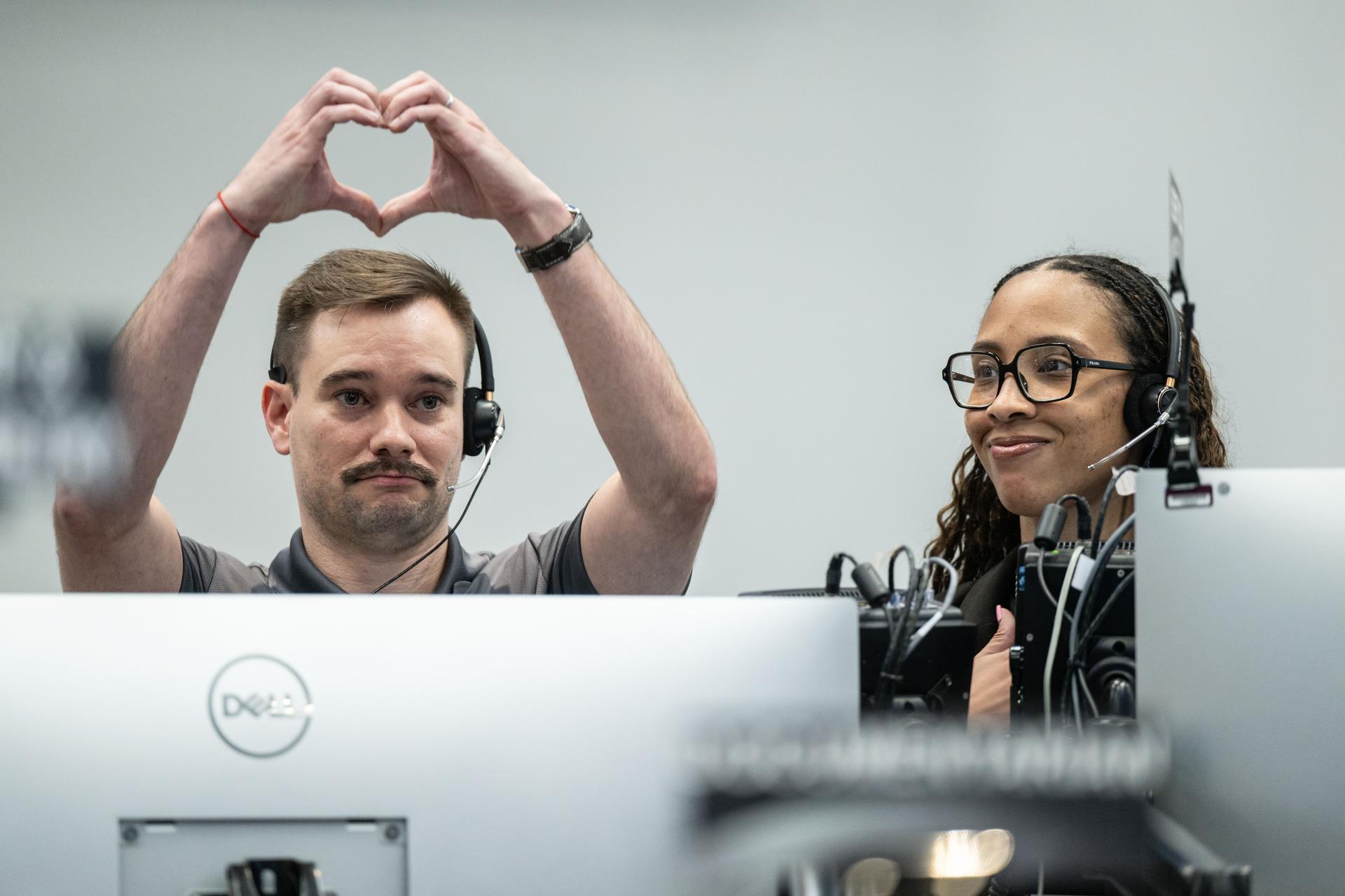
Artemis II deputy lunar science lead, Jacob Richardson, left, and Artemis II lunar science team members, Kiarre Dumes, react to the astronauts' verbal observations of the Moon during their flyby on April 6, 2026. Along with other lunar science team members, Richardson and Dumes helped train the crew in geology both in the classroom and in the field. The science team also built the lunar targeting plan that, like an International Space Station spacewalk plan, provides strong, detailed observation guidance, plus flexibility for the crew to make decisions based on what they’re seeing and experiencing in real time. The science team had many moments of celebration during the lunar flyby as the astronauts took images of the Moon and provided verbal descriptions of what they were seeing. This type of information reveals the geologic history of an area and will be critical to collect when future Artemis astronauts explore the Moon's surface. Credits: NASA/Luna Posadas Nava
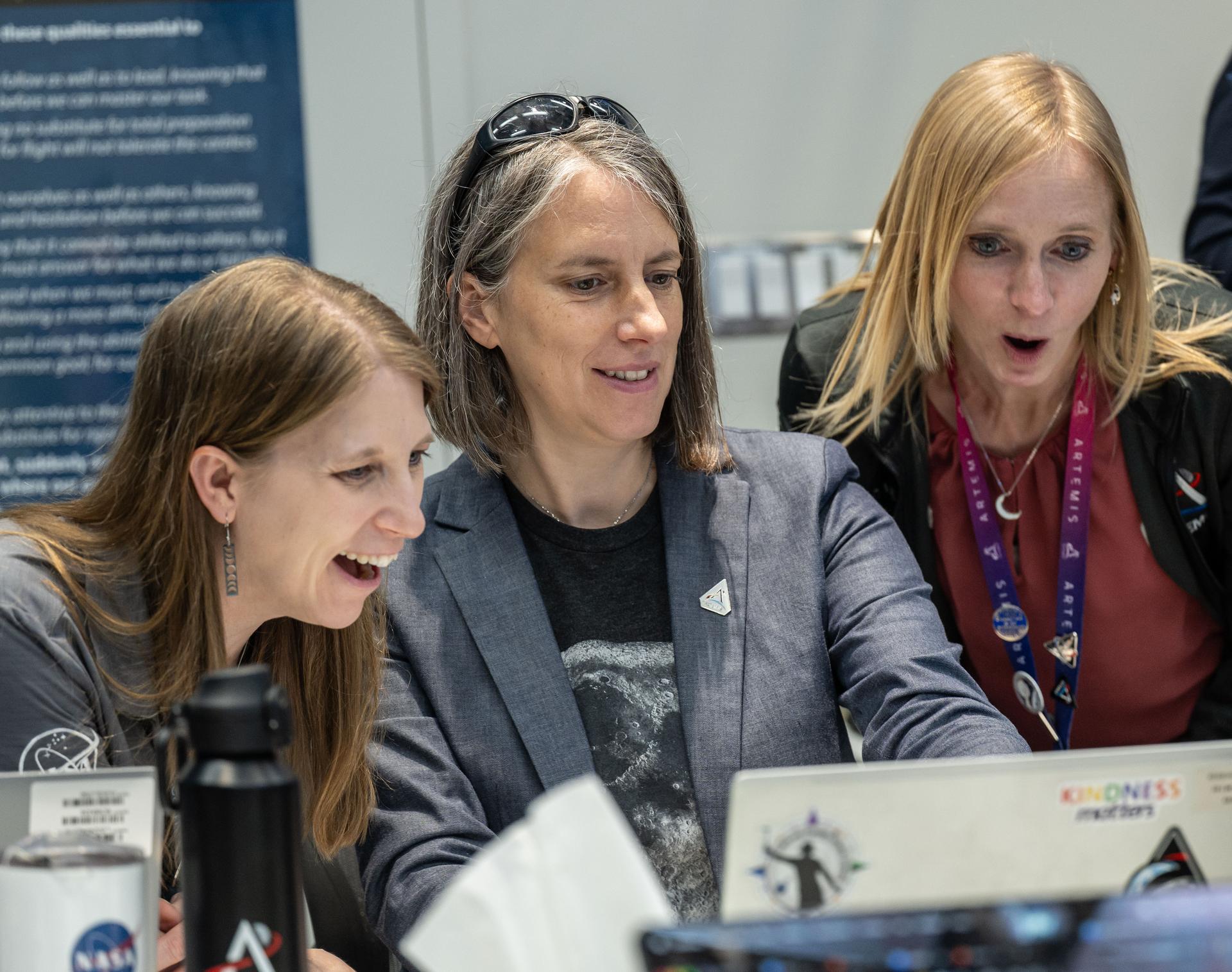
Artemis II lunar science team members, from left, Debra Needham, Juliane Gross, and Ryan Watkins, react to the astronauts' verbal observations of the Moon during their flyby on April 6, 2026. The science team trained the astronauts in geology and observation, both in the classroom and in the field. The team also built the lunar targeting plan that, like an International Space Station spacewalk plan, provides strong, detailed observation guidance, plus flexibility for the crew to make decisions based on what they’re seeing and experiencing in real time. The science team had many moments of celebration during the lunar flyby as the astronauts took images of the Moon and provided verbal descriptions of what they were seeing. This type of information reveals the geologic history of an area and will be critical to collect when future Artemis astronauts explore the Moon's surface. Credits: NASA/Luna Posadas Nava
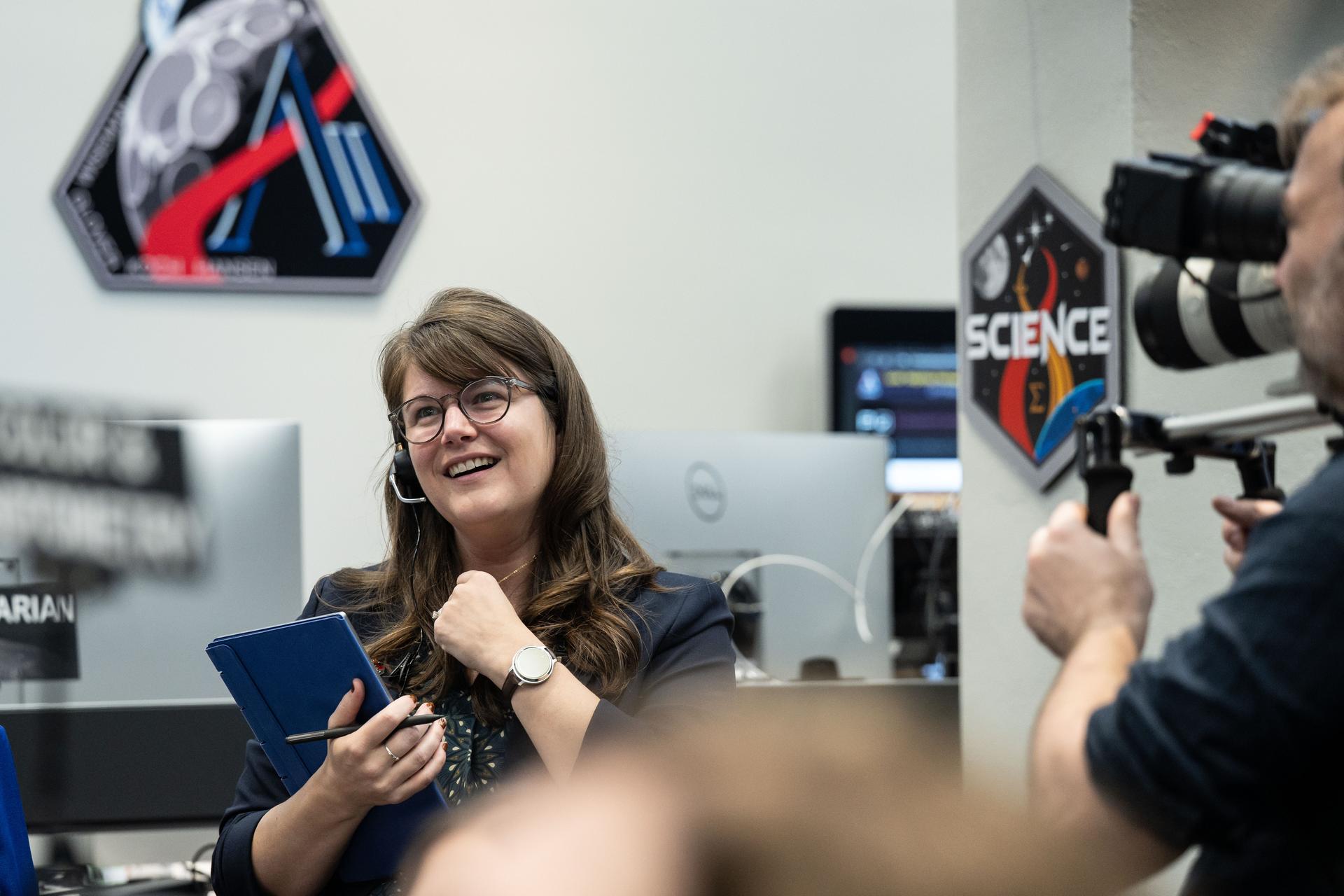
Artemis II deputy lunar science lead, Marie Henderson, reacts to the astronauts' verbal observations of the Moon during their flyby on April 6, 2026. Along with other lunar science team members, Ewing helped train the crew in geology both in the classroom and in the field. The science team also built the lunar targeting plan that, like an International Space Station spacewalk plan, provides strong, detailed observation guidance, plus flexibility for the crew to make decisions based on what they’re seeing and experiencing in real time. The science team had many moments of celebration during the lunar flyby as the astronauts took images of the Moon and provided verbal descriptions of what they were seeing. This type of information reveals the geologic history of an area and will be critical to collect when future Artemis astronauts explore the Moon's surface. Credits: NASA/Luna Posadas Nava
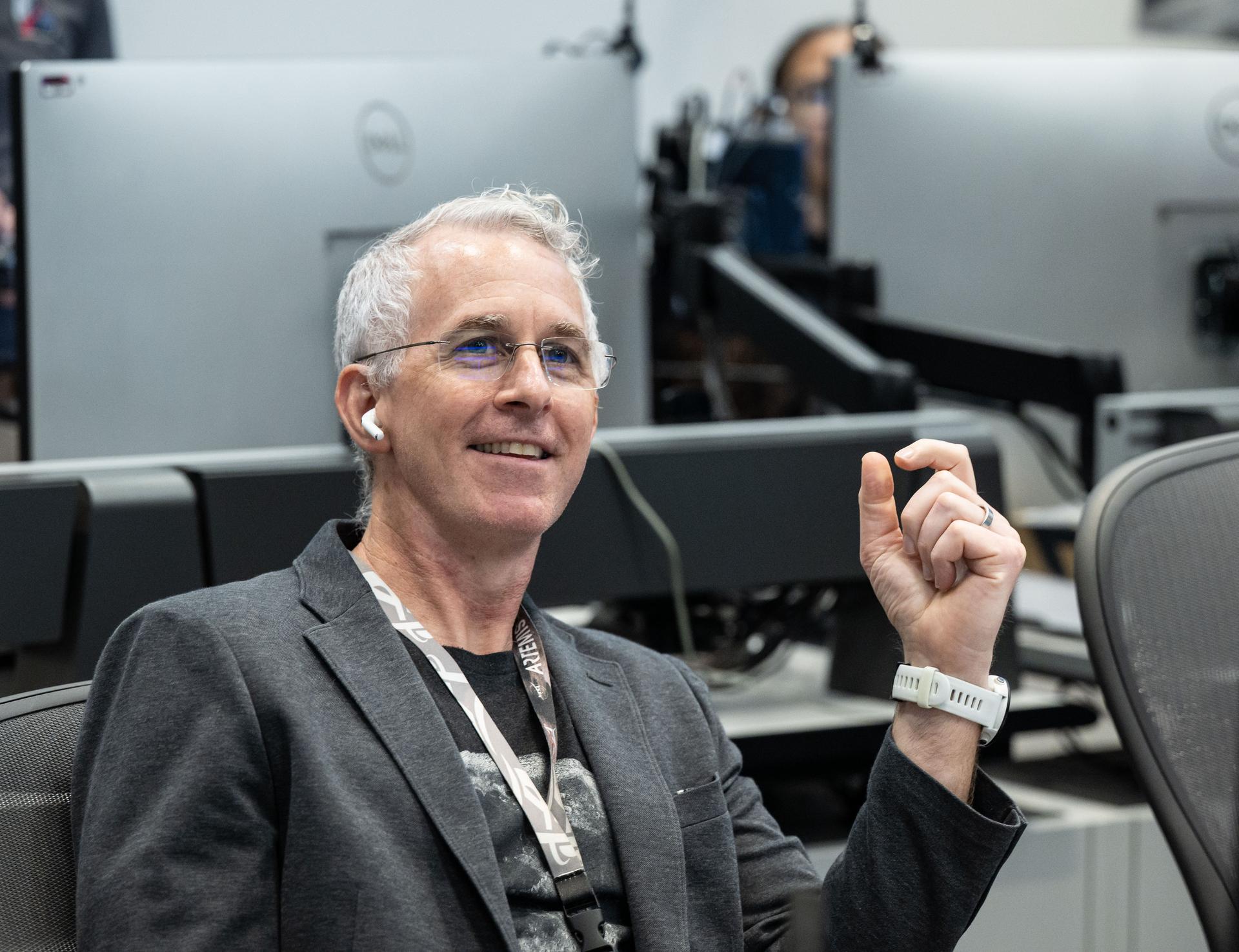
Artemis II lunar science team member, Ryan Ewing, reacts to the astronauts' verbal observations of the Moon during their flyby on April 6, 2026. Along with other lunar science team members, Ewing helped train the crew in geology both in the classroom and in the field. The science team also built the lunar targeting plan that, like an International Space Station spacewalk plan, provides strong, detailed observation guidance, plus flexibility for the crew to make decisions based on what they’re seeing and experiencing in real time. The science team had many moments of celebration during the lunar flyby as the astronauts took images of the Moon and provided verbal descriptions of what they were seeing. This type of information reveals the geologic history of an area and will be critical to collect when future Artemis astronauts explore the Moon's surface. Credits: NASA/Luna Posadas Nava
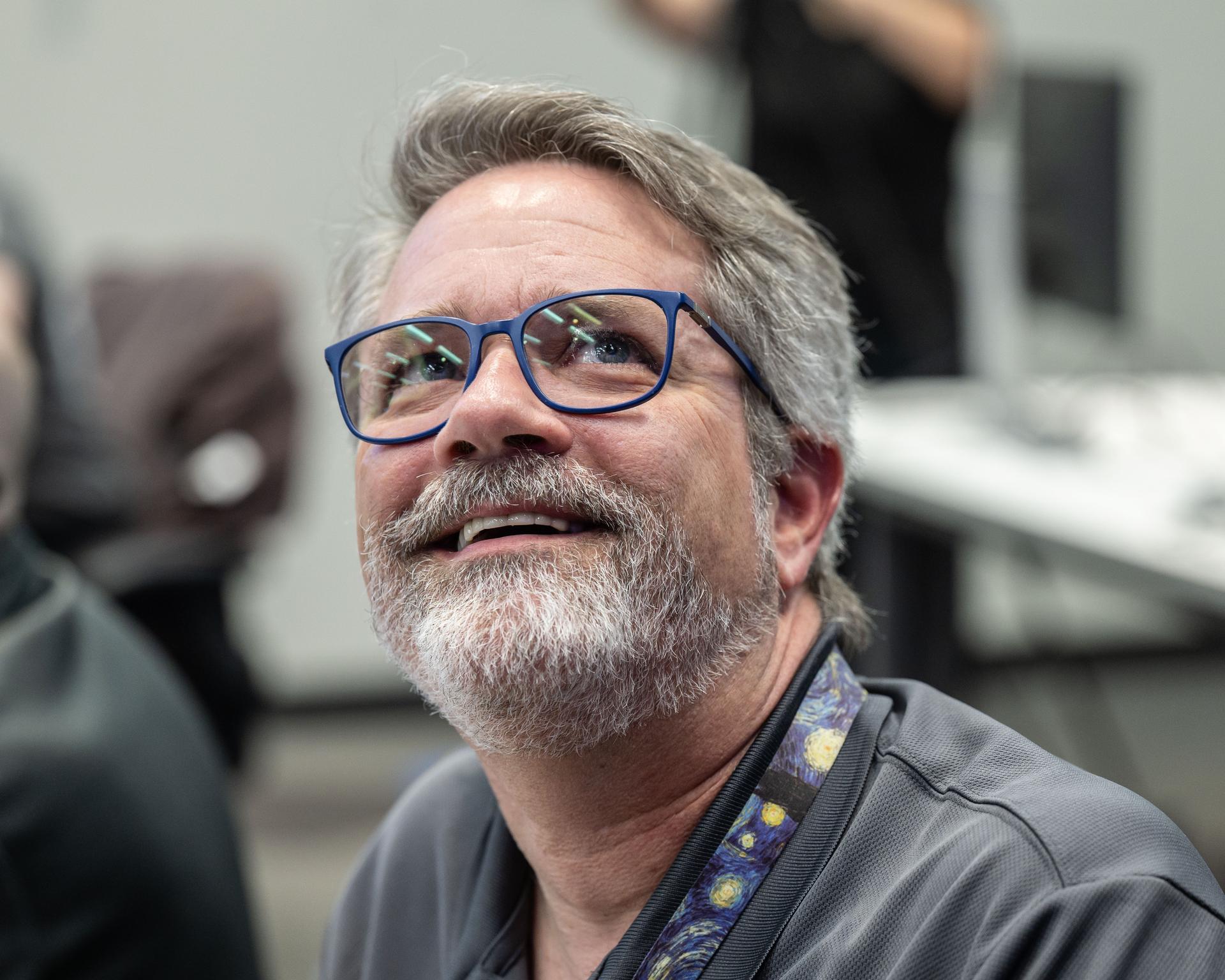
Ernie Wright, Artemis II lunar science visualization lead, reacts to hearing the astronauts describe features of the Moon as they few by on April 6, 2026. To prepare the crew for this mission, the Artemis II lunar science team trained the astronauts in geology, both in the classroom and in the field. They also built the lunar targeting plan that, which, like an International Space Station spacewalk plan, provides strong, detailed observation guidance, plus flexibility for the crew to make decisions based on what they’re seeing and experiencing in real time. The science team had many moments of celebration during the lunar flyby as the astronauts took images of the Moon and provided verbal descriptions of what they were seeing. This type of information reveals the geologic history of an area and will be critical to collect when future Artemis astronauts explore the Moon's surface. Credits: NASA/Luna Posadas Nava
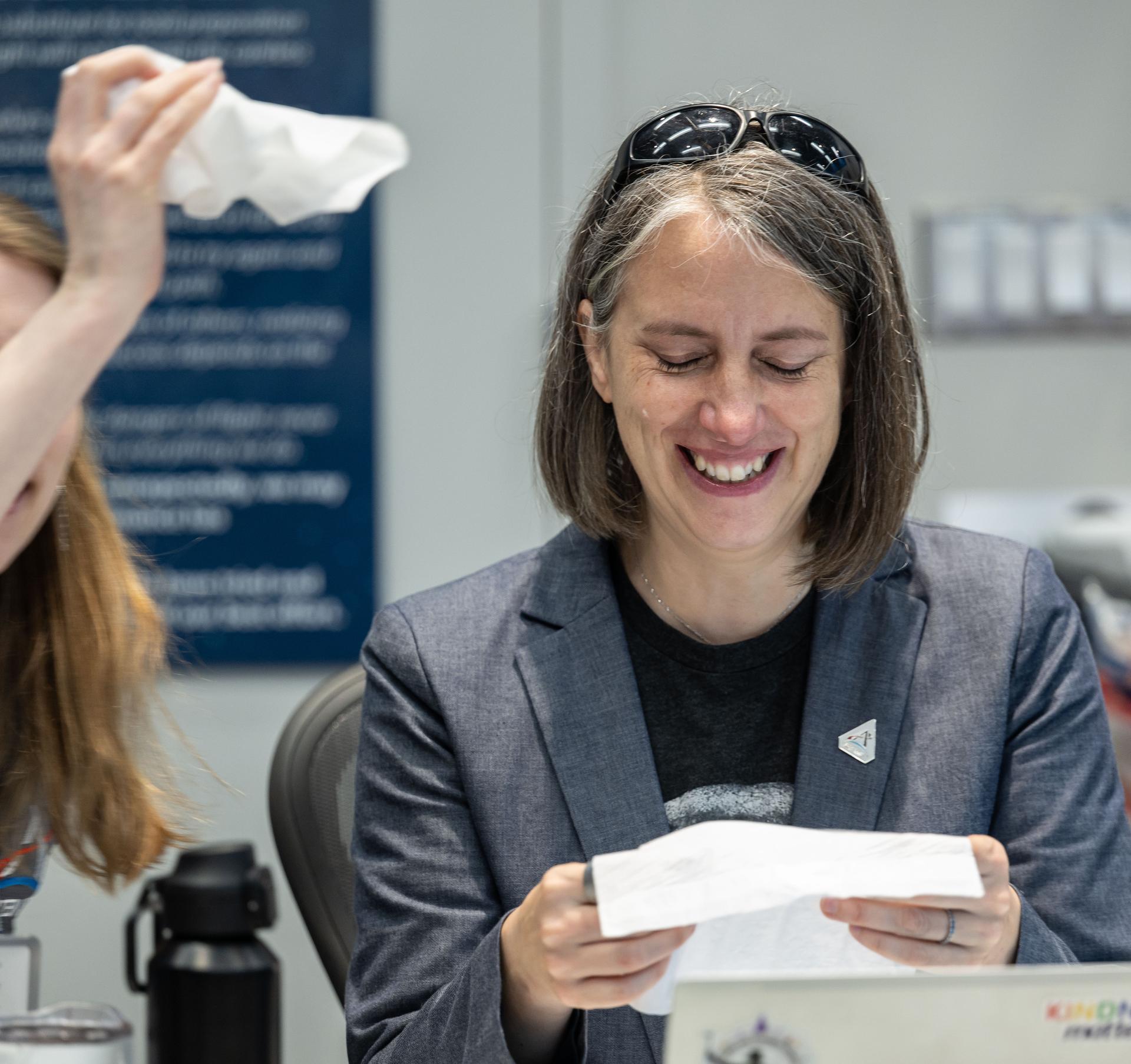
Artemis curation lead, Juliane Gross, reacts to the astronauts' verbal observations of the Moon during their flyby on April 6, 2026. Along with other members of the Artemis II lunar science team, Gross helped train the Artemis II crew in geology both in the classroom and in the field. The team also built the lunar targeting plan that, like an International Space Station spacewalk plan, provides strong, detailed observation guidance, plus flexibility for the crew to make decisions based on what they’re seeing and experiencing in real time. The science team had many moments of celebration during the lunar flyby as the astronauts took images of the Moon and provided verbal descriptions of what they were seeing. This type of information reveals the geologic history of an area and will be critical to collect when future Artemis astronauts explore the Moon's surface. Credits: NASA/Luna Posadas Nava
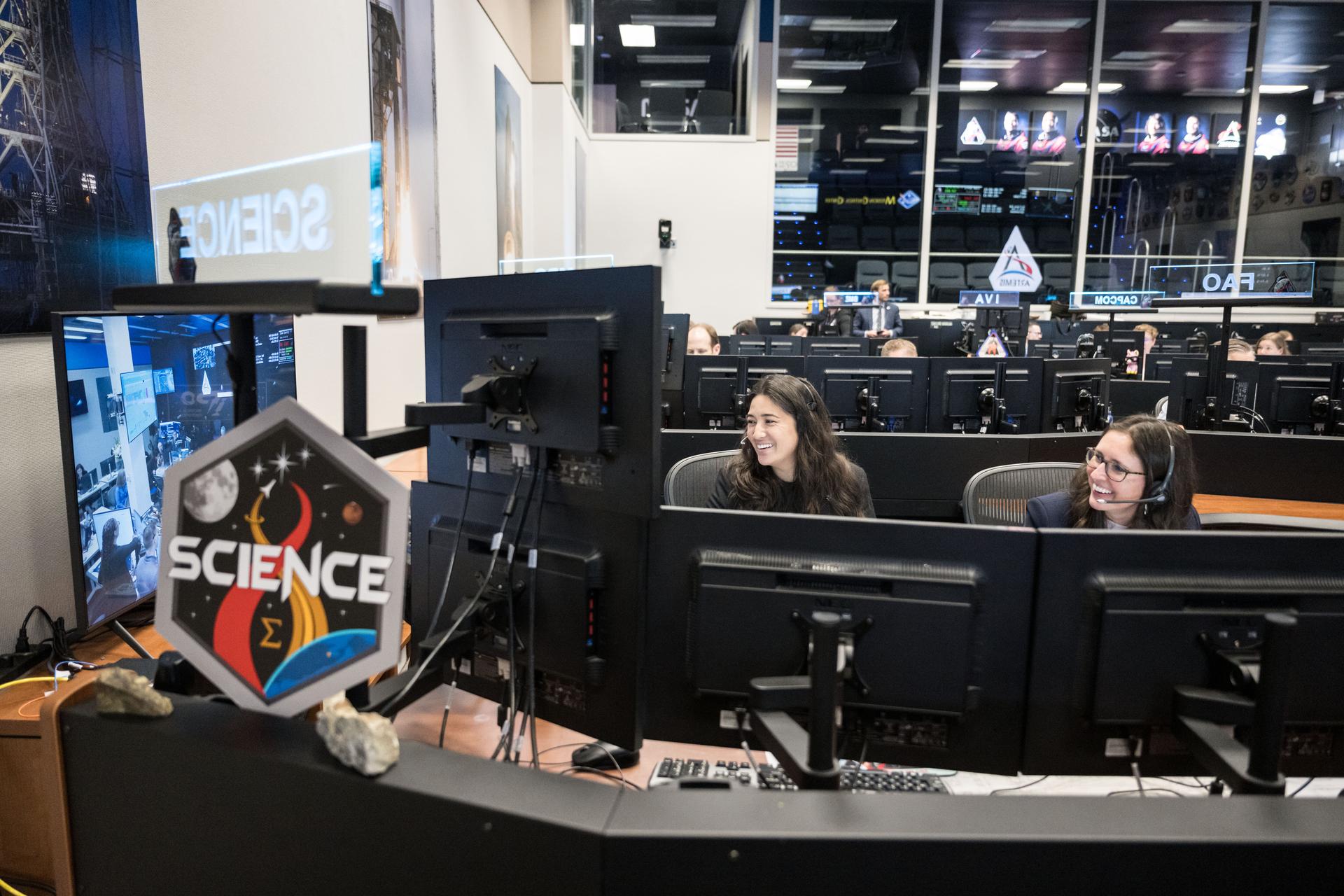
Artemis science officers, from left, Angela Garcia and Kelsey Young, watch the lunar science team celebrating in the Science Evaluation Room (SER) as they hear lunar observations from the Artemis II crew. The science team has spent years training the astronauts in geology and observation, both in the classroom and in the field. They also built the lunar targeting plan that, like a spacewalk plan, provides strong, detailed observation guidance, plus flexibility for the crew to make decisions based on what they’re seeing and experiencing in real time. The science team had many moments of celebration during the lunar flyby as the astronauts took pictures of the Moon and provided verbal descriptions of what they were seeing. This type of information reveals the geologic history of an area and will be critical to collect when future Artemis astronauts explore the Moon's surface. Credits: NASA/Robert Markowitz
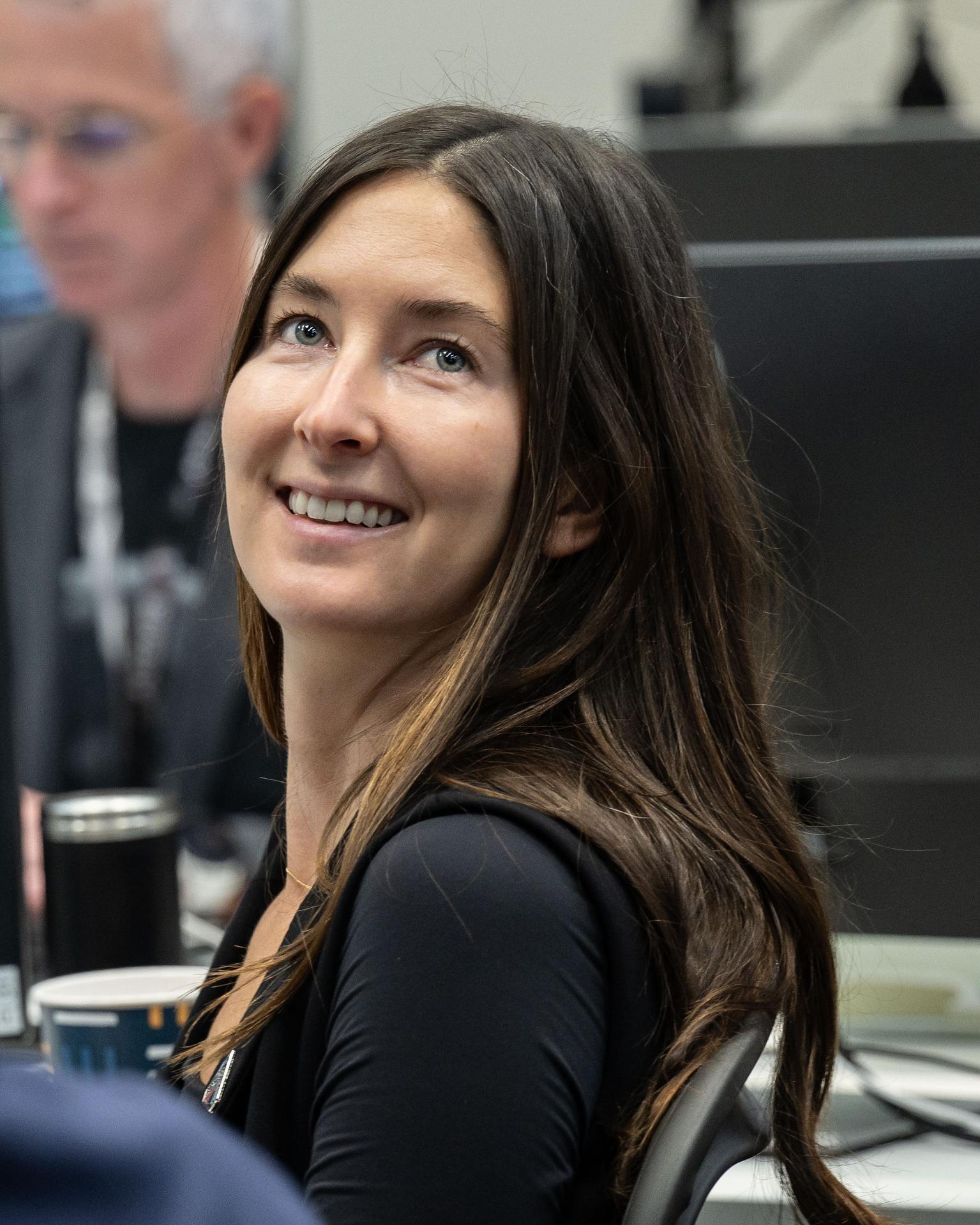
Artemis II lunar science team member, Ariel Deutsch, reacts to the astronauts' verbal observations of the Moon during their flyby on April 6. The science team has spent years training the astronauts in geology and observation, both in the classroom and in the field. They also built the lunar targeting plan that, like a spacewalk plan, provides strong, detailed observation guidance, plus flexibility for the crew to make decisions based on what they’re seeing and experiencing in real time. The science team had many moments of celebration during the lunar flyby as the astronauts took pictures of the Moon and provided verbal descriptions of what they were seeing. This type of information reveals the geologic history of an area and will be critical to collect when future Artemis astronauts explore the Moon's surface. Credits: NASA/Luna Posadas Nava
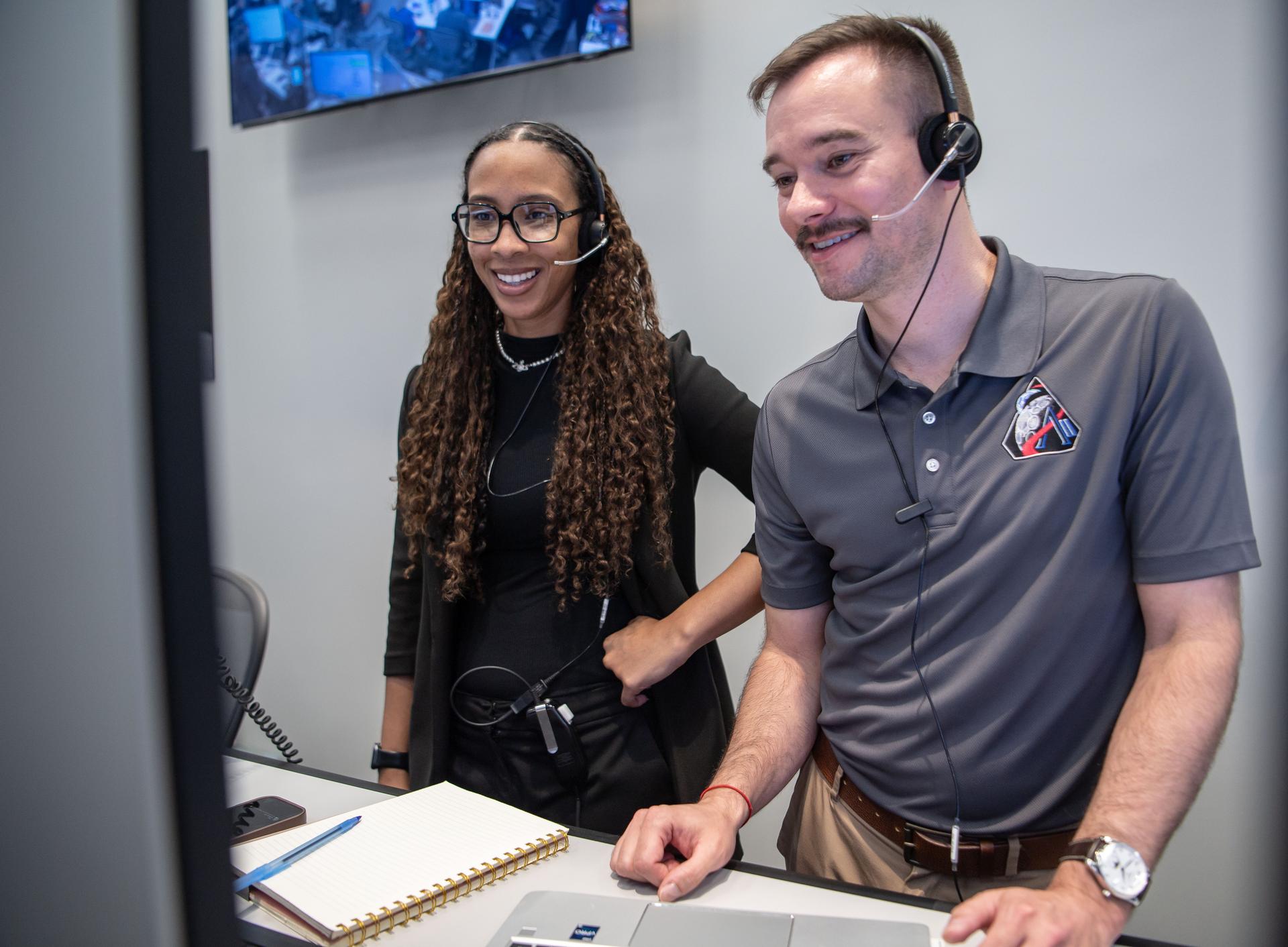
Artemis II Lunar Science Deputy Jacob Richardson and Artemis II Lunar Science Team Member Kiarre Dumes react to the astronauts' verbal observations of the Moon during their flyby on April 6. The science team trained the astronauts in geology both in the classroom and in the field. They also built the lunar targeting plan that, like a spacewalk plan, provides strong, detailed observation guidance, plus flexibility for the crew to make decisions based on what they’re seeing and experiencing in real time. The science team had many moments of celebration during the lunar flyby as the astronauts took pictures of the Moon and provided verbal descriptions of what they were seeing. This type of information reveals the geologic history of an area and will be critical to collect when future Artemis astronauts explore the Moon's surface. Credits: NASA/Luna Posadas Nava