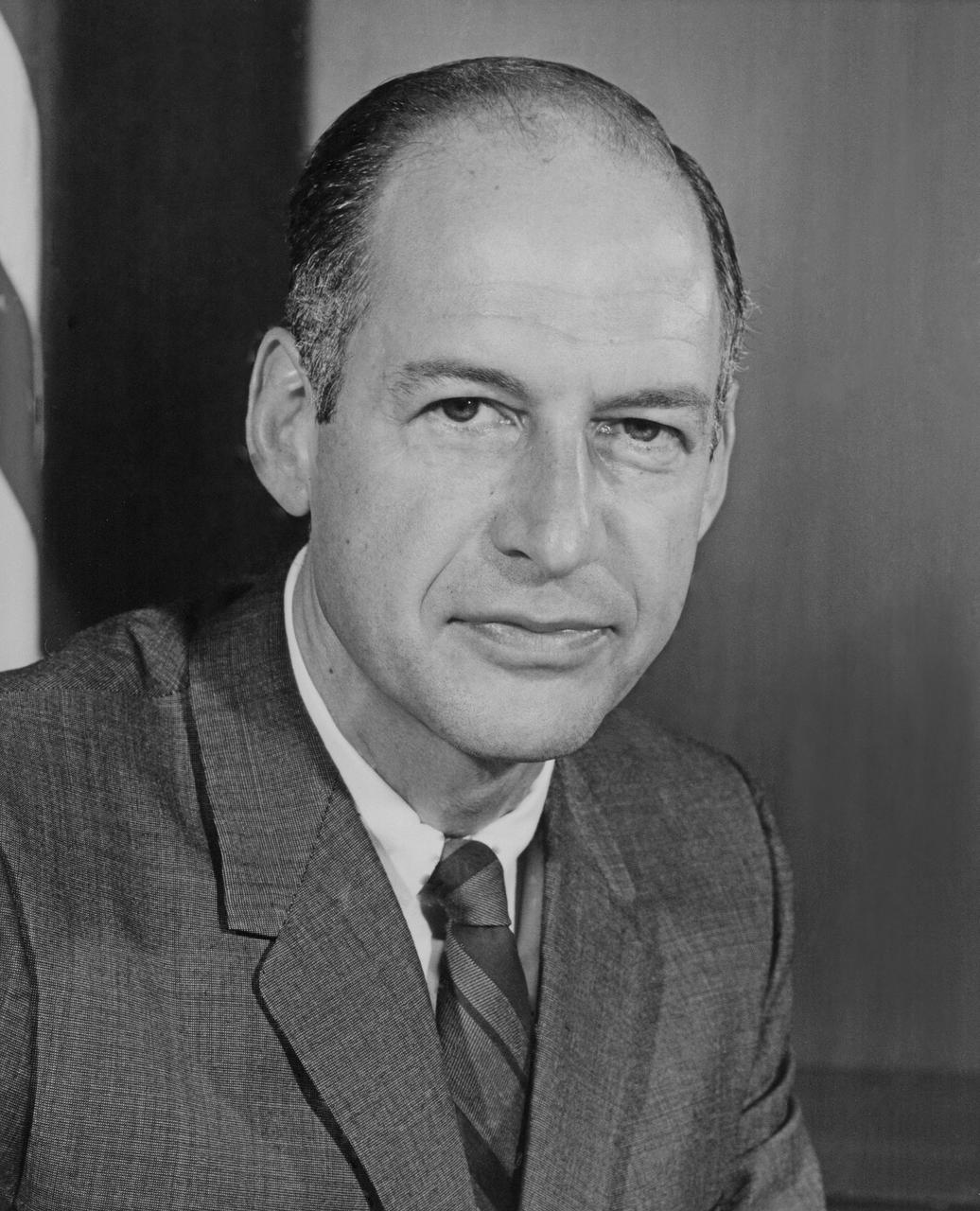
Portrait of George M. Low, he transferred to NASA headquarters in Washington, D.C., where he served as Chief of Manned Space Flight. In this capacity, he was closely involved in the planning of Projects Mercury, Gemini, and Apollo. NASA Biographies site.
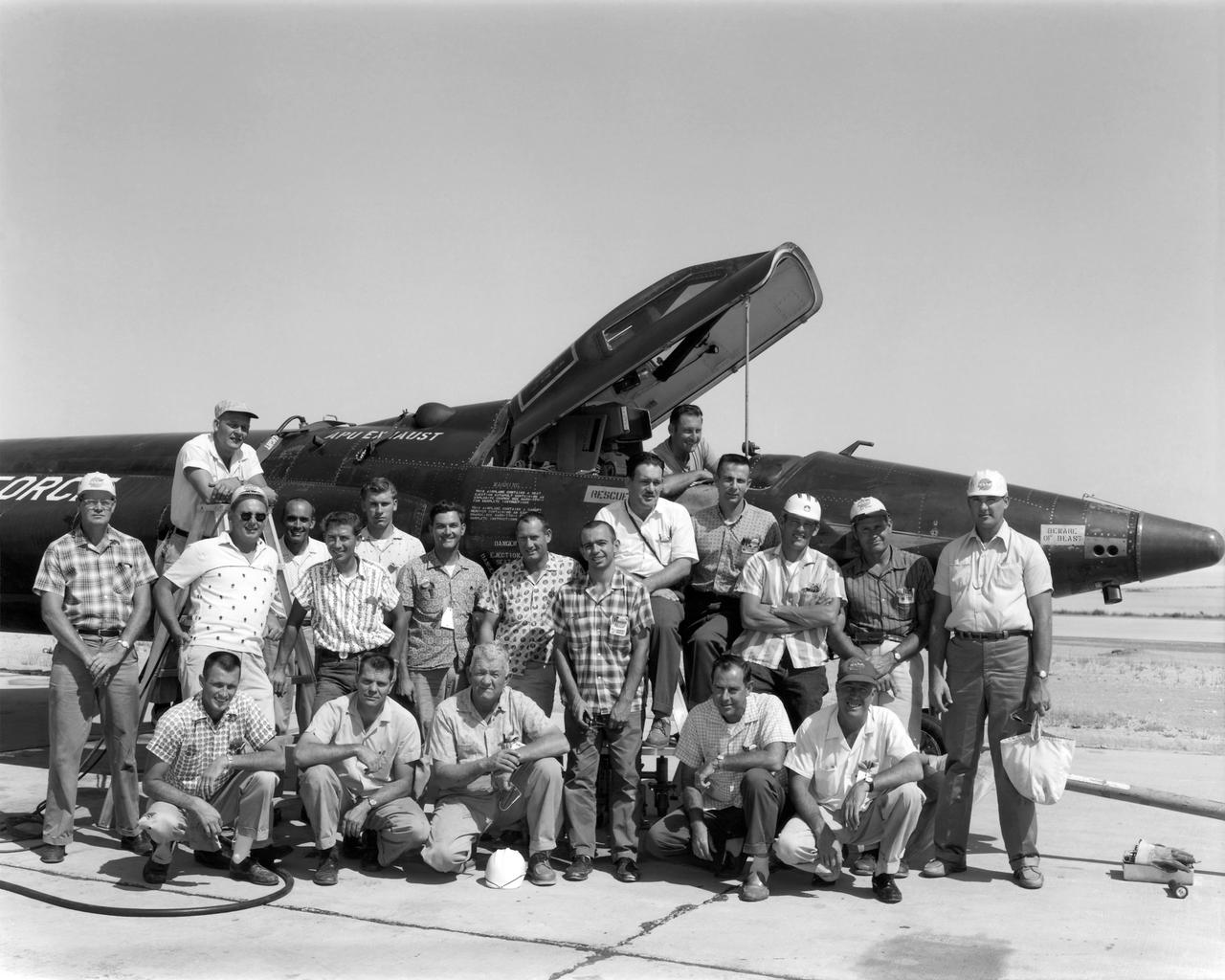
X-15 personnel July 1962 Cockpit: Edward "Ed" Nice Ladder: Thomas "Tom" McAlister Back Row, left to right: William Clark, Edward "Ed" Sabo, Donald "Don" Hall, Billy Furr, Allen Dustin, Raymond "Ray" White, George E. Trott, Alfred "Al" Grieshaber, Merle Curtis, LeRoy "Lee" Adelsbach, Allen Lowe, Jay L. King, Lorenzo "Larry" Barnett. Kneeling, left to right: Byron Gibbs, Price "Bob" Workman, Ira Cupp, unidentified, John Gordon.
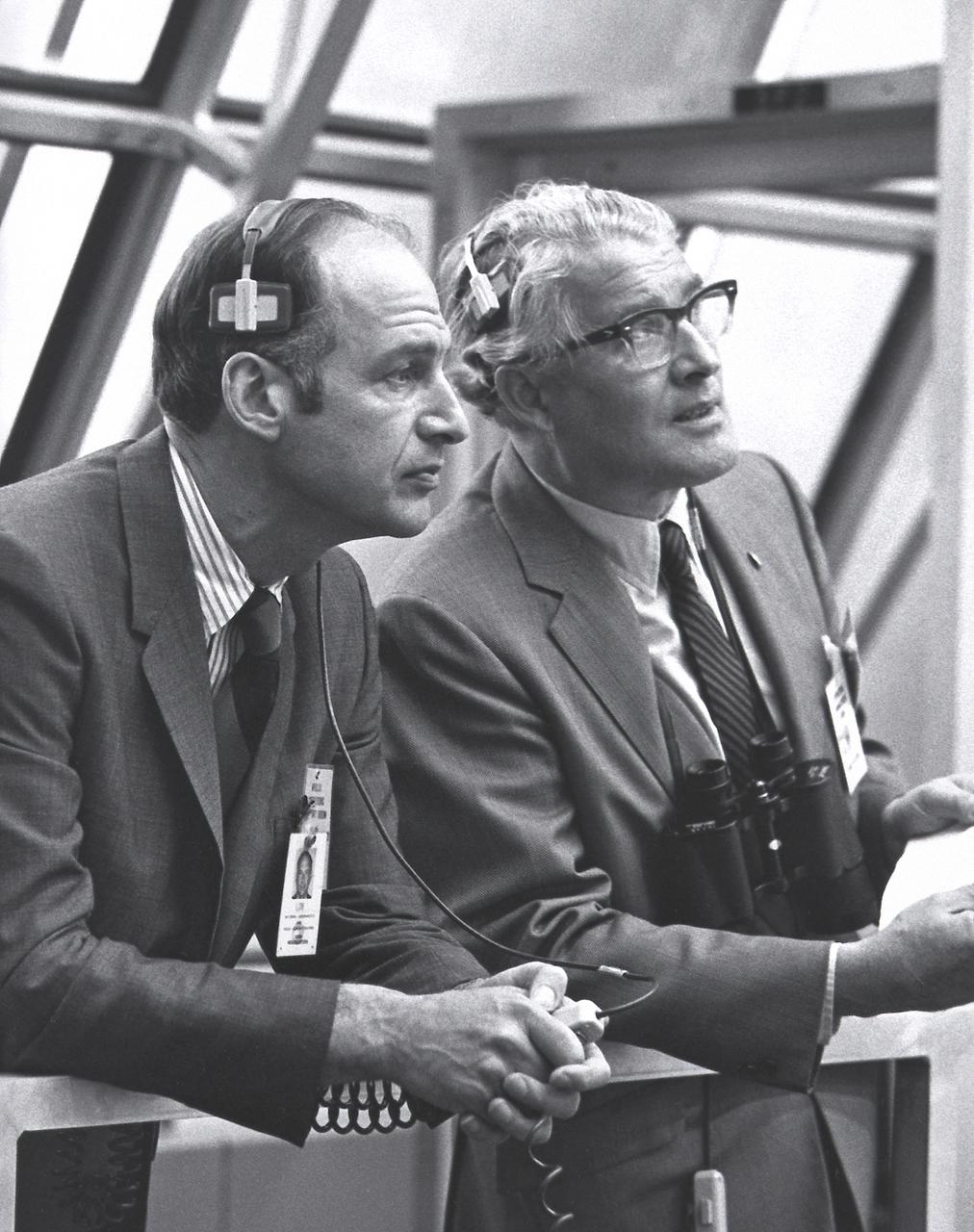
Dr. George M. Lowe, left, Acting Administrator of NASA, and Dr. von Braun monitor the Apollo 14 prelaunch activities in the Firing Room of the Launch Control Center at the Kennedy Space Center.
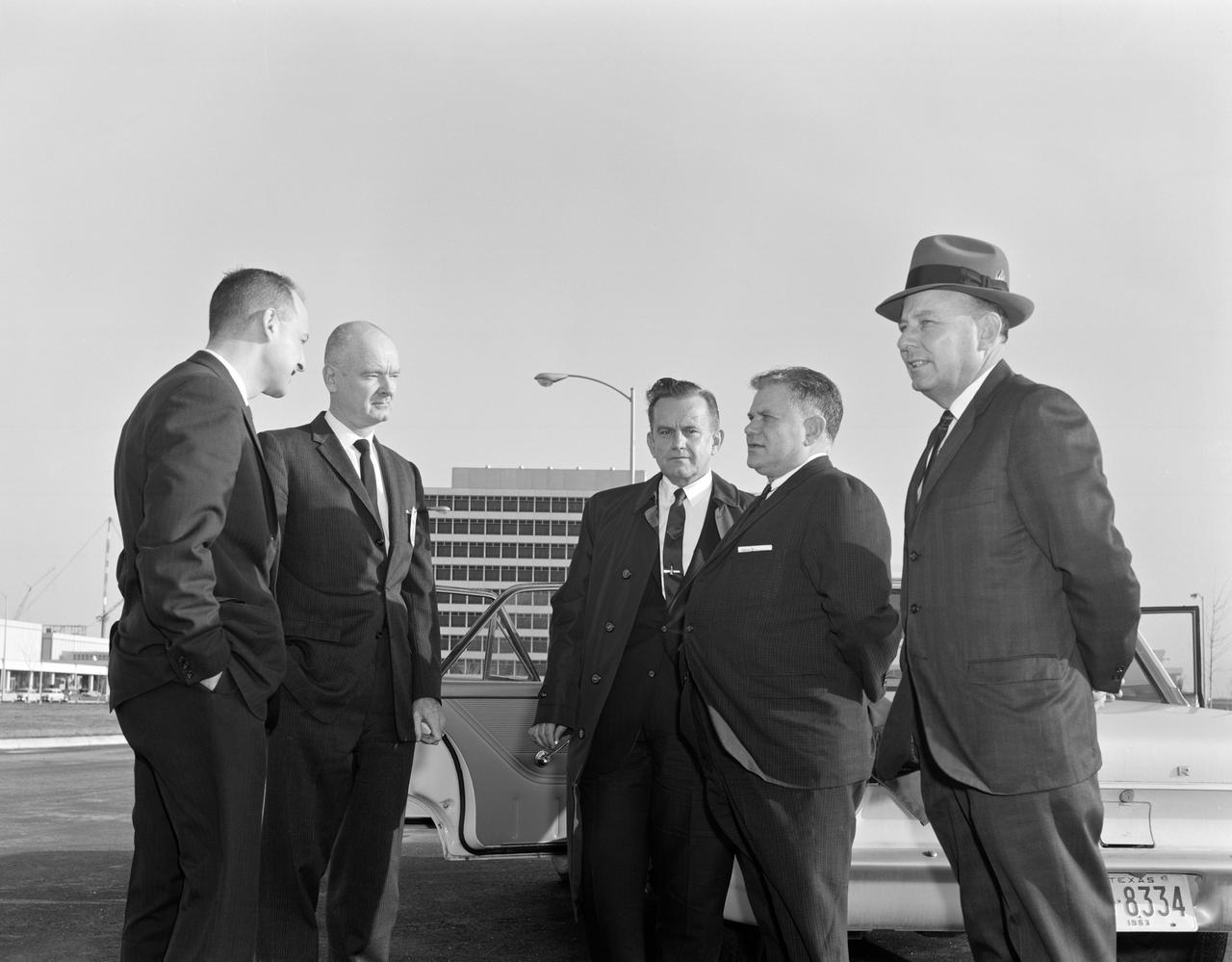
George Low, Joseph Piland, Philip Hamburger, Congressman Olin Teague from Texas; and, Congressman Joe D. Waggoner from Louisiana at the entrance to Site 1, Clear Lake, prior to briefing for the House Subcommittee on Manned Spaceflight. MSC, Houston, TX
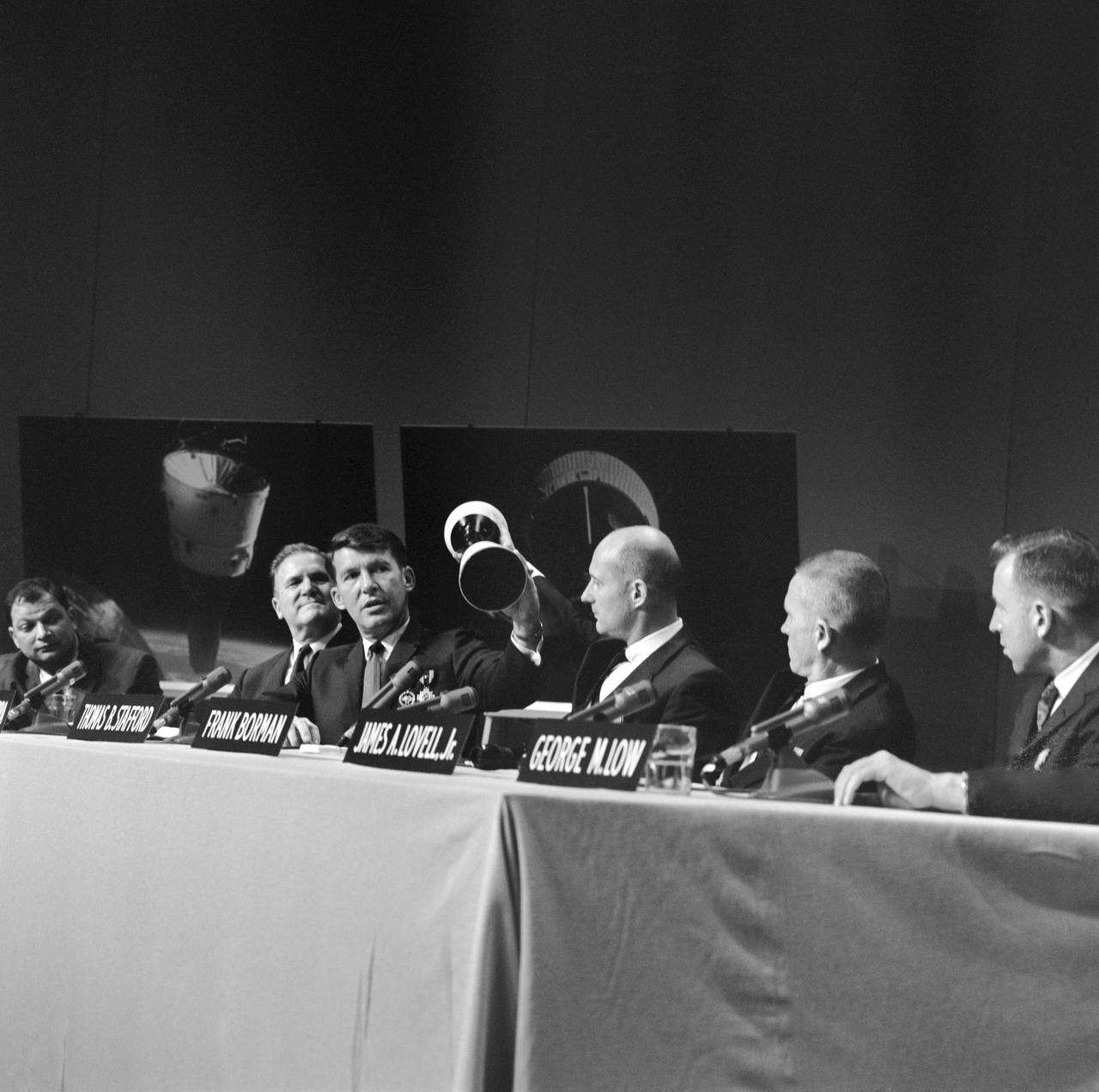
S66-15044 (3 Jan. 1966) --- View of the Gemini 6 and 7 press conference. From right to left are NASA Administrator James E. Webb; MSC Deputy Director George M. Low; and astronauts James A. Lovell Jr., Frank Borman, Thomas B. Stafford and Walter M. Schirra. Photo credit: NASA
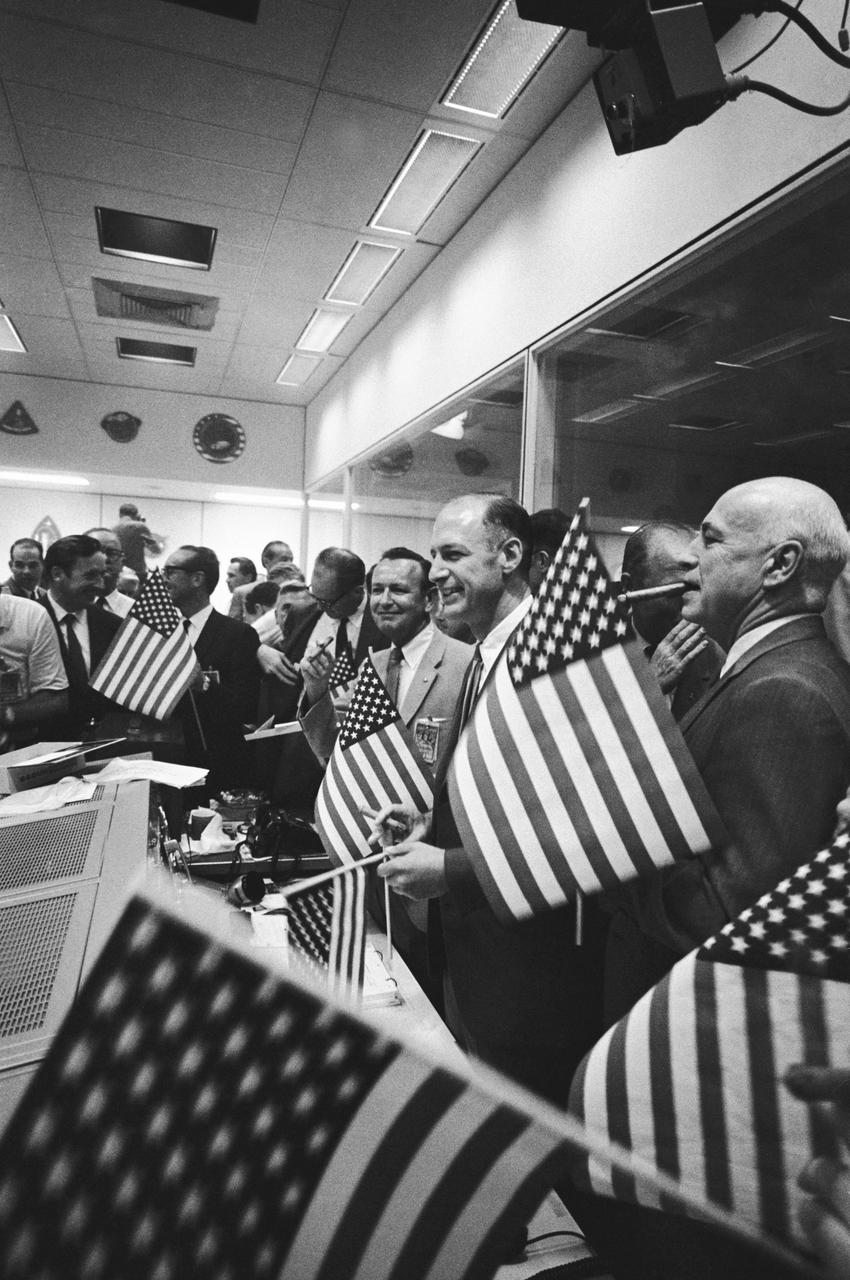
S69-40024 (24 July 1969) --- NASA and Manned Spacecraft Center (MSC) officials join in with the flight controllers, in the Mission Operations Control Room (MOCR) in the Mission Control Center (MCC), in celebrating the successful conclusion of the Apollo 11 lunar landing mission. Identifiable in the picture, starting in foreground, are Dr. Robert R. Gilruth, MSC Director; George M. Low, Manager, Apollo Spacecraft Program, MSC; Dr. Christopher C. Kraft Jr., MSC Director of Flight Operation; U.S. Air Force Lt. Gen. Samuel C. Phillips (with glasses, looking downward), Apollo Program Director, Office of Manned Space Flight, NASA Headquarters; and Dr. George E. Mueller (with glasses, looking toward left), Associate Administrator, Office of Manned Space Flight, NASA Headquarters. Former astronaut John H. Glenn Jr. is standing behind Mr. Low.
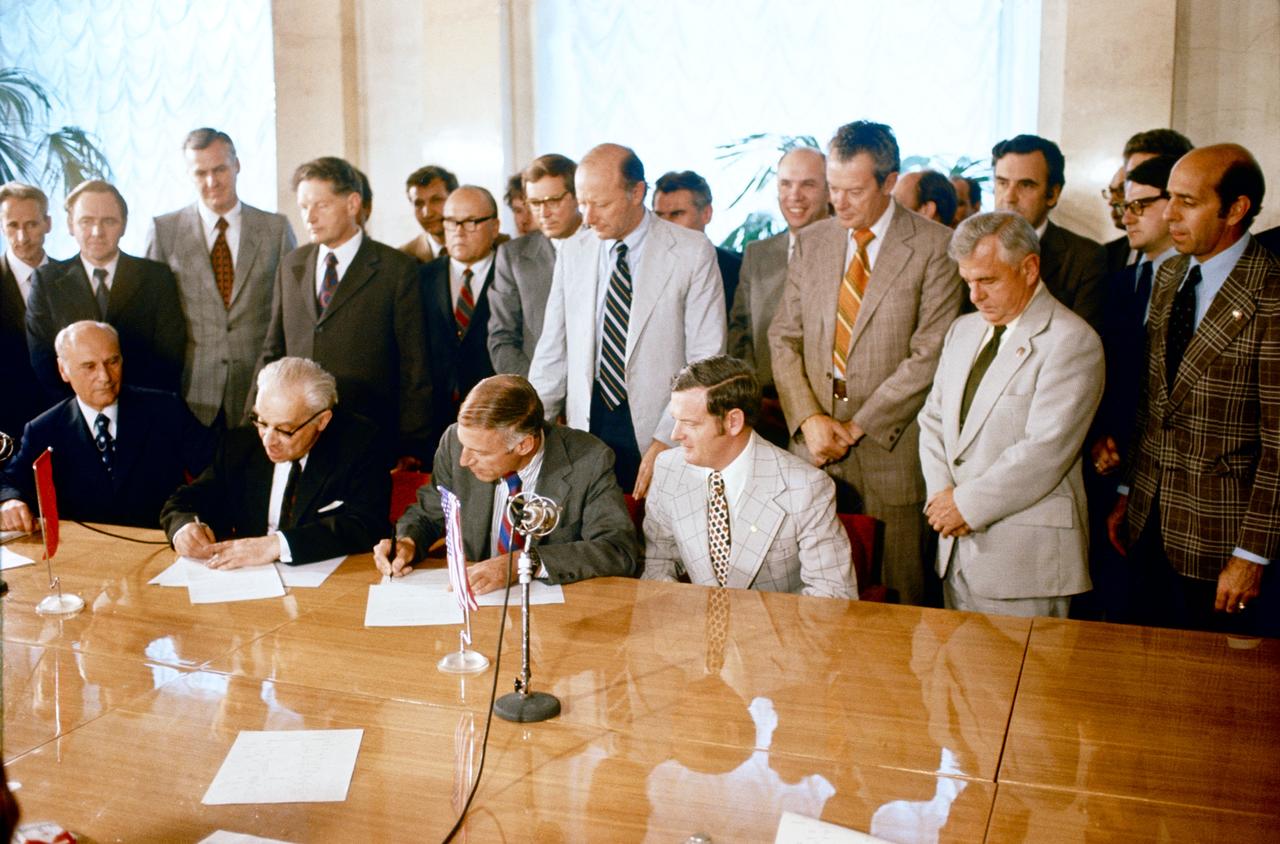
S75-27346 (22 May 1975) --- An overall view of the signing of the Apollo-Soyuz Test Project joint flight readiness review in ceremonies on May 22, 1975 in Moscow. Academician Vladimir A. Kotelnikov (on left) and NASA Deputy Administrator George M. Low (in center) are seen affixing their signatures to the ASTP document. Kotelnikov is the Acting President of the USSR Academy of Sciences. Seated at far left is Professor Konstantin D. Bushuyev, the Soviet Technical Director of ASTP. Dr. Glynn S. Lunney, the U.S. Technical Director of ASTP, is seated on Dr. Low?s left. Arnold W. Frutkin (in light jacket), NASA Assistant Administrator for International Affairs, is standing behind Dr. Low. Academician Boris N. Petrov (in dark suit), Chairman of the USSR Council for International Cooperation in the Exploration and Use of Outer Space, is standing behind Kotelnikov. The signing of the agreement took place at the Presidium of the Academy of Sciences in Moscow.
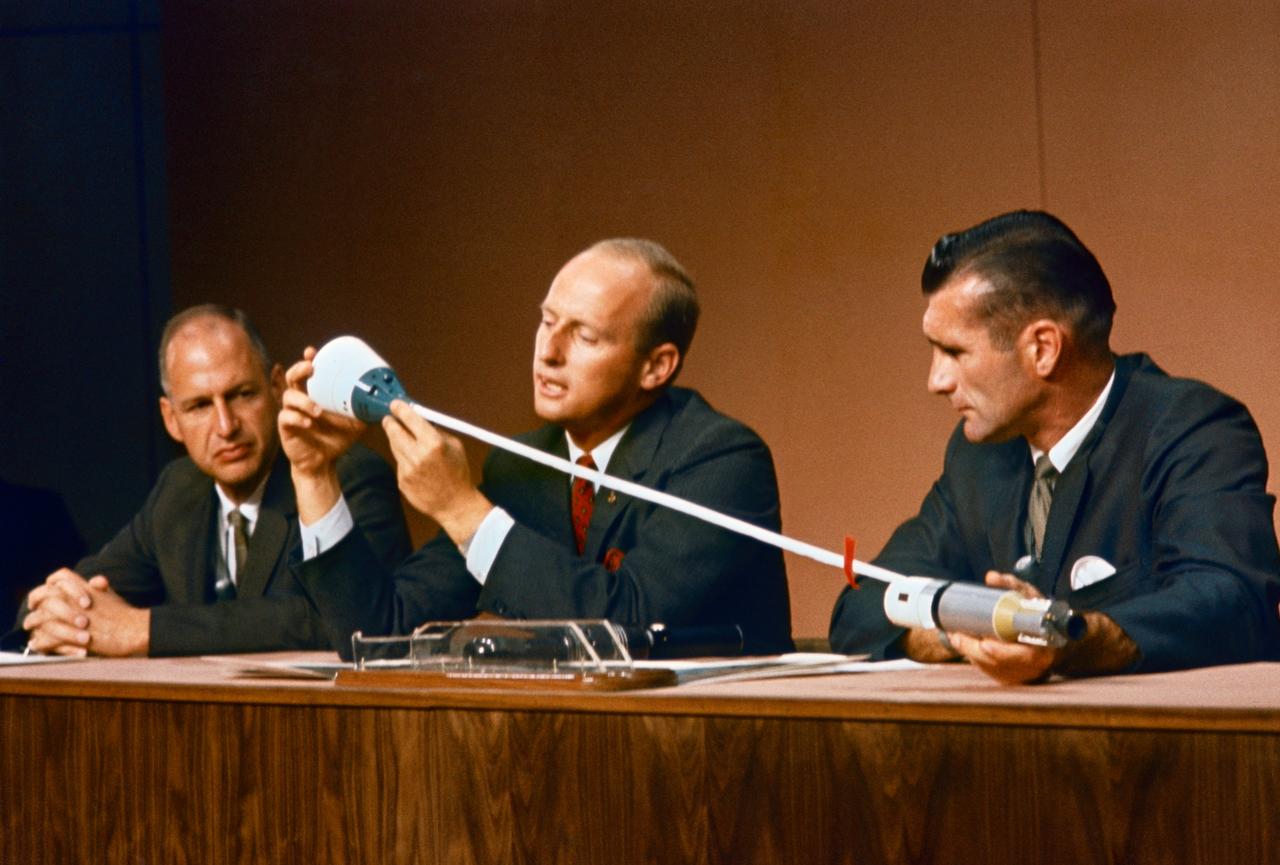
S66-45635 (26 Sept. 1966) --- Astronaut Charles Conrad Jr. (center), Gemini-11 prime crew command pilot, discusses the Gemini-11/Agena tether before a gathering of news media representatives in the MSC Building 1 auditorium. Holding an Agena model at right is astronaut Richard F. Gordon Jr., Gemini-11 pilot. Looking on at left is George M. Low, MSC Deputy Director. Photo credit: NASA
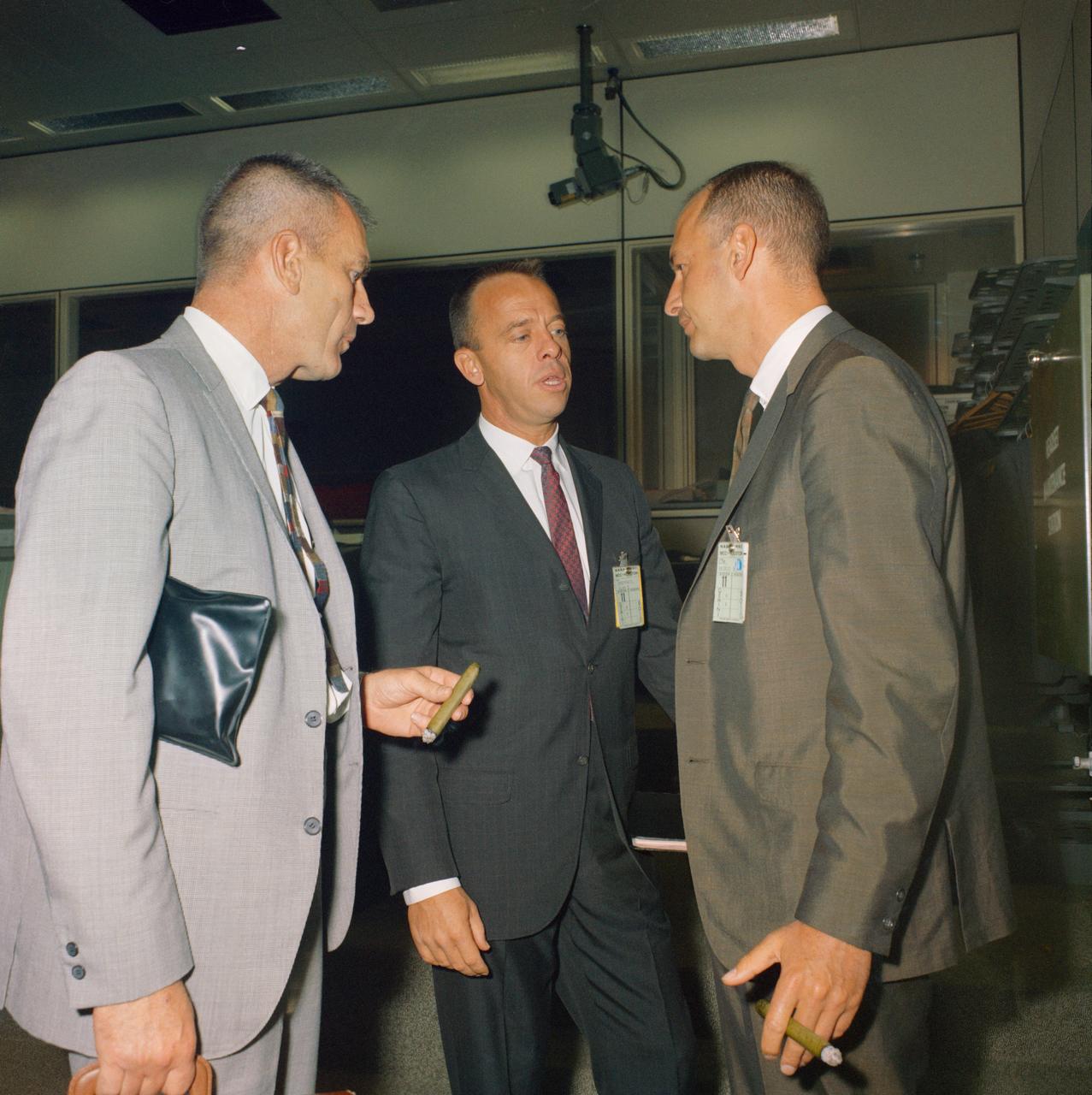
S66-52754 (12 Sept. 1966) --- Three key Manned Spacecraft Center (MSC) officials hold discussion in the Mission Control room during Gemini-11 activity. Left to right, are Donald K. Slayton, MSC Director of Flight Crew Operations; astronaut Alan B. Shepard Jr., Chief, MSC Astronaut Office; and George M. Low, MSC Deputy Director. Photo credit: NASA
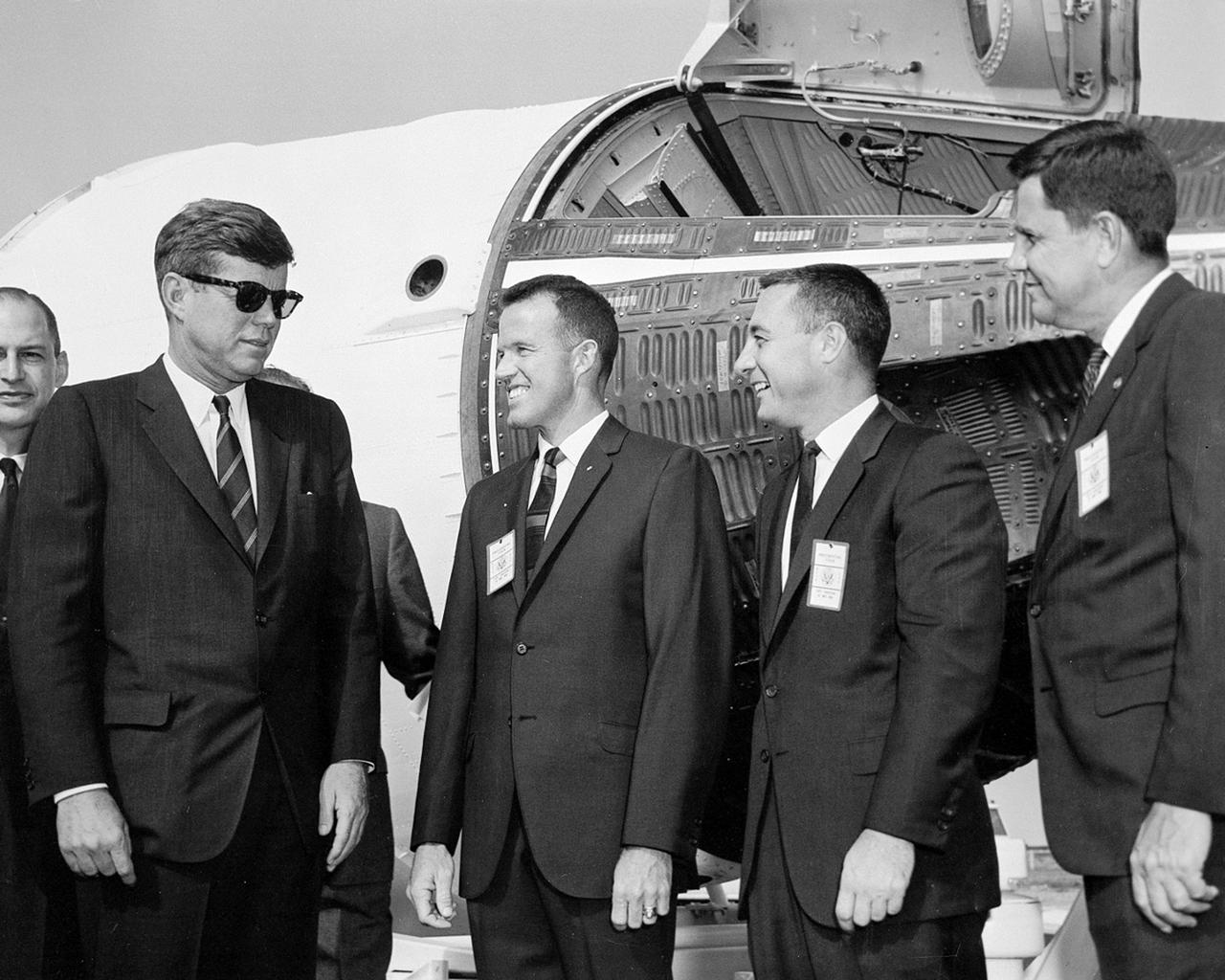
CAPE CANAVERAL Fla. -- President John F. Kennedy tours the Cape Canaveral Missile Test Annex in Florida. Standing in front of a Gemini spacecraft, from the left, are George M. Low, NASA chief of Manned Space Flight partially visible, Kennedy, astronaut L. Gordon Cooper, astronaut Virgil I. Grissom and G. Merritt Preston, NASA's manager of the Atlantic Missile Range. Photo Credit: NASA
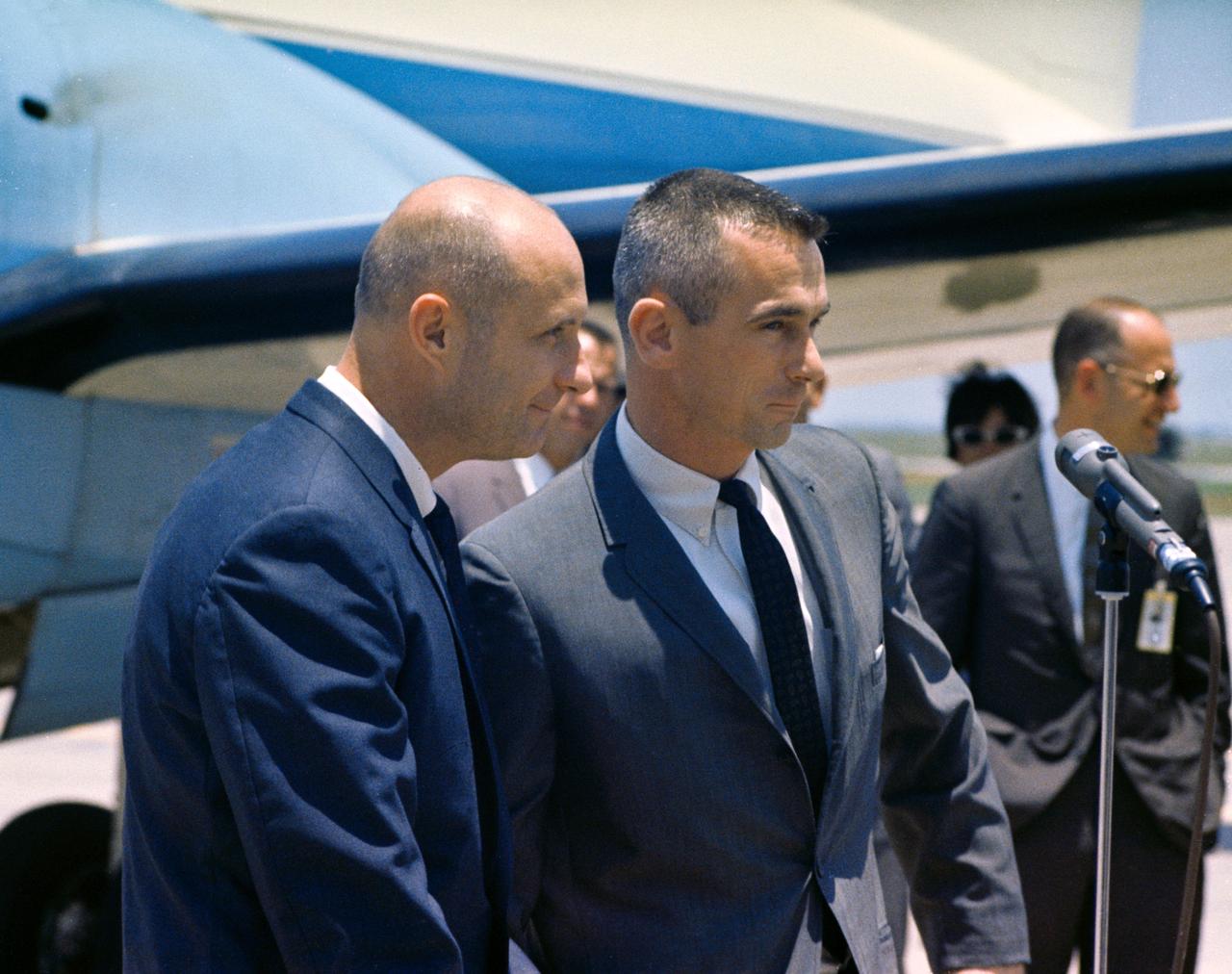
S66-32677 (10 June 1966) --- The Gemini-9A prime crew, astronaut Thomas P. Stafford (left), command pilot, and Eugene A. Cernan (right), pilot, express their feelings about being home to their families, MSC officials, newsmen, and well-wishers gathered at Ellington Air Force Base to welcome the astronauts home. Astronaut Stafford and Cernan completed their three-day mission in space on June 6, 1966. At right is George M. Low, MSC Deputy Director. Photo credit: NASA
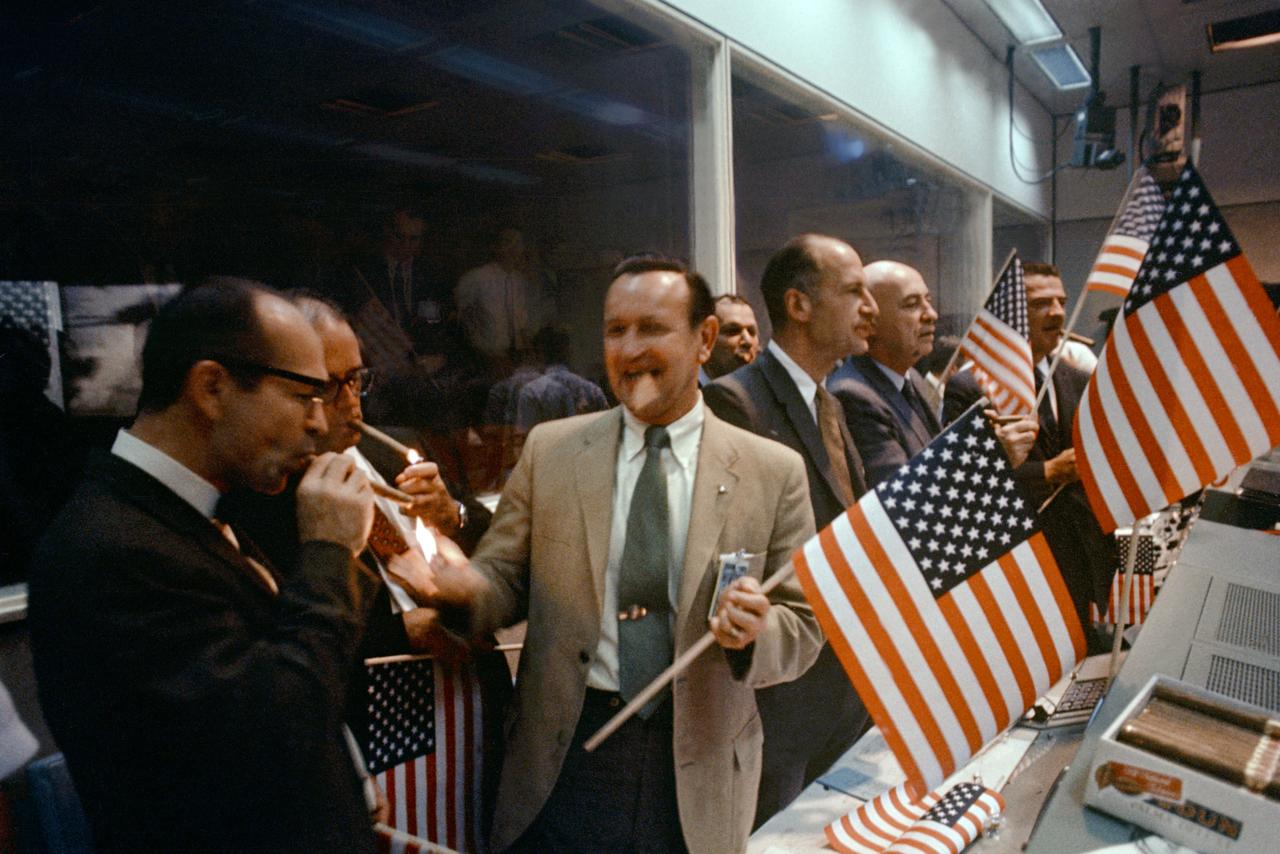
S69-40302 (24 July 1969) --- A group of NASA and Manned Spacecraft Center (MSC) officials join in with the flight controllers in the Mission Operations Control Room (MOCR) in the Mission Control Center (MCC), Building 30, in celebrating the successful conclusion of the Apollo 11 lunar landing mission. From left foreground are Dr. Maxime A. Faget, MSC Director of Engineering and Development; George S. Trimble, MSC Deputy Director; Dr. Christopher C. Kraft Jr., MSC Director of Flight Operations; Julian Scheer (in back), Assistant Administrator, Office of Public Affairs, NASA Headquarters; George M. Low, Manager, Apollo Spacecraft Program, MSC; Dr. Robert R. Gilruth, MSC Director; and Charles W. Mathews, Deputy Associate Administrator, Office of Manned Space Flight, NASA Headquarters.
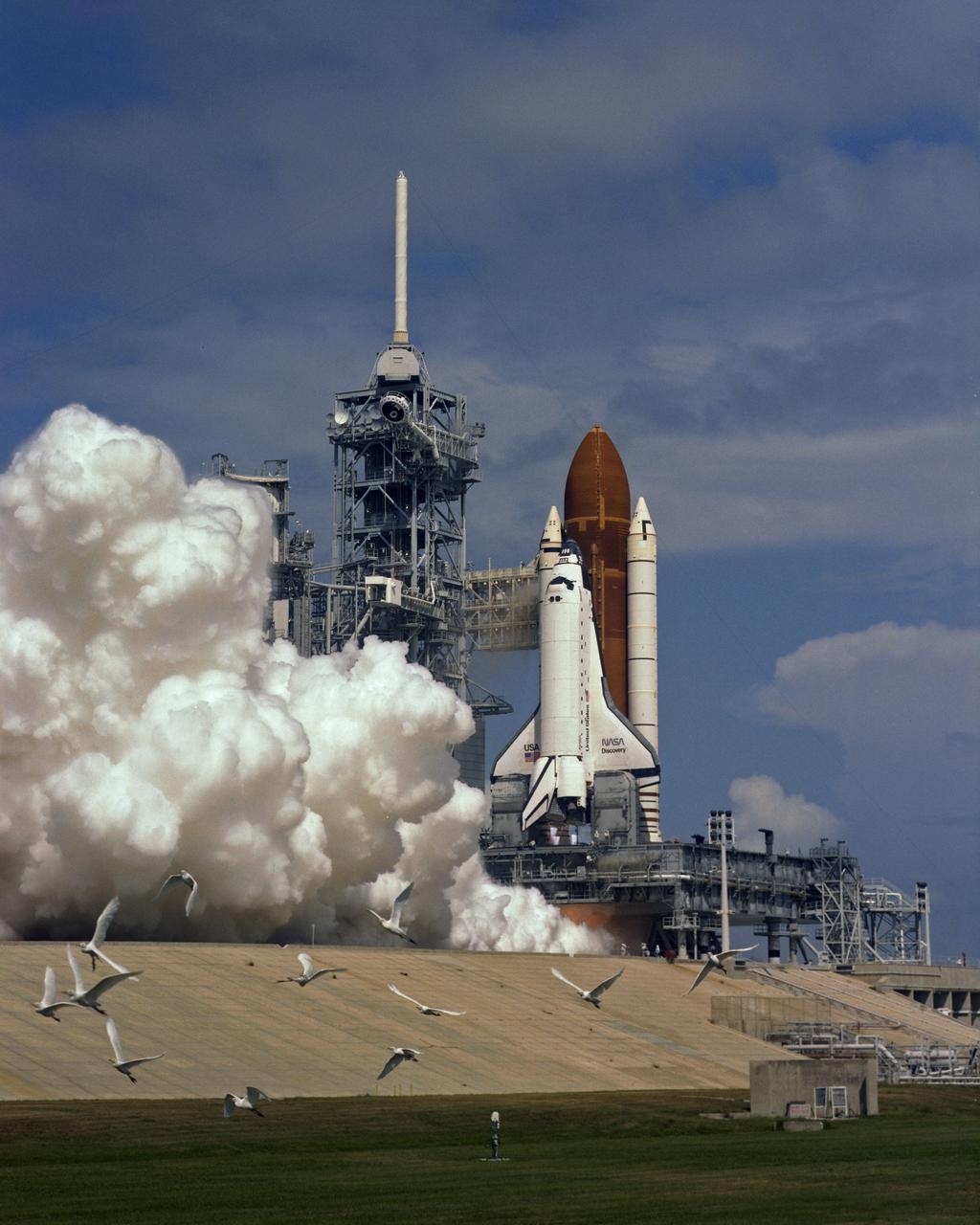
CAPE CANAVERAL, Fla. - The space shuttle Discovery and its five-man crew is launched from pad 39B at 11:37 a.m. as STS-26 embarks on a four-day mission marking America's return to space. On the first day of orbit, the crew will deploy from the orbiter's payload bay the primary payload, the Tracking and Date Relay Satellite, or TDRS-C. The inertial upper stage, or IUS, will boost the satellite to a geosynchronous altitude from low Earth orbit. When it place, TDRS-C will relay date from low Earth orbiting spacecraft and air-to-ground voice communications sand television from shape shuttle orbiters during missions. The crew members of STST-26 are Commander Rick Hauck, Pilot Richard Covey, and Mission Specialists Dave Hilmers, Mike Lounge and George "Pinky" Nelson. Photo Credit: NASA
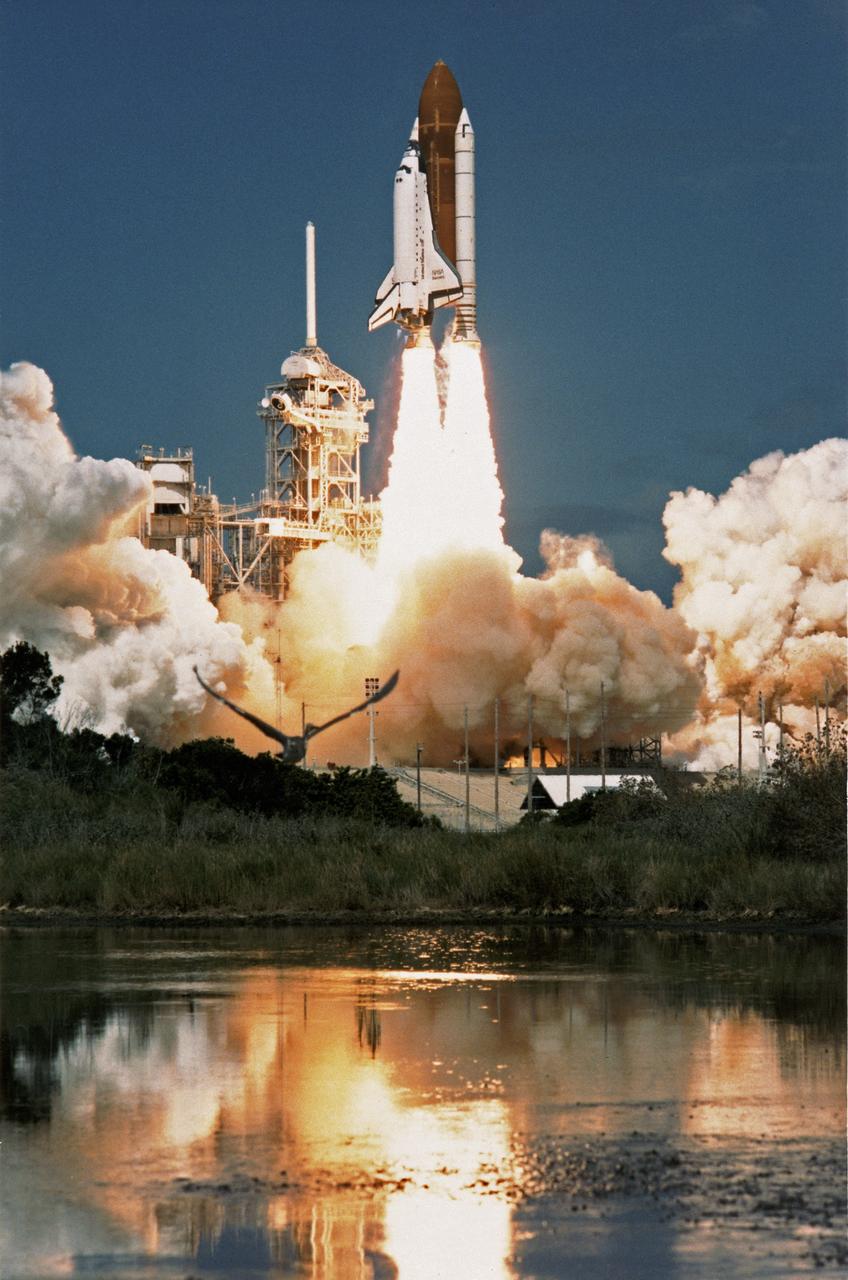
CAPE CANAVERAL, Fla. - The space shuttle Discovery and its five-man crew is launched from pad 39B at 11:37 a.m. as STS-26 embarks on a four-day mission marking America's return to space. On the first day of orbit, the crew will deploy from the orbiter's payload bay the primary payload, the Tracking and Data Relay Satellite, or TDRS-C. The inertial upper stage, or IUS, will boost the satellite to a geosynchronous altitude from low Earth orbit. When it place, TDRS-C will relay date from low Earth orbiting spacecraft and air-to-ground voice communications sand television from shape shuttle orbiters during missions. The crew members of STST-26 are Commander Rick Hauck, Pilot Richard Covey, and mission specialists Dave Hilmers, Mike Lounge and George "Pinky" Nelson. Photo Credit: NASA
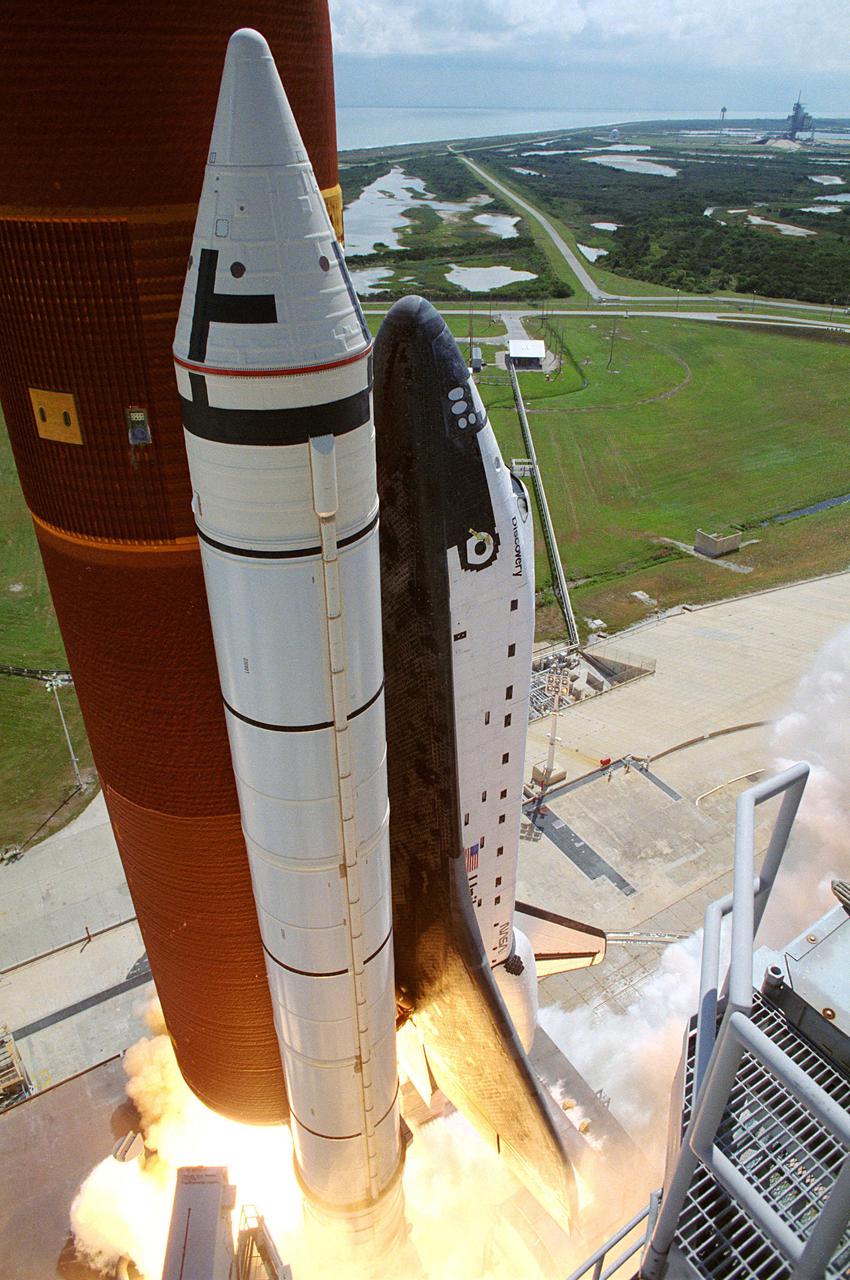
KENNEDY SPACE CENTER, FLA. -- The Space Shuttle Discovery and its five-man crew is launched from pad 39B at 11:37 a.m. as STS-26 embarks on a four-day mission, marking America's return to space. On the first day of orbit, the crew will deploy from the orbiter's payload bay the primary payload, the Tracking and Data Relay Satellite (TDRS-C). The Inertial Upper Stage (IUS) will boost the satellite to a geosynchronous altitude from low-Earth orbit. When in place, TDRS-C will relay data from low-Earth orbiting spacecraft, and air-to-ground voice communications and television from Space Shuttle orbiters during missions. The crew members of STS-26 are Commander Rick Hauck, Pilot Richard Covey, and Mission Specialists Dave Hilmers, Mike Lounge, and George 'Pinky' Nelson.
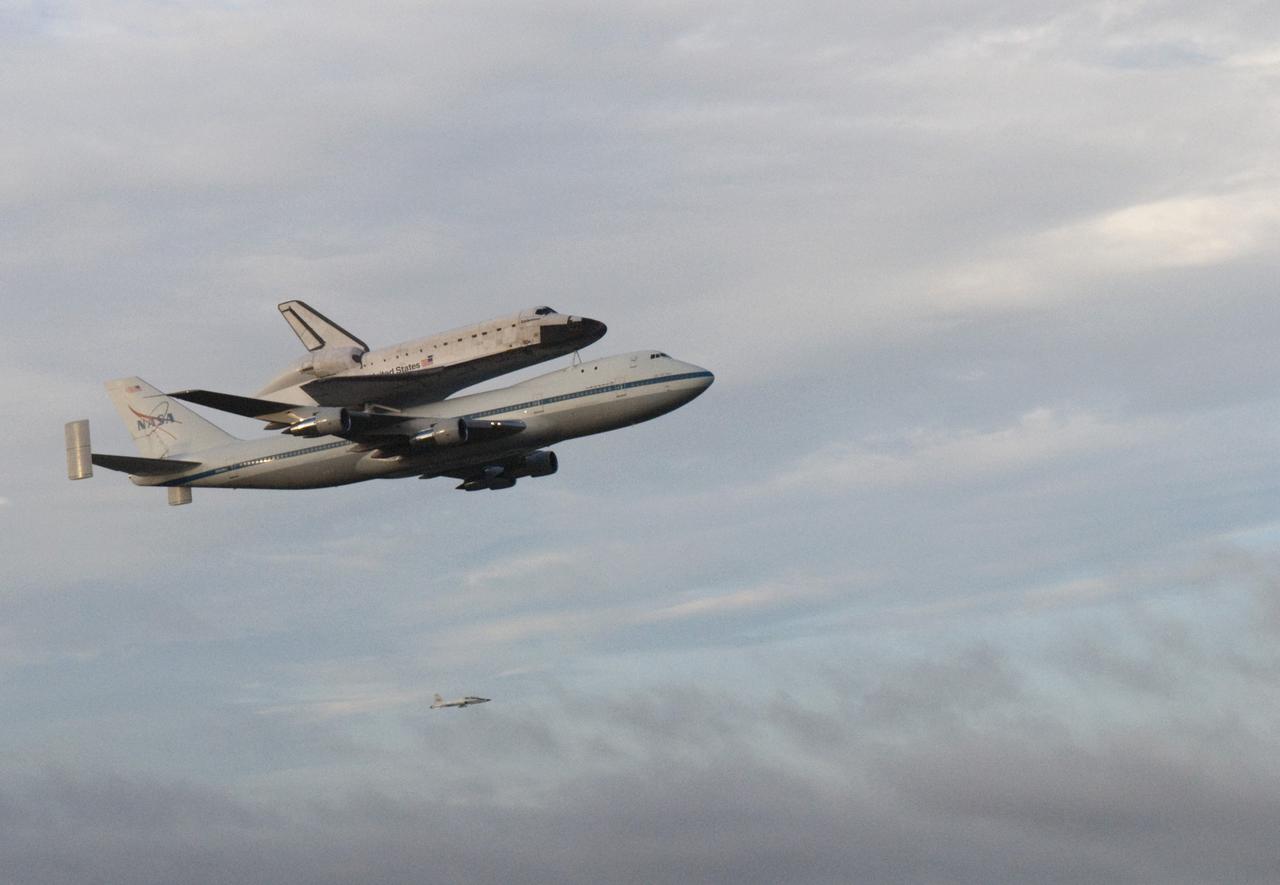
CAPE CANAVERAL, Fla. – At the Shuttle Landing Facility at NASA's Kennedy Space Center in Florida, NASA's Shuttle Carrier Aircraft, or SCA, with the space shuttle Endeavour mounted atop, is escorted by a T-38 jet as it makes a low-level pass after taking off for its ferry flight to California. The SCA, a modified 747 jetliner, will fly Endeavour to Los Angeles where it will be placed on public display at the California Science Center. This is the final ferry flight scheduled in the Space Shuttle Program era. For more information on the shuttles' transition and retirement, visit http://www.nasa.gov/transition. Photo credit: NASA/George Sampson
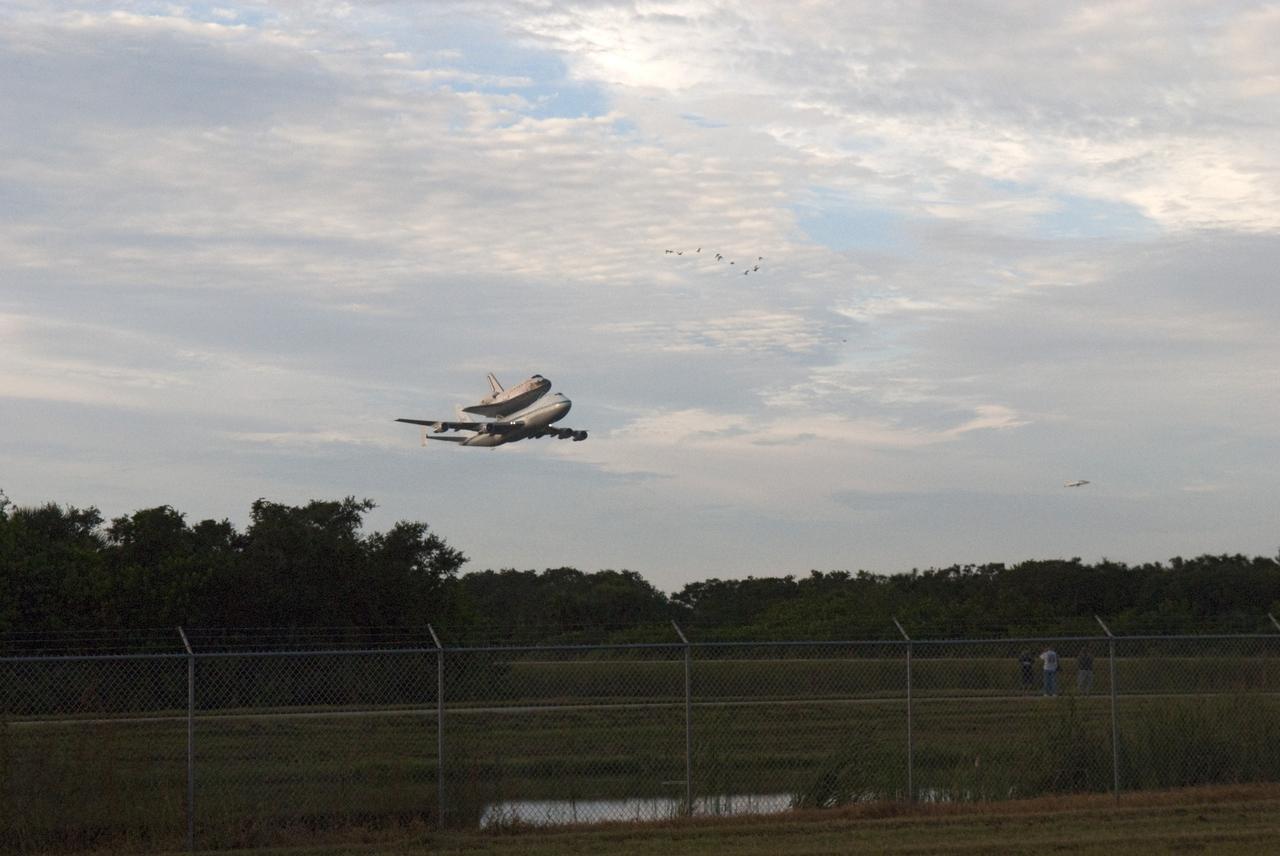
CAPE CANAVERAL, Fla. – At the Shuttle Landing Facility at NASA's Kennedy Space Center in Florida, NASA's Shuttle Carrier Aircraft, or SCA, with the space shuttle Endeavour mounted atop, is escorted by a T-38 jet and a flock of birds as it makes a low-level pass after taking off for its ferry flight to California. The SCA, a modified 747 jetliner, will fly Endeavour to Los Angeles where it will be placed on public display at the California Science Center. This is the final ferry flight scheduled in the Space Shuttle Program era. For more information on the shuttles' transition and retirement, visit http://www.nasa.gov/transition. Photo credit: NASA/George Sampson

NASA Administrator Jared Isaacman, second from left; George Alderman, deputy press secretary, left; Amit Kshatriya, NASA associate administrator, third from left; and Lori Glaze, acting associate administrator for NASA’s Exploration Systems Development Mission Directorate (ESDMD), right, participate in a press conference, Friday, Feb. 27, 2026, at NASA’s Kennedy Space Center in Florida. Agency leadership shared updates regarding the Artemis II mission and outlined the path forward for the Artemis campaign, including a new Artemis III mission in which the agency’s Orion spacecraft will dock with one or both Human Landing System landers in low Earth orbit. Photo Credit: (NASA/John Kraus)
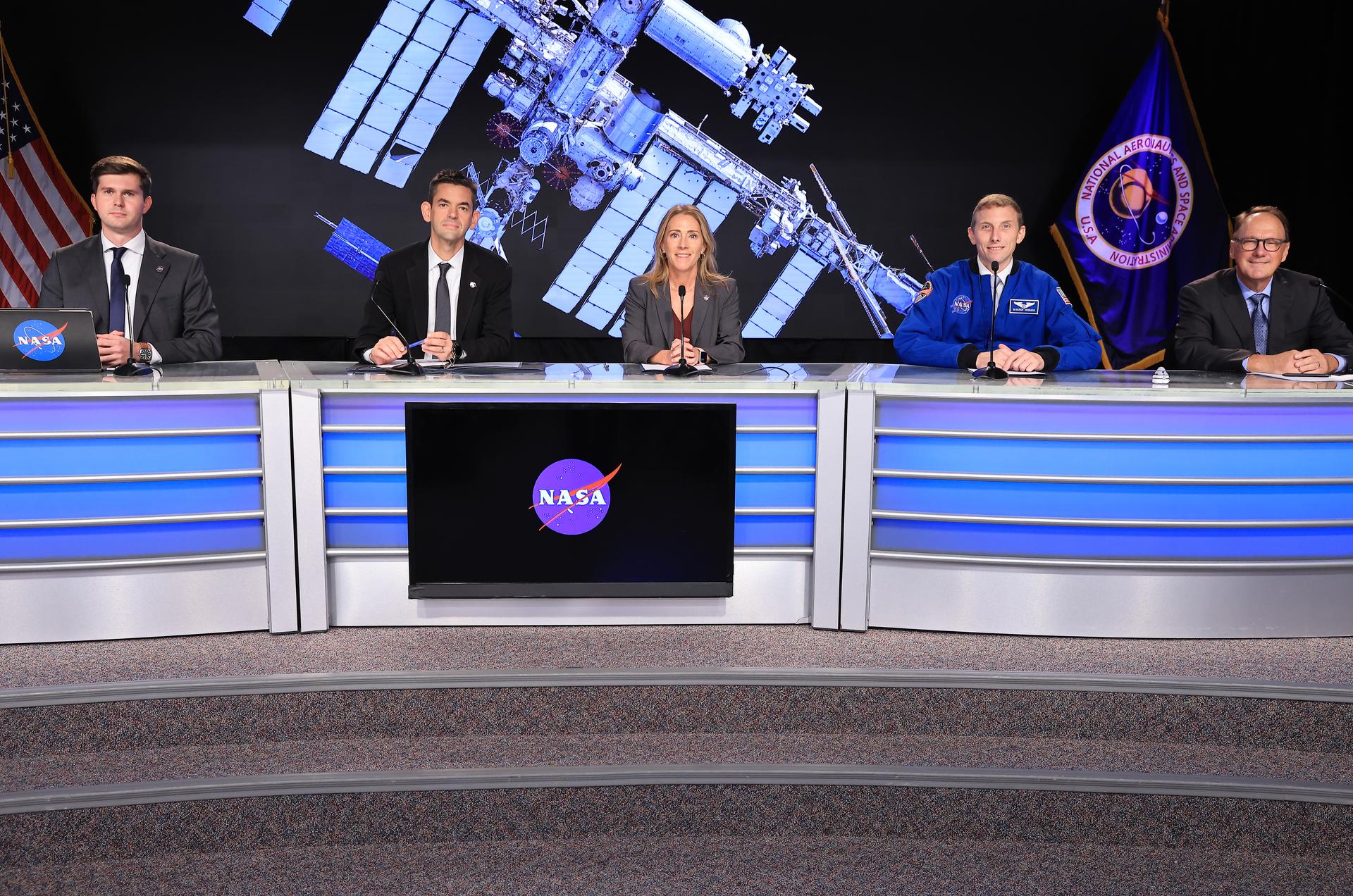
NASA and Boeing leadership discuss Starliner’s development and plans for regular crew flights to and from the International Space Station during a news conference Monday, Sept. 28, 2026, inside the John Holliman Auditorium of the NASA News Center at the agency’s Kennedy Space Center in Florida. From left to right, George Alderman, NASA deputy press secretary, NASA Administrator Jared Isaacman; Dana Weigel, manager, NASA’s Low Earth Orbit Program; Woody Hoburg, NASA astronaut, and commander of the Starliner’s next crewed mission; and John Mulholland, vice president and program manager, Boeing Commercial Crew.

Astronaut Daniel W. Bursch, Expedition Four flight engineer, was delighted in capturing this image of Mt. Everest in the Himalayan Range from aboard the International Space Station (ISS). The mountain is near frame center. Because the photo was taken close to orbital sunrise, the low sun angle gave tremendous relief to the mountains. Named for Sir George Everest, the British surveyor-general of India, Mount Everest is the tallest point on earth. Standing 29,028 feet tall, it is 5 1/2 miles above sea level. Mount Everest is located half in Nepal and half in Tibet.

S70-35148 (17 April 1970) --- Staff members from NASA Headquarters (NASA HQ), Manned Spacecraft Center (MSC), and Dr. Thomas Paine (center of frame) applaud the successful splashdown of the Apollo 13 mission while Dr. George Low smokes a cigar (right), in the MSC Mission Control Center (MCC), located in Building 30. Apollo 13 crewmembers, astronauts James A. Lovell Jr., commander; John L. Swigert Jr., command module pilot; and Fred W. Haise Jr., lunar module pilot, splashed down at 12:07:44 p.m. (CST), April 17, 1970, in the south Pacific Ocean.
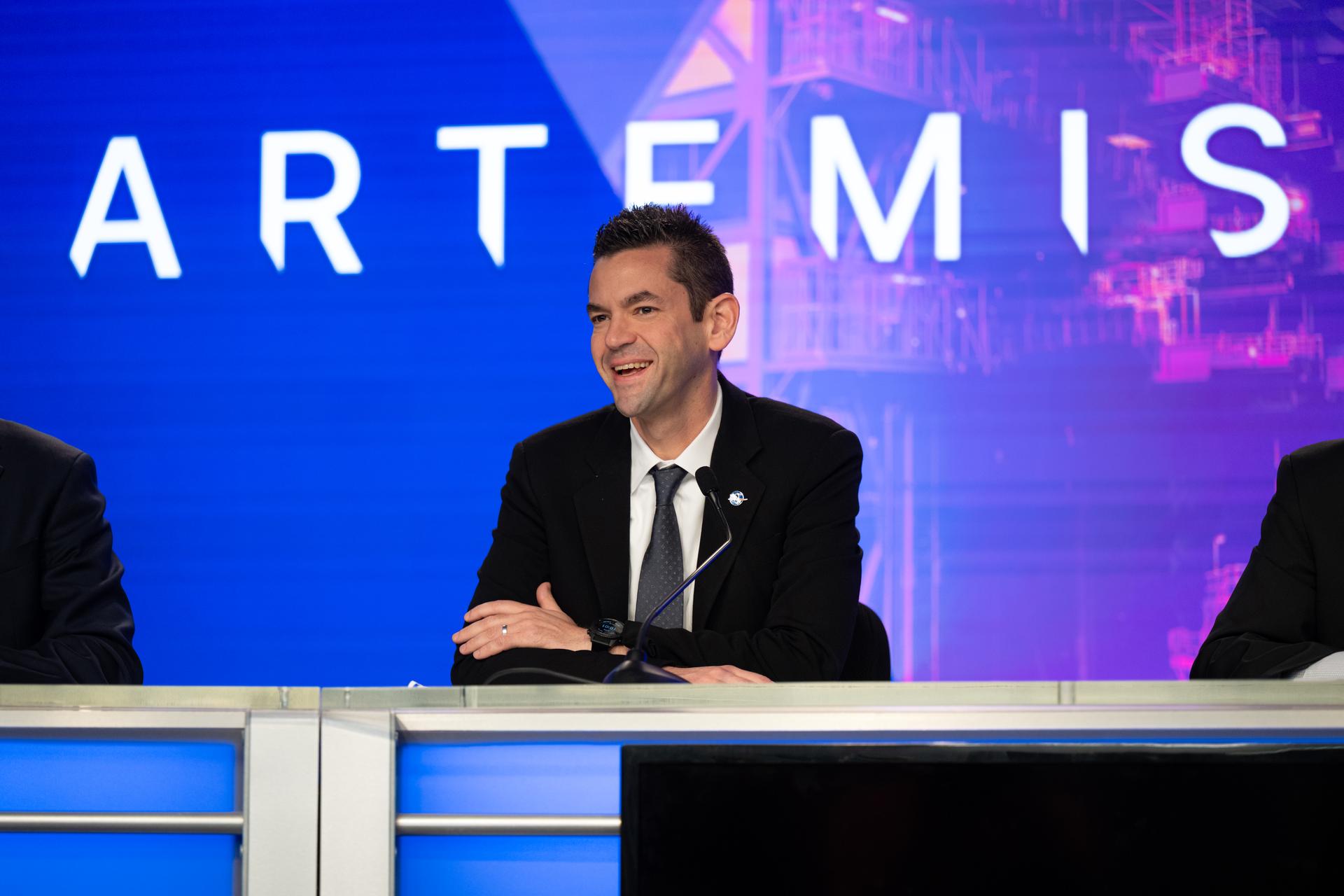
NASA Administrator Jared Isaacman participates in a press conference, Friday, Feb. 27, 2026, at NASA’s Kennedy Space Center in Florida. Isaacman, joined by Amit Kshatriya, NASA associate administrator, not pictured, and Lori Glaze, acting associate administrator for NASA’s Exploration Systems Development Mission Directorate (ESDMD), not pictured, and George Alderman, deputy press secretary, not pictured, shared updates regarding the Artemis II mission and outlined the path forward for the Artemis campaign, including a new Artemis III mission in which the agency’s Orion spacecraft will dock with one or both Human Landing System landers in low Earth orbit. Photo Credit: (NASA/John Kraus)
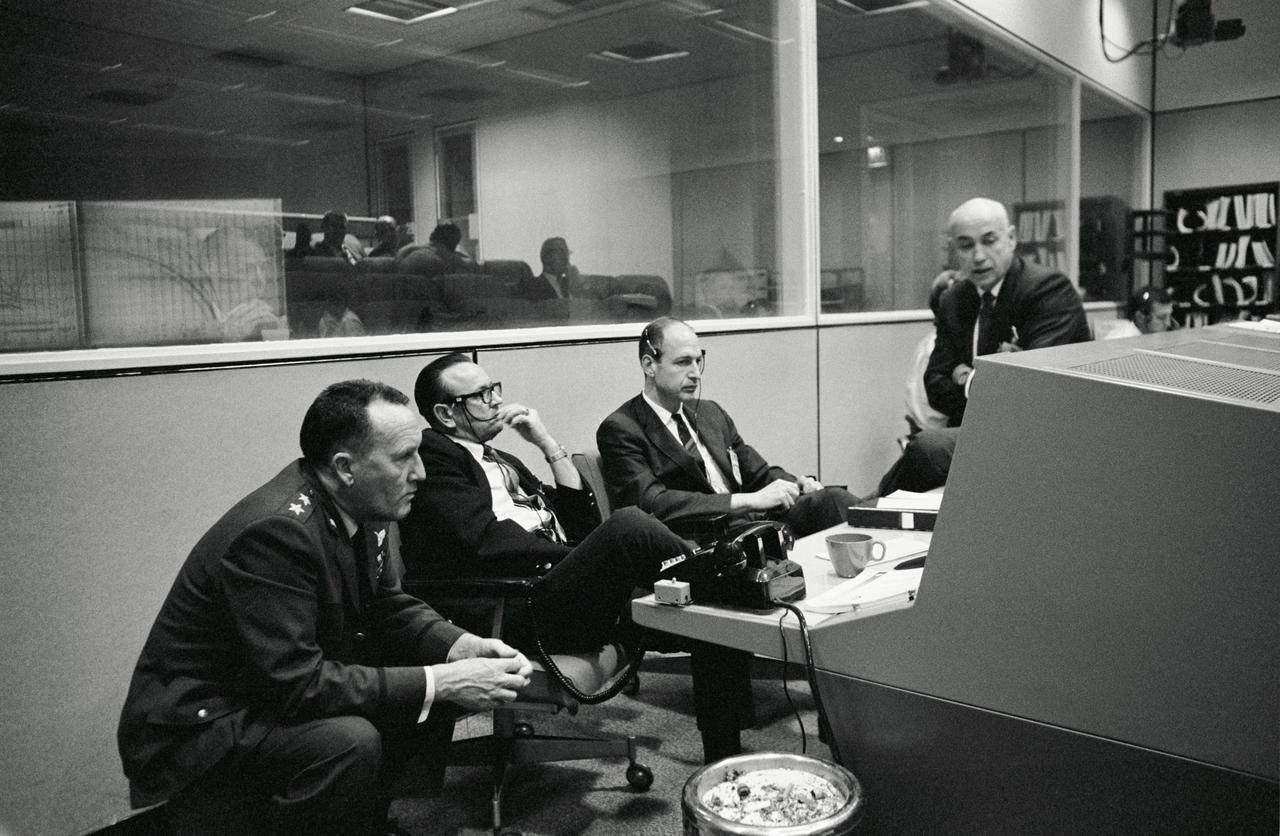
S68-20986 (4 April 1968) --- Scene at the flight operations director's console in the Mission Control Center, Building 30, during the Apollo 6 (Spacecraft 020/Saturn 520) unmanned space flight. Left to right, are Air Force Maj. Gen. Vincent G. Huston, DOD Manager, Manned Space Flight Operations, Andrews Air Force Base, Washington, D.C.; Dr. Christopher C. Kraft Jr., MSC director of flight operations; George M. Low, manager, MSC Apollo Spacecraft Program Office; and Dr. Robert R. Gilruth, MSC Director.
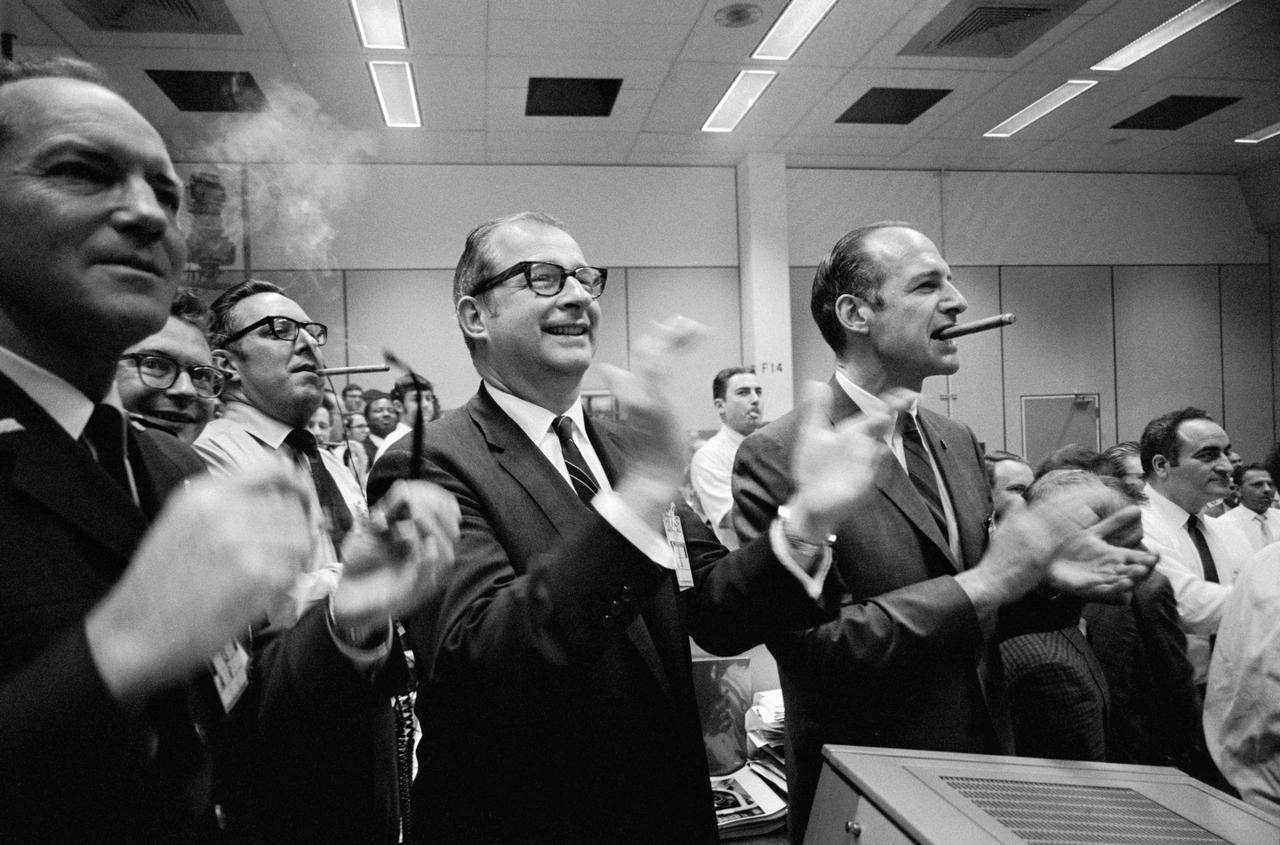
S70-35148 (17 April 1970) --- Staff members from NASA Headquarters (NASA HQ), Manned Spacecraft Center (MSC), and Dr. Thomas Paine (center of frame) applaud the successful splashdown of the Apollo 13 mission while Dr. George Low smokes a cigar (right), in the MSC Mission Control Center (MCC), located in Building 30. Apollo 13 crewmembers, astronauts James A. Lovell Jr., commander; John L. Swigert Jr., command module pilot; and Fred W. Haise Jr., lunar module pilot, splashed down at 12:07:44 p.m. (CST), April 17, 1970, in the south Pacific Ocean.
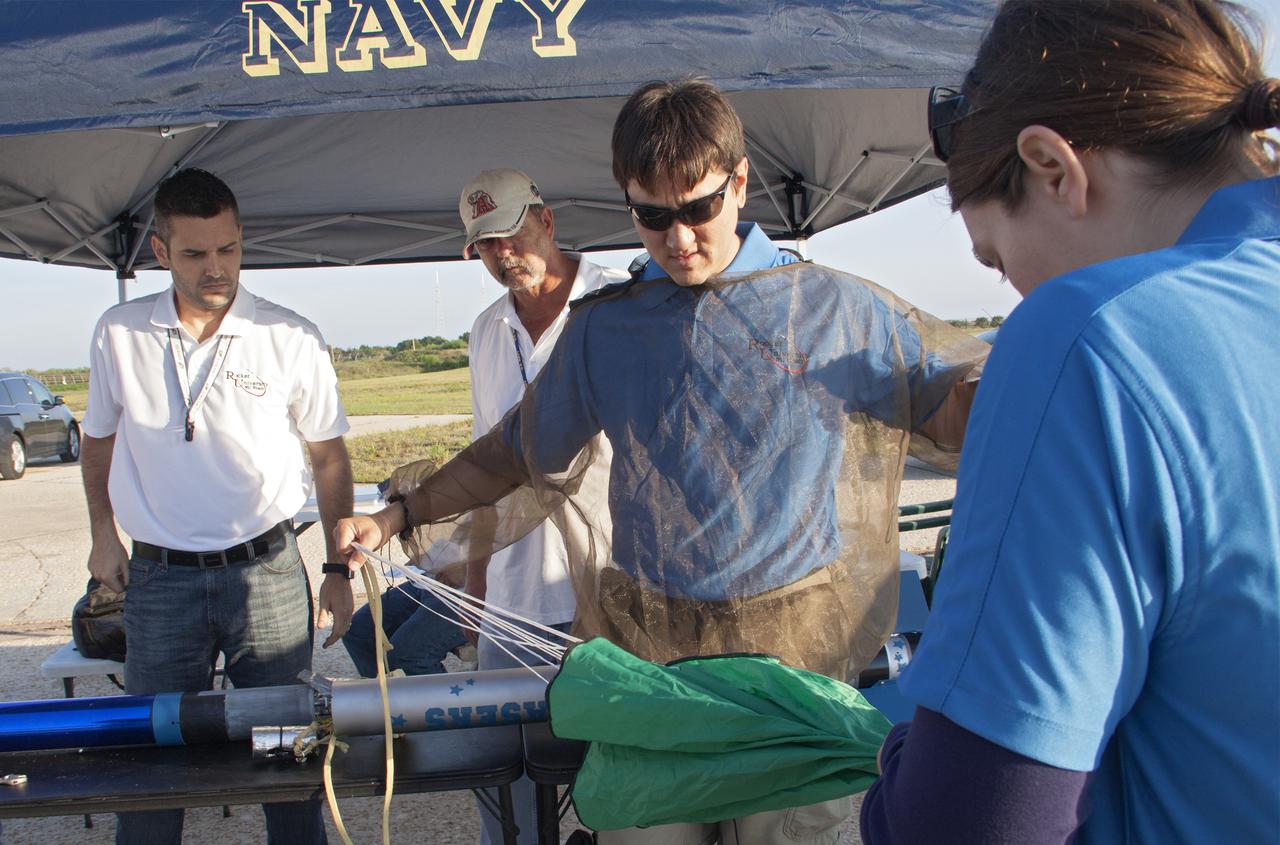
CAPE CANAVERAL, Fla. -- At NASA's Kennedy Space Center in Florida, from the left, Leandro James of Systems Hardware Engineering, George Mizell of Quality Assurance, Morgan Simpson of Flight Hardware Processing and Kim Simpson of Fluids, Mechanical and Structural Systems prepare a parachute for a small rocket prior to launch as part of Rocket University. The goal was to test its systems and to verify that it performed as designed. As part of Rocket University, the engineers are given an opportunity to work a fast-track project to develop skills in developing spacecraft systems of the future. As NASA plans for future spaceflight programs to low-Earth orbit and beyond, teams of engineers at Kennedy are gaining experience in designing and flying launch vehicle systems on a small scale. Four teams of five to eight members from Kennedy are designing rockets complete with avionics and recovery systems. Launch operations require coordination with federal agencies, just as they would with rockets launched in support of a NASA mission. Photo credit: NASA_Jim Grossmann
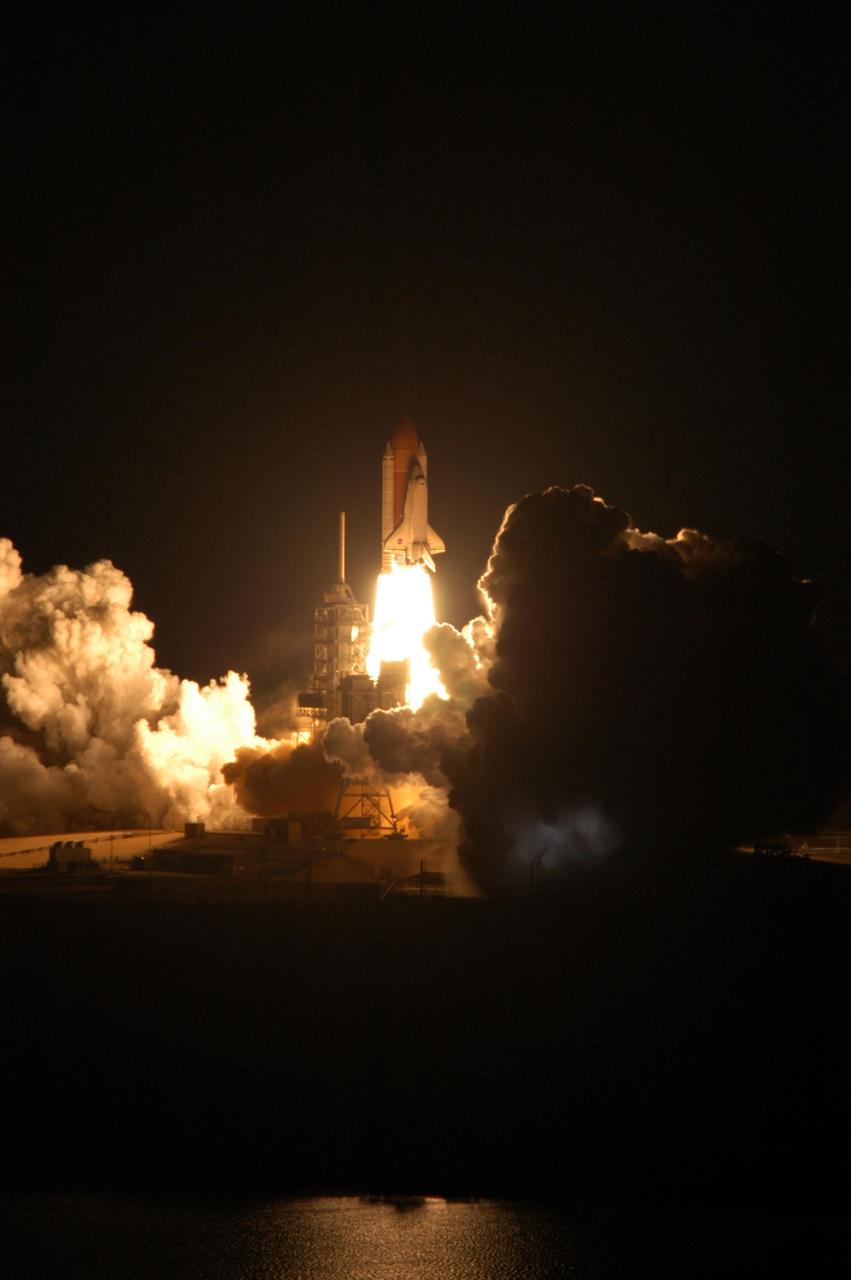
KENNEDY SPACE CENTER, FLA. -- Flooding the night sky with its blazing light, Space Shuttle Discovery leaps toward the sky from Launch Pad 39B on mission STS-116. The launch occurred at 8:47:35 p.m. EST. This was the second launch attempt for mission STS-116. The first launch attempt on Dec. 7 was postponed due a low cloud ceiling over Kennedy Space Center. This is Discovery's 33rd mission and the first night launch since 2002. The 20th shuttle mission to the International Space Station, STS-116 carries another truss segment, P5. It will serve as a spacer, mated to the P4 truss that was attached in September. After installing the P5, the crew will reconfigure and redistribute the power generated by two pairs of U.S. solar arrays. Landing is expected Dec. 21 at KSC. Photo credit: NASA/George Shelton
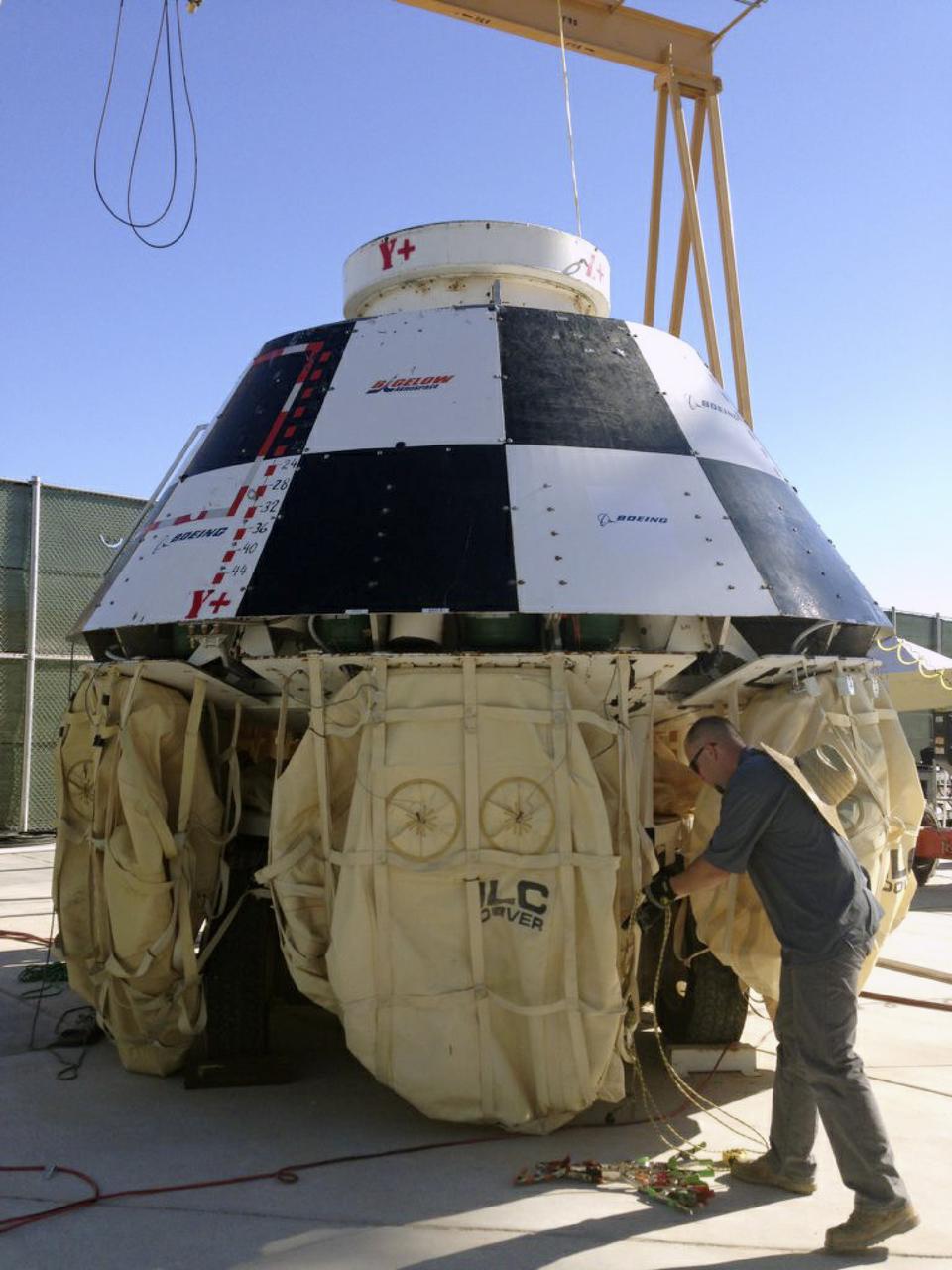
LAS VEGAS, Nev. – An engineer prepares a mock-up of The Boeing Company's CST-100 spacecraft for the third and final series of simulated contingency water landing scenarios at Bigelow Aerospace's headquarters near Las Vegas. The CST-100 is designed for ground landings, but could splash down on the water, if necessary. The tests are part of the company’s ongoing work supporting its funded Space Act Agreement with NASA’s Commercial Crew Program, or CCP, during the Commercial Crew Integrated Capability, or CCiCap, initiative. CCP is intended to lead to the availability of commercial human spaceflight services for government and commercial customers to low-Earth orbit. Future development and certification initiatives eventually will lead to the availability of human spaceflight services for NASA to send its astronauts to the International Space Station, where critical research is taking place daily. For more information about CCP, go to http://www.nasa.gov/commercialcrew. Photo credit: Boeing/Kelly George
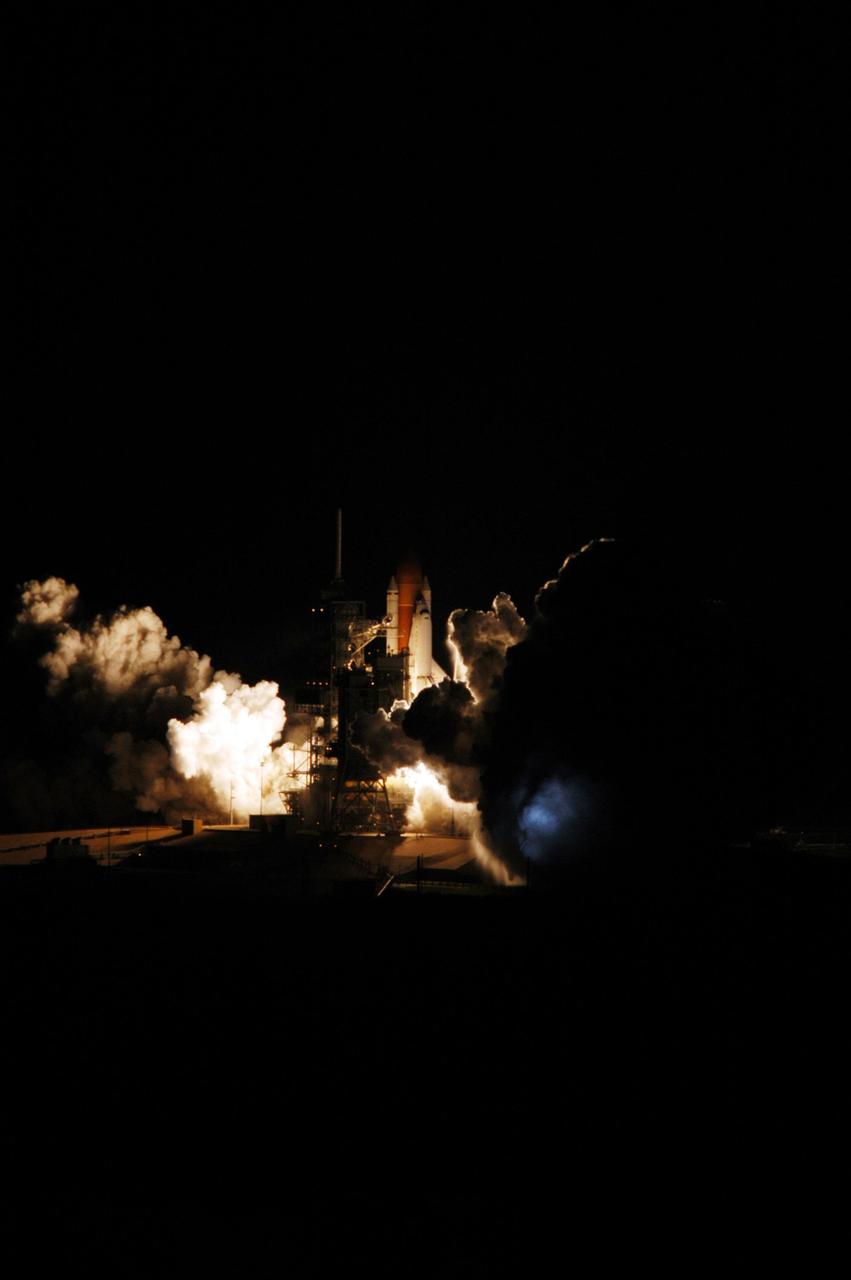
KENNEDY SPACE CENTER, FLA. -- At liftoff from Launch Pad 39B, Space Shuttle Discovery spreads a blaze of light as it leaps into the night sky. The launch occurred at 8:47:35 p.m. EST. This was the second launch attempt for mission STS-116. The first launch attempt on Dec. 7 was postponed due a low cloud ceiling over Kennedy Space Center. This is Discovery's 33rd mission and the first night launch since 2002. The 20th shuttle mission to the International Space Station, STS-116 carries another truss segment, P5. It will serve as a spacer, mated to the P4 truss that was attached in September. After installing the P5, the crew will reconfigure and redistribute the power generated by two pairs of U.S. solar arrays. Landing is expected Dec. 21 at KSC. Photo credit: NASA/George Shelton
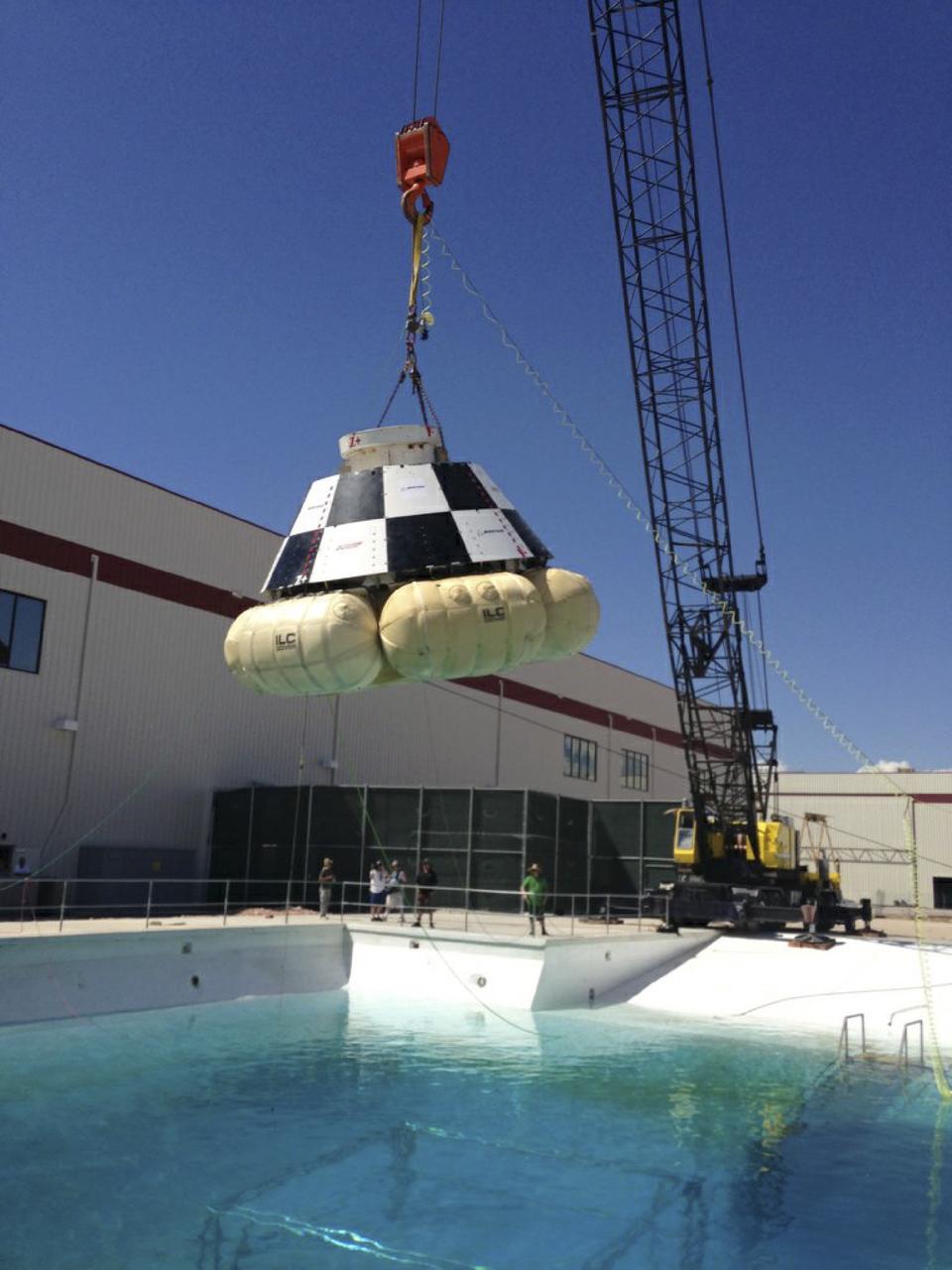
LAS VEGAS, Nev. – A mock-up of The Boeing Company's CST-100 spacecraft is prepared for the third and final series of simulated contingency water landing scenarios at Bigelow Aerospace's headquarters near Las Vegas. The CST-100 is designed for ground landings, but could splash down on the water, if necessary. The tests are part of the company’s ongoing work supporting its funded Space Act Agreement with NASA’s Commercial Crew Program, or CCP, during the Commercial Crew Integrated Capability, or CCiCap, initiative. CCP is intended to lead to the availability of commercial human spaceflight services for government and commercial customers to low-Earth orbit. Future development and certification initiatives eventually will lead to the availability of human spaceflight services for NASA to send its astronauts to the International Space Station, where critical research is taking place daily. For more information about CCP, go to http://www.nasa.gov/commercialcrew. Photo credit: Boeing/Kelly George
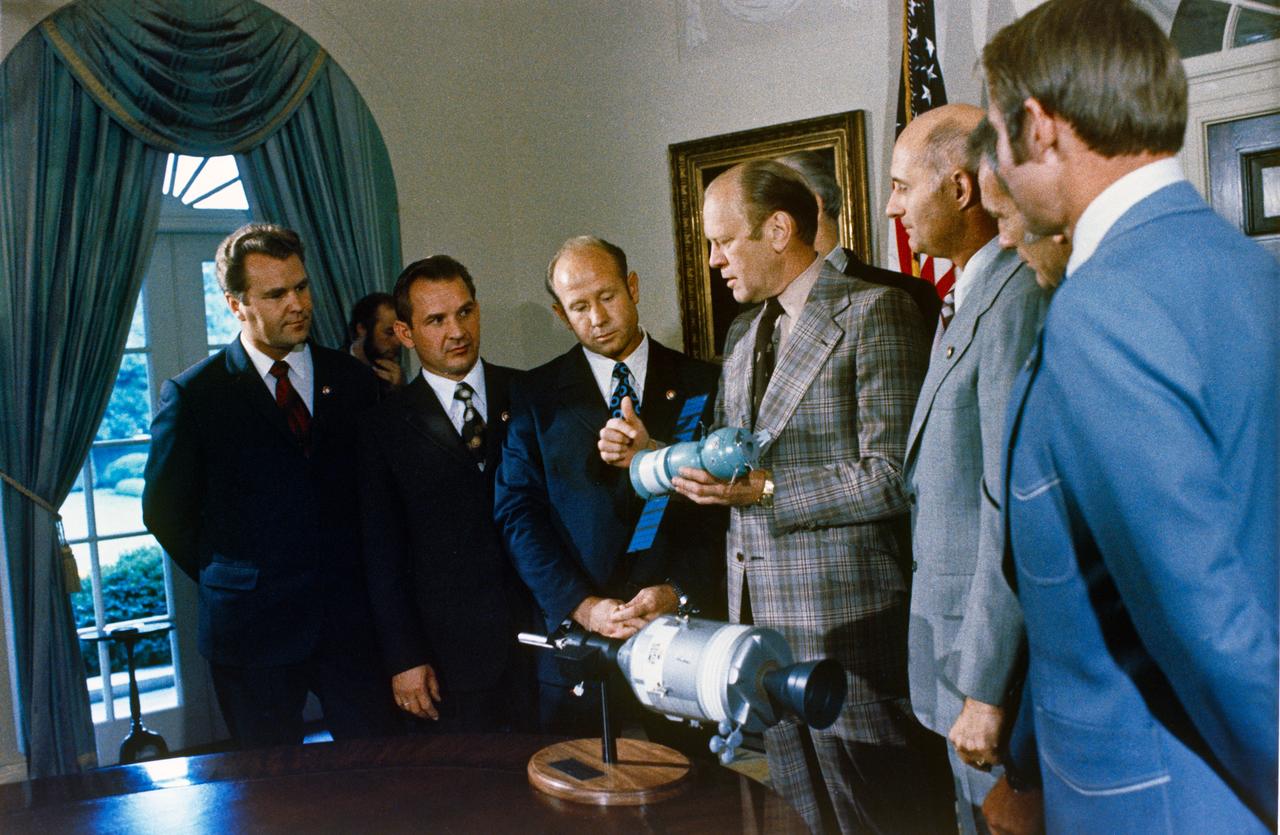
S74-29892 (7 Sept. 1974) --- President Gerald R. Ford removes the Soviet Soyuz spacecraft model from a model set depicting the 1975 Apollo-Soyuz Test Project, an Earth orbital docking and rendezvous mission involving crewmen from the U.S. and USSR, who visited Mr. Ford at the White House. The cosmonauts and astronauts are, left to right, Vladimir A. Shatalov, Chief, Cosmonaut Training; Valeriy N. Kubasov, ASTP Soviet engineer; Aleksey A. Leonov, ASTP Soviet crew commander; Thomas P. Stafford, ASTP American crew commander; Donald K. Slayton, American crew?s docking module pilot; and Vance D. Brand, command module pilot for the U.S. team. Dr. George M. Low, Deputy Administrator, National Aeronautics and Space Administration, is partially obscured behind Mr. Ford.
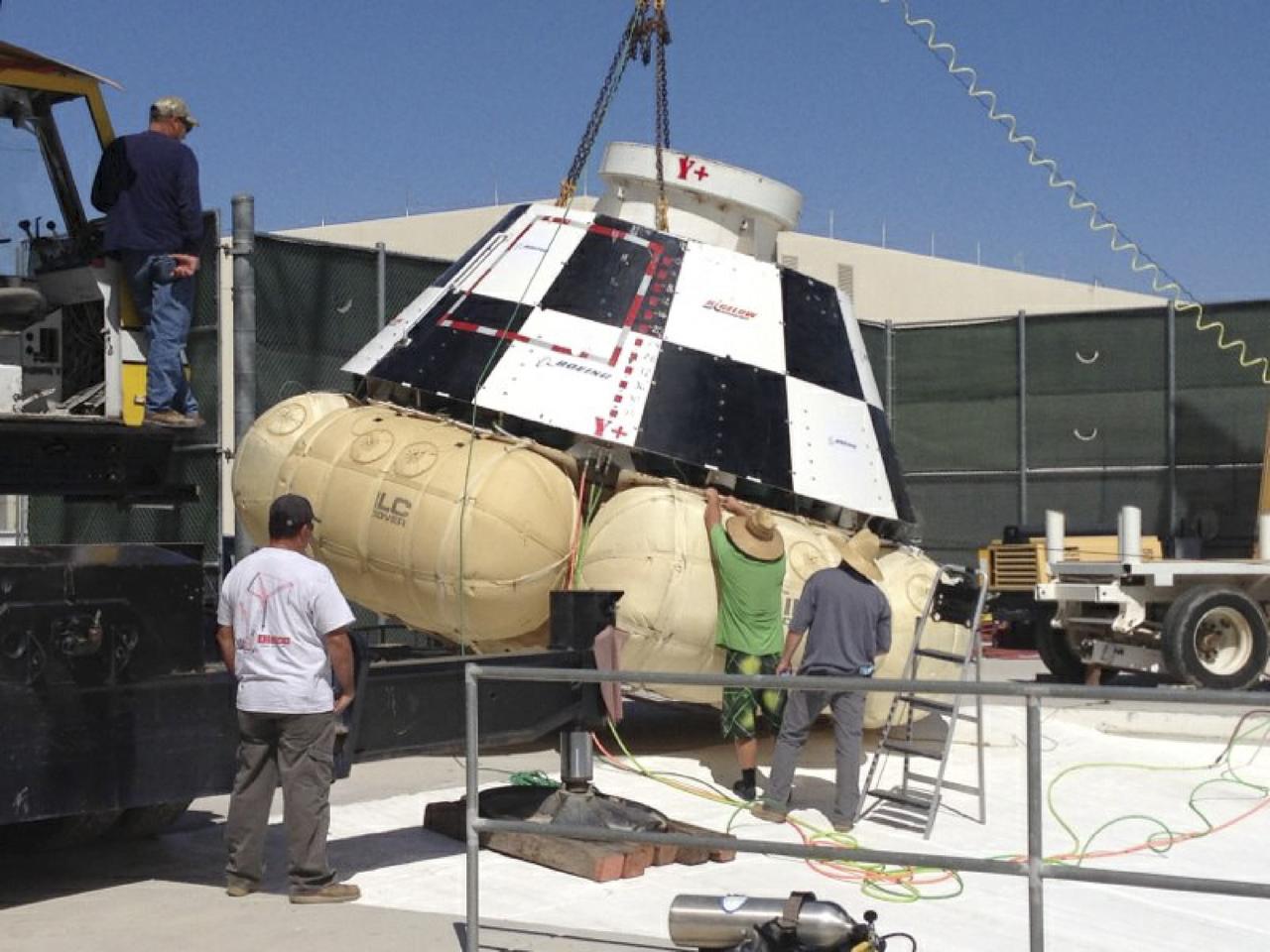
LAS VEGAS, Nev. – Engineers prepare a mock-up of The Boeing Company's CST-100 spacecraft for the third and final series of simulated contingency water landing scenarios at Bigelow Aerospace's headquarters near Las Vegas. The CST-100 is designed for ground landings, but could splash down on the water, if necessary. The tests are part of the company’s ongoing work supporting its funded Space Act Agreement with NASA’s Commercial Crew Program, or CCP, during the Commercial Crew Integrated Capability, or CCiCap, initiative. CCP is intended to lead to the availability of commercial human spaceflight services for government and commercial customers to low-Earth orbit. Future development and certification initiatives eventually will lead to the availability of human spaceflight services for NASA to send its astronauts to the International Space Station, where critical research is taking place daily. For more information about CCP, go to http://www.nasa.gov/commercialcrew. Photo credit: Boeing/Kelly George
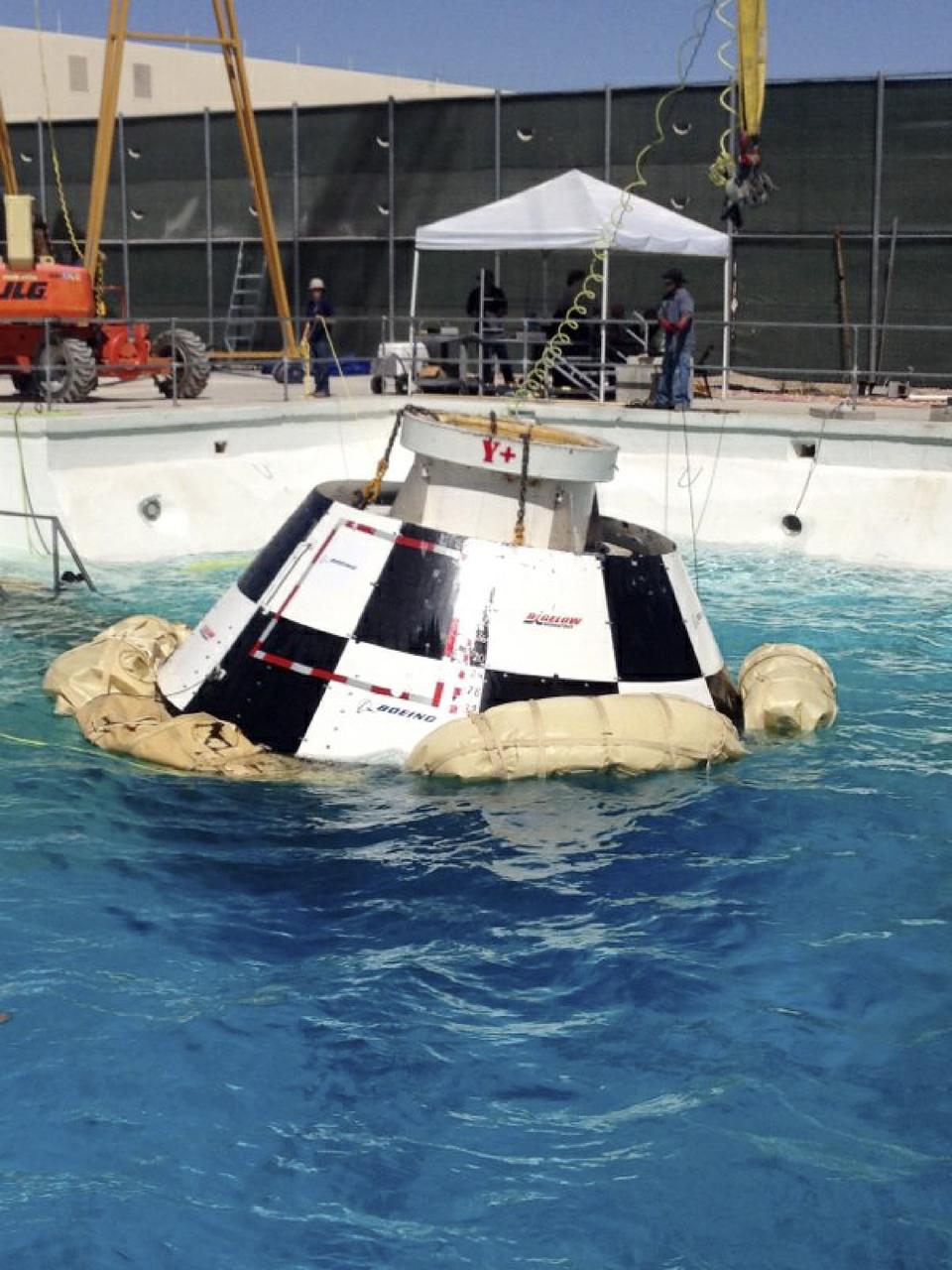
LAS VEGAS, Nev. – A mock-up of The Boeing Company's CST-100 spacecraft floats following the third and final series of simulated contingency water landing scenarios at Bigelow Aerospace's headquarters near Las Vegas. The CST-100 is designed for ground landings, but could splash down on the water, if necessary. The tests are part of the company’s ongoing work supporting its funded Space Act Agreement with NASA’s Commercial Crew Program, or CCP, during the Commercial Crew Integrated Capability, or CCiCap, initiative. CCP is intended to lead to the availability of commercial human spaceflight services for government and commercial customers to low-Earth orbit. Future development and certification initiatives eventually will lead to the availability of human spaceflight services for NASA to send its astronauts to the International Space Station, where critical research is taking place daily. For more information about CCP, go to http://www.nasa.gov/commercialcrew. Photo credit: Boeing/Kelly George
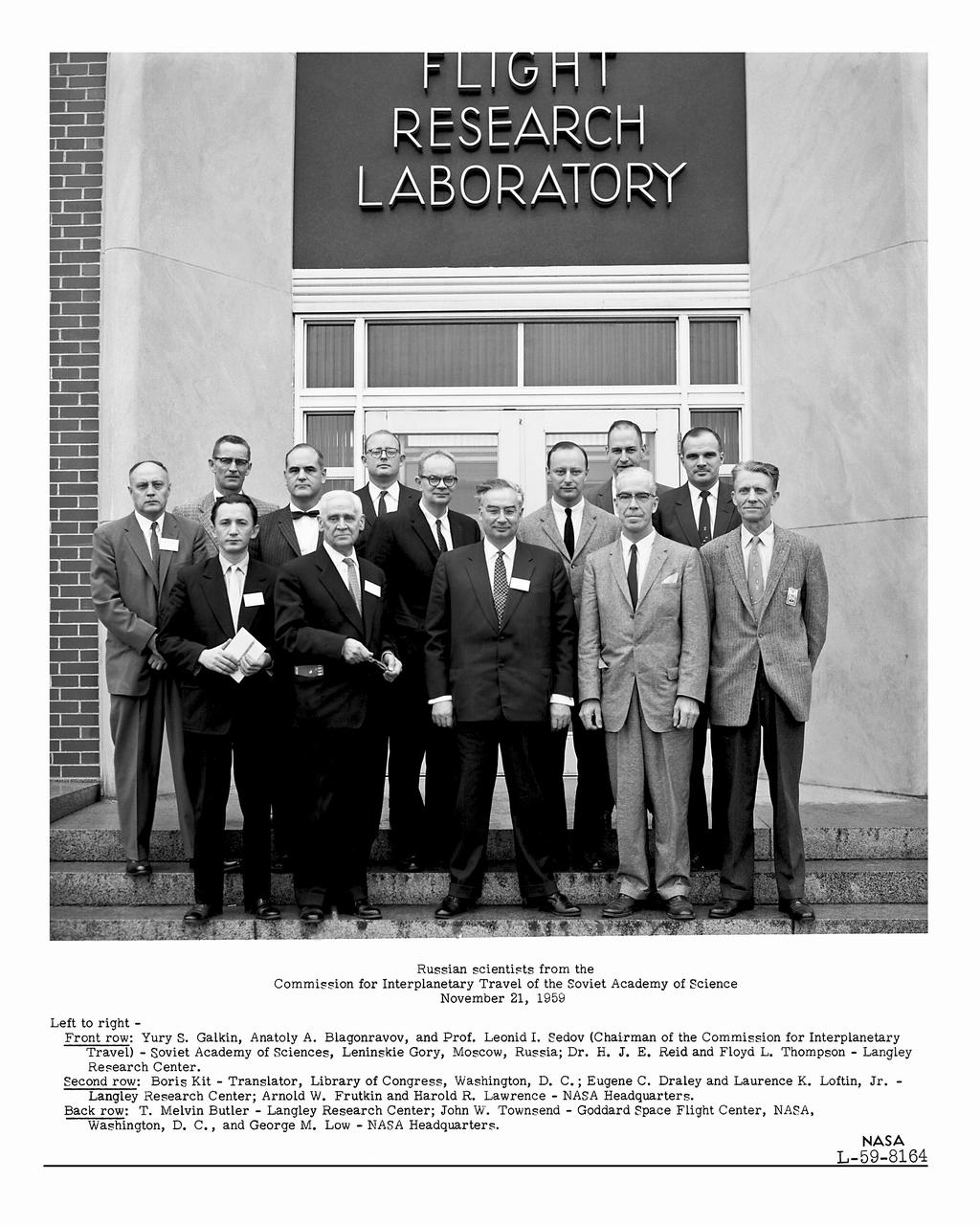
Russian Scientists from the Commission of Interplanetary Travel of the Soviet Academy of Science November 21,1959 Left to right: Front row: Yury S. Galkin, Anatoly A. Blagonravov, and Prof. Leonid I. Sedov (Chair of the Commission for Interplanetary Travel)-Soviet Academy of Science, Leninski Gory, Moscow, Russia Dr. H.J. E. Reid and Floyd L. Thompson Langley Research Center. Second row: Boris Kit Translator, Library of Congress, Washington, D.C. Eugene C. Draley and Laurence K. Loftin, Jr. -Langley Research Center Arnold W. Frutkin and Harold R. Lawrence NASA Headquarters. Back row: T.Melvin Butler-Langley Research Center John W. Townsend Goddard Space Flight Center, NASA, Washington D.C., and George M. Low NASA Headquarters.
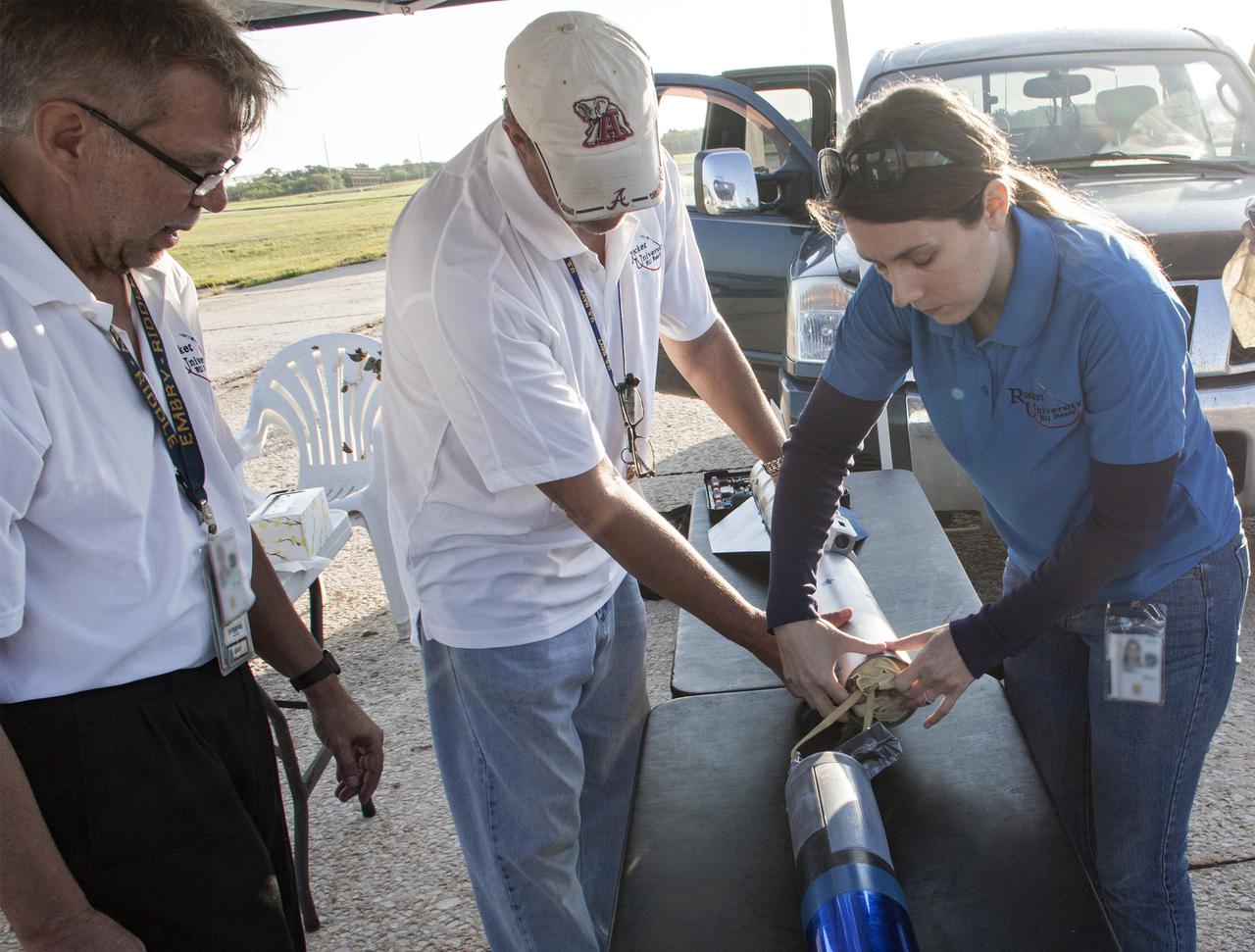
CAPE CANAVERAL, Fla. -- At NASA's Kennedy Space Center in Florida, from the left, Gary Dahlke of Engineering and Technology, George Mizell of Quality Assurance and Kim Simpson of Fluids, Mechanical and Structural Systems make final adjustments to a small rocket prior to launch as part of Rocket University. The goal was to test its systems and to verify that it performed as designed. As part of Rocket University, the engineers are given an opportunity to work a fast-track project to develop skills in developing spacecraft systems of the future. As NASA plans for future spaceflight programs to low-Earth orbit and beyond, teams of engineers at Kennedy are gaining experience in designing and flying launch vehicle systems on a small scale. Four teams of five to eight members from Kennedy are designing rockets complete with avionics and recovery systems. Launch operations require coordination with federal agencies, just as they would with rockets launched in support of a NASA mission. Photo credit: NASA_Jim Grossmann

Ronnie Rigney (r), chief of the Propulsion Test Office in the Project Directorate at Stennis Space Center, stands with agency colleagues to receive the prestigious American Institute of Aeronautics and Astronautics George M. Low Space Transportation Award on Sept. 12. Rigney accepted the award on behalf of the NASA and contractor team at Stennis for their support of the Space Shuttle Program that ended last summer. From 1975 to 2009, Stennis Space Center tested every main engine used to power 135 space shuttle missions. Stennis continued to provide flight support services through the end of the Space Shuttle Program in July 2011. The center also supported transition and retirement of shuttle hardware and assets through September 2012. The 2012 award was presented to the space shuttle team 'for excellence in the conception, development, test, operation and retirement of the world's first and only reusable space transportation system.' Joining Rigney for the award ceremony at the 2012 AIAA Conference in Pasadena, Calif., were: (l to r) Allison Zuniga, NASA Headquarters; Michael Griffin, former NASA administrator; Don Noah, Johnson Space Center in Houston; Steve Cash, Marshall Space Flight Center in Huntsville, Ala.; and Pete Nickolenko, Kennedy Space Center in Florida.

Ronnie Rigney (r), chief of the Propulsion Test Office in the Project Directorate at Stennis Space Center, stands with agency colleagues to receive the prestigious American Institute of Aeronautics and Astronautics George M. Low Space Transportation Award on Sept. 12. Rigney accepted the award on behalf of the NASA and contractor team at Stennis for their support of the Space Shuttle Program that ended last summer. From 1975 to 2009, Stennis Space Center tested every main engine used to power 135 space shuttle missions. Stennis continued to provide flight support services through the end of the Space Shuttle Program in July 2011. The center also supported transition and retirement of shuttle hardware and assets through September 2012. The 2012 award was presented to the space shuttle team 'for excellence in the conception, development, test, operation and retirement of the world's first and only reusable space transportation system.' Joining Rigney for the award ceremony at the 2012 AIAA Conference in Pasadena, Calif., were: (l to r) Allison Zuniga, NASA Headquarters; Michael Griffin, former NASA administrator; Don Noah, Johnson Space Center in Houston; Steve Cash, Marshall Space Flight Center in Huntsville, Ala.; and Pete Nickolenko, Kennedy Space Center in Florida.
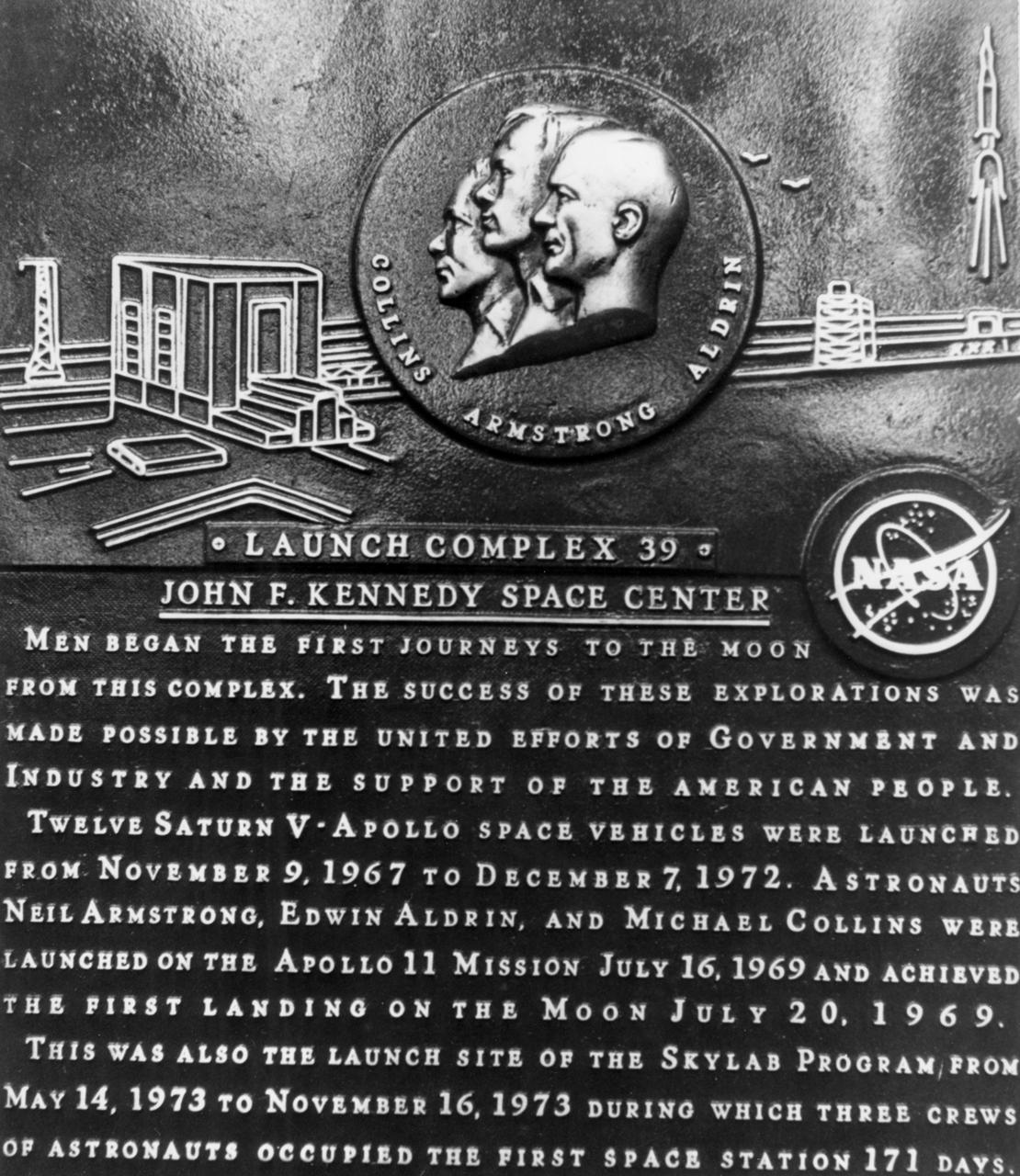
On July 3, 1974 NASA commemorated the 5th anniversary of the Apollo 11, first lunar landing mission, at the Kennedy Space Center (KSC). Launch Pad 39, from which astronauts Neil Armstrong, Edwin Aldrin, and Michael Collins first embarked on their historic journey to the Moon, was dedicated as a national landmark. Apollo 11 was launched at 9:32 am on July 16, 1969 and made the first successful lunar landing July 20th. During the 45 minute ceremony, the three Apollo 11 astronauts unveiled this plaque which was placed at the launch site. Other participating dignitaries included Dr. James Fletcher and Dr. George H. Low, NASA Administrator and Deputy Administrator respectively; Florida Governor Rubin Askew; Senator frank E. Moss; Congressman Olin E. Teague, and Kurt Debus, KSC Director. Apollo 11 launched from the Kennedy Space Center, Florida via a Saturn V launch which was developed by the Marshall Space Flight Center (MSFC) under the direction of Dr. Wernher von Braun.
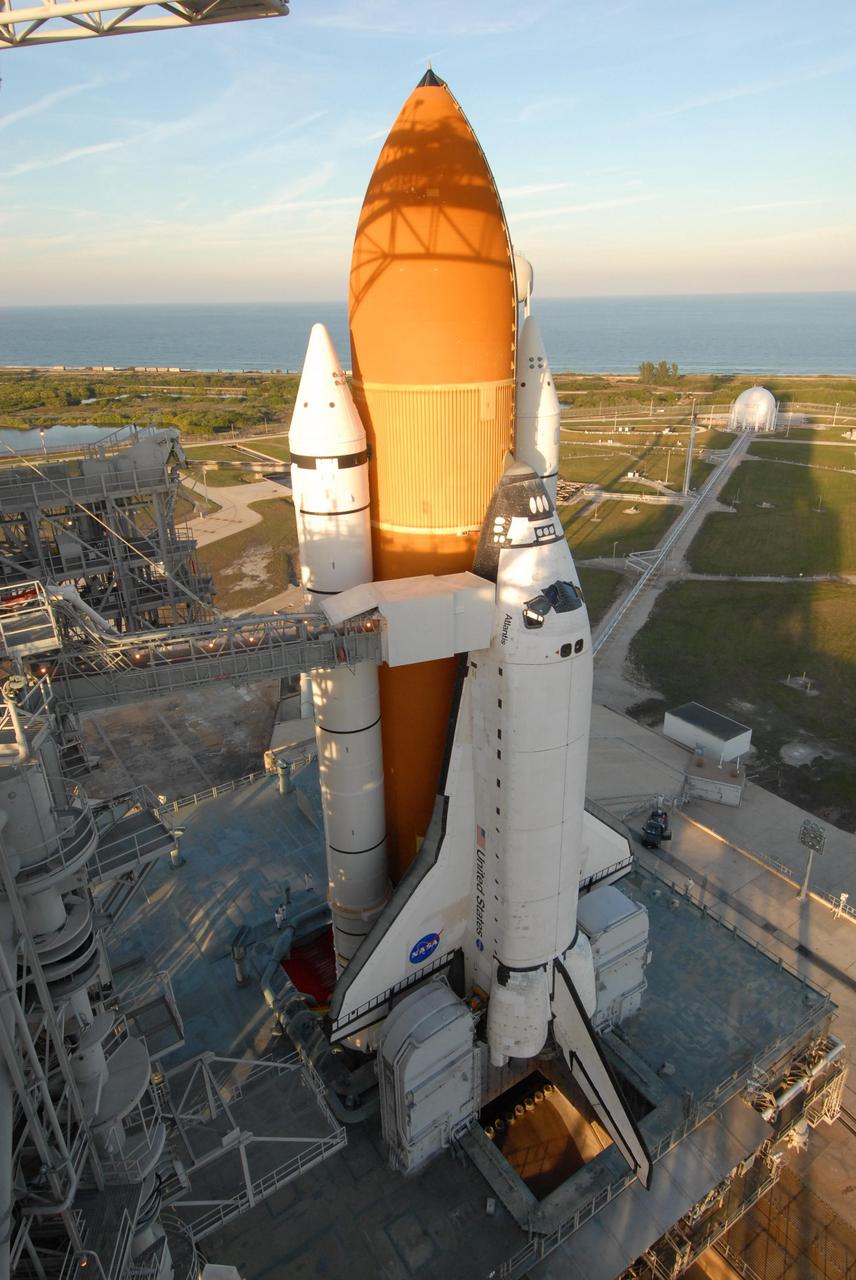
KENNEDY SPACE CENTER, FLA. -- Shadows spill across space shuttle Atlantis, still poised on the pad after its launch on mission STS-122 was postponed Thursday. In the background is the Atlantic Ocean. Shuttle program managers decided at 9:56 a.m. to postpone the launch because of an issue with a fuel cut-off sensor system inside the external fuel tank. This is one of several systems that protect the shuttle's main engines by triggering their shut down if fuel runs unexpectedly low. During countdown activities this morning, two sensors failed a routine prelaunch check. There are four engine cut-off, or ECO, sensors inside the liquid hydrogen section of the tank, and Launch Commit Criteria require three of the four sensor systems to be functioning properly. The tank's liquid oxygen and liquid hydrogen was drained from the tank, and preparations will begin for a possible launch attempt Friday. NASA's launch rules have a preplanned procedure that states in the case of ECO sensor system failure, engineers need to drain the tank and verify all the sensors are working as they go dry. Atlantis carries the Columbus Laboratory, the European Space Agency's largest contribution to the construction of the space station. When permanently attached to Node 2, the laboratory will carry out experiments in materials science, fluid physics and biosciences, as well as perform a number of technological applications, in a microgravity environment. Photo credit: NASA/George Shelton
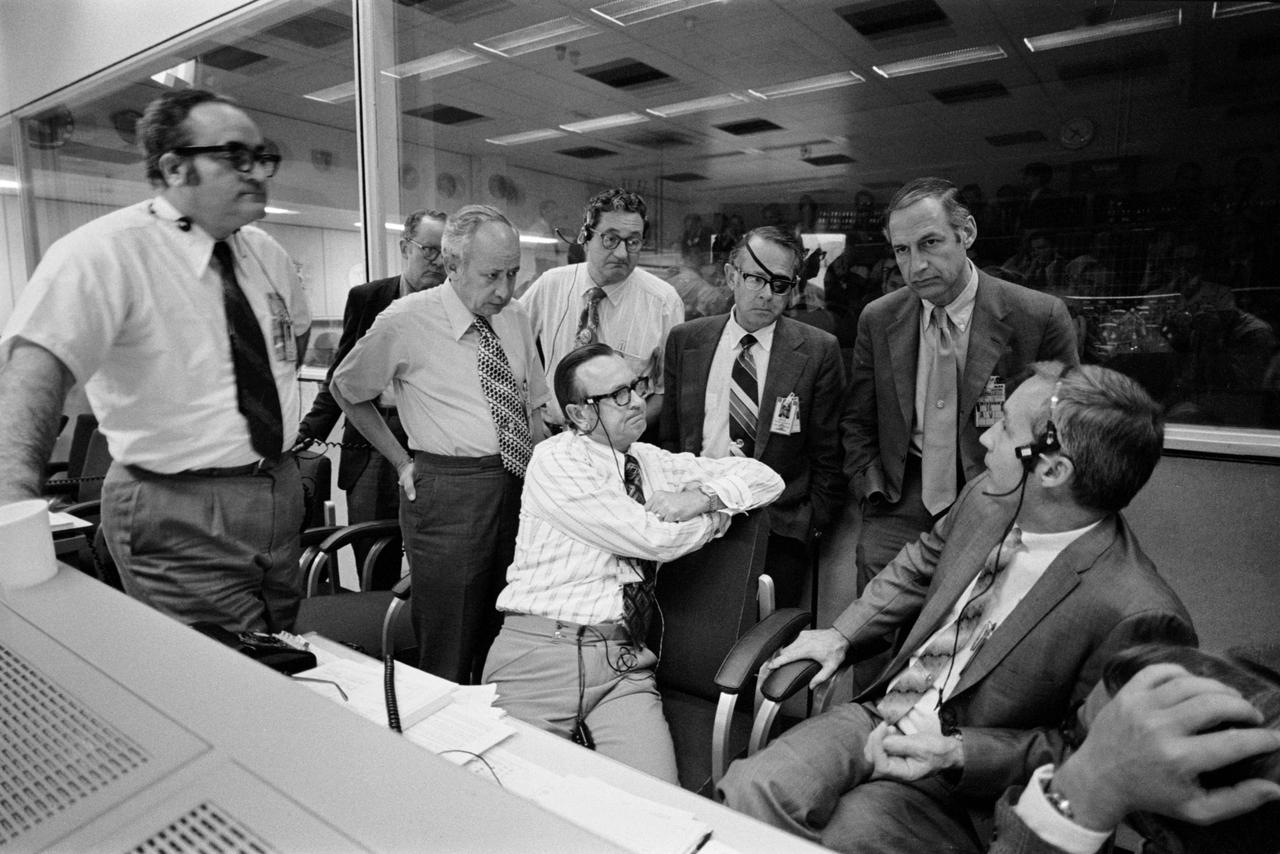
S72-37010 (20 April 1972) --- NASA officials gather around a console in the Mission Operations Control Room (MOCR) in the Mission Control Center (MCC) prior to the making of a decision whether to land Apollo 16 on the moon or to abort the landing. Seated, left to right, are Dr. Christopher C. Kraft Jr., Director of the Manned Spacecraft Center (MSC), and Brig. Gen. James A. McDivitt (USAF), Manager, Apollo Spacecraft Program Office, MSC; and standing, left to right, are Dr. Rocco A. Petrone, Apollo Program Director, Office Manned Space Flight (OMSF), NASA HQ.; Capt. John K. Holcomb (U.S. Navy, Ret.), Director of Apollo Operations, OMSF; Sigurd A. Sjoberg, Deputy Director, MSC; Capt. Chester M. Lee (U.S. Navy, Ret.), Apollo Mission Director, OMSF; Dale D. Myers, NASA Associate Administrator for Manned Space Flight; and Dr. George M. Low, NASA Deputy Administrator. Photo credit: NASA
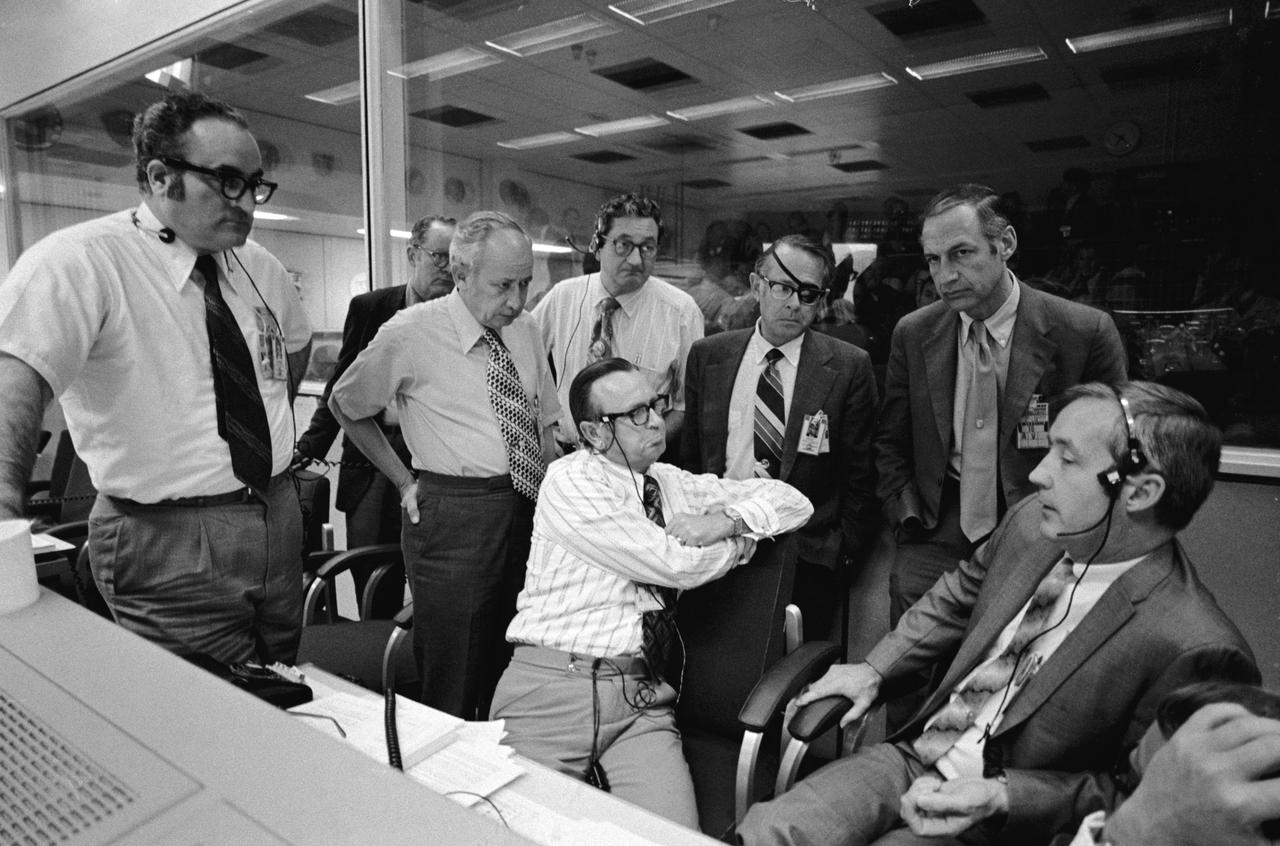
S72-37009 (20 April 1972) --- NASA officials gather around a console in the Mission Operations Control Room (MOCR) in the Mission Control Center (MCC) prior to the making of a decision whether to land Apollo 16 on the moon or to abort the landing. Seated, left to right, are Dr. Christopher C. Kraft Jr., Director of the Manned Spacecraft Center (MSC), and Brig. Gen. James A. McDivitt (USAF), Manager, Apollo Spacecraft Program Office, MSC; and standing, left to right, are Dr. Rocco A. Petrone, Apollo Program Director, Office Manned Space Flight (OMSF), NASA HQ.; Capt. John K. Holcomb (U.S. Navy, Ret.), Director of Apollo Operations, OMSF; Sigurd A. Sjoberg, Deputy Director, MSC; Capt. Chester M. Lee (U.S. Navy, Ret.), Apollo Mission Director, OMSF; Dale D. Myers, NASA Associate Administrator for Manned Space Flight; and Dr. George M. Low, NASA Deputy Administrator. Photo credit: NASA
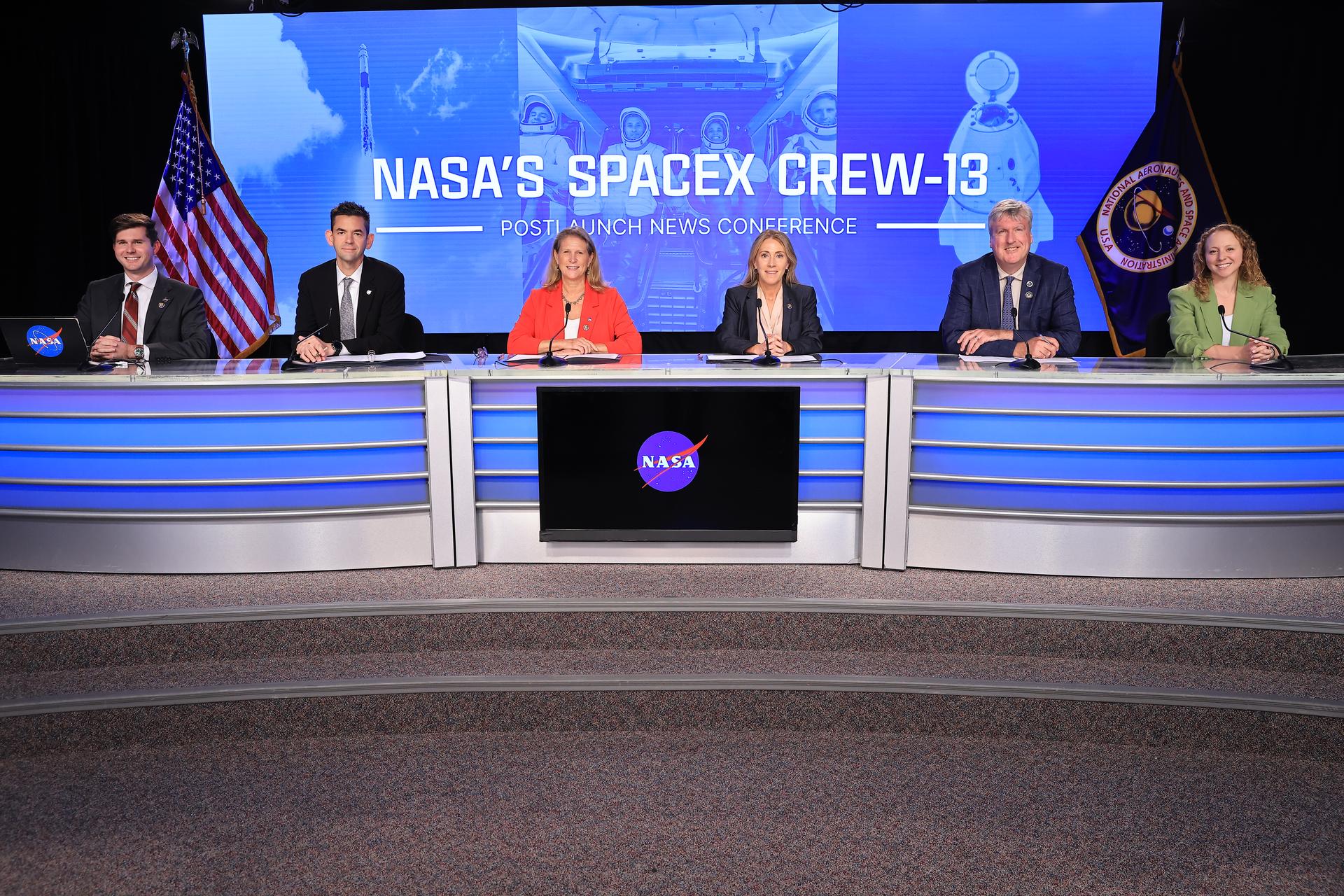
From left to right, George Alderman, deputy press secretary, NASA communications; NASA Administrator Jared Isaacman; Dr. Lori Glaze, associate administrator, NASA’s Human Spaceflight Mission Directorate; Dana Weigel, Low Earth Orbit Program, NASA’s Johnson Space Center in Houston; Mathieu Caron, director, Astronauts, Life Sciences, and Space Medicine, CSA (Canadian Space Agency); and Julianna Scheiman, director, NASA Science and Dragon Programs, SpaceX, participate in a postlaunch news conference at the agency’s Kennedy Space Center in Florida on Thursday, Oct. 1, 2026, following the launch of NASA’s SpaceX Crew-13 mission to the International Space Station. NASA astronauts Jessica Watkins and Luke Delaney, CSA (Canadian Space Agency) astronaut Joshua Kutryk, and Roscosmos cosmonaut Sergey Teteryatnikov launched to the International Space Station aboard SpaceX’s Dragon spacecraft and Falcon 9 rocket at 11:10 a.m. EDT on the 13th crew rotation mission with SpaceX to the space station.
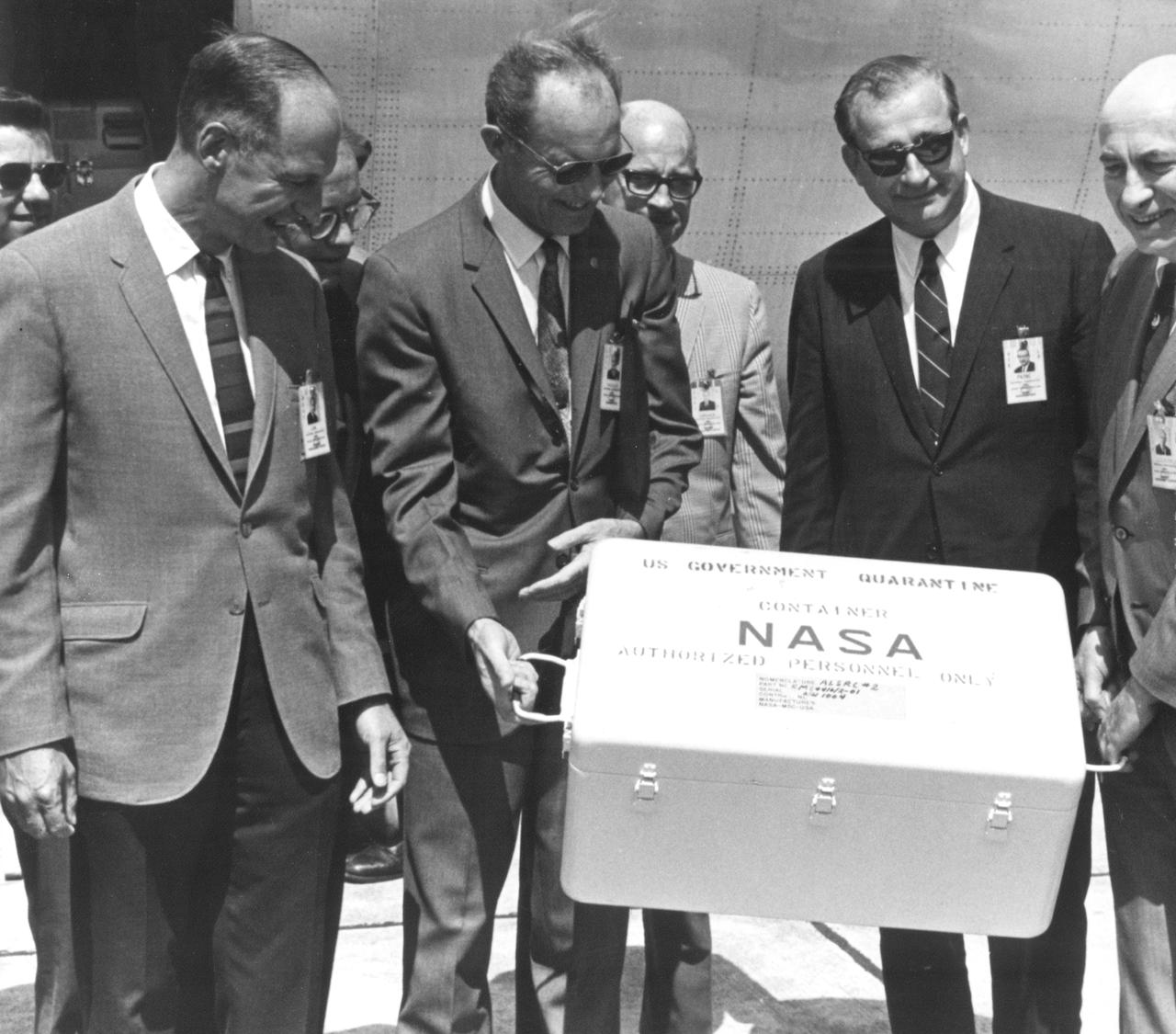
The Apollo 11 mission, the first manned lunar mission, launched from the Kennedy Space Center, Florida via the Marshall Space Flight Center (MSFC) developed Saturn V launch vehicle on July 16, 1969 and safely returned to Earth on July 24, 1969. Aboard the space craft were astronauts Neil A. Armstrong, commander; Michael Collins, Command Module (CM) pilot; and Edwin E. Aldrin Jr., Lunar Module (LM) pilot. The CM, piloted by Michael Collins remained in a parking orbit around the Moon while the LM, named “Eagle’’, carrying astronauts Neil Armstrong and Edwin Aldrin, landed on the Moon. During 2½ hours of surface exploration, the crew collected 47 pounds of lunar surface material for analysis back on Earth. This photograph was taken as the mission’s first loaded sample return container arrived at Ellington Air Force Base by air from the Pacific recovery area. The rock box was immediately taken to the Lunar Receiving Laboratory at the Manned Spacecraft Center (MSC) in Houston, Texas. Happily posing for the photograph with the rock container are (L-R) Richard S. Johnston (back), special assistant to the MSC Director; George M. Low, MSC Apollo Spacecraft Program manager; George S. Trimble (back), MSC Deputy Director; Lt. General Samuel C. Phillips, Apollo Program Director, Office of Manned Spaceflight at NASA headquarters; Eugene G. Edmonds, MSC Photographic Technology Laboratory; Dr. Thomas O. Paine, NASA Administrator; and Dr. Robert R. Gilruth, MSC Director.
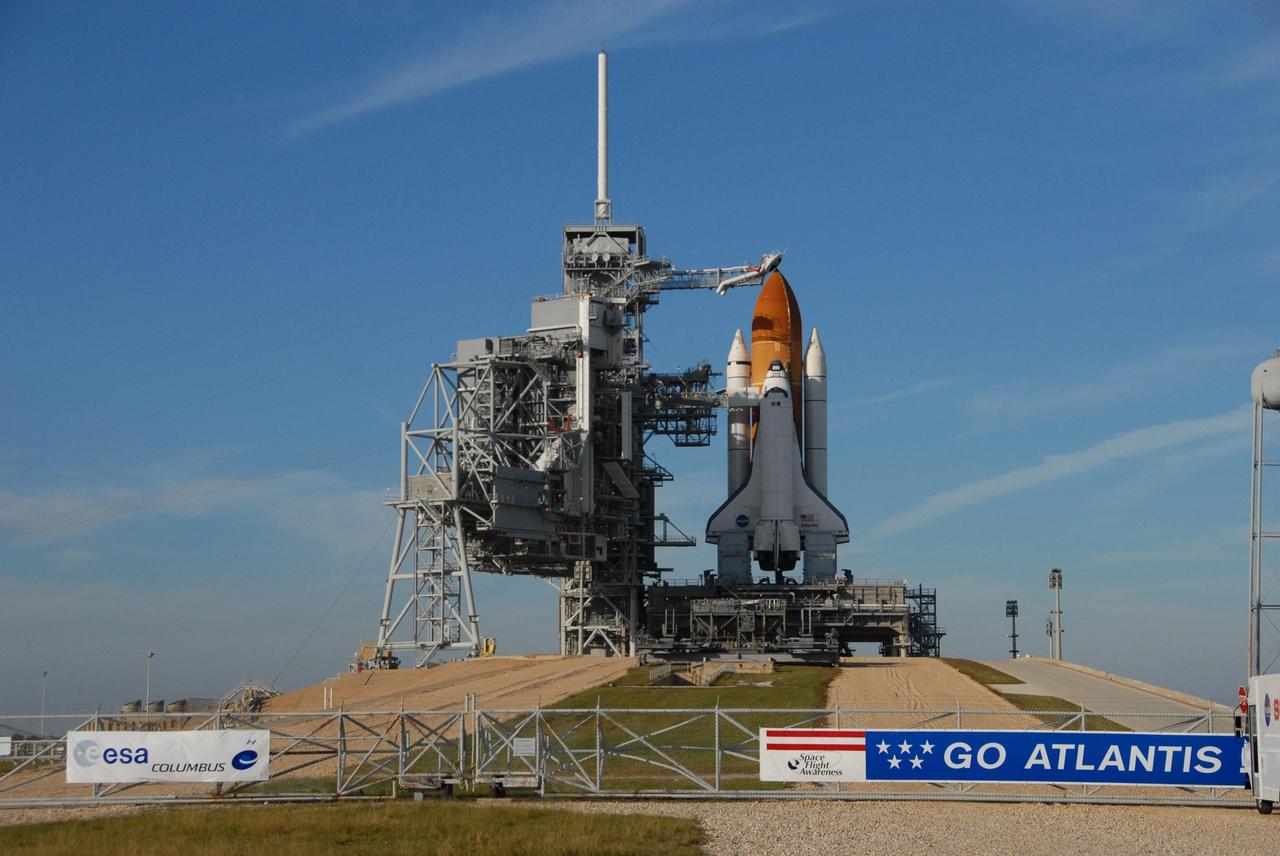
KENNEDY SPACE CENTER, FLA. -- Shadows spill across space shuttle Atlantis, still poised on the pad after its launch on mission STS-122 was postponed Thursday. It sits atop the mobile launcher platform. Shuttle program managers decided at 9:56 a.m. to postpone the launch because of an issue with a fuel cut-off sensor system inside the external fuel tank. This is one of several systems that protect the shuttle's main engines by triggering their shut down if fuel runs unexpectedly low. During countdown activities this morning, two sensors failed a routine prelaunch check. There are four engine cut-off, or ECO, sensors inside the liquid hydrogen section of the tank, and Launch Commit Criteria require three of the four sensor systems to be functioning properly. The tank's liquid oxygen and liquid hydrogen was drained from the tank, and preparations will begin for a possible launch attempt Friday. NASA's launch rules have a preplanned procedure that states in the case of ECO sensor system failure, engineers need to drain the tank and verify all the sensors are working as they go dry. Atlantis carries the Columbus Laboratory, the European Space Agency's largest contribution to the construction of the space station. When permanently attached to Node 2, the laboratory will carry out experiments in materials science, fluid physics and biosciences, as well as perform a number of technological applications, in a microgravity environment. Photo credit: NASA/George Shelton
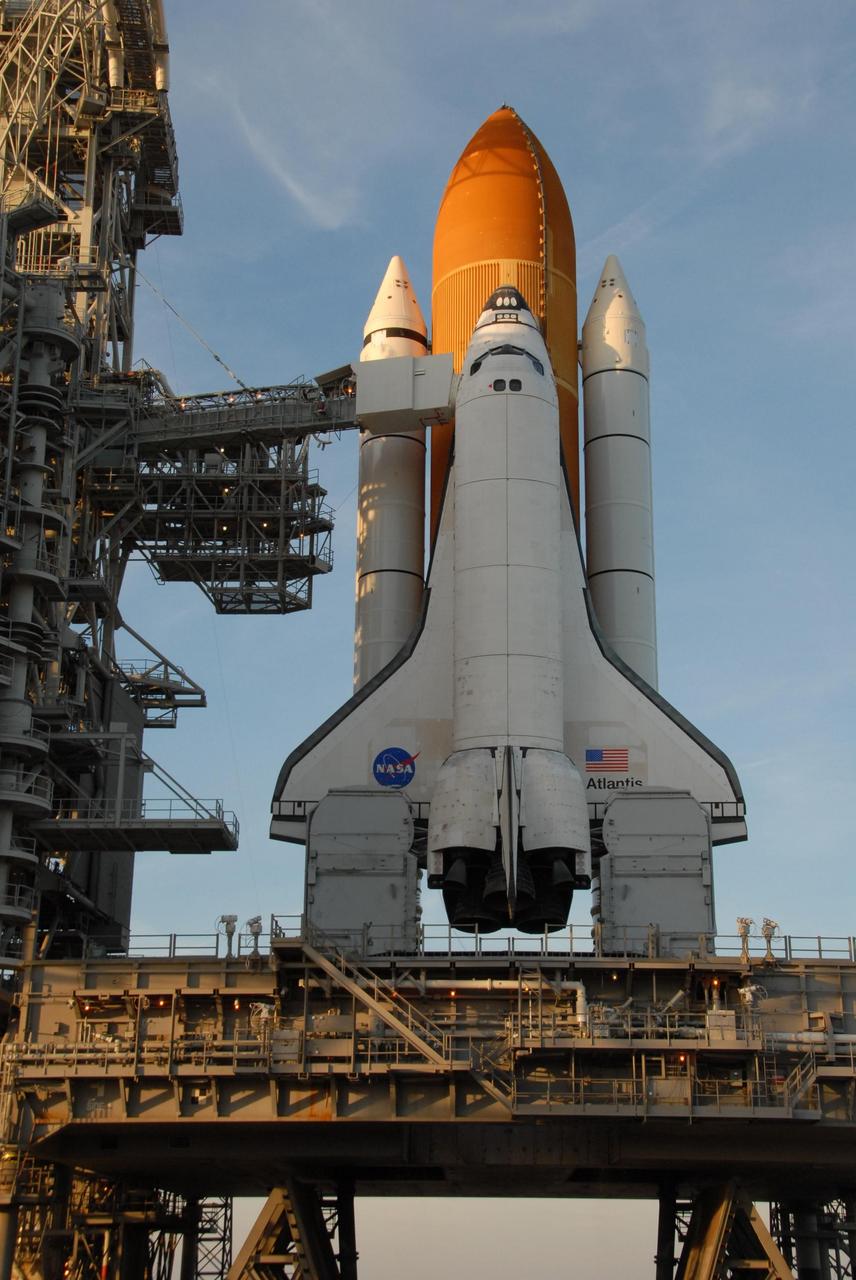
KENNEDY SPACE CENTER, FLA. -- In the late afternoon shadows, space shuttle Atlantis is still poised on the pad after its launch on mission STS-122 was postponed Thursday. It sits atop the mobile launcher platform. Shuttle program managers decided at 9:56 a.m. to postpone the launch because of an issue with a fuel cut-off sensor system inside the external fuel tank. This is one of several systems that protect the shuttle's main engines by triggering their shut down if fuel runs unexpectedly low. During countdown activities this morning, two sensors failed a routine prelaunch check. There are four engine cut-off, or ECO, sensors inside the liquid hydrogen section of the tank, and Launch Commit Criteria require three of the four sensor systems to be functioning properly. The tank's liquid oxygen and liquid hydrogen was drained from the tank, and preparations will begin for a possible launch attempt Friday. NASA's launch rules have a preplanned procedure that states in the case of ECO sensor system failure, engineers need to drain the tank and verify all the sensors are working as they go dry. Atlantis carries the Columbus Laboratory, the European Space Agency's largest contribution to the construction of the space station. When permanently attached to Node 2, the laboratory will carry out experiments in materials science, fluid physics and biosciences, as well as perform a number of technological applications, in a microgravity environment. Photo credit: NASA/George Shelton
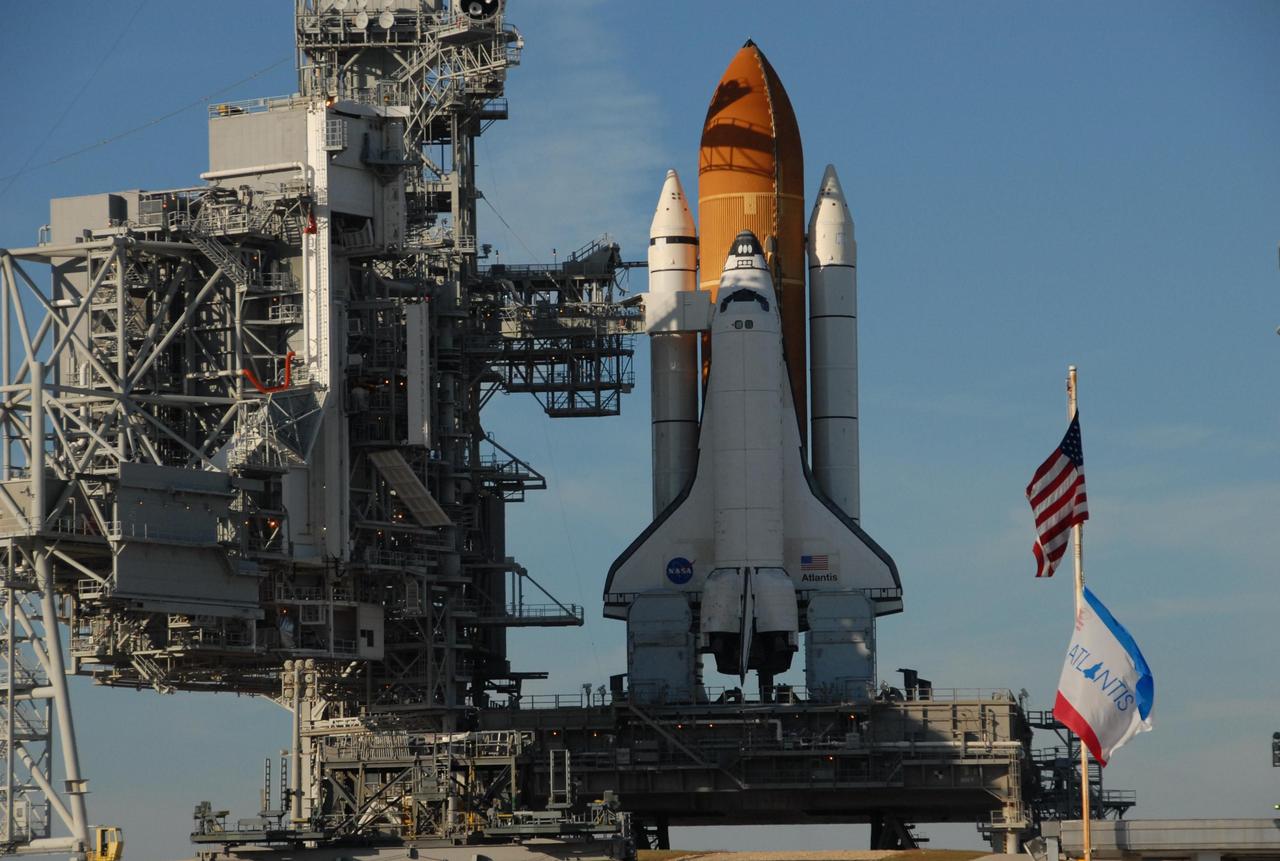
KENNEDY SPACE CENTER, FLA. -- In the late afternoon shadows, space shuttle Atlantis is still poised on the pad after its launch on mission STS-122 was postponed Thursday. It sits atop the mobile launcher platform. Shuttle program managers decided at 9:56 a.m. to postpone the launch because of an issue with a fuel cut-off sensor system inside the external fuel tank. This is one of several systems that protect the shuttle's main engines by triggering their shut down if fuel runs unexpectedly low. During countdown activities this morning, two sensors failed a routine prelaunch check. There are four engine cut-off, or ECO, sensors inside the liquid hydrogen section of the tank, and Launch Commit Criteria require three of the four sensor systems to be functioning properly. The tank's liquid oxygen and liquid hydrogen was drained from the tank, and preparations will begin for a possible launch attempt Friday. NASA's launch rules have a preplanned procedure that states in the case of ECO sensor system failure, engineers need to drain the tank and verify all the sensors are working as they go dry. Atlantis carries the Columbus Laboratory, the European Space Agency's largest contribution to the construction of the space station. When permanently attached to Node 2, the laboratory will carry out experiments in materials science, fluid physics and biosciences, as well as perform a number of technological applications, in a microgravity environment. Photo credit: NASA/George Shelton
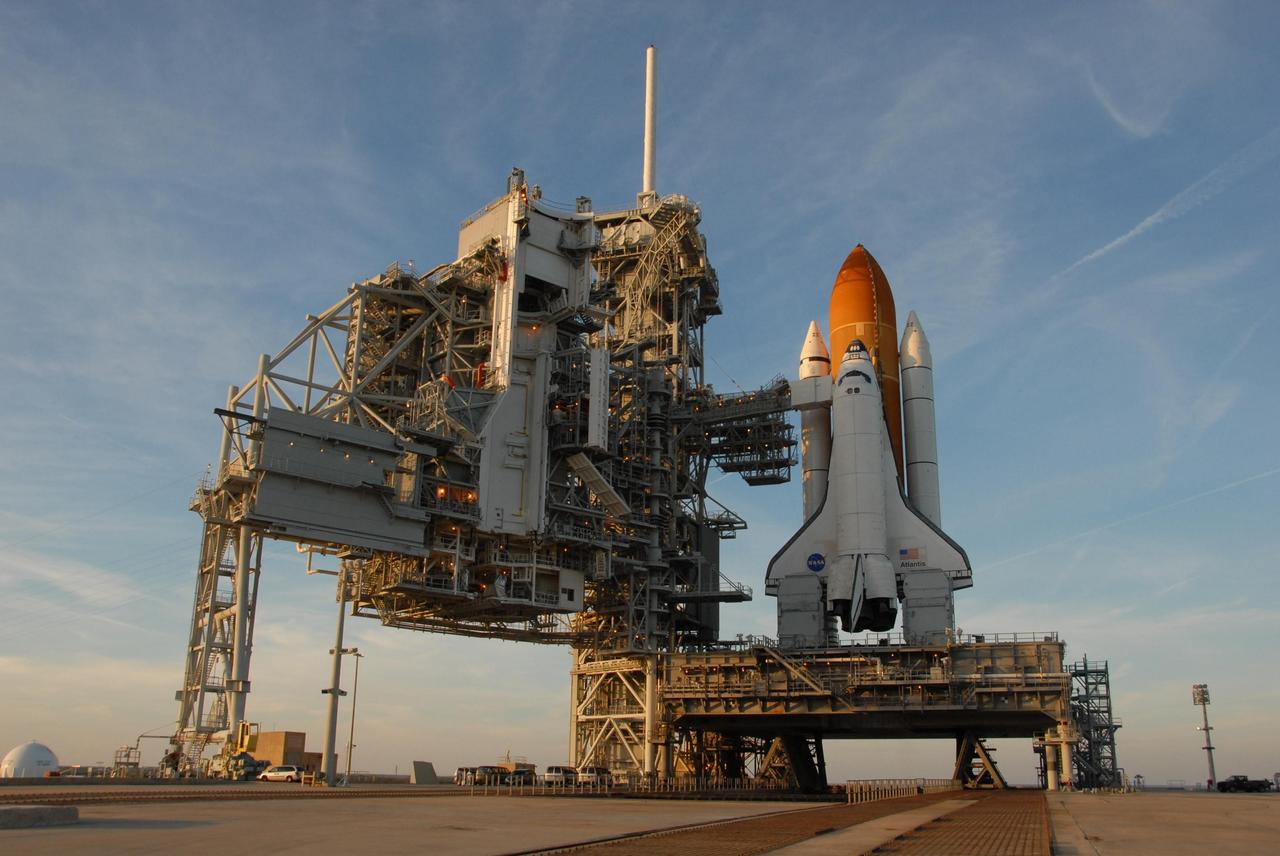
KENNEDY SPACE CENTER, FLA. -- In the late afternoon shadows, space shuttle Atlantis is still poised on the pad after its launch on mission STS-122 was postponed Thursday. It sits atop the mobile launcher platform. At left is seen the rotating service structure, which was rolled away for the launch. Shuttle program managers decided at 9:56 a.m. to postpone the launch because of an issue with a fuel cut-off sensor system inside the external fuel tank. This is one of several systems that protect the shuttle's main engines by triggering their shut down if fuel runs unexpectedly low. During countdown activities this morning, two sensors failed a routine prelaunch check. There are four engine cut-off, or ECO, sensors inside the liquid hydrogen section of the tank, and Launch Commit Criteria require three of the four sensor systems to be functioning properly. The tank's liquid oxygen and liquid hydrogen was drained from the tank, and preparations will begin for a possible launch attempt Friday. NASA's launch rules have a preplanned procedure that states in the case of ECO sensor system failure, engineers need to drain the tank and verify all the sensors are working as they go dry. Atlantis carries the Columbus Laboratory, the European Space Agency's largest contribution to the construction of the space station. When permanently attached to Node 2, the laboratory will carry out experiments in materials science, fluid physics and biosciences, as well as perform a number of technological applications, in a microgravity environment. Photo credit: NASA/George Shelton
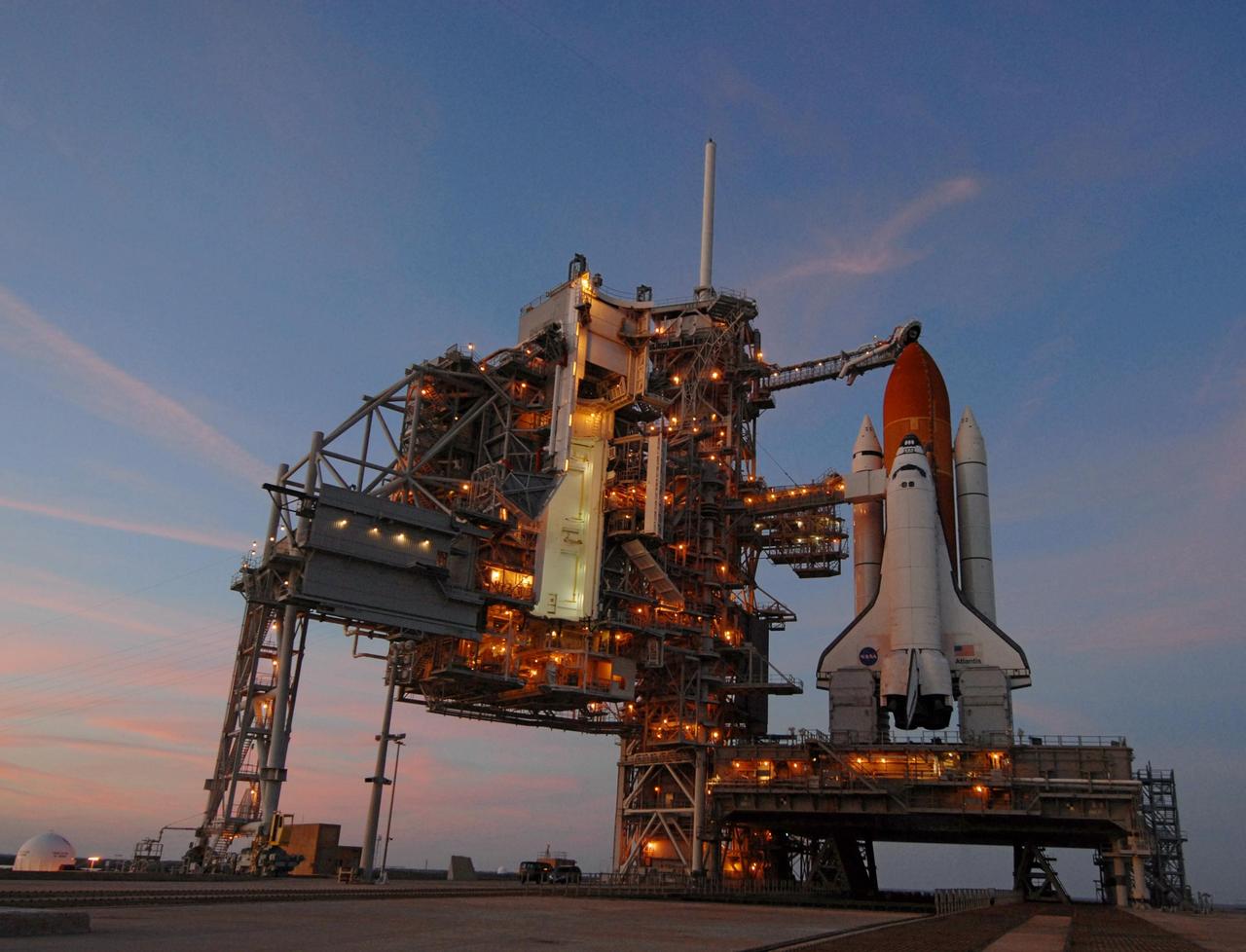
KENNEDY SPACE CENTER, FLA. -- Against a sunset sky streaked with pink, lights on the fixed and rotating service structures illuminate Launch Pad 39A where space shuttle Atlantis is still poised after its launch on mission STS-122 was postponed Thursday. Shuttle program managers decided at 9:56 a.m. to postpone the launch because of an issue with a fuel cut-off sensor system inside the external fuel tank. This is one of several systems that protect the shuttle's main engines by triggering their shut down if fuel runs unexpectedly low. During countdown activities this morning, two sensors failed a routine prelaunch check. There are four engine cut-off, or ECO, sensors inside the liquid hydrogen section of the tank, and Launch Commit Criteria require three of the four sensor systems to be functioning properly. The tank's liquid oxygen and liquid hydrogen was drained from the tank, and preparations will begin for a possible launch attempt Friday. NASA's launch rules have a preplanned procedure that states in the case of ECO sensor system failure, engineers need to drain the tank and verify all the sensors are working as they go dry. Atlantis carries the Columbus Laboratory, the European Space Agency's largest contribution to the construction of the space station. When permanently attached to Node 2, the laboratory will carry out experiments in materials science, fluid physics and biosciences, as well as perform a number of technological applications, in a microgravity environment. Photo credit: NASA/George Shelton