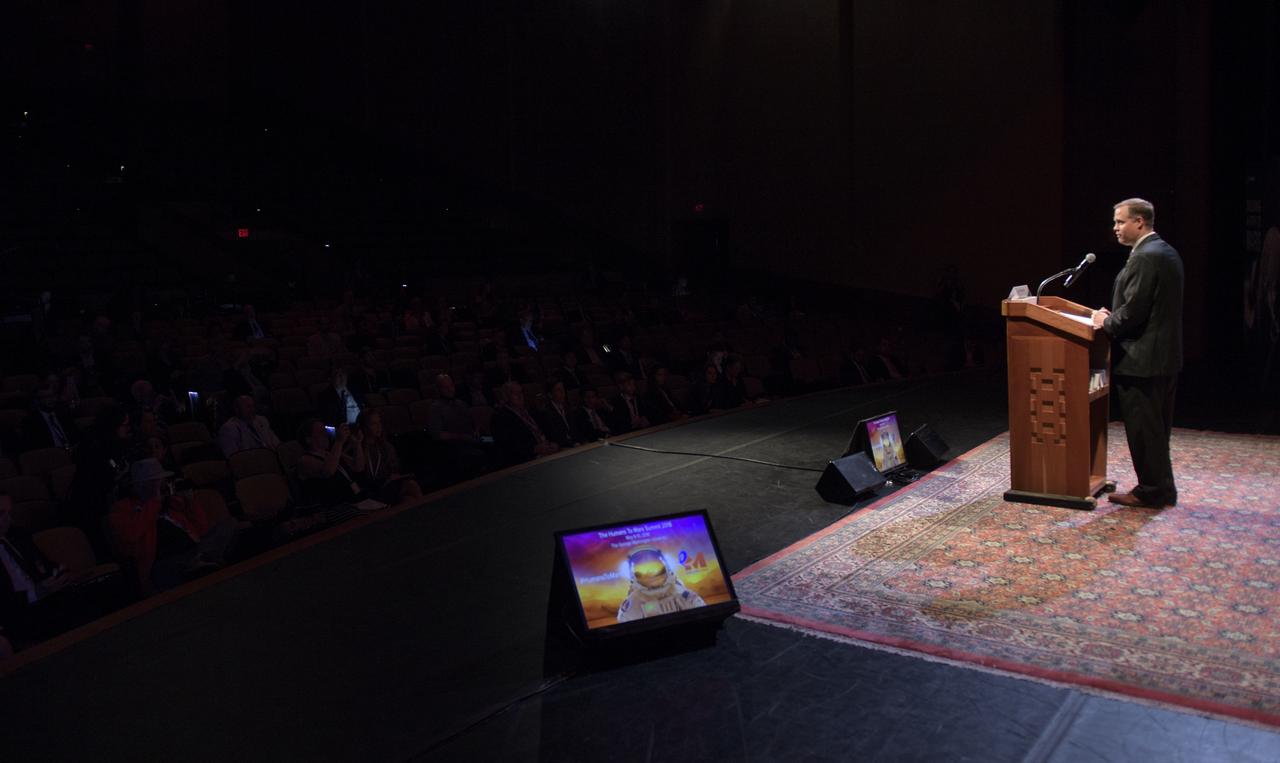
NASA Administrator Jim Bridenstine delivers the keynote speech at the Humans to Mars Summit (H2M), Wednesday, May 9, 2018 at George Washington University in Washington. Bridenstine joined more than 20 NASA scientists and technologists at the three-day event sponsored by Explore Mars Inc. It brought industry, government and the scientific, entertainment and academic communities together to discuss technology developments, foster partnerships, and encourage students to pursue STEAM careers. Photo Credit: (NASA/Bill Ingalls)
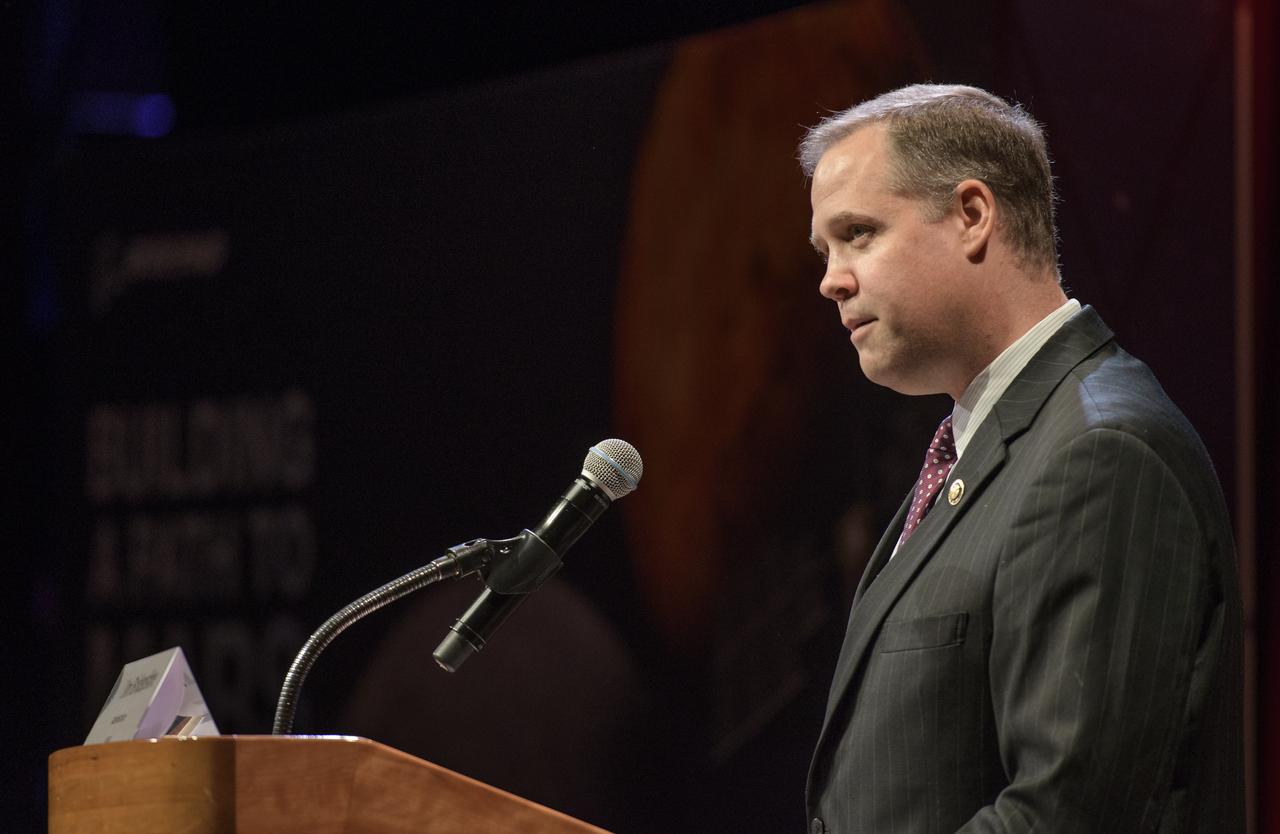
NASA Administrator Jim Bridenstine delivers the keynote speech at the Humans to Mars Summit (H2M), Wednesday, May 9, 2018 at George Washington University in Washington. Bridenstine joined more than 20 NASA scientists and technologists at the three-day event sponsored by Explore Mars Inc. It brought industry, government and the scientific, entertainment and academic communities together to discuss technology developments, foster partnerships, and encourage students to pursue STEAM careers. Photo Credit: (NASA/Bill Ingalls)
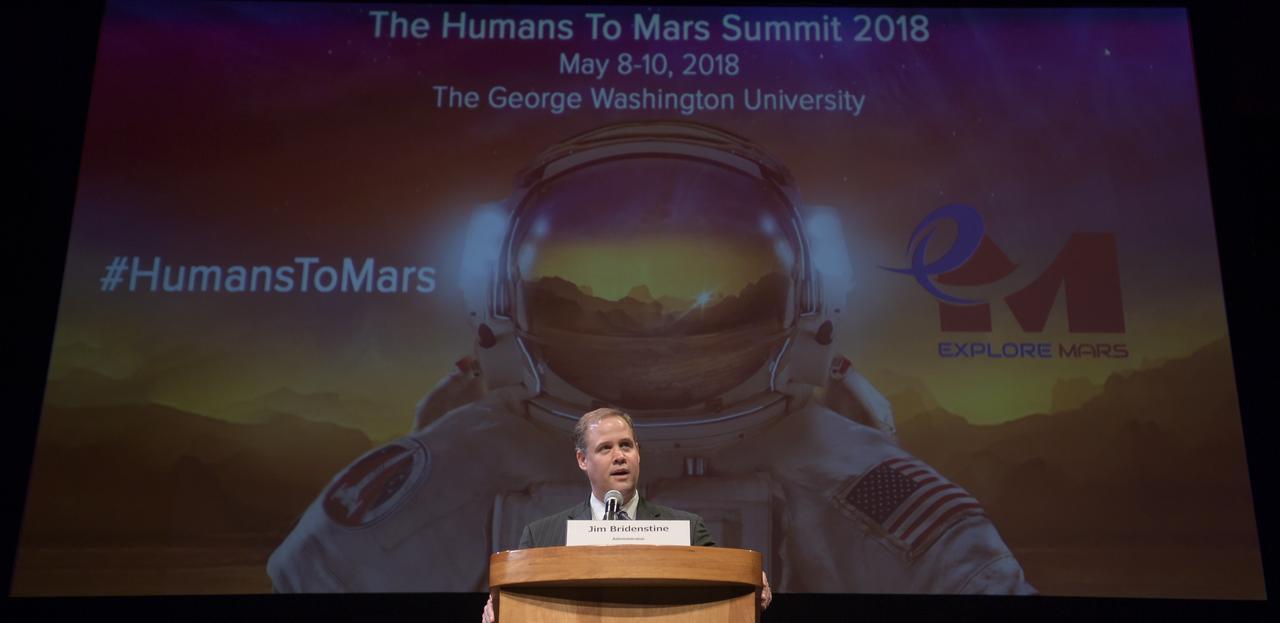
NASA Administrator Jim Bridenstine delivers the keynote speech at the Humans to Mars Summit (H2M), Wednesday, May 9, 2018 at George Washington University in Washington. Bridenstine joined more than 20 NASA scientists and technologists at the three-day event sponsored by Explore Mars Inc. It brought industry, government and the scientific, entertainment and academic communities together to discuss technology developments, foster partnerships, and encourage students to pursue STEAM careers. Photo Credit: (NASA/Bill Ingalls)
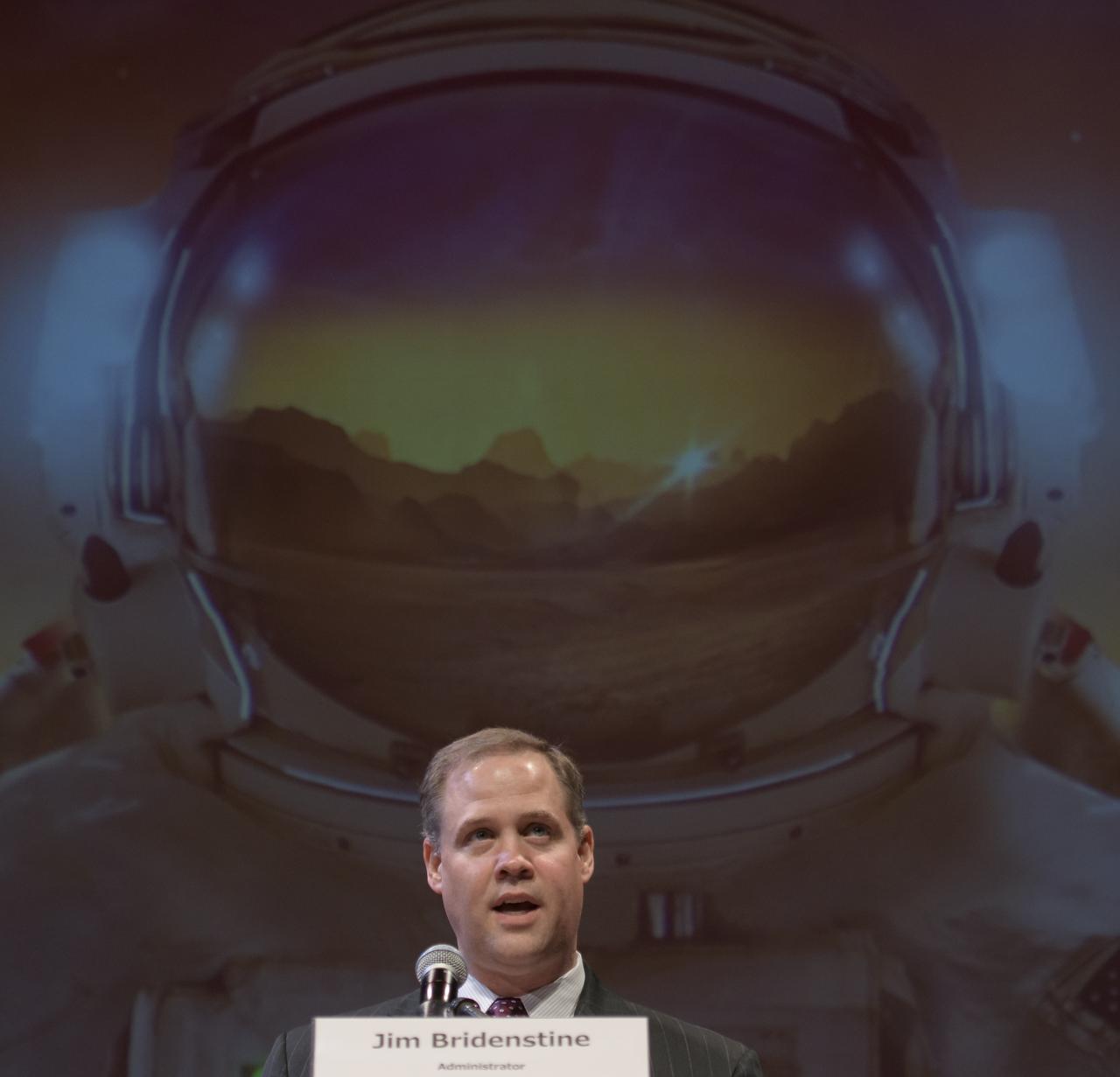
NASA Administrator Jim Bridenstine delivers the keynote speech at the Humans to Mars Summit (H2M), Wednesday, May 9, 2018 at George Washington University in Washington. Bridenstine joined more than 20 NASA scientists and technologists at the three-day event sponsored by Explore Mars Inc. It brought industry, government and the scientific, entertainment and academic communities together to discuss technology developments, foster partnerships, and encourage students to pursue STEAM careers. Photo Credit: (NASA/Bill Ingalls)
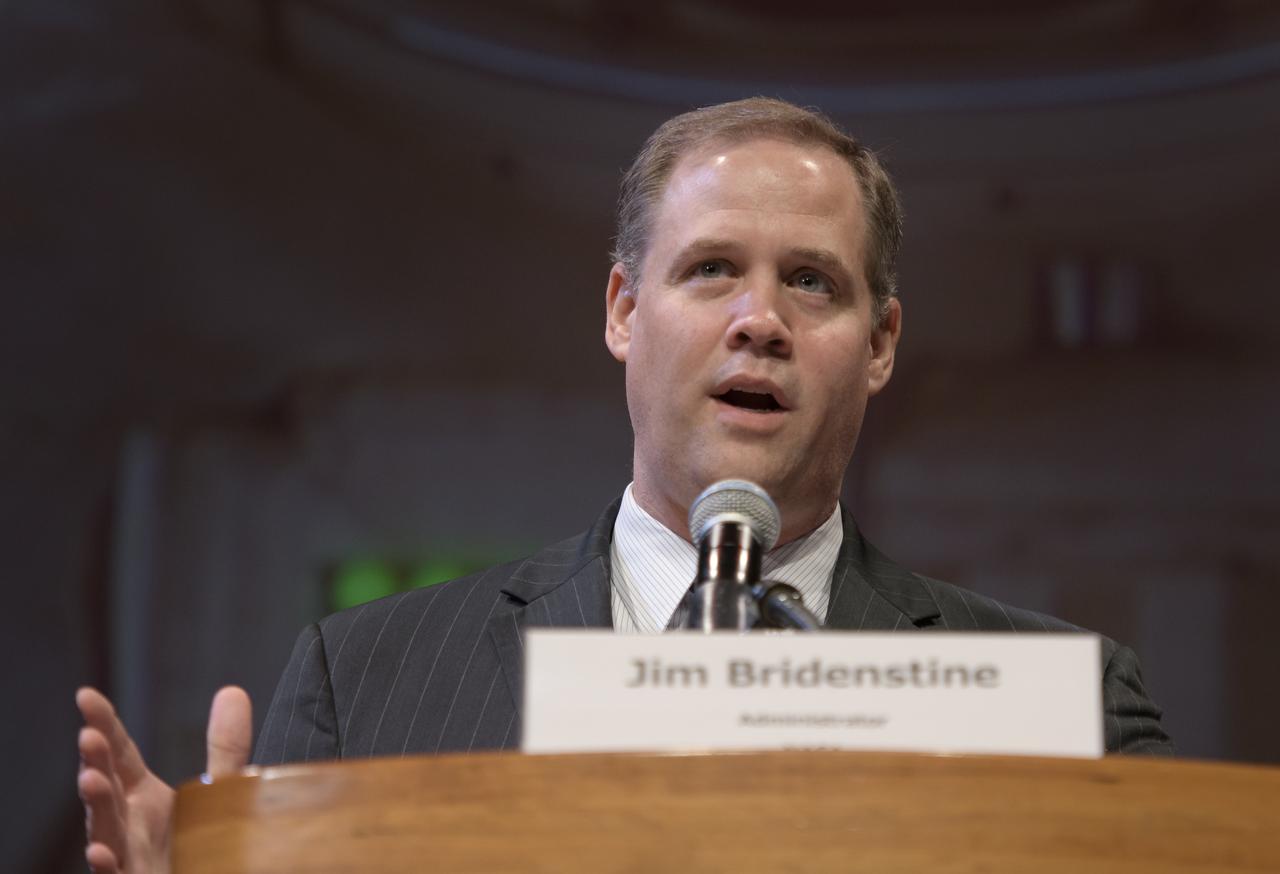
NASA Administrator Jim Bridenstine delivers the keynote speech at the Humans to Mars Summit (H2M), Wednesday, May 9, 2018 at George Washington University in Washington. Bridenstine joined more than 20 NASA scientists and technologists at the three-day event sponsored by Explore Mars Inc. It brought industry, government and the scientific, entertainment and academic communities together to discuss technology developments, foster partnerships, and encourage students to pursue STEAM careers. Photo Credit: (NASA/Bill Ingalls)
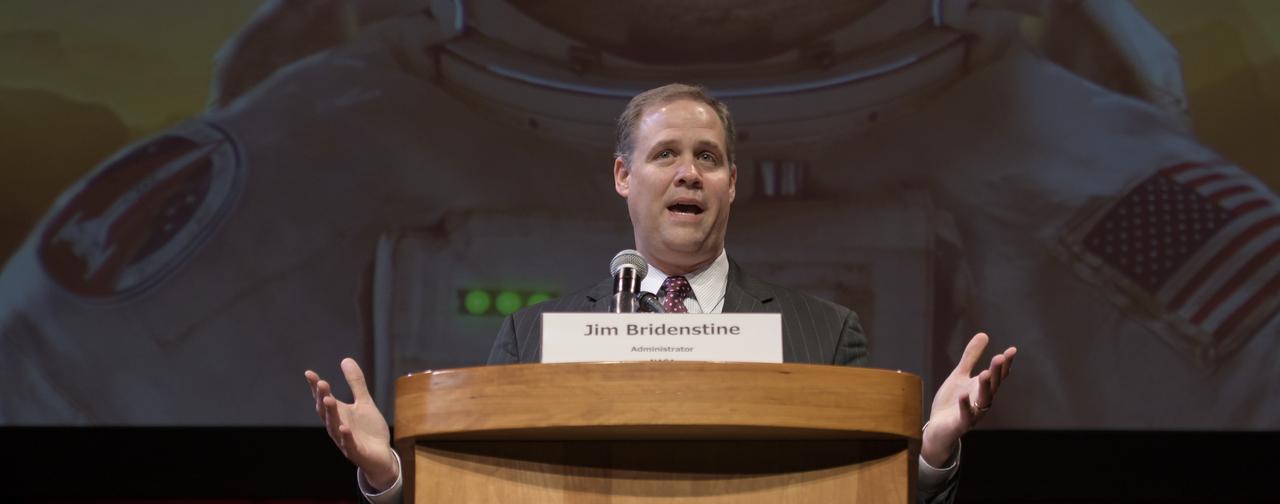
NASA Administrator Jim Bridenstine delivers the keynote speech at the Humans to Mars Summit (H2M), Wednesday, May 9, 2018 at George Washington University in Washington. Bridenstine joined more than 20 NASA scientists and technologists at the three-day event sponsored by Explore Mars Inc. It brought industry, government and the scientific, entertainment and academic communities together to discuss technology developments, foster partnerships, and encourage students to pursue STEAM careers. Photo Credit: (NASA/Bill Ingalls)
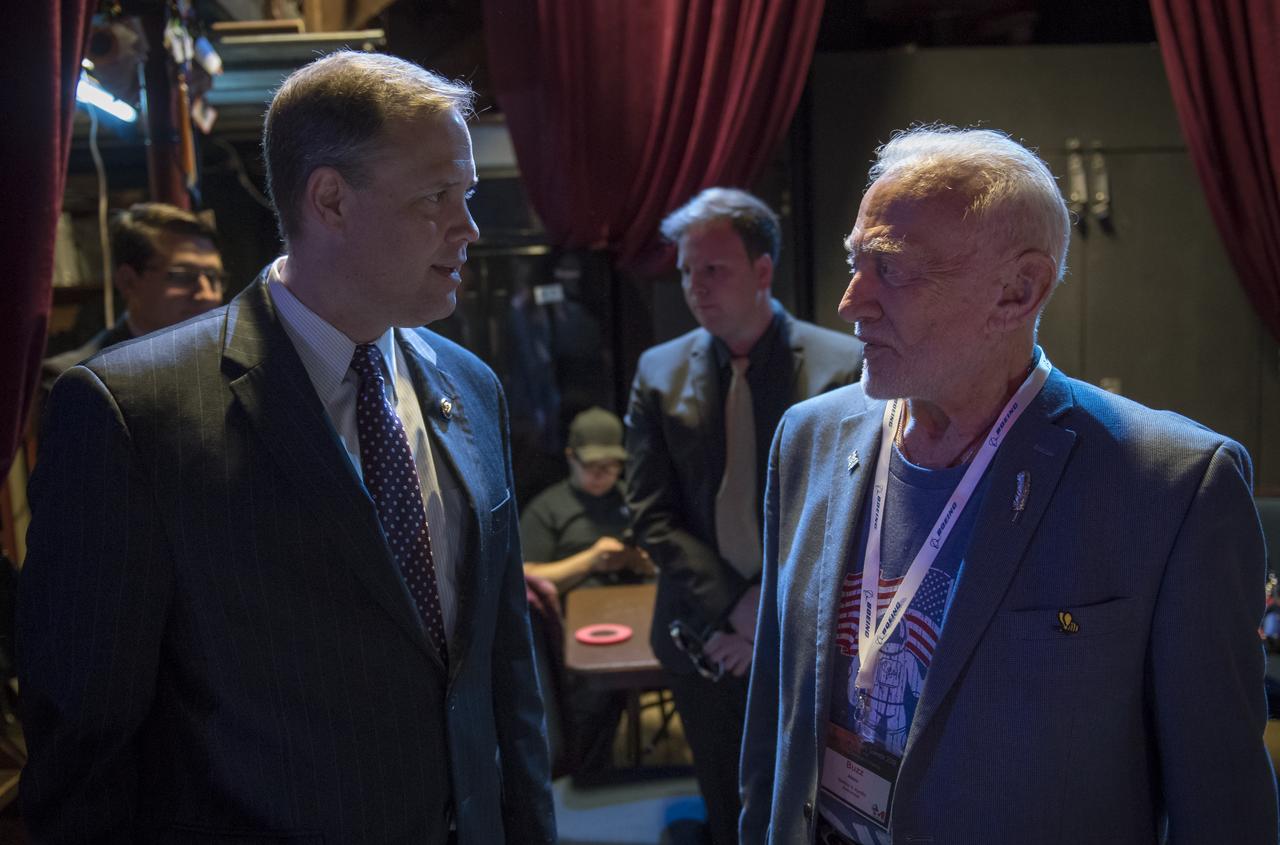
NASA Administrator Jim Bridenstine, left, meets back stage with former NASA astronaut Buzz Aldrin, prior to giving the keynote speech at the Humans to Mars Summit (H2M), Wednesday, May 9, 2018 at George Washington University in Washington. Bridenstine joined more than 20 NASA scientists and technologists at the three-day event sponsored by Explore Mars Inc. It brought industry, government and the scientific, entertainment and academic communities together to discuss technology developments, foster partnerships, and encourage students to pursue STEAM careers. Photo Credit: (NASA/Bill Ingalls)

Dr. Stephen Hawking, a professor of mathematics at the University of Cambridge, left, and his daughter Lucy Hawking talk about their co-authored children's book "George's Secret Key to the Universe" Monday, April 21, 2008, at George Washington University's Morton Auditorium in Washington. Stephen Hawking also delivered a speech entitled "Why we should go into space" during a lecture that is part of a series honoring NASA's 50th Anniversary, Photo Credit: (NASA/Paul. E. Alers)
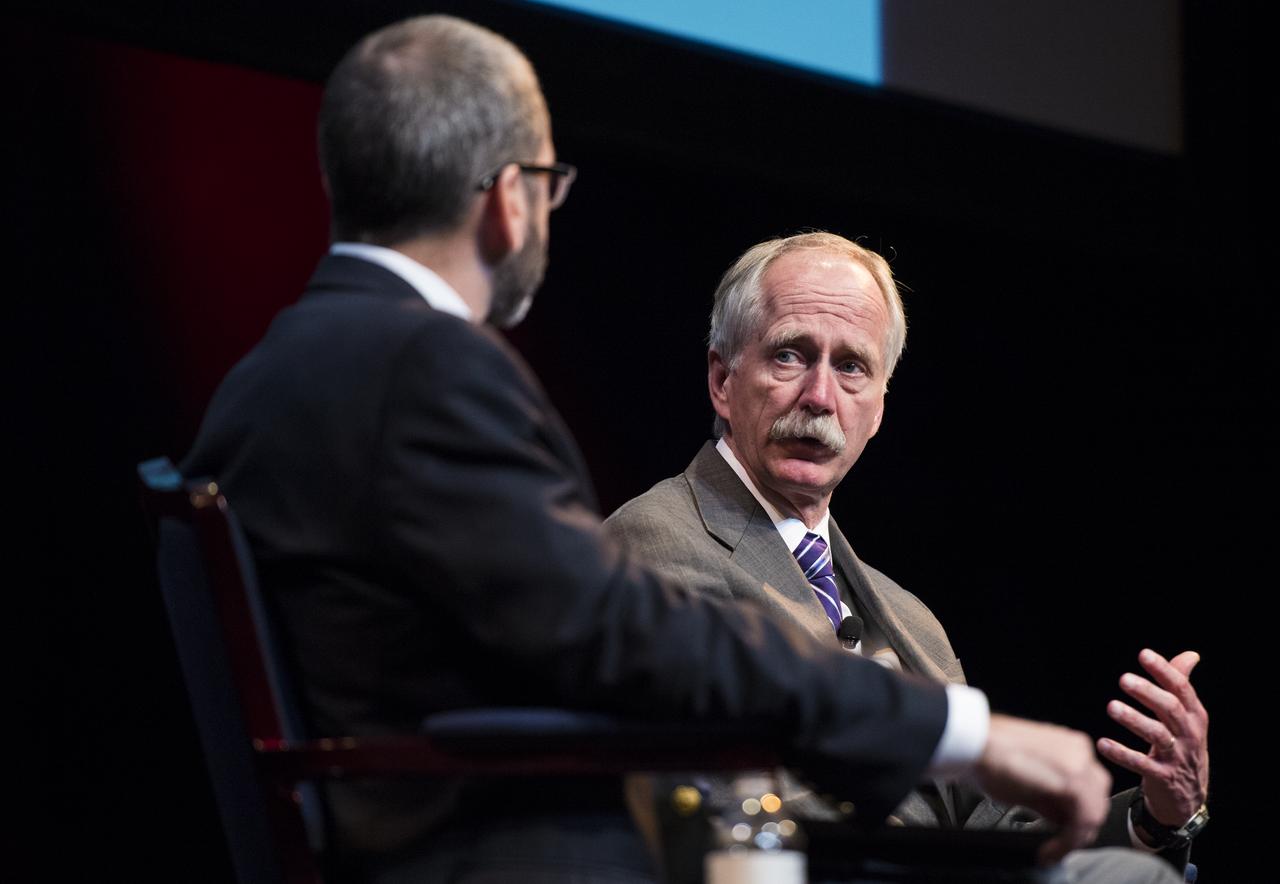
William Gerstenmaier, NASA Associatate Administrator for Human Exploration and Operations, right, answers a question during a panel discussion moderated by PBS NewsHour's Miles O'Brien at the Humans to Mars Summit on April 22, 2014 at George Washington University in Washington, DC. Photo Credit: (NASA/Joel Kowsky)
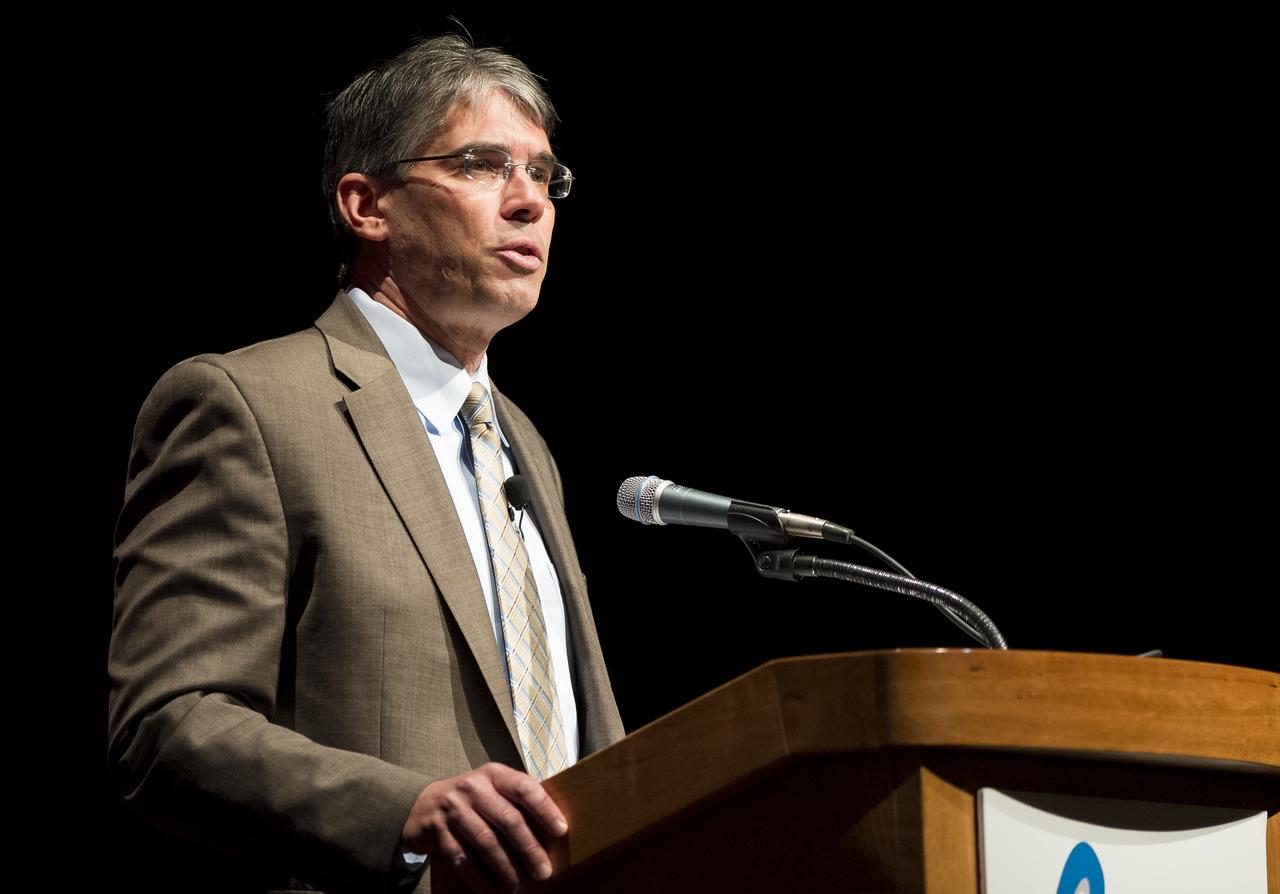
Michael Gazarik, NASA Associate Administrator for Space Technology gives a short presentation on NASA's human exploration path to Mars during a panel discussion moderated by PBS NewsHour's Miles O'Brien at the Humans to Mars Summit on April 22, 2014 at George Washington University in Washington, DC. Photo Credit: (NASA/Joel Kowsky)

Dr. Stephen Hawking, a professor of mathematics at the University of Cambridge, delivers a speech entitled "Why we should go into space" during a lecture that is part of a series honoring NASA's 50th Anniversary, Monday, April 21, 2008, at George Washington University's Morton Auditorium in Washington. Photo Credit: (NASA/Paul. E. Alers)

Dr. Stephen Hawking, a professor of mathematics at the University of Cambridge, delivers a speech entitled "Why we should go into space" during a lecture that is part of a series honoring NASA's 50th Anniversary, Monday, April 21, 2008, at George Washington University's Morton Auditorium in Washington. Photo Credit: (NASA/Paul. E. Alers)

Dr. Stephen Hawking, a professor of mathematics at the University of Cambridge, delivers a speech entitled "Why we should go into space" during a lecture that is part of a series honoring NASA's 50th Anniversary, Monday, April 21, 2008, at George Washington University's Morton Auditorium in Washington. Photo Credit: (NASA/Paul. E. Alers)

Dr. Stephen Hawking, a professor of mathematics at the University of Cambridge, delivers a speech entitled "Why we should go into space" during a lecture that is part of a series honoring NASA's 50th Anniversary, Monday, April 21, 2008, at George Washington University's Morton Auditorium in Washington. Photo Credit: (NASA/Paul. E. Alers)

Dr. Stephen Hawking, a professor of mathematics at the University of Cambridge, delivers a speech entitled "Why we should go into space" during a lecture that is part of a series honoring NASA's 50th Anniversary, Monday, April 21, 2008, at George Washington University's Morton Auditorium in Washington. Photo Credit: (NASA/Paul. E. Alers)

Dr. Stephen Hawking, a professor of mathematics at the University of Cambridge, delivers a speech entitled "Why we should go into space" during a lecture that is part of a series honoring NASA's 50th Anniversary, Monday, April 21, 2008, at George Washington University's Morton Auditorium in Washington. Photo Credit: (NASA/Paul. E. Alers)

Dr. Stephen Hawking, a professor of mathematics at the University of Cambridge, delivers a speech entitled "Why we should go into space" during a lecture that is part of a series honoring NASA's 50th Anniversary, Monday, April 21, 2008, at George Washington University's Morton Auditorium in Washington. Photo Credit: (NASA/Paul. E. Alers)
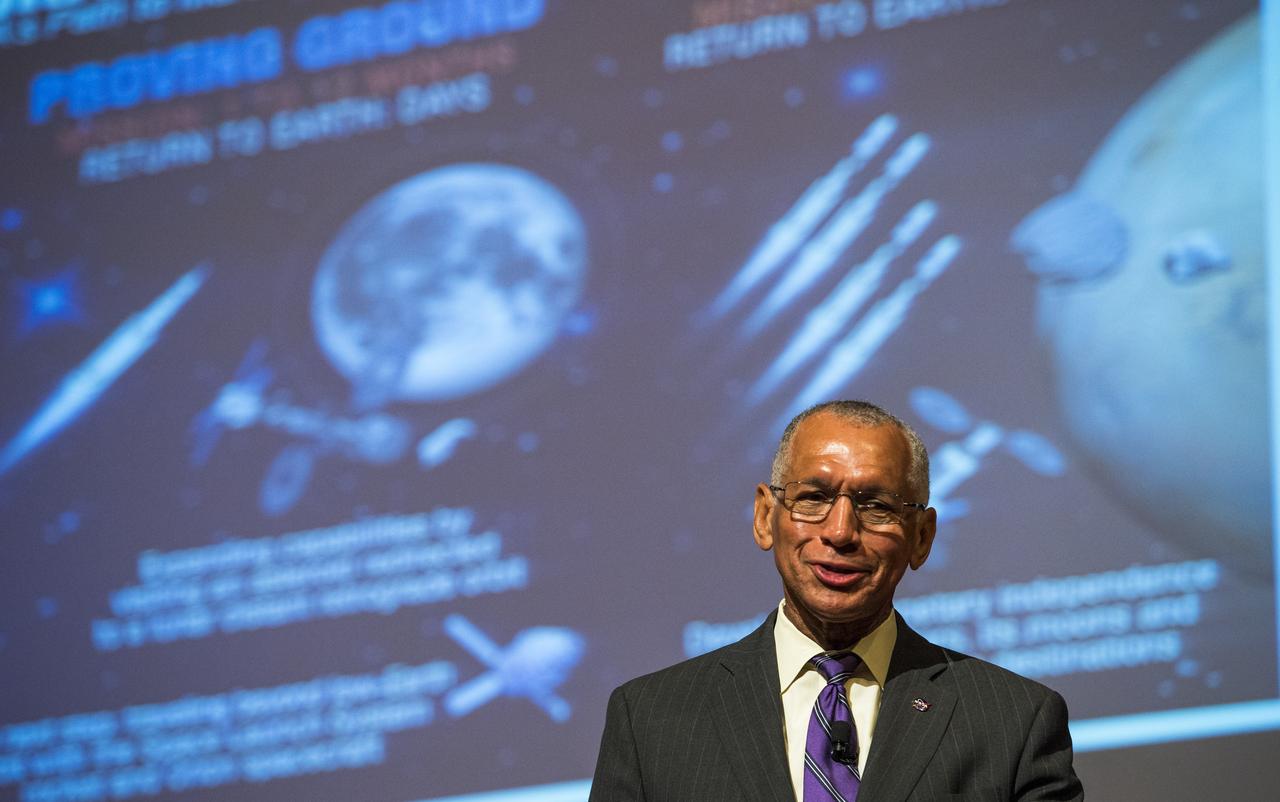
NASA Administrator Charles Bolden answers questions from the audience after giving the opening keynote address at the Humans to Mars Summit on April 22, 2014 at George Washington University in Washington, DC. Administrator Bolden spoke of NASA's path to the human exploration of Mars during his remarks. Photo Credit: (NASA/Joel Kowsky)
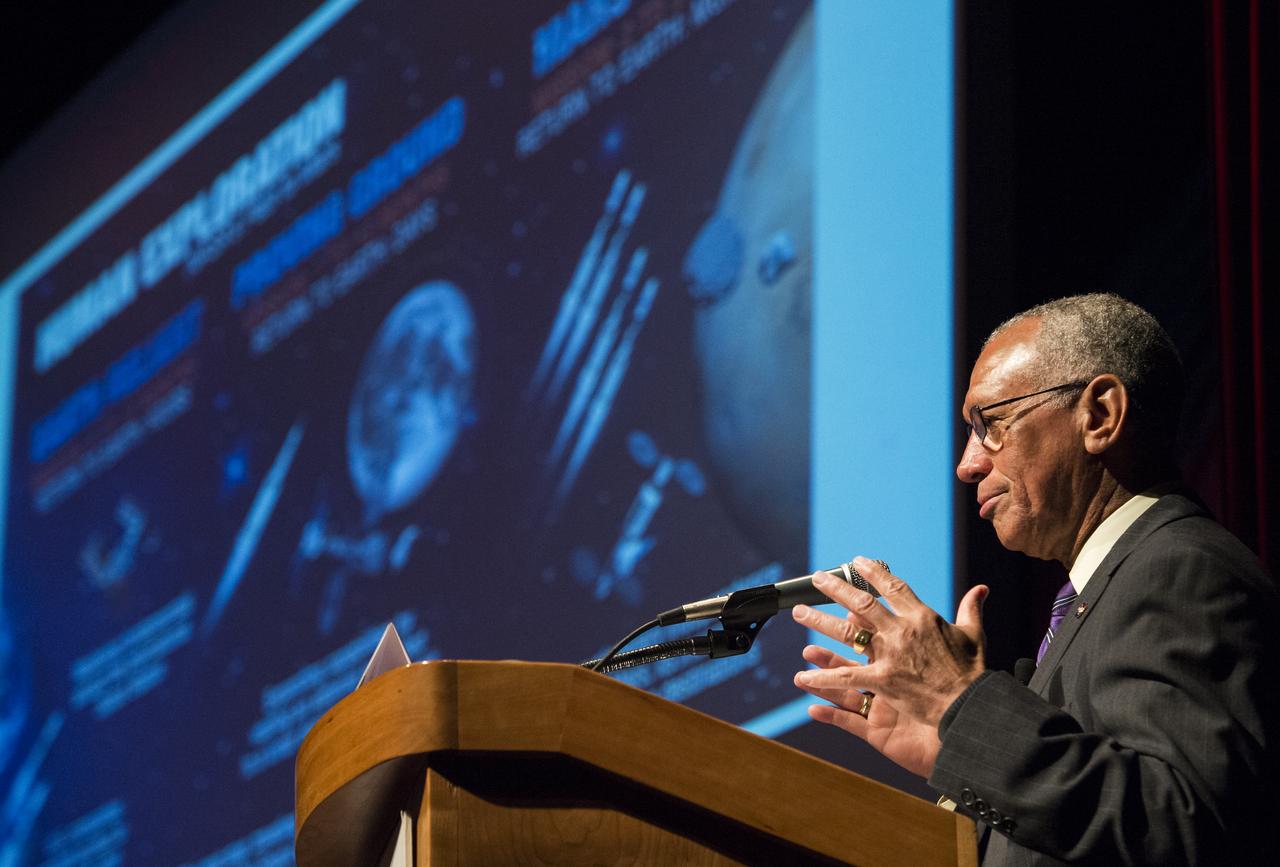
NASA Administrator Charles Bolden delivers the opening keynote address at the Humans to Mars Summit on April 22, 2014 at George Washington University in Washington, DC. Administrator Bolden spoke of NASA's path to the human exploration of Mars during his remarks. Photo Credit: (NASA/Joel Kowsky)
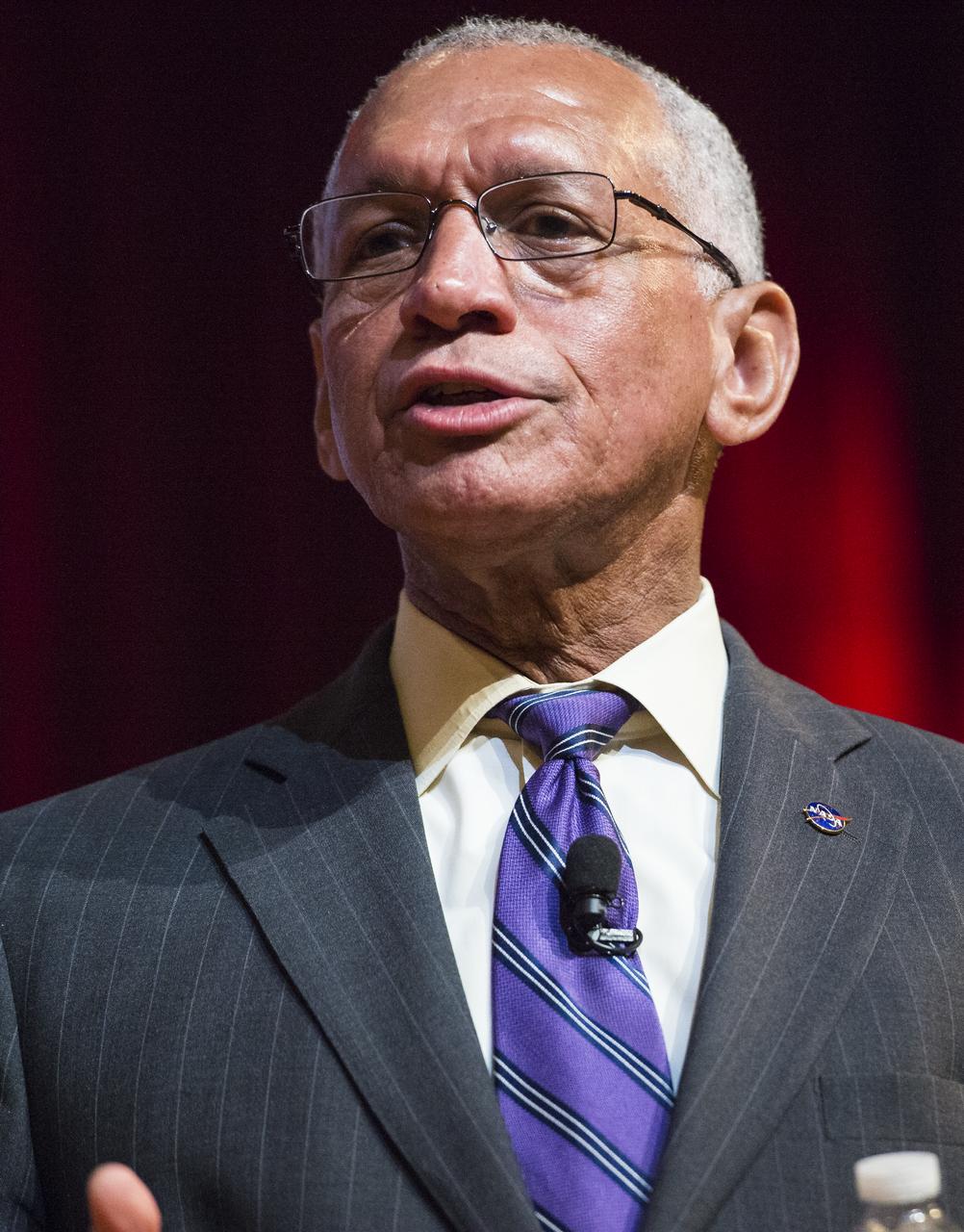
NASA Administrator Charles Bolden answers questions from the audience after giving the opening keynote address at the Humans to Mars Summit on April 22, 2014 at George Washington University in Washington, DC. Administrator Bolden spoke of NASA's path to the human exploration of Mars during his remarks. Photo Credit: (NASA/Joel Kowsky)
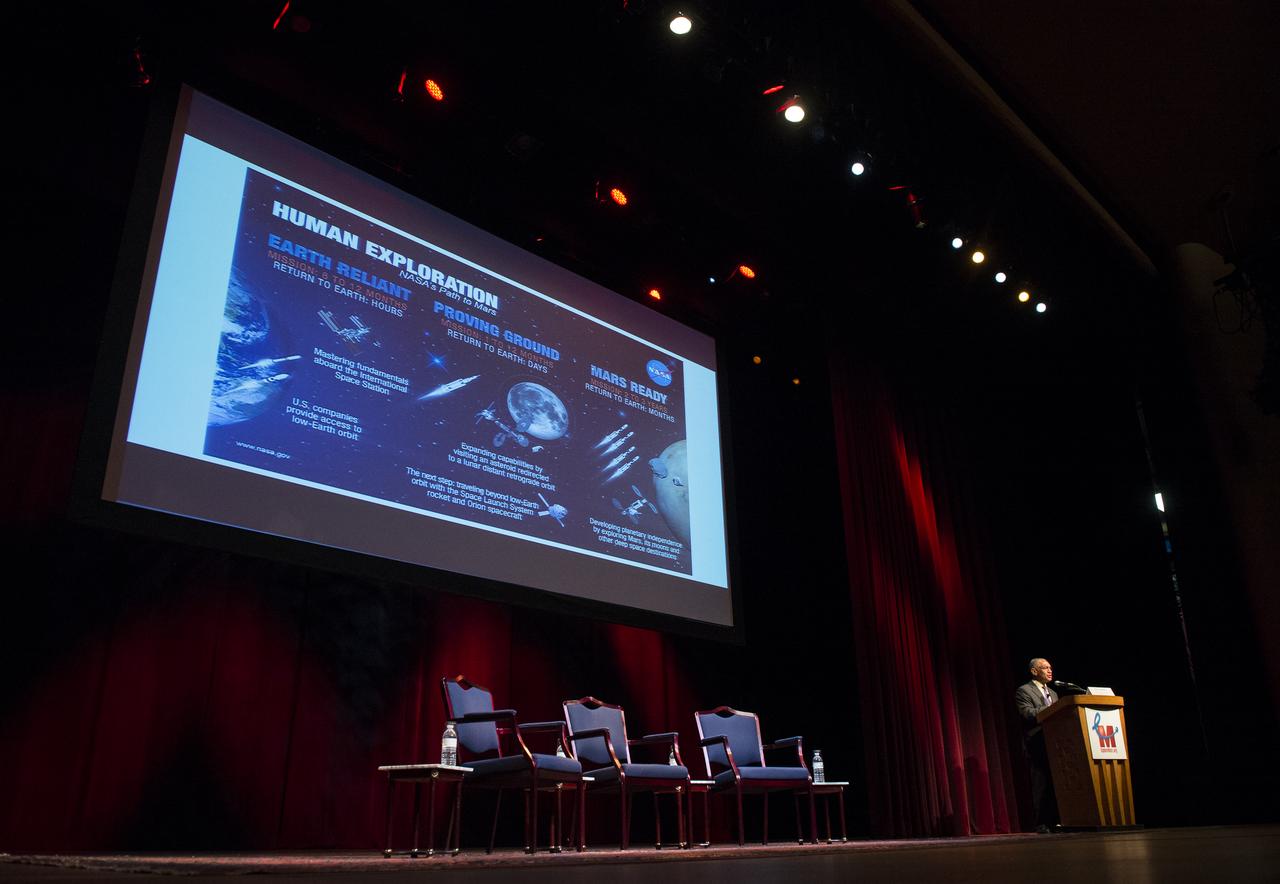
NASA Administrator Charles Bolden delivers the opening keynote address at the Humans to Mars Summit on April 22, 2014 at George Washington University in Washington, DC. Administrator Bolden spoke of NASA's path to the human exploration of Mars during his remarks. Photo Credit: (NASA/Joel Kowsky)

Rebecca Spyke-Keiser, NASA's Associate Deputy Administrator for policy integration, gives opening remarks at the Women, Innovation and Aerospace event celebrating Women's History Month at the George Washington University Jack Morton Auditorium, Thursday, March 8, 2012 in Washington. The WIA day-long event will help to foster a discussion for students and early career professionals about how to continue to encourage women to enter and succeed in the field of aerospace. Photo Credit: (NASA/Carla Cioffi)
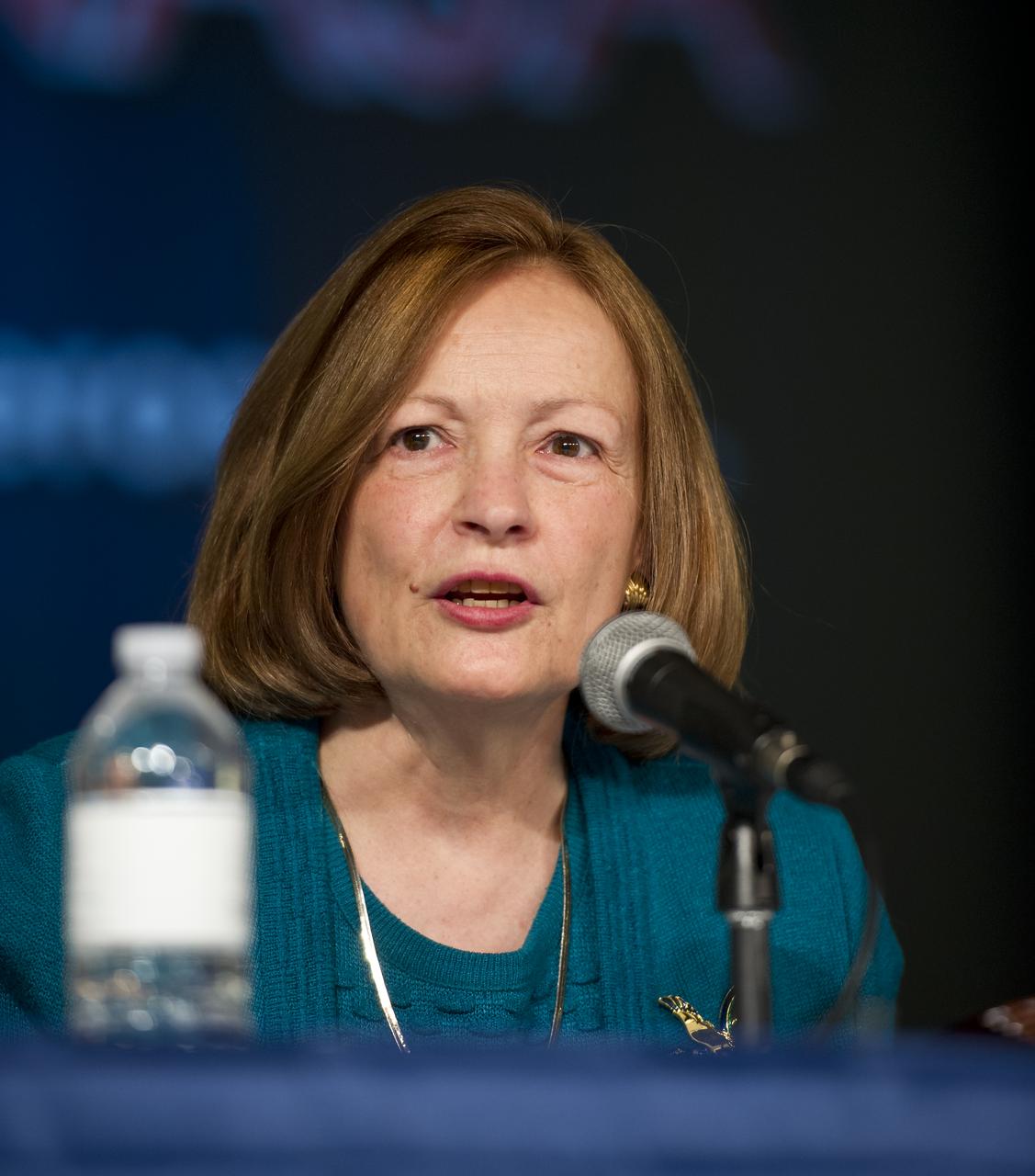
Marcia Smith, President, spacepolicyonline.com, participates in a panel discussion at the Women, Innovation and Aerospace event celebrating Women's History Month at the George Washington University Jack Morton Auditorium, Thursday, March 8, 2012 in Washington. The WIA day-long event will help to foster a discussion for students and early career professionals about how to continue to encourage women to enter and succeed in the field of aerospace. Photo Credit: (NASA/Carla Cioffi)

NASA Deputy Administrator, Lori Garver, far right, gives the keynote address at the Women, Innovation and Aerospace event celebrating Women's History Month at the George Washington University Jack Morton Auditorium, Thursday, March 8, 2012 in Washington. The WIA day-long event will help to foster a discussion for students and early career professionals about how to continue to encourage women to enter and succeed in the field of aerospace. Photo Credit: (NASA/Carla Cioffi)

Kathy Sullivan, NOAA (National Oceanic and Atmospheric Administration) Deputy Administrator and former NASA astronaut, participates in a panel discussion at the Women, Innovation and Aerospace event celebrating Women's History Month at the George Washington University Jack Morton Auditorium, Thursday, March 8, 2012 in Washington. The WIA day-long event will help to foster a discussion for students and early career professionals about how to continue to encourage women to enter and succeed in the field of aerospace. Photo Credit: (NASA/Carla Cioffi)
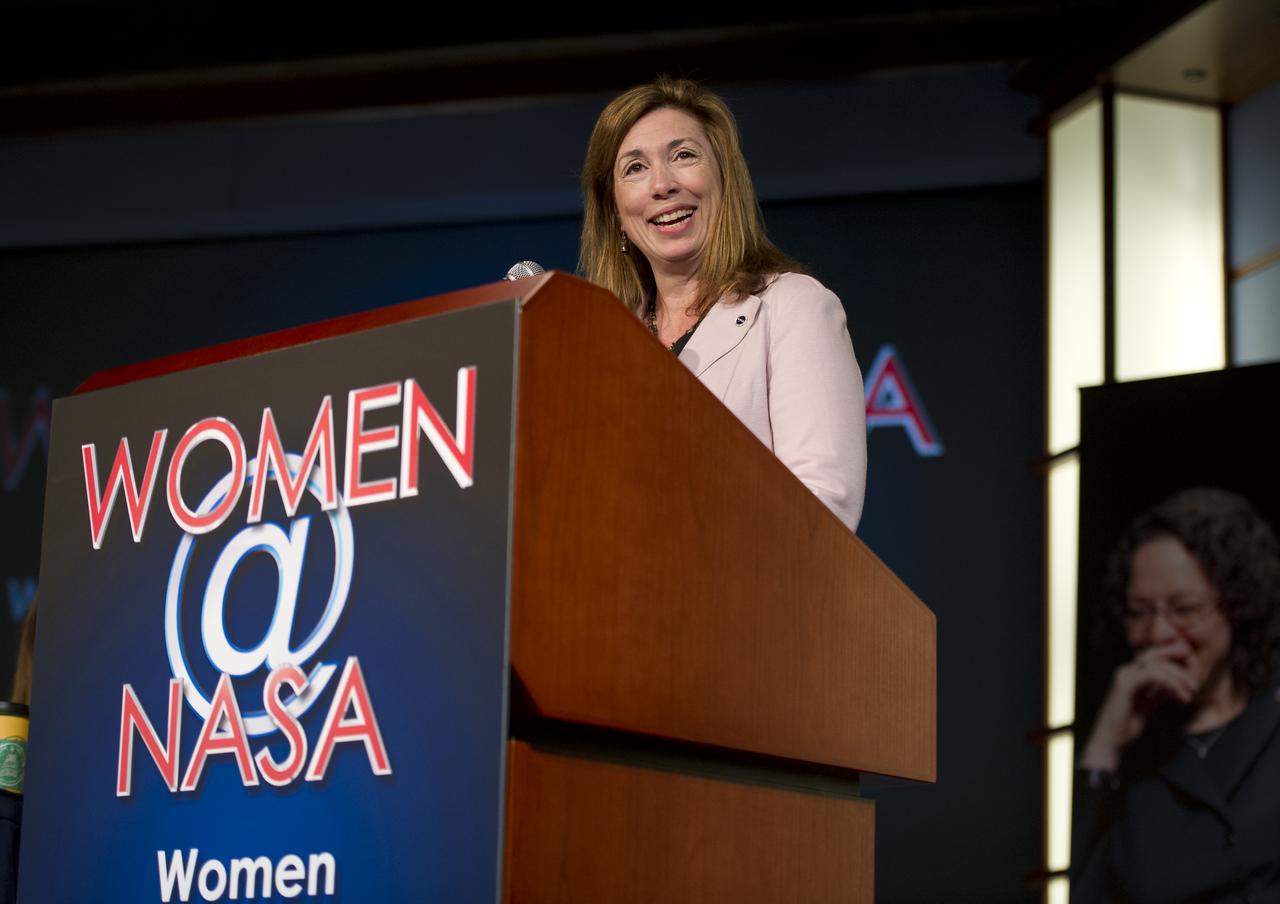
NASA Deputy Administrator, Lori Garver, gives the keynote address at the Women, Innovation and Aerospace event celebrating Women's History Month at the George Washington University Jack Morton Auditorium, Thursday, March 8, 2012 in Washington. The WIA day-long event will help to foster a discussion for students and early career professionals about how to continue to encourage women to enter and succeed in the field of aerospace. Photo Credit: (NASA/Carla Cioffi)
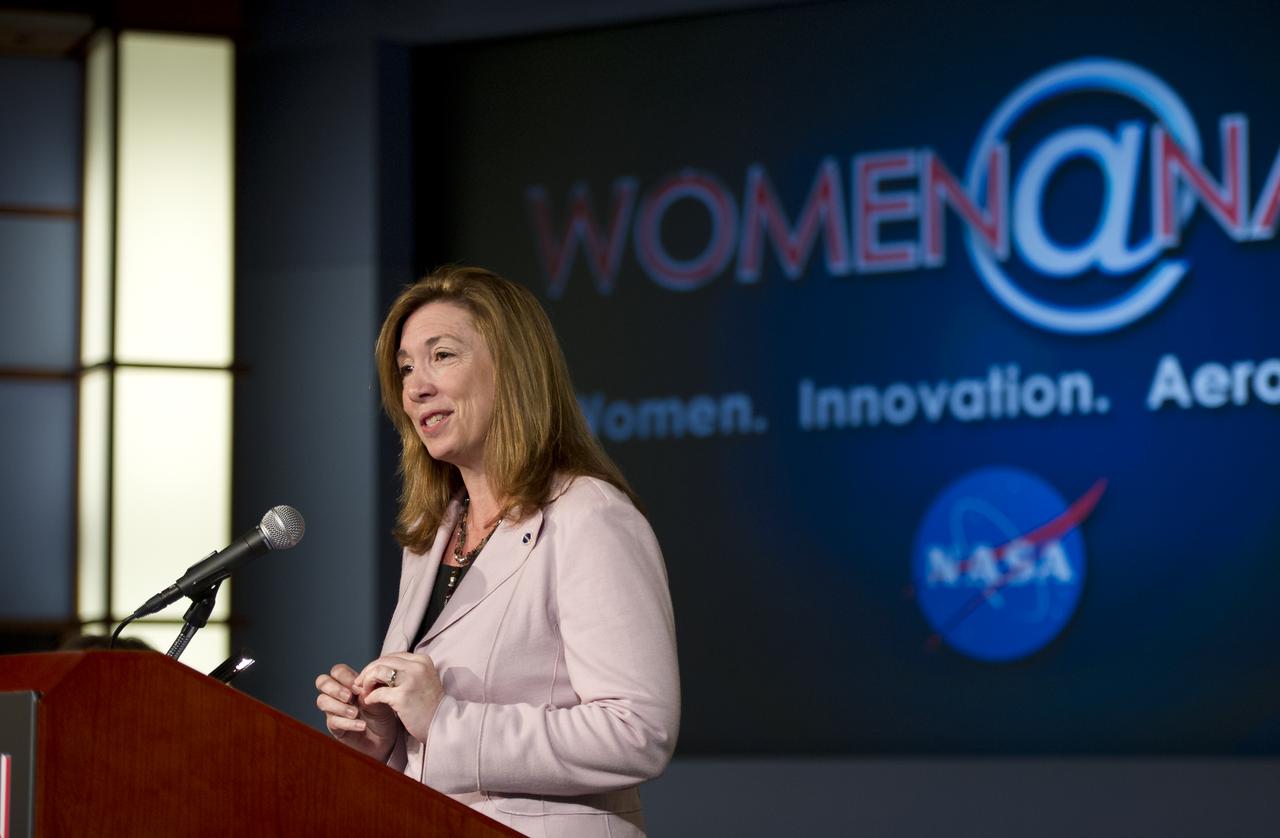
NASA Deputy Administrator, Lori Garver, gives the keynote address at the Women, Innovation and Aerospace event celebrating Women's History Month at the George Washington University Jack Morton Auditorium, Thursday, March 8, 2012 in Washington. The WIA day-long event will help to foster a discussion for students and early career professionals about how to continue to encourage women to enter and succeed in the field of aerospace. Photo Credit: (NASA/Carla Cioffi)
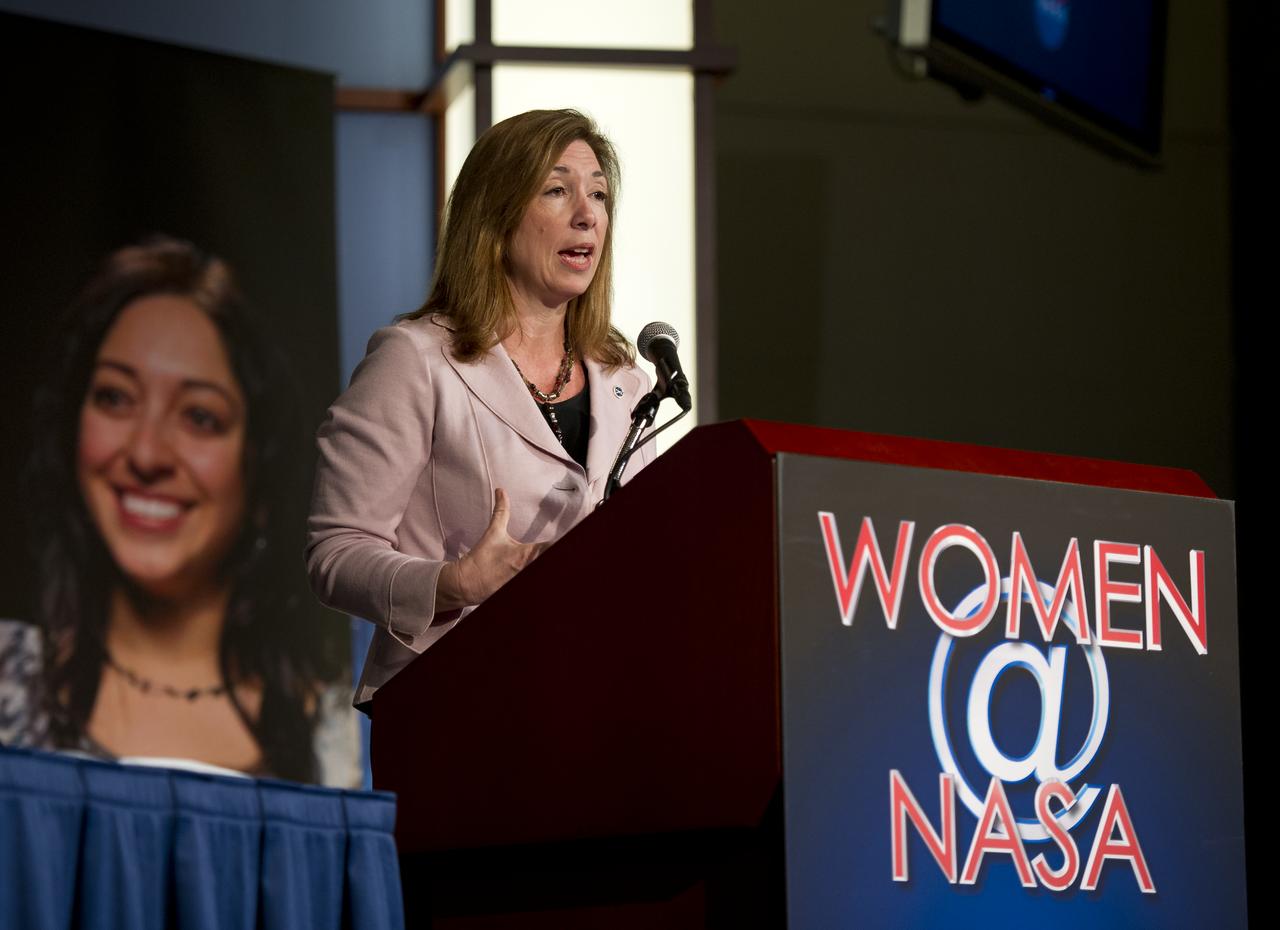
NASA Deputy Administrator, Lori Garver, gives the keynote address at the Women, Innovation and Aerospace event celebrating Women's History Month at the George Washington University Jack Morton Auditorium, Thursday, March 8, 2012 in Washington. The WIA day-long event will help to foster a discussion for students and early career professionals about how to continue to encourage women to enter and succeed in the field of aerospace. Photo Credit: (NASA/Carla Cioffi)
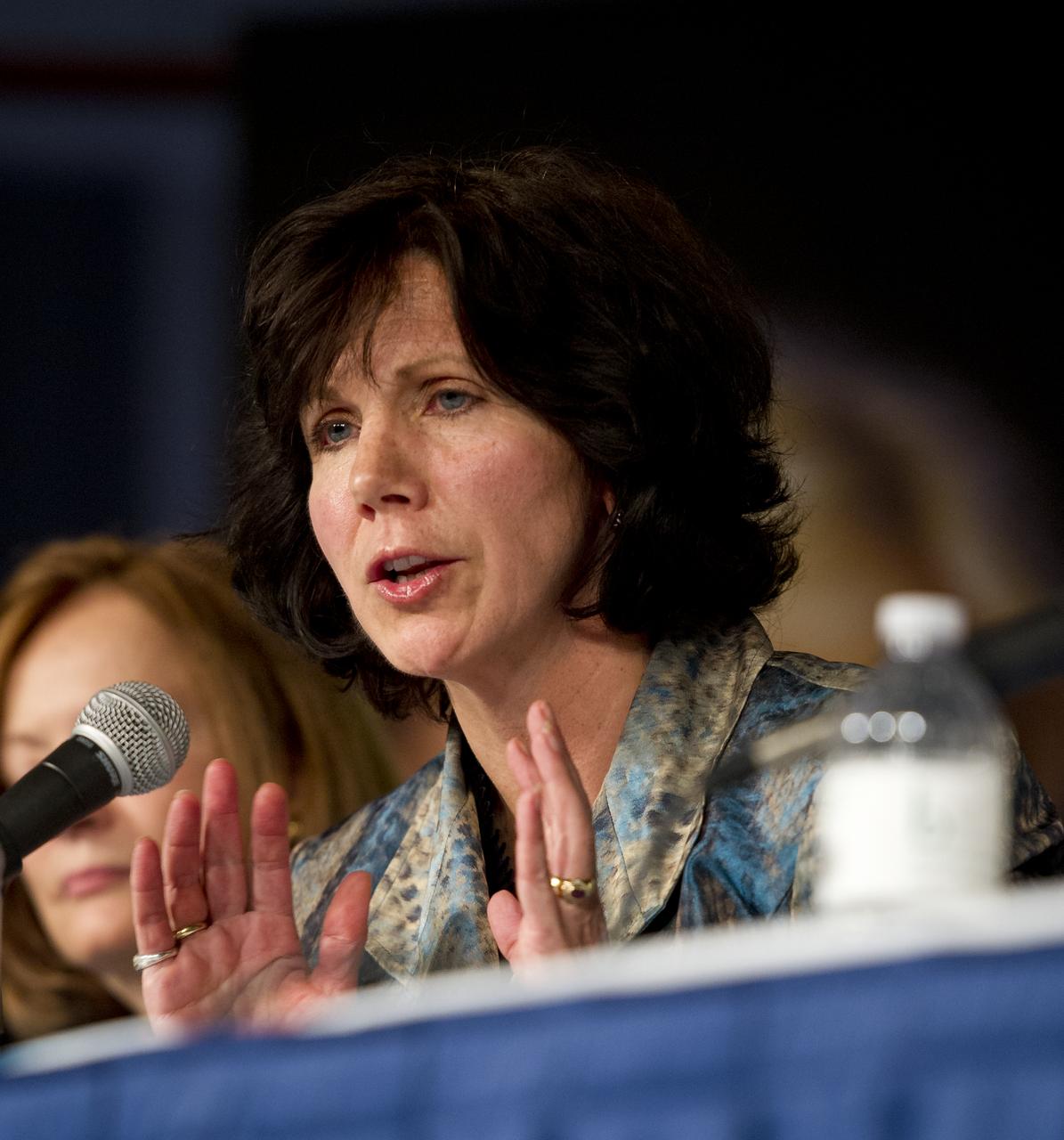
Catherine Didion, Senior Fellow, National Academy of Engineering, participates in a panel discussion at the Women, Innovation and Aerospace event celebrating Women's History Month at the George Washington University Jack Morton Auditorium, Thursday, March 8, 2012 in Washington. The WIA day-long event will help to foster a discussion for students and early career professionals about how to continue to encourage women to enter and succeed in the field of aerospace. Photo Credit: (NASA/Carla Cioffi)

Veronica Villalobos, Director, Office of Diversity and Inclusion, Office of Personnel Management, participates in a panel discussion at the Women, Innovation and Aerospace event celebrating Women's History Month at the George Washington University Jack Morton Auditorium, Thursday, March 8, 2012 in Washington. The WIA day-long event will help to foster a discussion for students and early career professionals about how to continue to encourage women to enter and succeed in the field of aerospace. Photo Credit: (NASA/Carla Cioffi)
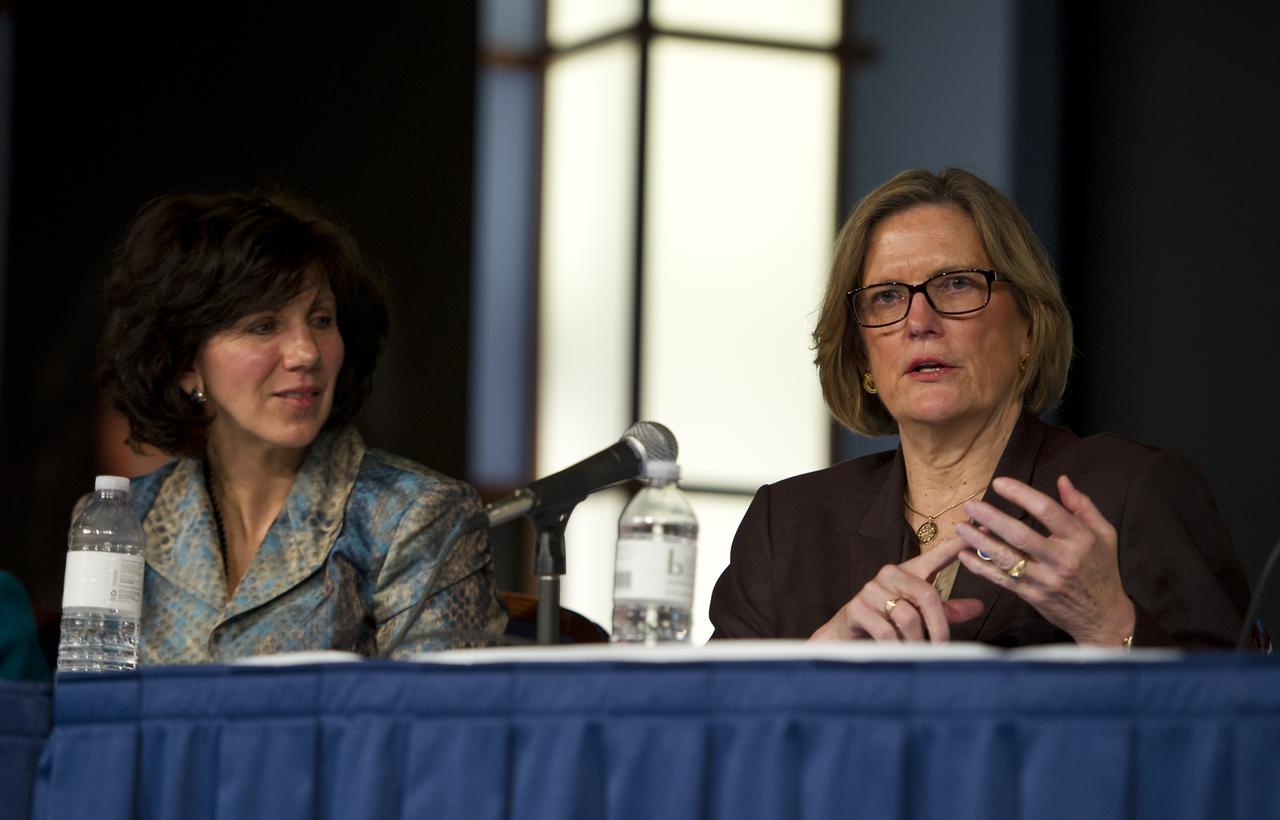
Kathy Sullivan, right, NOAA (National Oceanic and Atmospheric Administration) Deputy Administrator and former NASA astronaut, participates in a panel discussion at the Women, Innovation and Aerospace event celebrating Women's History Month at the George Washington University Jack Morton Auditorium, Thursday, March 8, 2012 in Washington. Sullivan is joined by Catherine Didion, Senior Fellow, National Academy of Engineering. The WIA day-long event will help to foster a discussion for students and early career professionals about how to continue to encourage women to enter and succeed in the field of aerospace. Photo Credit: (NASA/Carla Cioffi)
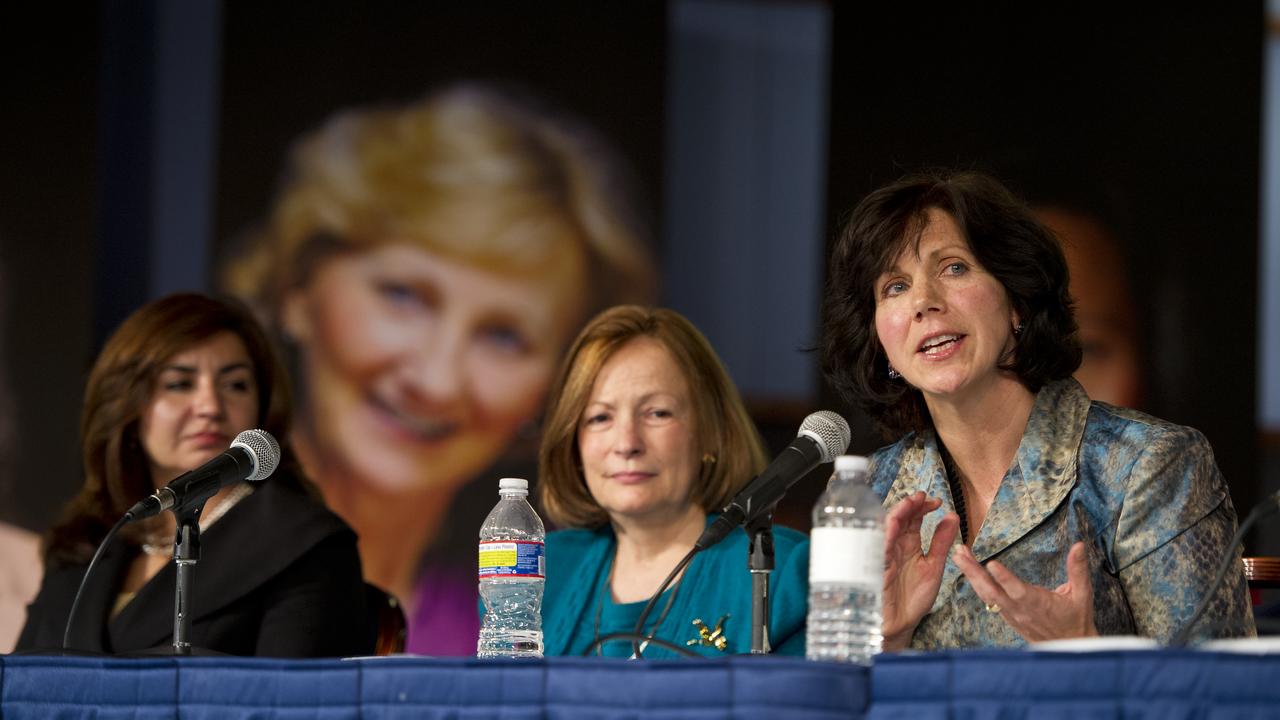
Catherine Didion, far right, Senior Fellow, National Academy of Engineering, participates in a panel discussion at the Women, Innovation and Aerospace event celebrating Women's History Month at the George Washington University Jack Morton Auditorium, Thursday, March 8, 2012 in Washington. Didion is joined by Marcia Smith, President, Space Policy Online.com, and Veronica Villalobos, Director, Office of Diversity and Inclusion, Office of Personnel Management, far left. The WIA day-long event will help to foster a discussion for students and early career professionals about how to continue to encourage women to enter and succeed in the field of aerospace. Photo Credit: (NASA/Carla Cioffi)
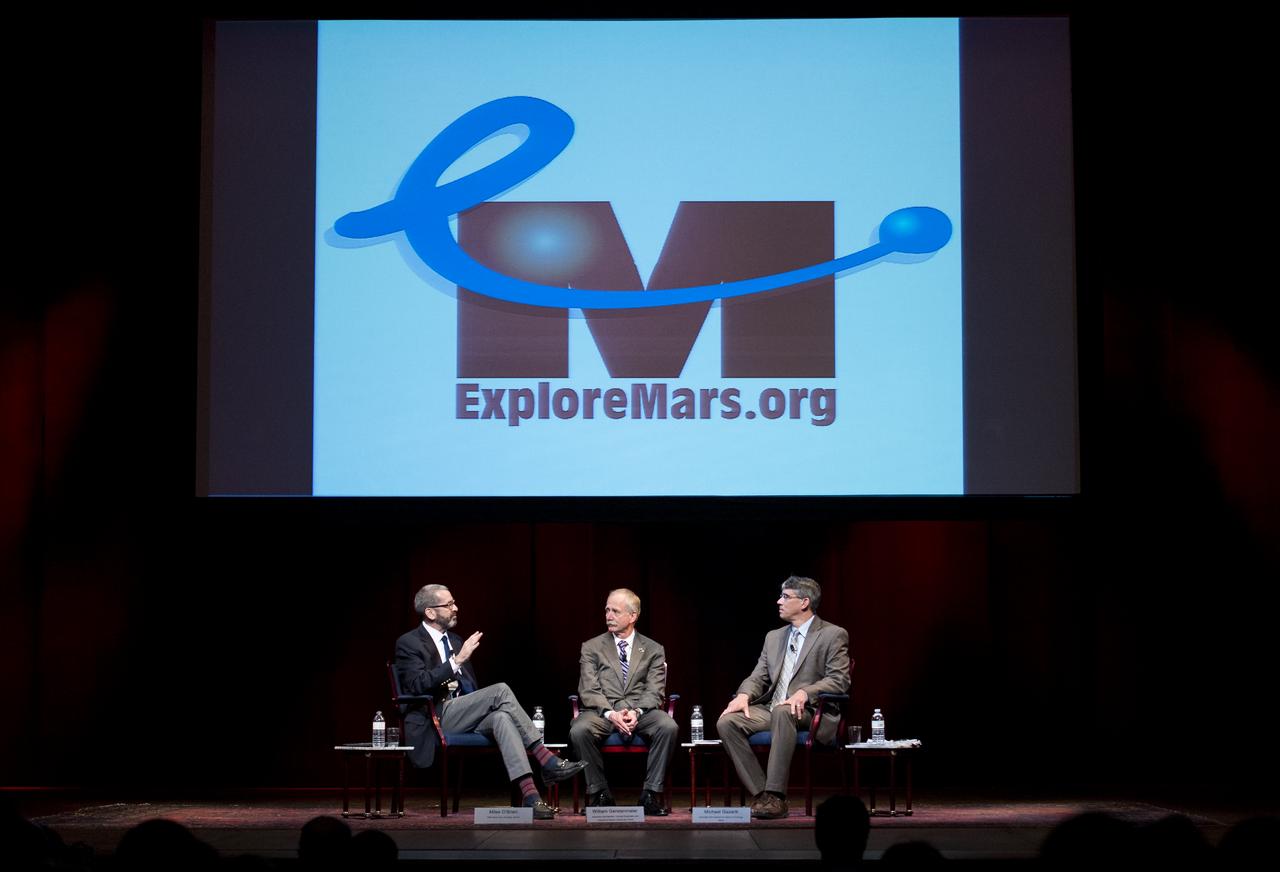
Miles O'Brien, science correspondant for PBS NewsHour, left, leads a panel discussion on Mars exploration with William Gerstenmaier, NASA Associatate Administrator for Human Explorations and Operations, center, and Michael Gazarik, NASA Associate Administrator for Space Technology, left, at the Humans to Mars Summit on April 22, 2014 at George Washington University in Washington, DC. Photo Credit: (NASA/Joel Kowsky)
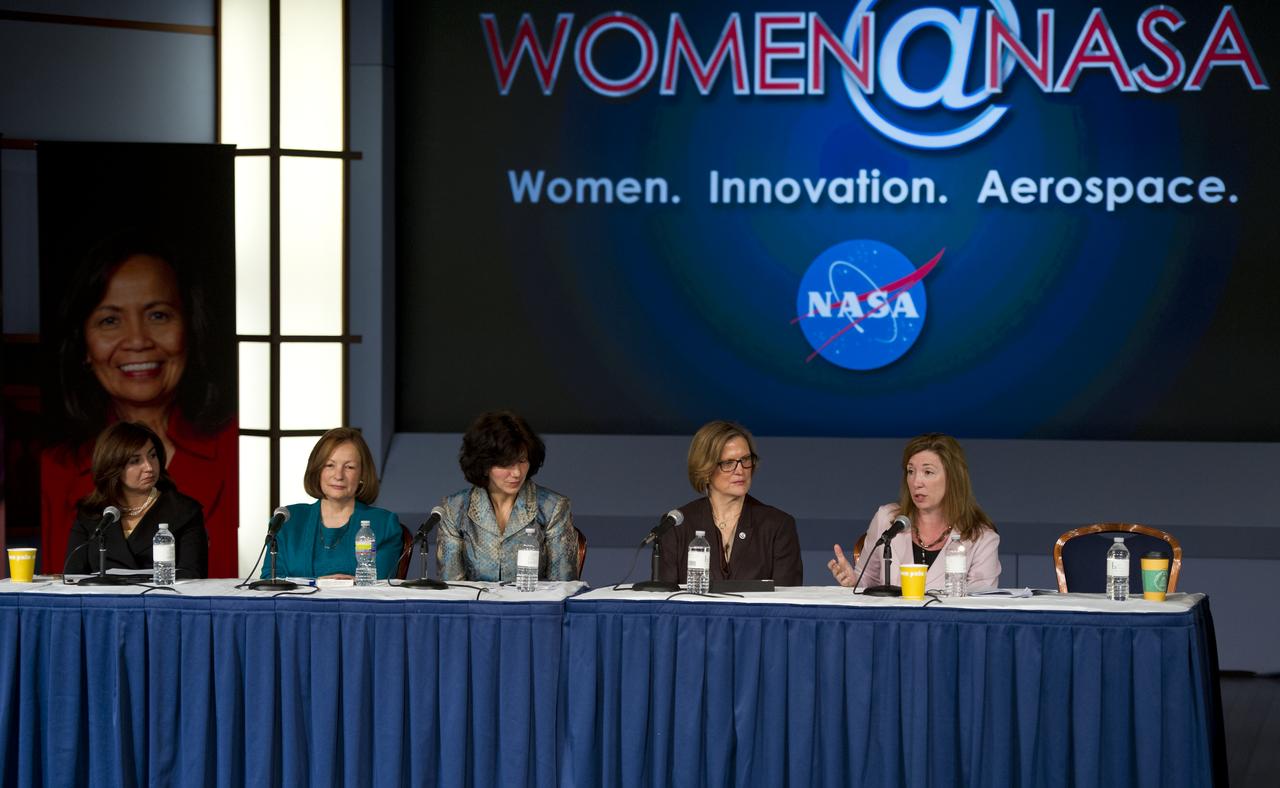
Lori Garver (far right) NASA Deputy Administrator, participates in a panel discussion at the Women, Innovation and Aerospace event celebrating Women's History Month at the George Washington University Jack Morton Auditorium, Thursday, March 8, 2012 in Washington. Garver is seen with Kathy Sullivan, NOAA Deputy Administrator; Catherine Didion, Senior Fellow, National Academy of Engineering; Marcia Smith, President, spacepolicyonline.com and Veronica Villalobos, Director, Office of Diversity and Inclusion, Office of Personnel Management (far left). The WIA day-long event will help to foster a discussion for students and early career professionals about how to continue to encourage women to enter and succeed in the field of aerospace. Photo Credit: (NASA/Carla Cioffi)
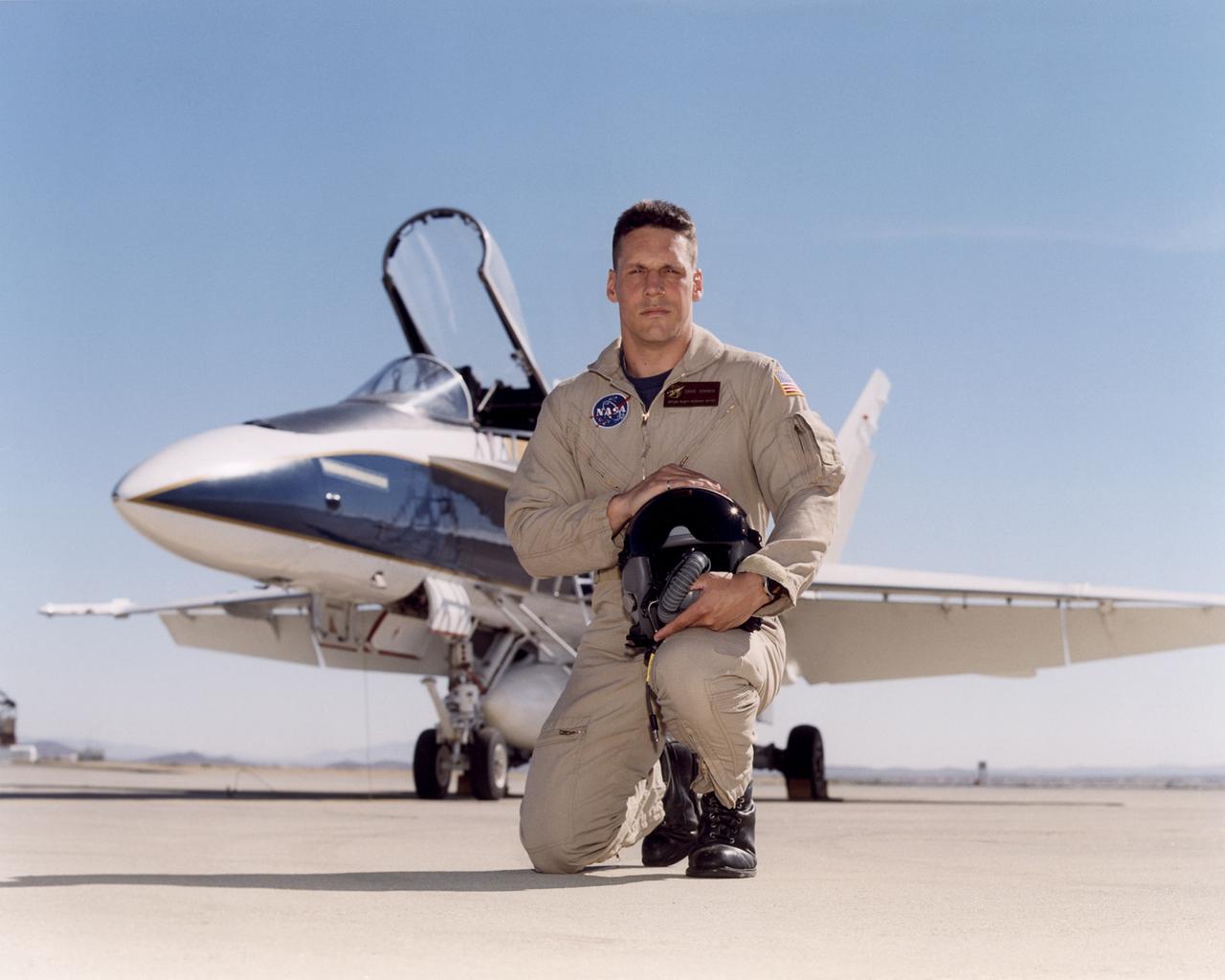
Craig R. Bomben became a pilot in the Flight Crew Branch of NASA's Dryden Flight Research Center, Edwards, Calif., in June 2001. His flying duties include a variety of research and support activities while piloting the F/A-18, DC-8, T-34C and King Air aircraft. He has more than 17 years and 3,800 hours of military and civilian flight experience in over 50 different aircraft types. Bomben came to NASA Dryden from a U.S. Navy assignment to the Personnel Exchange Program, Canada. He served as a test pilot in the Canadian Armed Forces located in Cold Lake, Alberta. He participated in numerous developmental programs to include CT-133 airborne ejection seat testing, F/A-18 weapons flutter testing and F/A-18 night vision goggles integration. Bomben performed U.S. Navy fleet service in 1995 as a strike-fighter department head. He completed two overseas deployments onboard the USS George Washington and USS Stennis. As a combat strike leader, he headed numerous multi-national missions over Iraq in support of Operation Southern Watch. Bomben graduated from the U.S. Naval Test Pilot School in 1992 and was subsequently assigned to the Naval Weapons Test Squadron at Pt. Mugu, Calif. During this tour he developed the F-14D bombsight and worked on various other F-14D and F/A-18 weapon systems developmental programs. Bomben is a 1985 graduate of Washington State University with a bachelor of science degree in electrical engineering. He graduated from naval flight training in 1987 and was recognized as a Commodore List graduate. His first assignment was to Naval Air Station Pensacola, Fla., where he was an instructor in the T-2B Buckeye. When selected to fly the F/A-18 in 1989, he joined a fleet squadron and deployed aboard the USS Forrestal. Bomben is married to the former Aissa Asuncion. They live in Lancaster, Calif., with their 3 children.
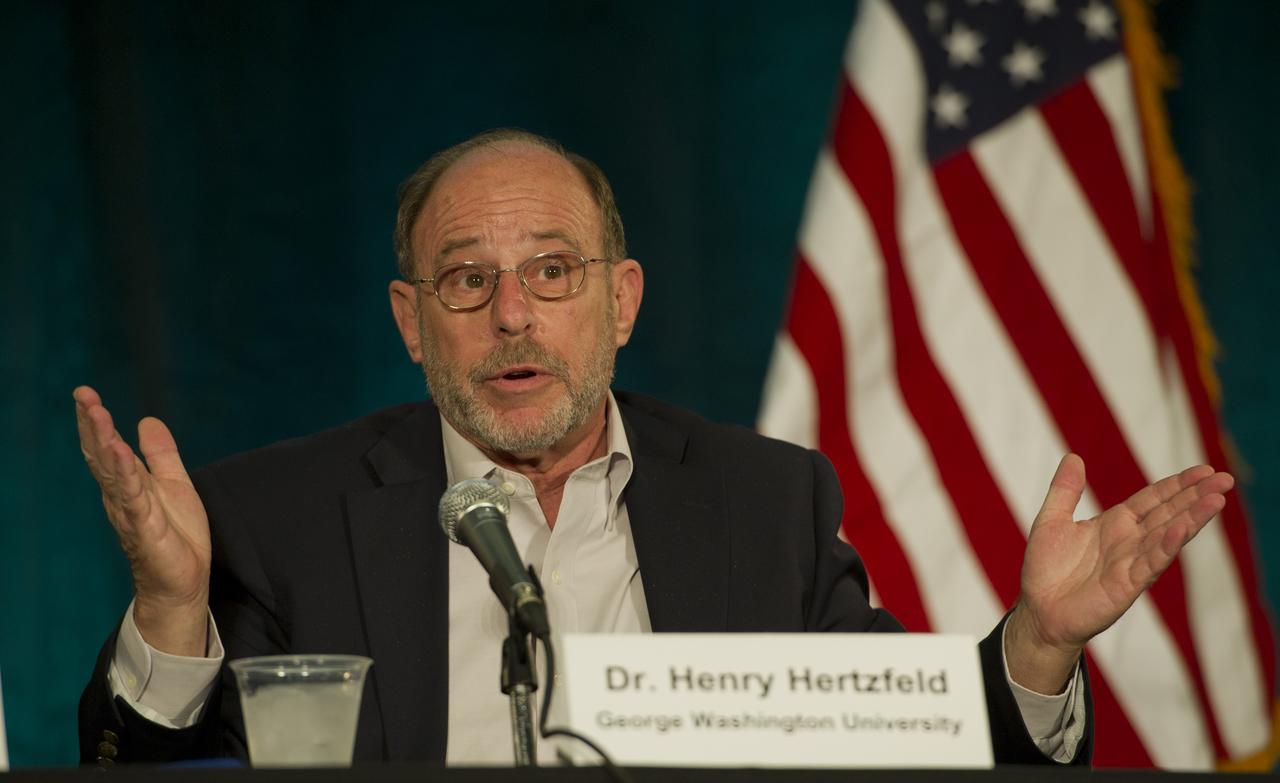
Dr. Henry Hertzfeld, from George Washington University, speaks about technology investments and their benefits during a panel discussion at the 2011 NASA Future Forum held at the Riggs Alumni Center on the campus of the University of Maryland, Thursday, Aug. 11, 2011, in College Park, Md. Photo Credit: (NASA/Paul E. Alers)
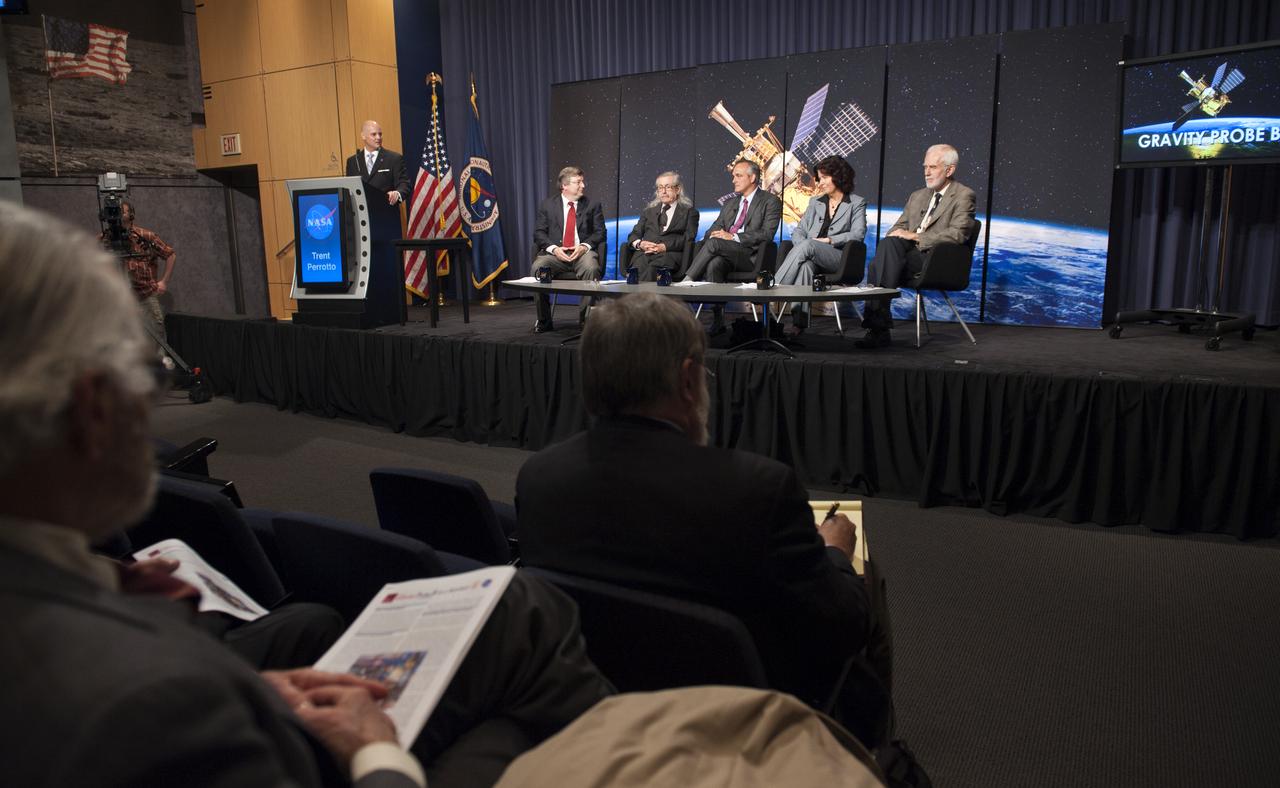
Seated from left, Bill Danchi, Senior Astrophysicist and Program Scientist at NASA Headquarters, Francis Everitt, Principal Investigator for the Gravity Probe B Mission at Stanford University, Rex Geveden, President of Teledyne Brown Engineering, Colleen Hartman, a research professor at George Washington University, and Clifford Will, Professor of Physics at Washington University in St. Louis, Mo., conduct a press conference, Wednesday, May 4, 2011, to discuss NASA's Gravity Probe B (GP-B) mission which has confirmed two key predictions derived from Albert Einstein's general theory of relativity, which the spacecraft was designed to test. at NASA Headquarters in Washington. Photo Credit: (NASA/Paul E. Alers)
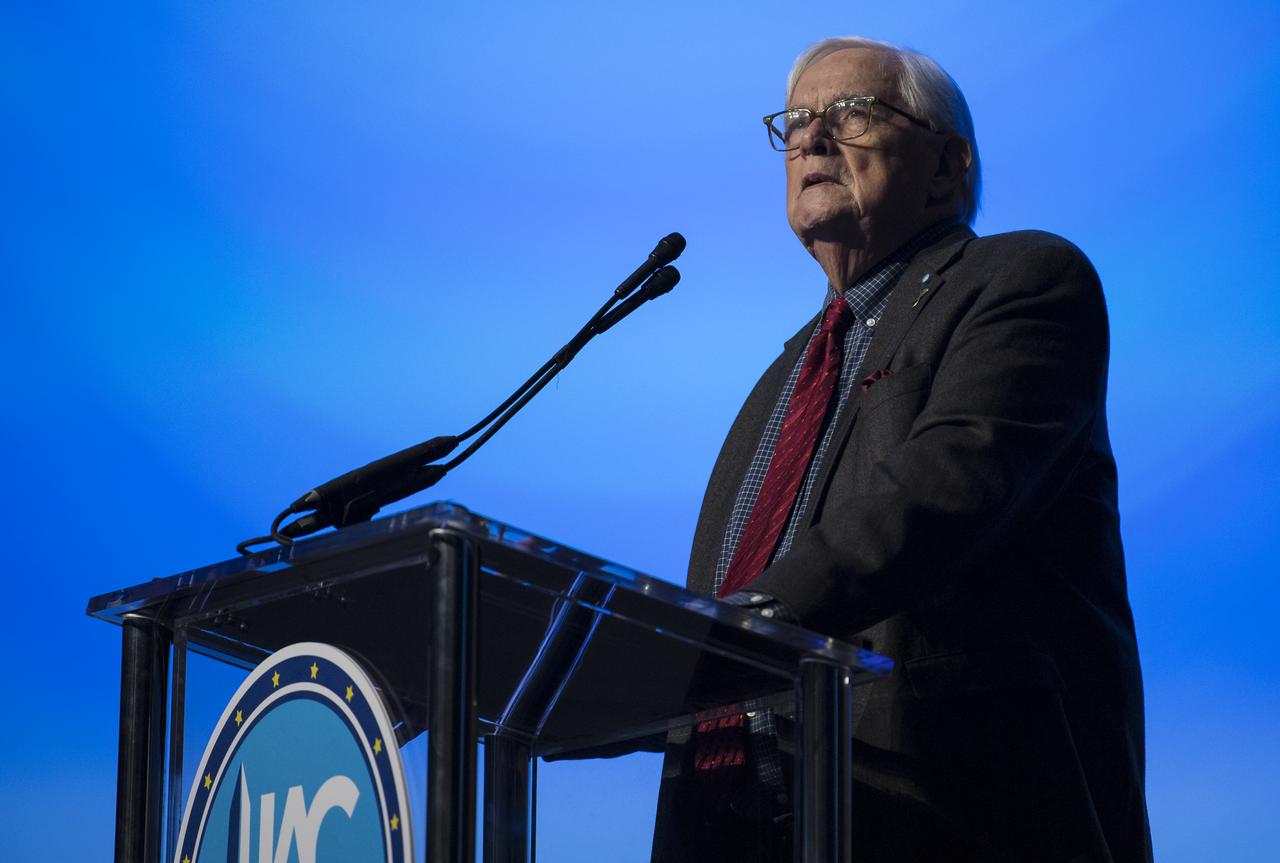
John Logsdon, Apollo historian and Professor Emeritus at George Washington University, speaks about the history of the Apollo program during the International Astronautical Federation World Space Award highlight lecture at the 70th International Astronautical Congress, Thursday, Oct. 24, 2019, at the Walter E. Washington Convention Center in Washington. The 2019 World Space Award was presented to the crew of Apollo 11. Photo Credit: (NASA/Joel Kowsky)
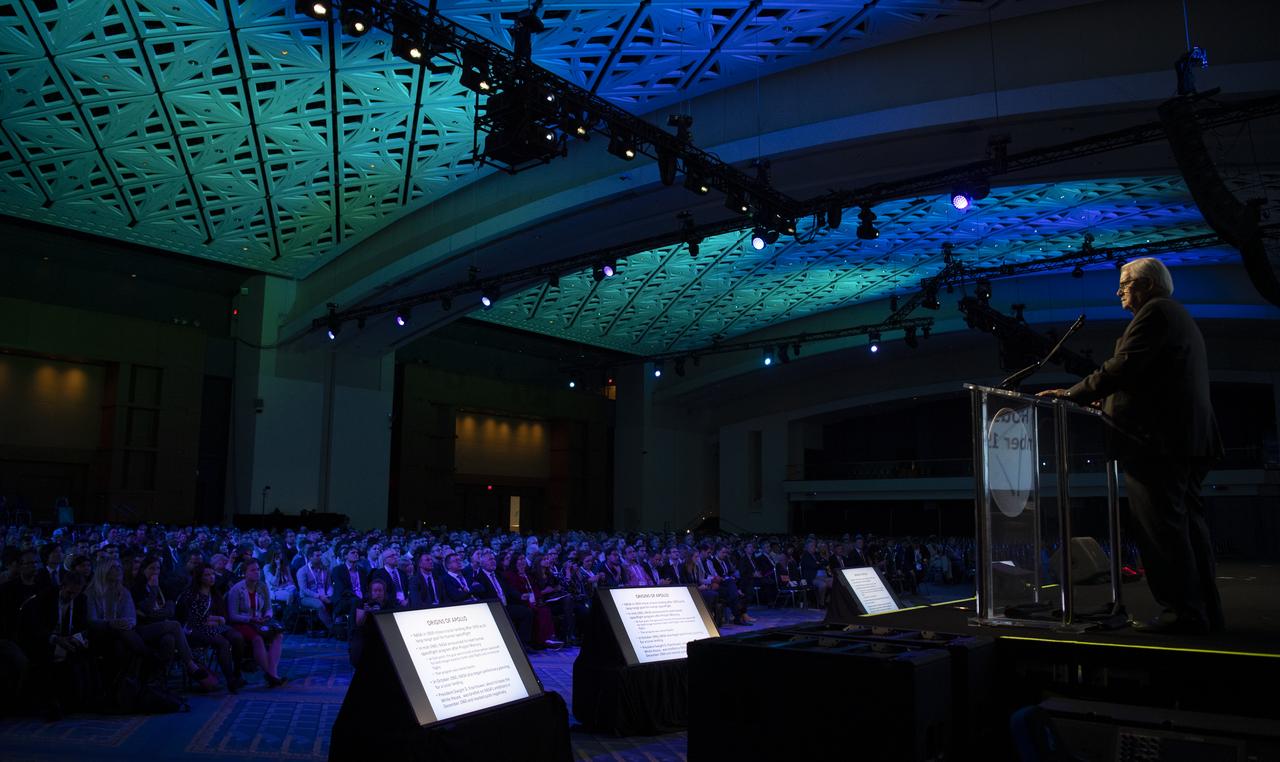
John Logsdon, Apollo historian and Professor Emeritus at George Washington University, speaks about the history of the Apollo program during the International Astronautical Federation World Space Award highlight lecture at the 70th International Astronautical Congress, Thursday, Oct. 24, 2019, at the Walter E. Washington Convention Center in Washington. The 2019 World Space Award was presented to the crew of Apollo 11. Photo Credit: (NASA/Joel Kowsky)

STS-132 astronaut Piers Sellers, left, and Dr. John Mather are seen with a replica of Mather's Nobel Prize, Tuesday, July 27, 2010, at the Smithsonian National Air and Space Museum in Washington. Sellers returned the replica that is in the museum's collection and was flown aboard STS-132 Atlantis. The prize was won by Mather and University of California, Berkeley researcher George Smoot in 2006 for their work using the Cosmic Background Explorer Satellite to understand the big-bang theory of the universe. Photo Credit: (NASA/Paul E. Alers)
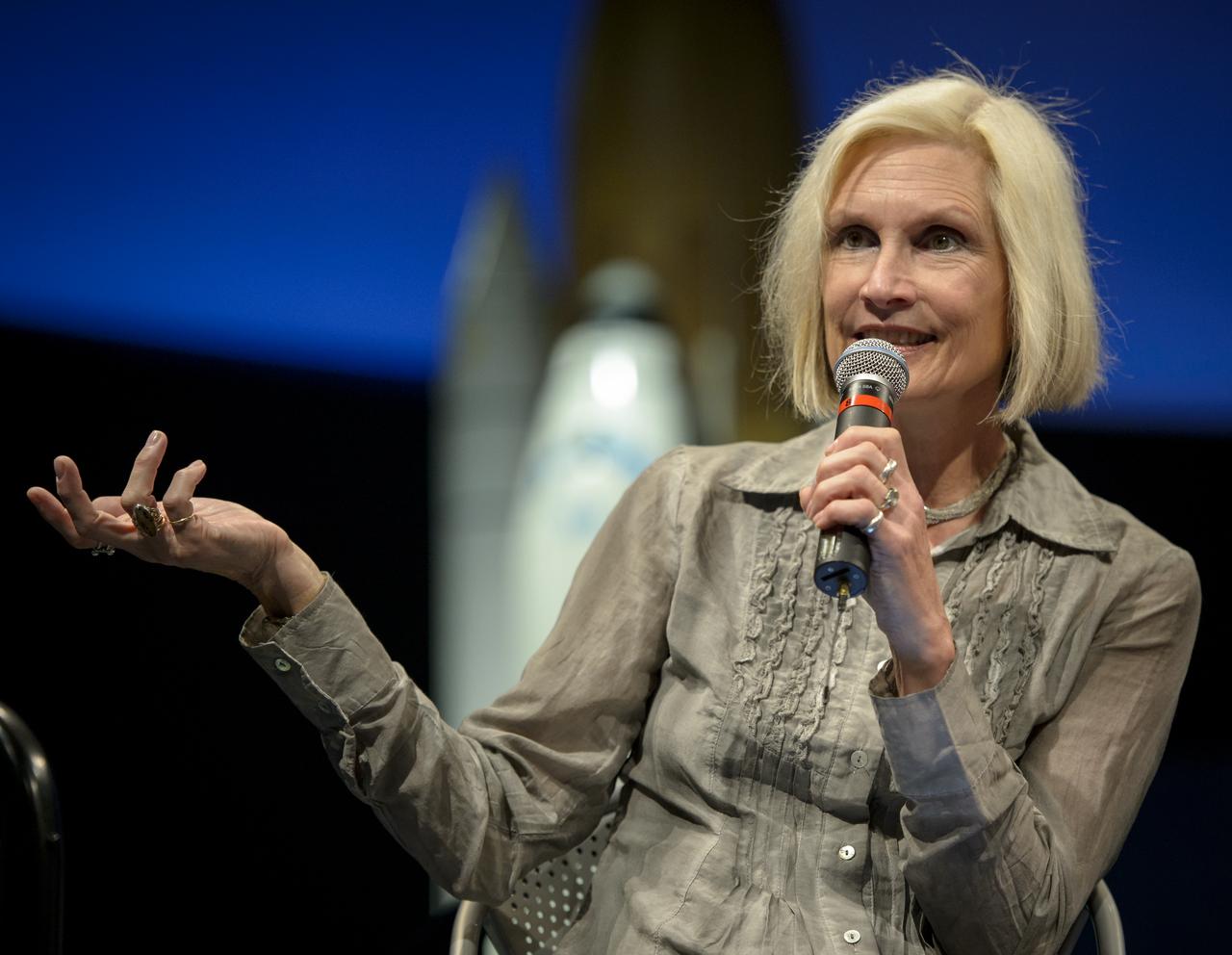
Linda Billings, research professor, Media and Public Affairs, The George Washington University shares her thoughts during a program titled "Sally Ride: How Her Historic Space Mission Opened Doors for Women in Science" held on Friday, May 17, 2013 at the National Air and Space Museum in Washington. Photo Credit: (NASA/Bill Ingalls)
Linda Billings, research professor, Media and Public Affairs, The George Washington University shares her thoughts during a program titled "Sally Ride: How Her Historic Space Mission Opened Doors for Women in Science" held on Friday, May 17, 2013 at the National Air and Space Museum in Washington. Photo Credit: (NASA/Bill Ingalls)
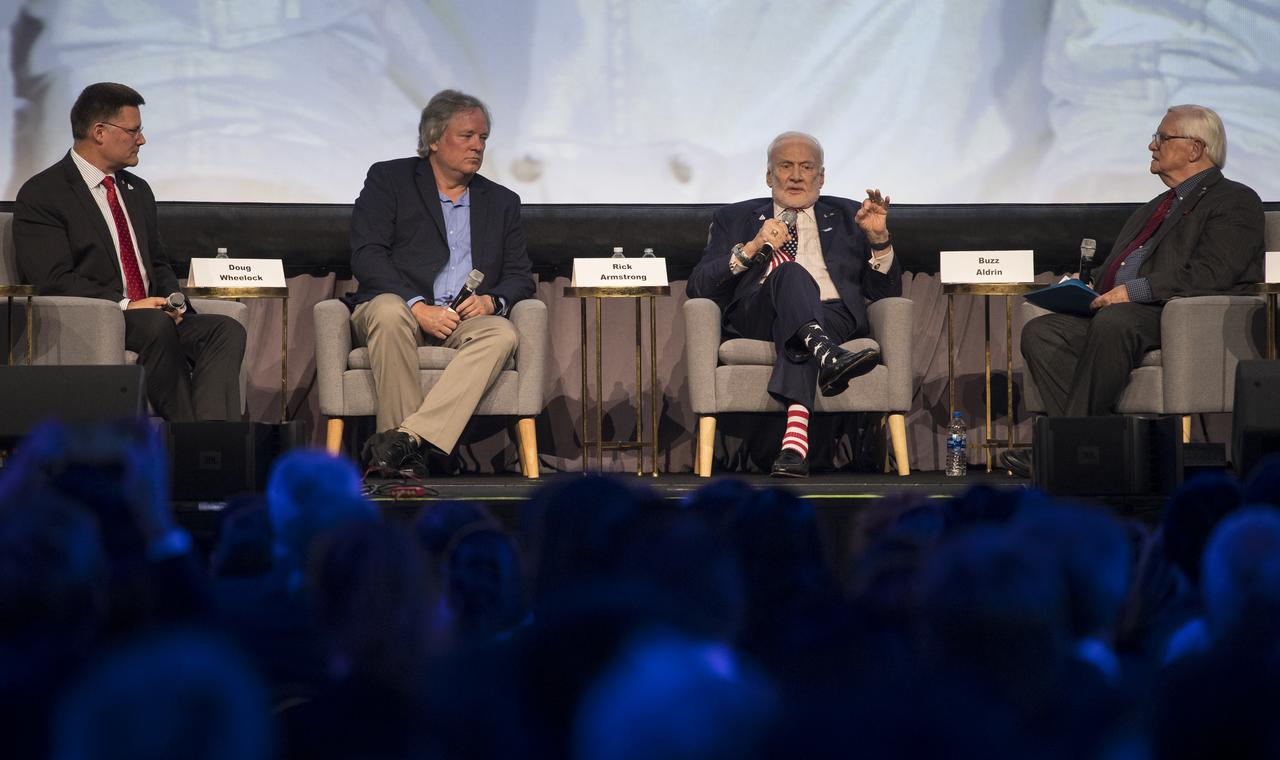
NASA astronaut Doug Wheelock, left, Rick Armstrong, son of Apollo 11 astronaut Neil Armstrong, second from left, Apollo 11 astronaut Buzz Aldrin, second from right, and John Logsdon, Apollo historian and Professor Emeritus at George Washington University, right, are seen during a panel discussion during the International Astronautical Federation World Space Award highlight lecture at the 70th International Astronautical Congress, Thursday, Oct. 24, 2019, at the Walter E. Washington Convention Center in Washington. The 2019 World Space Award was presented to the crew of Apollo 11. Photo Credit: (NASA/Joel Kowsky)
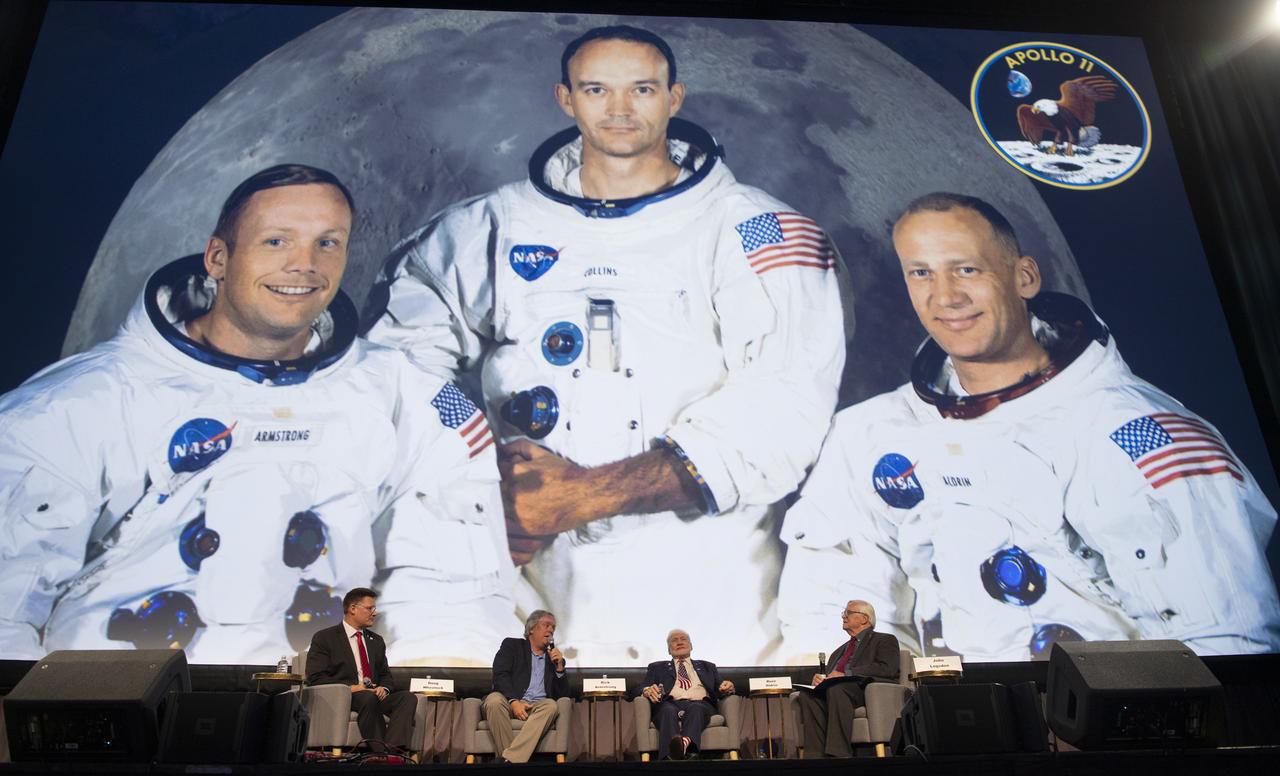
NASA astronaut Doug Wheelock, left, Rick Armstrong, son of Apollo 11 astronaut Neil Armstrong, second from left, Apollo 11 astronaut Buzz Aldrin, second from right, and John Logsdon, Apollo historian and Professor Emeritus at George Washington University, right, are seen during a panel discussion during the International Astronautical Federation World Space Award highlight lecture at the 70th International Astronautical Congress, Thursday, Oct. 24, 2019, at the Walter E. Washington Convention Center in Washington. The 2019 World Space Award was presented to the crew of Apollo 11. Photo Credit: (NASA/Joel Kowsky)
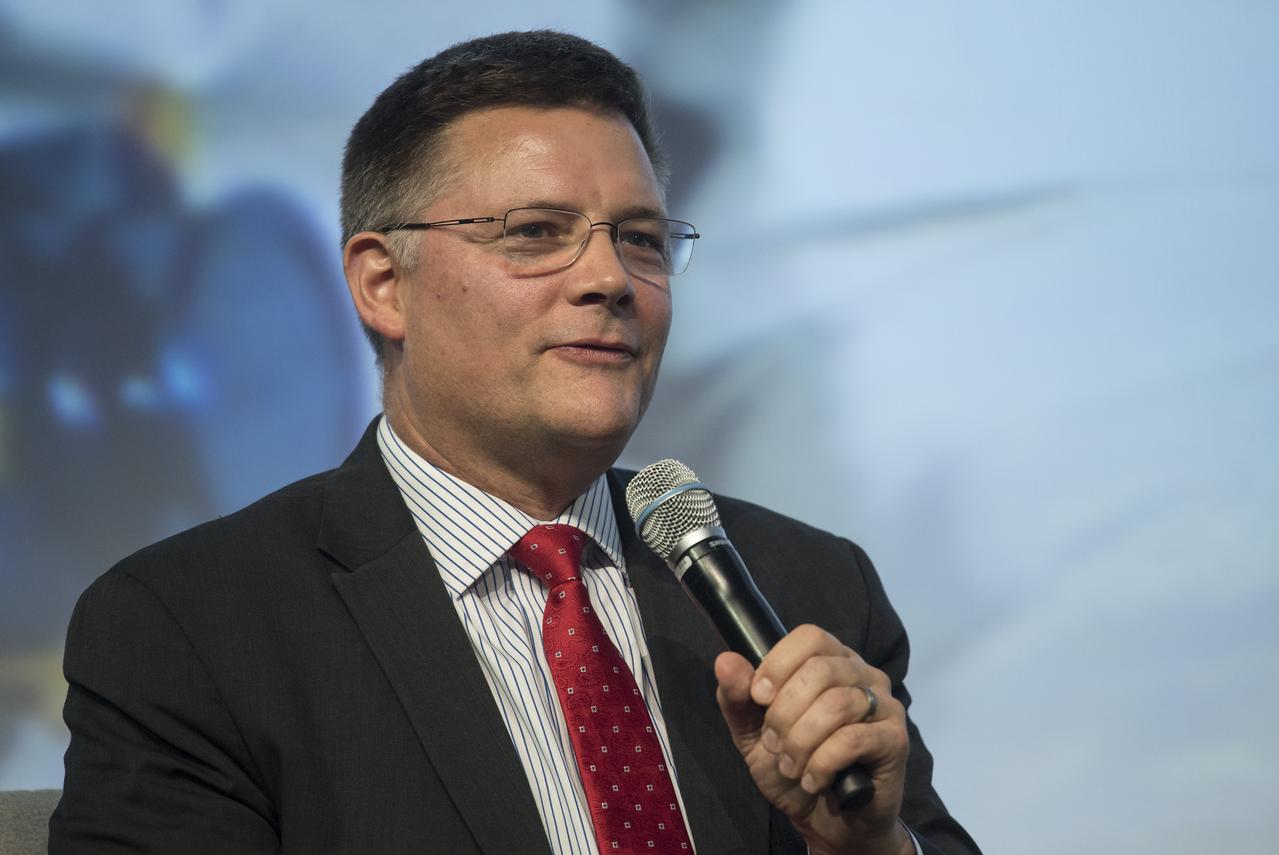
NASA astronaut Doug Wheelock, is seen during a panel discussion with Rick Armstrong, son of Apollo 11 astronaut Neil Armstrong, Apollo 11 astronaut Buzz Aldrin, and John Logsdon, Apollo historian and Professor Emeritus at George Washington University, at the International Astronautical Federation World Space Award highlight lecture at the 70th International Astronautical Congress, Thursday, Oct. 24, 2019, at the Walter E. Washington Convention Center in Washington. The 2019 World Space Award was presented to the crew of Apollo 11. Photo Credit: (NASA/Joel Kowsky)
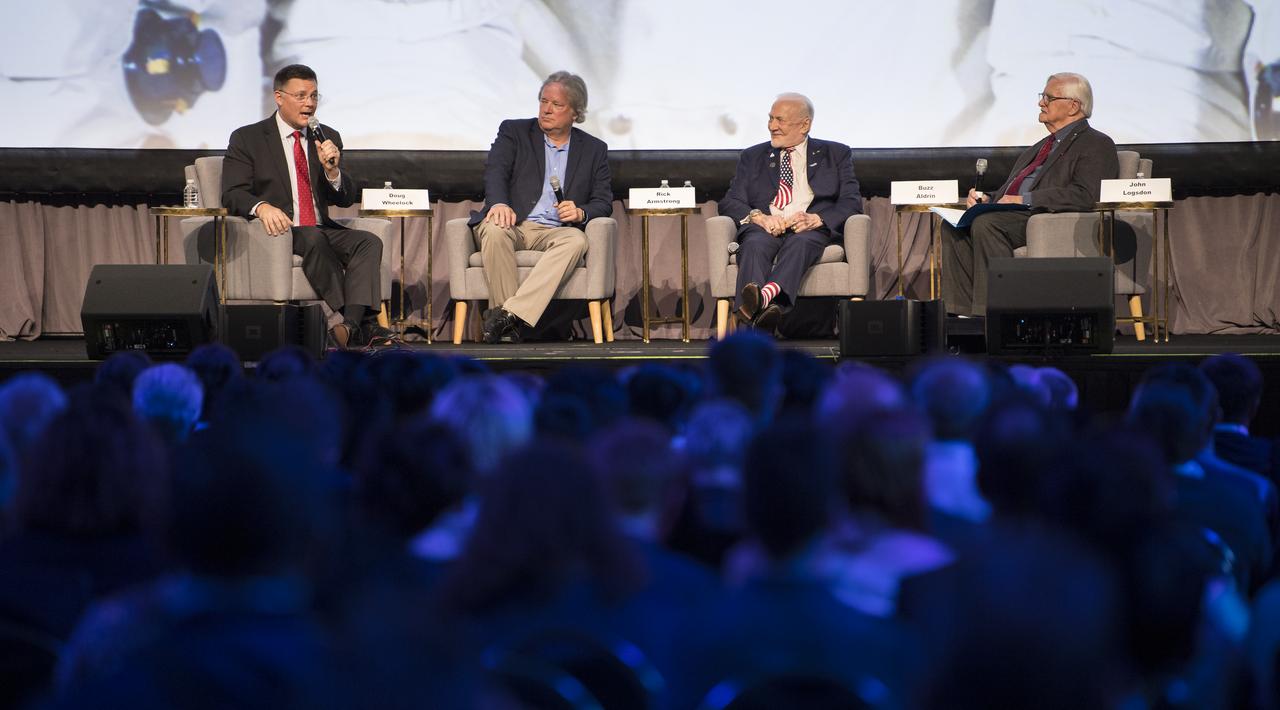
NASA astronaut Doug Wheelock, left, Rick Armstrong, son of Apollo 11 astronaut Neil Armstrong, second from left, Apollo 11 astronaut Buzz Aldrin, second from right, and John Logsdon, Apollo historian and Professor Emeritus at George Washington University, right, are seen during a panel discussion during the International Astronautical Federation World Space Award highlight lecture at the 70th International Astronautical Congress, Thursday, Oct. 24, 2019, at the Walter E. Washington Convention Center in Washington. The 2019 World Space Award was presented to the crew of Apollo 11. Photo Credit: (NASA/Joel Kowsky)
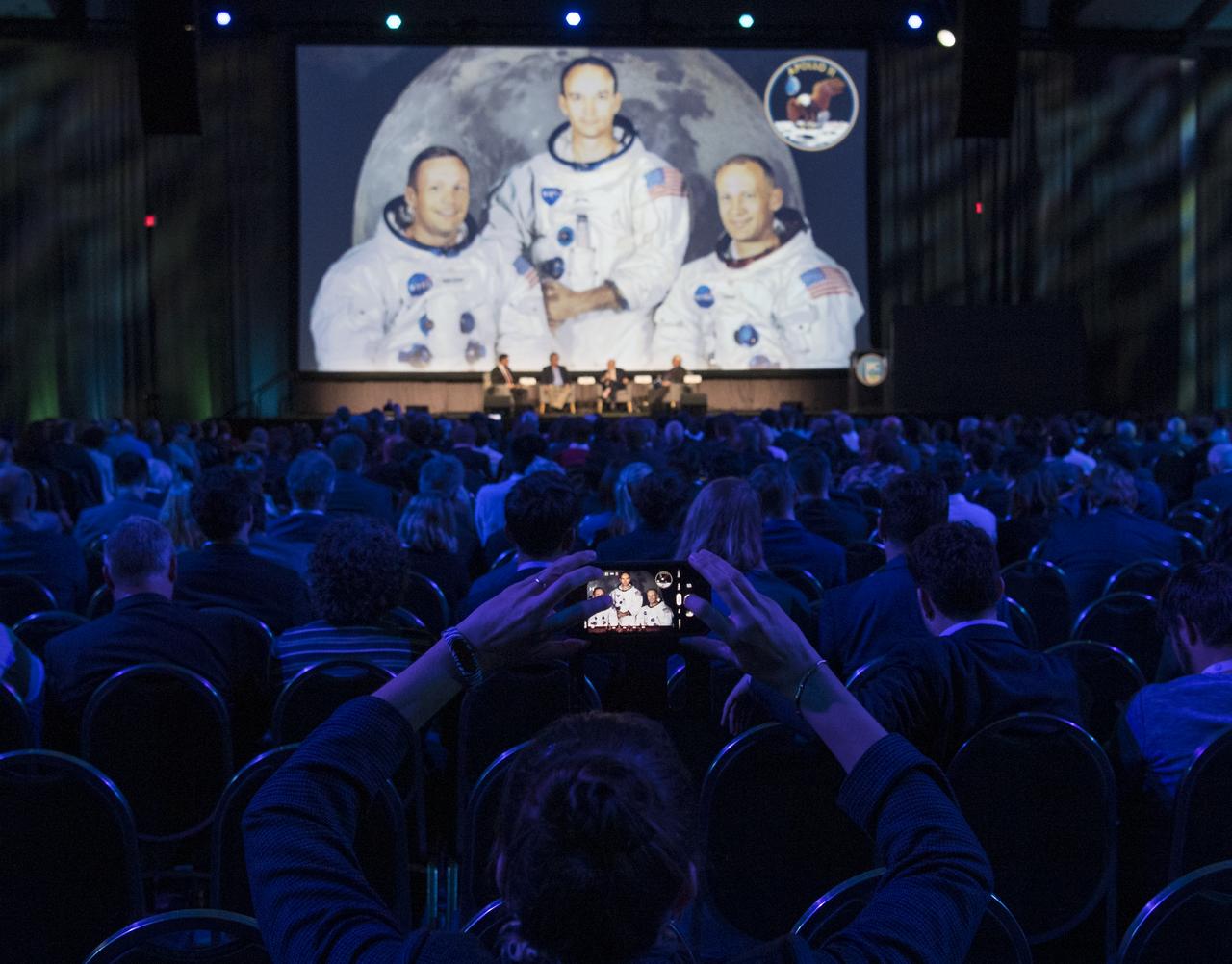
A member of the audience takes a picture of NASA astronaut Doug Wheelock, Rick Armstrong, son of Apollo 11 astronaut Neil Armstrong, Apollo 11 astronaut Buzz Aldrin, and John Logsdon, Apollo historian and Professor Emeritus at George Washington University, on stage during the International Astronautical Federation World Space Award highlight lecture at the 70th International Astronautical Congress, Thursday, Oct. 24, 2019, at the Walter E. Washington Convention Center in Washington. The 2019 World Space Award was presented to the crew of Apollo 11. Photo Credit: (NASA/Joel Kowsky)
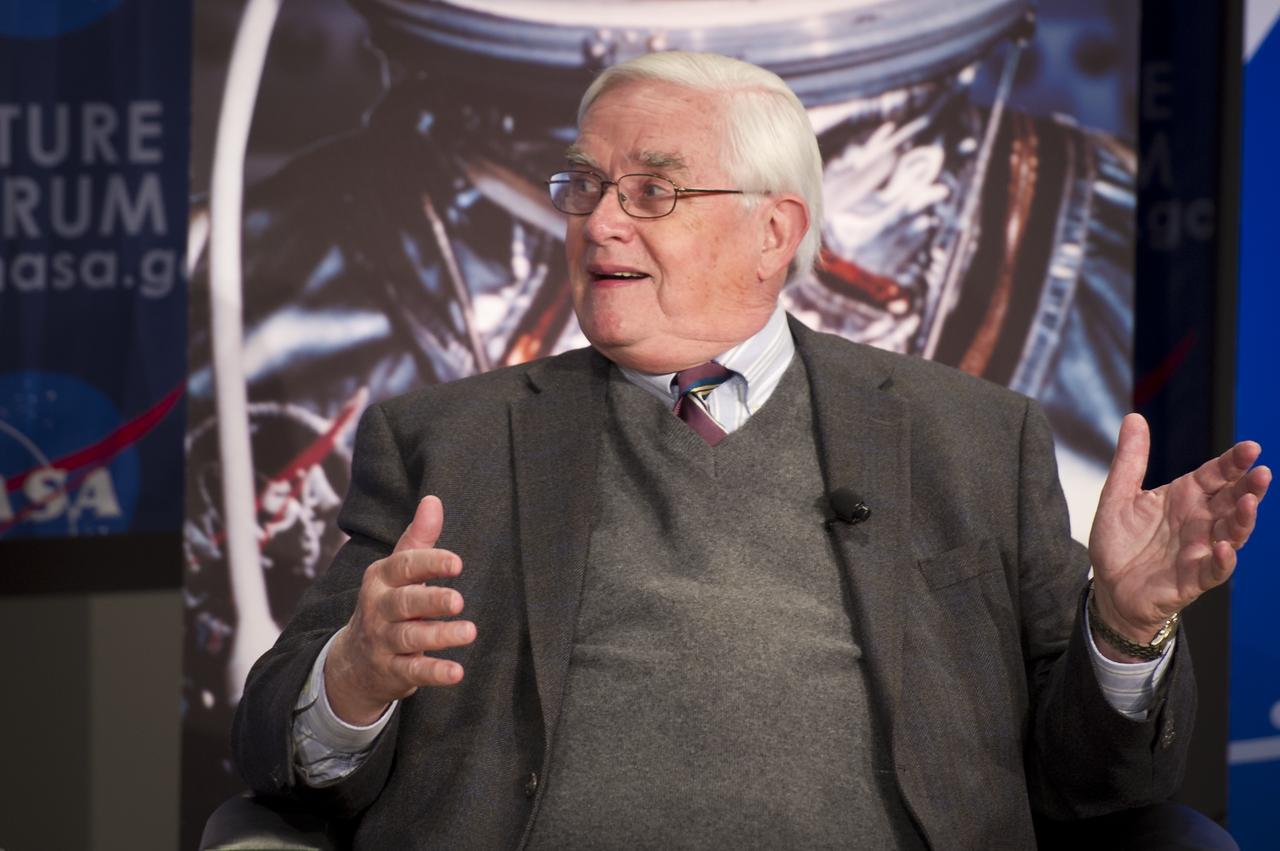
John Logsdon, professor emeritus of Political Science and International Affairs, Elliott School of International Affairs, George Washington University, talks during the NASA Future Forum panel titled "Shifting Roles for Public, Private, and International Players in Space" at The Ohio State University on Tuesday, Feb. 21, 2012 in Columbus, Ohio. The NASA Future Forum features panel discussions on the importance of education to our nation's future in space, the benefit of commercialized space technology to our economy and lives here on Earth, and the shifting roles for the public, commercial and international communities in space. Photo Credit: (NASA/Bill Ingalls)
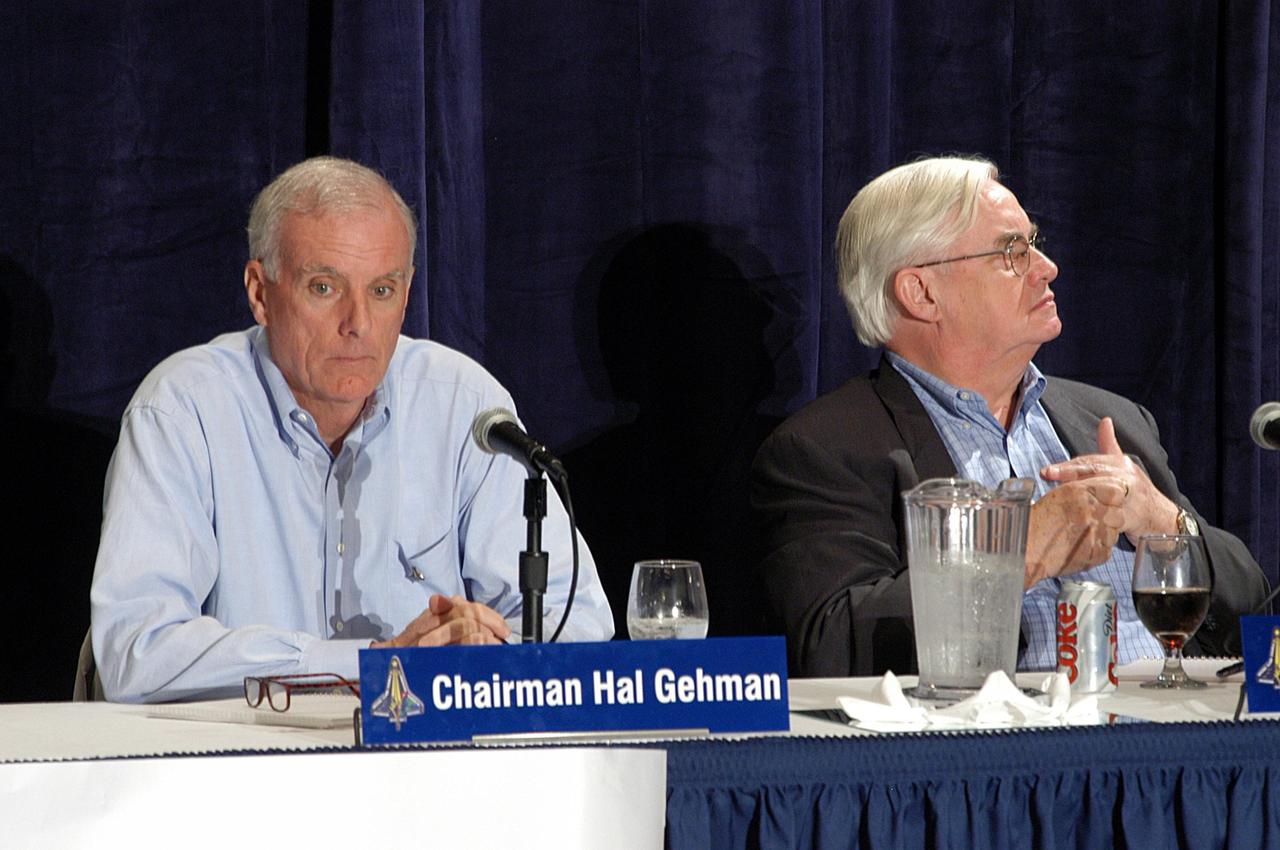
KENNEDY SPACE CENTER, FLA. - Retired Navy Admiral Harold W. "Hal" Gehman Jr., chairman of the Columbia Accident Investigation Board, and board member Dr. John Logsdon, director of the Space Policy Institute, George Washington University, listen to expert information about the role of the Kennedy Space Center in the Shuttle Program, Shuttle Safety and Debris Collection, Layout and Analysis and Forensic Metallurgy. This was the third public hearing of the board, which was held in Cape Canaveral, Fla.
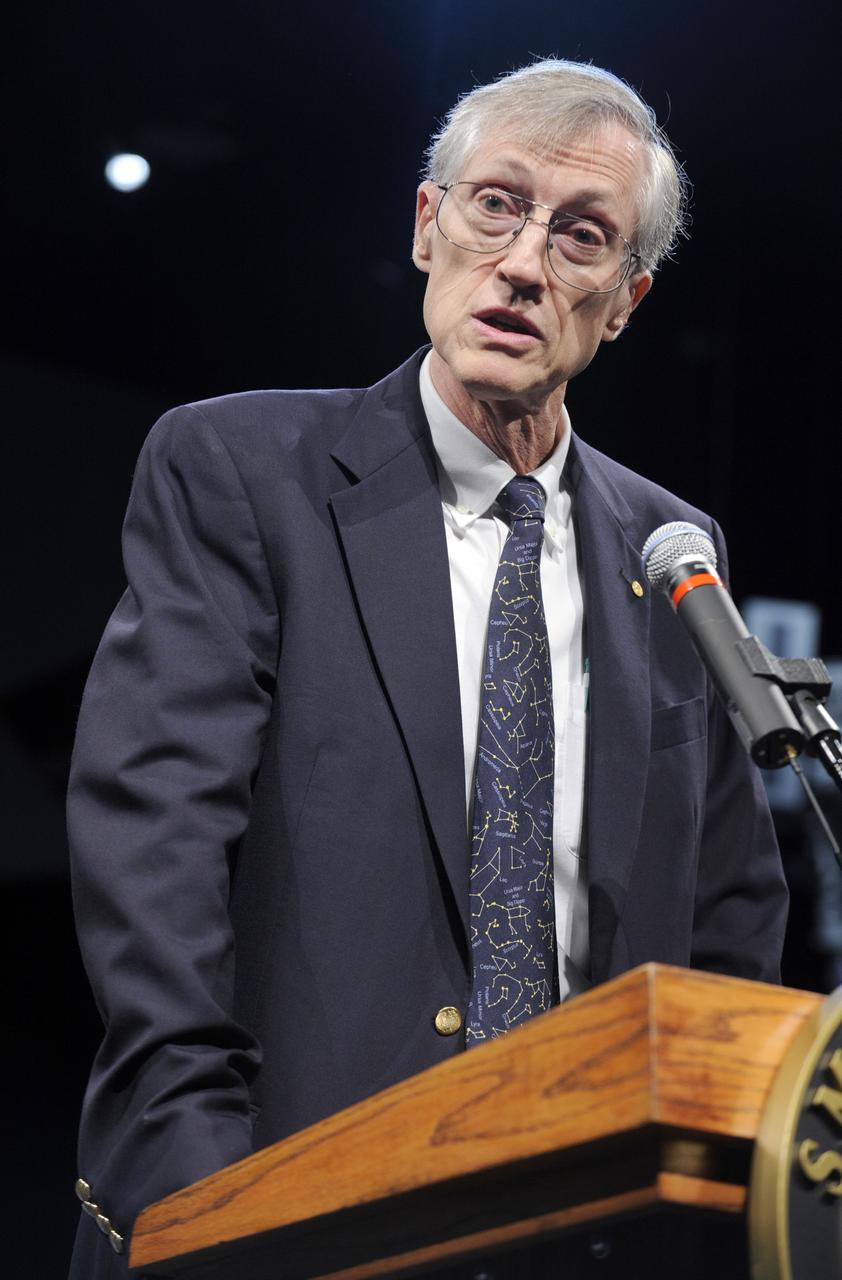
NASA Astrophycist Dr. John Mather speaks, Tuesday, July 27, 2010, at the Smithsonian National Air and Space Museum in Washington. Mather was speaking as part of a ceremony with STS-132 astronaut Piers Sellers who returned a replica of the Nobel Prize that is in the museum's collection and was flown aboard STS-132 Atlantis. The prize was won by Mather and University of California, Berkeley researcher George Smoot in 2006 for their work using the Cosmic Background Explorer Satellite to understand the big-bang theory of the universe.Photo Credit: (NASA/Paul E. Alers)
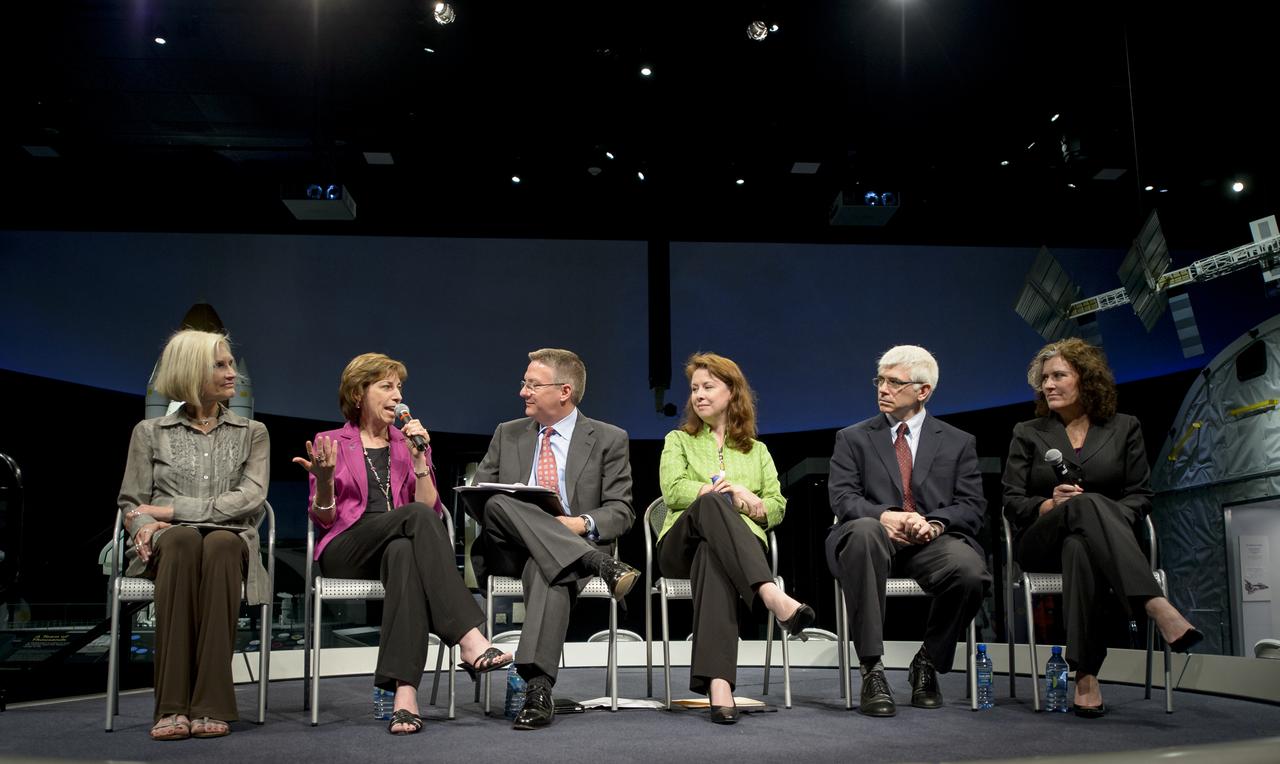
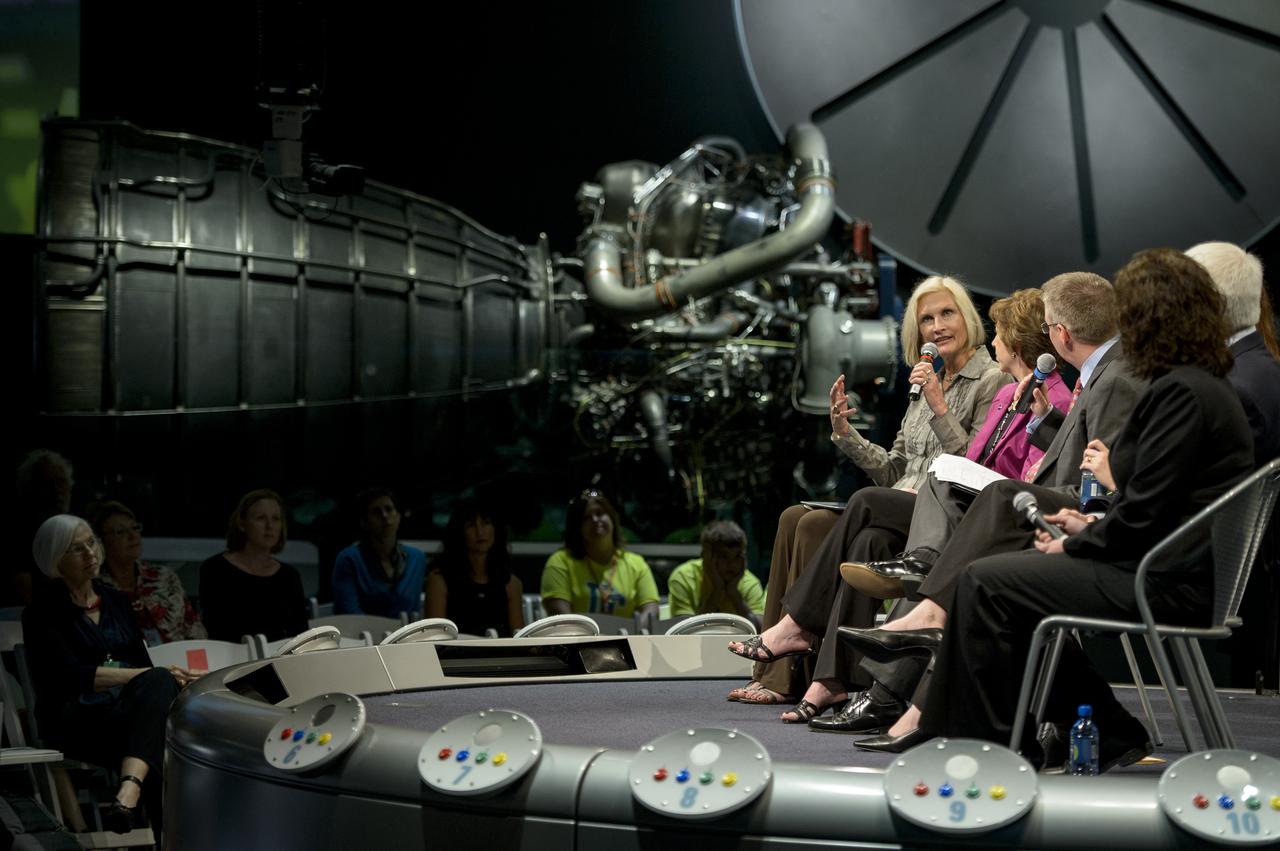
Panel discussion participants, from left, Linda Billings, research professor, Media and Public Affairs, The George Washington University, Ellen Ochoa, director, NASA Johnson Space Center, Tom Costello, NBC News and moderator for the event, Margaret Weitekamp, space history curator, National Air and Space Museum, Dan Vergano, science writer for USA Today, and Rene McCormick, director of standards and quality, National Math and Science Initiative, are seen during a program titled "Sally Ride: How Her Historic Space Mission Opened Doors for Women in Science" held on Friday, May 17, 2013 at the National Air and Space Museum in Washington. Photo Credit: (NASA/Bill Ingalls)
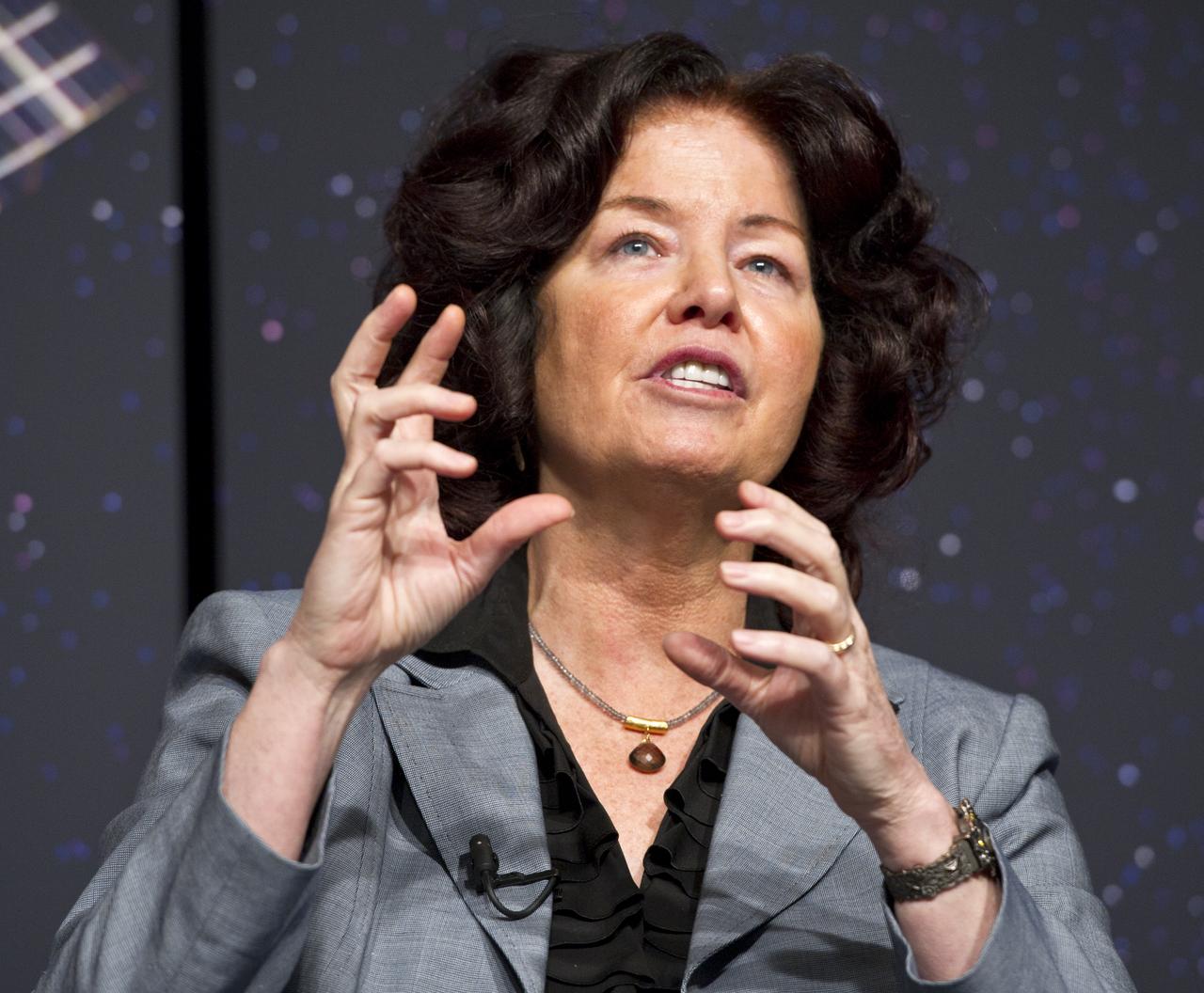
Colleen Hartman, Senior Advisor at NASA Headquarters and Research Professor at George Washington University, makes a point during a press conference, Wednesday, May 4, 2011, to discuss NASA's Gravity Probe B (GP-B) mission which has confirmed two key predictions derived from Albert Einstein's general theory of relativity, which the spacecraft was designed to test at NASA Headquarters in Washington. The experiment, launched in 2004, used four ultra-precise gyroscopes to measure the hypothesized geodetic effect, the warping of space and time around a gravitational body, and frame-dragging, the amount a spinning object pulls space and time with it as it rotates. Photo Credit: (NASA/Paul E. Alers)
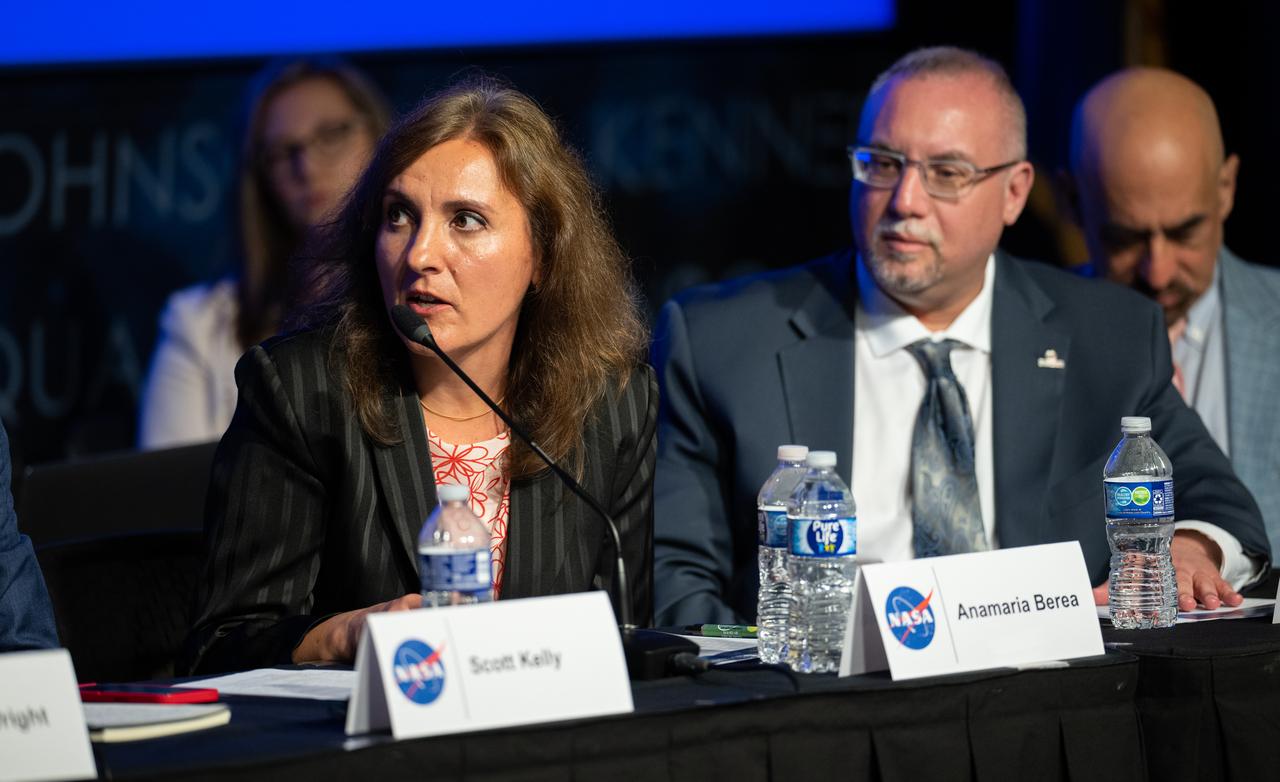
Anamaria Berea, associate professor of Computational and Data Science at George Mason University, left, asks a question during a public meeting of NASA’s unidentified anomalous phenomena (UAP) independent study team, Wednesday, May 31, 2023 at the Mary W. Jackson NASA Headquarters building in Washington. The UAP independent study team is a counsel of 16 community experts across diverse areas on matters relevant to potential methods of study for unidentified anomalous phenomena. NASA commissioned the nine-month study to examine UAP from a scientific perspective and create a roadmap for how to use data and the tools of science to move our understanding of UAP forward. Photo Credit: (NASA/Joel Kowsky)
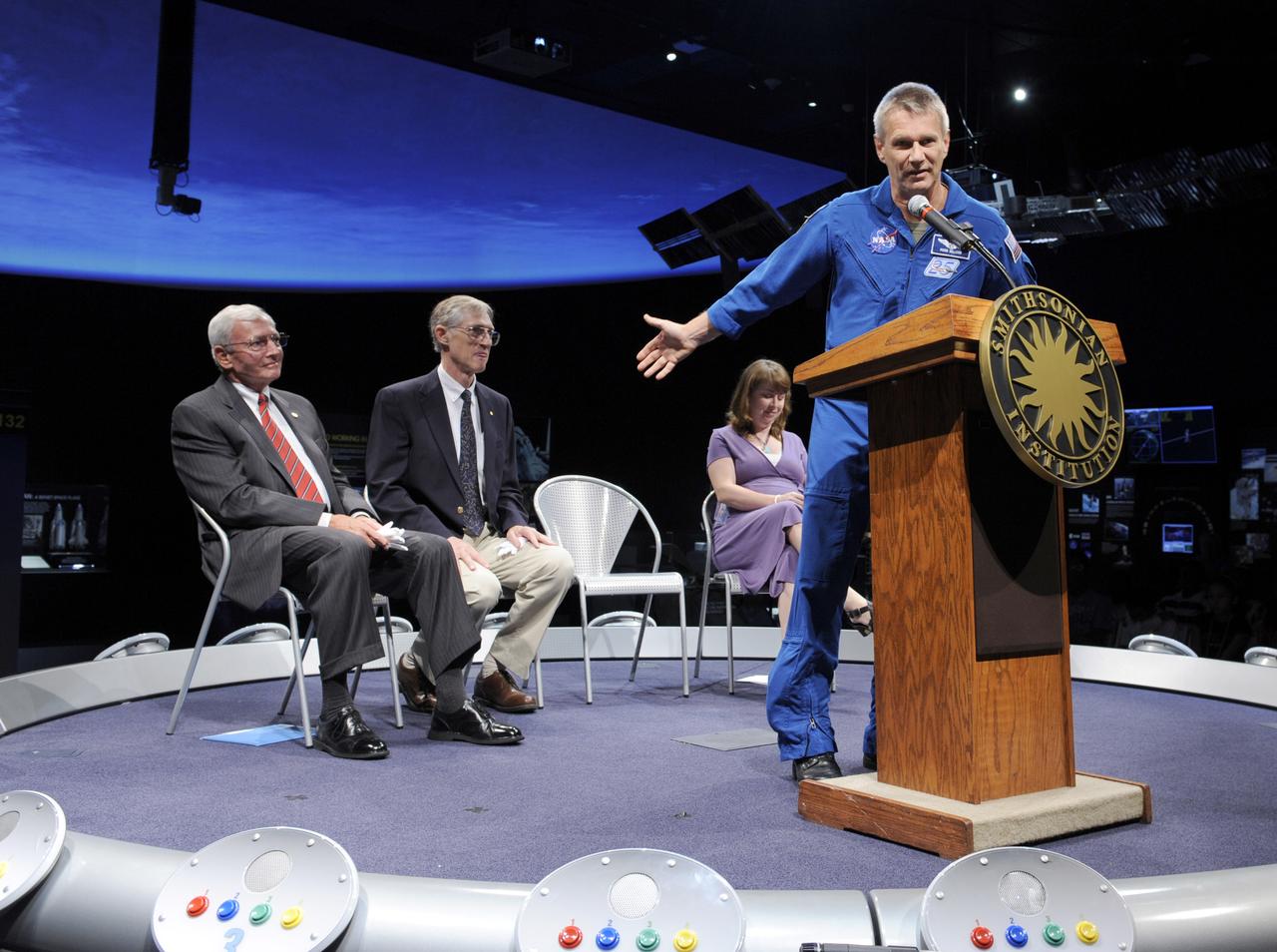
STS-132 astronaut Piers Sellers, at podium, acknowleges museum director Ret. Gen. John R. "Jack" Dailey, seated left, and NASA astrophycisist Dr. John Mather, center, during a presentation, Tuesday, July 27, 2010, at the Smithsonian National Air and Space Museum in Washington. Sellers returned a replica of the Nobel Prize that is in the museum's collection and was flown aboard STS-132 Atlantis. The prize was won by Mather and University of California, Berkeley researcher George Smoot in 2006 for their work using the Cosmic Background Explorer Satellite to understand the big-bang theory of the universe.Photo Credit: (NASA/Paul E. Alers)
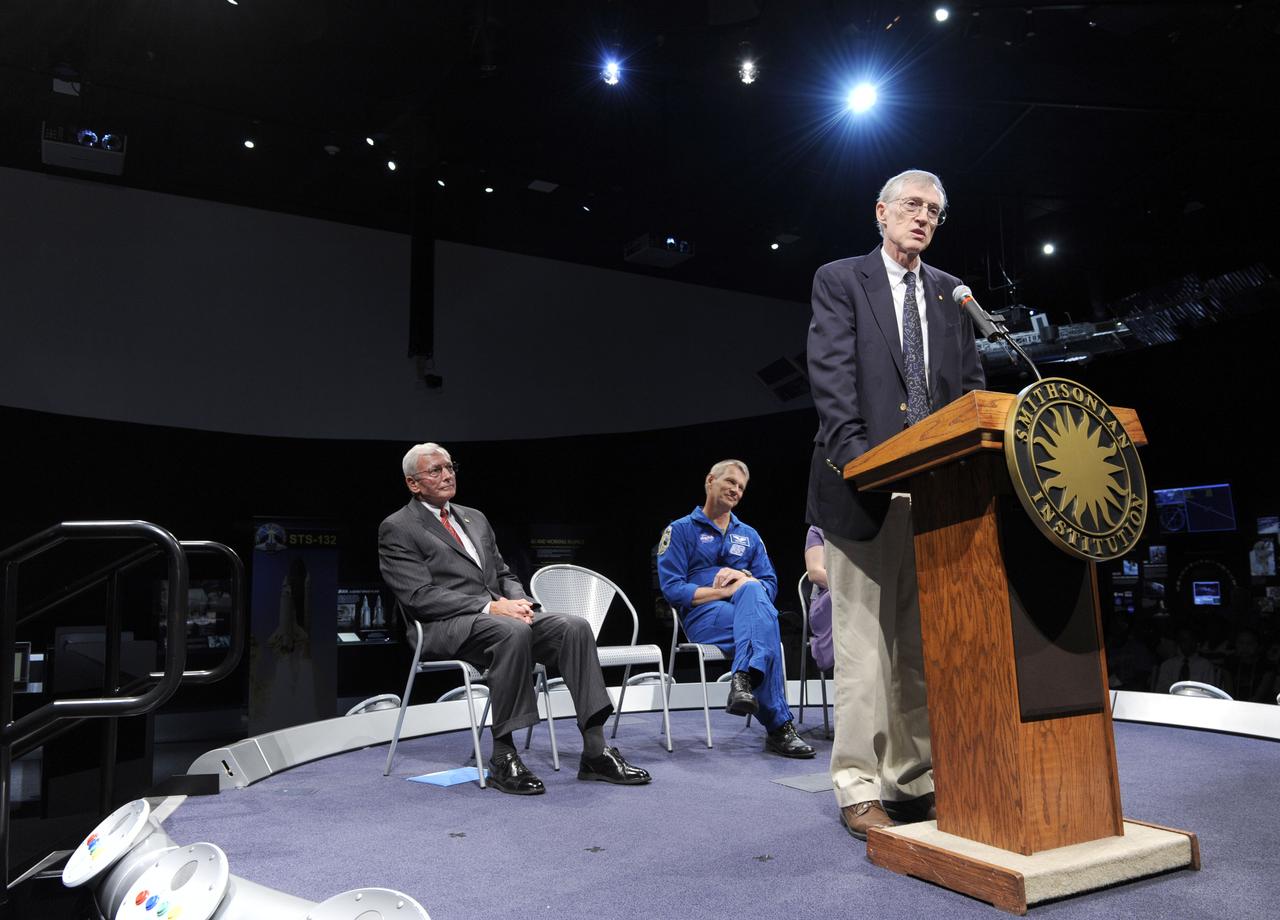
NASA Astrophycist Dr. John Mather, at podium, speaks Tuesday, July 27, 2010, at the Smithsonian National Air and Space Museum in Washington as museum director Gen. John R. "Jack" Dailey, U.S. Marine Corps ret. and STS-132 astronaut Piers Sellers look on. Sellers returned a replica of the Nobel Prize that is in the museum's collection and was flown aboard STS-132 Atlantis. The prize was won by Mather and University of California, Berkeley researcher George Smoot in 2006 for their work using the Cosmic Background Explorer Satellite to understand the big-bang theory of the universe.Photo Credit: (NASA/Paul E. Alers)
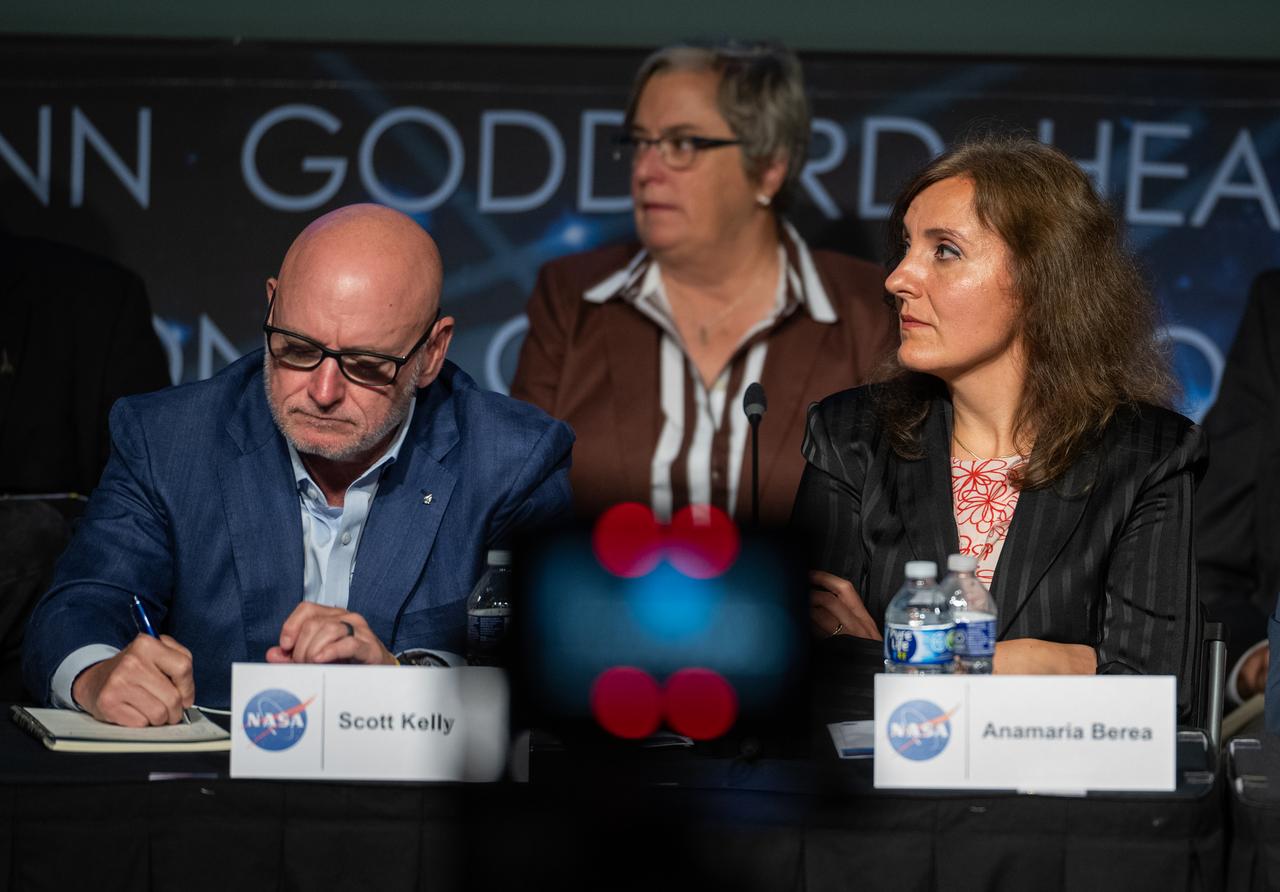
Scott Kelly, former NASA astronaut, left, and Anamaria Berea, associate professor of Computational and Data Science at George Mason University, are seen during a public meeting of NASA’s unidentified anomalous phenomena (UAP) independent study team, Wednesday, May 31, 2023 at the Mary W. Jackson NASA Headquarters building in Washington. The UAP independent study team is a counsel of 16 community experts across diverse areas on matters relevant to potential methods of study for unidentified anomalous phenomena. NASA commissioned the nine-month study to examine UAP from a scientific perspective and create a roadmap for how to use data and the tools of science to move our understanding of UAP forward. Photo Credit: (NASA/Joel Kowsky)
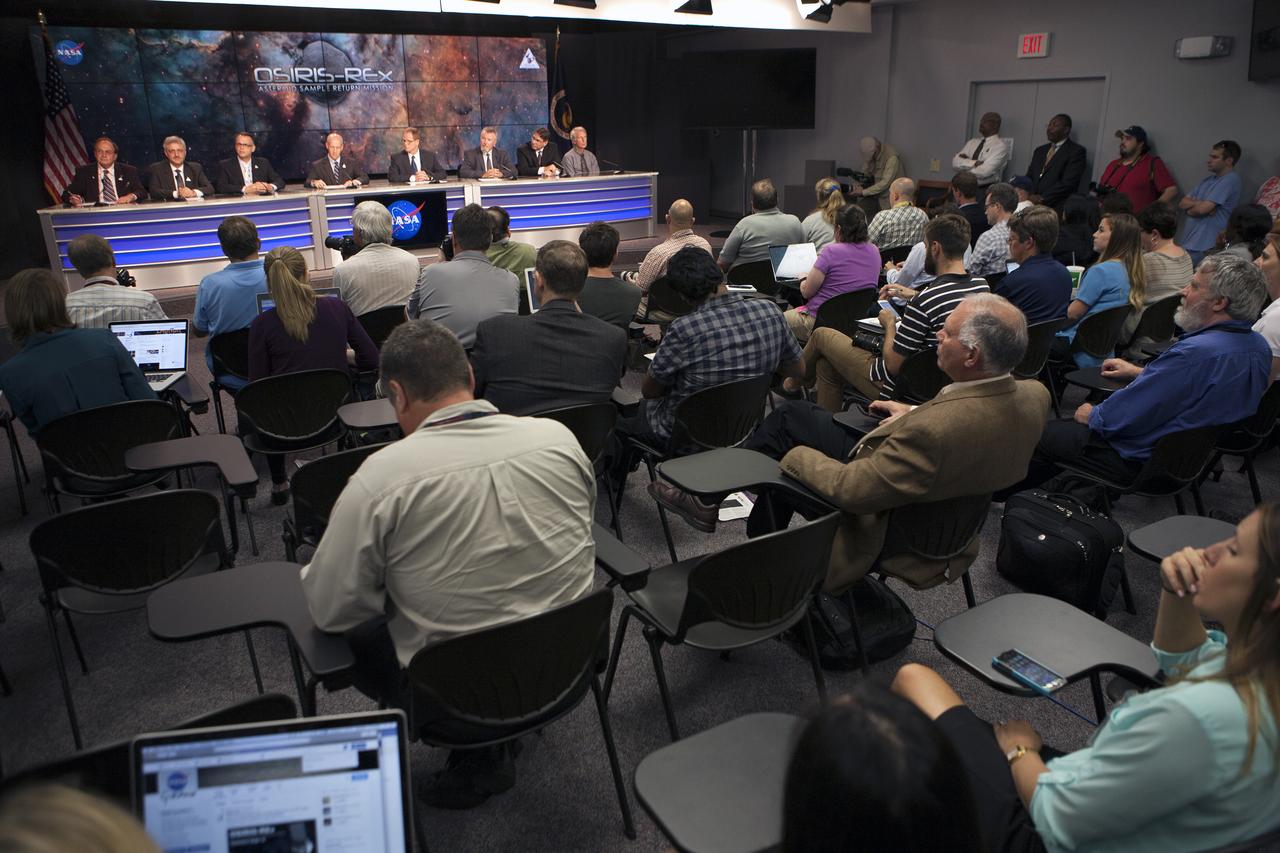
In the Kennedy Space Center’s Press Site auditorium, NASA and industry leaders speak to members of the media at a prelaunch news conference for the agency’s Origins, Spectral Interpretation, Resource Identification, Security-Regolith Explorer, or OSIRIS-REx spacecraft. From left are: George Diller of NASA Communications; Geoffrey Yoder, acting associate administrator of NASA’s Science Mission Directorate in Washington; Dante Lauretta, OSIRIS-REx principal investigator at the University of Arizona, Tucson; Tim Dunn, NASA launch manager at Kennedy; Scott Messer, program manager for NASA missions at United Launch Alliance in Centennial, Colorado; Michael Donnelly, OSIRIS-REx project manager at NASA’s Goddard Space Flight Center in Greenbelt, Maryland; Rich Kuhns, OSIRIS-REx program manager for Lockheed Martin Space Systems in Denver; and Clay Flinn, launch weather officer for the 45th Weather Squadron at Cape Canaveral Air Force Station, Florida.
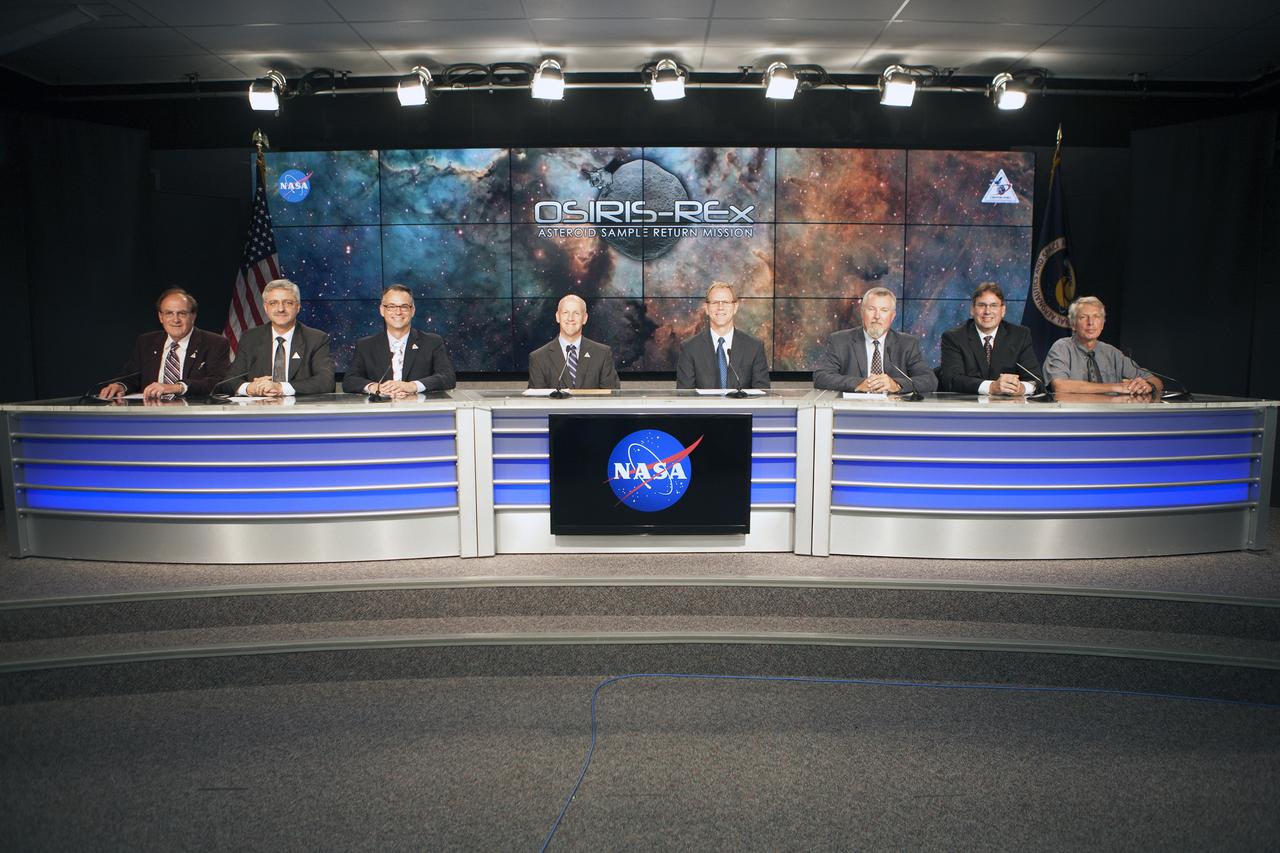
In the Kennedy Space Center’s Press Site auditorium, NASA and industry leaders speak to members of the media at a prelaunch news conference for the agency’s Origins, Spectral Interpretation, Resource Identification, Security-Regolith Explorer, or OSIRIS-REx spacecraft. From left are: George Diller of NASA Communications; Geoffrey Yoder, acting associate administrator of NASA’s Science Mission Directorate in Washington; Dante Lauretta, OSIRIS-REx principal investigator at the University of Arizona, Tucson; Tim Dunn, NASA launch manager at Kennedy; Scott Messer, program manager for NASA missions at United Launch Alliance in Centennial, Colorado; Michael Donnelly, OSIRIS-REx project manager at NASA’s Goddard Space Flight Center in Greenbelt, Maryland; Rich Kuhns, OSIRIS-REx program manager for Lockheed Martin Space Systems in Denver; and Clay Flinn, launch weather officer for the 45th Weather Squadron at Cape Canaveral Air Force Station, Florida.
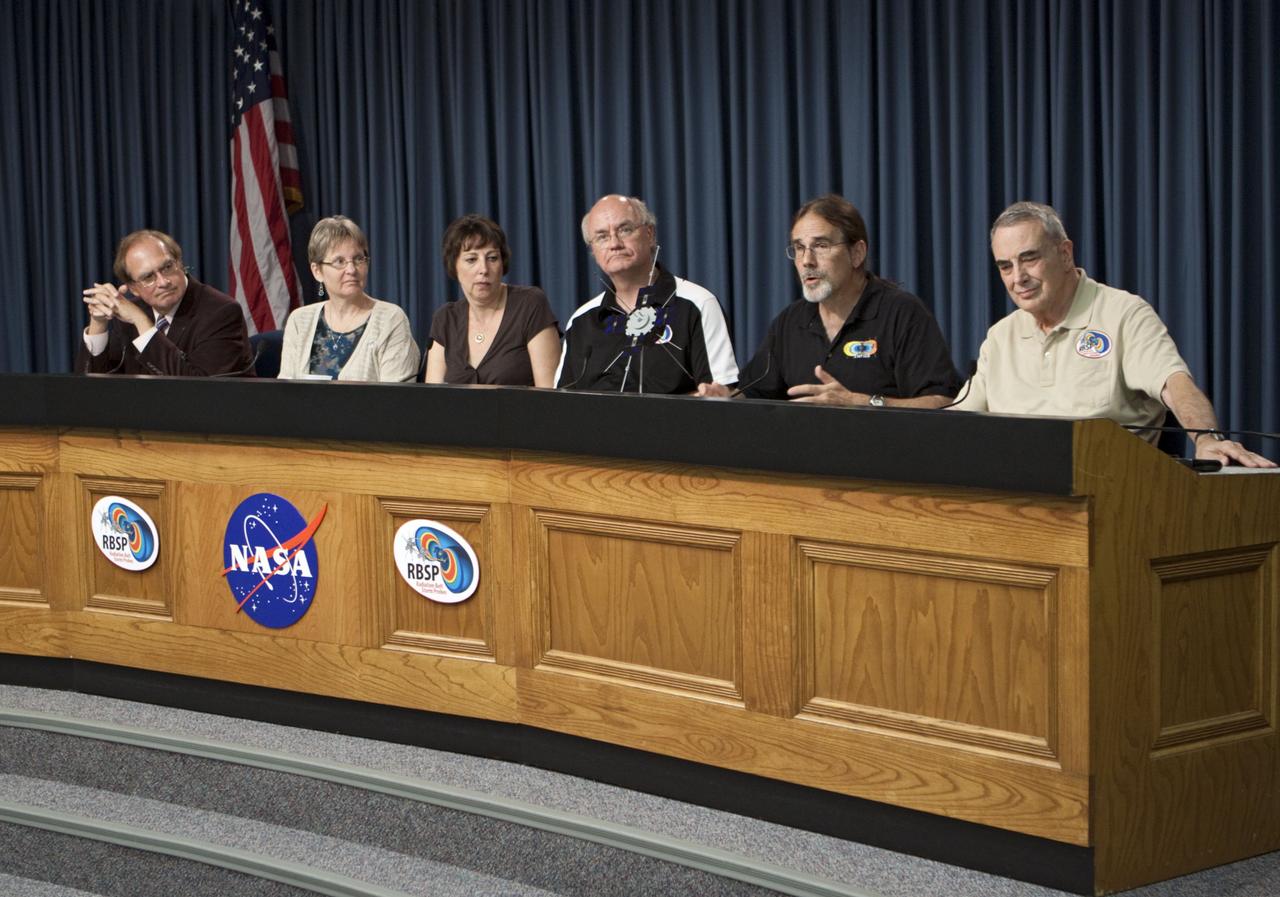
CAPE CANAVERAL, Fla. - A mission science briefing was held at NASA Kennedy Space Center’s Press Site in Florida for the Radiation Belt Storm Probes, or RBSP, mission. From left, are George Diller, public affairs specialist and news conference moderator, Mona Kessel, RBSP program scientist from NASA Headquarters in Washington, Nicola Fox, RBSP deputy project scientist at Johns Hopkins Applied Physics Laboratory in Laurel, Md., Craig Kletzing, principal investigator from the University of Iowa, Harlan Spence, principal investigator from the University of New Hampshire, and Lou Lanzerotti, principal investigator from the New Jersey Institute of Technology. NASA’s RBSP mission will help us understand the sun’s influence on Earth and near-Earth space by studying the Earth’s radiation belts on various scales of space and time. RBSP will begin its mission of exploration of Earth’s Van Allen radiation belts and the extremes of space weather after its launch aboard an Atlas V rocket. Launch is targeted for Aug. 24. For more information, visit http://www.nasa.gov/rbsp. Photo credit: NASA/Glenn Benson
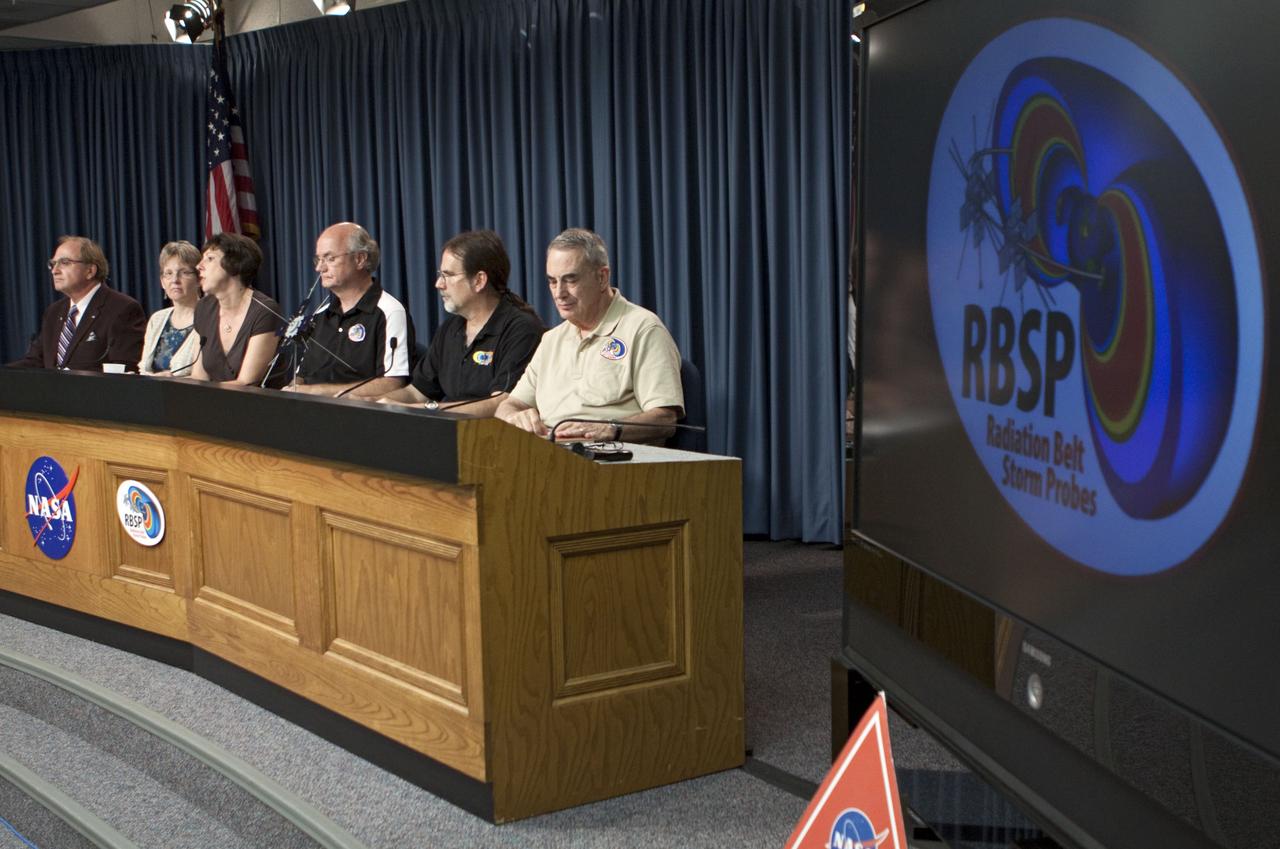
CAPE CANAVERAL, Fla. - A mission science briefing was held at NASA Kennedy Space Center’s Press Site in Florida for the Radiation Belt Storm Probes, or RBSP, mission. From left, are George Diller, public affairs specialist and news conference moderator, Mona Kessel, RBSP program scientist from NASA Headquarters in Washington, Nicola Fox, RBSP deputy project scientist at Johns Hopkins Applied Physics Laboratory in Laurel, Md., Craig Kletzing, principal investigator from the University of Iowa, Harlan Spence, principal investigator from the University of New Hampshire, and Lou Lanzerotti, principal investigator from the New Jersey Institute of Technology. NASA’s RBSP mission will help us understand the sun’s influence on Earth and near-Earth space by studying the Earth’s radiation belts on various scales of space and time. RBSP will begin its mission of exploration of Earth’s Van Allen radiation belts and the extremes of space weather after its launch aboard an Atlas V rocket. Launch is targeted for Aug. 24. For more information, visit http://www.nasa.gov/rbsp. Photo credit: NASA/Glenn Benson
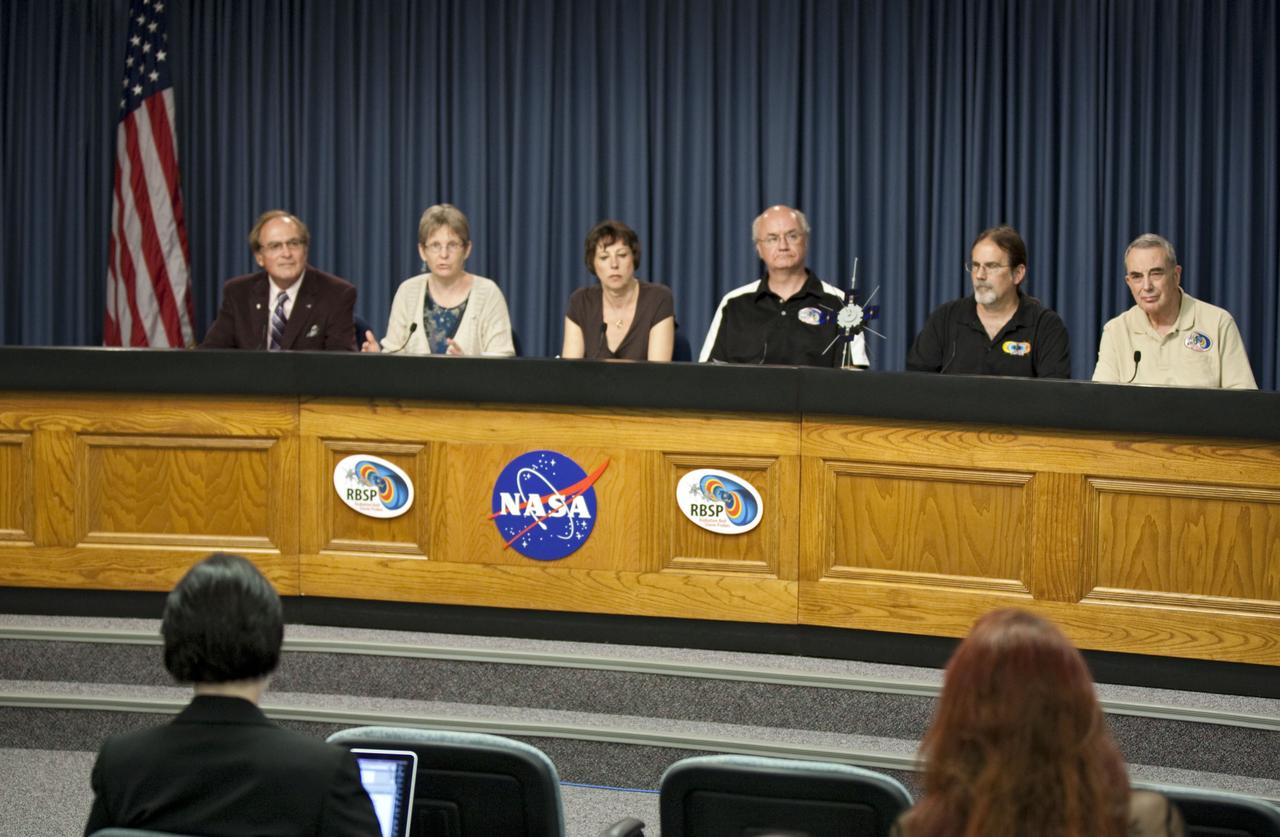
CAPE CANAVERAL, Fla. - A mission science briefing was held at NASA Kennedy Space Center’s Press Site in Florida for the Radiation Belt Storm Probes, or RBSP, mission. From left, are George Diller, public affairs specialist and news conference moderator, Mona Kessel, RBSP program scientist from NASA Headquarters in Washington, Nicola Fox, RBSP deputy project scientist at Johns Hopkins Applied Physics Laboratory in Laurel, Md., Craig Kletzing, principal investigator from the University of Iowa, Harlan Spence, principal investigator from the University of New Hampshire, and Lou Lanzerotti, principal investigator from the New Jersey Institute of Technology. NASA’s RBSP mission will help us understand the sun’s influence on Earth and near-Earth space by studying the Earth’s radiation belts on various scales of space and time. RBSP will begin its mission of exploration of Earth’s Van Allen radiation belts and the extremes of space weather after its launch aboard an Atlas V rocket. Launch is targeted for Aug. 24. For more information, visit http://www.nasa.gov/rbsp. Photo credit: NASA/Glenn Benson
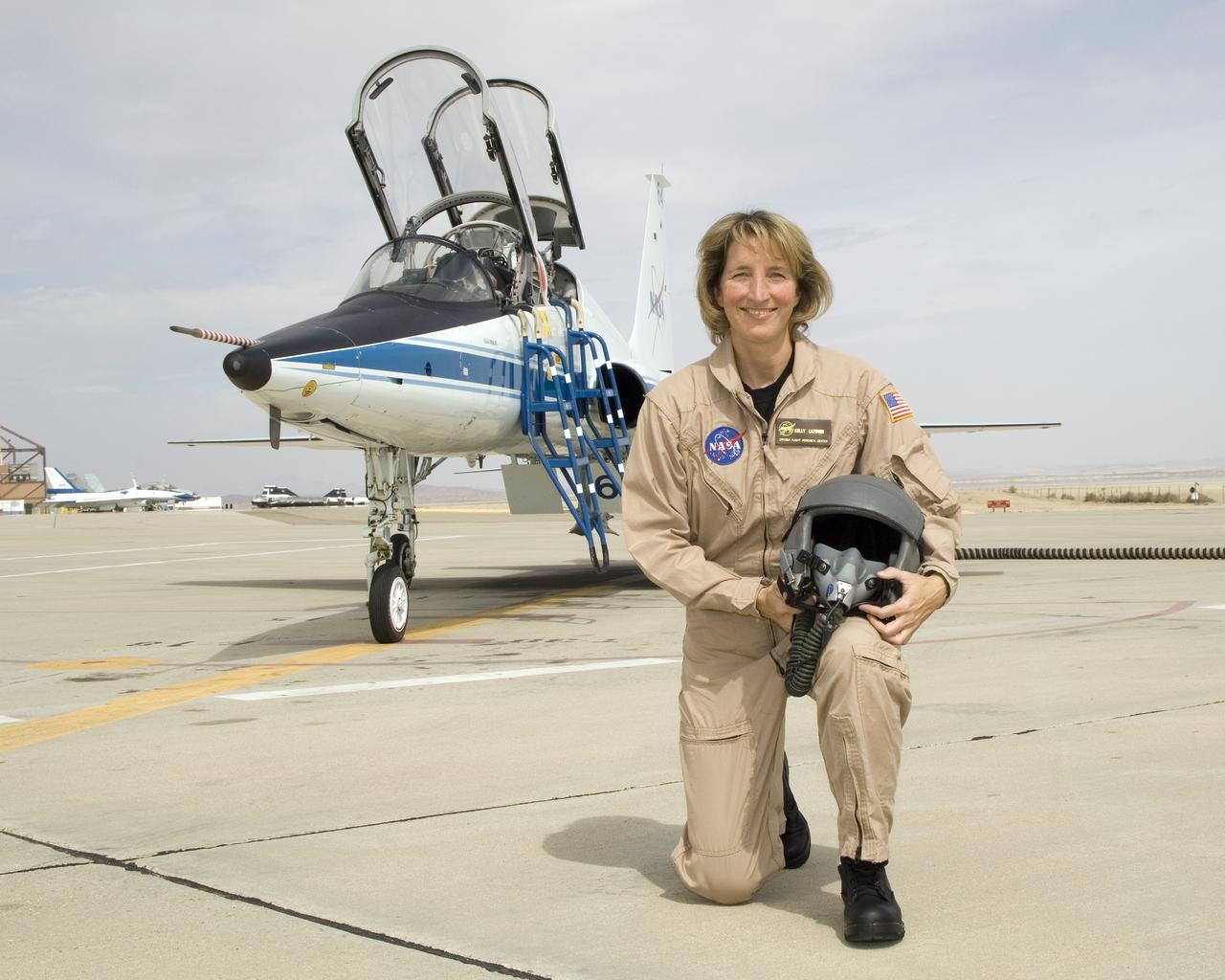
Kelly Latimer is a research pilot in the Flight Crew Branch of NASA's Dryden Flight Research Center, Edwards, Calif. Latimer joined NASA in March 2007 and will fly the T38, T-34, G-III, C-17 and the "Ikhana" Predator B. Latimer is Dryden's first female research test pilot. Prior to joining NASA, Latimer was on active duty with the U.S. Air Force. She has accumulated more than 5,000 hours of military and civilian flight experience in 30 aircraft. Latimer's first association with NASA was while attending graduate school at George Washington University, Washington, D.C. Her studies included work with the Joint Institute for the Advancement of Flight Sciences at NASA's Langley Research Center, Hampton, Va. She flew an Air Force C-17 during a 2005 NASA study to reduce aircraft noise. A team of California Polytechnic State University students and Northrop Grumman personnel were stationed on Rogers Dry Lake located at Edwards Air Force Base, Calif., to record the noise footprint of the aircraft as it made various landing approaches to Edwards' runway. Latimer completed undergraduate pilot training at Reese Air Force Base, Texas, in 1990. She remained at Reese as a T-38 instructor pilot until 1993. She was assigned as a C-141 aircraft commander at McCord Air Force Base, Tacoma, Wash., until 1996. Latimer graduated from the U.S. Air Force Test Pilot School at Edwards in Class 96B. She served as a C-17 and C-141 experimental test pilot at Edwards until 2000. She then became the chief of the Performance Branch and a T-38 instructor pilot at The Air Force Test Pilot School. She returned to McCord in 2002, where she was a C-17 aircraft commander and the operations officer for the 62nd Operations Support Squadron. In 2004, Latimer became the commander of Edwards' 418th Flight Test Squadron and director of the Global Reach Combined Test Force. Following that assignment, she deployed to Iraq as an advisor to the Iraqi Air Force. Her last active duty tour was as an instructor a
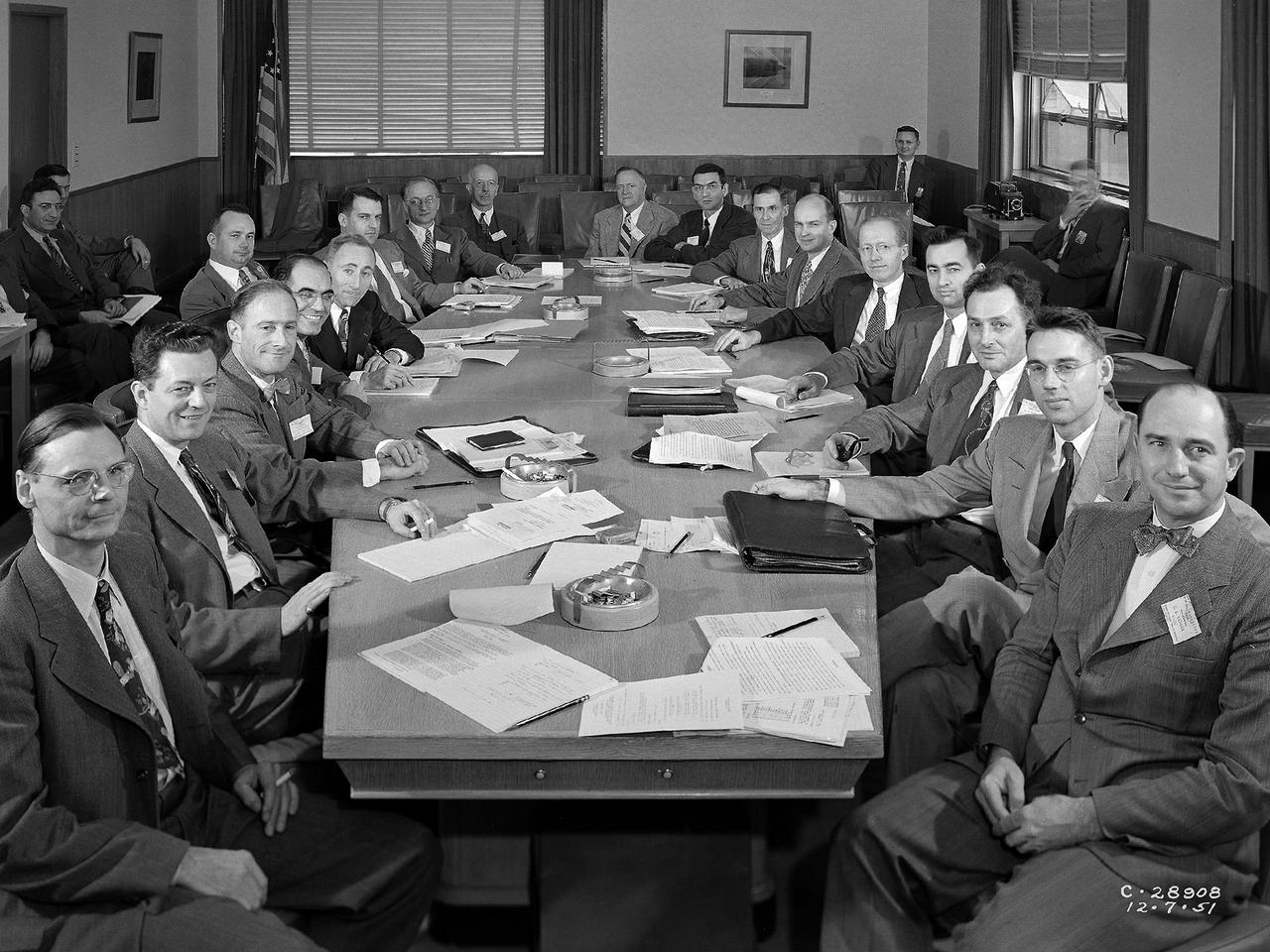
The National Advisory Committee for Aeronautics (NACA) Subcommittee on Combustion holds a meeting at Lewis Flight Propulsion Laboratory in Cleveland, Ohio. The NACA was managed by committees that included members of their own staff along with representatives from industry, the military, other government agencies, and universities. The 17-person Executive Committee was the NACA’s primary administrative body. They met several times a year at the NACA headquarters office in Washington DC to discuss broad issues confronting the US aeronautical community. Jerome Hunsaker, head of the Department of Aeronautical Engineering at the Massachusetts Institute of Technology, served as the NACA chairman from 1941 to 1956. George Lewis was not a member of the Executive Committee but served a key role as the NACA’s Director of Aeronautical Research. The NACA’s organizational chart also included 11 technical committees, several of which had specialized subcommittees. There were over 100 different subcommittees between World War I and 1958. The number of active subcommittees varied over the years. Most existed only for a few years, but some continued for over a decade. The subcommittees met three or four times per year, often at the laboratory most closely associated with the area of research. A team of laboratory researchers presented briefings on their recent activities and plans for the future. The Subcommittee on Combustion existed from 1945 to the NACA’s demise in 1958.
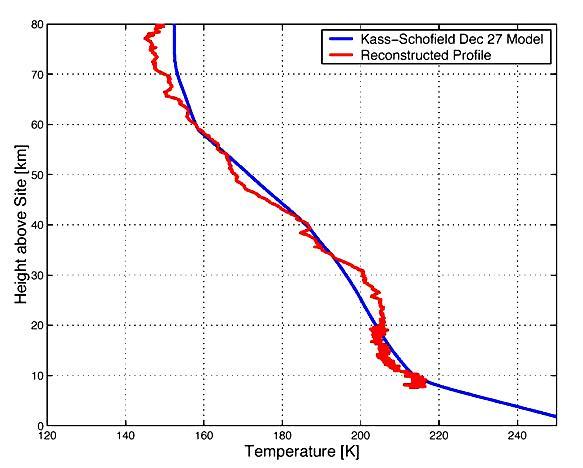
Lessons from Spirit Landing