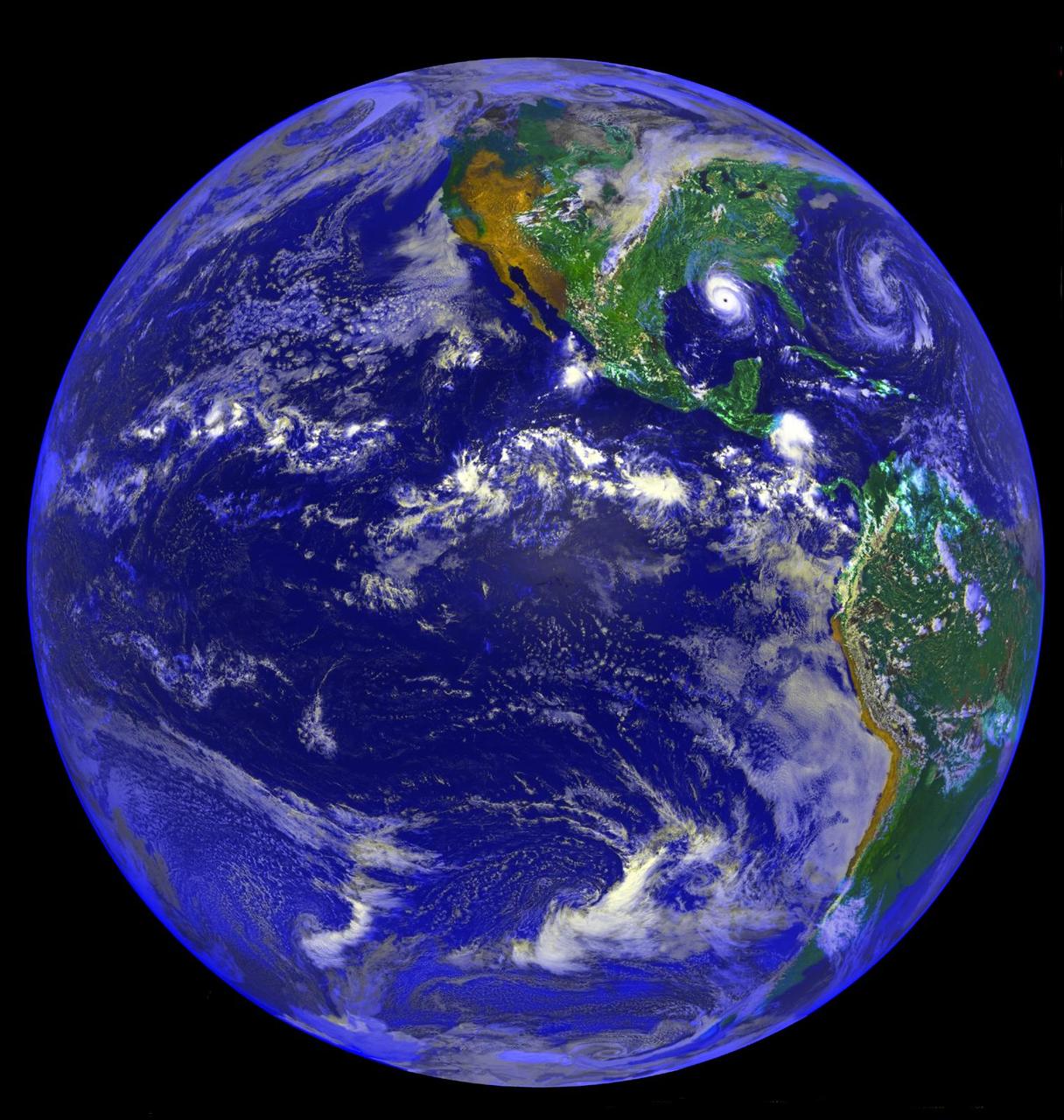
Image taken on August 25, 1992 by NASA NOAA GOES-7 of the Americas and Hurricane Andrew.
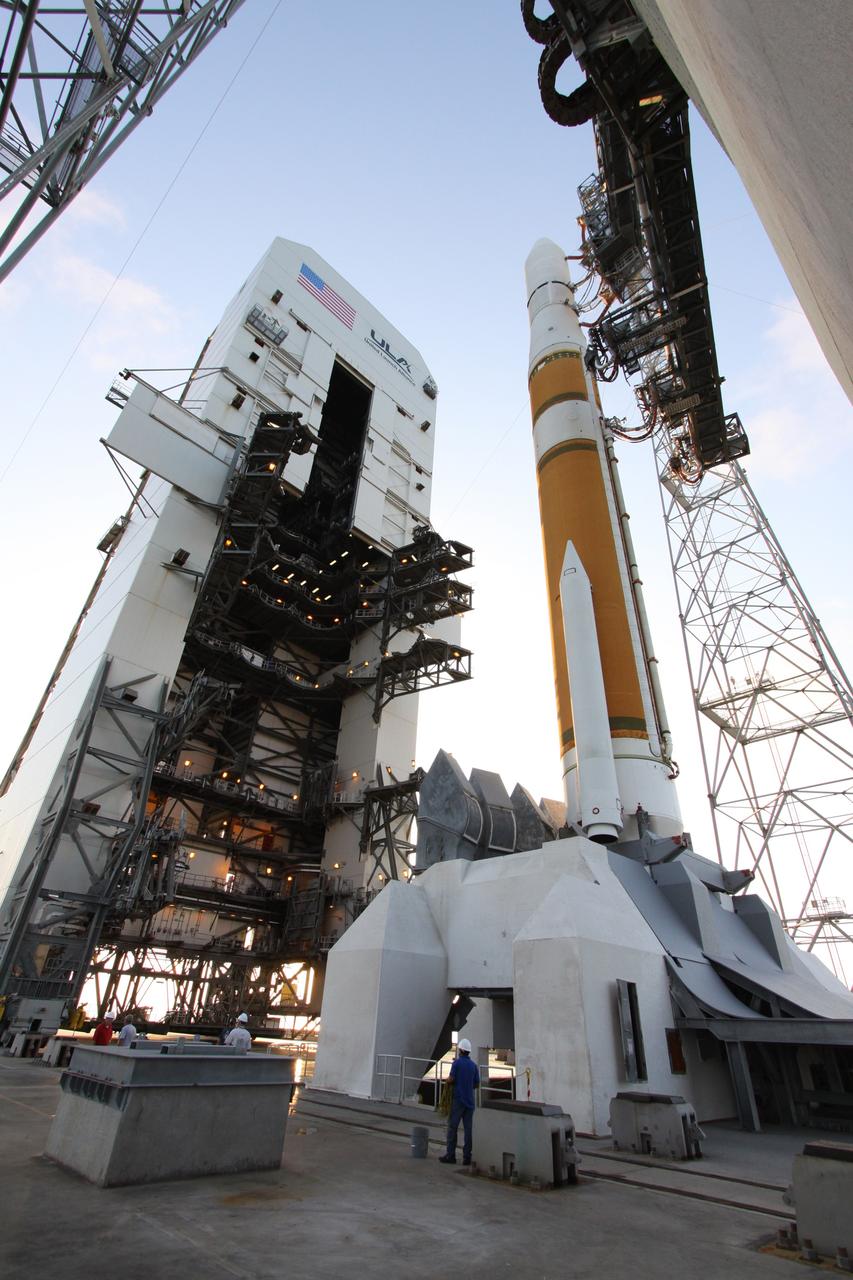
CAPE CANAVERAL, Fla. – Workers on Launch Complex 37 at Cape Canaveral Air Force Station monitor the movement of the mobile service tower as it slowly rolls away from the Boeing Delta IV rocket that will launch the GOES-O satellite into orbit. The terminal countdown to the liftoff of GOES-O will begin at 12:59 p.m. EDT for a launch window that extends from 6:14 p.m. to 7:14 p.m. June 26. The latest Geostationary Operational Environmental Satellite, GOES-O was developed by NASA for the National Oceanic and Atmospheric Administration, or NOAA. Each of the GOES satellites continuously provides observations of 60 percent of the Earth including the continental United States, providing weather monitoring and forecast operations as well as a continuous and reliable stream of environmental information and severe weather warnings. Once in orbit, GOES-O will be designated GOES-14, and NASA will provide on-orbit checkout and then transfer operational responsibility to NOAA. Photo credit: NASA/Jack Pfaller
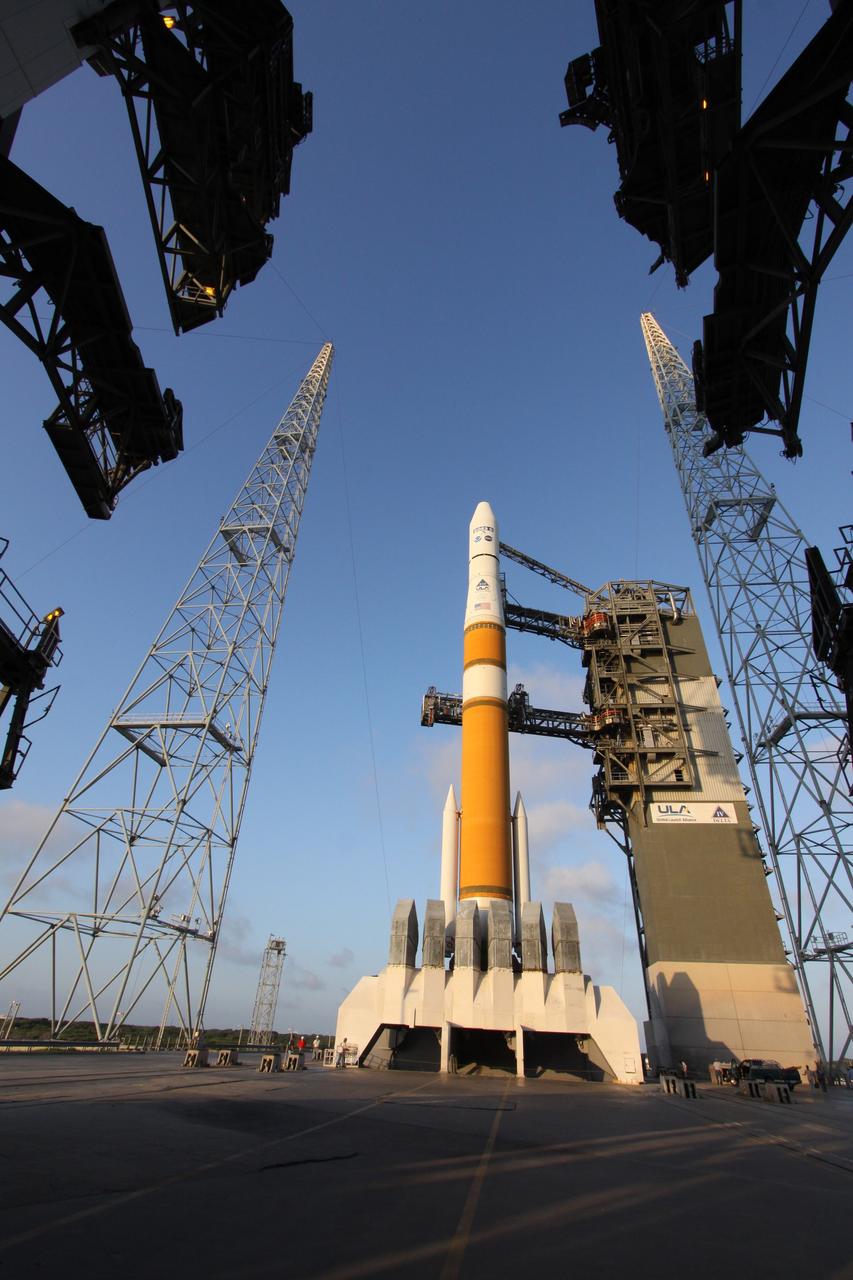
CAPE CANAVERAL, Fla. – The mobile service tower on Launch Complex 37 at Cape Canaveral Air Force Station has been rolled back to reveal the Boeing Delta IV rocket that will launch the GOES-O satellite into orbit. The terminal countdown to the liftoff of GOES-O will begin at 12:59 p.m. EDT for a launch window that extends from 6:14 p.m. to 7:14 p.m. June 26. The latest Geostationary Operational Environmental Satellite, GOES-O was developed by NASA for the National Oceanic and Atmospheric Administration, or NOAA. Each of the GOES satellites continuously provides observations of 60 percent of the Earth including the continental United States, providing weather monitoring and forecast operations as well as a continuous and reliable stream of environmental information and severe weather warnings. Once in orbit, GOES-O will be designated GOES-14, and NASA will provide on-orbit checkout and then transfer operational responsibility to NOAA. Photo credit: NASA/Jack Pfaller
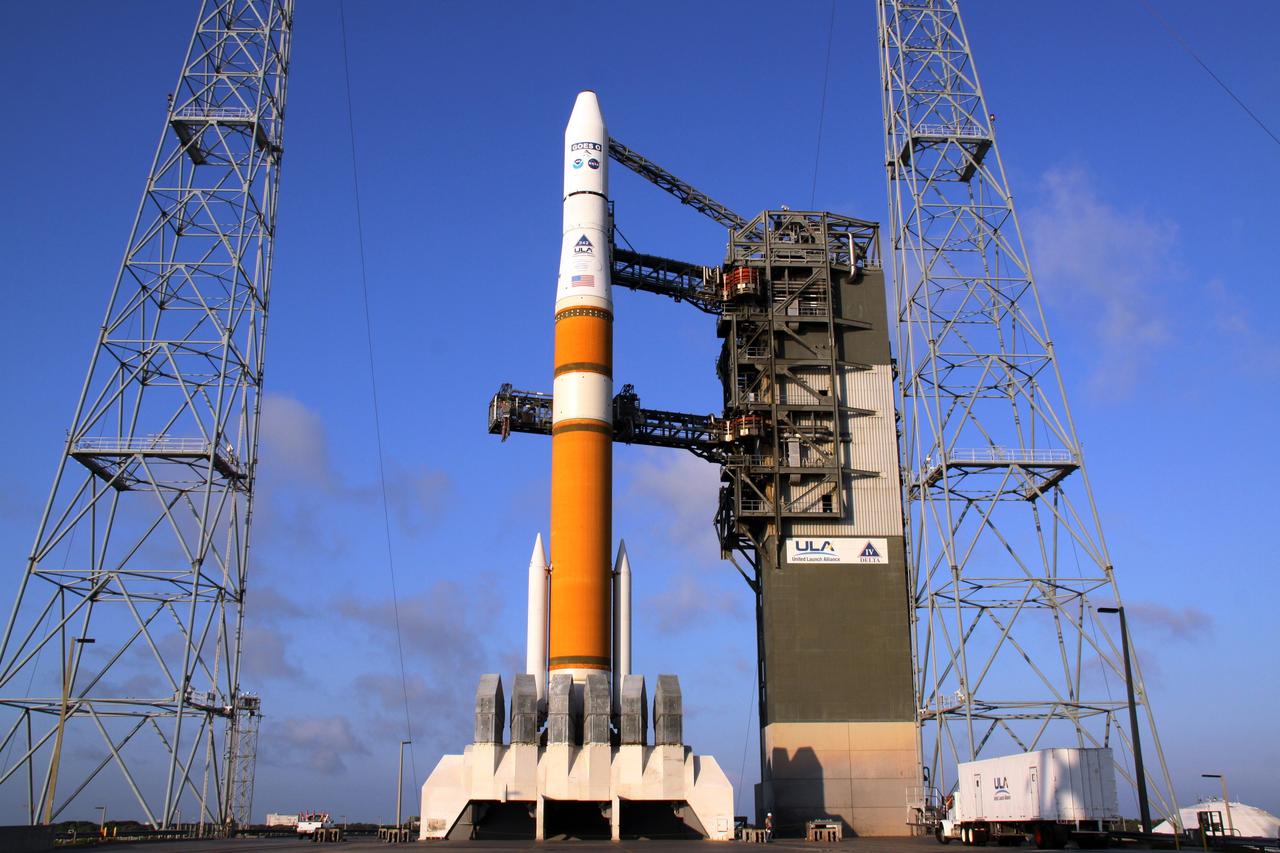
CAPE CANAVERAL, Fla. – The mobile service tower on Launch Complex 37 at Cape Canaveral Air Force Station has been removed from around a Boeing Delta IV rocket as preparations continue to launch the GOES-O satellite. The terminal countdown to the liftoff of GOES-O will begin at 12:59 p.m. EDT for a launch window that extends from 6:14 p.m. to 7:14 p.m. June 26. The latest Geostationary Operational Environmental Satellite, GOES-O was developed by NASA for the National Oceanic and Atmospheric Administration, or NOAA. Each of the GOES satellites continuously provides observations of 60 percent of the Earth including the continental United States, providing weather monitoring and forecast operations as well as a continuous and reliable stream of environmental information and severe weather warnings. Once in orbit, GOES-O will be designated GOES-14, and NASA will provide on-orbit checkout and then transfer operational responsibility to NOAA. Photo credit: NASA/Jack Pfaller
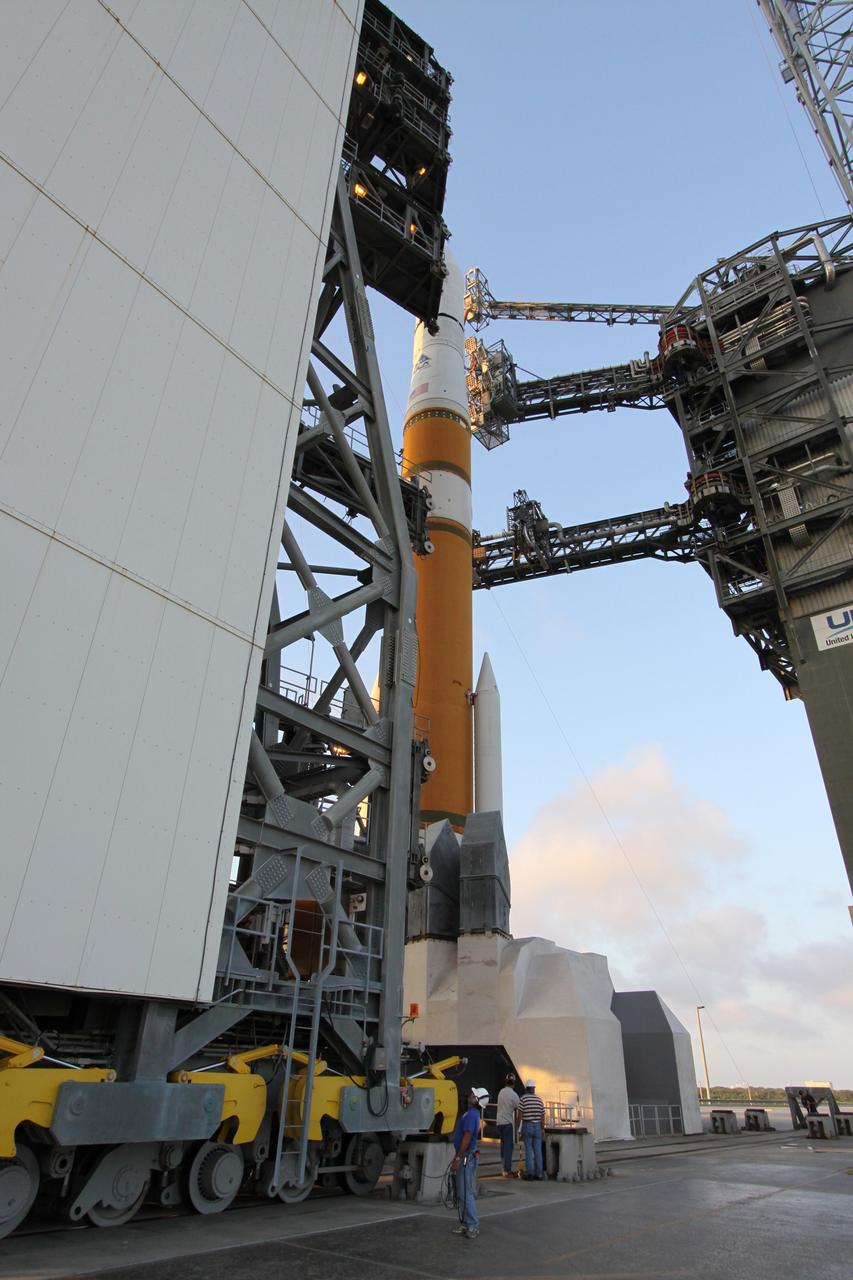
CAPE CANAVERAL, Fla. – Workers on Launch Complex 37 at Cape Canaveral Air Force Station monitor the progress of the mobile service tower as it slowly rolls back from the Boeing Delta IV rocket that will launch the GOES-O satellite into orbit. The terminal countdown to the liftoff of GOES-O will begin at 12:59 p.m. EDT for a launch window that extends from 6:14 p.m. to 7:14 p.m. June 26. The latest Geostationary Operational Environmental Satellite, GOES-O was developed by NASA for the National Oceanic and Atmospheric Administration, or NOAA. Each of the GOES satellites continuously provides observations of 60 percent of the Earth including the continental United States, providing weather monitoring and forecast operations as well as a continuous and reliable stream of environmental information and severe weather warnings. Once in orbit, GOES-O will be designated GOES-14, and NASA will provide on-orbit checkout and then transfer operational responsibility to NOAA. Photo credit: NASA/Jack Pfaller

CAPE CANAVERAL, Fla. – A logo applied to the fairing atop the Delta IV rocket awaiting liftoff on Launch Complex 37 at Cape Canaveral Air Force Station clearly identifies the payload as the GOES-O satellite. The terminal countdown to the liftoff of GOES-O will begin at 12:59 p.m. EDT for a launch window that extends from 6:14 p.m. to 7:14 p.m. June 26. The latest Geostationary Operational Environmental Satellite, GOES-O was developed by NASA for the National Oceanic and Atmospheric Administration, or NOAA. Each of the GOES satellites continuously provides observations of 60 percent of the Earth including the continental United States, providing weather monitoring and forecast operations as well as a continuous and reliable stream of environmental information and severe weather warnings. Once in orbit, GOES-O will be designated GOES-14, and NASA will provide on-orbit checkout and then transfer operational responsibility to NOAA. Photo credit: NASA/Jack Pfaller
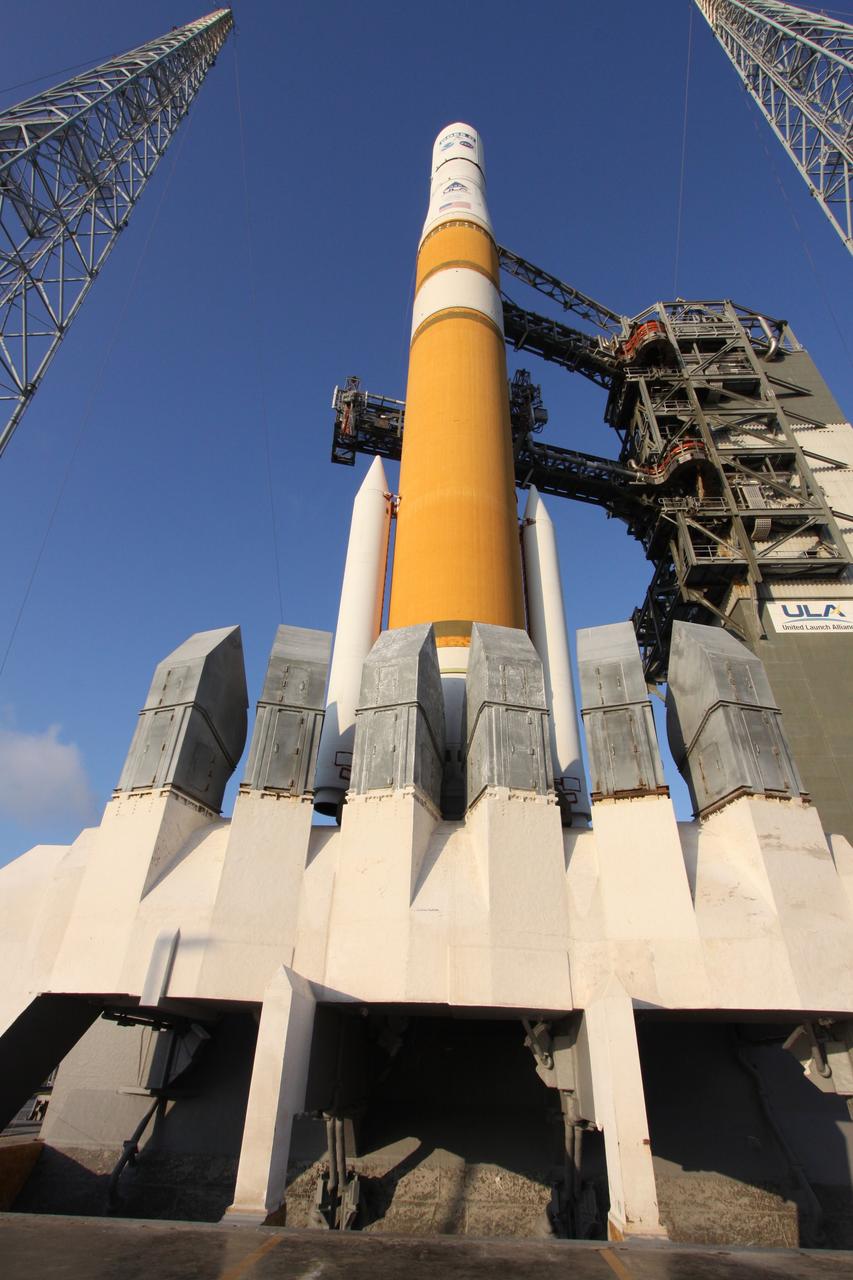
CAPE CANAVERAL, Fla. – The mobile service tower on Launch Complex 37 at Cape Canaveral Air Force Station has been removed from around a Boeing Delta IV rocket as preparations continue to launch the GOES-O satellite. The terminal countdown to the liftoff of GOES-O will begin at 12:59 p.m. EDT for a launch window that extends from 6:14 p.m. to 7:14 p.m. June 26. The latest Geostationary Operational Environmental Satellite, GOES-O was developed by NASA for the National Oceanic and Atmospheric Administration, or NOAA. Each of the GOES satellites continuously provides observations of 60 percent of the Earth including the continental United States, providing weather monitoring and forecast operations as well as a continuous and reliable stream of environmental information and severe weather warnings. Once in orbit, GOES-O will be designated GOES-14, and NASA will provide on-orbit checkout and then transfer operational responsibility to NOAA. Photo credit: NASA/Jack Pfaller
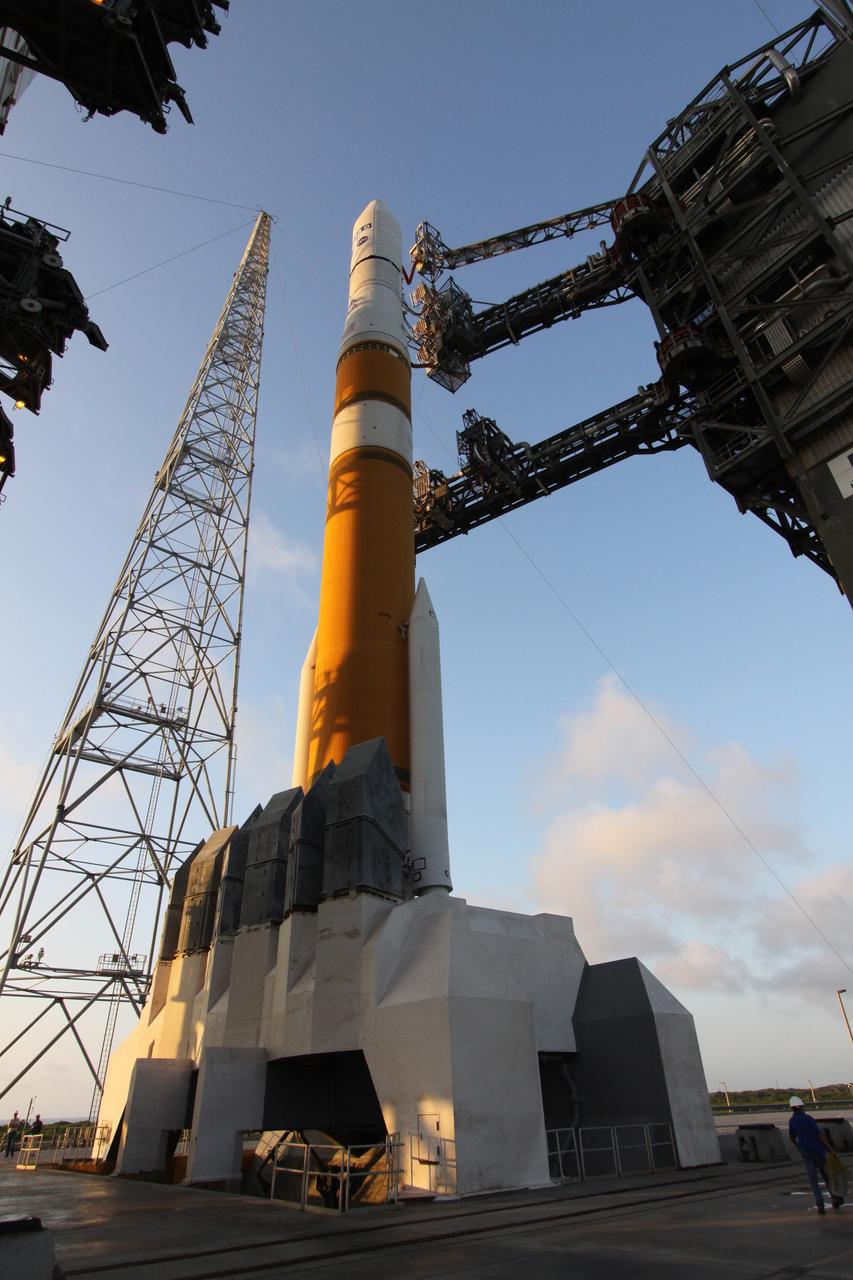
CAPE CANAVERAL, Fla. – The mobile service tower on Launch Complex 37 at Cape Canaveral Air Force Station rolls back to reveal the Boeing Delta IV rocket that will launch the GOES-O satellite into orbit. The terminal countdown to the liftoff of GOES-O will begin at 12:59 p.m. EDT for a launch window that extends from 6:14 p.m. to 7:14 p.m. June 26. The latest Geostationary Operational Environmental Satellite, GOES-O was developed by NASA for the National Oceanic and Atmospheric Administration, or NOAA. Each of the GOES satellites continuously provides observations of 60 percent of the Earth including the continental United States, providing weather monitoring and forecast operations as well as a continuous and reliable stream of environmental information and severe weather warnings. Once in orbit, GOES-O will be designated GOES-14, and NASA will provide on-orbit checkout and then transfer operational responsibility to NOAA. Photo credit: NASA/Jack Pfaller
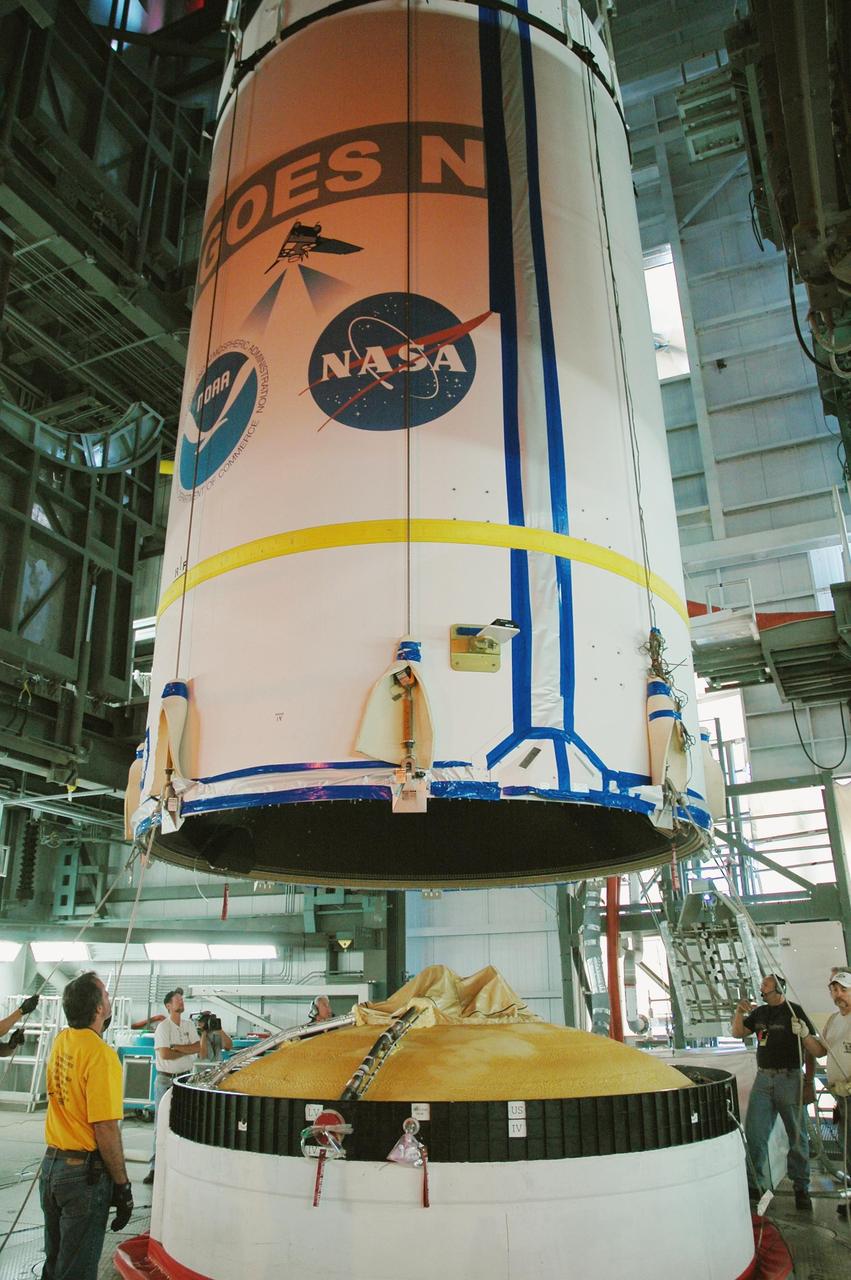
KENNEDY SPACE CENTER, FLA. - On Launch Complex 37 at Cape Canaveral Air Force Station in Florida, the GOES-N spacecraft is lowered toward the second stage of the Boeing Delta IV rocket for mating. GOES-N is the latest in a series of Geostationary Operational Environmental Satellites for NOAA and NASA, providing continuous monitoring necessary for intensive data analysis. GOES-N is scheduled to be launched May 18 in an hour-long window between 6:14 and 7:14 p.m. EDT. Photo credit: NASA/Charisse Nahser
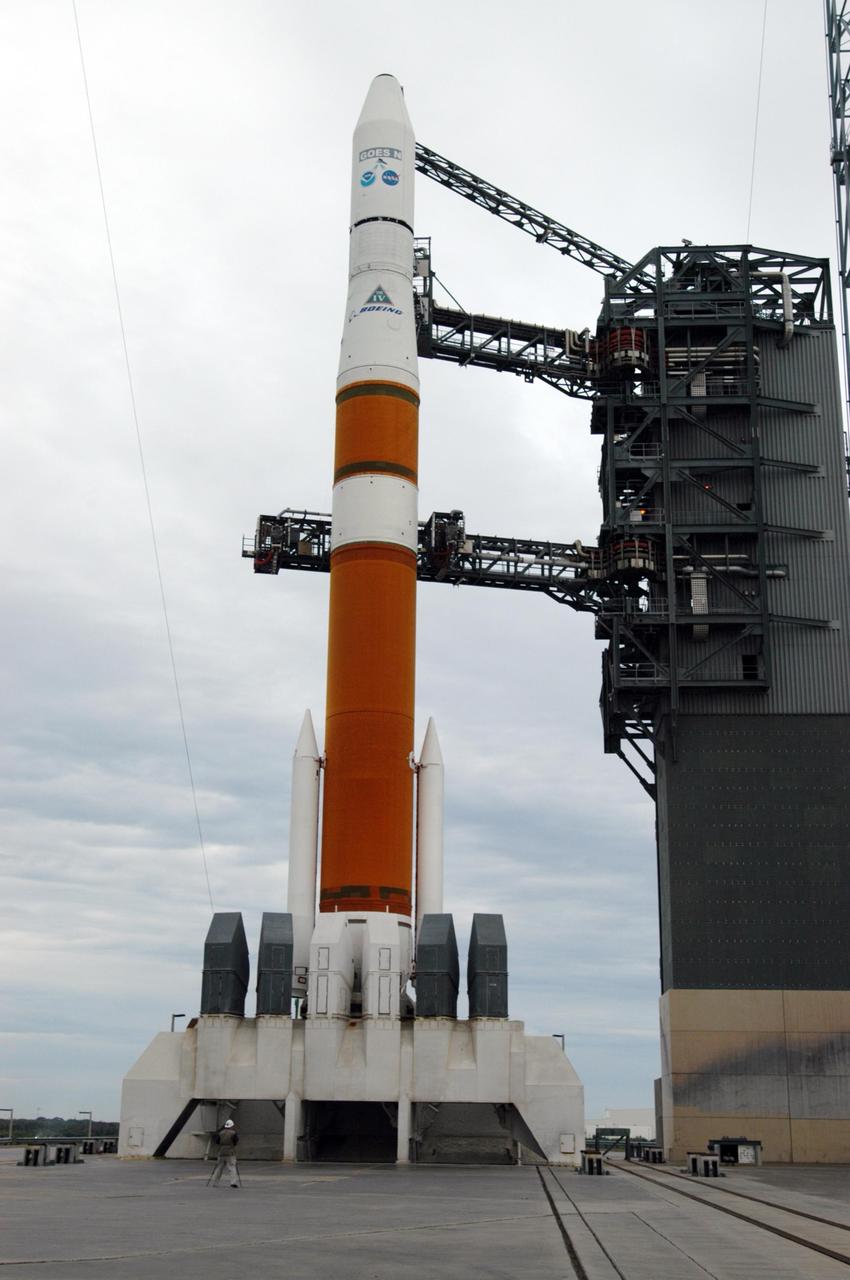
KENNEDY SPACE CENTER, FLA. - The mobile service tower on Launch Complex 37 at Cape Canaveral Air Force Station has been rolled back to reveal the Boeing Delta IV rocket that will launch the GOES-N satellite into orbit. GOES-N is the latest in a series of Geostationary Operational Environmental Satellites for NOAA and NASA. A geostationary orbit is one in which a satellite remains in the same position with respect to the rotating Earth. Thus, the satellite hovers continuously over one position on the Earth's surface, appearing stationary. As a result, GOES provide a constant vigil for the atmospheric "triggers" for severe weather conditions such as tornadoes, flash floods, hail storms, and hurricanes. GOES-N is scheduled for launch May 24 in an hour-long window between 6:11 and 7:11 p.m. EDT. Photo credit: NASA/George Shelton
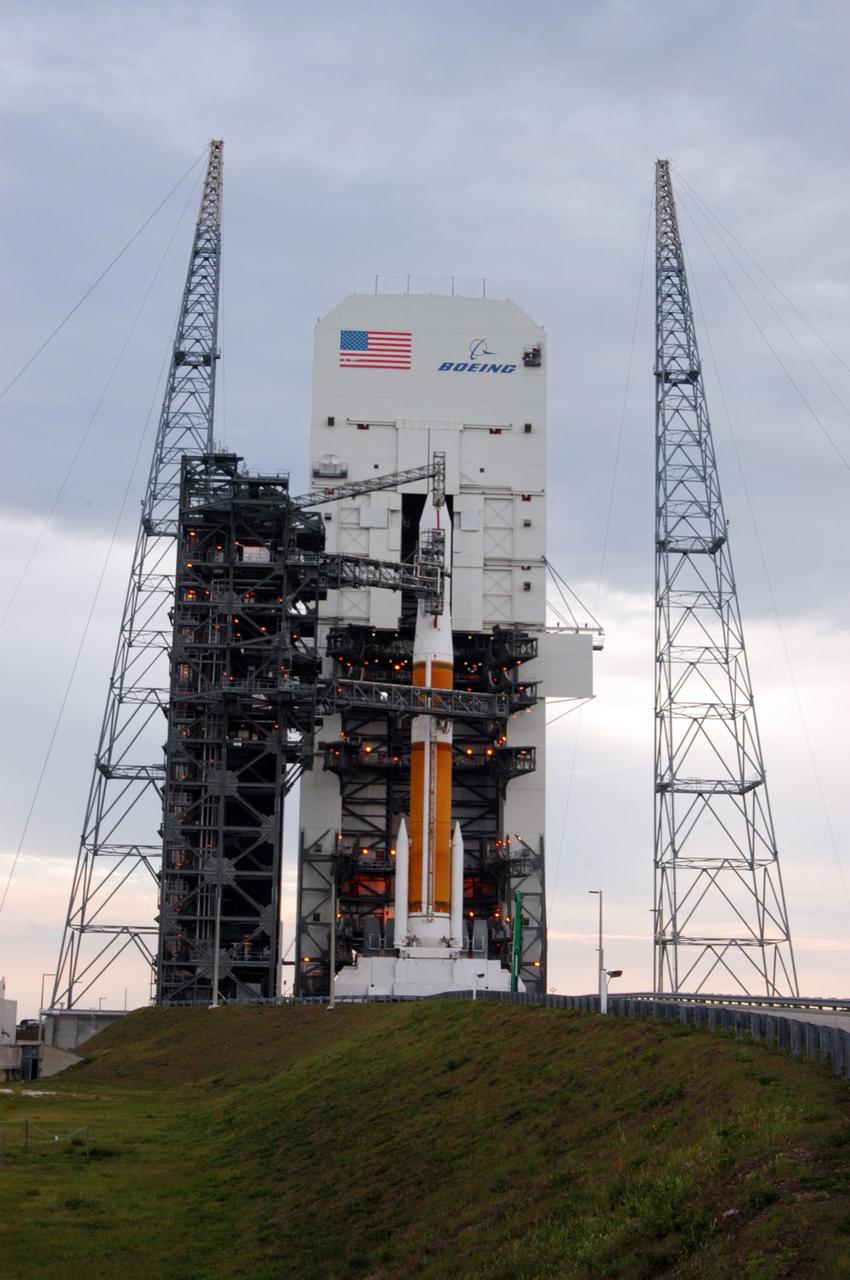
KENNEDY SPACE CENTER, FLA. - The mobile service tower on Launch Complex 37 at Cape Canaveral Air Force Station rolls back to reveal the Boeing Delta IV rocket that will launch the GOES-N satellite into orbit. GOES-N is the latest in a series of Geostationary Operational Environmental Satellites for NOAA and NASA. A geostationary orbit is one in which a satellite remains in the same position with respect to the rotating Earth. Thus, the satellite hovers continuously over one position on the Earth's surface, appearing stationary. As a result, GOES provide a constant vigil for the atmospheric "triggers" for severe weather conditions such as tornadoes, flash floods, hail storms, and hurricanes. GOES-N is scheduled for launch May 24 in an hour-long window between 6:11 and 7:11 p.m. EDT. Photo credit: NASA/George Shelton
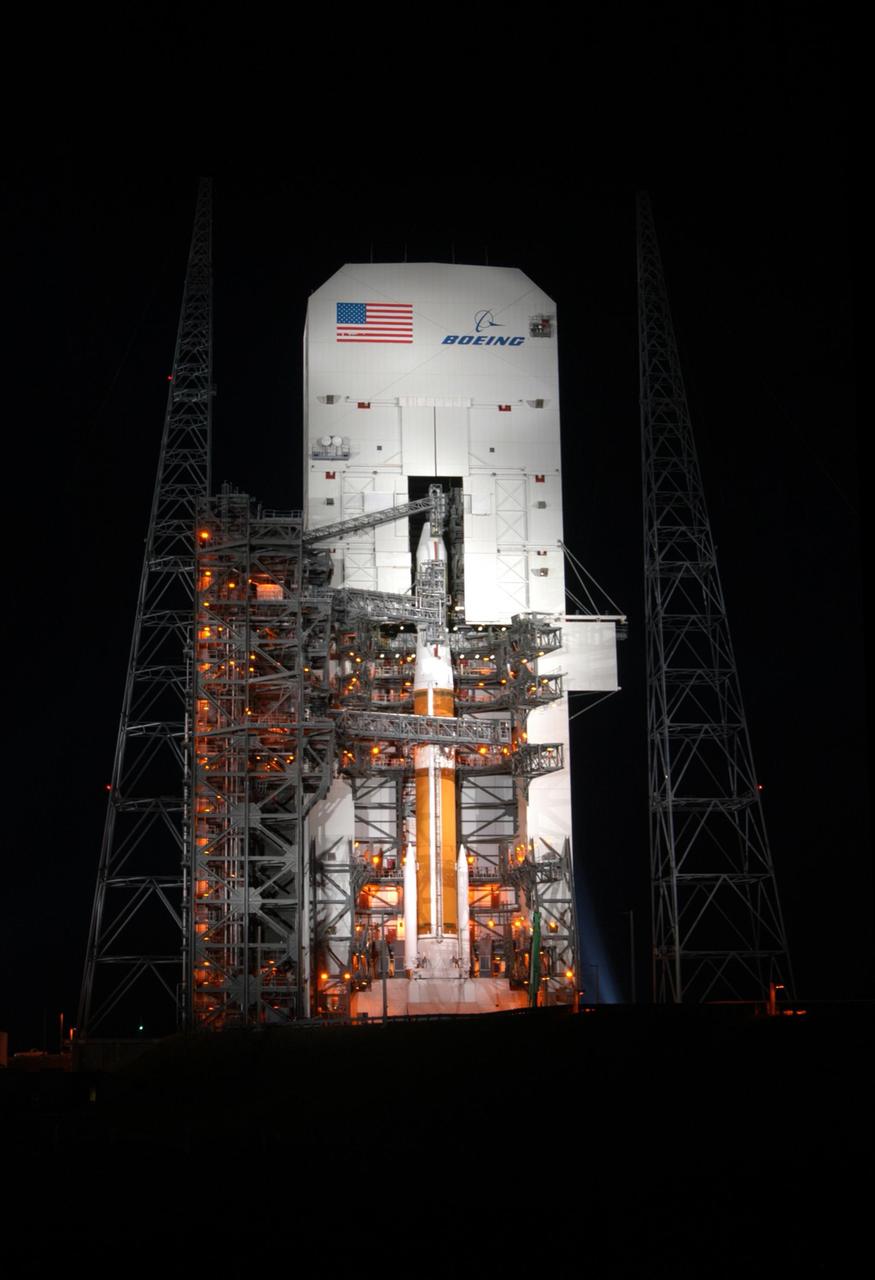
KENNEDY SPACE CENTER, FLA. - Before sunrise, a Boeing Delta IV rocket stands ready to launch the GOES-N satellite at Launch Complex 37 at Cape Canaveral Air Force Station. GOES-N is the latest in a series of Geostationary Operational Environmental Satellites for NOAA and NASA. A geostationary orbit is one in which a satellite remains in the same position with respect to the rotating Earth. Thus, the satellite hovers continuously over one position on the Earth's surface, appearing stationary. As a result, GOES provide a constant vigil for the atmospheric "triggers" for severe weather conditions such as tornadoes, flash floods, hail storms, and hurricanes. GOES-N is scheduled for launch May 24 in an hour-long window between 6:11 and 7:11 p.m. EDT. Photo credit: NASA/George Shelton
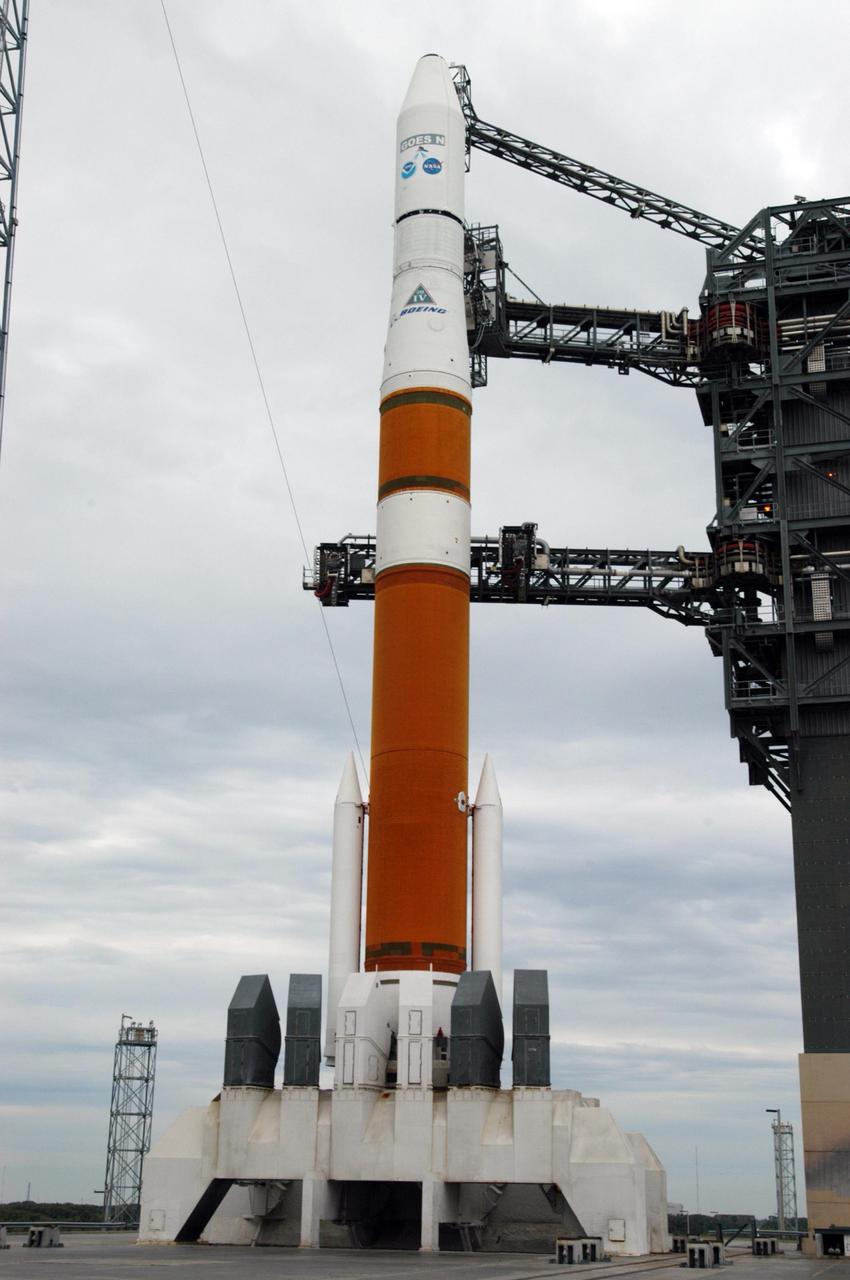
KENNEDY SPACE CENTER, FLA. - The mobile service tower on Launch Complex 37 at Cape Canaveral Air Force Station has been removed from around a Boeing Delta IV rocket as preparations continue to launch the GOES-N satellite. GOES-N is the latest in a series of Geostationary Operational Environmental Satellites for NOAA and NASA. A geostationary orbit is one in which a satellite remains in the same position with respect to the rotating Earth. Thus, the satellite hovers continuously over one position on the Earth's surface, appearing stationary. As a result, GOES provide a constant vigil for the atmospheric "triggers" for severe weather conditions such as tornadoes, flash floods, hail storms, and hurricanes. GOES-N is scheduled for launch May 24 in an hour-long window between 6:11 and 7:11 p.m. EDT. Photo credit: NASA/George Shelton
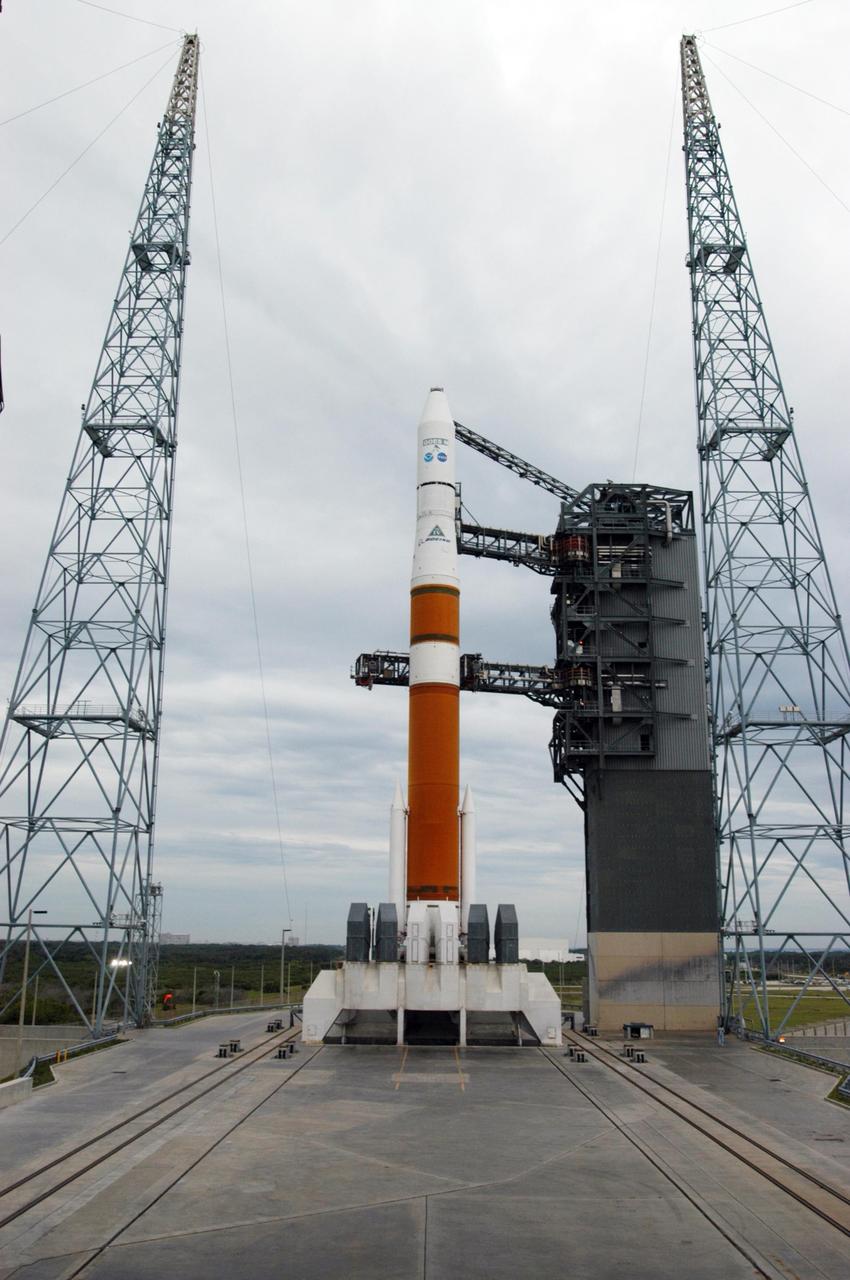
KENNEDY SPACE CENTER, FLA. - The mobile service tower on Launch Complex 37 at Cape Canaveral Air Force Station has been removed from around a Boeing Delta IV rocket as preparations continue to launch the GOES-N satellite. GOES-N is the latest in a series of Geostationary Operational Environmental Satellites for NOAA and NASA. A geostationary orbit is one in which a satellite remains in the same position with respect to the rotating Earth. Thus, the satellite hovers continuously over one position on the Earth's surface, appearing stationary. As a result, GOES provide a constant vigil for the atmospheric "triggers" for severe weather conditions such as tornadoes, flash floods, hail storms, and hurricanes. GOES-N is scheduled for launch May 24 in an hour-long window between 6:11 and 7:11 p.m. EDT. Photo credit: NASA/George Shelton
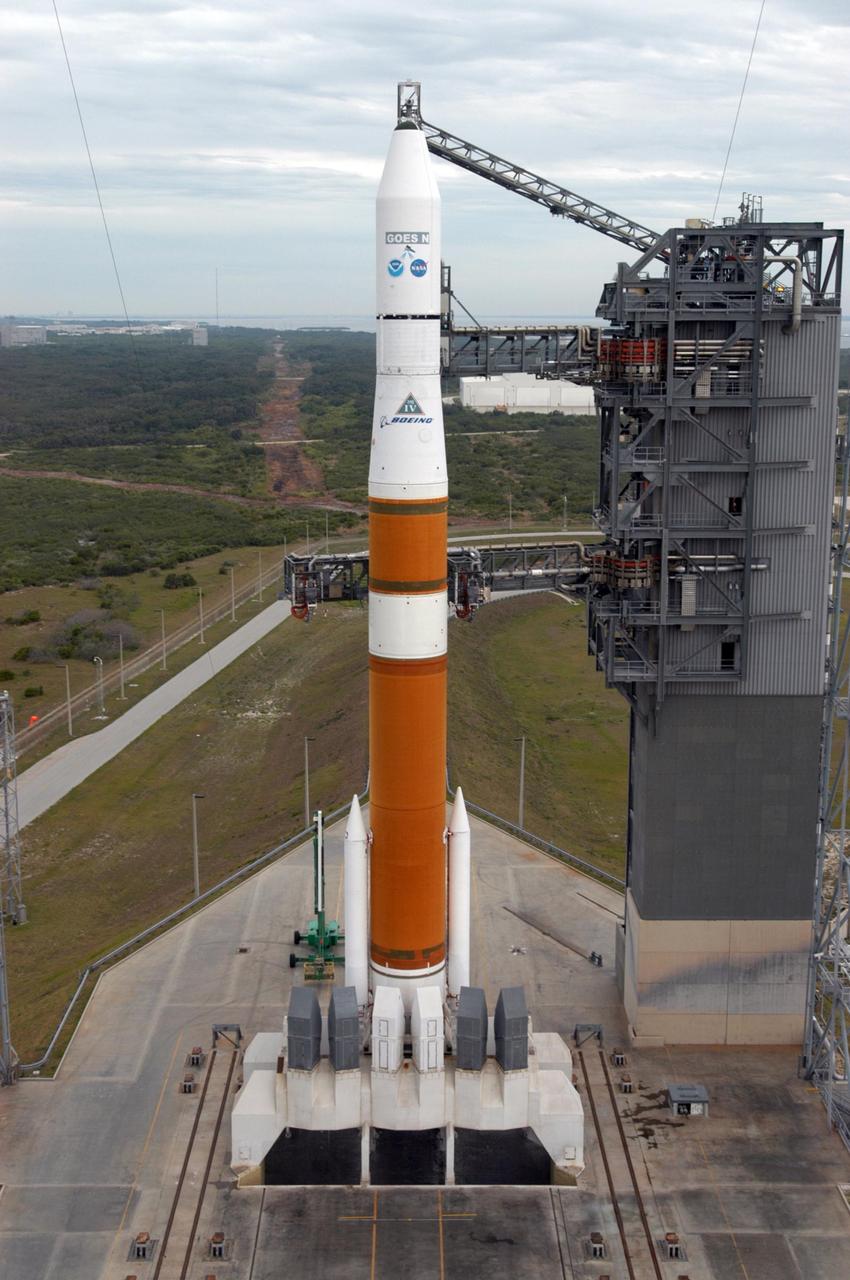
KENNEDY SPACE CENTER, FLA. - The mobile service tower on Launch Complex 37 at Cape Canaveral Air Force Station has been removed from around the Boeing Delta IV rocket that will launch the GOES-N satellite into orbit. GOES-N is the latest in a series of Geostationary Operational Environmental Satellites for NOAA and NASA. A geostationary orbit is one in which a satellite remains in the same position with respect to the rotating Earth. Thus, the satellite hovers continuously over one position on the Earth's surface, appearing stationary. As a result, GOES provide a constant vigil for the atmospheric "triggers" for severe weather conditions such as tornadoes, flash floods, hail storms, and hurricanes. GOES-N is scheduled for launch May 24 in an hour-long window between 6:11 and 7:11 p.m. EDT. Photo credit: NASA/George Shelton
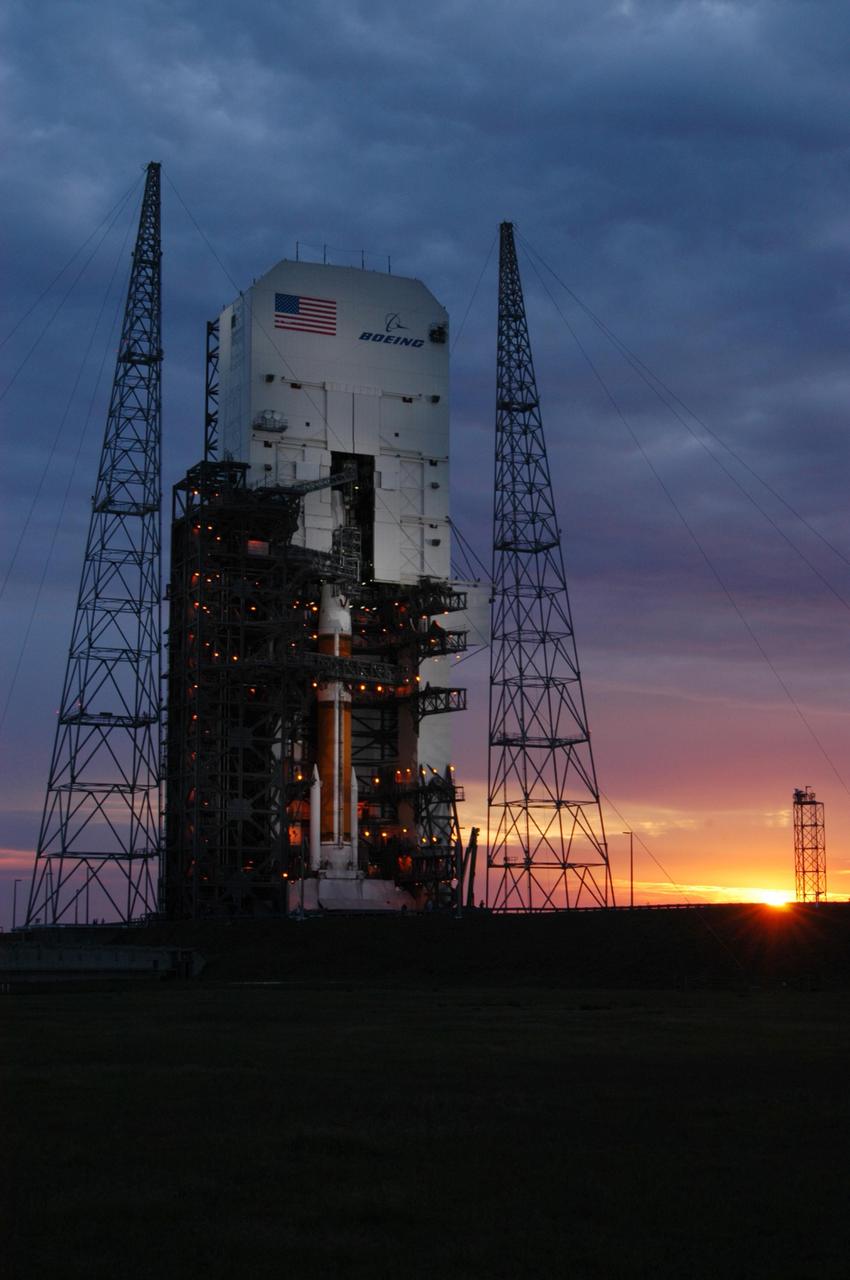
KENNEDY SPACE CENTER, FLA. - As the sun rises, a Boeing Delta IV rocket stands ready to launch the GOES-N satellite at Launch Complex 37 at Cape Canaveral Air Force Station. GOES-N is the latest in a series of Geostationary Operational Environmental Satellites for NOAA and NASA. A geostationary orbit is one in which a satellite remains in the same position with respect to the rotating Earth. Thus, the satellite hovers continuously over one position on the Earth's surface, appearing stationary. As a result, GOES provide a constant vigil for the atmospheric "triggers" for severe weather conditions such as tornadoes, flash floods, hail storms, and hurricanes. GOES-N is scheduled for launch May 24 in an hour-long window between 6:11 and 7:11 p.m. EDT. Photo credit: NASA/George Shelton
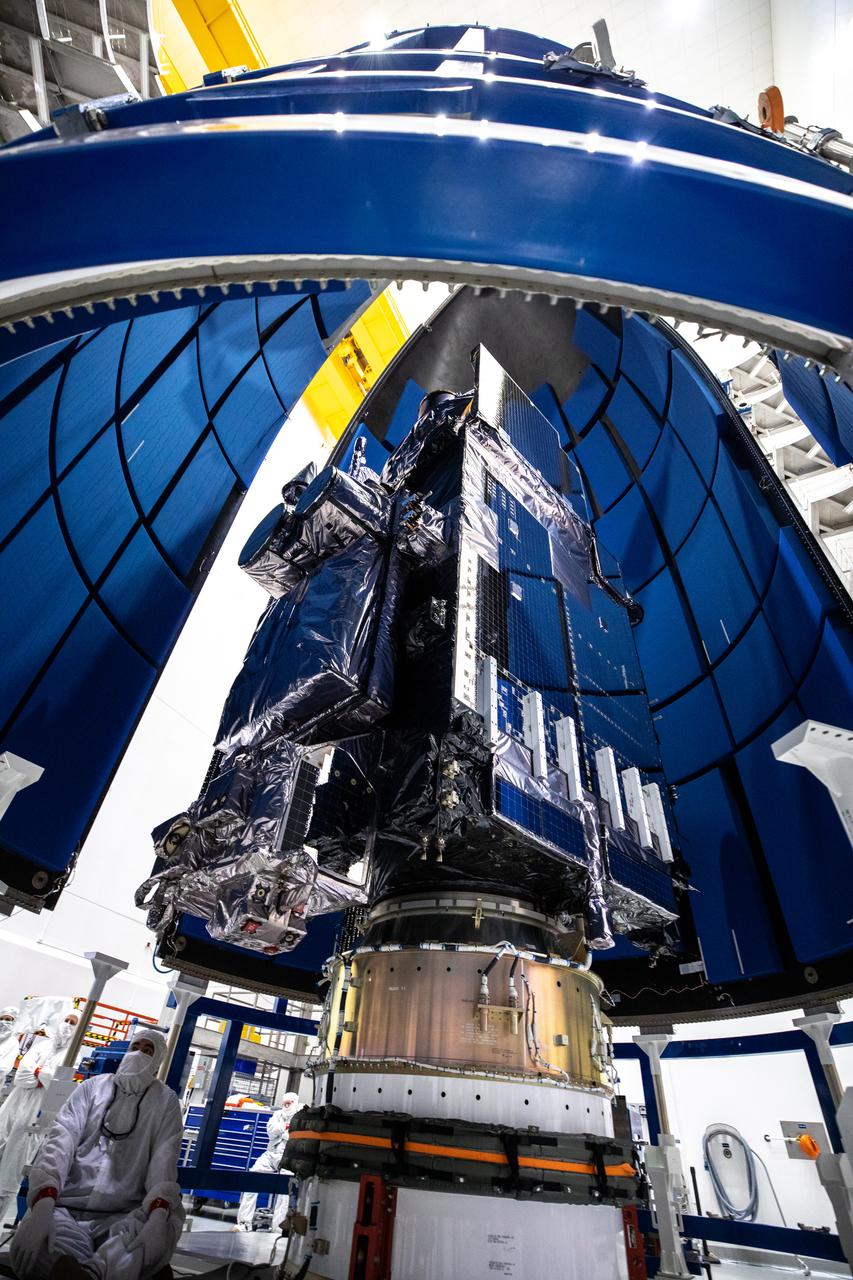
In this view looking up, the United Launch Alliance Atlas V payload fairings are being secured around NOAA’s Geostationary Operational Environmental Satellite-T (GOES-T) inside the Astrotech Space Operations facility in Titusville, Florida, on Feb. 7, 2022. The payload fairings will secure and protect the satellite during launch. GOES-T is scheduled to launch on March 1, 2022, atop the Atlas V 541 rocket from Space Launch Complex 41 at Cape Canaveral Space Force Station. GOES-T is the third satellite in the GOES-R series that will continue to help meteorologists observe and predict local weather events that affect public safety. The launch is being managed by NASA’s Launch Services Program based at Kennedy Space Center in Florida, America’s multi-user spaceport.
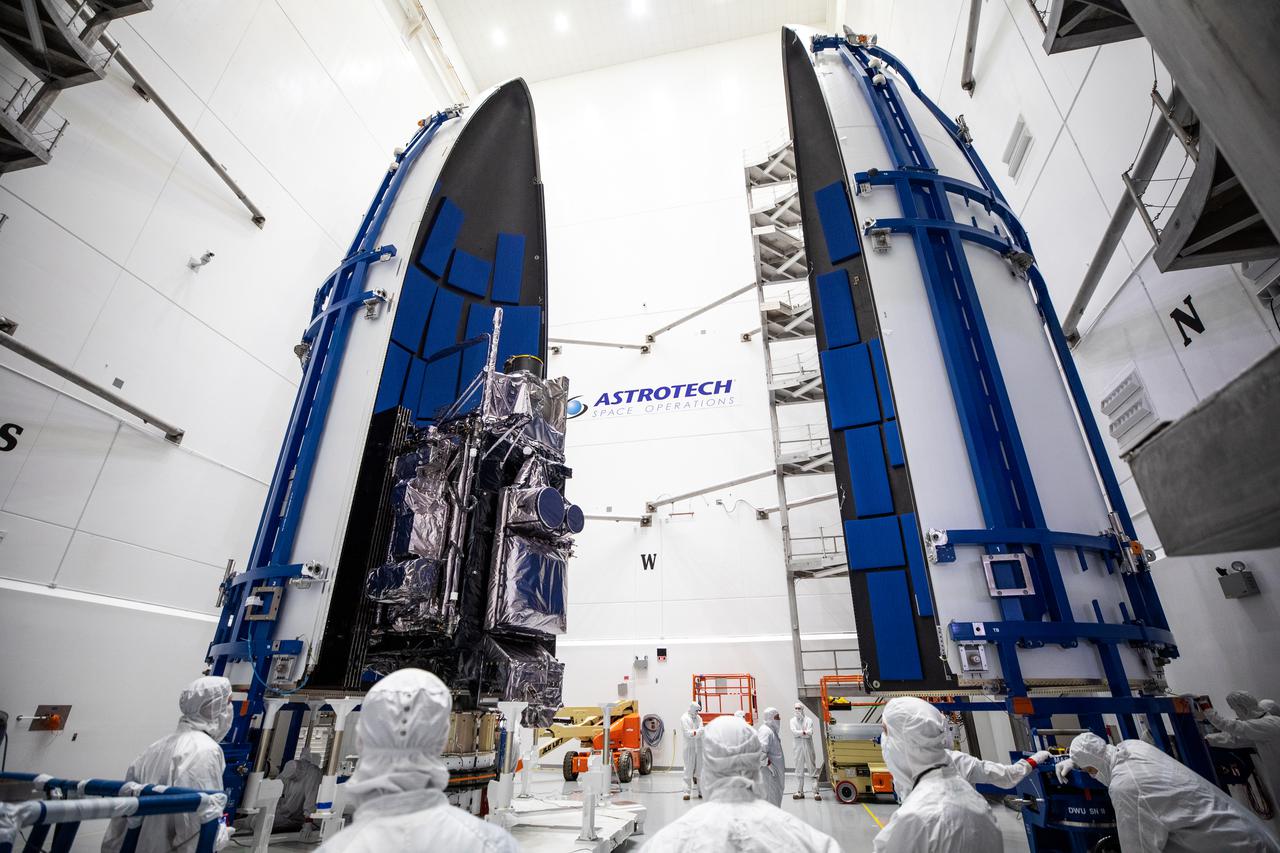
With the first half of the United Launch Alliance Atlas V payload fairing secured around NOAA’s Geostationary Operational Environmental Satellite-T (GOES-T), the second half is moved into position inside the Astrotech Space Operations facility in Titusville, Florida, on Feb. 7, 2022. The payload fairings will secure and protect the satellite during launch. GOES-T is scheduled to launch on March 1, 2022, atop the Atlas V 541 rocket from Space Launch Complex 41 at Cape Canaveral Space Force Station. GOES-T is the third satellite in the GOES-R series that will continue to help meteorologists observe and predict local weather events that affect public safety. The launch is being managed by NASA’s Launch Services Program based at Kennedy Space Center in Florida, America’s multi-user spaceport.
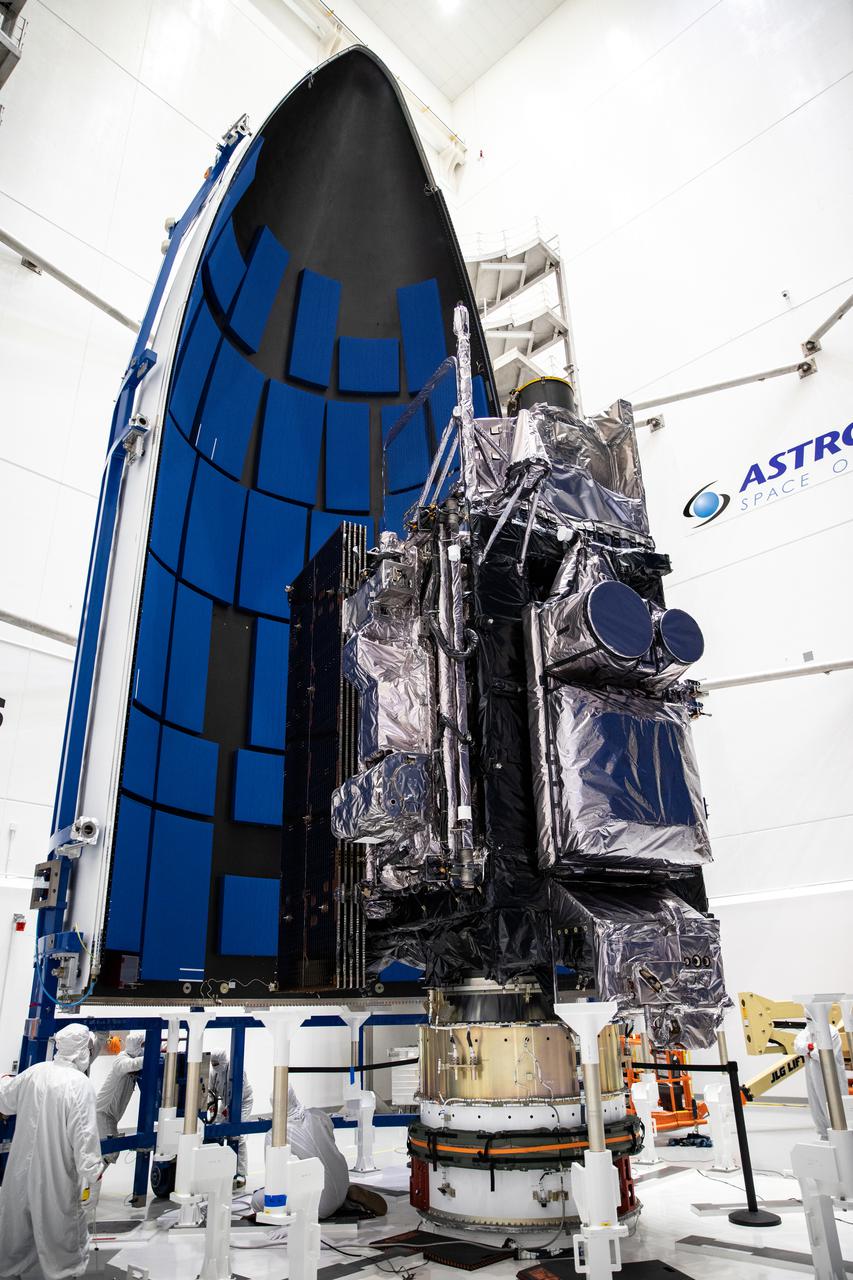
The first half of the United Launch Alliance Atlas V payload fairing is moved toward NOAA’s Geostationary Operational Environmental Satellite-T (GOES-T) inside the Astrotech Space Operations facility in Titusville, Florida, on Feb. 7, 2022. The satellite will be encapsulated inside the payload fairings, which will protect it during launch. GOES-T is scheduled to launch on March 1, 2022, atop Atlas V 541 rocket from Space Launch Complex 41 at Cape Canaveral Space Force Station. GOES-T is the third satellite in the GOES-R series that will continue to help meteorologists observe and predict local weather events that affect public safety. The launch is being managed by NASA’s Launch Services Program based at Kennedy Space Center in Florida, America’s multi-user spaceport.
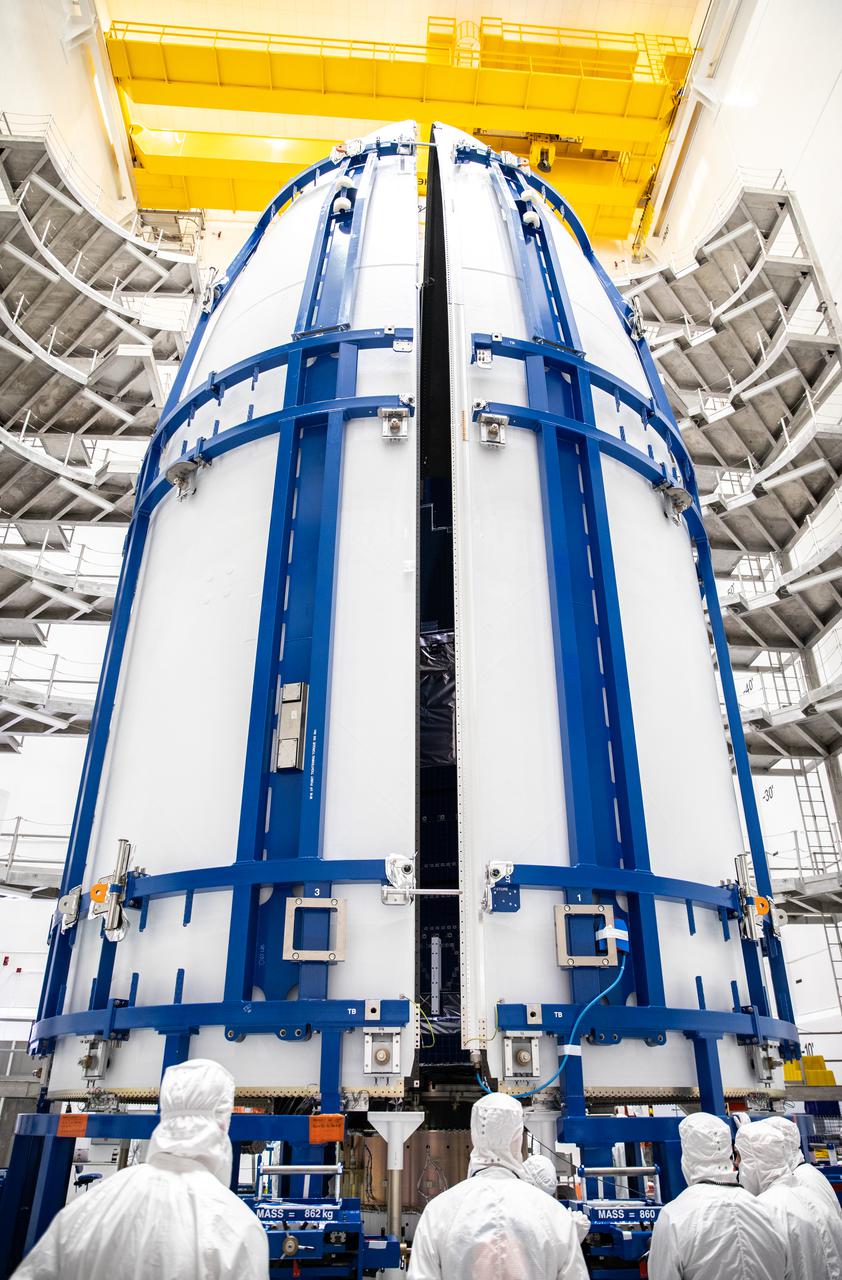
The United Launch Alliance Atlas V payload fairings are being secured around NOAA’s Geostationary Operational Environmental Satellite-T (GOES-T) inside the Astrotech Space Operations facility in Titusville, Florida, on Feb. 7, 2022. The payload fairings will secure and protect the satellite during launch. GOES-T is scheduled to launch on March 1, 2022, atop the Atlas V 541 rocket from Space Launch Complex 41 at Cape Canaveral Space Force Station. GOES-T is the third satellite in the GOES-R series that will continue to help meteorologists observe and predict local weather events that affect public safety. The launch is being managed by NASA’s Launch Services Program based at Kennedy Space Center in Florida, America’s multi-user spaceport.
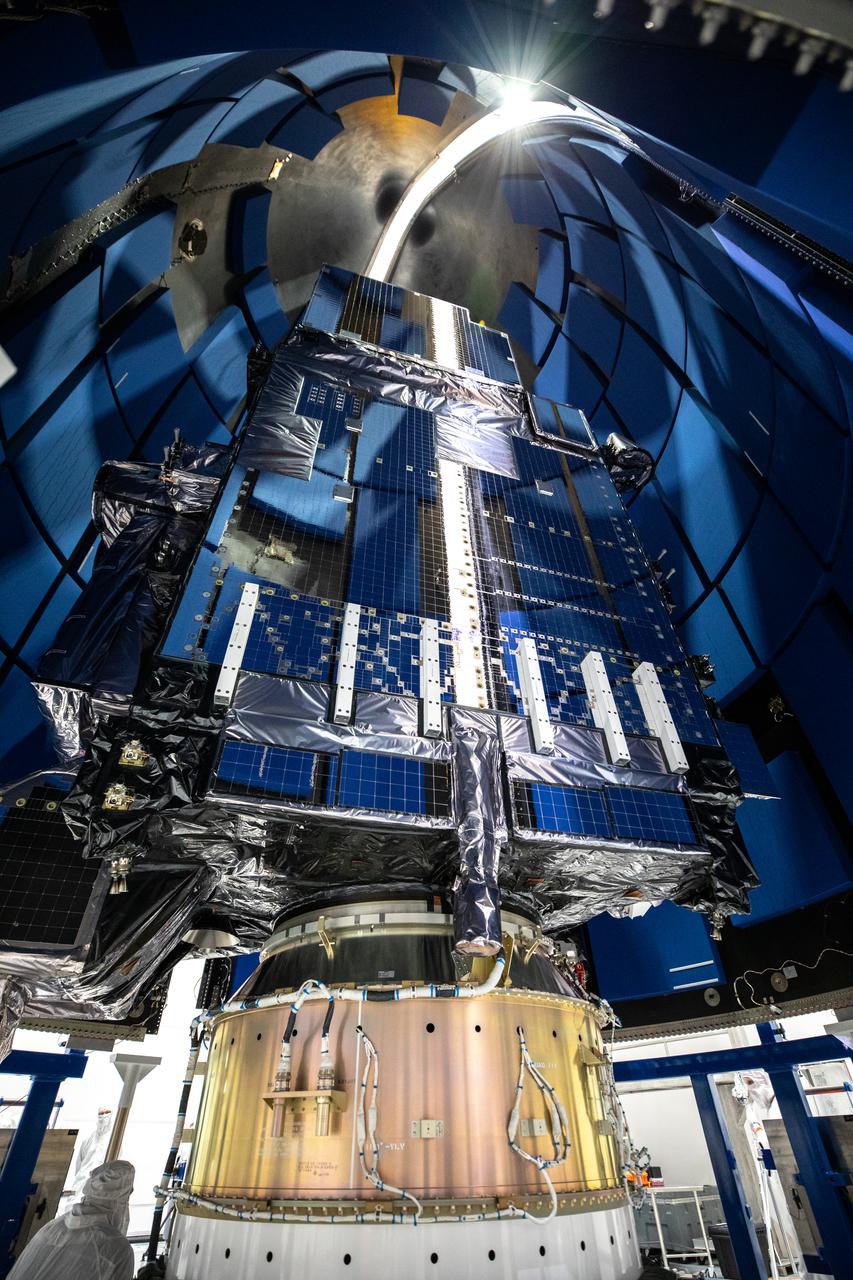
A technician performs an inspection of the United Launch Alliance Atlas V payload fairings as they are secured around NOAA’s Geostationary Operational Environmental Satellite-T (GOES-T) inside the Astrotech Space Operations facility in Titusville, Florida, on Feb. 7, 2022. The payload fairings will secure and protect the satellite during launch. GOES-T is scheduled to launch on March 1, 2022, atop the Atlas V 541 rocket from Space Launch Complex 41 at Cape Canaveral Space Force Station. GOES-T is the third satellite in the GOES-R series that will continue to help meteorologists observe and predict local weather events that affect public safety. The launch is being managed by NASA’s Launch Services Program based at Kennedy Space Center in Florida, America’s multi-user spaceport
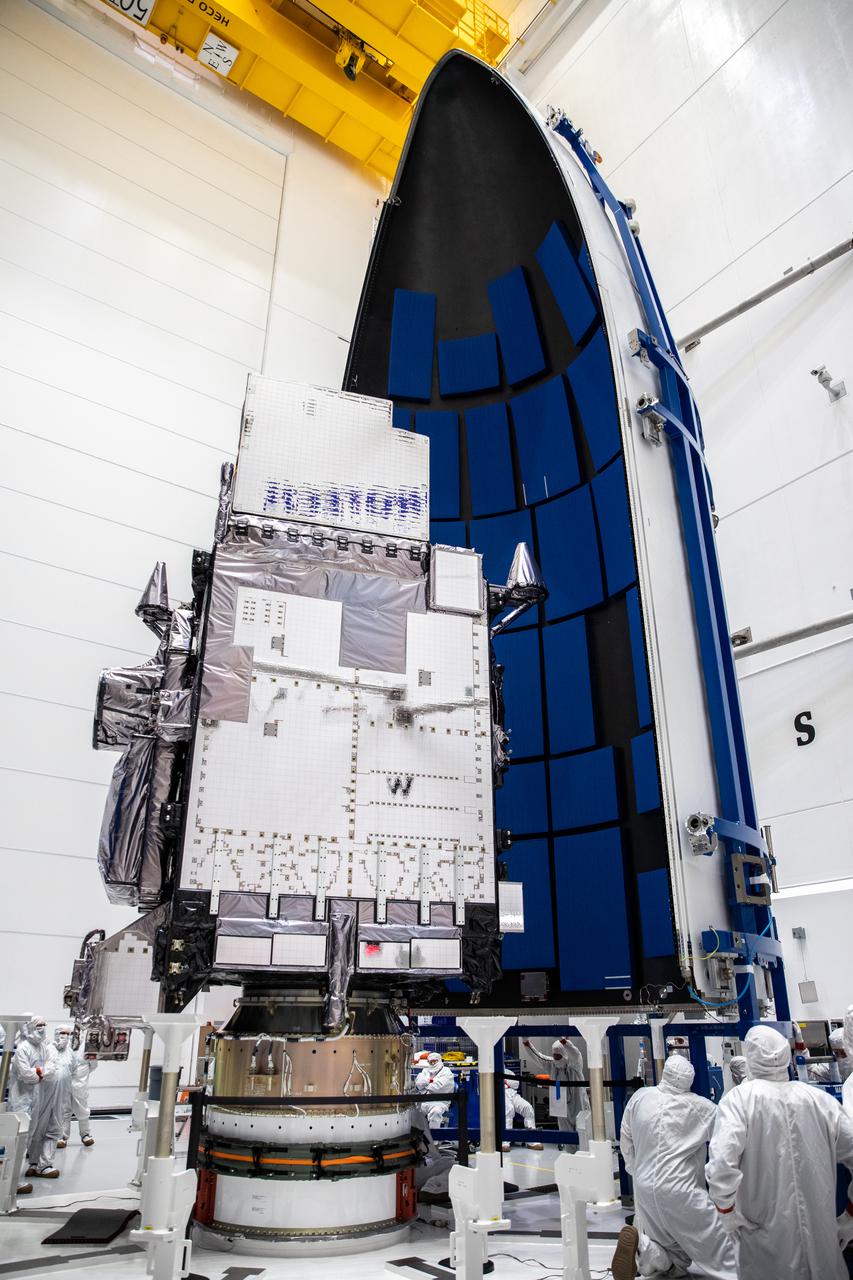
The first half of the United Launch Alliance Atlas V payload fairing is moved toward NOAA’s Geostationary Operational Environmental Satellite-T (GOES-T) inside the Astrotech Space Operations facility in Titusville, Florida, on Feb. 7, 2022. The satellite will be encapsulated inside the payload fairings, which will protect it during launch. GOES-T is scheduled to launch on March 1, 2022, atop Atlas V 541 rocket from Space Launch Complex 41 at Cape Canaveral Space Force Station. GOES-T is the third satellite in the GOES-R series that will continue to help meteorologists observe and predict local weather events that affect public safety. The launch is being managed by NASA’s Launch Services Program based at Kennedy Space Center in Florida, America’s multi-user spaceport.
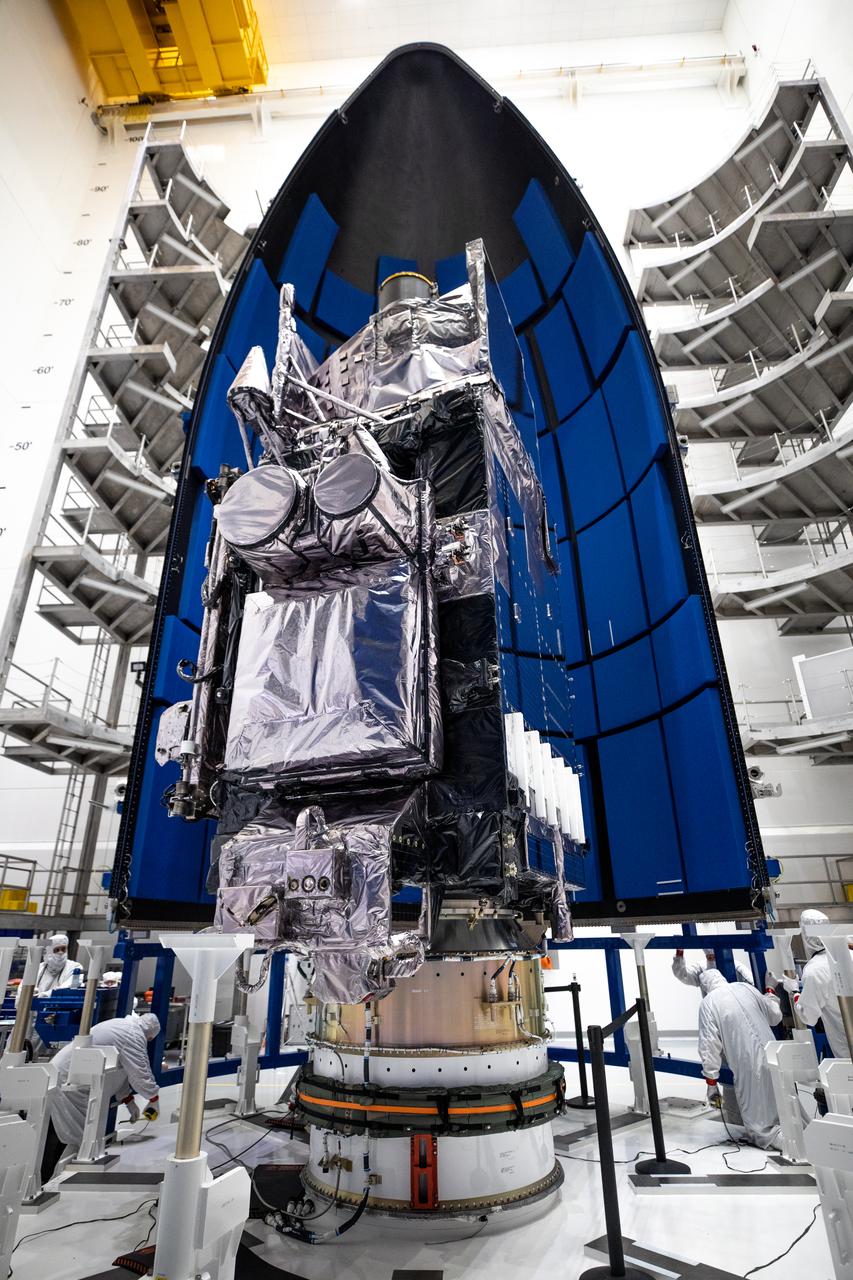
The first half of the United Launch Alliance Atlas V payload fairing is being secured around NOAA’s Geostationary Operational Environmental Satellite-T (GOES-T) inside the Astrotech Space Operations facility in Titusville, Florida, on Feb. 7, 2022. The satellite will be encapsulated inside the payload fairings, which will protect it during launch. GOES-T is scheduled to launch on March 1, 2022, atop Atlas V 541 rocket from Space Launch Complex 41 at Cape Canaveral Space Force Station. GOES-T is the third satellite in the GOES-R series that will continue to help meteorologists observe and predict local weather events that affect public safety. The launch is being managed by NASA’s Launch Services Program based at Kennedy Space Center in Florida, America’s multi-user spaceport.
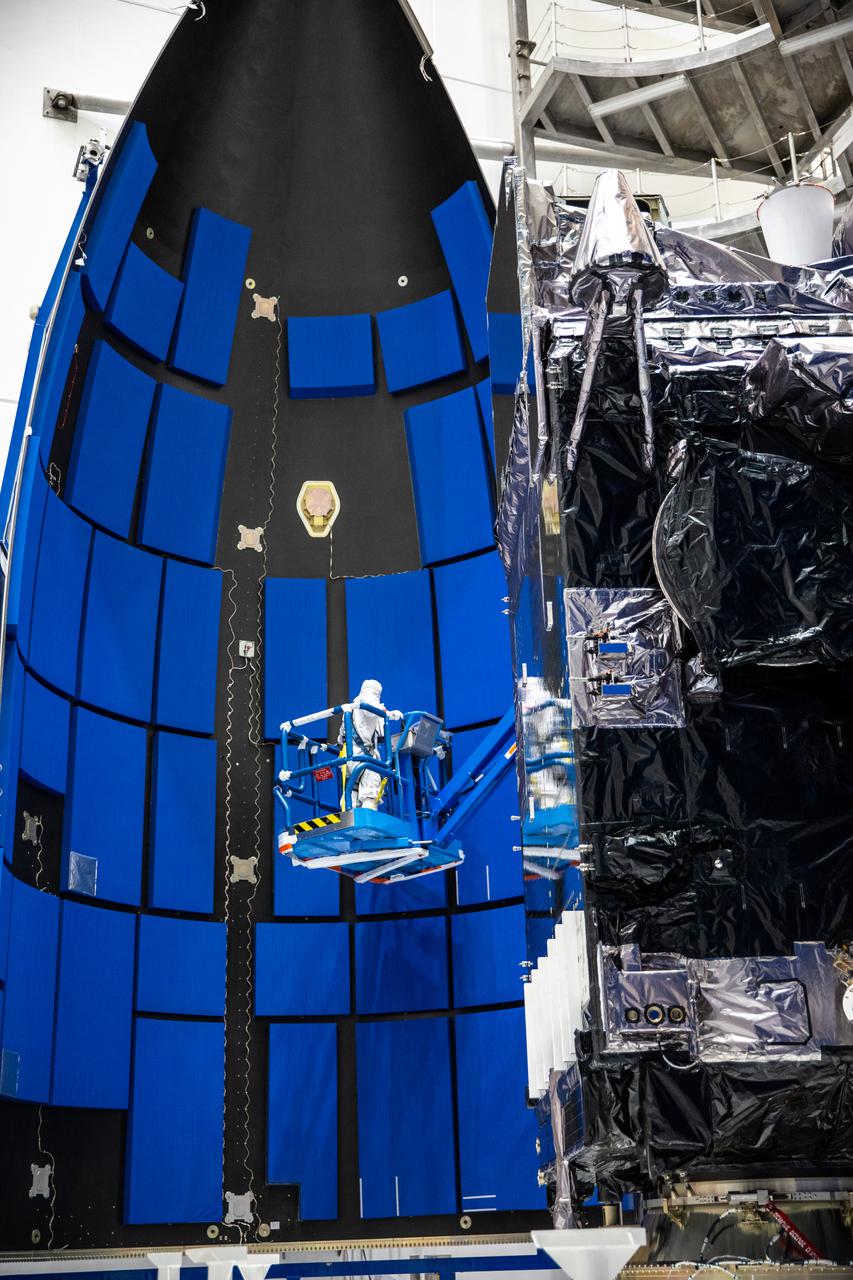
A technician inspects the first half of the United Launch Alliance Atlas V payload fairing for NOAA’s Geostationary Operational Environmental Satellite-T (GOES-T) inside the Astrotech Space Operations facility in Titusville, Florida, on Feb. 7, 2022. The satellite will be secured inside the payload fairing, which will protect it during launch. GOES-T is scheduled to launch on March 1, 2022, atop the Atlas V 541 rocket from Space Launch Complex 41 at Cape Canaveral Space Force Station. GOES-T is the third satellite in the GOES-R series that will continue to help meteorologists observe and predict local weather events that affect public safety. The launch is being managed by NASA’s Launch Services Program based at Kennedy Space Center in Florida, America’s multi-user spaceport.
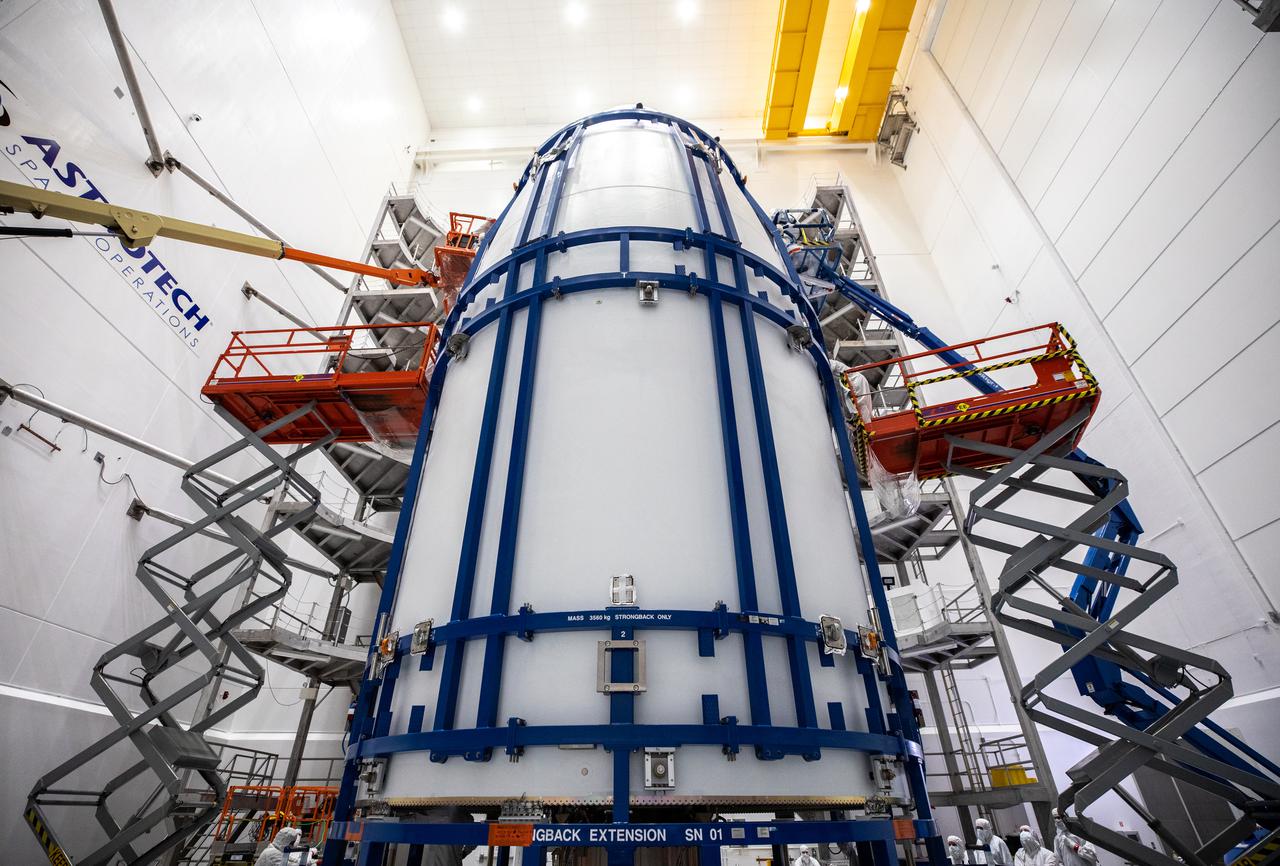
Technicians assist as the United Launch Alliance Atlas V payload fairings are secured around NOAA’s Geostationary Operational Environmental Satellite-T (GOES-T) inside the Astrotech Space Operations facility in Titusville, Florida, on Feb. 7, 2022. The payload fairings will secure and protect the satellite during launch. GOES-T is scheduled to launch on March 1, 2022, atop the Atlas V 541 rocket from Space Launch Complex 41 at Cape Canaveral Space Force Station. GOES-T is the third satellite in the GOES-R series that will continue to help meteorologists observe and predict local weather events that affect public safety. The launch is being managed by NASA’s Launch Services Program based at Kennedy Space Center in Florida, America’s multi-user spaceport.
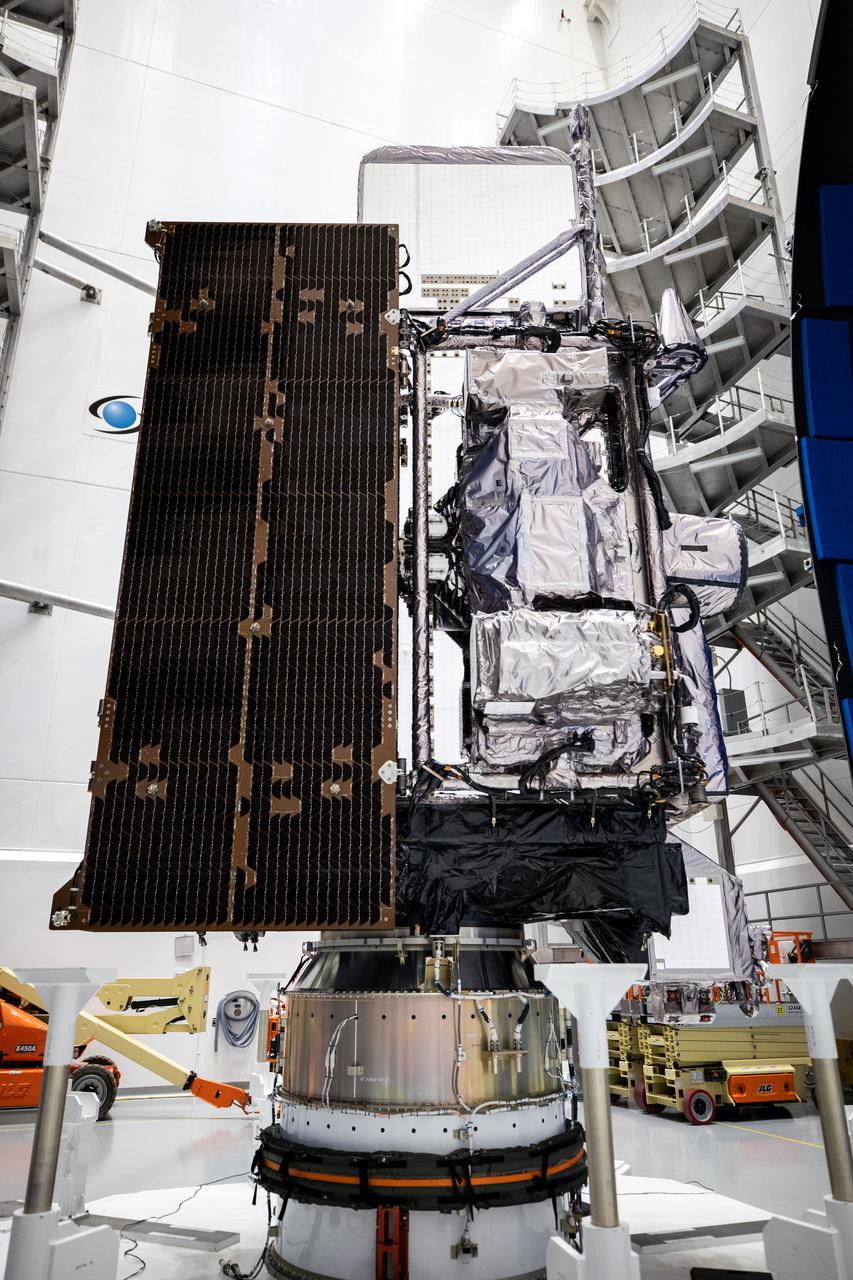
NOAA’s Geostationary Operational Environmental Satellite-T (GOES-T) is in view inside the Astrotech Space Operations facility in Titusville, Florida, on Feb. 7, 2022, as it is being prepared for encapsulation in the United Launch Alliance Atlas V payload fairings. The fairings will protect the satellite during launch. GOES-T is scheduled to launch on March 1, 2022, atop the Atlas V 541 rocket from Space Launch Complex 41 at Cape Canaveral Space Force Station. GOES-T is the third satellite in the GOES-R series that will continue to help meteorologists observe and predict local weather events that affect public safety. The launch is being managed by NASA’s Launch Services Program based at Kennedy Space Center in Florida, America’s multi-user spaceport.
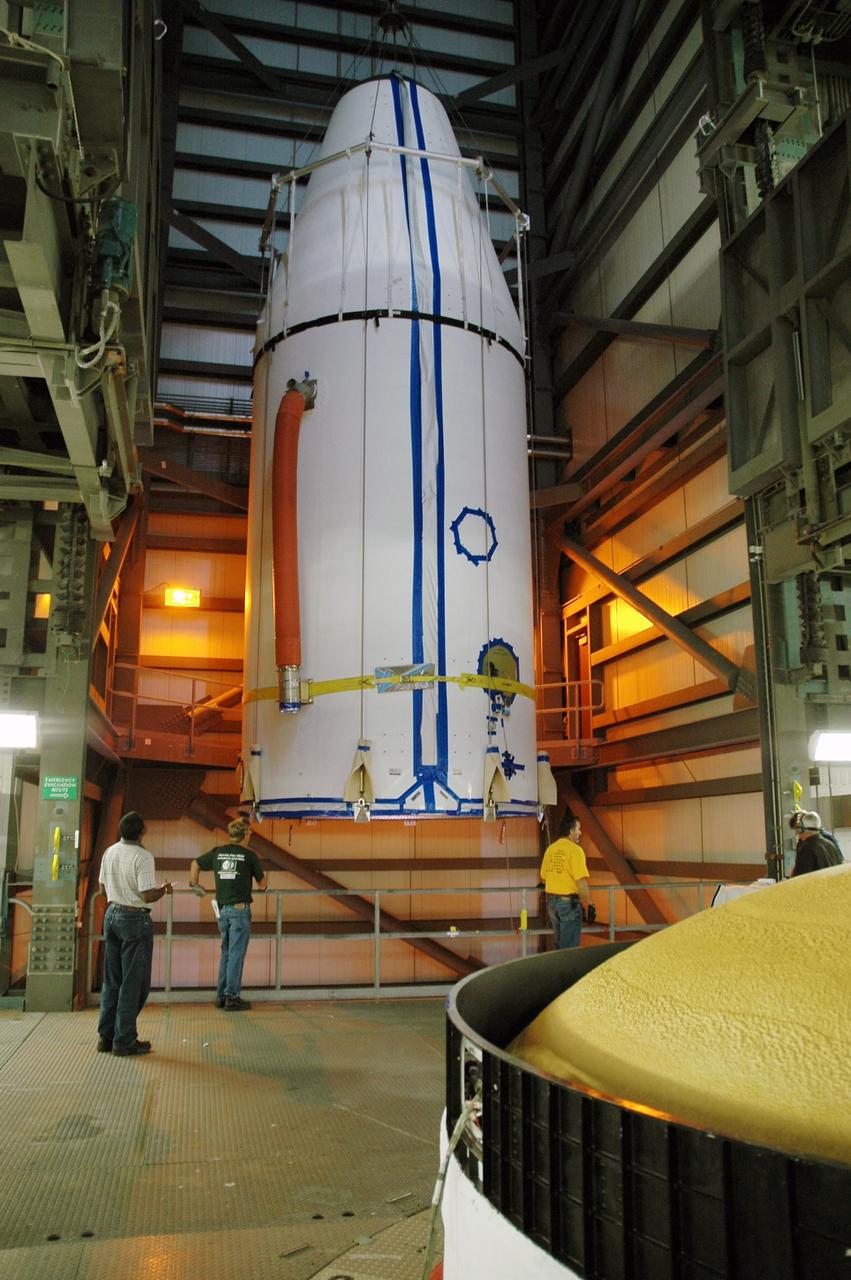
KENNEDY SPACE CENTER, FLA. - On Launch Complex 37 at Cape Canaveral Air Force Station in Florida, the GOES-N spacecraft arrives at the upper level of the mobile service tower and is moved toward the second stage of the Boeing Delta IV rocket (lower right). GOES-N is the latest in a series of Geostationary Operational Environmental Satellites for NOAA and NASA, providing continuous monitoring necessary for intensive data analysis. GOES-N is scheduled to be launched May 18 in an hour-long window between 6:14 and 7:14 p.m. EDT. Photo credit: NASA/Charisse Nahser
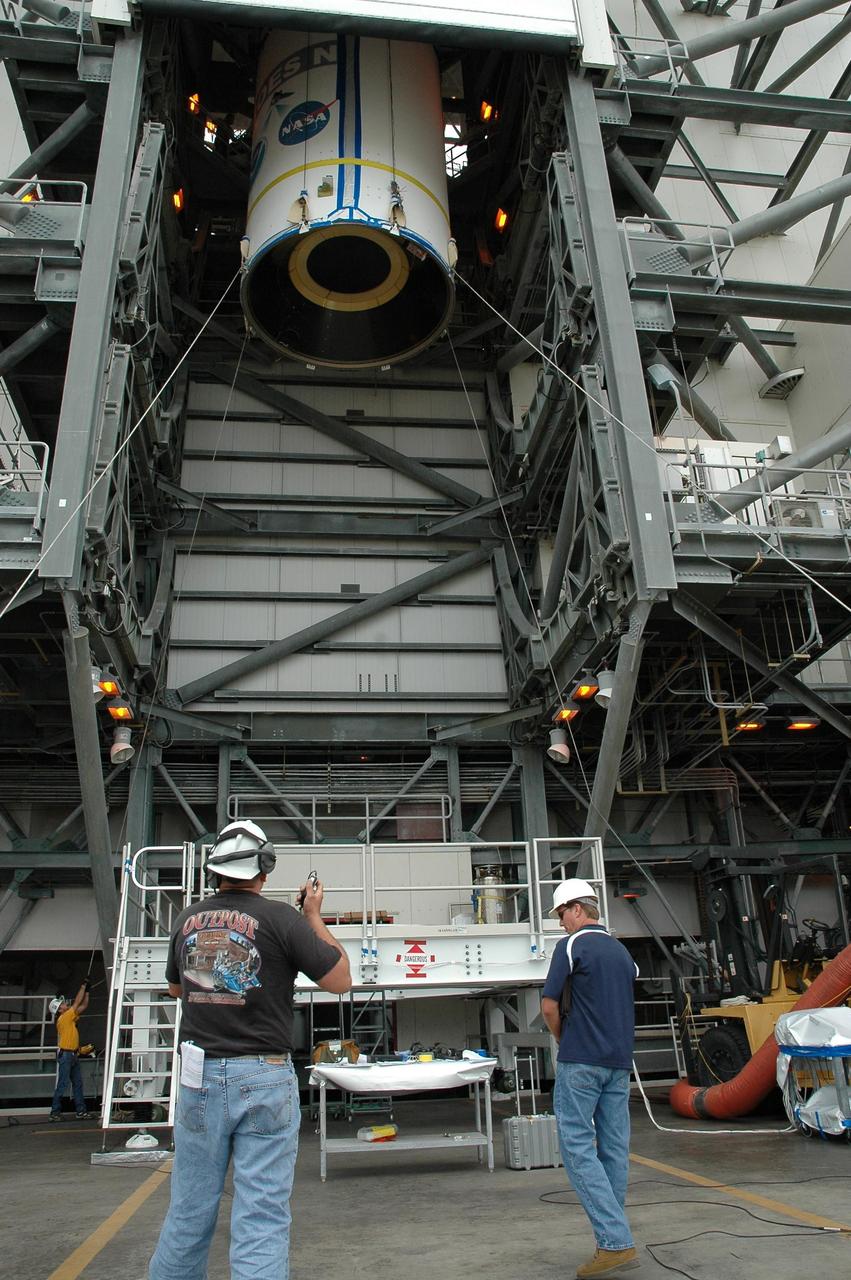
KENNEDY SPACE CENTER, FLA. - On Launch Complex 37 at Cape Canaveral Air Force Station in Florida, the GOES-N spacecraft disappears into the upper levels of the mobile service tower. There it will be mated with the second stage of the Boeing Delta IV rocket. GOES-N is the latest in a series of Geostationary Operational Environmental Satellites for NOAA and NASA, providing continuous monitoring necessary for intensive data analysis. GOES-N is scheduled to be launched May 18 in an hour-long window between 6:14 and 7:14 p.m. EDT. Photo credit: NASA/Charisse Nahser
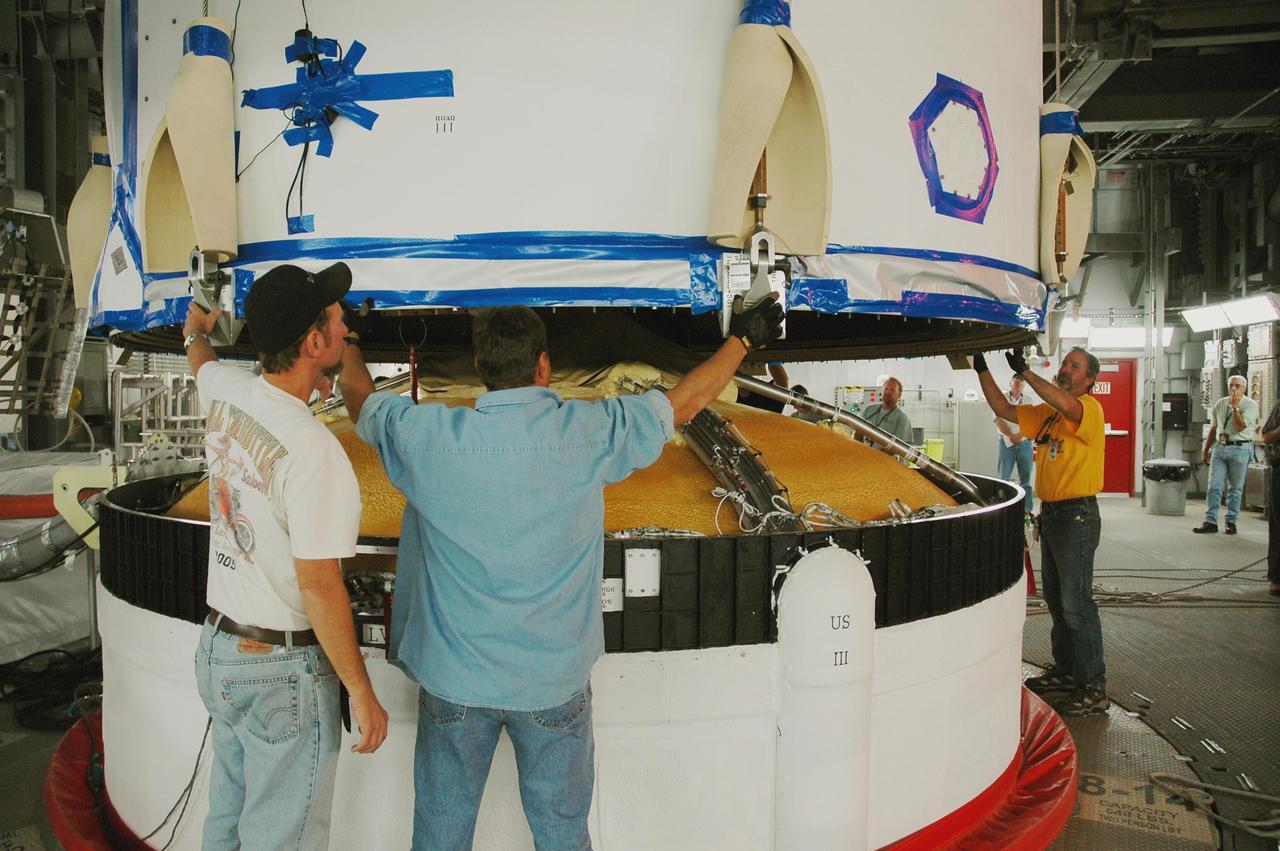
KENNEDY SPACE CENTER, FLA. - In the mobile service tower on Launch Complex 37 at Cape Canaveral Air Force Station in Florida, workers guide the GOES-N spacecraft toward the second stage of the Boeing Delta IV rocket for mating. GOES-N is the latest in a series of Geostationary Operational Environmental Satellites for NOAA and NASA, providing continuous monitoring necessary for intensive data analysis. GOES-N is scheduled to be launched May 18 in an hour-long window between 6:14 and 7:14 p.m. EDT. Photo credit: NASA/Charisse Nahser
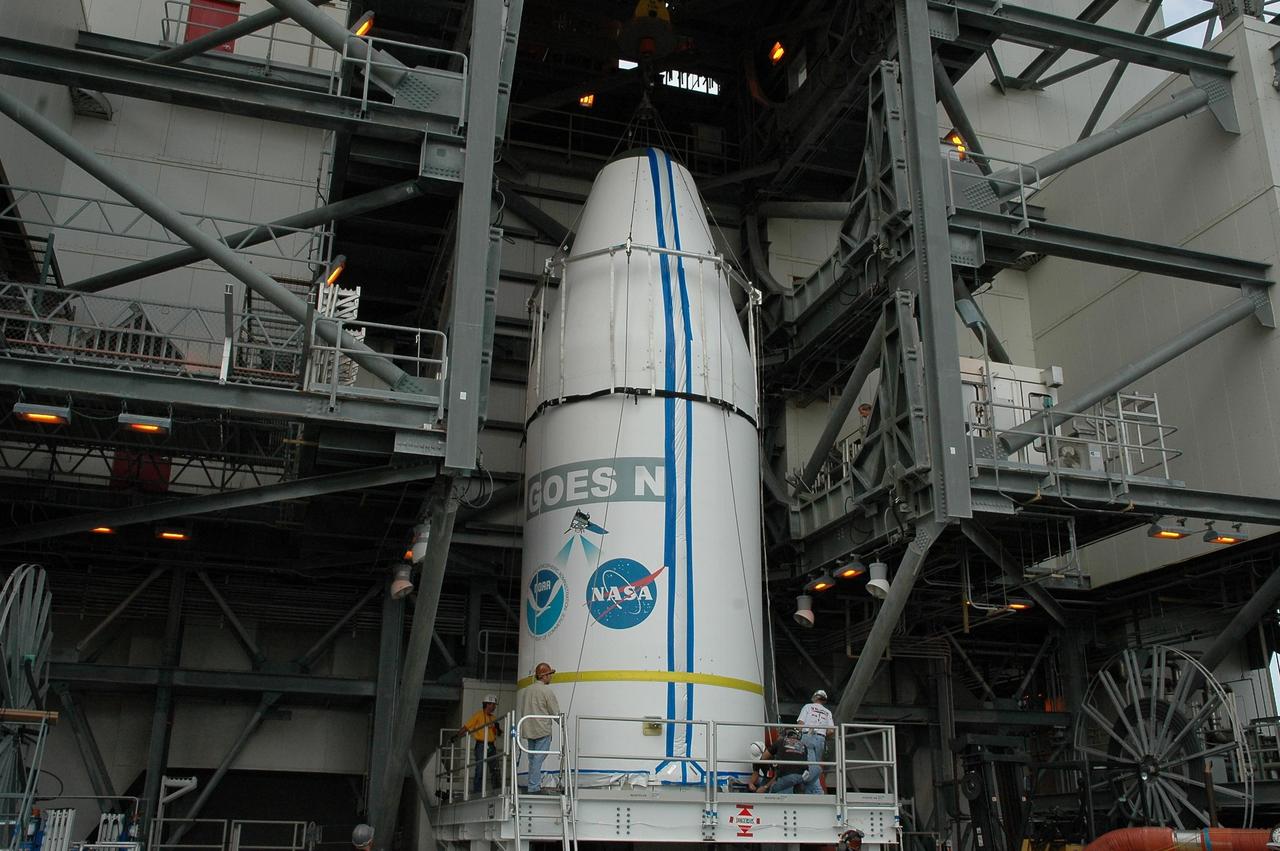
KENNEDY SPACE CENTER, FLA. - On Launch Complex 37 at Cape Canaveral Air Force Station in Florida, the GOES-N spacecraft is ready to be lifted into the mobile service tower. There it will be mated with the second stage of the Boeing Delta IV rocket. GOES-N is the latest in a series of Geostationary Operational Environmental Satellites for NOAA and NASA, providing continuous monitoring necessary for intensive data analysis. GOES-N is scheduled to be launched May 18 in an hour-long window between 6:14 and 7:14 p.m. EDT. Photo credit: NASA/Charisse Nahser
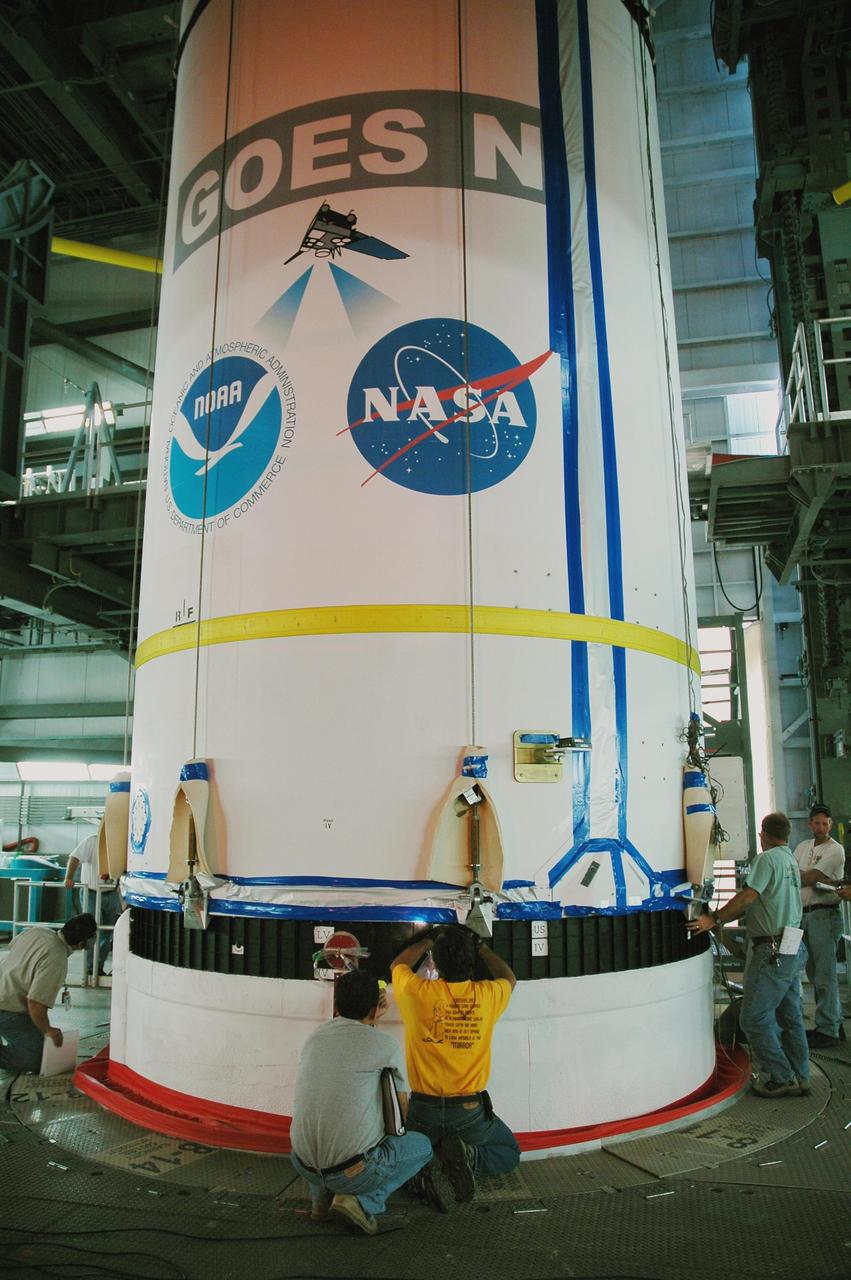
KENNEDY SPACE CENTER, FLA. - In the mobile service tower on Launch Complex 37 at Cape Canaveral Air Force Station in Florida, workers check the attach points on the GOES-N spacecraft and Boeing Delta IV rocket. GOES-N is the latest in a series of Geostationary Operational Environmental Satellites for NOAA and NASA, providing continuous monitoring necessary for intensive data analysis. GOES-N is scheduled to be launched May 18 in an hour-long window between 6:14 and 7:14 p.m. EDT. Photo credit: NASA/Charisse Nahser
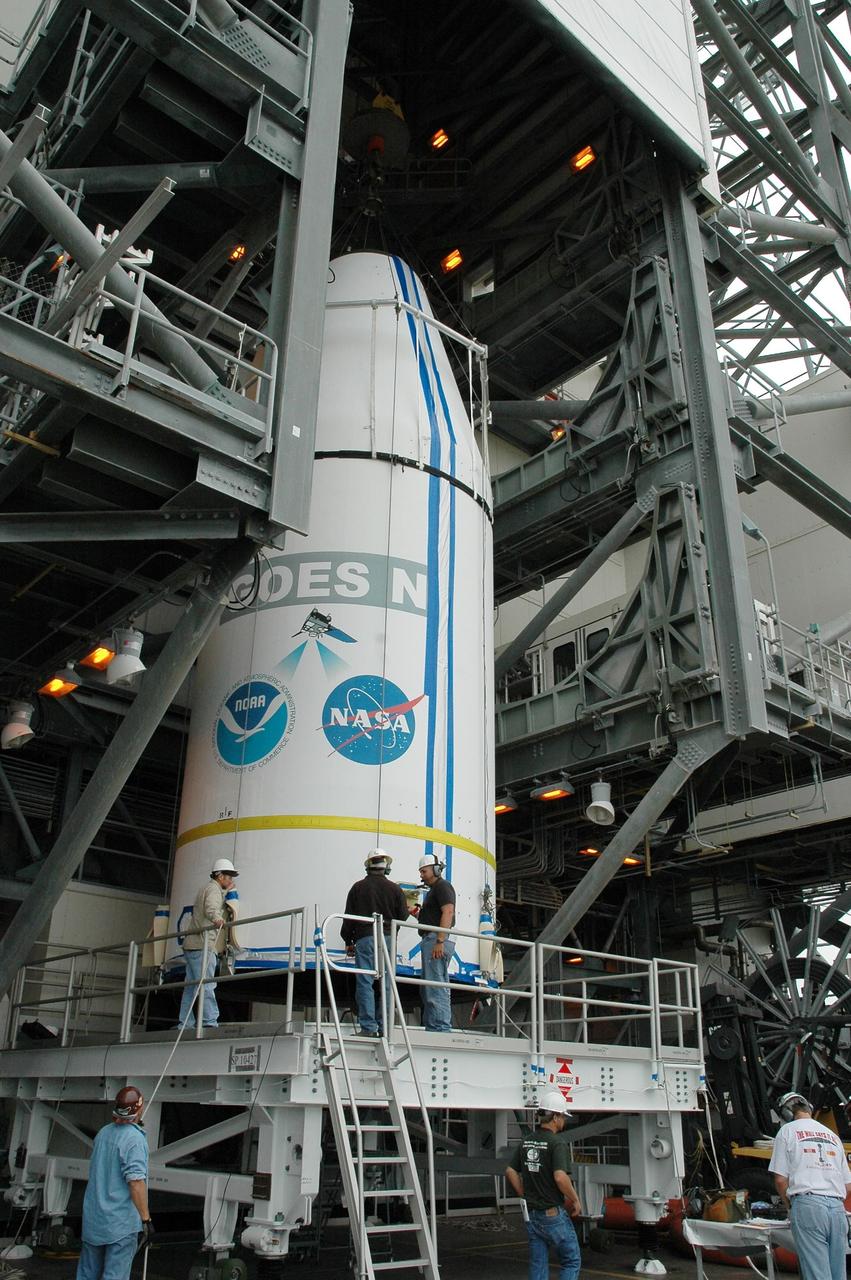
KENNEDY SPACE CENTER, FLA. - On Launch Complex 37 at Cape Canaveral Air Force Station in Florida, the GOES-N spacecraft is lifted off its transporter into the mobile service tower. There it will be mated with the second stage of the Boeing Delta IV rocket. GOES-N is the latest in a series of Geostationary Operational Environmental Satellites for NOAA and NASA, providing continuous monitoring necessary for intensive data analysis. GOES-N is scheduled to be launched May 18 in an hour-long window between 6:14 and 7:14 p.m. EDT. Photo credit: NASA/Charisse Nahser
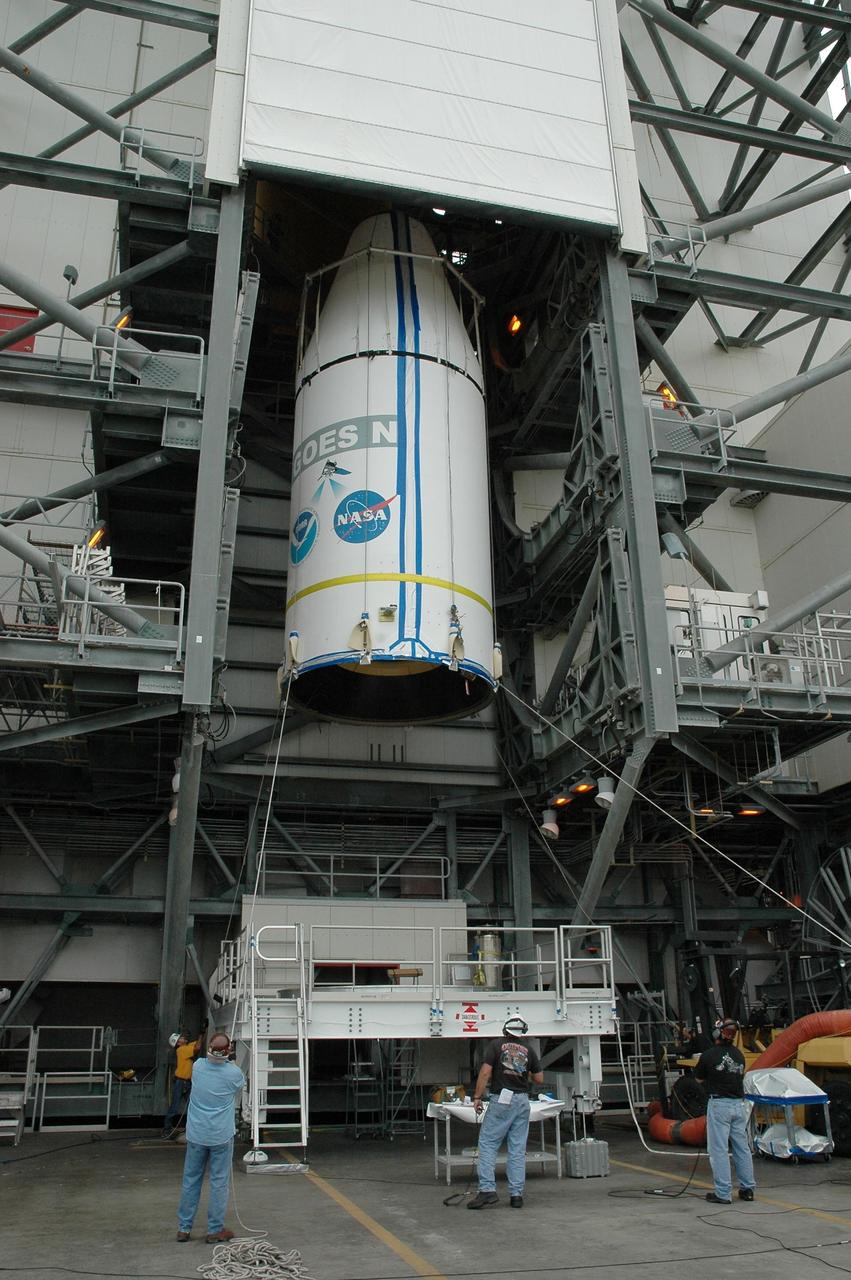
KENNEDY SPACE CENTER, FLA. - On Launch Complex 37 at Cape Canaveral Air Force Station in Florida, the GOES-N spacecraft is lifted into the mobile service tower. There it will be mated with the second stage of the Boeing Delta IV rocket. GOES-N is the latest in a series of Geostationary Operational Environmental Satellites for NOAA and NASA, providing continuous monitoring necessary for intensive data analysis. GOES-N is scheduled to be launched May 18 in an hour-long window between 6:14 and 7:14 p.m. EDT. Photo credit: NASA/Charisse Nahser

CAPE CANAVERAL, Fla. – As the sun rises on Launch Complex 37 at Cape Canaveral Air Force Station, preparations are under way to roll the mobile service tower from around the Boeing Delta IV rocket that will launch the GOES-O satellite into orbit. The terminal countdown to the liftoff of GOES-O will begin at 12:59 p.m. EDT for a launch window that extends from 6:14 p.m. to 7:14 p.m. June 26. The latest Geostationary Operational Environmental Satellite, GOES-O was developed by NASA for the National Oceanic and Atmospheric Administration, or NOAA. Each of the GOES satellites continuously provides observations of 60 percent of the Earth including the continental United States, providing weather monitoring and forecast operations as well as a continuous and reliable stream of environmental information and severe weather warnings. Once in orbit, GOES-O will be designated GOES-14, and NASA will provide on-orbit checkout and then transfer operational responsibility to NOAA. Photo credit: NASA/Jack Pfaller
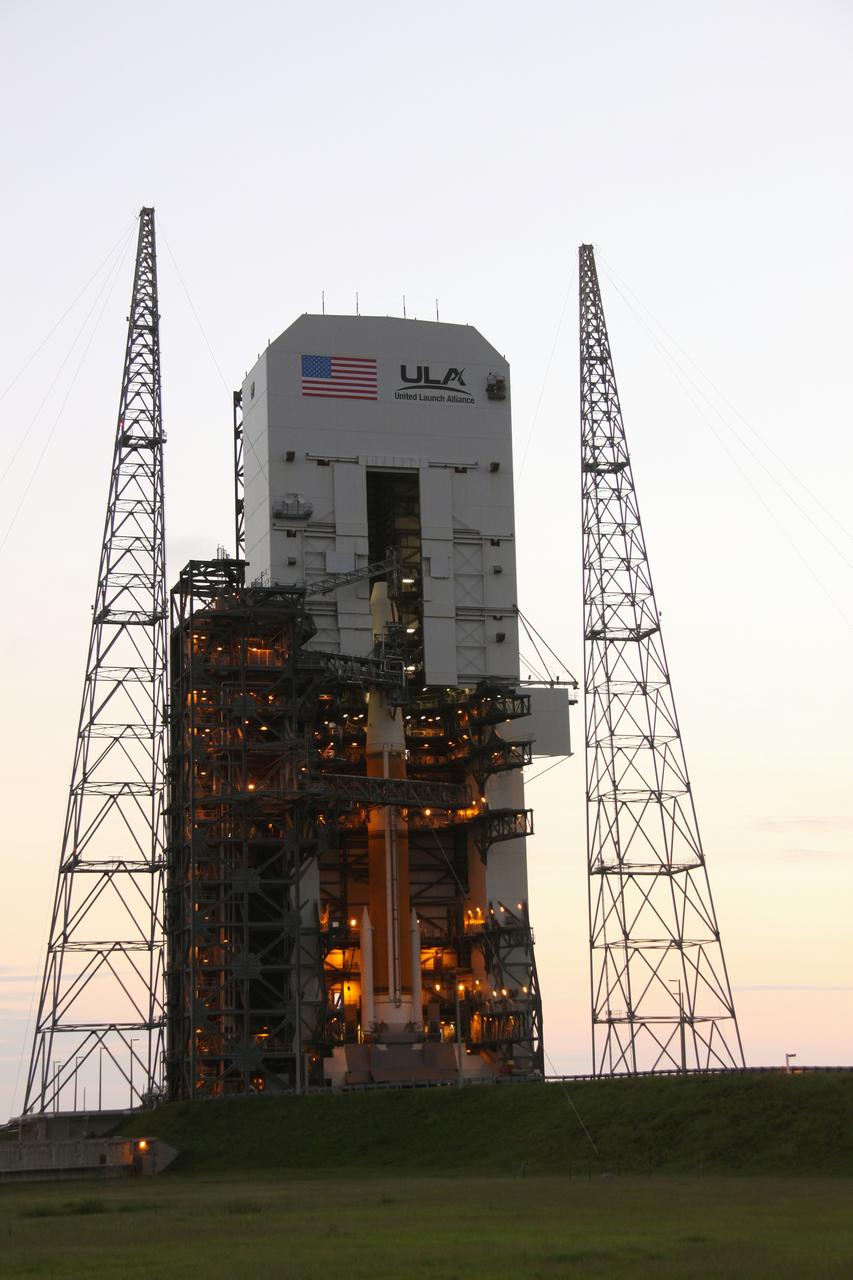
CAPE CANAVERAL, Fla. – As the sun rises on Launch Complex 37 at Cape Canaveral Air Force Station, preparations are under way to roll the mobile service tower from around the Boeing Delta IV rocket that will launch the GOES-O satellite into orbit. The terminal countdown to the liftoff of GOES-O will begin at 12:59 p.m. EDT for a launch window that extends from 6:14 p.m. to 7:14 p.m. June 26. The latest Geostationary Operational Environmental Satellite, GOES-O was developed by NASA for the National Oceanic and Atmospheric Administration, or NOAA. Each of the GOES satellites continuously provides observations of 60 percent of the Earth including the continental United States, providing weather monitoring and forecast operations as well as a continuous and reliable stream of environmental information and severe weather warnings. Once in orbit, GOES-O will be designated GOES-14, and NASA will provide on-orbit checkout and then transfer operational responsibility to NOAA. Photo credit: NASA/Jack Pfaller