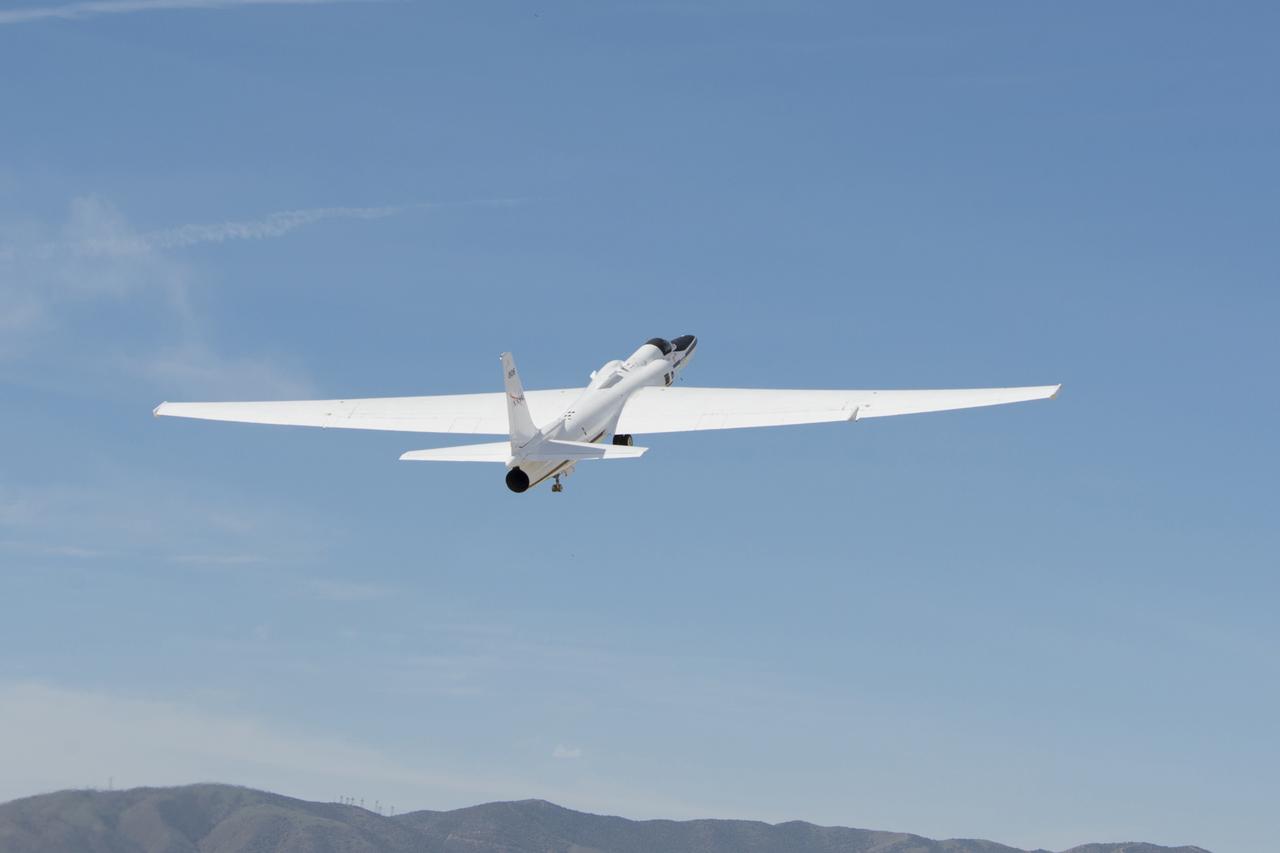
NASA’s ER-2 takes off from its base of operations at NASA’s Armstrong Flight Research Center Building 703 in Palmdale, California to test instruments that will support upcoming science flights for the Geostationary Operational Environmental Satellite-R-series.
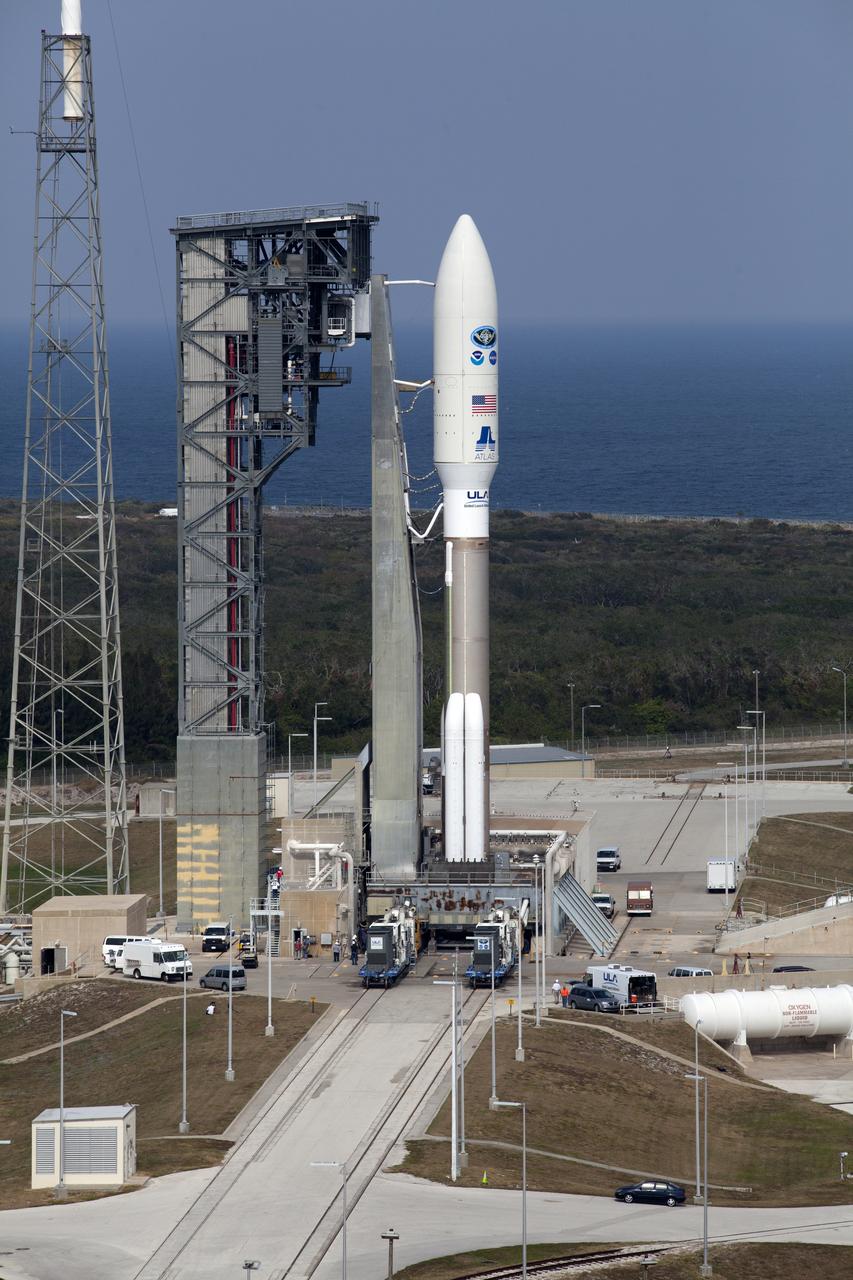
A United Launch Alliance Atlas V rocket arrives at Space Launch Complex 41 at Cape Canaveral Air Force Station in Florida. The launch vehicle will send the Geostationary Operational Environmental Satellite (GOES-R) to a geostationary position over the U.S. GOES-R is the first satellite in a series of next-generation NOAA GOES satellites.
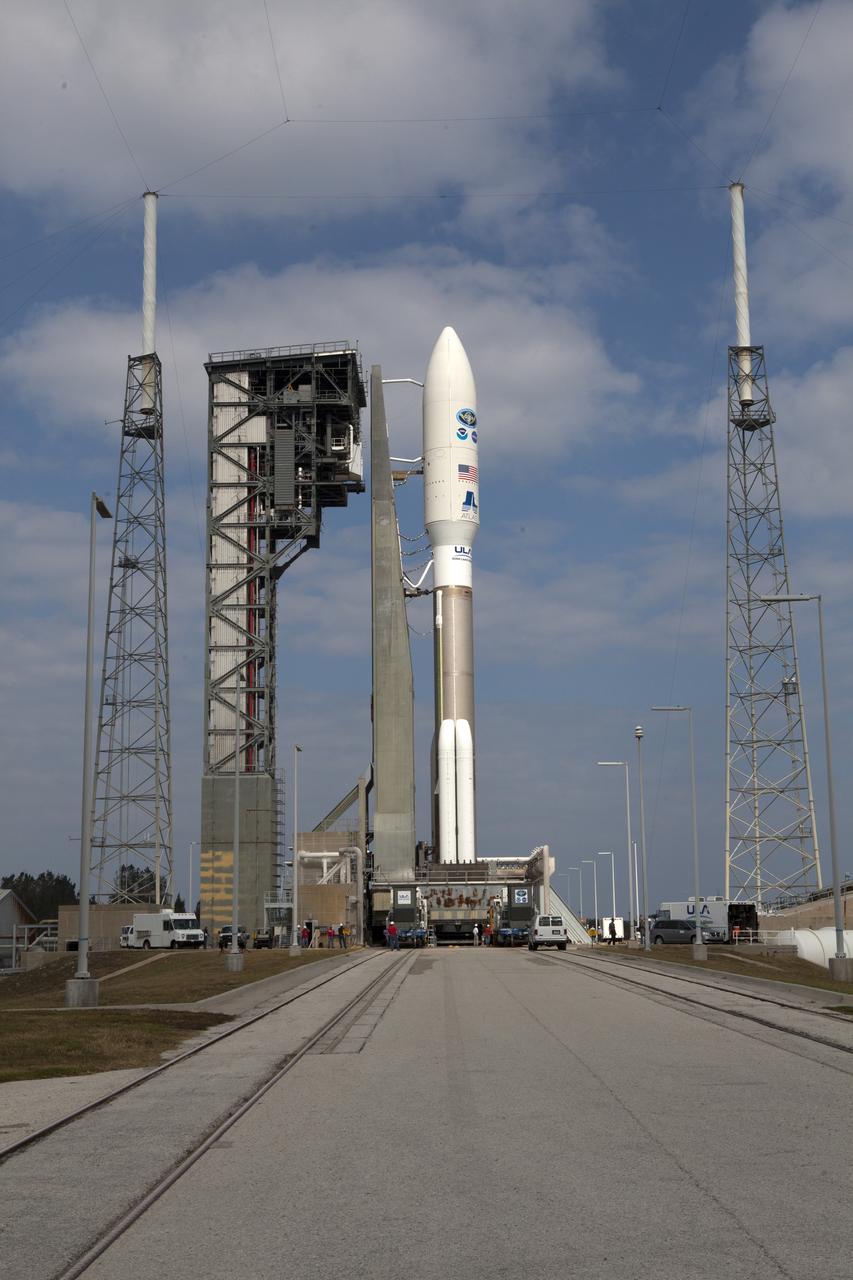
A United Launch Alliance Atlas V rocket arrives at Space Launch Complex 41 at Cape Canaveral Air Force Station in Florida. The launch vehicle will send the Geostationary Operational Environmental Satellite (GOES-R) to a geostationary position over the U.S. GOES-R is the first satellite in a series of next-generation NOAA GOES satellites.
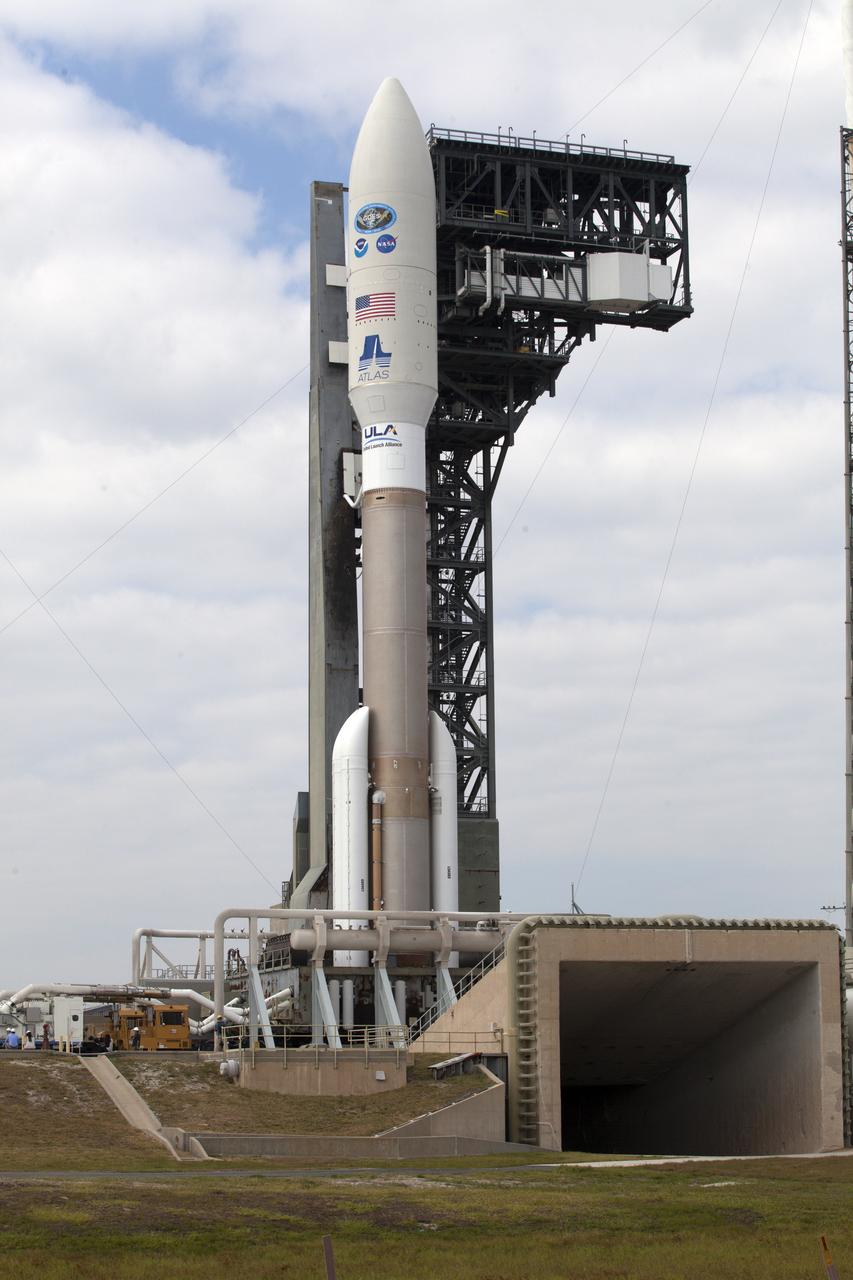
A United Launch Alliance Atlas V rocket arrives at Space Launch Complex 41 at Cape Canaveral Air Force Station in Florida. The launch vehicle will send the Geostationary Operational Environmental Satellite (GOES-R) to a geostationary position over the U.S. GOES-R is the first satellite in a series of next-generation NOAA GOES satellites.
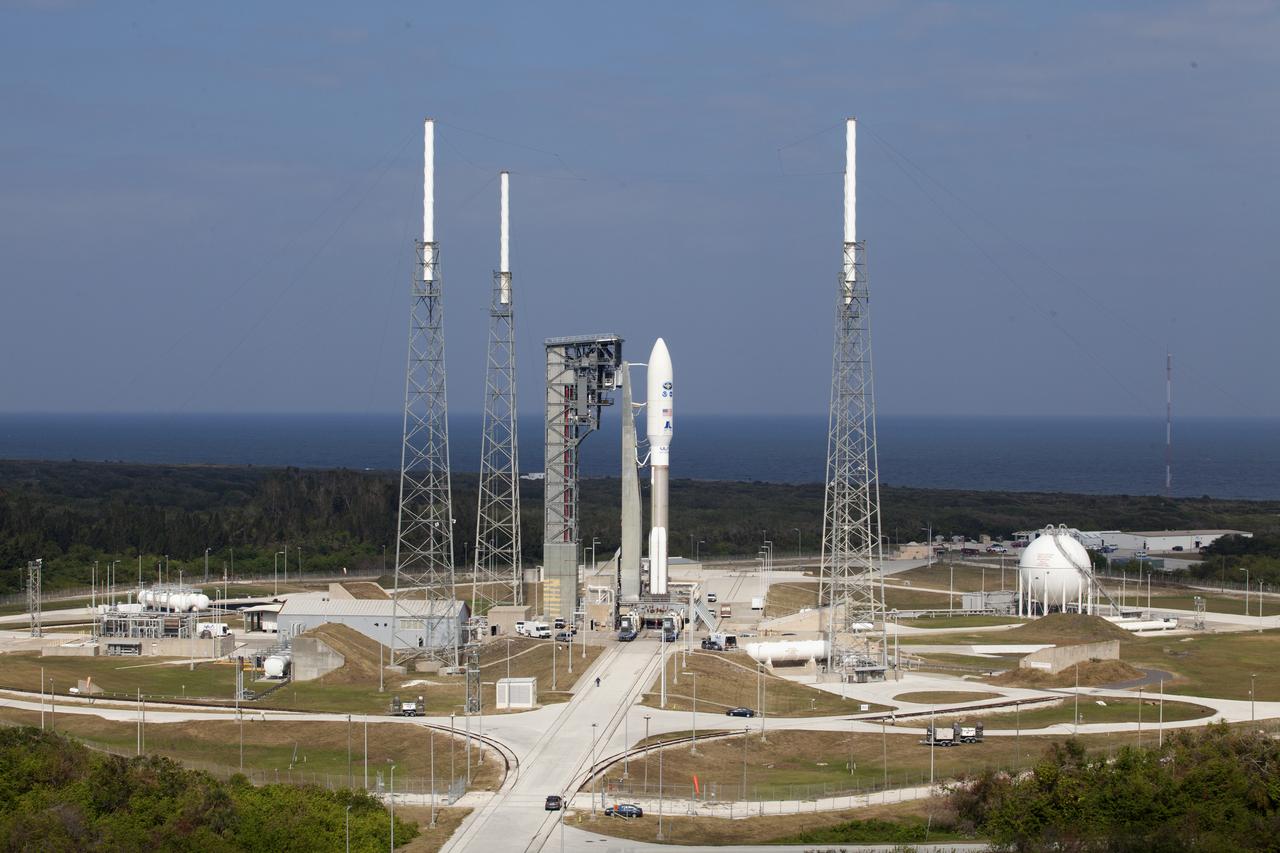
A United Launch Alliance Atlas V rocket arrives at Space Launch Complex 41 at Cape Canaveral Air Force Station in Florida. The launch vehicle will send the Geostationary Operational Environmental Satellite (GOES-R) to a geostationary position over the U.S. GOES-R is the first satellite in a series of next-generation NOAA GOES satellites.
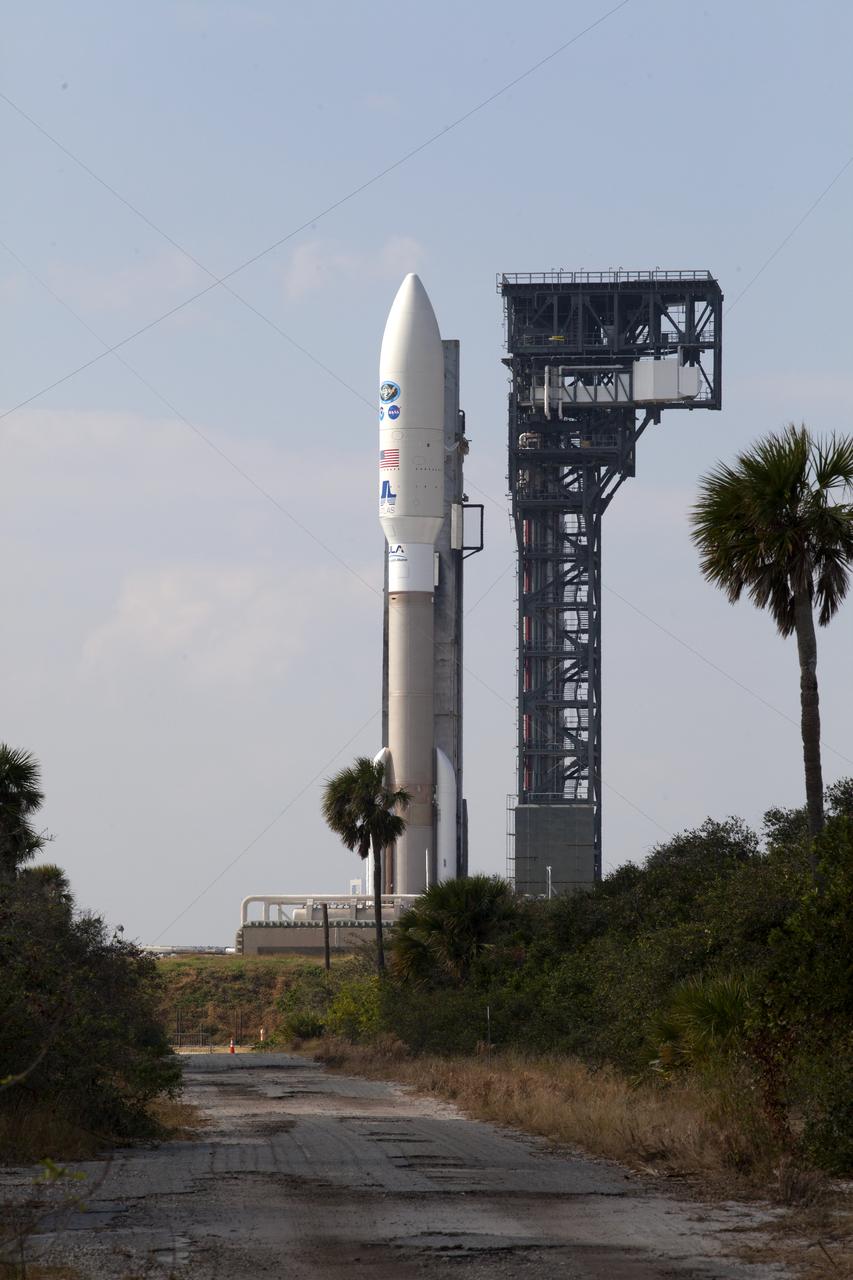
A United Launch Alliance Atlas V rocket arrives at Space Launch Complex 41 at Cape Canaveral Air Force Station in Florida. The launch vehicle will send the Geostationary Operational Environmental Satellite (GOES-R) to a geostationary position over the U.S. GOES-R is the first satellite in a series of next-generation NOAA GOES satellites.
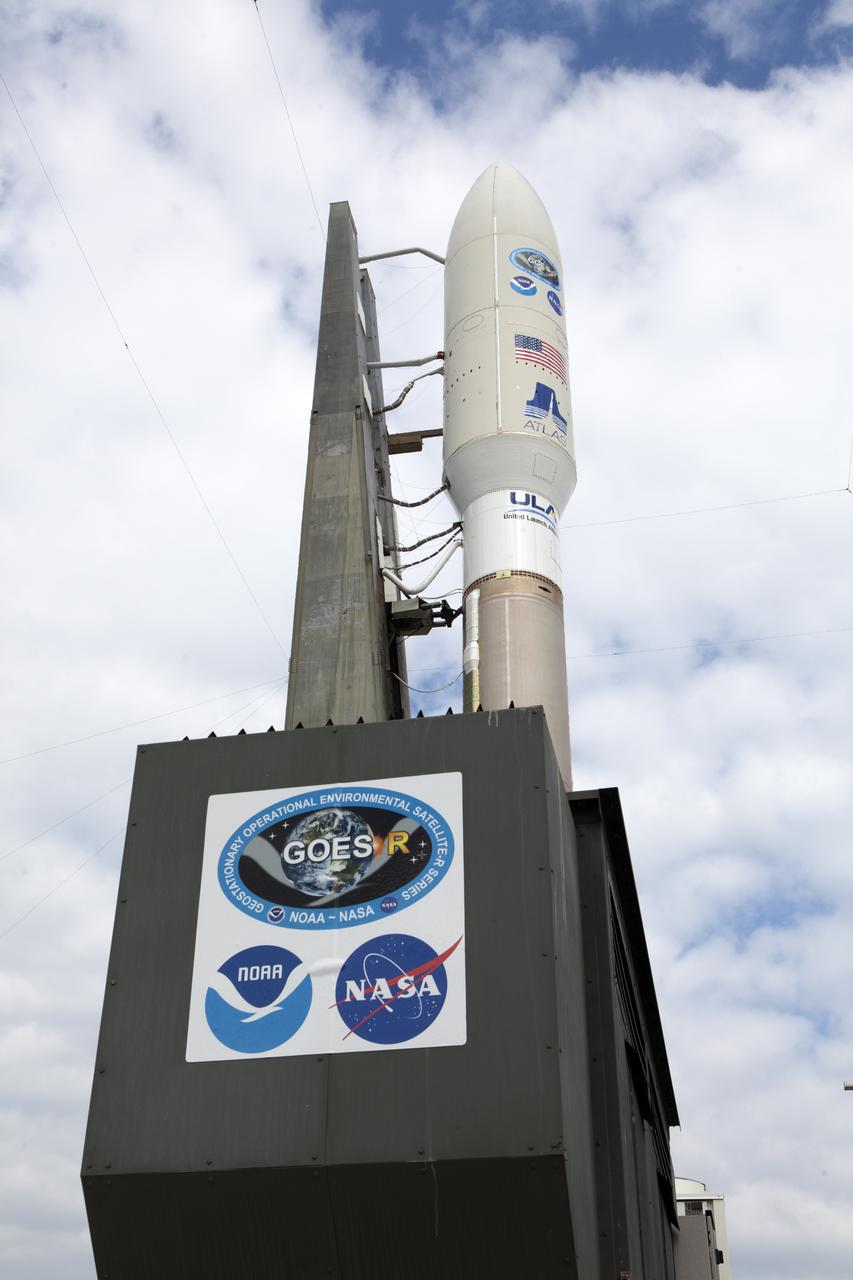
A United Launch Alliance Atlas V rocket arrives at Space Launch Complex 41 at Cape Canaveral Air Force Station in Florida. The launch vehicle will send the Geostationary Operational Environmental Satellite (GOES-R) to a geostationary position over the U.S. GOES-R is the first satellite in a series of next-generation NOAA GOES satellites.
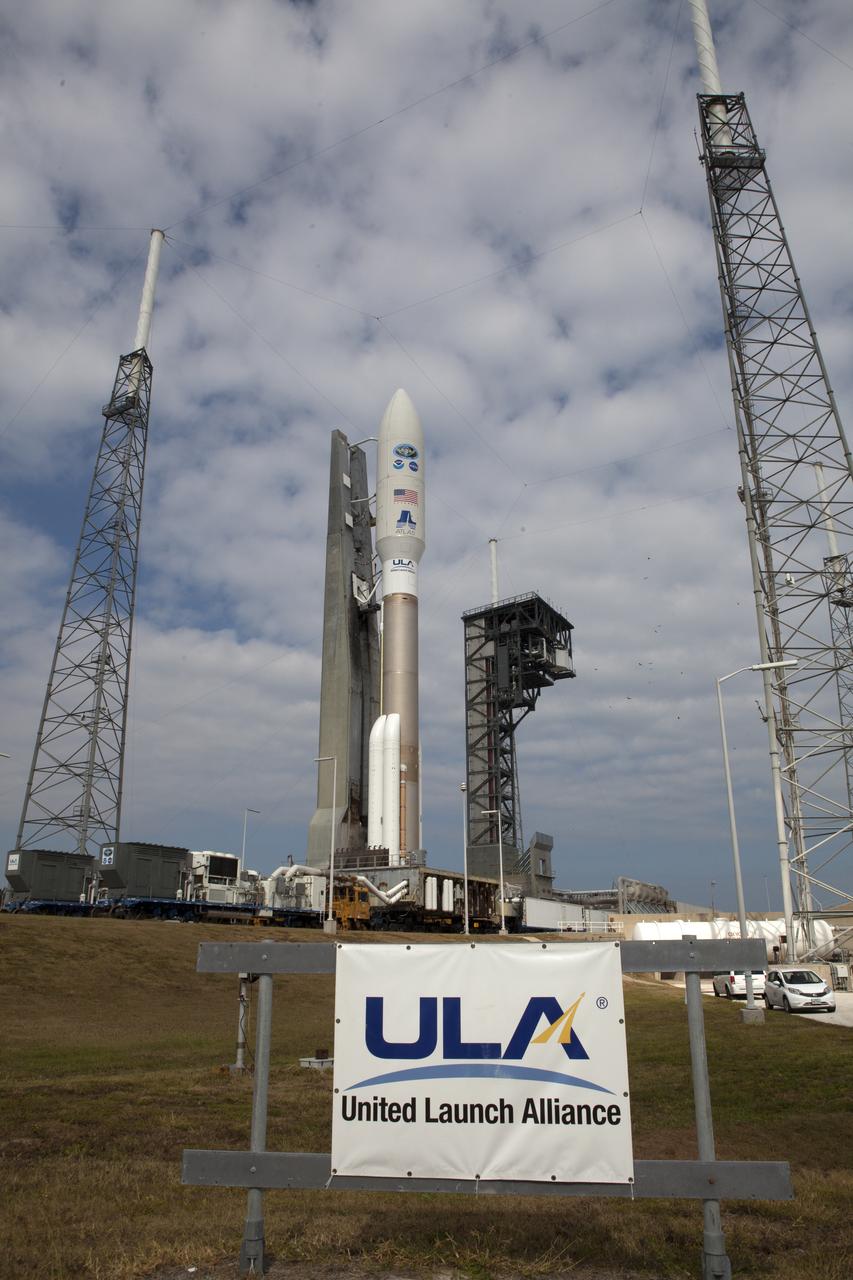
A United Launch Alliance Atlas V rocket arrives at Space Launch Complex 41 at Cape Canaveral Air Force Station in Florida. The launch vehicle will send the Geostationary Operational Environmental Satellite (GOES-R) to a geostationary position over the U.S. GOES-R is the first satellite in a series of next-generation NOAA GOES satellites.
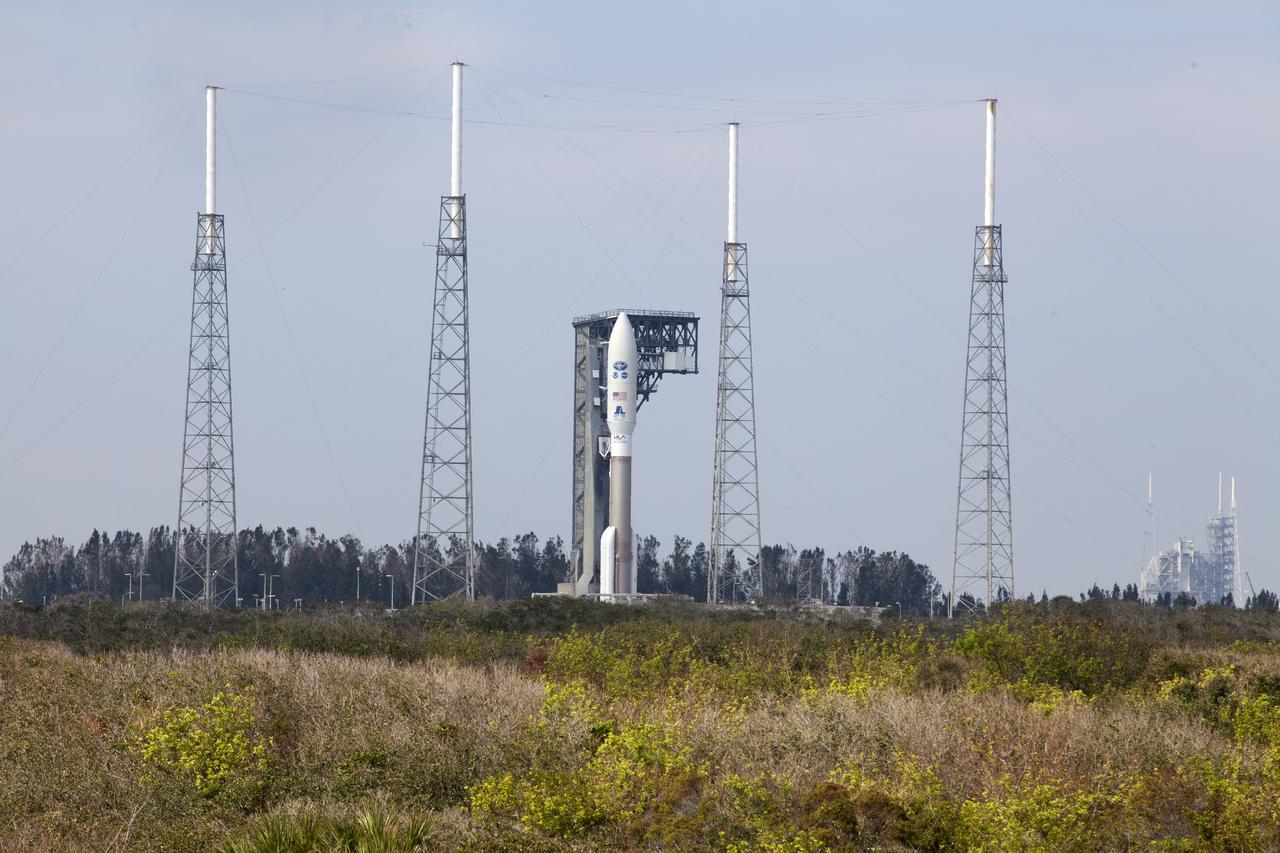
A United Launch Alliance Atlas V rocket arrives at Space Launch Complex 41 at Cape Canaveral Air Force Station in Florida. The launch vehicle will send the Geostationary Operational Environmental Satellite (GOES-R) to a geostationary position over the U.S. GOES-R is the first satellite in a series of next-generation NOAA GOES satellites.
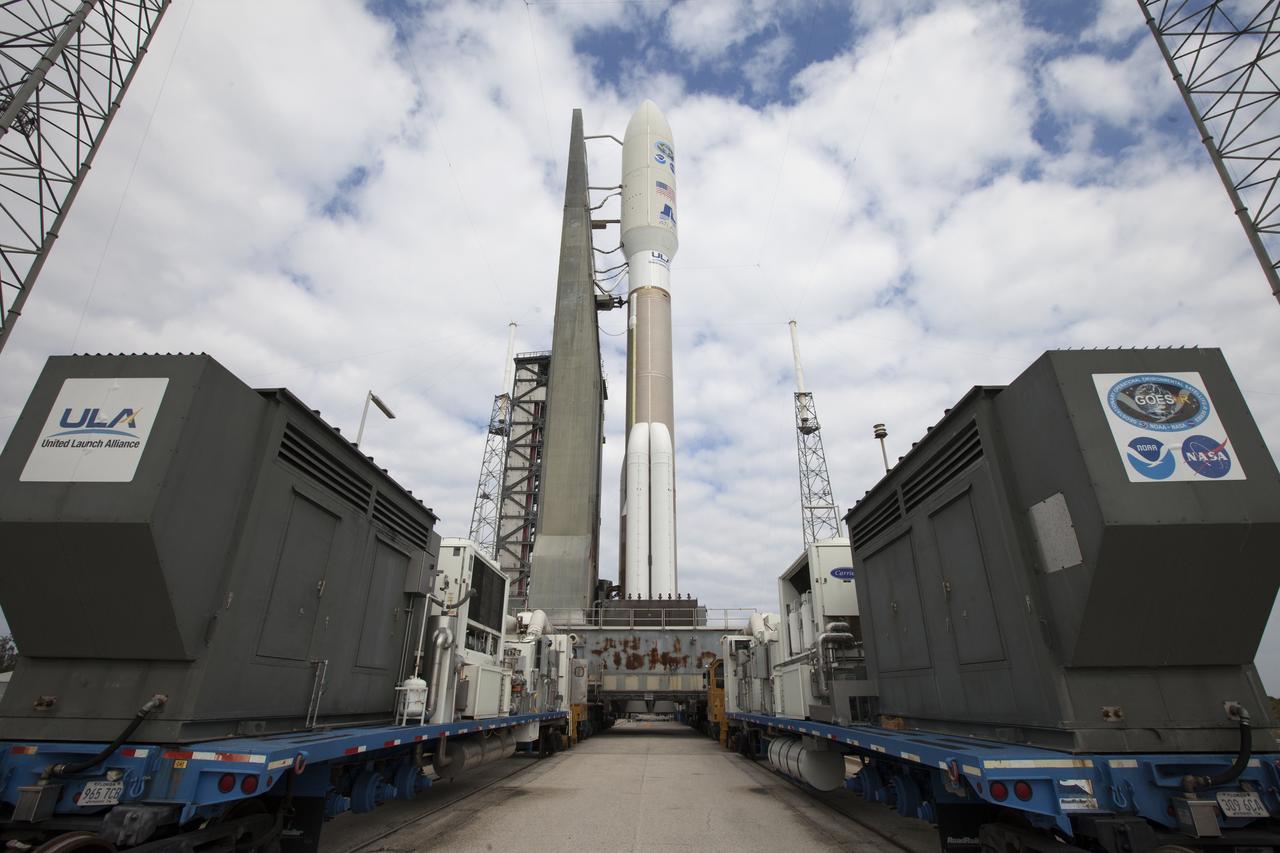
A United Launch Alliance Atlas V rocket arrives at Space Launch Complex 41 at Cape Canaveral Air Force Station in Florida. The launch vehicle will send the Geostationary Operational Environmental Satellite (GOES-R) to a geostationary position over the U.S. GOES-R is the first satellite in a series of next-generation NOAA GOES satellites.
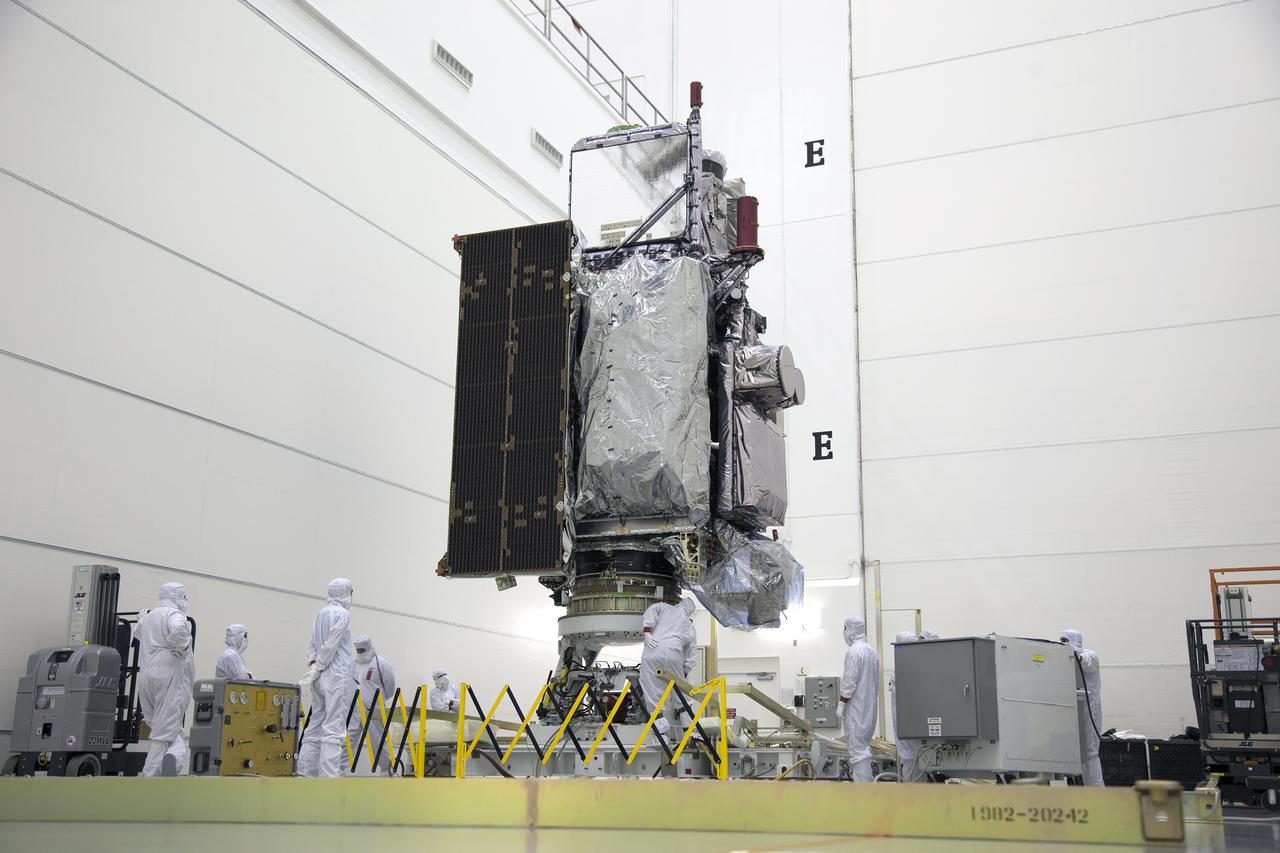
The GOES-R spacecraft stands vertically inside the Astrotech payload processing facility in Titusville, Florida near NASA’s Kennedy Space Center. GOES-R will be the first satellite in a series of next-generation NOAA Geostationary Operational Environmental Satellites. The spacecraft is to launch aboard a United Launch Alliance Atlas V rocket in November.
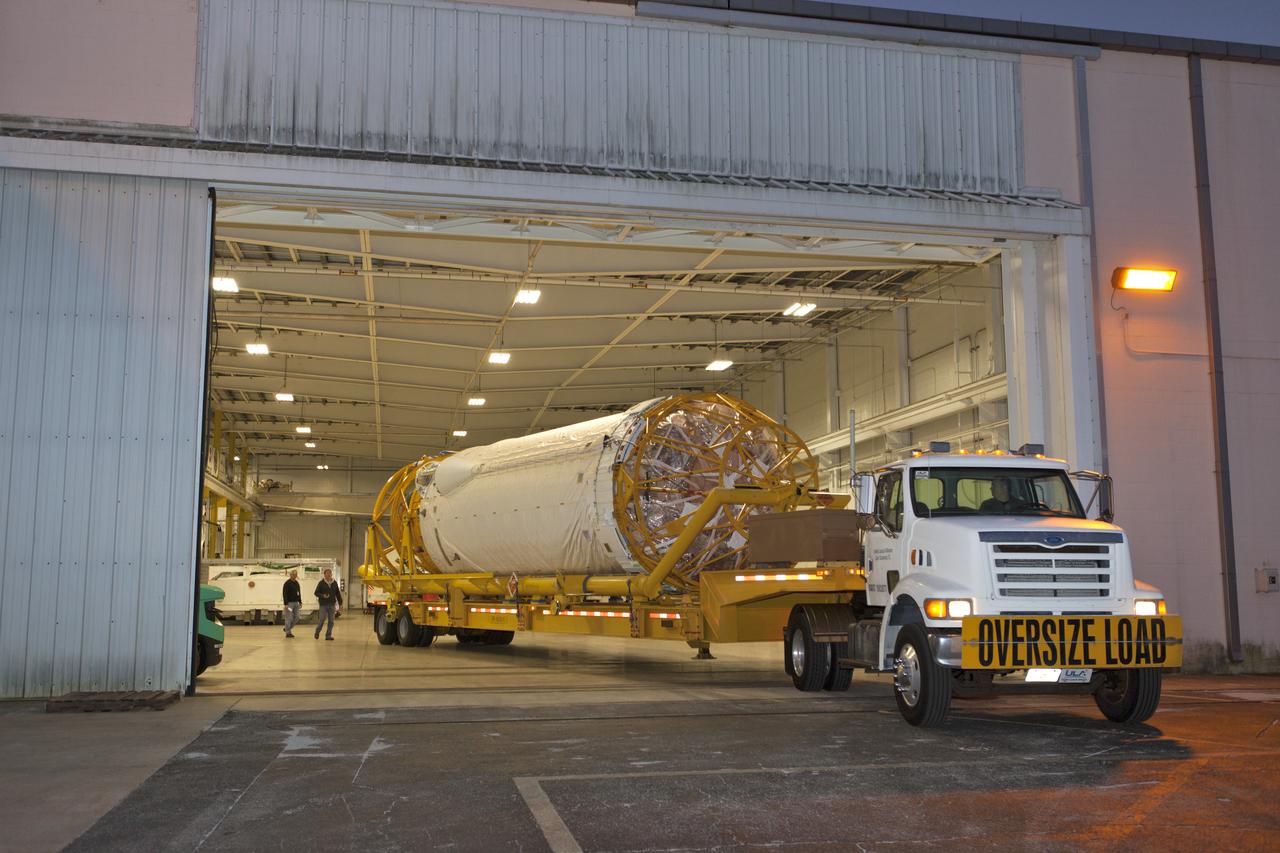
The Centaur upper stage that will help launch NOAA's Geostationary Operational Environmental Satellite-S, or GOES-S, is being transported from the Atlas Spaceflight Operations Center at Cape Canaveral Air Force Station to the Delta Operations Center for further processing. GOES-S is the second in a series of four advanced geostationary weather satellites. The GOES-R series - consisting of the GOES-R, GOES-S, GOES-T and GOES-U spacecraft - will significantly improve the detection and observation of environmental phenomena that directly affect public safety, protection of property and the nation's economic health and prosperity. GOES-S is slated to launch March 1, 2018 aboard a United Launch Alliance Atlas V rocket.
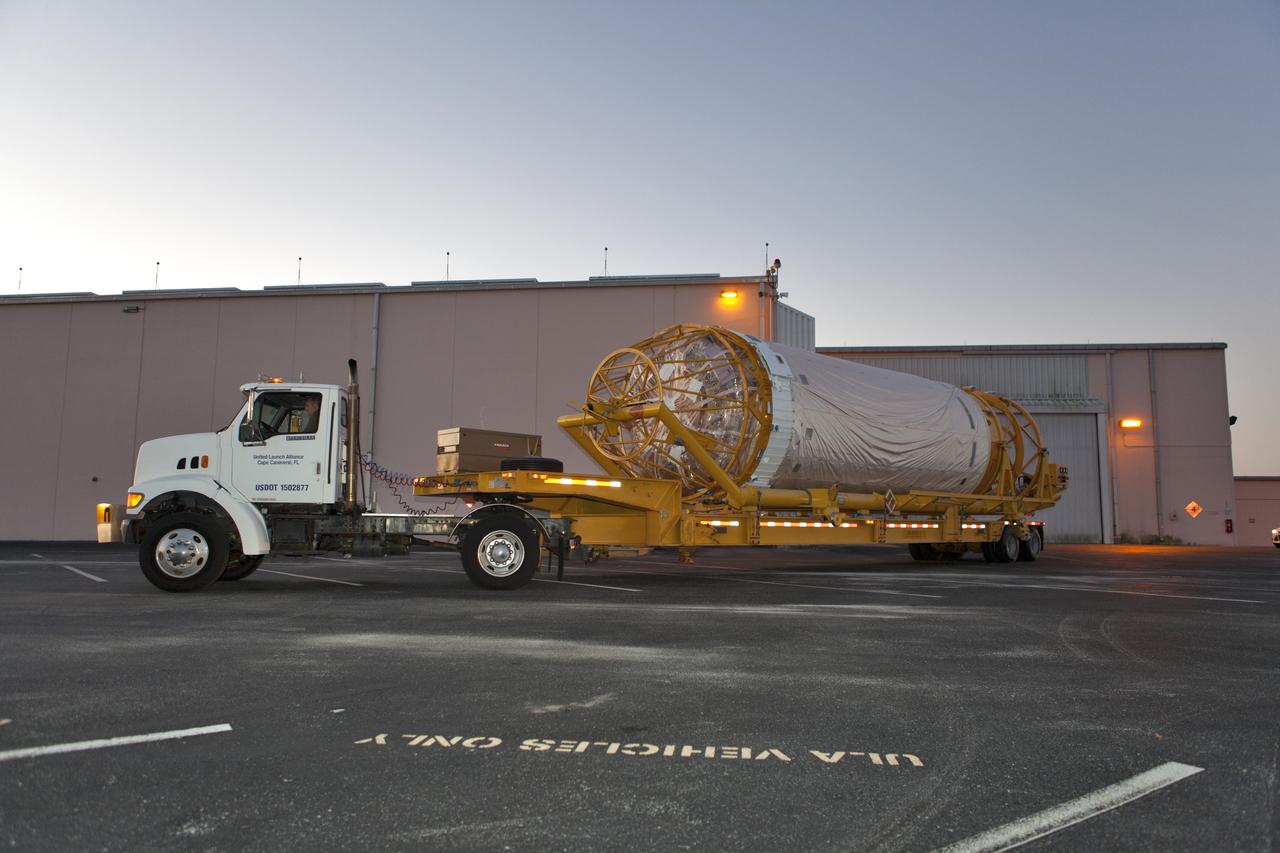
The Centaur upper stage that will help launch NOAA's Geostationary Operational Environmental Satellite-S, or GOES-S, is being transported from the Atlas Spaceflight Operations Center at Cape Canaveral Air Force Station to the Delta Operations Center for further processing. GOES-S is the second in a series of four advanced geostationary weather satellites. The GOES-R series - consisting of the GOES-R, GOES-S, GOES-T and GOES-U spacecraft - will significantly improve the detection and observation of environmental phenomena that directly affect public safety, protection of property and the nation's economic health and prosperity. GOES-S is slated to launch March 1, 2018 aboard a United Launch Alliance Atlas V rocket.
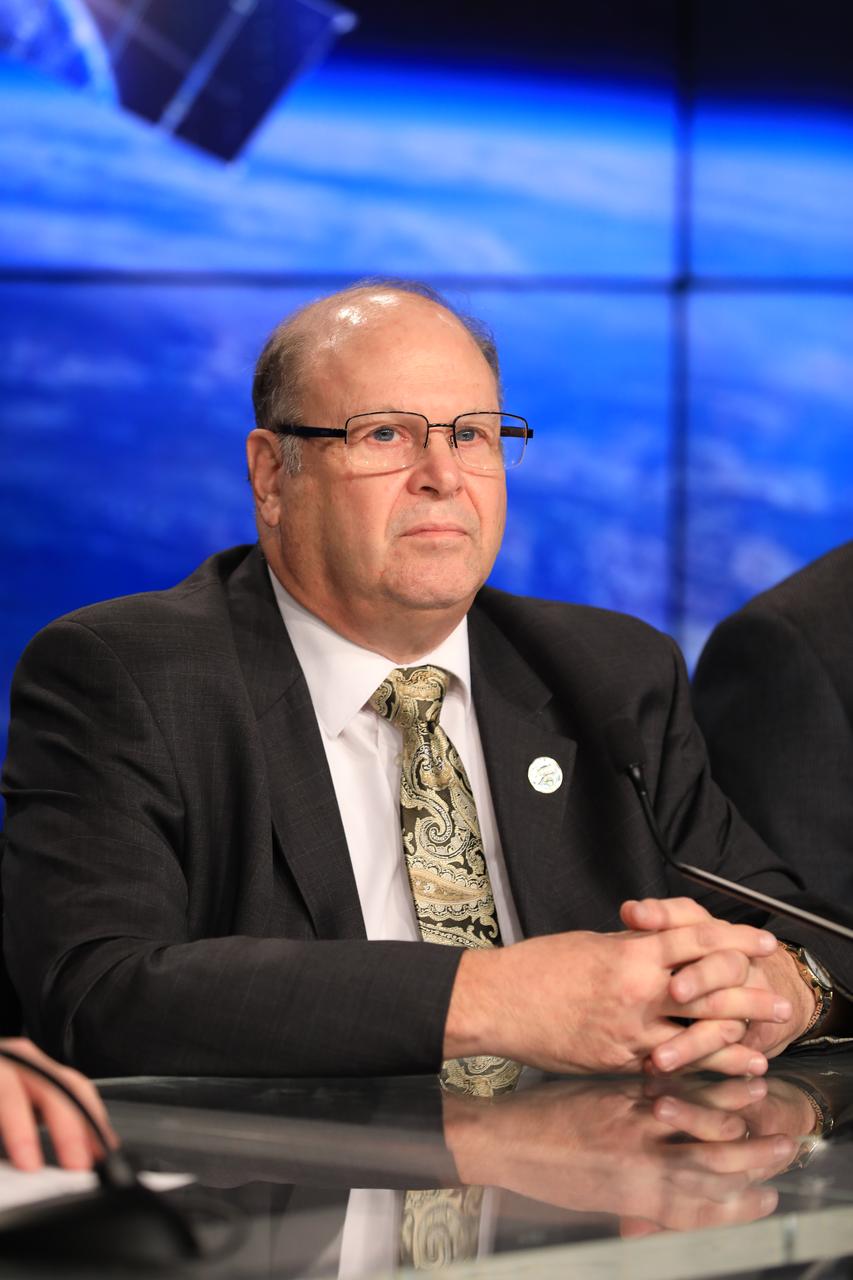
In the Kennedy Space Center's Press Site auditorium, Steven Goodman, NOAA's GOES-R program scientist, speaks to the media during a mission briefing on the Geostationary Operational Environmental Satellite (GOES-R). GOES-R is the first satellite in a series of next-generation GOES satellites for NOAA, the National Oceanographic and Atmospheric Administration. It will launch to a geostationary orbit over the western hemisphere to provide images of storms and help meteorologists predict severe weather conditionals and develop long-range forecasts.
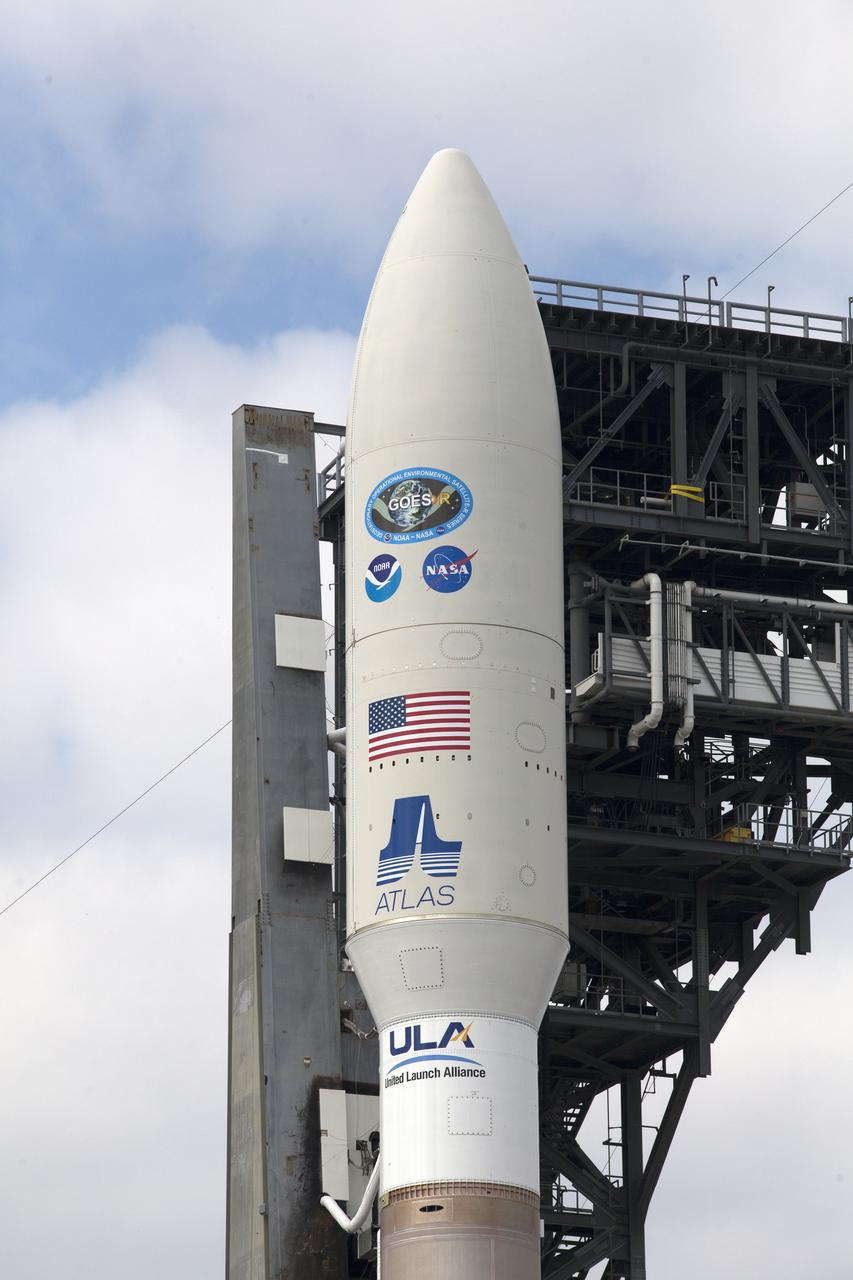
A United Launch Alliance Atlas V rocket arrives at Space Launch Complex 41 at Cape Canaveral Air Force Station in Florida. In view is the upper stage and payload fairing containing the Geostationary Operational Environmental Satellite (GOES-R). The launch vehicle will send GOES-R to a geostationary position over the U.S. GOES-R is the first satellite in a series of next-generation NOAA GOES satellites.
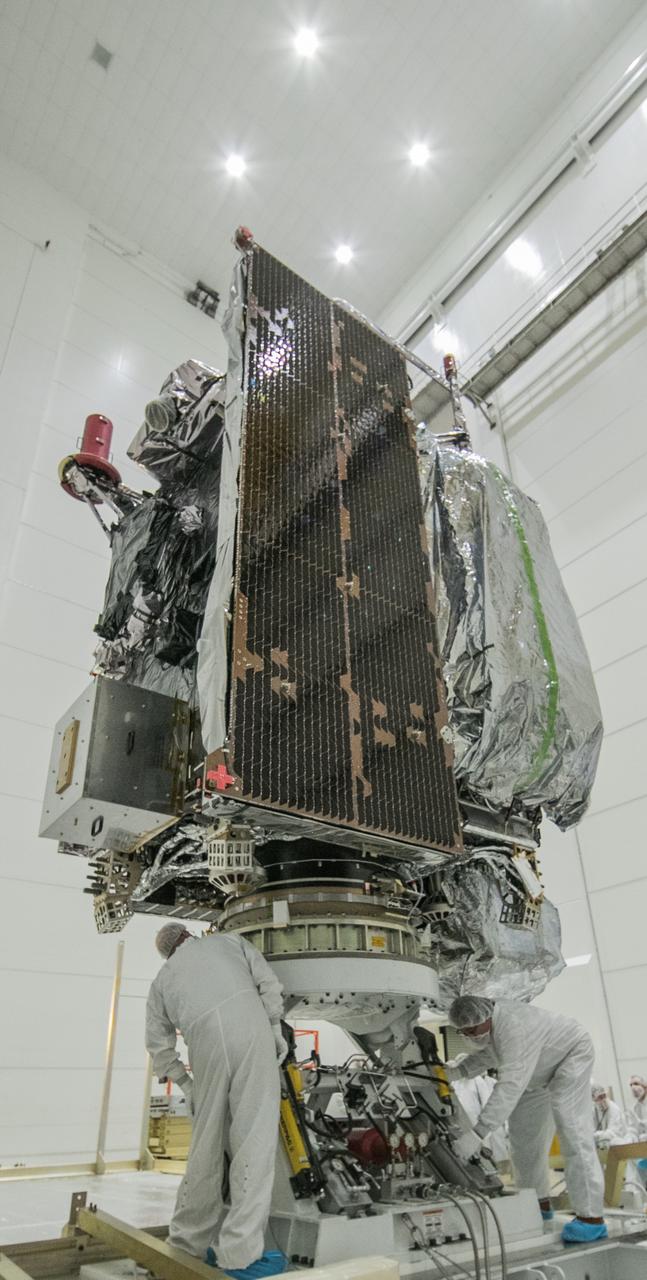
At Astrotech Space Operations in Titusville, Florida, technicians and engineers inspect NOAA's Geostationary Operation Environmental Satellite-S (GOES-S) after removal from its shipping container. GOES-S is the second in a series of four advanced geostationary weather satellites. The GOES-R series - consisting of the GOES-R, GOES-S, GOES-T and GOES-U spacecraft - will significantly improve the detection and observation of environmental phenomena that directly affect public safety, protection of property and the nation's economic health and prosperity. GOES-S is slated to launch March 1, 2018 aboard a United Launch Alliance Atlas V rocket from Cape Canaveral Air Force Station in Florida.
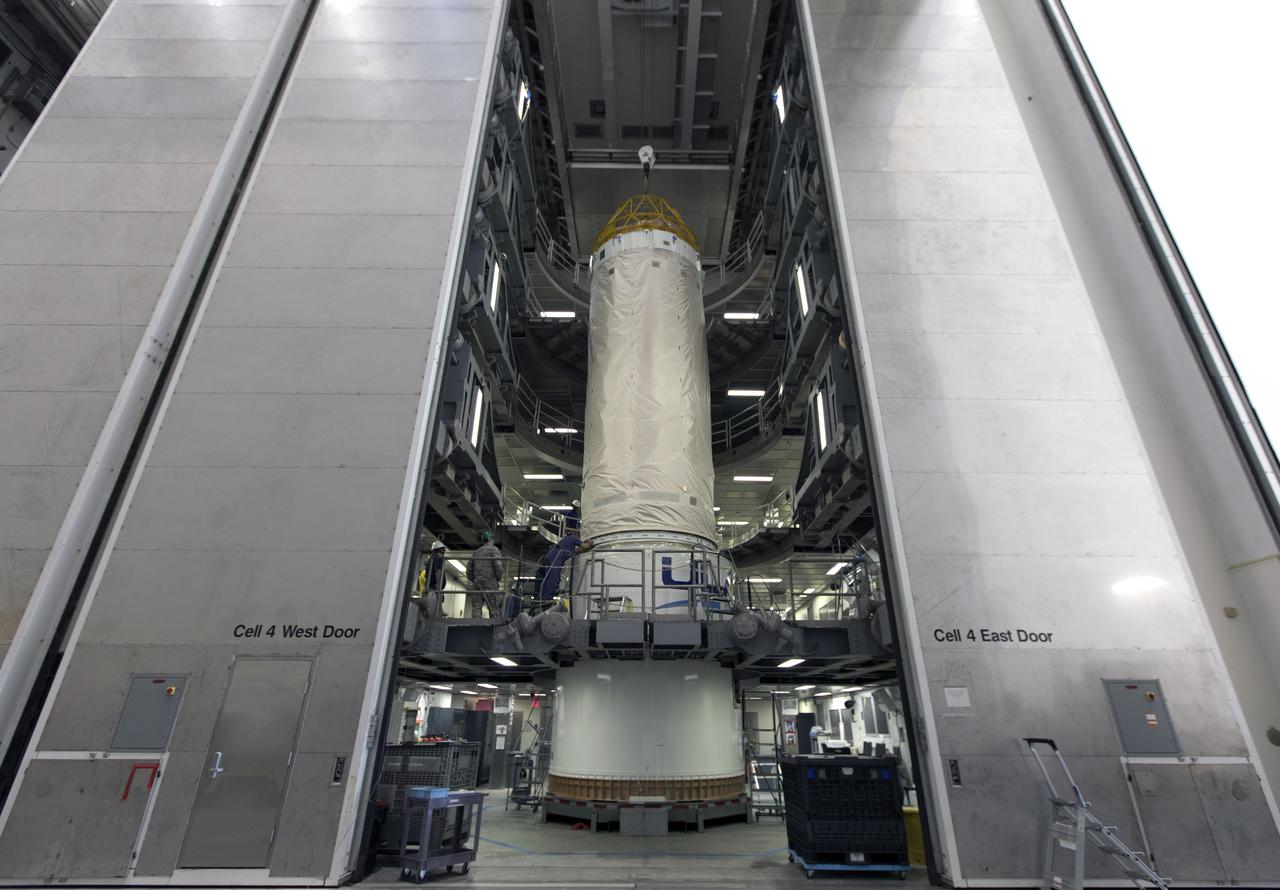
The Centaur upper stage that will help launch NOAA's Geostationary Operational Environmental Satellite-S, or GOES-S, has been positioned in at test cell inside the Delta Operations Center at Cape Canaveral Air Force Station for further processing. GOES-S is the second in a series of four advanced geostationary weather satellites. The GOES-R series - consisting of the GOES-R, GOES-S, GOES-T and GOES-U spacecraft - will significantly improve the detection and observation of environmental phenomena that directly affect public safety, protection of property and the nation's economic health and prosperity. GOES-S is slated to launch March 1, 2018 aboard a United Launch Alliance Atlas V rocket.
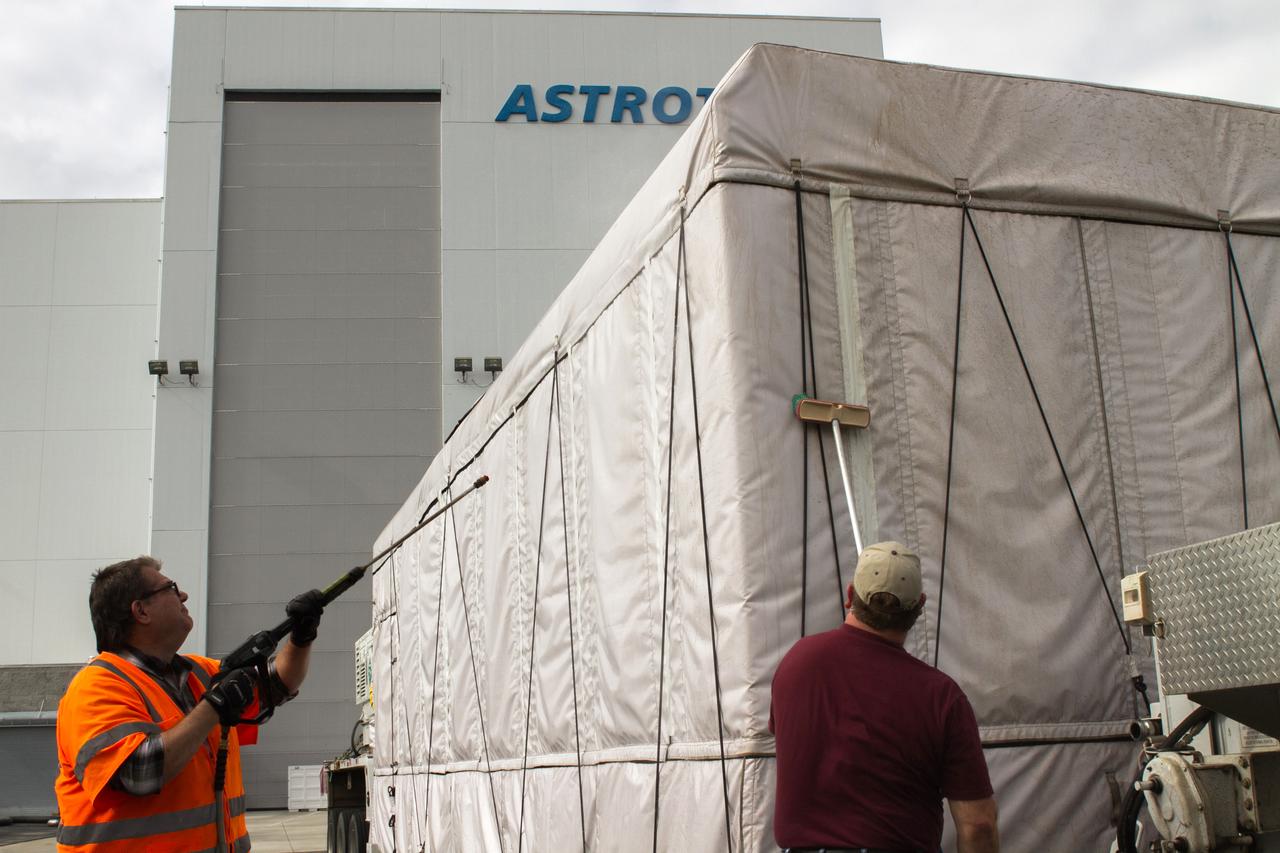
NOAA's Geostationary Operation Environmental Satellite-S (GOES-S) arrives at Astrotech Space Operations in Titusville, Florida, to prepare it for launch. The facility is located near NASA's Kennedy Space Center. GOES-S is the second in a series of four advanced geostationary weather satellites. The GOES-R series - consisting of the GOES-R, GOES-S, GOES-T and GOES-U spacecraft - will significantly improve the detection and observation of environmental phenomena that directly affect public safety, protection of property and the nation's economic health and prosperity. GOES-S is slated to launch March 1, 2018 aboard a United Launch Alliance Atlas V rocket from Cape Canaveral Air Force Station in Florida.
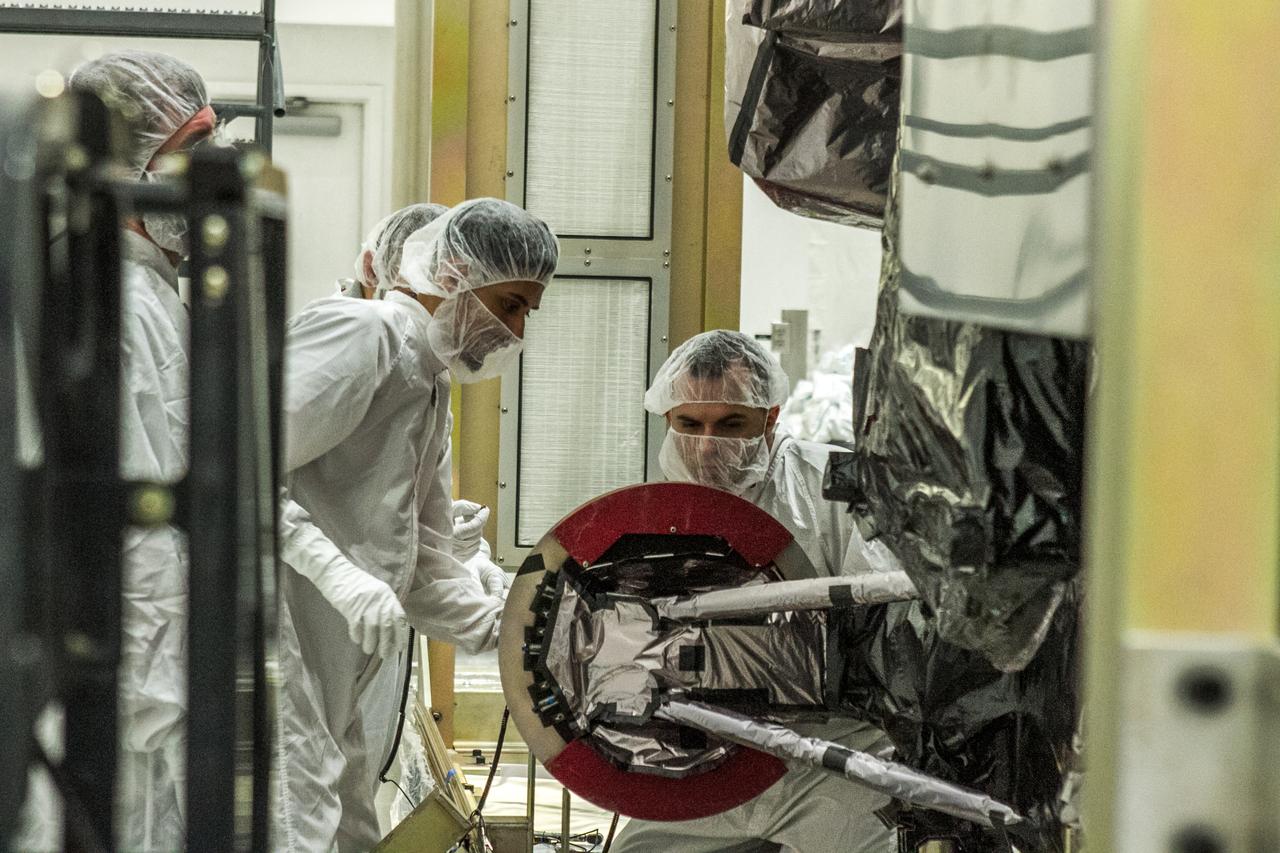
At Astrotech Space Operations in Titusville, Florida, technicians and engineers inspect NOAA's Geostationary Operation Environmental Satellite-S (GOES-S) after removal from its shipping container. GOES-S is the second in a series of four advanced geostationary weather satellites. The GOES-R series - consisting of the GOES-R, GOES-S, GOES-T and GOES-U spacecraft - will significantly improve the detection and observation of environmental phenomena that directly affect public safety, protection of property and the nation's economic health and prosperity. GOES-S is slated to launch March 1, 2018 aboard a United Launch Alliance Atlas V rocket from Cape Canaveral Air Force Station in Florida.

The Centaur upper stage that will help launch NOAA's Geostationary Operational Environmental Satellite-S, or GOES-S, arrives at the Delta Operations Center at Cape Canaveral Air Force Station for further processing. GOES-S is the second in a series of four advanced geostationary weather satellites. The GOES-R series - consisting of the GOES-R, GOES-S, GOES-T and GOES-U spacecraft - will significantly improve the detection and observation of environmental phenomena that directly affect public safety, protection of property and the nation's economic health and prosperity. GOES-S is slated to launch March 1, 2018 aboard a United Launch Alliance Atlas V rocket.
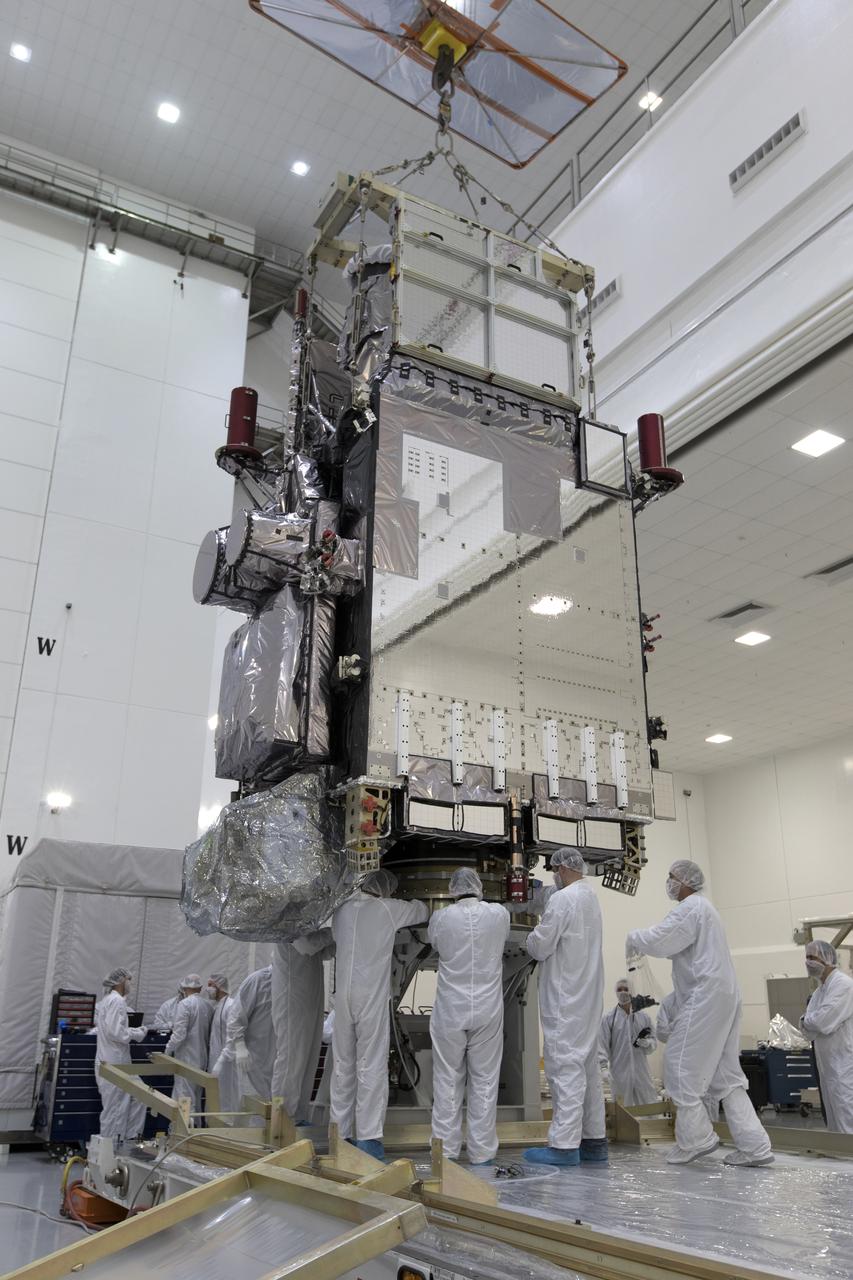
At Astrotech Space Operations in Titusville, Florida, technicians and engineers inspect NOAA's Geostationary Operational Environmental Satellite-S (GOES-S). The facility is located near NASA's Kennedy Space Center. GOES-S is the second in a series of four advanced geostationary weather satellites. The GOES-R series - consisting of the GOES-R, GOES-S, GOES-T and GOES-U spacecraft - will significantly improve the detection and observation of environmental phenomena that directly affect public safety, protection of property and the nation's economic health and prosperity. GOES-S is slated to launch March 1, 2018 aboard a United Launch Alliance Atlas V rocket from Cape Canaveral Air Force Station in Florida.
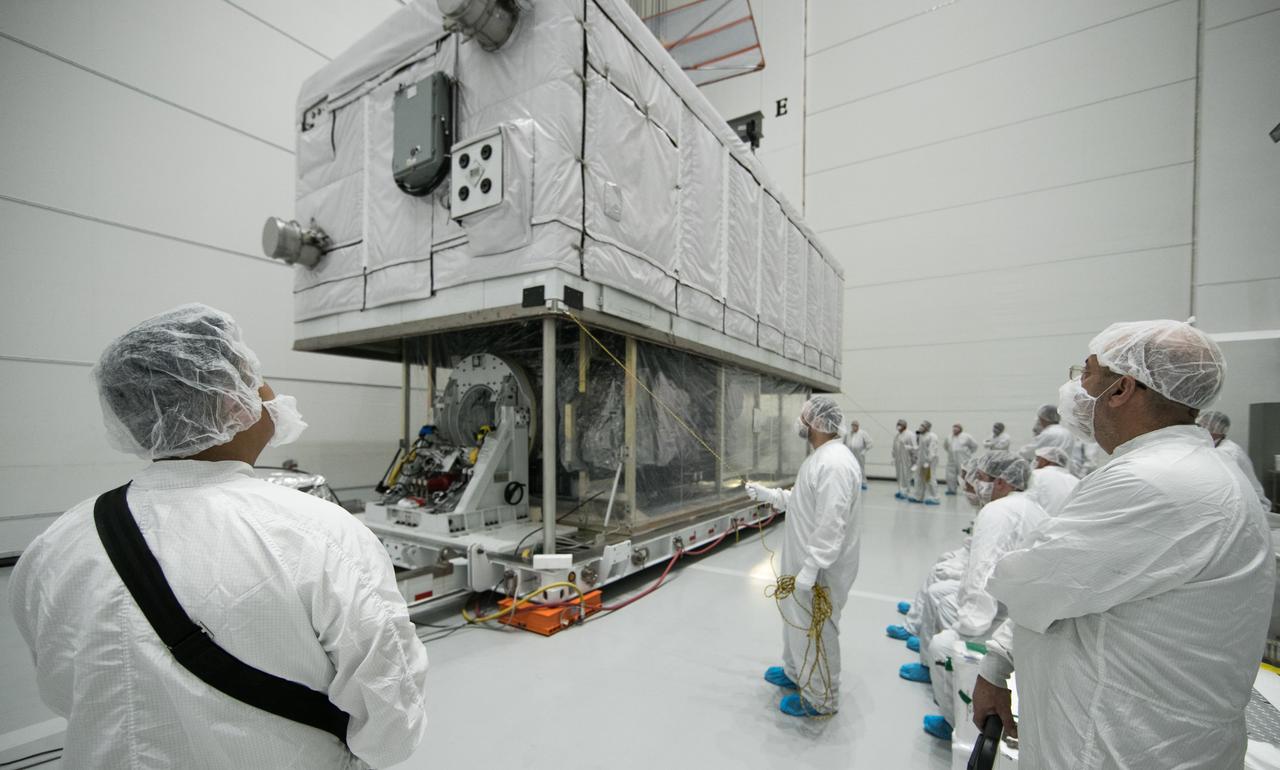
At Astrotech Space Operations in Titusville, Florida, technicians and engineers remove NOAA's Geostationary Operation Environmental Satellite-S (GOES-S) from its shipping container. GOES-S is the second in a series of four advanced geostationary weather satellites. The GOES-R series - consisting of the GOES-R, GOES-S, GOES-T and GOES-U spacecraft - will significantly improve the detection and observation of environmental phenomena that directly affect public safety, protection of property and the nation's economic health and prosperity. GOES-S is slated to launch March 1, 2018 aboard a United Launch Alliance Atlas V rocket from Cape Canaveral Air Force Station in Florida.
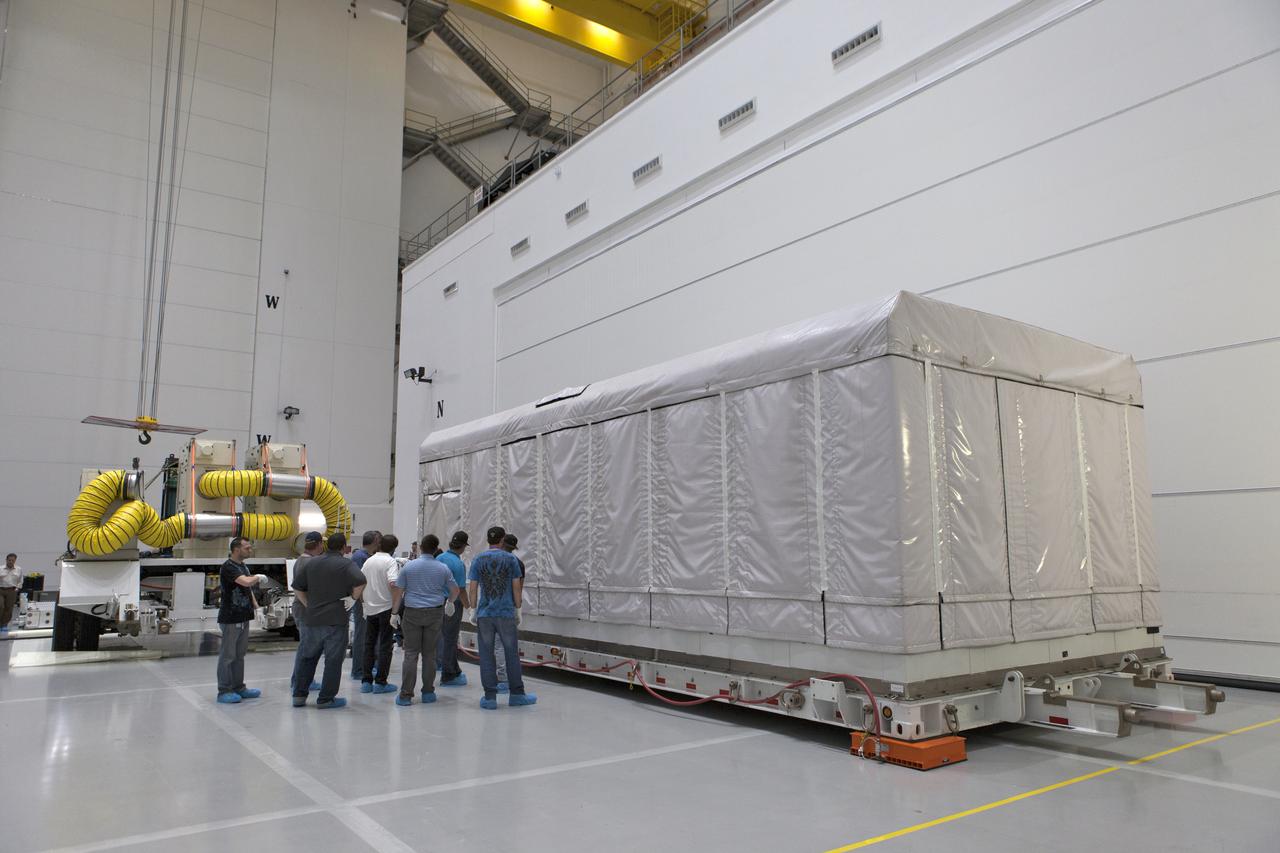
NOAA's Geostationary Operation Environmental Satellite-S (GOES-S) arrives inside Astrotech Space Operations in Titusville, Florida, to prepare it for launch. The facility is located near NASA's Kennedy Space Center. GOES-S is the second in a series of four advanced geostationary weather satellites. The GOES-R series - consisting of the GOES-R, GOES-S, GOES-T and GOES-U spacecraft - will significantly improve the detection and observation of environmental phenomena that directly affect public safety, protection of property and the nation's economic health and prosperity. GOES-S is slated to launch March 1, 2018 aboard a United Launch Alliance Atlas V rocket from Cape Canaveral Air Force Station in Florida.
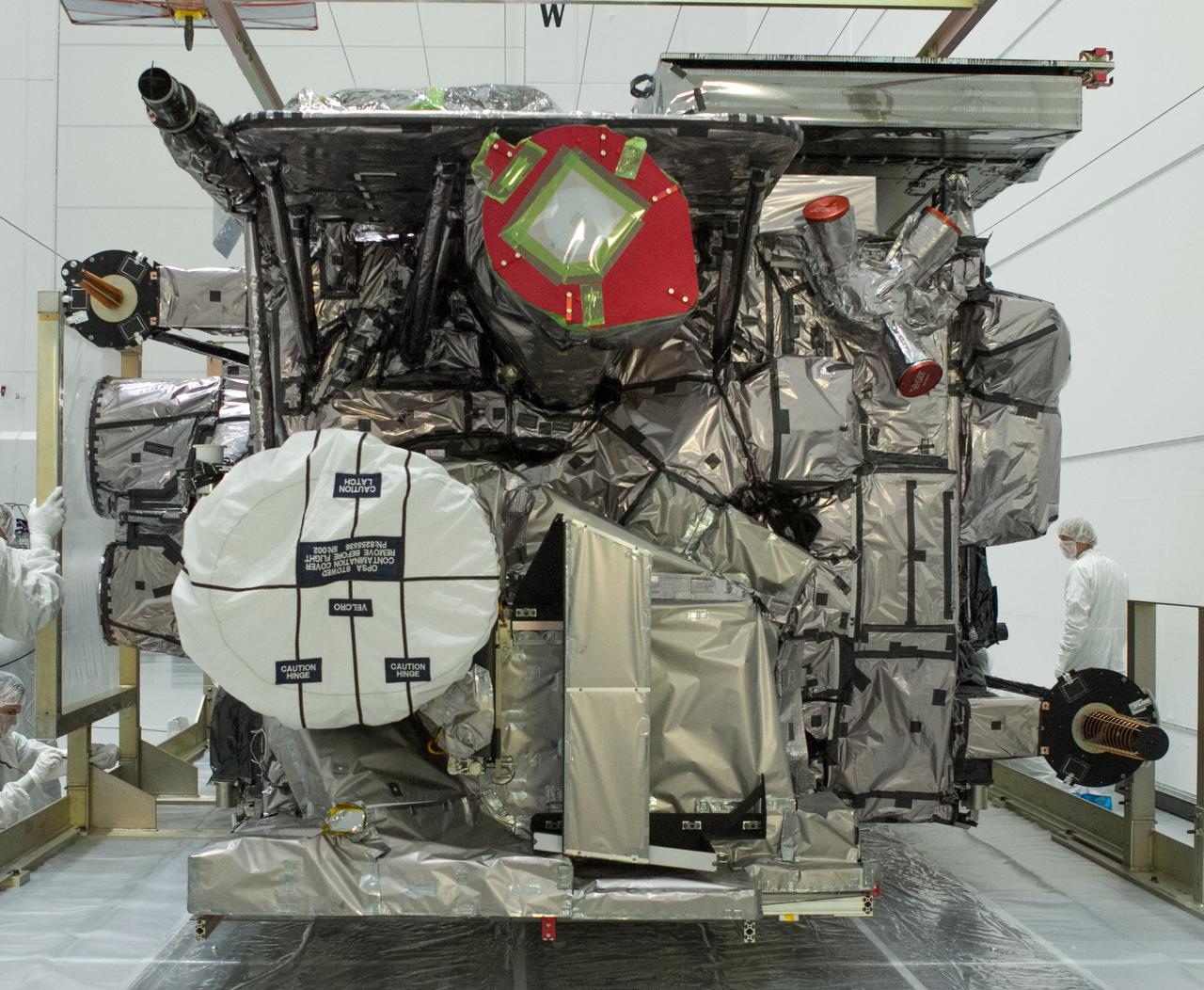
At Astrotech Space Operations in Titusville, Florida, NOAA's Geostationary Operation Environmental Satellite-S (GOES-S) has been removed from its shipping container. GOES-S is the second in a series of four advanced geostationary weather satellites. The GOES-R series - consisting of the GOES-R, GOES-S, GOES-T and GOES-U spacecraft - will significantly improve the detection and observation of environmental phenomena that directly affect public safety, protection of property and the nation's economic health and prosperity. GOES-S is slated to launch March 1, 2018 aboard a United Launch Alliance Atlas V rocket from Cape Canaveral Air Force Station in Florida.
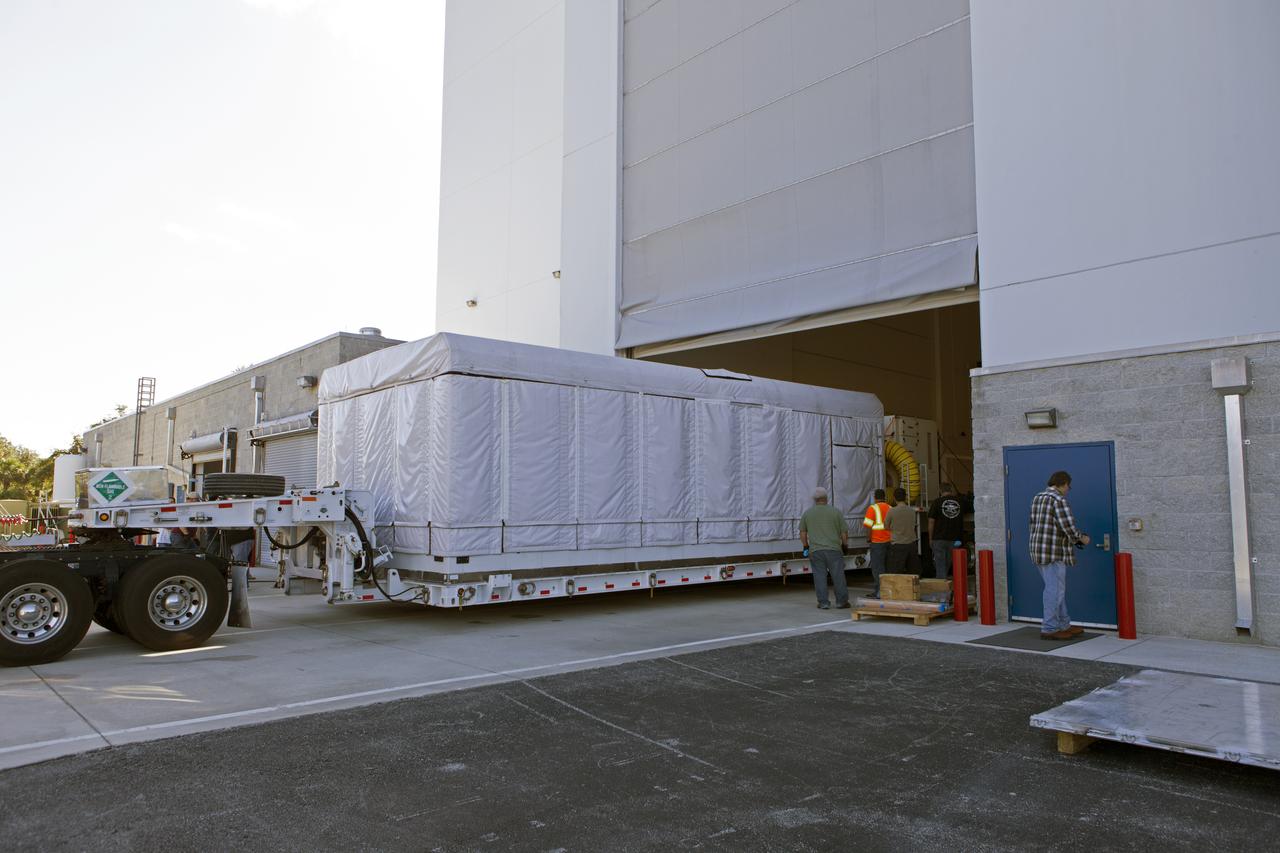
NOAA's Geostationary Operation Environmental Satellite-S (GOES-S) arrives at Astrotech Space Operations in Titusville, Florida, to prepare it for launch. The facility is located near NASA's Kennedy Space Center. GOES-S is the second in a series of four advanced geostationary weather satellites. The GOES-R series - consisting of the GOES-R, GOES-S, GOES-T and GOES-U spacecraft - will significantly improve the detection and observation of environmental phenomena that directly affect public safety, protection of property and the nation's economic health and prosperity. GOES-S is slated to launch March 1, 2018 aboard a United Launch Alliance Atlas V rocket from Cape Canaveral Air Force Station in Florida.
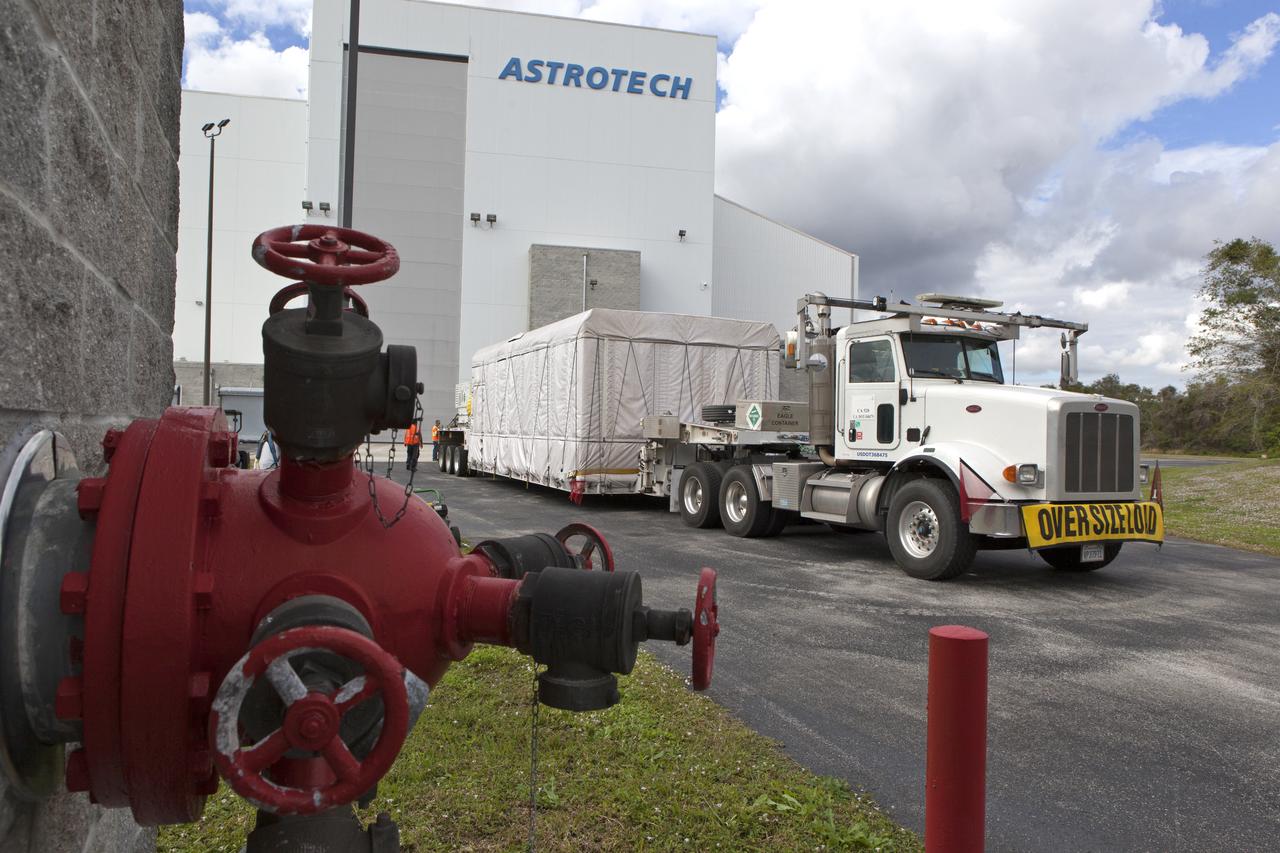
NOAA's Geostationary Operation Environmental Satellite-S (GOES-S) arrives at Astrotech Space Operations in Titusville, Florida, to prepare it for launch. The facility is located near NASA's Kennedy Space Center. GOES-S is the second in a series of four advanced geostationary weather satellites. The GOES-R series - consisting of the GOES-R, GOES-S, GOES-T and GOES-U spacecraft - will significantly improve the detection and observation of environmental phenomena that directly affect public safety, protection of property and the nation's economic health and prosperity. GOES-S is slated to launch March 1, 2018 aboard a United Launch Alliance Atlas V rocket from Cape Canaveral Air Force Station in Florida.
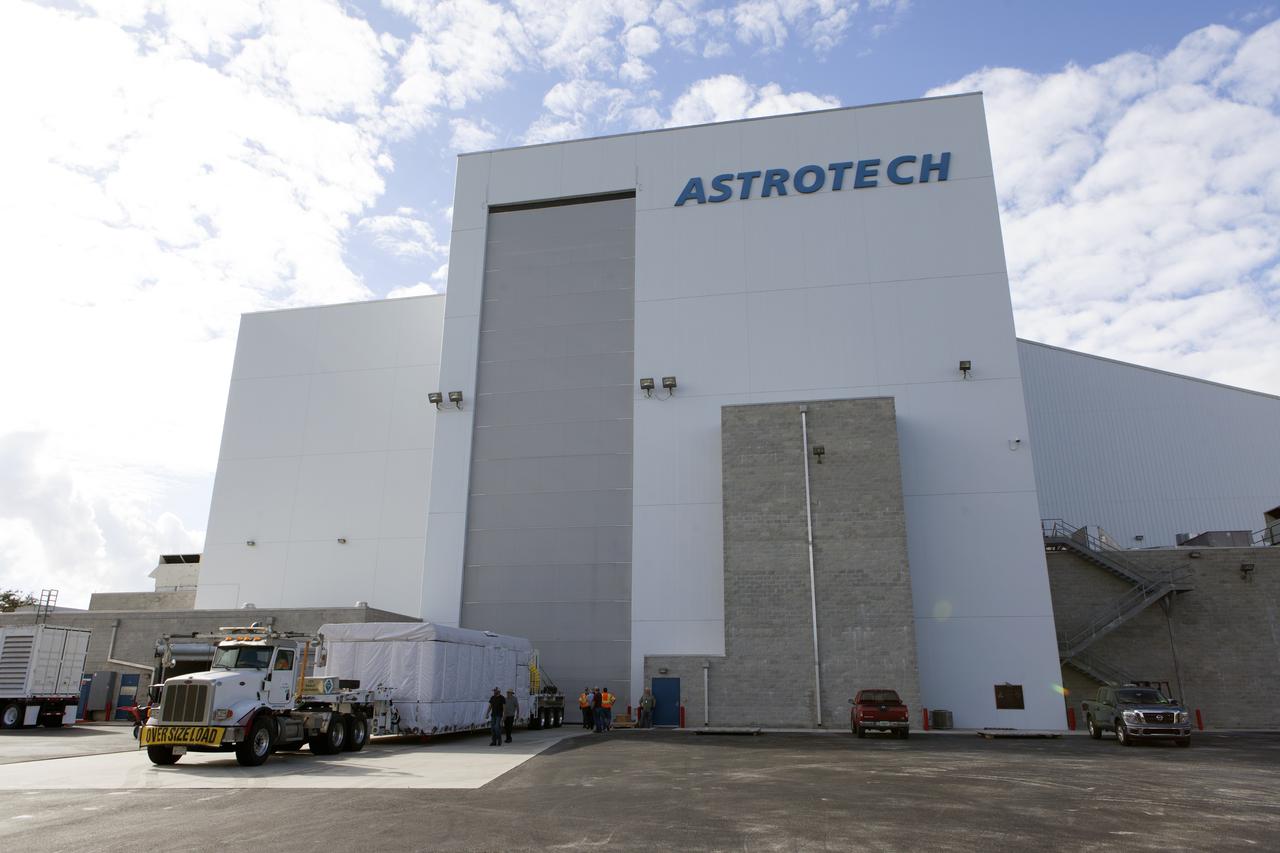
NOAA's Geostationary Operation Environmental Satellite-S (GOES-S) arrives at Astrotech Space Operations in Titusville, Florida, to prepare it for launch. The facility is located near NASA's Kennedy Space Center. GOES-S is the second in a series of four advanced geostationary weather satellites. The GOES-R series - consisting of the GOES-R, GOES-S, GOES-T and GOES-U spacecraft - will significantly improve the detection and observation of environmental phenomena that directly affect public safety, protection of property and the nation's economic health and prosperity. GOES-S is slated to launch March 1, 2018 aboard a United Launch Alliance Atlas V rocket from Cape Canaveral Air Force Station in Florida.
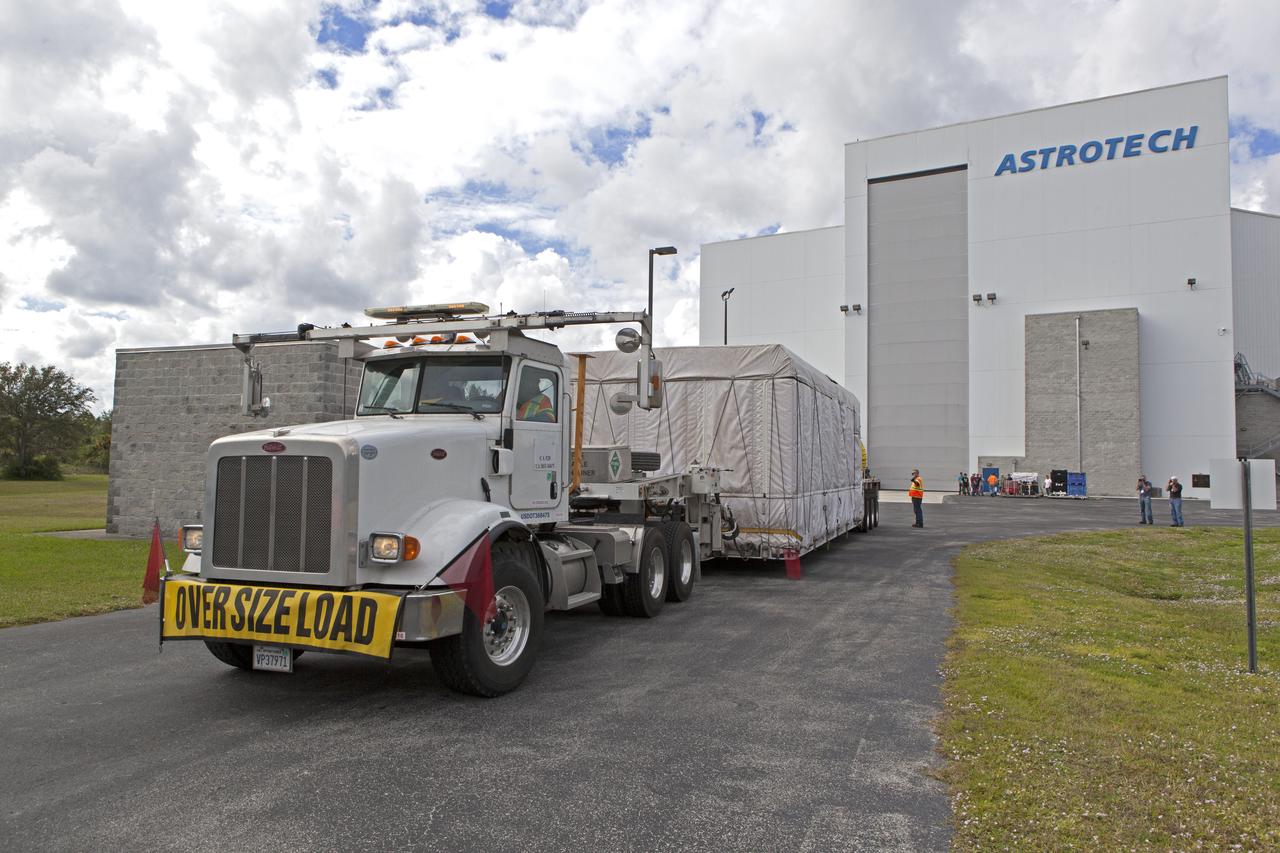
NOAA's Geostationary Operation Environmental Satellite-S (GOES-S) arrives at Astrotech Space Operations in Titusville, Florida, to prepare it for launch. The facility is located near NASA's Kennedy Space Center. GOES-S is the second in a series of four advanced geostationary weather satellites. The GOES-R series - consisting of the GOES-R, GOES-S, GOES-T and GOES-U spacecraft - will significantly improve the detection and observation of environmental phenomena that directly affect public safety, protection of property and the nation's economic health and prosperity. GOES-S is slated to launch March 1, 2018 aboard a United Launch Alliance Atlas V rocket from Cape Canaveral Air Force Station in Florida.
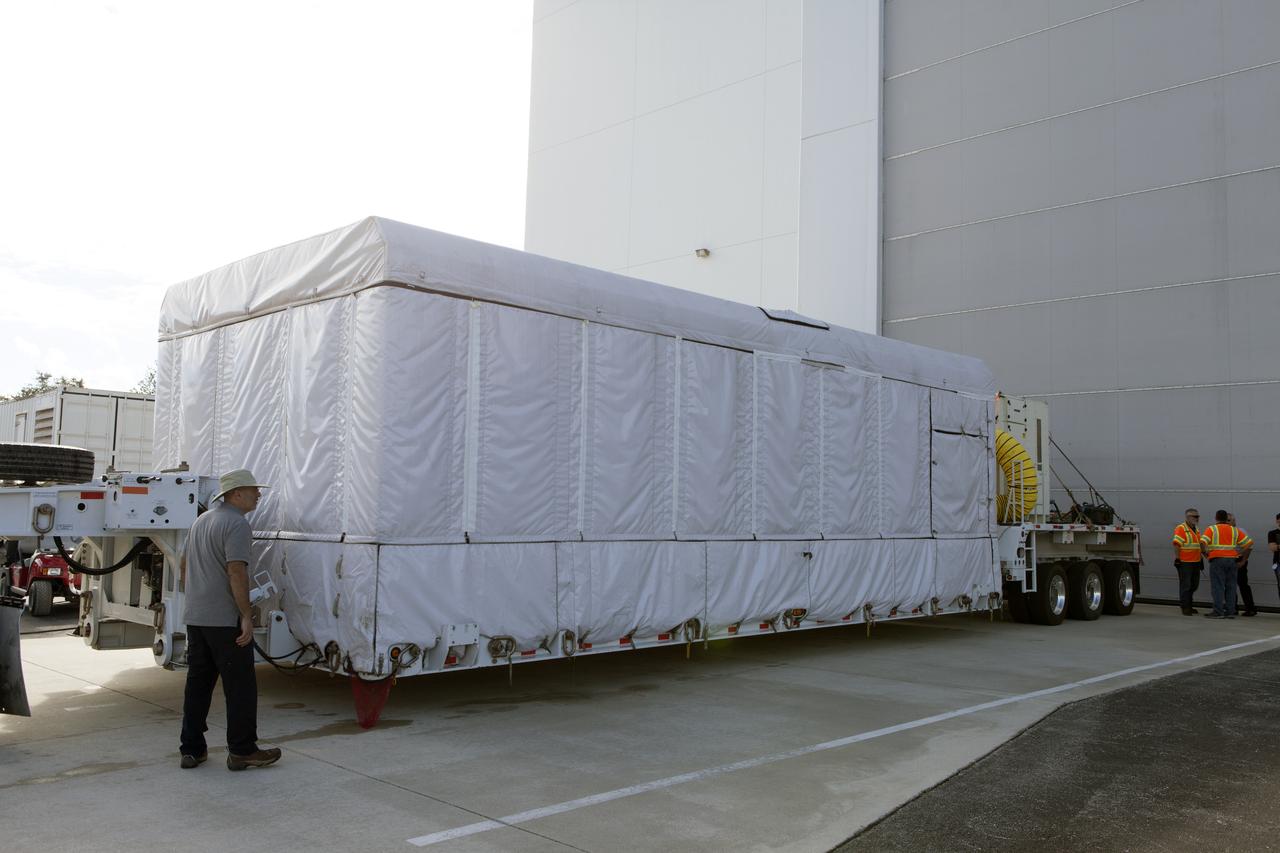
NOAA's Geostationary Operation Environmental Satellite-S (GOES-S) arrives at Astrotech Space Operations in Titusville, Florida, to prepare it for launch. The facility is located near NASA's Kennedy Space Center. GOES-S is the second in a series of four advanced geostationary weather satellites. The GOES-R series - consisting of the GOES-R, GOES-S, GOES-T and GOES-U spacecraft - will significantly improve the detection and observation of environmental phenomena that directly affect public safety, protection of property and the nation's economic health and prosperity. GOES-S is slated to launch March 1, 2018 aboard a United Launch Alliance Atlas V rocket from Cape Canaveral Air Force Station in Florida.
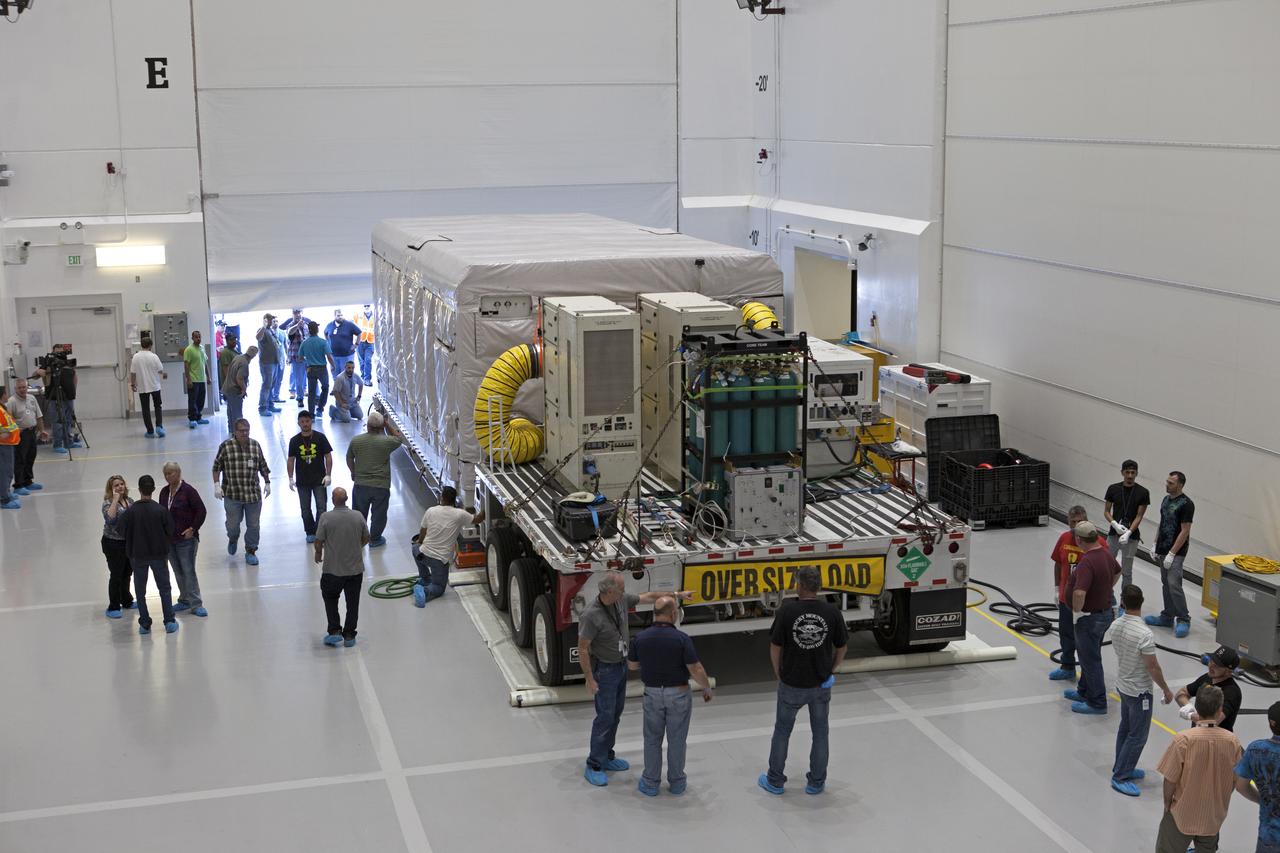
NOAA's Geostationary Operation Environmental Satellite-S (GOES-S) arrives inside Astrotech Space Operations in Titusville, Florida, to prepare it for launch. The facility is located near NASA's Kennedy Space Center. GOES-S is the second in a series of four advanced geostationary weather satellites. The GOES-R series - consisting of the GOES-R, GOES-S, GOES-T and GOES-U spacecraft - will significantly improve the detection and observation of environmental phenomena that directly affect public safety, protection of property and the nation's economic health and prosperity. GOES-S is slated to launch March 1, 2018 aboard a United Launch Alliance Atlas V rocket from Cape Canaveral Air Force Station in Florida.
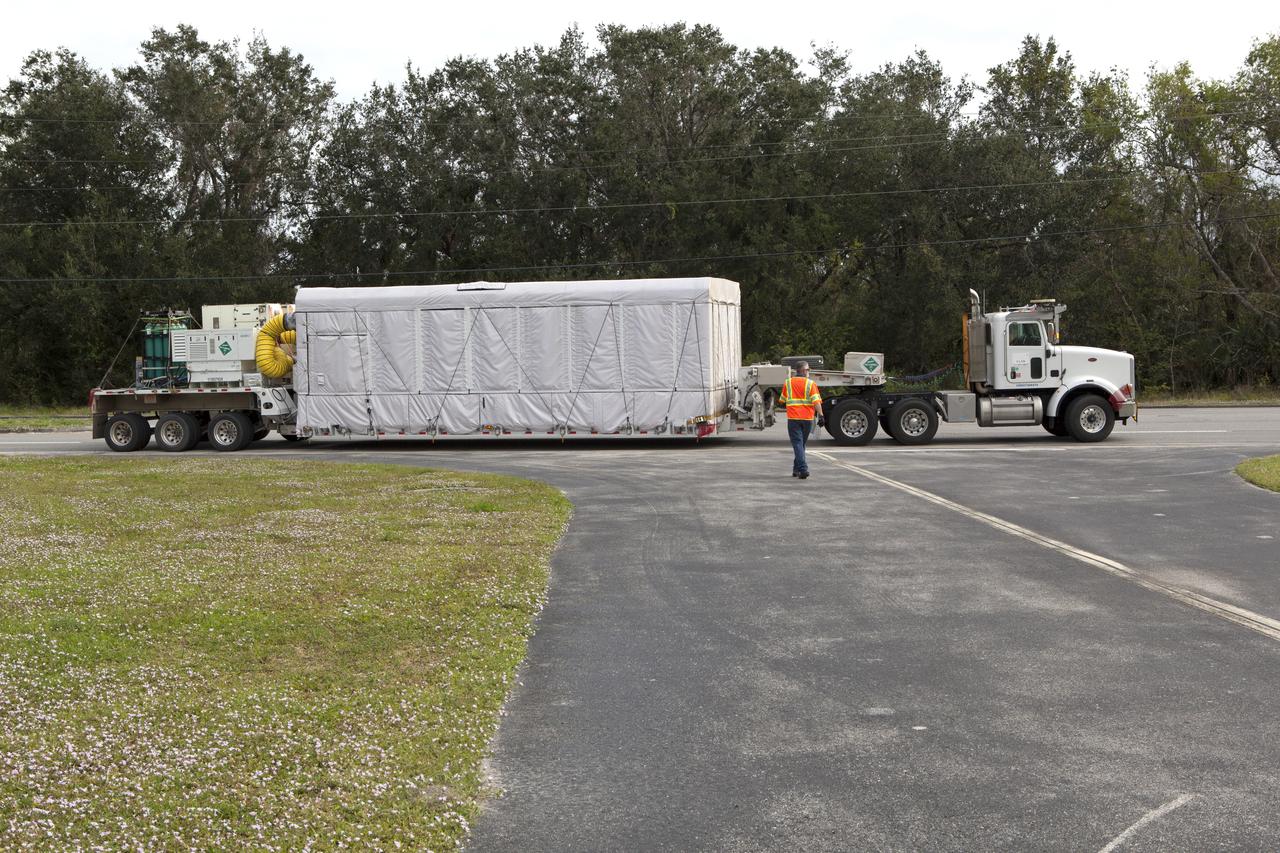
NOAA's Geostationary Operation Environmental Satellite-S (GOES-S) arrives at Astrotech Space Operations in Titusville, Florida, to prepare it for launch. The facility is located near NASA's Kennedy Space Center. GOES-S is the second in a series of four advanced geostationary weather satellites. The GOES-R series - consisting of the GOES-R, GOES-S, GOES-T and GOES-U spacecraft - will significantly improve the detection and observation of environmental phenomena that directly affect public safety, protection of property and the nation's economic health and prosperity. GOES-S is slated to launch March 1, 2018 aboard a United Launch Alliance Atlas V rocket from Cape Canaveral Air Force Station in Florida.
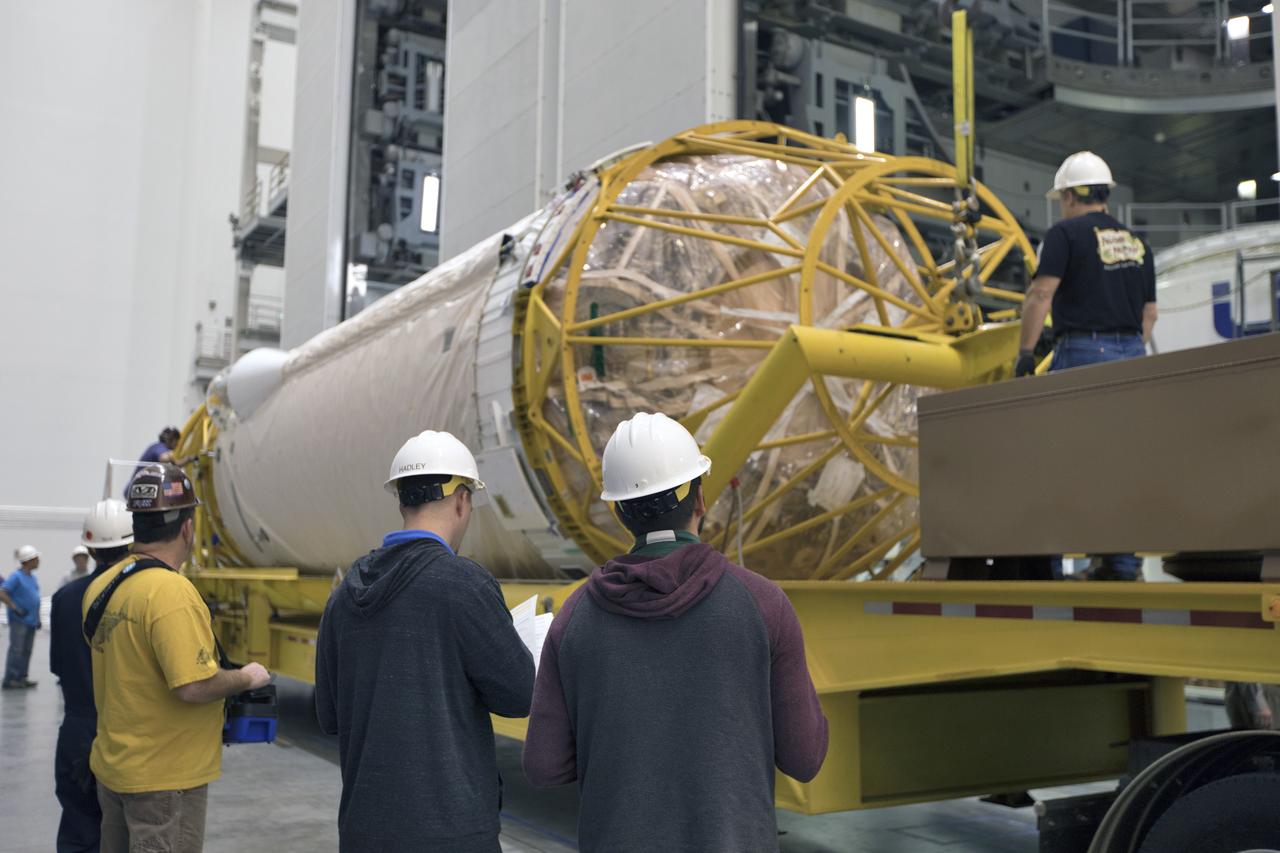
Under the watchful eyes of technicians and engineers, the Centaur upper stage that will help launch NOAA's Geostationary Operational Environmental Satellite-S, or GOES-S, arrives inside the Delta Operations Center at Cape Canaveral Air Force Station for further processing. GOES-S is the second in a series of four advanced geostationary weather satellites. The GOES-R series - consisting of the GOES-R, GOES-S, GOES-T and GOES-U spacecraft - will significantly improve the detection and observation of environmental phenomena that directly affect public safety, protection of property and the nation's economic health and prosperity. GOES-S is slated to launch March 1, 2018 aboard a United Launch Alliance Atlas V rocket.
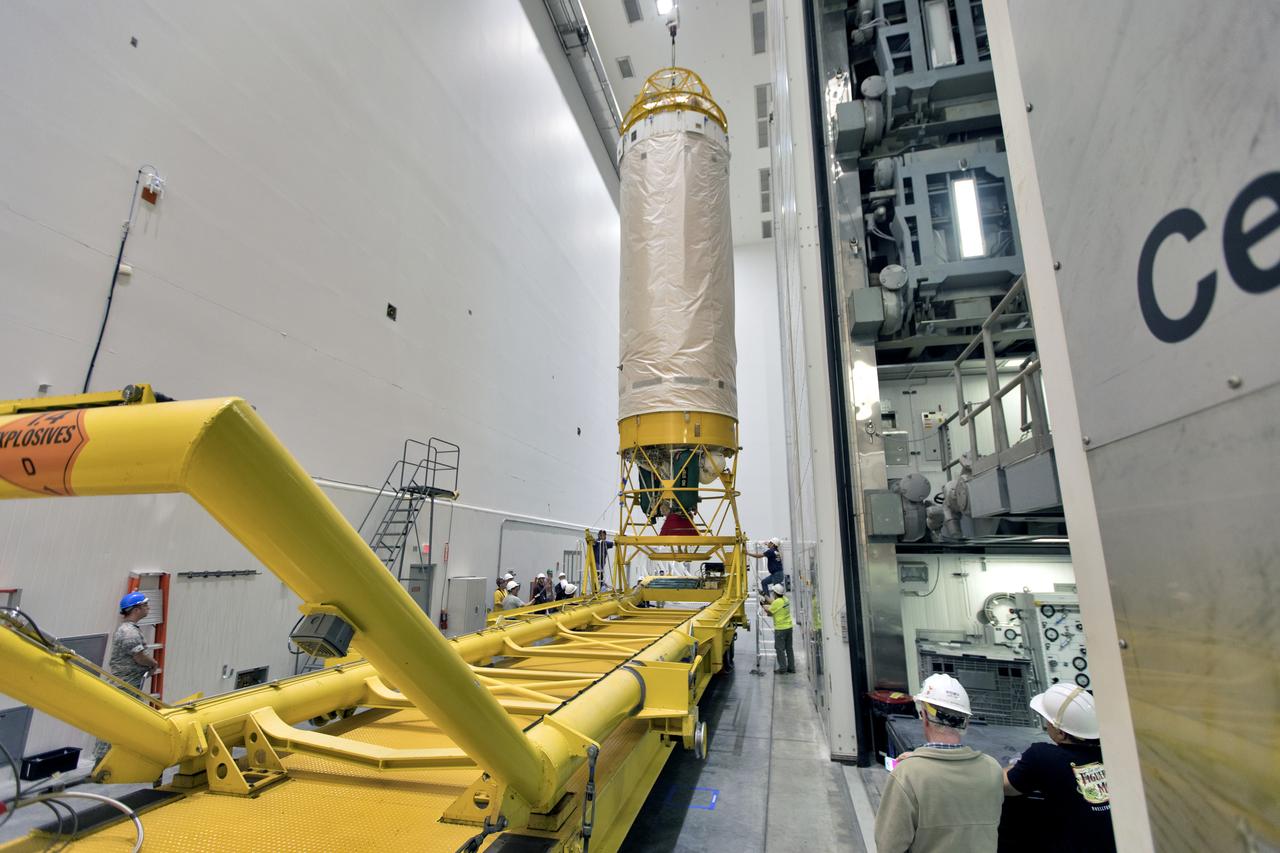
The Centaur upper stage that will help launch NOAA's Geostationary Operational Environmental Satellite-S, or GOES-S, has been lifted from its transporter inside the Delta Operations Center at Cape Canaveral Air Force Station for further processing. GOES-S is the second in a series of four advanced geostationary weather satellites. The GOES-R series - consisting of the GOES-R, GOES-S, GOES-T and GOES-U spacecraft - will significantly improve the detection and observation of environmental phenomena that directly affect public safety, protection of property and the nation's economic health and prosperity. GOES-S is slated to launch March 1, 2018 aboard a United Launch Alliance Atlas V rocket.
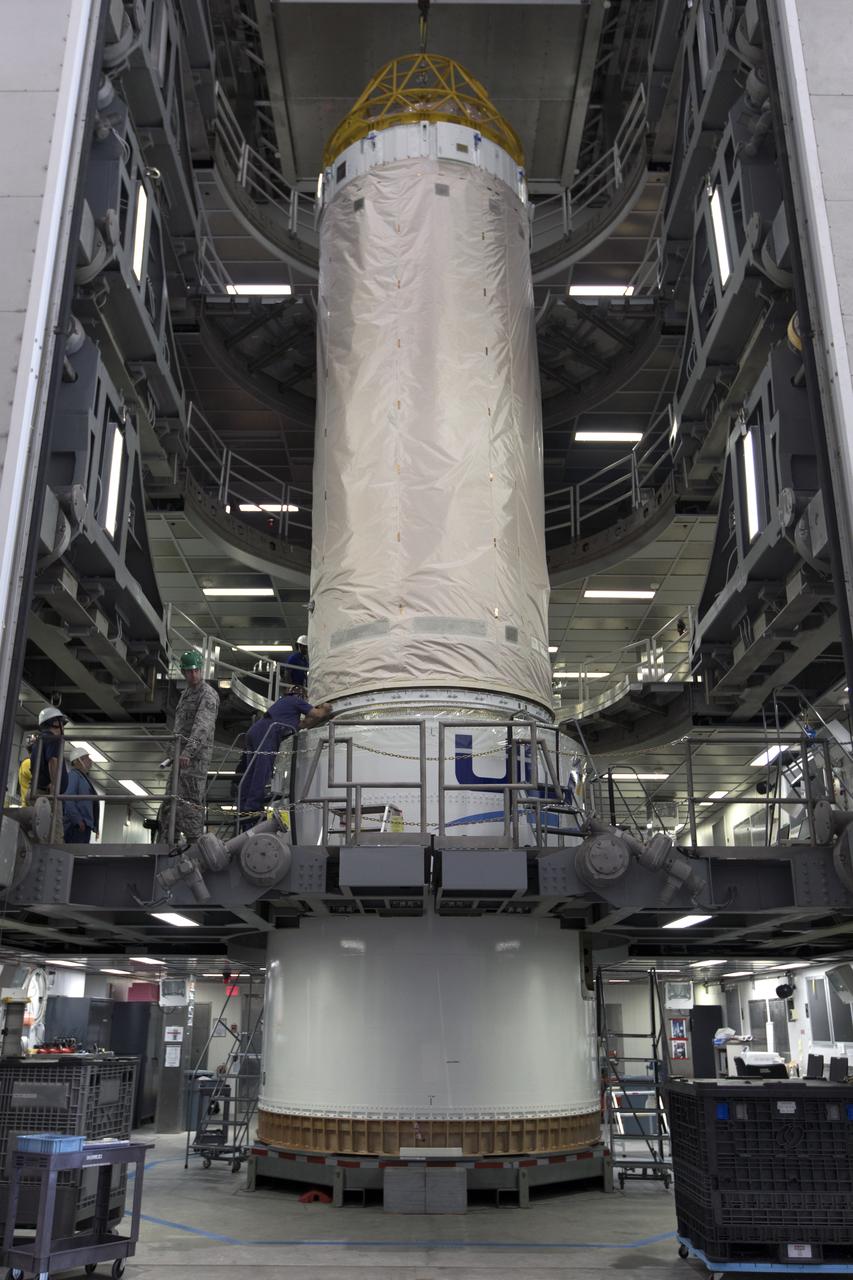
The Centaur upper stage that will help launch NOAA's Geostationary Operational Environmental Satellite-S, or GOES-S, has been positioned in at test cell inside the Delta Operations Center at Cape Canaveral Air Force Station for further processing. GOES-S is the second in a series of four advanced geostationary weather satellites. The GOES-R series - consisting of the GOES-R, GOES-S, GOES-T and GOES-U spacecraft - will significantly improve the detection and observation of environmental phenomena that directly affect public safety, protection of property and the nation's economic health and prosperity. GOES-S is slated to launch March 1, 2018 aboard a United Launch Alliance Atlas V rocket.
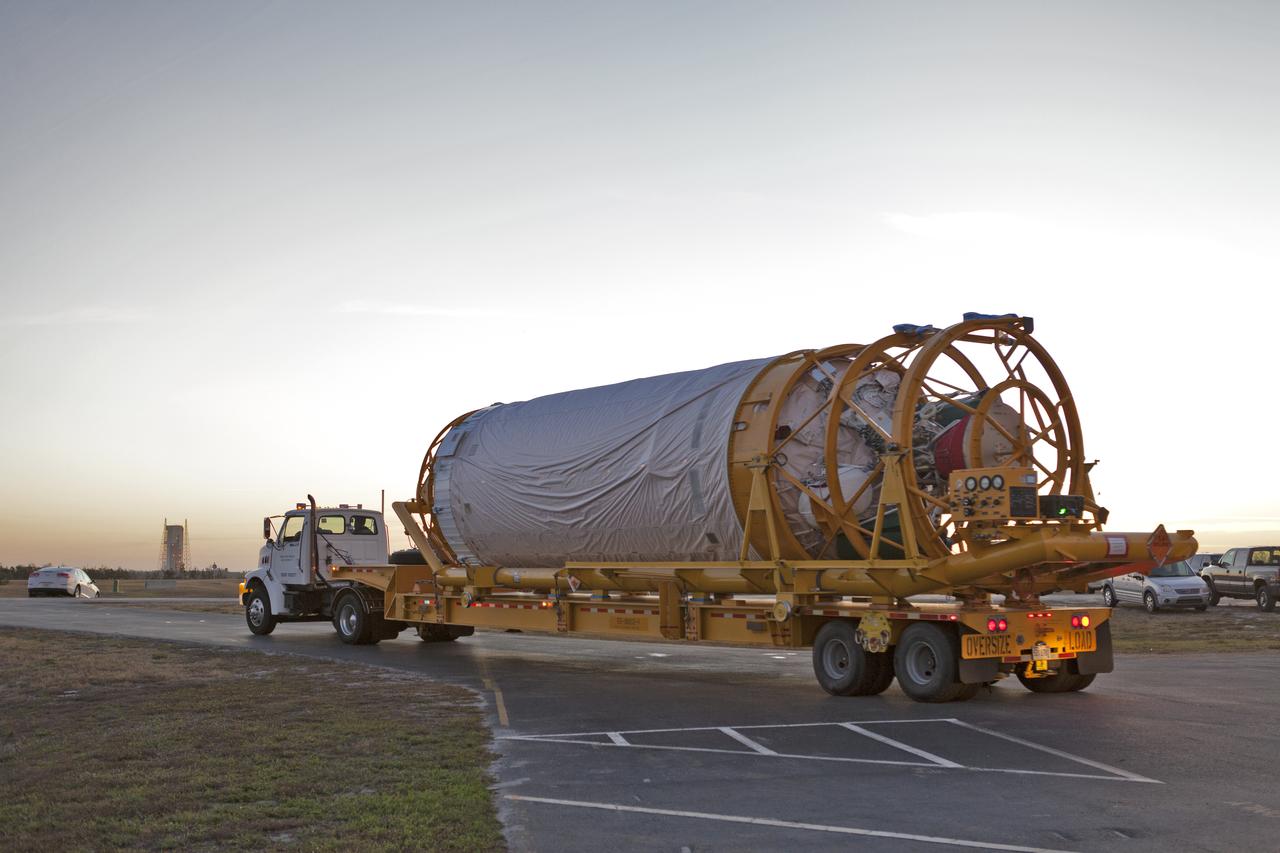
The Centaur upper stage that will help launch NOAA's Geostationary Operational Environmental Satellite-S, or GOES-S, is being transported to the Delta Operations Center at Cape Canaveral Air Force Station for further processing. GOES-S is the second in a series of four advanced geostationary weather satellites. The GOES-R series - consisting of the GOES-R, GOES-S, GOES-T and GOES-U spacecraft - will significantly improve the detection and observation of environmental phenomena that directly affect public safety, protection of property and the nation's economic health and prosperity. GOES-S is slated to launch March 1, 2018 aboard a United Launch Alliance Atlas V rocket.
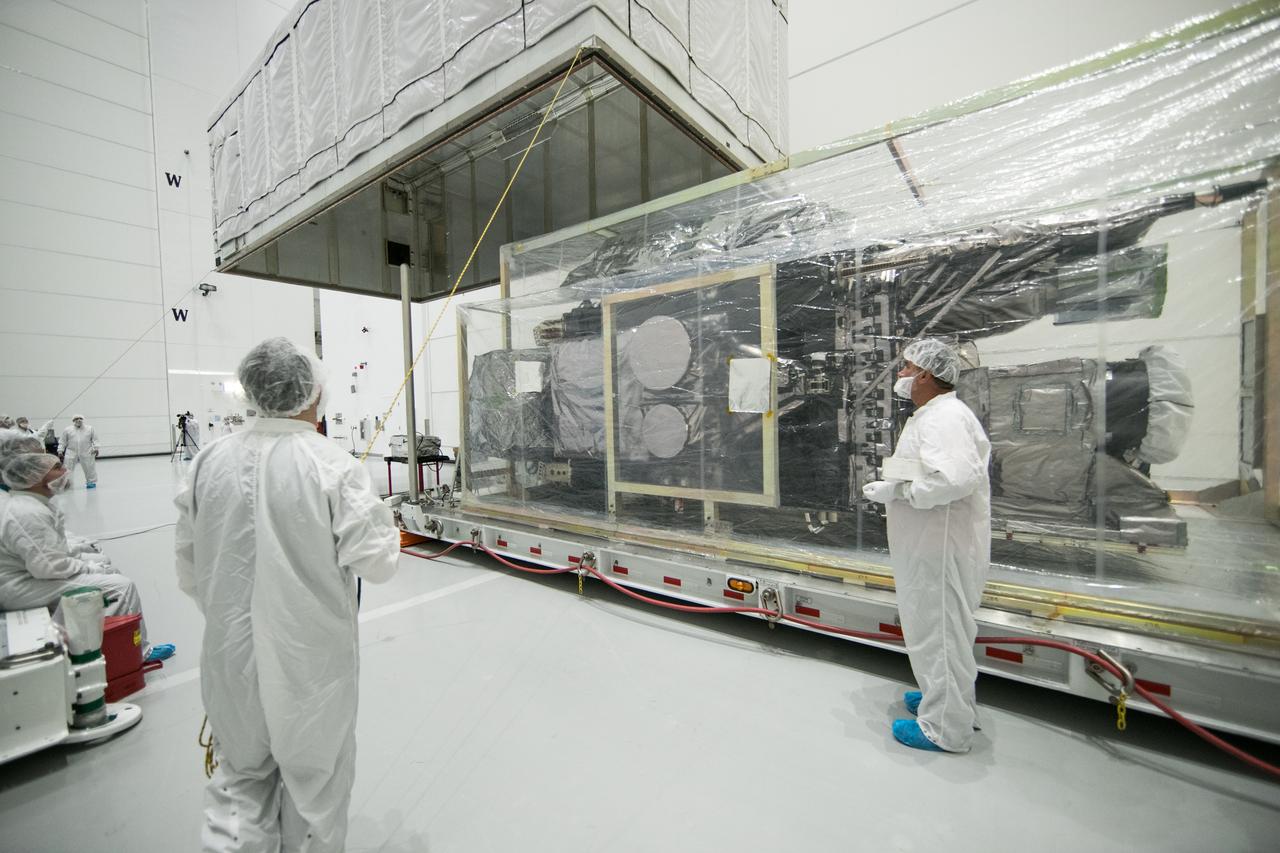
At Astrotech Space Operations in Titusville, Florida, technicians and engineers remove NOAA's Geostationary Operation Environmental Satellite-S (GOES-S) from its shipping container. GOES-S is the second in a series of four advanced geostationary weather satellites. The GOES-R series - consisting of the GOES-R, GOES-S, GOES-T and GOES-U spacecraft - will significantly improve the detection and observation of environmental phenomena that directly affect public safety, protection of property and the nation's economic health and prosperity. GOES-S is slated to launch March 1, 2018 aboard a United Launch Alliance Atlas V rocket from Cape Canaveral Air Force Station in Florida.
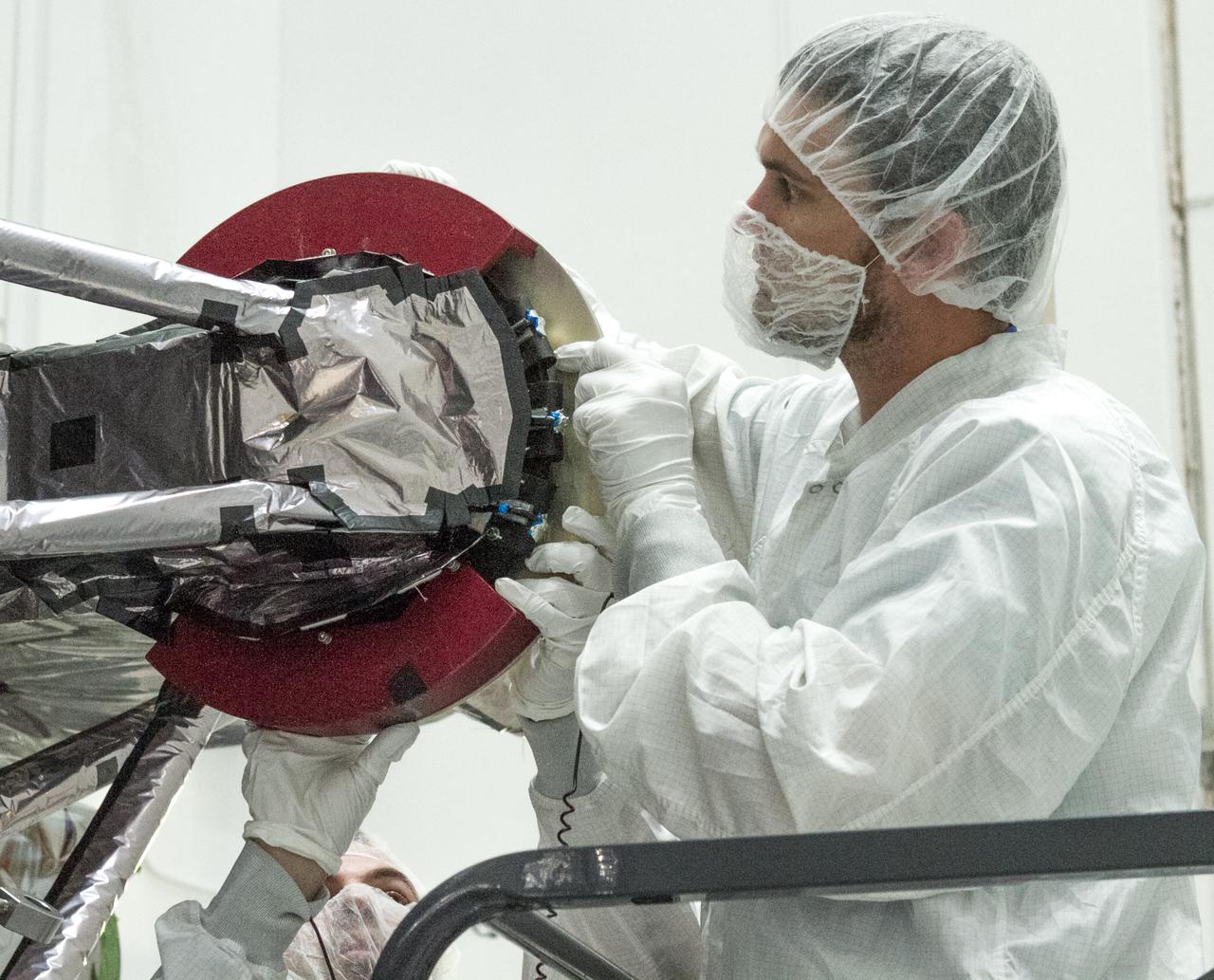
At Astrotech Space Operations in Titusville, Florida, technicians and engineers inspect NOAA's Geostationary Operation Environmental Satellite-S (GOES-S) after removal from its shipping container. GOES-S is the second in a series of four advanced geostationary weather satellites. The GOES-R series - consisting of the GOES-R, GOES-S, GOES-T and GOES-U spacecraft - will significantly improve the detection and observation of environmental phenomena that directly affect public safety, protection of property and the nation's economic health and prosperity. GOES-S is slated to launch March 1, 2018 aboard a United Launch Alliance Atlas V rocket from Cape Canaveral Air Force Station in Florida.
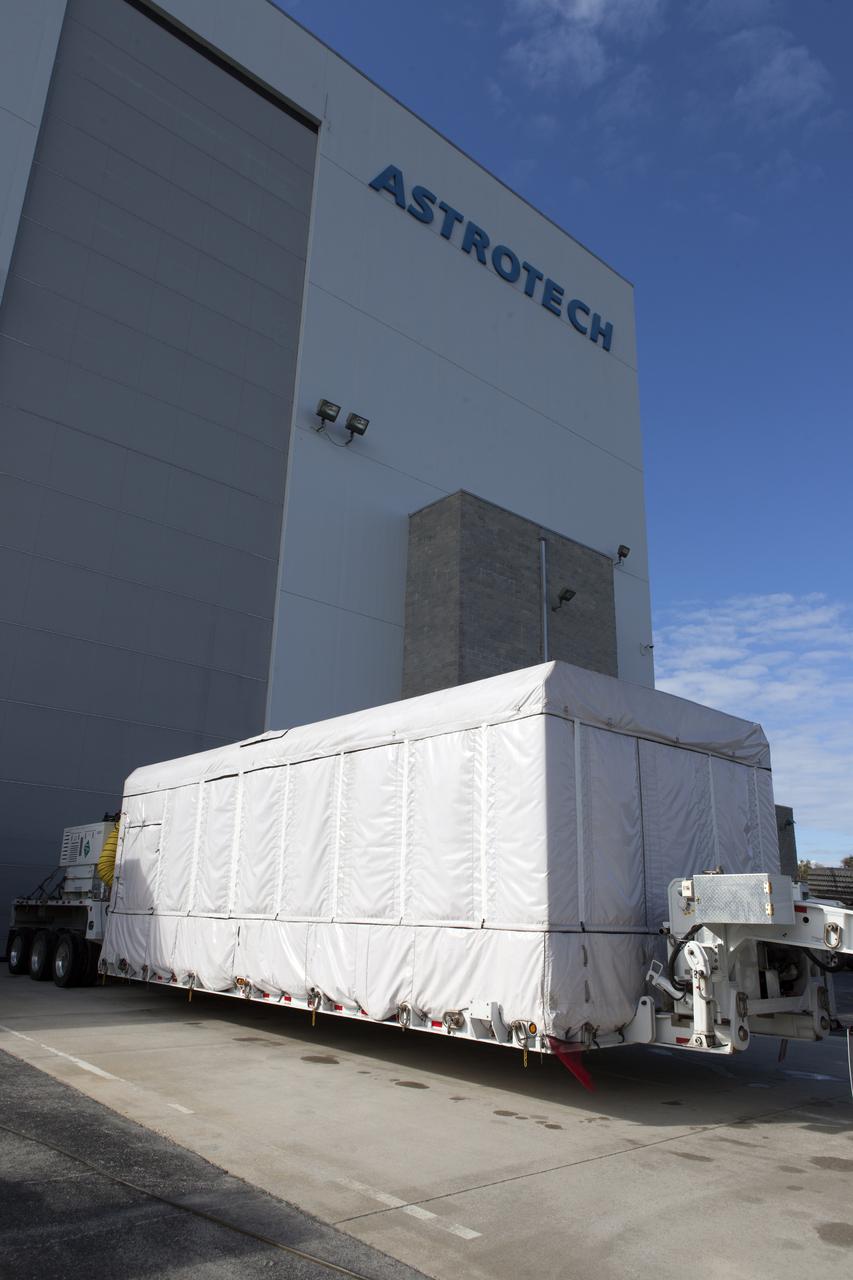
NOAA's Geostationary Operation Environmental Satellite-S (GOES-S) arrives at Astrotech Space Operations in Titusville, Florida, to prepare it for launch. The facility is located near NASA's Kennedy Space Center. GOES-S is the second in a series of four advanced geostationary weather satellites. The GOES-R series - consisting of the GOES-R, GOES-S, GOES-T and GOES-U spacecraft - will significantly improve the detection and observation of environmental phenomena that directly affect public safety, protection of property and the nation's economic health and prosperity. GOES-S is slated to launch March 1, 2018 aboard a United Launch Alliance Atlas V rocket from Cape Canaveral Air Force Station in Florida.
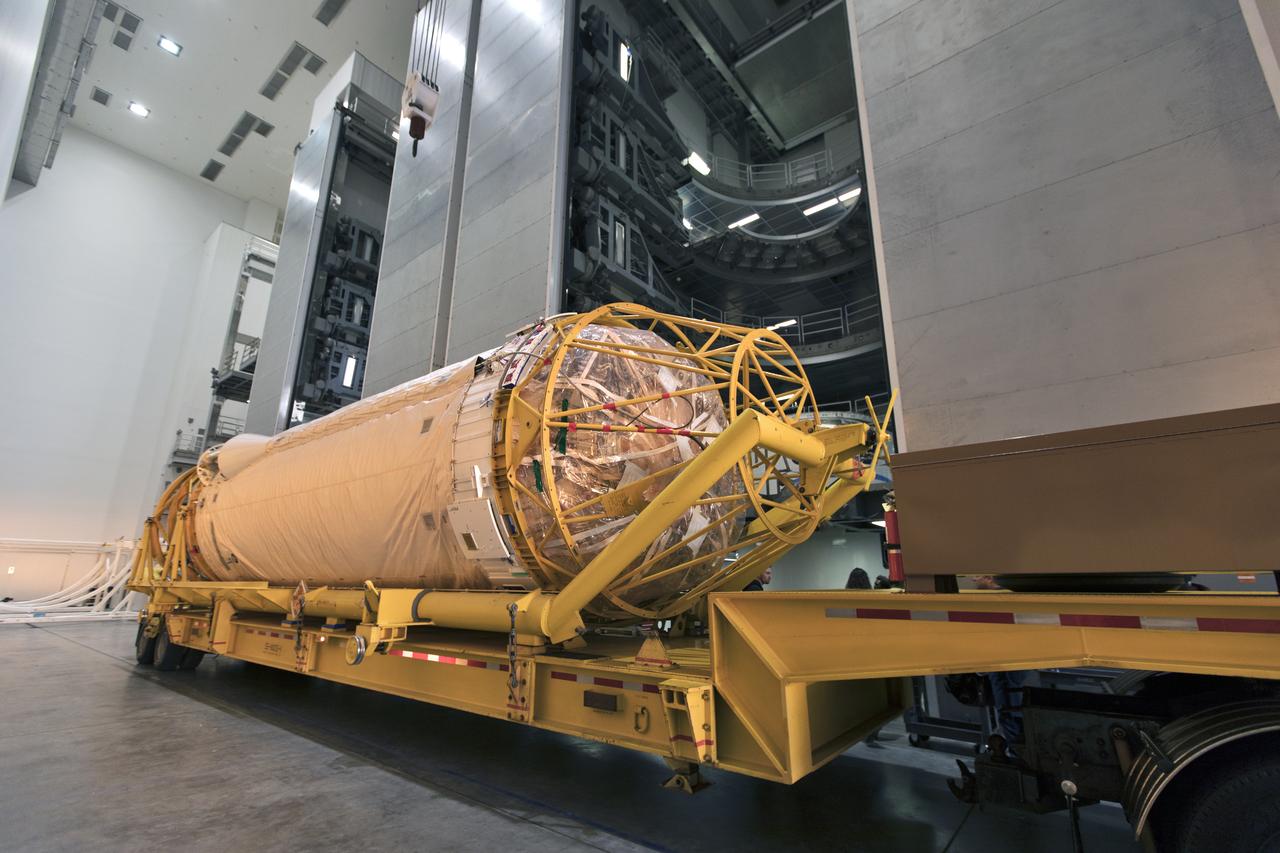
The Centaur upper stage that will help launch NOAA's Geostationary Operational Environmental Satellite-S, or GOES-S, arrives inside the Delta Operations Center at Cape Canaveral Air Force Station for further processing. GOES-S is the second in a series of four advanced geostationary weather satellites. The GOES-R series - consisting of the GOES-R, GOES-S, GOES-T and GOES-U spacecraft - will significantly improve the detection and observation of environmental phenomena that directly affect public safety, protection of property and the nation's economic health and prosperity. GOES-S is slated to launch March 1, 2018 aboard a United Launch Alliance Atlas V rocket.
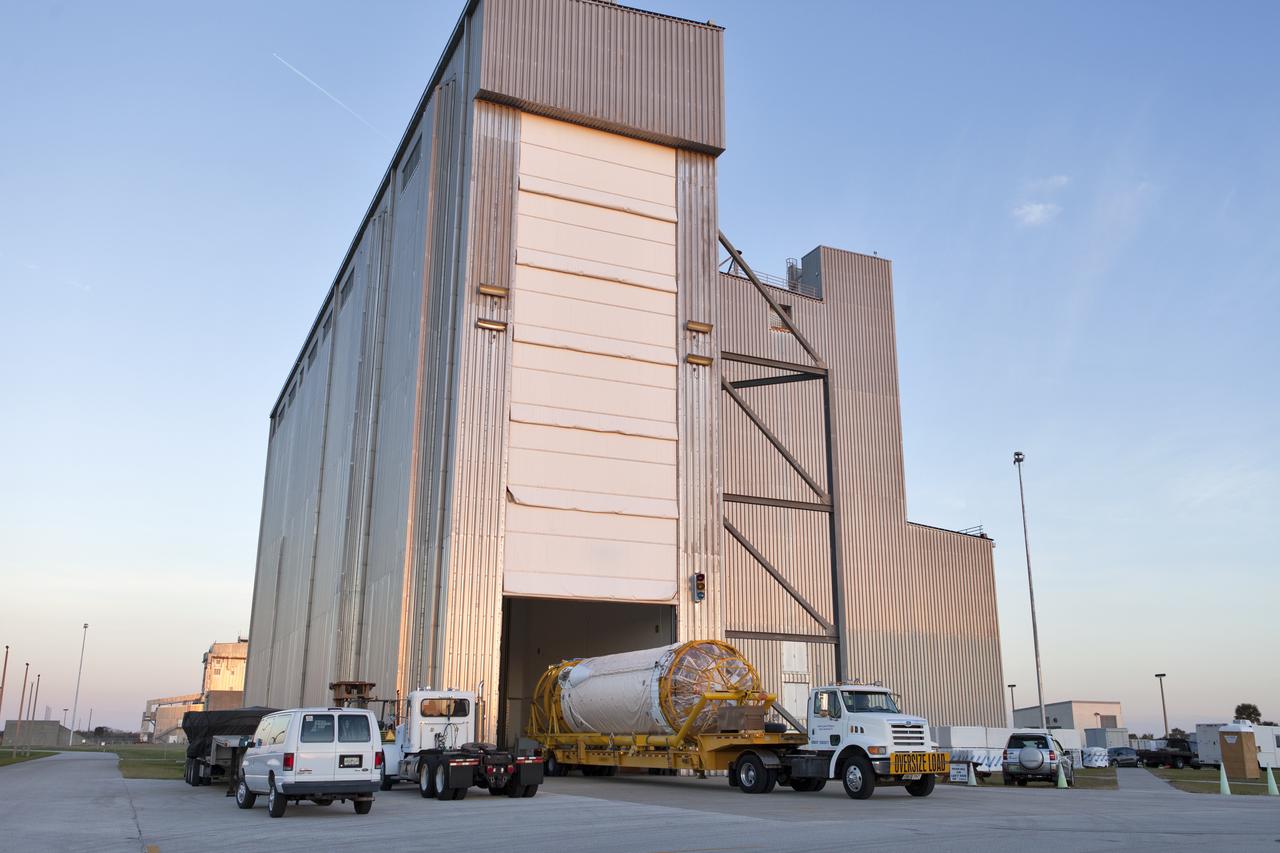
The Centaur upper stage that will help launch NOAA's Geostationary Operational Environmental Satellite-S, or GOES-S, arrives at the Delta Operations Center at Cape Canaveral Air Force Station for further processing. GOES-S is the second in a series of four advanced geostationary weather satellites. The GOES-R series - consisting of the GOES-R, GOES-S, GOES-T and GOES-U spacecraft - will significantly improve the detection and observation of environmental phenomena that directly affect public safety, protection of property and the nation's economic health and prosperity. GOES-S is slated to launch March 1, 2018 aboard a United Launch Alliance Atlas V rocket.
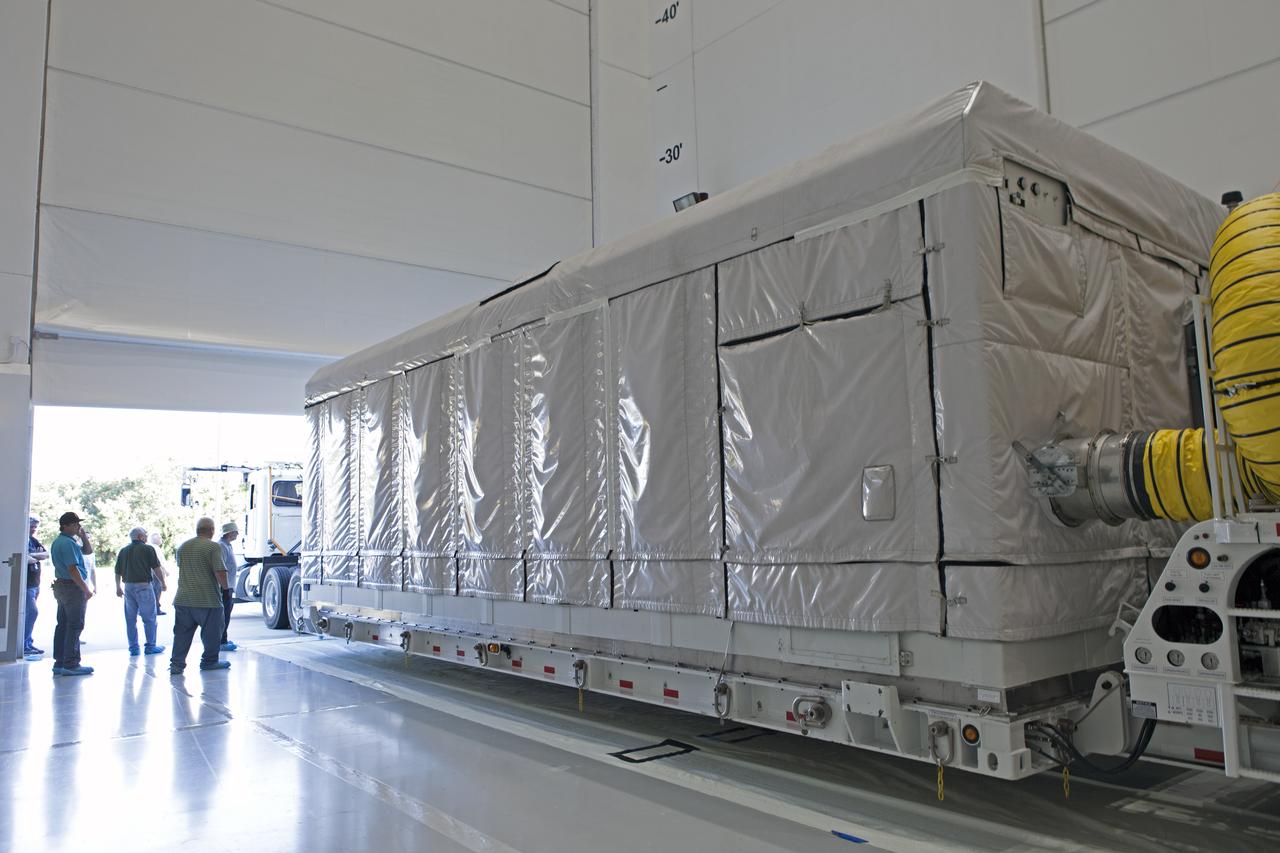
NOAA's Geostationary Operation Environmental Satellite-S (GOES-S) arrives at Astrotech Space Operations in Titusville, Florida, to prepare it for launch. The facility is located near NASA's Kennedy Space Center. GOES-S is the second in a series of four advanced geostationary weather satellites. The GOES-R series - consisting of the GOES-R, GOES-S, GOES-T and GOES-U spacecraft - will significantly improve the detection and observation of environmental phenomena that directly affect public safety, protection of property and the nation's economic health and prosperity. GOES-S is slated to launch March 1, 2018 aboard a United Launch Alliance Atlas V rocket from Cape Canaveral Air Force Station in Florida.
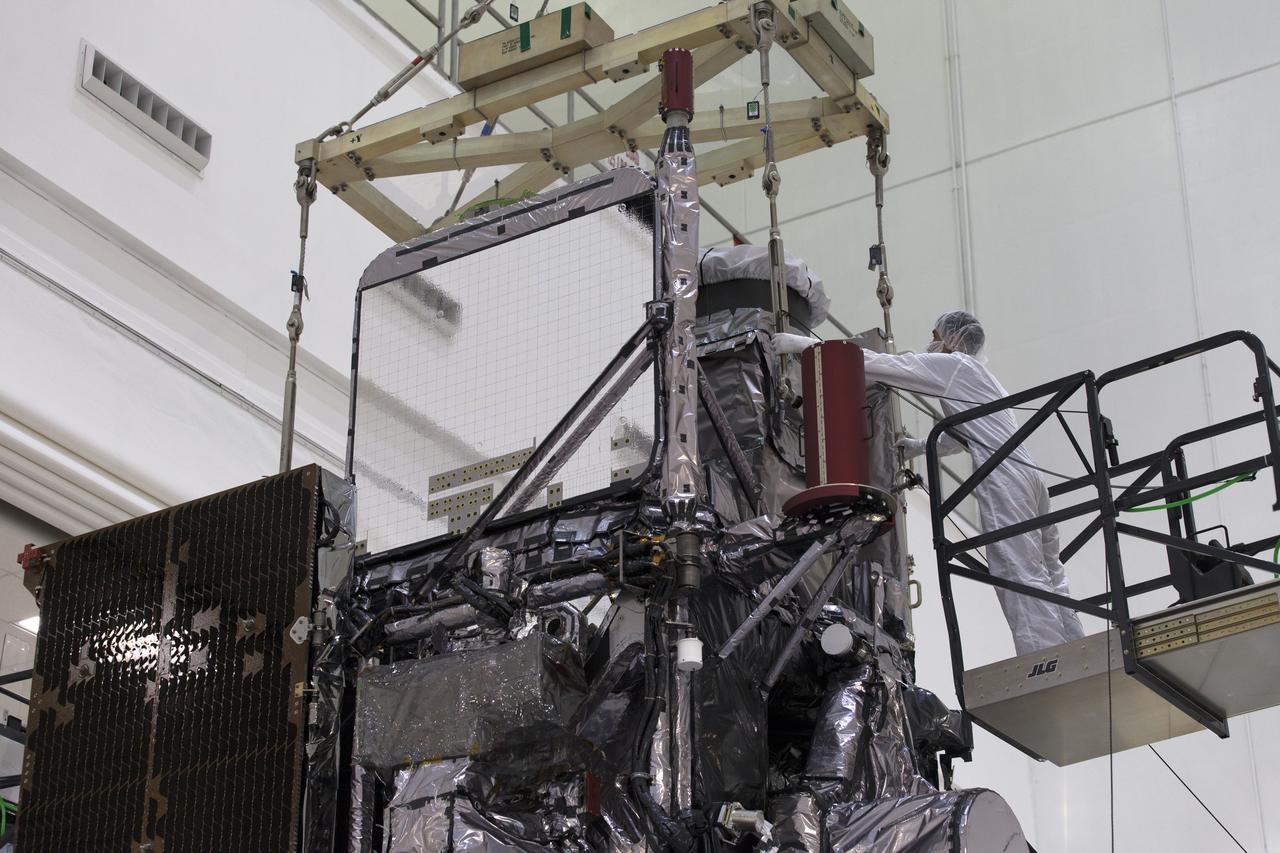
At Astrotech Space Operations in Titusville, Florida, a technician inspects NOAA's Geostationary Operational Environmental Satellite-S (GOES-S). The facility is located near NASA's Kennedy Space Center. GOES-S is the second in a series of four advanced geostationary weather satellites. The GOES-R series - consisting of the GOES-R, GOES-S, GOES-T and GOES-U spacecraft - will significantly improve the detection and observation of environmental phenomena that directly affect public safety, protection of property and the nation's economic health and prosperity. GOES-S is slated to launch March 1, 2018 aboard a United Launch Alliance Atlas V rocket from Cape Canaveral Air Force Station in Florida.
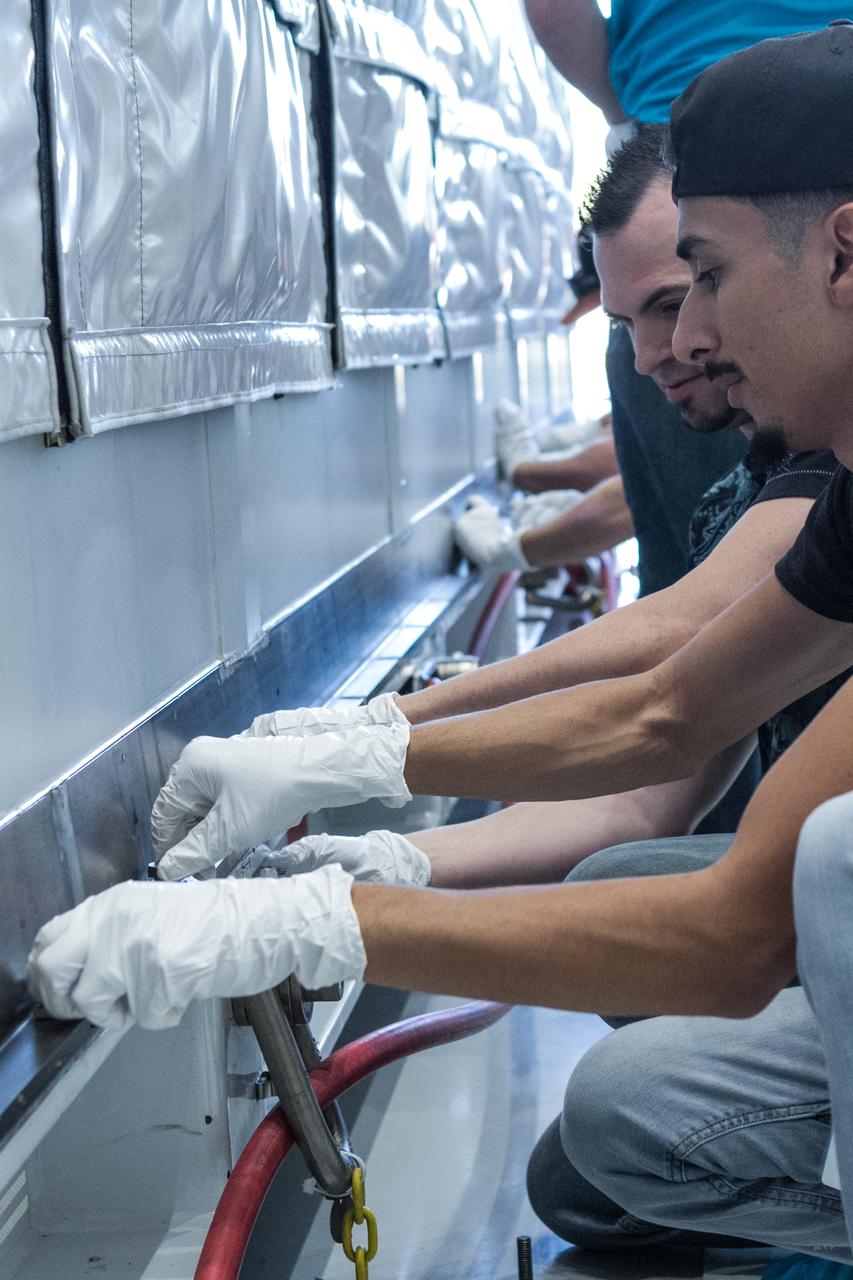
At Astrotech Space Operations in Titusville, Florida, technicians and engineers prepare to remove NOAA's Geostationary Operation Environmental Satellite-S (GOES-S) from its shipping container. GOES-S is the second in a series of four advanced geostationary weather satellites. The GOES-R series - consisting of the GOES-R, GOES-S, GOES-T and GOES-U spacecraft - will significantly improve the detection and observation of environmental phenomena that directly affect public safety, protection of property and the nation's economic health and prosperity. GOES-S is slated to launch March 1, 2018 aboard a United Launch Alliance Atlas V rocket from Cape Canaveral Air Force Station in Florida.
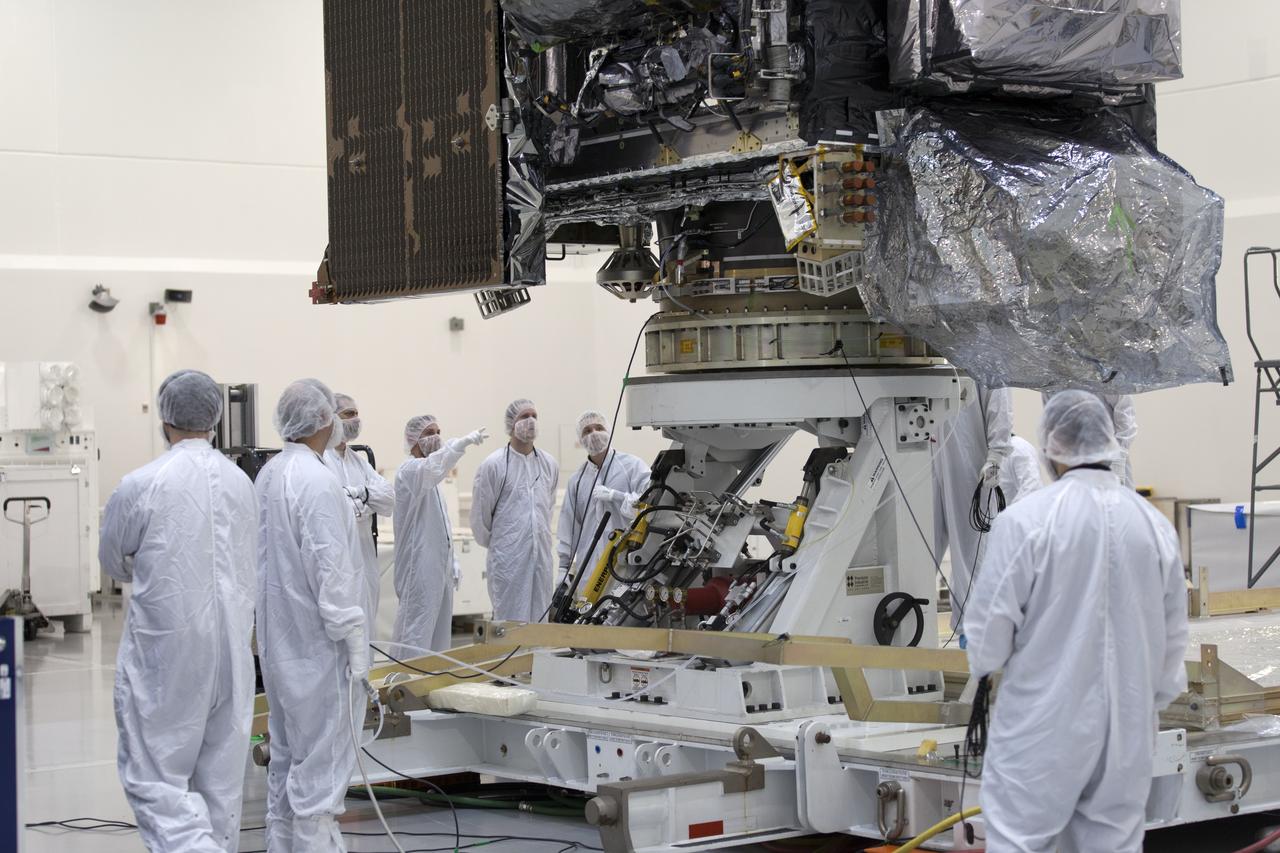
At Astrotech Space Operations in Titusville, Florida, technicians and engineers inspect NOAA's Geostationary Operational Environmental Satellite-S (GOES-S). The facility is located near NASA's Kennedy Space Center. GOES-S is the second in a series of four advanced geostationary weather satellites. The GOES-R series - consisting of the GOES-R, GOES-S, GOES-T and GOES-U spacecraft - will significantly improve the detection and observation of environmental phenomena that directly affect public safety, protection of property and the nation's economic health and prosperity. GOES-S is slated to launch March 1, 2018 aboard a United Launch Alliance Atlas V rocket from Cape Canaveral Air Force Station in Florida.
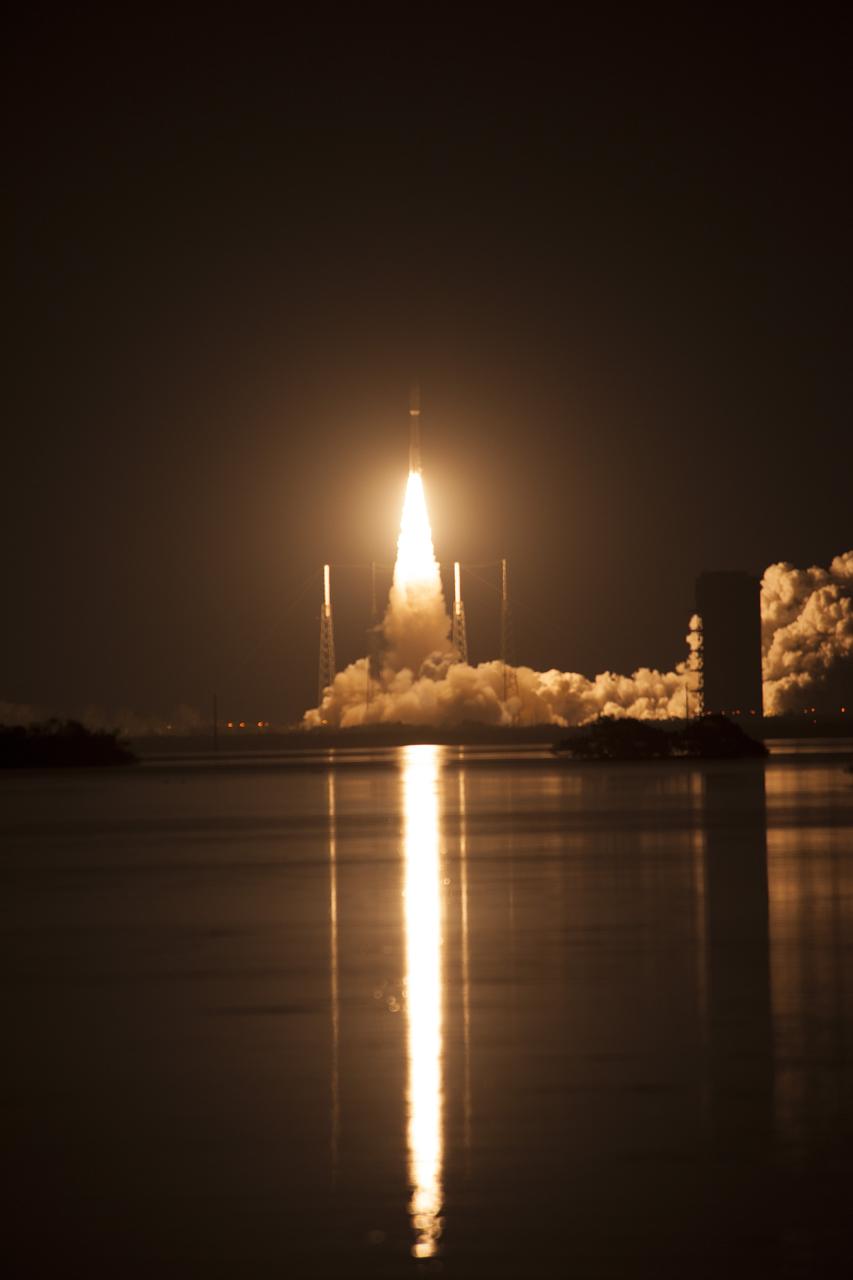
At Cape Canaveral Air Force Station's Space Launch Complex 41, an Atlas V rocket with NOAA's Geostationary Operational Environmental Satellite, or GOES-R, lifts off at 6:42 p.m. EST. GOES-R is the first satellite in a series of next-generation GOES satellites for NOAA, the National Oceanographic and Atmospheric Administration. It will launch to a geostationary orbit over the western hemisphere to provide images of storms and help meteorologists predict severe weather conditionals and develop long-range forecasts.
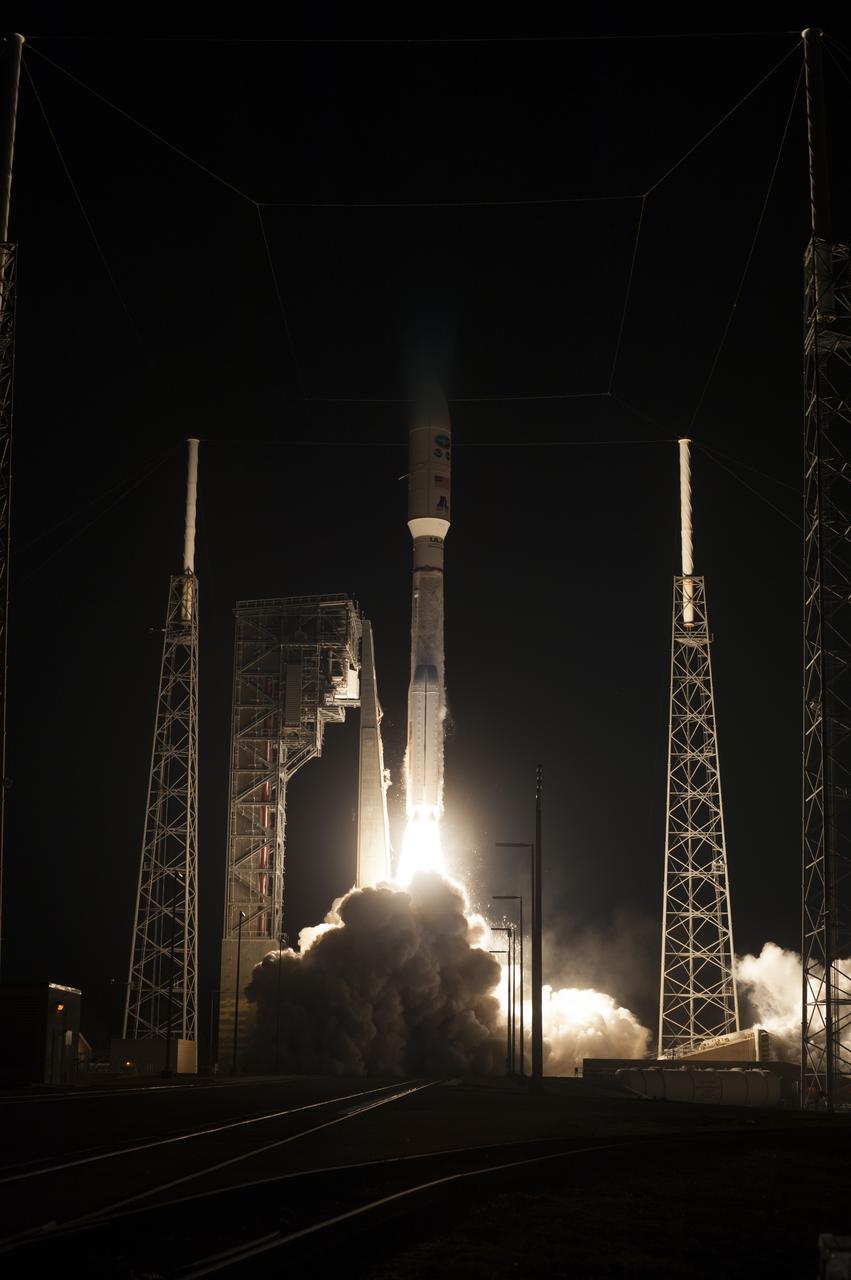
At Cape Canaveral Air Force Station's Space Launch Complex 41, an Atlas V rocket with NOAA's Geostationary Operational Environmental Satellite, or GOES-R, lifts off at 6:42 p.m. EST. GOES-R is the first satellite in a series of next-generation GOES satellites for NOAA, the National Oceanographic and Atmospheric Administration. It will launch to a geostationary orbit over the western hemisphere to provide images of storms and help meteorologists predict severe weather conditionals and develop long-range forecasts.
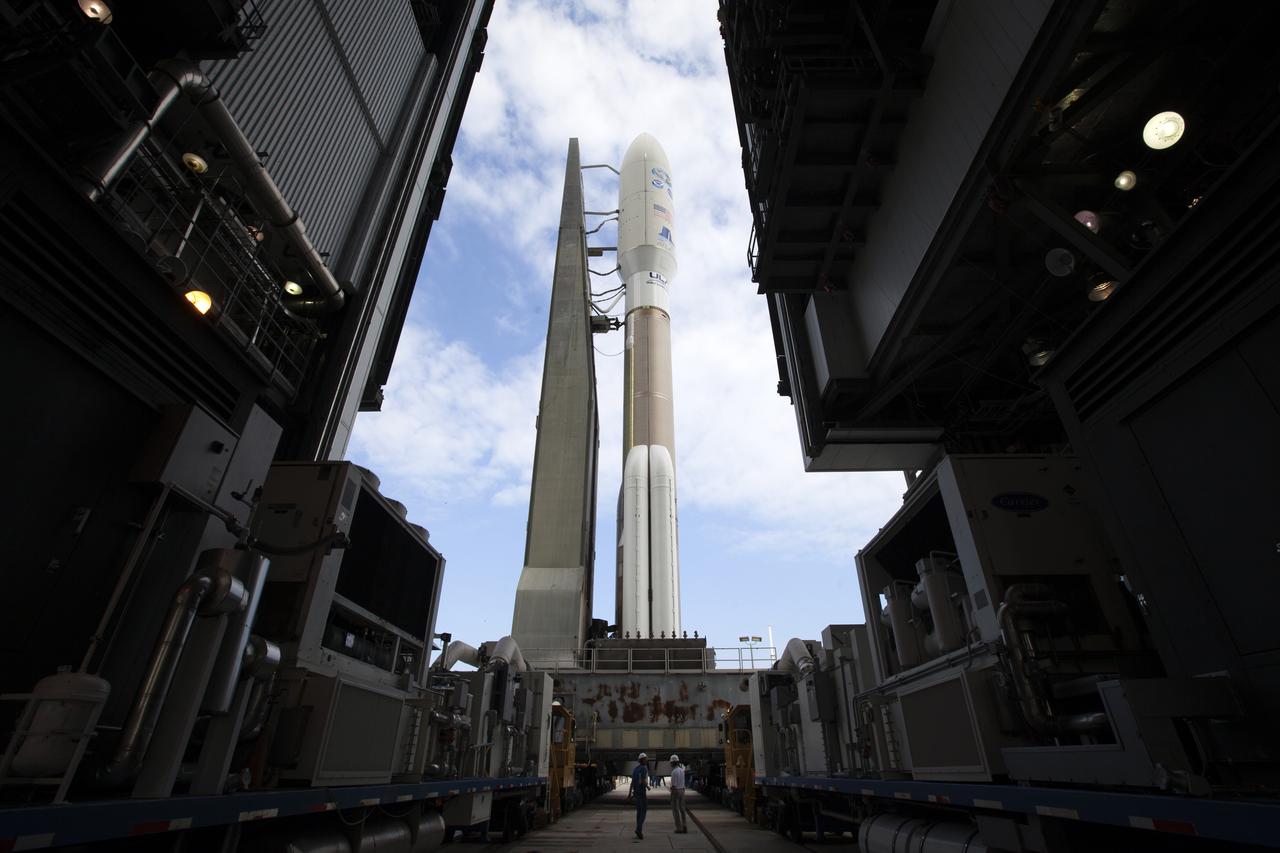
With blue sky in the background, a United Launch Alliance Atlas V rocket begins its rollout from the Vehicle Integration Facility to Space Launch Complex 41 at Cape Canaveral Air Force Station in Florida. The launch vehicle will send the Geostationary Operational Environmental Satellite (GOES-R) to a geostationary position over the U.S. GOES-R is the first satellite in a series of next-generation NOAA GOES satellites.
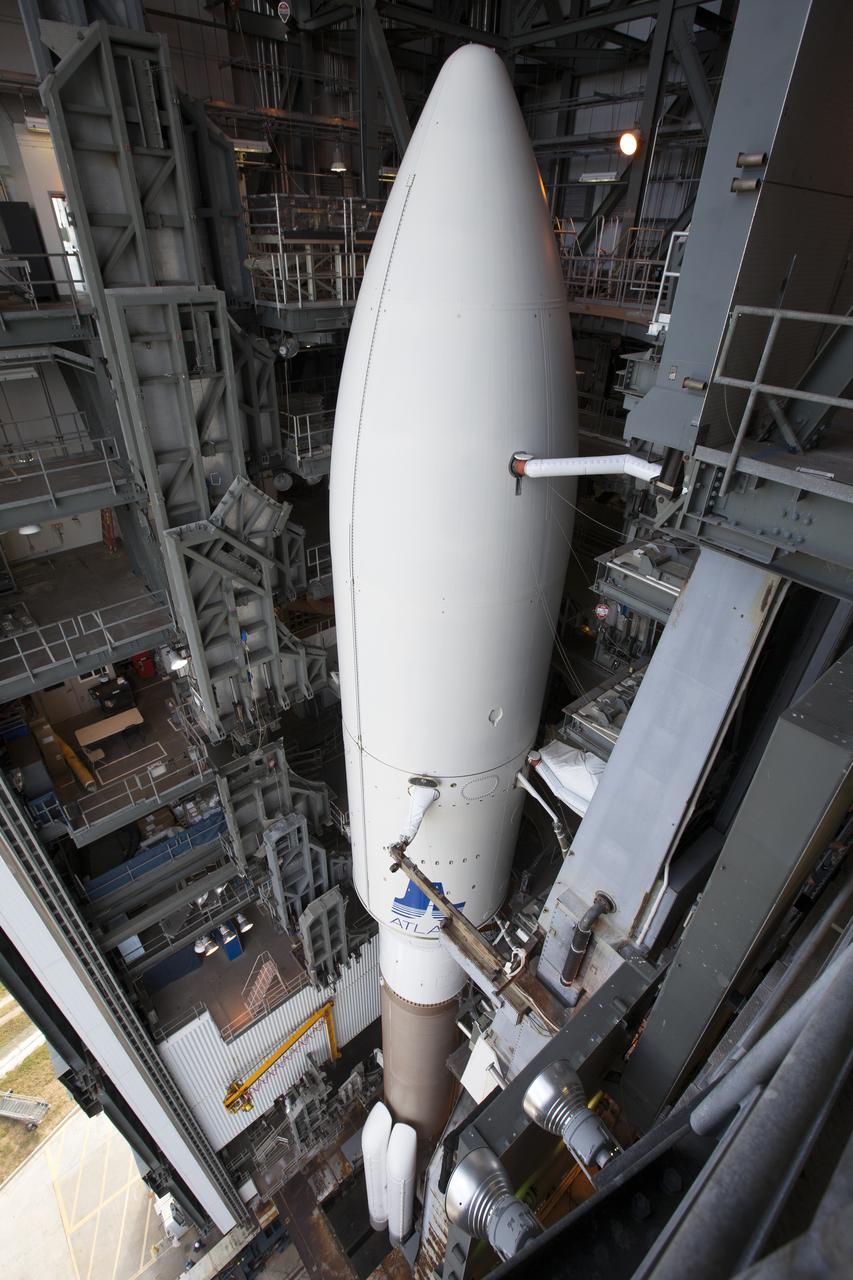
A United Launch Alliance Atlas V rocket is ready to roll out from the Vehicle Integration Facility to Space Launch Complex 41 at Cape Canaveral Air Force Station in Florida. The launch vehicle will send the Geostationary Operational Environmental Satellite (GOES-R) to a geostationary position over the U.S. GOES-R is the first satellite in a series of next-generation NOAA GOES satellites.

During the countdown for the launch of NOAA's Geostationary Operational Environmental Satellite, or GOES-R, Stephanie Martin of NASA Communications, left, interviews Al Roker, weather forecaster on NBC's "Today Show." GOES-R is the first satellite in a series of next-generation GOES satellites for NOAA, the National Oceanographic and Atmospheric Administration. It will launch to a geostationary orbit over the western hemisphere to provide images of storms and help meteorologists predict severe weather conditionals and develop long-range forecasts.

At Cape Canaveral Air Force Station's Space Launch Complex 41, an Atlas V rocket with NOAA's Geostationary Operational Environmental Satellite, or GOES-R, lifts off at 6:42 p.m. EST. GOES-R is the first satellite in a series of next-generation GOES satellites for NOAA, the National Oceanographic and Atmospheric Administration. It will launch to a geostationary orbit over the western hemisphere to provide images of storms and help meteorologists predict severe weather conditionals and develop long-range forecasts.

In the Kennedy Space Center's Press Site auditorium, Sean Potter of NASA Communications, moderates a mission briefing on the Geostationary Operational Environmental Satellite (GOES-R). GOES-R is the first satellite in a series of next-generation GOES satellites for NOAA, the National Oceanographic and Atmospheric Administration. It will launch to a geostationary orbit over the western hemisphere to provide images of storms and help meteorologists predict severe weather conditionals and develop long-range forecasts.
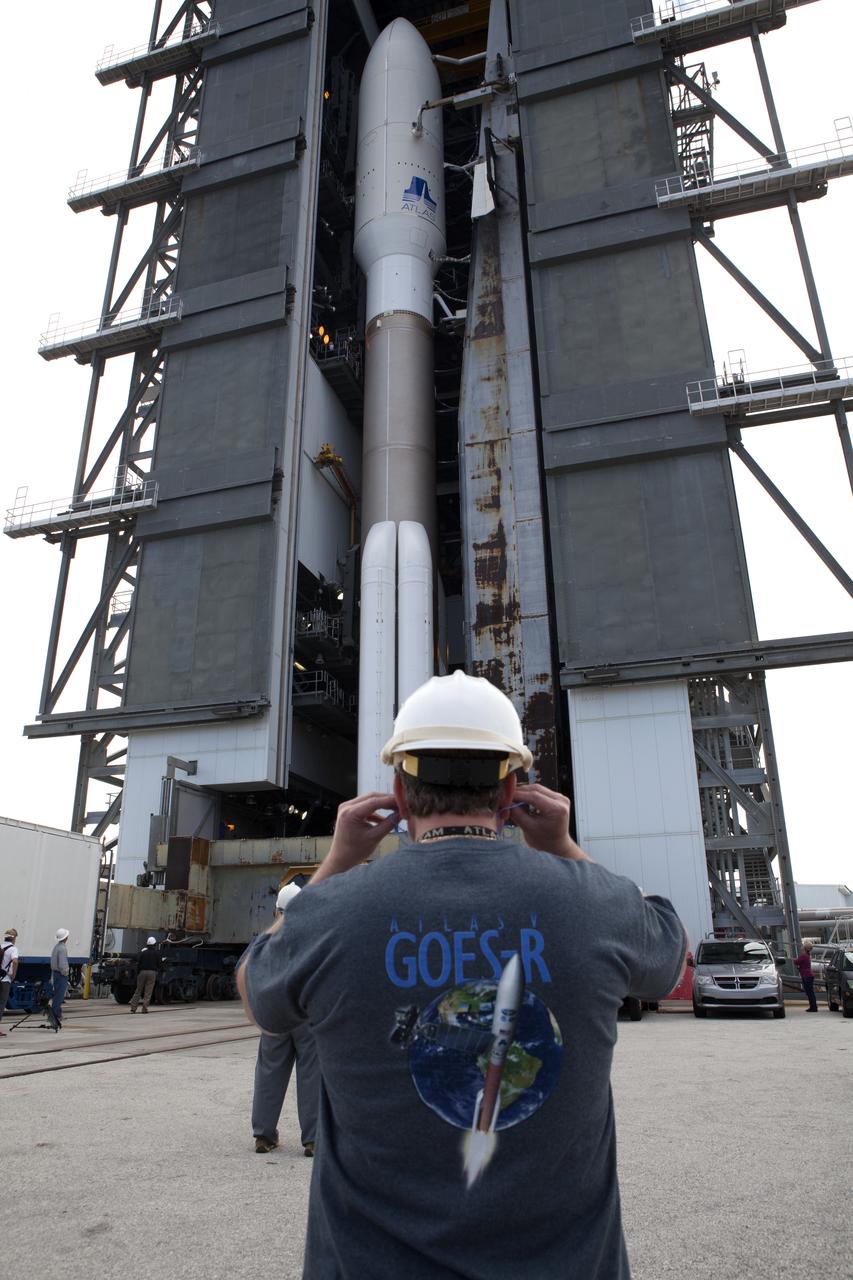
A United Launch Alliance Atlas V rocket is ready to roll out from the Vehicle Integration Facility to Space Launch Complex 41 at Cape Canaveral Air Force Station in Florida. The launch vehicle will send the Geostationary Operational Environmental Satellite (GOES-R) to a geostationary position over the U.S. GOES-R is the first satellite in a series of next-generation NOAA GOES satellites.
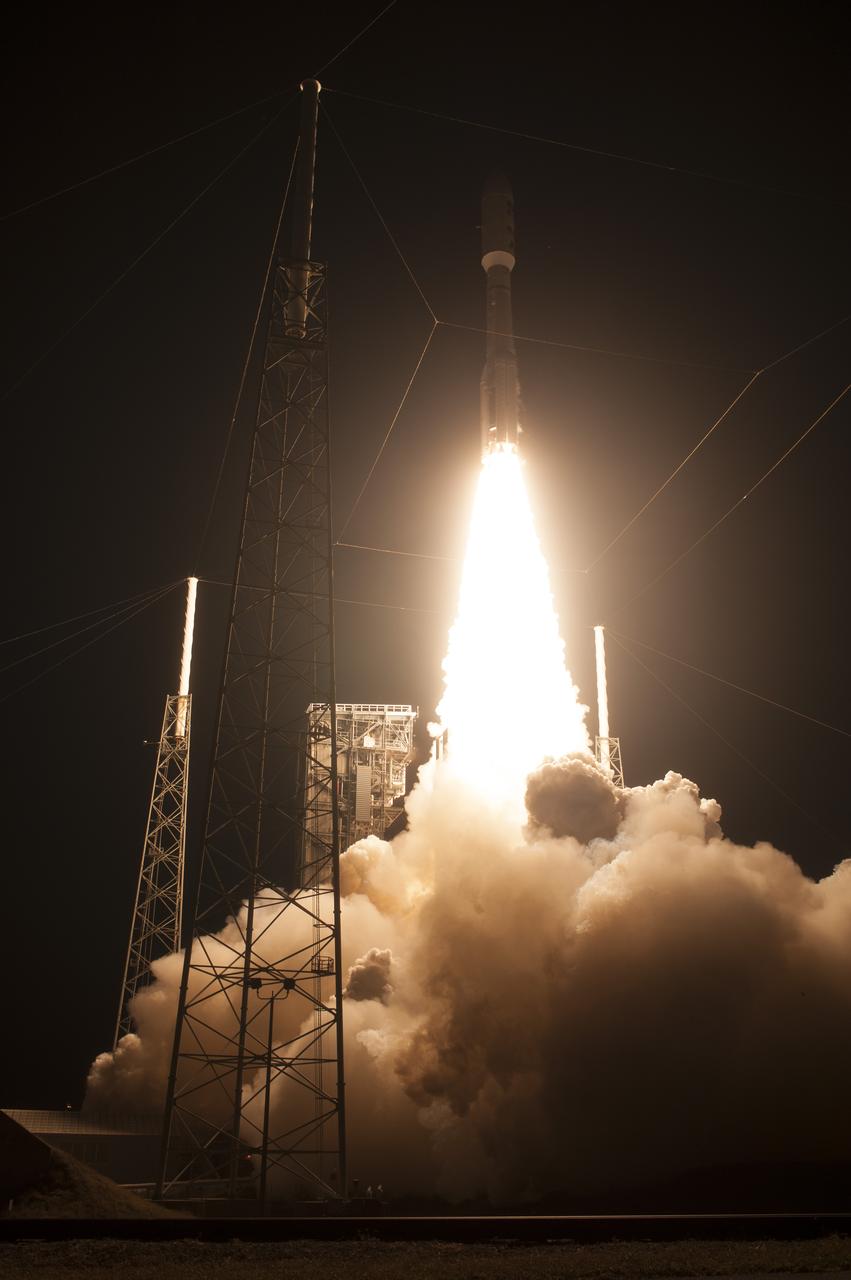
At Cape Canaveral Air Force Station's Space Launch Complex 41, an Atlas V rocket with NOAA's Geostationary Operational Environmental Satellite, or GOES-R, lifts off at 6:42 p.m. EST. GOES-R is the first satellite in a series of next-generation GOES satellites for NOAA, the National Oceanographic and Atmospheric Administration. It will launch to a geostationary orbit over the western hemisphere to provide images of storms and help meteorologists predict severe weather conditionals and develop long-range forecasts.
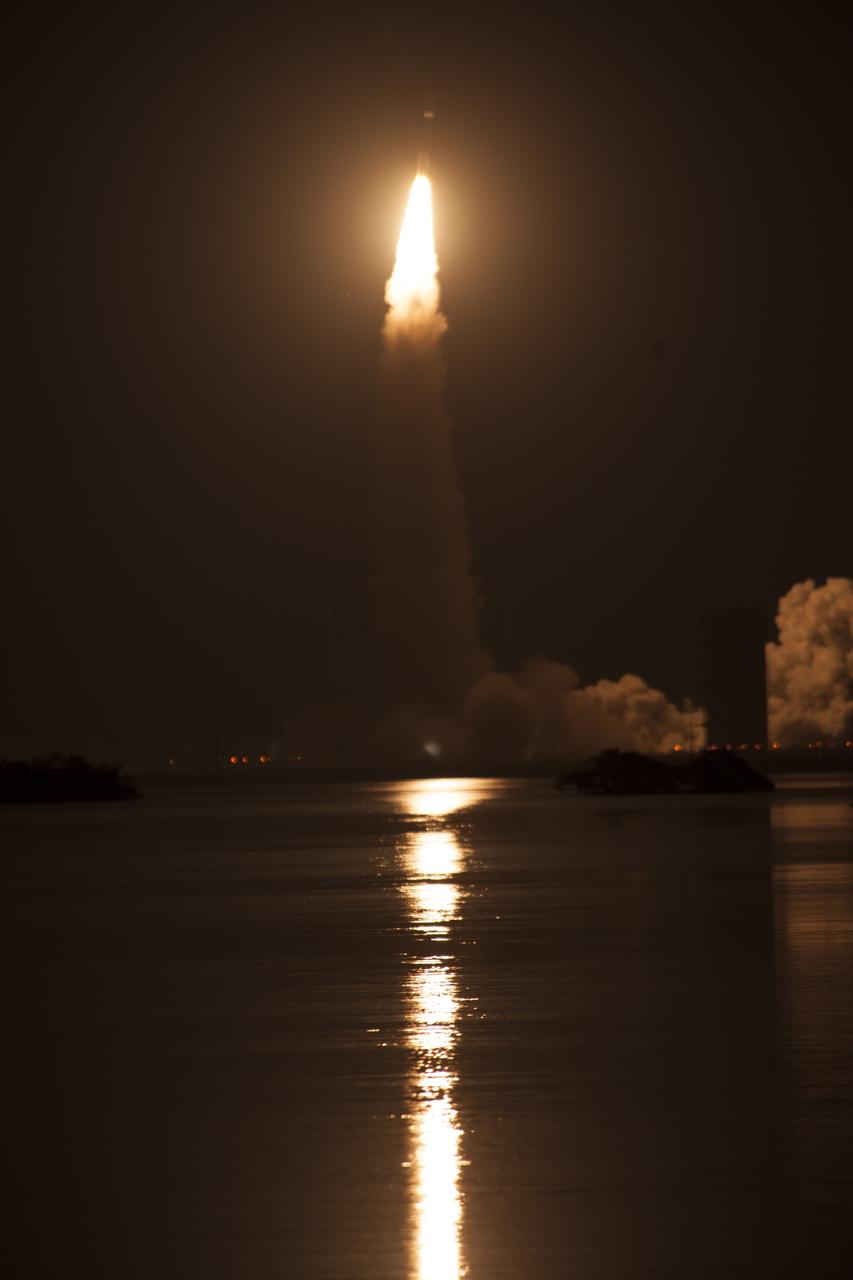
At Cape Canaveral Air Force Station's Space Launch Complex 41, an Atlas V rocket with NOAA's Geostationary Operational Environmental Satellite, or GOES-R, lifts off at 6:42 p.m. EST. GOES-R is the first satellite in a series of next-generation GOES satellites for NOAA, the National Oceanographic and Atmospheric Administration. It will launch to a geostationary orbit over the western hemisphere to provide images of storms and help meteorologists predict severe weather conditionals and develop long-range forecasts.
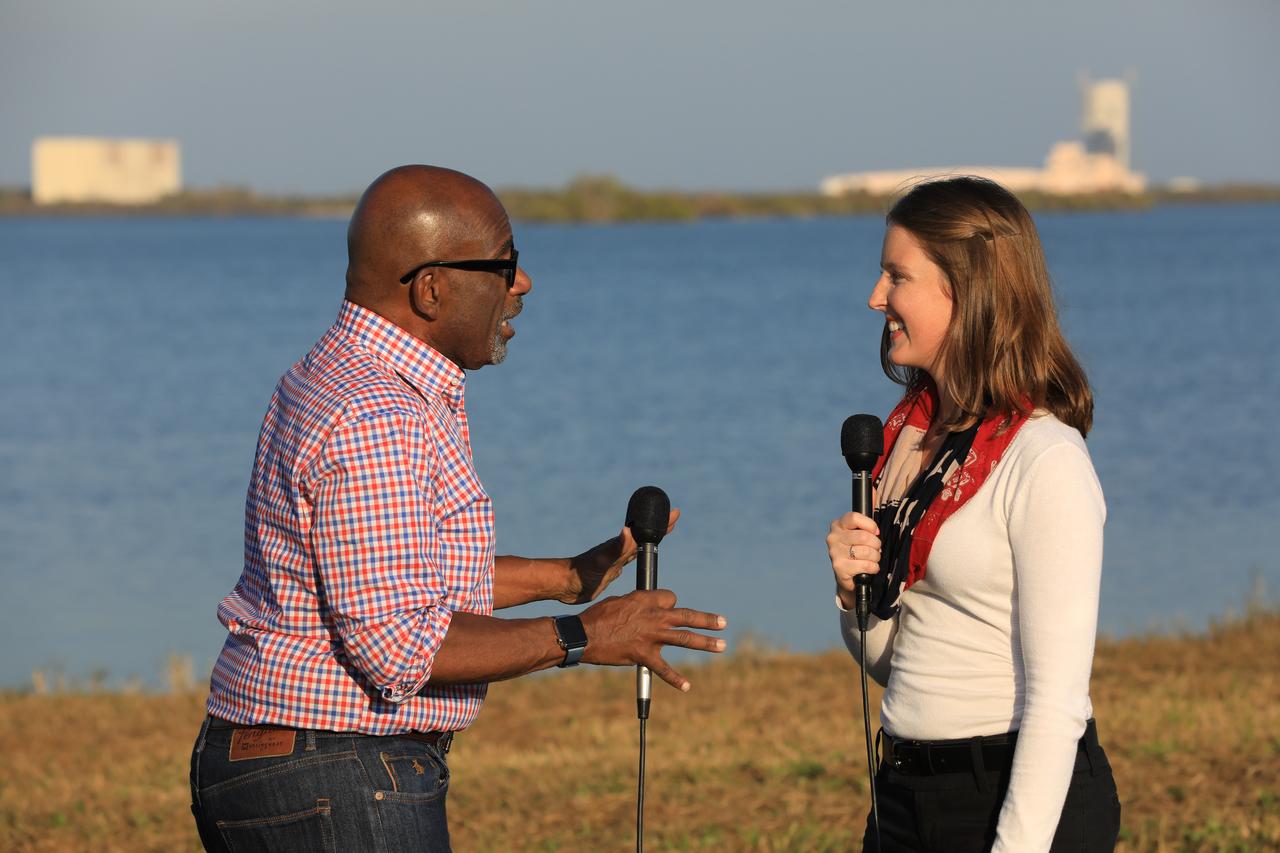
During the countdown for the launch of NOAA's Geostationary Operational Environmental Satellite, or GOES-R, Stephanie Martin of NASA Communications, right, interviews Al Roker, weather forecaster on NBC's "Today Show." GOES-R is the first satellite in a series of next-generation GOES satellites for NOAA, the National Oceanographic and Atmospheric Administration. It will launch to a geostationary orbit over the western hemisphere to provide images of storms and help meteorologists predict severe weather conditionals and develop long-range forecasts.

In the Kennedy Space Center's Press Site auditorium, Damon Penn, assistant administrator for response at the Federal Emergency Management Agency, speaks to the media during a mission briefing on the Geostationary Operational Environmental Satellite (GOES-R). GOES-R is the first satellite in a series of next-generation GOES satellites for NOAA, the National Oceanographic and Atmospheric Administration. It will launch to a geostationary orbit over the western hemisphere to provide images of storms and help meteorologists predict severe weather conditionals and develop long-range forecasts.
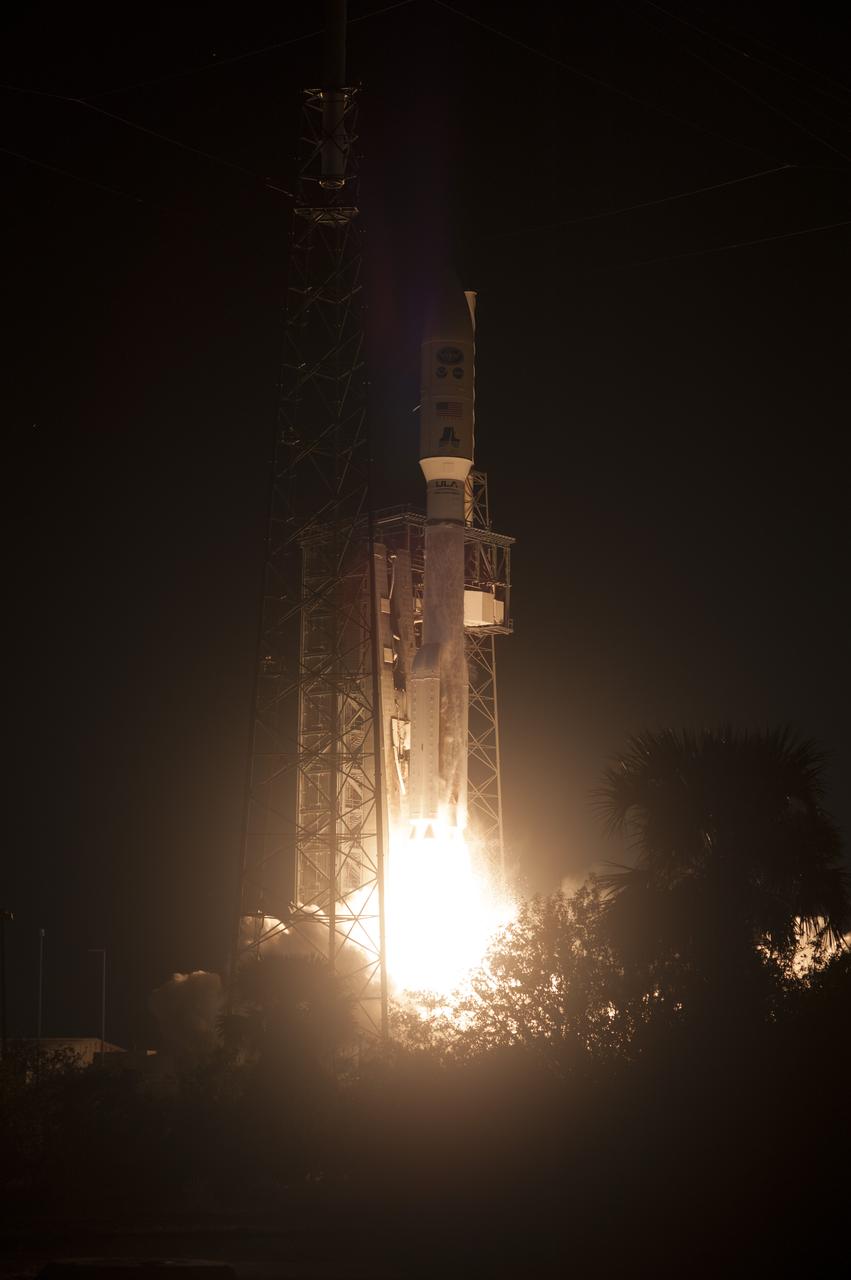
At Cape Canaveral Air Force Station's Space Launch Complex 41, an Atlas V rocket with NOAA's Geostationary Operational Environmental Satellite, or GOES-R, lifts off at 6:42 p.m. EST. GOES-R is the first satellite in a series of next-generation GOES satellites for NOAA, the National Oceanographic and Atmospheric Administration. It will launch to a geostationary orbit over the western hemisphere to provide images of storms and help meteorologists predict severe weather conditionals and develop long-range forecasts.
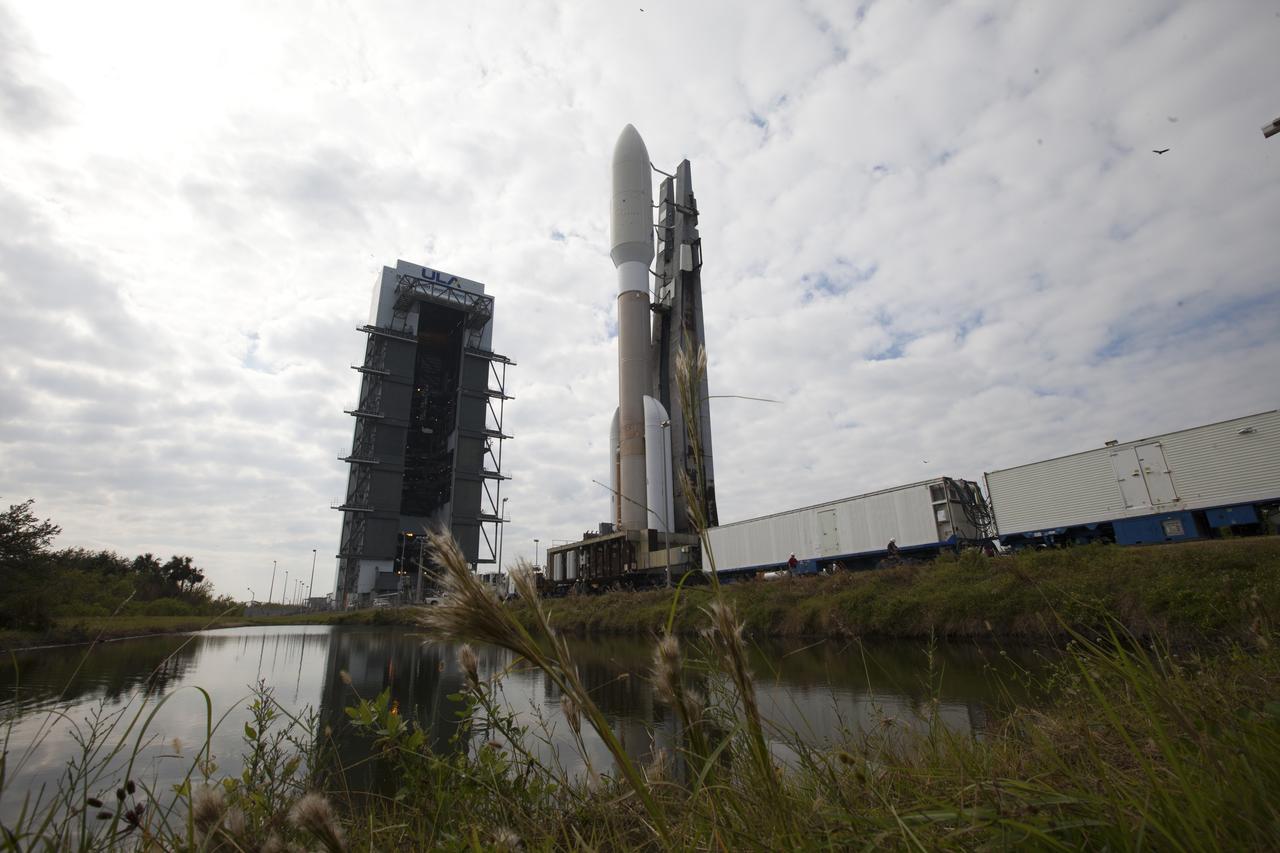
A United Launch Alliance Atlas V rocket rolls out from the Vehicle Integration Facility on its way to Space Launch Complex 41 at Cape Canaveral Air Force Station in Florida. The launch vehicle will send the Geostationary Operational Environmental Satellite (GOES-R) to a geostationary position over the U.S. GOES-R is the first satellite in a series of next-generation NOAA GOES satellites.

In the Kennedy Space Center's Press Site auditorium, Damon Penn, assistant administrator for response at the Federal Emergency Management Agency, speaks to the media during a mission briefing on the Geostationary Operational Environmental Satellite (GOES-R). GOES-R is the first satellite in a series of next-generation GOES satellites for NOAA, the National Oceanographic and Atmospheric Administration. It will launch to a geostationary orbit over the western hemisphere to provide images of storms and help meteorologists predict severe weather conditionals and develop long-range forecasts.

In the Kennedy Space Center's Press Site auditorium, Sandra Cauffman, deputy director of NASA's Earth Science Division, speaks to the media during a mission briefing on the Geostationary Operational Environmental Satellite (GOES-R). GOES-R is the first satellite in a series of next-generation GOES satellites for NOAA, the National Oceanographic and Atmospheric Administration. It will launch to a geostationary orbit over the western hemisphere to provide images of storms and help meteorologists predict severe weather conditionals and develop long-range forecasts.
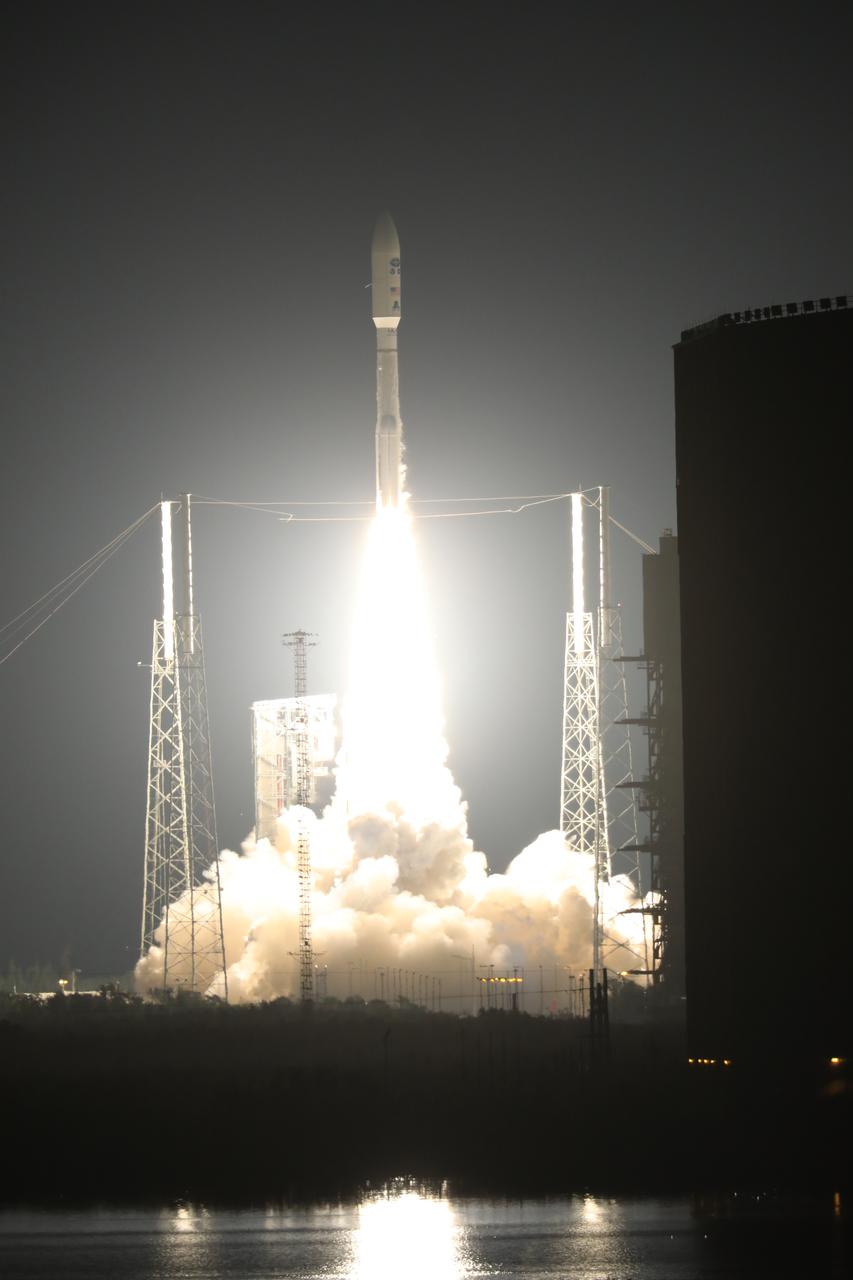
At Cape Canaveral Air Force Station's Space Launch Complex 41, an Atlas V rocket with NOAA's Geostationary Operational Environmental Satellite, or GOES-R, lifts off at 6:42 p.m. EST. GOES-R is the first satellite in a series of next-generation GOES satellites for NOAA, the National Oceanographic and Atmospheric Administration. It will launch to a geostationary orbit over the western hemisphere to provide images of storms and help meteorologists predict severe weather conditionals and develop long-range forecasts.
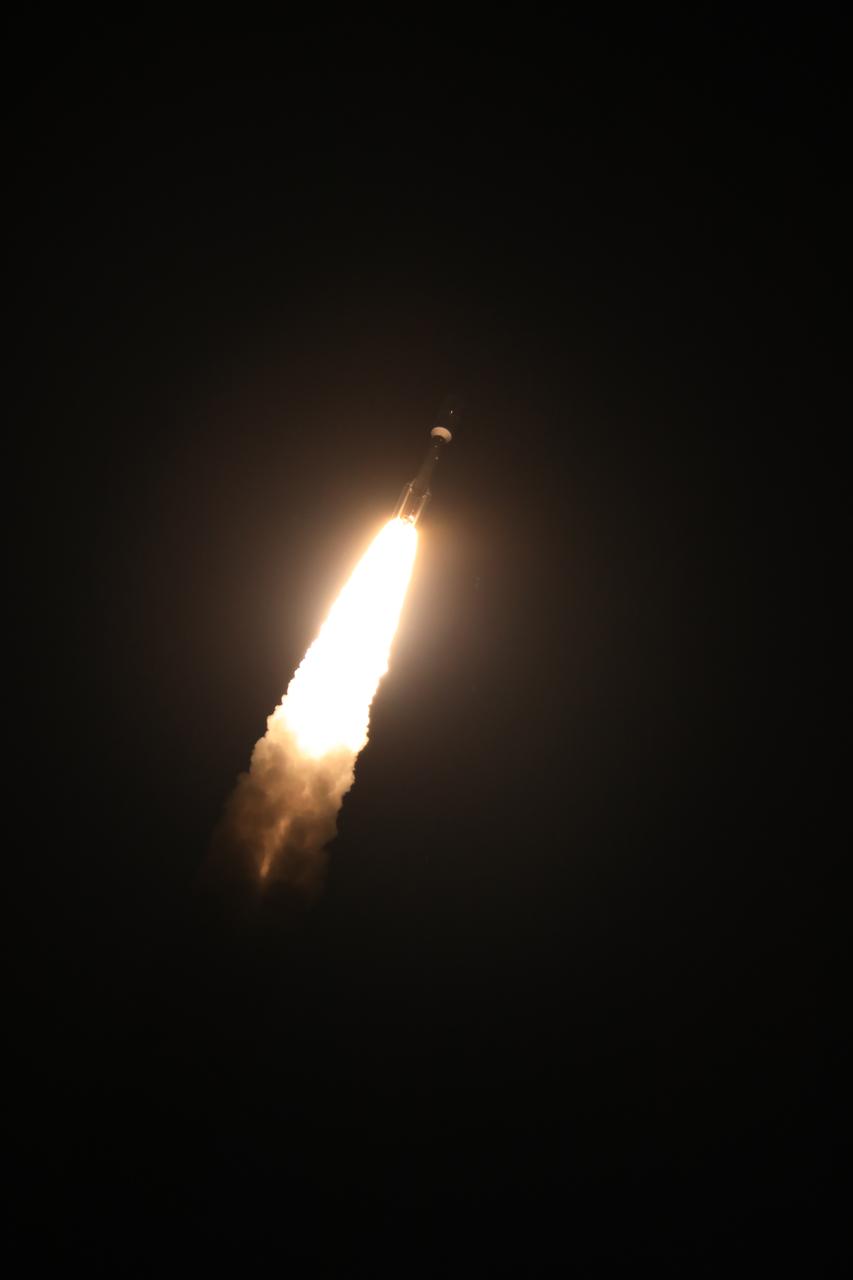
At Cape Canaveral Air Force Station's Space Launch Complex 41, an Atlas V rocket with NOAA's Geostationary Operational Environmental Satellite, or GOES-R, lifts off at 6:42 p.m. EST. GOES-R is the first satellite in a series of next-generation GOES satellites for NOAA, the National Oceanographic and Atmospheric Administration. It will launch to a geostationary orbit over the western hemisphere to provide images of storms and help meteorologists predict severe weather conditionals and develop long-range forecasts.
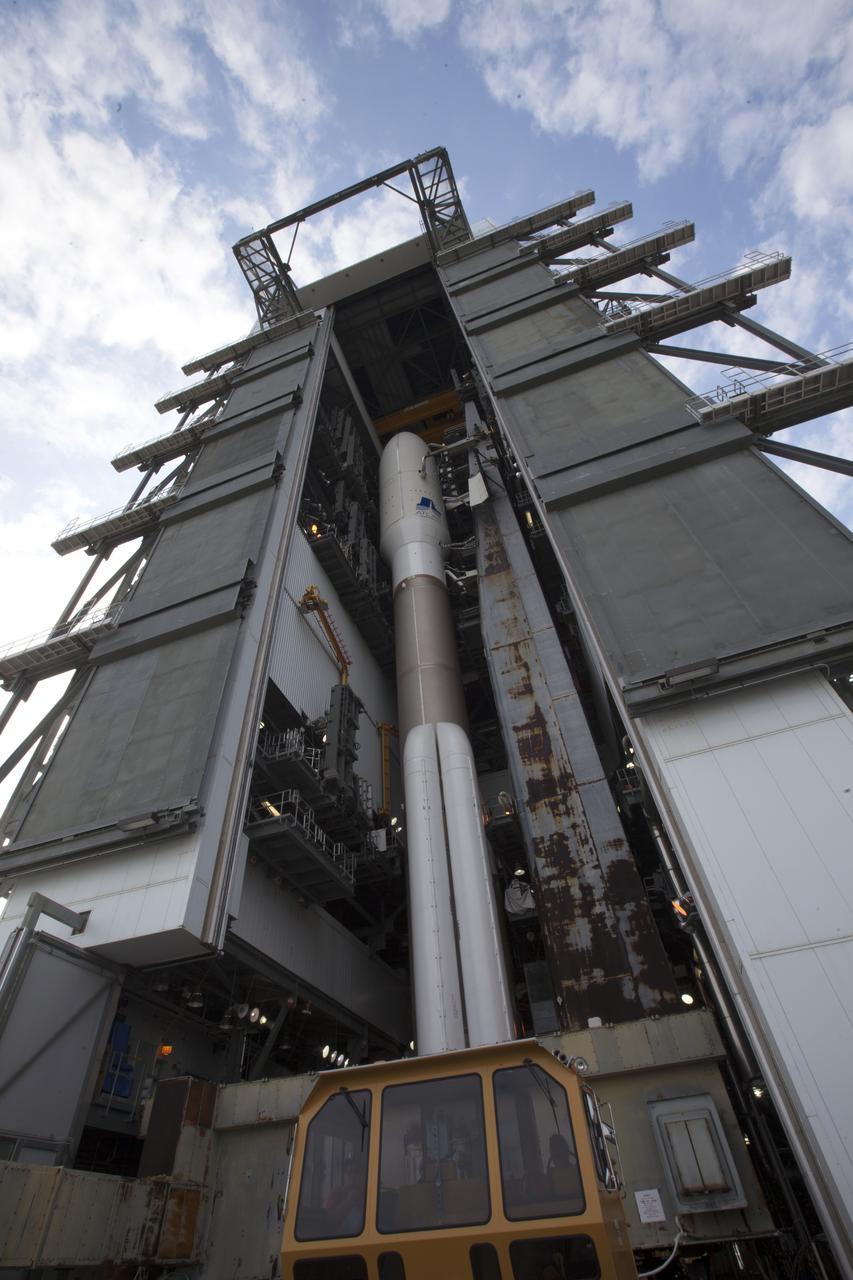
A United Launch Alliance Atlas V rocket begins its rollout from the Vehicle Integration Facility to Space Launch Complex 41 at Cape Canaveral Air Force Station in Florida. The launch vehicle will send the Geostationary Operational Environmental Satellite (GOES-R) to a geostationary position over the U.S. GOES-R is the first satellite in a series of next-generation NOAA GOES satellites.
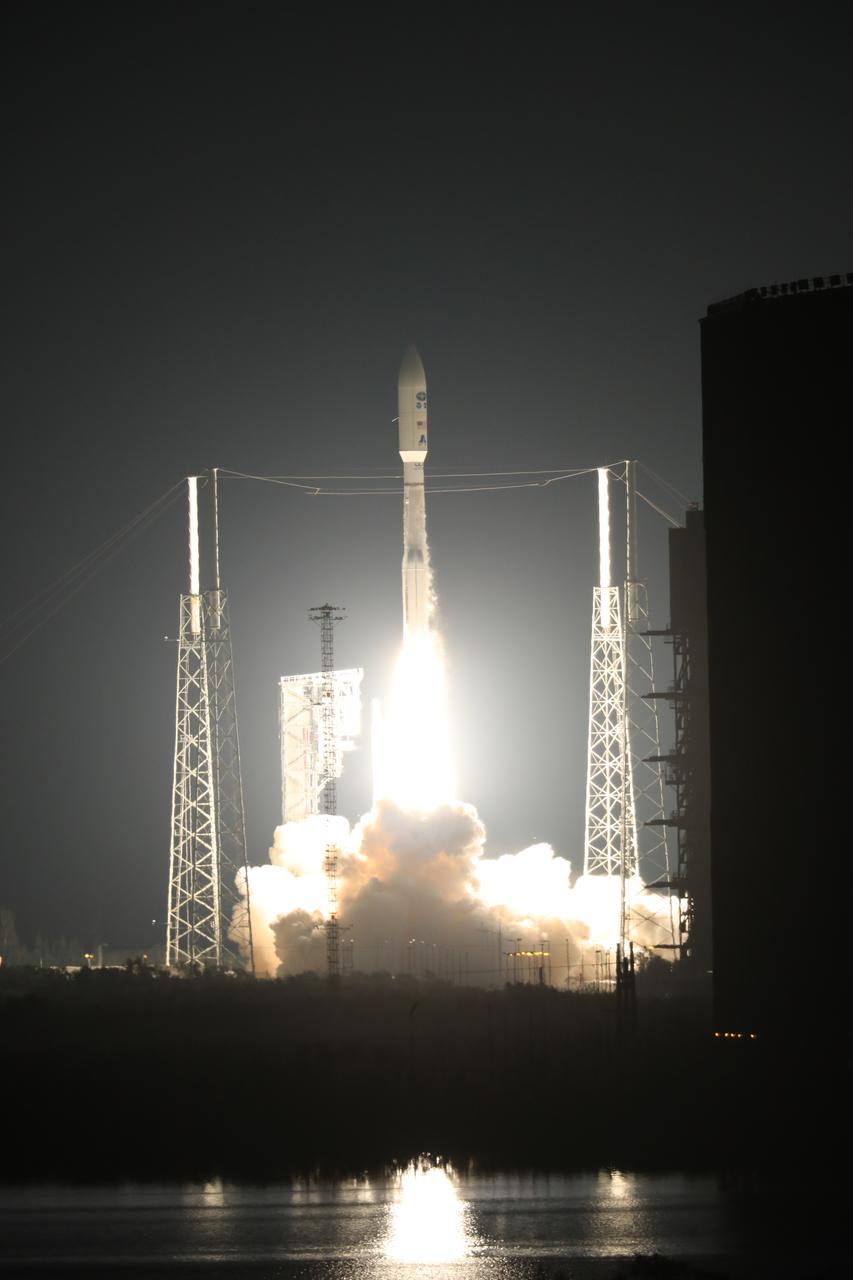
At Cape Canaveral Air Force Station's Space Launch Complex 41, an Atlas V rocket with NOAA's Geostationary Operational Environmental Satellite, or GOES-R, lifts off at 6:42 p.m. EST. GOES-R is the first satellite in a series of next-generation GOES satellites for NOAA, the National Oceanographic and Atmospheric Administration. It will launch to a geostationary orbit over the western hemisphere to provide images of storms and help meteorologists predict severe weather conditionals and develop long-range forecasts.
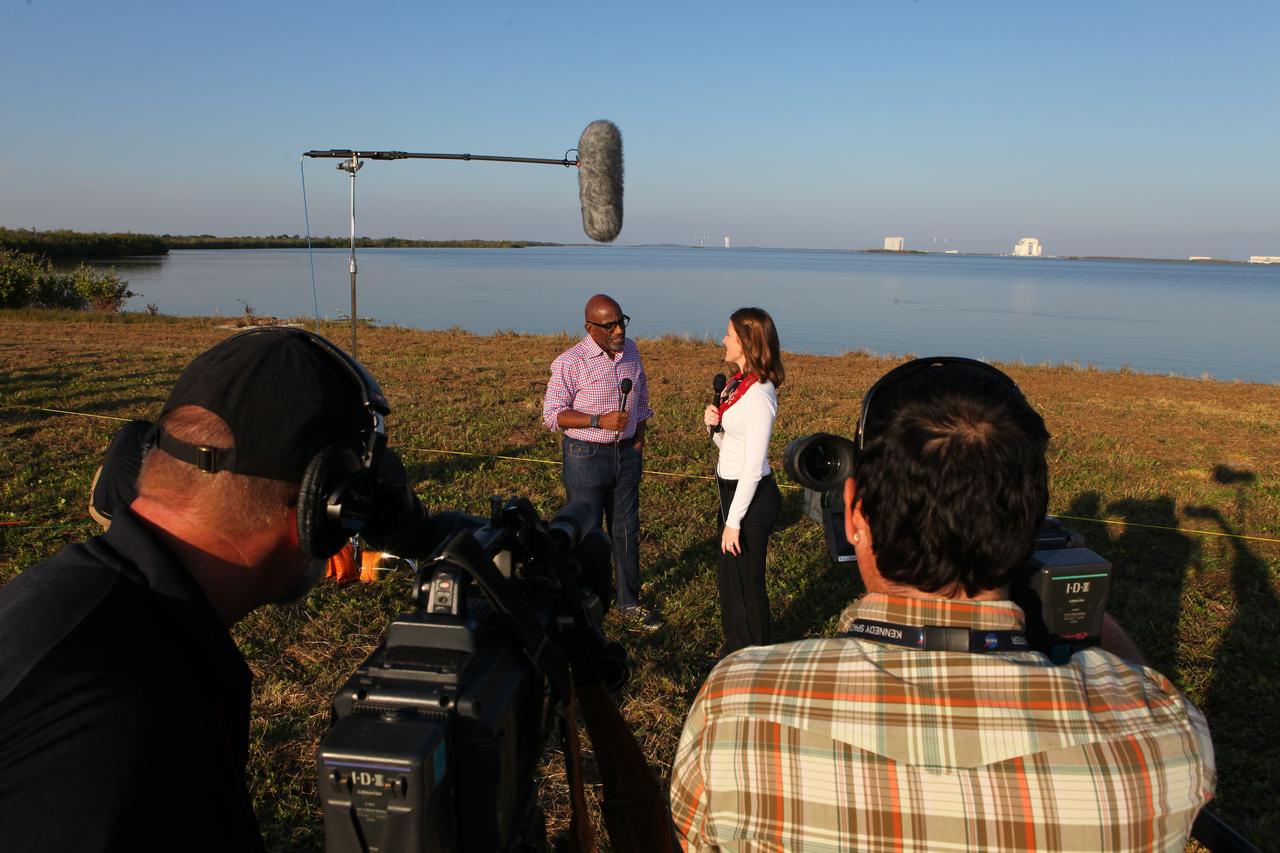
During the countdown for the launch of NOAA's Geostationary Operational Environmental Satellite, or GOES-R, Stephanie Martin of NASA Communications, right, interviews Al Roker, weather forecaster on NBC's "Today Show." GOES-R is the first satellite in a series of next-generation GOES satellites for NOAA, the National Oceanographic and Atmospheric Administration. It will launch to a geostationary orbit over the western hemisphere to provide images of storms and help meteorologists predict severe weather conditionals and develop long-range forecasts.
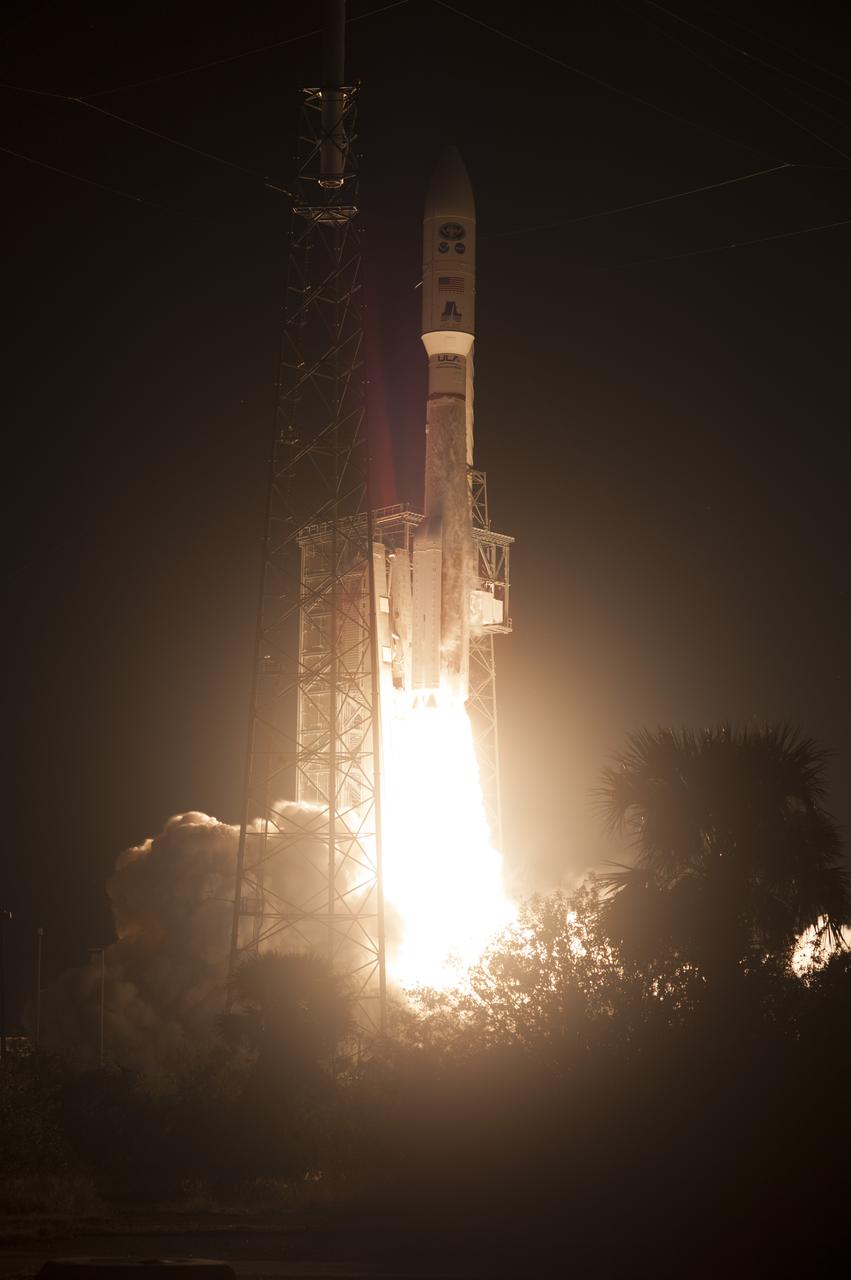
At Cape Canaveral Air Force Station's Space Launch Complex 41, an Atlas V rocket with NOAA's Geostationary Operational Environmental Satellite, or GOES-R, lifts off at 6:42 p.m. EST. GOES-R is the first satellite in a series of next-generation GOES satellites for NOAA, the National Oceanographic and Atmospheric Administration. It will launch to a geostationary orbit over the western hemisphere to provide images of storms and help meteorologists predict severe weather conditionals and develop long-range forecasts.
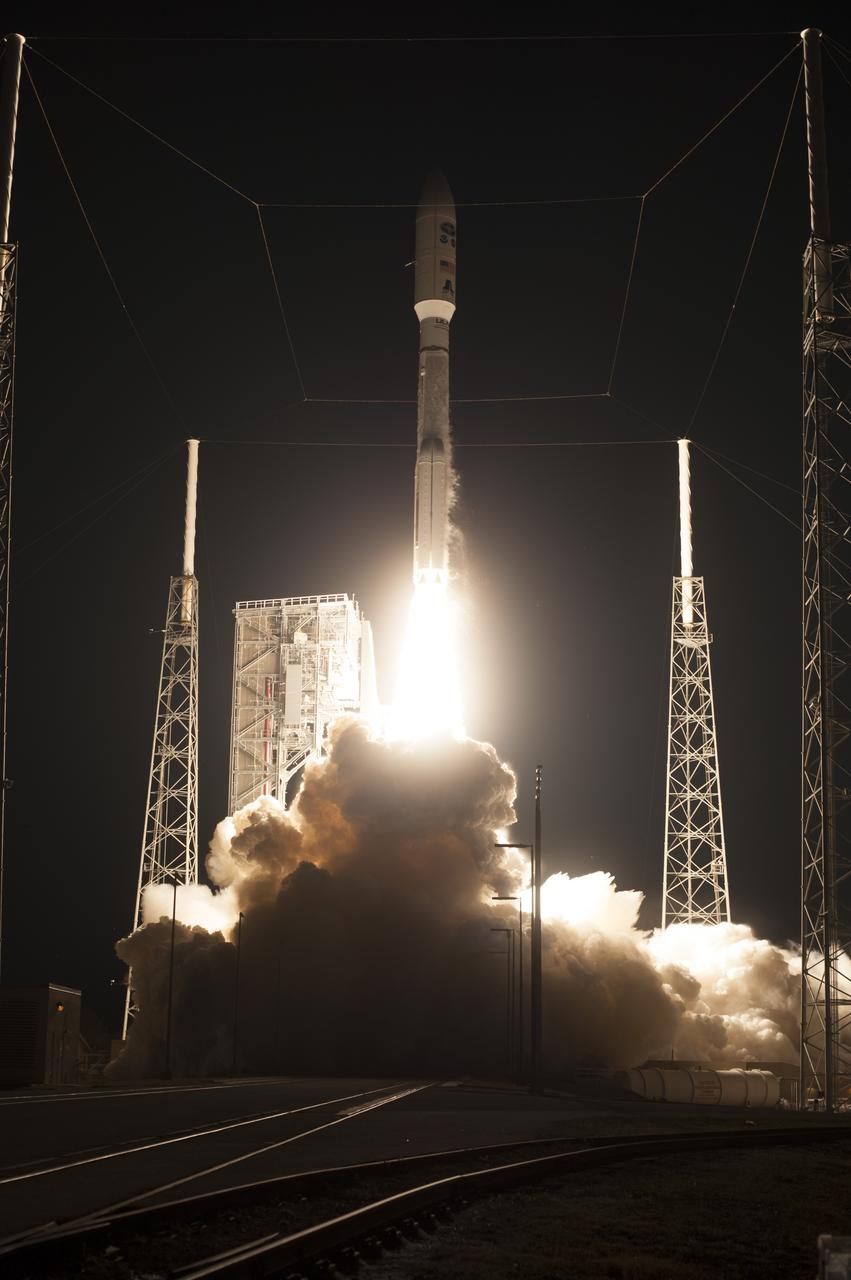
At Cape Canaveral Air Force Station's Space Launch Complex 41, an Atlas V rocket with NOAA's Geostationary Operational Environmental Satellite, or GOES-R, lifts off at 6:42 p.m. EST. GOES-R is the first satellite in a series of next-generation GOES satellites for NOAA, the National Oceanographic and Atmospheric Administration. It will launch to a geostationary orbit over the western hemisphere to provide images of storms and help meteorologists predict severe weather conditionals and develop long-range forecasts.
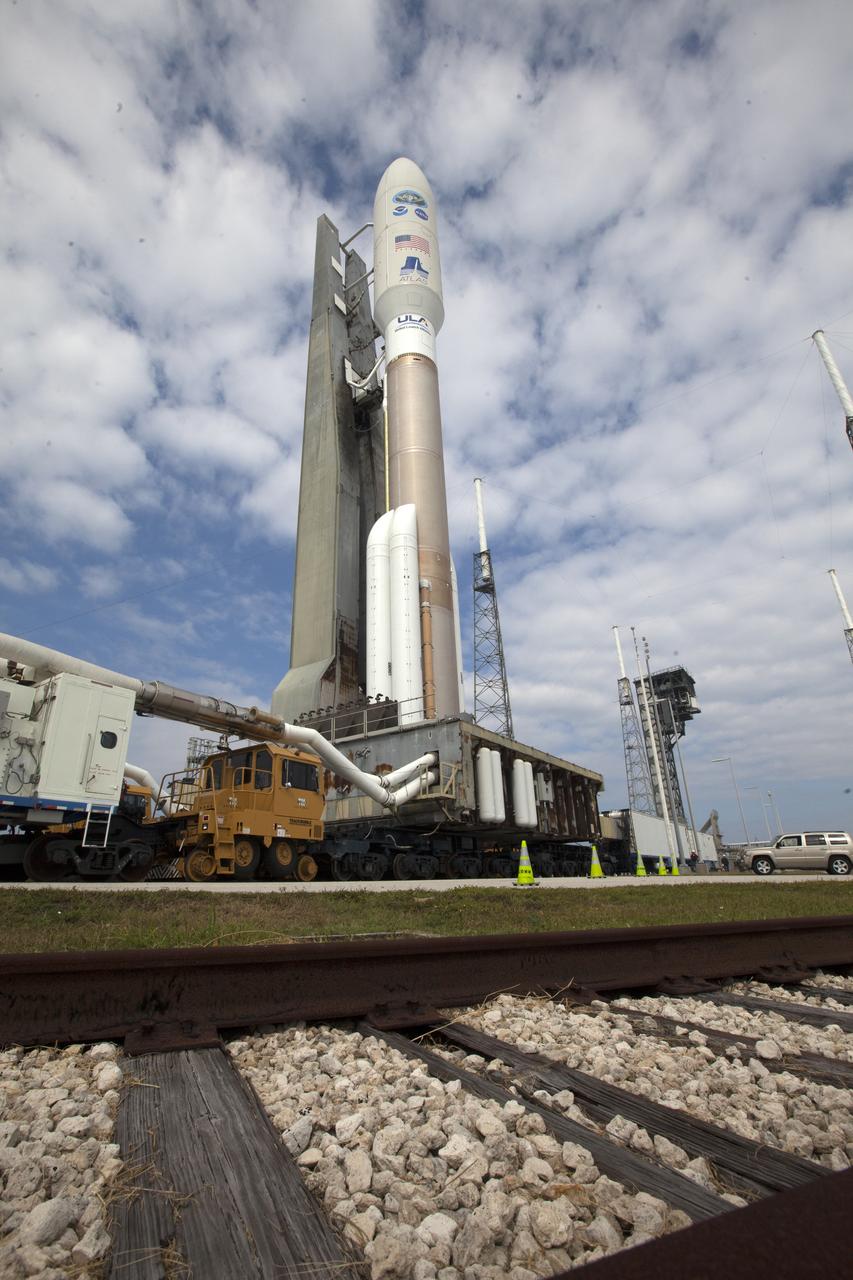
A United Launch Alliance Atlas V rocket rolls out to Space Launch Complex 41 at Cape Canaveral Air Force Station in Florida. The launch vehicle will send the Geostationary Operational Environmental Satellite (GOES-R) to a geostationary position over the U.S. GOES-R is the first satellite in a series of next-generation NOAA GOES satellites.
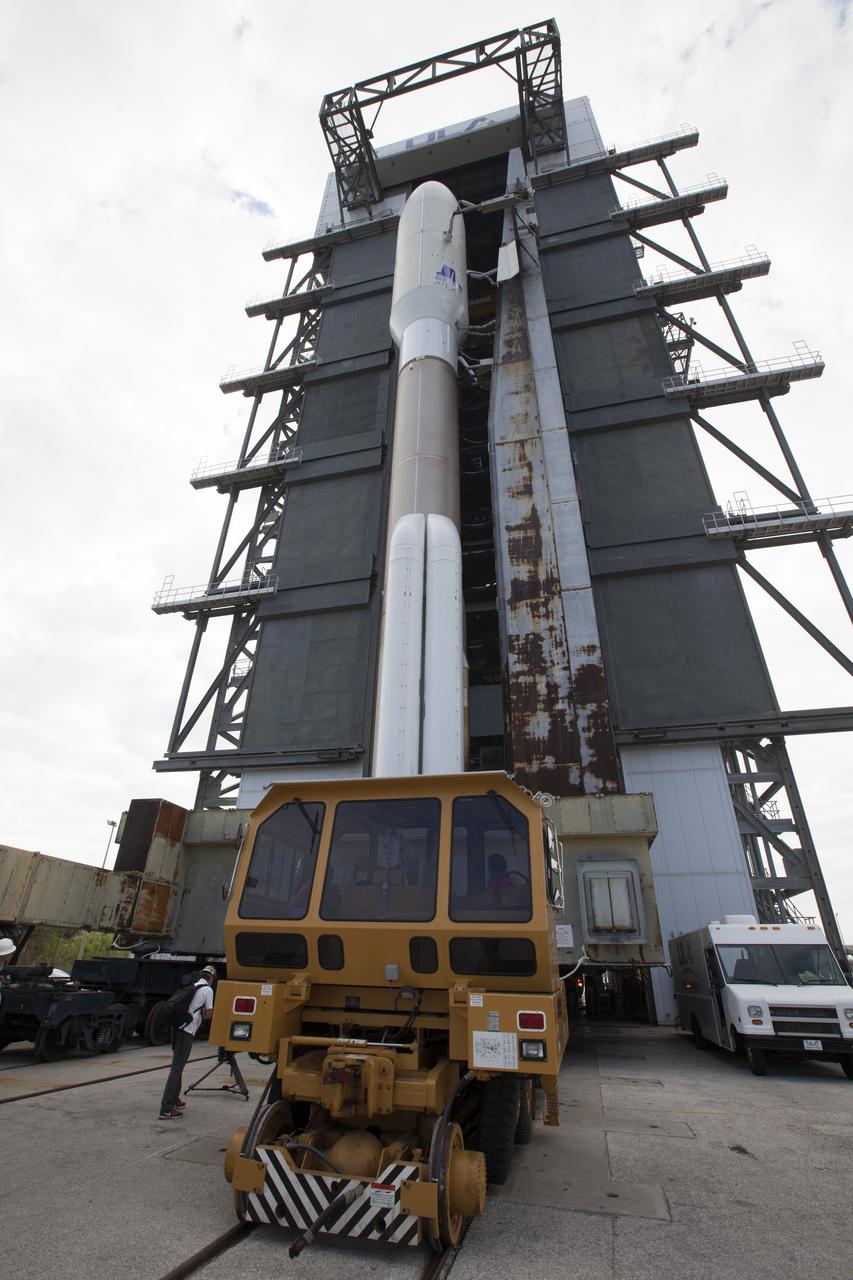
A United Launch Alliance Atlas V rocket begins its rollout from the Vehicle Integration Facility to Space Launch Complex 41 at Cape Canaveral Air Force Station in Florida. The launch vehicle will send the Geostationary Operational Environmental Satellite (GOES-R) to a geostationary position over the U.S. GOES-R is the first satellite in a series of next-generation NOAA GOES satellites.
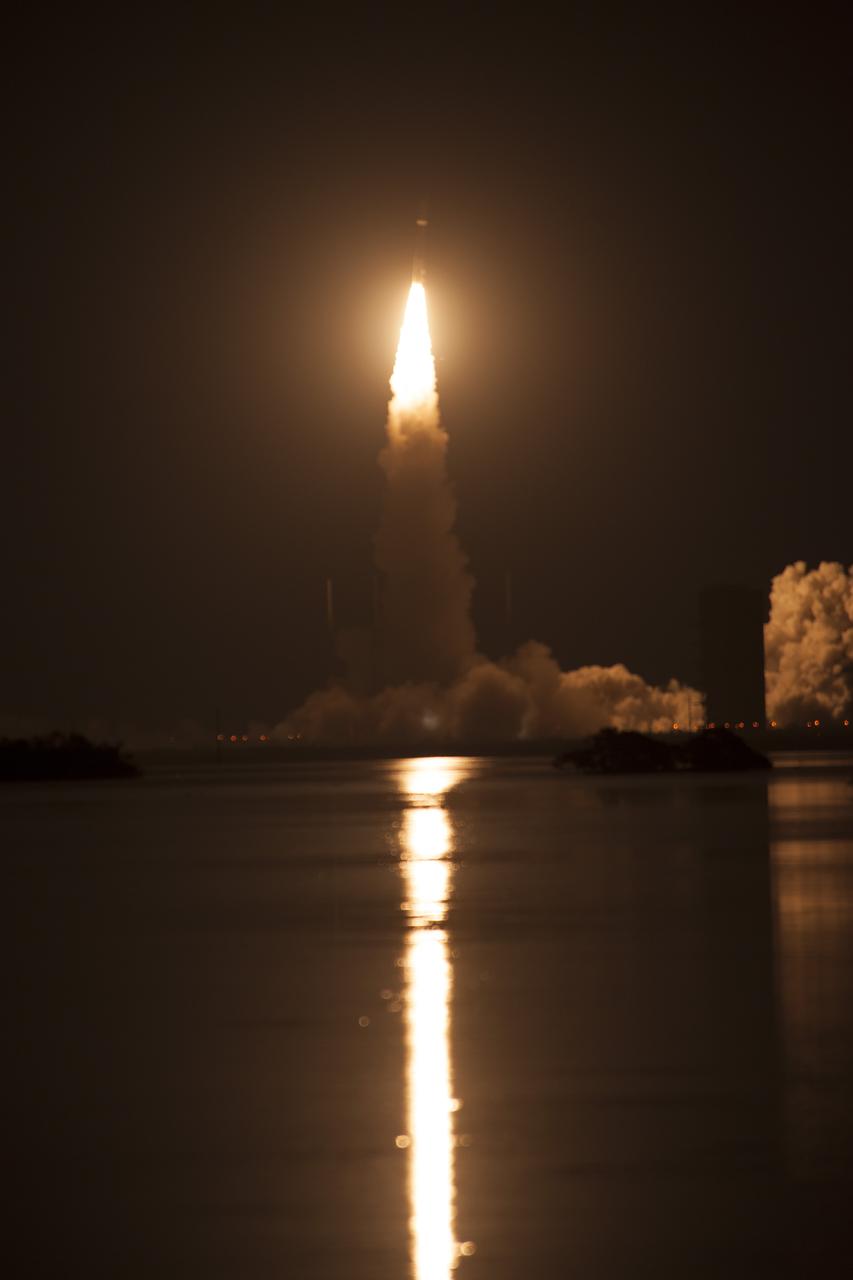
At Cape Canaveral Air Force Station's Space Launch Complex 41, an Atlas V rocket with NOAA's Geostationary Operational Environmental Satellite, or GOES-R, lifts off at 6:42 p.m. EST. GOES-R is the first satellite in a series of next-generation GOES satellites for NOAA, the National Oceanographic and Atmospheric Administration. It will launch to a geostationary orbit over the western hemisphere to provide images of storms and help meteorologists predict severe weather conditionals and develop long-range forecasts.
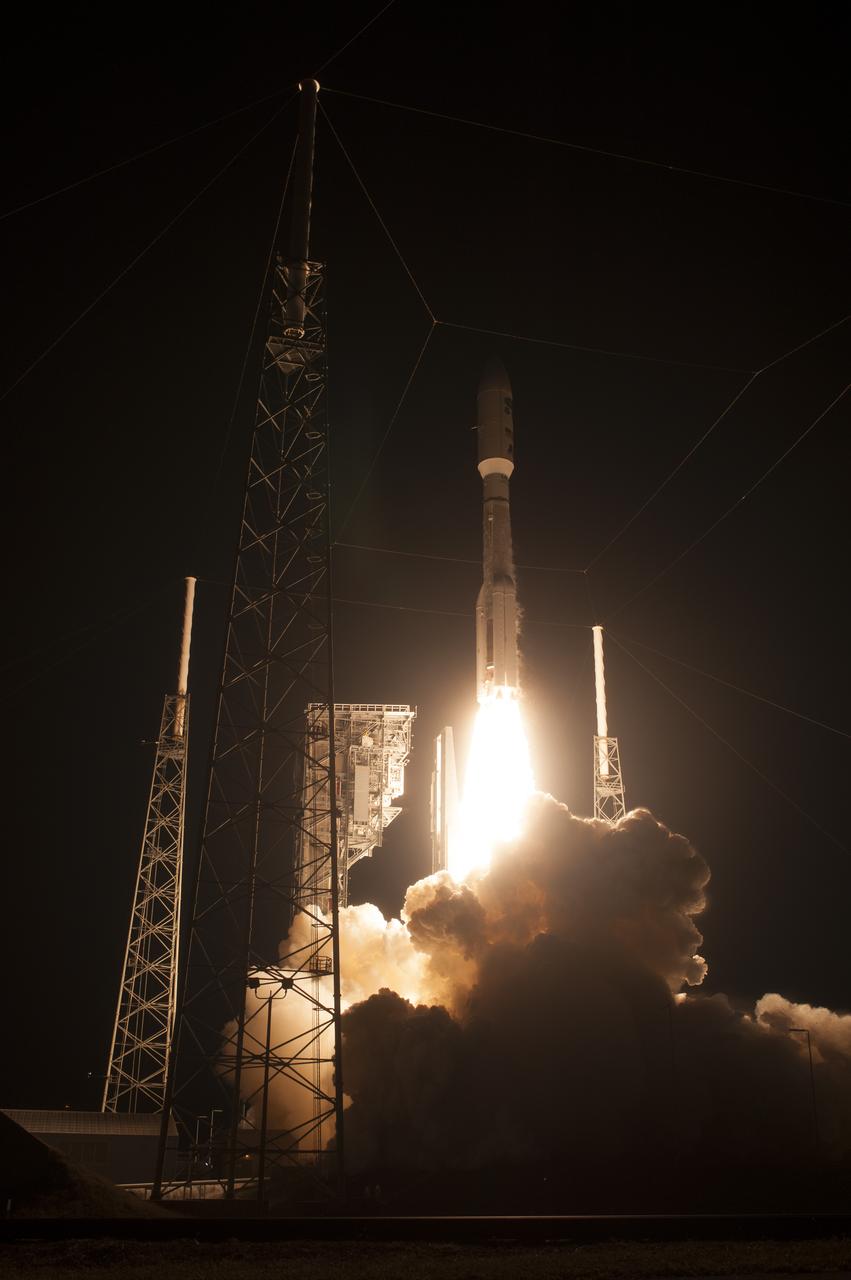
At Cape Canaveral Air Force Station's Space Launch Complex 41, an Atlas V rocket with NOAA's Geostationary Operational Environmental Satellite, or GOES-R, lifts off at 6:42 p.m. EST. GOES-R is the first satellite in a series of next-generation GOES satellites for NOAA, the National Oceanographic and Atmospheric Administration. It will launch to a geostationary orbit over the western hemisphere to provide images of storms and help meteorologists predict severe weather conditionals and develop long-range forecasts.
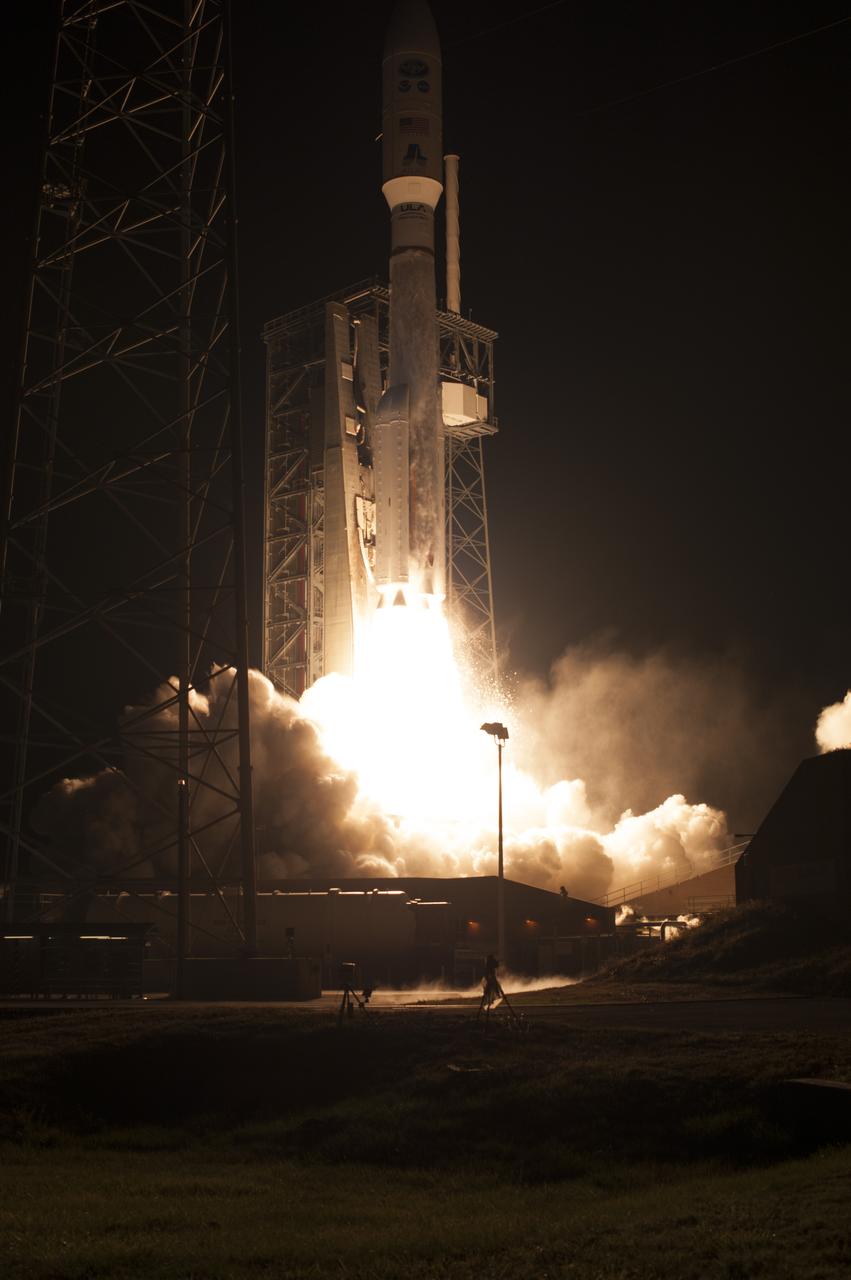
At Cape Canaveral Air Force Station's Space Launch Complex 41, an Atlas V rocket with NOAA's Geostationary Operational Environmental Satellite, or GOES-R, lifts off at 6:42 p.m. EST. GOES-R is the first satellite in a series of next-generation GOES satellites for NOAA, the National Oceanographic and Atmospheric Administration. It will launch to a geostationary orbit over the western hemisphere to provide images of storms and help meteorologists predict severe weather conditionals and develop long-range forecasts.
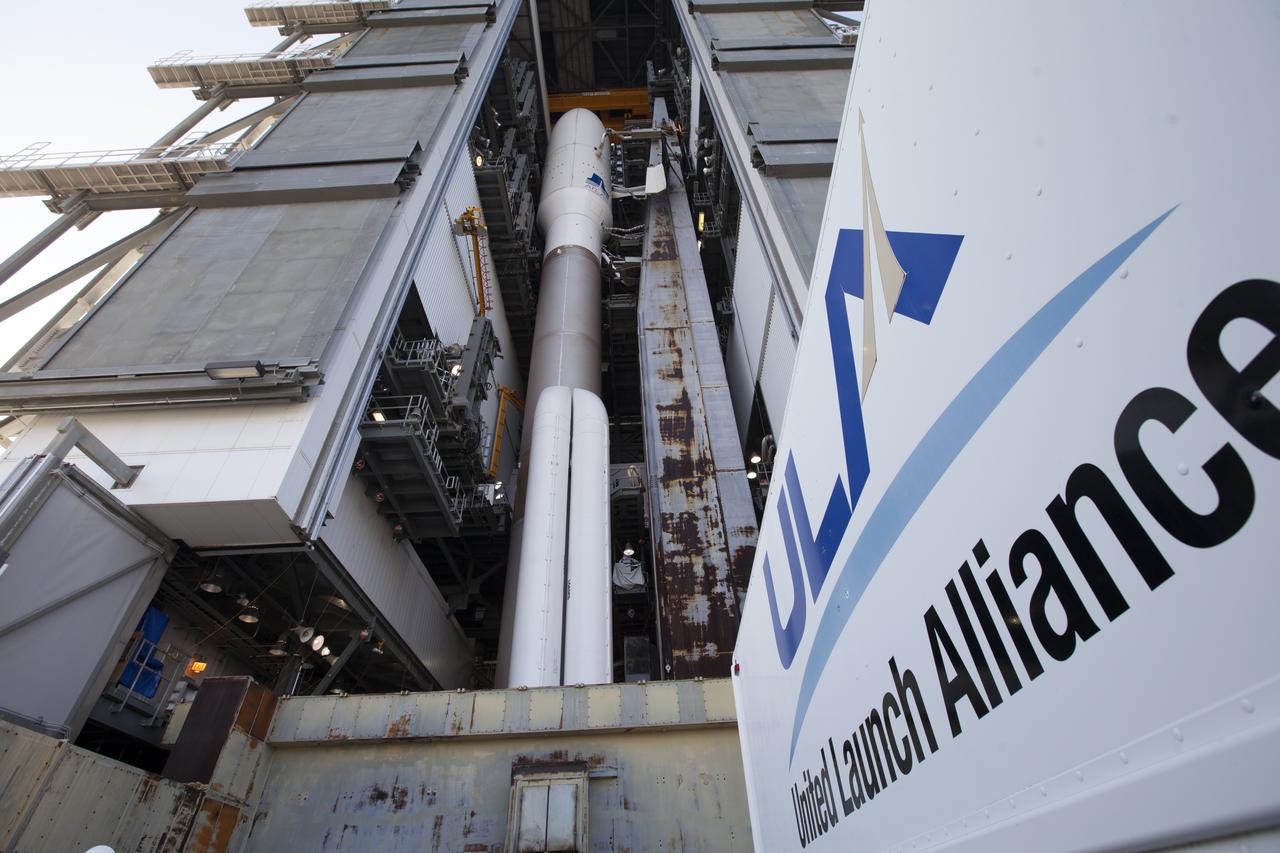
A United Launch Alliance Atlas V rocket is ready to roll out from the Vehicle Integration Facility to Space Launch Complex 41 at Cape Canaveral Air Force Station in Florida. The launch vehicle will send the Geostationary Operational Environmental Satellite (GOES-R) to a geostationary position over the U.S. GOES-R is the first satellite in a series of next-generation NOAA GOES satellites.
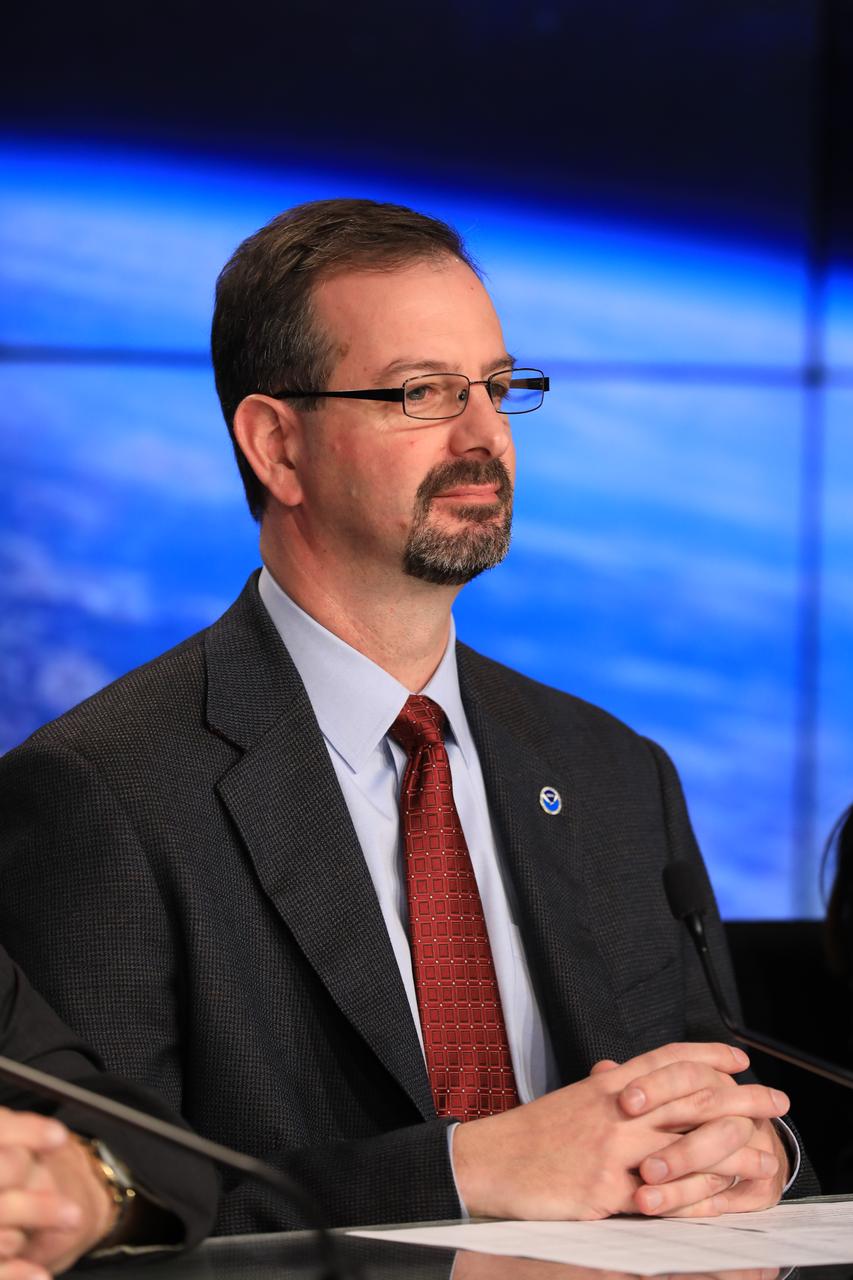
In the Kennedy Space Center's Press Site auditorium, Joseph A. Pica, director of the National Weather Service Office of Observations, speaks to the media during a mission briefing on the Geostationary Operational Environmental Satellite (GOES-R). GOES-R is the first satellite in a series of next-generation GOES satellites for NOAA, the National Oceanographic and Atmospheric Administration. It will launch to a geostationary orbit over the western hemisphere to provide images of storms and help meteorologists predict severe weather conditionals and develop long-range forecasts.
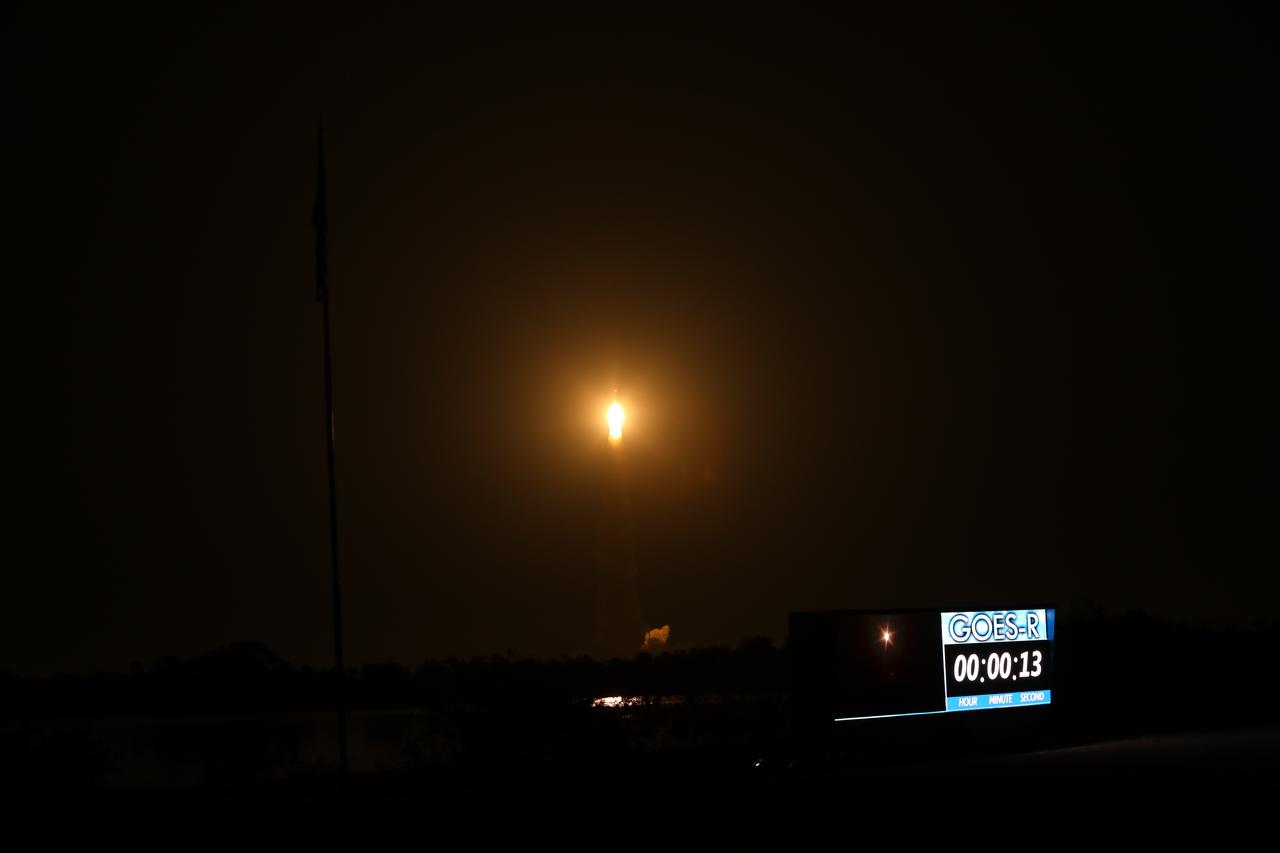
At Cape Canaveral Air Force Station's Space Launch Complex 41, an Atlas V rocket with NOAA's Geostationary Operational Environmental Satellite, or GOES-R, lifts off at 6:42 p.m. EST. GOES-R is the first satellite in a series of next-generation GOES satellites for NOAA, the National Oceanographic and Atmospheric Administration. It will launch to a geostationary orbit over the western hemisphere to provide images of storms and help meteorologists predict severe weather conditionals and develop long-range forecasts.
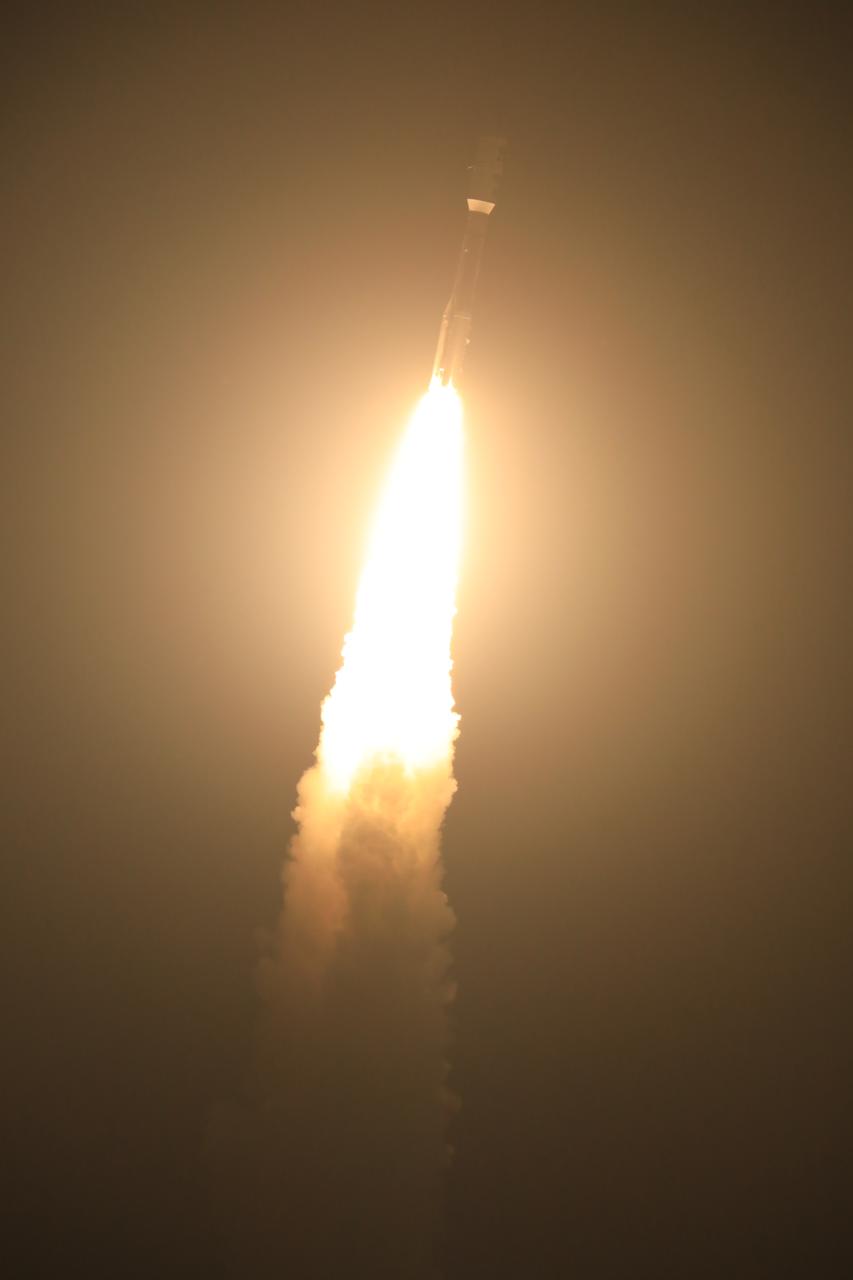
At Cape Canaveral Air Force Station's Space Launch Complex 41, an Atlas V rocket with NOAA's Geostationary Operational Environmental Satellite, or GOES-R, lifts off at 6:42 p.m. EST. GOES-R is the first satellite in a series of next-generation GOES satellites for NOAA, the National Oceanographic and Atmospheric Administration. It will launch to a geostationary orbit over the western hemisphere to provide images of storms and help meteorologists predict severe weather conditionals and develop long-range forecasts.
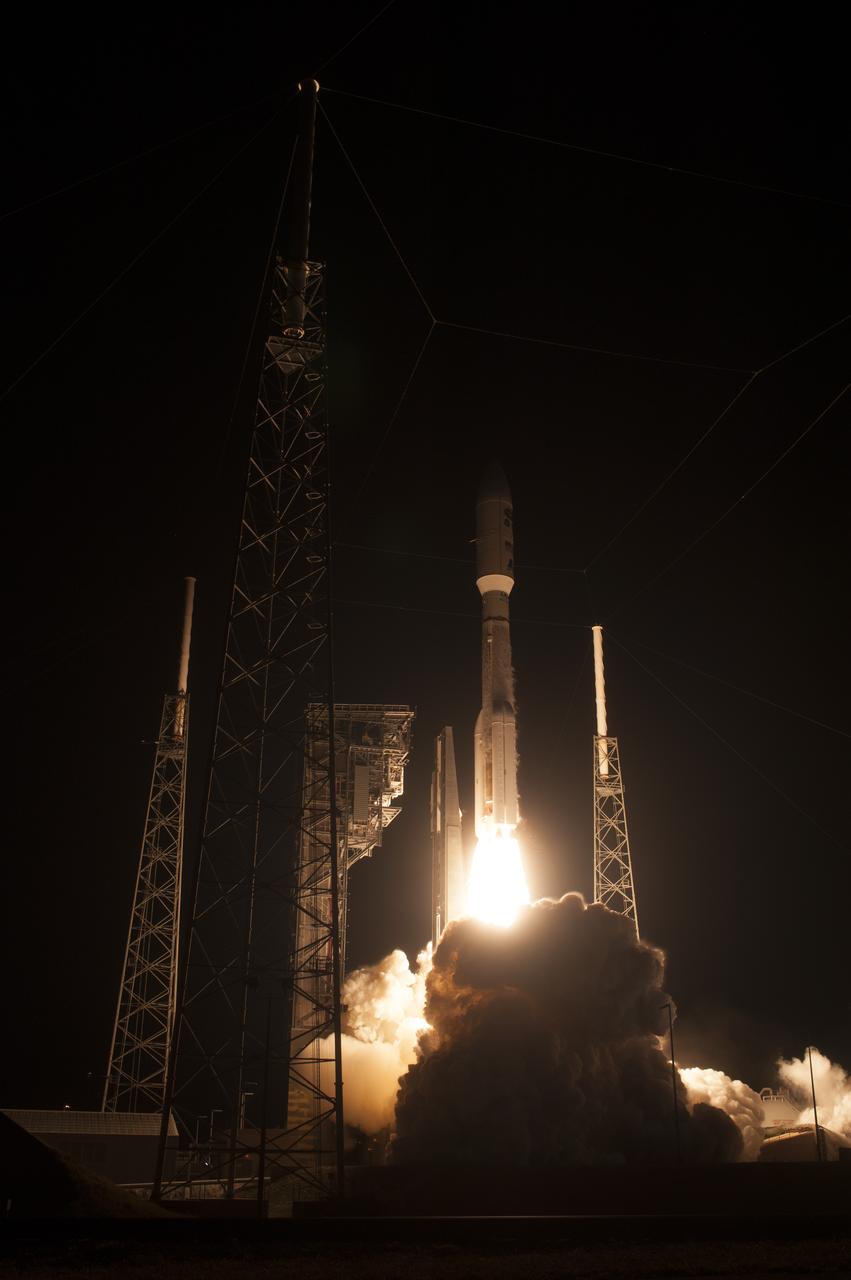
At Cape Canaveral Air Force Station's Space Launch Complex 41, an Atlas V rocket with NOAA's Geostationary Operational Environmental Satellite, or GOES-R, lifts off at 6:42 p.m. EST. GOES-R is the first satellite in a series of next-generation GOES satellites for NOAA, the National Oceanographic and Atmospheric Administration. It will launch to a geostationary orbit over the western hemisphere to provide images of storms and help meteorologists predict severe weather conditionals and develop long-range forecasts.
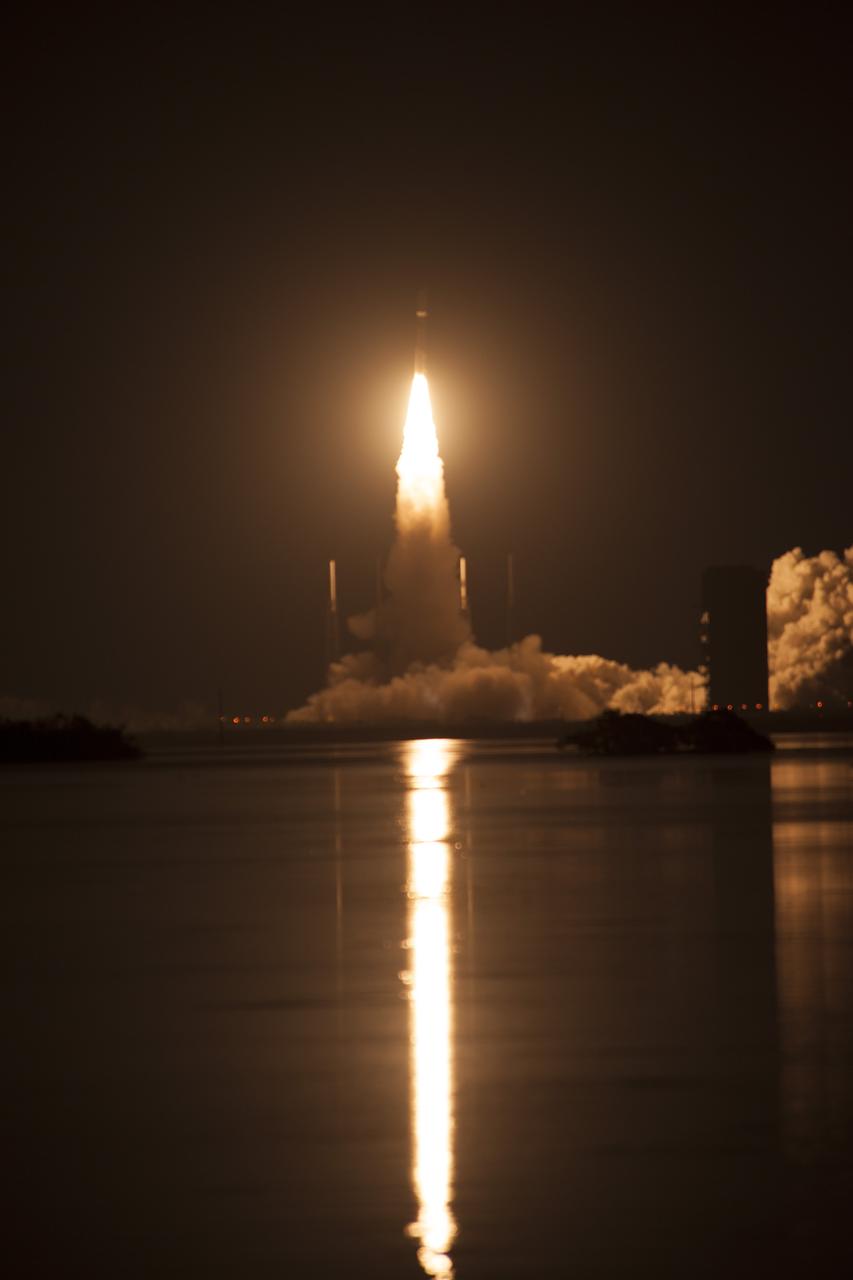
At Cape Canaveral Air Force Station's Space Launch Complex 41, an Atlas V rocket with NOAA's Geostationary Operational Environmental Satellite, or GOES-R, lifts off at 6:42 p.m. EST. GOES-R is the first satellite in a series of next-generation GOES satellites for NOAA, the National Oceanographic and Atmospheric Administration. It will launch to a geostationary orbit over the western hemisphere to provide images of storms and help meteorologists predict severe weather conditionals and develop long-range forecasts.
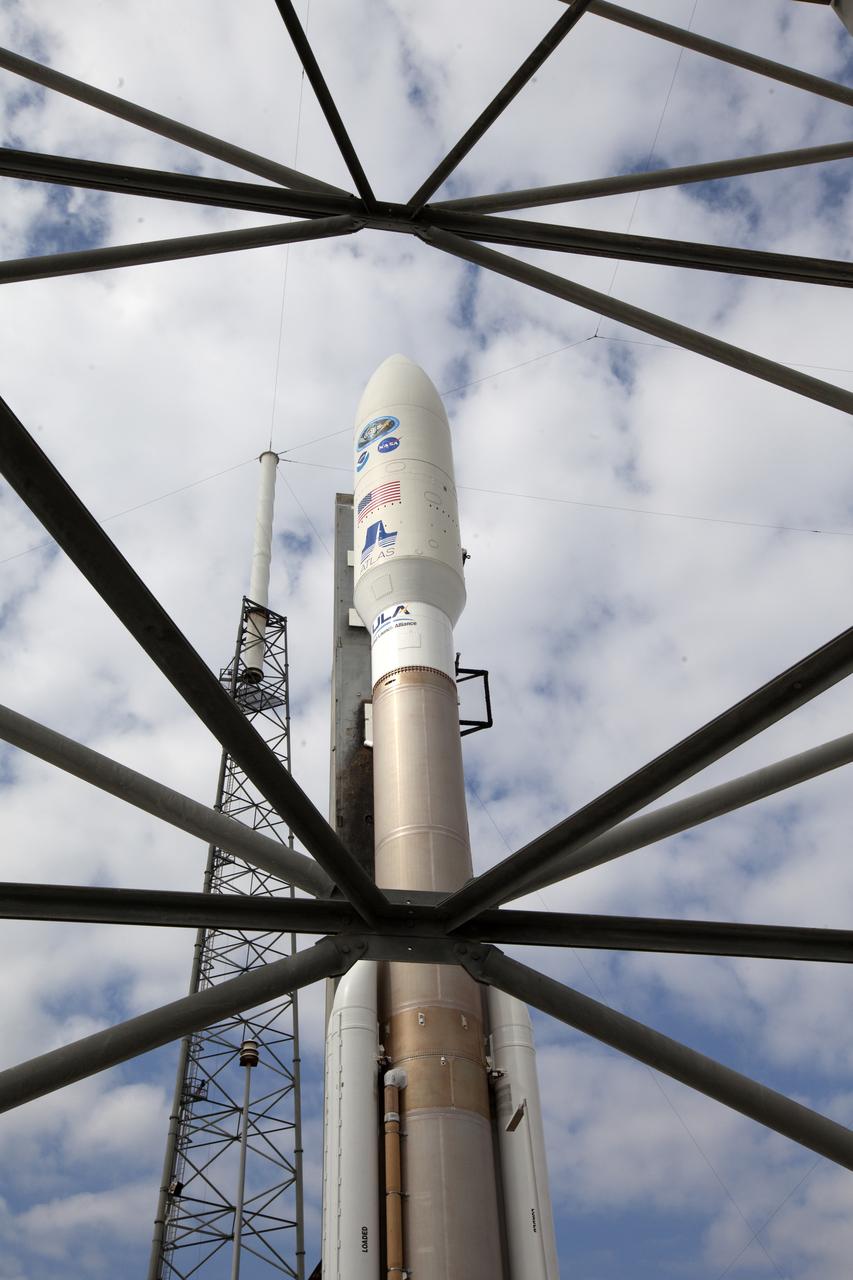
A United Launch Alliance Atlas V rocket rolls out to Space Launch Complex 41 at Cape Canaveral Air Force Station in Florida. The launch vehicle will send the Geostationary Operational Environmental Satellite (GOES-R) to a geostationary position over the U.S. GOES-R is the first satellite in a series of next-generation NOAA GOES satellites.
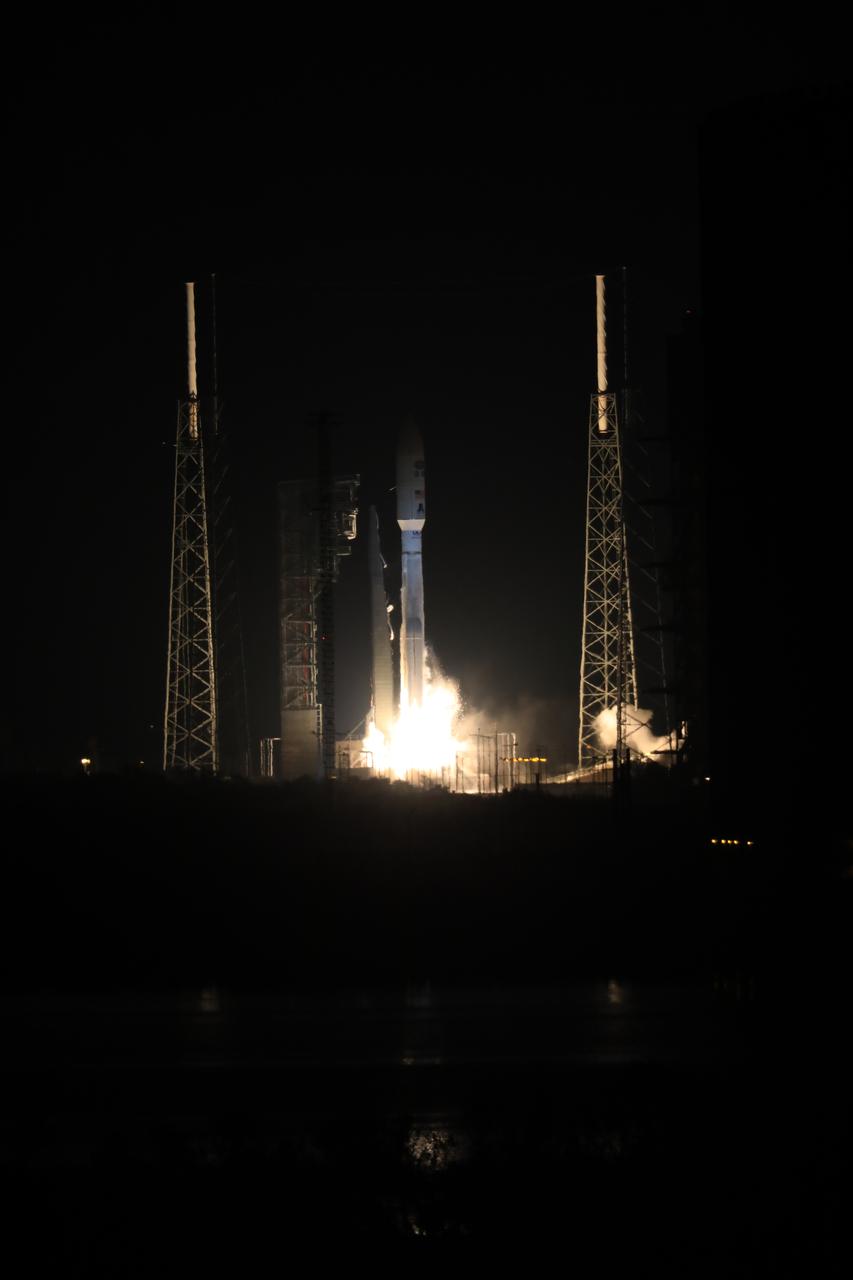
At Cape Canaveral Air Force Station's Space Launch Complex 41, an Atlas V rocket with NOAA's Geostationary Operational Environmental Satellite, or GOES-R, lifts off at 6:42 p.m. EST. GOES-R is the first satellite in a series of next-generation GOES satellites for NOAA, the National Oceanographic and Atmospheric Administration. It will launch to a geostationary orbit over the western hemisphere to provide images of storms and help meteorologists predict severe weather conditionals and develop long-range forecasts.
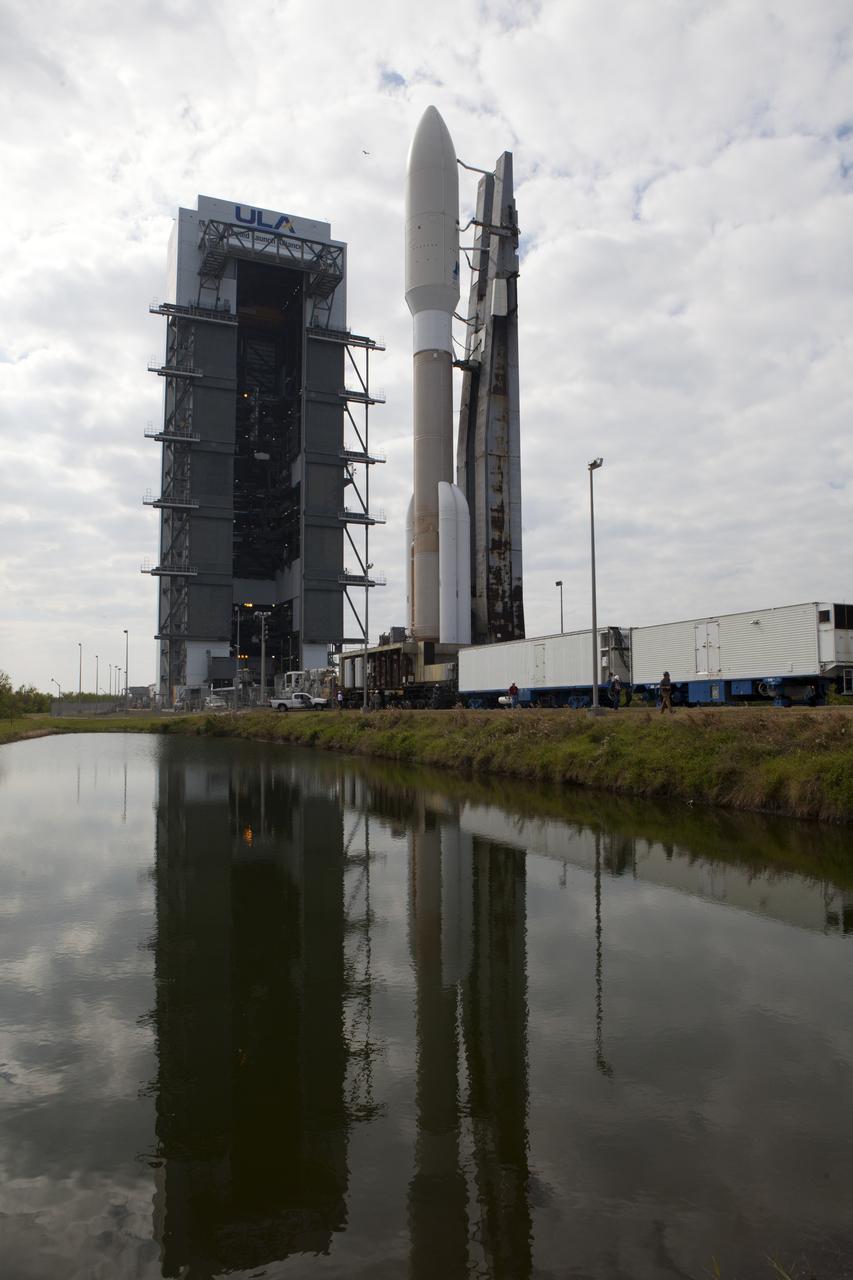
Reflected in the water, a United Launch Alliance Atlas V rocket arrives at Space Launch Complex 41 at Cape Canaveral Air Force Station in Florida. The launch vehicle will send the Geostationary Operational Environmental Satellite (GOES-R) to a geostationary position over the U.S. GOES-R is the first satellite in a series of next-generation NOAA GOES satellites.
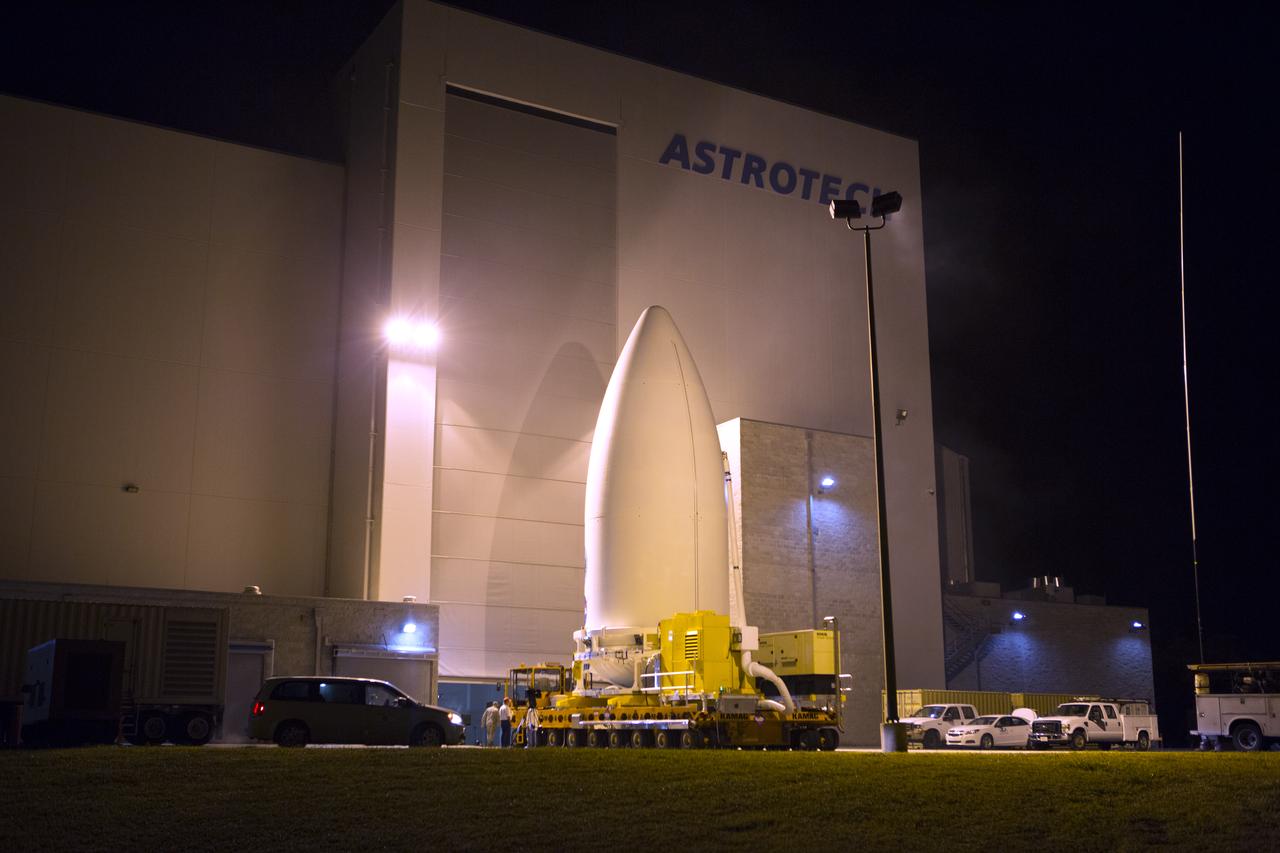
Enclosed in its payload fairing, NOAA's Geostationary Operational Environmental Satellite (GOES-R) departs from the Astrotech payload processing facility in Titusville, Florida, near NASA's Kennedy Space Center. GOES-R will be transported to the Vertical Integration Facility at Space Launch Complex 41 at Cape Canaveral Air Force Station. The satellite will launch aboard a United Launch Alliance Atlas V rocket in November. GOES-R is the first satellite in a series of next-generation NOAA GOES Satellites.
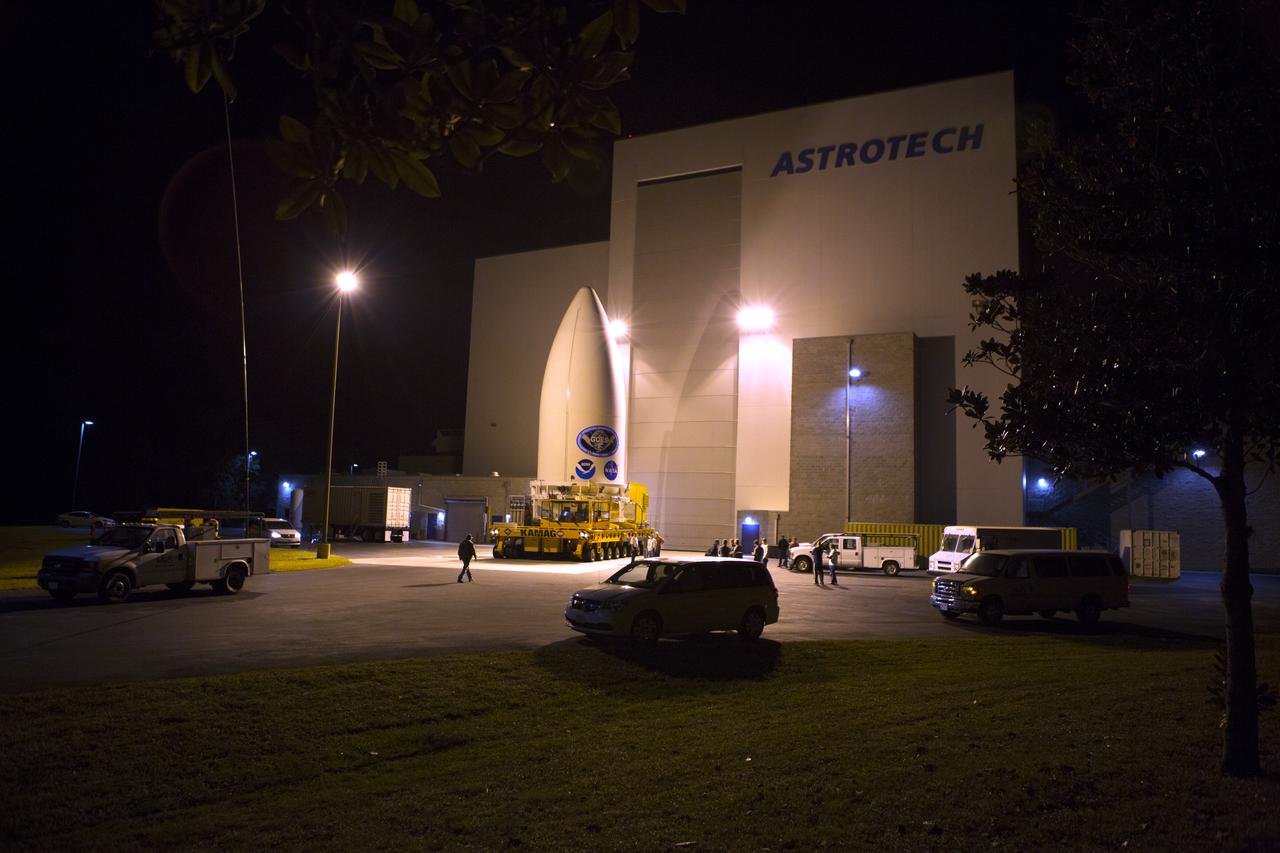
Enclosed in its payload fairing, NOAA's Geostationary Operational Environmental Satellite (GOES-R) departs from the Astrotech payload processing facility in Titusville, Florida, near NASA's Kennedy Space Center. GOES-R will be transported to the Vertical Integration Facility at Space Launch Complex 41 at Cape Canaveral Air Force Station. The satellite will launch aboard a United Launch Alliance Atlas V rocket in November. GOES-R is the first satellite in a series of next-generation NOAA GOES Satellites.
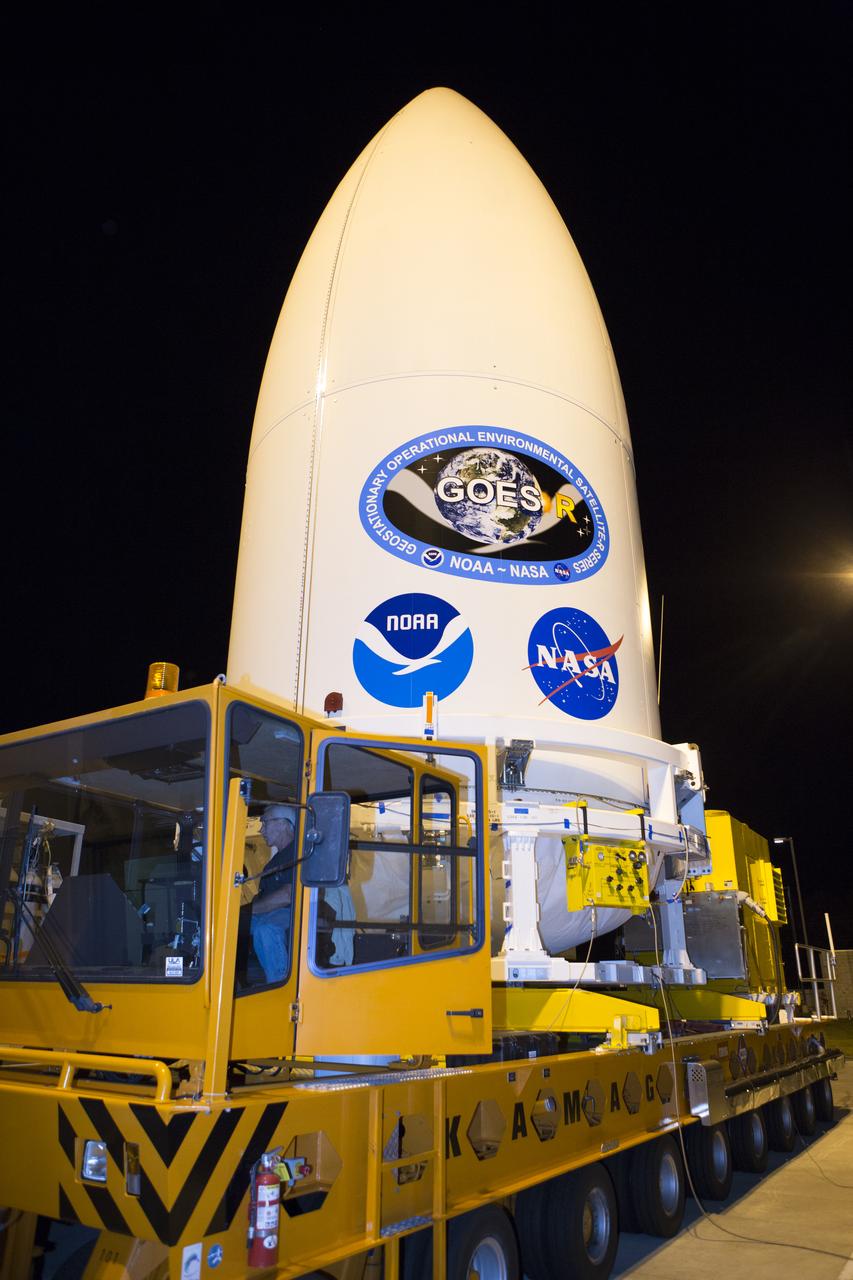
Enclosed in its payload fairing, NOAA's Geostationary Operational Environmental Satellite (GOES-R) departs from the Astrotech payload processing facility in Titusville, Florida, near NASA's Kennedy Space Center. GOES-R will be transported to the Vertical Integration Facility at Space Launch Complex 41 at Cape Canaveral Air Force Station. The satellite will launch aboard a United Launch Alliance Atlas V rocket in November. GOES-R is the first satellite in a series of next-generation NOAA GOES Satellites.
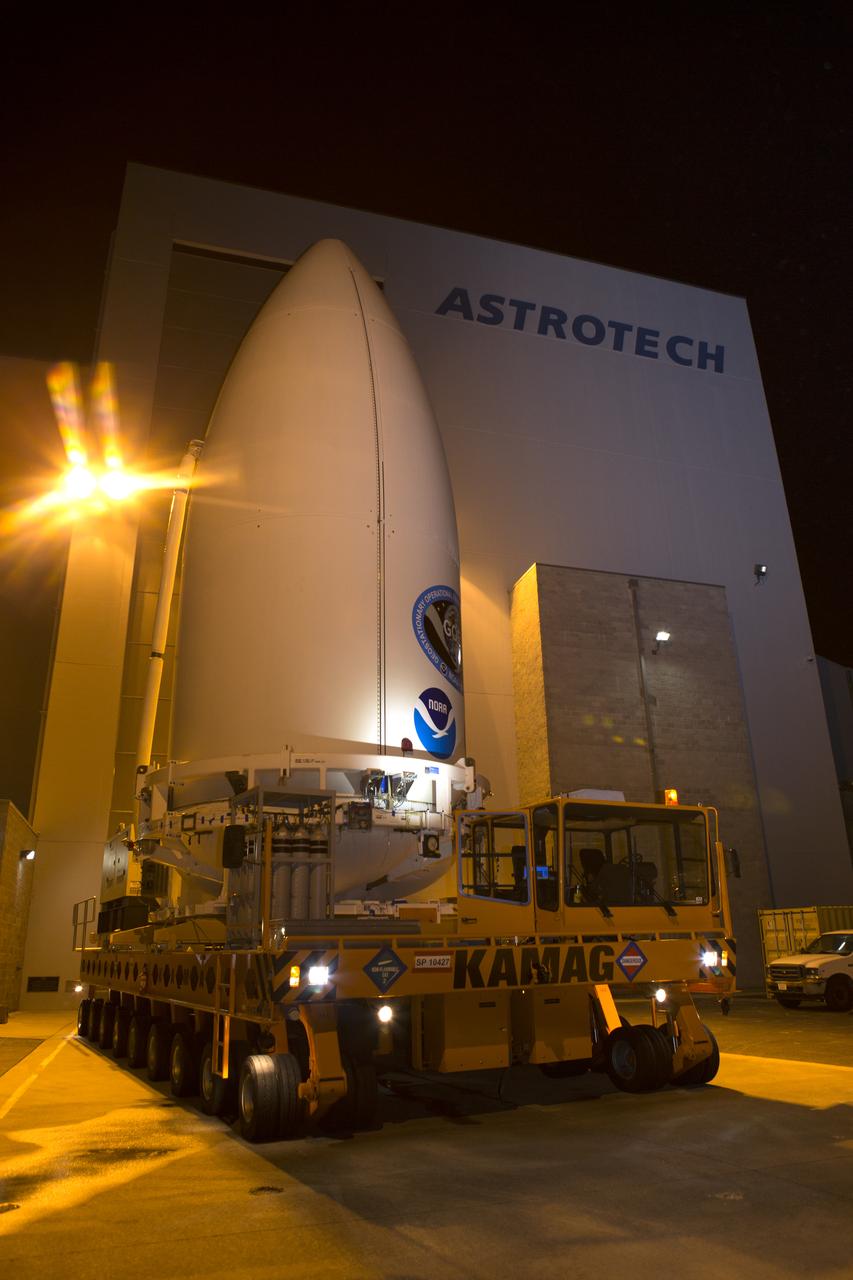
Enclosed in its payload fairing, NOAA's Geostationary Operational Environmental Satellite (GOES-R) departs from the Astrotech payload processing facility in Titusville, Florida, near NASA's Kennedy Space Center. GOES-R will be transported to the Vertical Integration Facility at Space Launch Complex 41 at Cape Canaveral Air Force Station. The satellite will launch aboard a United Launch Alliance Atlas V rocket in November. GOES-R is the first satellite in a series of next-generation NOAA GOES Satellites.
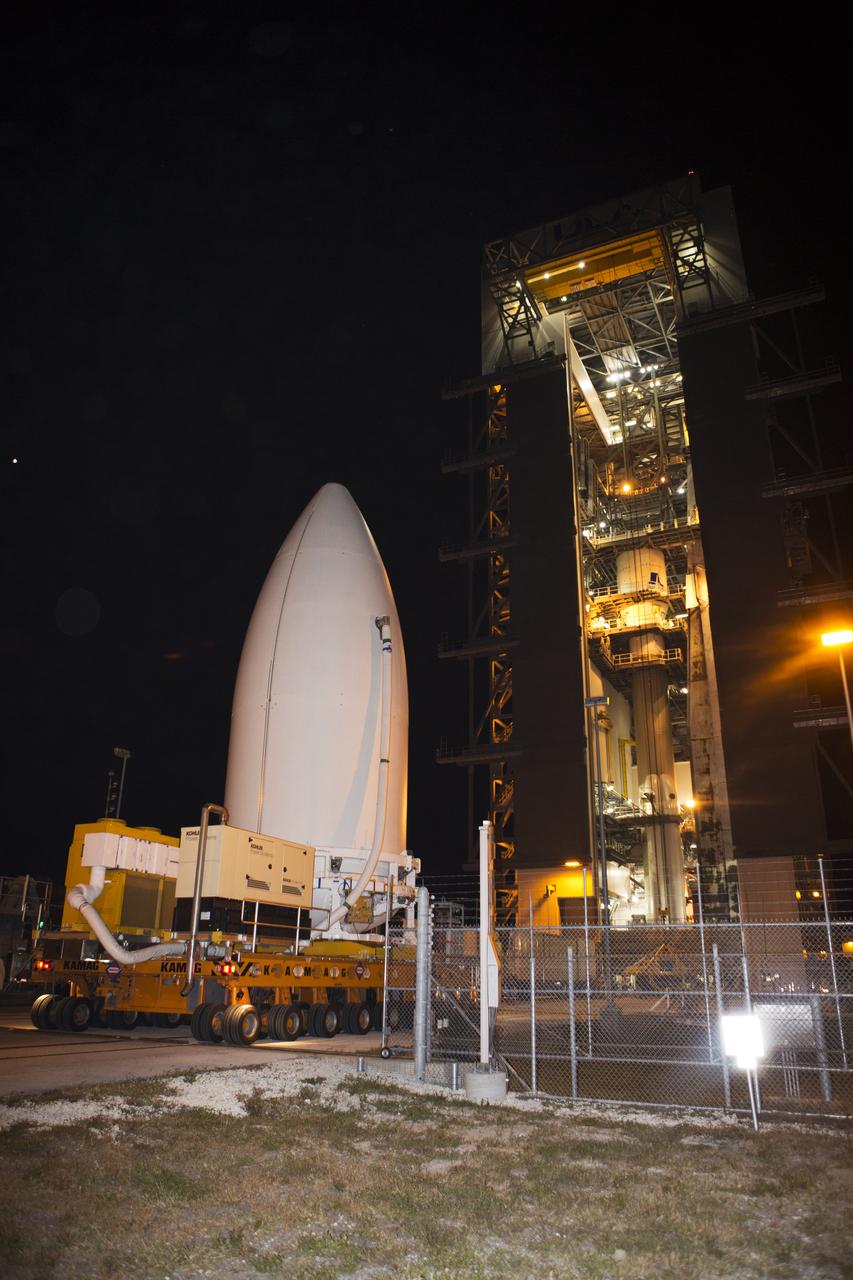
Enclosed in its payload fairing, NOAA's Geostationary Operational Environmental Satellite (GOES-R) arrives at the Vertical Integration Facility at Space Launch Complex 41 at Cape Canaveral Air Force Station. GOES-R will be stacked atop the United Launch Alliance Atlas V Centaur upper stage. The satellite will launch atop the Atlas V rocket in November. GOES-R is the first satellite in a series of next-generation NOAA GOES Satellites.
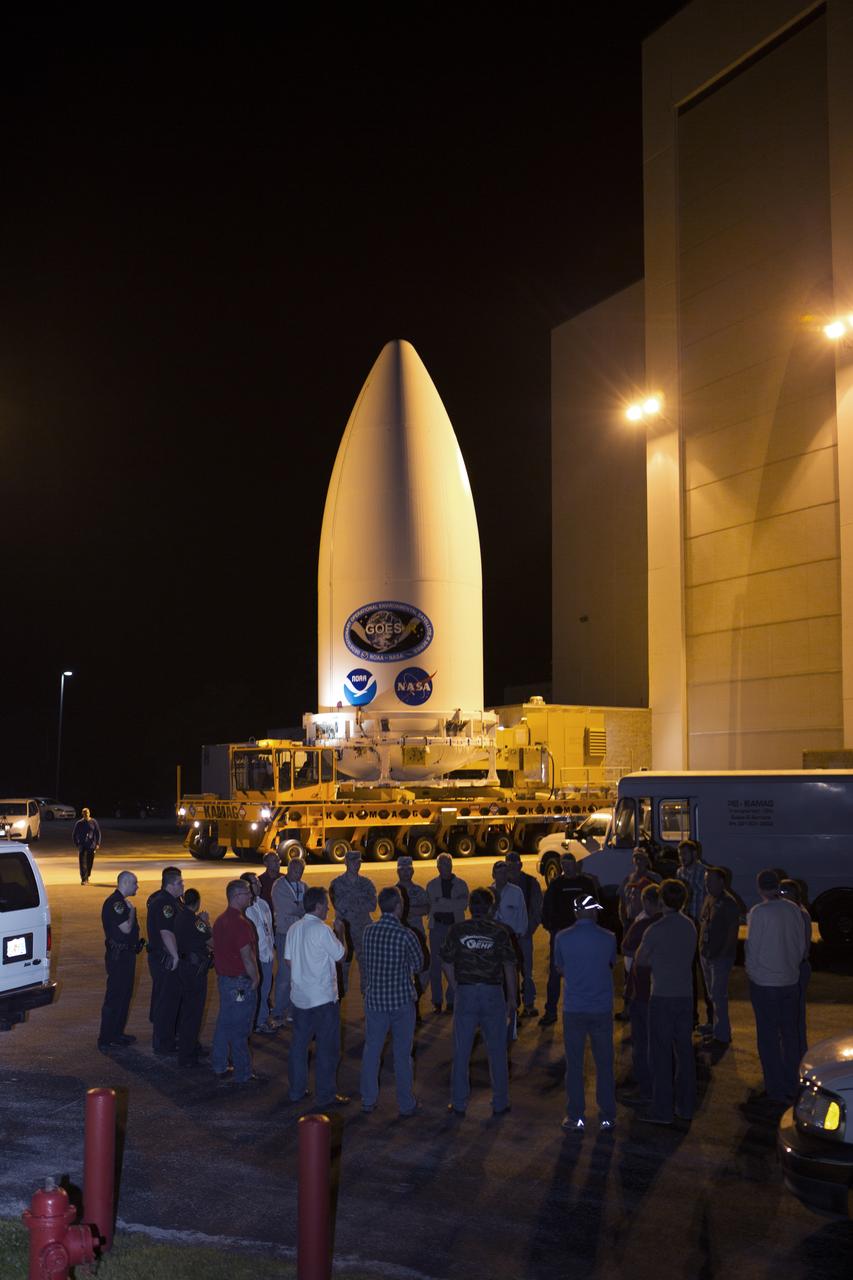
Enclosed in its payload fairing, NOAA's Geostationary Operational Environmental Satellite (GOES-R) departs from the Astrotech payload processing facility in Titusville, Florida, near NASA's Kennedy Space Center. GOES-R will be transported to the Vertical Integration Facility at Space Launch Complex 41 at Cape Canaveral Air Force Station. The satellite will launch aboard a United Launch Alliance Atlas V rocket in November. GOES-R is the first satellite in a series of next-generation NOAA GOES Satellites.
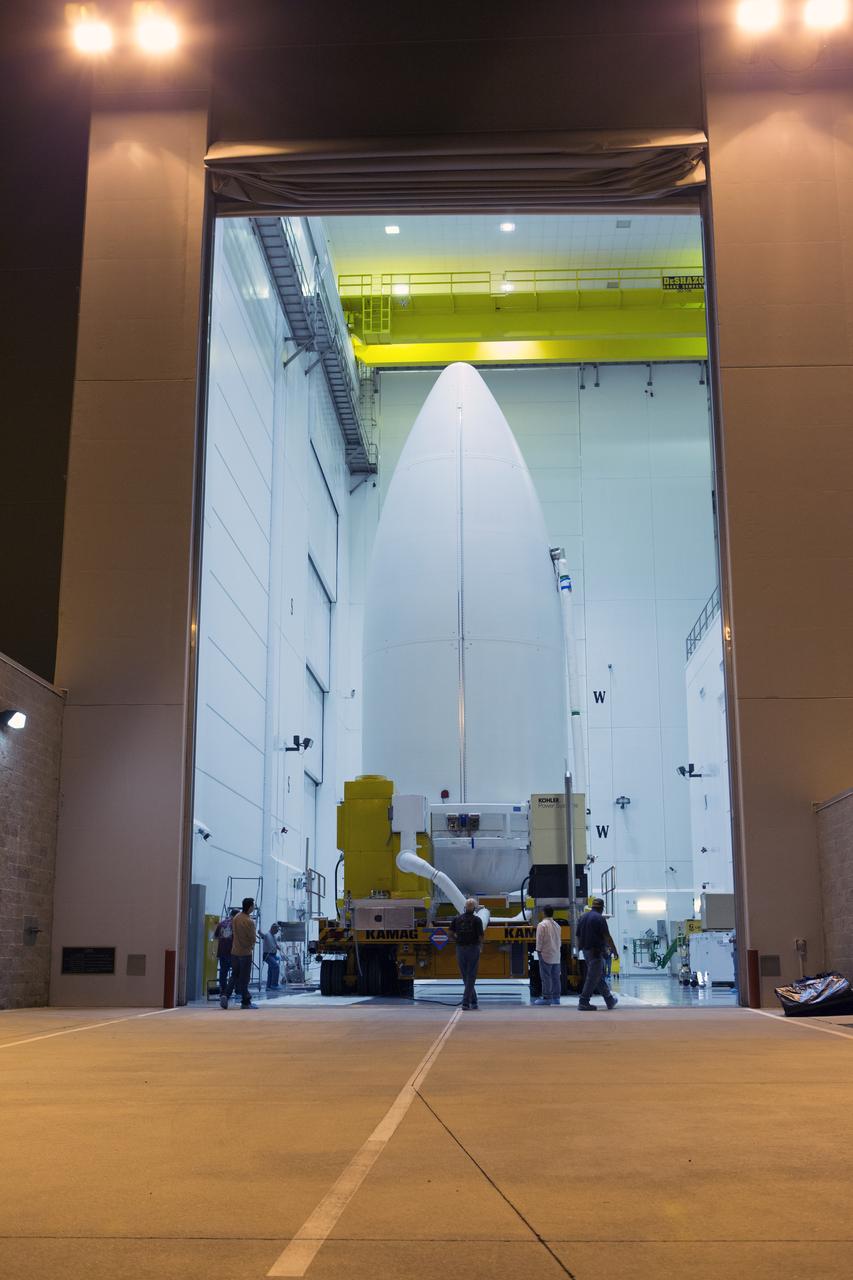
Enclosed in its payload fairing, NOAA's Geostationary Operational Environmental Satellite (GOES-R) is moved out of the Astrotech payload processing facility in Titusville, Florida, near NASA's Kennedy Space Center. GOES-R will be transported to the Vertical Integration Facility at Space Launch Complex 41 at Cape Canaveral Air Force Station. The satellite will launch aboard a United Launch Alliance Atlas V rocket in November. GOES-R is the first satellite in a series of next-generation NOAA GOES Satellites.

Enclosed in its payload fairing, NOAA's Geostationary Operational Environmental Satellite (GOES-R) arrives at the Vertical Integration Facility at Space Launch Complex 41 at Cape Canaveral Air Force Station. GOES-R will be stacked atop the United Launch Alliance Atlas V Centaur upper stage. The satellite will launch atop the Atlas V rocket in November. GOES-R is the first satellite in a series of next-generation NOAA GOES Satellites.
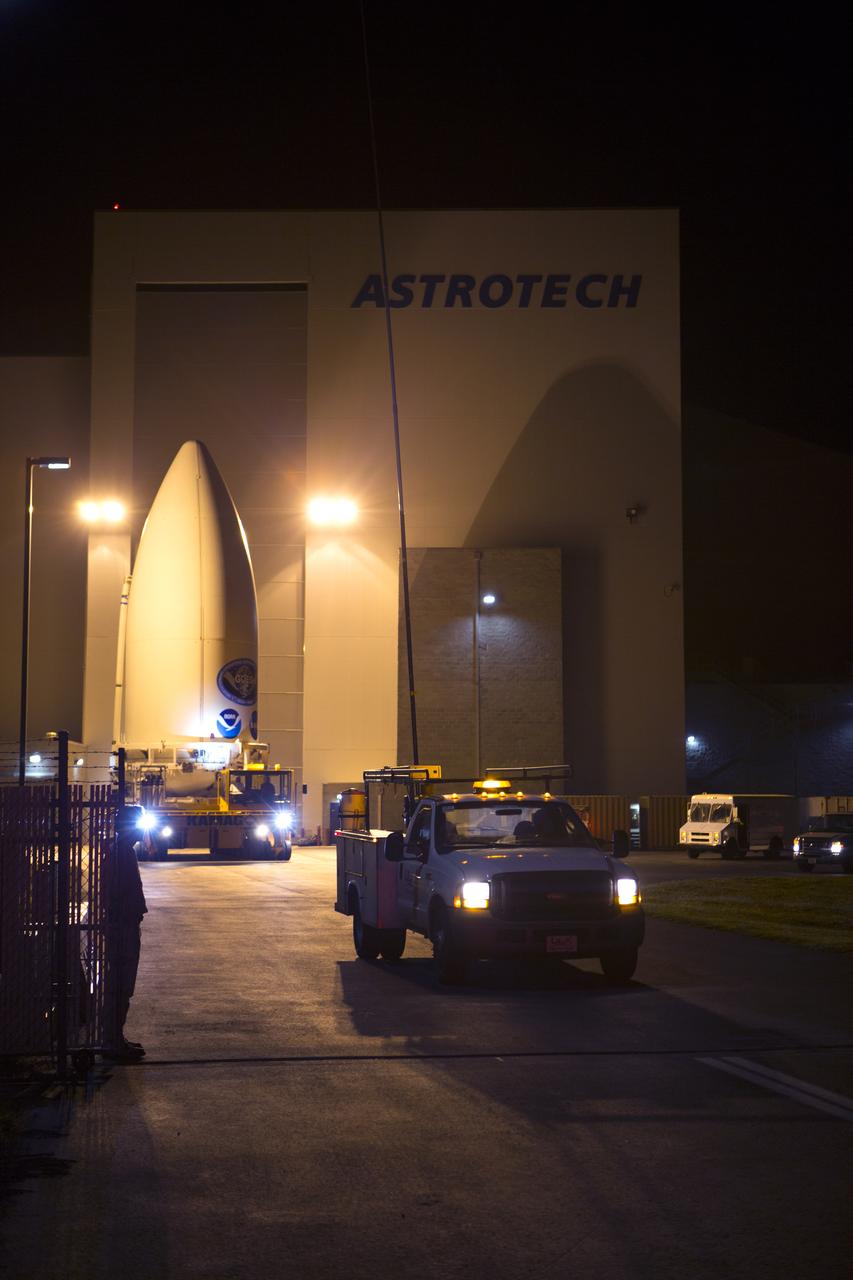
Enclosed in its payload fairing, NOAA's Geostationary Operational Environmental Satellite (GOES-R) departs from the Astrotech payload processing facility in Titusville, Florida, near NASA's Kennedy Space Center. GOES-R will be transported to the Vertical Integration Facility at Space Launch Complex 41 at Cape Canaveral Air Force Station. The satellite will launch aboard a United Launch Alliance Atlas V rocket in November. GOES-R is the first satellite in a series of next-generation NOAA GOES Satellites.
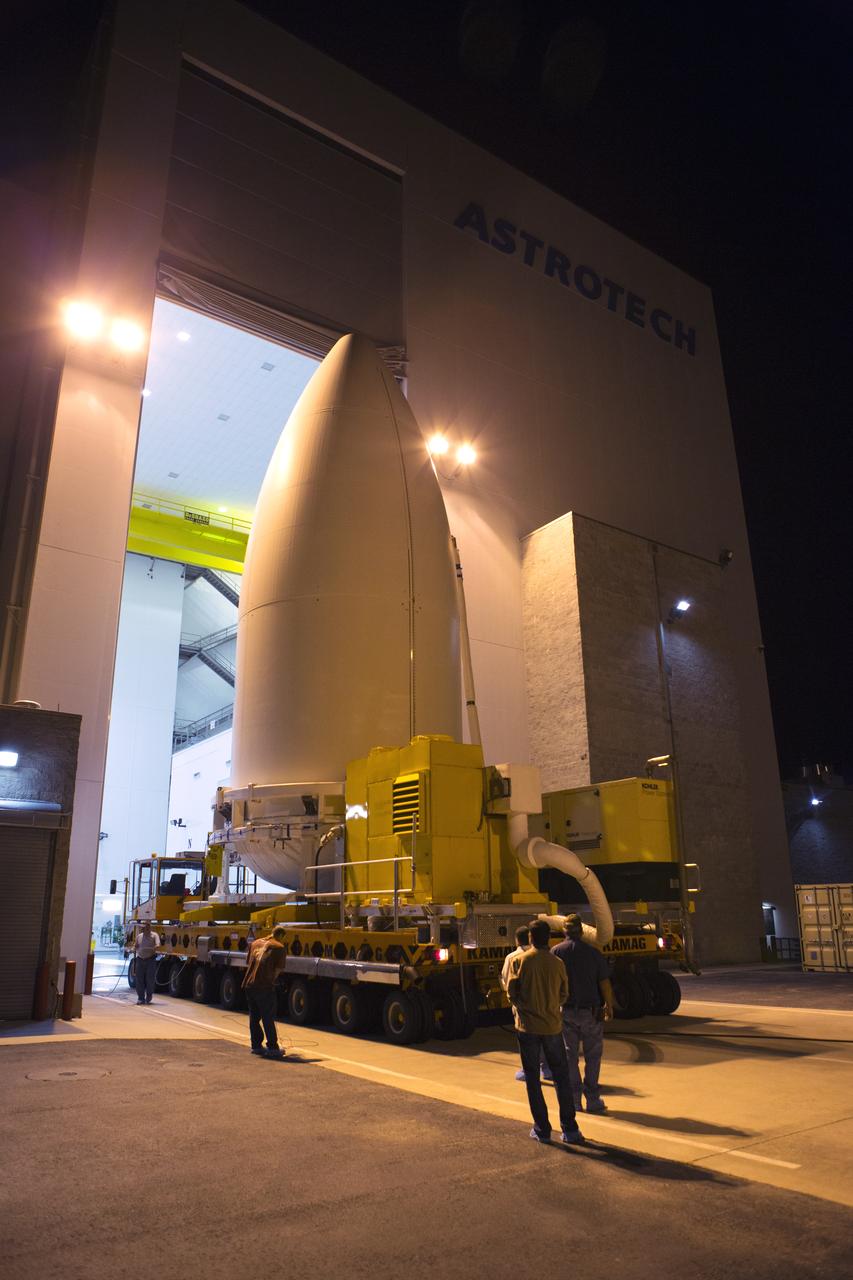
Enclosed in its payload fairing, NOAA's Geostationary Operational Environmental Satellite (GOES-R) emerges from the Astrotech payload processing facility in Titusville, Florida, near NASA's Kennedy Space Center. GOES-R will be transported to the Vertical Integration Facility at Space Launch Complex 41 at Cape Canaveral Air Force Station. The satellite will launch aboard a United Launch Alliance Atlas V rocket in November. GOES-R is the first satellite in a series of next-generation NOAA GOES Satellites.
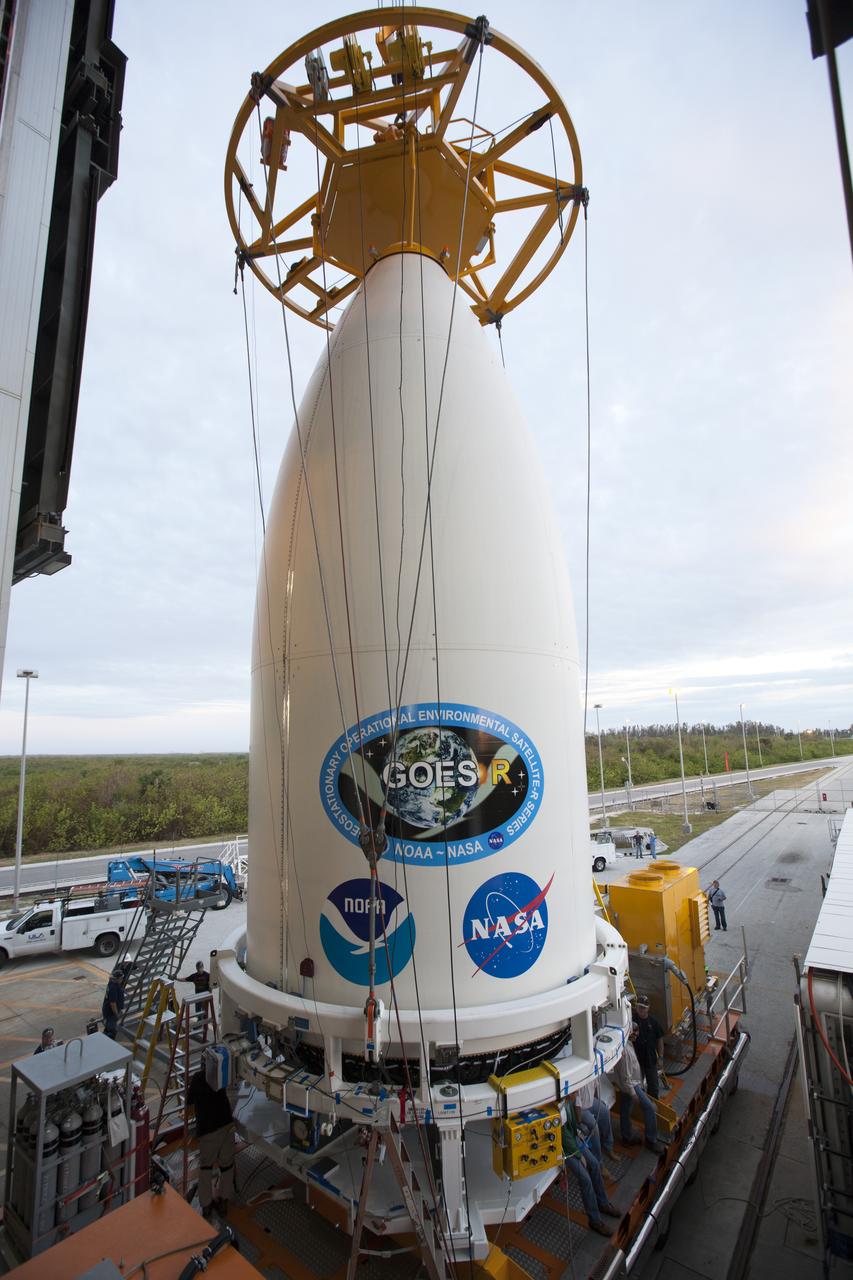
A crane has been attached to the payload fairing containing NOAA's Geostationary Operational Environmental Satellite (GOES-R) at the Vertical Integration Facility at Space Launch Complex 41 at Cape Canaveral Air Force Station in Florida. GOES-R will be mated to the United Launch Alliance Atlas V Centaur upper stage in preparation for launch in November. GOES-R is the first satellite in a series of next-generation NOAA GOES Satellites.
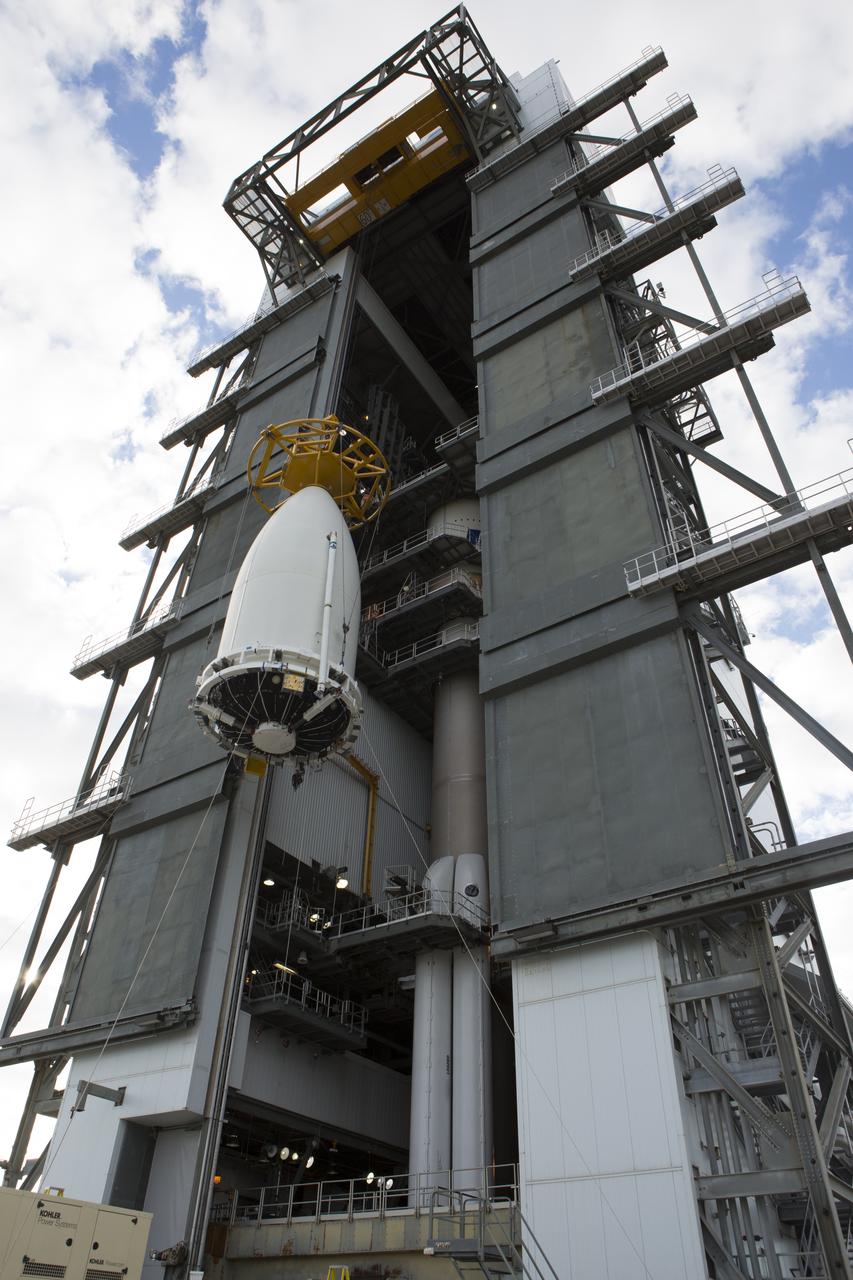
A crane is used to lift the payload fairing containing NOAA's Geostationary Operational Environmental Satellite (GOES-R) at the Vertical Integration Facility at Space Launch Complex 41 at Cape Canaveral Air Force Station in Florida. GOES-R will be mated to the United Launch Alliance Atlas V Centaur upper stage in preparation for launch in November. GOES-R is the first satellite in a series of next-generation NOAA GOES Satellites.
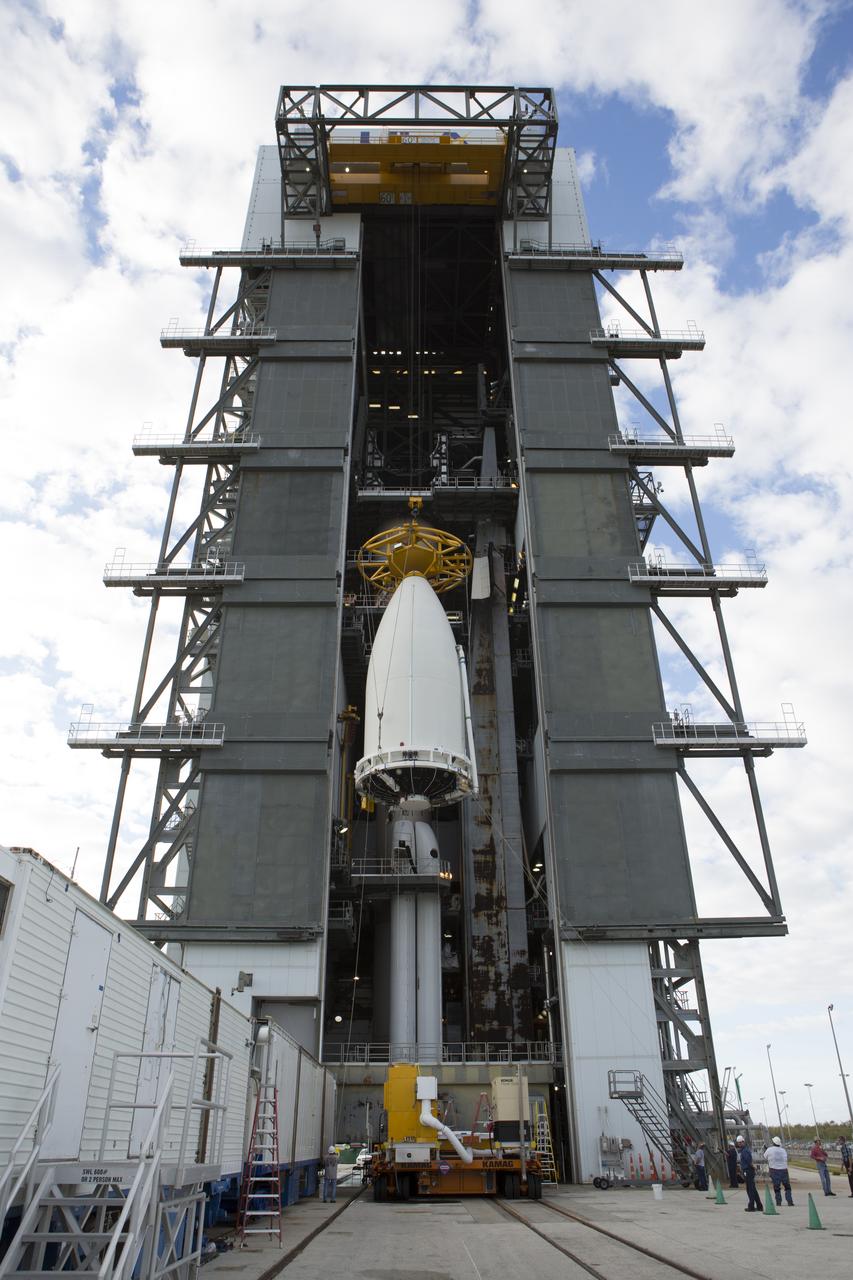
A crane is used to lift the payload fairing containing NOAA's Geostationary Operational Environmental Satellite (GOES-R) at the Vertical Integration Facility at Space Launch Complex 41 at Cape Canaveral Air Force Station in Florida. GOES-R will be mated to the United Launch Alliance Atlas V Centaur upper stage in preparation for launch in November. GOES-R is the first satellite in a series of next-generation NOAA GOES Satellites.
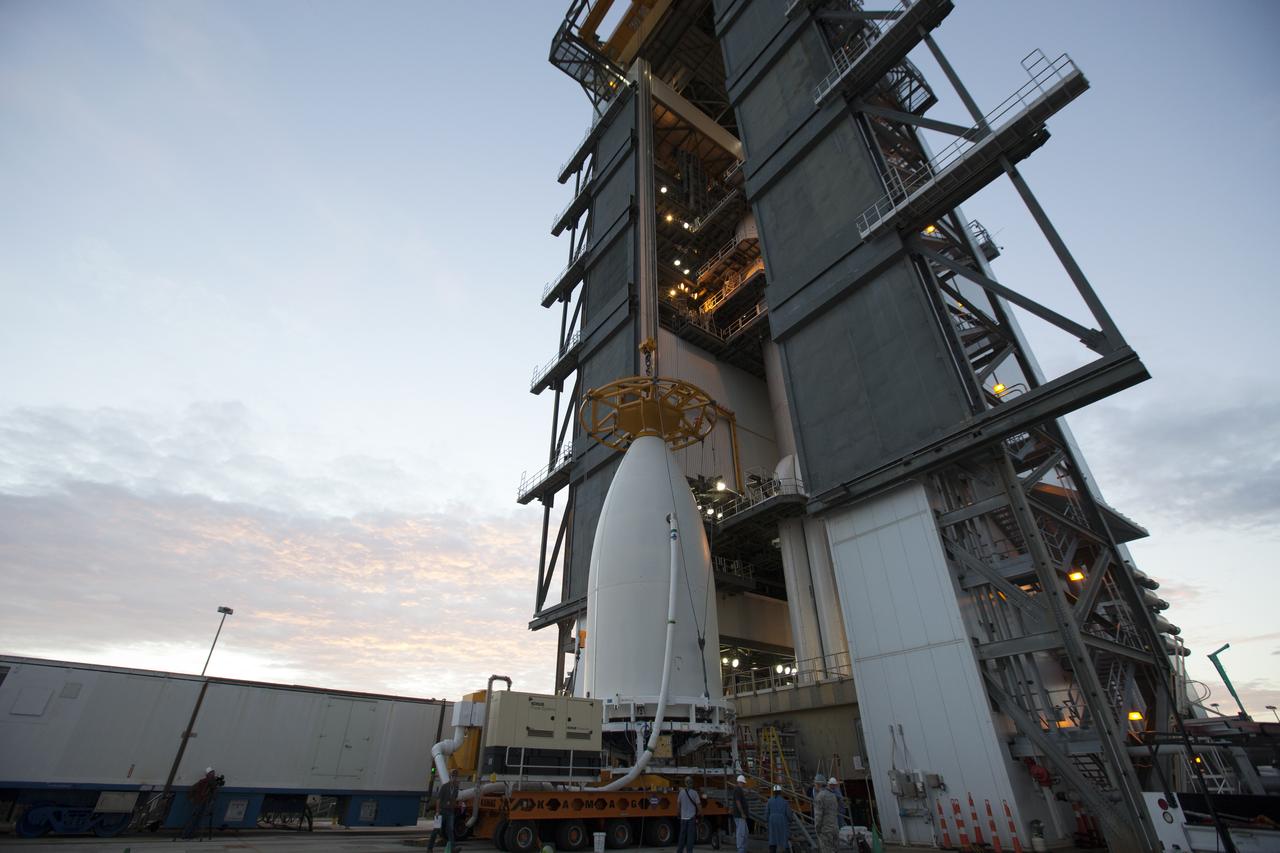
Preparations are underway to lift NOAA's Geostationary Operational Environmental Satellite (GOES-R), enclosed in its payload fairing at the Vertical Integration Facility at Space Launch Complex 41 at Cape Canaveral Air Force Station in Florida. GOES-R will be mated to the United Launch Alliance Atlas V Centaur upper stage in preparation for launch in November. GOES-R is the first satellite in a series of next-generation NOAA GOES Satellites.
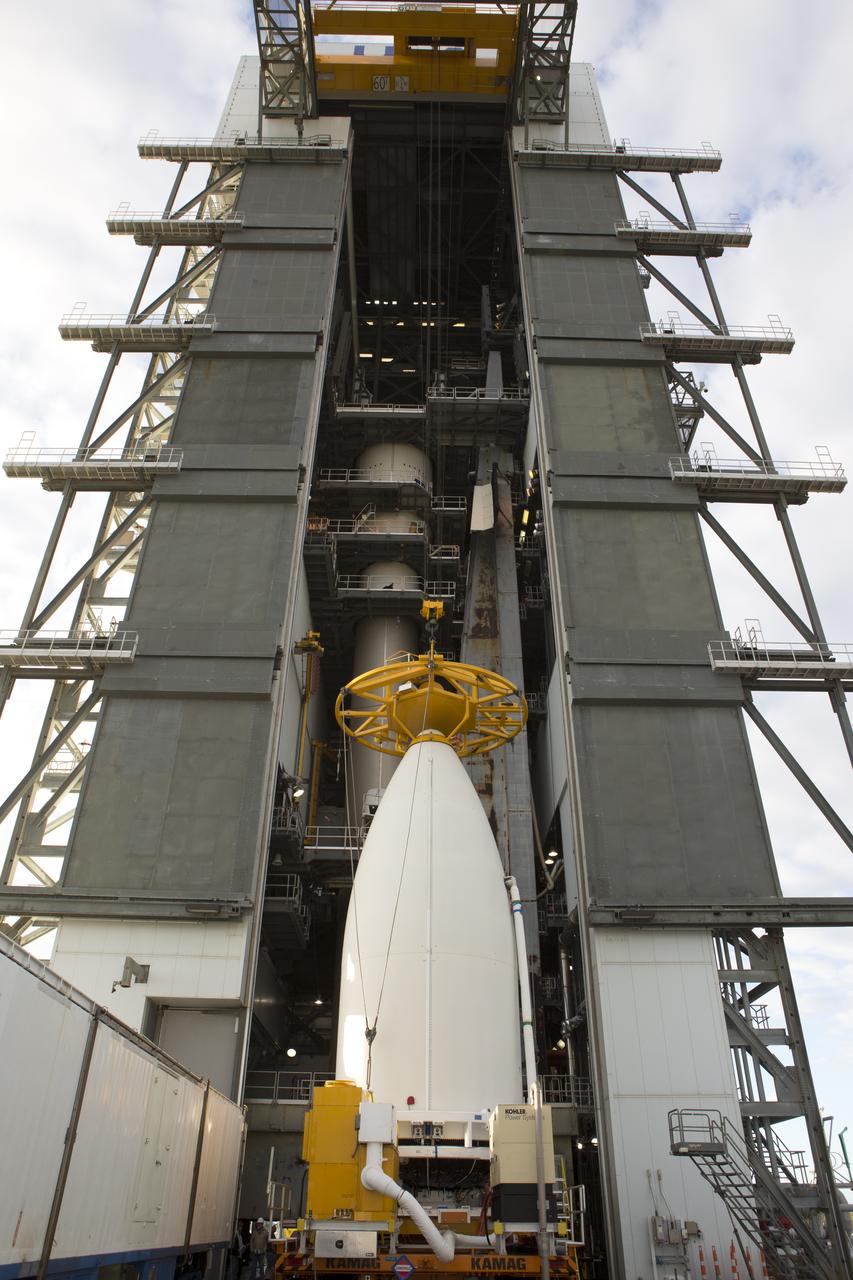
A crane begins to lift the payload fairing containing NOAA's Geostationary Operational Environmental Satellite (GOES-R) at the Vertical Integration Facility at Space Launch Complex 41 at Cape Canaveral Air Force Station in Florida. GOES-R will be mated to the United Launch Alliance Atlas V Centaur upper stage in preparation for launch in November. GOES-R is the first satellite in a series of next-generation NOAA GOES Satellites.
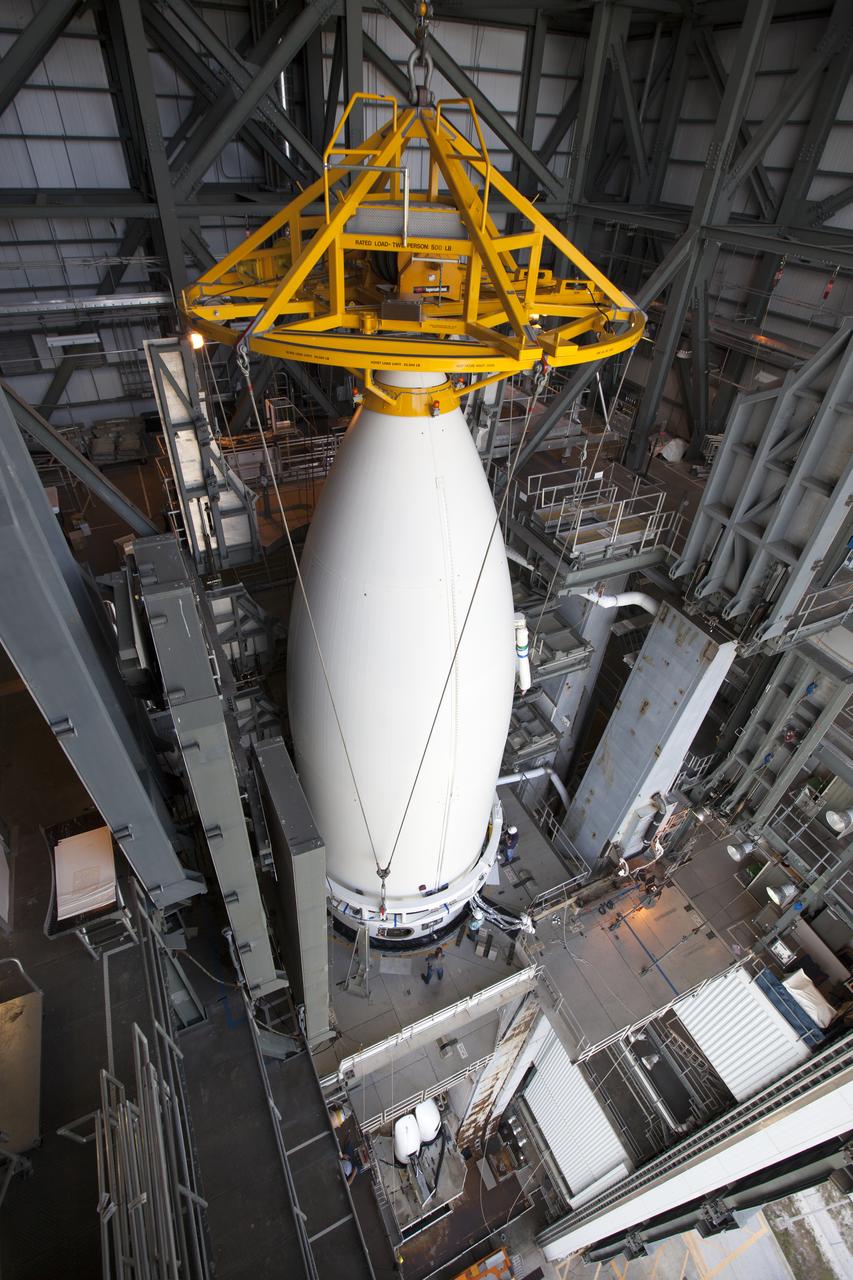
Enclosed in its payload fairing, NOAA's Geostationary Operational Environmental Satellite (GOES-R) is lifted into the Vertical Integration Facility at Space Launch Complex 41 at Cape Canaveral Air Force Station in Florida. GOES-R will be mated to the United Launch Alliance Atlas V Centaur upper stage in preparation for launch aboard the rocket in November. GOES-R is the first satellite in a series of next-generation NOAA GOES Satellites.
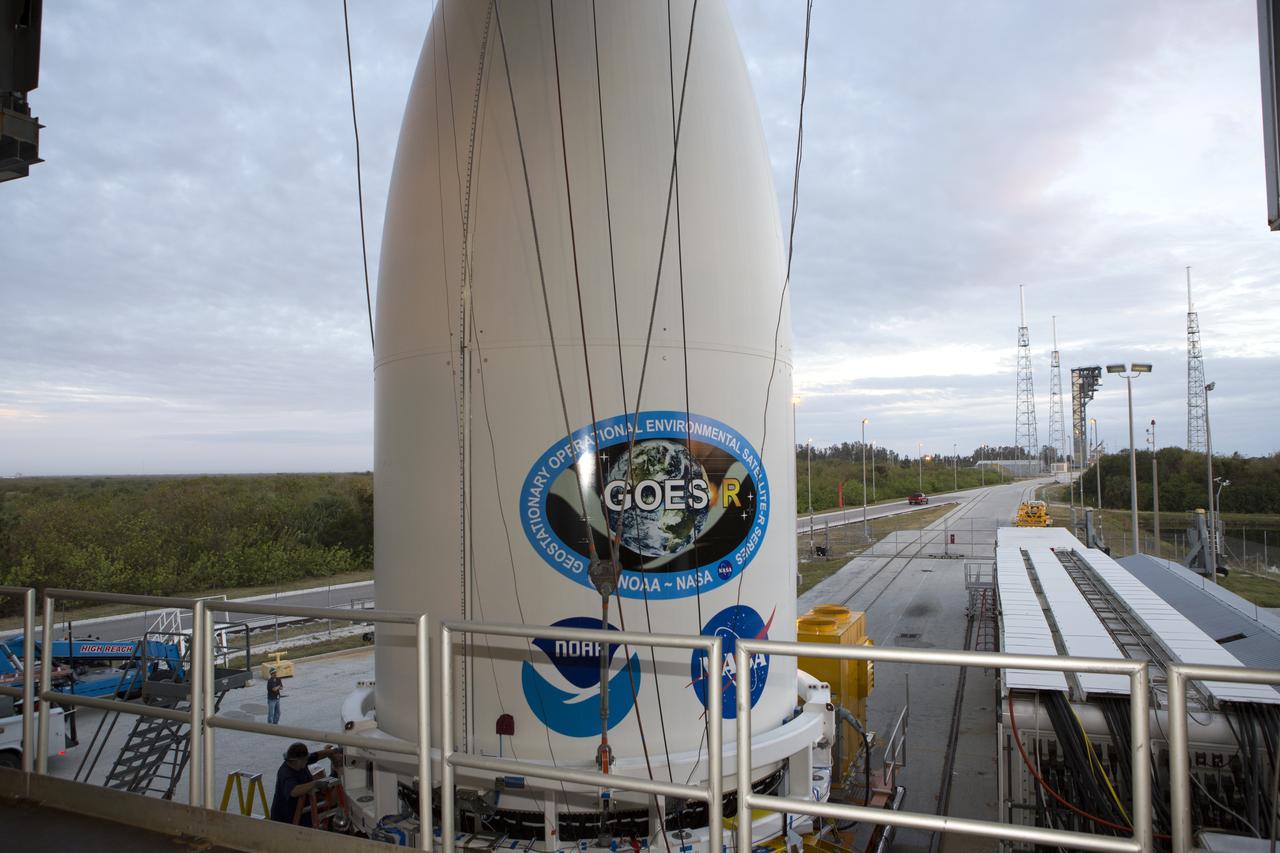
Preparations are underway to lift NOAA's Geostationary Operational Environmental Satellite (GOES-R), enclosed in its payload fairing at the Vertical Integration Facility at Space Launch Complex 41 at Cape Canaveral Air Force Station in Florida. GOES-R will be mated to the United Launch Alliance Atlas V Centaur upper stage in preparation for launch in November. GOES-R is the first satellite in a series of next-generation NOAA GOES Satellites.
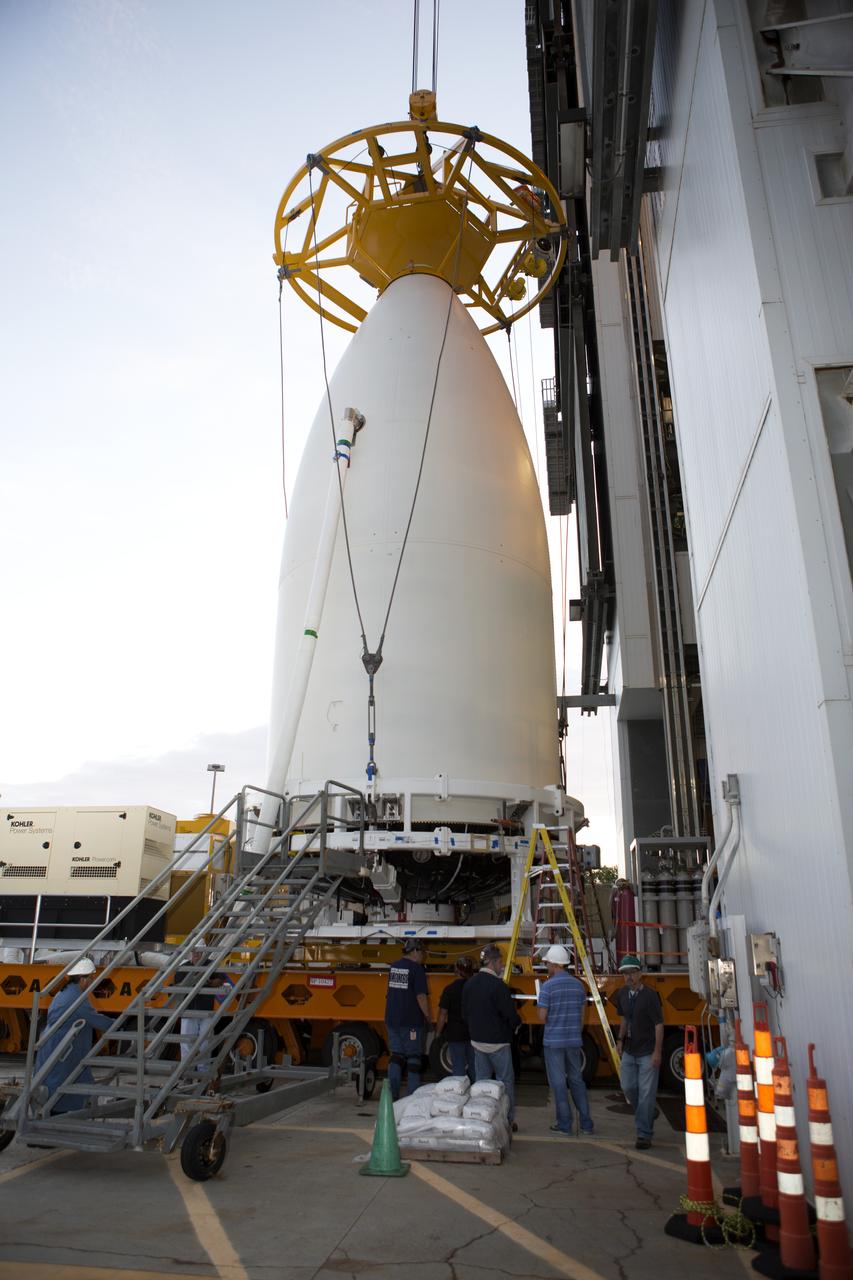
Preparations are underway to lift NOAA's Geostationary Operational Environmental Satellite (GOES-R), enclosed in its payload fairing at the Vertical Integration Facility at Space Launch Complex 41 at Cape Canaveral Air Force Station in Florida. GOES-R will be mated to the United Launch Alliance Atlas V Centaur upper stage in preparation for launch in November. GOES-R is the first satellite in a series of next-generation NOAA GOES Satellites.

On the same day it arrived, the Atlas V Centaur stage is moved into the Atlas Spaceflight Operations Center near Space Launch Complex 41 at Cape Canaveral Air Force Station in Florida. The Geostationary Operational Environmental Satellite (GOES-R) will launch aboard the Atlas V rocket in November. GOES-R will be the first satellite in a series of next-generation NOAA GOES Satellites.