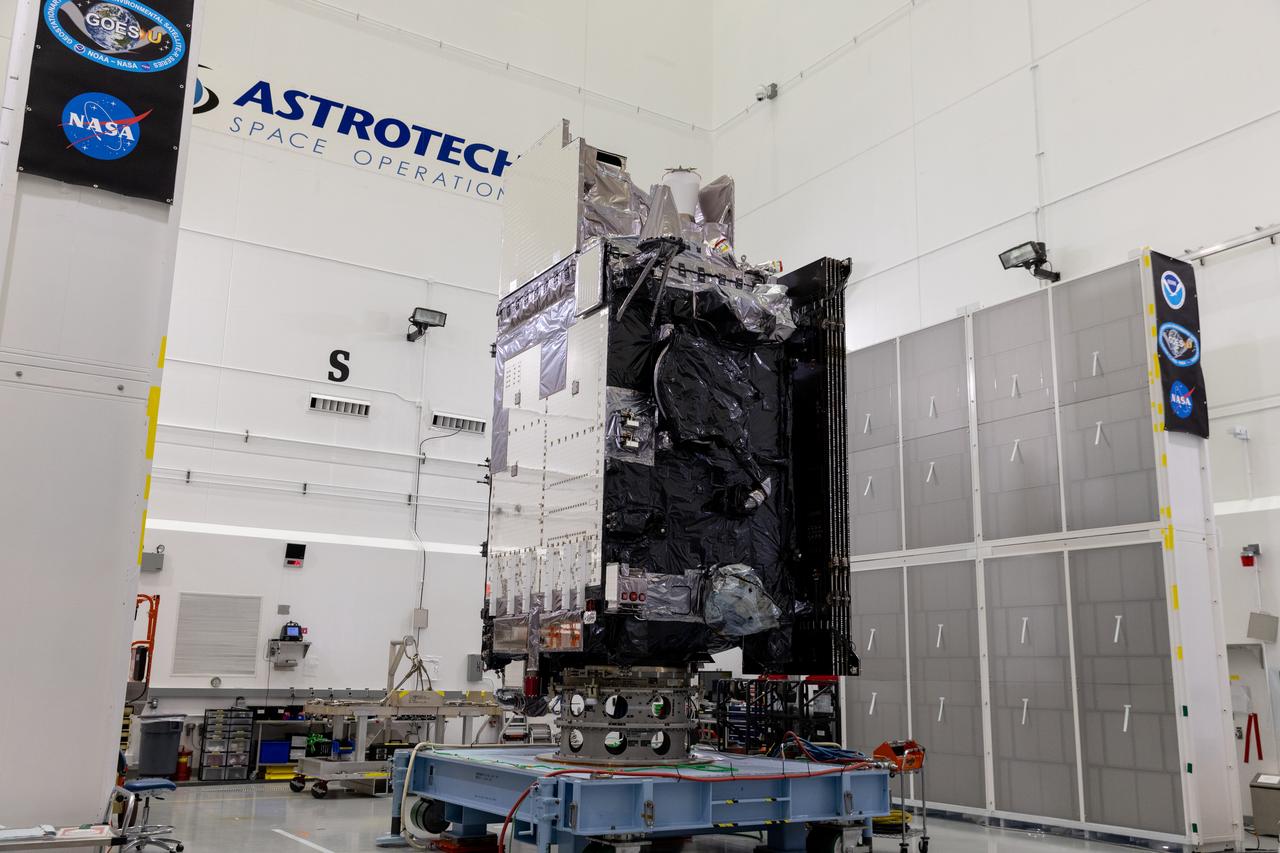
The National Oceanic and Atmospheric Administration (NOAA) Geostationary Operational Environmental Satellite-U (GOES-U) stands vertical on a spacecraft dolly in a high bay at the Astrotech Space Operations Facility near the agency’s Kennedy Space Center in Florida during a NASA-hosted media day on Thursday, June 6, 2024. Part of a collaborative NOAA and NASA program, GOES-U is the last in a series of advanced geostationary weather satellites. Data from the GOES-R satellite series enables forecasters to predict, observe, and track local weather events that affect public safety like thunderstorms, hurricanes, and wildfires.
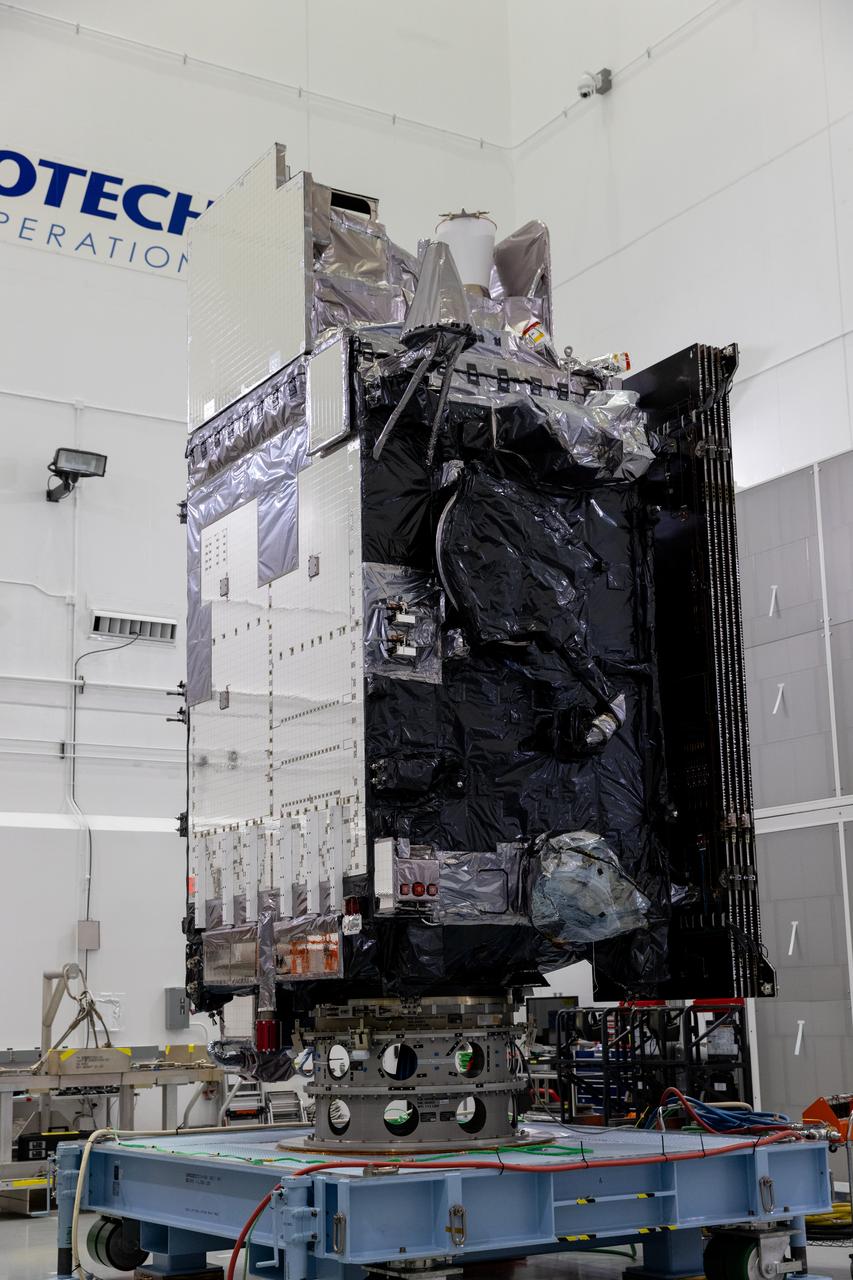
The National Oceanic and Atmospheric Administration (NOAA) Geostationary Operational Environmental Satellite-U (GOES-U) stands vertical on a spacecraft dolly in a high bay at the Astrotech Space Operations Facility near the agency’s Kennedy Space Center in Florida during a NASA-hosted media day on Thursday, June 6, 2024. Part of a collaborative NOAA and NASA program, GOES-U is the last in a series of advanced geostationary weather satellites. Data from the GOES-R satellite series enables forecasters to predict, observe, and track local weather events that affect public safety like thunderstorms, hurricanes, and wildfires.
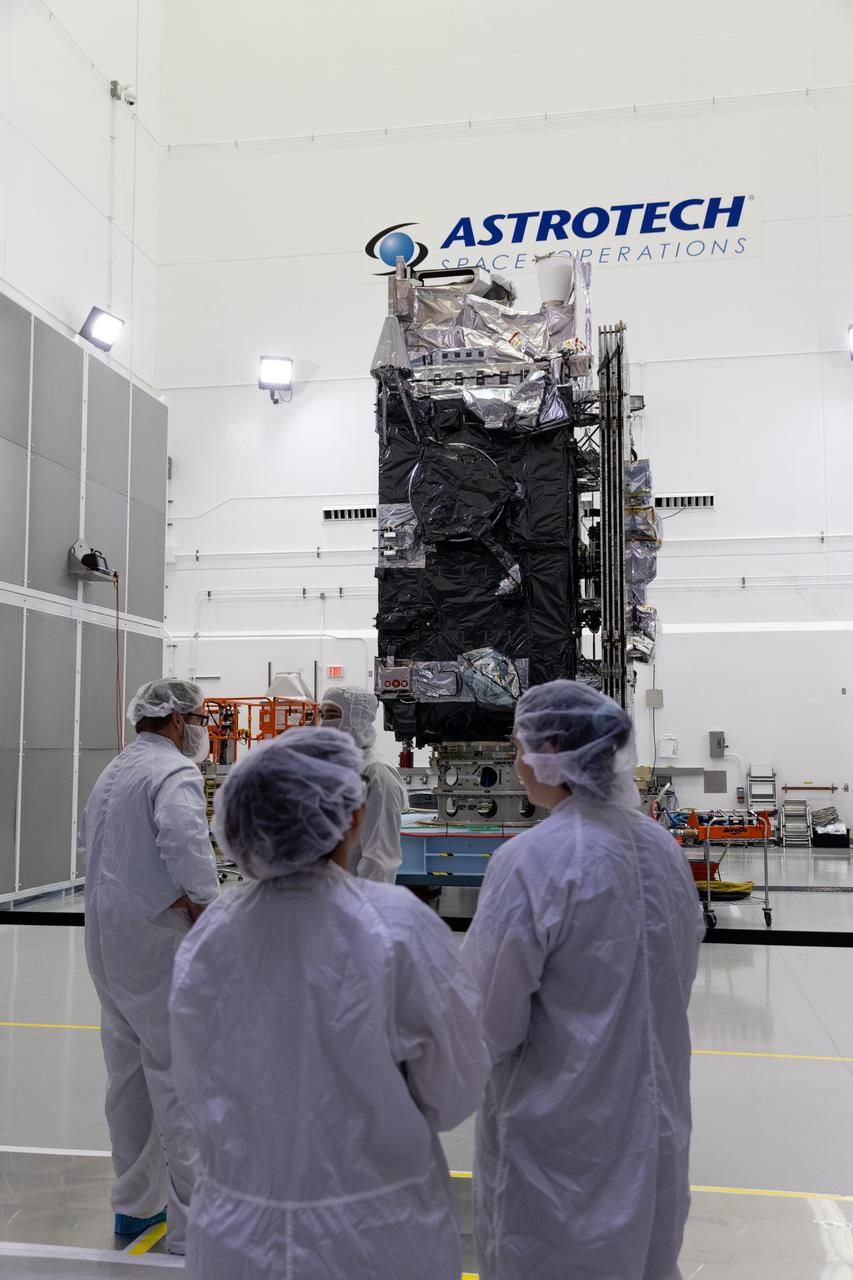
Members of the news media had an opportunity for an up-close look at the National Oceanic and Atmospheric Administration (NOAA) Geostationary Operational Environmental Satellite U (GOES-U) on Thursday, June 6, 2024, inside the Astrotech Space Operations Facility in Titusville, near NASA’s Kennedy Space Center in Florida. Journalists visited Astrotech as part of a NASA-hosted media day to conduct interviews and photograph the satellite that is the final addition to NOAA’s GOES-R satellite series, which serve a critical role in providing continuous coverage of the Western Hemisphere, including monitoring tropical systems in the eastern Pacific and Atlantic Oceans.
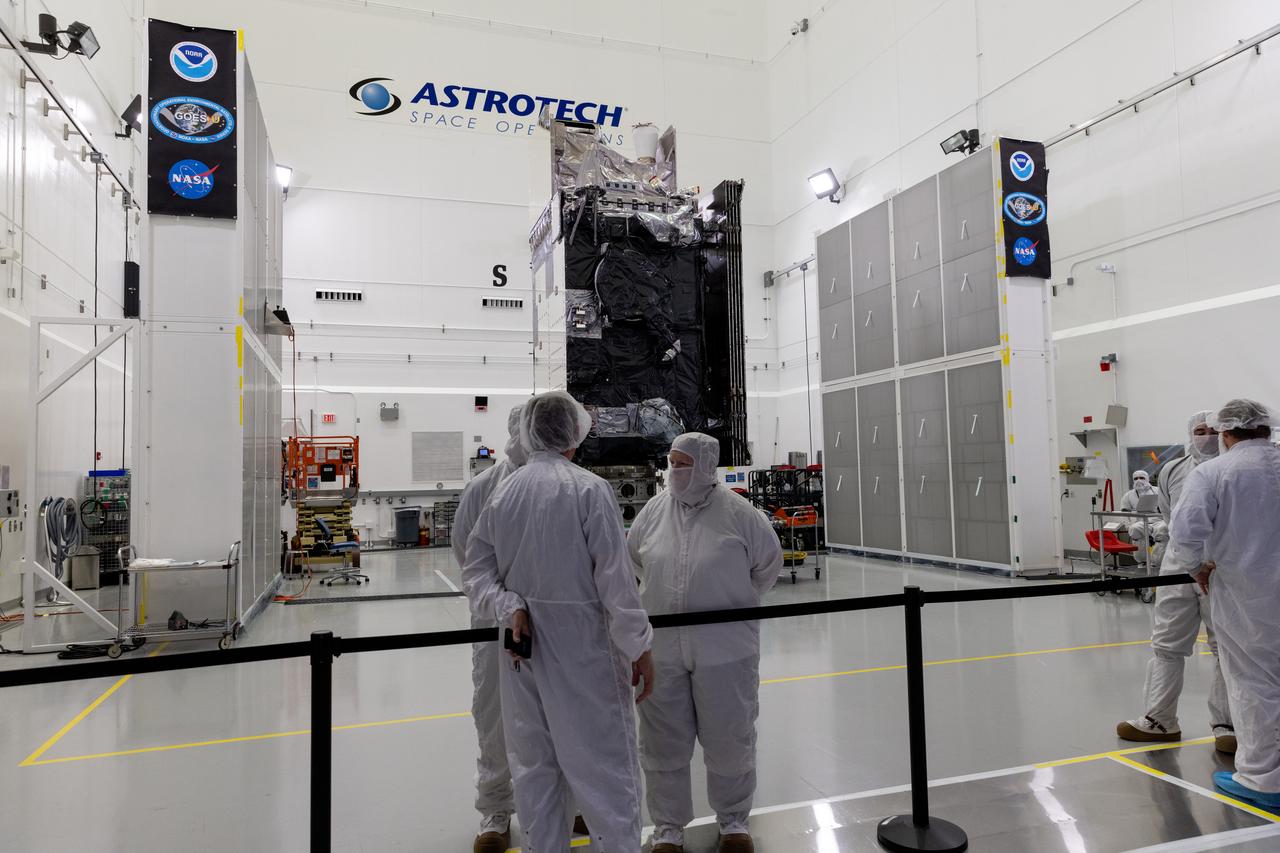
Members of the news media had an opportunity for an up-close look at the National Oceanic and Atmospheric Administration (NOAA) Geostationary Operational Environmental Satellite U (GOES-U) on Thursday, June 6, 2024, inside the Astrotech Space Operations Facility in Titusville, near NASA’s Kennedy Space Center in Florida. Journalists visited Astrotech as part of a NASA-hosted media day to conduct interviews and photograph the satellite that is the final addition to NOAA’s GOES-R satellite series, which serve a critical role in providing continuous coverage of the Western Hemisphere, including monitoring tropical systems in the eastern Pacific and Atlantic Oceans.
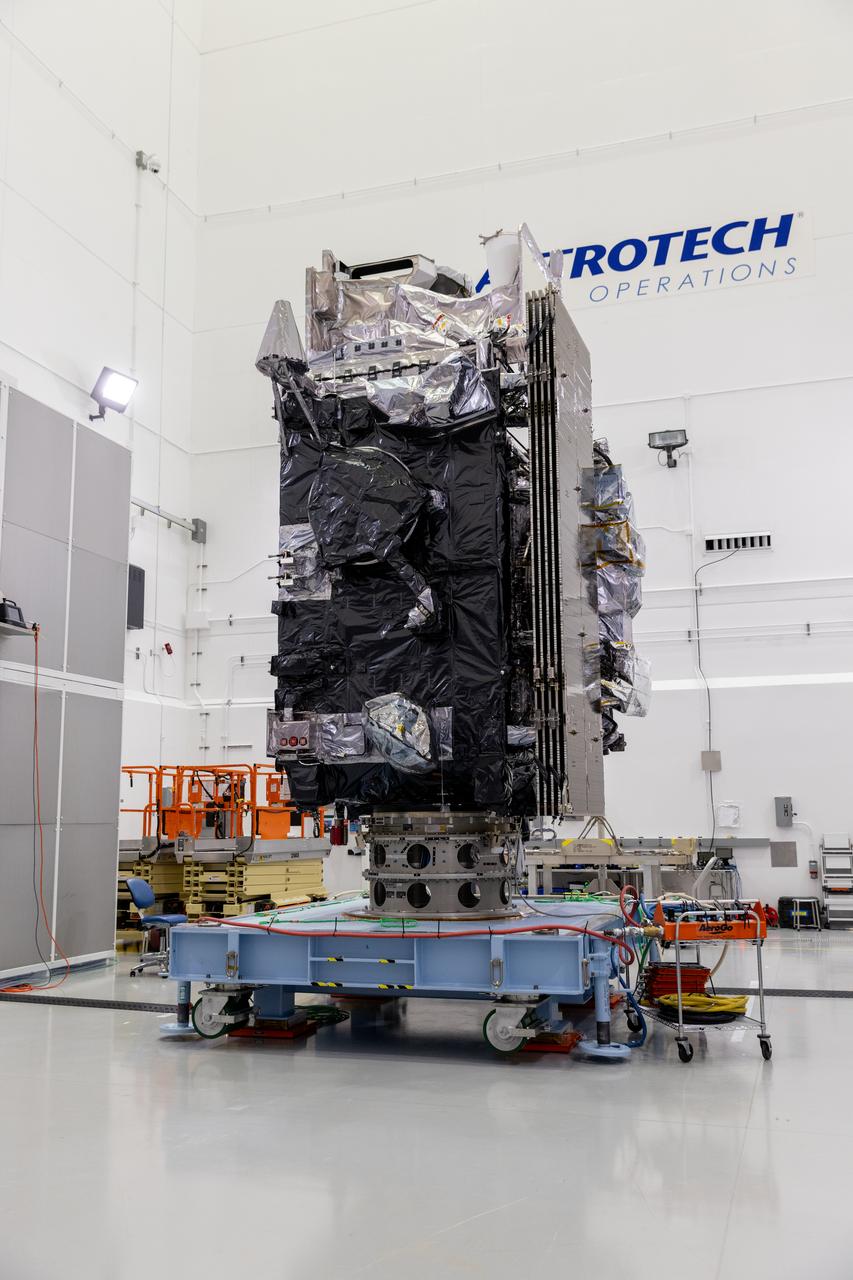
The National Oceanic and Atmospheric Administration (NOAA) Geostationary Operational Environmental Satellite-U (GOES-U) stands vertical on a spacecraft dolly in a high bay at the Astrotech Space Operations Facility near the agency’s Kennedy Space Center in Florida during a NASA-hosted media day on Thursday, June 6, 2024. Part of a collaborative NOAA and NASA program, GOES-U is the last in a series of advanced geostationary weather satellites. Data from the GOES-R satellite series enables forecasters to predict, observe, and track local weather events that affect public safety like thunderstorms, hurricanes, and wildfires.
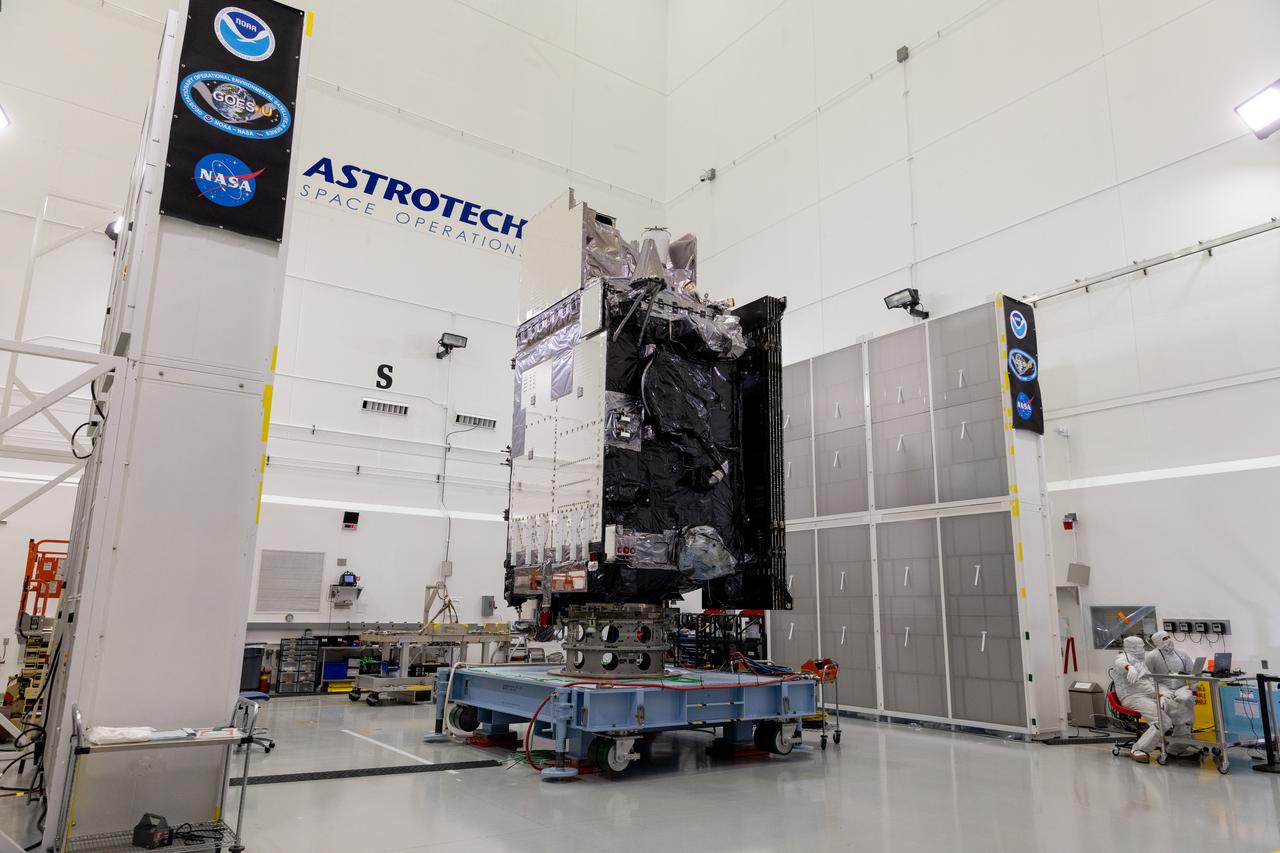
The National Oceanic and Atmospheric Administration (NOAA) Geostationary Operational Environmental Satellite-U (GOES-U) stands vertical on a spacecraft dolly in a high bay at the Astrotech Space Operations Facility near the agency’s Kennedy Space Center in Florida during a NASA-hosted media day on Thursday, June 6, 2024. Part of a collaborative NOAA and NASA program, GOES-U is the last in a series of advanced geostationary weather satellites. Data from the GOES-R satellite series enables forecasters to predict, observe, and track local weather events that affect public safety like thunderstorms, hurricanes, and wildfires.