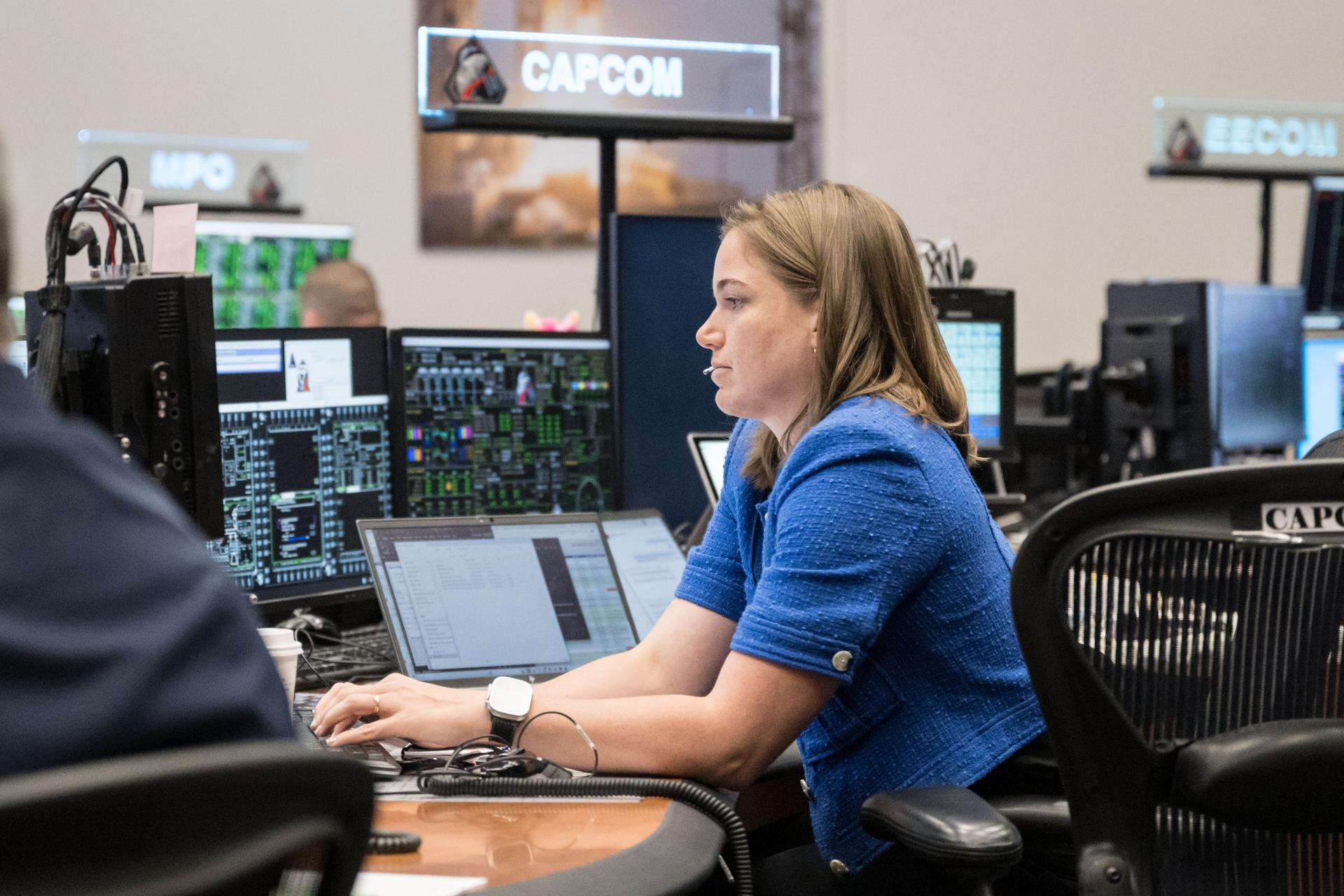
jsc2026e020046 (April 2, 2026) – CSA (Canadian Space Agency) astronaut and backup Artemis II crew member Jenni Gibbons serves as capsule communicator (capcom) during the mission’s translunar injection burn, which sent the crew in Orion out of Earth orbit and on a trajectory toward the Moon.
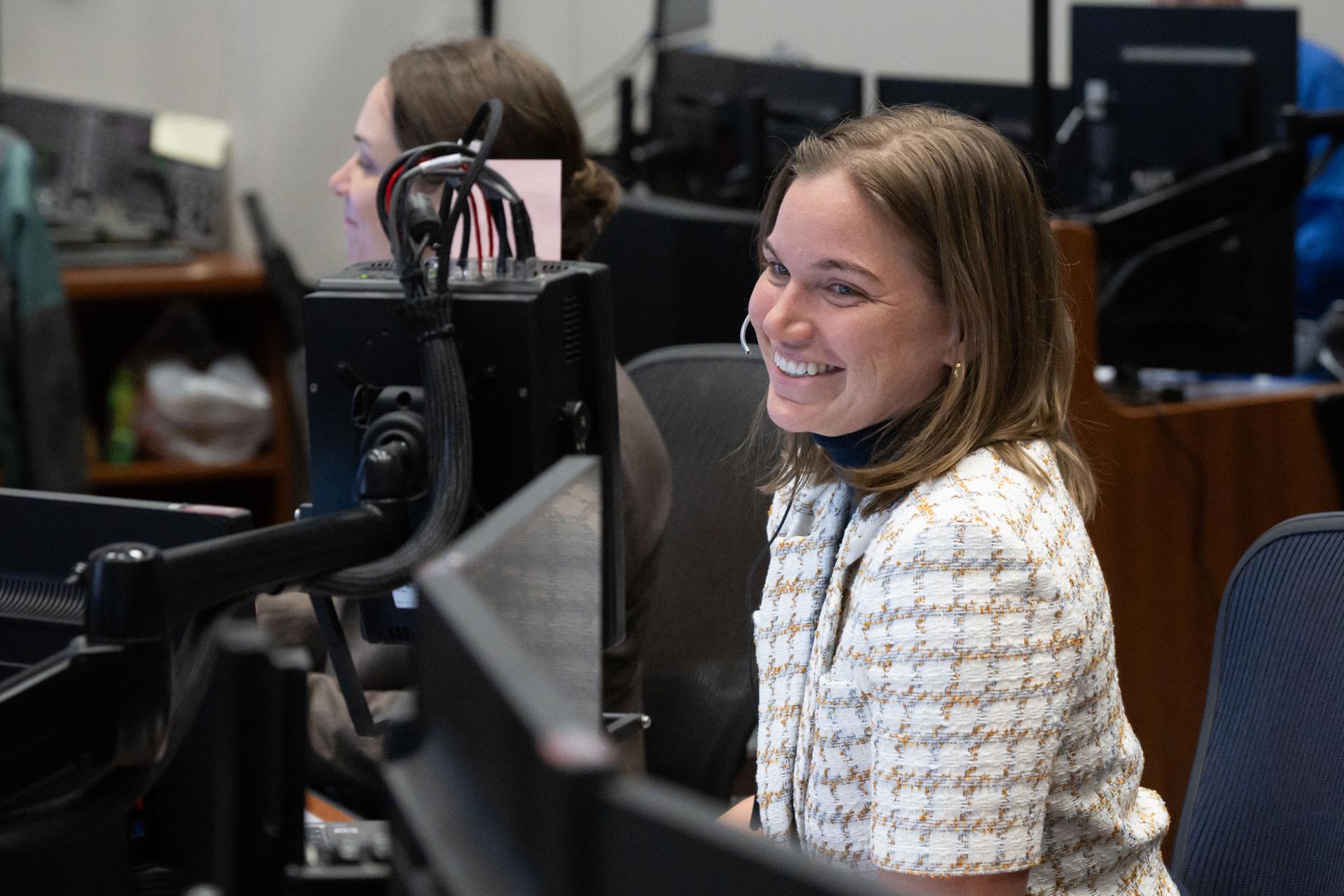
jsc2026e021107 (April 4, 2026) – CSA (Canadian Space Agency) astronaut and backup Artemis II crew member Jenni Gibbons serves as capsule communicator (capcom) during an Orion manual piloting demonstration on the fourth day of the mission. Credit: NASA/Bill Stafford
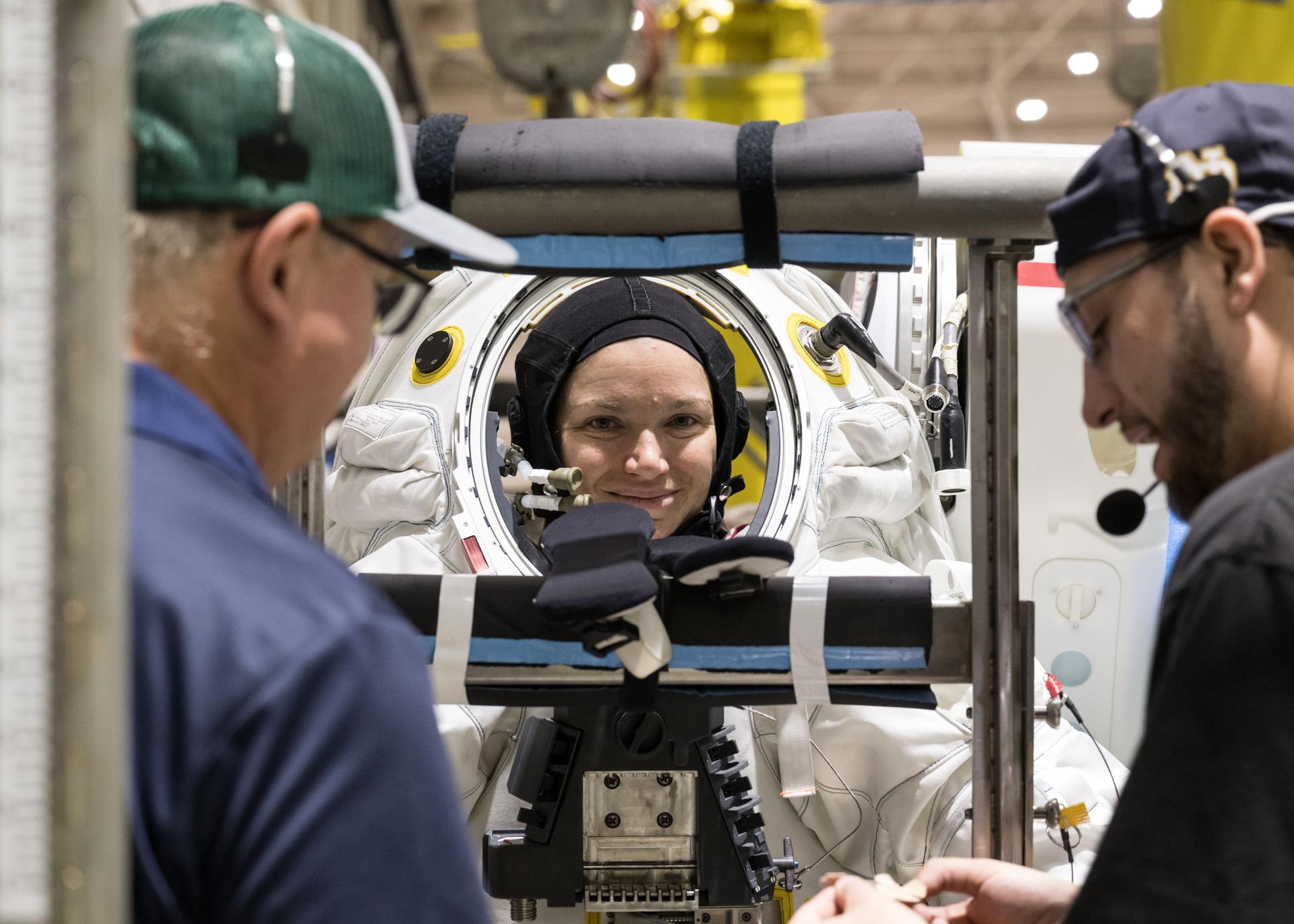
Canadian Space Agency astronaut Jenni Gibbons gets suited up in Axiom Space’s lunar spacesuit at NASA’s Neutral Buoyancy Laboratory in Houston. During a recent test series, NASA engineers and crewmembers wore the lunar spacesuit under water and conducted numerous tasks during simulated lunar operations to test its mobility and functionality and ensure the spacesuit is prepped and ready for Artemis training.
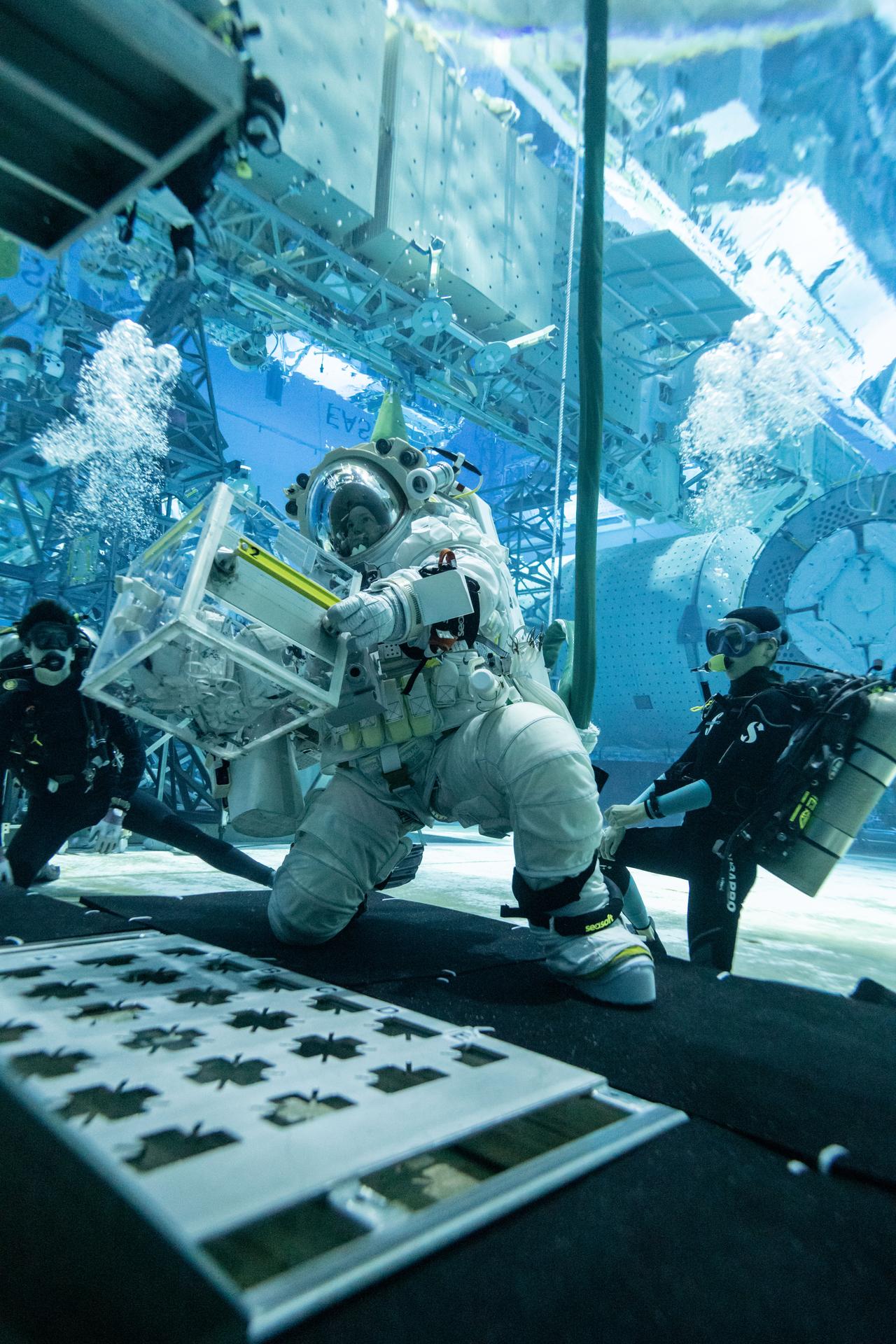
Canadian Space Agency astronaut Jenni Gibbons practices simulated lunar tasks under water while wearing Axiom Space’s lunar spacesuit at NASA’s Neutral Buoyancy Laboratory in Houston. During a recent test series, NASA engineers and crewmembers wore the lunar spacesuit under water and conducted numerous tasks during simulated lunar operations to test its mobility and functionality and ensure the spacesuit is prepped and ready for Artemis training.
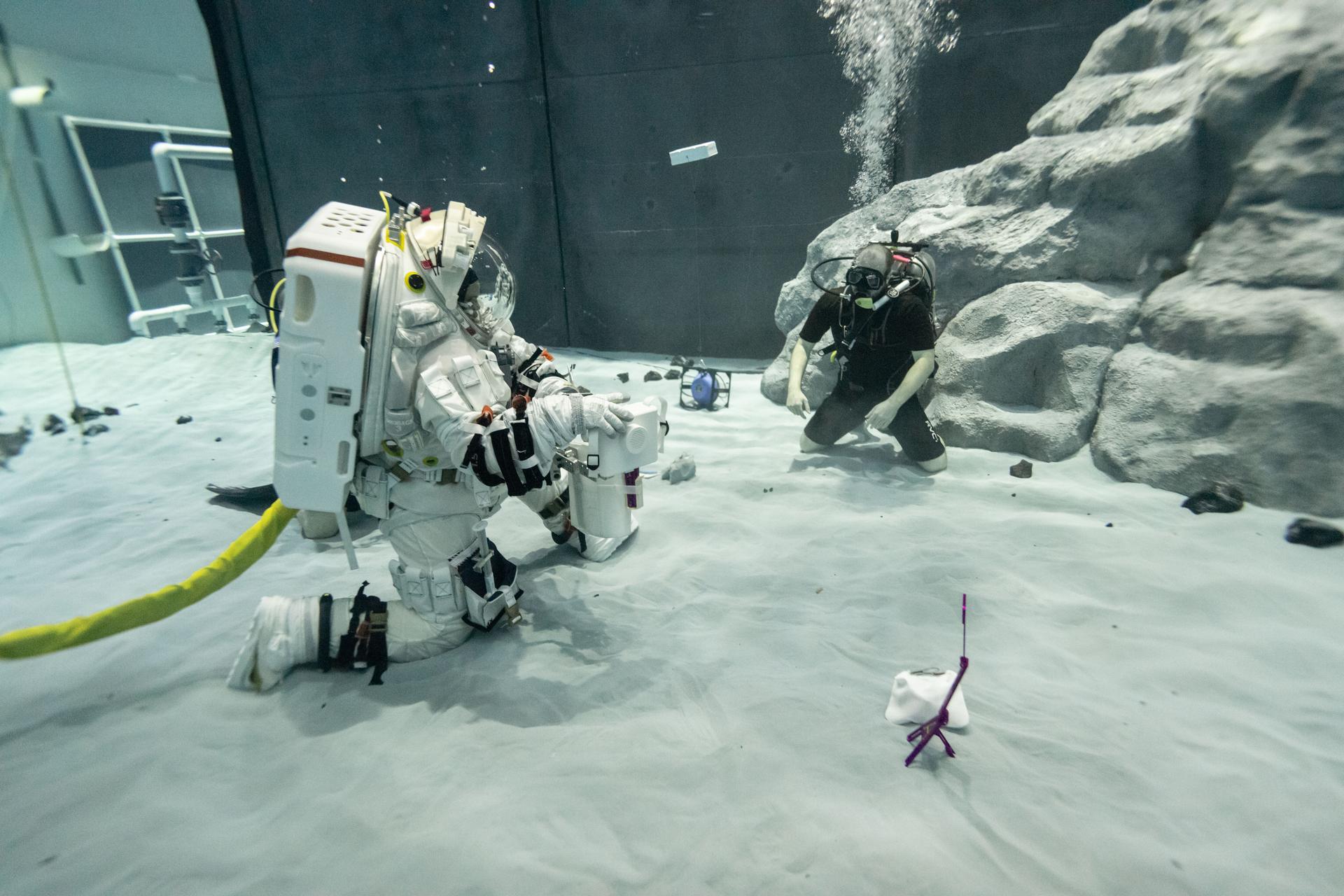
Canadian Space Agency astronaut Jenni Gibbons practices simulated lunar tasks under water while wearing Axiom Space’s lunar spacesuit at NASA’s Neutral Buoyancy Laboratory in Houston. During a recent test series, NASA engineers and crewmembers wore the lunar spacesuit under water and conducted numerous tasks during simulated lunar operations to test its mobility and functionality and ensure the spacesuit is prepped and ready for Artemis training.
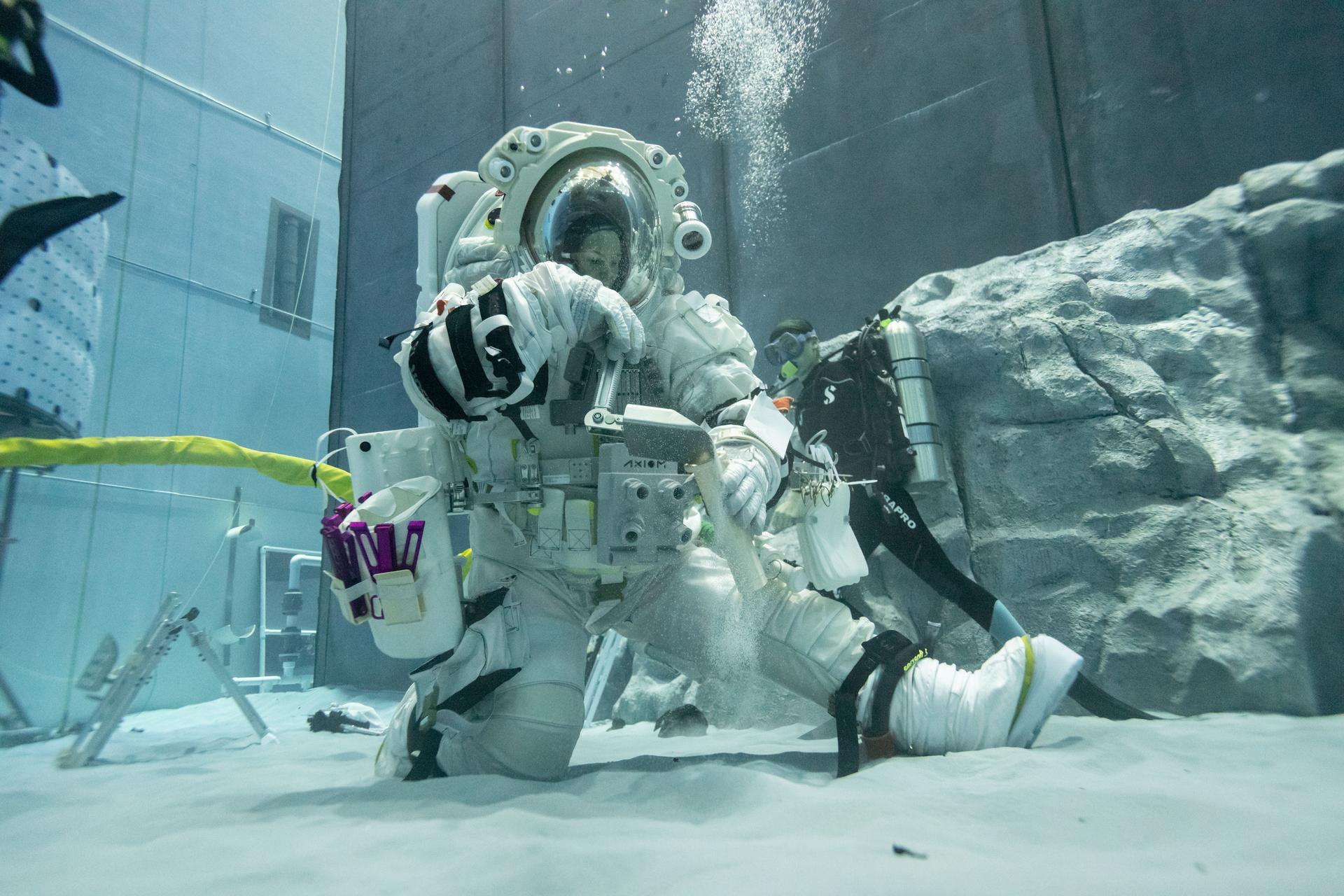
Canadian Space Agency astronaut Jenni Gibbons practices simulated lunar tasks under water while wearing Axiom Space’s lunar spacesuit at NASA’s Neutral Buoyancy Laboratory in Houston. During a recent test series, NASA engineers and crewmembers wore the lunar spacesuit under water and conducted numerous tasks during simulated lunar operations to test its mobility and functionality and ensure the spacesuit is prepped and ready for Artemis training.
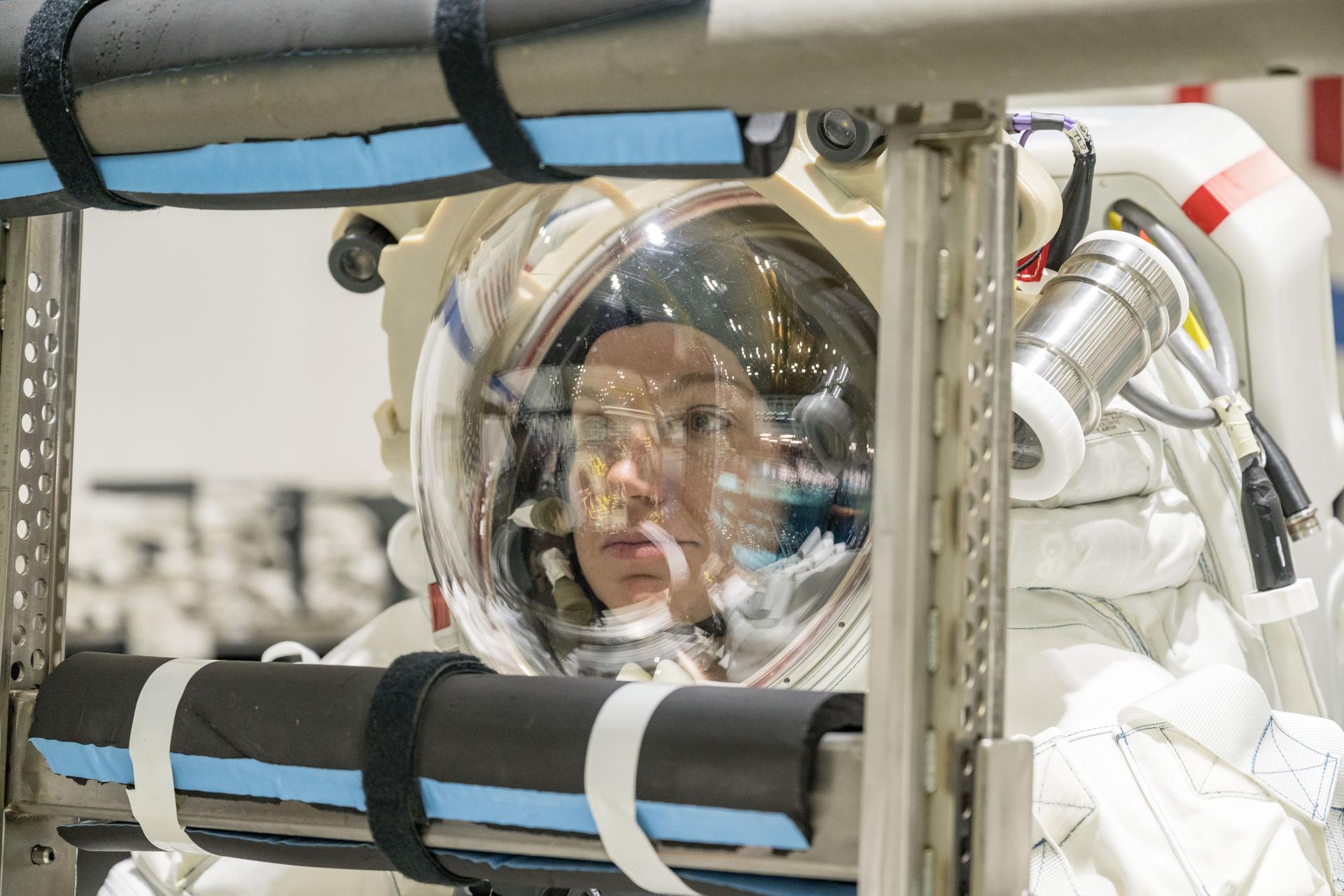
Canadian Space Agency astronaut Jenni Gibbons gets suited up in Axiom Space’s lunar spacesuit at NASA’s Neutral Buoyancy Laboratory in Houston. During a recent test series, NASA engineers and crewmembers wore the lunar spacesuit under water and conducted numerous tasks during simulated lunar operations to test its mobility and functionality and ensure the spacesuit is prepped and ready for Artemis training.
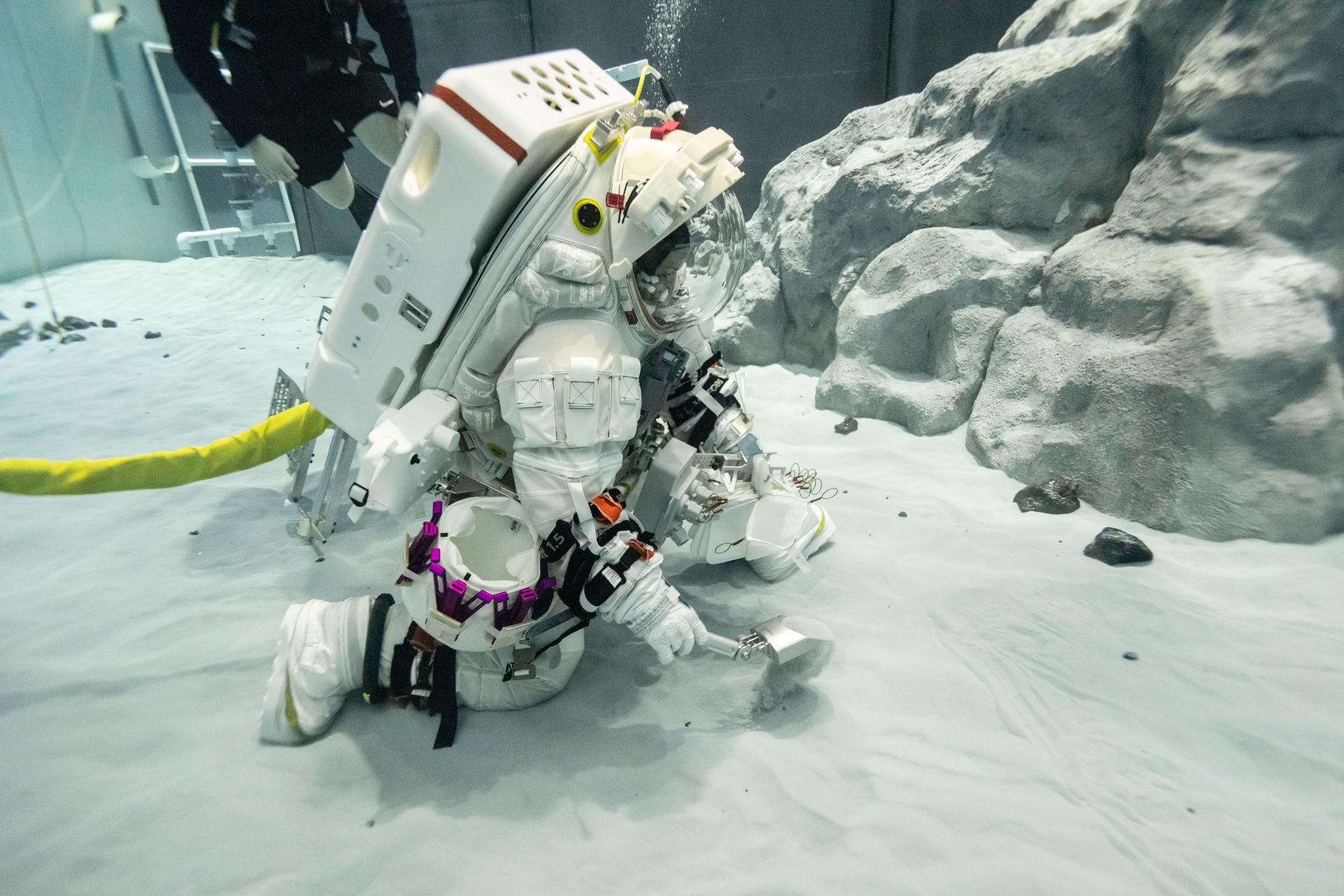
Canadian Space Agency astronaut Jenni Gibbons practices simulated lunar tasks under water while wearing Axiom Space’s lunar spacesuit at NASA’s Neutral Buoyancy Laboratory in Houston. During a recent test series, NASA engineers and crewmembers wore the lunar spacesuit under water and conducted numerous tasks during simulated lunar operations to test its mobility and functionality and ensure the spacesuit is prepped and ready for Artemis training.
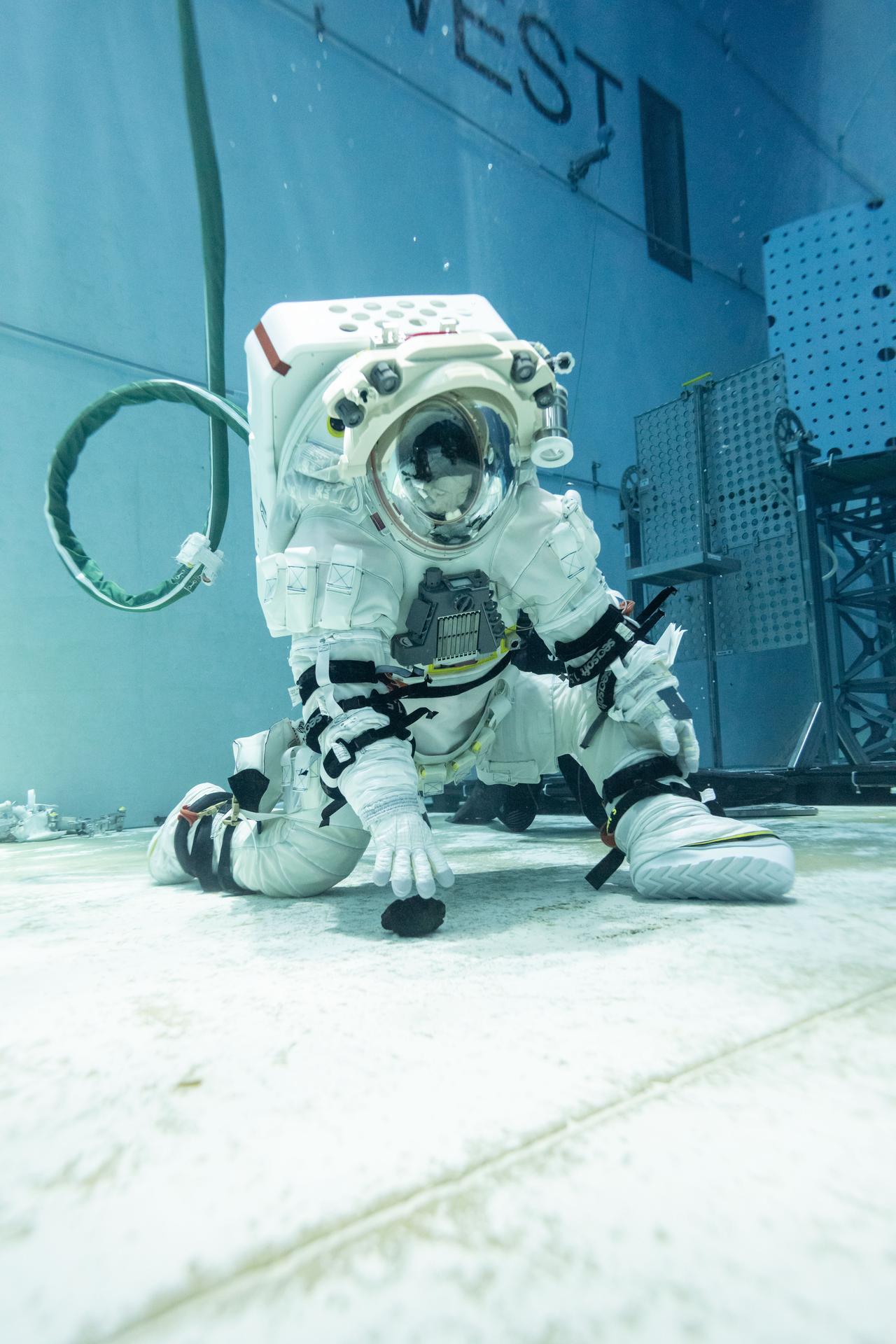
Canadian Space Agency astronaut Jenni Gibbons practices simulated lunar tasks under water while wearing Axiom Space’s lunar spacesuit at NASA’s Neutral Buoyancy Laboratory in Houston. During a recent test series, NASA engineers and crewmembers wore the lunar spacesuit under water and conducted numerous tasks during simulated lunar operations to test its mobility and functionality and ensure the spacesuit is prepped and ready for Artemis training.
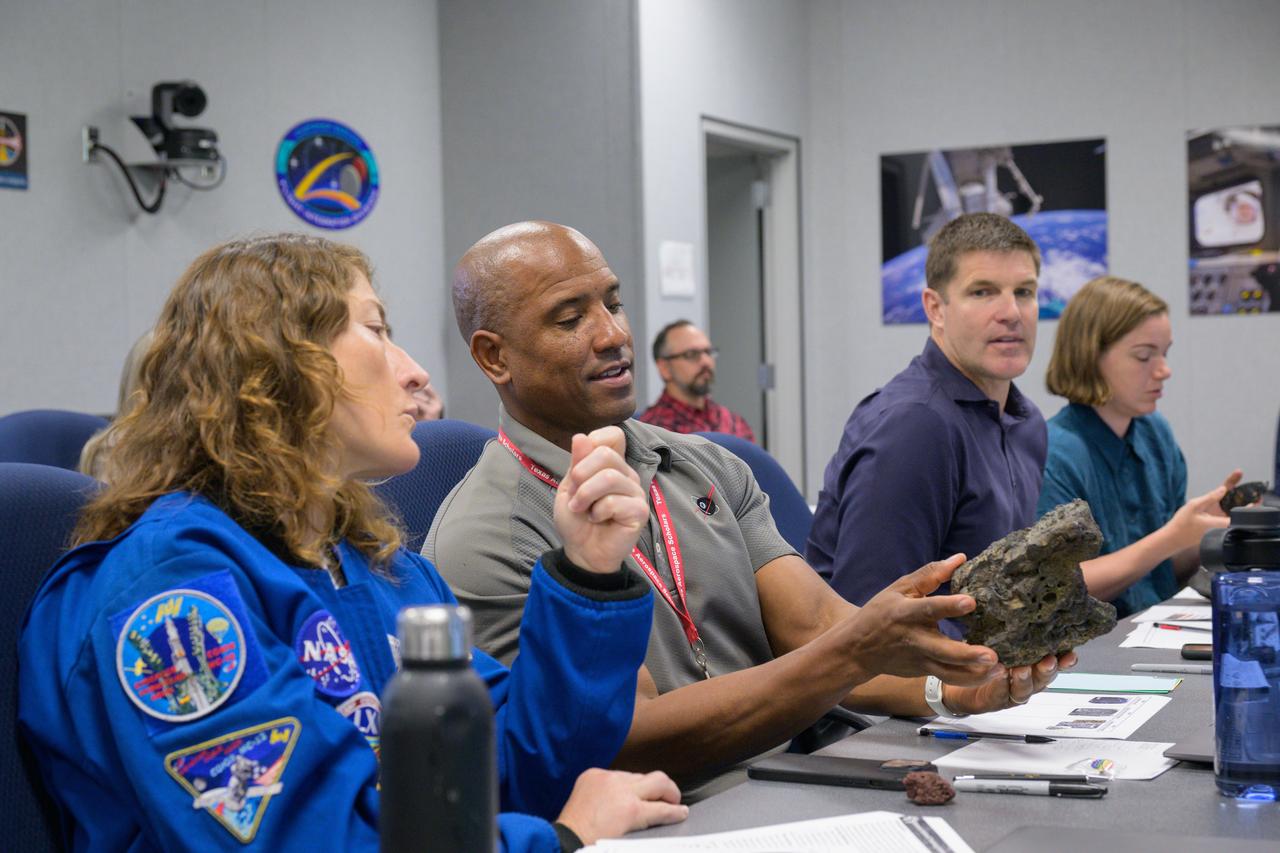
jsc2024e040808 --- Artemis II crew members, from left, NASA astronauts Christina Koch and Victor Glover, CSA (Canadian Space Agency) astronauts Jeremy Hansen and Jenni Gibbons, study rocks during classroom preparation ahead of their fieldwork training in Iceland.
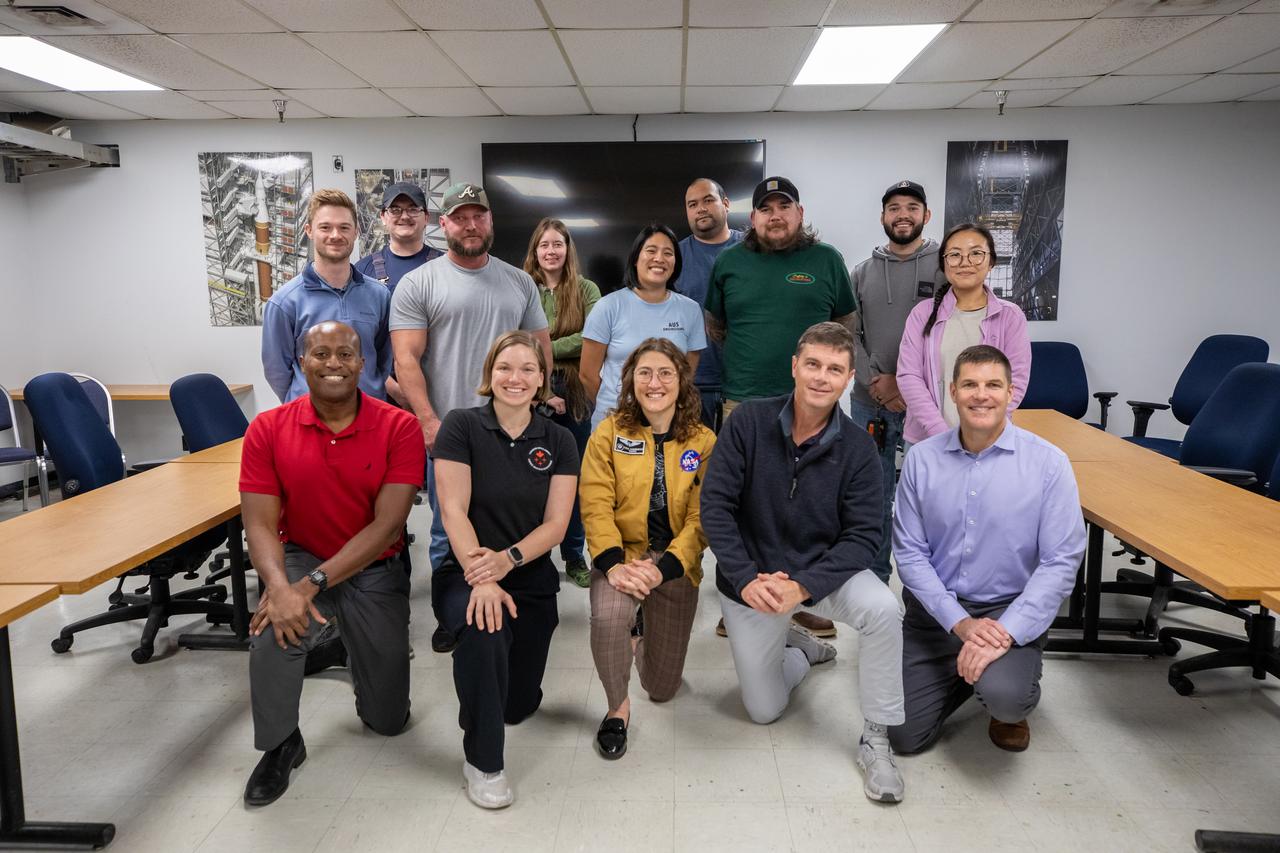
In front, from left, Andre Douglas, NASA’s Artemis II backup crew member; CSA (Canadian Space Agency) astronaut Jenni Gibbons, Artemis II backup crew member; NASA astronaut Christina Koch, Artemis II mission specialist; NASA astronaut Reid Wiseman, Artemis II commander; and Jeremy Hansen, Artemis II mission specialist pose, for a photo with NASA’s Exploration Ground Systems team during a visit to Kennedy Space Center in Florida on Thursday, Jan. 16, 2025. For Artemis II, four astronauts will venture around the Moon, the first crewed mission on NASA’s path to establishing a long-term presence for science and exploration through Artemis.
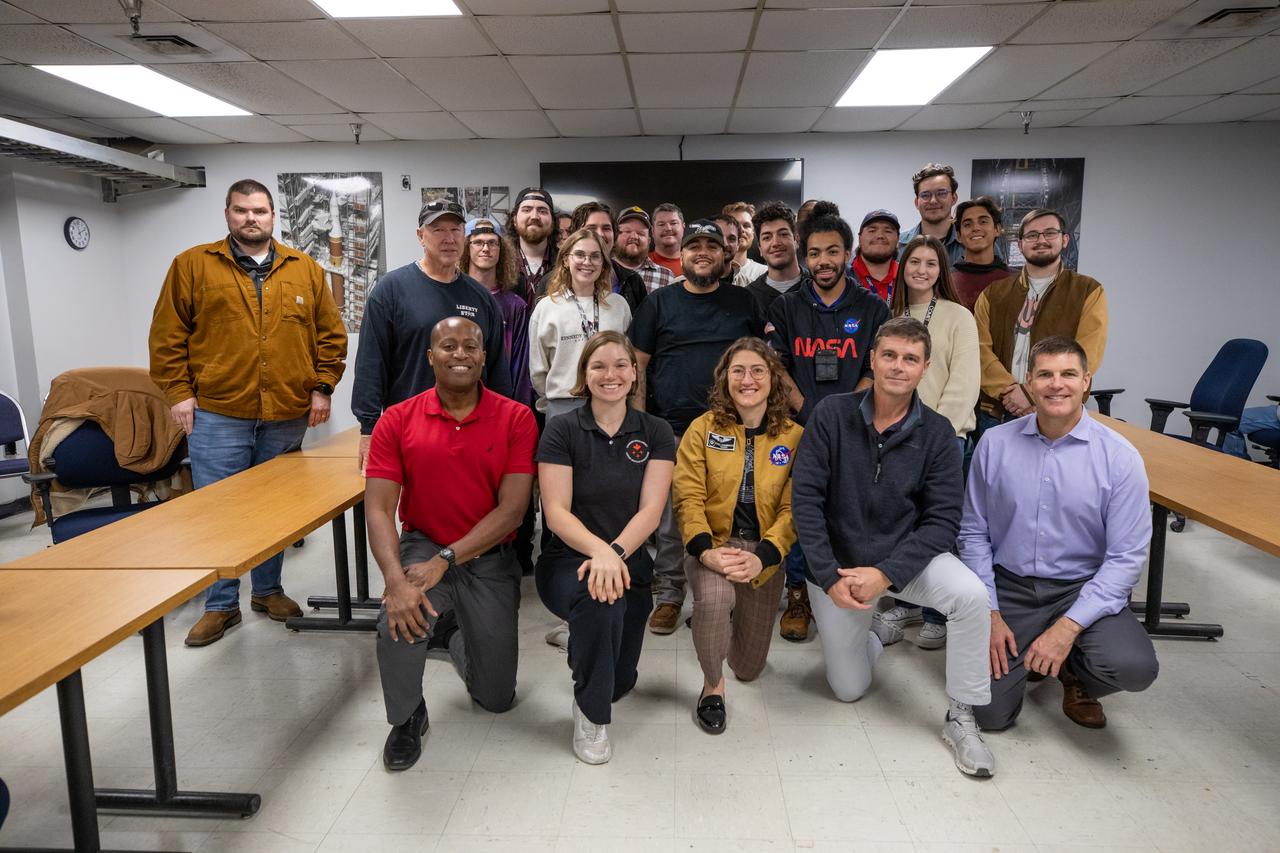
In front, from left, Andre Douglas, NASA’s Artemis II backup crew member; CSA (Canadian Space Agency) astronaut Jenni Gibbons, Artemis II backup crew member; NASA astronaut Christina Koch, Artemis II mission specialist; NASA astronaut Reid Wiseman, Artemis II commander; and Jeremy Hansen, Artemis II mission specialist pose, for a photo with NASA’s Exploration Ground Systems team during a visit to Kennedy Space Center in Florida on Thursday, Jan. 16, 2025. For Artemis II, four astronauts will venture around the Moon, the first crewed mission on NASA’s path to establishing a long-term presence for science and exploration through Artemis.

From left, Artemis II backup crew members, NASA astronaut Andre Douglas and CSA (Canadian Space Agency) astronaut Jenni Gibbons, speak to Jeremy Graeber, assistant launch director, for NASA’s Exploration Ground Systems during a visit at NASA’s Kennedy Space Center on Thursday, Jan. 16, 2025. In the background is the Orion Environmental Test Article spacecraft which was flown around the Moon and back during Artemis I on Nov. 16, 2022. Orion will carry four astronauts around the Moon and back during the Artemis II mission.
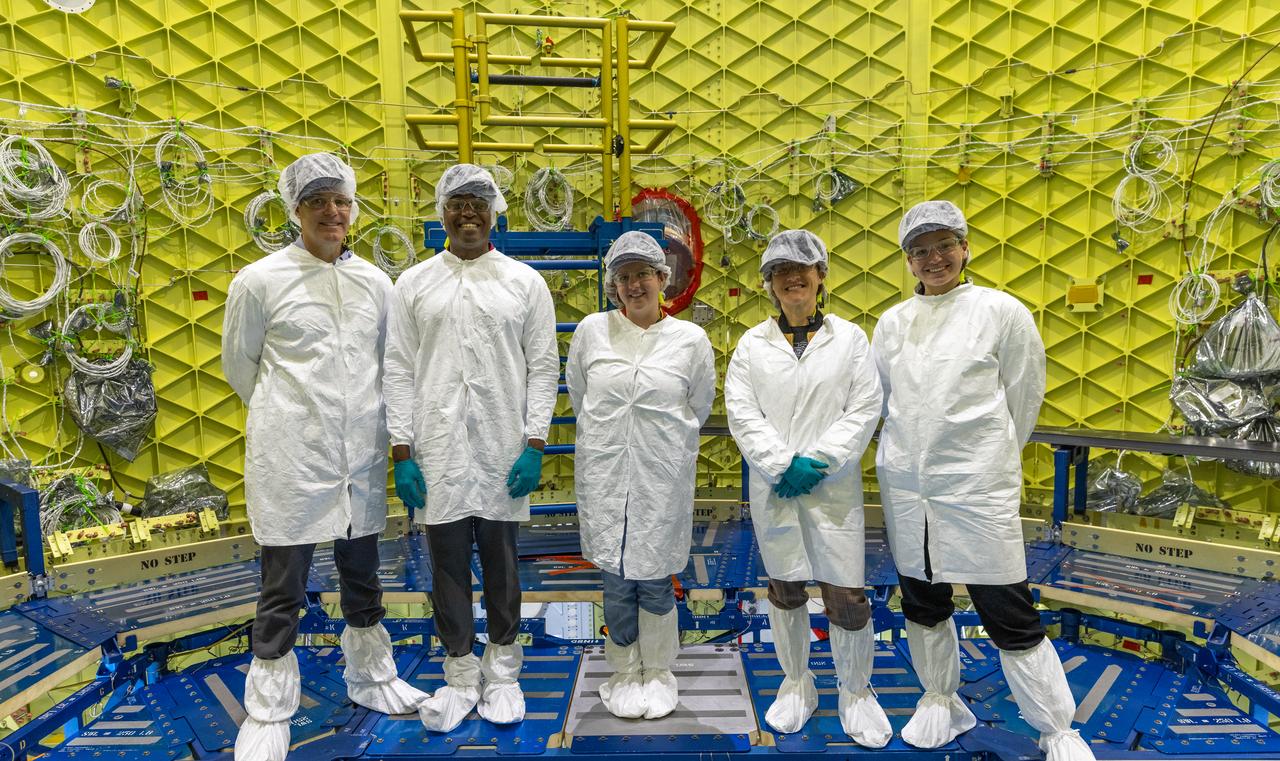
From left, CSA (Canadian Space Agency) astronaut Jeremy Hansen; Andre Douglas, NASA’s Artemis II backup crew member; a member of Exploration Ground Systems (EGS); Christina Koch, Artemis II mission specialist; and CSA astronaut Jenni Gibbons, Artemis II backup crew member, tour the Artemis III engine section inside the Space Systems Processing Facility at NASA’s Kennedy Space Center in Florida on Thursday, Jan. 16, 2025. Members and backup members of the Artemis II crew received updates on the mission and met with the EGS team. For Artemis II, four astronauts will venture around the Moon, the first crewed mission on NASA’s path to establishing a long-term presence for science and exploration through Artemis.
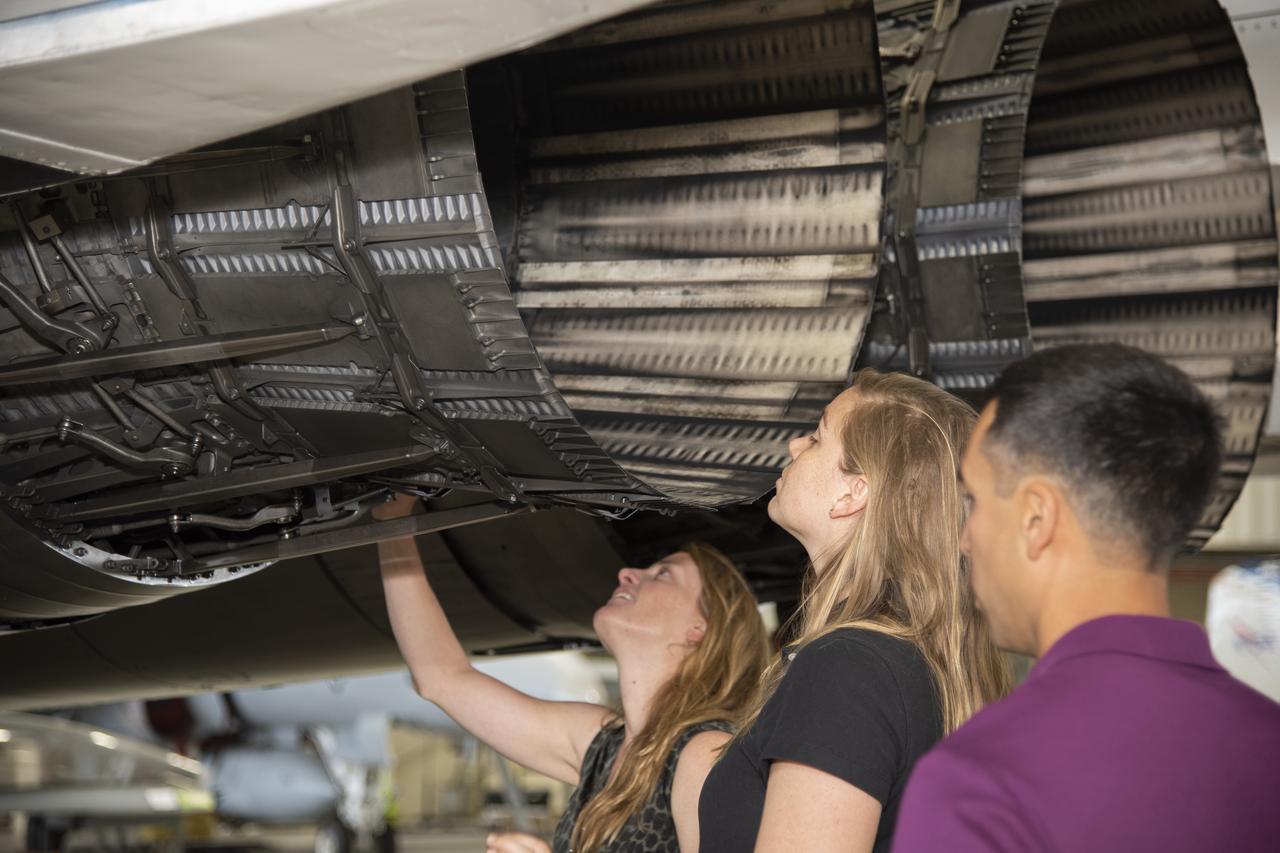
NASA's 2017 astronaut candidates toured aircraft hangar at Armstrong Flight Research Center, in Southern California where (L to R) Loral O'Hara, Jenni Sidey-Gibbons and Raja Chari look inside the engine nozzle of an F-15 jet. The F-15 will fly in tandem with the X-59 QueSST during early flight test stages for the X-59 development.
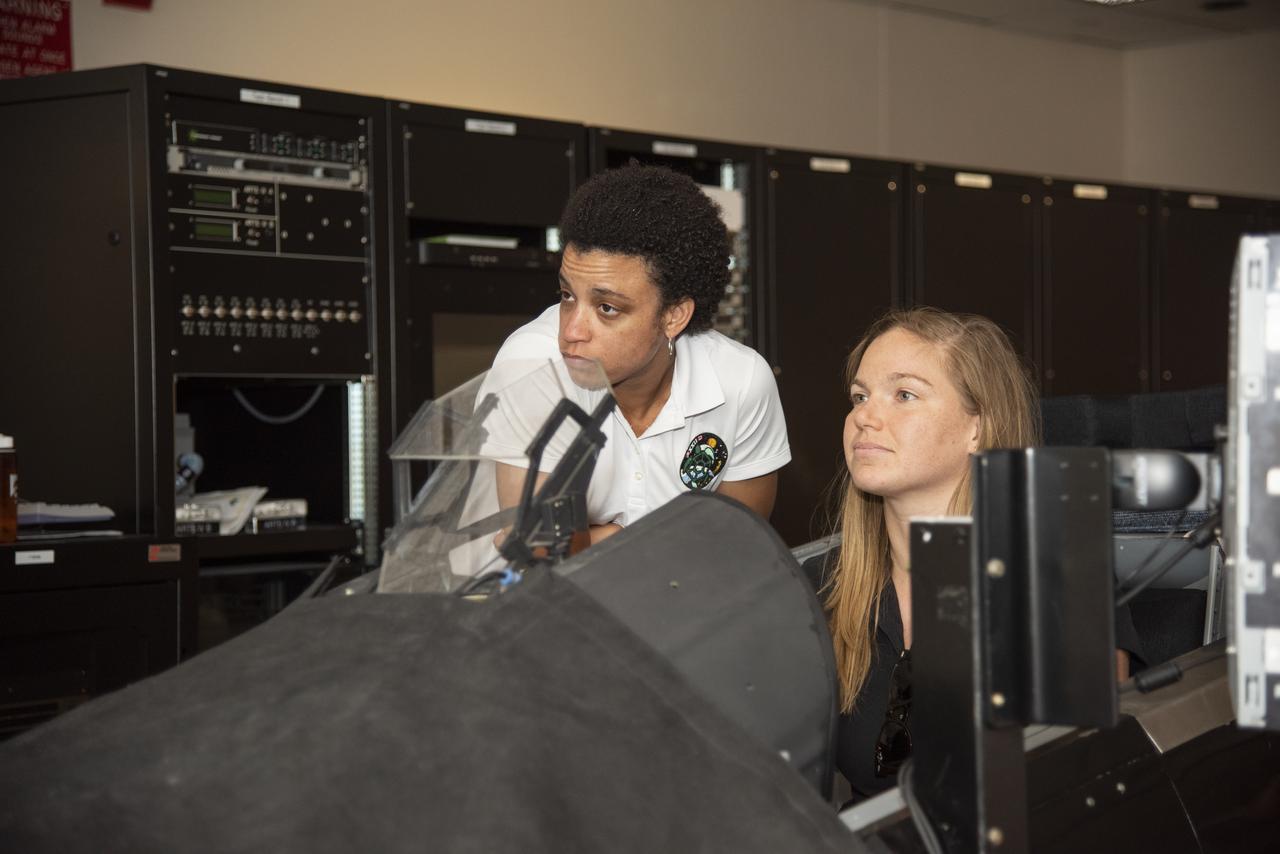
NASA's 2017 astronaut candidates (L to R) Jessica Watkins and Jenni Sidey-Gibbons practice flying in an F-18 aircraft cockpit simulator at Armstrong Flight Research Center, in Southern California. The F-18's are flown for research support and pilot proficiency. Currently, the F-18's are being used to conduct supersonic research in support of the X-59 QueSST overall mission.
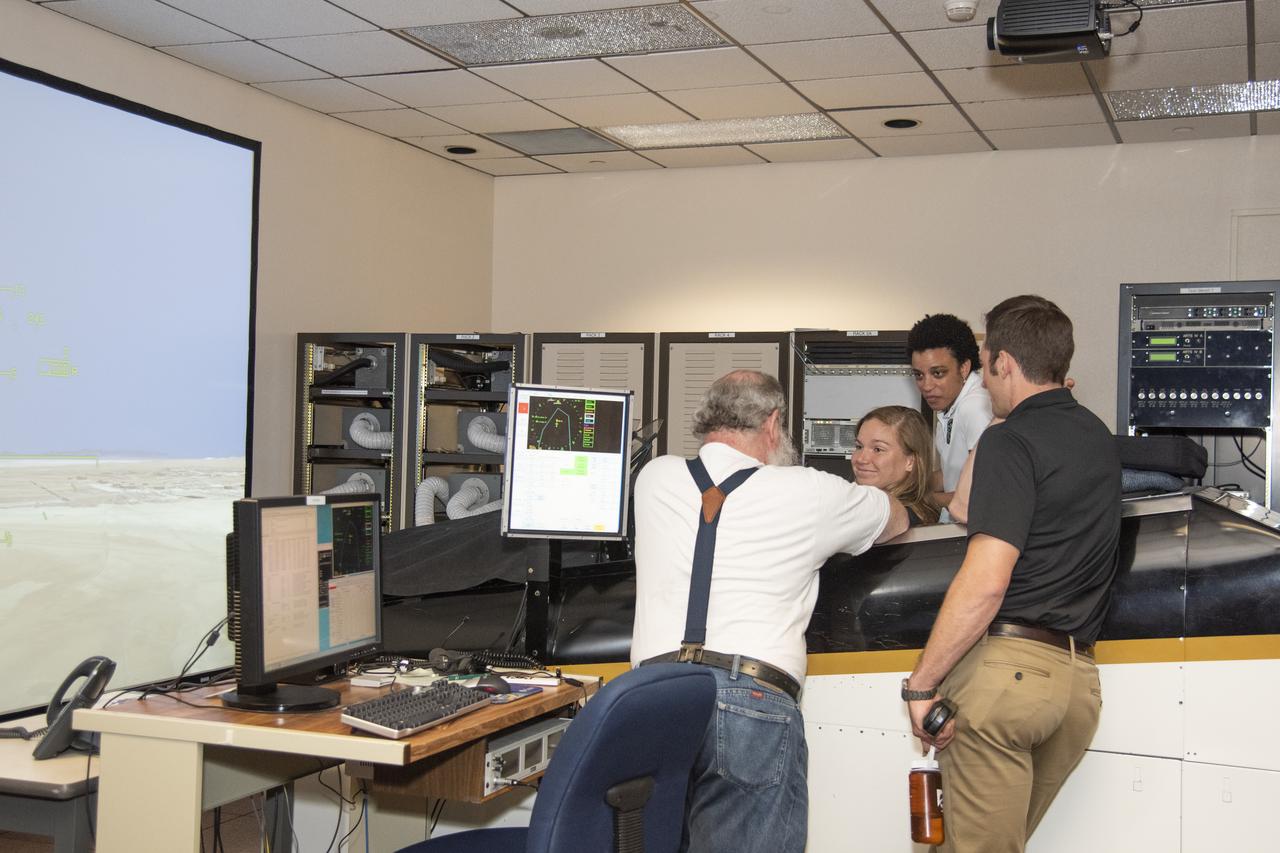
NASA's 2017 astronaut candidates (L to R) Jenni Sidey-Gibbons, Jessica Watkins and Joshua Kutryk practice flying in an F-18 aircraft cockpit simulator at Armstrong Flight Research Center, in Southern California. The F-18's are flown for research support and pilot proficiency. Currently, the F-18 is conducting supersonic research in support of the X-59 QueSST overall mission.
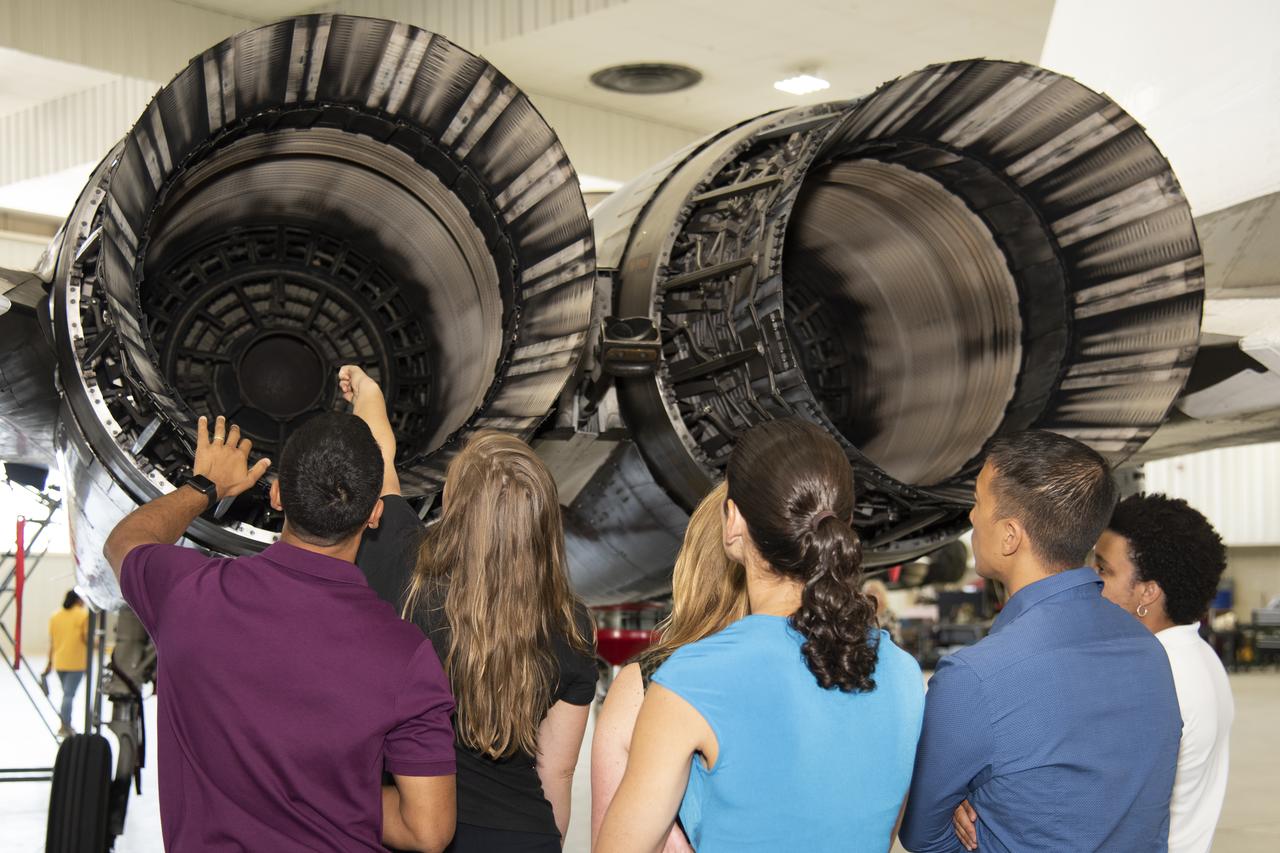
NASA's 2017 astronaut candidates toured aircraft hangar at Armstrong Flight Research Center, in Southern California (L to R) Raja Chari, Jenni Sidey-Gibbons, Loral O'Hara, Jasmin Moghbeli, Jonny Kim and Jessica Watkins look inside the engine nozzle of an F-15 jet. The F-15 will fly in tandem with the X-59 QueSST during early flight test stages for the X-59 development.
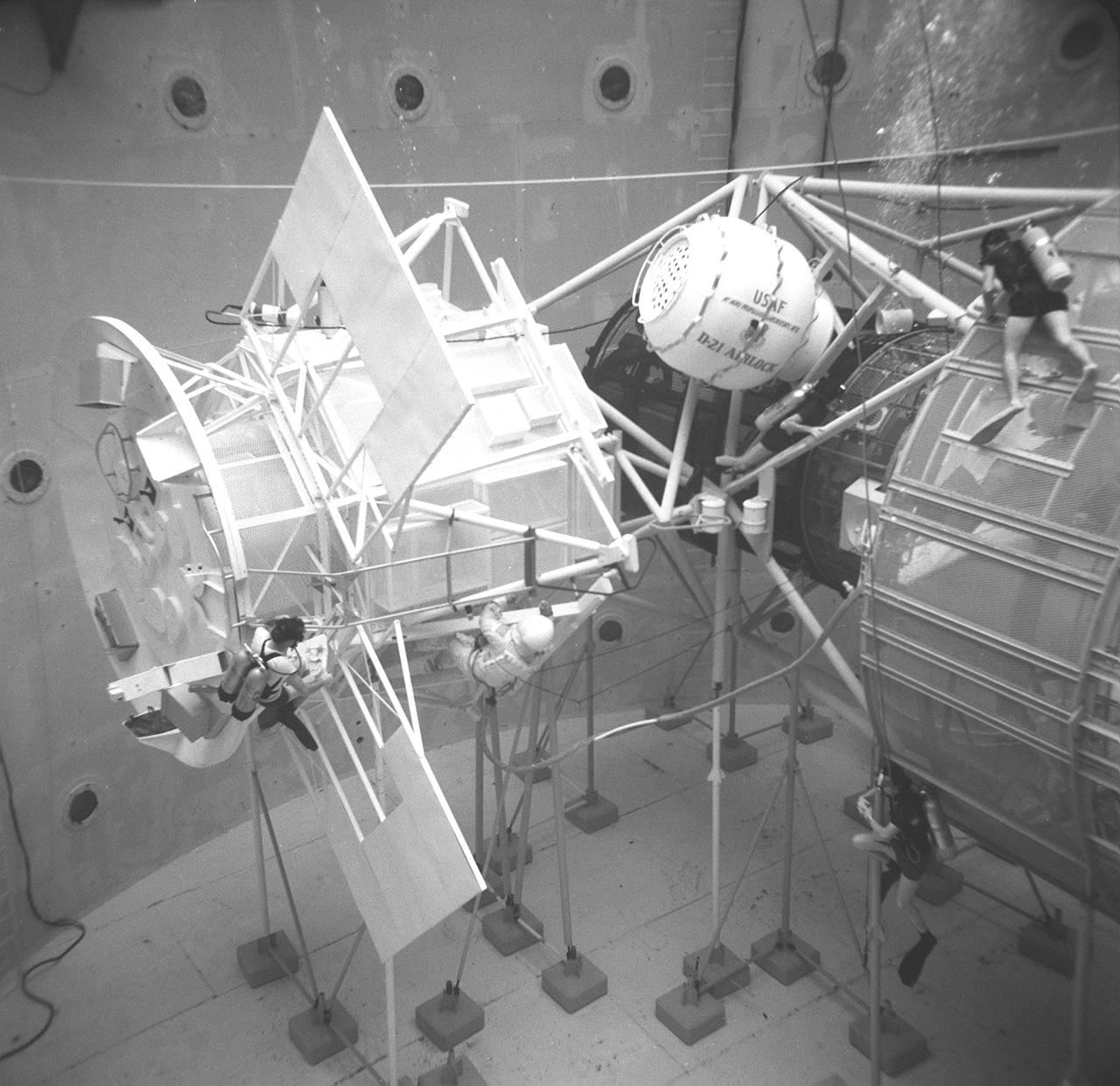
After the end of the Apollo missions, NASA's next adventure into space was the marned spaceflight of Skylab. Using an S-IVB stage of the Saturn V launch vehicle, Skylab was a two-story orbiting laboratory, one floor being living quarters and the other a work room. The objectives of Skylab were to enrich our scientific knowledge of the Earth, the Sun, the stars, and cosmic space; to study the effects of weightlessness on living organisms, including man; to study the effects of the processing and manufacturing of materials utilizing the absence of gravity; and to conduct Earth resource observations. At the Marshall Space Flight Center (MSFC), astronauts and engineers spent hundreds of hours in an MSFC Neutral Buoyancy Simulator (NBS) rehearsing procedures to be used during the Skylab mission, developing techniques, and detecting and correcting potential problems. The NBS was a 40-foot deep water tank that simulated the weightlessness environment of space. This photograph shows astronaut Ed Gibbon (a prime crew member of the Skylab-4 mission) during the neutral buoyancy Skylab extravehicular activity training at the Apollo Telescope Mount (ATM) mockup. One of Skylab's major components, the ATM was the most powerful astronomical observatory ever put into orbit to date.
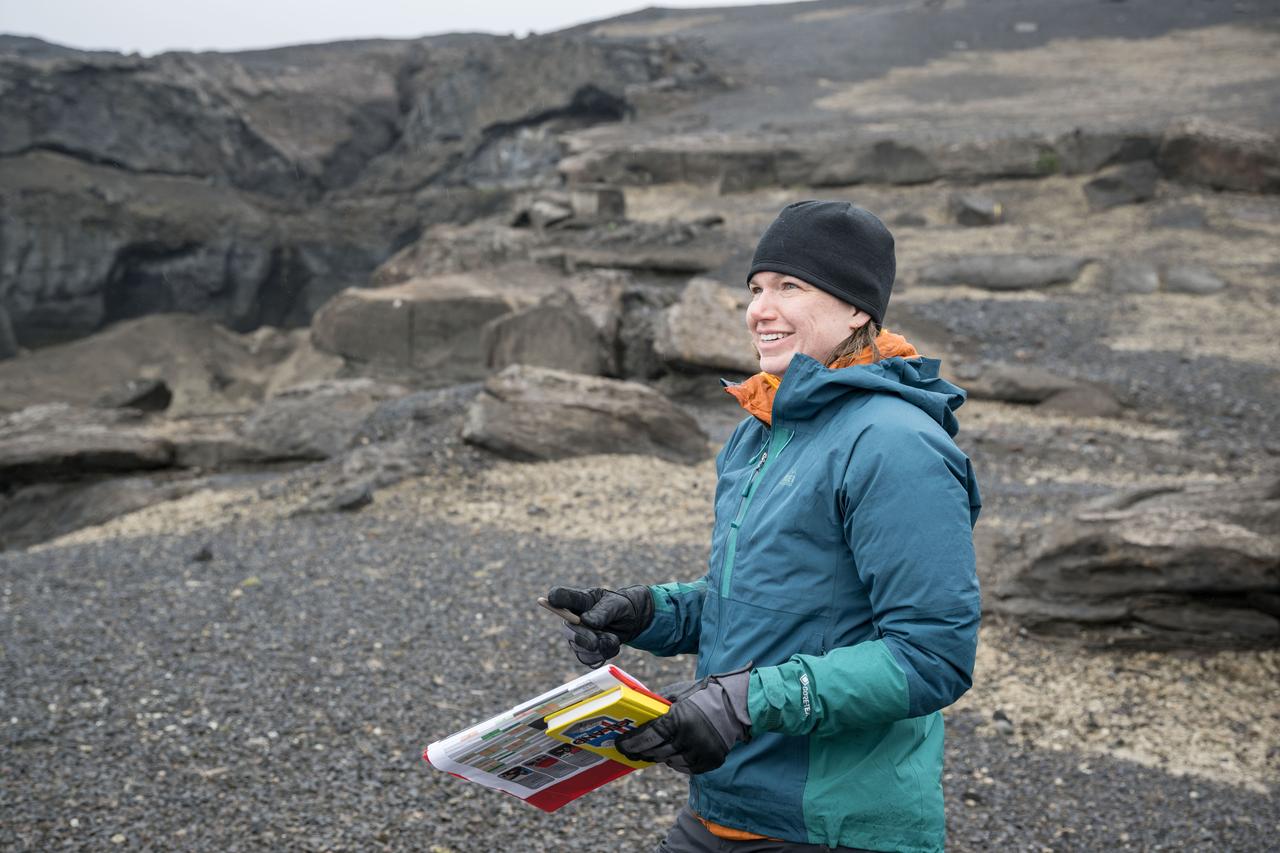
CSA (Canadian Space Agency) astronaut and Artemis II backup crew member, Jenni Gibbons, participates in geology field training in Iceland.
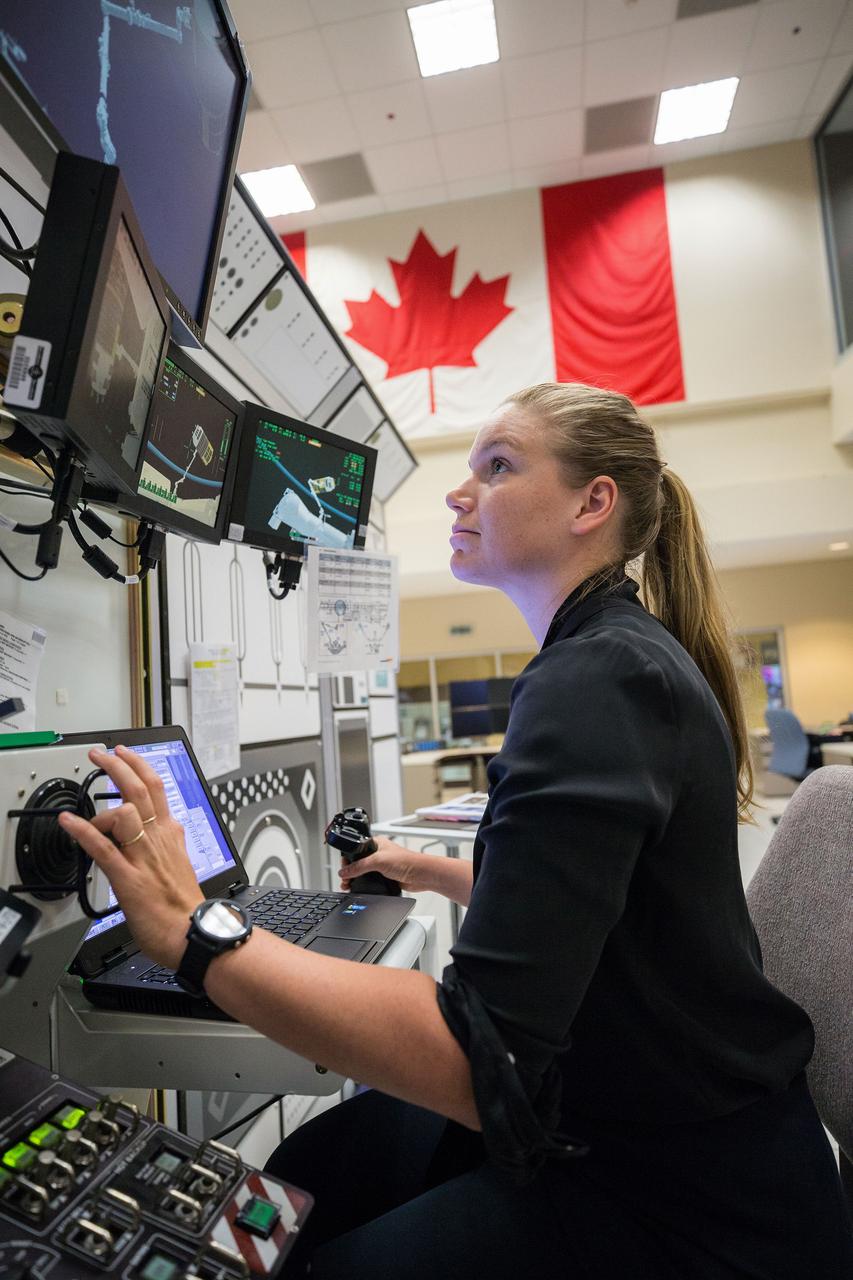
jsc2019e062856 (10-10-19) --- Canadian Space Agency (CSA) astronaut Jennifer Sidey-Gibbons participates in Canadarm2 robotics training at CSA headquarters in Saint-Hubert, Quebec. Photo Credit: (Canadian Space Agency)
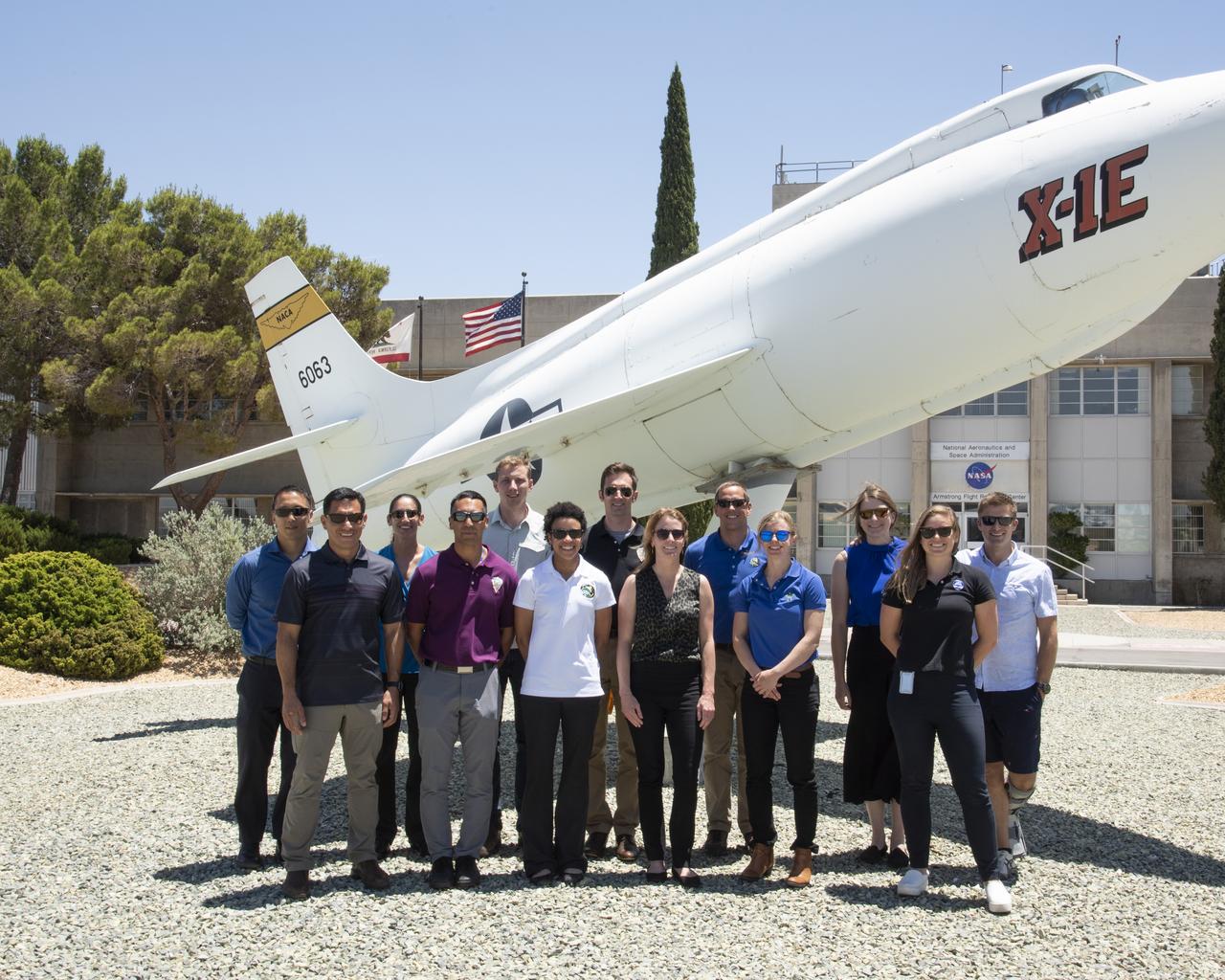
NASA's 2017 astronaut candidates, (L to R) Jonny Kim, Frank Rubio, Jasmin Moghbeli, Raja Chari, Woody Hoburg, Jessica Watkins, Joshua Kutryk, Loral O'Hara, Bob Hines, Zena Cardman, Kayla Barron, Jenni Sidey-Gibbons, Matthew Dominick pose in front of X-1E at the end of their visit to Armstrong Flight Research Center, in Southern California.
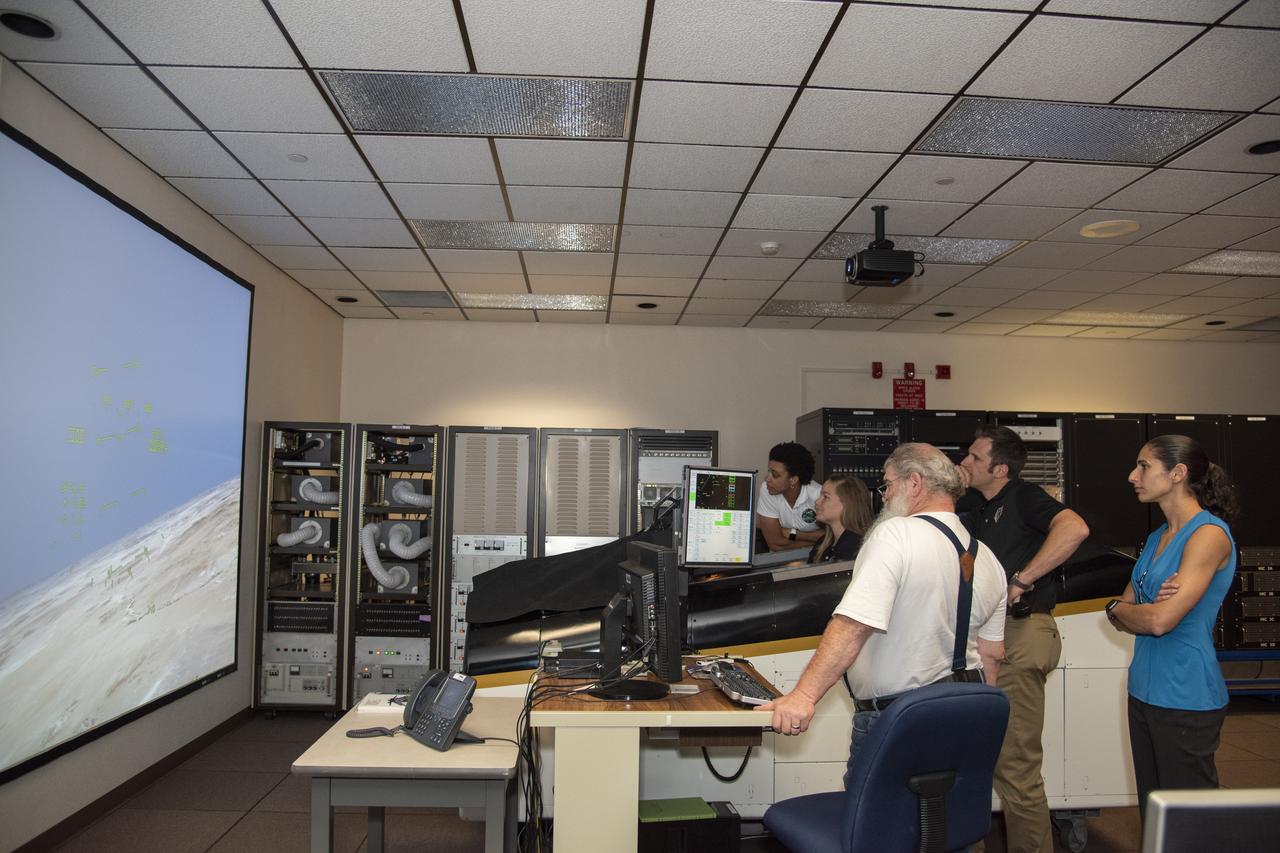
NASA’s 2017 astronaut candidates (L to R) Jessica Watkins, Jenni Sidey-Gibbons, Joshua Kutryk, and Jasmin Moghbeli practice flying in an F-18 aircraft cockpit simulator at Armstrong Flight Research Center, in Southern California. The F-18’s are flown for research support and pilot proficiency. Currently, the F-18’s are being used to conduct supersonic research in support of the X-59 QueSST overall mission.
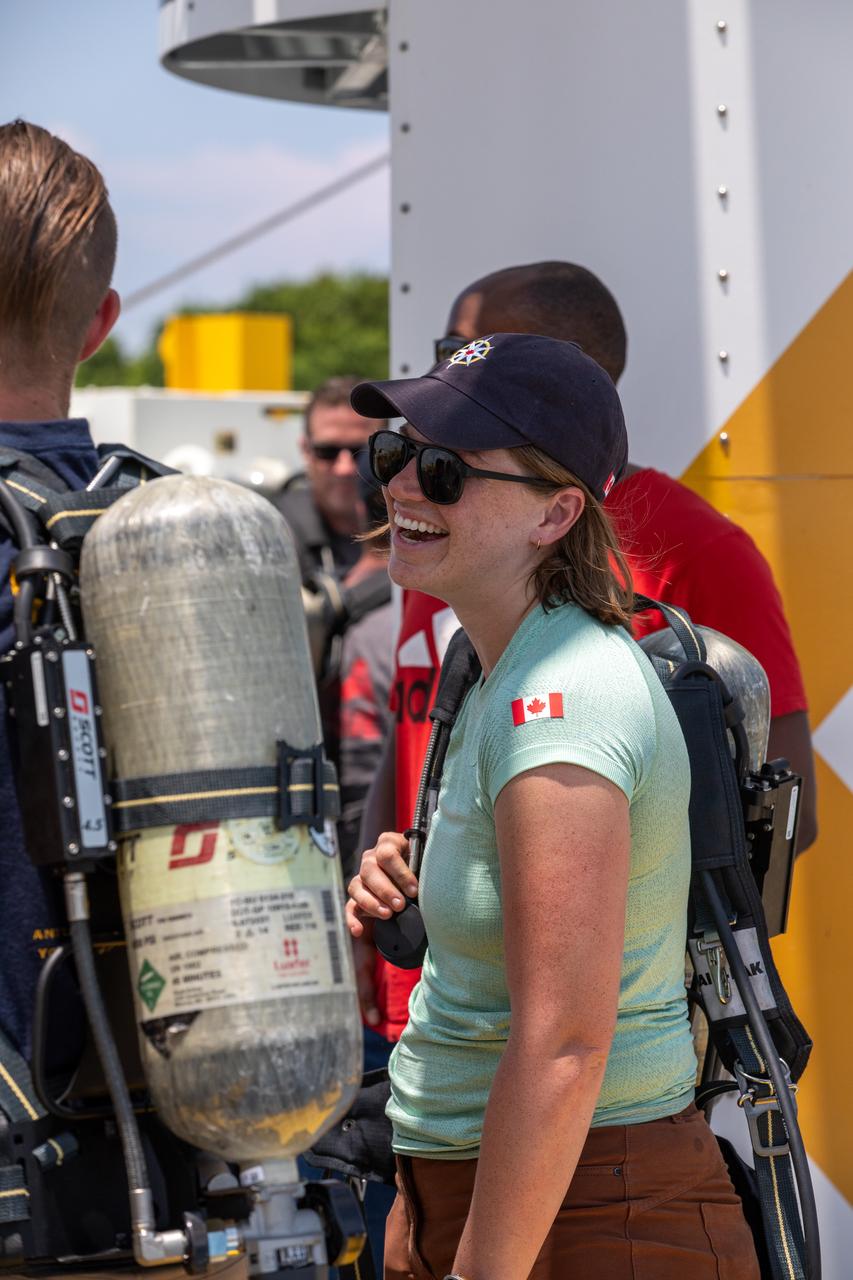
Canadian Space Agency (CSA) astronaut Jenni Gibbons, who is CSA astronaut Jeremy Hansen's backup for the Artemis II crew mission, participates in the Artemis emergency egress demonstration at Launch Complex 39B on Friday, Aug. 9, 2024, at NASA's Kennedy Space Center in Florida. Gibbons participated as one of the astronaut support personnel, part of the closeout crew, practiced the process of getting in and out of the emergency egress baskets then down to the launch pad where they would be transported to emergency transport vehicles and driven to safety. Prior to this test and throughout the course of several months, teams conducted several basket release demonstrations to validate the system.

jsc2017e111727 (08-23-2017) --- During water survival training in 2017 at NASA Johnson Space Center’s Neutral Buoyancy Laboratory in Houston, Canadian Space Agency astronaut candidate Jennifer Sidey-Gibbons (right) is fitted for training gear by instructors. Photo Credit: (NASA/David DeHoyos)
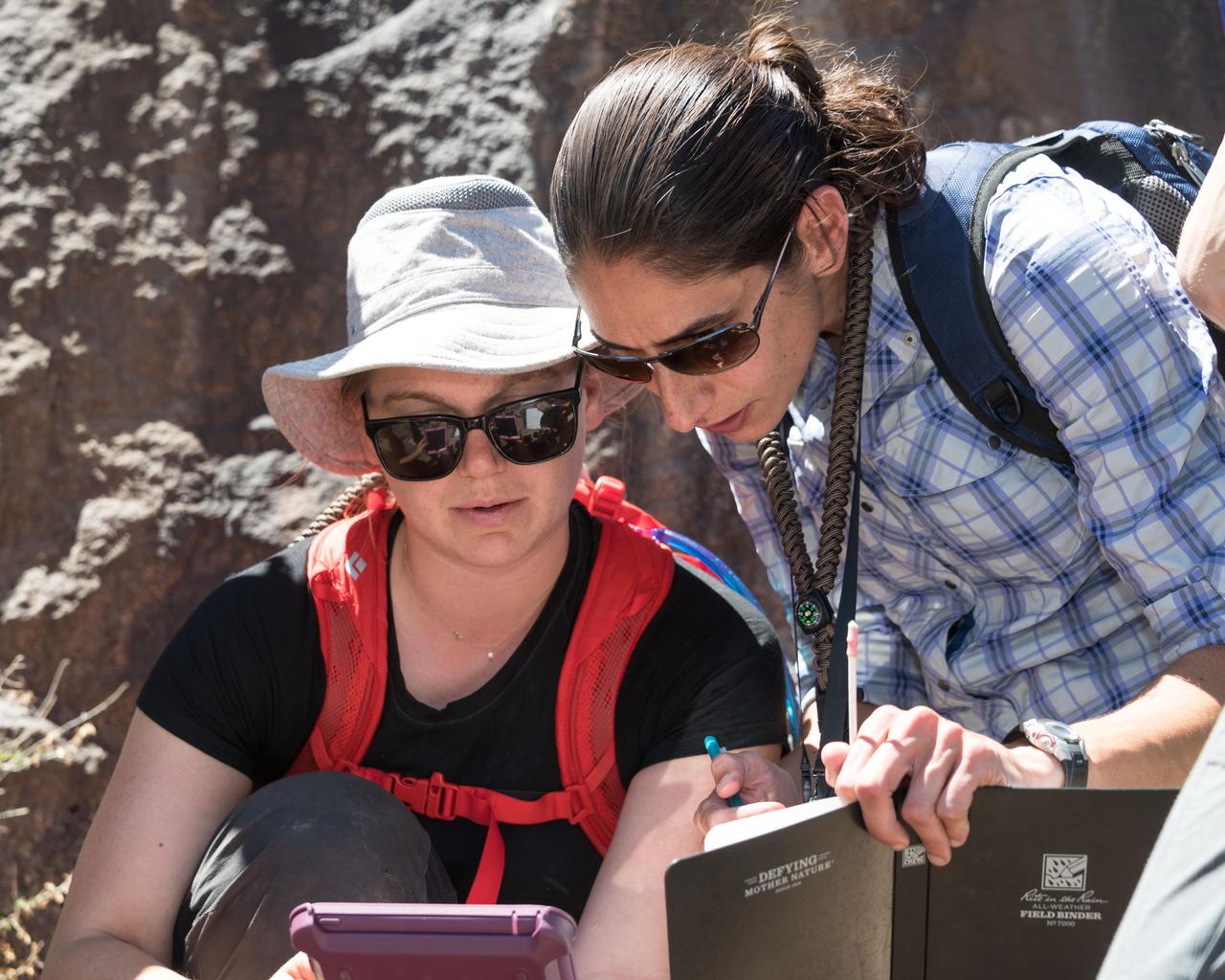
jsc2018e060306 (06/20/2018) --- Canadian Space Agency astronaut candidate Jennifer Sidey-Gibbons and NASA astronaut candidate Jasmin Moghbeli during earth and planetary science training in Rio Grande del Norte National Monument Upper Gorge Area near Questa, N.M. Photo Credit: (NASA/Norah Moran)
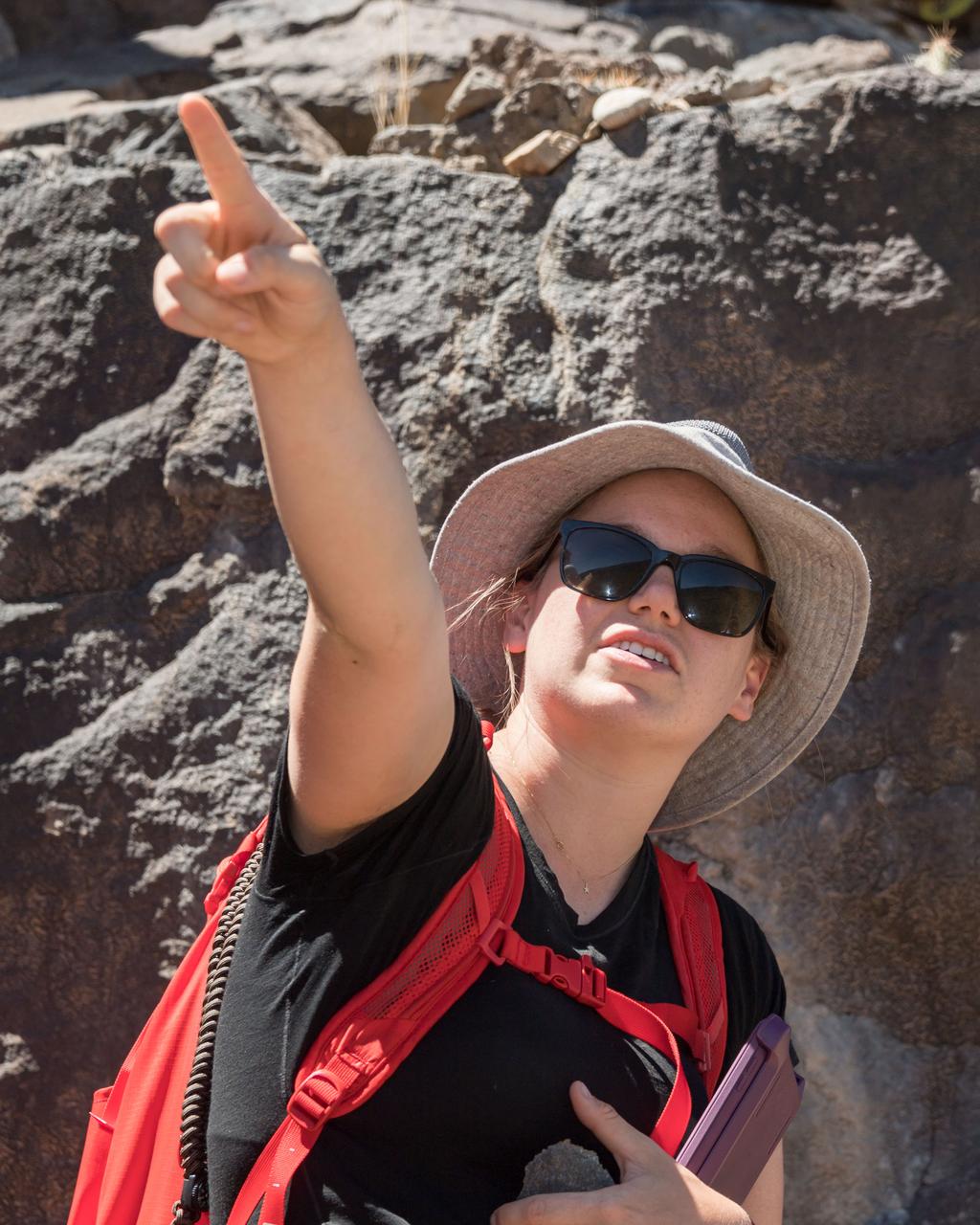
jsc2018e060304 (06/20/2018) --- Canadian Space Agency astronaut candidate Jennifer Sidey-Gibbons during earth and planetary science training in Rio Grande del Norte National Monument Upper Gorge Area near Questa, N.M. Photo Credit: (NASA/Norah Moran)
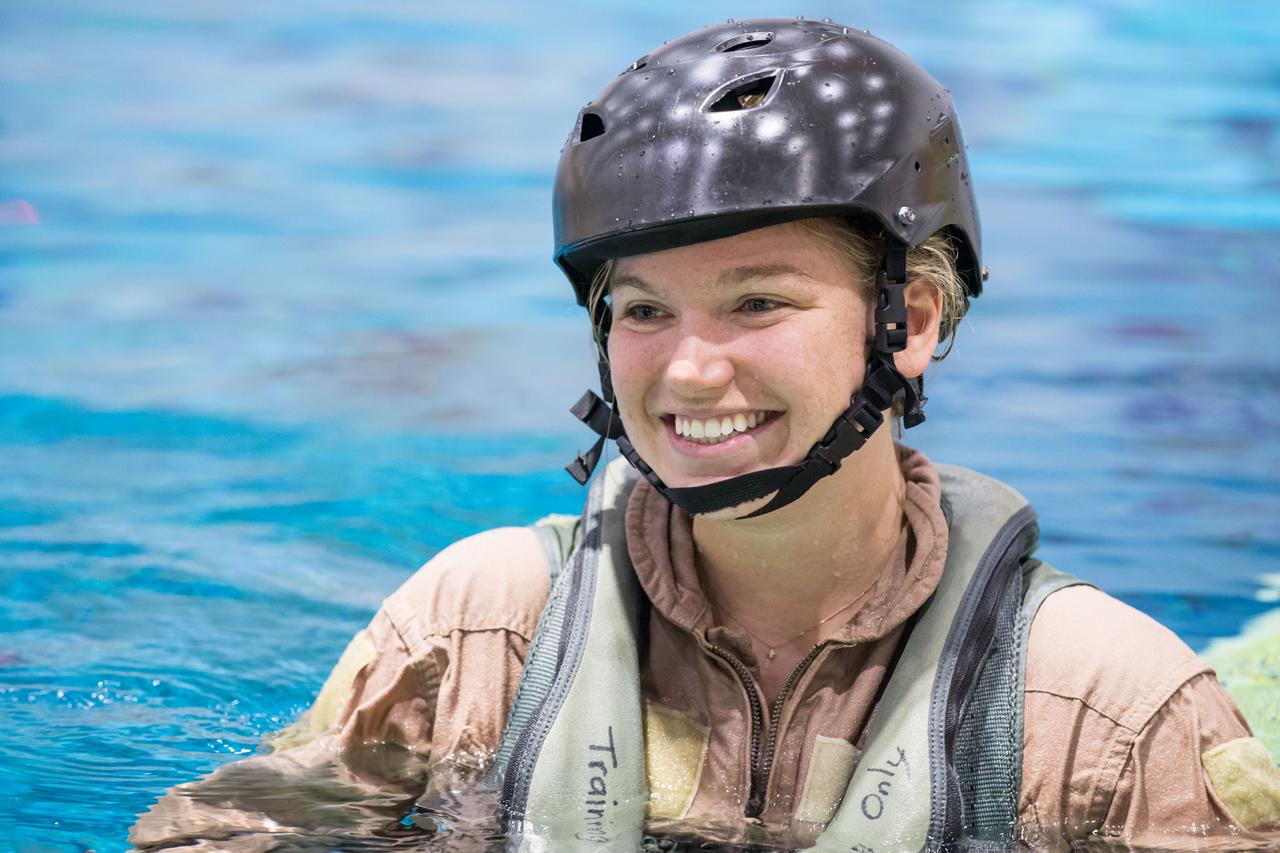
jsc2017e118963 (September 21, 2017) --- 2017 Canadian Space Agency astronaut candidate Jennifer Sidey-Gibbons is all smiles during helicopter water survival training at NASA Johnson Space Center’s Neutral Buoyancy Laboratory in Houston. Photo Credit: (NASA/Josh Valcarcel)
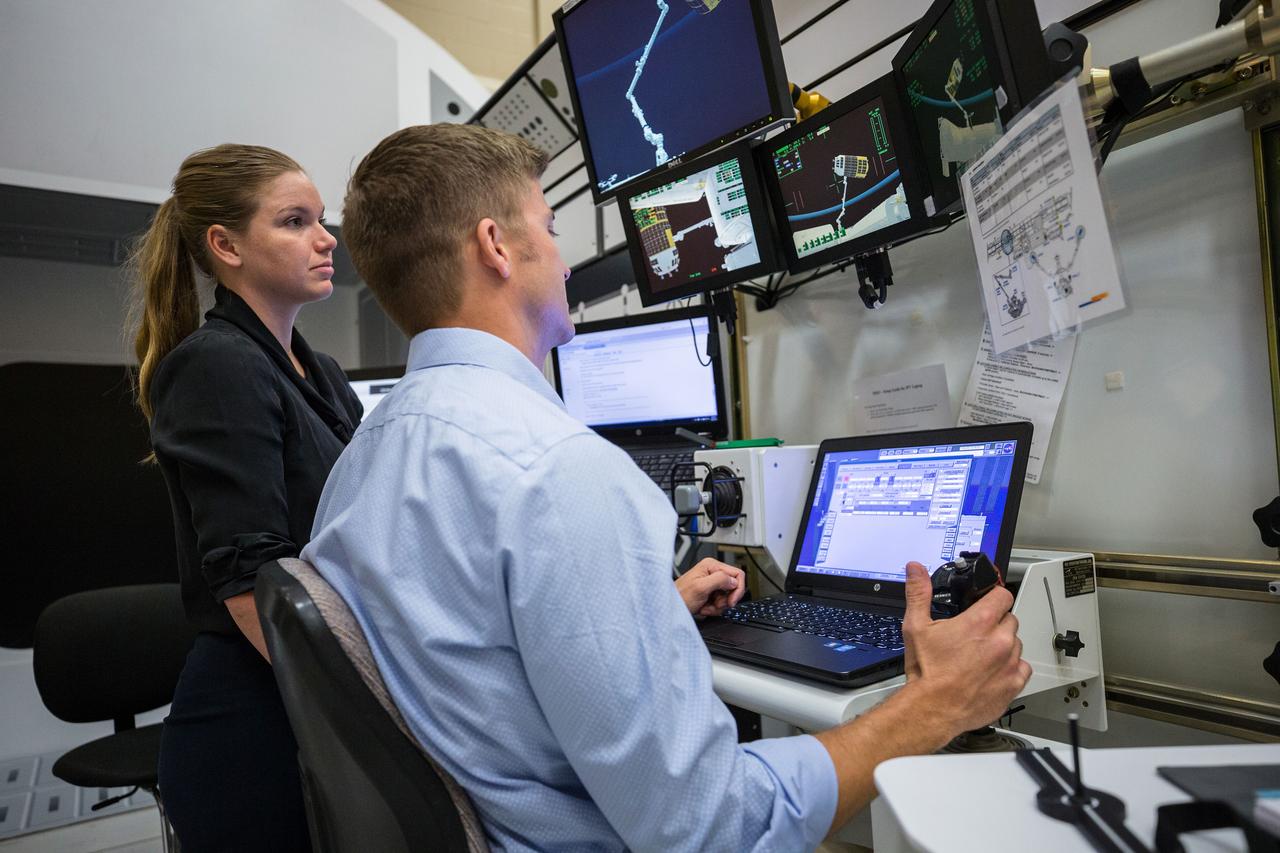
jsc2019e062855 (10-10-19) --- Canadian Space Agency (CSA) astronaut Jennifer Sidey-Gibbons (left) and NASA astronaut candidate Matthew Dominick (right) participate in Canadarm2 robotics training at CSA headquarters in Saint-Hubert, Quebec. Photo Credit: (Canadian Space Agency)
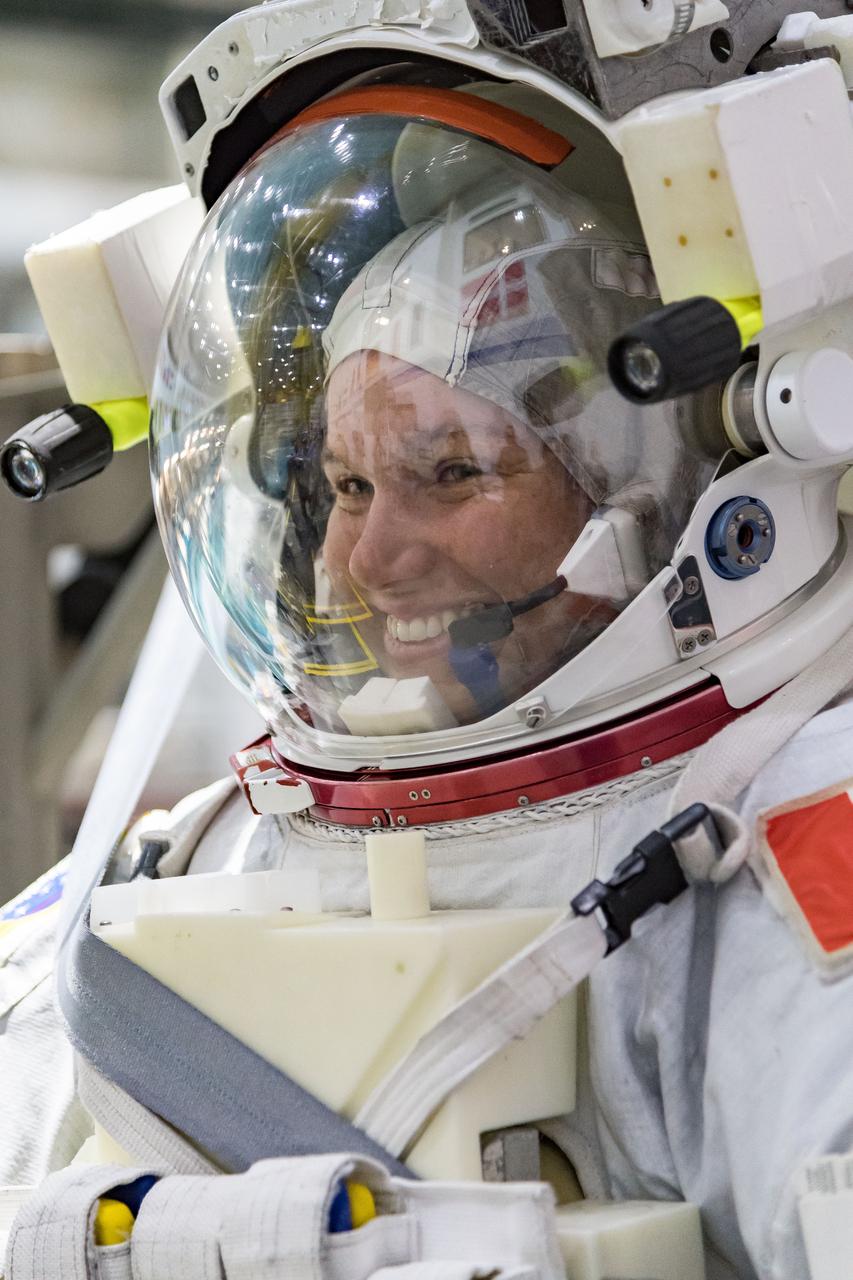
jsc2018e065033 (July 19, 2018) --- Canadian Space Agency astronaut candidate Jennifer Sidey-Gibbons is in a spacesuit prior to underwater spacewalk training at NASA Johnson Space Center’s Neutral Buoyancy Laboratory in Houston. Photo Credit: (NASA/Josh Valcarcel)
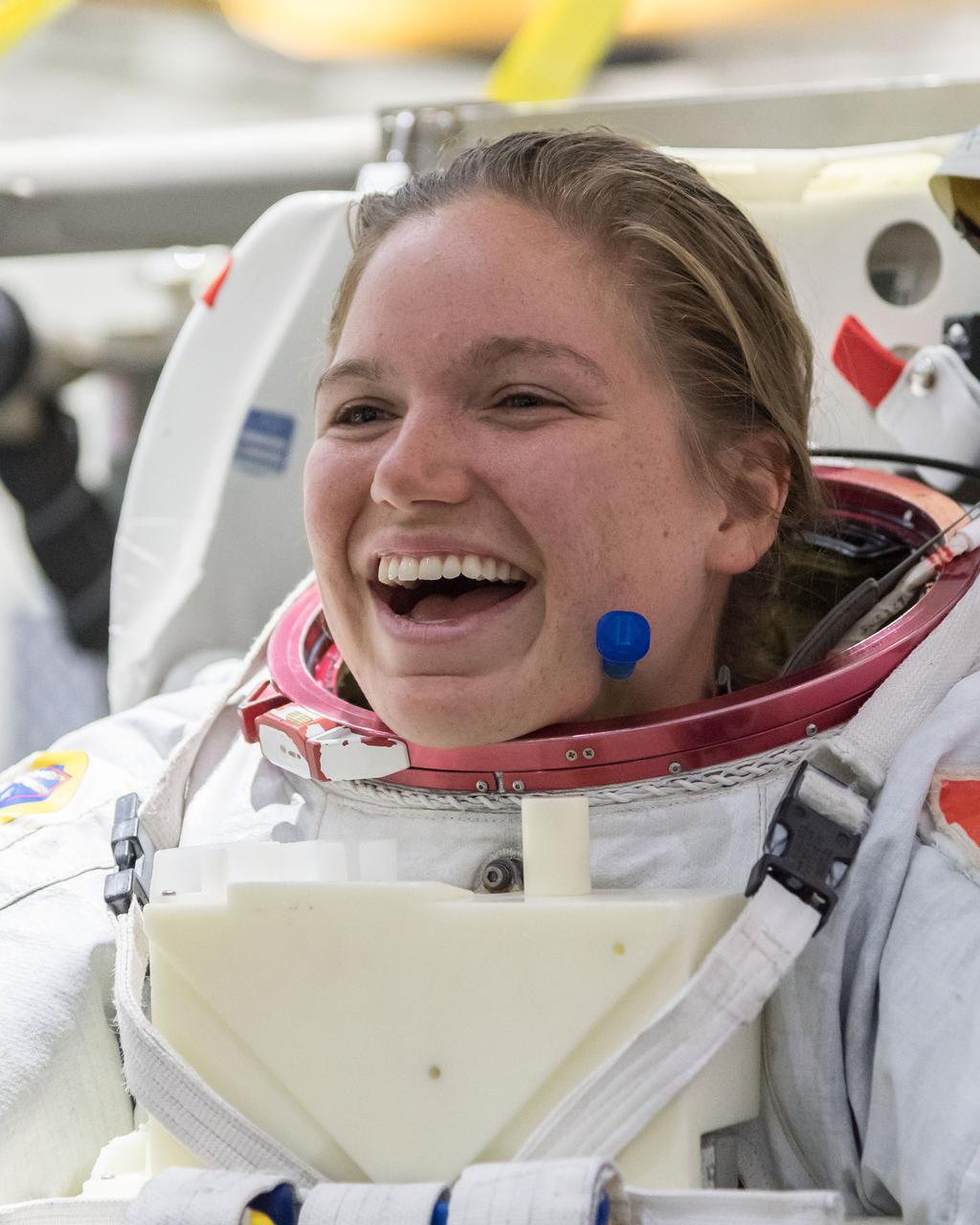
jsc2018e065022 (07/19/2018) --- Canadian Space Agency astronaut candidate Jennifer Sidey-Gibbons in a spacesuit prior to underwater spacewalk training at NASA Johnson Space Center’s Neutral Buoyancy Laboratory in Houston. Photo Credit: (NASA/Josh Valcarcel)
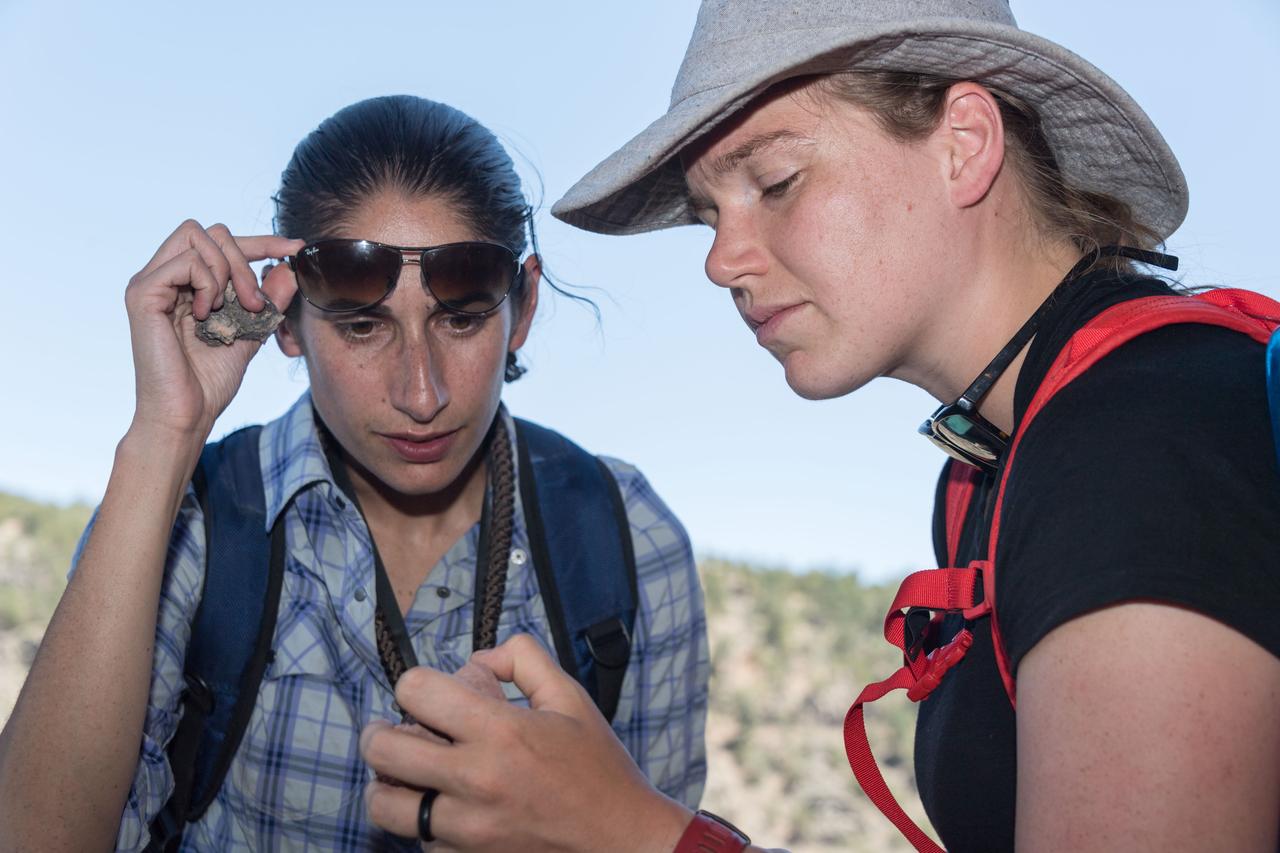
jsc2018e060323 (06/20/2018) --- 2017 NASA astronaut candidate Jasmin Moghbeli and Canadian Space Agency astronaut candidate Jennifer Sidey-Gibbons during earth and planetary science training in Rio Grande del Norte National Monument Upper Gorge Area near Questa, N.M. Photo Credit: (NASA/Norah Moran)
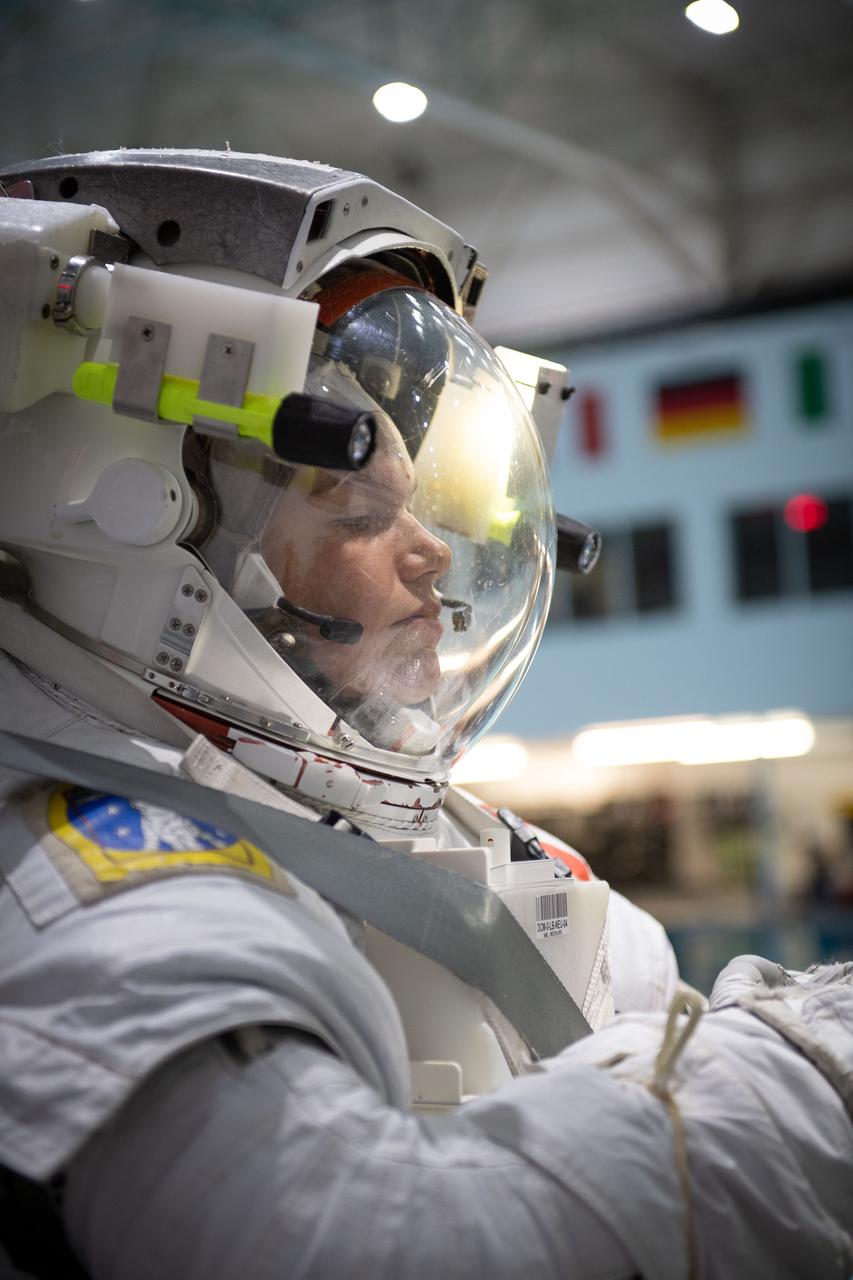
jsc2019e030033 (05-22-19) --- Canadian Space Agency astronaut candidate Jennifer Sidey-Gibbons prepares for underwater spacewalk training at NASA Johnson Space Center’s Neutral Buoyancy Laboratory in Houston. Photo Credit: (NASA/David DeHoyos)
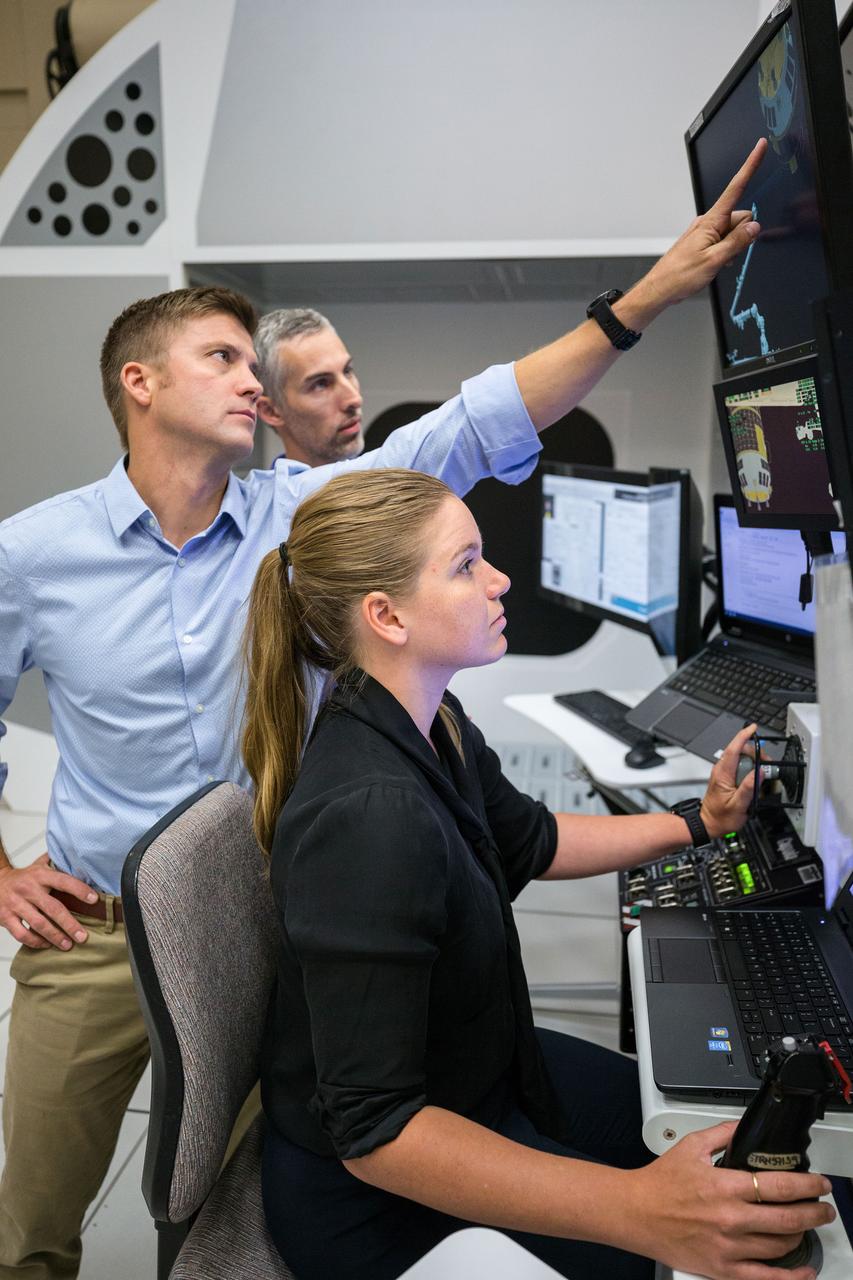
jsc2019e062853 (10-10-19) --- Canadian Space Agency (CSA) astronaut Jennifer Sidey-Gibbons (right) and NASA astronaut candidate Matthew Dominick (left) participate in Canadarm2 robotics training at CSA headquarters in Saint-Hubert, Quebec. Photo Credit: (Canadian Space Agency)
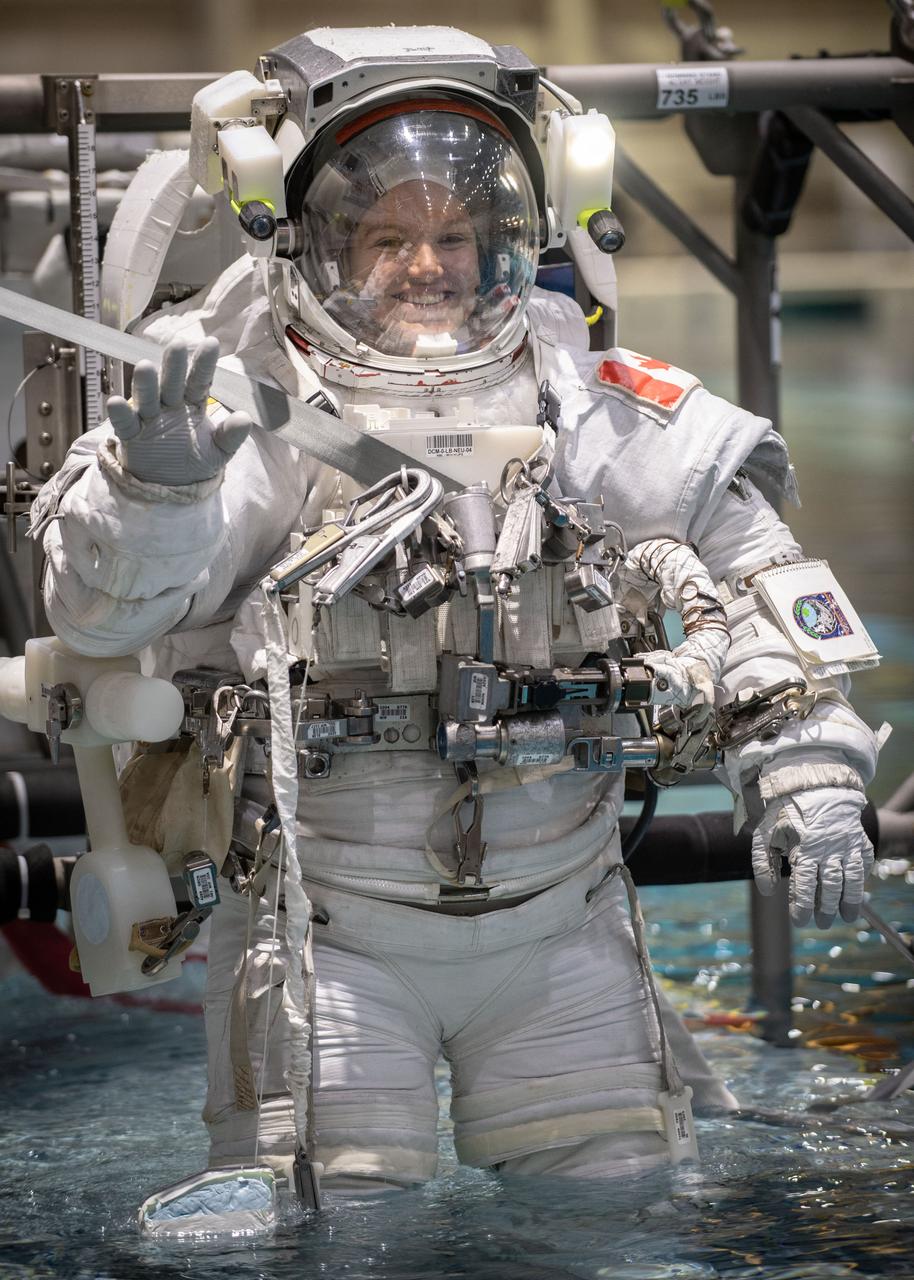
jsc2019e030049 (05-22-19) --- Canadian Space Agency astronaut candidate Jennifer Sidey-Gibbons is lowered into the training pool for spacewalk training at NASA Johnson Space Center’s Neutral Buoyancy Laboratory in Houston. Photo Credit: (NASA/David DeHoyos)
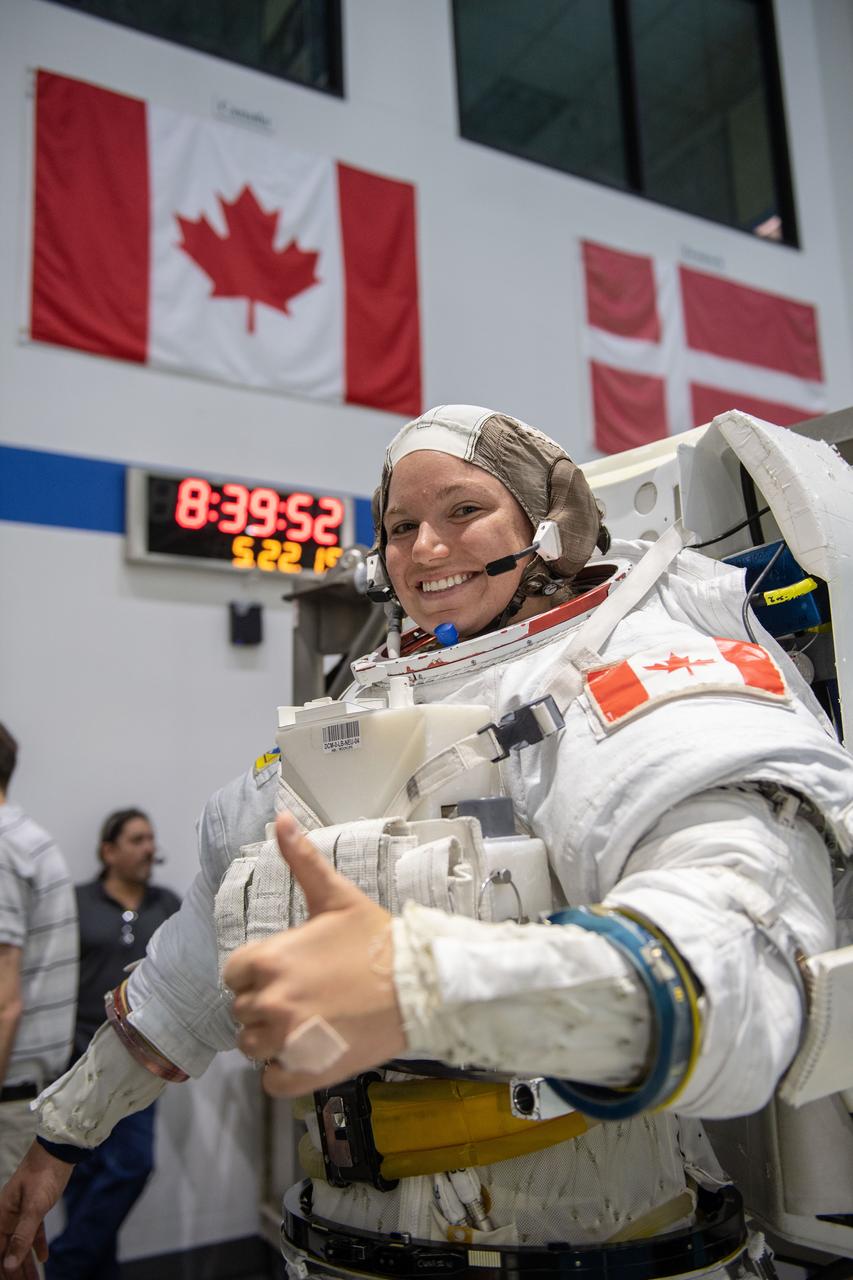
jsc2019e030018 (05-22-19) --- Canadian Space Agency astronaut candidate Jennifer Sidey-Gibbons in a spacesuit prior to underwater training at NASA Johnson Space Center’s Neutral Buoyancy Laboratory in Houston. Photo Credit: (NASA/David DeHoyos)
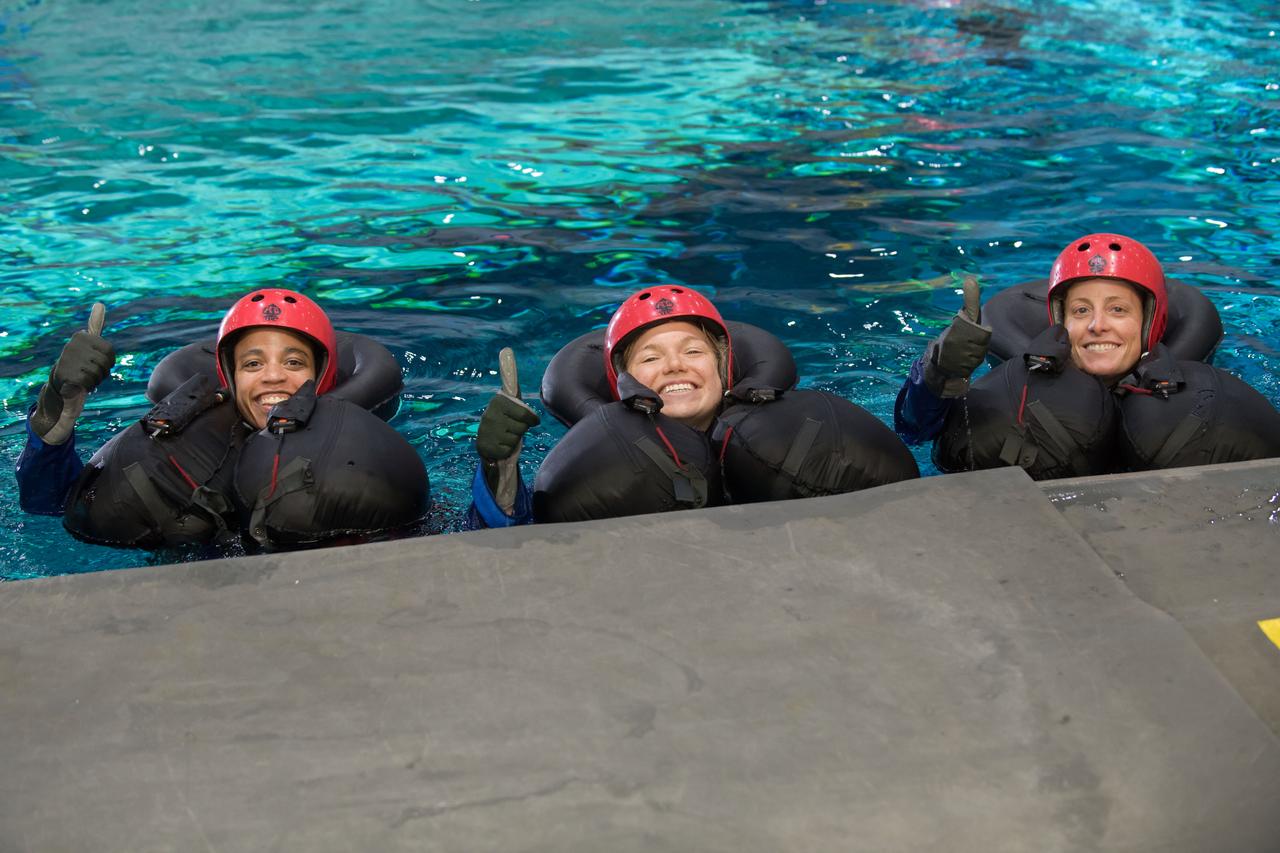
jsc2017e1117823 (08-23-2017) --- (From left) 2017 Astronaut candidates Jessica Watkins of NASA, Jennifer Sidey-Gibbons of CSA, and Loral O’Hara of NASA give a thumbs up after successful water survival training at NASA Johnson Space Center’s Neutral Buoyancy Laboratory in Houston. Photo Credit: (NASA/David DeHoyos)
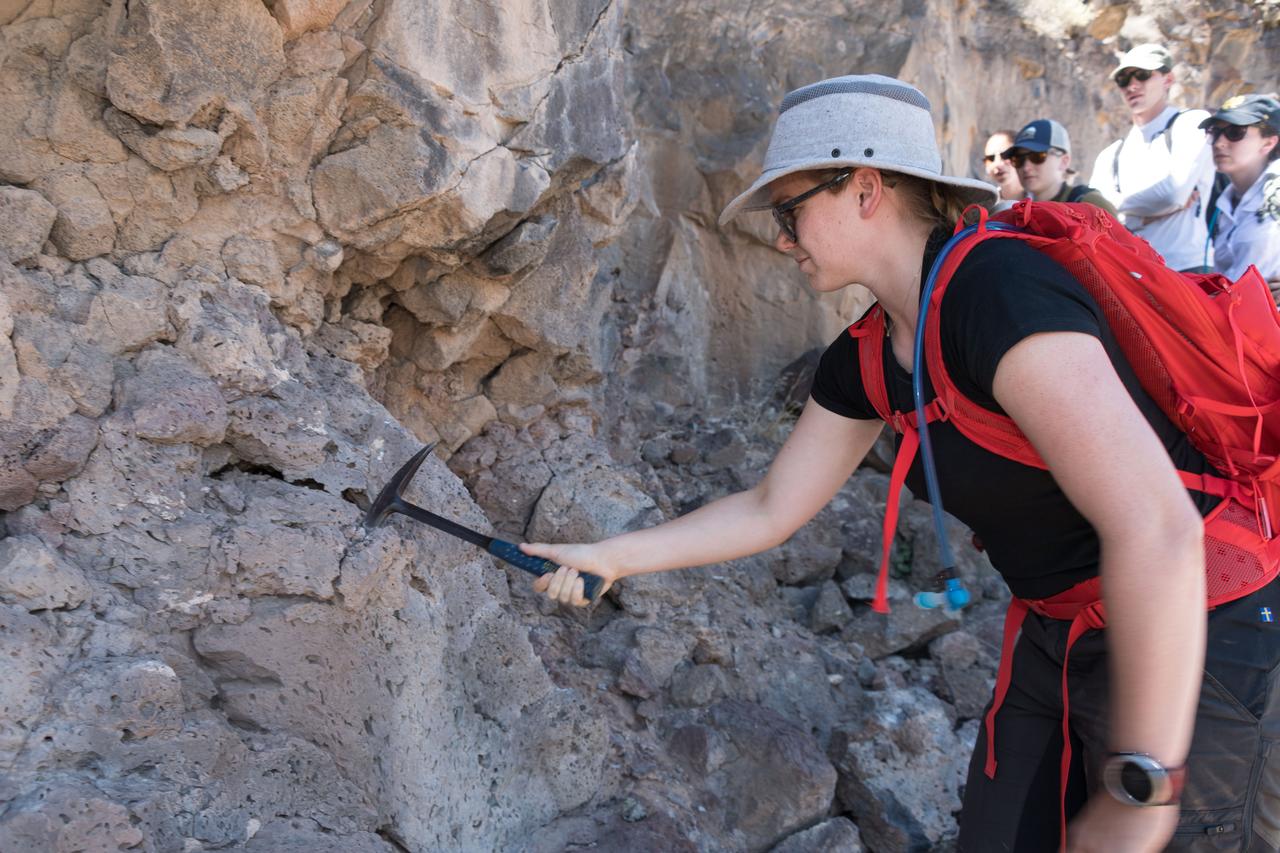
jsc2018e060335 (06/20/2018) --- Canadian Space Agency astronaut candidate Jennifer Sidey-Gibbons during earth and planetary science training in Rio Grande del Norte National Monument Upper Gorge Area near Questa, N.M. Photo Credit: (NASA/Norah Moran)
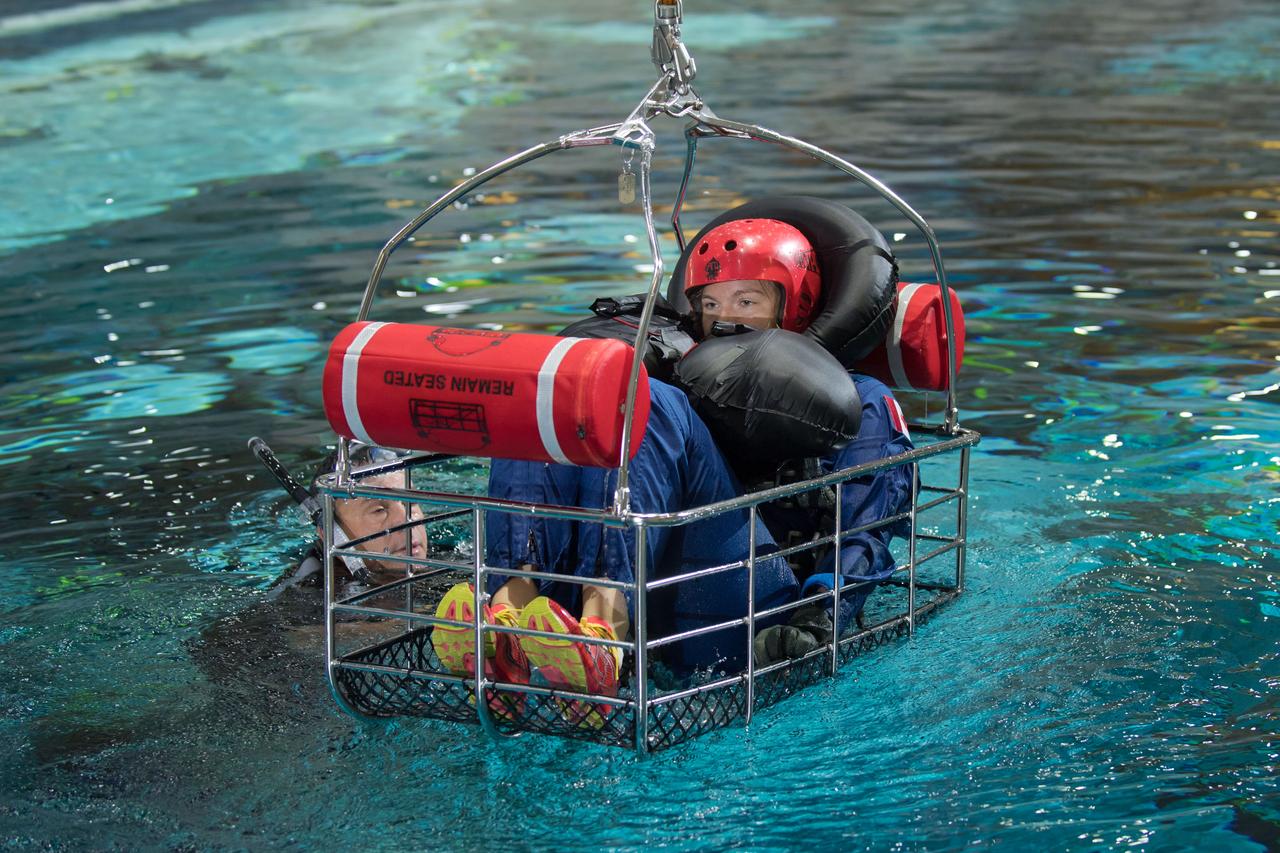
jsc2017e1117871 (08-23-2017) --- During water survival training in 2017 at NASA Johnson Space Center’s Neutral Buoyancy Laboratory in Houston, Canadian Space Agency astronaut candidate Jennifer Sidey-Gibbons is guided through training by divers. Photo Credit: (NASA/David DeHoyos)
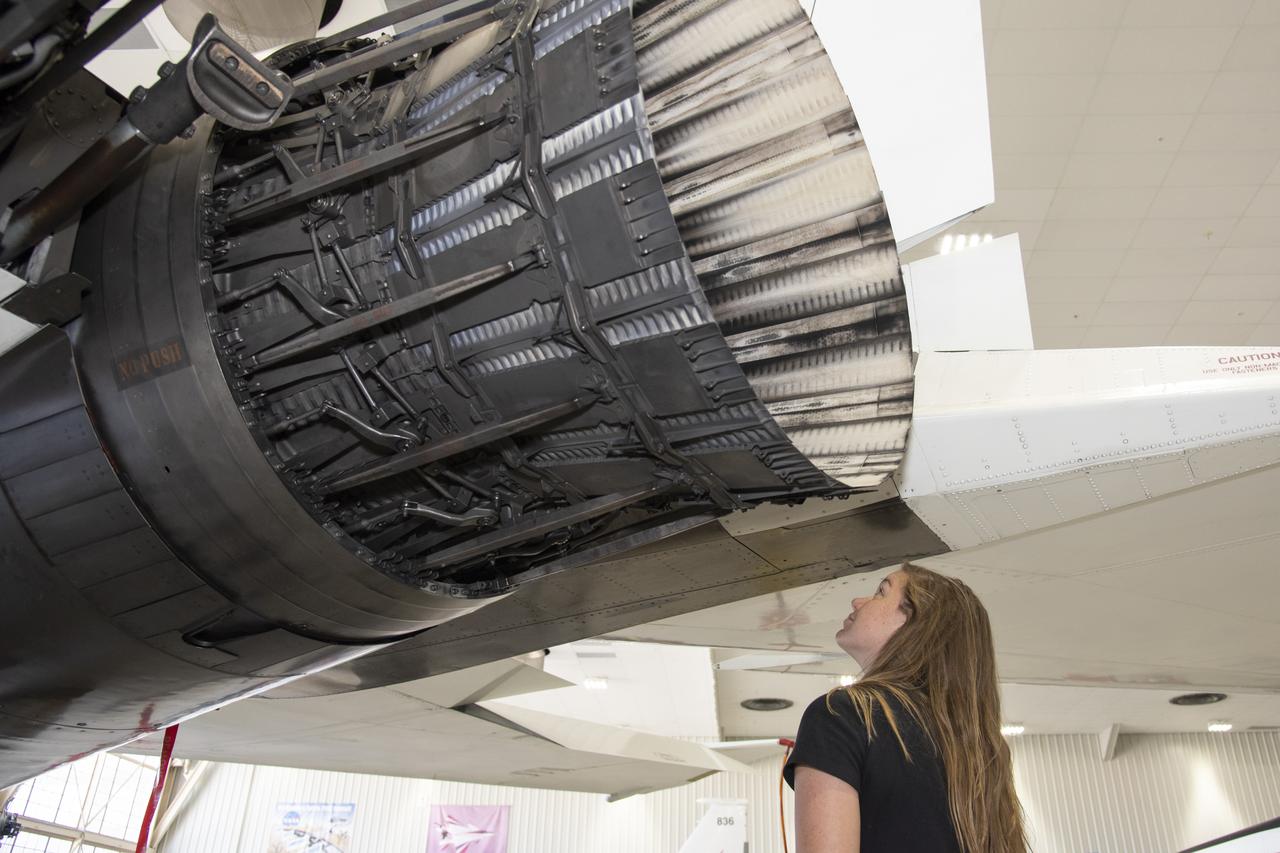
NASA’s 2017 astronaut candidates toured aircraft hangar at Armstrong Flight Research Center, in Southern California where Jenni Sidey-Gibbons looks inside engine nozzle of F-15 jet. The F-15 will fly in tandem with the X-59 QueSST during early flight test stages for the X-59 development.

Artemis II prime crewmembers NASA astronauts Reid Wiseman, commander; Victor Glover, pilot; Christina Koch, mission specialist; and CSA (Canadian Space Agency) astronaut Jeremy Hansen, mission specialist and their backups CSA (Canadian Space Agency) astronaut Jenni Gibbons and NASA astronaut Andre Douglas are seen as they watch NASA’s Artemis II Space Launch System (SLS) rocket and Orion spacecraft, secured to the mobile launcher, make the 4.2 mile journey toward Launch Pad 39B, Saturday, Jan. 17, 2026, at NASA’s Kennedy Space Center in Florida. NASA’s Artemis II test flight will take Wiseman, Glover, Koch, and Hansen around the Moon and back to Earth no later than April 2026. Photo Credit: (NASA/Joel Kowsky)
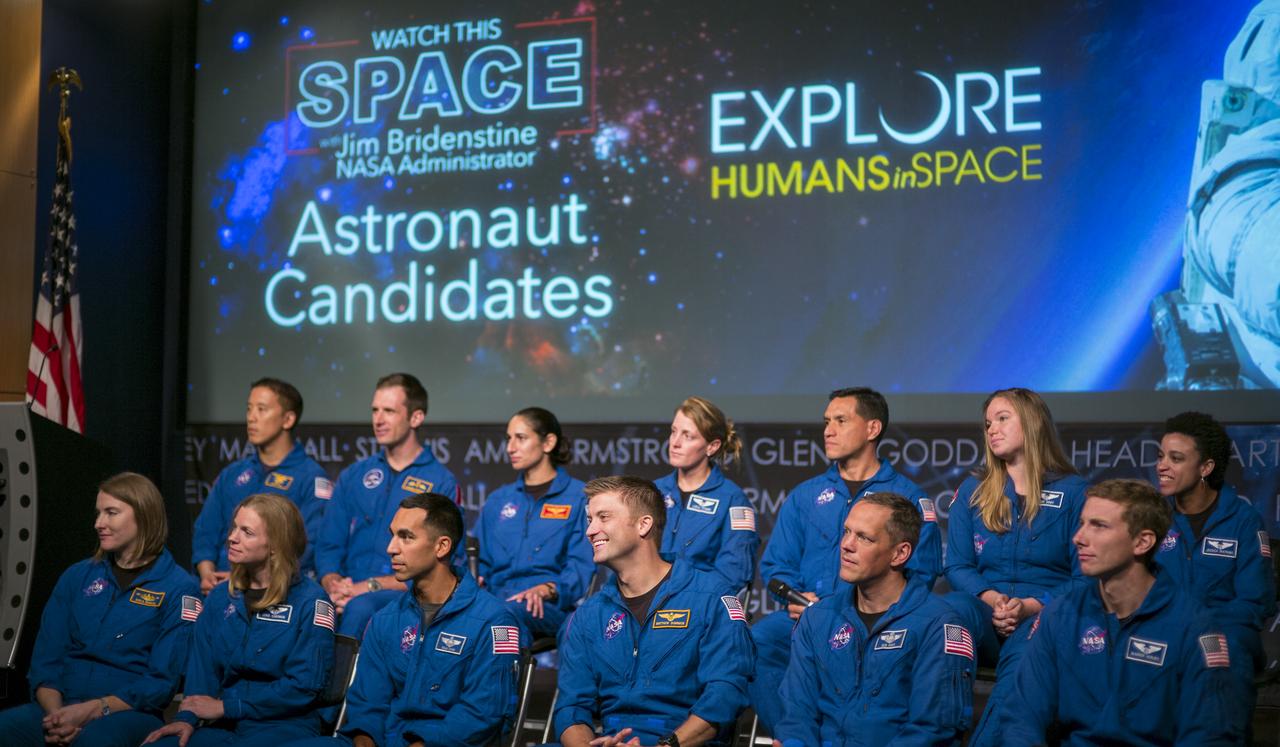
Astronaut candidates, back row from left, Jonny Kim, Joshua Kutryk of the Canadian Space Agency, Jasmin Moghbeli, Loral O’Hara, Frank Rubio, Jennifer Sidey-Gibbons of the Canadian Space Agency, Jessica Watkins, front row from left, Kayla Barron, Zena Cardman, Raja Chari, Matthew Dominick, Bob Hines, and Warren Hoburg are seen during a live episode of the Administrator's monthly chat show, Watch This Space, Thursday, Sept. 27, 2018 in the Webb Auditorium at NASA Headquarters in Washington. NASA's newest astronaut candidate class has started their two years of training, after which the new astronaut candidates could be assigned to missions performing research on the International Space Station, launching from American soil on spacecraft built by commercial companies, and launching on deep space missions on NASA’s new Orion spacecraft and Space Launch System rocket. Photo Credit: (NASA/Joel Kowsky)
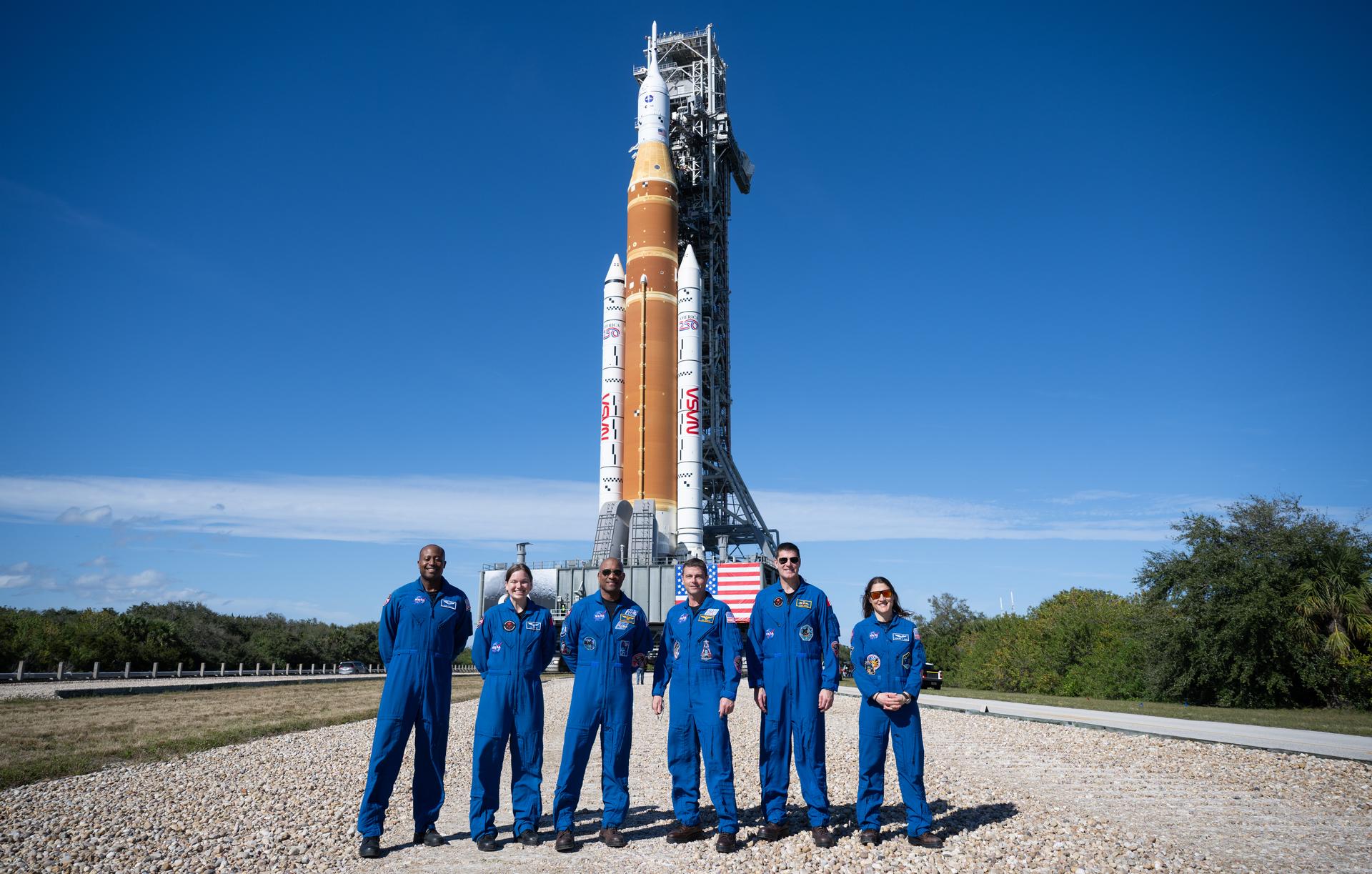
From left: Artemis II backup crewmembers NASA astronaut Andre Douglas and CSA (Canadian Space Agency) astronaut Jenni Gibbons and prime crewmembers NASA astronauts Victor Glover, Reid Wiseman, CSA (Canadian Space Agency) astronaut Jeremy Hansen, and NASA astronaut Christina Koch, pose for a picture with NASA’s Space Launch System (SLS) rocket and Orion spacecraft, secured to the mobile launcher, as it makes the 4.2 mile journey from the Vehicle Assembly Building to Launch Pad 39B, Saturday, Jan. 17, 2026, at NASA’s Kennedy Space Center in Florida. NASA’s Artemis II test flight will take Commander Reid Wiseman, Pilot Victor Glover, and Mission Specialist Christina Koch from NASA, and Mission Specialist Jeremy Hansen from the CSA (Canadian Space Agency), around the Moon and back to Earth no later than April 2026. Photo Credit: (NASA/Joel Kowsky)
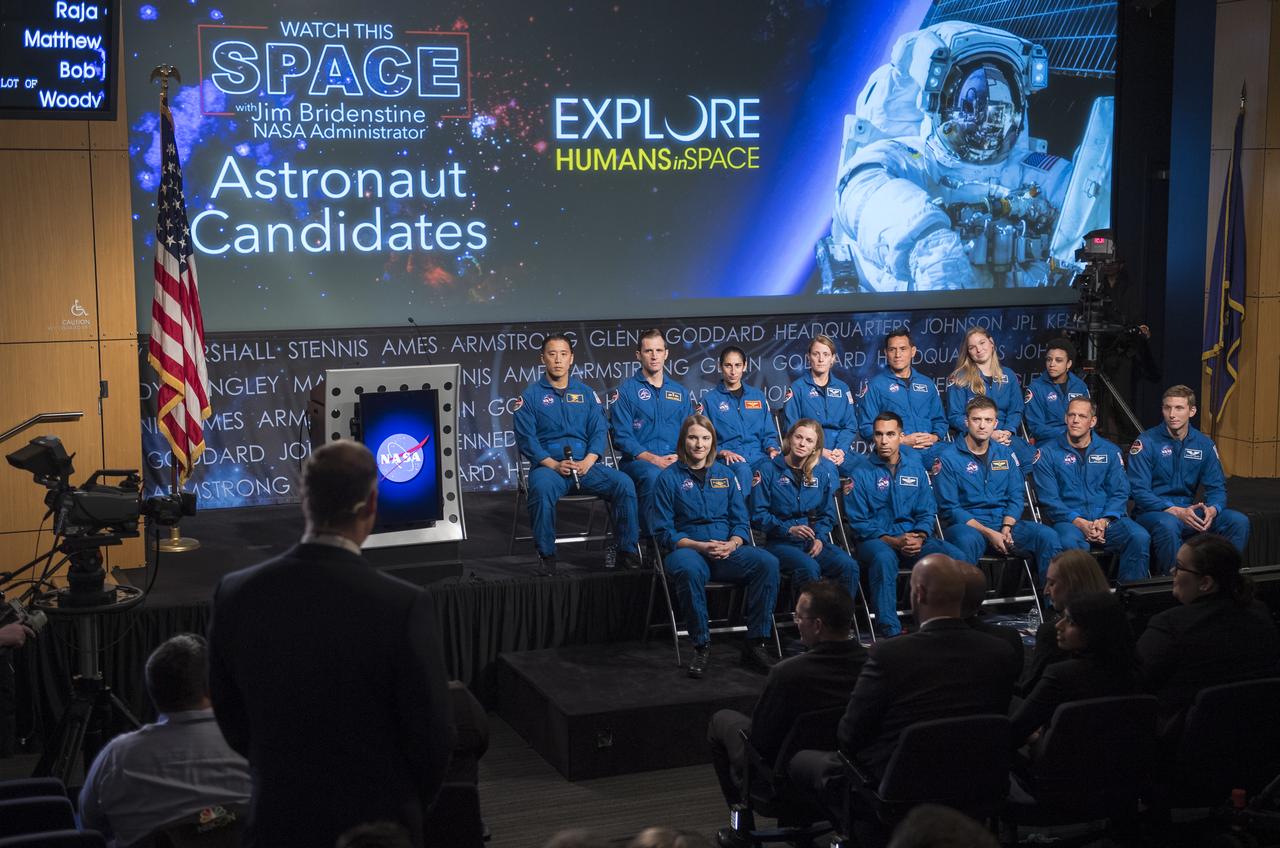
Astronaut candidates, back row from left, Jonny Kim, Joshua Kutryk of the Canadian Space Agency, Jasmin Moghbeli, Loral O’Hara, Frank Rubio, Jennifer Sidey-Gibbons of the Canadian Space Agency, Jessica Watkins, front row from left, Kayla Barron, Zena Cardman, Raja Chari, Matthew Dominick, Bob Hines, and Warren Hoburg listen to a question from NASA Administrator Jim Bridenstine during a live episode of the Administrator's monthly chat show, Watch This Space, Thursday, Sept. 27, 2018 in the Webb Auditorium at NASA Headquarters in Washington. NASA's newest astronaut candidate class has started their two years of training, after which the new astronaut candidates could be assigned to missions performing research on the International Space Station, launching from American soil on spacecraft built by commercial companies, and launching on deep space missions on NASA’s new Orion spacecraft and Space Launch System rocket. Photo Credit: (NASA/Joel Kowsky)
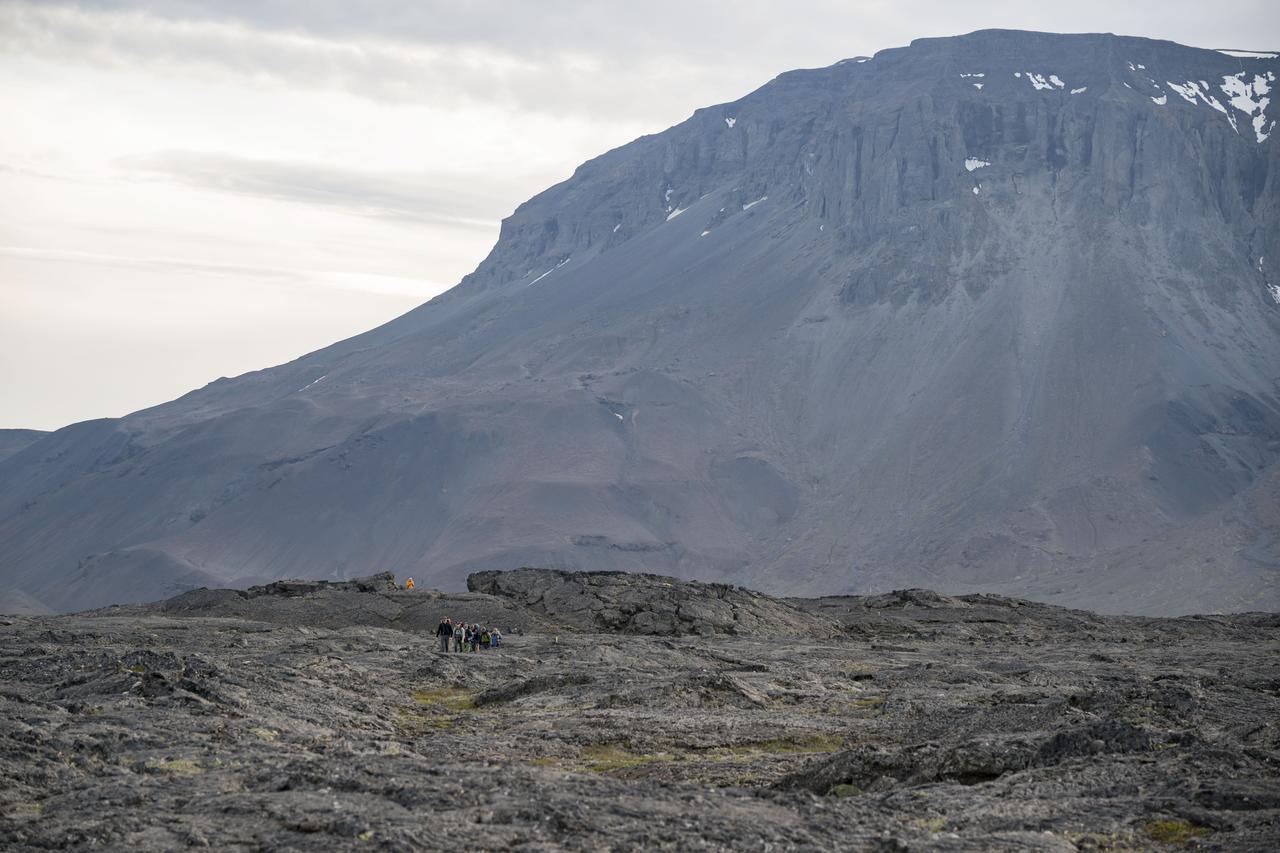
The Artemis II crew, NASA astronauts Reid Wiseman, Victor Glover, Christina Koch, and Canadian Space Agency (CSA) astronaut Jeremy Hansen, and backup crew members NASA astronaut Andre Douglas and CSA astronaut Jenni Gibbons trek across the Icelandic landscape during their field geology training. Credits: NASA/Robert Markowitz
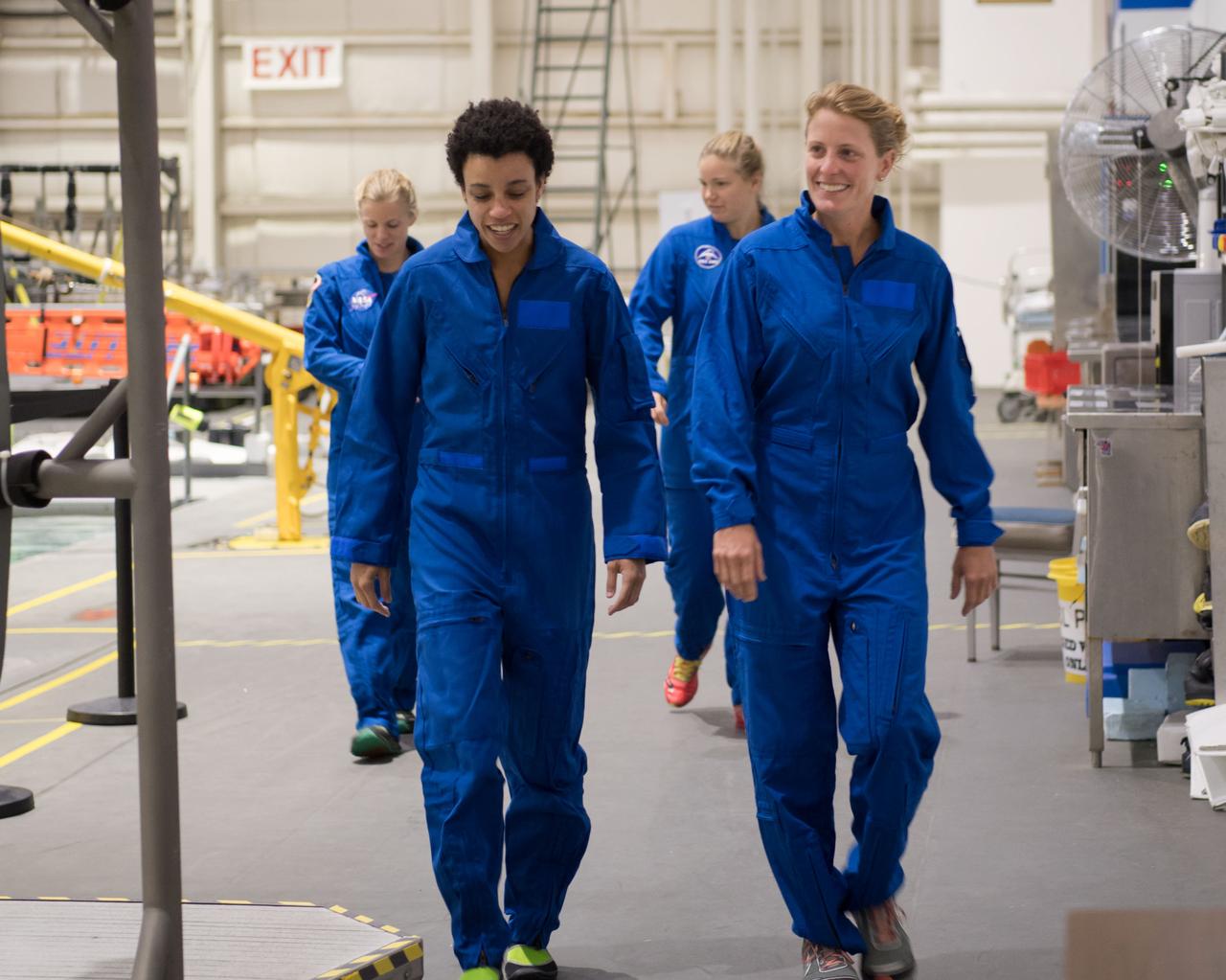
jsc2017e111693 (08-23-2017) --- (From left, foreground) 2017 NASA astronaut candidates Jessica Watkins, Loral O’Hara, (from left, background) Zena Cardman and Canadian Space Agency astronaut candidate Jennifer Sidey-Gibbons during water survival training at NASA Johnson Space Center’s Neutral Buoyancy Laboratory in Houston. (NASA/David DeHoyos)
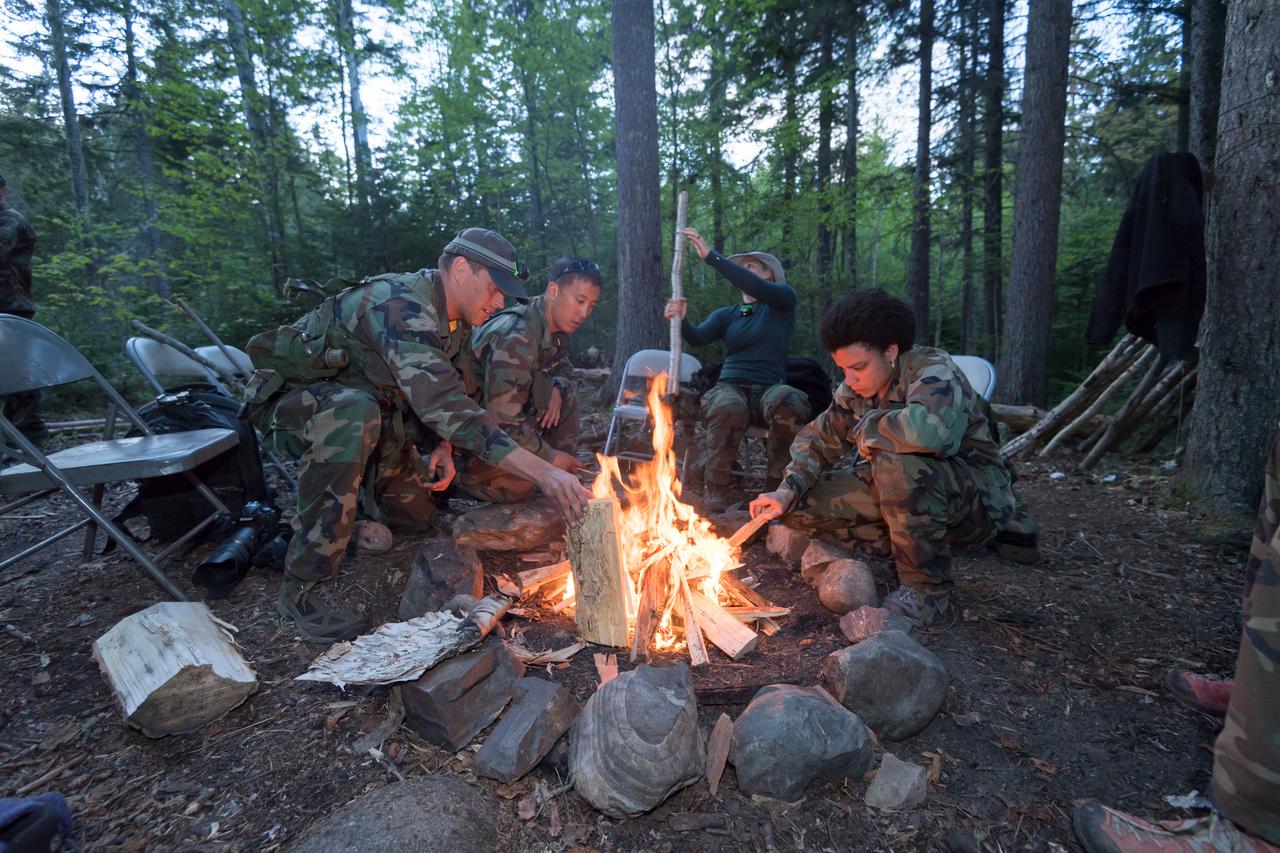
jsc2018e052190 (May 30, 2018) --- (From left) 2017 NASA astronaut candidates Bob Hines, Jonny Kim, and Jessica Watkins care for their fire while Canadian Space Agency astronaut candidate Jennifer Sidey-Gibbons preps more wood during wilderness survival training at the U.S. Navy’s Survival, Evasion, Resistance, and Escape School in Brunswick, Maine. Photo Credit: NASA/Josh Valcarcel
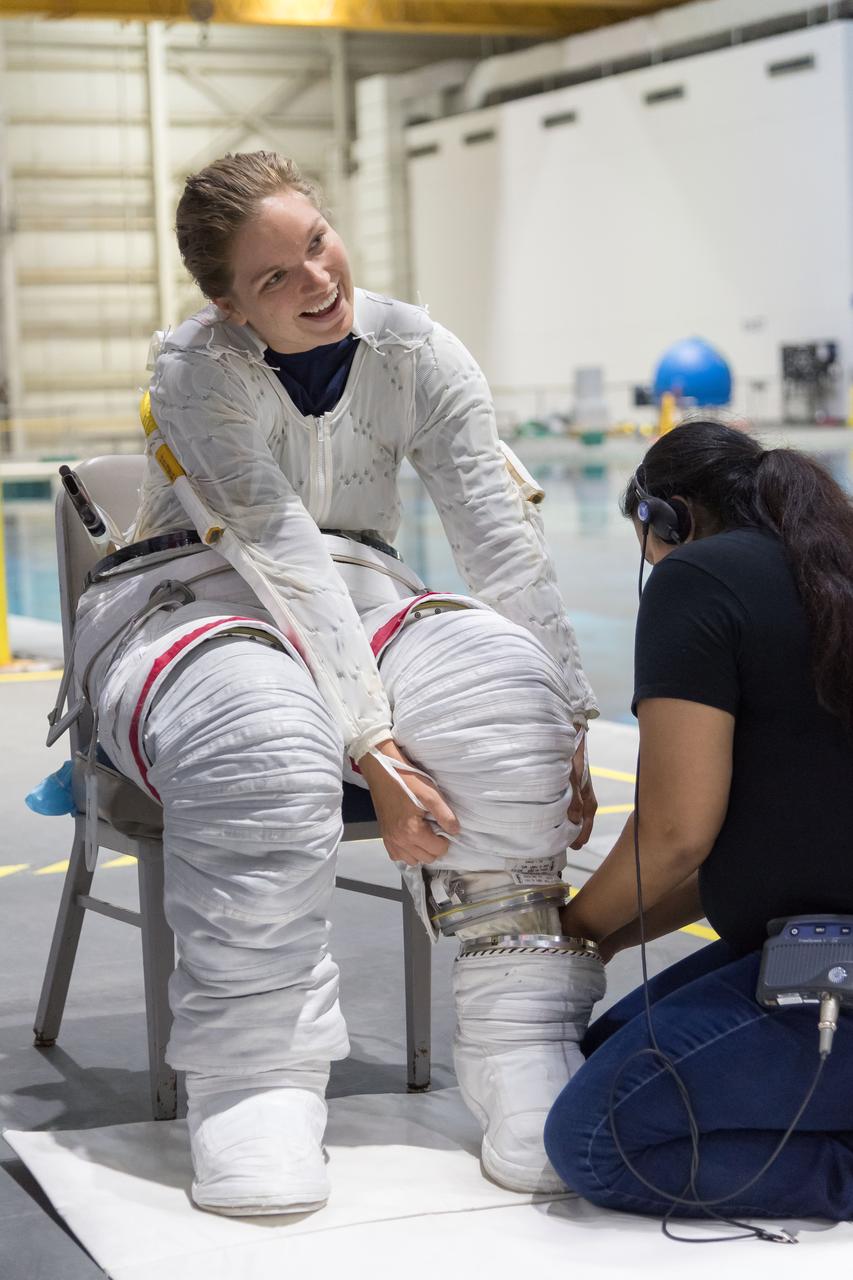
jsc2018e065018 (July 19, 2018) --- Canadian Space Agency astronaut candidate Jennifer Sidey-Gibbons in a Liquid Cooling and Ventilation Garment and being helped into a spacesuit prior to underwater spacewalk training at NASA Johnson Space Center’s Neutral Buoyancy Laboratory in Houston. The cooling garment distributes water throughout to help keep her cool while training underwater. Photo Credit: (NASA/Josh Valcarcel)
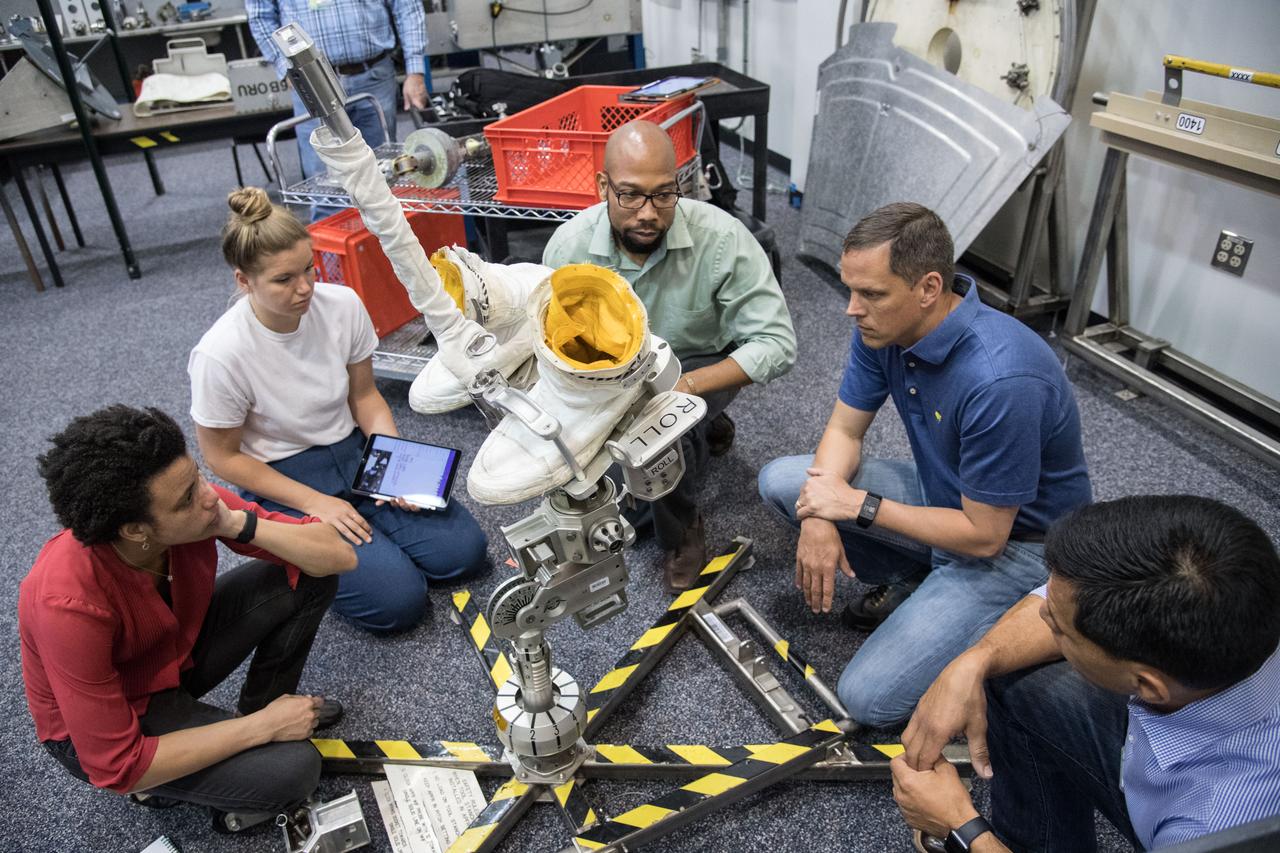
jsc2018e049894 (05-18-18) ---(From left) 2017 NASA astronaut candidate Jessica Watkins, Canadian Space Agency astronaut candidate Jennifer Sidey-Gibbons, and NASA astronaut candidates Bob Hines and Frank Rubio are instructed on International Space Station tools associated with their spacesuits at NASA Johnson Space Center’s Neutral Buoyancy Laboratory in Houston. Photo Credit: (NASA/James Blair)
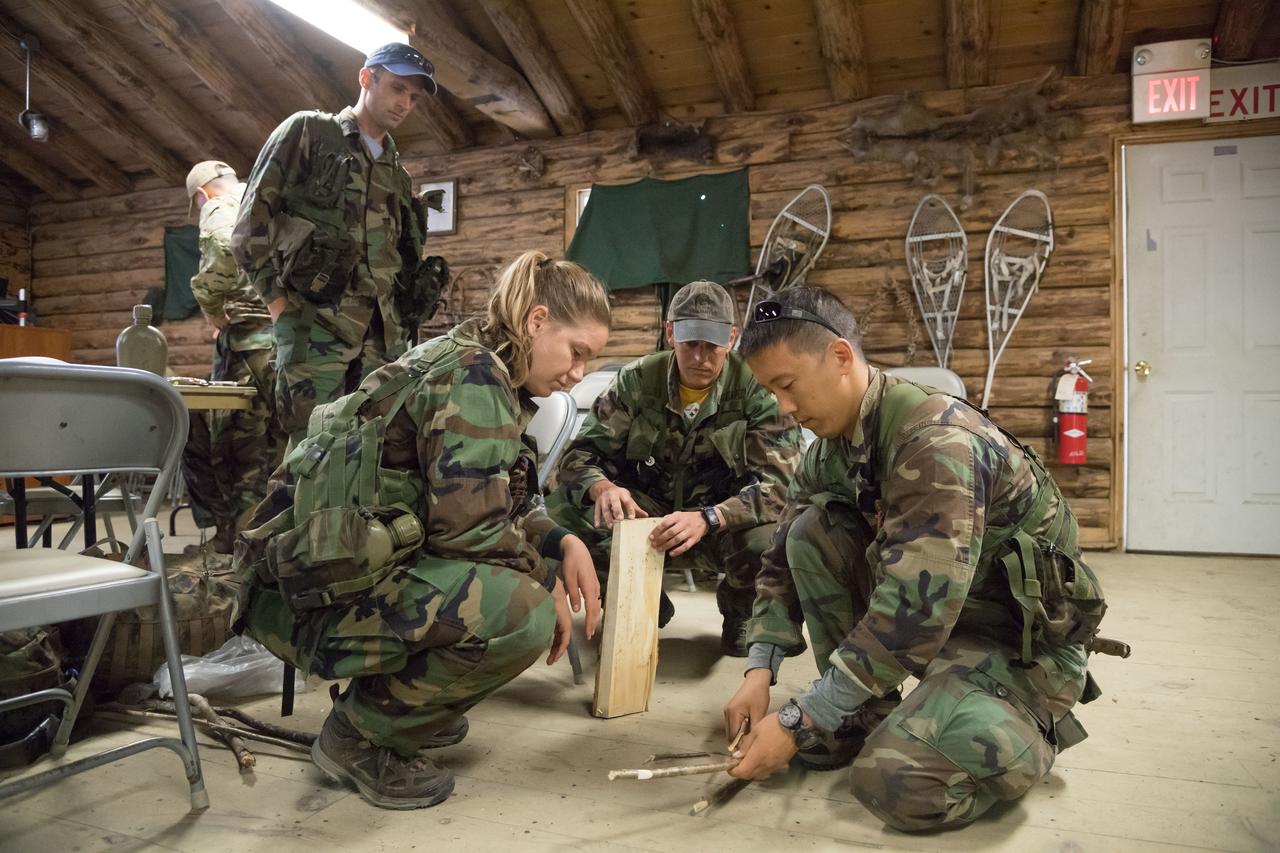
jsc2018e052122 (May 30, 2018) --- (From left) 2017 NASA astronaut candidate Jonny Kim prepares for his next assignment as Canadian Space Agency astronaut candidates Joshua Kutryk (standing), Jennifer Sidey-Gibbons, and NASA astronaut candidate Bob Hines look on during wilderness survival training at the U.S. Navy’s Survival, Evasion, Resistance, and Escape School in Brunswick, Maine. Photo Credit: (NASA/Josh Valcarcel)
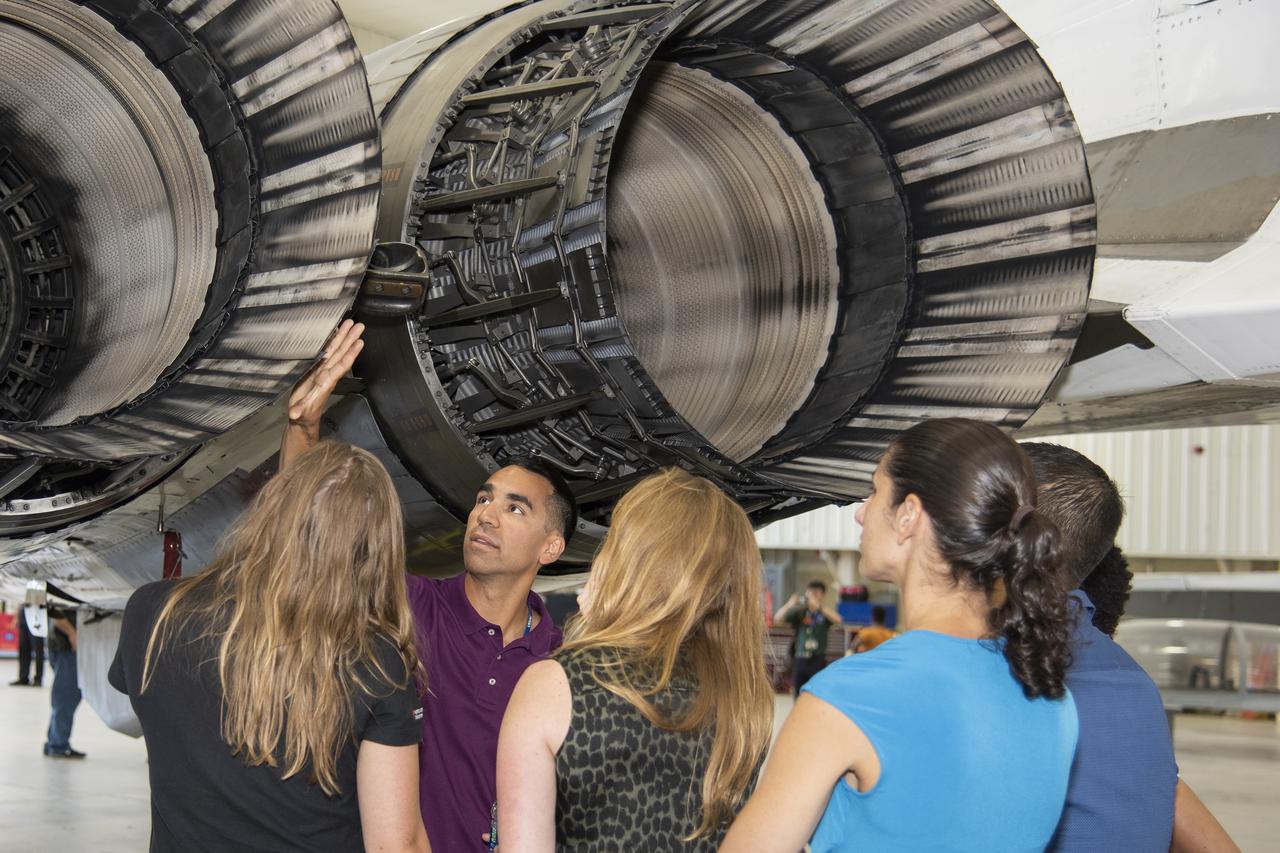
NASA's 2017 astronaut candidates toured aircraft hangar at Armstrong Flight Research Center, in Southern California (L to R) Jenni Sidey-Gibbons, Raja Chari, Loral O'Hara, Jasmin Moghbeli, Jonny Kim and Jessica Watkins look inside the engine nozzle of an F-15 jet. The F-15 will fly in tandem with the X-59 QueSST during early flight test stages for the X-59 development.

jsc2017e118972 (September 21, 2017) --- (From left) 2017 NASA astronaut candidates Jessica Watkins and Frank Rubio and Canadian Space Agency astronaut candidate Jennifer Sidey-Gibbons are lowered into the training pool during helicopter water survival training at NASA Johnson Space Center’s Neutral Buoyancy Laboratory in Houston. Photo Credit: (NASA/Josh Valcarcel)
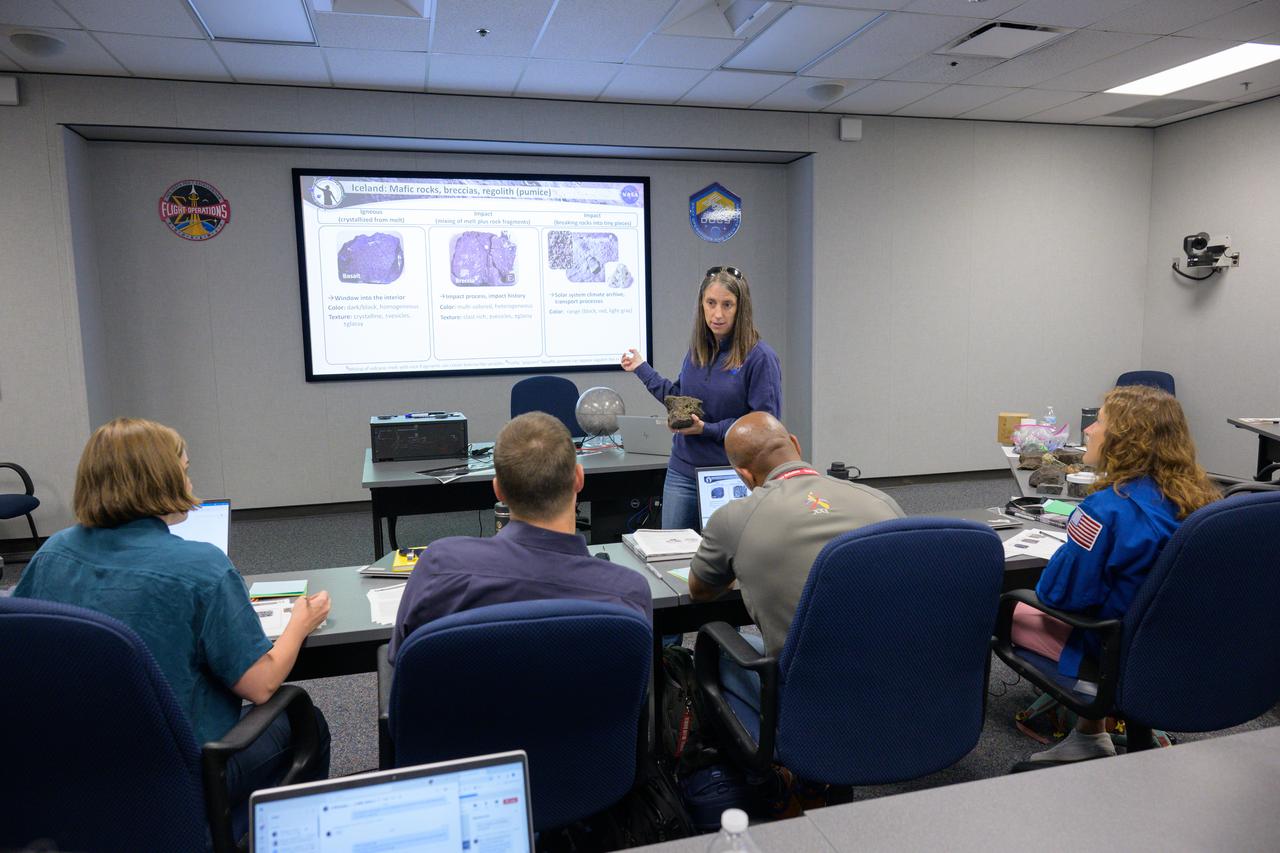
jsc2024e040812 (June 7, 2024) --- Juliane Gross, curation lead for the Artemis Internal Science Team, leads a geology lesson for the Artemis II crew at NASA's Johnson Space Center in Houston. Artemis II crew members pictured are, from left, Canadian Space Agency (CSA) astronauts Jenni Gibbons and Jeremey Hansen, along with NASA astronauts Victor Glover, and Christina Koch.
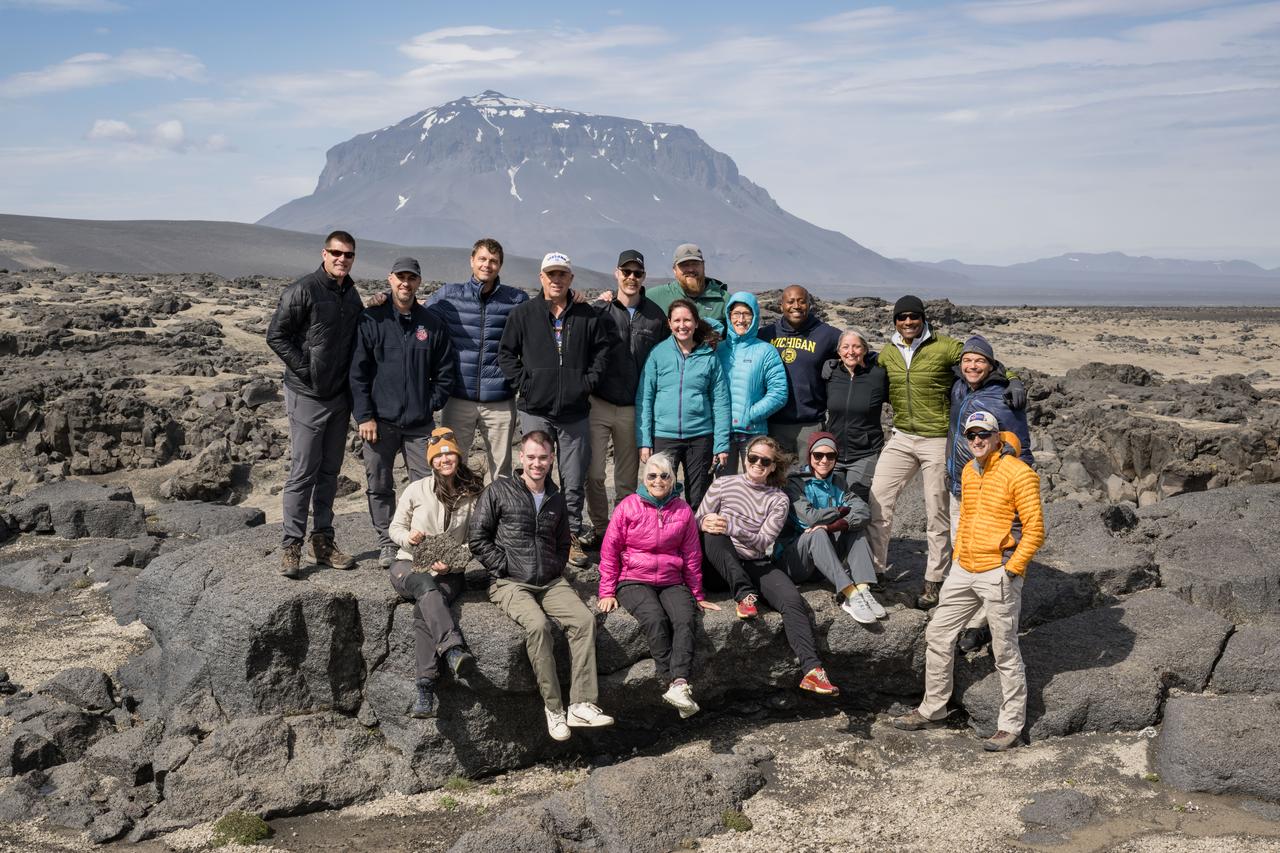
The Artemis II crew astronauts, their backups, and the geology training field team pose in a valley in Iceland’s Vatnajökull national park. From front left: Angela Garcia, Jacob Richardson, Cindy Evans, Jenni Gibbons, Jacki Mahaffey, back row from left: Jeremy Hansen, John Ramsey, Reid Wiseman, Ron Spencer, Scott Wray, Kelsey Young, Patrick Whelley, Christina Koch, Andre Douglas, Jacki Kagey, Victor Glover, Rick Rochelle (NOLS), Trevor Graff.

Charlie Blackwell-Thompson, Artemis II launch director at NASA's Kennedy Space Center speaks with NASA astronaut Reid Wiseman, Artemis II commander, right, while Artemis II backup crew member CSA (Canadian Space Agency) astronaut Jenni Gibbons looks on, left, in Firing Room One of the Rocco A. Petrone Launch Control Center as NASA’s Artemis II Space Launch System (SLS) rocket and Orion spacecraft, secured to the mobile launcher, roll out of High Bay 3 of the Vehicle Assembly Building to Launch Complex 39B, Saturday, Jan. 17, 2026, at NASA’s Kennedy Space Center in Florida. NASA’s Artemis II test flight will take Commander Reid Wiseman, Pilot Victor Glover, and Mission Specialist Christina Koch from NASA, and Mission Specialist Jeremy Hansen from the CSA (Canadian Space Agency), around the Moon and back to Earth no later than April 2026. Photo Credit: (NASA/Aubrey Gemignani)
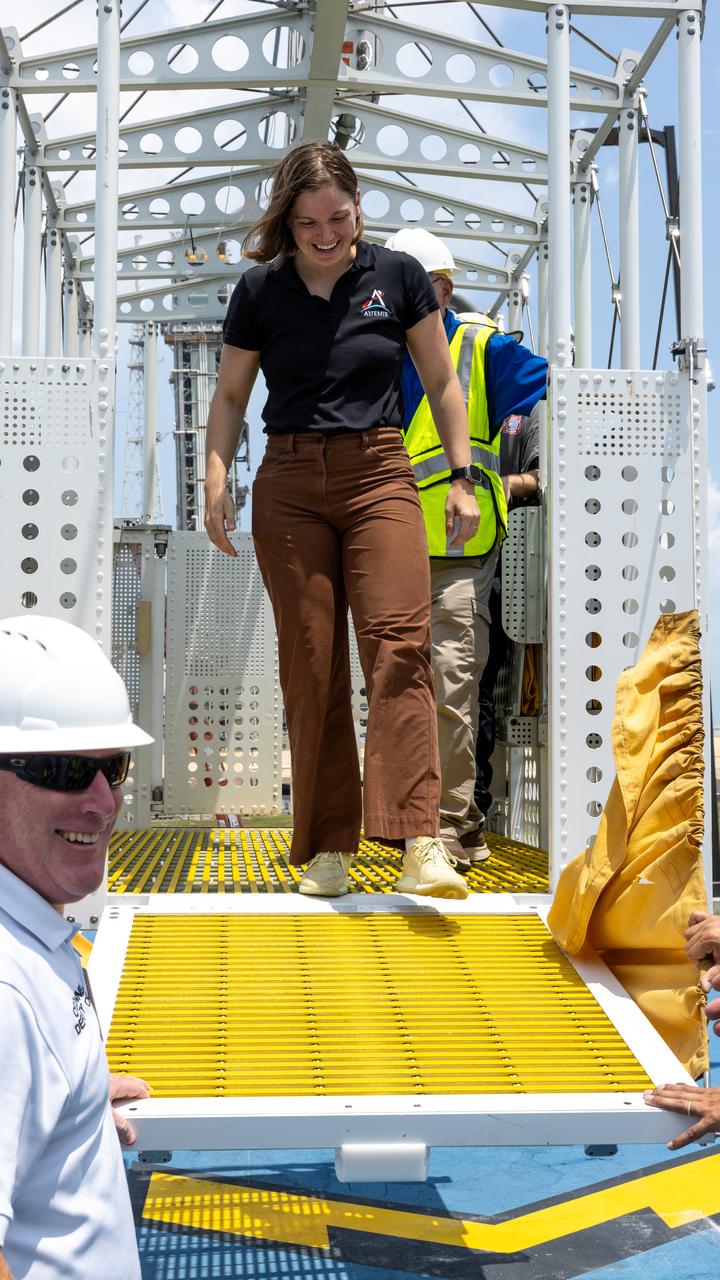
Artemis II backup crew member, CSA (Canadian Space Agency) astronaut Jenni Gibbons, participates in the Artemis II emergency egress demonstration, which is one of the integrated system verification and validation tests taking place at Launch Complex 39B at the agency’s Kennedy Space Center in Florida on Thursday, Aug. 8, 2024. The baskets, similar to gondolas on ski lifts, are used in the case of a pad abort emergency to enable astronauts and other pad personnel a way to quickly escape away from the mobile launcher to the base of the pad and where waiting emergency transport vehicles will then drive them away.
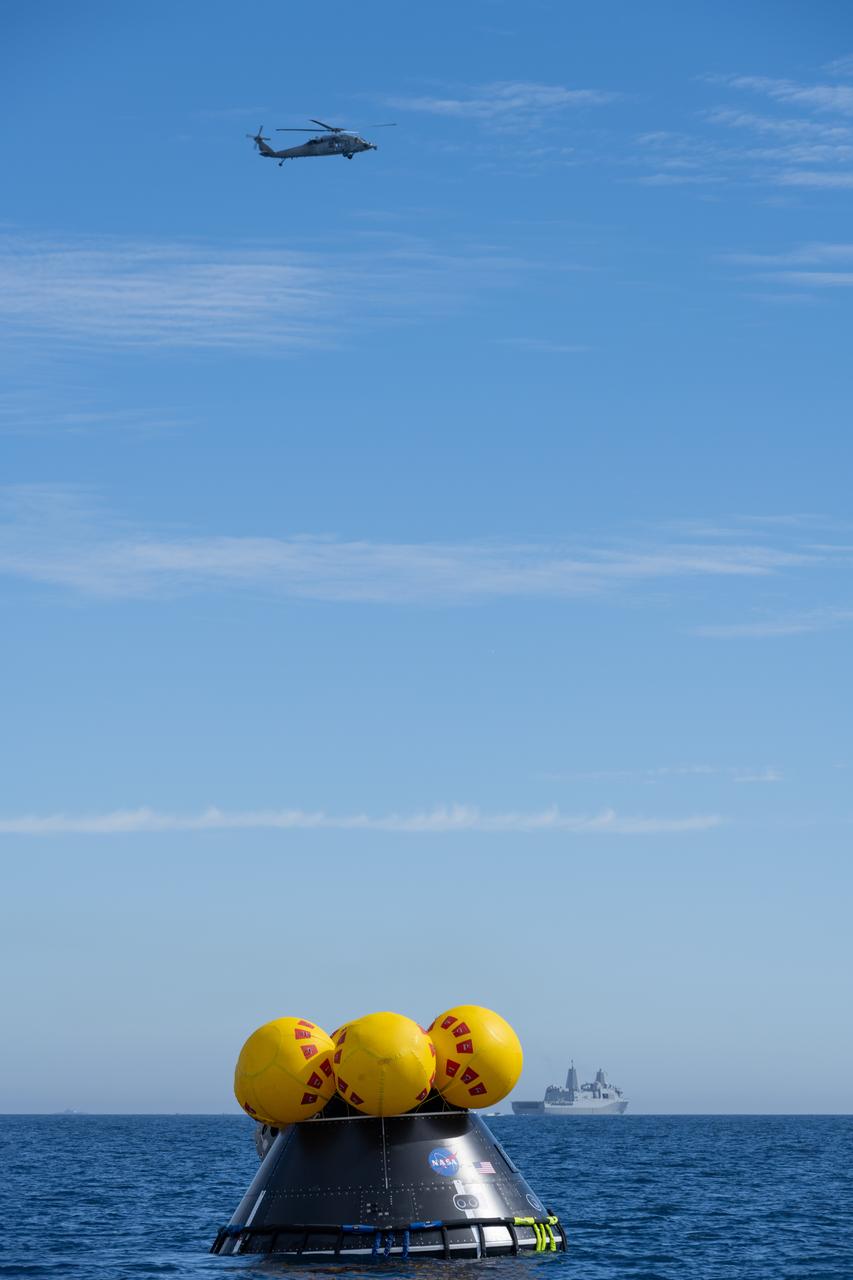
Members of NASA’s Exploration Ground System’s Landing and Recovery team and partners from the Department of Defense aboard the USS San Diego practice recovery procedures using the Crew Module Test Article with NASA Astronaut Candidate Chris Birch; Jenni Gibbons, CSA (Canadian Space Agency) astronaut; and two members of the United States Navy Helicopter Sea Combat Squadron 23, during Underway Recovery Test 11 (URT-11) off the coast of San Diego on Friday, Feb. 23, 2024. URT-11 is the eleventh in a series of Artemis recovery tests, and the first time NASA and its partners put their Artemis II recovery procedures to the test with the astronauts.
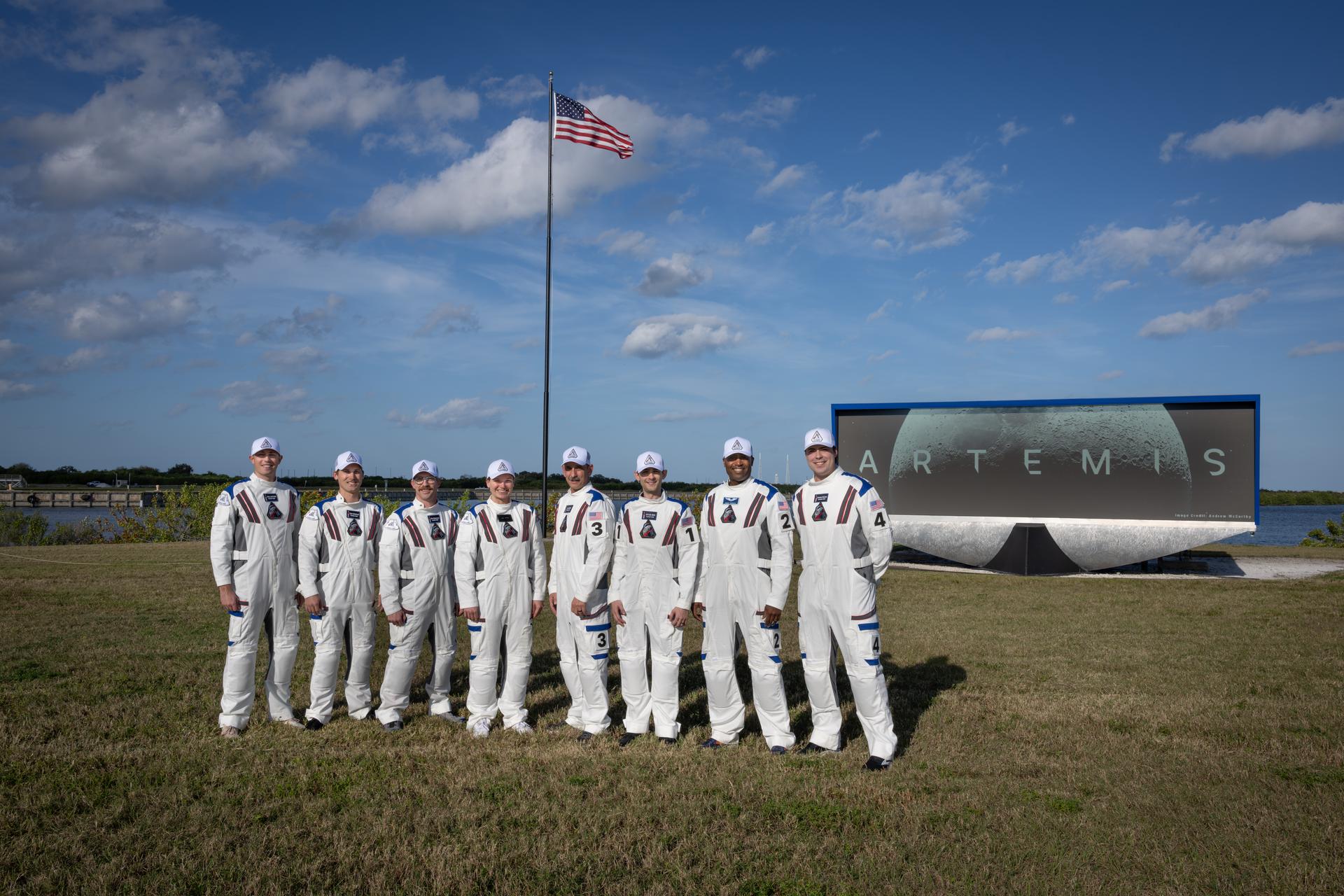
Members of the Artemis II closeout crew, from left, William Sattler; Tyler Sutherland; Michael Heinemann; Jenni Gibbons, Artemis II backup crew member; Bill Owens; Taylor Hose; Andre Douglas, Artemis II backup crew member; and Christian Warriner pose for a photo near the countdown clock featuring the Artemis Moon logo at the NASA News Center at the agency’s Kennedy Space Center in Florida on Thursday, Dec. 19, 2025. The closeout crew is responsible for safely securing the astronauts inside the Orion spacecraft on launch day and closing the hatch during launch countdown.
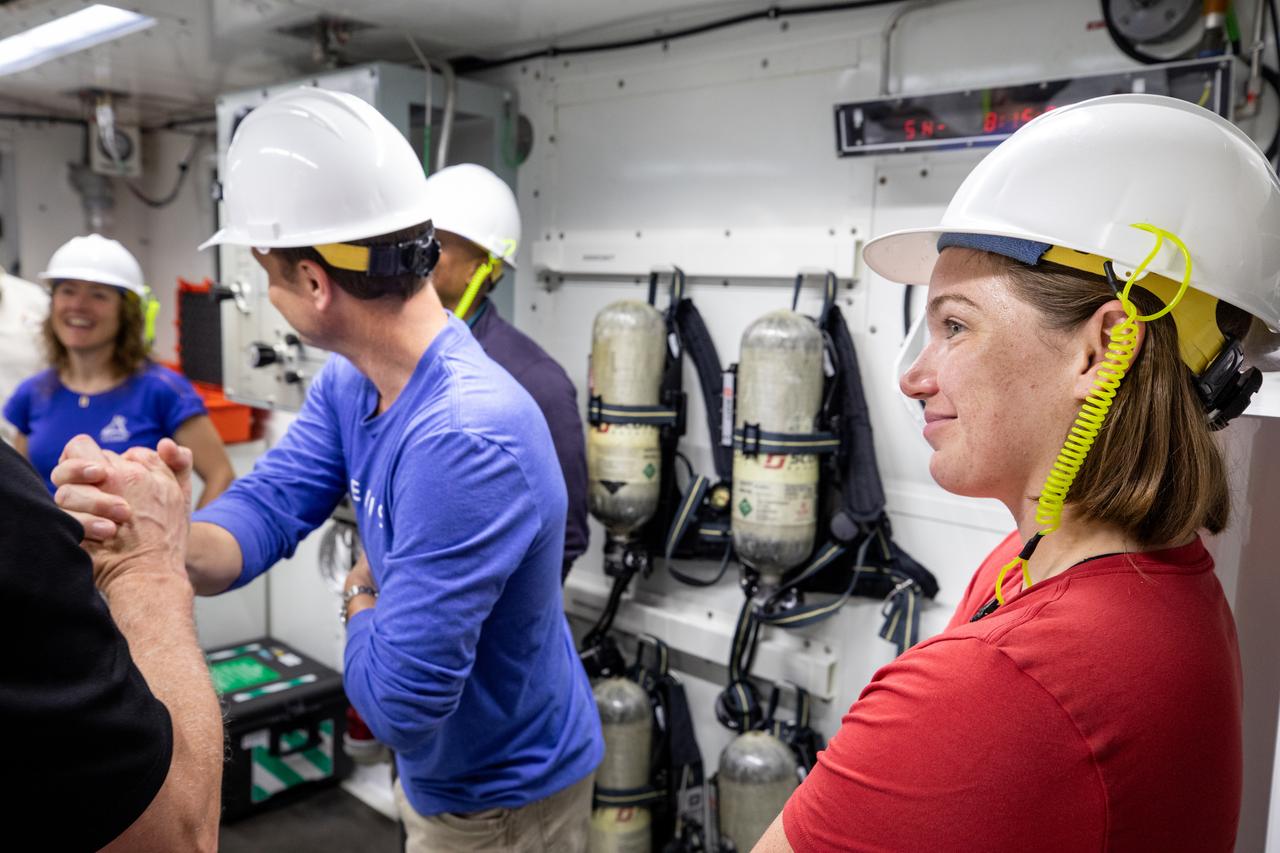
From left, NASA astronaut Christina Koch, Artemis II mission specialist; NASA astronaut Reid Wiseman, Artemis II commander; CSA (Canadian Space Agency) astronaut Jenni Gibbons, Artemis II backup crew member; and teams from the agency’s Exploration Ground Systems Program participate in emergency egress training inside the Vehicle Assembly Building at NASA’s Kennedy Space Center in Florida on Monday, May 5, 2025. Artemis II will take four astronauts around the Moon, the first crewed mission on NASA’s path to establishing a long-term presence for science and exploration through Artemis.
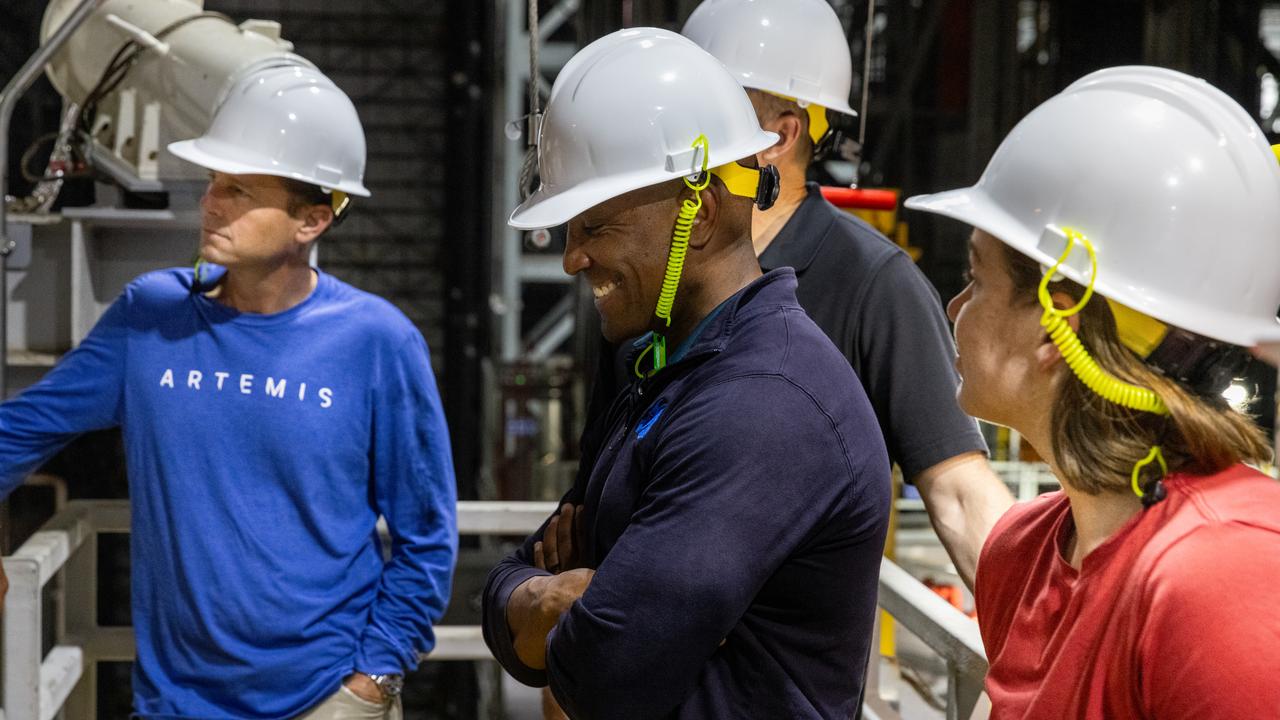
From left, NASA astronaut Reid Wiseman, Artemis II commander; NASA astronaut Victor Glover, Artemis II pilot; and CSA (Canadian Space Agency) astronaut Jenni Gibbons, Artemis II backup crew member, participate in emergency egress training with teams from the agency’s Exploration Ground Systems Program inside the Vehicle Assembly Building at NASA’s Kennedy Space Center in Florida on Monday, May 5, 2025. Artemis II will take four astronauts around the Moon, the first crewed mission on NASA’s path to establishing a long-term presence for science and exploration through Artemis.
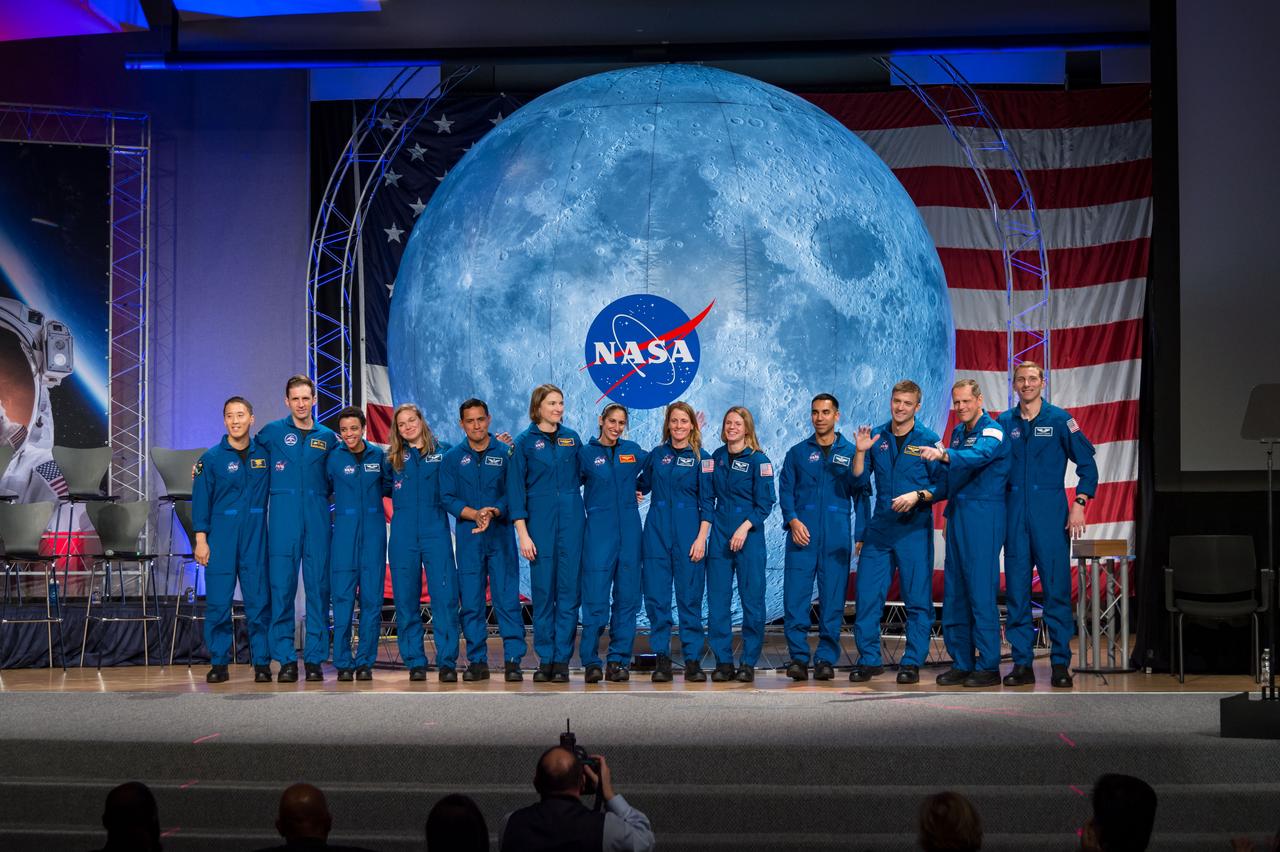
jsc2020e000649 (Jan. 10, 2020) --- The 2017 Class of Astronauts participate in graduation ceremonies at the Johnson Space Center in Houston, Texas. From left are, NASA astronaut Jonny Kim, Canadian Space Agency (CSA) astronaut Joshua Kutryk, NASA astronaut Jessica Watkins, CSA astronaut Jennifer Sidey-Gibbon, NASA astronauts Kayla Barron, Jasmin Moghbeli, Loral O'Hara, Zena Cardman, Raja Chari, Matthew Dominick, Bob Hines and Warren Hoburg. This is the first class of astronauts to graduate under the Artemis program and are now eligible for assignments to the International Space Station, Artemis missions to the Moon, and ultimately, missions to Mars.
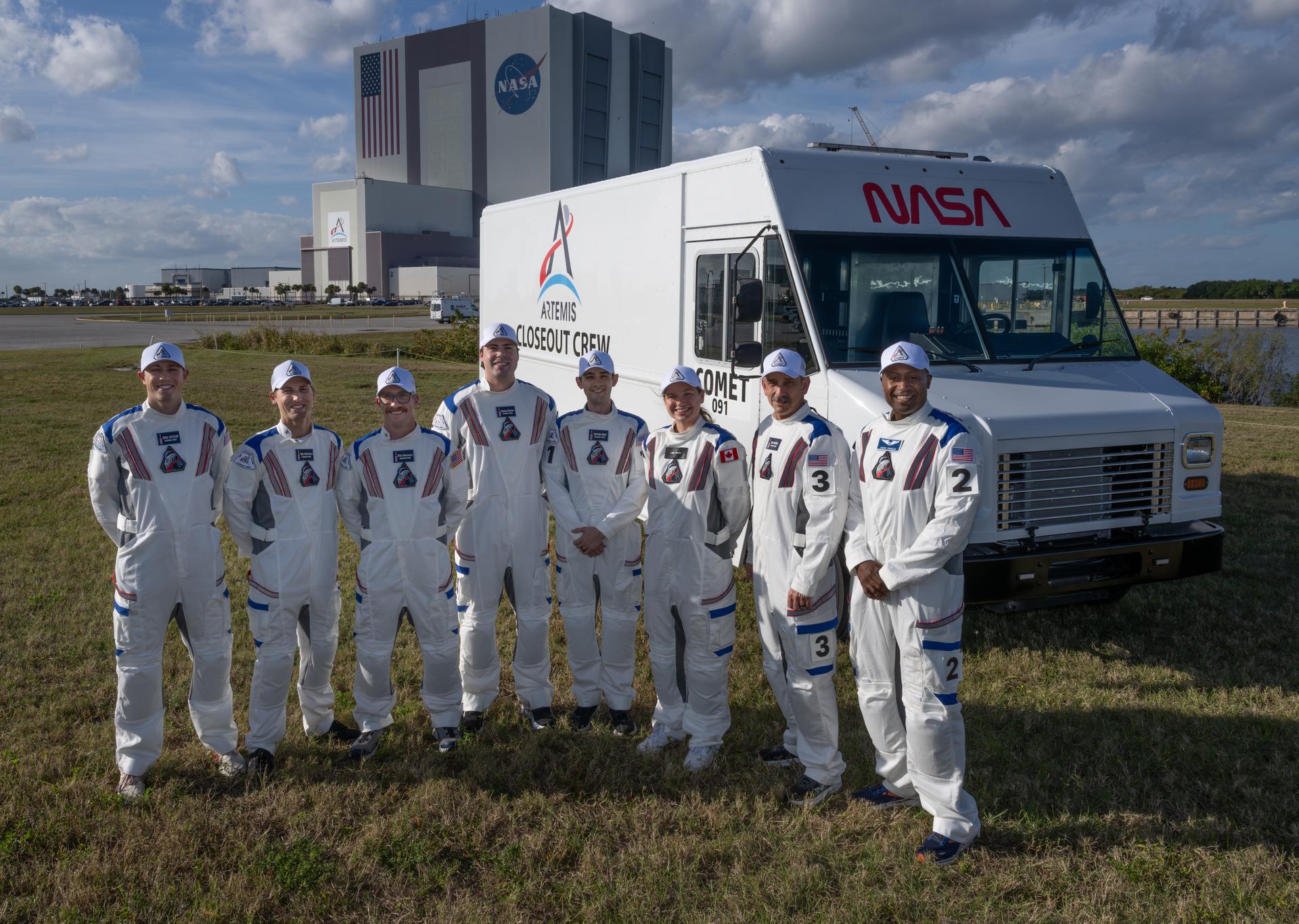
Members of the Artemis II closeout crew, from left, William Sattler; Tyler Sutherland; Michael Heinemann; Christian Warriner; Taylor Hose; Jenni Gibbons, Artemis II backup crew member; Bill Owens; and Andre Douglas, Artemis II backup crew member, pose for a photo with NASA’s Vehicle Assembly Building behind them at the agency’s Kennedy Space Center in Florida on Thursday, Dec. 19, 2025. The closeout crew is responsible for safely securing the astronauts inside the Orion spacecraft on launch day and closing the hatch during launch countdown.
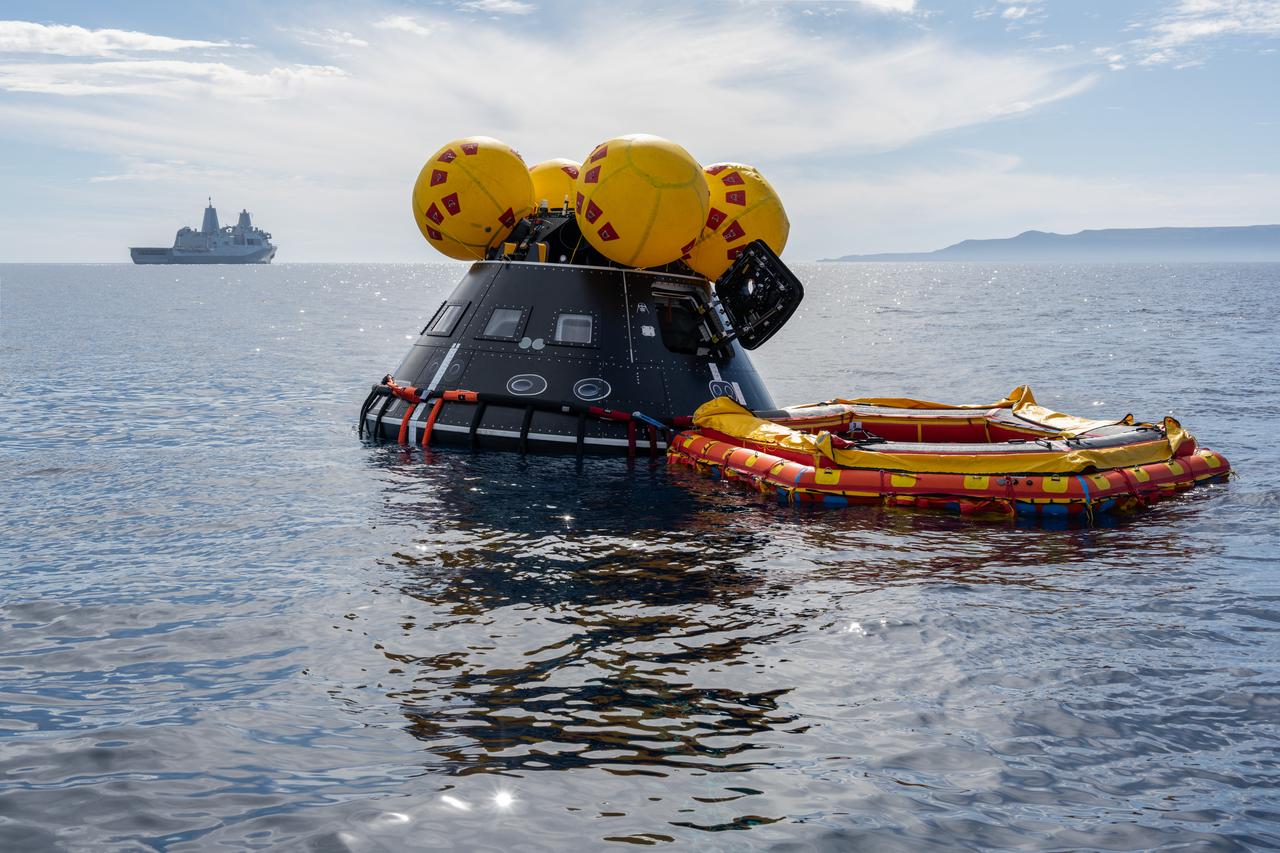
Members of NASA’s Exploration Ground System’s Landing and Recovery team and partners from the Department of Defense aboard the USS San Diego practice recovery procedures using the Crew Module Test Article with NASA Astronaut Candidate Chris Birch; Jenni Gibbons, CSA (Canadian Space Agency) astronaut; and two members of the United States Navy Helicopter Sea Combat Squadron 23, during Underway Recovery Test 11 (URT-11) off the coast of San Diego on Friday, Feb. 23, 2024. URT-11 is the eleventh in a series of Artemis recovery tests, and the first time NASA and its partners put their Artemis II recovery procedures to the test with the astronauts.
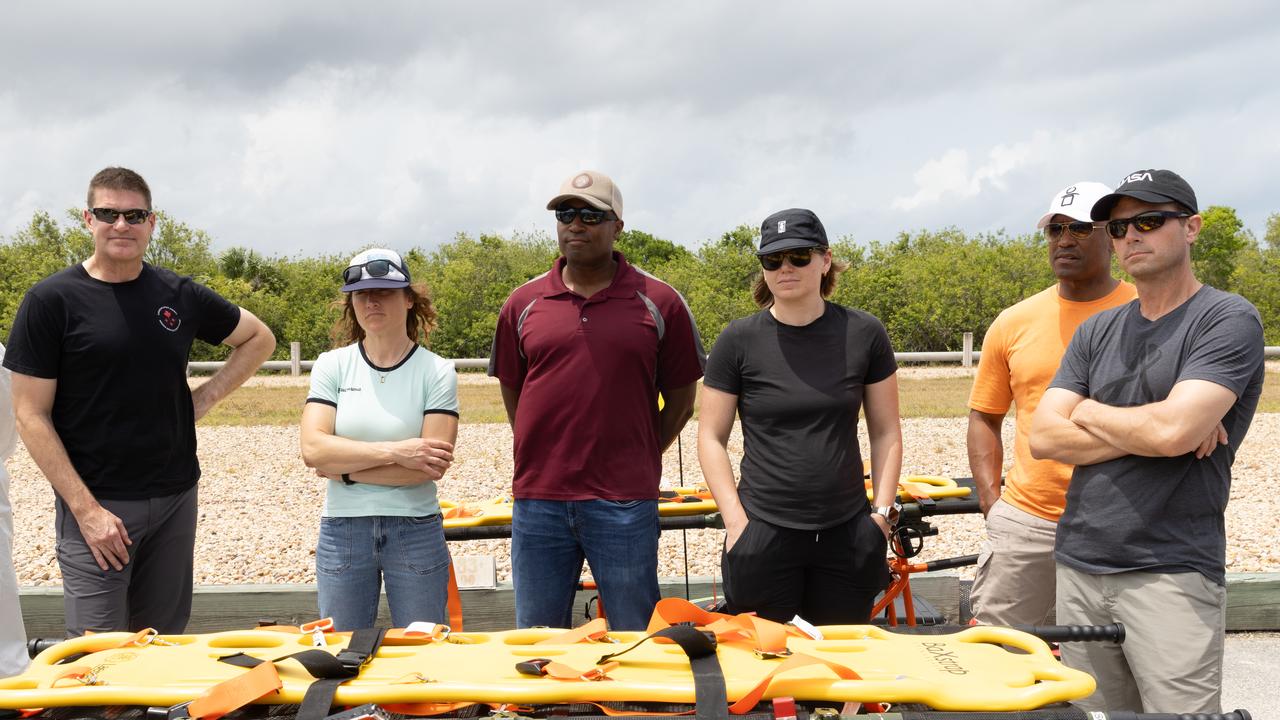
From left, CSA (Canadian Space Agency) astronaut Jeremy Hansen, Artemis II mission specialist; NASA astronaut Christina Koch, Artemis II mission specialist; NASA astronaut Andre Douglas, Artemis II backup crew member; CSA astronaut Jenni Gibbons, Artemis II backup crew member; NASA astronaut Victor Glover, Artemis II pilot; and NASA astronaut Reid Wiseman, Artemis II commander, participate in emergency egress training with teams from NASA’s Exploration Ground Systems Program near Launch Complex 39B at NASA’s Kennedy Space Center in Florida on Tuesday, May 6, 2025.
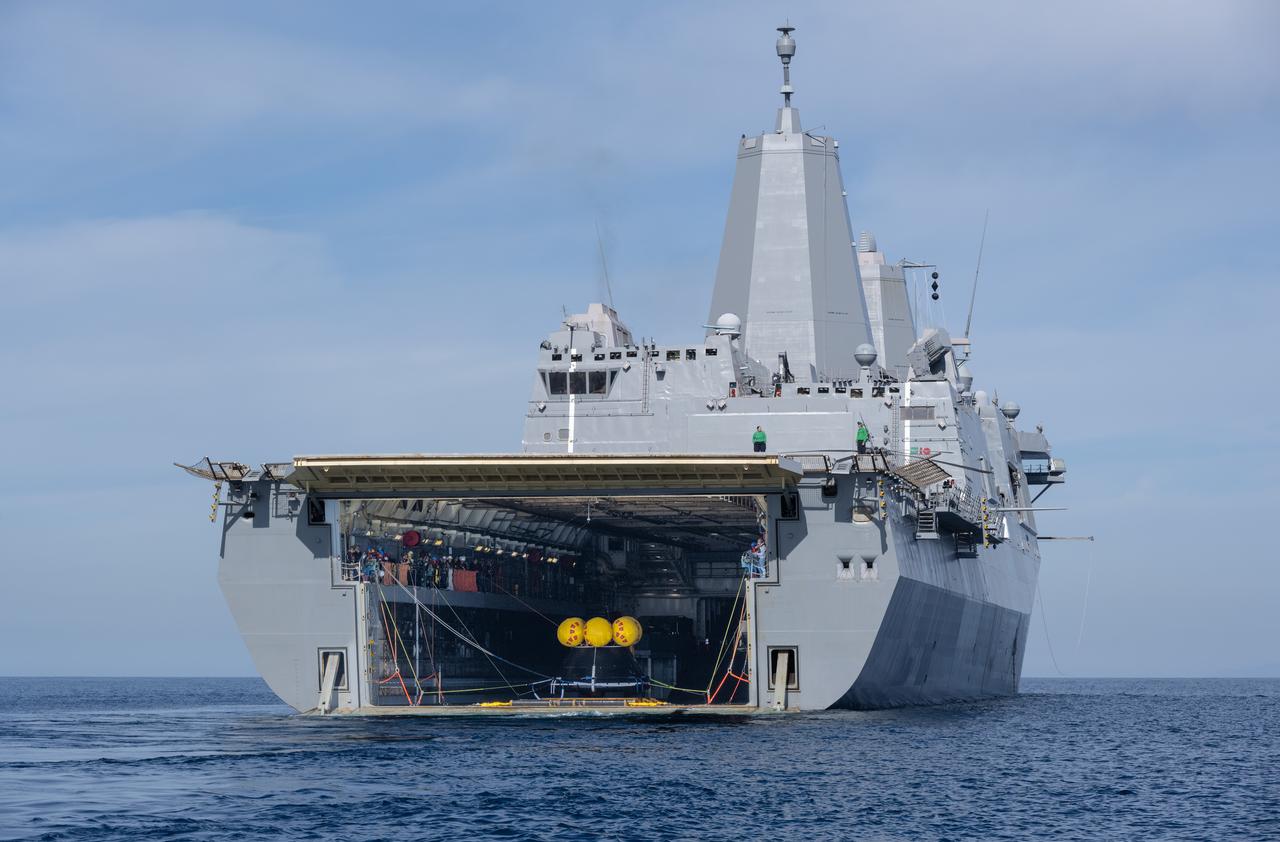
Members of NASA’s Exploration Ground System’s Landing and Recovery team and partners from the Department of Defense aboard the USS San Diego practice recovery procedures using the Crew Module Test Article with NASA Astronaut Candidate Chris Birch; Jenni Gibbons, CSA (Canadian Space Agency) astronaut; and two members of the United States Navy Helicopter Sea Combat Squadron 23, during Underway Recovery Test 11 (URT-11) off the coast of San Diego on Friday, Feb. 23, 2024. URT-11 is the eleventh in a series of Artemis recovery tests, and the first time NASA and its partners put their Artemis II recovery procedures to the test with the astronauts.
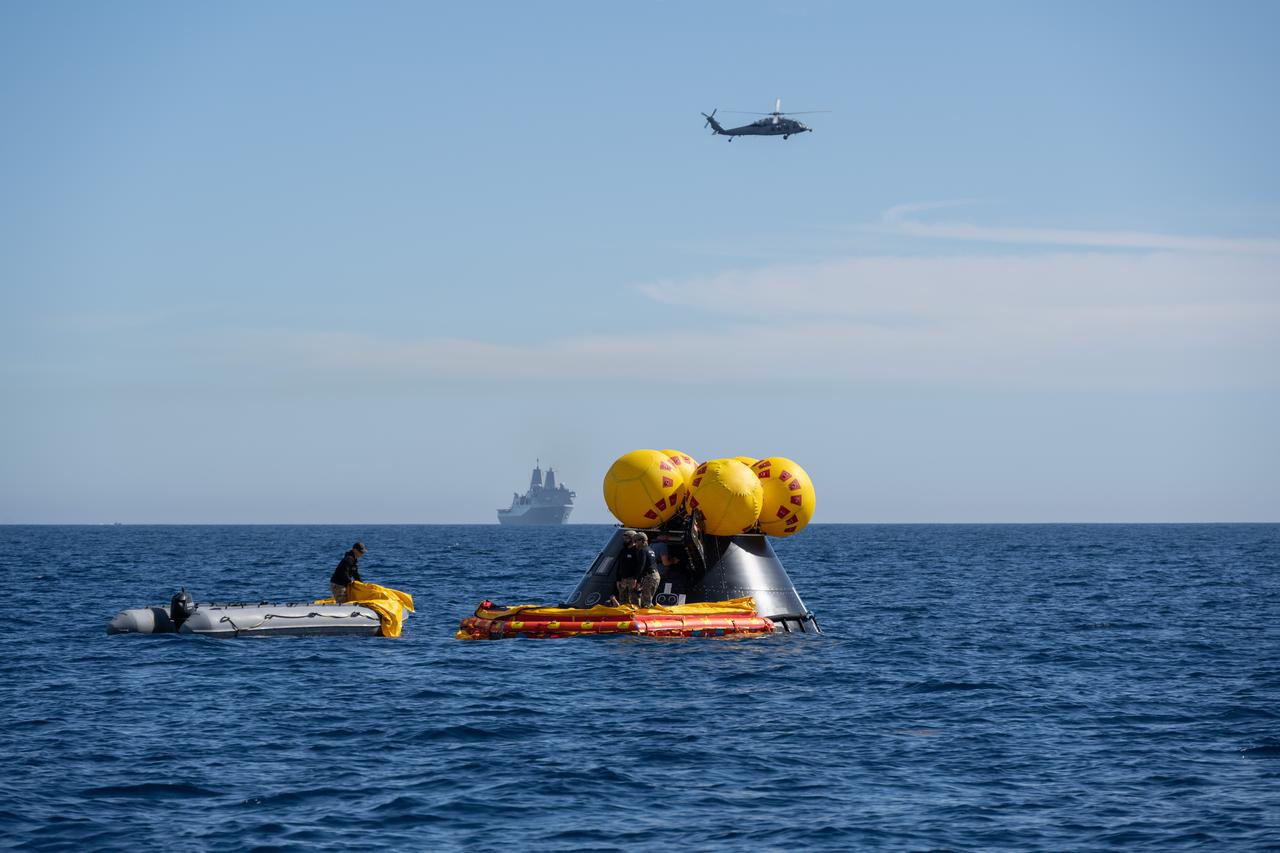
Members of NASA’s Exploration Ground System’s Landing and Recovery team and partners from the Department of Defense aboard the USS San Diego practice recovery procedures using the Crew Module Test Article with NASA Astronaut Candidate Chris Birch; Jenni Gibbons, CSA (Canadian Space Agency) astronaut; and two members of the United States Navy Helicopter Sea Combat Squadron 23, during Underway Recovery Test 11 (URT-11) off the coast of San Diego on Friday, Feb. 23, 2024. URT-11 is the eleventh in a series of Artemis recovery tests, and the first time NASA and its partners put their Artemis II recovery procedures to the test with the astronauts.
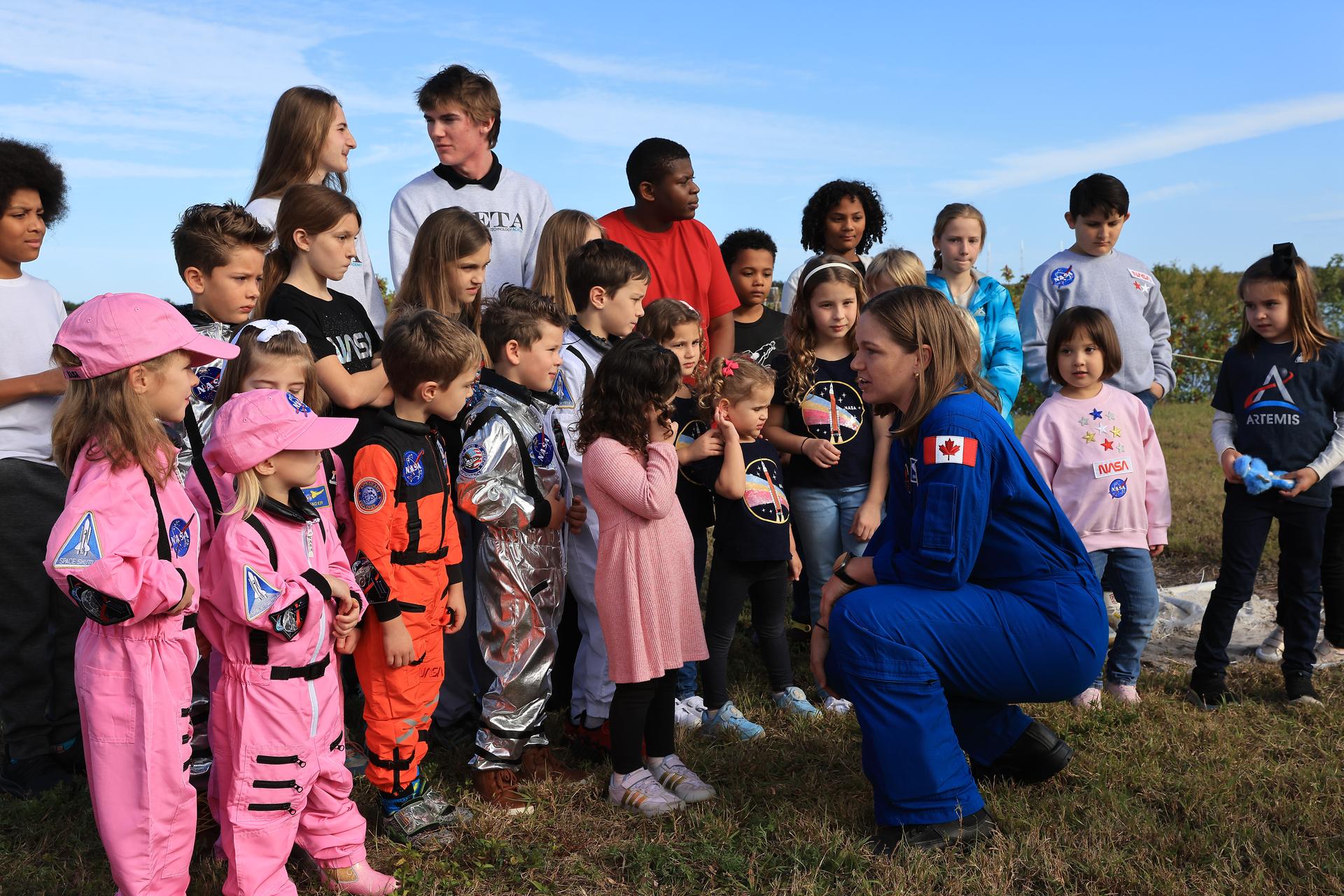
NASA Artemis II backup crew member CSA (Canadian Space Agency astronaut Jenni Gibbons speaks with children who came to watch the rollout of the agency’s Artemis II SLS (Space Launch System) rocket and Orion spacecraft from the Vehicle Assembly Building to Launch Complex 39B at NASA’s Kennedy Space Center on Saturday, Jan. 16, 2026. In the coming weeks, engineers will prepare for the wet dress rehearsal, a two-day test that simulates launch day. The Artemis II test flight will take Wiseman, Glover, Koch, and Hansen around the Moon and back to Earth no later than April 2026.
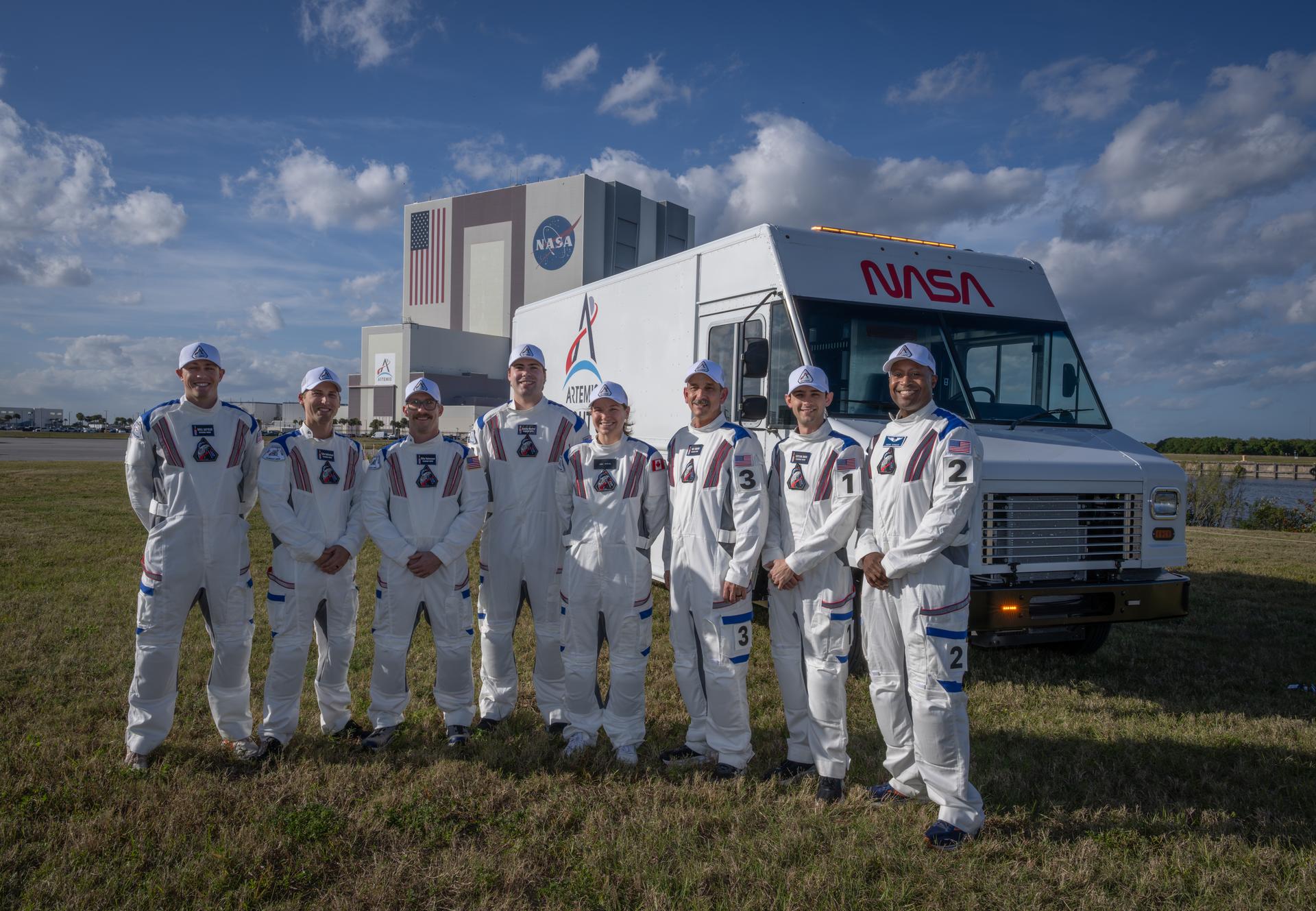
Members of the Artemis II closeout crew, from left, William Sattler; Tyler Sutherland; Michael Heinemann; Christian Warriner; Taylor Hose; Jenni Gibbons, Artemis II backup crew member; Bill Owens; and Andre Douglas, Artemis II backup crew member, pose for a photo with NASA’s Vehicle Assembly Building behind them at the agency’s Kennedy Space Center in Florida on Thursday, Dec. 19, 2025. The closeout crew is responsible for safely securing the astronauts inside the Orion spacecraft on launch day and closing the hatch during launch countdown.
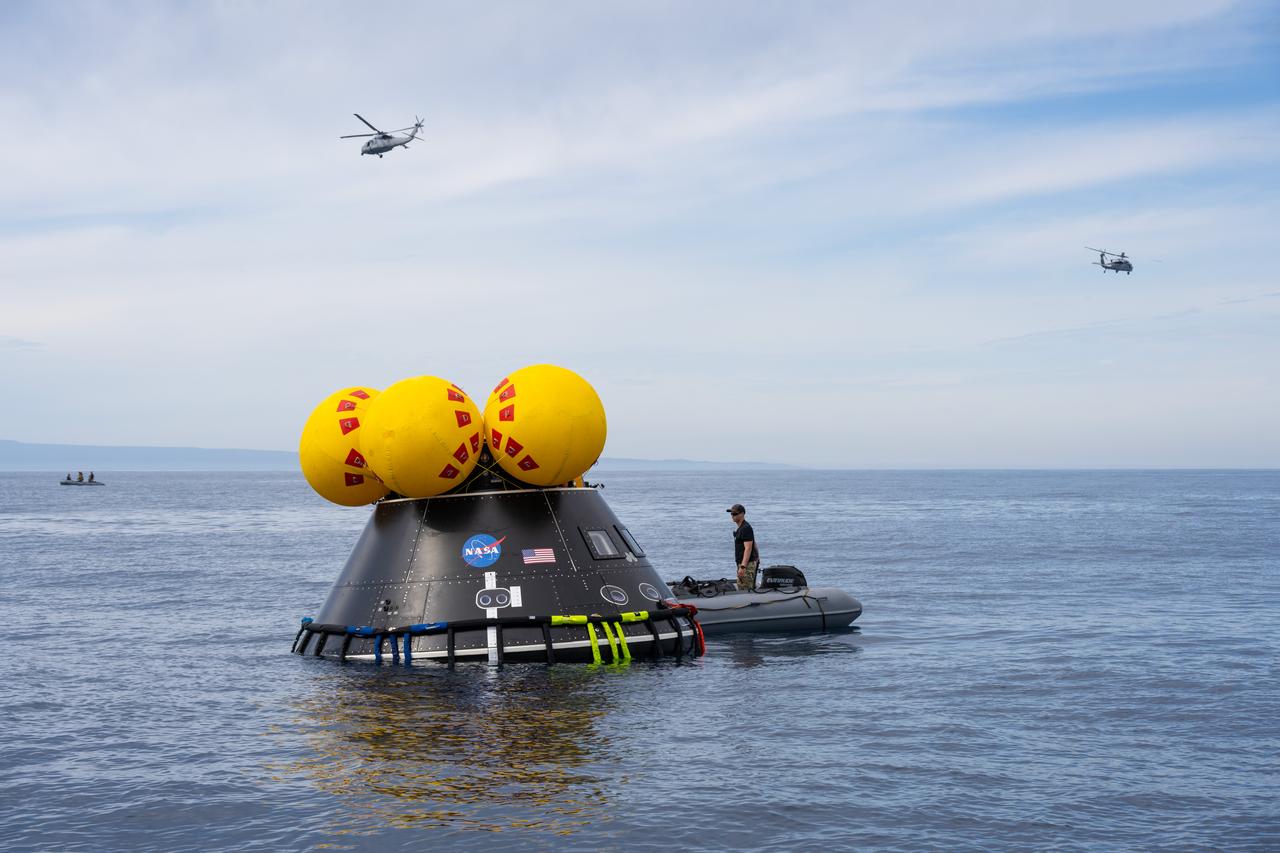
Members of NASA’s Exploration Ground System’s Landing and Recovery team and partners from the Department of Defense aboard the USS San Diego practice recovery procedures using the Crew Module Test Article with NASA Astronaut Candidate Chris Birch; Jenni Gibbons, CSA (Canadian Space Agency) astronaut; and two members of the United States Navy Helicopter Sea Combat Squadron 23, during Underway Recovery Test 11 (URT-11) off the coast of San Diego on Friday, Feb. 23, 2024. URT-11 is the eleventh in a series of Artemis recovery tests, and the first time NASA and its partners put their Artemis II recovery procedures to the test with the astronauts.
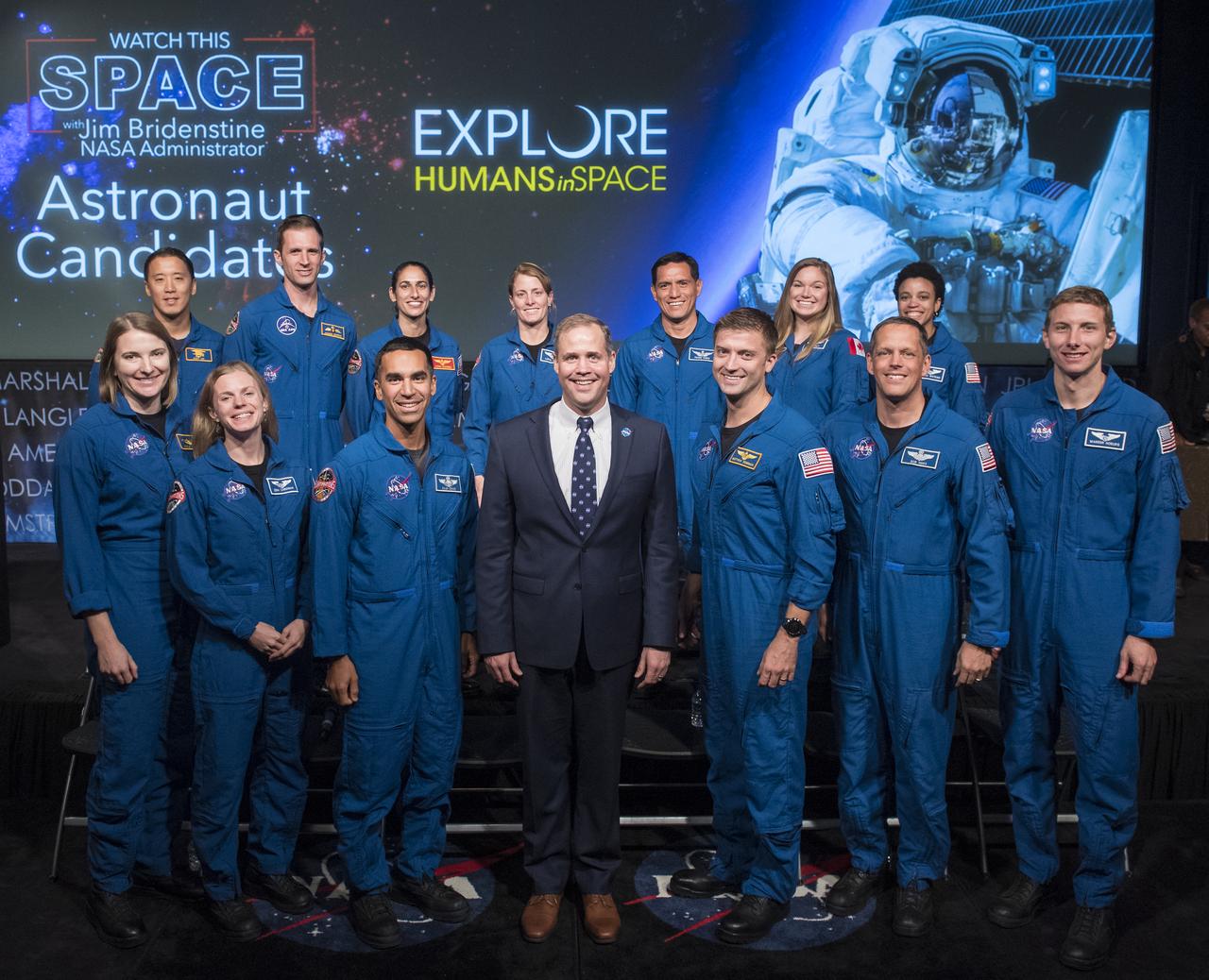
NASA Administrator Jim Bridenstine poses for a picture with the 2017 astronaut candidate class after taping a live episode of the Administrator's monthly chat show, Watch This Space, Thursday, Sept. 27, 2018 in the Webb Auditorium at NASA Headquarters in Washington. NASA astronaut candidates, back row from left, Jonny Kim, Joshua Kutryk of the Canadian Space Agency, Jasmin Moghbeli, Loral O’Hara, Frank Rubio, Jennifer Sidey-Gibbons of the Canadian Space Agency, Jessica Watkins, front row from left, Kayla Barron, Zena Cardman, Raja Chari, Matthew Dominick, Bob Hines, and Warren Hoburg. Photo Credit: (NASA/Joel Kowsky)
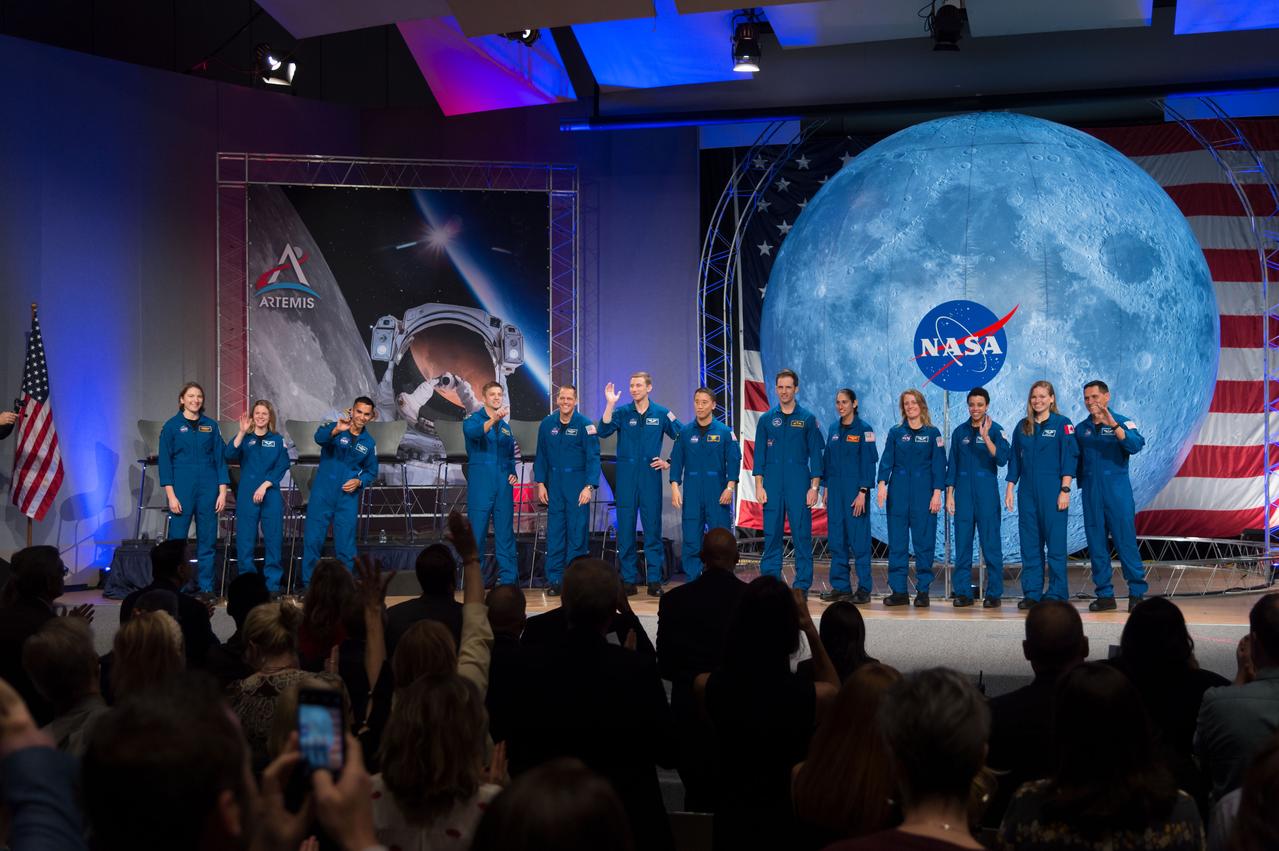
jsc2020e000607 (Jan. 10, 2020) --- The 2017 Class of Astronauts participate in graduation ceremonies at the Johnson Space Center in Houston, Texas. From left are, NASA astronauts Kayla Barron, Zena Cardman, Raja Chari, Matthew Dominick, Bob Hines, Warren Hoburg, Jonny Kim, Canadian Space Agency (CSA) astronaut Joshua Kutryk, NASA astronauts Jasmin Moghbeli, Loral O'Hara and Jessica Watkins, CSA astronaut Jennifer Sidey-Gibbon and NASA astronaut Frank Rubio. This is the first class of astronauts to graduate under the Artemis program and are now eligible for assignments to the International Space Station, Artemis missions to the Moon, and ultimately, missions to Mars.
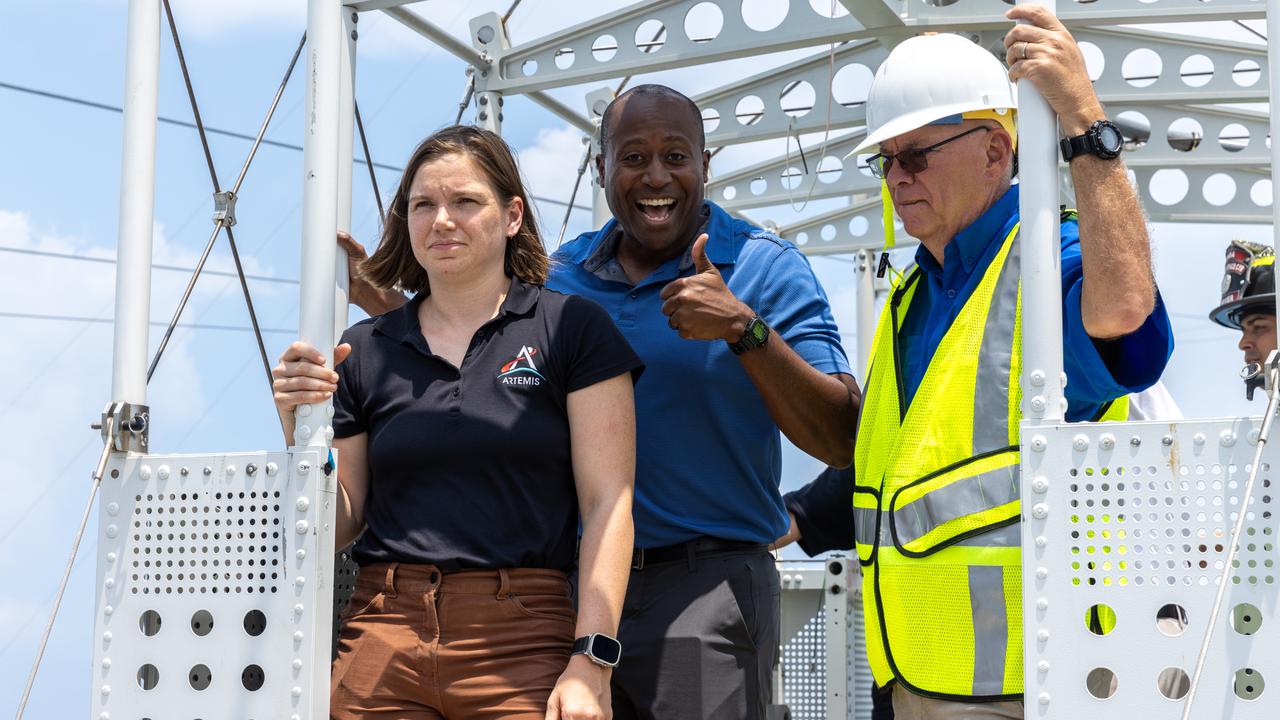
Artemis II backup crew members, CSA (Canadian Space Agency) astronaut Jenni Gibbons and NASA astronaut Andre Douglas participate in one of a series of integrated system verification and validation tests inside the emergency egress baskets at Launch Pad 39B at the agency’s Kennedy Space Center in Florida on Thursday, Aug. 8, 2024. The baskets, similar to gondolas on ski lifts, are used in the case of a pad abort emergency to enable astronauts and other pad personnel a way to quickly escape away from the mobile launcher to the base of the pad and where waiting emergency transport vehicles will then drive them away.
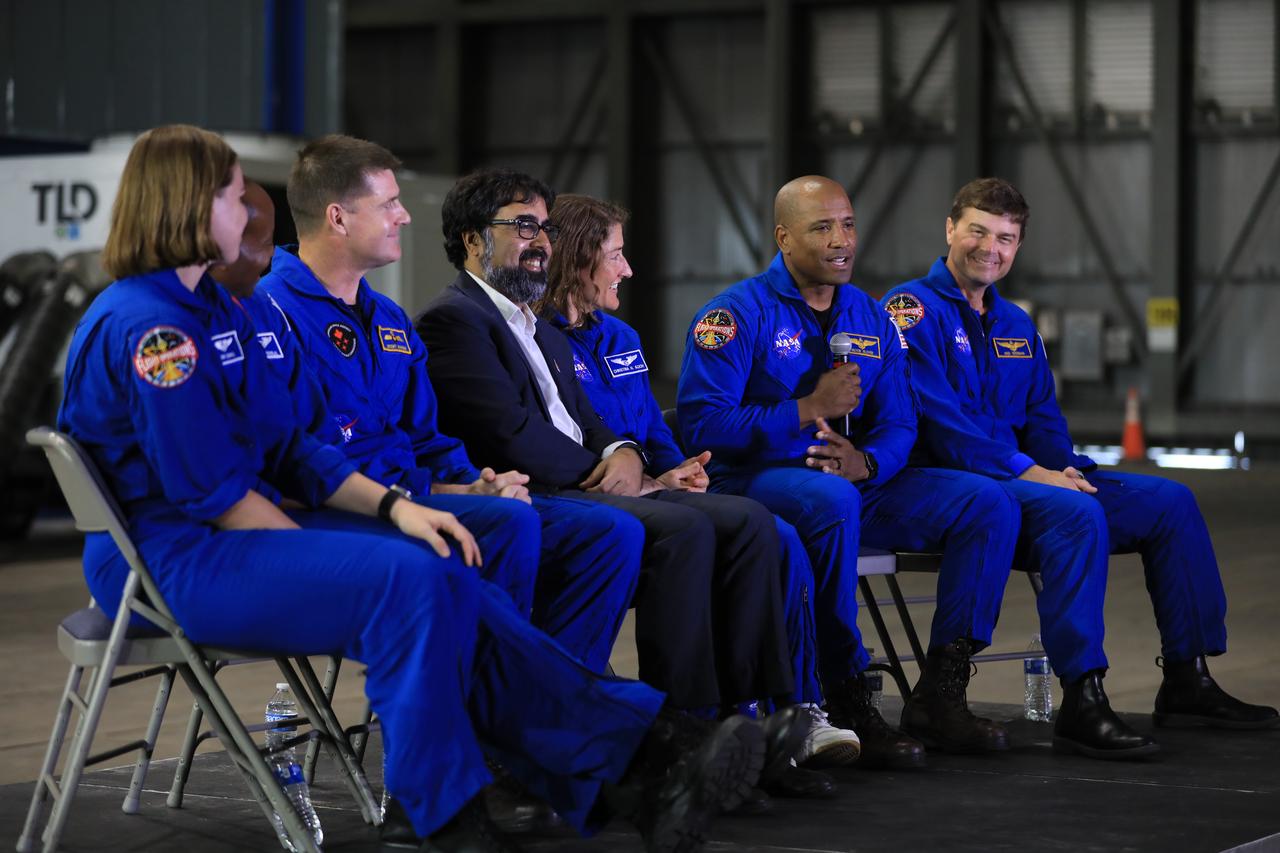
From left, CSA (Canadian Space Agency) astronaut Jenni Gibbons, NASA astronaut Andre Douglas, CSA astronaut Jeremy Hansen, NASA Moon to Mars Program Deputy Associate Administrator Amit Kshatriya, and NASA astronauts Christina Koch, Victor Glover, and Reid Wiseman participate in a media day event on Monday, Dec. 16, 2024, inside the Vehicle Assembly Building at the agency’s Kennedy Space Center in Florida. The Artemis II crew and backup crew participated in the event days after teams with NASA’s Exploration Ground Systems transport lifted the agency’s 212-foot-tall SLS (Space Launch System) core stage from the facility’s transfer aisle into High Bay 2 where it will remain while teams stack the two solid rocket boosters on top of mobile launcher 1.
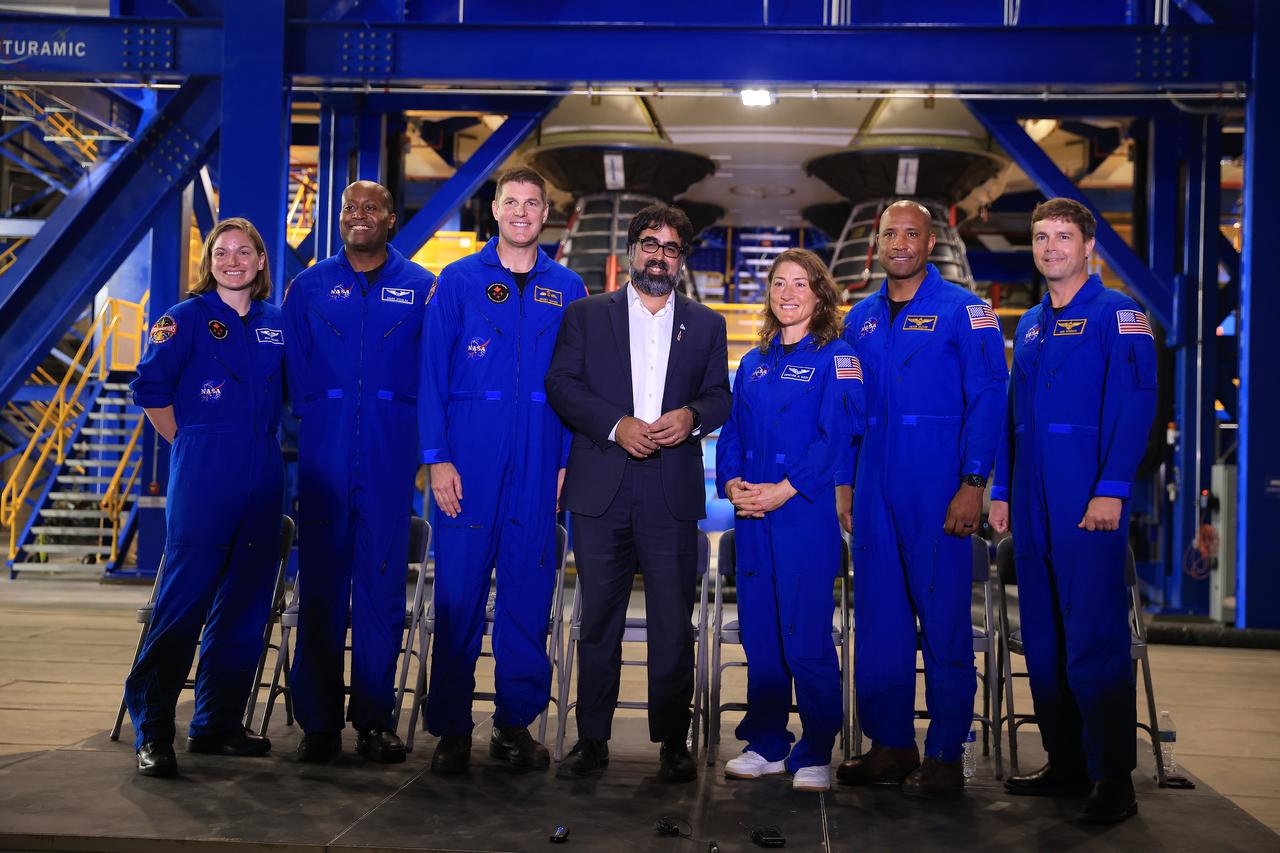
From left, CSA (Canadian Space Agency) astronaut Jenni Gibbons, NASA astronaut Andre Douglas, CSA astronaut Jeremy Hansen, NASA Moon to Mars Program Deputy Associate Administrator Amit Kshatriya, and NASA astronauts Christina Koch, Victor Glover, and Reid Wiseman participate in a media day event on Monday, Dec. 16, 2024, inside the Vehicle Assembly Building at the agency’s Kennedy Space Center in Florida. The Artemis II crew and backup crew participated in the event days after teams with NASA’s Exploration Ground Systems transport lifted the agency’s 212-foot-tall SLS (Space Launch System) core stage from the facility’s transfer aisle into High Bay 2 where it will remain while teams stack the two solid rocket boosters on top of mobile launcher 1.
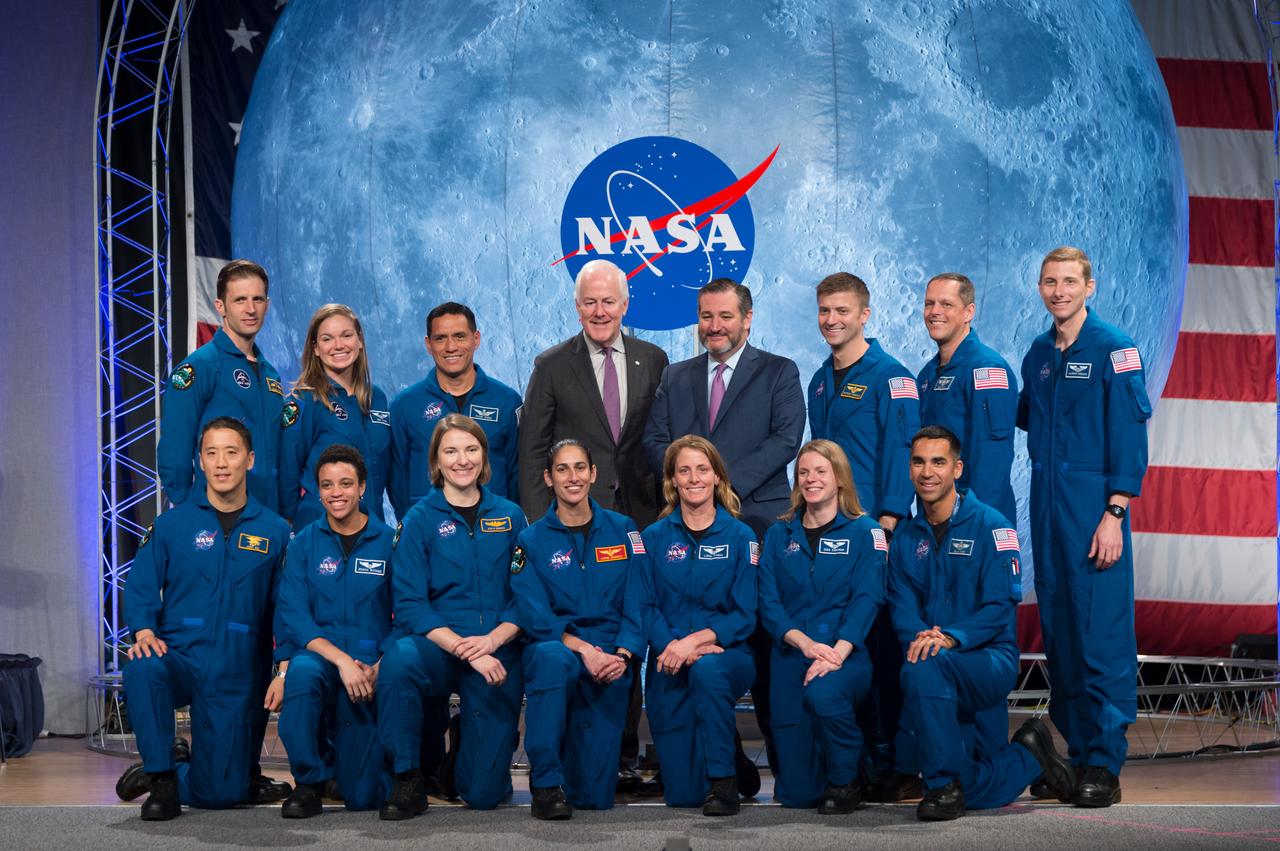
jsc2020e000650 (Jan. 10, 2020) --- The 2017 Class of Astronauts poses for a portrait with Texas Senators John Cornyn and Ted Cruz at the Johnson Space Center in Houston, Texas. In the front row (from left) are, NASA astronauts Jonny Kim, Jessica Watkins, Kayla Barron, Jasmin Moghbeli, Loral O'Hara, Zena Cardman and Raja Chari. In the back row (from left) are, Canadian Space Agency (CSA) astronauts Joshua Kutryk and Jennifer Sidey-Gibbon, NASA astronaut Frank Rubio, Senators John Cornyn and Ted Cruz and NASA astronauts Matthew Dominick, Bob Hines and Warren Hoburg. This is the first class of astronauts to graduate under the Artemis program and are now eligible for assignments to the International Space Station, Artemis missions to the Moon, and ultimately, missions to Mars.
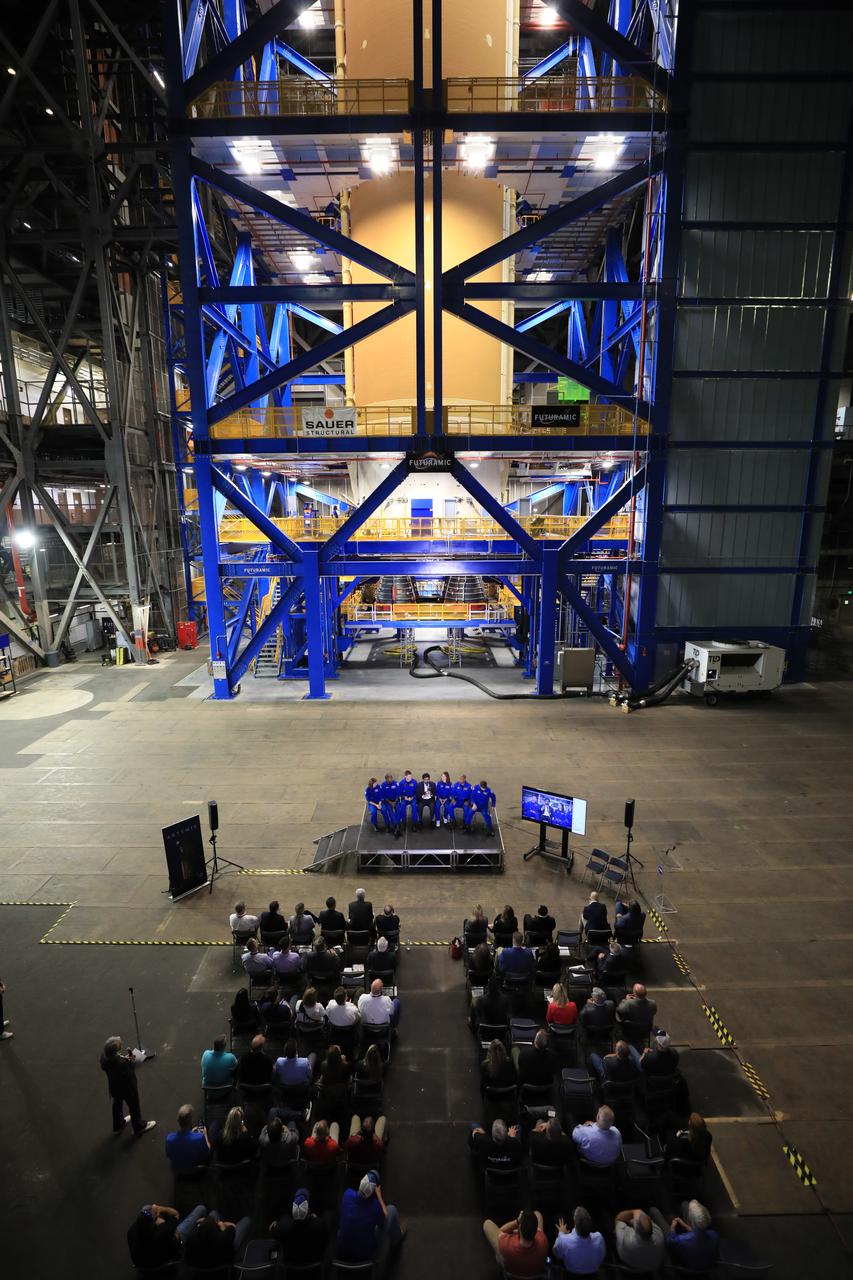
From left, CSA (Canadian Space Agency) astronaut Jenni Gibbons, NASA astronaut Andre Douglas, CSA astronaut Jeremy Hansen, NASA Moon to Mars Program Deputy Associate Administrator Amit Kshatriya, and NASA astronauts Christina Koch, Victor Glover, and Reid Wiseman participate in a media day event on Monday, Dec. 16, 2024, inside the Vehicle Assembly Building at the agency’s Kennedy Space Center in Florida. The Artemis II crew and backup crew participated in the event days after teams with NASA’s Exploration Ground Systems transport lifted the agency’s 212-foot-tall SLS (Space Launch System) core stage from the facility’s transfer aisle into High Bay 2 where it will remain while teams stack the two solid rocket boosters on top of mobile launcher 1.
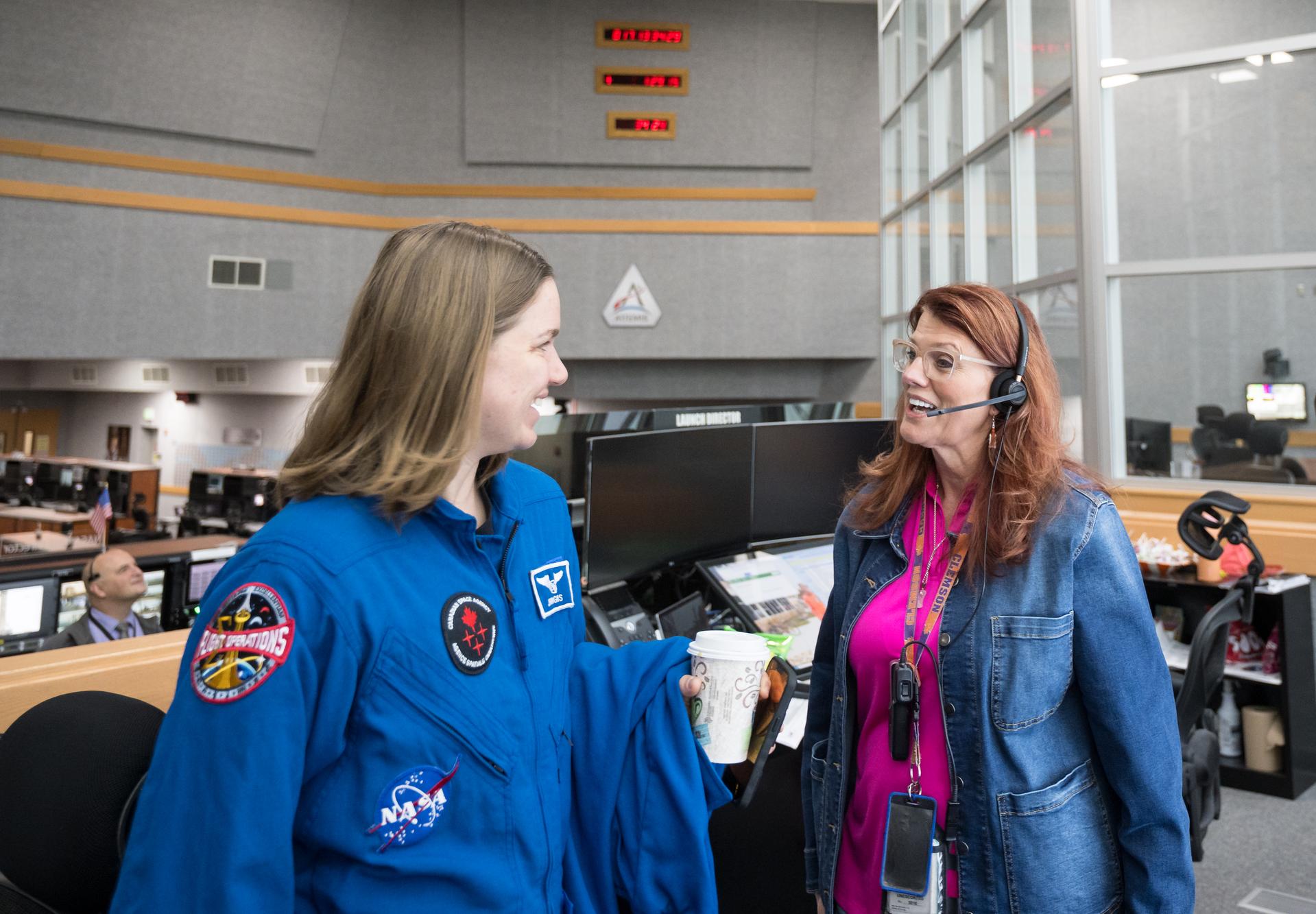
Charlie Blackwell-Thompson, Artemis II launch director at NASA's Kennedy Space Center, right, and CSA (Canadian Space Agency) astronaut Jenni Gibbons, Artemis II mission specialist, Members of the Artemis II launch team are seen on console in Firing Room One of the Rocco A. Petrone Launch Control Center as NASA’s Artemis II Space Launch System (SLS) rocket and Orion spacecraft, secured to the mobile launcher, roll out of High Bay 3 of the Vehicle Assembly Building to Launch Complex 39B, Saturday, Jan. 17, 2026, at NASA’s Kennedy Space Center in Florida. NASA’s Artemis II test flight will take Commander Reid Wiseman, Pilot Victor Glover, and Mission Specialist Christina Koch from NASA, and Mission Specialist Jeremy Hansen from the CSA (Canadian Space Agency), around the Moon and back to Earth no later than April 2026. Photo Credit: (NASA/Aubrey Gemignani)
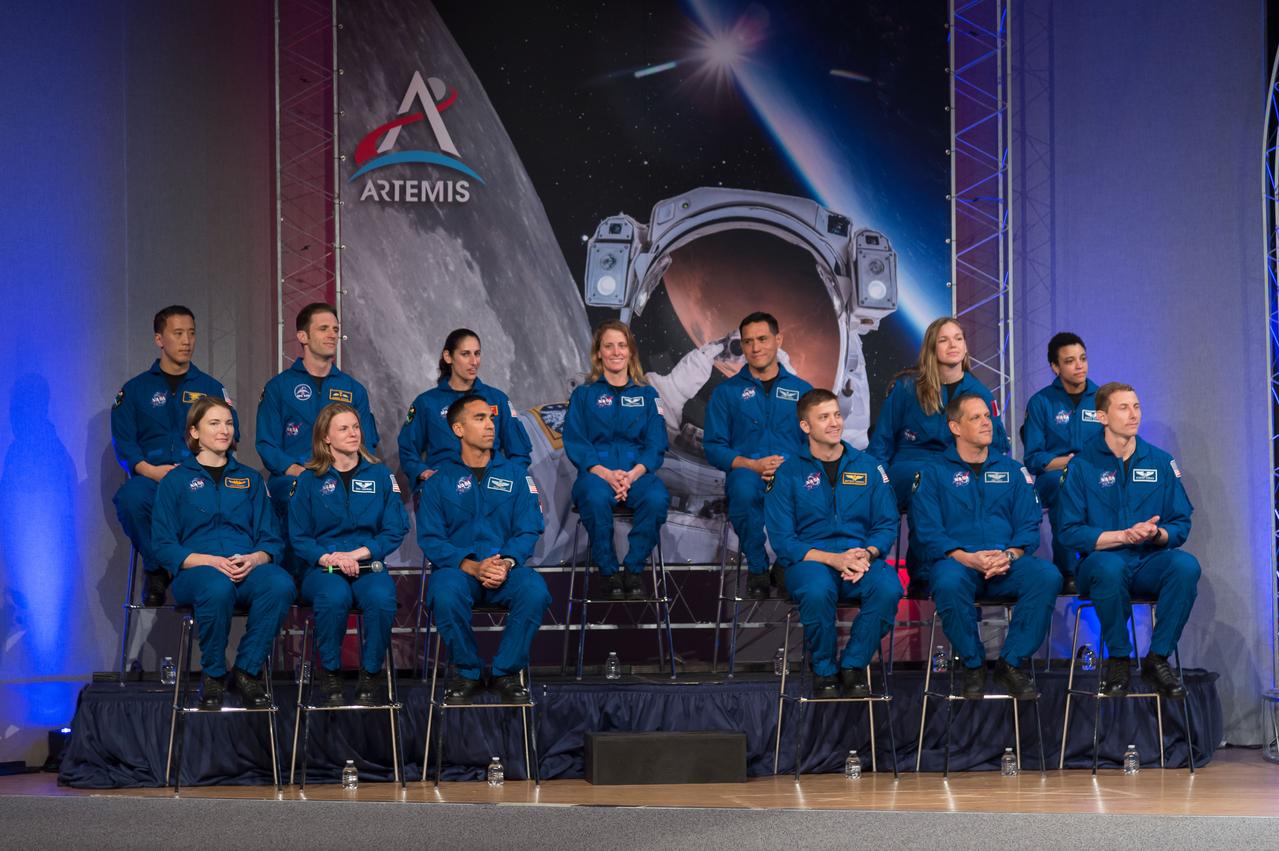
jsc2020e000609 (Jan. 10, 2020) --- The 2017 Class of Astronauts participate in graduation ceremonies at the Johnson Space Center in Houston, Texas. In the front row (from left) are, NASA astronauts Kayla Barron, Zena Cardman, Raja Chari, Matthew Dominick, Bob Hines and Warren Hoburg. In the back row (from left) are, NASA astronaut Jonny Kim, Canadian Space Agency (CSA) astronaut Joshua Kutryk, NASA astronauts Jasmin Moghbeli, Loral O'Hara and Frank Rubio, CSA astronaut Jennifer Sidey-Gibbon and NASA astronaut Jessica Watkins. This is the first class of astronauts to graduate under the Artemis program and are now eligible for assignments to the International Space Station, Artemis missions to the Moon, and ultimately, missions to Mars.
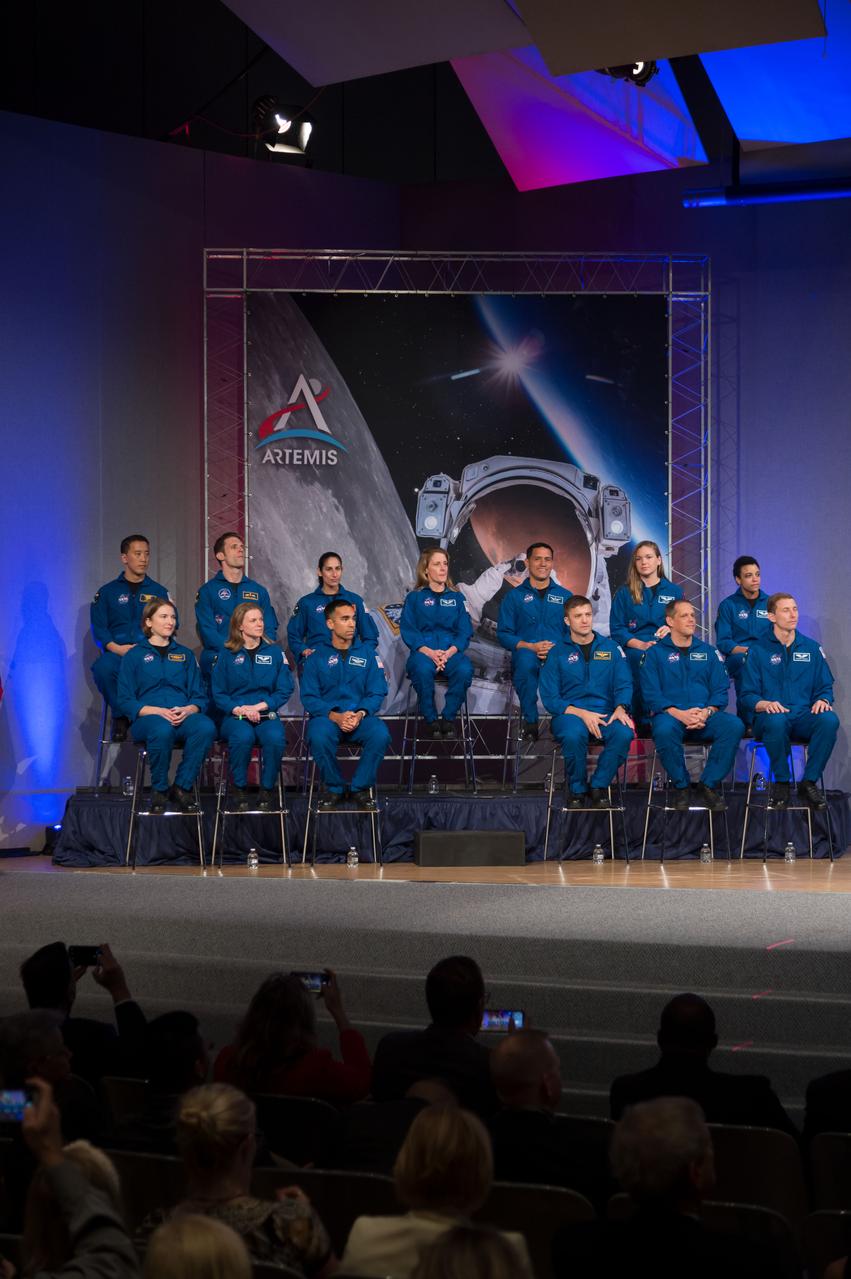
jsc2020e000610 (Jan. 10, 2020) --- The 2017 Class of Astronauts participate in graduation ceremonies at the Johnson Space Center in Houston, Texas. In the front row (from left) are, NASA astronauts Kayla Barron, Zena Cardman, Raja Chari, Matthew Dominick, Bob Hines and Warren Hoburg. In the back row (from left) are, NASA astronaut Jonny Kim, Canadian Space Agency (CSA) astronaut Joshua Kutryk, NASA astronauts Jasmin Moghbeli, Loral O'Hara and Frank Rubio, CSA astronaut Jennifer Sidey-Gibbon and NASA astronaut Jessica Watkins. This is the first class of astronauts to graduate under the Artemis program and are now eligible for assignments to the International Space Station, Artemis missions to the Moon, and ultimately, missions to Mars.
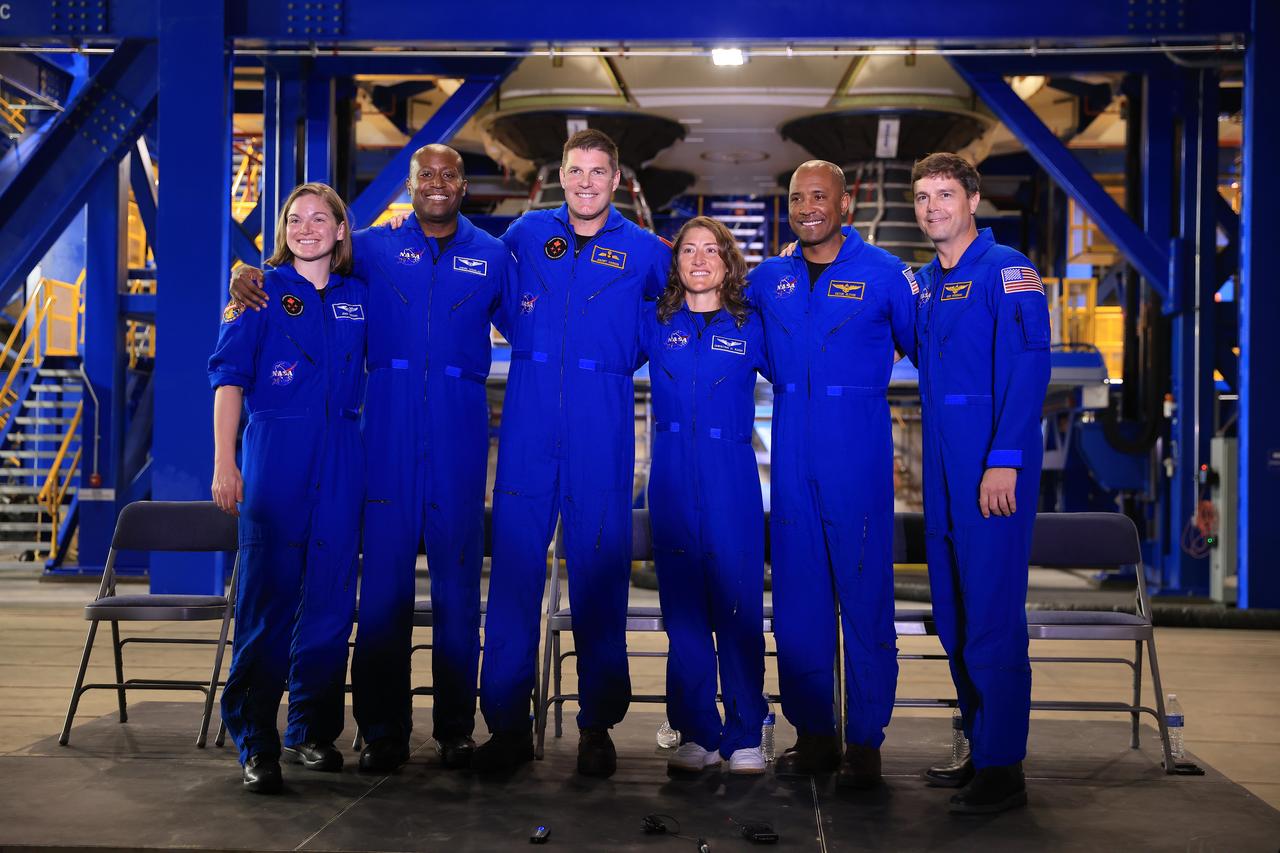
From left, CSA (Canadian Space Agency) astronaut Jenni Gibbons, NASA astronaut Andre Douglas, CSA astronaut Jeremy Hansen, and NASA astronauts Christina Koch, Victor Glover, and Reid Wiseman participate in a media day event on Monday, Dec. 16, 2024, inside the Vehicle Assembly Building at the agency’s Kennedy Space Center in Florida. The Artemis II crew and backup crew participated in the event days after teams with NASA’s Exploration Ground Systems transport lifted the agency’s 212-foot-tall SLS (Space Launch System) core stage from the facility’s transfer aisle into High Bay 2 where it will remain while teams stack the two solid rocket boosters on top of mobile launcher 1.
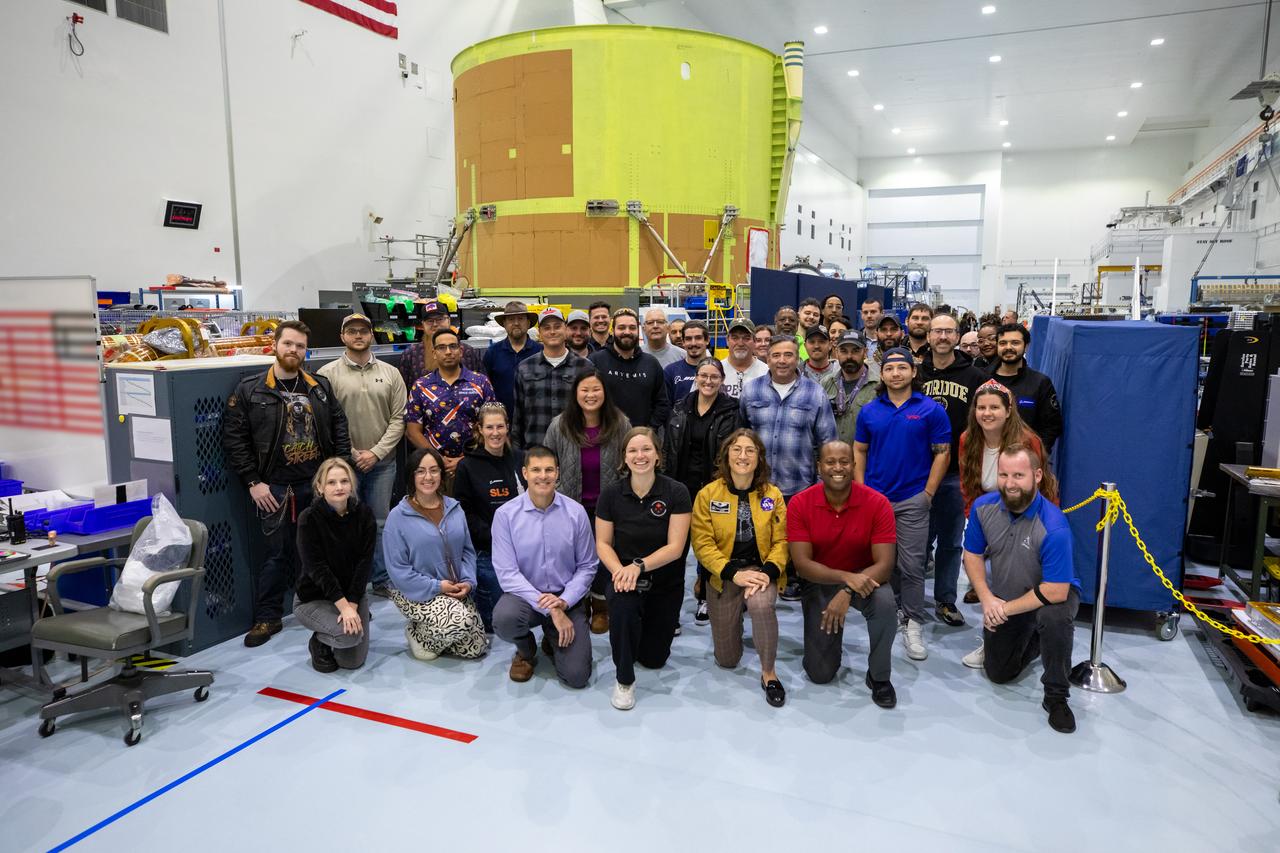
Members and backup members of the Artemis II team, along with technicians pose, for a photo with the Artemis III engine section in the background, during a visit to Kennedy Space Center in Florida on Thursday, Jan. 16, 2025. For Artemis II, four astronauts will venture around the Moon, the first crewed mission on NASA’s path to establishing a long-term presence for science and exploration through Artemis.
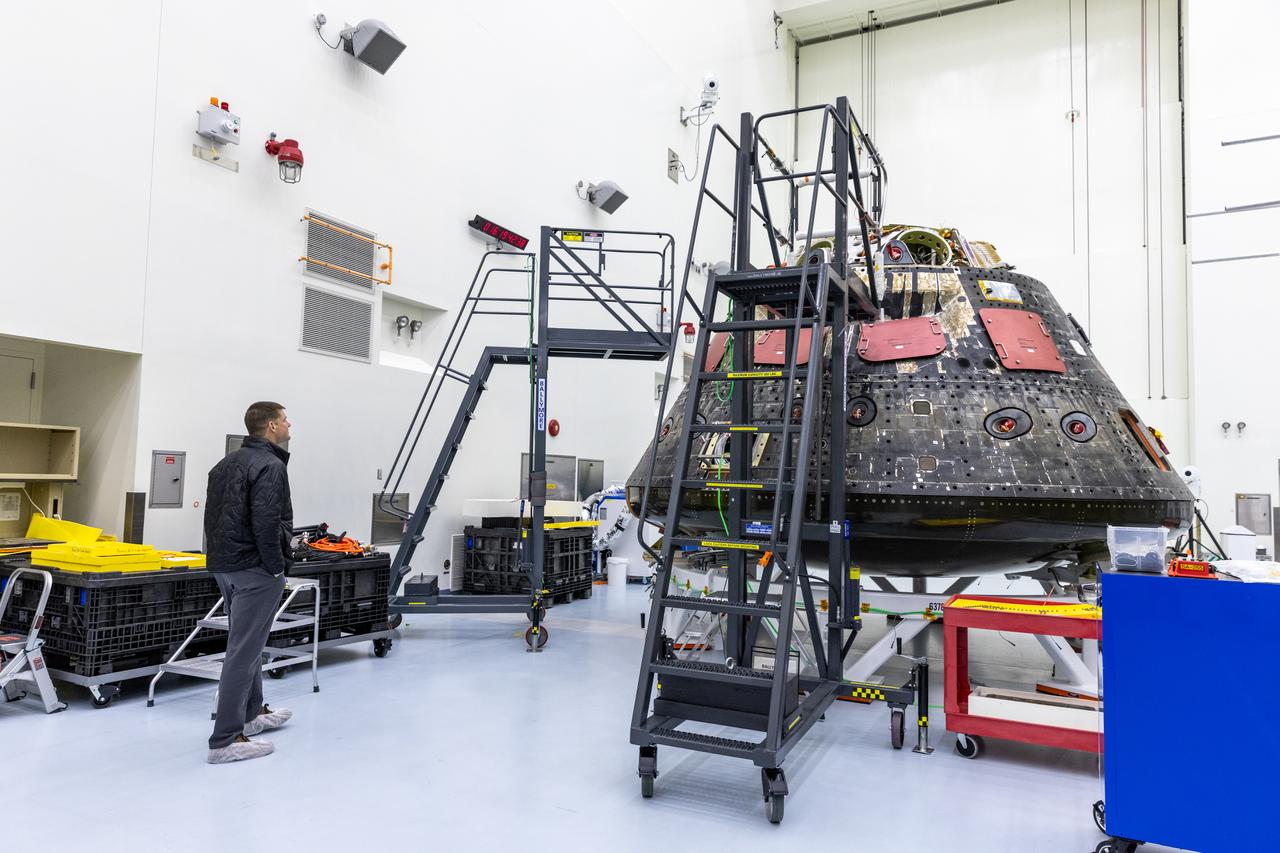
NASA Artemis II astronaut Jeremy Hansen, mission specialist, checks out the Orion Environmental Test Article spacecraft during his visit at NASA’s Kennedy Space Center on Thursday, Jan. 16, 2025.The Orion spacecraft was flown around the Moon and back during Artemis I on Nov. 16, 2022. Orion will carry Hansen and three other astronauts around the Moon and back during the Artemis II mission.

From left, CSA (Canadian Space Agency) astronaut Jeremy Hansen and NASA astronaut Christina Koch, both Artemis II mission specialists, tour the Artemis III engine section inside the Space Systems Processing Facility at NASA’s Kennedy Space Center in Florida on Thursday, Jan. 16, 2025. Members and backup members of the Artemis II crew received updates on the mission and met with members of the Exploration Ground Systems. For Artemis II, four astronauts will venture around the Moon, the first crewed mission on NASA’s path to establishing a long-term presence for science and exploration through Artemis.
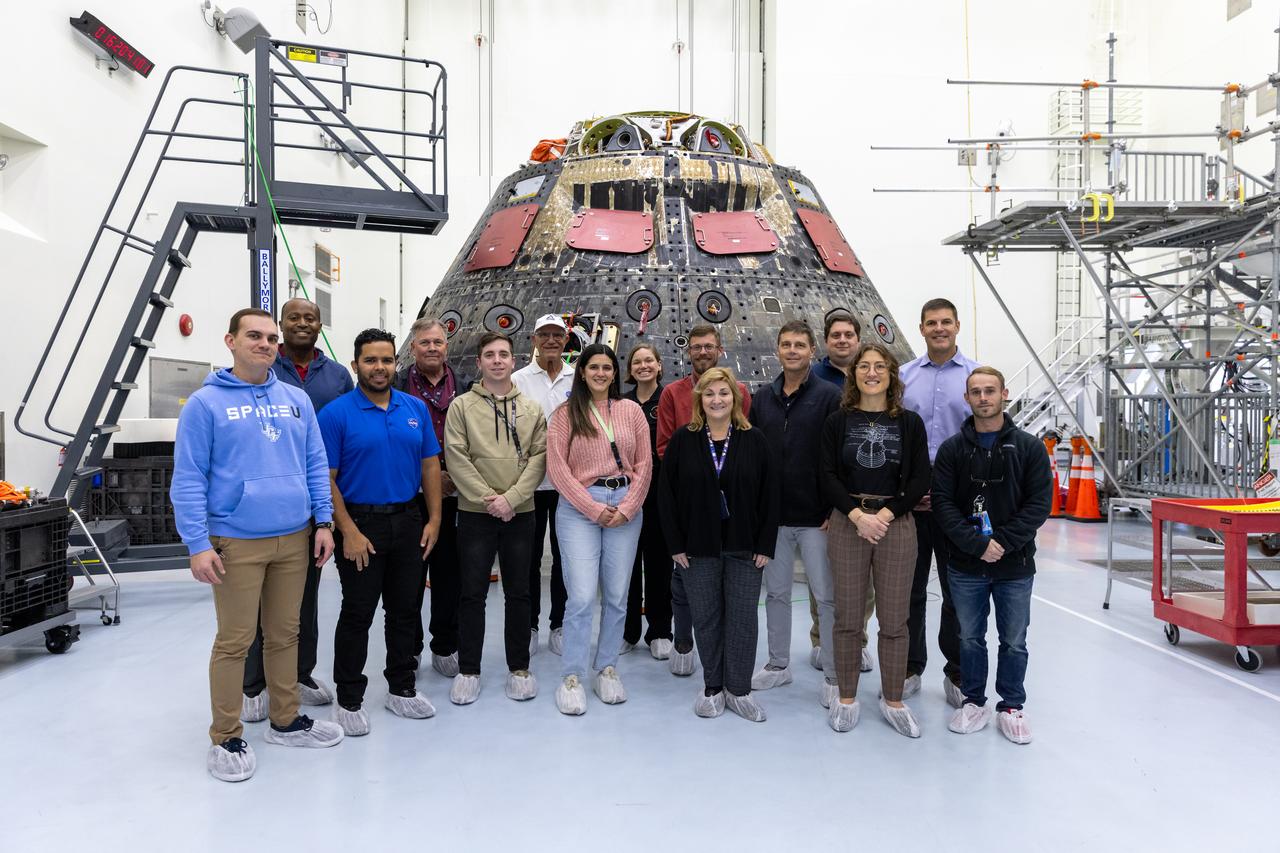
Crew members and backup crew members of the Artemis II team pose for a photo with NASA’s Exploration Ground Systems and Lockheed Martin teams during a visit to Kennedy Space Center in Florida on Thursday, Jan. 16, 2025. In the background is the Orion Environmental Test Article spacecraft which was flown around the Moon and back during Artemis I on Nov. 16, 2022. Orion will carry four astronauts around the Moon and back during the Artemis II mission.
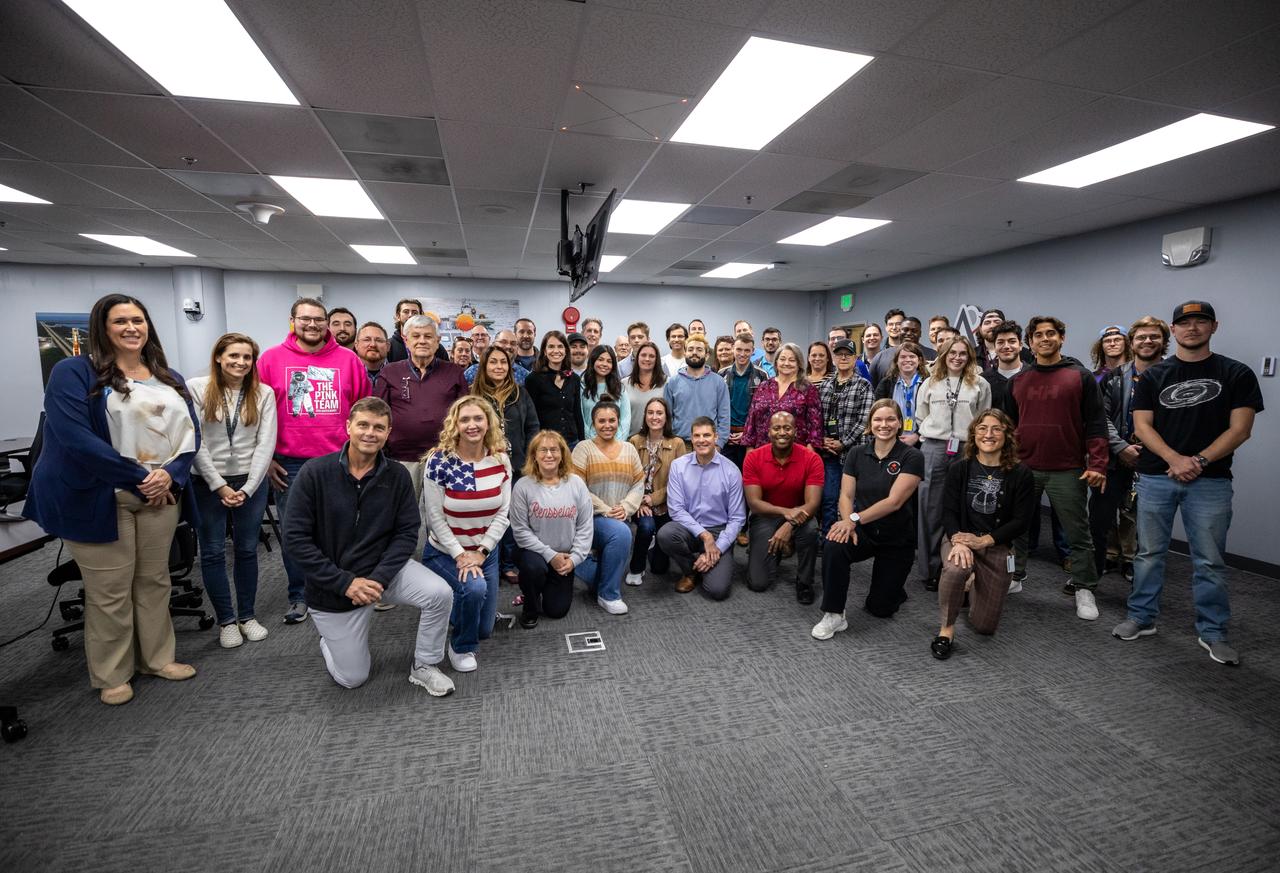
Members and backup members of the Artemis II team pose for a photo with NASA’s Exploration Ground Systems team during a visit to Kennedy Space Center in Florida on Thursday, Jan. 16, 2025. For Artemis II, four astronauts will venture around the Moon, the first crewed mission on NASA’s path to establishing a long-term presence for science and exploration through Artemis.
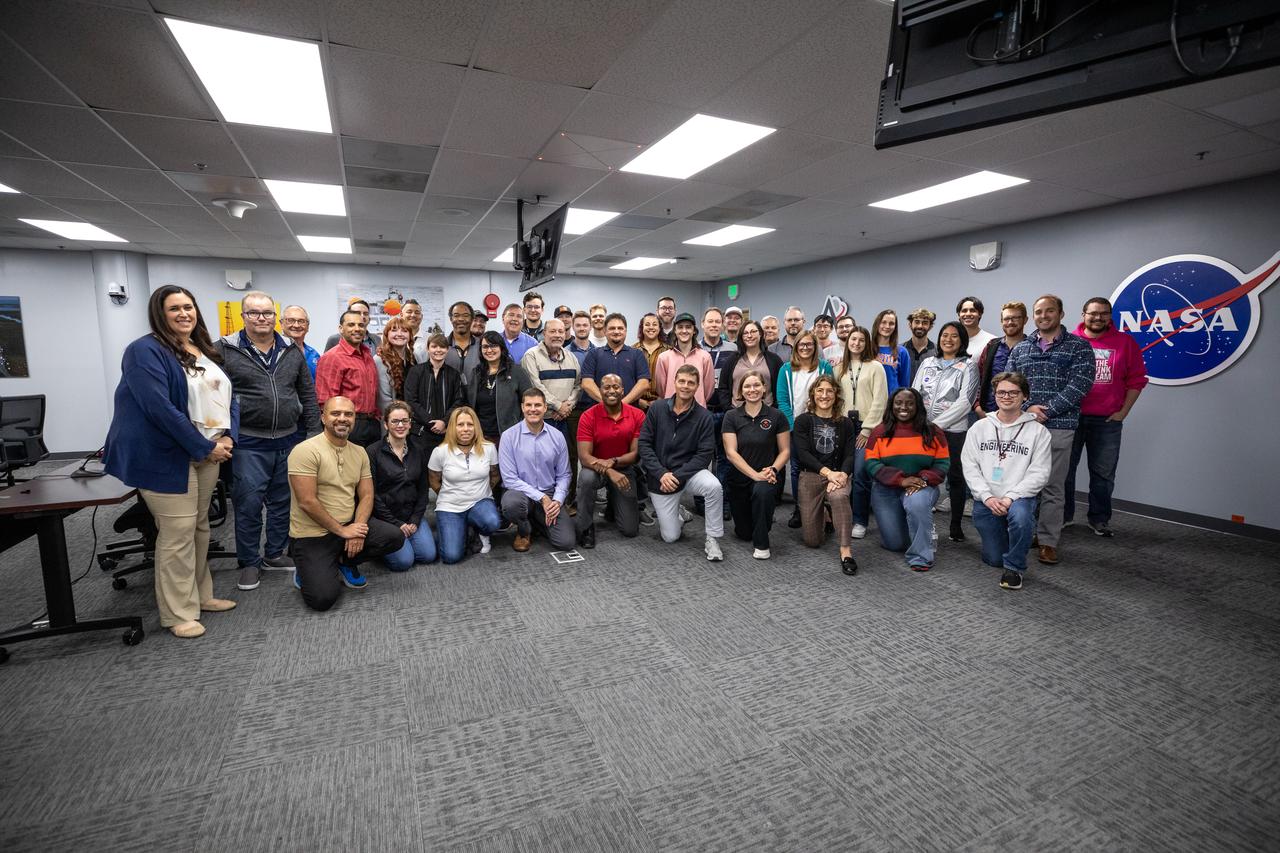
Members and backup members of the Artemis II team pose for a photo with NASA’s Exploration Ground Systems team during a visit to Kennedy Space Center in Florida on Thursday, Jan. 16, 2025. For Artemis II, four astronauts will venture around the Moon, the first crewed mission on NASA’s path to establishing a long-term presence for science and exploration through Artemis.
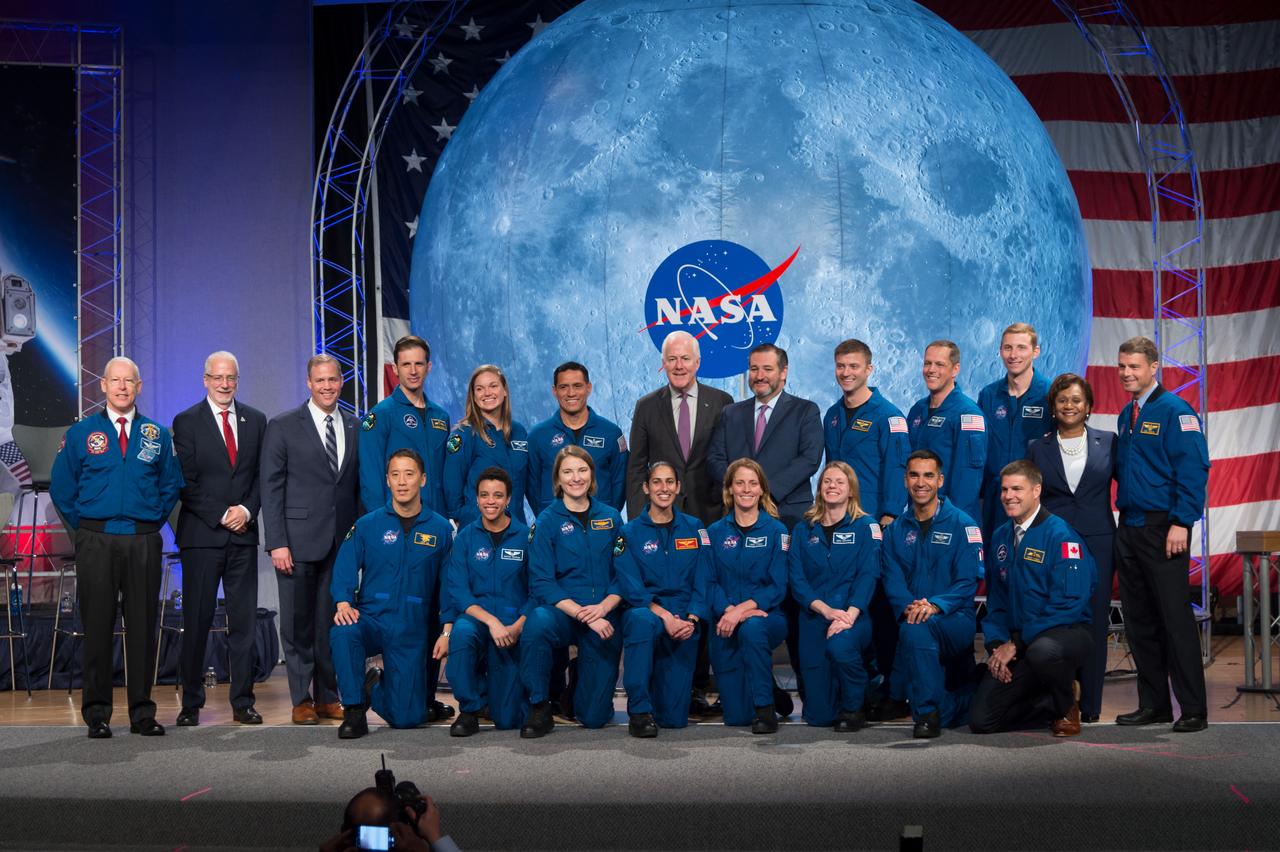
jsc2020e000651 (Jan. 10, 2020) --- The 2017 Class of Astronauts poses for a portrait with NASA officals and Texas Senators at the Johnson Space Center in Houston, Texas. In the front row (from left) are, NASA astronauts Jonny Kim, Jessica Watkins, Kayla Barron, Jasmin Moghbeli, Loral O'Hara, Zena Cardman and Raja Chari and Canadian Space Agency (CSA) astronaut Jeremy Hansen. In the back row (from left) are, Chief of the Astronuat Office Patrick Forrester, Johnson Space Center Director Mark Geyer, NASA Administrator Jim Bridenstine, Canadian Space Agency (CSA) astronauts Joshua Kutryk and Jennifer Sidey-Gibbon, NASA astronaut Frank Rubio, Senators John Cornyn and Ted Cruz, NASA astronauts Matthew Dominick, Bob Hines and Warren Hoburg, Johnson Space Center Deputy Director Vanessa Wyche and NASA astronaut Reid Wiseman. This is the first class of astronauts to graduate under the Artemis program and are now eligible for assignments to the International Space Station, Artemis missions to the Moon, and ultimately, missions to Mars.
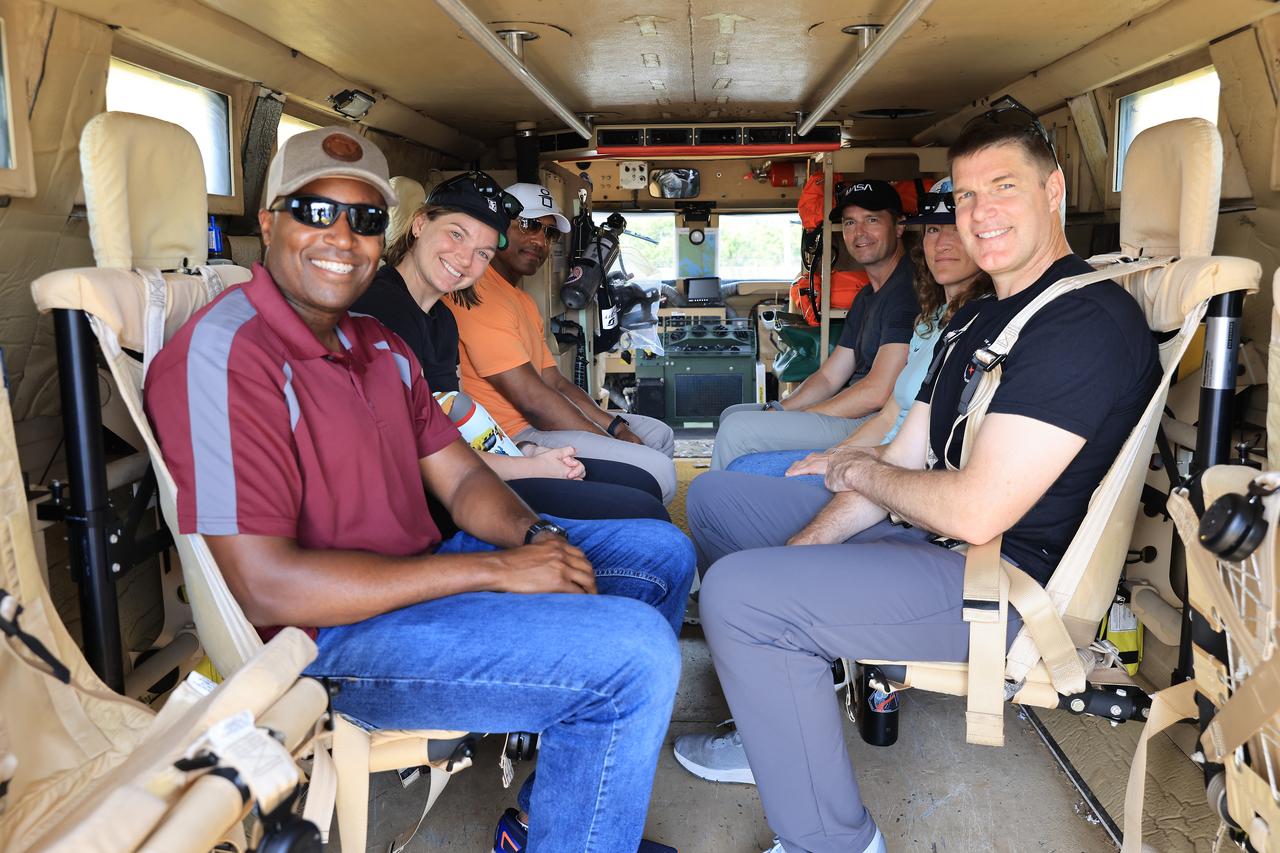
Crew members and backup members for NASA’s Artemis II mission and teams from the agency’s Exploration Ground Systems Program participate in emergency egress training at Launch Complex 39B at NASA’s Kennedy Space Center in Florida on Tuesday, May 6, 2025. From left, Andre Douglas, NASA’s Artemis II backup crew member; CSA (Canadian Space Agency) astronaut Jenni Gibbons, Artemis II backup crew member; NASA astronaut Victor Glover, Artemis II pilot; NASA astronaut Reid Wiseman, Artemis II commander; NASA astronaut Christina Koch, Artemis II mission specialist; and CSA astronaut Jeremy Hansen, Artemis II mission specialist sit in the back of a mine-resistant ambush protected vehicle, or MRAP. Originally designed for military applications, the 45,000-pound MRAP offers a mobile bunker for astronauts and ground crews in the unlikely event they must get away from the launch pad quickly in an emergency.
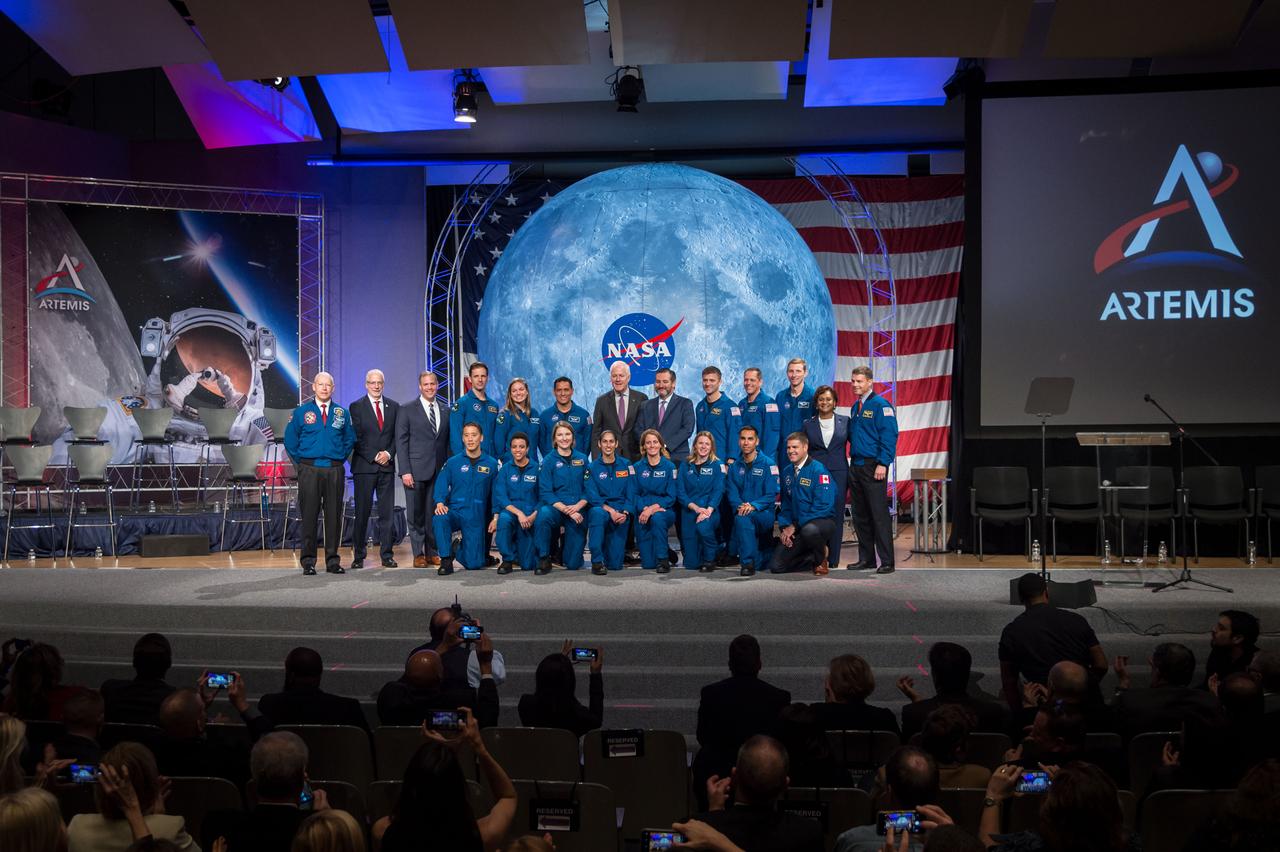
jsc2020e000653 (Jan. 10, 2020) --- The 2017 Class of Astronauts poses for a portrait with NASA officals and Texas Senators at the Johnson Space Center in Houston, Texas. In the front row (from left) are, NASA astronauts Jonny Kim, Jessica Watkins, Kayla Barron, Jasmin Moghbeli, Loral O'Hara, Zena Cardman and Raja Chari and Canadian Space Agency (CSA) astronaut Jeremy Hansen. In the back row (from left) are, Chief of the Astronuat Office Patrick Forrester, Johnson Space Center Director Mark Geyer, NASA Administrator Jim Bridenstine, Canadian Space Agency (CSA) astronauts Joshua Kutryk and Jennifer Sidey-Gibbon, NASA astronaut Frank Rubio, Senators John Cornyn and Ted Cruz, NASA astronauts Matthew Dominick, Bob Hines and Warren Hoburg, Johnson Space Center Deputy Director Vanessa Wyche and NASA astronaut Reid Wiseman. This is the first class of astronauts to graduate under the Artemis program and are now eligible for assignments to the International Space Station, Artemis missions to the Moon, and ultimately, missions to Mars.
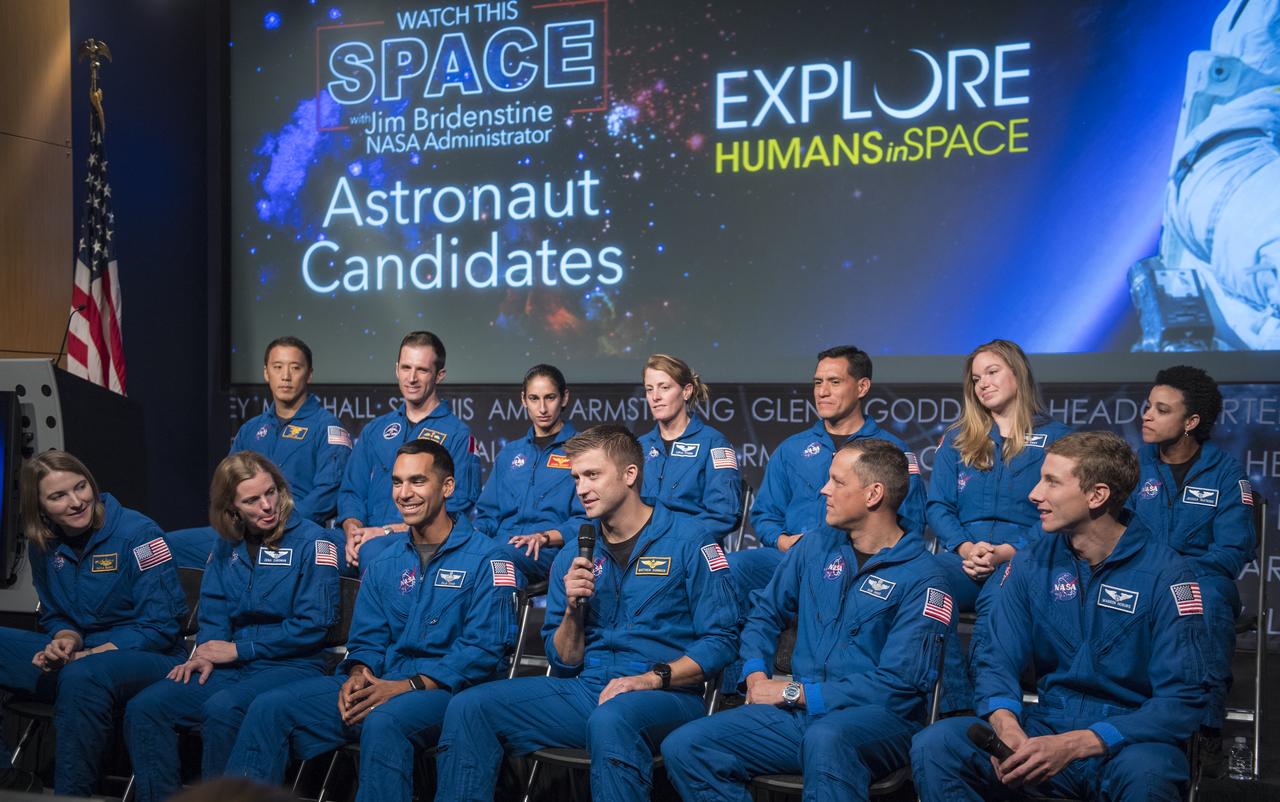
NASA astronaut candidate Matthew Dominick, third from right in the front row, answers a question during a live episode of the Administrator's monthly chat show, Watch This Space, along with fellow members of the 2017 astronaut candidate class, Thursday, Sept. 27, 2018 in the Webb Auditorium at NASA Headquarters in Washington. NASA's newest astronaut candidate class has started their two years of training, after which the new astronaut candidates could be assigned to missions performing research on the International Space Station, launching from American soil on spacecraft built by commercial companies, and launching on deep space missions on NASA’s new Orion spacecraft and Space Launch System rocket. Photo Credit: (NASA/Joel Kowsky)
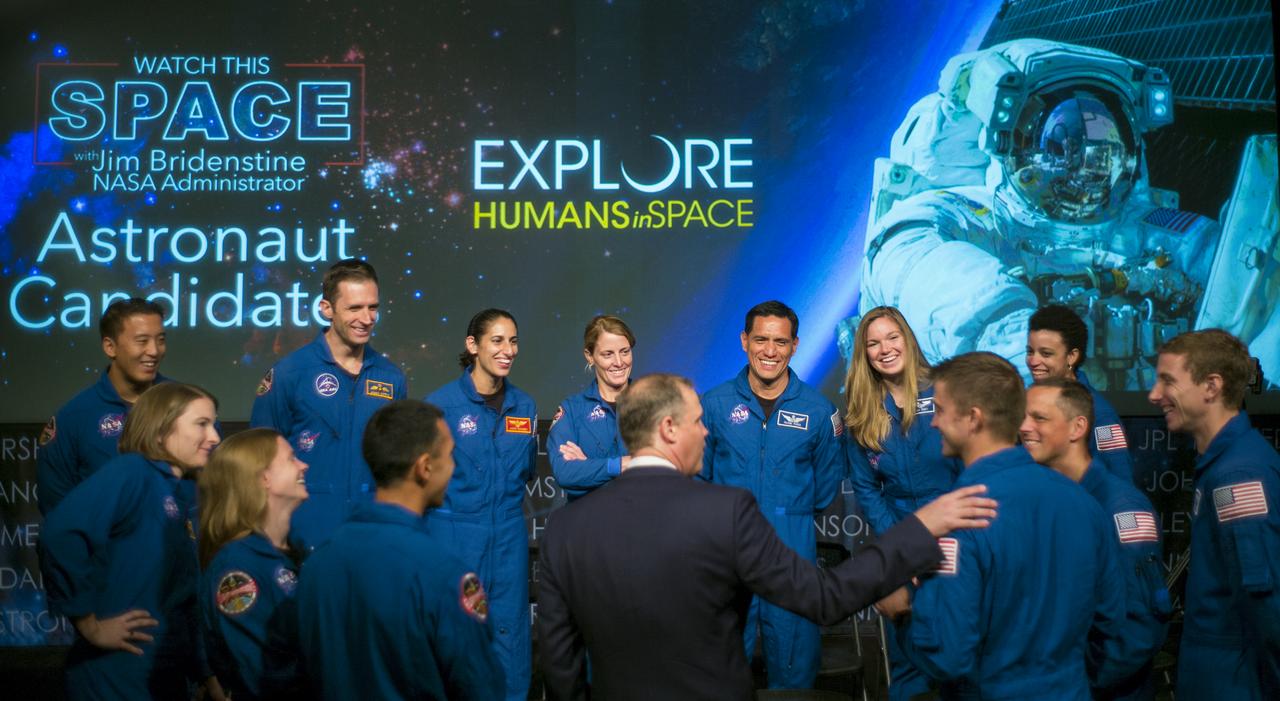
NASA Administrator Jim Bridenstine speaks with NASA and Canadian Space Agency astronaut candidates following a live episode of the Administrator's monthly chat show, Watch This Space, Thursday, Sept. 27, 2018 in the Webb Auditorium at NASA Headquarters in Washington. NASA's newest astronaut candidate class has started their two years of training, after which the new astronaut candidates could be assigned to missions performing research on the International Space Station, launching from American soil on spacecraft built by commercial companies, and launching on deep space missions on NASA’s new Orion spacecraft and Space Launch System rocket. Photo Credit: (NASA/Joel Kowsky)
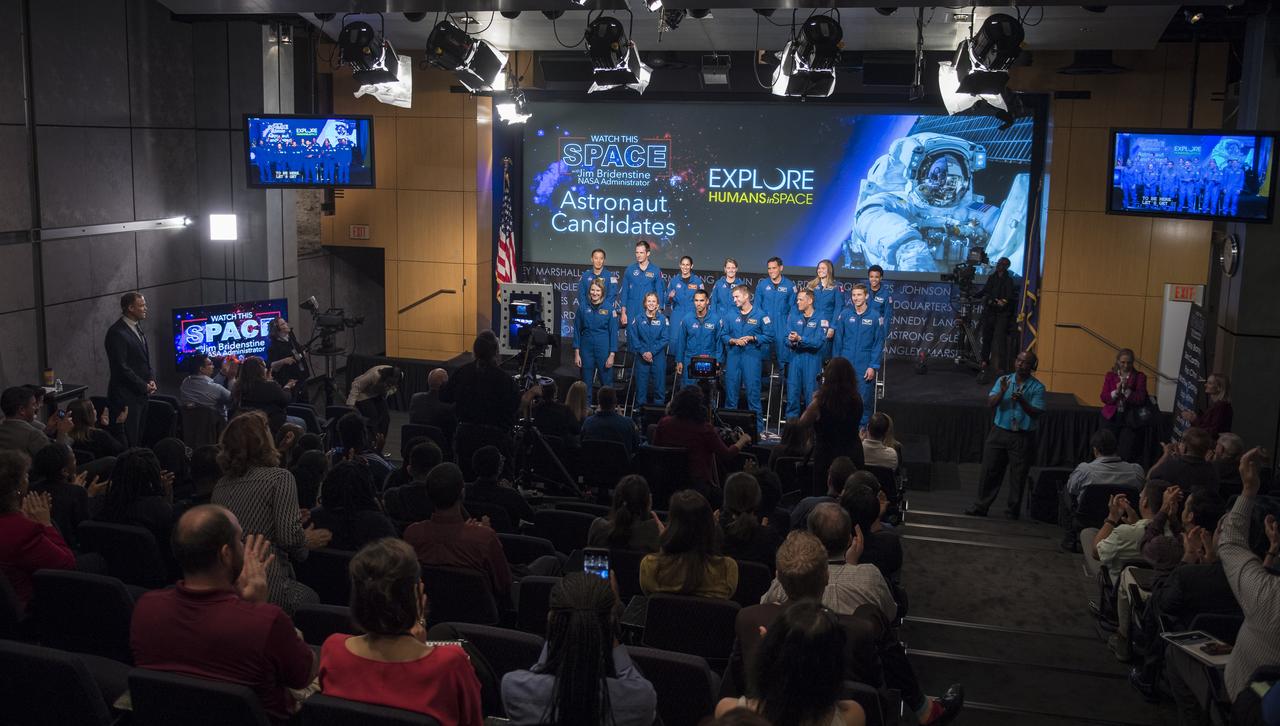
NASA Administrator Jim Bridenstine introduces the 2017 astronaut candidates during a live episode of the Administrator's monthly chat show, Watch This Space, Thursday, Sept. 27, 2018 in the Webb Auditorium at NASA Headquarters in Washington. NASA's newest astronaut candidate class has started their two years of training, after which the new astronaut candidates could be assigned to missions performing research on the International Space Station, launching from American soil on spacecraft built by commercial companies, and launching on deep space missions on NASA’s new Orion spacecraft and Space Launch System rocket. Photo Credit: (NASA/Joel Kowsky)