
Huntsville’s Jack Giles, Alabama State Senator (left), and Dr. Rocco Petrone, Marshall Space Flight Center Director (Middle), speak with Astronaut Owen Garriott who is inside the Apollo 16 Command Module on display at the Alabama Space and Rocket Center in Huntsville, Alabama. The successful Apollo 16 manned lunar landing mission took place April 16, 1972 through April 27, 1972. (Photograph courtesy of Huntsville/Madison County Public Library)
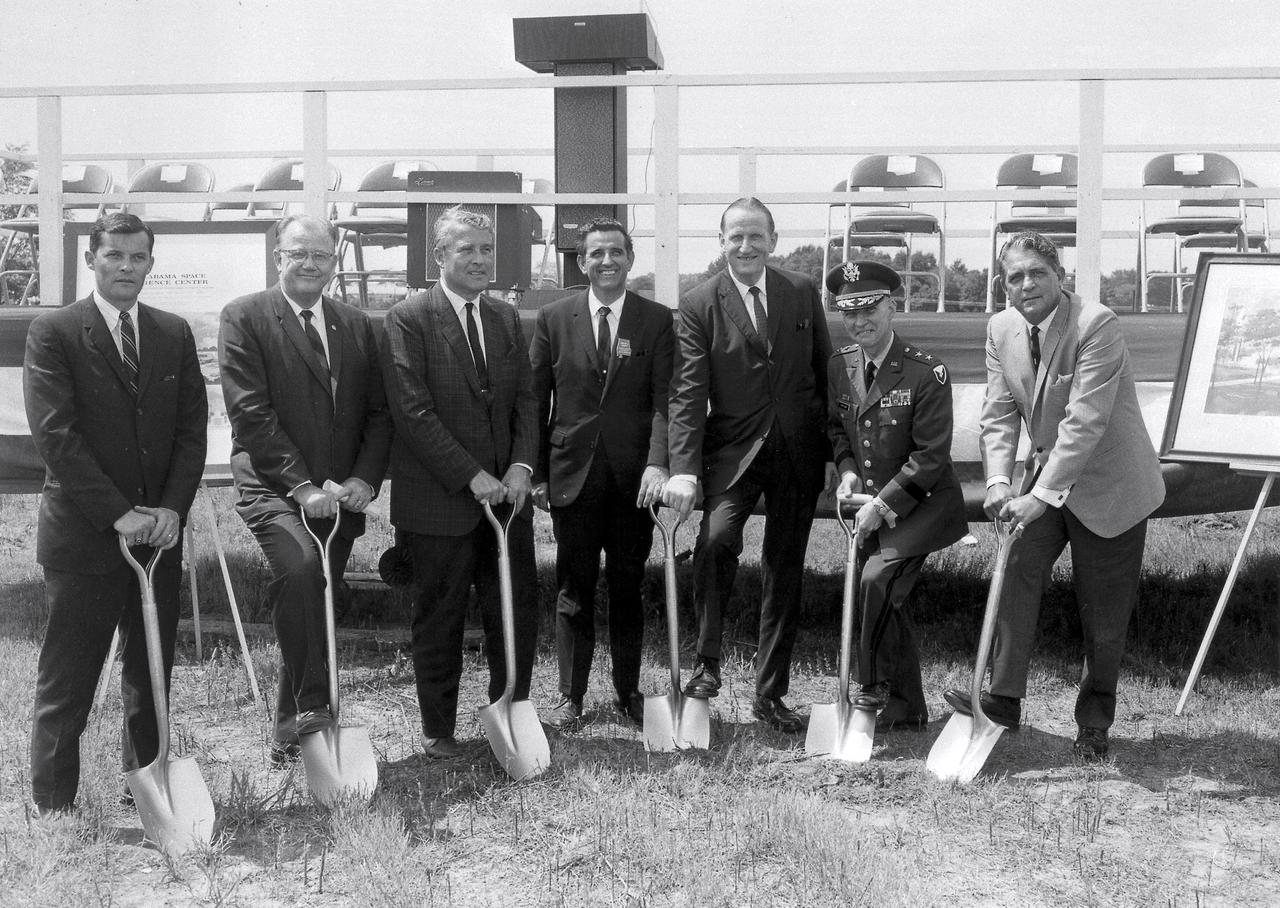
Ground breaking ceremony for the Alabama Space Science Center, later renamed the U.S. Space and Rocket Center. Shown in this picture, left to right, are Edward O. Buckbee, Space Center Director; Jack Giles, Alabama State Senator of Huntsville; Dr. Wernher on Braun, Marshall Space Flight Center (MSFC) Director; Martin Darity, head of the Alabama Publicity Bureau (representing Governor Albert Brewer); James Allen, former Lieutenant governor, chairman of the Alabama Space Science Exhibit Commission; Major General Charles Eifler, commanding general of the Army Ordnance Missile Command; and Huntsville Mayor Glenrn Hearn. (Courtesy of Huntsville/Madison County Public Library)
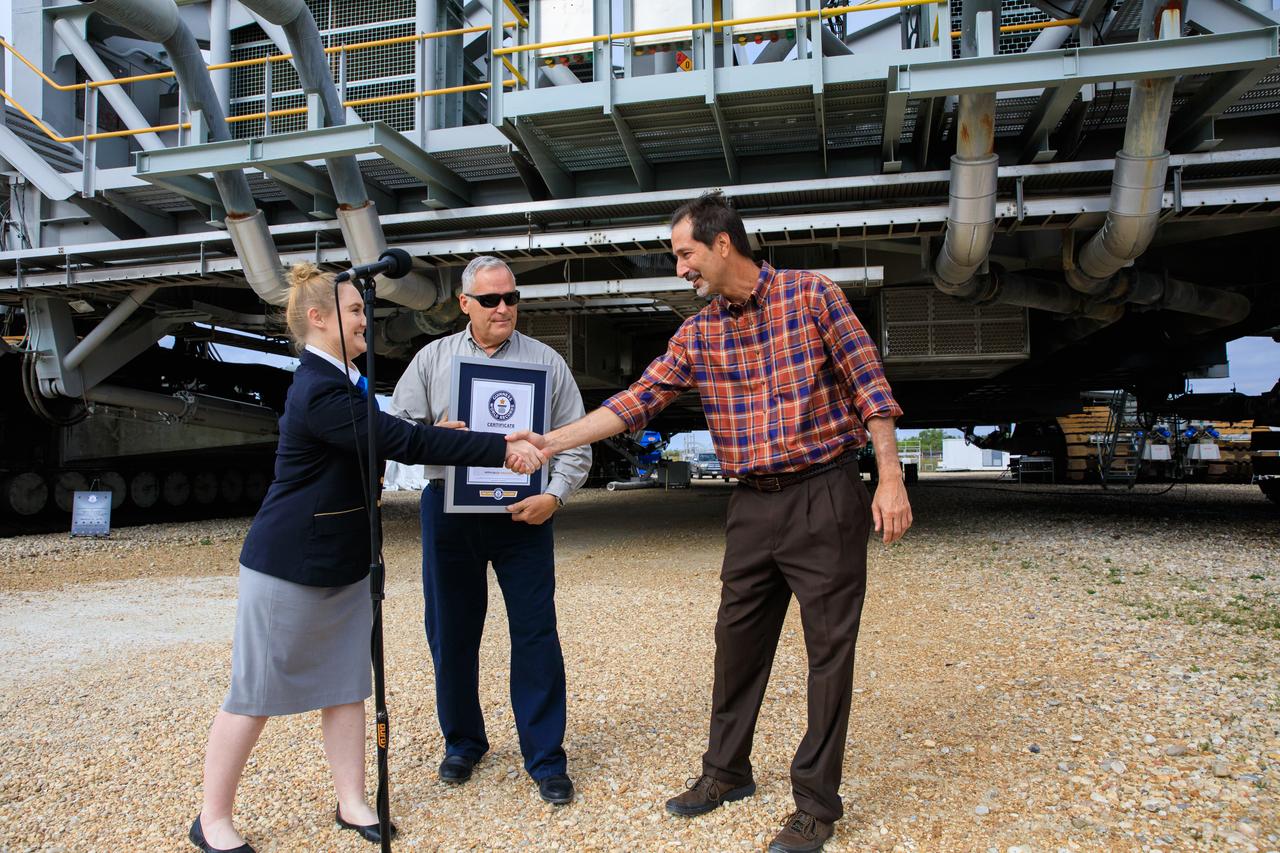
Guinness World Records adjudicator Hannah Ortman shakes hands NASA’s Crawler Element Operations Manager John Giles during a ceremony on March 29, 2023, at the agency’s Kennedy Space Center in Florida. Also in the photo is Brett Raulerson, Jacobs TOSC Crawlers, Transporters and Structures group manager. Guinness World Records officially designated NASA’s Crawler Transporter 2 as the heaviest self-powered vehicle, weighing approximately 6.65 million pounds. The crawler is responsible for carrying the Space Launch System rocket and Orion spacecraft for the Artemis missions to and from the launch pad.
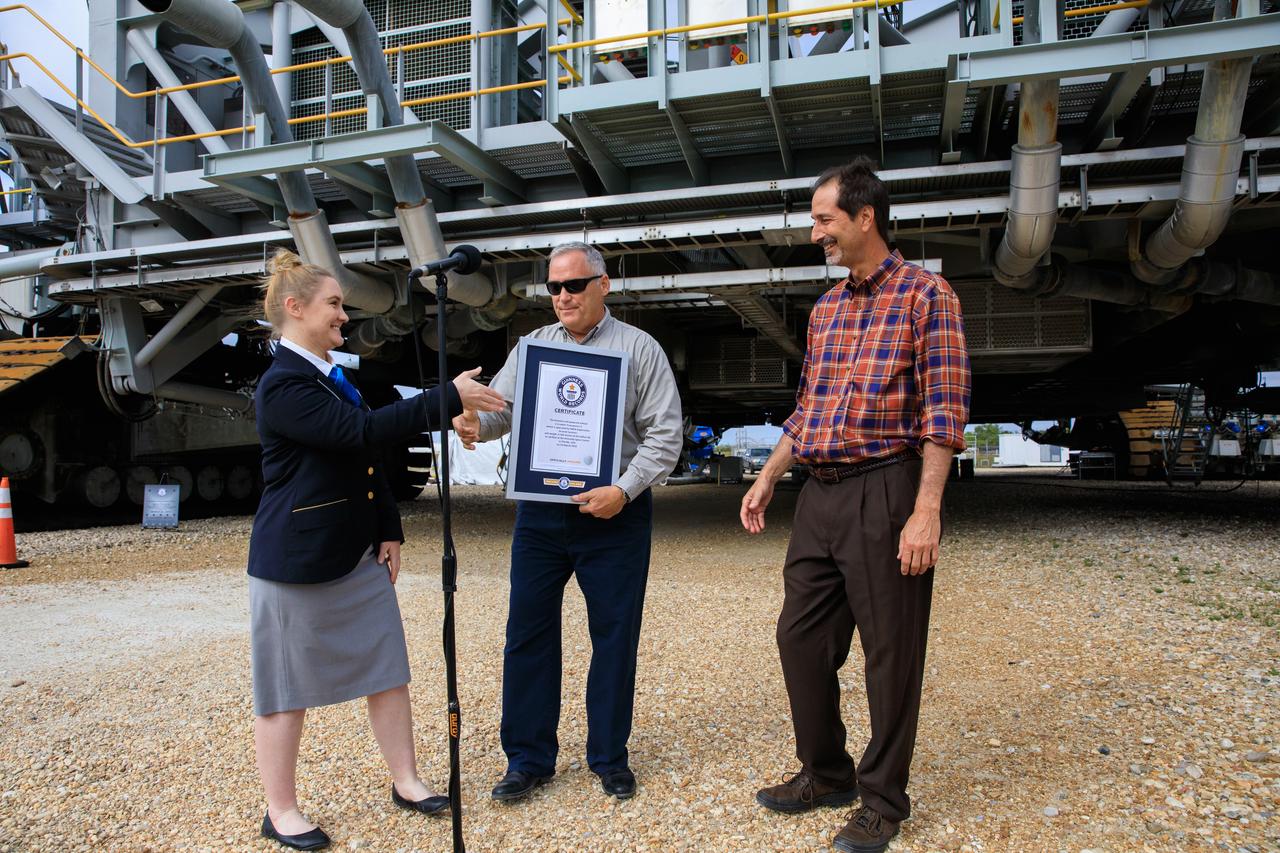
Guinness World Records adjudicator Hannah Ortman shakes hands with Brett Raulerson, Jacobs TOSC Crawlers, Transporters and Structures group manager, left, and John Giles, NASA’s Crawler Element Operations manager, during a ceremony on March 29, 2023, at the agency’s Kennedy Space Center in Florida. Guinness World Records officially designated NASA’s Crawler Transporter 2 as the heaviest self-powered vehicle, weighing approximately 6.65 million pounds. The crawler is responsible for carrying the Space Launch System rocket and Orion spacecraft for the Artemis missions to and from the launch pad.
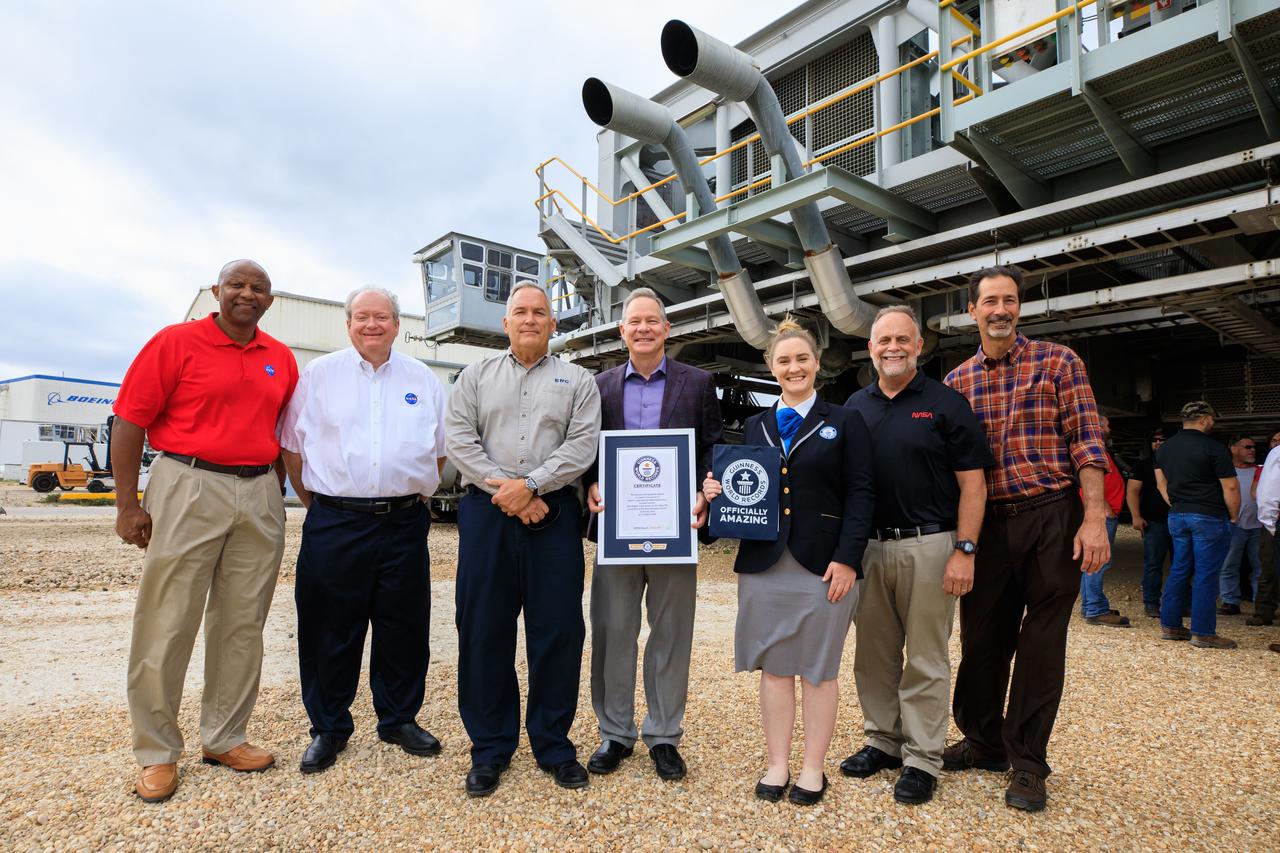
Guinness World Records officially designated NASA’s Crawler Transporter 2 as the heaviest self-powered vehicle, weighing approximately 6.65 million pounds. During a March 29, 2023, ceremony at the agency's Kennedy Space Center in Florida, Guinness World Records presented a certificate to teams with the Exploration Ground Systems Program and Kennedy leadership. Pictured, from left, are: Kelvin Manning, Kennedy deputy director; Burt Summerfield, Kennedy associate director, management; Brett Raulerson, Jacobs TOSC Crawlers, Transporters and Structures group manager; Gary Casteel, Jacobs director, Ground Systems Support; Hannah Ortman, Guinness World Records adjudicator; Shawn Quinn, NASA’s Exploration Ground Systems manager; and John Giles, NASA’s Crawler Element Operations manager.
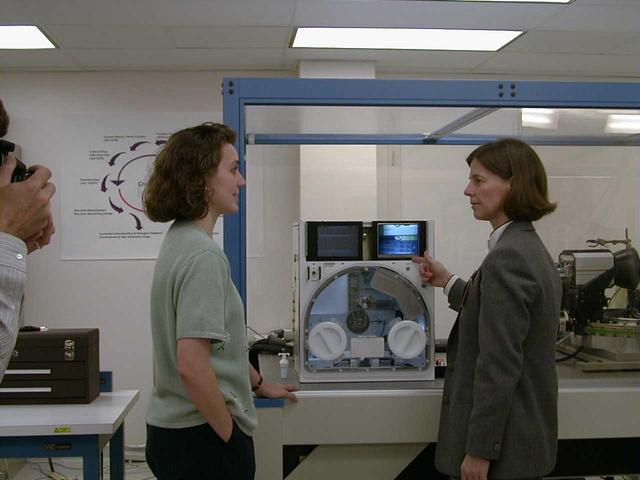
University of Alabama engineer Stacey Giles briefs NASA astronaut Dr. Bornie Dunbar about the design and capabilities of the X-ray Crystallography Facility under development at the Center for Macromolecular Crystallography of the University of Alabama at Birmingham, AL, April 21, 1999. The X-ray Crystallography Facility is designed to speed the collection of protein structure information from crystals grown aboard the International Space Station. By measuring and mapping the protein crystal structure in space, researchers will avoid exposing the delicate crystals to the rigors of space travel and make important research data available to scientists much faster. The X-ray Crystallography facility is being designed and developed by the Center for Macromolecular Crystallography of the University of Alabama at Birmingham, a NASA Commercial Space Center.
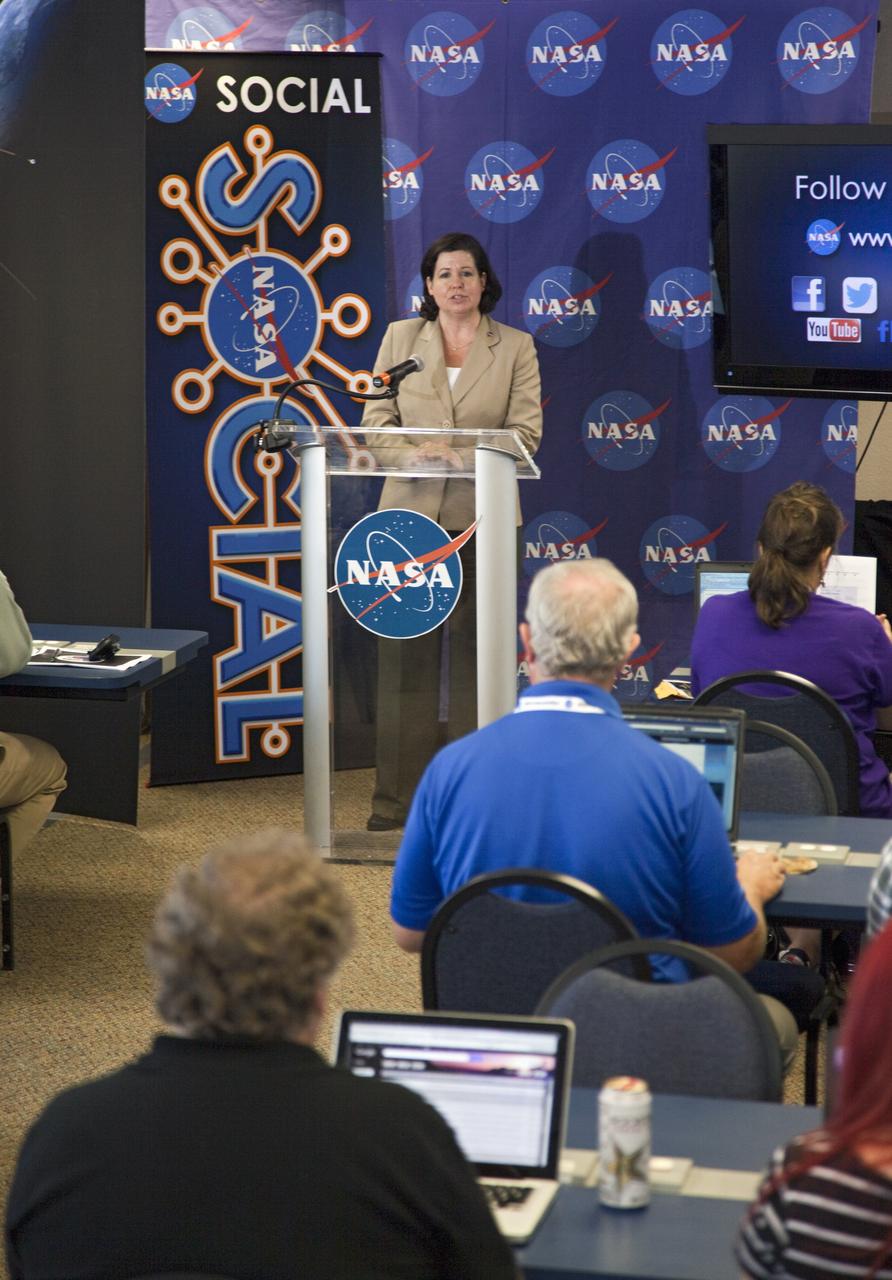
CAPE CANAVERAL, Fla. – At NASA's Kennedy Space Center in Florida, Barbara Giles, director of NASA's Science Mission Directorate Heliophysics Division, talks to agency social media followers during the second day of NASA Social activities revolving around NASA's Radiation Belt Storm Probes, or RBSP, mission. The probes are set to launch aboard a United Launch Alliance, or ULA, Atlas V rocket from nearby Cape Canaveral Air Force Station. About 40 followers were selected to participate in RBSP's prelaunch and launch activities. The RBSP mission will help us understand the sun’s influence on Earth and near-Earth space by studying the Earth’s radiation belts on various scales of space and time. RBSP will begin its mission of exploration of Earth’s Van Allen radiation belts and the extremes of space weather. For more information, visit http://www.nasa.gov/rbsp. Photo credit: NASA/Frankie Martin
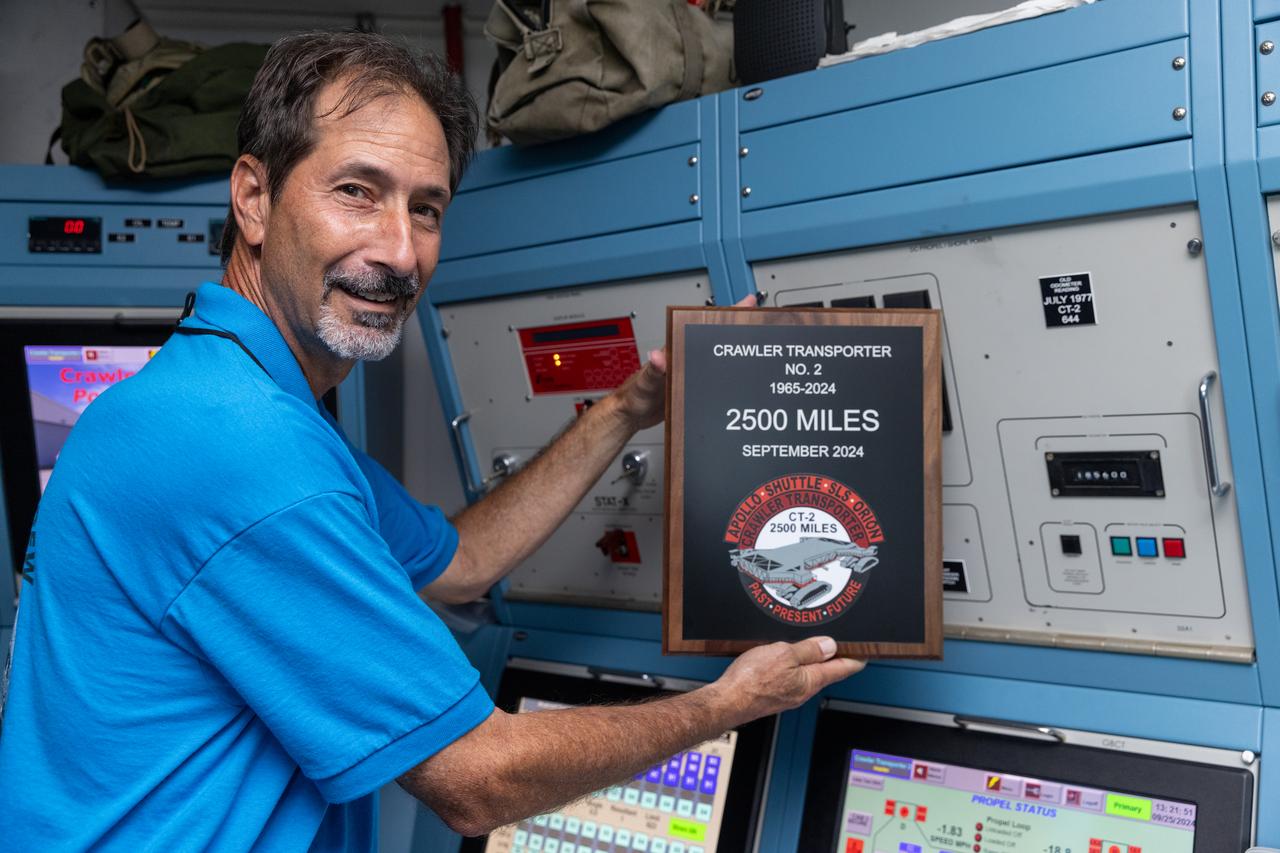
John Giles, crawler element operations manager for NASA’s Exploration Ground Systems, holds a plaque near the odometer of the agency’s crawler-transporter 2, on Wednesday, Sept. 25, 2024, at NASA’s Kennedy Space Center in Florida, commemorating the milestone of 2,500 miles traveled since its construction in 1965. Crawler-transporter 2 reached the milestone while teams took it on a trip in preparation for supporting the roll of the mobile launcher from Launch Pad 39B back into the spaceport’s Vehicle Assembly Building ahead of the Artemis II launch. Built originally to transport massive Saturn V rockets during the Apollo Program, crawler-transporter 2 continued its service during the Space Shuttle Program, and currently transports the massive SLS (Space Launch System) rocket and Orion spacecraft atop the mobile launcher as part of the agency’s Artemis campaign.

A metal strap became tangled over one of the folded solar array panels when Skylab lost its micro meteoroid shield during its launch. Cutters like the ones used to free the solar array were used to cut the ribbon opening to the public a new full-scale Skylab cluster exhibit at the Alabama Space and Rocket Center in Huntsville, Alabama. Wielding the cutters are (left to right): Alabama Senator James B. Allen; Marshall Space Flight Center director, Dr. William R. Lucas, Huntsville Mayor, Joe Davis; Madison County Commission Chairman, James Record (standing behind Mayor Davis); and chairman of the Alabama Space Science Exhibit Commission, Jack Giles. Astronauts Conrad and Kerwin used the same type of tool in Earth orbit to cut the aluminum strap which jammed the Skylab solar array.