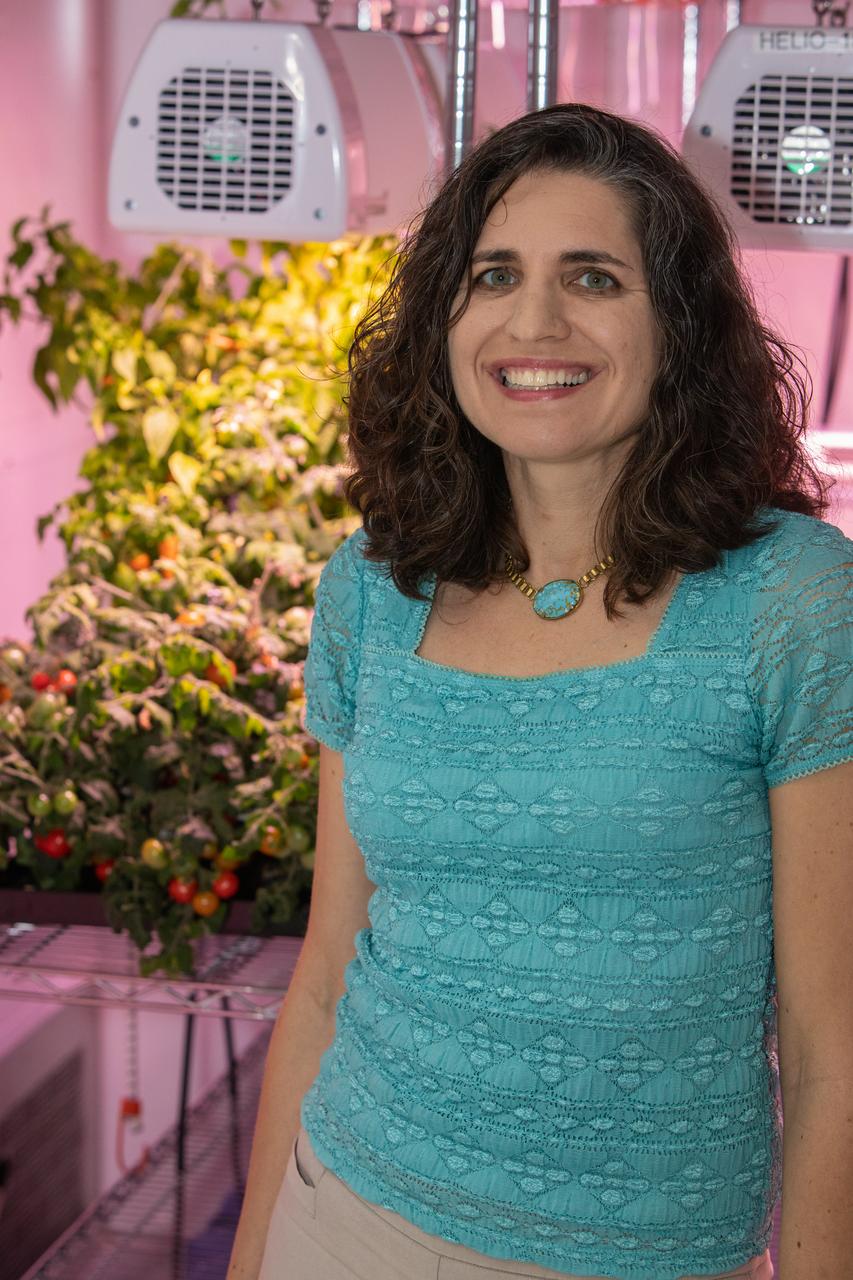
Gioia Massa, a NASA project scientist, poses inside a lab at the Space Station Processing Facility located at the agency’s Kennedy Space Center in Florida. Massa’s responsibilities include studying the effects of a microgravity environment on plant growth, discovering the perfect conditions for growing plants in space and determining what plant species grow the most effectively under those conditions. Massa and her team are currently experimenting with growing plants aboard the International Space Station to develop the knowhow to supplement astronauts’ packaged diets with freshly grown crops, which should facilitate long-duration exploration missions into deep space.
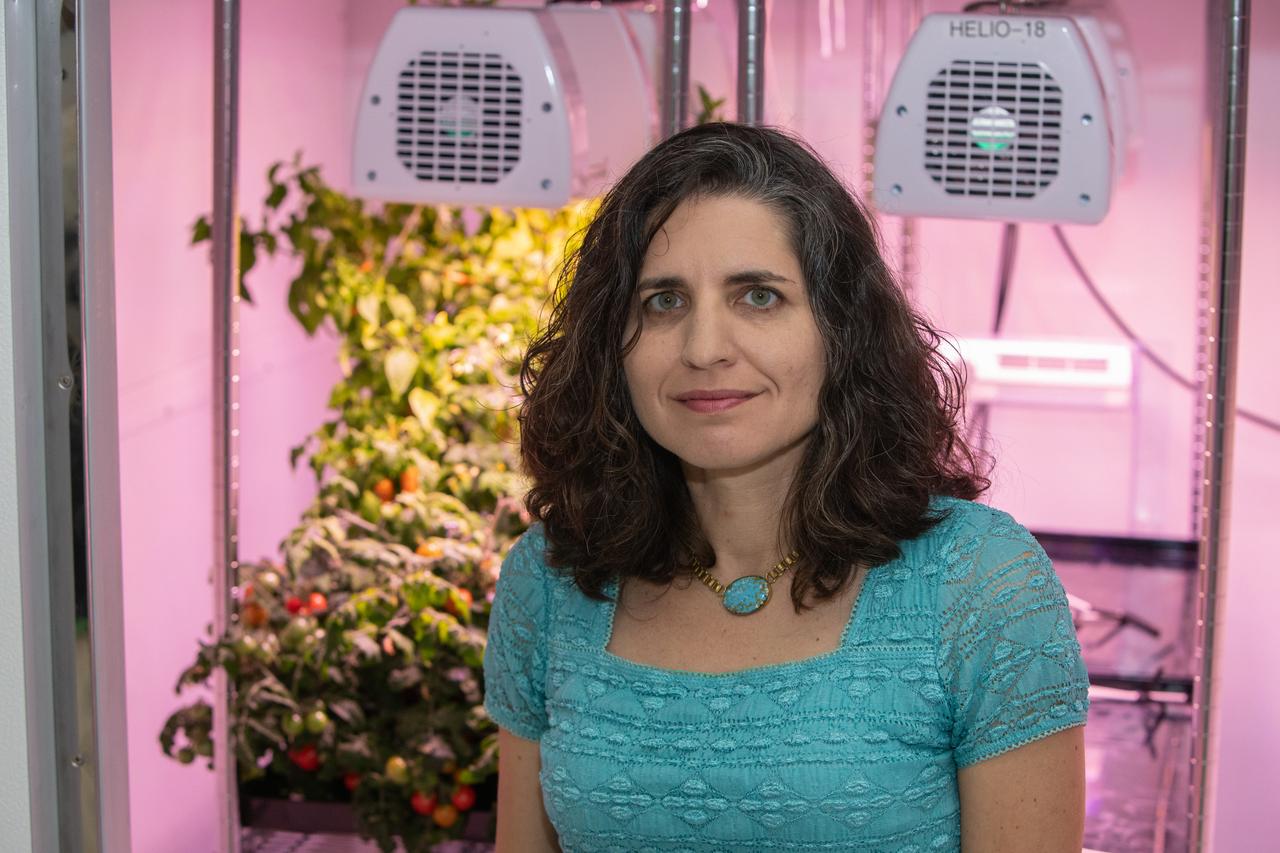
Gioia Massa, a NASA project scientist, poses inside a lab at the Space Station Processing Facility located at the agency’s Kennedy Space Center in Florida. Massa’s responsibilities include studying the effects of a microgravity environment on plant growth, discovering the perfect conditions for growing plants in space and determining what plant species grow the most effectively under those conditions. Massa and her team are currently experimenting with growing plants aboard the International Space Station to develop the knowhow to supplement astronauts’ packaged diets with freshly grown crops, which should facilitate long-duration exploration missions into deep space.
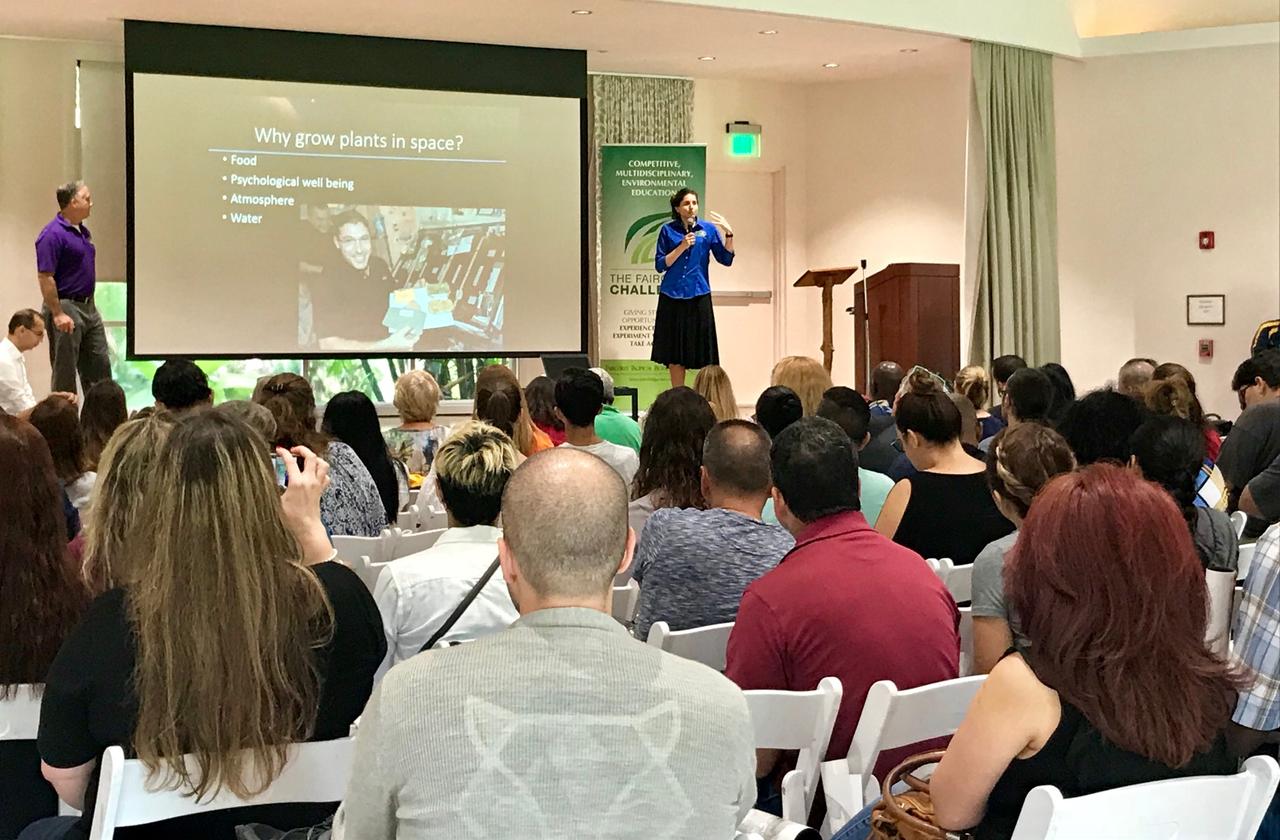
Kennedy scientists Trent Smith, left, and Dr. Gioia Massa speak to middle and high school teachers at Fairchild Tropical Botanic Garden in Miami during the kickoff of the 2017-2018 Fairchild Challenge-Growing Beyond Earth. More than 130 teachers gathered for the opening workshop, where they learned about food production in space and the Veggie hardware currently on the International Space Station. NASA has partnered with Fairchild to create this STEM-based challenge in which students will follow specific research protocols and analyze plant growth factors, flavor and nutrition, in order to help NASA choose the next crops for astronauts to grow aboard the station.
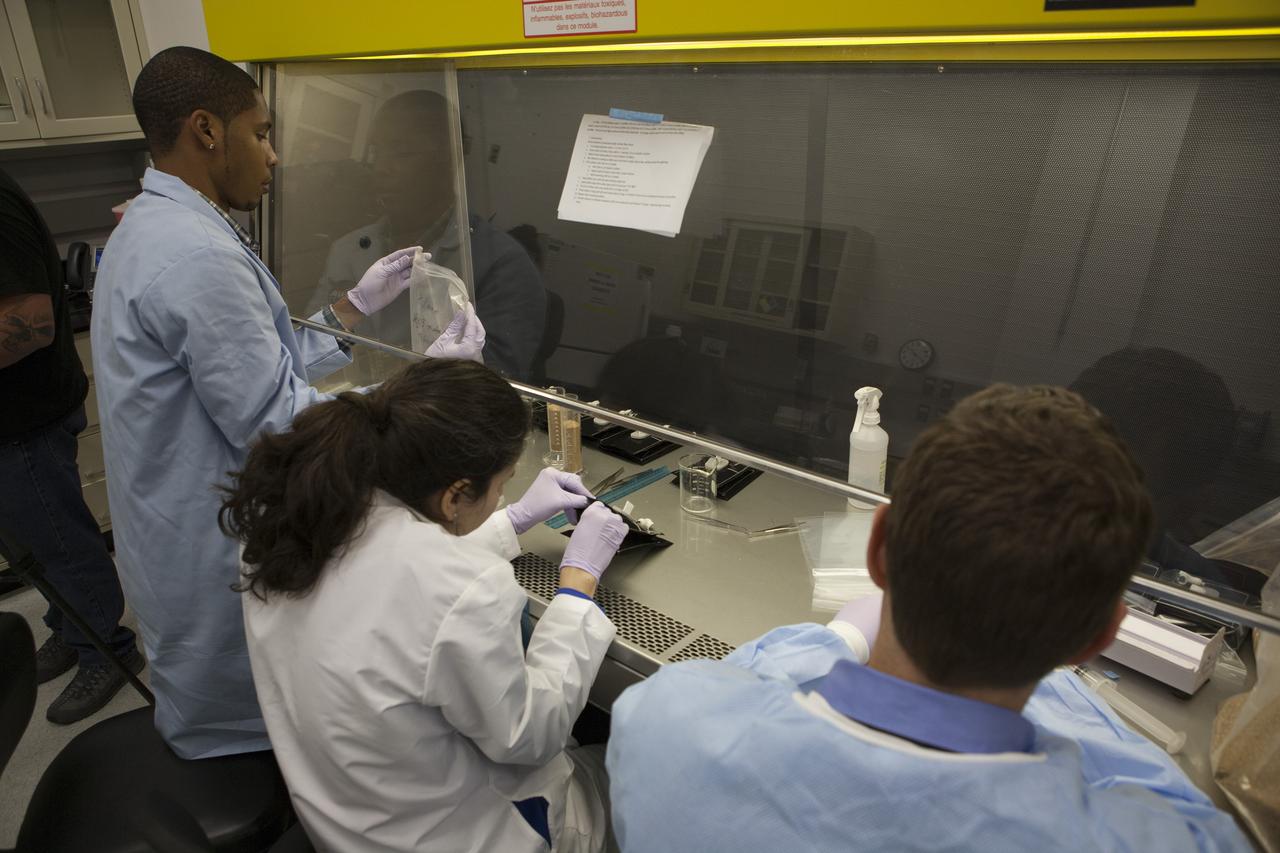
Inside a laboratory in the Space Station Processing Facility at NASA’s Kennedy Space Center in Florida, research scientists prepare the plant pillows for the Veg-03 experiment that will be delivered to the International Space Station aboard the eighth SpaceX Dragon commercial resupply mission. From left, are Matt Romeyn, NASA pathways intern; Dr. Gioia Massa, NASA payload scientist for Veggie; and Dr. Mathew Mickens, a post-doctoral researcher. The Veg-03 plant pillows will contain ‘Tokyo Bekana’ cabbage seeds and lettuce seeds for NASA’s third Veggie plant growth system experiment. The experiment will continue NASA’s deep space plant growth research to benefit the Earth and the agency’s journey to Mars.
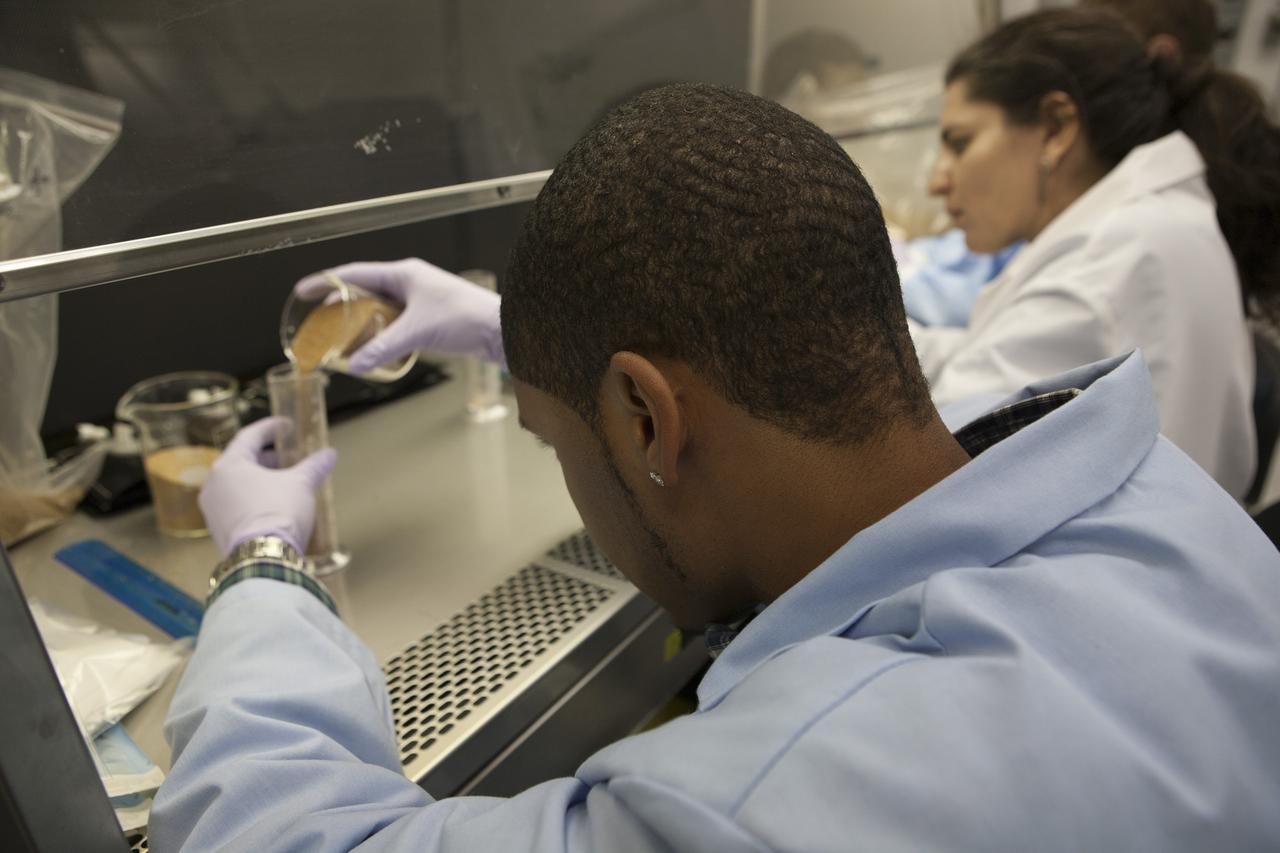
Inside a laboratory in the Space Station Processing Facility at NASA’s Kennedy Space Center in Florida, research scientists prepare the plant pillows for the Veg-03 experiment that will be delivered to the International Space Station aboard the eighth SpaceX Dragon commercial resupply mission. Matt Romeyn, a NASA pathways intern, measures out the calcined clay, or space dirt, for one of the plant pillows. To his right is Dr. Gioia Massa, NASA payload scientist for Veggie. The Veg-03 plant pillows will contain ‘Tokyo Bekana’ cabbage seeds and lettuce seeds for NASA’s third Veggie plant growth system experiment. The experiment will continue NASA’s deep space plant growth research to benefit the Earth and the agency’s journey to Mars.
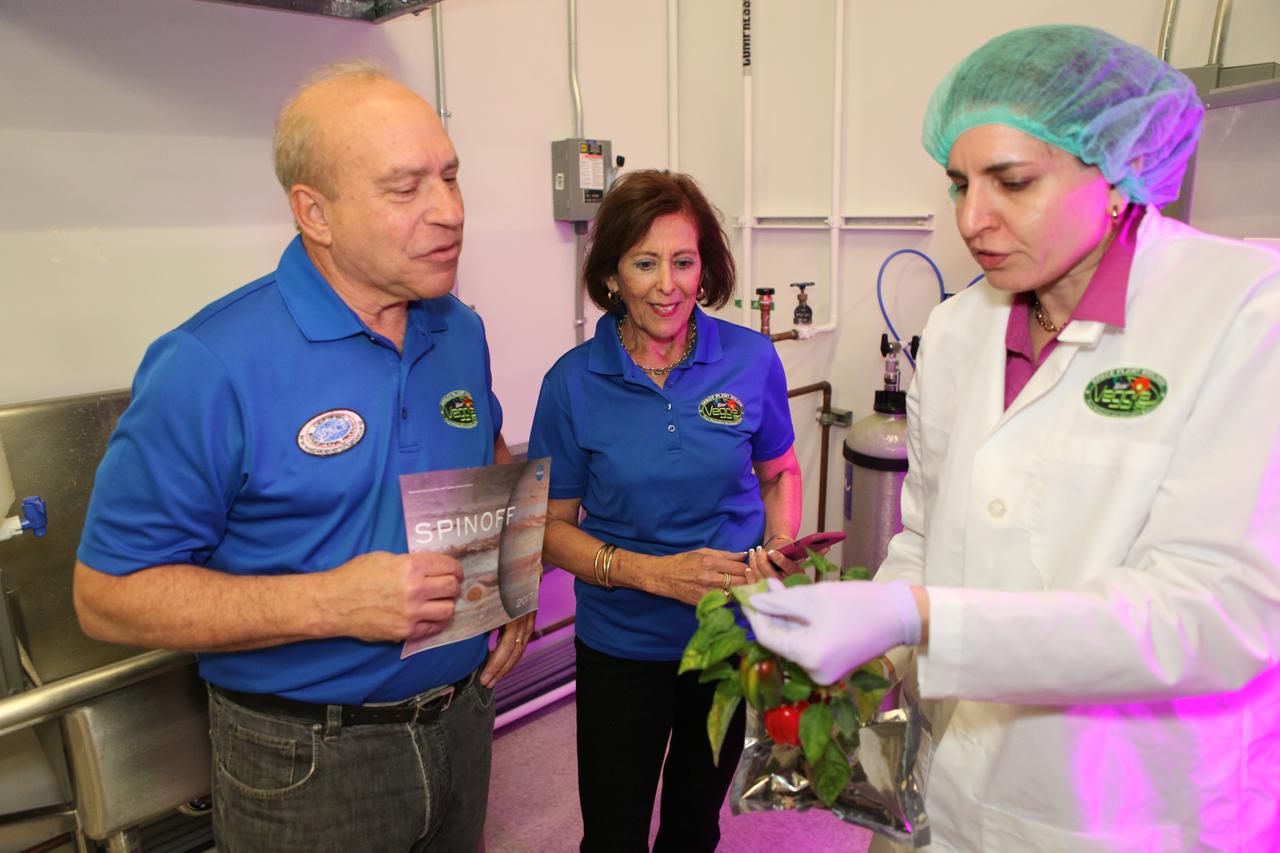
Ed and Betty Rosenthal, founders of Florikan Fertilizer Corp., left, and Gioia Massa, NASA payload scientist for Veggie, observe ground control experiments in the Veggie Lab at NASA's Kennedy Space Center on Feb. 16.
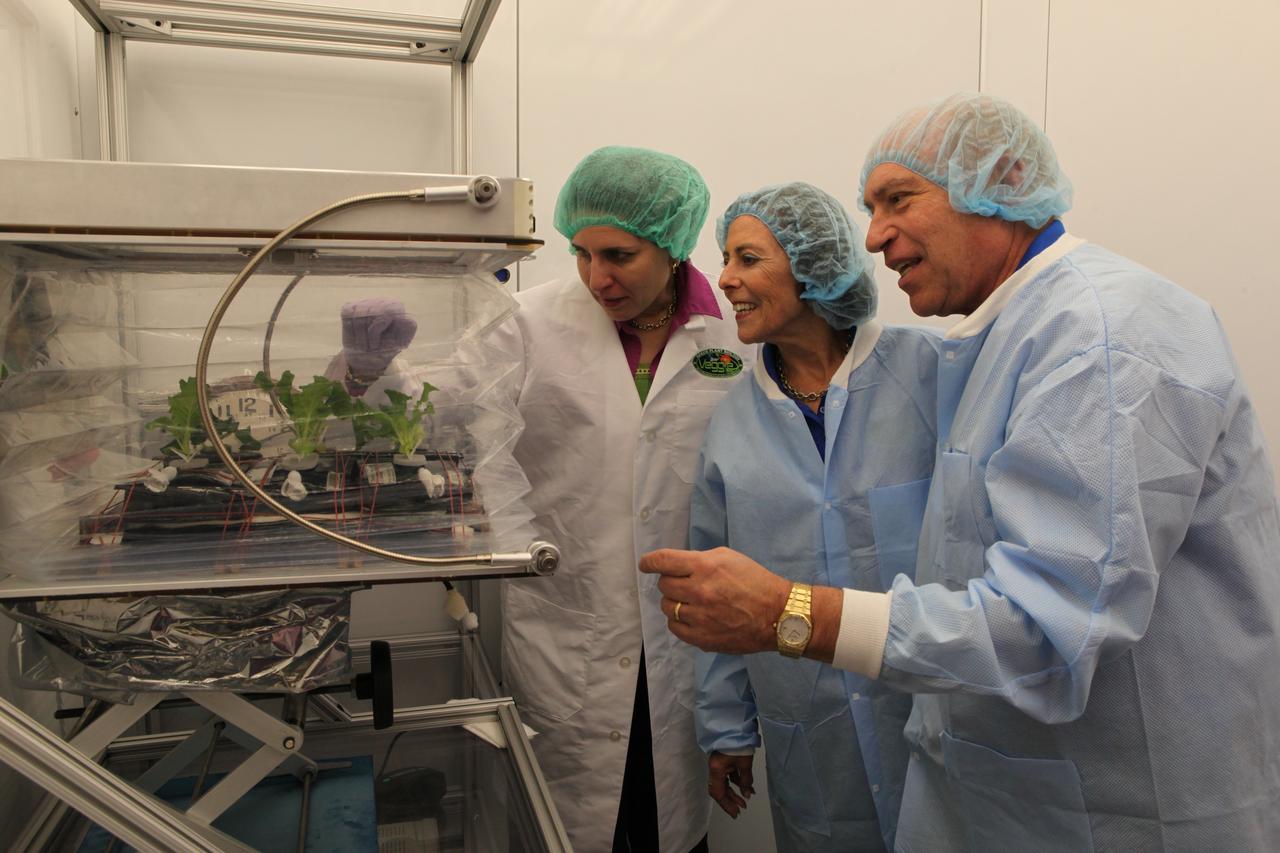
Gioia Massa, NASA payload scientist for Veggie, left, Betty and Ed Rosenthal, founders of Florikan Fertilizer Corp., observe ground control experiments in the Veggie Lab at NASA's Kennedy Space Center on Feb. 16.
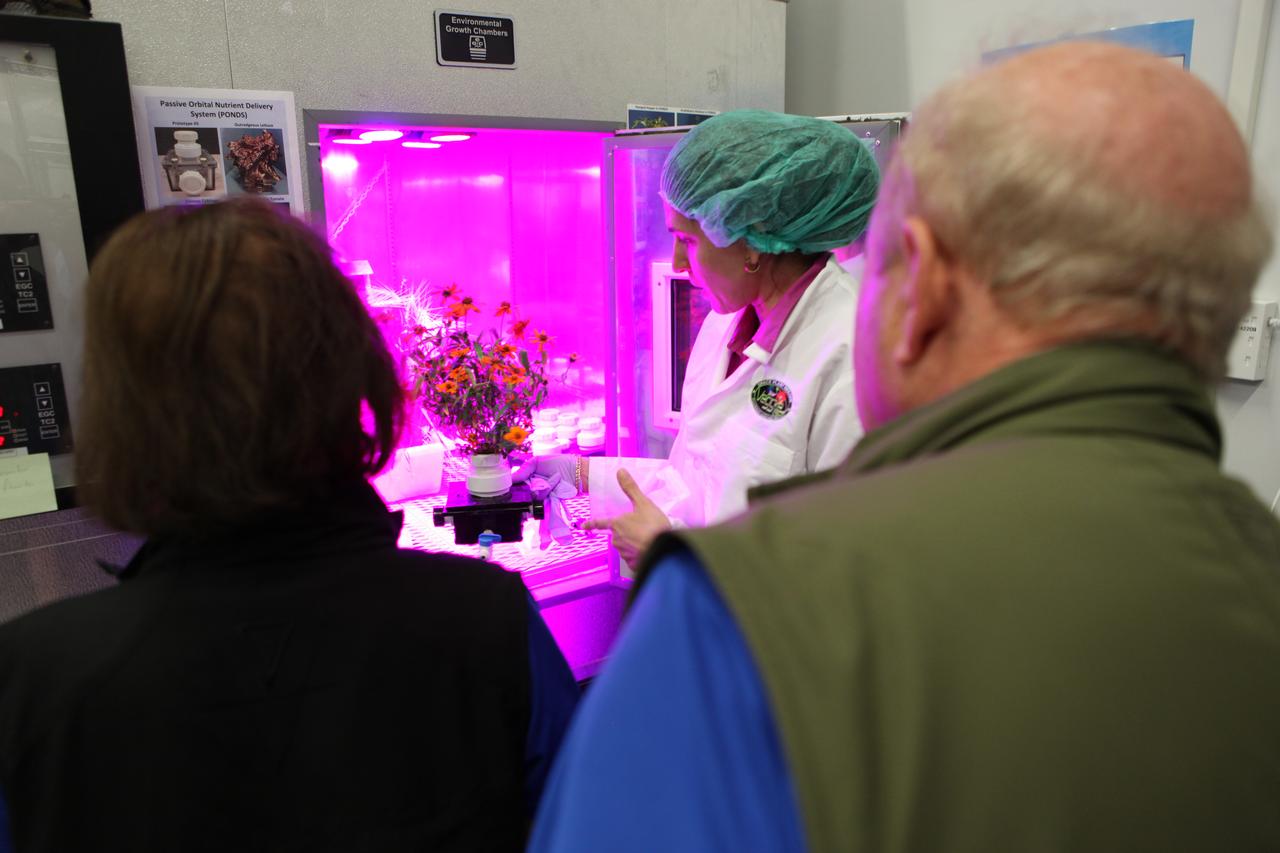
Gioia Massa, NASA payload scientist for Veggie, center, shows Ed and Betty Rosenthal, founders of Florikan Fertilizer Corp., the ground control experiments in the Veggie Lab at NASA's Kennedy Space Center on Feb. 16.
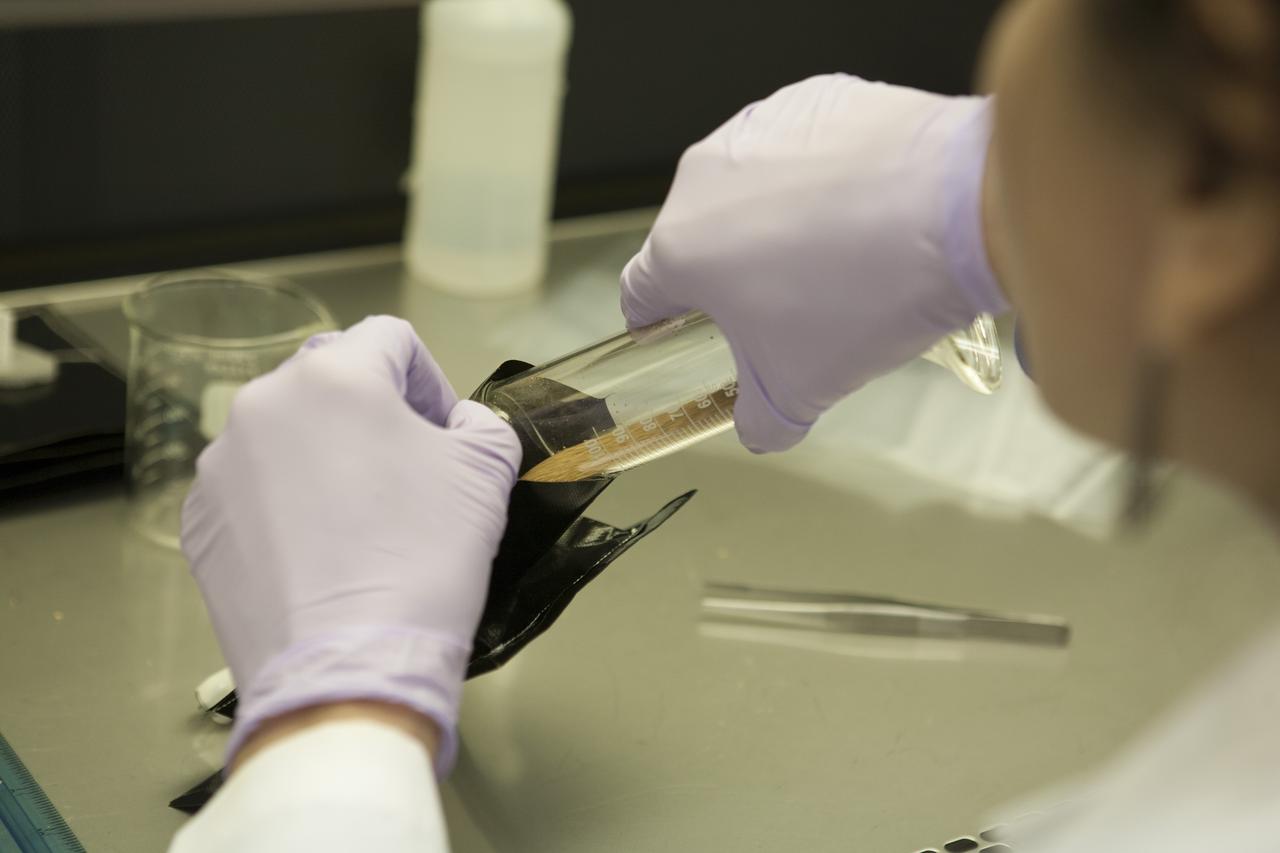
Inside a laboratory in the Space Station Processing Facility at NASA’s Kennedy Space Center in Florida, research scientists prepare the plant pillows for the Veg-03 experiment that will be delivered to the International Space Station aboard the eighth SpaceX Dragon commercial resupply mission. Matt Romeyn, a NASA pathways intern, inserts a measured amount of calcined clay, or space dirt, into one of the plant pillows. The Veg-03 plant pillows will contain ‘Tokyo Bekana’ cabbage seeds and lettuce seeds for NASA’s third Veggie plant growth system experiment. The experiment will continue NASA’s deep space plant growth research to benefit the Earth and the agency’s journey to Mars.
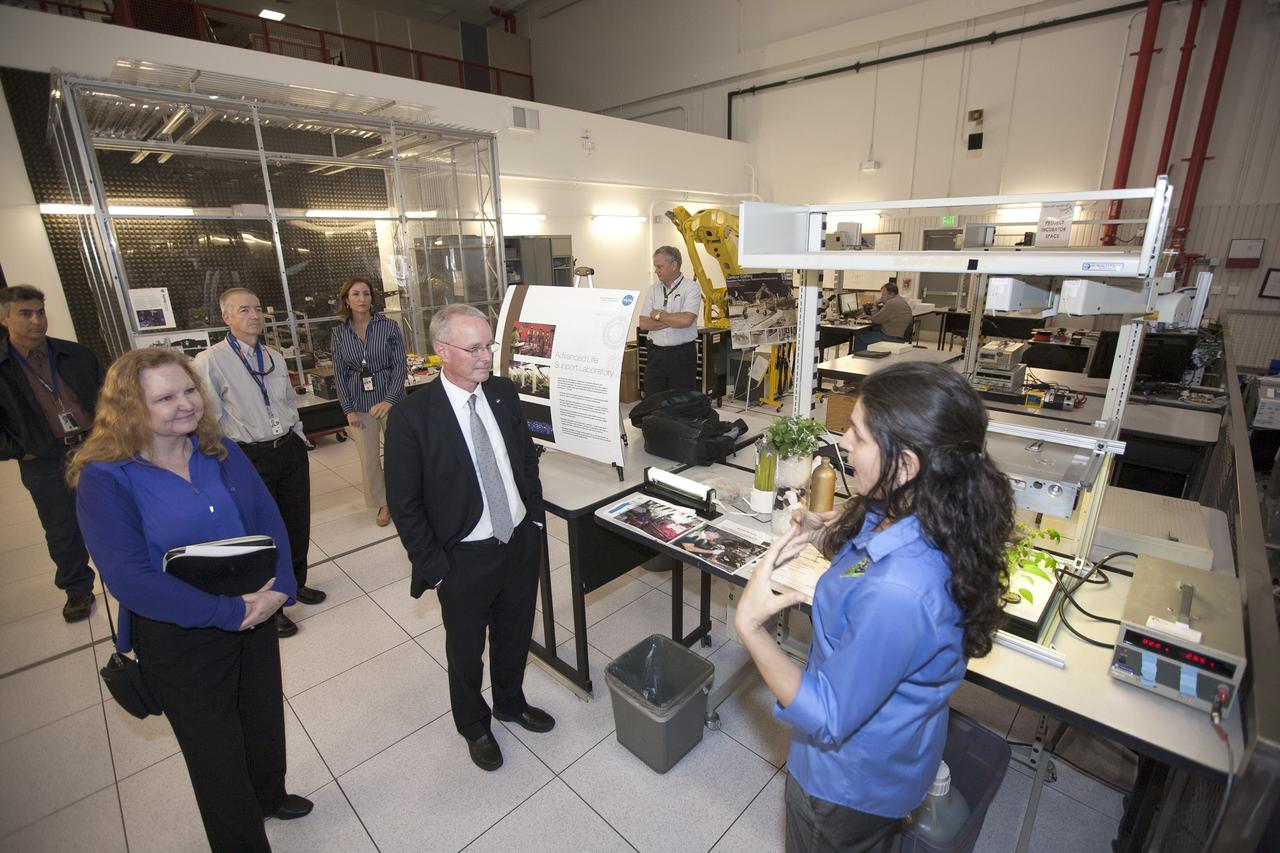
CAPE CANAVERAL, Fla. -- During a visit to NASA's Kennedy Space Center in Florida, NASA Chief Technologist David Miller, center, tours laboratories inside the Swamp Works facility. At right, Dr. Gioia Massa, NASA project scientist in the Engineering and Technology Directorate, discusses the VEGGIE plant growth system. At left is Karen Thompson, Kennedy's chief technologist. Photo credit: NASA/Kim Shiflett
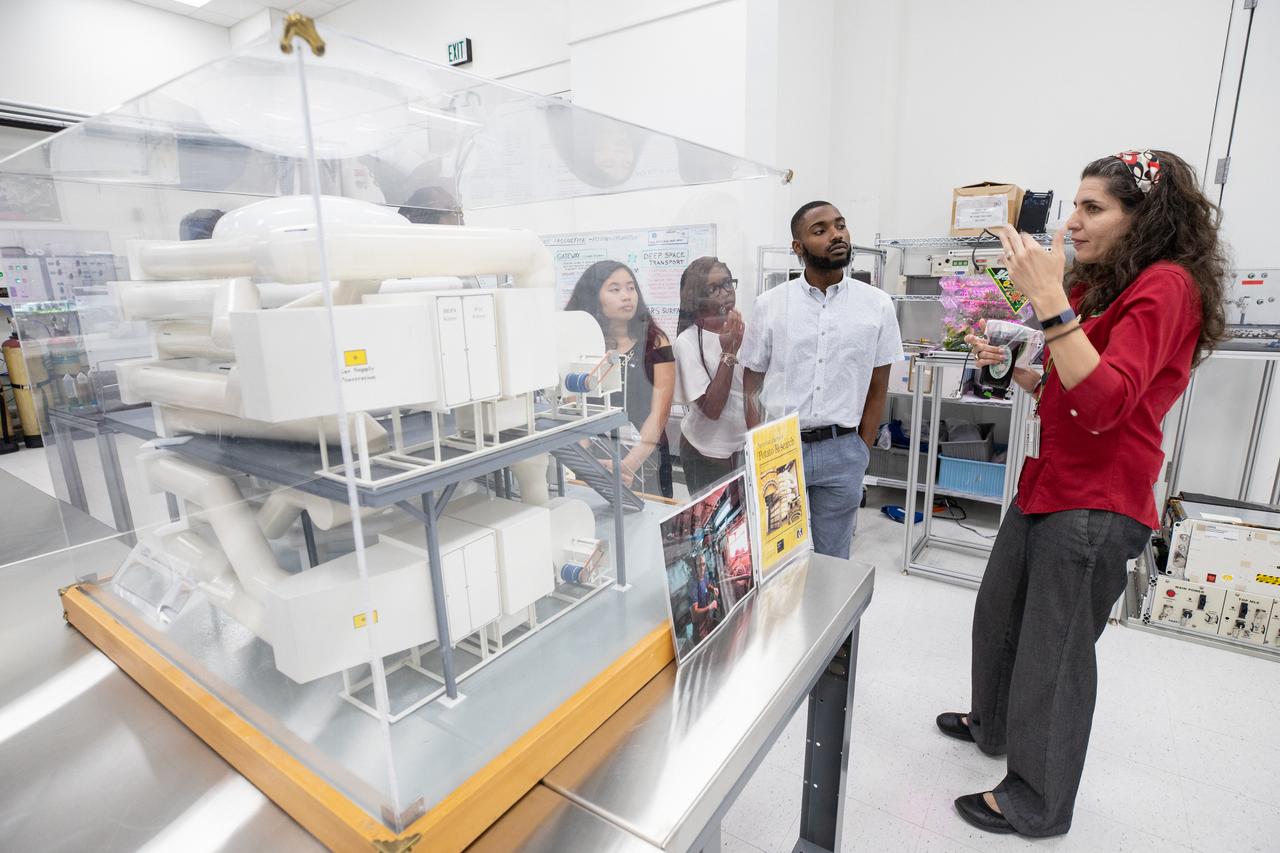
Dr. Gioia Massa, NASA Veggie project lead, addresses Langston University students inside a Space Station Processing Facility lab at Kennedy Space Center on Sept. 18, 2019. The tour of the Florida spaceport was organized by NASA’s Office of Education and Byron Quinn, Ph.D., Langston University director of the Science Research Institute. Students visited SwampWorks, the Neil Armstrong Operations and Checkout Building, the Vehicle Assembly Building, the visitor complex and the Center for Space Education.
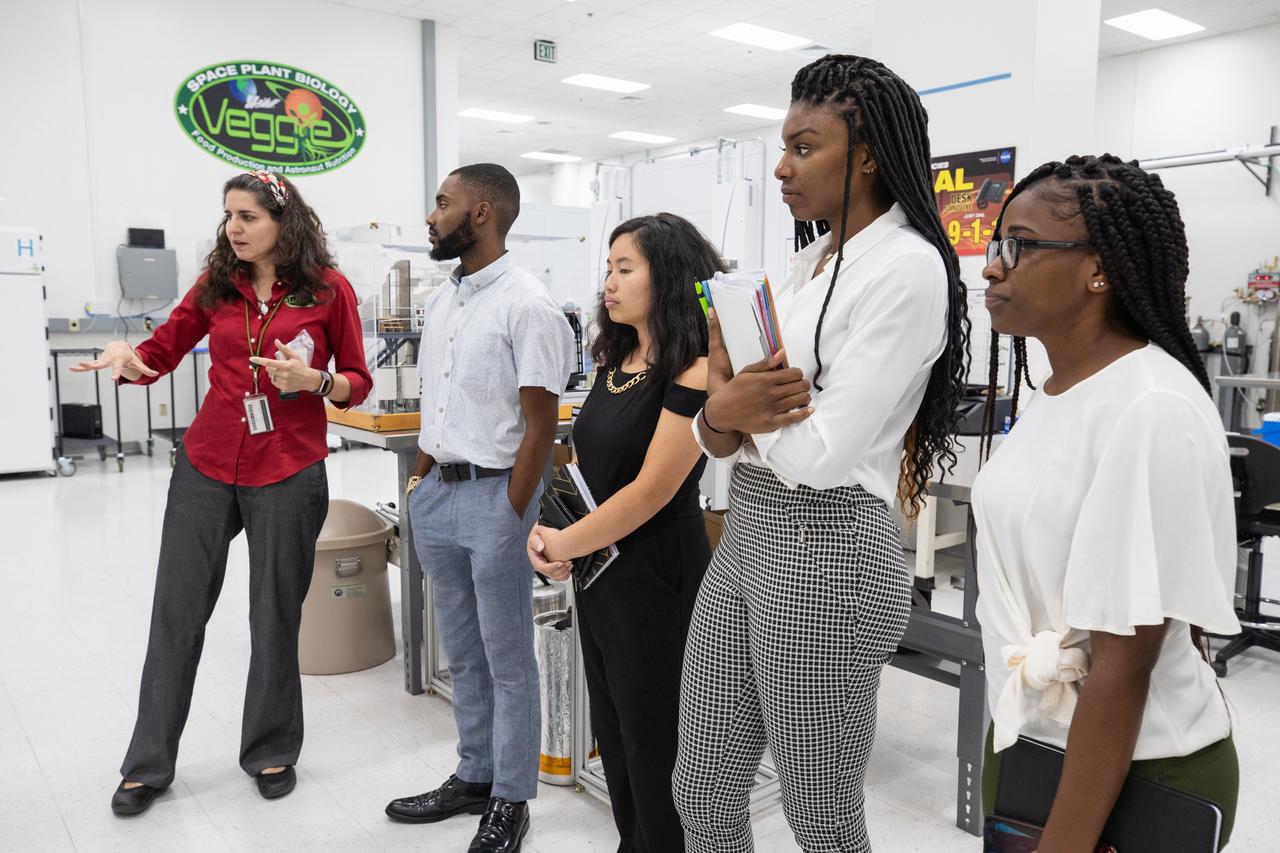
Dr. Gioia Massa, NASA Veggie project lead, addresses Langston University students, from left, Sherman Cravens, Kashia Cha, Courtney Miller and Makyah Farris inside a Space Station Processing Facility lab at Kennedy Space Center on Sept. 18, 2019. The tour, which was organized by Langston University professor Byron Quinn, Ph.D., and NASA’s Office of Education, included stops at SwampWorks, the Neil Armstrong Operations and Checkout Building, the Vehicle Assembly Building, the visitor complex and the Center for Space Education.
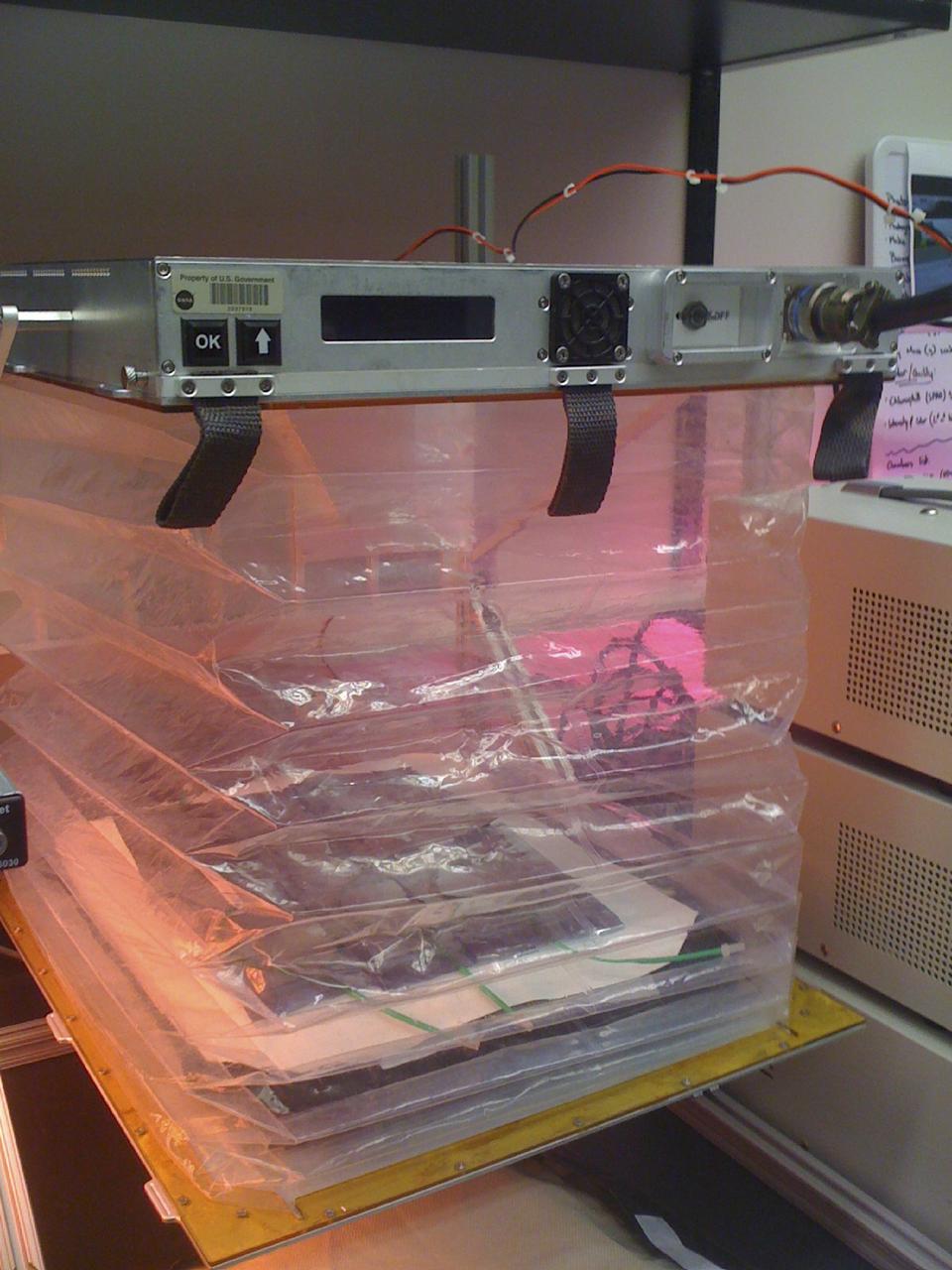
CAPE CANAVERAL, Fla. – This prototype VEGGIE hardware was designed and built by Orbital Technologies Corp. of Madison, Wisc. U.S. astronauts living and working aboard the International Space Station are going to receive a newly developed Vegetable Production System VEGGIE. VEGGIE is set to launch aboard SpaceX's Dragon capsule on NASA's third Commercial Resupply Services mission targeted to launch Dec. 9 from Space Launch Complex 40 at Cape Canaveral Air Force Station in Florida. Photo credit: NASA/Gioia Massa
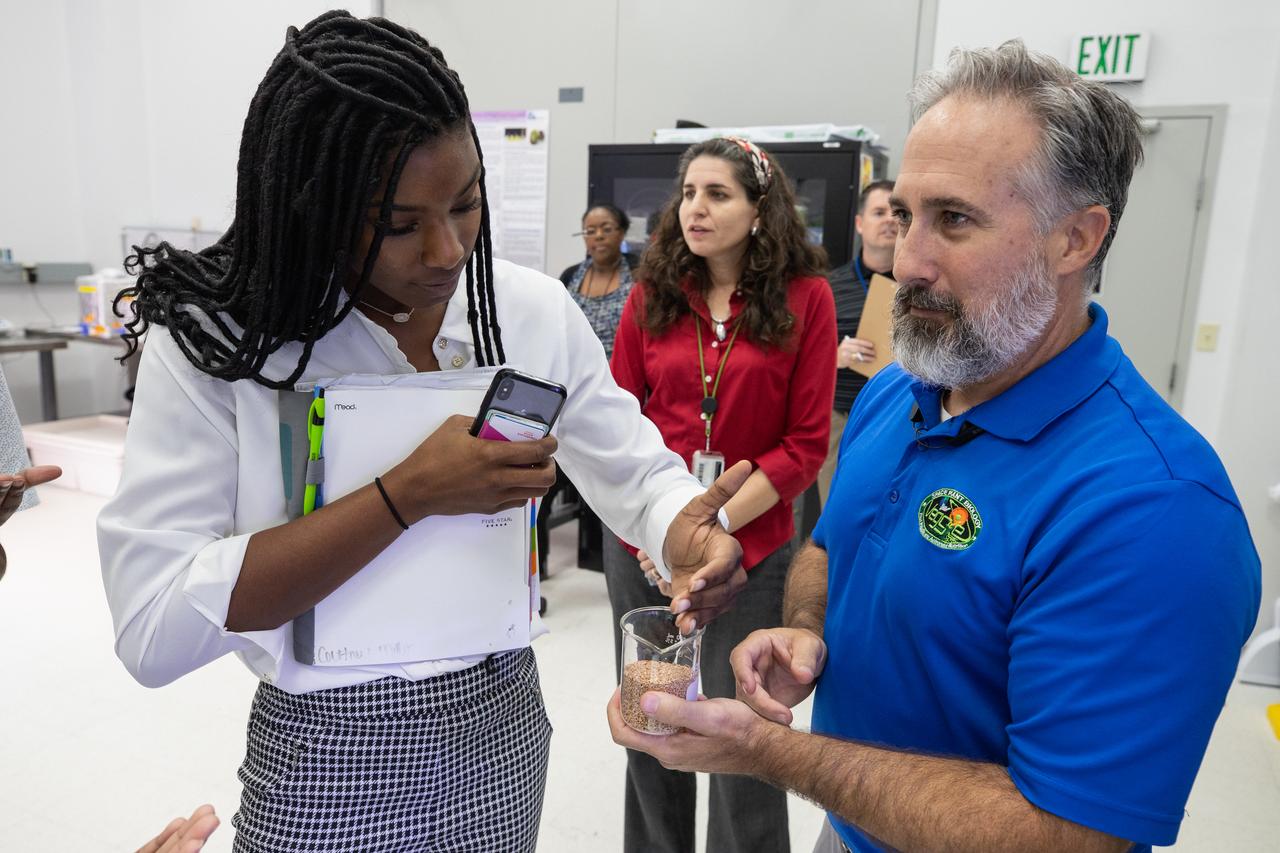
Langston University student Courtney Miller, left, interacts with Kennedy Space Center Veggie Project Manager Trent Smith inside a Space Station Processing Facility lab at Kennedy on Sept. 18, 2019. Behind them is Veggie Project lead Dr. Gioia Massa. Miller was one of four Langston students, along with professor Byron Quinn, Ph.D., who toured the Florida spaceport. The visit included stops at SwampWorks, the Neil Armstrong Operations and Checkout Building, the Vehicle Assembly Building, the visitor complex and the Center for Space Education.
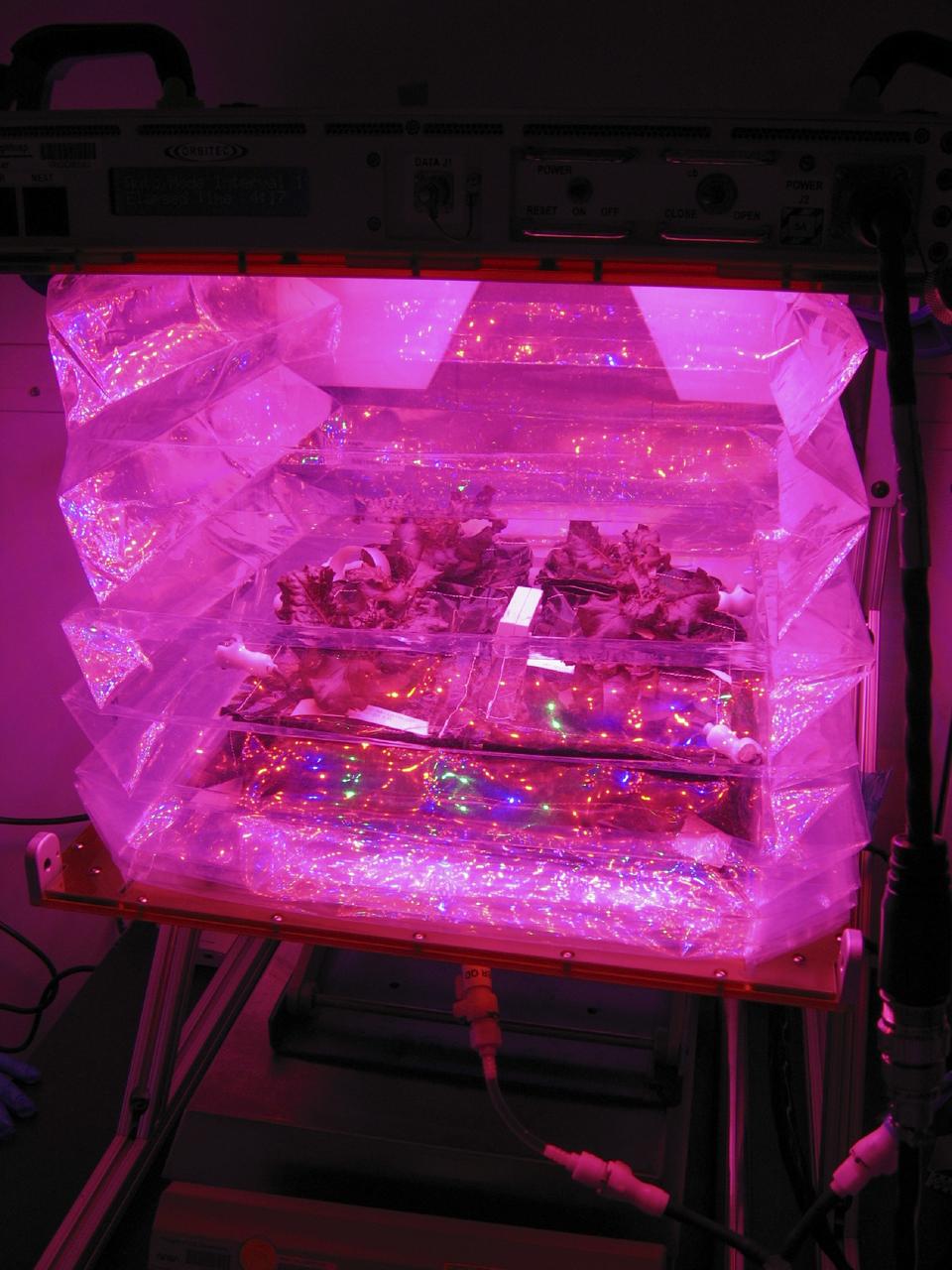
CAPE CANAVERAL, Fla. –Outredgeous red romaine lettuce plants grow inside the bellows of a prototype VEGGIE flight pillow. U.S. astronauts living and working aboard the International Space Station are going to receive a newly developed Vegetable Production System VEGGIE. VEGGIE is set to launch aboard SpaceX's Dragon capsule on NASA's third Commercial Resupply Services mission targeted to launch Dec. 9 from Space Launch Complex 40 at Cape Canaveral Air Force Station in Florida. Photo credit: NASA/Gioia Massa
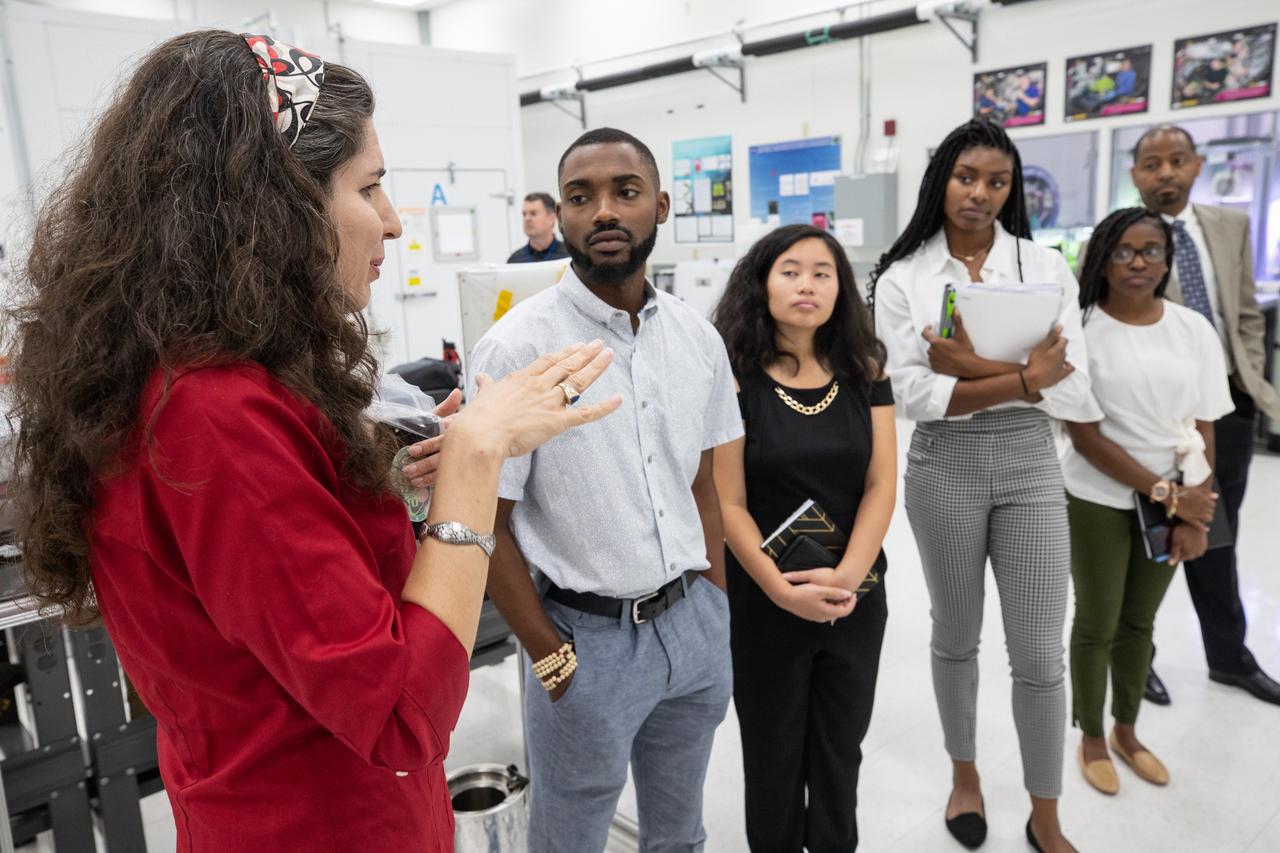
Dr. Gioia Massa, NASA Veggie project lead, addresses Langston University students, from left, Sherman Cravens, Kashia Cha, Courtney Miller and Makyah Farris, along with Langston professor Byron Quinn, Ph.D., inside a Space Station Processing Facility lab at Kennedy Space Center on Sept. 18, 2019. The tour, which was organized by Quinn and NASA’s Office of Education, included stops at SwampWorks, the Neil Armstrong Operations and Checkout Building, the Vehicle Assembly Building, the visitor complex and the Center for Space Education.
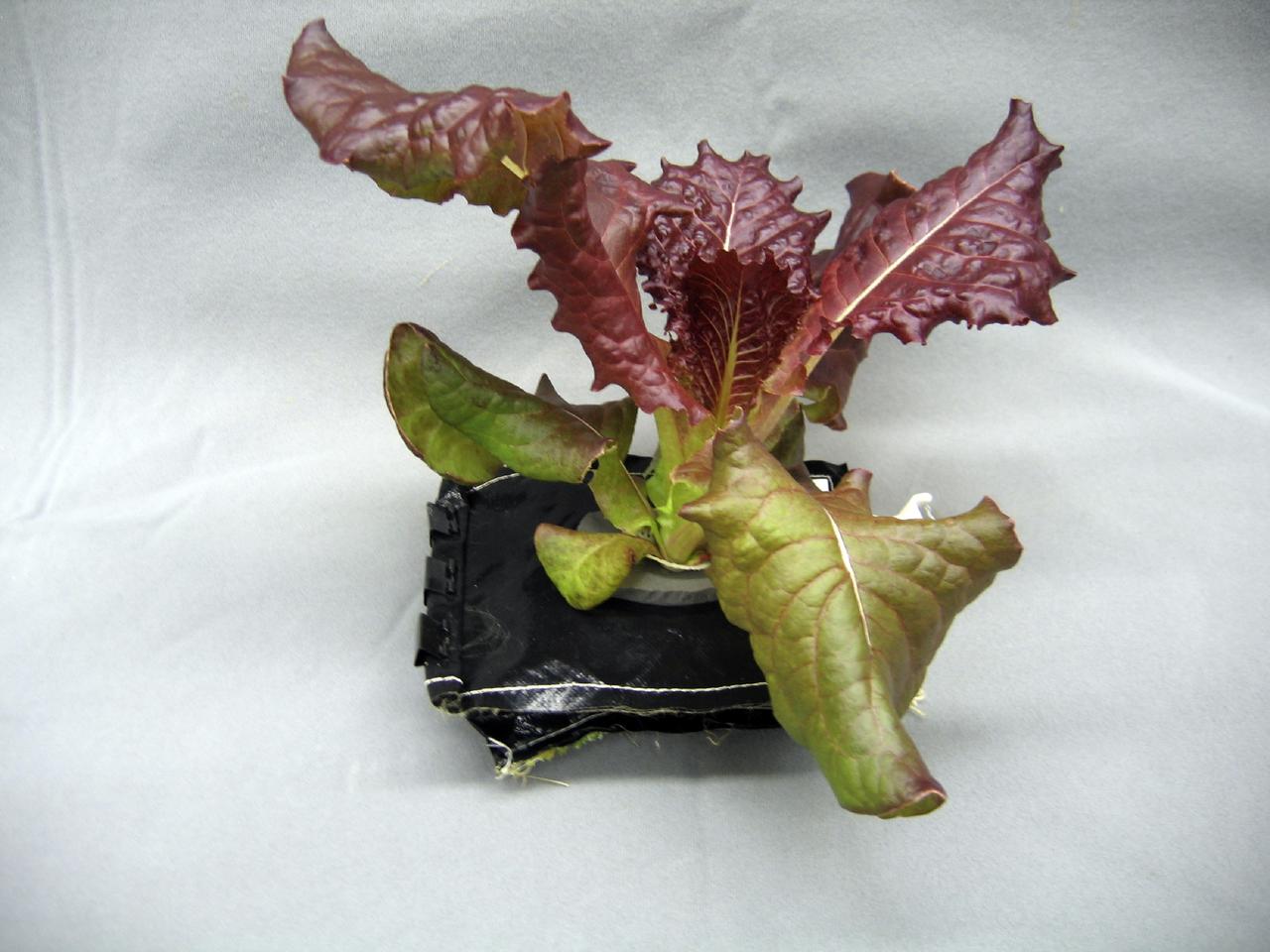
CAPE CANAVERAL, Fla. – A 28-day-old Outredgeous red romaine lettuce plant grows in a prototype VEGGIE flight pillow. U.S. astronauts living and working aboard the International Space Station are going to receive a newly developed Vegetable Production System VEGGIE. VEGGIE is set to launch aboard SpaceX's Dragon capsule on NASA's third Commercial Resupply Services mission targeted to launch Dec. 9 from Space Launch Complex 40 at Cape Canaveral Air Force Station in Florida. Photo credit: NASA/Gioia Massa

Gioia Massa, at left, a NASA payload scientist, talks to students during a Women in STEM breakfast inside the Debus Conference Center at the Kennedy Space Center Visitor Complex in Florida. STEM is science, technology, engineering and math. The special event gave students competing in NASA's 8th Annual Robotic Mining Competition the chance to learn from female NASA scientists, engineers and professionals about their careers and the paths they took to working at Kennedy. The Robotic Mining Competition is a NASA Human Exploration and Operations Mission Directorate project designed to encourage students in STEM fields. The project provides a competitive environment to foster innovative ideas and solutions that could be used on NASA's Journey to Mars.
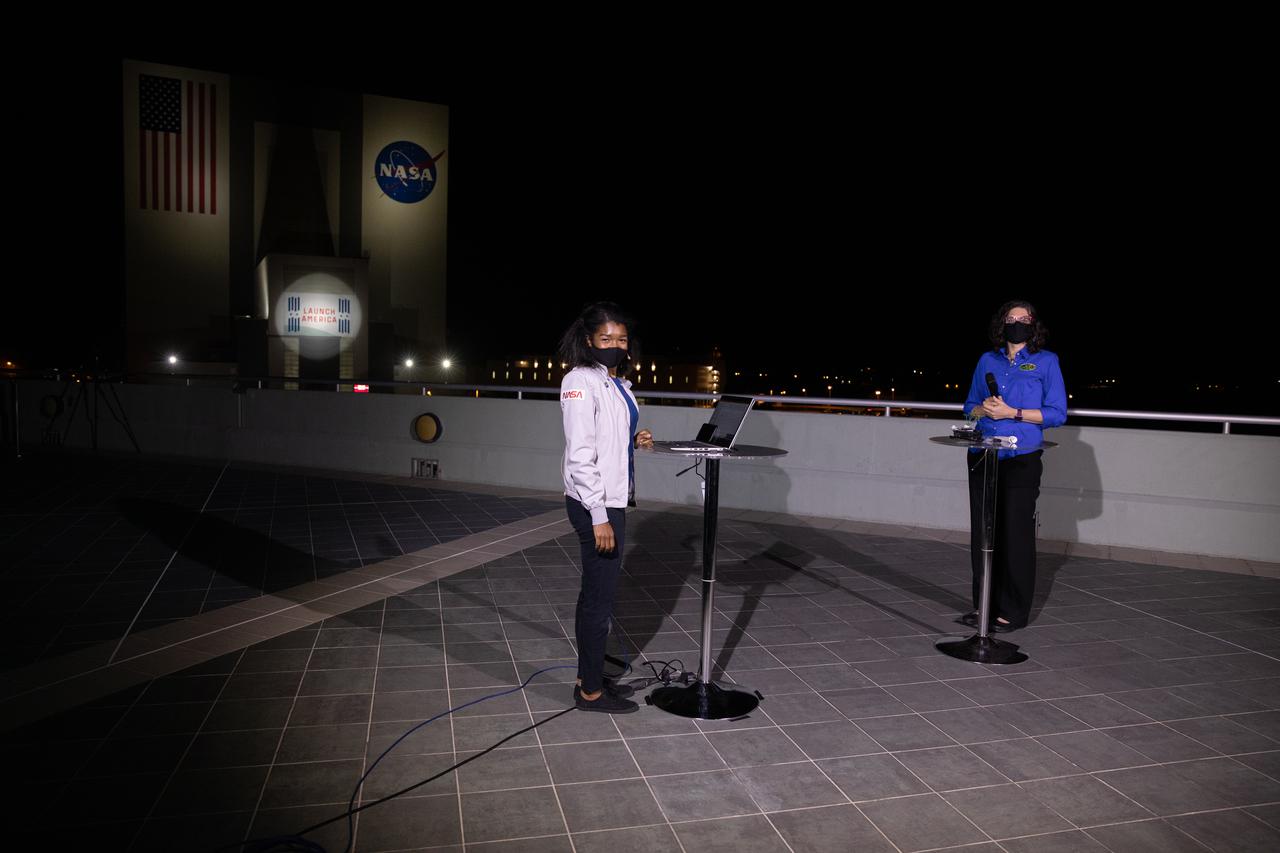
NASA Communications’ Jasmine Hopkins, left, interviews Kennedy Space Center Life Sciences Plant Scientist Gioia Massa on the Florida spaceport’s Operations and Support Building II balcony during the launch broadcast for NASA’s SpaceX Crew-2 mission on April 23, 2021. The SpaceX Falcon 9 rocket and Crew Dragon spacecraft lifted off from Kennedy’s Launch Complex 39A at 5:49 a.m. EDT. Part of NASA’s Commercial Crew Program, Crew-2 delivered NASA astronauts Shane Kimbrough and Megan McArthur, Japan Aerospace Exploration Agency (JAXA) astronaut Akihiko Hoshide, and European Space Agency (ESA) astronaut Thomas Pesquet to the International Space Station for a six-month science mission.
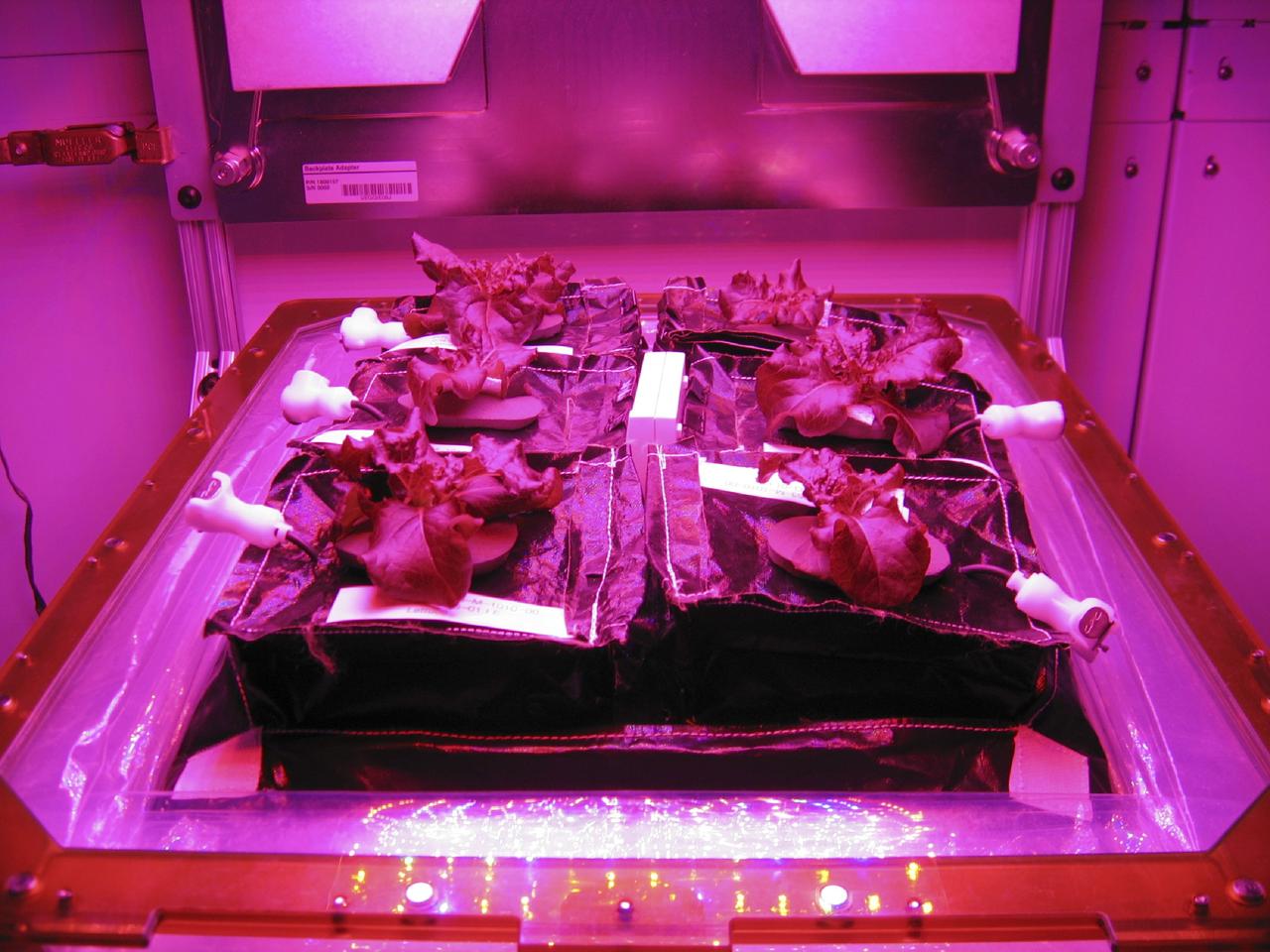
CAPE CANAVERAL, Fla. –Outredgeous red romaine lettuce plants grow inside in a prototype VEGGIE flight pillow. The bellows of the hardware have been lowered to better observe the plants. A small temperature and relative humidity data logger is placed between the pillows small white box, central. U.S. astronauts living and working aboard the International Space Station are going to receive a newly developed Vegetable Production System VEGGIE. VEGGIE is set to launch aboard SpaceX's Dragon capsule on NASA's third Commercial Resupply Services mission targeted to launch Dec. 9 from Space Launch Complex 40 at Cape Canaveral Air Force Station in Florida. Photo credit: NASA/Gioia Massa
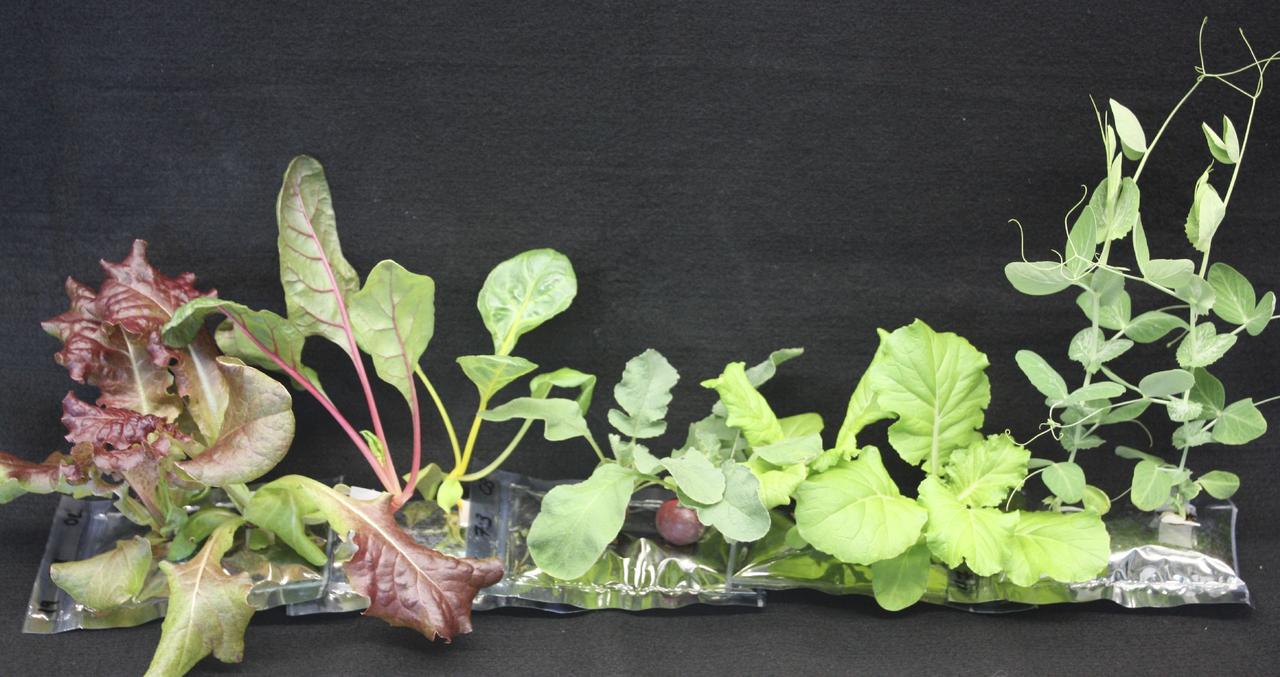
CAPE CANAVERAL, Fla. – Several different types of 21-day-old plants grow in analog VEGGIE pillows include, from right, Outredgeous red romaine lettuce, Bright Lights Swiss chard, Cherry Bomb II radish, Tokyo Bekana Chinese cabbage and Sugar Pod II snow pea. U.S. astronauts living and working aboard the International Space Station are going to receive a newly developed Vegetable Production System VEGGIE. VEGGIE is set to launch aboard SpaceX's Dragon capsule on NASA's third Commercial Resupply Services mission targeted to launch Dec. 9 from Space Launch Complex 40 at Cape Canaveral Air Force Station in Florida. Photo credit: NASA/Gioia Massa
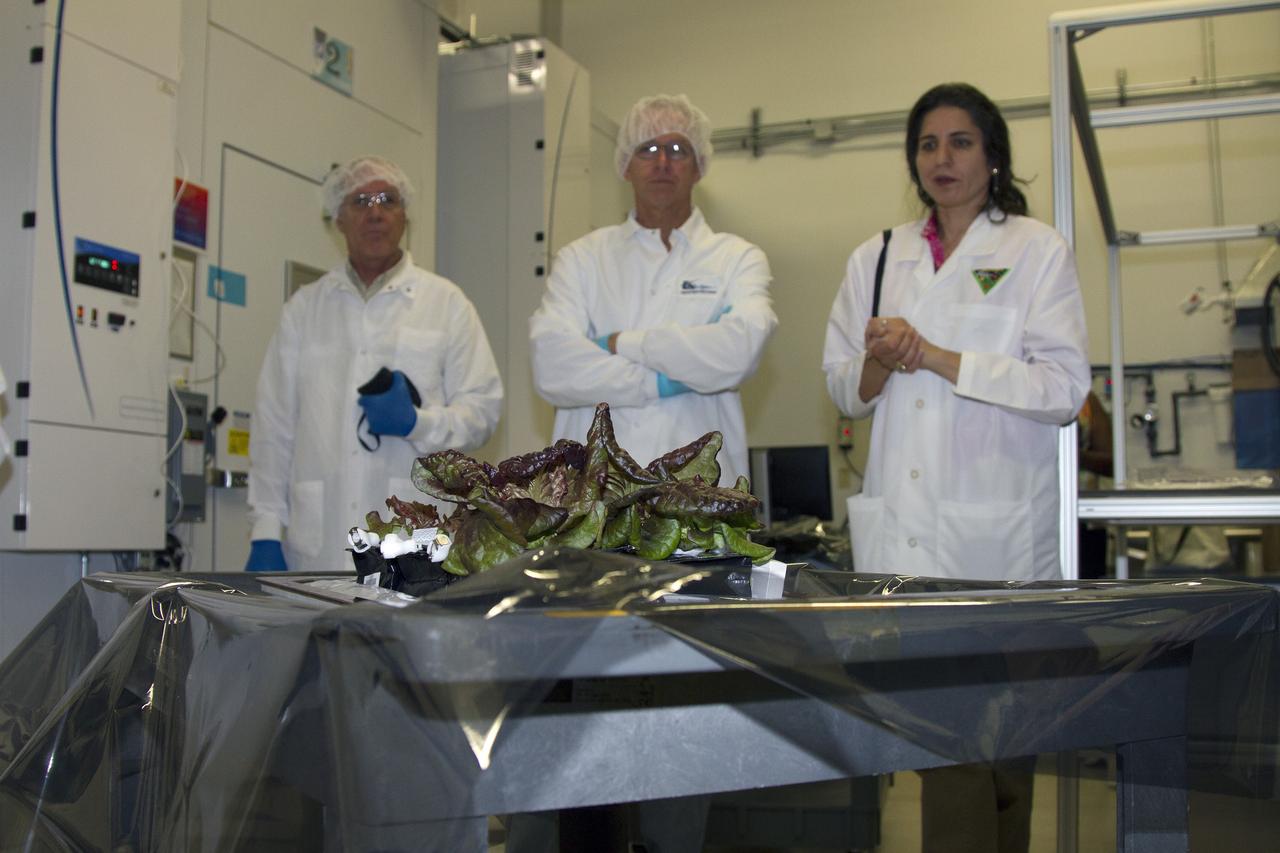
CAPE CANAVERAL, Fla. – The plant pillows containing the outredgeous red lettuce leaves have been removed from the Veggie plant growth system inside a control chamber at the Space Station Processing Facility at NASA's Kennedy Space Center in Florida. From left, are Chuck Spern, lead project engineer with QinetiQ North America on the Engineering Services Contract, Jim Smodell, a technician with SGT, and Gioia Massa, NASA payload scientist for Veggie. The growth chamber was used as a control unit for Veggie and procedures were followed identical to those being performed on Veggie and the Veg-01 experiment on the International Space Station. The chamber mimicked the temperature, relative humidity and carbon dioxide concentration of those in the Veggie unit on the space station. Veggie and Veg-01 were delivered to the space station aboard the SpaceX-3 mission. Veggie is the first fresh food production system delivered to the station. Six plant pillows, each containing outredgeous red romaine lettuce seeds and a root mat were inserted into Veggie. The plant chamber's red, blue and green LED lights were activated. The plant growth was monitored for 33 days. On June 10, at the end of the cycle, the plants were carefully harvested, frozen and stored for return to Earth by Expedition 39 flight engineer and NASA astronaut Steve Swanson. Photo credit: NASA/Frankie Martin
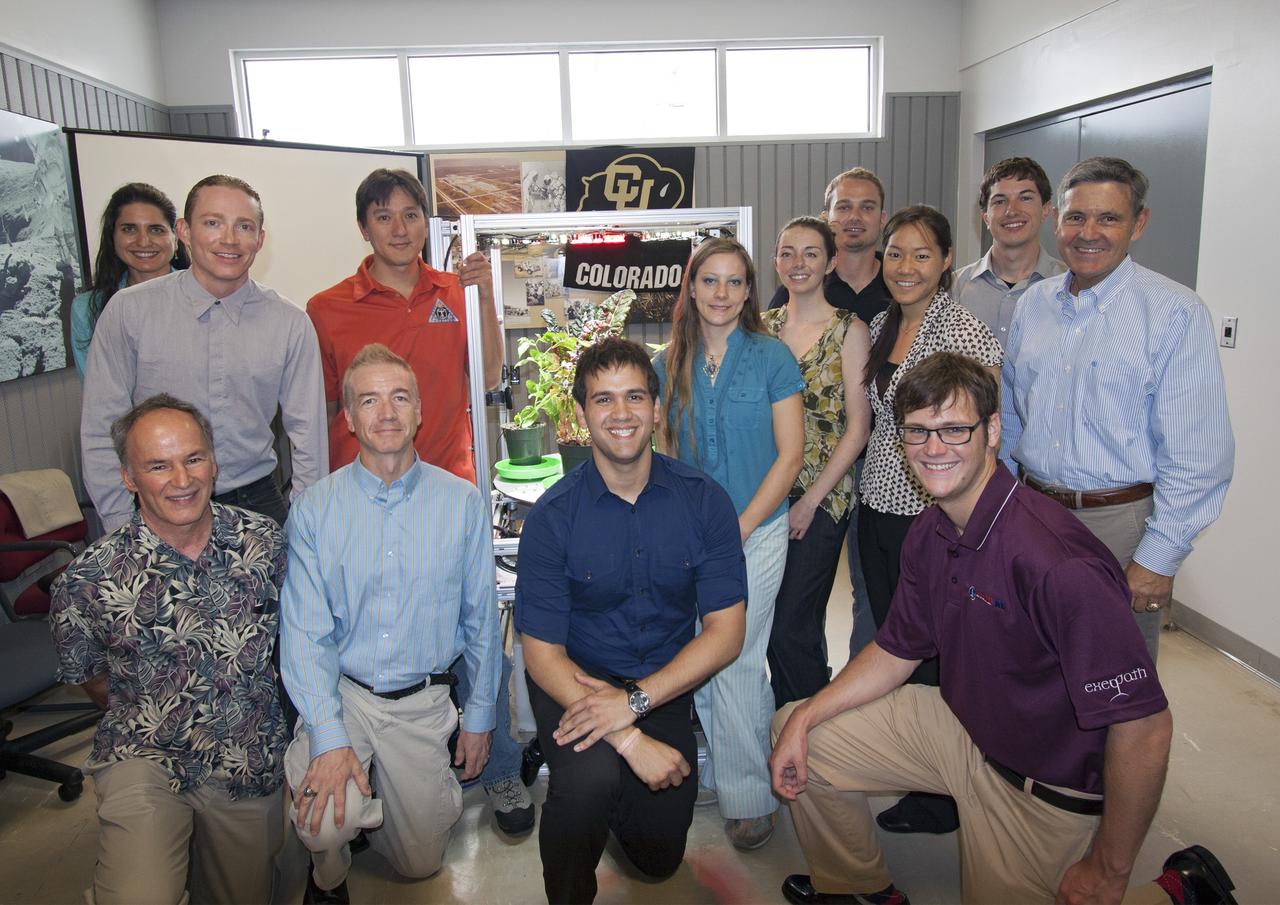
CAPE CANAVERAL, Fla. -- At the Kennedy Space Center in Florida, students from University of Colorado are working with NASA mentors in developing a robotic capability for growing a variety of plants, both for consumption as well as the benefit of oxygen-carbon dioxide cycling. Considerations range from monitoring and nutrient supply to selection of plants and autonomy. The activity is part of the eXploration Habitat, or X-Hab, Academic Innovation Challenge. Standing, left to right, are Gioia Massa of the NASA ISS Ground Processing and Research Project Office, Daniel Zukowski, Morgan Simpson of the NASA Ground Processing Directorate, Heather Hava, Keira Havens, Matthew Carton, Christine Fanchiang, Jordan Holquist and Kennedy Director Bob Cabana. Kneeling, left to right, are Ray Wheeler of the NASA Engineering and Technology Directorate, Tracy Gill of the NASA Center Planning and Development Directorate, Scott Mishra and Robert Griffin Hale. Hab Academic Innovation Challenge is a university-level activity designed to engage and retain students in Science, Technology, Engineering and Math, or STEM, disciplines. NASA will directly benefit from the effort by sponsoring the development of innovative habitat concepts from universities which may result in innovative ideas and solutions that could be applied to exploration habitats. For more: http://www.nasa.gov/exploration/technology/deep_space_habitat/xhab/ Photo credit: NASA/Jim Grossmann
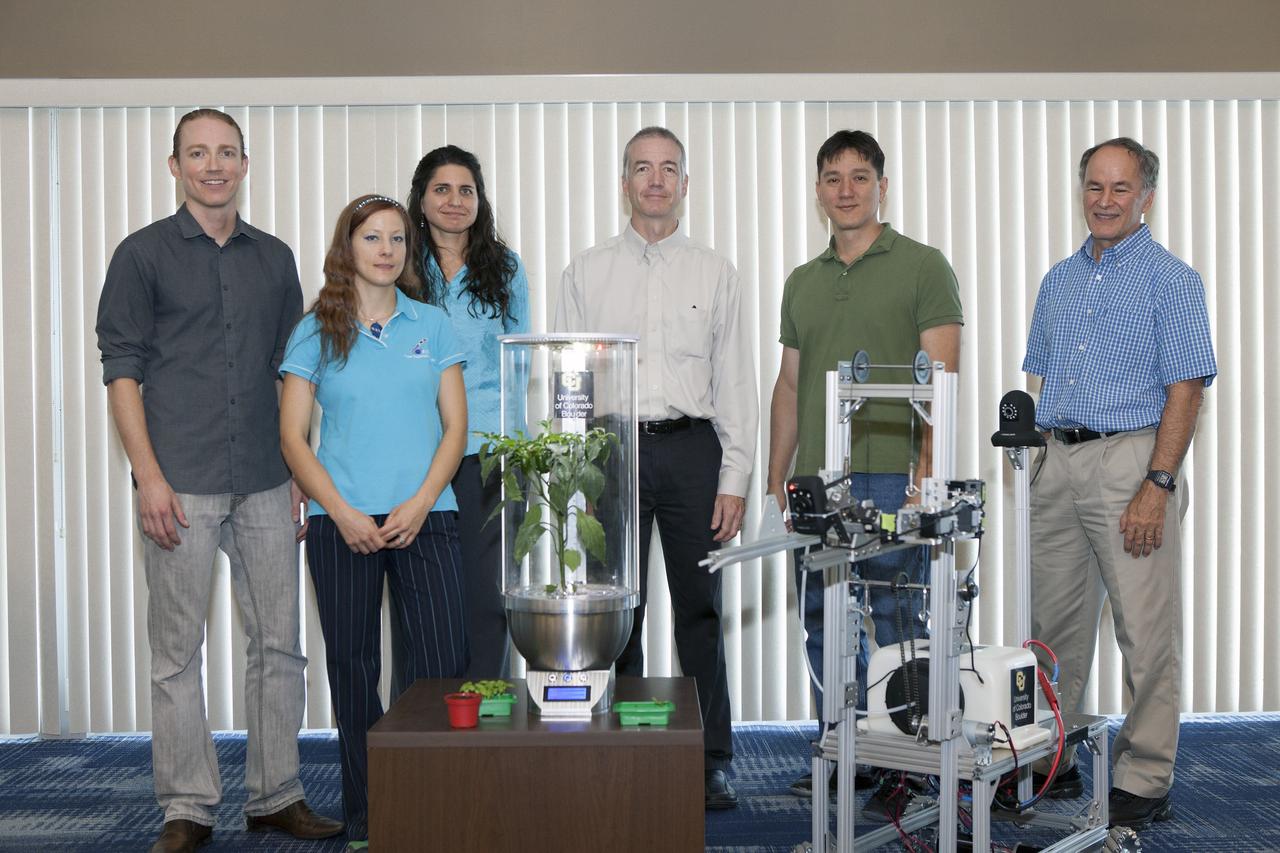
CAPE CANAVERAL, Fla. -- At the Kennedy Space Center in Florida, University of Colorado Boulder graduate students Heather Hava, far left, and Daniel Zukowski, second from the left, pose with a computerized SmartPot, or SPOT, which could be used to grow plants in a deep-space habitat. To the right of the SPOT is a Remotely Operated Gardening Rover, or ROGR. The system is being developed by the graduate students participating in the eXploration HABitat X-Hab Academic Innovation Challenge. From the left are Zukowski, Hava, Gioia Massa of the NASA International Space Station Ground Processing and Research Project Office, Tracy Gill of the NASA Center Planning and Development Directorate, Morgan Simpson of the NASA Ground Processing Directorate, and Ray Wheeler of the NASA Engineering and Technology Directorate. X-Hab Academic Innovation Challenge is a university-level activity designed to engage and retain students in science, technology, engineering and math, or STEM, disciplines. NASA will directly benefit from the effort by sponsoring the development of innovative habitat concepts from universities which may result in innovative ideas and solutions that could be applied to exploration habitats. For more: http://www.nasa.gov/exploration/technology/deep_space_habitat/xhab/ Photo credit: NASA/Daniel Casper
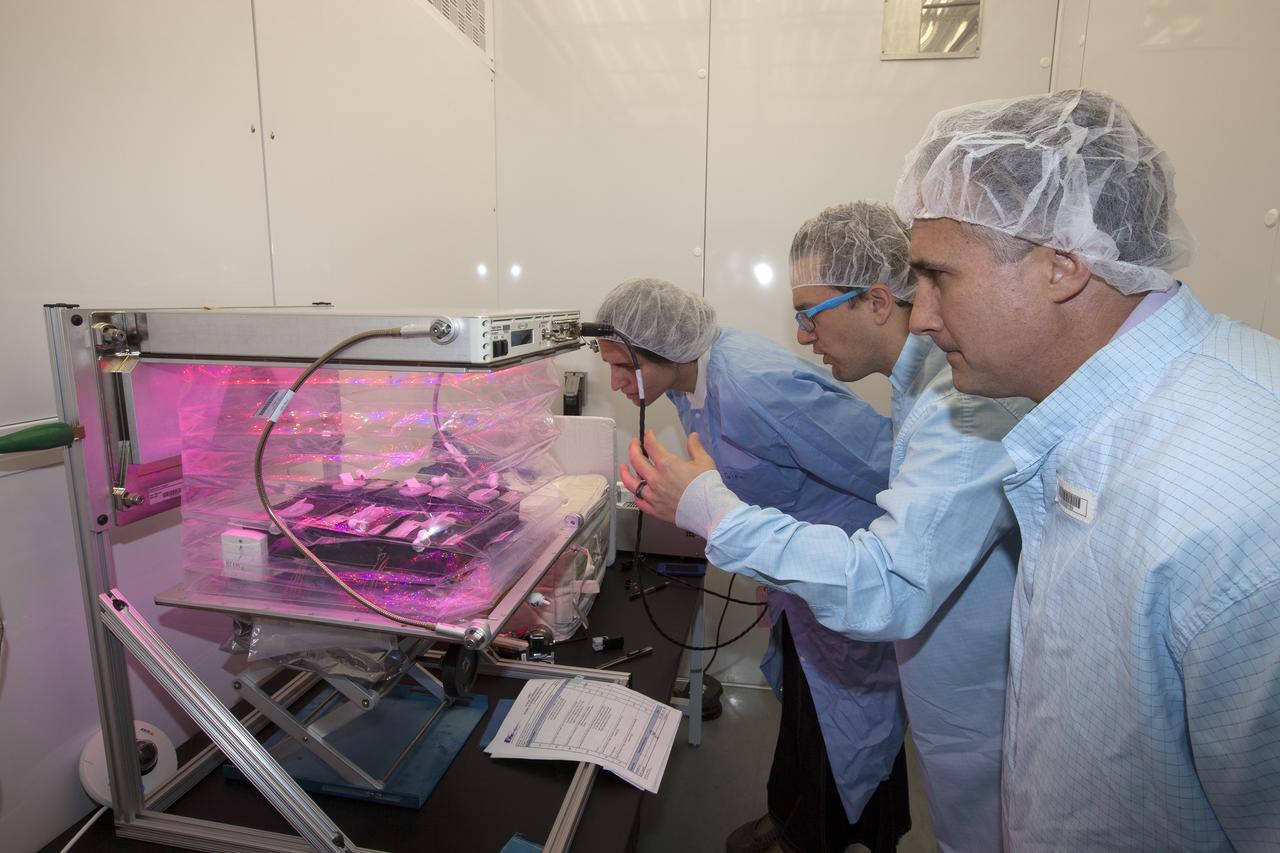
CAPE CANAVERAL, Fla. – The Veggie plant growth system has been activated inside a control chamber at the Space Station Processing Facility at NASA's Kennedy Space Center in Florida. The red, blue and green LED lights have been turned on and the root mat and plant pillows containing outredgeous red romaine lettuce seeds have been inserted into the chamber. The clear bellows have been expanded and secured. Checking the system are, from left, Gioia Massa, NASA payload scientist for Veggie, Gerard Newsham, Veggie payload support specialist with Jacobs Technology, and Trent Smith, NASA project manager. The growth chamber will be used as a control unit and procedures will be followed identical to those being performed on Veggie and the Veg-01 experiment on the International Space Station by Expedition 39 flight engineer and NASA astronaut Steve Swanson. Veggie and Veg-01 were delivered to the space station aboard the SpaceX-3 mission. Veggie is the first fresh food production system delivered to the station. Six plant pillows, each containing outredgeous red romaine lettuce seeds and a root mat were inserted into Veggie. The plant chamber's red, blue and green LED lights were activated. The plant growth will be monitored for 28 days. At the end of the cycle, the plants will be carefully harvested, frozen and stored for return to Earth. Photo credit: NASA/Dimitri Gerondidakis
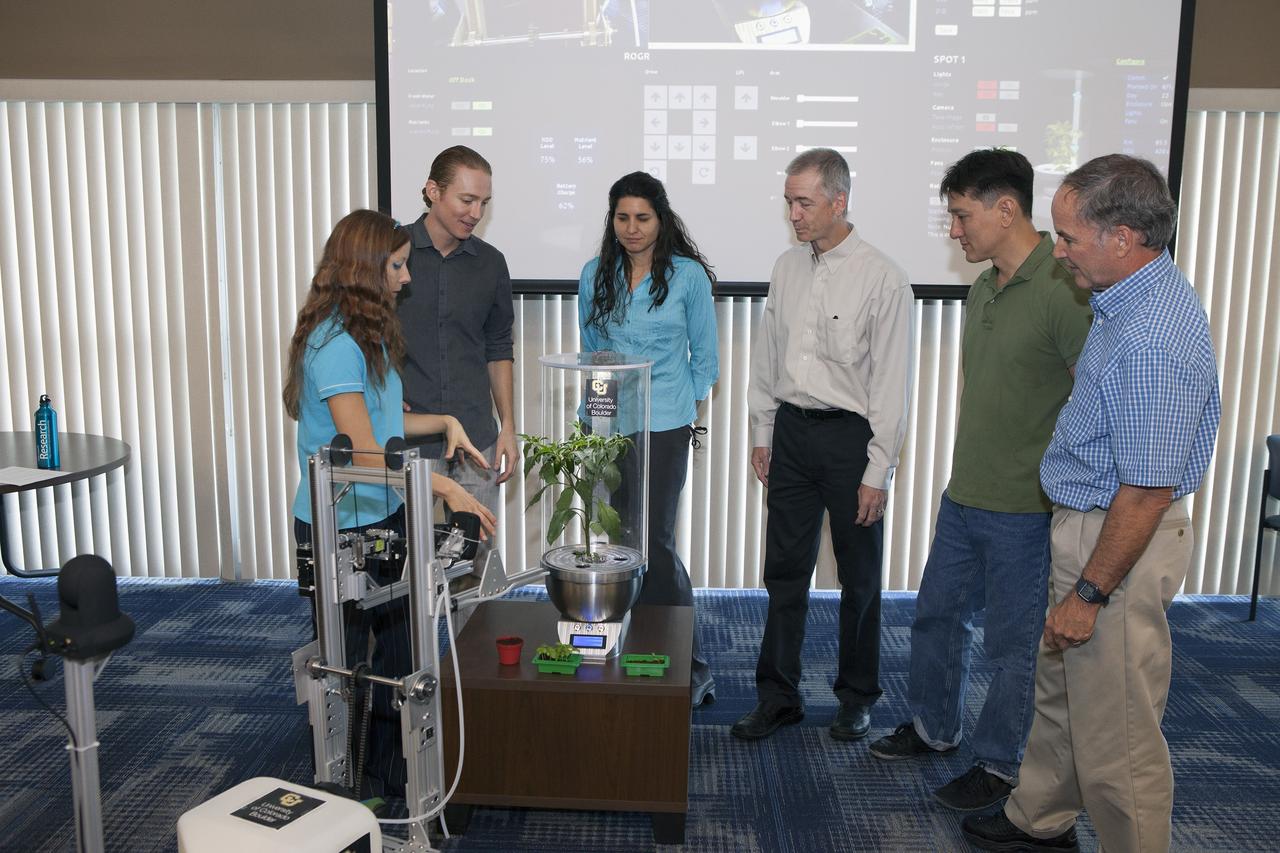
CAPE CANAVERAL, Fla. -- At the Kennedy Space Center in Florida, University of Colorado Boulder graduate students Heather Hava, far left, and Daniel Zukowski, second from the left, describe a computerized SmartPot, or SPOT, which could be used to grow plants in a deep-space habitat. The SPOTs could be tended by a Remotely Operated Gardening Rover, or ROGR, seen on the left. The system is being developed by the graduate students participating in the eXploration HABitat X-Hab Academic Innovation Challenge. From the left are Hava, Zukowski, Gioia Massa of the NASA International Space Station Ground Processing and Research Project Office, Tracy Gill of the NASA Center Planning and Development Directorate, Morgan Simpson of the NASA Ground Processing Directorate, and Ray Wheeler of the NASA Engineering and Technology Directorate. X-Hab Academic Innovation Challenge is a university-level activity designed to engage and retain students in science, technology, engineering and math, or STEM, disciplines. NASA will directly benefit from the effort by sponsoring the development of innovative habitat concepts from universities which may result in innovative ideas and solutions that could be applied to exploration habitats. For more: http://www.nasa.gov/exploration/technology/deep_space_habitat/xhab/ Photo credit: NASA/Daniel Casper
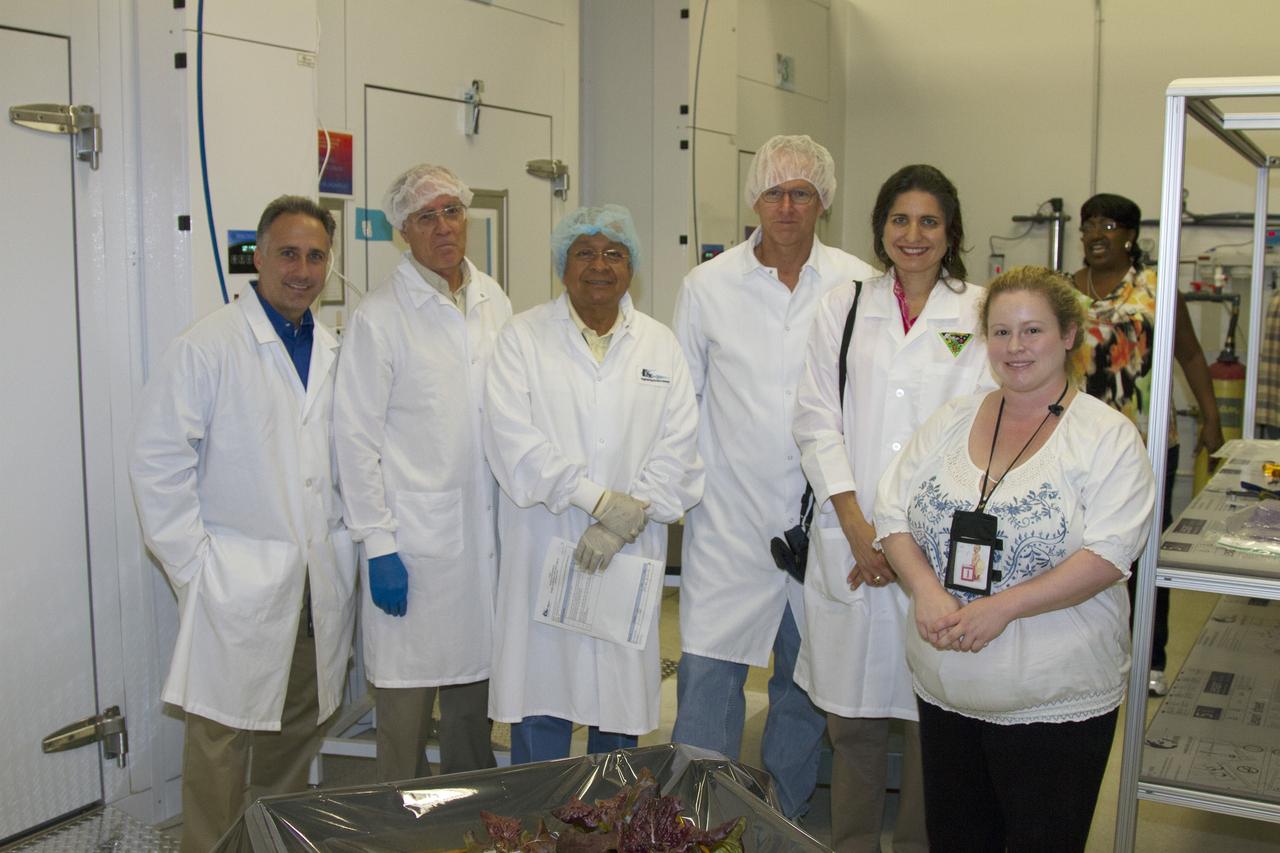
CAPE CANAVERAL, Fla. – The plant pillows containing the outredgeous red lettuce leaves have been removed from the Veggie plant growth system inside a control chamber at the Space Station Processing Facility at NASA's Kennedy Space Center in Florida. From left, are Trent Smith, NASA project manager in the ISS Ground Processing and Research Project Office, Chuck Spern, lead project engineer with QinetiQ North America on the Engineering Services Contract, George Guerra, quality control engineer with QinetiQ North America, Jim Smodell, a technician with SGT, Gioia Massa, NASA payload scientist for Veggie, and Nicole Dufour, NASA Engineering and Technology. The growth chamber was used as a control unit for Veggie and procedures were followed identical to those being performed on Veggie and the Veg-01 experiment on the International Space Station. The chamber mimicked the temperature, relative humidity and carbon dioxide concentration of those in the Veggie unit on the space station. Veggie and Veg-01 were delivered to the space station aboard the SpaceX-3 mission. Veggie is the first fresh food production system delivered to the station. Six plant pillows, each containing outredgeous red romaine lettuce seeds and a root mat were inserted into Veggie. The plant chamber's red, blue and green LED lights were activated. The plant growth was monitored for 33 days. On June 10, at the end of the cycle, the plants were carefully harvested, frozen and stored for return to Earth by Expedition 39 flight engineer and NASA astronaut Steve Swanson. Photo credit: NASA/Frankie Martin
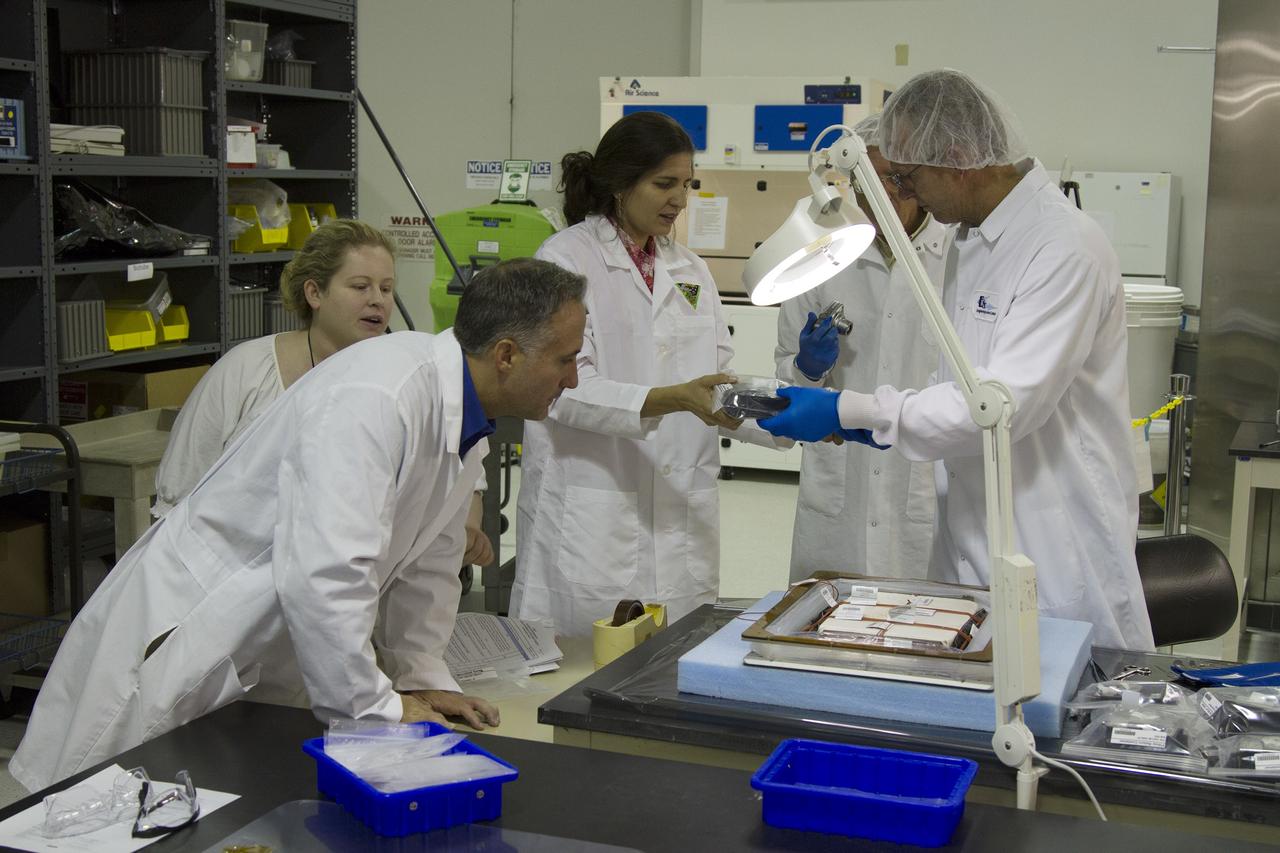
CAPE CANAVERAL, Fla. – At far right, Jim Smodell, a technician with SGT, shows a plant pillow from the Veggie plant growth system to Gioia Massa, NASA payload scientist for Veggie. Partially hidden behind Smodell is Chuck Spern, lead project engineer with QinetiQ North America on the Engineering Services Contract. At left is Trent Smith, NASA project manager in the ISS Ground Processing and Research Project Office, and Nicole Dufour, NASA Engineering and Technology Directorate. They are in the Payload Development Laboratory at the Space Station Processing Facility, or SSPF, at NASA's Kennedy Space Center in Florida. The plant pillows were removed from the Veggie plant growth system inside a control chamber at the SSPF. The growth chamber was used as a control unit for Veggie and procedures were followed identical to those being performed on Veggie and the Veg-01 experiment on the International Space Station. The chamber mimicked the temperature, relative humidity and carbon dioxide concentration of those in the Veggie unit on the space station. Veggie and Veg-01 were delivered to the space station aboard the SpaceX-3 mission. Veggie is the first fresh food production system delivered to the station. Six plant pillows, each containing outredgeous red romaine lettuce seeds and a root mat were inserted into Veggie. The plant chamber's red, blue and green LED lights were activated. The plant growth was monitored for 33 days. On June 10, at the end of the cycle, the plants were carefully harvested, frozen and stored for return to Earth by Expedition 39 flight engineer and NASA astronaut Steve Swanson. Photo credit: NASA/Frankie Martin