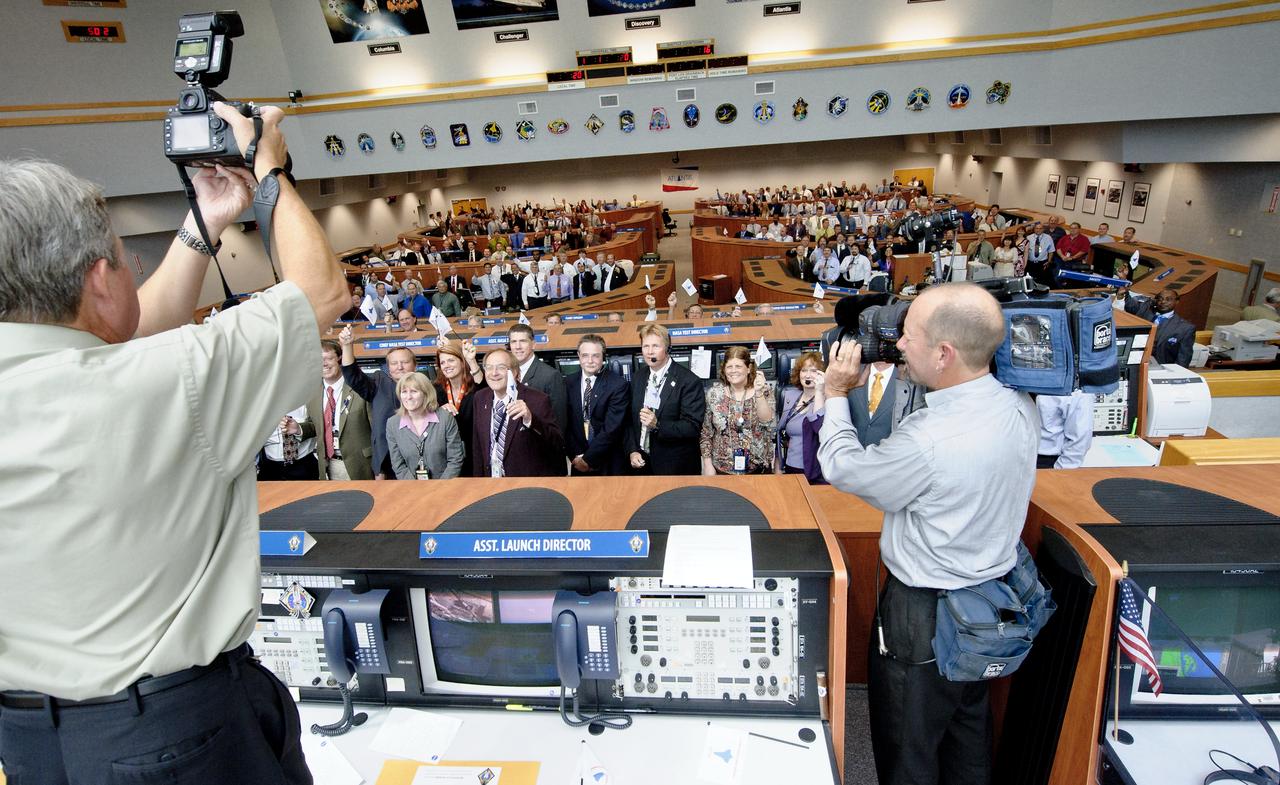
NASA Photographer Kim Shiflett, left, and Videographer Glenn Benson capture a group photo of the launch team in Firing Room Four of the NASA Kennedy Space Center Launch Control Center (LCC) shortly after the space shuttle Atlantis, STS-135, launched on Friday, July 8, 2011, in Cape Canaveral, Fla. The launch of Atlantis is the final flight of the shuttle program, a 12-day mission to the International Space Station. Photo Credit: (NASA/Bill Ingalls)
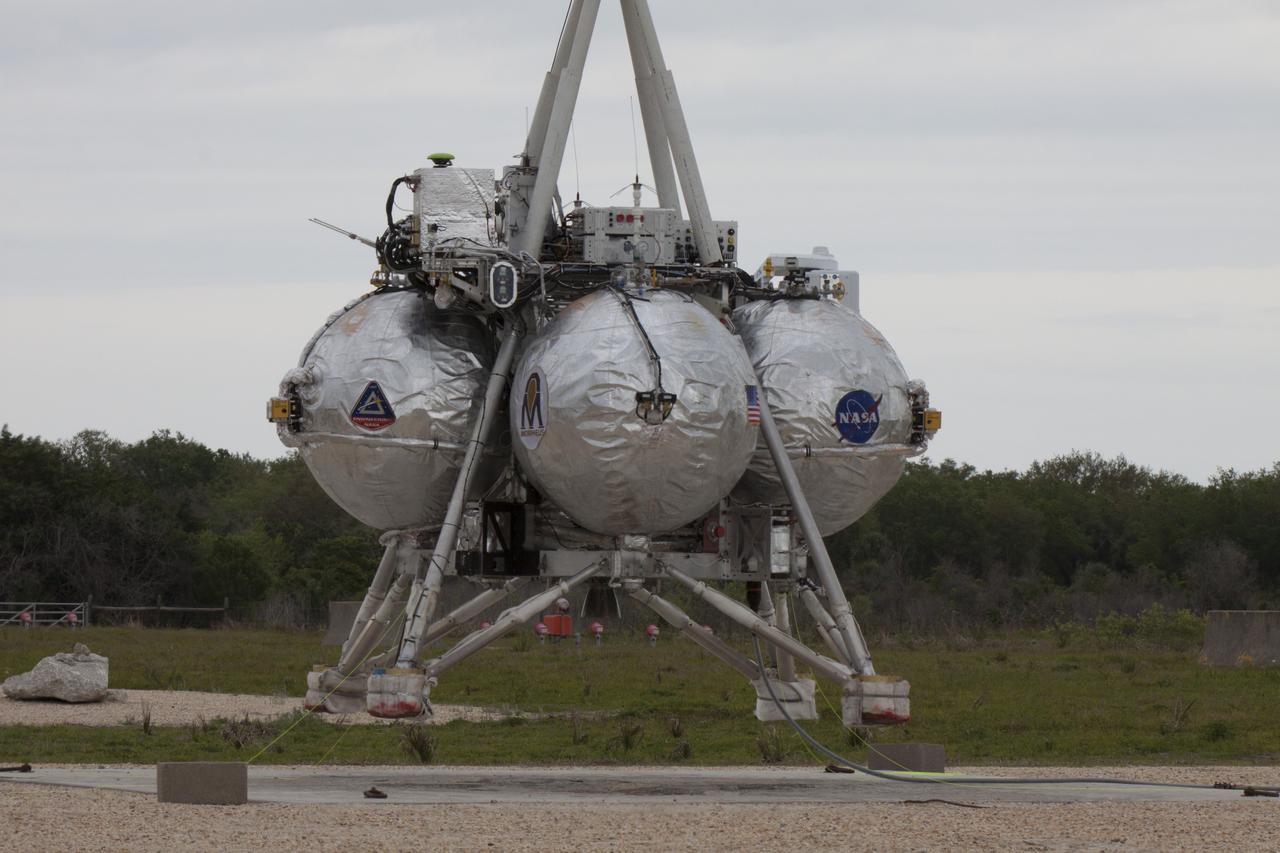
CAPE CANAVERAL, Fla. – NASA's Project Morpheus prototype lander is positioned near a new launch site at the north end of the Shuttle Landing Facility at NASA’s Kennedy Space Center in Florida for a tethered test. The test will be performed to verify the lander's recently installed autonomous landing and hazard avoidance technology, or ALHAT, sensors and integration system. The launch pad was moved to a different location at the landing facility to support the next phase of flight testing. Project Morpheus tests NASA’s ALHAT, and an engine that runs on liquid oxygen and methane, or green propellants, into a fully-operational lander that could deliver cargo to other planetary surfaces. The landing facility provides the lander with the kind of field necessary for realistic testing, complete with rocks, craters and hazards to avoid. Morpheus’ ALHAT payload allows it to navigate to clear landing sites amidst rocks, craters and other hazards during its descent. Project Morpheus is being managed under the Advanced Exploration Systems, or AES, Division in NASA’s Human Exploration and Operations Mission Directorate. The efforts in AES pioneer new approaches for rapidly developing prototype systems, demonstrating key capabilities and validating operational concepts for future human missions beyond Earth orbit. For more information on Project Morpheus, visit http://morpheuslander.jsc.nasa.gov/. Photo credit: NASA/Glenn Benson
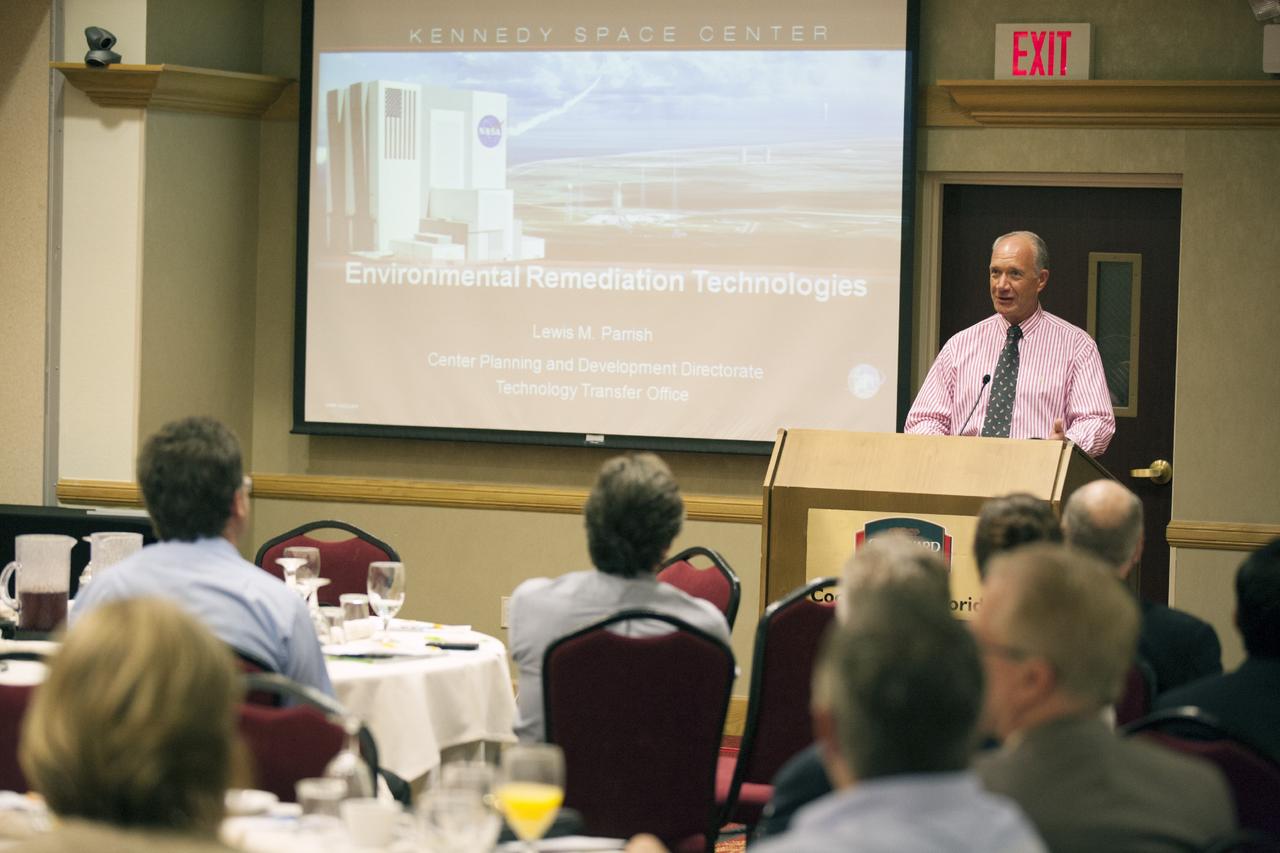
CAPE CANAVERAL, Fla. – Lewis Parrish, senior Technology Transfer specialist for Qinetiq at NASA's Kennedy Space Center in Florida, discusses technology transfer with attendees at the Technology Transfer Forum of the Economic Development Commission of Florida's Space Coast. A goal of the session was to showcase ways commercial businesses can work with NASA to develop technology and apply existing technology to commercial uses. Photo credit: NASA/Glenn Benson
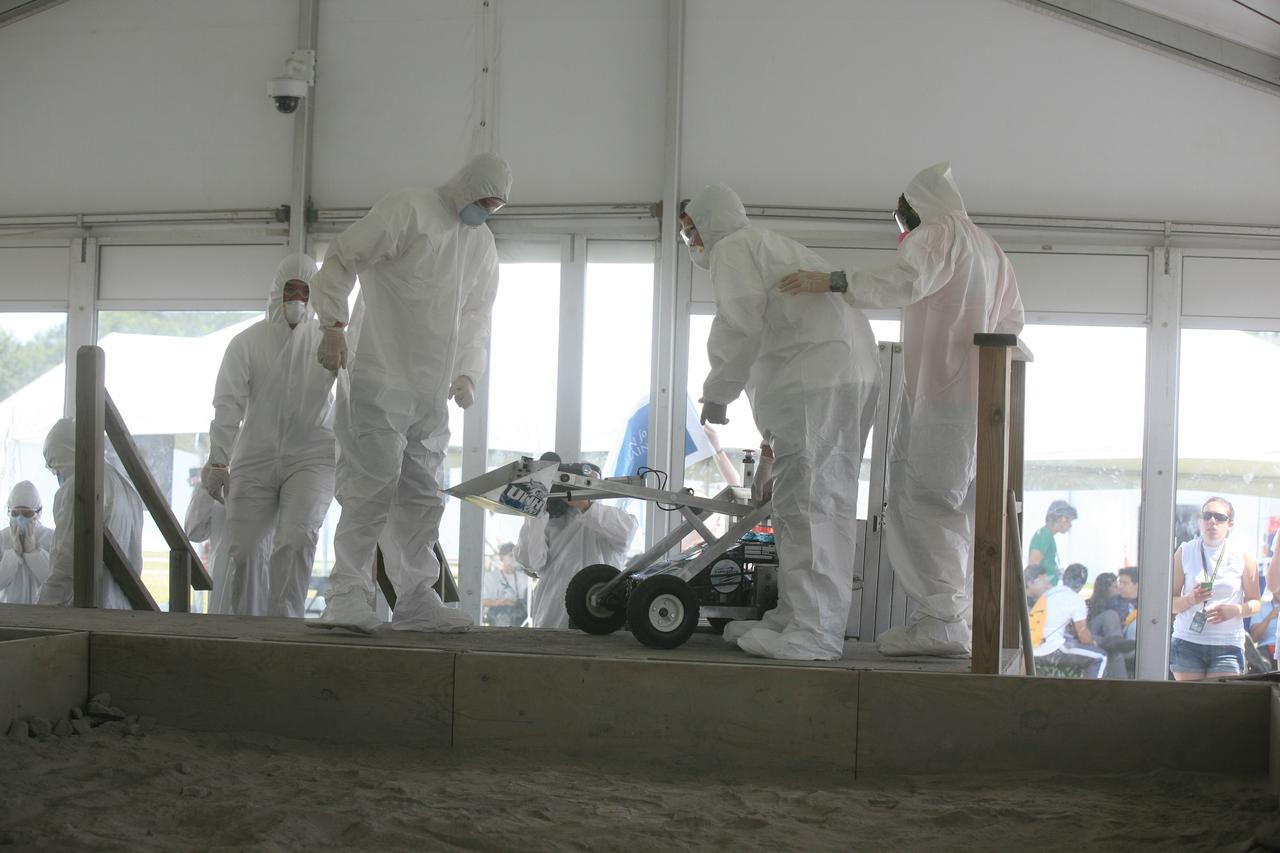
CAPE CANAVERAL, Fla. – A team of competitors works with a robotic vehicle taking part in NASA's Lunabotics Mining Competition at the Kennedy Space Center Visitor Complex in Florida. The competition challenges university students to build machines that can collect soil such as the material found on the moon. Working inside the Caterpillar LunArena, the robotic craft dig soil that simulates lunar material. The event is judged by a machine's abilities to collect the soil, its design and operation, size, dust tolerance and its level of autonomy. Photo credit: NASA/Glenn Benson
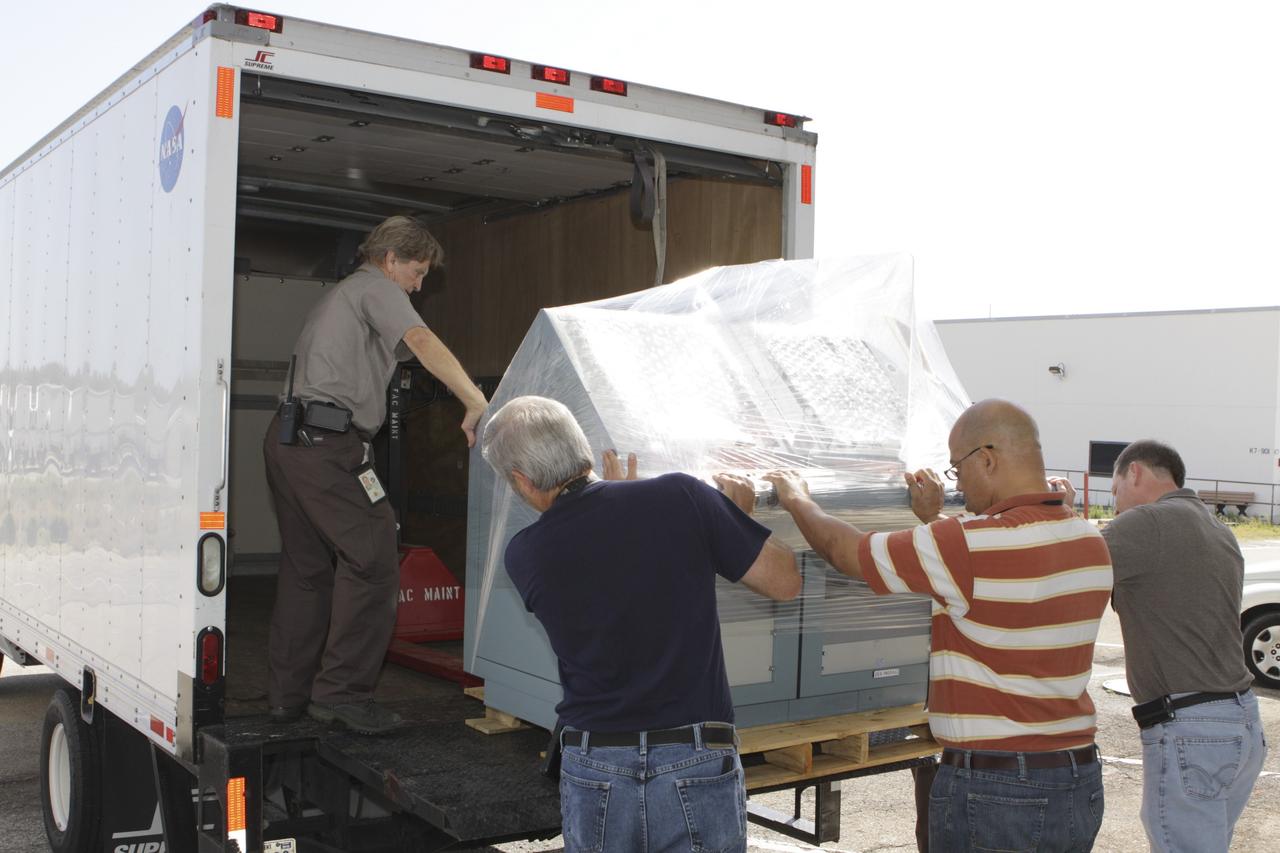
CAPE CANAVERAL, Fla. –At NASA’s Kennedy Space Center in Florida, workers help load the Public Affairs Office console and chairs from Launch Control Center Firing Room 3 onto a truck. The console will be moved to the Kennedy Space Center Visitor Complex in Florida and will be preserved for use in the space shuttle Atlantis display. During the 30-year history of NASA’s space shuttle launches, Public Affairs Officers sat at the console to provide commentary during shuttle tanking and launches. Photo credit: NASA/Glenn Benson
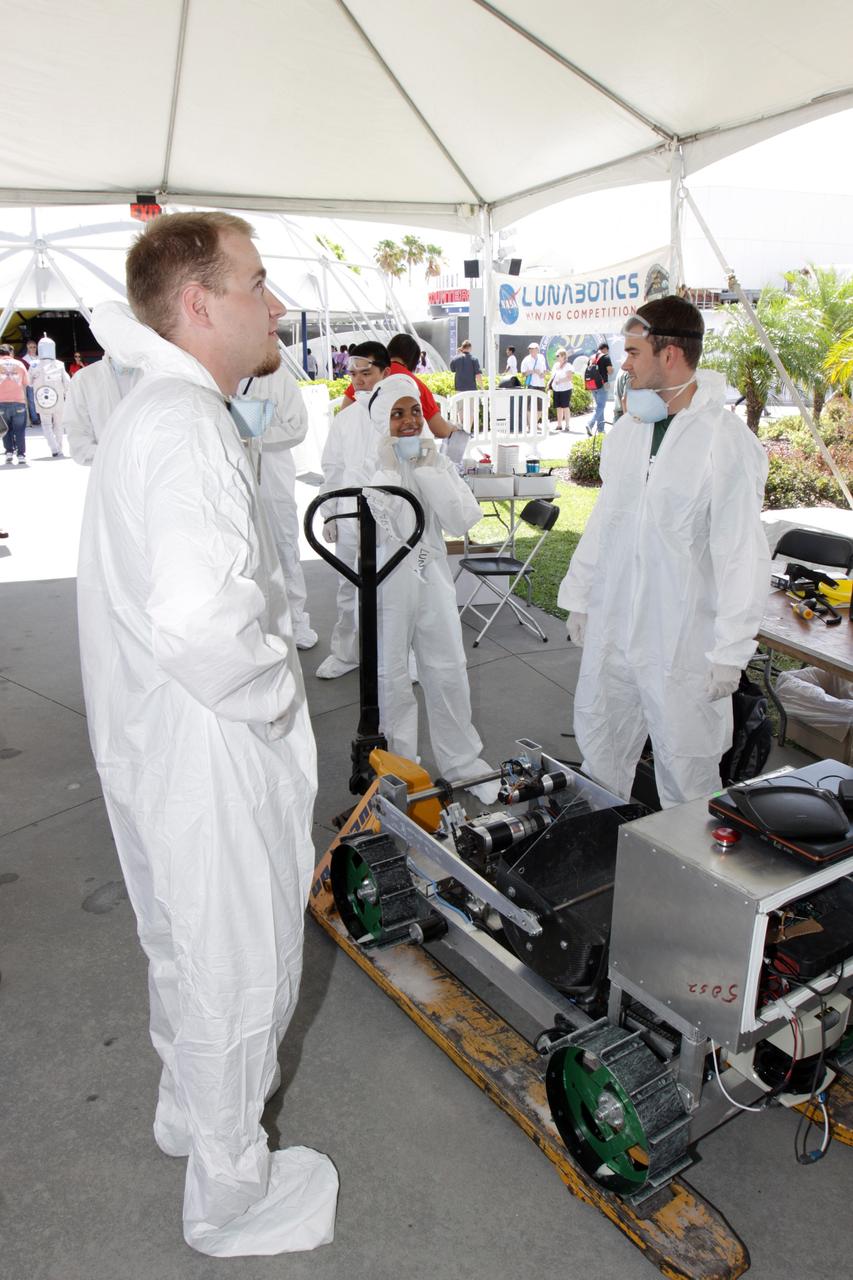
CAPE CANAVERAL, Fla. – A team of competitors waits for a turn in NASA's Lunabotics Mining Competition at the Kennedy Space Center Visitor Complex in Florida. The competition challenges university students to build machines that can collect soil such as the material found on the moon. Working inside the Caterpillar LunArena, the robotic craft dig soil that simulates lunar material. The event is judged by a machine's abilities to collect the soil, its design and operation, size, dust tolerance and its level of autonomy. Photo credit: NASA/Glenn Benson
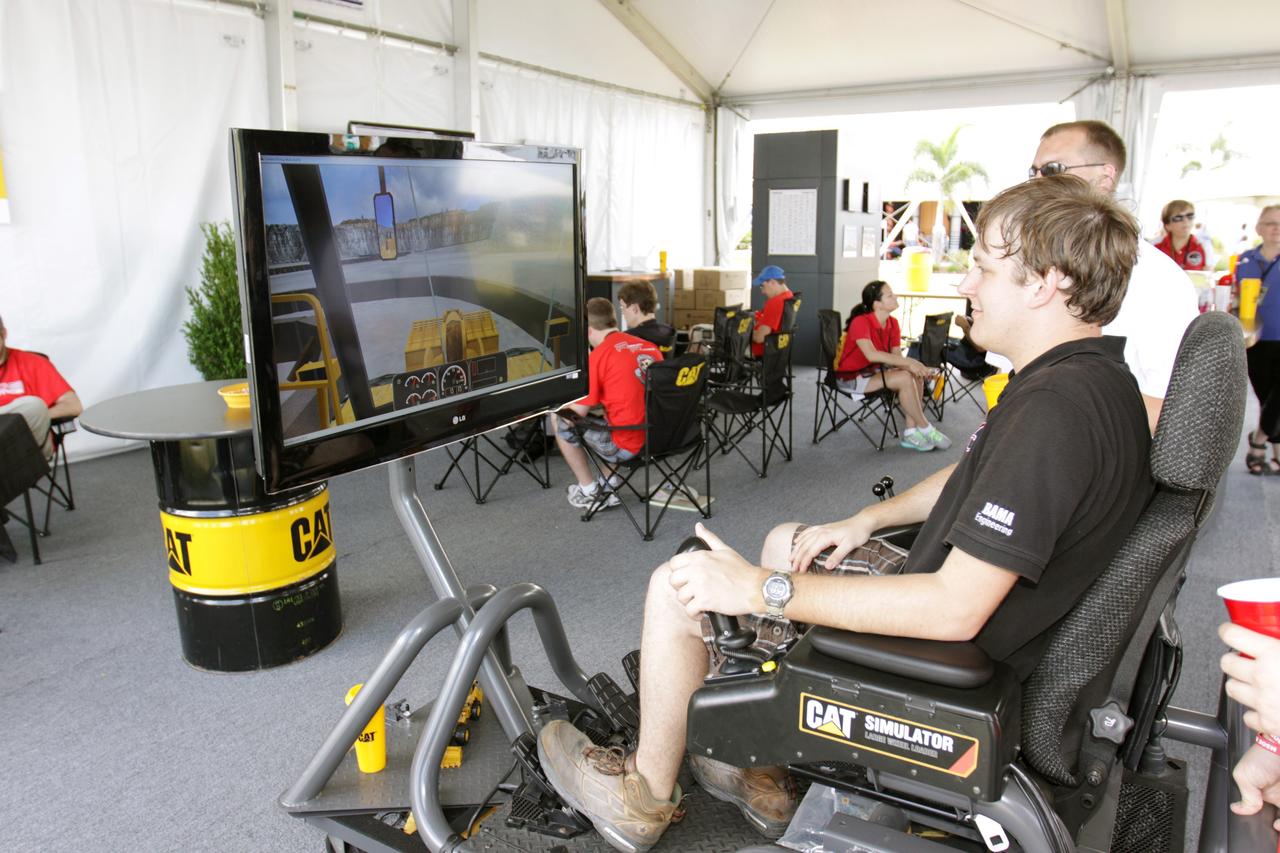
CAPE CANAVERAL, Fla. – A videogame simulates driving excavators during NASA's Lunabotics Mining Competition at the Kennedy Space Center Visitor Complex in Florida. The competition challenges university students to build machines that can collect soil such as the material found on the moon. Working inside the Caterpillar LunArena, the robotic craft dig soil that simulates lunar material. The event is judged by a machine's abilities to collect the soil, its design and operation, size, dust tolerance and its level of autonomy. Photo credit: NASA/Glenn Benson
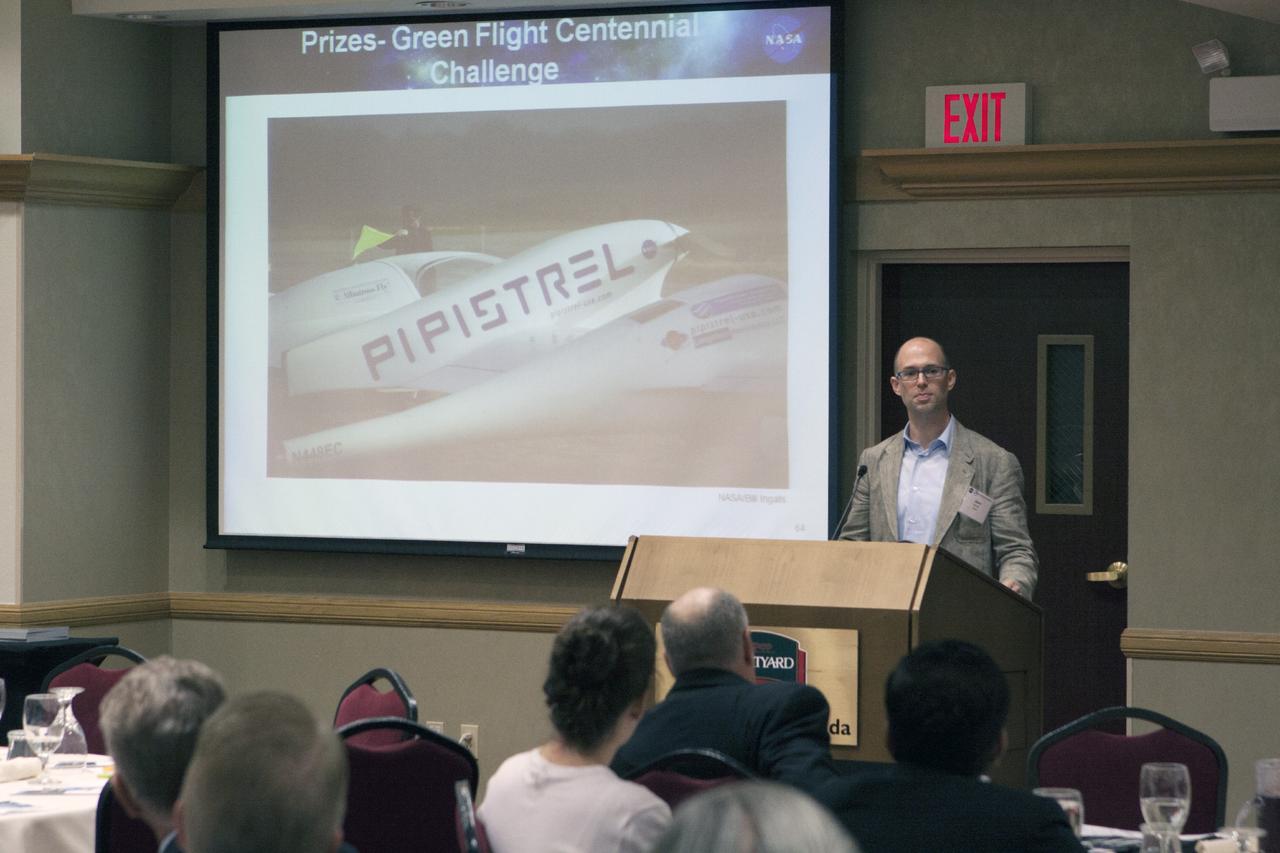
CAPE CANAVERAL, Fla. – Jason Kessler, NASA Asteroid Grand Challenge program executive, discusses the Asteroid Grand Challenge program opportunities with attendees at the Technology Transfer Forum of the Economic Development Commission of Florida's Space Coast. A goal of the session was to showcase ways commercial businesses can work with NASA to develop technology and apply existing technology to commercial uses. Photo credit: NASA/Glenn Benson
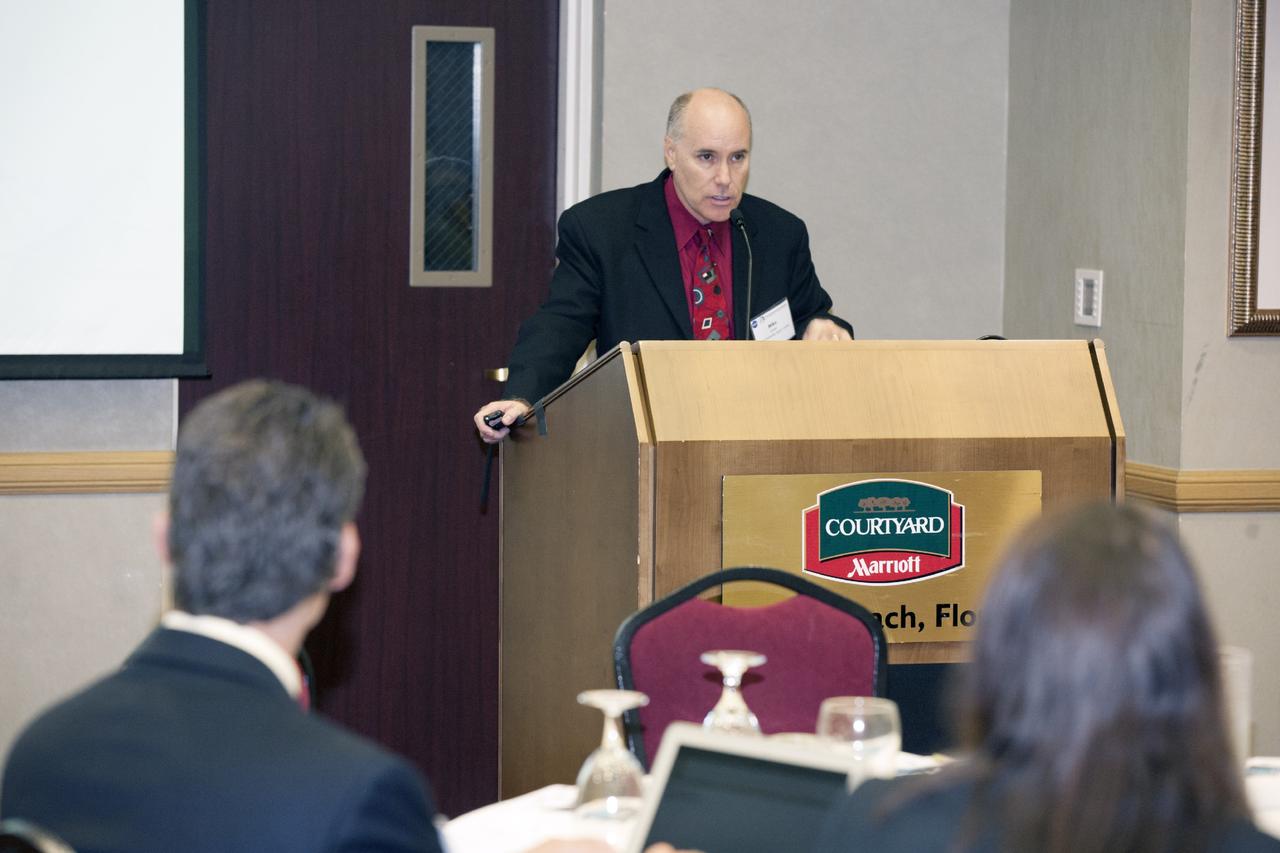
CAPE CANAVERAL, Fla. – Mike Lester, Research and Technology Partnership manager at NASA's Kennedy Space Center in Florida, discusses technology transfer with attendees at the Technology Transfer Forum of the Economic Development Commission of Florida's Space Coast. A goal of the session was to showcase ways commercial businesses can work with NASA to develop technology and apply existing technology to commercial uses. Photo credit: NASA/Glenn Benson
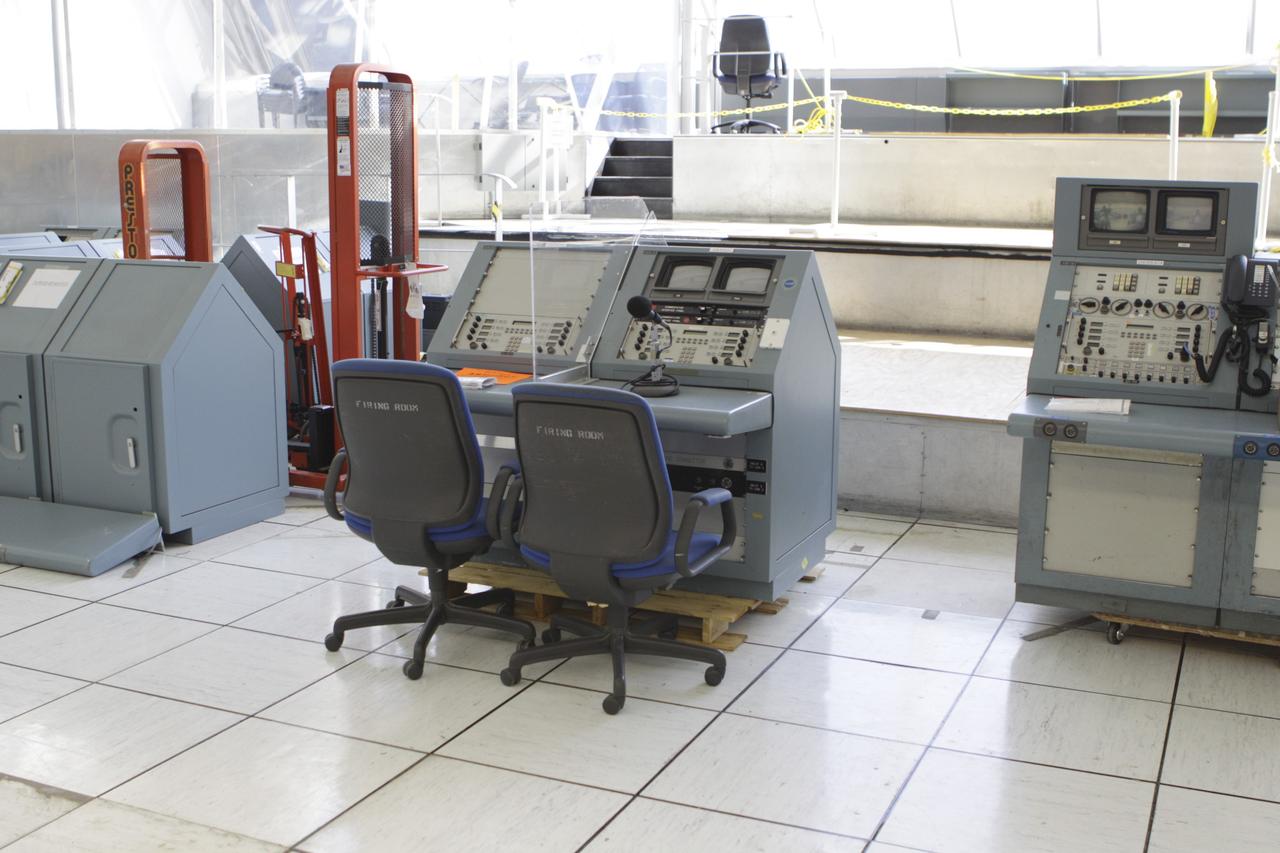
CAPE CANAVERAL, Fla. – Inside the Launch Control Center at NASA’s Kennedy Space Center in Florida, the Public Affairs Office console is being removed from Firing Room 3. The console will be moved to the Kennedy Space Center Visitor Complex in Florida and will be preserved for use in the space shuttle Atlantis display. During the 30-year history of NASA’s space shuttle launches, Public Affairs Officers sat at the console to provide commentary during shuttle tanking and launches. Photo credit: NASA/Glenn Benson
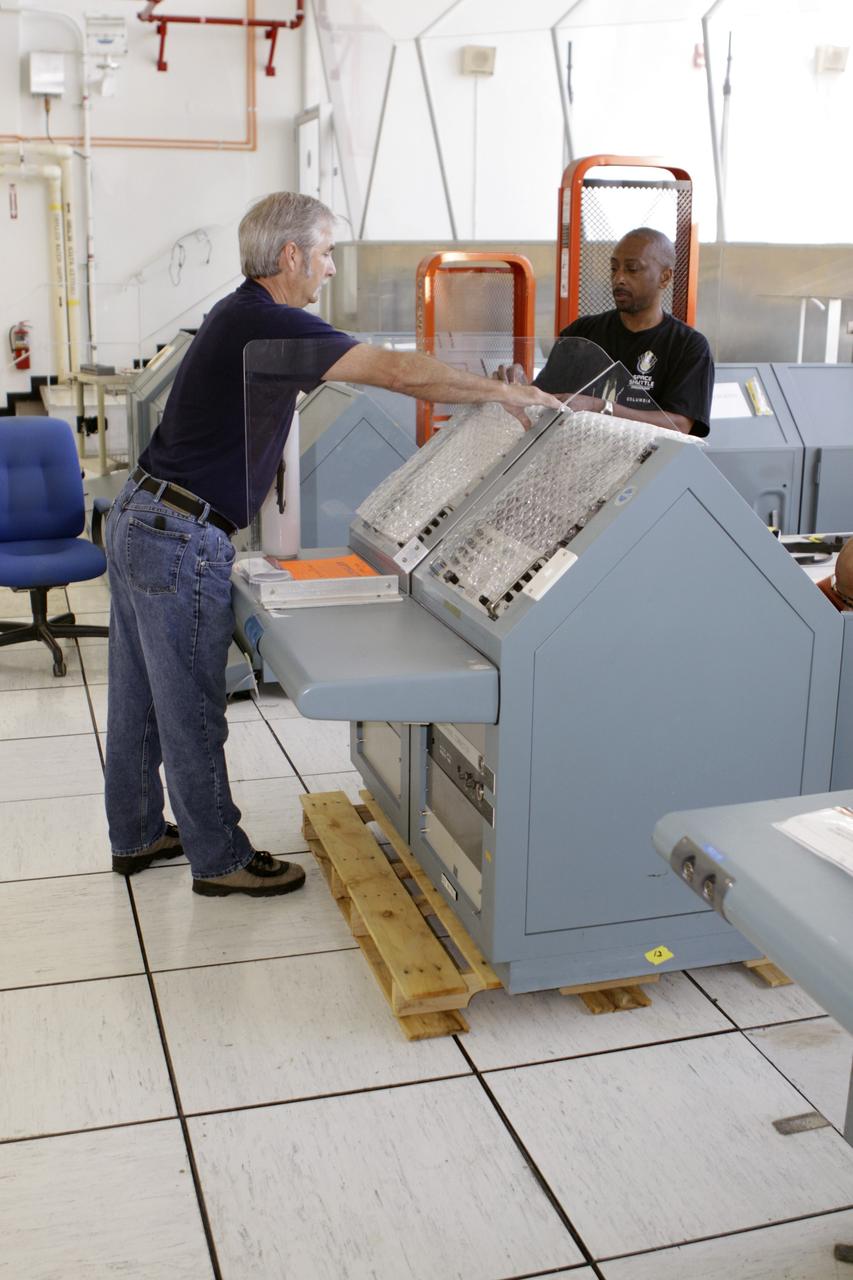
CAPE CANAVERAL, Fla. – Inside the Launch Control Center at NASA’s Kennedy Space Center in Florida, workers prepare to remove the Public Affairs Office console from Firing Room 3. The console will be moved to the Kennedy Space Center Visitor Complex in Florida and will be preserved for use in the space shuttle Atlantis display. During the 30-year history of NASA’s space shuttle launches, Public Affairs Officers sat at the console to provide commentary during shuttle tanking and launches. Photo credit: NASA/Glenn Benson
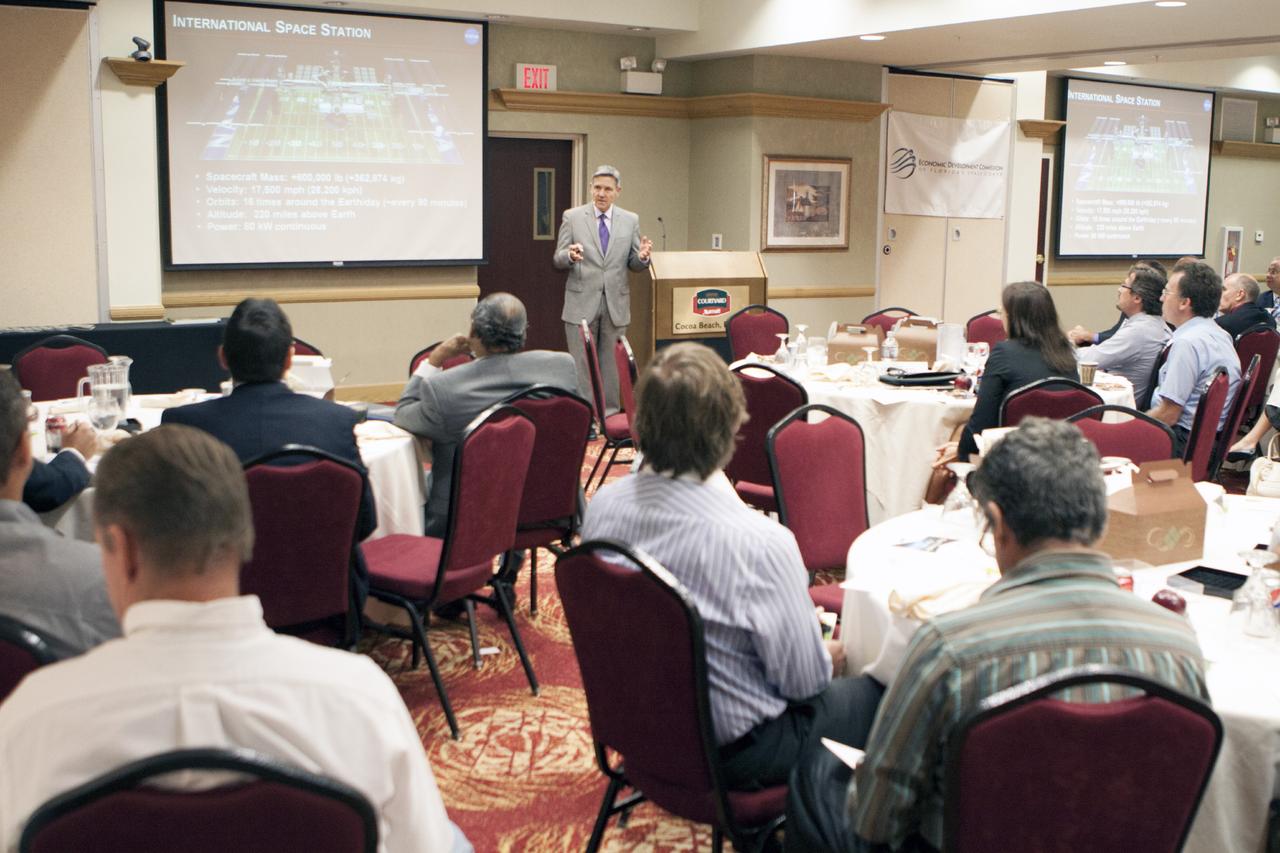
CAPE CANAVERAL, Fla. – Bob Cabana, director of NASA's Kennedy Space Center in Florida, discusses technology transfer with attendees at the Technology Transfer Forum of the Economic Development Commission of Florida's Space Coast. A goal of the session was to showcase ways commercial businesses can work with NASA to develop technology and apply existing technology to commercial uses. Photo credit: NASA/Glenn Benson
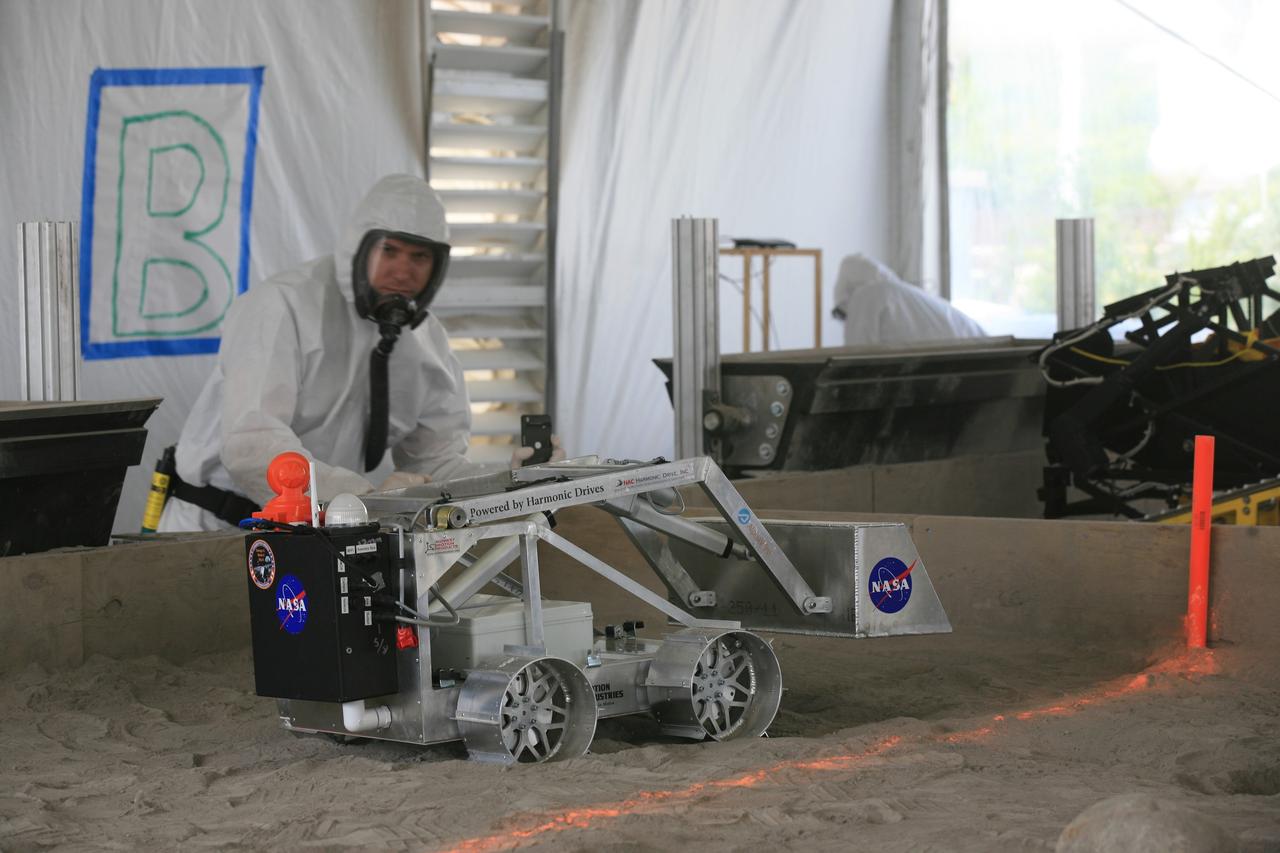
CAPE CANAVERAL, Fla. – A robotic vehicle takes part in NASA's Lunabotics Mining Competition at the Kennedy Space Center Visitor Complex in Florida. The competition challenges university students to build machines that can collect soil such as the material found on the moon. Working inside the Caterpillar LunArena, the robotic craft dig soil that simulates lunar material. The event is judged by a machine's abilities to collect the soil, its design and operation, size, dust tolerance and its level of autonomy. Photo credit: NASA/Glenn Benson
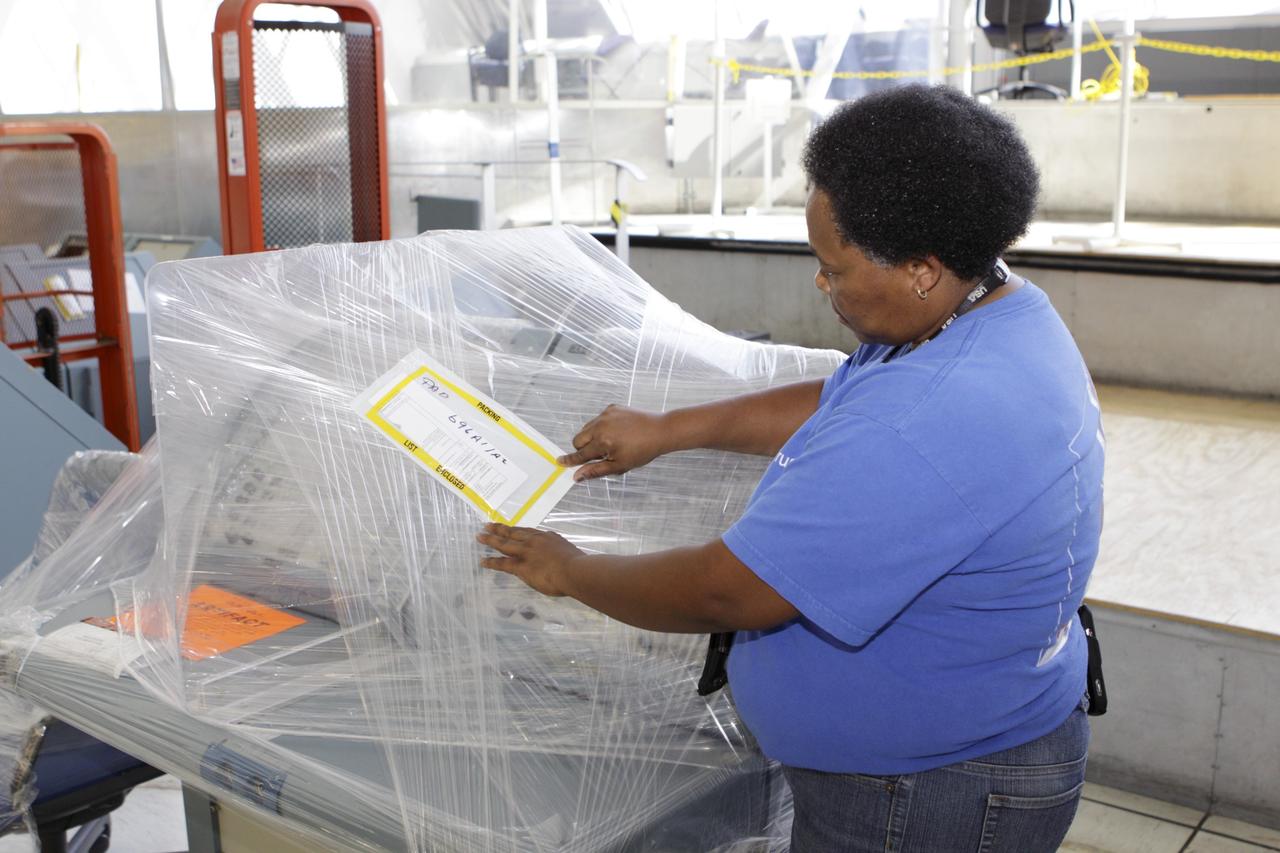
CAPE CANAVERAL, Fla. – Inside the Launch Control Center at NASA’s Kennedy Space Center in Florida, a worker prepares the Public Affairs Office console to be removed from Firing Room 3. The console will be moved to the Kennedy Space Center Visitor Complex in Florida and will be preserved for use in the space shuttle Atlantis display. During the 30-year history of NASA’s space shuttle launches, Public Affairs Officers sat at the console to provide commentary during shuttle tanking and launches. Photo credit: NASA/Glenn Benson
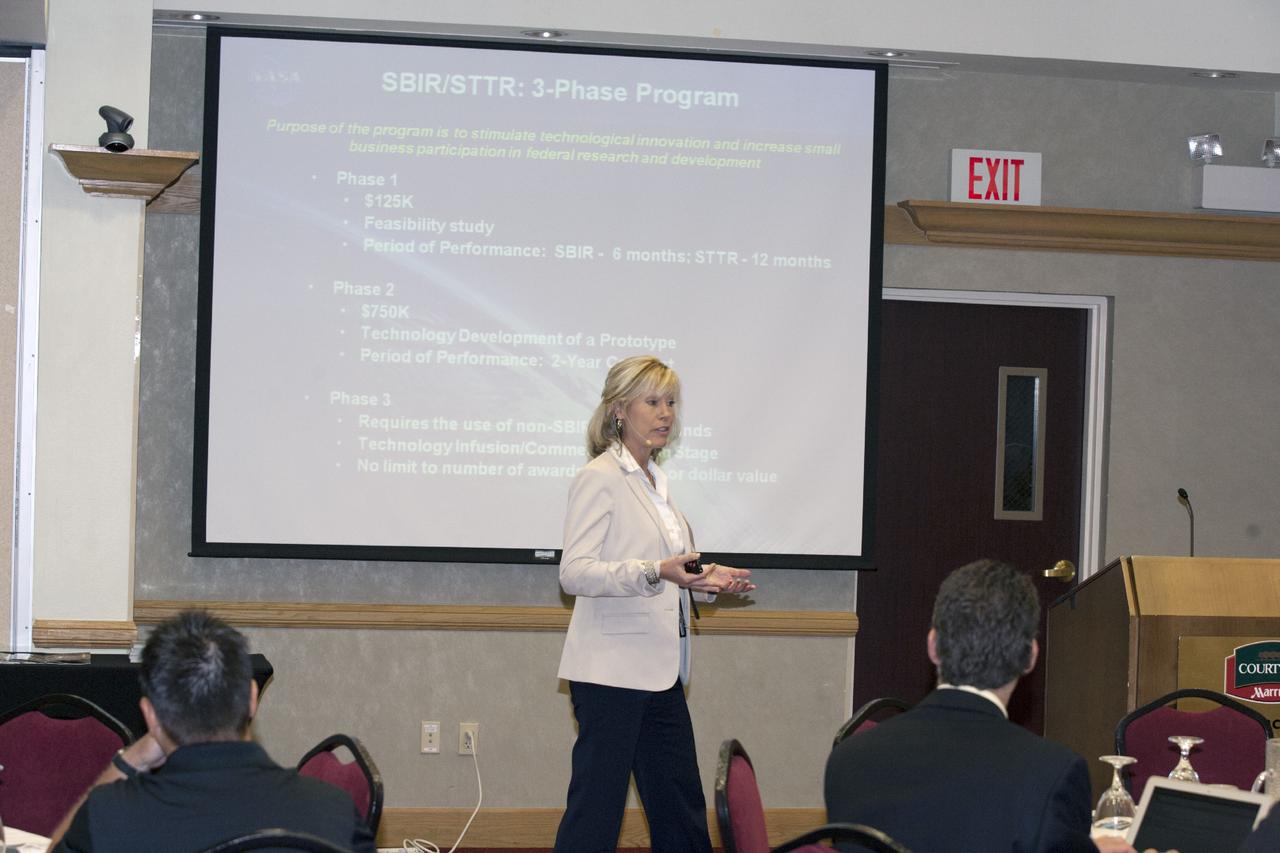
CAPE CANAVERAL, Fla. – Joni Richards, Technology Infusion specialist at NASA's Kennedy Space Center in Florida, discusses technology transfer with attendees at the Technology Transfer Forum of the Economic Development Commission of Florida's Space Coast. A goal of the session was to showcase ways commercial businesses can work with NASA to develop technology and apply existing technology to commercial uses. Photo credit: NASA/Glenn Benson

CAPE CANAVERAL, Fla. – A team of competitors works with its machine during NASA's Lunabotics Mining Competition at the Kennedy Space Center Visitor Complex in Florida. The competition challenges university students to build machines that can collect soil such as the material found on the moon. Working inside the Caterpillar LunArena, the robotic craft dig soil that simulates lunar material. The event is judged by a machine's abilities to collect the soil, its design and operation, size, dust tolerance and its level of autonomy. Photo credit: NASA/Glenn Benson
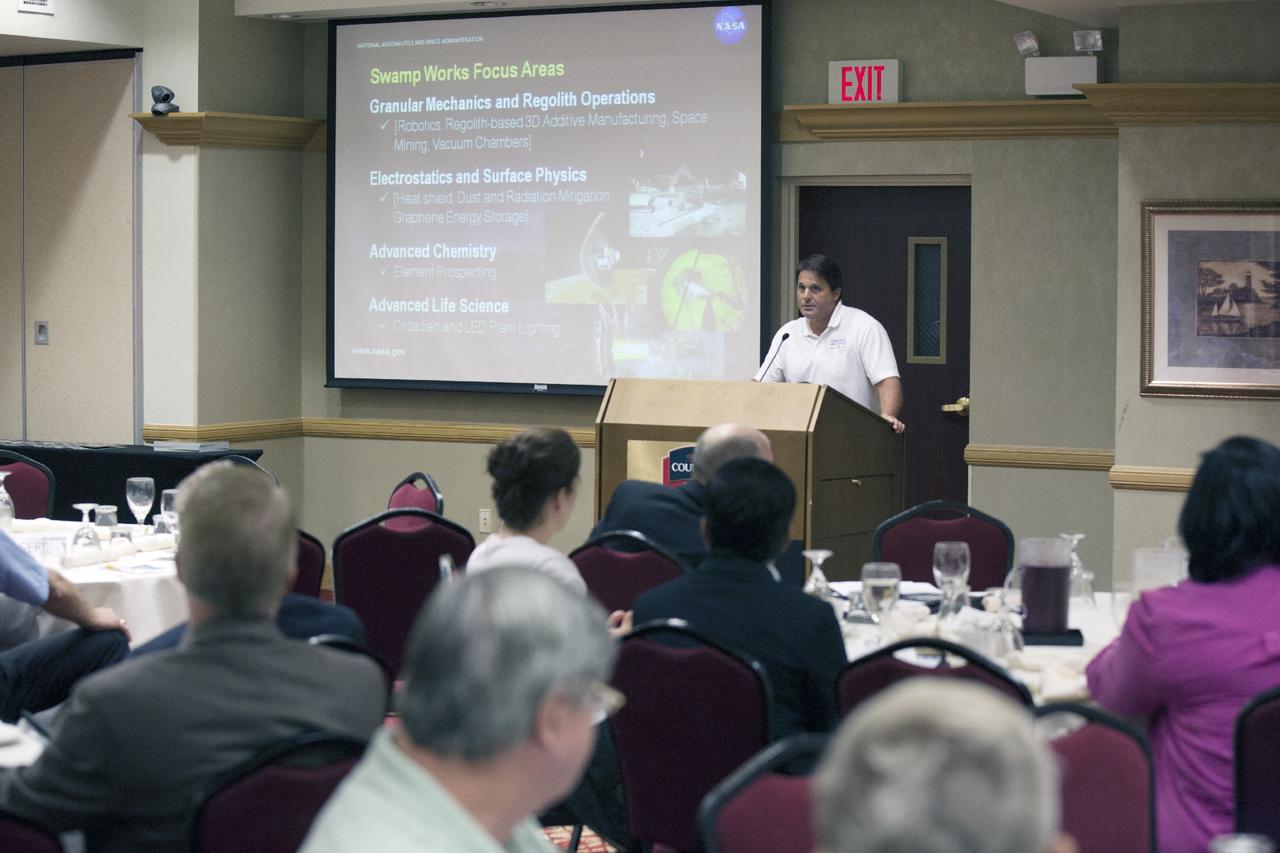
CAPE CANAVERAL, Fla. – Mike Galluzzi, lead business strategist for the Swamp Works at NASA's Kennedy Space Center in Florida, discusses robotics and technology transfer with attendees at the Technology Transfer Forum of the Economic Development Commission of Florida's Space Coast. A goal of the session was to showcase ways commercial businesses can work with NASA to develop technology and apply existing technology to commercial uses. Photo credit: NASA/Glenn Benson
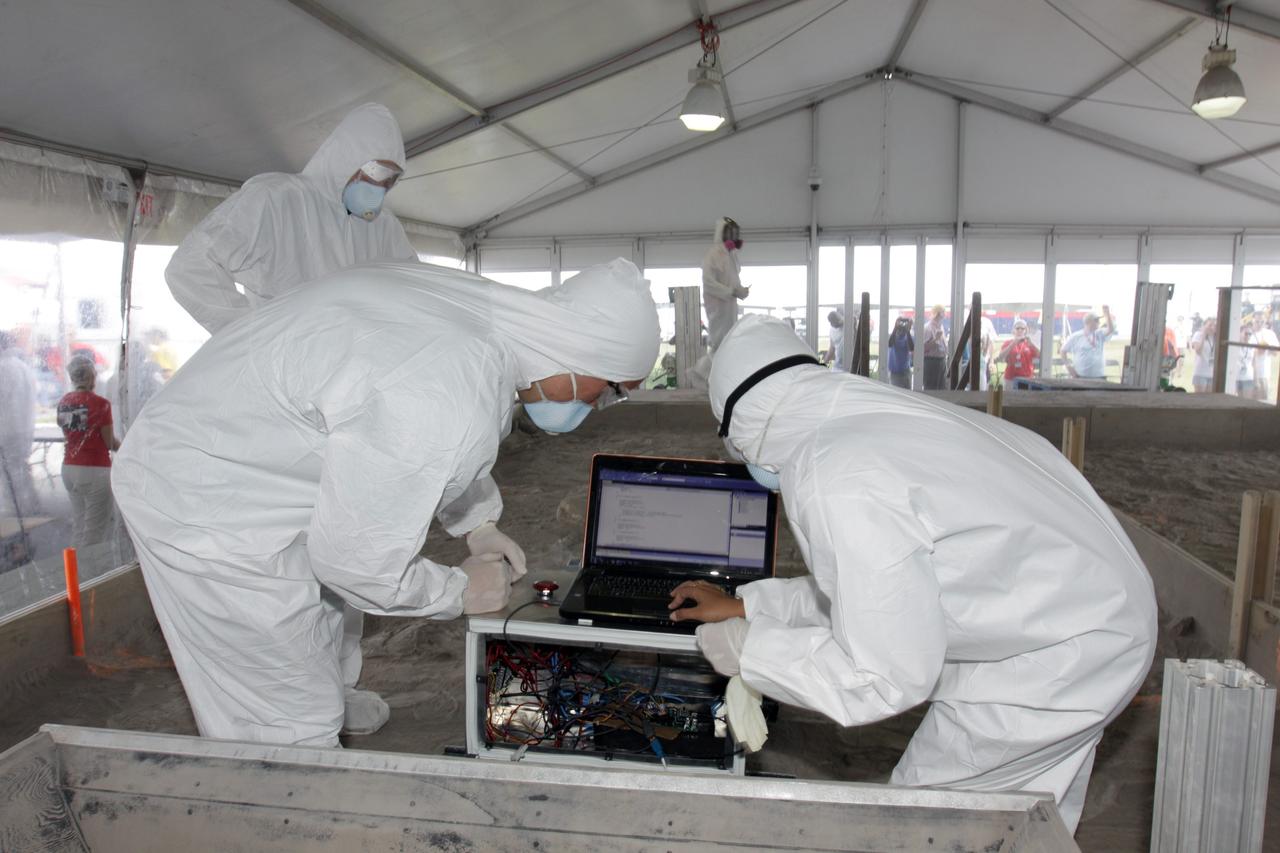
CAPE CANAVERAL, Fla. – A team of competitors works with its machine during NASA's Lunabotics Mining Competition at the Kennedy Space Center Visitor Complex in Florida. The competition challenges university students to build machines that can collect soil such as the material found on the moon. Working inside the Caterpillar LunArena, the robotic craft dig soil that simulates lunar material. The event is judged by a machine's abilities to collect the soil, its design and operation, size, dust tolerance and its level of autonomy. Photo credit: NASA/Glenn Benson
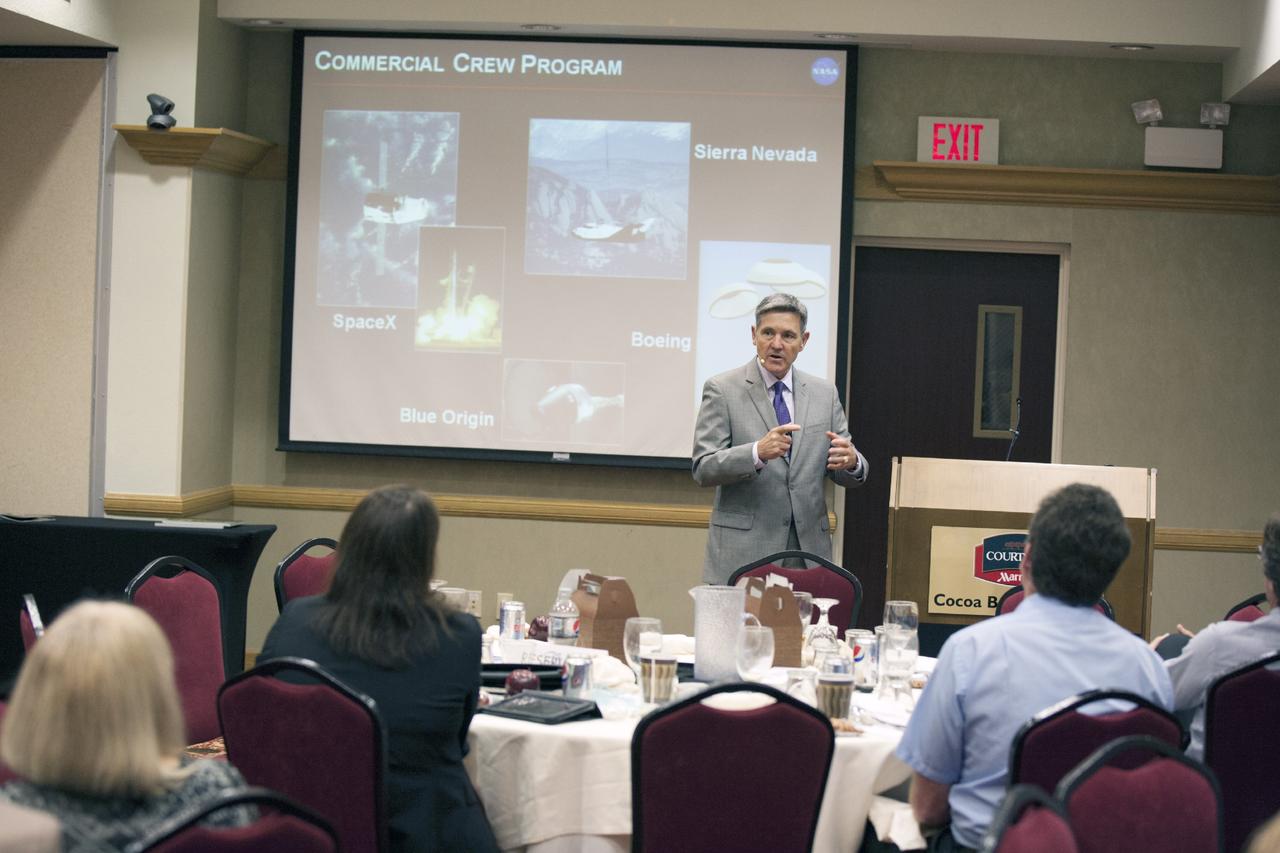
CAPE CANAVERAL, Fla. – Bob Cabana, director of NASA's Kennedy Space Center in Florida, discusses technology transfer with attendees at the Technology Transfer Forum of the Economic Development Commission of Florida's Space Coast. A goal of the session was to showcase ways commercial businesses can work with NASA to develop technology and apply existing technology to commercial uses. Photo credit: NASA/Glenn Benson
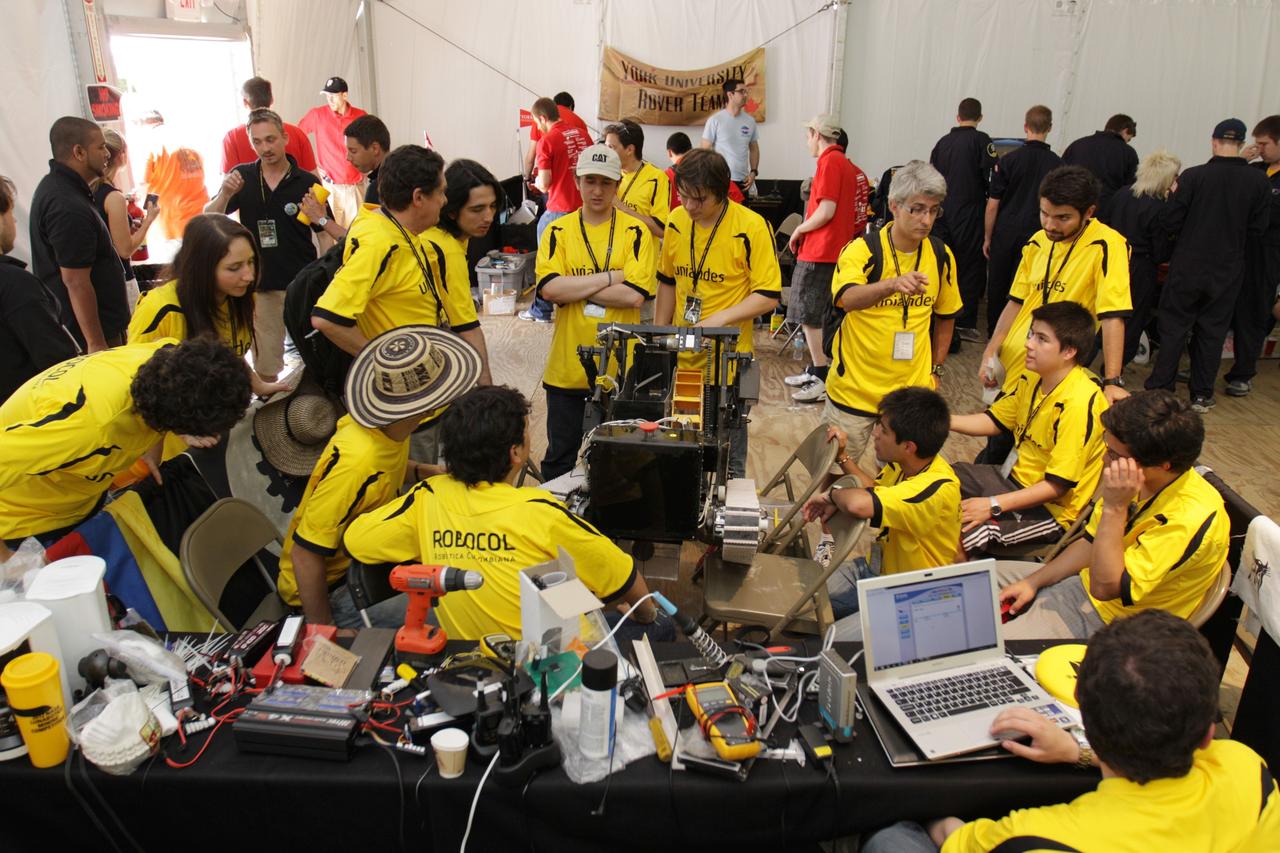
CAPE CANAVERAL, Fla. – A team of competitors works with its machine during NASA's Lunabotics Mining Competition at the Kennedy Space Center Visitor Complex in Florida. The competition challenges university students to build machines that can collect soil such as the material found on the moon. Working inside the Caterpillar LunArena, the robotic craft dig soil that simulates lunar material. The event is judged by a machine's abilities to collect the soil, its design and operation, size, dust tolerance and its level of autonomy. Photo credit: NASA/Glenn Benson

CAPE CANAVERAL, Fla. – Inside the Launch Control Center at NASA’s Kennedy Space Center in Florida, the Public Affairs Office console is being removed from Firing Room 3. The console will be moved to the Kennedy Space Center Visitor Complex in Florida and will be preserved for use in the space shuttle Atlantis display. During the 30-year history of NASA’s space shuttle launches, Public Affairs Officers sat at the console to provide commentary during shuttle tanking and launches. Photo credit: NASA/Glenn Benson
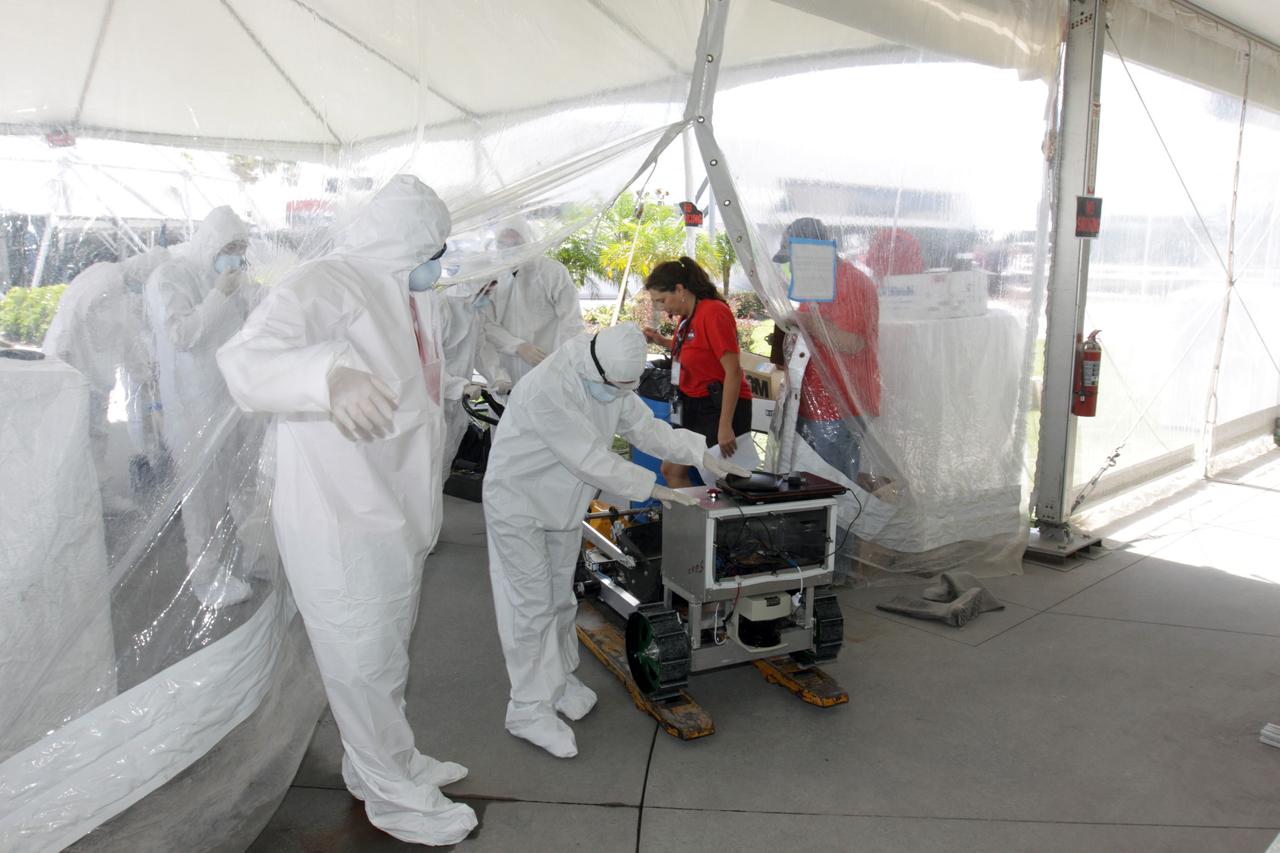
CAPE CANAVERAL, Fla. – A team of competitors prepares for a turn in NASA's Lunabotics Mining Competition at the Kennedy Space Center Visitor Complex in Florida. The competition challenges university students to build machines that can collect soil such as the material found on the moon. Working inside the Caterpillar LunArena, the robotic craft dig soil that simulates lunar material. The event is judged by a machine's abilities to collect the soil, its design and operation, size, dust tolerance and its level of autonomy. Photo credit: NASA/Glenn Benson
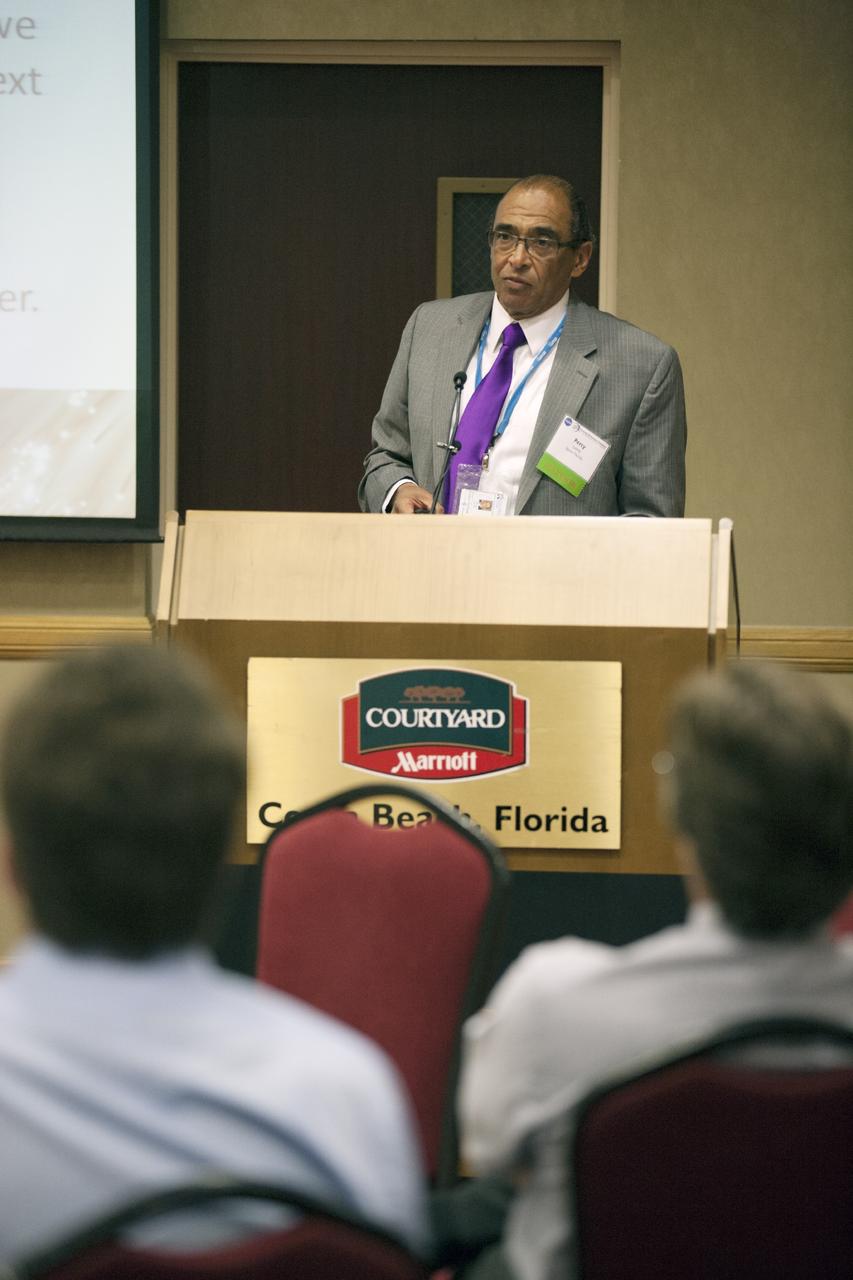
CAPE CANAVERAL, Fla. – Percy Luney of Space Florida discusses technology transfer with attendees at the Technology Transfer Forum of the Economic Development Commission of Florida's Space Coast. A goal of the session was to showcase ways commercial businesses can work with NASA to develop technology and apply existing technology to commercial uses. Photo credit: NASA/Glenn Benson
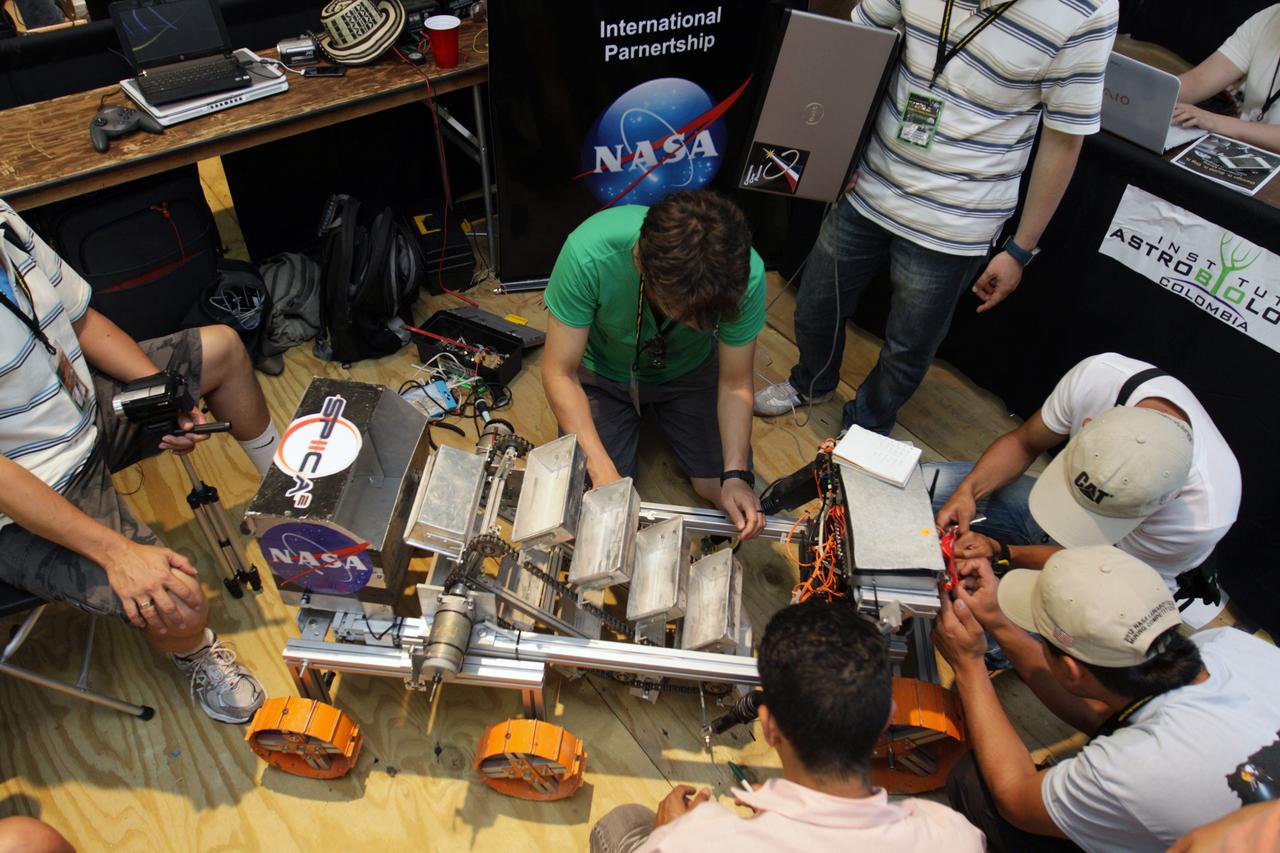
CAPE CANAVERAL, Fla. – A team of competitors works with its machine during NASA's Lunabotics Mining Competition at the Kennedy Space Center Visitor Complex in Florida. The competition challenges university students to build machines that can collect soil such as the material found on the moon. Working inside the Caterpillar LunArena, the robotic craft dig soil that simulates lunar material. The event is judged by a machine's abilities to collect the soil, its design and operation, size, dust tolerance and its level of autonomy. Photo credit: NASA/Glenn Benson
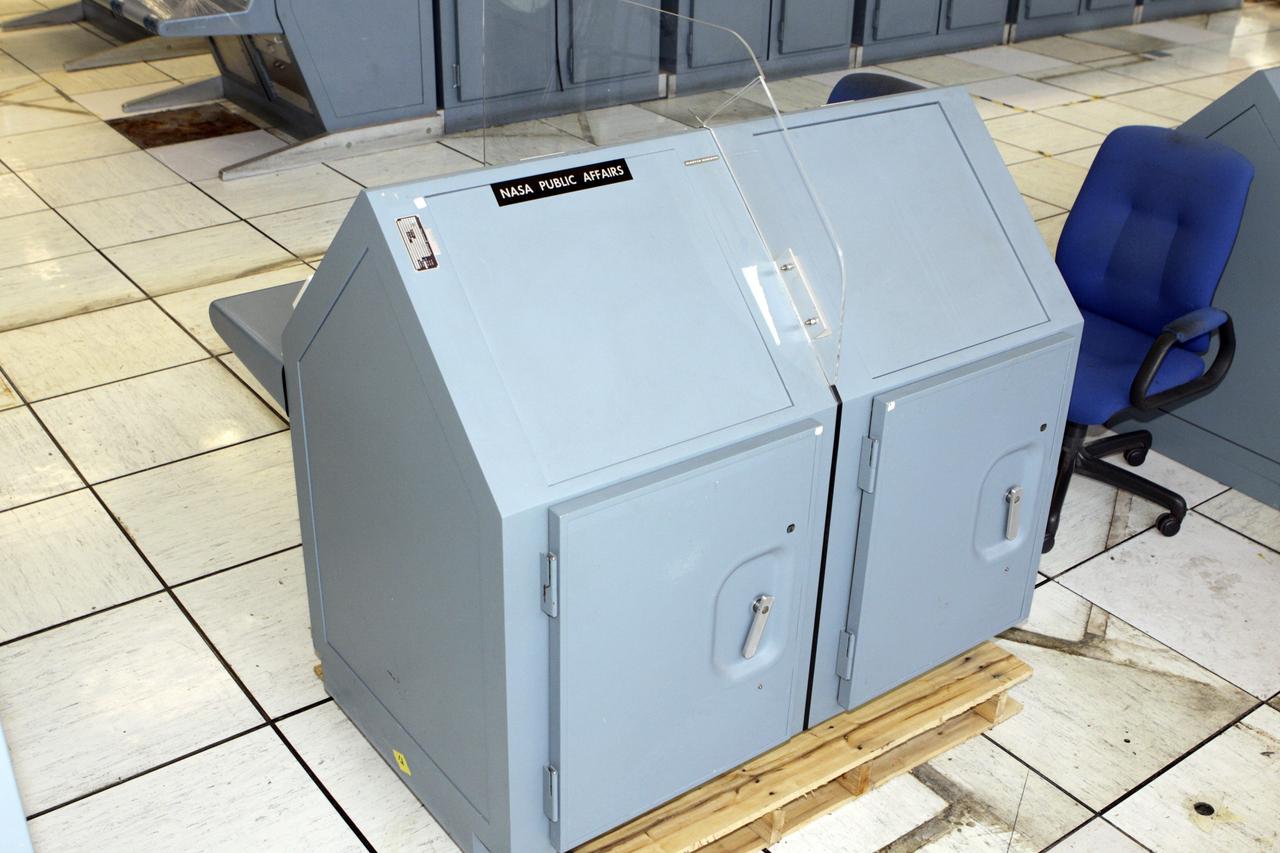
CAPE CANAVERAL, Fla. – Inside the Launch Control Center at NASA’s Kennedy Space Center in Florida, the Public Affairs Office console is being removed from Firing Room 3. The console will be moved to the Kennedy Space Center Visitor Complex in Florida and will be preserved for use in the space shuttle Atlantis display. During the 30-year history of NASA’s space shuttle launches, Public Affairs Officers sat at the console to provide commentary during shuttle tanking and launches. Photo credit: NASA/Glenn Benson
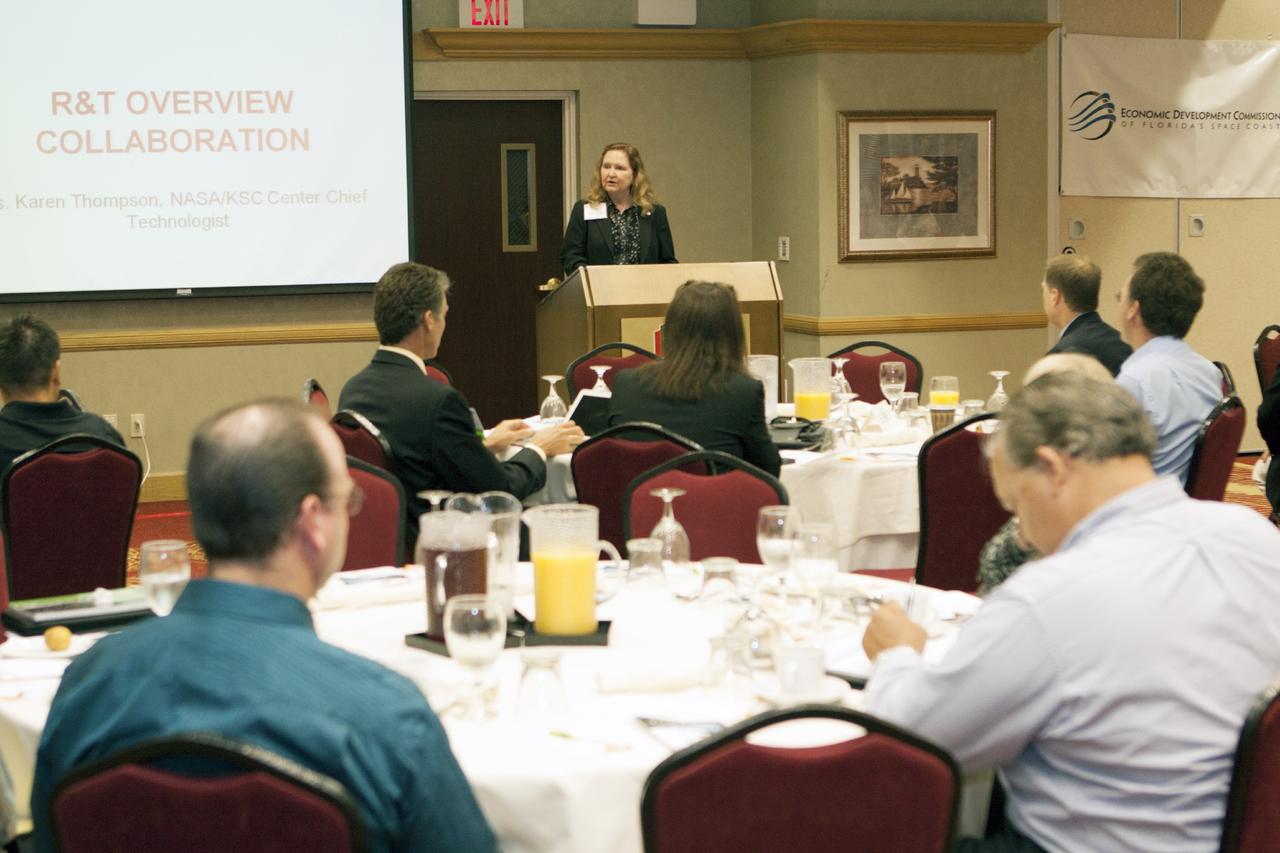
CAPE CANAVERAL, Fla. – Karen Thompson, chief technologist at NASA's Kennedy Space Center in Florida, discusses technology transfer with attendees at the Technology Transfer Forum of the Economic Development Commission of Florida's Space Coast. A goal of the session was to showcase ways commercial businesses can work with NASA to develop technology and apply existing technology to commercial uses. Photo credit: NASA/Glenn Benson

CAPE CANAVERAL, Fla. – Inside the Launch Control Center at NASA’s Kennedy Space Center in Florida, workers prepare the Public Affairs Office console to be removed from Firing Room 3. The console will be moved to the Kennedy Space Center Visitor Complex in Florida and will be preserved for use in the space shuttle Atlantis display. During the 30-year history of NASA’s space shuttle launches, Public Affairs Officers sat at the console to provide commentary during shuttle tanking and launches. Photo credit: NASA/Glenn Benson
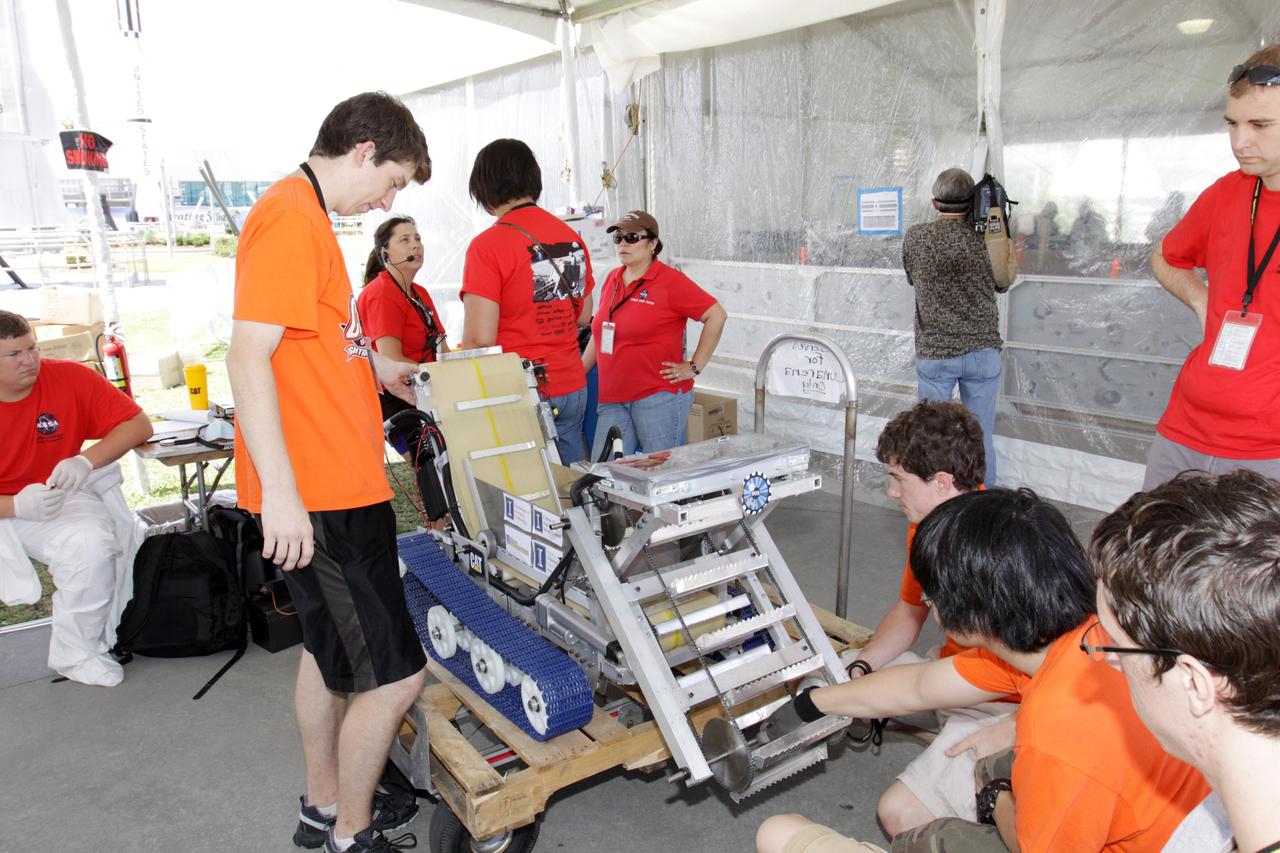
CAPE CANAVERAL, Fla. – A team of competitors prepares for a turn in NASA's Lunabotics Mining Competition at the Kennedy Space Center Visitor Complex in Florida. The competition challenges university students to build machines that can collect soil such as the material found on the moon. Working inside the Caterpillar LunArena, the robotic craft dig soil that simulates lunar material. The event is judged by a machine's abilities to collect the soil, its design and operation, size, dust tolerance and its level of autonomy. Photo credit: NASA/Glenn Benson

CAPE CANAVERAL, Fla. – Tracey Kickbusch, chief of computational sciences at NASA's Kennedy Space Center in Florida, discusses modeling and simulations with attendees at the Technology Transfer Forum of the Economic Development Commission of Florida's Space Coast. A goal of the session was to showcase ways commercial businesses can work with NASA to develop technology and apply existing technology to commercial uses. Photo credit: NASA/Glenn Benson
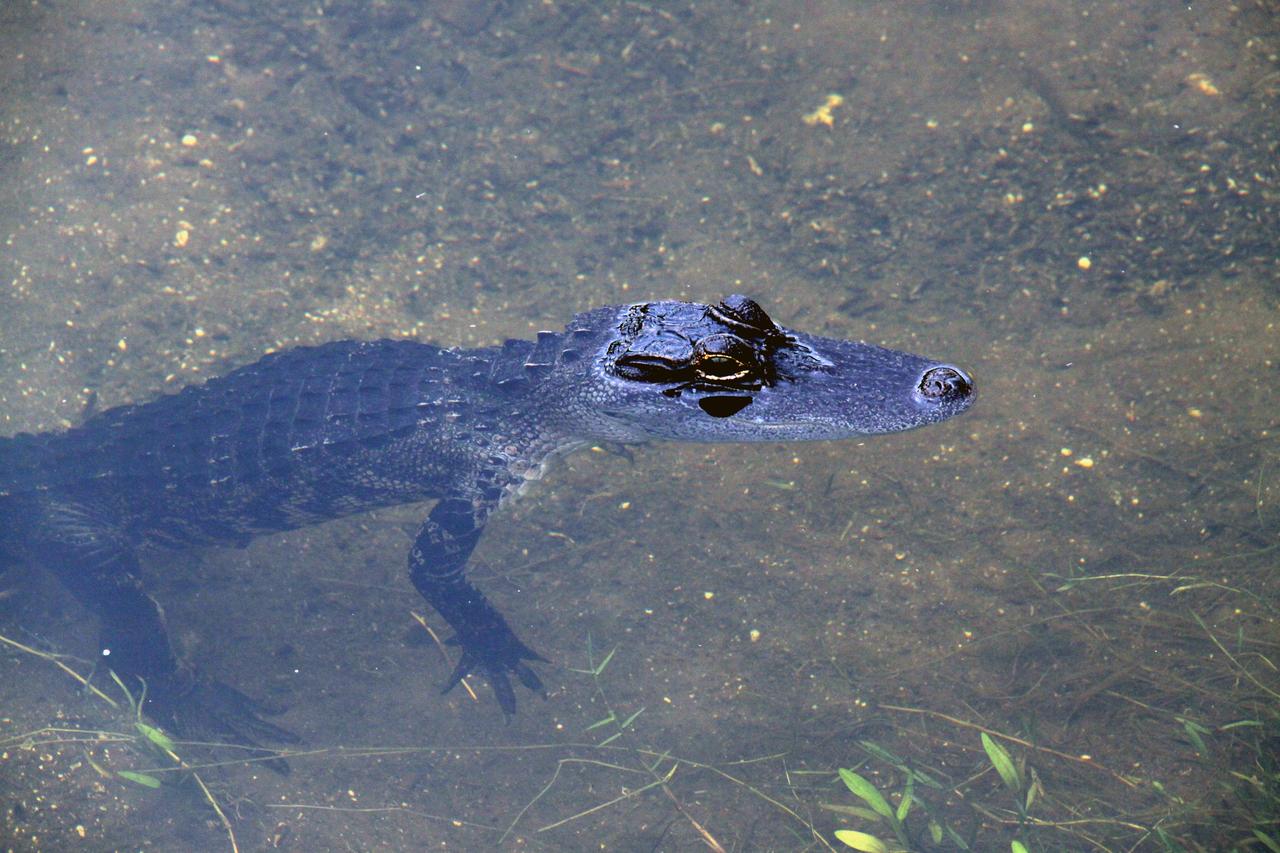
CAPE CANAVERAL, Fla. – A baby alligator is unaware that the water saturating the ground is the aftermath of thunderstorms in the vicinity of NASA Kennedy Space Center’s Shuttle Landing Facility and that space shuttle Atlantis is unable to land to conclude the STS-125 mission. Alligators can be spotted in the drainage canals and other waters surrounding Kennedy. The center shares a boundary with the Merritt Island Wildlife Nature Refuge, which is a habitat for more than 310 species of birds, 25 mammals, 117 fishes and 65 amphibians and reptiles. Photo credit: NASA/Glenn Benson
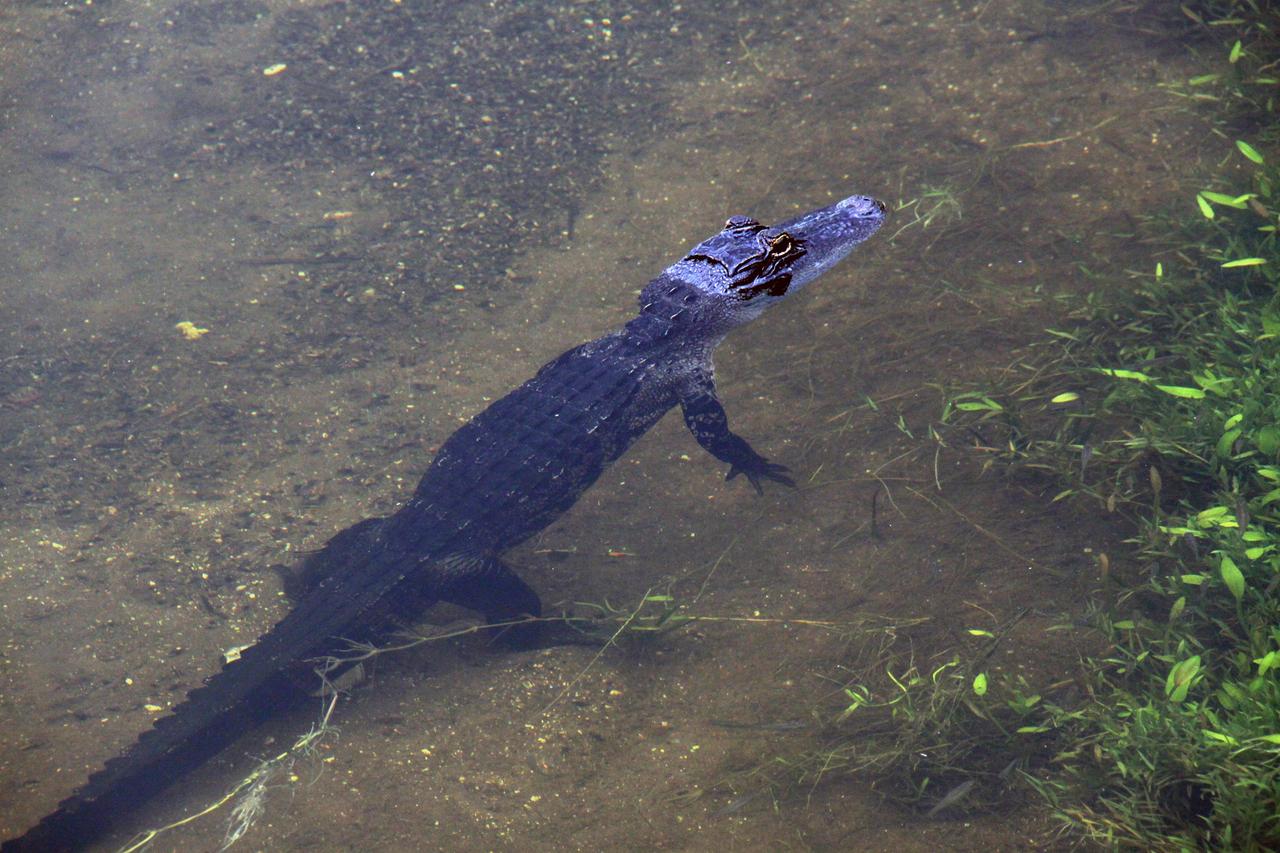
CAPE CANAVERAL, Fla. – A baby alligator is unconcerned that water saturates the ground and space shuttle Atlantis is unable to land at NASA’s Kennedy Space Center to conclude the STS-125 mission, the aftermath of thunderstorms in the vicinity of the Shuttle Landing Facility. Alligators can be spotted in the drainage canals and other waters surrounding Kennedy. The center shares a boundary with the Merritt Island Wildlife Nature Refuge, which is a habitat for more than 310 species of birds, 25 mammals, 117 fishes and 65 amphibians and reptiles. Photo credit: NASA/Glenn Benson
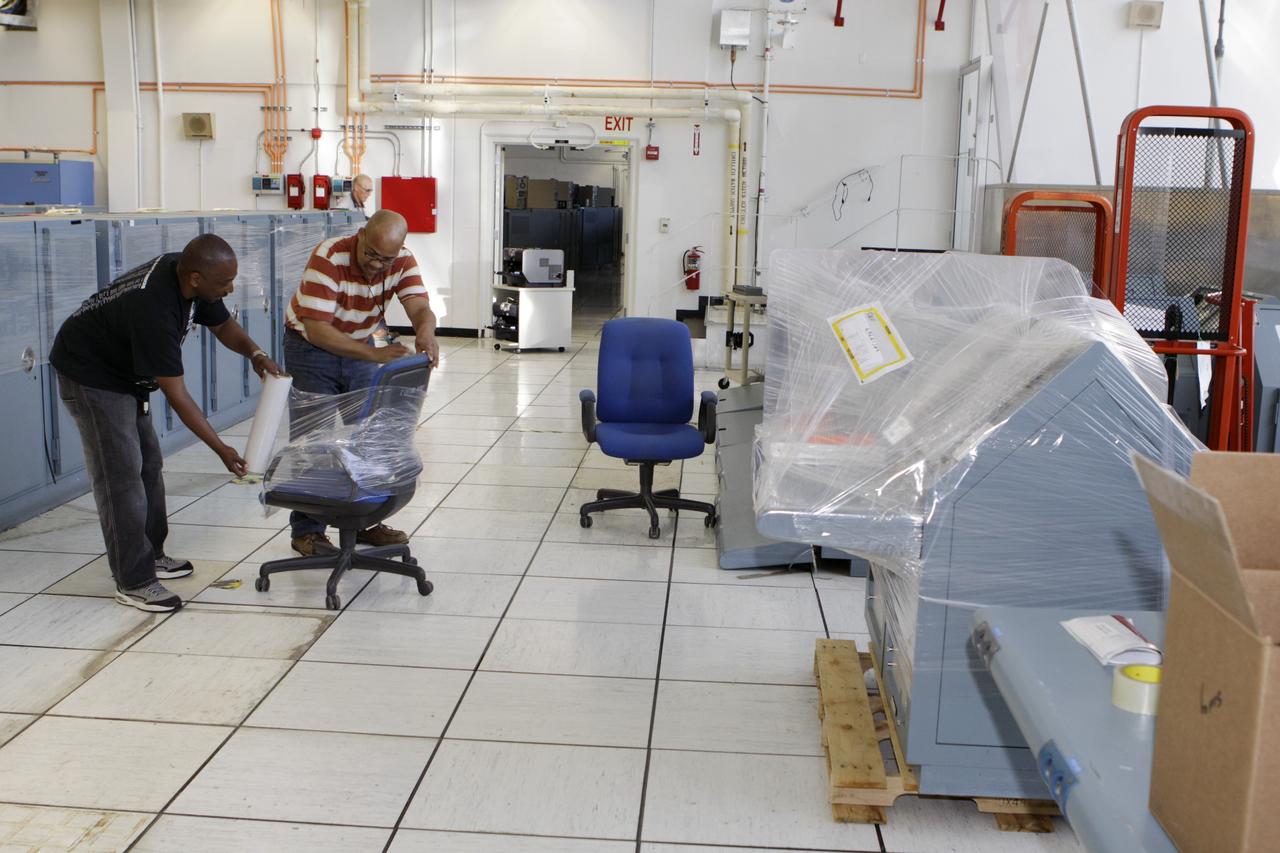
CAPE CANAVERAL, Fla. – Inside the Launch Control Center at NASA’s Kennedy Space Center in Florida, workers prepare the Public Affairs Office console and chairs to be removed from Firing Room 3. The console will be moved to the Kennedy Space Center Visitor Complex in Florida and will be preserved for use in the space shuttle Atlantis display. During the 30-year history of NASA’s space shuttle launches, Public Affairs Officers sat at the console to provide commentary during shuttle tanking and launches. Photo credit: NASA/Glenn Benson
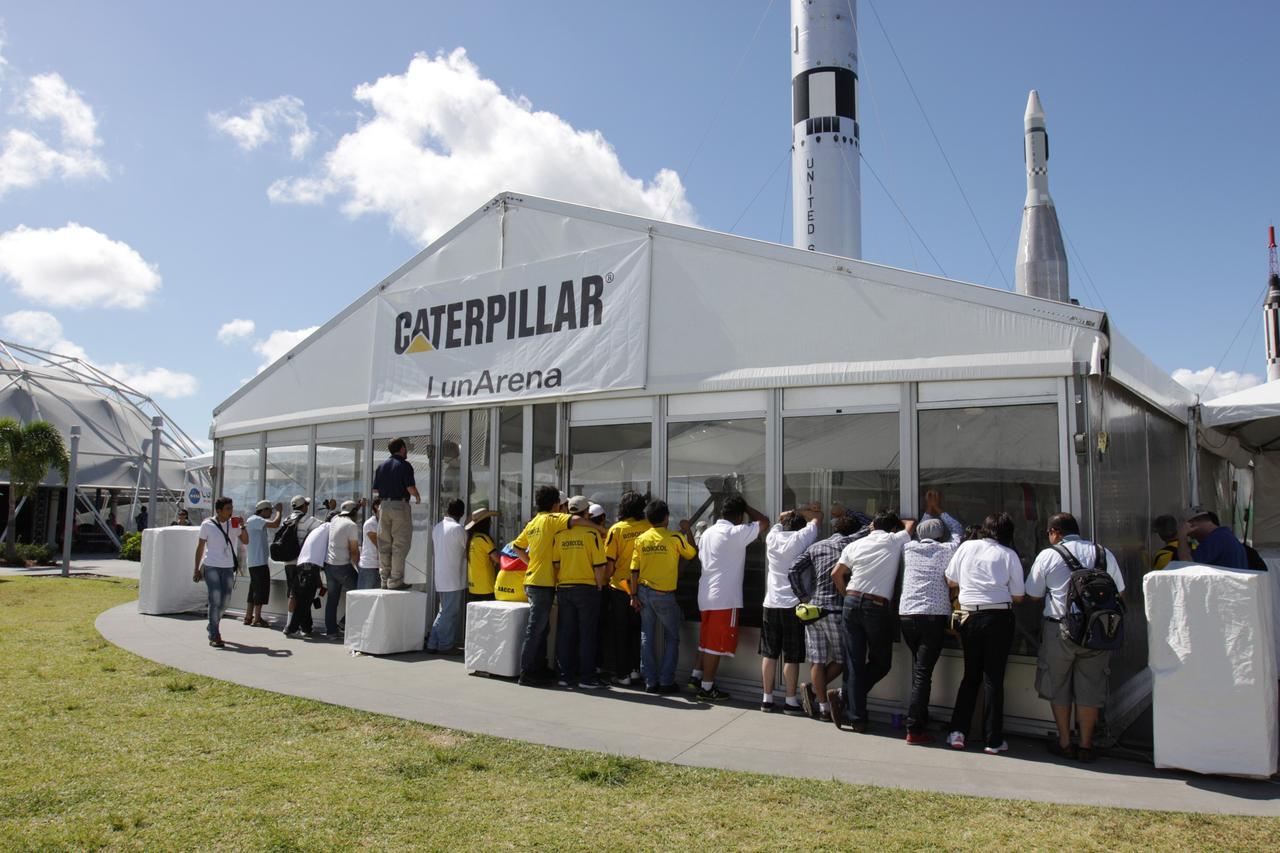
CAPE CANAVERAL, Fla. – Participants watch NASA's Lunabotics Mining Competition at the Kennedy Space Center Visitor Complex in Florida. The competition challenges university students to build machines that can collect soil such as the material found on the moon. Working inside the Caterpillar LunArena, the robotic craft dig soil that simulates lunar material. The event is judged by a machine's abilities to collect the soil, its design and operation, size, dust tolerance and its level of autonomy. Photo credit: NASA/Glenn Benson
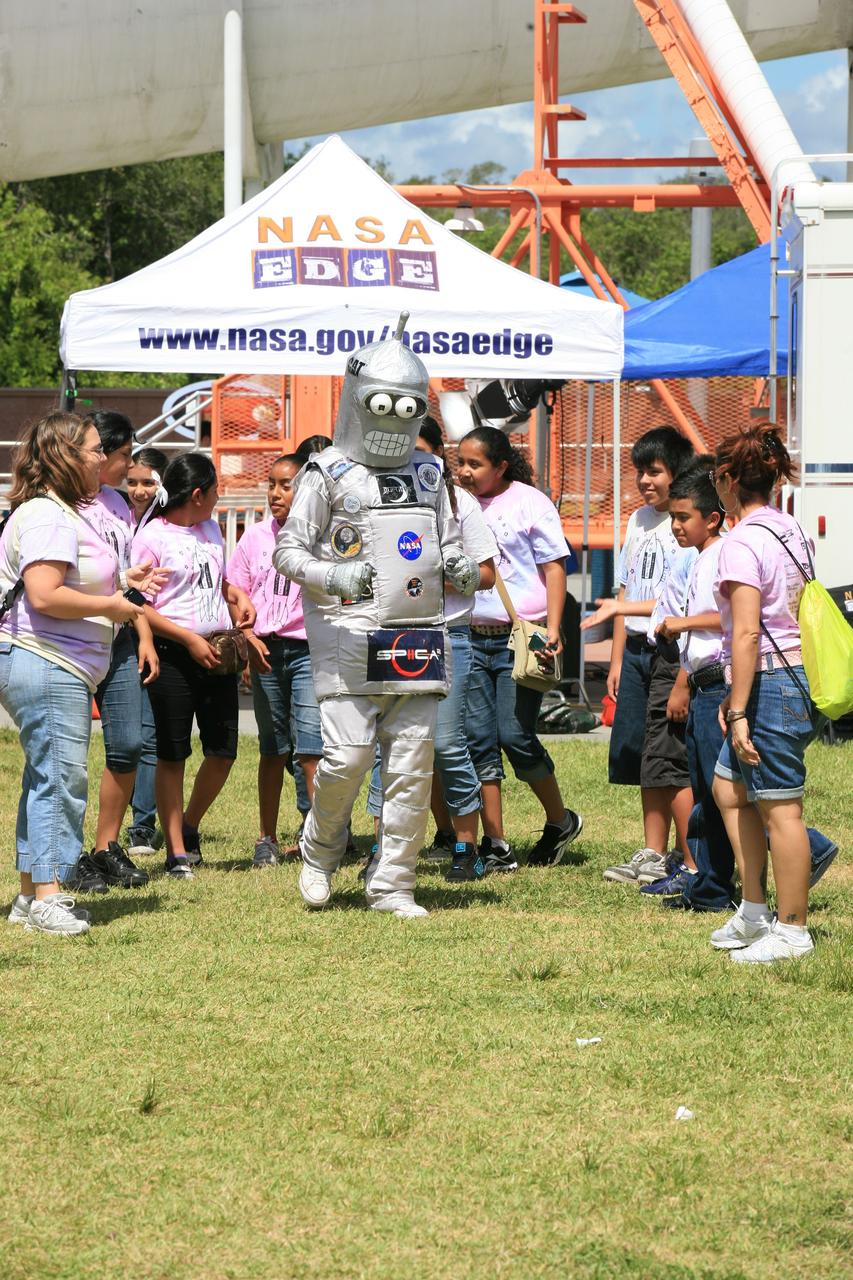
CAPE CANAVERAL, Fla. – A robotic mascot moves among participants during NASA's Lunabotics Mining Competition at the Kennedy Space Center Visitor Complex in Florida. The competition challenges university students to build machines that can collect soil such as the material found on the moon. Working inside the Caterpillar LunArena, the robotic craft dig soil that simulates lunar material. The event is judged by a machine's abilities to collect the soil, its design and operation, size, dust tolerance and its level of autonomy. Photo credit: NASA/Glenn Benson

CAPE CANAVERAL, Fla. – Inside the Launch Control Center at NASA’s Kennedy Space Center in Florida, workers remove the Public Affairs Office console and chairs from Firing Room 3. The console will be moved to the Kennedy Space Center Visitor Complex in Florida and will be preserved for use in the space shuttle Atlantis display. During the 30-year history of NASA’s space shuttle launches, Public Affairs Officers sat at the console to provide commentary during shuttle tanking and launches. Photo credit: NASA/Glenn Benson
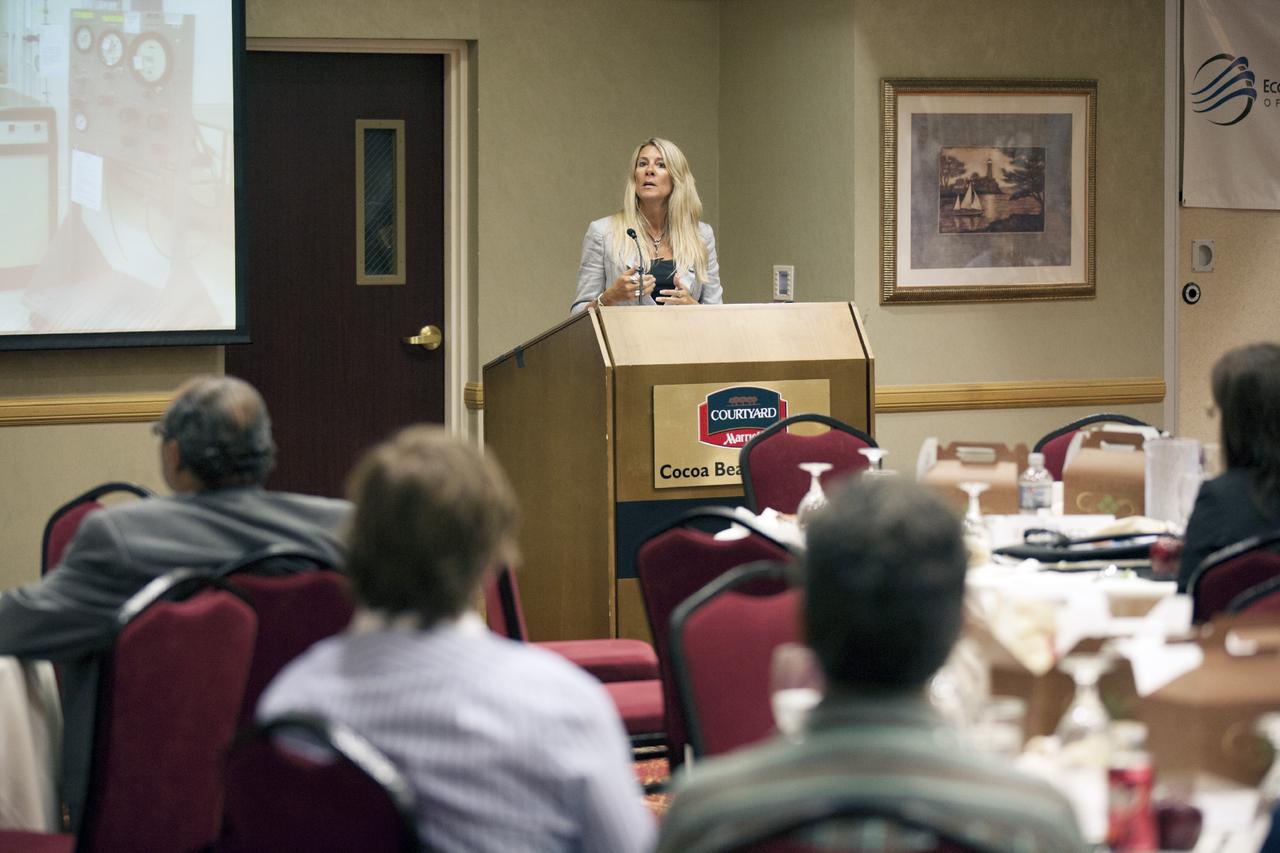
CAPE CANAVERAL, Fla. – Carol Craig, founder and CEO of Craig Technologies, discusses technology transfer with attendees at the Technology Transfer Forum of the Economic Development Commission of Florida's Space Coast. A goal of the session was to showcase ways commercial businesses can work with NASA to develop technology and apply existing technology to commercial uses. Photo credit: NASA/Glenn Benson
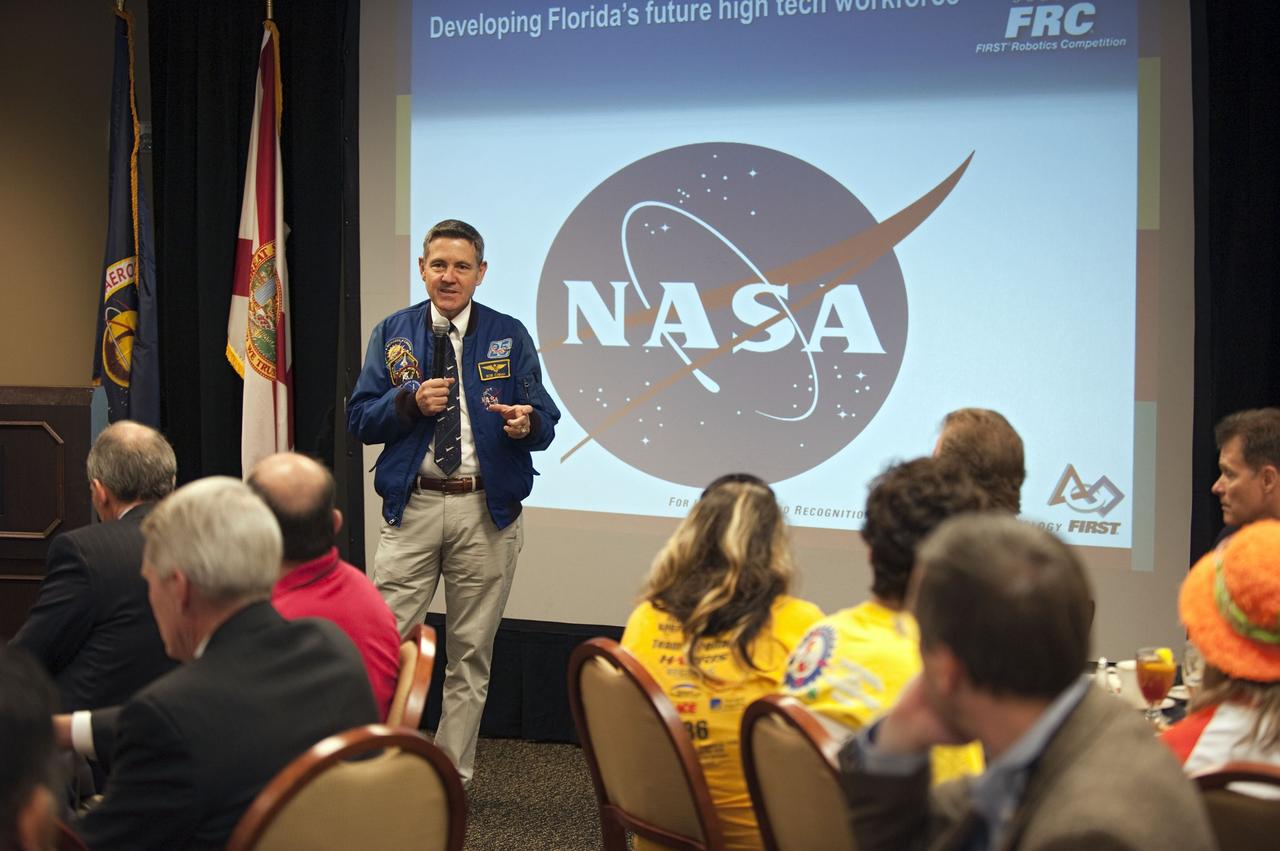
ORLANDO, Fla. – NASA Kennedy Space Center Director Bob Cabana talks to high school students taking part in the "For Inspiration and Recognition of Science and Technology," or FIRST, competition at the University of Central Florida in Orlando. FIRST, founded in 1989, is a non-profit organization that designs accessible, innovative programs to build self-confidence, knowledge and life skills while motivating young people to pursue academic opportunities. The robotics competition challenges teams of high school students and their mentors to solve a common problem in a six-week timeframe using a standard kit of parts and a common set of rules. Photo credit: NASA/Glenn Benson
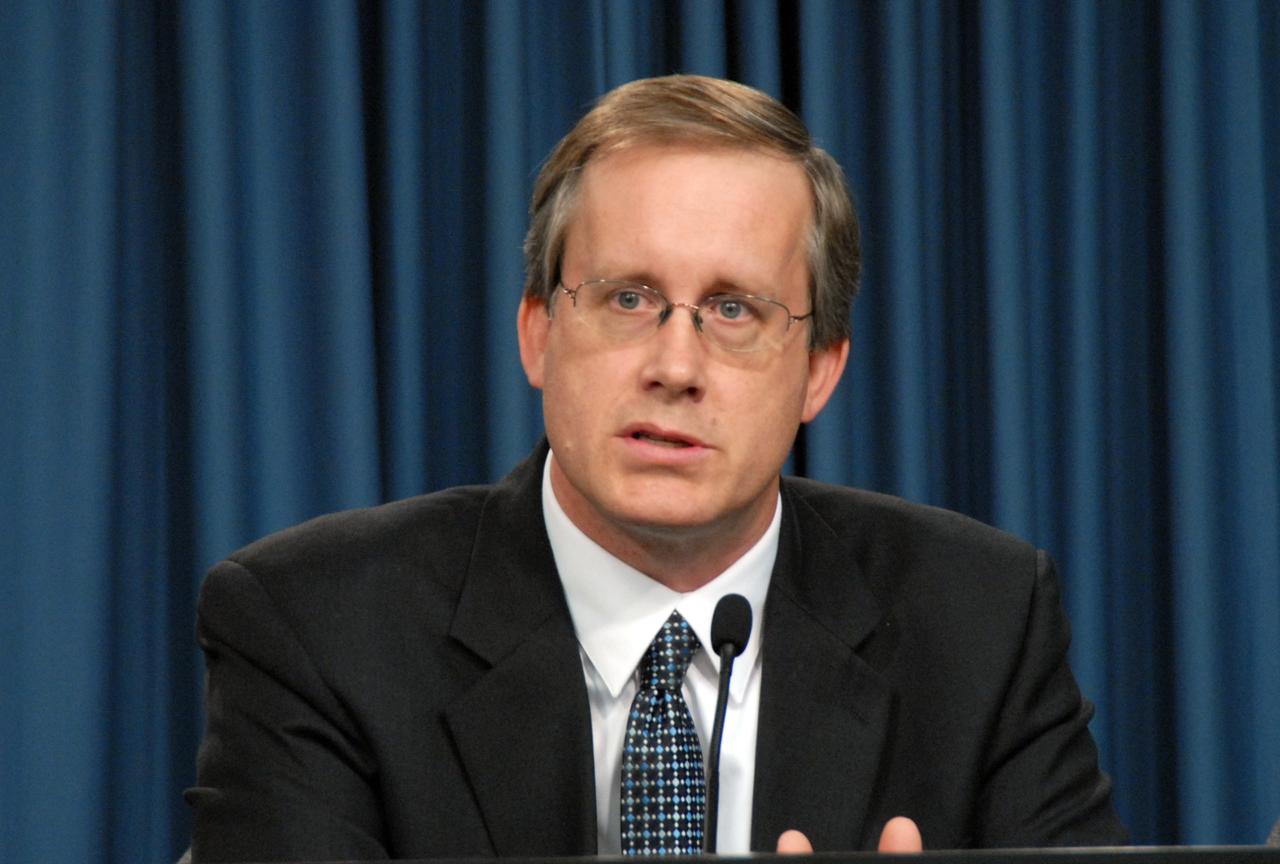
CAPE CANAVERAL, Fla. – At the flight readiness review news conference for space shuttle Discovery's STS-119 mission, Space Shuttle Program Manager John Shannon talks about the discussion surrounding Discovery's readiness for flight. NASA managers decided Feb. 20 more data and possible testing are required before proceeding to launch. Engineering teams have been working to identify what caused damage to a flow control valve on shuttle Endeavour during its November 2008 flight. A new launch date has not been determined. Photo credit: NASA/Glenn Benson
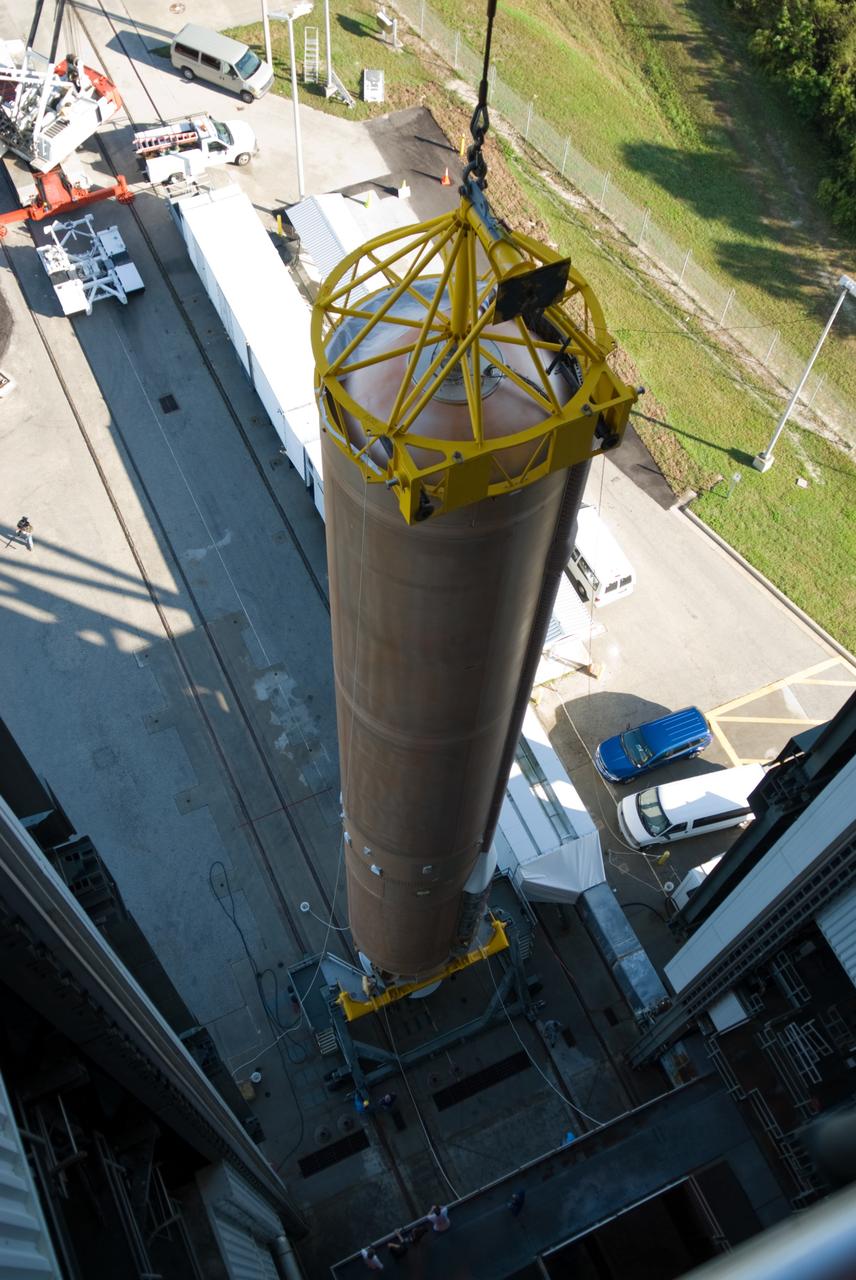
CAPE CANAVERAL, Fla. – This view from the top of the Vertical Integration Facility at Launch Complex 41 on Cape Canaveral Air Force Station in Florida, shows the Atlas V rocket scheduled to launch NASA's Solar Dynamics Observatory, or SDO, suspended in a vertical position. SDO is the first space weather research network mission in NASA's Living With a Star Program. The spacecraft's long-term measurements will give solar scientists in-depth information about changes in the sun's magnetic field and insight into how they affect Earth. Liftoff on the United Launch Alliance Atlas V is scheduled for Feb. 3, 2010. For information on SDO, visit http://www.nasa.gov/sdo. Photo credit: NASA/Glenn Benson
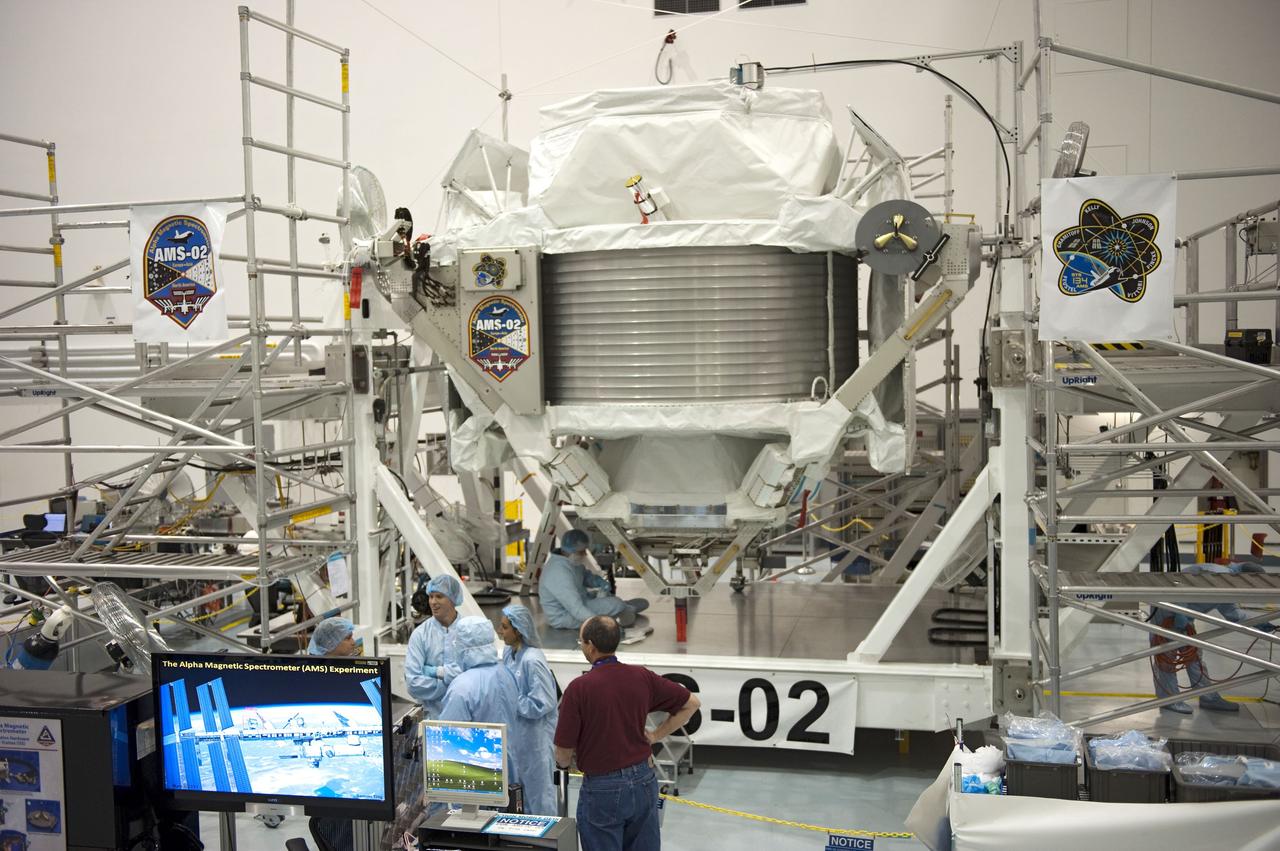
CAPE CANAVERAL, Fla. -- In the Space Station Processing Facility at NASA's Kennedy Space Center in Florida, processing continues for the Alpha Magnetic Spectrometer-2 (AMS). AMS is a particle physics detector, designed to operate as an external experiment on the International Space Station. It will use the unique environment of space to study the universe and its origin by searching for dark matter. AMS-2 will fly to the station aboard space shuttle Endeavour's STS-134 mission targeted to launch April 19 at 7:48 p.m. EDT. For more information visit, www.nasa.gov/mission_pages/shuttle/shuttlemissions/sts134/index.html. Photo credit: NASA/Glenn Benson
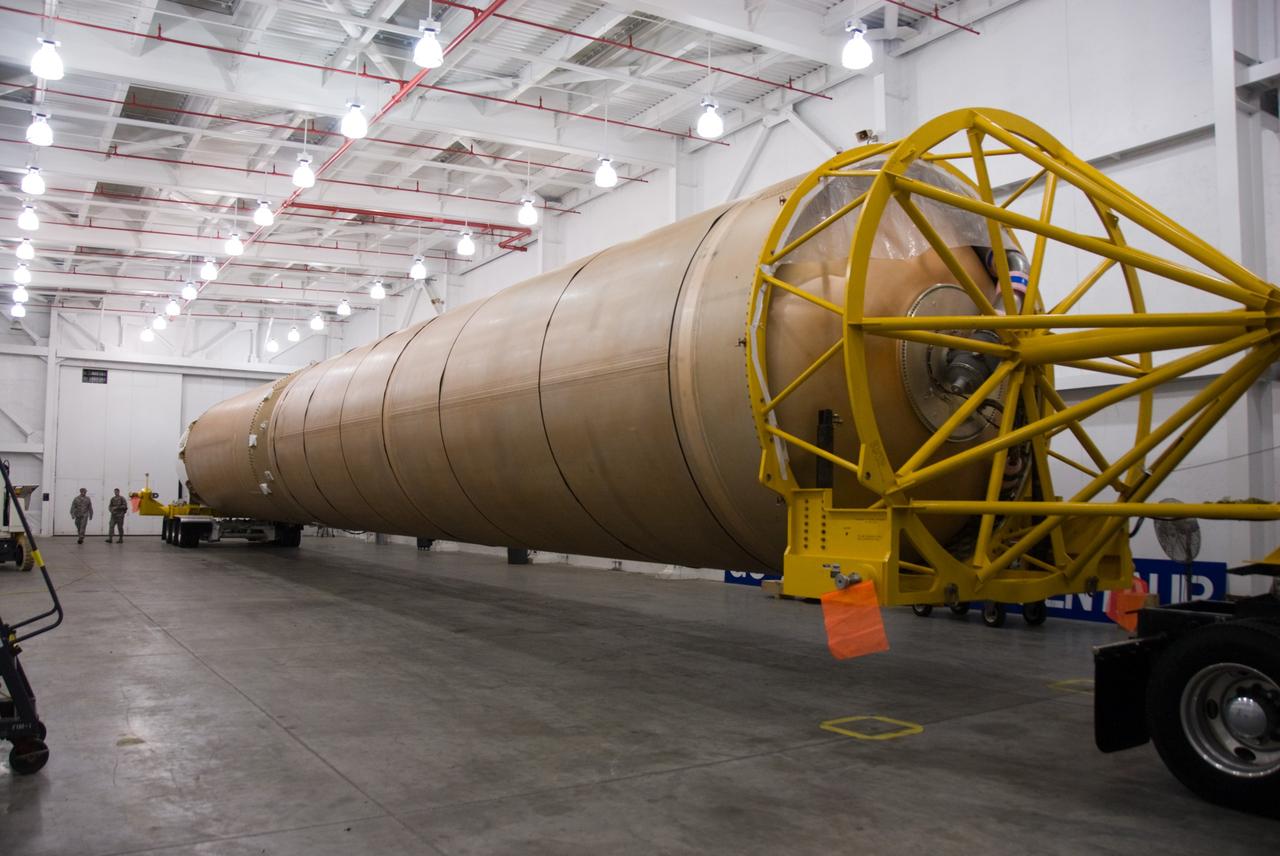
CAPE CANAVERAL, Fla. – At the Atlas Spaceflight Operations Center on Cape Canaveral Air Force Station in Florida, preparations are under way to move the Atlas V rocket scheduled to launch NASA's Solar Dynamics Observatory, or SDO, to Pad 41. SDO is the first space weather research network mission in NASA's Living With a Star Program. The spacecraft's long-term measurements will give solar scientists in-depth information about changes in the sun's magnetic field and insight into how they affect Earth. Liftoff on the United Launch Alliance Atlas V is scheduled for Feb. 3, 2010. For information on SDO, visit http://www.nasa.gov/sdo. Photo credit: NASA/Glenn Benson
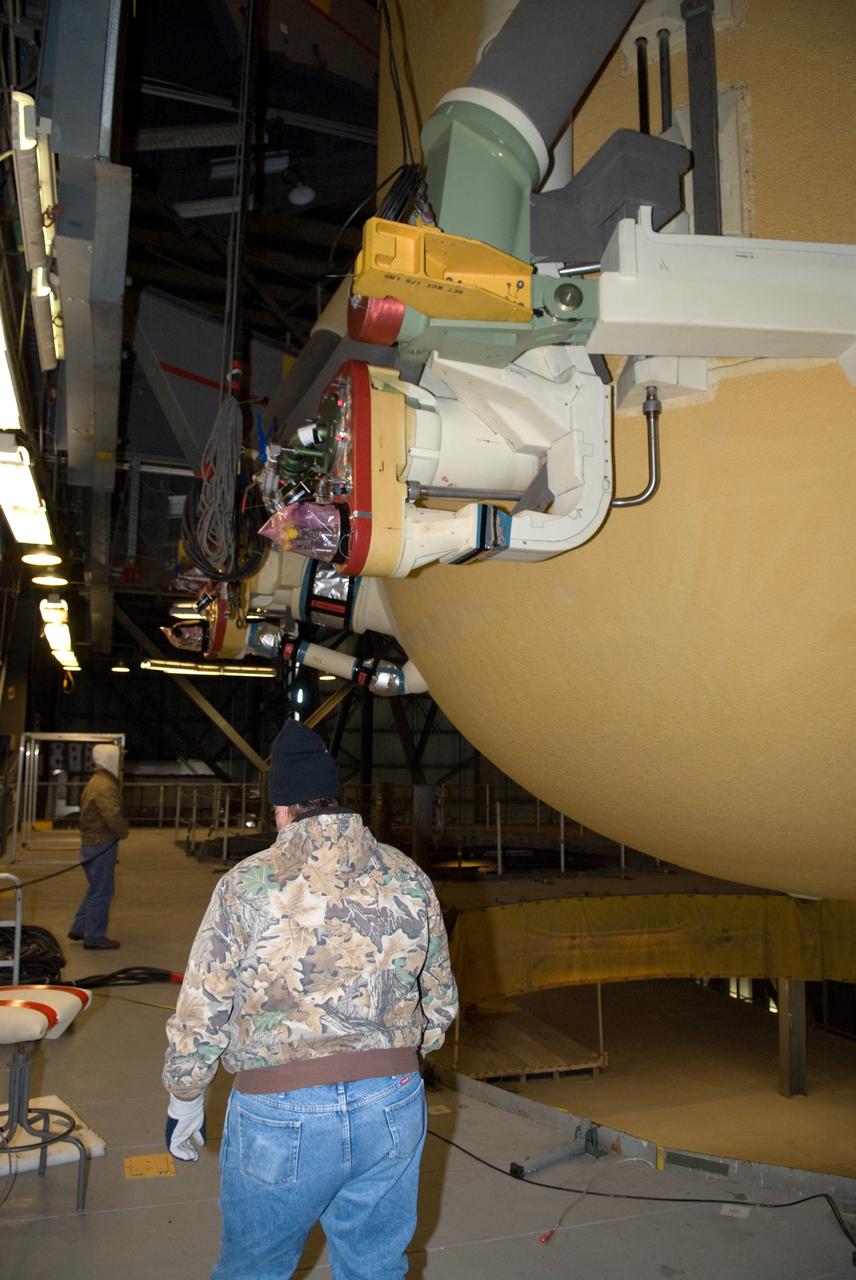
CAPE CANAVERAL, Fla. – In the Vehicle Assembly Building at NASA's Kennedy Space Center in Florida, the external fuel tank for space shuttle Discovery's STS-131 mission, ET-135, has arrived in its test cell. The tank was delivered to Kennedy aboard the Pegasus barge from NASA's Michoud Assembly Facility on Dec. 26. The tank will remain in the test cell until it is transferred into a high bay for mating with the twin solid rocket boosters that will be used on the mission. Launch of the STS-131 mission to the International Space Station is targeted for March 18. For information on the STS-131 mission and crew, visit http://www.nasa.gov/mission_pages/shuttle/shuttlemissions/sts131/index.html. Photo credit: NASA/Glenn Benson
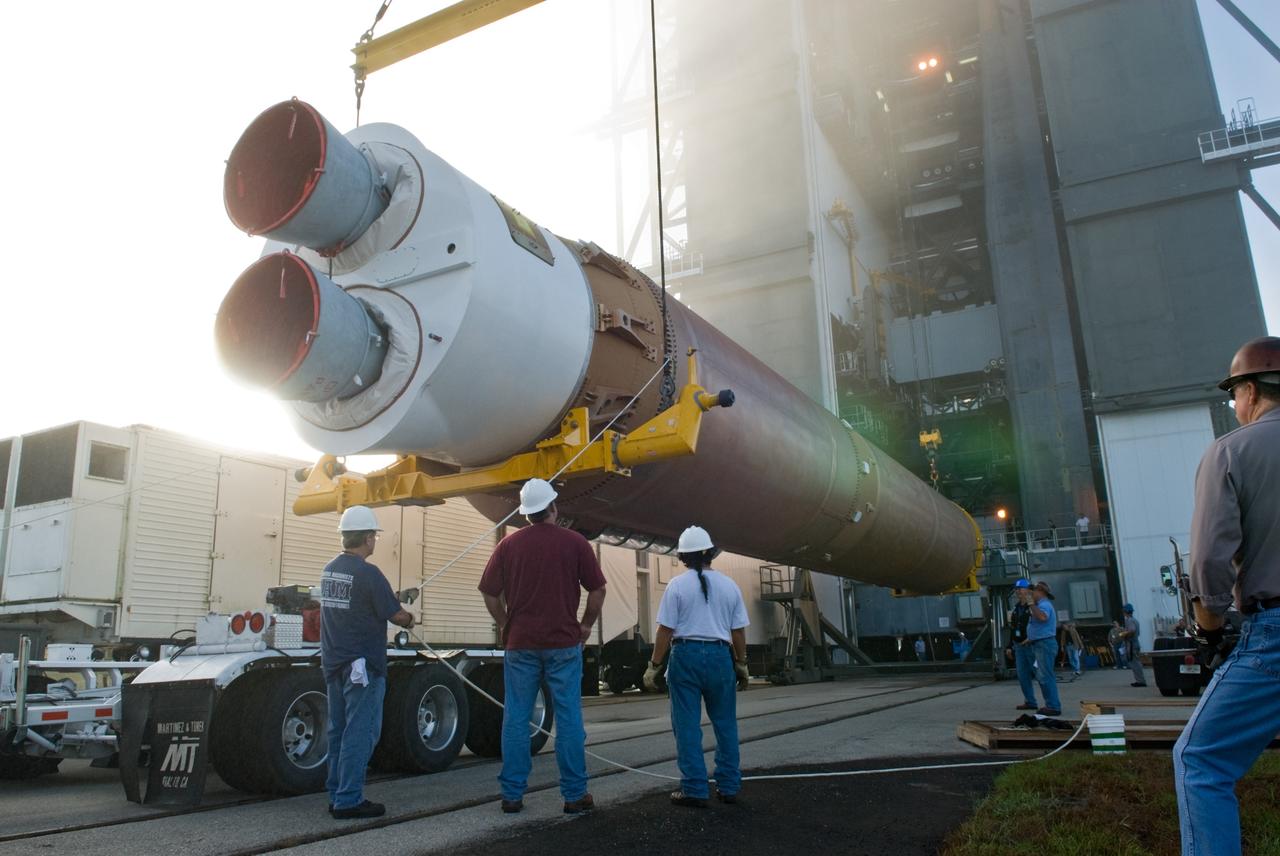
CAPE CANAVERAL, Fla. – Workers lift the Atlas V rocket scheduled to launch NASA's Solar Dynamics Observatory, or SDO, from its transporter at Launch Complex 41 on Cape Canaveral Air Force Station in Florida. SDO is the first space weather research network mission in NASA's Living With a Star Program. The spacecraft's long-term measurements will give solar scientists in-depth information about changes in the sun's magnetic field and insight into how they affect Earth. Liftoff on the United Launch Alliance Atlas V is scheduled for Feb. 3, 2010. For information on SDO, visit http://www.nasa.gov/sdo. Photo credit: NASA/Glenn Benson
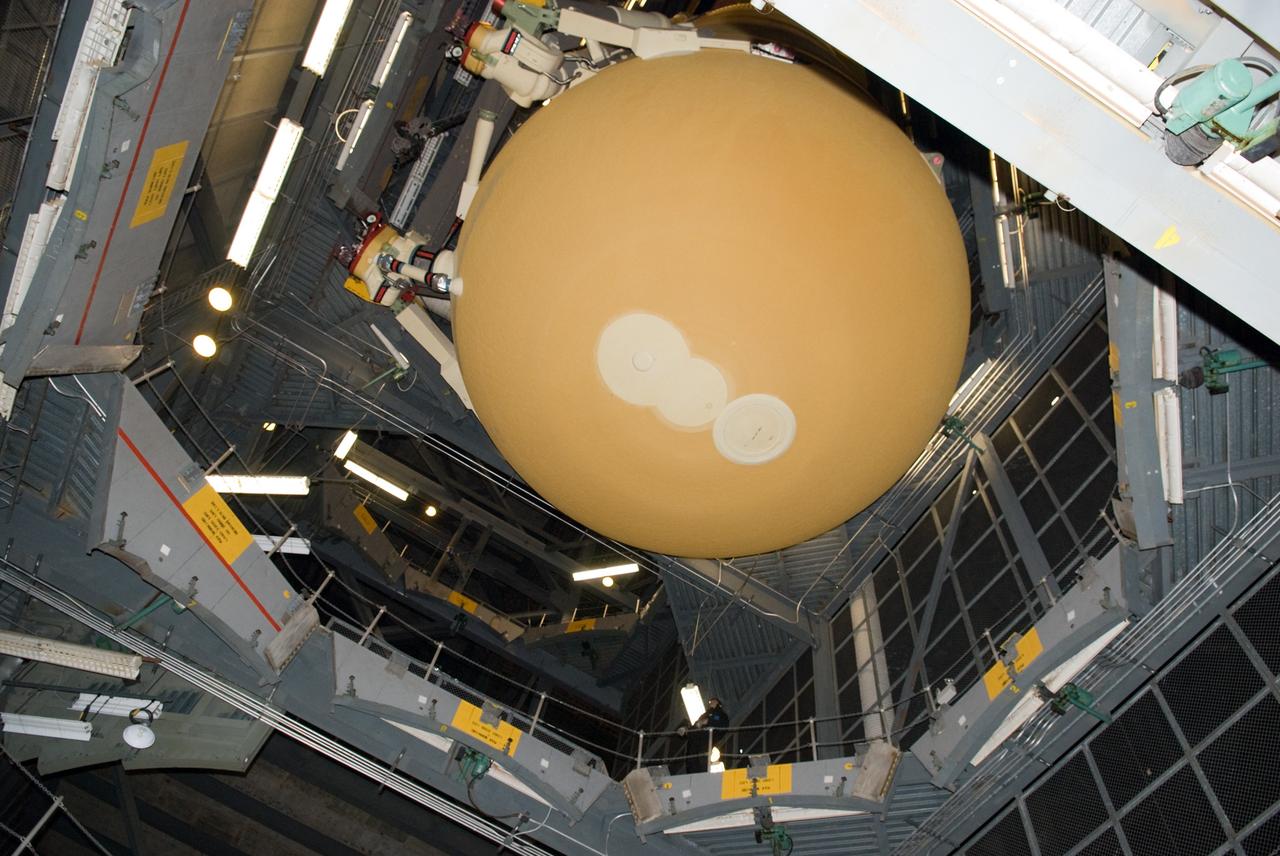
CAPE CANAVERAL, Fla. – In the Vehicle Assembly Building at NASA's Kennedy Space Center in Florida, the external fuel tank for space shuttle Discovery's STS-131 mission, ET-135, is lowered into a test cell. The tank was delivered to Kennedy aboard the Pegasus barge from NASA's Michoud Assembly Facility on Dec. 26. The tank will remain in the test cell until it is transferred into a high bay for mating with the twin solid rocket boosters that will be used on the mission. Launch of the STS-131 mission to the International Space Station is targeted for March 18. For information on the STS-131 mission and crew, visit http://www.nasa.gov/mission_pages/shuttle/shuttlemissions/sts131/index.html. Photo credit: NASA/Glenn Benson
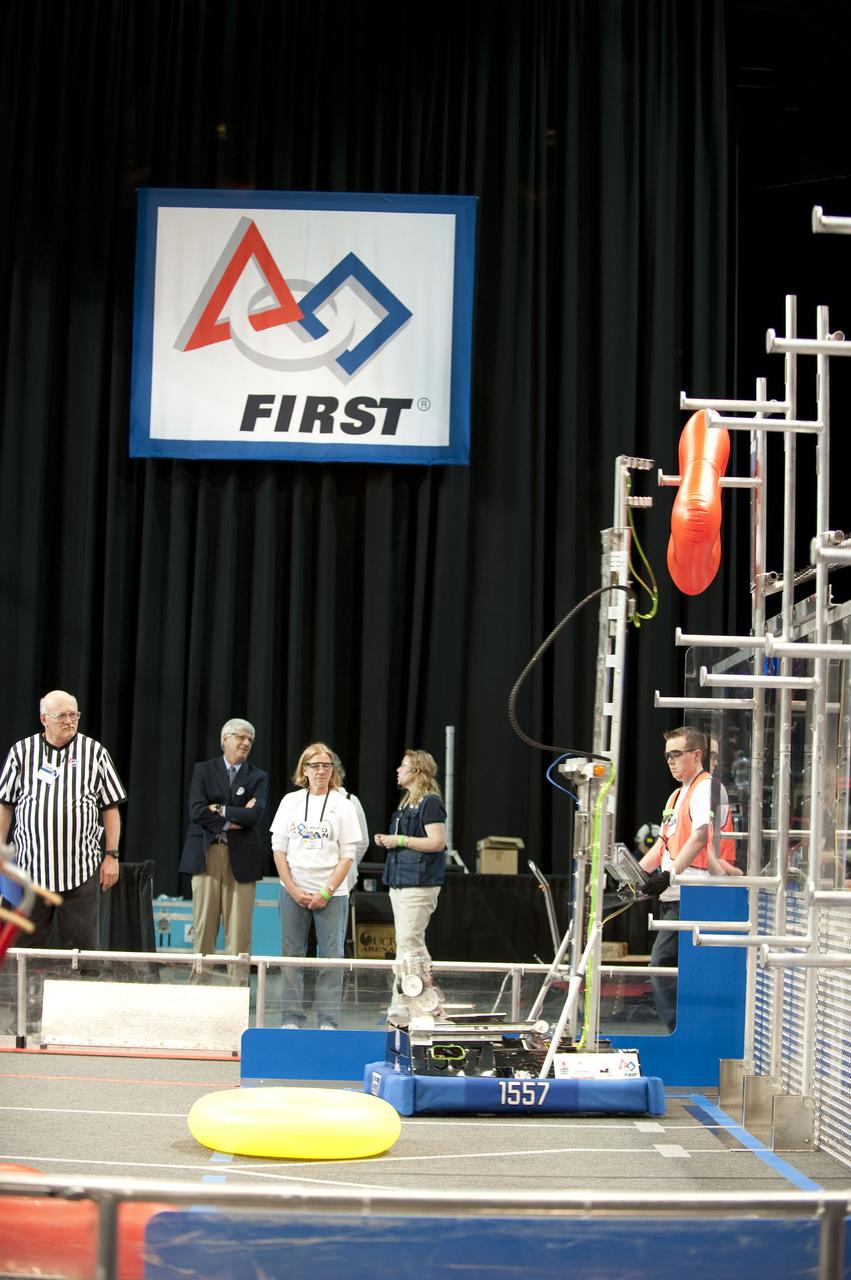
ORLANDO, Fla. – Teams prepare for the "For Inspiration and Recognition of Science and Technology," or FIRST, competition at the University of Central Florida in Orlando. About 60 high school teams took part in hopes of advancing to the national robotics championship. FIRST, founded in 1989, is a non-profit organization that designs accessible, innovative programs to build self-confidence, knowledge and life skills while motivating young people to pursue academic opportunities. The robotics competition challenges teams of high school students and their mentors to solve a common problem in a six-week timeframe using a standard kit of parts and a common set of rules. Photo credit: NASA/Glenn Benson
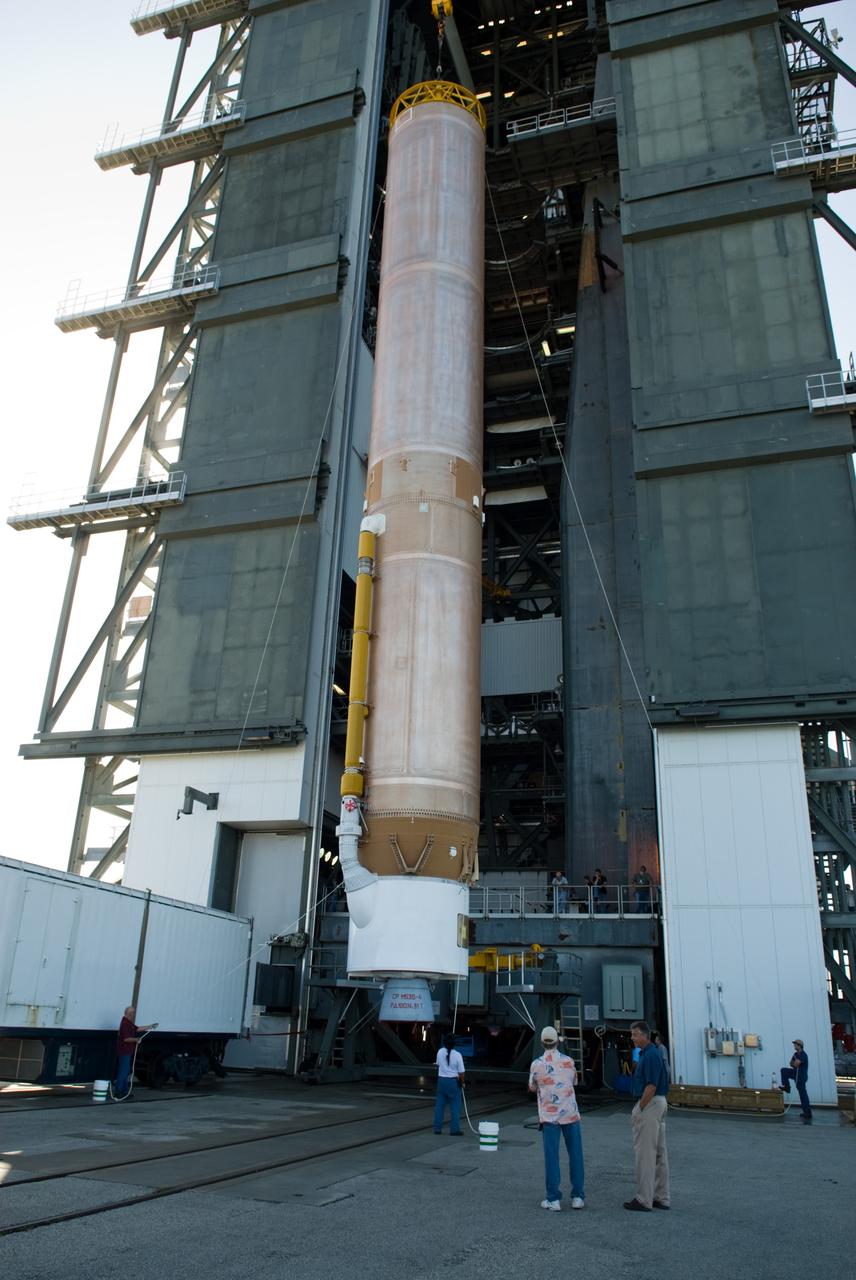
CAPE CANAVERAL, Fla. – Workers hoist the Atlas V rocket scheduled to launch NASA's Solar Dynamics Observatory, or SDO, into the Vertical Integration Facility at Launch Complex 41 on Cape Canaveral Air Force Station in Florida. SDO is the first space weather research network mission in NASA's Living With a Star Program. The spacecraft's long-term measurements will give solar scientists in-depth information about changes in the sun's magnetic field and insight into how they affect Earth. Liftoff on the United Launch Alliance Atlas V is scheduled for Feb. 3, 2010. For information on SDO, visit http://www.nasa.gov/sdo. Photo credit: NASA/Glenn Benson
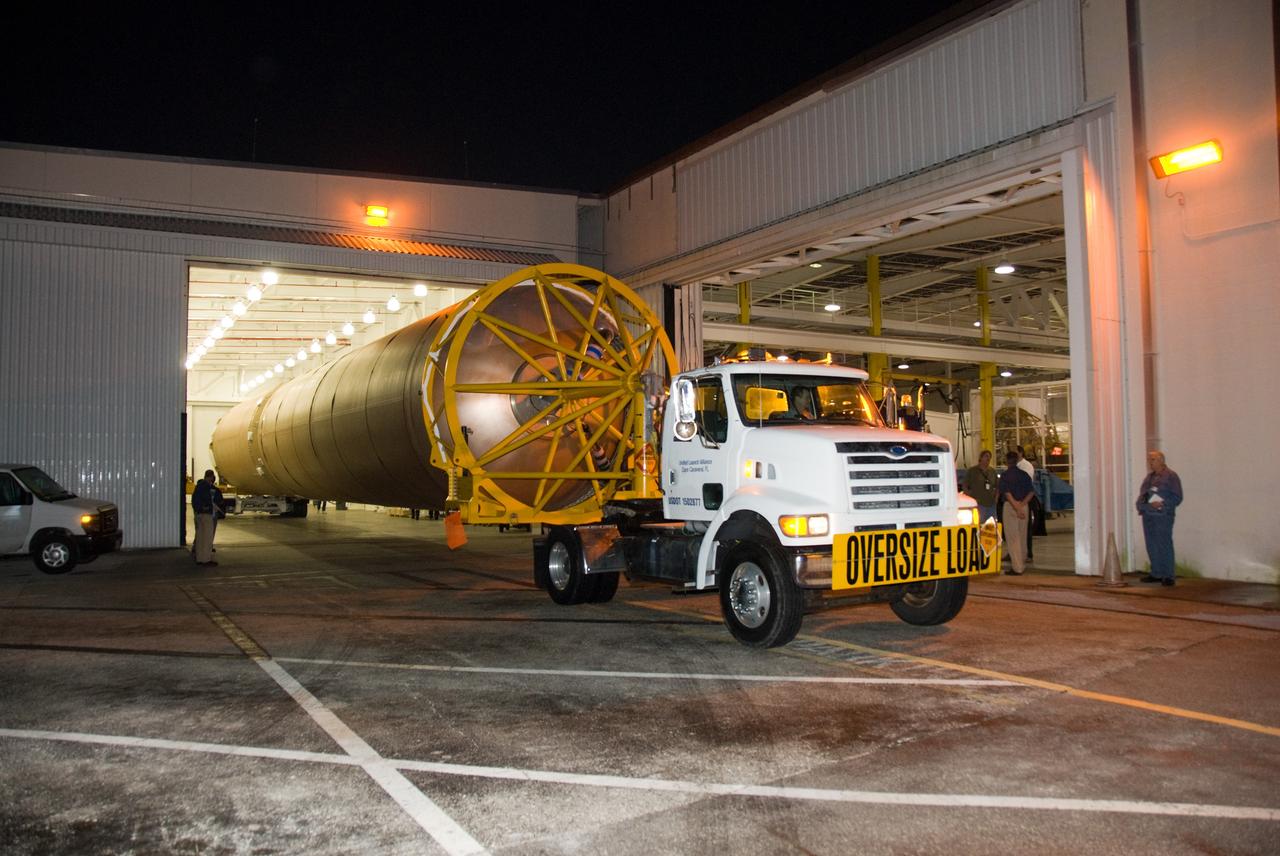
CAPE CANAVERAL, Fla. – At the Atlas Spaceflight Operations Center on Cape Canaveral Air Force Station in Florida, the Atlas V rocket scheduled to launch NASA's Solar Dynamics Observatory, or SDO, begins its move to Pad 41. SDO is the first space weather research network mission in NASA's Living With a Star Program. The spacecraft's long-term measurements will give solar scientists in-depth information about changes in the sun's magnetic field and insight into how they affect Earth. Liftoff on the United Launch Alliance Atlas V is scheduled for Feb. 3, 2010. For information on SDO, visit http://www.nasa.gov/sdo. Photo credit: NASA/Glenn Benson
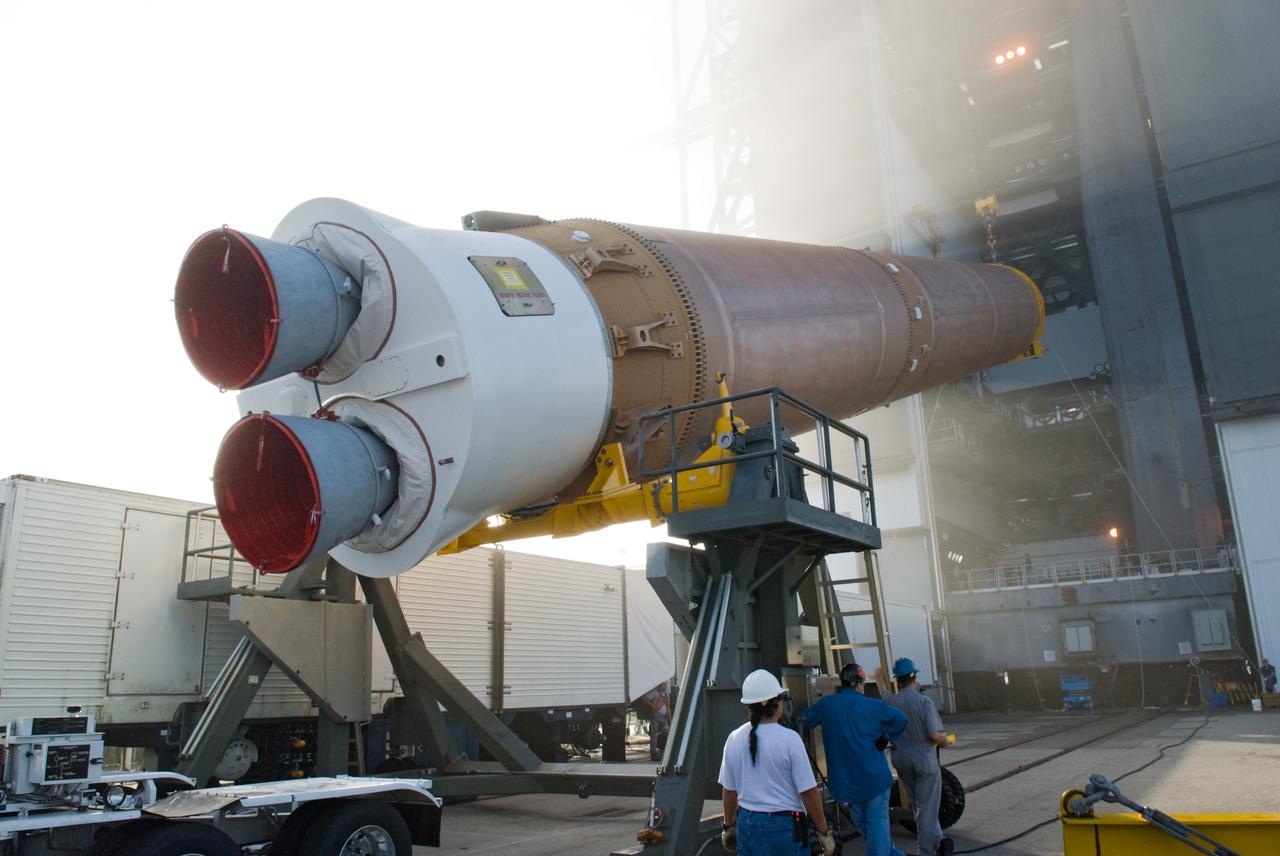
CAPE CANAVERAL, Fla. – Workers lift the Atlas V rocket scheduled to launch NASA's Solar Dynamics Observatory, or SDO, into a vertical position at Launch Complex 41 on Cape Canaveral Air Force Station in Florida. SDO is the first space weather research network mission in NASA's Living With a Star Program. The spacecraft's long-term measurements will give solar scientists in-depth information about changes in the sun's magnetic field and insight into how they affect Earth. Liftoff on the United Launch Alliance Atlas V is scheduled for Feb. 3, 2010. For information on SDO, visit http://www.nasa.gov/sdo. Photo credit: NASA/Glenn Benson
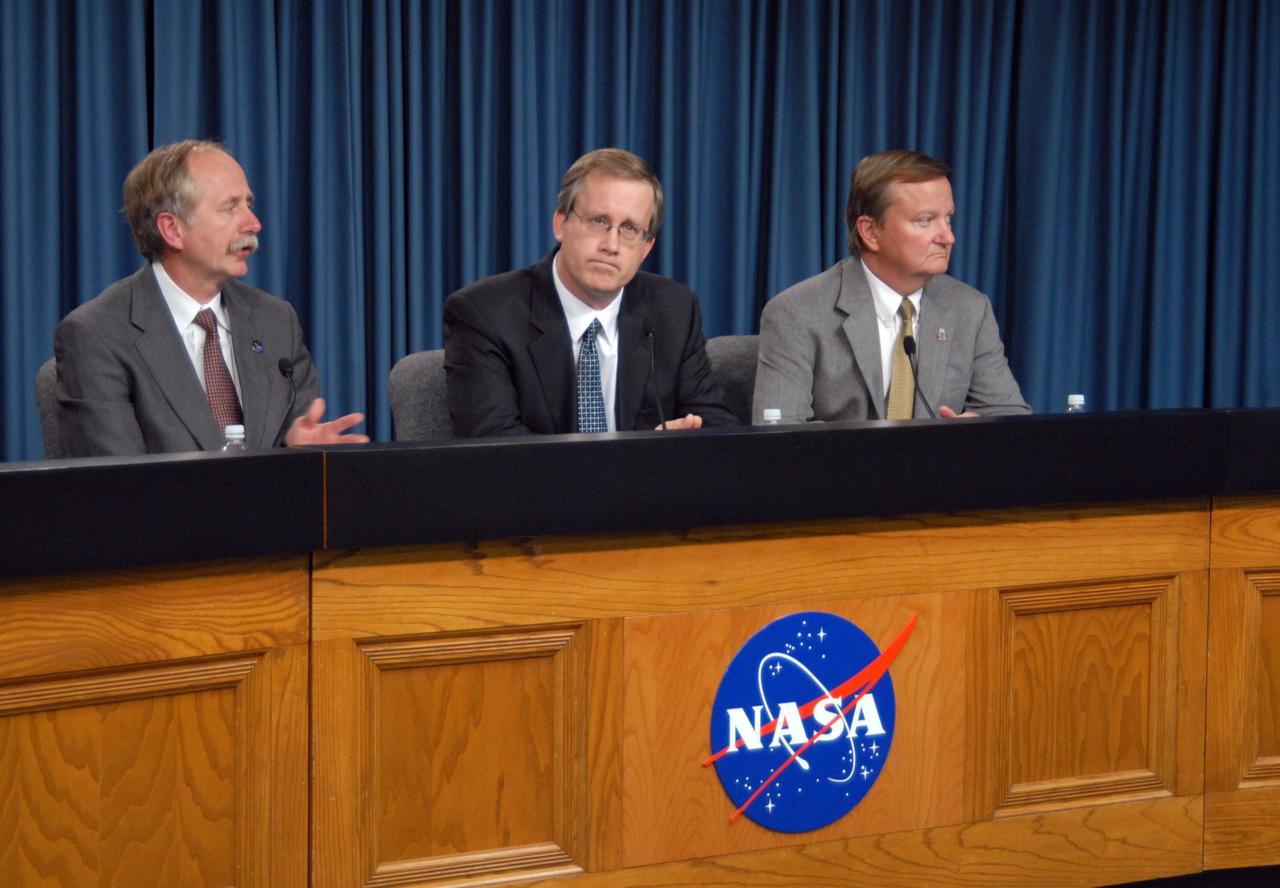
CAPE CANAVERAL, Fla. – Associate Administrator for Space Operations Bill Gerstenmaier, Space Shuttle Program Manager John Shannon and Space Shuttle Launch Director Mike Leinbach respond to media questions about the flight readiness review news conference for space shuttle Discovery's STS-119 mission. NASA managers decided Feb. 20 more data and possible testing are required before proceeding to launch. Engineering teams have been working to identify what caused damage to a flow control valve on shuttle Endeavour during its November 2008 flight. A new launch date has not been determined. Photo credit: NASA/Glenn Benson
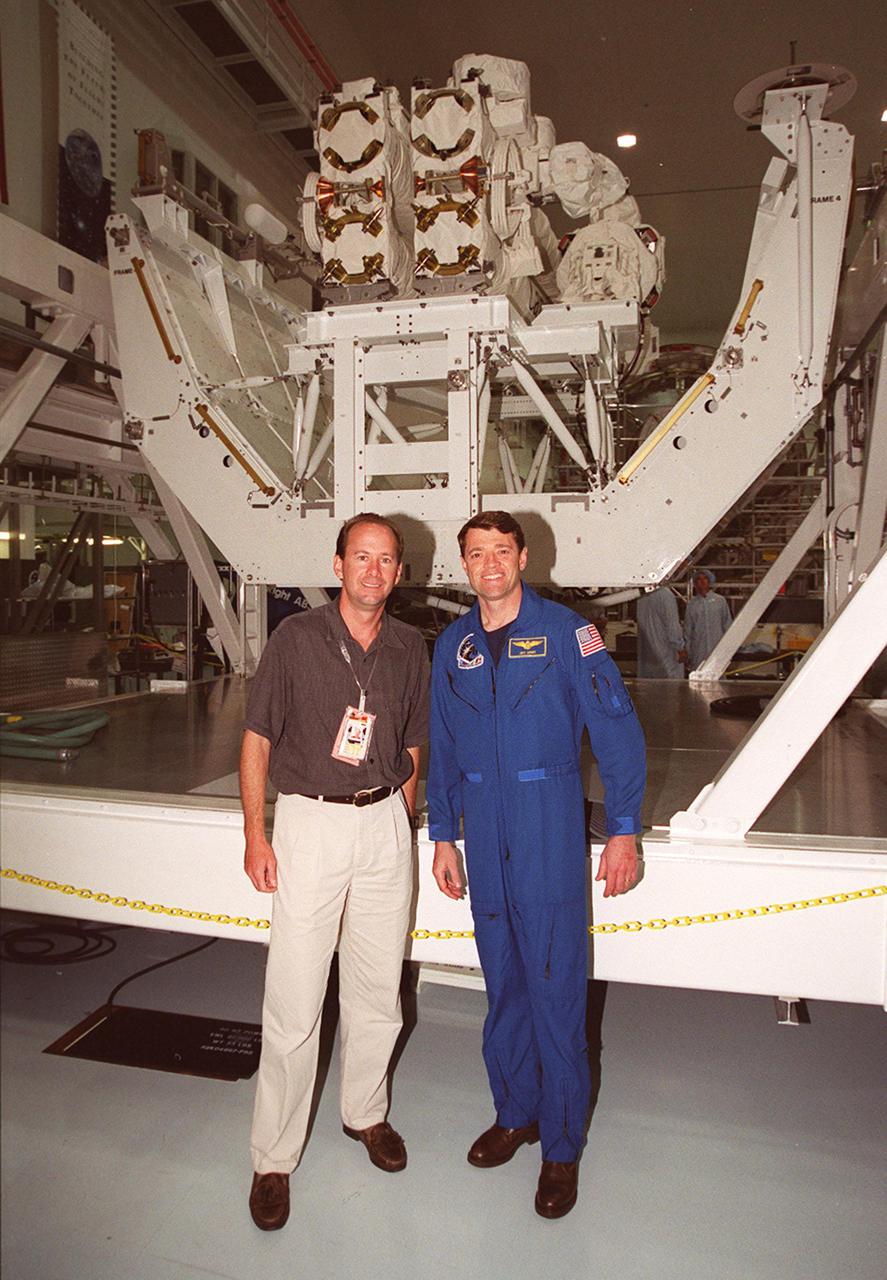
KSC’s PAO videographer, Glenn Benson (left) and STS-100 Pilot Jeffrey S. Ashby pose in front of the Canadian robotic arm, SSRMS, in the Space Station Processing Facility. The STS-100 crew is at KSC for Terminal Countdown Demonstration Test activities that include emergency escape training at the pad and a simulated launch countdown. The mission is carrying the Multi-Purpose Logistics Module Raffaello and the SSRMS, to the International Space Station. Raffaello carries six system racks and two storage racks for the U.S. Lab. The SSRMS is crucial to the continued assembly of the orbiting complex. Launch of mission STS-100 is scheduled for April 19 at 2:41 p.m. EDT from Launch Pad 39A
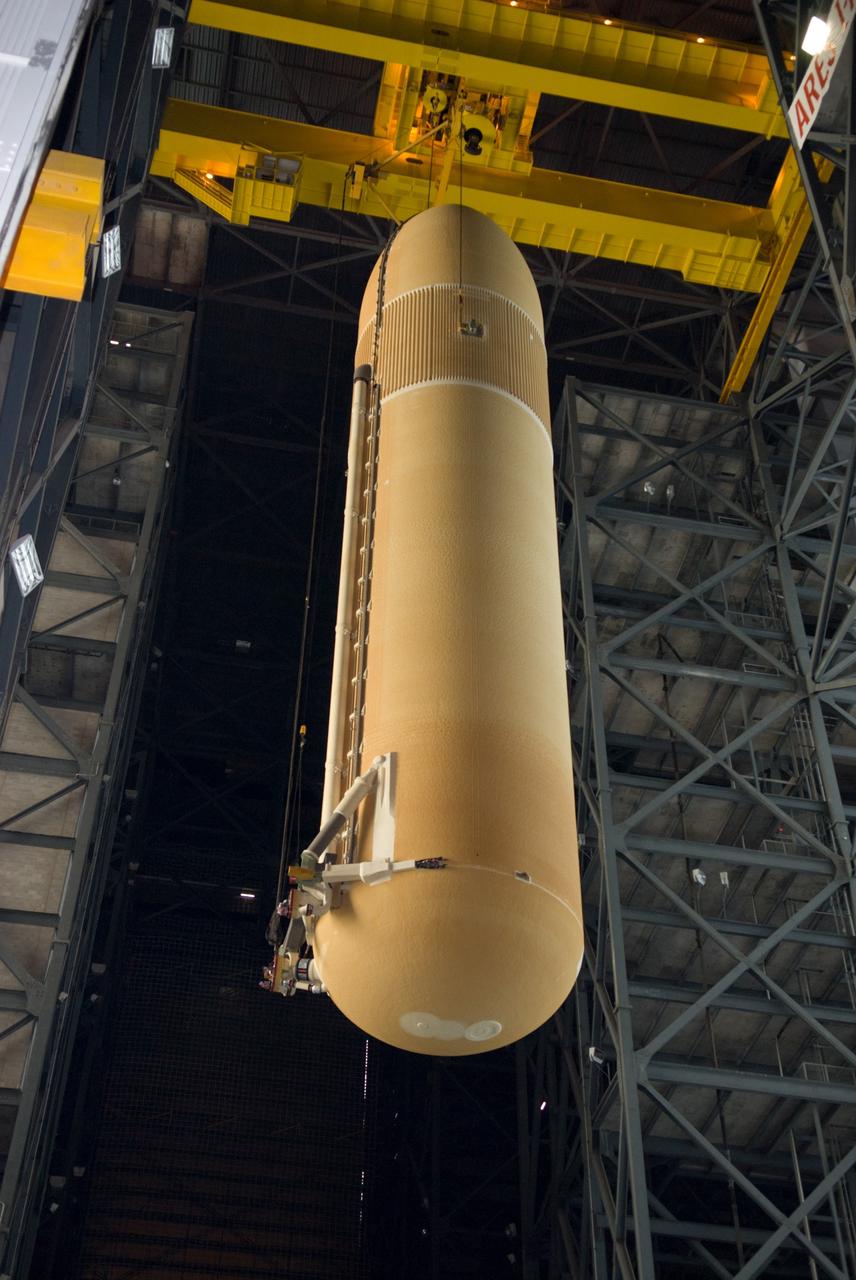
CAPE CANAVERAL, Fla. – In the Vehicle Assembly Building at NASA's Kennedy Space Center in Florida, a crane is enlisted to lift the external fuel tank for space shuttle Discovery's STS-131 mission, ET-135, into a test cell. The tank was delivered to Kennedy aboard the Pegasus barge from NASA's Michoud Assembly Facility on Dec. 26. The tank will remain in the test cell until it is transferred into a high bay for mating with the twin solid rocket boosters that will be used on the mission. Launch of the STS-131 mission to the International Space Station is targeted for March 18. For information on the STS-131 mission and crew, visit http://www.nasa.gov/mission_pages/shuttle/shuttlemissions/sts131/index.html. Photo credit: NASA/Glenn Benson
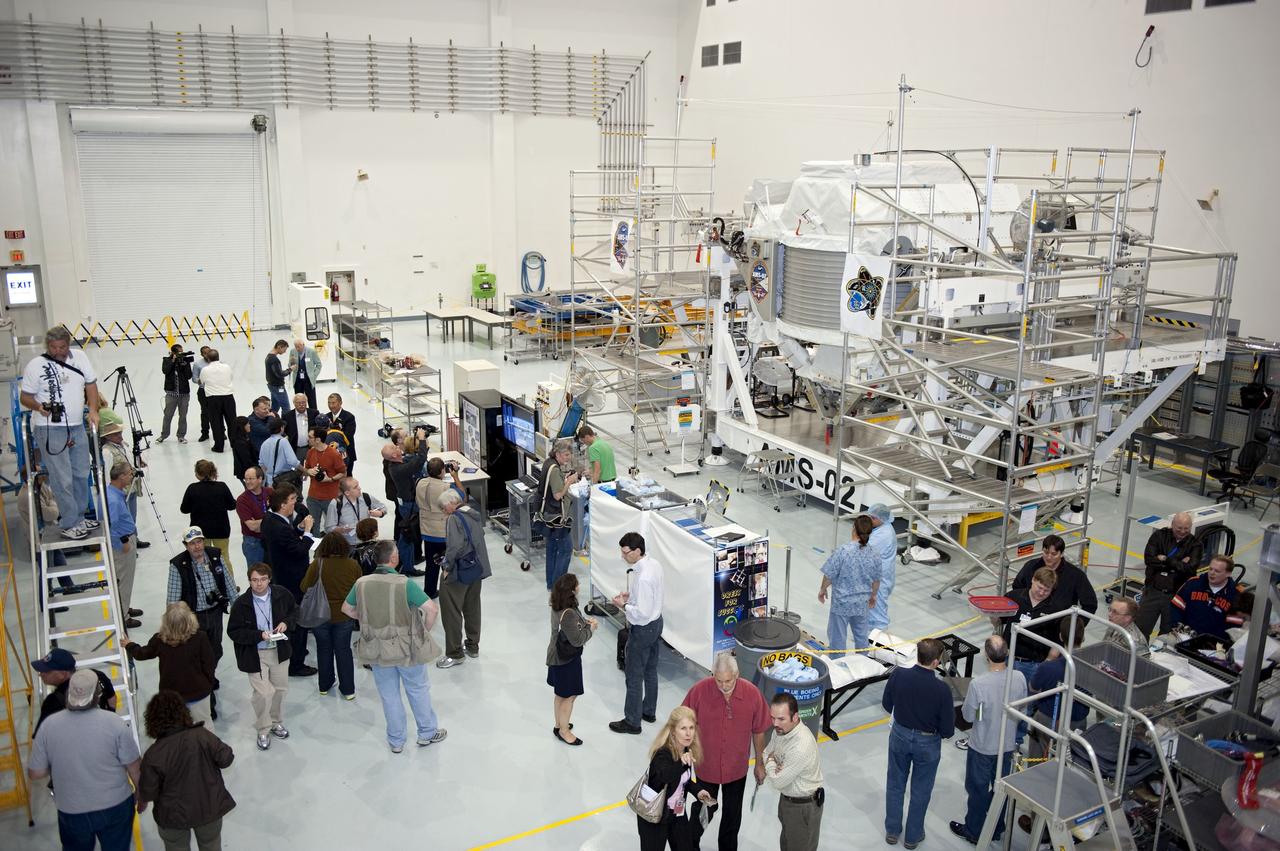
CAPE CANAVERAL, Fla. -- In the Space Station Processing Facility at NASA's Kennedy Space Center in Florida, media check out the Alpha Magnetic Spectrometer-2 (AMS). AMS is a particle physics detector, designed to operate as an external experiment on the International Space Station. It will use the unique environment of space to study the universe and its origin by searching for dark matter. AMS-2 will fly to the station aboard space shuttle Endeavour's STS-134 mission targeted to launch April 19 at 7:48 p.m. EDT. For more information visit, www.nasa.gov/mission_pages/shuttle/shuttlemissions/sts134/index.html. Photo credit: NASA/Glenn Benson
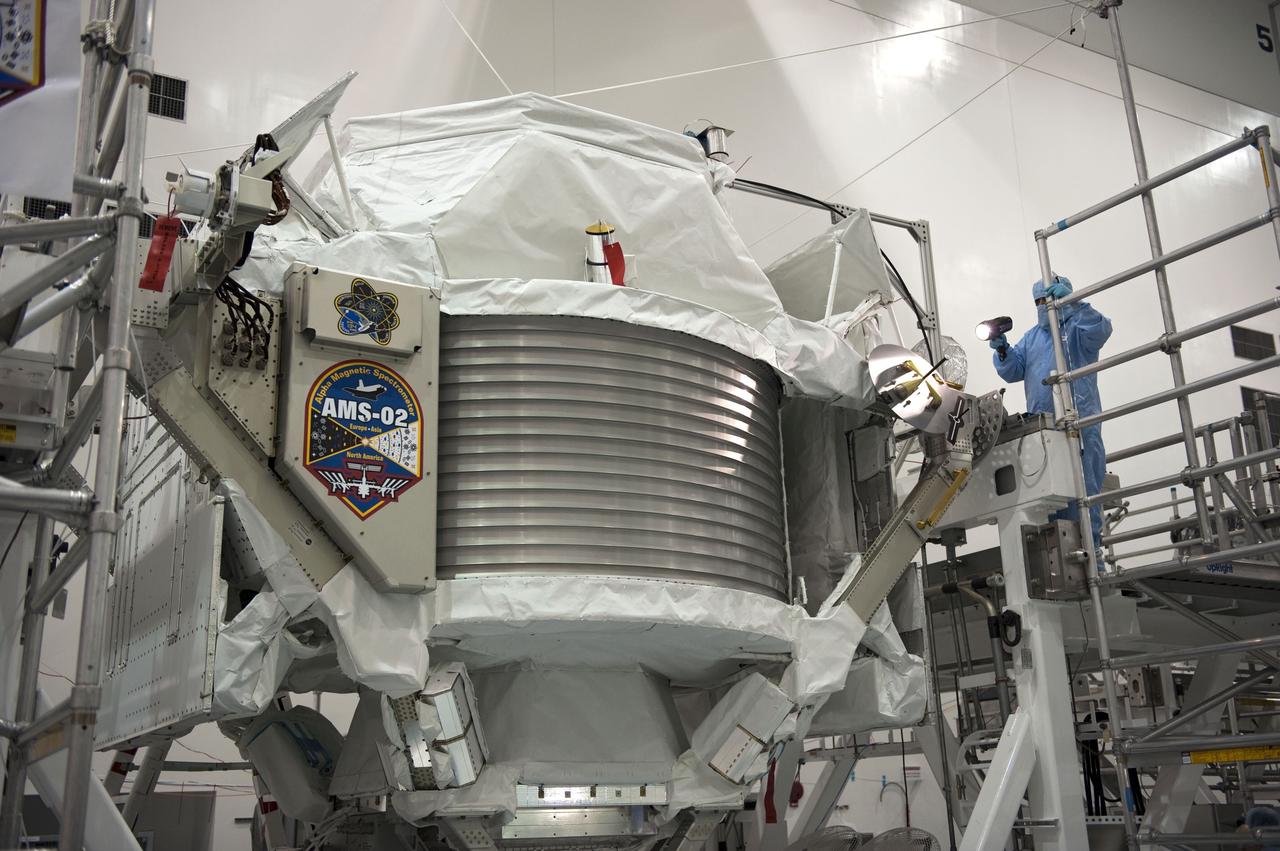
CAPE CANAVERAL, Fla. -- In the Space Station Processing Facility at NASA's Kennedy Space Center in Florida, processing continues for the Alpha Magnetic Spectrometer-2 (AMS). AMS is a particle physics detector, designed to operate as an external experiment on the International Space Station. It will use the unique environment of space to study the universe and its origin by searching for dark matter. AMS-2 will fly to the station aboard space shuttle Endeavour's STS-134 mission targeted to launch April 19 at 7:48 p.m. EDT. For more information visit, www.nasa.gov/mission_pages/shuttle/shuttlemissions/sts134/index.html. Photo credit: NASA/Glenn Benson
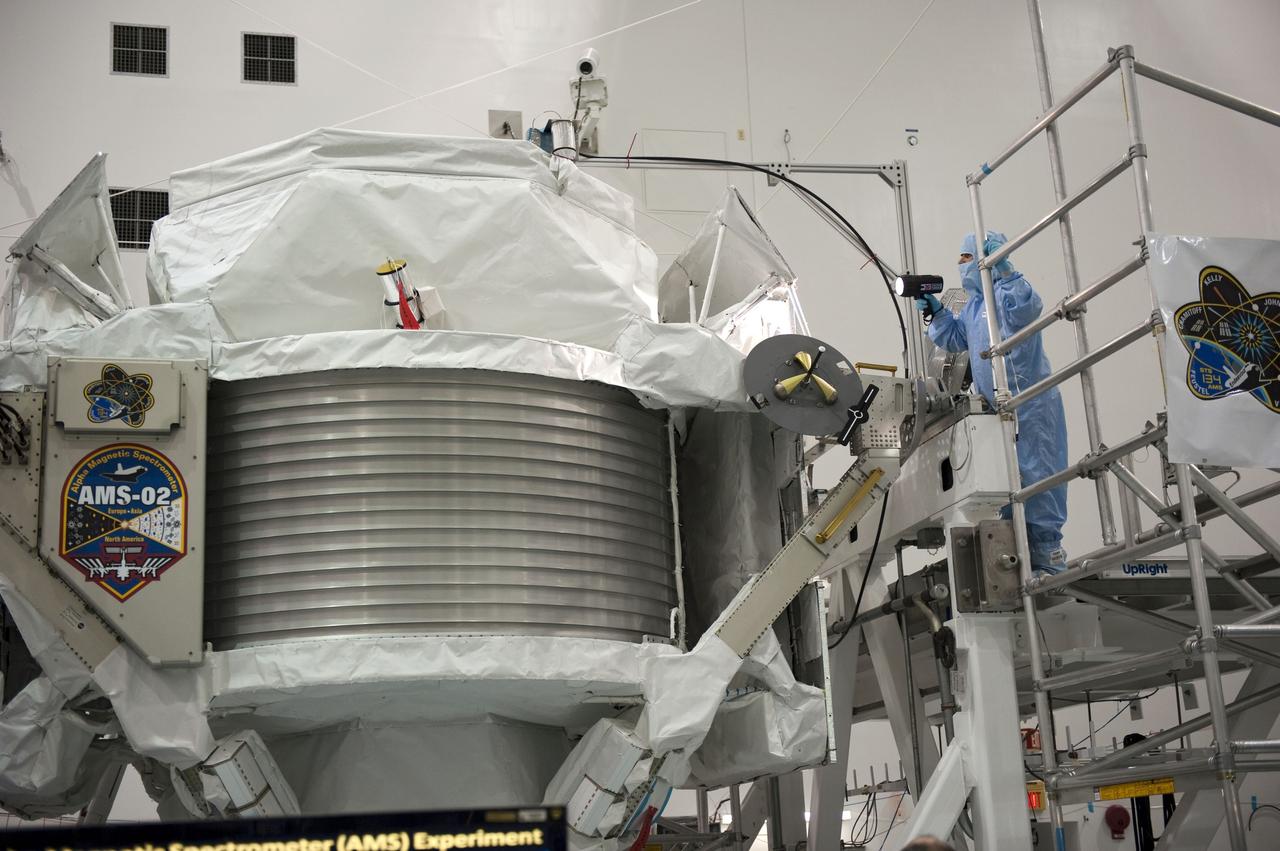
CAPE CANAVERAL, Fla. -- In the Space Station Processing Facility at NASA's Kennedy Space Center in Florida, processing continues for the Alpha Magnetic Spectrometer-2 (AMS). AMS is a particle physics detector, designed to operate as an external experiment on the International Space Station. It will use the unique environment of space to study the universe and its origin by searching for dark matter. AMS-2 will fly to the station aboard space shuttle Endeavour's STS-134 mission targeted to launch April 19 at 7:48 p.m. EDT. For more information visit, www.nasa.gov/mission_pages/shuttle/shuttlemissions/sts134/index.html. Photo credit: NASA/Glenn Benson
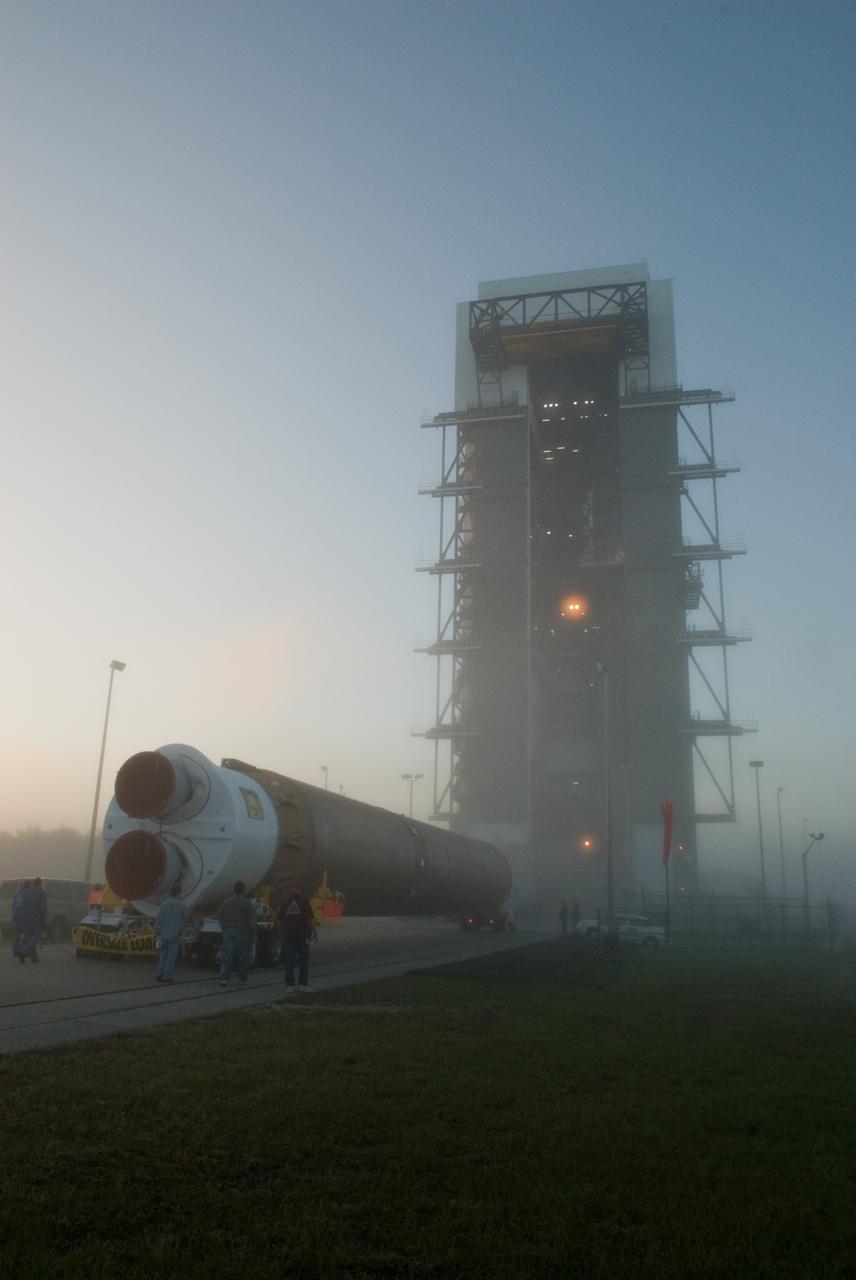
CAPE CANAVERAL, Fla. – Fog engulfs Launch Complex 41 on Cape Canaveral Air Force Station in Florida as the Atlas V rocket scheduled to launch NASA's Solar Dynamics Observatory, or SDO, arrives at the pad. SDO is the first space weather research network mission in NASA's Living With a Star Program. The spacecraft's long-term measurements will give solar scientists in-depth information about changes in the sun's magnetic field and insight into how they affect Earth. Liftoff on the United Launch Alliance Atlas V is scheduled for Feb. 3, 2010. For information on SDO, visit http://www.nasa.gov/sdo. Photo credit: NASA/Glenn Benson
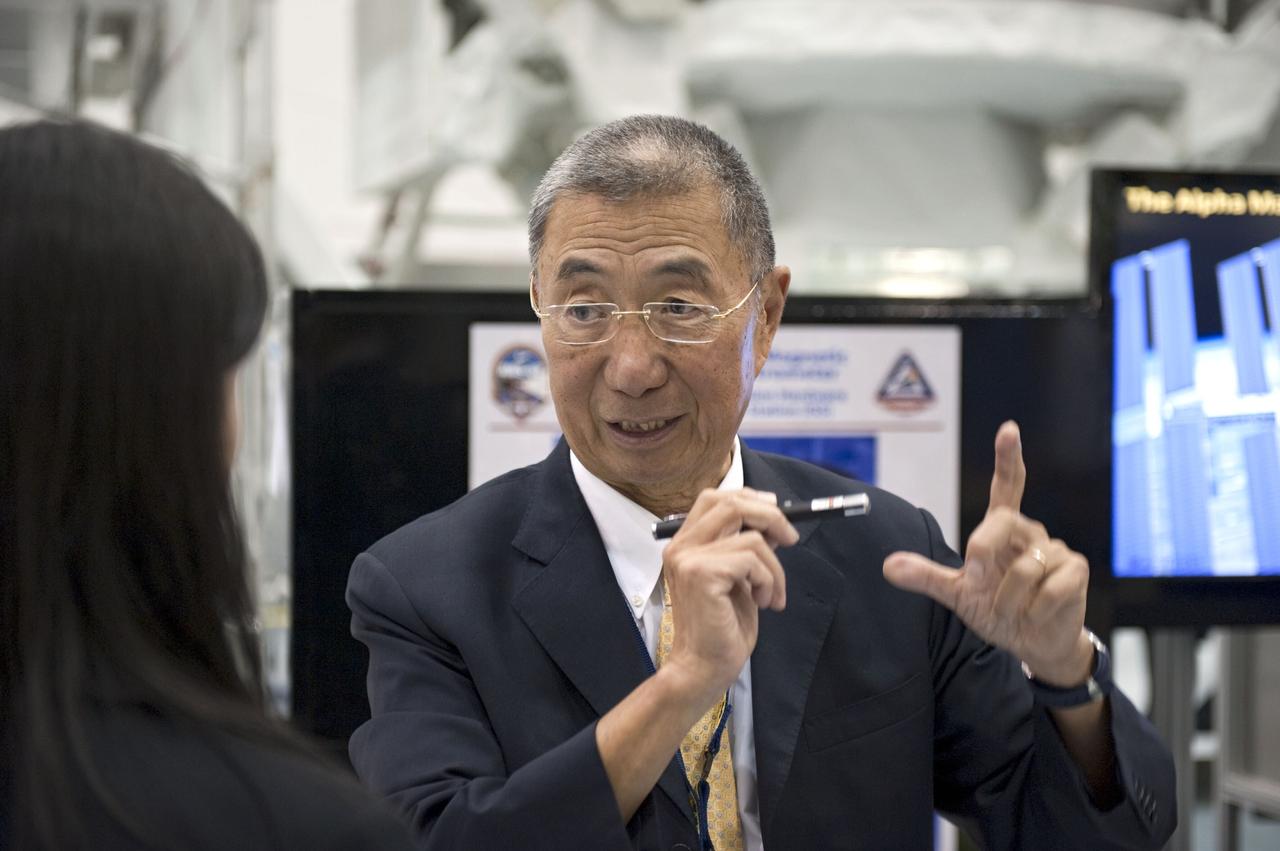
CAPE CANAVERAL, Fla. -- In the Space Station Processing Facility at NASA's Kennedy Space Center in Florida Professor Sam Ting, Alpha Magnetic Spectrometer-2 (AMS) principal investigator at the Massachusetts Institute of Technology, talks to media about the particle physics detector. AMS is designed to operate as an external experiment on the International Space Station. It will use the unique environment of space to study the universe and its origin by searching for dark matter. AMS-2 will fly to the station aboard space shuttle Endeavour's STS-134 mission targeted to launch April 19 at 7:48 p.m. EDT. For more information visit, www.nasa.gov/mission_pages/shuttle/shuttlemissions/sts134/index.html. Photo credit: NASA/Glenn Benson
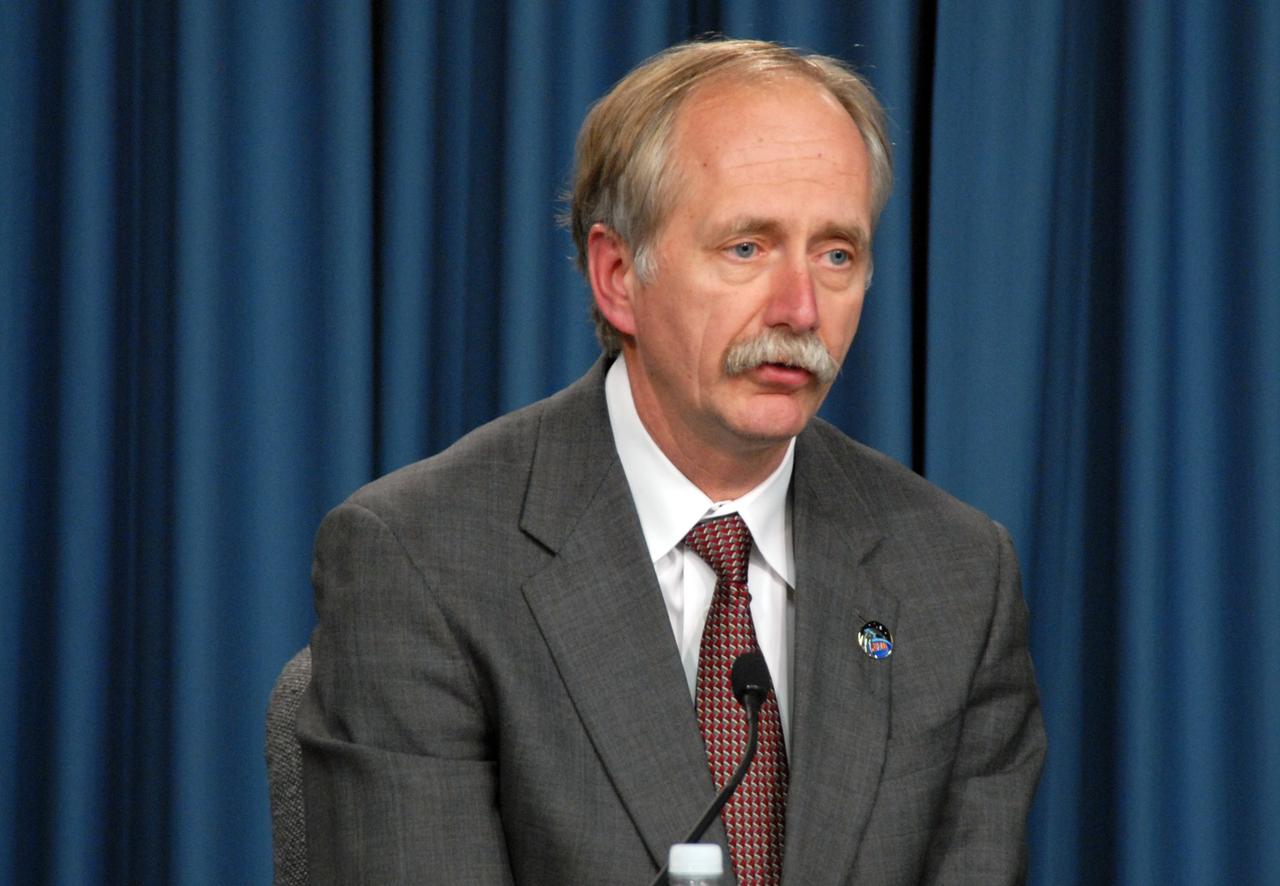
CAPE CANAVERAL, Fla. – At the flight readiness review news conference for space shuttle Discovery's STS-119 mission, Associate Administrator for Space Operations Bill Gerstenmaier talks about the review by mission managers of Discovery's readiness for flight. NASA managers decided Feb. 20 more data and possible testing are required before proceeding to launch. Engineering teams have been working to identify what caused damage to a flow control valve on shuttle Endeavour during its November 2008 flight. A new launch date has not been determined. Photo credit: NASA/Glenn Benson
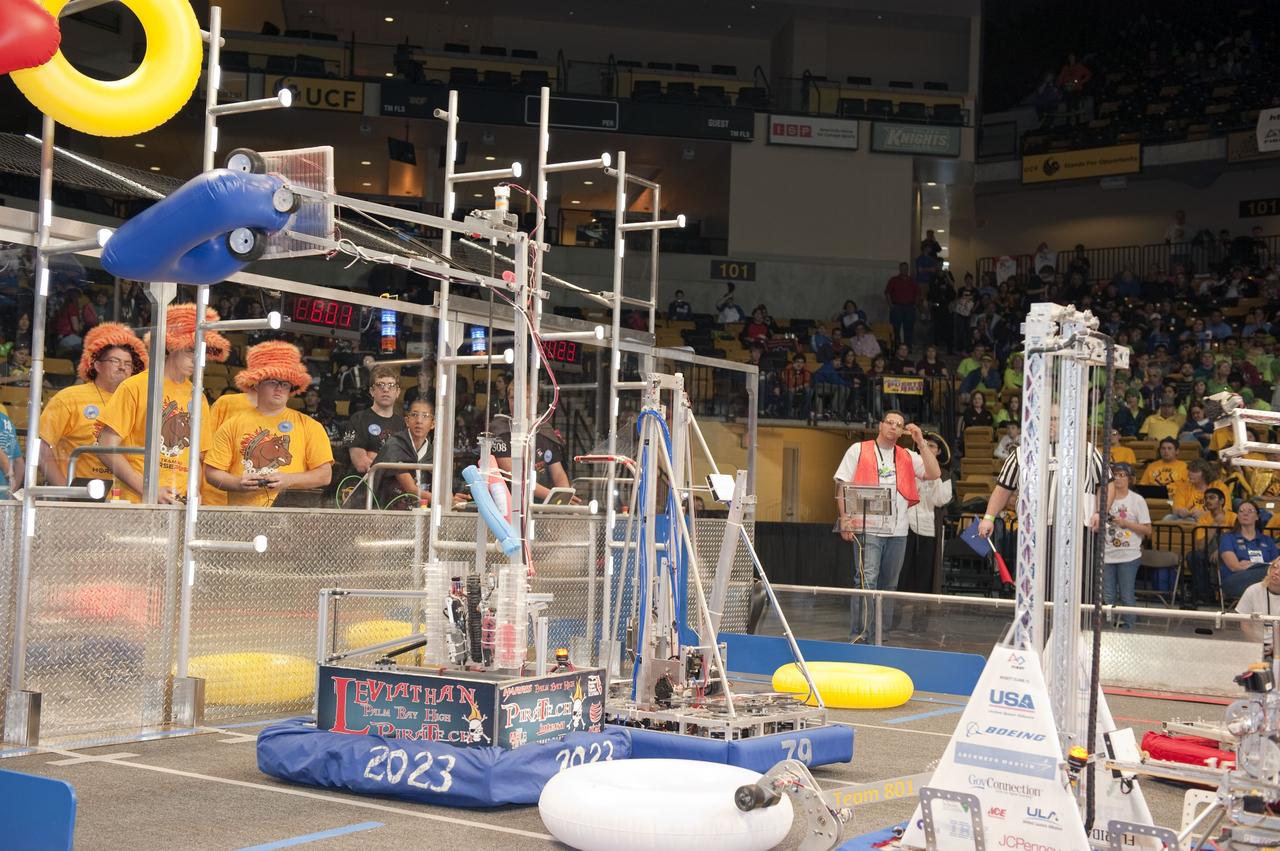
ORLANDO, Fla. – Teams prepare for the "For Inspiration and Recognition of Science and Technology," or FIRST, competition at the University of Central Florida in Orlando. About 60 high school teams took part in hopes of advancing to the national robotics championship. FIRST, founded in 1989, is a non-profit organization that designs accessible, innovative programs to build self-confidence, knowledge and life skills while motivating young people to pursue academic opportunities. The robotics competition challenges teams of high school students and their mentors to solve a common problem in a six-week timeframe using a standard kit of parts and a common set of rules. Photo credit: NASA/Glenn Benson
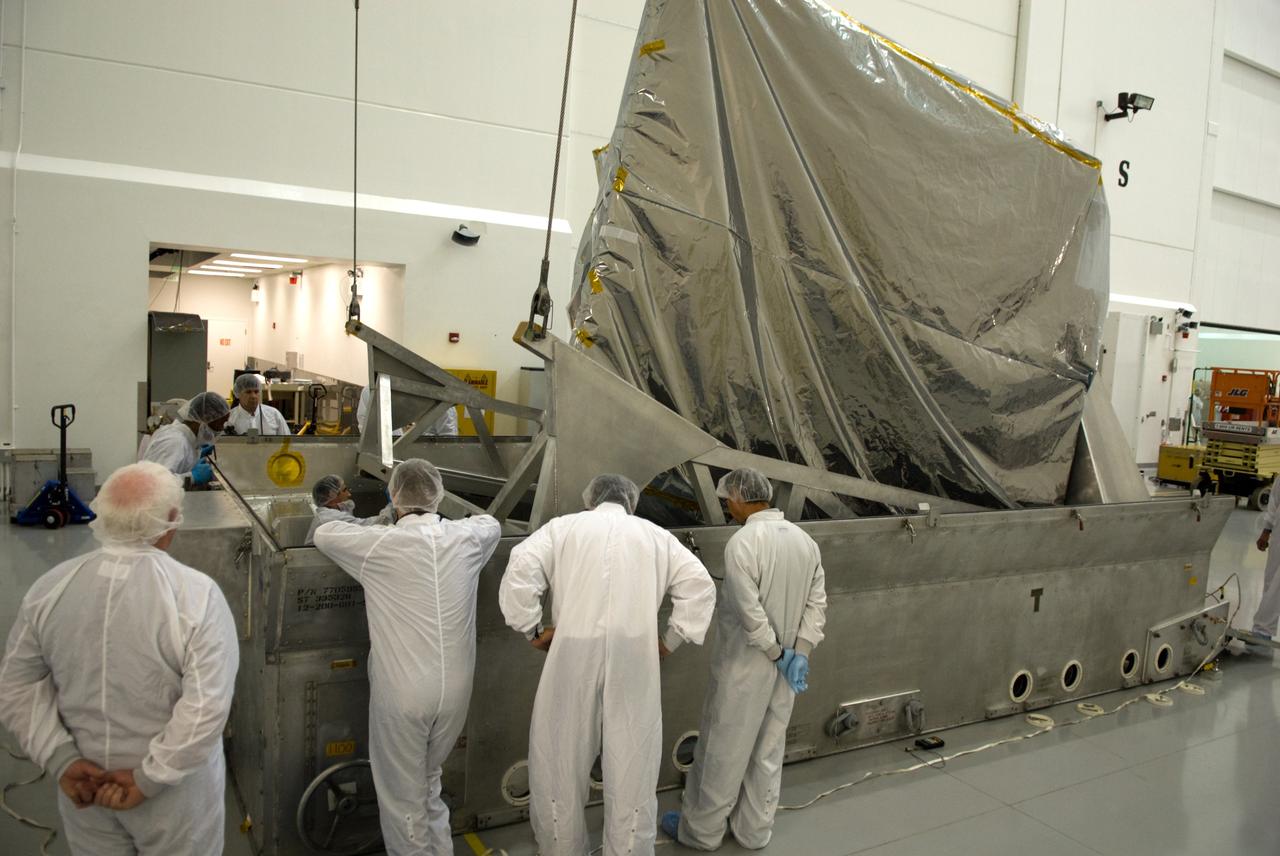
CAPE CANAVERAL, Fla. – At the Astrotech Space Operations facility in Titusville, Fla., workers prepare to lift NASA's newly arrived GOES-P meteorological satellite from its transportation case. GOES-P, the latest Geostationary Operational Environmental Satellite, was developed by NASA for the National Oceanic and Atmospheric Administration, or NOAA. GOES-P is designed to watch for storm development and observed current weather conditions on Earth. Launch of GOES-P is targeted for no earlier than Feb. 25, 2010, from Launch Complex 37 aboard a United Launch Alliance Delta IV rocket. For information on GOES-P, visit http://goespoes.gsfc.nasa.gov/goes/spacecraft/n_p_spacecraft.html. Photo credit: NASA/Glenn Benson
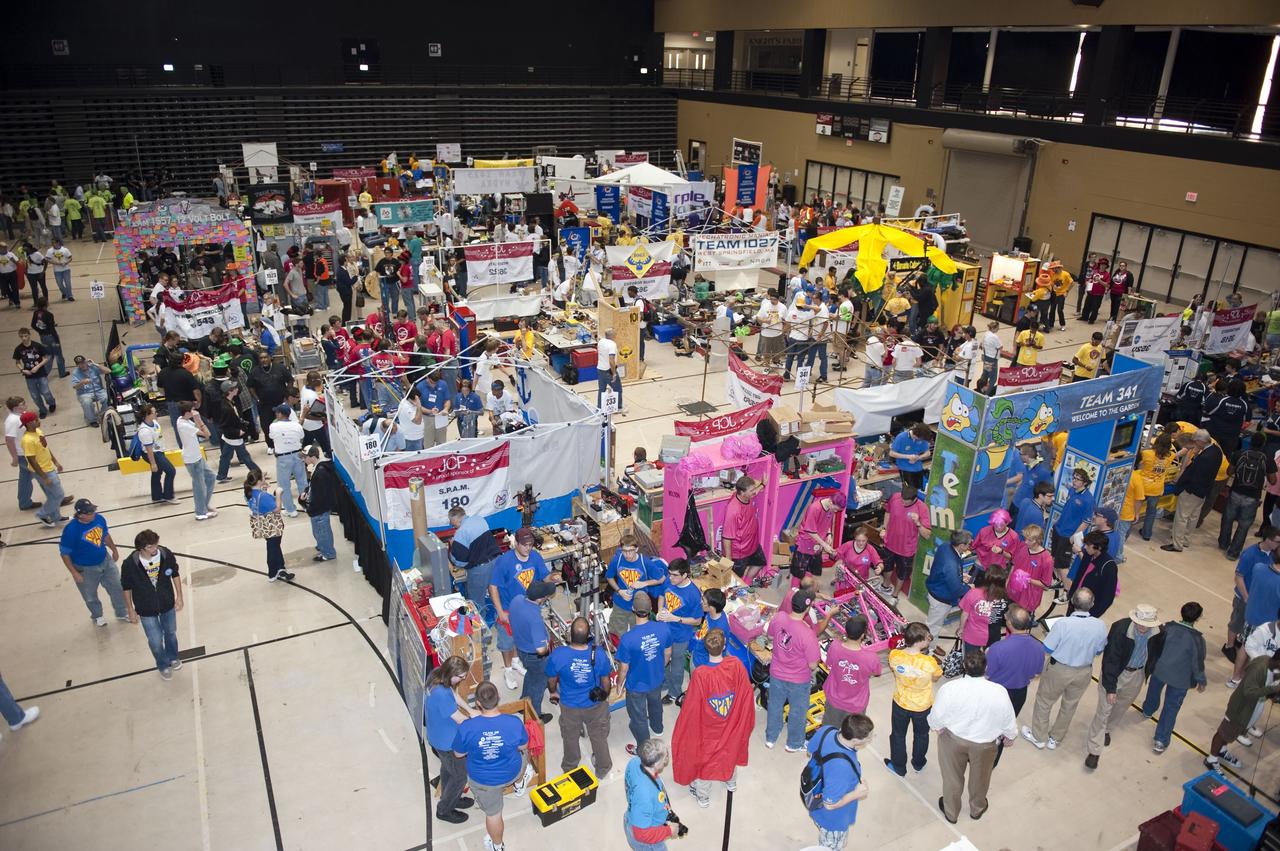
ORLANDO, Fla. – About 60 high school teams take part in the "For Inspiration and Recognition of Science and Technology," or FIRST, competition at the University of Central Florida in Orlando. FIRST, founded in 1989, is a non-profit organization that designs accessible, innovative programs to build self-confidence, knowledge and life skills while motivating young people to pursue academic opportunities. The robotics competition challenges teams of high school students and their mentors to solve a common problem in a six-week timeframe using a standard kit of parts and a common set of rules. Photo credit: NASA/Glenn Benson
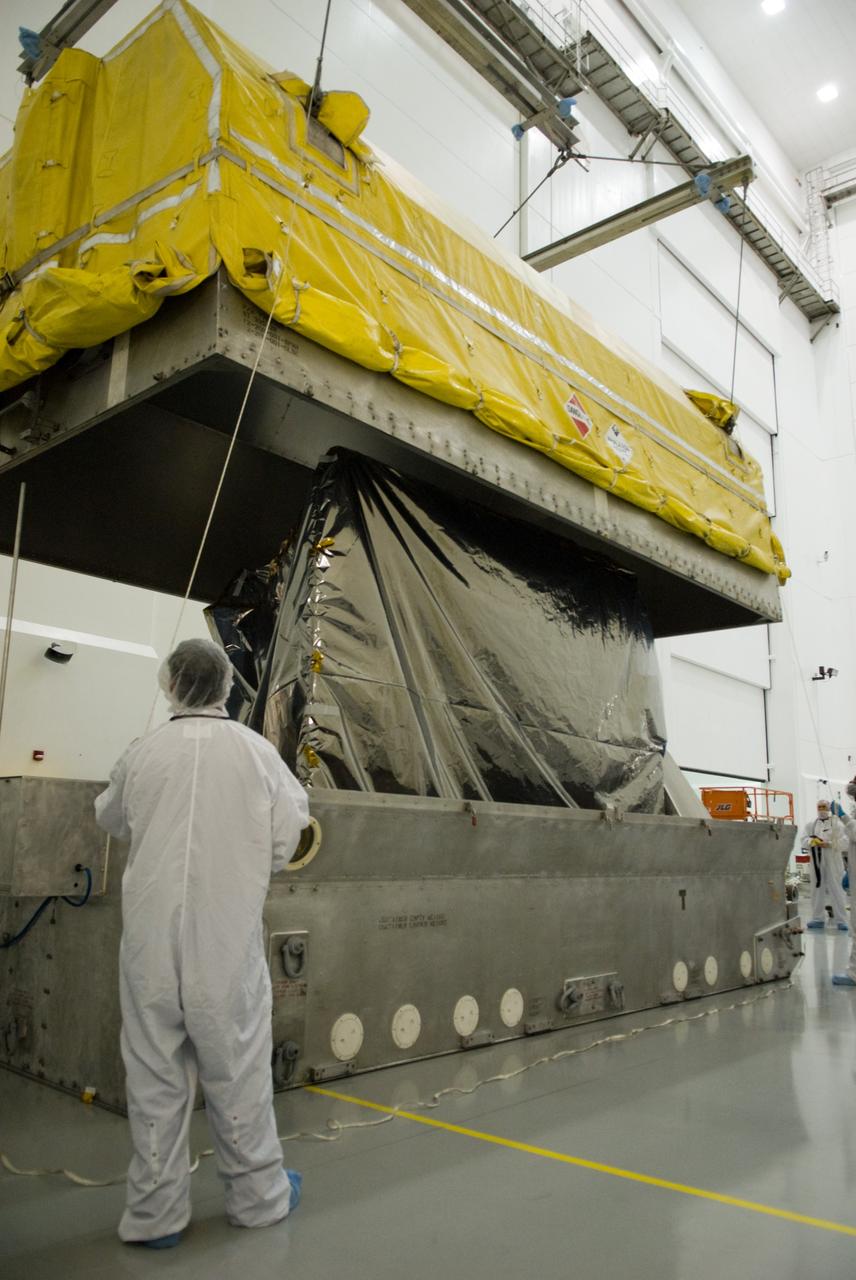
CAPE CANAVERAL, Fla. – At the Astrotech Space Operations facility in Titusville, Fla., workers uncrate NASA's newly arrived GOES-P meteorological satellite. GOES-P, the latest Geostationary Operational Environmental Satellite, was developed by NASA for the National Oceanic and Atmospheric Administration, or NOAA. GOES-P is designed to watch for storm development and observed current weather conditions on Earth. Launch of GOES-P is targeted for no earlier than Feb. 25, 2010, from Launch Complex 37 aboard a United Launch Alliance Delta IV rocket. For information on GOES-P, visit http://goespoes.gsfc.nasa.gov/goes/spacecraft/n_p_spacecraft.html. Photo credit: NASA/Glenn Benson
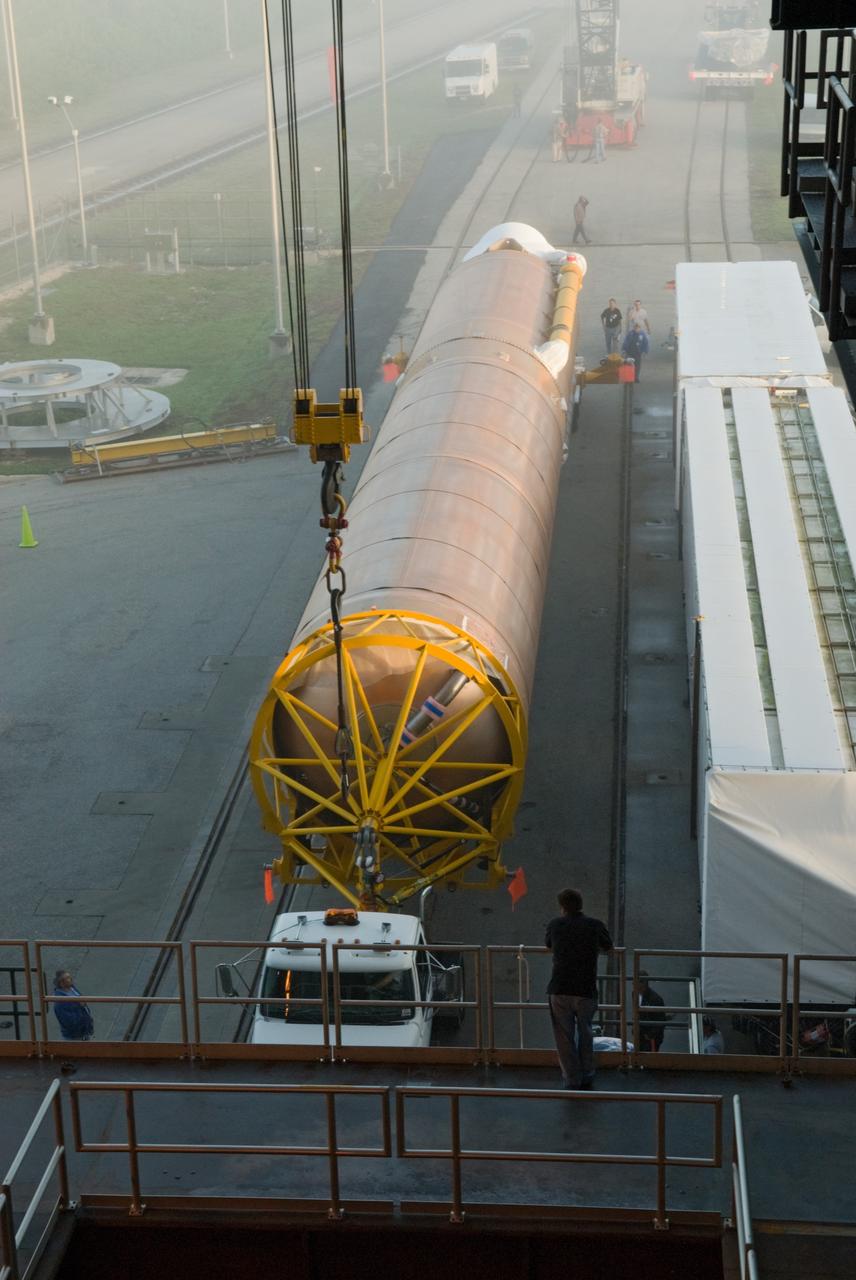
CAPE CANAVERAL, Fla. – The Atlas V rocket scheduled to launch NASA's Solar Dynamics Observatory, or SDO, is ready to be lifted into the Vertical Integration Facility at Launch Complex 41 on Cape Canaveral Air Force Station in Florida. SDO is the first space weather research network mission in NASA's Living With a Star Program. The spacecraft's long-term measurements will give solar scientists in-depth information about changes in the sun's magnetic field and insight into how they affect Earth. Liftoff on the United Launch Alliance Atlas V is scheduled for Feb. 3, 2010. For information on SDO, visit http://www.nasa.gov/sdo. Photo credit: NASA/Glenn Benson
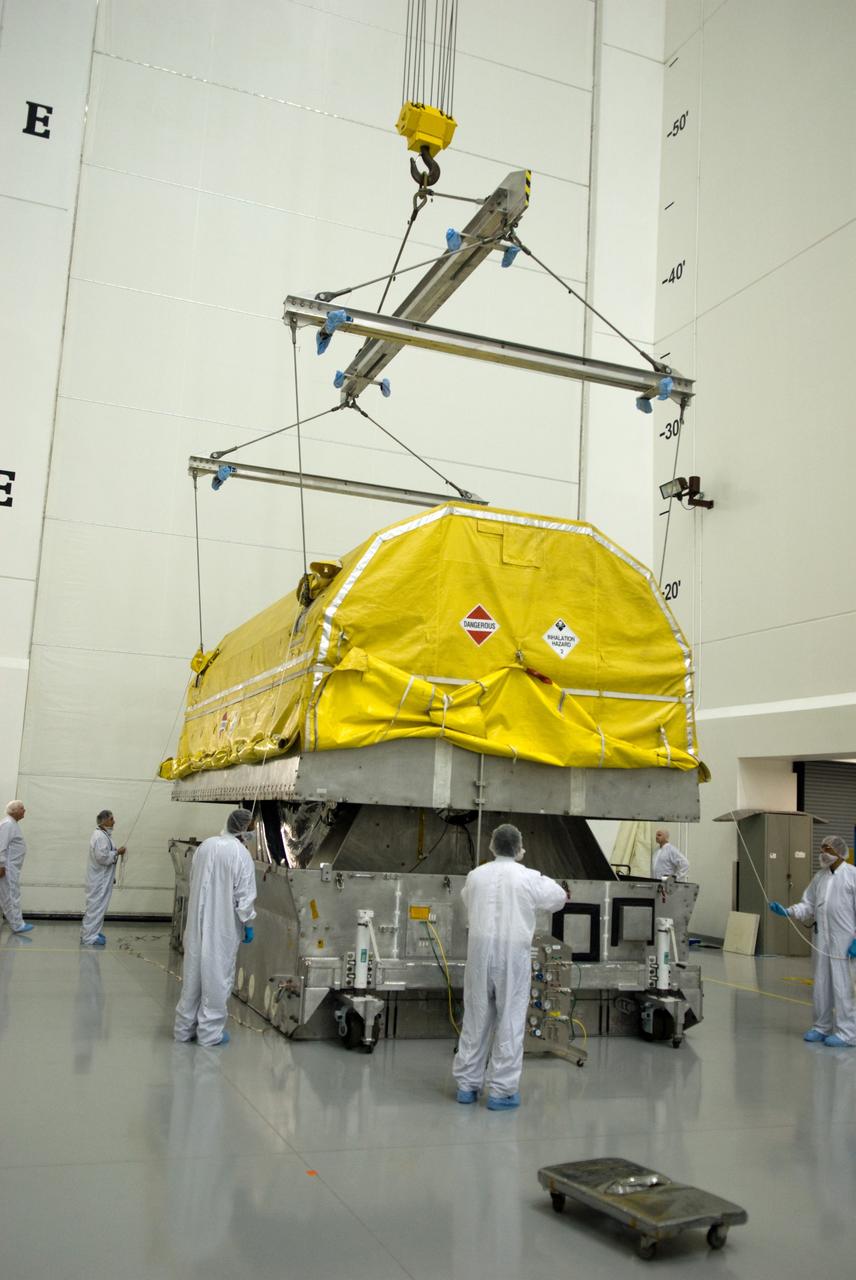
CAPE CANAVERAL, Fla. – At the Astrotech Space Operations facility in Titusville, Fla., workers lift the transportation cover from NASA's newly arrived GOES-P meteorological satellite. GOES-P, the latest Geostationary Operational Environmental Satellite, was developed by NASA for the National Oceanic and Atmospheric Administration, or NOAA. GOES-P is designed to watch for storm development and observed current weather conditions on Earth. Launch of GOES-P is targeted for no earlier than Feb. 25, 2010, from Launch Complex 37 aboard a United Launch Alliance Delta IV rocket. For information on GOES-P, visit http://goespoes.gsfc.nasa.gov/goes/spacecraft/n_p_spacecraft.html. Photo credit: NASA/Glenn Benson
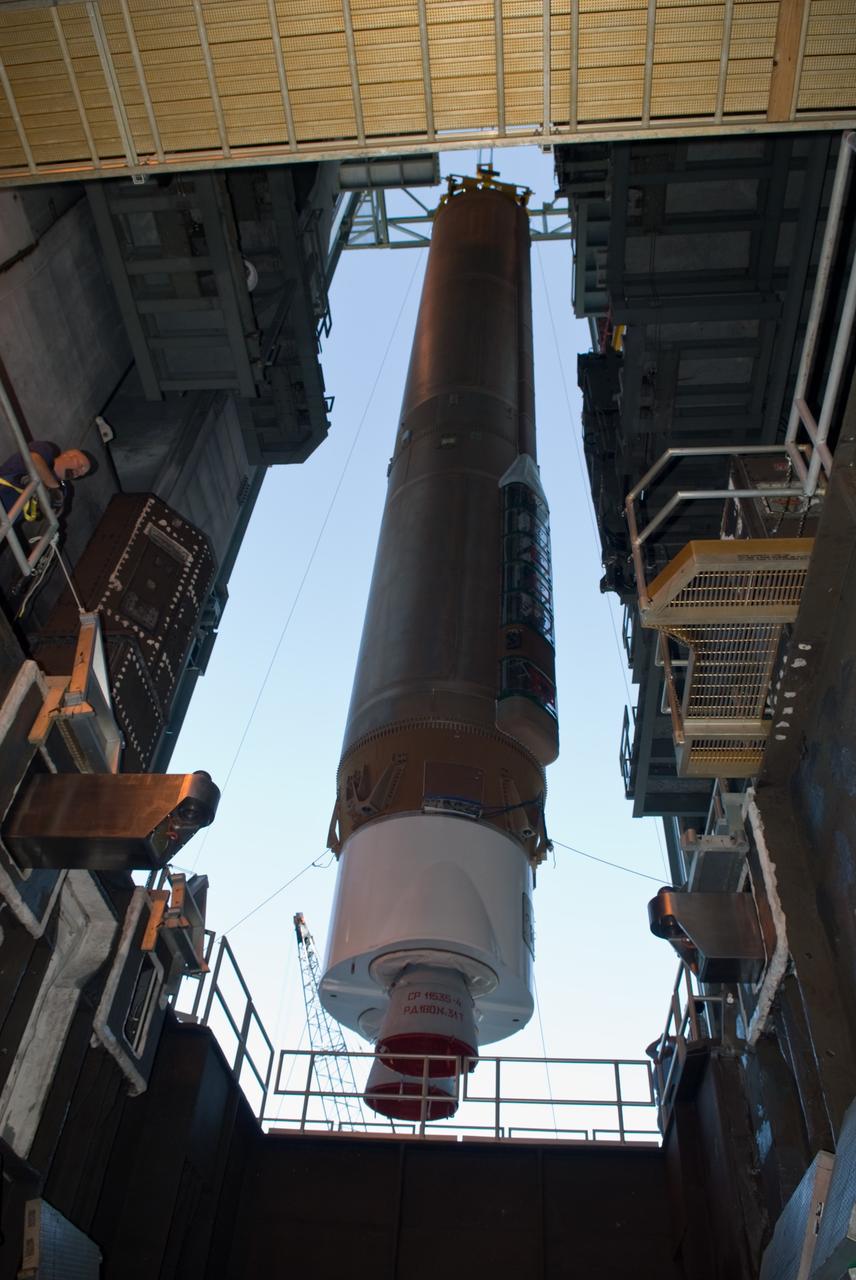
CAPE CANAVERAL, Fla. – The Atlas V rocket scheduled to launch NASA's Solar Dynamics Observatory, or SDO, is slowly maneuvered into position in the Vertical Integration Facility at Launch Complex 41 on Cape Canaveral Air Force Station in Florida. SDO is the first space weather research network mission in NASA's Living With a Star Program. The spacecraft's long-term measurements will give solar scientists in-depth information about changes in the sun's magnetic field and insight into how they affect Earth. Liftoff on the United Launch Alliance Atlas V is scheduled for Feb. 3, 2010. For information on SDO, visit http://www.nasa.gov/sdo. Photo credit: NASA/Glenn Benson
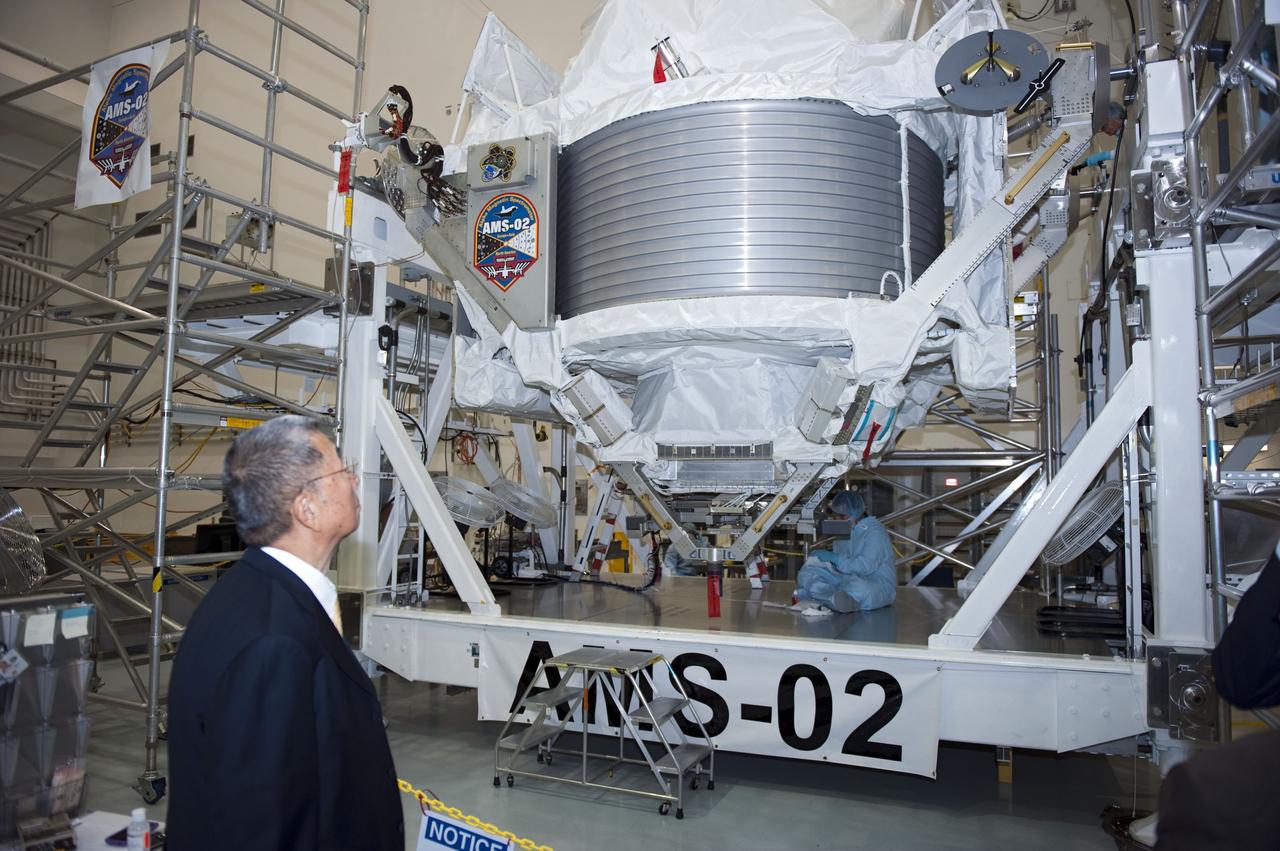
CAPE CANAVERAL, Fla. -- In the Space Station Processing Facility at NASA's Kennedy Space Center in Florida, Professor Sam Ting, Alpha Magnetic Spectrometer-2 (AMS) principal investigator at the Massachusetts Institute of Technology, checks out the particle physics detector. AMS is designed to operate as an external experiment on the International Space Station. It will use the unique environment of space to study the universe and its origin by searching for dark matter. AMS-2 will fly to the station aboard space shuttle Endeavour's STS-134 mission targeted to launch April 19 at 7:48 p.m. EDT. For more information visit, www.nasa.gov/mission_pages/shuttle/shuttlemissions/sts134/index.html. Photo credit: NASA/Glenn Benson
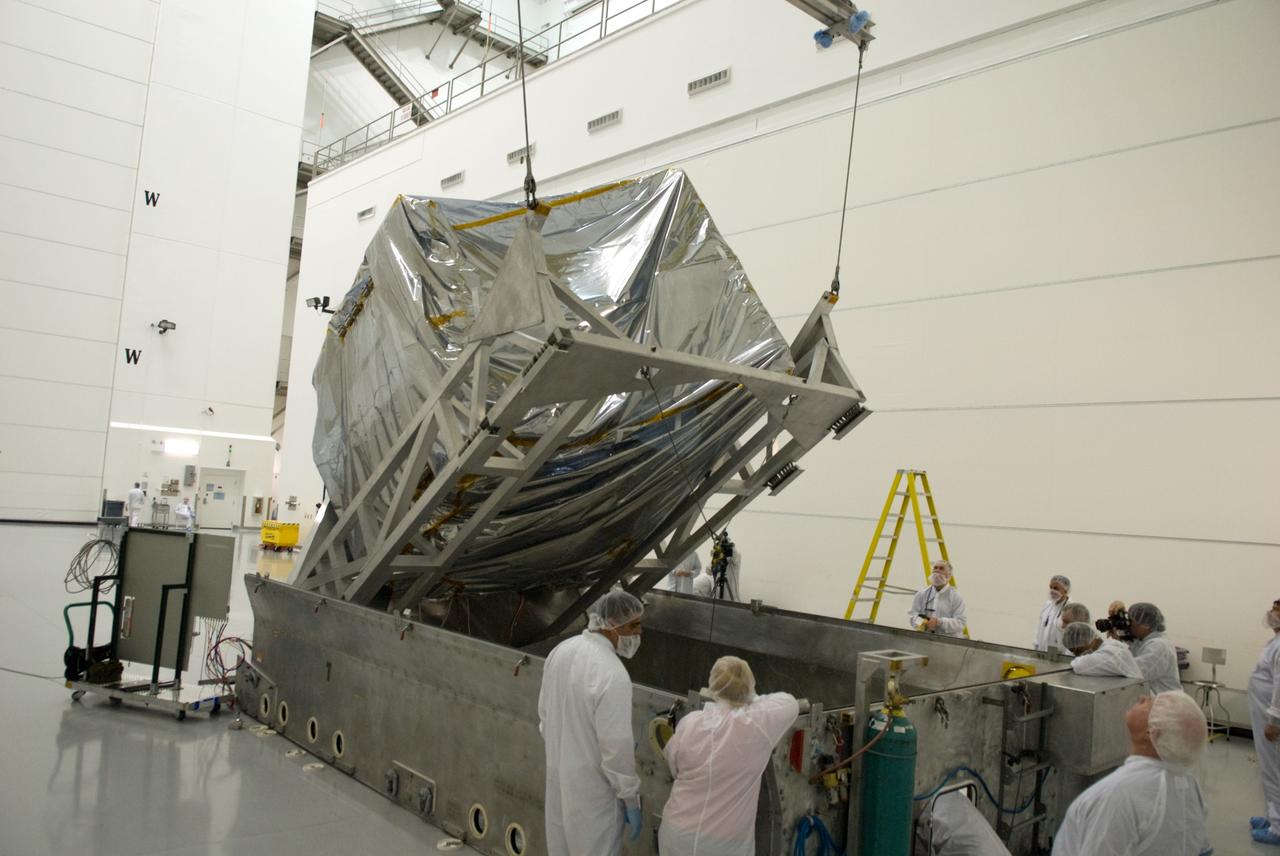
CAPE CANAVERAL, Fla. – At the Astrotech Space Operations facility in Titusville, Fla., NASA's newly arrived GOES-P meteorological satellite is lifted from its transportation case. GOES-P, the latest Geostationary Operational Environmental Satellite, was developed by NASA for the National Oceanic and Atmospheric Administration, or NOAA. GOES-P is designed to watch for storm development and observed current weather conditions on Earth. Launch of GOES-P is targeted for no earlier than Feb. 25, 2010, from Launch Complex 37 aboard a United Launch Alliance Delta IV rocket. For information on GOES-P, visit http://goespoes.gsfc.nasa.gov/goes/spacecraft/n_p_spacecraft.html. Photo credit: NASA/Glenn Benson
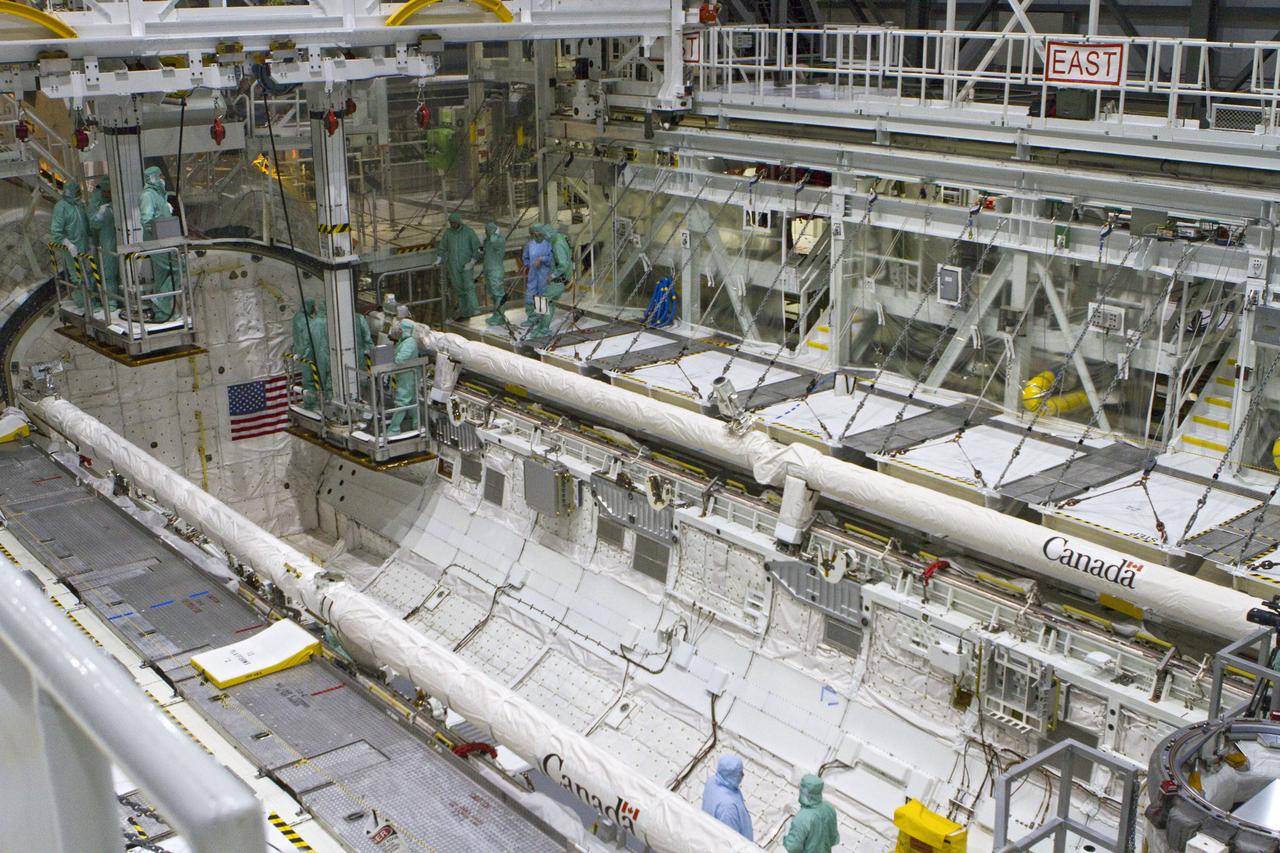
CAPE CANAVERAL, Fla. -- In Orbiter Processing Facility-2 at NASA's Kennedy Space Center in Florida, the STS-134 crew and technicians check space shuttle Endeavour's payload bay for sharp edges that could affect the astronauts' work in space. The six STS-134 astronauts are participating in the Crew Equipment Interface Test (CEIT), which gives them an opportunity for hands-on training with the tools and equipment they'll use in space and familiarization of the payload they'll be delivering to the International Space Station. Endeavour is targeted to launch on the STS-134 mission Feb. 27, 2011. For more information, visit www.nasa.gov/mission_pages/shuttle/shuttlemissions/sts134/index.html. Photo credit: NASA/Cory Huston and Glenn Benson
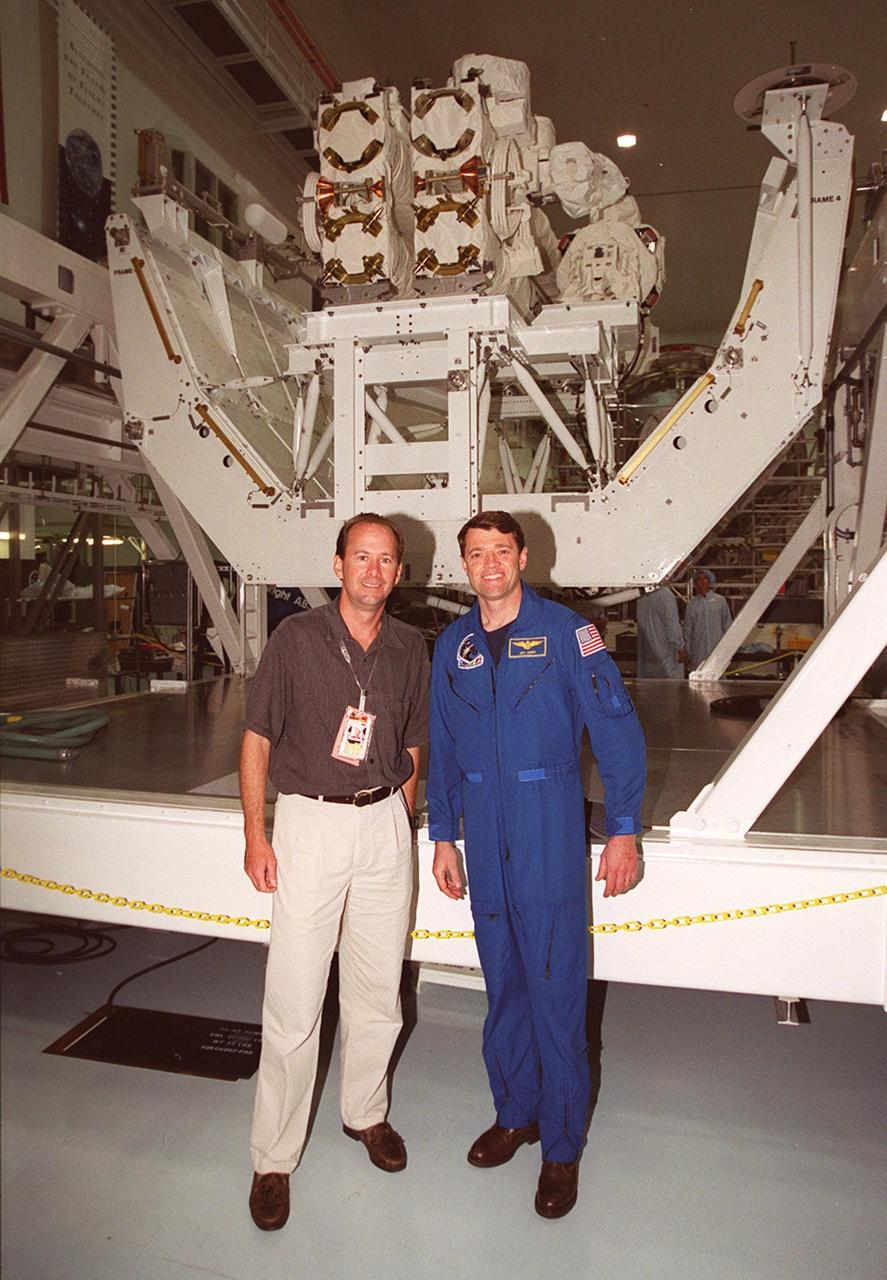
KSC’s PAO videographer, Glenn Benson (left) and STS-100 Pilot Jeffrey S. Ashby pose in front of the Canadian robotic arm, SSRMS, in the Space Station Processing Facility. The STS-100 crew is at KSC for Terminal Countdown Demonstration Test activities that include emergency escape training at the pad and a simulated launch countdown. The mission is carrying the Multi-Purpose Logistics Module Raffaello and the SSRMS, to the International Space Station. Raffaello carries six system racks and two storage racks for the U.S. Lab. The SSRMS is crucial to the continued assembly of the orbiting complex. Launch of mission STS-100 is scheduled for April 19 at 2:41 p.m. EDT from Launch Pad 39A
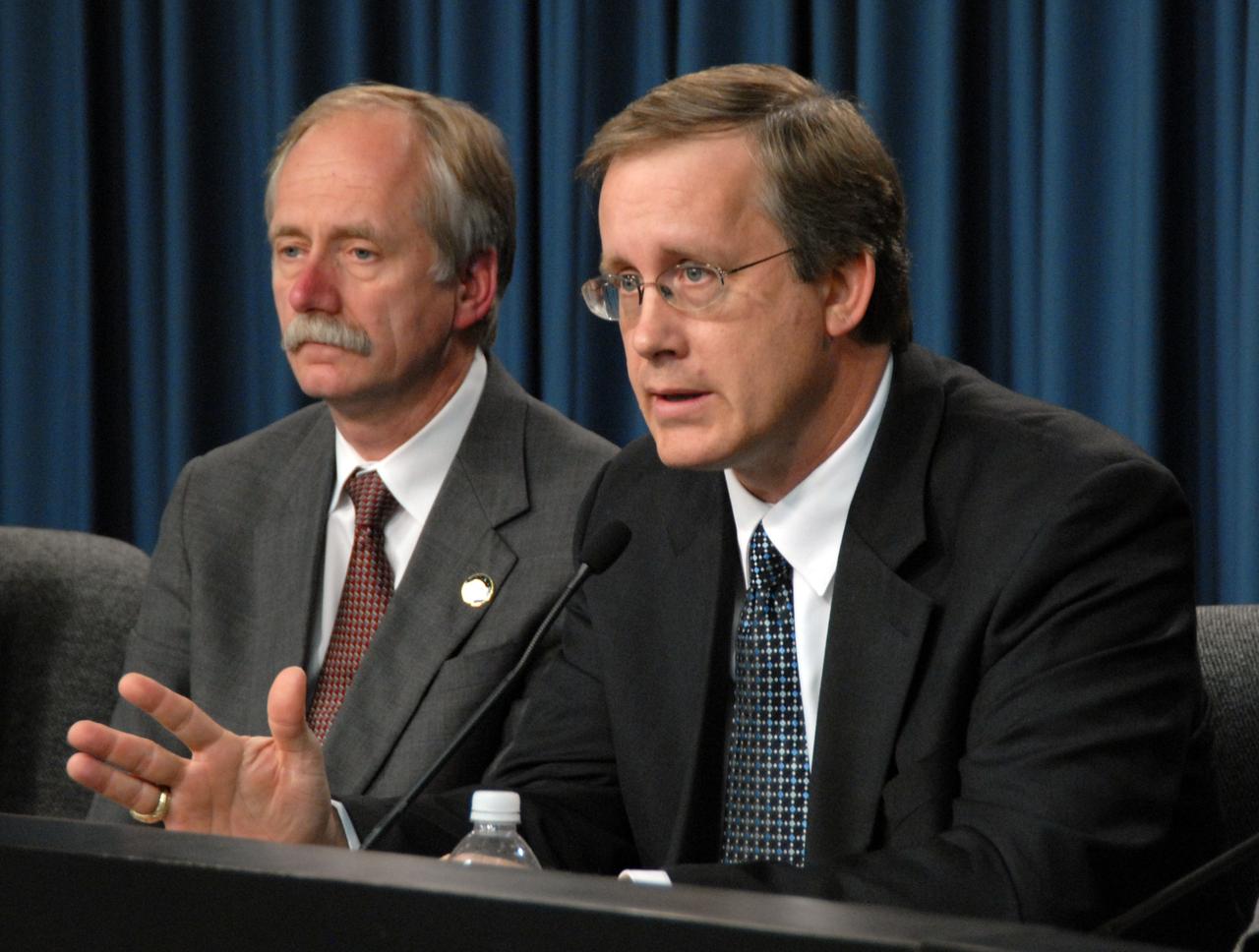
CAPE CANAVERAL, Fla. – At the flight readiness review news conference for space shuttle Discovery's STS-119 mission, Space Shuttle Program Manager John Shannon (right) talks about the discussion surrounding Discovery's readiness for flight. At left is Associate Administrator for Space Operations Bill Gerstenmaier. NASA managers decided Feb. 20 more data and possible testing are required before proceeding to launch. Engineering teams have been working to identify what caused damage to a flow control valve on shuttle Endeavour during its November 2008 flight. A new launch date has not been determined. Photo credit: NASA/Glenn Benson
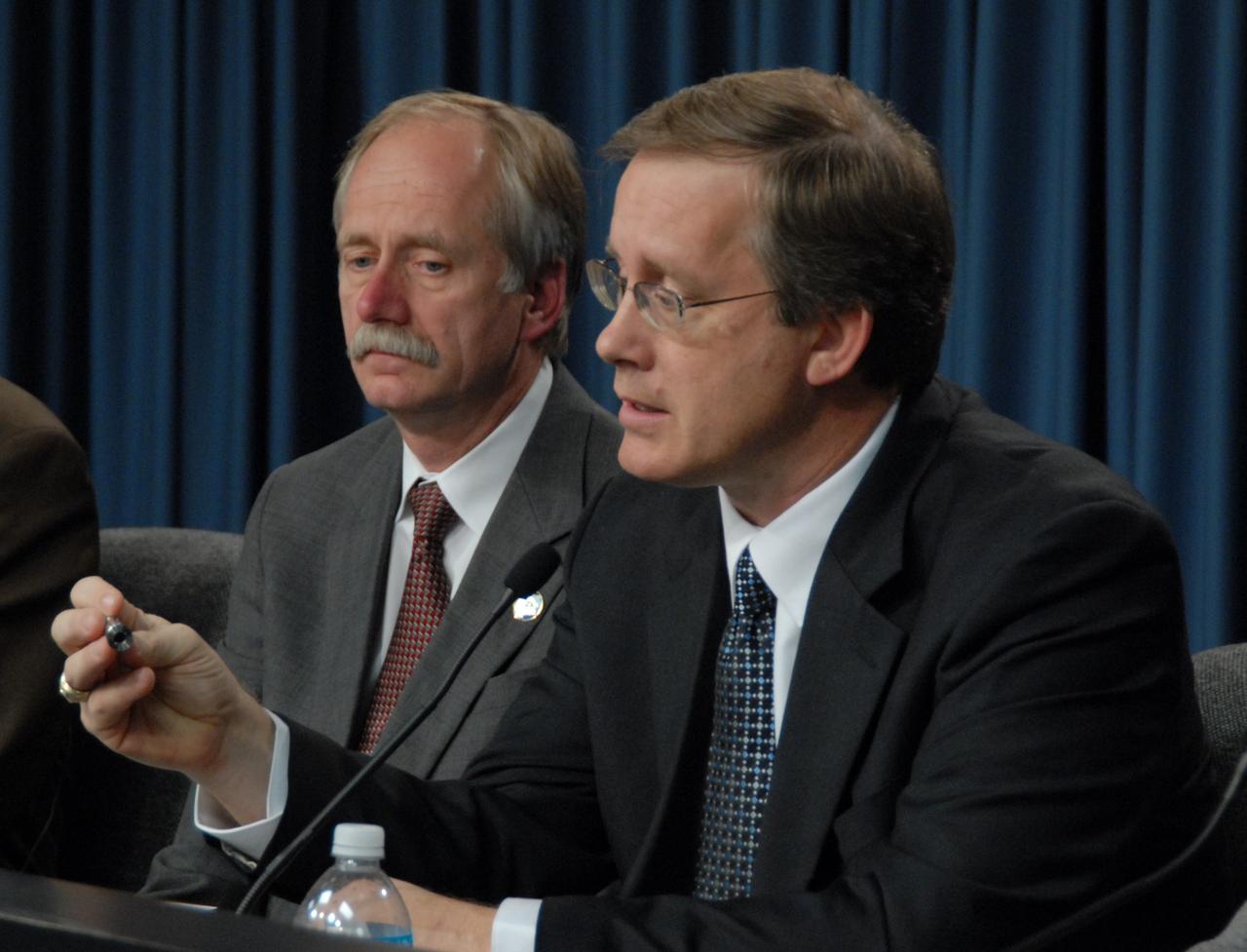
CAPE CANAVERAL, Fla. – At the flight readiness review news conference for space shuttle Discovery's STS-119 mission, Space Shuttle Program Manager John Shannon (right) talks about the discussion surrounding Discovery's readiness for flight. At left is Associate Administrator for Space Operations Bill Gerstenmaier. Shannon is holding a flow control valve that is under review and testing. Engineering teams have been working to identify what caused damage to a flow control valve on shuttle Endeavour during its November 2008 flight. A new launch date has not been determined. Photo credit: NASA/Glenn Benson
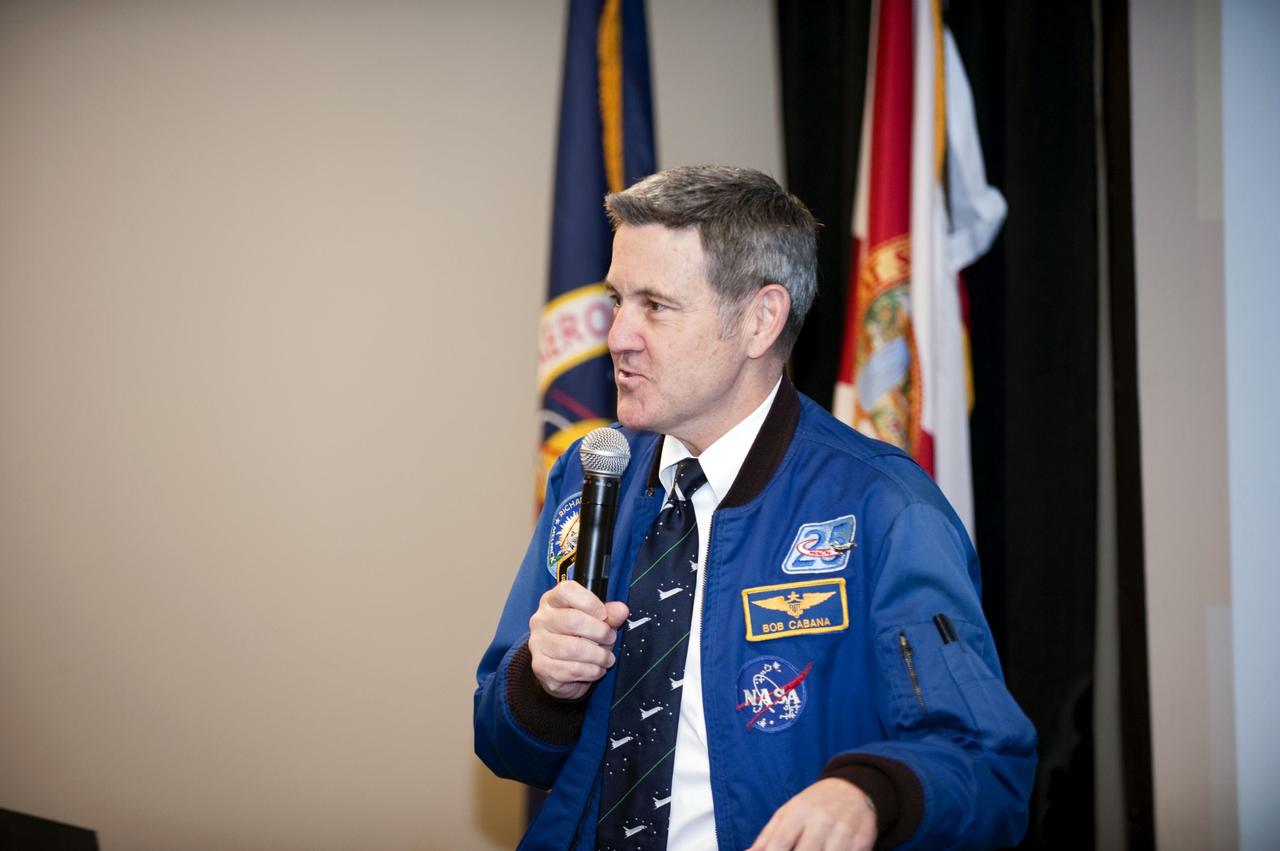
ORLANDO, Fla. – NASA Kennedy Space Center Director Bob Cabana talks to high school students taking part in the "For Inspiration and Recognition of Science and Technology," or FIRST, competition at the University of Central Florida in Orlando. FIRST, founded in 1989, is a non-profit organization that designs accessible, innovative programs to build self-confidence, knowledge and life skills while motivating young people to pursue academic opportunities. The robotics competition challenges teams of high school students and their mentors to solve a common problem in a six-week timeframe using a standard kit of parts and a common set of rules. Photo credit: NASA/Glenn Benson
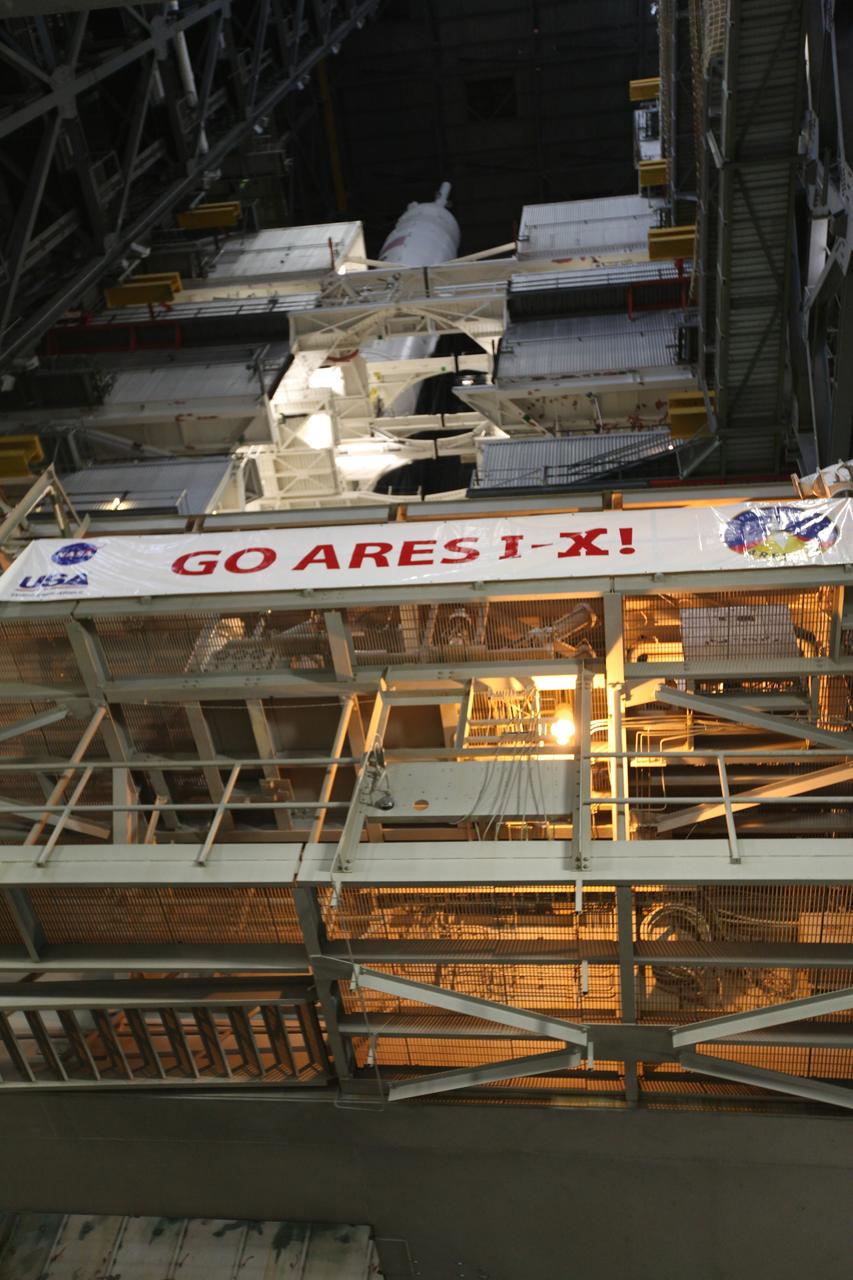
CAPE CANAVERAL, Fla. – A banner inside NASA Kennedy Space Center's Vehicle Assembly Building captures the excitement building at Kennedy in anticipation of the flight test of the Ares I-X rocket, towering above it in High Bay 3. Part of the Constellation Program, the Ares I-X is the test vehicle for the Ares I, which is the essential core of a space transportation system designed to carry crewed missions back to the moon, on to Mars and out into the solar system. The Ares I-X flight test is targeted for Oct. 27. For information on the Ares I-X vehicle and flight test, visit http://www.nasa.gov/mission_pages/constellation/ares/flighttests/aresIx/index.html. Photo credit: NASA/Glenn Benson
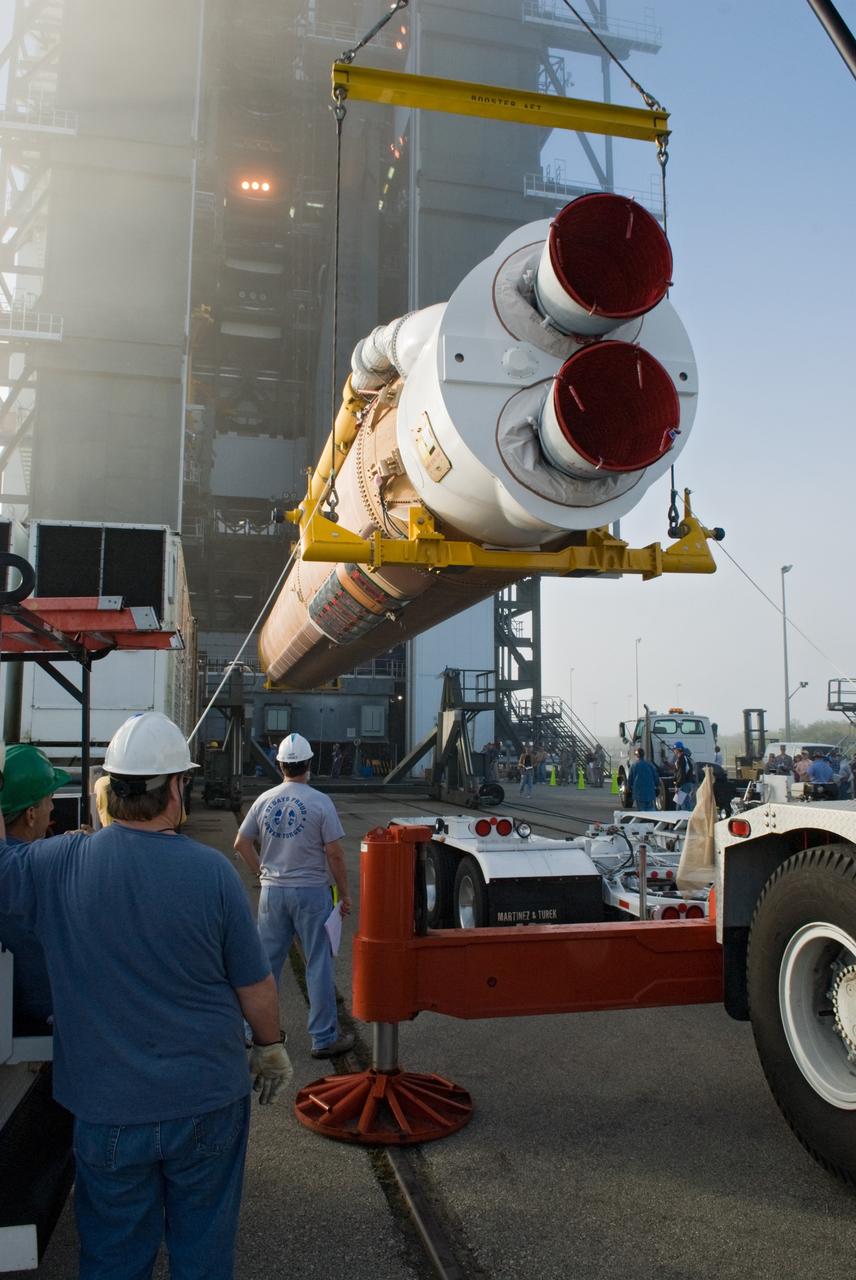
CAPE CANAVERAL, Fla. – Workers lift the Atlas V rocket scheduled to launch NASA's Solar Dynamics Observatory, or SDO, toward the Vertical Integration Facility at Launch Complex 41 on Cape Canaveral Air Force Station in Florida. SDO is the first space weather research network mission in NASA's Living With a Star Program. The spacecraft's long-term measurements will give solar scientists in-depth information about changes in the sun's magnetic field and insight into how they affect Earth. Liftoff on the United Launch Alliance Atlas V is scheduled for Feb. 3, 2010. For information on SDO, visit http://www.nasa.gov/sdo. Photo credit: NASA/Glenn Benson
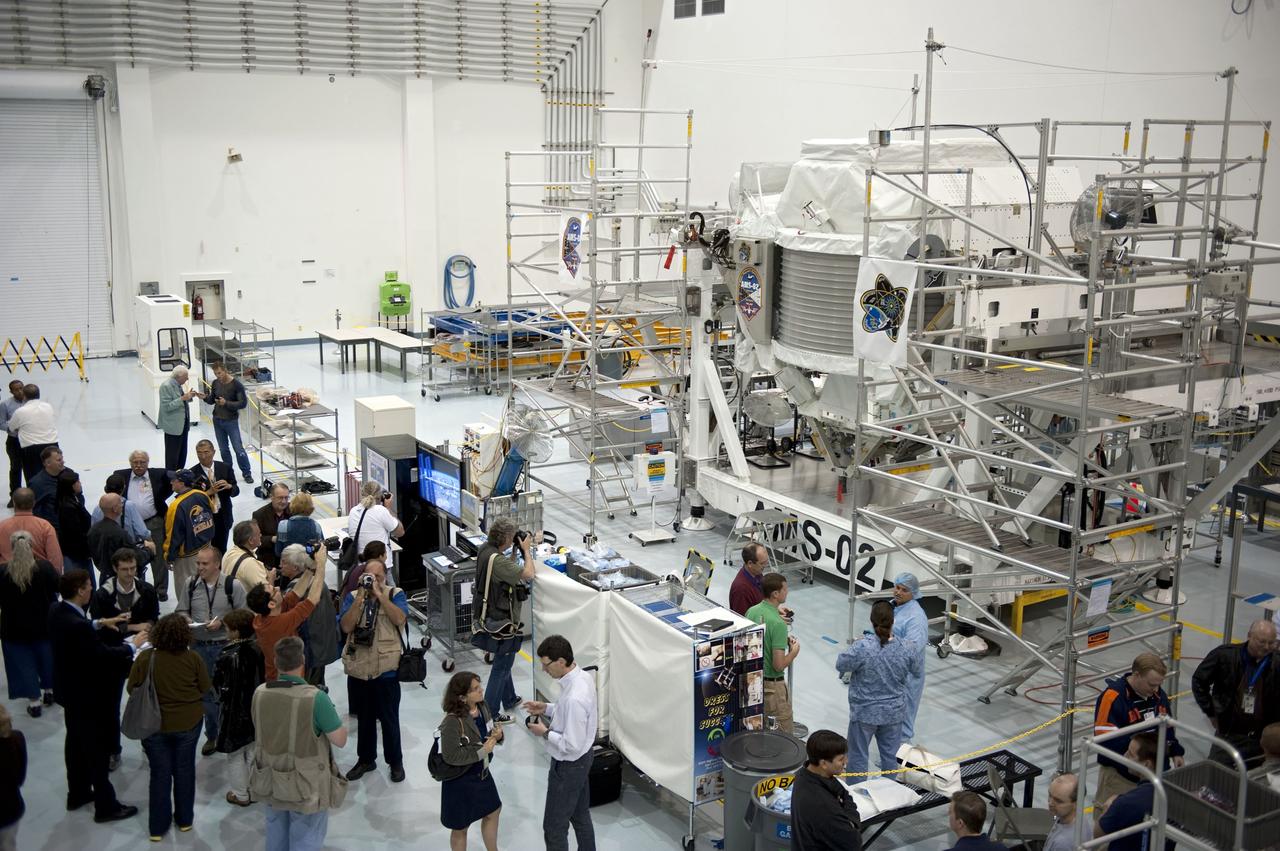
CAPE CANAVERAL, Fla. -- In the Space Station Processing Facility at NASA's Kennedy Space Center in Florida, media check out the Alpha Magnetic Spectrometer-2 (AMS). AMS is a particle physics detector, designed to operate as an external experiment on the International Space Station. It will use the unique environment of space to study the universe and its origin by searching for dark matter. AMS-2 will fly to the station aboard space shuttle Endeavour's STS-134 mission targeted to launch April 19 at 7:48 p.m. EDT. For more information visit, www.nasa.gov/mission_pages/shuttle/shuttlemissions/sts134/index.html. Photo credit: NASA/Glenn Benson
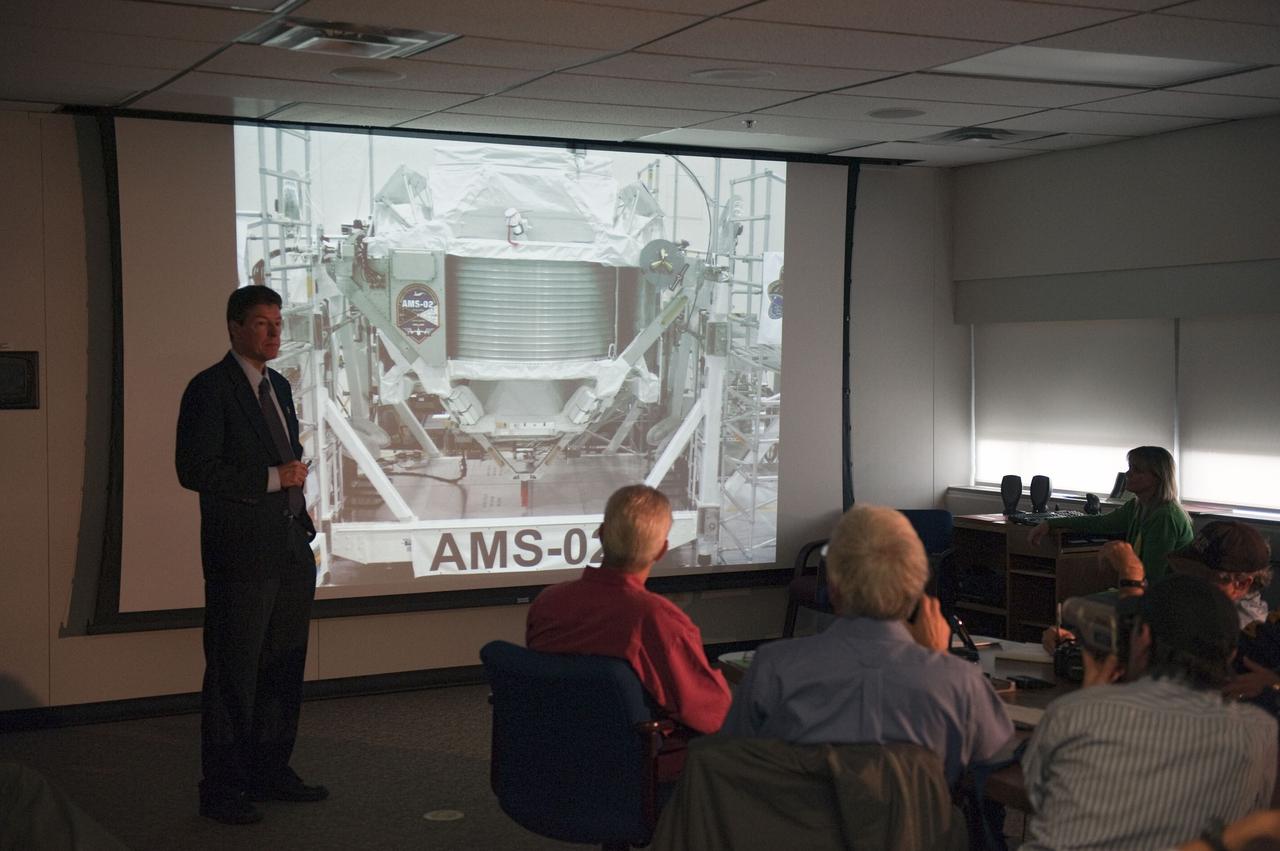
CAPE CANAVERAL, Fla. -- In the Space Station Processing Facility's conference room at NASA's Kennedy Space Center in Florida, Ken Bollweg, Alpha Magnetic Spectrometer-2 (AMS) deputy project manager, talks to media about the particle physics detector. AMS is designed to operate as an external experiment on the International Space Station. It will use the unique environment of space to study the universe and its origin by searching for dark matter. AMS-2 will fly to the station aboard space shuttle Endeavour's STS-134 mission targeted to launch April 19 at 7:48 p.m. EDT. For more information visit, www.nasa.gov/mission_pages/shuttle/shuttlemissions/sts134/index.html. Photo credit: NASA/Glenn Benson
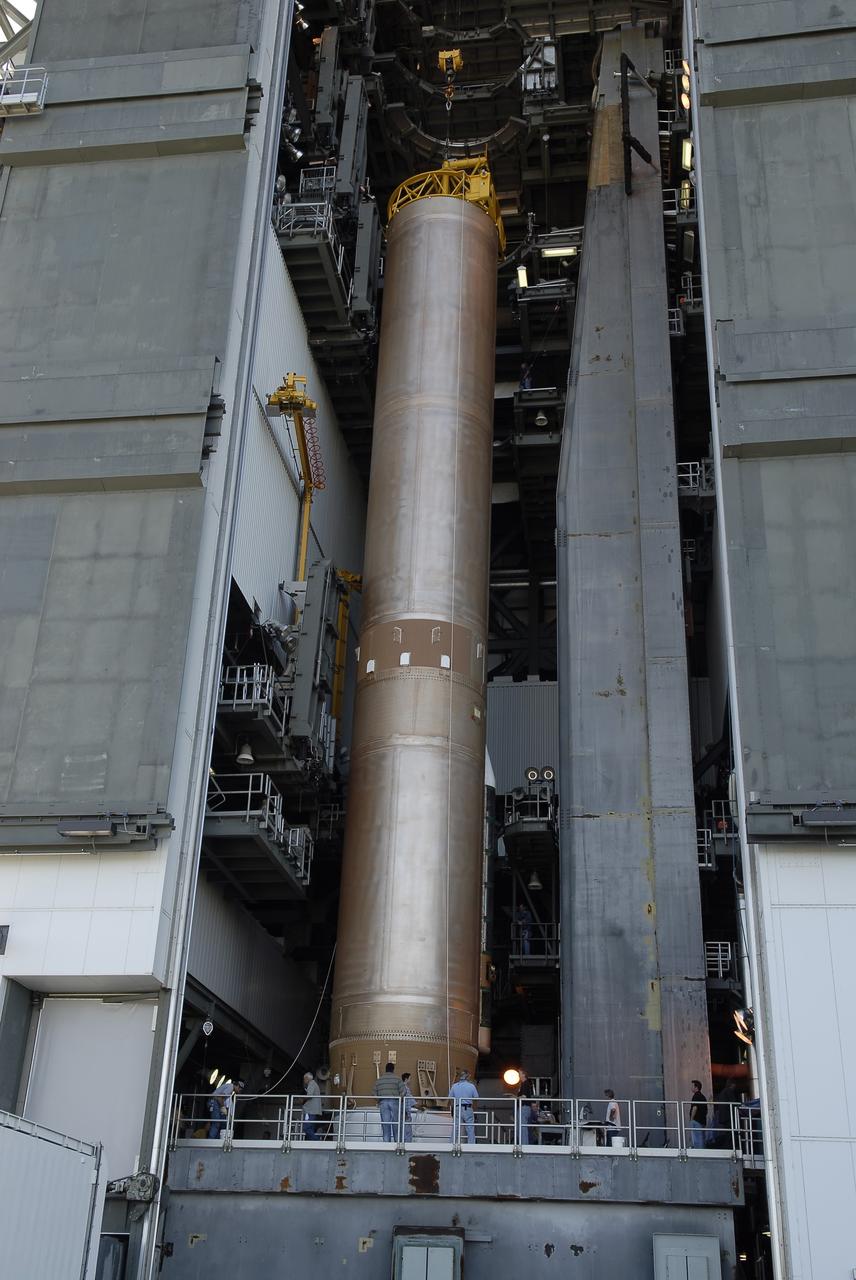
CAPE CANAVERAL, Fla. – The Atlas V rocket scheduled to launch NASA's Solar Dynamics Observatory, or SDO, is in position in the Vertical Integration Facility at Launch Complex 41 on Cape Canaveral Air Force Station in Florida and ready for further processing. SDO is the first space weather research network mission in NASA's Living With a Star Program. The spacecraft's long-term measurements will give solar scientists in-depth information about changes in the sun's magnetic field and insight into how they affect Earth. Liftoff on the United Launch Alliance Atlas V is scheduled for Feb. 3, 2010. For information on SDO, visit http://www.nasa.gov/sdo. Photo credit: NASA/Glenn Benson
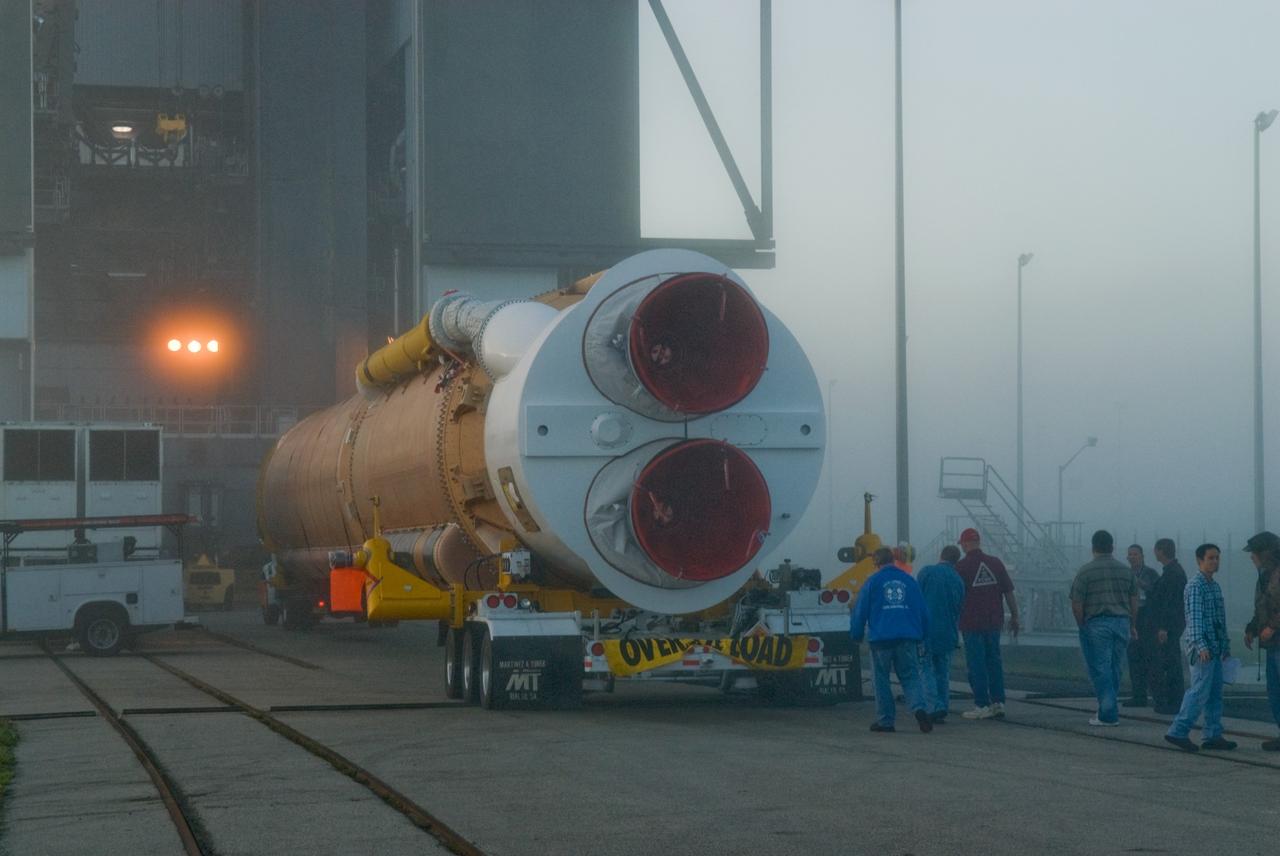
CAPE CANAVERAL, Fla. – Workers prepare to hoist the Atlas V rocket scheduled to launch NASA's Solar Dynamics Observatory, or SDO, into the Vertical Integration Facility at Launch Complex 41 on Cape Canaveral Air Force Station in Florida. SDO is the first space weather research network mission in NASA's Living With a Star Program. The spacecraft's long-term measurements will give solar scientists in-depth information about changes in the sun's magnetic field and insight into how they affect Earth. Liftoff on the United Launch Alliance Atlas V is scheduled for Feb. 3, 2010. For information on SDO, visit http://www.nasa.gov/sdo. Photo credit: NASA/Glenn Benson
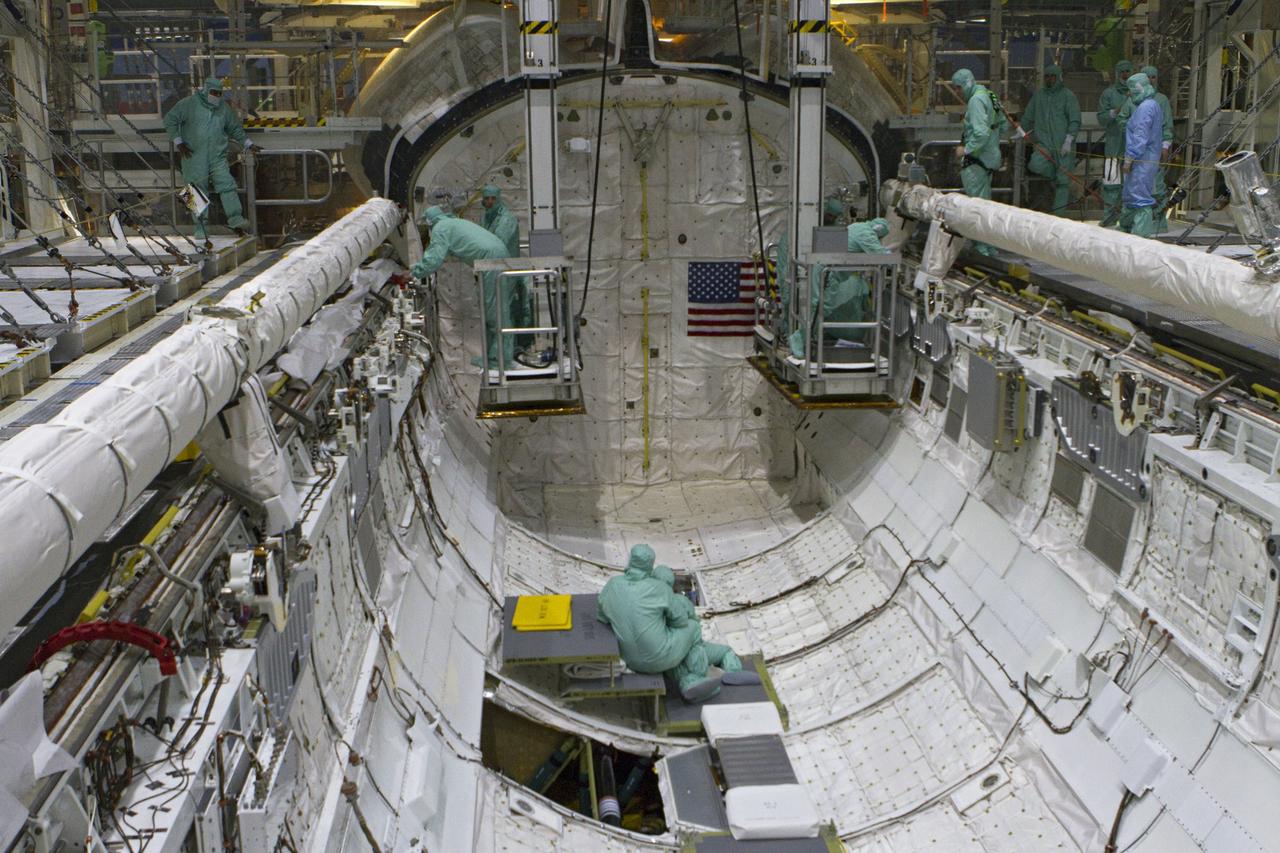
CAPE CANAVERAL, Fla. -- In Orbiter Processing Facility-2 at NASA's Kennedy Space Center in Florida, the STS-134 crew and technicians check space shuttle Endeavour's payload bay for sharp edges that could affect the astronauts' work in space. The six STS-134 astronauts are participating in the Crew Equipment Interface Test (CEIT), which gives them an opportunity for hands-on training with the tools and equipment they'll use in space and familiarization of the payload they'll be delivering to the International Space Station. Endeavour is targeted to launch on the STS-134 mission Feb. 27, 2011. For more information, visit www.nasa.gov/mission_pages/shuttle/shuttlemissions/sts134/index.html. Photo credit: NASA/Cory Huston and Glenn Benson
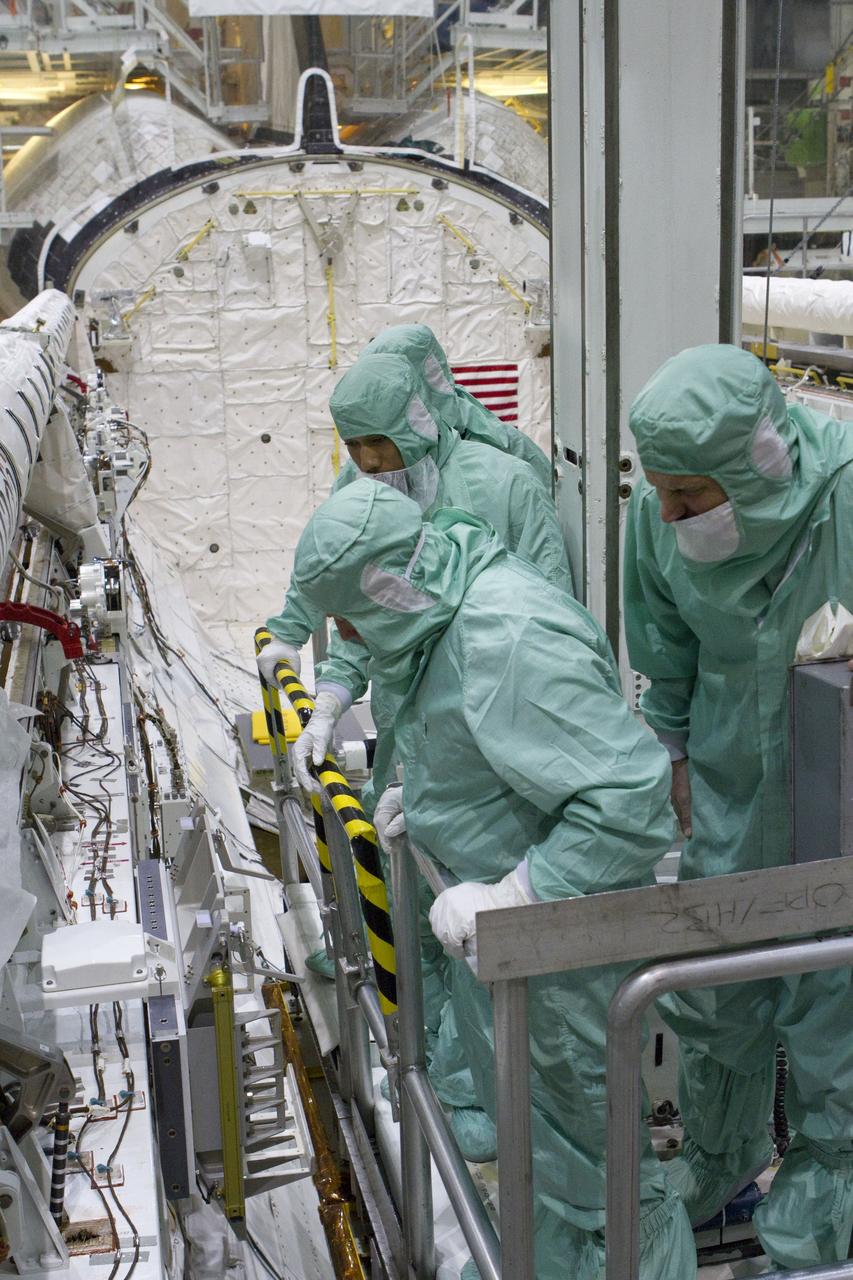
CAPE CANAVERAL, Fla. -- In Orbiter Processing Facility-2 at NASA's Kennedy Space Center in Florida, the STS-134 crew and technicians check space shuttle Endeavour's payload bay for sharp edges that could affect the astronauts' work in space. The six STS-134 astronauts are participating in the Crew Equipment Interface Test (CEIT), which gives them an opportunity for hands-on training with the tools and equipment they'll use in space and familiarization of the payload they'll be delivering to the International Space Station. Endeavour is targeted to launch on the STS-134 mission Feb. 27, 2011. For more information, visit www.nasa.gov/mission_pages/shuttle/shuttlemissions/sts134/index.html. Photo credit: NASA/Cory Huston and Glenn Benson
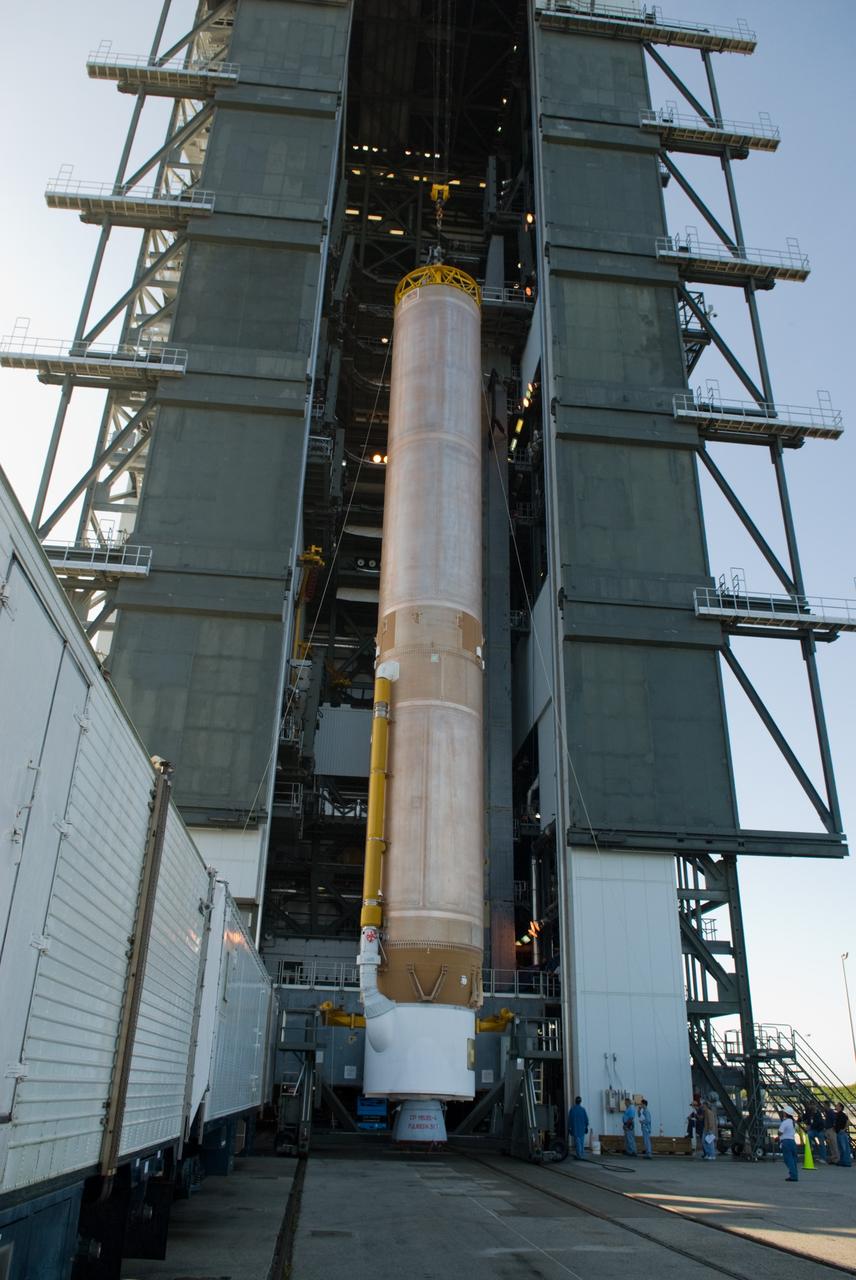
CAPE CANAVERAL, Fla. – The Atlas V rocket scheduled to launch NASA's Solar Dynamics Observatory, or SDO, begins its lift into the Vertical Integration Facility at Launch Complex 41 on Cape Canaveral Air Force Station in Florida. SDO is the first space weather research network mission in NASA's Living With a Star Program. The spacecraft's long-term measurements will give solar scientists in-depth information about changes in the sun's magnetic field and insight into how they affect Earth. Liftoff on the United Launch Alliance Atlas V is scheduled for Feb. 3, 2010. For information on SDO, visit http://www.nasa.gov/sdo. Photo credit: NASA/Glenn Benson
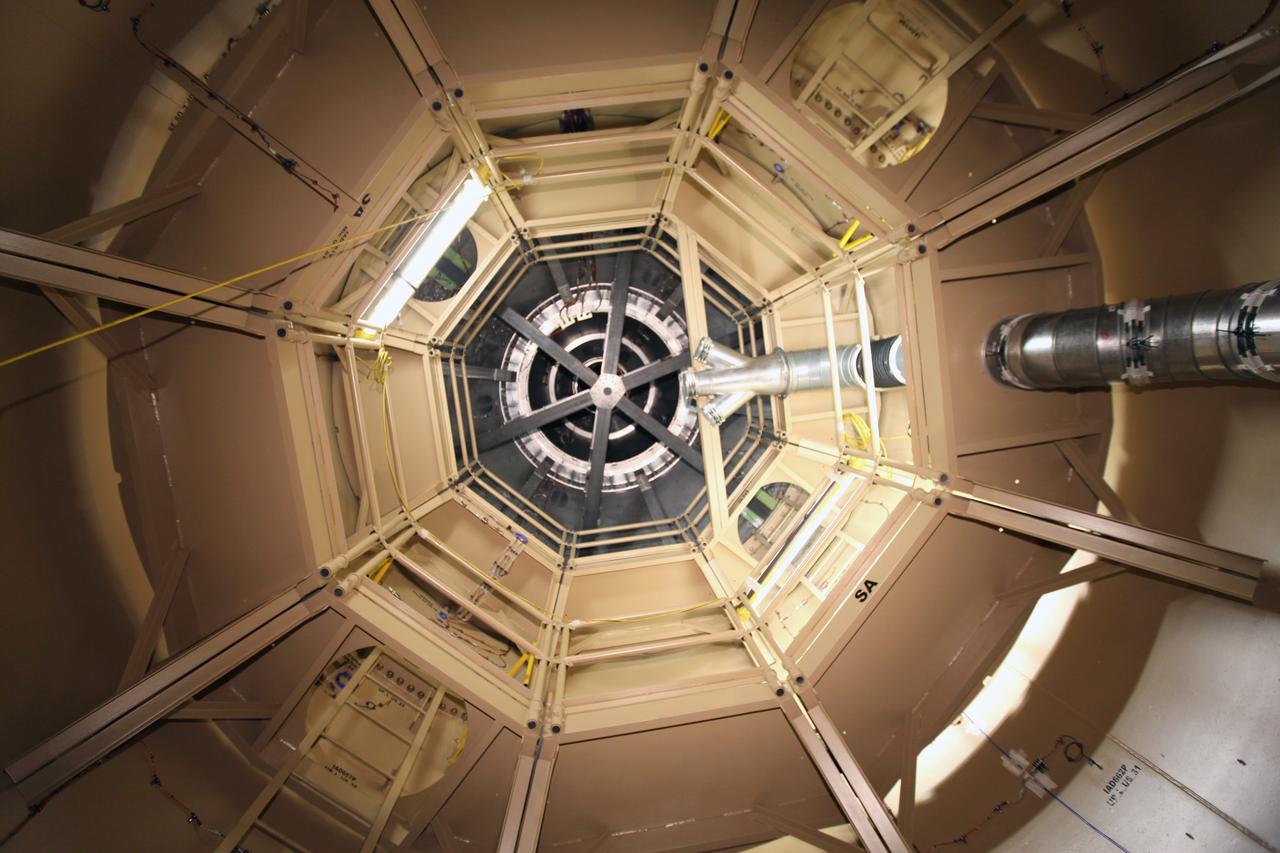
CAPE CANAVERAL, Fla. – Steep ladders mounted to opposing sides of the interior wall of the upper stage simulator of the Ares I-X rocket provide the only access inside the vehicle for the installation of instruments and equipment. Part of the Constellation Program, the Ares I-X is the test vehicle for the Ares I, which is the essential core of a space transportation system designed to carry crewed missions back to the moon, on to Mars and out into the solar system. The Ares I-X flight test is targeted for Oct. 27. For information on the Ares I-X vehicle and flight test, visit http://www.nasa.gov/mission_pages/constellation/ares/flighttests/aresIx/index.html. Photo credit: NASA/Glenn Benson
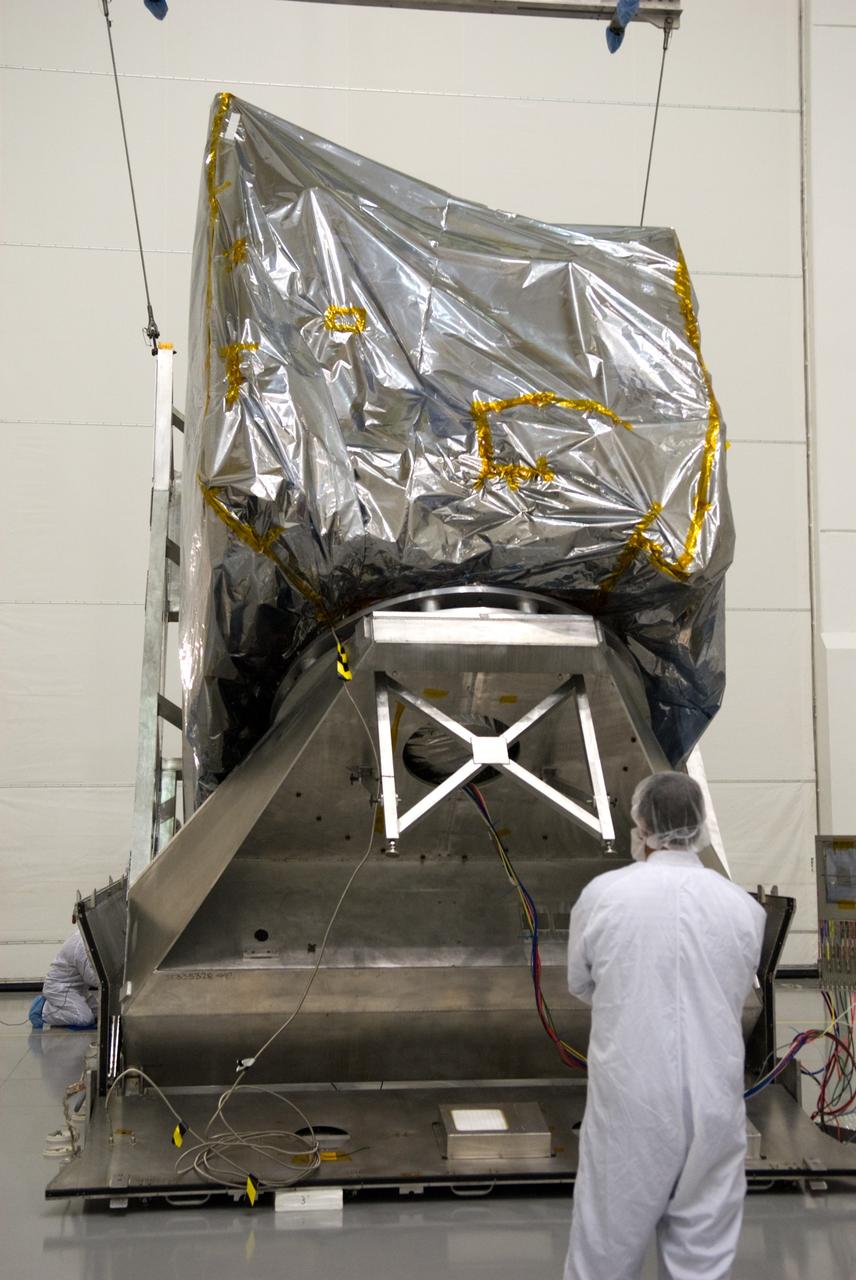
CAPE CANAVERAL, Fla. – At the Astrotech Space Operations facility in Titusville, Fla., NASA's newly arrived GOES-P meteorological satellite is lifted into a vertical position for removal from its transportation case. GOES-P, the latest Geostationary Operational Environmental Satellite, was developed by NASA for the National Oceanic and Atmospheric Administration, or NOAA. GOES-P is designed to watch for storm development and observed current weather conditions on Earth. Launch of GOES-P is targeted for no earlier than Feb. 25, 2010, from Launch Complex 37 aboard a United Launch Alliance Delta IV rocket. For information on GOES-P, visit http://goespoes.gsfc.nasa.gov/goes/spacecraft/n_p_spacecraft.html. Photo credit: NASA/Glenn Benson
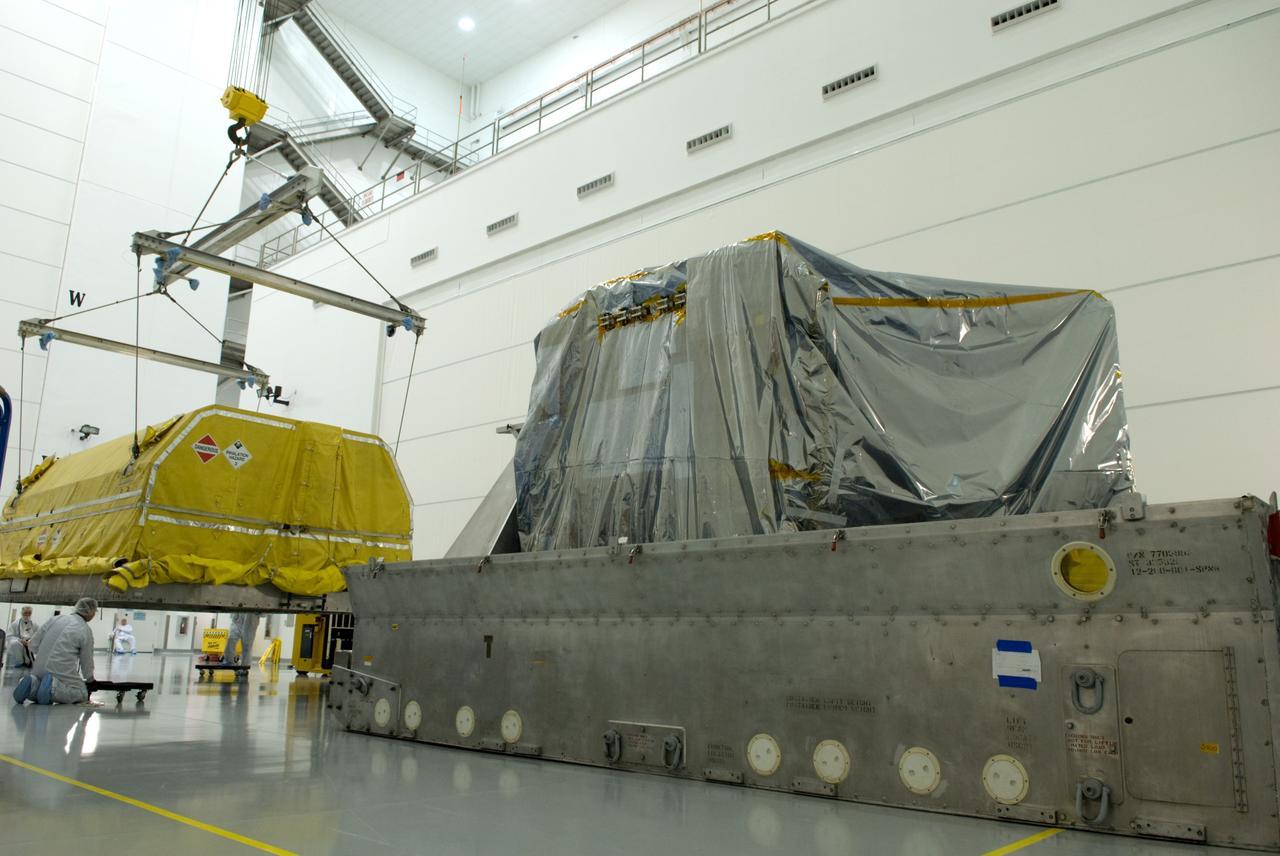
CAPE CANAVERAL, Fla. – At the Astrotech Space Operations facility in Titusville, Fla., workers remove the transportation cover from NASA's newly arrived GOES-P meteorological satellite. GOES-P, the latest Geostationary Operational Environmental Satellite, was developed by NASA for the National Oceanic and Atmospheric Administration, or NOAA. GOES-P is designed to watch for storm development and observed current weather conditions on Earth. Launch of GOES-P is targeted for no earlier than Feb. 25, 2010, from Launch Complex 37 aboard a United Launch Alliance Delta IV rocket. For information on GOES-P, visit http://goespoes.gsfc.nasa.gov/goes/spacecraft/n_p_spacecraft.html. Photo credit: NASA/Glenn Benson
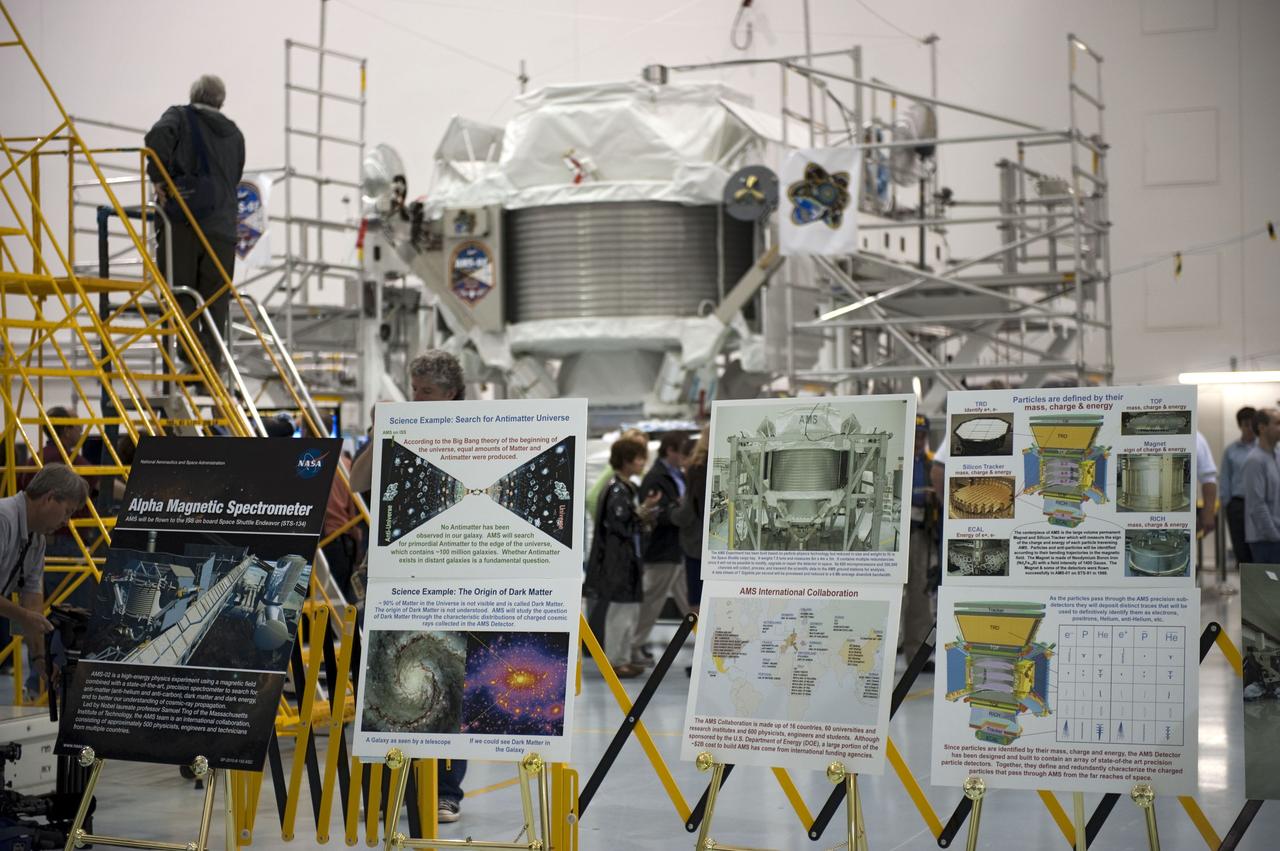
CAPE CANAVERAL, Fla. -- In the Space Station Processing Facility at NASA's Kennedy Space Center in Florida, media check out and learn more about the Alpha Magnetic Spectrometer-2 (AMS). AMS is a particle physics detector, designed to operate as an external experiment on the International Space Station. It will use the unique environment of space to study the universe and its origin by searching for dark matter. AMS-2 will fly to the station aboard space shuttle Endeavour's STS-134 mission targeted to launch April 19 at 7:48 p.m. EDT. For more information visit, www.nasa.gov/mission_pages/shuttle/shuttlemissions/sts134/index.html. Photo credit: NASA/Glenn Benson
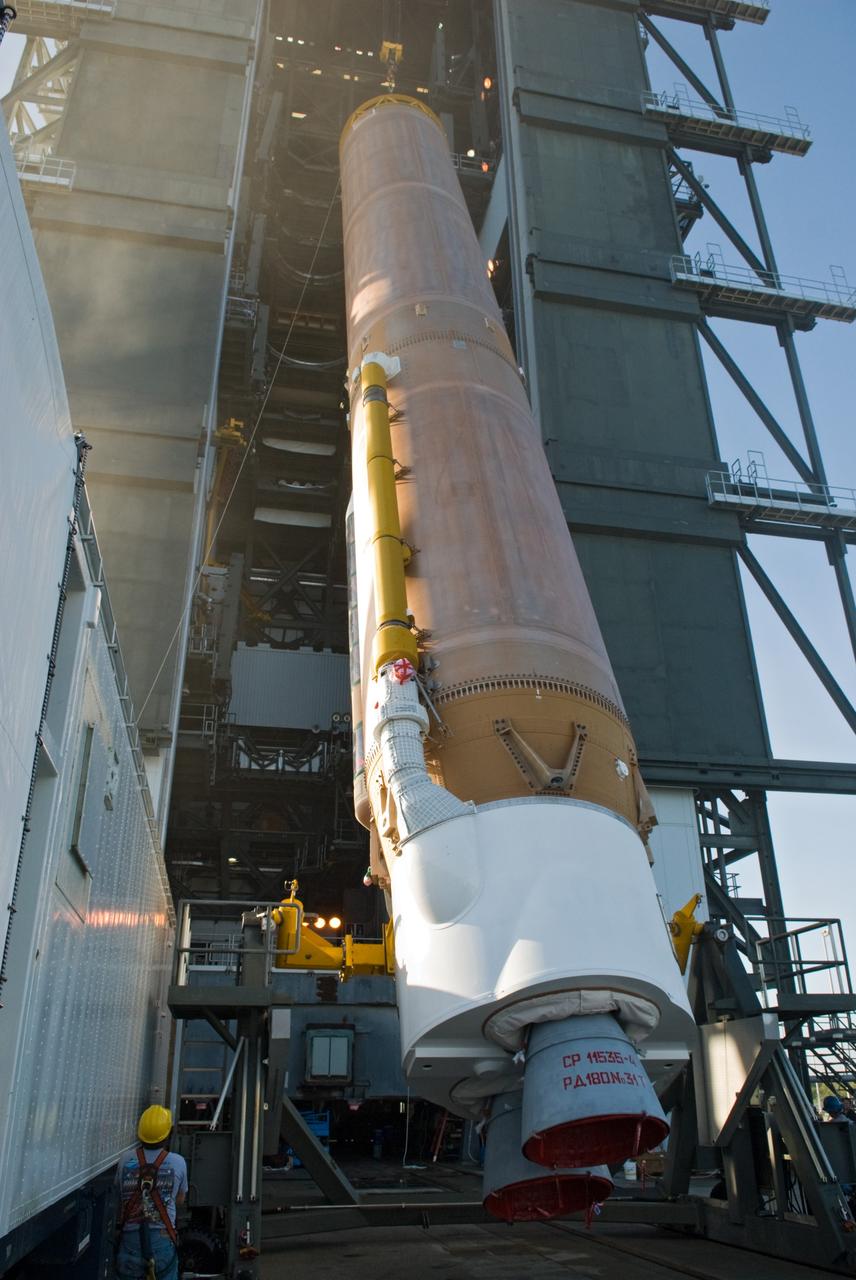
CAPE CANAVERAL, Fla. – The Atlas V rocket scheduled to launch NASA's Solar Dynamics Observatory, or SDO, is ready for its lift into the Vertical Integration Facility at Launch Complex 41 on Cape Canaveral Air Force Station in Florida. SDO is the first space weather research network mission in NASA's Living With a Star Program. The spacecraft's long-term measurements will give solar scientists in-depth information about changes in the sun's magnetic field and insight into how they affect Earth. Liftoff on the United Launch Alliance Atlas V is scheduled for Feb. 3, 2010. For information on SDO, visit http://www.nasa.gov/sdo. Photo credit: NASA/Glenn Benson
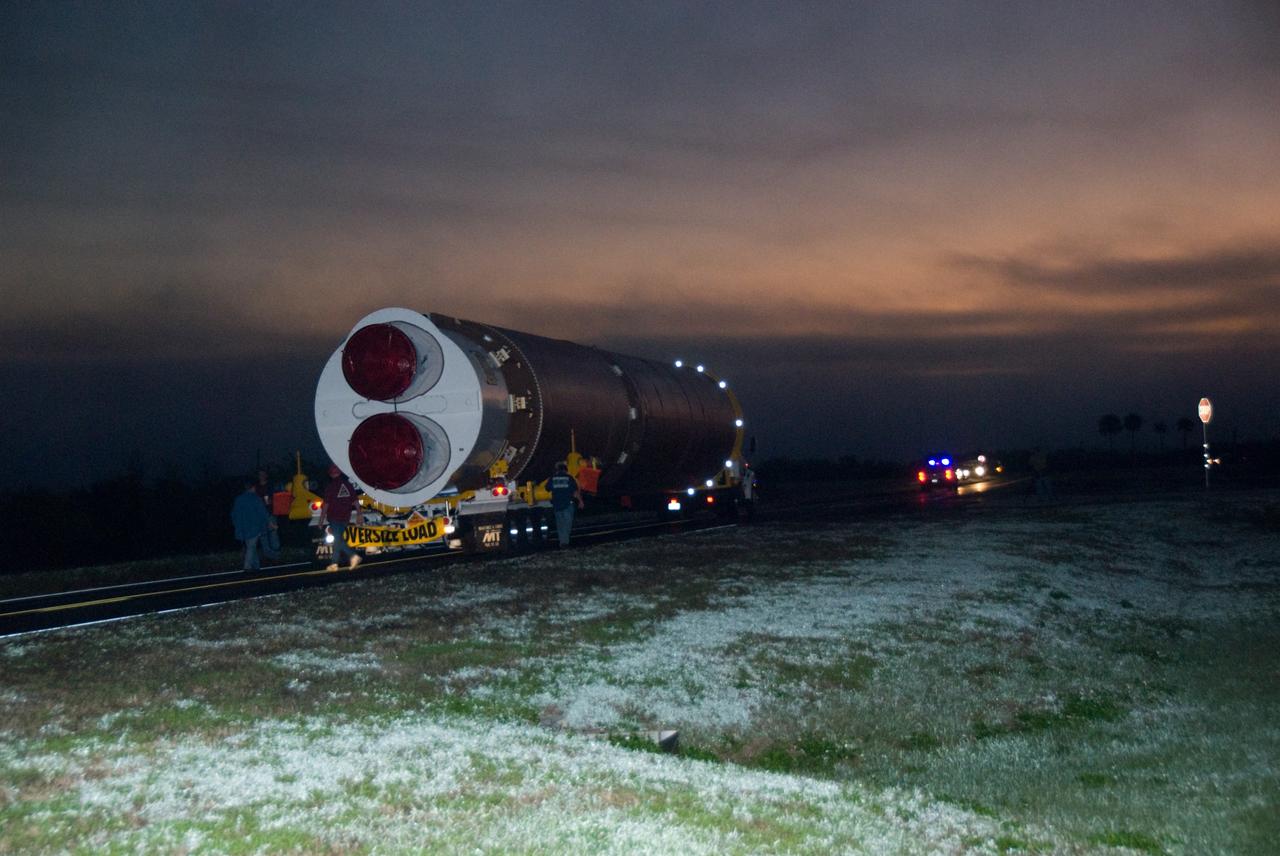
CAPE CANAVERAL, Fla. – The Atlas V rocket scheduled to launch NASA's Solar Dynamics Observatory, or SDO, makes its slow trek from the Atlas Spaceflight Operations Center to Pad 41 on Cape Canaveral Air Force Station in Florida. SDO is the first space weather research network mission in NASA's Living With a Star Program. The spacecraft's long-term measurements will give solar scientists in-depth information about changes in the sun's magnetic field and insight into how they affect Earth. Liftoff on the United Launch Alliance Atlas V is scheduled for Feb. 3, 2010. For information on SDO, visit http://www.nasa.gov/sdo. Photo credit: NASA/Glenn Benson

ORLANDO, Fla. – About 60 high school teams take part in the "For Inspiration and Recognition of Science and Technology," or FIRST, competition at the University of Central Florida in Orlando. FIRST, founded in 1989, is a non-profit organization that designs accessible, innovative programs to build self-confidence, knowledge and life skills while motivating young people to pursue academic opportunities. The robotics competition challenges teams of high school students and their mentors to solve a common problem in a six-week timeframe using a standard kit of parts and a common set of rules. Photo credit: NASA/Glenn Benson
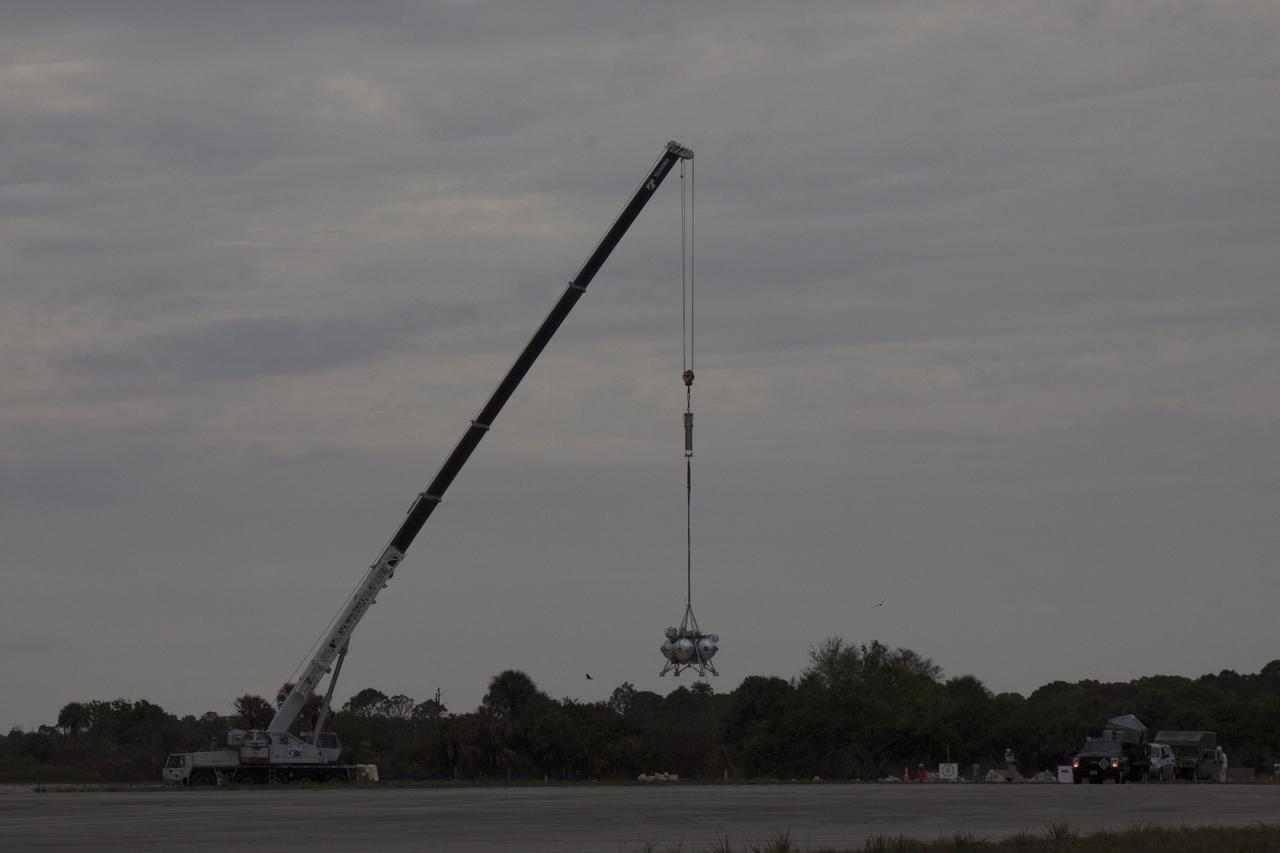
CAPE CANAVERAL, Fla. – NASA's Project Morpheus prototype lander is lifted by crane for a tethered test near a new launch site at the north end of the Shuttle Landing Facility at NASA’s Kennedy Space Center in Florida. The launch pad was moved to a different location at the landing facility to support the next phase of flight testing. The test was performed to verify the lander's recently installed autonomous landing and hazard avoidance technology, or ALHAT, sensors and integration systems. During the test, Morpheus was lifted by crane to 20 feet for an engine firing of about 74 seconds and then lowered to the ground. With the successful completion of the test, the Morpheus project team will begin preparing for the first free flight test with ALHAT. Morpheus tests NASA’s ALHAT, and an engine that runs on liquid oxygen and methane, or green propellants, into a fully-operational lander that could deliver cargo to other planetary surfaces. The landing facility provides the lander with the kind of field necessary for realistic testing, complete with rocks, craters and hazards to avoid. Morpheus’ ALHAT payload allows it to navigate to clear landing sites amidst rocks, craters and other hazards during its descent. Project Morpheus is being managed under the Advanced Exploration Systems, or AES, Division in NASA’s Human Exploration and Operations Mission Directorate. The efforts in AES pioneer new approaches for rapidly developing prototype systems, demonstrating key capabilities and validating operational concepts for future human missions beyond Earth orbit. For more information on Project Morpheus, visit http://morpheuslander.jsc.nasa.gov/. Photo credit: NASA/Glenn Benson
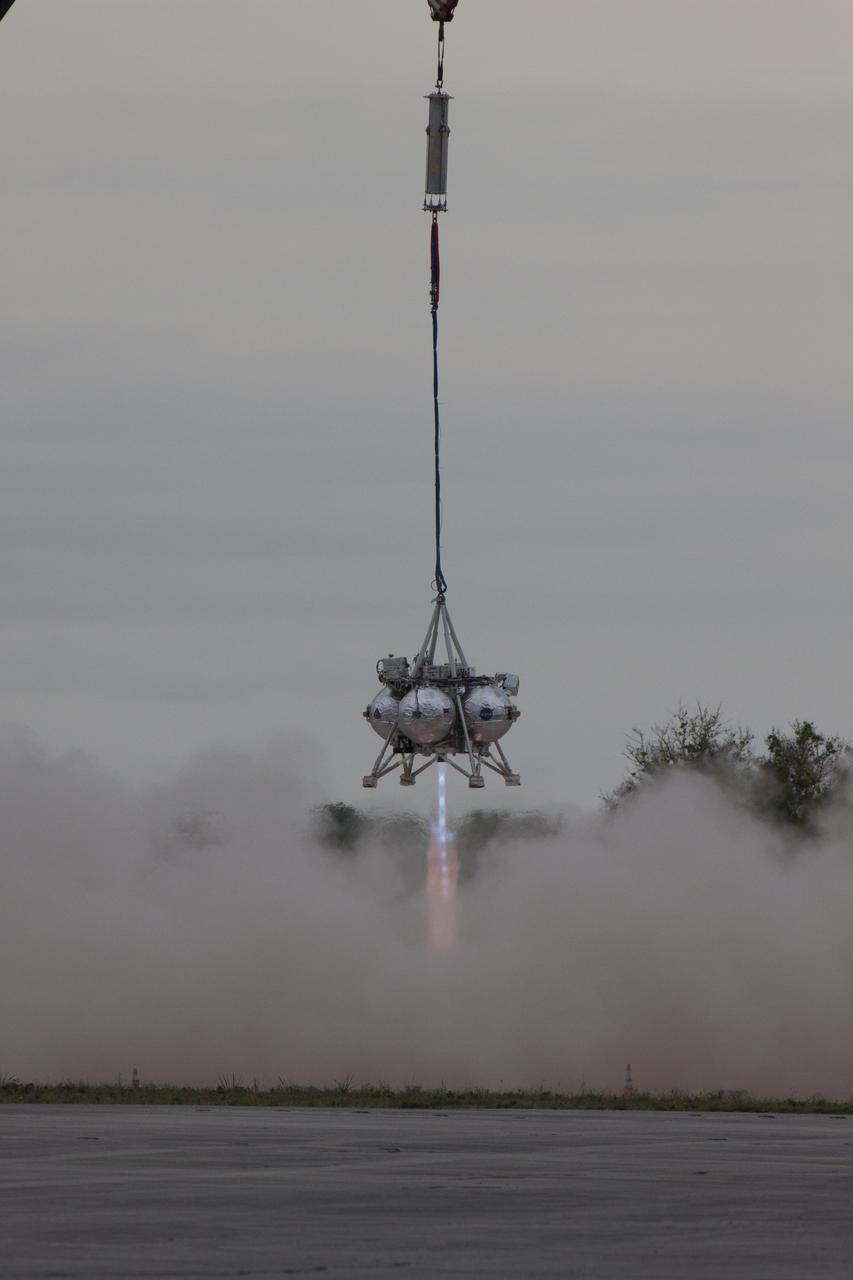
CAPE CANAVERAL, Fla. – NASA's Project Morpheus prototype lander is lifted by crane and its engine is ignited during a tethered test near a new launch site at the north end of the Shuttle Landing Facility at NASA's Kennedy Space Center in Florida. The launch pad was moved to a different location at the landing facility to support the next phase of flight testing. The test was performed to verify the lander's recently installed autonomous landing and hazard avoidance technology, or ALHAT, sensors and integration systems. During the test, Morpheus was lifted by crane to 20 feet for an engine firing of about 74 seconds and then lowered to the ground. With the successful completion of the test, the Morpheus project team will begin preparing for the first free flight test with ALHAT. Morpheus tests NASA’s ALHAT, and an engine that runs on liquid oxygen and methane, or green propellants, into a fully-operational lander that could deliver cargo to other planetary surfaces. The landing facility provides the lander with the kind of field necessary for realistic testing, complete with rocks, craters and hazards to avoid. Morpheus’ ALHAT payload allows it to navigate to clear landing sites amidst rocks, craters and other hazards during its descent. Project Morpheus is being managed under the Advanced Exploration Systems, or AES, Division in NASA’s Human Exploration and Operations Mission Directorate. The efforts in AES pioneer new approaches for rapidly developing prototype systems, demonstrating key capabilities and validating operational concepts for future human missions beyond Earth orbit. For more information on Project Morpheus, visit http://morpheuslander.jsc.nasa.gov/. Photo credit: NASA/Glenn Benson
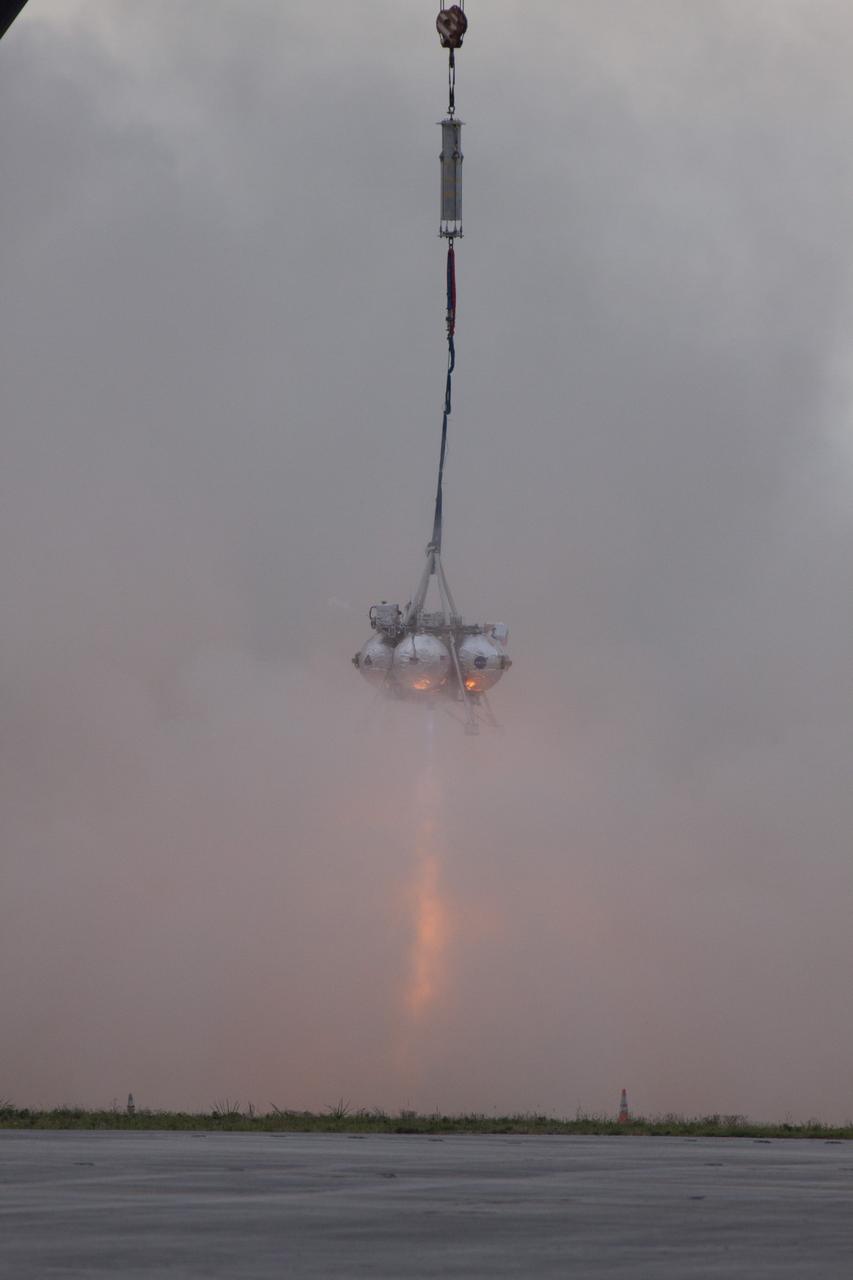
CAPE CANAVERAL, Fla. – NASA's Project Morpheus prototype lander is lifted by crane and its engine is ignited during a tethered test near a new launch site at the north end of the Shuttle Landing Facility at NASA's Kennedy Space Center in Florida. The launch pad was moved to a different location at the landing facility to support the next phase of flight testing. The test was performed to verify the lander's recently installed autonomous landing and hazard avoidance technology, or ALHAT, sensors and integration systems. During the test, Morpheus was lifted by crane to 20 feet for an engine firing of about 74 seconds and then lowered to the ground. With the successful completion of the test, the Morpheus project team will begin preparing for the first free flight test with ALHAT. Morpheus tests NASA’s ALHAT, and an engine that runs on liquid oxygen and methane, or green propellants, into a fully-operational lander that could deliver cargo to other planetary surfaces. The landing facility provides the lander with the kind of field necessary for realistic testing, complete with rocks, craters and hazards to avoid. Morpheus’ ALHAT payload allows it to navigate to clear landing sites amidst rocks, craters and other hazards during its descent. Project Morpheus is being managed under the Advanced Exploration Systems, or AES, Division in NASA’s Human Exploration and Operations Mission Directorate. The efforts in AES pioneer new approaches for rapidly developing prototype systems, demonstrating key capabilities and validating operational concepts for future human missions beyond Earth orbit. For more information on Project Morpheus, visit http://morpheuslander.jsc.nasa.gov/. Photo credit: NASA/Glenn Benson
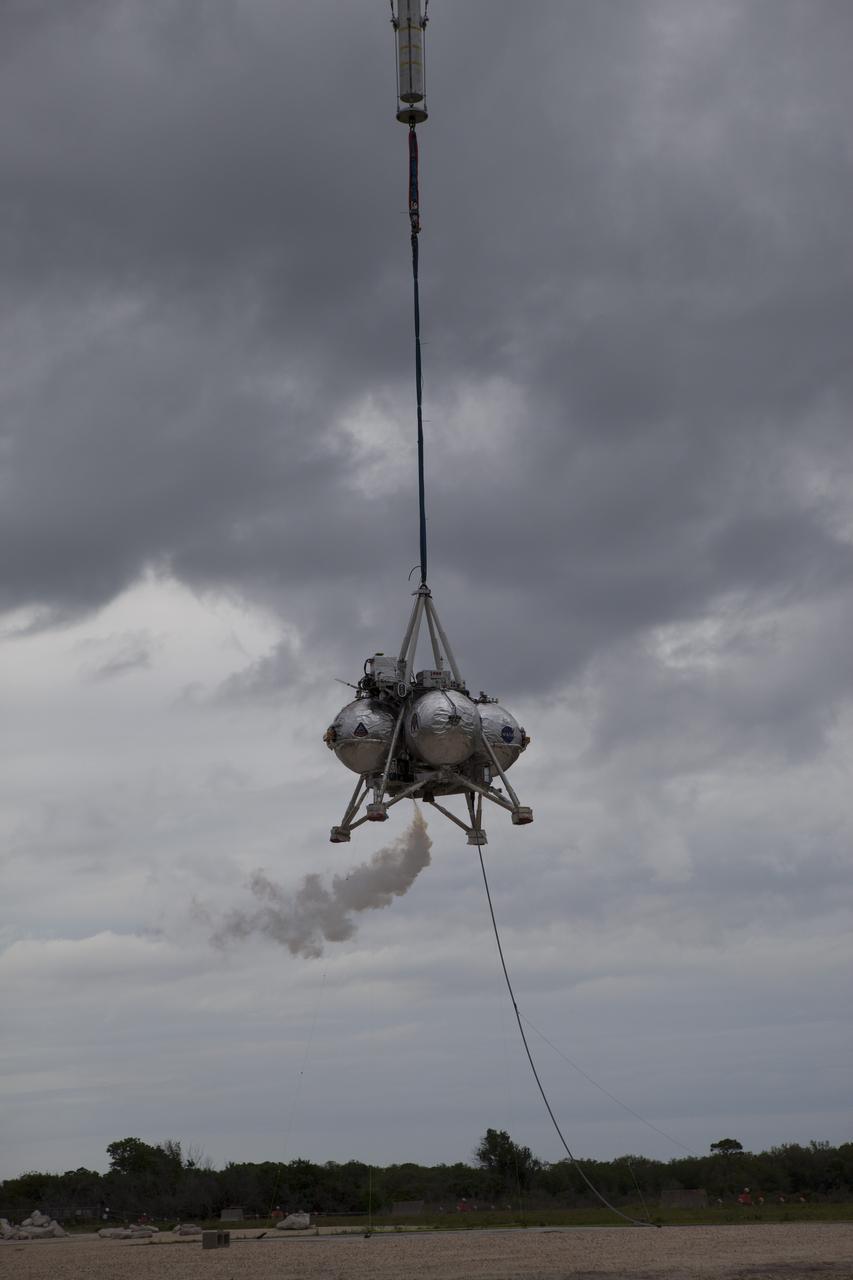
CAPE CANAVERAL, Fla. – NASA's Project Morpheus prototype lander is lifted by crane during a tethered test near a new launch site at the north end of the Shuttle Landing Facility at NASA's Kennedy Space Center in Florida. The launch pad was moved to a different location at the landing facility to support the next phase of flight testing. The test was performed to verify the lander's recently installed autonomous landing and hazard avoidance technology, or ALHAT, sensors and integration systems. During the test, Morpheus was lifted by crane to 20 feet for an engine firing of about 74 seconds and then lowered to the ground. With the successful completion of the test, the Morpheus project team will begin preparing for the first free flight test with ALHAT. Morpheus tests NASA’s ALHAT, and an engine that runs on liquid oxygen and methane, or green propellants, into a fully-operational lander that could deliver cargo to other planetary surfaces. The landing facility provides the lander with the kind of field necessary for realistic testing, complete with rocks, craters and hazards to avoid. Morpheus’ ALHAT payload allows it to navigate to clear landing sites amidst rocks, craters and other hazards during its descent. Project Morpheus is being managed under the Advanced Exploration Systems, or AES, Division in NASA’s Human Exploration and Operations Mission Directorate. The efforts in AES pioneer new approaches for rapidly developing prototype systems, demonstrating key capabilities and validating operational concepts for future human missions beyond Earth orbit. For more information on Project Morpheus, visit http://morpheuslander.jsc.nasa.gov/. Photo credit: NASA/Glenn Benson
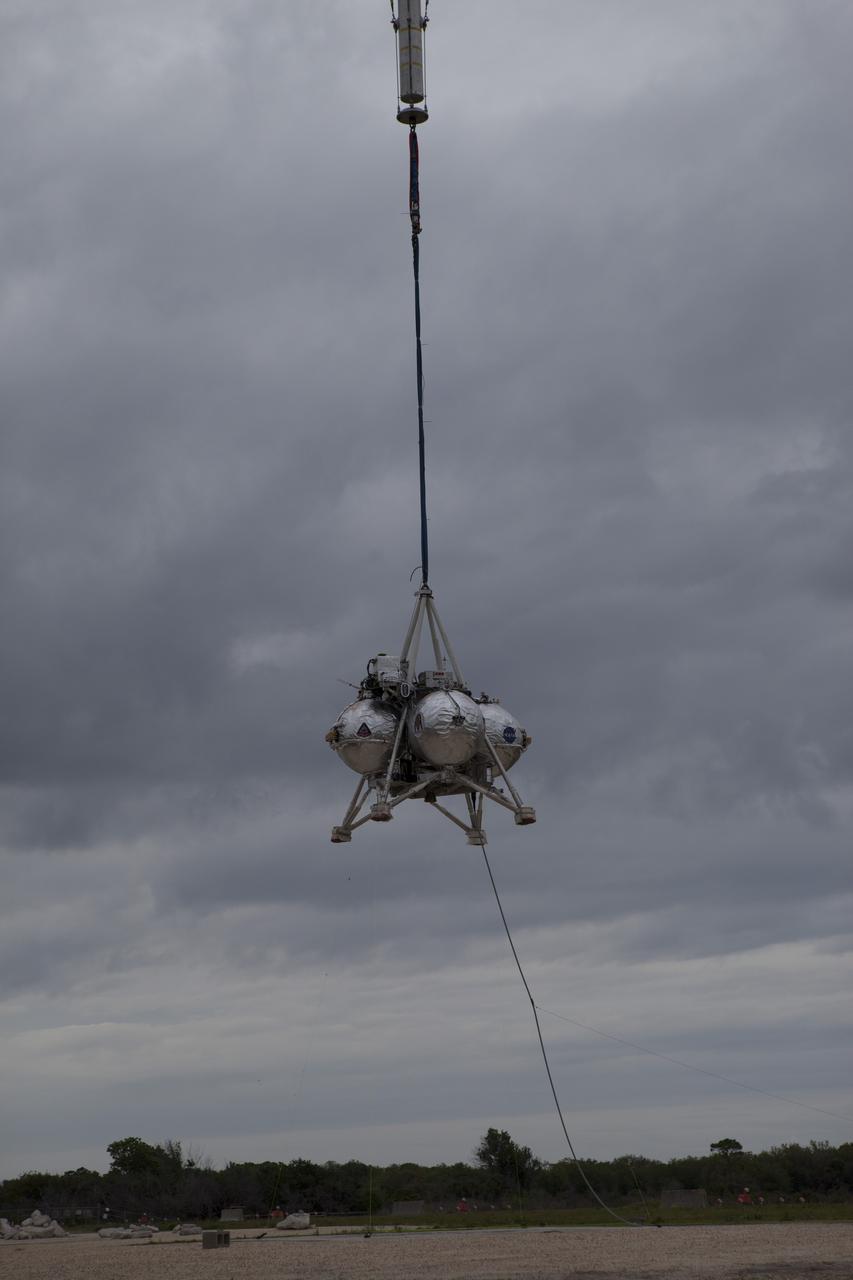
CAPE CANAVERAL, Fla. – NASA's Project Morpheus prototype lander is lifted by crane during a tethered test near a new launch site at the north end of the Shuttle Landing Facility at NASA's Kennedy Space Center in Florida. The launch pad was moved to a different location at the landing facility to support the next phase of flight testing. The test was performed to verify the lander's recently installed autonomous landing and hazard avoidance technology, or ALHAT, sensors and integration systems. During the test, Morpheus was lifted by crane to 20 feet for an engine firing of about 74 seconds and then lowered to the ground. With the successful completion of the test, the Morpheus project team will begin preparing for the first free flight test with ALHAT. Morpheus tests NASA’s ALHAT, and an engine that runs on liquid oxygen and methane, or green propellants, into a fully-operational lander that could deliver cargo to other planetary surfaces. The landing facility provides the lander with the kind of field necessary for realistic testing, complete with rocks, craters and hazards to avoid. Morpheus’ ALHAT payload allows it to navigate to clear landing sites amidst rocks, craters and other hazards during its descent. Project Morpheus is being managed under the Advanced Exploration Systems, or AES, Division in NASA’s Human Exploration and Operations Mission Directorate. The efforts in AES pioneer new approaches for rapidly developing prototype systems, demonstrating key capabilities and validating operational concepts for future human missions beyond Earth orbit. For more information on Project Morpheus, visit http://morpheuslander.jsc.nasa.gov/. Photo credit: NASA/Glenn Benson
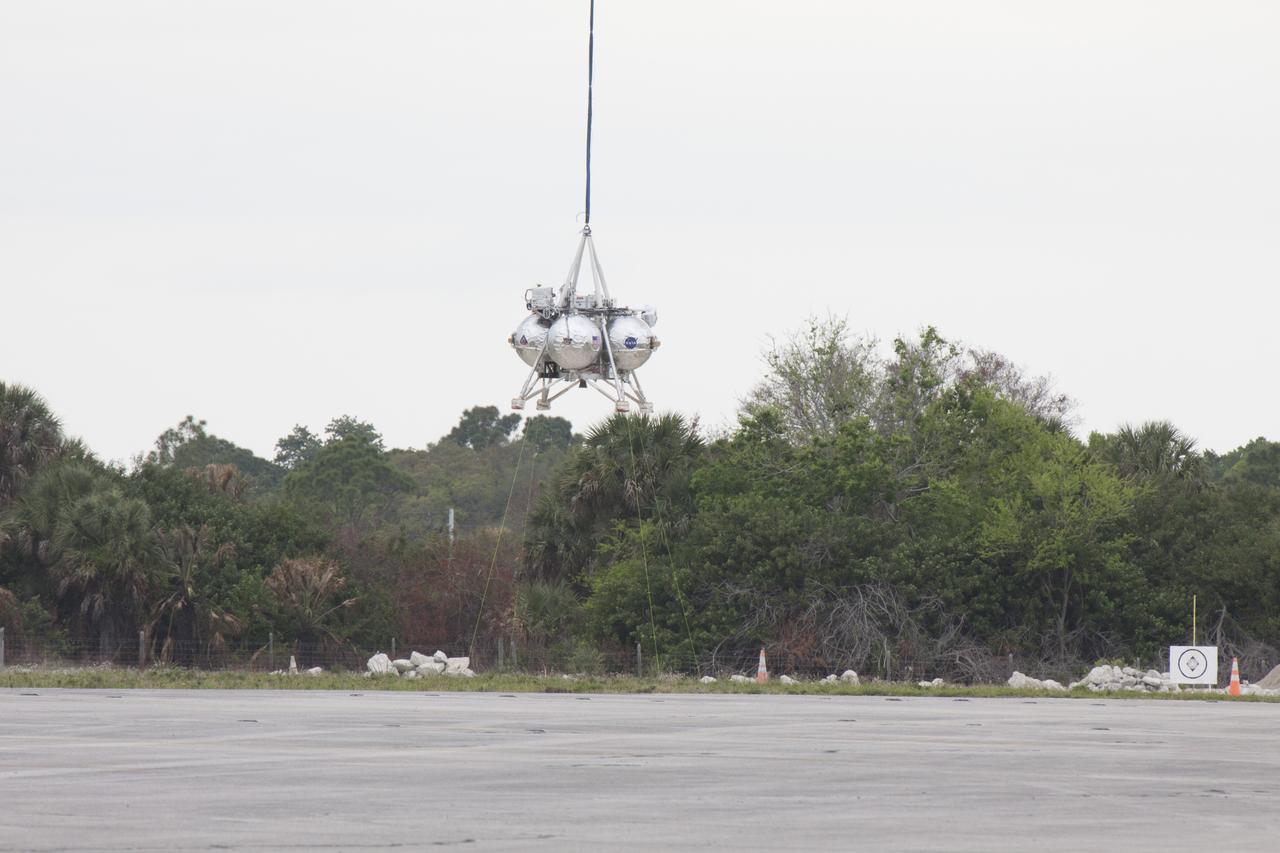
CAPE CANAVERAL, Fla. – NASA's Project Morpheus prototype lander is lifted by crane during a tethered test near a new launch site at the north end of the Shuttle Landing Facility at NASA's Kennedy Space Center in Florida. The launch pad was moved to a different location at the landing facility to support the next phase of flight testing. The test was performed to verify the lander's recently installed autonomous landing and hazard avoidance technology, or ALHAT, sensors and integration systems. During the test, Morpheus was lifted by crane to 20 feet for an engine firing of about 74 seconds and then lowered to the ground. With the successful completion of the test, the Morpheus project team will begin preparing for the first free flight test with ALHAT. Morpheus tests NASA’s ALHAT, and an engine that runs on liquid oxygen and methane, or green propellants, into a fully-operational lander that could deliver cargo to other planetary surfaces. The landing facility provides the lander with the kind of field necessary for realistic testing, complete with rocks, craters and hazards to avoid. Morpheus’ ALHAT payload allows it to navigate to clear landing sites amidst rocks, craters and other hazards during its descent. Project Morpheus is being managed under the Advanced Exploration Systems, or AES, Division in NASA’s Human Exploration and Operations Mission Directorate. The efforts in AES pioneer new approaches for rapidly developing prototype systems, demonstrating key capabilities and validating operational concepts for future human missions beyond Earth orbit. For more information on Project Morpheus, visit http://morpheuslander.jsc.nasa.gov/. Photo credit: NASA/Glenn Benson

CAPE CANAVERAL, Fla. – NASA's Project Morpheus prototype lander is lifted by crane and its engine is ignited during a tethered test near a new launch site at the north end of the Shuttle Landing Facility at NASA's Kennedy Space Center in Florida. The launch pad was moved to a different location at the landing facility to support the next phase of flight testing. The test was performed to verify the lander's recently installed autonomous landing and hazard avoidance technology, or ALHAT, sensors and integration systems. During the test, Morpheus was lifted by crane to 20 feet for an engine firing of about 74 seconds and then lowered to the ground. With the successful completion of the test, the Morpheus project team will begin preparing for the first free flight test with ALHAT. Morpheus tests NASA’s ALHAT, and an engine that runs on liquid oxygen and methane, or green propellants, into a fully-operational lander that could deliver cargo to other planetary surfaces. The landing facility provides the lander with the kind of field necessary for realistic testing, complete with rocks, craters and hazards to avoid. Morpheus’ ALHAT payload allows it to navigate to clear landing sites amidst rocks, craters and other hazards during its descent. Project Morpheus is being managed under the Advanced Exploration Systems, or AES, Division in NASA’s Human Exploration and Operations Mission Directorate. The efforts in AES pioneer new approaches for rapidly developing prototype systems, demonstrating key capabilities and validating operational concepts for future human missions beyond Earth orbit. For more information on Project Morpheus, visit http://morpheuslander.jsc.nasa.gov/. Photo credit: NASA/Glenn Benson
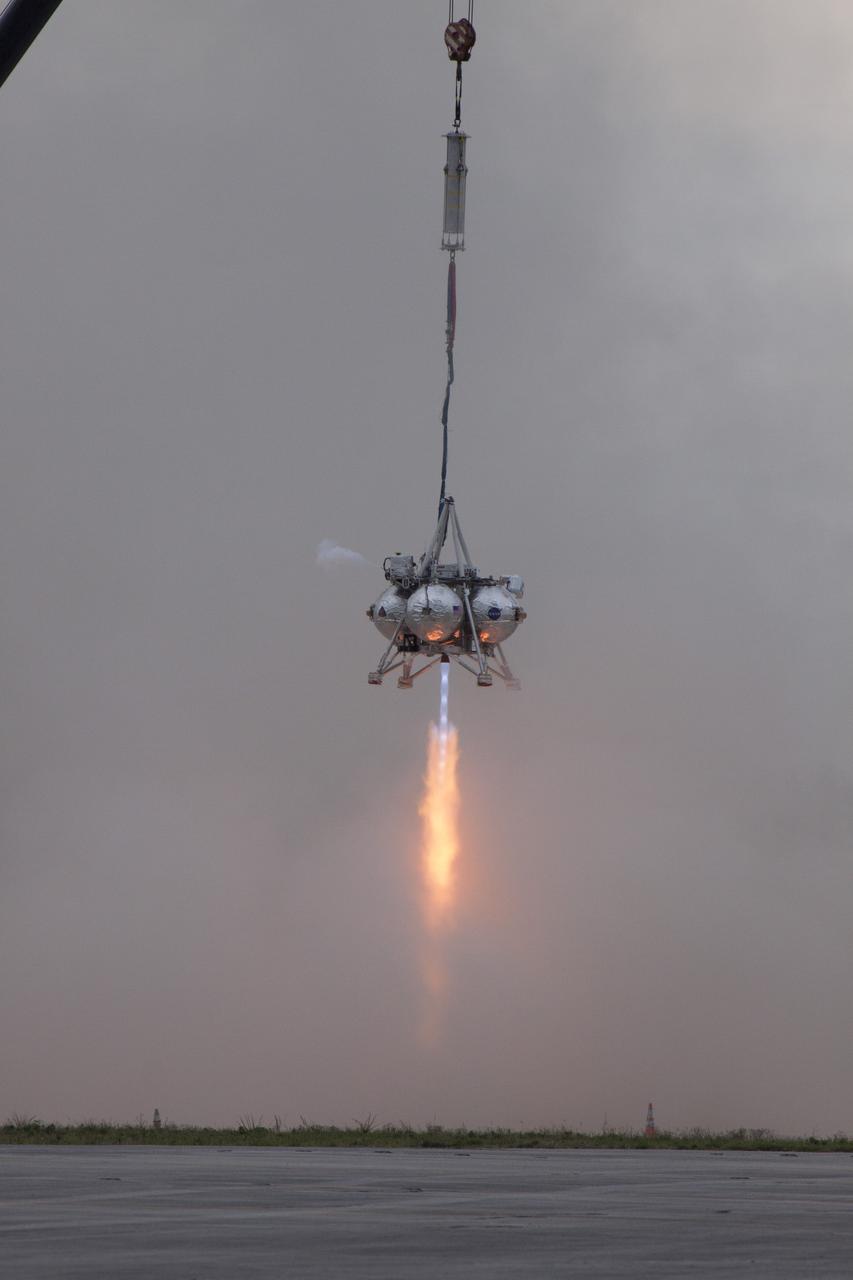
CAPE CANAVERAL, Fla. – NASA's Project Morpheus prototype lander is lifted by crane and its engine is ignited during a tethered test near a new launch site at the north end of the Shuttle Landing Facility at NASA's Kennedy Space Center in Florida. The launch pad was moved to a different location at the landing facility to support the next phase of flight testing. The test was performed to verify the lander's recently installed autonomous landing and hazard avoidance technology, or ALHAT, sensors and integration systems. During the test, Morpheus was lifted by crane to 20 feet for an engine firing of about 74 seconds and then lowered to the ground. With the successful completion of the test, the Morpheus project team will begin preparing for the first free flight test with ALHAT. Morpheus tests NASA’s ALHAT, and an engine that runs on liquid oxygen and methane, or green propellants, into a fully-operational lander that could deliver cargo to other planetary surfaces. The landing facility provides the lander with the kind of field necessary for realistic testing, complete with rocks, craters and hazards to avoid. Morpheus’ ALHAT payload allows it to navigate to clear landing sites amidst rocks, craters and other hazards during its descent. Project Morpheus is being managed under the Advanced Exploration Systems, or AES, Division in NASA’s Human Exploration and Operations Mission Directorate. The efforts in AES pioneer new approaches for rapidly developing prototype systems, demonstrating key capabilities and validating operational concepts for future human missions beyond Earth orbit. For more information on Project Morpheus, visit http://morpheuslander.jsc.nasa.gov/. Photo credit: NASA/Glenn Benson
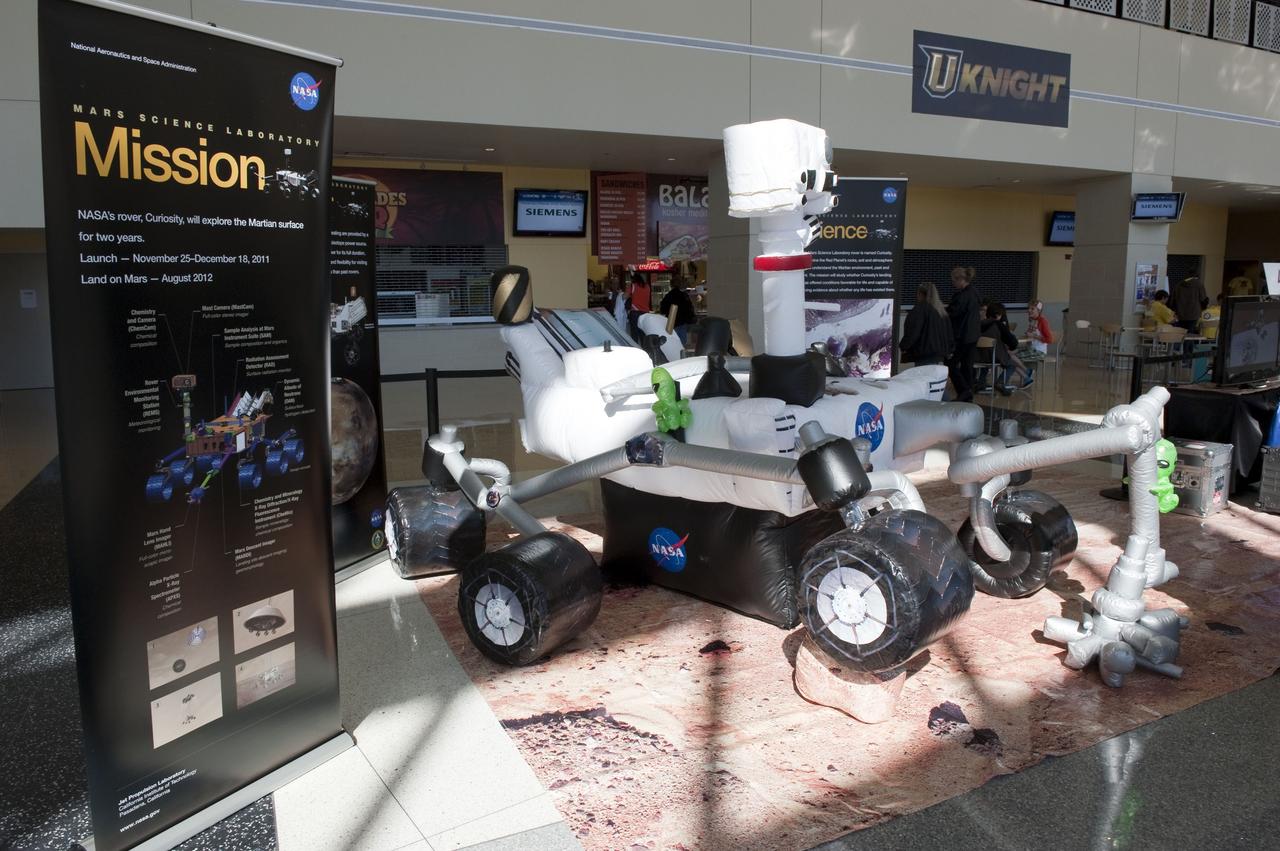
ORLANDO, Fla. – NASA's Jet Propulsion Laboratory (JPL) in Pasadena, Calif., unveiled an inflatable, full-size model of the Mars Science Laboratory mission's Curiosity rover at the "For Inspiration and Recognition of Science and Technology," or FIRST, competition at the University of Central Florida in Orlando. The rover is scheduled to launch from Cape Canaveral Air Force Station in Florida aboard an Atlas V later this year. FIRST, founded in 1989, is a non-profit organization that designs accessible, innovative programs to build self-confidence, knowledge and life skills while motivating young people to pursue academic opportunities. The robotics competition challenges teams of high school students and their mentors to solve a common problem in a six-week timeframe using a standard kit of parts and a common set of rules. Photo credit: NASA/Glenn Benson
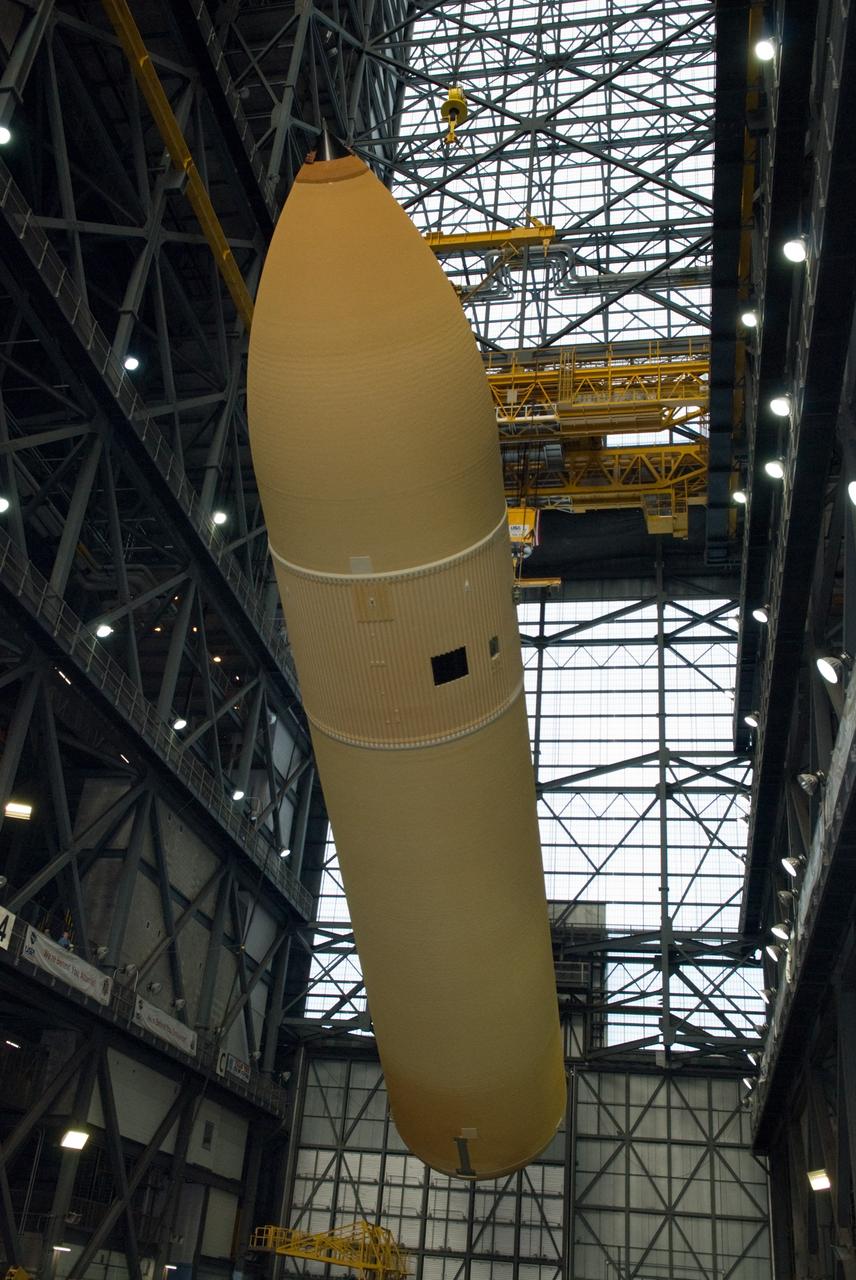
CAPE CANAVERAL, Fla. – In the transfer aisle of the Vehicle Assembly Building at NASA's Kennedy Space Center in Florida, the external fuel tank for space shuttle Discovery's STS-131 mission, ET-135, is rotated into a vertical position as it is lifted toward a test cell. The tank was delivered to Kennedy aboard the Pegasus barge from NASA's Michoud Assembly Facility on Dec. 26. The tank will remain in the test cell until it is transferred into a high bay for mating with the twin solid rocket boosters that will be used on the mission. Launch of the STS-131 mission to the International Space Station is targeted for March 18. For information on the STS-131 mission and crew, visit http://www.nasa.gov/mission_pages/shuttle/shuttlemissions/sts131/index.html. Photo credit: NASA/Glenn Benson
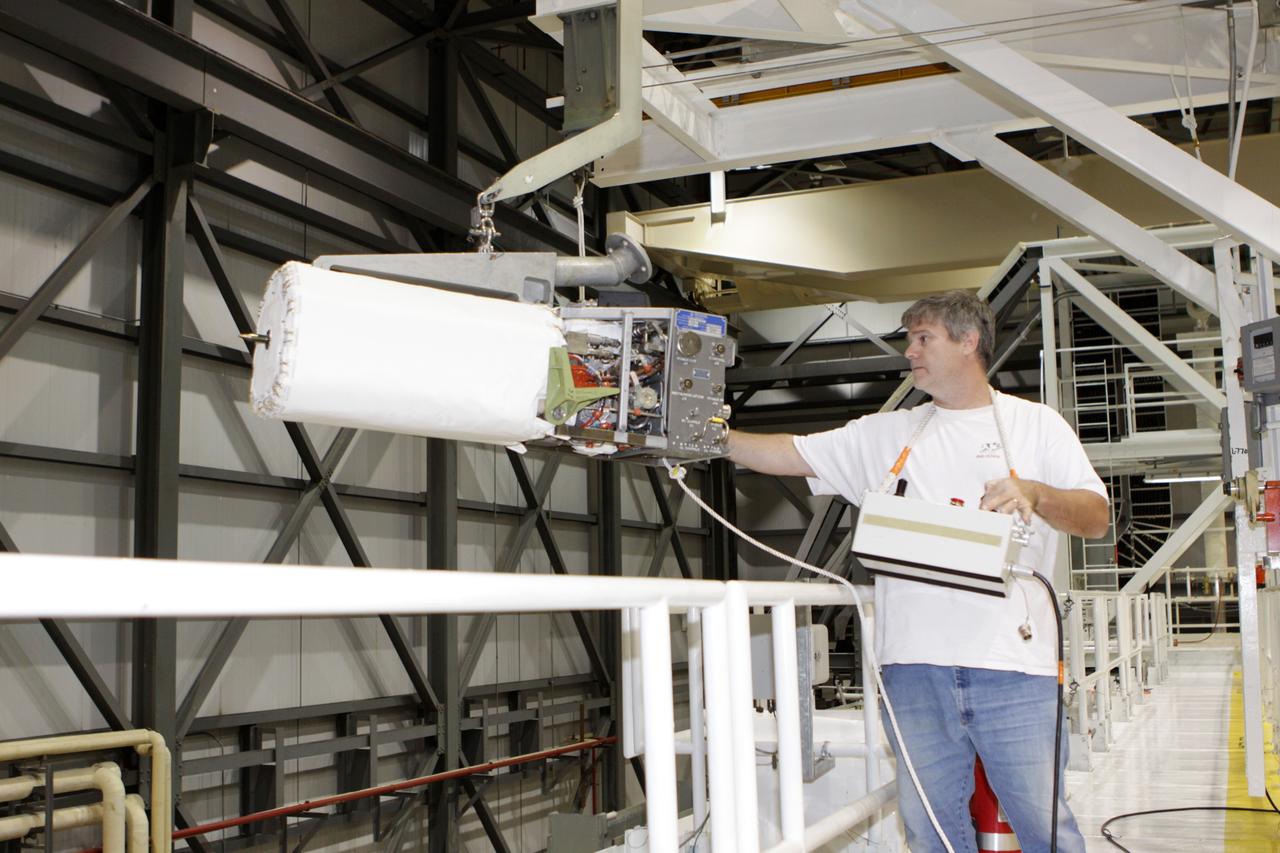
CAPE CANAVERAL, Fla. – Inside Orbiter Processing Facility-2 at NASA's Kennedy Space Center in Florida, a technician guides a newly removed fuel cell up and out of space shuttle Endeavour's payload bay. All three of Endeavour's fuel cells were removed and will be drained of fluids. The hydrogen and oxygen dewars which feed reactants to the fuel cells remain in Endeavour's midbody and will be purged with inert gases and vented down. The work is part of the Space Shuttle Program's transition and retirement processing of shuttle Endeavour, which is being prepared for public display at the California Science Center in Los Angeles. Its ferry flight to California is targeted for mid-September. Endeavour was the last space shuttle added to NASA's orbiter fleet. Over the course of its 19-year career, Endeavour spent 299 days in space during 25 missions. For more information, visit http://www.nasa.gov/shuttle. Photo credit: NASA/Glenn Benson
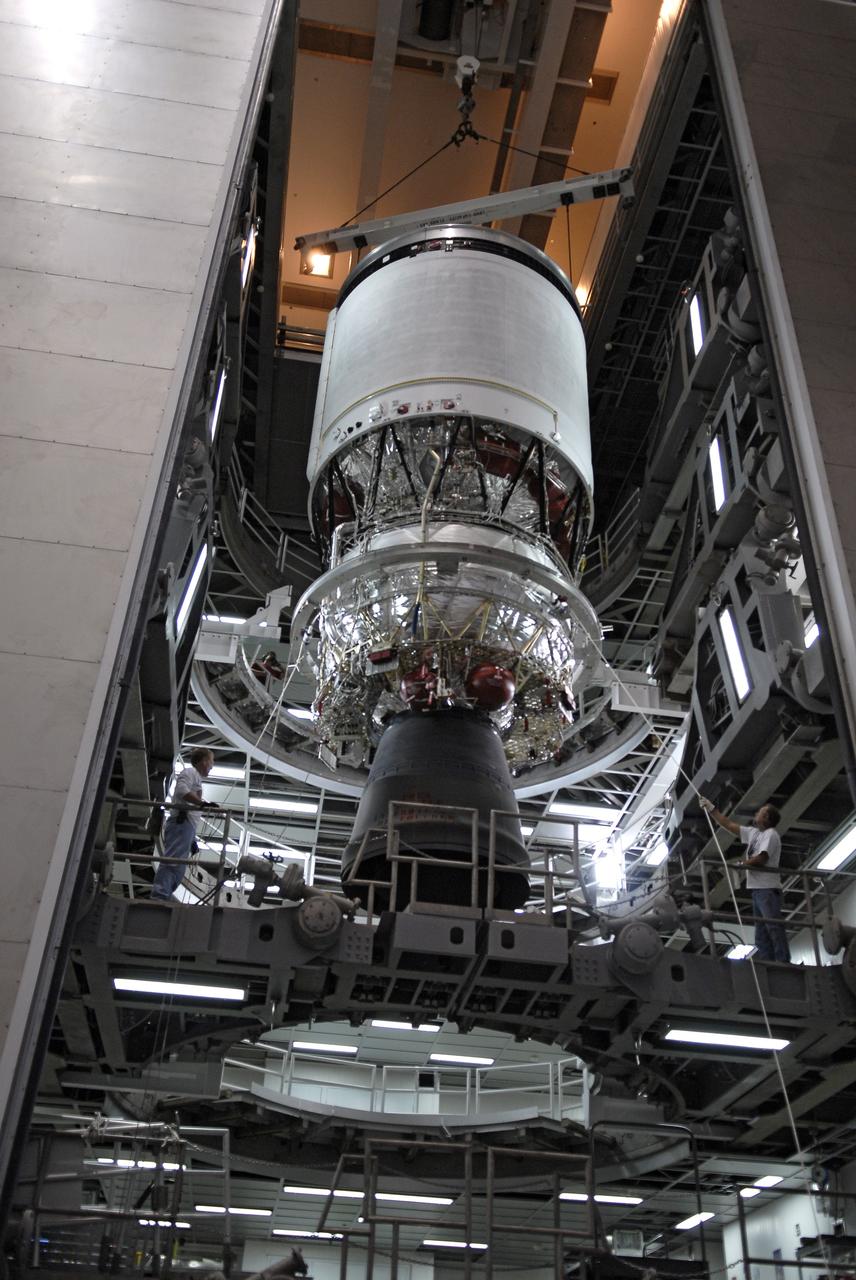
CAPE CANAVERAL, Fla. – Workers prepare to lower the second stage of a Delta IV rocket from a test cell in the hangar of the Delta Operations Center at Cape Canaveral Air Force Station in Florida into a turnover stand following the completion of nozzle extension deployment system testing. The United Launch Alliance Delta IV rocket is slated to launch GOES-P, the latest Geostationary Operational Environmental Satellite developed by NASA for the National Oceanic and Atmospheric Administration, or NOAA. Next, the second stage will be transported to the Horizontal Integration Facility where it will be inspected and prepared for mating with the Delta IV rocket's first stage. GOES-P, a meteorological satellite, is designed to watch for storm development and observed current weather conditions on Earth. Launch of GOES-P is scheduled for no earlier than Feb. 25, 2010, from Launch Complex 37. For information on GOES-P, visit http://goespoes.gsfc.nasa.gov/goes/spacecraft/n_p_spacecraft.html. Photo credit: NASA/Glenn Benson
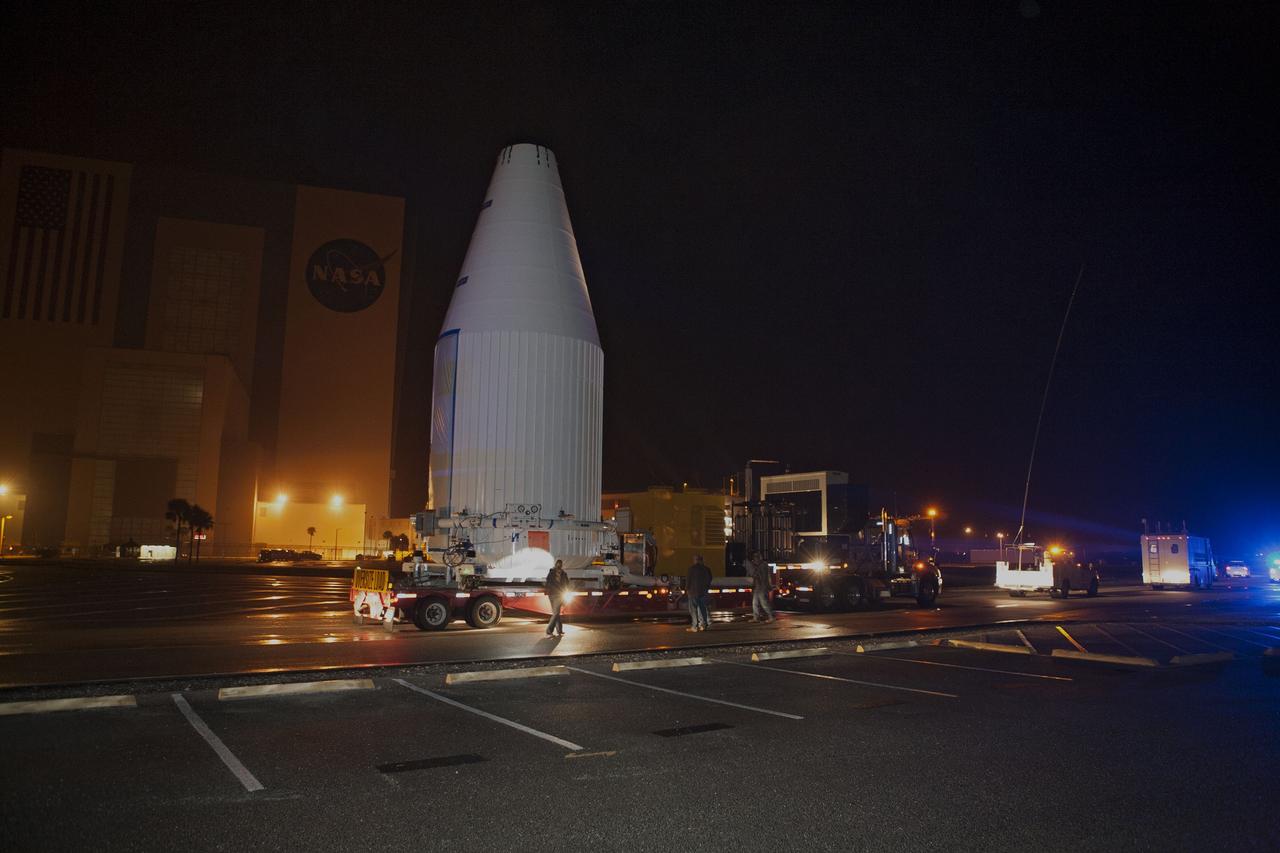
CAPE CANAVERAL, Fla. –NASA's Tracking and Data Relay Satellite, TDRS-K, enclosed in its payload fairing, passes through the Launch Complex 39 area and Vehicle Assembly Building at NASA's Kennedy Space Center as it travels from the Astrotech payload processing facility in Titusville, Fla., to its launch site. TDRS-K will lift off atop a United Launch Alliance Atlas V rocket from Cape Canaveral Air Force Station's Space Launch Complex 41. The TDRS-K spacecraft is part of the next-generation series in the Tracking and Data Relay Satellite System, a constellation of space-based communication satellites providing tracking, telemetry, command and high-bandwidth data return services. For more information, go to http://www.nasa.gov/tdrs Photo credit: NASA/Glenn Benson