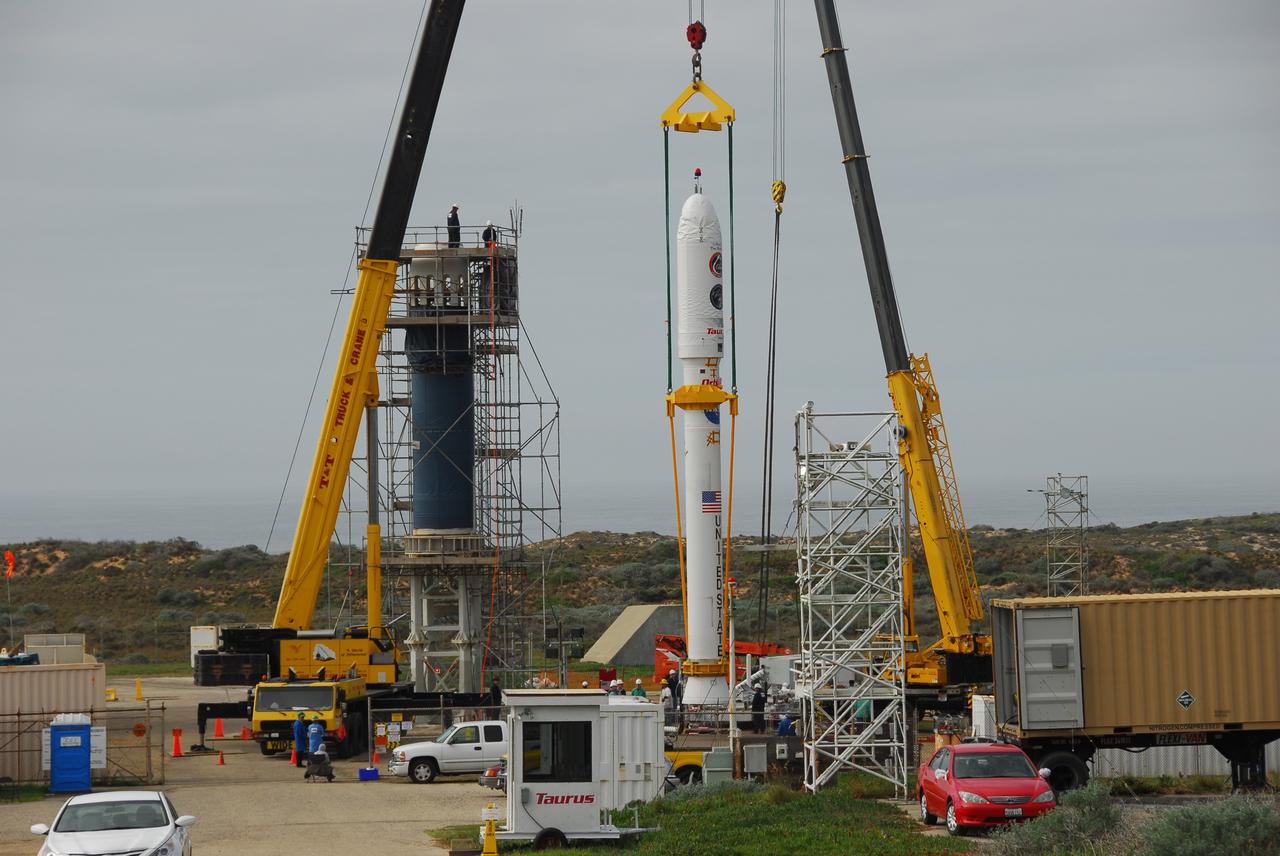
VANDENBERG AIR FORCE BASE, Calif. -- On Space Launch Complex 576-E at Vandenberg Air Force Base in California, Orbital Sciences workers monitor NASA's Glory upper stack as a crane lifts it from a stationary rail for attachment to the Taurus XL rocket's Stage 0. The upper stack consists of Stages 1, 2 and 3 of the Taurus as well as the encapsulated Glory spacecraft. The Orbital Sciences Taurus XL rocket will launch Glory into low Earth orbit. Once Glory reaches orbit, it will collect data on the properties of aerosols and black carbon. It also will help scientists understand how the sun's irradiance affects Earth's climate. Launch is scheduled for 5:09 a.m. EST Feb. 23. For information, visit www.nasa.gov/glory. Photo credit: NASA/VAFB
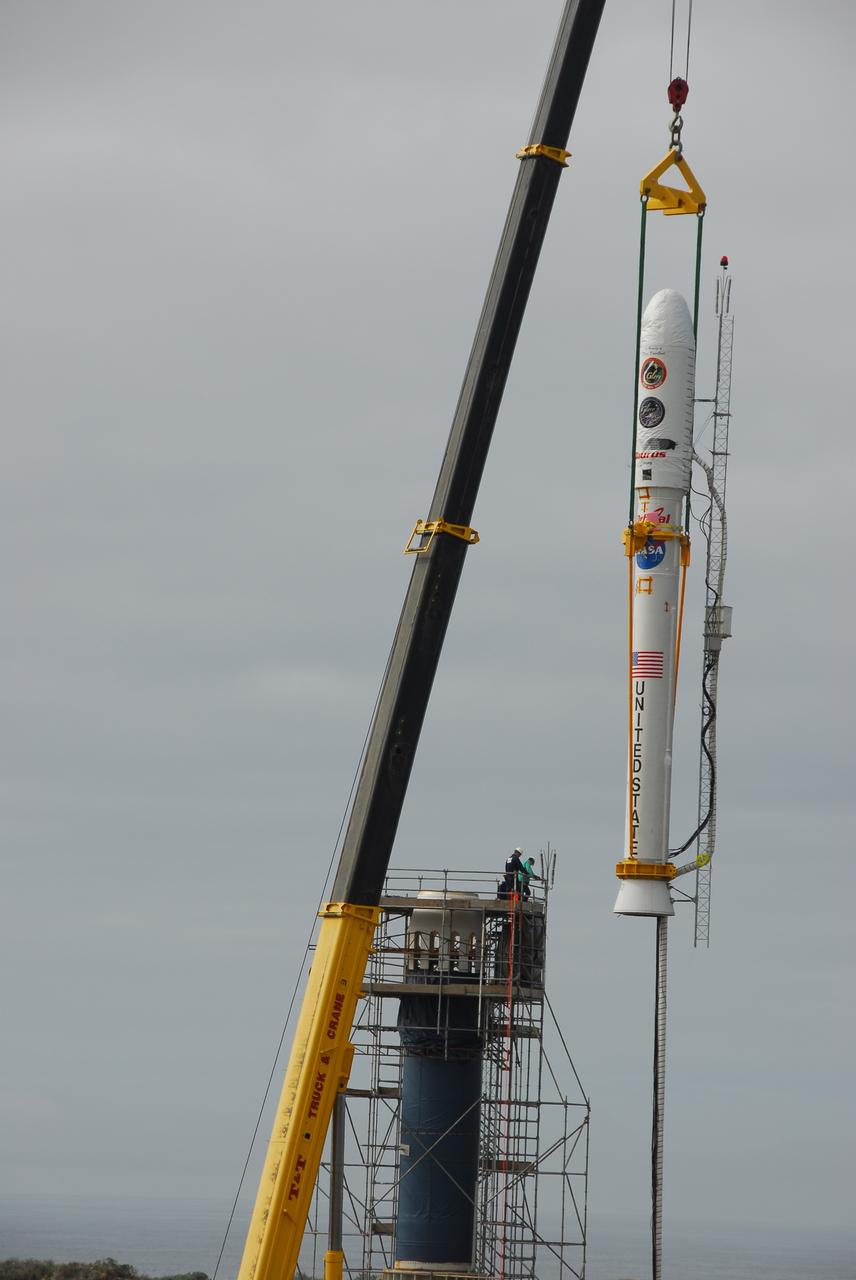
VANDENBERG AIR FORCE BASE, Calif. -- On Space Launch Complex 576-E at Vandenberg Air Force Base in California, a crane moves NASA's Glory upper stack toward the Taurus XL rocket's Stage 0. The upper stack consists of Stages 1, 2 and 3 of the Taurus as well as the encapsulated Glory spacecraft. The Orbital Sciences Taurus XL rocket will launch Glory into low Earth orbit. Once Glory reaches orbit, it will collect data on the properties of aerosols and black carbon. It also will help scientists understand how the sun's irradiance affects Earth's climate. Launch is scheduled for 5:09 a.m. EST Feb. 23. For information, visit www.nasa.gov/glory. Photo credit: NASA/VAFB
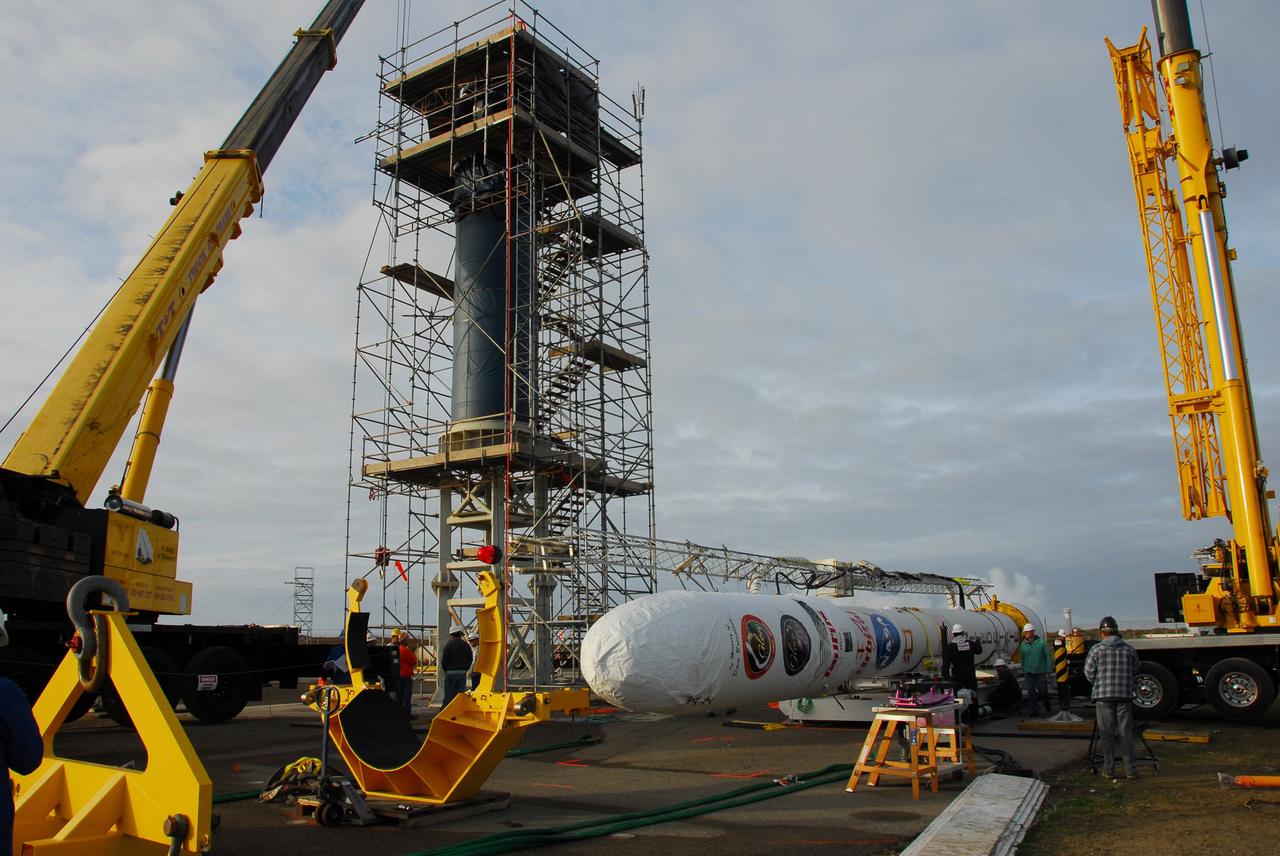
VANDENBERG AIR FORCE BASE, Calif. -- On Space Launch Complex 576-E at Vandenberg Air Force Base in California, Orbital Sciences workers prepare NASA's Glory upper stack for attachment to the Taurus XL rocket's Stage 0. The upper stack consists of Stages 1, 2 and 3 of the Taurus as well as the encapsulated Glory spacecraft. The Orbital Sciences Taurus XL rocket will launch Glory into low Earth orbit. Once Glory reaches orbit, it will collect data on the properties of aerosols and black carbon. It also will help scientists understand how the sun's irradiance affects Earth's climate. Launch is scheduled for 5:09 a.m. EST Feb. 23. For information, visit www.nasa.gov/glory. Photo credit: NASA/VAFB
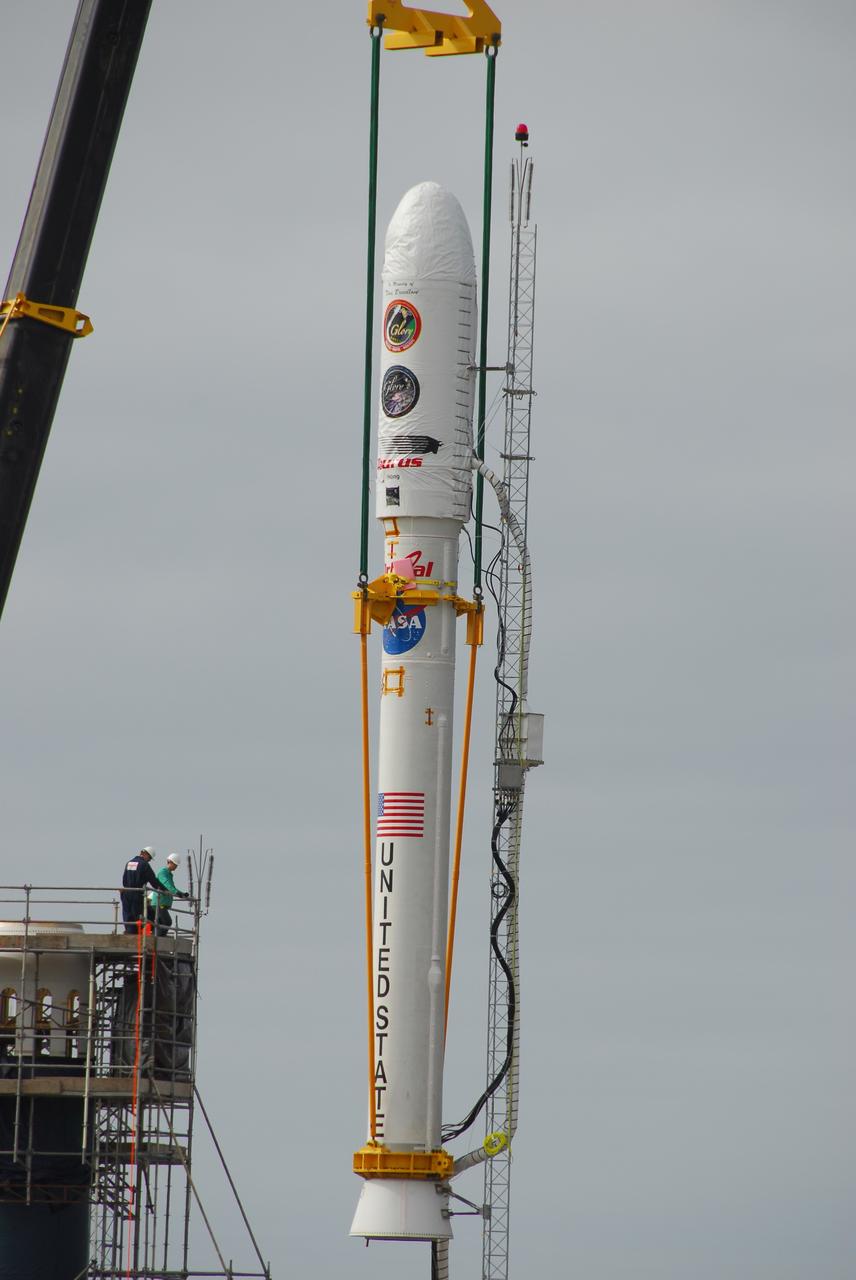
VANDENBERG AIR FORCE BASE, Calif. -- On Space Launch Complex 576-E at Vandenberg Air Force Base in California, a crane lowers NASA's Glory upper stack toward the Taurus XL rocket's Stage 0. The upper stack consists of Stages 1, 2 and 3 of the Taurus as well as the encapsulated Glory spacecraft. The Orbital Sciences Taurus XL rocket will launch Glory into low Earth orbit. Once Glory reaches orbit, it will collect data on the properties of aerosols and black carbon. It also will help scientists understand how the sun's irradiance affects Earth's climate. Launch is scheduled for 5:09 a.m. EST Feb. 23. For information, visit www.nasa.gov/glory. Photo credit: NASA/VAFB
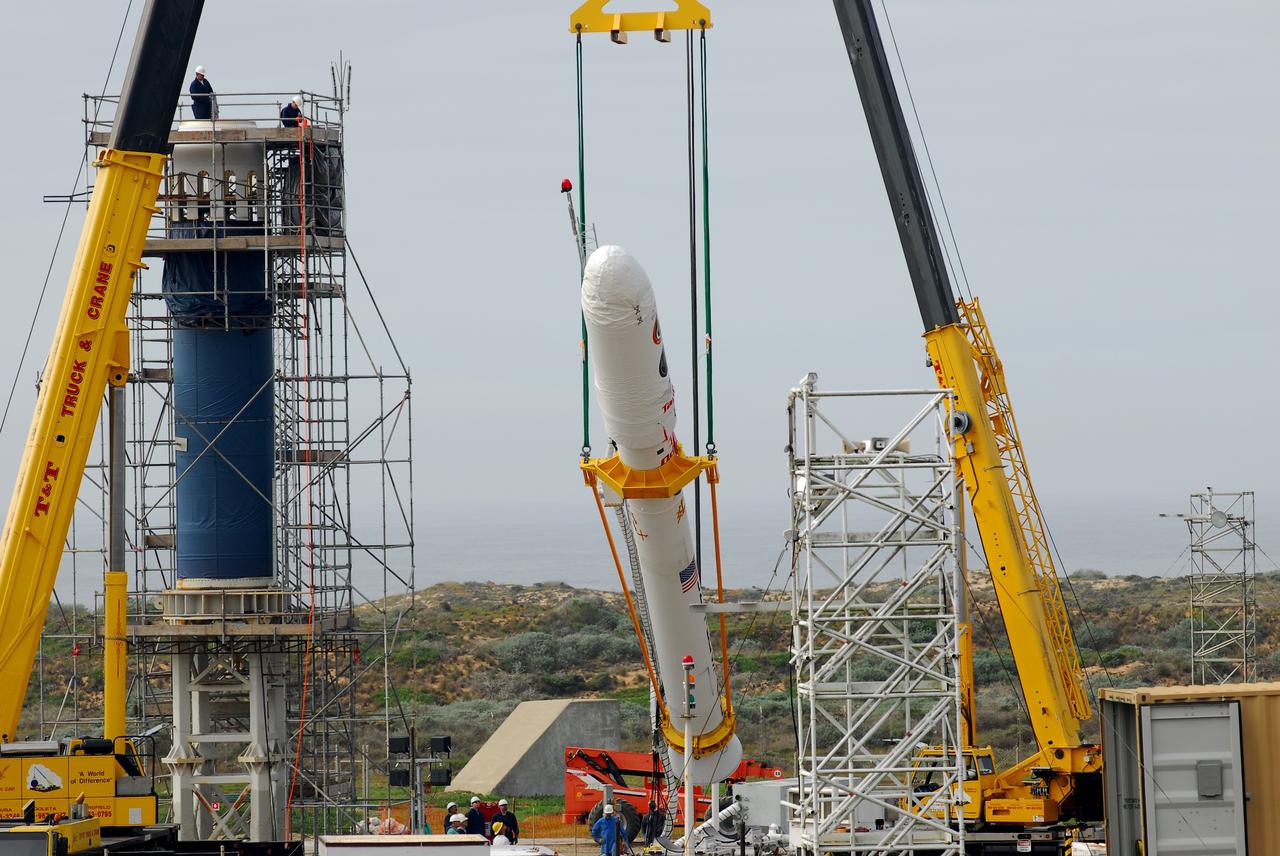
VANDENBERG AIR FORCE BASE, Calif. -- On Space Launch Complex 576-E at Vandenberg Air Force Base in California, Orbital Sciences workers monitor NASA's Glory upper stack as a crane lifts it from a stationary rail for attachment to the Taurus XL rocket's Stage 0. The upper stack consists of Stages 1, 2 and 3 of the Taurus as well as the encapsulated Glory spacecraft. The Orbital Sciences Taurus XL rocket will launch Glory into low Earth orbit. Once Glory reaches orbit, it will collect data on the properties of aerosols and black carbon. It also will help scientists understand how the sun's irradiance affects Earth's climate. Launch is scheduled for 5:09 a.m. EST Feb. 23. For information, visit www.nasa.gov/glory. Photo credit: NASA/VAFB
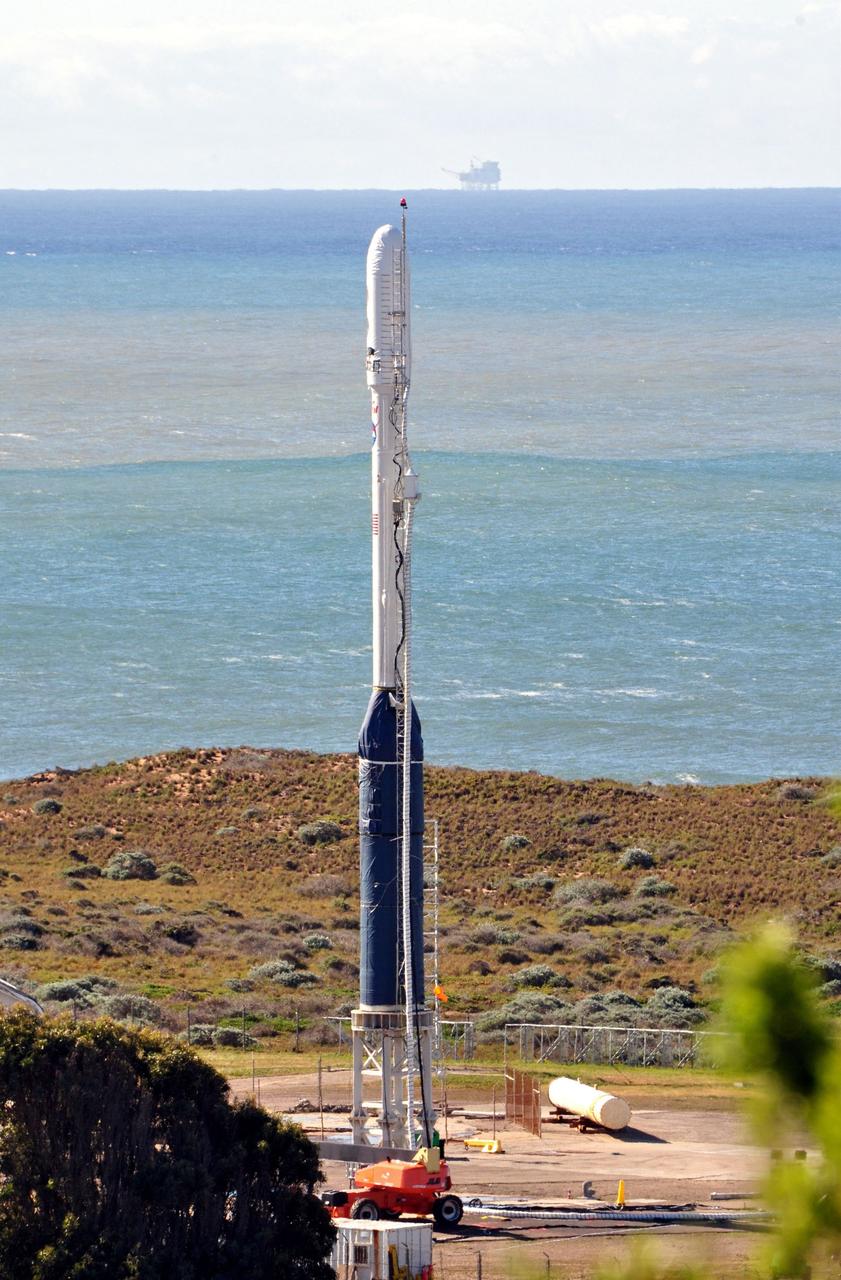
VANDENBERG AIR FORCE BASE, Calif. -- On Space Launch Complex 576-E at Vandenberg Air Force Base in California, the Taurus XL rocket is in its launch configuration. The upper stack, consisting of Stages 1, 2 and 3, as well as the encapsulated Glory spacecraft, is attached to an interstage and Stage 0 at the launch pad. The Orbital Sciences Taurus XL rocket will launch Glory into low Earth orbit. Once Glory reaches orbit, it will collect data on the properties of aerosols and black carbon. It also will help scientists understand how the sun's irradiance affects Earth's climate. Launch is scheduled for 5:09 a.m. EST Feb. 23. For information, visit www.nasa.gov/glory. Photo credit: NASA/Randy Beaudoin, VAFB
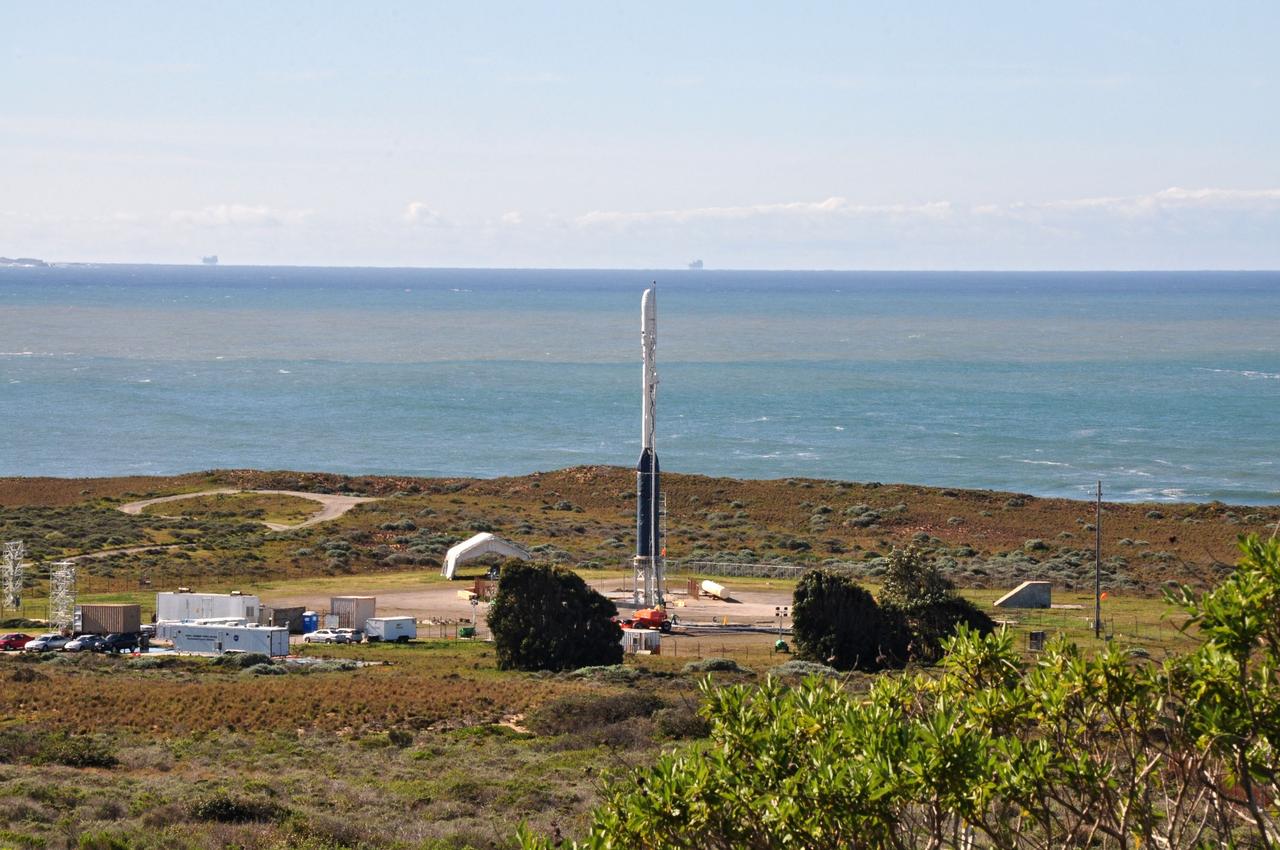
VANDENBERG AIR FORCE BASE, Calif. -- On Space Launch Complex 576-E at Vandenberg Air Force Base in California, the Taurus XL rocket is in its launch configuration. The upper stack, consisting of Stages 1, 2 and 3, as well as the encapsulated Glory spacecraft, is attached to an interstage and Stage 0 at the launch pad. The Orbital Sciences Taurus XL rocket will launch Glory into low Earth orbit. Once Glory reaches orbit, it will collect data on the properties of aerosols and black carbon. It also will help scientists understand how the sun's irradiance affects Earth's climate. Launch is scheduled for 5:09 a.m. EST Feb. 23. For information, visit www.nasa.gov/glory. Photo credit: NASA/Randy Beaudoin, VAFB
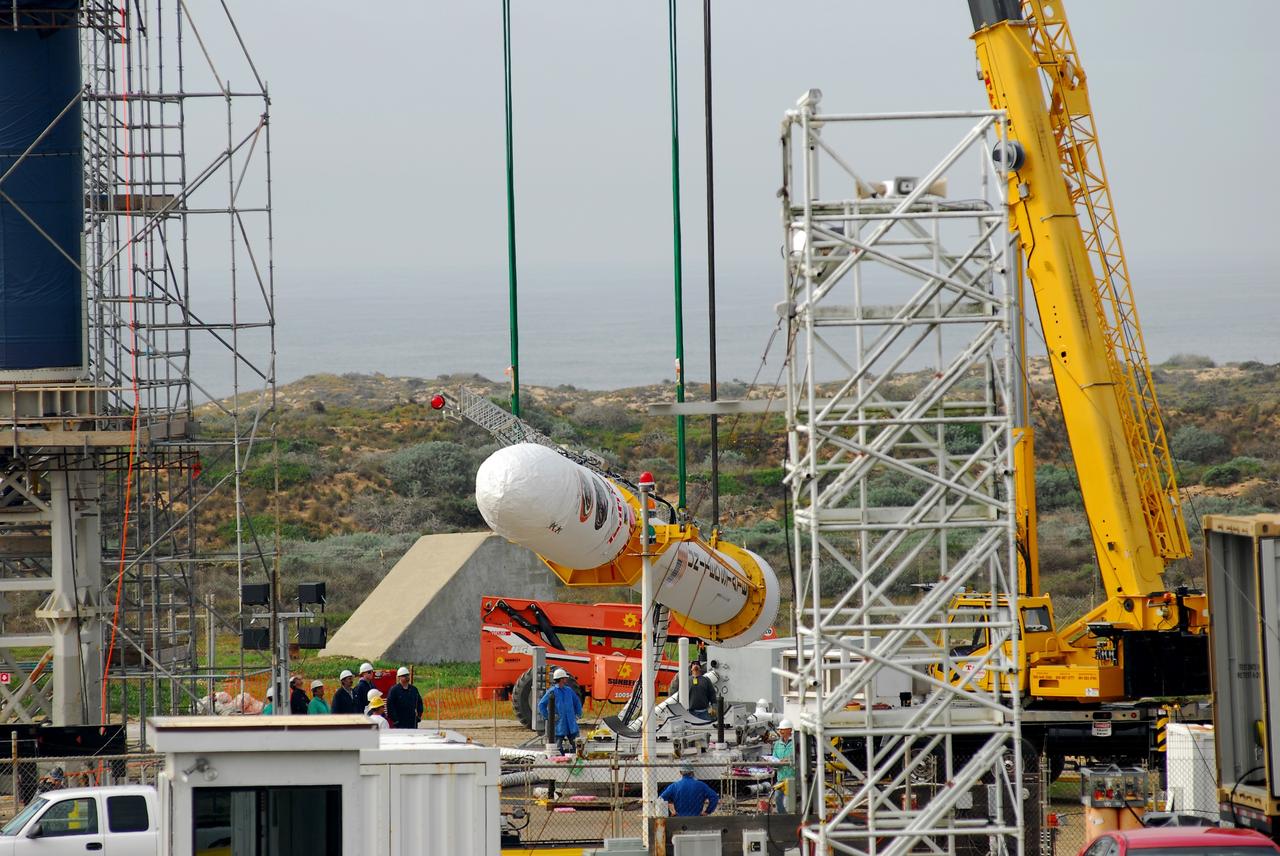
VANDENBERG AIR FORCE BASE, Calif. -- On Space Launch Complex 576-E at Vandenberg Air Force Base in California, Orbital Sciences workers monitor NASA's Glory upper stack as a crane lifts it from a stationary rail for attachment to the Taurus XL rocket's Stage 0. The upper stack consists of Stages 1, 2 and 3 of the Taurus as well as the encapsulated Glory spacecraft. The Orbital Sciences Taurus XL rocket will launch Glory into low Earth orbit. Once Glory reaches orbit, it will collect data on the properties of aerosols and black carbon. It also will help scientists understand how the sun's irradiance affects Earth's climate. Launch is scheduled for 5:09 a.m. EST Feb. 23. For information, visit www.nasa.gov/glory. Photo credit: NASA/VAFB
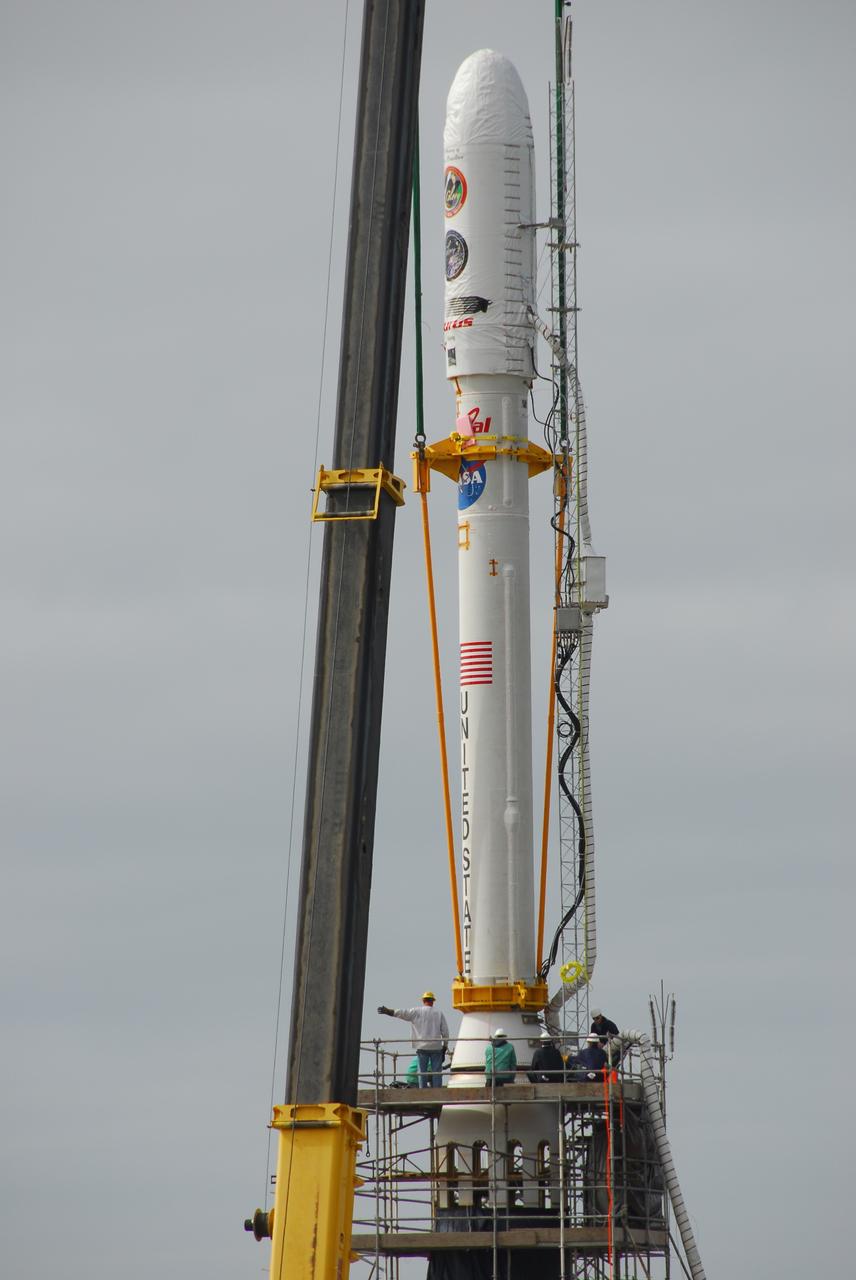
VANDENBERG AIR FORCE BASE, Calif. -- On Space Launch Complex 576-E at Vandenberg Air Force Base in California, a crane lowers NASA's Glory upper stack toward the Taurus XL rocket's Stage 0. The upper stack consists of Stages 1, 2 and 3 of the Taurus as well as the encapsulated Glory spacecraft. The Orbital Sciences Taurus XL rocket will launch Glory into low Earth orbit. Once Glory reaches orbit, it will collect data on the properties of aerosols and black carbon. It also will help scientists understand how the sun's irradiance affects Earth's climate. Launch is scheduled for 5:09 a.m. EST Feb. 23. For information, visit www.nasa.gov/glory. Photo credit: NASA/VAFB
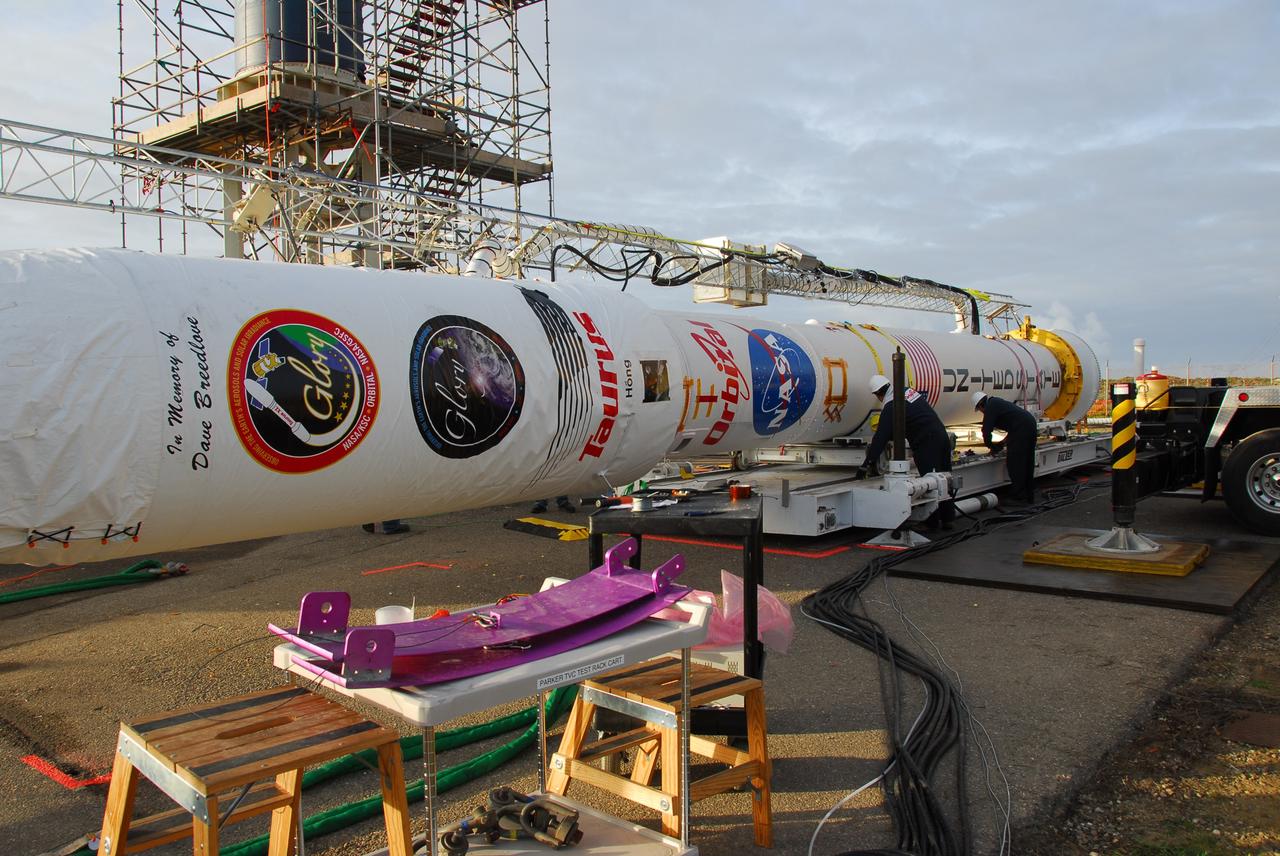
VANDENBERG AIR FORCE BASE, Calif. -- On Space Launch Complex 576-E at Vandenberg Air Force Base in California, Orbital Sciences workers prepare NASA's Glory upper stack for attachment to the Taurus XL rocket's Stage 0. The upper stack consists of Stages 1, 2 and 3 of the Taurus as well as the encapsulated Glory spacecraft. The Orbital Sciences Taurus XL rocket will launch Glory into low Earth orbit. Once Glory reaches orbit, it will collect data on the properties of aerosols and black carbon. It also will help scientists understand how the sun's irradiance affects Earth's climate. Launch is scheduled for 5:09 a.m. EST Feb. 23. For information, visit www.nasa.gov/glory. Photo credit: NASA/VAFB