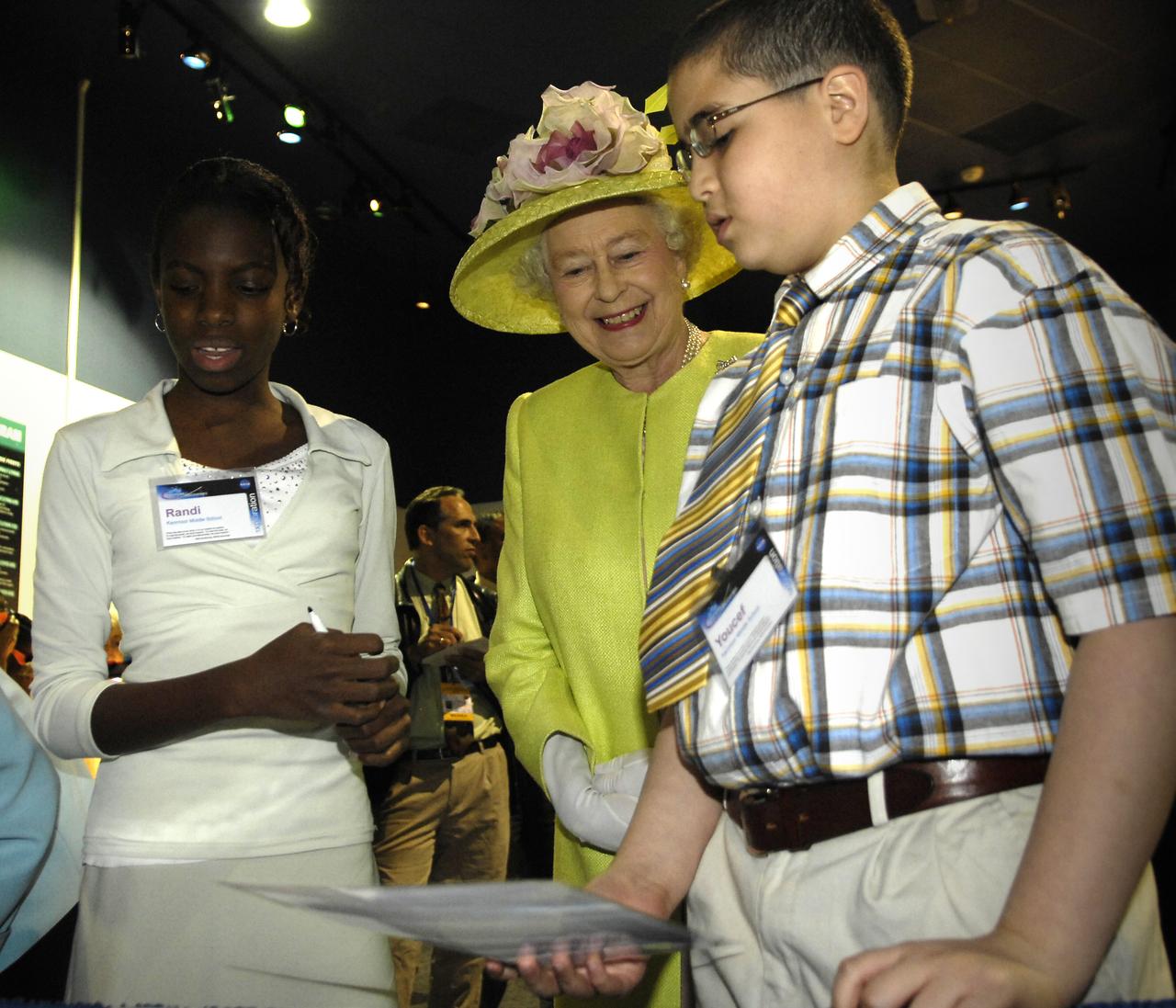
Queen Elizabeth II talks with students at a NASA Explorer School Workshop, at NASA's Goddard Spaceflight Center, Tuesday, May 8, 2007, in Greenbelt, Md. Queen Elizabeth II and her husband, Prince Philip, Duke of Edinburgh, visited the NASA Goddard Space Flight Center as one of the last stops on their six-day United States visit. Photo Credit: (NASA/Pat Izzo)
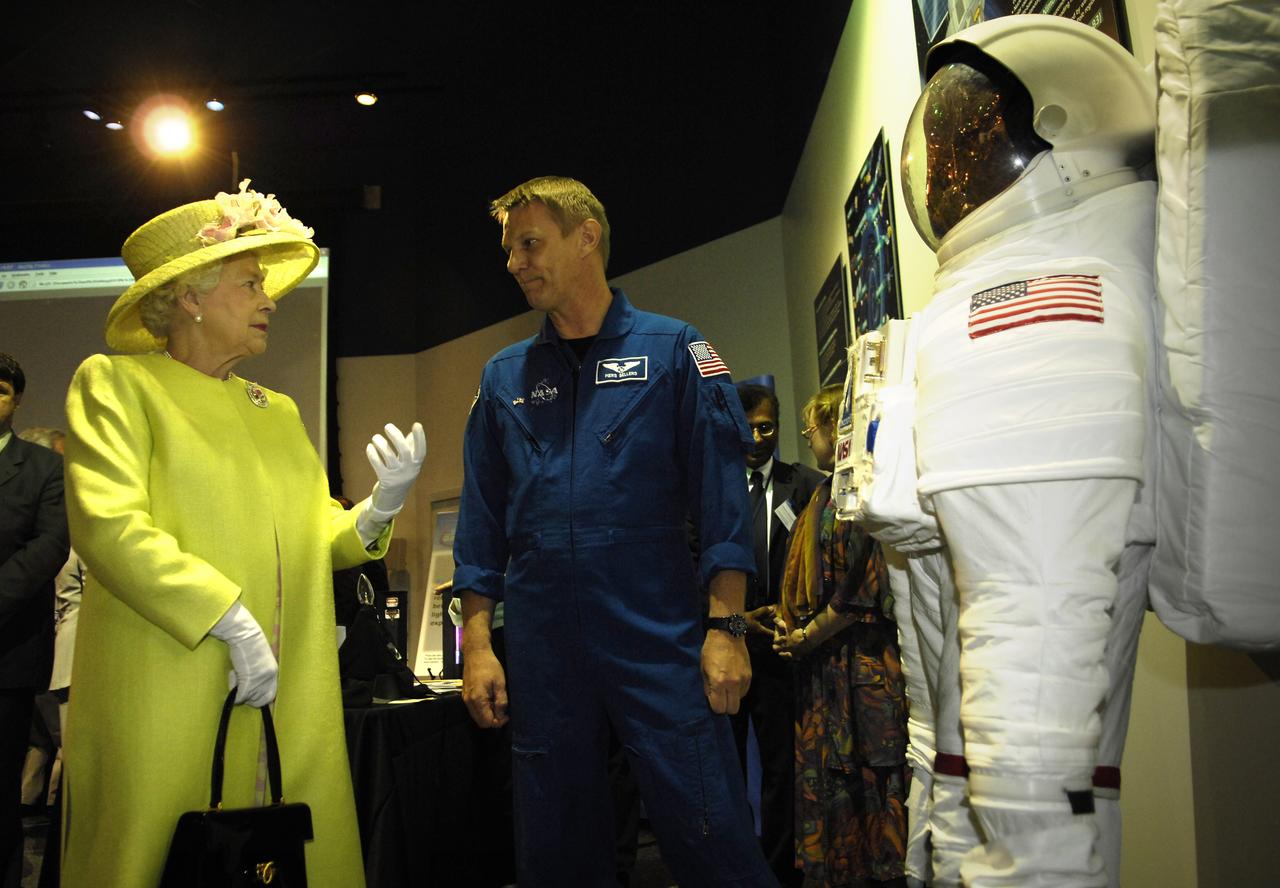
Queen Elizabeth II talks with NASA astronaut Piers Sellers at NASA's Goddard Spaceflight Center, Tuesday, May 8, 2007, in Greenbelt, Md. Queen Elizabeth II and her husband, Prince Philip, Duke of Edinburgh, visited the NASA Goddard Space Flight Center as one of the last stops on their six-day United States visit. Photo Credit: (NASA/Pat Izzo)
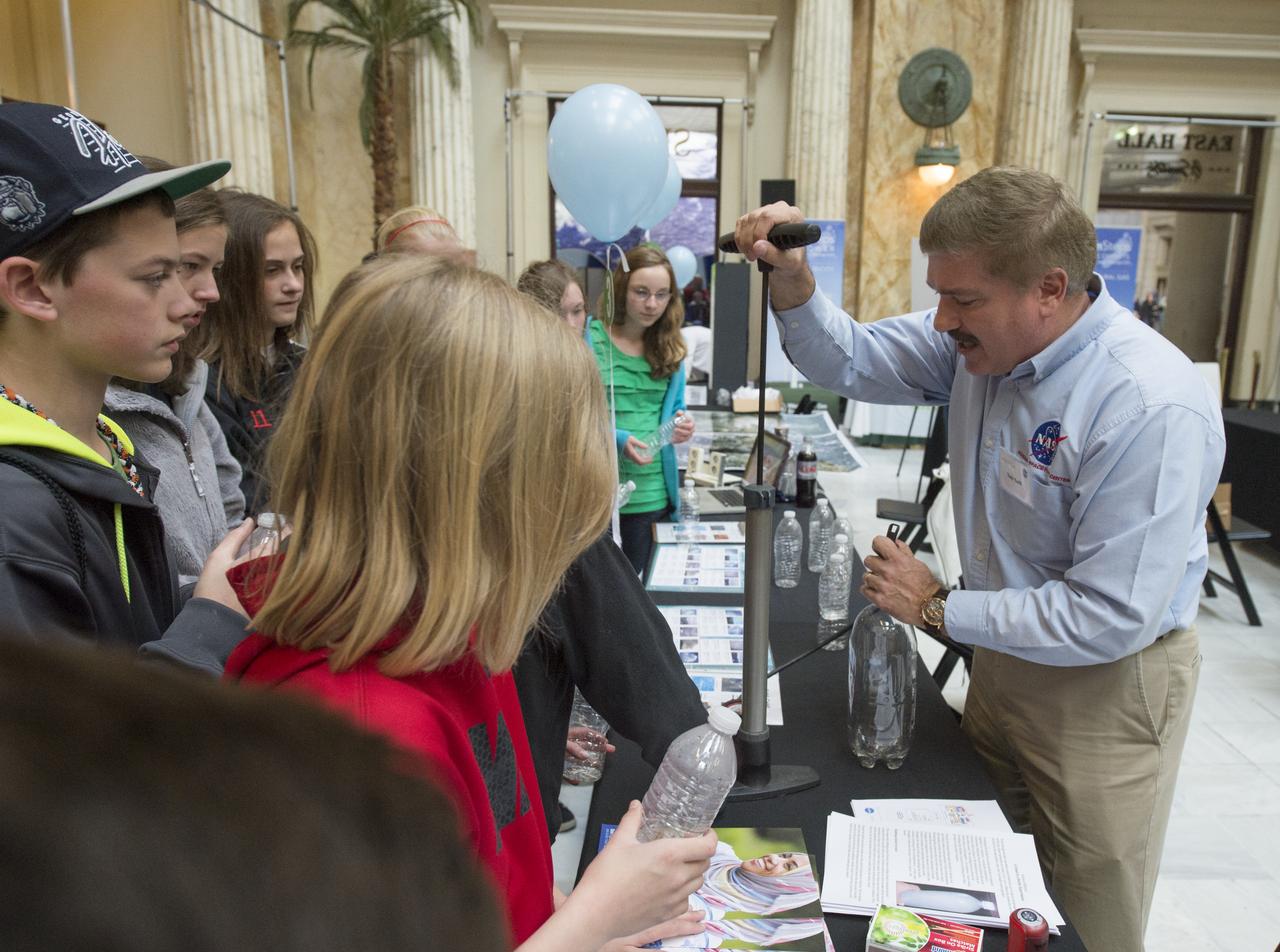
Todd Toth, Science Educator at NASA Goddard Spaceflight Center, conducts an experiment with students to create a cloud in a bottle, Monday, April 22, 2013 at Union Station in Washington. The NASA Science Gallery exhibits are being sponsored by NASA in honor of Earth Day. (Photo Credit: NASA/Carla Cioffi)

Izolda Trakhtenberg, Science Educator at NASA Goddard Spaceflight Center, conducts an experiment with students to create a cloud in a bottle, Monday, April 22, 2013 at Union Station in Washington. The NASA Science Gallery exhibits are being sponsored by NASA in honor of Earth Day. (Photo Credit: NASA/Carla Cioffi)
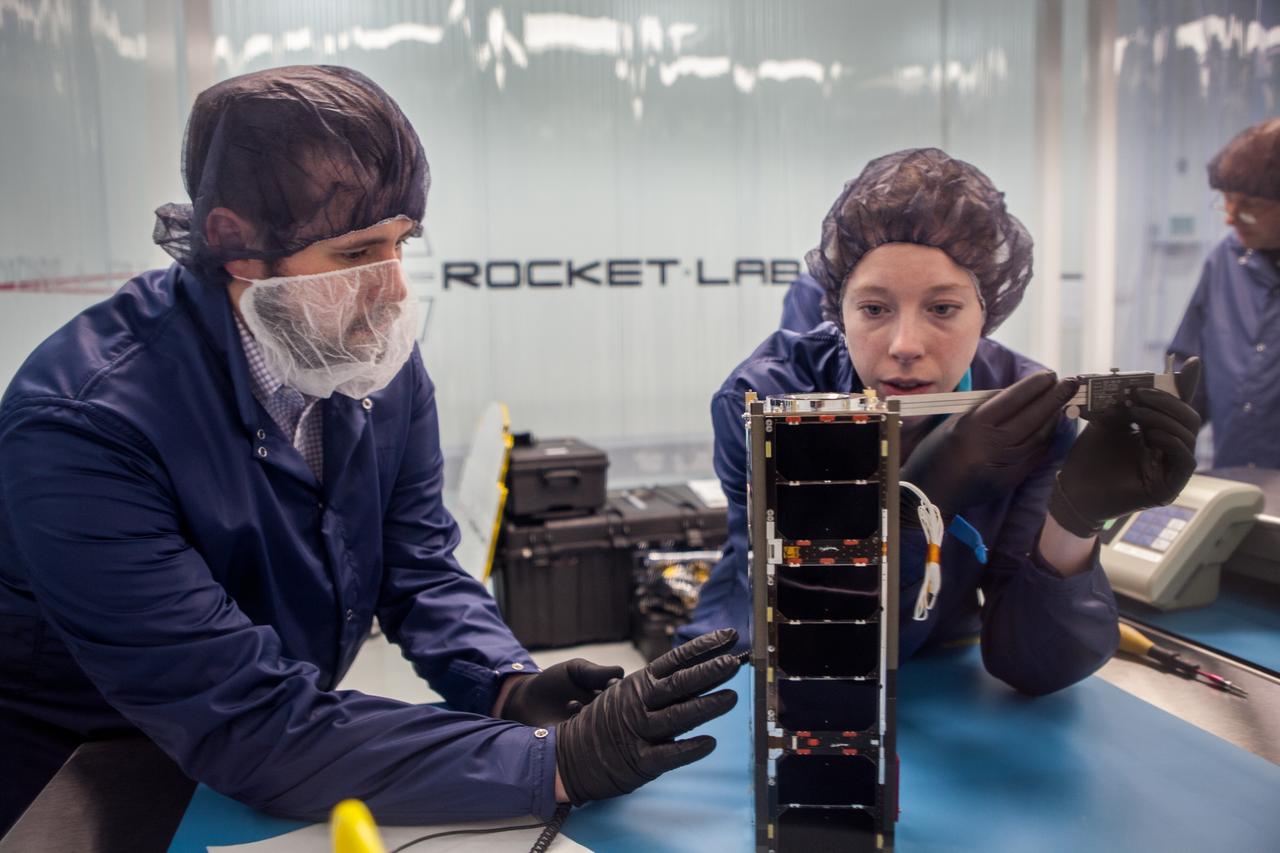
A host of CubeSats, or small satellites, are undergoing the final stages of processing at Rocket Lab USA’s facility in Huntington Beach, California, for NASA’s first mission dedicated solely to spacecraft of their size. This will be the first launch under the agency’s new Venture Class Launch Services. Scientists, including those from NASA and various universities, began arriving at the facility in early April with spacecraft small enough to be a carry-on to be prepared for launch. A team from NASA’s Goddard Spaceflight Center in Greenbelt, Maryland, completed final checkouts of a CubeSat called the Compact Radiation Belt Explorer (CeREs), before placing the satellite into a dispenser to hold the spacecraft during launch inside the payload fairing. Among its missions, the satellite will examine the radiation belt and how electrons are energized and lost, particularly during events called microbursts — when sudden swarms of electrons stream into the atmosphere. This facility is the final stop for designers and builders of the CubeSats, but the journey will continue for the spacecraft. Rocket Lab will soon ship the satellites to New Zealand for launch aboard the company’s Electron orbital rocket on the Mahia Peninsula this summer. The CubeSats will be flown on an Educational Launch of Nanosatellites (ELaNa) mission to space through NASA’s CubeSat Launch Initiative. CeREs is one of the 10 ELaNa CubeSats scheduled to be a part of this mission.
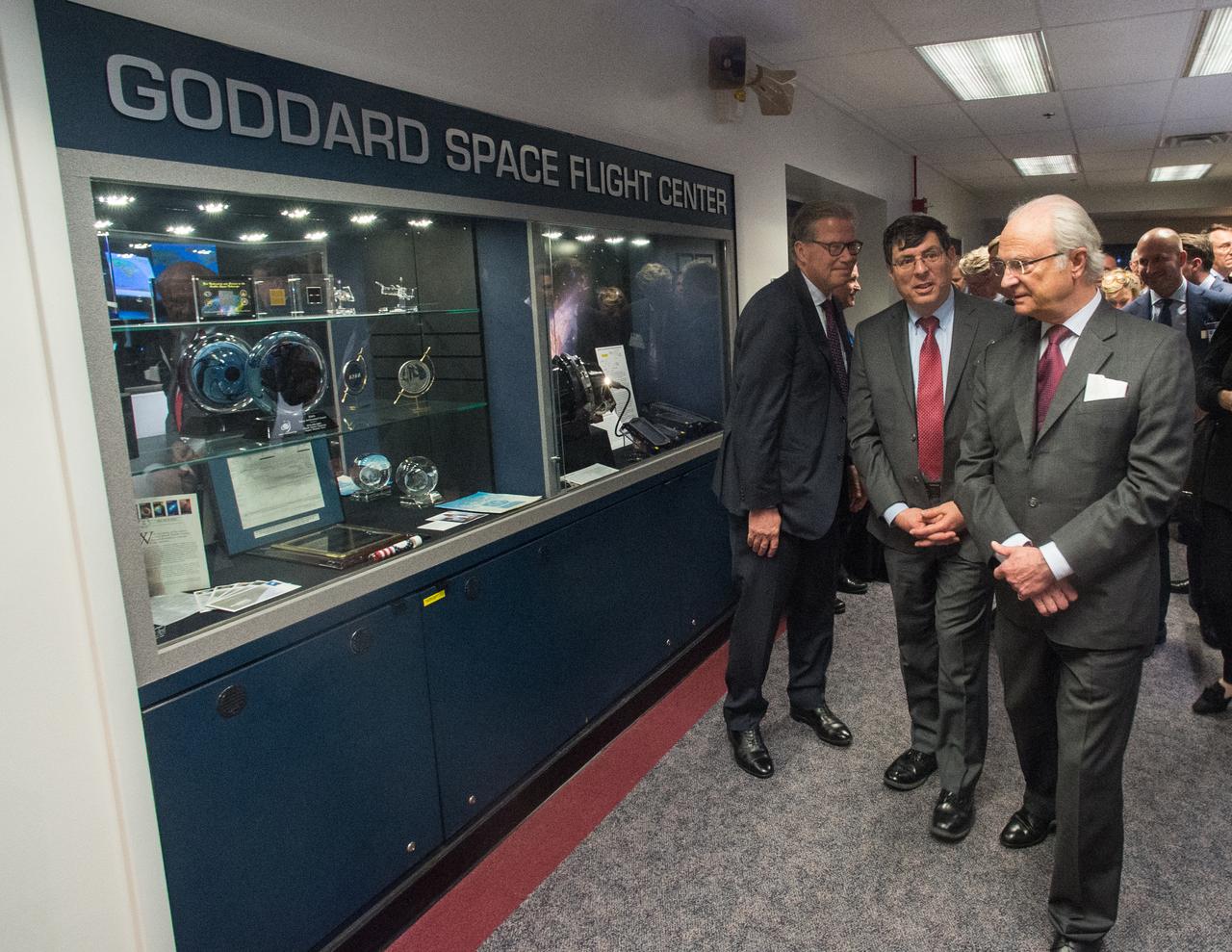
Swedish Delegation Visits GSFC – May 3, 2017 - Members of the Royal Swedish Academy of Engineering Sciences listen to former astronaut Dr. John Grunsfeld talk about his spaceflight experiences during three servicing missions to the Hubble Telescope. Credit: NASA/Goddard/Bill Hrybyk Read more: <a href="https://go.nasa.gov/2p1rP0h" rel="nofollow">go.nasa.gov/2p1rP0h</a> <b><a href="http://www.nasa.gov/audience/formedia/features/MP_Photo_Guidelines.html" rel="nofollow">NASA image use policy.</a></b> <b><a href="http://www.nasa.gov/centers/goddard/home/index.html" rel="nofollow">NASA Goddard Space Flight Center</a></b> enables NASA’s mission through four scientific endeavors: Earth Science, Heliophysics, Solar System Exploration, and Astrophysics. Goddard plays a leading role in NASA’s accomplishments by contributing compelling scientific knowledge to advance the Agency’s mission. <b>Follow us on <a href="http://twitter.com/NASAGoddardPix" rel="nofollow">Twitter</a></b> <b>Like us on <a href="http://www.facebook.com/pages/Greenbelt-MD/NASA-Goddard/395013845897?ref=tsd" rel="nofollow">Facebook</a></b> <b>Find us on <a href="http://instagrid.me/nasagoddard/?vm=grid" rel="nofollow">Instagram</a></b>
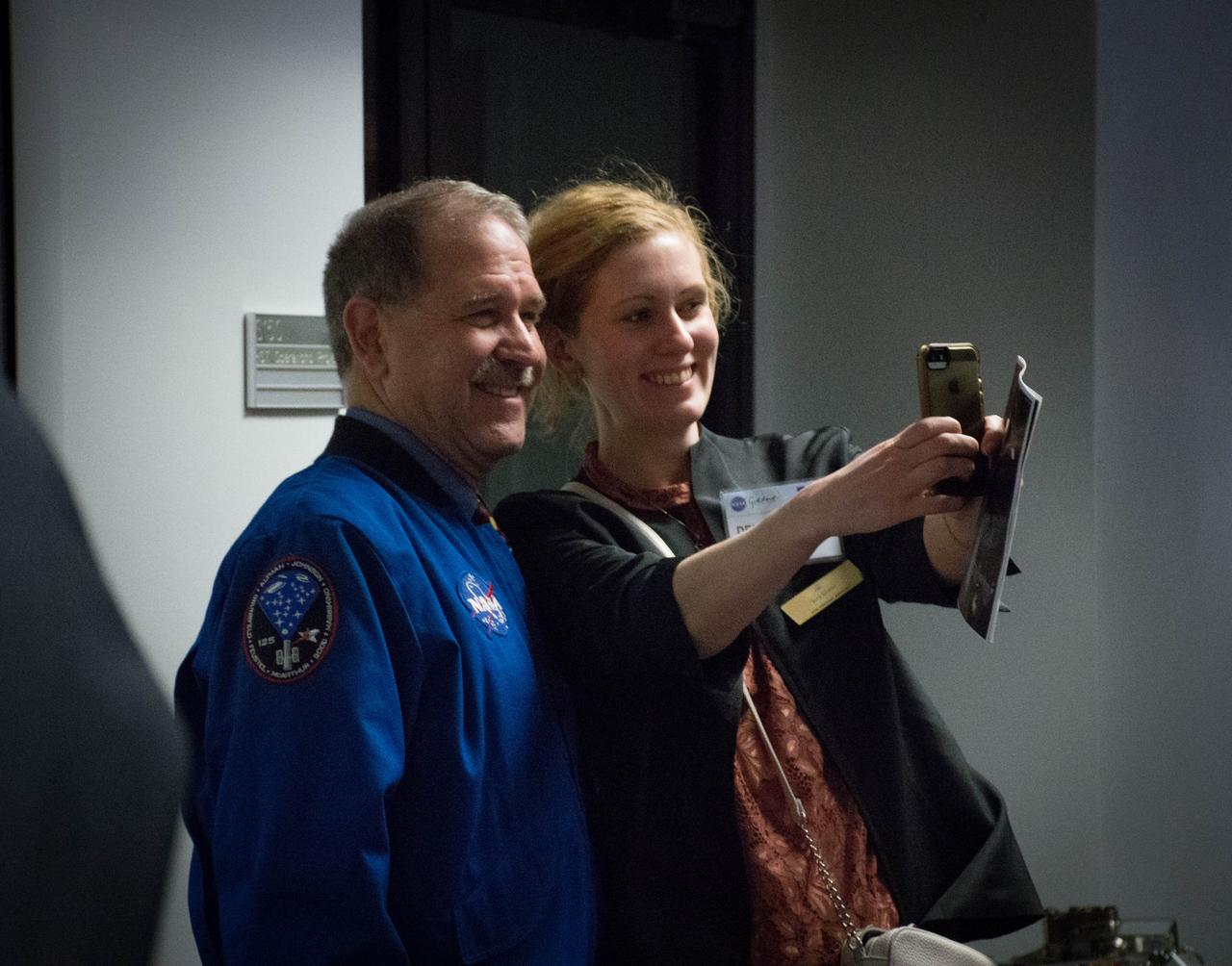
Swedish Delegation Visits GSFC – May 3, 2017 - Members of the Royal Swedish Academy of Engineering Sciences takes a selfie with former astronaut Dr. John Grunsfeld during his talk about his spaceflight experiences during three servicing missions to the Hubble Telescope. Photo Credit: NASA/Goddard/Rebecca Roth Read more: <a href="https://go.nasa.gov/2p1rP0h" rel="nofollow">go.nasa.gov/2p1rP0h</a> <b><a href="http://www.nasa.gov/audience/formedia/features/MP_Photo_Guidelines.html" rel="nofollow">NASA image use policy.</a></b> <b><a href="http://www.nasa.gov/centers/goddard/home/index.html" rel="nofollow">NASA Goddard Space Flight Center</a></b> enables NASA’s mission through four scientific endeavors: Earth Science, Heliophysics, Solar System Exploration, and Astrophysics. Goddard plays a leading role in NASA’s accomplishments by contributing compelling scientific knowledge to advance the Agency’s mission. <b>Follow us on <a href="http://twitter.com/NASAGoddardPix" rel="nofollow">Twitter</a></b> <b>Like us on <a href="http://www.facebook.com/pages/Greenbelt-MD/NASA-Goddard/395013845897?ref=tsd" rel="nofollow">Facebook</a></b> <b>Find us on <a href="http://instagrid.me/nasagoddard/?vm=grid" rel="nofollow">Instagram</a></b>
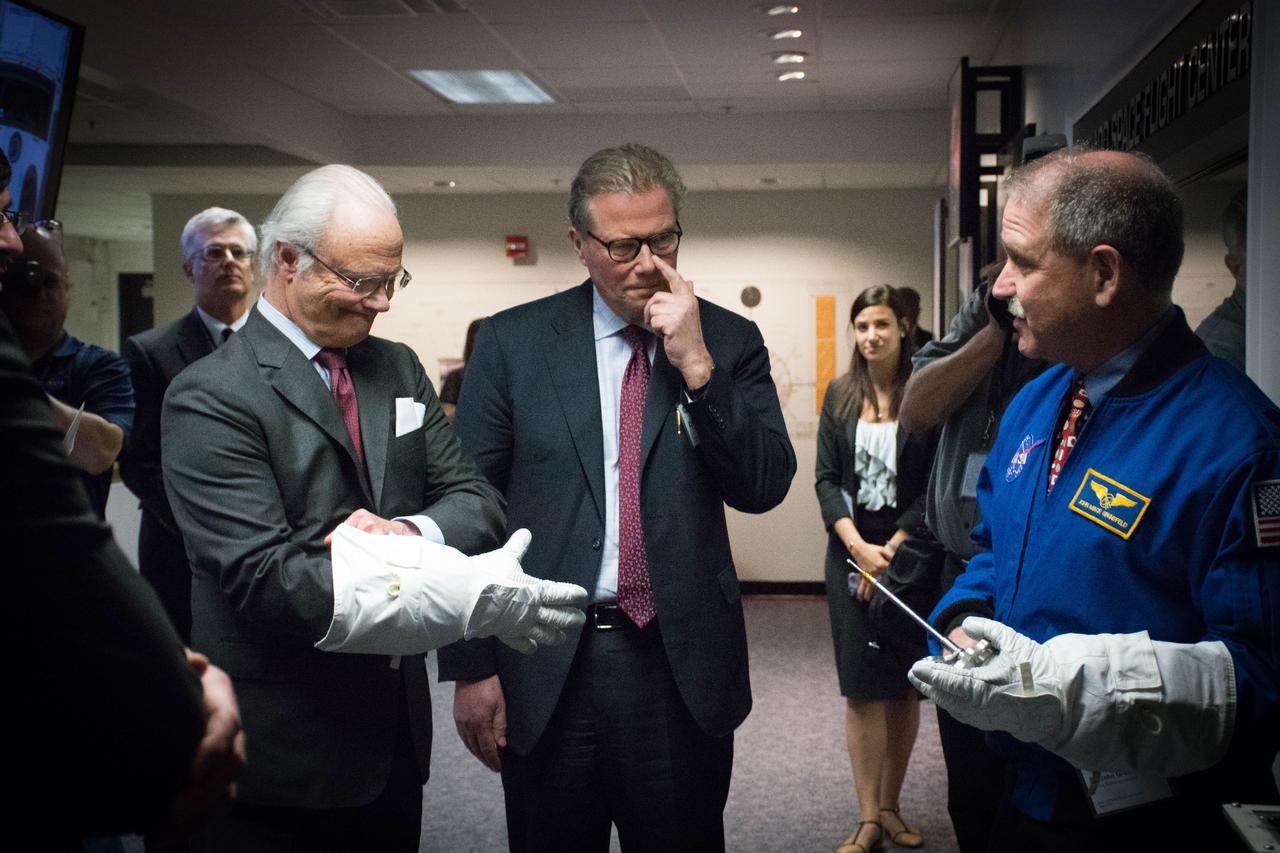
Swedish Delegation Visits GSFC – May 3, 2017 - Members of the Royal Swedish Academy of Engineering Sciences listen to former astronaut Dr. John Grunsfeld talk about his spaceflight experiences during three servicing missions to the Hubble Telescope. Photo Credit: NASA/Goddard/Rebecca Roth Read more: <a href="https://go.nasa.gov/2p1rP0h" rel="nofollow">go.nasa.gov/2p1rP0h</a> <b><a href="http://www.nasa.gov/audience/formedia/features/MP_Photo_Guidelines.html" rel="nofollow">NASA image use policy.</a></b> <b><a href="http://www.nasa.gov/centers/goddard/home/index.html" rel="nofollow">NASA Goddard Space Flight Center</a></b> enables NASA’s mission through four scientific endeavors: Earth Science, Heliophysics, Solar System Exploration, and Astrophysics. Goddard plays a leading role in NASA’s accomplishments by contributing compelling scientific knowledge to advance the Agency’s mission. <b>Follow us on <a href="http://twitter.com/NASAGoddardPix" rel="nofollow">Twitter</a></b> <b>Like us on <a href="http://www.facebook.com/pages/Greenbelt-MD/NASA-Goddard/395013845897?ref=tsd" rel="nofollow">Facebook</a></b> <b>Find us on <a href="http://instagrid.me/nasagoddard/?vm=grid" rel="nofollow">Instagram</a></b>

Holli Riebeek, Education and Public Outreach Lead for NASA/Landsat Mission at NASA's Goddard Spaceflight Center, is seen speaking to students at NASA's Earth Day Science Gallery Exhibit, Monday, April 22, 2013 at Union Station in Washington. The NASA Science Gallery exhibits are being sponsored by NASA in honor of Earth Day. (Photo Credit: NASA/Carla Cioffi)
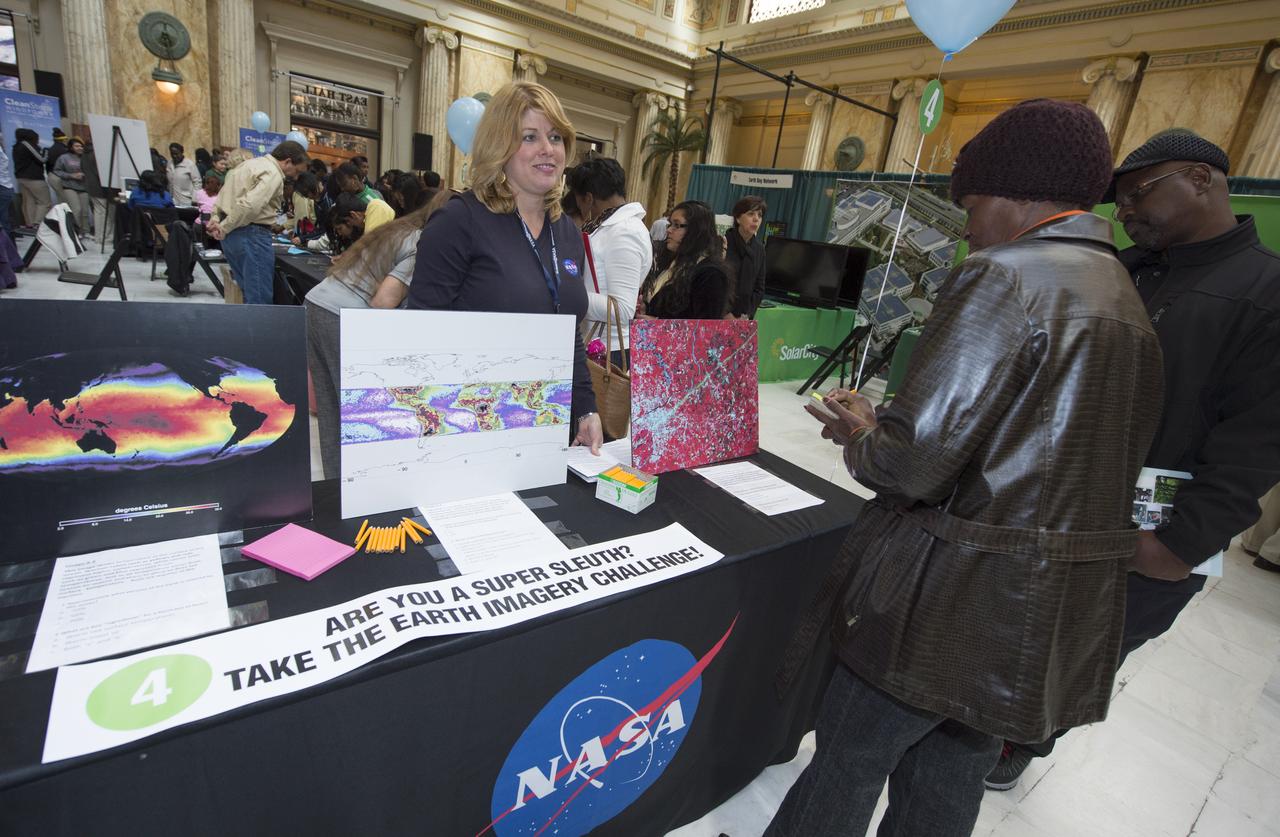
Jennifer Brennan, NASA EOSDIS Outreach Lead at NASA's Goddard Spaceflight Center, speaks to participants at a NASA Earth Day sponsored exhibit about satellite earth imagery, Monday, April 22, 2013 at Union Station in Washington. The NASA Science Gallery exhibits are being sponsored by NASA in honor of Earth Day. (Photo Credit: NASA/Carla Cioffi)
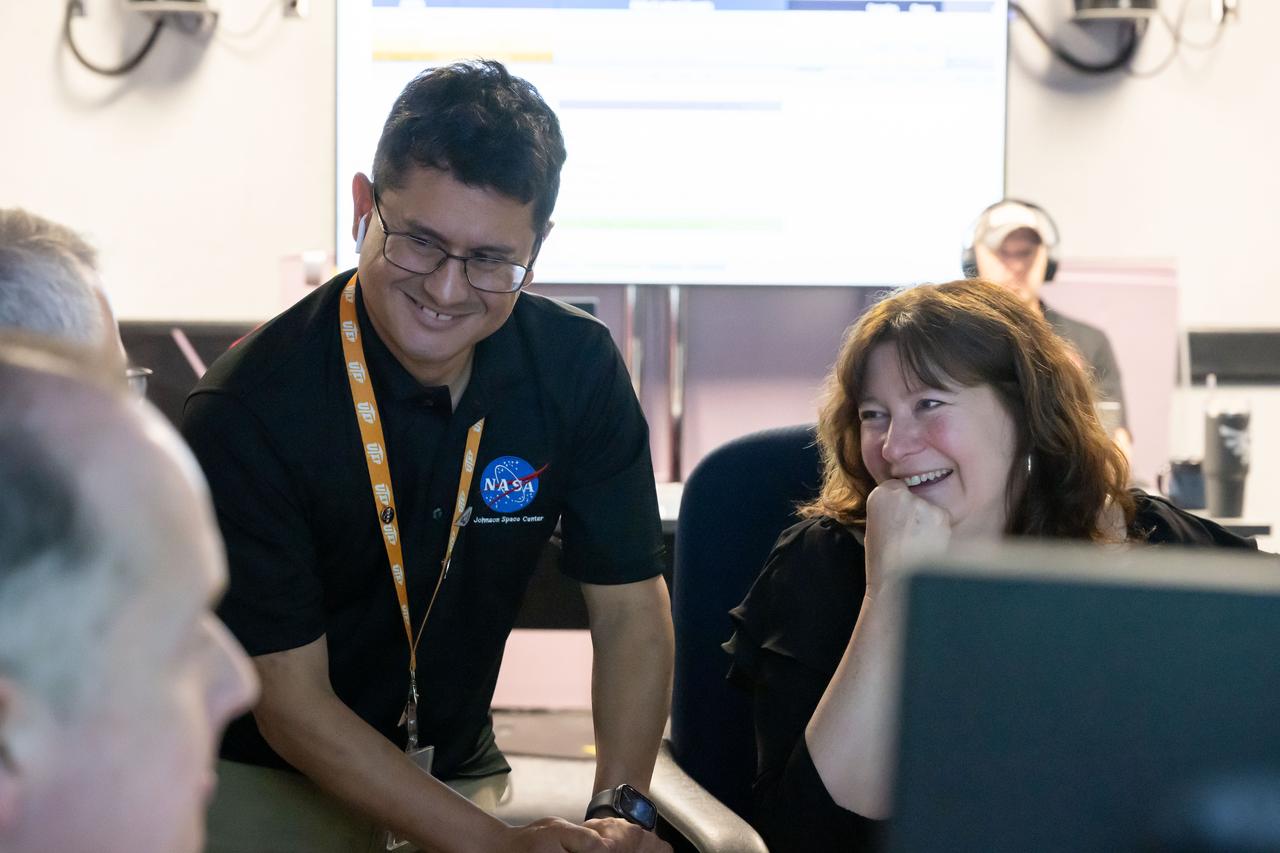
Artemis III Geology Team member, Jose Hurtado from the University of Texas at El Paso, left, and Maria Banks of NASA’s Goddard Spaceflight Center work in the Science Evaluation Room (SER) during the JETT 5 field test. JETT 5 was a week-long field test in the lunar-like landscape of San Francisco Volcanic Field near Flagstaff, Arizona while a team of flight controllers and scientists at Johnson monitor and guide their activities. Credit: NASA/Helen Arase Vargas
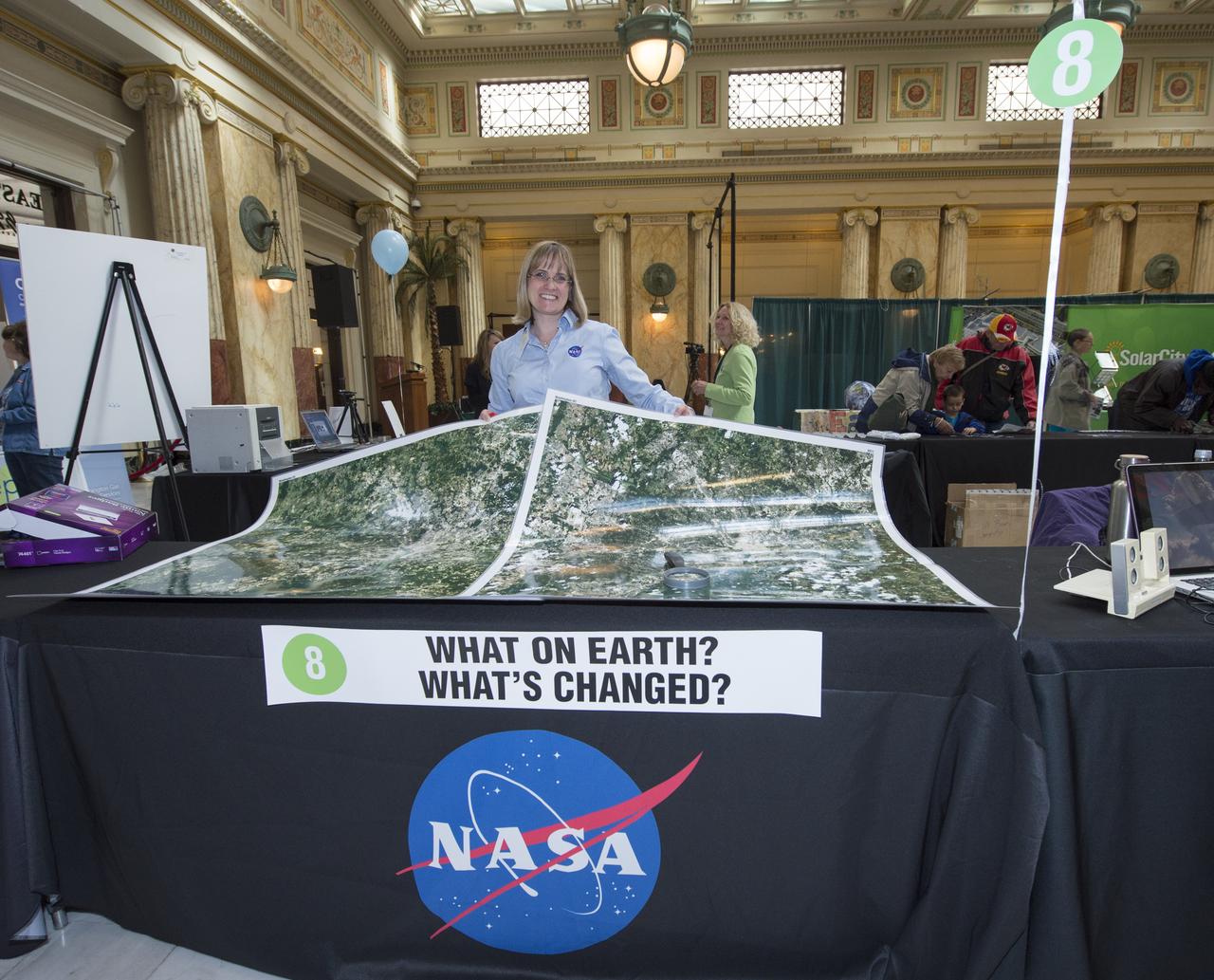
Holli Riebeek, Education and Public Outreach Lead for NASA/Landsat Mission at NASA's Goddard Spaceflight Center, holds up Landsat maps NASA's Earth Day Science Gallery Exhibit, Monday, April 22, 2013 at Union Station in Washington. The NASA Science Gallery exhibits are being sponsored by NASA in honor of Earth Day. (Photo Credit: NASA/Carla Cioffi)
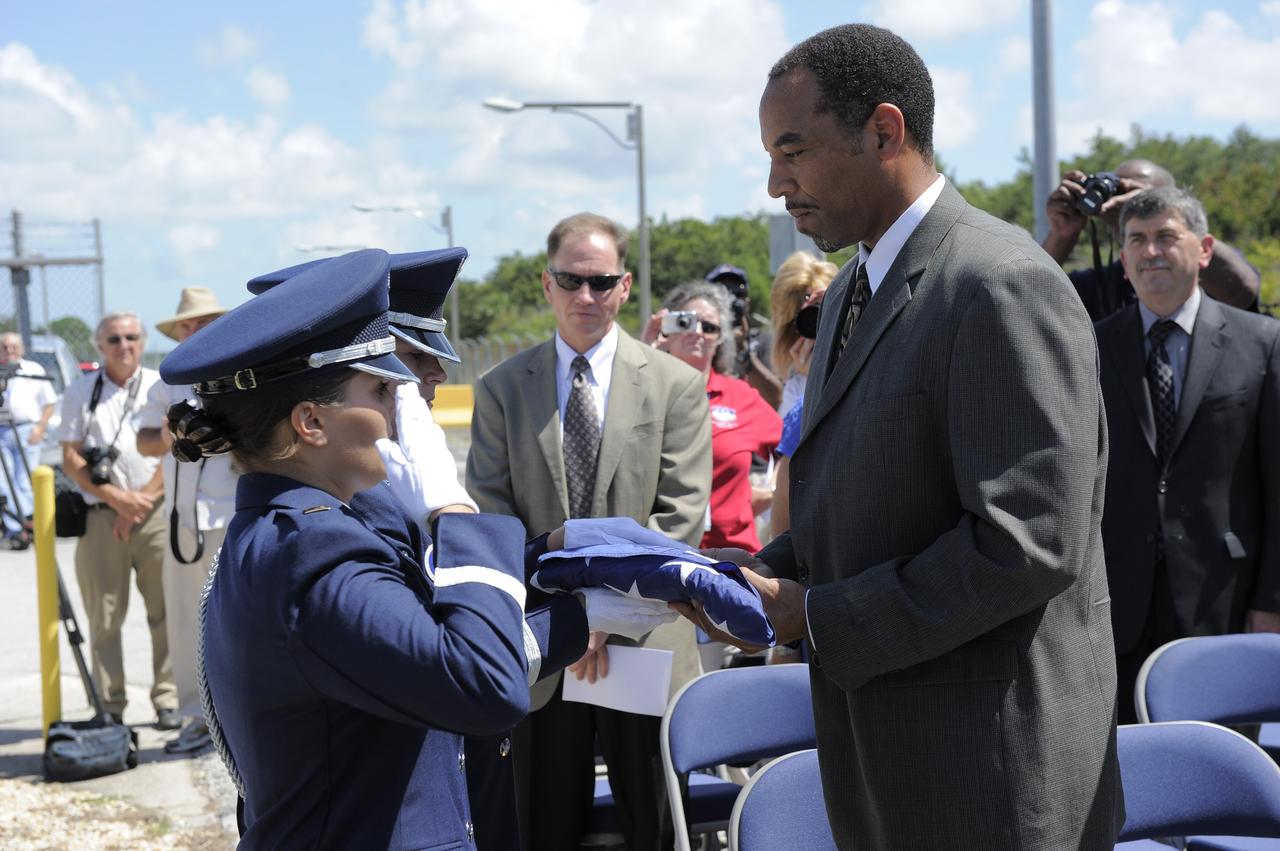
CAPE CANAVERAL, Fla. -- At the Merritt Island Launch Annex (MILA) Spaceflight Tracking and Data Network Station at NASA's Kennedy Space Center in Florida, the Patrick Air Force Base Color Guard presents the U.S. flag which flew over the station to David Carter, Near Earth Network project manager at Goddard Space Flight Center, during a closing ceremony recognizing the station's 45 years of service. The flag will be displayed in a Network Integration Center display cabinet at Goddard. The station was originally established by NASA's Goddard Space Flight Center as one of 17 Space Flight Tracking and Data Network stations around the world. Commissioned for the Apollo Program, the first launch it supported was the Apollo/Saturn 203 test flight from Launch Complex 37 on July 5, 1966. It also provided orbital support for low earth-orbiting scientific satellites. In recent history, the station has been used almost exclusively for space shuttle launch and landing support. Following the final launch and landing of the Space Shuttle Program in July 2011, the MILA station is officially decommissioned. For more information, visit http://www.nasa.gov/centers/kennedy/pdf/167424main_MILA-08C.pdf. Photo credit: NASA/Kim Shiflett
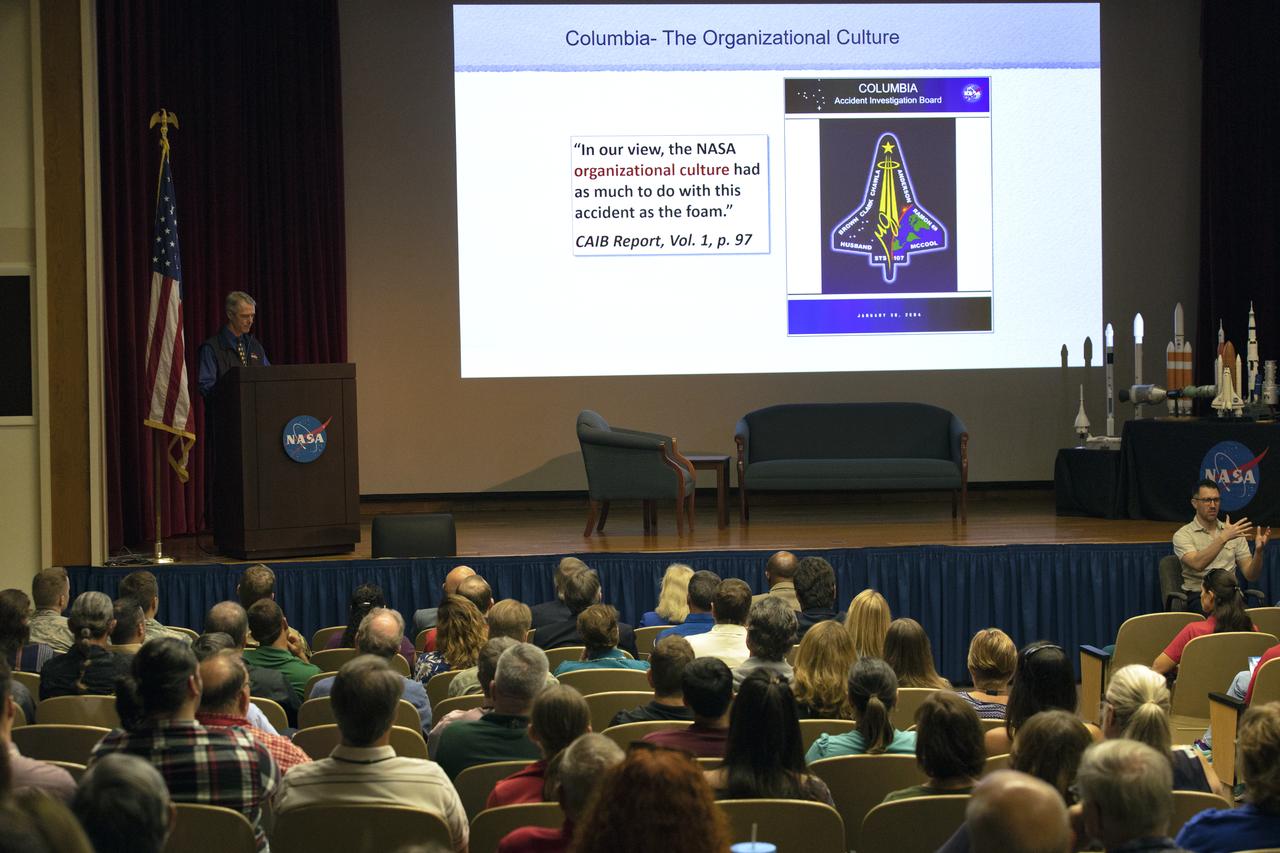
Goddard Space Flight Center Chief Knowledge Officer Ed Rogers speaks to NASA civil service and contractor employees and guests in Kennedy Space Center’s Training Auditorium on April 12, 2019. Rogers talked about lessons in decision-making during “Columbia: The Mission Continues,” an event organized by the Apollo Challenger Columbia Lessons Learned Program (ACCLLP). The event is part of the Space Shuttle Columbia national tour and took place on the 38th anniversary of STS-1, the first orbital spaceflight of NASA’s Space Shuttle Program. The tour launched at Kennedy and will make its way to each of the 10 NASA centers.

Alexander Moiseev, a research scientist at NASA's Goddard Spaceflight Center, speaks during an event celebrating the 60th Anniversary of the Explorer 1 mission and the discovery of Earth's radiation belts, Wednesday, Jan. 31, 2018, at the National Academy of Sciences in Washington. The first U.S. satellite, Explorer 1, was launched from Cape Canaveral on January 31, 1958. The 30-pound satellite would yield a major scientific discovery, the Van Allen radiation belts circling our planet, and begin six decades of groundbreaking space science and human exploration. (NASA/Joel Kowsky)

Alexander Moiseev, a research scientist at NASA's Goddard Spaceflight Center, speaks during an event celebrating the 60th Anniversary of the Explorer 1 mission and the discovery of Earth's radiation belts, Wednesday, Jan. 31, 2018, at the National Academy of Sciences in Washington. The first U.S. satellite, Explorer 1, was launched from Cape Canaveral on January 31, 1958. The 30-pound satellite would yield a major scientific discovery, the Van Allen radiation belts circling our planet, and begin six decades of groundbreaking space science and human exploration. (NASA/Joel Kowsky)
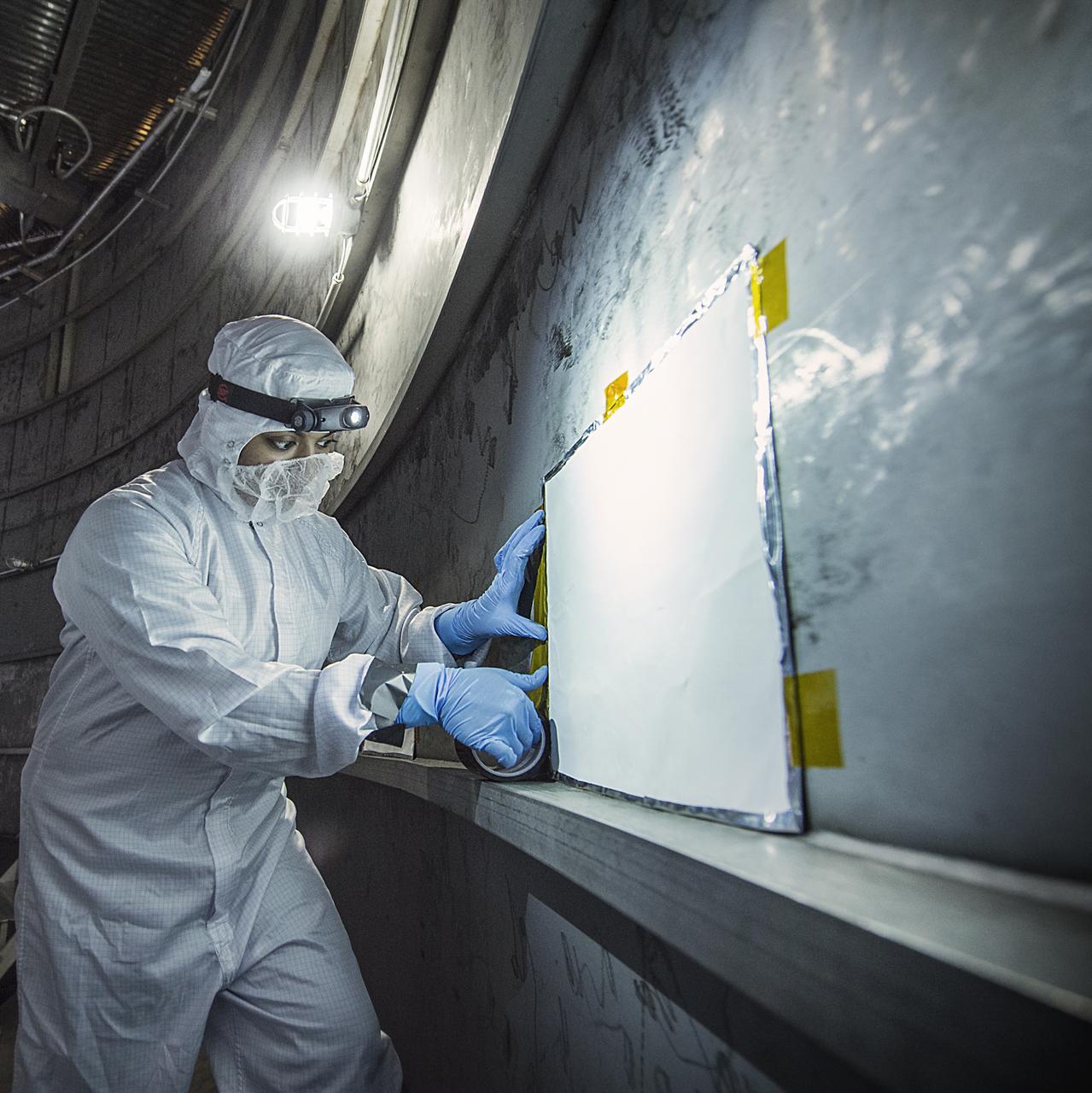
Contamination from organic molecules can harm delicate instruments and engineers are taking special care at NASA to prevent that from affecting the James Webb Space Telescope (and all satellites and instruments). Recently, Nithin Abraham, a Thermal Coatings Engineer placed Molecular Adsorber Coating or "MAC" panels in the giant chamber where the Webb telescope will be tested. This contamination can occur through a process when a vapor or odor is emitted by a substance. This is called "outgassing." The "new car smell" is an example of that, and is unhealthy for people and sensitive satellite instruments. So, NASA engineers have created a new way to protect those instruments from the damaging effects of contamination coming from outgassing. "The Molecular Adsorber Coating (MAC) is a NASA Goddard coatings technology that was developed to adsorb or entrap outgassed molecular contaminants for spaceflight applications," said Nithin Abraham, Thermal Coatings Engineer at NASA's Goddard Space Flight Center in Greenbelt, Maryland. MAC is currently serving as an innovative contamination mitigation tool for Chamber A operations at NASA Johnson Space Center in Houston, Texas. MAC can be used to keep outgassing from coming in from outside areas or to capture outgassing directly from hardware, components, and within instrument cavities. In this case, MAC is helping by capturing outgassed contaminants outside the test chamber from affecting the Webb components. MAC is expected to capture the outgassed contaminants that exist in the space of the vacuum chamber (not from the Webb components). Credit: NASA/GoddardChris Gunn Read more: <a href="http://www.nasa.gov/feature/goddard/nasa-technology-protects-webb-telescope-from-contamination" rel="nofollow">www.nasa.gov/feature/goddard/nasa-technology-protects-web...</a> <b><a href="http://www.nasa.gov/audience/formedia/features/MP_Photo_Guidelines.html" rel="nofollow">NASA image use policy.</a></b> <b><a href="http://www.nasa.gov/centers/goddard/home/index.html" rel="nofollow">NASA Goddard Space Flight Center</a></b> enables NASA’s mission through four scientific endeavors: Earth Science, Heliophysics, Solar System Exploration, and Astrophysics. Goddard plays a leading role in NASA’s accomplishments by contributing compelling scientific knowledge to advance the Agency’s mission. <b>Follow us on <a href="http://twitter.com/NASAGoddardPix" rel="nofollow">Twitter</a></b> <b>Like us on <a href="http://www.facebook.com/pages/Greenbelt-MD/NASA-Goddard/395013845897?ref=tsd" rel="nofollow">Facebook</a></b> <b>Find us on <a href="http://instagrid.me/nasagoddard/?vm=grid" rel="nofollow">Instagram</a></b>
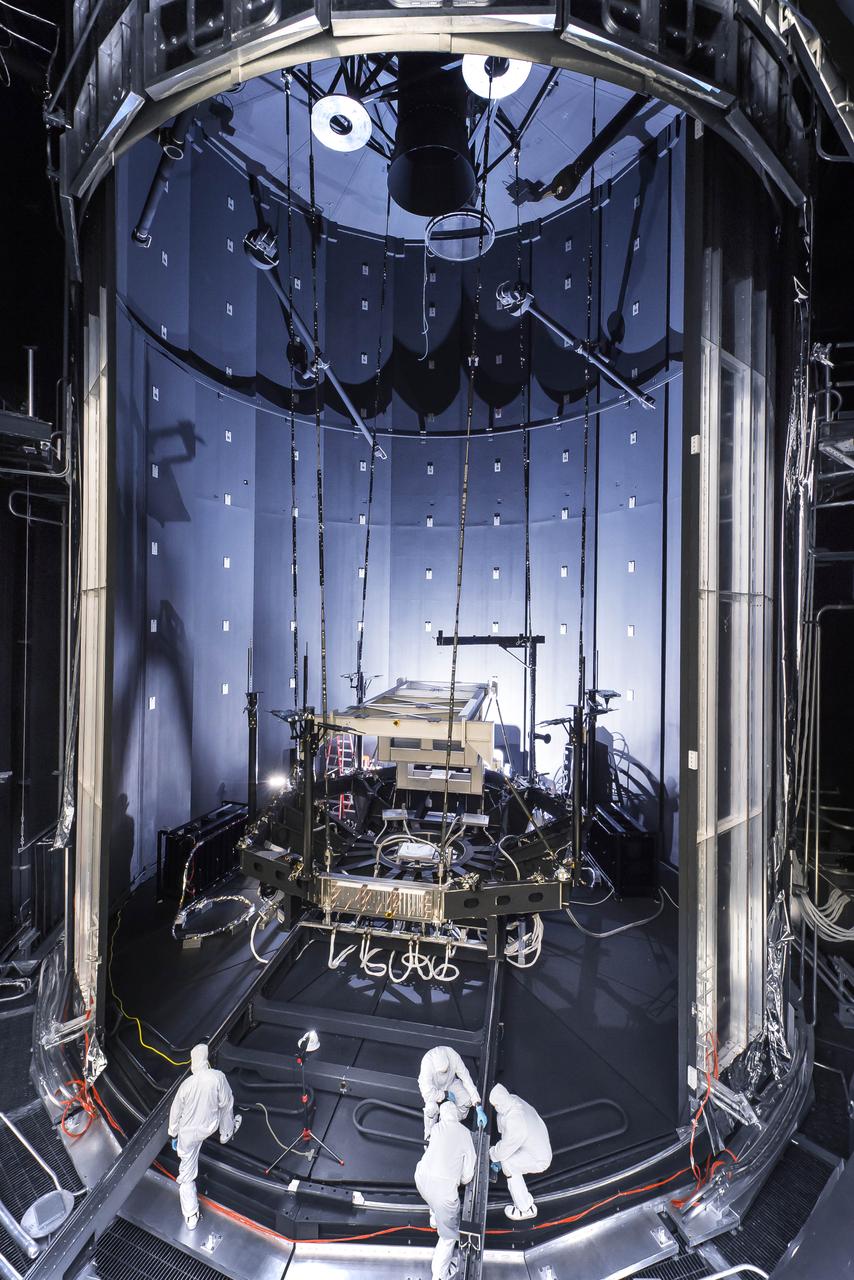
This photo was captured from outside the enormous mouth of NASA's giant thermal vacuum chamber, called Chamber A, at Johnson Space Center in Houston. Previously used for manned spaceflight missions, this historic chamber is now filled with engineers and technicians preparing a lift system that will be used to hold the James Webb Space Telescope during testing. The James Webb Space Telescope is the scientific successor to NASA's Hubble Space Telescope. It will be the most powerful space telescope ever built. Webb is an international project led by NASA with its partners, the European Space Agency and the Canadian Space Agency. Credit: NASA/Goddard/Chris Gunn <b><a href="http://www.nasa.gov/audience/formedia/features/MP_Photo_Guidelines.html" rel="nofollow">NASA image use policy.</a></b> <b><a href="http://www.nasa.gov/centers/goddard/home/index.html" rel="nofollow">NASA Goddard Space Flight Center</a></b> enables NASA’s mission through four scientific endeavors: Earth Science, Heliophysics, Solar System Exploration, and Astrophysics. Goddard plays a leading role in NASA’s accomplishments by contributing compelling scientific knowledge to advance the Agency’s mission. <b>Follow us on <a href="http://twitter.com/NASAGoddardPix" rel="nofollow">Twitter</a></b> <b>Like us on <a href="http://www.facebook.com/pages/Greenbelt-MD/NASA-Goddard/395013845897?ref=tsd" rel="nofollow">Facebook</a></b> <b>Find us on <a href="http://instagrid.me/nasagoddard/?vm=grid" rel="nofollow">Instagram</a></b>
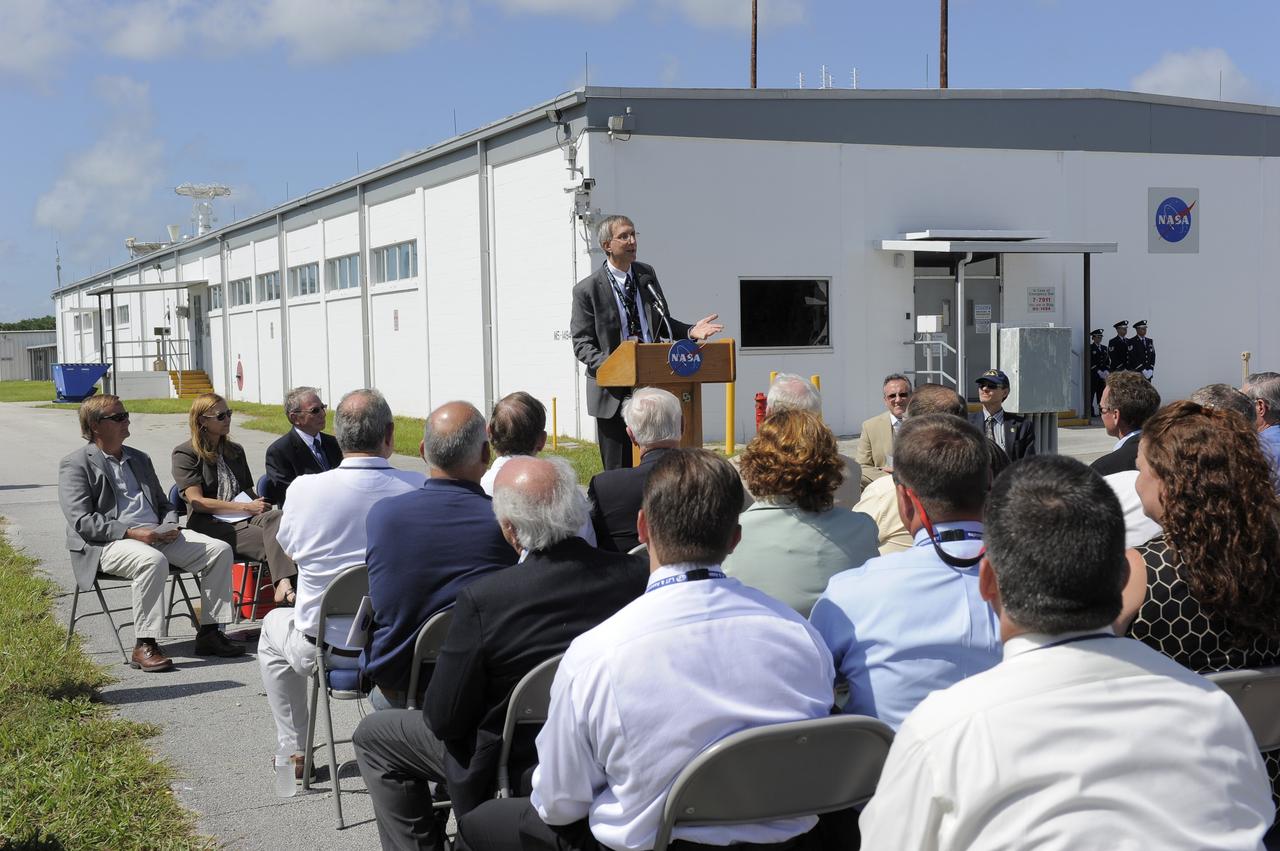
CAPE CANAVERAL, Fla. -- At the Merritt Island Launch Annex (MILA) Spaceflight Tracking and Data Network Station at NASA's Kennedy Space Center in Florida, Jeff Volosin, associate director, Exploration and Communications, NASA Goddard Space Flight Center, addresses those in attendance at a closing ceremony recognizing the station's 45 years of service. The station was originally established by NASA's Goddard Space Flight Center as one of 17 Space Flight Tracking and Data Network stations around the world. Commissioned for the Apollo Program, the first launch it supported was the Apollo/Saturn 203 test flight from Launch Complex 37 on July 5, 1966. It also provided orbital support for low earth-orbiting scientific satellites. In recent history, the station has been used almost exclusively for space shuttle launch and landing support. Following the final launch and landing of the Space Shuttle Program in July 2011, the MILA station is officially decommissioned. For more information, visit http://www.nasa.gov/centers/kennedy/pdf/167424main_MILA-08C.pdf. Photo credit: NASA/Kim Shiflett
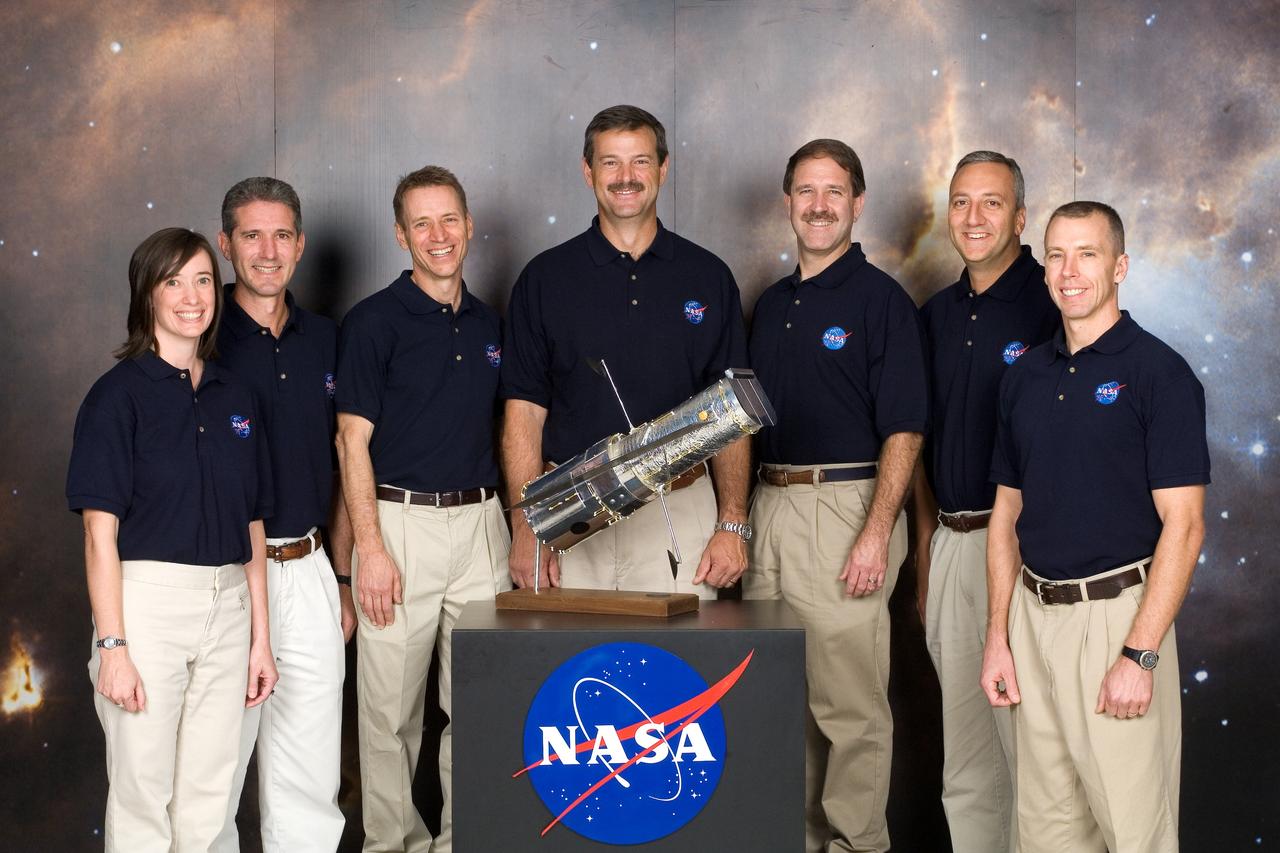
JSC2006-E-47144 (31 Oct. 2006) --- A few hours after NASA Administrator Michael Griffin announced from Goddard Space Flight Center the astronauts selected for the final shuttle mission to perform work on the Hubble Space Telescope, the STS-125 crew met the news media at the Johnson Space Center. Following the press briefing, the members posed for this group portrait. From left to right are astronauts K. Megan McArthur, Michael T. Good, Gregory C. Johnson, Scott D. Altman, John M. Grunsfeld, Michael J. Massimino and Andrew J. Feustel. Altman will command the final space shuttle mission to Hubble, and Johnson will serve as pilot for his initial spaceflight. Mission specialists include veteran spacewalkers Grunsfeld and Massimino and first-time space fliers Feustel, Good and McArthur.
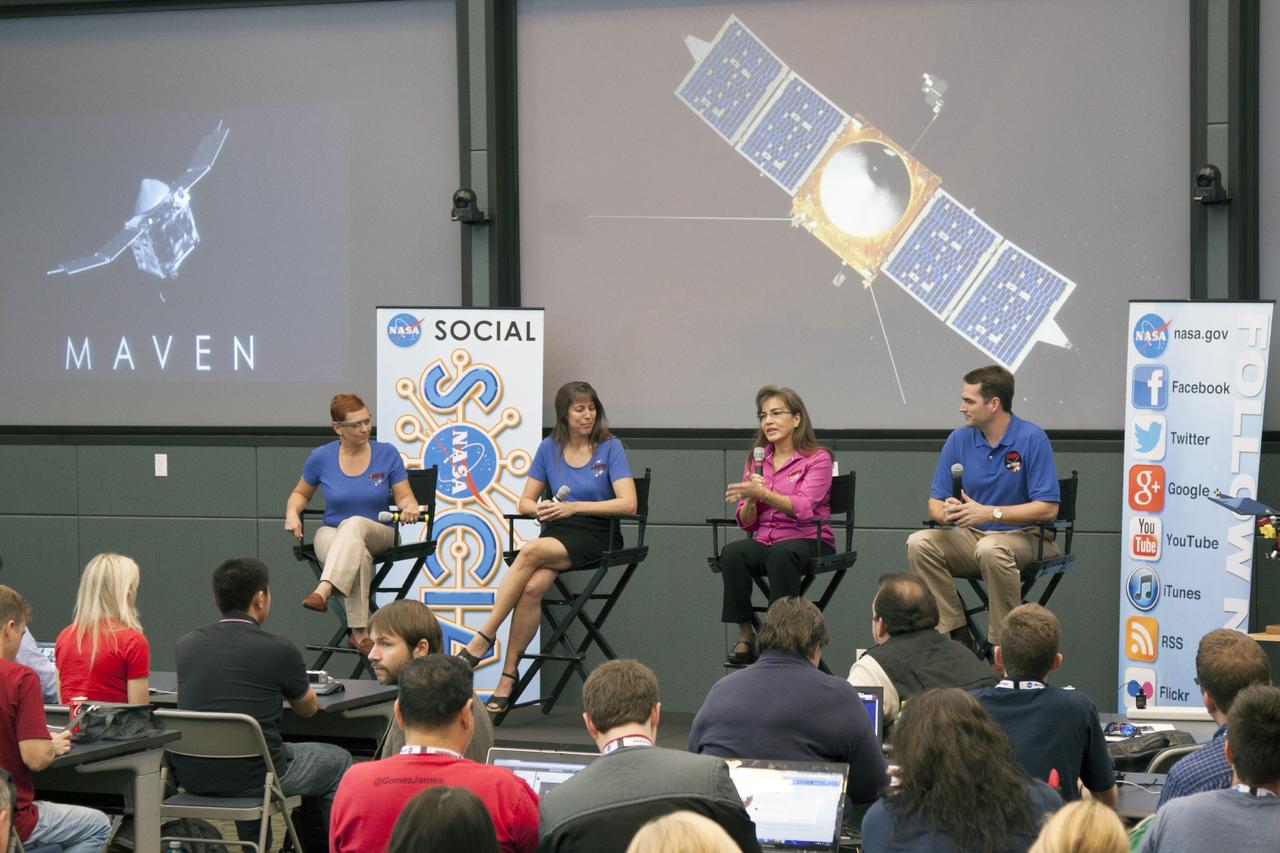
CAPE CANAVERAL, Fla. -- In the conference room of Operations Support Building II at NASA's Kennedy Space Center in Florida, social media participants listen to a briefing on the Mars Atmosphere and Volatile Evolution, or MAVEN, mission by, from the left, Lisa May, MAVEN Program executive, Kelly Fast, Mars Program scientist, Sandra Cauffman, deputy project manager at the agency's Goddard Spaceflight Center, in Greenbelt, Md., and Chris Waters, systems design team lead at Lockheed Martin. The social media participants gathered at the Florida spaceport for the launch of the Mars Atmosphere and Volatile Evolution, or MAVEN, spacecraft. Their visit included tours of key facilities and participating in presentations by key NASA leaders who updated the space agency's current efforts. Photo credit: NASA/Jim Grossman
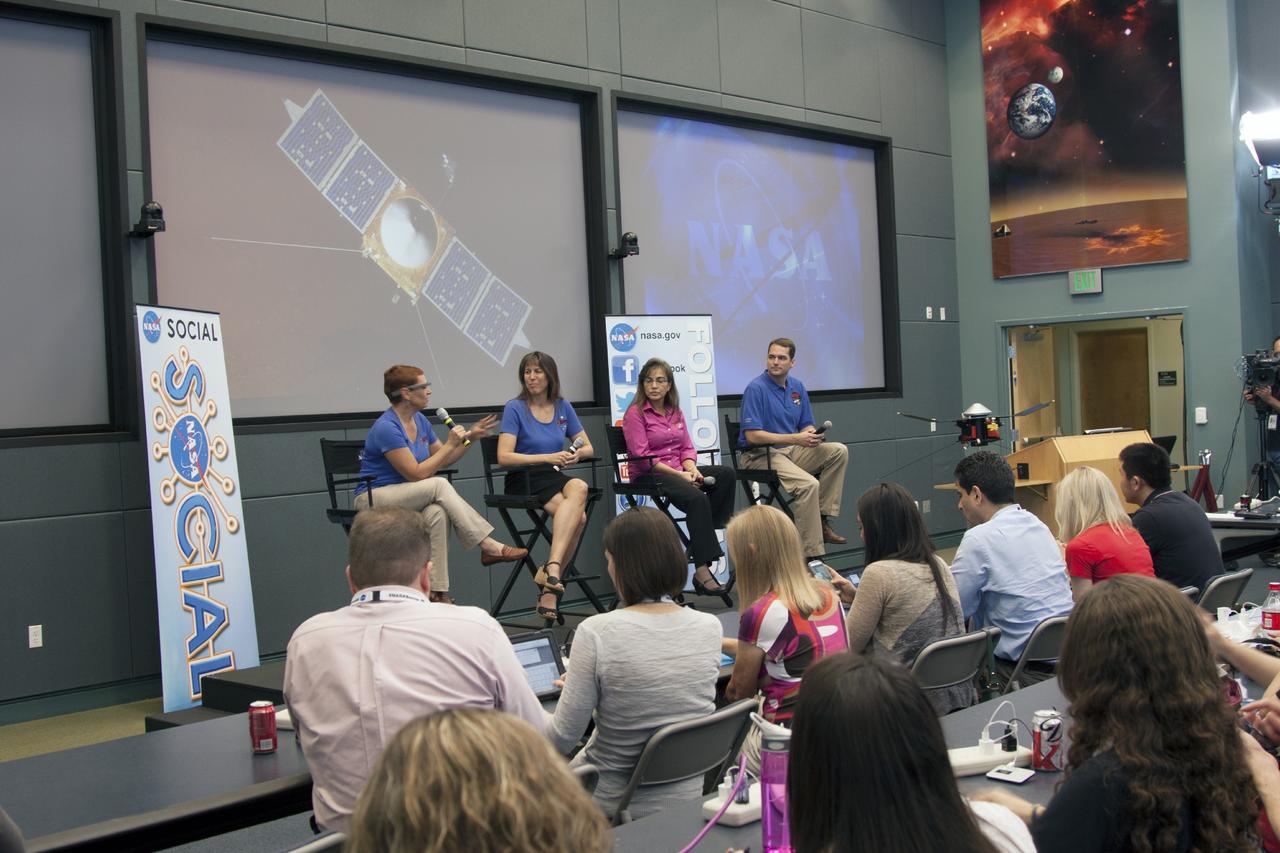
CAPE CANAVERAL, Fla. -- In the conference room of Operations Support Building II at NASA's Kennedy Space Center in Florida, social media participants listen to a briefing on the Mars Atmosphere and Volatile Evolution, or MAVEN, mission by, from the left, Lisa May, MAVEN Program executive, Kelly Fast, Mars Program scientist, Sandra Cauffman, deputy project manager at the agency's Goddard Spaceflight Center, in Greenbelt, Md., and Chris Waters, systems design team lead at Lockheed Martin. The social media participants gathered at the Florida spaceport for the launch of the Mars Atmosphere and Volatile Evolution, or MAVEN, spacecraft. Their visit included tours of key facilities and participating in presentations by key NASA leaders who updated the space agency's current efforts. Photo credit: NASA/Jim Grossman
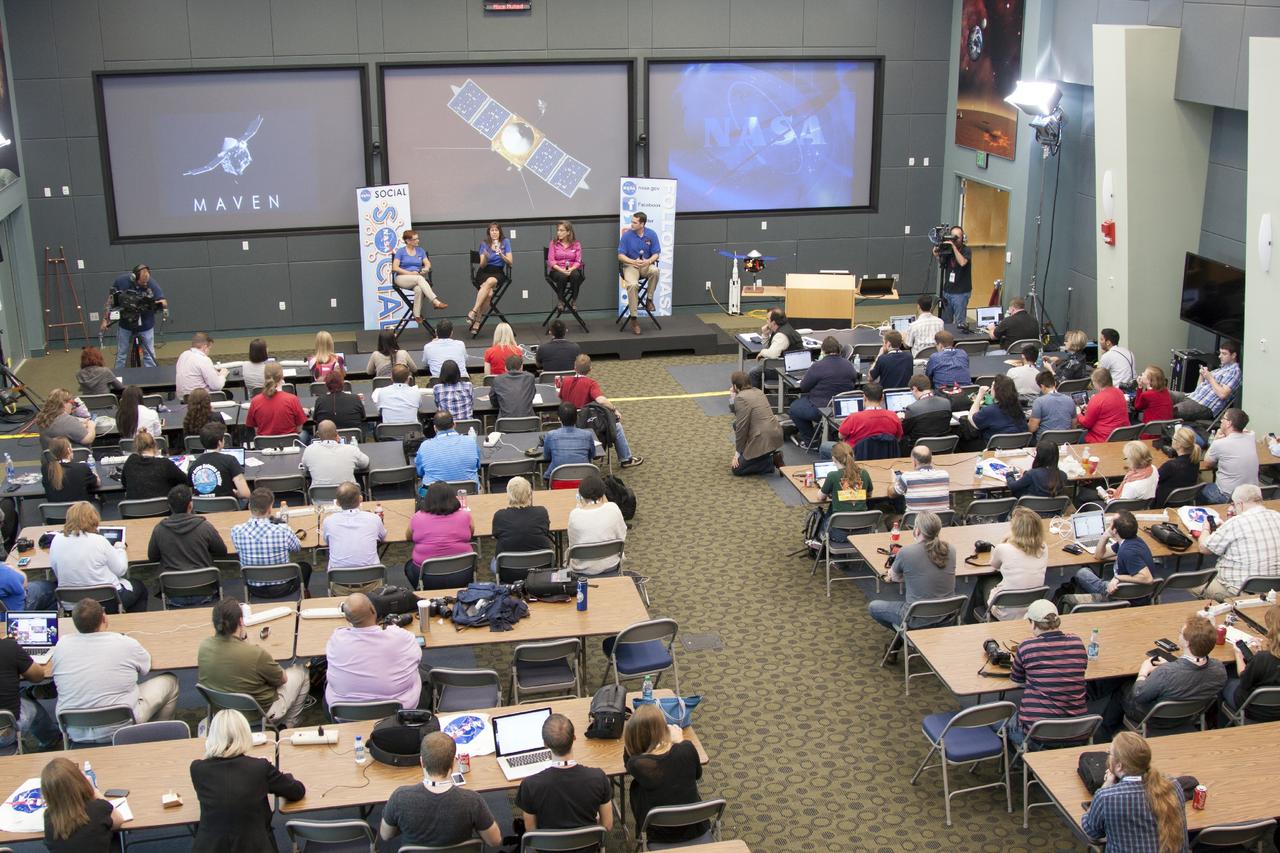
CAPE CANAVERAL, Fla. -- In the conference room of Operations Support Building II at NASA's Kennedy Space Center in Florida, social media participants listen to a briefing on the Mars Atmosphere and Volatile Evolution, or MAVEN, mission by, from the left, Lisa May, MAVEN Program executive, Kelly Fast, Mars Program scientist, Sandra Cauffman, deputy project manager at the agency's Goddard Spaceflight Center, in Greenbelt, Md., and Chris Waters, systems design team lead at Lockheed Martin. The social media participants gathered at the Florida spaceport for the launch of the Mars Atmosphere and Volatile Evolution, or MAVEN, spacecraft. Their visit included tours of key facilities and participating in presentations by key NASA leaders who updated the space agency's current efforts. Photo credit: NASA/Jim Grossman
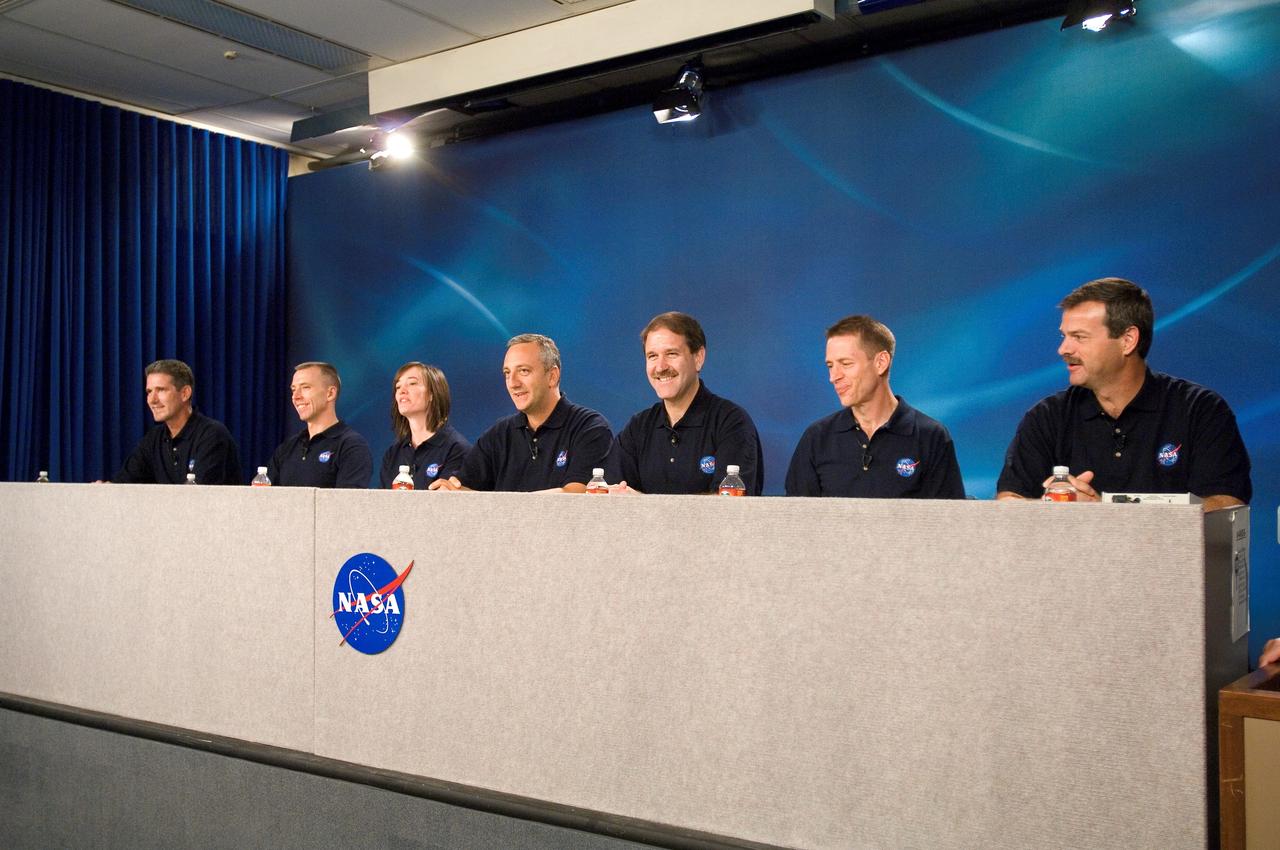
JSC2006-E-47110 (31 Oct. 2006) --- A few hours after NASA Administrator Michael Griffin announced from Goddard Space Flight Center the astronauts selected for the final shuttle mission to perform work on the Hubble Space Telescope, the STS-125 crew met the news media at the Johnson Space Center. From left to right are astronauts Michael T. Good, Andrew J. Feustel, K. Megan McArthur, Michael J. Massimino, John M. Grunsfeld, Gregory C. Johnson and Scott D. Altman. Altman will command the final space shuttle mission to Hubble, and Johnson will serve as pilot for his initial spaceflight. Mission specialists include veteran spacewalkers Grunsfeld and Massimino and first-time space fliers Feustel, Good and McArthur.
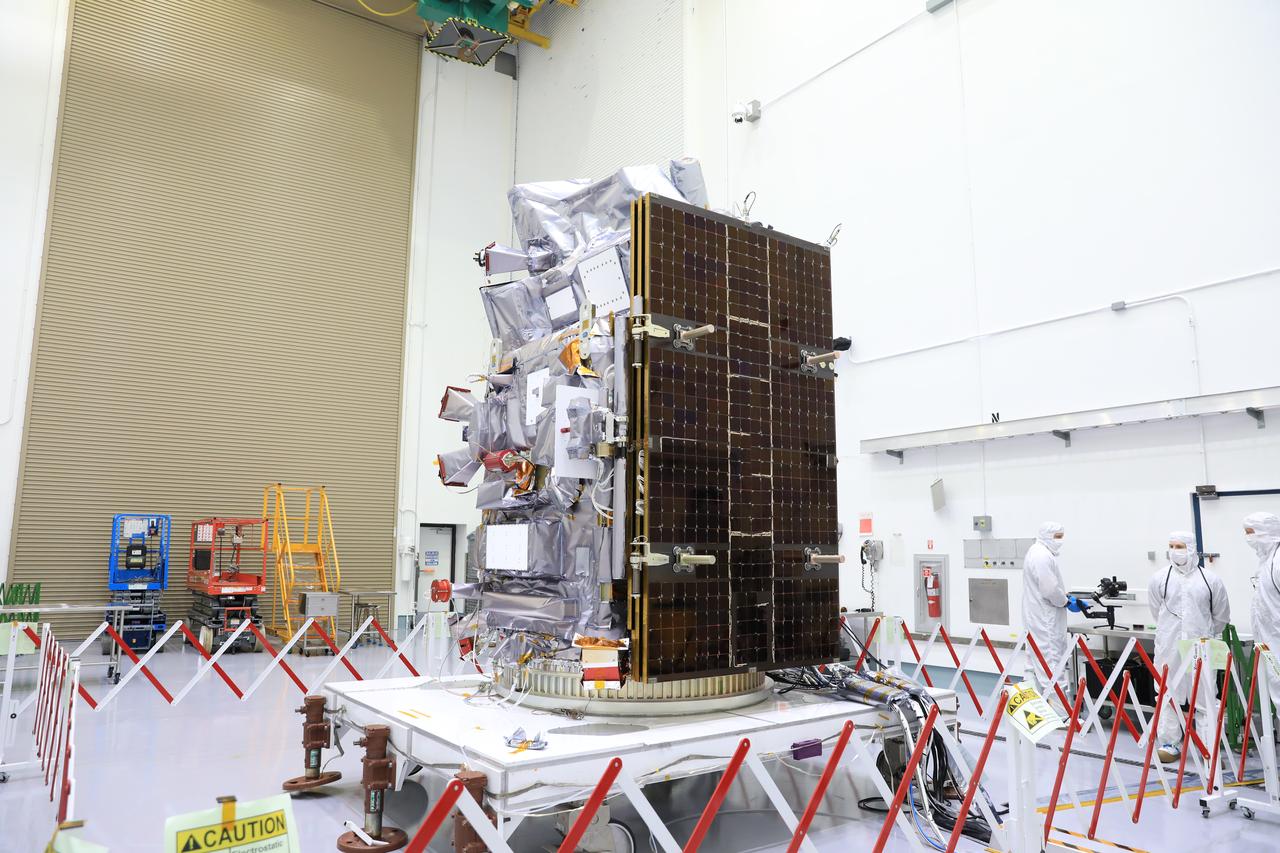
Technicians work to process the NASA’s Plankton, Aerosol, Cloud, ocean Ecosystem (PACE) observatory on a spacecraft dolly in a high bay at the Astrotech Space Operations Facility near the agency’s Kennedy Space Center in Florida on Monday, Dec. 4, 2023. PACE will extend and improve upon NASA’s 20-plus years of global satellite observations of our living ocean, atmospheric aerosols, and clouds. It will also continue key measurements related to air quality and initiate an advanced set of climate-relevant data records. PACE will be encapsulated for launch aboard a SpaceX Falcon 9 rocket in early 2024 from Space Launch Complex 40 at Cape Canaveral Space Force Station in Florida.
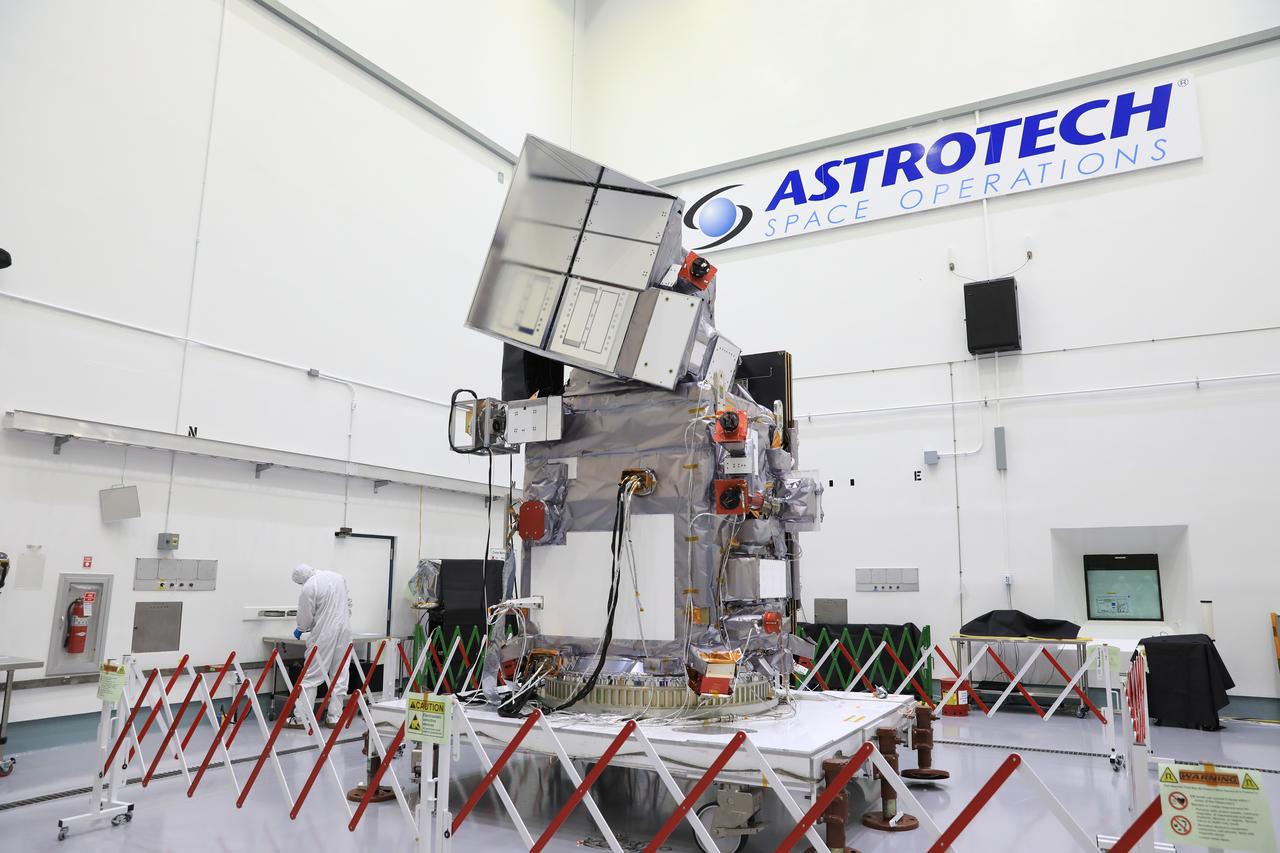
Technicians work to process the NASA’s Plankton, Aerosol, Cloud, ocean Ecosystem (PACE) observatory on a spacecraft dolly in a high bay at the Astrotech Space Operations Facility near the agency’s Kennedy Space Center in Florida on Monday, Dec. 4, 2023. PACE will extend and improve upon NASA’s 20-plus years of global satellite observations of our living ocean, atmospheric aerosols, and clouds. It will also continue key measurements related to air quality and initiate an advanced set of climate-relevant data records. PACE will be encapsulated for launch aboard a SpaceX Falcon 9 rocket in early 2024 from Space Launch Complex 40 at Cape Canaveral Space Force Station in Florida.
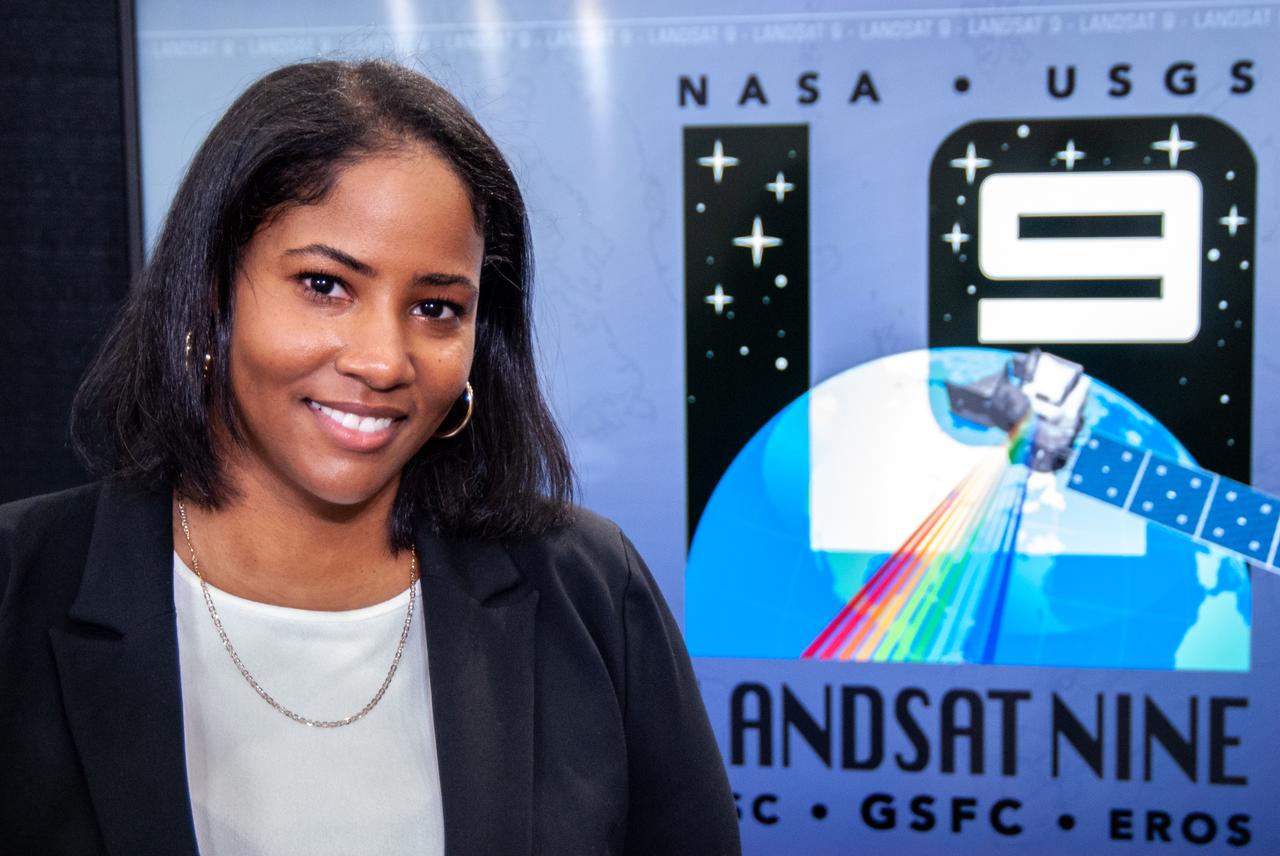
Tylar Greene, NASA Communications, moderates a mission and science briefing for NASA’s Landsat 9 mission at Vandenberg Space Force Base in California on Sept. 24, 2021. Virtual participants (not shown) are Jeff Masek, Landsat 9 project scientist at NASA’s Goddard Space Flight Center; Chris Crawford, Landsat 9 project scientist at USGS; Inbal Becker-Reshef, director of NASA’s Harvest food security and agriculture program; Del Jenstrom, Landsat 9 project manager at Goddard; Brian Sauer, Landsat 9 project manager at USGS; Sabrina Chapman, manager, system engineering, Northrop Grumman Space Systems; and Sarah Lipscy, OLI-2 senior engineer, Ball Aerospace & Technologies. Landsat 9 is scheduled to launch at 2:11 p.m. EDT (11:11 a.m. PDT) on Monday, Sept. 27, on a United Launch Alliance Atlas V 401 rocket from Space Launch Complex 3 at Vandenberg. The launch is managed by NASA’s Launch Services Program, based at the agency’s Kennedy Space Center in Florida. Landsat 9 will join its sister satellite, Landsat 8, in orbit in collecting images from across the planet every eight days. This calibrated data will continue the Landsat program’s critical role in monitoring the health of Earth and helping people manage essential resources, including crops, irrigation water, and forests.
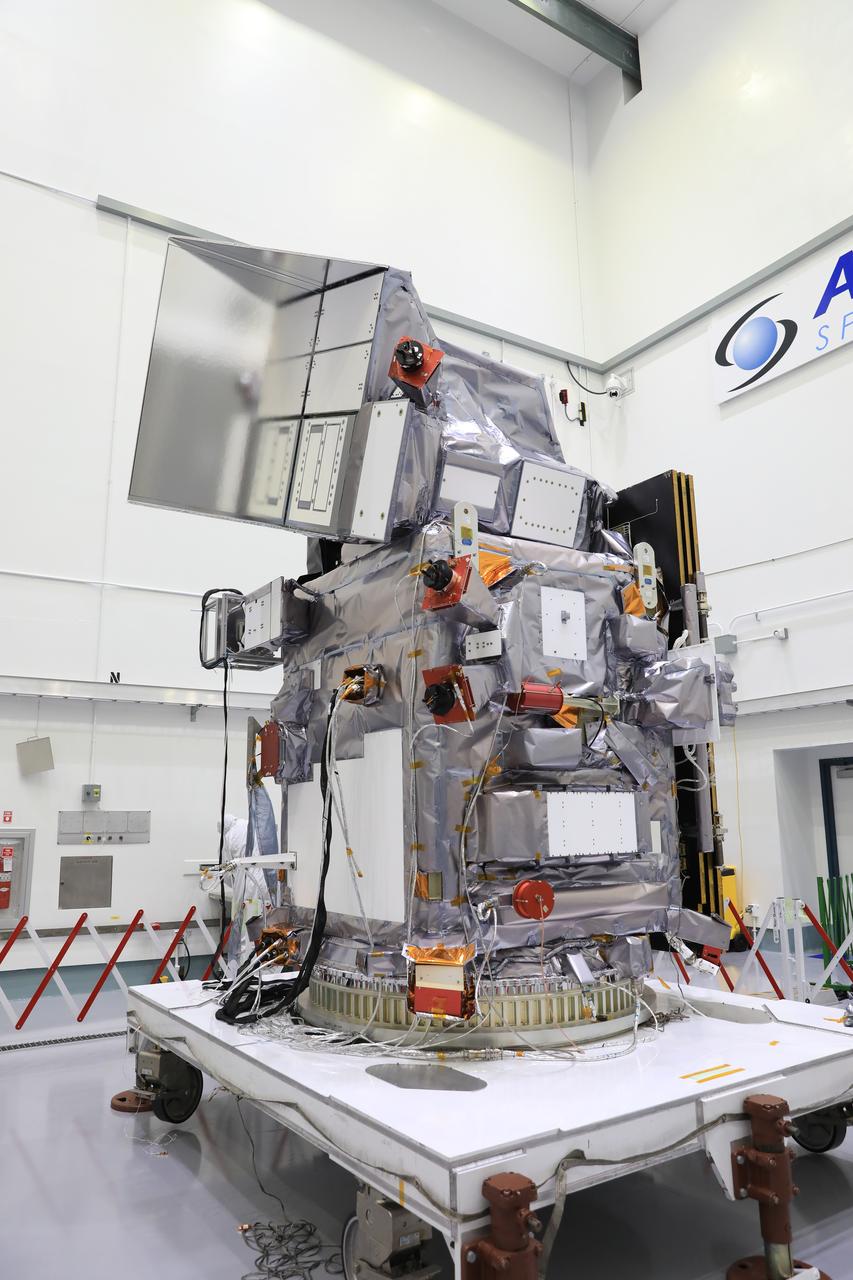
NASA’s Plankton, Aerosol, Cloud, ocean Ecosystem (PACE) observatory is inspected and processed on a spacecraft dolly in a high bay at the Astrotech Space Operations Facility near the agency’s Kennedy Space Center in Florida on Monday, Dec. 4, 2023. PACE will extend and improve upon NASA’s 20-plus years of global satellite observations of our living ocean, atmospheric aerosols, and clouds. It will also continue key measurements related to air quality and initiate an advanced set of climate-relevant data records. PACE will be encapsulated for launch aboard a SpaceX Falcon 9 rocket in early 2024 from Space Launch Complex 40 at Cape Canaveral Space Force Station in Florida.
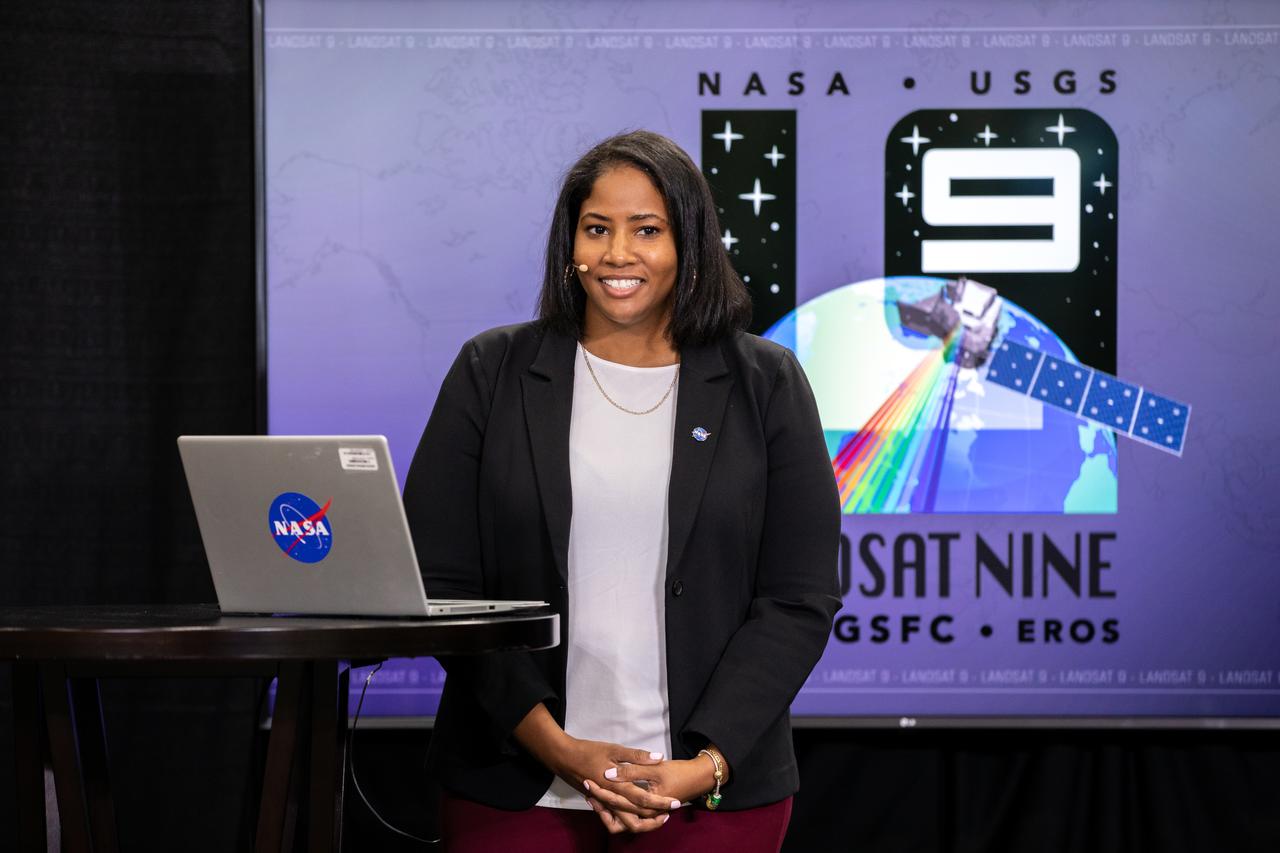
Tylar Greene, NASA Communications, moderates a mission and science briefing for NASA’s Landsat 9 mission at Vandenberg Space Force Base in California on Sept. 24, 2021. Virtual participants (not shown) are Jeff Masek, Landsat 9 project scientist at NASA’s Goddard Space Flight Center; Chris Crawford, Landsat 9 project scientist at USGS; Inbal Becker-Reshef, director of NASA’s Harvest food security and agriculture program; Del Jenstrom, Landsat 9 project manager at Goddard; Brian Sauer, Landsat 9 project manager at USGS; Sabrina Chapman, manager, system engineering, Northrop Grumman Space Systems; and Sarah Lipscy, OLI-2 senior engineer, Ball Aerospace & Technologies. Landsat 9 is scheduled to launch at 2:11 p.m. EDT (11:11 a.m. PDT) on Monday, Sept. 27, on a United Launch Alliance Atlas V 401 rocket from Space Launch Complex 3 at Vandenberg. The launch is managed by NASA’s Launch Services Program, based at the agency’s Kennedy Space Center in Florida. Landsat 9 will join its sister satellite, Landsat 8, in orbit in collecting images from across the planet every eight days. This calibrated data will continue the Landsat program’s critical role in monitoring the health of Earth and helping people manage essential resources, including crops, irrigation water, and forests.
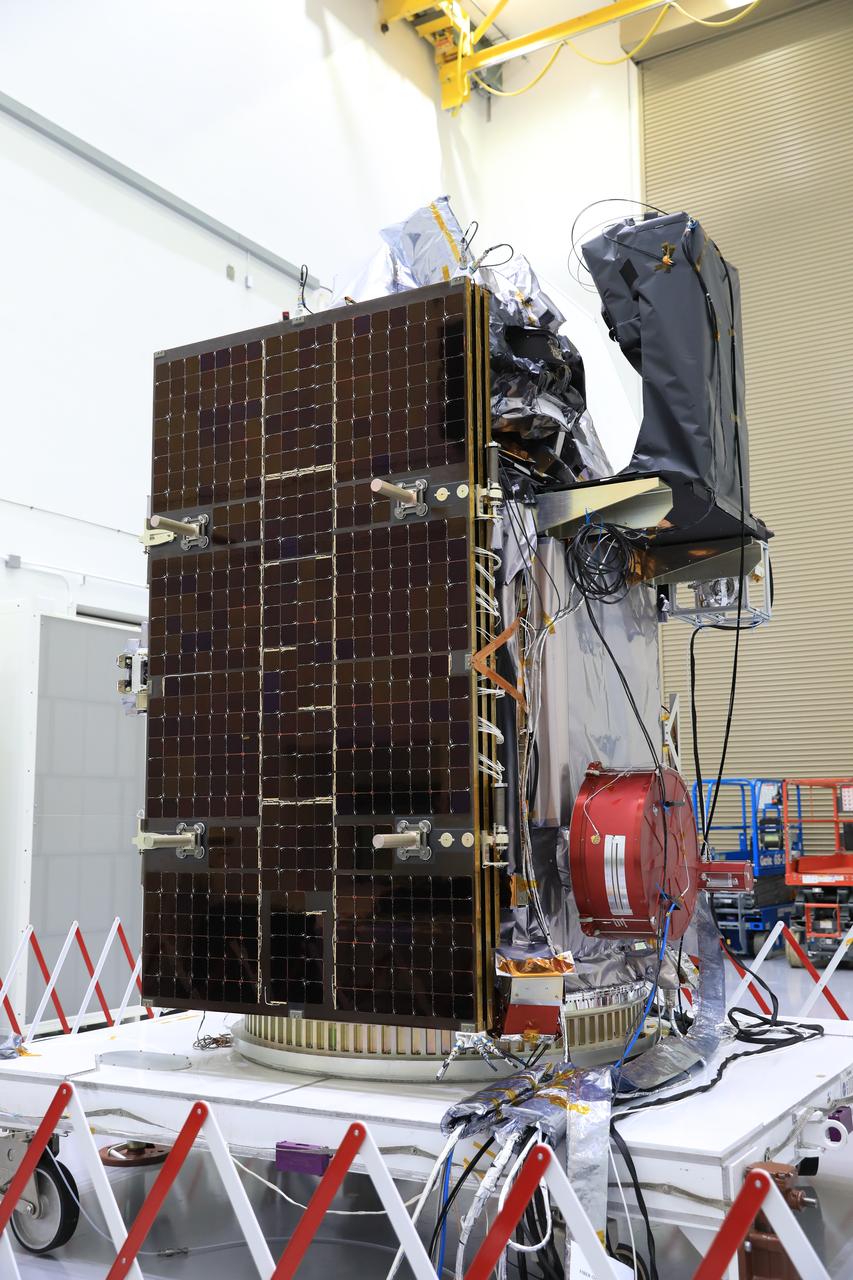
NASA’s Plankton, Aerosol, Cloud, ocean Ecosystem (PACE) observatory is inspected and processed on a spacecraft dolly in a high bay at the Astrotech Space Operations Facility near the agency’s Kennedy Space Center in Florida on Monday, Dec. 4, 2023. PACE will extend and improve upon NASA’s 20-plus years of global satellite observations of our living ocean, atmospheric aerosols, and clouds. It will also continue key measurements related to air quality and initiate an advanced set of climate-relevant data records. PACE will be encapsulated for launch aboard a SpaceX Falcon 9 rocket in early 2024 from Space Launch Complex 40 at Cape Canaveral Space Force Station in Florida.
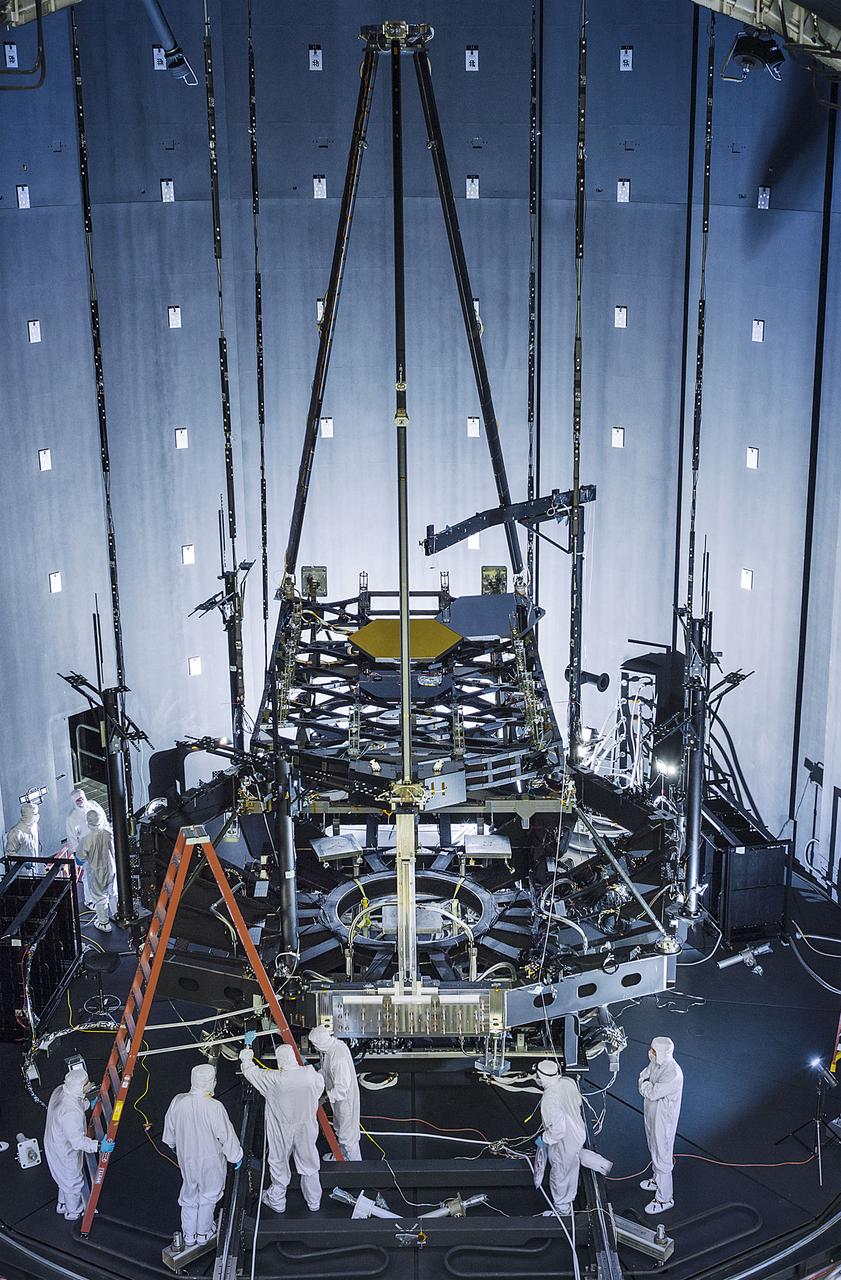
Inside NASA's giant thermal vacuum chamber, called Chamber A, at NASA's Johnson Space Center in Houston, the James Webb Space Telescope's Pathfinder backplane test model, is being prepared for its cryogenic test. Previously used for manned spaceflight missions, this historic chamber is now filled with engineers and technicians preparing for a crucial test. Exelis developed and installed the optical test equipment in the chamber. "The optical test equipment was developed and installed in the chamber by Exelis," said Thomas Scorse, Exelis JWST Program Manager. "The Pathfinder telescope gives us our first opportunity for an end-to-end checkout of our equipment." "This will be the first time on the program that we will be aligning two primary mirror segments together," said Lee Feinberg, NASA Optical Telescope Element Manager. "In the past, we have always tested one mirror at a time but this time we will use a single test system and align both mirrors to it as though they are a single monolithic mirror." The James Webb Space Telescope is the scientific successor to NASA's Hubble Space Telescope. It will be the most powerful space telescope ever built. Webb is an international project led by NASA with its partners, the European Space Agency and the Canadian Space Agency. Image credit: NASA/Chris Gunn Text credit: Laura Betz, NASA's Goddard Space Flight Center, Greenbelt, Maryland <b><a href="http://www.nasa.gov/audience/formedia/features/MP_Photo_Guidelines.html" rel="nofollow">NASA image use policy.</a></b> <b><a href="http://www.nasa.gov/centers/goddard/home/index.html" rel="nofollow">NASA Goddard Space Flight Center</a></b> enables NASA’s mission through four scientific endeavors: Earth Science, Heliophysics, Solar System Exploration, and Astrophysics. Goddard plays a leading role in NASA’s accomplishments by contributing compelling scientific knowledge to advance the Agency’s mission. <b>Follow us on <a href="http://twitter.com/NASAGoddardPix" rel="nofollow">Twitter</a></b> <b>Like us on <a href="http://www.facebook.com/pages/Greenbelt-MD/NASA-Goddard/395013845897?ref=tsd" rel="nofollow">Facebook</a></b> <b>Find us on <a href="http://instagrid.me/nasagoddard/?vm=grid" rel="nofollow">Instagram</a></b>
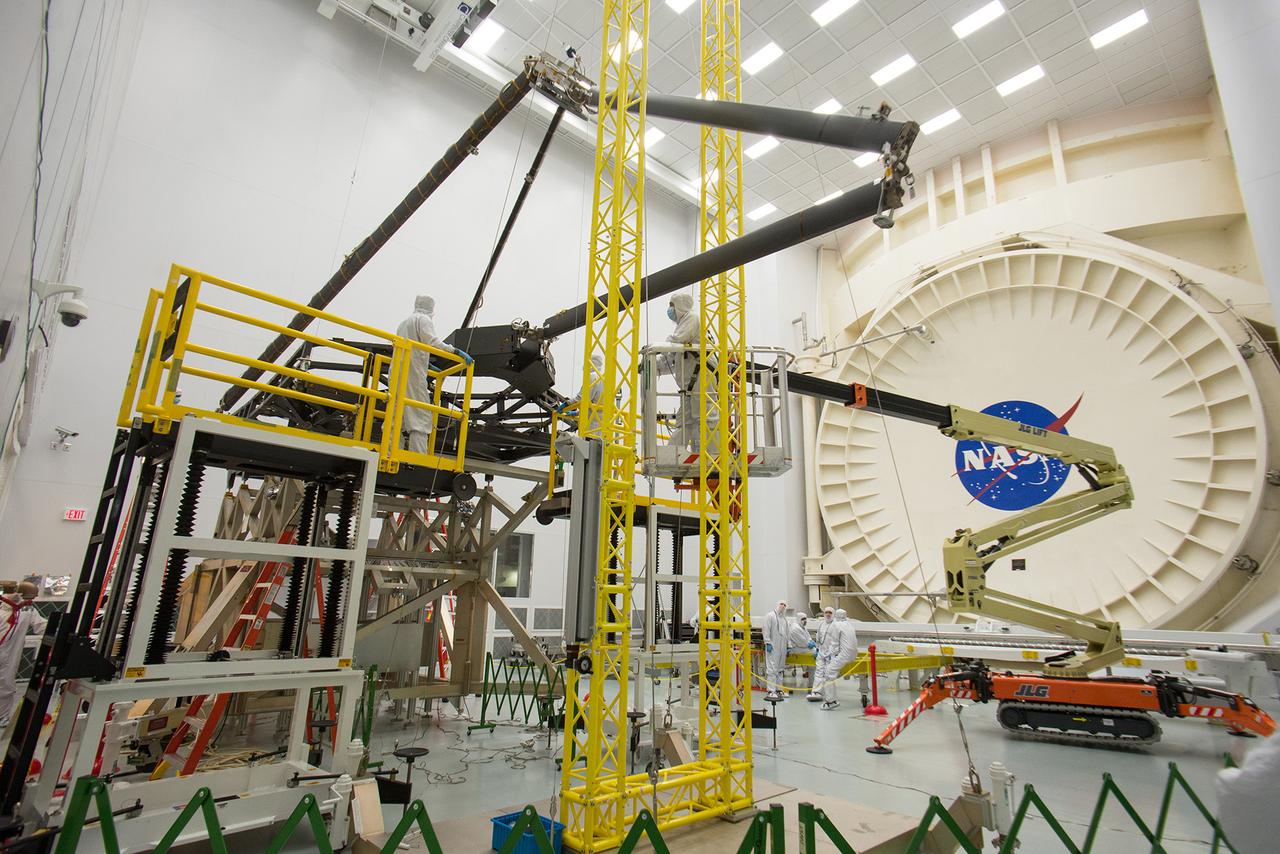
Engineers and technicians manually deployed the secondary mirror support structure (SMSS) of the James Webb Space Telescope's Pathfinder backplane test model, outside of a giant space simulation chamber called Chamber A, at NASA's Johnson Space Center in Houston. This historic test chamber was previously used in manned spaceflight missions and is being readied for a cryogenic test of a Webb telescope component. In the weightless environment of space, the SMSS is deployed by electric motors. On the ground, specially trained operators use a hand crank and a collection of mechanical ground support equipment to overcome the force of gravity. "This structure needs to be in the deployed configuration during the cryogenic test to see how the structure will operate in the frigid temperatures of space," said Will Rowland, senior mechanical test engineer for Northrop Grumman Aerospace Systems, Redondo Beach, California. "The test also demonstrates that the system works and can be successfully deployed." After the deployment was completed, Chamber A's circular door was opened and the rails (seen in the background of the photo) were installed so that the Pathfinder unit could be lifted, installed and rolled into the chamber on a cart. The team completed a fit check for the Pathfinder. Afterwards they readied the chamber for the cryogenic test, which will simulate the frigid temperatures the Webb telescope will encounter in space. “The team has been doing a great job keeping everything on schedule to getting our first optical test results, " said Lee Feinberg, NASA Optical Telescope Element Manager. The James Webb Space Telescope is the scientific successor to NASA's Hubble Space Telescope. It will be the most powerful space telescope ever built. Webb is an international project led by NASA with its partners, the European Space Agency and the Canadian Space Agency. Image credit: NASA/Desiree Stover Text credit: Laura Betz, NASA's Goddard Space Flight Center, Greenbelt, Maryland <b><a href="http://www.nasa.gov/audience/formedia/features/MP_Photo_Guidelines.html" rel="nofollow">NASA image use policy.</a></b> <b><a href="http://www.nasa.gov/centers/goddard/home/index.html" rel="nofollow">NASA Goddard Space Flight Center</a></b> enables NASA’s mission through four scientific endeavors: Earth Science, Heliophysics, Solar System Exploration, and Astrophysics. Goddard plays a leading role in NASA’s accomplishments by contributing compelling scientific knowledge to advance the Agency’s mission. <b>Follow us on <a href="http://twitter.com/NASAGoddardPix" rel="nofollow">Twitter</a></b> <b>Like us on <a href="http://www.facebook.com/pages/Greenbelt-MD/NASA-Goddard/395013845897?ref=tsd" rel="nofollow">Facebook</a></b> <b>Find us on <a href="http://instagrid.me/nasagoddard/?vm=grid" rel="nofollow">Instagram</a></b>
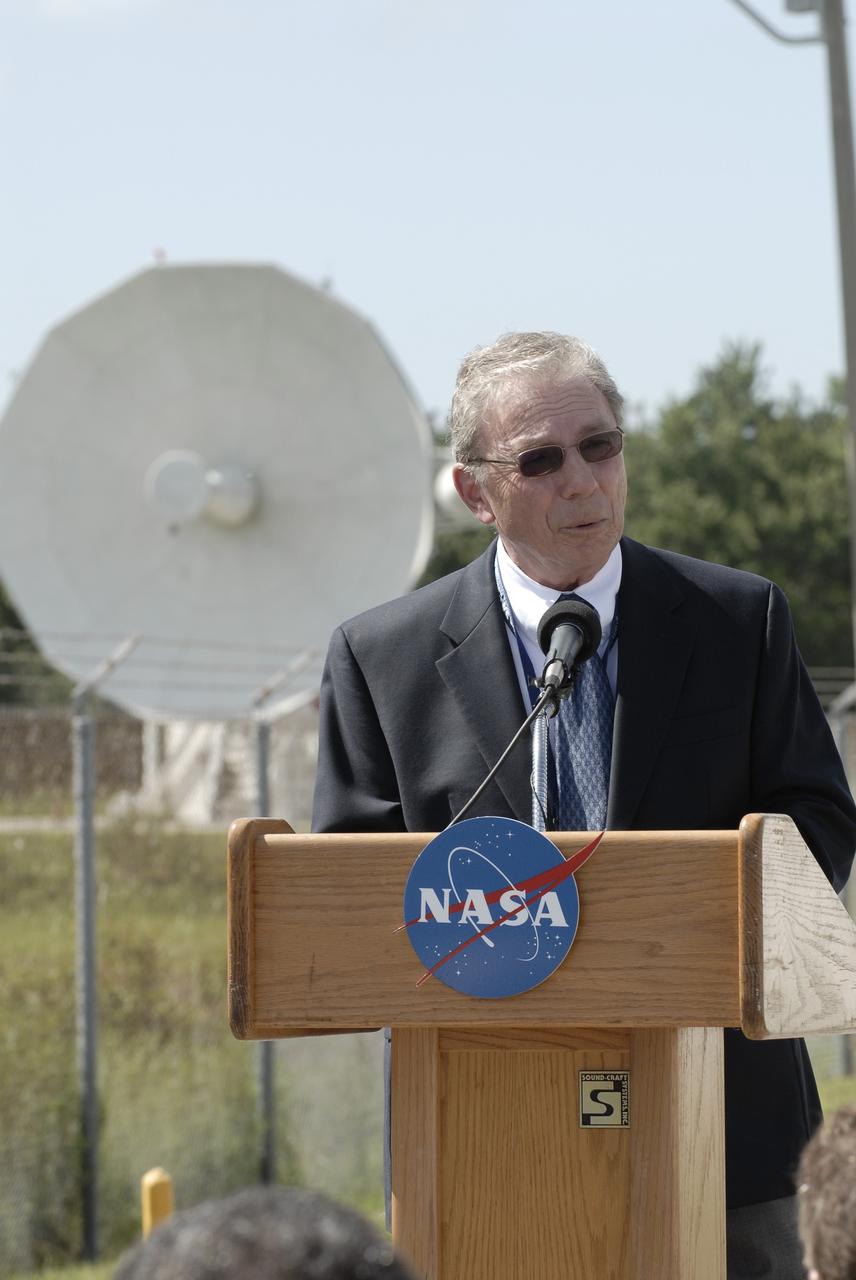
CAPE CANAVERAL, Fla. -- At the Merritt Island Launch Annex (MILA) Spaceflight Tracking and Data Network Station at NASA's Kennedy Space Center in Florida, Gary Morse, MILA station director, addresses those in attendance at a closing ceremony recognizing the station's 45 years of service. The station was originally established by NASA's Goddard Space Flight Center as one of 17 Space Flight Tracking and Data Network stations around the world. Commissioned for the Apollo Program, the first launch it supported was the Apollo/Saturn 203 test flight from Launch Complex 37 on July 5, 1966. It also provided orbital support for low earth-orbiting scientific satellites. In recent history, the station has been used almost exclusively for space shuttle launch and landing support. Following the final launch and landing of the Space Shuttle Program in July 2011, the MILA station is officially decommissioned. For more information, visit http://www.nasa.gov/centers/kennedy/pdf/167424main_MILA-08C.pdf. Photo credit: NASA/Kim Shiflett
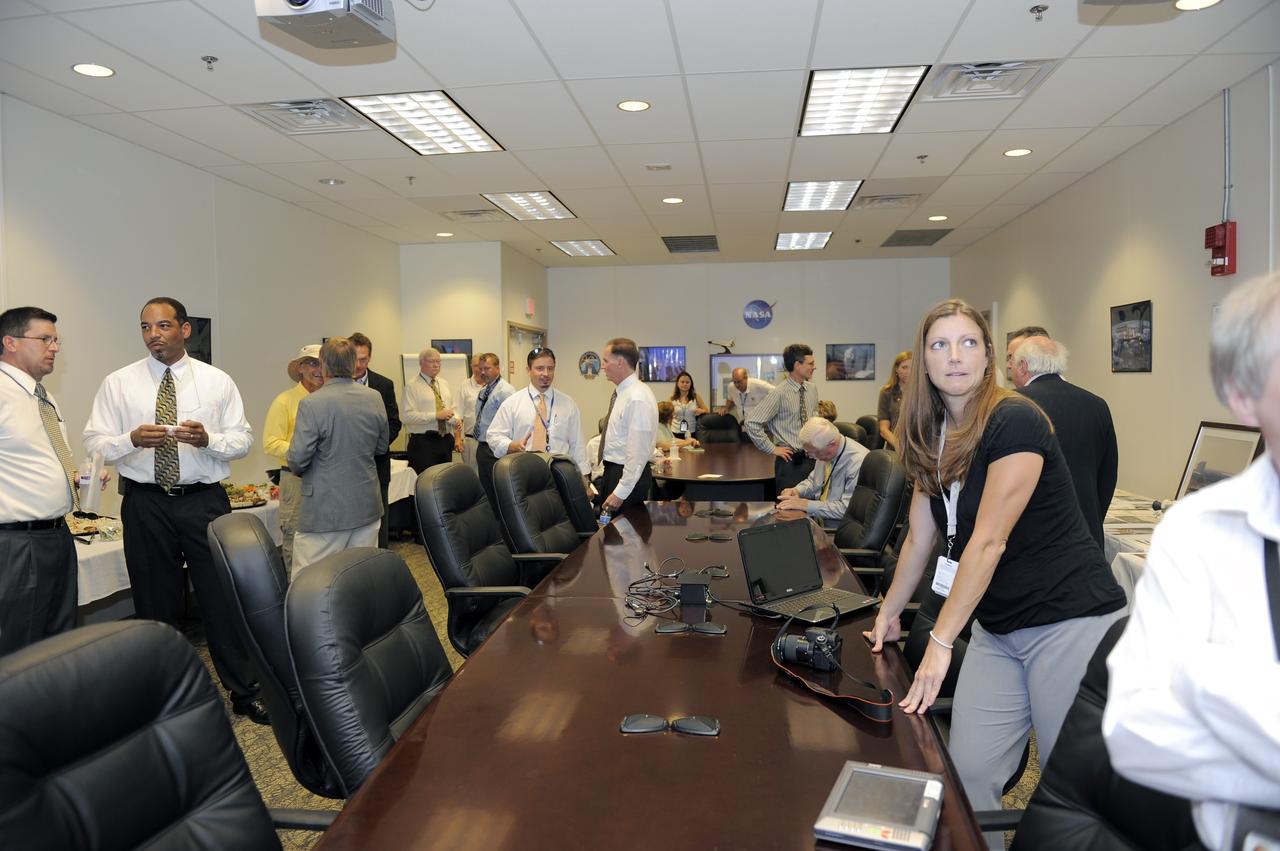
CAPE CANAVERAL, Fla. -- At the Merritt Island Launch Annex (MILA) Spaceflight Tracking and Data Network Station at NASA's Kennedy Space Center in Florida, former and current employees of the station mingle at a reception following a closing ceremony recognizing the station's 45 years of service. The station was originally established by NASA's Goddard Space Flight Center as one of 17 Space Flight Tracking and Data Network stations around the world. Commissioned for the Apollo Program, the first launch it supported was the Apollo/Saturn 203 test flight from Launch Complex 37 on July 5, 1966. It also provided orbital support for low earth-orbiting scientific satellites. In recent history, the station has been used almost exclusively for space shuttle launch and landing support. Following the final launch and landing of the Space Shuttle Program in July 2011, the MILA station is officially decommissioned. For more information, visit http://www.nasa.gov/centers/kennedy/pdf/167424main_MILA-08C.pdf. Photo credit: NASA/Kim Shiflett
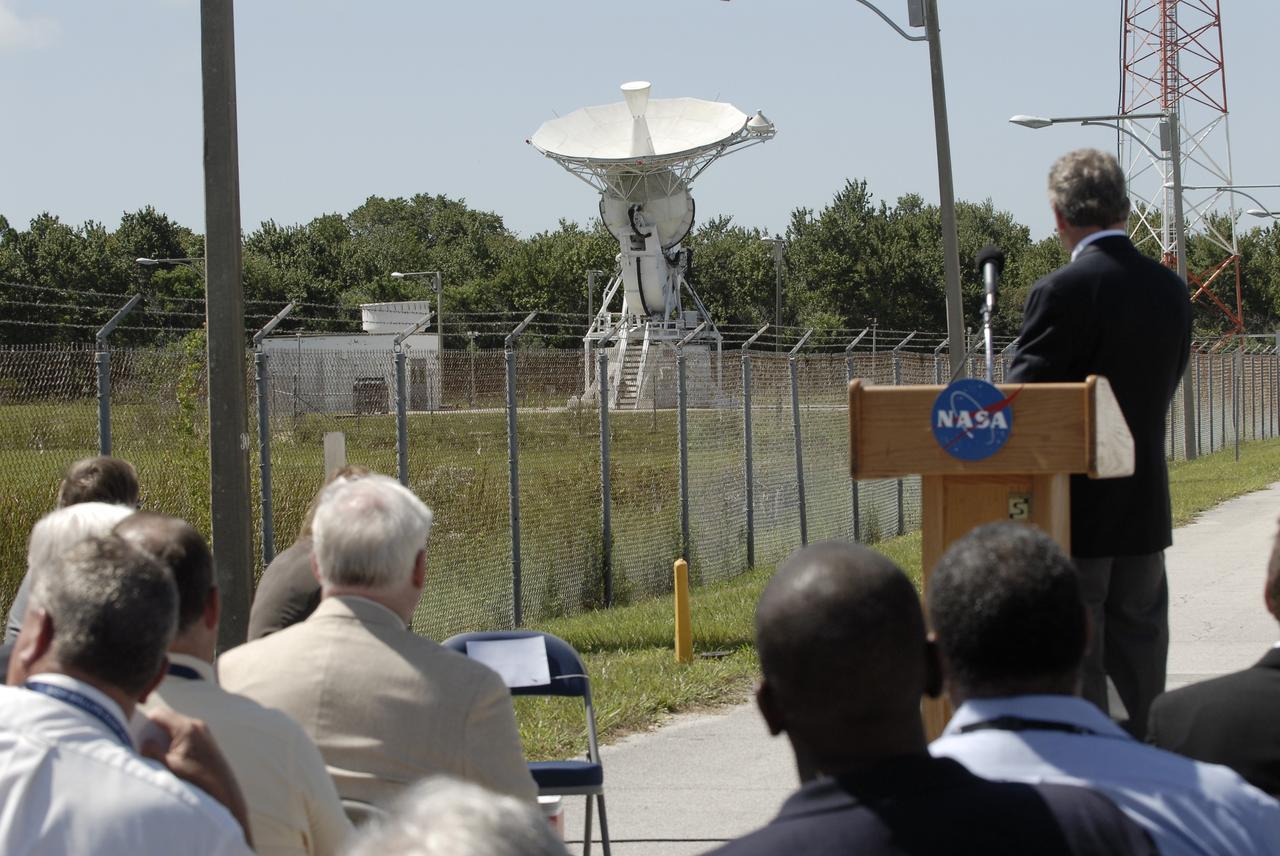
CAPE CANAVERAL, Fla. -- At the Merritt Island Launch Annex (MILA) Spaceflight Tracking and Data Network Station at NASA's Kennedy Space Center in Florida, one of two signature 30-foot steerable S-band antennas is slewed from the horizontal to the vertical position for the last time during a closing ceremony recognizing the station's 45 years of service. The antenna was pointed at Kennedy's Shuttle Landing Facility as it was for its last assignment, support of the landing of space shuttle Atlantis, concluding the STS-135 mission. STS-135 was the final mission of the Space Shuttle Program. The station was originally established by NASA's Goddard Space Flight Center as one of 17 Space Flight Tracking and Data Network stations around the world. Commissioned for the Apollo Program, the first launch it supported was the Apollo/Saturn 203 test flight from Launch Complex 37 on July 5, 1966. It also provided orbital support for low earth-orbiting scientific satellites. In recent history, the station has been used almost exclusively for space shuttle launch and landing support. Following the final launch and landing of the Space Shuttle Program in July 2011, the MILA station is officially decommissioned. For more information, visit http://www.nasa.gov/centers/kennedy/pdf/167424main_MILA-08C.pdf. Photo credit: NASA/Kim Shiflett
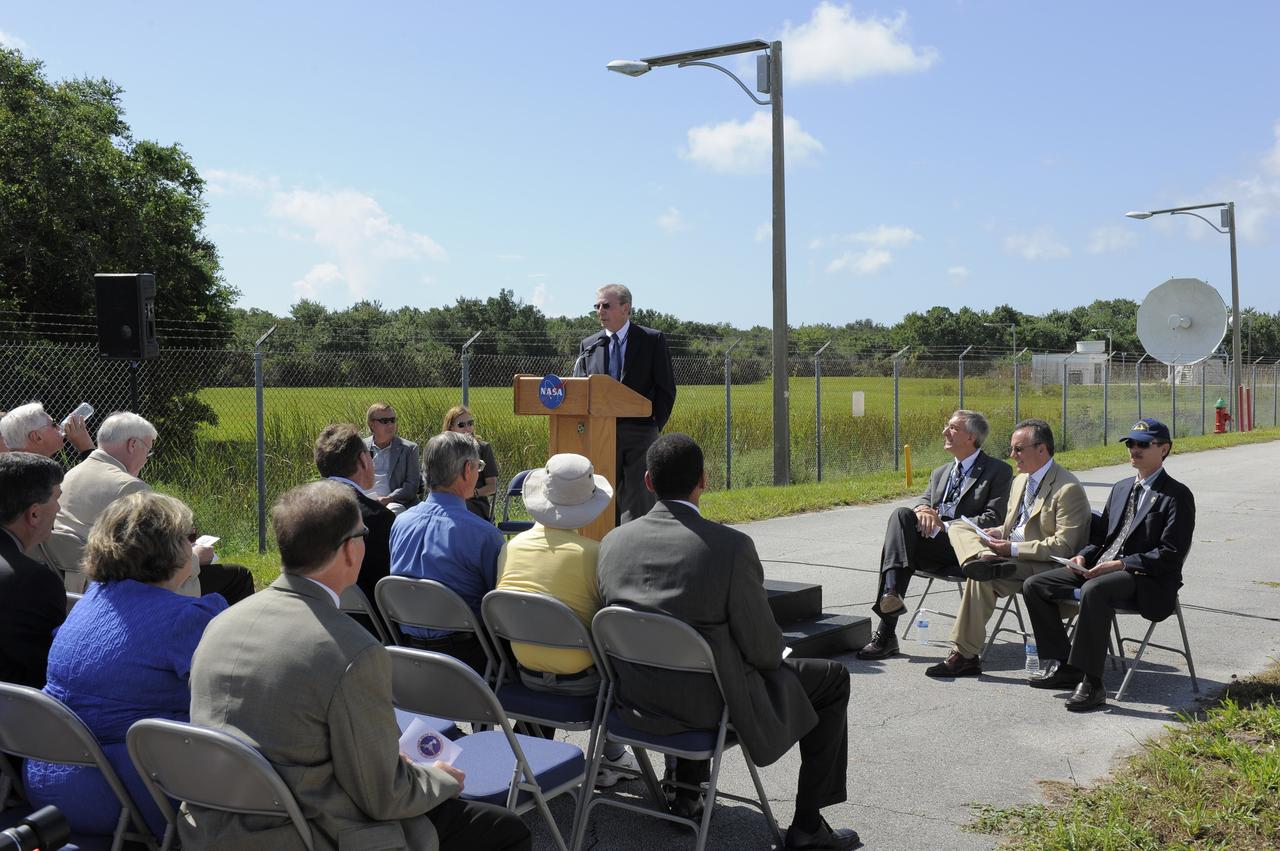
CAPE CANAVERAL, Fla. -- At the Merritt Island Launch Annex (MILA) Spaceflight Tracking and Data Network Station at NASA's Kennedy Space Center in Florida, NASA Station Director Gary Morse presides over a closing ceremony recognizing the station's 45 years of service. The station was originally established by NASA's Goddard Space Flight Center as one of 17 Space Flight Tracking and Data Network stations around the world. Commissioned for the Apollo Program, the first launch it supported was the Apollo/Saturn 203 test flight from Launch Complex 37 on July 5, 1966. It also provided orbital support for low earth-orbiting scientific satellites. In recent history, the station has been used almost exclusively for space shuttle launch and landing support. Following the final launch and landing of the Space Shuttle Program in July 2011, the MILA station is officially decommissioned. For more information, visit http://www.nasa.gov/centers/kennedy/pdf/167424main_MILA-08C.pdf. Photo credit: NASA/Kim Shiflett
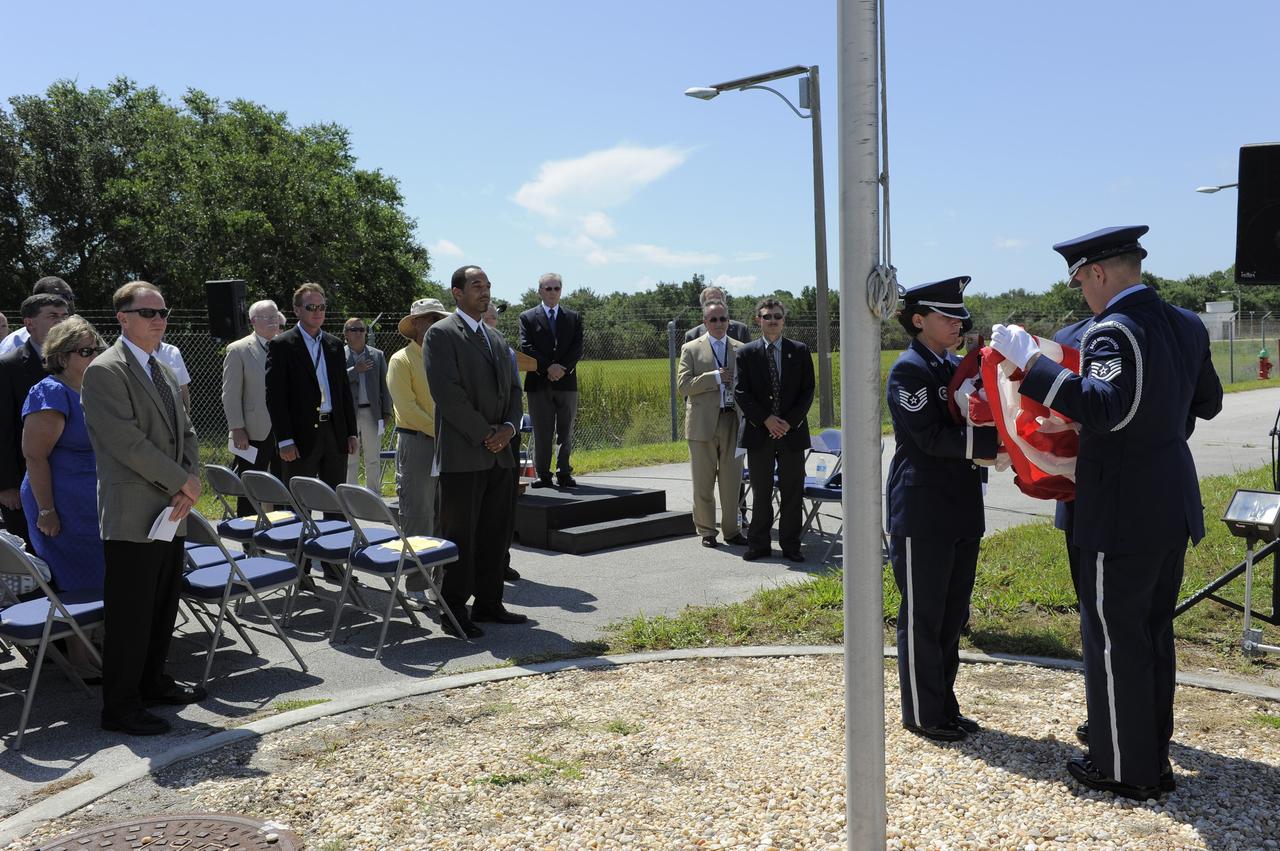
CAPE CANAVERAL, Fla. -- At the Merritt Island Launch Annex (MILA) Spaceflight Tracking and Data Network Station at NASA's Kennedy Space Center in Florida, the Patrick Air Force Base Color Guard folds the U.S. flag for the last time at a closing ceremony recognizing the station's 45 years of service. The station was originally established by NASA's Goddard Space Flight Center as one of 17 Space Flight Tracking and Data Network stations around the world. Commissioned for the Apollo Program, the first launch it supported was the Apollo/Saturn 203 test flight from Launch Complex 37 on July 5, 1966. It also provided orbital support for low earth-orbiting scientific satellites. In recent history, the station has been used almost exclusively for space shuttle launch and landing support. Following the final launch and landing of the Space Shuttle Program in July 2011, the MILA station is officially decommissioned. For more information, visit http://www.nasa.gov/centers/kennedy/pdf/167424main_MILA-08C.pdf. Photo credit: NASA/Kim Shiflett
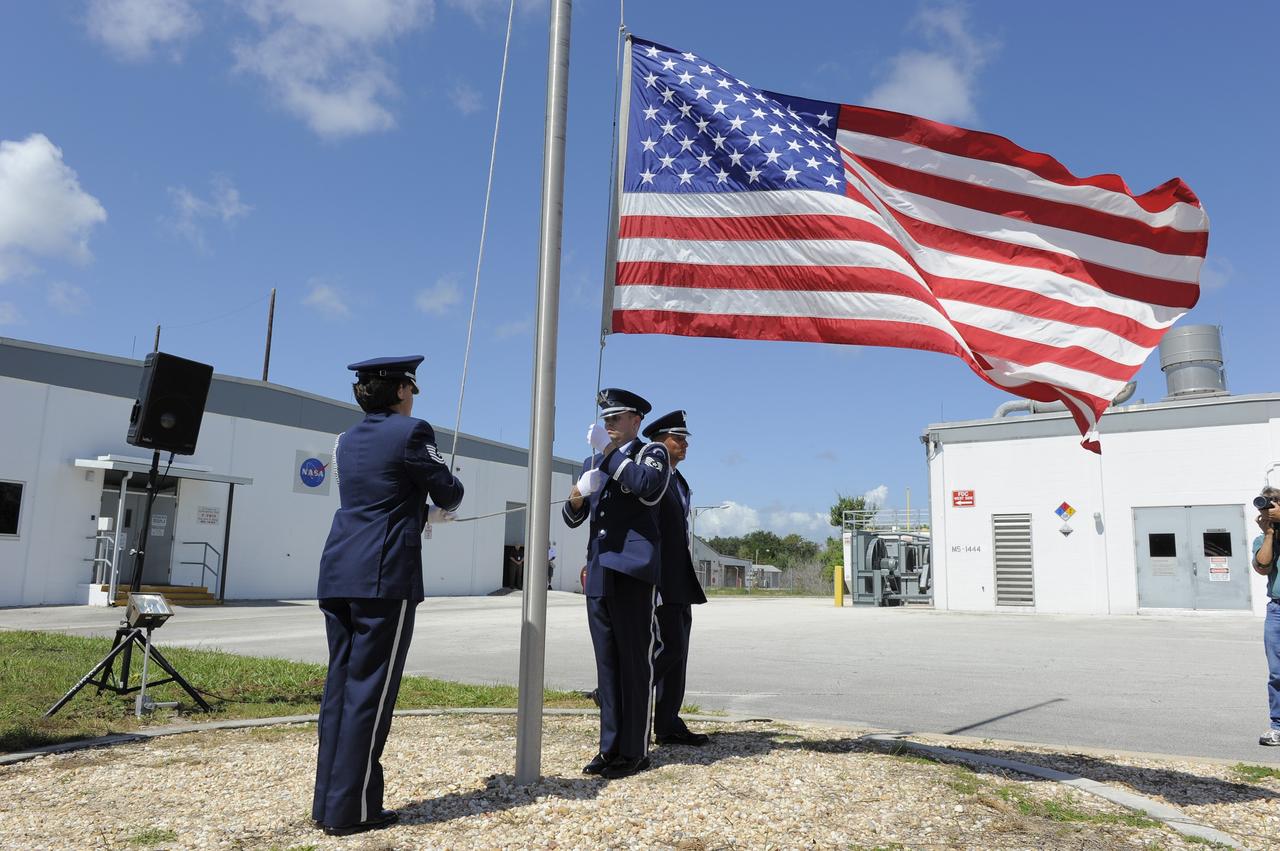
CAPE CANAVERAL, Fla. -- At the Merritt Island Launch Annex (MILA) Spaceflight Tracking and Data Network Station at NASA's Kennedy Space Center in Florida, the Patrick Air Force Base Color Guard lowers the U.S. flag for the last time at a closing ceremony recognizing the station's 45 years of service. The station was originally established by NASA's Goddard Space Flight Center as one of 17 Space Flight Tracking and Data Network stations around the world. Commissioned for the Apollo Program, the first launch it supported was the Apollo/Saturn 203 test flight from Launch Complex 37 on July 5, 1966. It also provided orbital support for low earth-orbiting scientific satellites. In recent history, the station has been used almost exclusively for space shuttle launch and landing support. Following the final launch and landing of the Space Shuttle Program in July 2011, the MILA station is officially decommissioned. For more information, visit http://www.nasa.gov/centers/kennedy/pdf/167424main_MILA-08C.pdf. Photo credit: NASA/Kim Shiflett
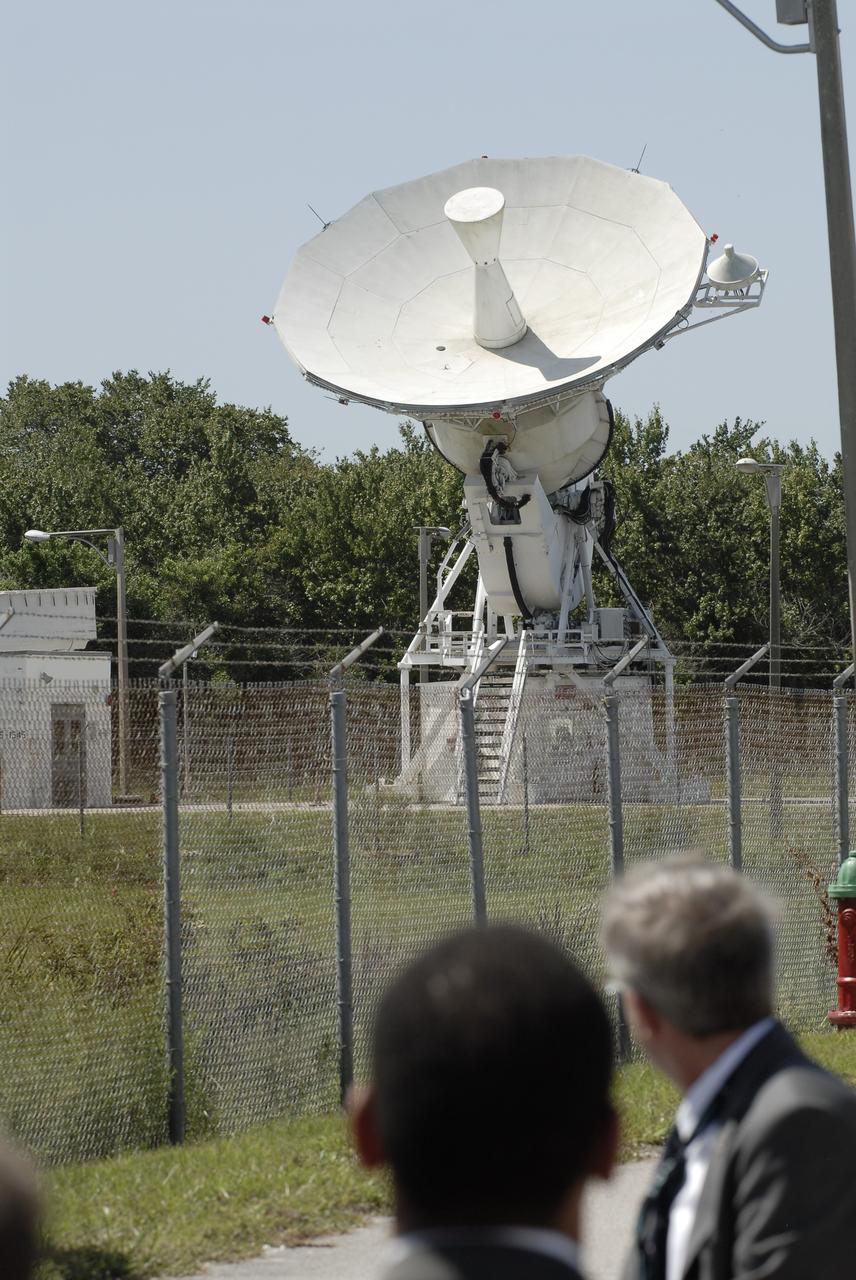
CAPE CANAVERAL, Fla. -- At the Merritt Island Launch Annex (MILA) Spaceflight Tracking and Data Network Station at NASA's Kennedy Space Center in Florida, one of two signature 30-foot steerable S-band antennas is slewed from the horizontal to the vertical position for the last time during a closing ceremony recognizing the station's 45 years of service. The antenna was pointed at Kennedy's Shuttle Landing Facility as it was for its last assignment, support of the landing of space shuttle Atlantis, concluding the STS-135 mission. STS-135 was the final mission of the Space Shuttle Program. The station was originally established by NASA's Goddard Space Flight Center as one of 17 Space Flight Tracking and Data Network stations around the world. Commissioned for the Apollo Program, the first launch it supported was the Apollo/Saturn 203 test flight from Launch Complex 37 on July 5, 1966. It also provided orbital support for low earth-orbiting scientific satellites. In recent history, the station has been used almost exclusively for space shuttle launch and landing support. Following the final launch and landing of the Space Shuttle Program in July 2011, the MILA station is officially decommissioned. For more information, visit http://www.nasa.gov/centers/kennedy/pdf/167424main_MILA-08C.pdf. Photo credit: NASA/Kim Shiflett

CAPE CANAVERAL, Fla. -- At the Merritt Island Launch Annex (MILA) Spaceflight Tracking and Data Network Station at NASA's Kennedy Space Center in Florida, the Patrick Air Force Base Color Guard folds the U.S. flag for the last time at a closing ceremony recognizing the station's 45 years of service. The station was originally established by NASA's Goddard Space Flight Center as one of 17 Space Flight Tracking and Data Network stations around the world. Commissioned for the Apollo Program, the first launch it supported was the Apollo/Saturn 203 test flight from Launch Complex 37 on July 5, 1966. It also provided orbital support for low earth-orbiting scientific satellites. In recent history, the station has been used almost exclusively for space shuttle launch and landing support. Following the final launch and landing of the Space Shuttle Program in July 2011, the MILA station is officially decommissioned. For more information, visit http://www.nasa.gov/centers/kennedy/pdf/167424main_MILA-08C.pdf. Photo credit: NASA/Kim Shiflett
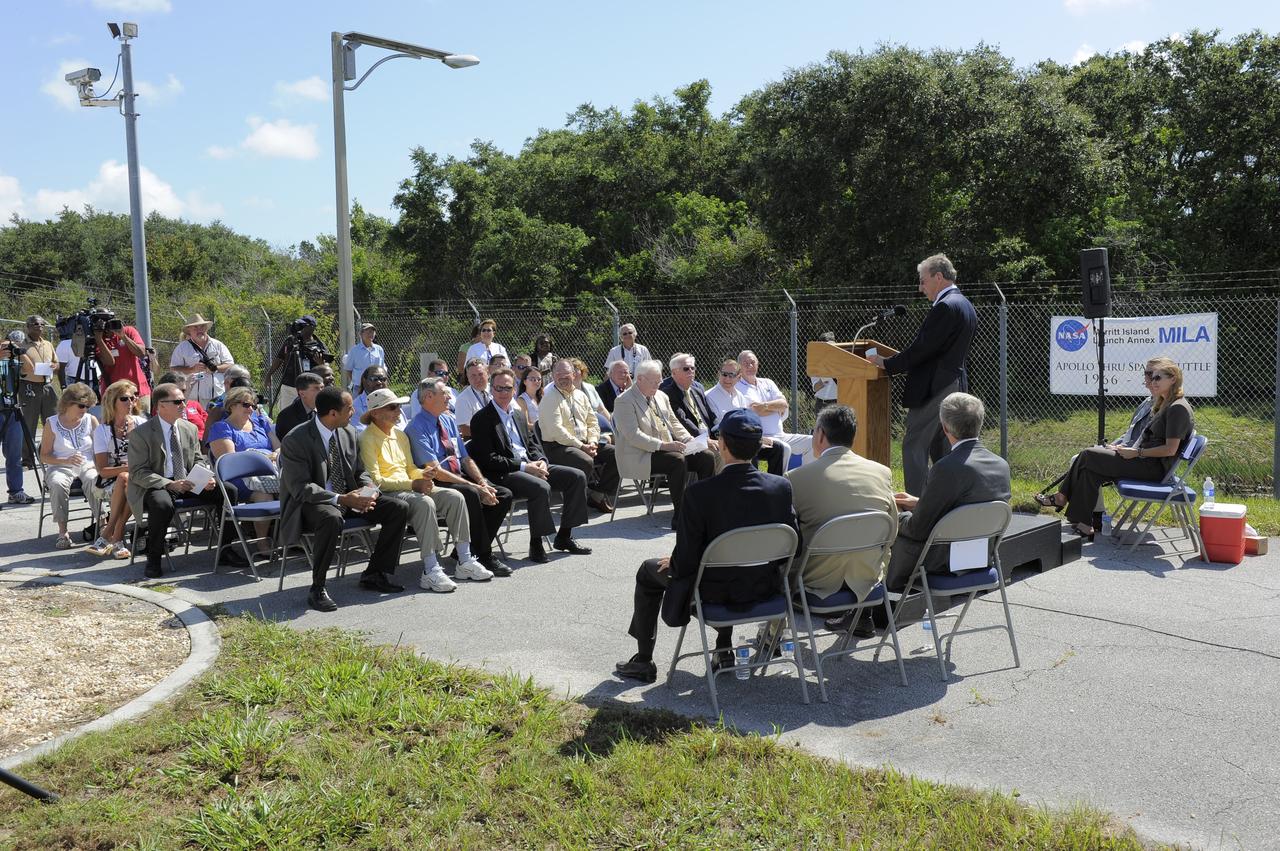
CAPE CANAVERAL, Fla. -- Media representatives, family members, and current and former employees, attend a closing ceremony for the Merritt Island Launch Annex (MILA) Spaceflight Tracking and Data Network Station at NASA's Kennedy Space Center in Florida. NASA Station Director Gary Morse presides over the ceremony recognizing the station's 45 years of service. The station was originally established by NASA's Goddard Space Flight Center as one of 17 Space Flight Tracking and Data Network stations around the world. Commissioned for the Apollo Program, the first launch it supported was the Apollo/Saturn 203 test flight from Launch Complex 37 on July 5, 1966. It also provided orbital support for low earth-orbiting scientific satellites. In recent history, the station has been used almost exclusively for space shuttle launch and landing support. Following the final launch and landing of the Space Shuttle Program in July 2011, the MILA station is officially decommissioned. For more information, visit http://www.nasa.gov/centers/kennedy/pdf/167424main_MILA-08C.pdf. Photo credit: NASA/Kim Shiflett
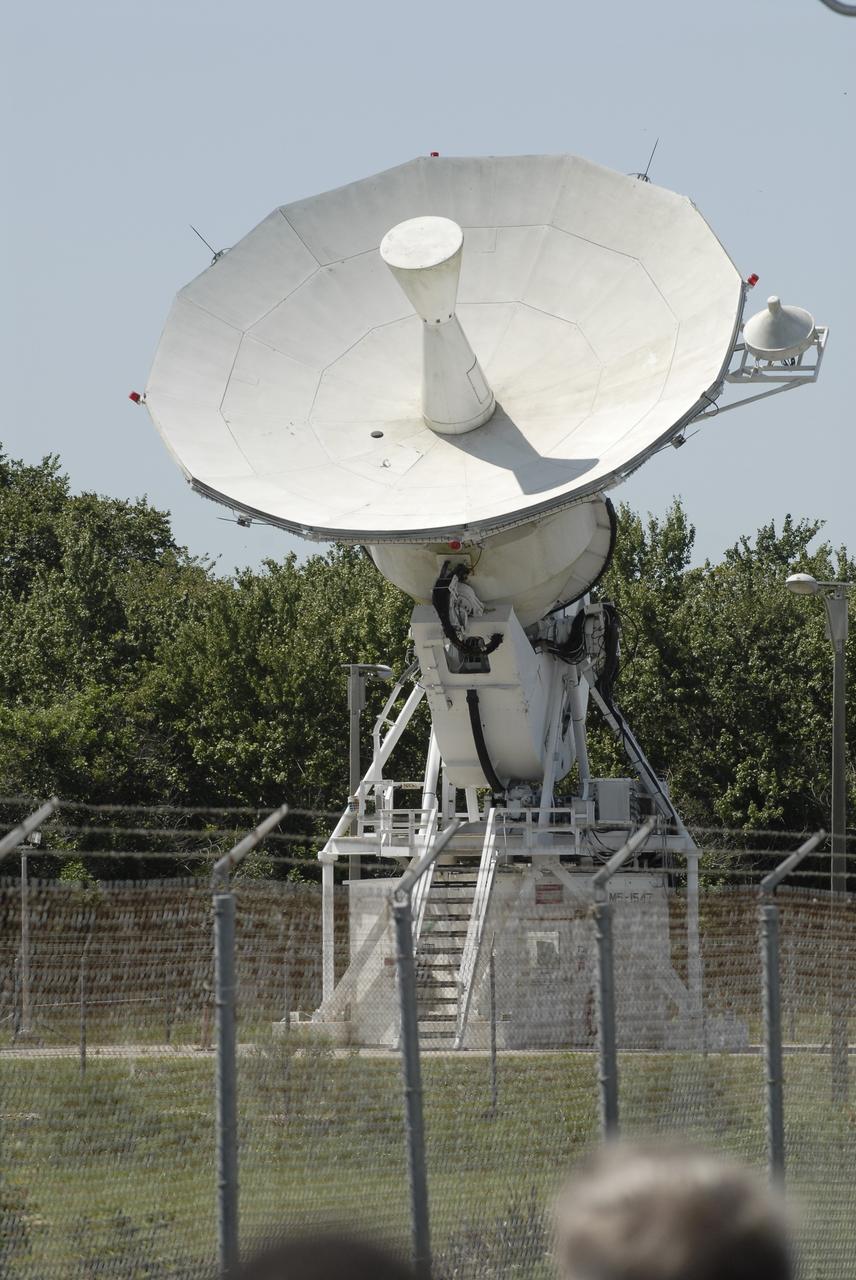
CAPE CANAVERAL, Fla. -- At the Merritt Island Launch Annex (MILA) Spaceflight Tracking and Data Network Station at NASA's Kennedy Space Center in Florida, one of two signature 30-foot steerable S-band antennas is slewed from the horizontal to the vertical position for the last time during a closing ceremony recognizing the station's 45 years of service. The antenna was pointed at Kennedy's Shuttle Landing Facility as it was for its last assignment, support of the landing of space shuttle Atlantis, concluding the STS-135 mission. STS-135 was the final mission of the Space Shuttle Program. The station was originally established by NASA's Goddard Space Flight Center as one of 17 Space Flight Tracking and Data Network stations around the world. Commissioned for the Apollo Program, the first launch it supported was the Apollo/Saturn 203 test flight from Launch Complex 37 on July 5, 1966. It also provided orbital support for low earth-orbiting scientific satellites. In recent history, the station has been used almost exclusively for space shuttle launch and landing support. Following the final launch and landing of the Space Shuttle Program in July 2011, the MILA station is officially decommissioned. For more information, visit http://www.nasa.gov/centers/kennedy/pdf/167424main_MILA-08C.pdf. Photo credit: NASA/Kim Shiflett
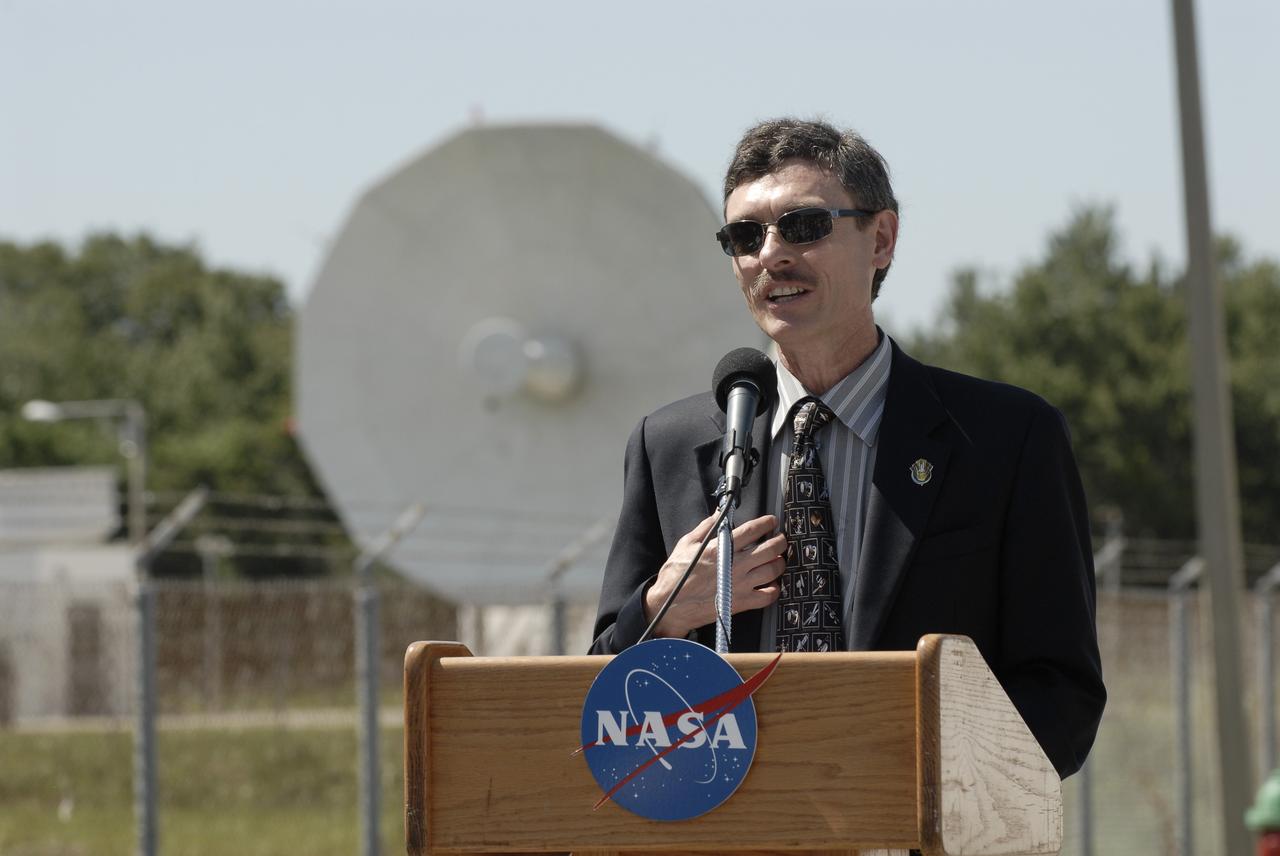
CAPE CANAVERAL, Fla. -- At the Merritt Island Launch Annex (MILA) Spaceflight Tracking and Data Network Station at NASA's Kennedy Space Center in Florida, Phil Liebrecht, deputy program manager, Space Communications and Navigation Network (SCaN), NASA Headquarters, addresses those in attendance at a closing ceremony recognizing the station's 45 years of service. The station was originally established by NASA's Goddard Space Flight Center as one of 17 Space Flight Tracking and Data Network stations around the world. Commissioned for the Apollo Program, the first launch it supported was the Apollo/Saturn 203 test flight from Launch Complex 37 on July 5, 1966. It also provided orbital support for low earth-orbiting scientific satellites. In recent history, the station has been used almost exclusively for space shuttle launch and landing support. Following the final launch and landing of the Space Shuttle Program in July 2011, the MILA station is officially decommissioned. For more information, visit http://www.nasa.gov/centers/kennedy/pdf/167424main_MILA-08C.pdf. Photo credit: NASA/Kim Shiflett
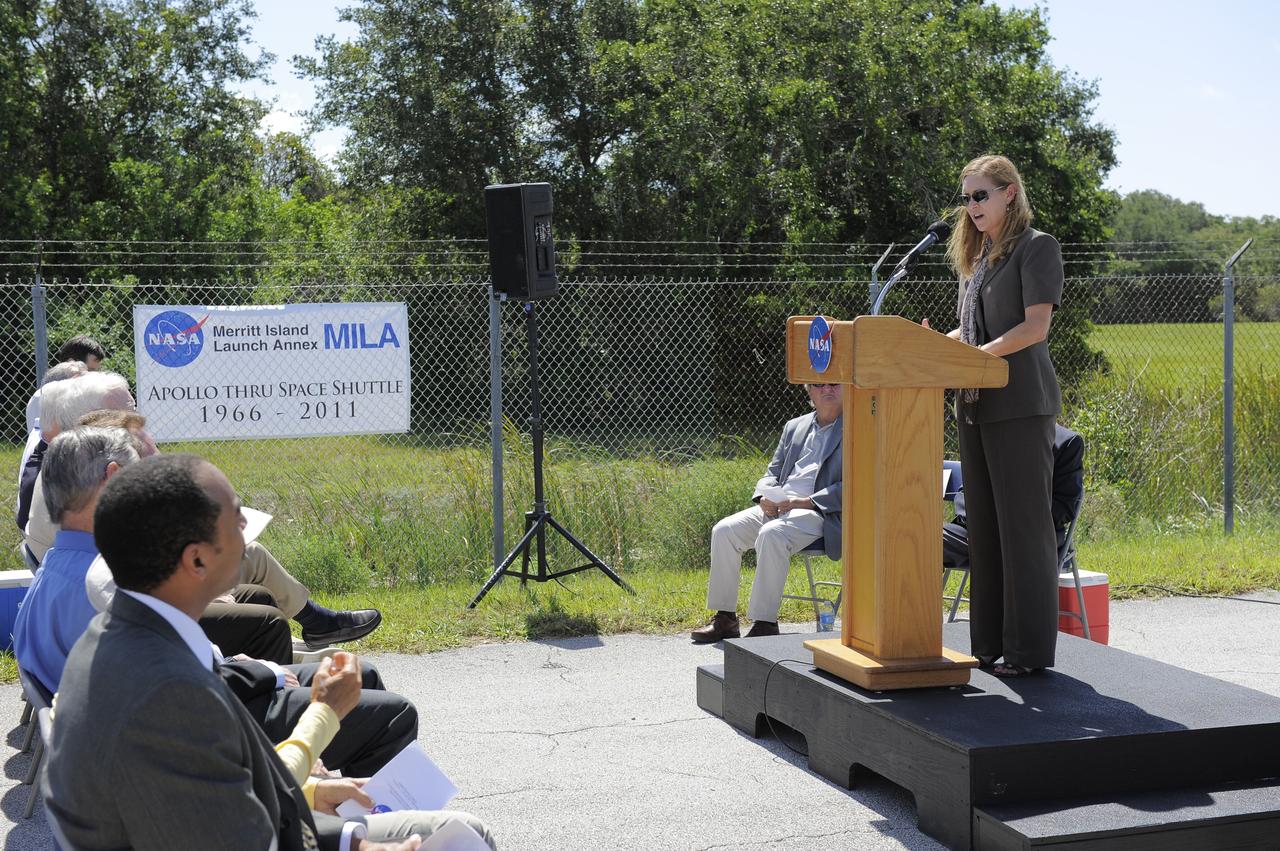
CAPE CANAVERAL, Fla. -- At the Merritt Island Launch Annex (MILA) Spaceflight Tracking and Data Network Station at NASA's Kennedy Space Center in Florida, Kennedy Deputy Director Janet Petro addresses those in attendance at a closing ceremony recognizing the station's 45 years of service. The station was originally established by NASA's Goddard Space Flight Center as one of 17 Space Flight Tracking and Data Network stations around the world. Commissioned for the Apollo Program, the first launch it supported was the Apollo/Saturn 203 test flight from Launch Complex 37 on July 5, 1966. It also provided orbital support for low earth-orbiting scientific satellites. In recent history, the station has been used almost exclusively for space shuttle launch and landing support. Following the final launch and landing of the Space Shuttle Program in July 2011, the MILA station is officially decommissioned. For more information, visit http://www.nasa.gov/centers/kennedy/pdf/167424main_MILA-08C.pdf. Photo credit: NASA/Kim Shiflett

CAPE CANAVERAL, Fla. -- At the Merritt Island Launch Annex (MILA) Spaceflight Tracking and Data Network Station at NASA's Kennedy Space Center in Florida, Shuttle Launch Director Michael Leinbach addresses those in attendance at a closing ceremony recognizing the station's 45 years of service. The station was originally established by NASA's Goddard Space Flight Center as one of 17 Space Flight Tracking and Data Network stations around the world. Commissioned for the Apollo Program, the first launch it supported was the Apollo/Saturn 203 test flight from Launch Complex 37 on July 5, 1966. It also provided orbital support for low earth-orbiting scientific satellites. In recent history, the station has been used almost exclusively for space shuttle launch and landing support. Following the final launch and landing of the Space Shuttle Program in July 2011, the MILA station is officially decommissioned. For more information, visit http://www.nasa.gov/centers/kennedy/pdf/167424main_MILA-08C.pdf. Photo credit: NASA/Kim Shiflett
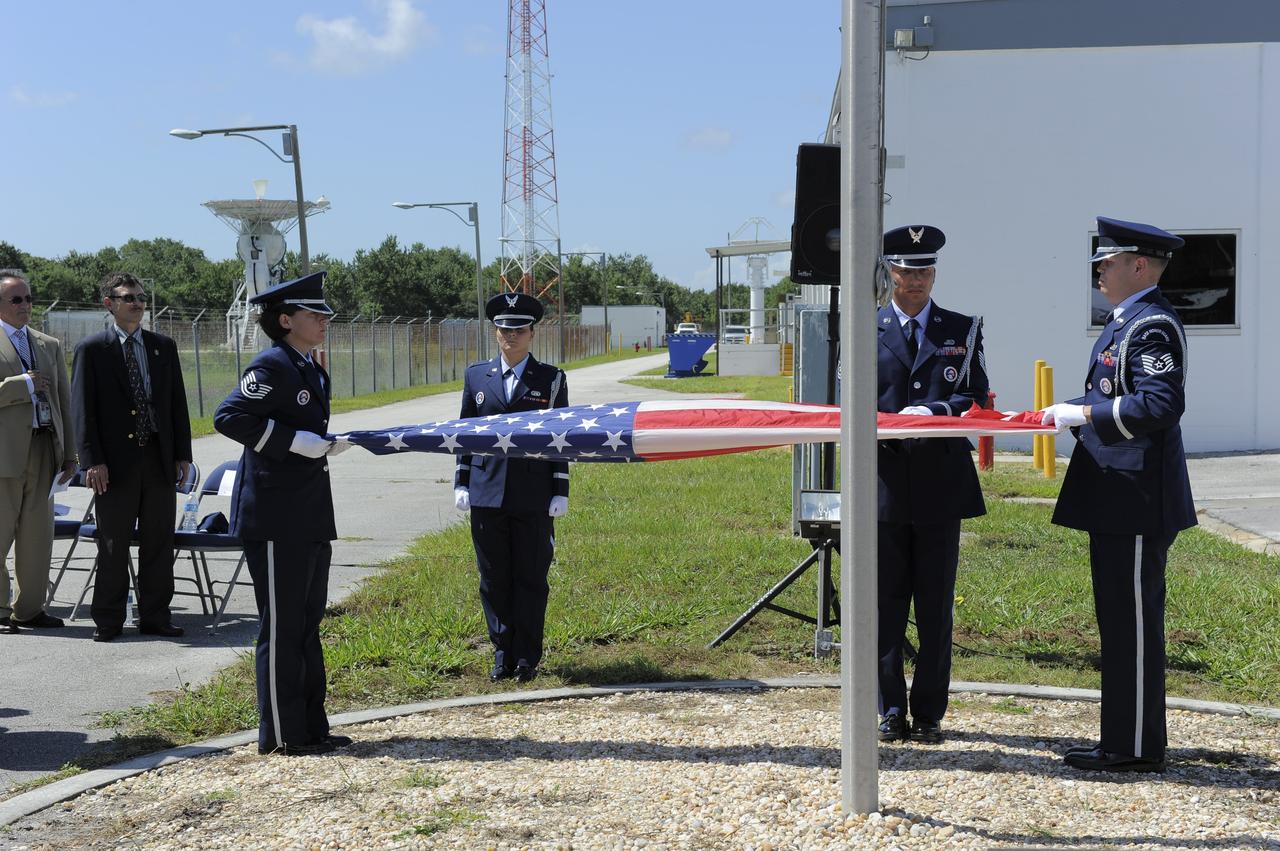
CAPE CANAVERAL, Fla. -- At the Merritt Island Launch Annex (MILA) Spaceflight Tracking and Data Network Station at NASA's Kennedy Space Center in Florida, the Patrick Air Force Base Color Guard folds the U.S. flag for the last time at a closing ceremony recognizing the station's 45 years of service. The station was originally established by NASA's Goddard Space Flight Center as one of 17 Space Flight Tracking and Data Network stations around the world. Commissioned for the Apollo Program, the first launch it supported was the Apollo/Saturn 203 test flight from Launch Complex 37 on July 5, 1966. It also provided orbital support for low earth-orbiting scientific satellites. In recent history, the station has been used almost exclusively for space shuttle launch and landing support. Following the final launch and landing of the Space Shuttle Program in July 2011, the MILA station is officially decommissioned. For more information, visit http://www.nasa.gov/centers/kennedy/pdf/167424main_MILA-08C.pdf. Photo credit: NASA/Kim Shiflett
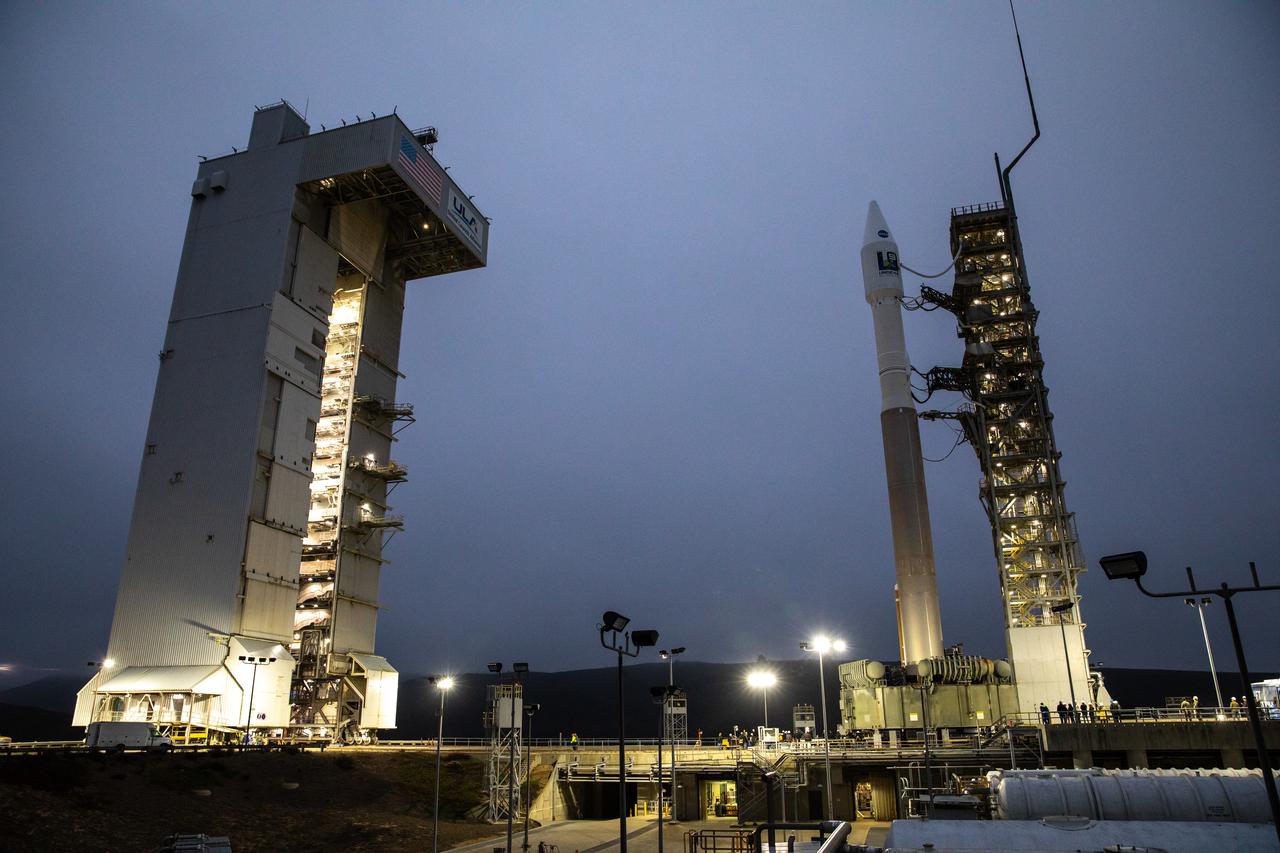
The United Launch Alliance Atlas V 401 rocket with NASA’s Landsat 9 satellite arrives at the launch pad at Space Launch Complex 3 (SLC-3) at Vandenberg Space Force Base in California, on Sept. 27, 2021, after rolling out from the Vertical Integration Facility. Landsat 9 is scheduled to launch at 2:12 p.m. EDT (11:12 a.m. PDT) today, Sept. 27, atop the Atlas V from SLC-3. The launch is managed by NASA’s Launch Services Program based at Kennedy Space Center. The Landsat 9 satellite will continue the nearly 50-year legacy of previous Landsat missions. It will join its sister satellite, Landsat 8, in orbit to monitor key natural and economic resources from orbit. Landsat 9 is managed by the agency’s Goddard Space Flight Center in Greenbelt, Maryland. The satellite will carry two instruments: the Operational Land Imager 2, which collects images of Earth’s landscapes in visible, near infrared and shortwave infrared light, and the Thermal Infrared Sensor 2, which measures the temperature of land surfaces. Like its predecessors, Landsat 9 is a joint mission between NASA and the U.S. Geological Survey.
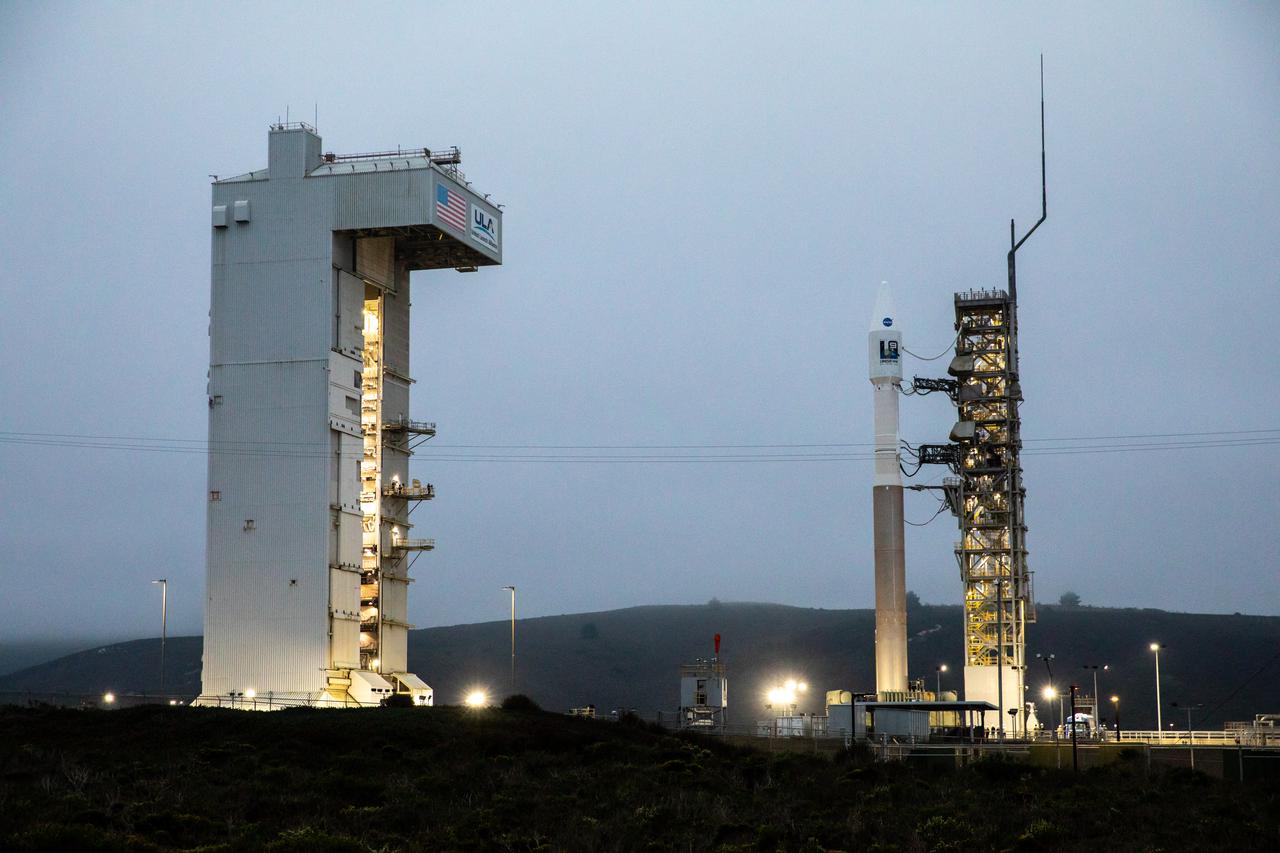
The United Launch Alliance Atlas V 401 rocket with NASA’s Landsat 9 satellite is secured on the launch pad at Space Launch Complex 3 (SLC-3) at Vandenberg Space Force Base in California, on Sept. 27, 2021, after making the trek from the Vertical Integration Facility. Landsat 9 is scheduled to launch at 2:12 p.m. EDT (11:12 a.m. PDT) today, Sept. 27, atop the Atlas V from SLC-3. The launch is managed by NASA’s Launch Services Program based at Kennedy Space Center. The Landsat 9 satellite will continue the nearly 50-year legacy of previous Landsat missions. It will join its sister satellite, Landsat 8, in orbit to monitor key natural and economic resources from orbit. Landsat 9 is managed by the agency’s Goddard Space Flight Center in Greenbelt, Maryland. The satellite will carry two instruments: the Operational Land Imager 2, which collects images of Earth’s landscapes in visible, near infrared and shortwave infrared light, and the Thermal Infrared Sensor 2, which measures the temperature of land surfaces. Like its predecessors, Landsat 9 is a joint mission between NASA and the U.S. Geological Survey.
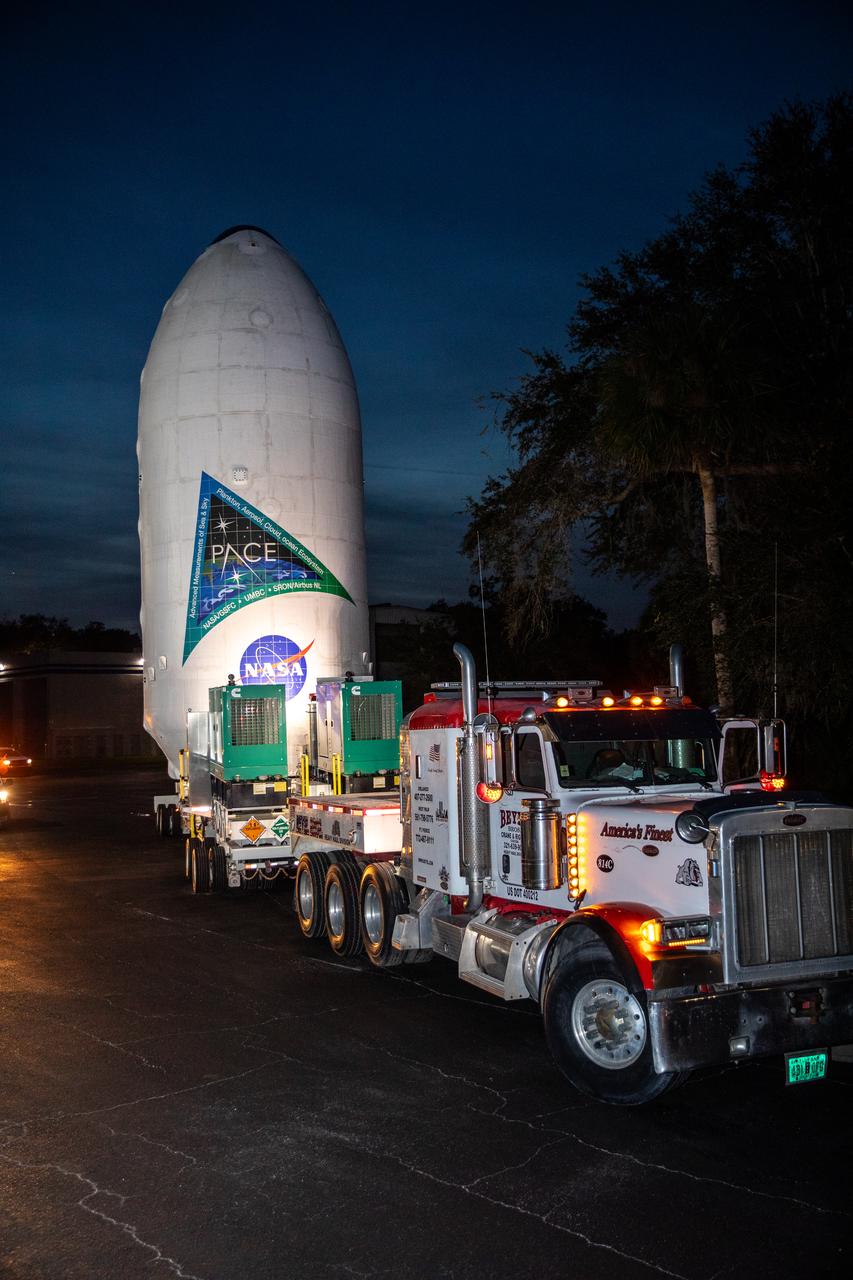
NASA’s PACE (Plankton, Aerosol, Cloud, ocean Ecosystem) spacecraft encapsulated inside SpaceX’s Falcon 9 payload fairings is transported from the Astrotech Space Operations Facility near the agency’s Kennedy Space Center in Florida to Space Launch Complex 40 at Cape Canaveral Space Force Station on Thursday, Feb. 1, 2024, to be mated with a SpaceX Falcon 9 in preparation for liftoff set for no earlier than 1:33 a.m. EST on Tuesday, Feb. 6, 2024. PACE is NASA’s newest earth-observing satellite that will help increase our understanding of Earth’s oceans, atmosphere, and climate by delivering hyperspectral observations of microscopic marine organisms called phytoplankton as well new data on clouds and aerosols.
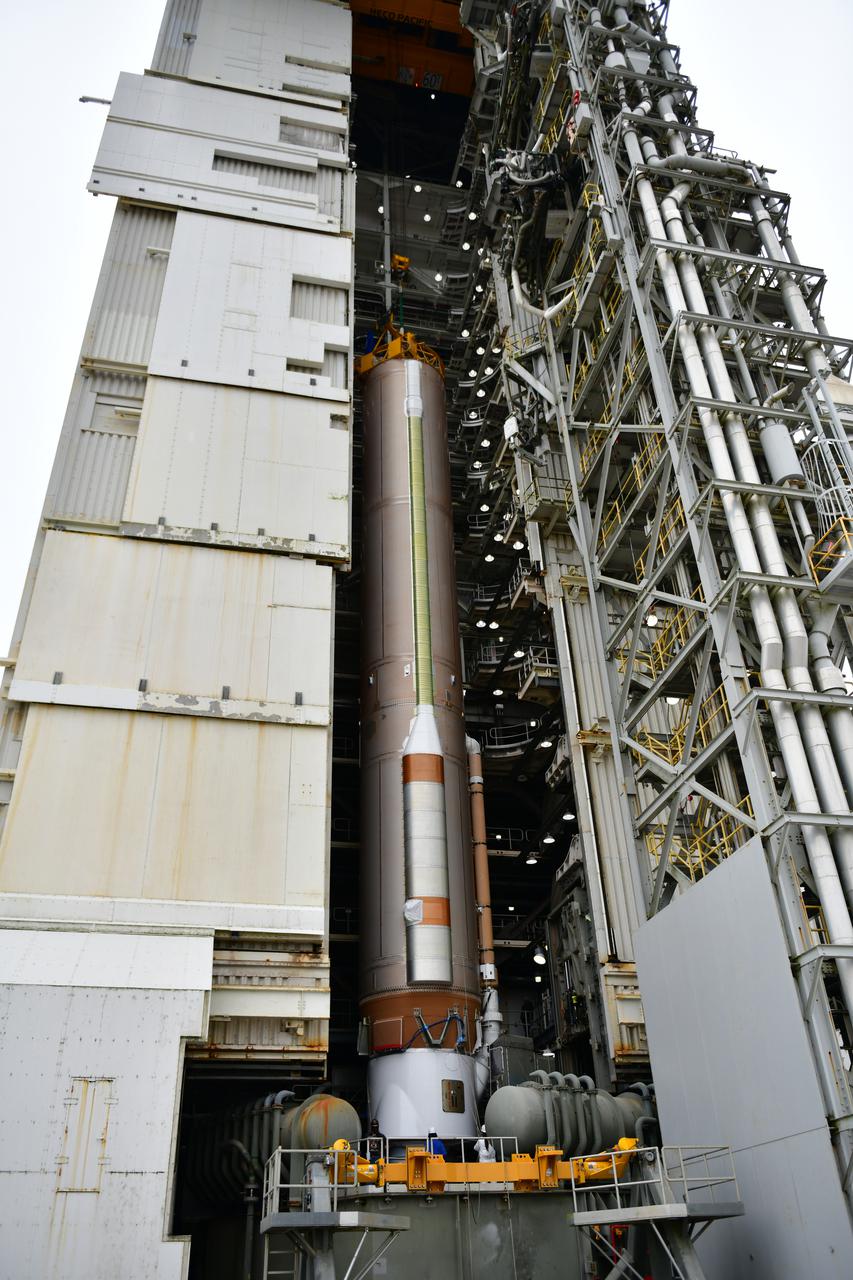
The United Launch Alliance Atlas V booster for NASA’s Landsat 9 mission is moved into the Vertical Integration Facility at Space Launch Complex 3 at Vandenberg Space Force Base in California, on July 13, 2021. The Landsat 9 mission will launch atop the Atlas V rocket from Vandenberg in September 2021. The launch is being managed by NASA’s Launch Services Program based at Kennedy Space Center. The Landsat 9 satellite will continue the nearly 50-year legacy of previous Landsat missions. It will monitor key natural and economic resources from orbit. Landsat 9 is managed by the agency’s Goddard Space Flight Center in Greenbelt, Maryland. The satellite will carry two instruments: the Operational Land Imager 2, which collects images of Earth’s landscapes in visible, near infrared and shortwave infrared light, and the Thermal Infrared Sensor 2, which measures the temperature of land surfaces. Like its predecessors, Landsat 9 is a joint mission between NASA and the U.S. Geological Survey.
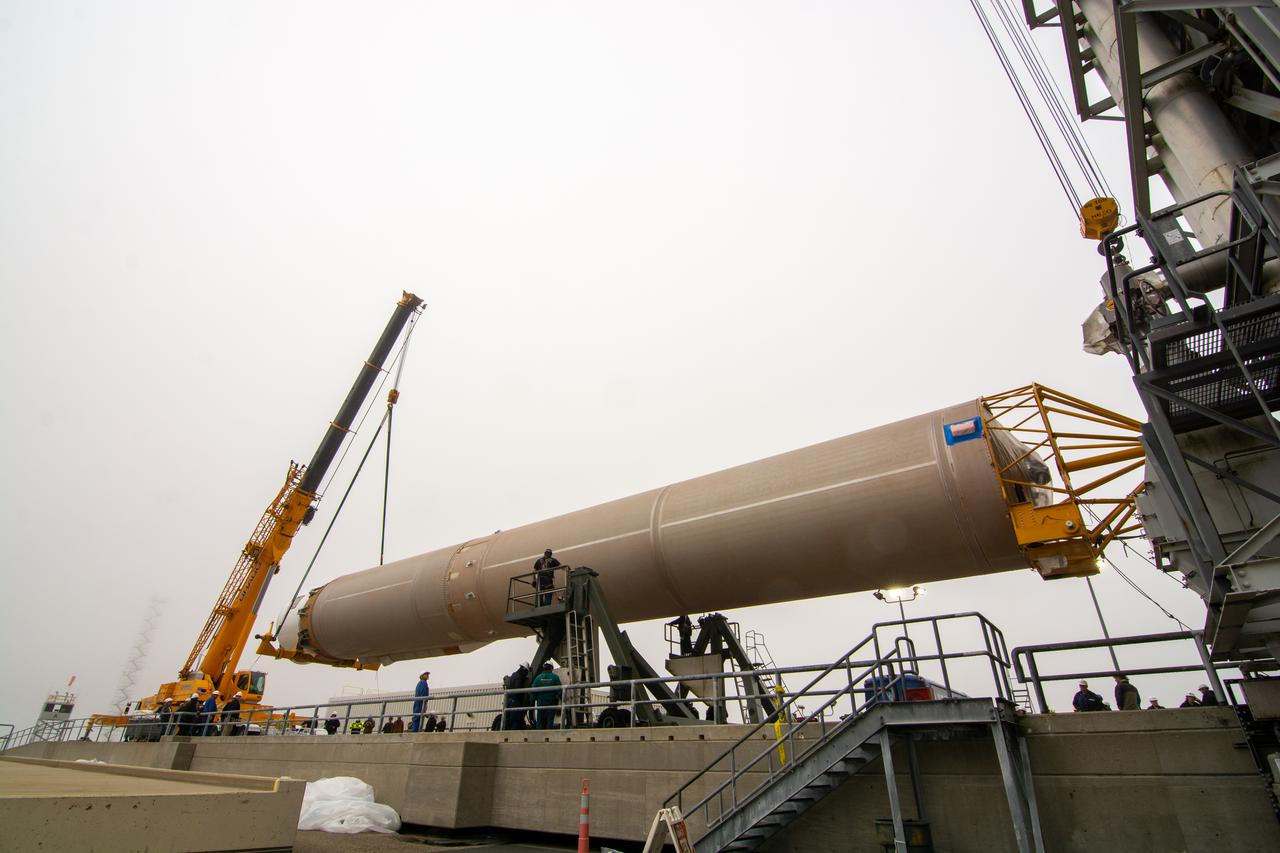
The United Launch Alliance Atlas V booster for NASA’s Landsat 9 mission is lifted by crane and special lifting device for transfer into the Vertical Integration Facility at Space Launch Complex 3 at Vandenberg Space Force Base in California, on July 13, 2021. The Landsat 9 mission will launch atop the Atlas V rocket from Vandenberg in September 2021. The launch is being managed by NASA’s Launch Services Program based at Kennedy Space Center. The Landsat 9 satellite will continue the nearly 50-year legacy of previous Landsat missions. It will monitor key natural and economic resources from orbit. Landsat 9 is managed by the agency’s Goddard Space Flight Center in Greenbelt, Maryland. The satellite will carry two instruments: the Operational Land Imager 2, which collects images of Earth’s landscapes in visible, near infrared and shortwave infrared light, and the Thermal Infrared Sensor 2, which measures the temperature of land surfaces. Like its predecessors, Landsat 9 is a joint mission between NASA and the U.S. Geological Survey.
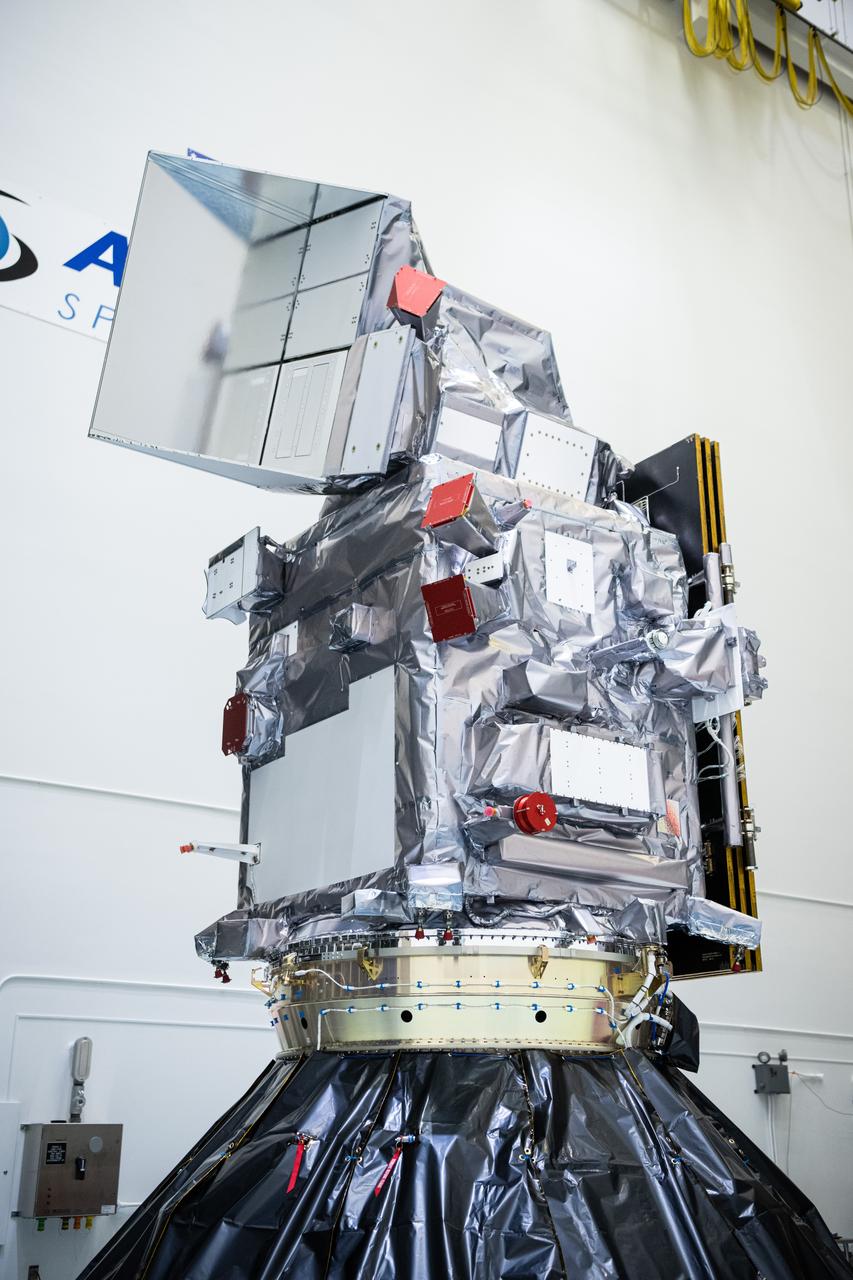
NASA and SpaceX technicians connect NASA’s PACE (Plankton, Aerosol, Cloud, ocean Ecosystem) spacecraft to the payload adapter on Friday, Jan. 26, 2024, at the Astrotech Space Operations Facility near the agency’s Kennedy Space Center in Florida. PACE is NASA’s newest earth-observing satellite that will help increase our understanding of Earth’s oceans, atmosphere, and climate by delivering hyperspectral observations of microscopic marine organisms called phytoplankton as well new data on clouds and aerosols. PACE is set to launch from Space Launch Complex 40 at Cape Canaveral Space Force Station in Florida at 1:33 a.m. EST on Tuesday, Feb. 6.
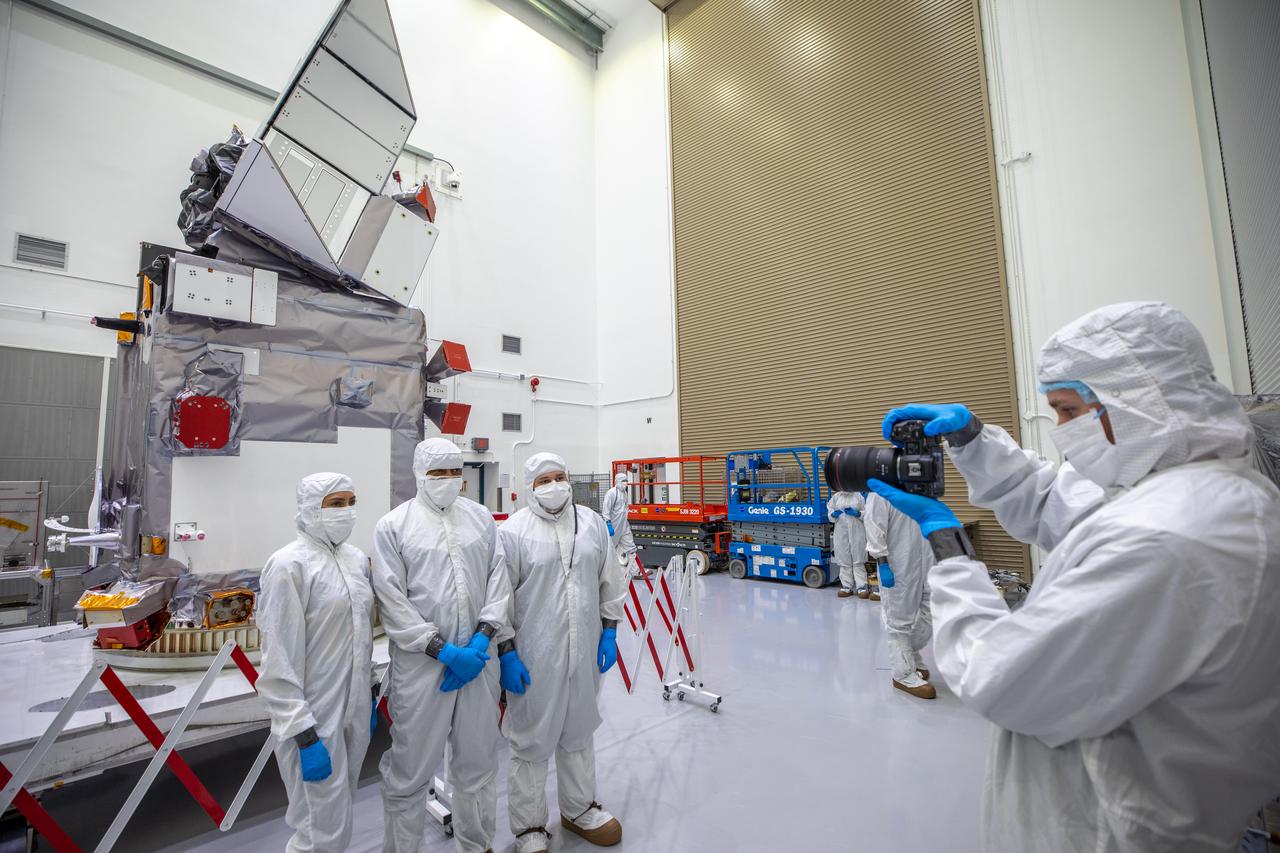
Members of NASA’s PACE (Plankton, Aerosol, Cloud, ocean Ecosystem) team are photographed with the spacecraft on Wednesday, Jan. 3, 2024, during a NASA-hosted media day inside a cleanroom at the Astrotech Space Operations Facility near NASA’s Kennedy Space Center in Florida. PACE will collect data on how the ocean and atmosphere exchange carbon dioxide, measure key atmospheric variables associated with air quality and Earth's climate, and monitor ocean health. PACE is set to launch aboard a SpaceX Falcon 9 rocket no earlier than Tuesday, Feb. 6, 2024, from Space Launch Complex 40 at Cape Canaveral Space Force Station in Florida.

A SpaceX Falcon 9 rocket with NASA’s PACE (Plankton, Aerosol, Cloud, ocean Ecosystem) spacecraft encapsulated atop is raised to a vertical position at Space Launch Complex 40 at Cape Canaveral Space Force Station in Florida on Monday, Feb. 5, 2024. PACE is NASA’s newest earth-observing satellite that will help increase our understanding of Earth’s oceans, atmosphere, and climate by delivering hyperspectral observations of microscopic marine organisms called phytoplankton as well new data on clouds and aerosols. Liftoff of the PACE mission is set for no earlier than 1:33 a.m. EST on Tuesday, Feb. 6, 2024.

A SpaceX Falcon 9 rocket with NASA’s PACE (Plankton, Aerosol, Cloud, ocean Ecosystem) spacecraft stands vertical at Space Launch Complex 40 at Cape Canaveral Space Force Station in Florida on Monday, Feb. 5, 2024. PACE is NASA’s newest earth-observing satellite that will help increase our understanding of Earth’s oceans, atmosphere, and climate by delivering hyperspectral observations of microscopic marine organisms called phytoplankton as well new data on clouds and aerosols. Liftoff of the PACE mission is set for no earlier than 1:33 a.m. EST on Wednesday, Feb. 7, 2024.
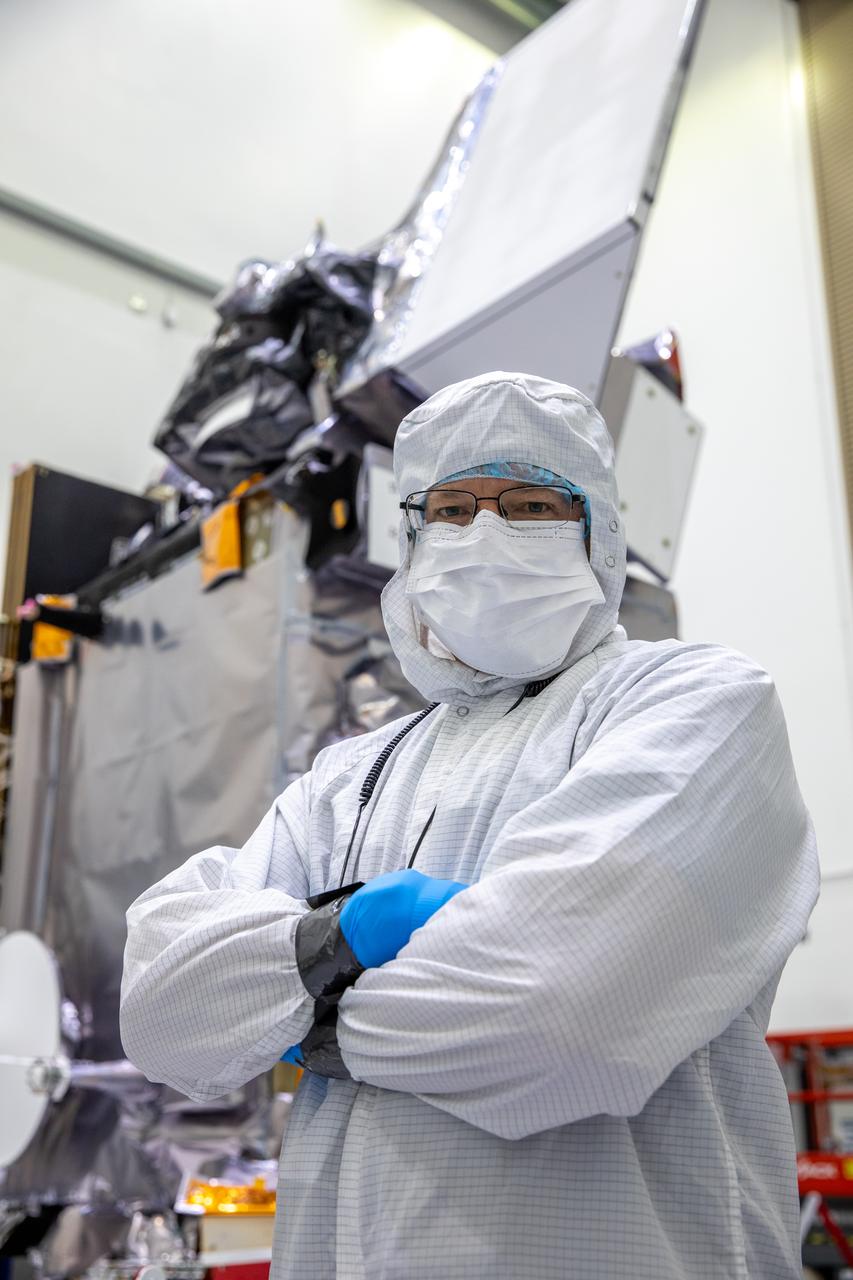
Gary Davis, PACE Mission Systems Engineer, participated in a NASA-hosted media day for the agency’s PACE (Plankton, Aerosol, Cloud, ocean Ecosystem) spacecraft on Wednesday, Jan. 3, 2024, inside a cleanroom at the Astrotech Space Operations Facility near NASA’s Kennedy Space Center in Florida. PACE will collect data on how the ocean and atmosphere exchange carbon dioxide, measure key atmospheric variables associated with air quality and Earth's climate, and monitor ocean health. PACE is set to launch aboard a SpaceX Falcon 9 rocket no earlier than Tuesday, Feb. 6, 2024, from Space Launch Complex 40 at Cape Canaveral Space Force Station in Florida.
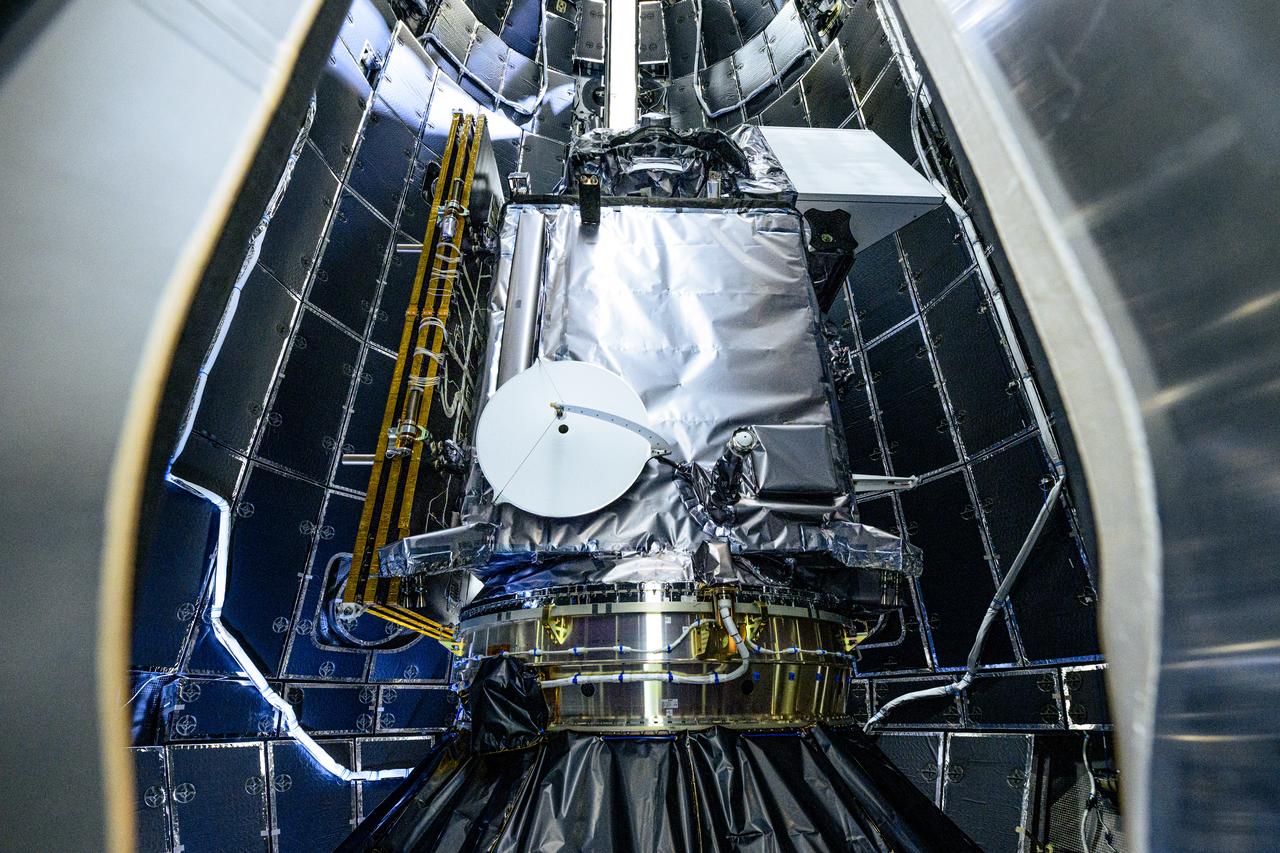
NASA and SpaceX technicians safely encapsulate NASA’s PACE (Plankton, Aerosol, Cloud, ocean Ecosystem) spacecraft in SpaceX’s Falcon 9 payload fairings on Tuesday, Jan. 30, 2024, at the Astrotech Space Operations Facility near the agency’s Kennedy Space Center in Florida. The fairing halves protect the spacecraft from aerodynamic pressure and heating during the ascent phase of launch. PACE is set to launch from Space Launch Complex 40 at Cape Canaveral Space Force Station in Florida no earlier than 1:33 a.m. EST on Tuesday, Feb. 6, 2024.
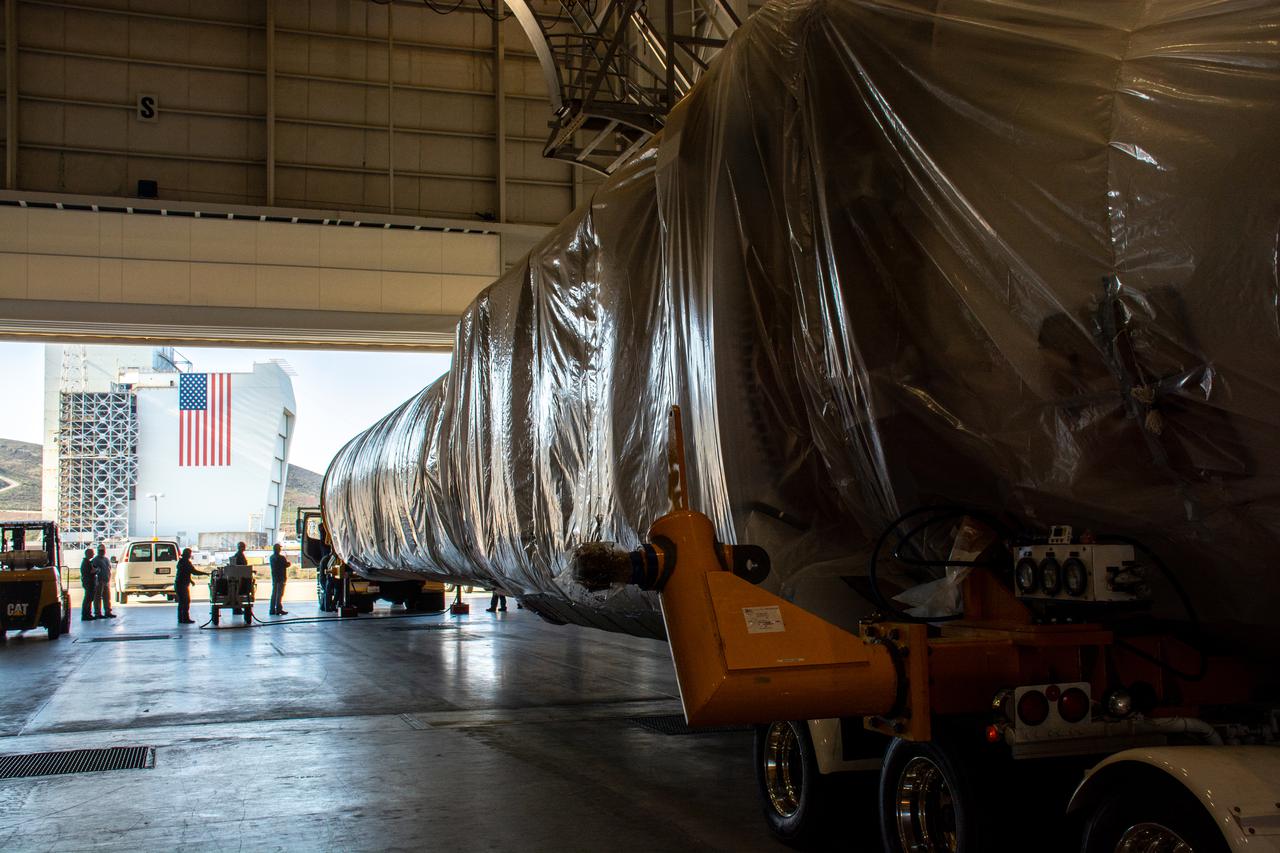
The United Launch Alliance Atlas V booster for NASA’s Landsat 9 mission departs the Horizontal Integration Facility at Vandenberg Space Force Base in California, on July 12, 2021. The booster will be transported to the Vertical Integration Facility at Space Launch Complex 3. The Landsat 9 mission will launch atop the Atlas V rocket from Vandenberg in September 2021. The launch is being managed by NASA’s Launch Services Program based at Kennedy Space Center. The Landsat 9 satellite will continue the nearly 50-year legacy of previous Landsat missions. It will monitor key natural and economic resources from orbit. Landsat 9 is managed by the agency’s Goddard Space Flight Center in Greenbelt, Maryland. The satellite will carry two instruments: the Operational Land Imager 2, which collects images of Earth’s landscapes in visible, near infrared and shortwave infrared light, and the Thermal Infrared Sensor 2, which measures the temperature of land surfaces. Like its predecessors, Landsat 9 is a joint mission between NASA and the U.S. Geological Survey.
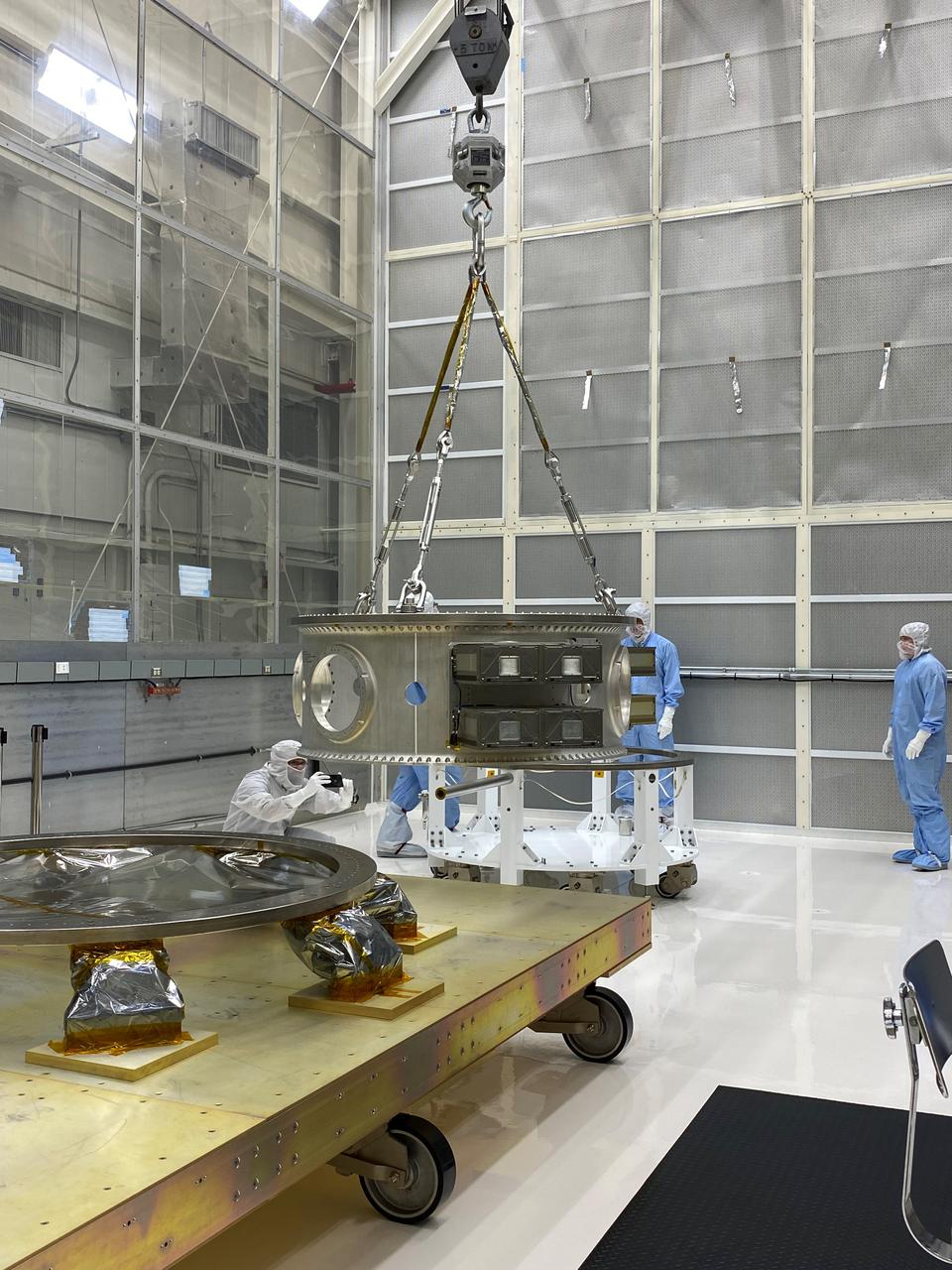
Technicians process mechanical and electrical support equipment for NASA’s Landsat 9 observatory inside the Integrated Processing Facility at Vandenberg Space Force Base in California, on June 16, 2021. The equipment includes a secondary payload adapter and flight system for a group of microsat payloads, called CubeSats, that will launch with Landsat 9 as secondary payloads. Landsat 9 will launch on a United Launch Alliance Atlas V rocket from Space Launch Complex 3 at Vandenberg in September 2021. The launch is being managed by NASA’s Launch Services Program based at Kennedy Space Center, America’s multiuser spaceport. The Landsat 9 satellite will continue the nearly 50-year legacy of previous Landsat missions. It will monitor key natural and economic resources from orbit. Landsat 9 is managed by the agency’s Goddard Space Flight Center in Greenbelt, Maryland. The satellite will carry two instruments: the Operational Land Imager 2, which collects images of Earth’s landscapes in visible, near infrared and shortwave infrared light, and the Thermal Infrared Sensor 2, which measures the temperature of land surfaces. Like its predecessors, Landsat 9 is a joint mission between NASA and the U.S. Geological Survey.
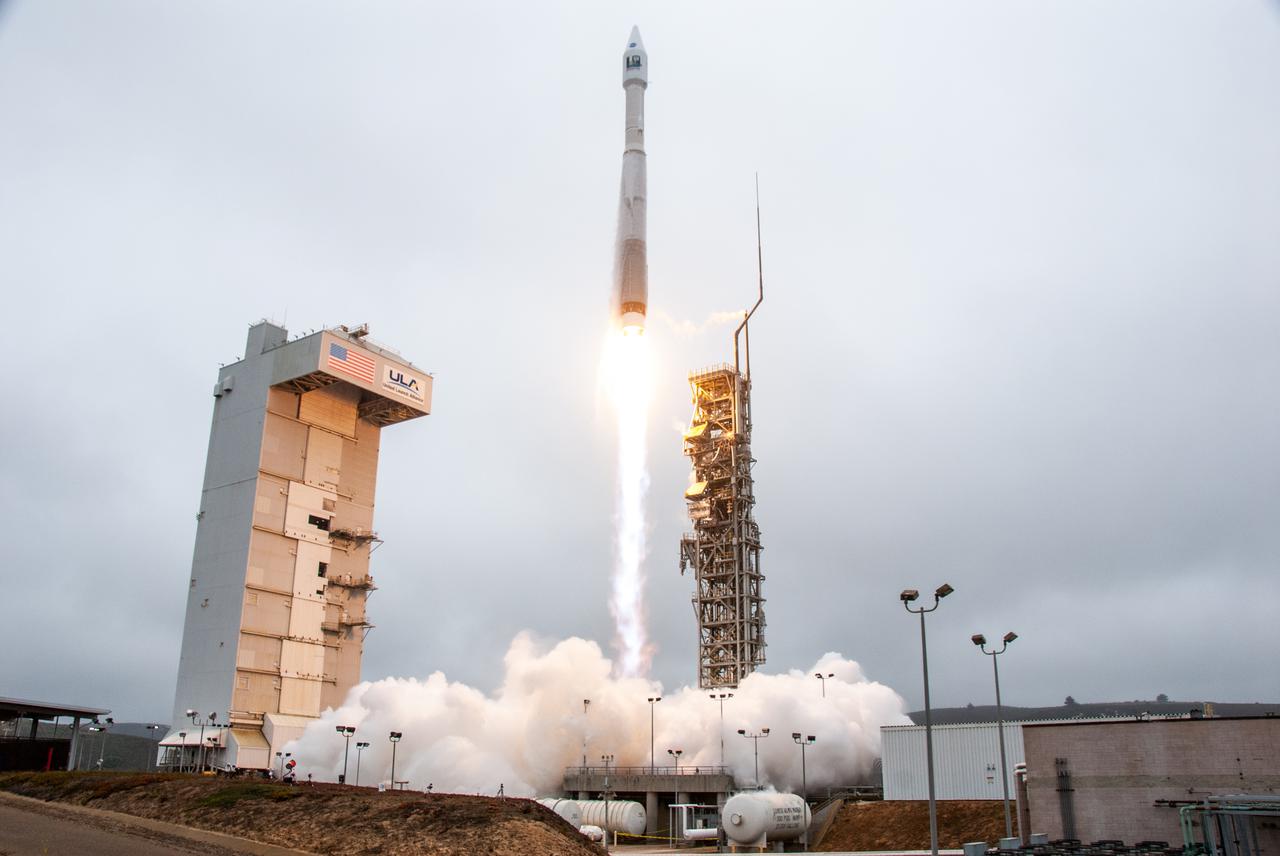
NASA’s Landsat 9 satellite launches on a United Launch Alliance Atlas V 401 rocket from Space Launch Complex 3 at Vandenberg Space Force Station in California on Sept. 27, 2021. Launch time was 2:11 p.m. EDT (11:11 a.m. PDT). The launch is managed by NASA’s Launch Services Program, based at the agency’s Kennedy Space Center in Florida. Landsat 9 will join its sister satellite, Landsat 8, in orbit in collecting images from across the planet every eight days. This calibrated data will continue the Landsat program’s critical role in monitoring the health of Earth and helping people manage essential resources, including crops, irrigation water, and forests. NASA Goddard manages the Landsat 9 mission. Goddard teams also built and tested one of the two instruments on Landsat 9, the Thermal Infrared Sensor 2 (TIRS-2) instrument. TIRS-2 will use thermal imaging to make measurements that can be used to estimate soil moisture and detect the health of plants.
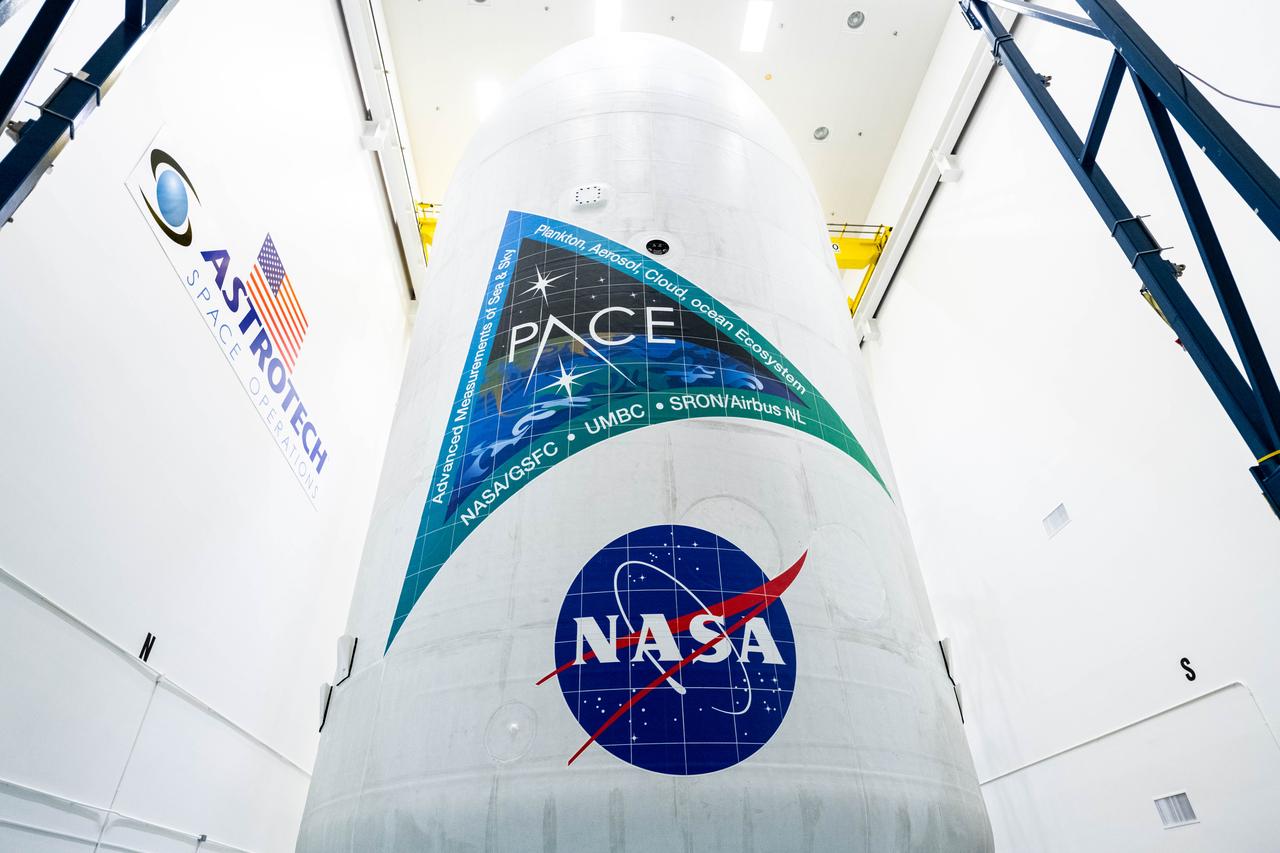
NASA and SpaceX technicians safely encapsulate NASA’s PACE (Plankton, Aerosol, Cloud, ocean Ecosystem) spacecraft in SpaceX’s Falcon 9 payload fairings on Wednesday, Jan. 30, 2024, at the Astrotech Space Operations Facility near the agency’s Kennedy Space Center in Florida. The fairing halves protect the spacecraft from aerodynamic pressure and heating during the ascent phase of launch. PACE is set to launch from Space Launch Complex 40 at Cape Canaveral Space Force Station in Florida no earlier than 1:33 a.m. EST on Tuesday, Feb. 6, 2024.

Marie Lewis, NASA Communications, moderates a prelaunch news conference for NASA’s Landsat 9 mission at Vandenberg Space Force Base in California on Saturday, Sept. 25, 2021. Participants include Thomas Zurbuchen, associate administrator, NASA’s Science Mission Directorate; Karen St. Germain, director, NASA’s Earth Science Division; Tanya Trujillo, assistant secretary for water and science, U.S. Department of the Interior; Michael Egan, Landsat program executive, NASA’s Earth Science Division; Tim Dunn, launch director, NASA’s Launch Services Program; Scott Messer, United Launch Alliance program manager, NASA Launch Services Program; and Capt. Addison Nichols, weather officer, Space Launch Delta 30. Landsat 9 is scheduled to launch at 2:12 p.m. EDT (11:12 a.m. PDT) on Monday, Sept. 27, on a United Launch Alliance Atlas V 401 rocket from Space Launch Complex 3 at Vandenberg. The launch is managed by NASA’s Launch Services Program, based at the agency’s Kennedy Space Center in Florida. Landsat 9 will join its sister satellite, Landsat 8, in orbit in collecting images from across the planet every eight days. This calibrated data will continue the Landsat program’s critical role in monitoring the health of Earth and helping people manage essential resources, including crops, irrigation water, and forests.
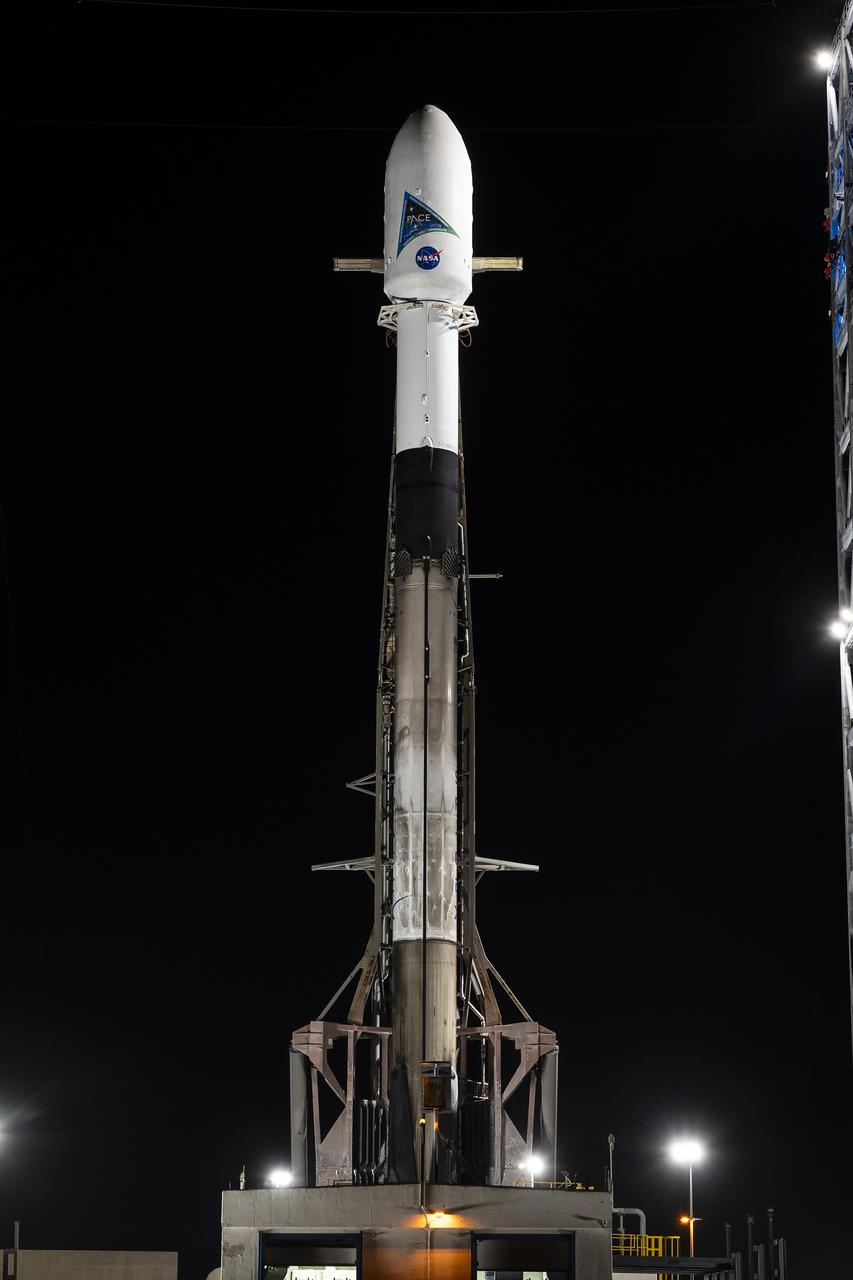
A SpaceX Falcon 9 rocket with NASA’s PACE (Plankton, Aerosol, Cloud, ocean Ecosystem) spacecraft encapsulated atop is raised to a vertical position at Space Launch Complex 40 at Cape Canaveral Space Force Station in Florida on Monday, Feb. 5, 2024. PACE is NASA’s newest earth-observing satellite that will help increase our understanding of Earth’s oceans, atmosphere, and climate by delivering hyperspectral observations of microscopic marine organisms called phytoplankton as well new data on clouds and aerosols. Liftoff of the PACE mission is set for no earlier than 1:33 a.m. EST on Tuesday, Feb. 6, 2024.
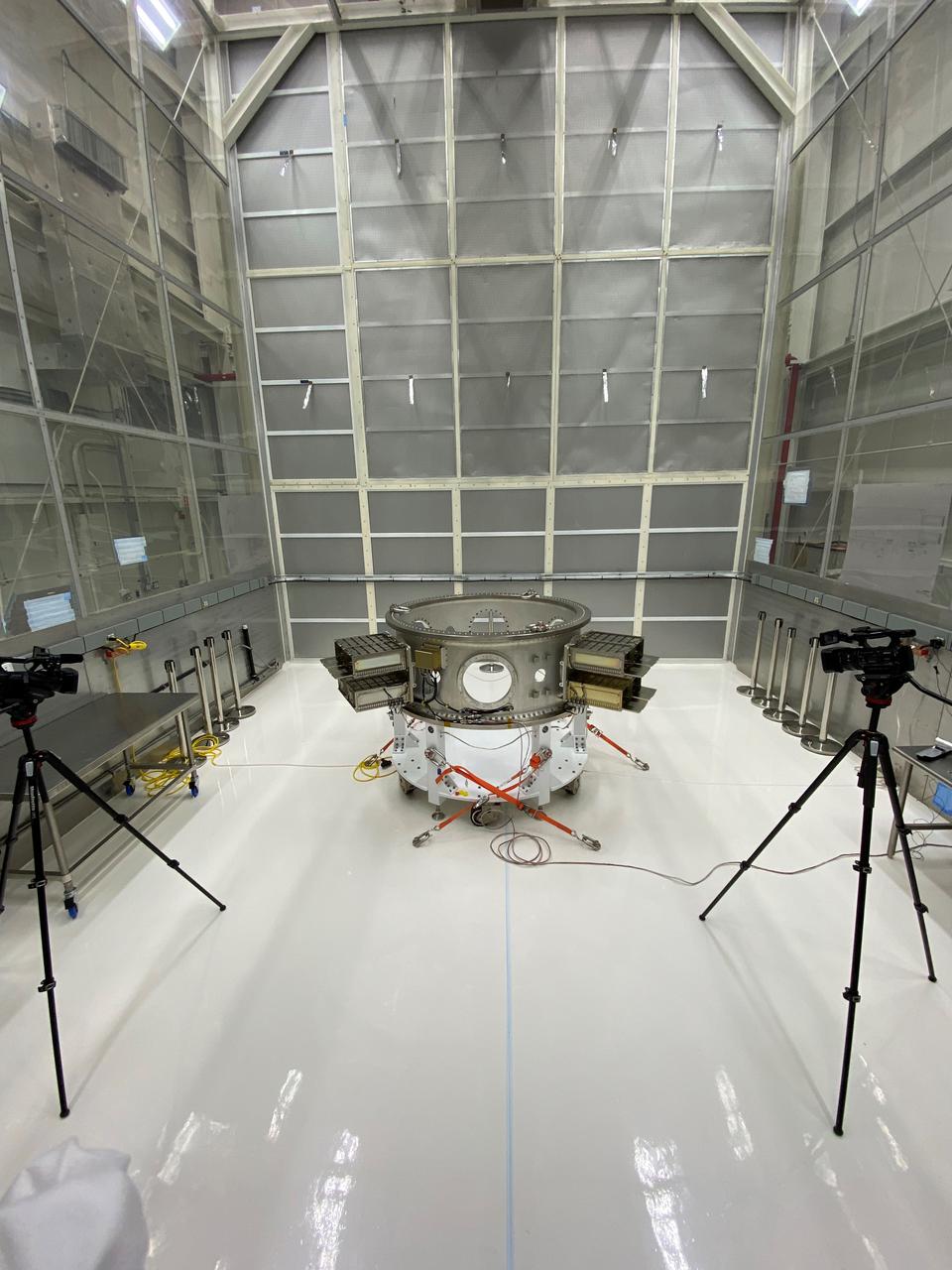
Mechanical and electrical support equipment for NASA’s Landsat 9 observatory are being processed inside the Integrated Processing Facility at Vandenberg Space Force Base in California, on June 24, 2021. The equipment includes a secondary payload adapter and flight system for a group of microsat payloads, called CubeSats, that will launch with Landsat 9 as secondary payloads. Landsat 9 will launch on a United Launch Alliance Atlas V rocket from Space Launch Complex 3 at Vandenberg in September 2021. The launch is being managed by NASA’s Launch Services Program based at Kennedy Space Center, America’s multiuser spaceport. The Landsat 9 satellite will continue the nearly 50-year legacy of previous Landsat missions. It will monitor key natural and economic resources from orbit. Landsat 9 is managed by the agency’s Goddard Space Flight Center in Greenbelt, Maryland. The satellite will carry two instruments: the Operational Land Imager 2, which collects images of Earth’s landscapes in visible, near infrared and shortwave infrared light, and the Thermal Infrared Sensor 2, which measures the temperature of land surfaces. Like its predecessors, Landsat 9 is a joint mission between NASA and the U.S. Geological Survey.

A SpaceX Falcon 9 rocket with NASA’s PACE (Plankton, Aerosol, Cloud, ocean Ecosystem) spacecraft stands vertical at Space Launch Complex 40 at Cape Canaveral Space Force Station in Florida on Monday, Feb. 5, 2024. PACE is NASA’s newest earth-observing satellite that will help increase our understanding of Earth’s oceans, atmosphere, and climate by delivering hyperspectral observations of microscopic marine organisms called phytoplankton as well new data on clouds and aerosols. Liftoff of the PACE mission is set for no earlier than 1:33 a.m. EST on Wednesday, Feb. 7, 2024.
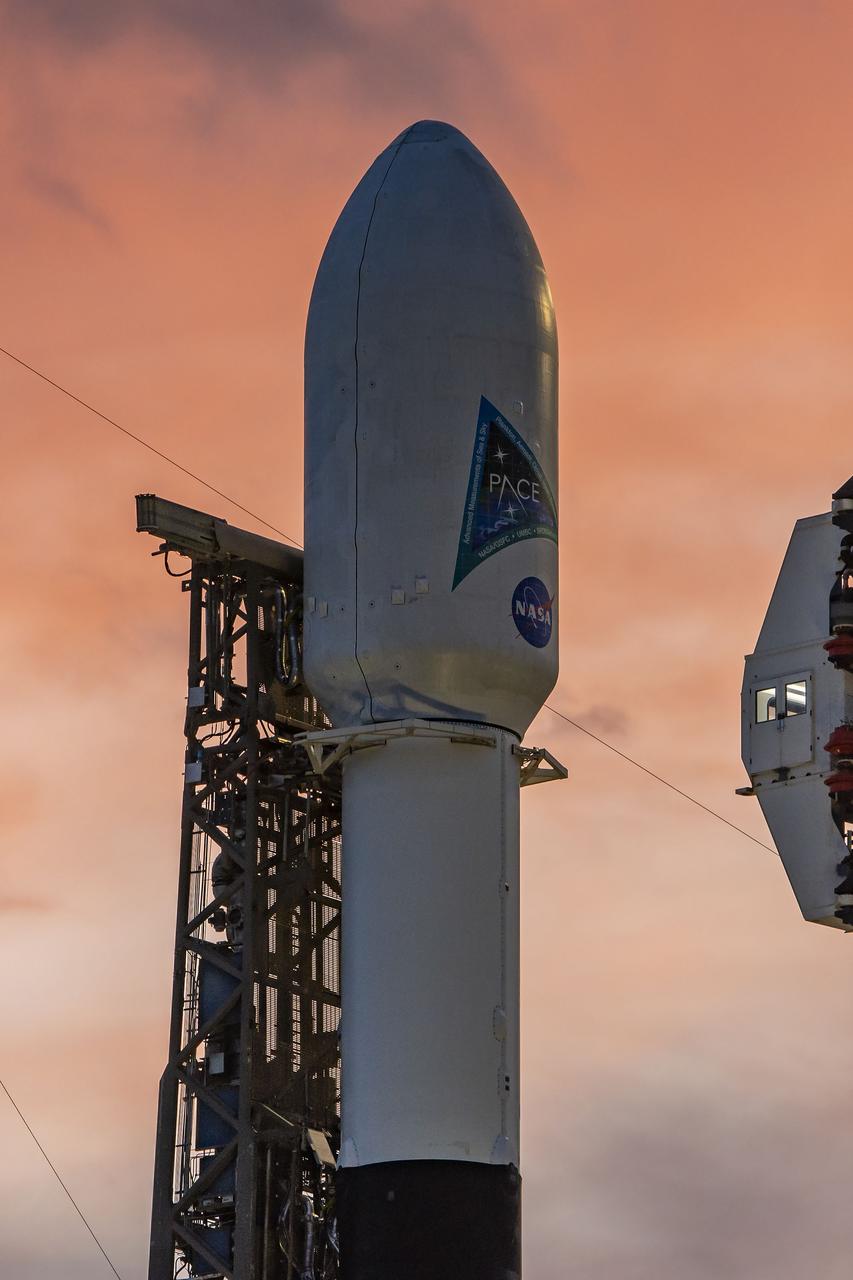
A SpaceX Falcon 9 rocket with NASA’s PACE (Plankton, Aerosol, Cloud, ocean Ecosystem) spacecraft stands vertical at Space Launch Complex 40 at Cape Canaveral Space Force Station in Florida on Monday, Feb. 5, 2024. PACE is NASA’s newest earth-observing satellite that will help increase our understanding of Earth’s oceans, atmosphere, and climate by delivering hyperspectral observations of microscopic marine organisms called phytoplankton as well new data on clouds and aerosols. Liftoff of the PACE mission is set for no earlier than 1:33 a.m. EST on Wednesday, Feb. 7, 2024.
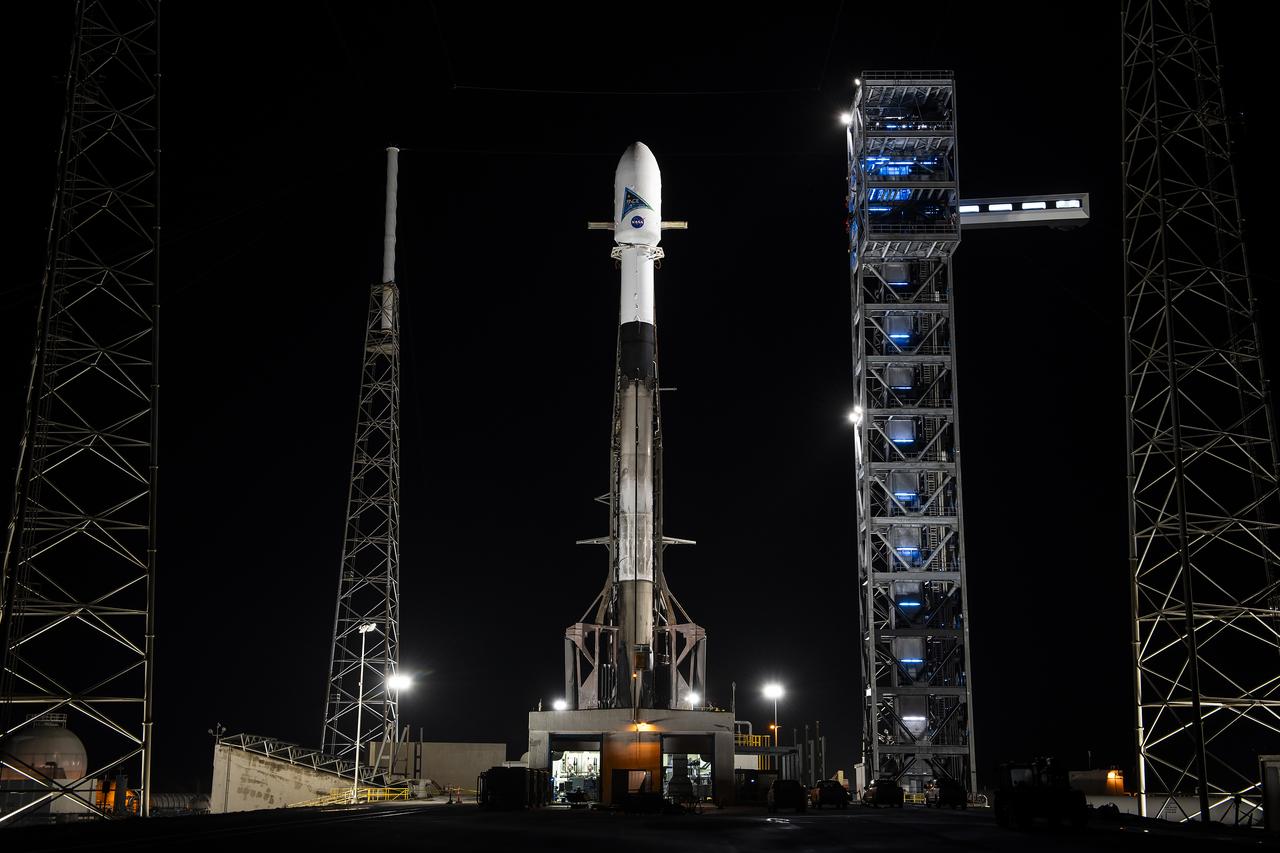
A SpaceX Falcon 9 rocket with NASA’s PACE (Plankton, Aerosol, Cloud, ocean Ecosystem) spacecraft encapsulated atop is raised to a vertical position at Space Launch Complex 40 at Cape Canaveral Space Force Station in Florida on Monday, Feb. 5, 2024. PACE is NASA’s newest earth-observing satellite that will help increase our understanding of Earth’s oceans, atmosphere, and climate by delivering hyperspectral observations of microscopic marine organisms called phytoplankton as well new data on clouds and aerosols. Liftoff of the PACE mission is set for no earlier than 1:33 a.m. EST on Tuesday, Feb. 6, 2024.
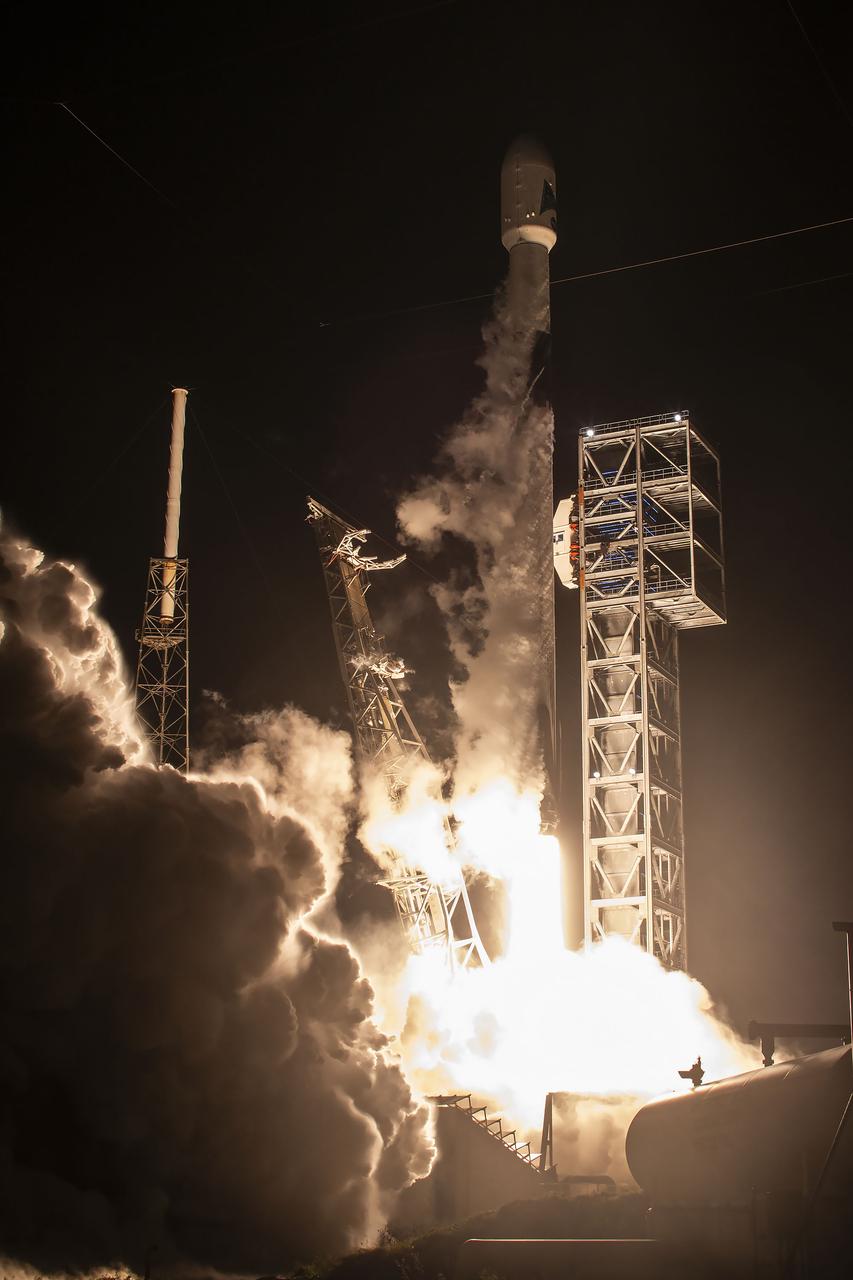
NASA’s PACE (Plankton, Aerosol, Cloud, ocean Ecosystem) spacecraft, atop a SpaceX Falcon 9 rocket, successfully lifts off from Space Launch Complex 40 at Cape Canaveral Space Force Station in Florida at 1:33 a.m. EST Thursday, Feb. 8. PACE is NASA’s newest earth-observing satellite that will help increase our understanding of Earth’s oceans, atmosphere, and climate by delivering hyperspectral observations of microscopic marine organisms called phytoplankton, as well new data on clouds and aerosols.
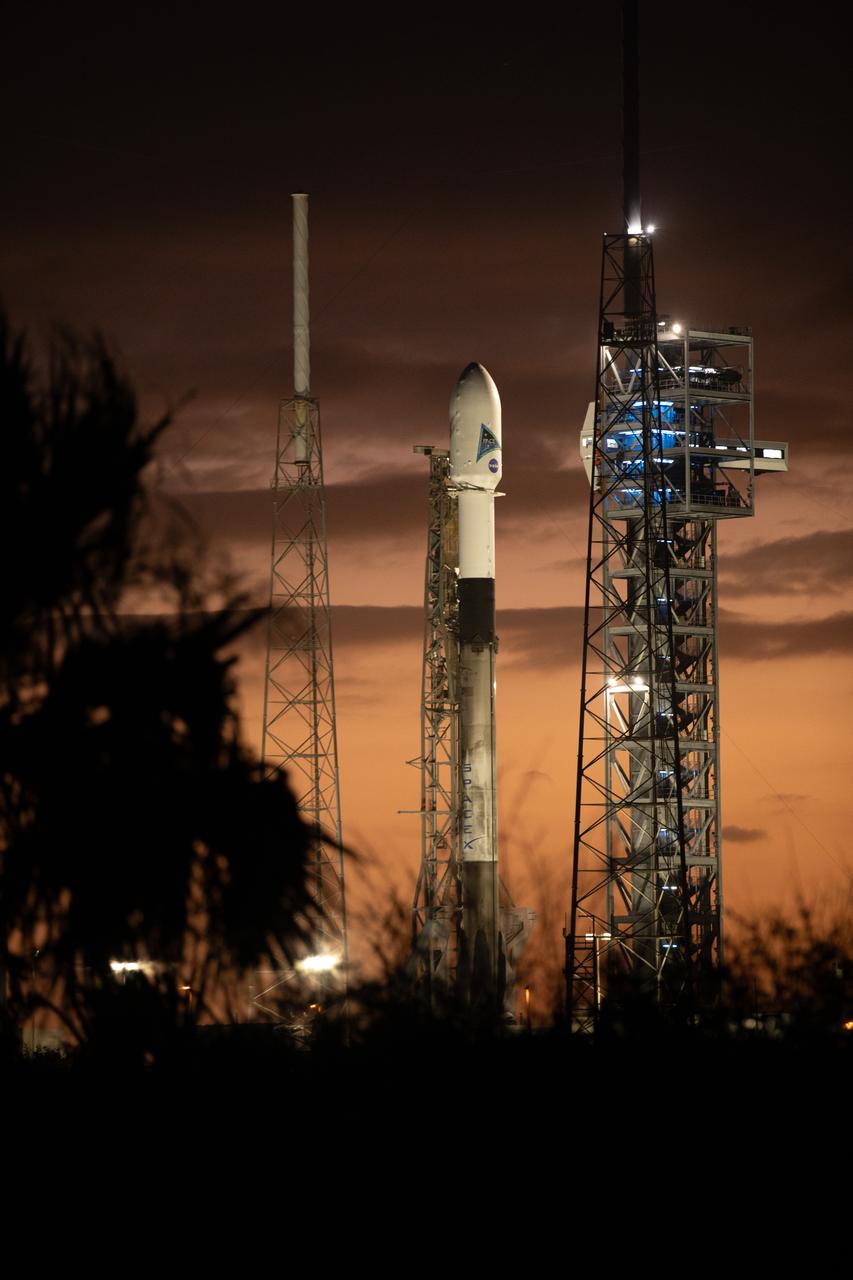
A SpaceX Falcon 9 rocket with NASA’s PACE (Plankton, Aerosol, Cloud, ocean Ecosystem) spacecraft stands vertical at Space Launch Complex 40 at Cape Canaveral Space Force Station in Florida on Tuesday, Feb. 6, 2024. PACE is NASA’s newest earth-observing satellite that will help increase our understanding of Earth’s oceans, atmosphere, and climate by delivering hyperspectral observations of microscopic marine organisms called phytoplankton as well new data on clouds and aerosols. The successful liftoff took place 1:33 a.m. EST Thursday, Feb. 8, 2024.

NASA’s PACE (Plankton, Aerosol, Cloud, ocean Ecosystem) spacecraft, atop a SpaceX Falcon 9 rocket, successfully lifts off from Space Launch Complex 40 at Cape Canaveral Space Force Station in Florida at 1:33 a.m. EST Thursday, Feb. 8. PACE is NASA’s newest earth-observing satellite that will help increase our understanding of Earth’s oceans, atmosphere, and climate by delivering hyperspectral observations of microscopic marine organisms called phytoplankton, as well new data on clouds and aerosols.
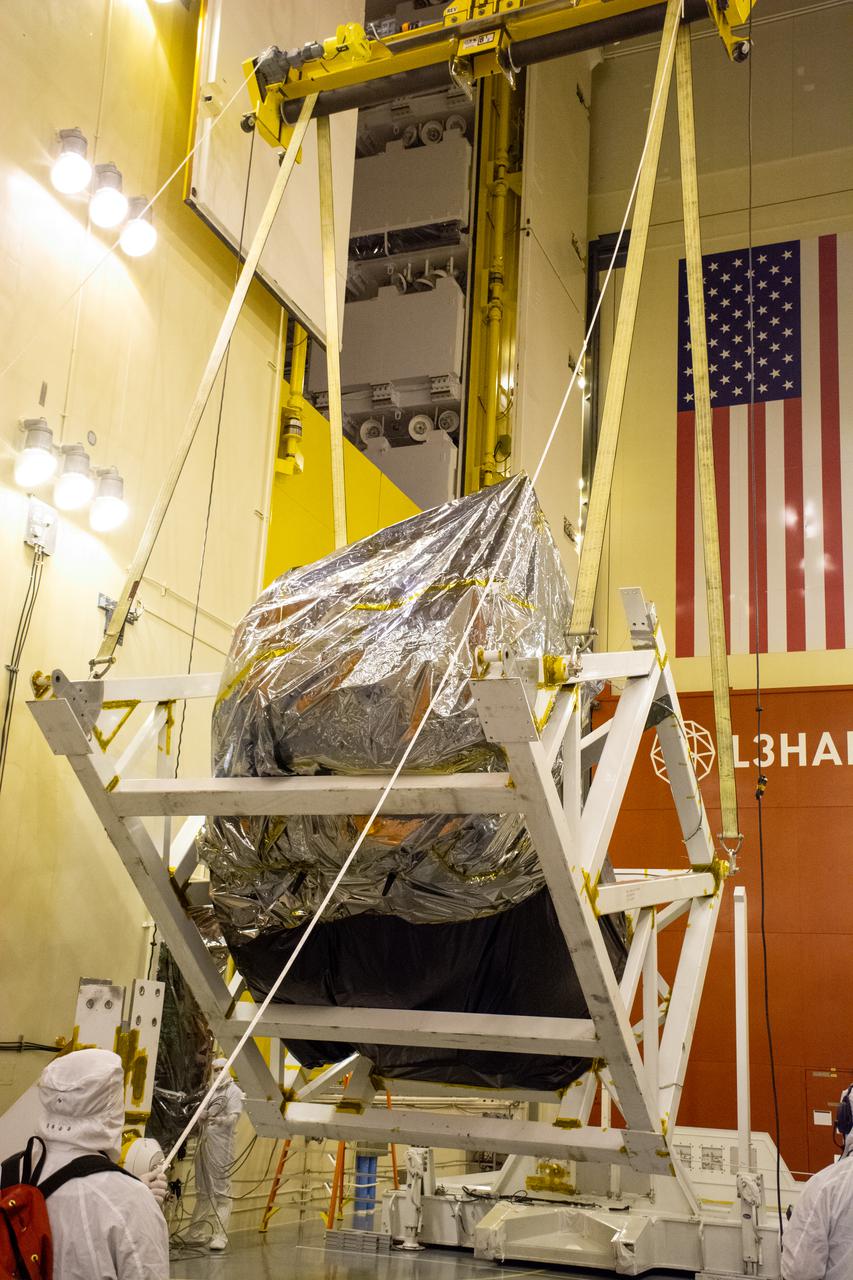
Inside the Integrated Processing Facility at Vandenberg Space Force Base in California, NASA’s Landsat 9 observatory is moved to the vertical position and ready to be rotated on July 11, 2021. Landsat 9 will launch on an Atlas V rocket from Space Launch Complex 3 at Vandenberg in September 2021. The launch is being managed by NASA’s Launch Services Program based at Kennedy Space Center, America’s multiuser spaceport. The Landsat 9 satellite will continue the nearly 50-year legacy of previous Landsat missions. It will monitor key natural and economic resources from orbit. Landsat 9 is managed by the agency’s Goddard Space Flight Center in Greenbelt, Maryland. The satellite will carry two instruments: the Operational Land Imager 2, which collects images of Earth’s landscapes in visible, near infrared and shortwave infrared light, and the Thermal Infrared Sensor 2, which measures the temperature of land surfaces. Like its predecessors, Landsat 9 is a joint mission between NASA and the U.S. Geological Survey.
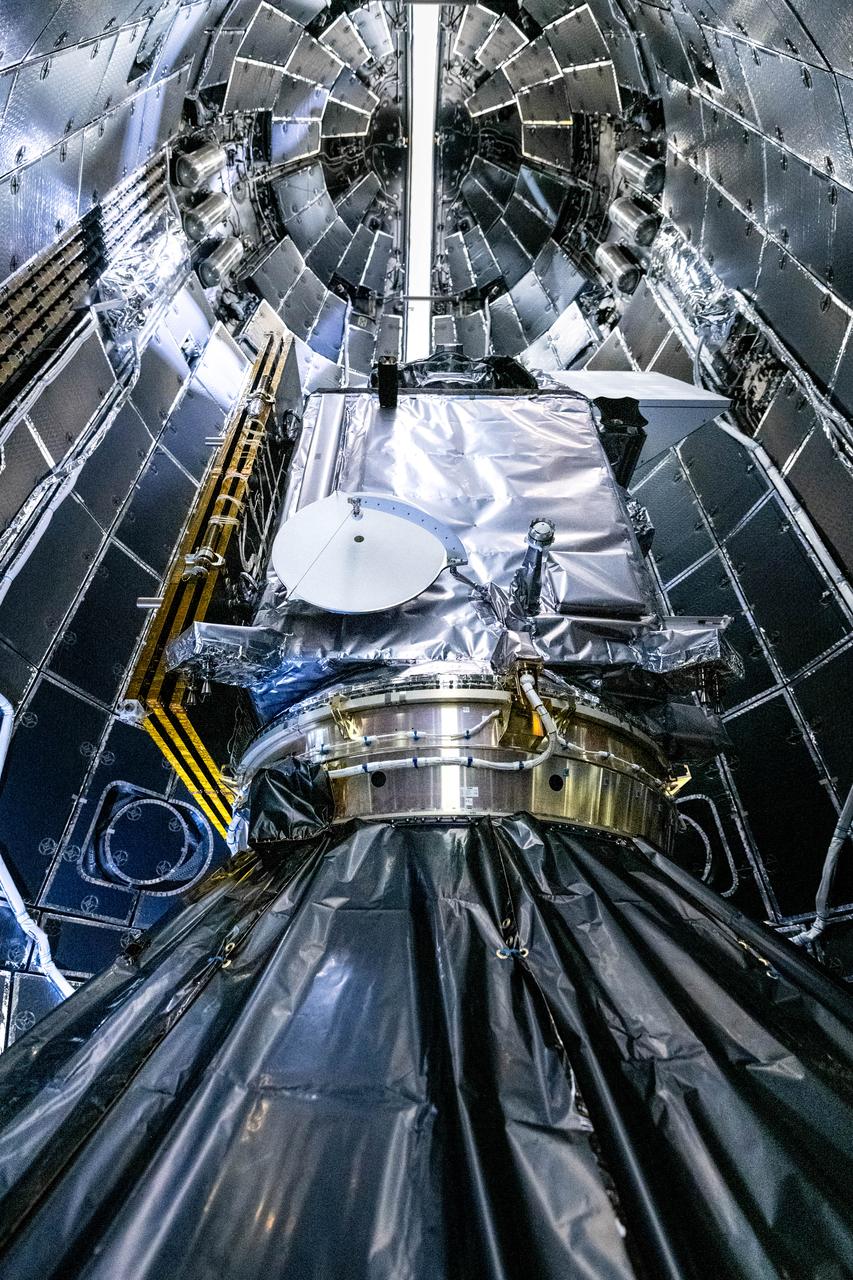
NASA and SpaceX technicians safely encapsulate NASA’s PACE (Plankton, Aerosol, Cloud, ocean Ecosystem) spacecraft in SpaceX’s Falcon 9 payload fairings on Tuesday, Jan. 30, 2024, at the Astrotech Space Operations Facility near the agency’s Kennedy Space Center in Florida. The fairing halves protect the spacecraft from aerodynamic pressure and heating during the ascent phase of launch. PACE is set to launch from Space Launch Complex 40 at Cape Canaveral Space Force Station in Florida no earlier than 1:33 a.m. EST on Tuesday, Feb. 6, 2024.
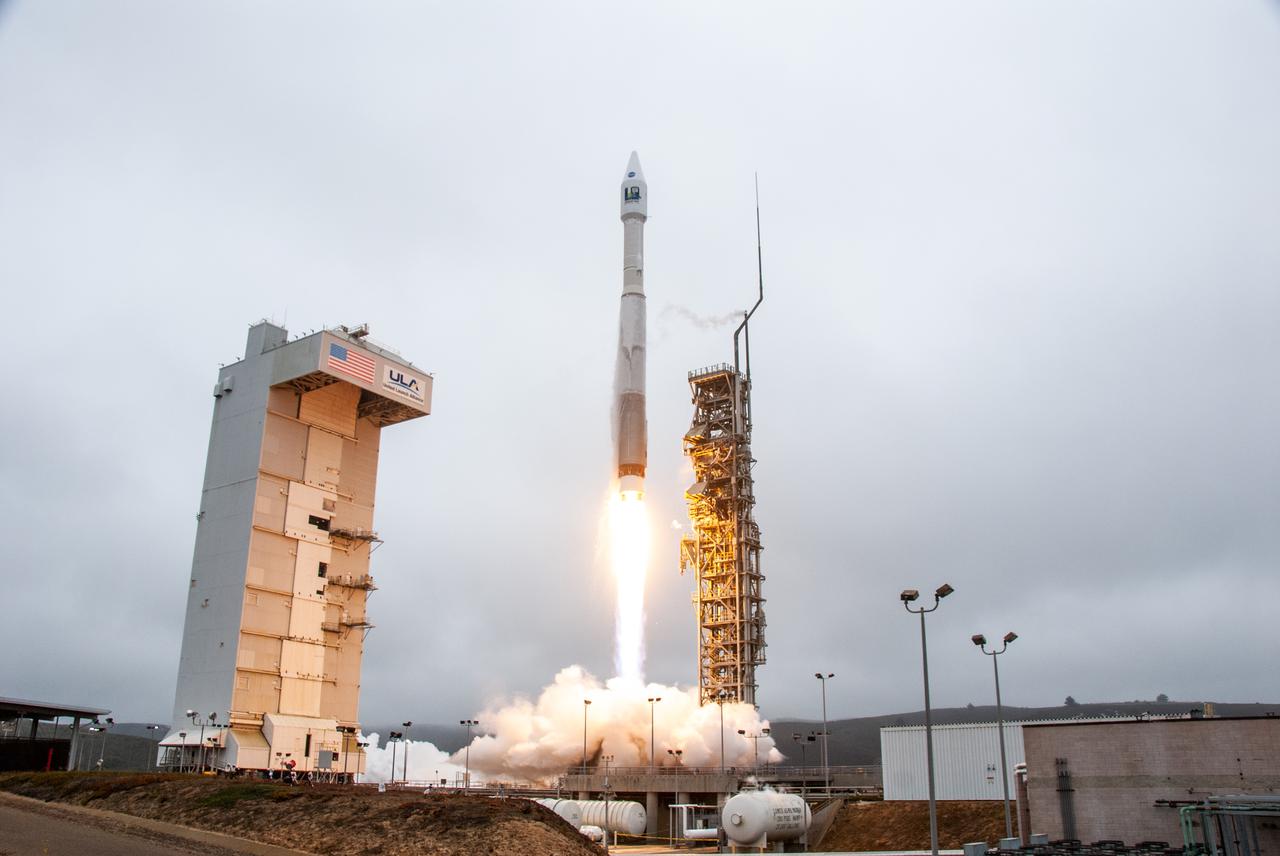
NASA’s Landsat 9 satellite launches on a United Launch Alliance Atlas V 401 rocket from Space Launch Complex 3 at Vandenberg Space Force Station in California on Sept. 27, 2021. Launch time was 2:11 p.m. EDT (11:11 a.m. PDT). The launch is managed by NASA’s Launch Services Program, based at the agency’s Kennedy Space Center in Florida. Landsat 9 will join its sister satellite, Landsat 8, in orbit in collecting images from across the planet every eight days. This calibrated data will continue the Landsat program’s critical role in monitoring the health of Earth and helping people manage essential resources, including crops, irrigation water, and forests. NASA Goddard manages the Landsat 9 mission. Goddard teams also built and tested one of the two instruments on Landsat 9, the Thermal Infrared Sensor 2 (TIRS-2) instrument. TIRS-2 will use thermal imaging to make measurements that can be used to estimate soil moisture and detect the health of plants.
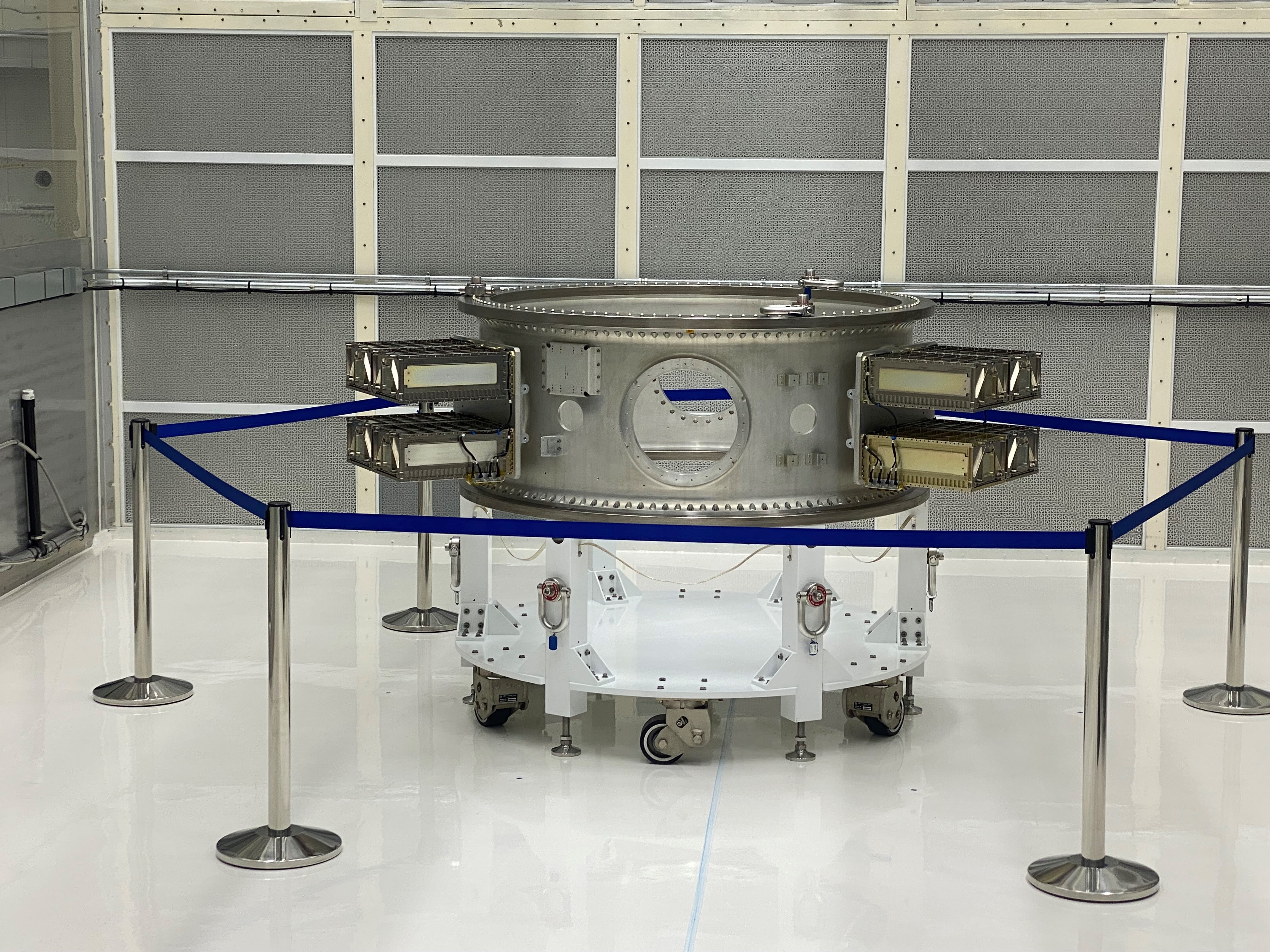
Mechanical and electrical support equipment for NASA’s Landsat 9 observatory are inside the Integrated Processing Facility at Vandenberg Space Force Base in California, on June 16, 2021. The equipment includes a secondary payload adapter and flight system for a group of microsat payloads, called CubeSats, that will launch with Landsat 9 as secondary payloads. Landsat 9 will launch on a United Launch Alliance Atlas V rocket from Space Launch Complex 3 at Vandenberg in September 2021. The launch is being managed by NASA’s Launch Services Program based at Kennedy Space Center, America’s multiuser spaceport. The Landsat 9 satellite will continue the nearly 50-year legacy of previous Landsat missions. It will monitor key natural and economic resources from orbit. Landsat 9 is managed by the agency’s Goddard Space Flight Center in Greenbelt, Maryland. The satellite will carry two instruments: the Operational Land Imager 2, which collects images of Earth’s landscapes in visible, near infrared and shortwave infrared light, and the Thermal Infrared Sensor 2, which measures the temperature of land surfaces. Like its predecessors, Landsat 9 is a joint mission between NASA and the U.S. Geological Survey.
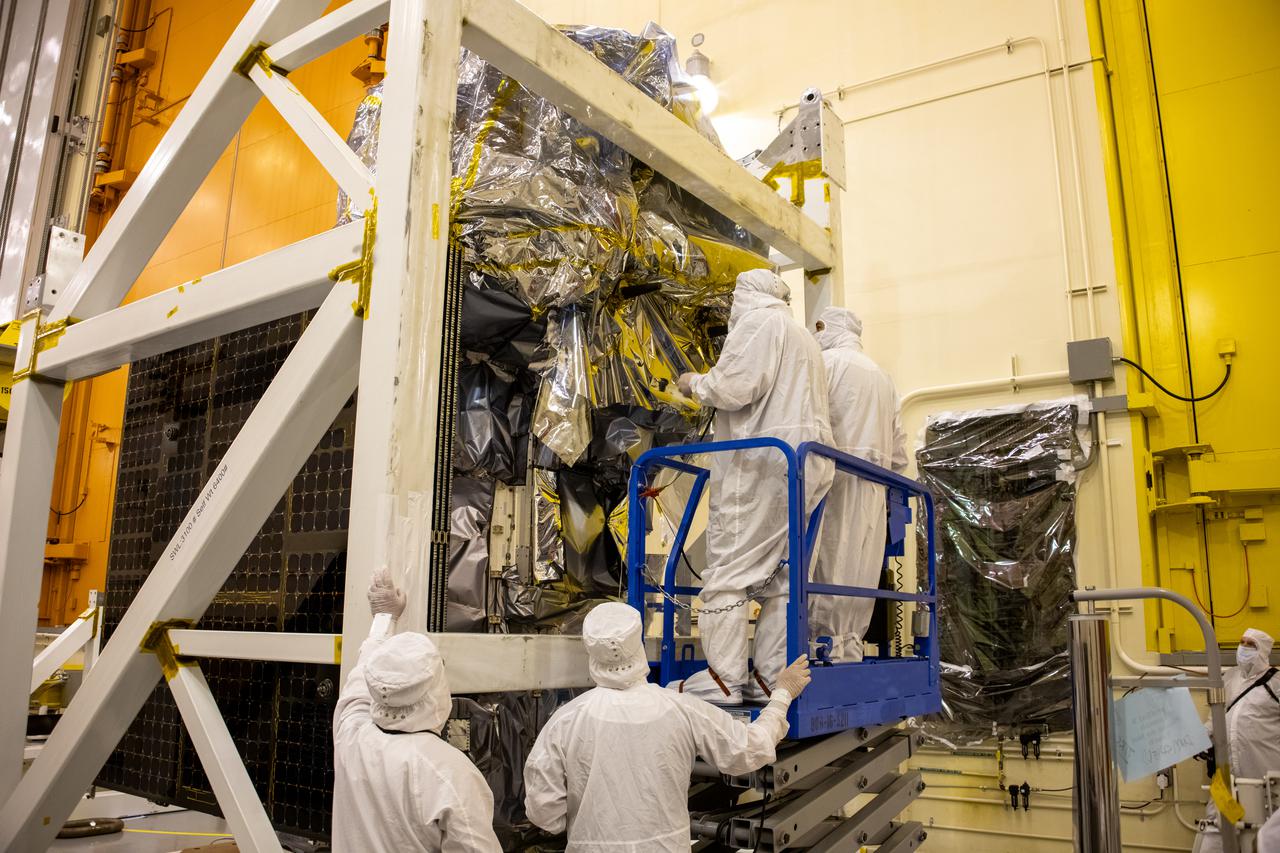
Inside the Integrated Processing Facility at Vandenberg Space Force Base in California, technicians prepare to lift NASA’s Landsat 9 observatory to vertical in its platform on July 11, 2021. Landsat 9 will launch on an Atlas V rocket from Space Launch Complex 3 at Vandenberg in September 2021. The launch is being managed by NASA’s Launch Services Program based at Kennedy Space Center, America’s multiuser spaceport. The Landsat 9 satellite will continue the nearly 50-year legacy of previous Landsat missions. It will monitor key natural and economic resources from orbit. Landsat 9 is managed by the agency’s Goddard Space Flight Center in Greenbelt, Maryland. The satellite will carry two instruments: the Operational Land Imager 2, which collects images of Earth’s landscapes in visible, near infrared and shortwave infrared light, and the Thermal Infrared Sensor 2, which measures the temperature of land surfaces. Like its predecessors, Landsat 9 is a joint mission between NASA and the U.S. Geological Survey.
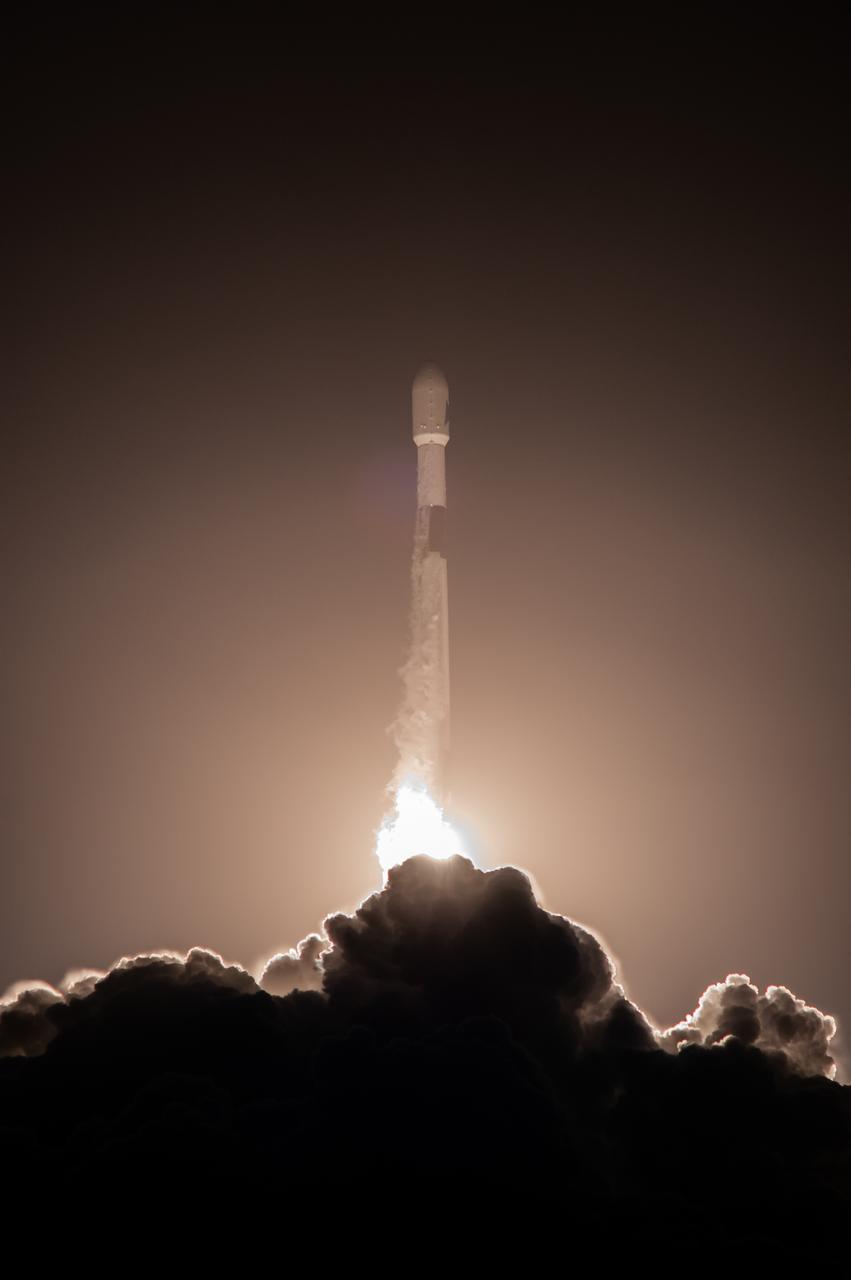
NASA’s PACE (Plankton, Aerosol, Cloud, ocean Ecosystem) spacecraft, atop a SpaceX Falcon 9 rocket, successfully lifts off from Space Launch Complex 40 at Cape Canaveral Space Force Station in Florida at 1:33 a.m. EST Thursday, Feb. 8. PACE is NASA’s newest earth-observing satellite that will help increase our understanding of Earth’s oceans, atmosphere, and climate by delivering hyperspectral observations of microscopic marine organisms called phytoplankton, as well new data on clouds and aerosols.
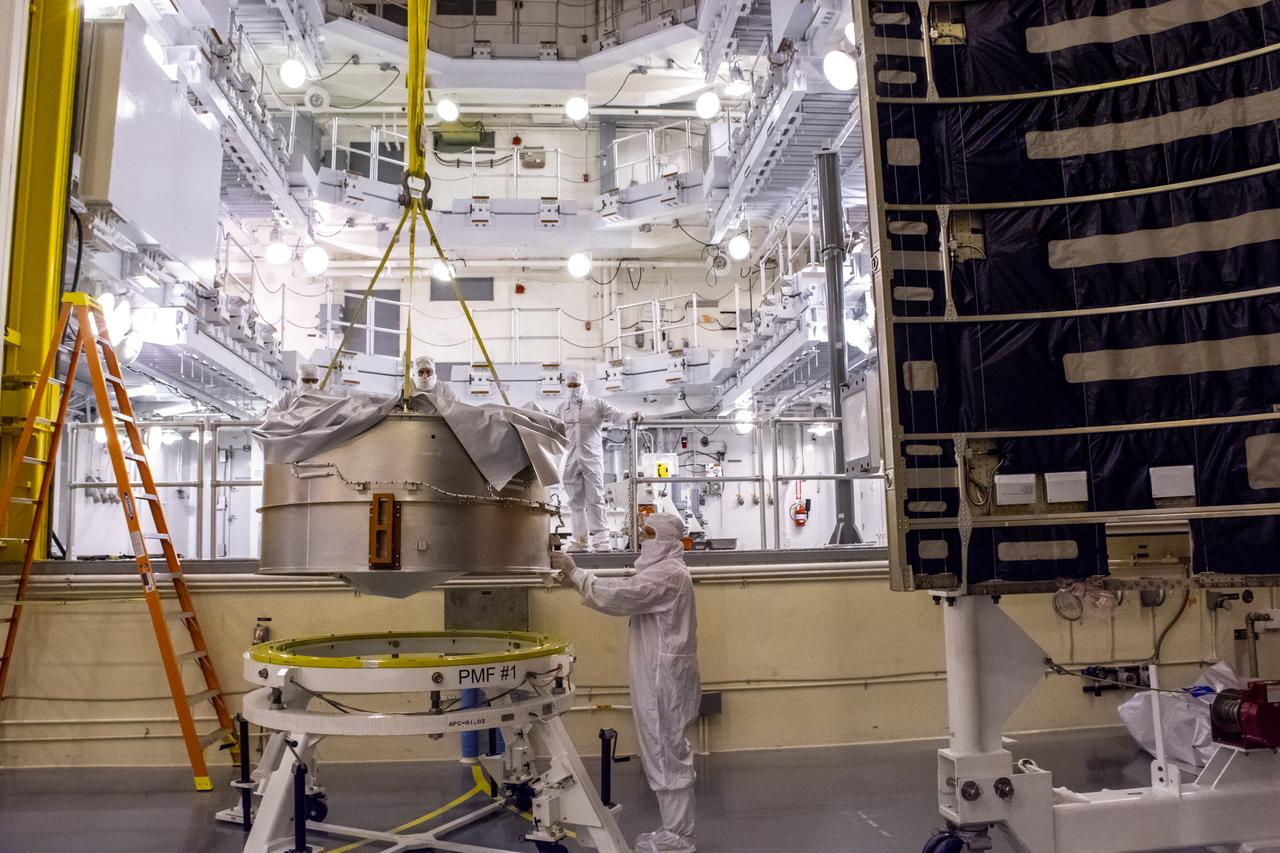
Inside the Integrated Processing Facility at Vandenberg Space Force Base in California, United Launch Alliance (ULA) technicians move the launch vehicle adapter for the ULA Atlas V rocket for NASA’s Landsat 9 satellite on June 22, 2021. Landsat 9 is scheduled to launch atop the Atlas V from Vandenberg in September 2021. The launch is being managed by NASA’s Launch Services Program based at Kennedy Space Center in Florida. Landsat 9 will continue the nearly 50-year legacy of previous Landsat missions. It will monitor key natural and economic resources from orbit. Landsat 9 is managed by the agency’s Goddard Space Flight Center in Greenbelt, Maryland. It will carry two instruments: the Operational Land Imager 2, which collects images of Earth’s landscapes in visible, near-infrared and shortwave infrared light, and the Thermal Infrared Sensor 2, which measures the temperature of land surfaces. Like its predecessors, Landsat 9 is a joint mission between NASA and the U.S. Geological Survey.
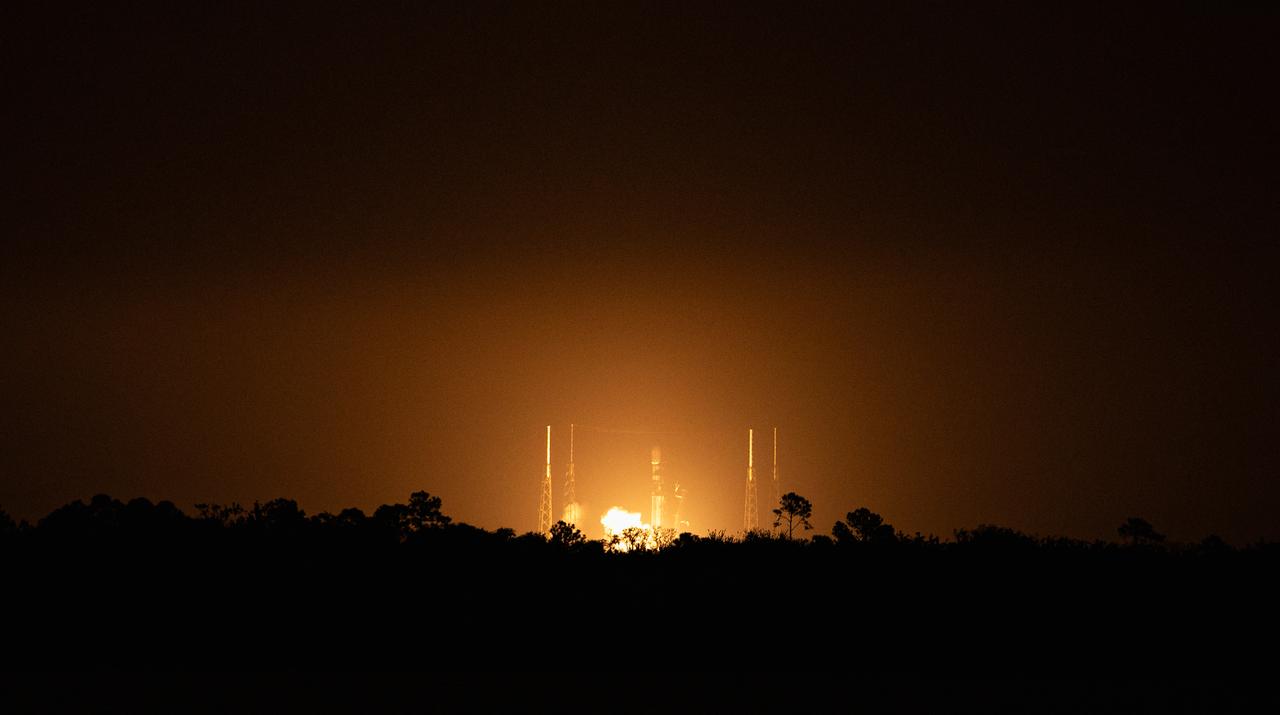
NASA’s PACE (Plankton, Aerosol, Cloud, ocean Ecosystem) spacecraft, atop a SpaceX Falcon 9 rocket, successfully lifts off from Space Launch Complex 40 at Cape Canaveral Space Force Station in Florida at 1:33 a.m. EST Thursday, Feb. 8. PACE is NASA’s newest earth-observing satellite that will help increase our understanding of Earth’s oceans, atmosphere, and climate by delivering hyperspectral observations of microscopic marine organisms called phytoplankton, as well new data on clouds and aerosols.
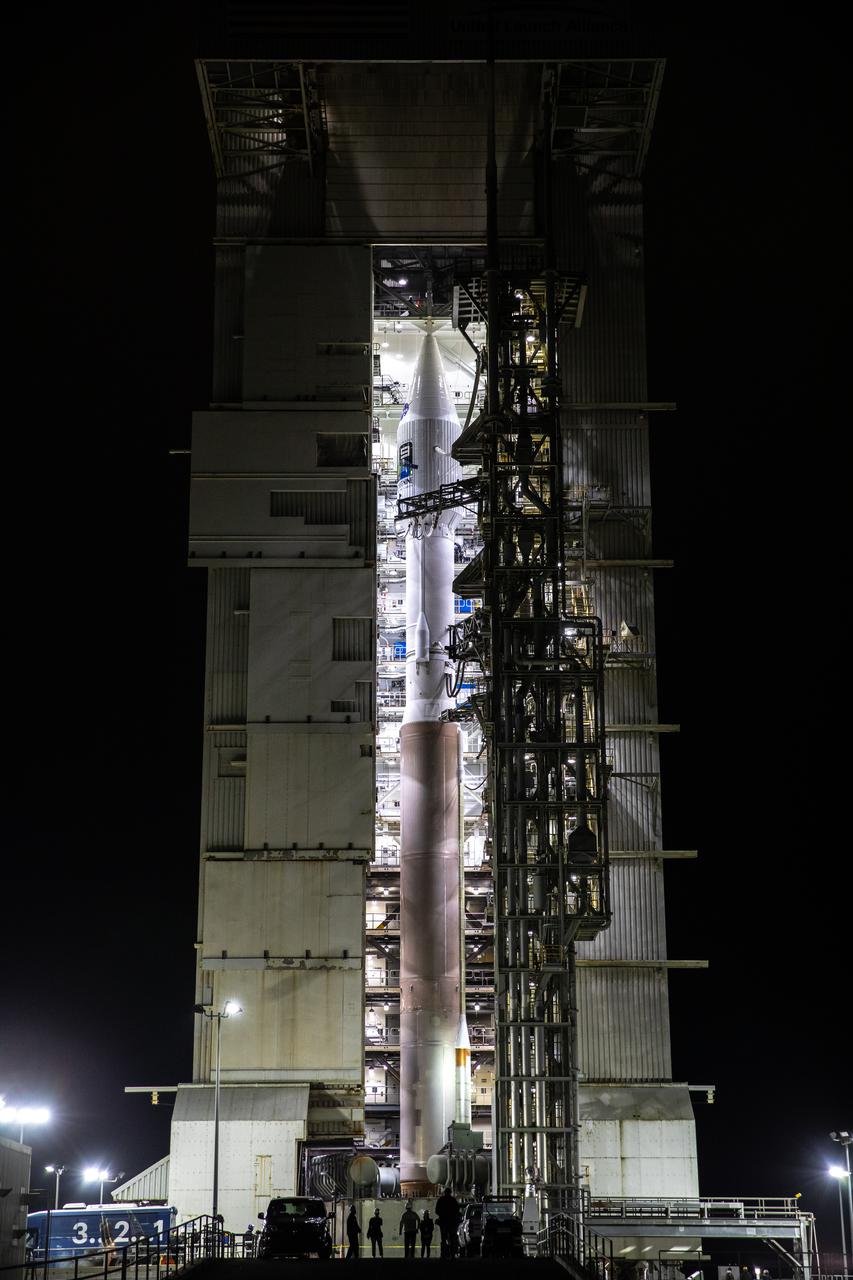
The United Launch Alliance Atlas V 401 rocket with NASA’s Landsat 9 satellite begins rollout from the Vertical Integration Facility to the launch pad at Space Launch Complex 3 (SLC-3) at Vandenberg Space Force Base in California, on Sept. 27, 2021. Landsat 9 is scheduled to launch at 2:12 p.m. EDT (11:12 a.m. PDT) today, Sept. 27, atop the Atlas V from SLC-3. The launch is managed by NASA’s Launch Services Program based at Kennedy Space Center. The Landsat 9 satellite will continue the nearly 50-year legacy of previous Landsat missions. It will join its sister satellite, Landsat 8, in orbit to monitor key natural and economic resources from orbit. Landsat 9 is managed by the agency’s Goddard Space Flight Center in Greenbelt, Maryland. The satellite will carry two instruments: the Operational Land Imager 2, which collects images of Earth’s landscapes in visible, near infrared and shortwave infrared light, and the Thermal Infrared Sensor 2, which measures the temperature of land surfaces. Like its predecessors, Landsat 9 is a joint mission between NASA and the U.S. Geological Survey.
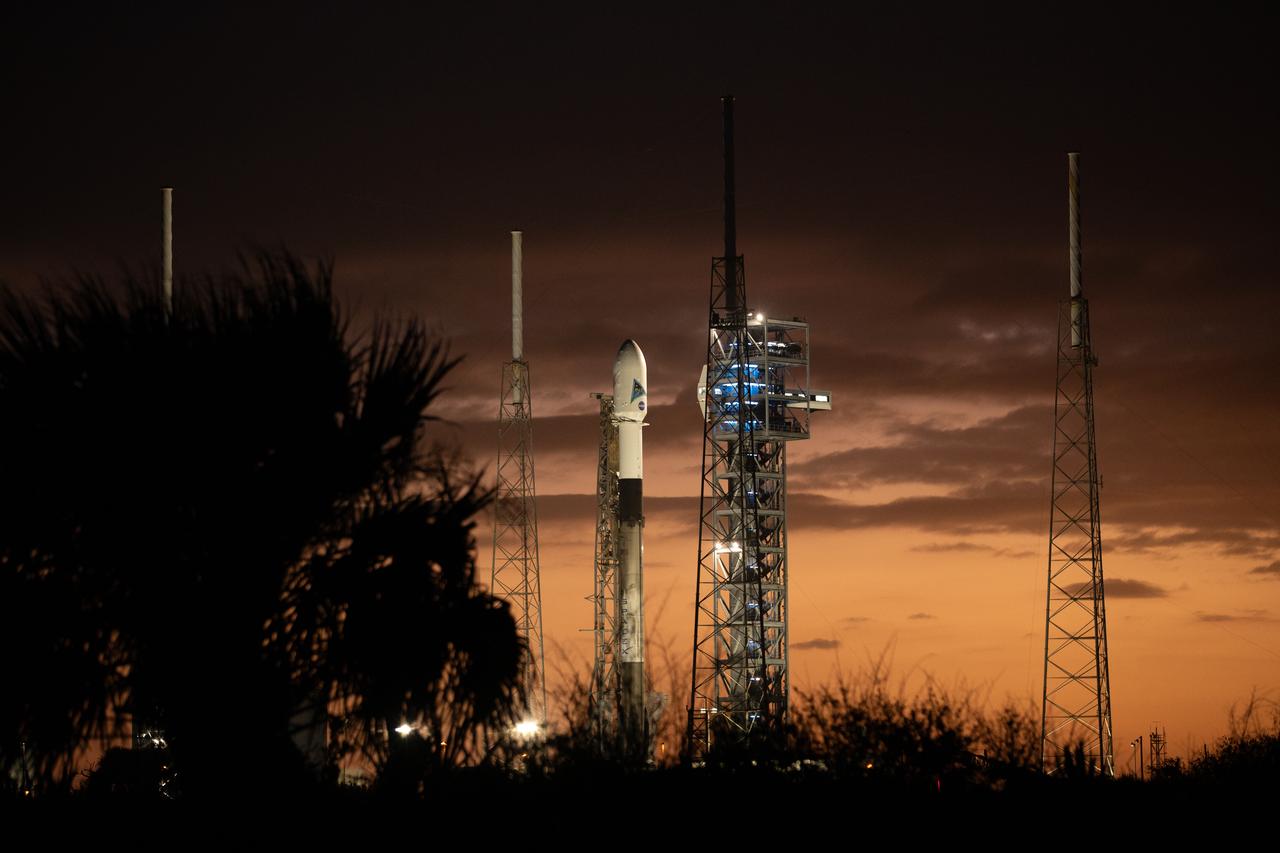
A SpaceX Falcon 9 rocket with NASA’s PACE (Plankton, Aerosol, Cloud, ocean Ecosystem) spacecraft stands vertical at Space Launch Complex 40 at Cape Canaveral Space Force Station in Florida on Tuesday, Feb. 6, 2024. PACE is NASA’s newest earth-observing satellite that will help increase our understanding of Earth’s oceans, atmosphere, and climate by delivering hyperspectral observations of microscopic marine organisms called phytoplankton as well new data on clouds and aerosols. The successful liftoff took place 1:33 a.m. EST Thursday, Feb. 8, 2024.
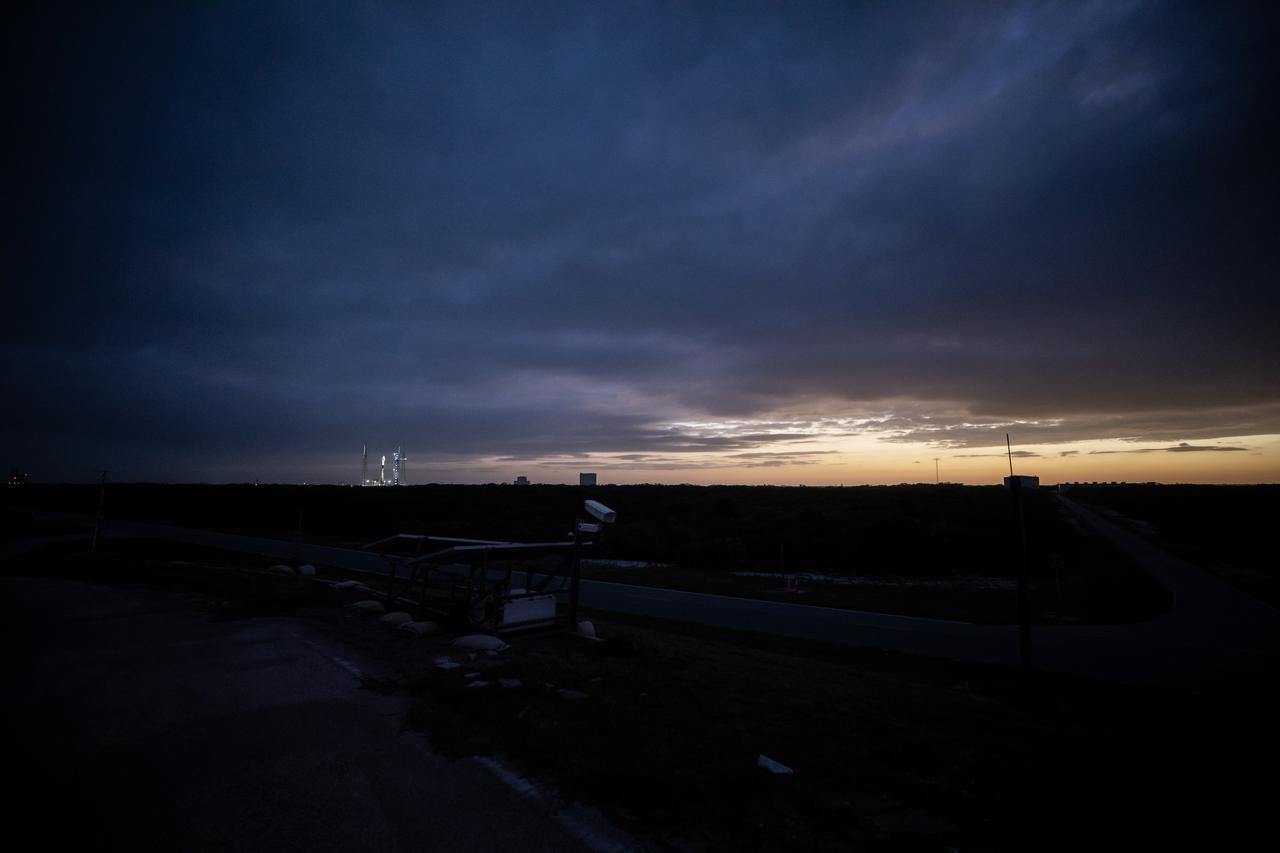
A SpaceX Falcon 9 rocket with NASA’s PACE (Plankton, Aerosol, Cloud, ocean Ecosystem) spacecraft stands vertical at Space Launch Complex 40 at Cape Canaveral Space Force Station in Florida on Tuesday, Feb. 6, 2024. PACE is NASA’s newest earth-observing satellite that will help increase our understanding of Earth’s oceans, atmosphere, and climate by delivering hyperspectral observations of microscopic marine organisms called phytoplankton as well new data on clouds and aerosols. The successful liftoff took place 1:33 a.m. EST Thursday, Feb. 8, 2024.
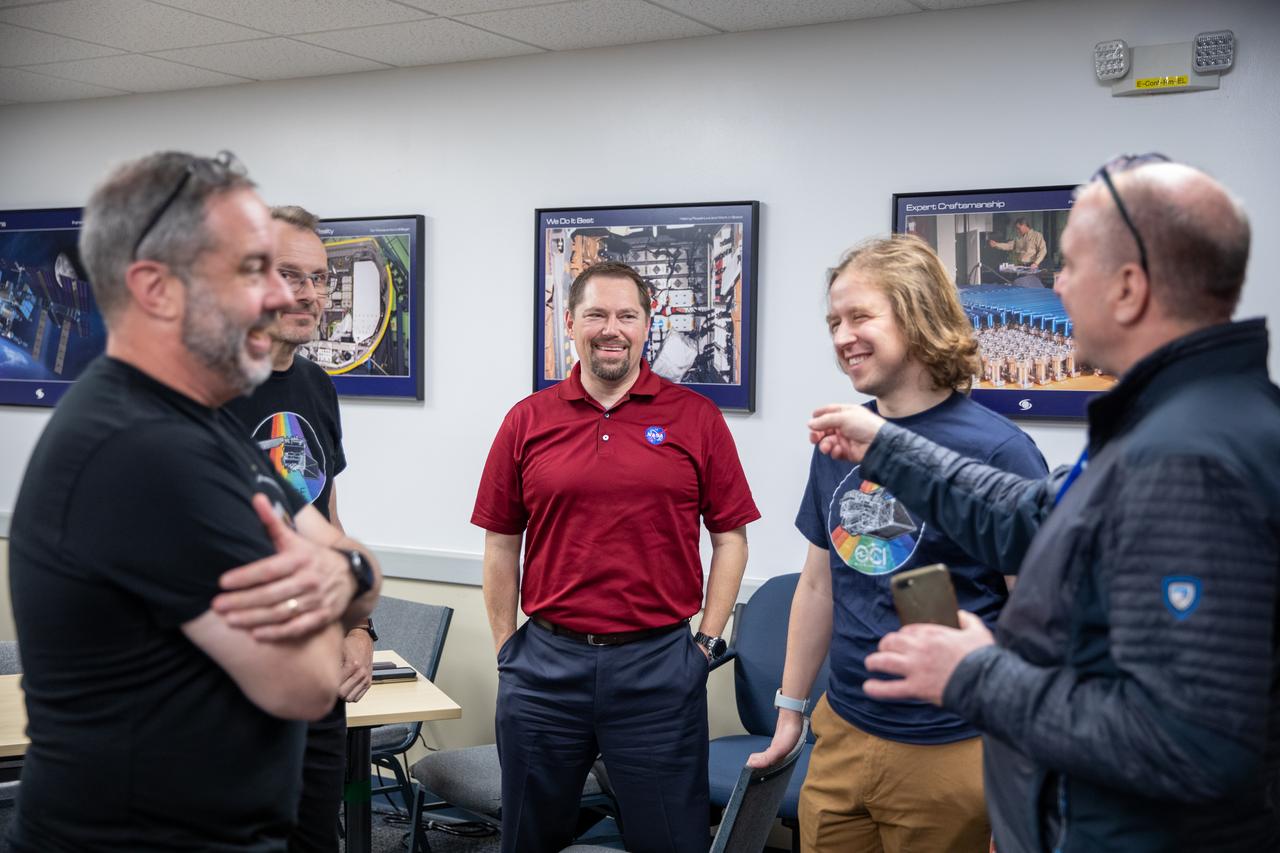
Media interviewed members of NASA’s PACE (Plankton, Aerosol, Cloud, ocean Ecosystem) team on Wednesday, Jan. 3, 2024, during a NASA-hosted media day at the Astrotech Space Operations Facility near NASA’s Kennedy Space Center in Florida. PACE will collect data on how the ocean and atmosphere exchange carbon dioxide, measure key atmospheric variables associated with air quality and Earth's climate, and monitor ocean health. PACE is set to launch aboard a SpaceX Falcon 9 rocket no earlier than Tuesday, Feb. 6, 2024, from Space Launch Complex 40 at Cape Canaveral Space Force Station in Florida.
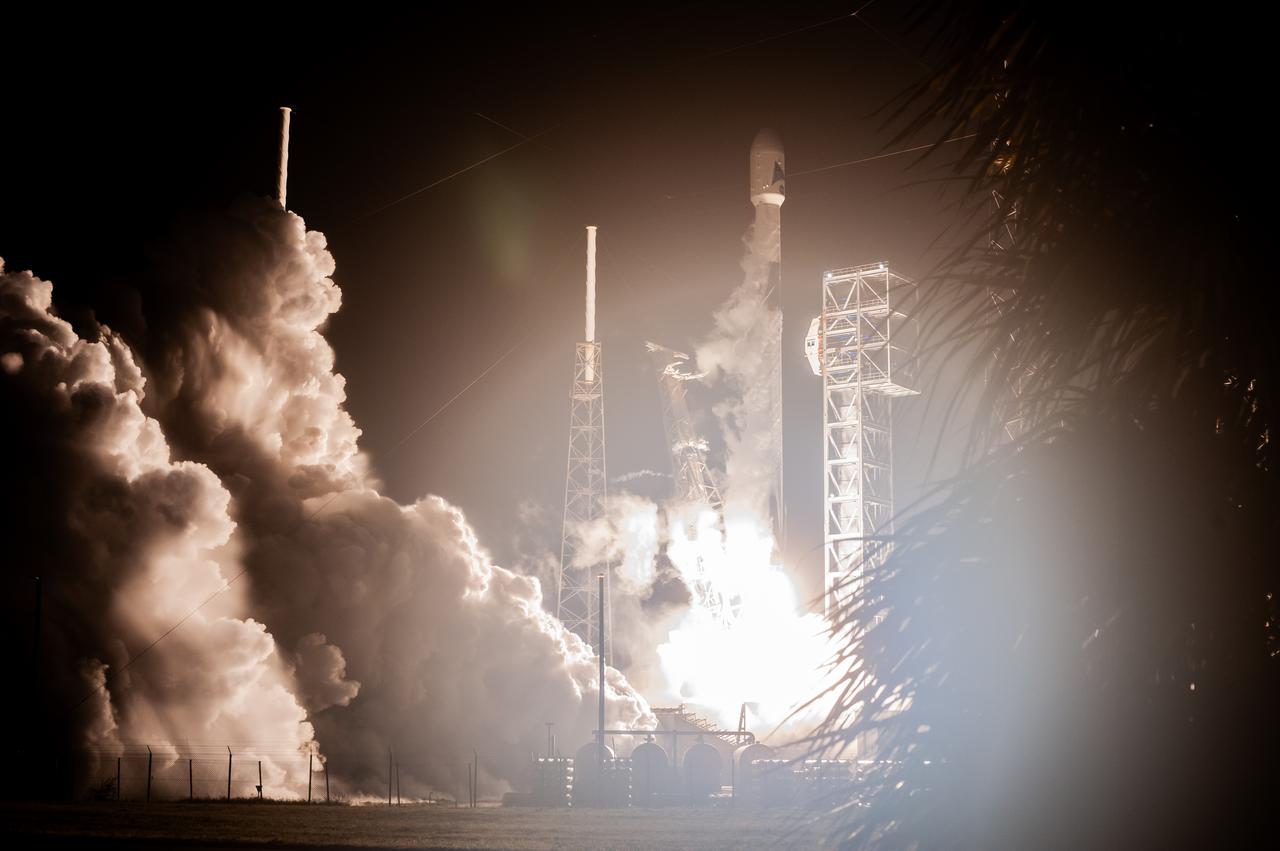
NASA’s PACE (Plankton, Aerosol, Cloud, ocean Ecosystem) spacecraft, atop a SpaceX Falcon 9 rocket, successfully lifts off from Space Launch Complex 40 at Cape Canaveral Space Force Station in Florida at 1:33 a.m. EST Thursday, Feb. 8. PACE is NASA’s newest earth-observing satellite that will help increase our understanding of Earth’s oceans, atmosphere, and climate by delivering hyperspectral observations of microscopic marine organisms called phytoplankton, as well new data on clouds and aerosols.
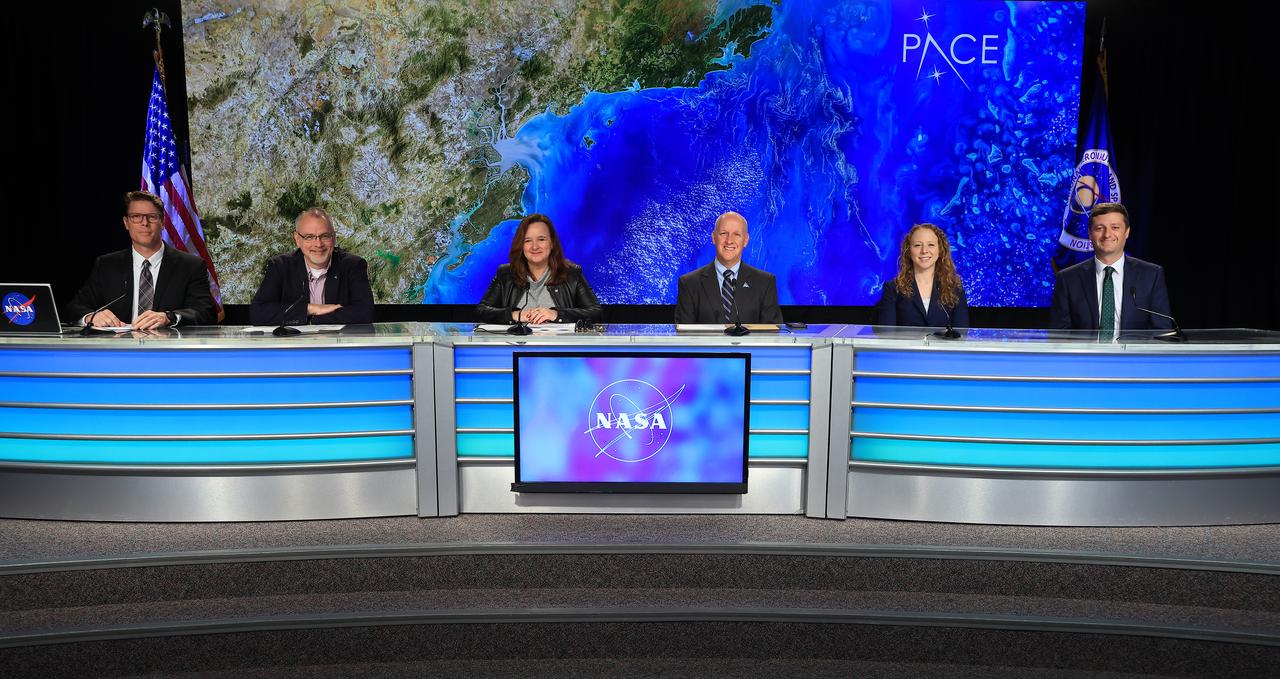
A PACE (Plankton, Aerosol, Cloud, ocean Ecosystem) mission and prelaunch news conference takes place at NASA’s Kennedy Space Center in Florida on Monday, Feb. 5, 2024. Participants, from left to right are: Derrol Nail, NASA Communications; Jim Free, NASA associate administrator; Karen St. Germain, Earth Science Division director, NASA Headquarters; Tim Dunn, senior launch director, Launch Services Program, NASA’s Kennedy; Julianna Scheiman, director Civil Satellite Missions, SpaceX; and Brian Cizek, launch weather officer, 45th Weather Squadron, U.S. Space Force. PACE is NASA’s newest earth-observing satellite that will help increase our understanding of Earth’s oceans, atmosphere, and climate by delivering hyperspectral observations of microscopic marine organisms called phytoplankton, as well new data on clouds and aerosols. Liftoff aboard a SpaceX Falcon 9 rocket from Space Launch Complex 40 at Cape Canaveral Space Force Station in Florida is set for no earlier than 1:33 a.m. EST on Tuesday, Feb 6, 2024.

Mechanical and electrical support equipment for NASA’s Landsat 9 observatory arrive at the Integrated Processing Facility at Vandenberg Space Force Base in California, on June 14, 2021. The equipment includes a secondary payload adapter and flight system for a group of microsat payloads, called CubeSats, that will launch with Landsat 9 as secondary payloads. Landsat 9 will launch on a United Launch Alliance Atlas V rocket from Space Launch Complex 3 at Vandenberg in September 2021. The launch is being managed by NASA’s Launch Services Program based at Kennedy Space Center, America’s multiuser spaceport. The Landsat 9 satellite will continue the nearly 50-year legacy of previous Landsat missions. It will monitor key natural and economic resources from orbit. Landsat 9 is managed by the agency’s Goddard Space Flight Center in Greenbelt, Maryland. The satellite will carry two instruments: the Operational Land Imager 2, which collects images of Earth’s landscapes in visible, near infrared and shortwave infrared light, and the Thermal Infrared Sensor 2, which measures the temperature of land surfaces. Like its predecessors, Landsat 9 is a joint mission between NASA and the U.S. Geological Survey.
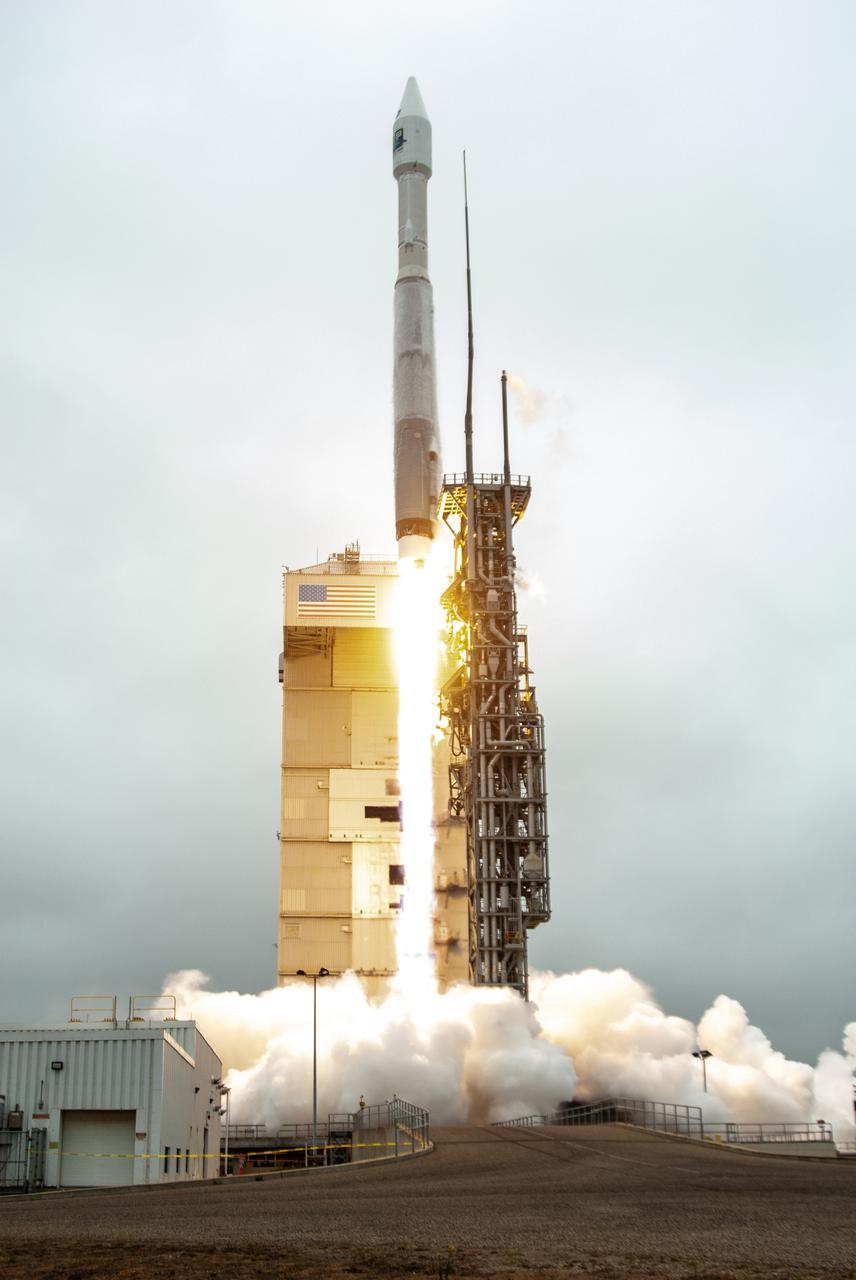
NASA’s Landsat 9 satellite launches on a United Launch Alliance Atlas V 401 rocket from Space Launch Complex 3 at Vandenberg Space Force Station in California on Sept. 27, 2021. Launch time was 2:11 p.m. EDT (11:11 a.m. PDT). The launch is managed by NASA’s Launch Services Program, based at the agency’s Kennedy Space Center in Florida. Landsat 9 will join its sister satellite, Landsat 8, in orbit in collecting images from across the planet every eight days. This calibrated data will continue the Landsat program’s critical role in monitoring the health of Earth and helping people manage essential resources, including crops, irrigation water, and forests. NASA Goddard manages the Landsat 9 mission. Goddard teams also built and tested one of the two instruments on Landsat 9, the Thermal Infrared Sensor 2 (TIRS-2) instrument. TIRS-2 will use thermal imaging to make measurements that can be used to estimate soil moisture and detect the health of plants.

Members of NASA’s PACE (Plankton, Aerosol, Cloud, ocean Ecosystem) team are photographed with the spacecraft on Wednesday, Jan. 3, 2024, during a NASA-hosted media day inside a cleanroom at the Astrotech Space Operations Facility near NASA’s Kennedy Space Center in Florida. PACE will collect data on how the ocean and atmosphere exchange carbon dioxide, measure key atmospheric variables associated with air quality and Earth's climate, and monitor ocean health. PACE is set to launch aboard a SpaceX Falcon 9 rocket no earlier than Tuesday, Feb. 6, 2024, from Space Launch Complex 40 at Cape Canaveral Space Force Station in Florida.
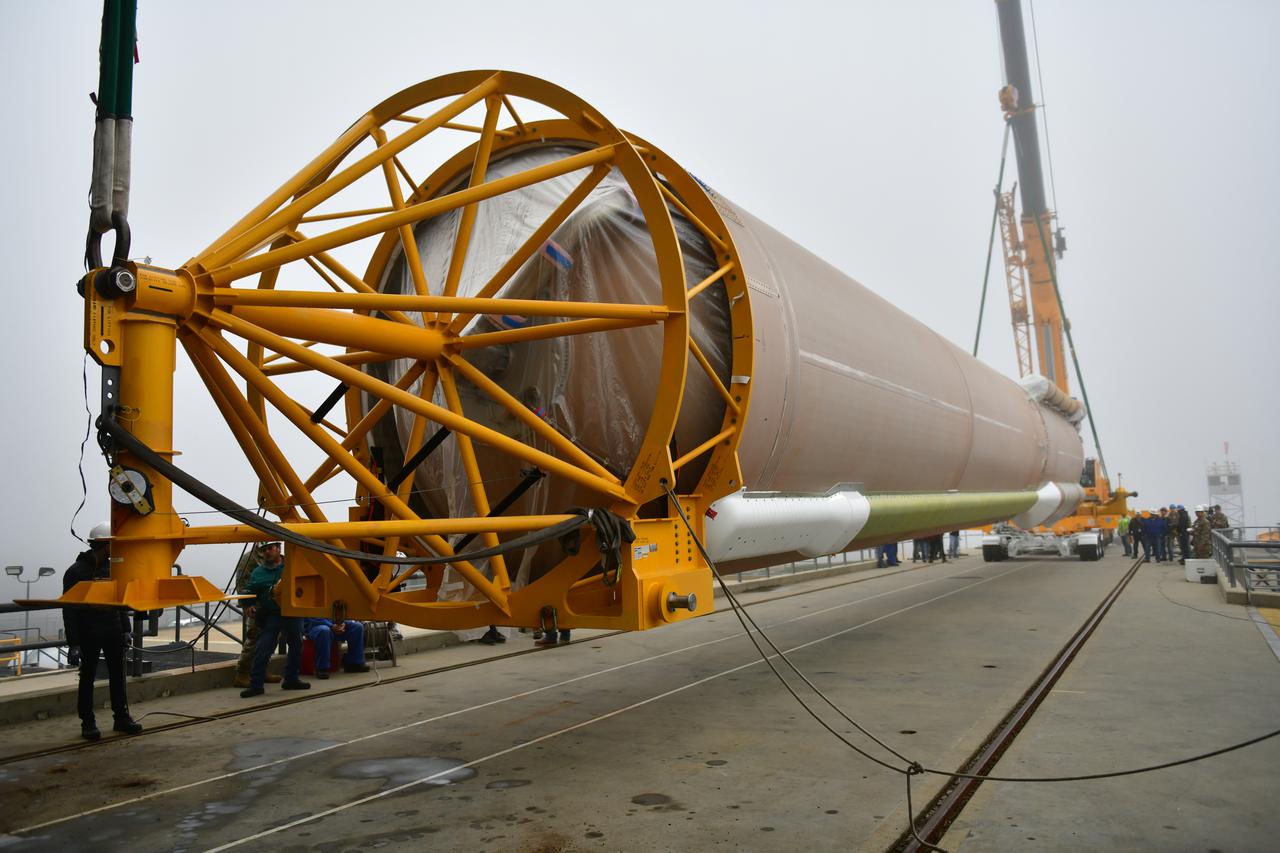
A special lifting device is attached to the United Launch Alliance Atlas V booster for NASA’s Landsat 9 mission at Space Launch Complex 3 at Vandenberg Space Force Base in California, on July 13, 2021. The booster will be lifted and moved into the Vertical Integration Facility. The Landsat 9 mission will launch atop the Atlas V rocket from Vandenberg in September 2021. The launch is being managed by NASA’s Launch Services Program based at Kennedy Space Center. The Landsat 9 satellite will continue the nearly 50-year legacy of previous Landsat missions. It will monitor key natural and economic resources from orbit. Landsat 9 is managed by the agency’s Goddard Space Flight Center in Greenbelt, Maryland. The satellite will carry two instruments: the Operational Land Imager 2, which collects images of Earth’s landscapes in visible, near infrared and shortwave infrared light, and the Thermal Infrared Sensor 2, which measures the temperature of land surfaces. Like its predecessors, Landsat 9 is a joint mission between NASA and the U.S. Geological Survey.
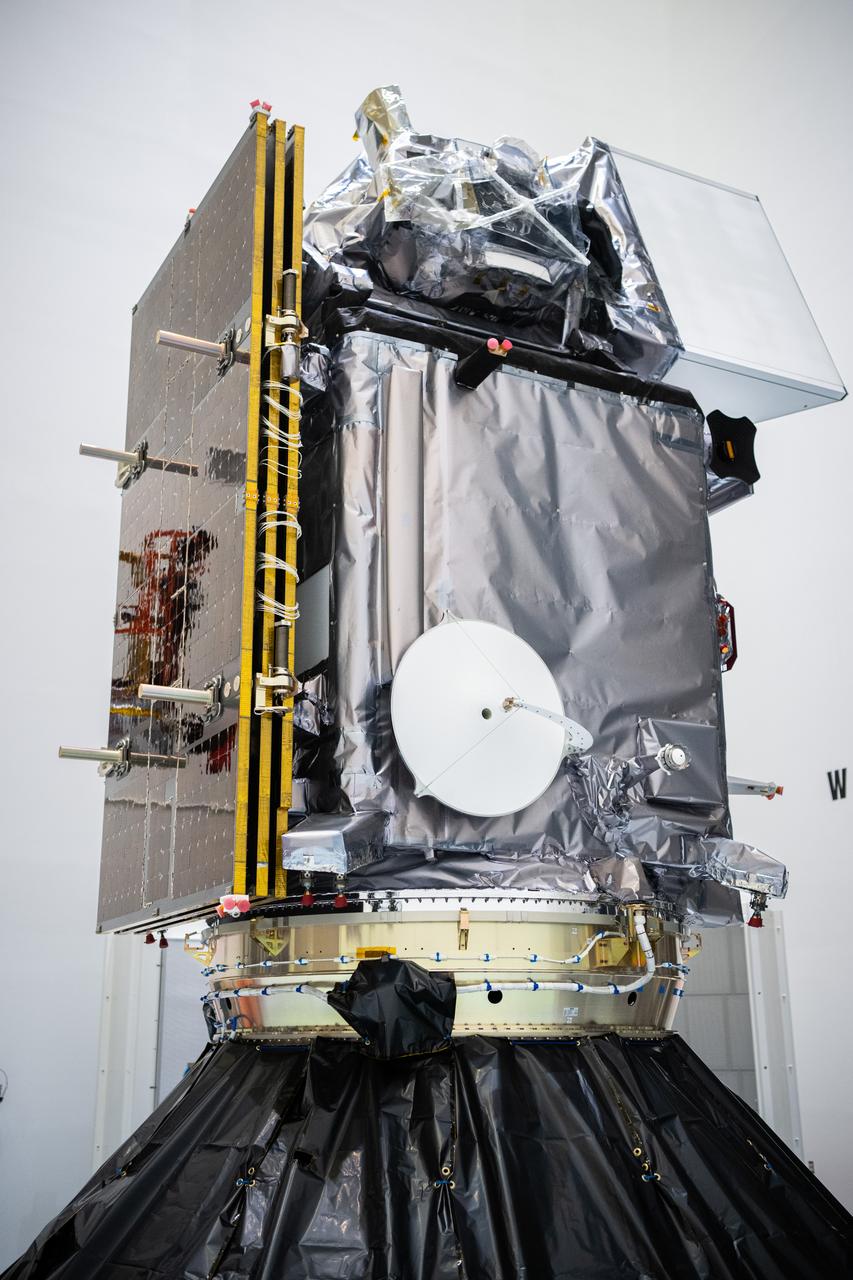
NASA and SpaceX technicians connect NASA’s PACE (Plankton, Aerosol, Cloud, ocean Ecosystem) spacecraft to the payload adapter on Friday, Jan. 26, 2024, at the Astrotech Space Operations Facility near the agency’s Kennedy Space Center in Florida. PACE is NASA’s newest earth-observing satellite that will help increase our understanding of Earth’s oceans, atmosphere, and climate by delivering hyperspectral observations of microscopic marine organisms called phytoplankton as well new data on clouds and aerosols. PACE is set to launch from Space Launch Complex 40 at Cape Canaveral Space Force Station in Florida at 1:33 a.m. EST on Tuesday, Feb. 6.
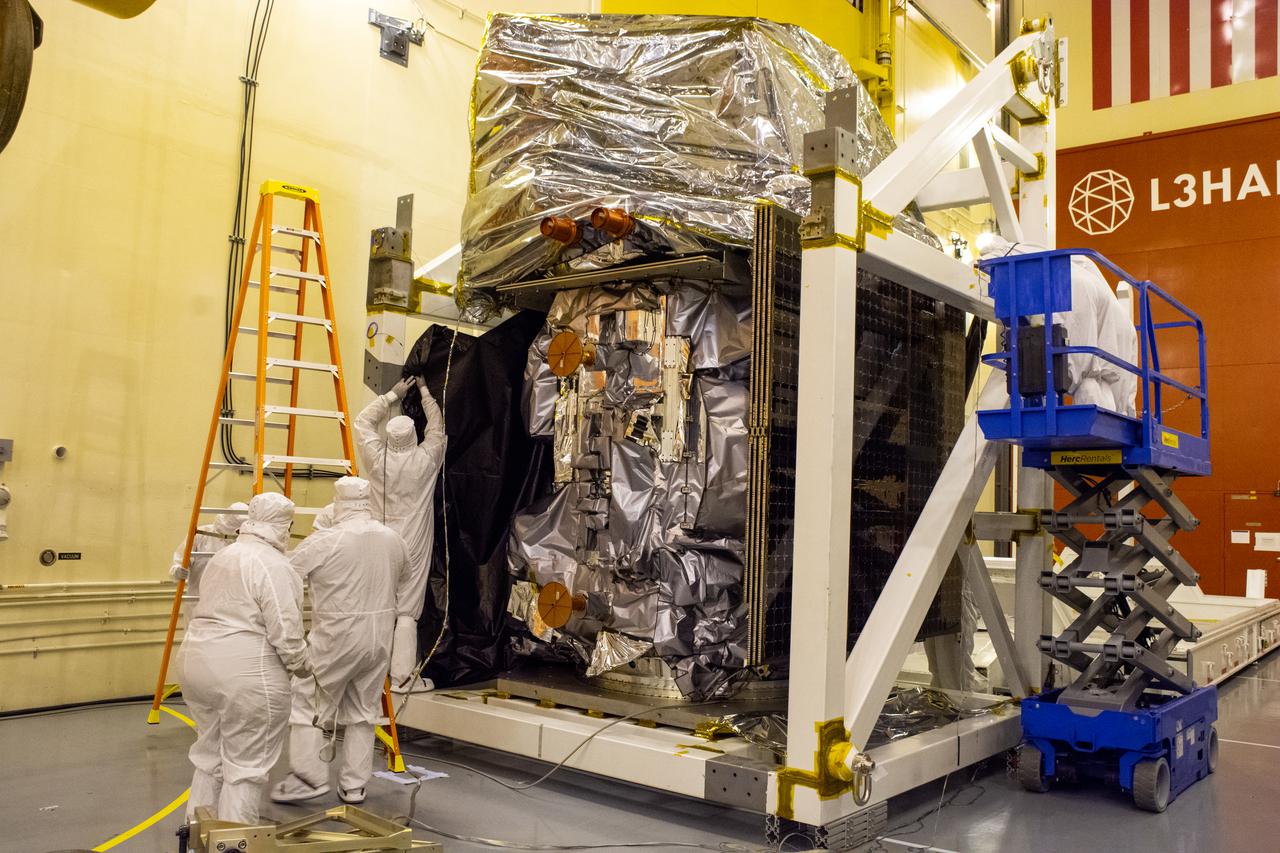
Inside the Integrated Processing Facility at Vandenberg Space Force Base in California, technicians have completed lifting and rotating NASA’s Landsat 9 observatory on July 11, 2021. Landsat 9 will launch on an Atlas V rocket from Space Launch Complex 3 at Vandenberg in September 2021. The launch is being managed by NASA’s Launch Services Program based at Kennedy Space Center, America’s multiuser spaceport. The Landsat 9 satellite will continue the nearly 50-year legacy of previous Landsat missions. It will monitor key natural and economic resources from orbit. Landsat 9 is managed by the agency’s Goddard Space Flight Center in Greenbelt, Maryland. The satellite will carry two instruments: the Operational Land Imager 2, which collects images of Earth’s landscapes in visible, near infrared and shortwave infrared light, and the Thermal Infrared Sensor 2, which measures the temperature of land surfaces. Like its predecessors, Landsat 9 is a joint mission between NASA and the U.S. Geological Survey.
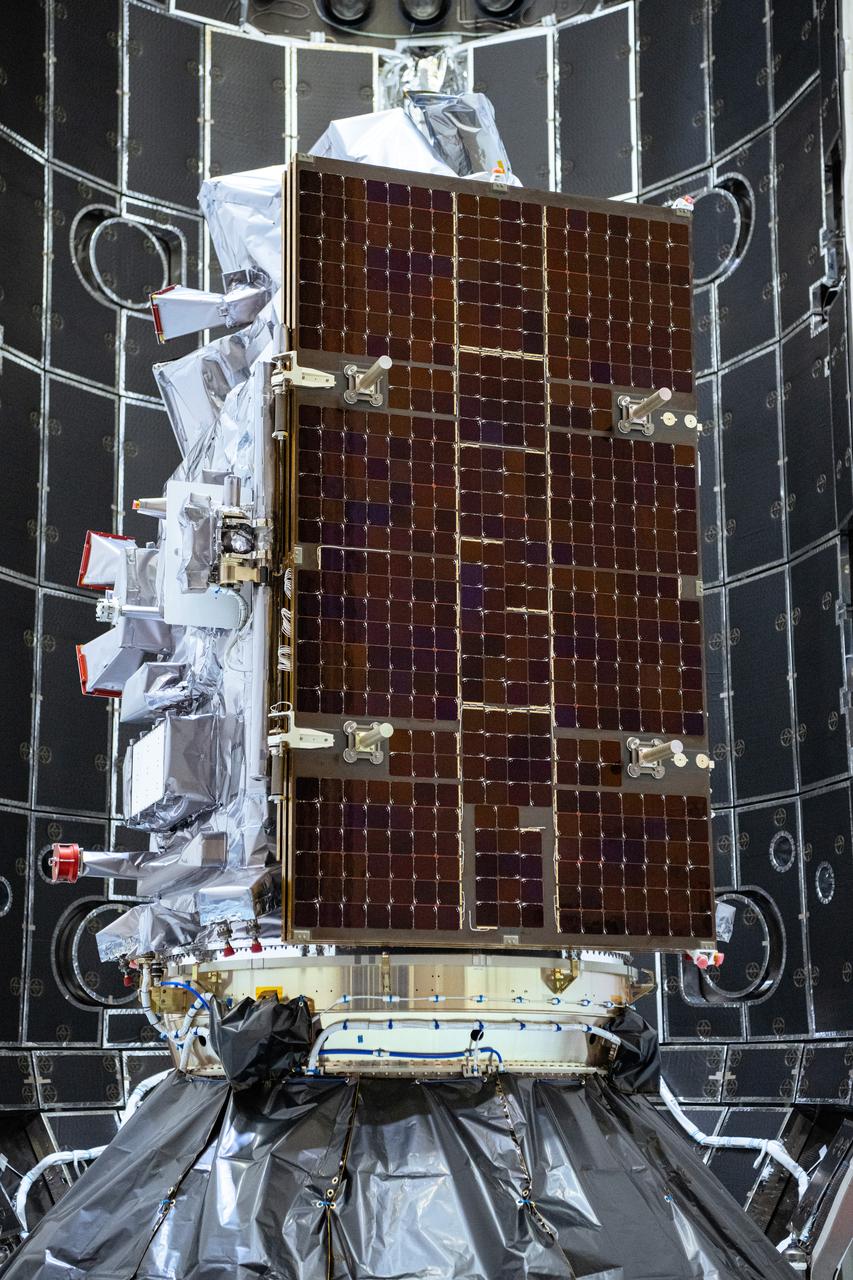
NASA and SpaceX technicians connect NASA’s PACE (Plankton, Aerosol, Cloud, ocean Ecosystem) spacecraft to the payload adapter on Friday, Jan. 26, 2024, at the Astrotech Space Operations Facility near the agency’s Kennedy Space Center in Florida. PACE is NASA’s newest earth-observing satellite that will help increase our understanding of Earth’s oceans, atmosphere, and climate by delivering hyperspectral observations of microscopic marine organisms called phytoplankton as well new data on clouds and aerosols. PACE is set to launch from Space Launch Complex 40 at Cape Canaveral Space Force Station in Florida at 1:33 a.m. EST on Tuesday, Feb. 6.
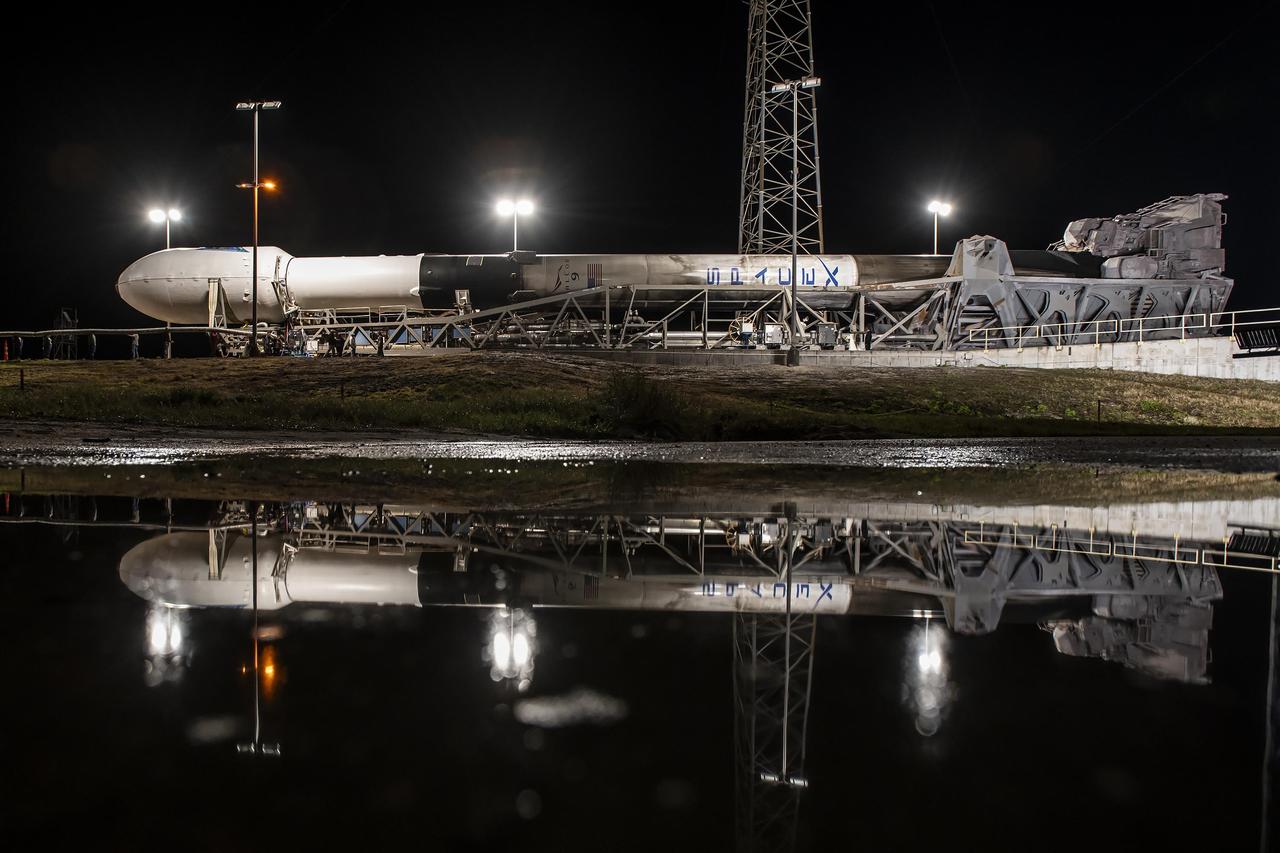
A SpaceX Falcon 9 rocket with NASA’s PACE (Plankton, Aerosol, Cloud, ocean Ecosystem) spacecraft encapsulated atop is rolled to the launch pad at Space Launch Complex 40 at Cape Canaveral Space Force Station in Florida on Monday, Feb. 5, 2024. PACE is NASA’s newest earth-observing satellite that will help increase our understanding of Earth’s oceans, atmosphere, and climate by delivering hyperspectral observations of microscopic marine organisms called phytoplankton as well new data on clouds and aerosols. Liftoff of the PACE mission is set for no earlier than 1:33 a.m. EST on Tuesday, Feb. 6, 2024.
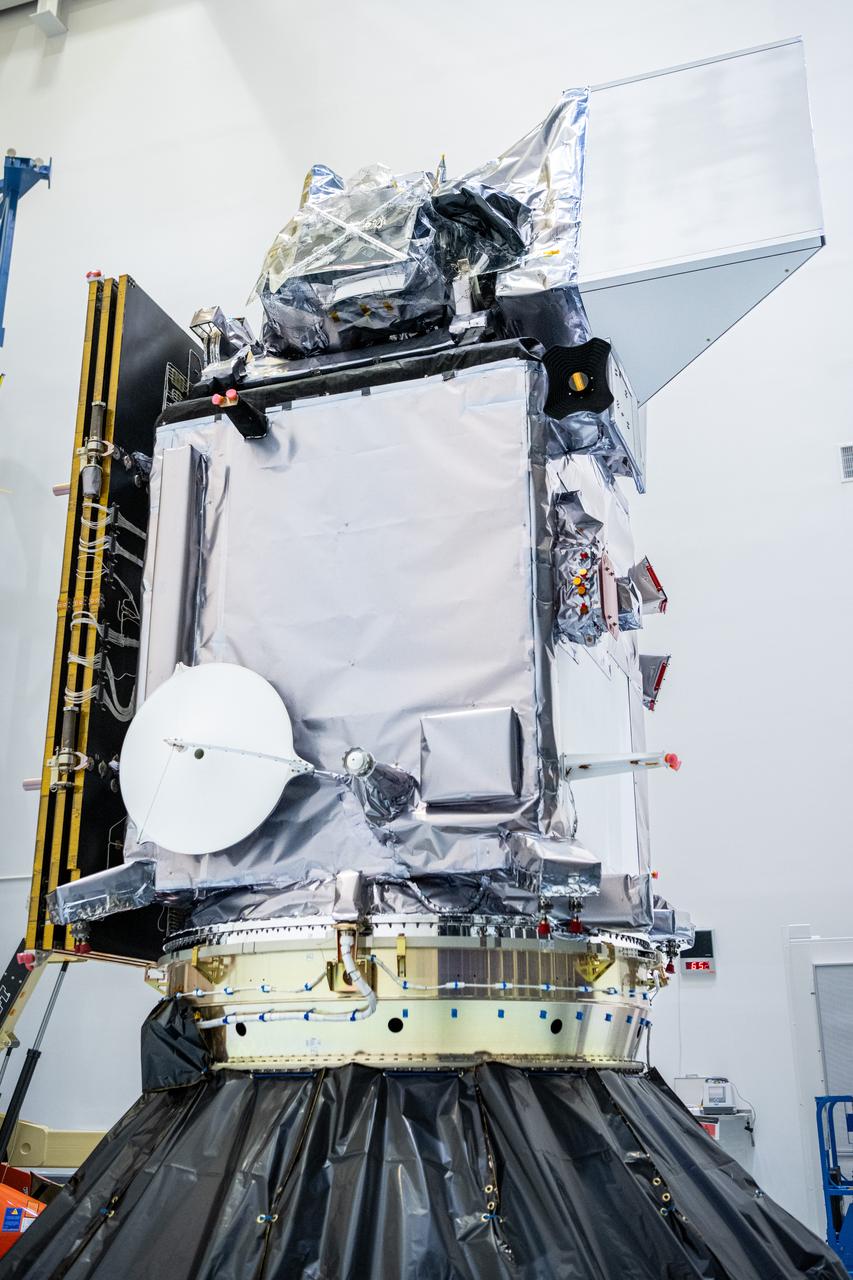
NASA and SpaceX technicians connect NASA’s PACE (Plankton, Aerosol, Cloud, ocean Ecosystem) spacecraft to the payload adapter on Friday, Jan. 26, 2024, at the Astrotech Space Operations Facility near the agency’s Kennedy Space Center in Florida. PACE is NASA’s newest earth-observing satellite that will help increase our understanding of Earth’s oceans, atmosphere, and climate by delivering hyperspectral observations of microscopic marine organisms called phytoplankton as well new data on clouds and aerosols. PACE is set to launch from Space Launch Complex 40 at Cape Canaveral Space Force Station in Florida at 1:33 a.m. EST on Tuesday, Feb. 6.
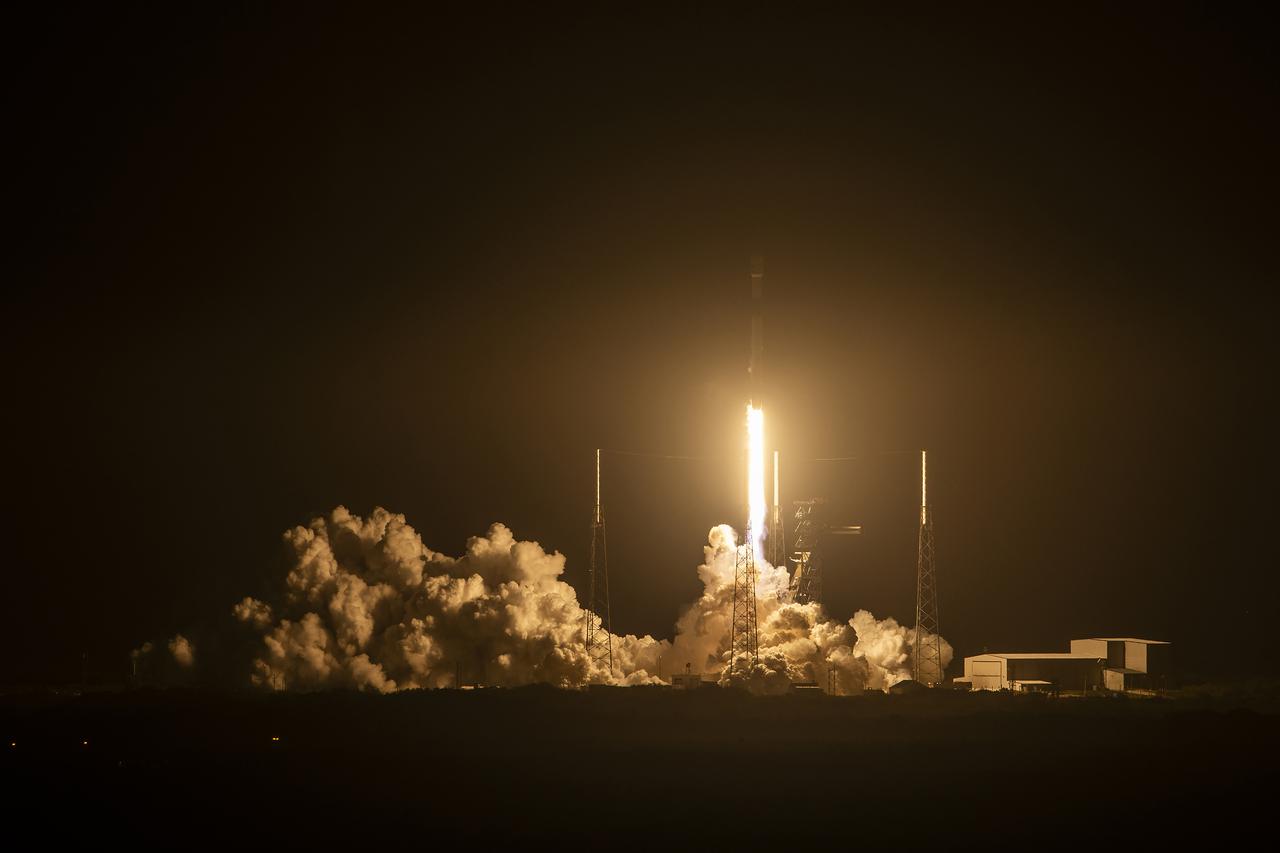
NASA’s PACE (Plankton, Aerosol, Cloud, ocean Ecosystem) spacecraft, atop a SpaceX Falcon 9 rocket, successfully lifts off from Space Launch Complex 40 at Cape Canaveral Space Force Station in Florida at 1:33 a.m. EST Thursday, Feb. 8. PACE is NASA’s newest earth-observing satellite that will help increase our understanding of Earth’s oceans, atmosphere, and climate by delivering hyperspectral observations of microscopic marine organisms called phytoplankton, as well new data on clouds and aerosols.
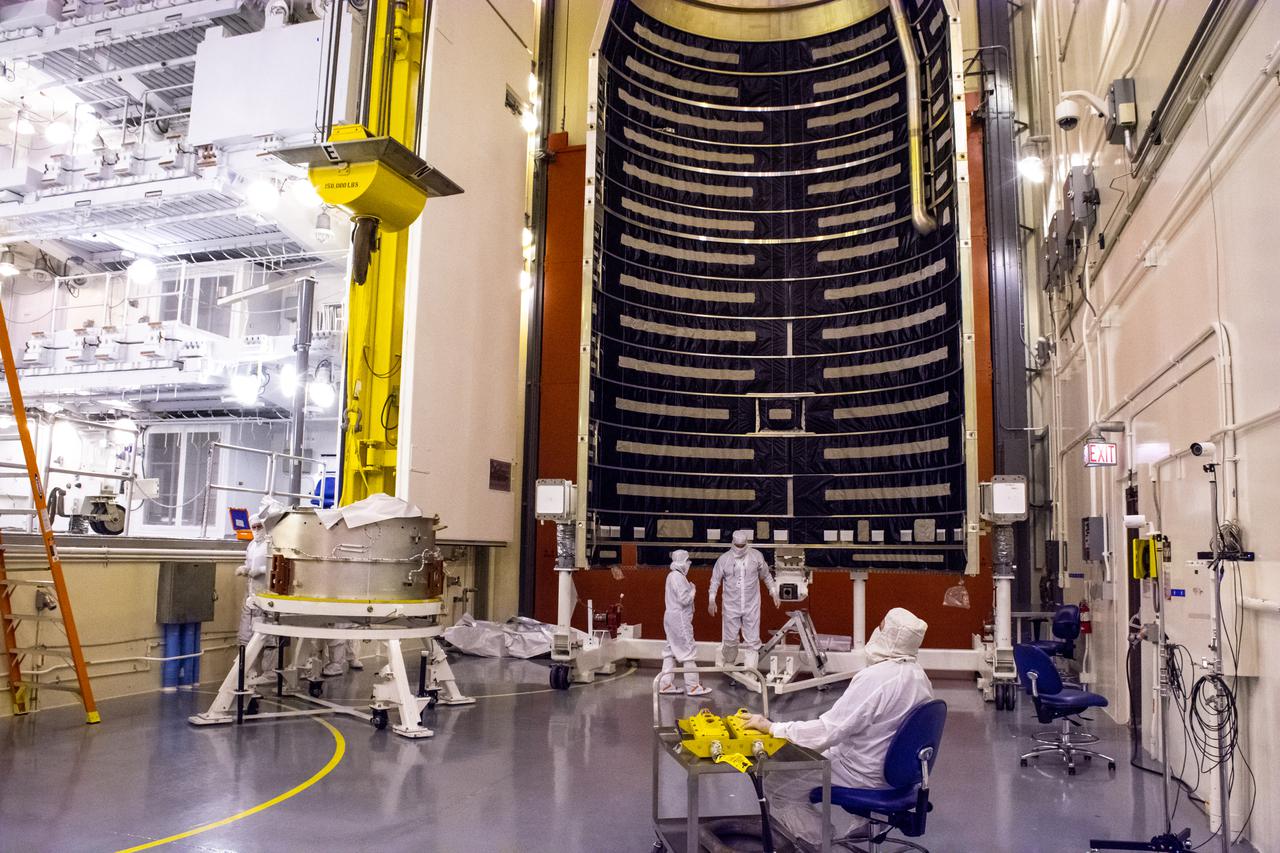
Inside the Integrated Processing Facility at Vandenberg Space Force Base in California, United Launch Alliance (ULA) technicians prepare to align the two ULA Atlas V rocket payload fairings for NASA’s Landsat 9 satellite on June 22, 2021. The fairings will encapsulate the satellite for its launch atop the Atlas V from Vandenberg in September 2021. The launch is being managed by NASA’s Launch Services Program based at Kennedy Space Center in Florida. Landsat 9 will continue the nearly 50-year legacy of previous Landsat missions. It will monitor key natural and economic resources from orbit. Landsat 9 is managed by the agency’s Goddard Space Flight Center in Greenbelt, Maryland. It will carry two instruments: the Operational Land Imager 2, which collects images of Earth’s landscapes in visible, near-infrared and shortwave infrared light, and the Thermal Infrared Sensor 2, which measures the temperature of land surfaces. Like its predecessors, Landsat 9 is a joint mission between NASA and the U.S. Geological Survey.

Inside the Integrated Processing Facility at Vandenberg Space Force Base in California, United Launch Alliance (ULA) technicians prepare to align the two ULA Atlas V rocket payload fairings for NASA’s Landsat 9 satellite on June 22, 2021. The fairings will encapsulate the satellite for its launch atop the Atlas V from Vandenberg in September 2021. The launch is being managed by NASA’s Launch Services Program based at Kennedy Space Center in Florida. Landsat 9 will continue the nearly 50-year legacy of previous Landsat missions. It will monitor key natural and economic resources from orbit. Landsat 9 is managed by the agency’s Goddard Space Flight Center in Greenbelt, Maryland. It will carry two instruments: the Operational Land Imager 2, which collects images of Earth’s landscapes in visible, near-infrared and shortwave infrared light, and the Thermal Infrared Sensor 2, which measures the temperature of land surfaces. Like its predecessors, Landsat 9 is a joint mission between NASA and the U.S. Geological Survey.

Inside the Integrated Processing Facility at Vandenberg Space Force Base in California, United Launch Alliance (ULA) technicians perform a blacklight test and sampling for contaminants on one of two ULA Atlas V rocket payload fairings for NASA’s Landsat 9 satellite on June 23, 2021. The fairings will encapsulate the satellite for its launch atop the Atlas V from Vandenberg in September 2021. The launch is being managed by NASA’s Launch Services Program based at Kennedy Space Center in Florida. Landsat 9 will continue the nearly 50-year legacy of previous Landsat missions. It will monitor key natural and economic resources from orbit. Landsat 9 is managed by the agency’s Goddard Space Flight Center in Greenbelt, Maryland. It will carry two instruments: the Operational Land Imager 2, which collects images of Earth’s landscapes in visible, near-infrared and shortwave infrared light, and the Thermal Infrared Sensor 2, which measures the temperature of land surfaces. Like its predecessors, Landsat 9 is a joint mission between NASA and the U.S. Geological Survey.
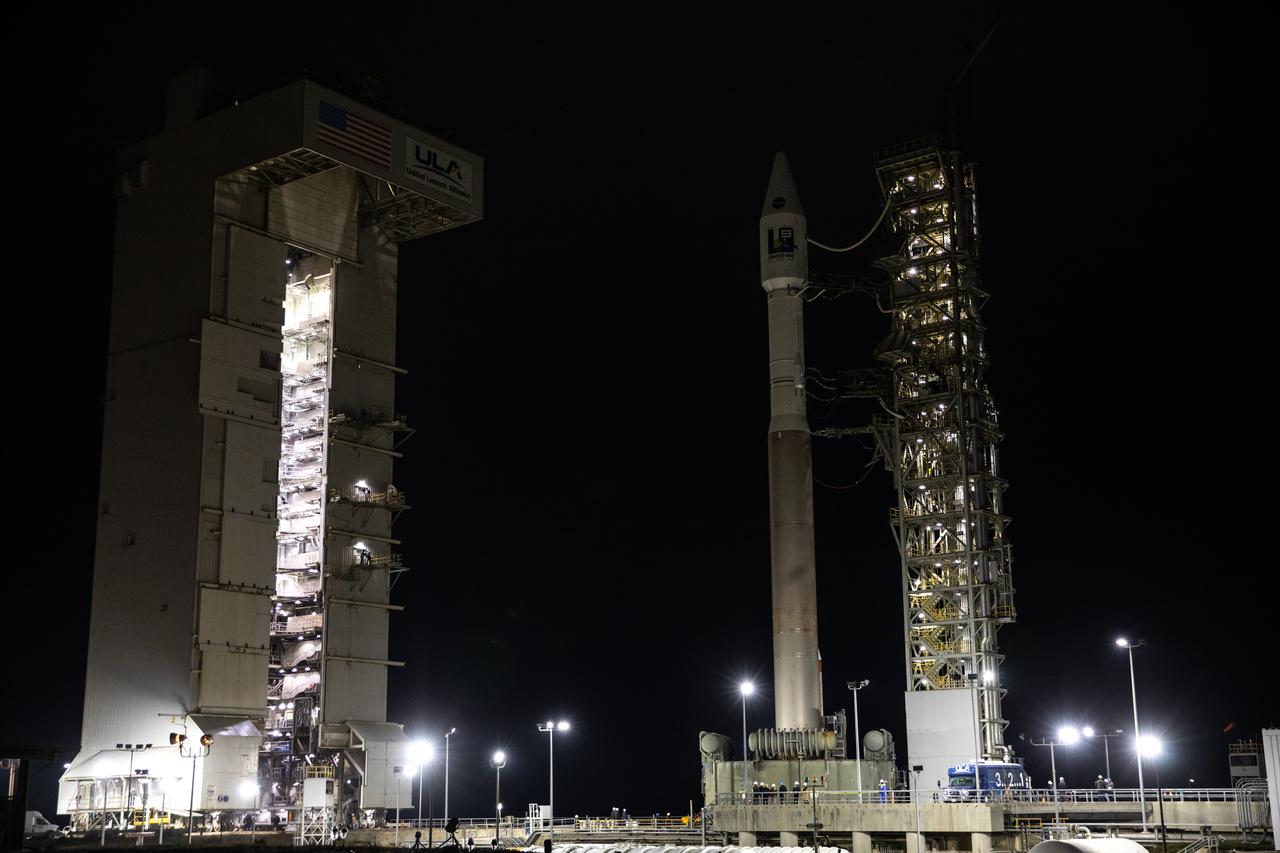
The United Launch Alliance Atlas V 401 rocket with NASA’s Landsat 9 satellite rolls out from the Vertical Integration Facility to the launch pad at Space Launch Complex 3 (SLC-3) at Vandenberg Space Force Base in California, on Sept. 27, 2021. Landsat 9 is scheduled to launch at 2:12 p.m. EDT (11:12 a.m. PDT) today, Sept. 27, atop the Atlas V from SLC-3. The launch is managed by NASA’s Launch Services Program based at Kennedy Space Center. The Landsat 9 satellite will continue the nearly 50-year legacy of previous Landsat missions. It will join its sister satellite, Landsat 8, in orbit to monitor key natural and economic resources from orbit. Landsat 9 is managed by the agency’s Goddard Space Flight Center in Greenbelt, Maryland. The satellite will carry two instruments: the Operational Land Imager 2, which collects images of Earth’s landscapes in visible, near infrared and shortwave infrared light, and the Thermal Infrared Sensor 2, which measures the temperature of land surfaces. Like its predecessors, Landsat 9 is a joint mission between NASA and the U.S. Geological Survey.
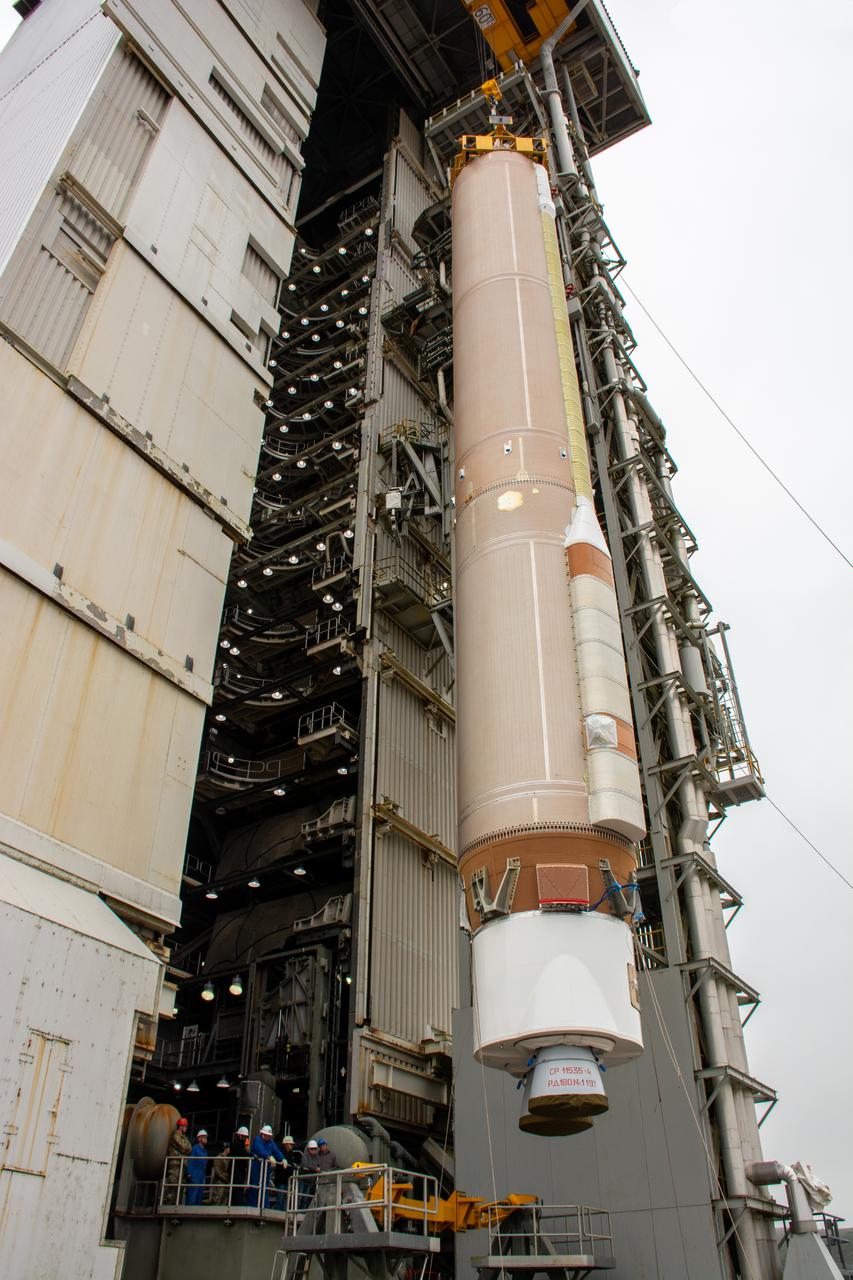
The United Launch Alliance Atlas V booster for NASA’s Landsat 9 mission is lifted by crane for its move into the Vertical Integration Facility at Space Launch Complex 3 at Vandenberg Space Force Base in California, on July 13, 2021. The Landsat 9 mission will launch atop the Atlas V rocket from Vandenberg in September 2021. The launch is being managed by NASA’s Launch Services Program based at Kennedy Space Center. The Landsat 9 satellite will continue the nearly 50-year legacy of previous Landsat missions. It will monitor key natural and economic resources from orbit. Landsat 9 is managed by the agency’s Goddard Space Flight Center in Greenbelt, Maryland. The satellite will carry two instruments: the Operational Land Imager 2, which collects images of Earth’s landscapes in visible, near infrared and shortwave infrared light, and the Thermal Infrared Sensor 2, which measures the temperature of land surfaces. Like its predecessors, Landsat 9 is a joint mission between NASA and the U.S. Geological Survey.
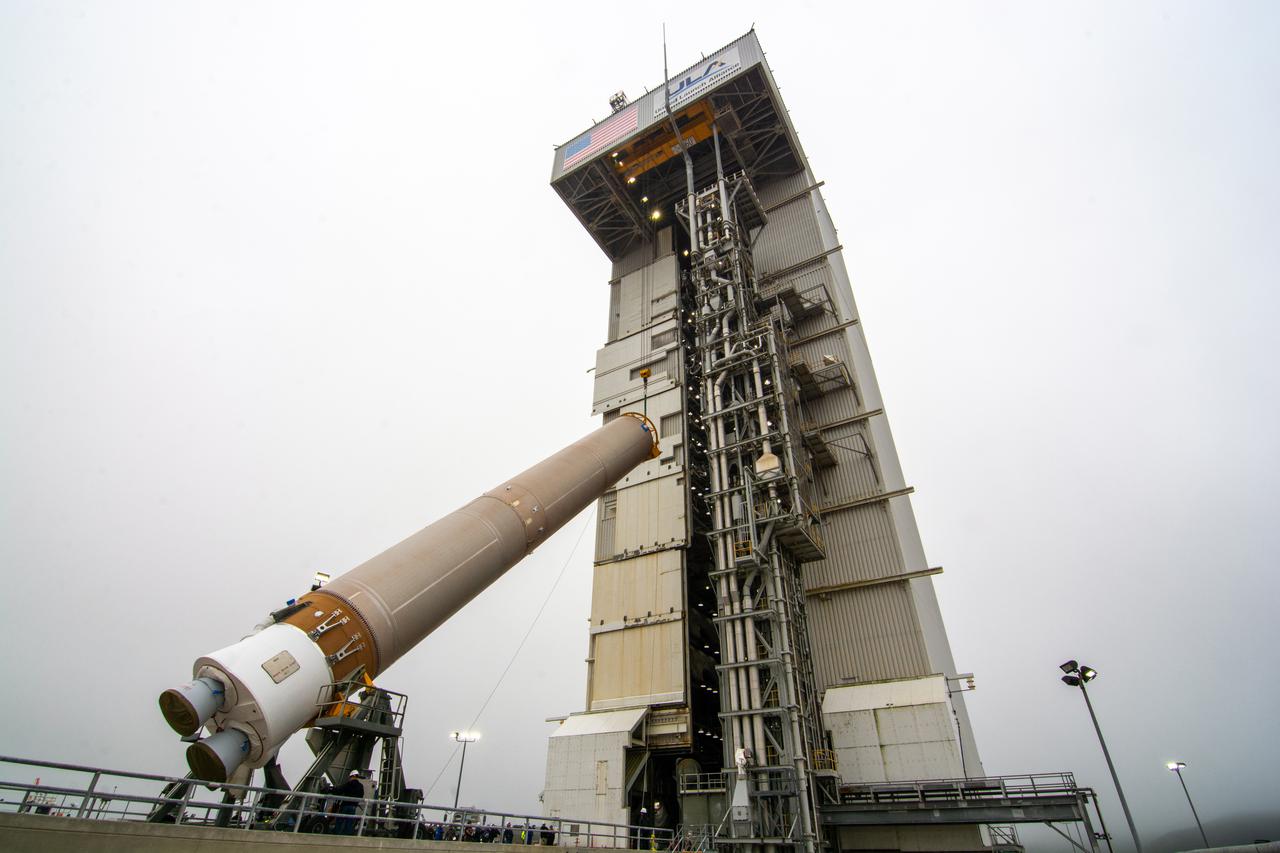
The United Launch Alliance Atlas V booster for NASA’s Landsat 9 mission is lifted by crane and a special lifting advice for transfer into the Vertical Integration Facility at Space Launch Complex 3 at Vandenberg Space Force Base in California, on July 13, 2021. The Landsat 9 mission will launch atop the Atlas V rocket from Vandenberg in September 2021. The launch is being managed by NASA’s Launch Services Program based at Kennedy Space Center. The Landsat 9 satellite will continue the nearly 50-year legacy of previous Landsat missions. It will monitor key natural and economic resources from orbit. Landsat 9 is managed by the agency’s Goddard Space Flight Center in Greenbelt, Maryland. The satellite will carry two instruments: the Operational Land Imager 2, which collects images of Earth’s landscapes in visible, near infrared and shortwave infrared light, and the Thermal Infrared Sensor 2, which measures the temperature of land surfaces. Like its predecessors, Landsat 9 is a joint mission between NASA and the U.S. Geological Survey.