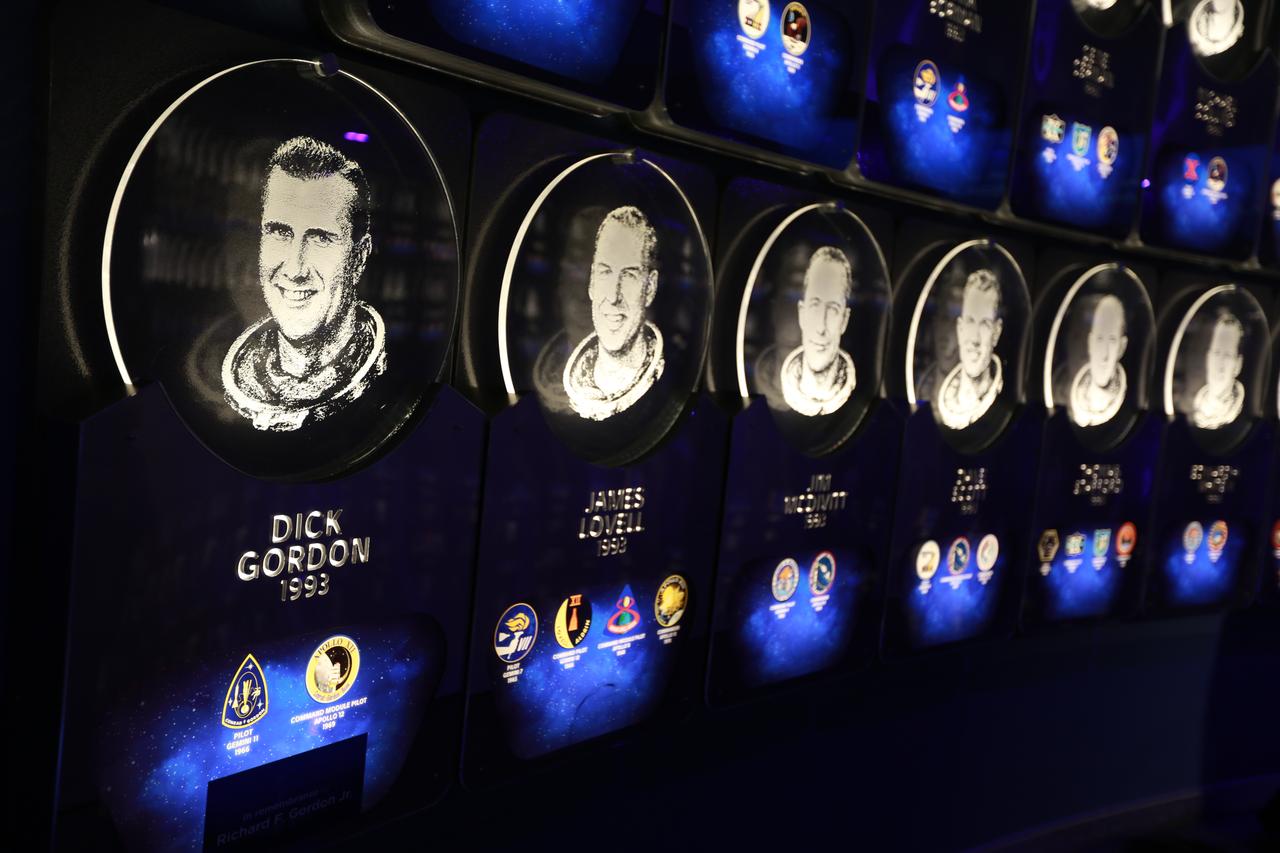
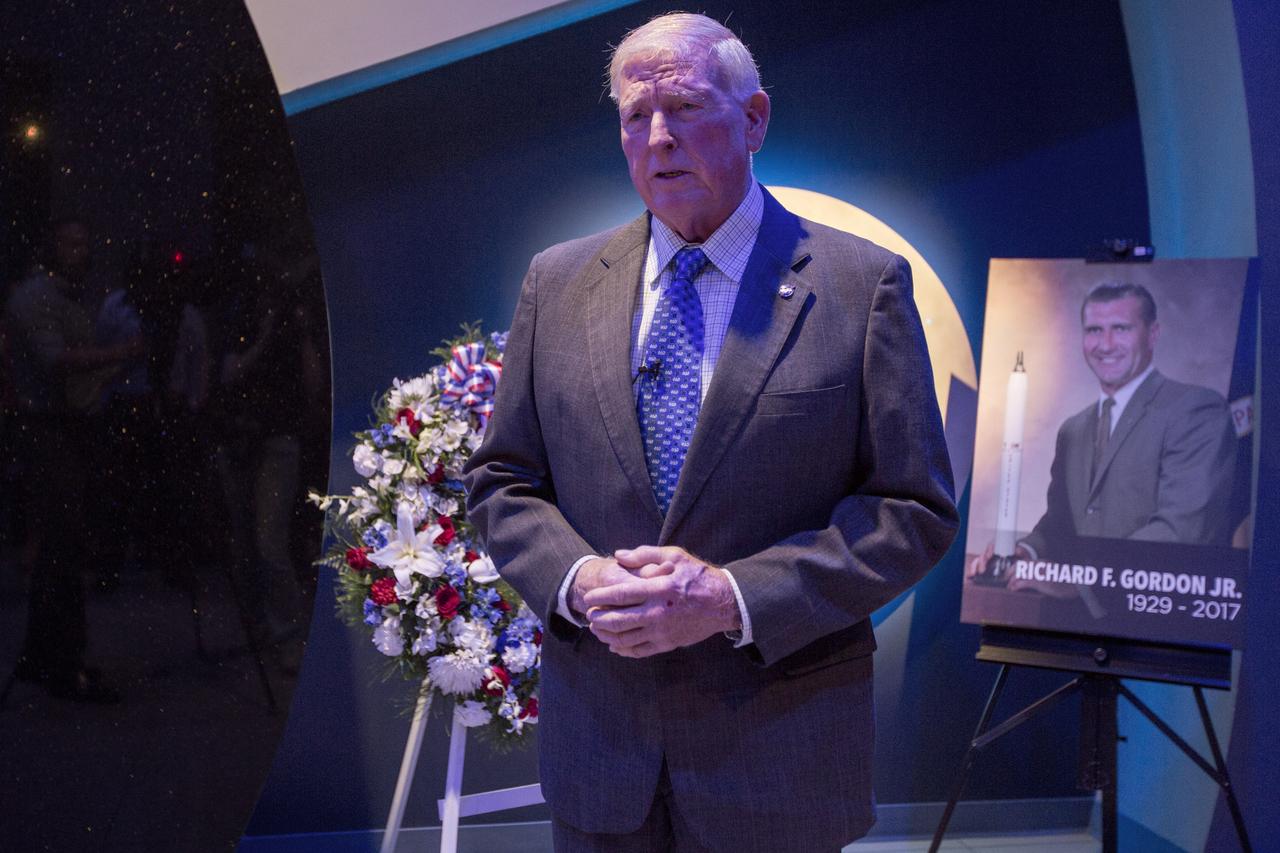
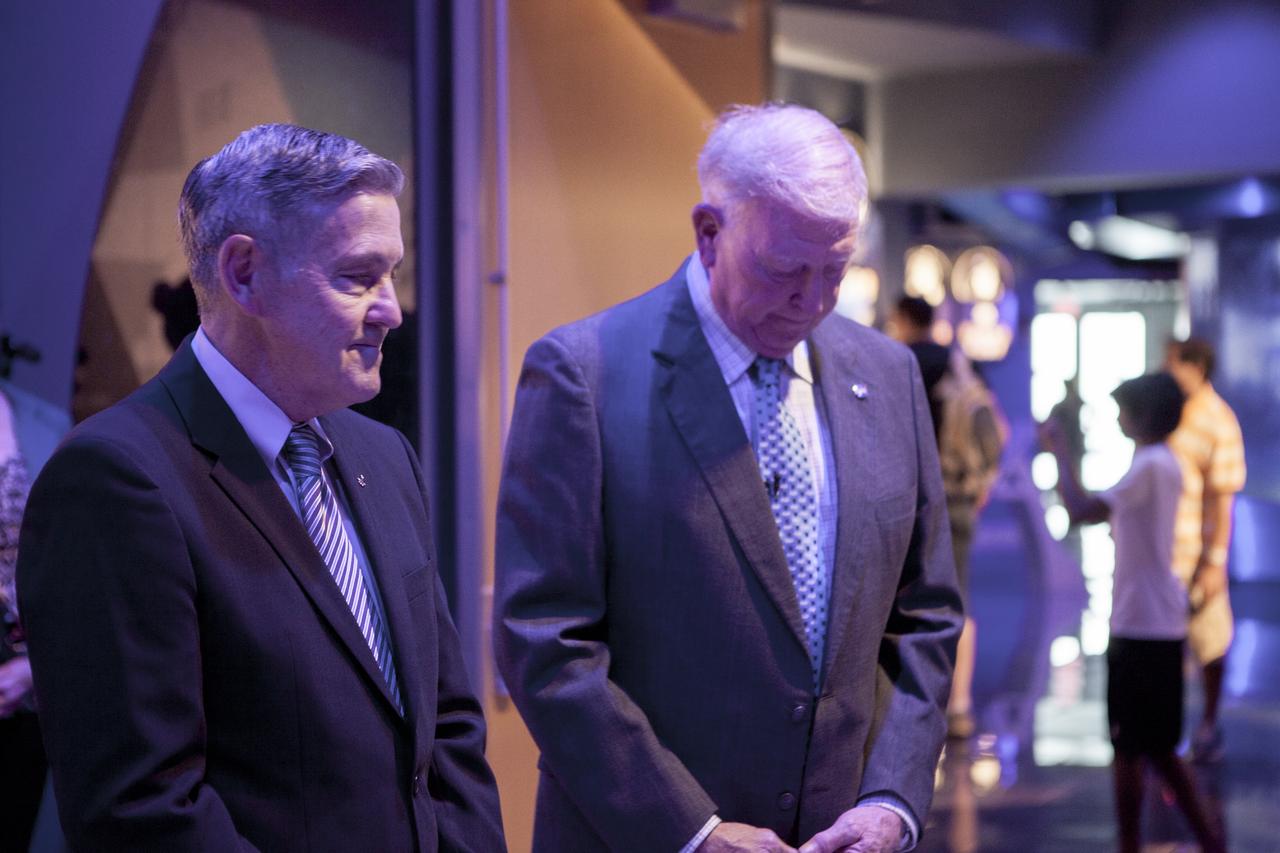
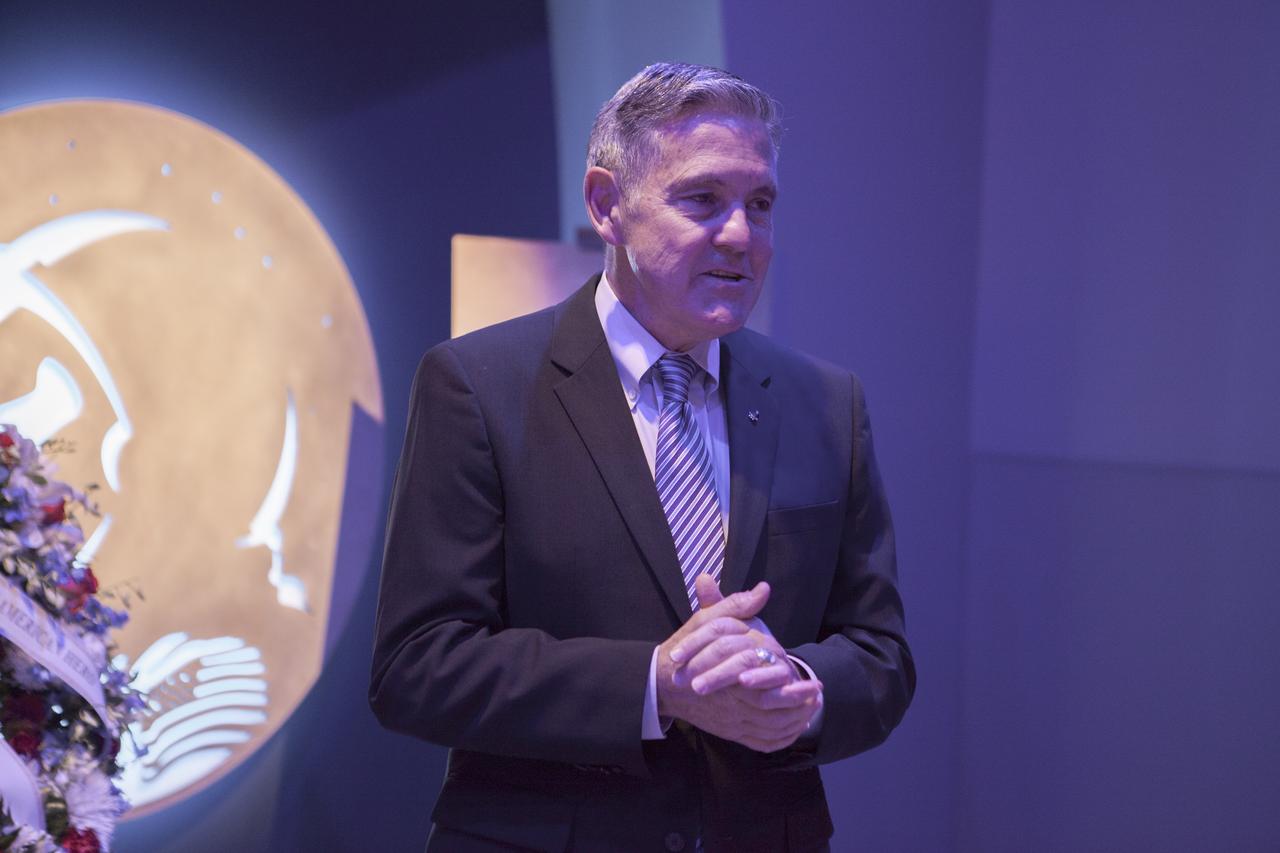
In the Heroes and Legends exhibit at the Kennedy Space Center Visitor Complex, Center Director Bob Cabana and space shuttle astronaut Jon McBride participate in a ceremony to honoring the memory of former NASA astronaut Richard Gordon. Having performed two spacewalks during Gemini XI in 1966, Gordon later served as command module pilot on Apollo 12 in 1969. Gordon died Nov. 6, 2017, at the age of 88.
Astronaut Dick Gordon Memorial
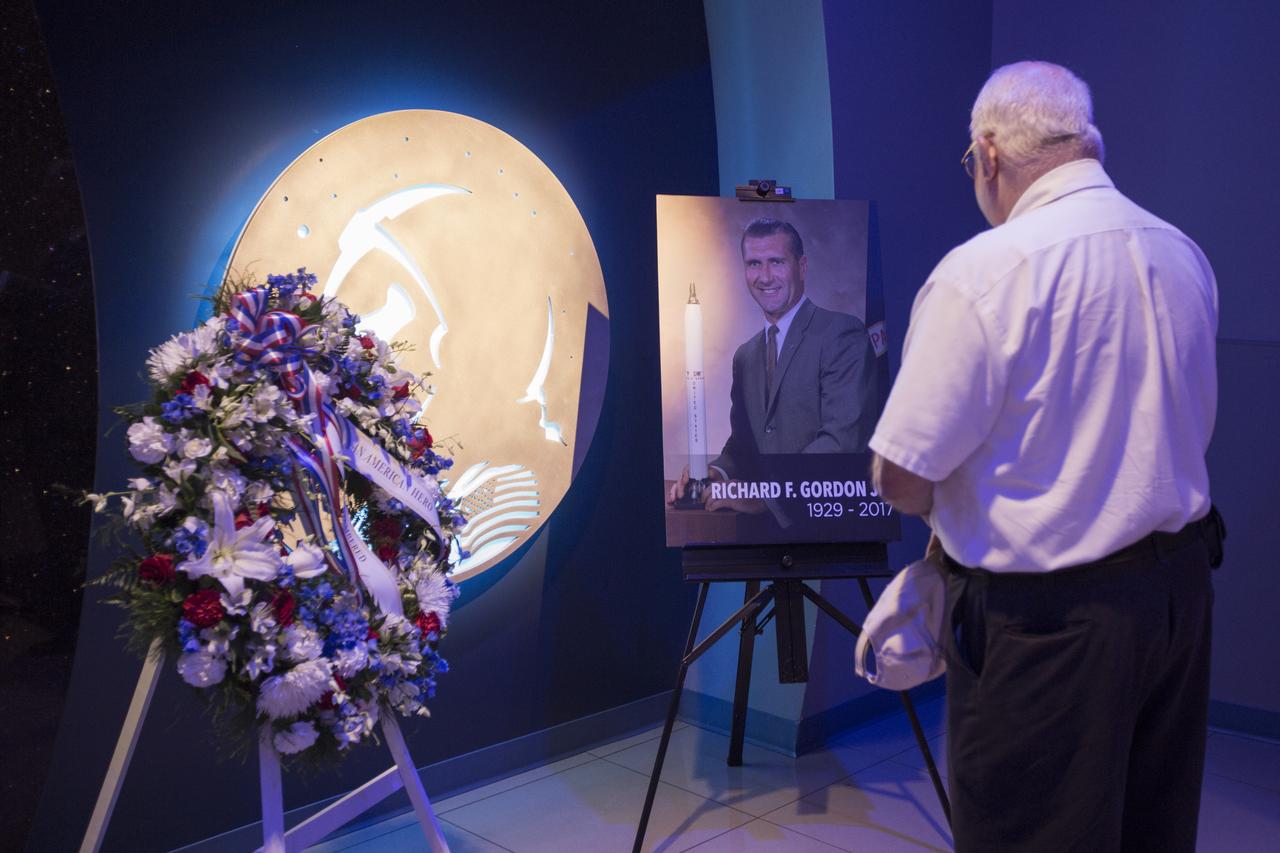
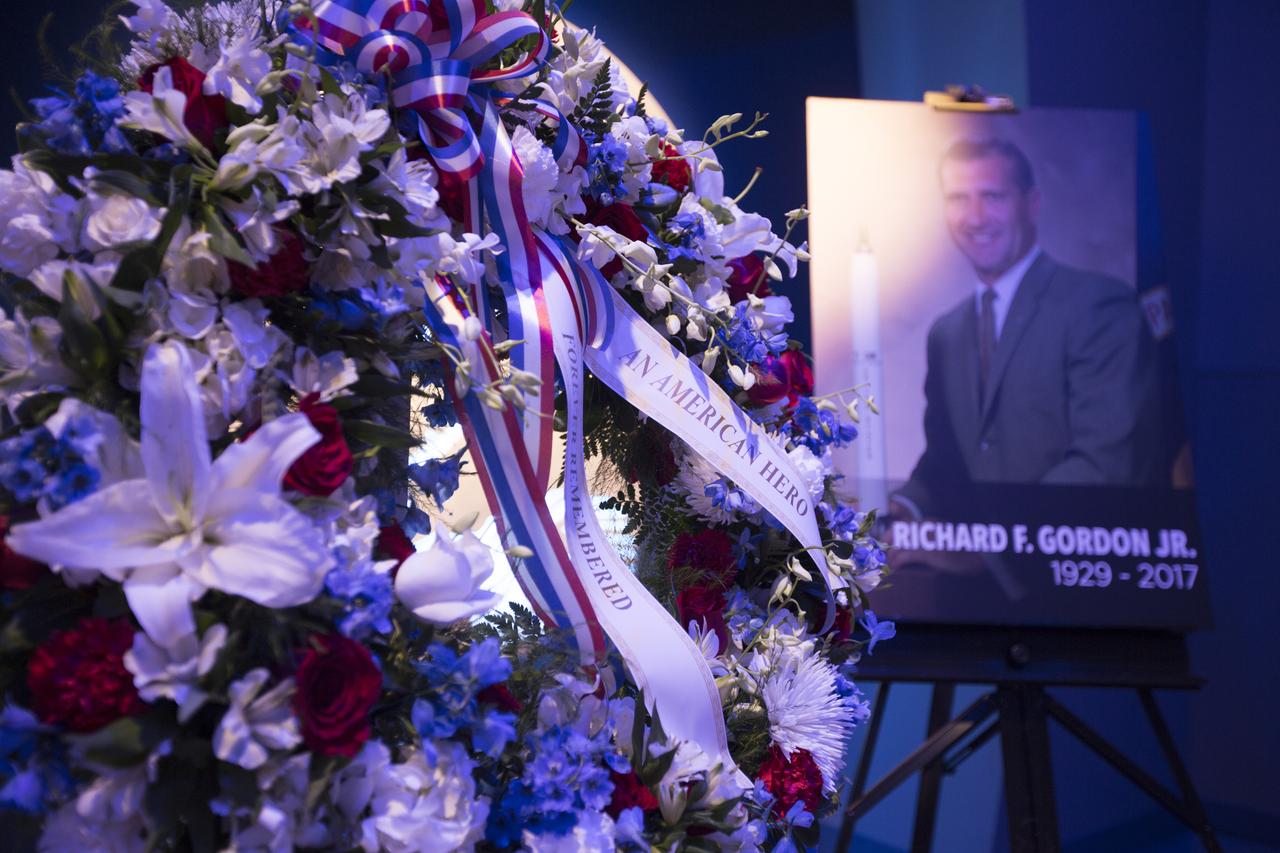
In the Heroes and Legends exhibit at the Kennedy Space Center Visitor Complex, a guest pays respect to former NASA astronaut Richard Gordon. A memorial wreath was placed following a ceremony to honor the memory of Gordon who performed two spacewalks during Gemini XI in 1966 and served as command module pilot on Apollo 12 in 1969. Gordon died Nov. 6, 2017, at the age of 88.
Astronaut Dick Gordon Memorial
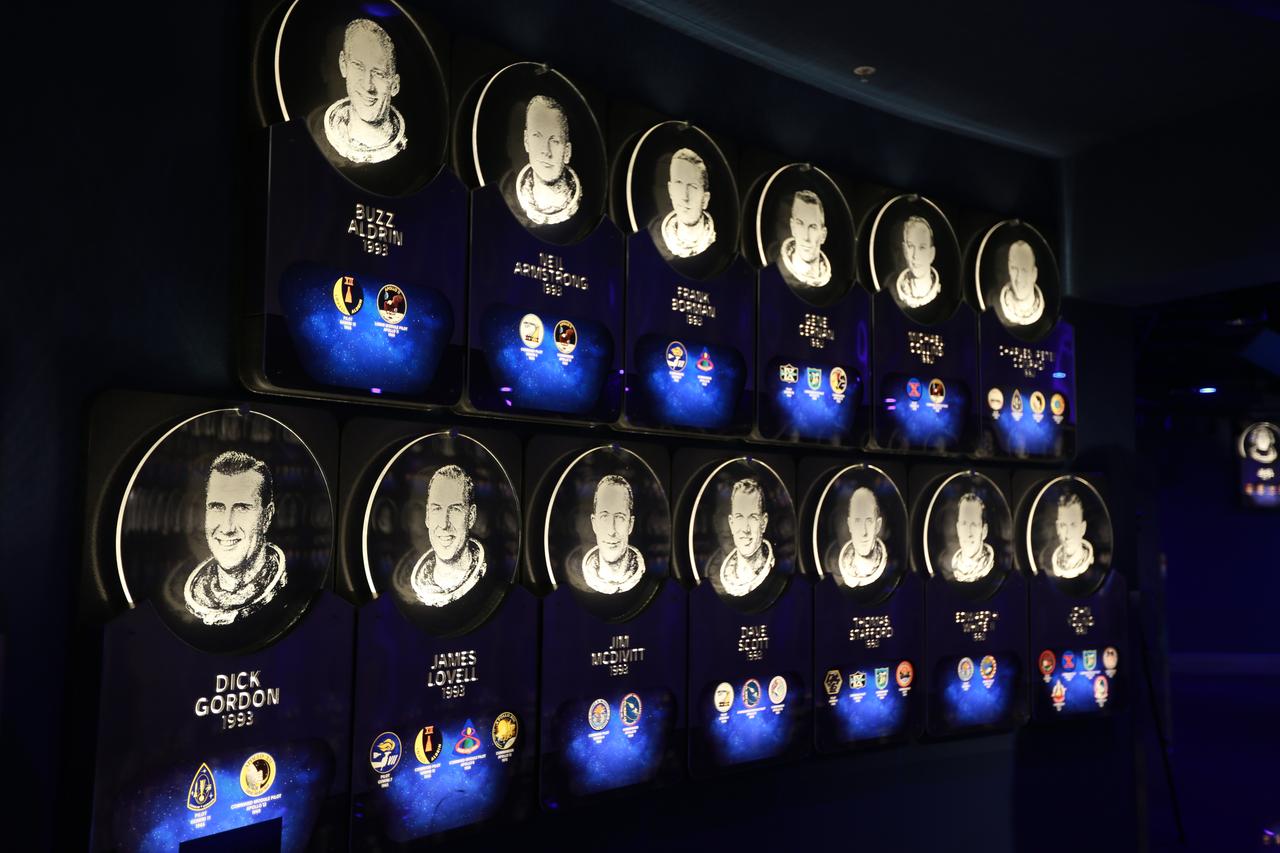
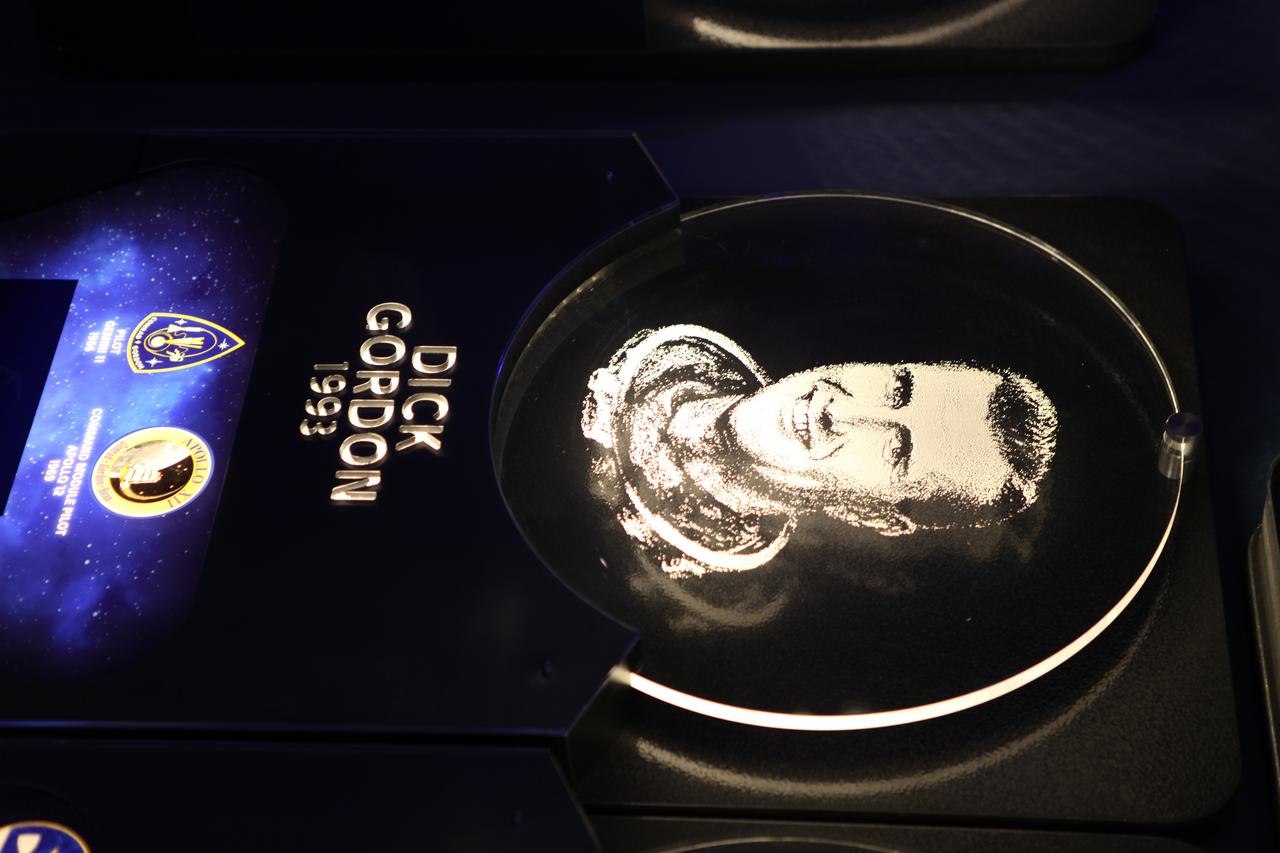
In the Heroes and Legends exhibit at the Kennedy Space Center Visitor Complex, former NASA astronaut Richard Gordon's plaque is seen among others enshrined in the U.S. Astronaut Hall of Fame. Gordon performed two spacewalks during Gemini XI in 1966 and was command module pilot on Apollo 12 in 1969. Gordon died Nov. 6, 2017, at the age of 88.
Astronaut Dick Gordon Memorial
In the Heroes and Legends exhibit at the Kennedy Space Center Visitor Complex, space shuttle astronaut Jon McBride, speaks at a ceremony to honoring the memory of former NASA astronaut Richard Gordon. Having performed two spacewalks during Gemini XI in 1966, Gordon later served as command module pilot on Apollo 12 in 1969. Gordon died Nov. 6, 2017, at the age of 88.
Astronaut Dick Gordon Memorial
In the Heroes and Legends exhibit at the Kennedy Space Center Visitor Complex, former NASA astronaut Richard Gordon's plaque is seen among other enshrines of the U.S. Astronaut Hall of Fame. Gordon performed two spacewalks during Gemini XI in 1966 and was command module pilot on Apollo 12 in 1969. Gordon died Nov. 6, 2017, at the age of 88.
Astronaut Dick Gordon Memorial
In the Heroes and Legends exhibit at the Kennedy Space Center Visitor Complex, former NASA astronaut Richard Gordon's plaque is seen among others enshrined in the U.S. Astronaut Hall of Fame. Gordon performed two spacewalks during Gemini XI in 1966 and was command module pilot on Apollo 12 in 1969. Gordon died Nov. 6, 2017, at the age of 88.
Astronaut Dick Gordon Memorial
In the Heroes and Legends exhibit at the Kennedy Space Center Visitor Complex, Center Director Bob Cabana speaks during a ceremony honoring the memory of former NASA astronaut Richard Gordon. Having performed two spacewalks during Gemini XI in 1966, Gordon later served as command module pilot on Apollo 12 in 1969. Gordon died Nov. 6, 2017, at the age of 88.
Astronaut Dick Gordon Memorial
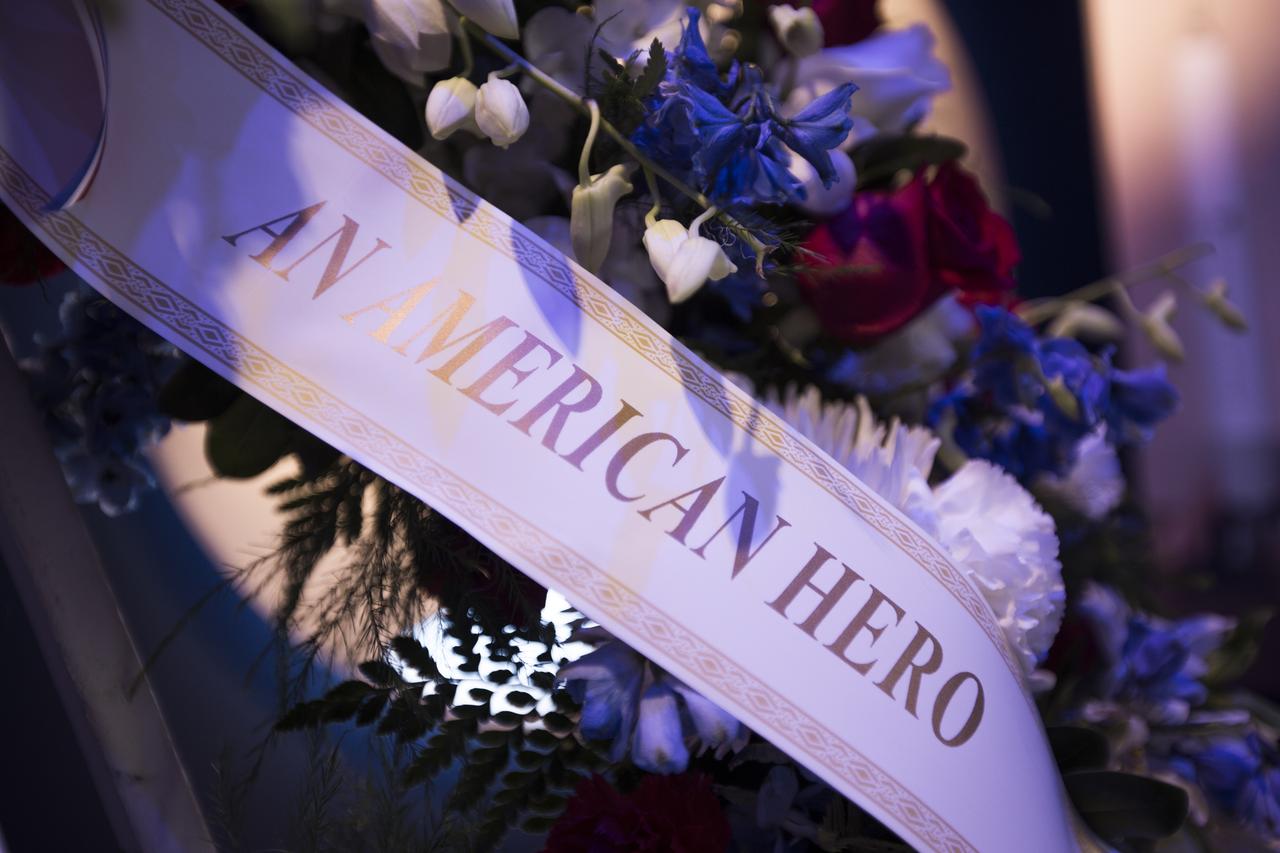
In the Heroes and Legends exhibit at the Kennedy Space Center Visitor Complex, a memorial wreath was placed following a ceremony to honor the memory of former NASA astronaut Richard Gordon. He performed two spacewalks during Gemini XI in 1966 and was command module pilot on Apollo 12 in 1969. Gordon died Nov. 6, 2017, at the age of 88.
Astronaut Dick Gordon Memorial
In the Heroes and Legends exhibit at the Kennedy Space Center Visitor Complex, a memorial wreath was placed following a ceremony to honor the memory of former NASA astronaut Richard Gordon. He performed two spacewalks during Gemini XI in 1966 and was command module pilot on Apollo 12 in 1969. Gordon died Nov. 6, 2017, at the age of 88.
Astronaut Dick Gordon Memorial
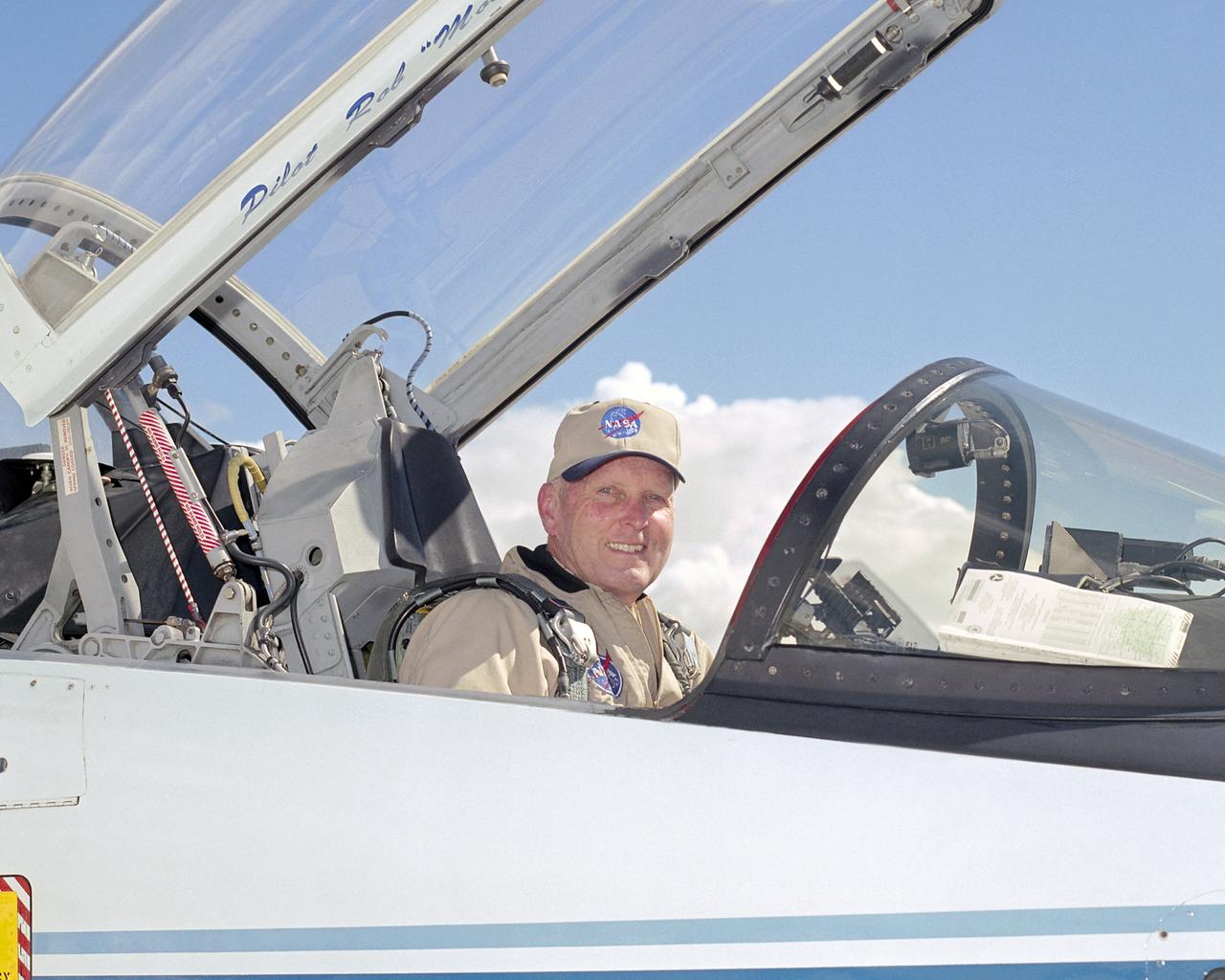
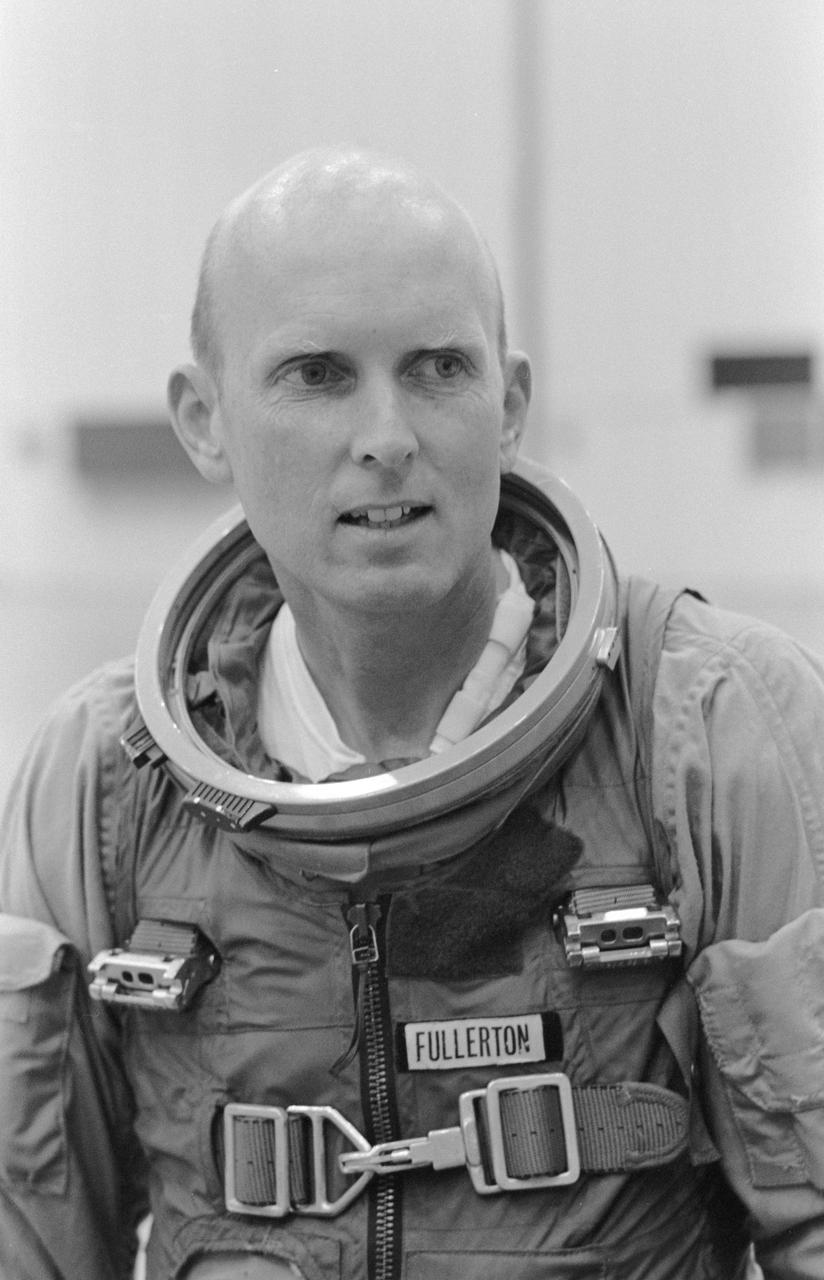
NASA Dryden Flight Research Center's chief pilot Gordon Fullerton in the cockpit of the center's T-38 Talon mission support aircraft.
Richard F. Gordon Jr. climbing into training simulator. Astronaut Richard (Dick) Gordon, died in November 2017, at his home in California.  He was 88.  Gordon orbited the Moon on Apollo 12 in 1969 while two other astronauts walked on it.  The Apollo 12 crew capsule can be seen at Langley's official visitor center, the Virginia Air and Space Center in Hampton VA. NASA 2017 Annual report, Celebrating 100 years.page 23 Milestones.
Astronaut Richard F. Gordon Jr. Climbing in to Training Simulator
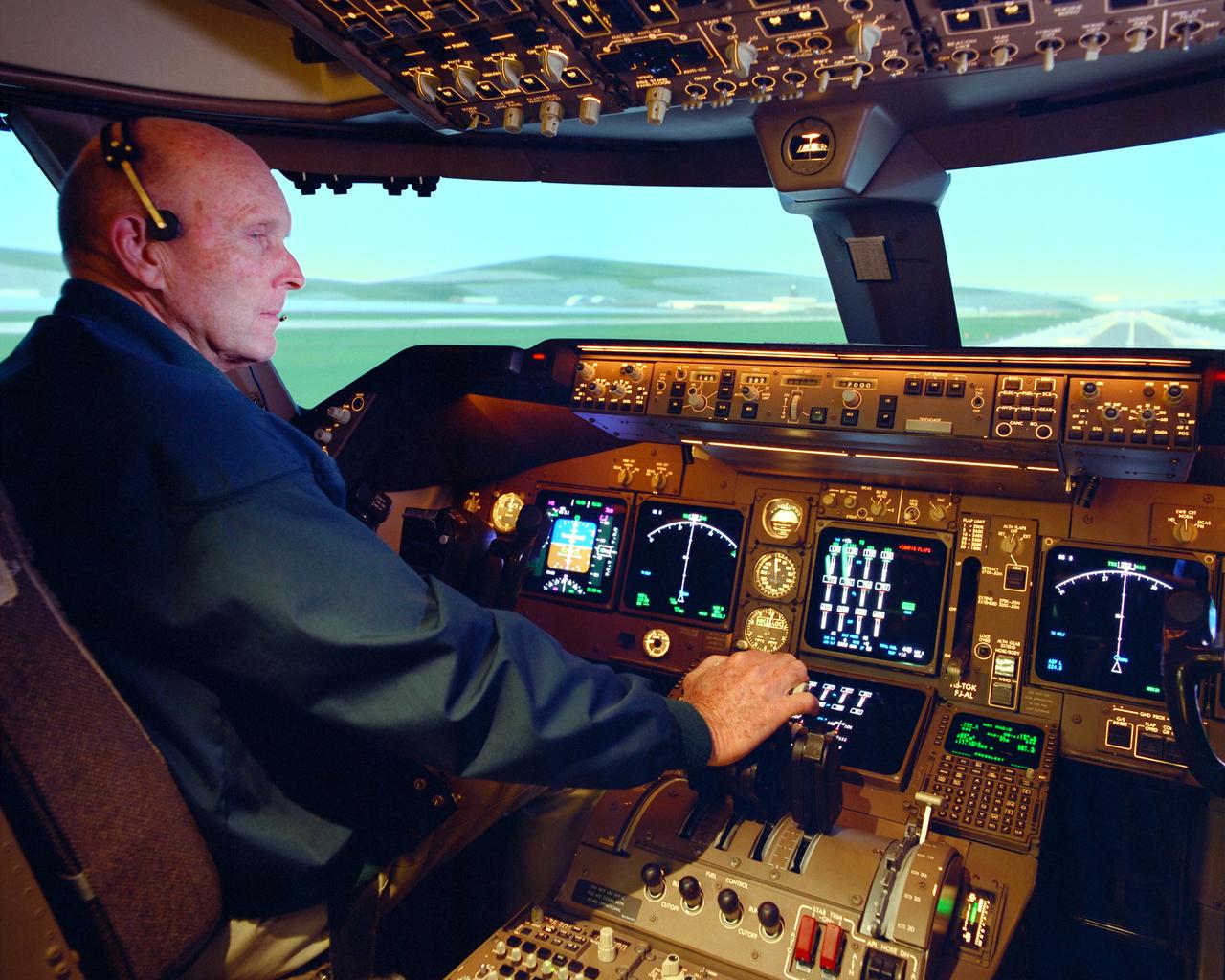
NASA research pilot Gordon Fullerton checked out how the PCA software worked in the multi-engine simulator at NASA Ames before fight-testing PCA in an MD-11.
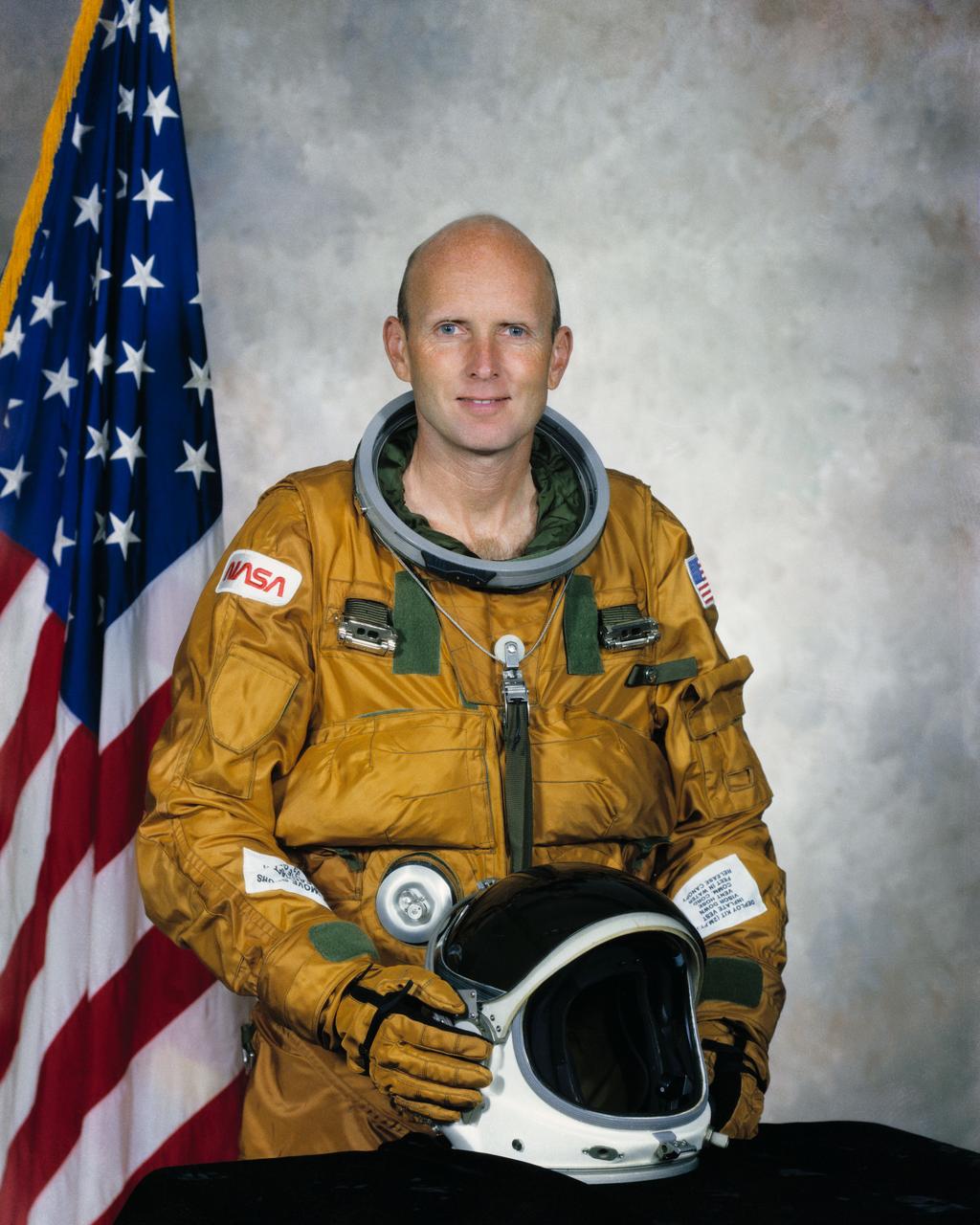
S79-36380 (17 Sept 1979) --- Astronaut Gordon Fullerton.
OFFICIAL PORTRAIT - FULLERTON, GORDON, ASTRONAUT
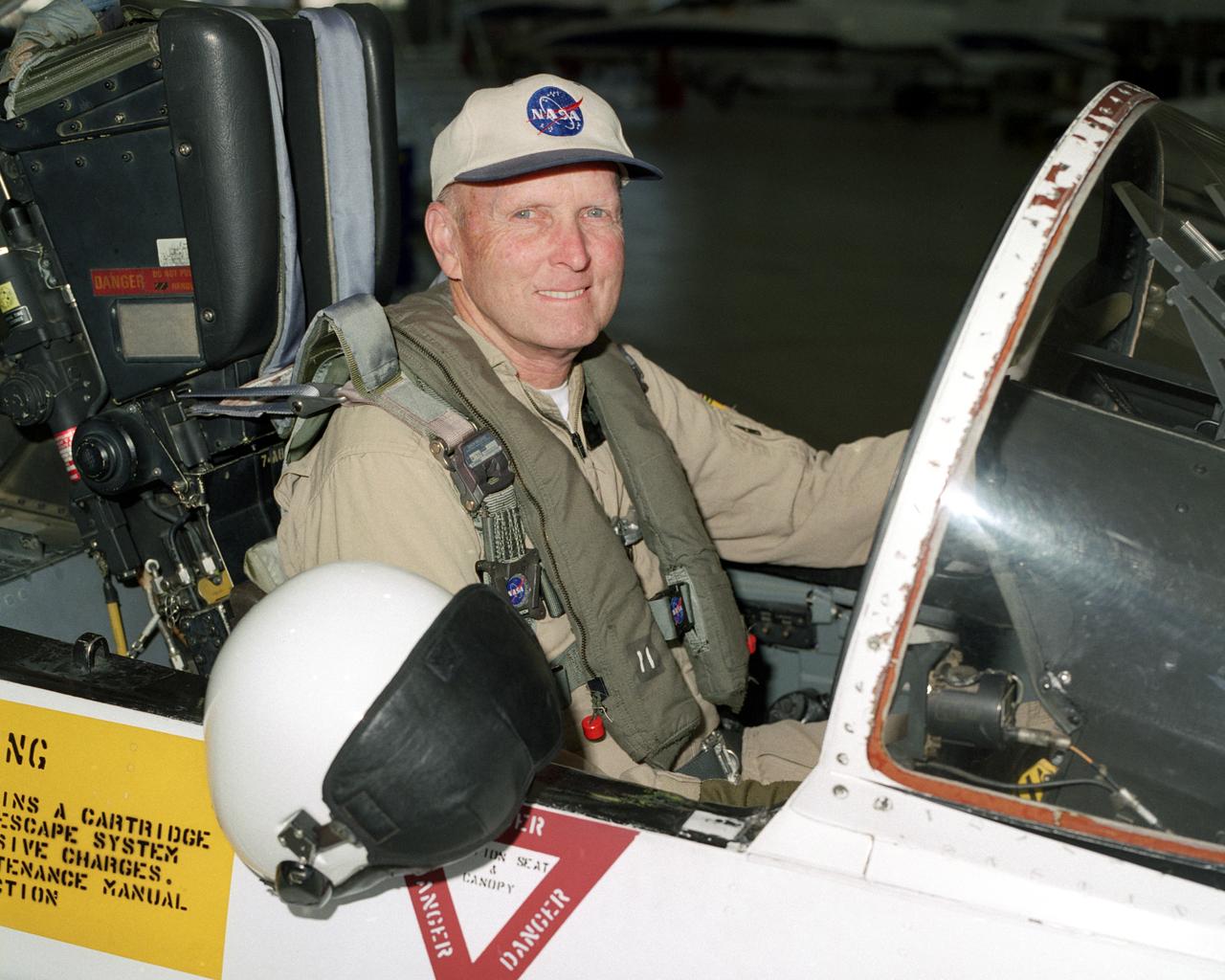
Former NASA astronaut C. Gordon Fullerton, seated in the cockpit of an F/A-18, is a research pilot at NASA's Dryden Flight Research Center, Edwards, Calif. Since transferring to Dryden in 1986, his assignments have included a variety of flight research and support activities piloting NASA's B-52 launch aircraft, the 747 Shuttle Carrier Aircraft (SCA), and other multi-engine and high performance aircraft.  He flew a series of development air launches of the X-38 prototype Crew Return Vehicle and in the launches for the X-43A Hyper-X project. Fullerton also flies Dryden's DC-8 Airborne Science aircraft in support a variety of atmospheric physics, ground mapping and meteorology studies. Fullerton also was project pilot on the Propulsion Controlled Aircraft program, during which he successfully landed both a modified F-15 and an MD-11 transport with all control surfaces neutralized, using only engine thrust modulation for control. Fullerton also evaluated the flying qualities of the Russian Tu-144 supersonic transport during two flights in 1998, one of only two non-Russian pilots to fly that aircraft.  With more than 15,000 hours of flying time, Fullerton has piloted 135 different types of aircraft in his career. As an astronaut, Fullerton served on the support crews for the Apollo 14, 15, 16, and 17 lunar missions. In 1977, Fullerton was on one of the two flight crews that piloted the Space Shuttle prototype Enterprise during the Approach and Landing Test Program at Dryden. Fullerton was the pilot on the STS-3 Space Shuttle orbital flight test mission in 1982, and commanded the STS-51F Spacelab 2 mission in 1985. He has logged 382 hours in space flight. In July 1988, he completed a 30-year career with the U.S. Air Force and retired as a colonel.
Research pilot and former astronaut C. Gordon Fullerton in an F/A-18
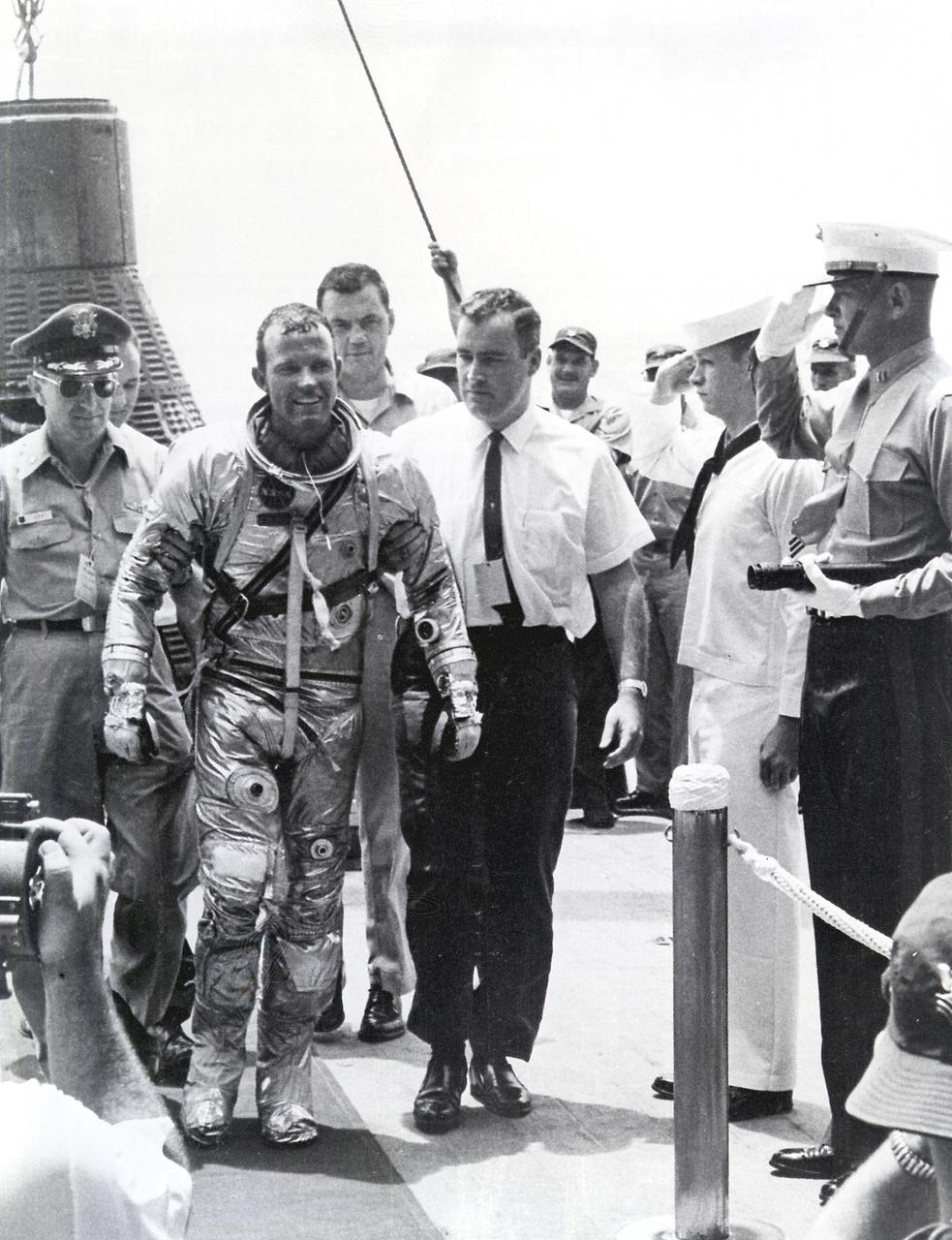
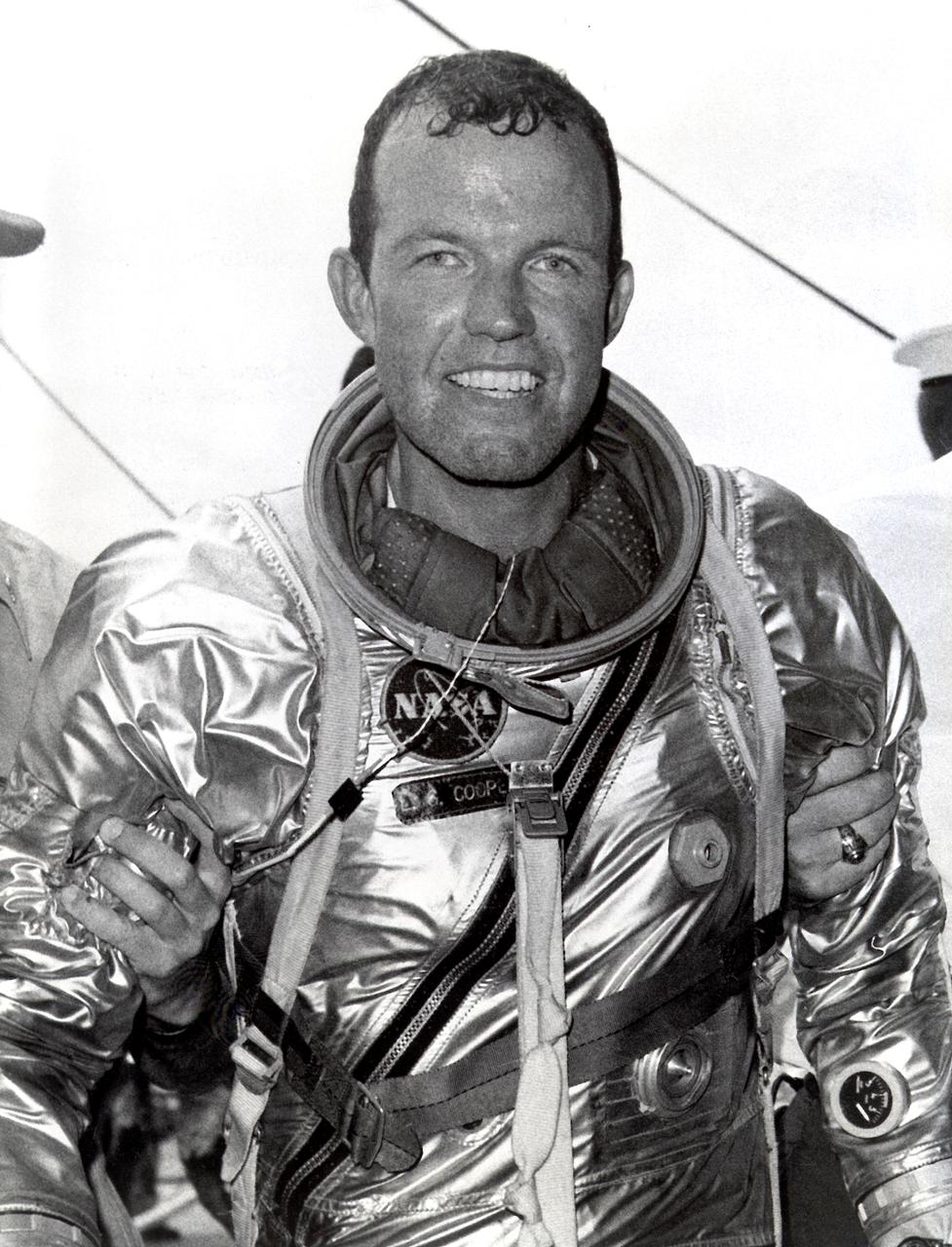
Astronaut Gordon Cooper leaves the Faith 7 (MA-9) spacecraft after a successful recovery operation. The MA-9 mission, the last flight of the Mercury Project, was launched on May 15, 1963, orbited the Earth 22 times, and lasted for 1-1/2 days.
Mercury Project
Astronaut Gordon Cooper leaves the Faith 7 (MA-9) spacecraft after a successful recovery operation. The MA-9 mission, the last flight of the Mercury Project, was launched on May 15, 1963, orbited the Earth 22 times, and lasted for 1-1/2 days.
Mercury Project
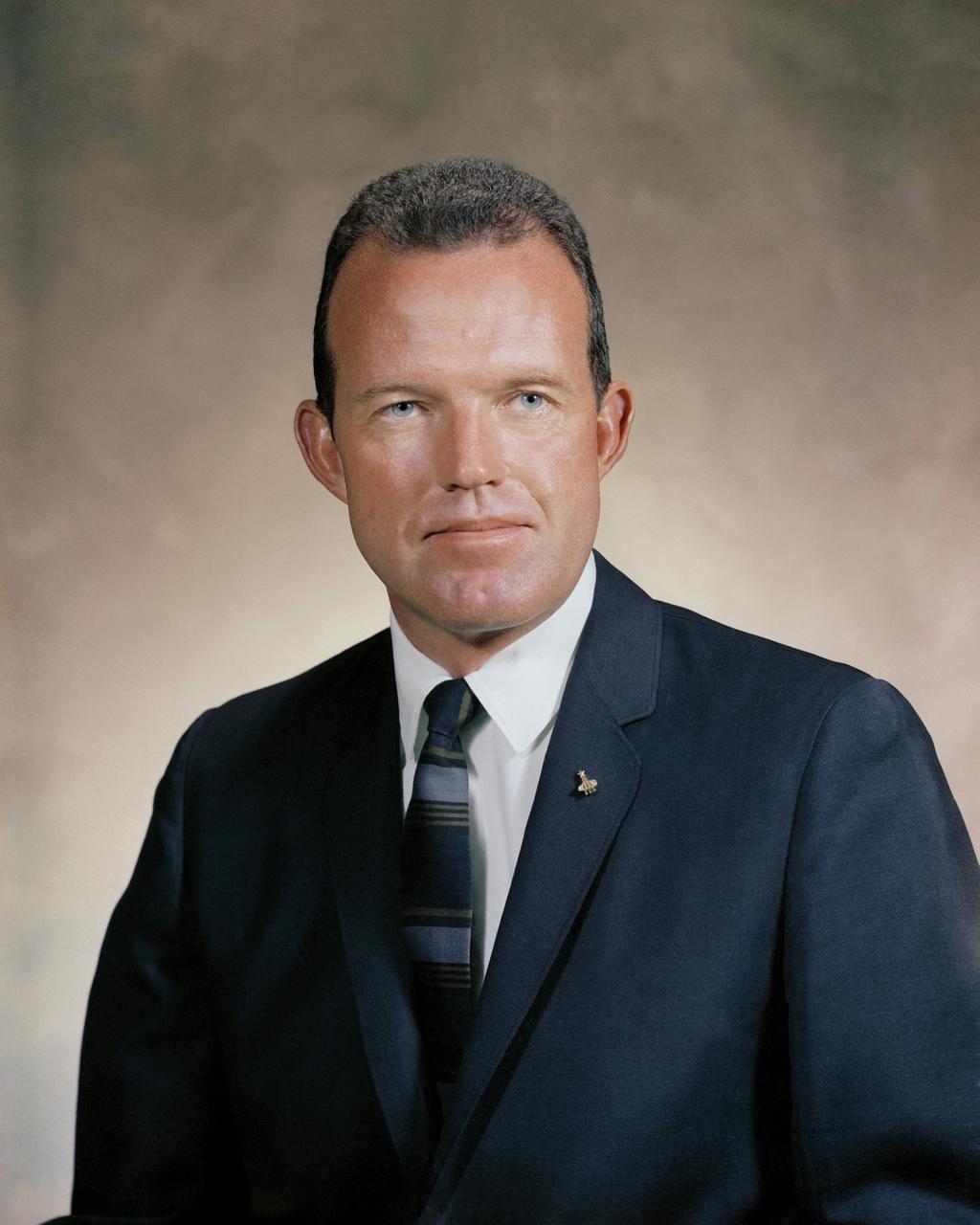
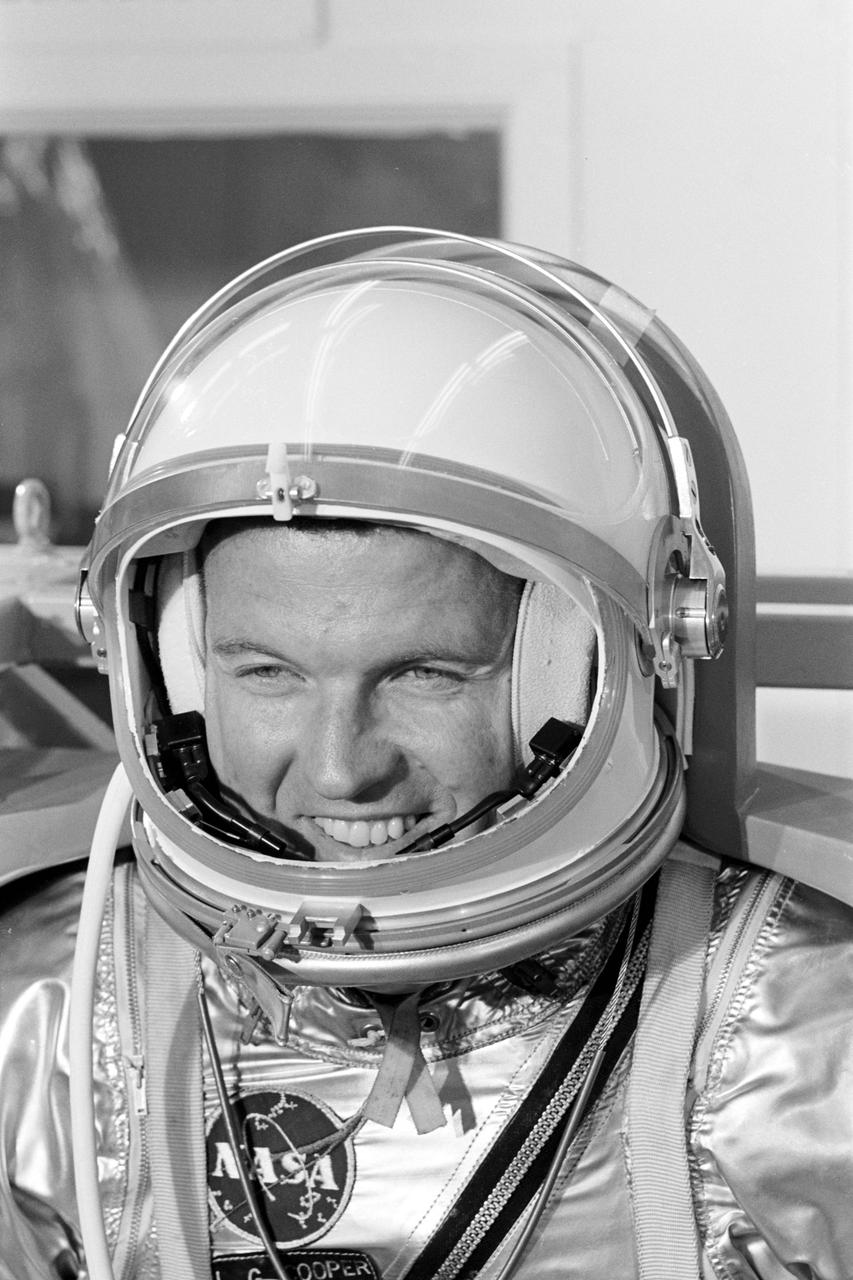
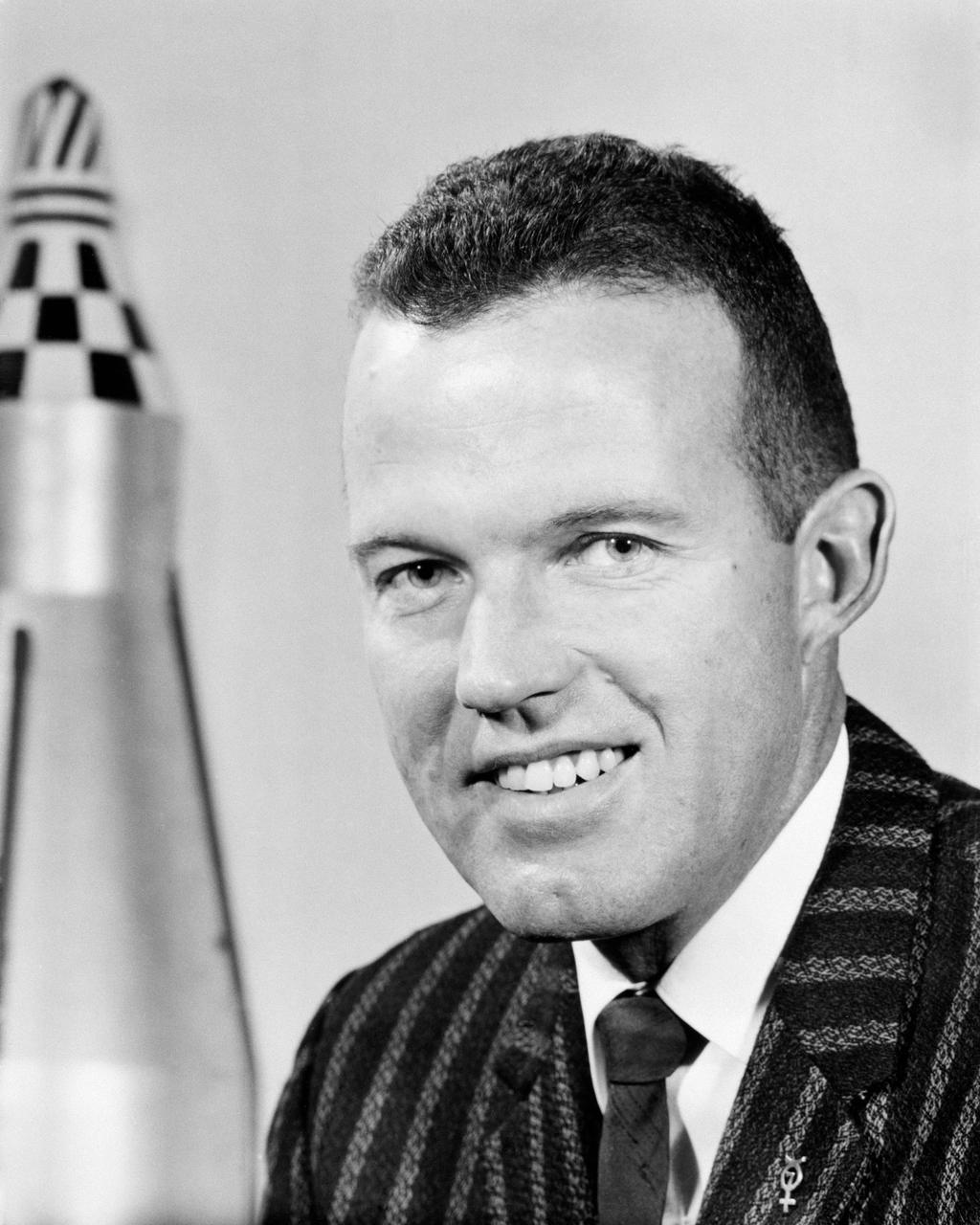
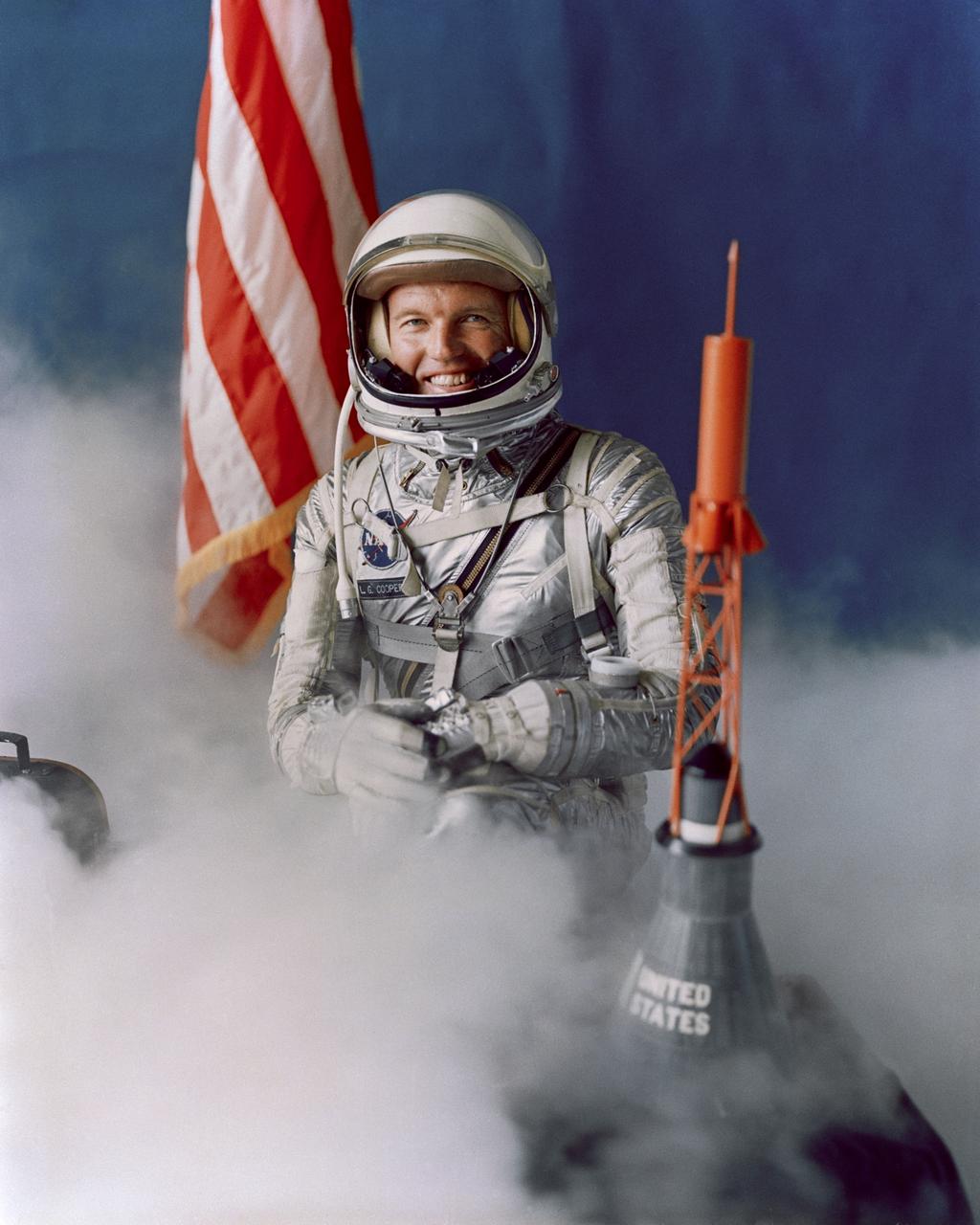
S64-31847 (10 Sept. 1964) --- Astronaut L. Gordon Cooper Jr. portrait
PORTRAIT - ASTRONAUT COOPER, L. GORDON, JR.
S64-31459 (10 Sept. 1964) --- Astronaut Richard F. Gordon Jr. portrait. Photo credit: NASA
PORTRAIT - ASTRONAUT RICHARD F. GORDON, JR.
S62-05118 (1962) --- Astronaut L. Gordon Cooper Jr. on weight and balance scale in the White Room, Hangar S at Cape Canaveral. Photo credit: NASA
Astronaut L. Gordon Cooper on weight and balance scale
S66-45613 (23 Sept. 1966) --- Astronauts Charles Conrad Jr. (with pipe) and Richard F. Gordon Jr. (background) view negatives from their Gemini-11 mission. Photo credit: NASA
Astronauts Conrad & Gordon - Negatives - Gemini 11 - MSC
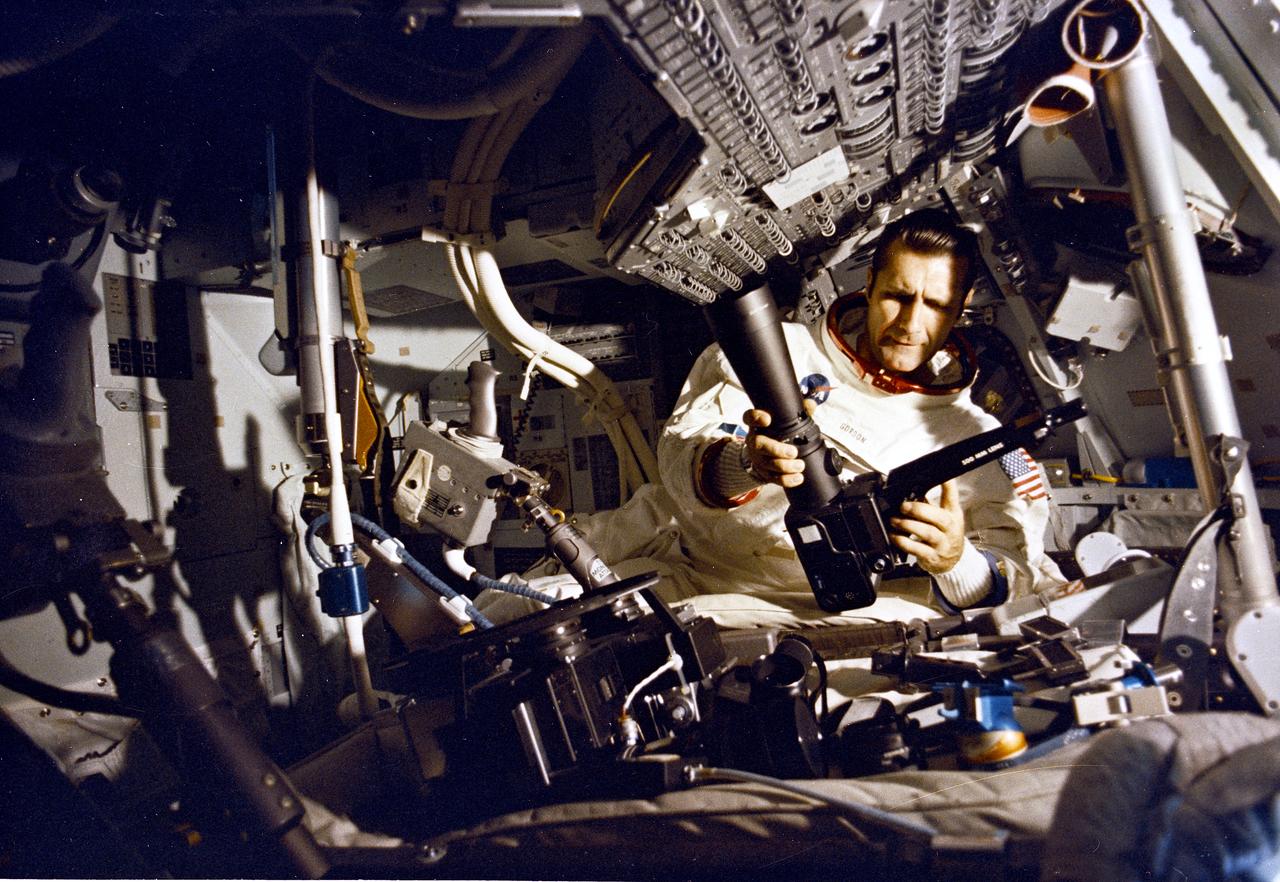
This is a view of astronaut Richard F. Gordon attaching a high resolution telephoto lens to a camera aboard the Apollo 12 Command Module (CM) Yankee Clipper. The second manned lunar landing mission, Apollo 12 launched from launch pad 39-A at Kennedy Space Center in Florida on November 14, 1969 via a Saturn V launch vehicle. The Saturn V vehicle was developed by the Marshall Space Flight Center (MSFC) under the direction of Dr. Wernher von Braun. Aboard Apollo 12 was a crew of three astronauts:  Alan L. Bean, pilot of the Lunar Module (LM), Intrepid; Richard Gordon, pilot of the Command Module (CM), Yankee Clipper; and Spacecraft Commander Charles Conrad. The LM, Intrepid, landed astronauts Conrad and Bean on the lunar surface in what’s known as the Ocean of Storms. Their lunar soil activities included the deployment of the Apollo Lunar Surface Experiments Package (ALSEP), finding the unmanned Surveyor 3 that landed on the Moon on April 19, 1967, and collecting 75 pounds (34 kilograms) of rock samples. Astronaut Richard Gordon piloted the CM, Yankee Clipper, in a parking orbit around the Moon. Apollo 12 safely returned to Earth on November 24, 1969.
Saturn Apollo Program
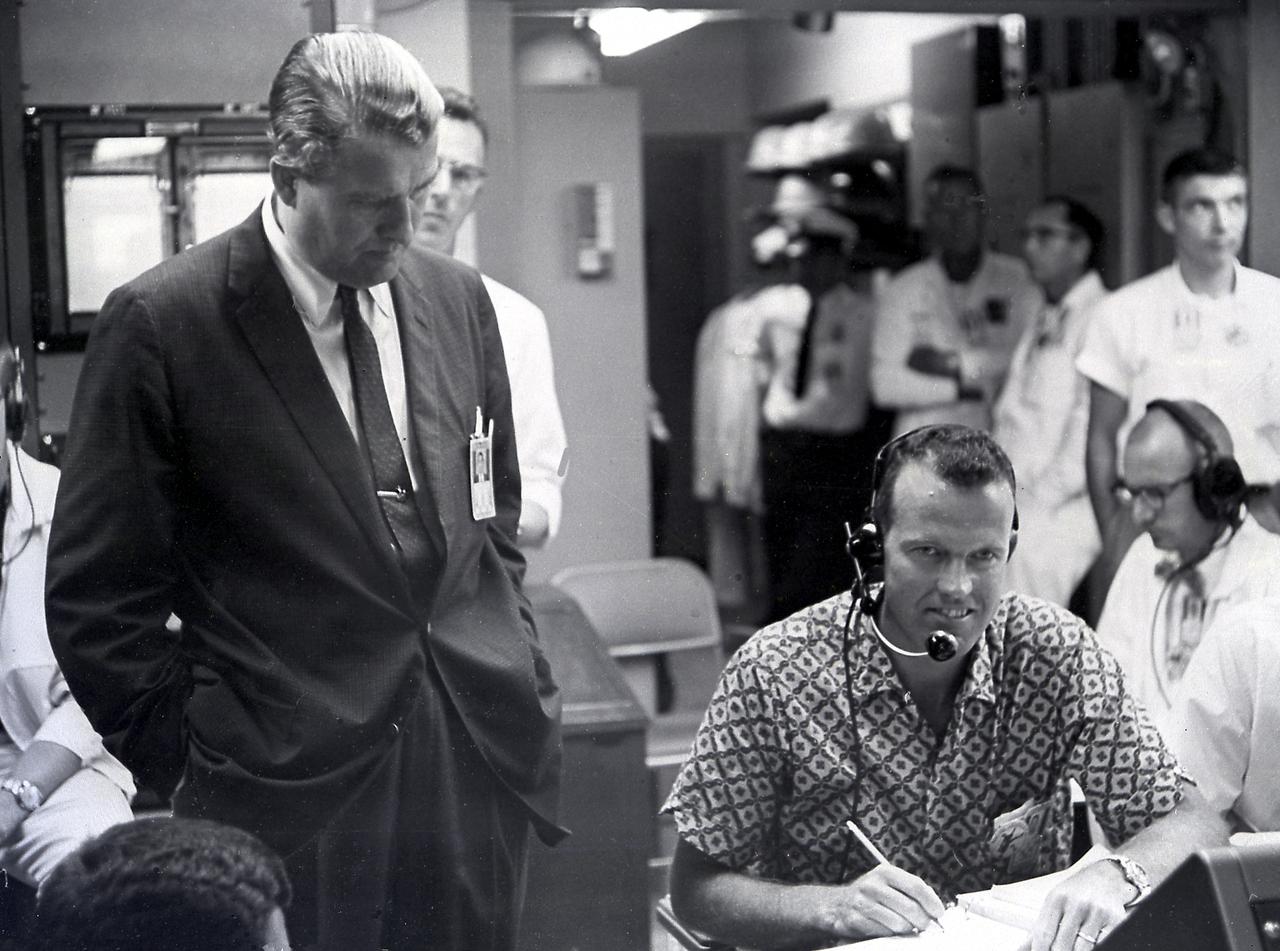
Photographed are Dr. von Braun and Astronaut L. Gordon Cooper in the blockhouse during the recovery operation of the MR-3 (Freedom 7) mission on May 5, 1961. The MR-3 mission, a 15-1/2-minute suborbital test flight, put the first American astronaut, Alan Shepard, in space.
Wernher von Braun
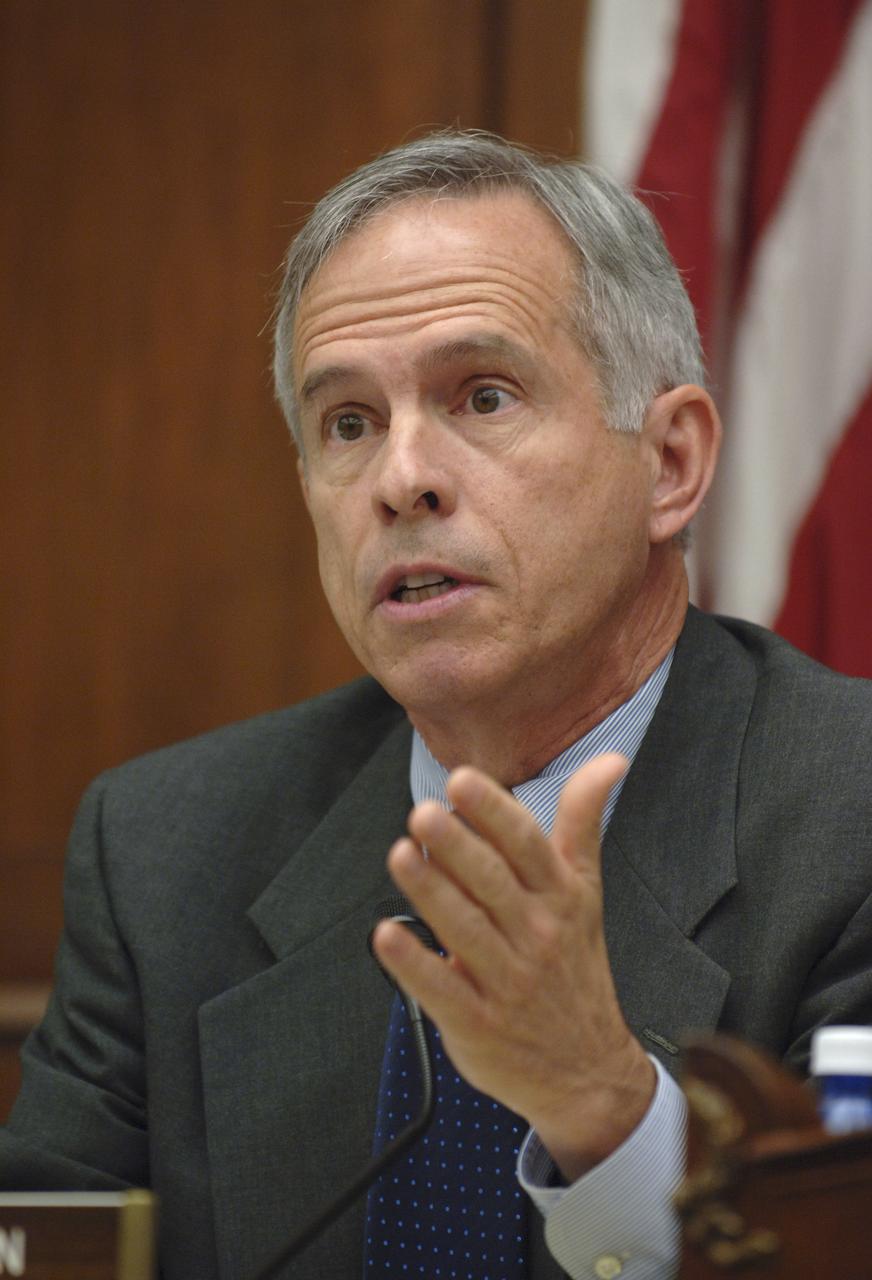
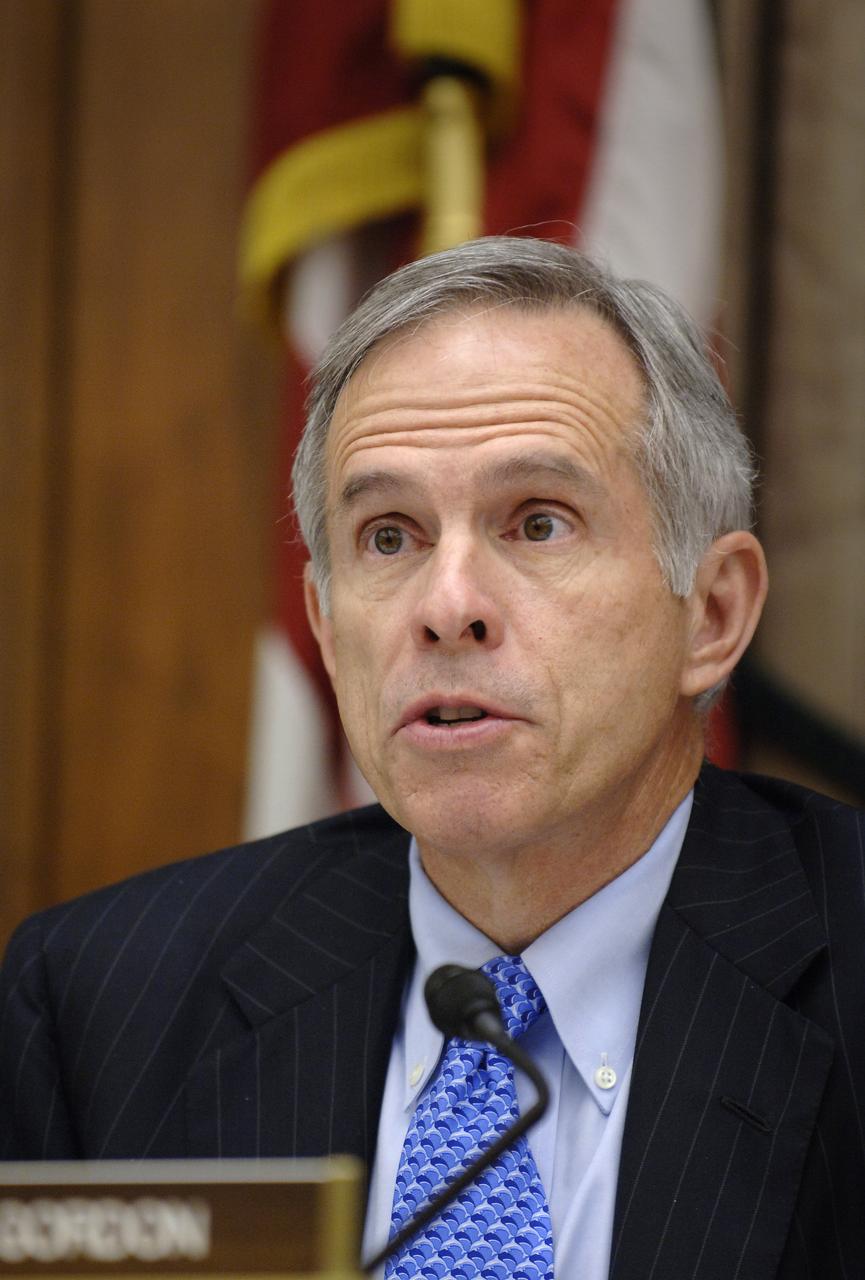
Rep. Bart Gordon, D-TN., questions NASA Administrator Michael Griffin during a House Science Committee hearing, Tuesday,  June 28, 2005, Rayburn House Office building, Washington.  Photo Credit: (NASA/Bill Ingalls)
Michael Griffin House Science Committee Hearing
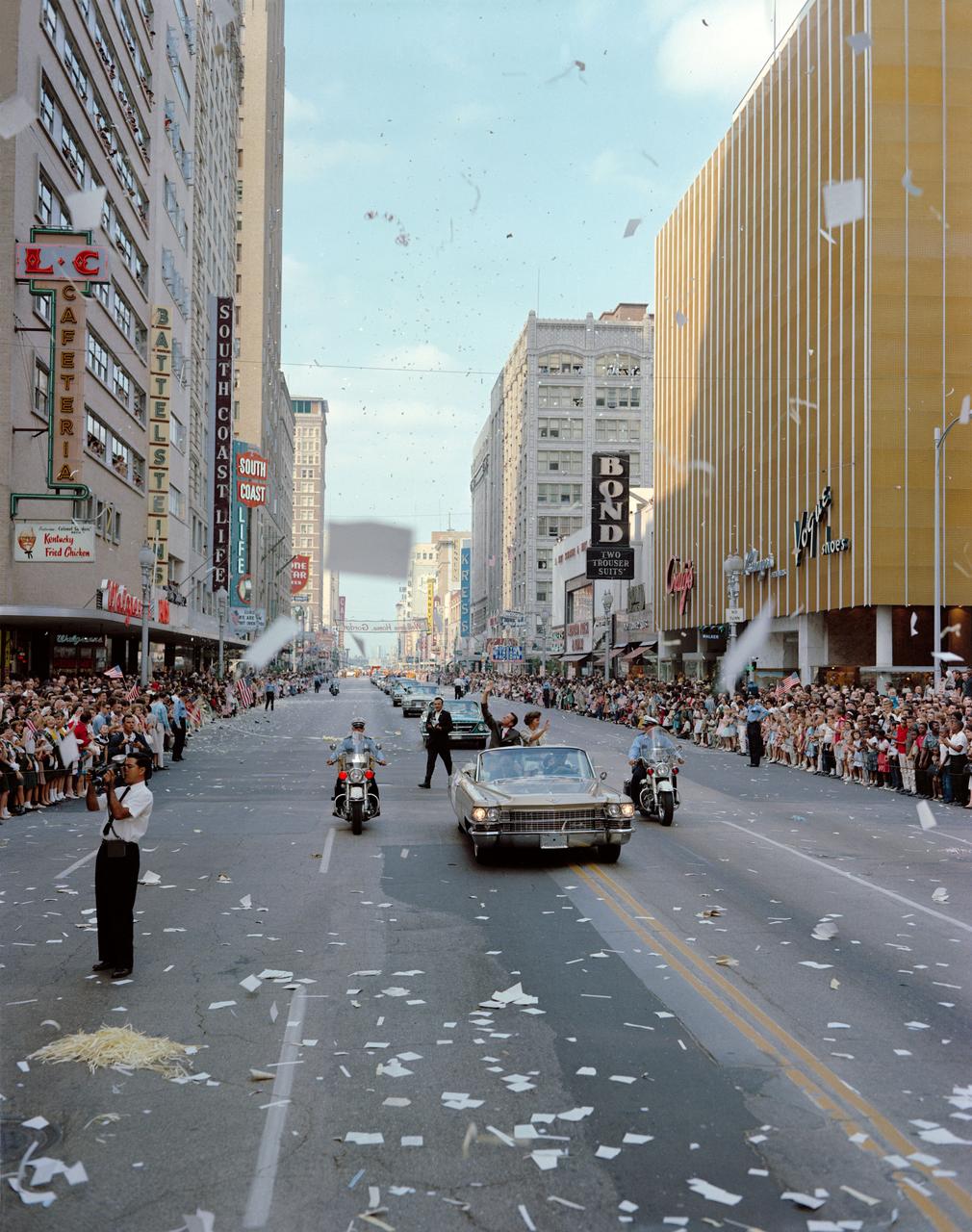
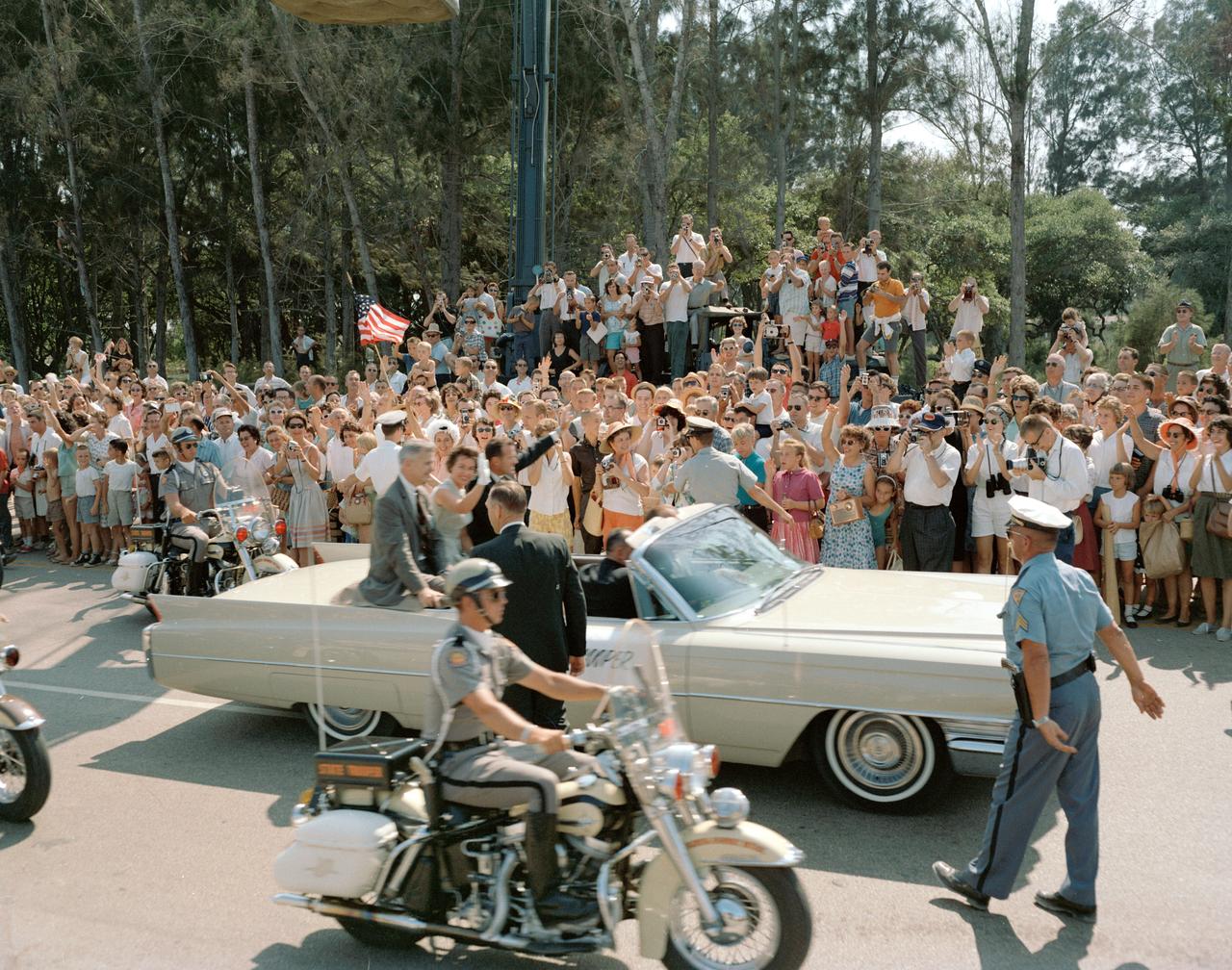
View of Astronaut Gordon Cooper Homecoming Parade after 22-orbit flight.        HOUSTON, TX                    CN
ASTRONAUT COOPER, L. GORDON, JR. - HOMECOMING PARADE - HOUSTON, TX
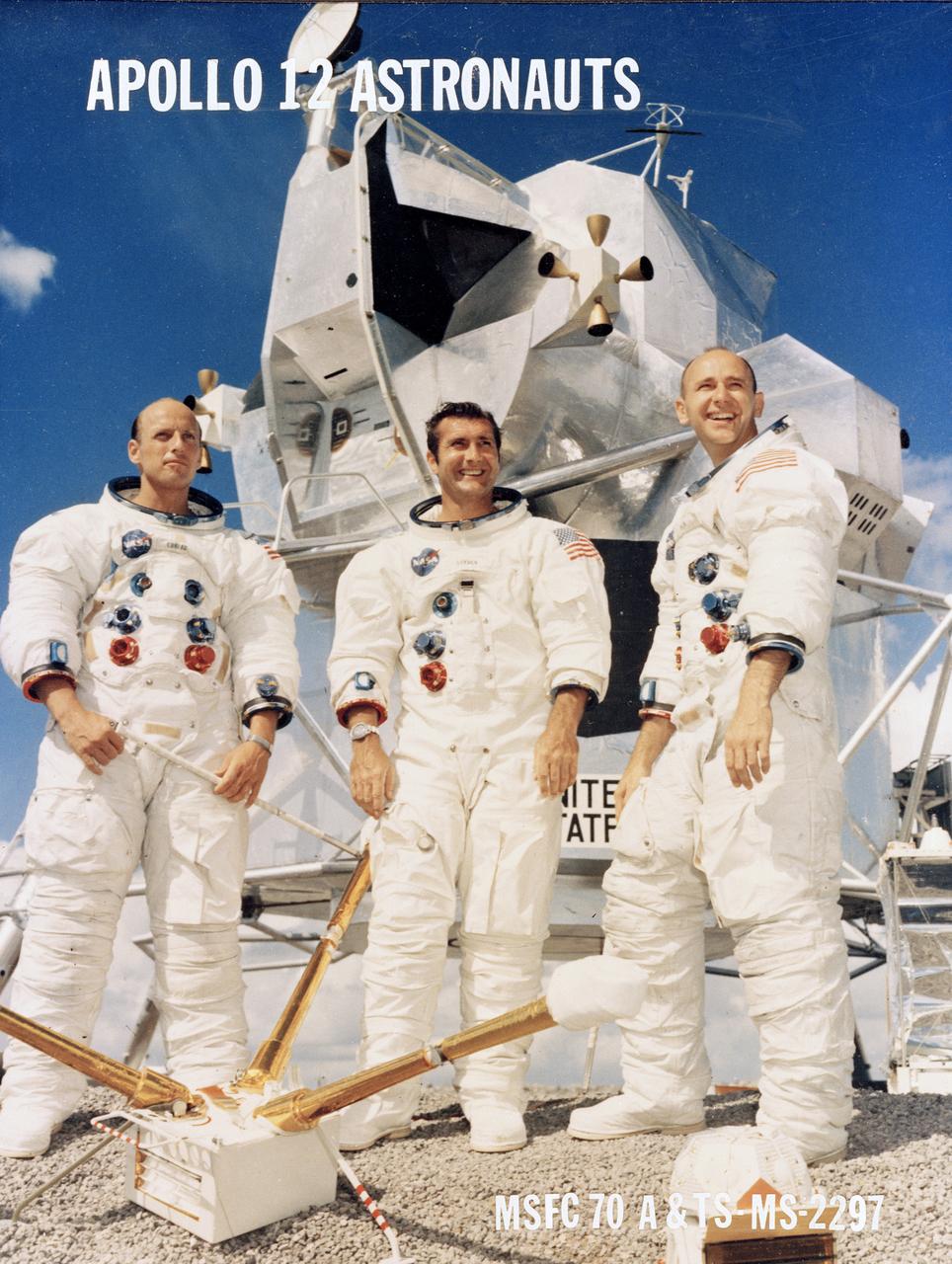
The Apollo 12 three-man crew pictured left to right are: Astronauts Charles Conrad, Spacecraft Commander; Richard F. Gordon, pilot of the Command Module `Yankee Clipper'; and Alan L. Bean, pilot of the Lunar Module `Intrepid'. Activities of astronauts Conrad and Bean on the lunar soil included setting out experiments, finding the unmarned Surveyor 3 that landed on the Moon on April 19, 1967, and collecting 75 pounds (34 kilograms) of rock samples. The second mission of the manned lunar landing and return to Earth, Apollo 12 lifted off on November 14, 1969.
Saturn Apollo Program
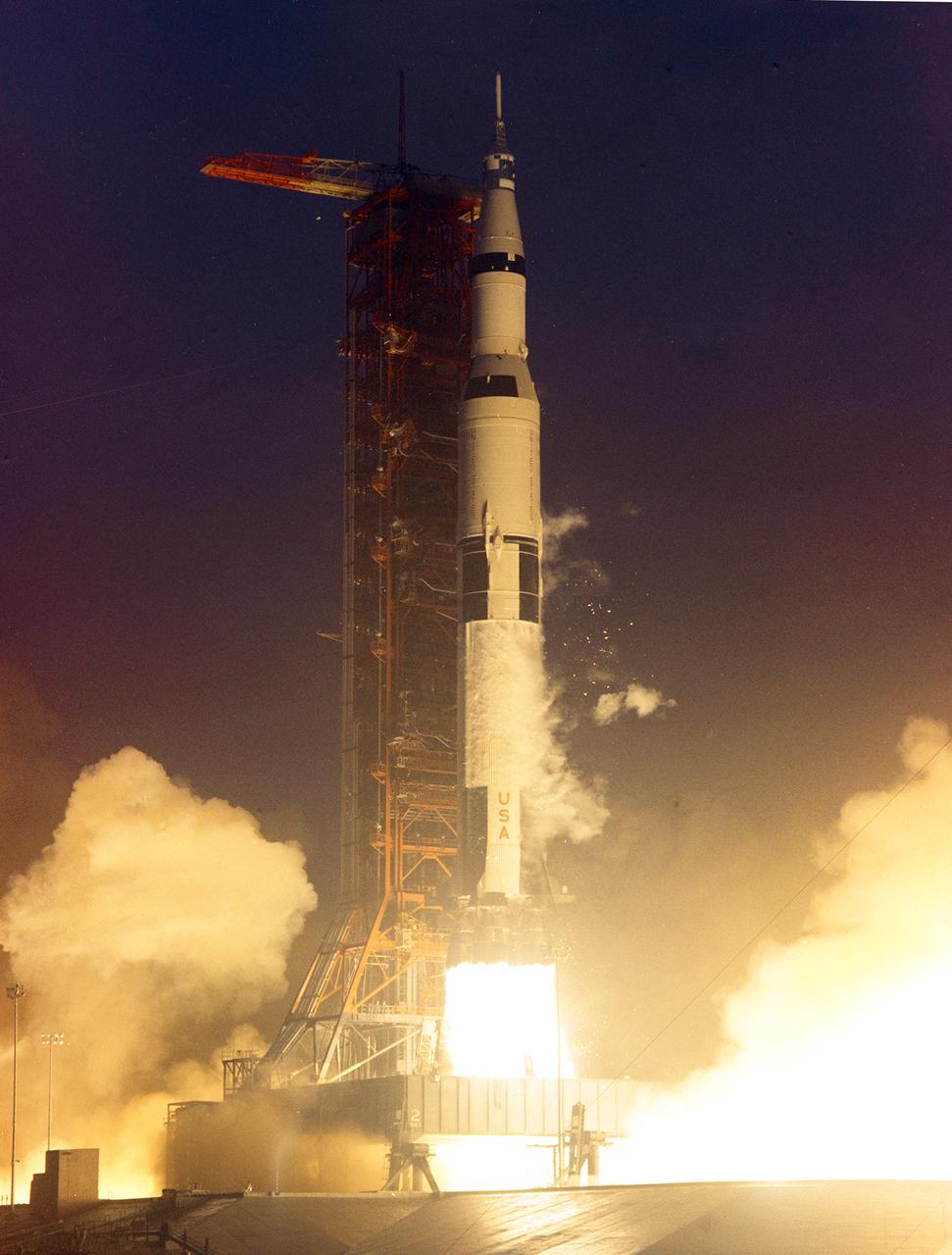
This image depicts the liftoff of the Apollo 12 on November 14, 1969. The second mission of the marned lunar landing and return to Earth, Apollo 12, carried a crew of three astronauts: Alan L. Bean, pilot of the Lunar Module, Intrepid; Richard Gordon, pilot of the Command Module, Yankee Clipper; and Spacecraft Commander Charles Conrad. Activities of astronauts Conrad and Bean on the lunar soil included setting out experiments, finding the unmanned Surveyor 3 that landed on the Moon on April 19, 1967, and collecting 75 pounds (34 kilograms) of rock samples.
Saturn Apollo Program
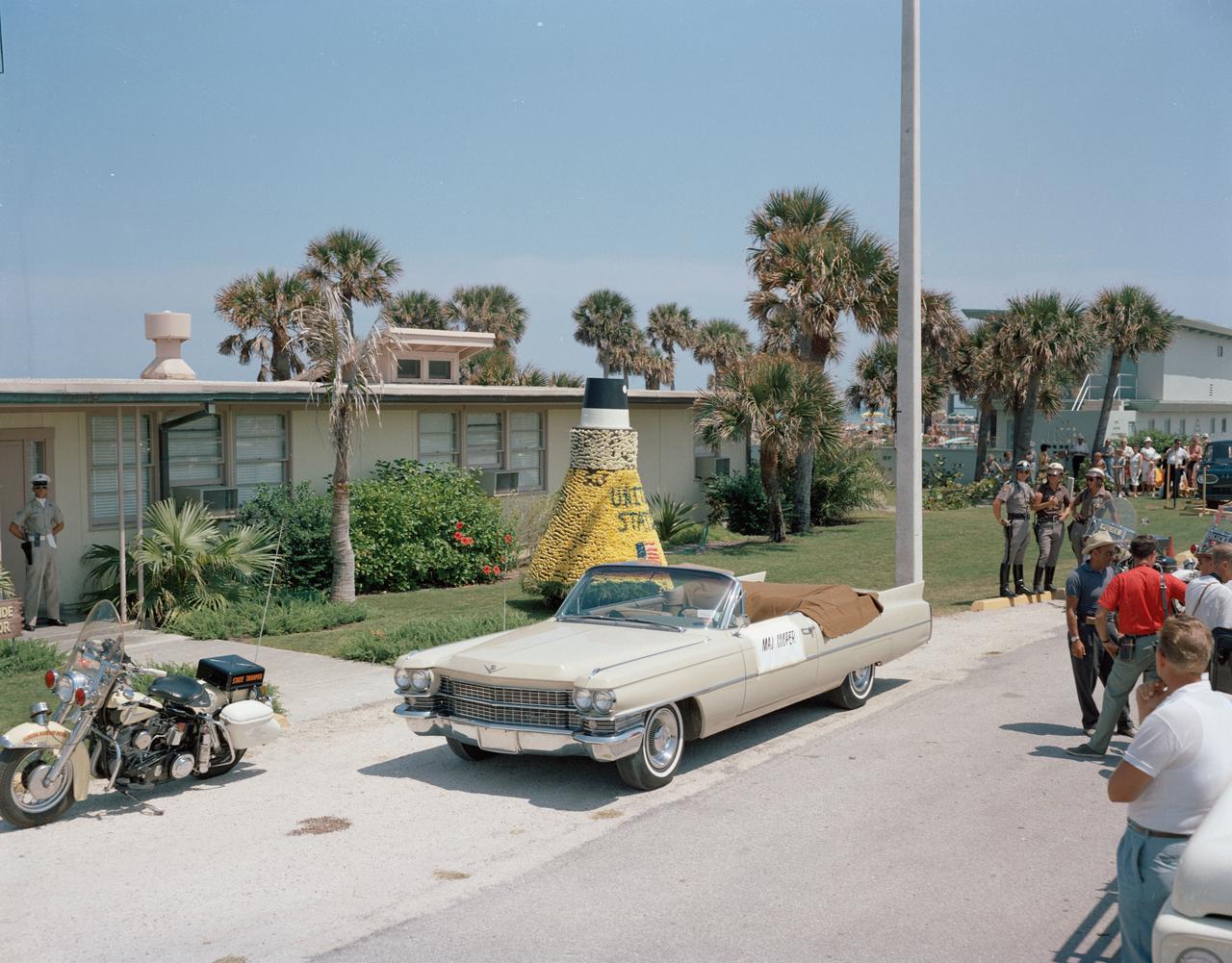
S63-07642 (1963) --- Arrival of astronaut L. Gordon Cooper Jr. at Patrick Air Force Base for parade in his honor. Photo credit: NASA
Astronaut Gordon Cooper at Patrick Air Force Base for parade
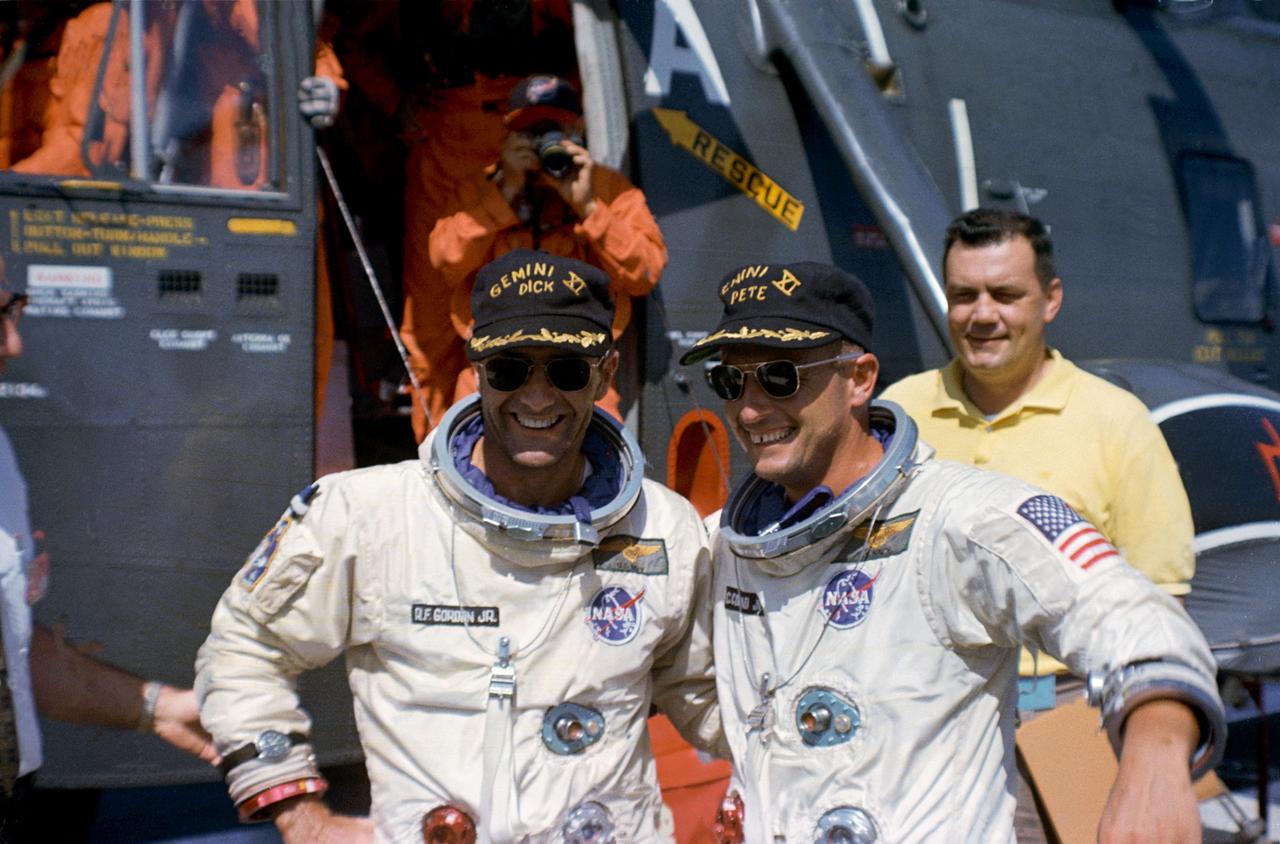
S66-50756 (15 Sept. 1966) --- The Gemini-11 prime crew, astronauts Charles Conrad Jr. (right) and Richard F. Gordon Jr. stand on the deck of the USS Guam after being recovered by helicopter from the splashdown area. Photo credit: NASA
GORDON, RICHARD F. - MISC. - GT-11 - RECOVERY
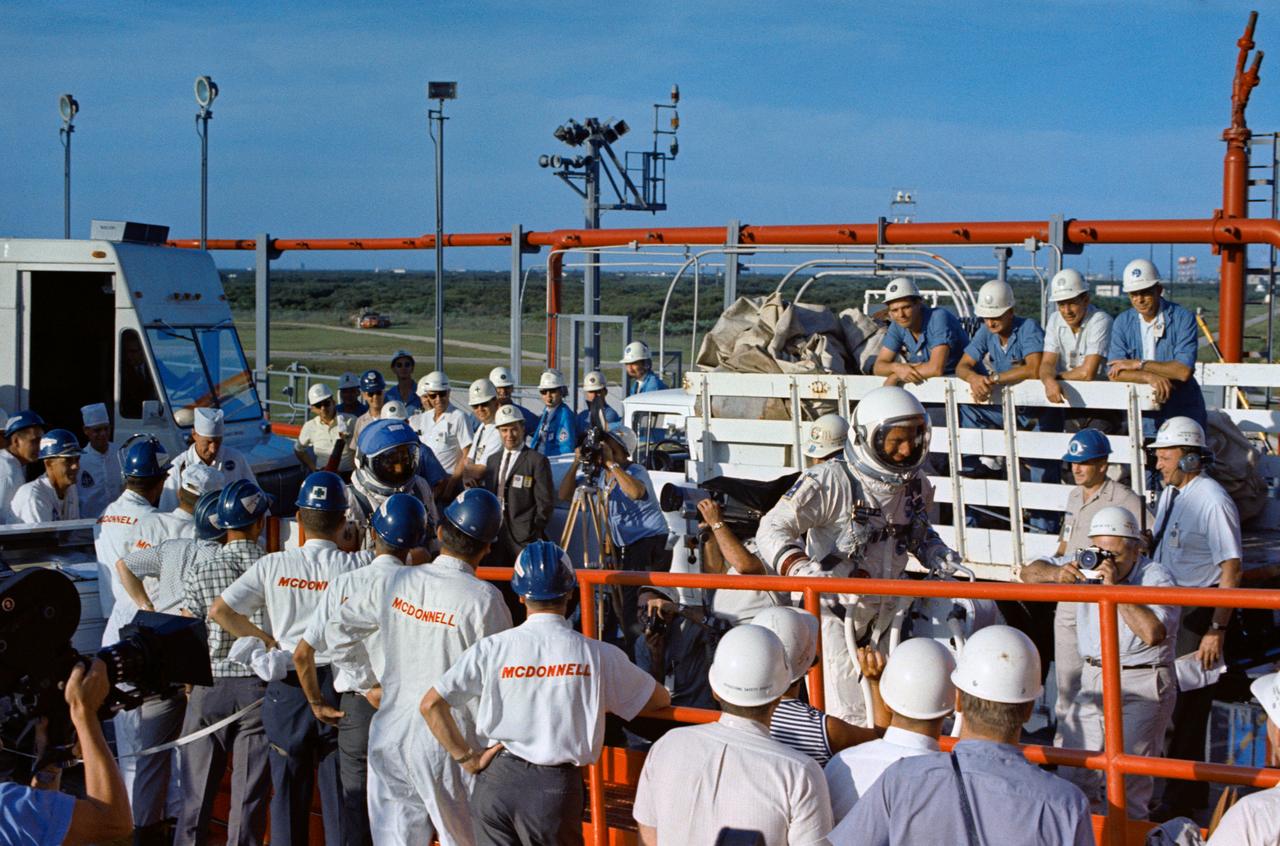
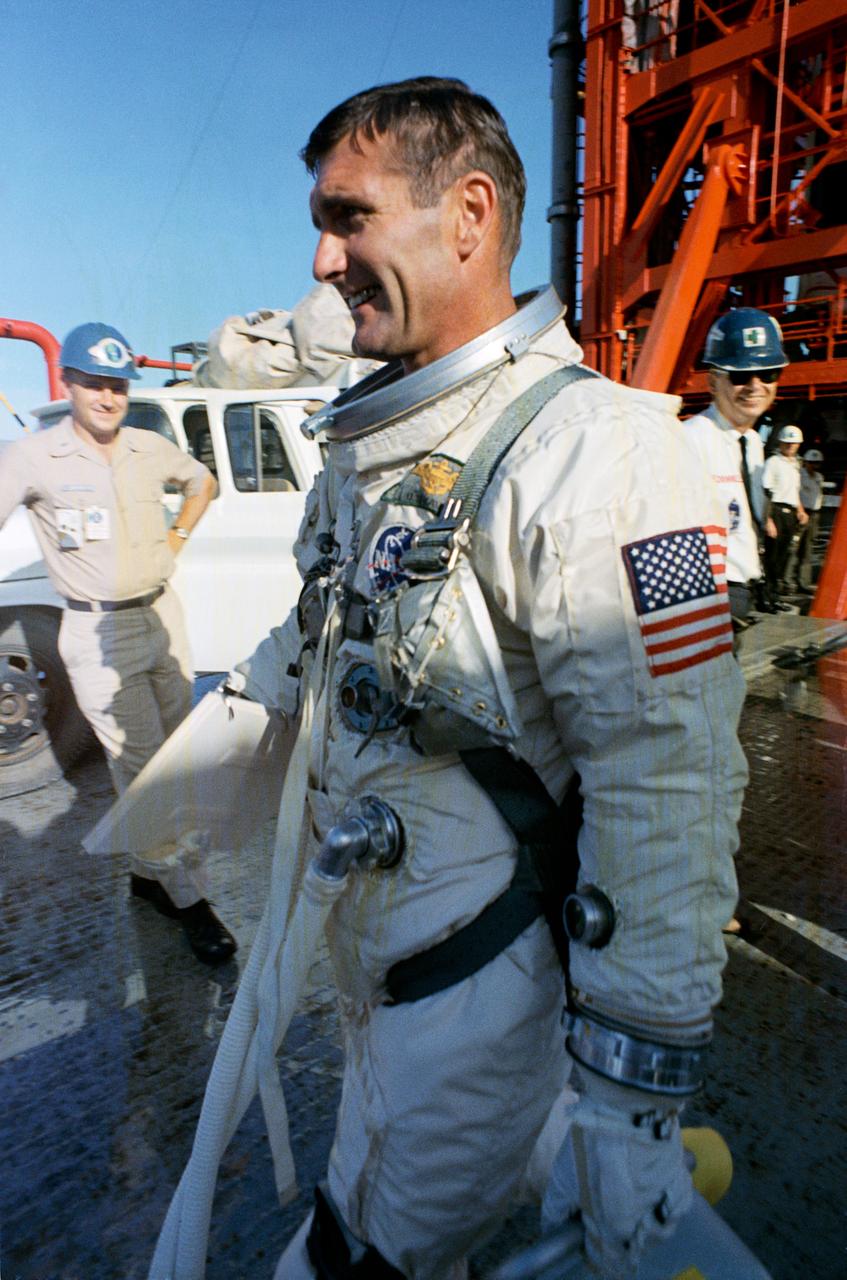
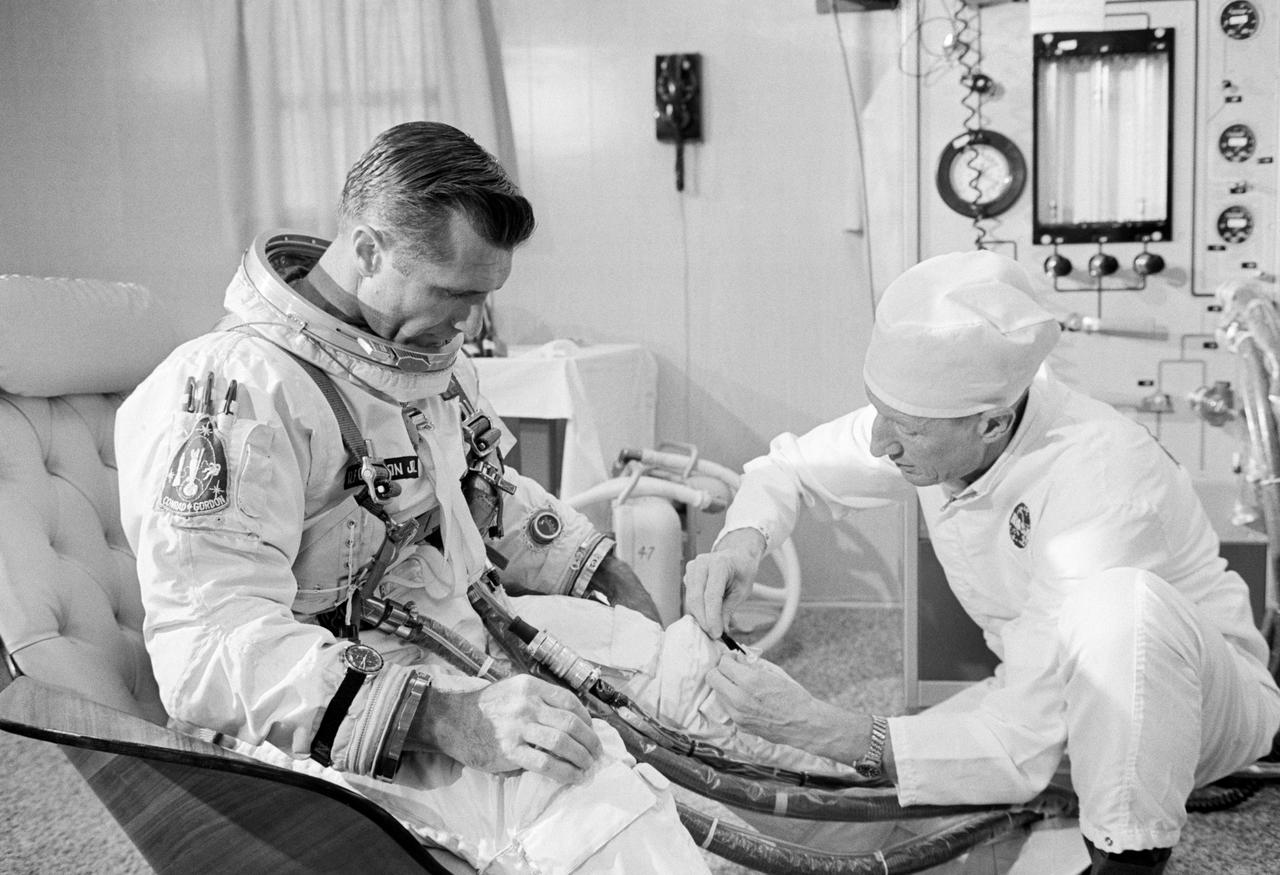
S66-50719 (12 Sept. 1966) --- Astronaut Richard F. Gordon Jr., pilot of the Gemini-11 spaceflight, suits up in the Launch Complex 16 suiting trailer during the Gemini-11 prelaunch countdown. Minutes later astronaut Gordon and Charles Conrad Jr., command pilot, were transported to Pad 19 and their waiting Gemini-11 spacecraft in preparation for their scheduled three-day mission in space. Photo credit: NASA
GORDON, RICHARD F., ASTRONAUT - MISC. - GEMINI-TITAN (GT)-11- CAPE
U.S. Rep. Bart Gordon, D-Tenn., questions witnesses during a hearing on the future of the National Polar-orbiting Operational Environmental Satellite System (NPOESS) and results of the Nunn-McCurdy review of NOAA’s weather satellite program, Thursday, June 8, 2006, at the Rayburn House Office Building in Washington. Photo Credit: (NASA/Bill Ingalls)
House Hearing Nunn-McCurdy Review of NPOESS
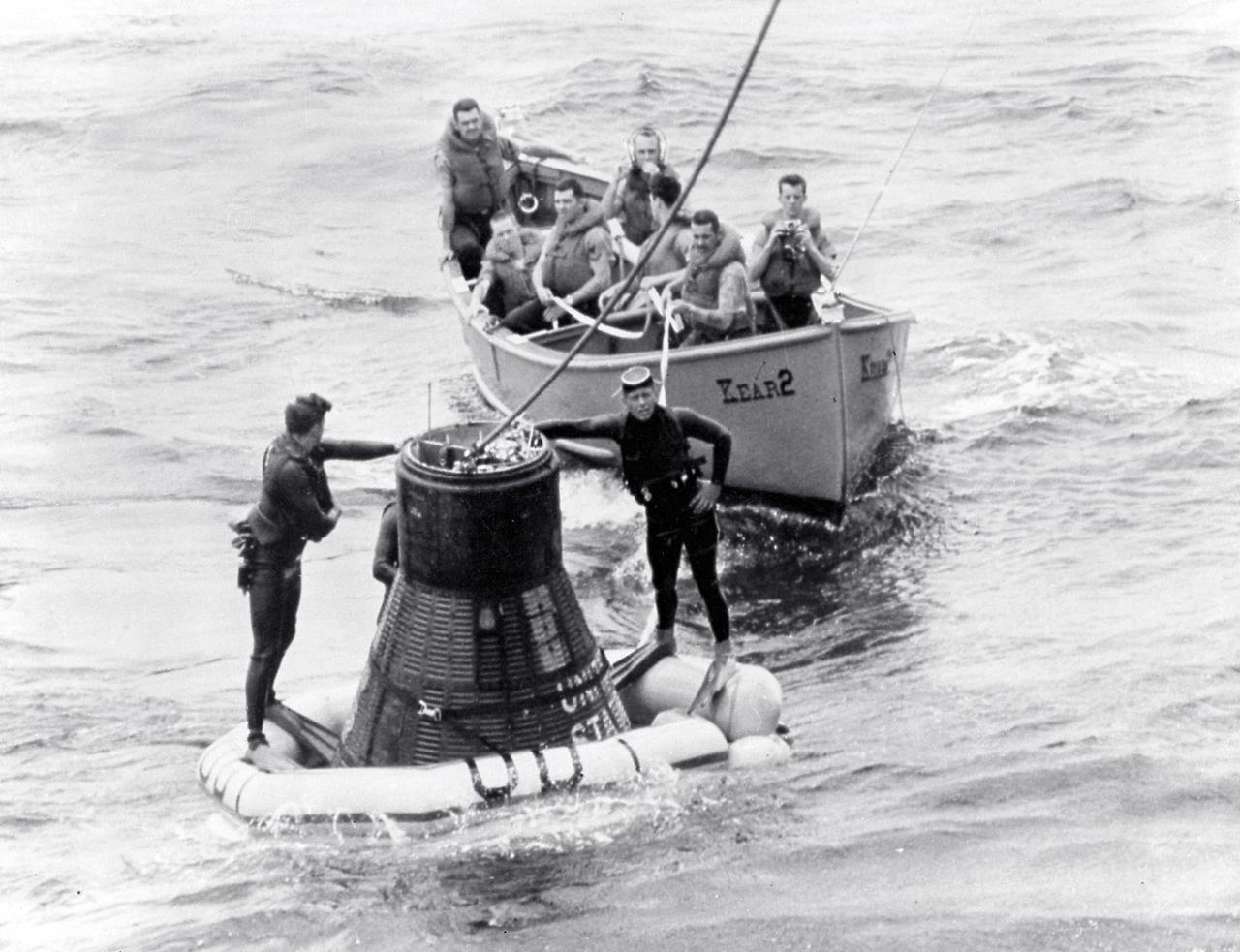
The recovery operation of the Faith 7 spacecraft after the completion of the 1-1/2 day orbital flight (MA-9 mission) with Astronaut Gordon Cooper. Navy frogmen attach the flotation collar to the spacecraft. The MA-9 mission was the last flight of the Mercury Project and launched on May 15, 1963 boosted by The Mercury-Atlas launch vehicle.
Mercury Project
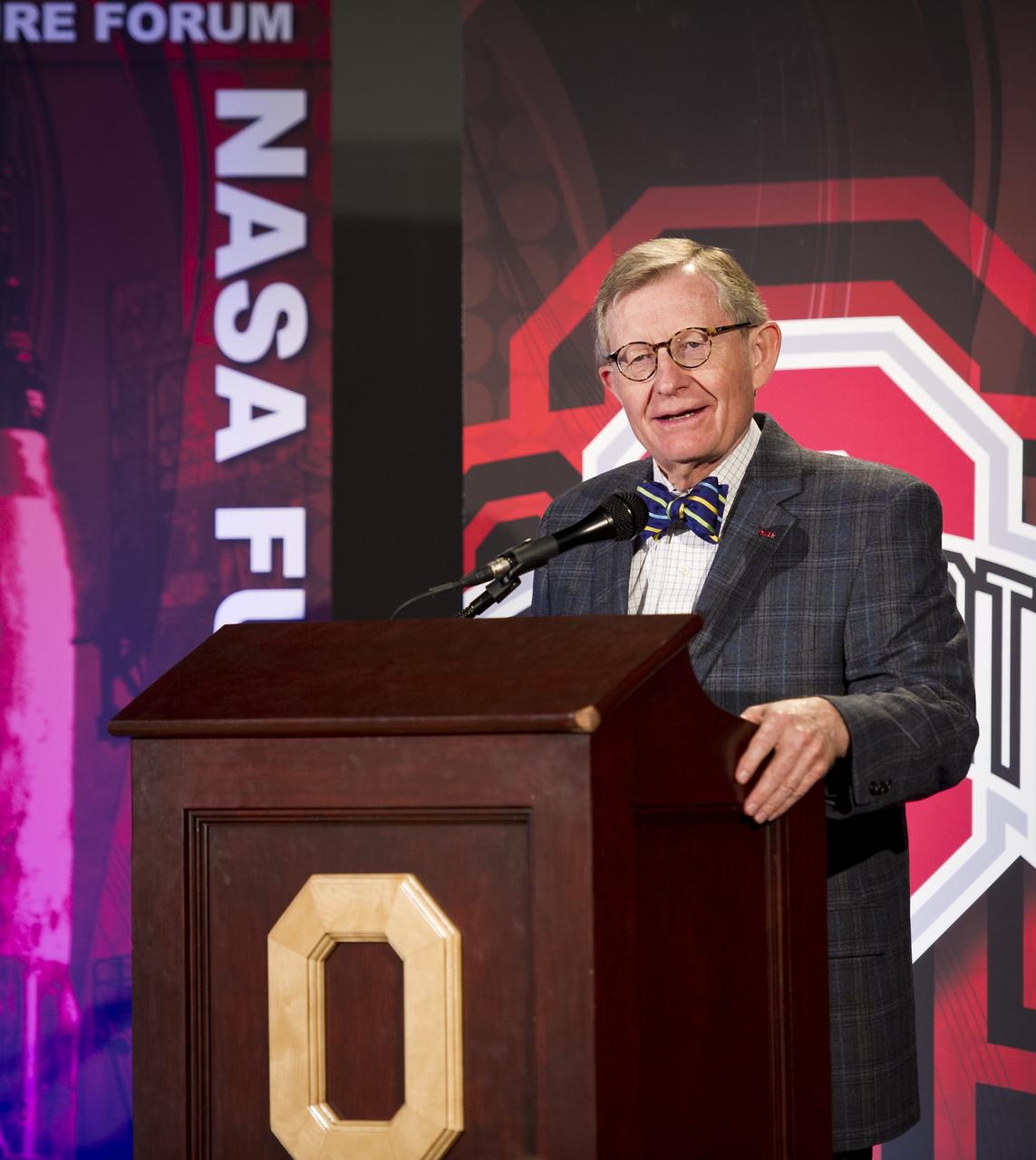
The Ohio State University President E. Gordon Gee speaks during the NASA Future Forum at The Ohio State University on Tuesday, Feb. 21, 2012 in Columbus, Ohio. The NASA Future Forum features panel discussions on the importance of education to our nation's future in space, the benefit of commercialized space technology to our economy and lives here on Earth, and the shifting roles for the public, commercial and international communities in space. Photo Credit: (NASA/Bill Ingalls)
NASA Future Forum
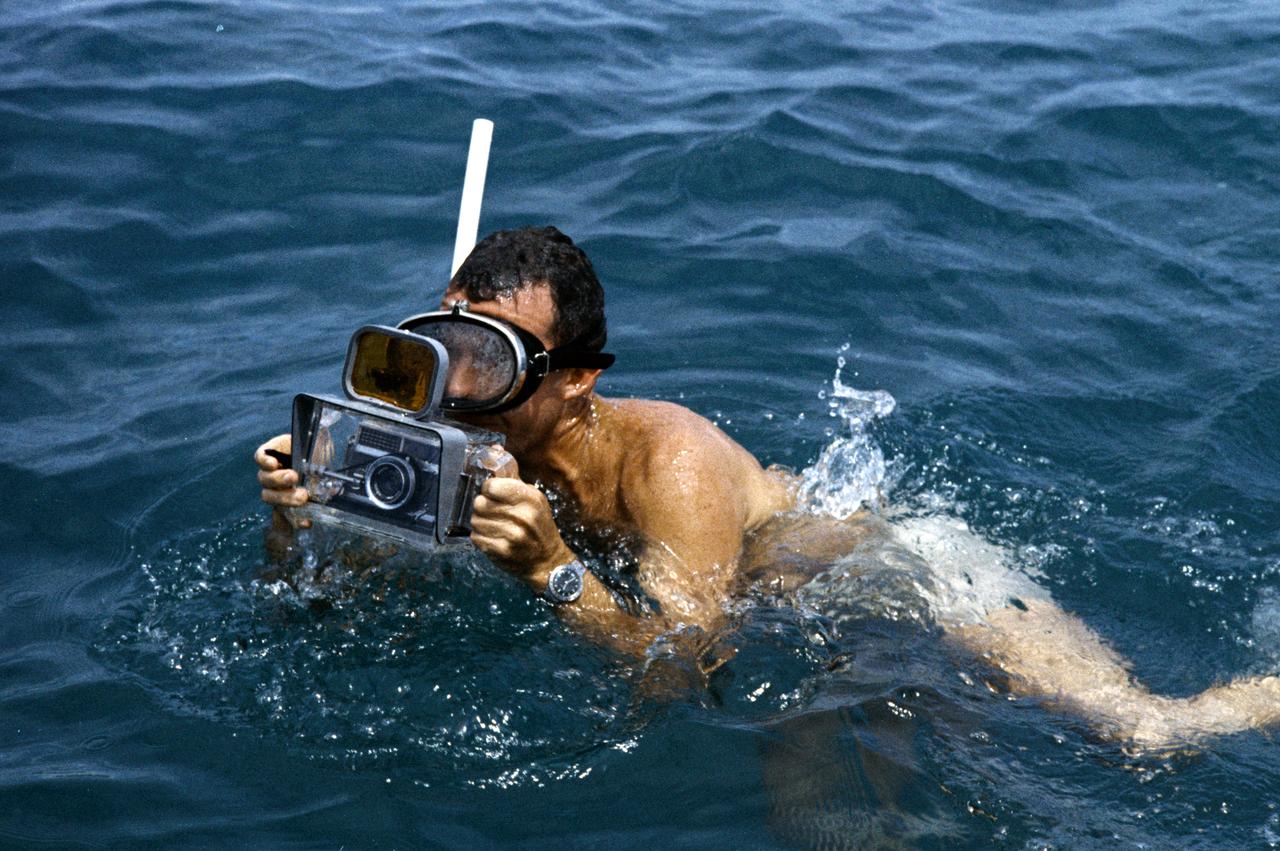
S62-05161 (1962) --- Astronaut L. Gordon Cooper Jr. participates in Mercury water egress training. He is wearing a snorkel and holding a camera for underwater photography. Photo credit: NASA
Astronaut L. Gordon Cooper participates in Mercury water egress training
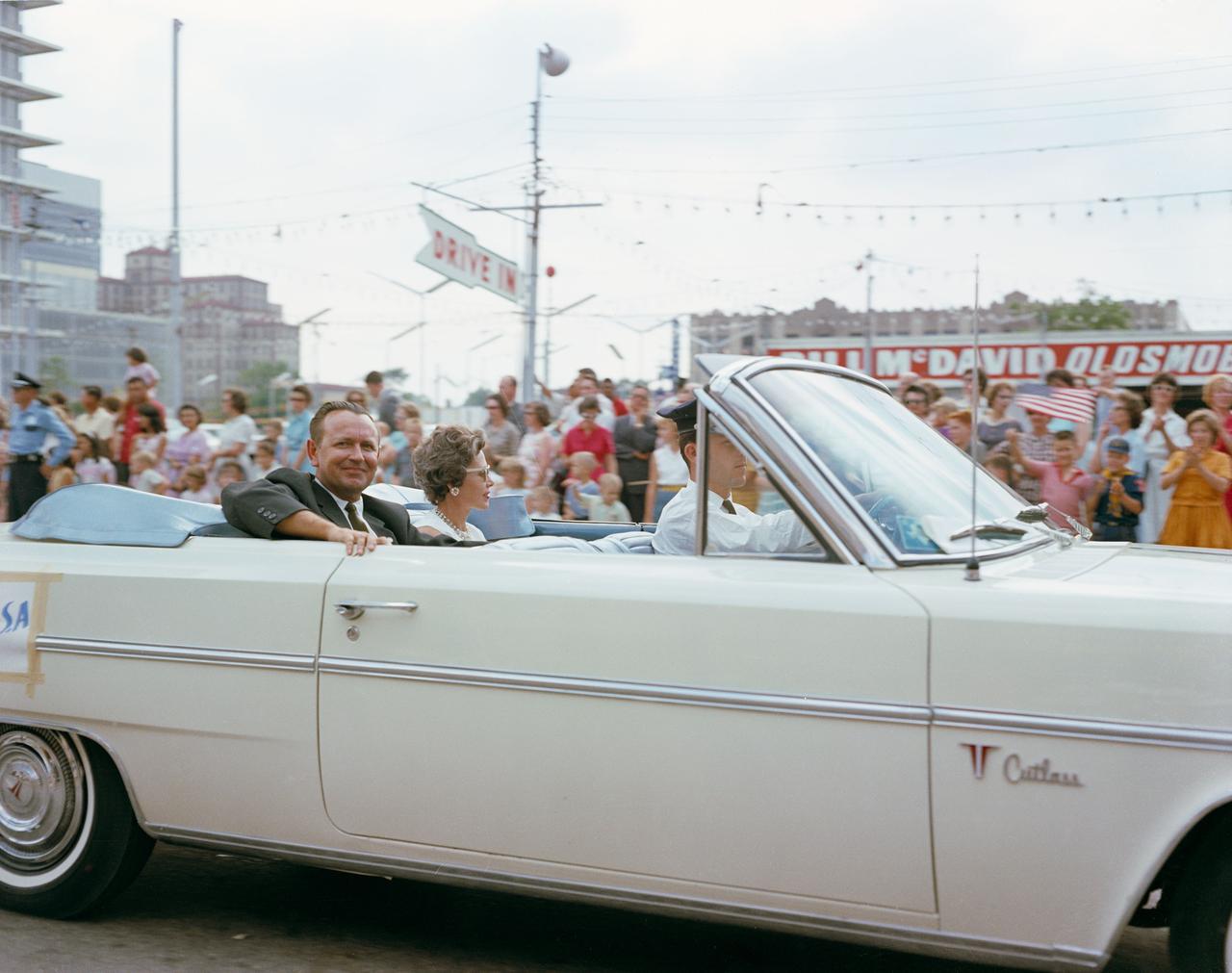
S63-07645 (1963) --- Astronaut L. Gordon Cooper Jr. and his wife at Patrick Air Force Base rides a convertible in a parade given in his honor. Photo credit: NASA
Astronaut Gordon Cooper at Patrick Air Force Base for parade
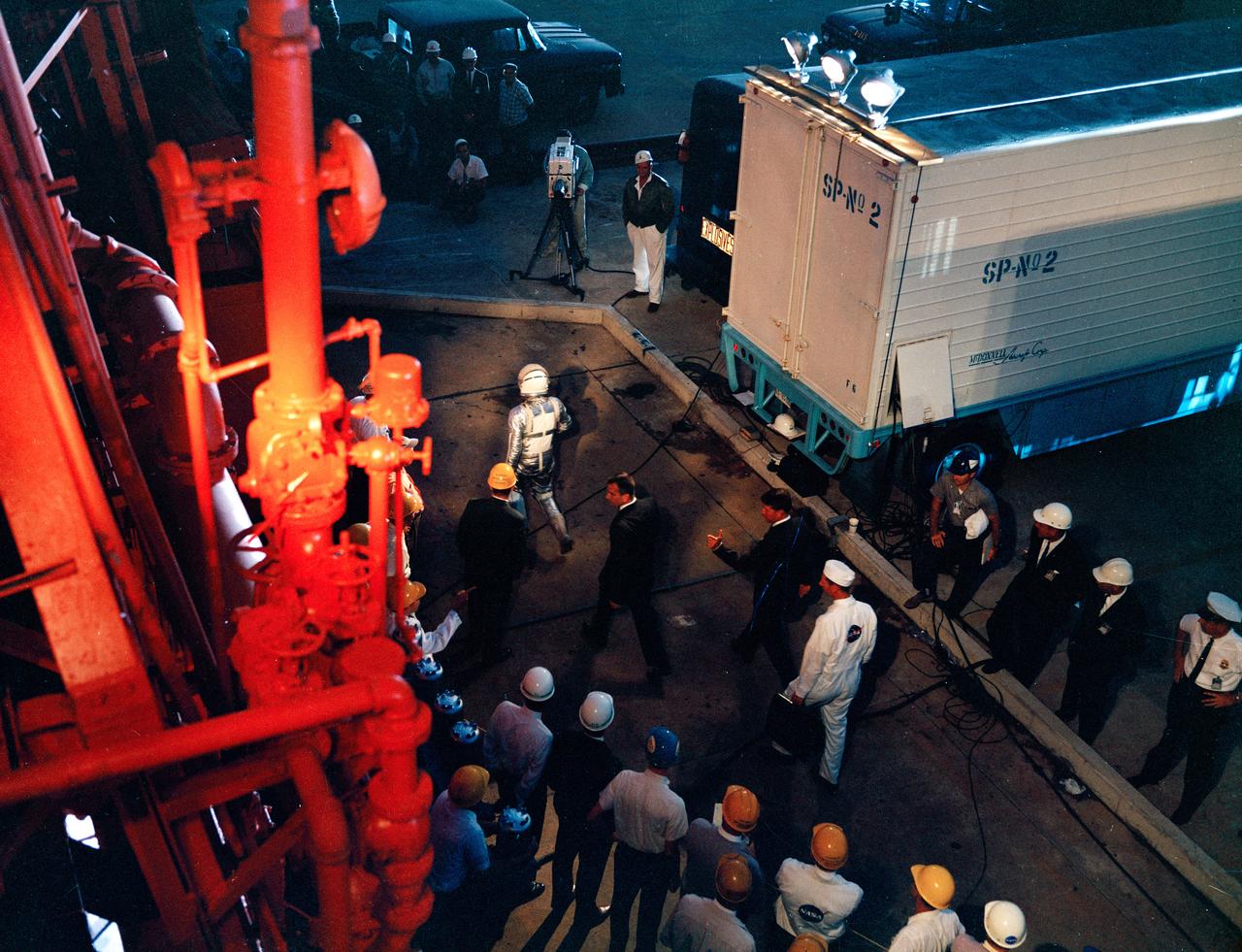
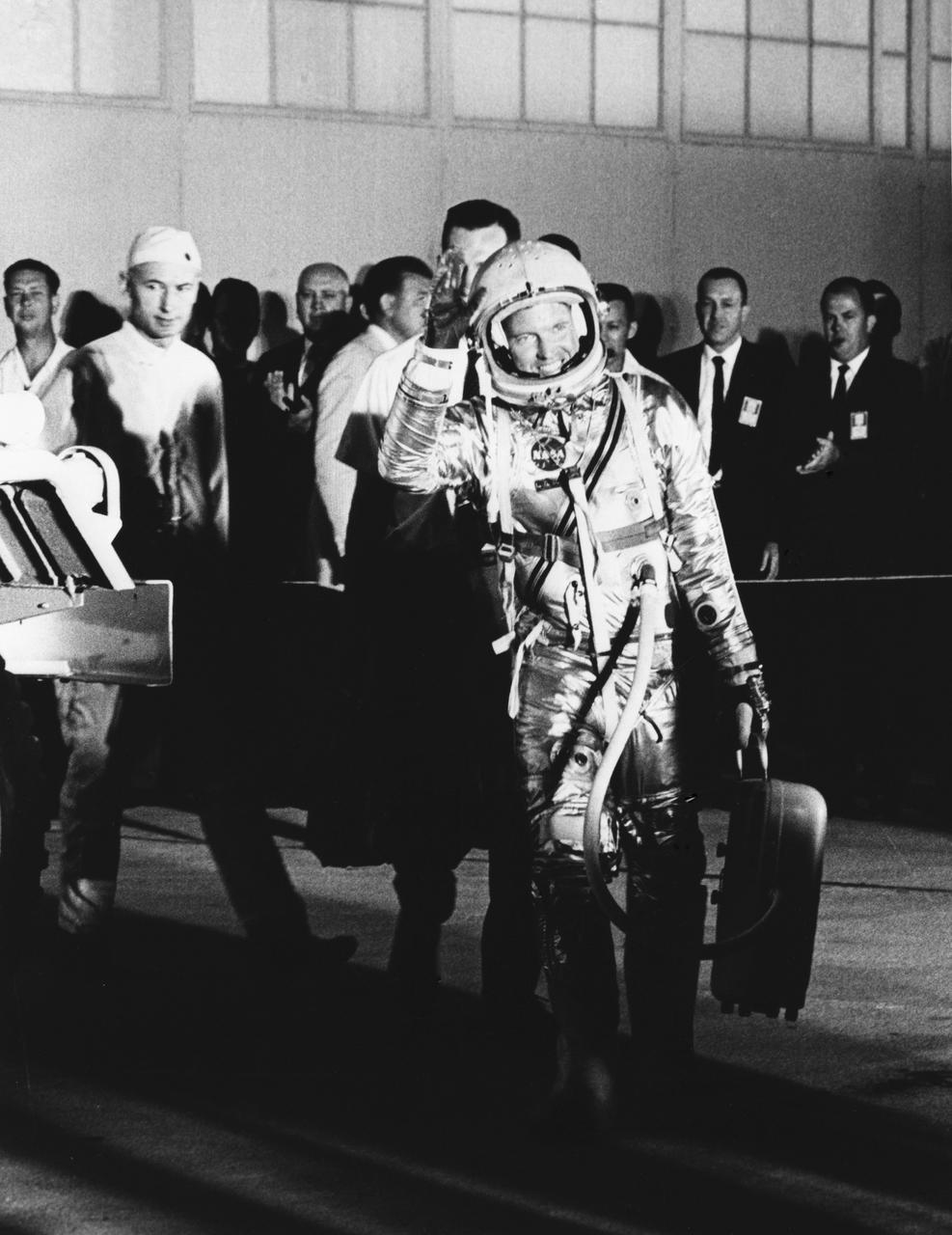
S63-07632 (15 May 1963) --- Astronaut L. Gordon Cooper Jr. leaves the transfer van for the launch pad and the beginning of the Mercury-Atlas 9 (MA-9) flight on May 15, 1963. Photo credit: NASA
Astronaut Gordon Cooper leaves transfer van for launch pad
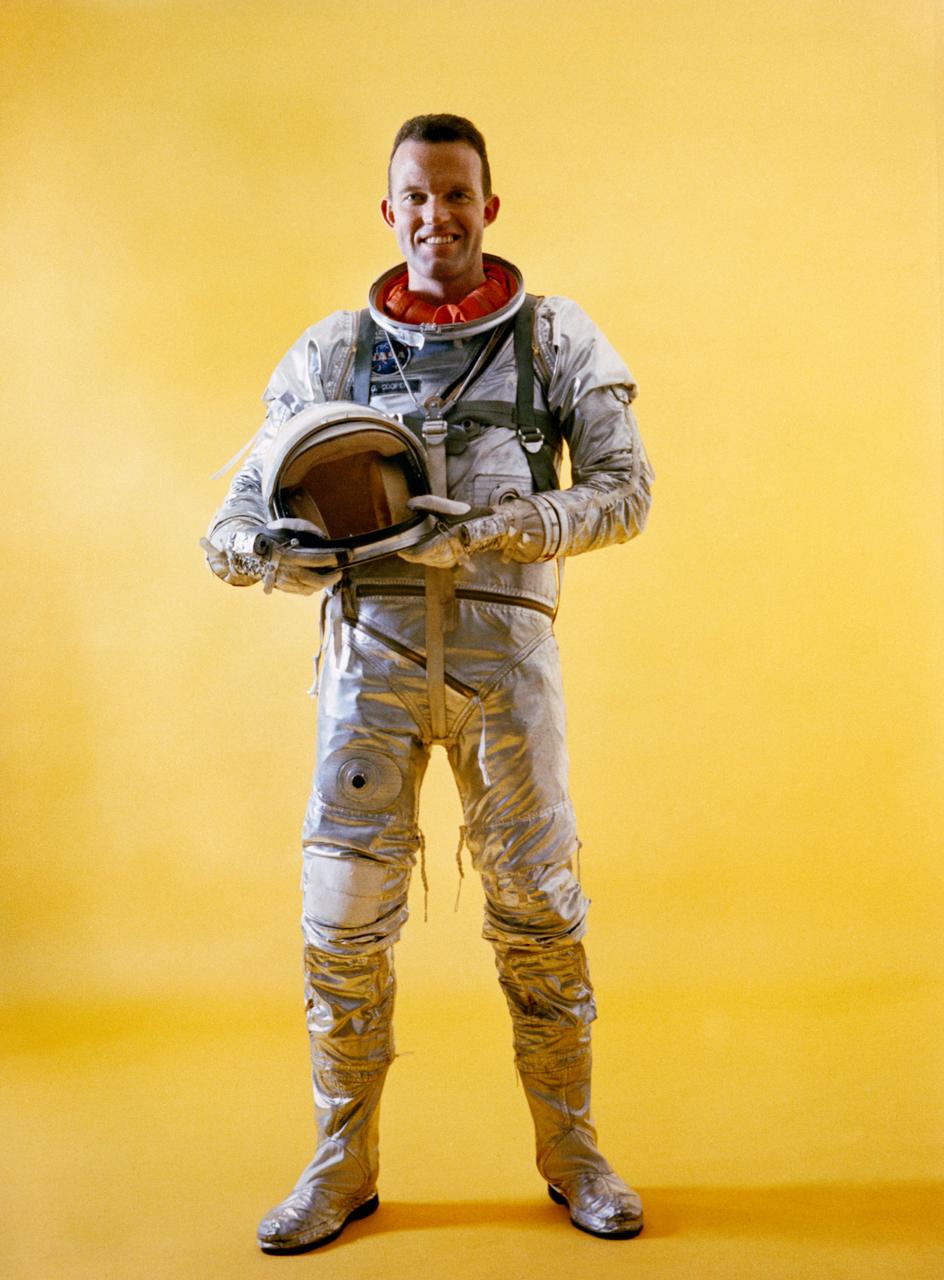
S63-01755 (May 1963) --- Full-length portrait of Mercury astronaut L. Gordon Cooper Jr., in spacesuit during Mercury-Atlas 9 prelaunch activities. Photo credit: NASA
Portrait - Full-Lenth - Mercury Astronaut L. Gordon Cooper, Jr. - Spacesuit
S66-54590 (13 Sept. 1966) --- Astronaut Richard F. Gordon Jr., Gemini-11 pilot, prepares to open spacecraft hatch to jettison used equipment. Photo credit: NASA
Astronaut Richard Gordon prepares to open hatch to jettison equipment
The smiling Apollo 12 astronauts peer out of the window of the mobile quarantine facility aboard the recovery ship, USS Hornet. Pictured (Left to right) are Spacecraft Commander, Charles Conrad; Command Module (CM) Pilot,  Richard Gordon; and Lunar Module (LM) Pilot, Alan L. Bean. The crew were housed in the quarantine facility immediately after the Pacific recovery operation took place. The second manned lunar landing mission, Apollo 12 launched from launch pad 39-A at Kennedy Space Center in Florida on November 14, 1969 via a Saturn V launch vehicle. The Saturn V vehicle was developed by the Marshall Space Flight Center (MSFC) under the direction of Dr. Wernher von Braun. The LM, Intrepid, landed astronauts Conrad and Bean on the lunar surface in what’s known as the Ocean of Storms while astronaut Richard Gordon piloted the CM, Yankee Clipper, in a parking orbit around the Moon. Lunar soil activities included the deployment of the Apollo Lunar Surface Experiments Package (ALSEP), finding the unmanned Surveyor 3 that landed on the Moon on April 19, 1967, and collecting 75 pounds (34 kilograms) of rock samples. Apollo 12 returned safely to Earth on November 24, 1969.
Saturn Apollo Program
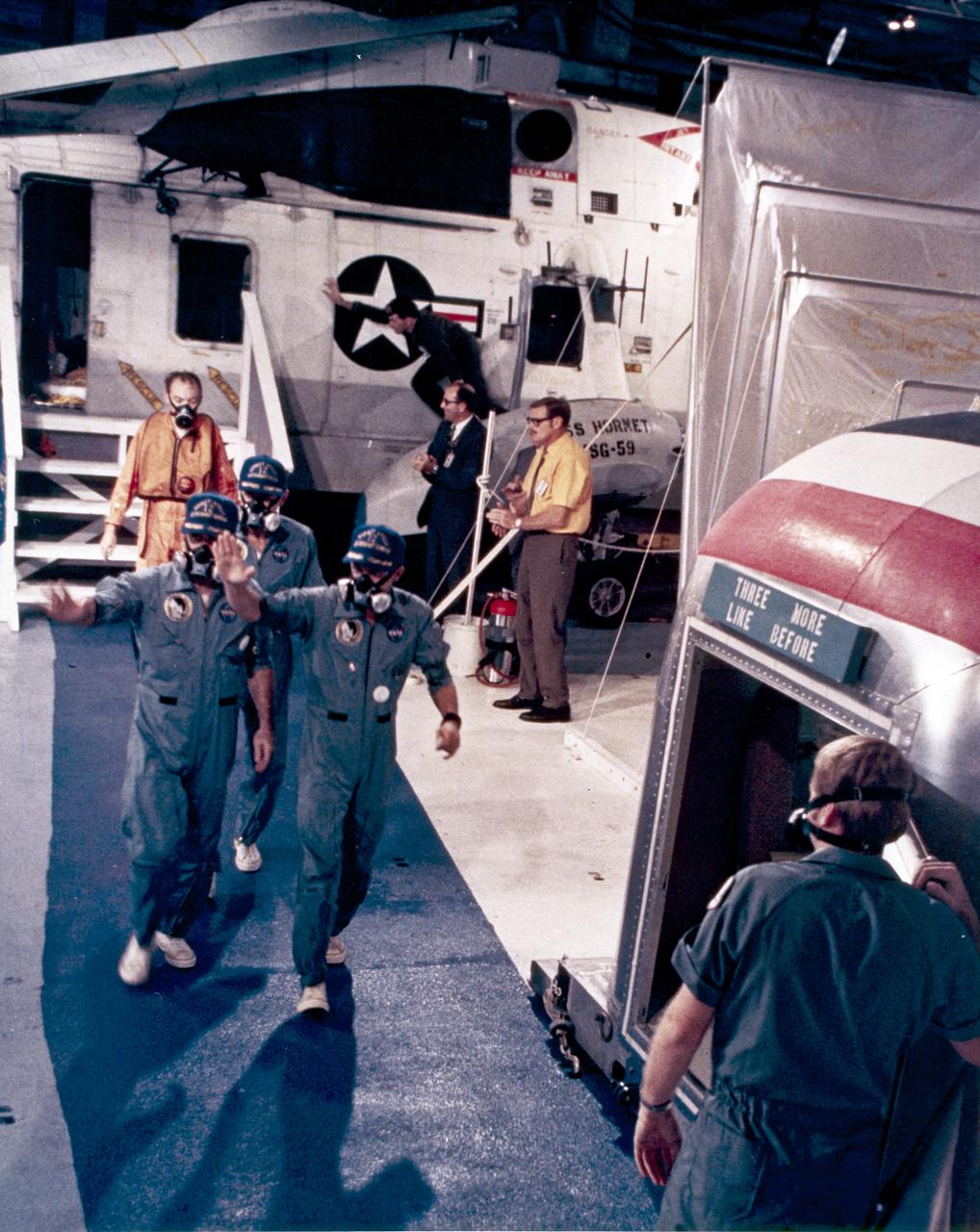
Aboard the recovery ship, USS Hornet, Apollo 12 astronauts wave to the crowd as they enter the mobile quarantine facility. The recovery operation took place in the Pacific Ocean after the splashdown of the Command Module capsule. Navy para-rescue men recovered the capsule housing the 3-man Apollo 12 crew. The second manned lunar landing mission, Apollo 12 launched from launch pad 39-A at Kennedy Space Center in Florida on November 14, 1969 via a Saturn V launch vehicle. The Saturn V was developed by the Marshall Space Flight Center (MSFC) under the direction of Dr. Wernher von Braun. Aboard Apollo 12 was a crew of three astronauts: Alan L. Bean, pilot of the Lunar Module (LM), Intrepid; Richard Gordon, pilot of the Command Module (CM), Yankee Clipper; and Spacecraft Commander Charles Conrad. The LM, Intrepid, landed astronauts Conrad and Bean on the lunar surface in what’s known as the Ocean of Storms while astronaut Richard Gordon piloted the CM, Yankee Clipper, in a parking orbit around the Moon. Lunar soil activities included the deployment of the Apollo Lunar Surface Experiments Package (ALSEP), finding the unmanned Surveyor 3 that landed on the Moon on April 19, 1967, and collecting 75 pounds (34 kilograms) of rock samples.  Apollo 12 safely returned to Earth on November 24, 1969.
Saturn Apollo Program
S66-50752 (15 Sept. 1966) --- The Gemini-11 prime crew, astronauts Charles Conrad Jr. (right) and Richard F. Gordon Jr. pose in front of the recovery helicopter which brought them to the USS Guam. Photo credit: NASA
GORDON, RICHARD F., ASTRONAUT - MISC. - GT-11 - RECOVERY
S63-07945 (23 May 1963) --- Flight Director Christopher C. Kraft Jr. rides in a Houston parade celebrating the successful completion of the final Mercury mission ? the MA-9 flight of astronaut Gordon Cooper. Photo credit: NASA
ASTRONAUT COOPER, L. GORDON, JR. & FAMILY - PARADE - HOUSTON, TX
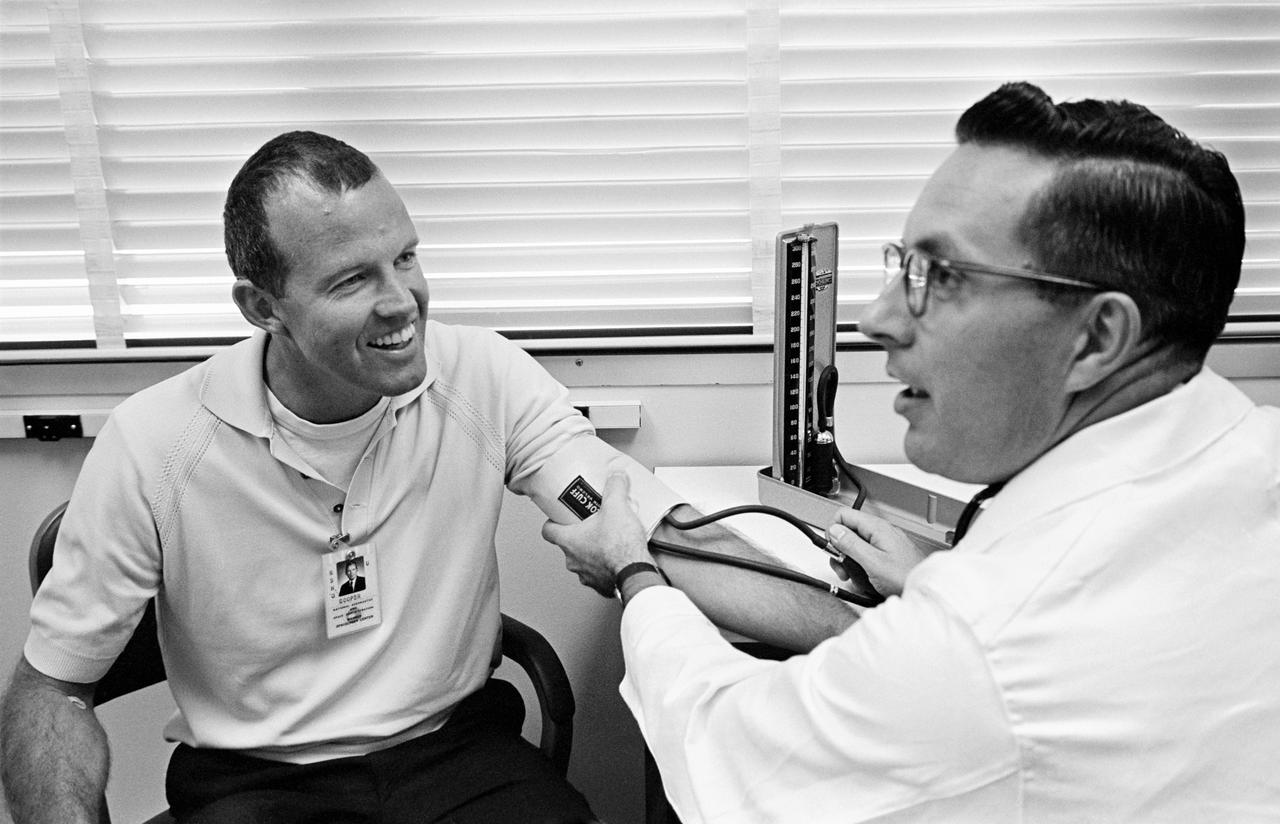
S65-28710 (17 Aug. 1965) --- Astronaut L. Gordon Cooper Jr., command pilot for the Gemini-5 spaceflight, has his blood pressure checked by Dr. Charles A. Berry, chief, Center Medical Programs, Manned Spacecraft Center, during a preflight physical examination.
Astronaut Gordon Cooper receives preflight medical exam for Gemini 5 flight
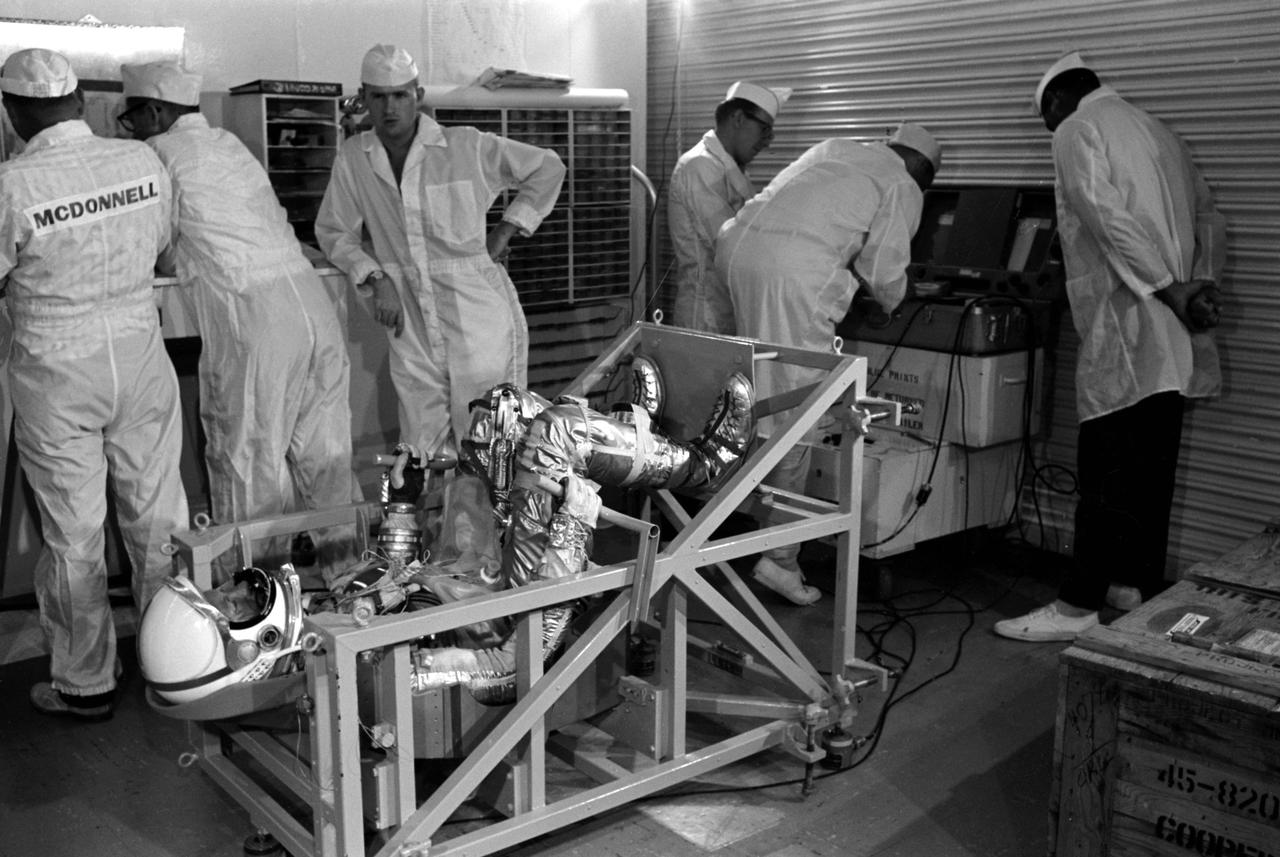
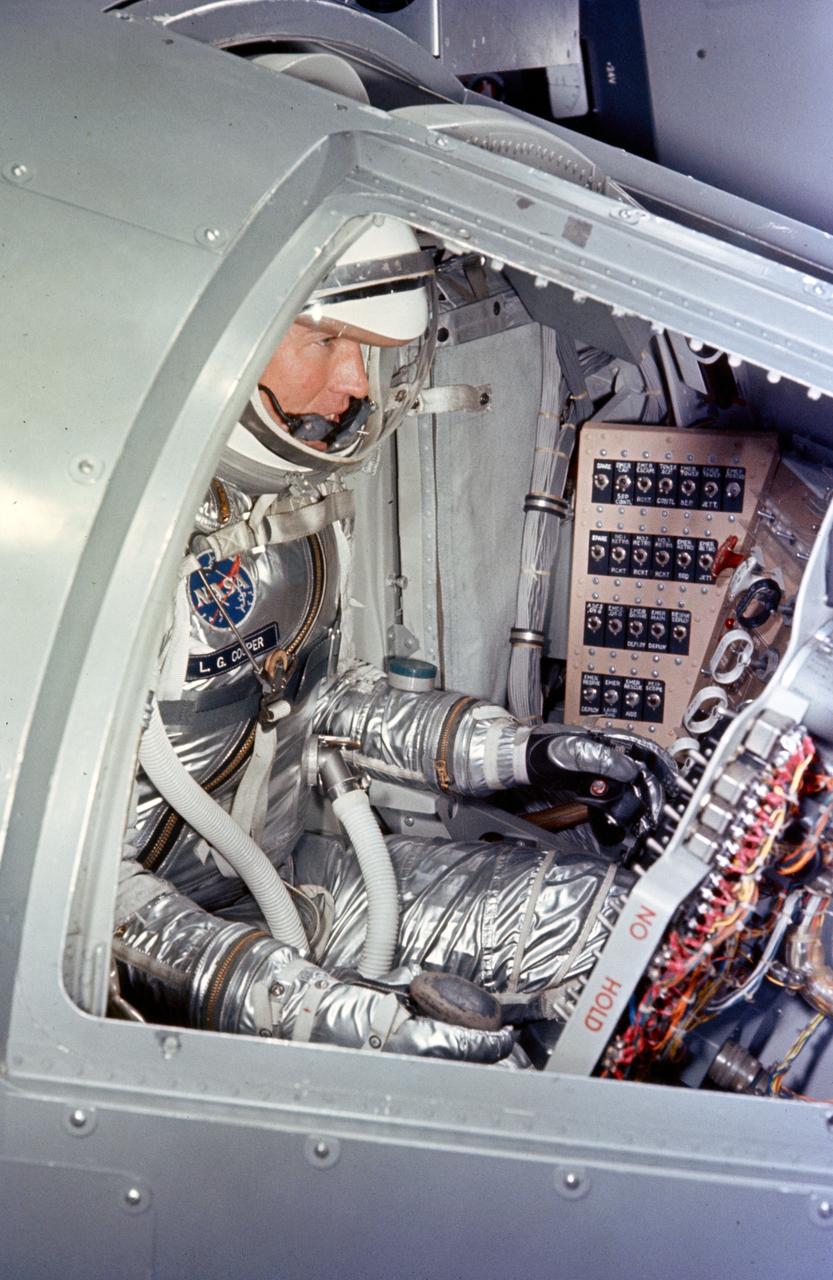
S64-14868 (1963) --- Astronaut L. Gordon Cooper Jr., pilot of the Mercury-Atlas 9 (MA-9) Earth-orbital space mission, participates in preflight simulation training inside his Mercury capsule at Cape Canaveral, Florida. Photo credit: NASA
Astronaut Gordon Cooper, Jr. - Preflight Simulation Training - Cape
S66-50775 (10 Sept. 1966) --- Astronaut Richard F. Gordon Jr., pilot, walks away from Pad 19 following postponement of the Gemini-11 spaceflight. The mission was rescheduled for Sept. 12, 1966. Photo credit: NASA
Astronaut Richard Gordon walks away from Pad 19 following postponement
S66-50780 (10 Sept. 1966) --- Astronauts Richard F. Gordon Jr. (in front), pilot, and Charles Conrad Jr., command pilot, walk up the ramp at Pad 19 during the Gemini-11 prelaunch countdown. Photo credit: NASA
GEMINI-TITAN (GT)-11 - PRELAUNCH COUNTDOWN - ASTRONAUTS GORDON AND CONRAD - CAPE
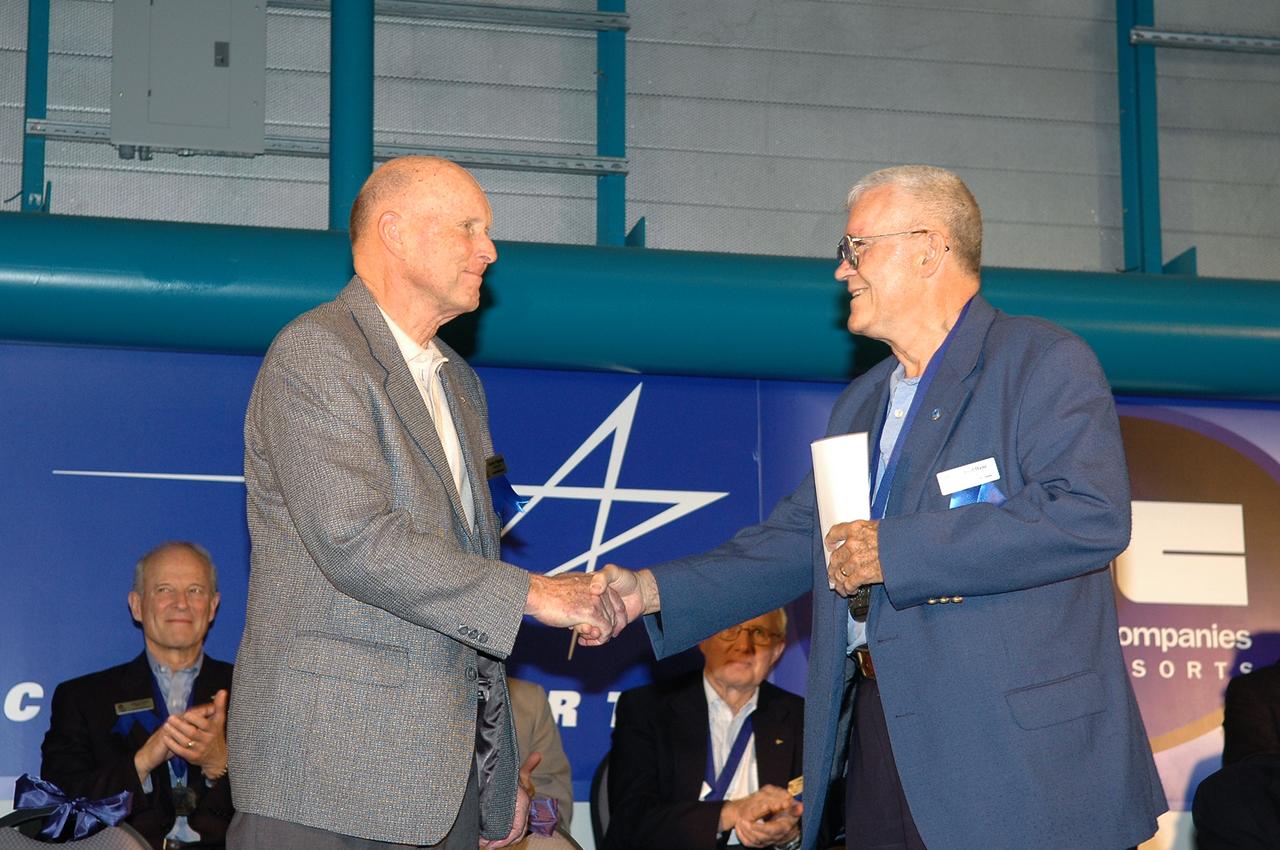
Former astronaut Gordon Fullerton (left), currently chief research pilot at NASA's Dryden Flight Research Center at Edwards Air Force Base, is congratulated by former astronaut Fred Haise (right) upon Fullerton's induction into the Astronaut Hall of Fame at the Kennedy Space Center (KSC) in Florida on April 30, 2005. Fullerton and Haise were one of two flight crews who flew the Approach and Landing Tests of the prototype Space Shuttle orbiter Enterprise at Dryden in 1977.  Fullerton, who had served on the support crews for four Apollo moon landing missions in the early 1970s, went on to fly two Shuttle missions, STS-3 in 1982 and STS-51F in 1985. STS-3 became the only Shuttle mission to date to land at White Sands, N.M., and STS-51F was completed successfully despite the failure of one of the Shuttle's main engines during ascent to orbit. Haise, a member of the crew on the ill-fated Apollo 13 mission, was also a research pilot at NASA Dryden during his pre-astronaut career.  Former astronauts Joseph Allen and Bruce McCandless were also inducted during the 2005 ceremonies at the KSC Visitor Center. In addition to honoring former members of NASA's astronaut corps who have made significant contributions to the advancement of space flight, the annual induction ceremonies serve as a fund-raiser for the Astronaut Scholarship Foundation. The foundation funded 17 $10,000 scholarships to college students studying science and engineering in 2004.
Research pilot and former astronaut Gordon Fullerton is congratulated by retired astronaut Fred Haise upon Fullerton's induction into the Astronaut Hall of Fame
S63-03974 (1963) --- Astronaut L. Gordon Cooper Jr., prime pilot for the Mercury-Atlas 9 (MA-9) mission, relaxes while waiting for weight and balance tests to begin. Photo credit: NASA
ASTRONAUT COOPER, GORDON L., JR. - PRELAUNCH WEIGHT & BALANCE FLIGHT TESTS - MERCURY-ATLAS (MA)-9
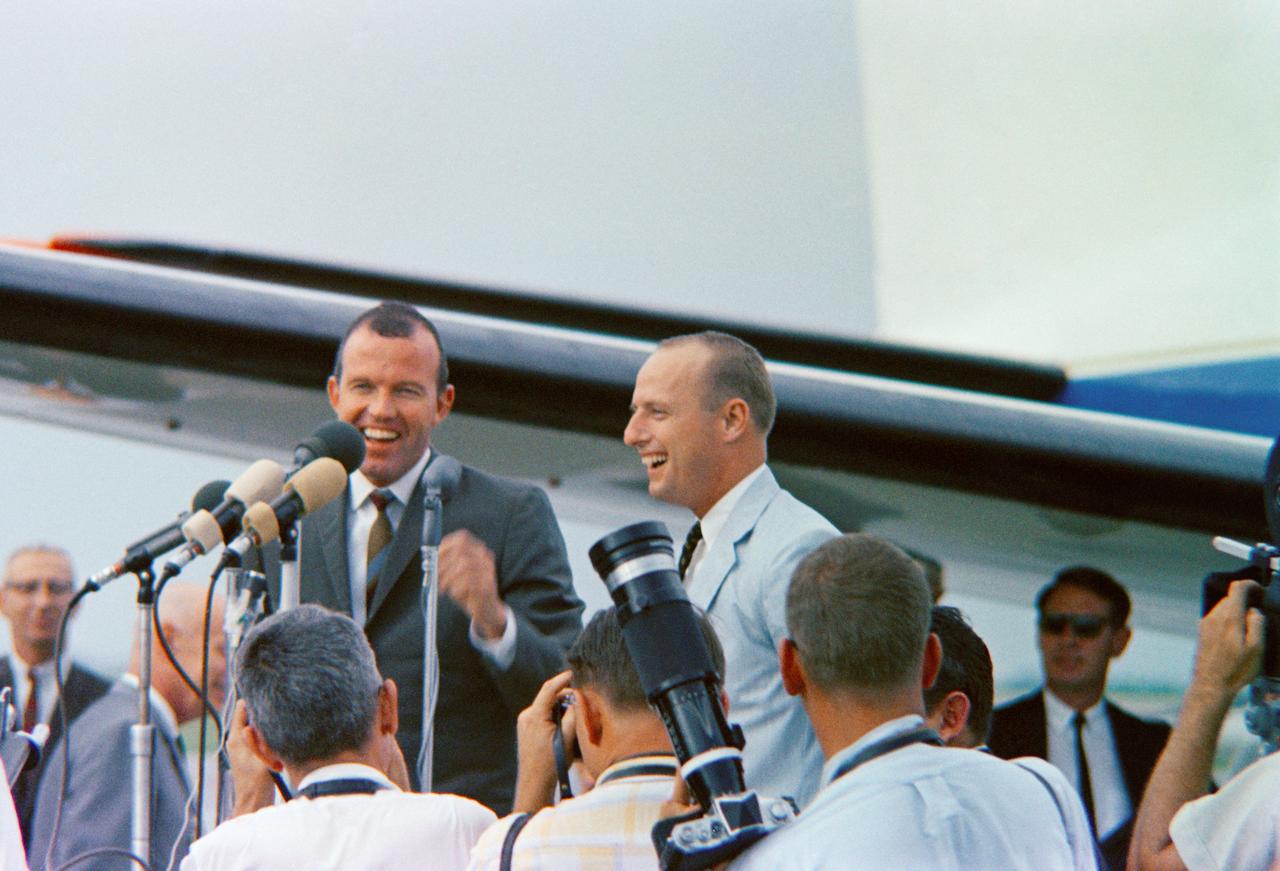
S65-50698 (2 Sept. 1965) --- Astronauts Charles Conrad Jr. (right) and L. Gordon Cooper Jr. speak to news media after their return home from the successful Gemini-5 spaceflight.
Personnel - Astronaut L. Gordon Cooper Jr. - Homecoming (Gemini-Titan [GT]-5) - Make Speeches - MSC
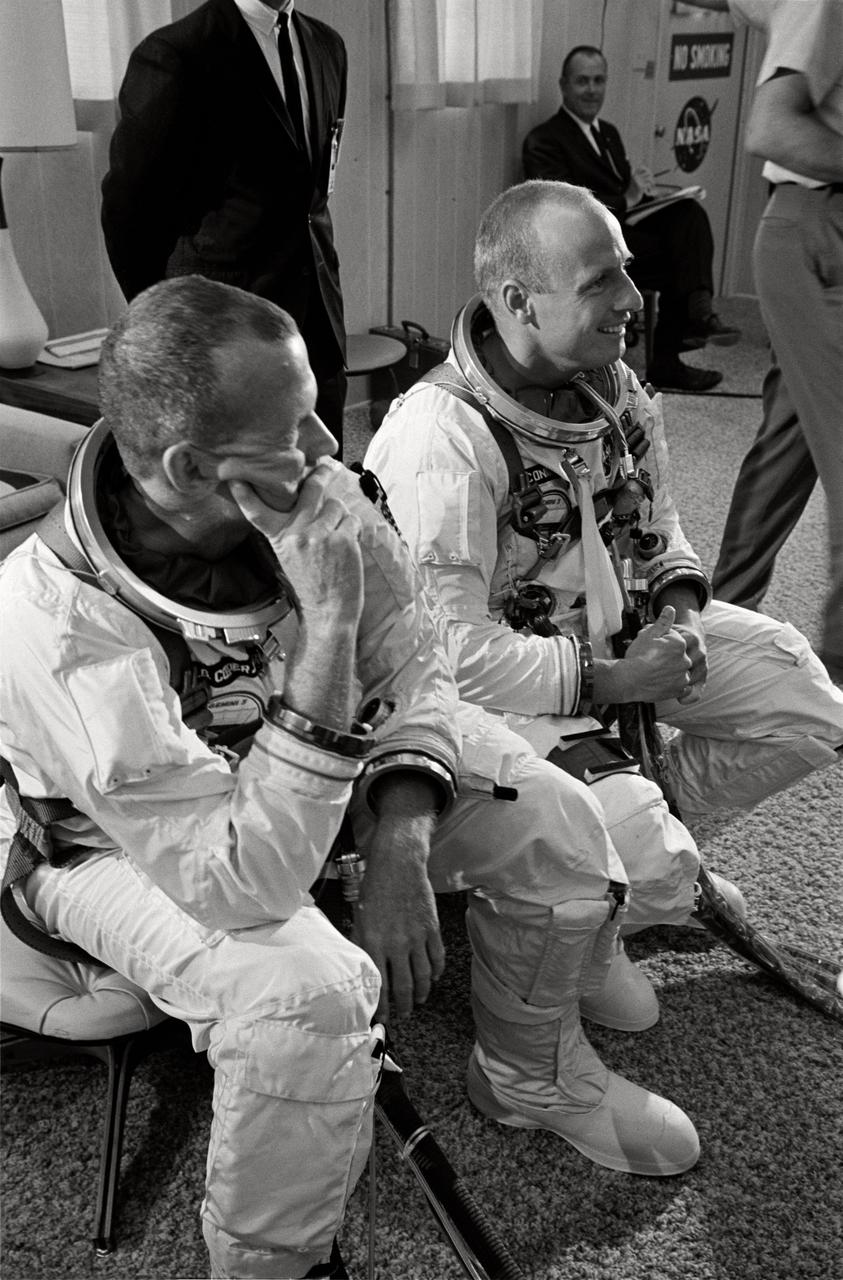
S65-46366 (19 Aug. 1965) --- Astronauts Charles Conrad Jr. (right) and L. Gordon Cooper Jr. during suiting up operations before Gemini-5 spaceflight.
Astronaut L. Gordon Cooper, Jr. - Misc. - Gemini-Titan (GT)-5 - Suiting-Up - Prime Crew - Cape
S66-45614 (23 Sept. 1966) --- Astronauts Charles Conrad Jr. (with pipe) and Richard F. Gordon Jr. (background) view negatives from their Gemini-11 mission. Photo credit: NASA
GORDON, RICHARD F., ASTRONAUT - GEMINI-TITAN (GT)-11 - EXPERIMENTS BRIEFING - MSC
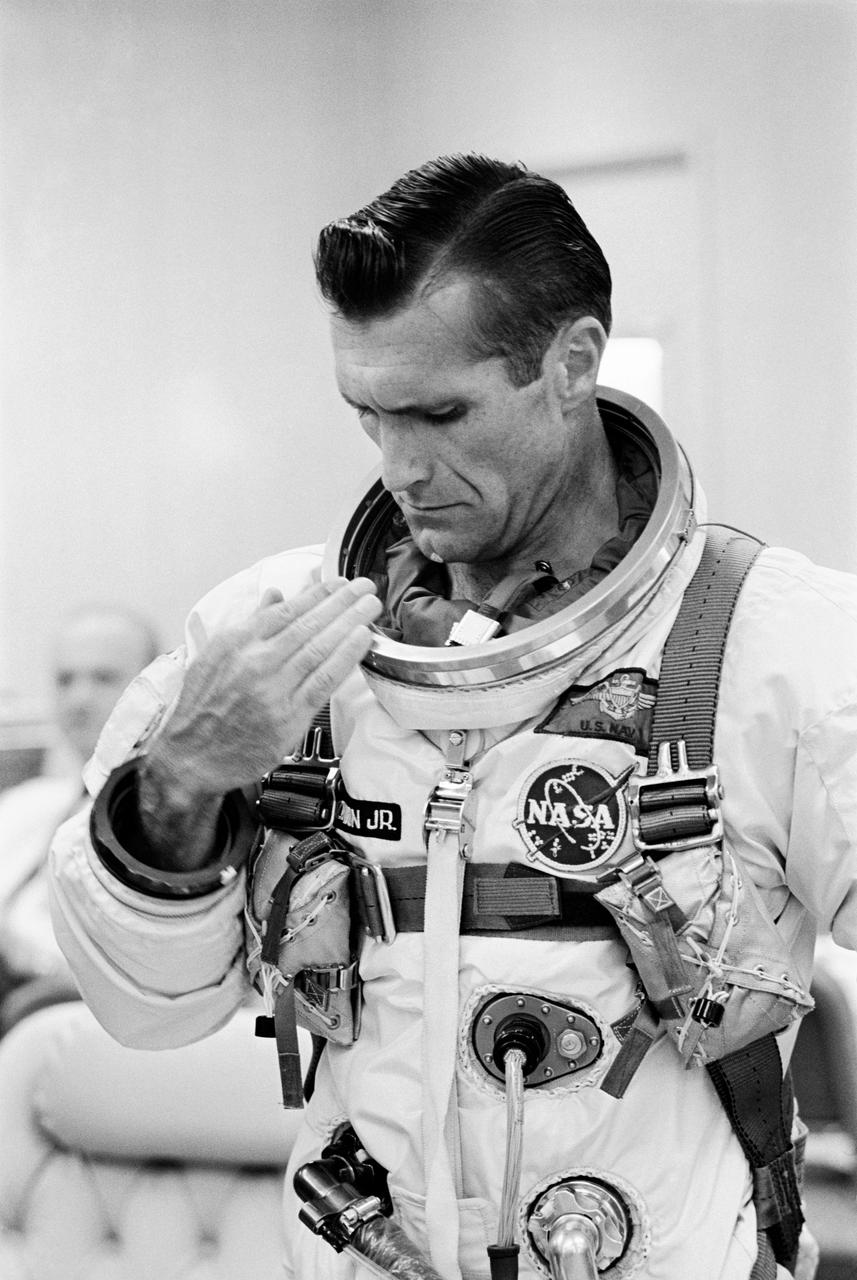
Astronaut Richard F. Gordon Jr., Apollo 12 command module pilot, suits up in the Kennedy Space Center's Manned Spacecraft Operations Building during the Apollo 12 prelaunch countdown.
Astronaut Richard F. Gordon suits up during Apollo 12 prelaunch countdown
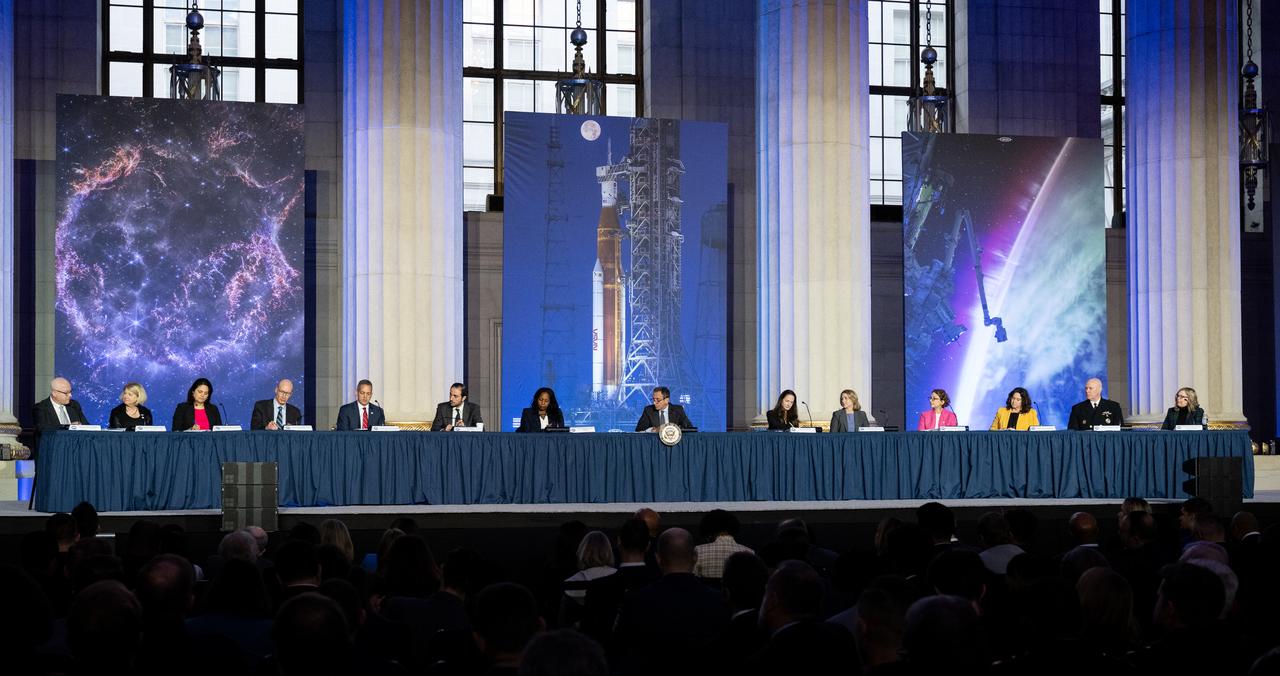
National Security Advisor to the Vice President Philip Gordon, center, leads the third meeting of the National Space Council, Wednesday, Dec. 20, 2023, at the Andrew W. Mellon Auditorium in Washington. Chaired by Vice President Kamala Harris, the council's role is to advise the President regarding national space policy and strategy, and ensuring the United States capitalizes on the opportunities presented by the country’s space activities.  Photo Credit: (NASA/Joel Kowsky)
National Space Council Meeting
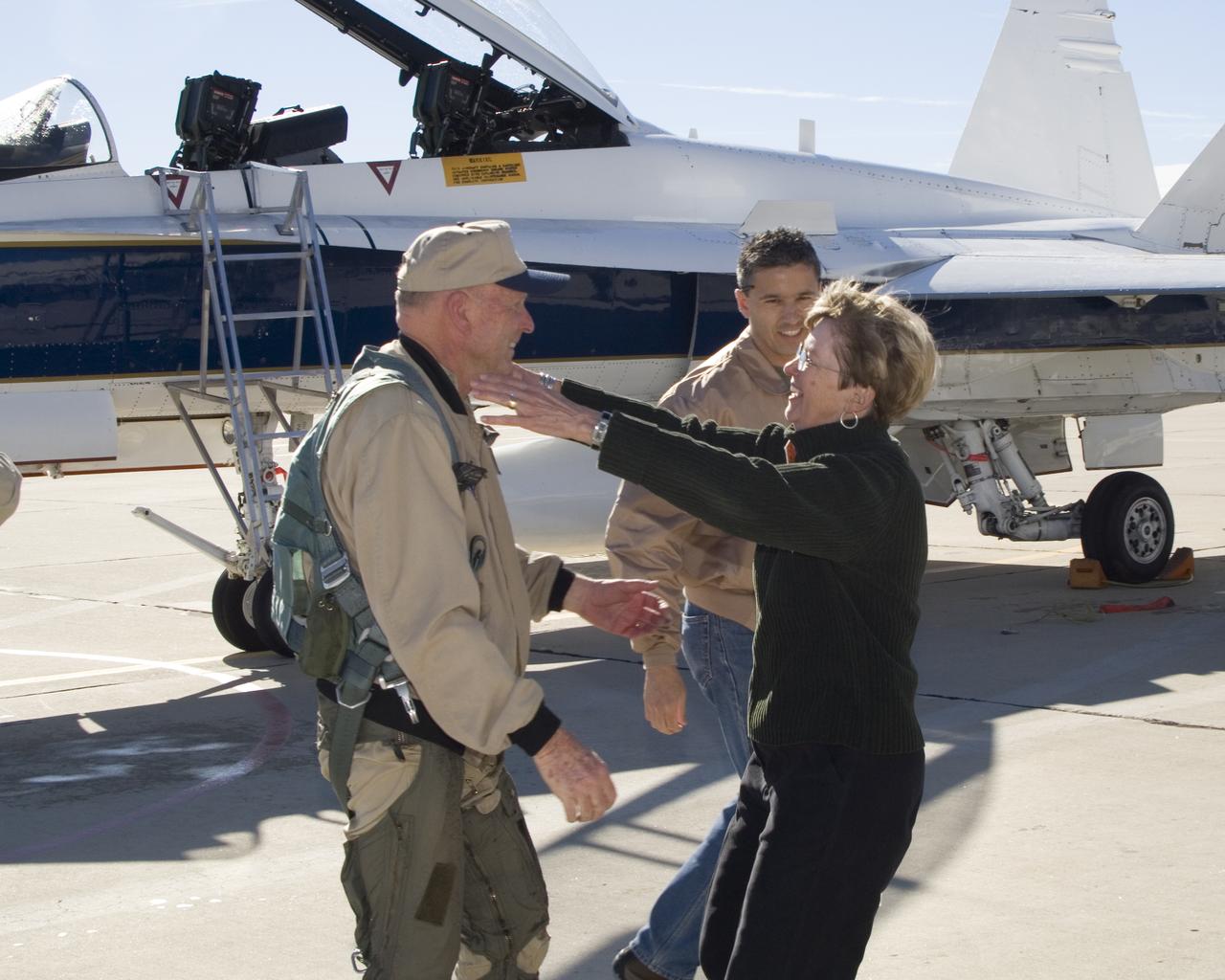
NASA Dryden research pilot Gordon Fullerton is greeted by his wife Marie on the Dryden ramp after his final flight in a NASA F/A-18 on Dec. 21, 2007.
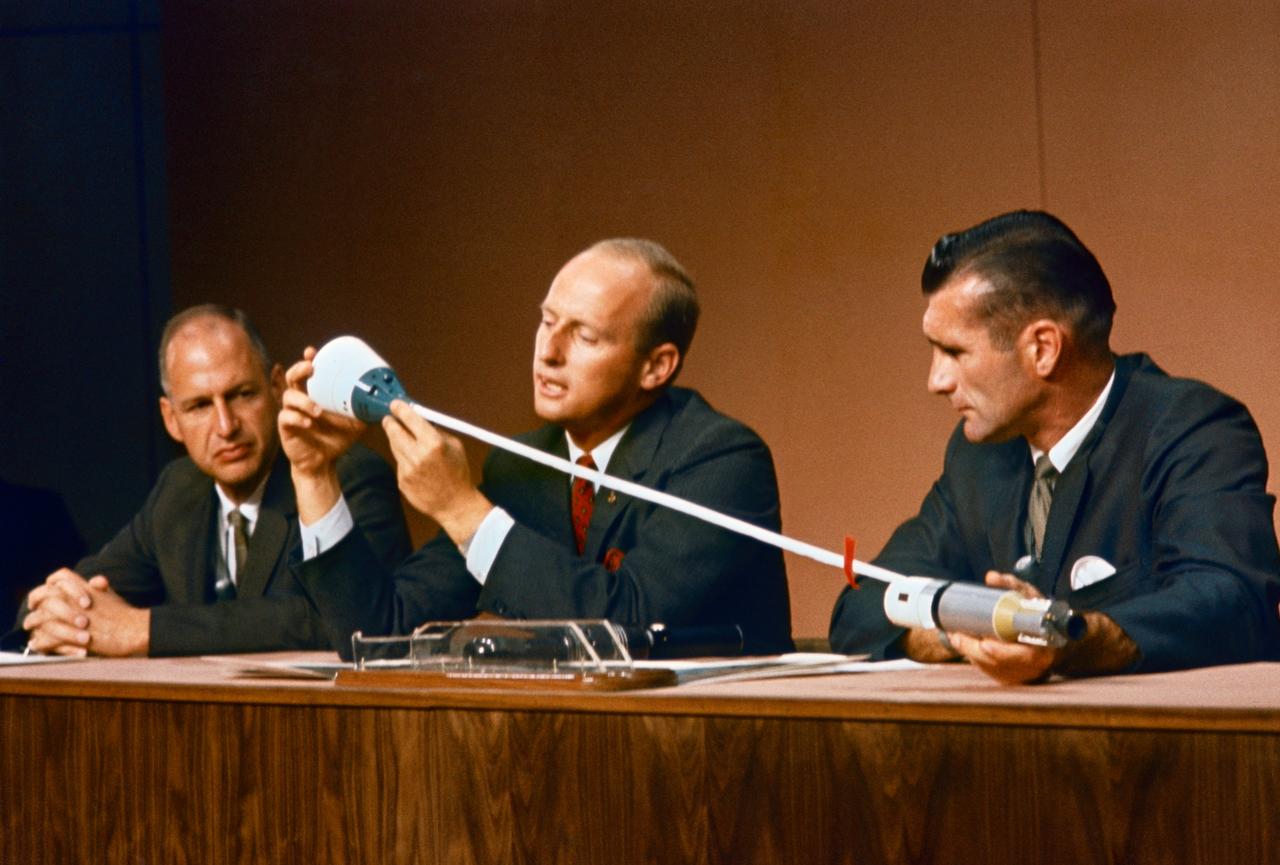
S66-45635 (26 Sept. 1966) --- Astronaut Charles Conrad Jr. (center), Gemini-11 prime crew command pilot, discusses the Gemini-11/Agena tether before a gathering of news media representatives in the MSC Building 1 auditorium. Holding an Agena model at right is astronaut Richard F. Gordon Jr., Gemini-11 pilot. Looking on at left is George M. Low, MSC Deputy Director. Photo credit: NASA
Astronauts Conrad and Gordon Tethering Procedures Demonstration - News Media - MSC
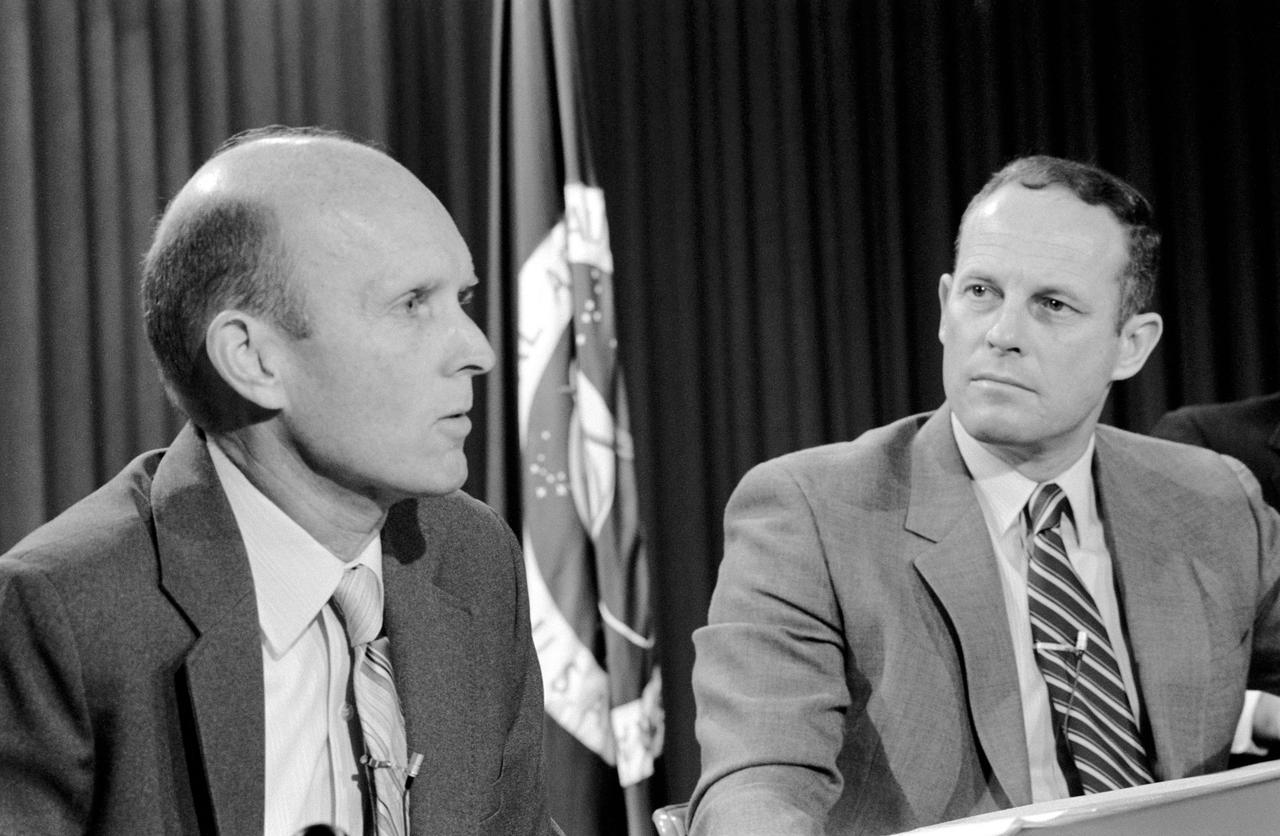
S82-25900 (21 Jan. 1982) --- Astronaut Jack R. Lousma, right, and C. Gordon Fullerton greet the press during a pre-STS-3 press conference in JSC?s Public Affairs Building. Lousma, commander and Fullerton, pilot, are scheduled to man the Columbia when it is launched in early spring from Kennedy Space Center launch pad 39A. Photo credit: NASA
Astronauts Jack R. Lousma, right, and C. Gordon Fullerton greet the press
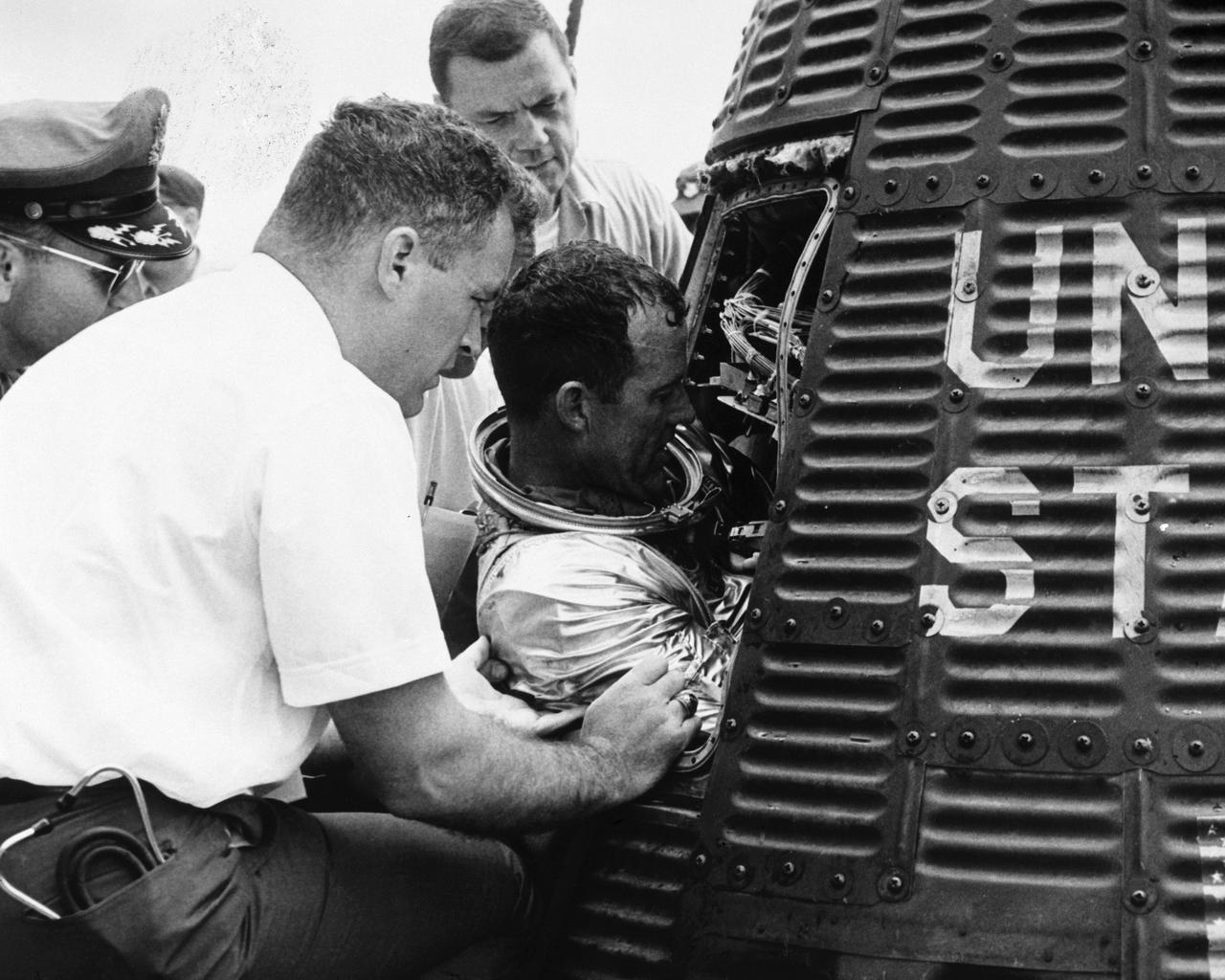
S63-07855 (16 May 1963) --- Astronaut L. Gordon Cooper Jr. is assisted in backing out of his spacecraft "Faith 7" after a 600,000-mile, 22-orbit journey around Earth. He elected to remain in the spacecraft until it was hoisted to the deck of the USS Kearsarge, as did astronaut Walter Schirra during the previous mission. Photo credit: NASA
Astronaut Gordon Cooper is assisted backing out of his spacecraft "Faith 7"
S66-50757 (15 Sept. 1966) --- Astronaut Charles Conrad Jr., command pilot of the Gemini-11 spaceflight, is hoisted aboard a recovery helicopter from the USS Guam. Astronaut Richard F. Gordon Jr., pilot, sits in a life raft below waiting to be picked up. Gemini-11 splashed down at 9 a.m. (EST) Sept. 15, 1966, to conclude a three-day mission in space. Photo credit: NASA
GORDON, RICHARD F., ASTRONAUT - MISC. - GT-11 - RECOVERY
S66-45615 (23 Sept. 1966) --- Discussing the S-13, Ultraviolet Astronomical Camera Experiment, during the postflight experiments briefing at the Manned Spacecraft Center, Houston, Texas, are (left to right) astronauts Charles Conrad Jr., Gemini-11 command pilot; Richard F. Gordon Jr., Gemini-11 pilot; and Dr. Karl Henize, Dearborn Observatory, Northwestern University. Photo credit: NASA
Astronauts Conrad and Gordon - Experiment Discussion - Post-Flight Briefing
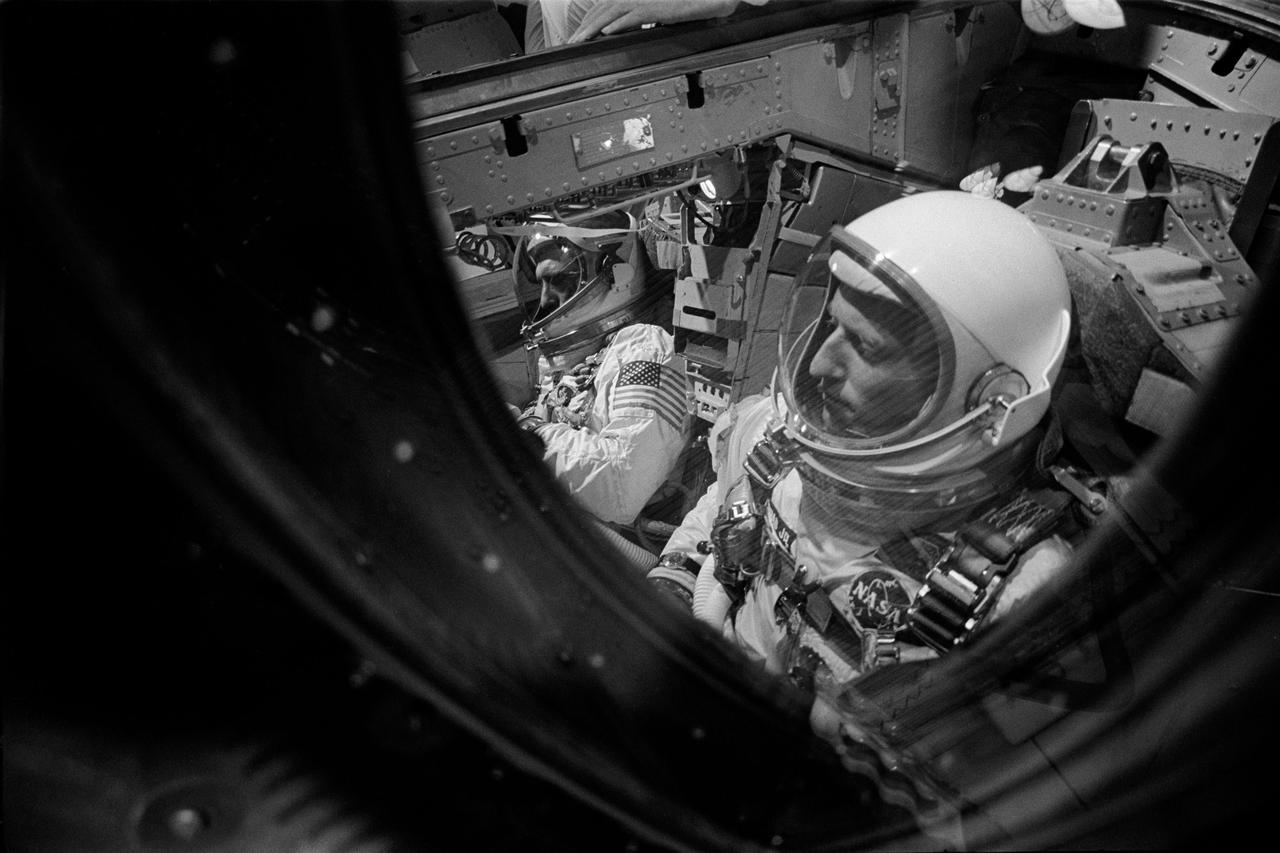
S66-50714 (12 Sept. 1966) --- Astronauts Charles Conrad Jr. (foreground), command pilot, and Richard F. Gordon Jr., pilot, are seen in the Gemini-11 spacecraft in the white room atop Pad 19 awaiting the final minutes of the prelaunch countdown. The Gemini-11 liftoff was at 9:42 a.m. (EST), Sept. 12, 1966. Photo credit: NASA
GORDON, RICHARD F., ASTRONAUT - MISC. - GEMINI-TITAN (GT)-11 - CAPE
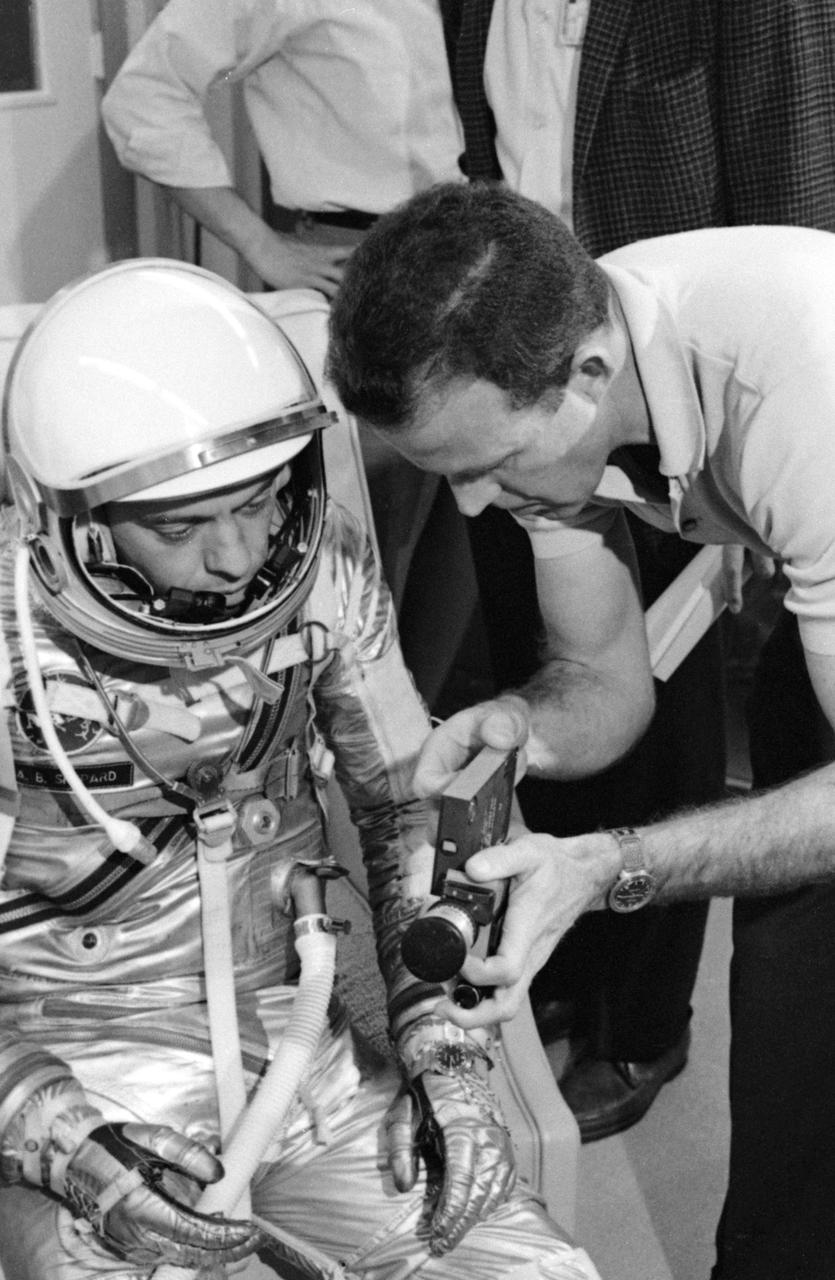
S63-03952 (1963) --- Astronaut L. Gordon Cooper Jr. explains the 16mm handheld spacecraft camera to his backup pilot astronaut Alan Shepard. The camera, designed by J.R. Hereford of McDonnell Aircraft Corp., will be used by Cooper during the Mercury-Atlas 9 (MA-9) mission to photograph experiments in space for M.I.T. and the Weather Bureau. Photo credit: NASA
ASTRONAUT COOPER, GORDON L. - TRAINING - MERCURY-ATLAS (MA)-9 - CAMERA
S66-50720 (12 Sept. 1966) --- Preparations are made in the white room atop Pad 19 to close the hatches on the Gemini-11 spacecraft just after insertion during the Gemini-11 prelaunch countdown. On the left is astronaut Charles Conrad Jr., command pilot; and on the right is Richard F. Gordon Jr., pilot. Photo credit: NASA
GORDON, RICHARD F., ASTRONAUT - MISC. - GEMINI-TITAN (GT)-11 - CAPE
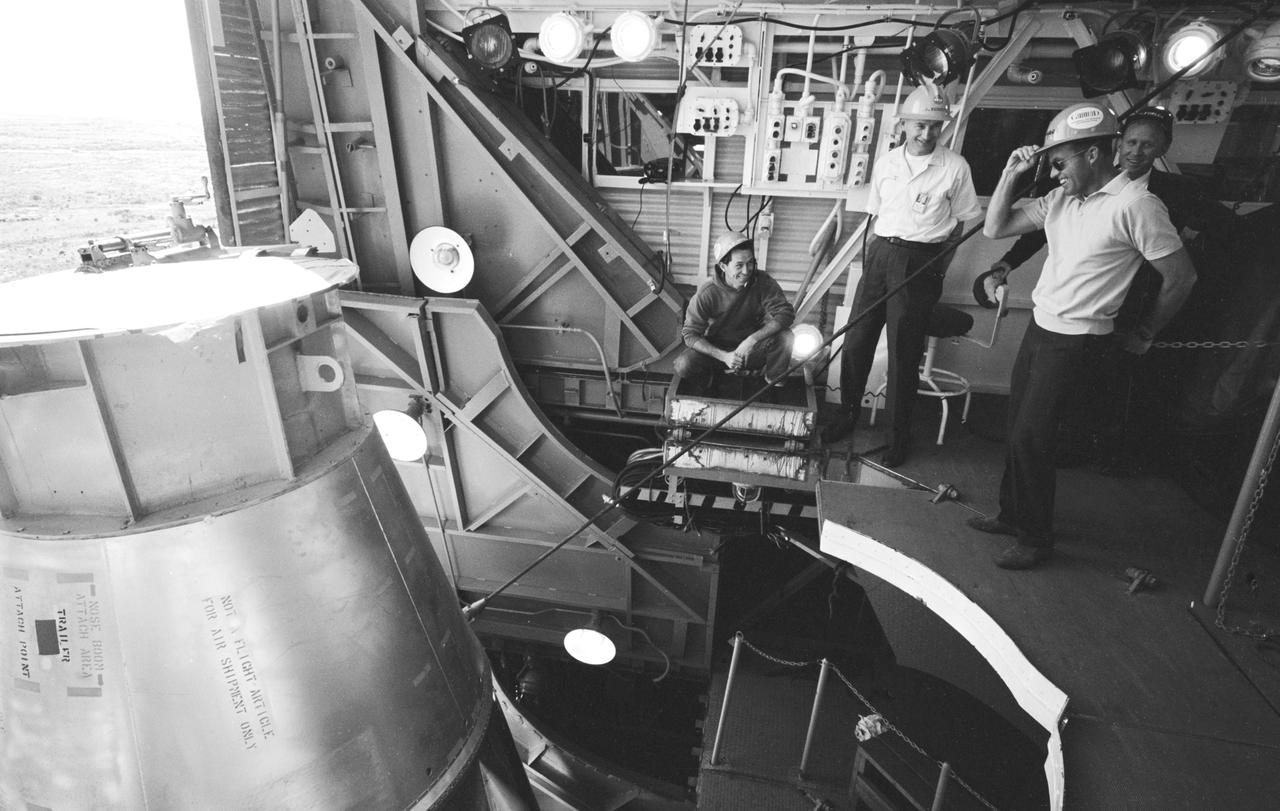
S63-03986 (1963) --- Astronaut L. Gordon Cooper Jr., prime pilot for the Mercury-Atlas 9 (MA-9) mission, and General Dynamics pad technicians watch Atlas 130D being hoisted into place in the gantry at pad #14, Cape Canaveral, Florida. Photo credit: NASA
ASTRONAUT COOPER, GORDON L., JR. - TECHICIANS - ATLAS BOOSTER 130-D - HOISTED - GANTRY - CAPE
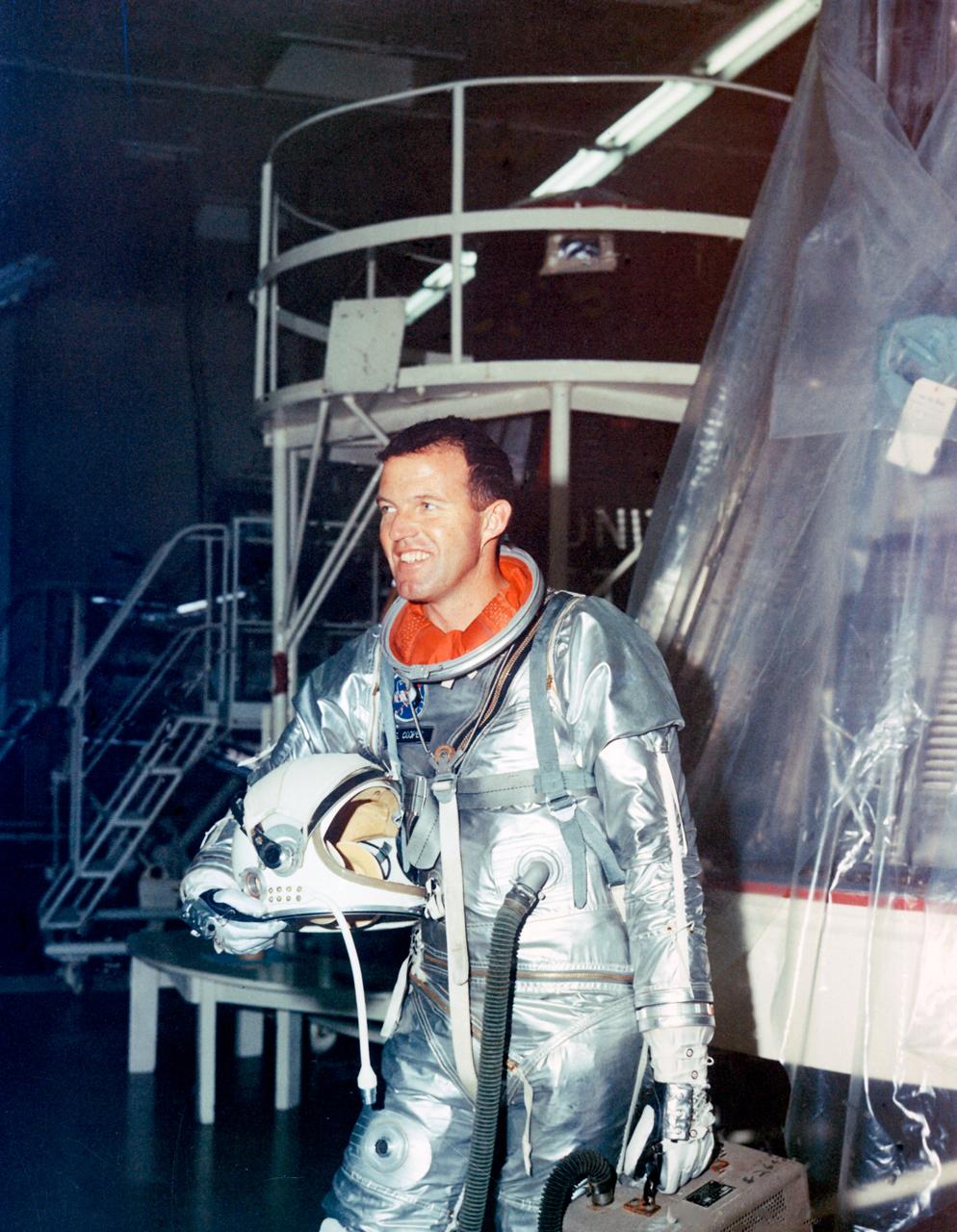
S63-01922 (1963) --- Astronaut L. Gordon Cooper Jr., pilot for the Mercury-Atlas 9 (MA-9) mission, stands fully suited beside his spacecraft during preflight testing. Cooper named his spacecraft the Faith 7. Photo credit: NASA
ASTRONAUT COOPER, L. GORDON, JR. - MERCURY-ATLAS (MA)-9 - PREFLIGHT TESTING - CAPE
S66-44497 (23 July 1966) --- Astronauts Charles Conrad Jr. (left) and Richard F. Gordon Jr. (right), prime crew for the Gemini-11 spaceflight, practice water egress procedures in the Gulf of Mexico. Static Article 5 was used in the training exercise. A MSC swimmer is in the water assisting in the training. Photo credit: NASA
GORDON, RICHARD F., ASTRONAUT - TRAINING - GEMINI-TITAN (GT)-11 - WATER EGRESS - GULF
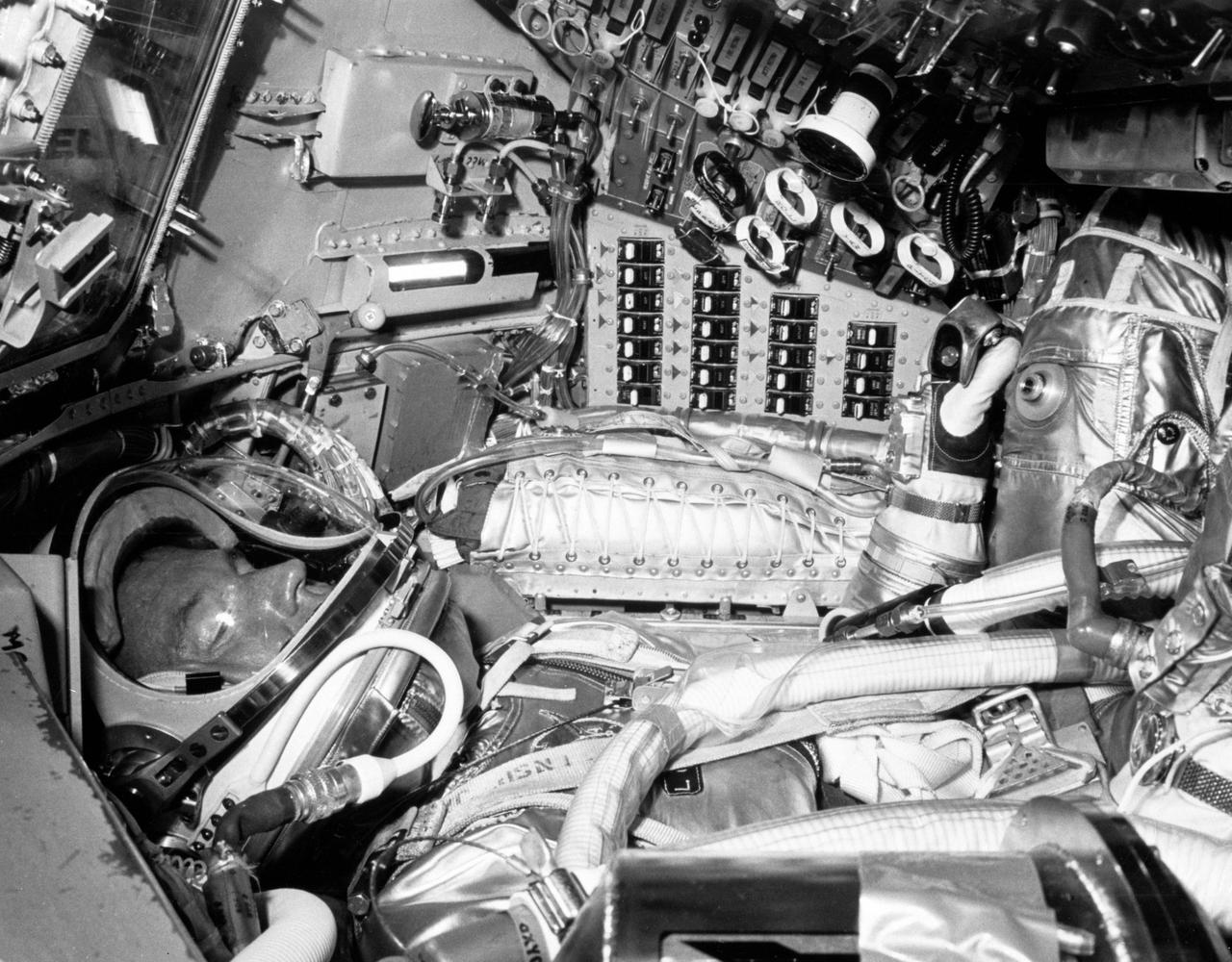
S63-06129 (1963) --- Astronaut L. Gordon Cooper Jr., prime pilot for the Mercury-Atlas 9 (MA-9) mission, inside his Mercury spacecraft, runs through one of the numerous preflight checks surrounded by dials, switches, indicators and buttons. Photo credit: NASA
ASTRONAUT COOPER, GORDON L. - MERCURY-ATLAS (MA)-9 - PRELAUNCH - PREFLIGHT CHECK - CAPE
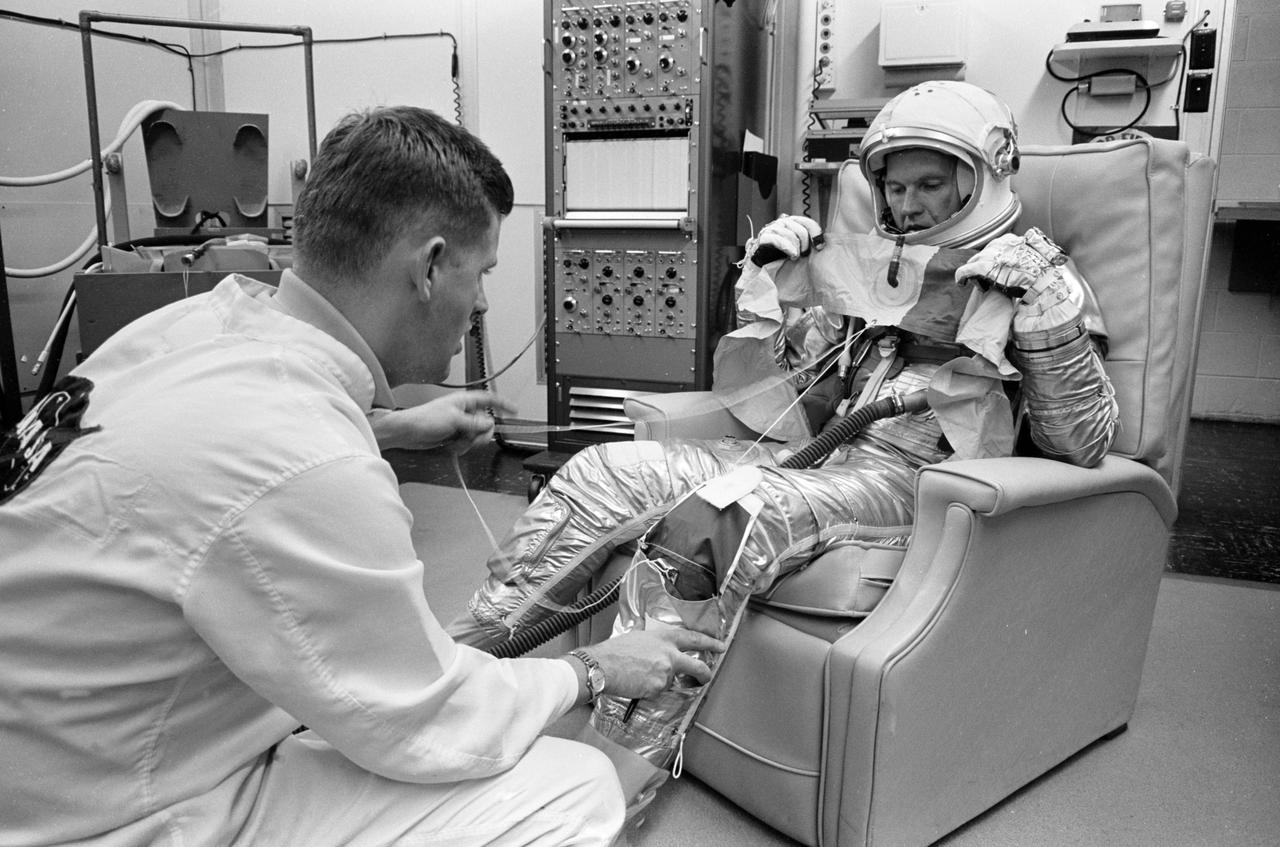
S63-03964 (1963) --- Al Rochford, Crew Systems, Manned Space Center, assists astronaut L. Gordon Cooper Jr., in checking his life vest, normally stowed in a pocket in the lower left leg. Photo credit: NASA
ROCHFORD, AL - ASTRONAUT COOPER, GORDON L. - LIFE VEST CHECK - PRELAUNCH ACTIVITIES - MERCURY-ATLAS (MA)-9 - MSC
S63-06252 (May 1963) --- Mercury workers and news media are greeted by astronaut L. Gordon Cooper Jr., prime pilot for the Mercury-Atlas 9 (MA-9) mission, as he leaves Hangar "S" for Pad 14 to start his 22-orbit MA-9 mission. Photo credit: NASA
ASTRONAUT COOPER, GORDON L., JR. - MERCURY-ATLAS (MA)-9 PRELAUNCH -HANGAR "S" - CAPE
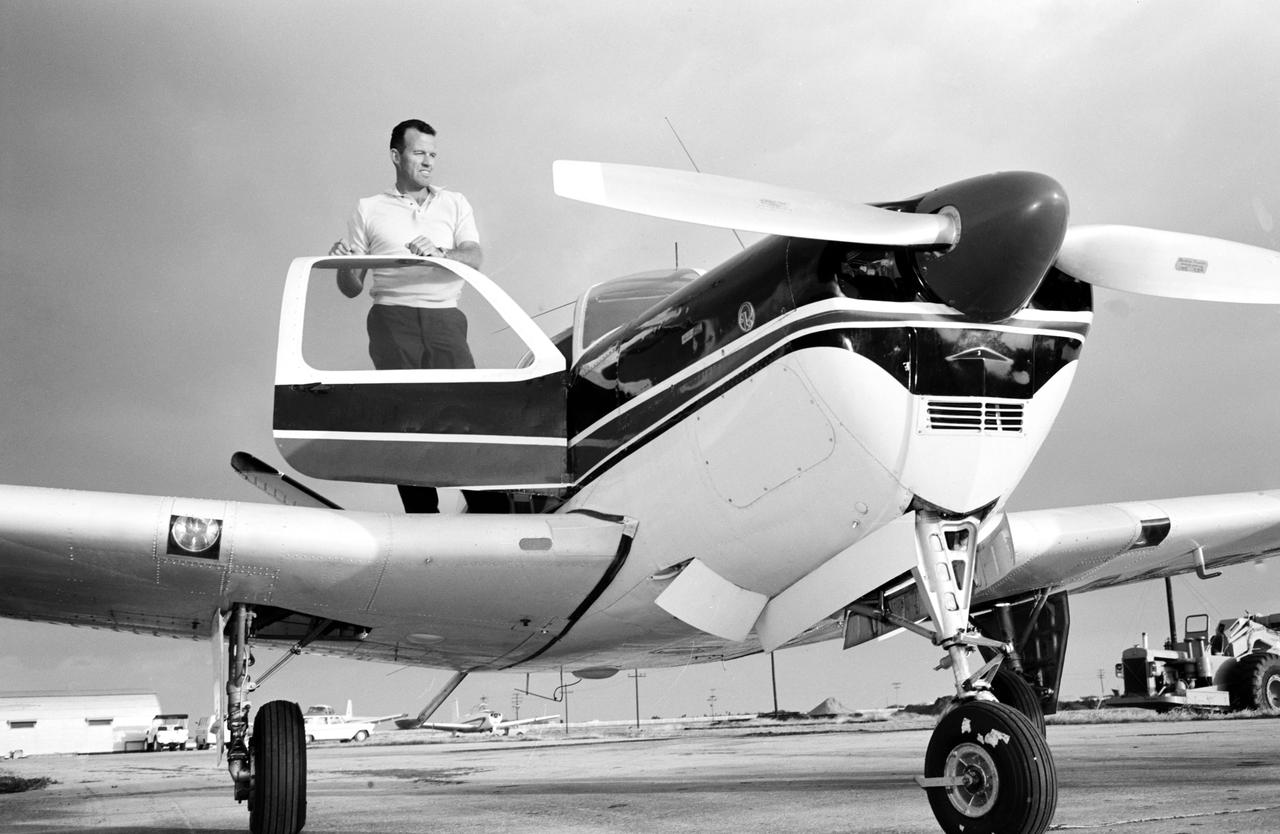
S63-03989 (1963) --- Astronaut L. Gordon Cooper Jr., prime pilot for the Mercury Atlas 9 (MA-9) 22-orbit flight, stands by his privately owned Beechcraft Bonanza aircraft, at Patrick Air Base, Florida. Photo credit: NASA
ASTRONAUT COOPER, GORDON L. - MERCURY-ATLAS (MA)-9 - BEECHCRAFT BONANZA - FL
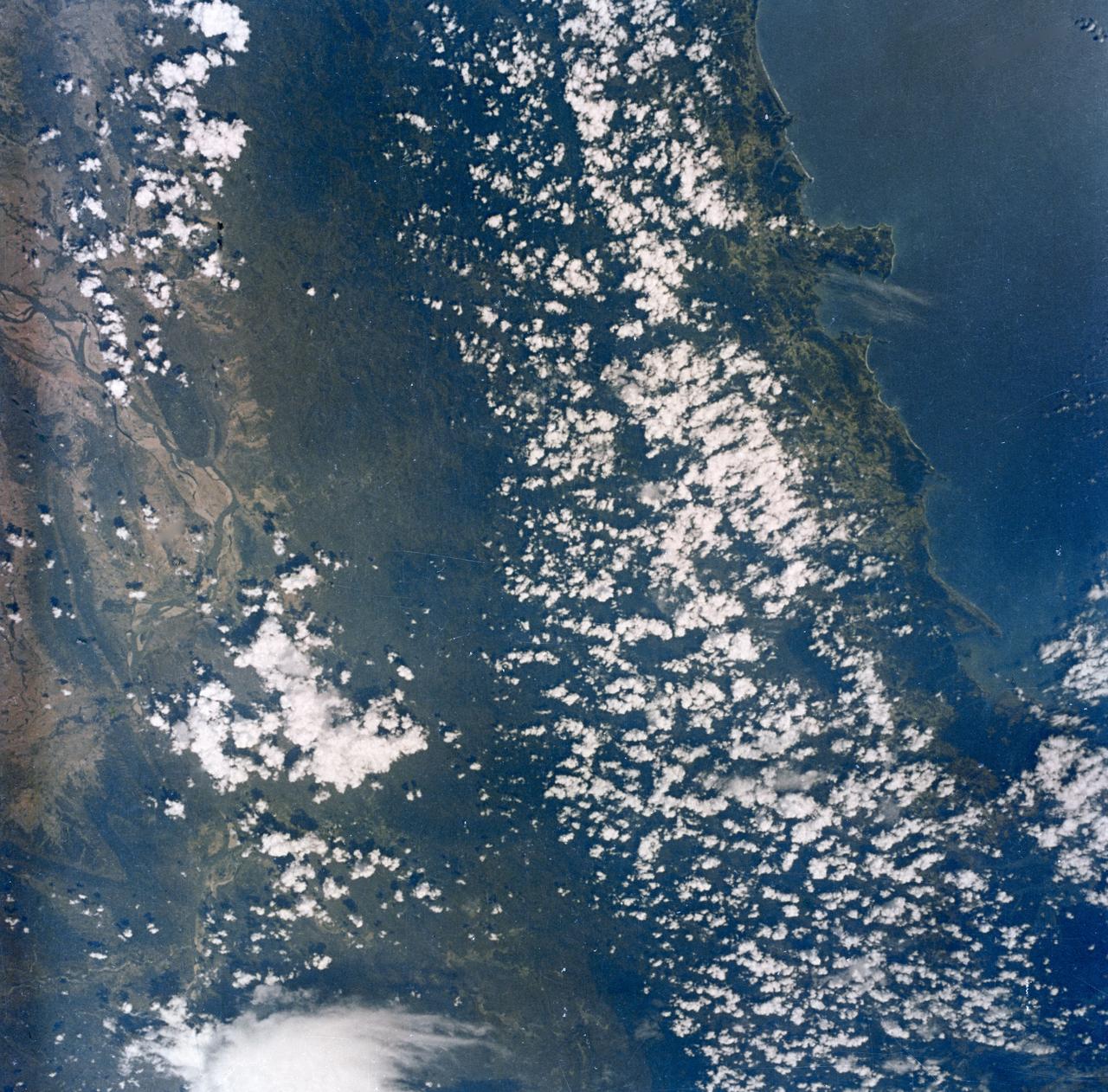
S63-06427 (15-16 May 1963) --- Burma's west coast, west of Rangoon and Irrawaddy River (right), are featured in this image photographed by astronaut L. Gordon Cooper Jr., during his 22-orbit Mercury Atlas 9 (MA-9) spaceflight. Photo credit: NASA
ASTRONAUT COOPER, GORDON L., JR. - LIFTOFF - MERCURY-ATLAS (MA)-9 -CAPE
The Ohio State University President E. Gordon Gee, left, Apollo 11 Astronaut Neil Armstrong, 2nd from left, Former space shuttle astronaut and former Under Secretary of the Air Force Dr. Ron Sega, and Captain Mark Kelly, commander of the space shuttle Endeavour’s final mission and husband of retired U.S. Representative Gabrielle Giffords, right, talk prior to a reception at Ohio State University honoring the 50th anniversary of John Glenn's historic flight aboard Friendship 7 Monday, Feb. 20, 2012, in Columbus, Ohio. Glenn was the first American to orbit Earth.  Photo Credit: (NASA/Bill Ingalls)
50th Anniversary First American to Orbit Earth
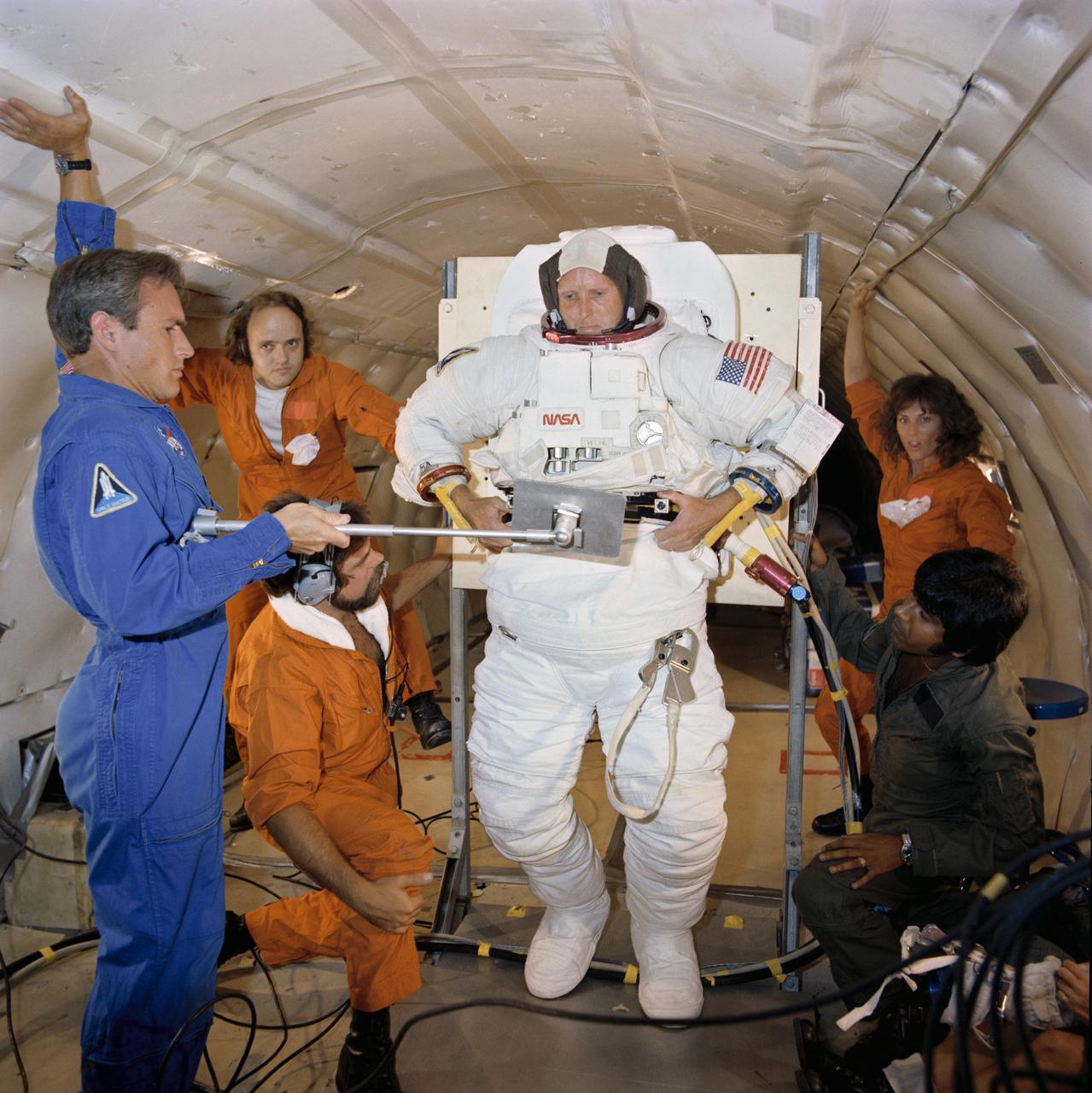
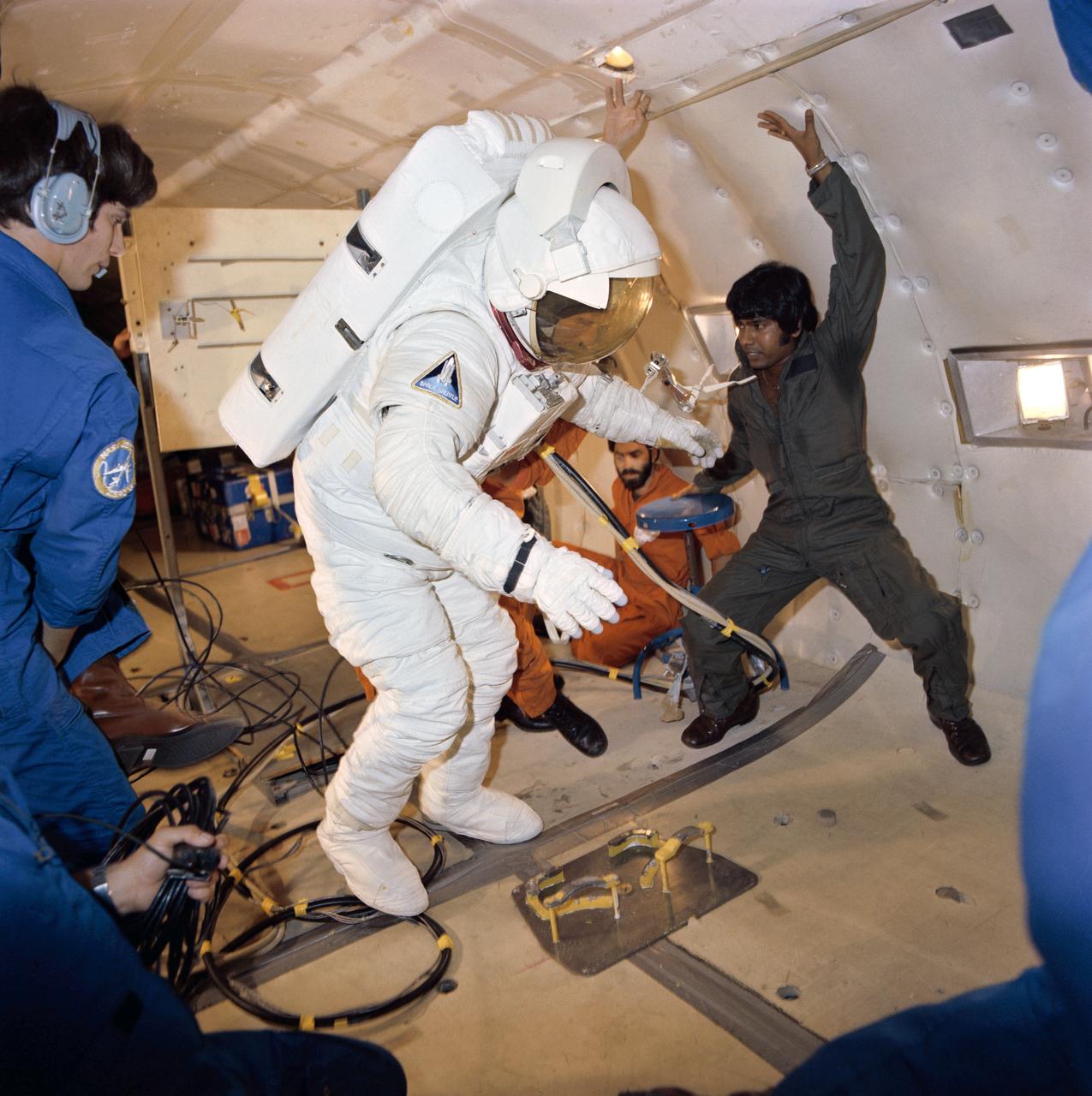
S81-34432 (July 1981) --- Astronaut C. Gordon Fullerton, STS-3 pilot, takes part in a suit donning and doffing exercise aboard a KC-135 "zero-gravity" aircraft. Mission specialist/astronaut William F. Fisher holds a mirror to assist Fullerton with hose and cable linkups to his suit. A special parabolic pattern flown by the KC-135 provides short durations of weightlessness. Fullerton's suit is an Extravehicular Mobility Unit (EMU), used by astronauts when leaving the shirt-sleeve environment of their shuttle orbiter to go outside and perform tasks in the vacuum of space. There are no such EVA plans on STS-3, but the crewmen are trained in this area in the event of a contingency. Photo credit: NASA
Astronaut C. Gordon Fullerton in suit donning/doffing exercise
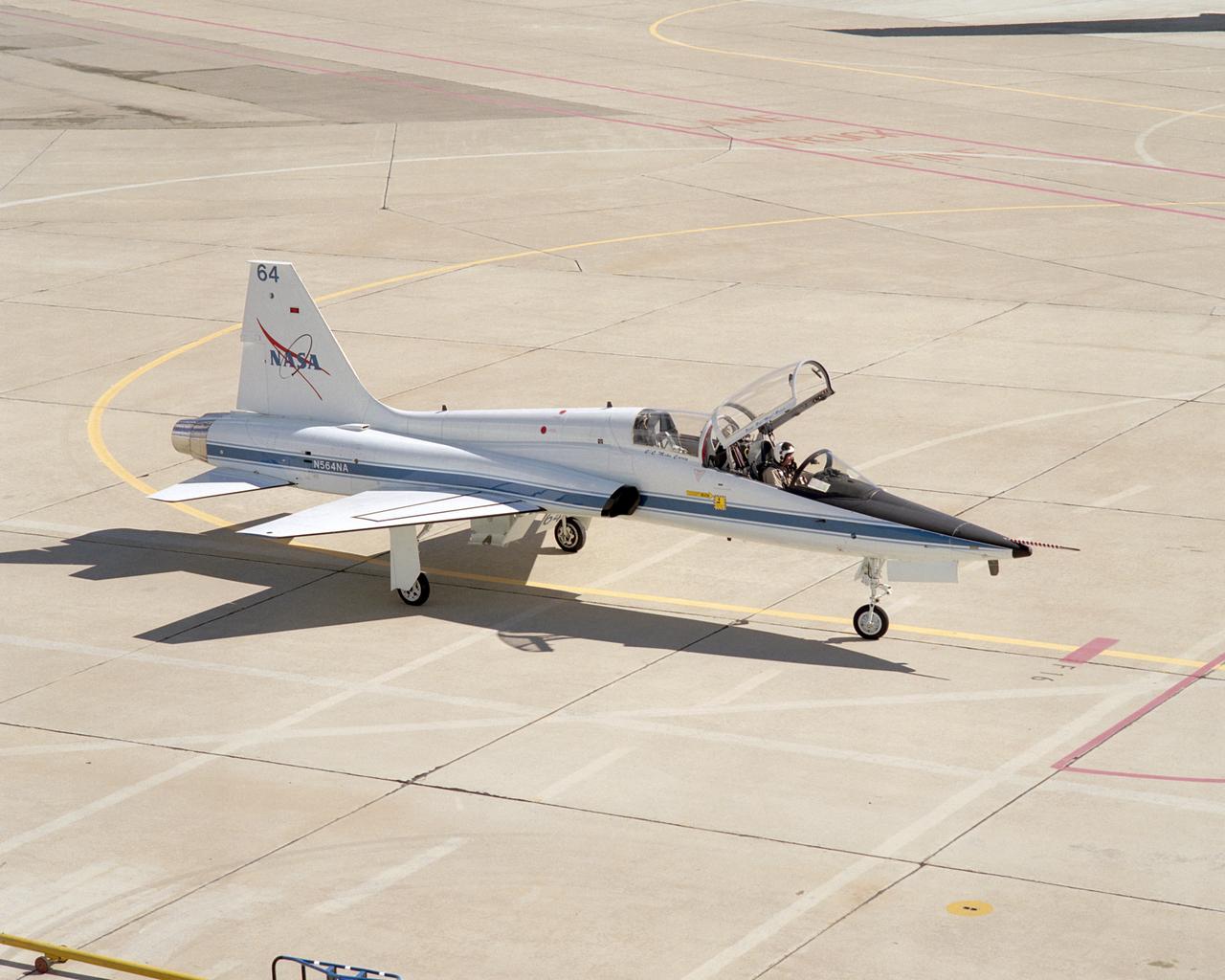
Pilot Gordon Fullerton taxies NASA Dryden's "newest" mission support aircraft, a T-38 Talon, into position on the ramp upon its arrival on February 24, 2005.
Pilot Gordon Fullerton taxies NASA Dryden's "newest" mission support aircraft, a T-38 Talon, into position on the ramp upon its arrival on February 24, 2005
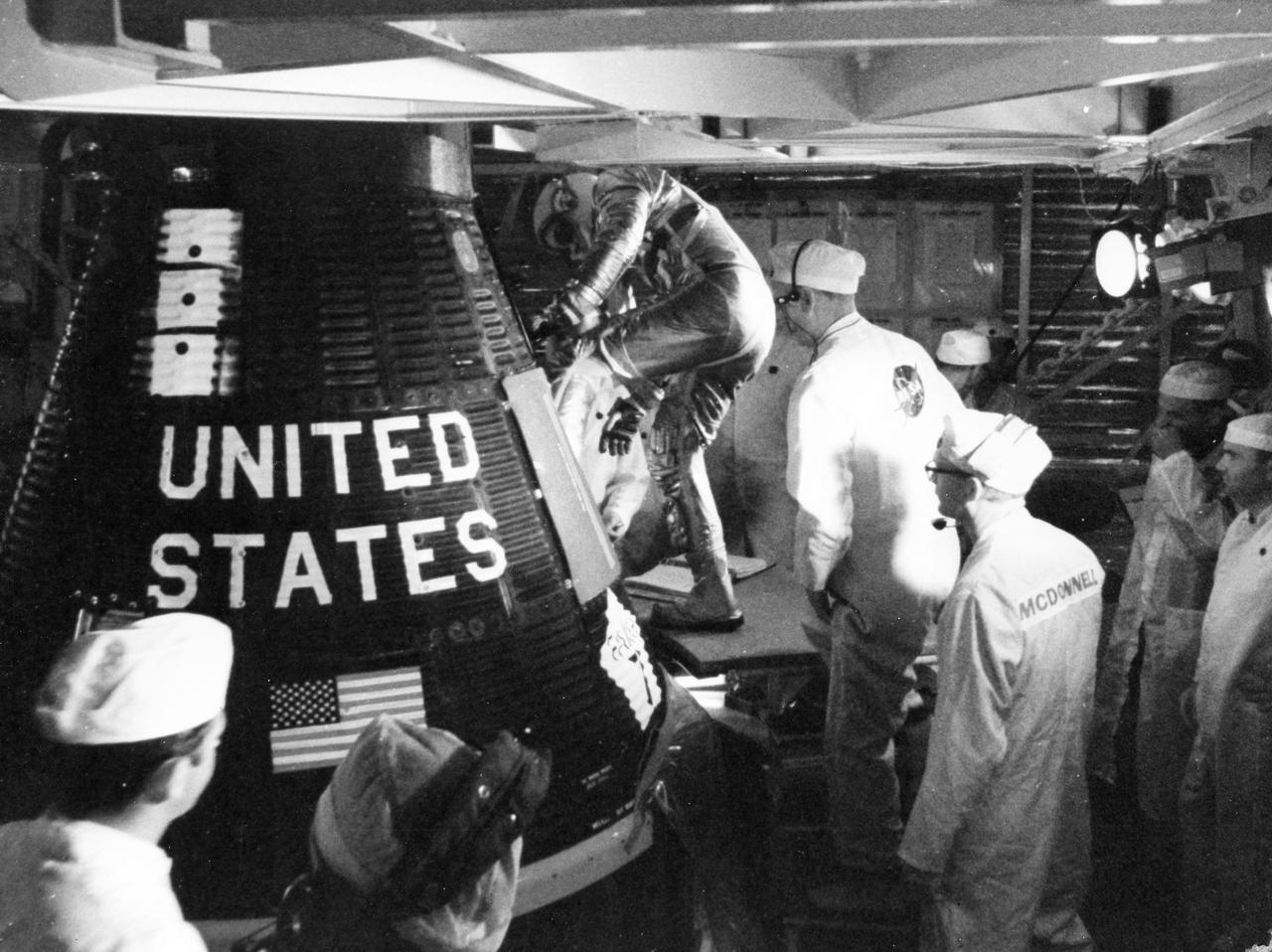
S63-06259 (14 May 1963) --- Astronaut L. Gordon Cooper Jr., prime pilot for the Mercury-Atlas 9 (MA-9) mission, is assisted into his "Faith 7" Mercury spacecraft early morning on May 14, 1963. Cooper remained in the spacecraft for approximately five hours and then climbed out again as the mission was delayed because of trouble at a tracking station. Photo credit: NASA
ASTRONAUT COOPER, GORDON - PRELAUNCH MERCURY-ATLAS (MA)-9 - "FAITH 7" - INSERTION - CAPE CANAVERAL, FL
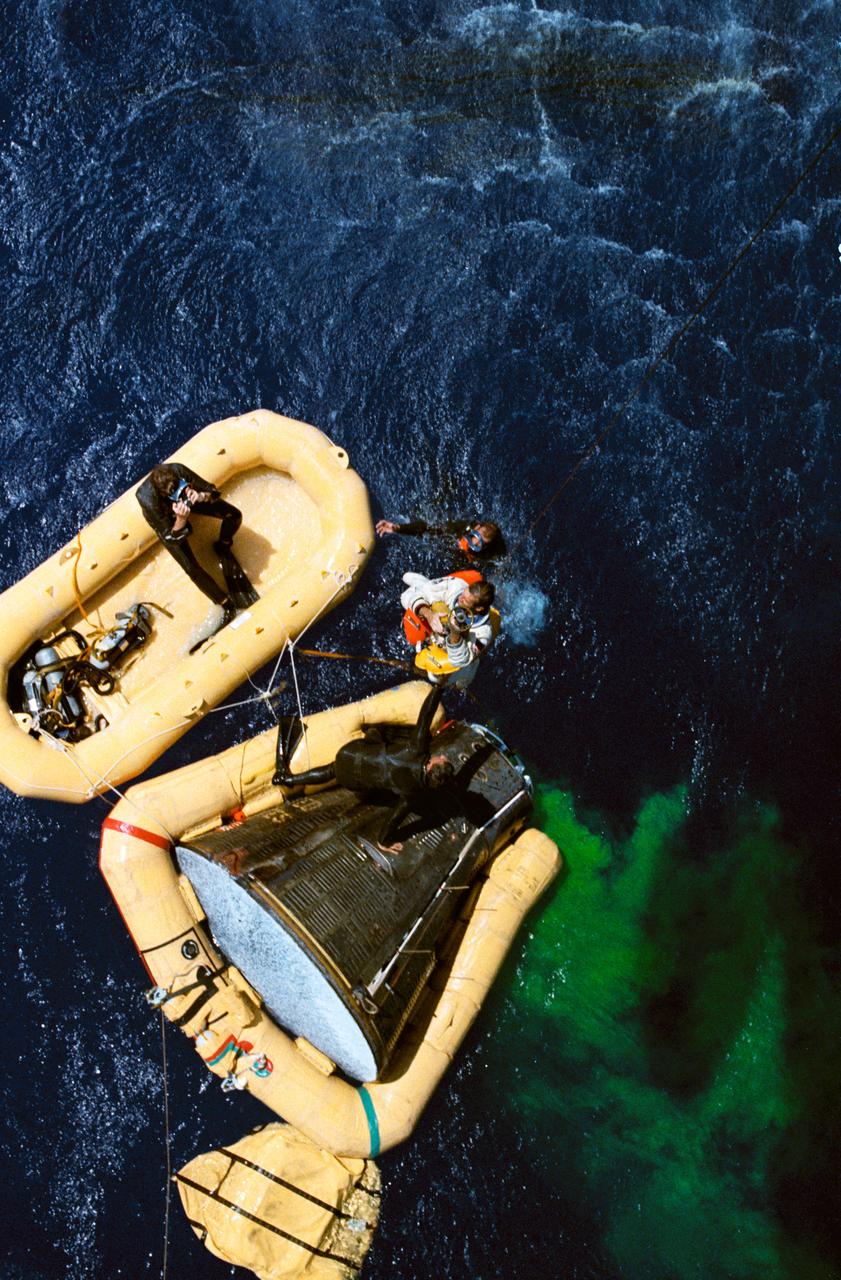
S66-50759 (15 Sept. 1966) --- Astronaut Richard F. Gordon Jr., pilot of the Gemini-11 spaceflight, is hoisted from the water by a recovery helicopter from the prime recovery ship USS Guam. Gemini-11 splashed down in the western Atlantic recovery area at 9 a.m. (EST), Sept. 15, 1966, to conclude the three-day mission in space. Astronaut Charles Conrad Jr. (out of frame) is the Gemini-11 command pilot. Photo credit: NASA
GORDON, RICHARD F., ASTRONAUT - MISC. - GEMINI-TITAN (GT)-XI - RECOVERY - FROGMEN - ATLANTIC
S65-46367 (19 Aug. 1965) --- Astronauts Charles Conrad Jr. (right) and L. Gordon Cooper Jr. are pictured during suiting up operations before Gemini-5 spaceflight. Editor's note: The scheduled Aug. 19 launch was postponed due to weather conditions and problems with loading cryogenic fuel for the fuel cell. The launch occurred on Aug. 21, 1965.
Astronaut L. Gordon Cooper Jr. - Misc. - Gemini-Titan (GT)-5 - Suiting-Up - Prime Crew - Cape
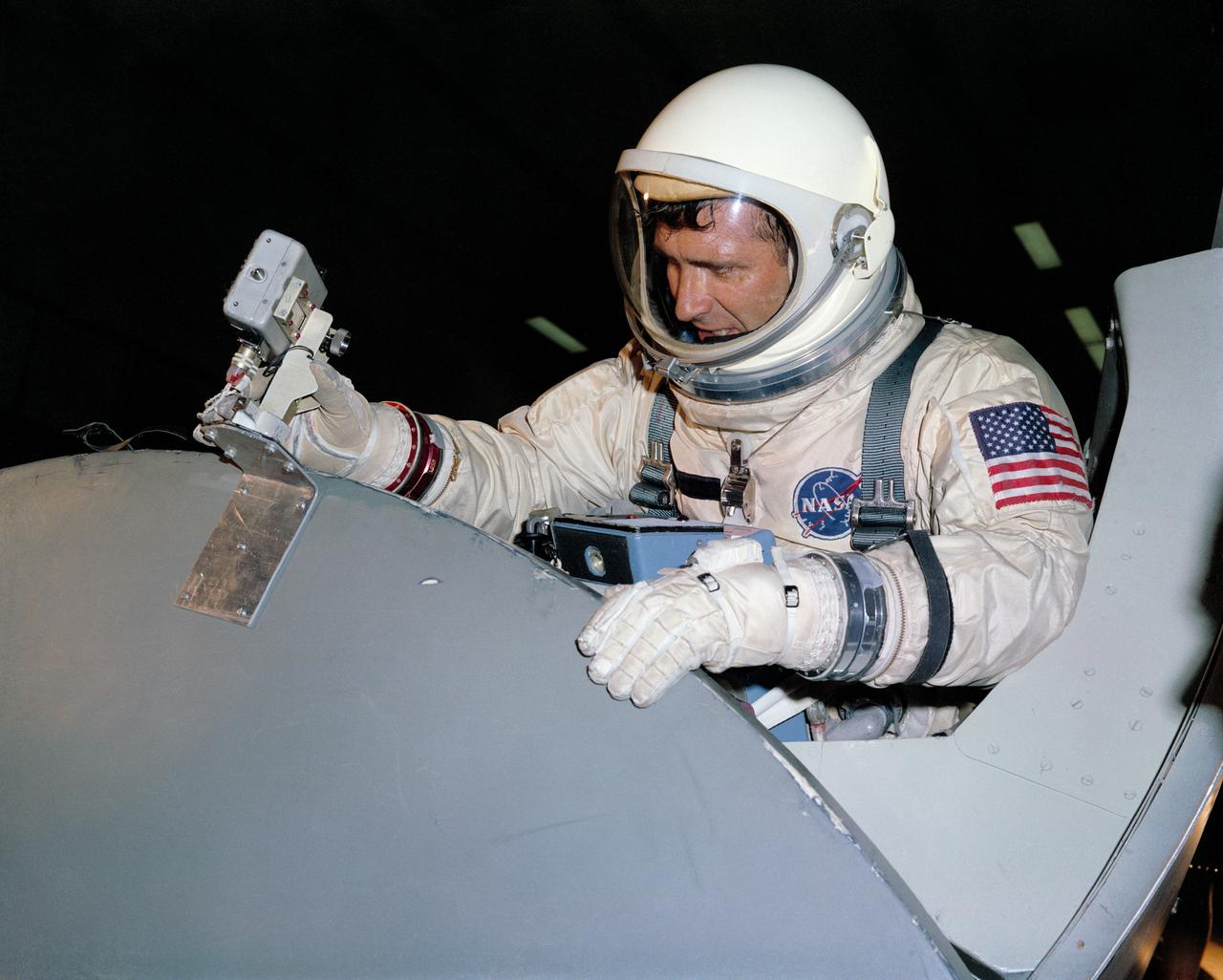
S66-50179 (10 Aug. 1966) --- Astronaut Richard F. Gordon Jr., prime crew pilot for the Gemini-11 spaceflight, practices attaching to a Gemini boilerplate a camera which will film his extravehicular activity (EVA) outside the spacecraft. The training exercise is being conducted in the Astronaut Training Building, Kennedy Space Center, Florida. Photo credit: NASA
GORDON, RICHARD F., ASTRONAUT - TRAINING - EXTRAVEHICULAR ACTIVITY (EVA) - GEMINI-TITAN (GT)-11 - CAPE
S81-34448 (July 1981) --- Astronaut C. Gordon Fullerton, STS-3 pilot, fully suited, gets a preview of what it might be like in space during a flight aboard NASA's KC-135 "zero-gravity" aircraft. A special parabolic pattern flown the aircraft provides short periods of weightlessness. Fullerton's suit is an Extravehicular Mobility Unit (EMU), used by astronauts when leaving the shirt-sleeve environment of their shuttle orbiter to go outside perform tasks in space. There are no such EVA plans on STS-3, but crew members are trained in this area in the event of the necessity to perform chores in space that for some reason or other can't be done remotely.  The astronaut has just donned his suit during a parabola and now takes the opportunity to float around in the absence of gravity. Photo credit: NASA
Astronaut C. Gordon Fullerton in donning/doffing exercise experiences
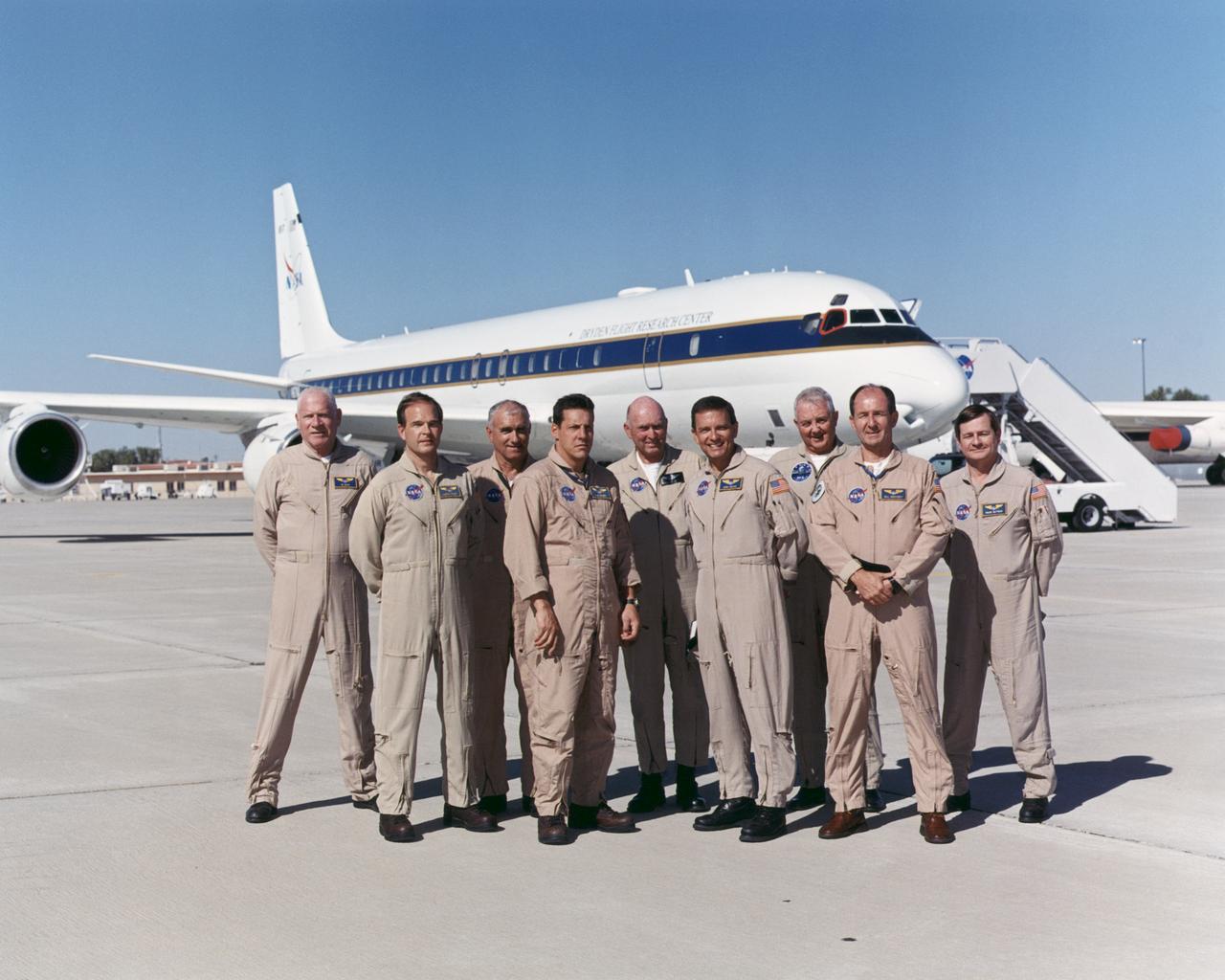
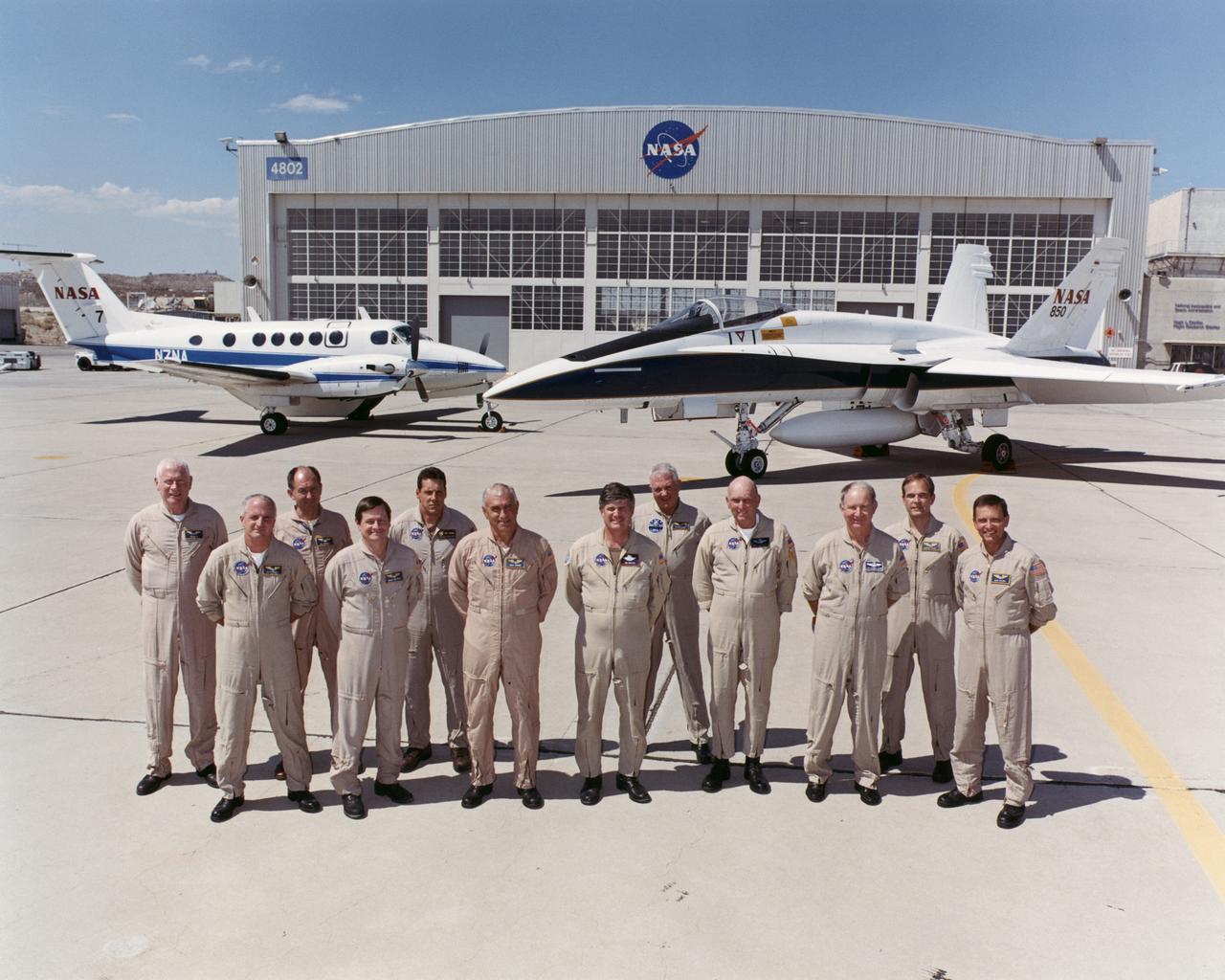
2004 NASA Dryden DC-8 flight crew. Left to Right: Edwin W. Lewis, Jr., Martin J. Trout, Richard G. Ewers, Craig R. Bomben, C. Gordon Fullerton (Chief Pilot), Mark Pestana, Douglas H. Baker, William Frederick Brockett, and Frank Batteas.
2004 NASA Dryden DC-8 flight crew
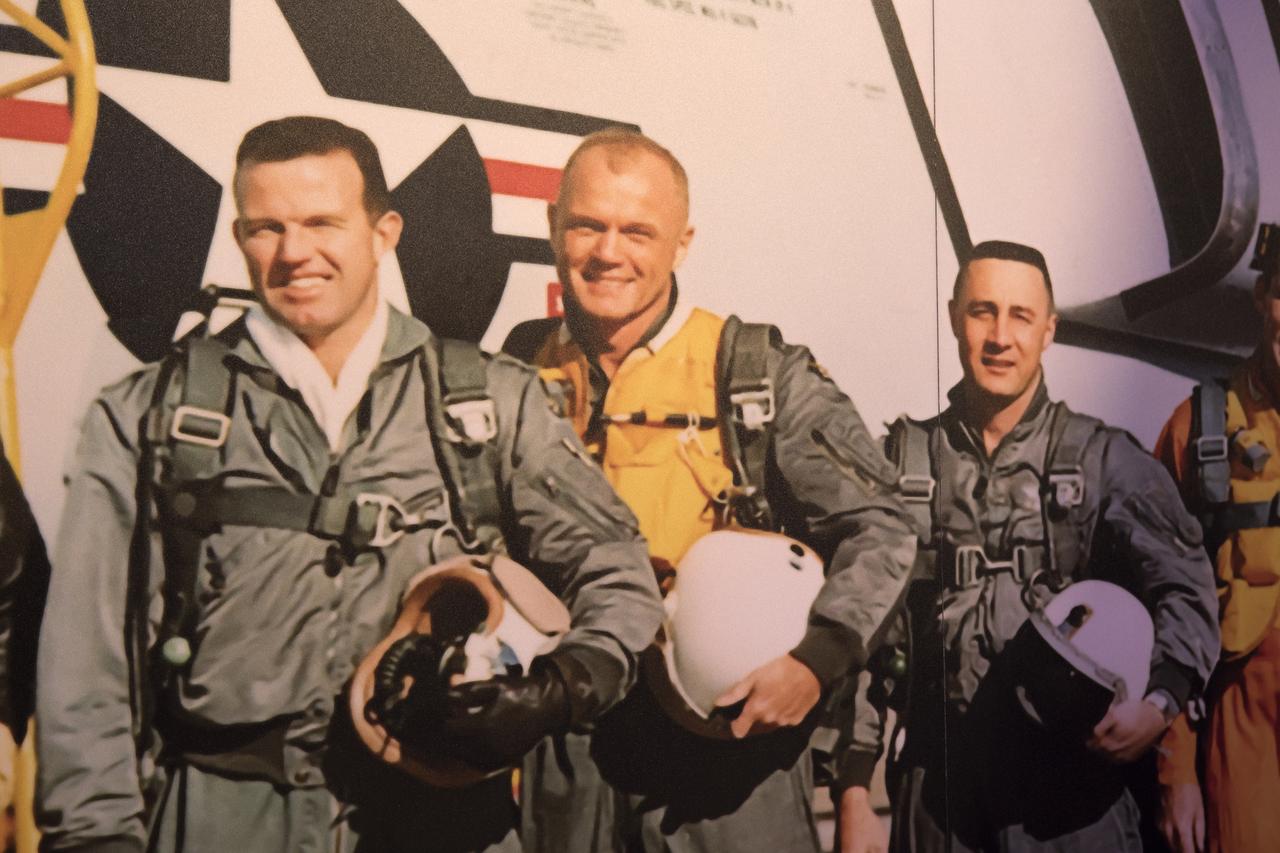
A life-size photo inside the Heroes and Legends exhibit hall at the Kennedy Space Center Visitor Complex shows astronaut Sen. John Glenn, center, with fellow Mercury Seven astronauts Gordon Cooper, left, and Gus Grissom. Glenn, who passed away Dec. 8, 2016 at age 95. Glenn, was the last surviving member of NASA's original astronaut class. He gained worldwide acclaim during his Mercury mission that made him the first American to orbit the Earth. He flew again in 1998 aboard space shuttle Discovery at age 77.
John H Glenn Jr. Wreath Laying Ceremony - Inside Heroes and Lege
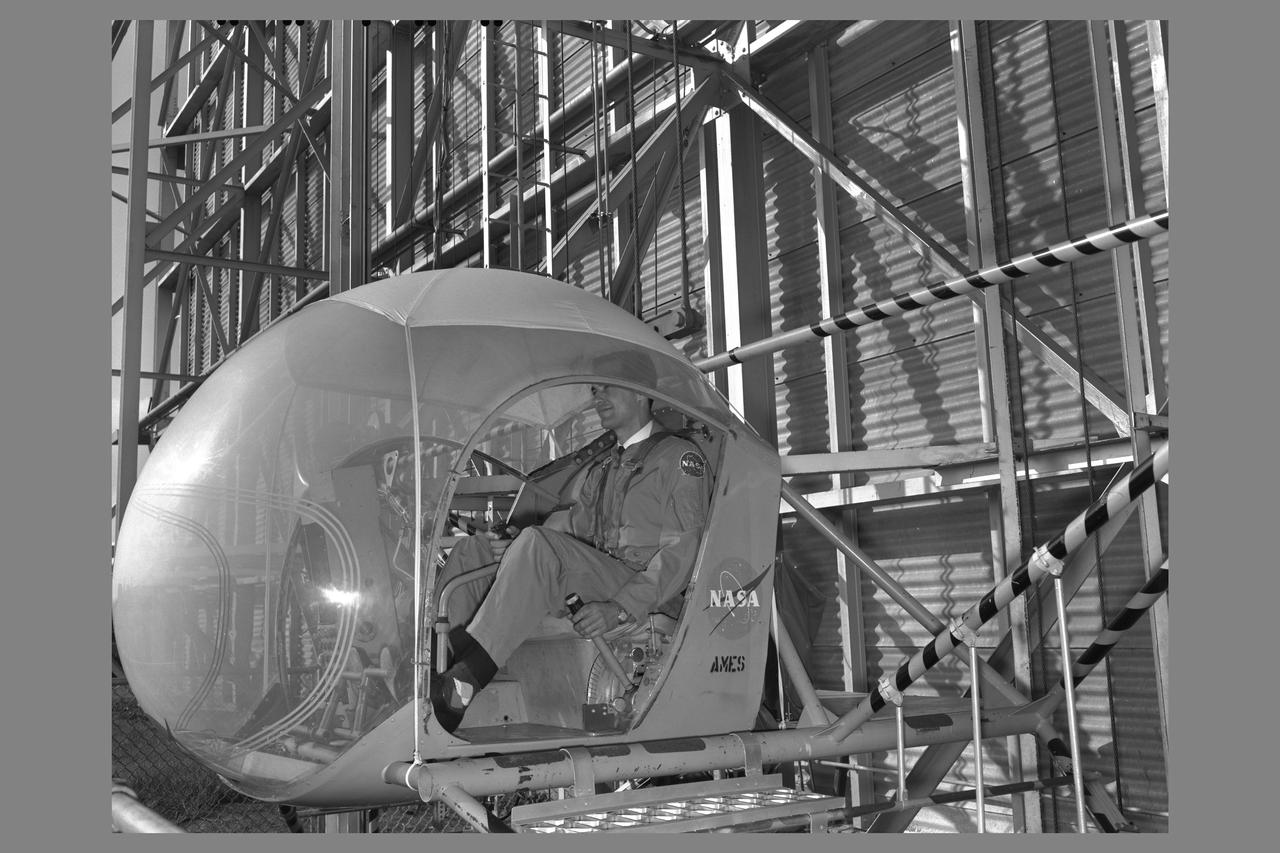
Height Control Simulator (HICONTA) with Pilot Gordon Hardy in cab
ARC-1969-A-30433
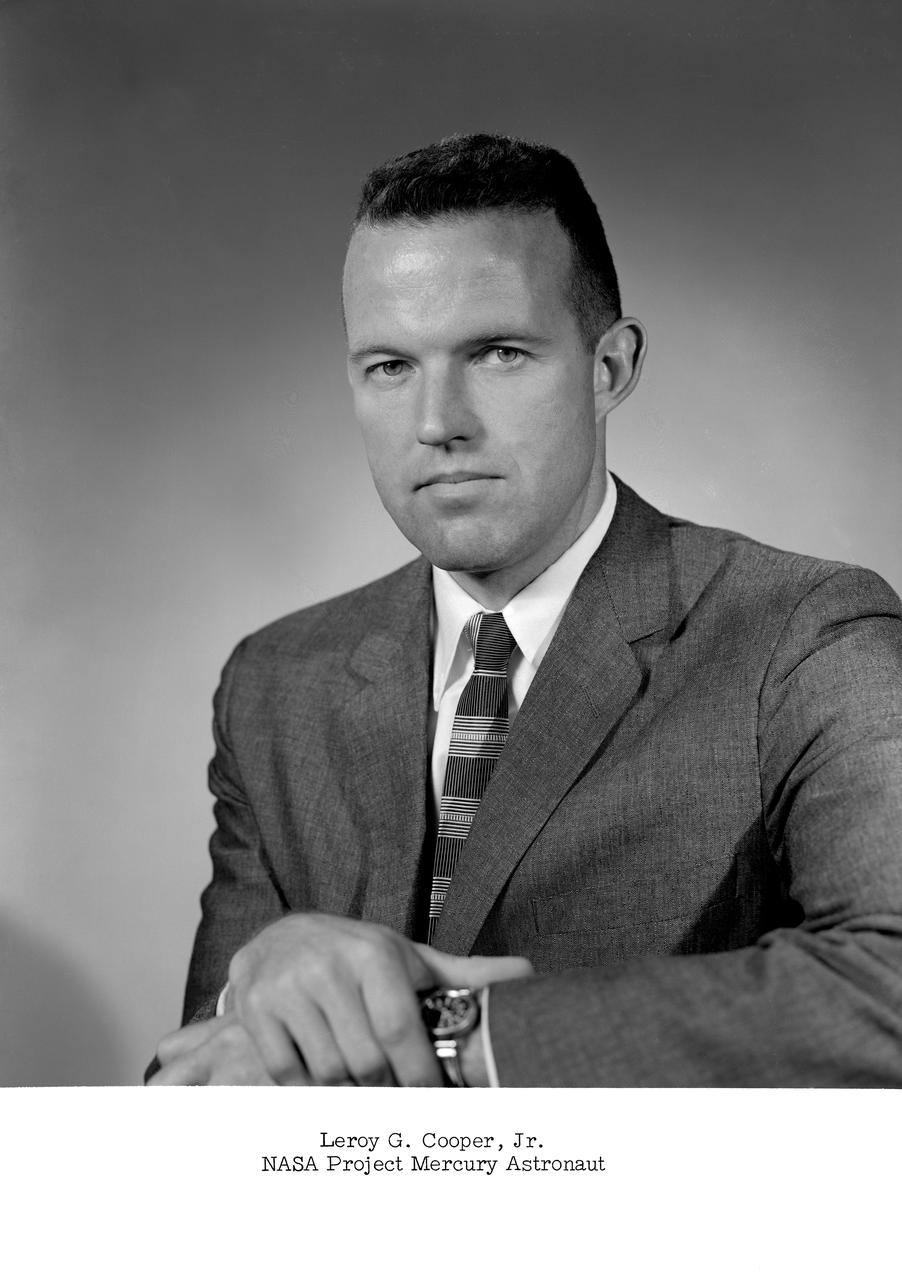
NASA Project Mercury astronaut. -- Cooper was later known as L. Gordon Cooper.
Leroy G. Cooper, Jr. "Gordo"
Astronauts at 1959 Langley Inspection.  Astronauts at 1959 Langley Inspection: The seven are shown in the Unitary Plan Wind Tunnel NASA Langley. The astronauts left to right: John H. Glenn Jr., M.Scot Carpenter, Virgil I.Grissom, Walter M. Schirra Jr., L. Gordon Cooper, Alan B. Shepard Jr.and Donald K. Slayton.
Astronauts at 1959 Langley Inspection
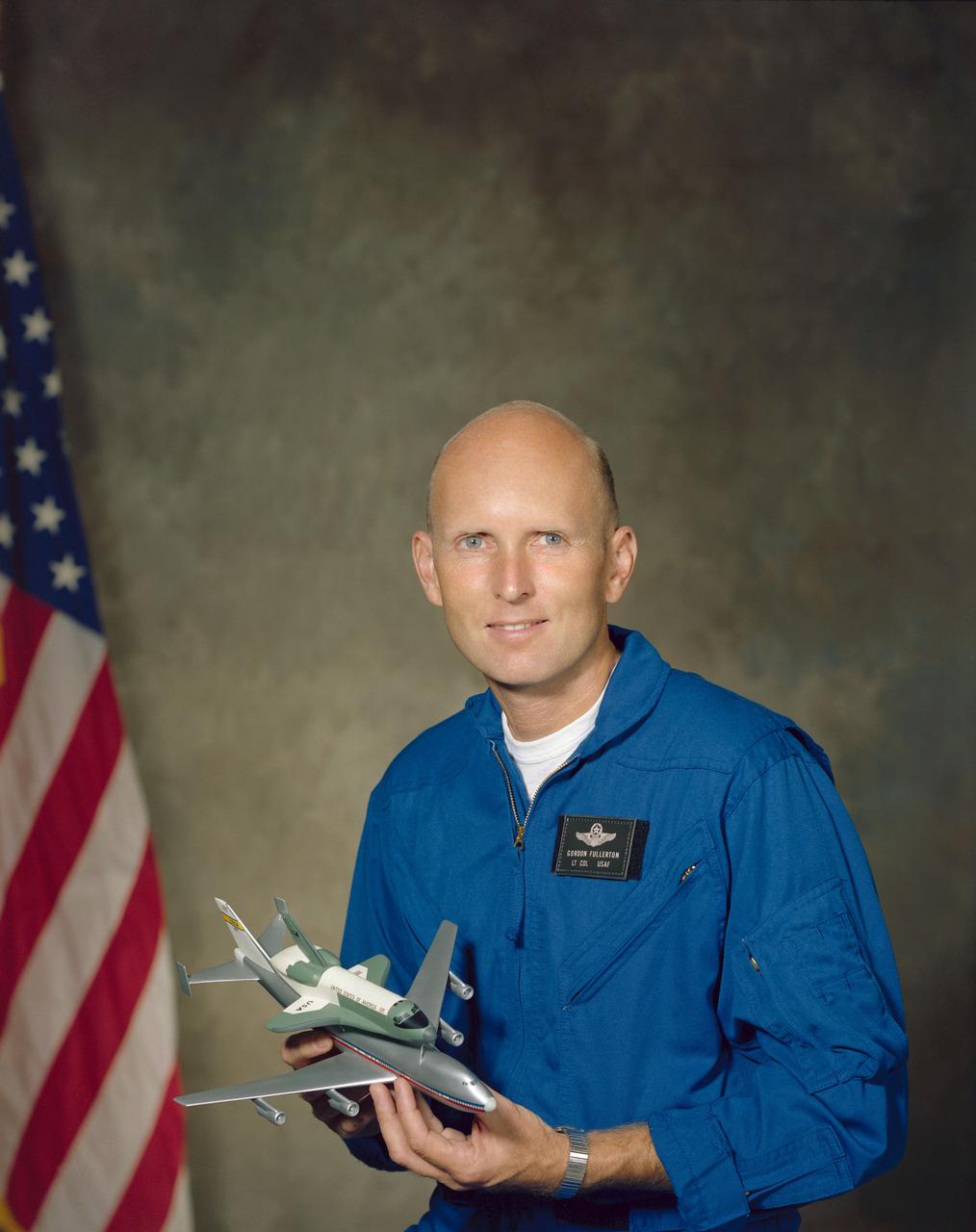
S76-28476 (8 Sept 1976) --- Astronaut C. Gordon Fullerton in flight suit holding a model of the space shuttle.
Portrait - Approach and Landing Test (ALT) Crew
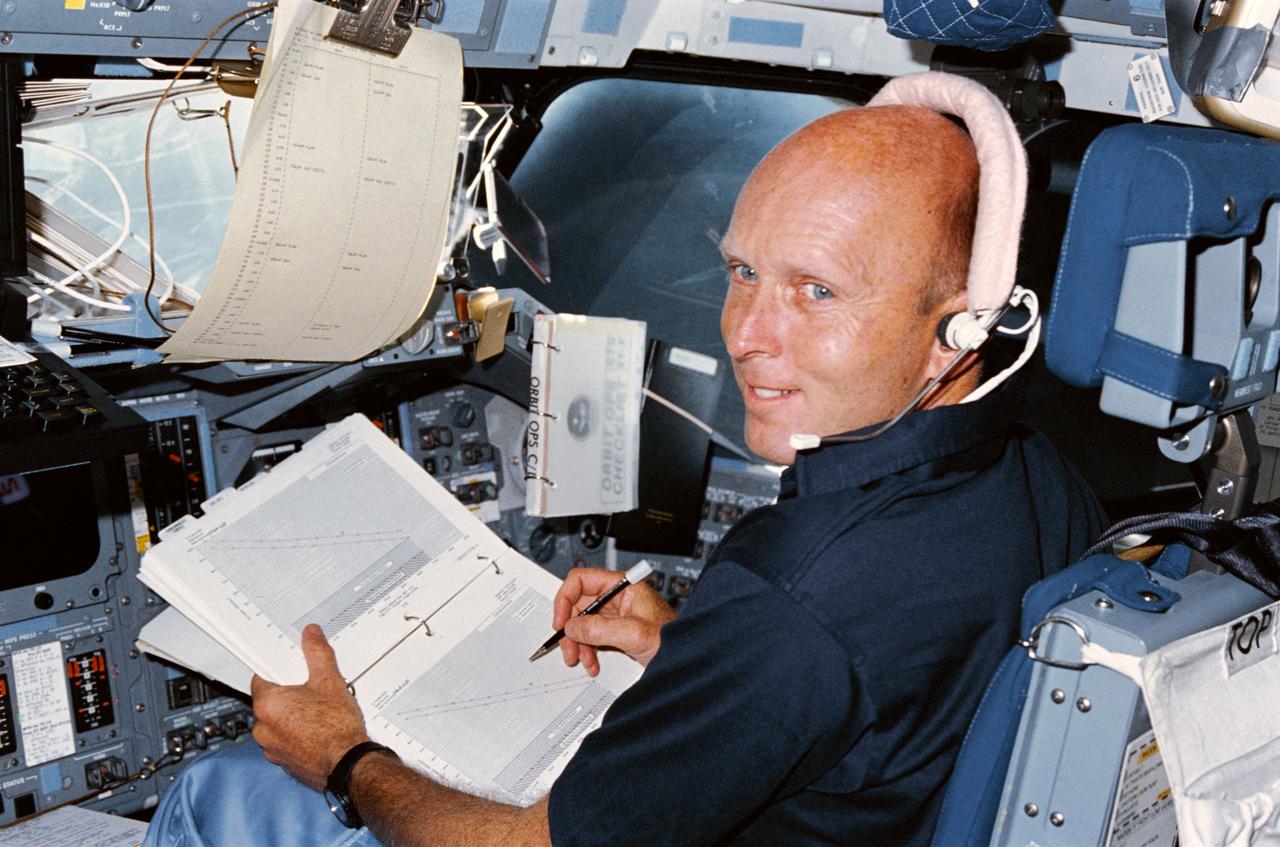
51F-08-010 (29 July-6 Aug 1985) --- C. Gordon Fullerton with consummables charts.
51F crew activities
S69-38862 (September 1969) --- Astronaut Richard F. Gordon Jr., Apollo 12 command module pilot.
Portraits - Apollo 12
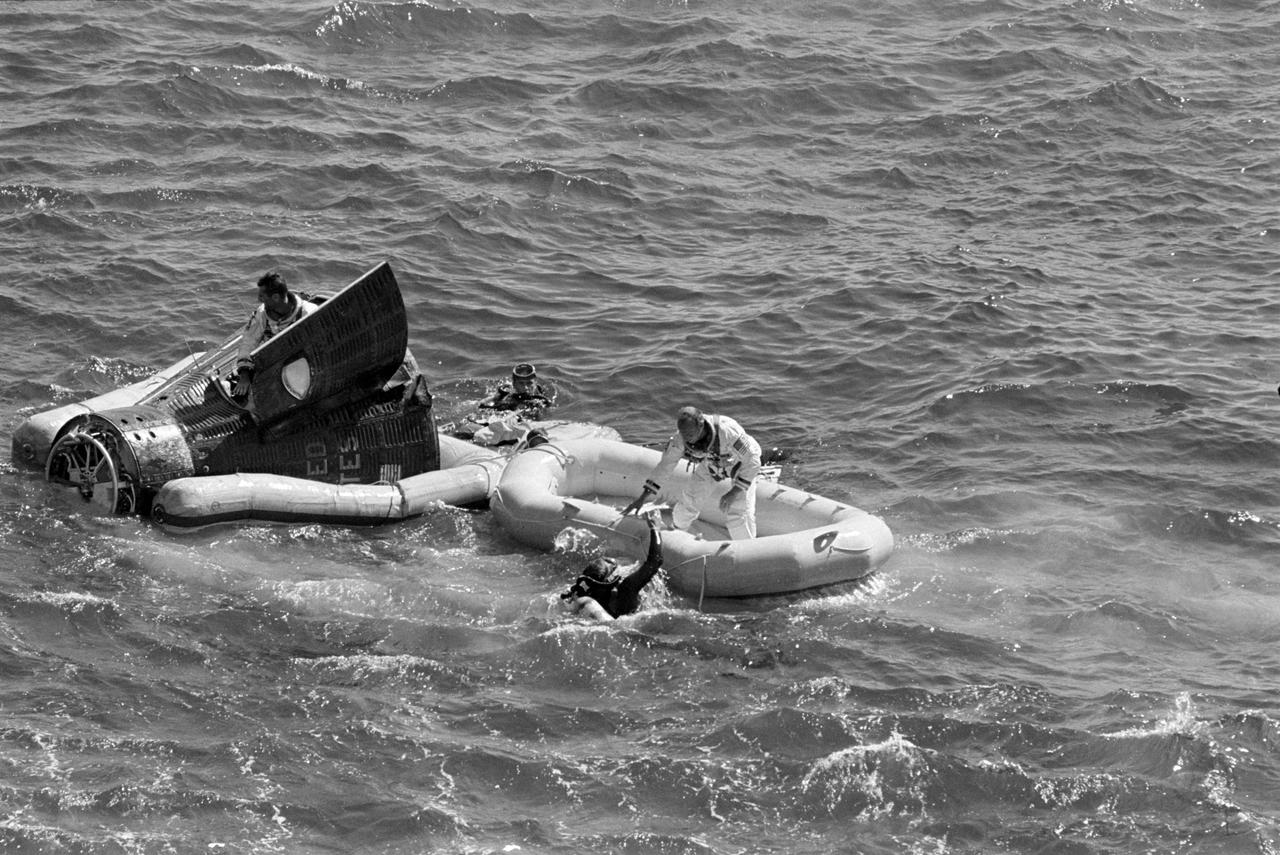
S66-50795 (15 Sept. 1966) --- Frogmen assist in the recovery of Gemini 11 astronauts Conrad & Gordon while they await the helicopter.
FROGMEN - GEMINI-TITAN (GT)-XI - RECOVERY - ATLANTIC
S62-05530 (25 Sept. 1962) --- Astronaut L. Gordon Cooper Jr. Photo credit: NASA
Astronaut Cooper - Spacesuit - Cape
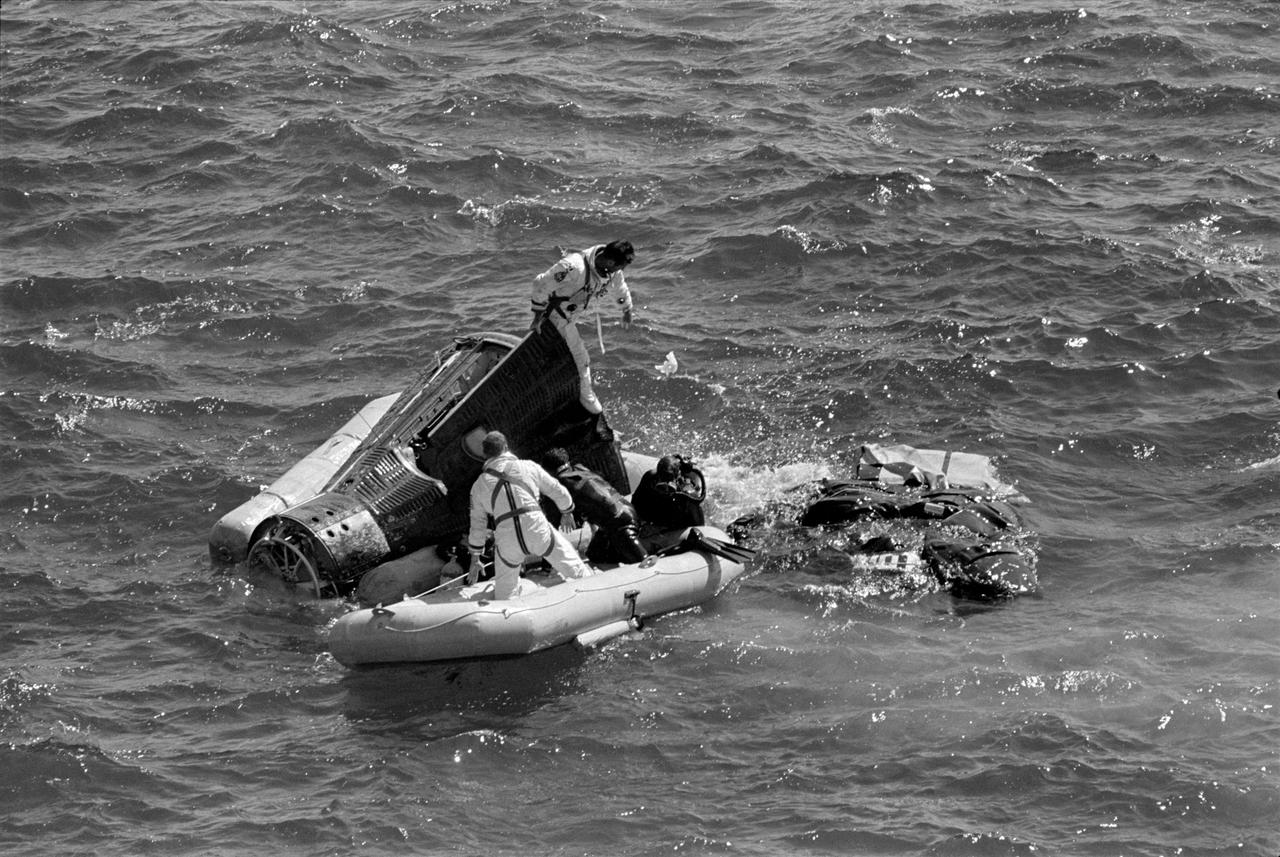
S66-50789 (15 Sept. 1966) --- Frogmen assist in the recovery of Gemini 11 astronauts Conrad & Gordon while they await the helicopter.
FROGMEN - GEMINI-TITAN (GT)-XI - RECOVERY - ATLANTIC
G60-02738 (May 1960) --- Astronaut L. Gordon Cooper Jr. Photo credit: NASA
Portrait - Astronaut Cooper
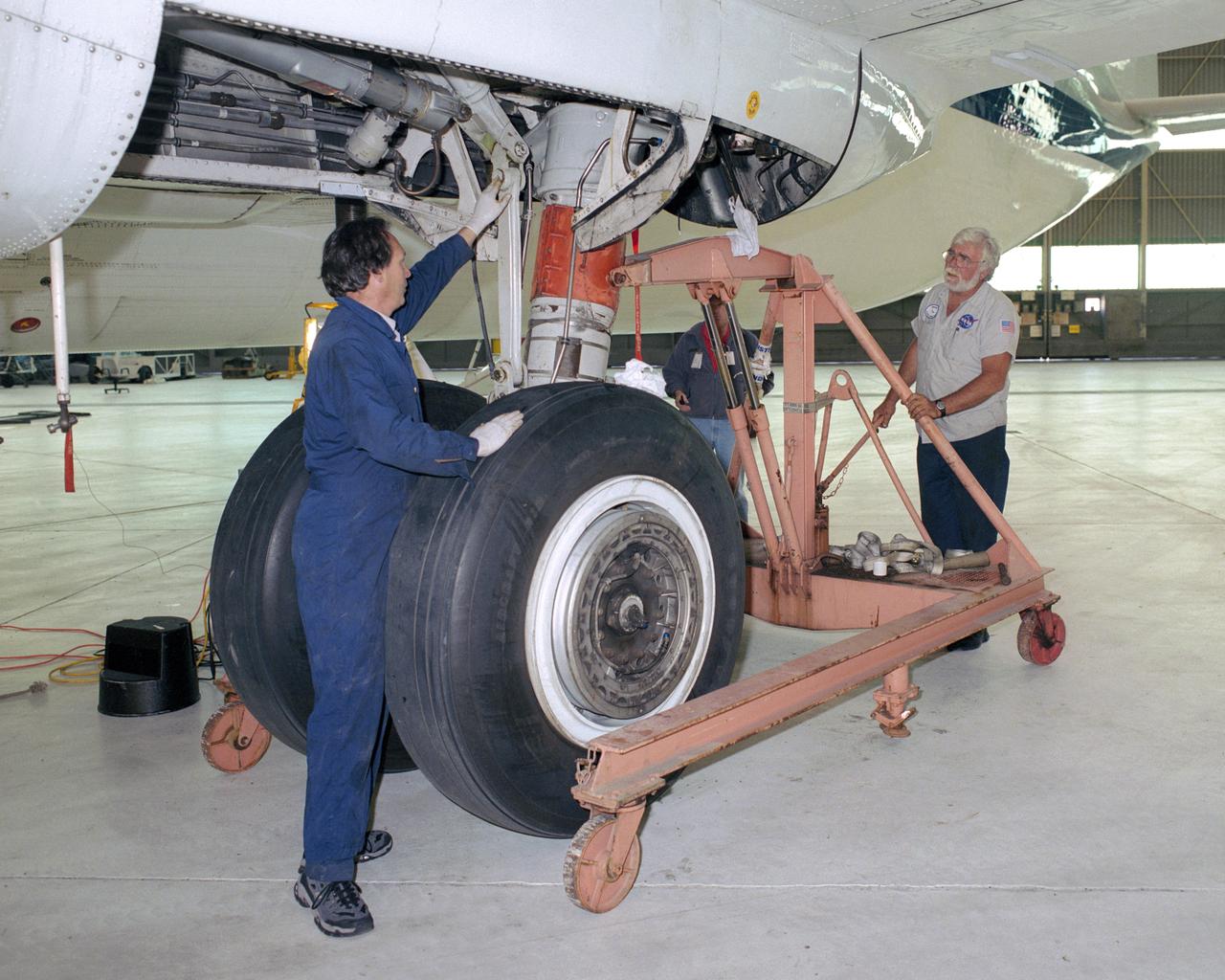
JSC technicians David Wyckoff and Tom Gordon carefully maneuver their equipment into place as they prepare to remove the Super Guppy's left main landing gear.
EC05-0091-28
S78-34917 (31 Aug. 1978) --- Just about to don his helmet and enter JSC?s shuttle engineering mock-up/trainer is astronaut C. Gordon Fullerton, one of eight NASA astronauts recently named to man the space shuttle Columbia on a series of orbital flight tests in the early 1980s. Photo credit: NASA    NOTE: Since this photograph was made, astronaut C. Gordon Fullerton was named pilot for STS-3, scheduled for launch in early spring of 1982.
BLDG. 9A - EGRESS TRAINING - JSC
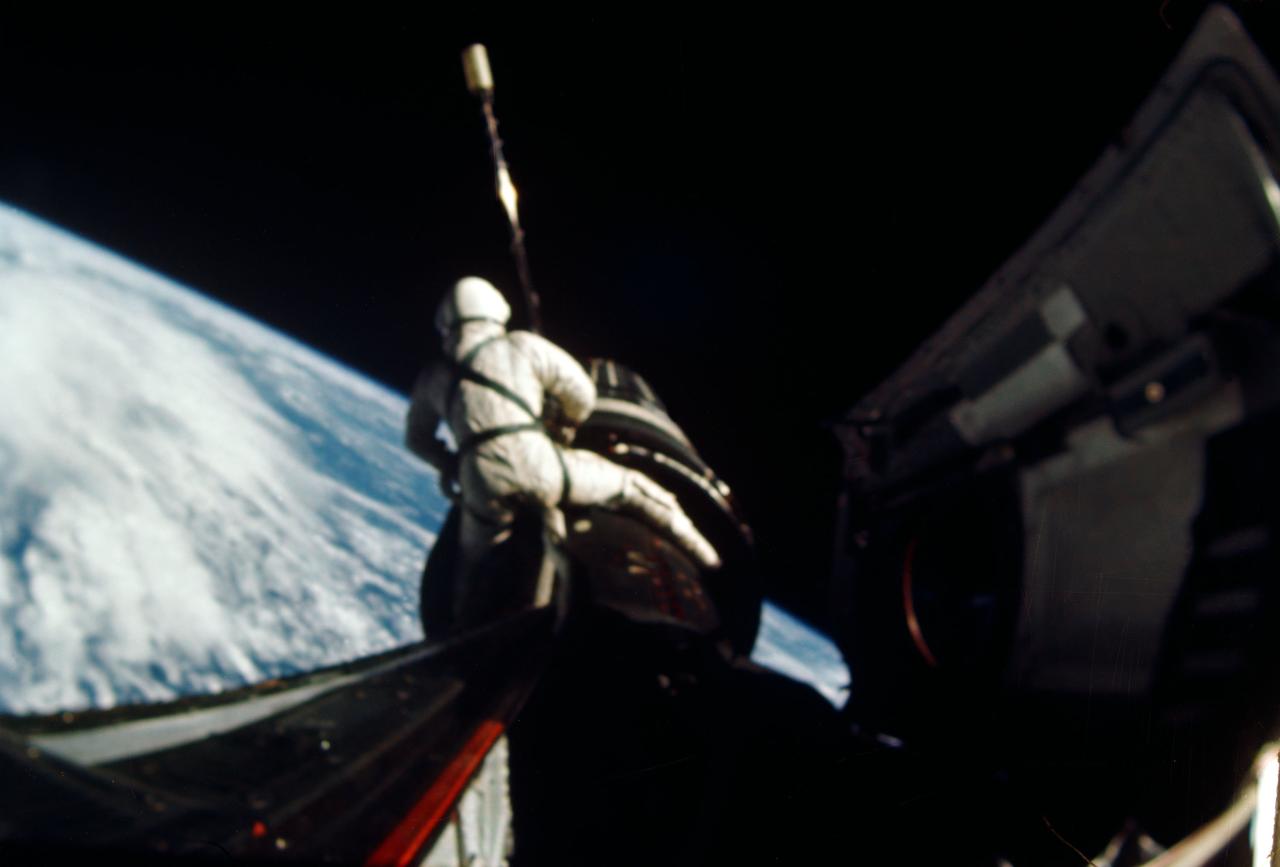
S66-54455 (13 Sept. 1966) --- Astronaut Richard F. Gordon Jr., Gemini-11 pilot, attaches a tether line from his spacecraft to the Agena Target Docking Vehicle (ATDV) during a spacewalk. This view was taken over the Atlantic Ocean at approximately 160 miles above Earth on Sept. 13, 1966. With the aid of the ATDV, Gordon and astronaut Charles (Pete) Conrad Jr., command pilot, set a new altitude record of 750 miles during the GT-11 mission.  Photo credit: NASA
GT-11 - EARTH SKY - DOCKING
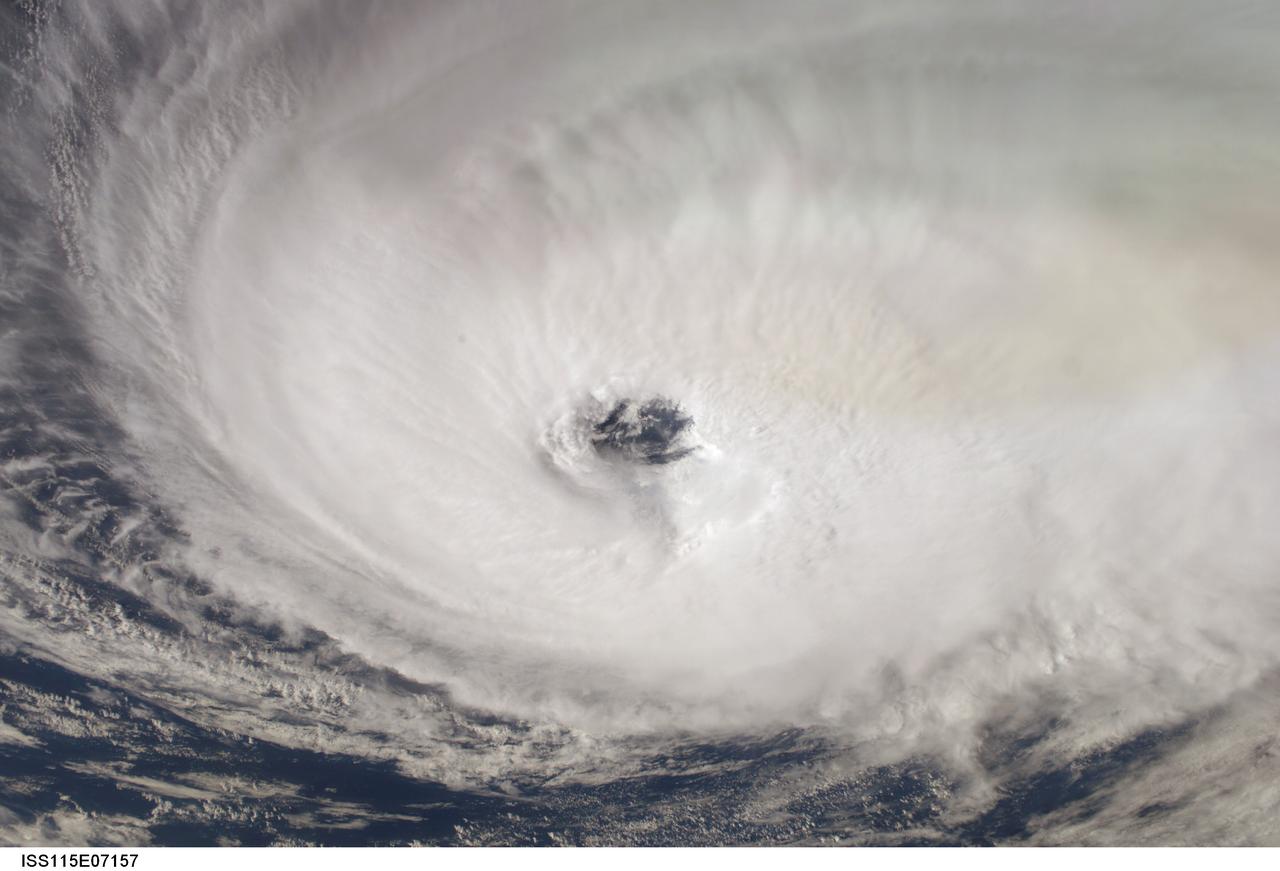
S115-E-07157 (18 Sept. 2006) --- A high oblique view from the Space Shuttle Atlantis gives a good look of Hurricane Gordon. At the time the photo was taken, with a digital still camera equipped with a 28mm lens, the center of Gordon was near 37.5 north latitude and 46.4 west longitude moving west-northwest.  The sustained winds were at 80 nautical miles per hour with gusts to 95 nautical miles per hour.
Earth Observations taken by STS-115 crewmember
S66-50816 (12 Sept. 1966) --- Astronaut Richard F. Gordon Jr., pilot of the Gemini-11 spaceflight, undergoes suiting up operations in the Launch Complex 16 suit trailer during the Gemini-11 prelaunch countdown. At right is suit technician Clyde Teague. Later, astronaut Gordon and Charles Conrad Jr., command pilot, entered a transport van which carried them to Pad 19 and their waiting spacecraft. The liftoff was at 9:42 a.m. (EST), Sept. 12, 1966. Photo credit: NASA
- GEMINI-TITAN (GT)-11 - RECOVERY - ATLANTIC
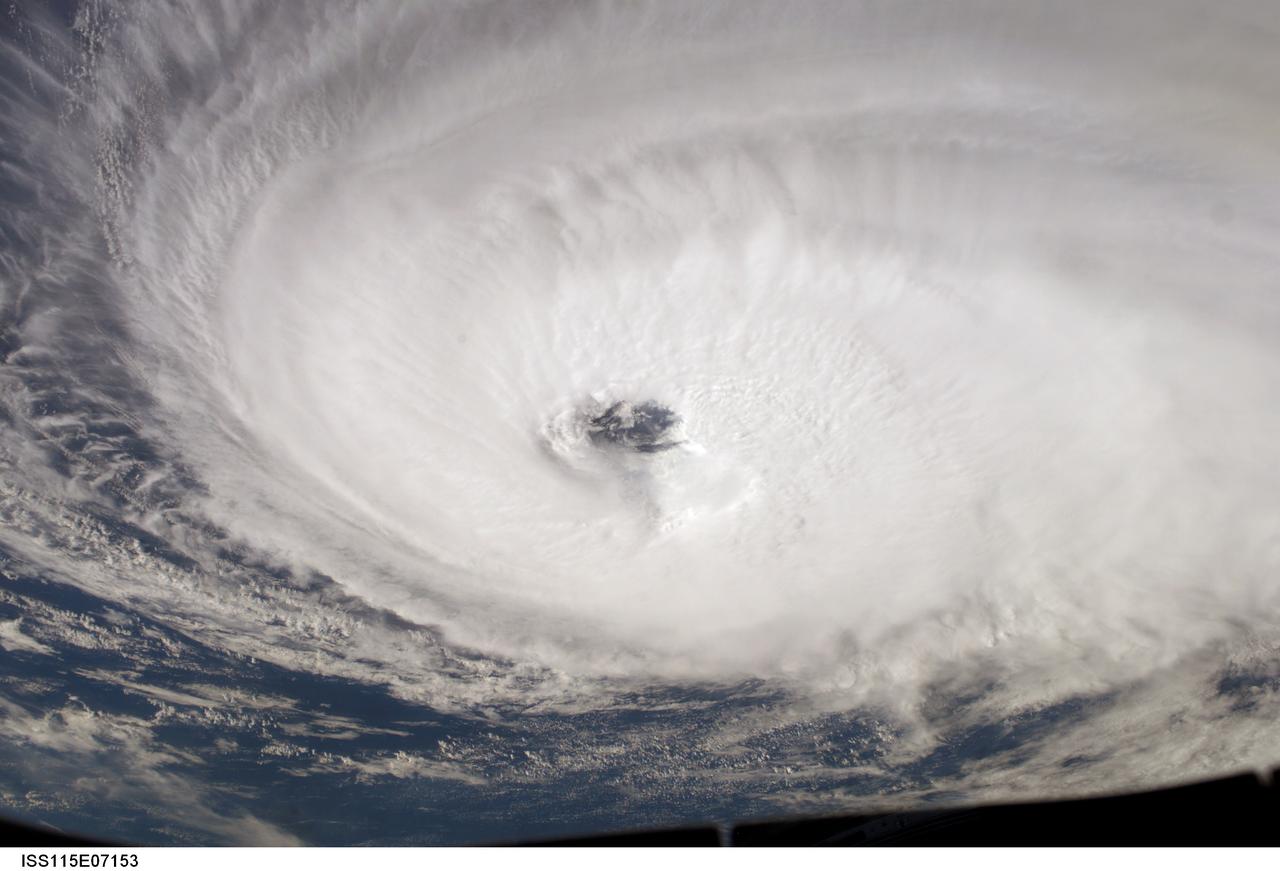
S115-E-07153 (18 Sept. 2006) --- A high oblique view from the Space Shuttle Atlantis gives a good look of Hurricane Gordon. At the time the photo was taken, with a digital still camera equipped with a 28mm lens, the center of Gordon was near 37.5 north latitude and 46.4 west longitude moving west-northwest.  The sustained winds were at 80 nautical miles per hour with gusts to 95 nautical miles per hour.
Earth Observations taken by STS-115 crewmember
S115-E-07080 (18 Sept. 2006) --- A view from the Space Shuttle Atlantis gives a good look of Hurricane Gordon. At the time the photo was taken, with a digital still camera equipped with a 28mm lens, the center of Gordon was near 37.5 north latitude and 46.4 west longitude moving west-northwest.  The sustained winds were at 80 nautical miles per hour with gusts to 95 nautical miles per hour.
Earth Observations taken by STS-115 crewmember
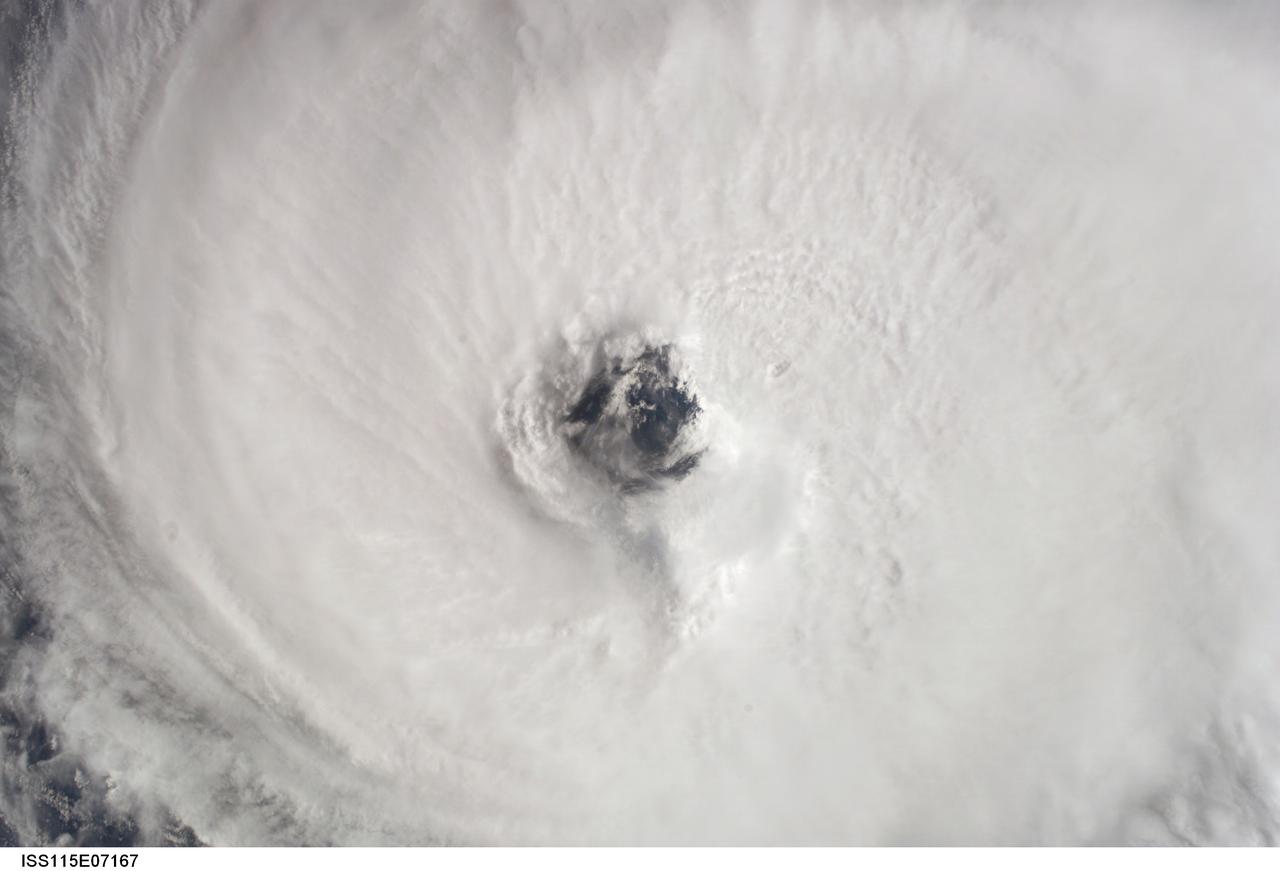
S115-E-07167 (18 Sept. 2006) --- A nadir view from the Space Shuttle Atlantis gives a good look at the eye of Hurricane Gordon. At the time the photo was taken, with a digital still camera eqipped with a 28mm lens, the center of Gordon was near 37.5 north latitude and 46.4 west longitude moving west-northwest.  The sustained winds were at 80 nautical miles per hour with gusts to 95 nautical miles per hour.
Earth Observations taken by STS-115 crewmember
2004 NASA Dryden Research Pilots. Left to Right: Edwin W. Lewis, Jr., David A. Wright (Director of Flight Operations), William Frederick Brockett, Frank Batteas, Craig R. Bomben, Richard G. Ewers, James W. Smolka, Douglas H. Baker, C. Gordon Fullerton (Chief Pilot), James Barrilleaux, Martin J. Trout, and Mark Pestana. (not pictured: Dana Purifoy)
2004 NASA Dryden Research Pilots
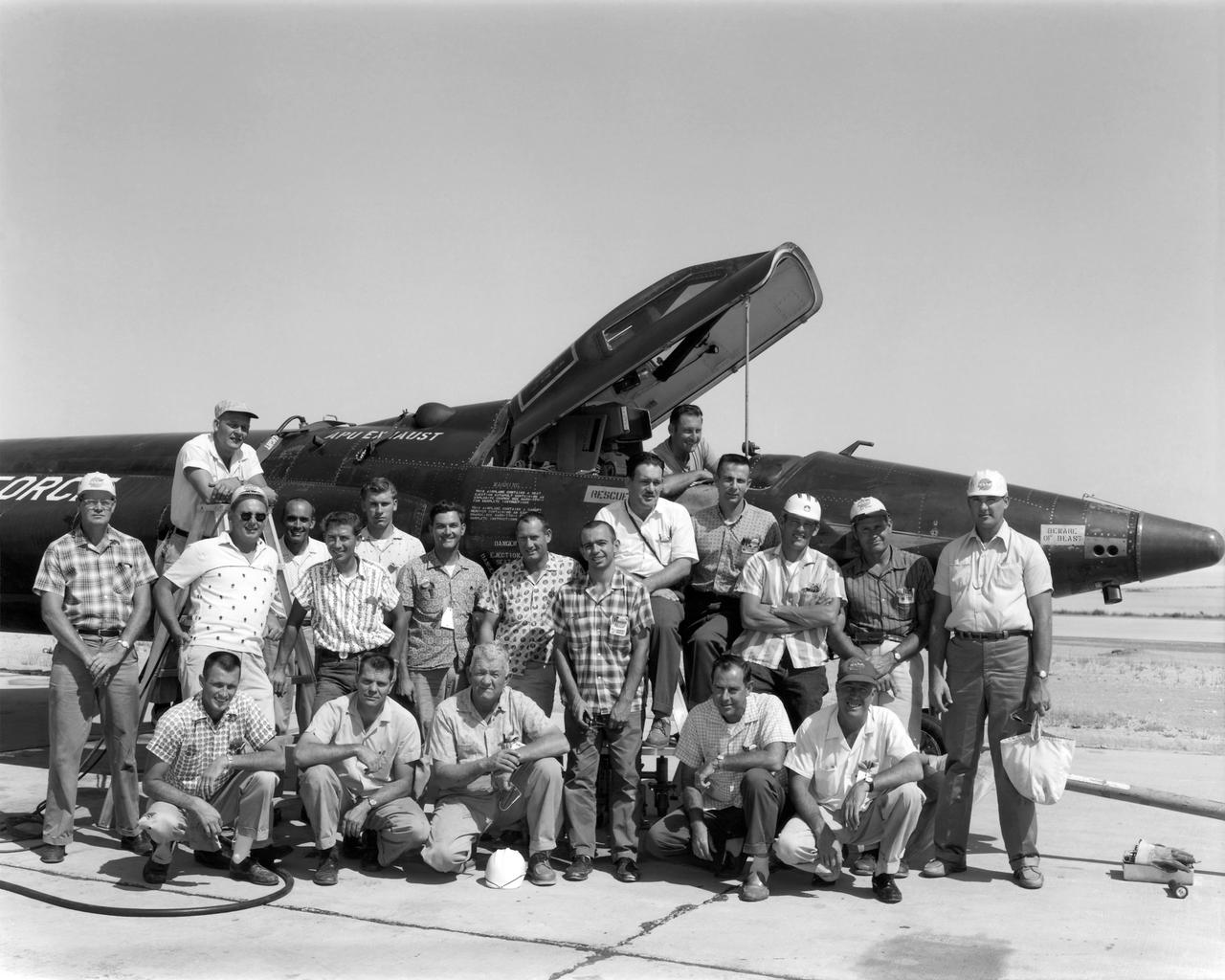
X-15 personnel July 1962 Cockpit: Edward "Ed" Nice Ladder: Thomas "Tom" McAlister  Back Row, left to right: William Clark, Edward "Ed" Sabo, Donald "Don" Hall, Billy Furr, Allen Dustin, Raymond "Ray" White, George E. Trott, Alfred "Al" Grieshaber, Merle Curtis, LeRoy "Lee" Adelsbach, Allen Lowe, Jay L. King, Lorenzo "Larry" Barnett.  Kneeling, left to right: Byron Gibbs, Price "Bob" Workman, Ira Cupp, unidentified, John Gordon.
X-15 personnel July 1962
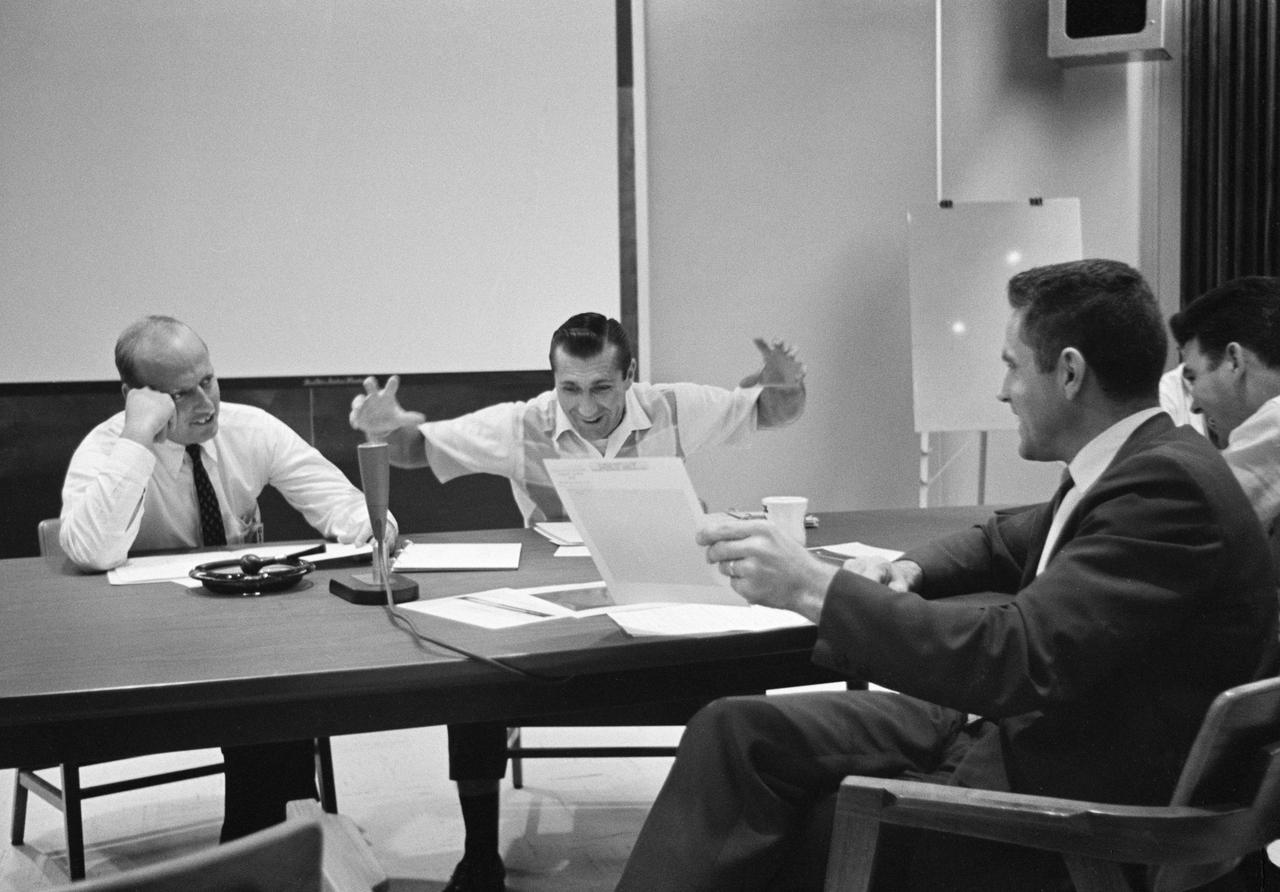
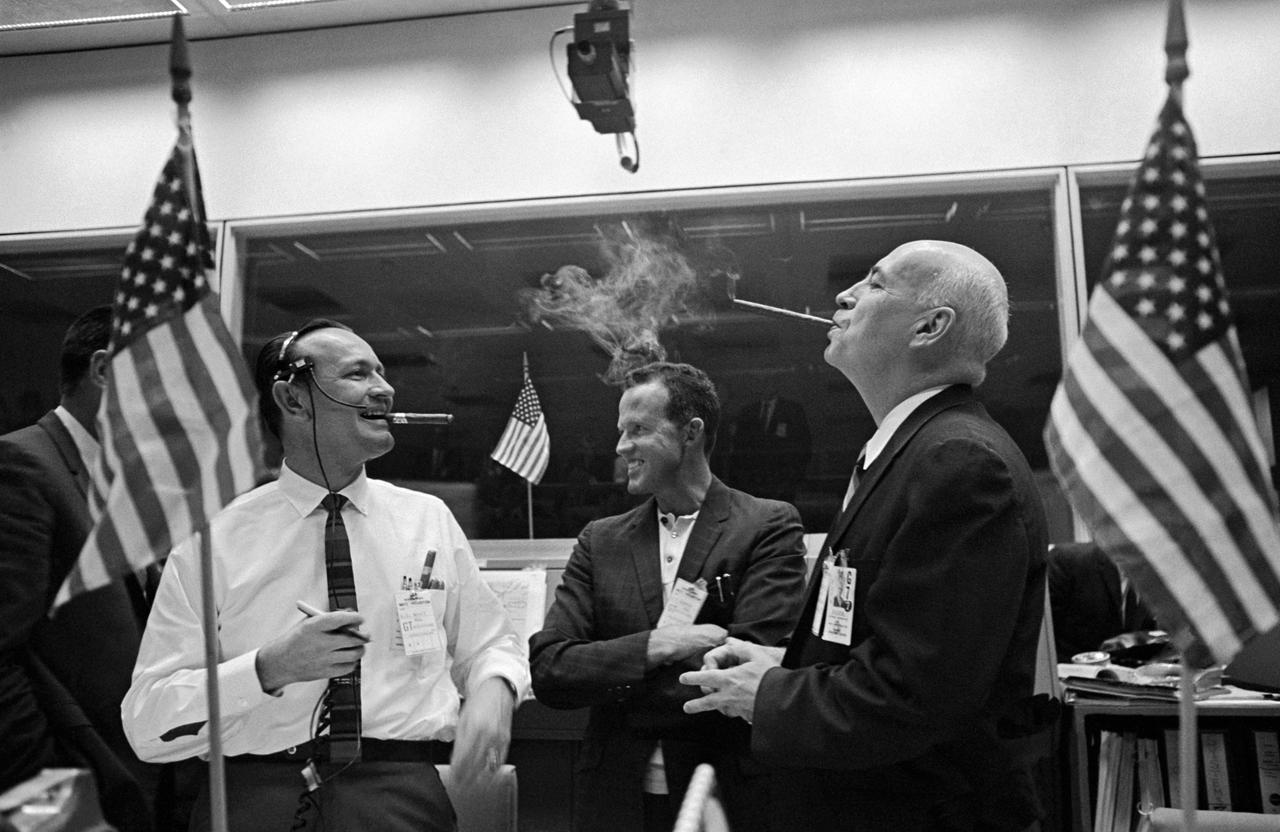
S65-62719 (15 Dec. 1965) --- Discussing the successful and historic rendezvous in space of the National Aeronautics and Space Administration?s Gemini-6 and 7 spacecrafts are, Christopher C. Kraft Jr. (left), red team flight director; astronaut L. Gordon Cooper Jr. (center); and Dr. Robert R. Gilruth, Manned Spacecraft Center director. Consoles in the Center were decorated with small American flags and the traditional cigars were lit to celebrate the rendezvous. Crew members of the two spacecraft are astronaut Walter M. Schirra Jr., command pilot, and Thomas P. Stafford, pilot, Gemini-6; and astronauts Frank Borman, command pilot, and James A. Lovell Jr., pilot, Gemini-7. Photo credit: NASA or National Aeronautics and Space Administration
Astronaut L. Gordon Cooper, Jr. - Misc. - Mission Control Center (MCC) Activity - Gemini-Titan (GT)-7 and GT-6 - MSC