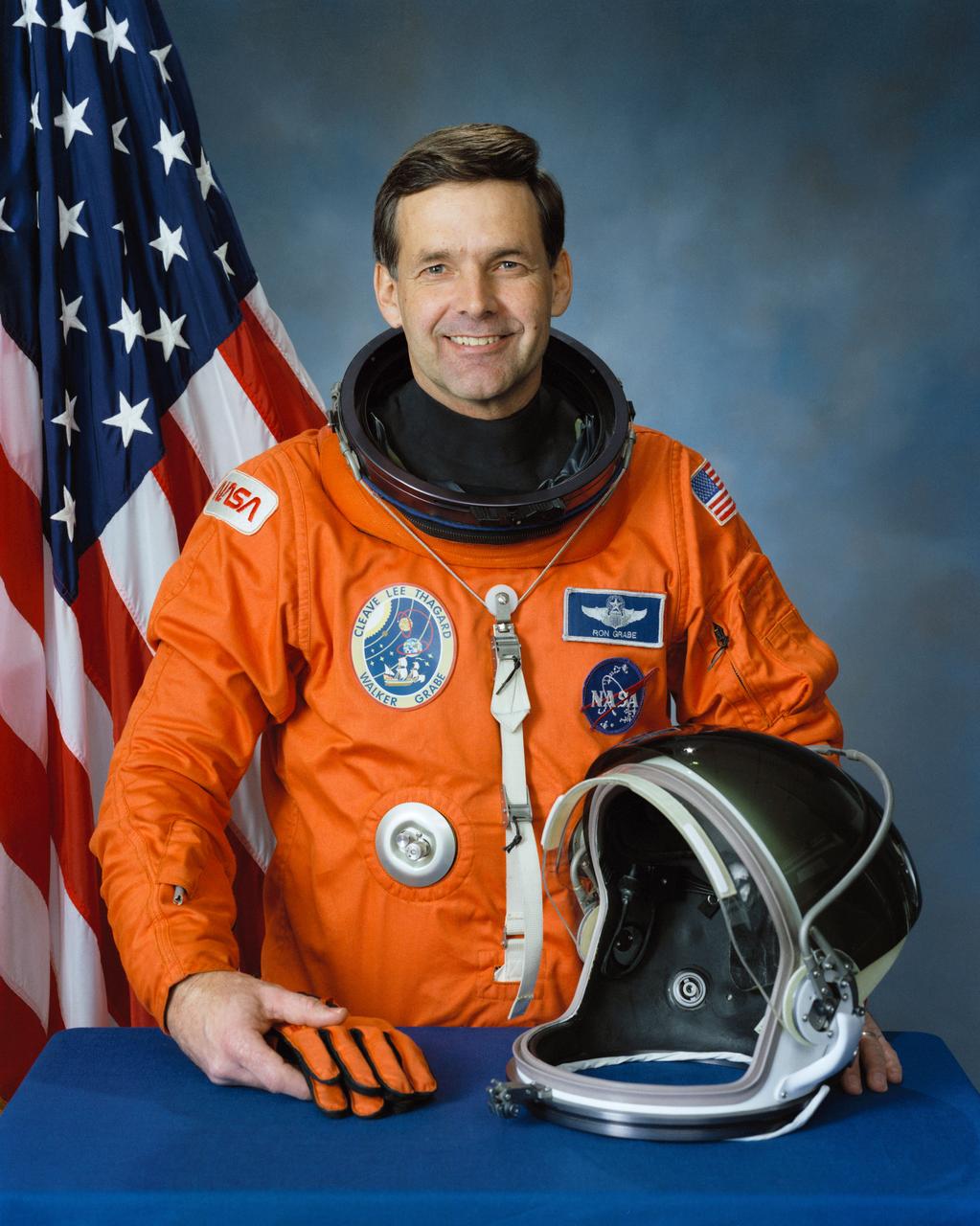
S89-29594 (March 1989) --- Astronaut Ronald J. Grabe.
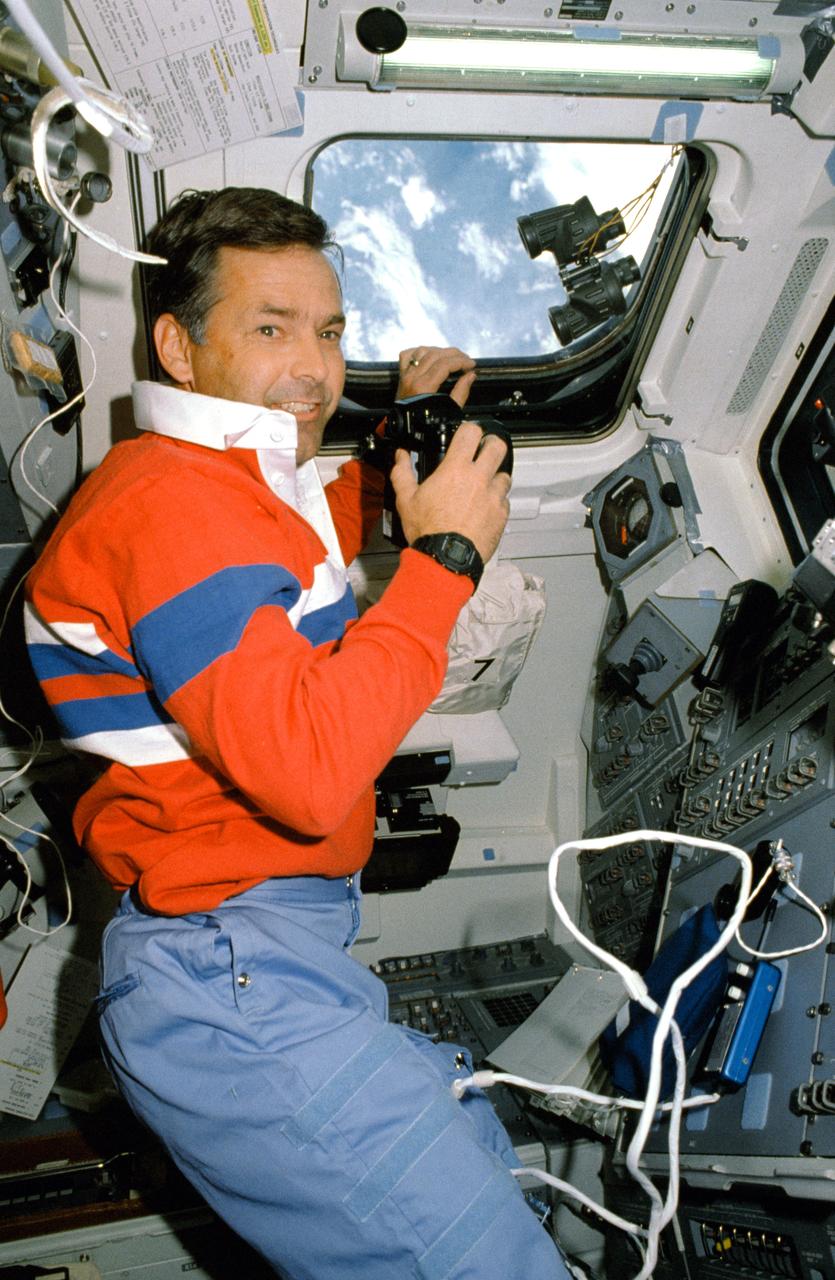
STS030-03-038 (4-8 May 1989) --- Astronaut Ronald J. Grabe, STS- 30 pilot, typifies the working mode of the entire five- member crew as he observes and photographs Earth from 160 nautical miles above. Grabe is on the aft flight deck, making use of two large overhead viewing windows. The scene was shown by the crew at its May 18, 1989 post-flight press conference.
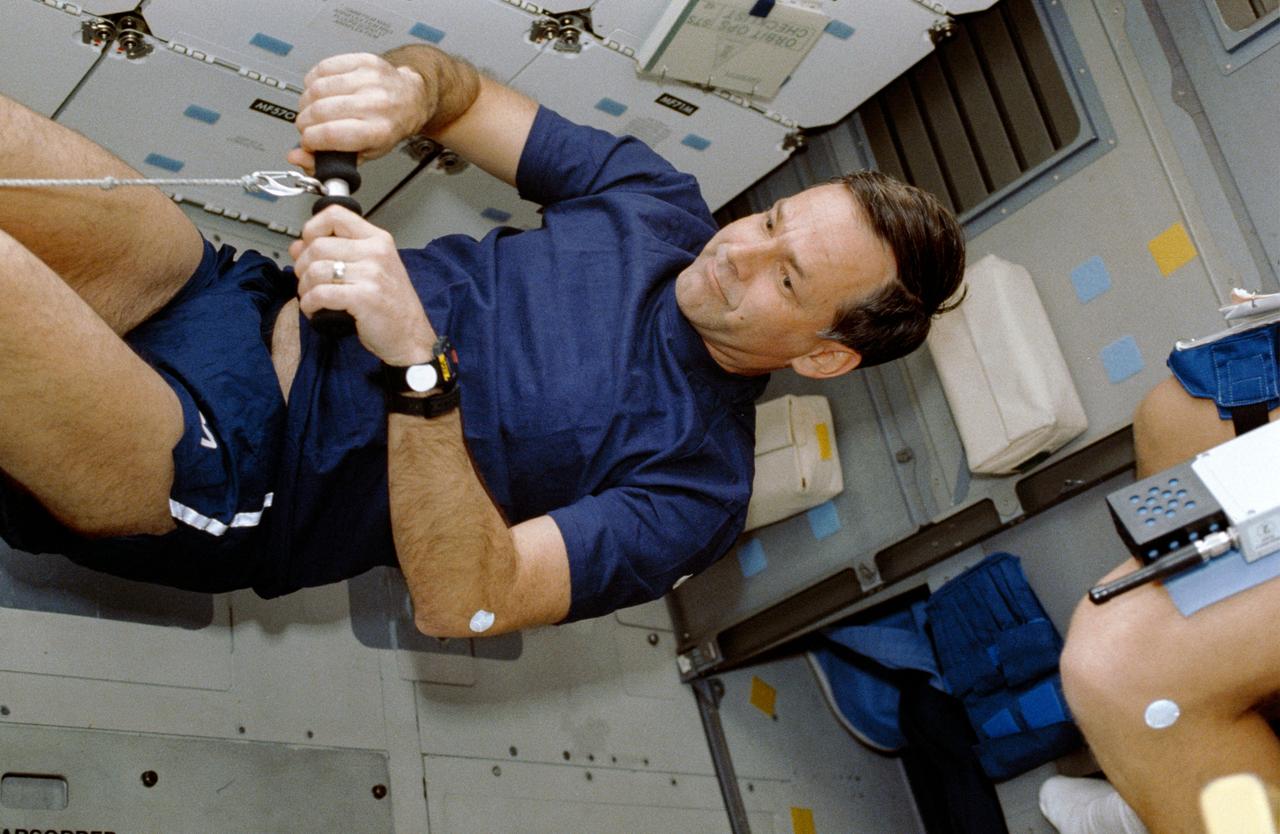
STS042-05-037 (30 Jan 1992) --- Astronaut Ronald J. Grabe, STS-42 commander, exercises using MK1 Rowing Machine on the middeck of Discovery, Orbiter Vehicle (OV) 103. Grabe is using the exercise device as part of Development Test Objective (DTO) 653, Evaluation of MK1 Rowing Machine. The forward lockers appear at Grabe's right and the sleep station behind him.

The crew assigned to the STS-51J mission included (seated left to right) Robert L. Stewart, mission specialist; Karol J. Bobko, commander; and Ronald J. Grabe, pilot. On the back row, left to right, are mission specialists David C. Hilmers, and Major Willliam A, Pailles (USAF). Launched aboard the Space Shuttle Atlantis on October 3, 1985 at 11:15:30 am (EDT), the STS-51J mission was the second mission dedicated to the Department of Defense (DOD).
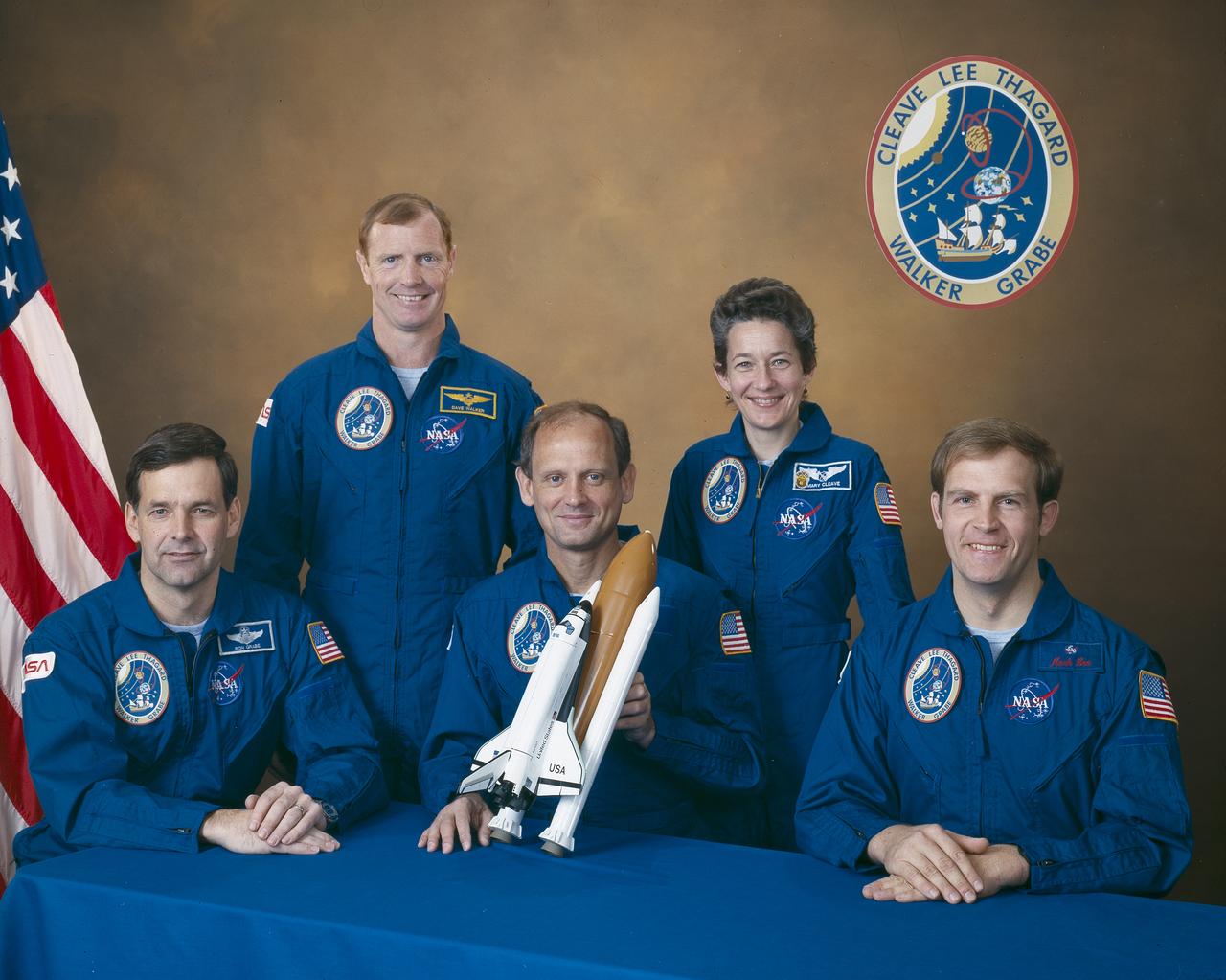
Five astronauts composed the STS-30 crew. Pictured (left to right) are Ronald J. Grabe, pilot; David M. Walker, commander; and mission specialists Norman E. Thagard, Mary L. Cleave, and Mark C. Lee. The STS-30 mission launched aboard the Space Shuttle Atlantis on May 4, 1989 at 2:46:59pm (EDT). The primary payload was the Magellan/Venus Radar mapper spacecraft and attached Inertial Upper Stage (IUS).
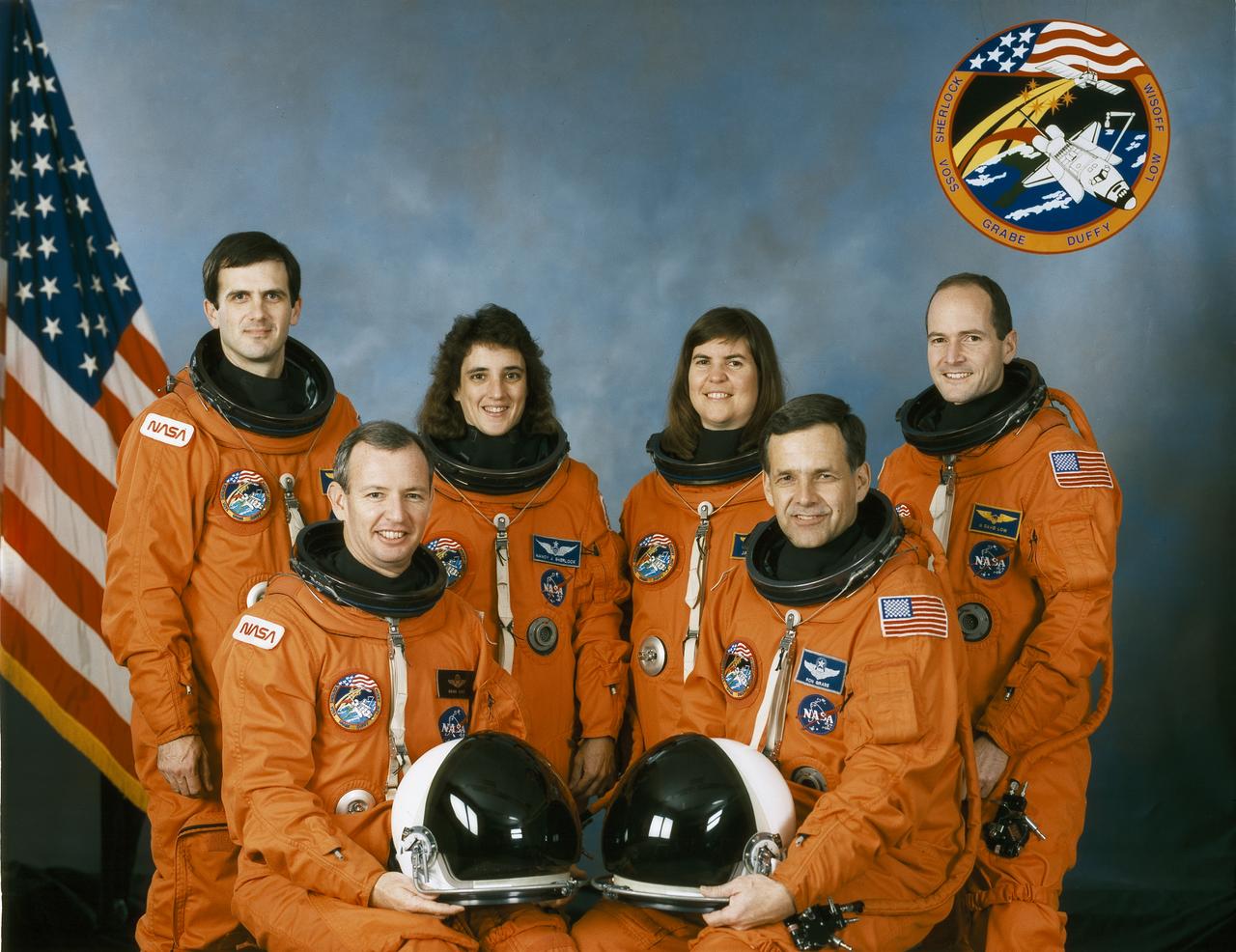
Pictured in the STS-57 crew portrait (front left to right) are Brian Duffy, pilot; and Ronald J. Grabe, commander. On the back row (left to right) are Peter J. Wisoff, Nancy J. Sherlock, and Janice E. Voss, all mission specialists; and G. David Low, payload commander. Launched aboard the Space Shuttle Endeavour on June 21, 1993 at 9:07:00 am (EDT), the STS-57 mission marked the first flight of the commercially developed SPACEHAB pressurized laboratory.
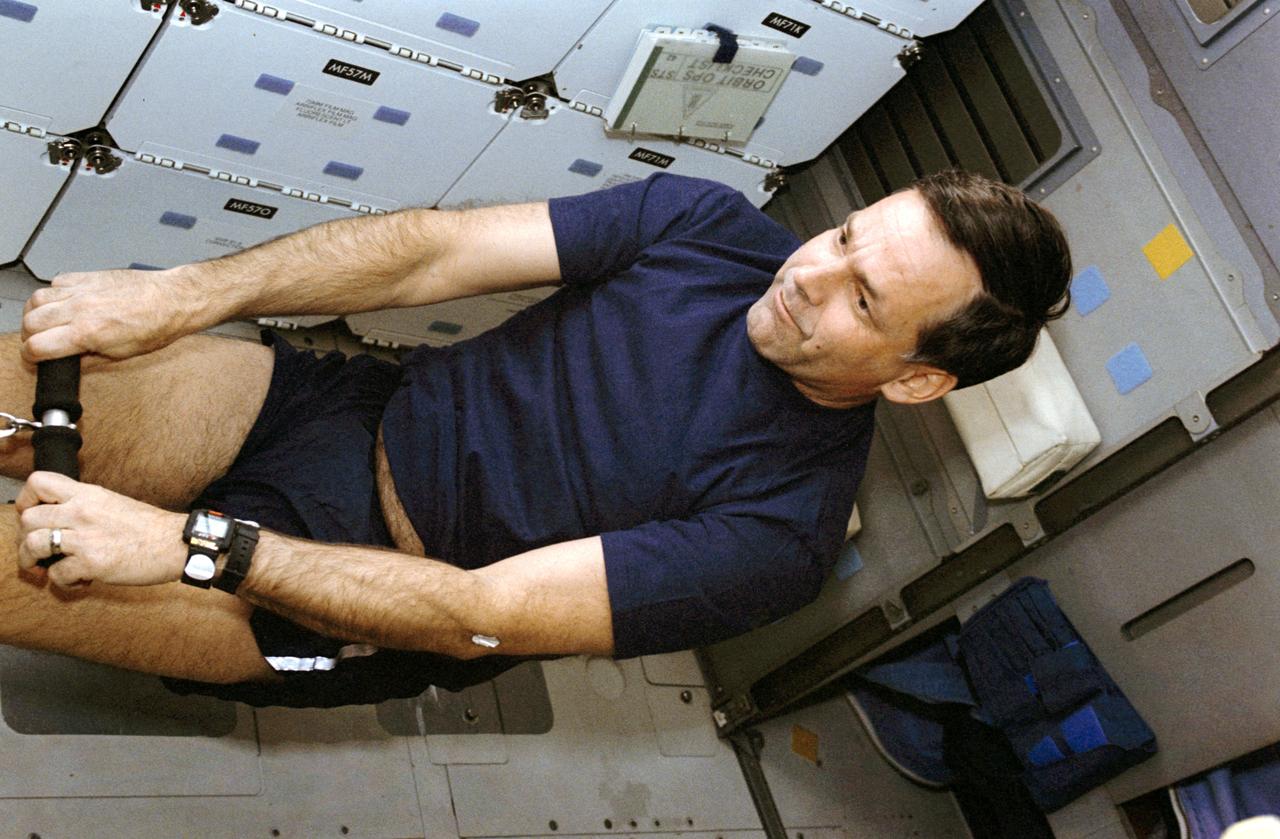
STS042-209-002 (22-30 Jan 1992) --- Astronaut Ronald J. Grabe, STS-42 mission commander, exercises on Discovery's middeck. Grabe, along with four other NASA astronauts and two International Microgravity Laboratory (IML-1) payload specialists spent more than eight days conducting experiments in Earth orbit.
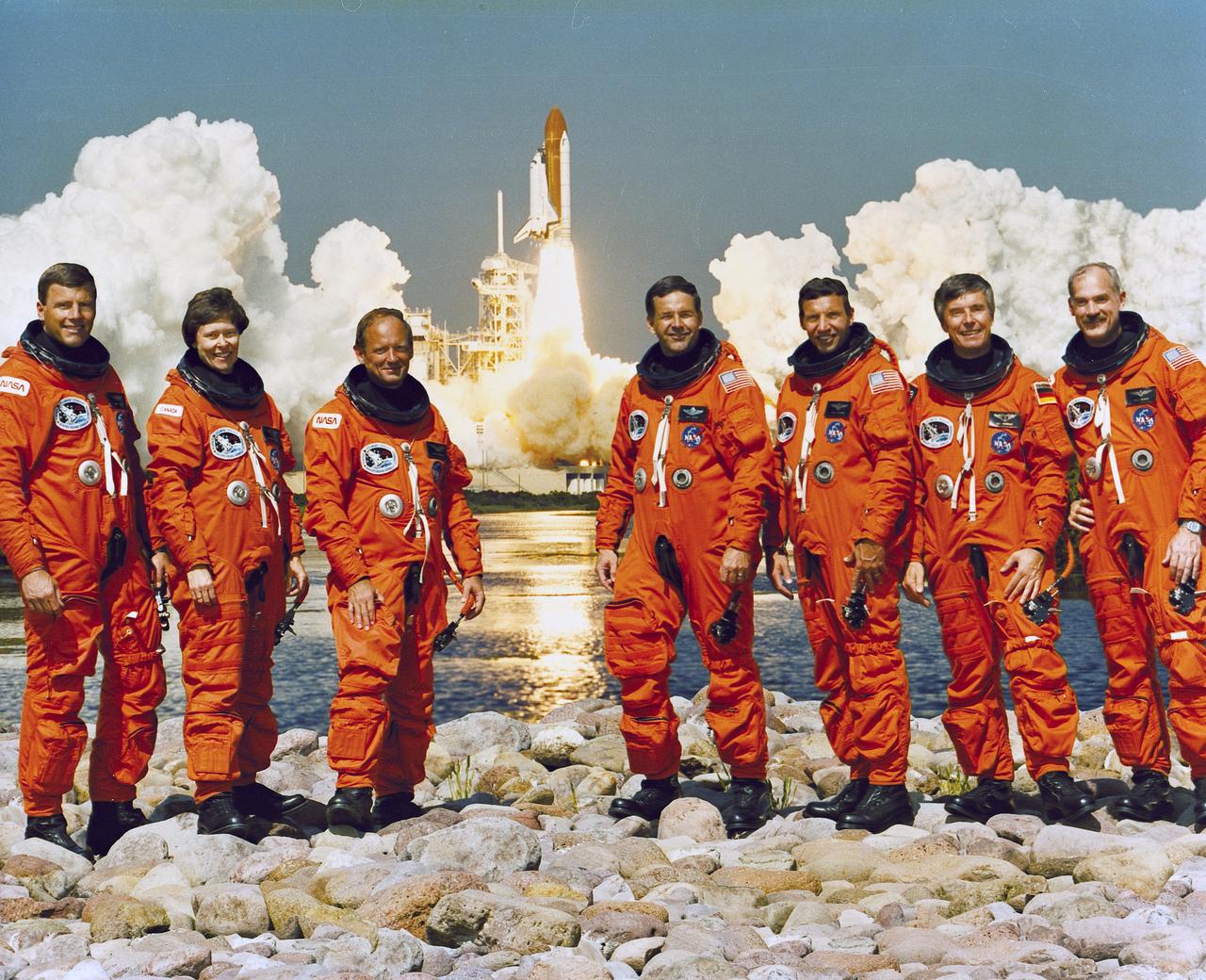
The STS-42 crew portrait includes from left to right: Stephen S. Oswald, pilot; Roberta L. Bondar, payload specialist 1; Norman E. Thagard, mission specialist 1; Ronald J. Grabe, commander; David C. Hilmers, mission specialist 2; Ulf D. Merbold, payload specialist 2; and William F. Readdy, mission specialist 3. Launched aboard the Space Shuttle Discovery on January 22, 1992 at 9:52:33 am (EST), the STS-42 served as the International Microgravity Laboratory-1 (ML-1 ) mission.
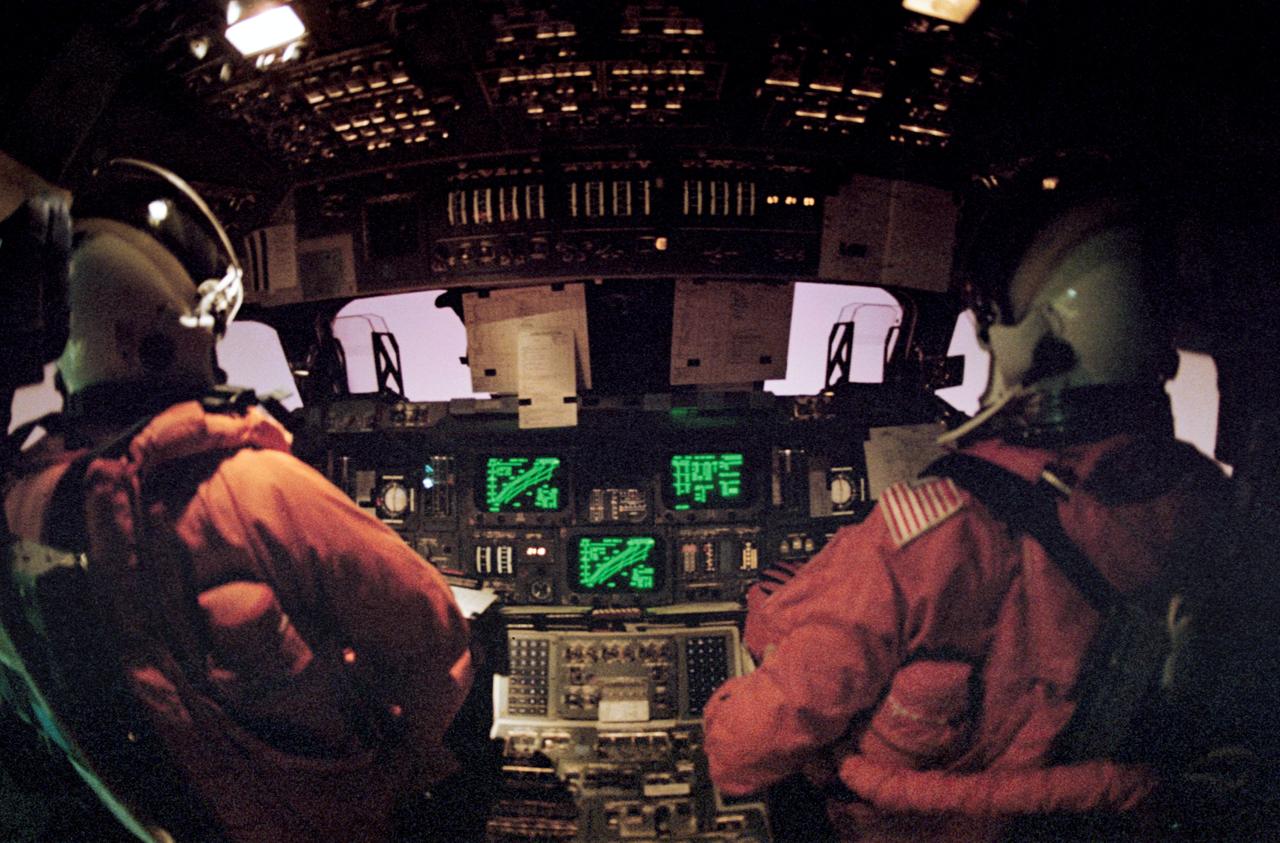
STS042-45-033 (30 Jan. 1992) --- Astronauts Ronald J. Grabe (left) and Stephen S. Oswald man the commander and pilot stations, respectively, during the entry phase of the STS-42 mission. The pink glow through the front windows telltale of friction caused heat encountered upon passing through Earth's atmosphere on the return trip home.

The 51-J mission insignia, designed by Atlantis's first crew, pays tribute to the Statue of Liberty and the ideas it symbolizes. The historical gateway figure bears additional significance for Astronauts Karol J. Bobko, mission commander; and Ronald J. Grabe, pilot, both New Your Natives.
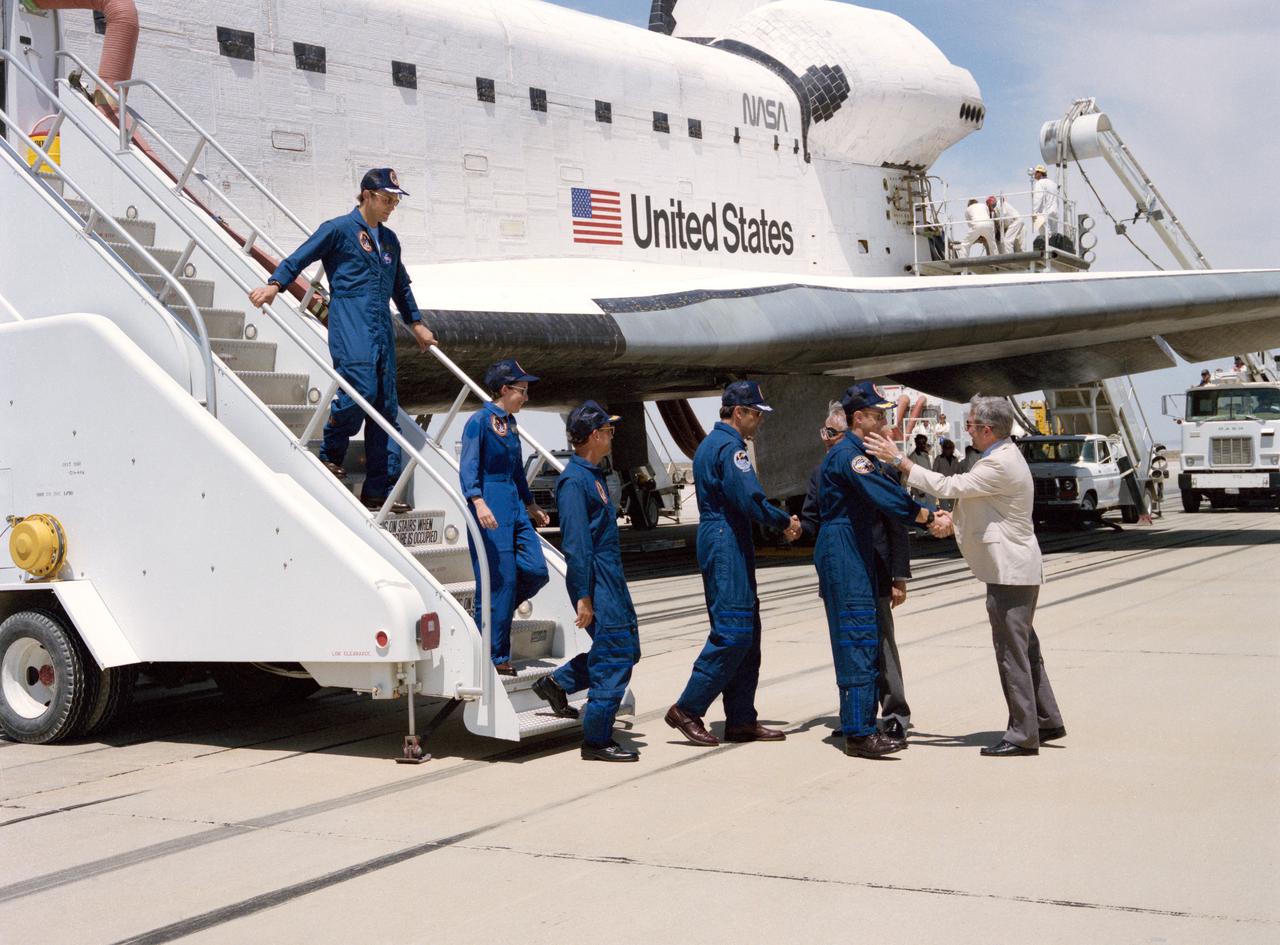
STS030-S-131 (8 May 1989) --- Crewmembers who spent just over four full days in space aboard Space Shuttle Atlantis egress their temporary home for a welcome meeting with terra firma. Astronaut David M. Walker, mission commander, shakes hands with Rear Admiral Richard H. Truly, acting NASA Administrator. Astronaut Ronald J. Grabe (center frame), pilot, is greeted by Dale D. Myers, Deputy Administrator. Pictured behind Grabe, from bottom of steps to top, are astronauts Norman E. Thagard, Mary L. Cleave and Mark C. Lee, all mission specialists. Minutes earlier, the spacecraft?s landing gear came to a stop at 12:44:33 P.M. (PDT), 8 May 1989. It landed on runway 22, a concrete facility, like a number of other NASA flights. Still others have landed on unpaved dry lakebed stripes.

The STS-30 mission launched aboard the Space Shuttle Atlantis on May 4, 1989 at 2:46:59pm (EDT) carrying a crew of five. Aboard were Ronald J. Grabe, pilot; David M. Walker, commander; and mission specialists Norman E. Thagard, Mary L. Cleave, and Mark C. Lee. The primary payload for the mission was the Magellan/Venus Radar mapper spacecraft and attached Inertial Upper Stage (IUS).
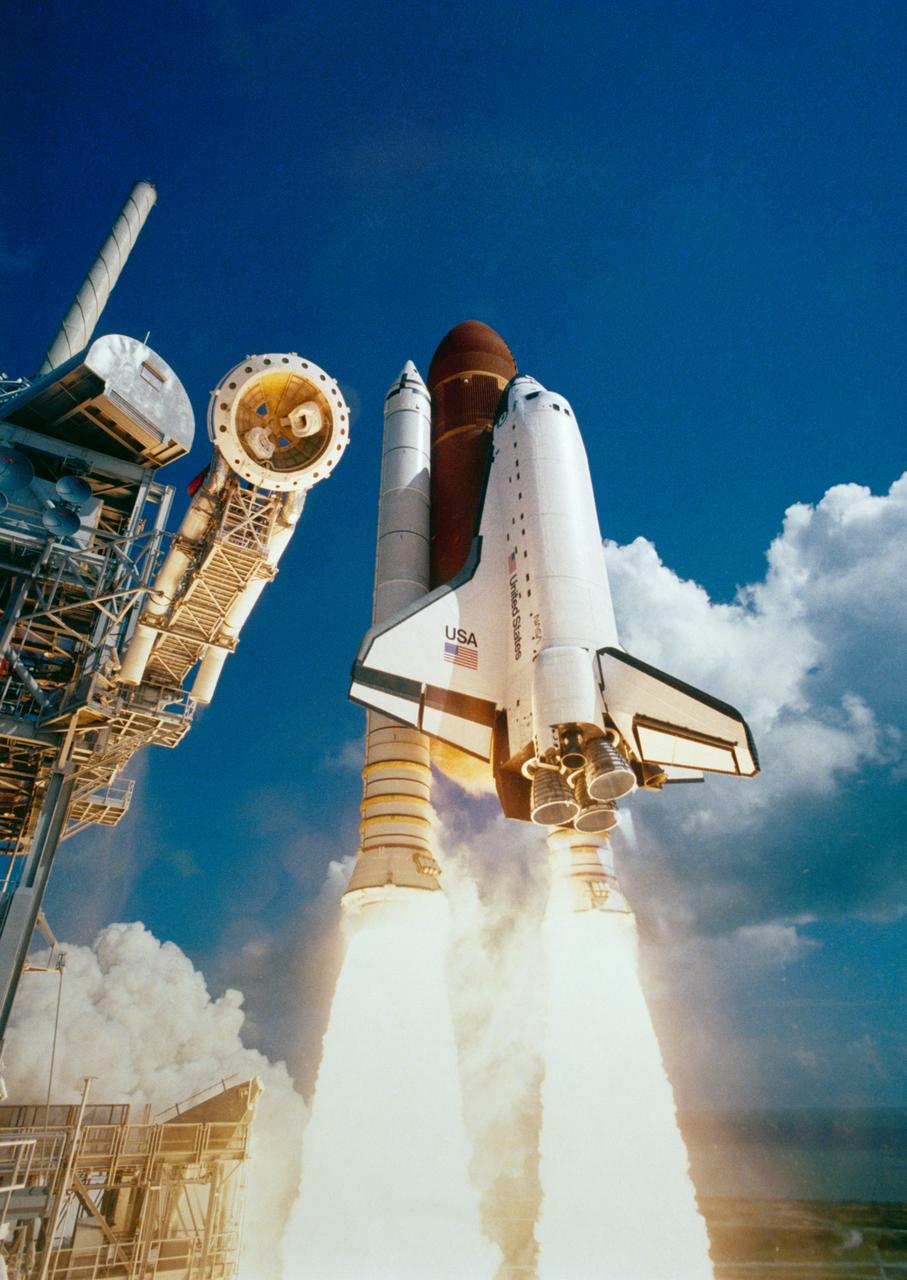
S85-44776 (3 Oct 1985) --- Space Shuttle Atlantis soars toward Florida blue skies to mark the maiden mission of NASA's fourth and newest orbiter vehicle. Launch occurred at 11:15 a.m. (EDT), October 3, 1985. A five member crew mans the orbiter for the DOD flight. They are Karol J. Bobko, Ronald J. Grabe, Robert L. Stewart, David C. Hilmers-- all of NASA-- and William A. Pailes of the USAF.
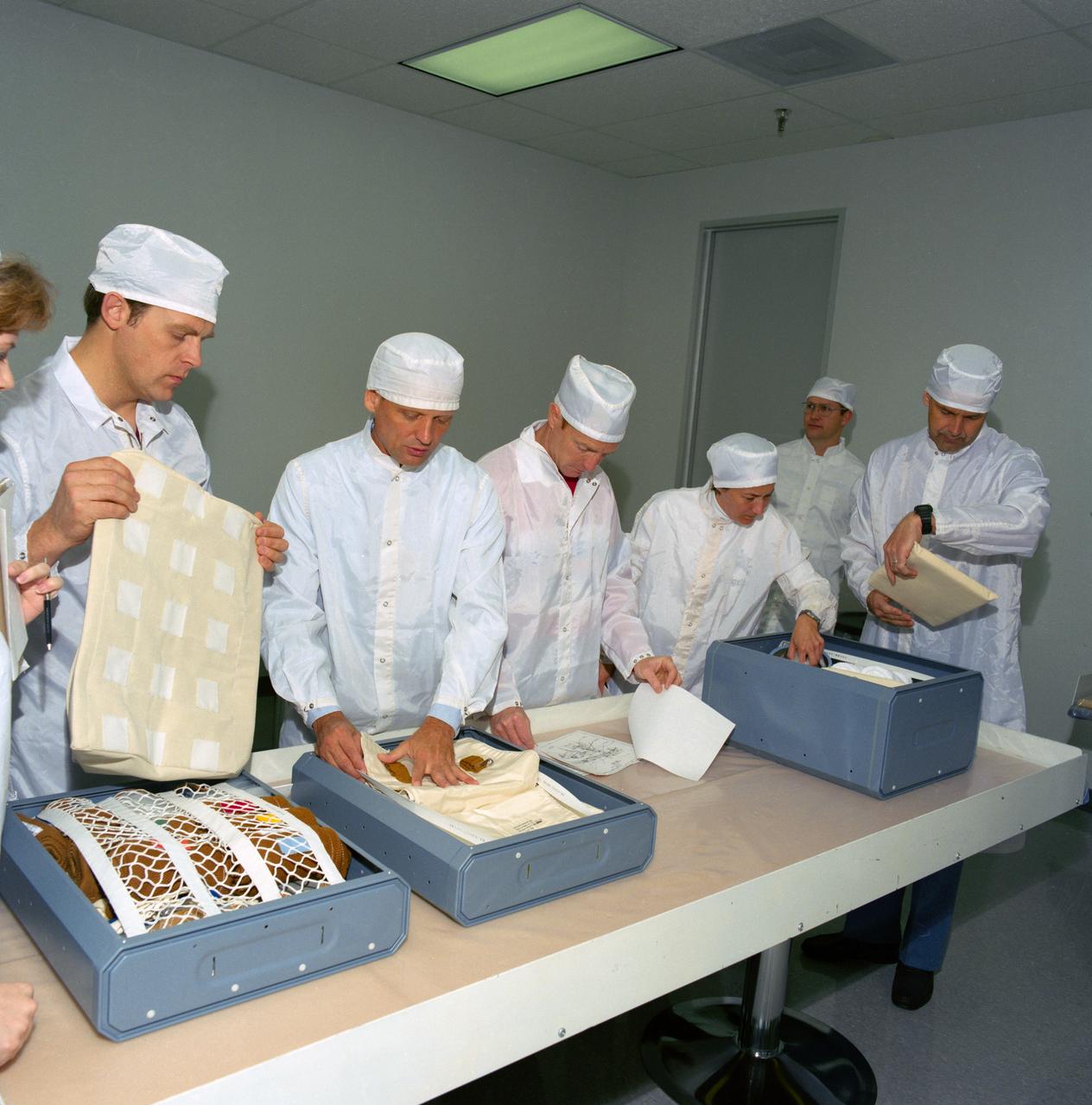
S89-30260 (31 March 1989) --- The five astronaut crewmembers for NASA's STS-30 mission conduct a bench review of the actual supplies they will be depending on for use aboard the Atlantis when they spend four days in space later in the spring. Left to right are Astronauts Mark C. Lee, mission specialist; Norman E. Thagard, mission specialist; David M. Walker, mission commander; and Mary L. Cleave, mission specialist. Ronald J. Grabe, pilot, is at far right.
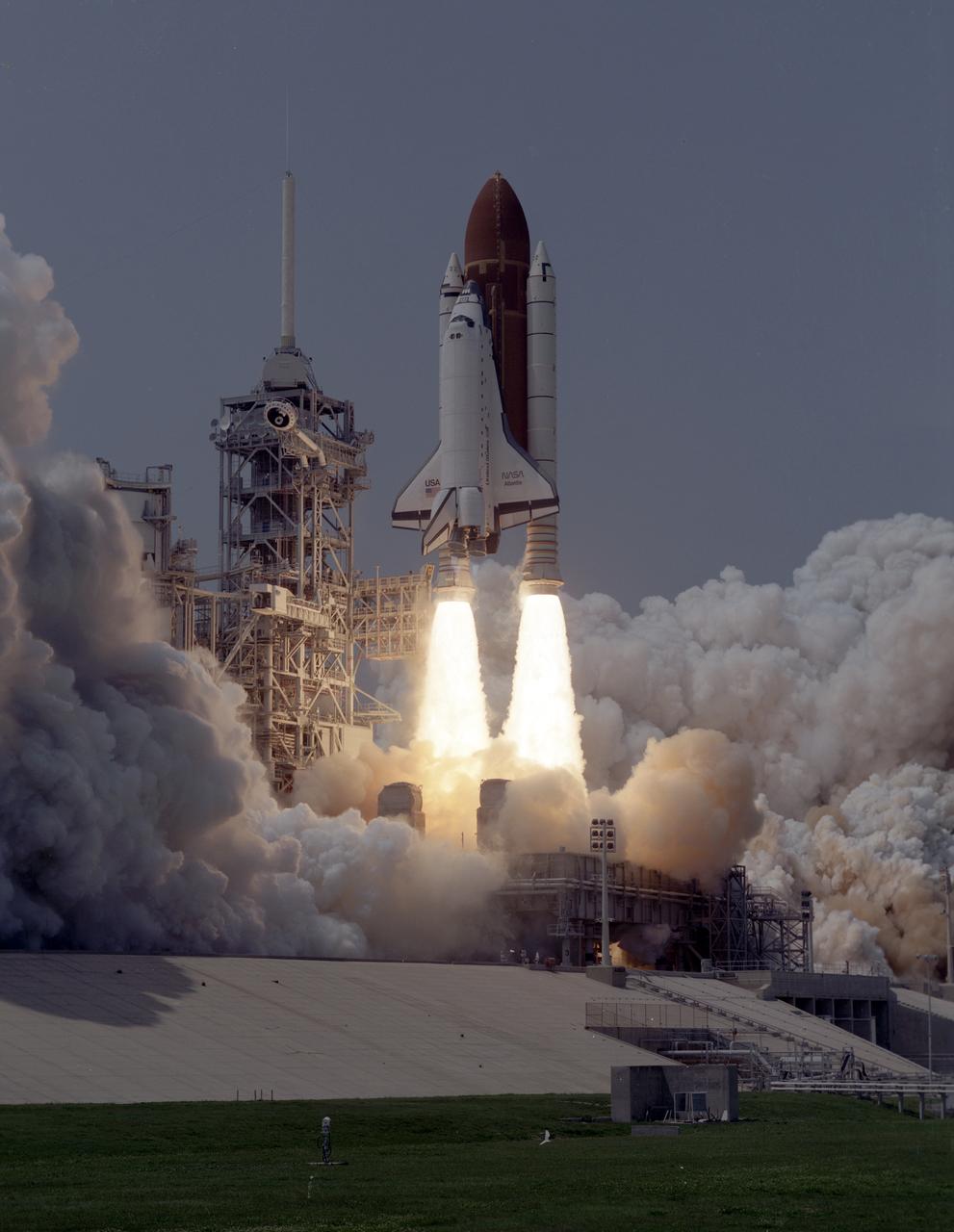
The STS-30 mission launched aboard the Space Shuttle Atlantis on May 4, 1989 at 2:46:59pm (EDT) carrying a crew of five. Aboard were Ronald J. Grabe, pilot; David M. Walker, commander; and mission specialists Norman E. Thagard, Mary L. Cleave, and Mark C. Lee. The primary payload for the mission was the Magellan/Venus Radar mapper spacecraft and attached Inertial Upper Stage (IUS).
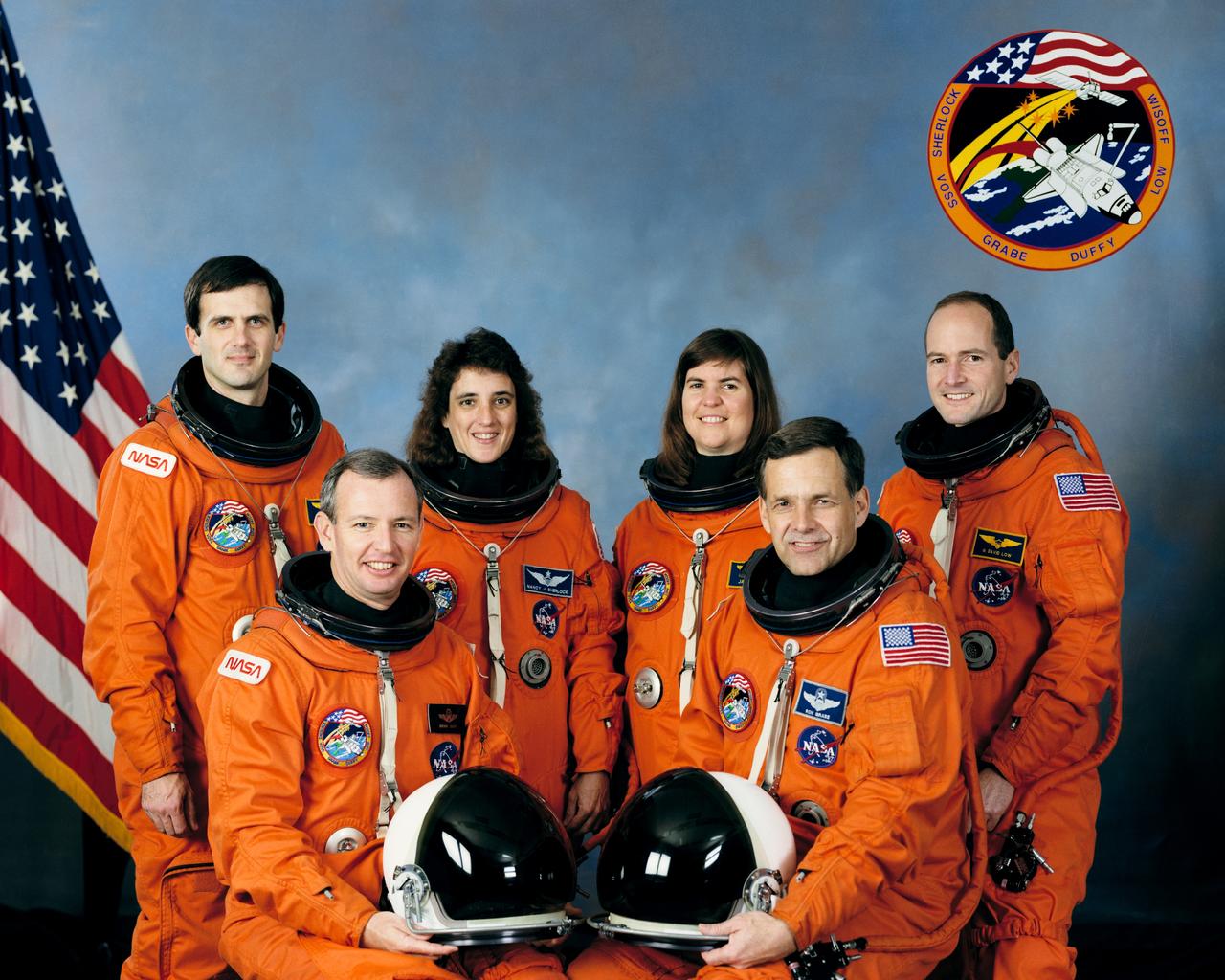
STS057-S-002 (February 1993) --- These seven astronauts are in training for NASA's mission scheduled for spring of this year. In front are astronauts Brian Duffy (left) and Ronald J. Grabe, pilot and commander, respectively. In back are (left to right) astronauts Peter J. Wisoff, Nancy J. Sherlock, Janice E. Voss, all mission specialists; and G. David Low, payload commander.
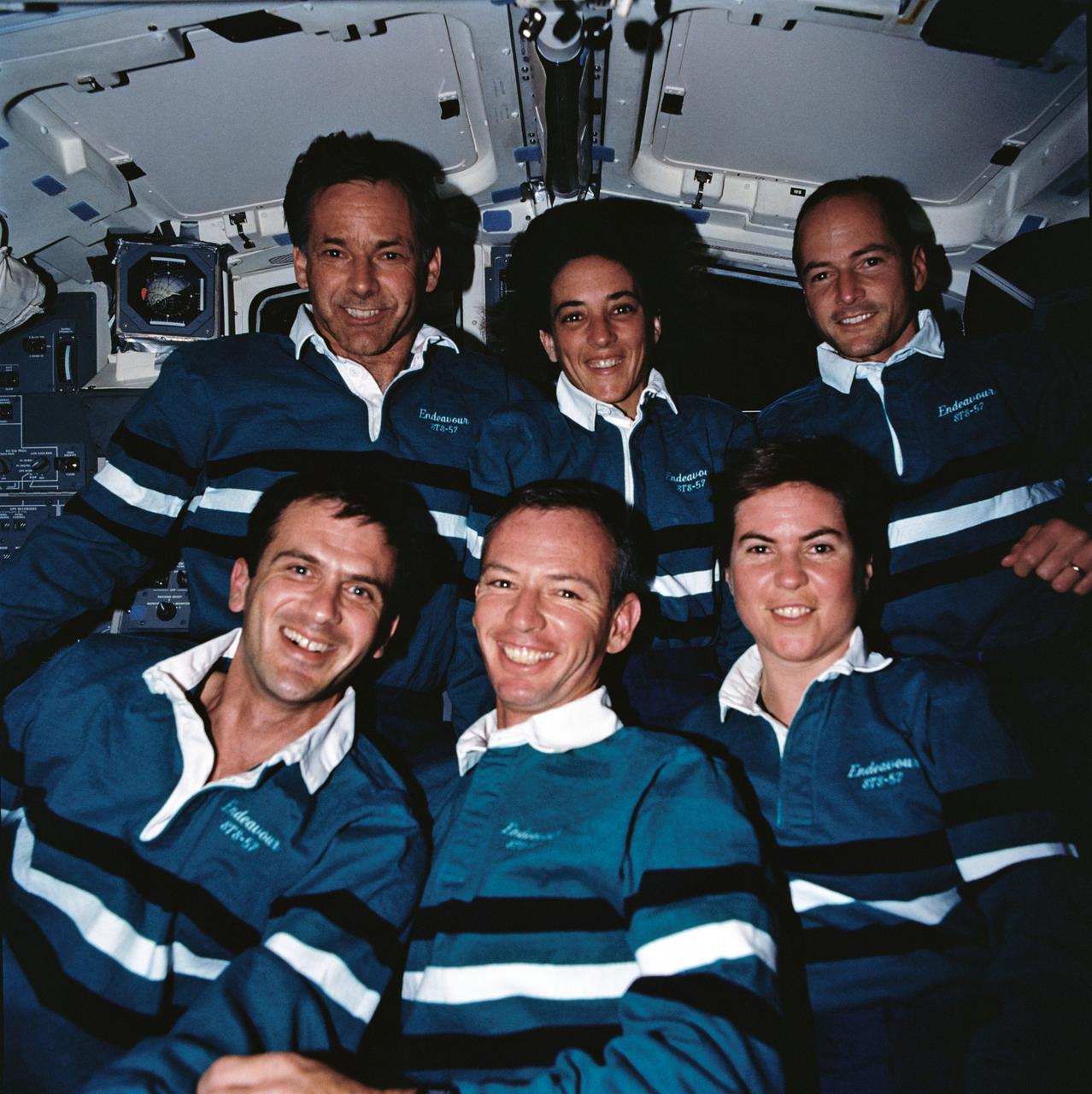
STS057-94-017 (21 June - 1 July 1993) --- Six astronauts onboard the Space Shuttle Endeavour pose for the traditional inflight crew portrait on the aft flight deck. In the rear (left to right) are astronauts Ronald J. Grabe, mission commander; Nancy J. Sherlock, mission specialist; and G. David Low, payload commander; in front (left to right), Peter J. K. (Jeff) Wisoff, mission specialist; Brian Duffy, pilot; and Janice E. Voss, mission specialist.
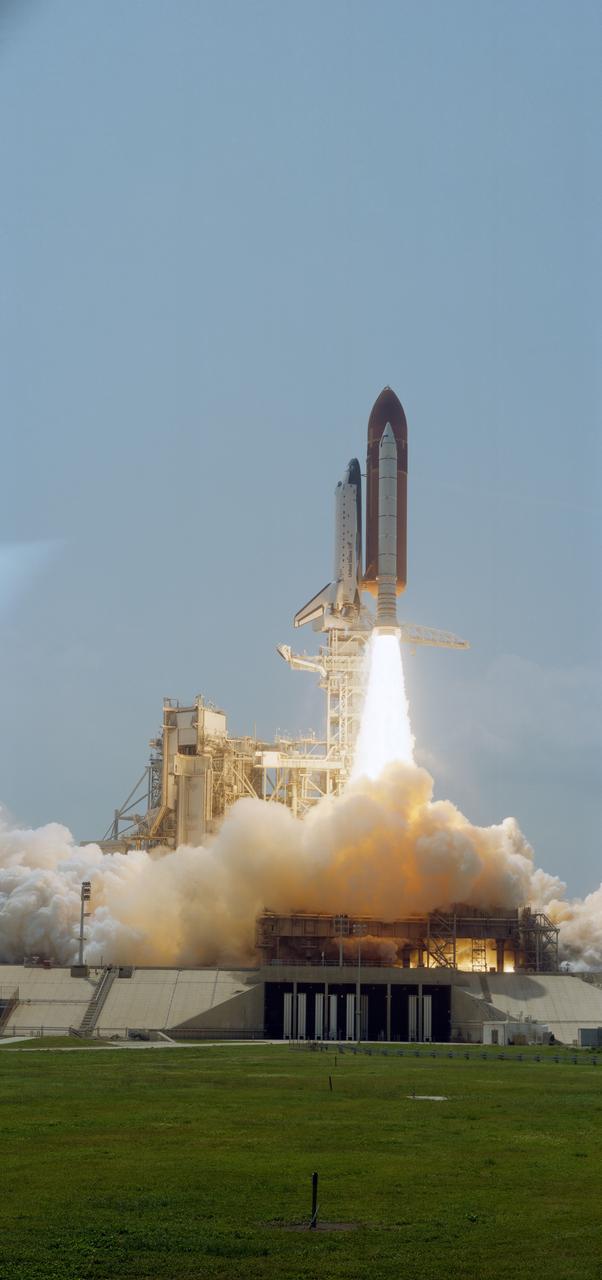
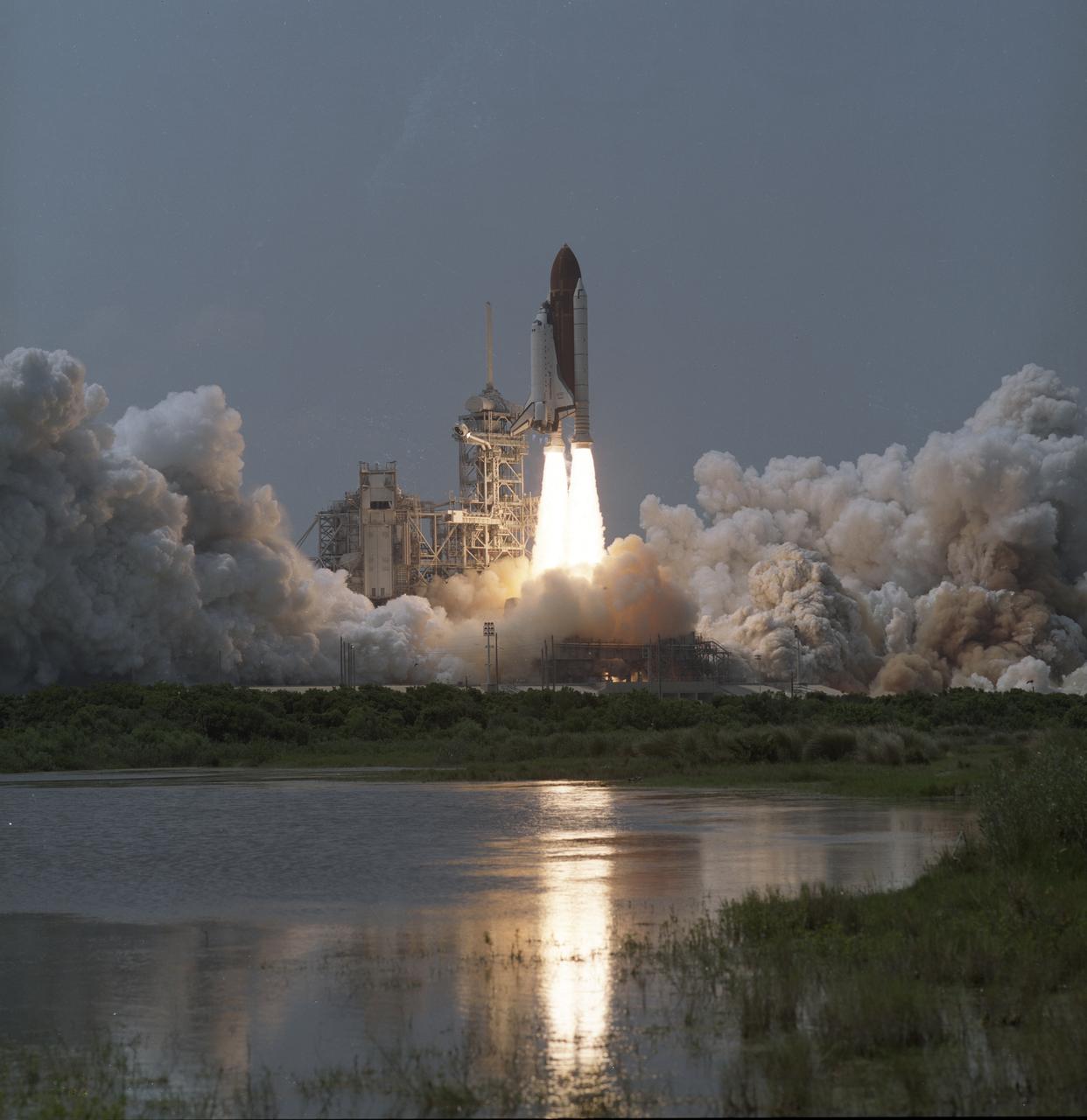
STS030-S-108 (4 May 1989) --- Backdropped against slight gray Florida skies, Space Shuttle Atlantis heads for a four-day mission in earth orbit with five astronaut crewmembers aboard. Onboard were astronauts David. M. Walker, Ronald J. Grabe, Norman E. Thagard, Mary L. Cleave and Mark C. Lee. Launch occurred at 2:46:58 P.M. (EDT), May 4, 1989.
The STS-30 mission launched aboard the Space Shuttle Atlantis on May 4, 1989 at 2:46:59pm (EDT) carrying a crew of five. Aboard were Ronald J. Grabe, pilot; David M. Walker, commander; and mission specialists Norman E. Thagard, Mary L. Cleave, and Mark C. Lee. The primary payload for the mission was the Magellan/Venus Radar mapper spacecraft and attached Inertial Upper Stage (IUS).

S85-41802 (7 Sept 1985) --- Wheels of the Space Shuttle Atlantis touch down on the dry lakebed at Edwards Air Force Base to mark successful completion of the STS 51-J mission. Crewmembers onboard for the flight were Astronauts Karol J. Bobko, Ronald J. Grabe, David C. Hilmers, and Robert L. Stewart; and USAF Maj. William A. Pailes.
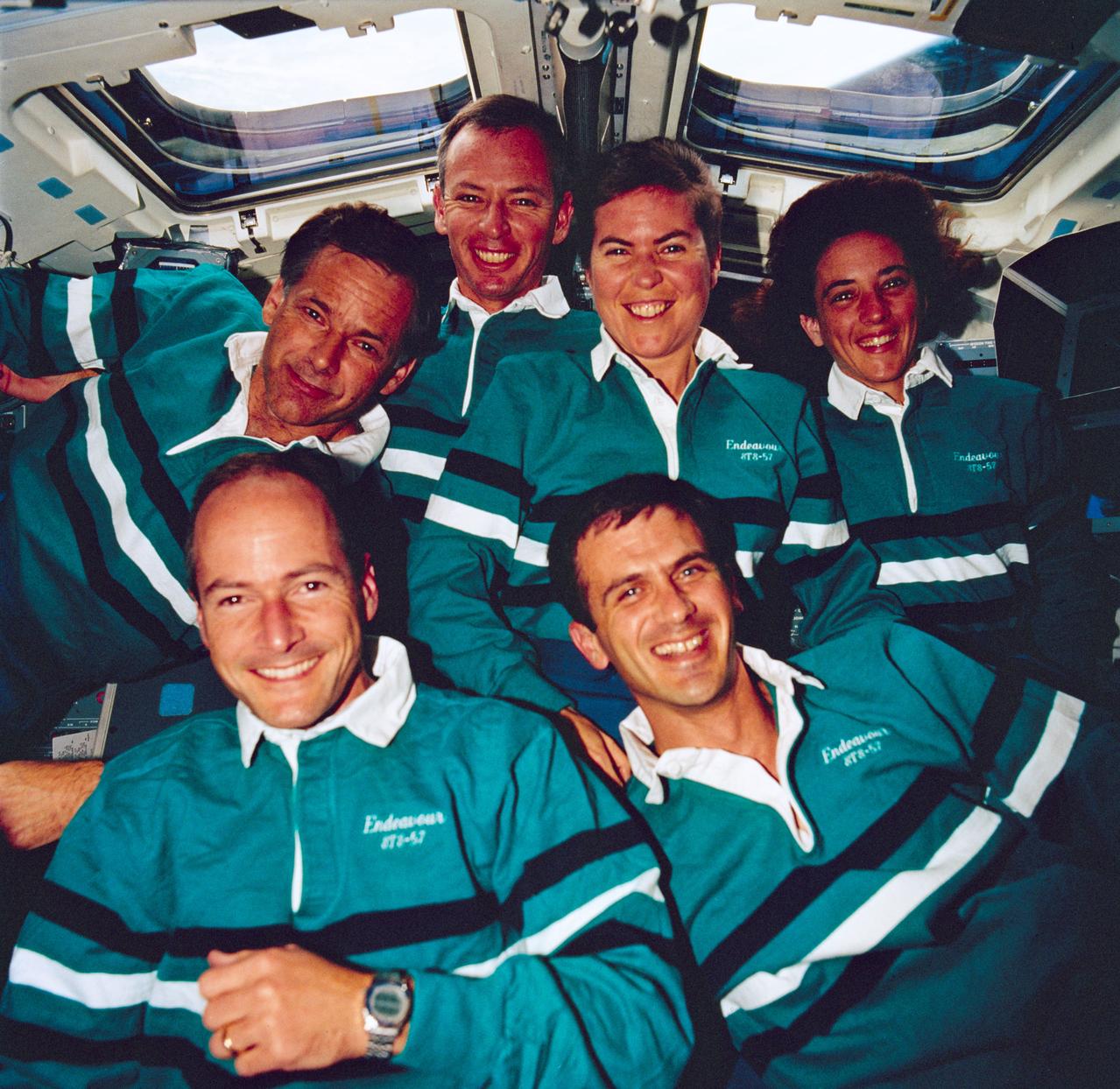
STS057-94-007 (21 June-1 July 1993) --- The six STS-57 crewmembers used a pre-set 70mm camera to record the traditional in-space crew portrait on Endeavour's aft flight deck. In front are astronauts G. David Low, payload commander; and Peter J. K. (Jeff) Wisoff, mission specialist. In the back are astronauts Ronald J. Grabe, mission commander; Brian Duffy, pilot; Janice E. Voss and Nancy J. Sherlock, mission specialists.
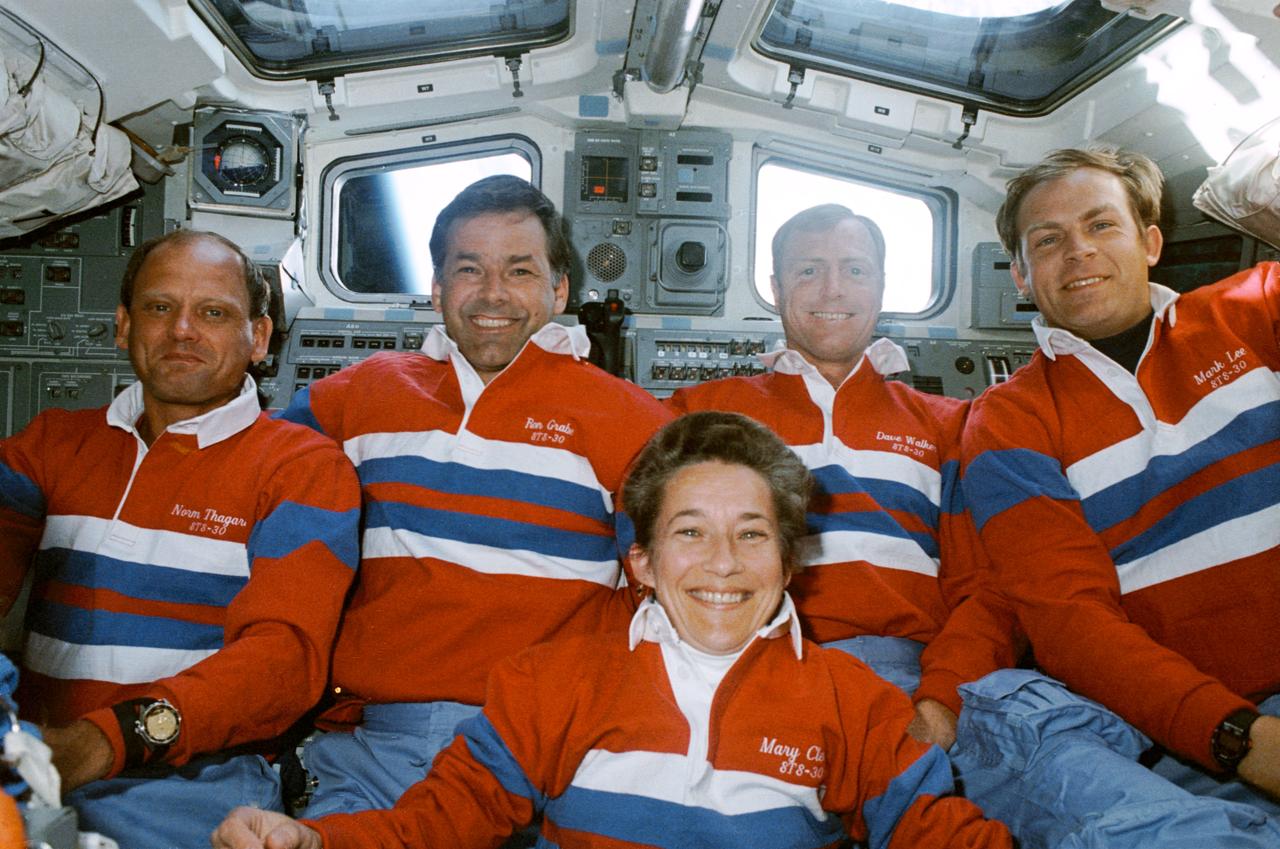
STS030-21-008 (4-8 May 1989) --- A traditional in-space crew portrait for STS-30 aboard the Atlantis. Astronaut Mary L. Cleave is in front. Others pictured, left to right, are astronauts Norman E. Thagard, Ronald J. Grabe, David M. Walker and Mark C. Lee. An automatic, pre-set 35mm camera using color negative film recorded the scene.
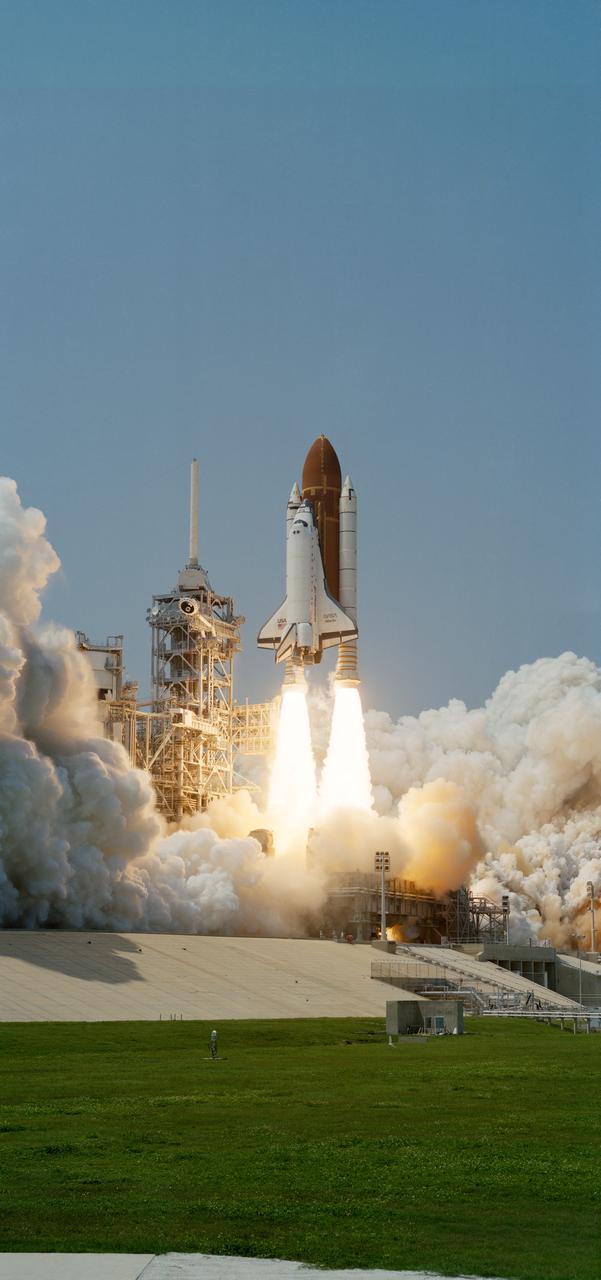
STS030-S-109 (4 May 1989) --- Moments after ignition, Space Shuttle Atlantis heads for a four-day mission in Earth-orbit with five astronaut crew members aboard. Onboard were astronauts David M. Walker, Ronald. J. Grabe, Norman E. Thagard, Mary L. Cleave and Mark C. Lee. Launch occurred at 2:46:58 p.m. (EDT), May 4, 1989.
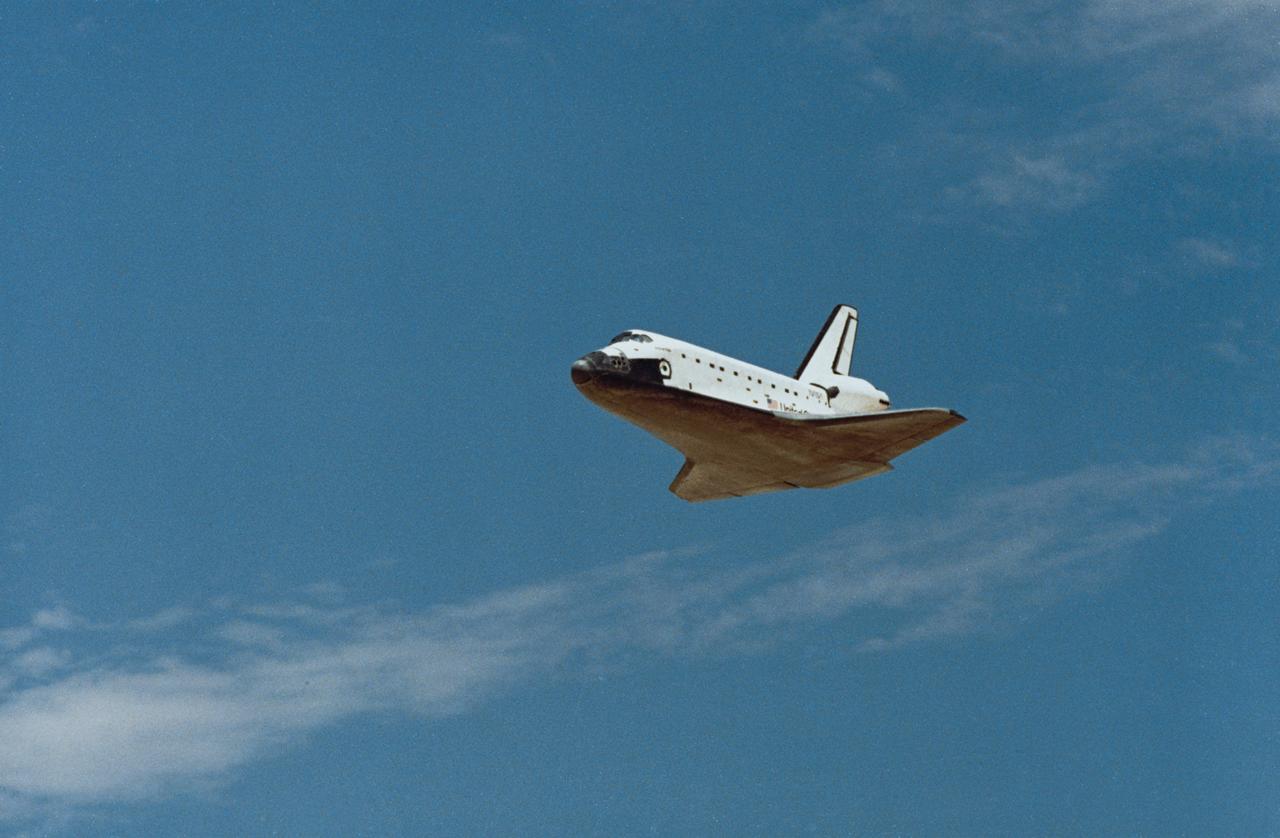
STS030-S-126 (8 May 1989) --- The space shuttle Atlantis, as seen in a low angle view on its glide in from Earth orbit, heads toward a concrete runway at Edwards Air Force Base in California. Onboard were astronauts David M. Walker, STS-30 commander; Ronald J. Grabe, pilot; and astronauts Norman E. Thagard, Mary L. Cleave and Mark C. Lee ? all mission specialists. Photo credit: NASA
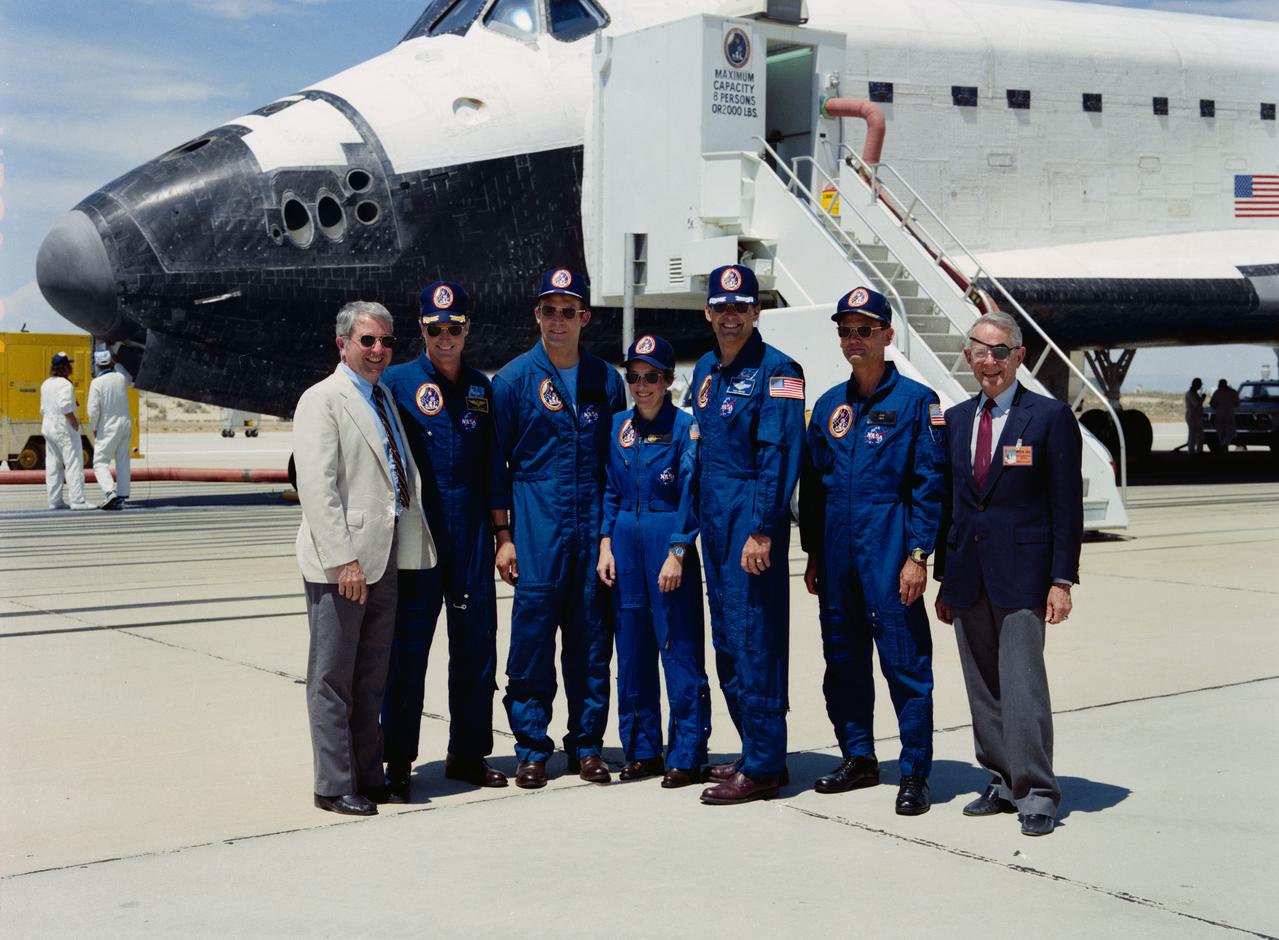
STS030-S-129 (8 May 1989) --- Astronaut crew members who manned the Space Shuttle Atlantis for just over four days pose with NASA officials following the safe landing of their spacecraft (which forms the backdrop for the picture). Left to right are Rear Admiral Richard H. Truly, acting NASA Administrator; astronauts David M. Walker, Mark C. Lee, Mary L. Cleave, Ronald J. Grabe and Norman E. Thagard; and Dale D. Myers, NASA Deputy Administrator.
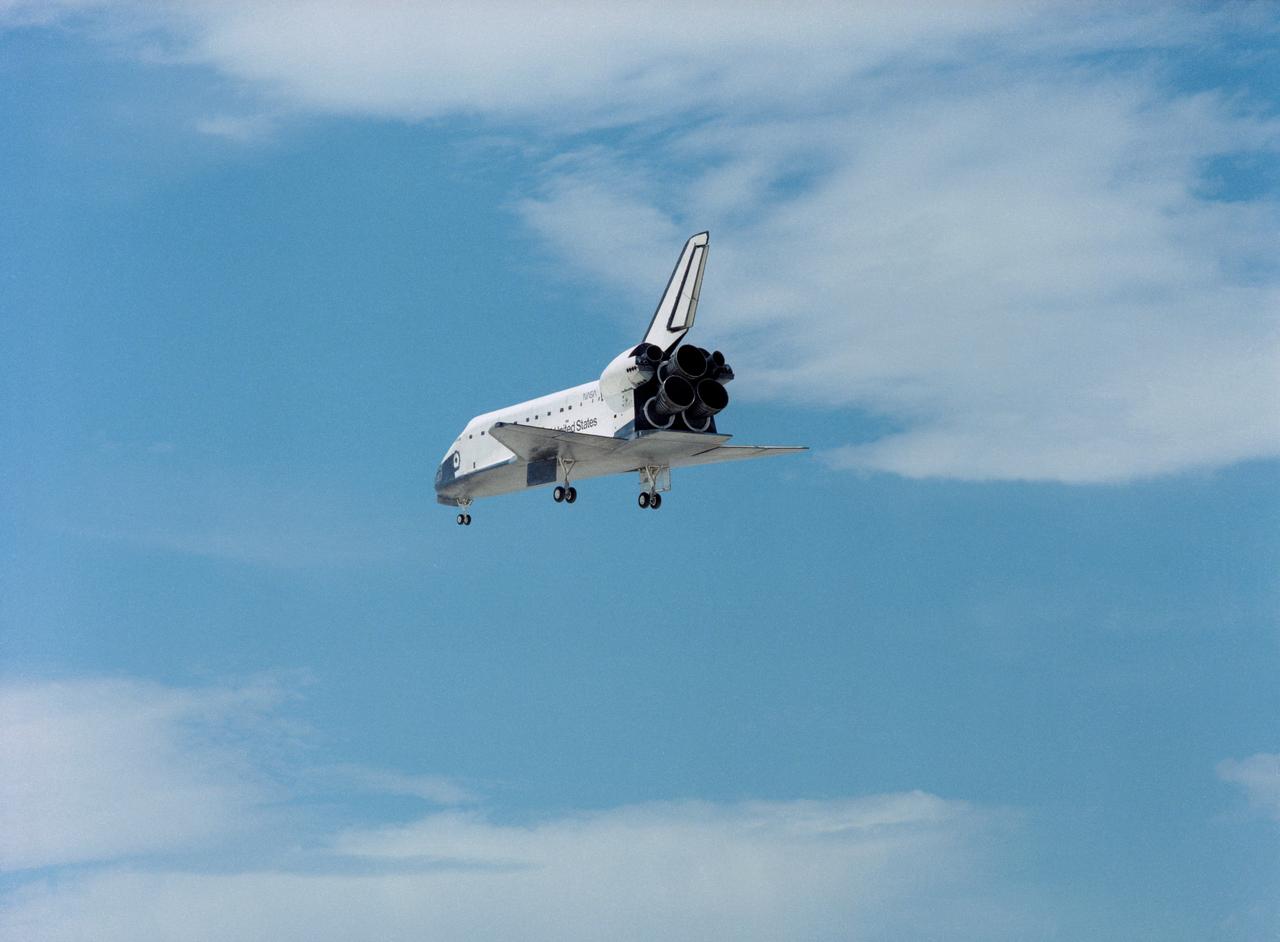
STS030-S-124 (8 May 1989) --- Its landing gear fully deployed, Space Shuttle Atlantis is lined up for its approach to Runway 22 at Edwards Air Force Base in southern California. Minutes later, at 12:44:33 (PDT), the spacecraft's wheels had come to a complete stop, marking the successful conclusion for the four-day STS-30 mission. Onboard were astronauts David M. Walker, Ronald J. Grabe, Norman E. Thagard, Mary L. Cleave and Mark C. Lee.
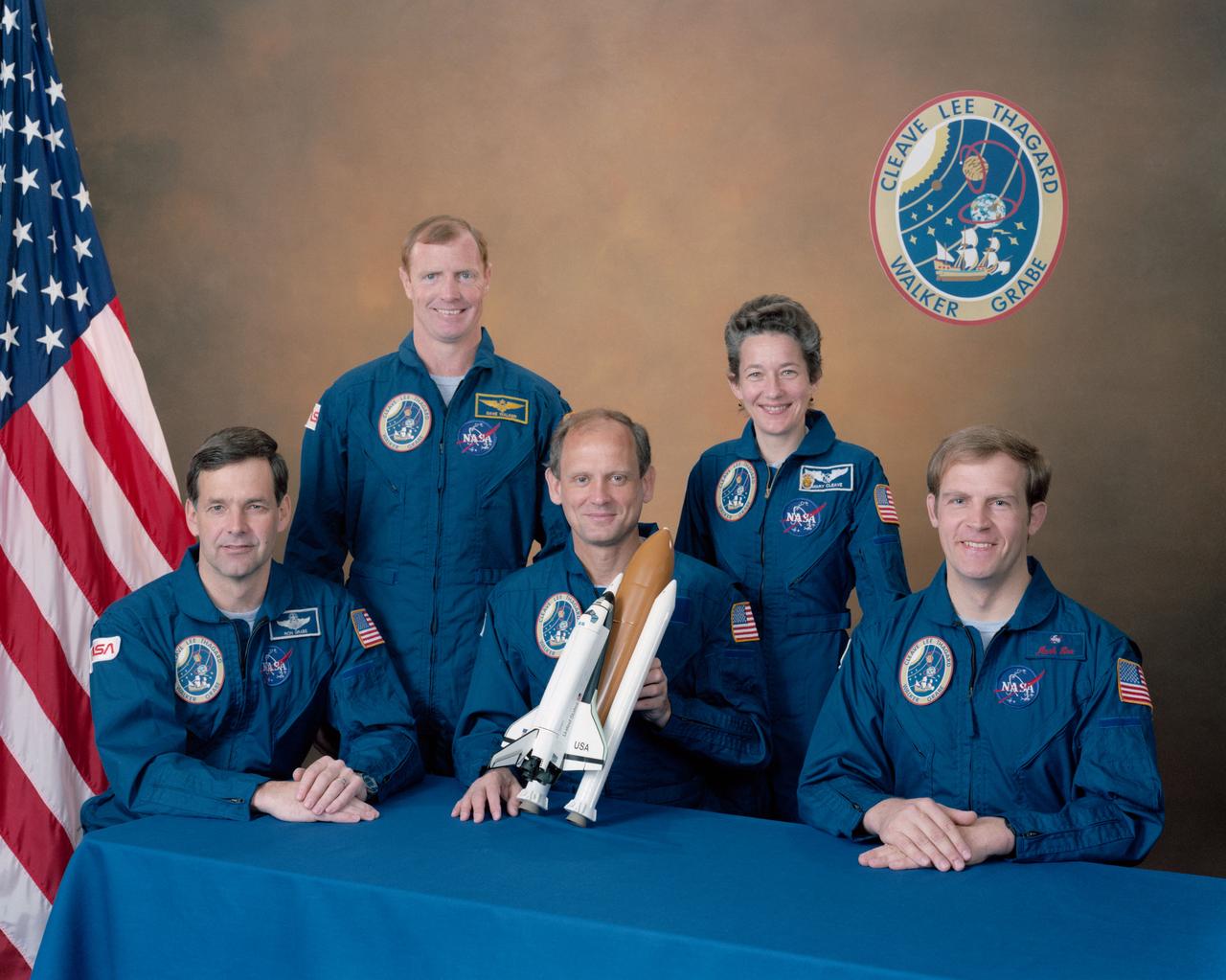
S89-28536 (March 1989) --- These five astronauts have been assigned to fly aboard Atlantis for the STS-30 mission. Astronaut David M. Walker, standing at left, is mission commander. Others are, left to right, Astronauts Ronald J. Grabe, pilot; Norman E. Thagard, Mary L. Cleave and Mark C. Lee, all mission specialists.
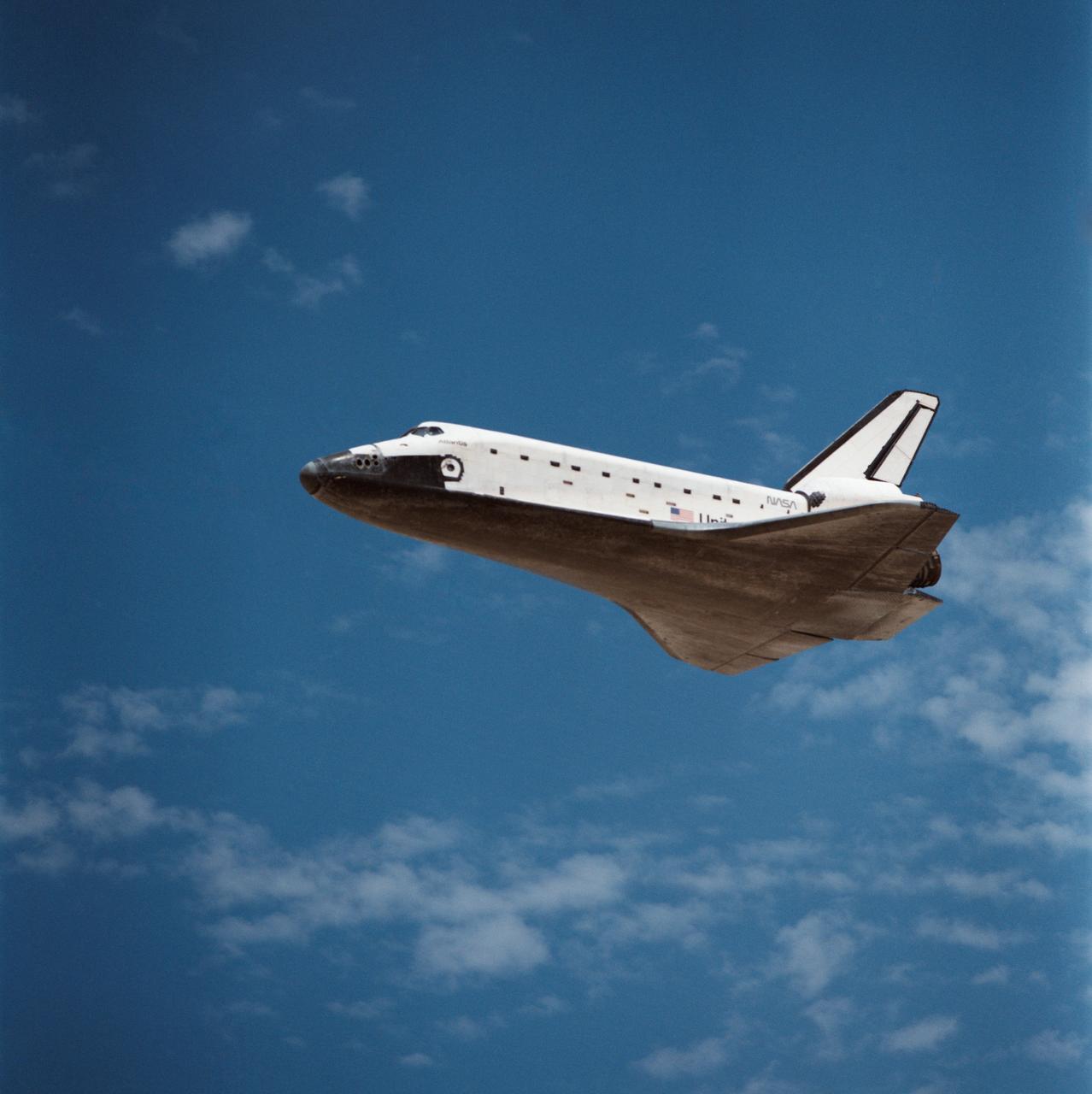
STS030-S-127 (8 May 1989) --- The space shuttle Atlantis, as seen in a low angle view on its glide in from Earth orbit, heads toward a concrete runway at Edwards Air Force Base in California. Onboard were astronauts David M. Walker, STS-30 commander; Ronald J. Grabe, pilot; and astronauts Norman E. Thagard, Mary L. Cleave and Mark C. Lee ? all mission specialists. Photo credit: NASA
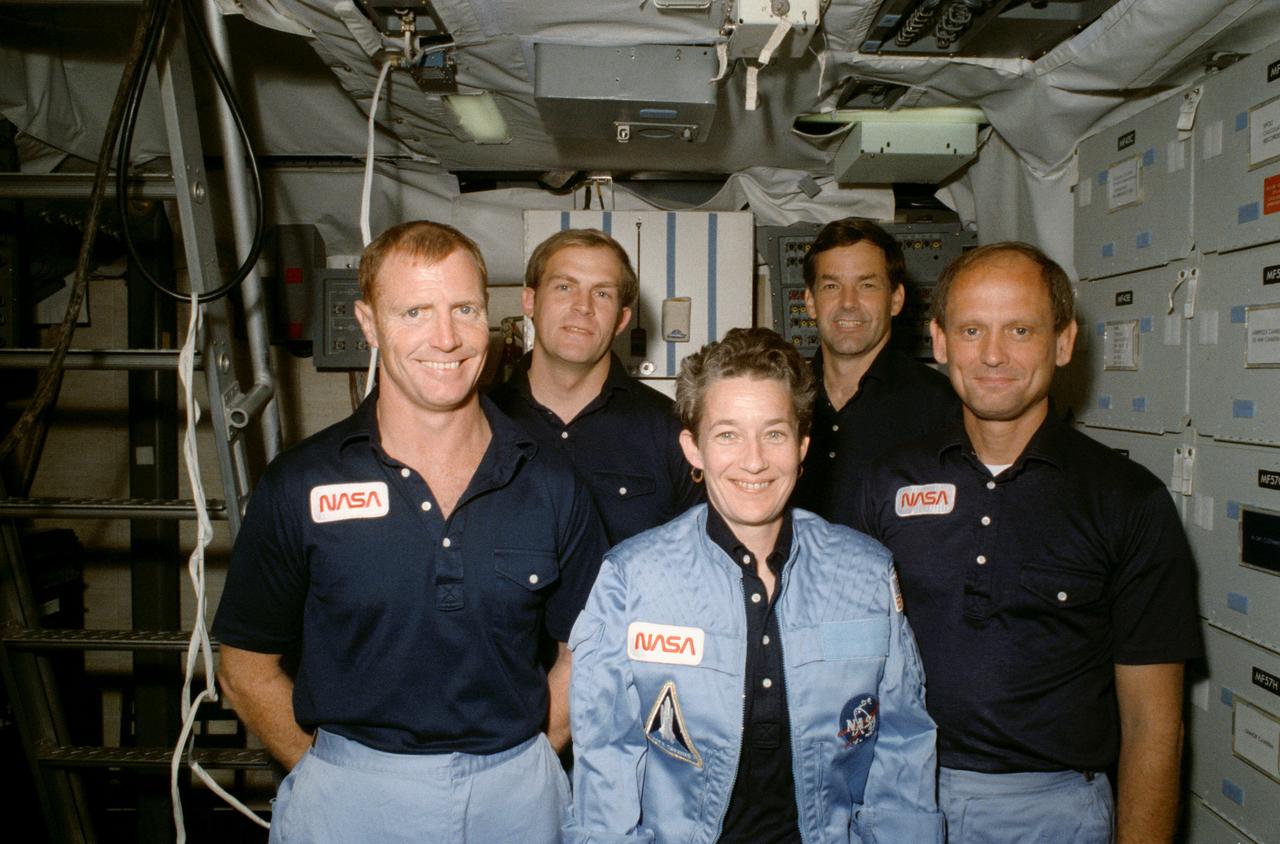
S88-52187 (22 Nov 1988) --- Five astronauts pause from their training schedule to pose for a photograph. Pictured, left to right, are astronauts David M. Walker, mission commander; Mark C. Lee, Mary L. Cleave, Ronald J. Grabe and Norman E. Thagard. They are on the middeck section of the Shuttle mission simulator (fixed base) in the Johnson Space Center's mission simulation and training facility.
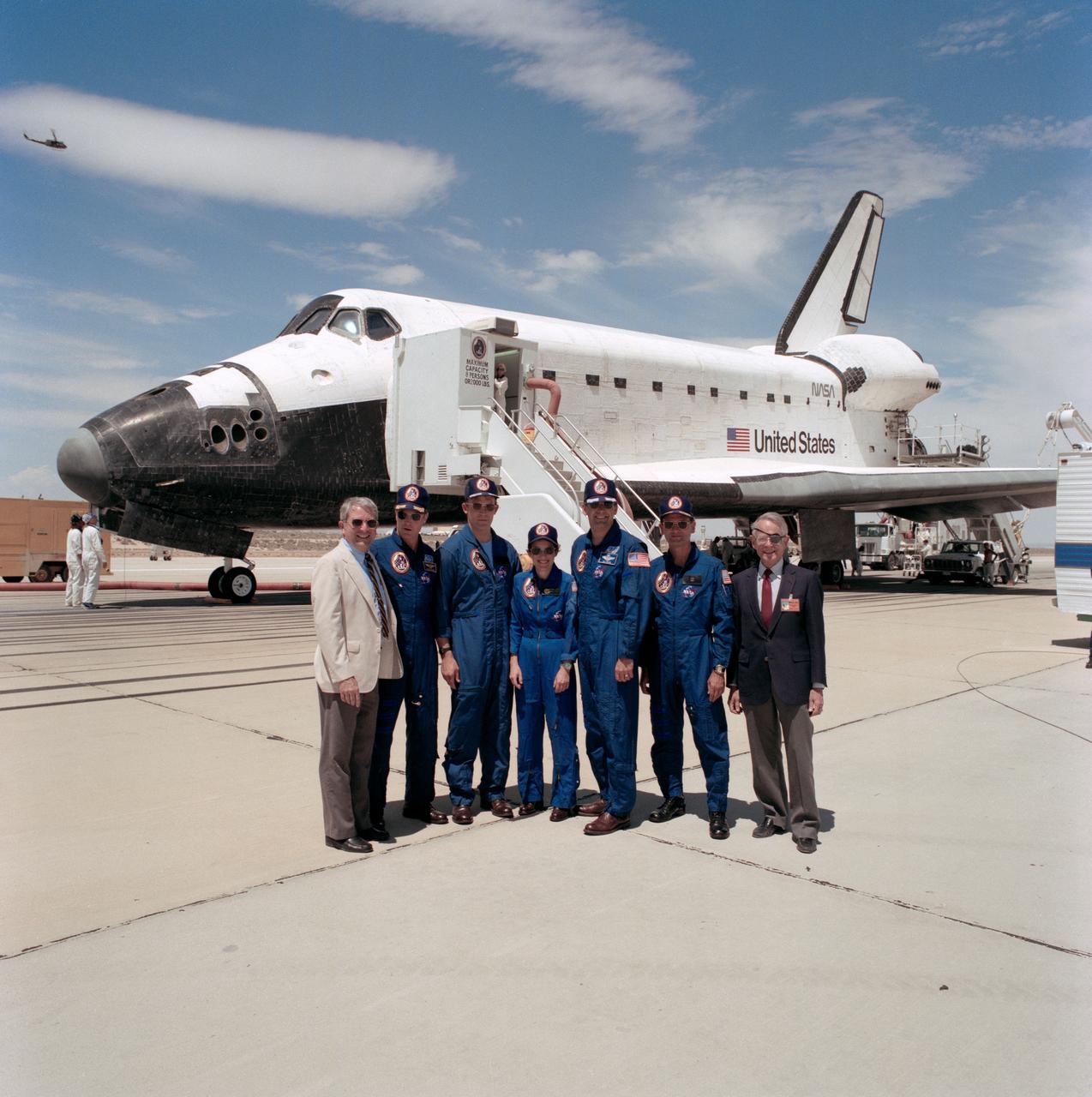
STS030-S-130 (8 May 1989) --- Astronaut crew members who manned the Space Shuttle Atlantis for just over four days pose with NASA officials following the safe landing of their spacecraft (which forms the backdrop for the picture). Left to right are Rear Admiral Richard H. Truly, acting NASA Administrator; astronauts David M. Walker, Mark C. Lee, Mary L. Cleave, Ronald J. Grabe and Norman E. Thagard; and Dale D. Myers, NASA Deputy Administrator.

51J-S-001 (3 Oct 1985) --- This 35mm frame was taken moments after the Space Shuttle Atlantis cleared the launch tower to begin its first mission in space. Onboard, ready to carry out STS-51J mission were astronauts Karol J. Bobko, commander; Ronald J. Grabe, pilot; Robert L. Stewart and David C. Hilmers, mission specialist; and United States Air Force Major William A. Pailes, payload specialist.
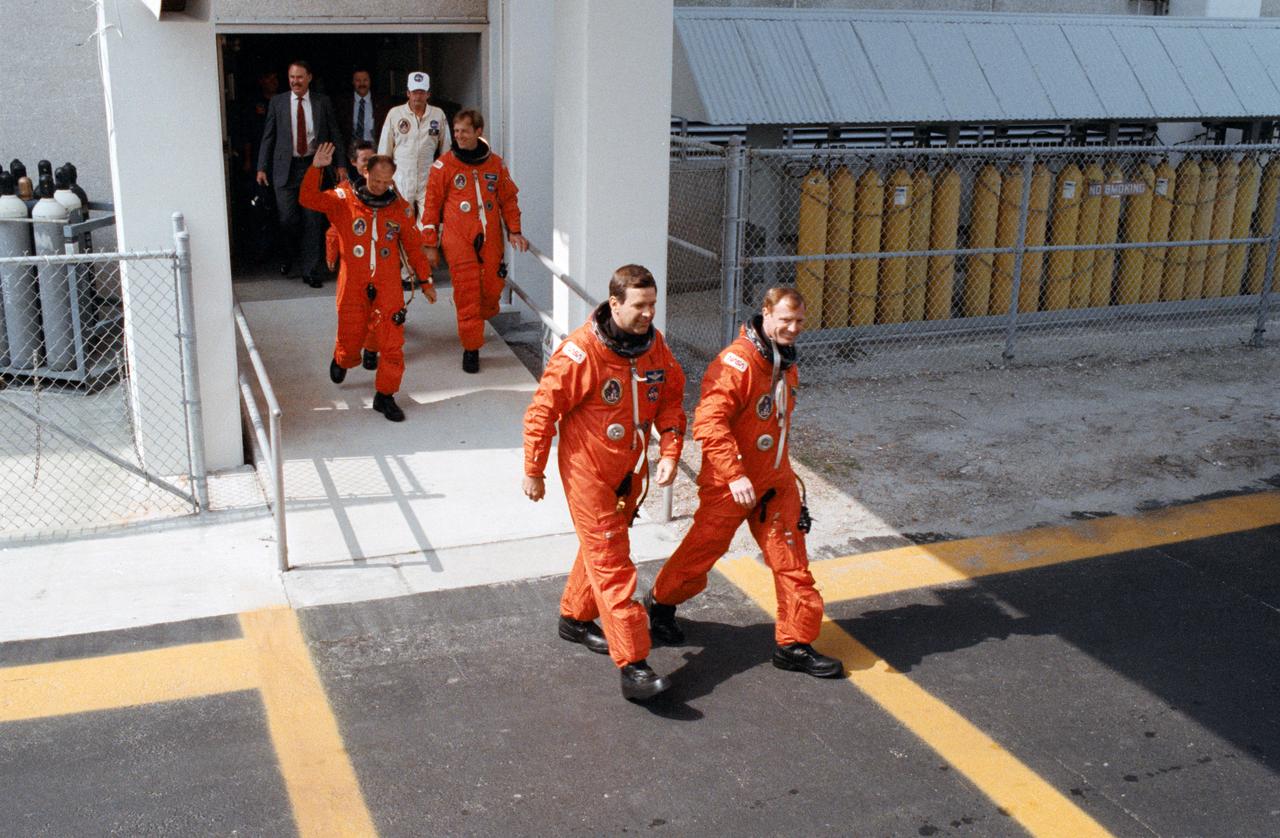
STS030-S-139 (4 May 1989) --- The five astronaut crewmembers of STS-30 leave the operations and checkout building en route to a transfer van that will take them to Pad 39B for a date with the Space Shuttle Atlantis. From front to back are Astronauts David M. Walker, Ronald J. Grabe, Norman E. Thagard, Mark C. Lee (aside) and Mary L. Cleave.
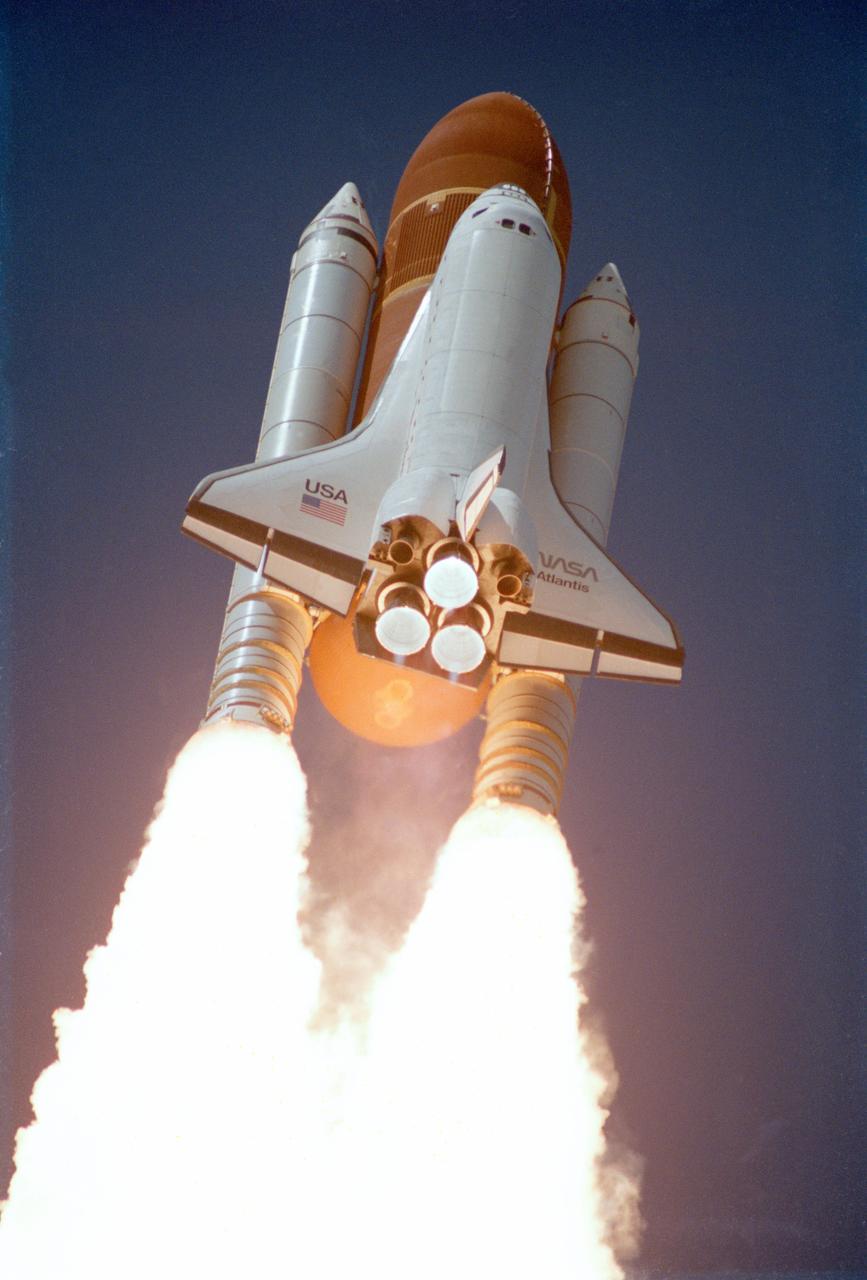
51J-S-003 (3 Oct 1985) --- This 35mm frame was taken moments after the Space Shuttle Atlantis cleared the launch tower to begin its first mission in space. Onboard, ready to carry out STS-51J mission were astronauts Karol J. Bobko, commander; Ronald J. Grabe, pilot; Robert L. Stewart and David C. Hilmers, mission specialist; and U.S.A.F. Major William A. Pailes, payload specialist.
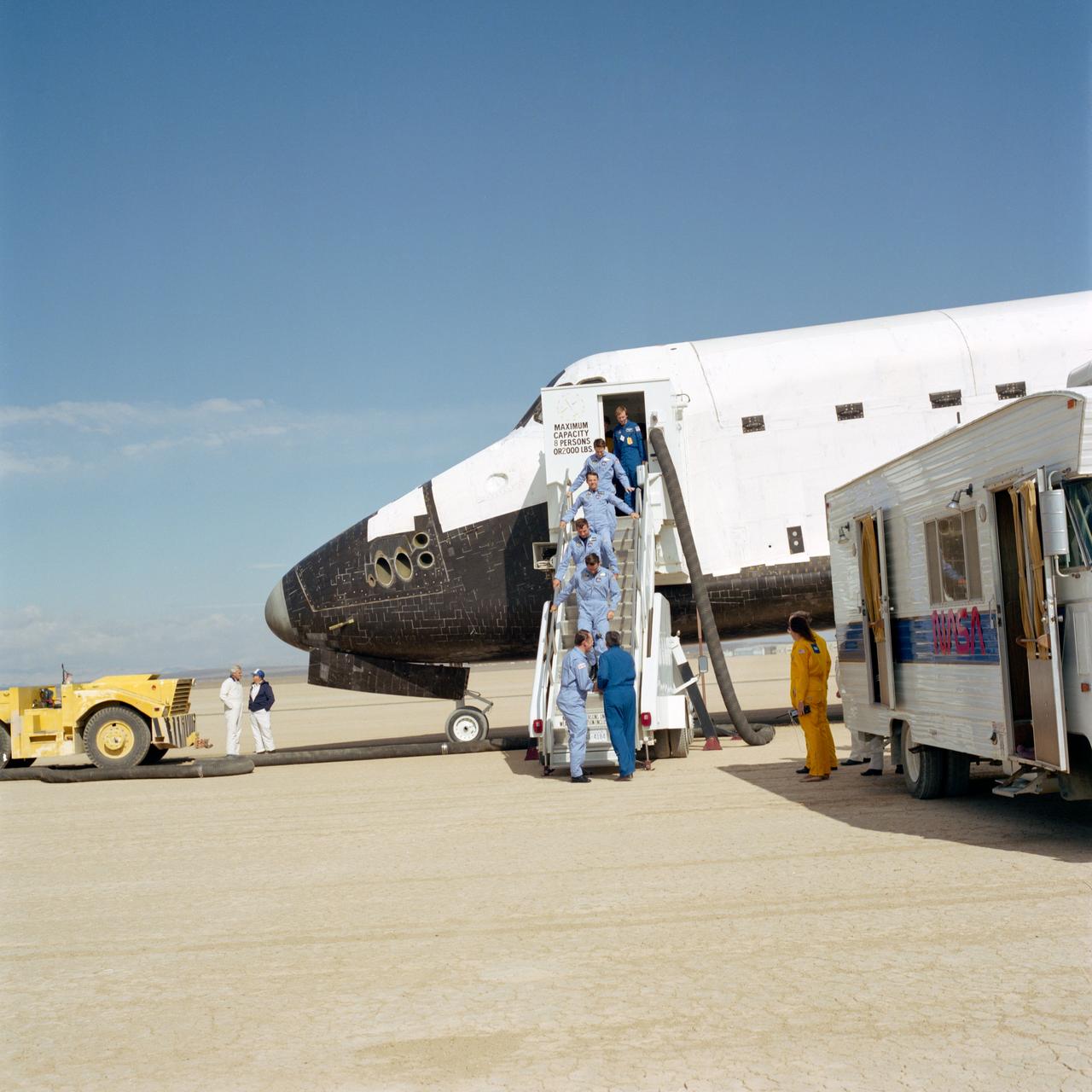
S85-41803 (7 Sept 1985) --- George W.S. Abbey, bottom right, greets the five members of the STS 51-J crew as they egress the Atlantis following the successful completion of a mission in Earth orbit. Astronaut Karol J. Bobko, who led the five down the steps, shakes hands with the JSC director of flight crew operations. He is followed (bottom to top) By Astronauts Ronald J. Grabe, pilot; David C. Hilmers and Robert L. Stewart, both mission specialists; and USAF Maj. William A. Pailes, payload specialist.
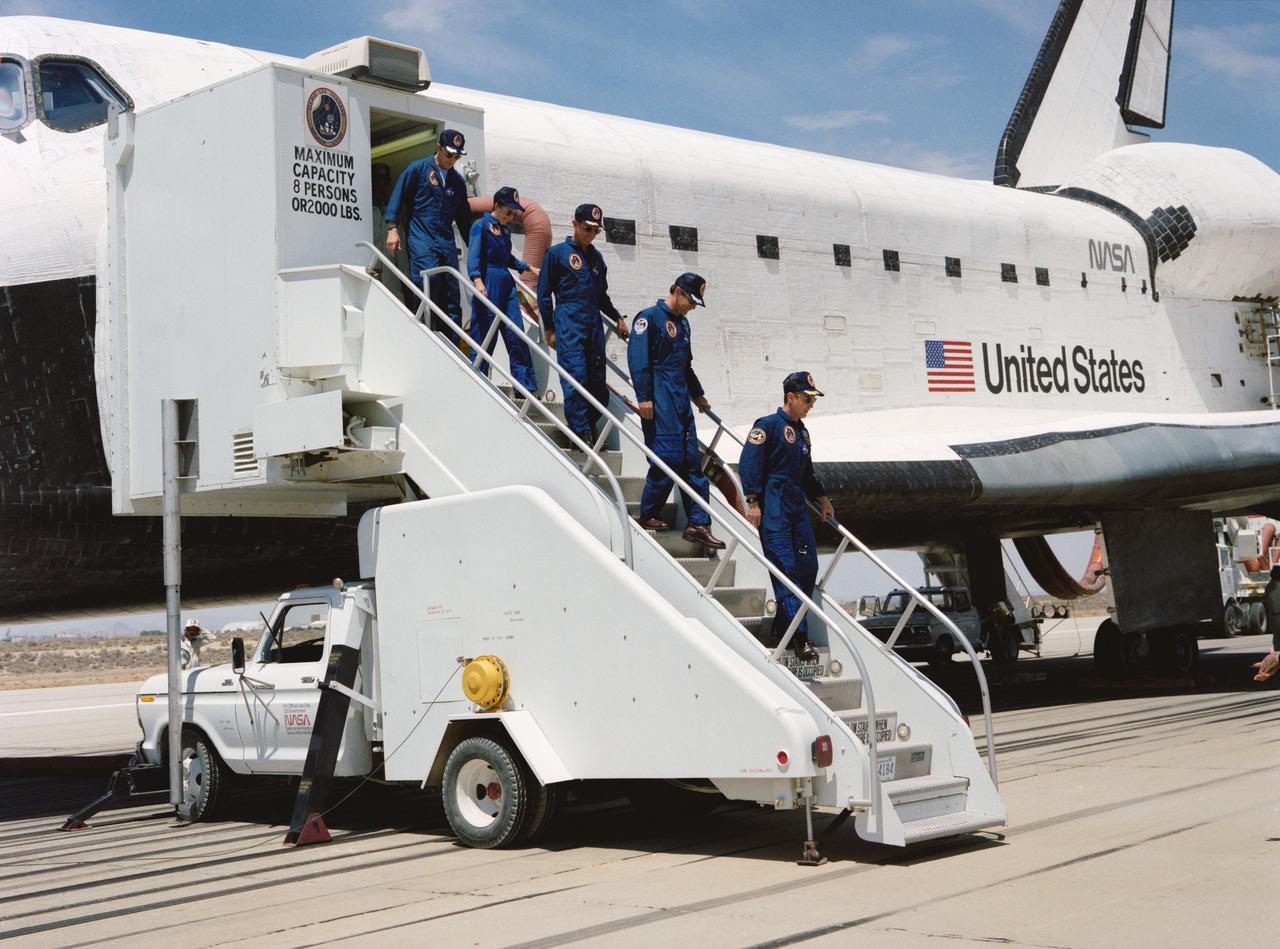
STS030-S-132 (8 May 1989) --- Crewmembers who spent just over four full days in space aboard Space Shuttle Atlantis egress their temporary home for a welcome meeting with terra firma. Pictured, from bottom of steps to top, are astronauts David M. Walker, Ronald J. Grabe, Norman E. Thagard, Mary L. Cleave and Mark C. Lee. Minutes earlier, the spacecraft?s landing gear came to a stop at 12:44:33 P.M. (PDT), 8 May 1989. It landed on runway 22, a concrete facility, like a number of other NASA flights. Still others have landed on unpaved dry lakebed stripes.
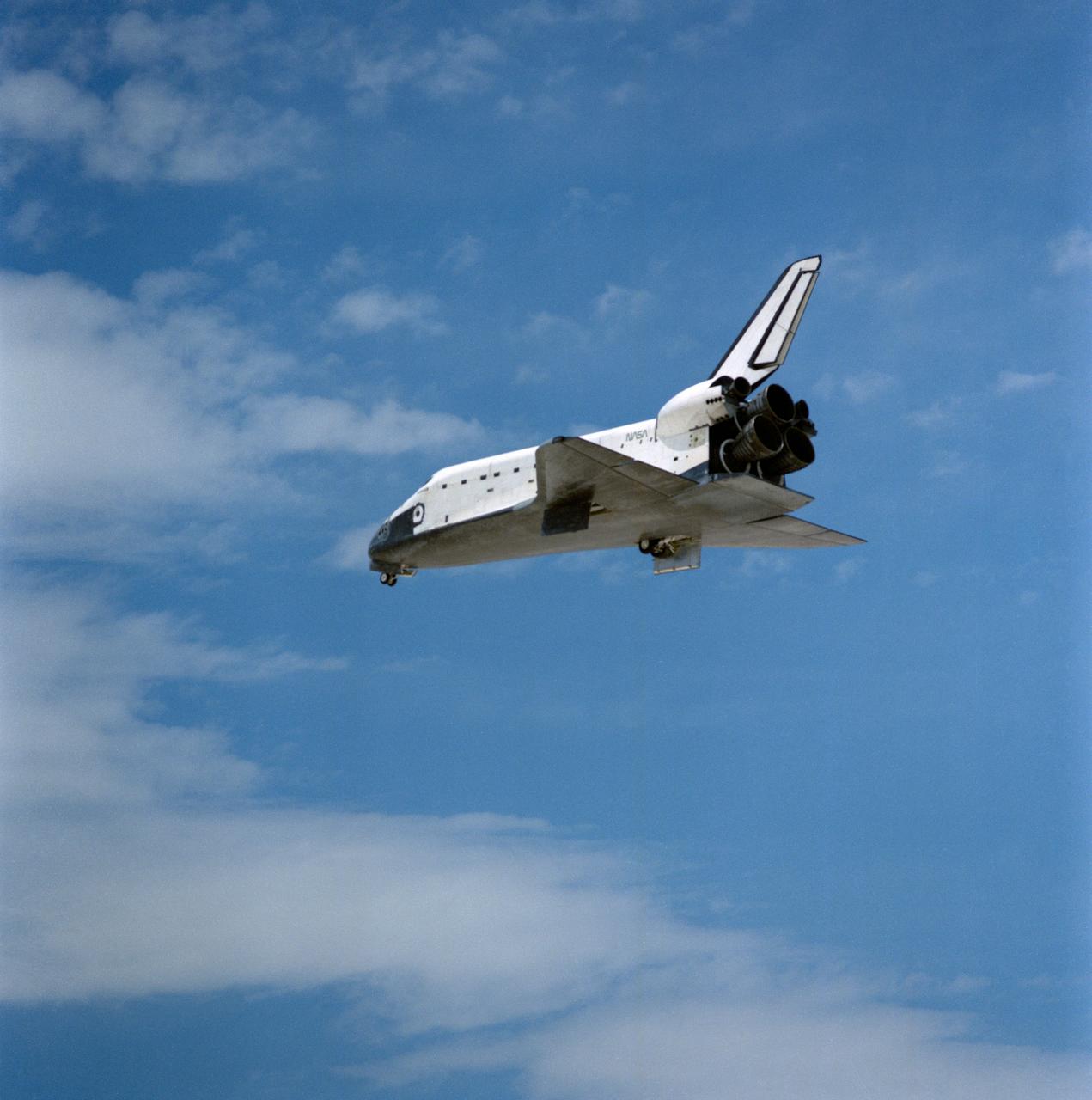
STS030-S-128 (8 May 1989) --- Space Shuttle Atlantis? landing gear has just appeared and the spacecraft, with five astronaut crewmembers aboard, heads for a smooth landing on runway 22 at Edwards Air Force Base in southern California. Onboard the spacecraft were astronauts David M. Walker, Ronald J. Grabe, Norman E. Thagard, Mary L. Cleave and Mark C. Lee. The crew spend just over four full days in space, having released the Magellan spacecraft toward Venus on the first day.
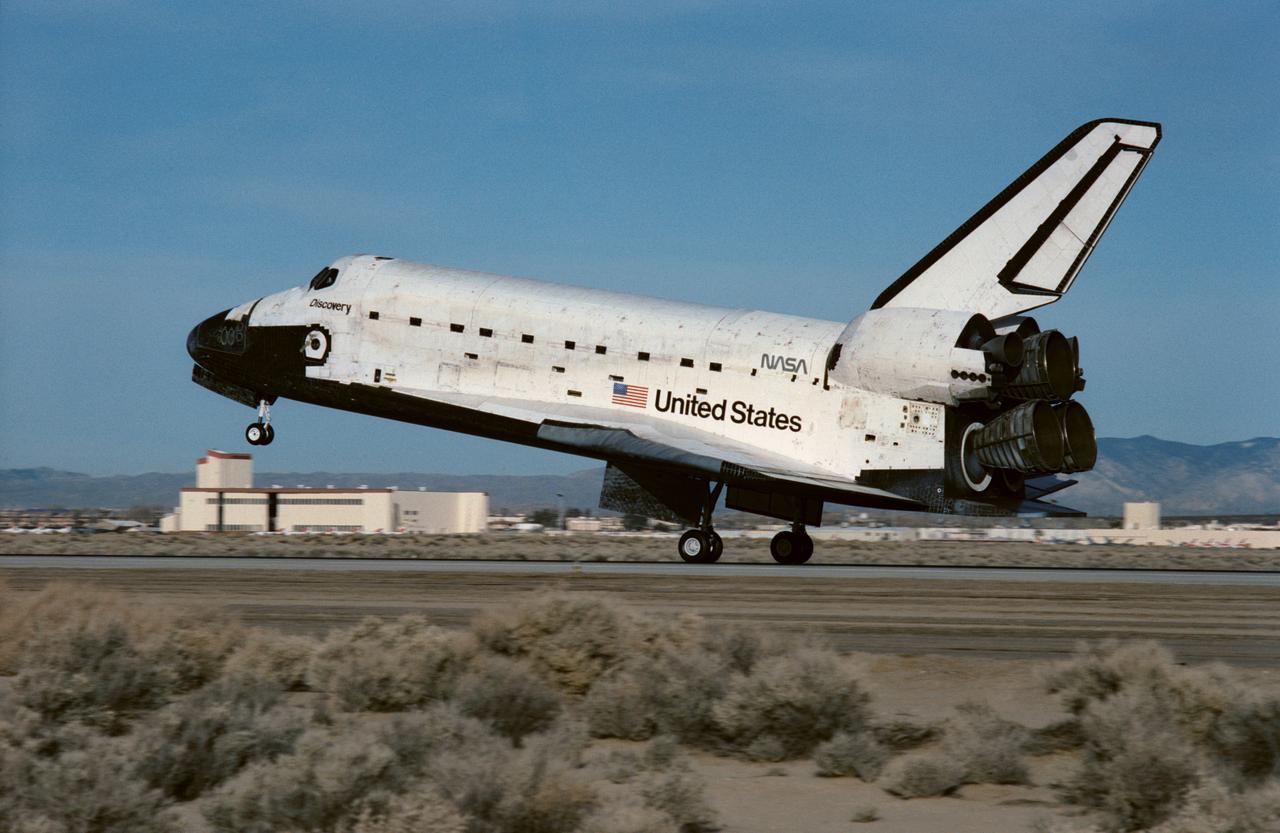
STS042-S-094 (30 Jan 1992) --- Space Shuttle Discovery lands on Runway 22 at Edwards Air Force Base in southern California to complete an eight-day mission. Main gear touchdown occurred at 8:07:18 a.m. (PST), Jan. 30, 1992. The crewmembers aboard Discovery for the first International Microgravity Laboratory (IML-1) mission were astronauts Ronald J. Grabe, mission commander; Stephen S. Oswald, pilot; Norman E. Thagard, payload commander; and David C. Hilmers and William F. Readdy, both mission specialists; and payload specialists Roberta L. Bondar of Canada and Ulf Merbold, representing the European Space Agency (ESA).
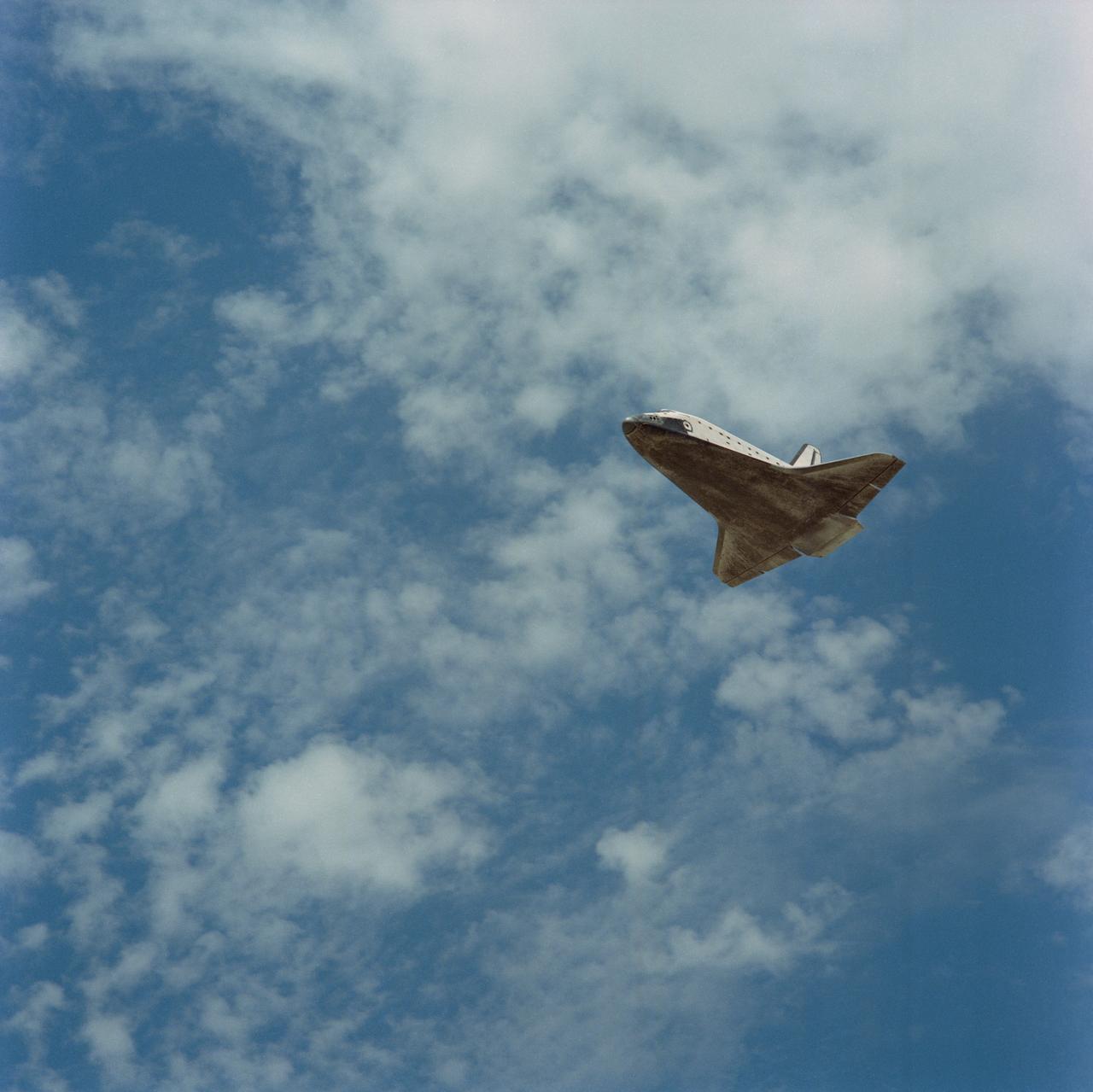
STS030-S-123 (8 May 1989) --- The Space Shuttle Atlantis glides toward a landing on the Mojave Desert after spending just over four full days in space. Aboard were astronauts David. M. Walker, Ronald J. Grabe, Norman E. Thagard, Mary L. Cleave and Mark C. Lee. Moments later, the spacecraft?s landing gear came to a stop at 12:44:33 P.M. (PDT), 8 May 1989. It landed on runway 22, a concrete facility, like a number of other NASA flights. Still others have landed on unpaved dry lakebed strips.
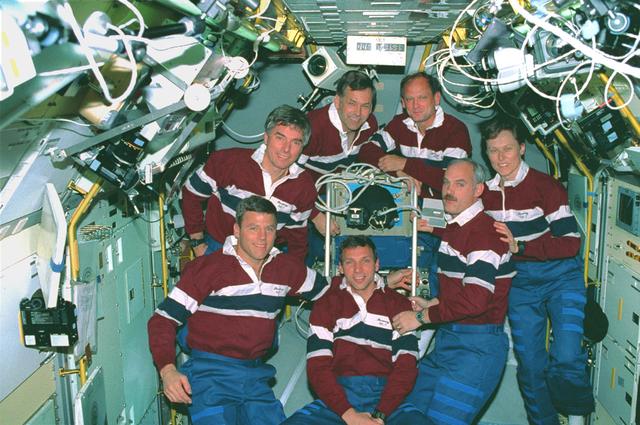
Onboard Space Shuttle Discovery (STS-42) the seven crewmembers pose for a traditional in-space portrait in the shirt-sleeve environment of the International Microgravity Laboratory (IML-1) science module in the Shuttle's cargo bay. Pictured are (clockwise from top),Commander Ronald J. Grabe, payload commander Norman E. Thagard, payload specialist Roberta L. Bondar; mission specialists William F. Readdy and David C. Hilmers; pilot Stephen S. Oswald and payload specialist Ulf Merbold. The rotating chair, used often in biomedical tests on the eight-day flight, is in center frame.
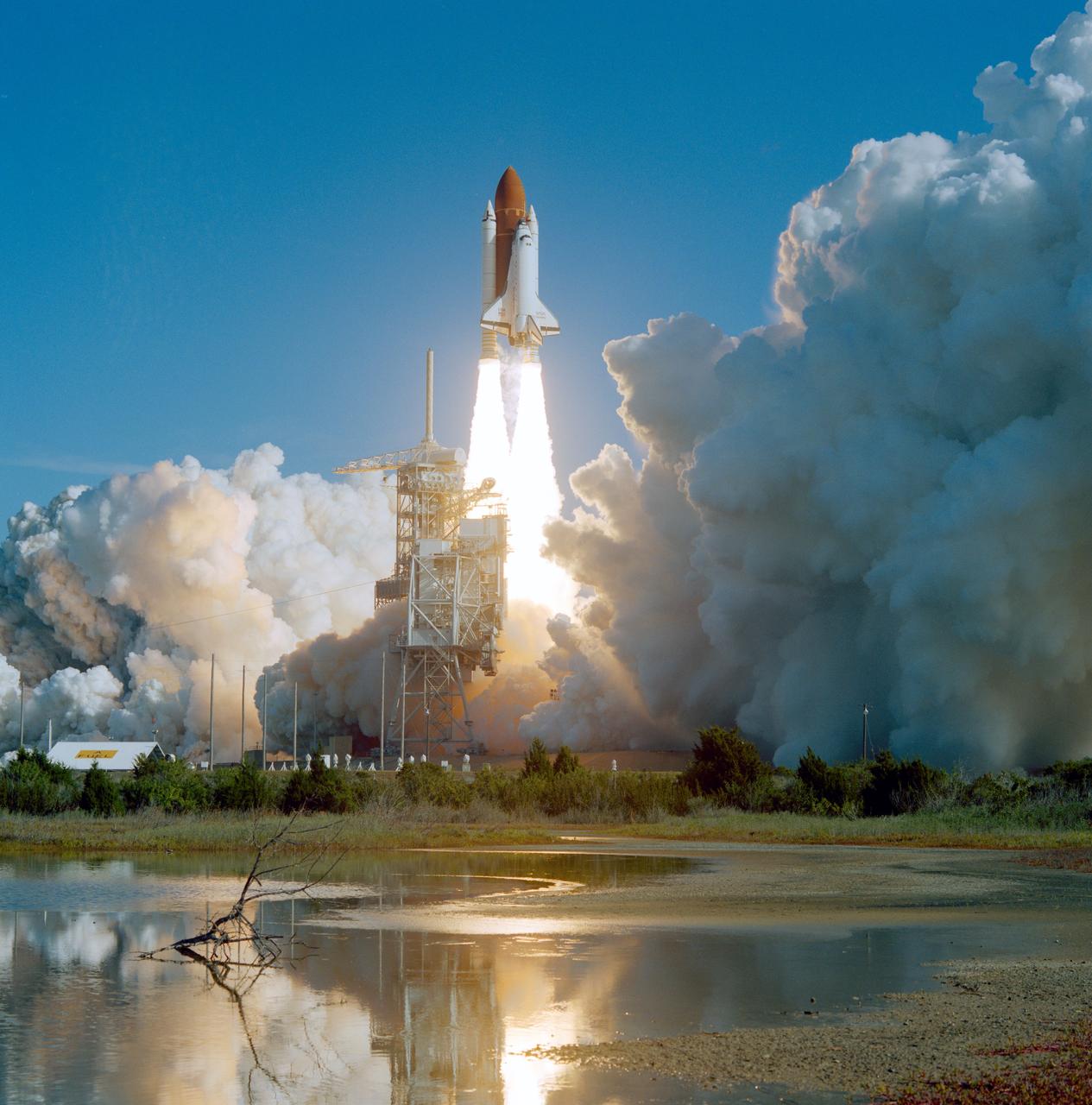
STS042-S-064 (22 Jan 1992) --- A horizontal image of liftoff of STS-42, with a crew of seven and the International Microgravity Laboratory (IML-1) onboard. Crewmembers are astronauts Ronald J. Grabe, mission commander; Stephen S. Oswald, pilot; Norman E. Thagard, payload commander; David C. Hilmers and William F. Readdy, both mission specialists; and payload specialists Roberta L. Bondar of Canada and Ulf Merbold, representing the European Space Agency (ESA). Liftoff occurred at 9:52:33 a.m. (EST), Jan. 22, 1992.
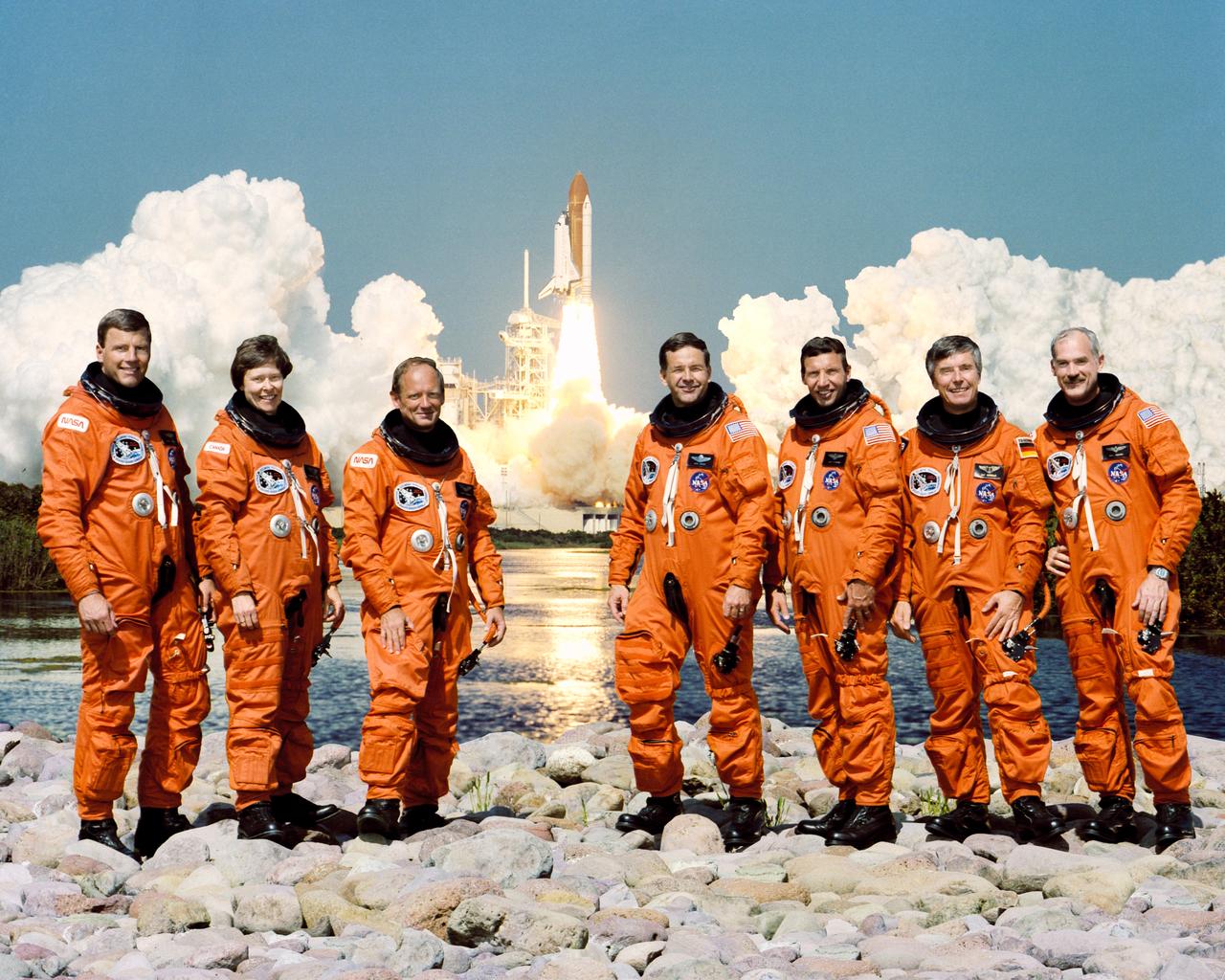
STS042-S-002 (November 1991) --- Payload specialists representing Canada and the European Space Agency (CSA - ESA) join five NASA astronauts for the January 1992 scheduled STS-42 mission. Left to right are astronauts Stephen S. Oswald, pilot; Roberta L. Bondar, payload specialist; Norman E. Thagard, payload commander; Ronald J. Grabe, mission commander; David C. Hilmers, mission specialist; Ulf Merbold, payload specialist; and William F. Readdy, mission specialist. The STS-42 mission will utilize the Space Shuttle Discovery to carry out experiments for the International Microgravity Laboratory (IML-1).
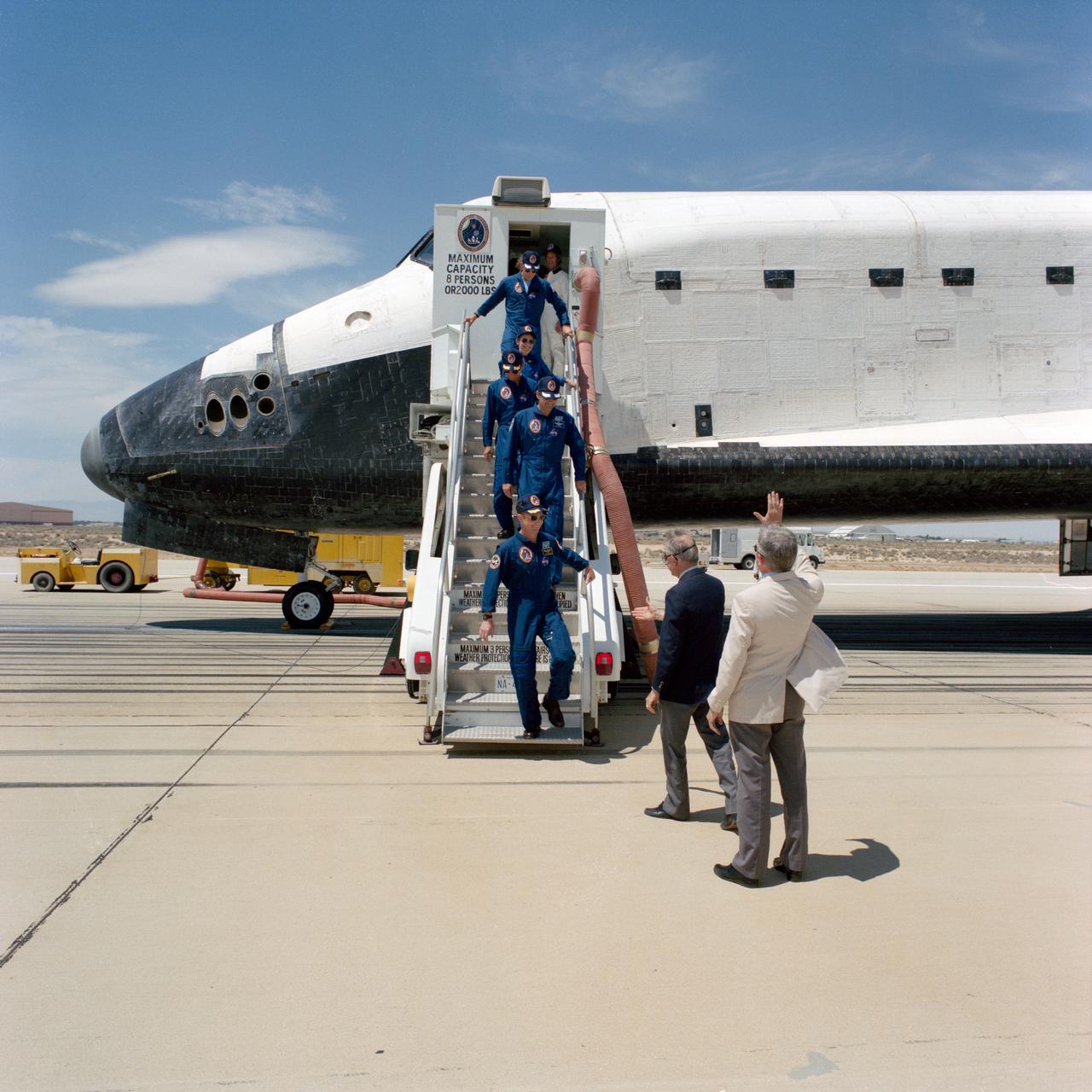
STS030-S-137 (8 May 1989) --- Crewmembers who spent four full days in space aboard Space Shuttle Atlantis egress their temporary home for a welcome meeting with terra firma. Pictured, from bottom of steps to top, are Astronauts David M.Walker, Ronald J. Grabe, Norman E. Thagard, Mary L. Cleave and Mark C. Lee. Rear Admiral Richard H. Truly (foreground), acting NASA Administrator, and Dale D. Myers, Deputy Administrator of NASA, await to greet the crewmembers. Minutes earlier, the spacecraft's landing gear came to a stop at 12:44:33 p.m. (PDT), 8 May 1989. It landed on Runway 22, a concrete facility, like a number of other NASA flights. Still others have landed on unpaved dry lake bed strips.
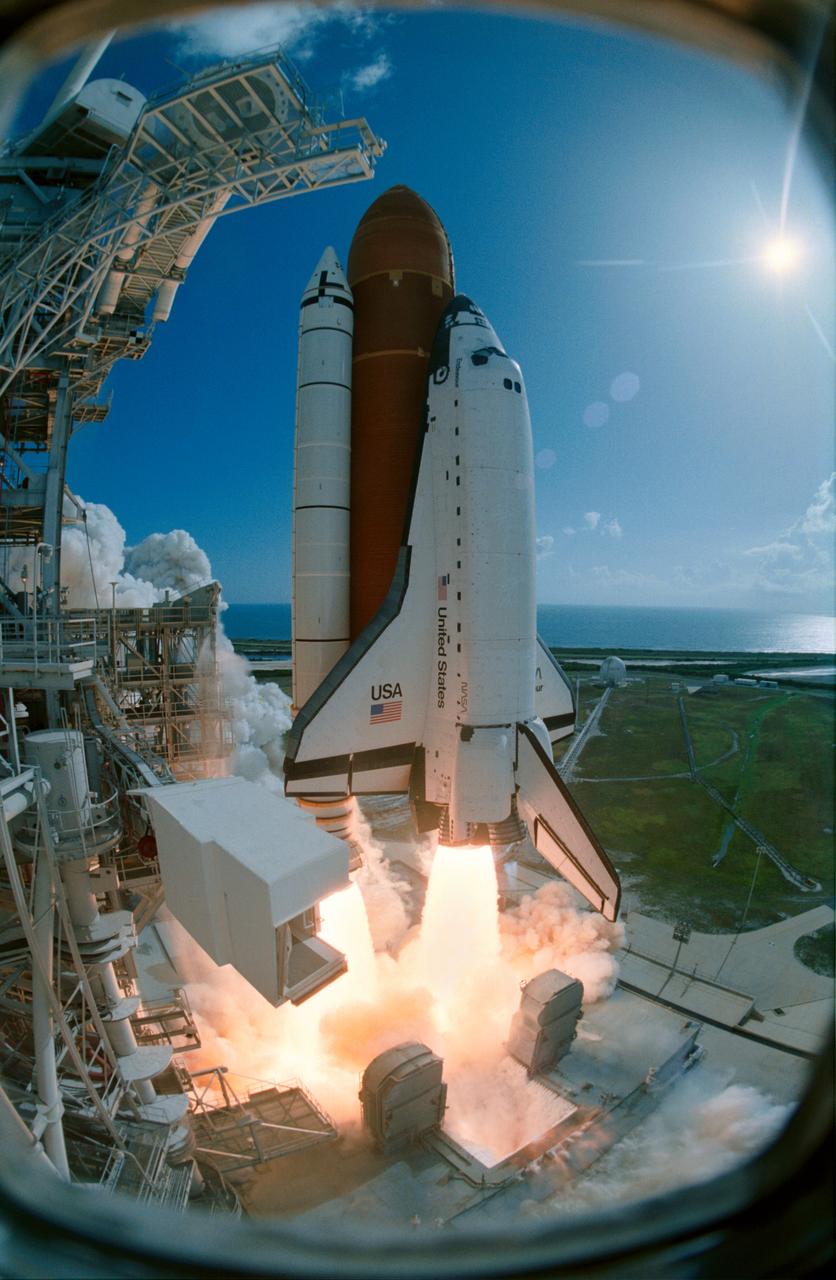
STS057-S-053 (21 June 1993) --- The Space Shuttle Endeavour lifts off Launch Pad 39B as captured on film by an audio-activated camera positioned at the 270-feet level on the Rotating Service Structure (RSS) at Launch Pad 39B. STS-57 launch occurred at 9:07:22 a.m. (EDT), June 21, 1993. The mission represents the first flight of the commercially developed SpaceHab laboratory module and also will feature a retrieval of the European Retrievable Carrier (EURECA). Onboard for Endeavour's fourth flight are a crew of six NASA astronauts; Ronald J. Grabe, mission commander; Brian Duffy, pilot; G. David Low, payload commander; and Nancy J. Sherlock, Peter J. K. (Jeff) Wisoff and Janice E. Voss, all mission specialists. An earlier launch attempt was scrubbed due to unacceptable weather conditions both at the Kennedy Space Center (KSC) and the overseas contingency landing sites.
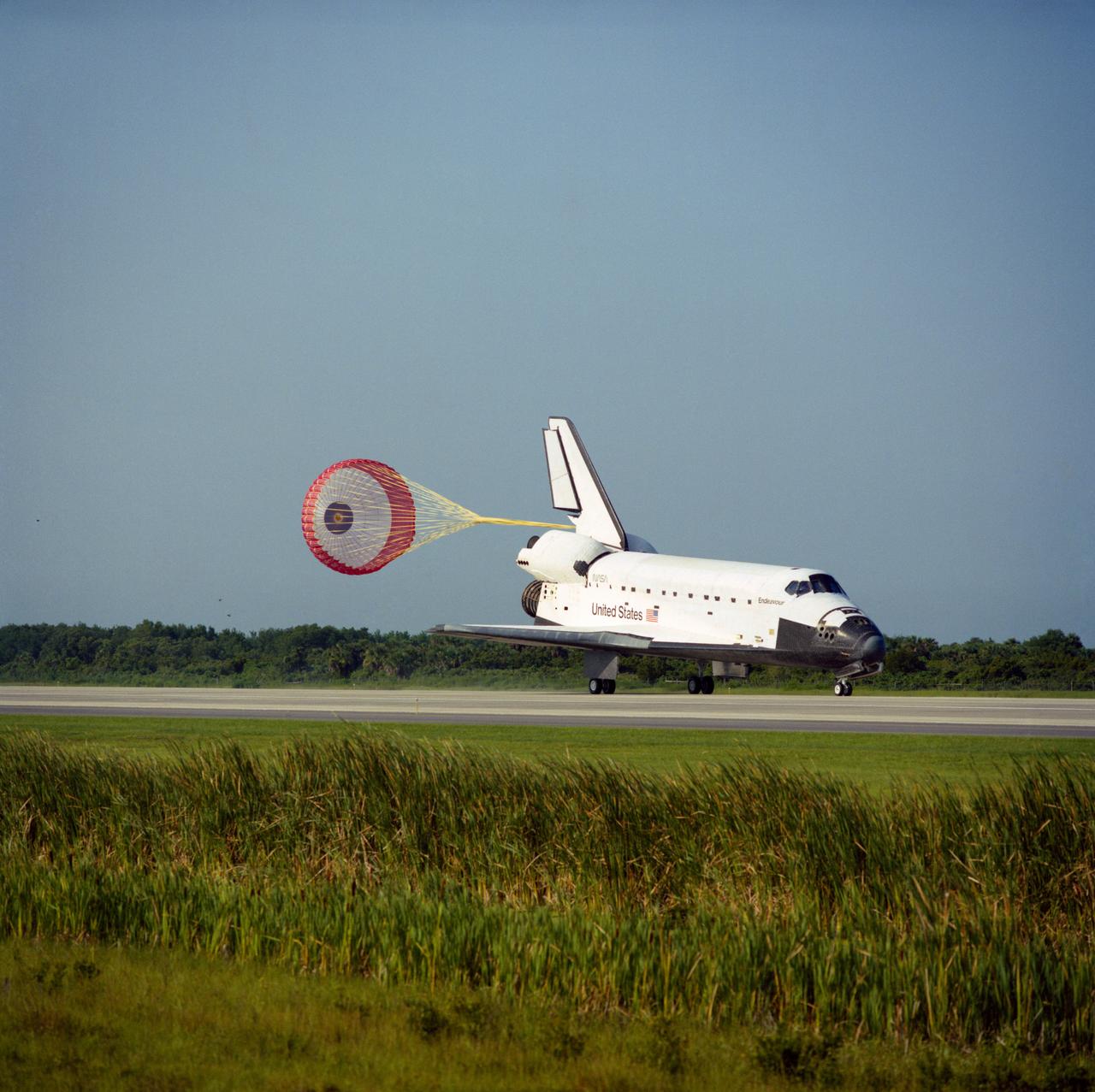
STS057-S-082 (1 July 1993) --- The drag chute on the Space Shuttle Endeavour is fully deployed in this scene on Runway 33 (KSC's Shuttle Landing Facility) as the spacecraft successfully completes a ten-day mission in Earth orbit. Official mission duration was nine days, twenty-three hours, forty-four minutes and fifty-five seconds. Main gear touchdown occurred at 8:52:16 (EDT), July 1, 1993. Onboard Endeavour for the landing were six NASA astronauts and the European Retrievable Carrier (EURECA) spacecraft. Crewmembers were astronauts Ronald J. Grabe, Brian Duffy, G. David Low, Nancy J. Sherlock, Peter J. K. (Jeff) Wisoff and Janice E. Voss.
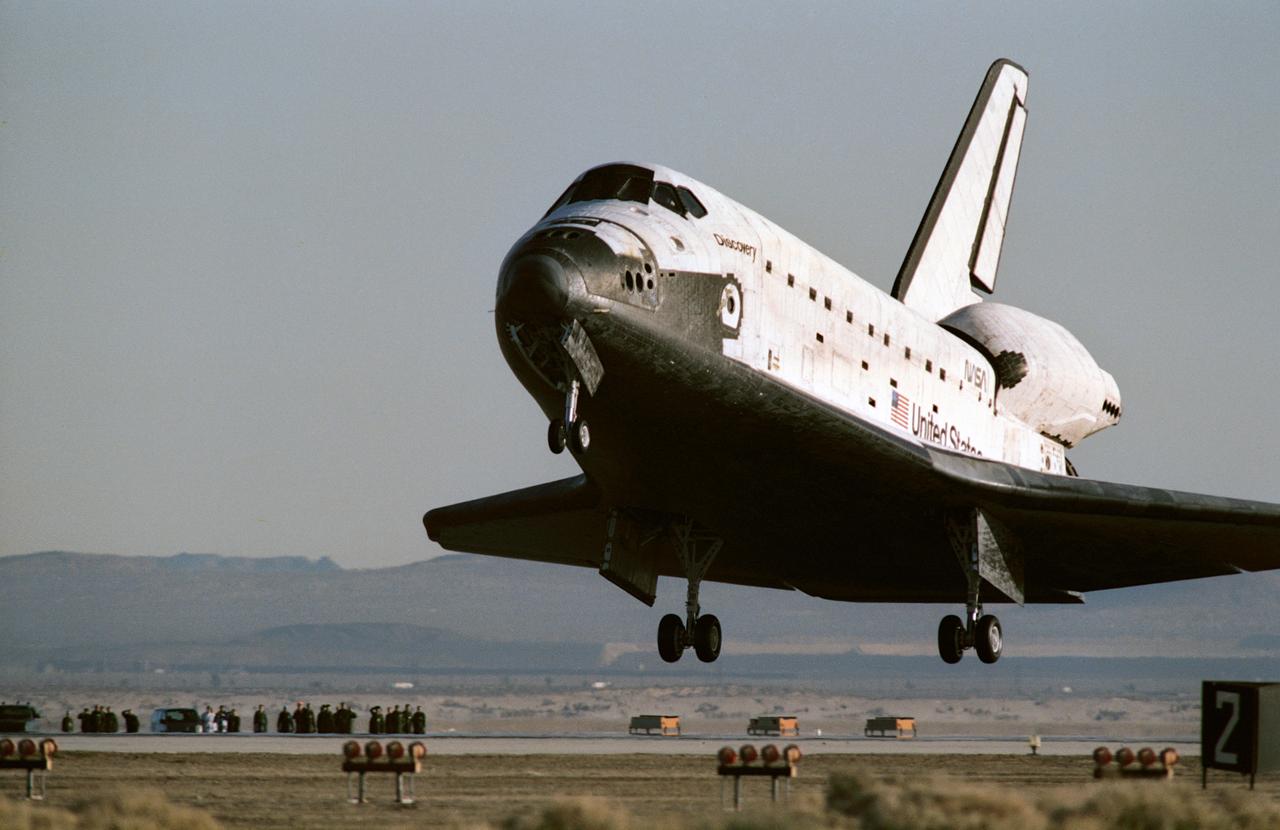
STS042-S-093 (30 Jan 1992) --- Space Shuttle Discovery is just about to ease down its main gear on Runway 22 at Edwards Air Force Base in southern California. Main gear touchdown occurred at 8:07:18 a.m. (PST), Jan. 30, 1992. The successful landing completed an eight-day mission for five NASA astronauts and two payload specialists supporting the first International Microgravity Laboratory (IML-1) mission. Onboard were astronauts Ronald J. Grabe, mission commander; Stephen S. Oswald, pilot; Norman E. Thagard, payload commander; David C. Hilmers and William F. Readdy, both mission specialists; and payload specialists Roberta L. Bondar of Canada and Ulf Merbold, representing the European Space Agency (ESA).
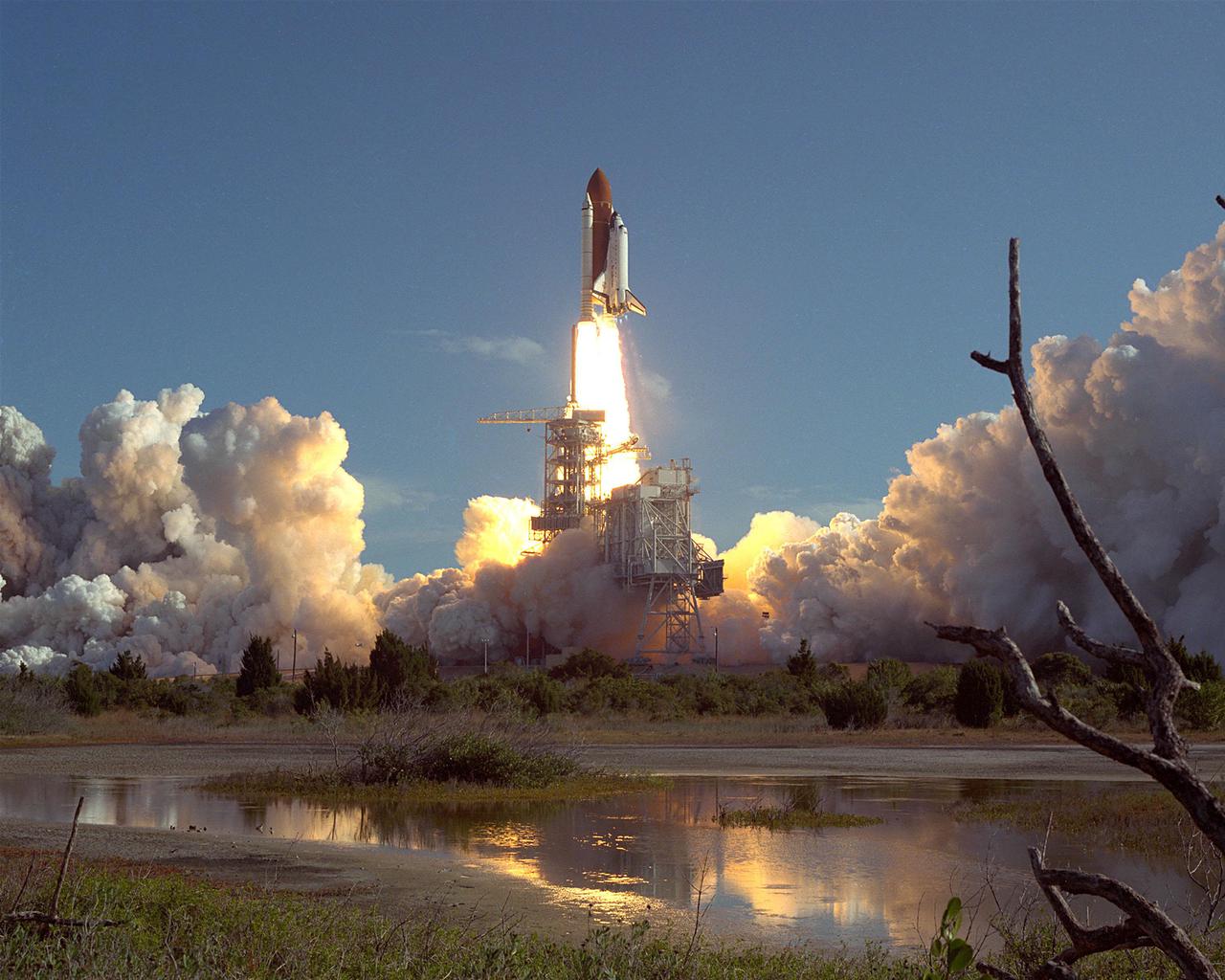
KENNEDY SPACE CENTER, FLA. -- The mid-morning liftoff of the Space Shuttle Discovery on mission STS-42 was even prettier than a picture at the start of the first Shuttle mission of 1992. The seven-member crew is scheduled to spend seven days in space, mostly to conduct a variety of experiments in the International Microgravity Laboratory-1. The experiments will explore the effects of weightlessness on living organisms and materials processing. Liftoff was at 9:52 a.m. EST. The seven crew members are Commander Ronald J. Grabe, Pilot Stephen S. Oswald, Payload Commander and Mission Specialist Dr. Norman E. Thagard, Mission Specialists David C. Hilmers and William F. Readdy, and Payload Specialists Dr. Roberta L. Bondar of the Canadian Space Agency and Ulf D. Merbold of the European Space Agency
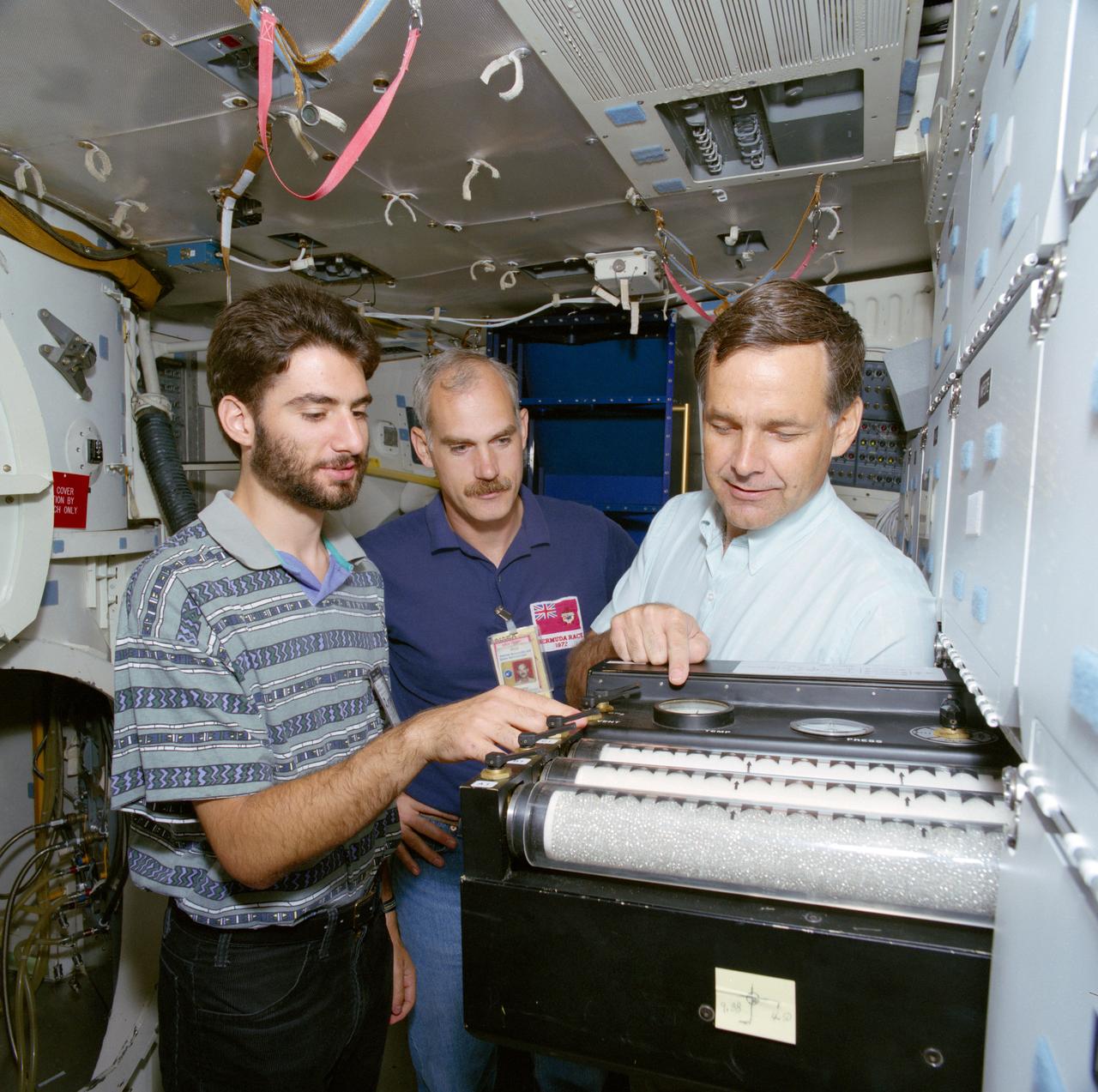
S91-47323 (18 Sept 1991) --- Constantine Costes, left, a student experimenter sponsored by United Space Boosters Inc, in Huntsville, Alabama, discusses his student experiment, "Zero-G Rise of Liquid Through Porous Media" with astronauts Ronald J. Grabe (right), STS 42 mission commander; and William Readdy, mission specialist. The student experimenter and crew members are in the Full Fuselage Trainer (FFT) in the Shuttle Mockup and Integration Laboratory. While attending Randolph School, a high school in Huntsville, Alabama, Costes was chosen in the national competition to participate in the Shuttle Student Involvement Program (SSIP). The experiment, contained in a middeck locker, involves the investigation of the effects of gravity on the flow characteristics of a fluid. Both pure capillary and forced flow behavior will be investigated. A ground based experiment was conducted so that gravity influenced data can be compared to that gathered in weightlessness. Costes is now a candidate for a Ph.D in mathematics at Harvard University.
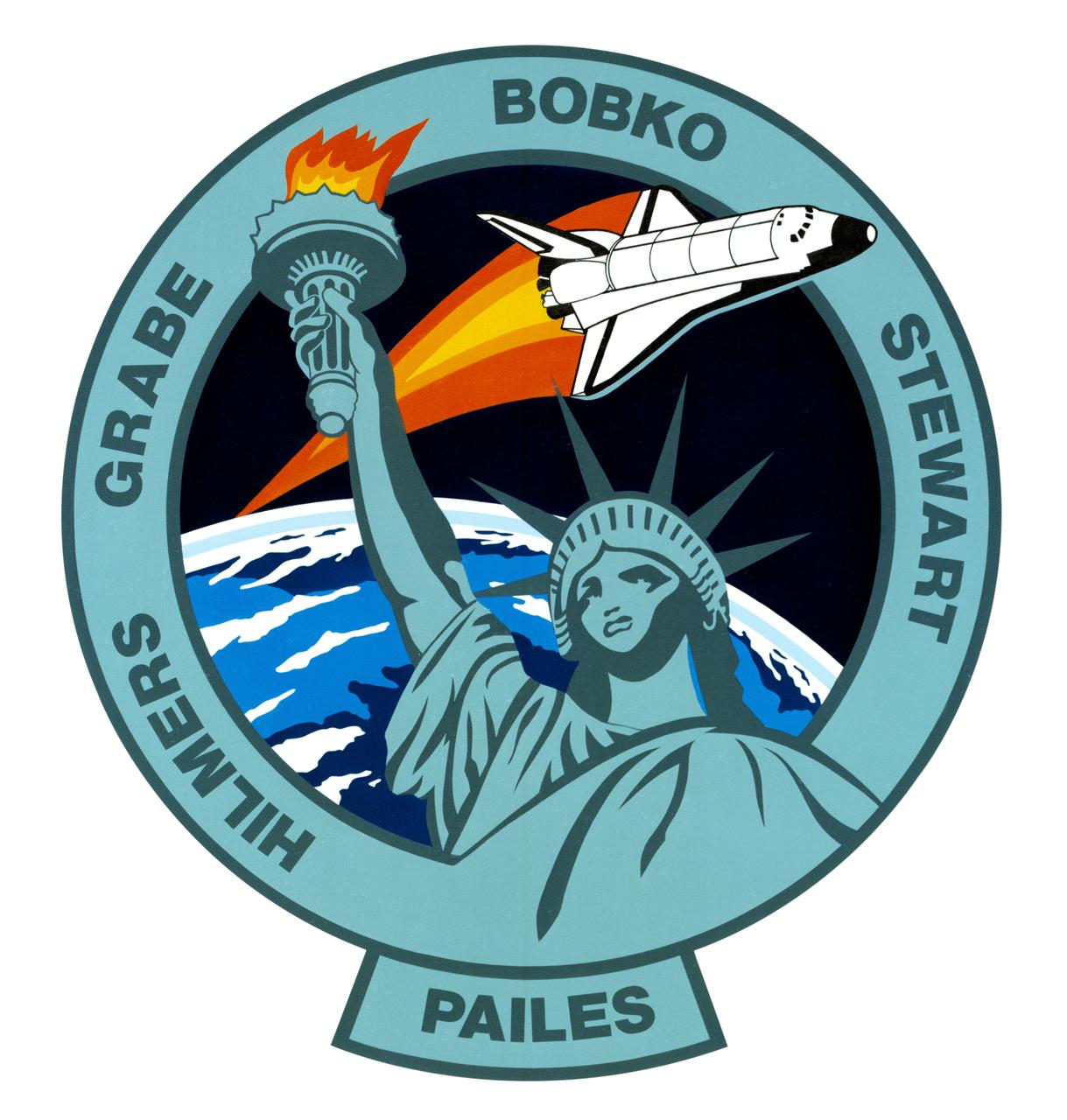
S85-39862 (1 Sept. 1985) --- The 51-J mission insignia, designed by Atlantis's first crew, pays tribute to the Statue of Liberty and the ideas it symbolizes. The historical gateway figure bears additional significance for astronauts Karol J. Bobko, mission commander; and Ronald J. Grabe, pilot, both New York natives. Other members of the five-man crew, whose surnames encircle the artwork, are Robert L. Stewart and David C. Hilmers, mission specialists; and William A. Pailes, payload specialist. The NASA insignia design for space shuttle flights is reserved for use by the astronauts and for other official use as the NASA Administrator may authorize. Public availability has been approved only in the forms of illustrations by the various news media. When and if there is any change in this policy, which is not anticipated, the change will be publicly announced. Photo credit: NASA
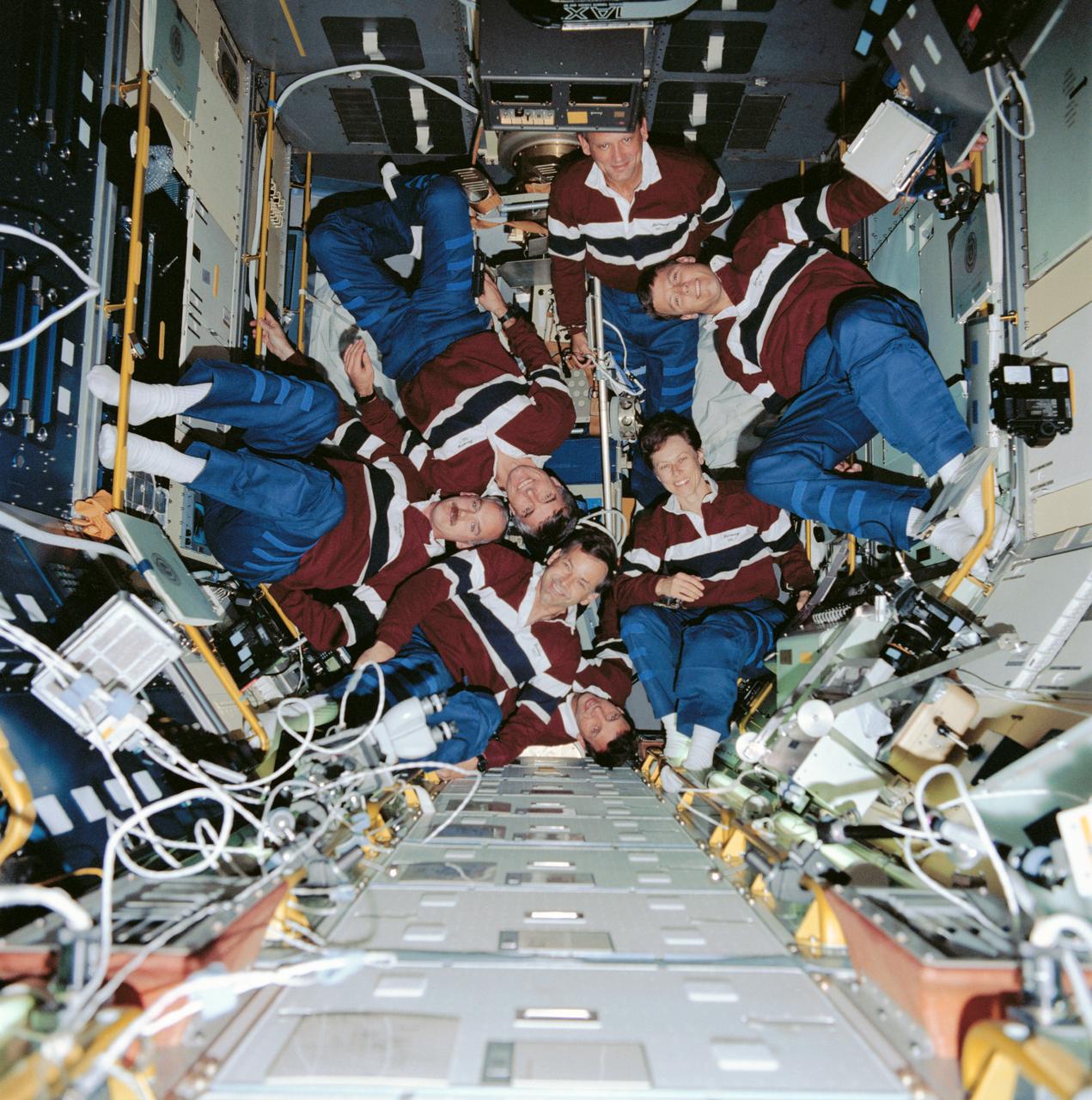
STS042-78-061 (22-30 Jan. 1992) --- The seven STS-42 crewmembers pose for a traditional in-space portrait in the shirt-sleeve environment of the International Microgravity Laboratory (IML-1) science module in the shuttle's cargo bay. (Hold picture with index numbers at top.) David C. Hilmers, mission specialist, is at top center of the 70mm image. Others pictured are (clockwise) Ronald J. Grabe, mission commander; William F. Readdy; mission specialist; Ulf Merbold, European Space Agency (ESA) payload specialist; Norman E. Thagard, payload commander; Stephen S. Oswald, pilot; and Roberta L. Bondar, Canadian payload specialist. The rotating chair, used often in biomedical tests on the eight-day flight, is (partially obscured) in center frame.
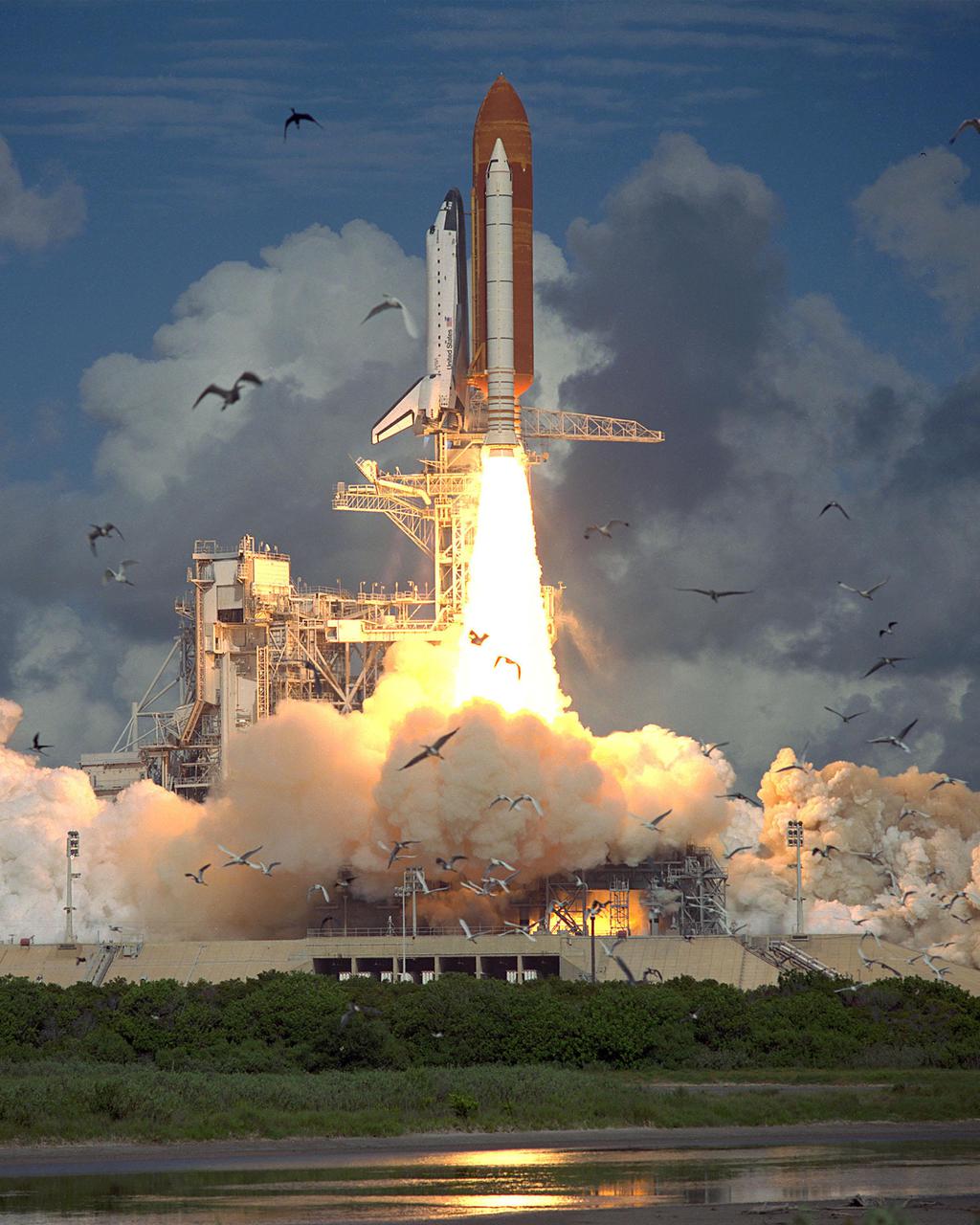
KENNEDY SPACE CENTER, FLA. -- The first flight of the commercially developed SPACEHAB laboratory module begins with the flawless liftoff of the Space Shuttle Endeavour from Launch Pad 39B at 9:07:22 a.m. EDT, June 21. Also planned for the eight-day flight of Mission STS-57 is the retrieval of the European Retrievable Carrier (EURECA). Onboard for the fourth flight of Endeavour are a crew of six: Mission Commander Ronald J. Grabe, Pilot Brian Duffy, Payload Commander G. David Low, and Mission Specialists Nancy Jane Sherlock, Peter J.K. 'Jeff' Wisoff, and Janice E. Voss. A first launch attempt on June 20 was scrubbed due to unacceptable weather conditions both at KSC and the overseas contingency landing sites.
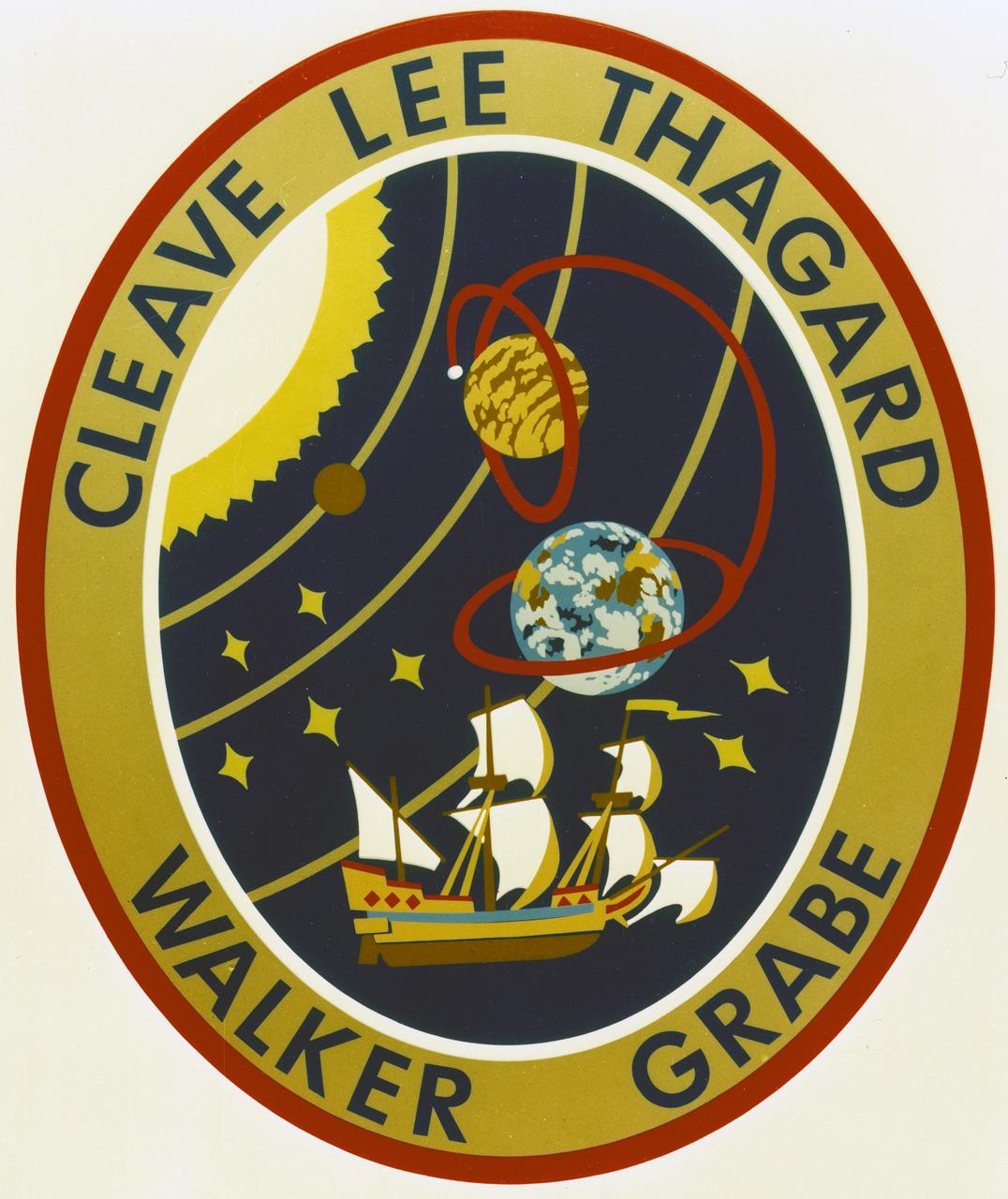
The STS-30 patch depicts the joining of NASA's manned and unmanned space programs. The sun and inner planets of our solar system are shown with the curve connecting Earth and Venus symbolizing the shuttle orbit, the spacecraft trajectory toward Venus, and its subsequent orbit around our sister planet. A Spanish caravel similar to the ship on the official Magellan program logo commemorates the 16th century explorer's journey and his legacy of adventure and discovery. Seven stars on the patch honor the crew of Challenger. The five-star cluster in the shape of the constellation Cassiopeia represent the five STS-30 crewmembers - Astronauts David Walker, Ronald Grabe, Norman Thagard, Mary Cleave and Mark Lee - who collectively designed the patch.
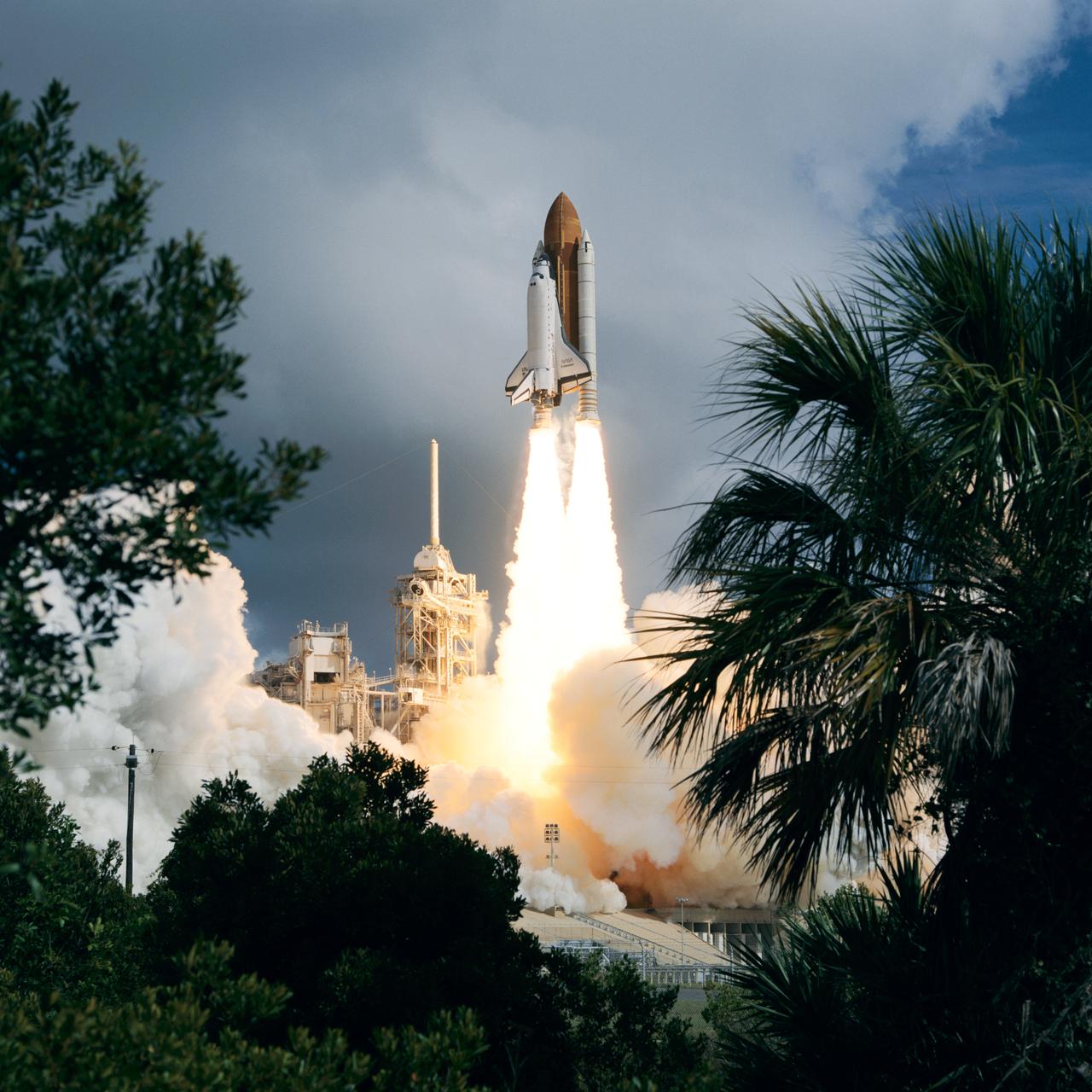
STS057-S-055 (21 June 1993) --- Framed by a variety of flora types, the Space Shuttle Endeavour lifts off Launch Pad 39B to begin the STS-57 mission. Launch occurred at 9:07:22 a.m. (EDT), June 21, 1993. The mission represents the first flight of the commercially developed SPACEHAB laboratory module and also will feature a retrieval of the European Retrievable Carrier (EURECA). Onboard for Endeavour's fourth flight are a crew of six - Ronald J. Grabe, mission commander; Brian Duffy, pilot; G. David Low, payload commander; and Nancy J. Sherlock, Peter J.K. (Jeff) Wisoff and Janice E. Voss, all mission specialists. An earlier launch attempt was scrubbed due to unacceptable weather conditions both at KSC and the overseas contingency landing sites.
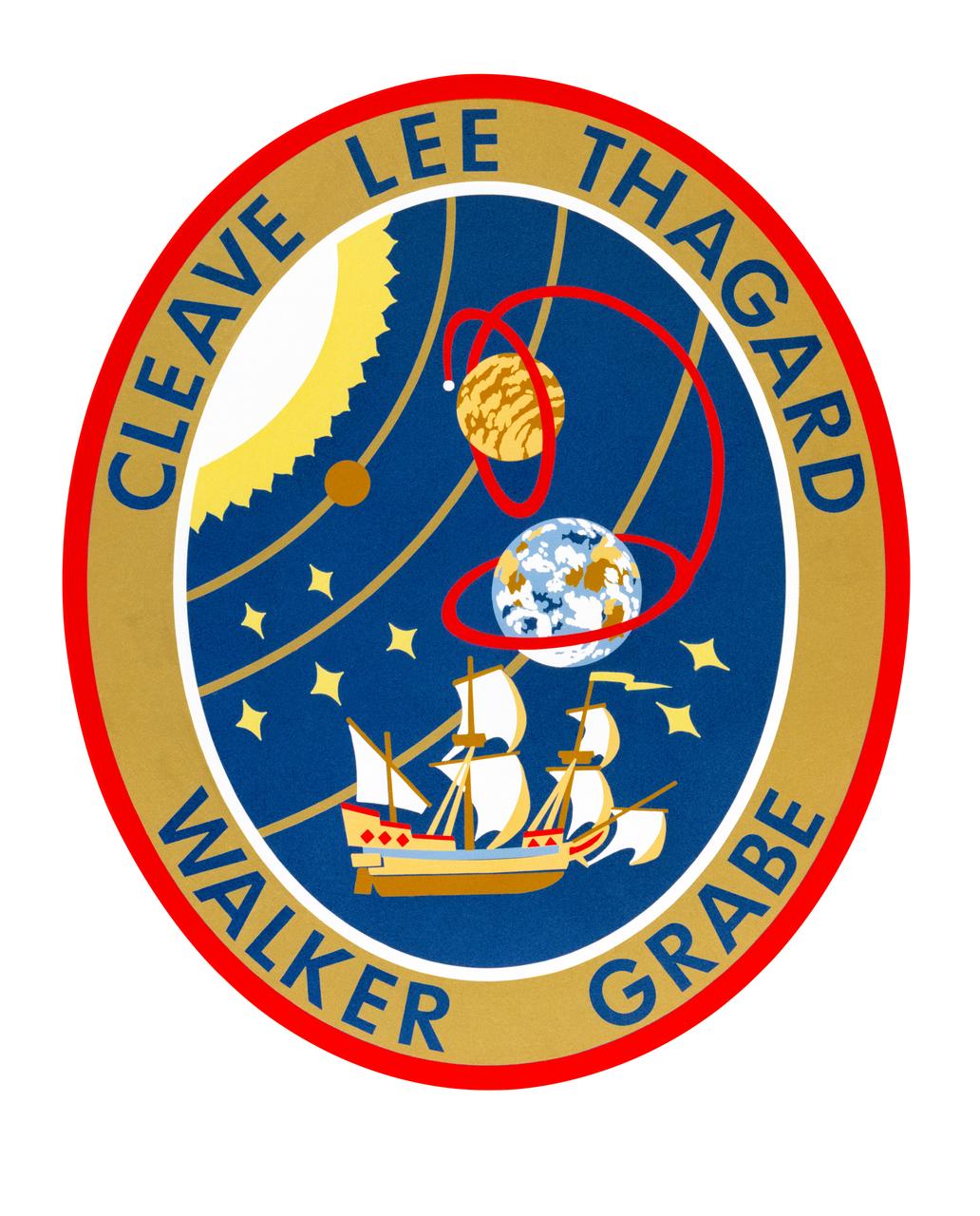
S89-20025 (3 March 1989) --- The STS-30 patch depicts the joining of NASA's manned and unmanned space programs. The sun and inner planets of our solar system are shown with the curve connecting Earth and Venus symbolizing the shuttle orbit, the spacecraft trajectory toward Venus and its subsequent orbit around our sister planet. A Spanish caravel similar to the ship on the official Magellan program logo commemorates the 16th century explorer's journey and his legacy of adventure and discovery. Seven stars on the patch honor the crew of Challenger. The five-star cluster in the shape of the constellation Cassiopeia represent the five STS-30 crew members--astronauts David M. Walker, Ronald J. Grabe, Norman E. Thagard, Mary L. Cleave and Mark C. Lee-who collectively designed the patch. The NASA insignia design for space shuttle flights is reserved for use by the astronauts and for other official use as the NASA Administrator may authorize. Public availability has been approved only in the forms of illustrations by the various news media. When and if there is any change in this policy, which is not anticipated, the change will be publicly announced. Photo credit: NASA
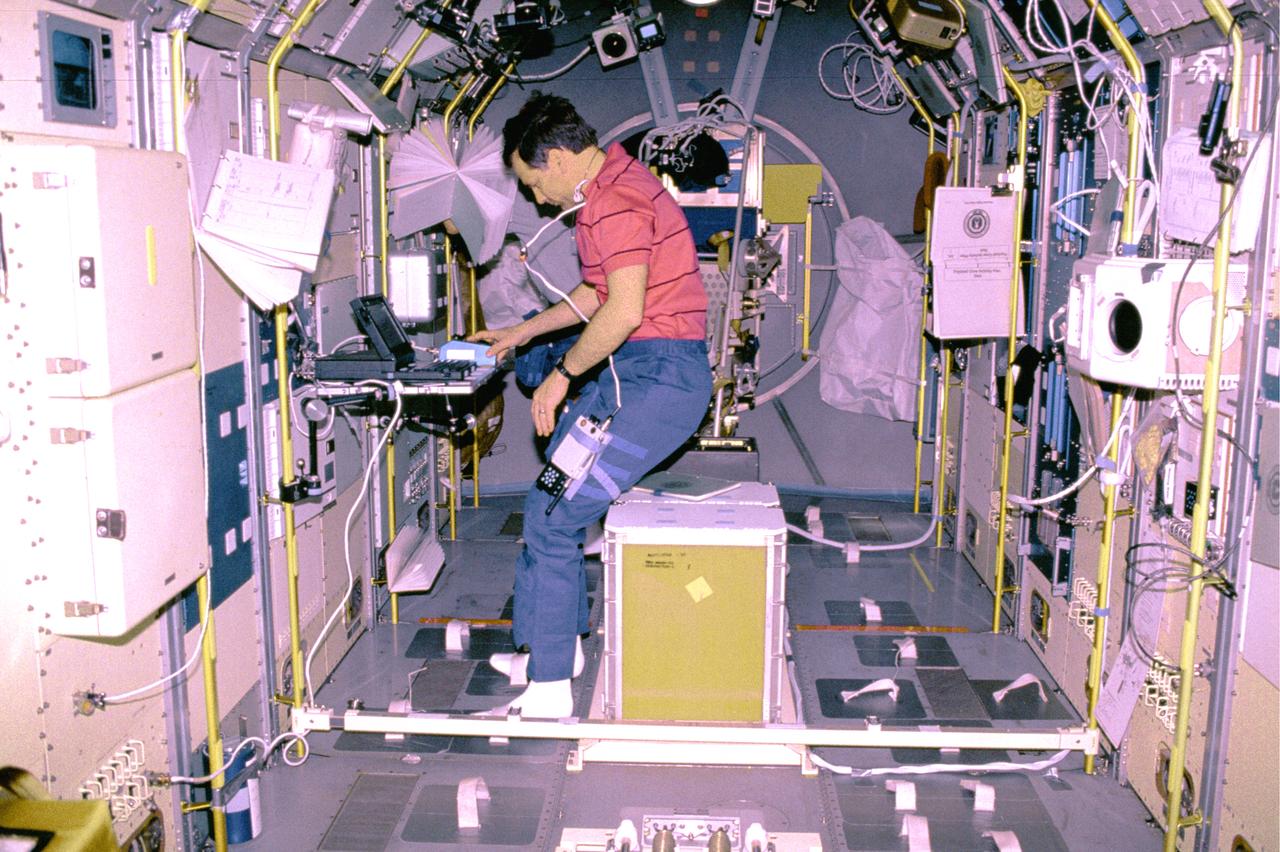
The IML-1 mission was the first in a series of Shuttle flights dedicated to fundamental materials and life sciences research with the international partners. The participating space agencies included: NASA, the 14-nation European Space Agency (ESA), the Canadian Space Agency (CSA), the French National Center of Space Studies (CNES), the German Space Agency and the German Aerospace Research Establishment (DAR/DLR), and the National Space Development Agency of Japan (NASDA). Dedicated to the study of life and materials sciences in microgravity, the IML missions explored how life forms adapt to weightlessness and investigated how materials behave when processed in space. Both life and materials sciences benefited from the extended periods of microgravity available inside the Spacelab science module in the cargo bay of the Space Shuttle Orbiter. In this photograph, Commander Ronald J. Grabe works with the Mental Workload and Performance Evaluation Experiment (MWPE) in the IML-1 module. This experiment was designed as a result of difficulty experienced by crewmembers working at a computer station on a previous Space Shuttle mission. The problem was due to the workstation's design being based on Earthbound conditions with the operator in a typical one-G standing position. Information gained from this experiment was used to design workstations for future Spacelab missions and the International Space Station. Managed by the Marshall Space Flight Center, IML-1 was launched on January 22, 1992 aboard the Space Shuttle Orbiter Discovery (STS-42 mission).