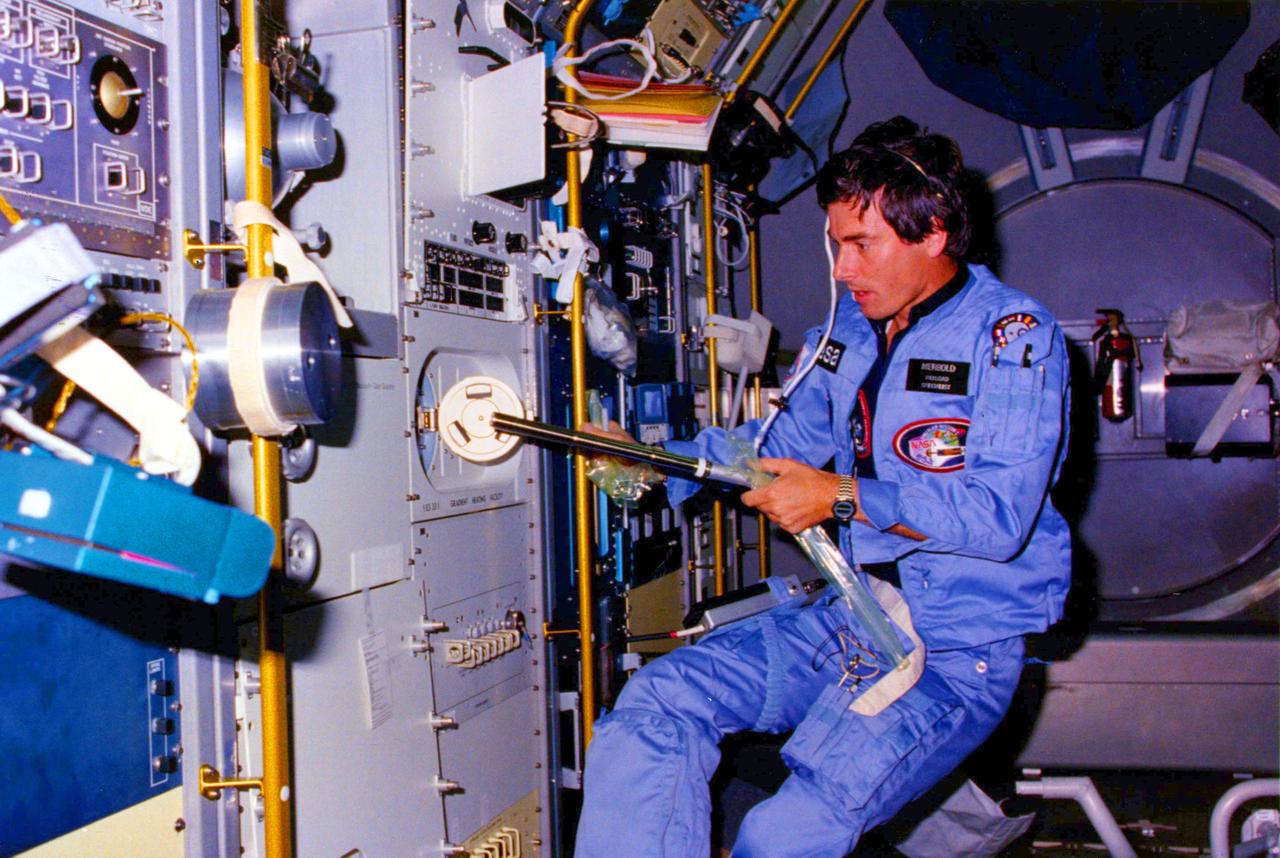
The Space Shuttle was designed to carry large payloads into Earth orbit. One of the most important payloads is Spacelab. The Spacelab serves as a small but well-equipped laboratory in space to perform experiments in zero-gravity and make astronomical observations above the Earth's obscuring atmosphere. In this photograph, Payload Specialist, Ulf Merbold, is working at Gradient Heating Facility on the Materials Science Double Rack (MSDR) inside the science module in the Orbiter Columbia's payload bay during STS-9, Spacelab-1 mission. Spacelab-1, the joint ESA (European Space Agency)/NASA mission, was the first operational flight for the Spacelab, and demonstrated new instruments and methods for conducting experiments that are difficult or impossible in ground-based laboratories. This facility performed, in extremely low gravity, a wide variety of materials processing experiments in crystal growth, fluid physics, and metallurgy. The Marshall Space Flight Center had overall management responsibilities.
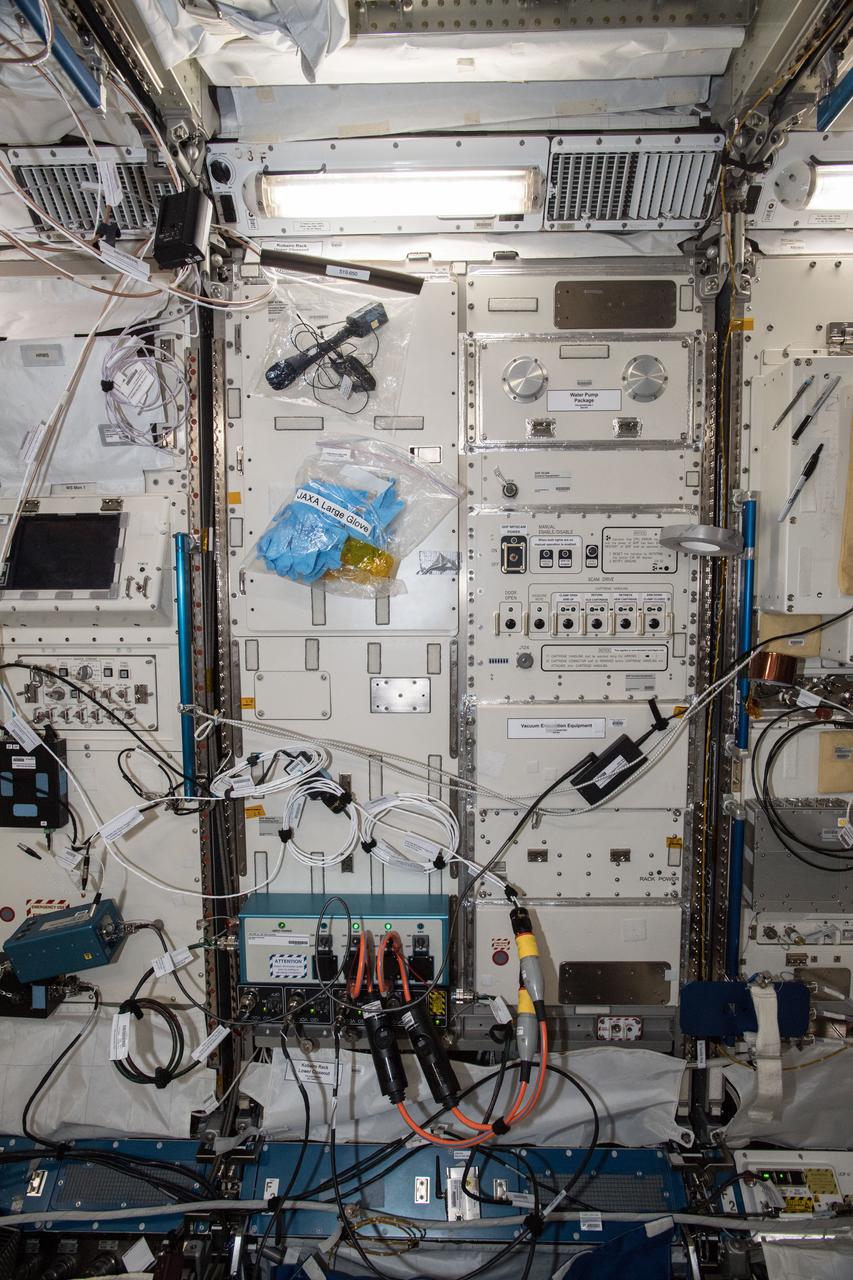
iss057e092614 (11/14/2018) --- Photo documentation of the Kobairo Rack front, JPM1F3 in the Kibo Japanese Experiment Module (JEM) aboard the International Space Staion (ISS). The KOBAIRO Rack houses the Gradient Heating Furnace (GHF), an experiment facility for investigating crystal growth of semiconductors. This furnace has the capability of directional solidification of samples.
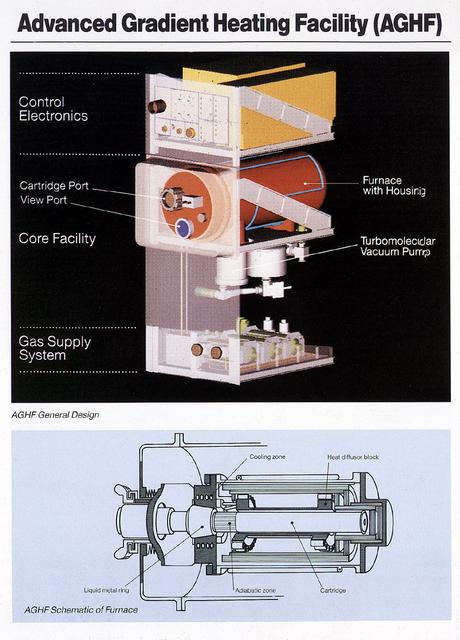
The Advanced Gradient Heating Facility (AGHF) is a European Space Agency (ESA) developed hardware. The AGHF was flown on STS-78, which featured four European PI's and two NASA PI's. The AGHFsupports the production of advanced semiconductor materials and alloys using the directional process, which depends on establishing a hot side and a cold side in the sample.
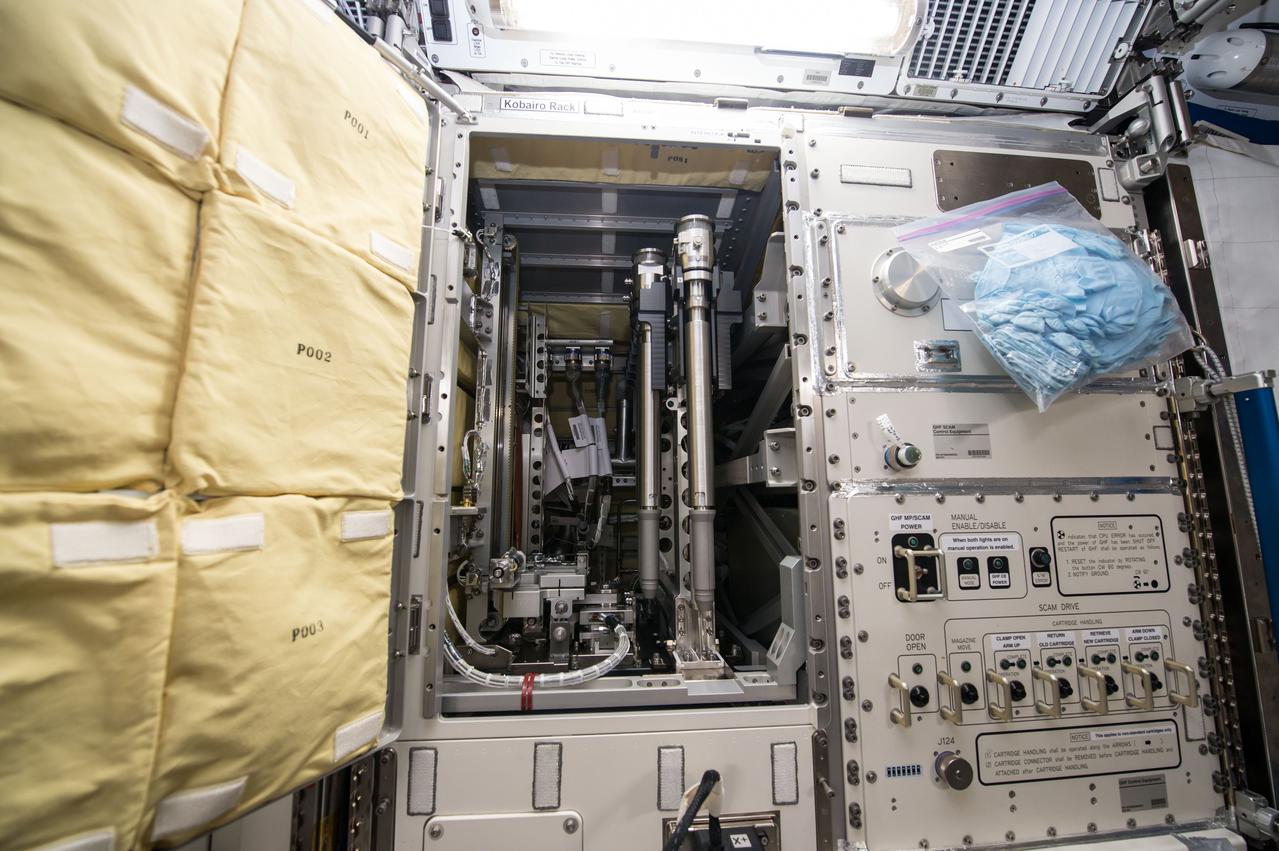
iss042e049014 (12/18/2014) --- A view of the interior of the Kobairo rack of the Japanese Experiment Module (JEM) aboard the International Space station (ISS).The KOBAIRO Rack houses the Gradient Heating Furnace (GHF), an experiment facility for investigating crystal growth of semiconductors. This furnace has the capability of directional solidification of samples.
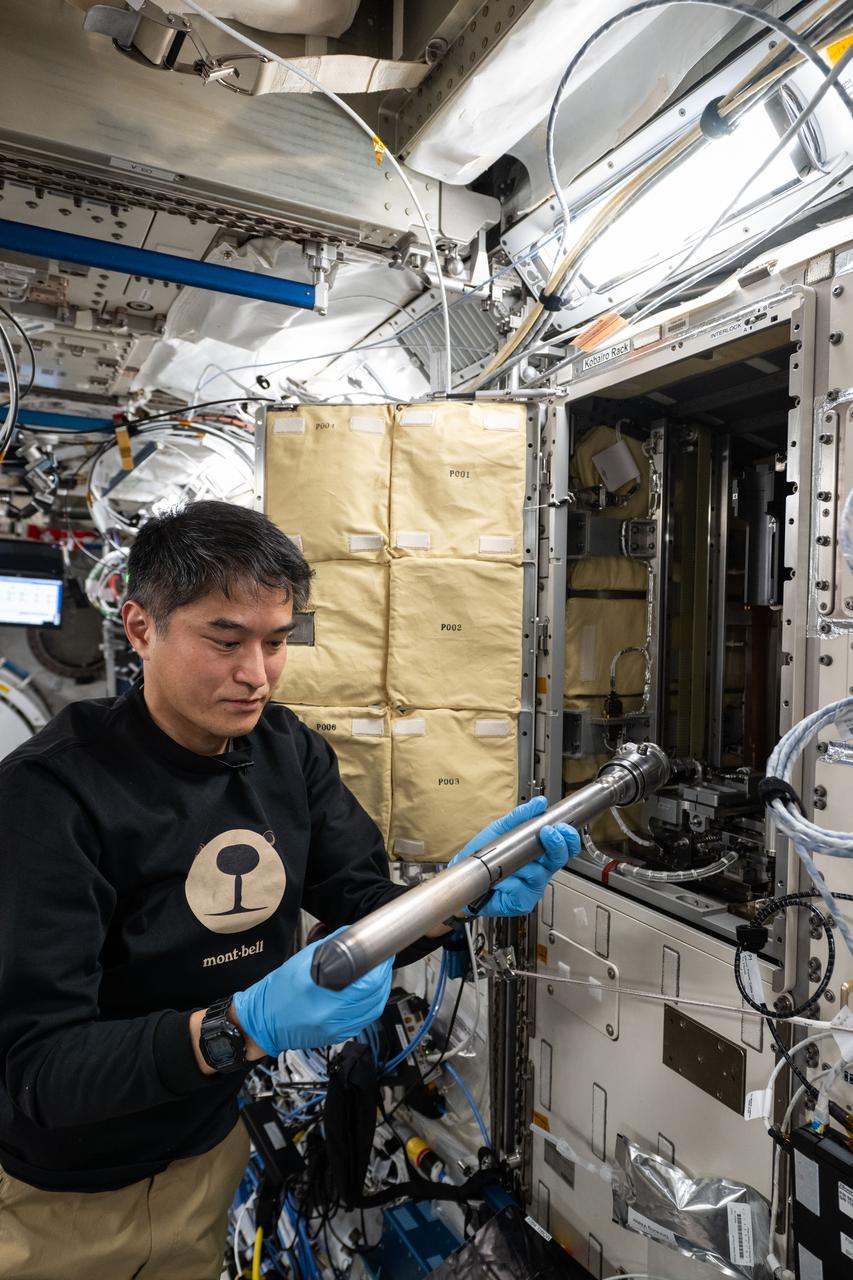
iss073e0383926 (July 4, 2025) --- JAXA (Japan Aerospace Exploration Agency) astronaut and Expedition 73 Commander Takuya Onishi removes experiment hardware and sample cartridges from inside the Kibo laboratory module's Gradient Heating Furnace (GHF). The GHF is a research facility and a vacuum furnace that can safely heat samples up to a maximum temperature of 1,600 degrees Celsius and is used for the production of high quality crystals in new semiconductor materials.
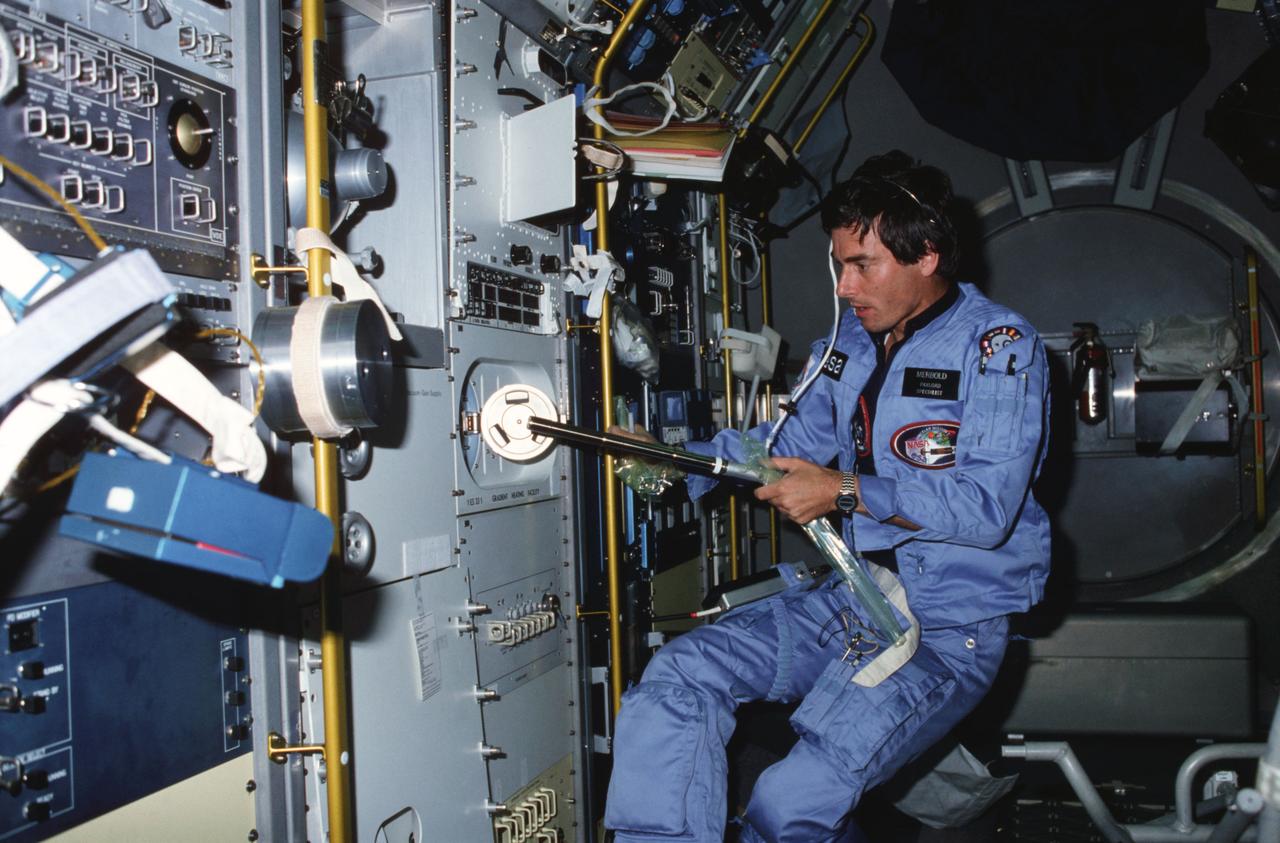
STS009-13-699 (28 Nov - 8 Dec 1983) --? Ulf Merbold, Spacelab 1 payload specialist, carries out one of the experiments using the gradient heating facility on the materials science double rack facility in the busy science module aboard the Earth-orbiting Space Shuttle Columbia. Representing the European Space Agency, Dr. Merbold comes from Max-Planck Institute in Stuttgart, the Federal Republic of Germany. He is a specialist in crystal lattice defects and low temperature physics. The photograph was made with a 35mm camera.
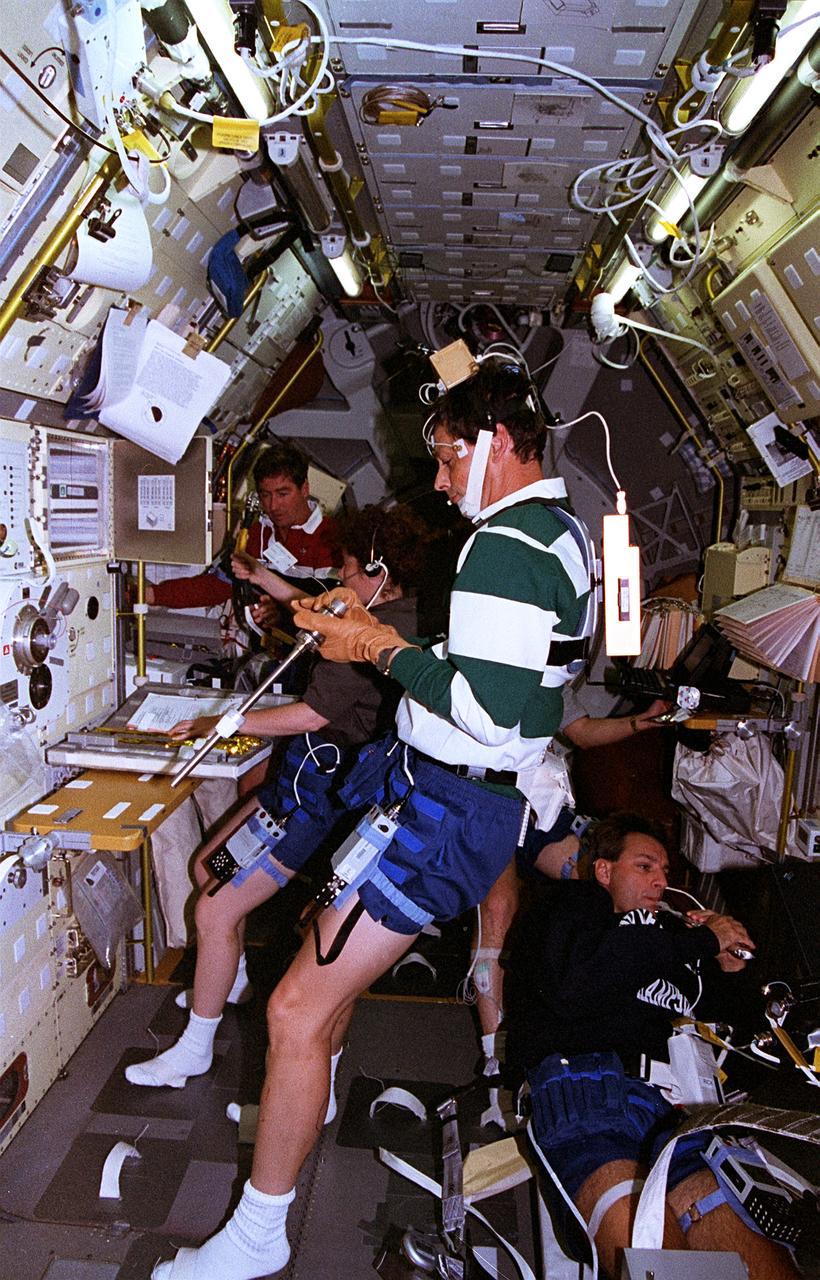
STS078-396-015 (20 June - 7 July 1996) --- Payload specialist Jean-Jacques Favier, representing the French Space Agency (CNES), prepares a sample for the Advanced Gradient Heating Facility (AGHF) while wearing instruments that measure upper body movement. The Torso Rotation Experiment (TRE) complements other vestibular studies that measure differences in the way human beings react physically to their surroundings in microgravity. This is a typical Life and Microgravity Spacelab (LMS-1) mission scene, with several experiments being performed. Astronaut Susan J. Helms, payload commander, assists Favier in the AGHF preparations. Astronaut Richard M. Linnehan (bottom right), mission specialist, tests his muscle response with the Handgrip Dynamometer. Astronaut Thomas T. (Tom) Henricks (far background), mission commander, offers assistance.