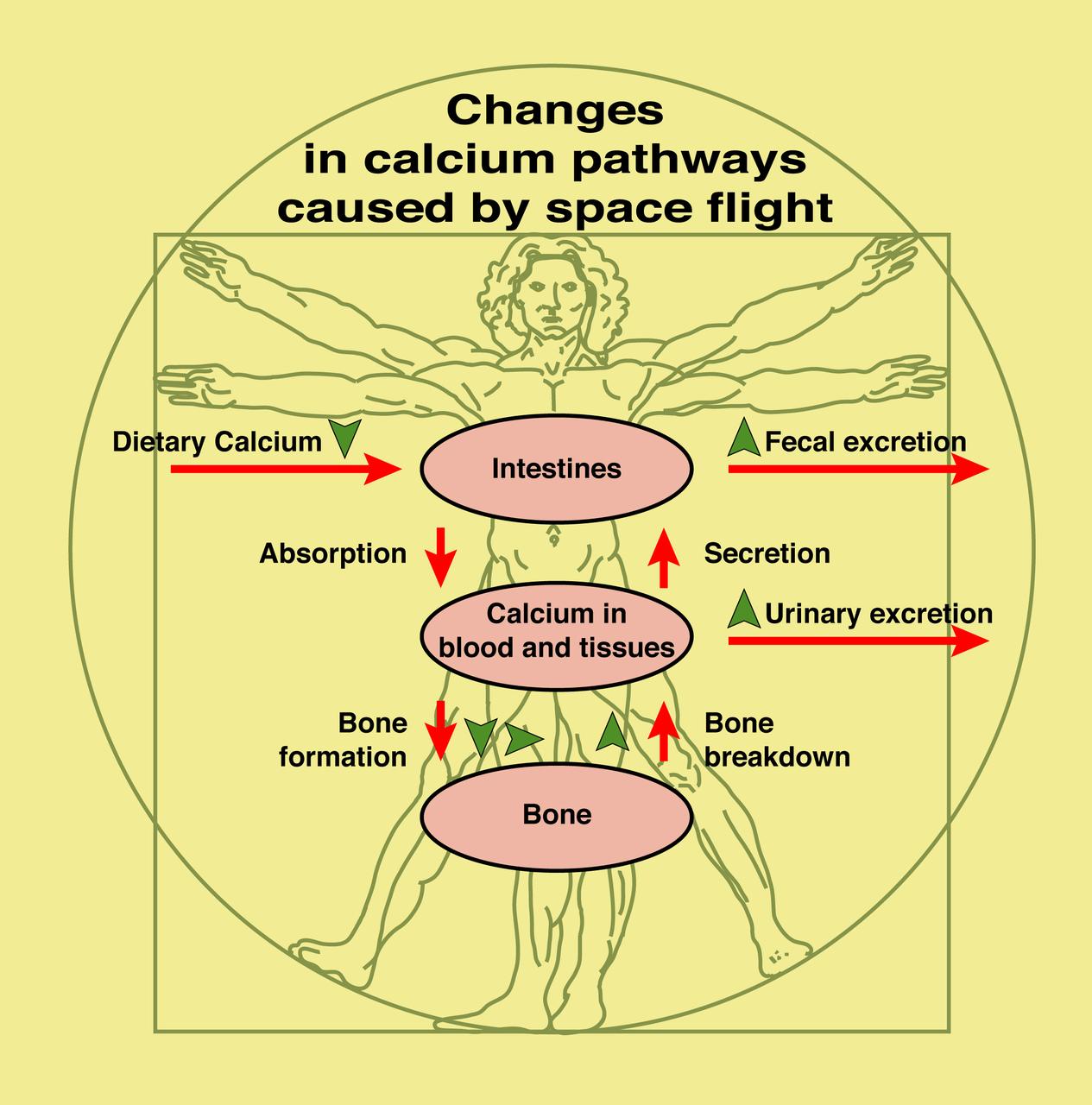
This diagram shows the normal pathways of calcium movement in the body and indicates changes (green arrows) seen during preliminary space flight experiments. Calcium plays a central role because 1) it gives strength and structure to bone and 2) all types of cells require it to function normally. To better understand how and why weightlessness induces bone loss, astronauts have participated in a study of calcium kinetics -- that is, the movement of calcium through the body, including absorption from food, and its role in the formation and breakdown of bone.
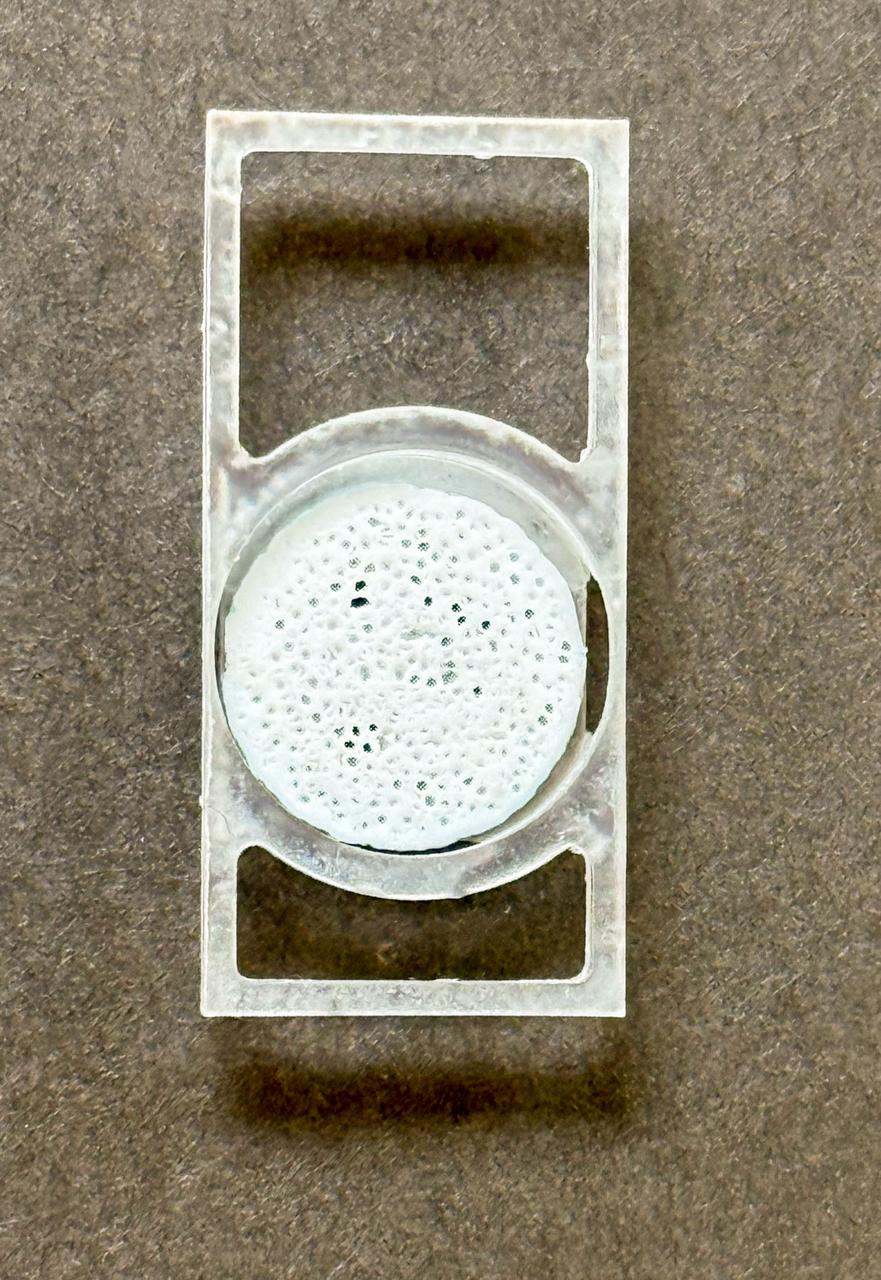
jsc2026e017240 (March 27, 2026) --- Preflight image of Aa b.Bone biomaterial scaffold is positioned within a custom 3D-printed sample holder, engineered to securely house the scaffold inside the SPHINX bioreactor as part of the Green Bone investigation. This research studies how human mesenchymal stem cells (hMSCs) grow on a biomimetic bone scaffold, b Bone, made from rattan wood in microgravity. .Credit:. GreenBone Ortho.
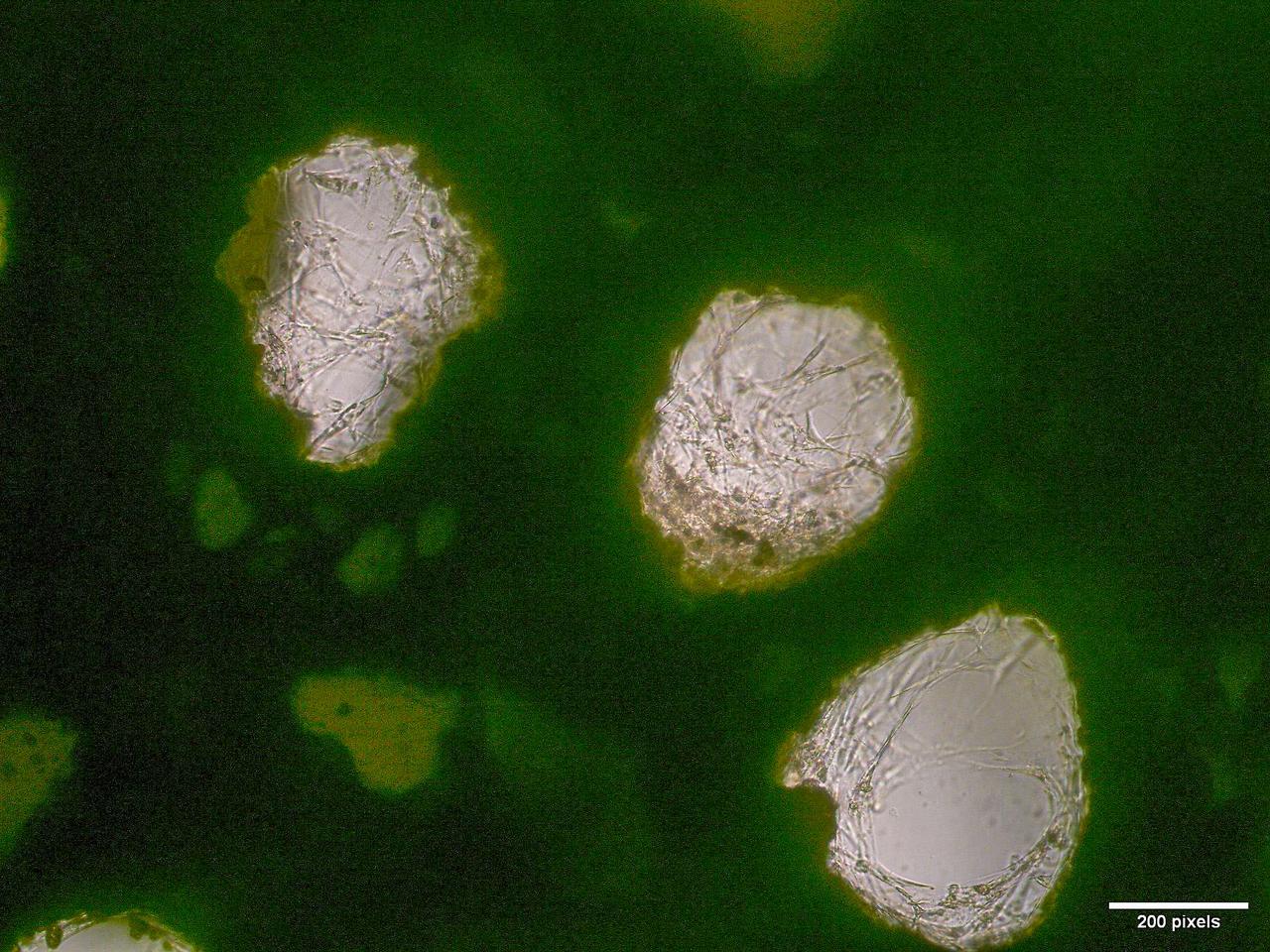
jsc2026e017238 (March 27, 2026) --- Microscopic view showing human mesenchymal stem cells (hMSCs) adhered inside the macropores of a b.Bone scaffold as part of preflight testing for Green Bone. This investigation studies the performance of a biomimetic bone scaffold, b Bone, in microgravity aboard the International Space Station. The image highlights cellular attachment and interaction with the porous structure. A scale bar is visible in the bottom right corner, indicating 200 pixels. Credit: DIMES Laboratory.
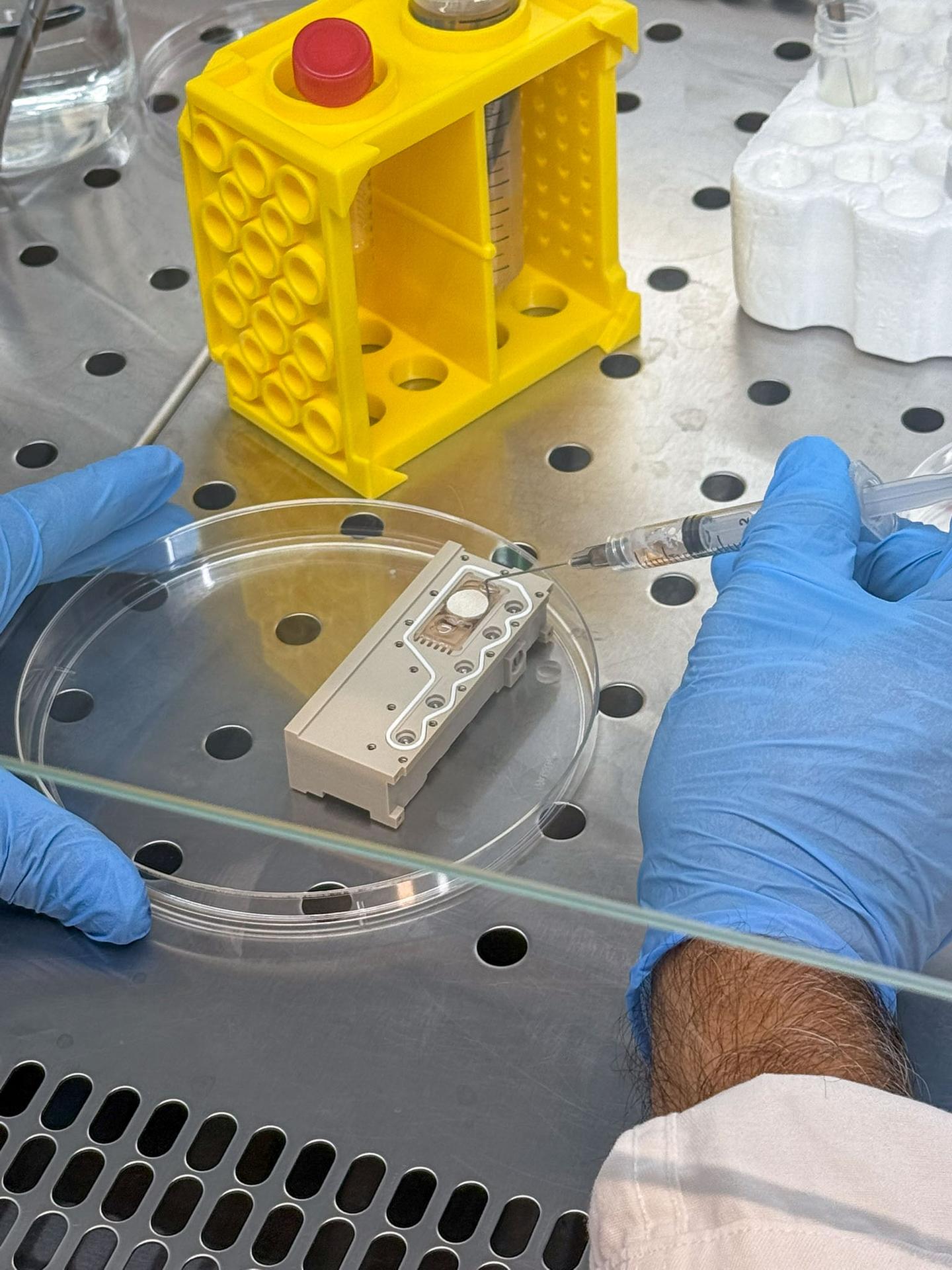
jsc2026e017236 (March 27, 2026) --- A laboratory technician prepares the bioreactors for the specimen validity test by loading scaffold structures and injecting culture medium as part of the Green Bone investigation. The process is carried out under sterile conditions. This research studies how human mesenchymal stem cells (hMSCs) grow on a biomimetic bone scaffold, b Bone, made from rattan wood in microgravity. Credit: DIMES Laboratory.
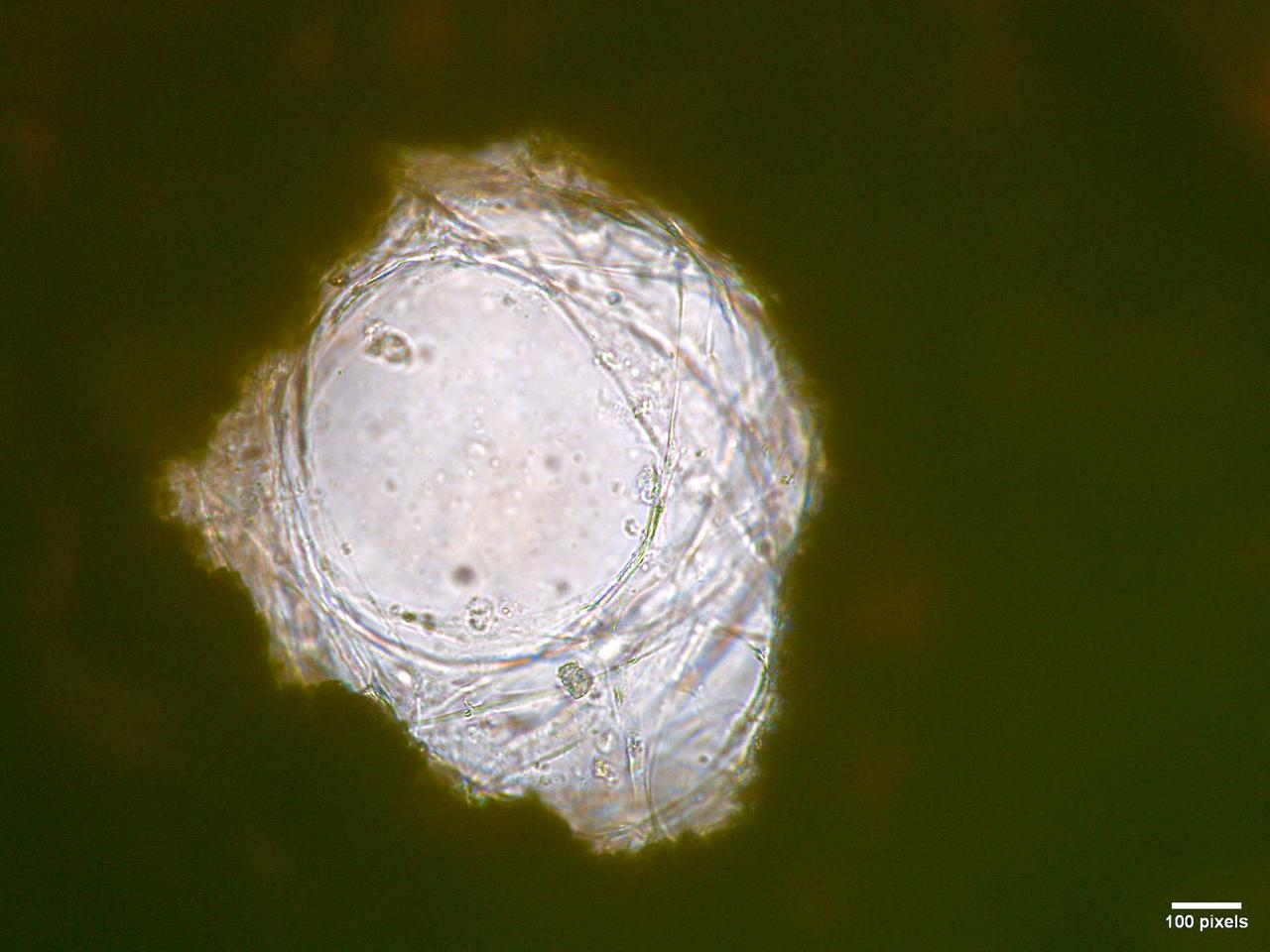
jsc2026e017237 (March 27, 2026) --- Microscopic view showing human mesenchymal stem cells (hMSCs) adhered inside one of the pores of a b.Bone scaffold as part of preflight testing for Green Bone. This investigation studies the performance of a biomimetic bone scaffold, b Bone, in microgravity aboard the International Space Station. The image highlights cellular attachment and interaction with the porous structure. A scale bar is visible in the bottom right corner, indicating 100 pixels. Credit:. DIMES Laboratory.
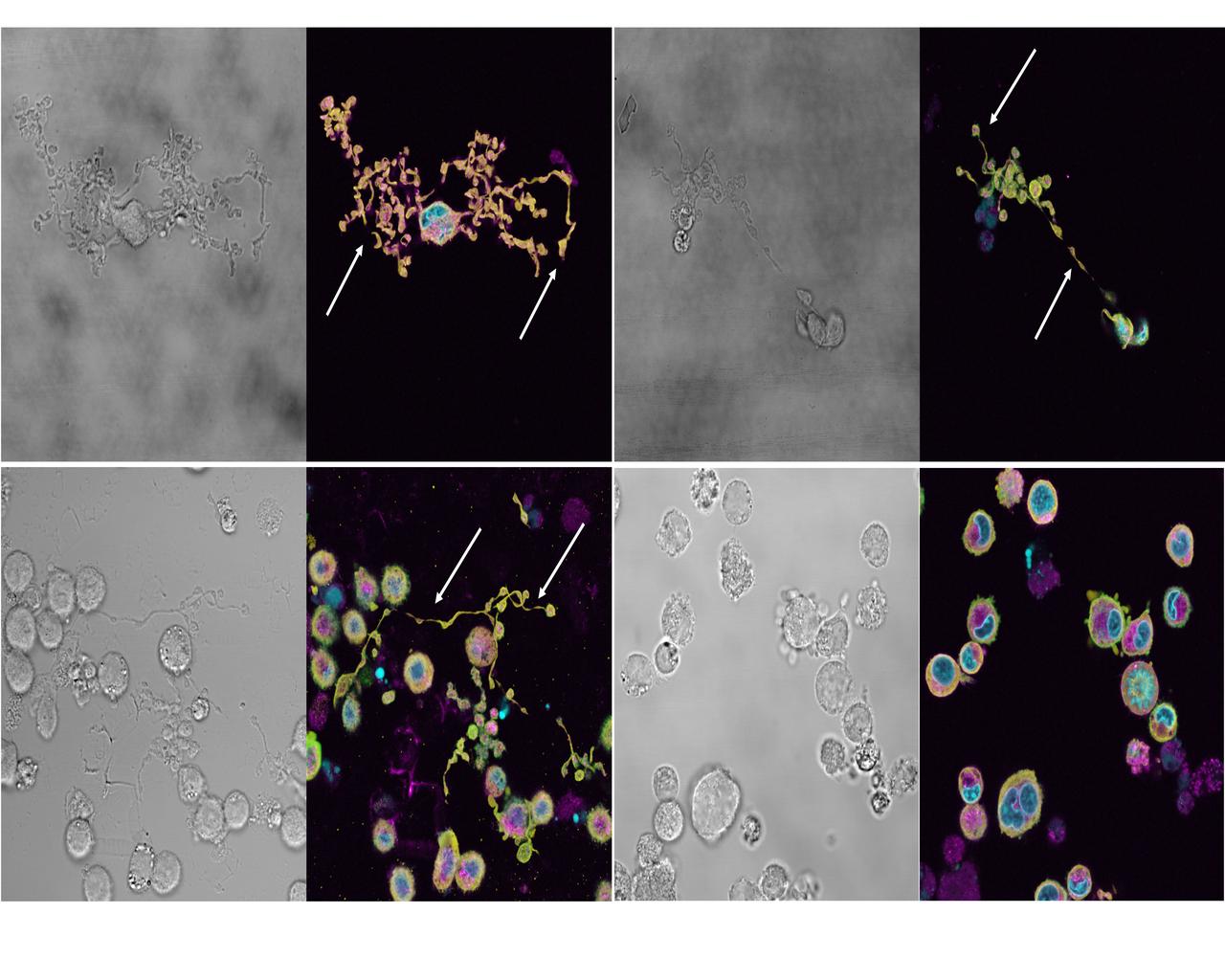
jsc2024e043736 (5/23/2024) --- Preflight ground image of cultured megakaryocytes (precursor cells which produce platelets). The fixed cells were stained using WGA (binding sialic acid, magenta), phalloidin (actin binding, green), beta-tubulin antibody (yellow), and nuclei (DAPI, light blue). Proplatelet extensions, which function as assembly lines for platelets, are highlighted by arrows. Megakaryocytes Orbiting in Outer Space and Near Earth: The MOON Study (Megakaryocyte Flying-One (MeF1)) investigates how environmental conditions affect development and function of platelets and megakaryocytes, cells found in bone marrow. Results could provide clarify the risks of changes in inflammation, immune responses, and clot formation in spaceflight and on the ground. Image courtesy of the NASA Space Radiation Laboratory.
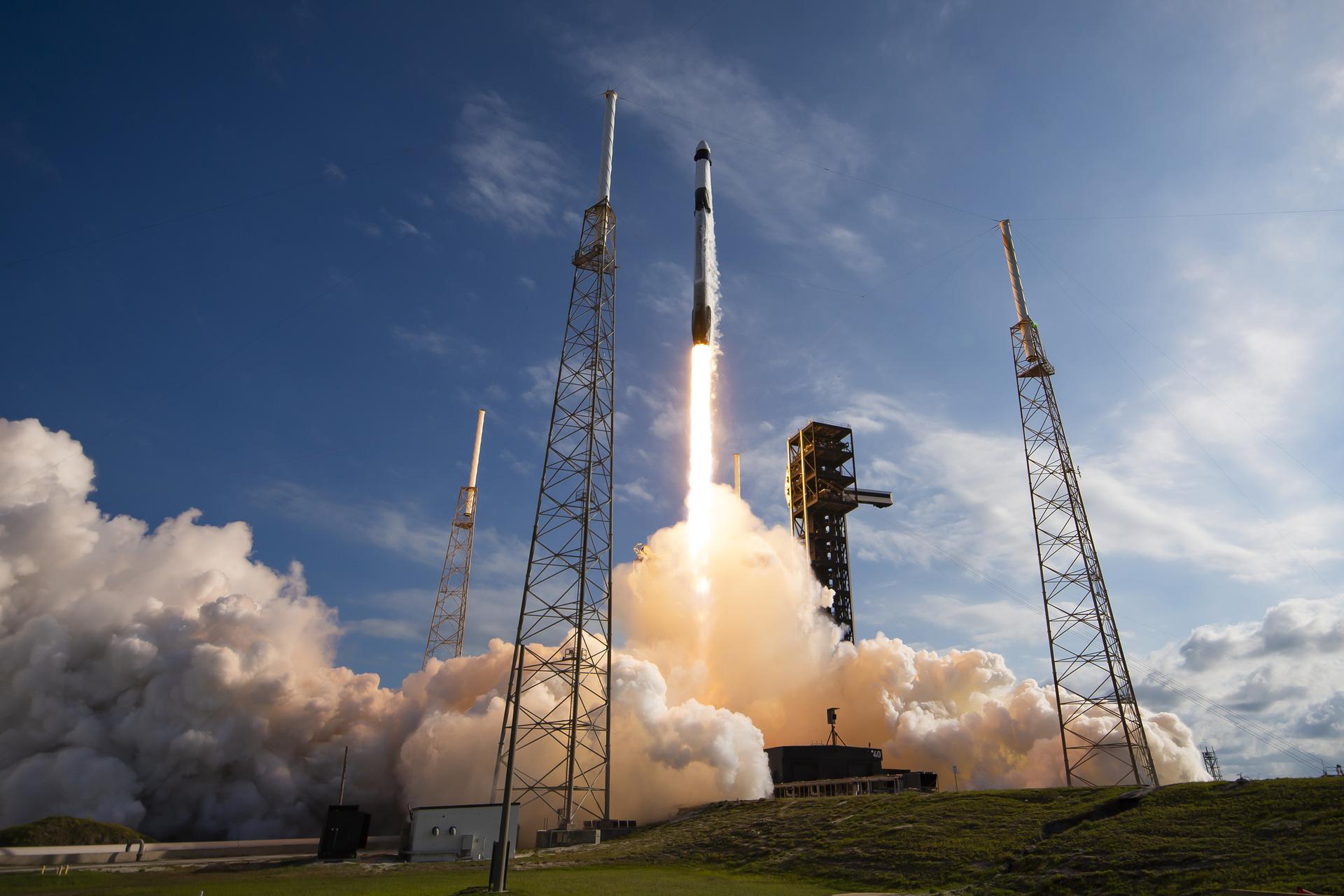
A SpaceX Falcon 9 rocket, with the company’s Dragon spacecraft atop, launched on Friday, May 15, 2026, from Space Launch Complex 40 at Cape Canaveral Space Force Station in Florida as part of the company’s 34th commercial resupply services mission to the International Space Station for NASA. Dragon delivered about 6,500 pounds of science investigations, supplies, and equipment to the International Space Station.
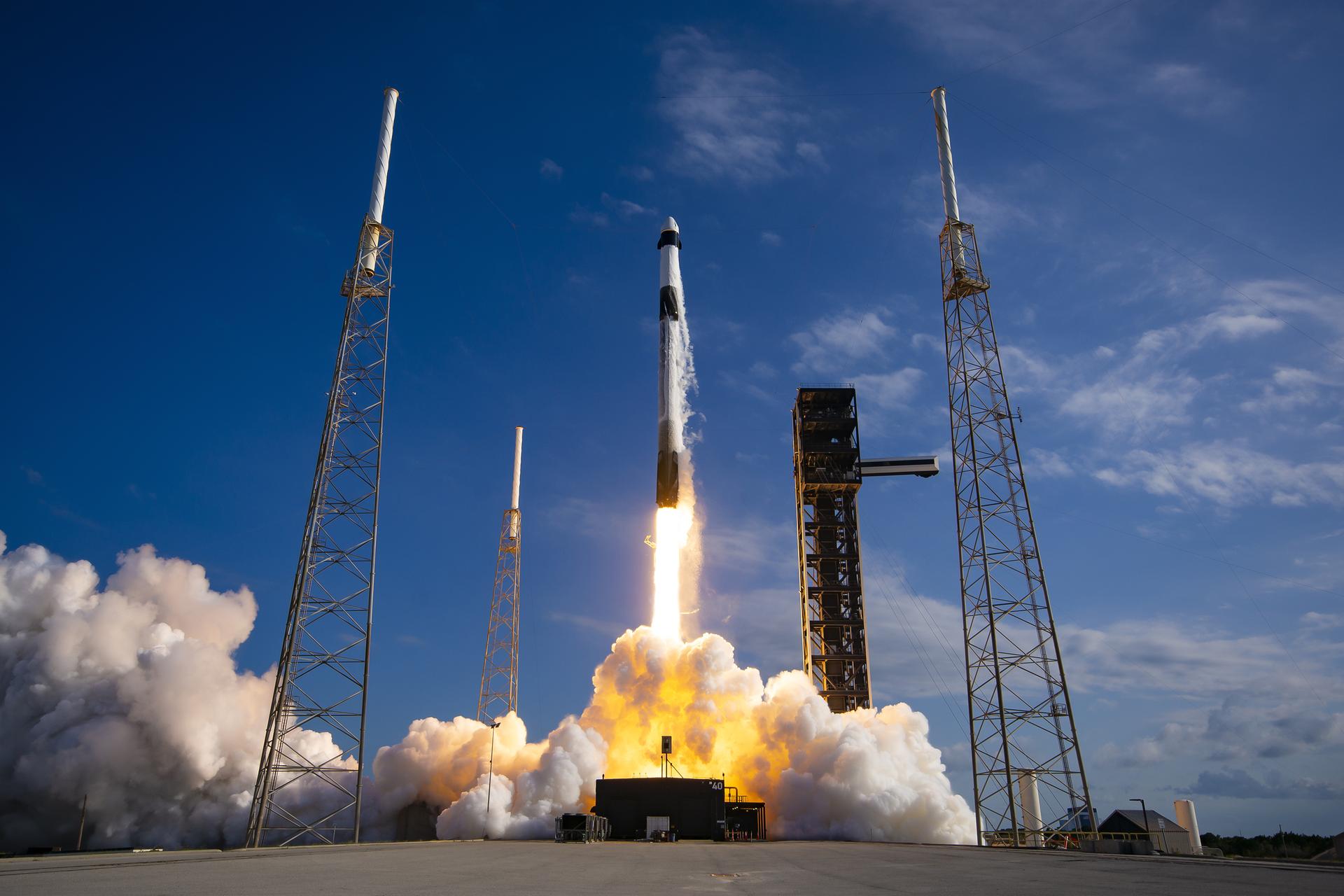
A SpaceX Falcon 9 rocket, with the company’s Dragon spacecraft atop, launched on Friday, May 15, 2026, from Space Launch Complex 40 at Cape Canaveral Space Force Station in Florida as part of the company’s 34th commercial resupply services mission to the International Space Station for NASA. Dragon delivered about 6,500 pounds of science investigations, supplies, and equipment to the International Space Station.
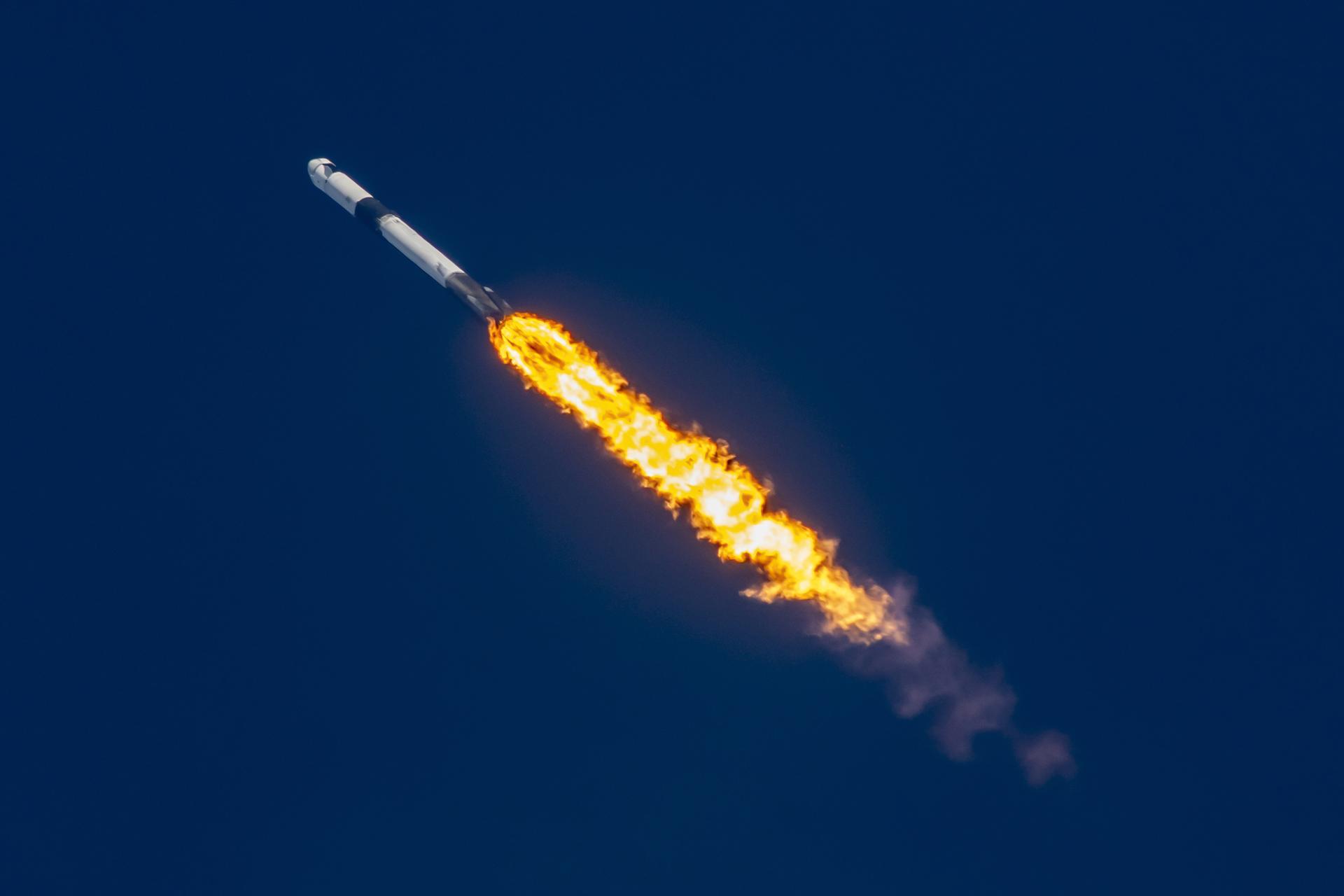
A SpaceX Falcon 9 rocket, with the company’s Dragon spacecraft atop, launched on Friday, May 15, 2026, from Space Launch Complex 40 at Cape Canaveral Space Force Station in Florida as part of the company’s 34th commercial resupply services mission to the International Space Station for NASA. Dragon delivered about 6,500 pounds of science investigations, supplies, and equipment to the International Space Station.
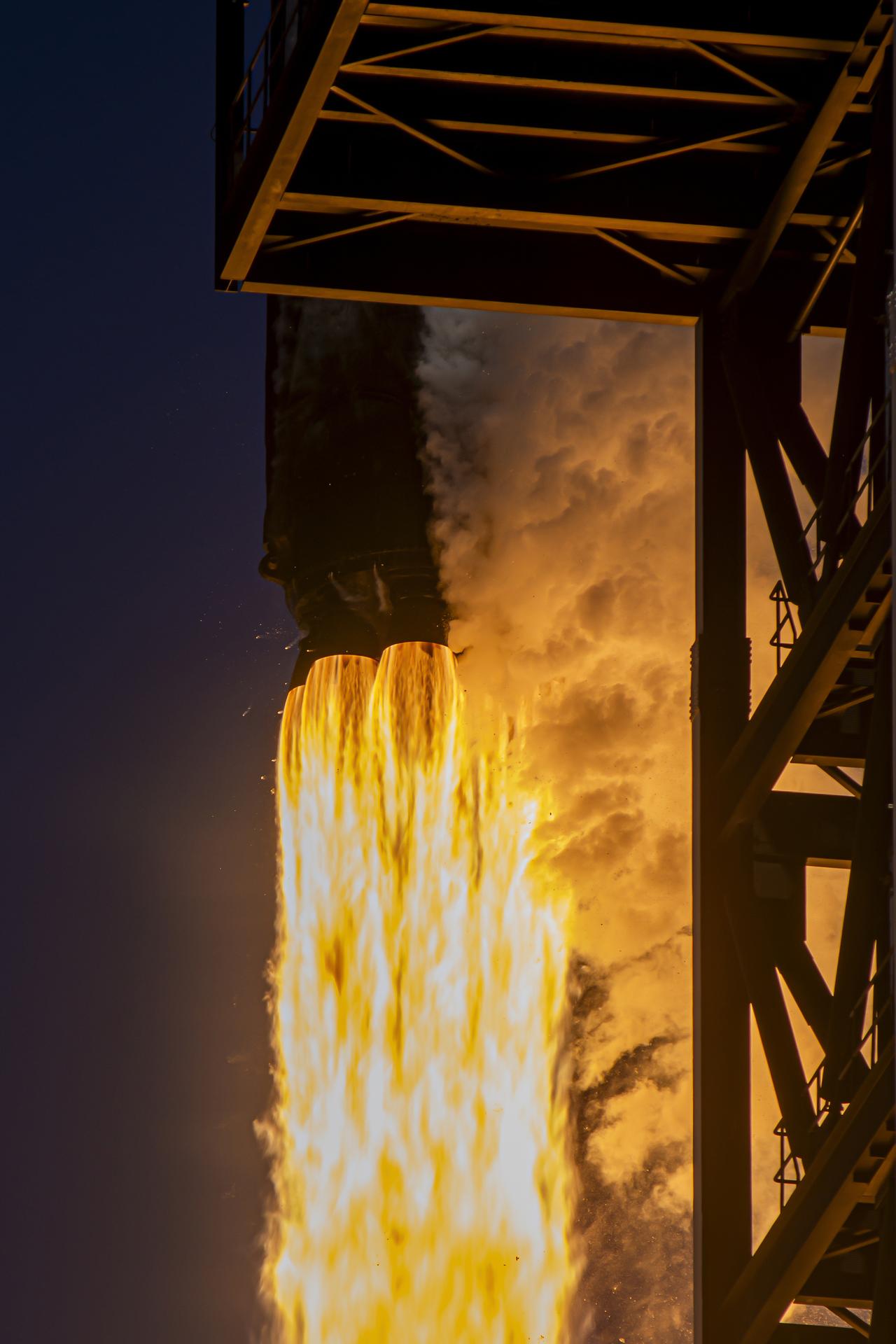
A SpaceX Falcon 9 rocket, with the company’s Dragon spacecraft atop, launched on Friday, May 15, 2026, from Space Launch Complex 40 at Cape Canaveral Space Force Station in Florida as part of the company’s 34th commercial resupply services mission to the International Space Station for NASA. Dragon delivered about 6,500 pounds of science investigations, supplies, and equipment to the International Space Station.
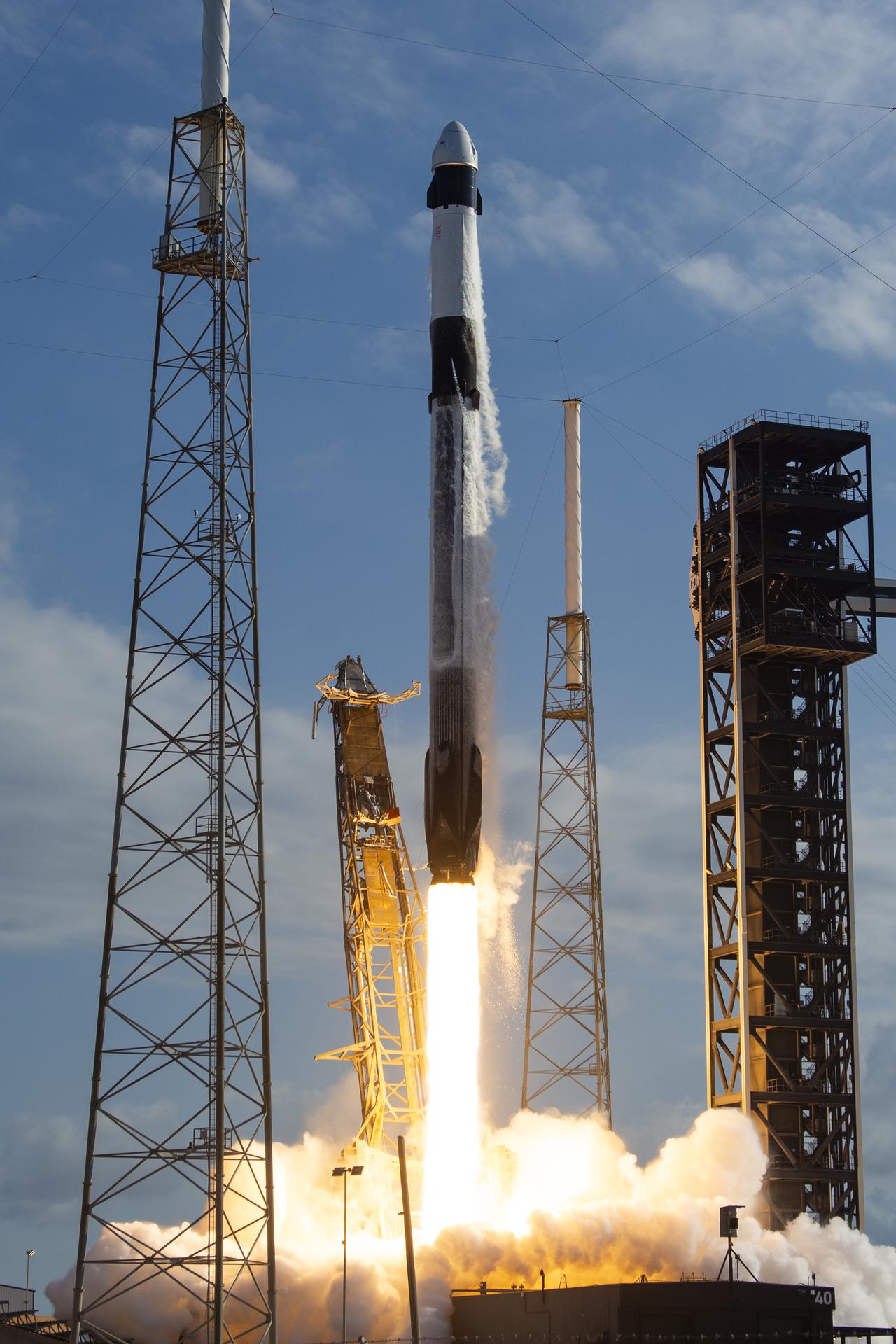
A SpaceX Falcon 9 rocket, with the company’s Dragon spacecraft atop, launched on Friday, May 15, 2026, from Space Launch Complex 40 at Cape Canaveral Space Force Station in Florida as part of the company’s 34th commercial resupply services mission to the International Space Station for NASA. Dragon delivered about 6,500 pounds of science investigations, supplies, and equipment to the International Space Station.
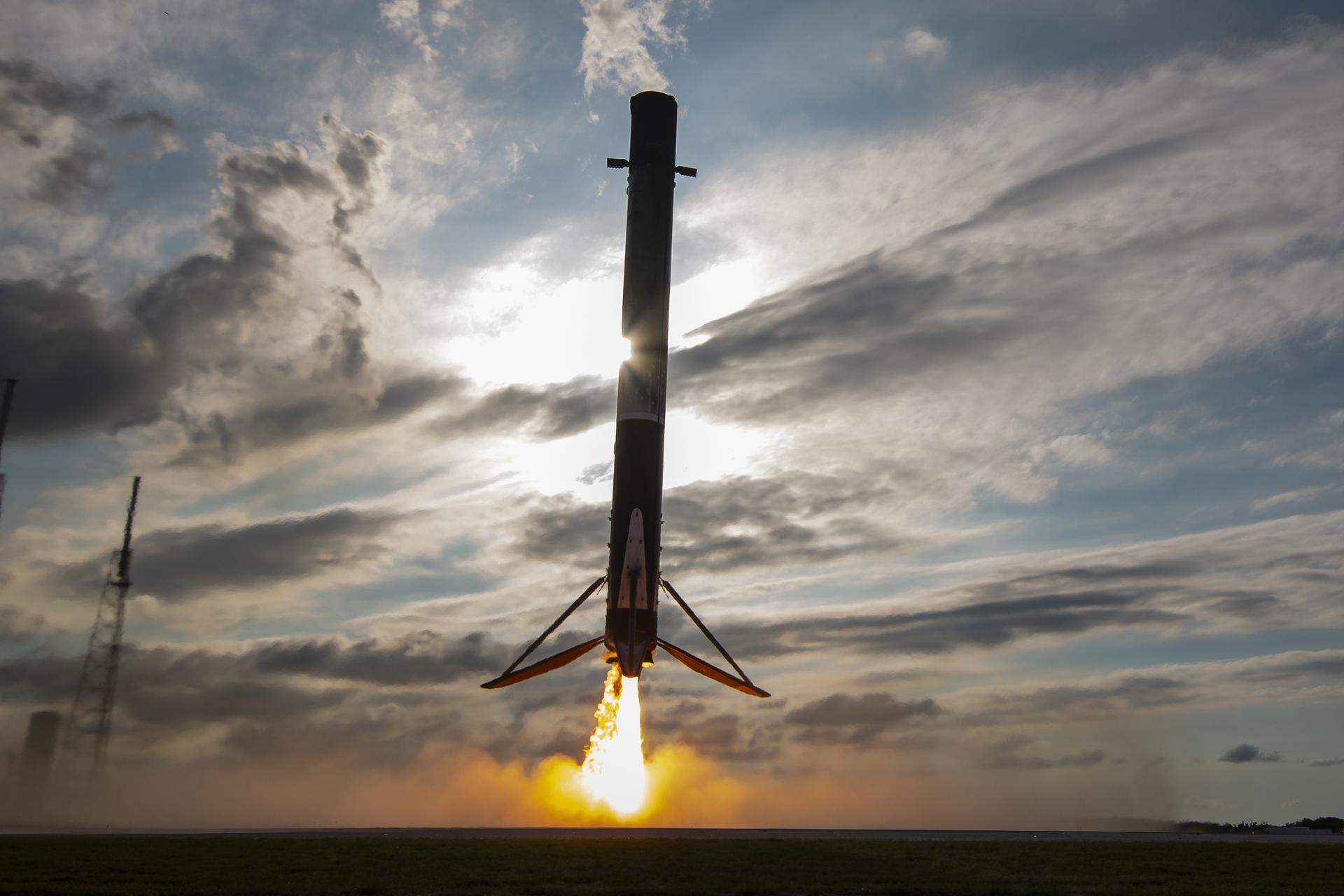
The first stage of a SpaceX Falcon 9 rocket returned and landed inside the Space Launch Complex 40 perimeter at Cape Canaveral Space Force Station in Florida on Friday, May 15, 2026, as part of the company’s 34th commercial resupply services mission to the International Space Station for NASA. Dragon delivered about 6,500 pounds of science investigations, supplies, and equipment to the International Space Station.
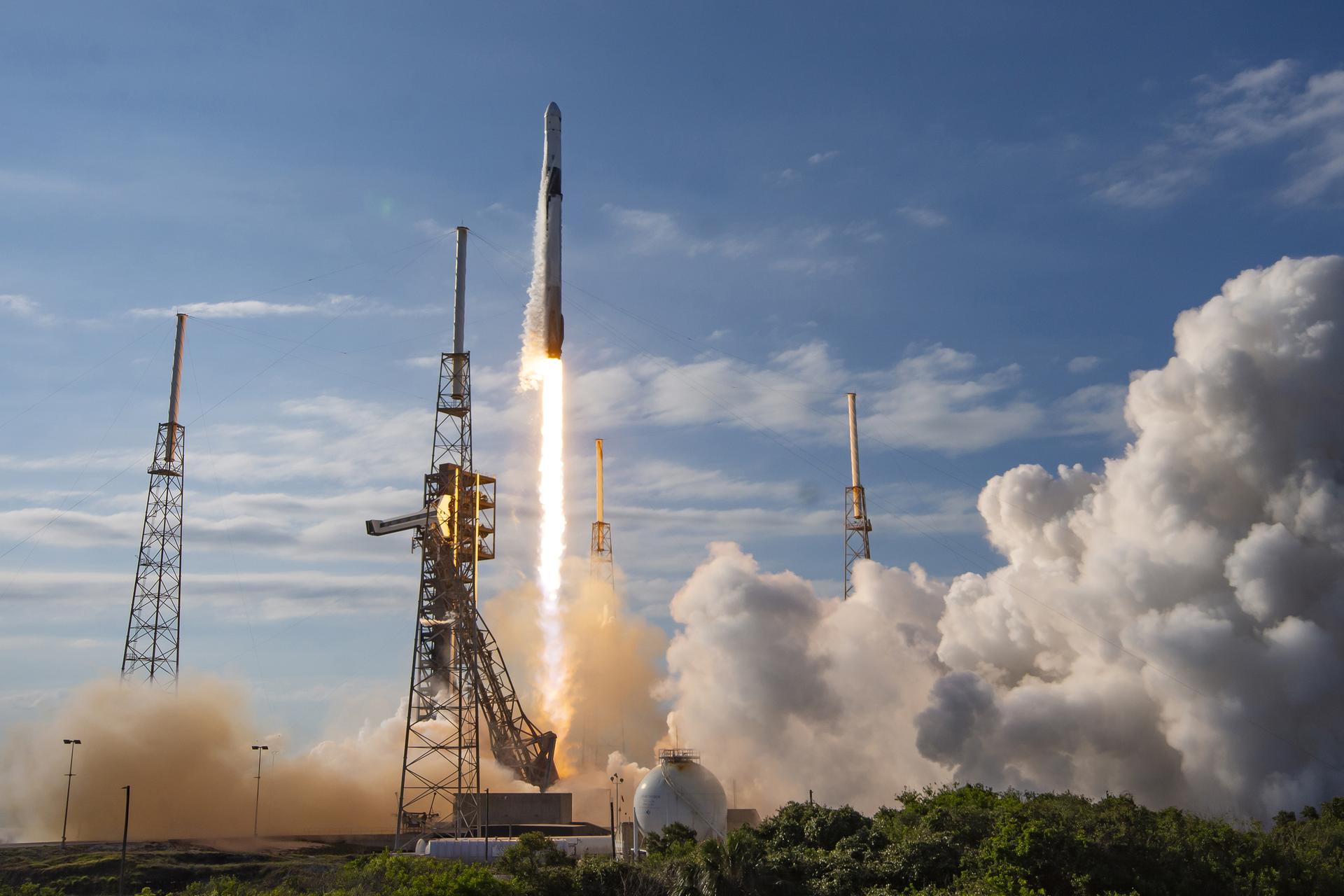
A SpaceX Falcon 9 rocket, with the company’s Dragon spacecraft atop, launched on Friday, May 15, 2026, from Space Launch Complex 40 at Cape Canaveral Space Force Station in Florida as part of the company’s 34th commercial resupply services mission to the International Space Station for NASA. Dragon delivered about 6,500 pounds of science investigations, supplies, and equipment to the International Space Station.
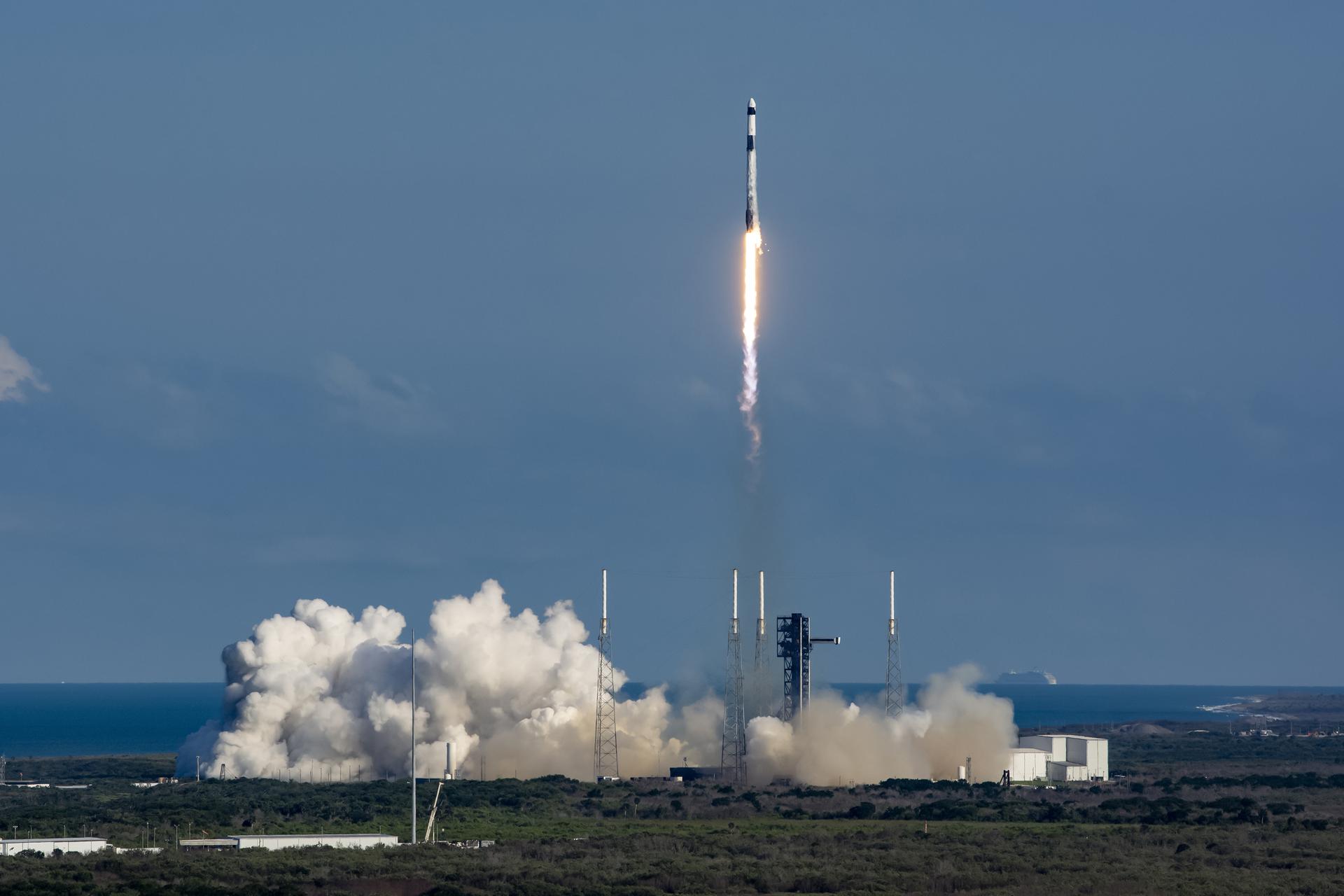
A SpaceX Falcon 9 rocket, with the company’s Dragon spacecraft atop, launched on Friday, May 15, 2026, from Space Launch Complex 40 at Cape Canaveral Space Force Station in Florida as part of the company’s 34th commercial resupply services mission to the International Space Station for NASA. Dragon delivered about 6,500 pounds of science investigations, supplies, and equipment to the International Space Station.
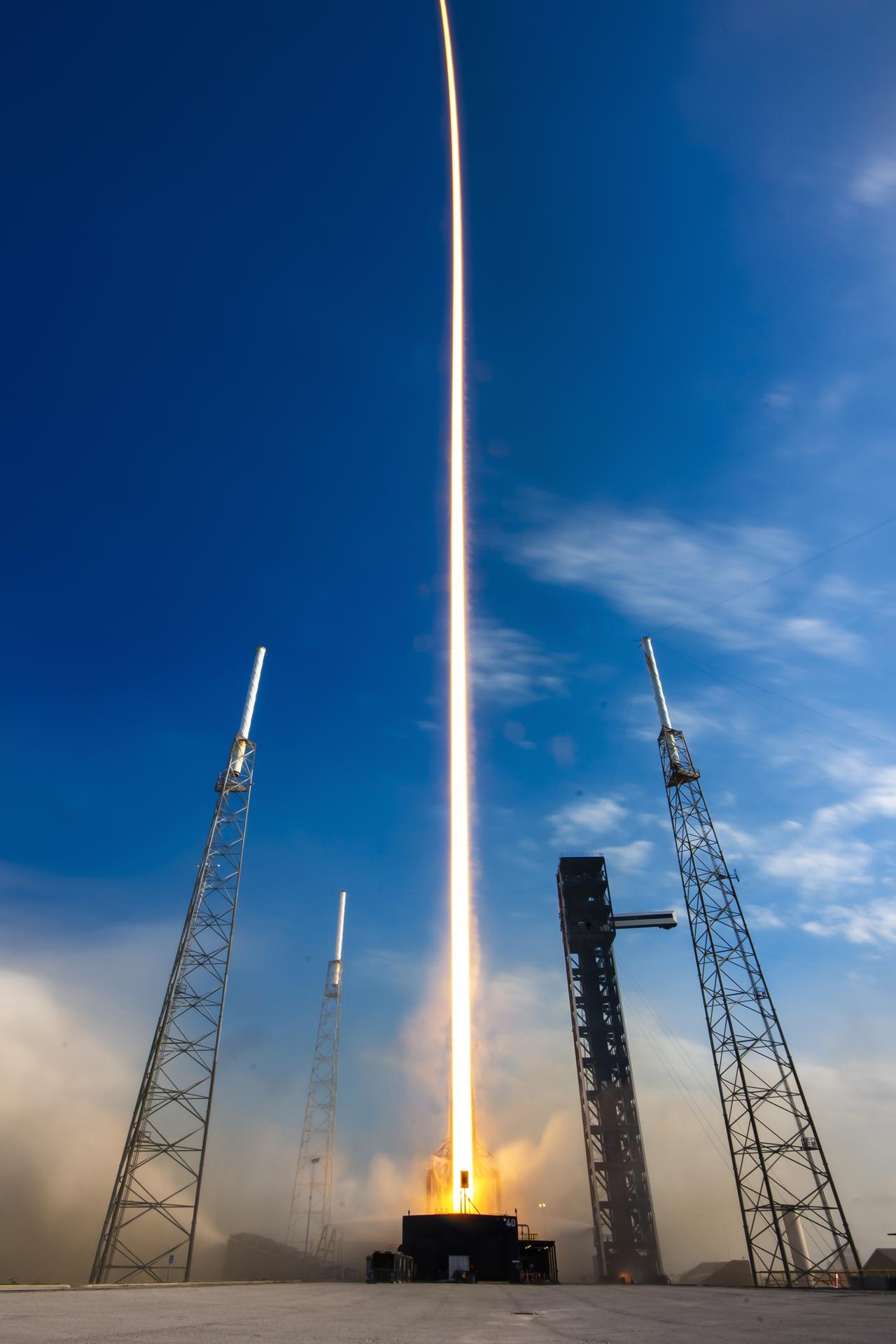
A SpaceX Falcon 9 rocket, with the company’s Dragon spacecraft atop, launched on Friday, May 15, 2026, from Space Launch Complex 40 at Cape Canaveral Space Force Station in Florida as part of the company’s 34th commercial resupply services mission to the International Space Station for NASA. Dragon delivered about 6,500 pounds of science investigations, supplies, and equipment to the International Space Station.
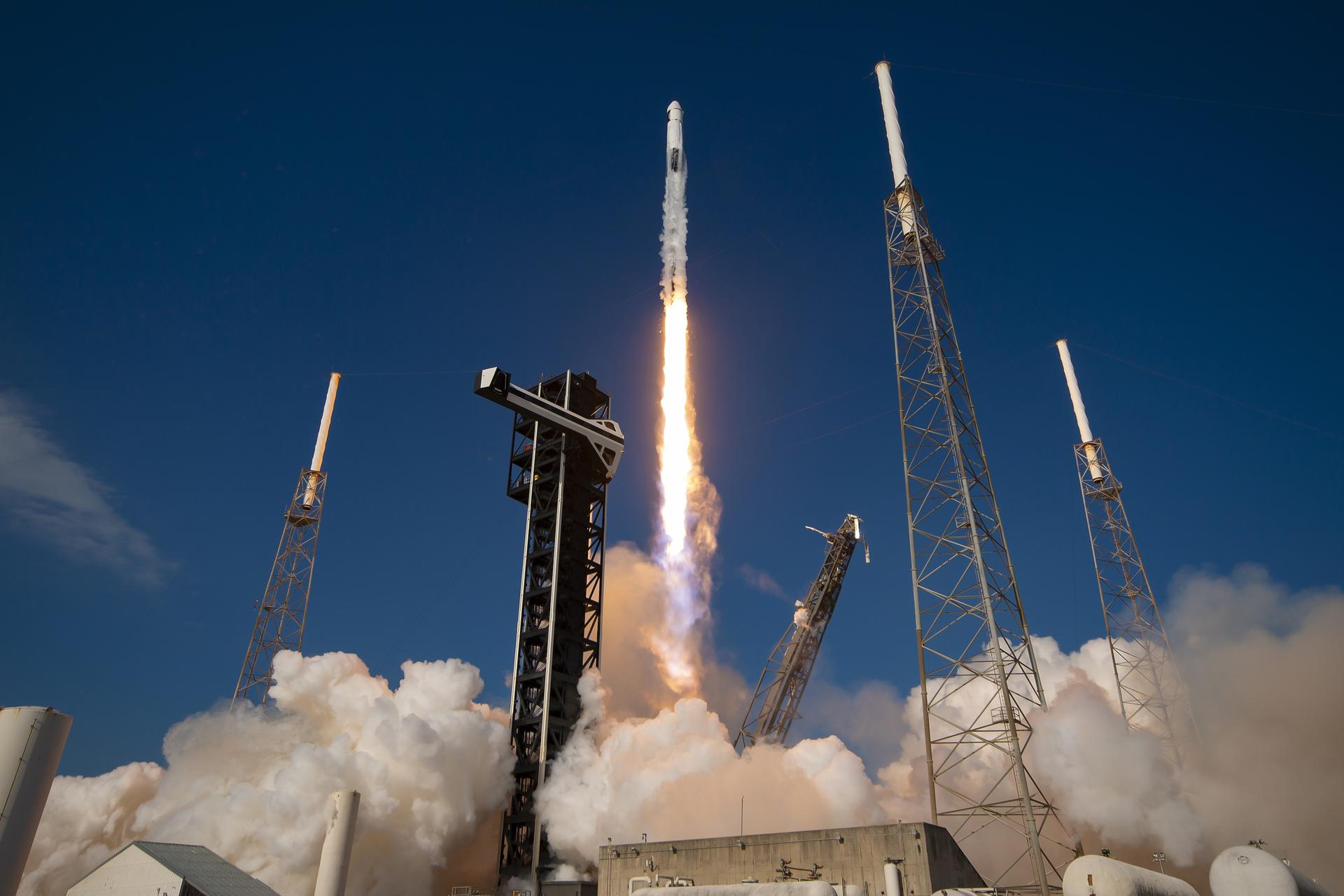
A SpaceX Falcon 9 rocket, with the company’s Dragon spacecraft atop, launched on Friday, May 15, 2026, from Space Launch Complex 40 at Cape Canaveral Space Force Station in Florida as part of the company’s 34th commercial resupply services mission to the International Space Station for NASA. Dragon delivered about 6,500 pounds of science investigations, supplies, and equipment to the International Space Station.