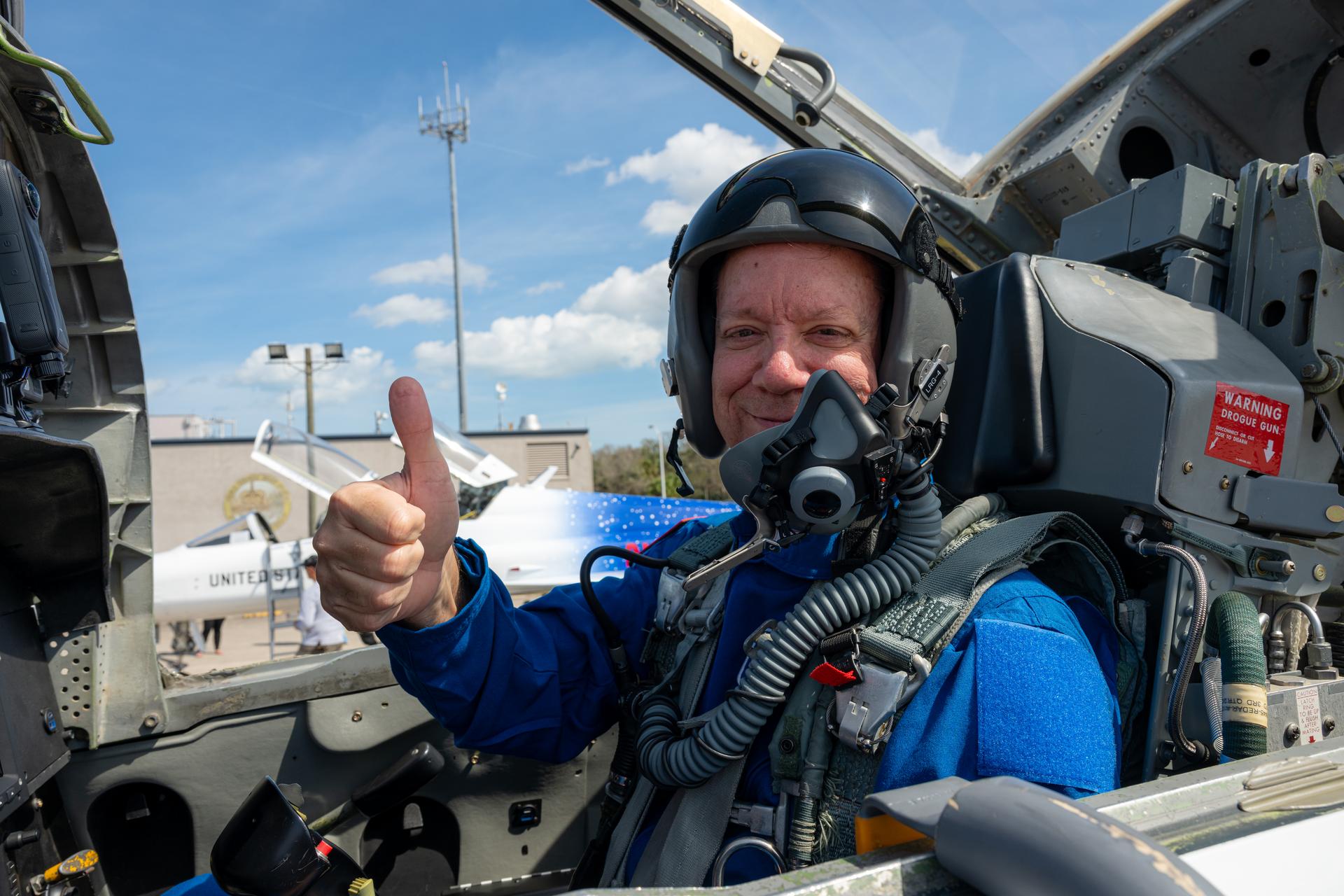
NASA employee Greg Gaddis, spaceport senior operations manager at NASA’s Kennedy Space Center, participates in an employee incentive flying event with NASA Administrator Jared Isaacman's personal F-5 aircraft, Friday, Feb. 20, 2026, at NASA’s Kennedy Space Center in Florida. Photo Credit: (NASA/John Kraus)
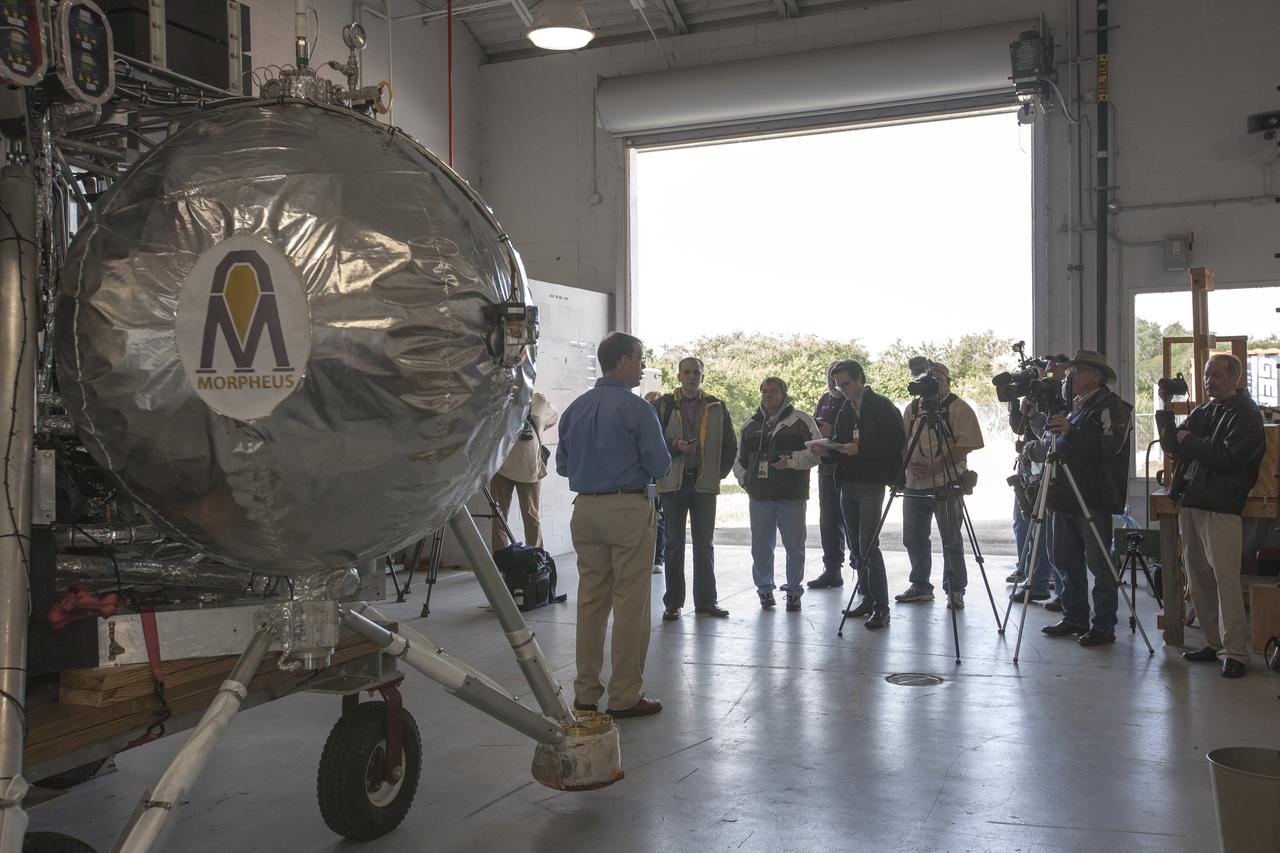
CAPE CANAVERAL, Fla. – Members of the news media view the Project Morpheus prototype lander inside a hangar near the Shuttle Landing Facility at NASA’s Kennedy Space Center in Florida. Speaking to the media is Greg Gaddis, the Kennedy Morpheus and ALHAT site manager. Morpheus successfully completed its third free flight test Jan. 16. The 57-second test began at 1:15 p.m. EST with the Morpheus lander launching from the ground over a flame trench and ascending about 187 feet, nearly doubling the target ascent velocity from the last test in December 2013. The lander flew forward, covering about 154 feet in 20 seconds before descending and landing within 11 inches of its target on a dedicated pad inside the autonomous landing and hazard avoidance technology, or ALHAT, hazard field. Project Morpheus tests NASA’s ALHAT and an engine that runs on liquid oxygen and methane, or green propellants, into a fully-operational lander that could deliver cargo to other planetary surfaces. The landing facility provides the lander with the kind of field necessary for realistic testing, complete with rocks, craters and hazards to avoid. Morpheus’ ALHAT payload allows it to navigate to clear landing sites amidst rocks, craters and other hazards during its descent. Project Morpheus is being managed under the Advanced Exploration Systems, or AES, Division in NASA’s Human Exploration and Operations Mission Directorate. The efforts in AES pioneer new approaches for rapidly developing prototype systems, demonstrating key capabilities and validating operational concepts for future human missions beyond Earth orbit. For more information on Project Morpheus, visit http://www.nasa.gov/centers/johnson/exploration/morpheus. Photo credit: NASA/Kim Shiflett
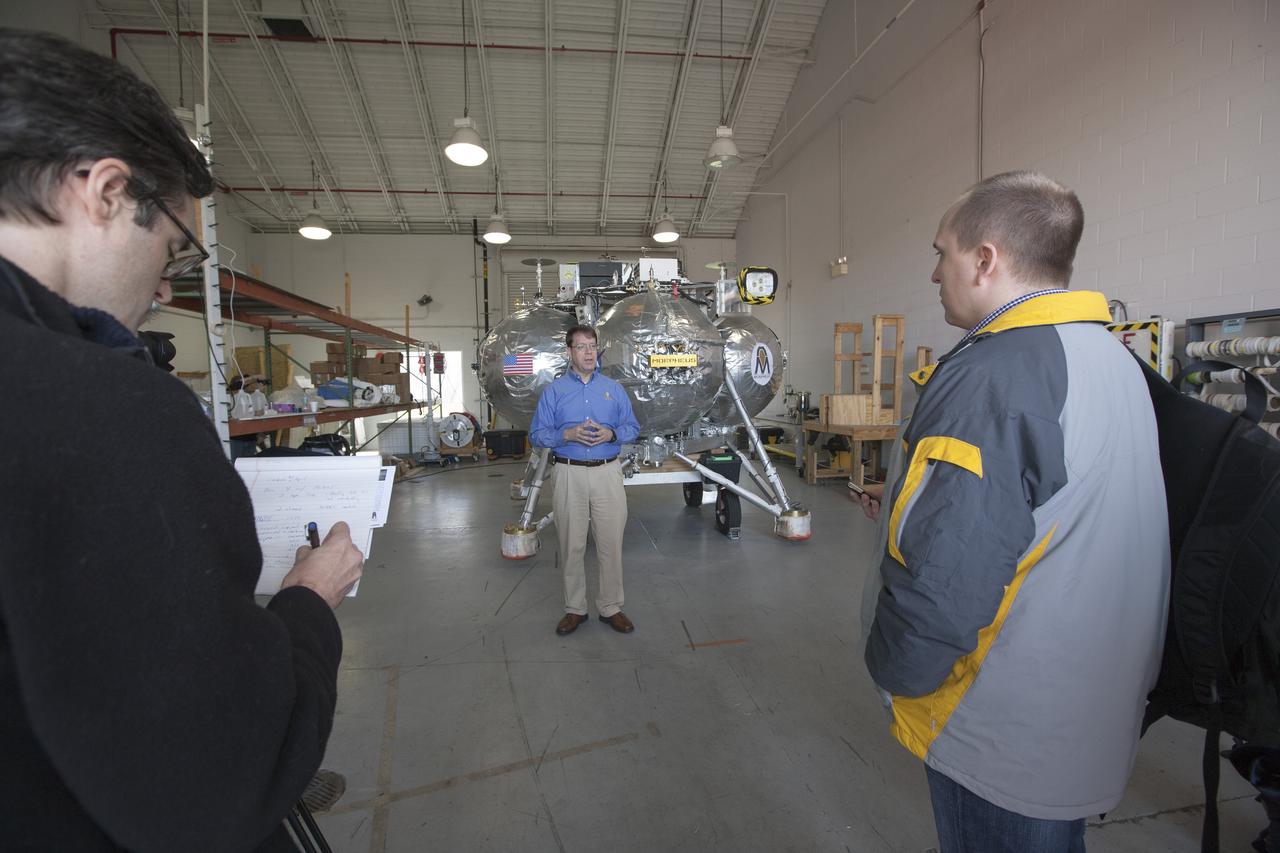
CAPE CANAVERAL, Fla. – Members of the news media view the Project Morpheus prototype lander inside a hangar near the Shuttle Landing Facility at NASA’s Kennedy Space Center in Florida. Speaking to the media is Greg Gaddis, the Kennedy Morpheus and ALHAT site manager. Morpheus successfully completed its third free flight test Jan. 16. The 57-second test began at 1:15 p.m. EST with the Morpheus lander launching from the ground over a flame trench and ascending about 187 feet, nearly doubling the target ascent velocity from the last test in December 2013. The lander flew forward, covering about 154 feet in 20 seconds before descending and landing within 11 inches of its target on a dedicated pad inside the autonomous landing and hazard avoidance technology, or ALHAT, hazard field. Project Morpheus tests NASA’s ALHAT and an engine that runs on liquid oxygen and methane, or green propellants, into a fully-operational lander that could deliver cargo to other planetary surfaces. The landing facility provides the lander with the kind of field necessary for realistic testing, complete with rocks, craters and hazards to avoid. Morpheus’ ALHAT payload allows it to navigate to clear landing sites amidst rocks, craters and other hazards during its descent. Project Morpheus is being managed under the Advanced Exploration Systems, or AES, Division in NASA’s Human Exploration and Operations Mission Directorate. The efforts in AES pioneer new approaches for rapidly developing prototype systems, demonstrating key capabilities and validating operational concepts for future human missions beyond Earth orbit. For more information on Project Morpheus, visit http://www.nasa.gov/centers/johnson/exploration/morpheus. Photo credit: NASA/Kim Shiflett
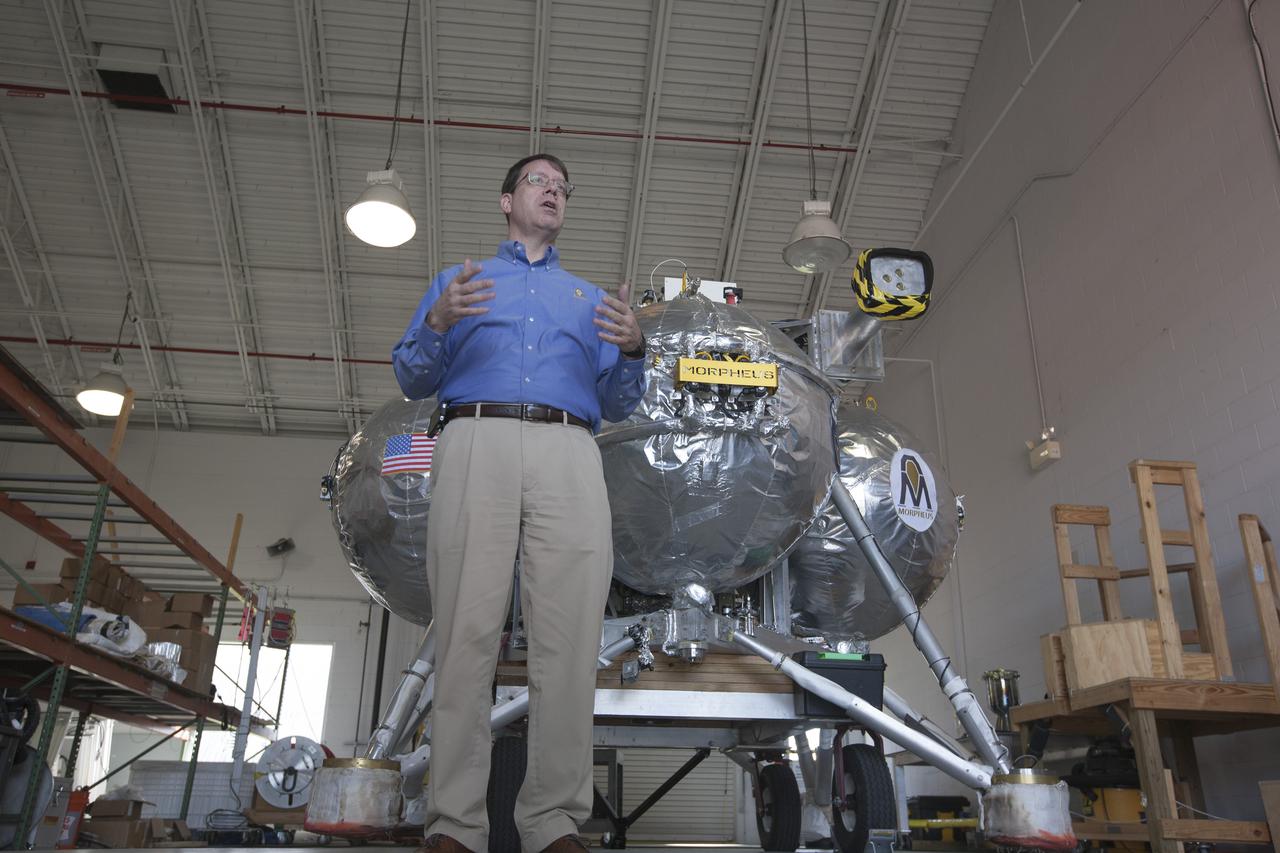
CAPE CANAVERAL, Fla. – Members of the news media view the Project Morpheus prototype lander inside a hangar near the Shuttle Landing Facility at NASA’s Kennedy Space Center in Florida. Speaking to the media is Greg Gaddis, the Kennedy Morpheus and ALHAT site manager. Morpheus successfully completed its third free flight test Jan. 16. The 57-second test began at 1:15 p.m. EST with the Morpheus lander launching from the ground over a flame trench and ascending about 187 feet, nearly doubling the target ascent velocity from the last test in December 2013. The lander flew forward, covering about 154 feet in 20 seconds before descending and landing within 11 inches of its target on a dedicated pad inside the autonomous landing and hazard avoidance technology, or ALHAT, hazard field. Project Morpheus tests NASA’s ALHAT and an engine that runs on liquid oxygen and methane, or green propellants, into a fully-operational lander that could deliver cargo to other planetary surfaces. The landing facility provides the lander with the kind of field necessary for realistic testing, complete with rocks, craters and hazards to avoid. Morpheus’ ALHAT payload allows it to navigate to clear landing sites amidst rocks, craters and other hazards during its descent. Project Morpheus is being managed under the Advanced Exploration Systems, or AES, Division in NASA’s Human Exploration and Operations Mission Directorate. The efforts in AES pioneer new approaches for rapidly developing prototype systems, demonstrating key capabilities and validating operational concepts for future human missions beyond Earth orbit. For more information on Project Morpheus, visit http://www.nasa.gov/centers/johnson/exploration/morpheus. Photo credit: NASA/Kim Shiflett
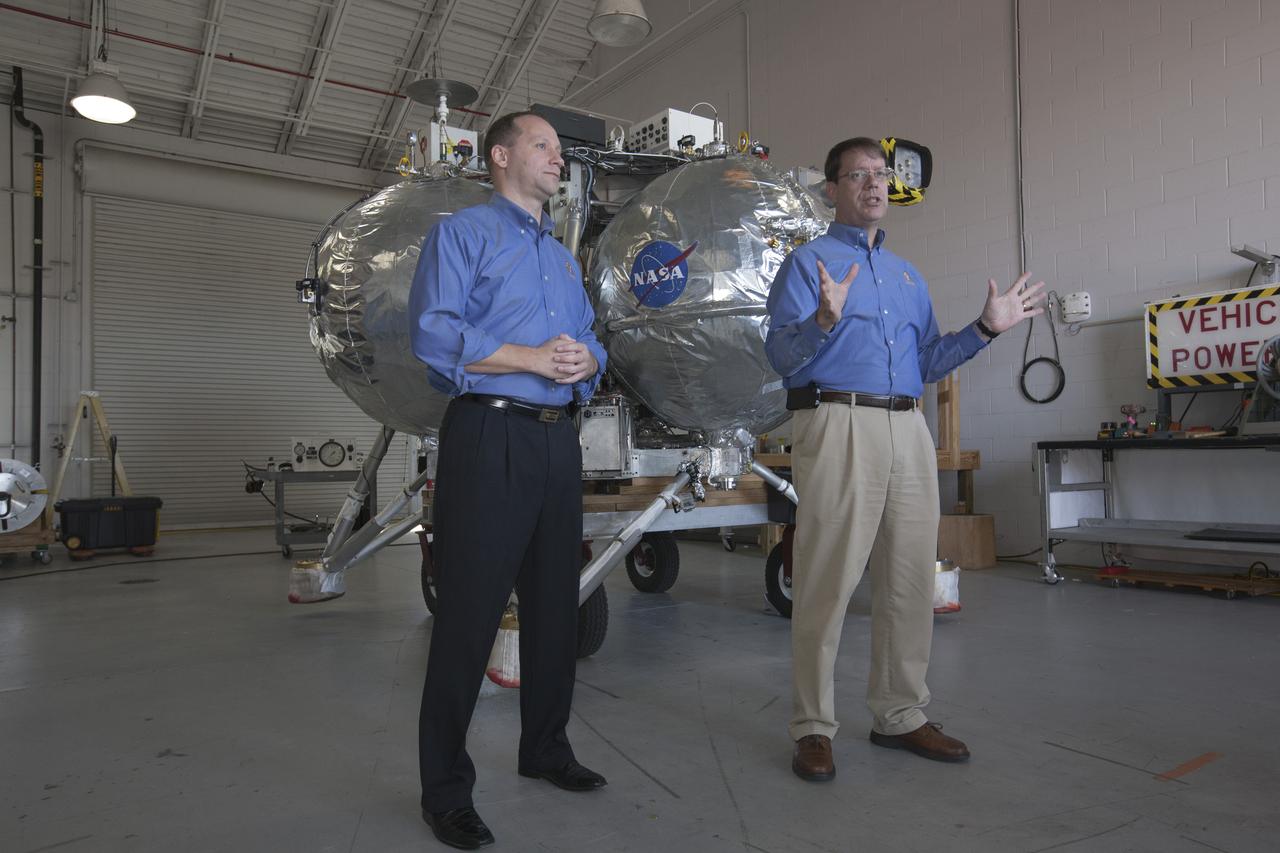
CAPE CANAVERAL, Fla. – Members of the news media view the Project Morpheus prototype lander inside a hangar near the Shuttle Landing Facility at NASA’s Kennedy Space Center in Florida. Speaking to the media, from left are Jon Olansen, Morpheus project manager at Johnson Space Center in Houston, and Greg Gaddis, the Kennedy Morpheus and ALHAT site manager. Morpheus successfully completed its third free flight test Jan. 16. The 57-second test began at 1:15 p.m. EST with the Morpheus lander launching from the ground over a flame trench and ascending about 187 feet, nearly doubling the target ascent velocity from the last test in December 2013. The lander flew forward, covering about 154 feet in 20 seconds before descending and landing within 11 inches of its target on a dedicated pad inside the autonomous landing and hazard avoidance technology, or ALHAT, hazard field. Project Morpheus tests NASA’s ALHAT and an engine that runs on liquid oxygen and methane, or green propellants, into a fully-operational lander that could deliver cargo to other planetary surfaces. The landing facility provides the lander with the kind of field necessary for realistic testing, complete with rocks, craters and hazards to avoid. Morpheus’ ALHAT payload allows it to navigate to clear landing sites amidst rocks, craters and other hazards during its descent. Project Morpheus is being managed under the Advanced Exploration Systems, or AES, Division in NASA’s Human Exploration and Operations Mission Directorate. The efforts in AES pioneer new approaches for rapidly developing prototype systems, demonstrating key capabilities and validating operational concepts for future human missions beyond Earth orbit. For more information on Project Morpheus, visit http://www.nasa.gov/centers/johnson/exploration/morpheus. Photo credit: NASA/Kim Shiflett

CAPE CANAVERAL, Fla. – From left behind the reporter in the white shirt, Chirold Epp, the Autonomous Landing and Hazard Avoidance Technology, or ALHAT, project manager, Jon Olansen, Morpheus project manager, and Greg Gaddis, Morpheus/ALHAT site director, speak to members of the media near the north end of the Shuttle Landing Facility at NASA's Kennedy Space Center in Florida. Media also viewed Morpheus inside a facility near the landing facility. Project Morpheus tests NASA’s ALHAT and an engine that runs on liquid oxygen and methane, which are green propellants. These new capabilities could be used in future efforts to deliver cargo to planetary surfaces. The landing facility provides the lander with the kind of field necessary for realistic testing, complete with rocks, craters and hazards to avoid. Morpheus’ ALHAT payload allows it to navigate to clear landing sites amidst rocks, craters and other hazards during its descent. Project Morpheus is being managed under the Advanced Exploration Systems, or AES, Division in NASA’s Human Exploration and Operations Mission Directorate. The efforts in AES pioneer new approaches for rapidly developing prototype systems, demonstrating key capabilities and validating operational concepts for future human missions beyond Earth orbit. For more information on Project Morpheus, visit http://morpheuslander.jsc.nasa.gov/. Photo credit: NASA/Frankie Martin
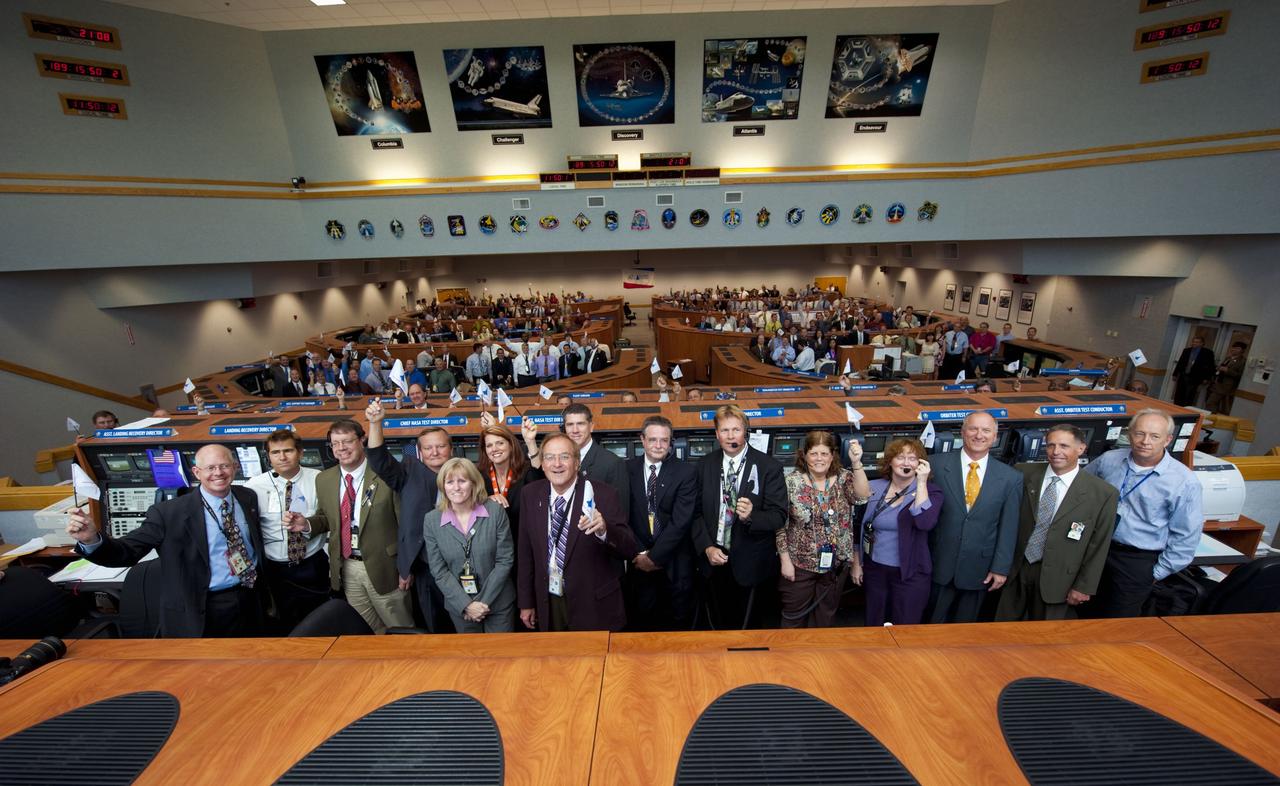
CAPE CANAVERAL, Fla. -- Launch controllers wave their STS-135 shuttle launch team member flags and cheer in Firing Room 4 of the Launch Control Center following the successful launch of space shuttle Atlantis from NASA's Kennedy Space Center in Florida. In the foreground, from left, are NASA Test Directors Steve Payne and Bob Holl; Landing and Recovery Director Greg Gaddis; Shuttle Launch Director Mike Leinbach; Atlantis' NASA Flow Director Angie Brewer; NASA Test Director Charlie Blackwell-Thompson; STS-135 Launch Commentator George Diller; NASA Test Directors Jeremy Graeber, Tim Potter, and Jeff Spaulding; Orbiter Test Conductor Roberta Wyrick; Assistant Orbiter Test Conductor Laurie Sally; Assistant Launch Director Pete Nickolenko; United Space Alliance Vice President of Launch and Recovery Systems Mark Nappi; and United Space Alliance Test Conductor Mark Paxton. Atlantis began its final flight, the STS-135 mission to the International Space Station, at 11:29 a.m. EDT on July 8. STS-135 will deliver the Raffaello multi-purpose logistics module packed with supplies and spare parts for the International Space Station. Atlantis also is flying the Robotic Refueling Mission experiment that will investigate the potential for robotically refueling existing satellites in orbit. In addition, Atlantis will return with a failed ammonia pump module to help NASA better understand the failure mechanism and improve pump designs for future systems. STS-135 is the 33rd flight of Atlantis, the 37th shuttle mission to the space station, and the 135th and final mission of NASA's Space Shuttle Program. For more information, visit www.nasa.gov/mission_pages/shuttle/shuttlemissions/sts135/index.html. Photo credit: NASA/Kim Shiflett