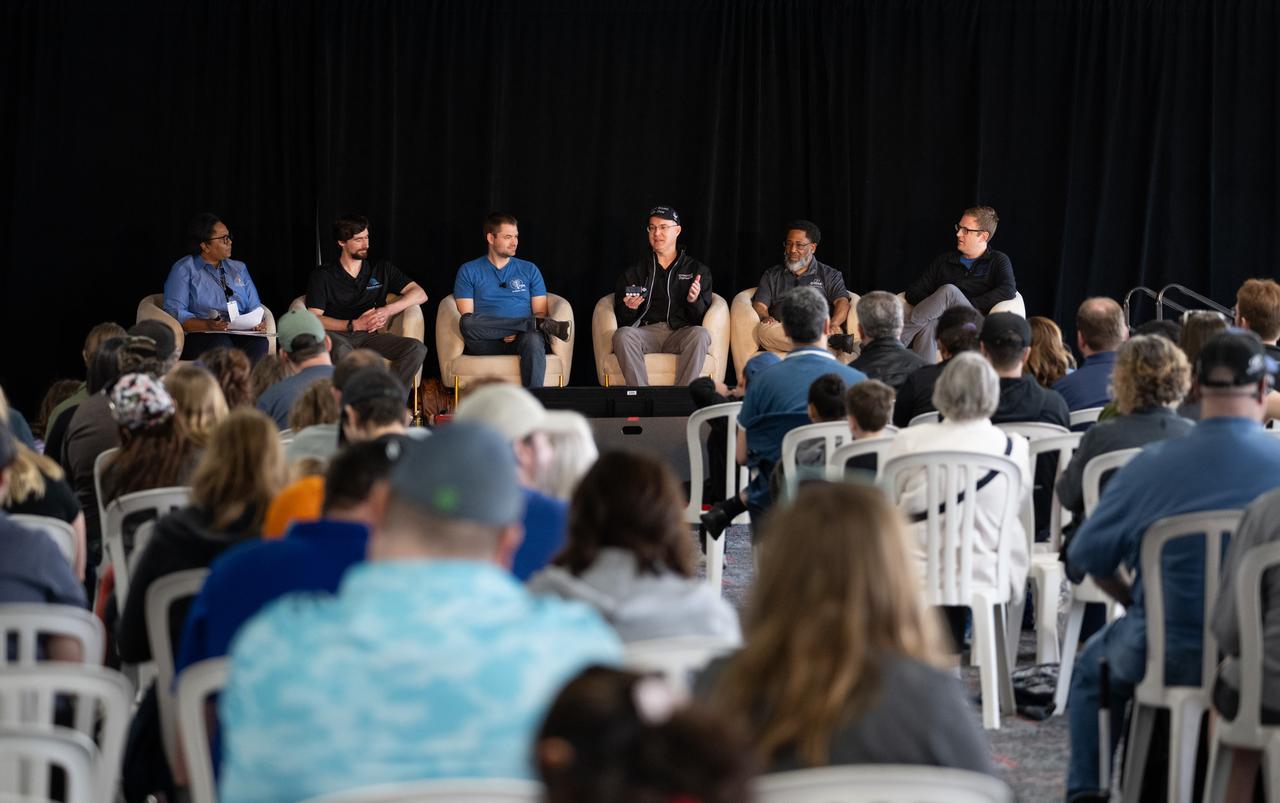
Attendees at the Indianapolis Motor Speedway listen to a panel discussion titled “Feeling is believing: A Tactile Launch Experience” about bring the eclipse experience to the visually impared with Shahra Lambert, senior advisor for engagement and equity in NASA's Office of the Administrator, Brandon Pearson, education director at NearSpace Education, John Pugsley, engineer at NearSpace Launch, Matt Voss, chief operating officer at NearSpace Launch, Dave Schleppenbach, chief executive officer at Tactile Engineering, Alex Moon, software director at Tactile Engineering, and Greg Williams, accessibility and STEM advisor at Tactile Engineering, ahead of the total solar eclipse, Monday, April 8, 2024, in Indianapolis, Ind. A total solar eclipse swept across a narrow portion of the North American continent from Mexico’s Pacific coast to the Atlantic coast of Newfoundland, Canada. A partial solar eclipse was visible across the entire North American continent along with parts of Central America and Europe. Photo Credit: (NASA/Joel Kowsky)

NASA Armstrong pilots Stu Broce, Greg Nelson and Tim Williams sign autographs for people at the Los Angeles County Air Show in Lancaster, California.
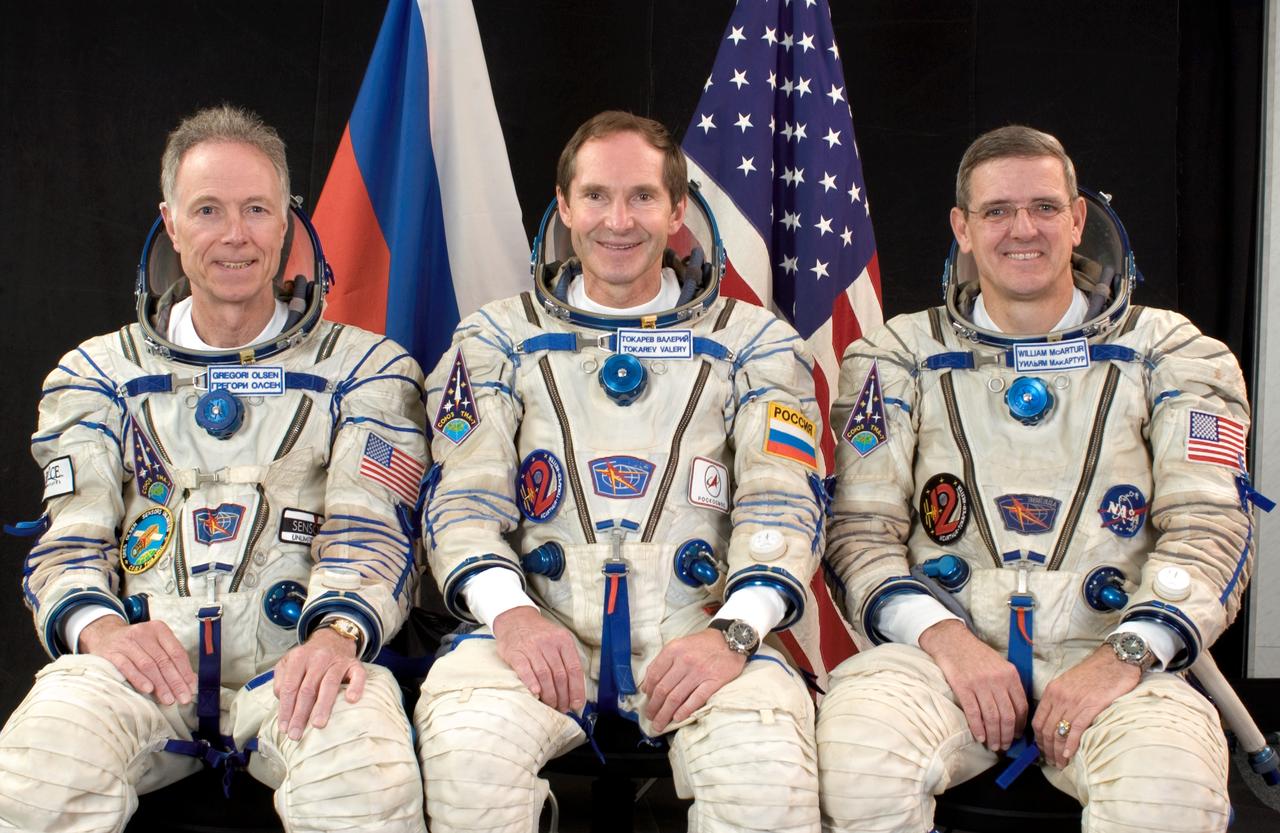
JSC2005-E-36547 (26 Aug. 2005) --- Attired in Russian Sokol suits, the Soyuz TMA-7 crew pauses from a busy training schedule in Star City, Russia to pose for a crew portrait. From the left are Greg Olsen, Soyuz Spaceflight Participant; cosmonaut Valery I. Tokarev, Expedition 12 flight engineer and Soyuz commander, and astronaut William S. McArthur, Jr., Expedition 12 commander and NASA Space Station science officer.
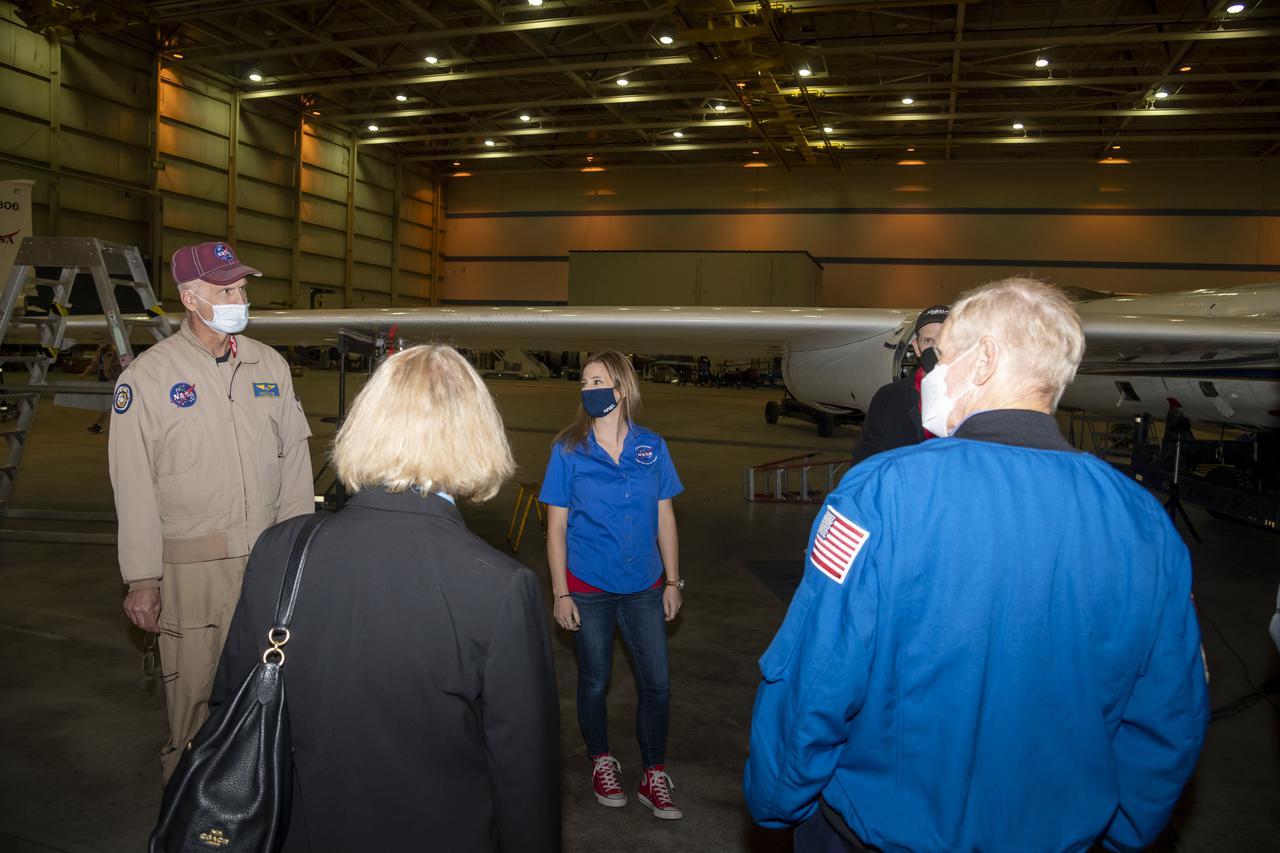
NASA Administrator Bill Nelson and NASA Deputy Administrator Pam Melroy receive a briefing on the high-altitude ER-2 aircraft and its missions from ER-2 pilot Greg "Coach" Nelson and ER-2 deputy project manager Fran Becker, and ER-2 pilot Tim Williams at Building 703 in Palmdale, California. The building is part of NASA's Armstrong Flight Research Center, which has its main campus in Edwards, California.
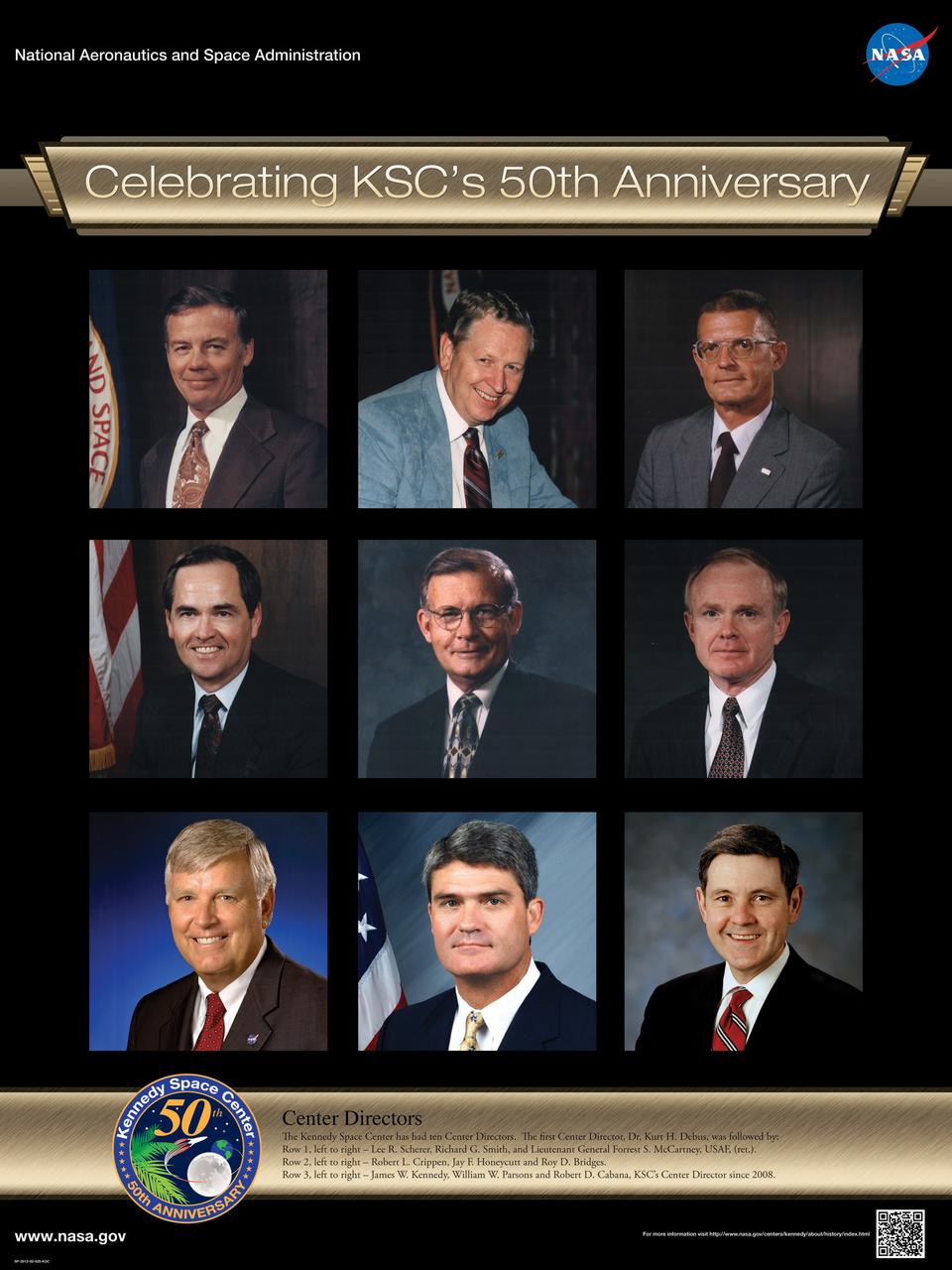
Center Directors: The Kennedy Space Center has had ten Center Directors. The first Center Director, Dr. Kurt H. Debus, was followed by: Row 1, left to right – Lee R. Scherer, Richard G. Smith, and Lieutenant General Forrest S. McCartney, USAF, ret.. Row 2, left to right – Robert L. Crippen, Jay F. Honeycutt and Roy D. Bridges. Row 3, left to right – James W. Kennedy, William W. Parsons and Robert D. Cabana, KSC’s Center Director since 2008. Poster designed by Kennedy Space Center Graphics Department/Greg Lee. Credit: NASA
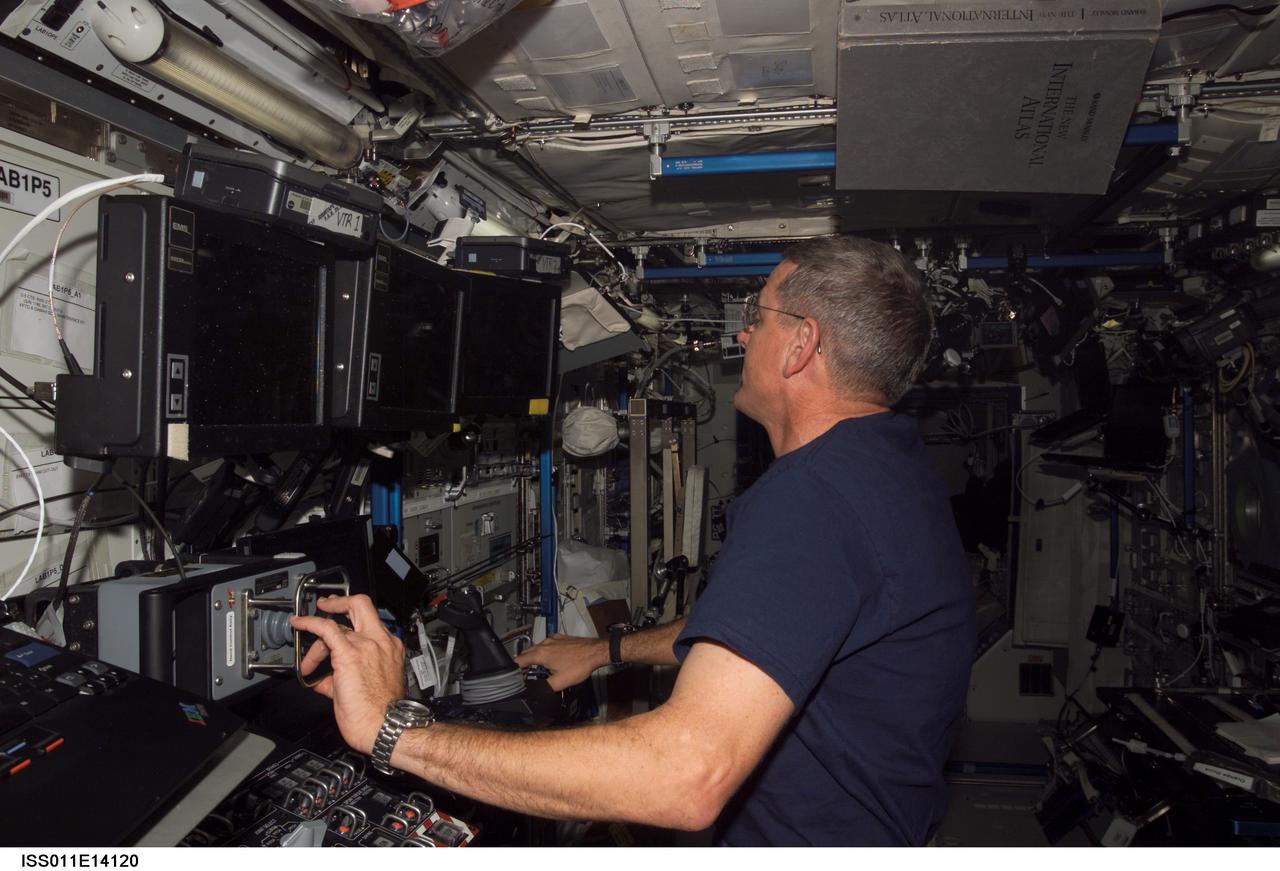
ISS011-E-14120 (5 October 2005) --- Astronaut William S. McArthur, Jr., Expedition 12 commander and NASA science officer, works with Space Station Remote Manipulator System or Canadarm2 controls located in the Destiny lab, while sharing duty time with the Expedition 11 crewmembers on the international space station. The Expedition 11 crew of cosmonaut Sergei K. Krikalev of Russia's Federal Space Agency, commander, and astronaut John L. Phillips, flight engineer and NASA science officer, along with spaceflight participant Greg Olsen, will be returning to Earth early next week.
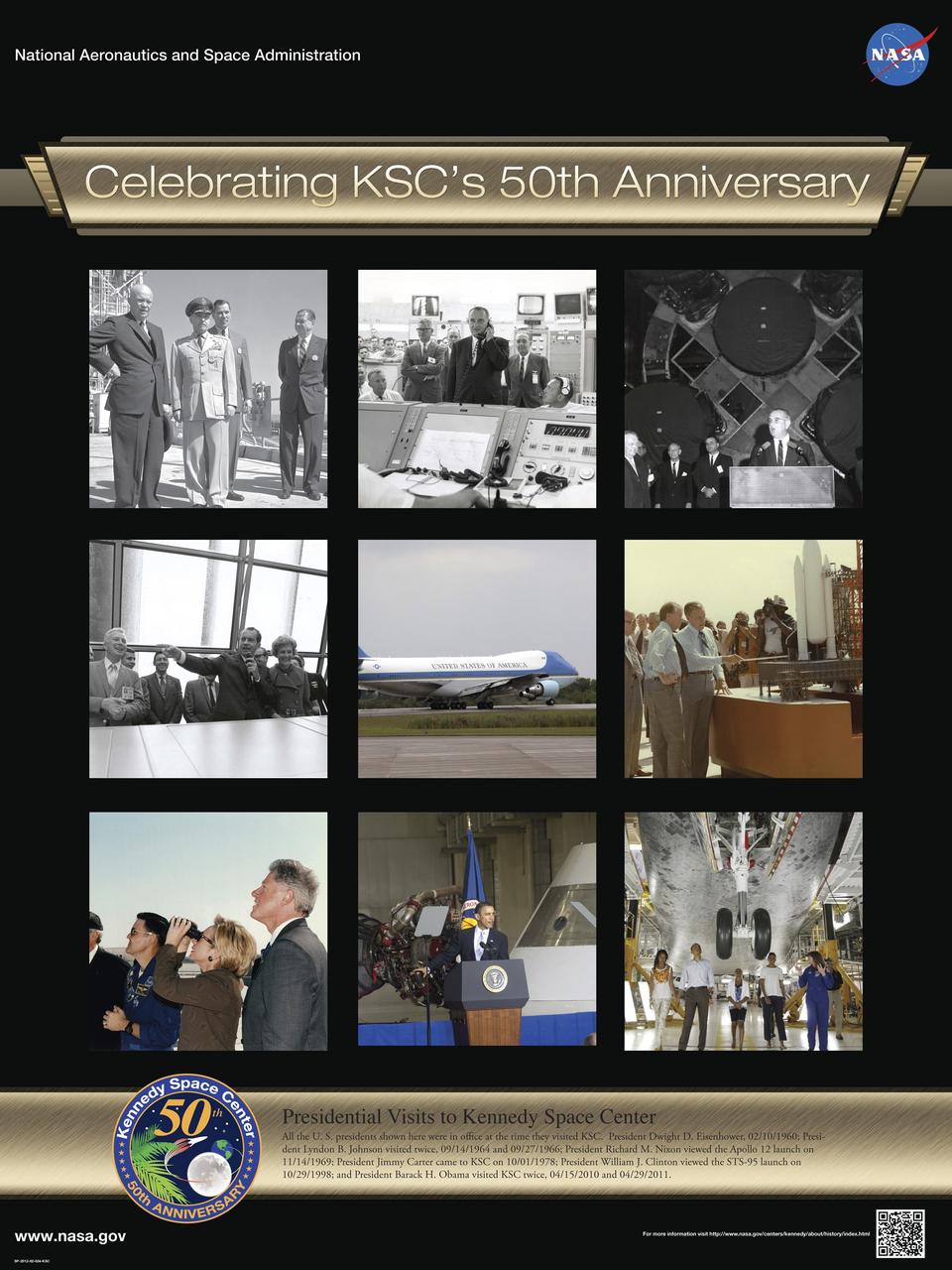
Presidential Visits to Kennedy Space Center: All the U. S. presidents shown here were in office at the time they visited KSC. President Dwight D. Eisenhower, 02/10/1960 President Lyndon B. Johnson visited twice, 09/14/1964 and 09/27/1966 President Richard M. Nixon viewed the Apollo 12 launch on 11/14/1969 President Jimmy Carter came to KSC on 10/01/1978 President William J. Clinton viewed the STS-95 launch on 10/29/1998 and President Barack H. Obama visited KSC twice, 04/15/2010 and 04/29/2011. Poster designed by Kennedy Space Center Graphics Department/Greg Lee. Credit: NASA
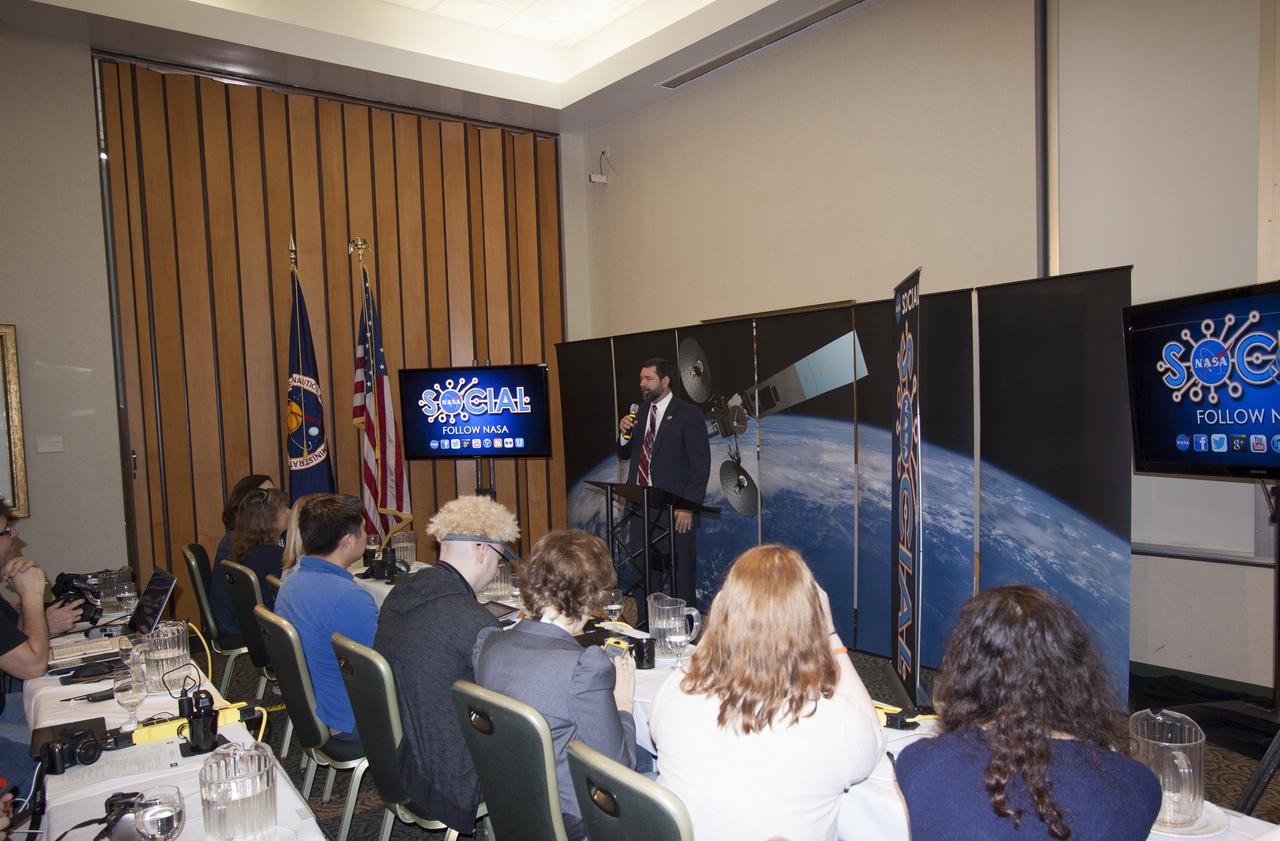
CAPE CANAVERAL, Fla. -- At NASA's Kennedy Space Center in Florida, Greg Williams, deputy associate administrator of NASA's Human Exploration and Operations Mission Directorate, addresses agency social media followers on the first day of activities of a NASA Social revolving around NASA's Tracking and Data Relay Satellite-K mission. NASA Socials are in-person meetings for people who engage with the agency through Twitter, Facebook, Google+ and other social networks. The satellite, known as TDRS-K, is set to launch at 8:48 p.m. EST on Jan. 30 aboard a United Launch Alliance Atlas V rocket from Space Launch Complex 41 on nearby Cape Canaveral Air Force Station. About 50 followers were selected to participate in the TDRS-K prelaunch and launch activities and share them with their own fan base. The TDRS-K spacecraft is part of the next-generation series in the Tracking and Data Relay Satellite System, a constellation of space-based communication satellites providing tracking, telemetry, command and high-bandwidth data return services. For more information, visit http://www.nasa.gov/mission_pages/tdrs/index.html. Photo credit: NASA/Jim Grossmann