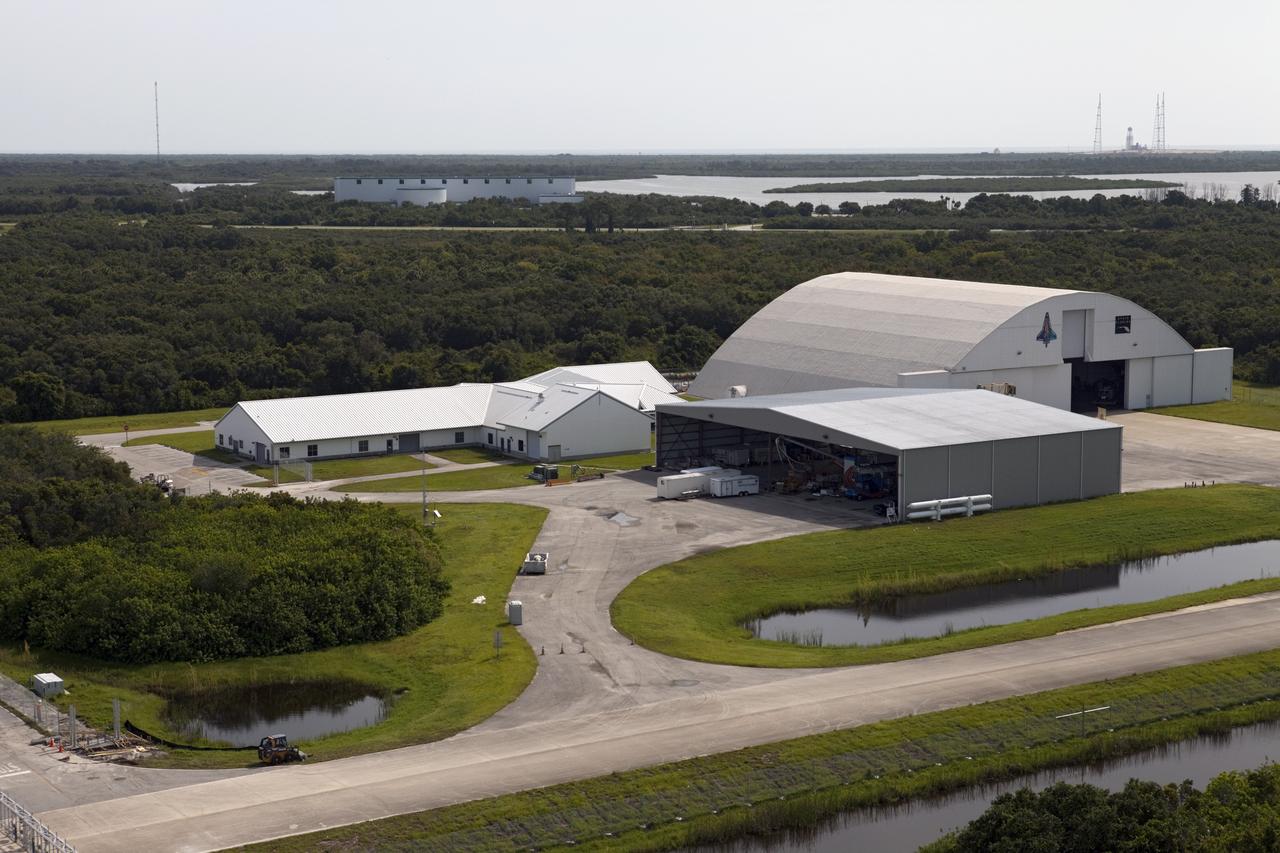
CAPE CANAVERAL, Fla. – This aerial view shows a 50,000-square-foot hangar located on the Shuttle Landing Facility at the Kennedy Space Center, Fla., providing shelter and storage for NASA and non-NASA aircraft and maintenance operations. Adjacent to the hangar is an operations building housing personnel who support operations at the 15,000-foot long concrete runway. At the north end of the runway, a rock and crater-filled planetary scape has been built so engineers can test the Autonomous Landing and Hazard Avoidance Technology, or ALHAT system on the Project Morpheus lander. Testing will demonstrate ALHAT’s ability to provide required navigation data negotiating the Morpheus lander away from risks during descent. Checkout of the prototype lander has been ongoing at NASA’s Johnson Space Center in Houston in preparation for its first free flight. The SLF site will provide the lander with the kind of field necessary for realistic testing. Project Morpheus is one of 20 small projects comprising the Advanced Exploration Systems, or AES, program in NASA’s Human Exploration and Operations Mission Directorate. AES projects pioneer new approaches for rapidly developing prototype systems, demonstrating key capabilities and validating operational concepts for future human missions beyond Earth orbit. For more information on Project Morpheus, visit http://www.nasa.gov/centers/johnson/exploration/morpheus/index.html Photo credit: NASA/Kim Shiflett
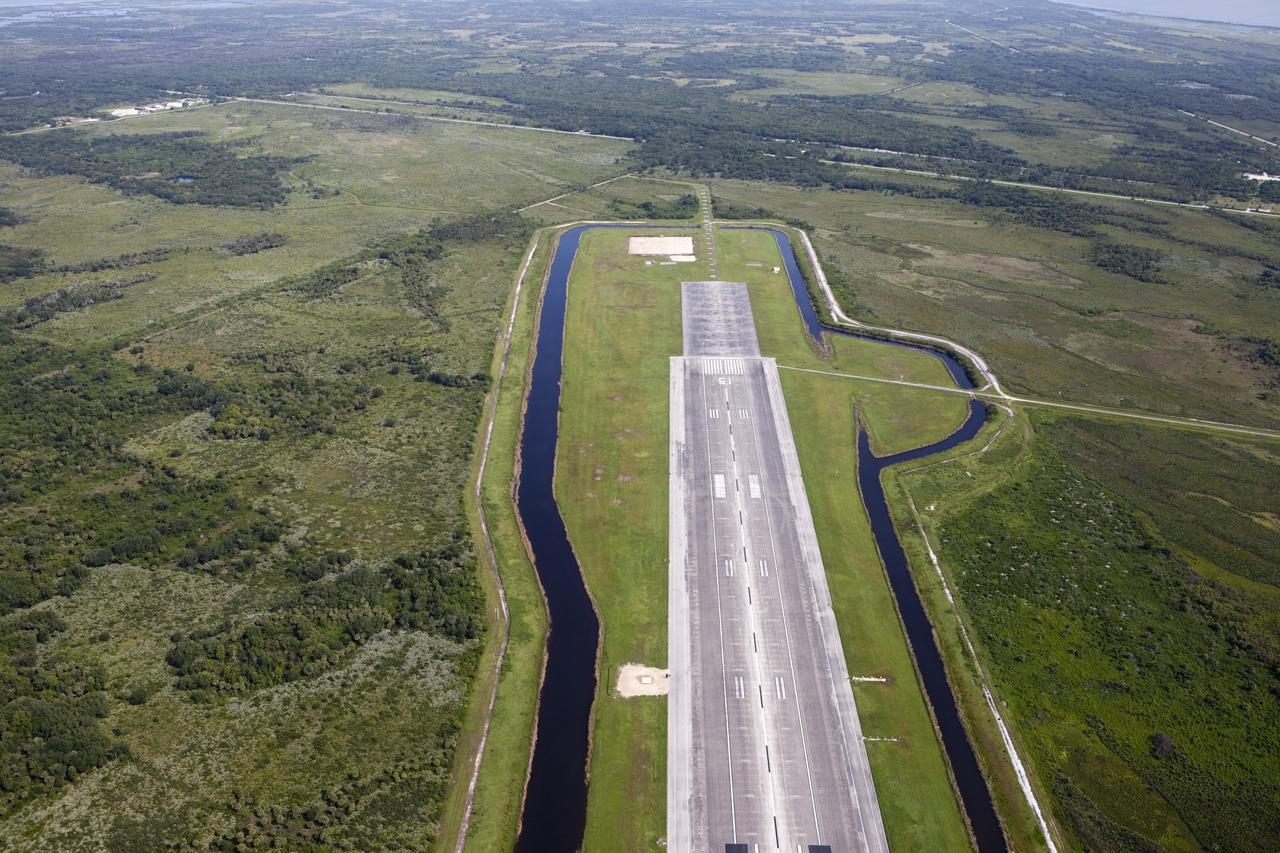
CAPE CANAVERAL, Fla. – This aerial view shows the north end of the Kennedy Space Center’s Shuttle Landing Facility. At the end of the runway is a rock and crater-filled planetary scape has been built so engineers can test the Autonomous Landing and Hazard Avoidance Technology, or ALHAT system on the Project Morpheus lander. Testing will demonstrate ALHAT’s ability to provide required navigation data negotiating the Morpheus lander away from risks during descent. Checkout of the prototype lander has been ongoing at NASA’s Johnson Space Center in Houston in preparation for its first free flight. The SLF site will provide the lander with the kind of field necessary for realistic testing. Project Morpheus is one of 20 small projects comprising the Advanced Exploration Systems, or AES, program in NASA’s Human Exploration and Operations Mission Directorate. AES projects pioneer new approaches for rapidly developing prototype systems, demonstrating key capabilities and validating operational concepts for future human missions beyond Earth orbit. For more information on Project Morpheus, visit http://www.nasa.gov/centers/johnson/exploration/morpheus/index.html Photo credit: NASA/Kim Shiflett
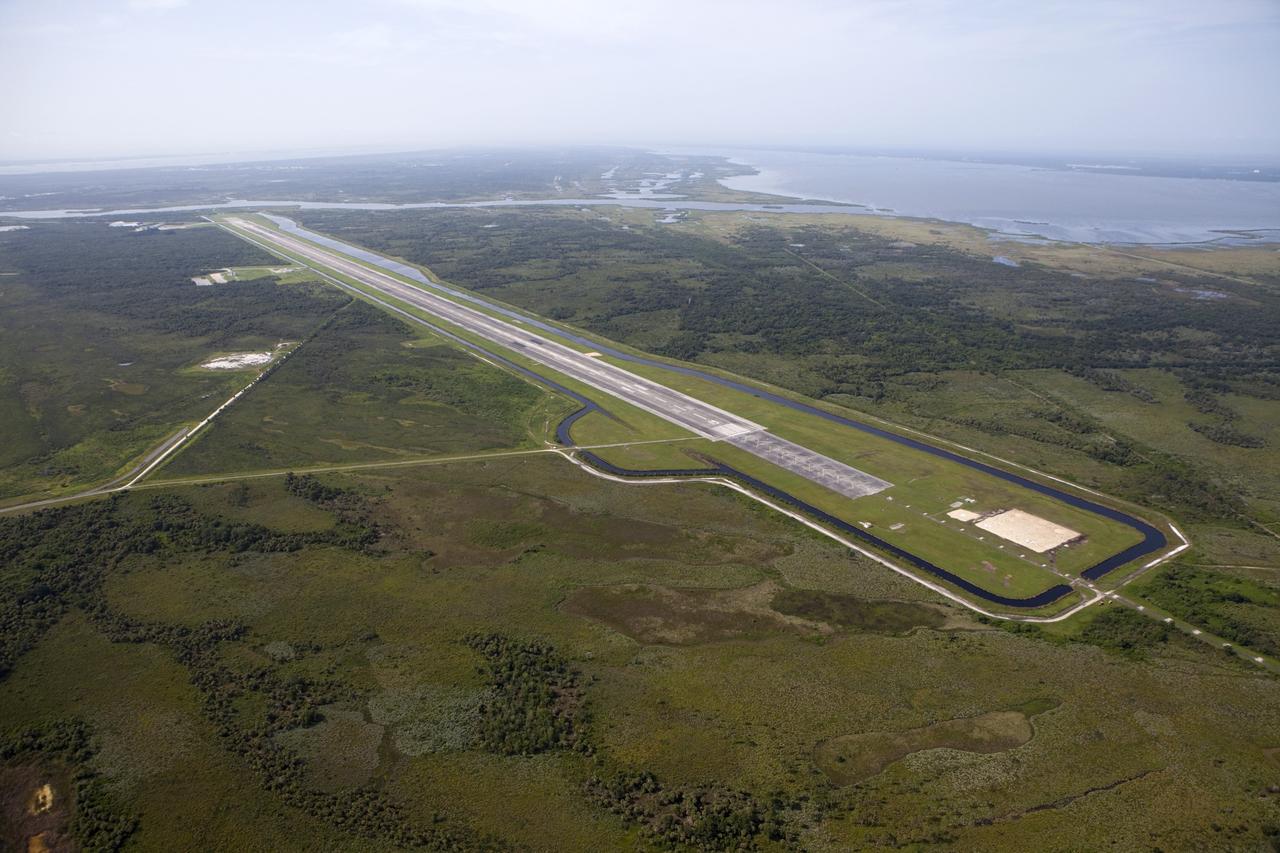
CAPE CANAVERAL, Fla. – This aerial view shows the 15,000-foot long Shuttle Landing Facility at the Kennedy Space Center, Fla. At the north end of the runway, to the right, is a rock and crater-filled planetary scape has been built so engineers can test the Autonomous Landing and Hazard Avoidance Technology, or ALHAT system on the Project Morpheus lander. Testing will demonstrate ALHAT’s ability to provide required navigation data negotiating the Morpheus lander away from risks during descent. Checkout of the prototype lander has been ongoing at NASA’s Johnson Space Center in Houston in preparation for its first free flight. The SLF site will provide the lander with the kind of field necessary for realistic testing. Project Morpheus is one of 20 small projects comprising the Advanced Exploration Systems, or AES, program in NASA’s Human Exploration and Operations Mission Directorate. AES projects pioneer new approaches for rapidly developing prototype systems, demonstrating key capabilities and validating operational concepts for future human missions beyond Earth orbit. For more information on Project Morpheus, visit http://www.nasa.gov/centers/johnson/exploration/morpheus/index.html Photo credit: NASA/Kim Shiflett
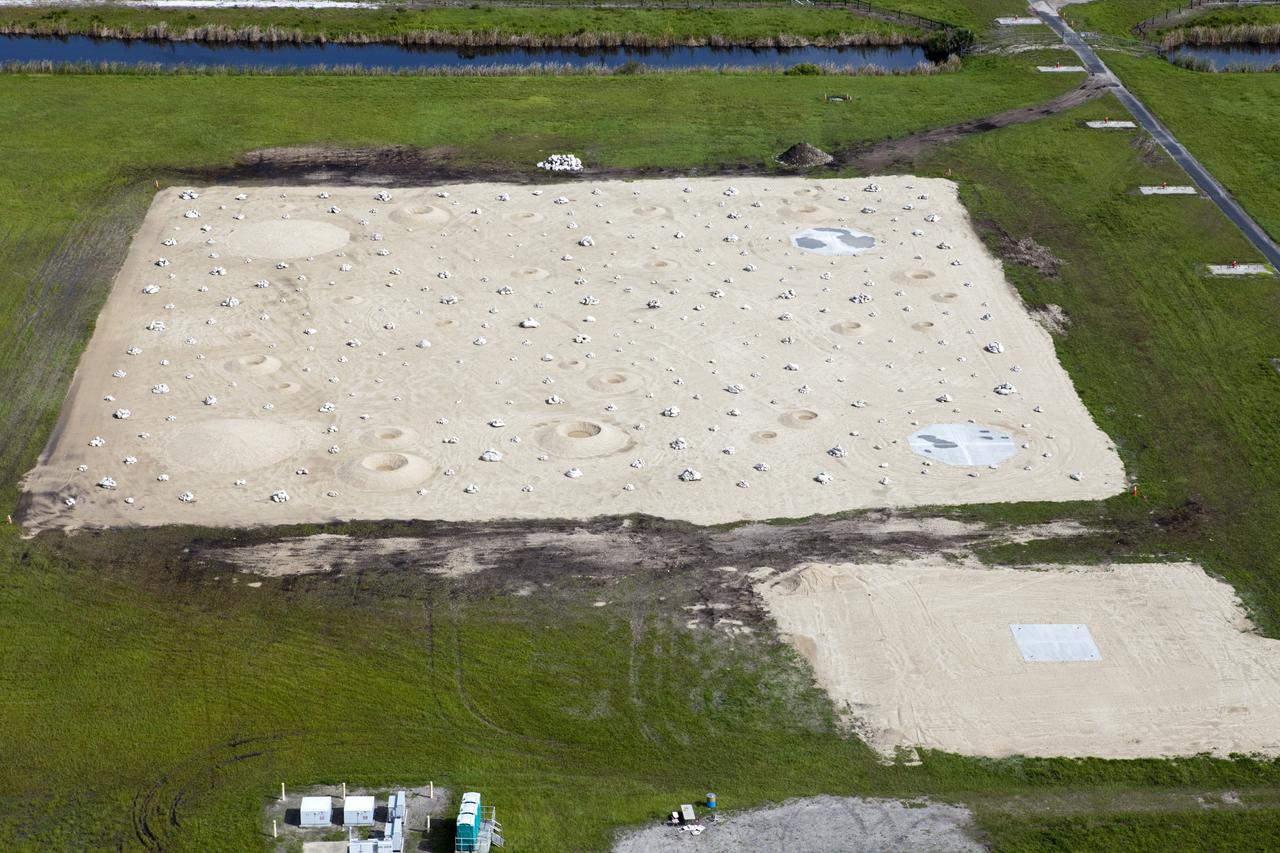
CAPE CANAVERAL, Fla. – This aerial view shows a rock and crater-filled planetary scape that has been built at the north end of the Kennedy Space Center’s Shuttle Landing Facility. The site will allow engineers to test the Autonomous Landing and Hazard Avoidance Technology, or ALHAT system on the Project Morpheus lander. Testing will demonstrate ALHAT’s ability to provide required navigation data negotiating the Morpheus lander away from risks during descent. Checkout of the prototype lander has been ongoing at NASA’s Johnson Space Center in Houston in preparation for its first free flight. The SLF site will provide the lander with the kind of field necessary for realistic testing. Project Morpheus is one of 20 small projects comprising the Advanced Exploration Systems, or AES, program in NASA’s Human Exploration and Operations Mission Directorate. AES projects pioneer new approaches for rapidly developing prototype systems, demonstrating key capabilities and validating operational concepts for future human missions beyond Earth orbit. For more information on Project Morpheus, visit http://www.nasa.gov/centers/johnson/exploration/morpheus/index.html Photo credit: NASA/Kim Shiflett
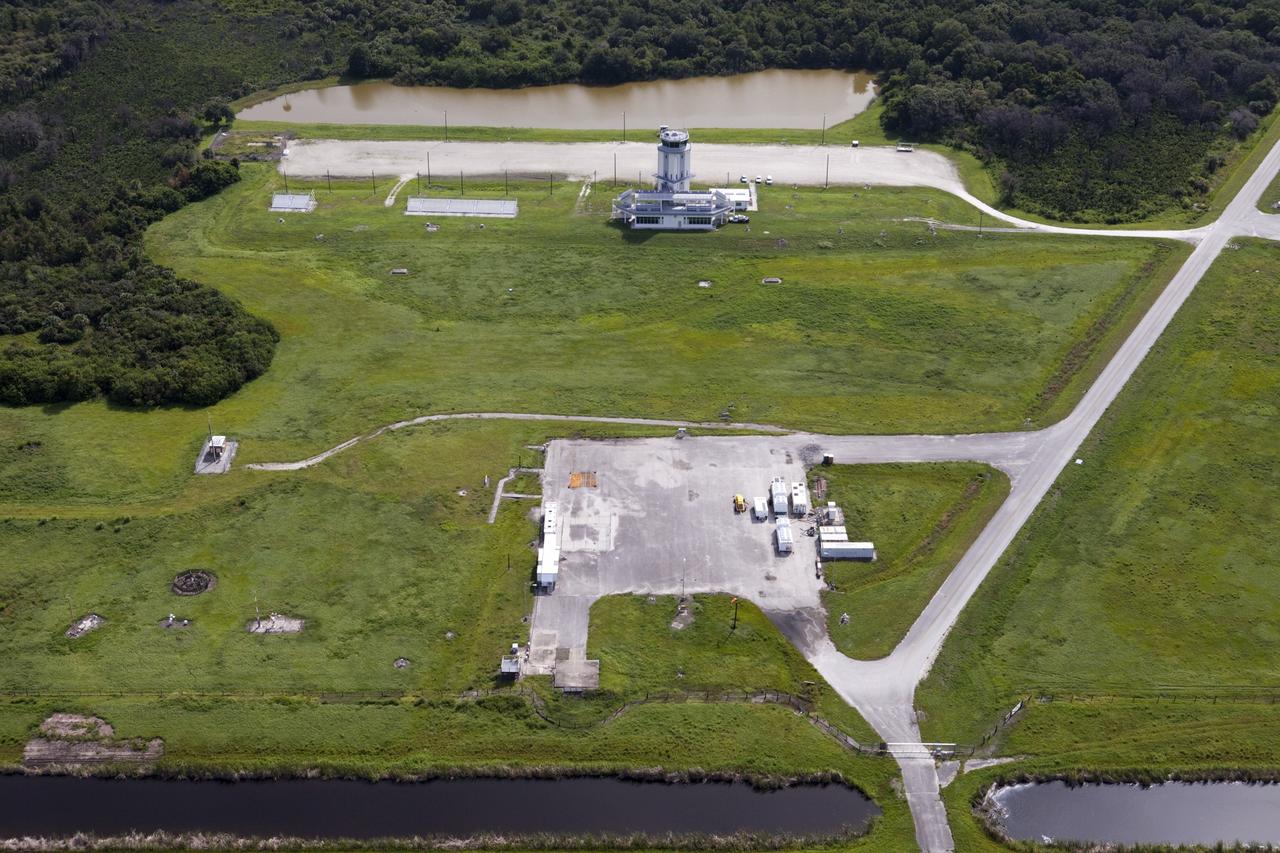
CAPE CANAVERAL, Fla. – This aerial view shows the Shuttle Landing Facility’s air traffic control tower at the Kennedy Space Center in Florida. Just below the tower is the mid-field park site used for runway support vehicles. At the north end of the runway, a rock and crater-filled planetary scape has been built so engineers can test the Autonomous Landing and Hazard Avoidance Technology, or ALHAT system on the Project Morpheus lander. Testing will demonstrate ALHAT’s ability to provide required navigation data negotiating the Morpheus lander away from risks during descent. Checkout of the prototype lander has been ongoing at NASA’s Johnson Space Center in Houston in preparation for its first free flight. The SLF site will provide the lander with the kind of field necessary for realistic testing. Project Morpheus is one of 20 small projects comprising the Advanced Exploration Systems, or AES, program in NASA’s Human Exploration and Operations Mission Directorate. AES projects pioneer new approaches for rapidly developing prototype systems, demonstrating key capabilities and validating operational concepts for future human missions beyond Earth orbit. For more information on Project Morpheus, visit http://www.nasa.gov/centers/johnson/exploration/morpheus/index.html Photo credit: NASA/Kim Shiflett
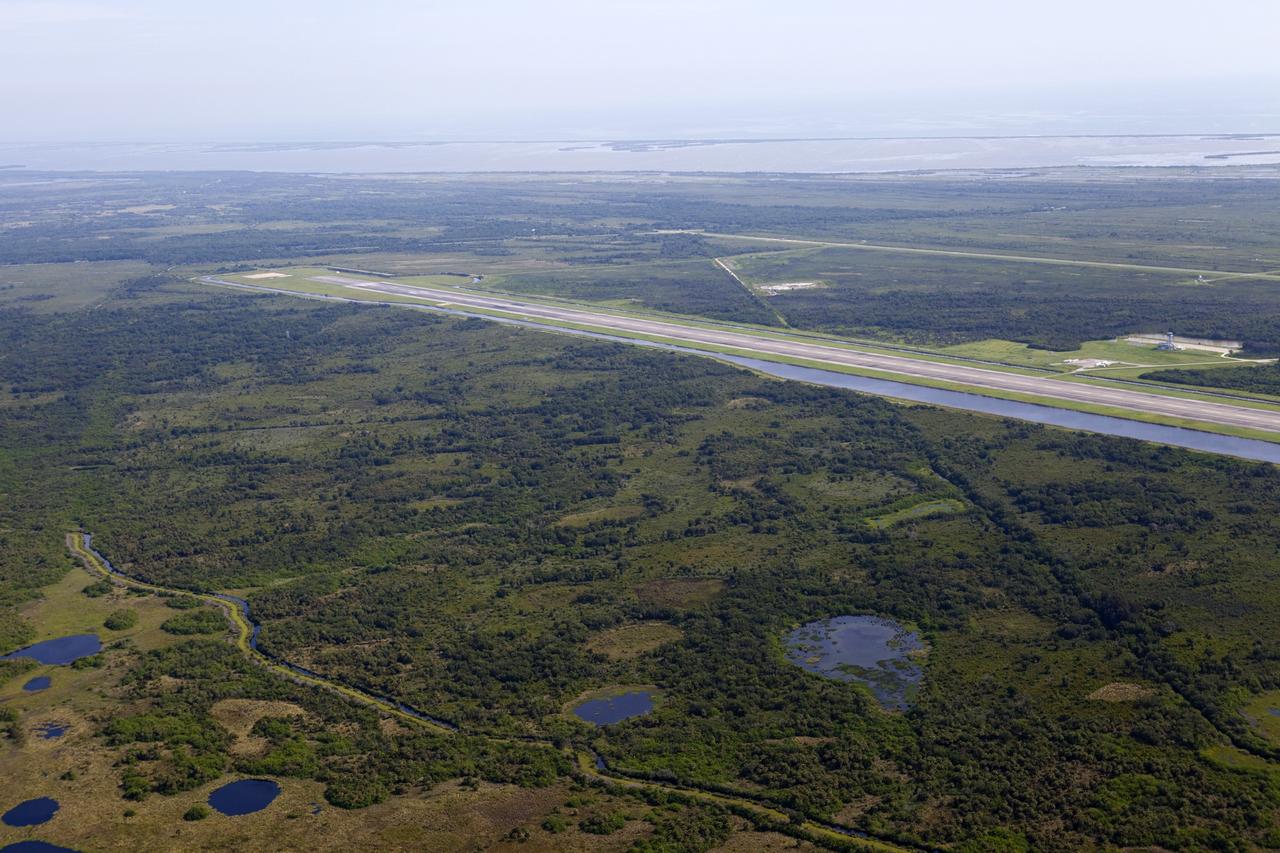
CAPE CANAVERAL, Fla. – This aerial view shows the north end of the Kennedy Space Center’s 15,000-foot long Shuttle Landing Facility. On the far left at the end of the runway, a rock and crater-filled planetary scape has been built so engineers can test the Autonomous Landing and Hazard Avoidance Technology, or ALHAT system on the Project Morpheus lander. Testing will demonstrate ALHAT’s ability to provide required navigation data negotiating the Morpheus lander away from risks during descent. Checkout of the prototype lander has been ongoing at NASA’s Johnson Space Center in Houston in preparation for its first free flight. The SLF site will provide the lander with the kind of field necessary for realistic testing. Project Morpheus is one of 20 small projects comprising the Advanced Exploration Systems, or AES, program in NASA’s Human Exploration and Operations Mission Directorate. AES projects pioneer new approaches for rapidly developing prototype systems, demonstrating key capabilities and validating operational concepts for future human missions beyond Earth orbit. For more information on Project Morpheus, visit http://www.nasa.gov/centers/johnson/exploration/morpheus/index.html Photo credit: NASA/Kim Shiflett
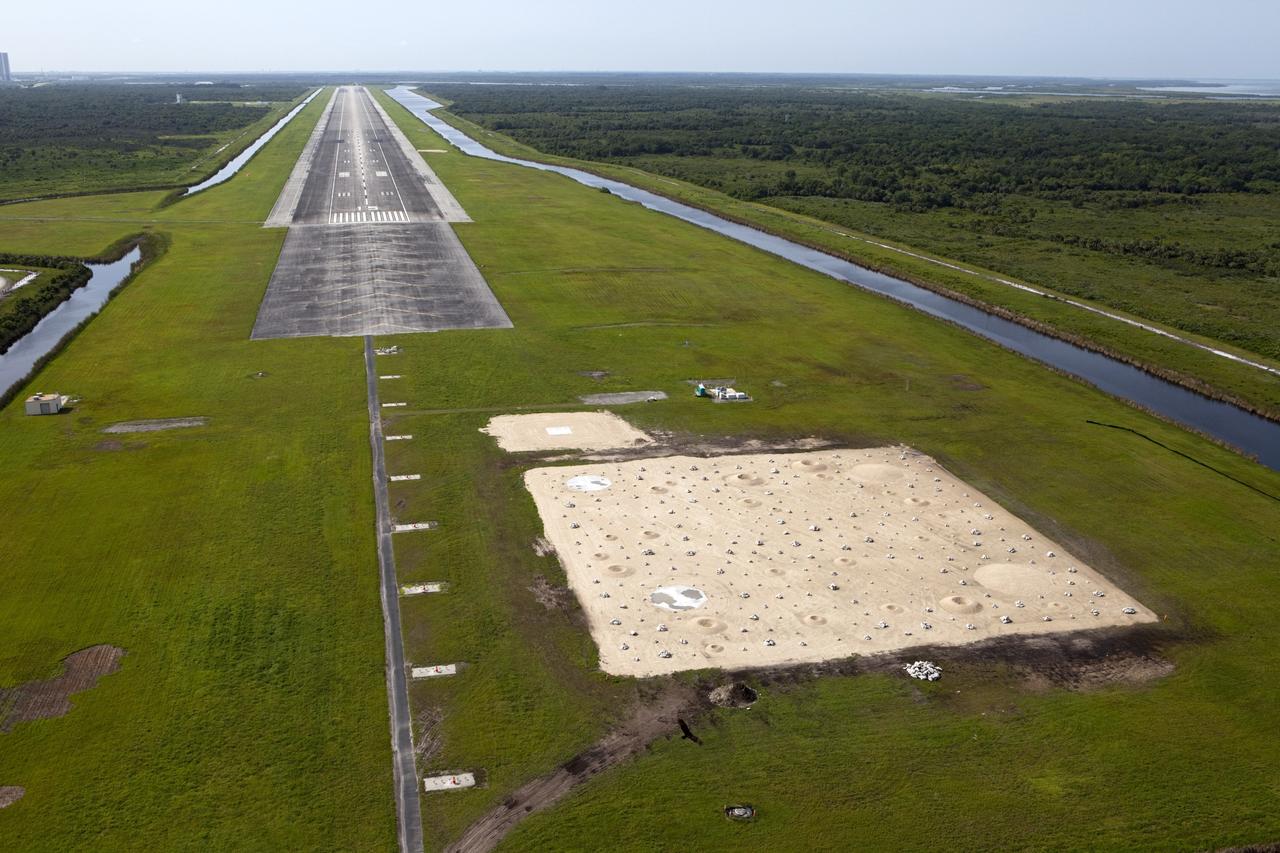
CAPE CANAVERAL, Fla. – This aerial view shows the north end of the Kennedy Space Center’s Shuttle Landing Facility. At the end of the runway is a rock and crater-filled planetary scape has been built so engineers can test the Autonomous Landing and Hazard Avoidance Technology, or ALHAT system on the Project Morpheus lander. Testing will demonstrate ALHAT’s ability to provide required navigation data negotiating the Morpheus lander away from risks during descent. Checkout of the prototype lander has been ongoing at NASA’s Johnson Space Center in Houston in preparation for its first free flight. The SLF site will provide the lander with the kind of field necessary for realistic testing. Project Morpheus is one of 20 small projects comprising the Advanced Exploration Systems, or AES, program in NASA’s Human Exploration and Operations Mission Directorate. AES projects pioneer new approaches for rapidly developing prototype systems, demonstrating key capabilities and validating operational concepts for future human missions beyond Earth orbit. For more information on Project Morpheus, visit http://www.nasa.gov/centers/johnson/exploration/morpheus/index.html Photo credit: NASA/Kim Shiflett

CAPE CANAVERAL, Fla. – This aerial view shows the north end of the Kennedy Space Center’s Shuttle Landing Facility. At the end of the runway, to the right, is a rock and crater-filled planetary scape has been built so engineers can test the Autonomous Landing and Hazard Avoidance Technology, or ALHAT system on the Project Morpheus lander. Testing will demonstrate ALHAT’s ability to provide required navigation data negotiating the Morpheus lander away from risks during descent. Checkout of the prototype lander has been ongoing at NASA’s Johnson Space Center in Houston in preparation for its first free flight. The SLF site will provide the lander with the kind of field necessary for realistic testing. Project Morpheus is one of 20 small projects comprising the Advanced Exploration Systems, or AES, program in NASA’s Human Exploration and Operations Mission Directorate. AES projects pioneer new approaches for rapidly developing prototype systems, demonstrating key capabilities and validating operational concepts for future human missions beyond Earth orbit. For more information on Project Morpheus, visit http://www.nasa.gov/centers/johnson/exploration/morpheus/index.html Photo credit: NASA/Kim Shiflett
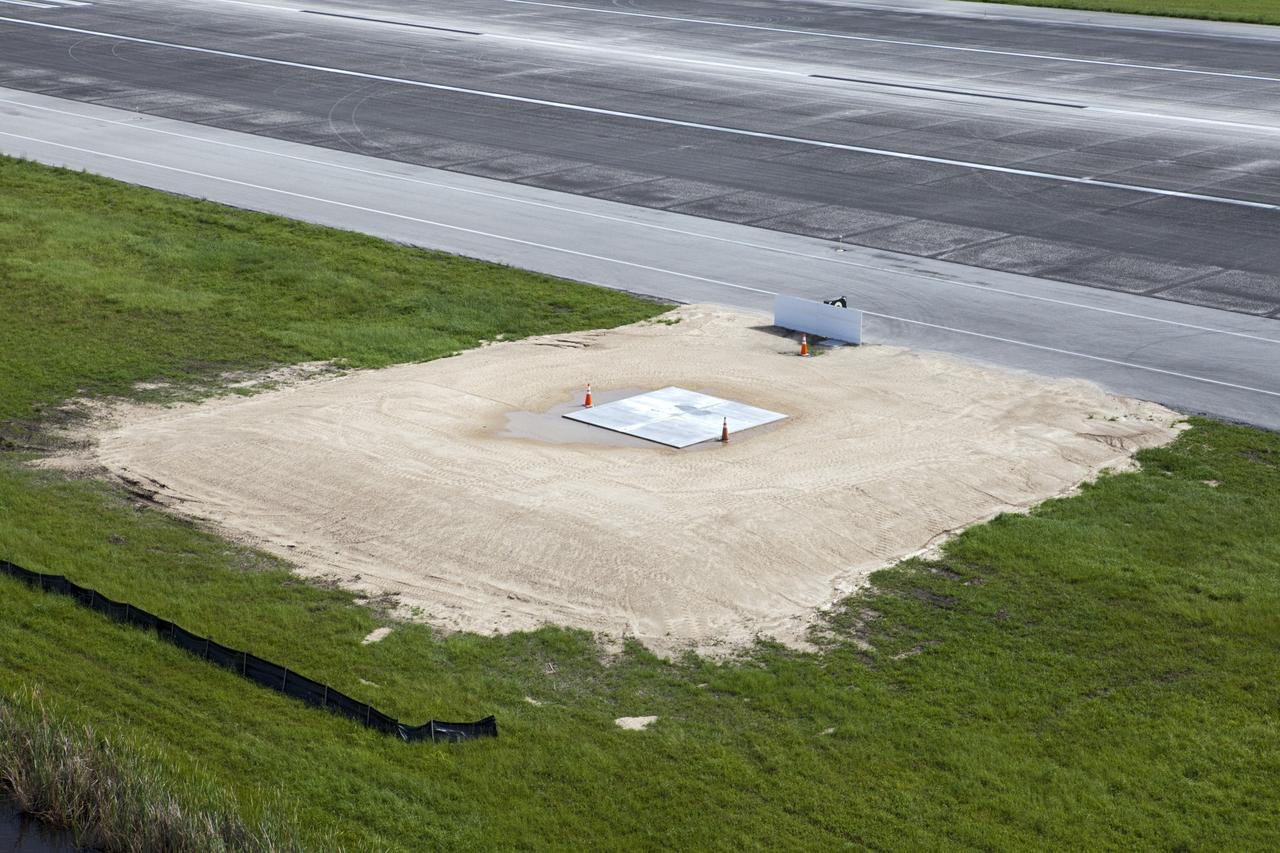
CAPE CANAVERAL, Fla. – This aerial view shows the launch platform for the Project Morpheus lander at the midfield point of the Shuttle Landing Facility, or SLF, at NASA’s Kennedy Space Center in Florida. At the north end of the runway is a rock and crater-filled planetary scape built so engineers can test the Autonomous Landing and Hazard Avoidance Technology, or ALHAT system on the Morpheus lander. Testing will demonstrate ALHAT’s ability to provide required navigation data negotiating the Morpheus lander away from risks during descent. Checkout of the prototype lander has been ongoing at NASA’s Johnson Space Center in Houston in preparation for its first free flight. The SLF site will provide the lander with the kind of field necessary for realistic testing. Project Morpheus is one of 20 small projects comprising the Advanced Exploration Systems, or AES, program in NASA’s Human Exploration and Operations Mission Directorate. AES projects pioneer new approaches for rapidly developing prototype systems, demonstrating key capabilities and validating operational concepts for future human missions beyond Earth orbit. For more information on Project Morpheus, visit http://www.nasa.gov/centers/johnson/exploration/morpheus/index.html Photo credit: NASA/Kim Shiflett

CAPE CANAVERAL, Fla. - Just north of the Kennedy Space Center’s Shuttle Landing Facility runway, a rock and crater-filled planetary scape has been built so engineers can test the Autonomous Landing and Hazard Avoidance Technology, or ALHAT system on the Project Morpheus lander. Testing will demonstrate ALHAT’s ability to provide required navigation data negotiating the Morpheus lander away from risks during descent. Checkout of the prototype lander has been ongoing at NASA’s Johnson Space Center in Houston in preparation for its first free flight. The SLF site will provide the lander with the kind of field necessary for realistic testing. Project Morpheus is one of 20 small projects comprising the Advanced Exploration Systems, or AES, program in NASA’s Human Exploration and Operations Mission Directorate. AES projects pioneer new approaches for rapidly developing prototype systems, demonstrating key capabilities and validating operational concepts for future human missions beyond Earth orbit. For more information on Project Morpheus, visit http://www.nasa.gov/centers/johnson/exploration/morpheus/index.html Photo credit: NASA/Kim Shiflett
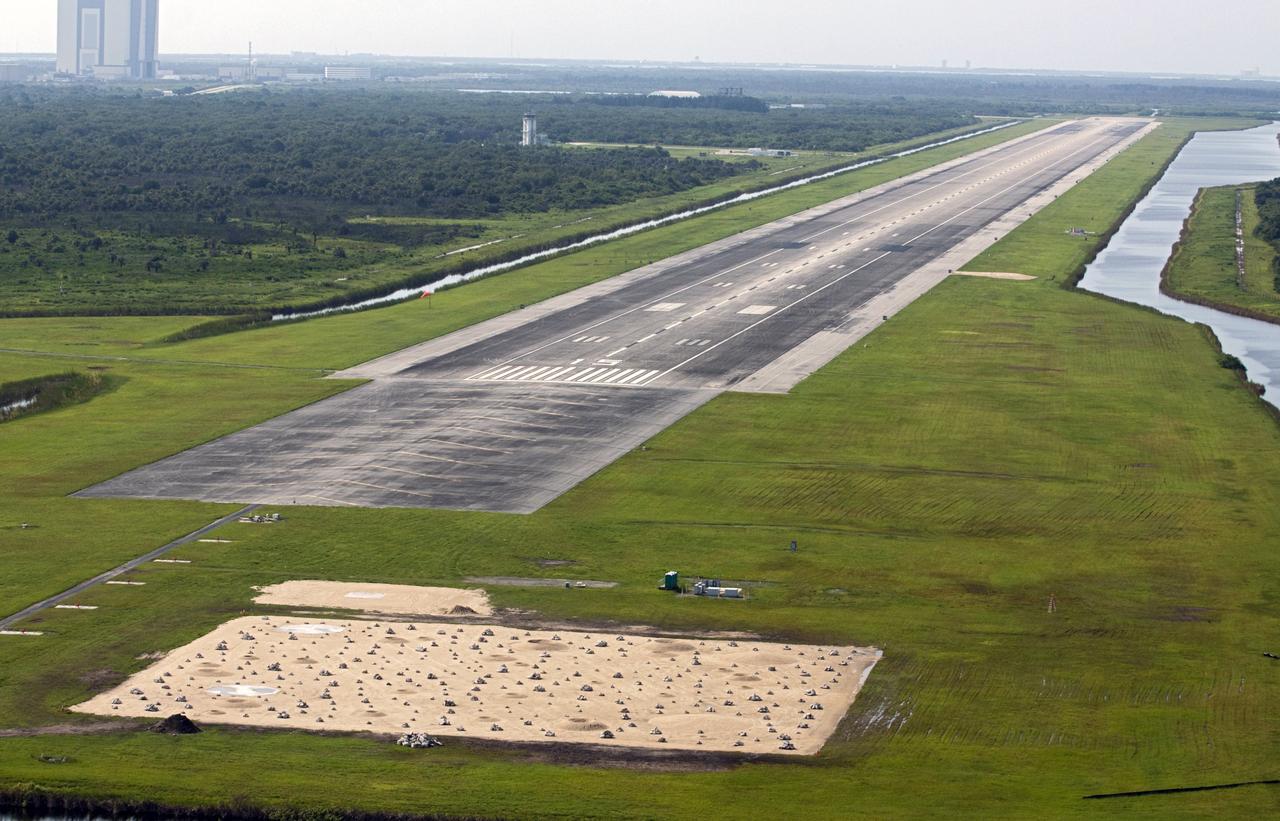
CAPE CANAVERAL, Fla. - Just north of the Kennedy Space Center’s Shuttle Landing Facility, or SLF, a rock and crater-filled planetary scape has been built so engineers can test the Autonomous Landing and Hazard Avoidance Technology, or ALHAT, system on the Project Morpheus lander. Testing will demonstrate ALHAT’s ability to provide required navigation data negotiating the Morpheus lander away from risks during descent. Checkout of the prototype lander has been ongoing at NASA’s Johnson Space Center in Houston in preparation for its first free flight. The SLF site will provide the lander with the kind of field necessary for realistic testing. Project Morpheus is one of 20 small projects comprising the Advanced Exploration Systems, or AES, program in NASA’s Human Exploration and Operations Mission Directorate. AES projects pioneer new approaches for rapidly developing prototype systems, demonstrating key capabilities and validating operational concepts for future human missions beyond Earth orbit. For more information on Project Morpheus, visit http://www.nasa.gov/centers/johnson/exploration/morpheus/index.html Photo credit: NASA/Kim Shiflett
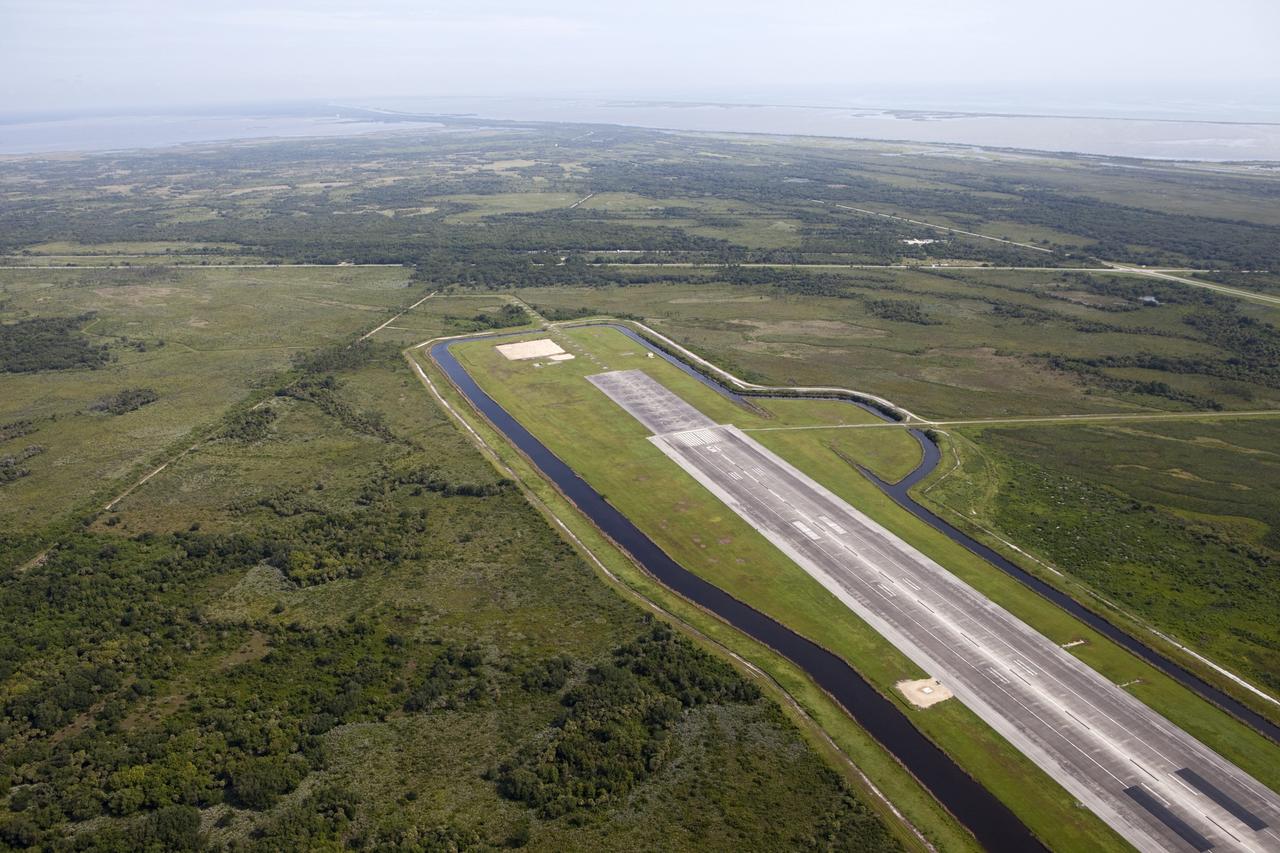
CAPE CANAVERAL, Fla. – This aerial view shows the north end of the Kennedy Space Center’s Shuttle Landing Facility. At the end of the runway is a rock and crater-filled planetary scape has been built so engineers can test the Autonomous Landing and Hazard Avoidance Technology, or ALHAT system on the Project Morpheus lander. Testing will demonstrate ALHAT’s ability to provide required navigation data negotiating the Morpheus lander away from risks during descent. Checkout of the prototype lander has been ongoing at NASA’s Johnson Space Center in Houston in preparation for its first free flight. The SLF site will provide the lander with the kind of field necessary for realistic testing. Project Morpheus is one of 20 small projects comprising the Advanced Exploration Systems, or AES, program in NASA’s Human Exploration and Operations Mission Directorate. AES projects pioneer new approaches for rapidly developing prototype systems, demonstrating key capabilities and validating operational concepts for future human missions beyond Earth orbit. For more information on Project Morpheus, visit http://www.nasa.gov/centers/johnson/exploration/morpheus/index.html Photo credit: NASA/Kim Shiflett
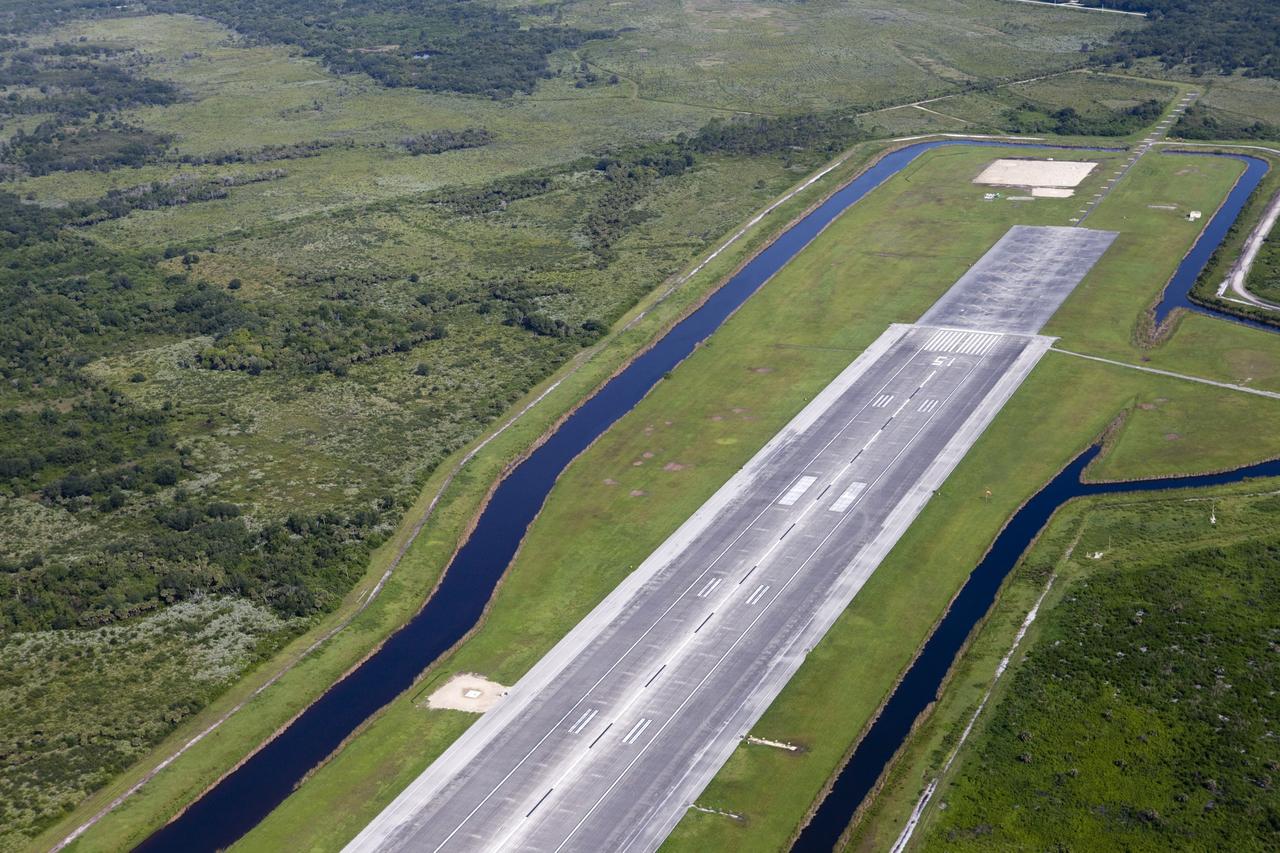
CAPE CANAVERAL, Fla. – This aerial view shows the north end of the Kennedy Space Center’s Shuttle Landing Facility. At the end of the runway, in the upper right, a rock and crater-filled planetary scape has been built so engineers can test the Autonomous Landing and Hazard Avoidance Technology, or ALHAT system on the Project Morpheus lander. Testing will demonstrate ALHAT’s ability to provide required navigation data negotiating the Morpheus lander away from risks during descent. Checkout of the prototype lander has been ongoing at NASA’s Johnson Space Center in Houston in preparation for its first free flight. The SLF site will provide the lander with the kind of field necessary for realistic testing. Project Morpheus is one of 20 small projects comprising the Advanced Exploration Systems, or AES, program in NASA’s Human Exploration and Operations Mission Directorate. AES projects pioneer new approaches for rapidly developing prototype systems, demonstrating key capabilities and validating operational concepts for future human missions beyond Earth orbit. For more information on Project Morpheus, visit http://www.nasa.gov/centers/johnson/exploration/morpheus/index.html Photo credit: NASA/Kim Shiflett
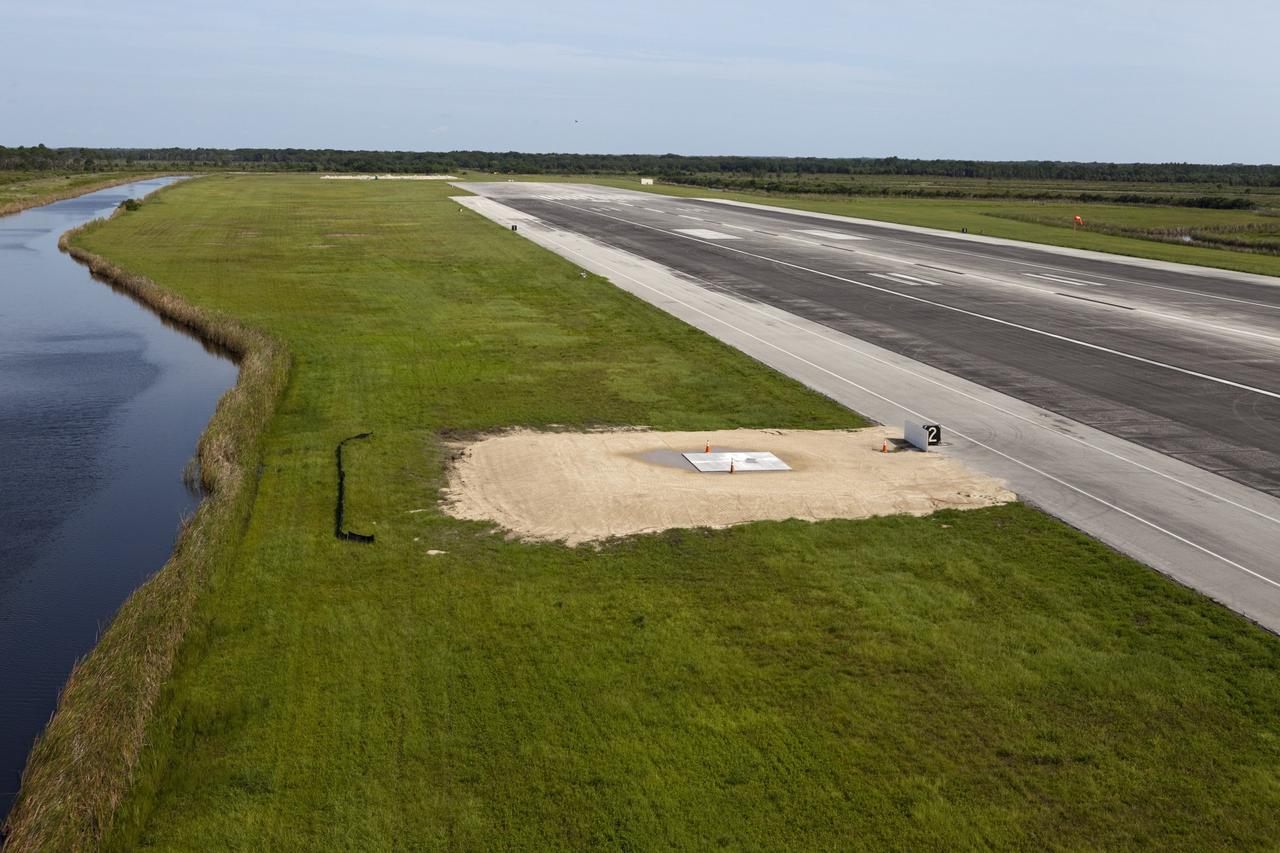
CAPE CANAVERAL, Fla. – This aerial view shows the launch platform for the Project Morpheus lander at the midfield point of the Shuttle Landing Facility, or SLF, at NASA’s Kennedy Space Center in Florida. At the north end of the runway is a rock and crater-filled planetary scape built so engineers can test the Autonomous Landing and Hazard Avoidance Technology, or ALHAT system on the Morpheus lander. Testing will demonstrate ALHAT’s ability to provide required navigation data negotiating the Morpheus lander away from risks during descent. Checkout of the prototype lander has been ongoing at NASA’s Johnson Space Center in Houston in preparation for its first free flight. The SLF site will provide the lander with the kind of field necessary for realistic testing. Project Morpheus is one of 20 small projects comprising the Advanced Exploration Systems, or AES, program in NASA’s Human Exploration and Operations Mission Directorate. AES projects pioneer new approaches for rapidly developing prototype systems, demonstrating key capabilities and validating operational concepts for future human missions beyond Earth orbit. For more information on Project Morpheus, visit http://www.nasa.gov/centers/johnson/exploration/morpheus/index.html Photo credit: NASA/Kim Shiflett

CAPE CANAVERAL, Fla. – This aerial view shows the 15,000-foot long Shuttle Landing Facility at the Kennedy Space Center, Fla. At the north end of the runway, to the bottom, is a rock and crater-filled planetary scape has been built so engineers can test the Autonomous Landing and Hazard Avoidance Technology, or ALHAT system on the Project Morpheus lander. Testing will demonstrate ALHAT’s ability to provide required navigation data negotiating the Morpheus lander away from risks during descent. Checkout of the prototype lander has been ongoing at NASA’s Johnson Space Center in Houston in preparation for its first free flight. The SLF site will provide the lander with the kind of field necessary for realistic testing. Project Morpheus is one of 20 small projects comprising the Advanced Exploration Systems, or AES, program in NASA’s Human Exploration and Operations Mission Directorate. AES projects pioneer new approaches for rapidly developing prototype systems, demonstrating key capabilities and validating operational concepts for future human missions beyond Earth orbit. For more information on Project Morpheus, visit http://www.nasa.gov/centers/johnson/exploration/morpheus/index.html Photo credit: NASA/Kim Shiflett
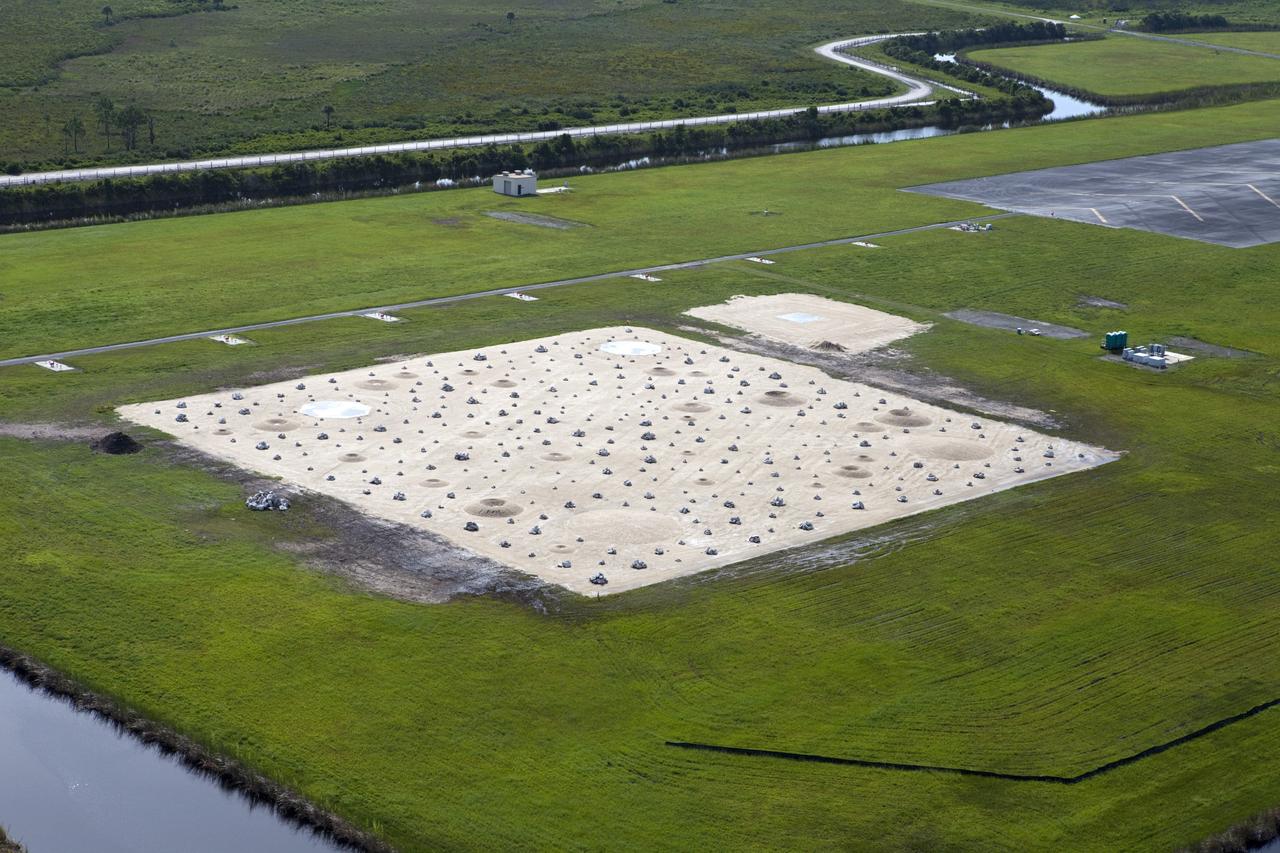
CAPE CANAVERAL, Fla. –This aerial view shows a rock and crater-filled planetary scape that has been built at the north end of the Kennedy Space Center’s Shuttle Landing Facility. The site will allow engineers to test the Autonomous Landing and Hazard Avoidance Technology, or ALHAT system on the Project Morpheus lander. Testing will demonstrate ALHAT’s ability to provide required navigation data negotiating the Morpheus lander away from risks during descent. Checkout of the prototype lander has been ongoing at NASA’s Johnson Space Center in Houston in preparation for its first free flight. The SLF site will provide the lander with the kind of field necessary for realistic testing. Project Morpheus is one of 20 small projects comprising the Advanced Exploration Systems, or AES, program in NASA’s Human Exploration and Operations Mission Directorate. AES projects pioneer new approaches for rapidly developing prototype systems, demonstrating key capabilities and validating operational concepts for future human missions beyond Earth orbit. For more information on Project Morpheus, visit http://www.nasa.gov/centers/johnson/exploration/morpheus/index.html Photo credit: NASA/Kim Shiflett
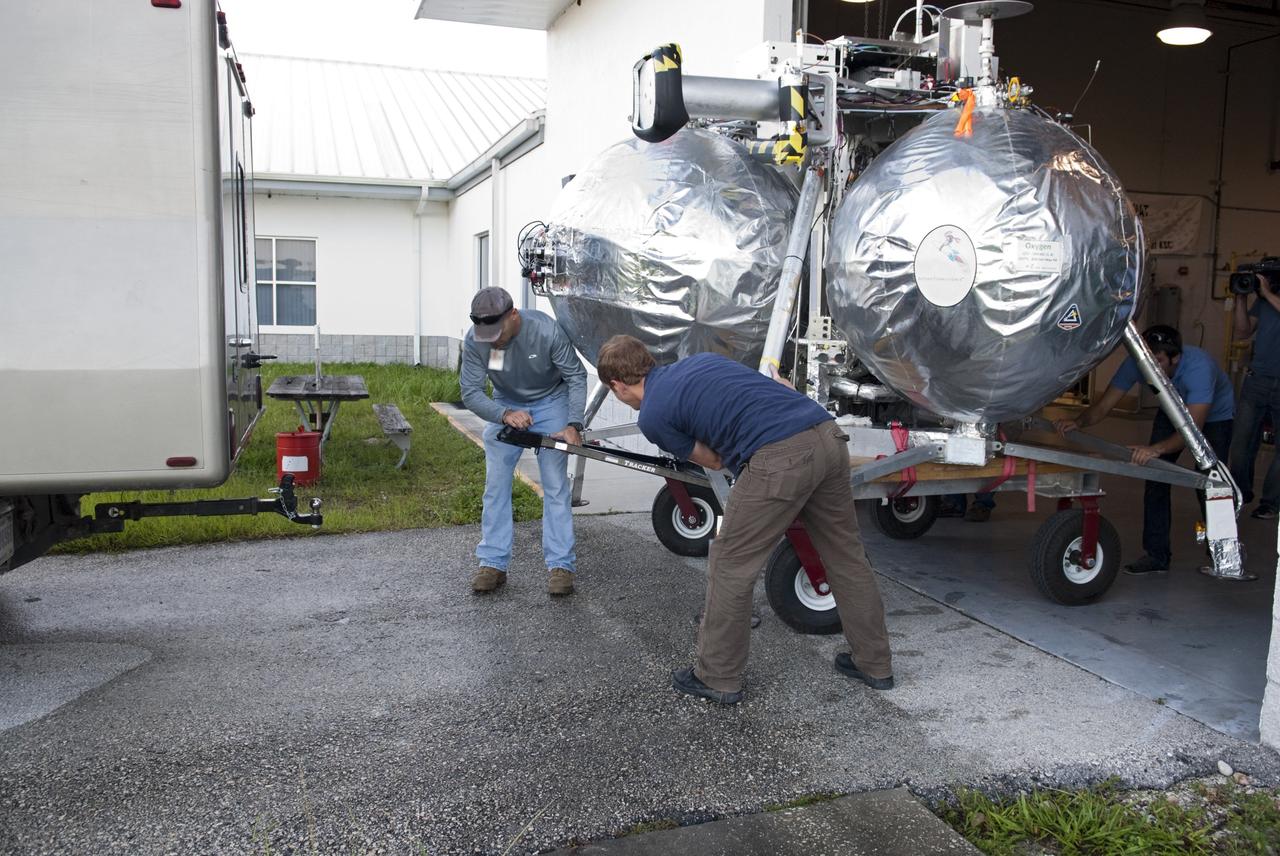
CAPE CANAVERAL, Fla. - NASA's Morpheus lander, a vertical test bed vehicle, is being moved out of its checkout building for a short trip to a launch position at the Shuttle Landing Facility, or SLF, at the Kennedy Space Center in Florida. Morpheus is designed to demonstrate new green propellant propulsion systems and autonomous landing and an Autonomous Landing and Hazard Avoidance Technology, or ALHAT, system. Checkout of the prototype lander has been ongoing at NASA’s Johnson Space Center in Houston in preparation for its first free flight. The SLF site will provide the lander with the kind of field necessary for realistic testing. Project Morpheus is one of 20 small projects comprising the Advanced Exploration Systems, or AES, program in NASA’s Human Exploration and Operations Mission Directorate. AES projects pioneer new approaches for rapidly developing prototype systems, demonstrating key capabilities and validating operational concepts for future human missions beyond Earth orbit. For more information on Project Morpheus, visit http://www.nasa.gov/centers/johnson/exploration/morpheus/index.html Photo credit: NASA/Dimitri Gerondidakis
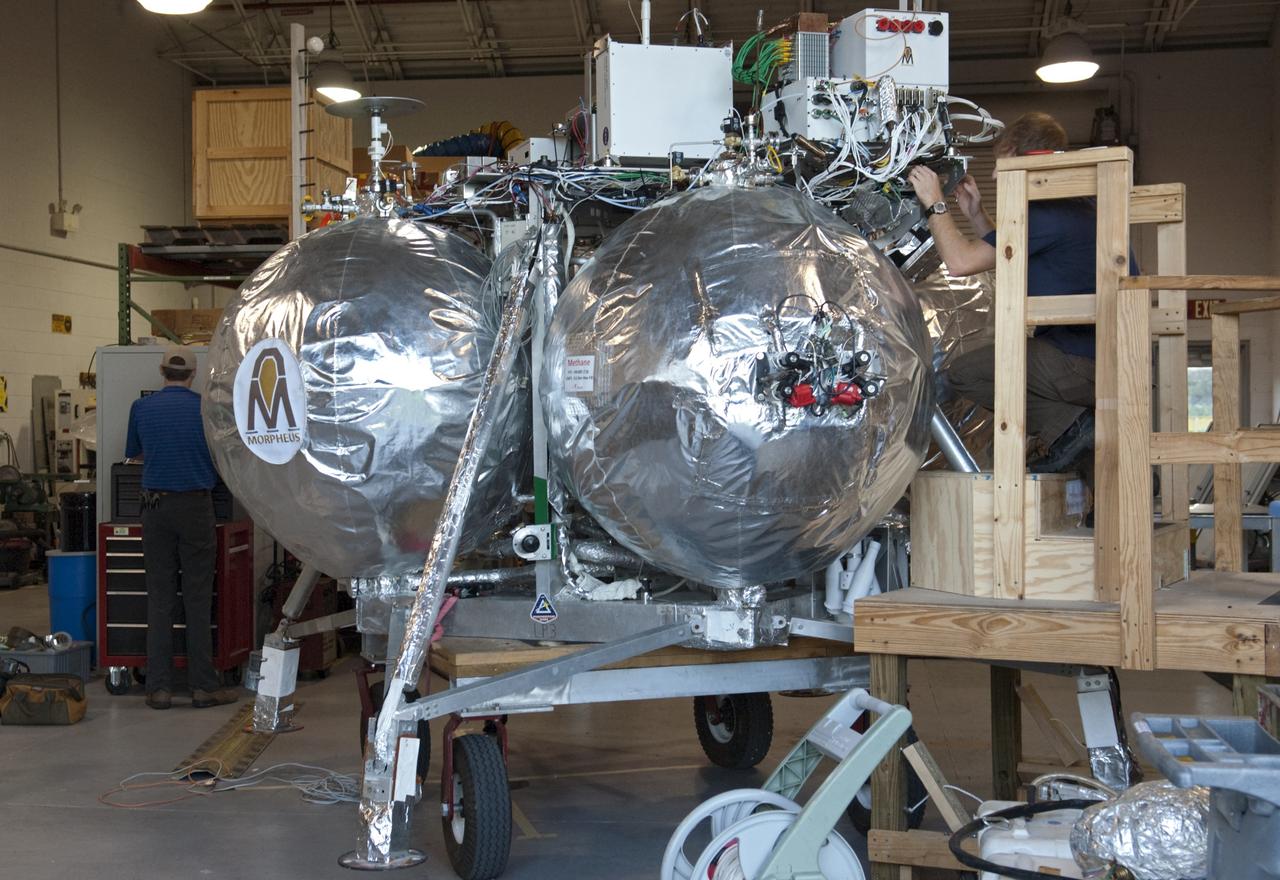
CAPE CANAVERAL, Fla. - NASA's Morpheus lander, a vertical test bed vehicle, is being checked out in a building at the Shuttle Landing Facility, or SLF, at the Kennedy Space Center in Florida. Morpheus is designed to demonstrate new green propellant propulsion systems and autonomous landing and an Autonomous Landing and Hazard Avoidance Technology, or ALHAT, system. Checkout of the prototype lander has been ongoing at NASA’s Johnson Space Center in Houston in preparation for its first free flight. The SLF site will provide the lander with the kind of field necessary for realistic testing. Project Morpheus is one of 20 small projects comprising the Advanced Exploration Systems, or AES, program in NASA’s Human Exploration and Operations Mission Directorate. AES projects pioneer new approaches for rapidly developing prototype systems, demonstrating key capabilities and validating operational concepts for future human missions beyond Earth orbit. For more information on Project Morpheus, visit http://www.nasa.gov/centers/johnson/exploration/morpheus/index.html Photo credit: NASA/Dimitri Gerondidakis
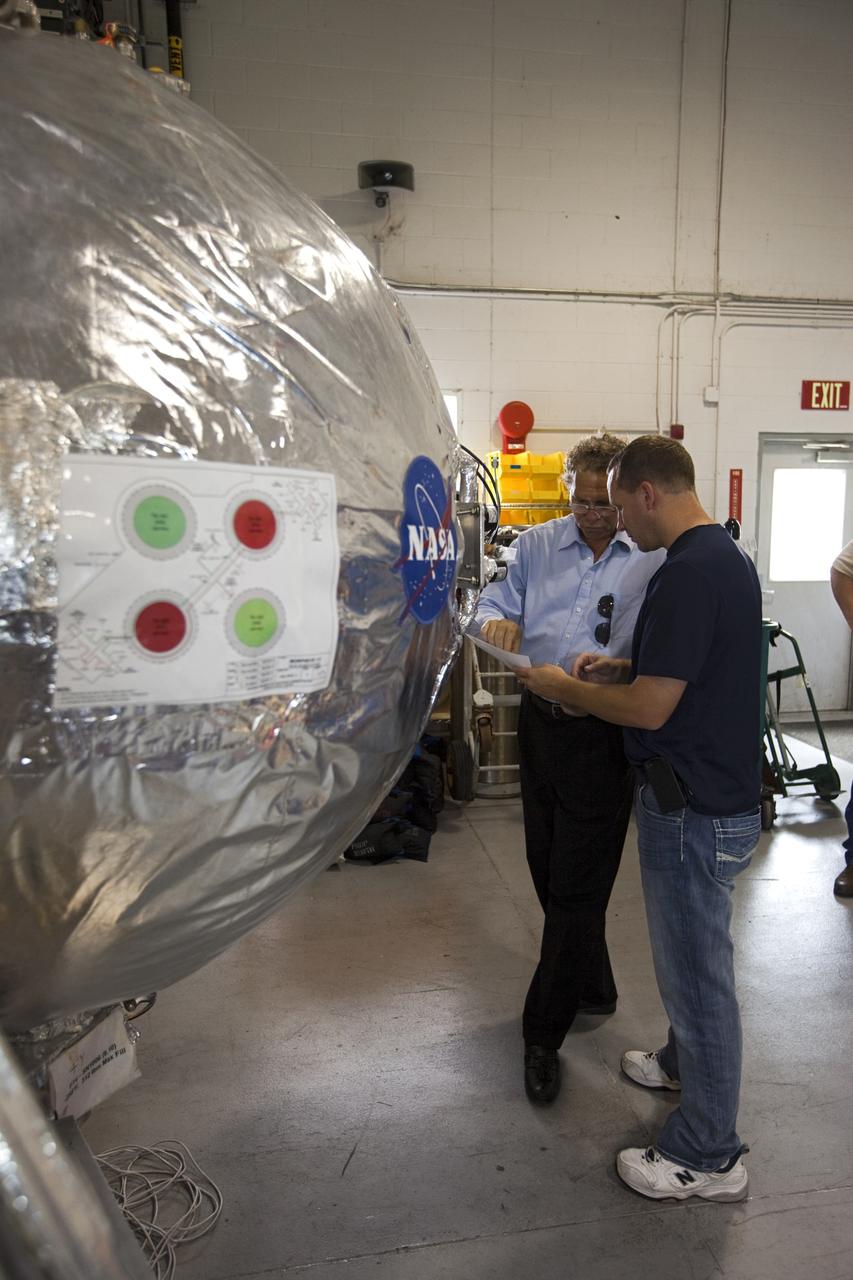
CAPE CANAVERAL, Fla. - Russell Romanella, director of Safety and Mission Assurance at NASA's Kennedy Space Center in Florida, left, is briefed on NASA's Morpheus lander, a vertical test bed vehicle. Morpheus is being checked out by technicians and engineers in a building at the Shuttle Landing Facility, or SLF, at Kennedy. Morpheus is designed to demonstrate new green propellant propulsion systems and autonomous landing and an Autonomous Landing and Hazard Avoidance Technology, or ALHAT, system. Checkout of the prototype lander has been ongoing at NASA’s Johnson Space Center in Houston in preparation for its first free flight. The SLF site will provide the lander with the kind of field necessary for realistic testing. Project Morpheus is one of 20 small projects comprising the Advanced Exploration Systems, or AES, program in NASA’s Human Exploration and Operations Mission Directorate. AES projects pioneer new approaches for rapidly developing prototype systems, demonstrating key capabilities and validating operational concepts for future human missions beyond Earth orbit. For more information on Project Morpheus, visit http://www.nasa.gov/centers/johnson/exploration/morpheus/index.html Photo credit: NASA/Dimitri Gerondidakis
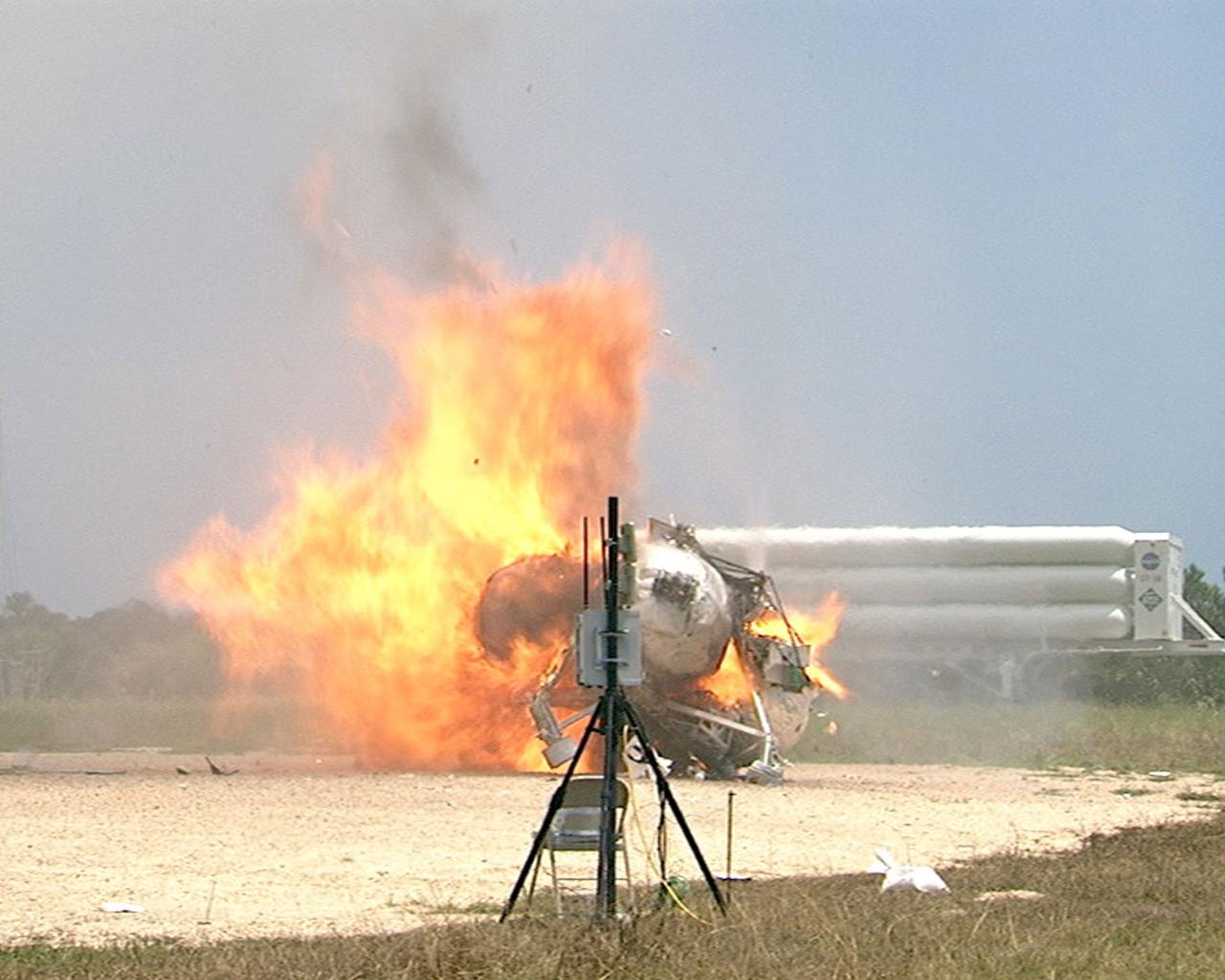
CAPE CANAVERAL, Fla. – During a free-flight test of the Project Morpheus vehicle at the Shuttle Landing Facility at NASA’s Kennedy Space Center in Florida, the vehicle lifted off the ground and then experienced a hardware component failure, which prevented it from maintaining stable flight. No one was injured and the resulting fire was extinguished by Kennedy fire personnel. Engineers are looking into the test data and the agency will release information as it becomes available. Failures such as these were anticipated prior to the test, and are part of the development process for any complex spaceflight hardware. Testing of the prototype lander had been ongoing at NASA’s Johnson Space Center in Houston in preparation for its first free-flight test at Kennedy Space Center. Morpheus was manufactured and assembled at JSC and Armadillo Aerospace. Morpheus is large enough to carry 1,100 pounds of cargo to the moon – for example, a humanoid robot, a small rover, or a small laboratory to convert moon dust into oxygen. The primary focus of the test is to demonstrate an integrated propulsion and guidance, navigation and control system that can fly a lunar descent profile to exercise the Autonomous Landing and Hazard Avoidance Technology, or ALHAT, safe landing sensors and closed-loop flight control. For more information on Project Morpheus, visit http://morpheuslander.jsc.nasa.gov/. Photo credit: NASA
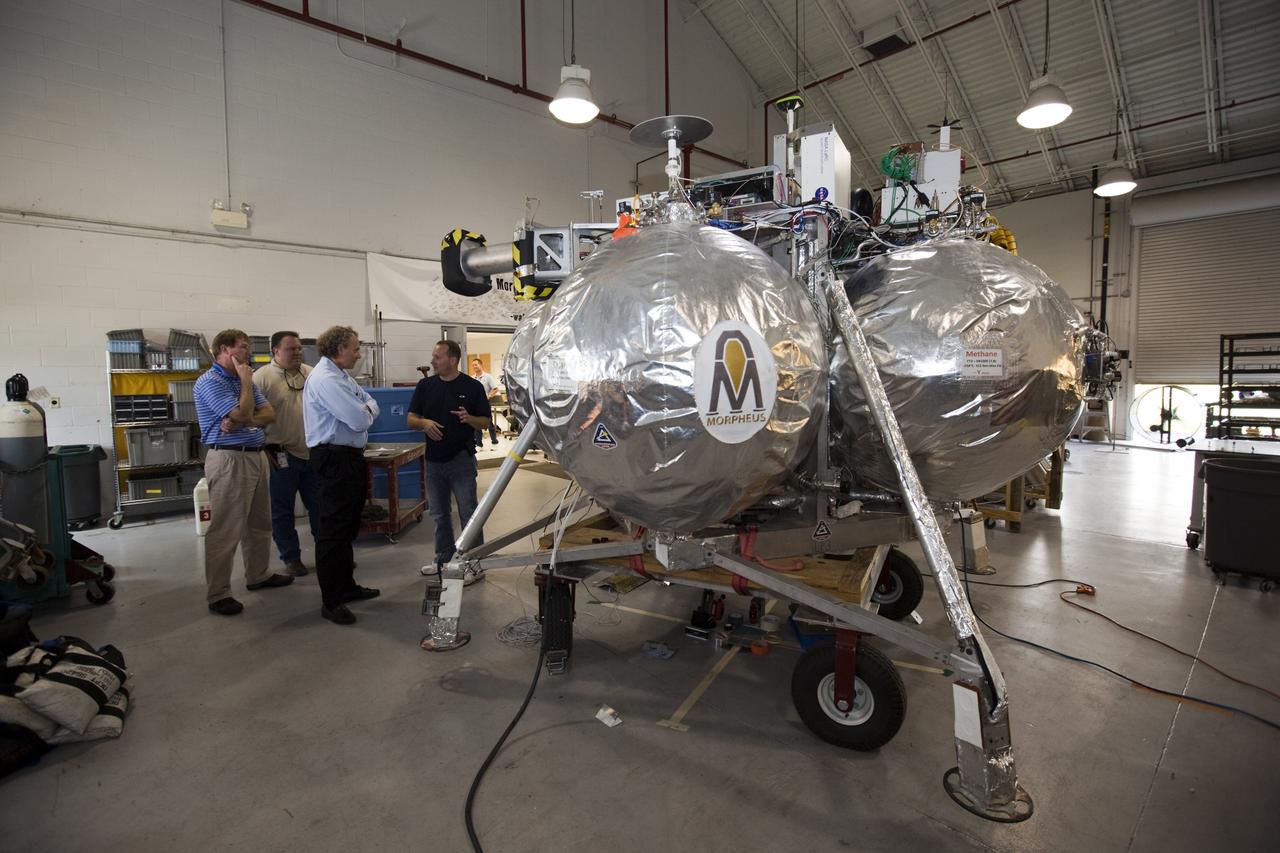
CAPE CANAVERAL, Fla. - Russell Romanella, director of Safety and Mission Assurance at NASA's Kennedy Space Center in Florida, right-center, is briefed on NASA's Morpheus lander, a vertical test bed vehicle. Morpheus is being checked out by technicians and engineers in a building at the Shuttle Landing Facility, or SLF, at Kennedy. Morpheus is designed to demonstrate new green propellant propulsion systems and autonomous landing and an Autonomous Landing and Hazard Avoidance Technology, or ALHAT, system. Checkout of the prototype lander has been ongoing at NASA’s Johnson Space Center in Houston in preparation for its first free flight. The SLF site will provide the lander with the kind of field necessary for realistic testing. Project Morpheus is one of 20 small projects comprising the Advanced Exploration Systems, or AES, program in NASA’s Human Exploration and Operations Mission Directorate. AES projects pioneer new approaches for rapidly developing prototype systems, demonstrating key capabilities and validating operational concepts for future human missions beyond Earth orbit. For more information on Project Morpheus, visit http://www.nasa.gov/centers/johnson/exploration/morpheus/index.html Photo credit: NASA/Dimitri Gerondidakis
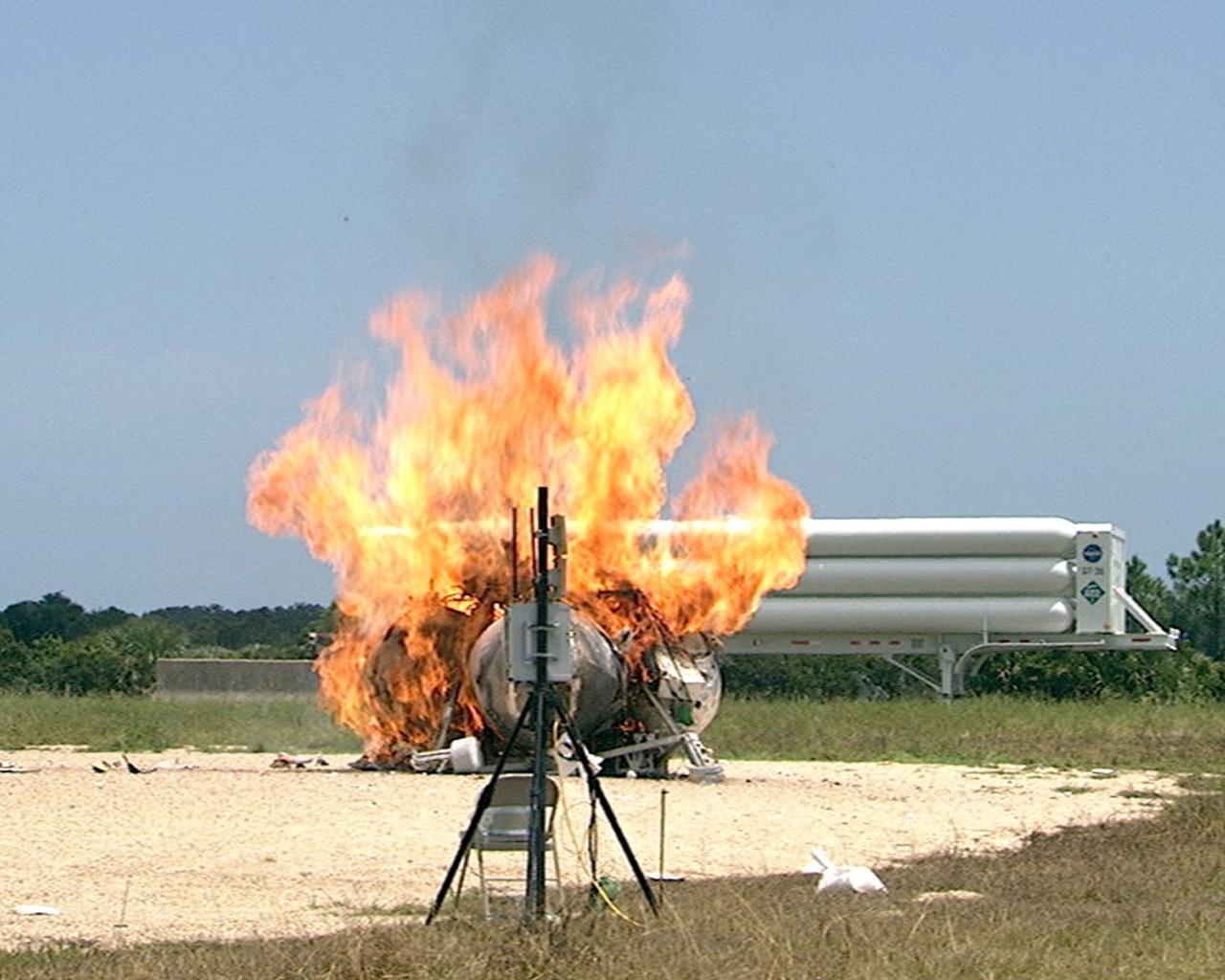
CAPE CANAVERAL, Fla. – During a free-flight test of the Project Morpheus vehicle at the Shuttle Landing Facility at NASA’s Kennedy Space Center in Florida, the vehicle lifted off the ground and then experienced a hardware component failure, which prevented it from maintaining stable flight. No one was injured and the resulting fire was extinguished by Kennedy fire personnel. Engineers are looking into the test data and the agency will release information as it becomes available. Failures such as these were anticipated prior to the test, and are part of the development process for any complex spaceflight hardware. Testing of the prototype lander had been ongoing at NASA’s Johnson Space Center in Houston in preparation for its first free-flight test at Kennedy Space Center. Morpheus was manufactured and assembled at JSC and Armadillo Aerospace. Morpheus is large enough to carry 1,100 pounds of cargo to the moon – for example, a humanoid robot, a small rover, or a small laboratory to convert moon dust into oxygen. The primary focus of the test is to demonstrate an integrated propulsion and guidance, navigation and control system that can fly a lunar descent profile to exercise the Autonomous Landing and Hazard Avoidance Technology, or ALHAT, safe landing sensors and closed-loop flight control. For more information on Project Morpheus, visit http://morpheuslander.jsc.nasa.gov/. Photo credit: NASA
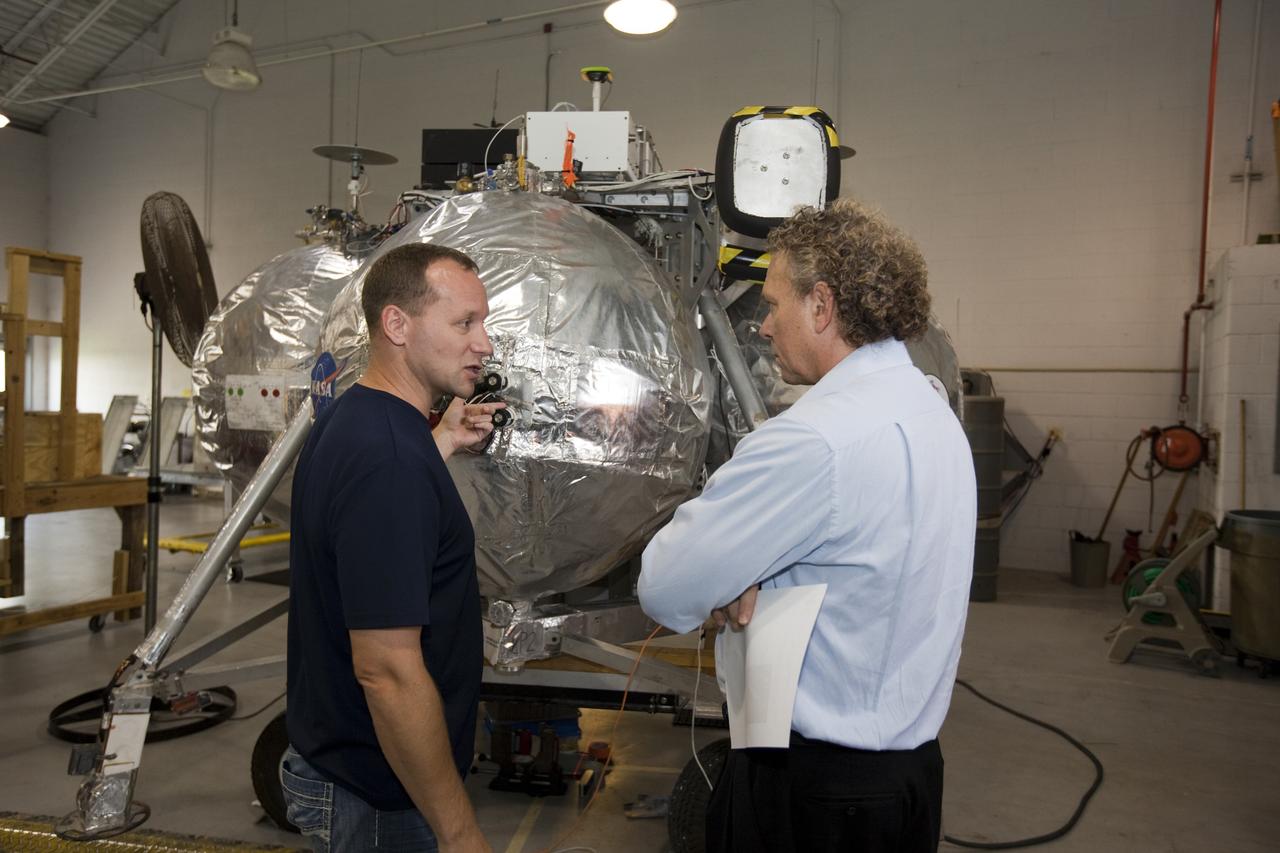
CAPE CANAVERAL, Fla. - Russell Romanella, director of Safety and Mission Assurance at NASA's Kennedy Space Center in Florida, right, is briefed on NASA's Morpheus lander, a vertical test bed vehicle. Morpheus is being checked out by technicians and engineers in a building at the Shuttle Landing Facility, or SLF, at Kennedy. Morpheus is designed to demonstrate new green propellant propulsion systems and autonomous landing and an Autonomous Landing and Hazard Avoidance Technology, or ALHAT, system. Checkout of the prototype lander has been ongoing at NASA’s Johnson Space Center in Houston in preparation for its first free flight. The SLF site will provide the lander with the kind of field necessary for realistic testing. Project Morpheus is one of 20 small projects comprising the Advanced Exploration Systems, or AES, program in NASA’s Human Exploration and Operations Mission Directorate. AES projects pioneer new approaches for rapidly developing prototype systems, demonstrating key capabilities and validating operational concepts for future human missions beyond Earth orbit. For more information on Project Morpheus, visit http://www.nasa.gov/centers/johnson/exploration/morpheus/index.html Photo credit: NASA/Dimitri Gerondidakis
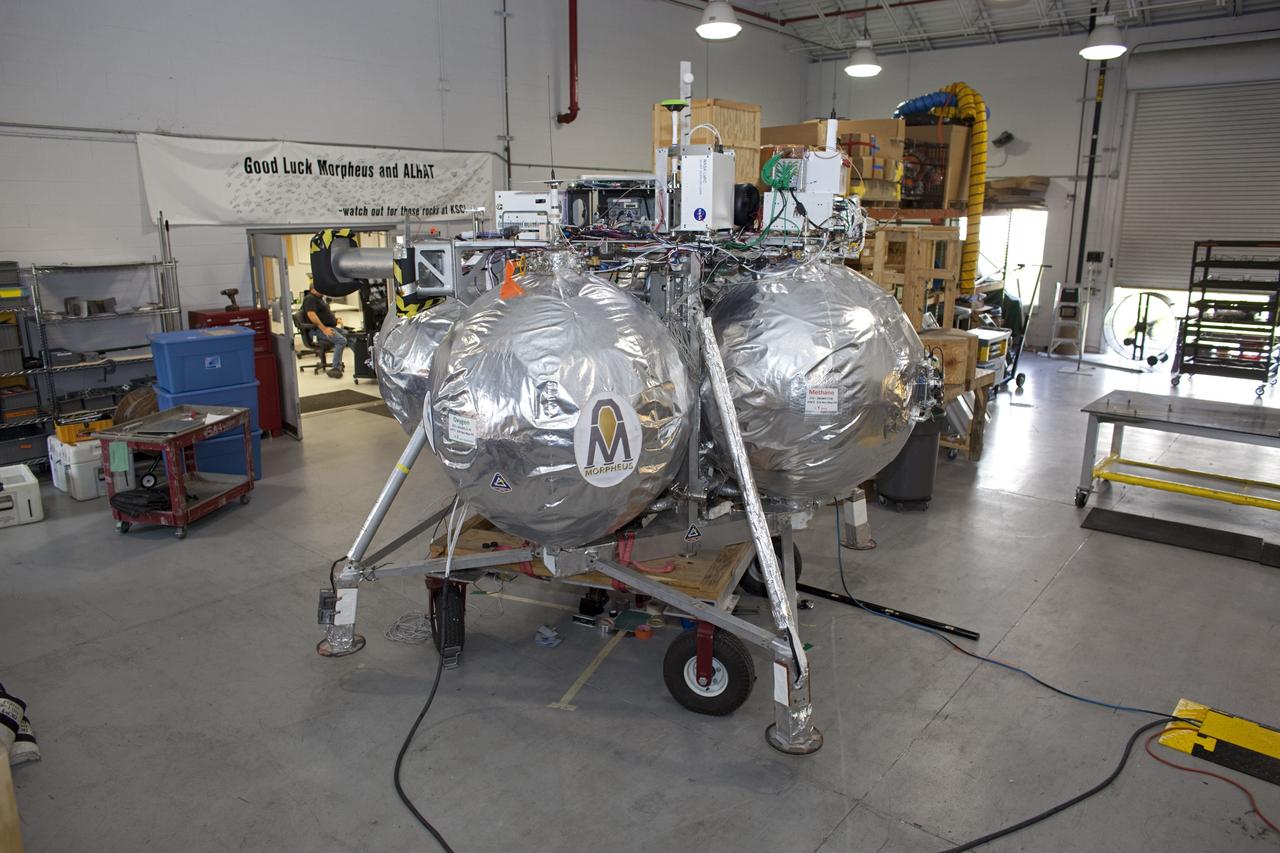
CAPE CANAVERAL, Fla. - NASA's Morpheus lander, a vertical test bed vehicle, is being checked out in a building at the Shuttle Landing Facility, or SLF, at the Kennedy Space Center in Florida. Morpheus is designed to demonstrate new green propellant propulsion systems and autonomous landing and an Autonomous Landing and Hazard Avoidance Technology, or ALHAT, system. Checkout of the prototype lander has been ongoing at NASA’s Johnson Space Center in Houston in preparation for its first free flight. The SLF site will provide the lander with the kind of field necessary for realistic testing. Project Morpheus is one of 20 small projects comprising the Advanced Exploration Systems, or AES, program in NASA’s Human Exploration and Operations Mission Directorate. AES projects pioneer new approaches for rapidly developing prototype systems, demonstrating key capabilities and validating operational concepts for future human missions beyond Earth orbit. For more information on Project Morpheus, visit http://www.nasa.gov/centers/johnson/exploration/morpheus/index.html Photo credit: NASA/Dimitri Gerondidakis
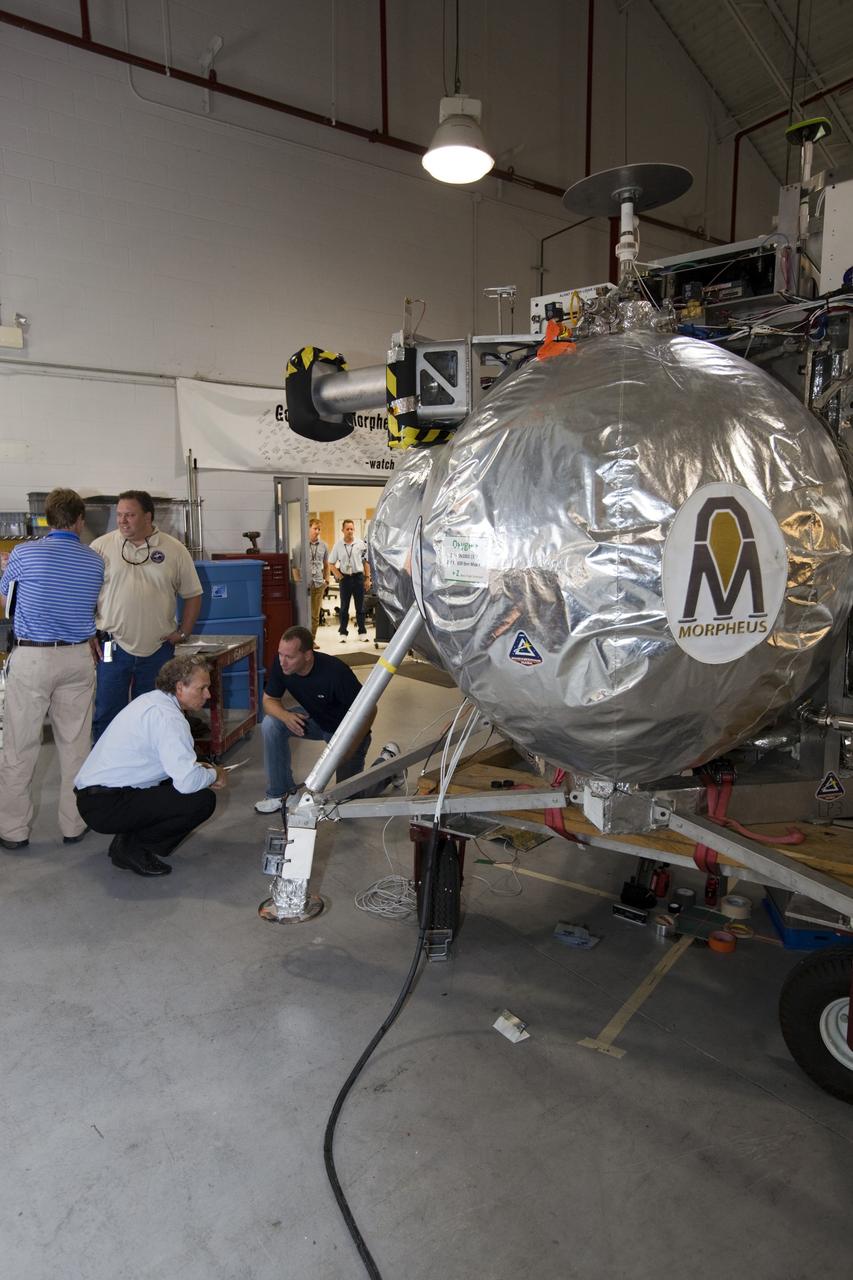
CAPE CANAVERAL, Fla. - Russell Romanella, director of Safety and Mission Assurance at NASA's Kennedy Space Center in Florida, kneeling on the left, is briefed on NASA's Morpheus lander, a vertical test bed vehicle. Morpheus is being checked out by technicians and engineers in a building at the Shuttle Landing Facility, or SLF, at Kennedy. Morpheus is designed to demonstrate new green propellant propulsion systems and autonomous landing and an Autonomous Landing and Hazard Avoidance Technology, or ALHAT, system. Checkout of the prototype lander has been ongoing at NASA’s Johnson Space Center in Houston in preparation for its first free flight. The SLF site will provide the lander with the kind of field necessary for realistic testing. Project Morpheus is one of 20 small projects comprising the Advanced Exploration Systems, or AES, program in NASA’s Human Exploration and Operations Mission Directorate. AES projects pioneer new approaches for rapidly developing prototype systems, demonstrating key capabilities and validating operational concepts for future human missions beyond Earth orbit. For more information on Project Morpheus, visit http://www.nasa.gov/centers/johnson/exploration/morpheus/index.html Photo credit: NASA/Dimitri Gerondidakis
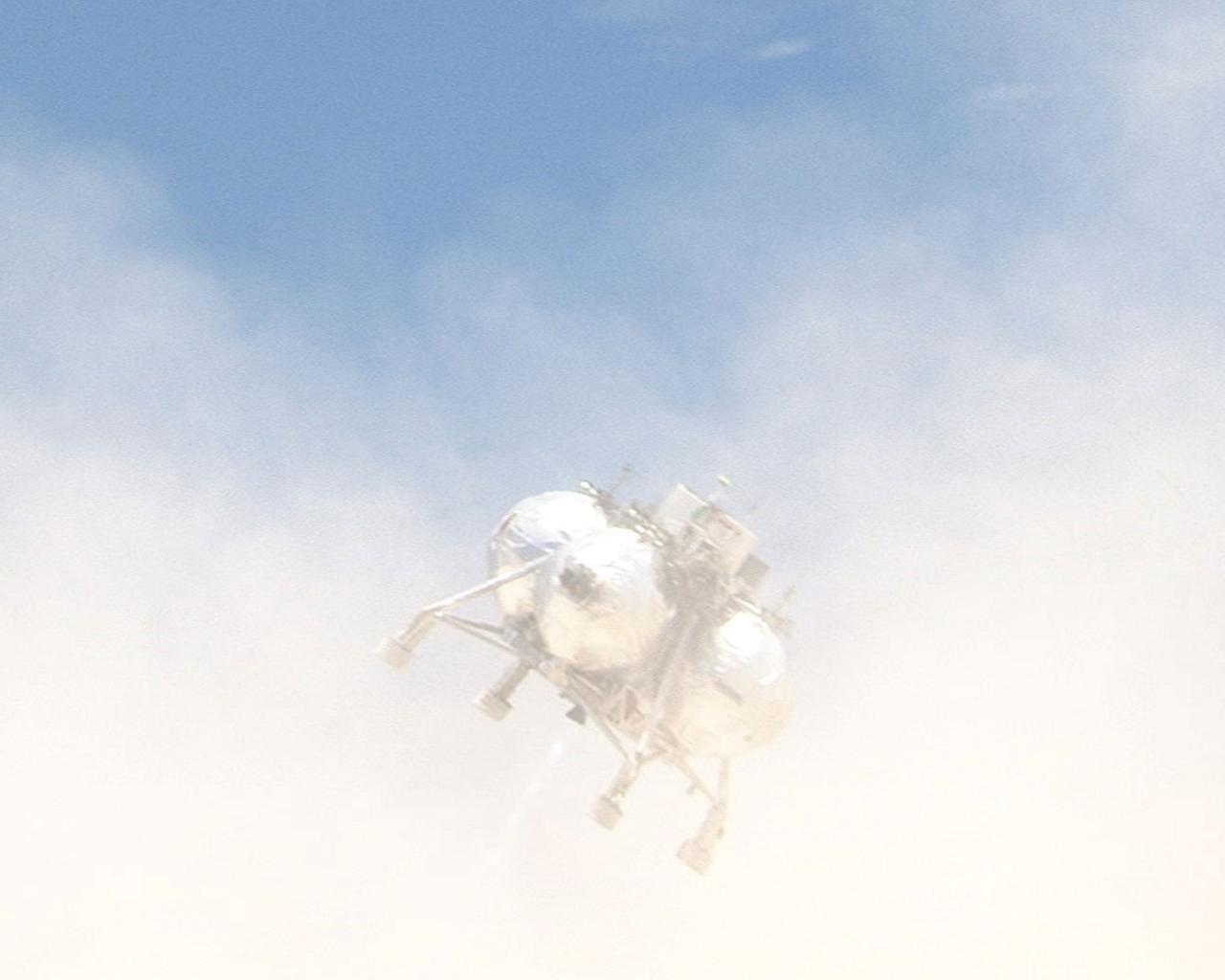
CAPE CANAVERAL, Fla. – During a free-flight test of the Project Morpheus vehicle at the Shuttle Landing Facility at NASA’s Kennedy Space Center in Florida, the vehicle lifted off the ground and then experienced a hardware component failure, which prevented it from maintaining stable flight. Engineers are looking into the test data and the agency will release information as it becomes available. Failures such as these were anticipated prior to the test, and are part of the development process for any complex spaceflight hardware. Testing of the prototype lander had been ongoing at NASA’s Johnson Space Center in Houston in preparation for its first free-flight test at Kennedy Space Center. Morpheus was manufactured and assembled at JSC and Armadillo Aerospace. Morpheus is large enough to carry 1,100 pounds of cargo to the moon – for example, a humanoid robot, a small rover, or a small laboratory to convert moon dust into oxygen. The primary focus of the test is to demonstrate an integrated propulsion and guidance, navigation and control system that can fly a lunar descent profile to exercise the Autonomous Landing and Hazard Avoidance Technology, or ALHAT, safe landing sensors and closed-loop flight control. For more information on Project Morpheus, visit http://morpheuslander.jsc.nasa.gov/. Photo credit: NASA
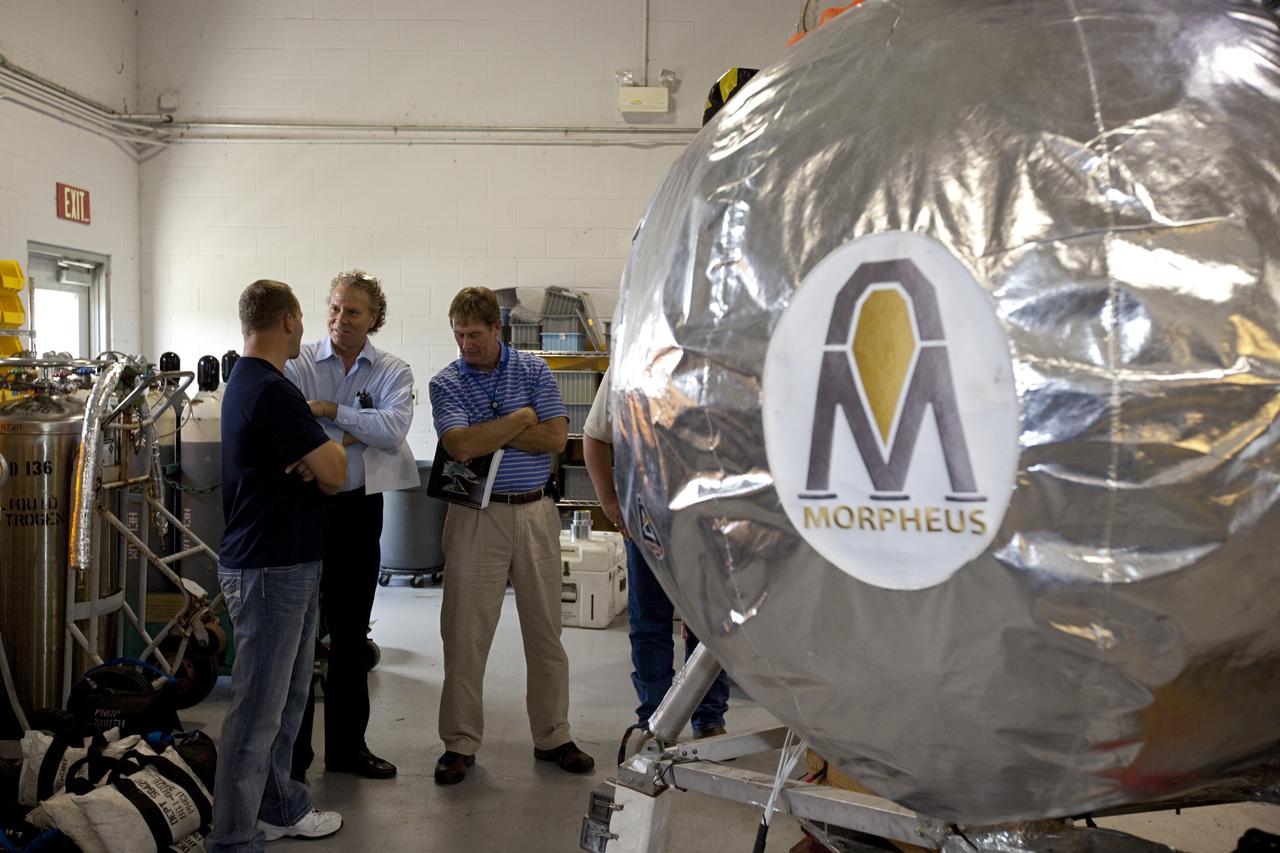
CAPE CANAVERAL, Fla. - Russell Romanella, director of Safety and Mission Assurance at NASA's Kennedy Space Center in Florida, center, is briefed on NASA's Morpheus lander, a vertical test bed vehicle. Morpheus is being checked out by technicians and engineers in a building at the Shuttle Landing Facility, or SLF, at Kennedy. Morpheus is designed to demonstrate new green propellant propulsion systems and autonomous landing and an Autonomous Landing and Hazard Avoidance Technology, or ALHAT, system. Checkout of the prototype lander has been ongoing at NASA’s Johnson Space Center in Houston in preparation for its first free flight. The SLF site will provide the lander with the kind of field necessary for realistic testing. Project Morpheus is one of 20 small projects comprising the Advanced Exploration Systems, or AES, program in NASA’s Human Exploration and Operations Mission Directorate. AES projects pioneer new approaches for rapidly developing prototype systems, demonstrating key capabilities and validating operational concepts for future human missions beyond Earth orbit. For more information on Project Morpheus, visit http://www.nasa.gov/centers/johnson/exploration/morpheus/index.html Photo credit: NASA/Dimitri Gerondidakis
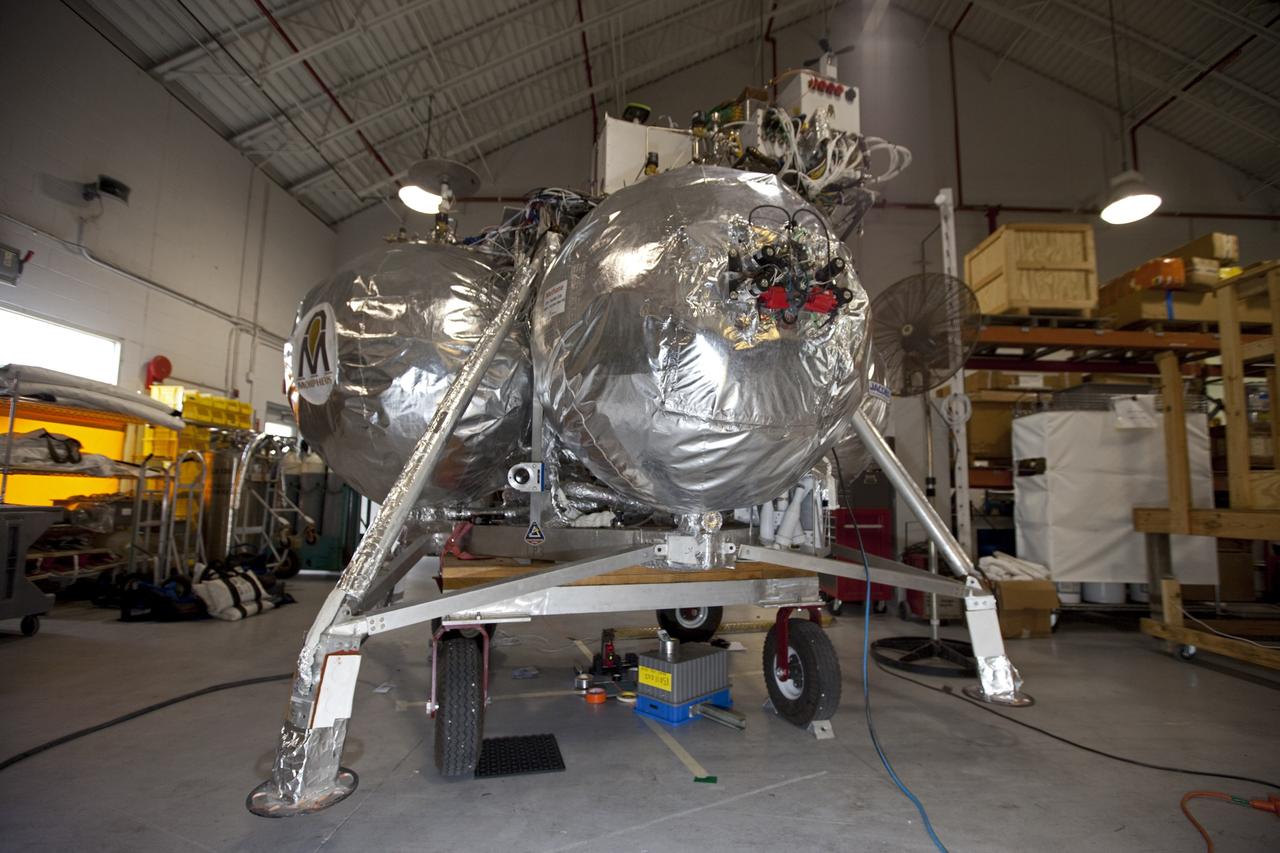
CAPE CANAVERAL, Fla. - NASA's Morpheus lander, a vertical test bed vehicle, is being checked out in a building at the Shuttle Landing Facility, or SLF, at the Kennedy Space Center in Florida. Morpheus is designed to demonstrate new green propellant propulsion systems and autonomous landing and an Autonomous Landing and Hazard Avoidance Technology, or ALHAT, system. Checkout of the prototype lander has been ongoing at NASA’s Johnson Space Center in Houston in preparation for its first free flight. The SLF site will provide the lander with the kind of field necessary for realistic testing. Project Morpheus is one of 20 small projects comprising the Advanced Exploration Systems, or AES, program in NASA’s Human Exploration and Operations Mission Directorate. AES projects pioneer new approaches for rapidly developing prototype systems, demonstrating key capabilities and validating operational concepts for future human missions beyond Earth orbit. For more information on Project Morpheus, visit http://www.nasa.gov/centers/johnson/exploration/morpheus/index.html Photo credit: NASA/Dimitri Gerondidakis
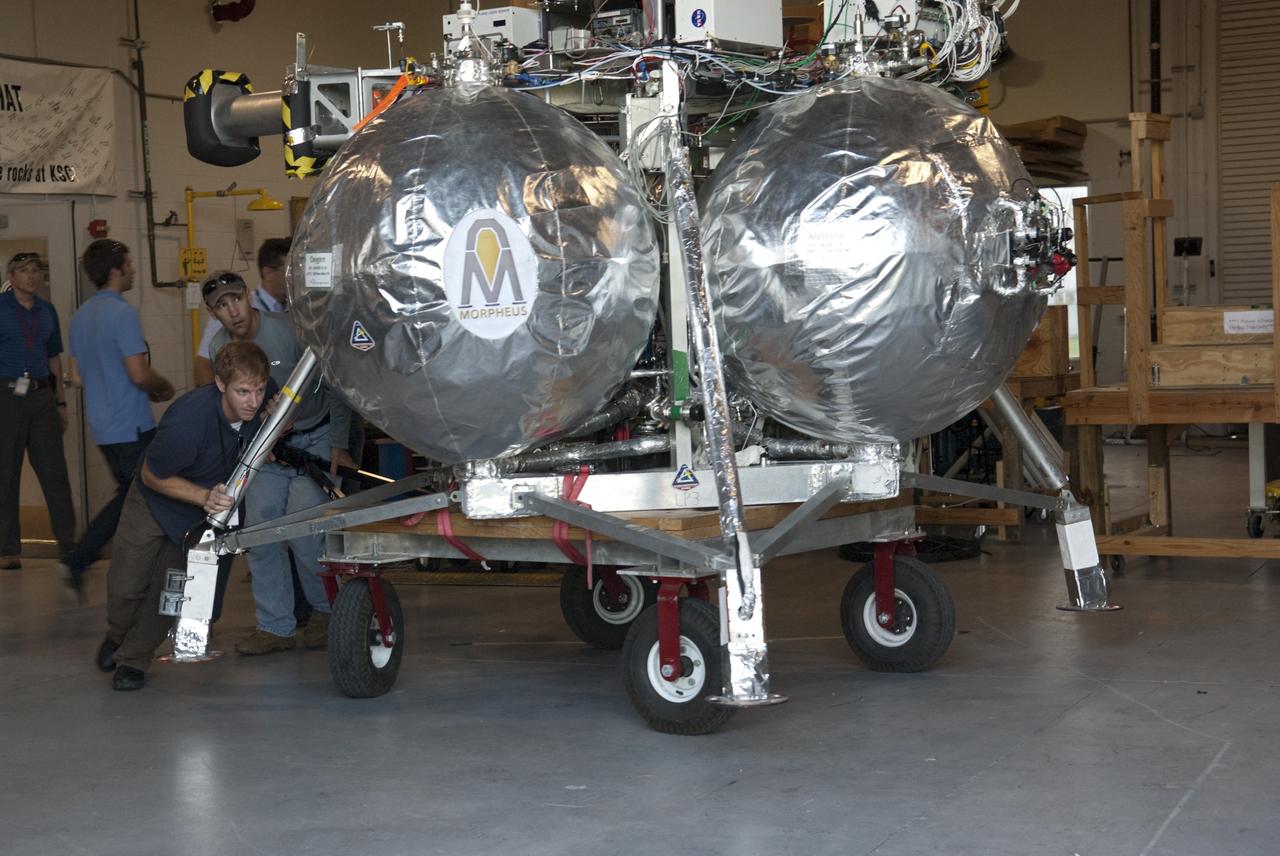
CAPE CANAVERAL, Fla. - NASA's Morpheus lander, a vertical test bed vehicle, is being moved out of its checkout building for a short trip to a launch position at the Shuttle Landing Facility, or SLF, at the Kennedy Space Center in Florida. Morpheus is designed to demonstrate new green propellant propulsion systems and autonomous landing and an Autonomous Landing and Hazard Avoidance Technology, or ALHAT, system. Checkout of the prototype lander has been ongoing at NASA’s Johnson Space Center in Houston in preparation for its first free flight. The SLF site will provide the lander with the kind of field necessary for realistic testing. Project Morpheus is one of 20 small projects comprising the Advanced Exploration Systems, or AES, program in NASA’s Human Exploration and Operations Mission Directorate. AES projects pioneer new approaches for rapidly developing prototype systems, demonstrating key capabilities and validating operational concepts for future human missions beyond Earth orbit. For more information on Project Morpheus, visit http://www.nasa.gov/centers/johnson/exploration/morpheus/index.html Photo credit: NASA/Dimitri Gerondidakis
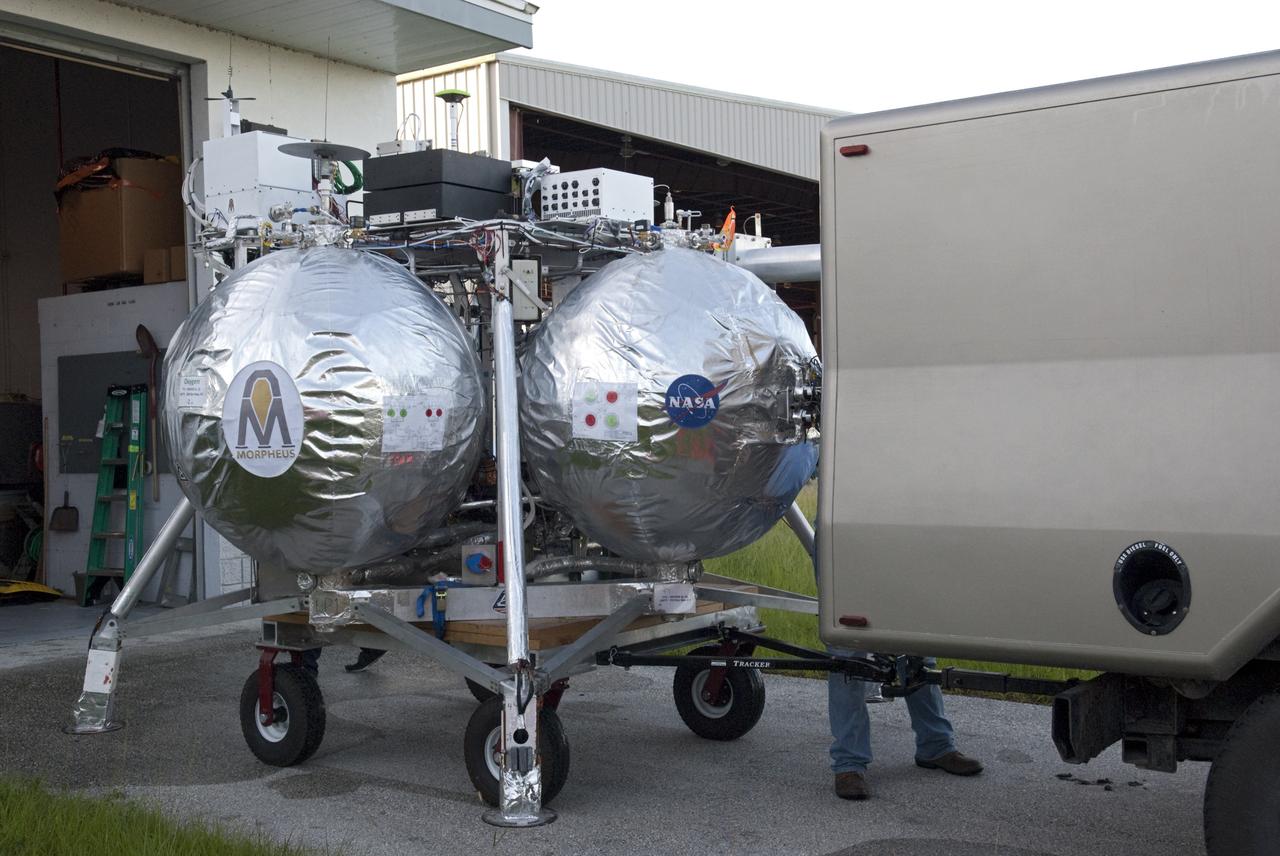
CAPE CANAVERAL, Fla. - NASA's Morpheus lander, a vertical test bed vehicle, is being transported out of its checkout building for a short trip to a launch position at the Shuttle Landing Facility, or SLF, at the Kennedy Space Center in Florida. Morpheus is designed to demonstrate new green propellant propulsion systems and autonomous landing and an Autonomous Landing and Hazard Avoidance Technology, or ALHAT, system. Checkout of the prototype lander has been ongoing at NASA’s Johnson Space Center in Houston in preparation for its first free flight. The SLF site will provide the lander with the kind of field necessary for realistic testing. Project Morpheus is one of 20 small projects comprising the Advanced Exploration Systems, or AES, program in NASA’s Human Exploration and Operations Mission Directorate. AES projects pioneer new approaches for rapidly developing prototype systems, demonstrating key capabilities and validating operational concepts for future human missions beyond Earth orbit. For more information on Project Morpheus, visit http://www.nasa.gov/centers/johnson/exploration/morpheus/index.html Photo credit: NASA/Dimitri Gerondidakis
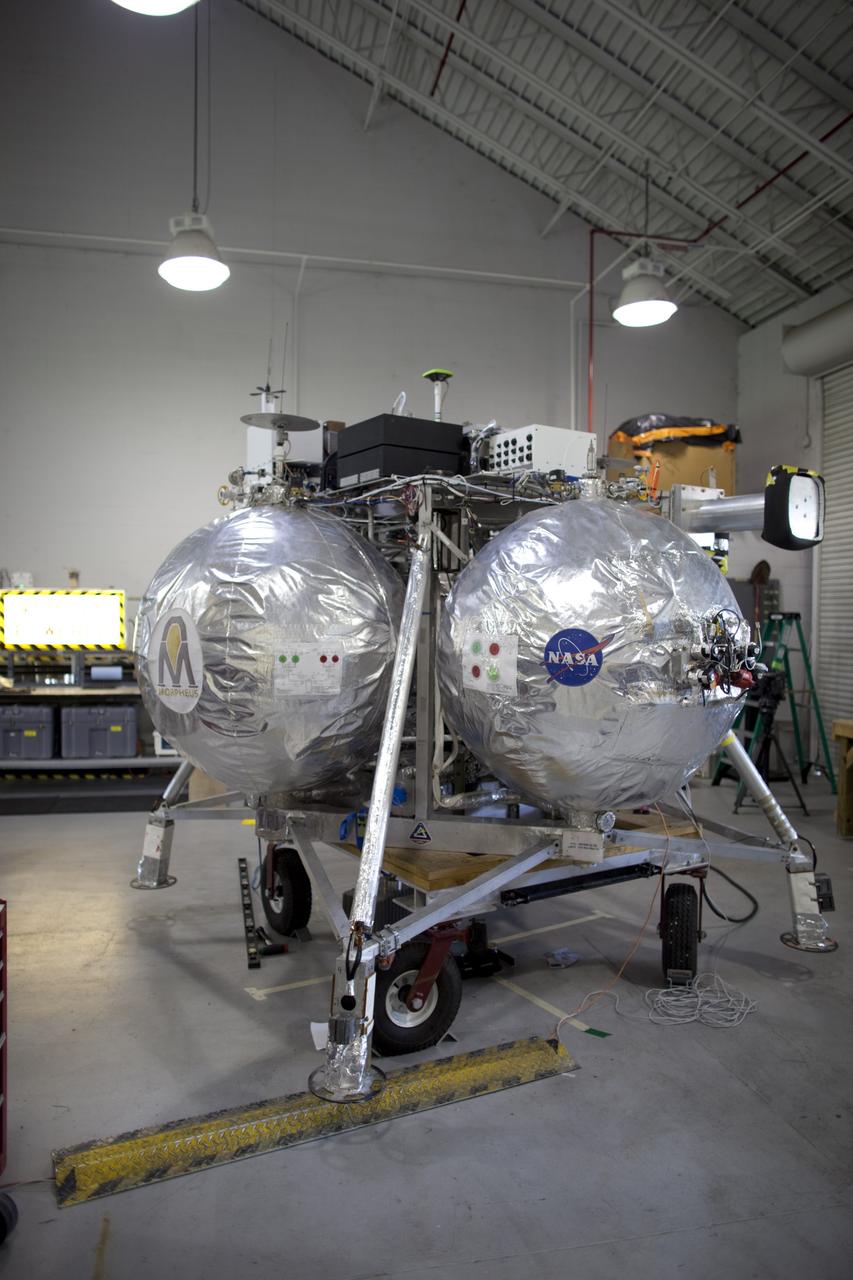
CAPE CANAVERAL, Fla. - NASA's Morpheus lander, a vertical test bed vehicle, is being checked out in a building at the Shuttle Landing Facility, or SLF, at the Kennedy Space Center in Florida. Morpheus is designed to demonstrate new green propellant propulsion systems and autonomous landing and an Autonomous Landing and Hazard Avoidance Technology, or ALHAT, system. Checkout of the prototype lander has been ongoing at NASA’s Johnson Space Center in Houston in preparation for its first free flight. The SLF site will provide the lander with the kind of field necessary for realistic testing. Project Morpheus is one of 20 small projects comprising the Advanced Exploration Systems, or AES, program in NASA’s Human Exploration and Operations Mission Directorate. AES projects pioneer new approaches for rapidly developing prototype systems, demonstrating key capabilities and validating operational concepts for future human missions beyond Earth orbit. For more information on Project Morpheus, visit http://www.nasa.gov/centers/johnson/exploration/morpheus/index.html Photo credit: NASA/Dimitri Gerondidakis
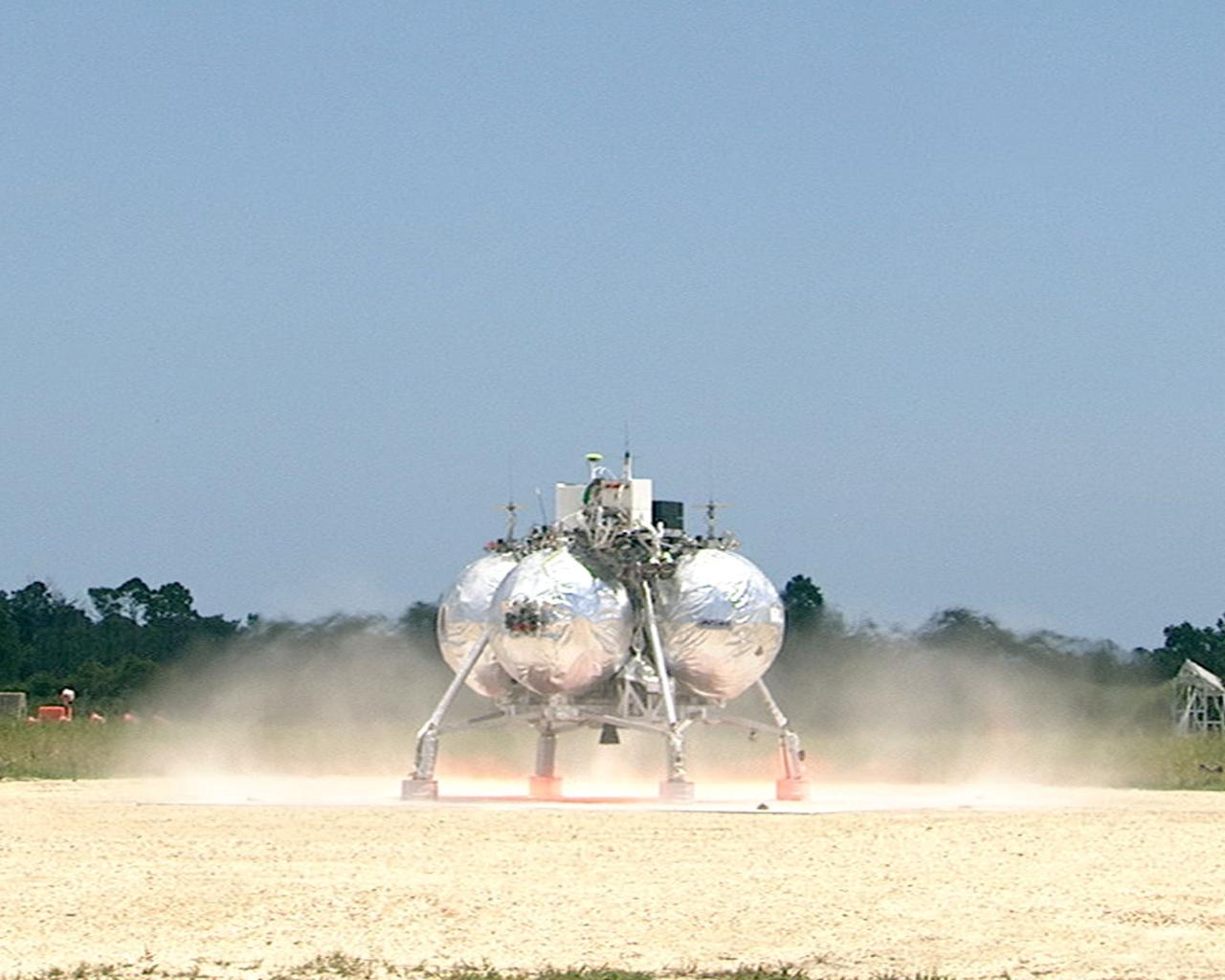
CAPE CANAVERAL, Fla. – At the Shuttle Landing Facility at NASA’s Kennedy Space Center in Florida, the Morpheus prototype lander begins to lift off of the ground during a free-flight test. Testing of the prototype lander had been ongoing at NASA’s Johnson Space Center in Houston in preparation for its first free-flight test at Kennedy Space Center. Morpheus was manufactured and assembled at JSC and Armadillo Aerospace. Morpheus is large enough to carry 1,100 pounds of cargo to the moon – for example, a humanoid robot, a small rover, or a small laboratory to convert moon dust into oxygen. The primary focus of the test is to demonstrate an integrated propulsion and guidance, navigation and control system that can fly a lunar descent profile to exercise the Autonomous Landing and Hazard Avoidance Technology, or ALHAT, safe landing sensors and closed-loop flight control. For more information on Project Morpheus, visit http://morpheuslander.jsc.nasa.gov/. Photo credit: NASA
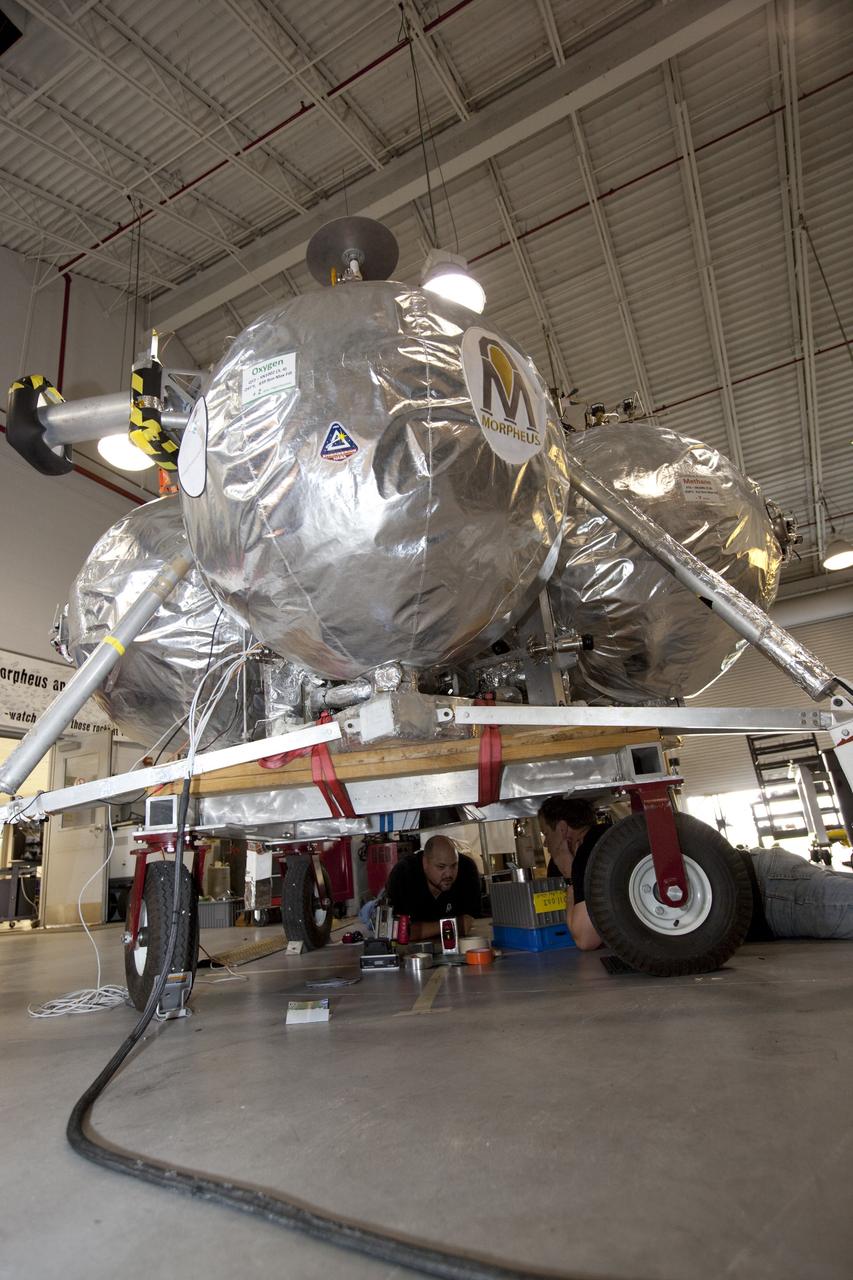
CAPE CANAVERAL, Fla. - NASA's Morpheus lander, a vertical test bed vehicle, is checked out by technicians in a building at the Shuttle Landing Facility, or SLF, at the Kennedy Space Center in Florida. Morpheus is designed to demonstrate new green propellant propulsion systems and autonomous landing and an Autonomous Landing and Hazard Avoidance Technology, or ALHAT, system. Checkout of the prototype lander has been ongoing at NASA’s Johnson Space Center in Houston in preparation for its first free flight. The SLF site will provide the lander with the kind of field necessary for realistic testing. Project Morpheus is one of 20 small projects comprising the Advanced Exploration Systems, or AES, program in NASA’s Human Exploration and Operations Mission Directorate. AES projects pioneer new approaches for rapidly developing prototype systems, demonstrating key capabilities and validating operational concepts for future human missions beyond Earth orbit. For more information on Project Morpheus, visit http://www.nasa.gov/centers/johnson/exploration/morpheus/index.html Photo credit: NASA/Dimitri Gerondidakis
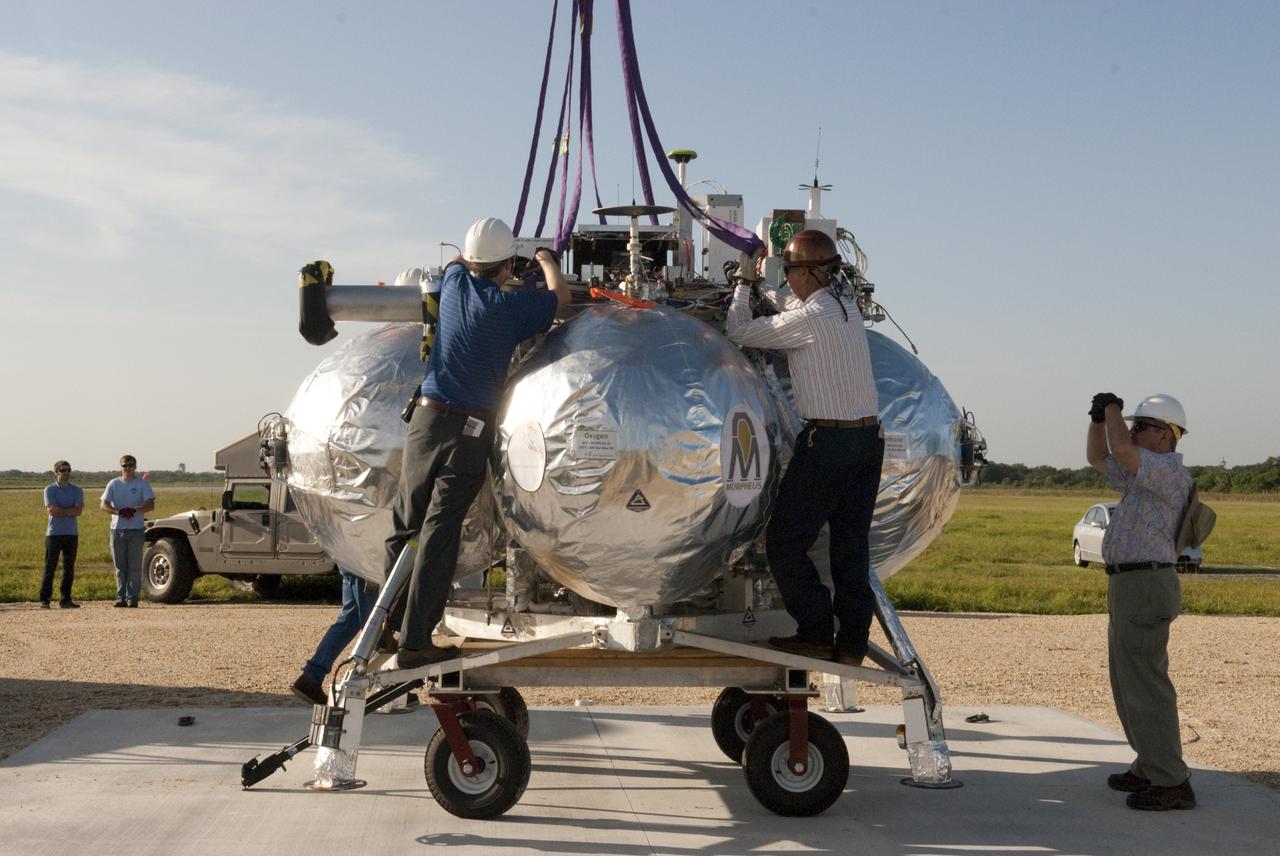
CAPE CANAVERAL, Fla. - Technicians secure connections for a crane which will be used to set up NASA's Morpheus lander, a vertical test bed vehicle, at its launch position along the runway at the Shuttle Landing Facility, or SLF, at the Kennedy Space Center in Florida. Morpheus is designed to demonstrate new green propellant propulsion systems and autonomous landing and an Autonomous Landing and Hazard Avoidance Technology, or ALHAT, system. Checkout of the prototype lander has been ongoing at NASA’s Johnson Space Center in Houston in preparation for its first free flight. The SLF site will provide the lander with the kind of field necessary for realistic testing. Project Morpheus is one of 20 small projects comprising the Advanced Exploration Systems, or AES, program in NASA’s Human Exploration and Operations Mission Directorate. AES projects pioneer new approaches for rapidly developing prototype systems, demonstrating key capabilities and validating operational concepts for future human missions beyond Earth orbit. For more information on Project Morpheus, visit http://www.nasa.gov/centers/johnson/exploration/morpheus/index.html Photo credit: NASA/Dimitri Gerondidakis
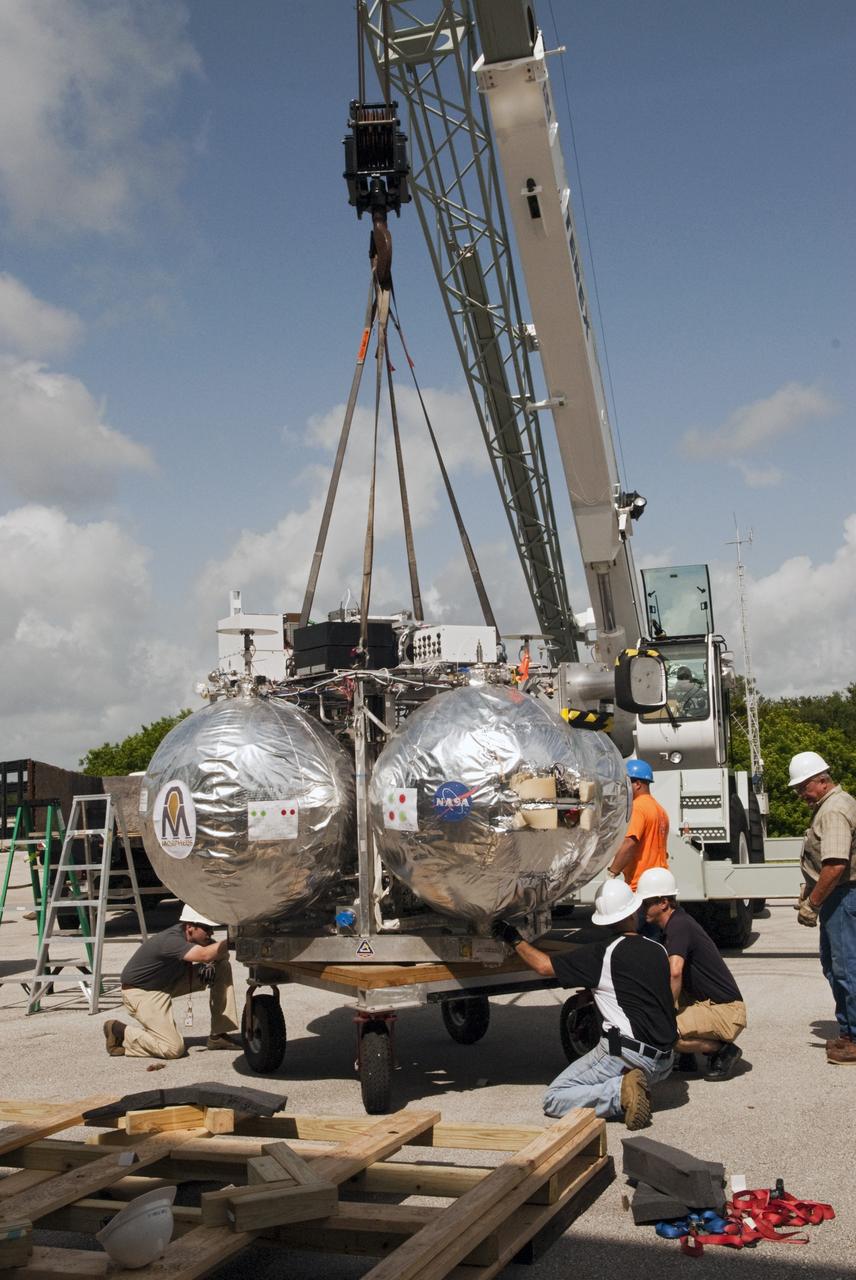
CAPE CANAVERAL, Fla. - A crane supports unloading of NASA's Morpheus lander, a vertical test bed vehicle, at the Kennedy Space Center in Florida. Morpheus is designed to demonstrate new green propellant propulsion systems and autonomous landing and an Autonomous Landing and Hazard Avoidance Technology, or ALHAT, system. Checkout of the prototype lander has been ongoing at NASA’s Johnson Space Center in Houston in preparation for its first free flight. The SLF site will provide the lander with the kind of field necessary for realistic testing. Project Morpheus is one of 20 small projects comprising the Advanced Exploration Systems, or AES, program in NASA’s Human Exploration and Operations Mission Directorate. AES projects pioneer new approaches for rapidly developing prototype systems, demonstrating key capabilities and validating operational concepts for future human missions beyond Earth orbit. For more information on Project Morpheus, visit http://www.nasa.gov/centers/johnson/exploration/morpheus/index.html Photo credit: NASA/ Charisse Nahser
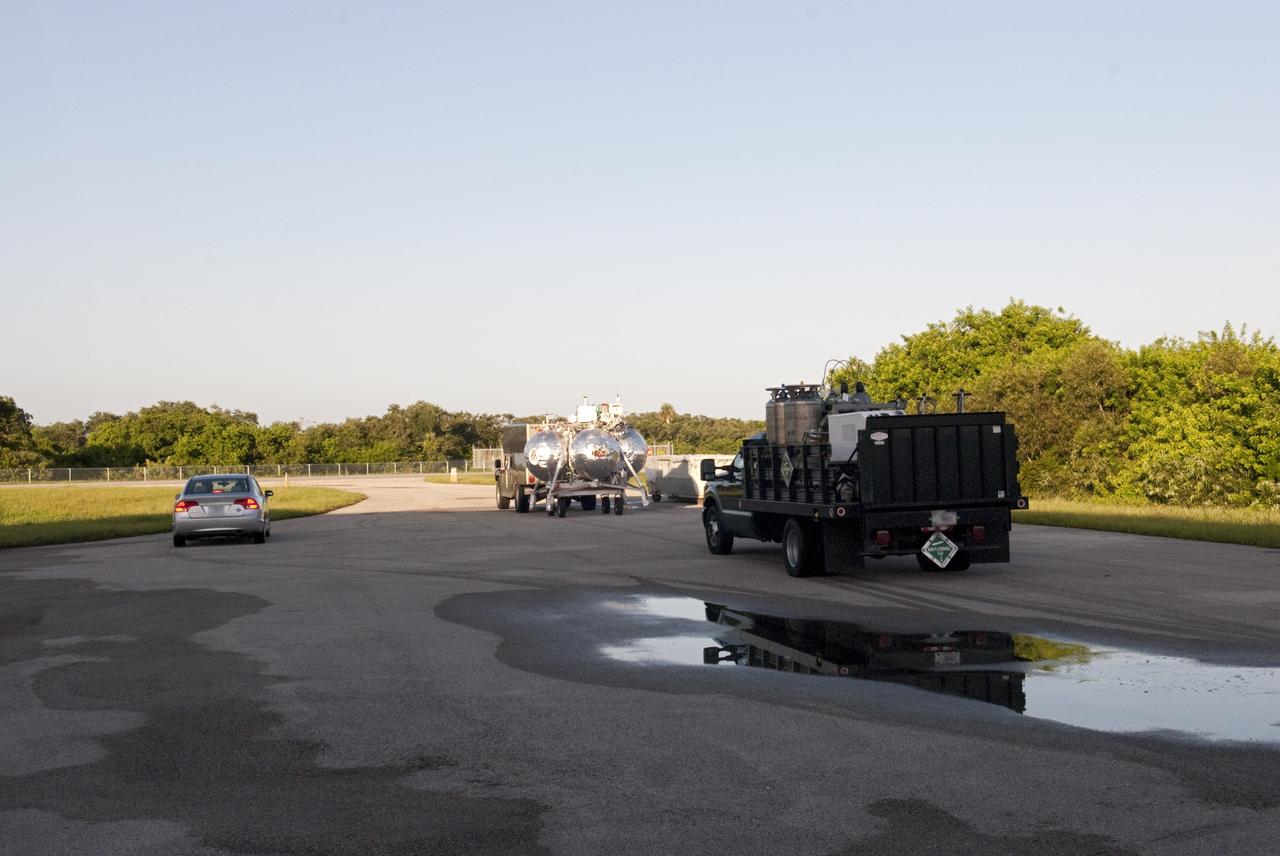
CAPE CANAVERAL, Fla. - NASA's Morpheus lander, a vertical test bed vehicle, is being transported out from its checkout building for a short trip to a launch position at the Shuttle Landing Facility, or SLF, at the Kennedy Space Center in Florida. Morpheus is designed to demonstrate new green propellant propulsion systems and autonomous landing and an Autonomous Landing and Hazard Avoidance Technology, or ALHAT, system. Checkout of the prototype lander has been ongoing at NASA’s Johnson Space Center in Houston in preparation for its first free flight. The SLF site will provide the lander with the kind of field necessary for realistic testing. Project Morpheus is one of 20 small projects comprising the Advanced Exploration Systems, or AES, program in NASA’s Human Exploration and Operations Mission Directorate. AES projects pioneer new approaches for rapidly developing prototype systems, demonstrating key capabilities and validating operational concepts for future human missions beyond Earth orbit. For more information on Project Morpheus, visit http://www.nasa.gov/centers/johnson/exploration/morpheus/index.html Photo credit: NASA/Dimitri Gerondidakis
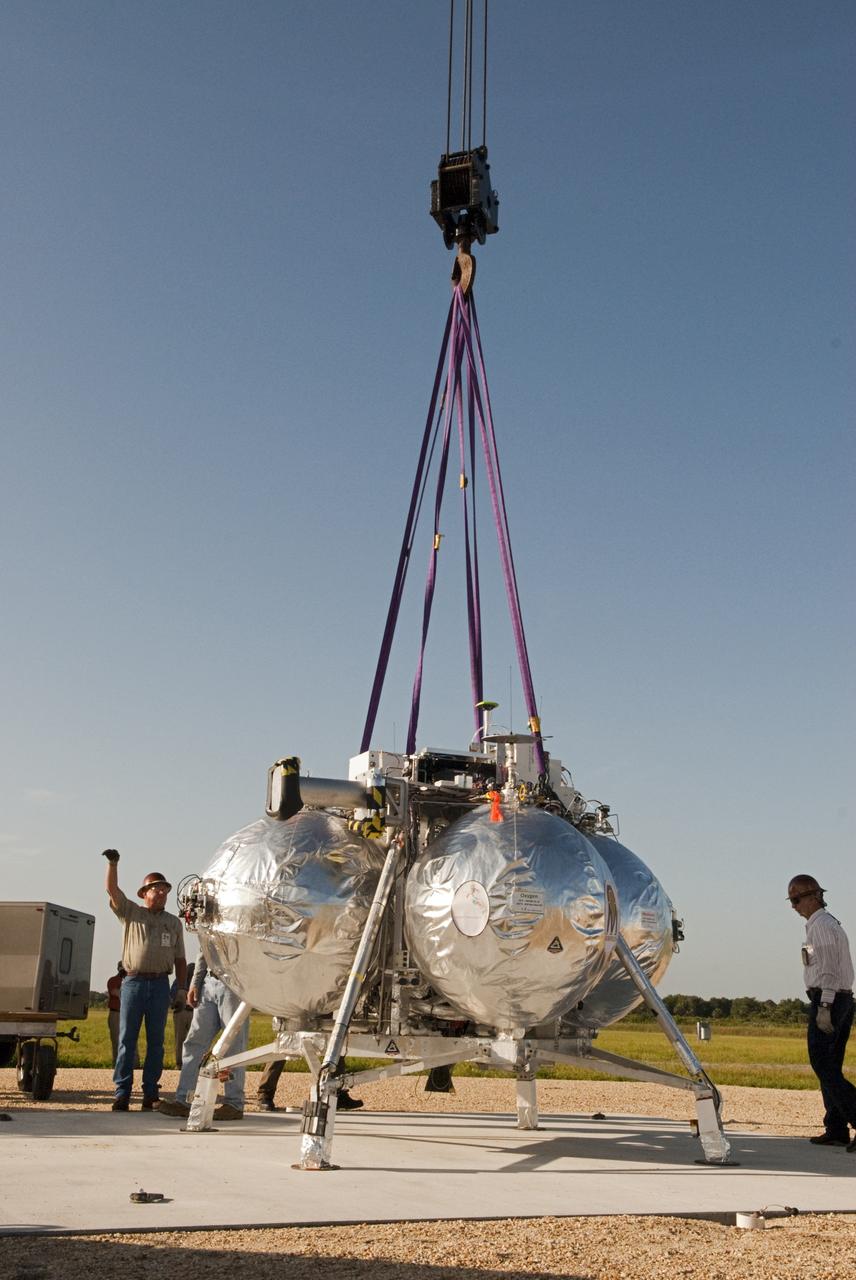
CAPE CANAVERAL, Fla. - A crane is being used to set up NASA's Morpheus lander, a vertical test bed vehicle, at its launch position along the runway at the Shuttle Landing Facility, or SLF, at the Kennedy Space Center in Florida. Morpheus is designed to demonstrate new green propellant propulsion systems and autonomous landing and an Autonomous Landing and Hazard Avoidance Technology, or ALHAT, system. Checkout of the prototype lander has been ongoing at NASA’s Johnson Space Center in Houston in preparation for its first free flight. The SLF site will provide the lander with the kind of field necessary for realistic testing. Project Morpheus is one of 20 small projects comprising the Advanced Exploration Systems, or AES, program in NASA’s Human Exploration and Operations Mission Directorate. AES projects pioneer new approaches for rapidly developing prototype systems, demonstrating key capabilities and validating operational concepts for future human missions beyond Earth orbit. For more information on Project Morpheus, visit http://www.nasa.gov/centers/johnson/exploration/morpheus/index.html Photo credit: NASA/Dimitri Gerondidakis

CAPE CANAVERAL, Fla. - NASA's Morpheus lander, a vertical test bed vehicle, is unloaded at the Kennedy Space Center in Florida. Morpheus is designed to demonstrate new green propellant propulsion systems and autonomous landing and an Autonomous Landing and Hazard Avoidance Technology, or ALHAT, system. Checkout of the prototype lander has been ongoing at NASA’s Johnson Space Center in Houston in preparation for its first free flight. The SLF site will provide the lander with the kind of field necessary for realistic testing. Project Morpheus is one of 20 small projects comprising the Advanced Exploration Systems, or AES, program in NASA’s Human Exploration and Operations Mission Directorate. AES projects pioneer new approaches for rapidly developing prototype systems, demonstrating key capabilities and validating operational concepts for future human missions beyond Earth orbit. For more information on Project Morpheus, visit http://www.nasa.gov/centers/johnson/exploration/morpheus/index.html Photo credit: NASA/ Charisse Nahser
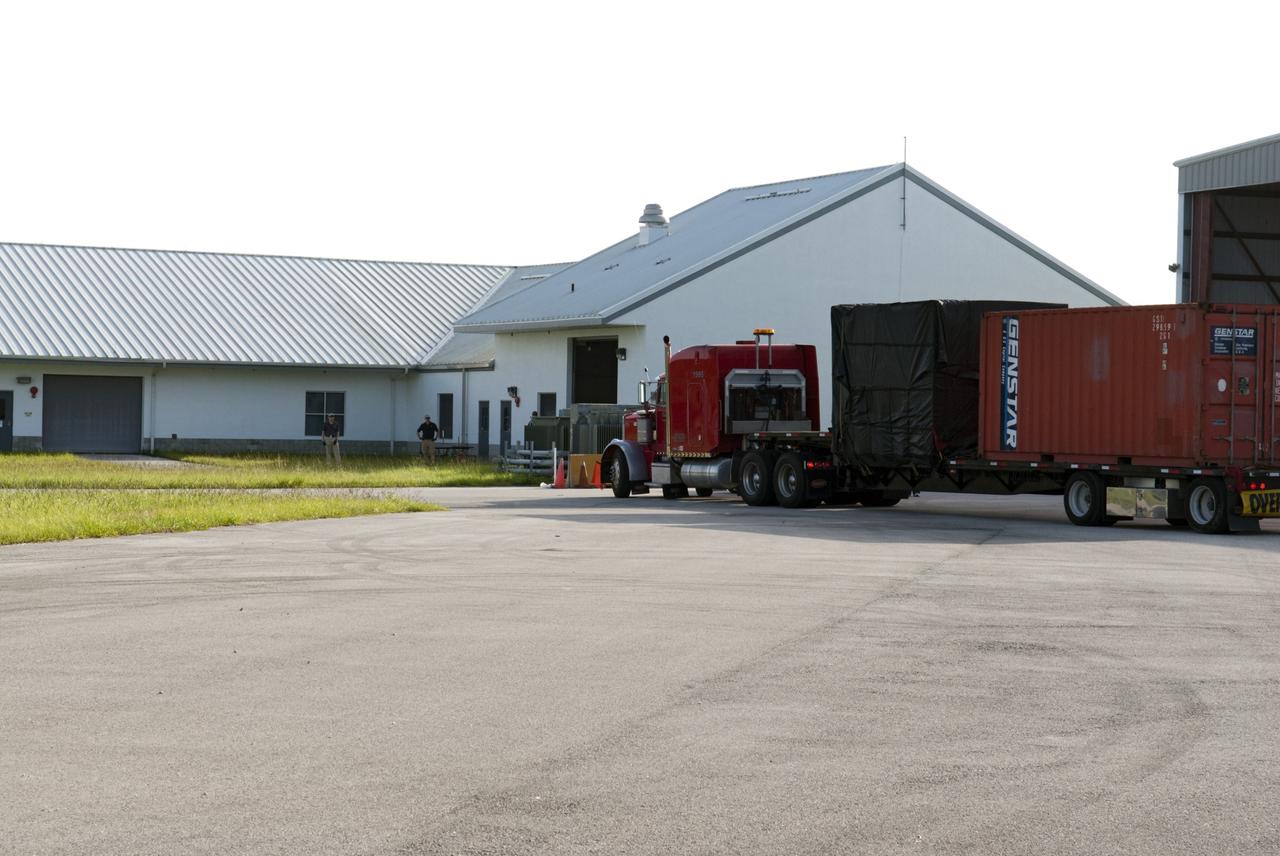
CAPE CANAVERAL, Fla. - A truck transporting NASA's Morpheus lander, a vertical test bed vehicle, arrives at a building at the Shuttle Landing Facility, or SLF, at the Kennedy Space Center in Florida for unloading. Morpheus is designed to demonstrate new green propellant propulsion systems and autonomous landing and an Autonomous Landing and Hazard Avoidance Technology, or ALHAT, system. Checkout of the prototype lander has been ongoing at NASA’s Johnson Space Center in Houston in preparation for its first free flight. The SLF site will provide the lander with the kind of field necessary for realistic testing. Project Morpheus is one of 20 small projects comprising the Advanced Exploration Systems, or AES, program in NASA’s Human Exploration and Operations Mission Directorate. AES projects pioneer new approaches for rapidly developing prototype systems, demonstrating key capabilities and validating operational concepts for future human missions beyond Earth orbit. For more information on Project Morpheus, visit http://www.nasa.gov/centers/johnson/exploration/morpheus/index.html Photo credit: NASA/ Charisse Nahser
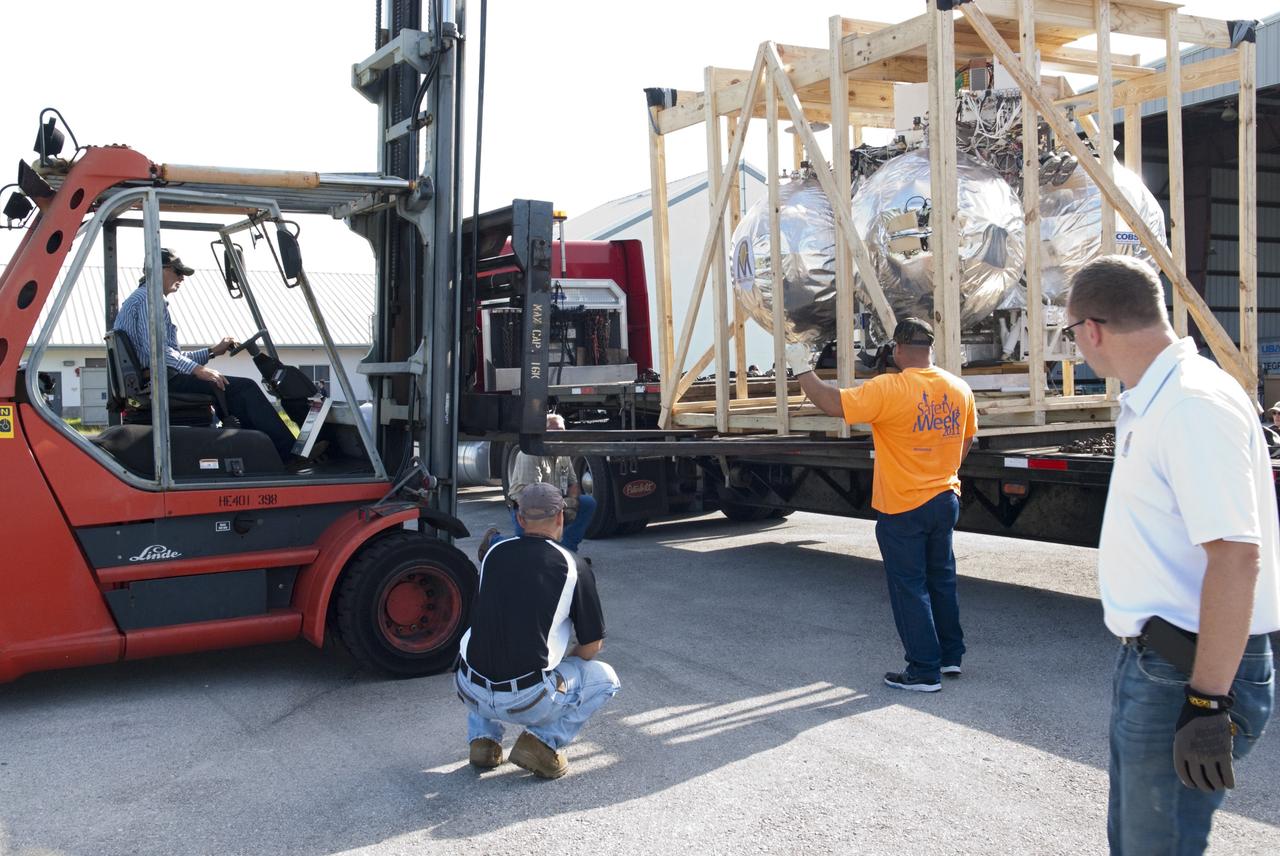
CAPE CANAVERAL, Fla. - NASA's Morpheus lander, a vertical test bed vehicle, is unloaded at a building at the Shuttle Landing Facility, or SLF, at the Kennedy Space Center in Florida. Morpheus is designed to demonstrate new green propellant propulsion systems and autonomous landing and an Autonomous Landing and Hazard Avoidance Technology, or ALHAT, system. Checkout of the prototype lander has been ongoing at NASA’s Johnson Space Center in Houston in preparation for its first free flight. The SLF site will provide the lander with the kind of field necessary for realistic testing. Project Morpheus is one of 20 small projects comprising the Advanced Exploration Systems, or AES, program in NASA’s Human Exploration and Operations Mission Directorate. AES projects pioneer new approaches for rapidly developing prototype systems, demonstrating key capabilities and validating operational concepts for future human missions beyond Earth orbit. For more information on Project Morpheus, visit http://www.nasa.gov/centers/johnson/exploration/morpheus/index.html Photo credit: NASA/ Charisse Nahser
CAPE CANAVERAL, Fla. - NASA's Morpheus lander, a vertical test bed vehicle, is uncrated after unloading at the Kennedy Space Center in Florida. Morpheus is designed to demonstrate new green propellant propulsion systems and autonomous landing and an Autonomous Landing and Hazard Avoidance Technology, or ALHAT, system. Checkout of the prototype lander has been ongoing at NASA’s Johnson Space Center in Houston in preparation for its first free flight. The SLF site will provide the lander with the kind of field necessary for realistic testing. Project Morpheus is one of 20 small projects comprising the Advanced Exploration Systems, or AES, program in NASA’s Human Exploration and Operations Mission Directorate. AES projects pioneer new approaches for rapidly developing prototype systems, demonstrating key capabilities and validating operational concepts for future human missions beyond Earth orbit. For more information on Project Morpheus, visit http://www.nasa.gov/centers/johnson/exploration/morpheus/index.html Photo credit: NASA/ Charisse Nahser
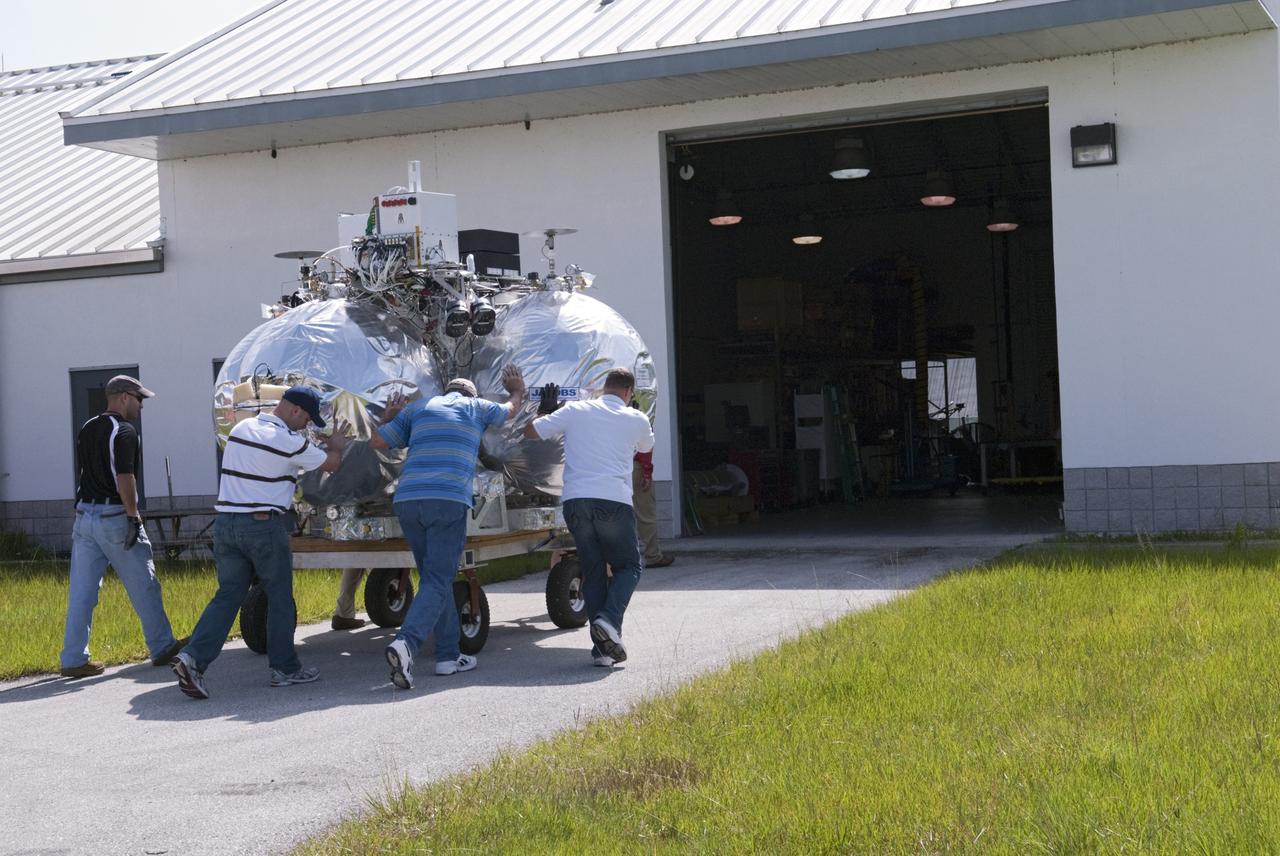
CAPE CANAVERAL, Fla. - NASA's Morpheus lander, a vertical test bed vehicle, is moved into a building at the Shuttle Landing Facility, or SLF, at the Kennedy Space Center in Florida. Morpheus is designed to demonstrate new green propellant propulsion systems and autonomous landing and an Autonomous Landing and Hazard Avoidance Technology, or ALHAT, system. Checkout of the prototype lander has been ongoing at NASA’s Johnson Space Center in Houston in preparation for its first free flight. The SLF site will provide the lander with the kind of field necessary for realistic testing. Project Morpheus is one of 20 small projects comprising the Advanced Exploration Systems, or AES, program in NASA’s Human Exploration and Operations Mission Directorate. AES projects pioneer new approaches for rapidly developing prototype systems, demonstrating key capabilities and validating operational concepts for future human missions beyond Earth orbit. For more information on Project Morpheus, visit http://www.nasa.gov/centers/johnson/exploration/morpheus/index.html Photo credit: NASA/ Charisse Nahser
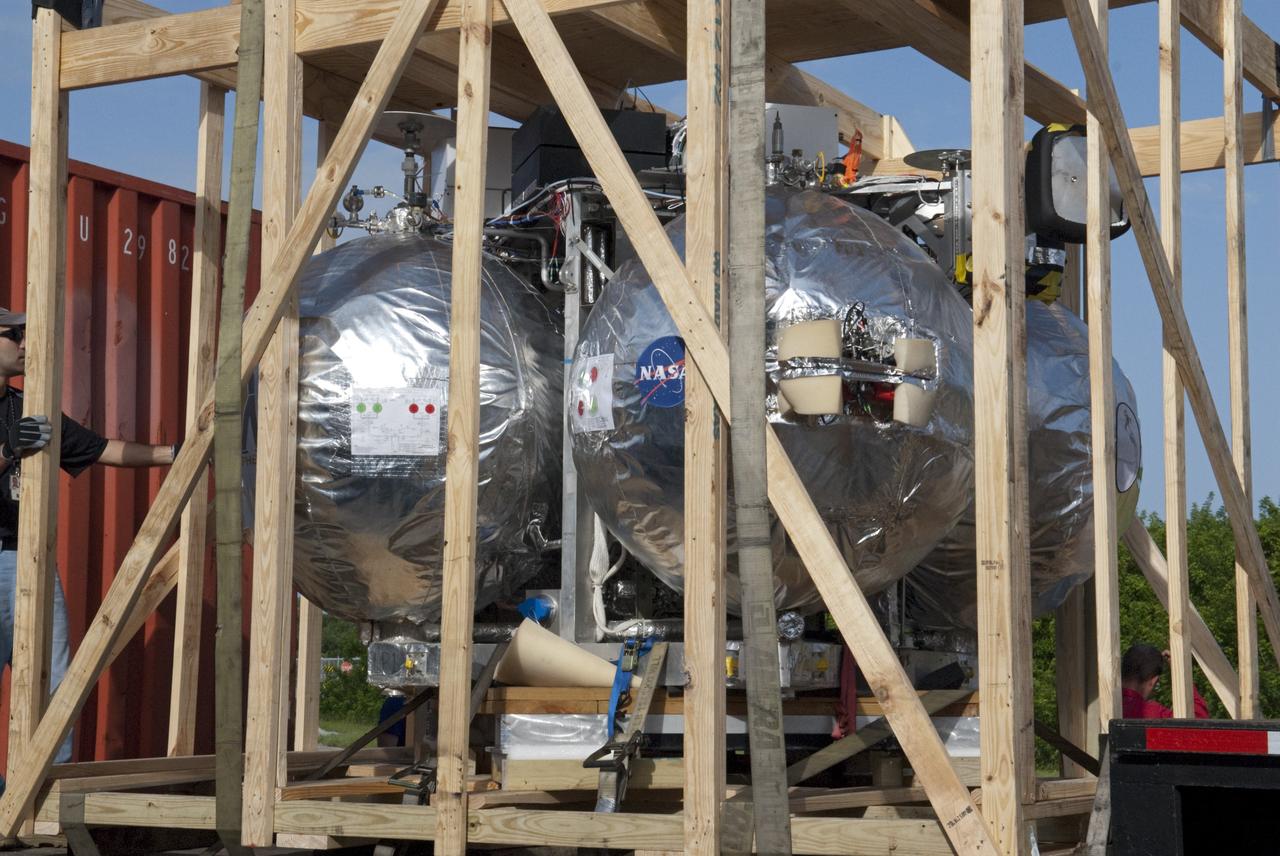
CAPE CANAVERAL, Fla. - NASA's Morpheus lander, a vertical test bed vehicle, is ready to be uncrated at the Kennedy Space Center in Florida. Morpheus is designed to demonstrate new green propellant propulsion systems and autonomous landing and an Autonomous Landing and Hazard Avoidance Technology, or ALHAT, system. Checkout of the prototype lander has been ongoing at NASA’s Johnson Space Center in Houston in preparation for its first free flight. The SLF site will provide the lander with the kind of field necessary for realistic testing. Project Morpheus is one of 20 small projects comprising the Advanced Exploration Systems, or AES, program in NASA’s Human Exploration and Operations Mission Directorate. AES projects pioneer new approaches for rapidly developing prototype systems, demonstrating key capabilities and validating operational concepts for future human missions beyond Earth orbit. For more information on Project Morpheus, visit http://www.nasa.gov/centers/johnson/exploration/morpheus/index.html Photo credit: NASA/ Charisse Nahser

CAPE CANAVERAL, Fla. - NASA's Morpheus lander, a vertical test bed vehicle, arrives at its launch position along the runway at the Shuttle Landing Facility, or SLF, at the Kennedy Space Center in Florida. Morpheus is designed to demonstrate new green propellant propulsion systems and autonomous landing and an Autonomous Landing and Hazard Avoidance Technology, or ALHAT, system. Checkout of the prototype lander has been ongoing at NASA’s Johnson Space Center in Houston in preparation for its first free flight. The SLF site will provide the lander with the kind of field necessary for realistic testing. Project Morpheus is one of 20 small projects comprising the Advanced Exploration Systems, or AES, program in NASA’s Human Exploration and Operations Mission Directorate. AES projects pioneer new approaches for rapidly developing prototype systems, demonstrating key capabilities and validating operational concepts for future human missions beyond Earth orbit. For more information on Project Morpheus, visit http://www.nasa.gov/centers/johnson/exploration/morpheus/index.html Photo credit: NASA/Dimitri Gerondidakis
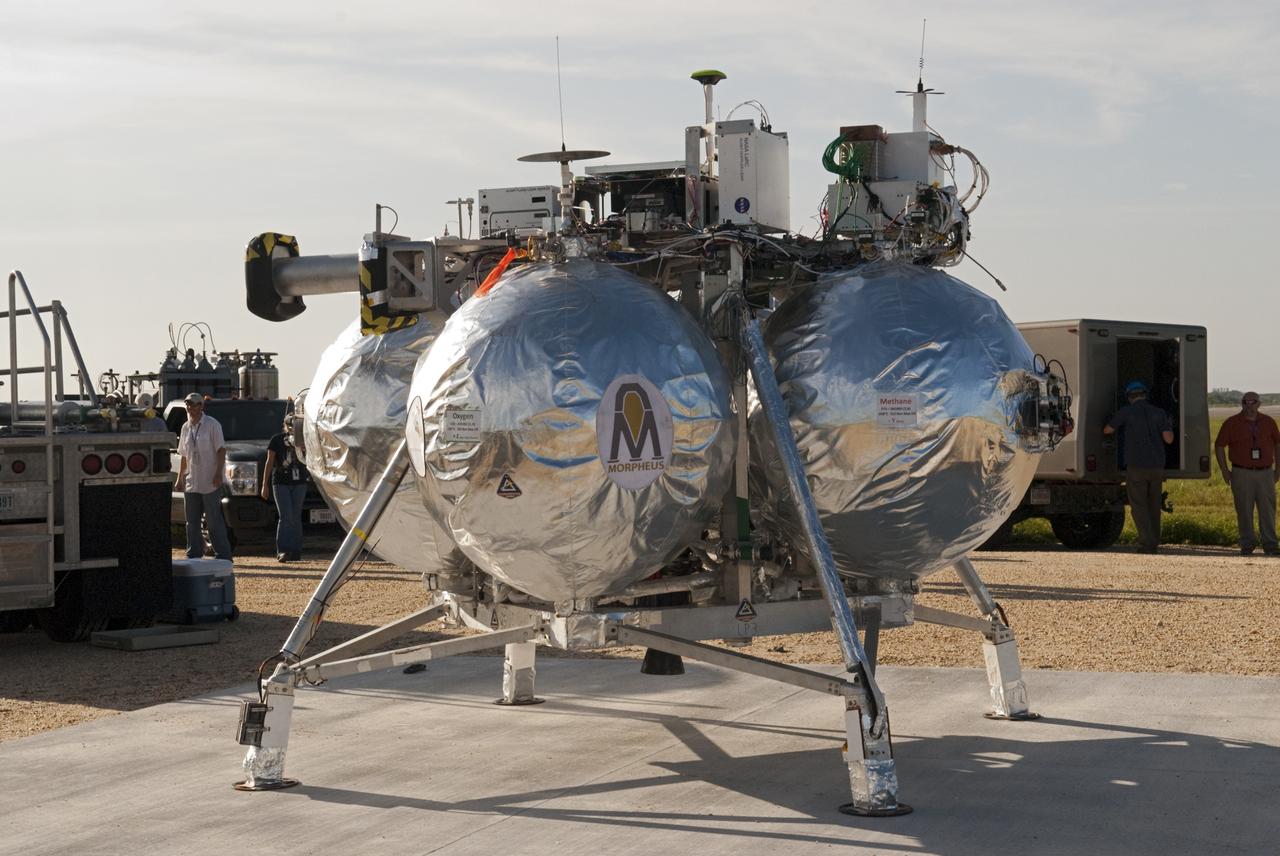
CAPE CANAVERAL, Fla. - NASA's Morpheus lander, a vertical test bed vehicle, has been set up at its launch position along the runway at the Shuttle Landing Facility, or SLF, at the Kennedy Space Center in Florida. Morpheus is designed to demonstrate new green propellant propulsion systems and autonomous landing and an Autonomous Landing and Hazard Avoidance Technology, or ALHAT, system. Checkout of the prototype lander has been ongoing at NASA’s Johnson Space Center in Houston in preparation for its first free flight. The SLF site will provide the lander with the kind of field necessary for realistic testing. Project Morpheus is one of 20 small projects comprising the Advanced Exploration Systems, or AES, program in NASA’s Human Exploration and Operations Mission Directorate. AES projects pioneer new approaches for rapidly developing prototype systems, demonstrating key capabilities and validating operational concepts for future human missions beyond Earth orbit. For more information on Project Morpheus, visit http://www.nasa.gov/centers/johnson/exploration/morpheus/index.html Photo credit: NASA/Dimitri Gerondidakis
CAPE CANAVERAL, Fla. - NASA's Morpheus lander, a vertical test bed vehicle, is moved into a building at the Shuttle Landing Facility, or SLF, at the Kennedy Space Center in Florida. Morpheus is designed to demonstrate new green propellant propulsion systems and autonomous landing and an Autonomous Landing and Hazard Avoidance Technology, or ALHAT, system. Checkout of the prototype lander has been ongoing at NASA’s Johnson Space Center in Houston in preparation for its first free flight. The SLF site will provide the lander with the kind of field necessary for realistic testing. Project Morpheus is one of 20 small projects comprising the Advanced Exploration Systems, or AES, program in NASA’s Human Exploration and Operations Mission Directorate. AES projects pioneer new approaches for rapidly developing prototype systems, demonstrating key capabilities and validating operational concepts for future human missions beyond Earth orbit. For more information on Project Morpheus, visit http://www.nasa.gov/centers/johnson/exploration/morpheus/index.html Photo credit: NASA/ Charisse Nahser

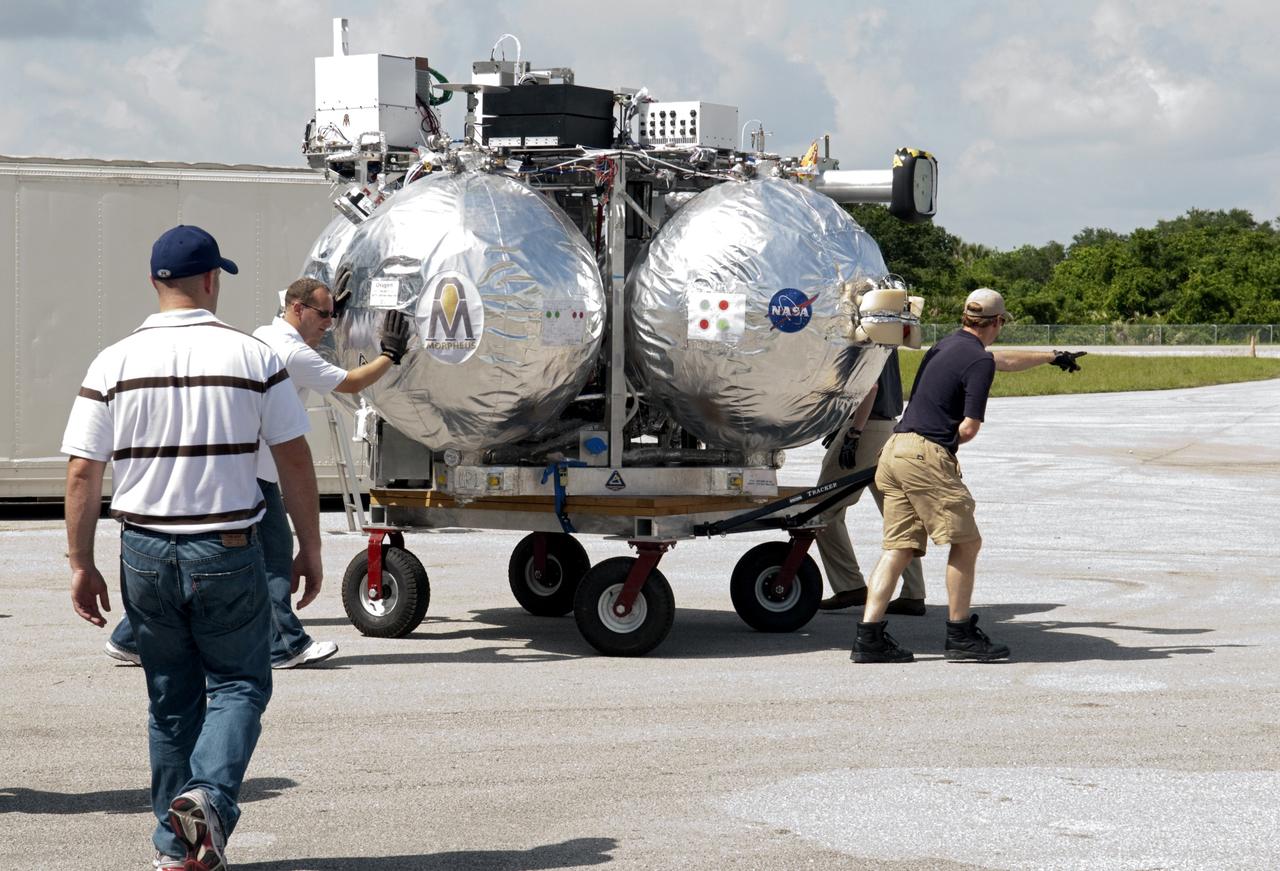
CAPE CANAVERAL, Fla. - NASA's Morpheus lander, a vertical test bed vehicle, is being transported along the Shuttle Landing Facility, or SLF, at the Kennedy Space Center in Florida for a short trip to a launch position along the runway. Morpheus is designed to demonstrate new green propellant propulsion systems and autonomous landing and an Autonomous Landing and Hazard Avoidance Technology, or ALHAT, system. Checkout of the prototype lander has been ongoing at NASA’s Johnson Space Center in Houston in preparation for its first free flight. The SLF site will provide the lander with the kind of field necessary for realistic testing. Project Morpheus is one of 20 small projects comprising the Advanced Exploration Systems, or AES, program in NASA’s Human Exploration and Operations Mission Directorate. AES projects pioneer new approaches for rapidly developing prototype systems, demonstrating key capabilities and validating operational concepts for future human missions beyond Earth orbit. For more information on Project Morpheus, visit http://www.nasa.gov/centers/johnson/exploration/morpheus/index.html Photo credit: NASA/Dimitri Gerondidakis
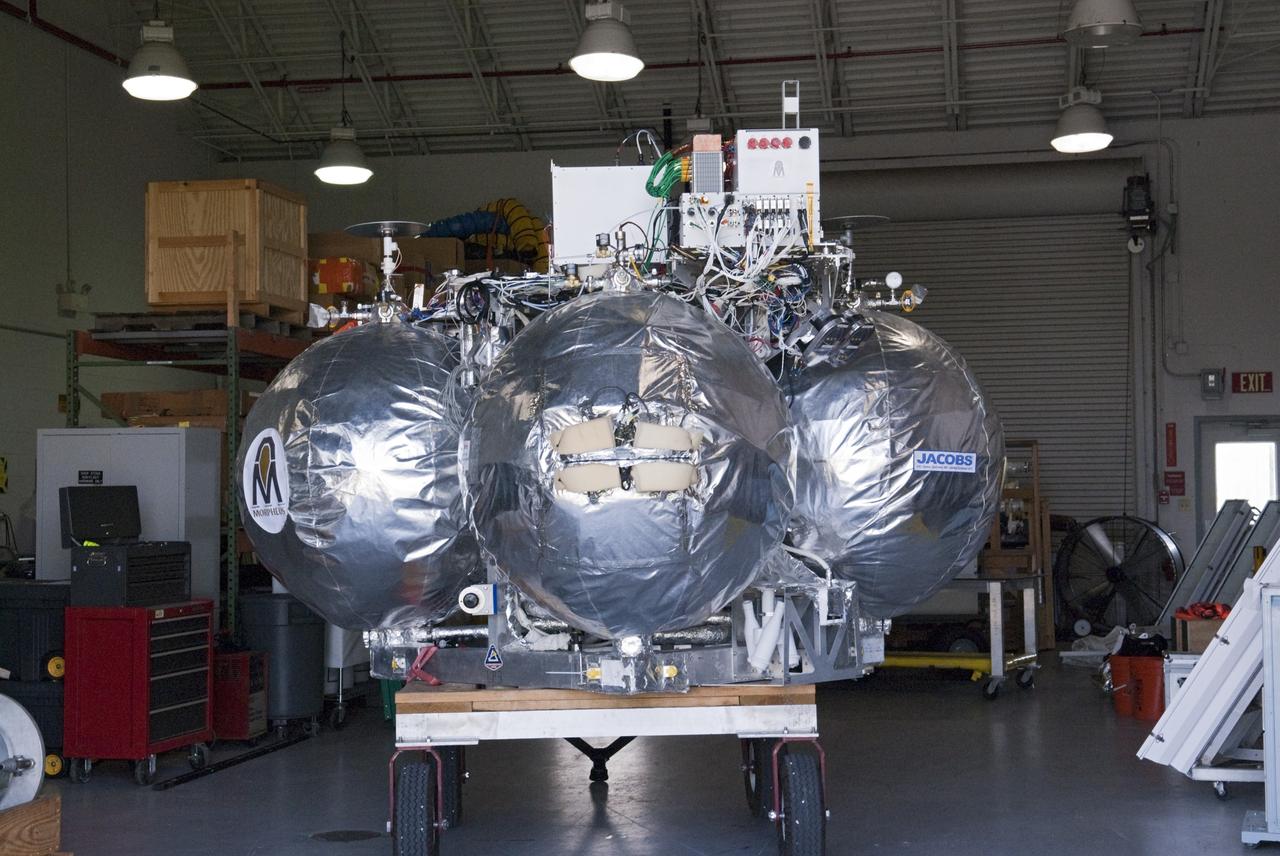
CAPE CANAVERAL, Fla. - NASA's Morpheus lander, a vertical test bed vehicle, has been moved into a building at the Shuttle Landing Facility, or SLF, at the Kennedy Space Center in Florida. Morpheus is designed to demonstrate new green propellant propulsion systems and autonomous landing and an Autonomous Landing and Hazard Avoidance Technology, or ALHAT, system. Checkout of the prototype lander has been ongoing at NASA’s Johnson Space Center in Houston in preparation for its first free flight. The SLF site will provide the lander with the kind of field necessary for realistic testing. Project Morpheus is one of 20 small projects comprising the Advanced Exploration Systems, or AES, program in NASA’s Human Exploration and Operations Mission Directorate. AES projects pioneer new approaches for rapidly developing prototype systems, demonstrating key capabilities and validating operational concepts for future human missions beyond Earth orbit. For more information on Project Morpheus, visit http://www.nasa.gov/centers/johnson/exploration/morpheus/index.html Photo credit: NASA/ Charisse Nahser
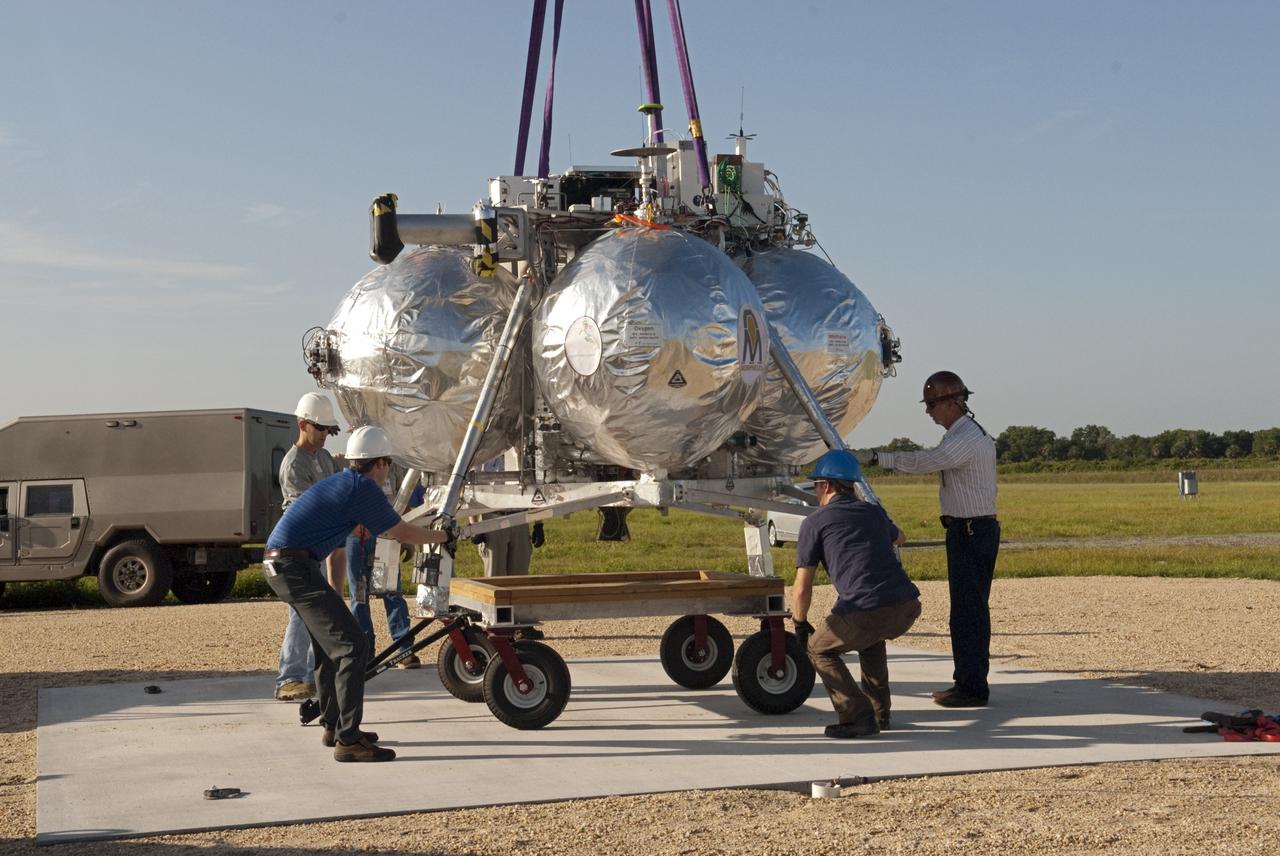
CAPE CANAVERAL, Fla. - Technicians set up NASA's Morpheus lander, a vertical test bed vehicle, at its launch position along the runway at the Shuttle Landing Facility, or SLF, at the Kennedy Space Center in Florida. Morpheus is designed to demonstrate new green propellant propulsion systems and autonomous landing and an Autonomous Landing and Hazard Avoidance Technology, or ALHAT, system. Checkout of the prototype lander has been ongoing at NASA’s Johnson Space Center in Houston in preparation for its first free flight. The SLF site will provide the lander with the kind of field necessary for realistic testing. Project Morpheus is one of 20 small projects comprising the Advanced Exploration Systems, or AES, program in NASA’s Human Exploration and Operations Mission Directorate. AES projects pioneer new approaches for rapidly developing prototype systems, demonstrating key capabilities and validating operational concepts for future human missions beyond Earth orbit. For more information on Project Morpheus, visit http://www.nasa.gov/centers/johnson/exploration/morpheus/index.html Photo credit: NASA/Dimitri Gerondidakis

CAPE CANAVERAL, Fla. - NASA's Morpheus lander, a vertical test bed vehicle, is inspected after unloading at the Kennedy Space Center in Florida. Morpheus is designed to demonstrate new green propellant propulsion systems and autonomous landing and an Autonomous Landing and Hazard Avoidance Technology, or ALHAT, system. Checkout of the prototype lander has been ongoing at NASA’s Johnson Space Center in Houston in preparation for its first free flight. The SLF site will provide the lander with the kind of field necessary for realistic testing. Project Morpheus is one of 20 small projects comprising the Advanced Exploration Systems, or AES, program in NASA’s Human Exploration and Operations Mission Directorate. AES projects pioneer new approaches for rapidly developing prototype systems, demonstrating key capabilities and validating operational concepts for future human missions beyond Earth orbit. For more information on Project Morpheus, visit http://www.nasa.gov/centers/johnson/exploration/morpheus/index.html Photo credit: NASA/ Charisse Nahser
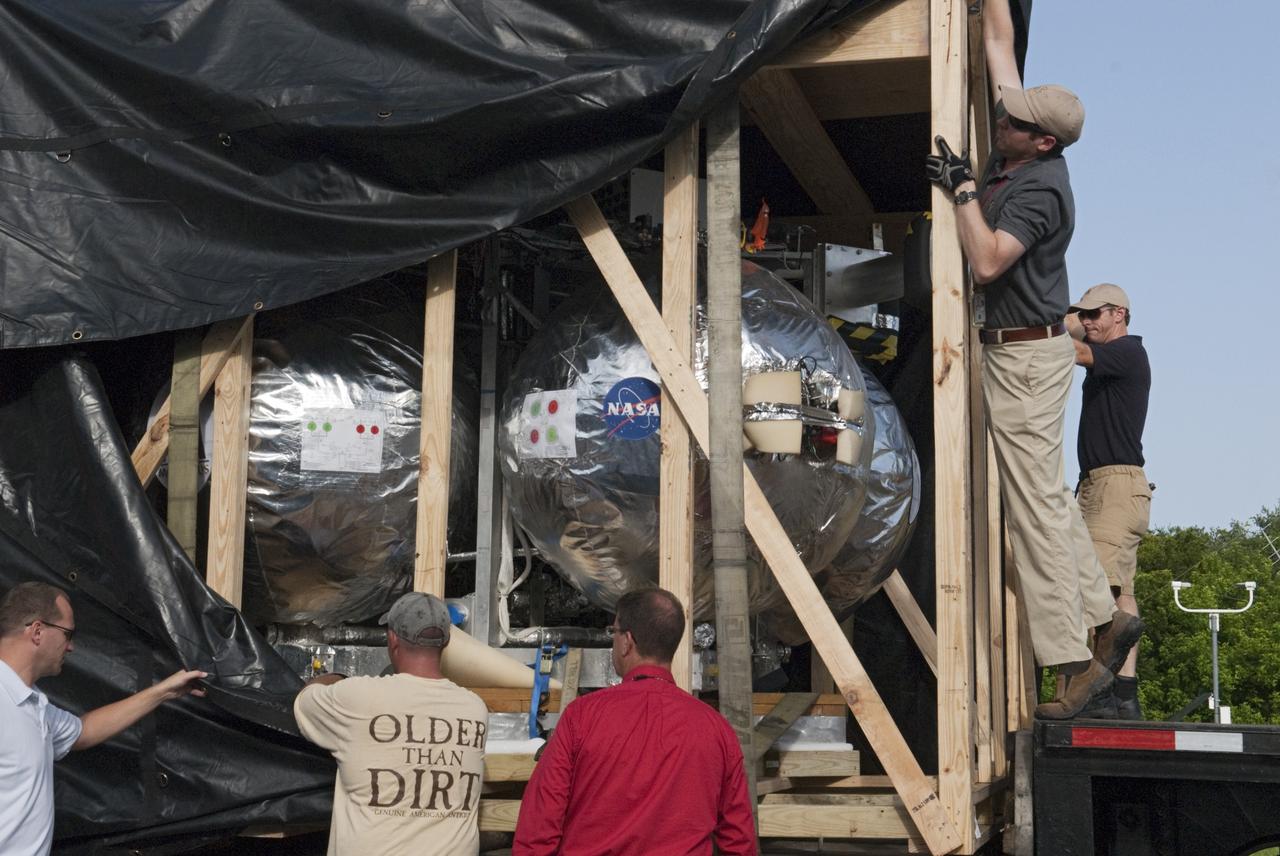
CAPE CANAVERAL, Fla. - NASA's Morpheus lander, a vertical test bed vehicle, is unloaded at the Kennedy Space Center in Florida. Morpheus is designed to demonstrate new green propellant propulsion systems and autonomous landing and an Autonomous Landing and Hazard Avoidance Technology, or ALHAT, system. Checkout of the prototype lander has been ongoing at NASA’s Johnson Space Center in Houston in preparation for its first free flight. The SLF site will provide the lander with the kind of field necessary for realistic testing. Project Morpheus is one of 20 small projects comprising the Advanced Exploration Systems, or AES, program in NASA’s Human Exploration and Operations Mission Directorate. AES projects pioneer new approaches for rapidly developing prototype systems, demonstrating key capabilities and validating operational concepts for future human missions beyond Earth orbit. For more information on Project Morpheus, visit http://www.nasa.gov/centers/johnson/exploration/morpheus/index.html Photo credit: NASA/ Charisse Nahser
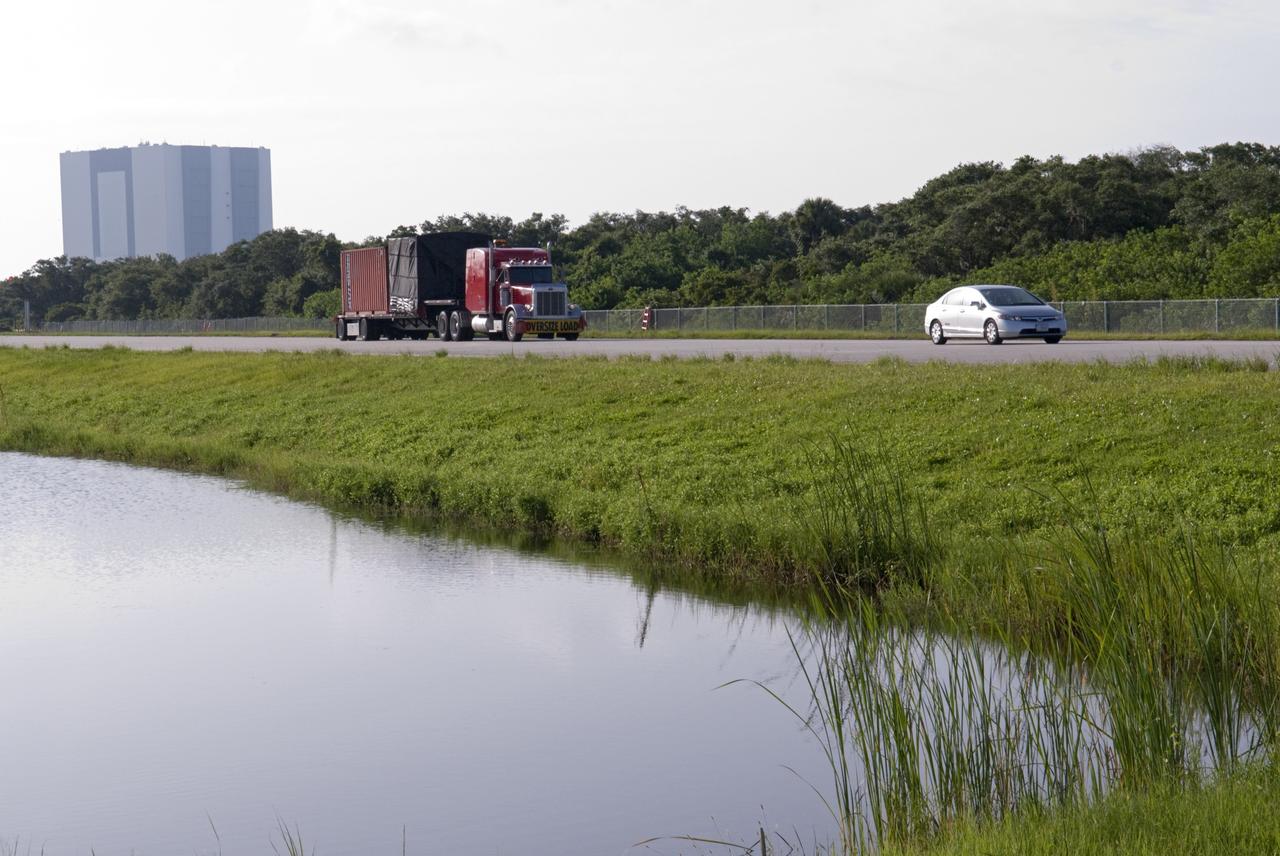
CAPE CANAVERAL, Fla. - A truck transporting NASA's Morpheus lander, a vertical test bed vehicle, heads towards the Shuttle Landing Facility, or SLF, at the Kennedy Space Center in Florida for unloading. Morpheus is designed to demonstrate new green propellant propulsion systems and autonomous landing and an Autonomous Landing and Hazard Avoidance Technology, or ALHAT, system. Checkout of the prototype lander has been ongoing at NASA’s Johnson Space Center in Houston in preparation for its first free flight. The SLF site will provide the lander with the kind of field necessary for realistic testing. Project Morpheus is one of 20 small projects comprising the Advanced Exploration Systems, or AES, program in NASA’s Human Exploration and Operations Mission Directorate. AES projects pioneer new approaches for rapidly developing prototype systems, demonstrating key capabilities and validating operational concepts for future human missions beyond Earth orbit. For more information on Project Morpheus, visit http://www.nasa.gov/centers/johnson/exploration/morpheus/index.html Photo credit: NASA/ Charisse Nahser

CAPE CANAVERAL, Fla. –This panoramic view shows a rock and crater-filled planetary scape has been built so engineers can test the Autonomous Landing and Hazard Avoidance Technology, or ALHAT system on the Project Morpheus lander. Testing will demonstrate ALHAT’s ability to provide required navigation data negotiating the Morpheus lander away from risks during descent. Checkout of the prot otype lander has been ongoing at NASA’s Johnson Space Center in Houston in preparation for its first free flight. The SLF site will provide the lander with the kind of field necessary for realistic testing. Project Morpheus is one of 20 small projects comprising the Advanced Exploration Systems, or AES, program in NASA’s Human Exploration and Operations Mission Directorate. AES projects pioneer new approaches for rapidly developing prototype systems, demonstrating key capabilities and validating operational concepts for future human missions beyond Earth orbit. For more information on Project Morpheus, visit http://www.nasa.gov/centers/johnson/exploration/morpheus/index.html Photo credit: NASA/Kim Shiflett
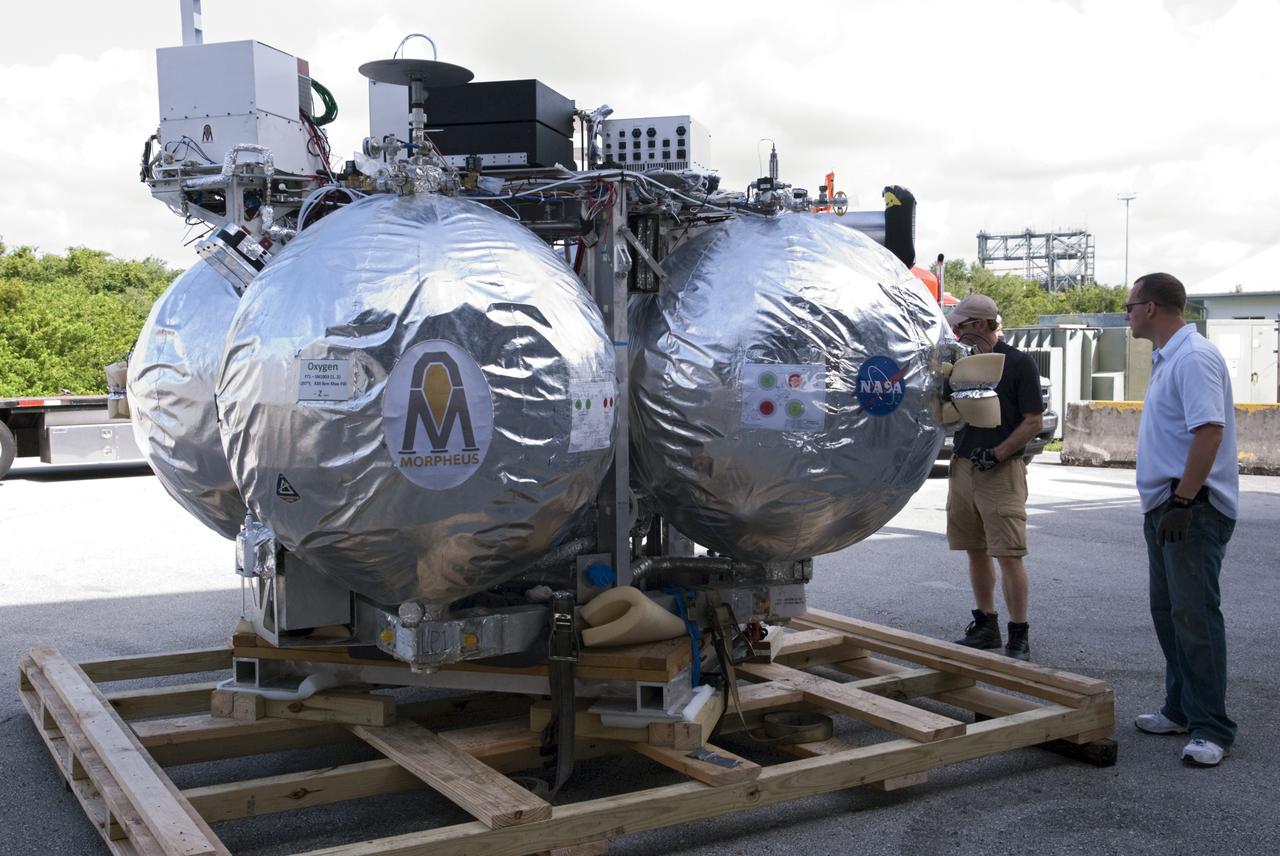
CAPE CANAVERAL, Fla. - NASA's Morpheus lander, a vertical test bed vehicle, is unloaded at the Kennedy Space Center in Florida. Morpheus is designed to demonstrate new green propellant propulsion systems and autonomous landing and an Autonomous Landing and Hazard Avoidance Technology, or ALHAT, system. Checkout of the prototype lander has been ongoing at NASA’s Johnson Space Center in Houston in preparation for its first free flight. The SLF site will provide the lander with the kind of field necessary for realistic testing. Project Morpheus is one of 20 small projects comprising the Advanced Exploration Systems, or AES, program in NASA’s Human Exploration and Operations Mission Directorate. AES projects pioneer new approaches for rapidly developing prototype systems, demonstrating key capabilities and validating operational concepts for future human missions beyond Earth orbit. For more information on Project Morpheus, visit http://www.nasa.gov/centers/johnson/exploration/morpheus/index.html Photo credit: NASA/ Charisse Nahser
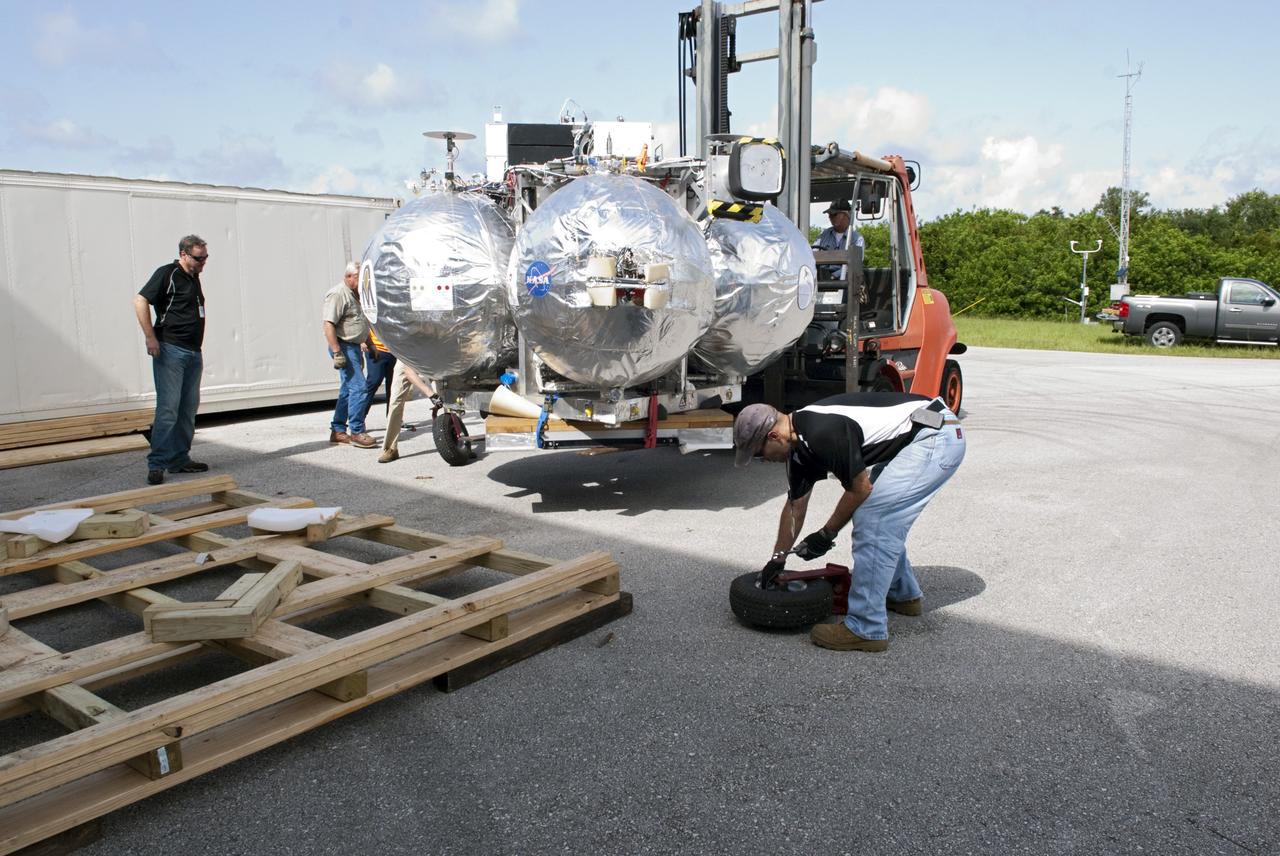
CAPE CANAVERAL, Fla. - Wheels are assembled for transporting NASA's Morpheus lander, a vertical test bed vehicle after its arrival at the Kennedy Space Center in Florida. Morpheus is designed to demonstrate new green propellant propulsion systems and autonomous landing and an Autonomous Landing and Hazard Avoidance Technology, or ALHAT, system. Checkout of the prototype lander has been ongoing at NASA’s Johnson Space Center in Houston in preparation for its first free flight. The SLF site will provide the lander with the kind of field necessary for realistic testing. Project Morpheus is one of 20 small projects comprising the Advanced Exploration Systems, or AES, program in NASA’s Human Exploration and Operations Mission Directorate. AES projects pioneer new approaches for rapidly developing prototype systems, demonstrating key capabilities and validating operational concepts for future human missions beyond Earth orbit. For more information on Project Morpheus, visit http://www.nasa.gov/centers/johnson/exploration/morpheus/index.html Photo credit: NASA/ Charisse Nahser
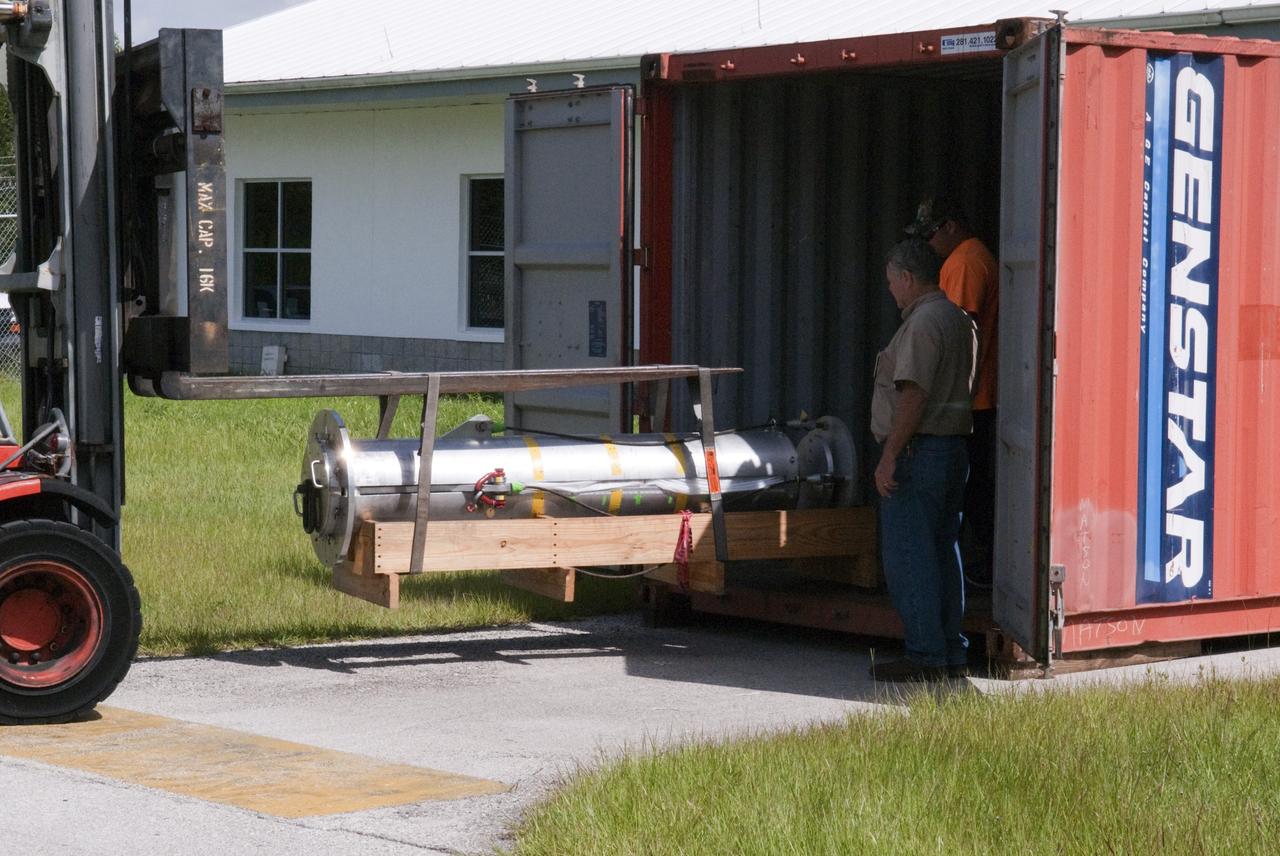
CAPE CANAVERAL, Fla. - Support equipment for NASA's Morpheus lander, a vertical test bed vehicle, is unloaded at a building at the Shuttle Landing Facility, or SLF, at the Kennedy Space Center in Florida. Morpheus is designed to demonstrate new green propellant propulsion systems and autonomous landing and an Autonomous Landing and Hazard Avoidance Technology, or ALHAT, system. Checkout of the prototype lander has been ongoing at NASA’s Johnson Space Center in Houston in preparation for its first free flight. The SLF site will provide the lander with the kind of field necessary for realistic testing. Project Morpheus is one of 20 small projects comprising the Advanced Exploration Systems, or AES, program in NASA’s Human Exploration and Operations Mission Directorate. AES projects pioneer new approaches for rapidly developing prototype systems, demonstrating key capabilities and validating operational concepts for future human missions beyond Earth orbit. For more information on Project Morpheus, visit http://www.nasa.gov/centers/johnson/exploration/morpheus/index.html Photo credit: NASA/ Charisse Nahser
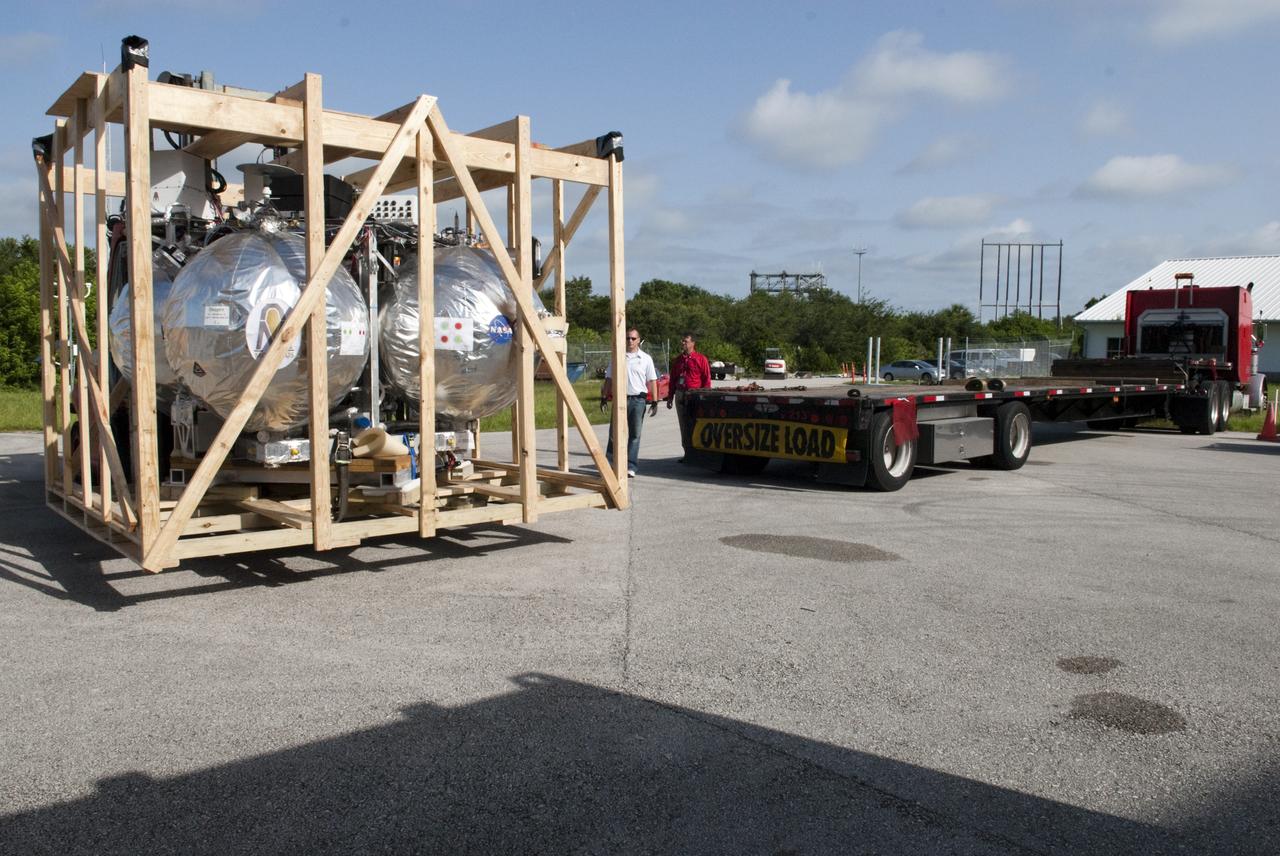
CAPE CANAVERAL, Fla. - NASA's Morpheus lander, a vertical test bed vehicle, has been unloaded at the Kennedy Space Center in Florida. Morpheus is designed to demonstrate new green propellant propulsion systems and autonomous landing and an Autonomous Landing and Hazard Avoidance Technology, or ALHAT, system. Checkout of the prototype lander has been ongoing at NASA’s Johnson Space Center in Houston in preparation for its first free flight. The SLF site will provide the lander with the kind of field necessary for realistic testing. Project Morpheus is one of 20 small projects comprising the Advanced Exploration Systems, or AES, program in NASA’s Human Exploration and Operations Mission Directorate. AES projects pioneer new approaches for rapidly developing prototype systems, demonstrating key capabilities and validating operational concepts for future human missions beyond Earth orbit. For more information on Project Morpheus, visit http://www.nasa.gov/centers/johnson/exploration/morpheus/index.html Photo credit: NASA/ Charisse Nahser

CAPE CANAVERAL, Fla. - A crane is being used to set up NASA's Morpheus lander, a vertical test bed vehicle, at its launch position along the runway at the Shuttle Landing Facility, or SLF, at the Kennedy Space Center in Florida. Morpheus is designed to demonstrate new green propellant propulsion systems and autonomous landing and an Autonomous Landing and Hazard Avoidance Technology, or ALHAT, system. Checkout of the prototype lander has been ongoing at NASA’s Johnson Space Center in Houston in preparation for its first free flight. The SLF site will provide the lander with the kind of field necessary for realistic testing. Project Morpheus is one of 20 small projects comprising the Advanced Exploration Systems, or AES, program in NASA’s Human Exploration and Operations Mission Directorate. AES projects pioneer new approaches for rapidly developing prototype systems, demonstrating key capabilities and validating operational concepts for future human missions beyond Earth orbit. For more information on Project Morpheus, visit http://www.nasa.gov/centers/johnson/exploration/morpheus/index.html Photo credit: NASA/Dimitri Gerondidakis
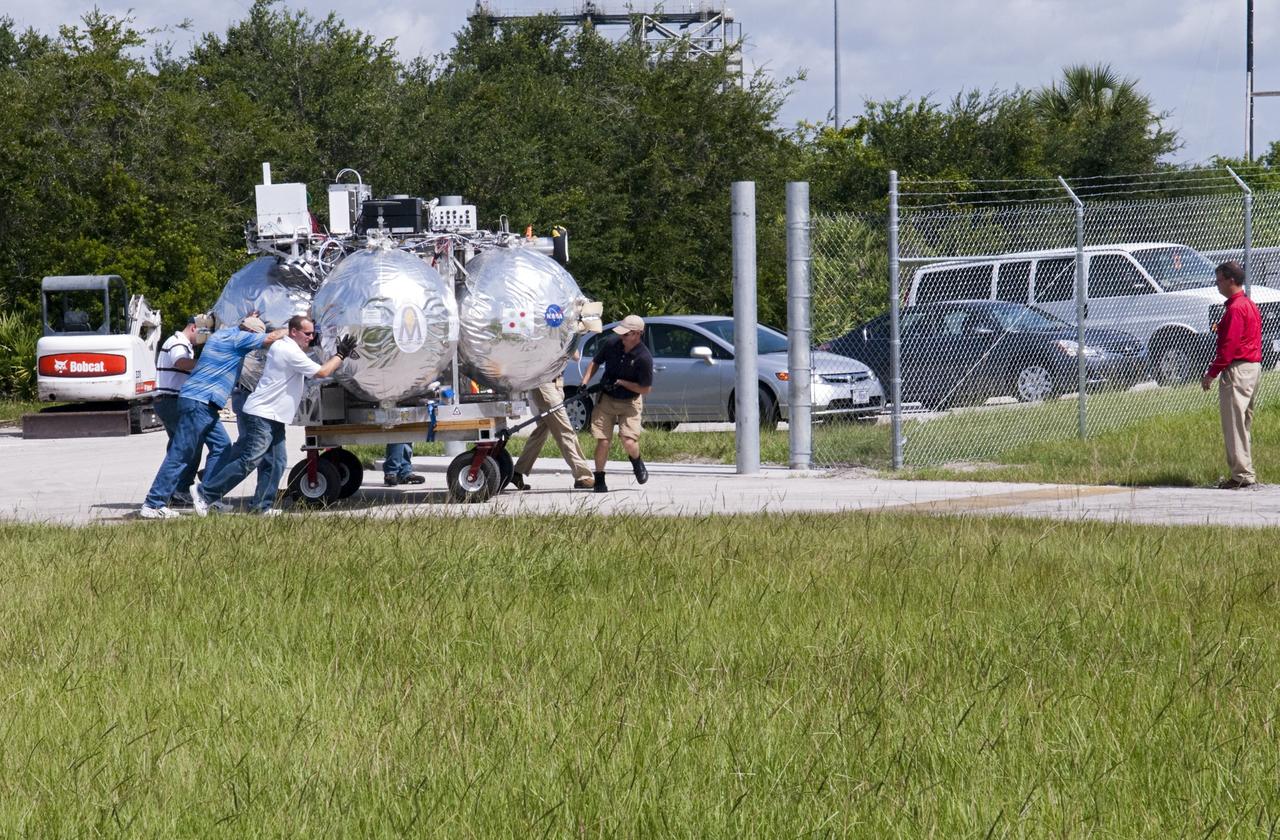
CAPE CANAVERAL, Fla. - NASA's Morpheus lander, a vertical test bed vehicle, is moved into a building at the Shuttle Landing Facility, or SLF, at the Kennedy Space Center in Florida. Morpheus is designed to demonstrate new green propellant propulsion systems and autonomous landing and an Autonomous Landing and Hazard Avoidance Technology, or ALHAT, system. Checkout of the prototype lander has been ongoing at NASA’s Johnson Space Center in Houston in preparation for its first free flight. The SLF site will provide the lander with the kind of field necessary for realistic testing. Project Morpheus is one of 20 small projects comprising the Advanced Exploration Systems, or AES, program in NASA’s Human Exploration and Operations Mission Directorate. AES projects pioneer new approaches for rapidly developing prototype systems, demonstrating key capabilities and validating operational concepts for future human missions beyond Earth orbit. For more information on Project Morpheus, visit http://www.nasa.gov/centers/johnson/exploration/morpheus/index.html Photo credit: NASA/ Charisse Nahser
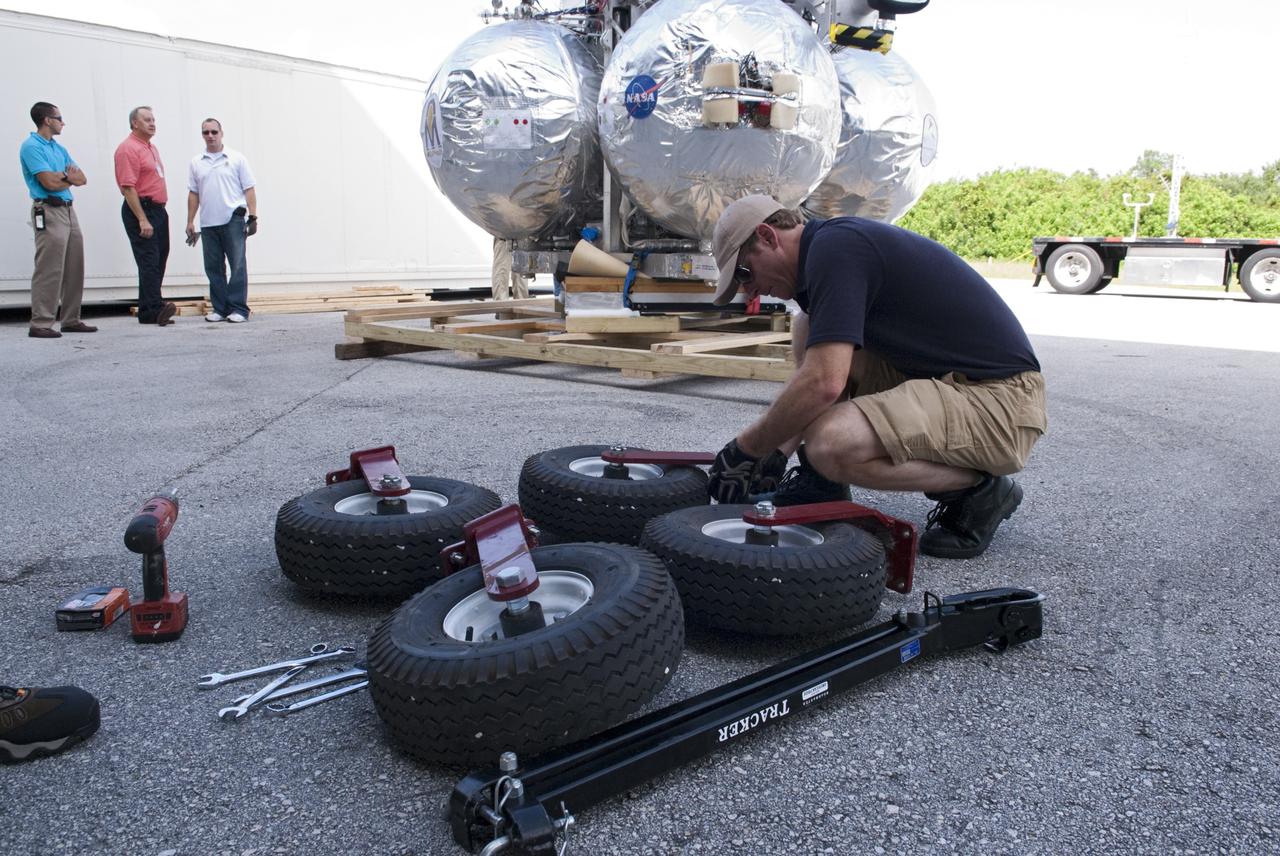
CAPE CANAVERAL, Fla. - Wheels are assembled for transporting NASA's Morpheus lander, a vertical test bed vehicle after its arrival at the Kennedy Space Center in Florida. Morpheus is designed to demonstrate new green propellant propulsion systems and autonomous landing and an Autonomous Landing and Hazard Avoidance Technology, or ALHAT, system. Checkout of the prototype lander has been ongoing at NASA’s Johnson Space Center in Houston in preparation for its first free flight. The SLF site will provide the lander with the kind of field necessary for realistic testing. Project Morpheus is one of 20 small projects comprising the Advanced Exploration Systems, or AES, program in NASA’s Human Exploration and Operations Mission Directorate. AES projects pioneer new approaches for rapidly developing prototype systems, demonstrating key capabilities and validating operational concepts for future human missions beyond Earth orbit. For more information on Project Morpheus, visit http://www.nasa.gov/centers/johnson/exploration/morpheus/index.html Photo credit: NASA/ Charisse Nahser
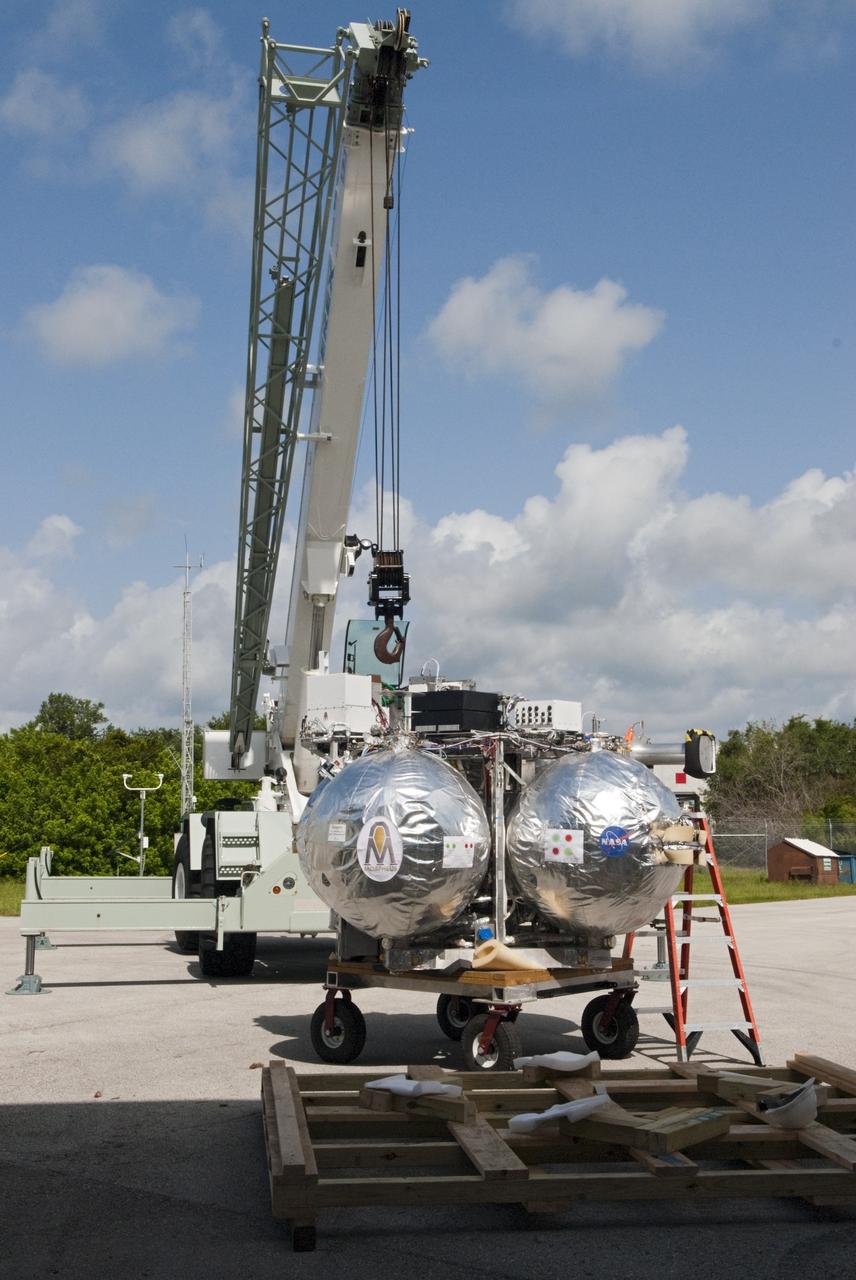
CAPE CANAVERAL, Fla. - A crane supports unloading of NASA's Morpheus lander, a vertical test bed vehicle, at the Kennedy Space Center in Florida. Morpheus is designed to demonstrate new green propellant propulsion systems and autonomous landing and an Autonomous Landing and Hazard Avoidance Technology, or ALHAT, system. Checkout of the prototype lander has been ongoing at NASA’s Johnson Space Center in Houston in preparation for its first free flight. The SLF site will provide the lander with the kind of field necessary for realistic testing. Project Morpheus is one of 20 small projects comprising the Advanced Exploration Systems, or AES, program in NASA’s Human Exploration and Operations Mission Directorate. AES projects pioneer new approaches for rapidly developing prototype systems, demonstrating key capabilities and validating operational concepts for future human missions beyond Earth orbit. For more information on Project Morpheus, visit http://www.nasa.gov/centers/johnson/exploration/morpheus/index.html Photo credit: NASA/ Charisse Nahser
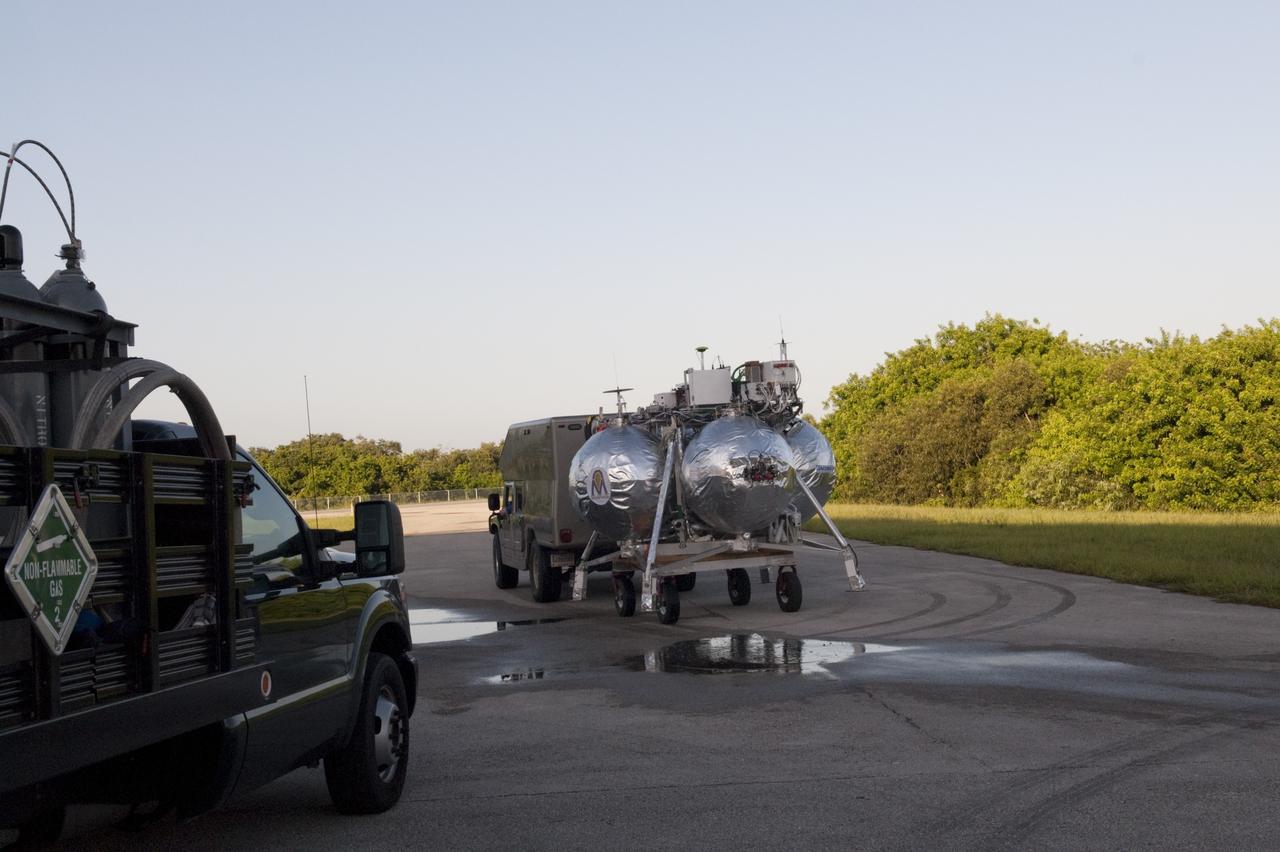
CAPE CANAVERAL, Fla. - NASA's Morpheus lander, a vertical test bed vehicle, is being transported out from its checkout building for a short trip to a launch position at the Shuttle Landing Facility, or SLF, at the Kennedy Space Center in Florida. Morpheus is designed to demonstrate new green propellant propulsion systems and autonomous landing and an Autonomous Landing and Hazard Avoidance Technology, or ALHAT, system. Checkout of the prototype lander has been ongoing at NASA’s Johnson Space Center in Houston in preparation for its first free flight. The SLF site will provide the lander with the kind of field necessary for realistic testing. Project Morpheus is one of 20 small projects comprising the Advanced Exploration Systems, or AES, program in NASA’s Human Exploration and Operations Mission Directorate. AES projects pioneer new approaches for rapidly developing prototype systems, demonstrating key capabilities and validating operational concepts for future human missions beyond Earth orbit. For more information on Project Morpheus, visit http://www.nasa.gov/centers/johnson/exploration/morpheus/index.html Photo credit: NASA/Dimitri Gerondidakis
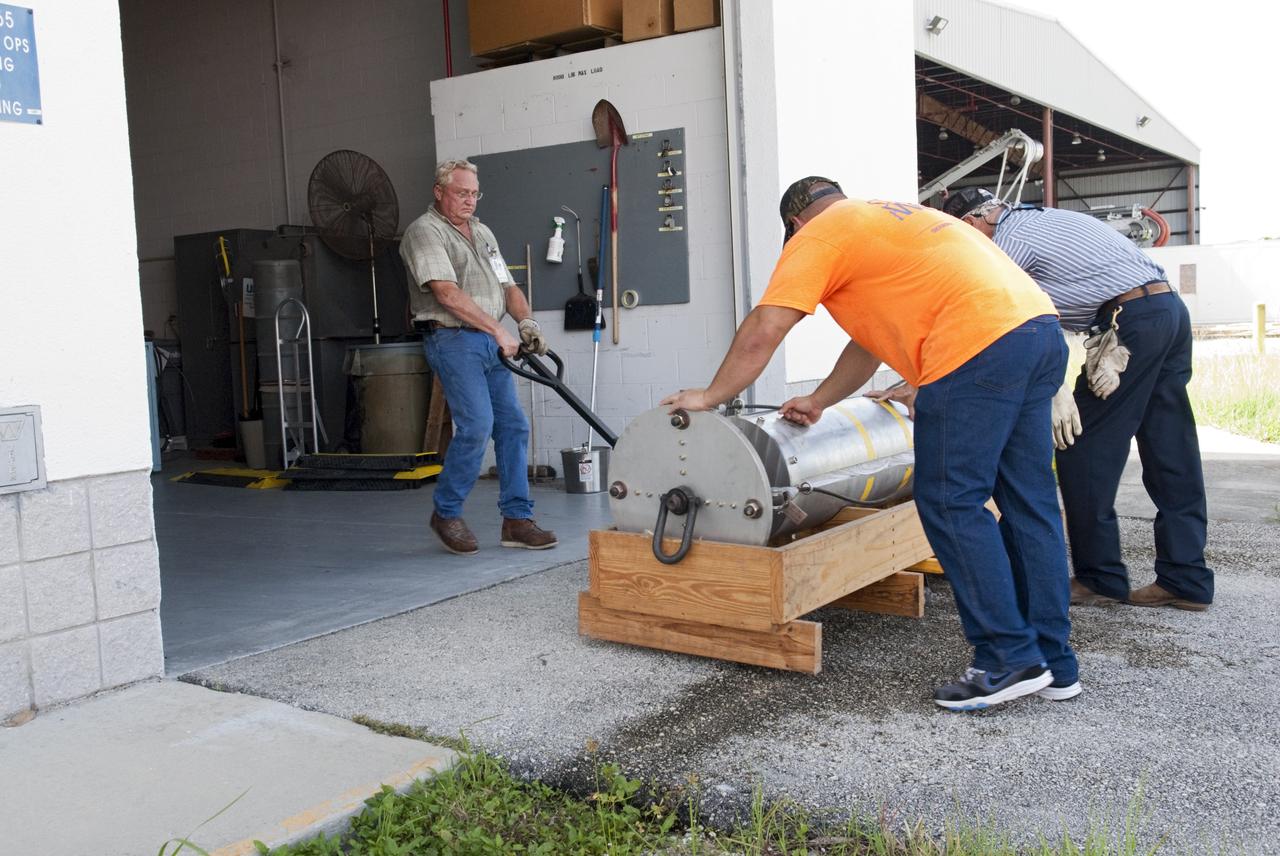
CAPE CANAVERAL, Fla. - Support equipment for NASA's Morpheus lander, a vertical test bed vehicle, is moved into a building at the Shuttle Landing Facility, or SLF, at the Kennedy Space Center in Florida. Morpheus is designed to demonstrate new green propellant propulsion systems and autonomous landing and an Autonomous Landing and Hazard Avoidance Technology, or ALHAT, system. Checkout of the prototype lander has been ongoing at NASA’s Johnson Space Center in Houston in preparation for its first free flight. The SLF site will provide the lander with the kind of field necessary for realistic testing. Project Morpheus is one of 20 small projects comprising the Advanced Exploration Systems, or AES, program in NASA’s Human Exploration and Operations Mission Directorate. AES projects pioneer new approaches for rapidly developing prototype systems, demonstrating key capabilities and validating operational concepts for future human missions beyond Earth orbit. For more information on Project Morpheus, visit http://www.nasa.gov/centers/johnson/exploration/morpheus/index.html Photo credit: NASA/ Charisse Nahser
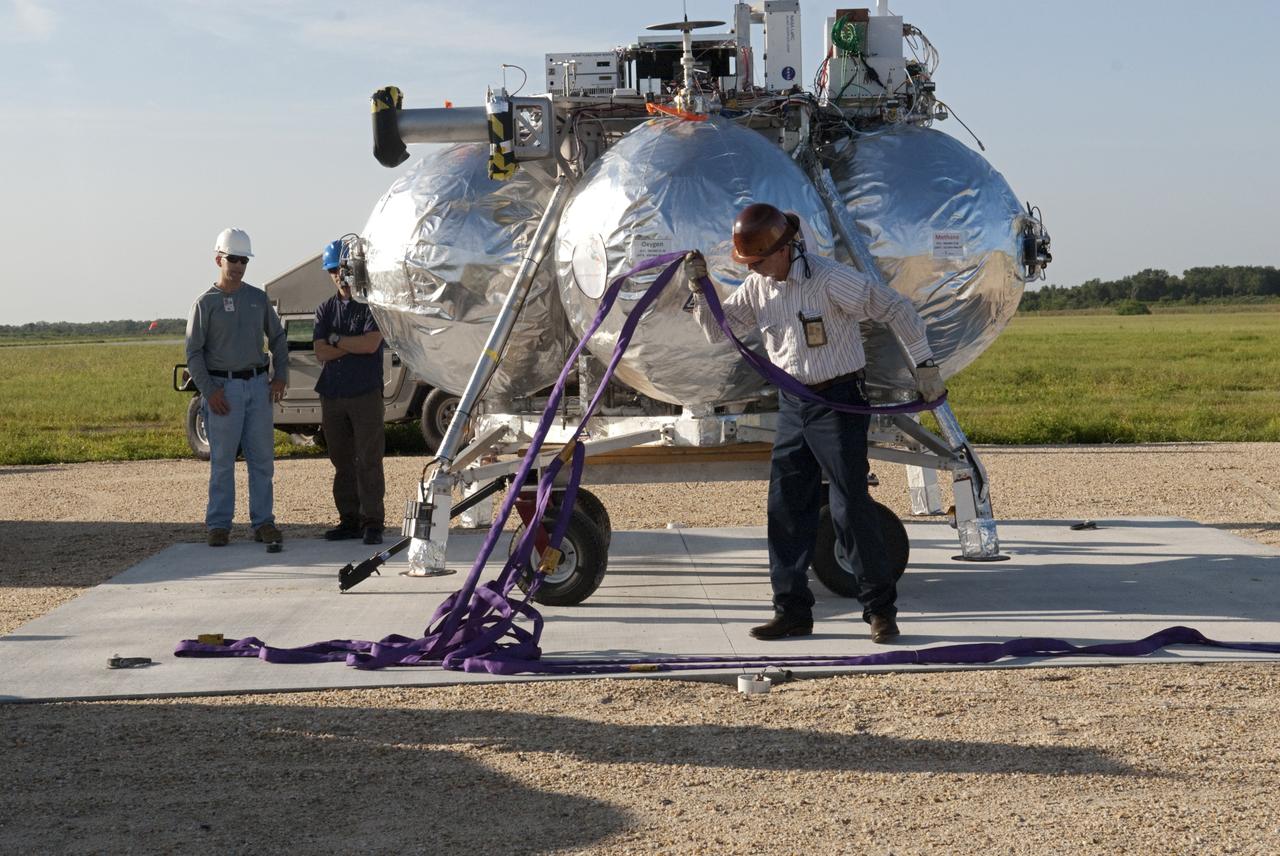
CAPE CANAVERAL, Fla. - NASA's Morpheus lander, a vertical test bed vehicle, is being set up at its launch position along the runway at the Shuttle Landing Facility, or SLF, at the Kennedy Space Center in Florida. Morpheus is designed to demonstrate new green propellant propulsion systems and autonomous landing and an Autonomous Landing and Hazard Avoidance Technology, or ALHAT, system. Checkout of the prototype lander has been ongoing at NASA’s Johnson Space Center in Houston in preparation for its first free flight. The SLF site will provide the lander with the kind of field necessary for realistic testing. Project Morpheus is one of 20 small projects comprising the Advanced Exploration Systems, or AES, program in NASA’s Human Exploration and Operations Mission Directorate. AES projects pioneer new approaches for rapidly developing prototype systems, demonstrating key capabilities and validating operational concepts for future human missions beyond Earth orbit. For more information on Project Morpheus, visit http://www.nasa.gov/centers/johnson/exploration/morpheus/index.html Photo credit: NASA/Dimitri Gerondidakis
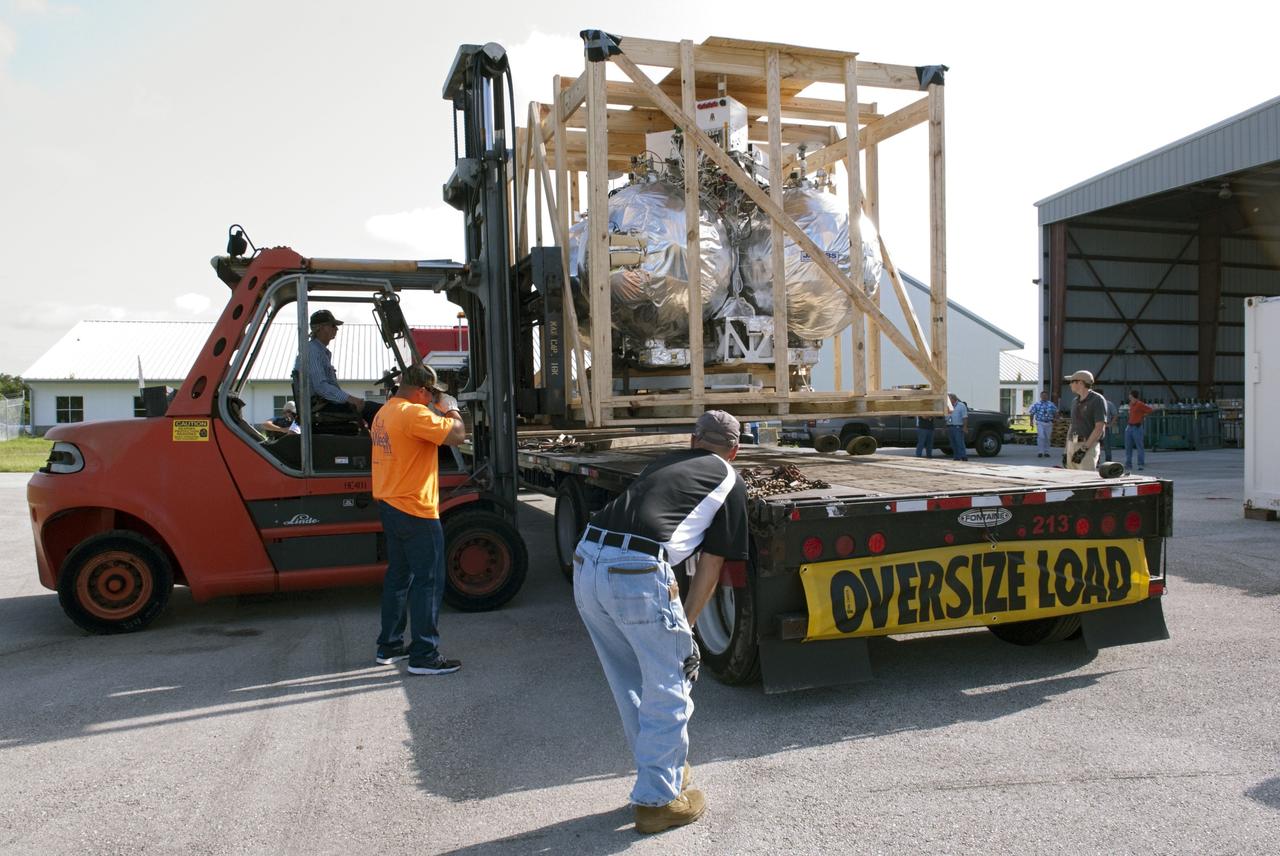
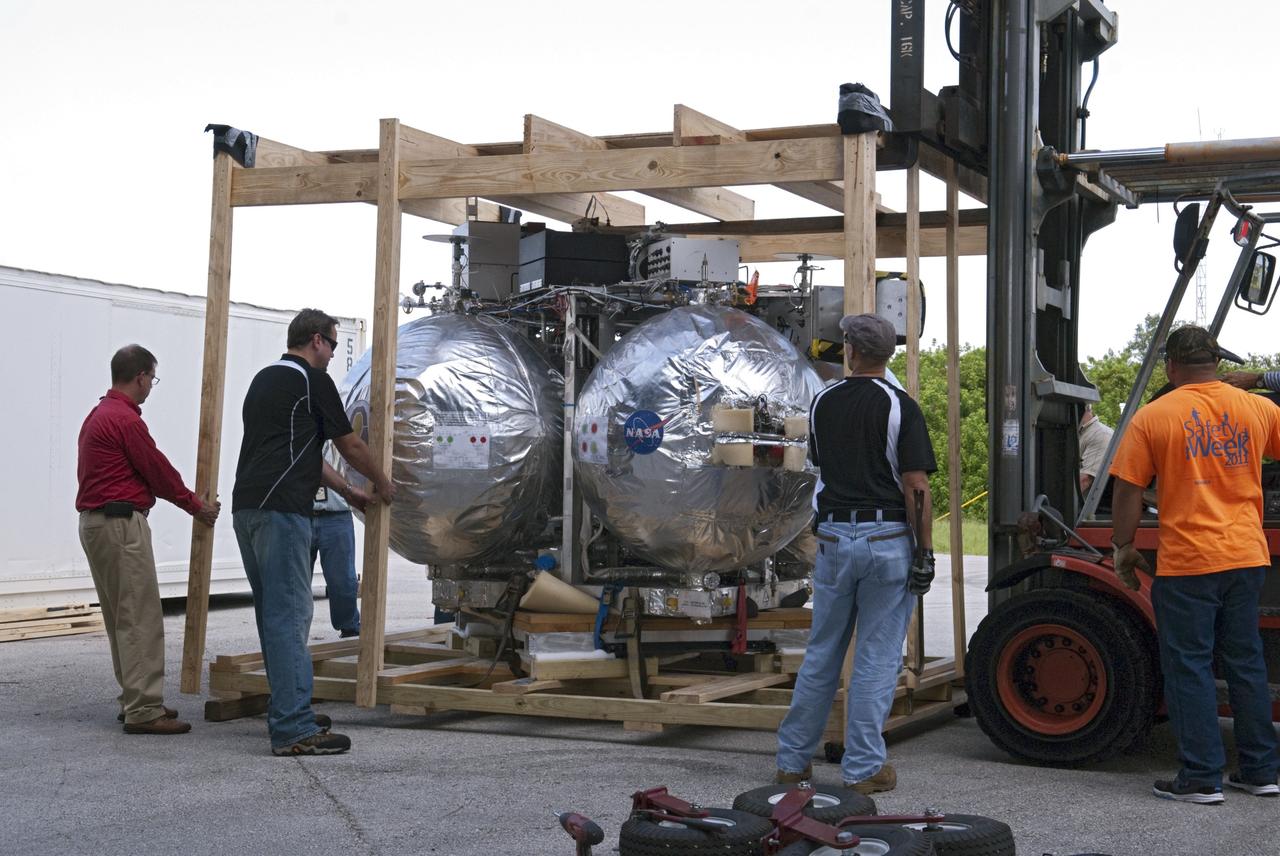
CAPE CANAVERAL, Fla. - A forklift is used at the Kennedy Space Center in Florida to unload NASA's Morpheus lander, a vertical test bed vehicle. Morpheus is designed to demonstrate new green propellant propulsion systems and autonomous landing and an Autonomous Landing and Hazard Avoidance Technology, or ALHAT, system. Checkout of the prototype lander has been ongoing at NASA’s Johnson Space Center in Houston in preparation for its first free flight. The SLF site will provide the lander with the kind of field necessary for realistic testing. Project Morpheus is one of 20 small projects comprising the Advanced Exploration Systems, or AES, program in NASA’s Human Exploration and Operations Mission Directorate. AES projects pioneer new approaches for rapidly developing prototype systems, demonstrating key capabilities and validating operational concepts for future human missions beyond Earth orbit. For more information on Project Morpheus, visit http://www.nasa.gov/centers/johnson/exploration/morpheus/index.html Photo credit: NASA/ Charisse Nahser
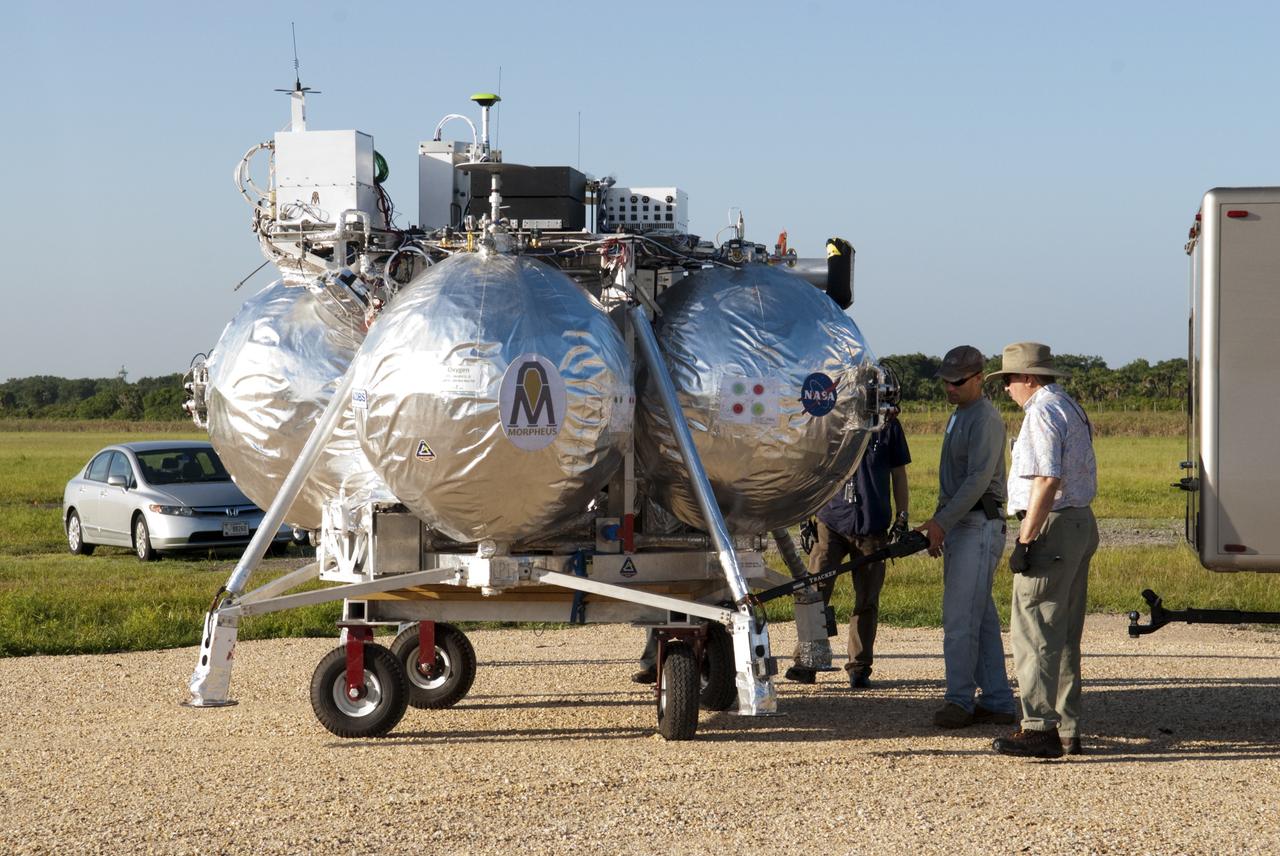
CAPE CANAVERAL, Fla. - NASA's Morpheus lander, a vertical test bed vehicle, is being set up at its launch position along the runway at the Shuttle Landing Facility, or SLF, at the Kennedy Space Center in Florida. Morpheus is designed to demonstrate new green propellant propulsion systems and autonomous landing and an Autonomous Landing and Hazard Avoidance Technology, or ALHAT, system. Checkout of the prototype lander has been ongoing at NASA’s Johnson Space Center in Houston in preparation for its first free flight. The SLF site will provide the lander with the kind of field necessary for realistic testing. Project Morpheus is one of 20 small projects comprising the Advanced Exploration Systems, or AES, program in NASA’s Human Exploration and Operations Mission Directorate. AES projects pioneer new approaches for rapidly developing prototype systems, demonstrating key capabilities and validating operational concepts for future human missions beyond Earth orbit. For more information on Project Morpheus, visit http://www.nasa.gov/centers/johnson/exploration/morpheus/index.html Photo credit: NASA/Dimitri Gerondidakis
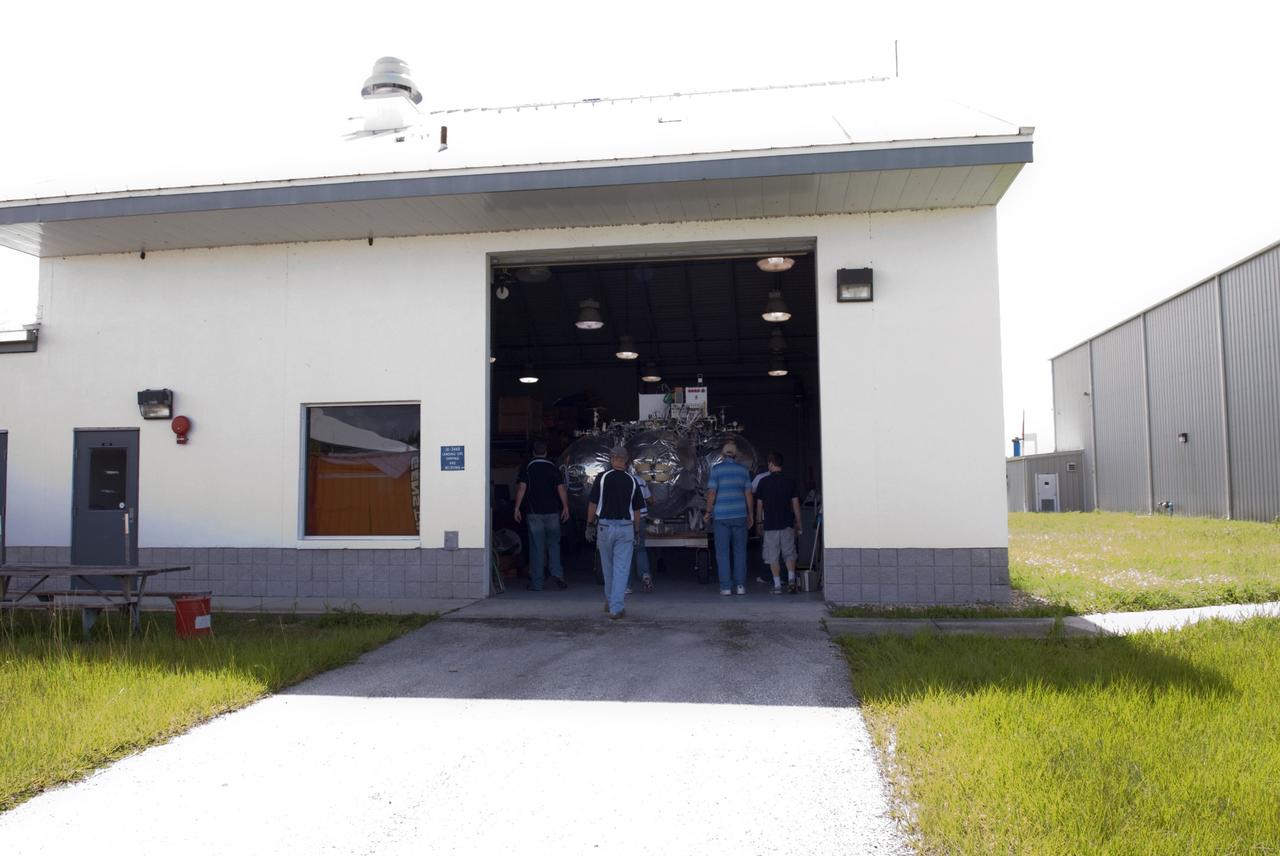
CAPE CANAVERAL, Fla. - NASA's Morpheus lander, a vertical test bed vehicle, has been moved into a building at the Shuttle Landing Facility, or SLF, at the Kennedy Space Center in Florida. Morpheus is designed to demonstrate new green propellant propulsion systems and autonomous landing and an Autonomous Landing and Hazard Avoidance Technology, or ALHAT, system. Checkout of the prototype lander has been ongoing at NASA’s Johnson Space Center in Houston in preparation for its first free flight. The SLF site will provide the lander with the kind of field necessary for realistic testing. Project Morpheus is one of 20 small projects comprising the Advanced Exploration Systems, or AES, program in NASA’s Human Exploration and Operations Mission Directorate. AES projects pioneer new approaches for rapidly developing prototype systems, demonstrating key capabilities and validating operational concepts for future human missions beyond Earth orbit. For more information on Project Morpheus, visit http://www.nasa.gov/centers/johnson/exploration/morpheus/index.html Photo credit: NASA/ Charisse Nahser
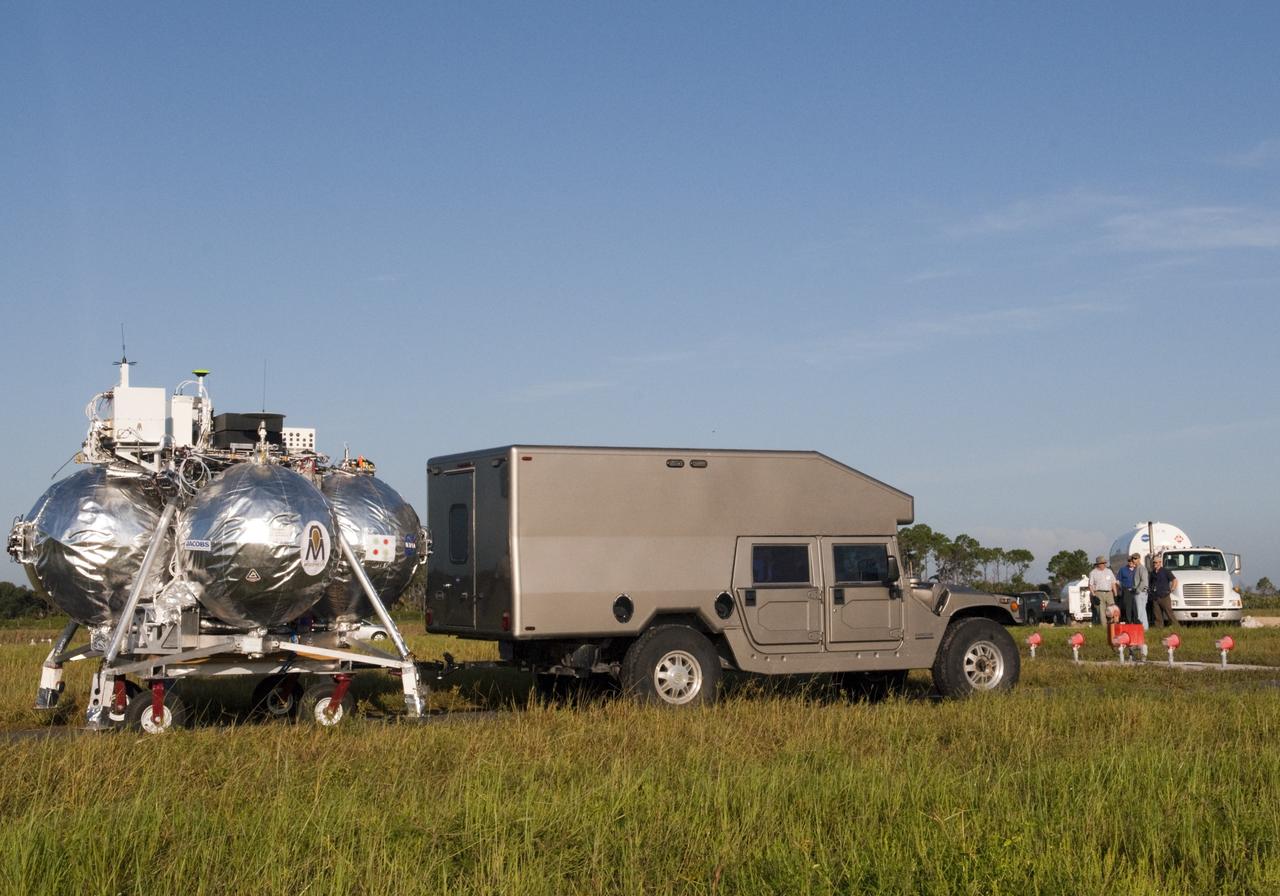
CAPE CANAVERAL, Fla. - NASA's Morpheus lander, a vertical test bed vehicle, is being transported along the Shuttle Landing Facility, or SLF, at the Kennedy Space Center in Florida for a short trip to a launch position along the runway. Morpheus is designed to demonstrate new green propellant propulsion systems and autonomous landing and an Autonomous Landing and Hazard Avoidance Technology, or ALHAT, system. Checkout of the prototype lander has been ongoing at NASA’s Johnson Space Center in Houston in preparation for its first free flight. The SLF site will provide the lander with the kind of field necessary for realistic testing. Project Morpheus is one of 20 small projects comprising the Advanced Exploration Systems, or AES, program in NASA’s Human Exploration and Operations Mission Directorate. AES projects pioneer new approaches for rapidly developing prototype systems, demonstrating key capabilities and validating operational concepts for future human missions beyond Earth orbit. For more information on Project Morpheus, visit http://www.nasa.gov/centers/johnson/exploration/morpheus/index.html Photo credit: NASA/Dimitri Gerondidakis
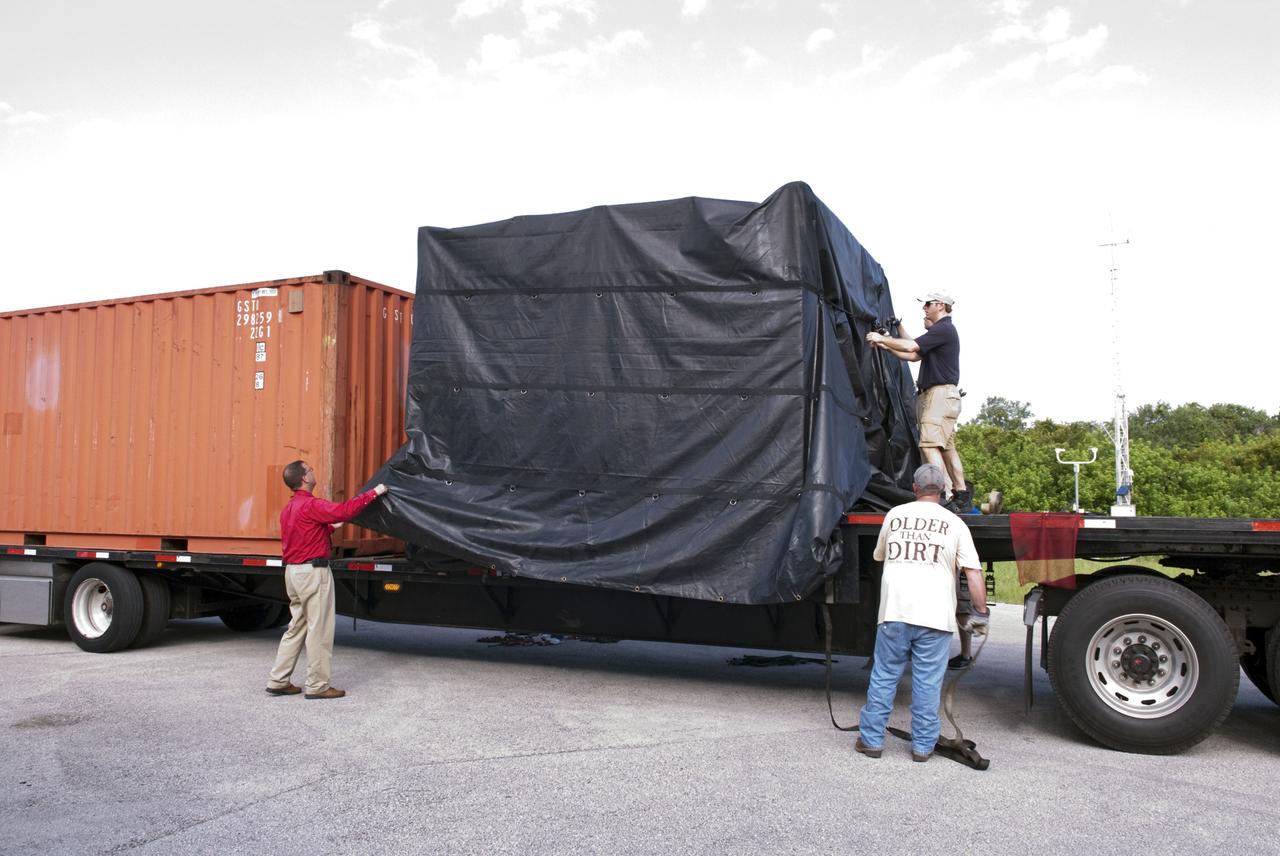
CAPE CANAVERAL, Fla. - NASA's Morpheus lander, a vertical test bed vehicle, is unloaded at a building at the Shuttle Landing Facility, or SLF, at the Kennedy Space Center in Florida. Morpheus is designed to demonstrate new green propellant propulsion systems and autonomous landing and an Autonomous Landing and Hazard Avoidance Technology, or ALHAT, system. Checkout of the prototype lander has been ongoing at NASA’s Johnson Space Center in Houston in preparation for its first free flight. The SLF site will provide the lander with the kind of field necessary for realistic testing. Project Morpheus is one of 20 small projects comprising the Advanced Exploration Systems, or AES, program in NASA’s Human Exploration and Operations Mission Directorate. AES projects pioneer new approaches for rapidly developing prototype systems, demonstrating key capabilities and validating operational concepts for future human missions beyond Earth orbit. For more information on Project Morpheus, visit http://www.nasa.gov/centers/johnson/exploration/morpheus/index.html Photo credit: NASA/ Charisse Nahser
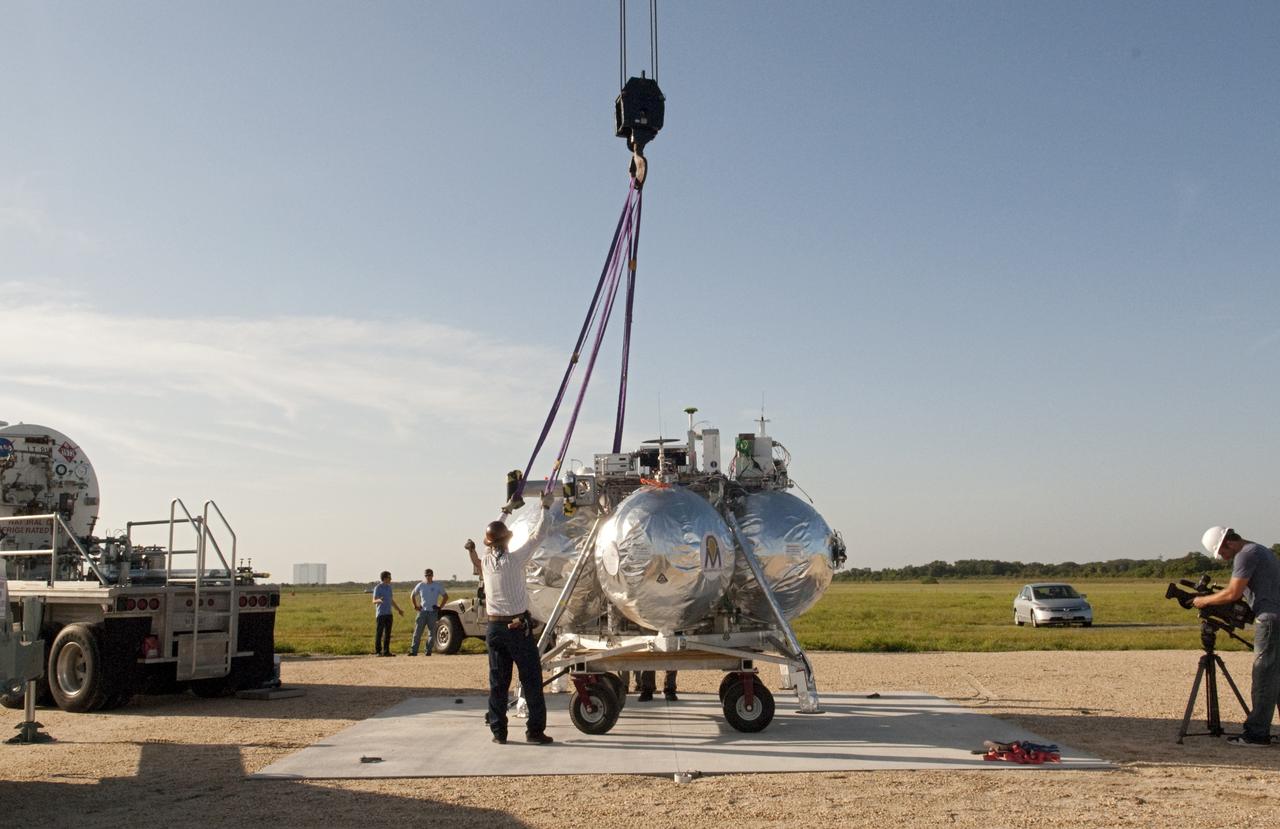
CAPE CANAVERAL, Fla. - A crane is being used to set up NASA's Morpheus lander, a vertical test bed vehicle, at its launch position along the runway at the Shuttle Landing Facility, or SLF, at the Kennedy Space Center in Florida. Morpheus is designed to demonstrate new green propellant propulsion systems and autonomous landing and an Autonomous Landing and Hazard Avoidance Technology, or ALHAT, system. Checkout of the prototype lander has been ongoing at NASA’s Johnson Space Center in Houston in preparation for its first free flight. The SLF site will provide the lander with the kind of field necessary for realistic testing. Project Morpheus is one of 20 small projects comprising the Advanced Exploration Systems, or AES, program in NASA’s Human Exploration and Operations Mission Directorate. AES projects pioneer new approaches for rapidly developing prototype systems, demonstrating key capabilities and validating operational concepts for future human missions beyond Earth orbit. For more information on Project Morpheus, visit http://www.nasa.gov/centers/johnson/exploration/morpheus/index.html Photo credit: NASA/Dimitri Gerondidakis
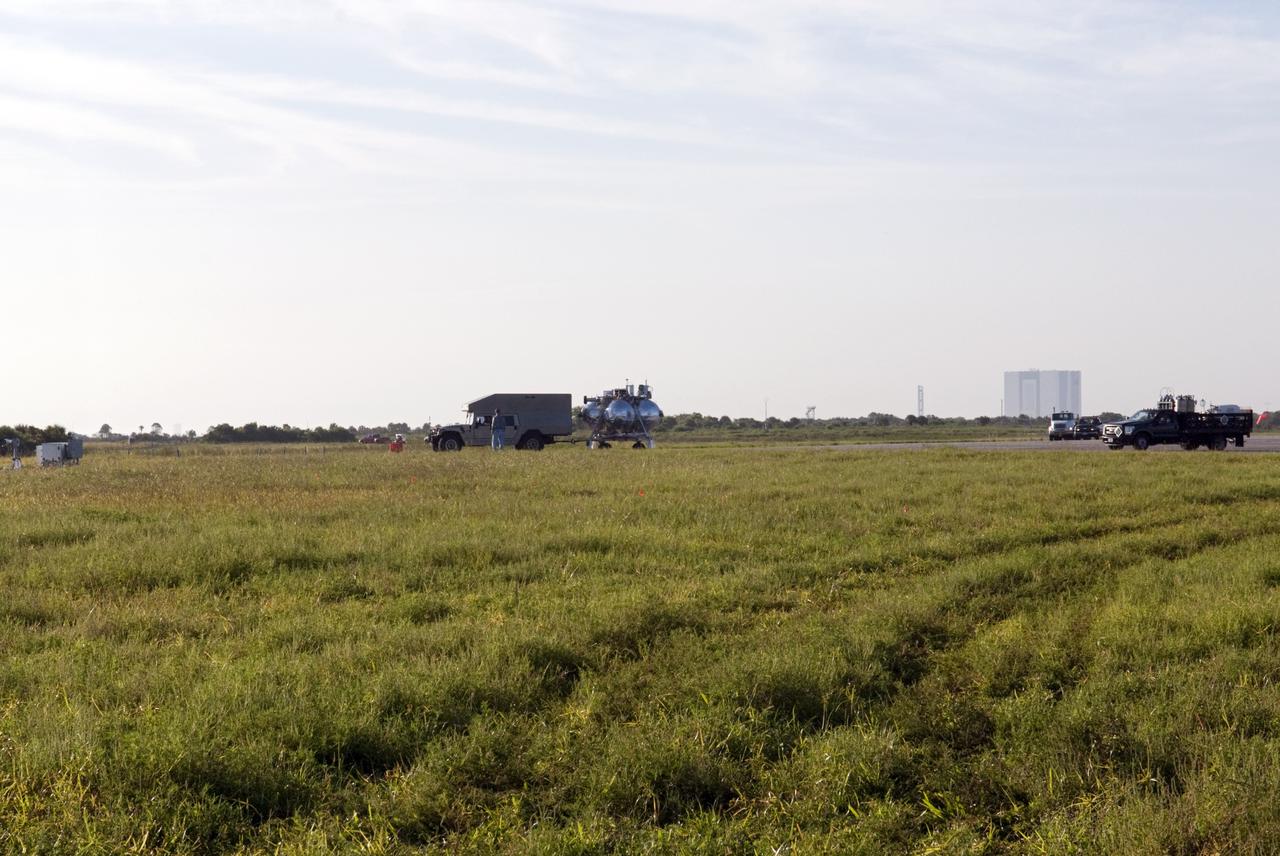
CAPE CANAVERAL, Fla. - NASA's Morpheus lander, a vertical test bed vehicle, is being transported along the Shuttle Landing Facility, or SLF, at the Kennedy Space Center in Florida for a short trip to a launch position along the runway. Morpheus is designed to demonstrate new green propellant propulsion systems and autonomous landing and an Autonomous Landing and Hazard Avoidance Technology, or ALHAT, system. Checkout of the prototype lander has been ongoing at NASA’s Johnson Space Center in Houston in preparation for its first free flight. The SLF site will provide the lander with the kind of field necessary for realistic testing. Project Morpheus is one of 20 small projects comprising the Advanced Exploration Systems, or AES, program in NASA’s Human Exploration and Operations Mission Directorate. AES projects pioneer new approaches for rapidly developing prototype systems, demonstrating key capabilities and validating operational concepts for future human missions beyond Earth orbit. For more information on Project Morpheus, visit http://www.nasa.gov/centers/johnson/exploration/morpheus/index.html Photo credit: NASA/Dimitri Gerondidakis
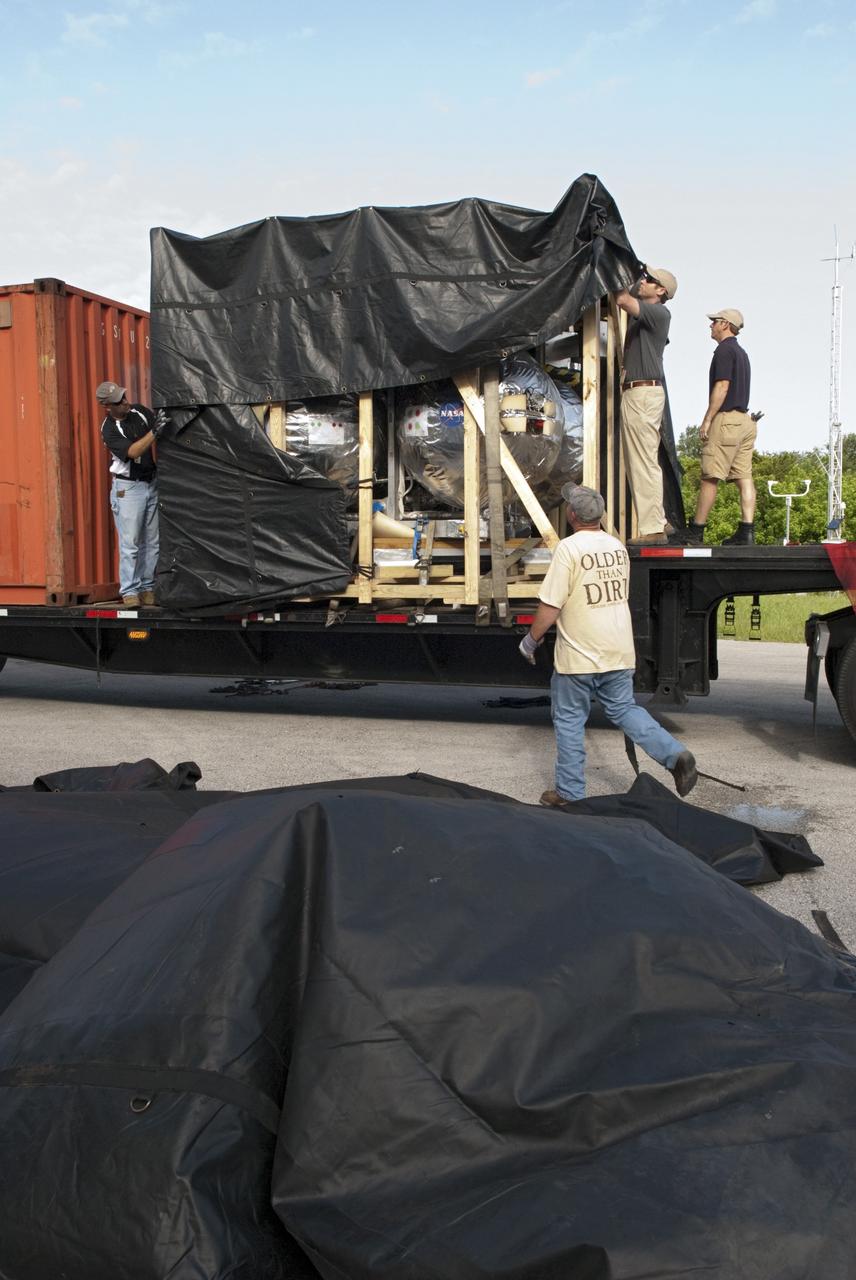
CAPE CANAVERAL, Fla. - NASA's Morpheus lander, a vertical test bed vehicle, is unloaded at the Kennedy Space Center in Florida. Morpheus is designed to demonstrate new green propellant propulsion systems and autonomous landing and an Autonomous Landing and Hazard Avoidance Technology, or ALHAT, system. Checkout of the prototype lander has been ongoing at NASA’s Johnson Space Center in Houston in preparation for its first free flight. The SLF site will provide the lander with the kind of field necessary for realistic testing. Project Morpheus is one of 20 small projects comprising the Advanced Exploration Systems, or AES, program in NASA’s Human Exploration and Operations Mission Directorate. AES projects pioneer new approaches for rapidly developing prototype systems, demonstrating key capabilities and validating operational concepts for future human missions beyond Earth orbit. For more information on Project Morpheus, visit http://www.nasa.gov/centers/johnson/exploration/morpheus/index.html Photo credit: NASA/ Charisse Nahser
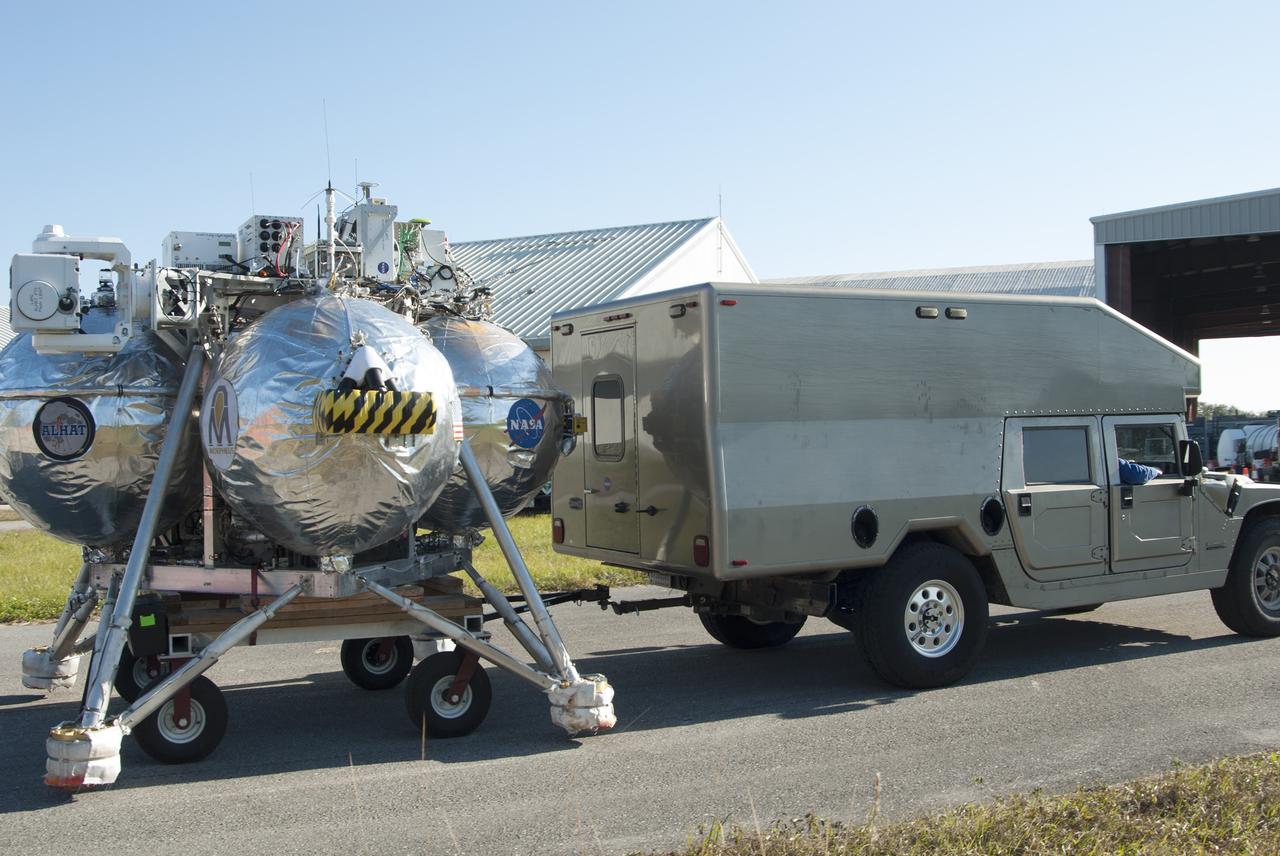
CAPE CANAVERAL, Fla. – NASA's Project Morpheus prototype lander is being transported from a hangar at the Shuttle Landing Facility, or SLF, for free flight test number 15 at the north end of the SLF at NASA’s Kennedy Space Center in Florida. The lander will take off from the ground over a flame trench and use its autonomous landing and hazard avoidance technology, or ALHAT sensors, to survey the hazard field to determine safe landing sites. Project Morpheus tests NASA’s ALHAT and an engine that runs on liquid oxygen and methane, which are green propellants. These new capabilities could be used in future efforts to deliver cargo to planetary surfaces. Project Morpheus is being managed under the Advanced Exploration Systems, or AES, Division in NASA’s Human Exploration and Operations Mission Directorate. For more information on Project Morpheus, visit http://morpheuslander.jsc.nasa.gov/. Photo credit: NASA/Jim Grossmann
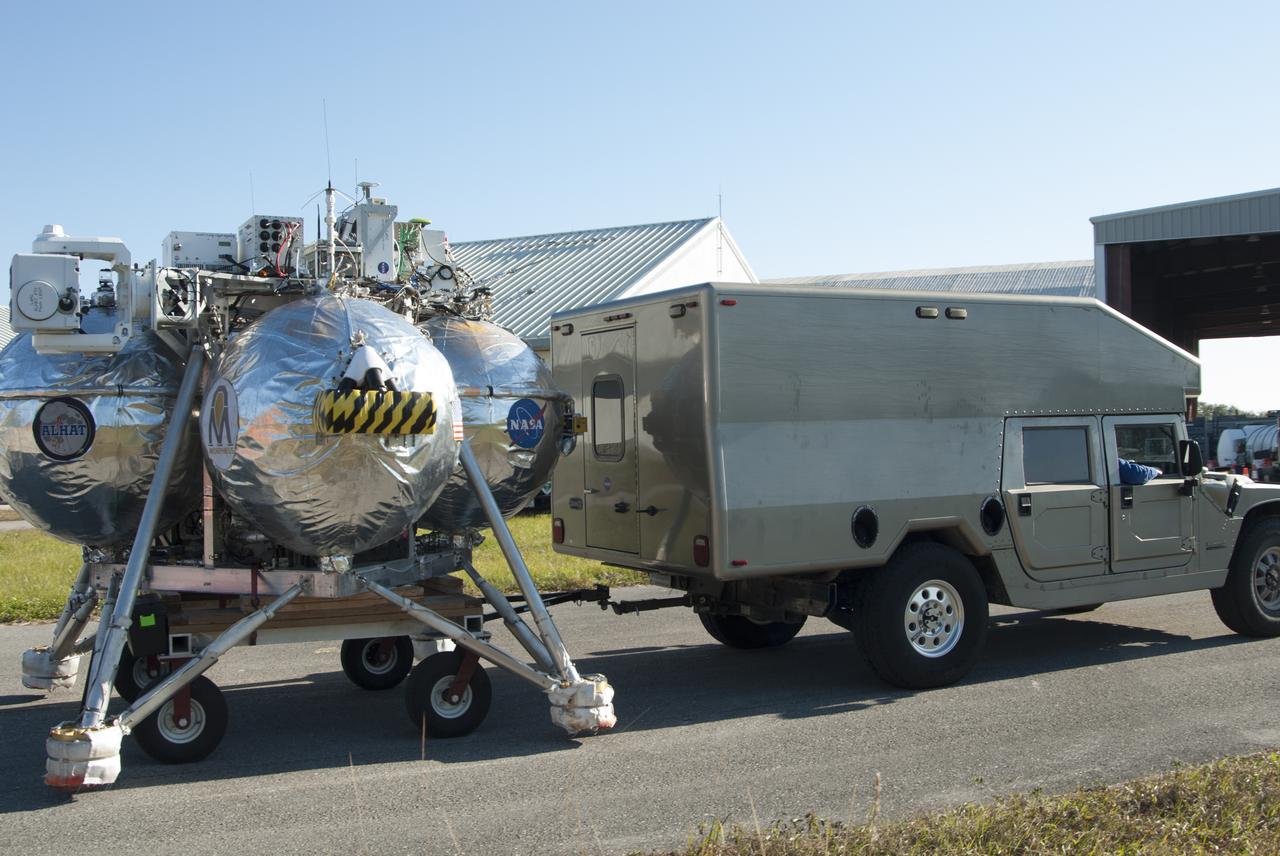
NASA's Project Morpheus prototype lander is being transported from a hangar at the Shuttle Landing Facility, or SLF, for free flight test number 15 at the north end of the SLF at NASA’s Kennedy Space Center in Florida. The lander will take off from the ground over a flame trench and use its autonomous landing and hazard avoidance technology, or ALHAT sensors, to survey the hazard field to determine safe landing sites. Project Morpheus tests NASA’s ALHAT and an engine that runs on liquid oxygen and methane, which are green propellants. These new capabilities could be used in future efforts to deliver cargo to planetary surfaces. Project Morpheus is being managed under the Advanced Exploration Systems, or AES, Division in NASA’s Human Exploration and Operations Mission Directorate.
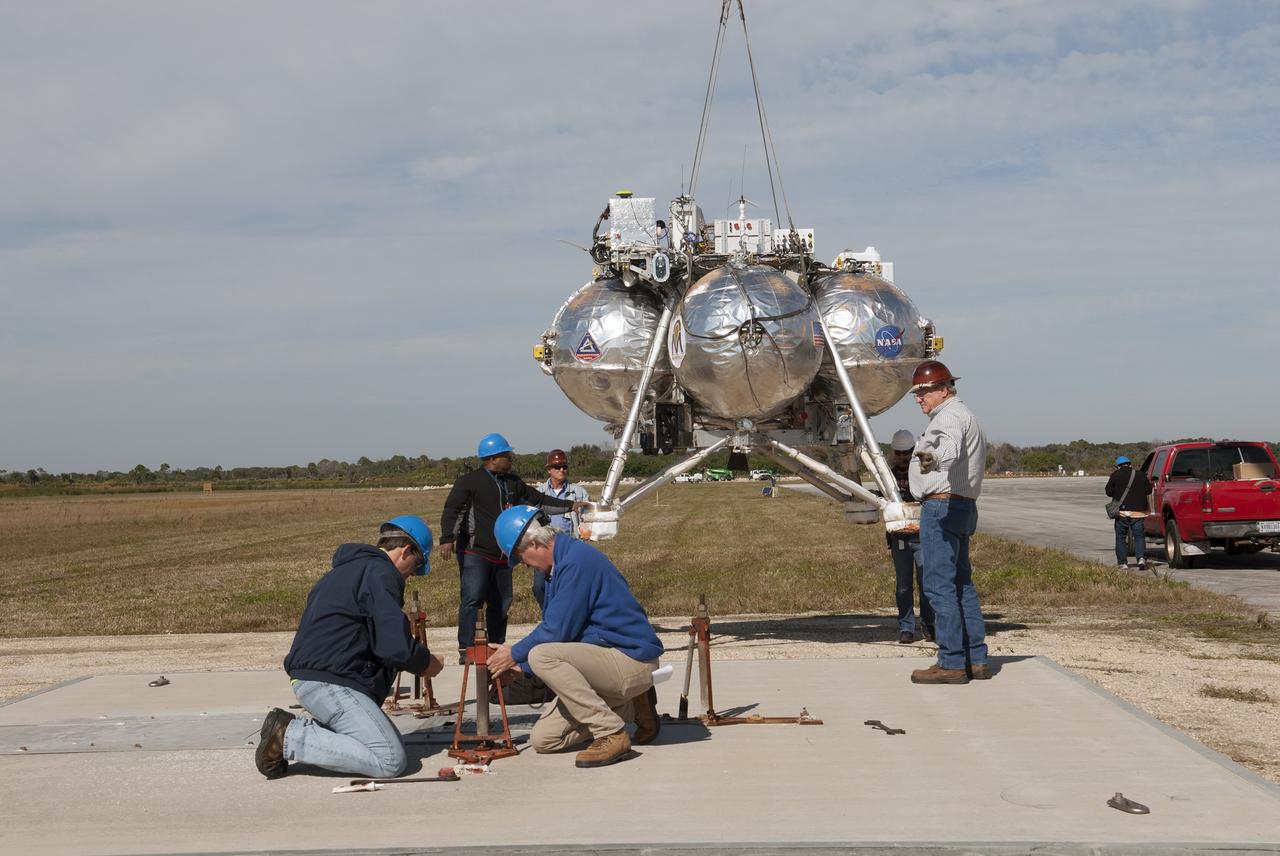
CAPE CANAVERAL, Fla. – Engineers and technicians prepare the launch pad for NASA's Project Morpheus prototype lander at the north end of the Shuttle Landing Facility at NASA's Kennedy Space Center in Florida. Morpheus is being prepared for free flight test number 15 at the SLF. The lander will take off from the ground over a flame trench and use its autonomous landing and hazard avoidance technology, or ALHAT sensors, to survey the hazard field to determine safe landing sites. Project Morpheus tests NASA’s ALHAT and an engine that runs on liquid oxygen and methane, which are green propellants. These new capabilities could be used in future efforts to deliver cargo to planetary surfaces. Project Morpheus is being managed under the Advanced Exploration Systems, or AES, Division in NASA’s Human Exploration and Operations Mission Directorate. For more information on Project Morpheus, visit http://morpheuslander.jsc.nasa.gov/. Photo credit: NASA/Jim Grossmann
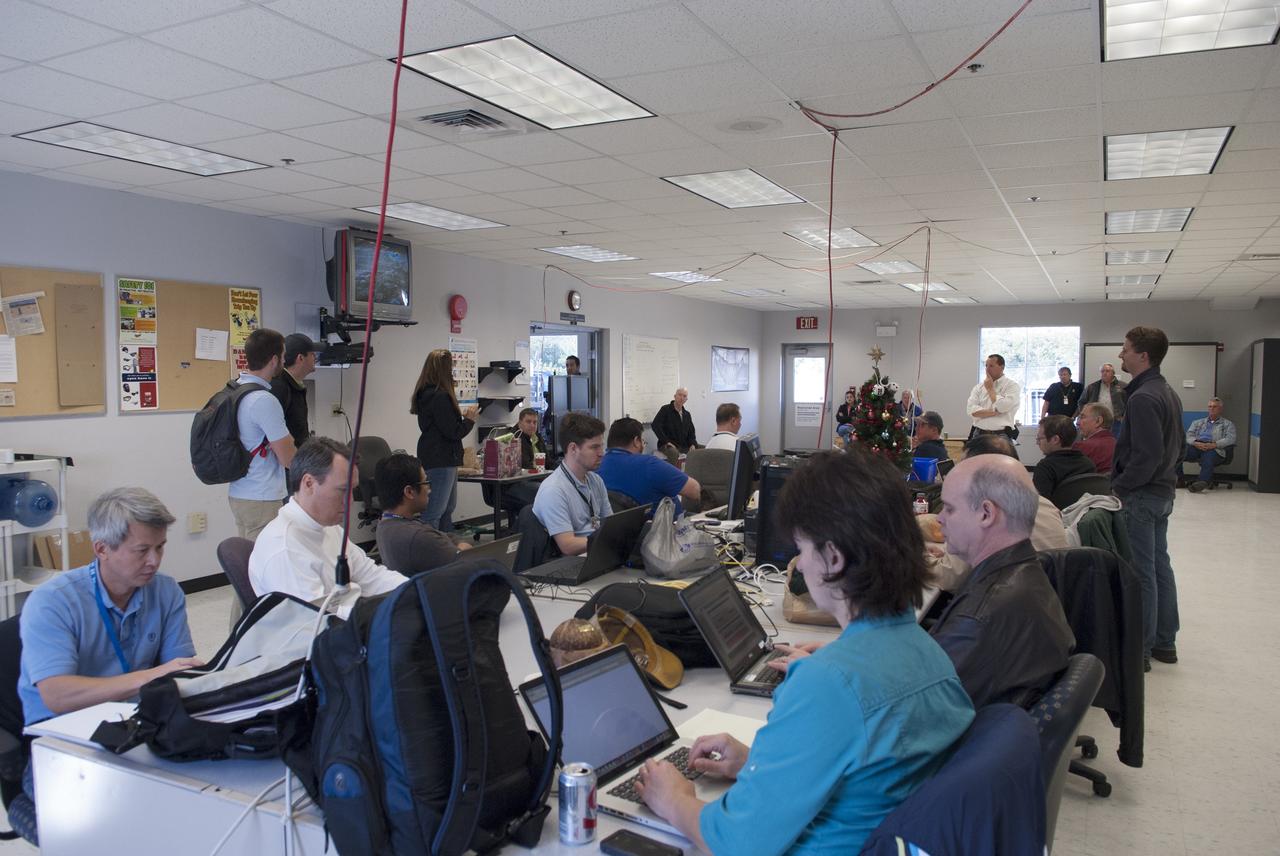
CAPE CANAVERAL, Fla. – Engineers and controllers in a mobile control room prepare for flight number 15 of NASA's Project Morpheus prototype lander at the north end of the Shuttle Landing Facility, or SLF, at NASA’s Kennedy Space Center in Florida. The lander will take off from the ground over a flame trench and use its autonomous landing and hazard avoidance technology, or ALHAT sensors, to survey the hazard field to determine safe landing sites. Project Morpheus tests NASA’s ALHAT and an engine that runs on liquid oxygen and methane, which are green propellants. These new capabilities could be used in future efforts to deliver cargo to planetary surfaces. Project Morpheus is being managed under the Advanced Exploration Systems, or AES, Division in NASA’s Human Exploration and Operations Mission Directorate. For more information on Project Morpheus, visit http://morpheuslander.jsc.nasa.gov/. Photo credit: NASA/Jim Grossmann
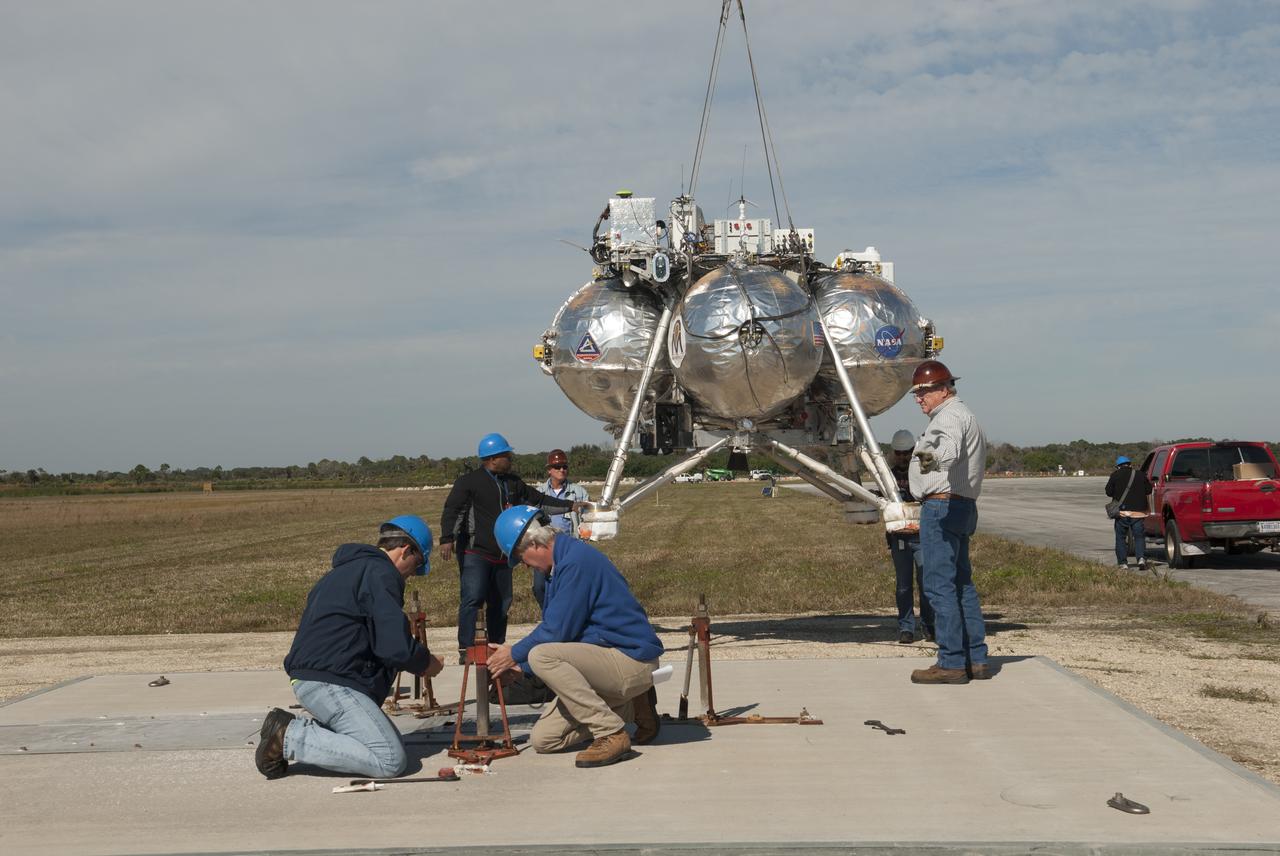
Engineers and technicians prepare the launch pad for NASA's Project Morpheus prototype lander at the north end of the Shuttle Landing Facility at NASA's Kennedy Space Center in Florida. Morpheus is being prepared for free flight test number 15 at the SLF. The lander will take off from the ground over a flame trench and use its autonomous landing and hazard avoidance technology, or ALHAT sensors, to survey the hazard field to determine safe landing sites. Project Morpheus tests NASA’s ALHAT and an engine that runs on liquid oxygen and methane, which are green propellants. These new capabilities could be used in future efforts to deliver cargo to planetary surfaces. Project Morpheus is being managed under the Advanced Exploration Systems, or AES, Division in NASA’s Human Exploration and Operations Mission Directorate.
Engineers and controllers in a mobile control room prepare for flight number 15 of NASA's Project Morpheus prototype lander at the north end of the Shuttle Landing Facility, or SLF, at NASA’s Kennedy Space Center in Florida. The lander will take off from the ground over a flame trench and use its autonomous landing and hazard avoidance technology, or ALHAT sensors, to survey the hazard field to determine safe landing sites. Project Morpheus tests NASA’s ALHAT and an engine that runs on liquid oxygen and methane, which are green propellants. These new capabilities could be used in future efforts to deliver cargo to planetary surfaces. Project Morpheus is being managed under the Advanced Exploration Systems, or AES, Division in NASA’s Human Exploration and Operations Mission Directorate.