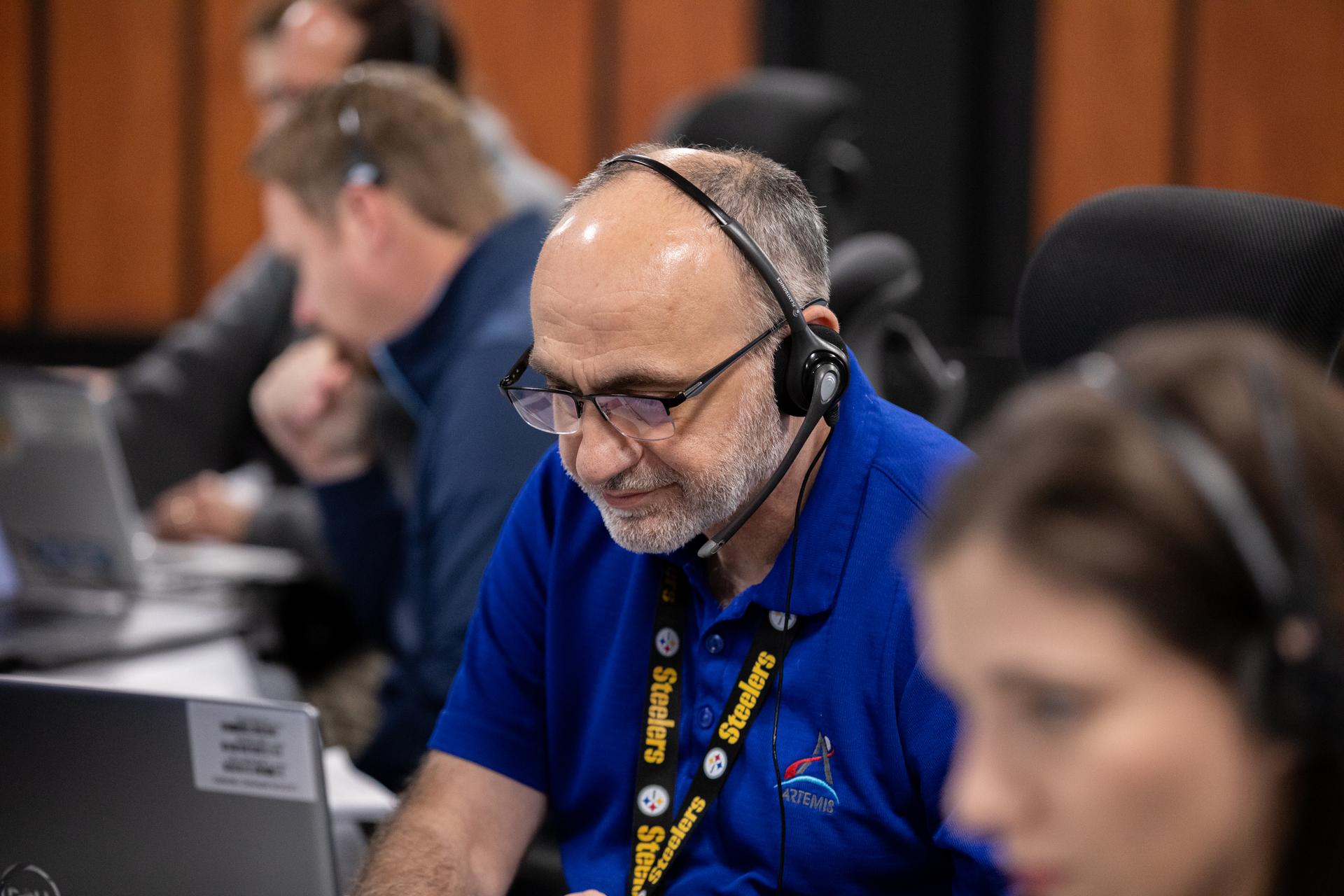
Alex Pandelos, ground launch sequencer operator, participates in a cryogenic propellant loading simulation on Thursday, Jan. 15, 2026, inside Firing Room 1 of the Rocco A. Petrone Launch Control Center at NASA’s Kennedy Space Center in Florida. Members of NASA’s Exploration Ground Systems team rehearse the steps to load the super-cooled liquid hydrogen and liquid oxygen into the SLS (Space Launch System) rocket core stage and interim cryogenic propulsion stage, a process that starts approximately nine hours before liftoff for the Artemis II mission. The test flight will take Commander Reid Wiseman, Pilot Victor Glover, and Mission Specialist Christina Koch from NASA, and Mission Specialist Jeremy Hansen from the CSA (Canadian Space Agency), around the Moon and back to Earth no later than no later than April 2026 from Launch Complex 39B at NASA Kennedy.

Artemis launch team members participate in a cryogenic propellant loading simulation on Thursday, Jan. 15, 2026, inside Firing Room 1 of the Rocco A. Petrone Launch Control Center at NASA’s Kennedy Space Center in Florida. Members of NASA’s Exploration Ground Systems team rehearse the steps to load the super-cooled liquid hydrogen and liquid oxygen into the SLS (Space Launch System) rocket core stage and interim cryogenic propulsion stage, a process that starts approximately nine hours before liftoff for the Artemis II mission. The test flight will take Commander Reid Wiseman, Pilot Victor Glover, and Mission Specialist Christina Koch from NASA, and Mission Specialist Jeremy Hansen from the CSA (Canadian Space Agency), around the Moon and back to Earth no later than no later than April 2026 from Launch Complex 39B at NASA Kennedy.
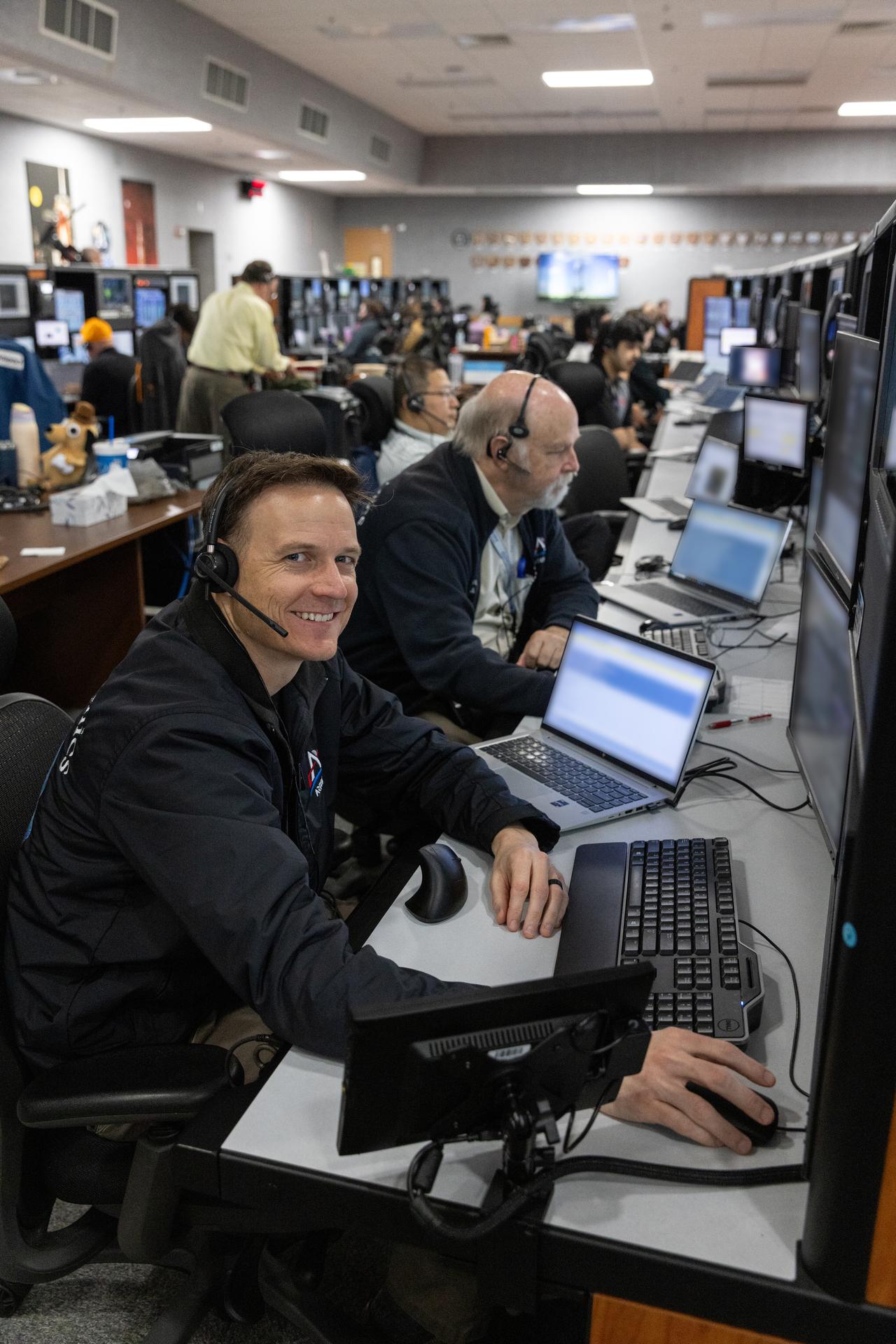
Artemis launch team members participate in a cryogenic propellant loading simulation on Thursday, Jan. 15, 2026, inside Firing Room 1 of the Rocco A. Petrone Launch Control Center at NASA’s Kennedy Space Center in Florida. Members of NASA’s Exploration Ground Systems team rehearse the steps to load the super-cooled liquid hydrogen and liquid oxygen into the SLS (Space Launch System) rocket core stage and interim cryogenic propulsion stage, a process that starts approximately nine hours before liftoff for the Artemis II mission. The test flight will take Commander Reid Wiseman, Pilot Victor Glover, and Mission Specialist Christina Koch from NASA, and Mission Specialist Jeremy Hansen from the CSA (Canadian Space Agency), around the Moon and back to Earth no later than no later than April 2026 from Launch Complex 39B at NASA Kennedy.
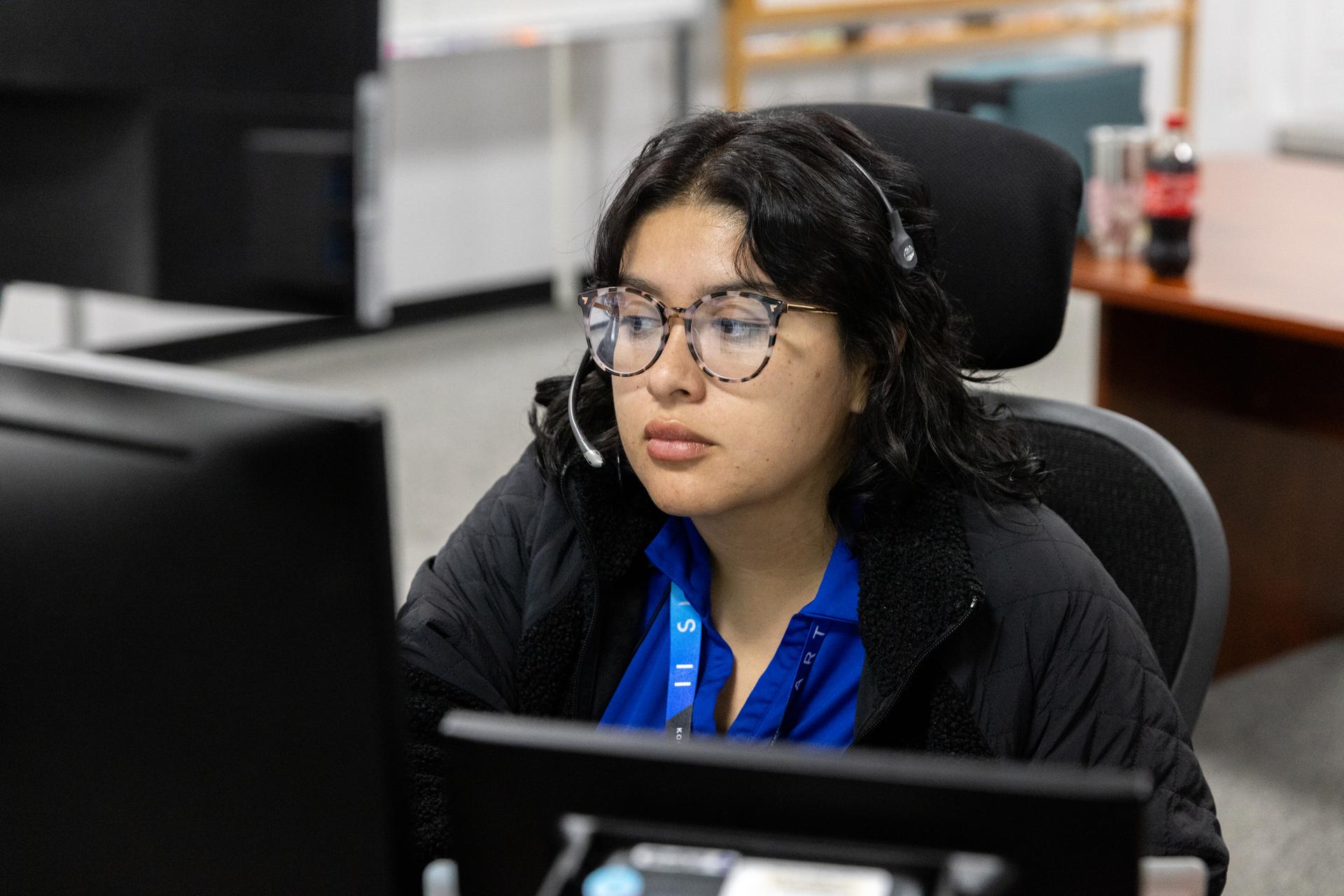
An Artemis launch team member participates in a cryogenic propellant loading simulation on Thursday, Jan. 15, 2026, inside Firing Room 1 of the Rocco A. Petrone Launch Control Center at NASA’s Kennedy Space Center in Florida. Members of NASA’s Exploration Ground Systems team rehearse the steps to load the super-cooled liquid hydrogen and liquid oxygen into the SLS (Space Launch System) rocket core stage and interim cryogenic propulsion stage, a process that starts approximately nine hours before liftoff for the Artemis II mission. The test flight will take Commander Reid Wiseman, Pilot Victor Glover, and Mission Specialist Christina Koch from NASA, and Mission Specialist Jeremy Hansen from the CSA (Canadian Space Agency), around the Moon and back to Earth no later than no later than April 2026 from Launch Complex 39B at NASA Kennedy.
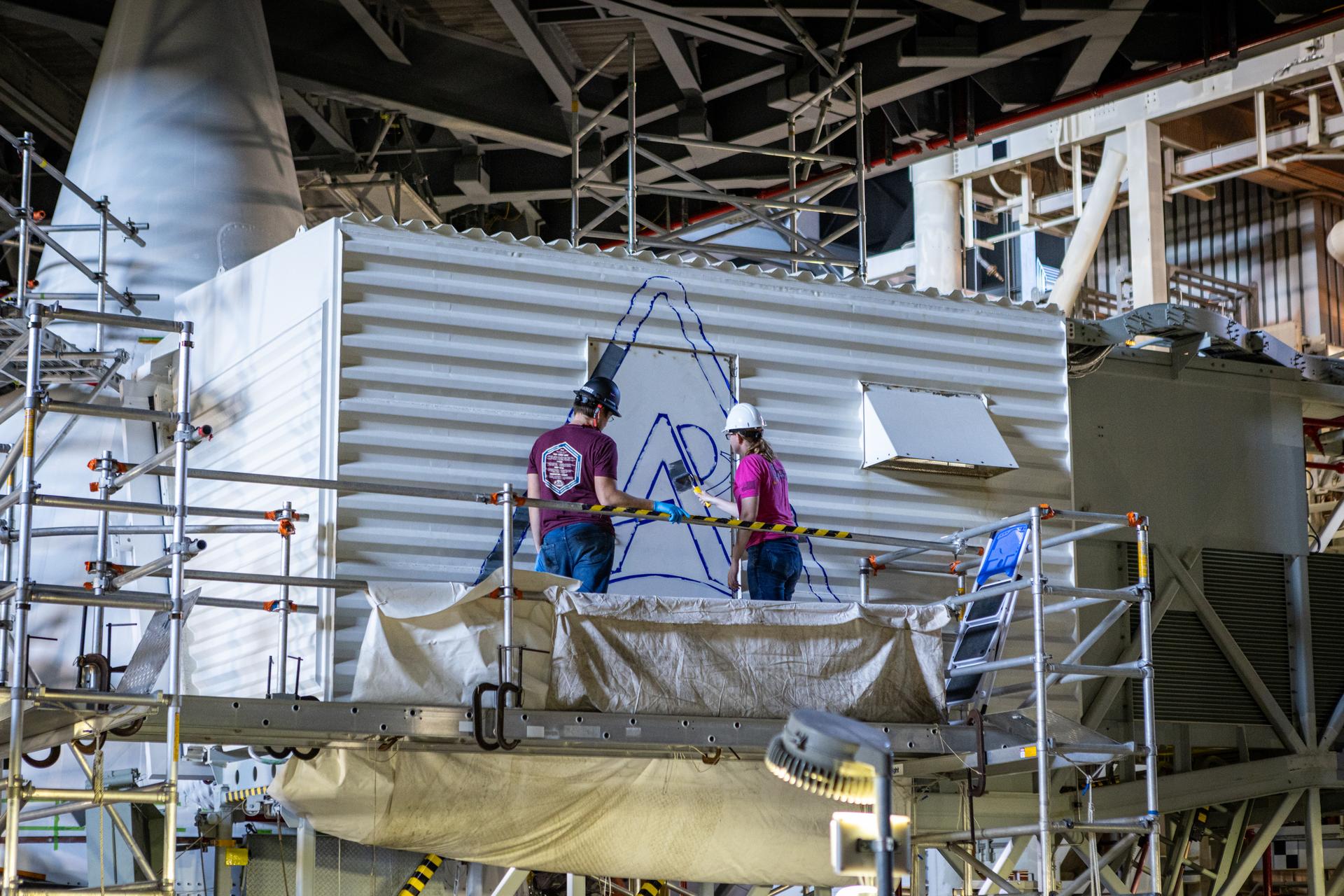
From left, Sean McCrary and Katie Mortensen, mechanical engineering technicians, paint NASA’s Artemis logo on the White Room connected to the crew access arm and mobile launcher inside the Vehicle Assembly Building at NASA’s Kennedy Space Center in Florida on Thursday, Dec. 4, 2025. The White Room is the area where the Artemis II crew Reid Wiseman, Victor Glover, Christina Koch, and CSA (Canadian Space Agency) astronaut Jeremy Hansen will enter the Orion spacecraft ahead of launch from Launch Complex 39B at NASA Kennedy in early 2026.
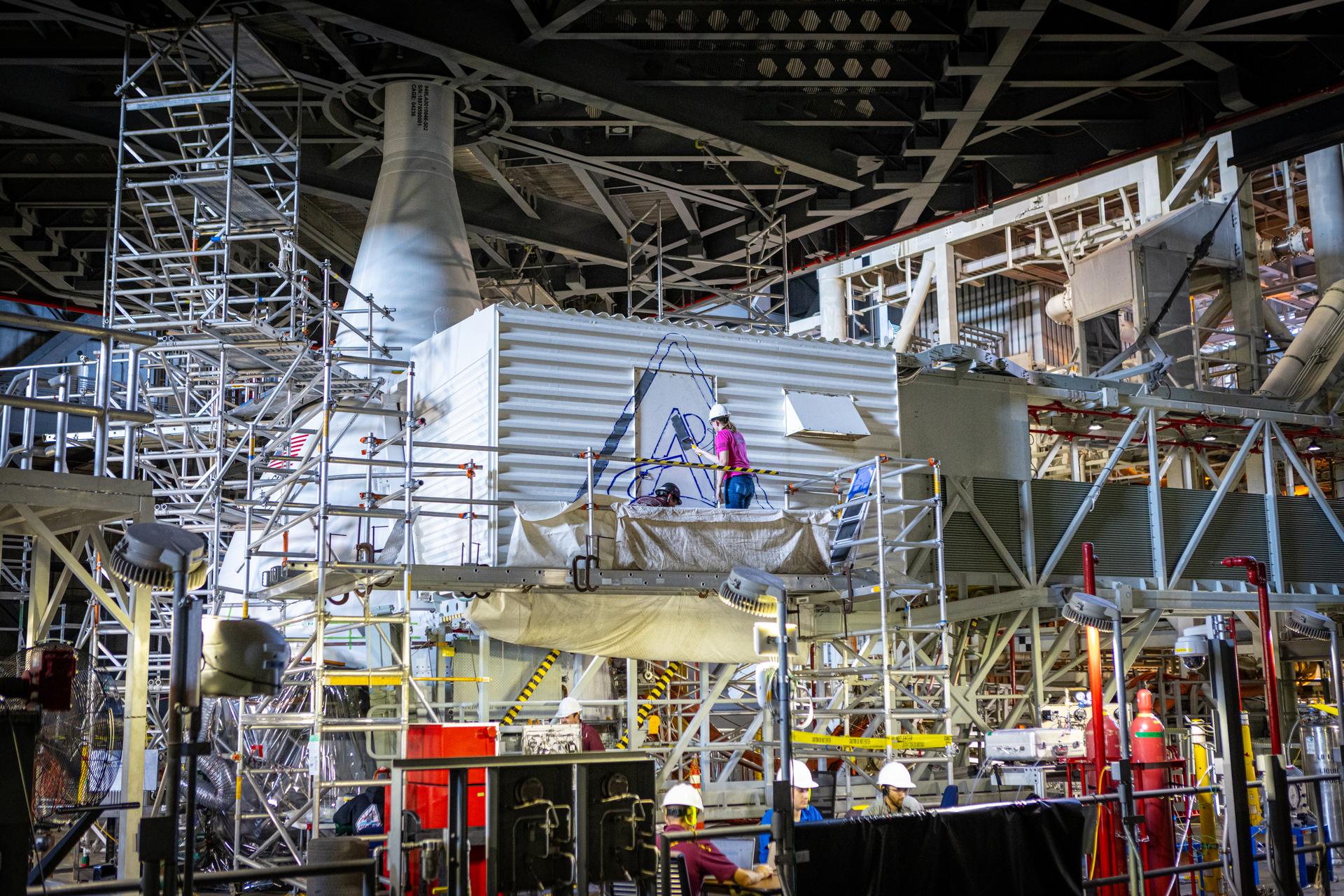
From left, Sean McCrary and Katie Mortensen, mechanical engineering technicians, paint NASA’s Artemis logo on the White Room connected to the crew access arm and mobile launcher inside the Vehicle Assembly Building at NASA’s Kennedy Space Center in Florida on Thursday, Dec. 4, 2025. The White Room is the area where the Artemis II crew Reid Wiseman, Victor Glover, Christina Koch, and CSA (Canadian Space Agency) astronaut Jeremy Hansen will enter the Orion spacecraft ahead of launch from Launch Complex 39B at NASA Kennedy in early 2026.
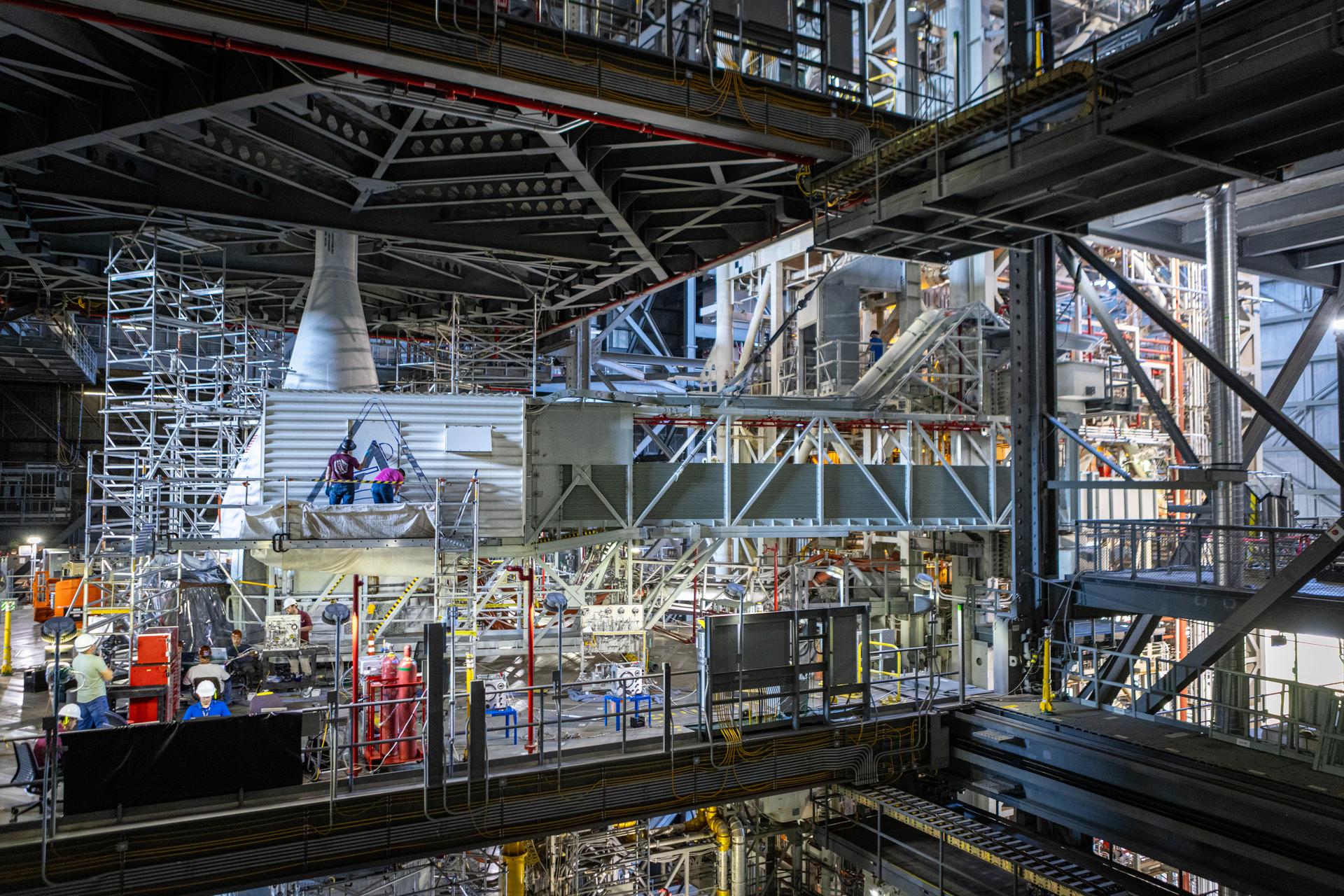
From left, Sean McCrary and Katie Mortensen, mechanical engineering technicians, paint NASA’s Artemis logo on the White Room connected to the crew access arm and mobile launcher inside the Vehicle Assembly Building at NASA’s Kennedy Space Center in Florida on Thursday, Dec. 4, 2025. The White Room is the area where the Artemis II crew Reid Wiseman, Victor Glover, Christina Koch, and CSA (Canadian Space Agency) astronaut Jeremy Hansen will enter the Orion spacecraft ahead of launch from Launch Complex 39B at NASA Kennedy in early 2026.
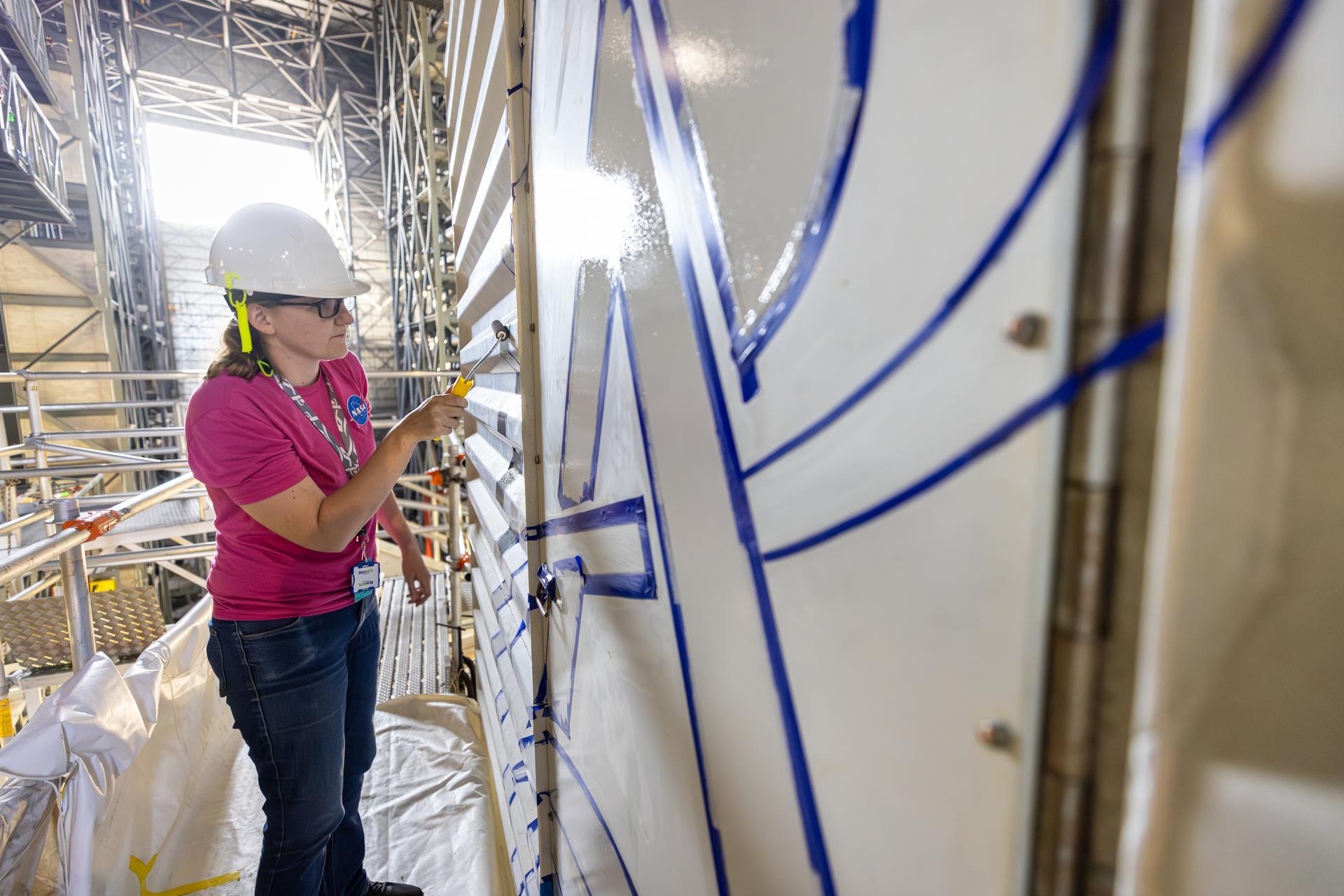
Katie Mortensen, mechanical engineering technician, paints NASA’s Artemis logo on the White Room connected to the crew access arm and mobile launcher inside the Vehicle Assembly Building at NASA’s Kennedy Space Center in Florida on Thursday, Dec. 4, 2025. The White Room is the area where the Artemis II crew Reid Wiseman, Victor Glover, Christina Koch, and CSA (Canadian Space Agency) astronaut Jeremy Hansen will enter the Orion spacecraft ahead of launch from Launch Complex 39B at NASA Kennedy in early 2026.
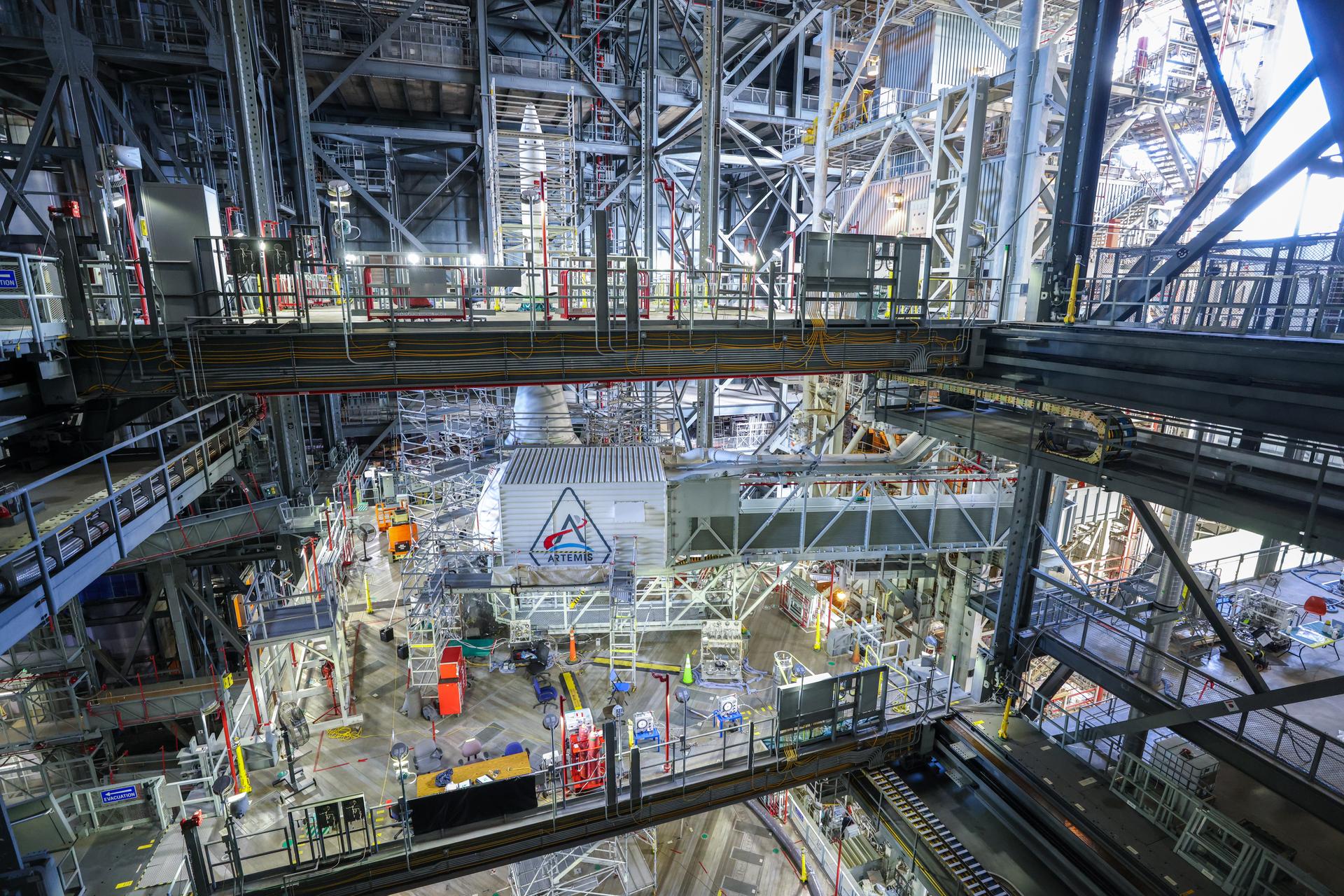
A freshly painted NASA’s Artemis logo is unveiled on the White Room connected to the crew access arm and mobile launcher inside the Vehicle Assembly Building at NASA’s Kennedy Space Center in Florida on Thursday, Dec. 4, 2025. The White Room is the area where the Artemis II crew Reid Wiseman, Victor Glover, Christina Koch, and CSA (Canadian Space Agency) astronaut Jeremy Hansen will enter the Orion spacecraft ahead of launch from Launch Complex 39B at NASA Kennedy in early 2026.
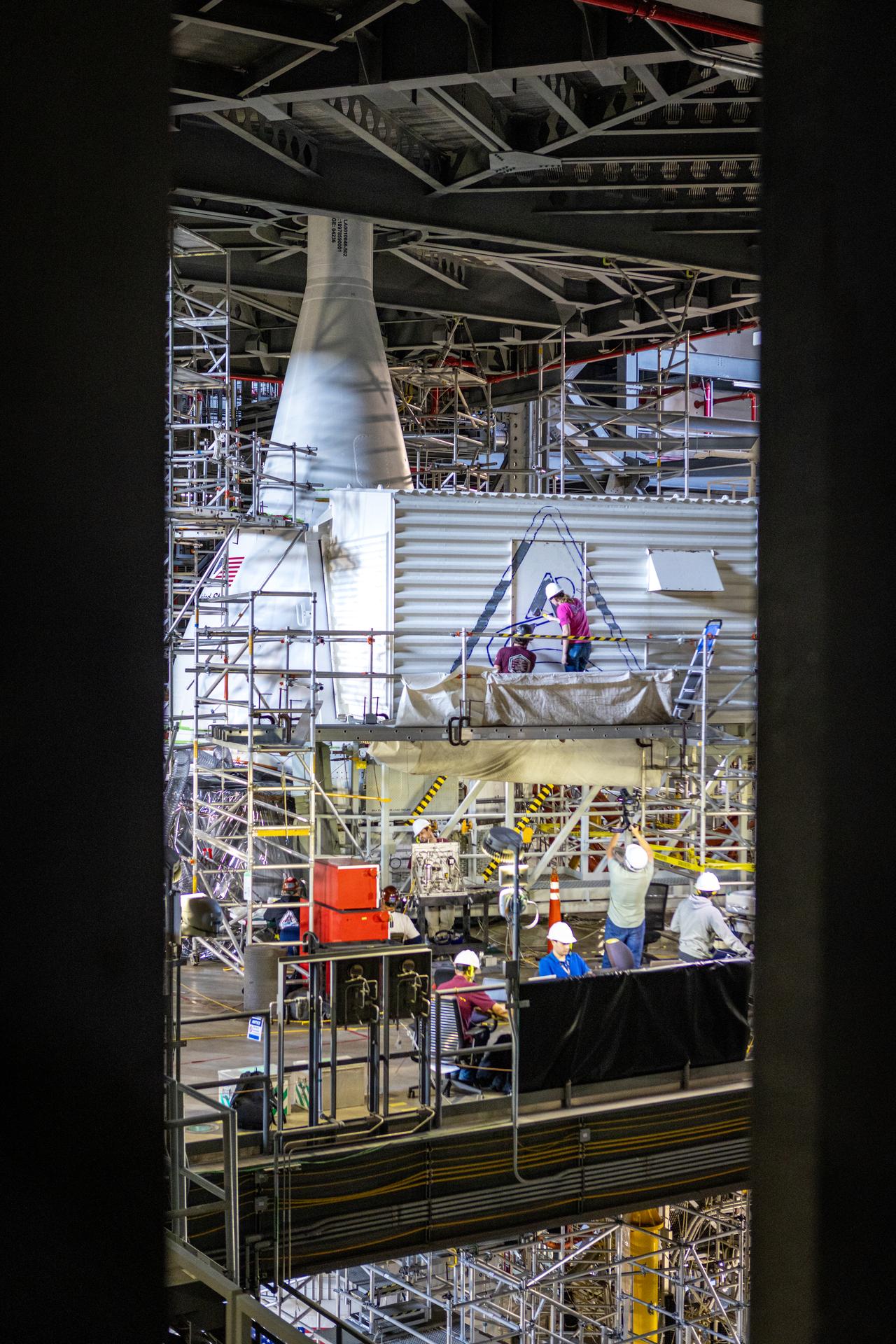
From left, Sean McCrary and Katie Mortensen, mechanical engineering technicians, paint NASA’s Artemis logo on the White Room connected to the crew access arm and mobile launcher inside the Vehicle Assembly Building at NASA’s Kennedy Space Center in Florida on Thursday, Dec. 4, 2025. The White Room is the area where the Artemis II crew Reid Wiseman, Victor Glover, Christina Koch, and CSA (Canadian Space Agency) astronaut Jeremy Hansen will enter the Orion spacecraft ahead of launch from Launch Complex 39B at NASA Kennedy in early 2026.
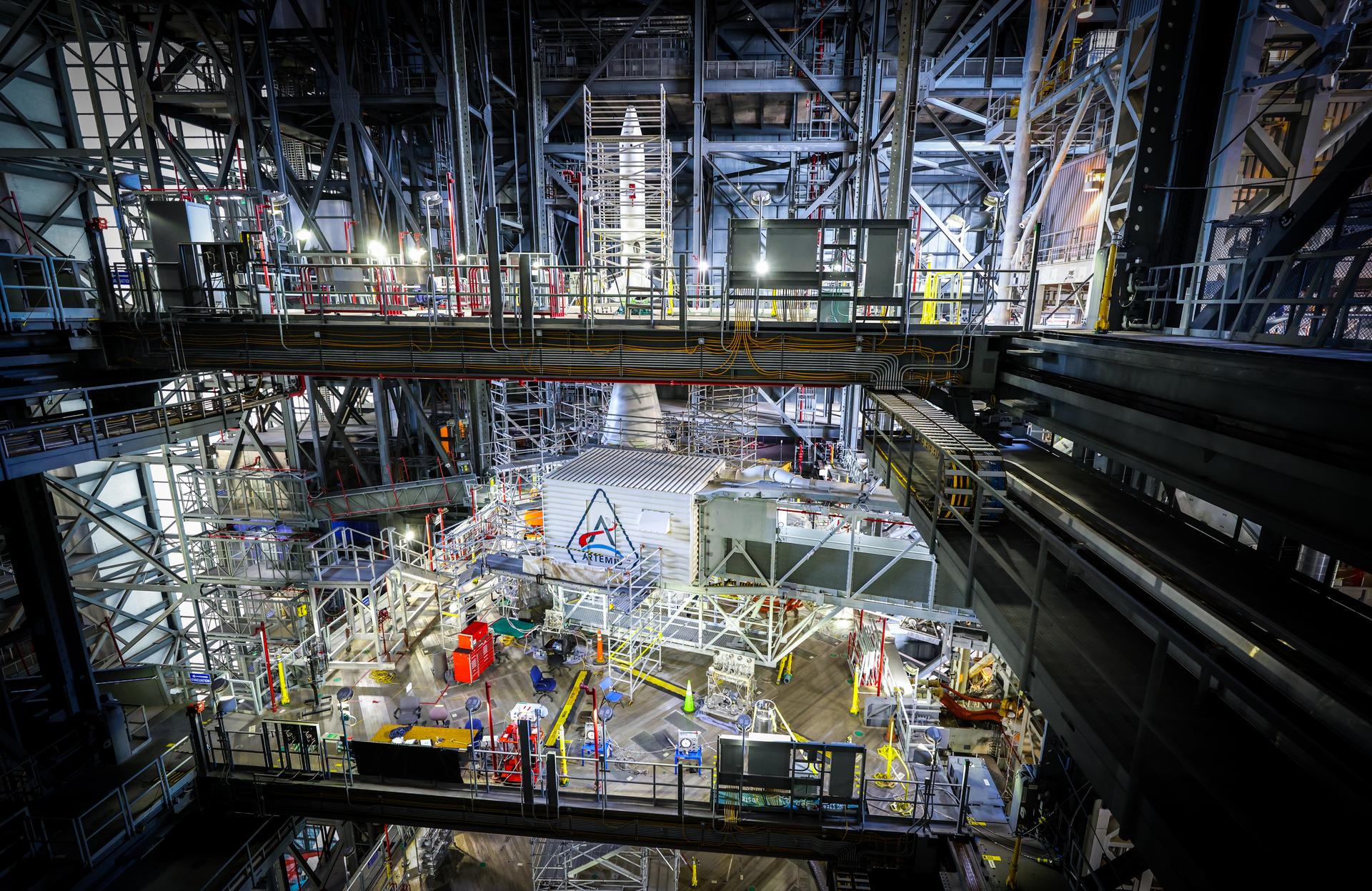
A freshly painted NASA’s Artemis logo is unveiled on the White Room connected to the crew access arm and mobile launcher inside the Vehicle Assembly Building at NASA’s Kennedy Space Center in Florida on Thursday, Dec. 4, 2025. The White Room is the area where the Artemis II crew Reid Wiseman, Victor Glover, Christina Koch, and CSA (Canadian Space Agency) astronaut Jeremy Hansen will enter the Orion spacecraft ahead of launch from Launch Complex 39B at NASA Kennedy in early 2026.
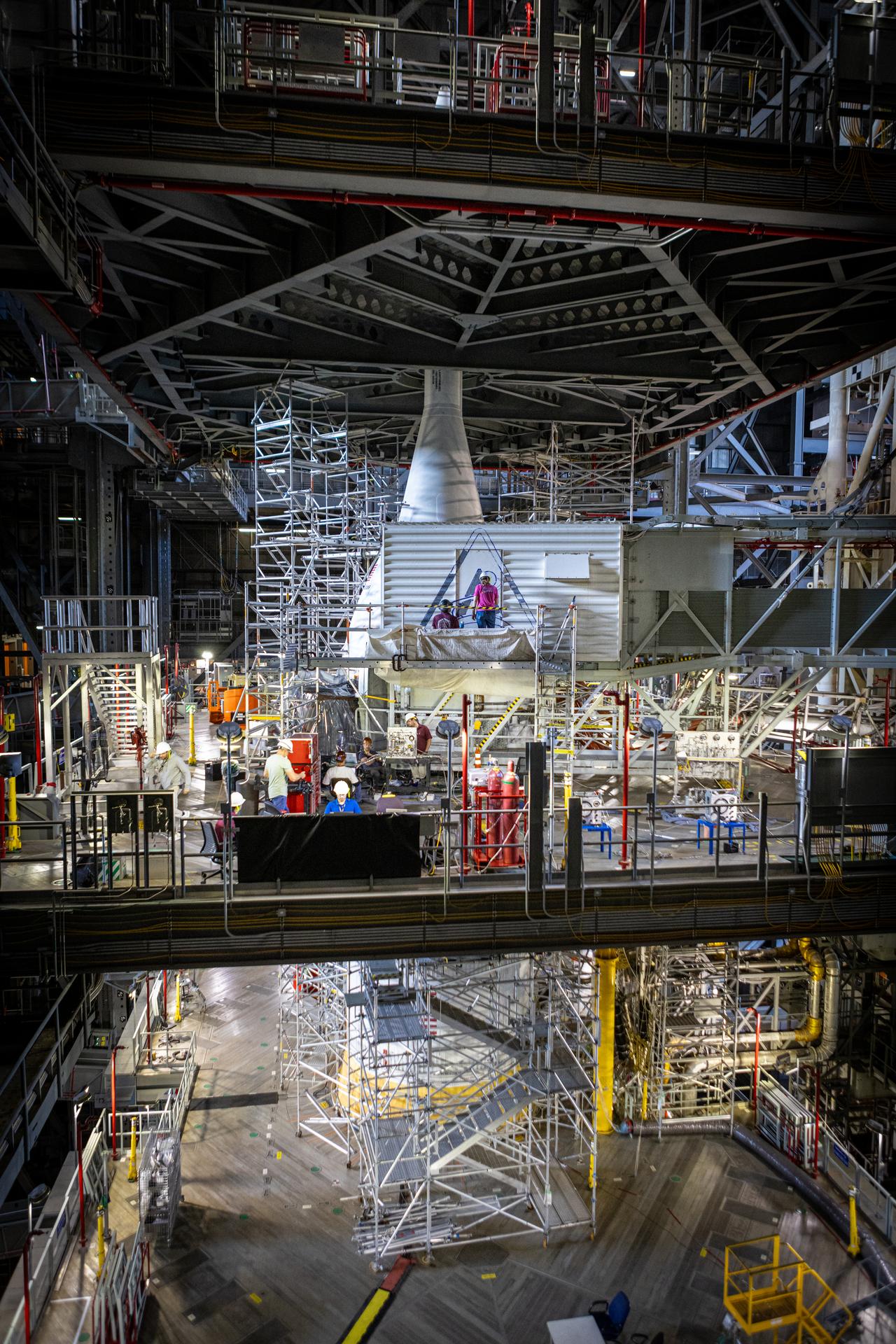
From left, Sean McCrary and Katie Mortensen, mechanical engineering technicians, paint NASA’s Artemis logo on the White Room connected to the crew access arm and mobile launcher inside the Vehicle Assembly Building at NASA’s Kennedy Space Center in Florida on Thursday, Dec. 4, 2025. The White Room is the area where the Artemis II crew Reid Wiseman, Victor Glover, Christina Koch, and CSA (Canadian Space Agency) astronaut Jeremy Hansen will enter the Orion spacecraft ahead of launch from Launch Complex 39B at NASA Kennedy in early 2026.
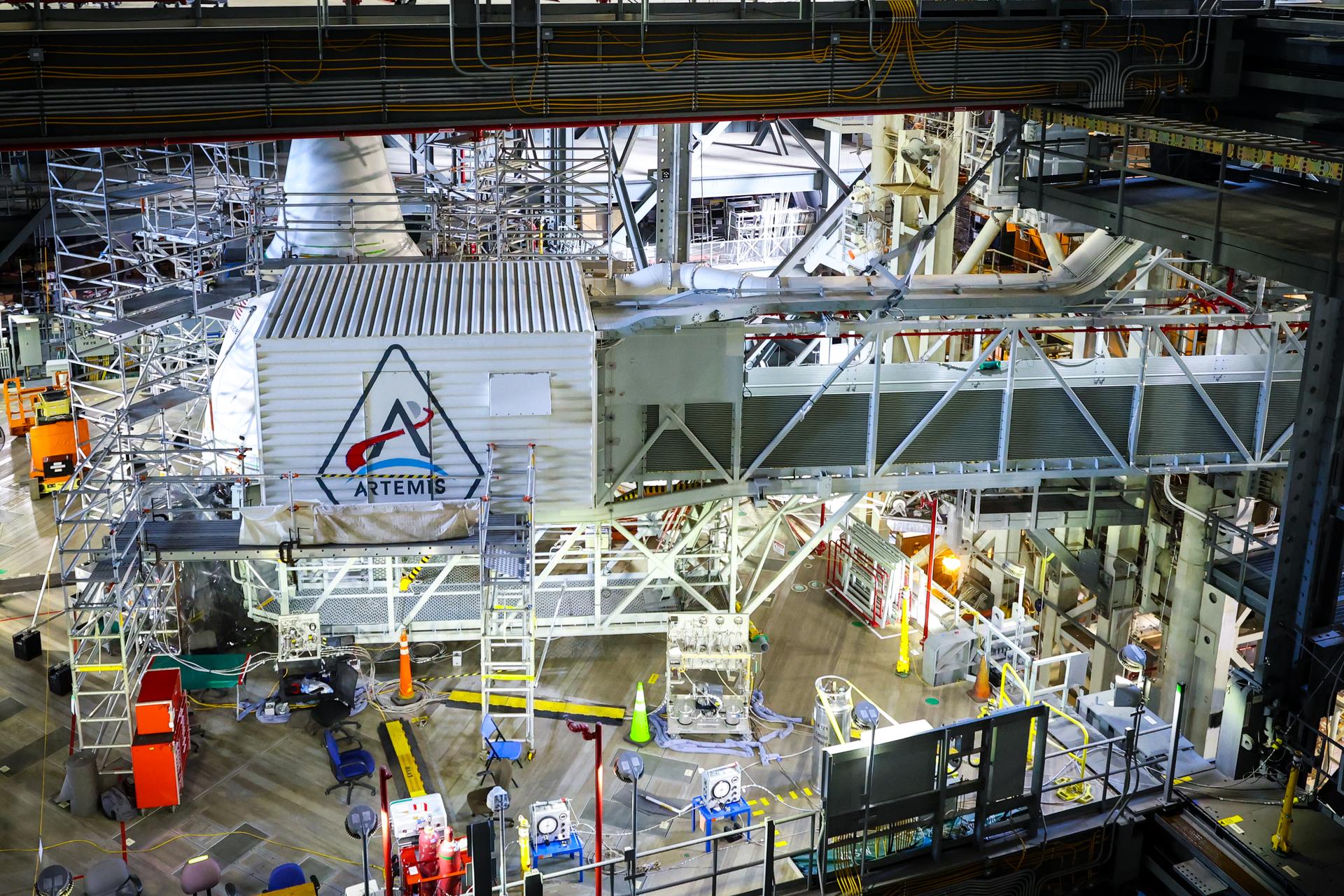
A freshly painted NASA’s Artemis logo is unveiled on the White Room connected to the crew access arm and mobile launcher inside the Vehicle Assembly Building at NASA’s Kennedy Space Center in Florida on Thursday, Dec. 4, 2025. The White Room is the area where the Artemis II crew Reid Wiseman, Victor Glover, Christina Koch, and CSA (Canadian Space Agency) astronaut Jeremy Hansen will enter the Orion spacecraft ahead of launch from Launch Complex 39B at NASA Kennedy in early 2026.
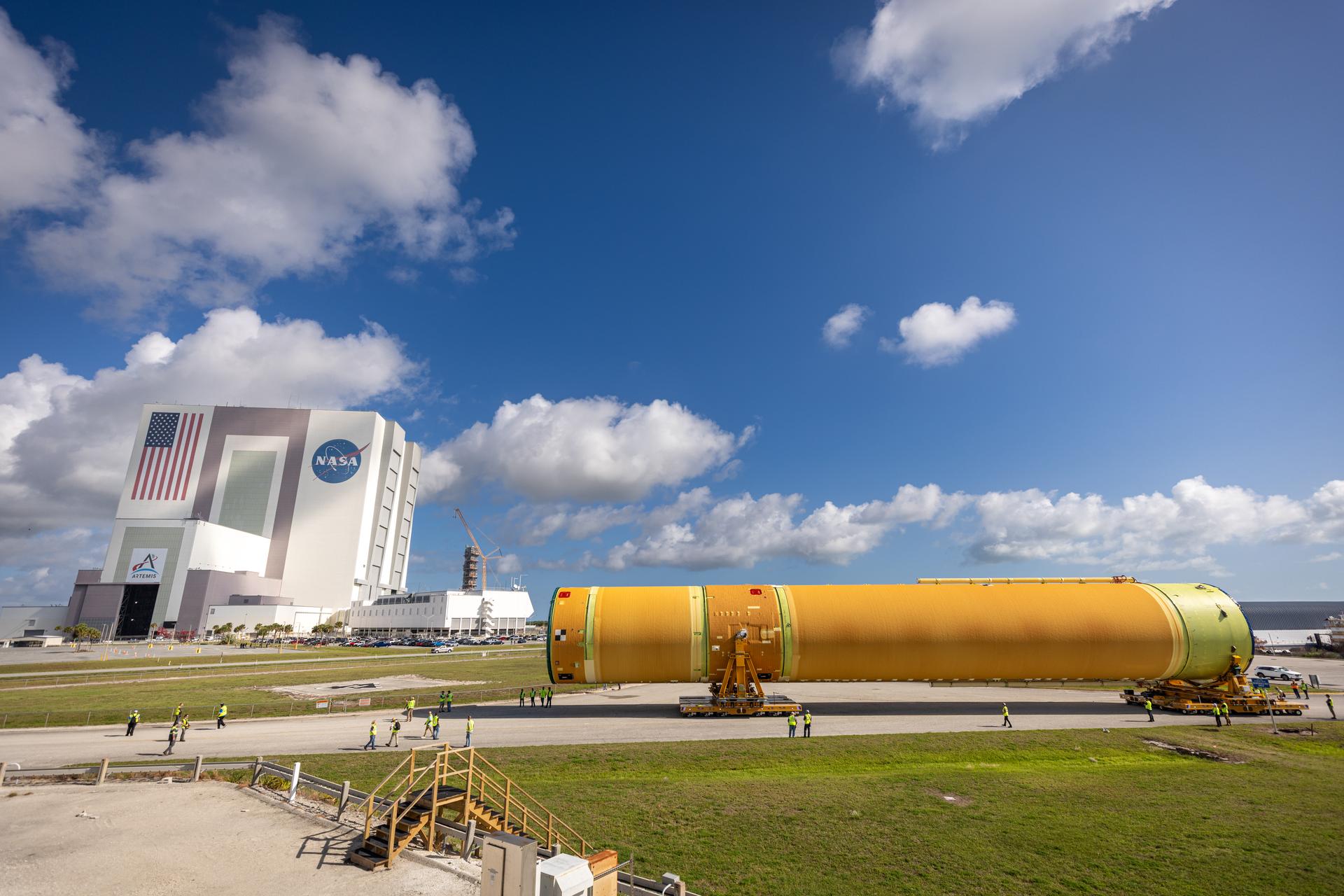
NASA’s top four-fifths of the SLS (Space Launch System) core stage for the Artemis III mission is offloaded from the agency’s Pegasus barge on Tuesday, April 28, 2026, after arriving at the Kennedy Space Center in Florida the prior day. The four-fifths contains the liquid hydrogen tank, liquid oxygen tank, intertank, and forward skirt of the SLS rocket and will be joined with the remaining core stage segments at Kennedy’s Vehicle Assembly Building High Bay 2 prior to rocket stacking operations. Artemis III will launch astronauts to Earth’s orbit aboard the Orion spacecraft on top of SLS to test rendezvous and docking capabilities between Orion and commercial spacecraft needed to land Artemis IV astronauts on the Moon in 2028.

NASA’s top four-fifths of the SLS (Space Launch System) core stage for the Artemis III mission is offloaded from the agency’s Pegasus barge on Tuesday, April 28, 2026, after arriving at the Kennedy Space Center in Florida the prior day. The four-fifths contains the liquid hydrogen tank, liquid oxygen tank, intertank, and forward skirt of the SLS rocket and will be joined with the remaining core stage segments at Kennedy’s Vehicle Assembly Building High Bay 2 prior to rocket stacking operations. Artemis III will launch astronauts to Earth’s orbit aboard the Orion spacecraft on top of SLS to test rendezvous and docking capabilities between Orion and commercial spacecraft needed to land Artemis IV astronauts on the Moon in 2028.

NASA’s top four-fifths of the SLS (Space Launch System) core stage for the Artemis III mission is offloaded from the agency’s Pegasus barge on Tuesday, April 28, 2026, after arriving at the Kennedy Space Center in Florida the prior day. The four-fifths contains the liquid hydrogen tank, liquid oxygen tank, intertank, and forward skirt of the SLS rocket and will be joined with the remaining core stage segments at Kennedy’s Vehicle Assembly Building High Bay 2 prior to rocket stacking operations. Artemis III will launch astronauts to Earth’s orbit aboard the Orion spacecraft on top of SLS to test rendezvous and docking capabilities between Orion and commercial spacecraft needed to land Artemis IV astronauts on the Moon in 2028.

NASA’s top four-fifths of the SLS (Space Launch System) core stage for the Artemis III mission is offloaded from the agency’s Pegasus barge on Tuesday, April 28, 2026, after arriving at the Kennedy Space Center in Florida the prior day. The four-fifths contains the liquid hydrogen tank, liquid oxygen tank, intertank, and forward skirt of the SLS rocket and will be joined with the remaining core stage segments at Kennedy’s Vehicle Assembly Building High Bay 2 prior to rocket stacking operations. Artemis III will launch astronauts to Earth’s orbit aboard the Orion spacecraft on top of SLS to test rendezvous and docking capabilities between Orion and commercial spacecraft needed to land Artemis IV astronauts on the Moon in 2028.
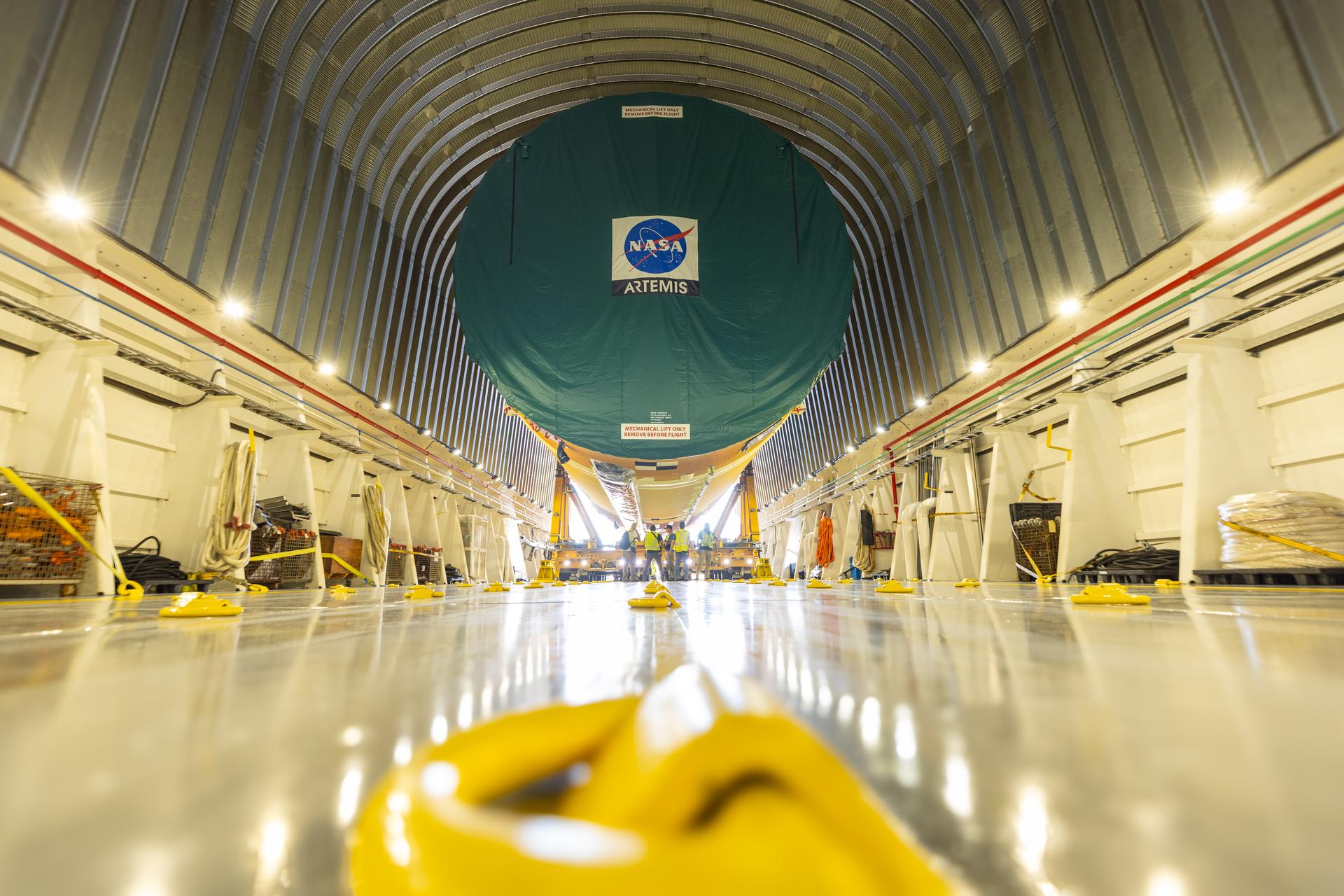
NASA’s top four-fifths of the SLS (Space Launch System) core stage for the Artemis III mission is offloaded from the agency’s Pegasus barge on Tuesday, April 28, 2026, after arriving at the Kennedy Space Center in Florida the prior day. The four-fifths contains the liquid hydrogen tank, liquid oxygen tank, intertank, and forward skirt of the SLS rocket and will be joined with the remaining core stage segments at Kennedy’s Vehicle Assembly Building High Bay 2 prior to rocket stacking operations. Artemis III will launch astronauts to Earth’s orbit aboard the Orion spacecraft on top of SLS to test rendezvous and docking capabilities between Orion and commercial spacecraft needed to land Artemis IV astronauts on the Moon in 2028.
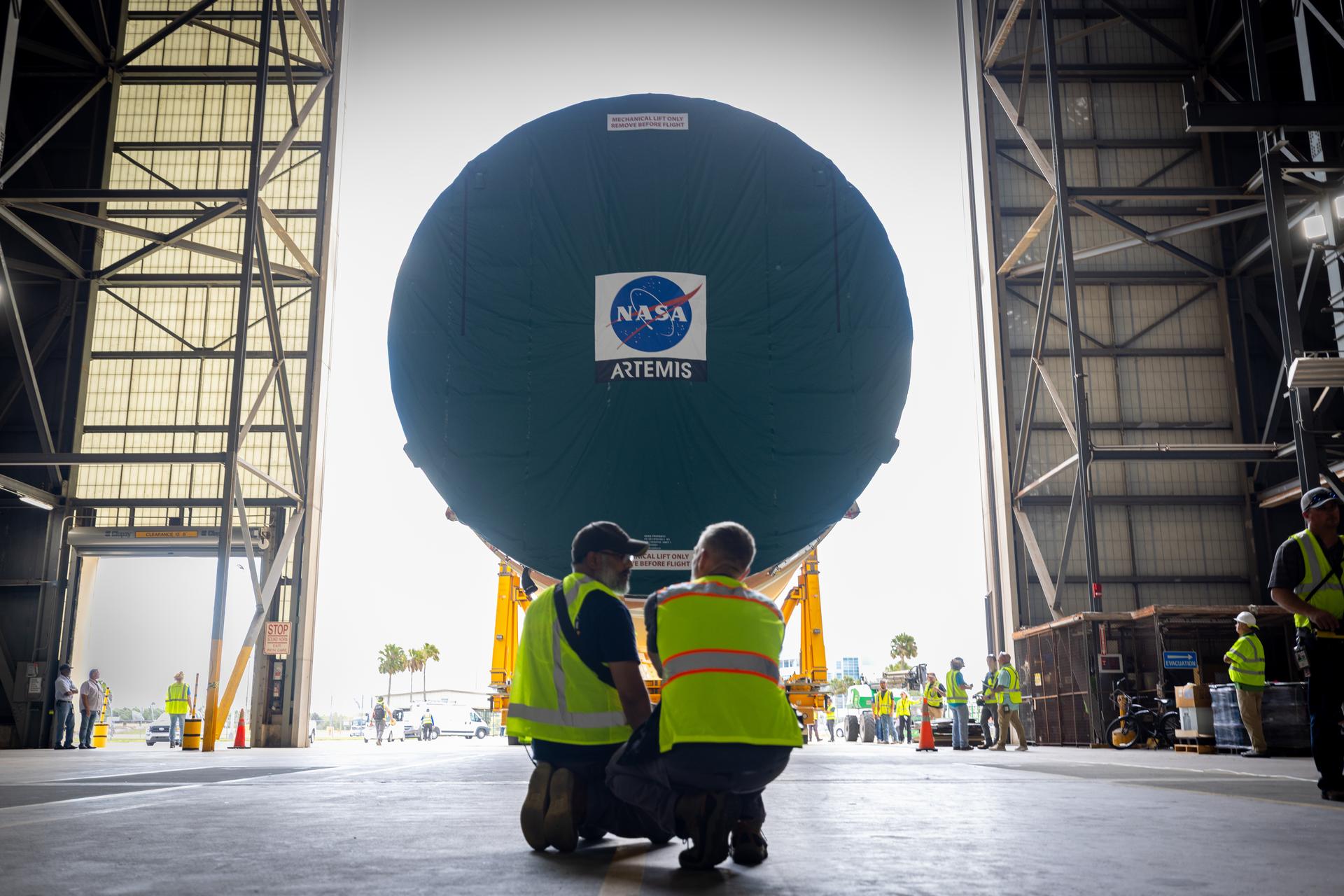
NASA’s top four-fifths of the SLS (Space Launch System) core stage for the Artemis III mission arrives in the transfer aisle of the Vehicle Assembly Building at the agency’s Kennedy Space Center in Florida where teams with Boeing will finish integrating it with the remaining core stage segments prior to rocket stacking operations. Artemis III will launch astronauts to Earth’s orbit aboard the Orion spacecraft on top of SLS to test rendezvous and docking capabilities between Orion and commercial spacecraft needed to land Artemis IV astronauts on the Moon in 2028.

NASA’s top four-fifths of the SLS (Space Launch System) core stage for the Artemis III mission arrives in the transfer aisle of the Vehicle Assembly Building at the agency’s Kennedy Space Center in Florida where teams with Boeing will finish integrating it with the remaining core stage segments prior to rocket stacking operations. Artemis III will launch astronauts to Earth’s orbit aboard the Orion spacecraft on top of SLS to test rendezvous and docking capabilities between Orion and commercial spacecraft needed to land Artemis IV astronauts on the Moon in 2028.

NASA’s top four-fifths of the SLS (Space Launch System) core stage for the Artemis III mission arrives at the Vehicle Assembly Building at the agency’s Kennedy Space Center in Florida where teams with Boeing will finish integrating it with the remaining core stage segments prior to rocket stacking operations. Artemis III will launch astronauts to Earth’s orbit aboard the Orion spacecraft on top of SLS to test rendezvous and docking capabilities between Orion and commercial spacecraft needed to land Artemis IV astronauts on the Moon in 2028.

NASA’s top four-fifths of the SLS (Space Launch System) core stage for the Artemis III mission arrives at the Vehicle Assembly Building at the agency’s Kennedy Space Center in Florida where teams with Boeing will finish integrating it with the remaining core stage segments prior to rocket stacking operations. Artemis III will launch astronauts to Earth’s orbit aboard the Orion spacecraft on top of SLS to test rendezvous and docking capabilities between Orion and commercial spacecraft needed to land Artemis IV astronauts on the Moon in 2028.
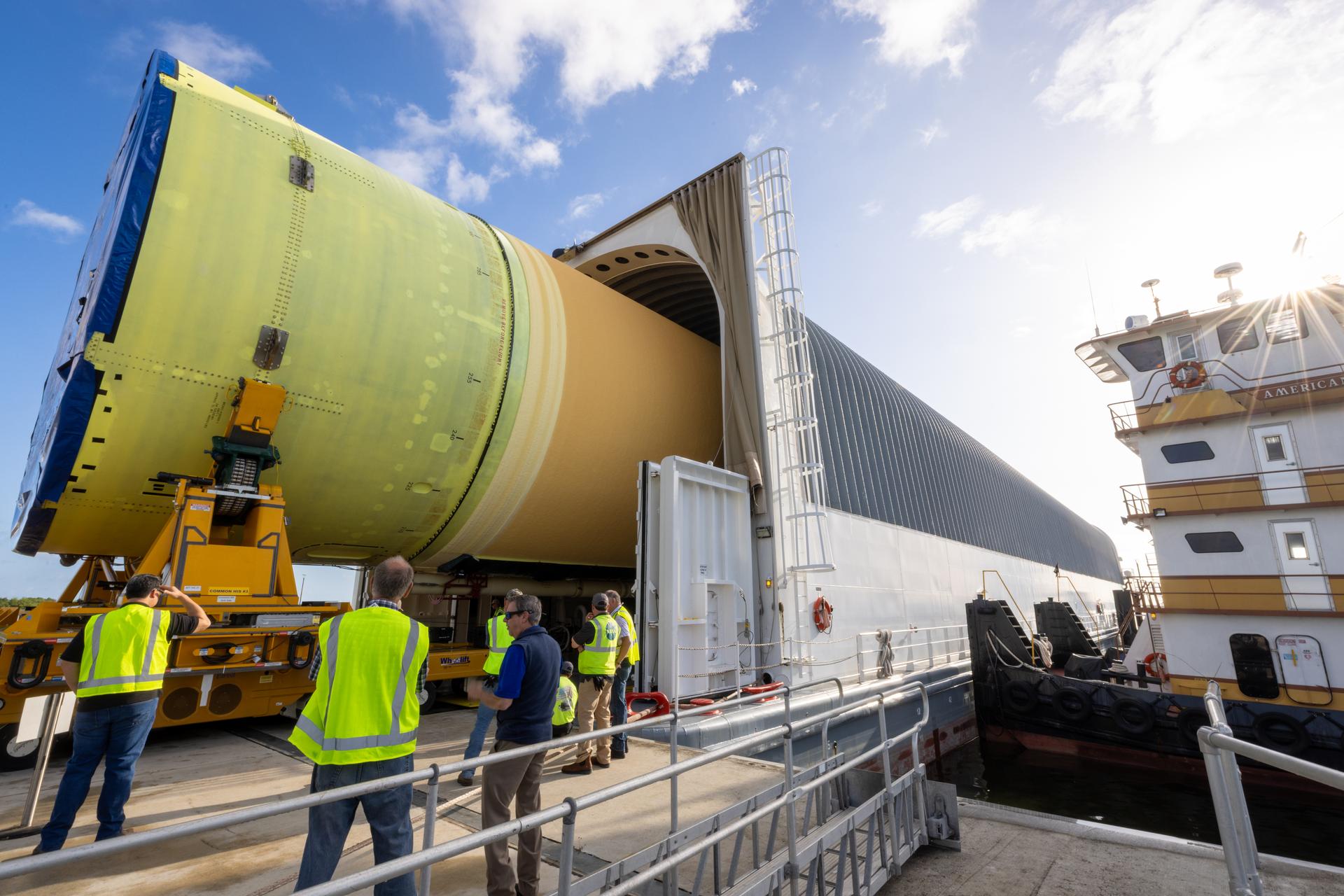
NASA’s top four-fifths of the SLS (Space Launch System) core stage for the Artemis III mission is offloaded from the agency’s Pegasus barge on Tuesday, April 28, 2026, after arriving at the Kennedy Space Center in Florida the prior day. The four-fifths contains the liquid hydrogen tank, liquid oxygen tank, intertank, and forward skirt of the SLS rocket and will be joined with the remaining core stage segments at Kennedy’s Vehicle Assembly Building High Bay 2 prior to rocket stacking operations. Artemis III will launch astronauts to Earth’s orbit aboard the Orion spacecraft on top of SLS to test rendezvous and docking capabilities between Orion and commercial spacecraft needed to land Artemis IV astronauts on the Moon in 2028.

NASA’s top four-fifths of the SLS (Space Launch System) core stage for the Artemis III mission arrives in the transfer aisle of the Vehicle Assembly Building at the agency’s Kennedy Space Center in Florida where teams with Boeing will finish integrating it with the remaining core stage segments prior to rocket stacking operations. Artemis III will launch astronauts to Earth’s orbit aboard the Orion spacecraft on top of SLS to test rendezvous and docking capabilities between Orion and commercial spacecraft needed to land Artemis IV astronauts on the Moon in 2028.

NASA’s top four-fifths of the SLS (Space Launch System) core stage for the Artemis III mission is offloaded from the agency’s Pegasus barge on Tuesday, April 28, 2026, after arriving at the Kennedy Space Center in Florida the prior day. The four-fifths contains the liquid hydrogen tank, liquid oxygen tank, intertank, and forward skirt of the SLS rocket and will be joined with the remaining core stage segments at Kennedy’s Vehicle Assembly Building High Bay 2 prior to rocket stacking operations. Artemis III will launch astronauts to Earth’s orbit aboard the Orion spacecraft on top of SLS to test rendezvous and docking capabilities between Orion and commercial spacecraft needed to land Artemis IV astronauts on the Moon in 2028.
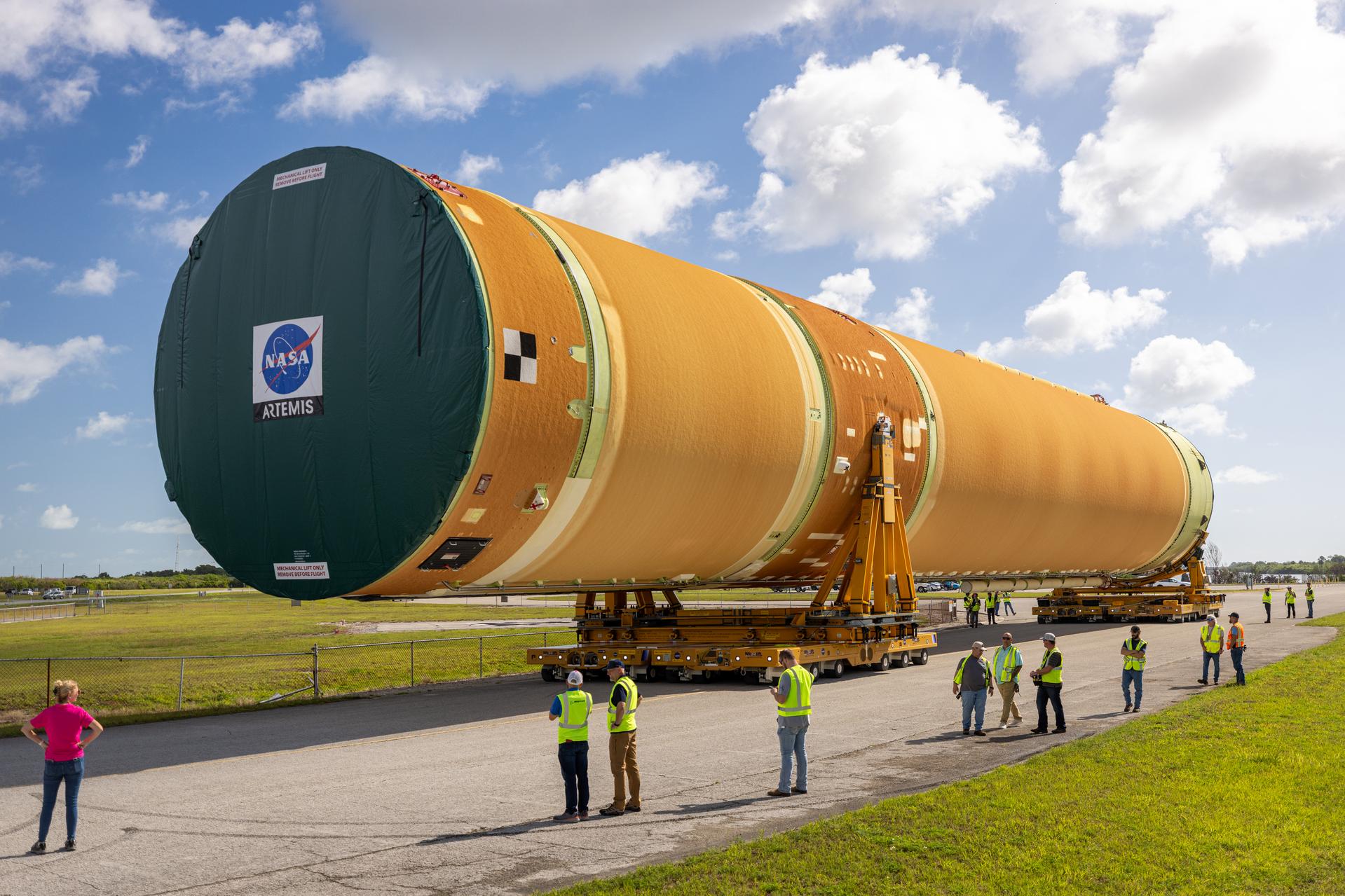
NASA’s top four-fifths of the SLS (Space Launch System) core stage for the Artemis III mission is offloaded from the agency’s Pegasus barge on Tuesday, April 28, 2026, after arriving at the Kennedy Space Center in Florida the prior day. The four-fifths contains the liquid hydrogen tank, liquid oxygen tank, intertank, and forward skirt of the SLS rocket and will be joined with the remaining core stage segments at Kennedy’s Vehicle Assembly Building High Bay 2 prior to rocket stacking operations. Artemis III will launch astronauts to Earth’s orbit aboard the Orion spacecraft on top of SLS to test rendezvous and docking capabilities between Orion and commercial spacecraft needed to land Artemis IV astronauts on the Moon in 2028.
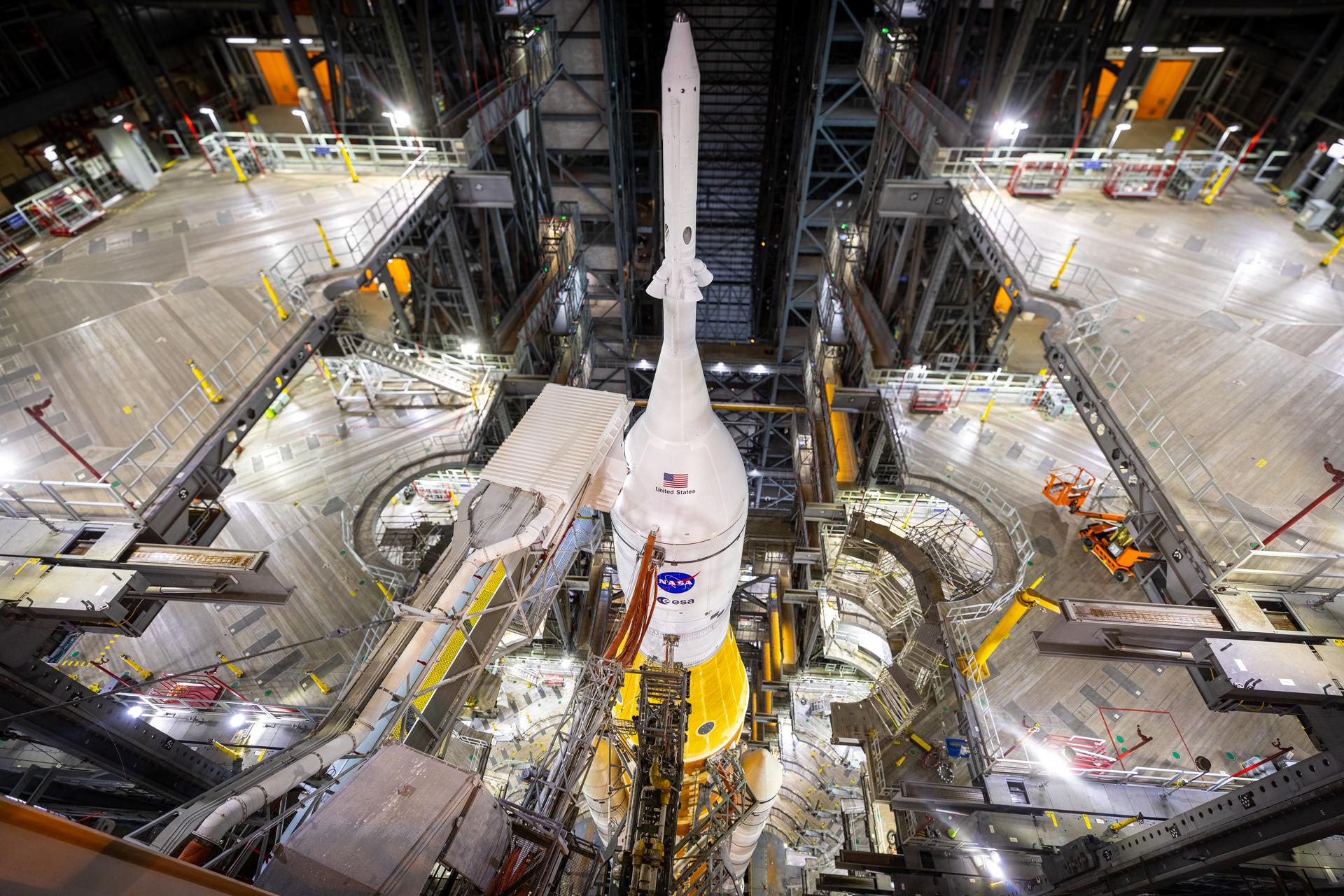
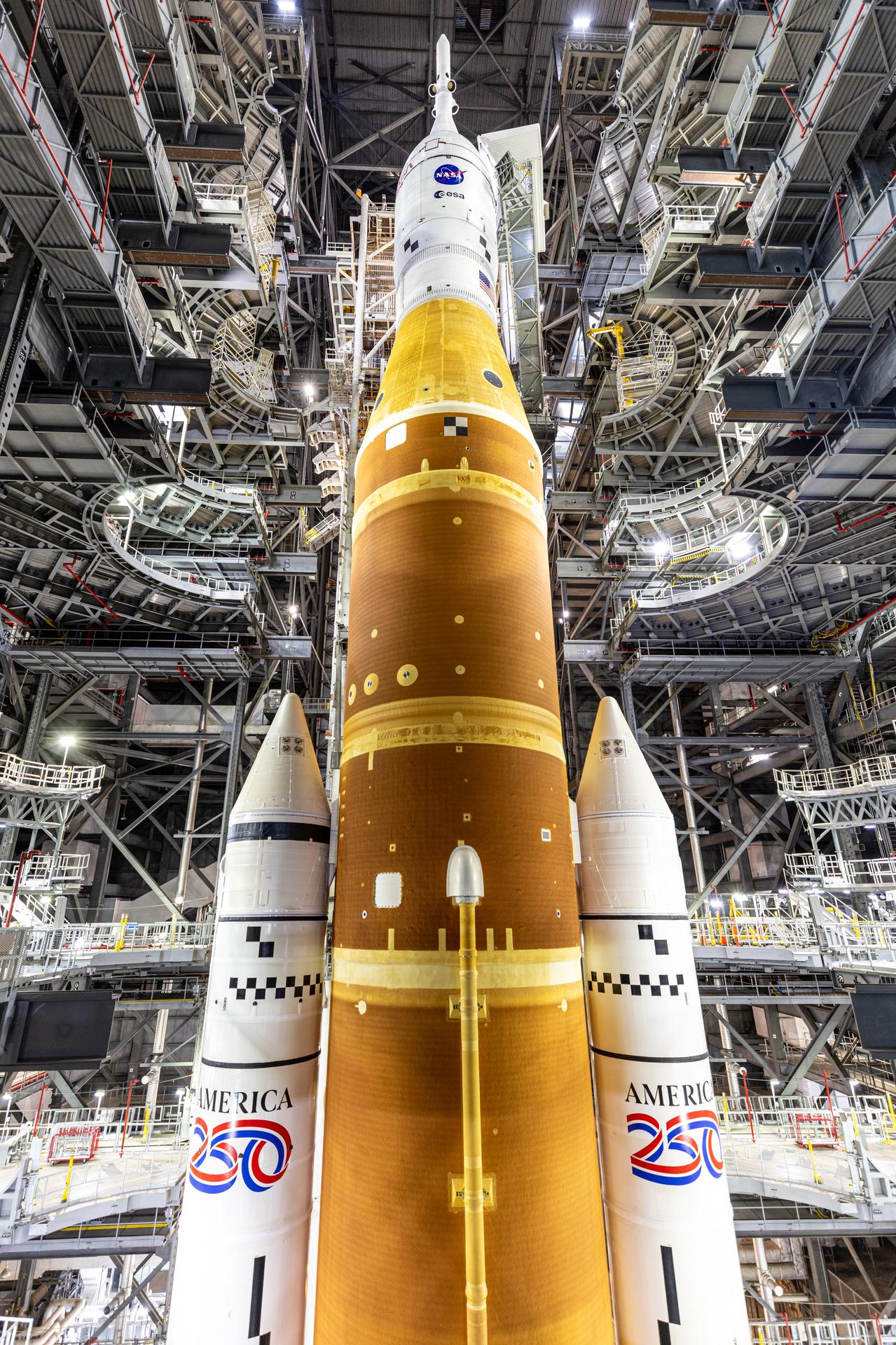
In this view looking down in High Bay 3 inside the Vehicle Assembly Building on Saturday, Jan. 17, 2026, the work platforms are retracted around NASA’s Artemis II SLS (Space Launch System) rocket and Orion spacecraft in preparation for rollout to Launch Complex 39B at NASA’s Kennedy Space Center in Florida. NASA’s Artemis II flight test will take Commander Reid Wiseman, Pilot Victor Glover, and Mission Specialist Christina Koch from NASA, and Mission Specialist Jeremy Hansen from the CSA (Canadian Space Agency), around the Moon and back to Earth no later than no later than April 2026.
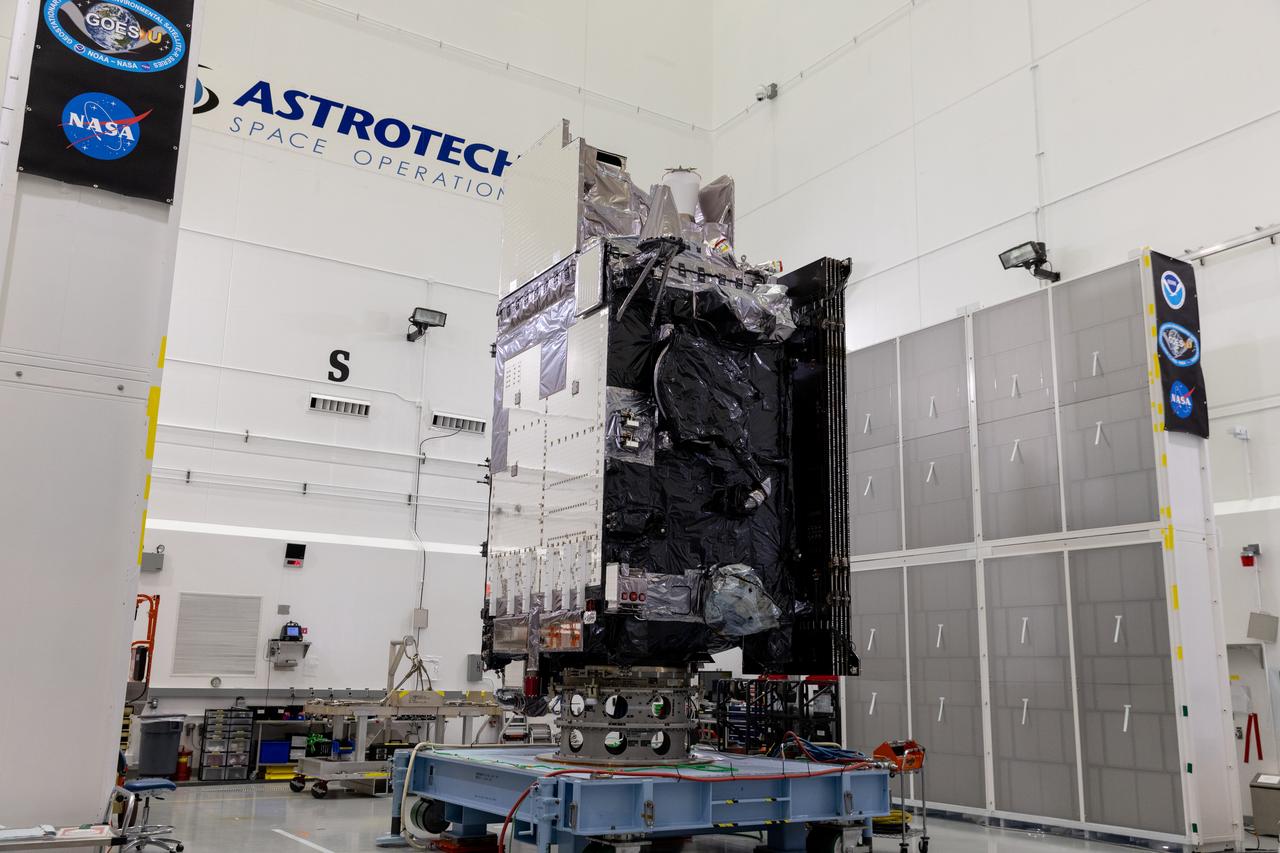
The National Oceanic and Atmospheric Administration (NOAA) Geostationary Operational Environmental Satellite-U (GOES-U) stands vertical on a spacecraft dolly in a high bay at the Astrotech Space Operations Facility near the agency’s Kennedy Space Center in Florida during a NASA-hosted media day on Thursday, June 6, 2024. Part of a collaborative NOAA and NASA program, GOES-U is the last in a series of advanced geostationary weather satellites. Data from the GOES-R satellite series enables forecasters to predict, observe, and track local weather events that affect public safety like thunderstorms, hurricanes, and wildfires.
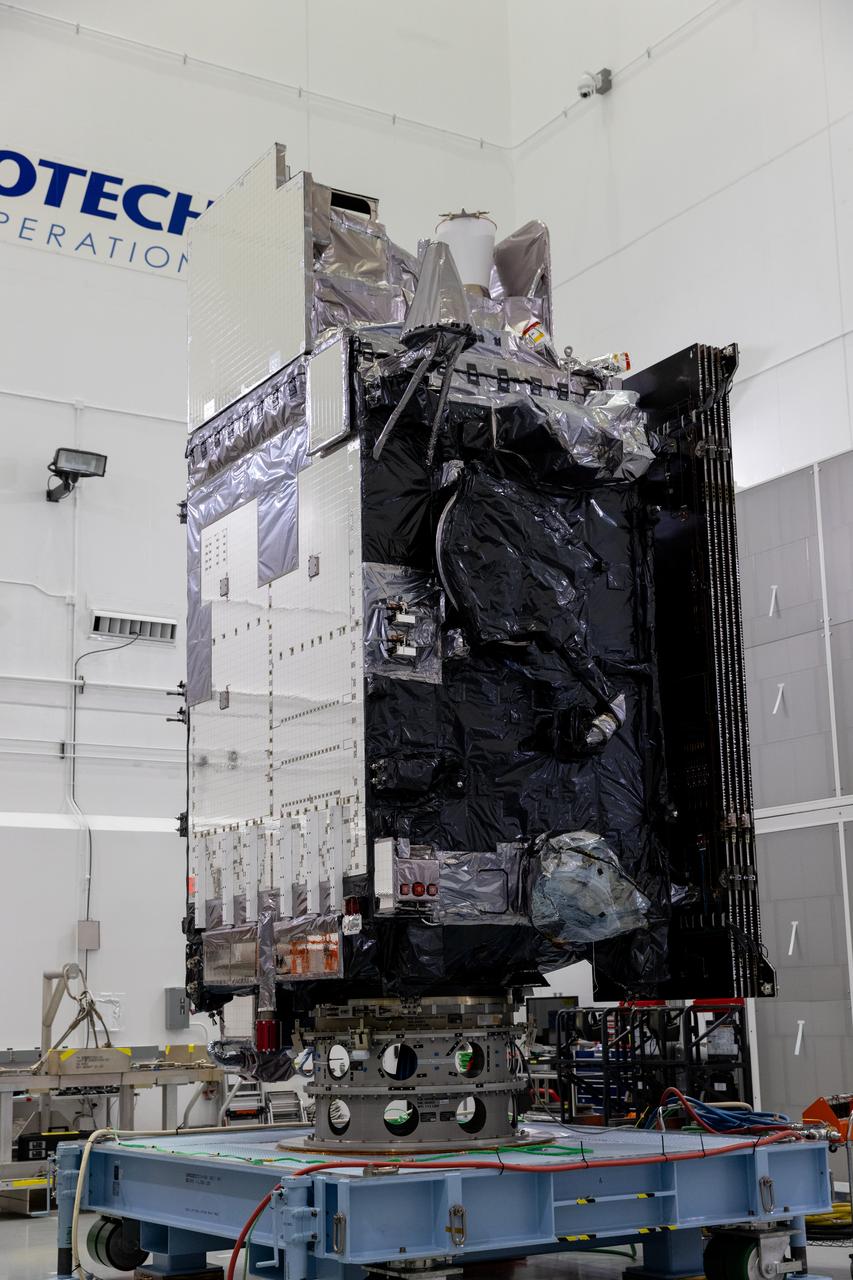
The National Oceanic and Atmospheric Administration (NOAA) Geostationary Operational Environmental Satellite-U (GOES-U) stands vertical on a spacecraft dolly in a high bay at the Astrotech Space Operations Facility near the agency’s Kennedy Space Center in Florida during a NASA-hosted media day on Thursday, June 6, 2024. Part of a collaborative NOAA and NASA program, GOES-U is the last in a series of advanced geostationary weather satellites. Data from the GOES-R satellite series enables forecasters to predict, observe, and track local weather events that affect public safety like thunderstorms, hurricanes, and wildfires.
Stills, broll, imagery coverage of rollout
Stills, broll, imagery coverage of rollout
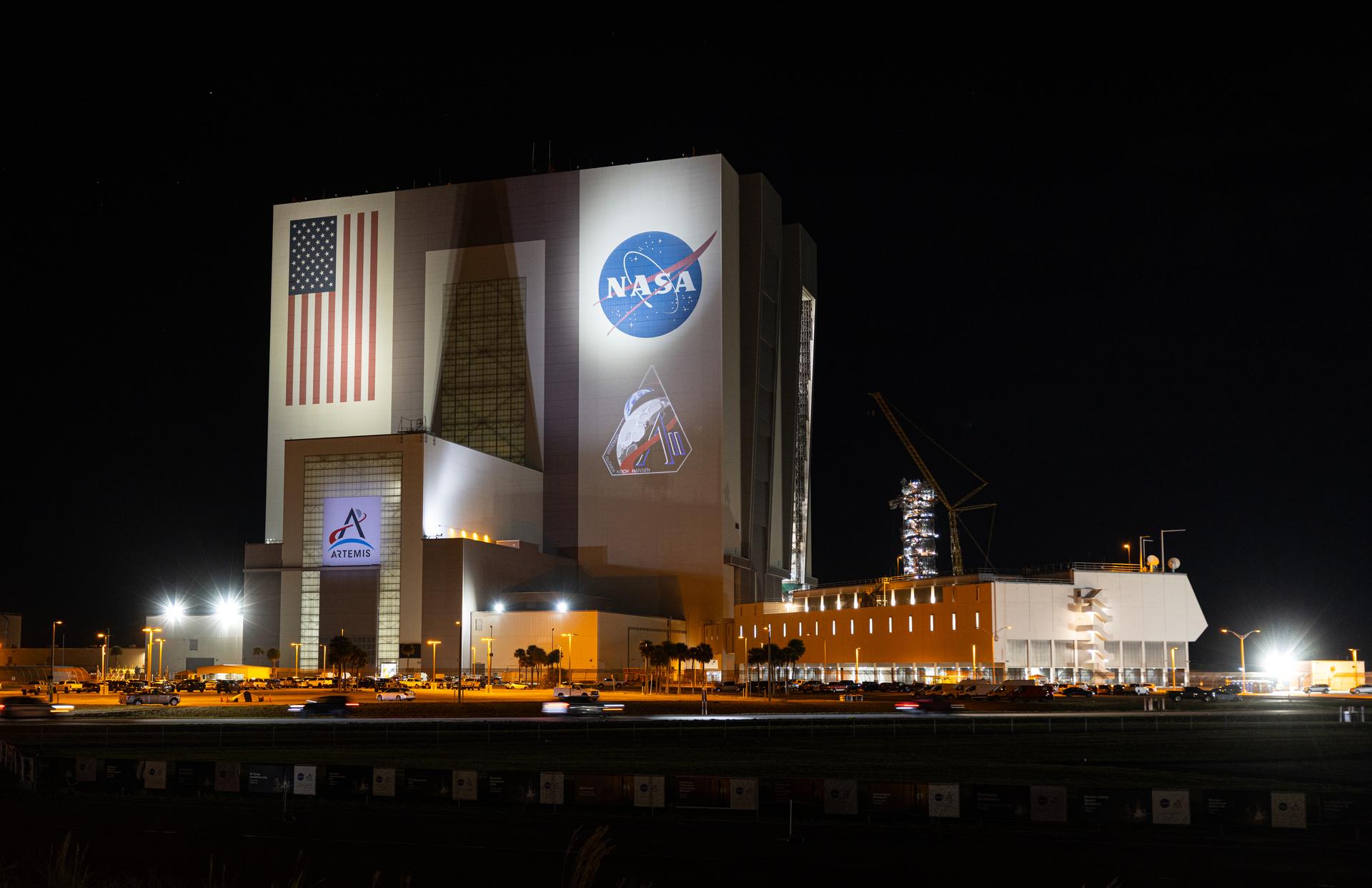
NASA’s Artemis II SLS (Space Launch System) rocket and Orion spacecraft, secured to the mobile launcher, prepares to roll out from the Vehicle Assembly Building to Launch Complex 39B at NASA’s Kennedy Space Center in Florida on Saturday, Jan. 17, 2026. Seen in the background is also mobile launcher 2, which will be used on future Artemis flights beginning with Artemis IV. The Artemis II test flight will take Commander Reid Wiseman, Pilot Victor Glover, and Mission Specialist Christina Koch from NASA, and Mission Specialist Jeremy Hansen from the CSA (Canadian Space Agency), around the Moon and back to Earth no later than April 2026.
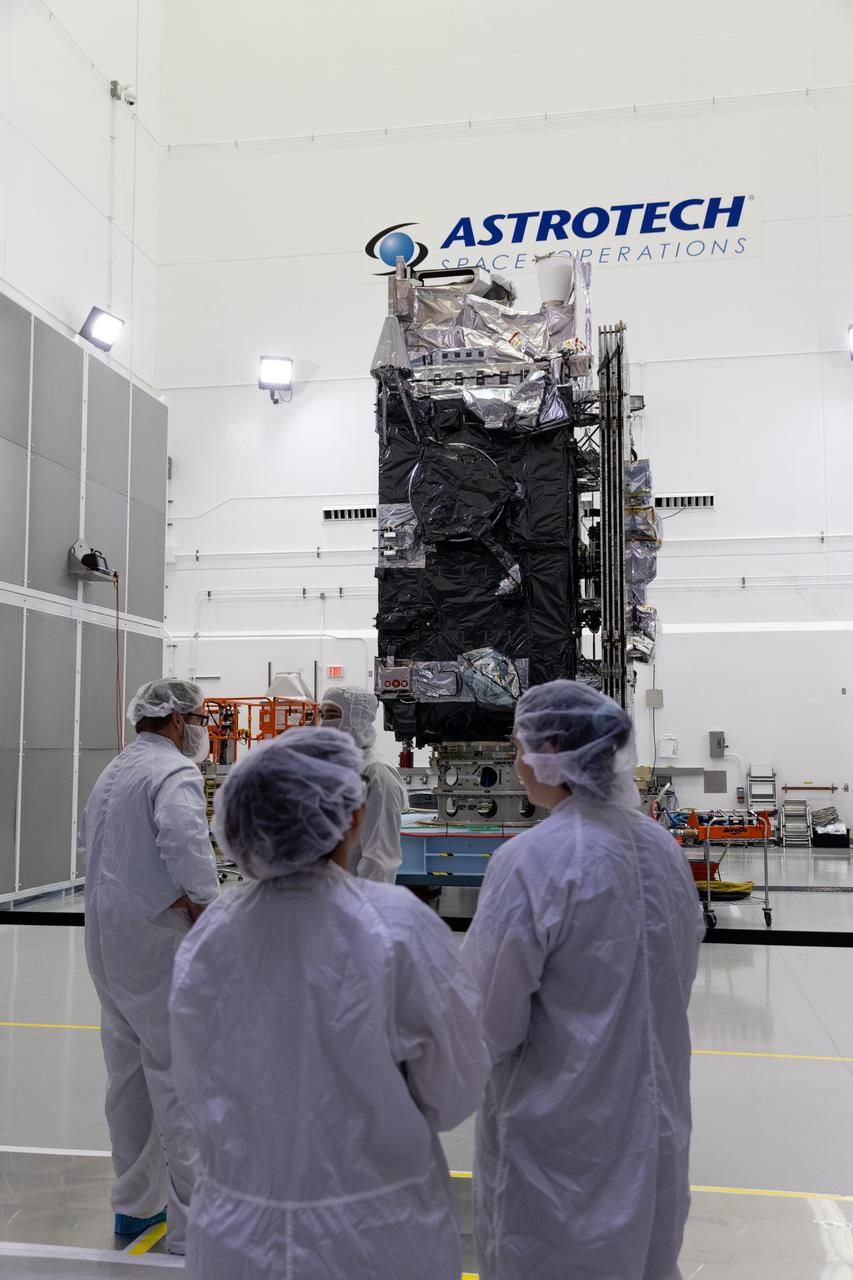
Members of the news media had an opportunity for an up-close look at the National Oceanic and Atmospheric Administration (NOAA) Geostationary Operational Environmental Satellite U (GOES-U) on Thursday, June 6, 2024, inside the Astrotech Space Operations Facility in Titusville, near NASA’s Kennedy Space Center in Florida. Journalists visited Astrotech as part of a NASA-hosted media day to conduct interviews and photograph the satellite that is the final addition to NOAA’s GOES-R satellite series, which serve a critical role in providing continuous coverage of the Western Hemisphere, including monitoring tropical systems in the eastern Pacific and Atlantic Oceans.
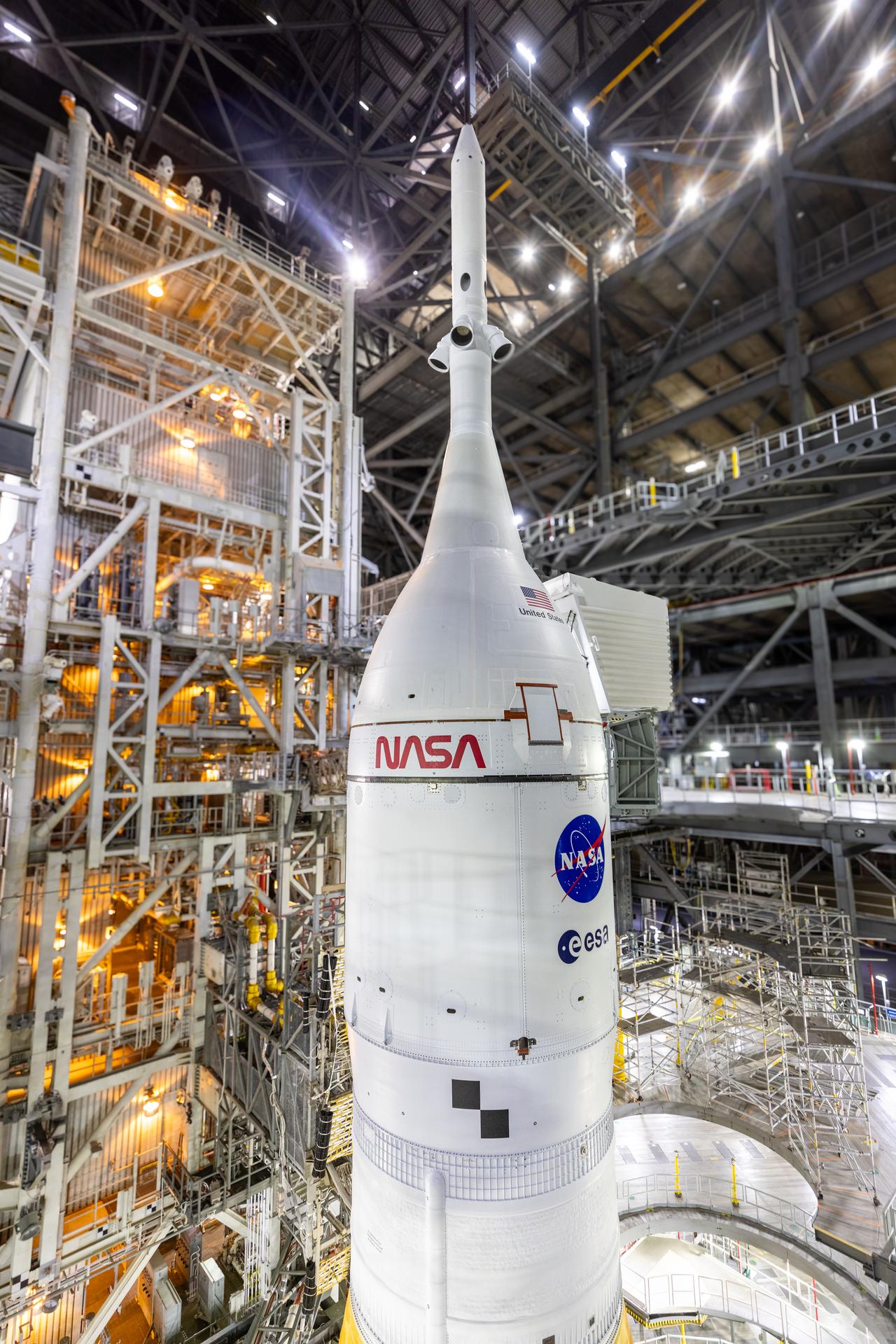
A closeup view of NASA’s Orion spacecraft with the launch abort system atop secured to NASA’s crawler-transporter 2 and the agency’s Artemis II SLS (Space Launch System) rocket prepares to roll out from the Vehicle Assembly Building to Launch Complex 39B at NASA’s Kennedy Space Center in Florida on Saturday, Jan. 17, 2026. The Artemis II test flight will take Commander Reid Wiseman, Pilot Victor Glover, and Mission Specialist Christina Koch from NASA, and Mission Specialist Jeremy Hansen from the CSA (Canadian Space Agency), around the Moon and back to Earth no later than April 2026.
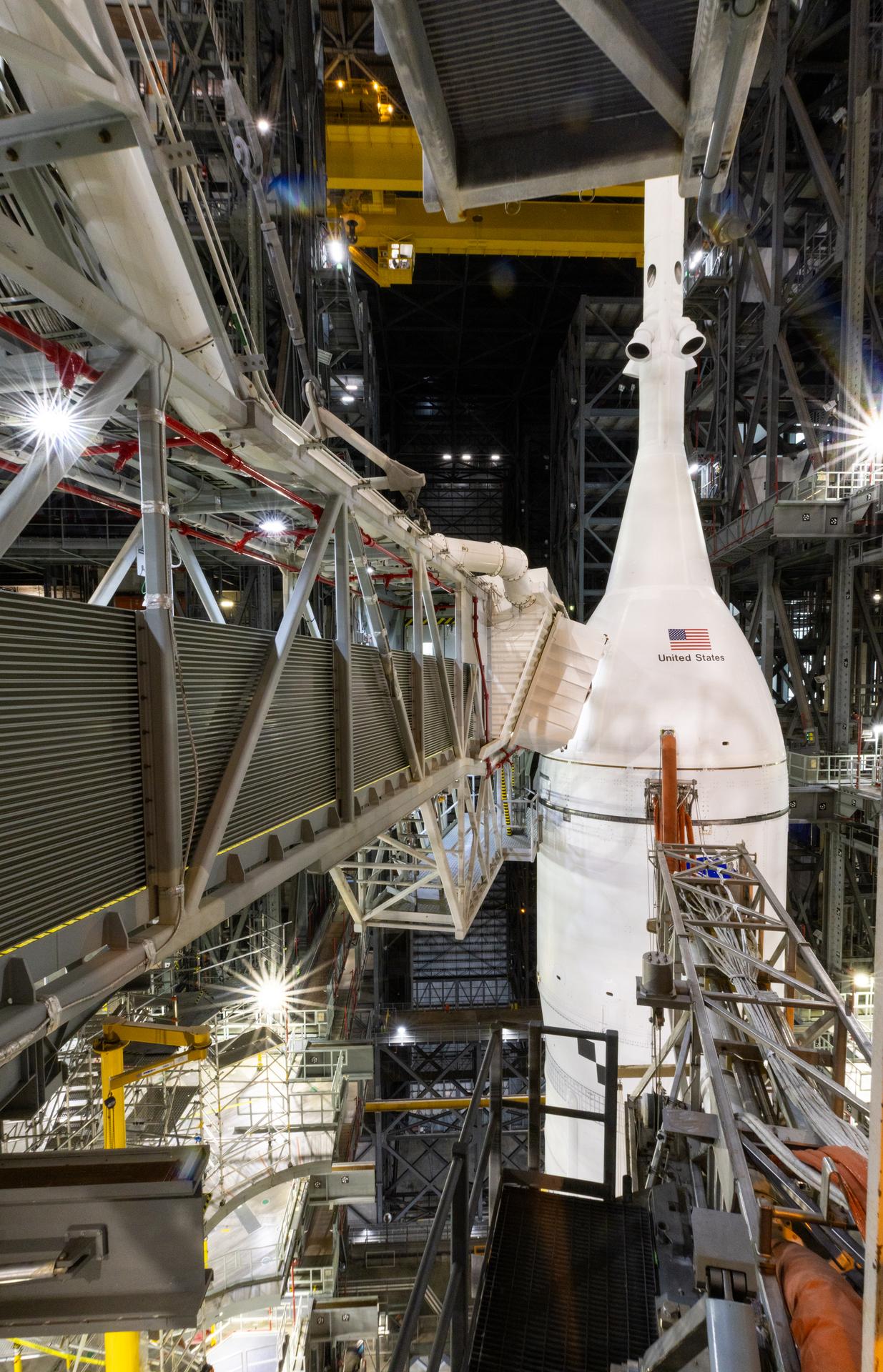
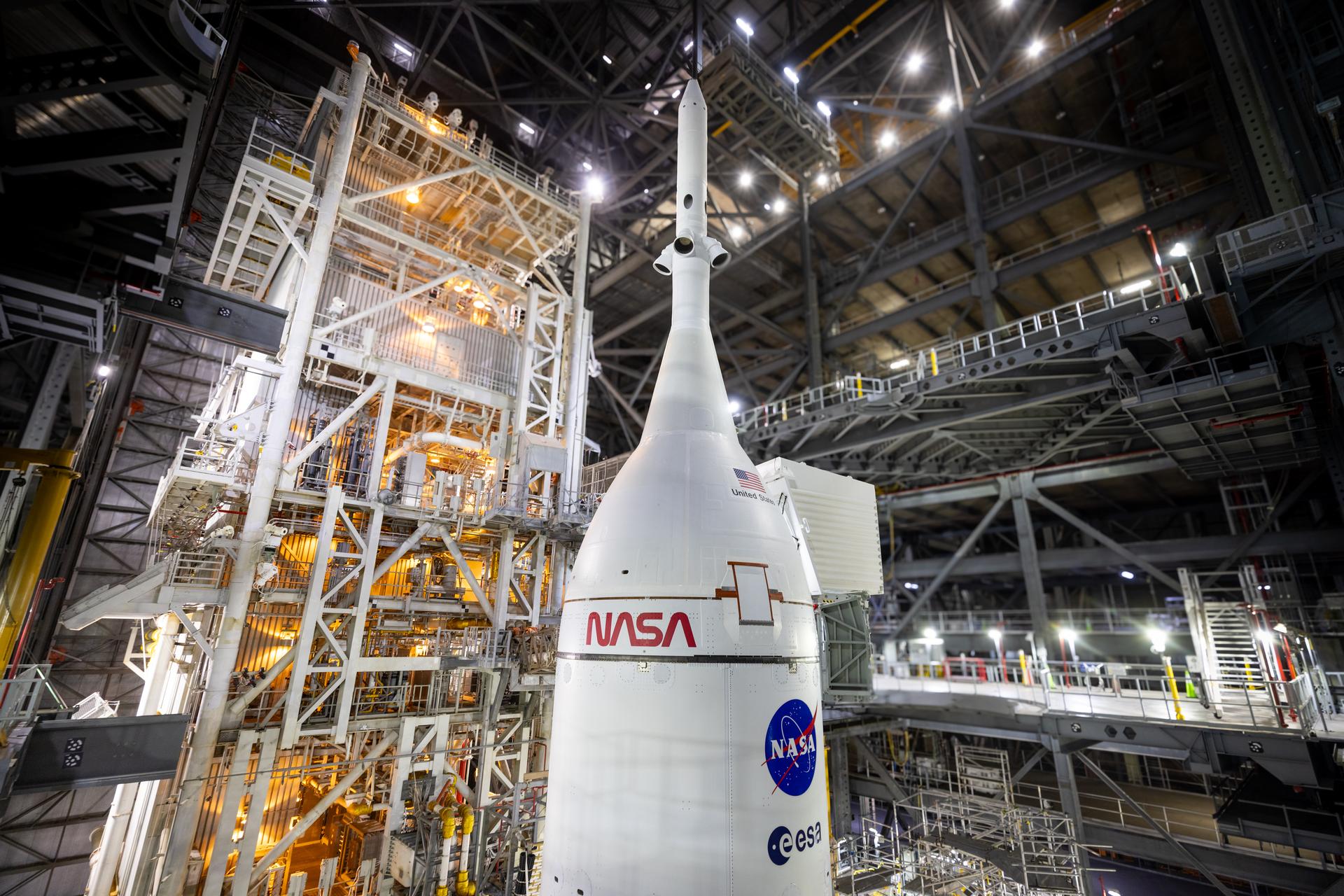
This close up of the crew access arm shows all work platforms retracted from around NASA’s Artemis II SLS (Space Launch System) rocket and Orion spacecraft, secured to the mobile launcher, inside the Vehicle Assembly Building on Saturday, Jan. 17, 2026, in preparation for rollout to Launch Complex 39B at NASA’s Kennedy Space Center in Florida. NASA’s Artemis II flight test will take Commander Reid Wiseman, Pilot Victor Glover, and Mission Specialist Christina Koch from NASA, and Mission Specialist Jeremy Hansen from the CSA (Canadian Space Agency), around the Moon and back to Earth no later than no later than April 2026.
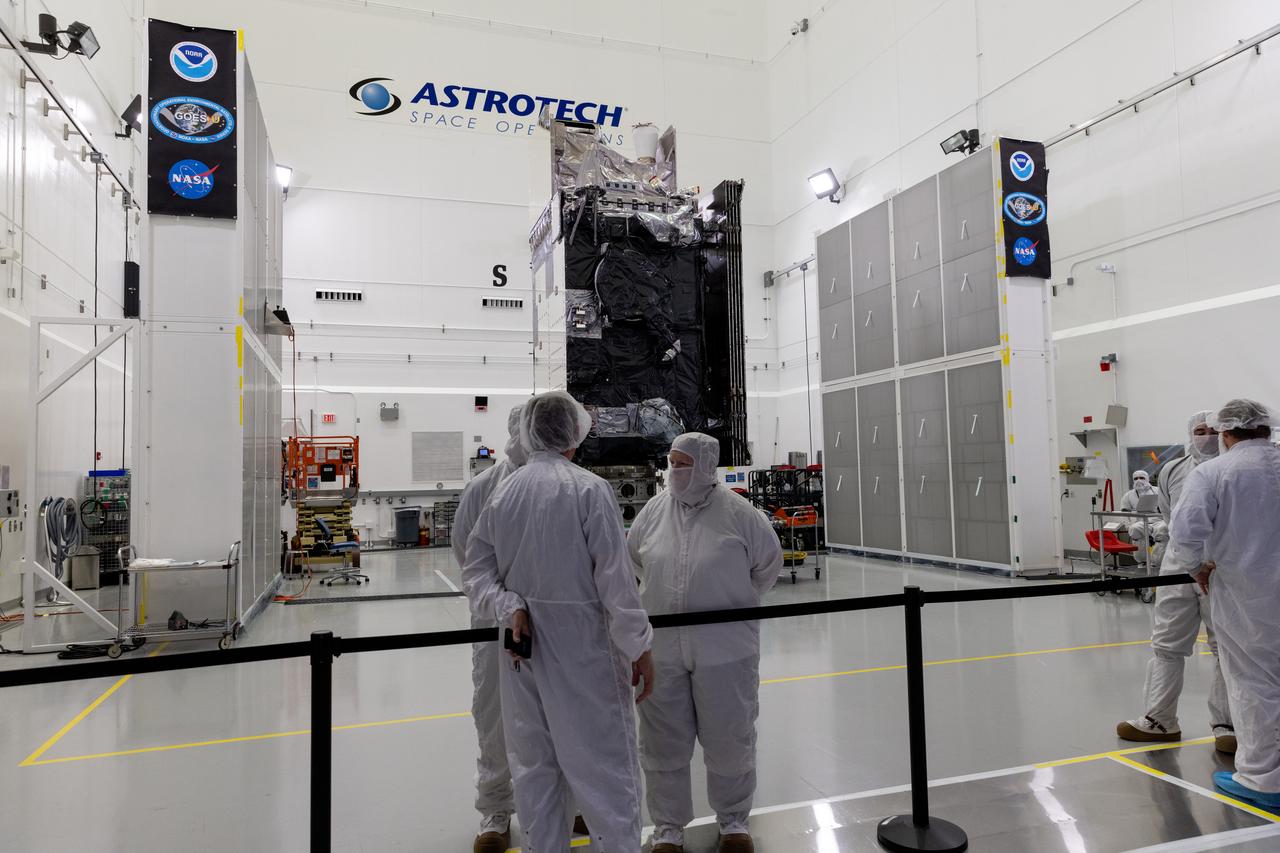
Members of the news media had an opportunity for an up-close look at the National Oceanic and Atmospheric Administration (NOAA) Geostationary Operational Environmental Satellite U (GOES-U) on Thursday, June 6, 2024, inside the Astrotech Space Operations Facility in Titusville, near NASA’s Kennedy Space Center in Florida. Journalists visited Astrotech as part of a NASA-hosted media day to conduct interviews and photograph the satellite that is the final addition to NOAA’s GOES-R satellite series, which serve a critical role in providing continuous coverage of the Western Hemisphere, including monitoring tropical systems in the eastern Pacific and Atlantic Oceans.
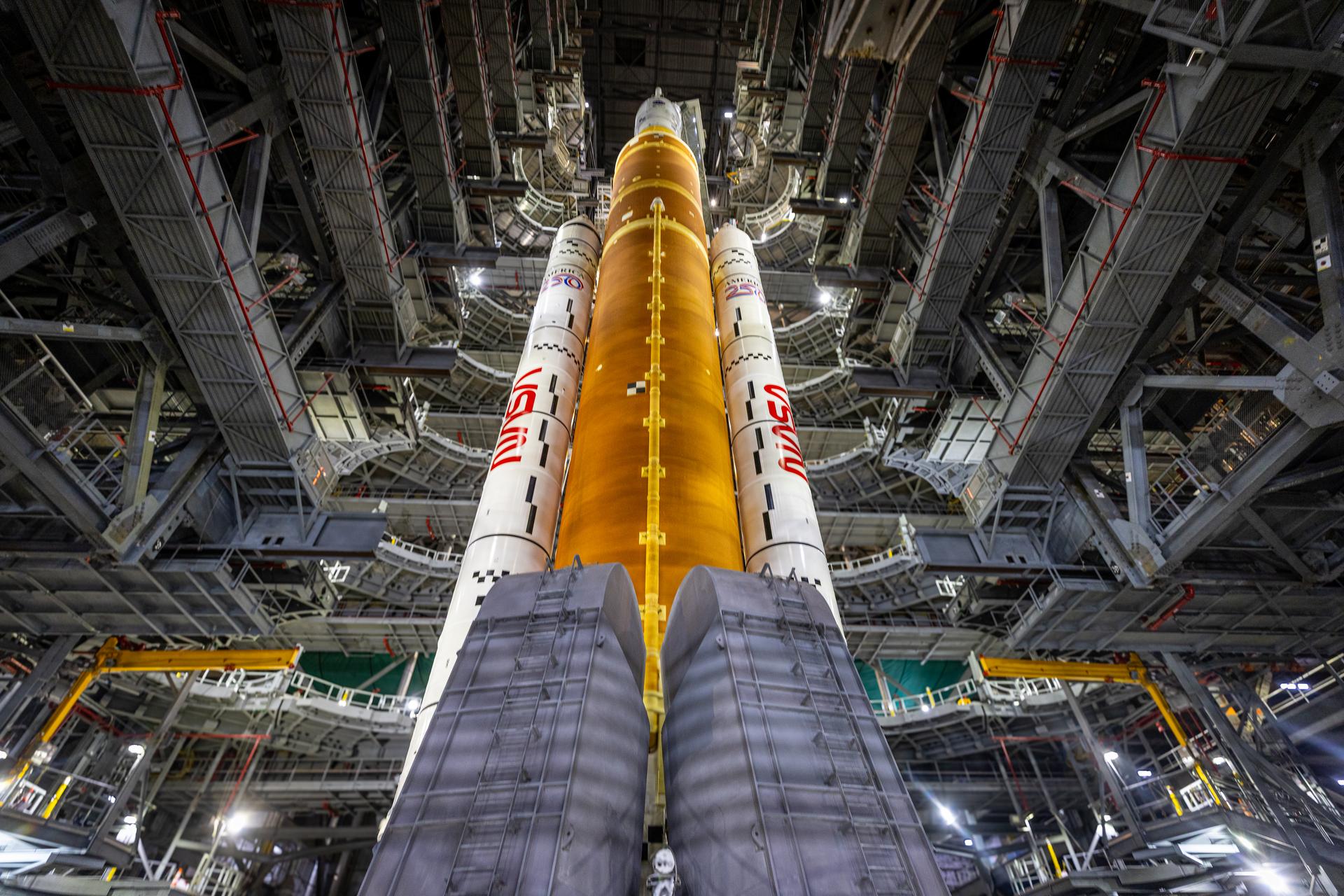
In this view looking up inside the Vehicle Assembly Building on Saturday, Jan. 17, 2026, the work platforms are retracted around NASA’s Artemis II SLS (Space Launch System) rocket and Orion spacecraft in preparation for rollout to Launch Complex 39B at NASA’s Kennedy Space Center in Florida. NASA’s Artemis II flight test will take Commander Reid Wiseman, Pilot Victor Glover, and Mission Specialist Christina Koch from NASA, and Mission Specialist Jeremy Hansen from the CSA (Canadian Space Agency), around the Moon and back to Earth no later than no later than April 2026.
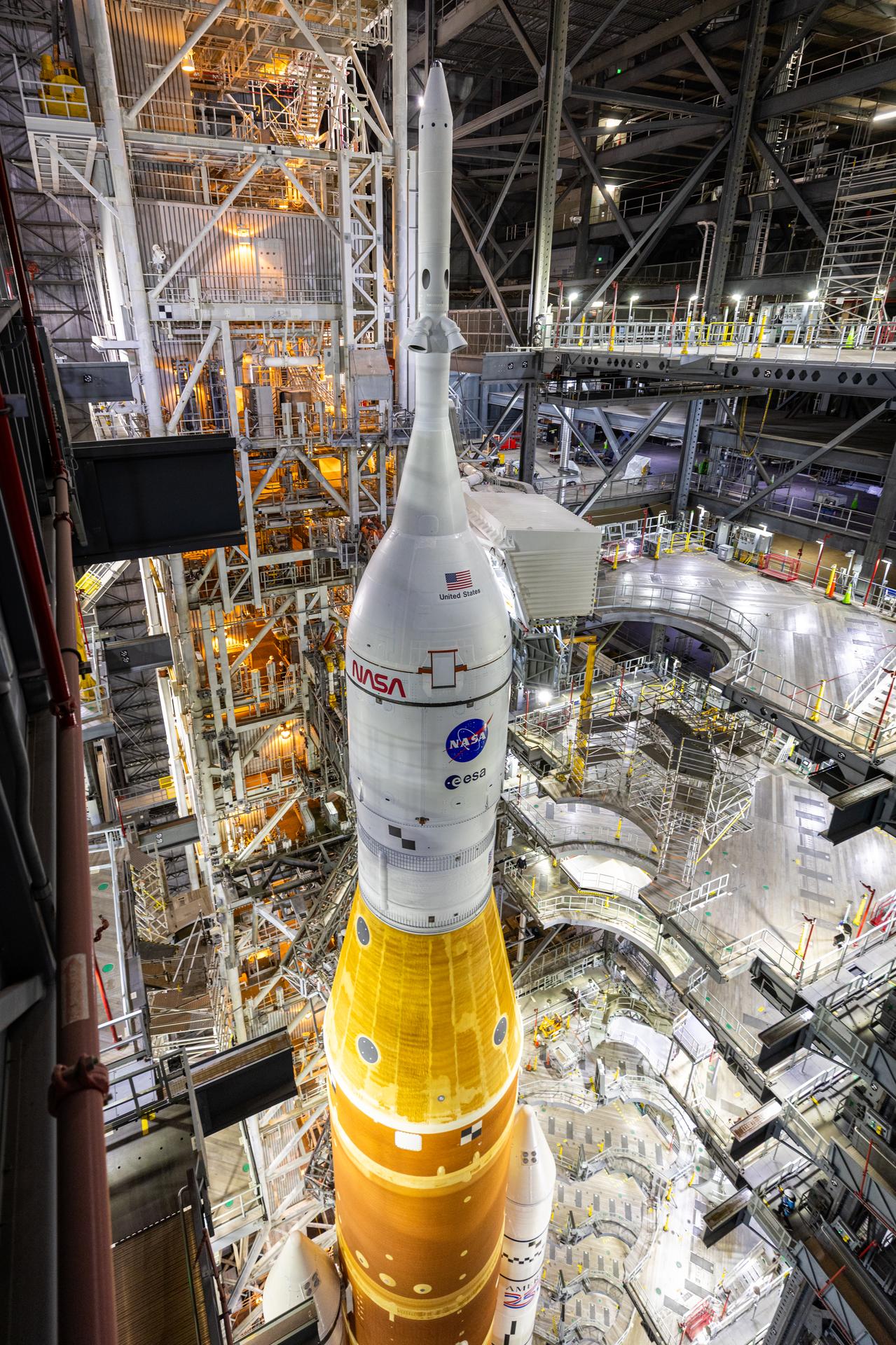
NASA’s Artemis II SLS (Space Launch System) rocket and Orion spacecraft, secured to the mobile launcher, prepares to roll out from the Vehicle Assembly Building to Launch Complex 39B at NASA’s Kennedy Space Center in Florida on Saturday, Jan. 17, 2026. The Artemis II test flight will take Commander Reid Wiseman, Pilot Victor Glover, and Mission Specialist Christina Koch from NASA, and Mission Specialist Jeremy Hansen from the CSA (Canadian Space Agency), around the Moon and back to Earth no later than April 2026.
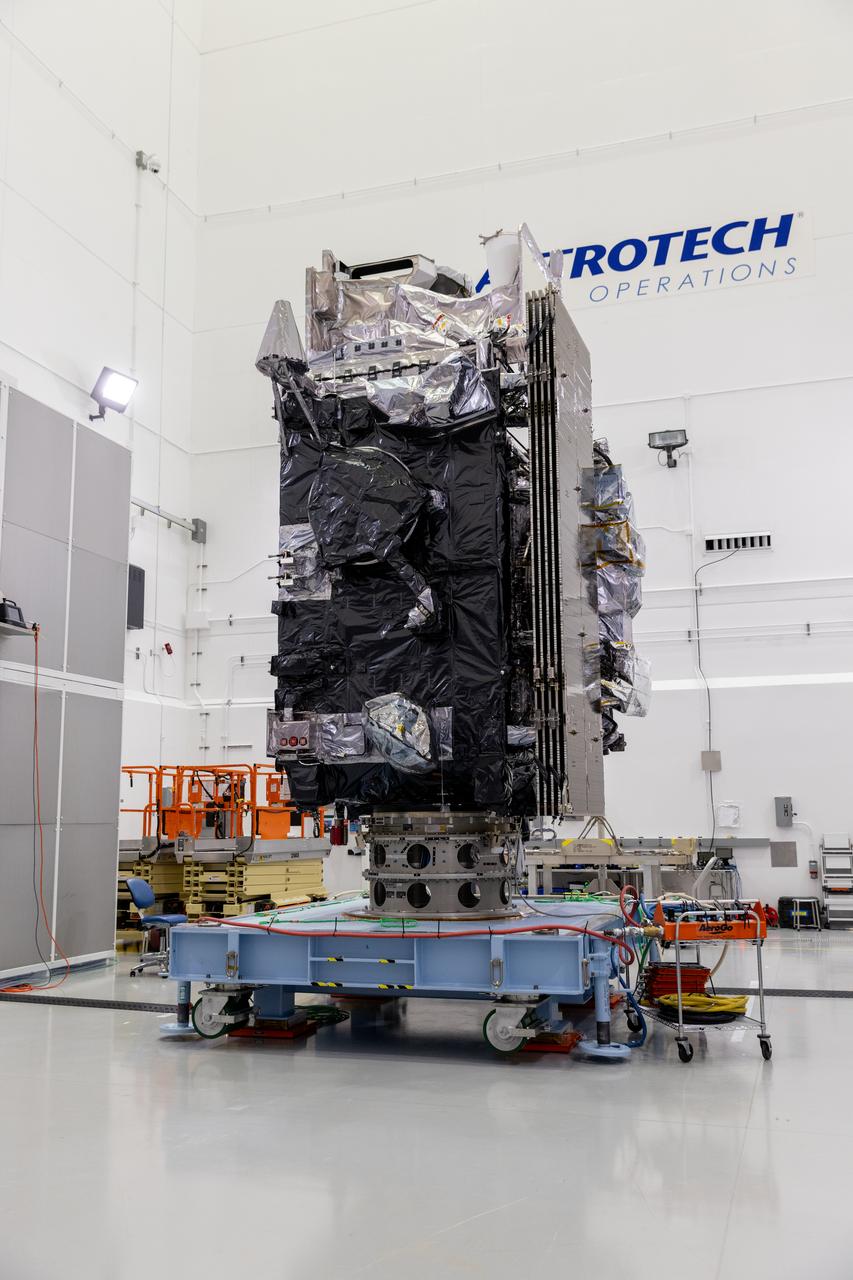
The National Oceanic and Atmospheric Administration (NOAA) Geostationary Operational Environmental Satellite-U (GOES-U) stands vertical on a spacecraft dolly in a high bay at the Astrotech Space Operations Facility near the agency’s Kennedy Space Center in Florida during a NASA-hosted media day on Thursday, June 6, 2024. Part of a collaborative NOAA and NASA program, GOES-U is the last in a series of advanced geostationary weather satellites. Data from the GOES-R satellite series enables forecasters to predict, observe, and track local weather events that affect public safety like thunderstorms, hurricanes, and wildfires.
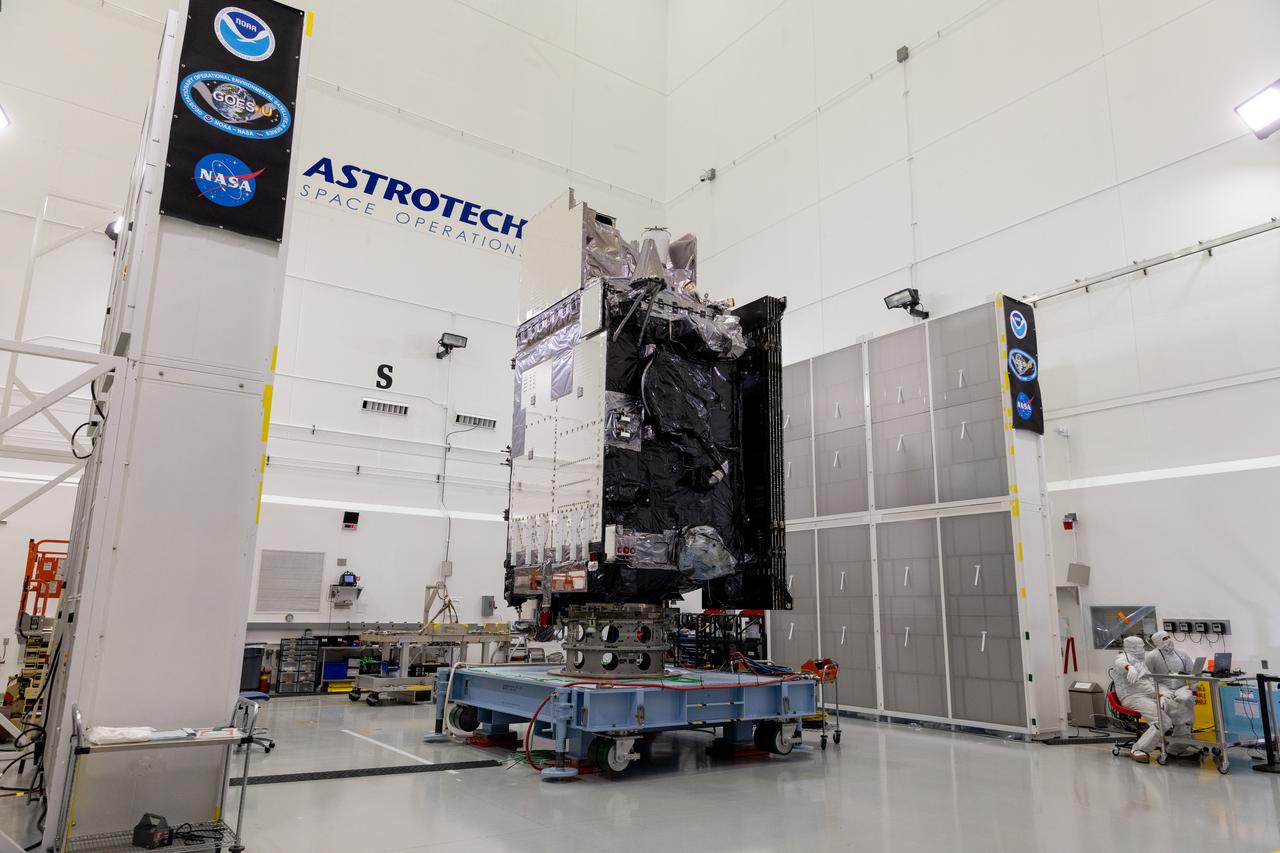
The National Oceanic and Atmospheric Administration (NOAA) Geostationary Operational Environmental Satellite-U (GOES-U) stands vertical on a spacecraft dolly in a high bay at the Astrotech Space Operations Facility near the agency’s Kennedy Space Center in Florida during a NASA-hosted media day on Thursday, June 6, 2024. Part of a collaborative NOAA and NASA program, GOES-U is the last in a series of advanced geostationary weather satellites. Data from the GOES-R satellite series enables forecasters to predict, observe, and track local weather events that affect public safety like thunderstorms, hurricanes, and wildfires.
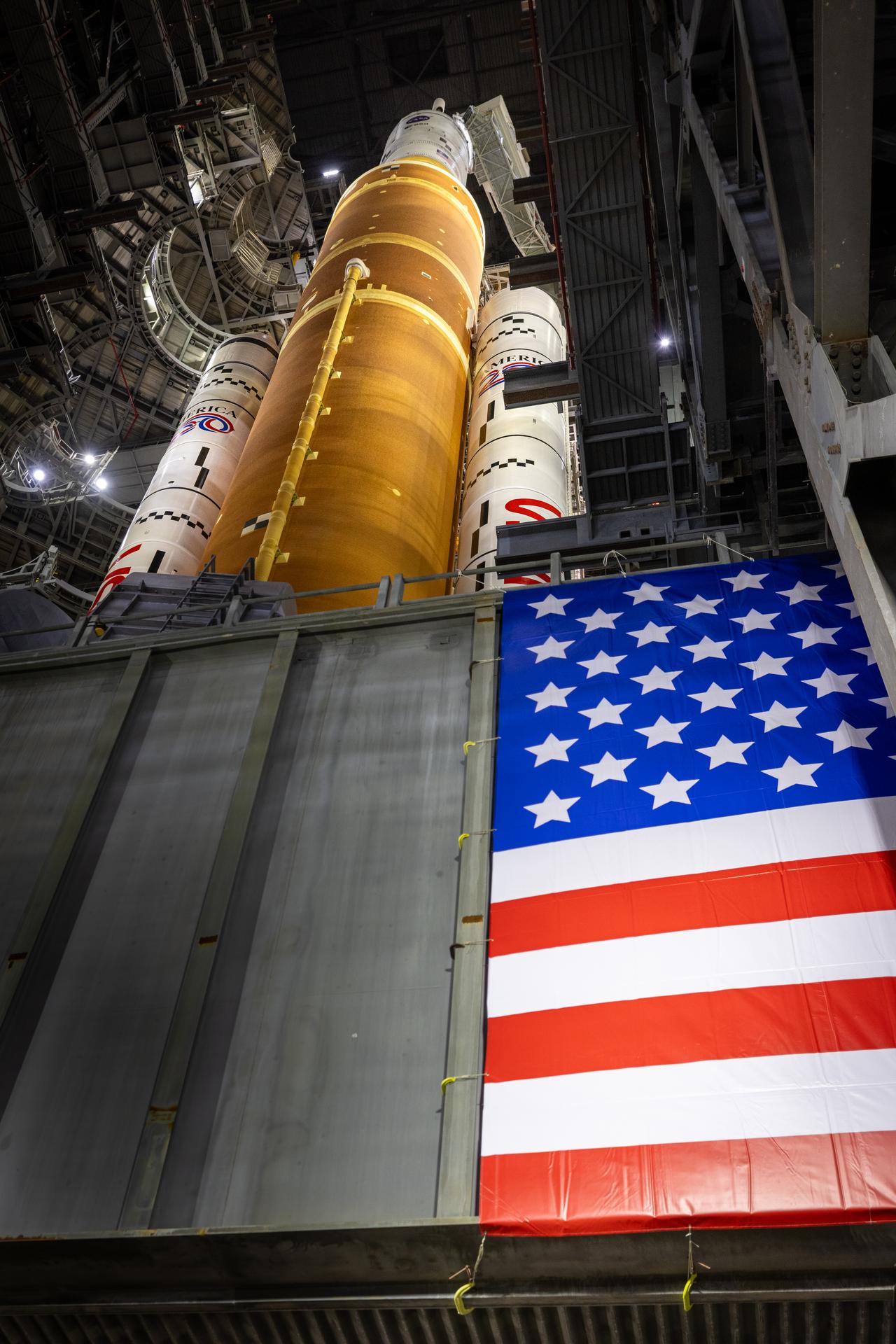
NASA’s Artemis II SLS (Space Launch System) rocket and Orion spacecraft, secured to the mobile launcher, prepares to roll out from the Vehicle Assembly Building to Launch Complex 39B at NASA’s Kennedy Space Center in Florida on Saturday, Jan. 17, 2026. The Artemis II test flight will take Commander Reid Wiseman, Pilot Victor Glover, and Mission Specialist Christina Koch from NASA, and Mission Specialist Jeremy Hansen from the CSA (Canadian Space Agency), around the Moon and back to Earth no later than April 2026.
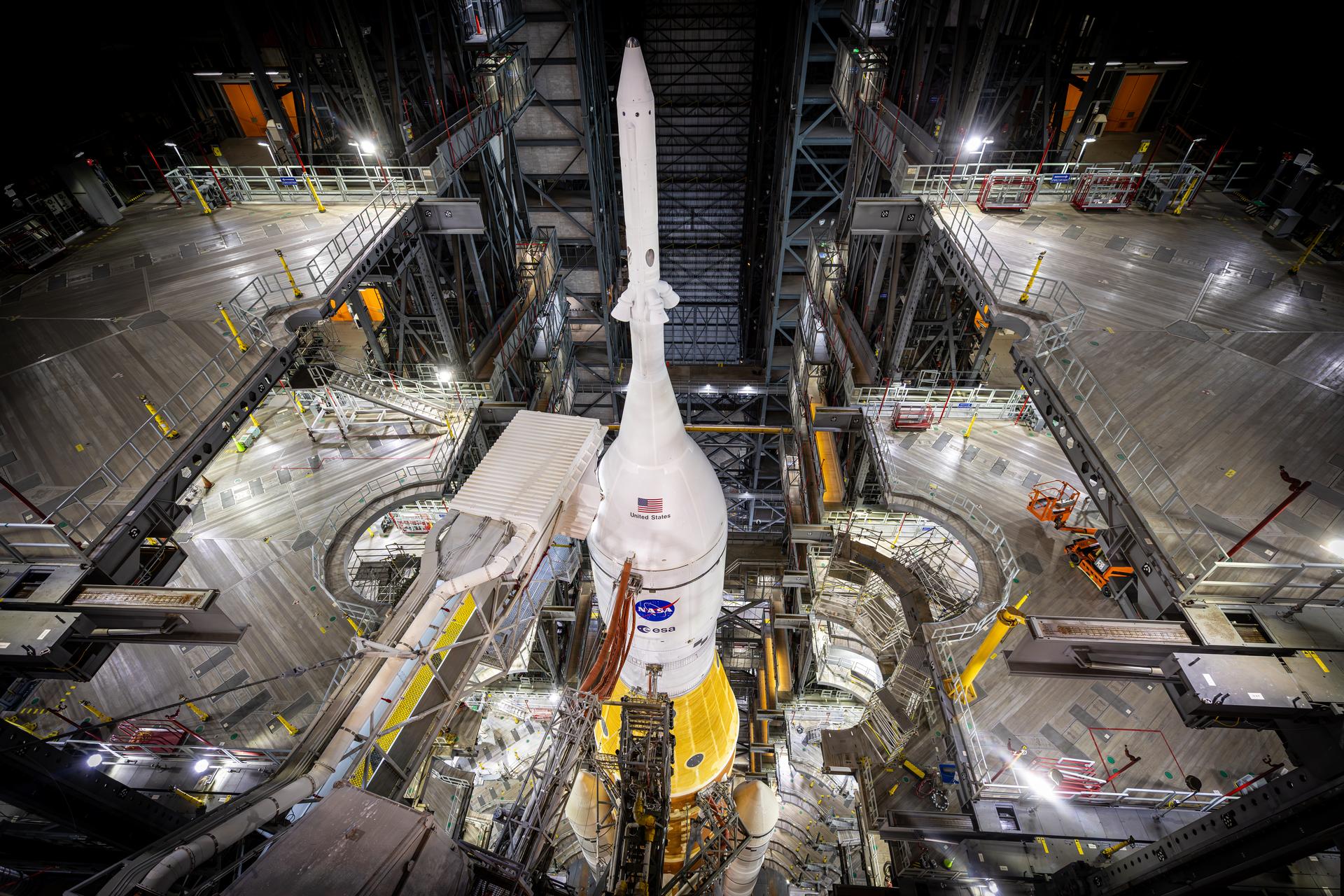
In this view looking down in High Bay 3 inside the Vehicle Assembly Building on Saturday, Jan. 17, 2026, the work platforms are retracted around NASA’s Artemis II SLS (Space Launch System) rocket and Orion spacecraft in preparation for rollout to Launch Complex 39B at NASA’s Kennedy Space Center in Florida. NASA’s Artemis II flight test will take Commander Reid Wiseman, Pilot Victor Glover, and Mission Specialist Christina Koch from NASA, and Mission Specialist Jeremy Hansen from the CSA (Canadian Space Agency), around the Moon and back to Earth no later than no later than April 2026.
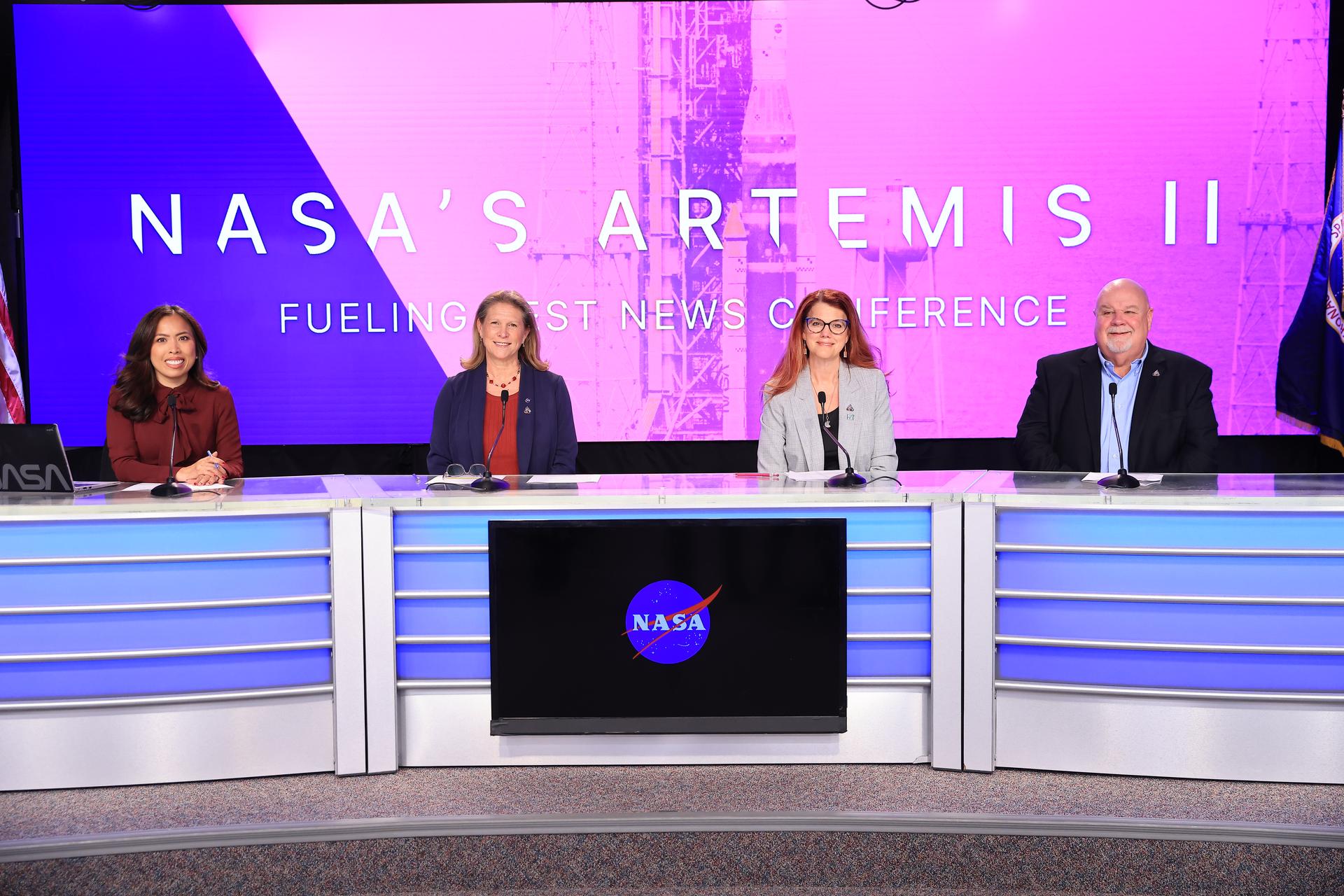
From left to right, Megan Cruz, NASA Communications; Lori Glaze, acting associate administrator for Exploration Systems Development Mission Directorate; Charlie Blackwell-Thompson, launch director, Exploration Ground Systems Program; and John Honeycutt, chair, Artemis II mission management team, participate in a news conference on Friday, Feb. 20, 2026, to discuss the completion of the Artemis II second wet dress rehearsal at NASA’s Kennedy Space Center in Florida. The wet dress rehearsal allows the Artemis II launch team to run through operations to load propellant, conduct a full launch countdown, demonstrate the ability to recycle the countdown clock, and drain the tanks to practice timelines and procedures for launch. The Artemis II test flight will take Commander Reid Wiseman, Pilot Victor Glover, and Mission Specialist Christina Koch, from NASA and Mission Specialist Jeremy Hansen from the CSA (Canadian Space Agency), around the Moon and back to Earth from Launch Complex 39B at NASA Kennedy.

Charlie Blackwell-Thompson, launch director, Exploration Ground Systems Program, participates in a news conference on Friday, Feb. 20, 2026, to discuss the completion of the Artemis II second wet dress rehearsal at NASA’s Kennedy Space Center in Florida. The wet dress rehearsal allows the Artemis II launch team to run through operations to load propellant, conduct a full launch countdown, demonstrate the ability to recycle the countdown clock, and drain the tanks to practice timelines and procedures for launch. The Artemis II test flight will take Commander Reid Wiseman, Pilot Victor Glover, and Mission Specialist Christina Koch from NASA, and Mission Specialist Jeremy Hansen from the CSA (Canadian Space Agency), around the Moon and back to Earth from Launch Complex 39B at NASA Kennedy.
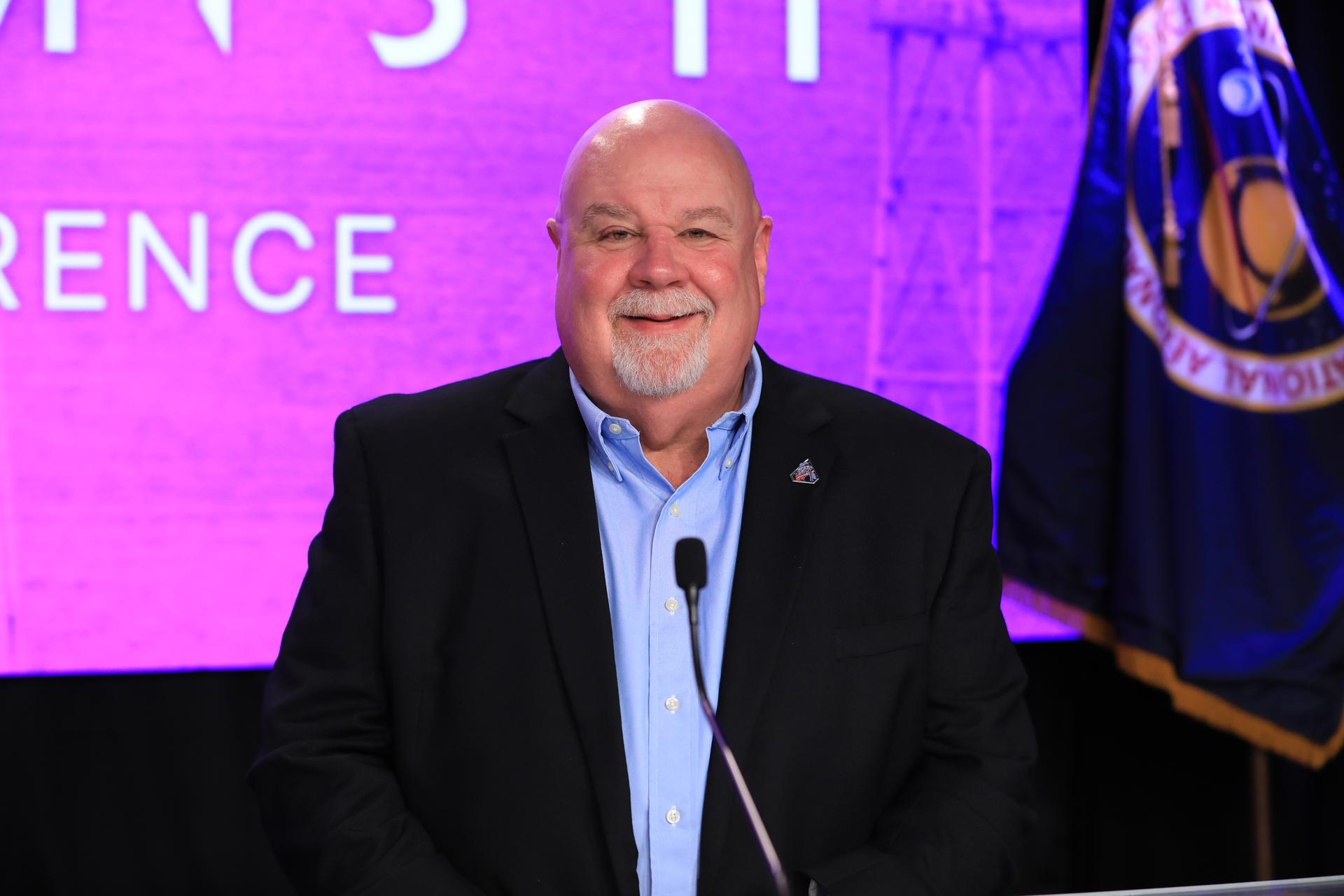
John Honeycutt, chair, Artemis II mission management team, participates in a news conference on Friday, Feb. 20, 2026, to discuss the completion of the Artemis II second wet dress rehearsal at NASA’s Kennedy Space Center in Florida. The wet dress rehearsal allows the Artemis II launch team to run through operations to load propellant, conduct a full launch countdown, demonstrate the ability to recycle the countdown clock, and drain the tanks to practice timelines and procedures for launch. The Artemis II test flight will take Commander Reid Wiseman, Pilot Victor Glover, and Mission Specialist Christina Koch from NASA, and Mission Specialist Jeremy Hansen from the CSA (Canadian Space Agency), around the Moon and back to Earth from Launch Complex 39B at NASA Kennedy.
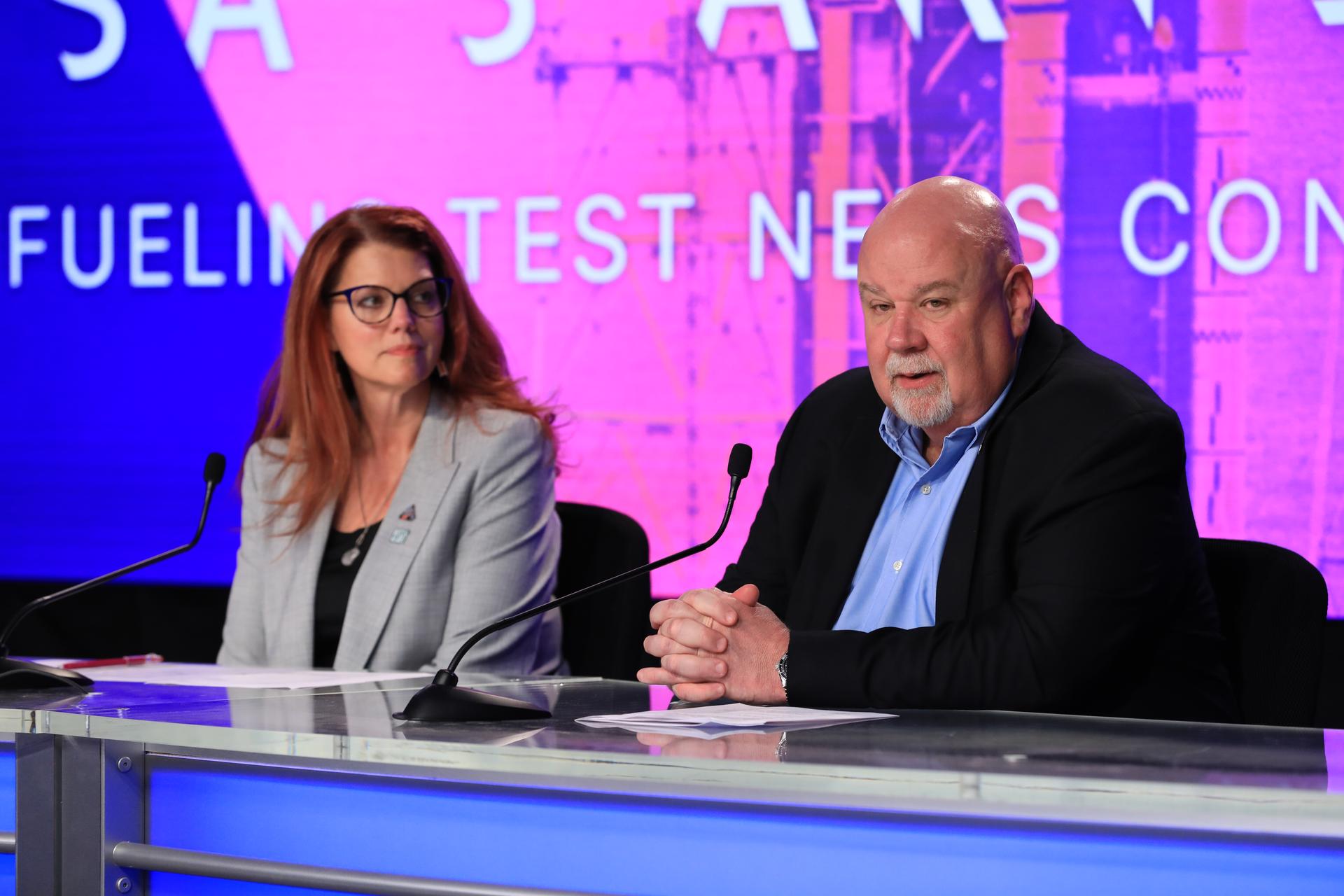
From left, Charlie Blackwell-Thompson, launch director, Exploration Ground Systems Program, and John Honeycutt, chair, Artemis II mission management team, participate in a news conference on Friday, Feb.20, 2026, to discuss the completion of Artemis II second wet dress rehearsal at NASA’s Kennedy Space Center in Florida. The wet dress rehearsal allows the Artemis II launch team to run through operations to load propellant, conduct a full launch countdown, demonstrate the ability to recycle the countdown clock, and drain the tanks to practice timelines and procedures for launch. The Artemis II test flight will take Commander Reid Wiseman, Pilot Victor Glover, and Mission Specialist Christina Koch from NASA, and Mission Specialist Jeremy Hansen from the CSA (Canadian Space Agency), around the Moon and back to Earth from Launch Complex 39B at NASA Kennedy.
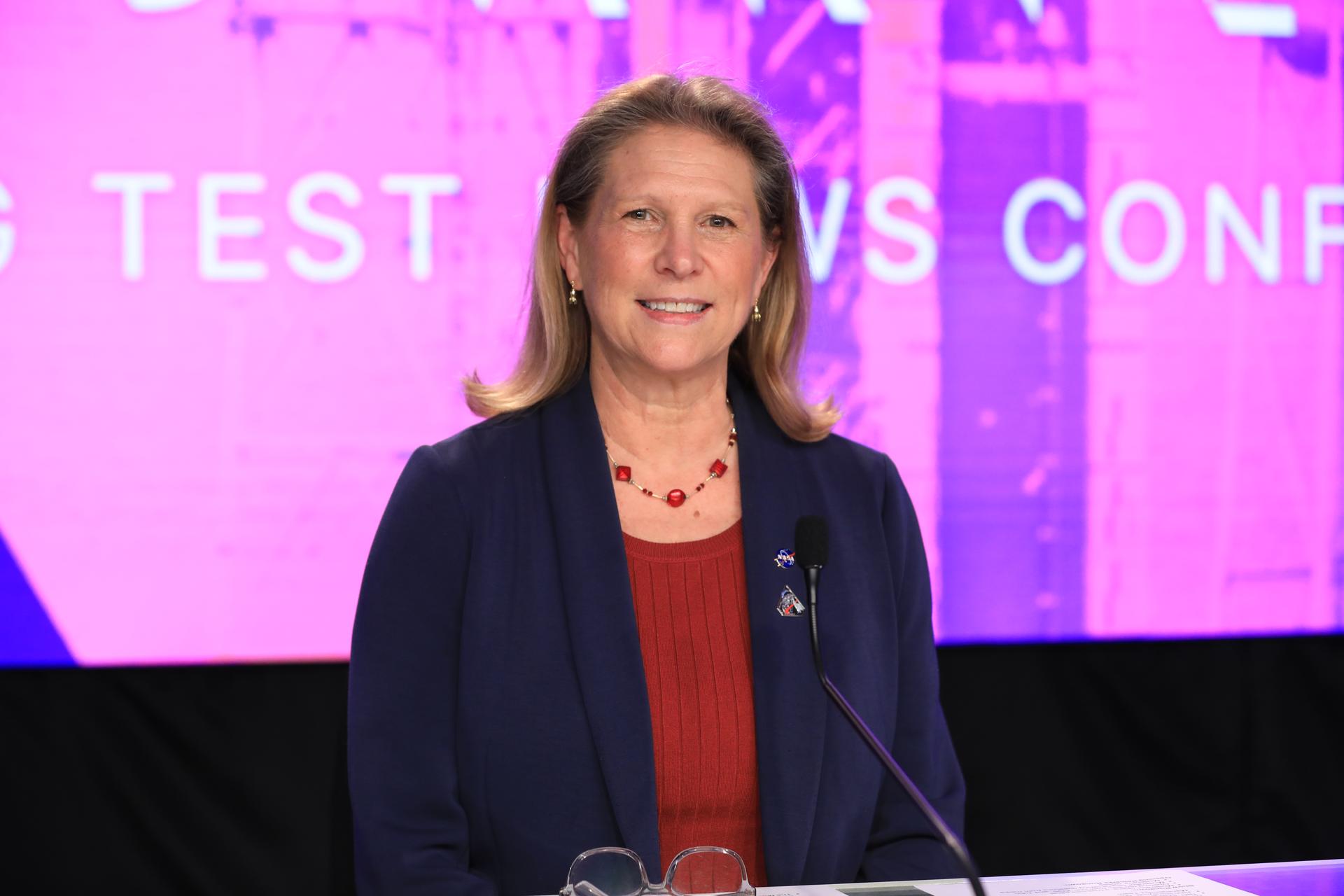
Lori Glaze, acting associate administrator for Exploration Systems Development Mission Directorate, participates in a news conference on Friday, Feb. 20, 2026, to discuss the completion of the Artemis II second wet dress rehearsal at NASA’s Kennedy Space Center in Florida. The wet dress rehearsal allows the Artemis II launch team to run through operations to load propellant, conduct a full launch countdown, demonstrate the ability to recycle the countdown clock, and drain the tanks to practice timelines and procedures for launch. The Artemis II test flight will take Commander Reid Wiseman, Pilot Victor Glover, and Mission Specialist Christina Koch, from NASA and Mission Specialist Jeremy Hansen from the CSA (Canadian Space Agency), around the Moon and back to Earth from Launch Complex 39B at NASA Kennedy.

Megan Cruz, NASA Communications, participates in a news conference on Friday, Feb. 20, 2026, to discuss the completion of Artemis II second wet dress rehearsal at NASA’s Kennedy Space Center in Florida. The wet dress rehearsal allows the Artemis II launch team to run through operations to load propellant, conduct a full launch countdown, demonstrate the ability to recycle the countdown clock, and drain the tanks to practice timelines and procedures for launch. The Artemis II test flight will take Commander Reid Wiseman, Pilot Victor Glover, and Mission Specialist Christina Koch, from NASA and Mission Specialist Jeremy Hansen from the CSA (Canadian Space Agency), around the Moon and back to Earth from Launch Complex 39B at NASA Kennedy.