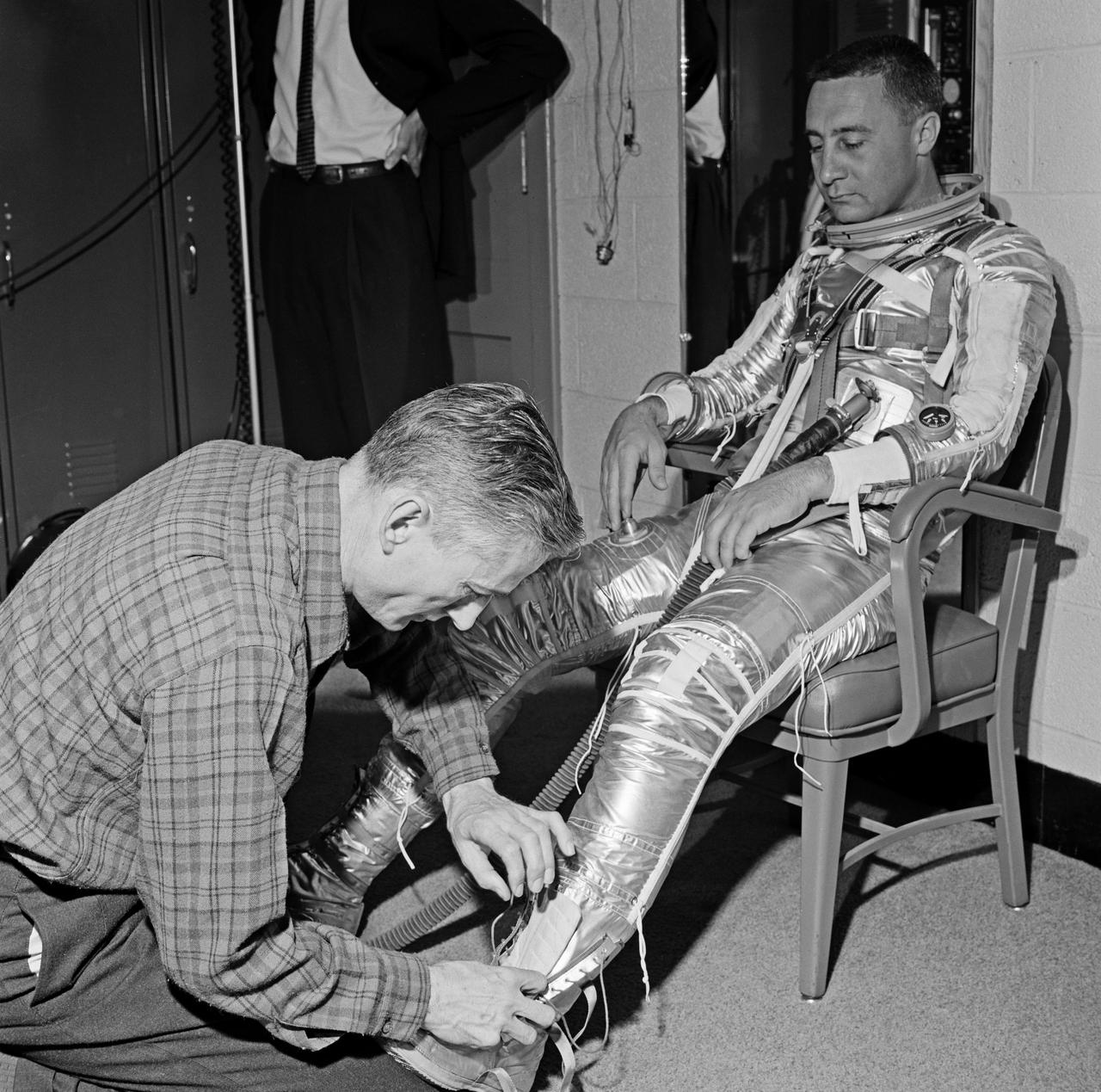
Gus Grissom trying on a Spacesuit; Seated with assistant; Seated with assistant putting on boots; Standing by mirror, name tag visible; Outside in suit, name tag visible. Mercury Project photo, 1961. Original negatives sent to Johnson Space Center when astronauts moved to that center. Photograph take on 03/27/1961.
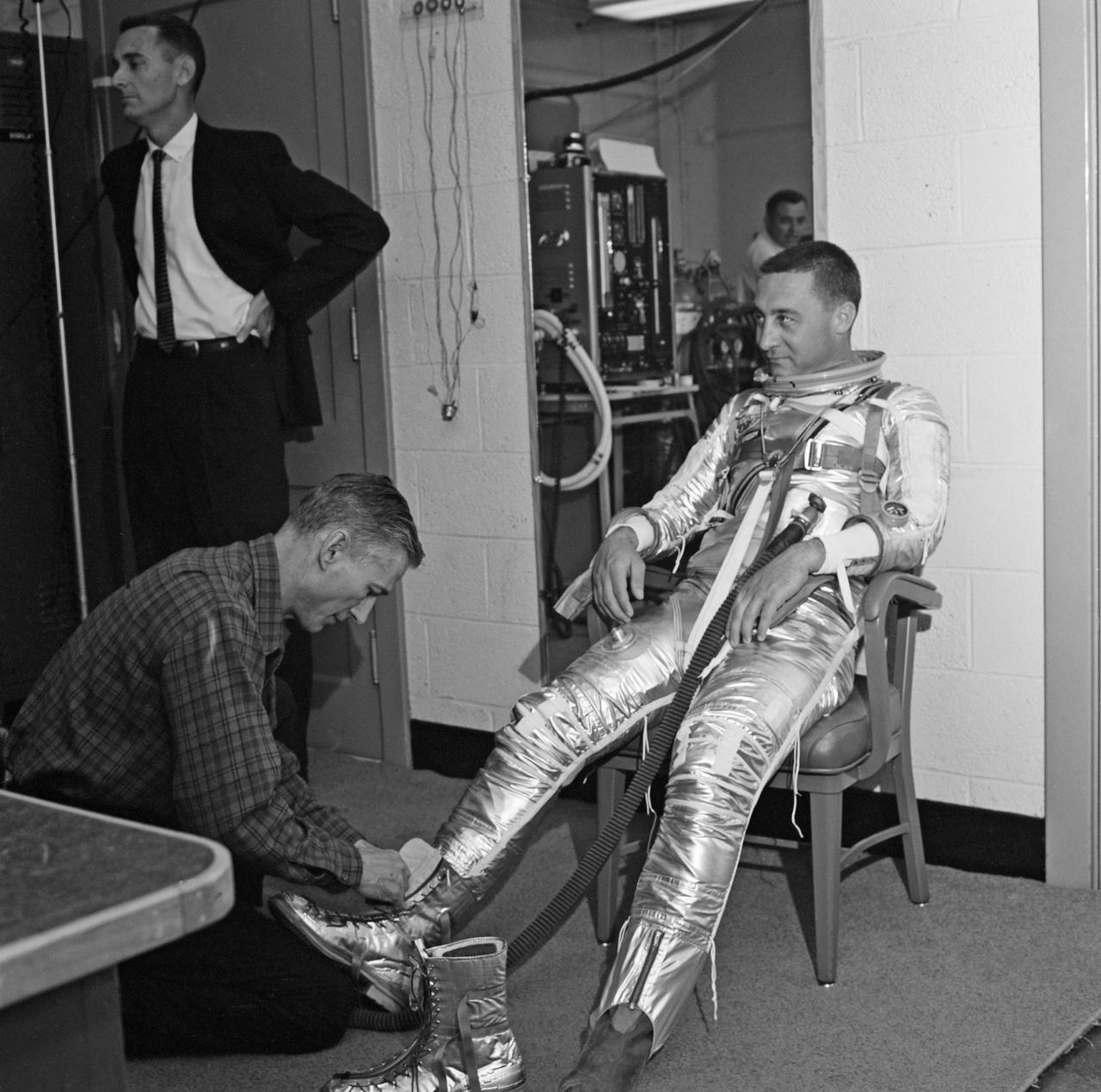
Gus Grissom trying on a Spacesuit; Seated with assistant; Seated with assistant putting on boots; Standing by mirror, name tag visible; Outside in suit, name tag visible. Mercury Project photo, 1961. Original negatives sent to Johnson Space Center when astronauts moved to that center. Photograph take on 03/27/1961.
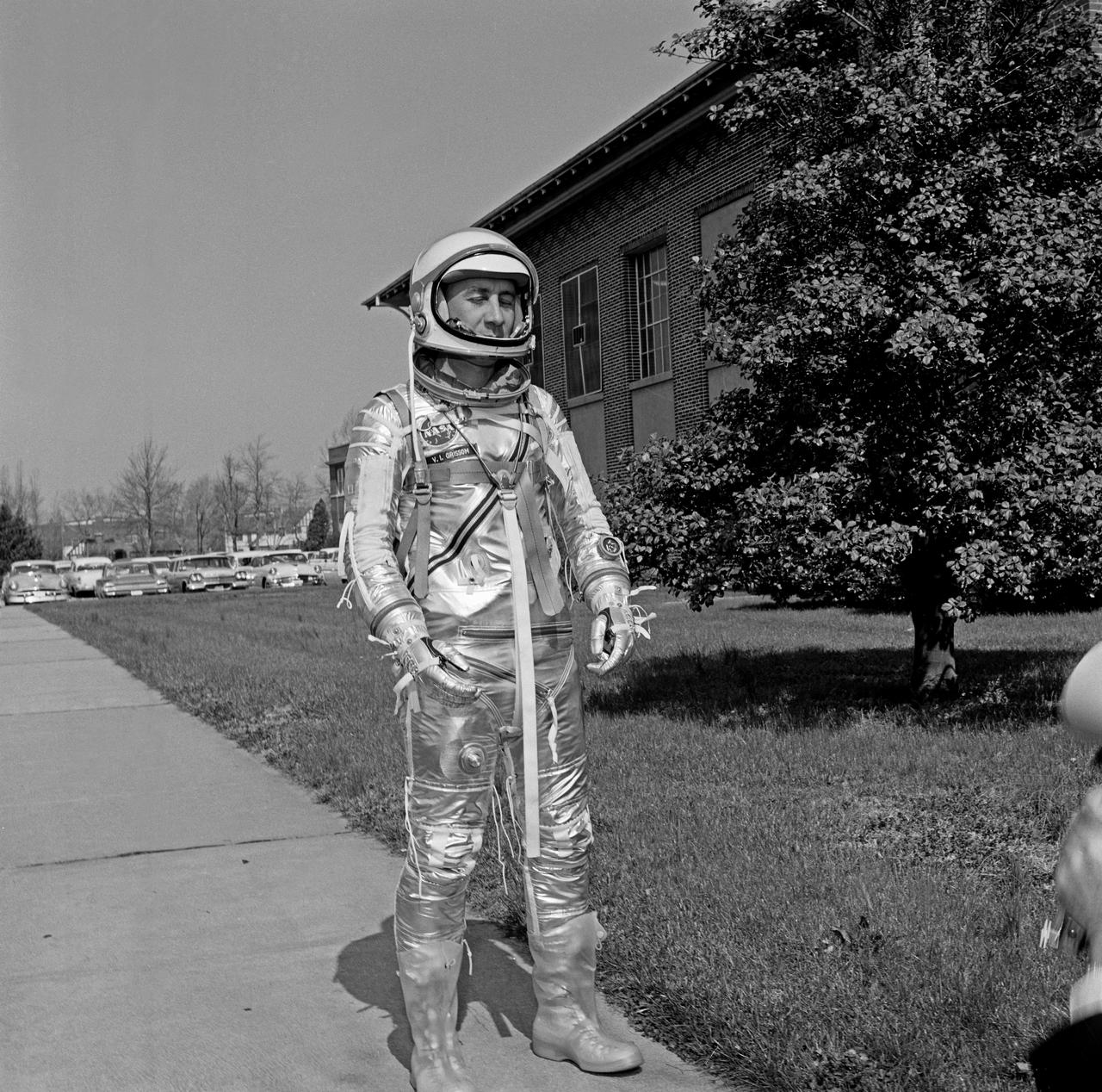
Gus Grissom trying on a Spacesuit; Seated with assistant; Seated with assistant putting on boots; Standing by mirror, name tag visible; Outside in suit, name tag visible. Mercury Project photo, 1961. Original negatives sent to Johnson Space Center when astronauts moved to that center. Photograph take on 03/27/1961.
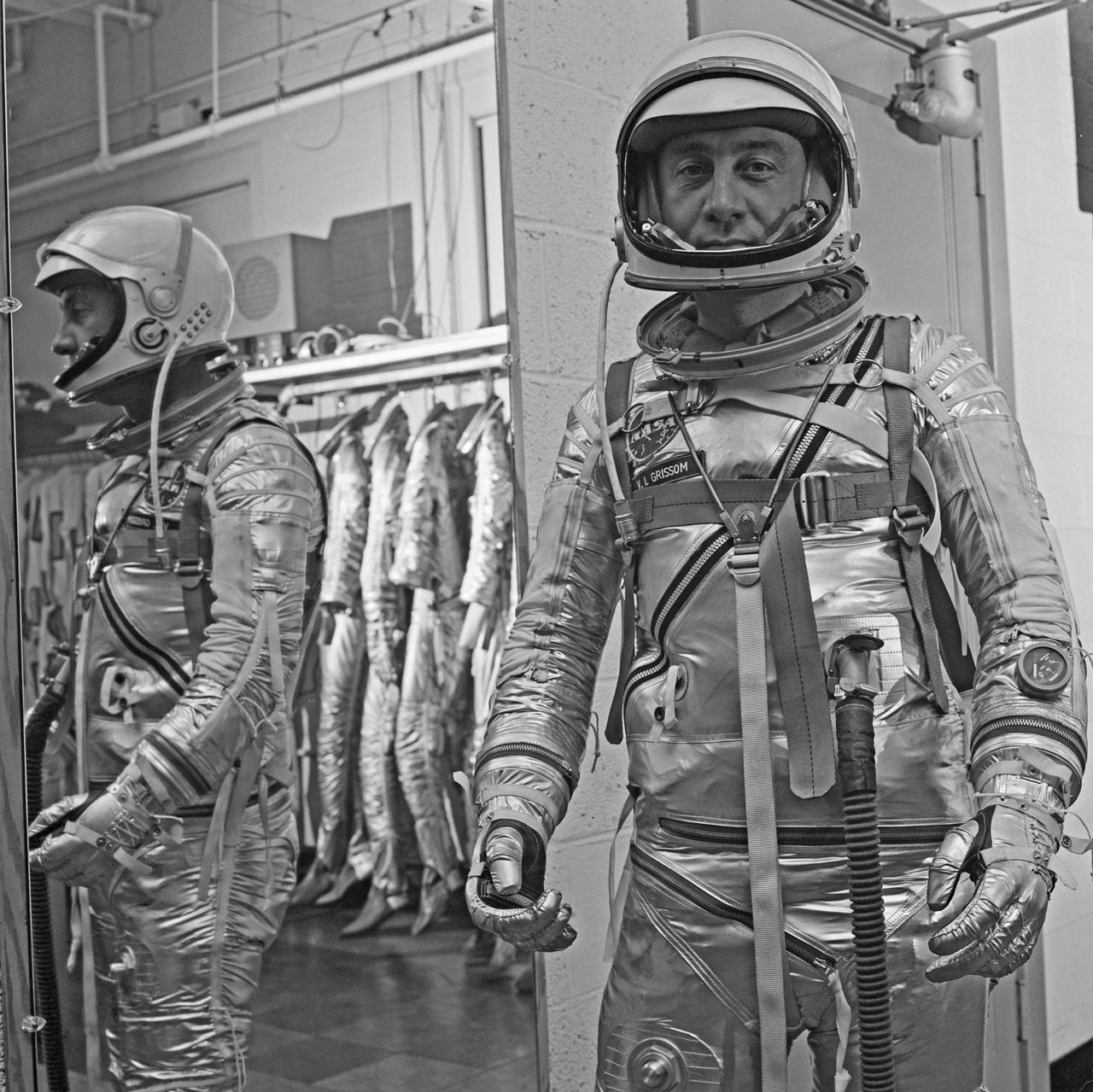
Gus Grissom trying on a Spacesuit; Seated with assistant; Seated with assistant putting on boots; Standing by mirror, name tag visible; Outside in suit, name tag visible. Mercury Project photo, 1961. Original negatives sent to Johnson Space Center when astronauts moved to that center. Photograph take on 03/27/1961.
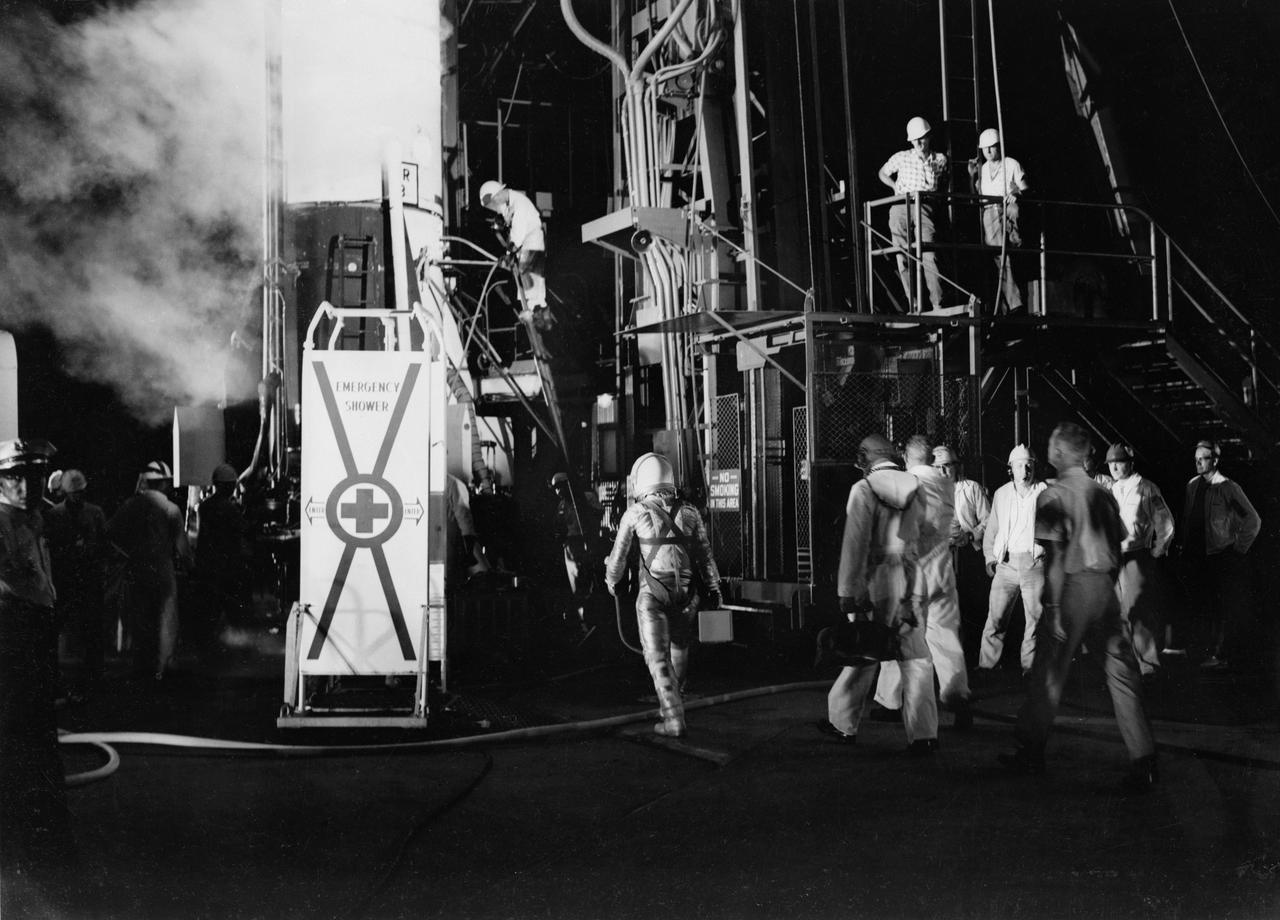
S61-02889 (1961) --- Astronaut Virgil I. (Gus) Grissom approaches his Mercury-Redstone 4 (MR-4) launch vehicle to begin his mission. To the left of the view is an emergency shower stall, to the right is the elevator which will take Grissom to the capsule. Photo credit: NASA
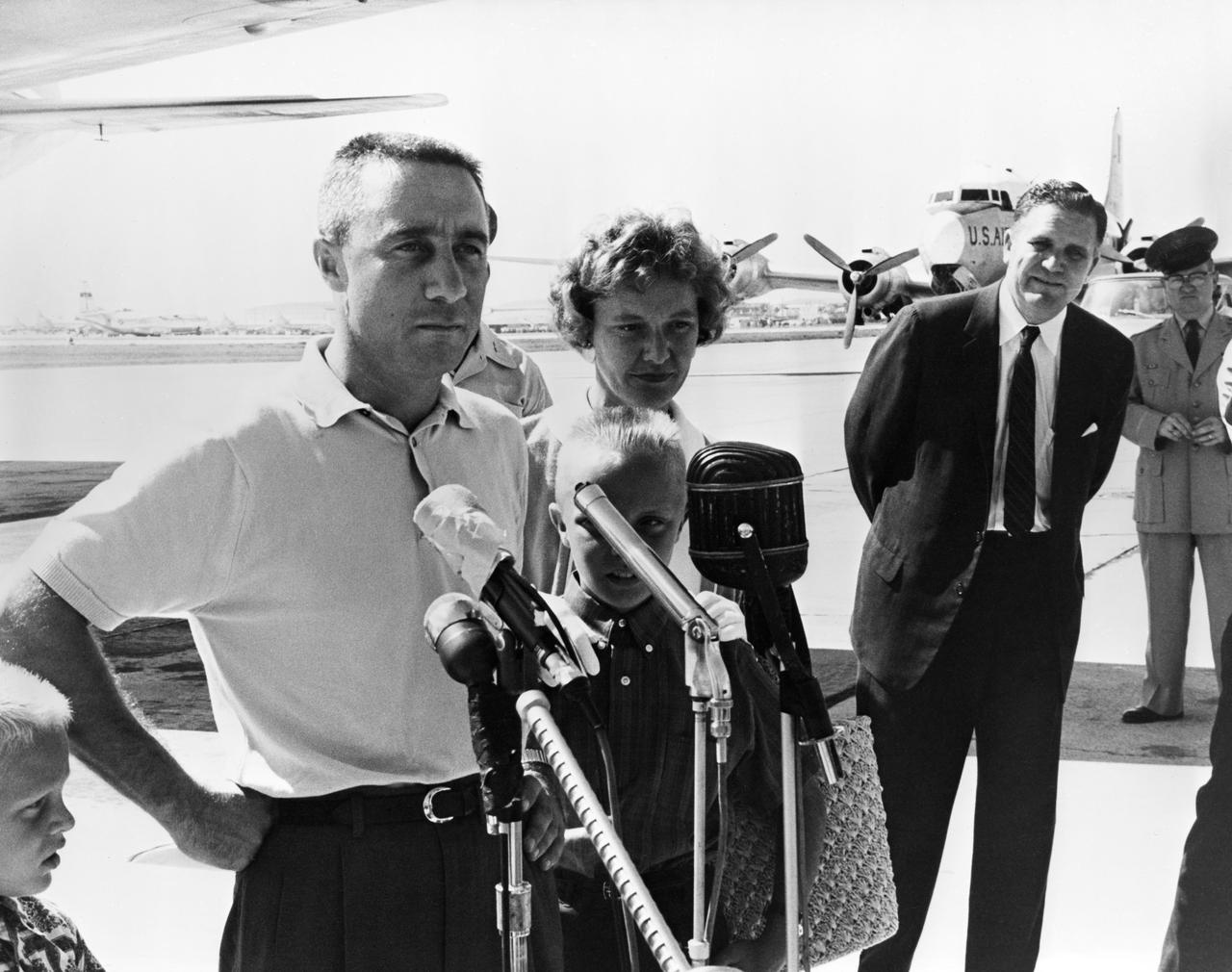
S61-03684 (21 July 1961) --- Astronaut Virgil I. (Gus) Grissom and his family are shown at the airport at Patrick Air Force Base with NASA Administrator James E. Webb (right). Grissom is speaking into microphones for the news media. Photo credit: NASA
![Astronaut Virgil "Gus" Grissom at the controls of the Visual Docking Simulator. From A.W. Vogeley, "Piloted Space-Flight Simulation at Langley Research Center," Paper presented at the American Society of Mechanical Engineers 1966 Winter Meeting, New York, NY, November 27-December 1, 1966. "This facility was [later known as the Visual-Optical Simulator.] It presents to the pilot an out-the-window view of his target in correct 6 degrees of freedom motion. The scene is obtained by a television camera pick-up viewing a small-scale gimbaled model of the target." "For docking studies, the docking target picture was projected onto the surface of a 20-foot-diameter sphere and the pilot could, effectively, maneuver into contract. this facility was used in a comparison study with the Rendezvous Docking Simulator - one of the few comparison experiments in which conditions were carefully controlled and a reasonable sample of pilots used. All pilots preferred the more realistic RDS visual scene. The pilots generally liked the RDS angular motion cues although some objected to the false gravity cues that these motions introduced. Training time was shorter on the RDS, but final performance on both simulators was essentially equal. " "For station-keeping studies, since close approach is not required, the target was presented to the pilot through a virtual-image system which projects his view to infinity, providing a more realistic effect. In addition to the target, the system also projects a star and horizon background. "](https://images-assets.nasa.gov/image/LRC-1963-B701_P-01515/LRC-1963-B701_P-01515~medium.jpg)
Astronaut Virgil "Gus" Grissom at the controls of the Visual Docking Simulator. From A.W. Vogeley, "Piloted Space-Flight Simulation at Langley Research Center," Paper presented at the American Society of Mechanical Engineers 1966 Winter Meeting, New York, NY, November 27-December 1, 1966. "This facility was [later known as the Visual-Optical Simulator.] It presents to the pilot an out-the-window view of his target in correct 6 degrees of freedom motion. The scene is obtained by a television camera pick-up viewing a small-scale gimbaled model of the target." "For docking studies, the docking target picture was projected onto the surface of a 20-foot-diameter sphere and the pilot could, effectively, maneuver into contract. this facility was used in a comparison study with the Rendezvous Docking Simulator - one of the few comparison experiments in which conditions were carefully controlled and a reasonable sample of pilots used. All pilots preferred the more realistic RDS visual scene. The pilots generally liked the RDS angular motion cues although some objected to the false gravity cues that these motions introduced. Training time was shorter on the RDS, but final performance on both simulators was essentially equal. " "For station-keeping studies, since close approach is not required, the target was presented to the pilot through a virtual-image system which projects his view to infinity, providing a more realistic effect. In addition to the target, the system also projects a star and horizon background. "
![Astronaut Virgil "Gus" Grissom at the controls of the Visual Docking Simulator. From A.W. Vogeley, "Piloted Space-Flight Simulation at Langley Research Center," Paper presented at the American Society of Mechanical Engineers 1966 Winter Meeting, New York, NY, November 27-December 1, 1966. "This facility was [later known as the Visual-Optical Simulator.] It presents to the pilot an out-the-window view of his target in correct 6 degrees of freedom motion. The scene is obtained by a television camera pick-up viewing a small-scale gimbaled model of the target." "For docking studies, the docking target picture was projected onto the surface of a 20-foot-diameter sphere and the pilot could, effectively, maneuver into contract. this facility was used in a comparison study with the Rendezvous Docking Simulator - one of the few comparison experiments in which conditions were carefully controlled and a reasonable sample of pilots used. All pilots preferred the more realistic RDS visual scene. The pilots generally liked the RDS angular motion cues although some objected to the false gravity cues that these motions introduced. Training time was shorter on the RDS, but final performance on both simulators was essentially equal. " "For station-keeping studies, since close approach is not required, the target was presented to the pilot through a virtual-image system which projects his view to infinity, providing a more realistic effect. In addition to the target, the system also projects a star and horizon background. "](https://images-assets.nasa.gov/image/LRC-1963-B701_P-01516/LRC-1963-B701_P-01516~medium.jpg)
Astronaut Virgil "Gus" Grissom at the controls of the Visual Docking Simulator. From A.W. Vogeley, "Piloted Space-Flight Simulation at Langley Research Center," Paper presented at the American Society of Mechanical Engineers 1966 Winter Meeting, New York, NY, November 27-December 1, 1966. "This facility was [later known as the Visual-Optical Simulator.] It presents to the pilot an out-the-window view of his target in correct 6 degrees of freedom motion. The scene is obtained by a television camera pick-up viewing a small-scale gimbaled model of the target." "For docking studies, the docking target picture was projected onto the surface of a 20-foot-diameter sphere and the pilot could, effectively, maneuver into contract. this facility was used in a comparison study with the Rendezvous Docking Simulator - one of the few comparison experiments in which conditions were carefully controlled and a reasonable sample of pilots used. All pilots preferred the more realistic RDS visual scene. The pilots generally liked the RDS angular motion cues although some objected to the false gravity cues that these motions introduced. Training time was shorter on the RDS, but final performance on both simulators was essentially equal. " "For station-keeping studies, since close approach is not required, the target was presented to the pilot through a virtual-image system which projects his view to infinity, providing a more realistic effect. In addition to the target, the system also projects a star and horizon background. "
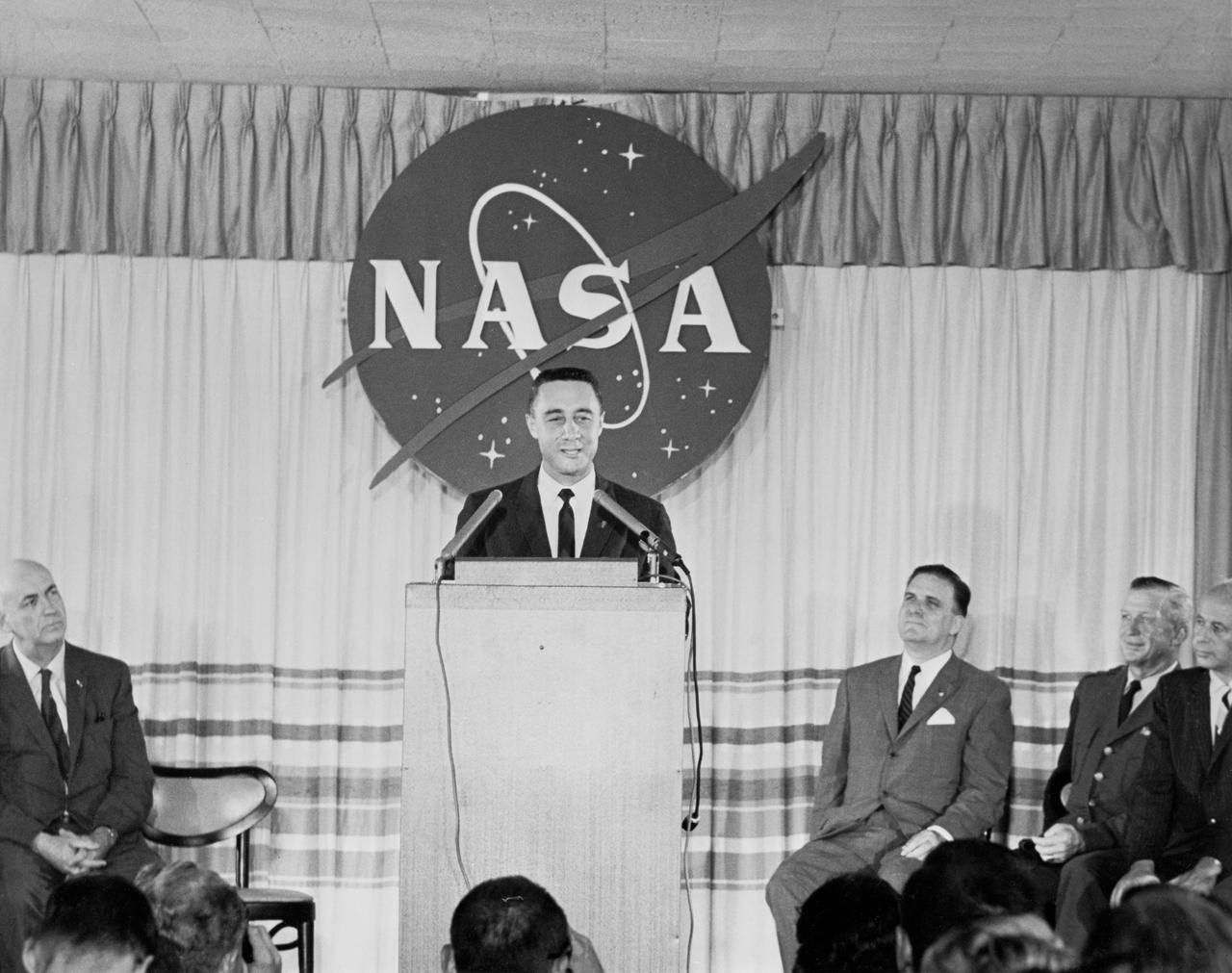
S61-03676 (23 July 1961) --- Astronaut Virgil I. (Gus) Grissom speaks at a press conference on July 23, 1961 held at the Starlight motel. Behind him is a large representation of the NASA logo. Photo credit: NASA
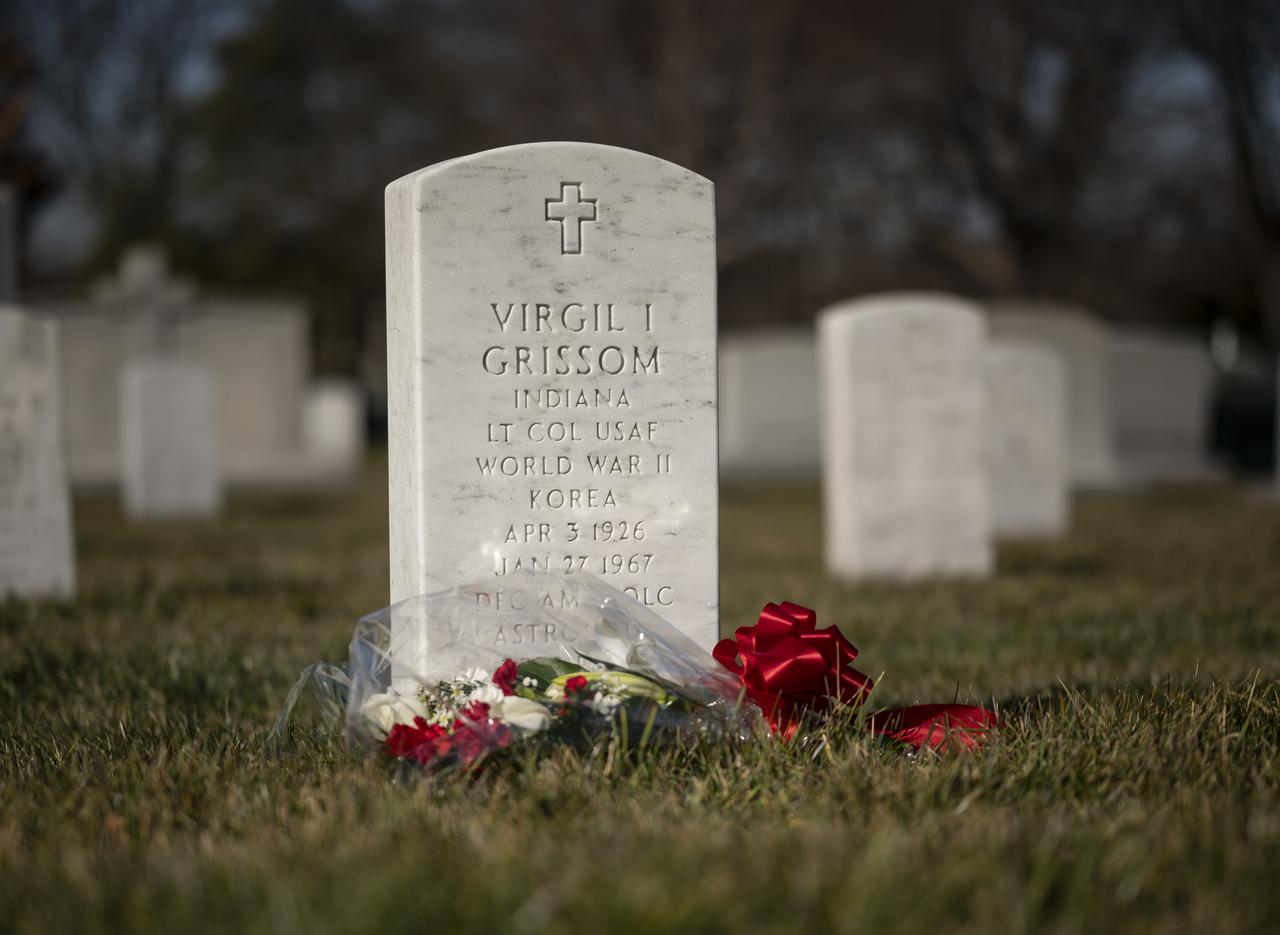
The grave marker of Virgil "Gus" Grissom, from Apollo 1, is seen after a wreath laying ceremony that was part of NASA's Day of Remembrance, Thursday, Jan. 28, 2021, at Arlington National Cemetery in Arlington, Va. Wreaths were laid in memory of those men and women who lost their lives in the quest for space exploration. Photo Credit: (NASA/Bill Ingalls)
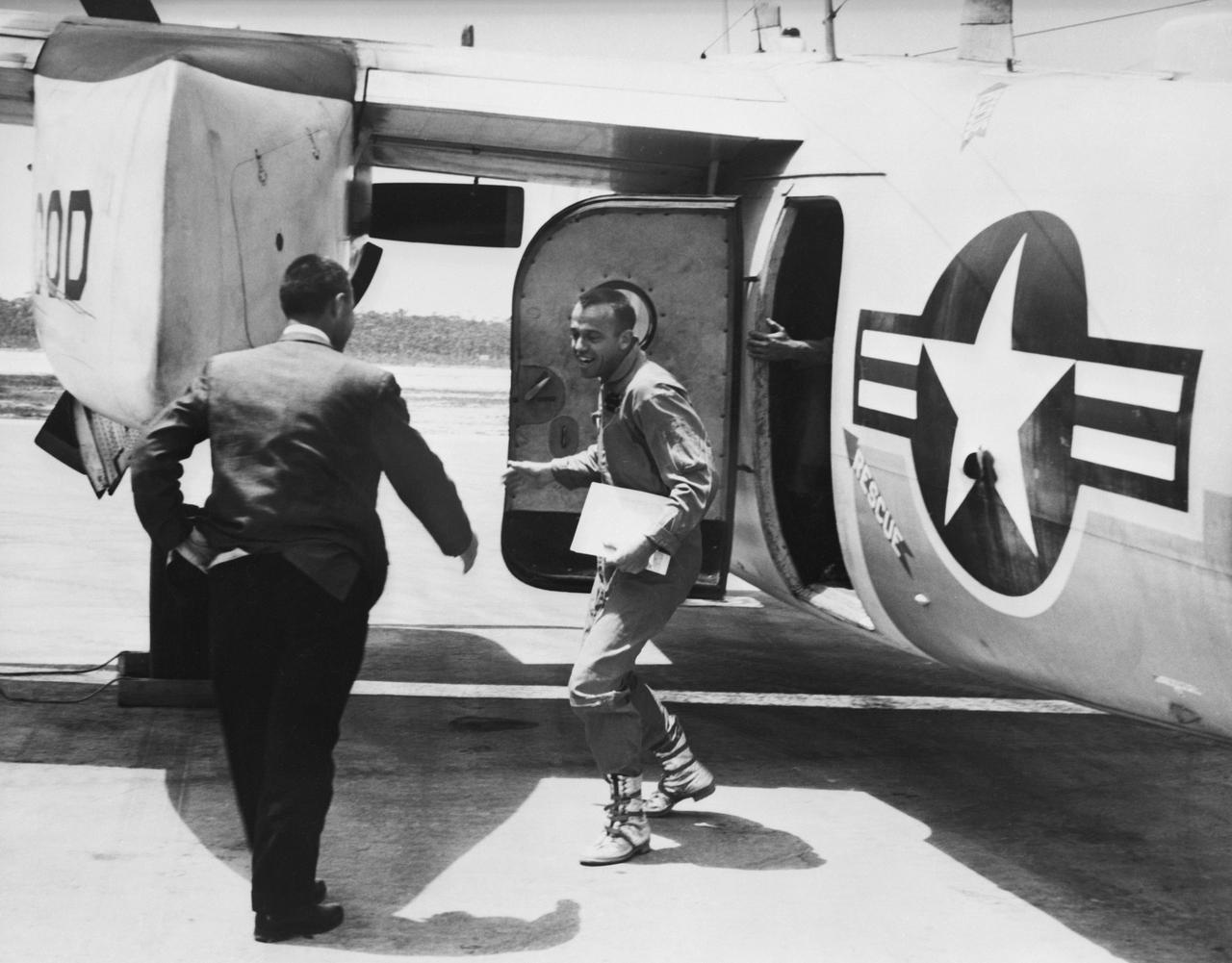
S61-02731 (5 May 1961) --- Astronaut Alan B. Shepard Jr. arrives at Grand Bahamas Island and is greeted by astronaut Virgil I. (Gus) Grissom after the first American suborbital flight. He will participate in a press conference with Grissom and Donald Slayton. Photo credit: NASA or National Aeronautics and Space Administration
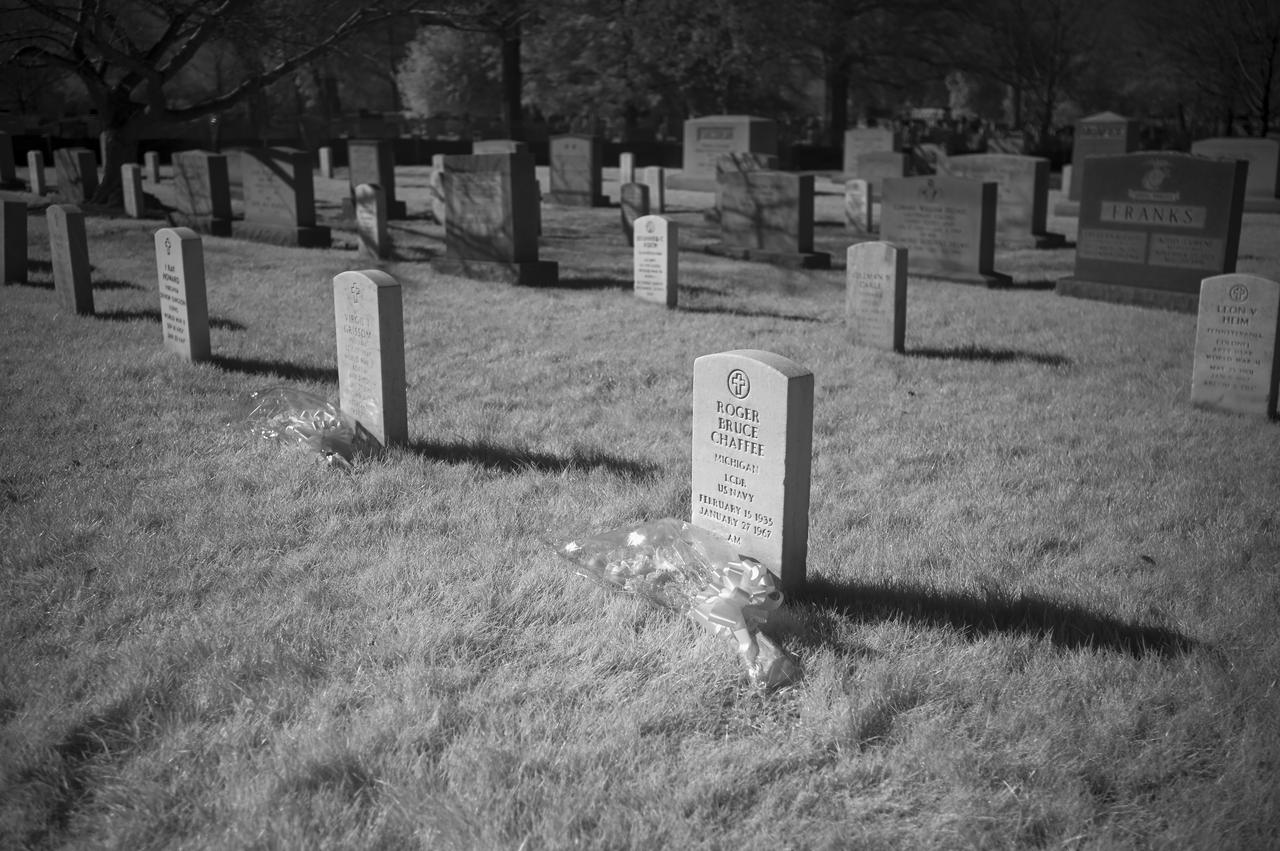
The grave markers of Roger Chaffee, and Virgil "Gus" Grissom and from Apollo 1, are seen in this black and white infrared photograph after a wreath laying ceremony that was part of NASA's Day of Remembrance, Thursday, Jan. 28, 2021, at Arlington National Cemetery in Arlington, Va. Wreaths were laid in memory of those men and women who lost their lives in the quest for space exploration. Photo Credit: (NASA/Bill Ingalls)
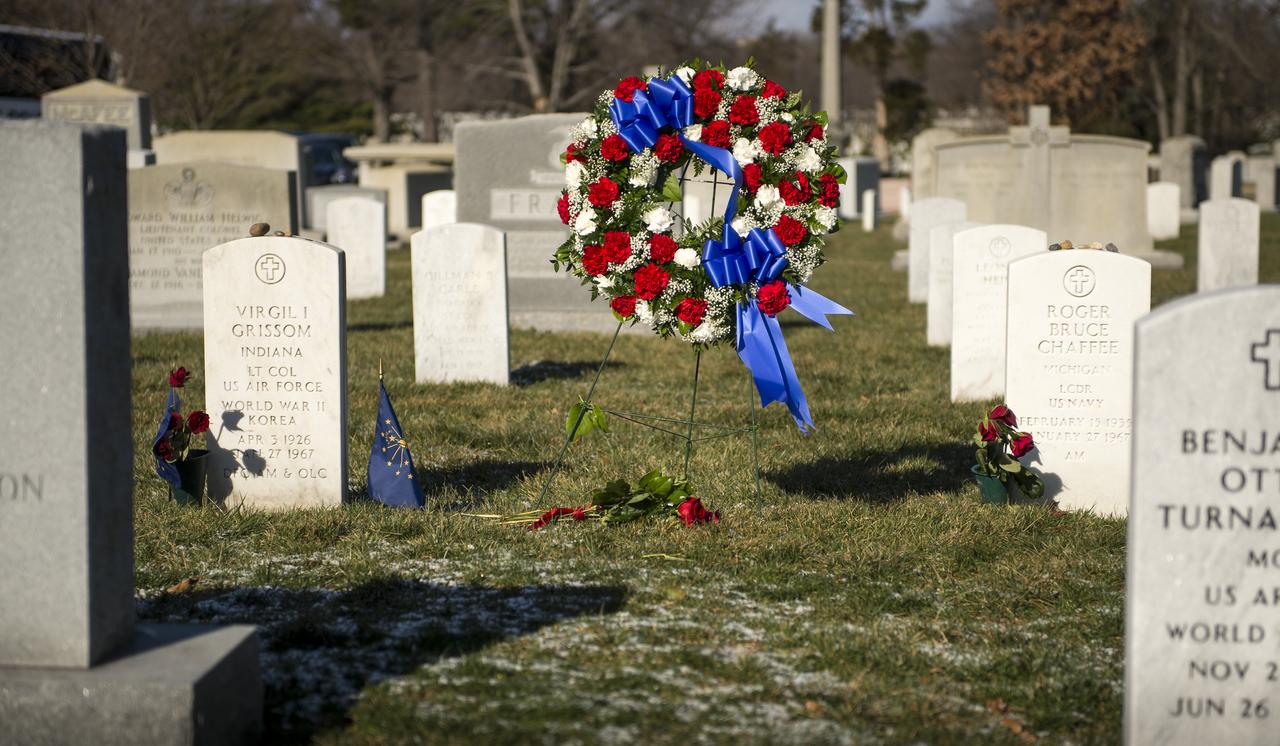
The headstones of Virgil "Gus" Grissom, left, and Roger Chaffee are seen after a wreath laying ceremony that was part of NASA's Day of Remembrance, Friday, Feb. 1, 2013, at Arlington National Cemetery. Wreathes were laid in memory of those men and women who lost their lives in the quest for space exploration. Photo Credit: (NASA/Bill Ingalls)
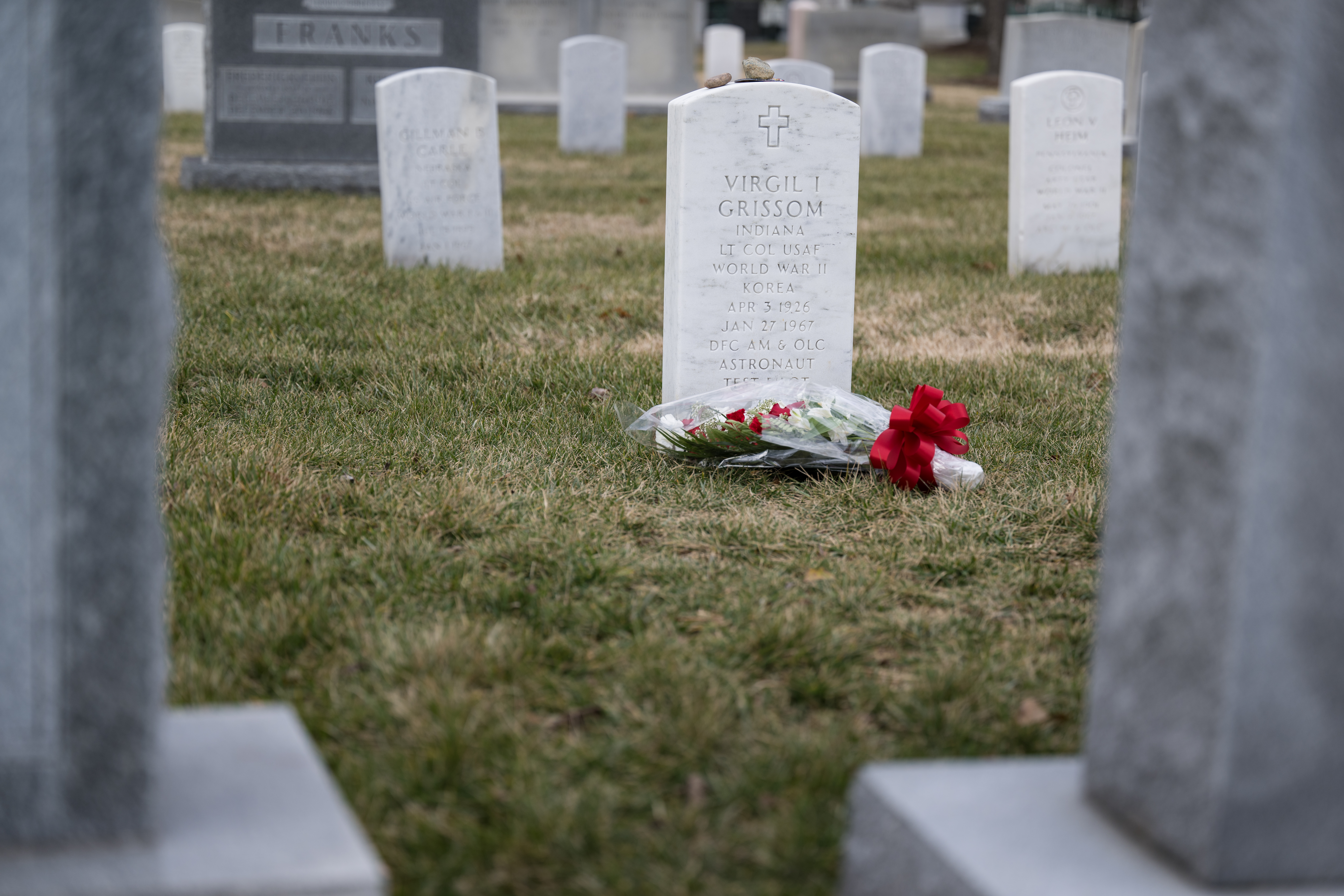
The grave marker of Virgil "Gus" Grissom from Apollo 1, is seen after a wreath laying ceremony that was part of NASA's Day of Remembrance, Thursday, Jan. 26, 2023, at Arlington National Cemetery in Arlington, Va. Wreaths and flowers were laid in memory of those men and women who lost their lives in the quest for space exploration. Photo Credit: (NASA/Aubrey Gemignani)
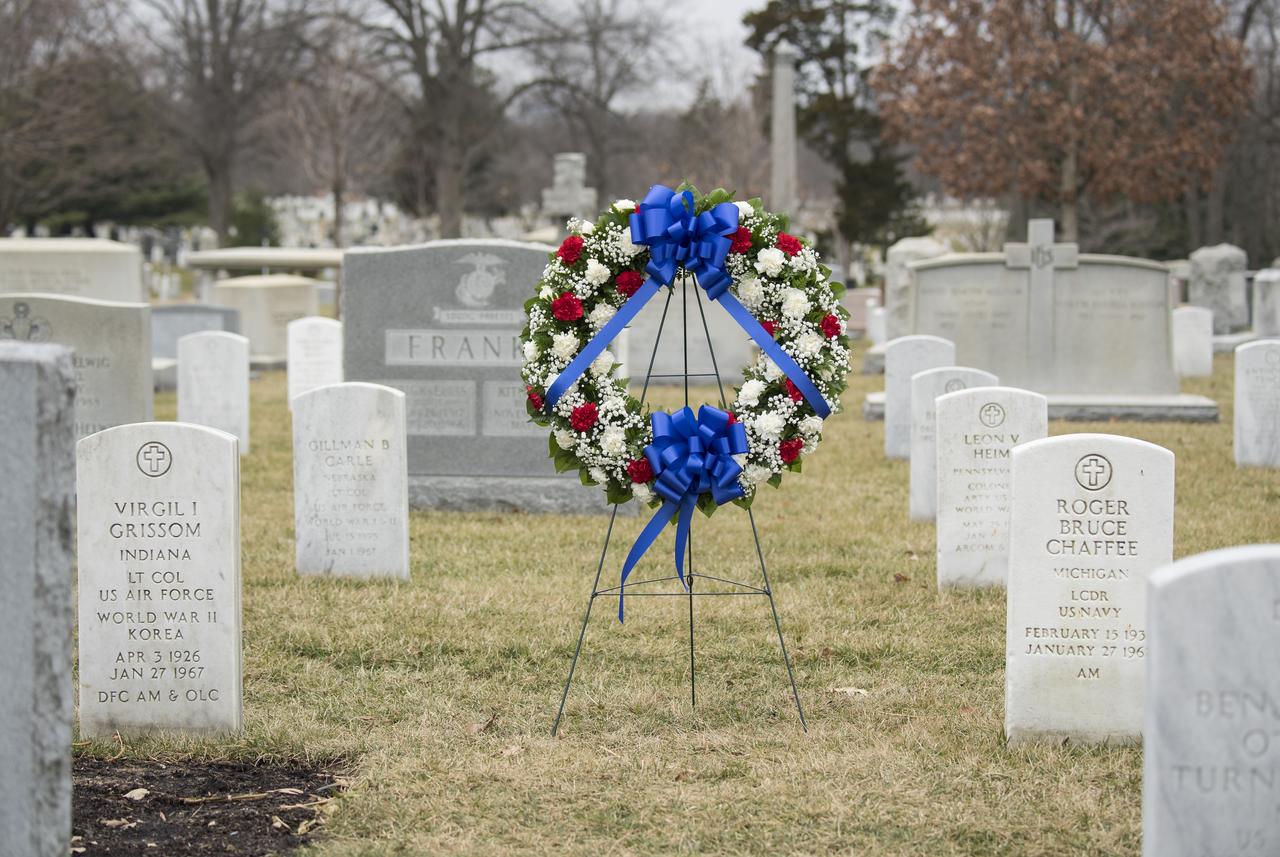
The grave markers of Virgil "Gus" Grissom and Roger Chaffee, from Apollo 1, are seen before a wreath laying ceremony that was part of NASA's Day of Remembrance, Thursday, Feb. 7, 2019, at Arlington National Cemetery in Arlington, Va. Wreaths were laid in memory of those men and women who lost their lives in the quest for space exploration. Photo Credit: (NASA/Aubrey Gemignani)
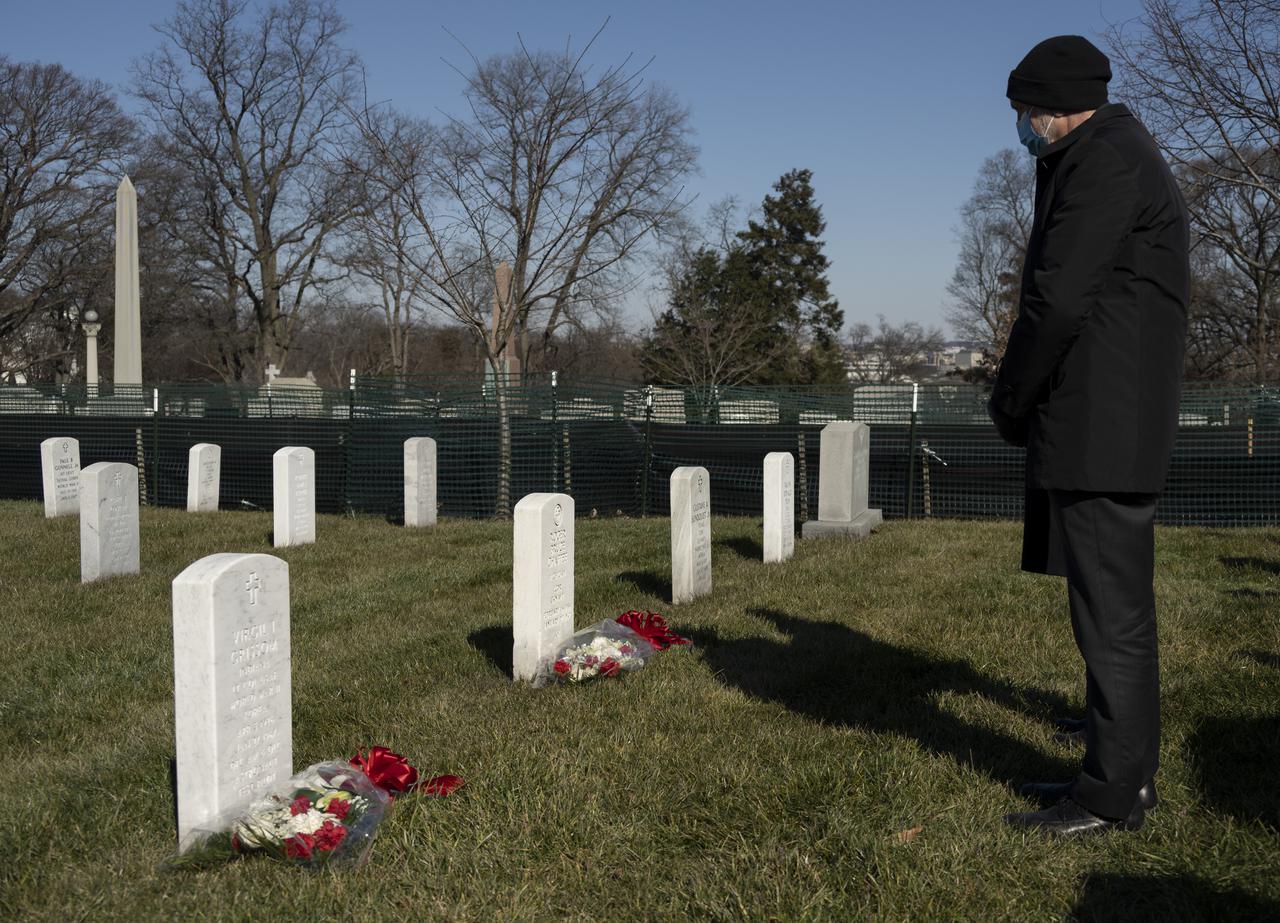
The grave markers of Virgil "Gus" Grissom, foreground, and Roger Chaffee, from Apollo 1, are seen as acting NASA Administrator Steve Jurczyk pays respects during a ceremony that was part of NASA's Day of Remembrance, Thursday, Jan. 28, 2021, at Arlington National Cemetery in Arlington, Va. Wreaths were laid in memory of those men and women who lost their lives in the quest for space exploration. Photo Credit: (NASA/Bill Ingalls)
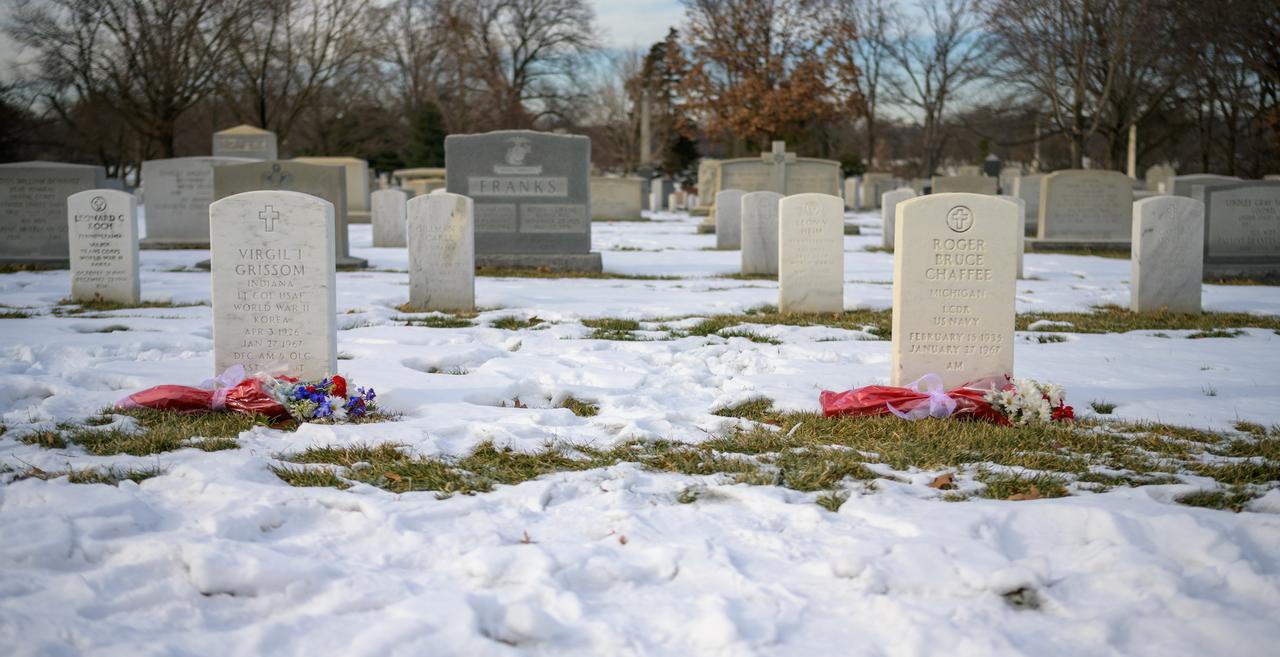
The Apollo 1 grave sites of Virgil I. “Gus” Grissom, and Roger B. Chaffee are seen with flowers as part of NASA's Day of Remembrance, Thursday, Jan. 23, 2025, at Arlington National Cemetery in Arlington, Va. Photo Credit: (NASA/Bill Ingalls)
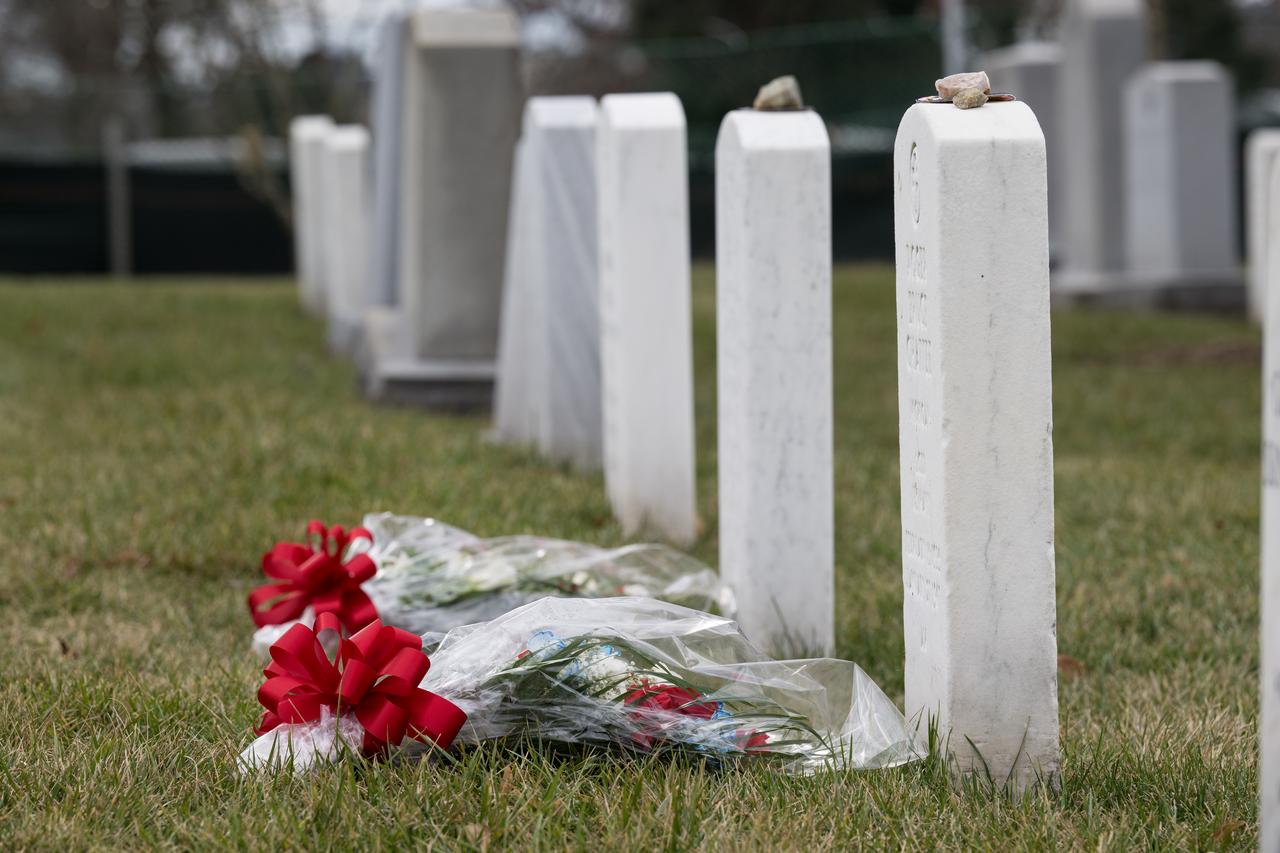
Flowers are seen at the grave markers of Virgil "Gus" Grissom and Roger Chaffee from Apollo 1 after NASA Administrator Bill Nelson placed them there during a ceremony that was part of NASA's Day of Remembrance, Thursday, Jan. 26, 2023, at Arlington National Cemetery in Arlington, Va. Wreaths were laid in memory of those men and women who lost their lives in the quest for space exploration. Photo Credit: (NASA/Aubrey Gemignani)
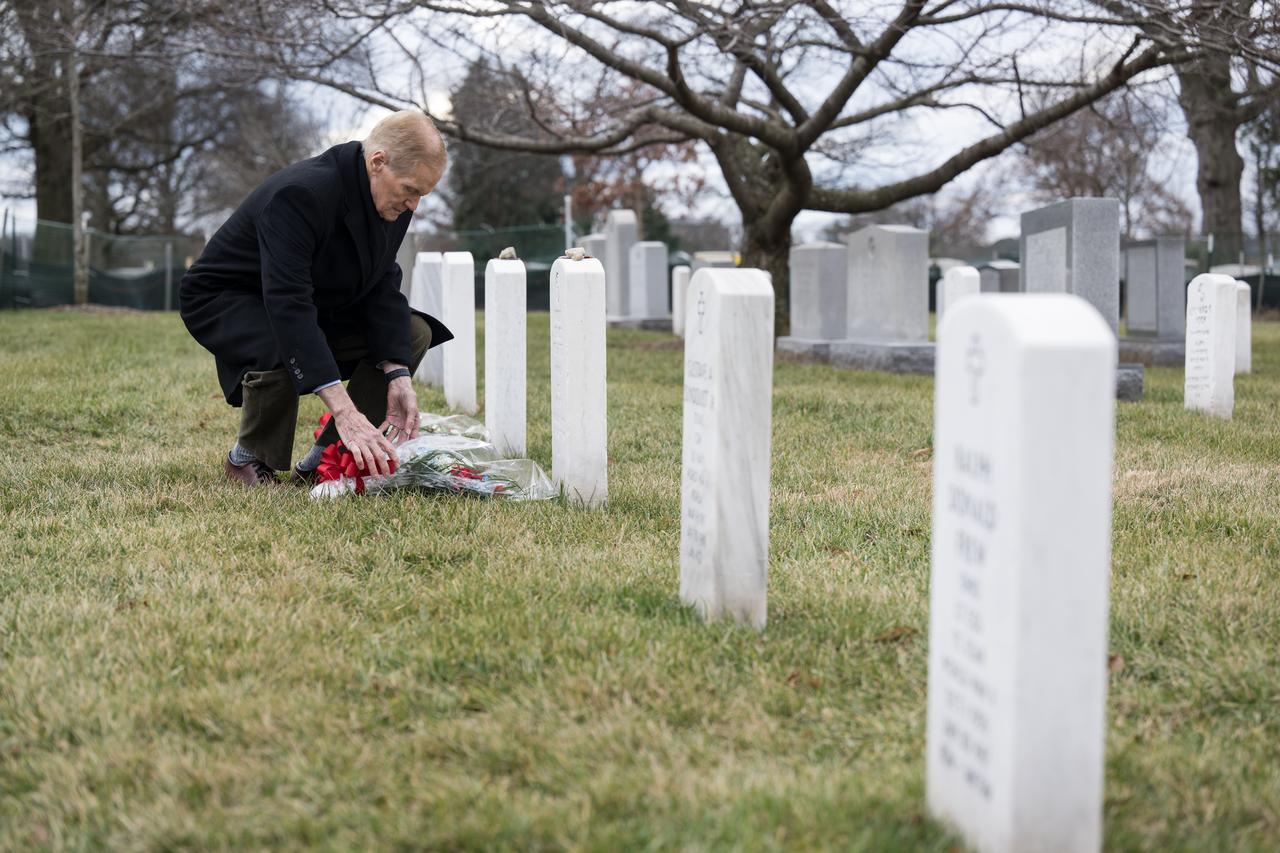
NASA Administrator Bill Nelson lays flowers at the grave markers of Virgil "Gus" Grissom and Roger Chaffee from Apollo 1, during a ceremony that was part of NASA's Day of Remembrance, Thursday, Jan. 26, 2023, at Arlington National Cemetery in Arlington, Va. Wreaths were laid in memory of those men and women who lost their lives in the quest for space exploration. Photo Credit: (NASA/Aubrey Gemignani)
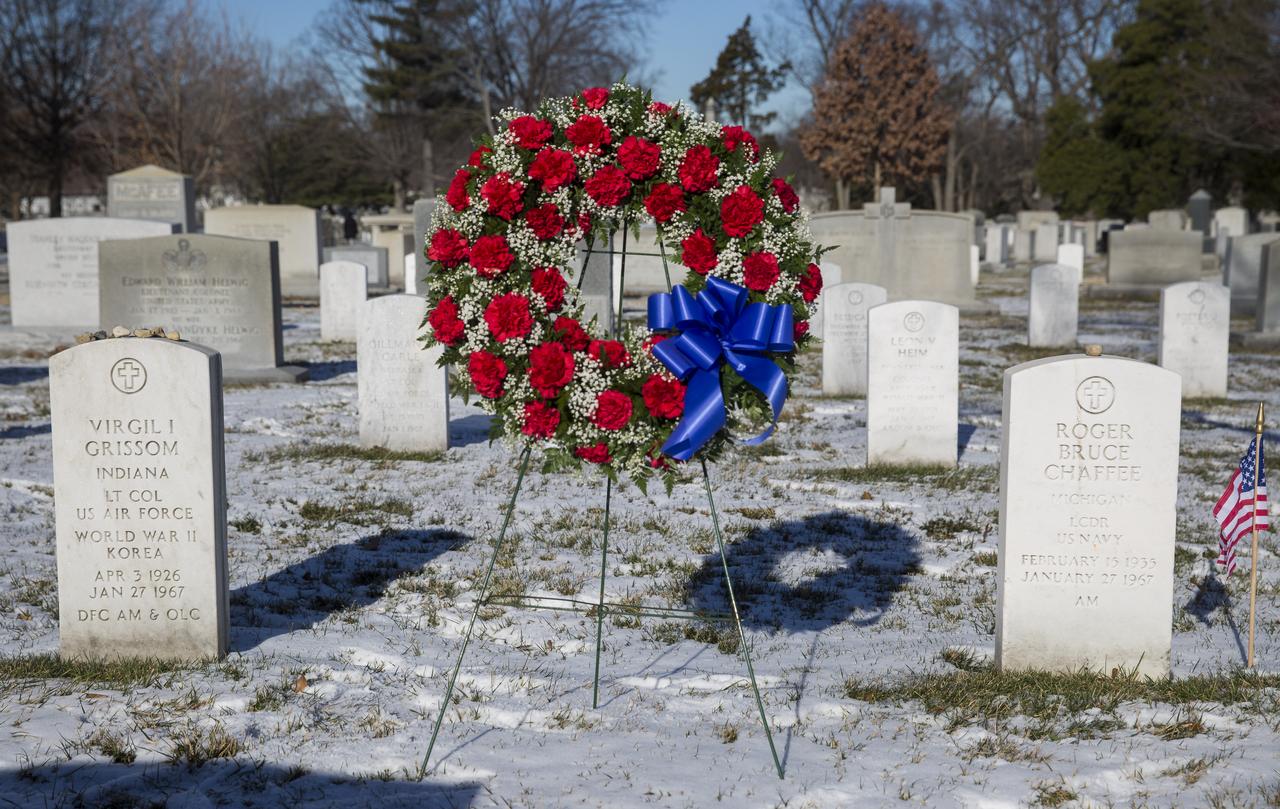
The grave markers of Virgil "Gus" Grissom and Roger Chaffee, from Apollo 1, are seen after a wreath laying ceremony that was part of NASA's Day of Remembrance, Wednesday, Jan. 28, 2015, at Arlington National Cemetery in Arlington, Va. Wreaths were laid in memory of those men and women who lost their lives in the quest for space exploration. Photo Credit: (NASA/Joel Kowsky)

NASA acting Administrator Janet Petro, background, and NASA Astronaut Kayla Barron, place flowers at the Apollo 1 grave sites of Virgil I. “Gus” Grissom, and Roger B. Chaffee as part of NASA's Day of Remembrance, Thursday, Jan. 23, 2025, at Arlington National Cemetery in Arlington, Va. Photo Credit: (NASA/Bill Ingalls)
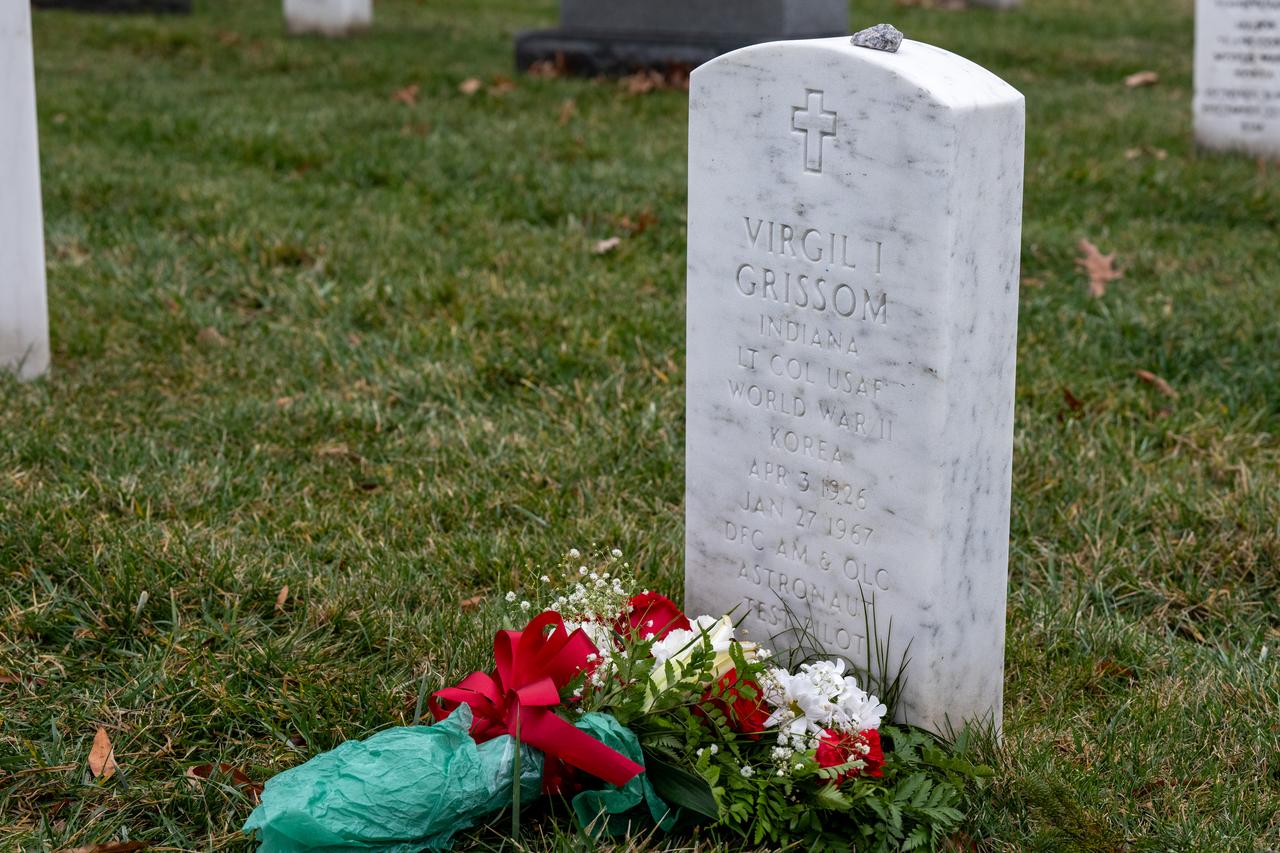
Flowers are seen at the grave marker of Virgil "Gus" Grissom from Apollo 1 after NASA Administrator Bill Nelson and Deputy Administrator Pam Melroy placed them there during a ceremony that was part of NASA's Day of Remembrance, Thursday, Jan. 25, 2024, at Arlington National Cemetery in Arlington, Va. The wreaths were laid in memory of those men and women who lost their lives in the quest for space exploration. Photo Credit: (NASA/Keegan Barber)
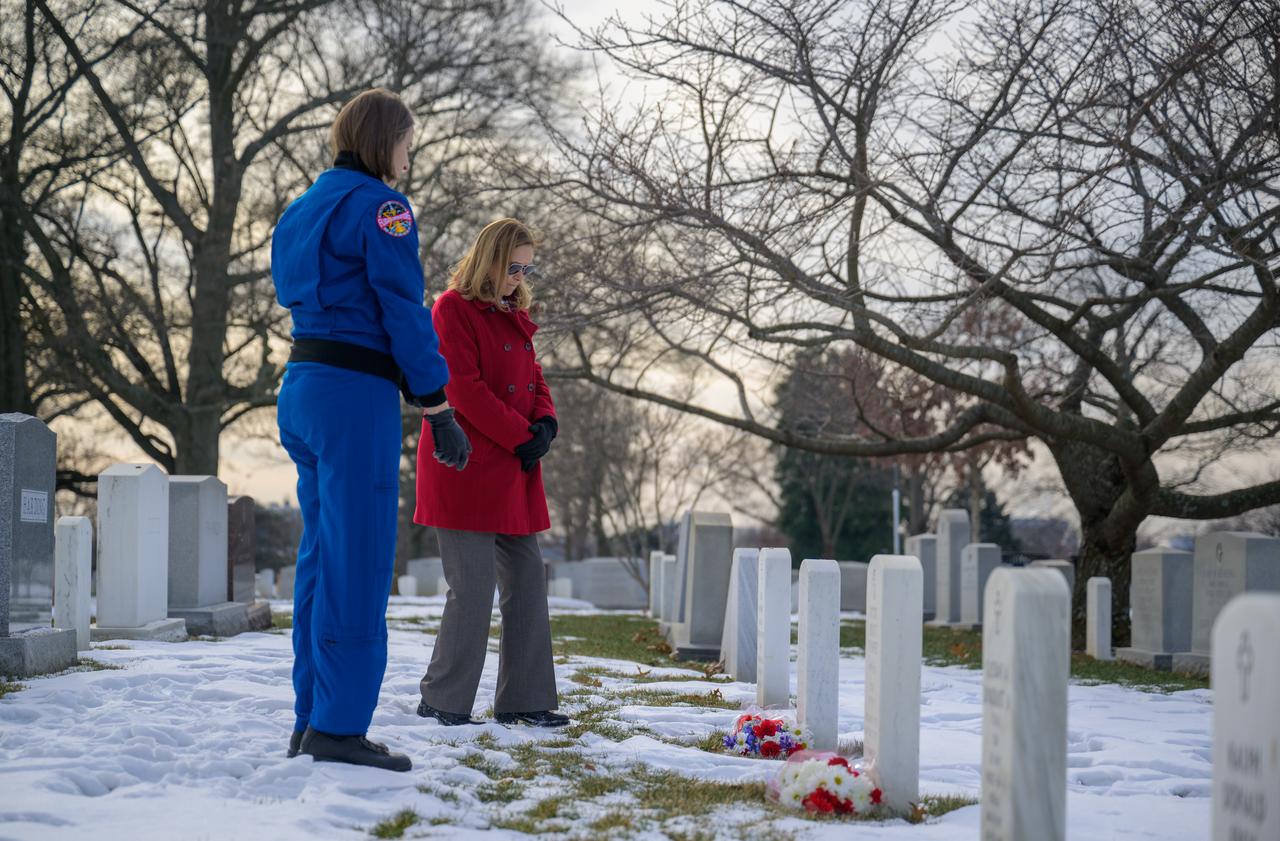
NASA acting Administrator Janet Petro, background, and NASA Astronaut Kayla Barron, place flowers at the Apollo 1 grave sites of Virgil I. “Gus” Grissom, and Roger B. Chaffee as part of NASA's Day of Remembrance, Thursday, Jan. 23, 2025, at Arlington National Cemetery in Arlington, Va. Photo Credit: (NASA/Bill Ingalls)
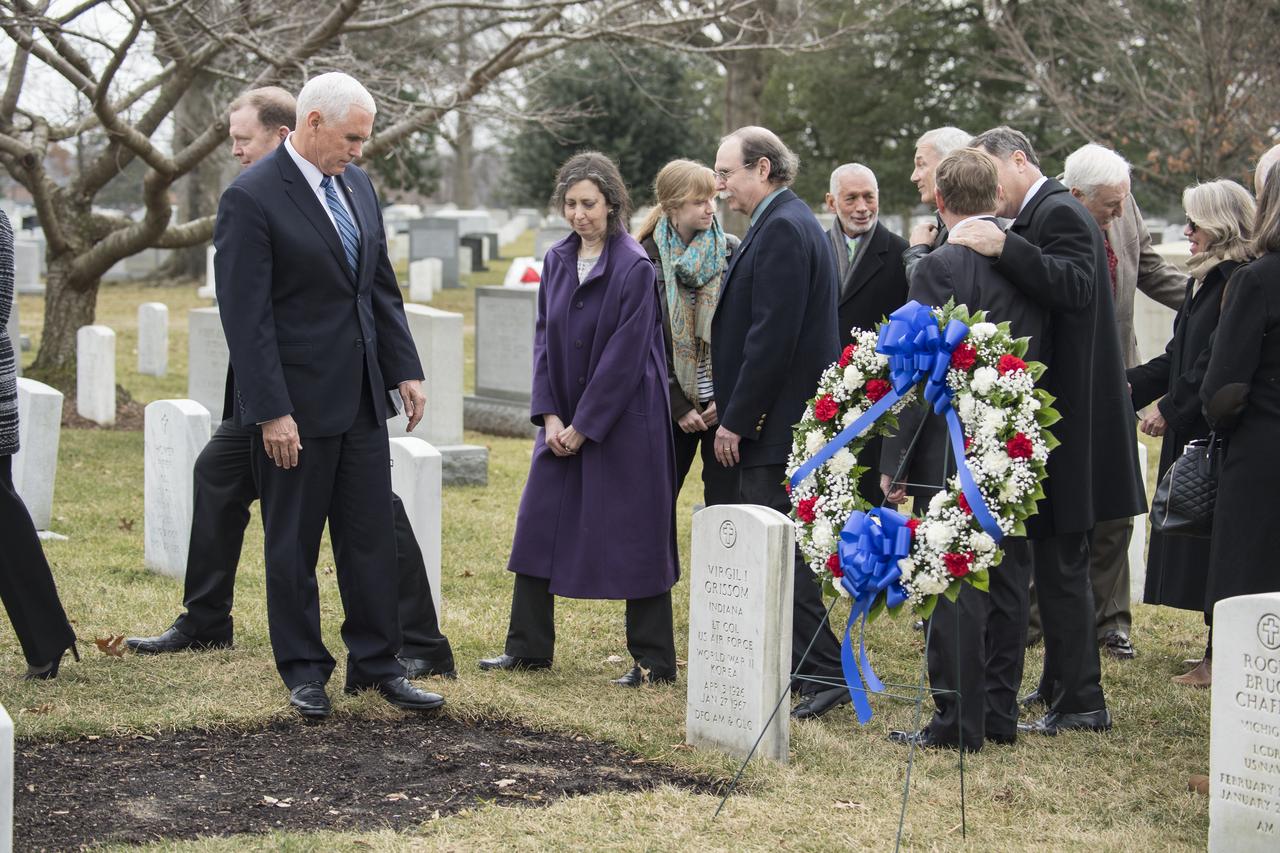
Vice President Mike Pence observes the grave marker of Virgil "Gus" Grissom from Apollo 1, after a wreath laying ceremony that was part of NASA's Day of Remembrance, Thursday, Feb. 7, 2019, at Arlington National Cemetery in Arlington, Va. Wreaths were laid in memory of those men and women who lost their lives in the quest for space exploration. Photo Credit: (NASA/Aubrey Gemignani)
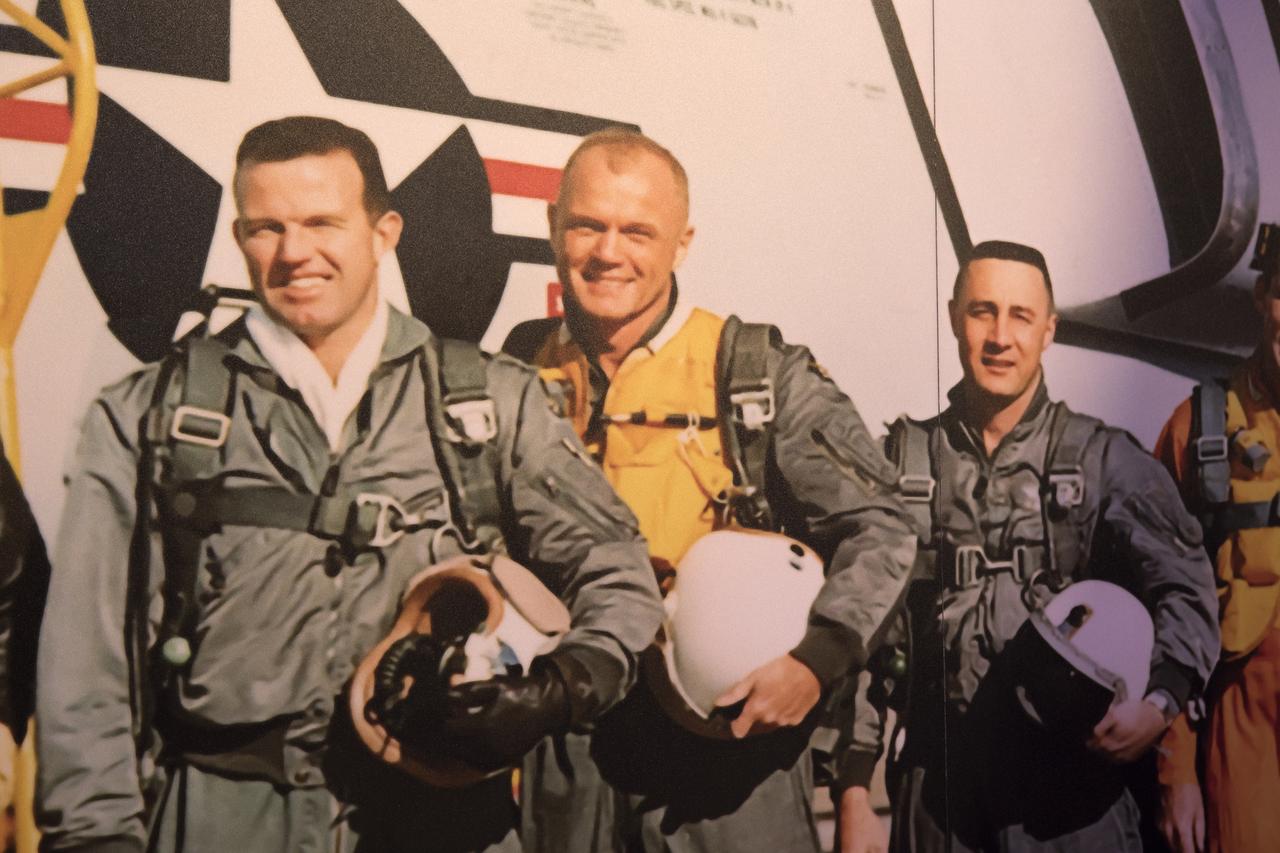
A life-size photo inside the Heroes and Legends exhibit hall at the Kennedy Space Center Visitor Complex shows astronaut Sen. John Glenn, center, with fellow Mercury Seven astronauts Gordon Cooper, left, and Gus Grissom. Glenn, who passed away Dec. 8, 2016 at age 95. Glenn, was the last surviving member of NASA's original astronaut class. He gained worldwide acclaim during his Mercury mission that made him the first American to orbit the Earth. He flew again in 1998 aboard space shuttle Discovery at age 77.
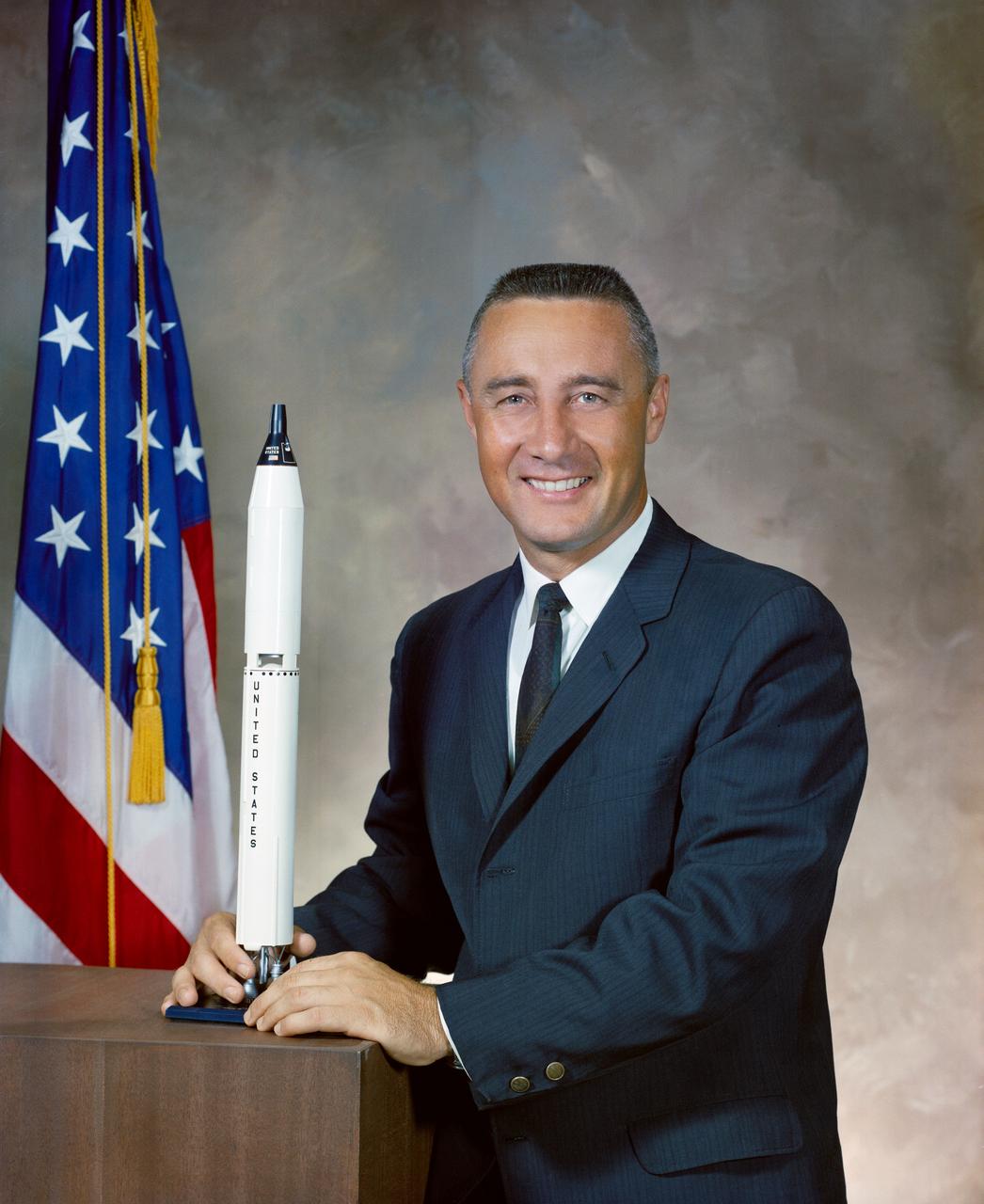
S64-32110 (1964) --- Astronaut Virgil I. (Gus) Grissom
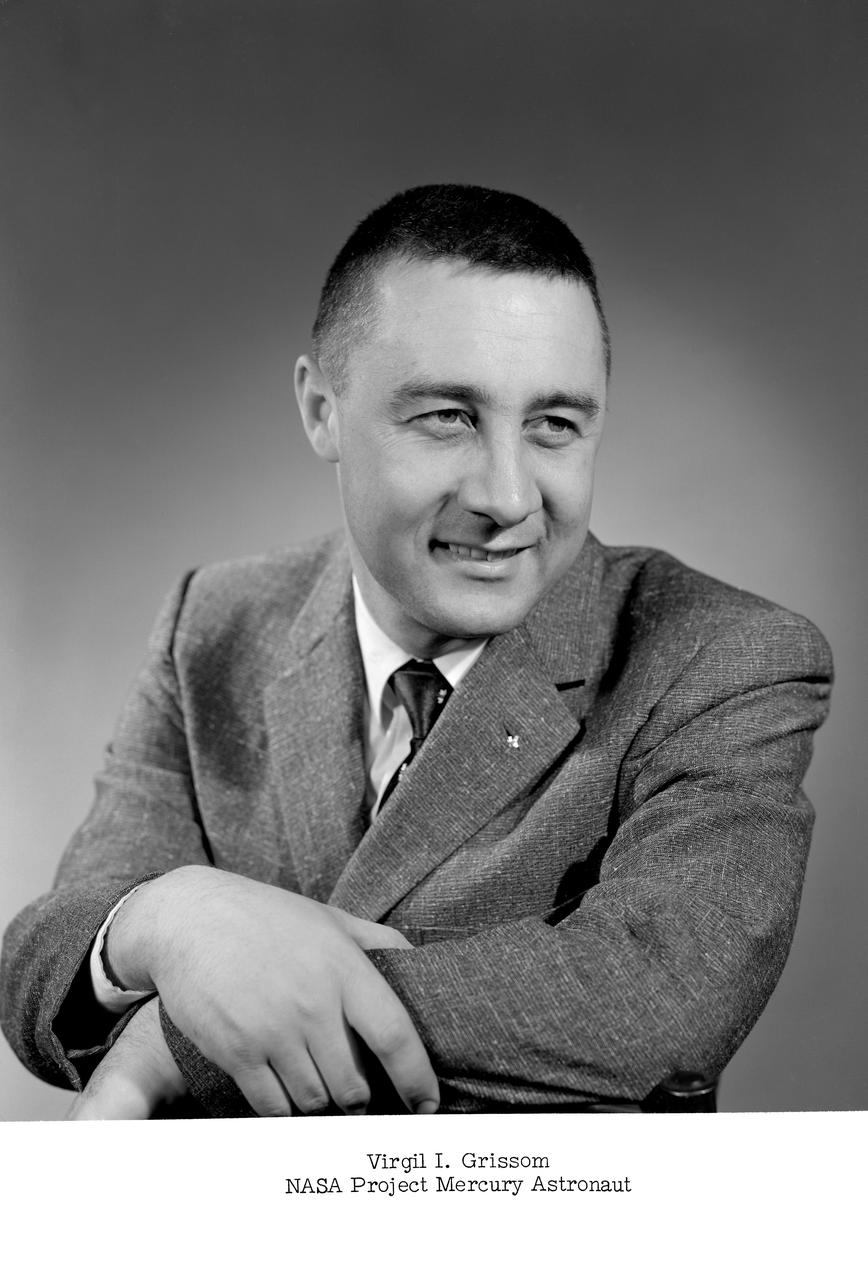
NASA Project Mercury astronaut. -- Grissom was later known as Gus .
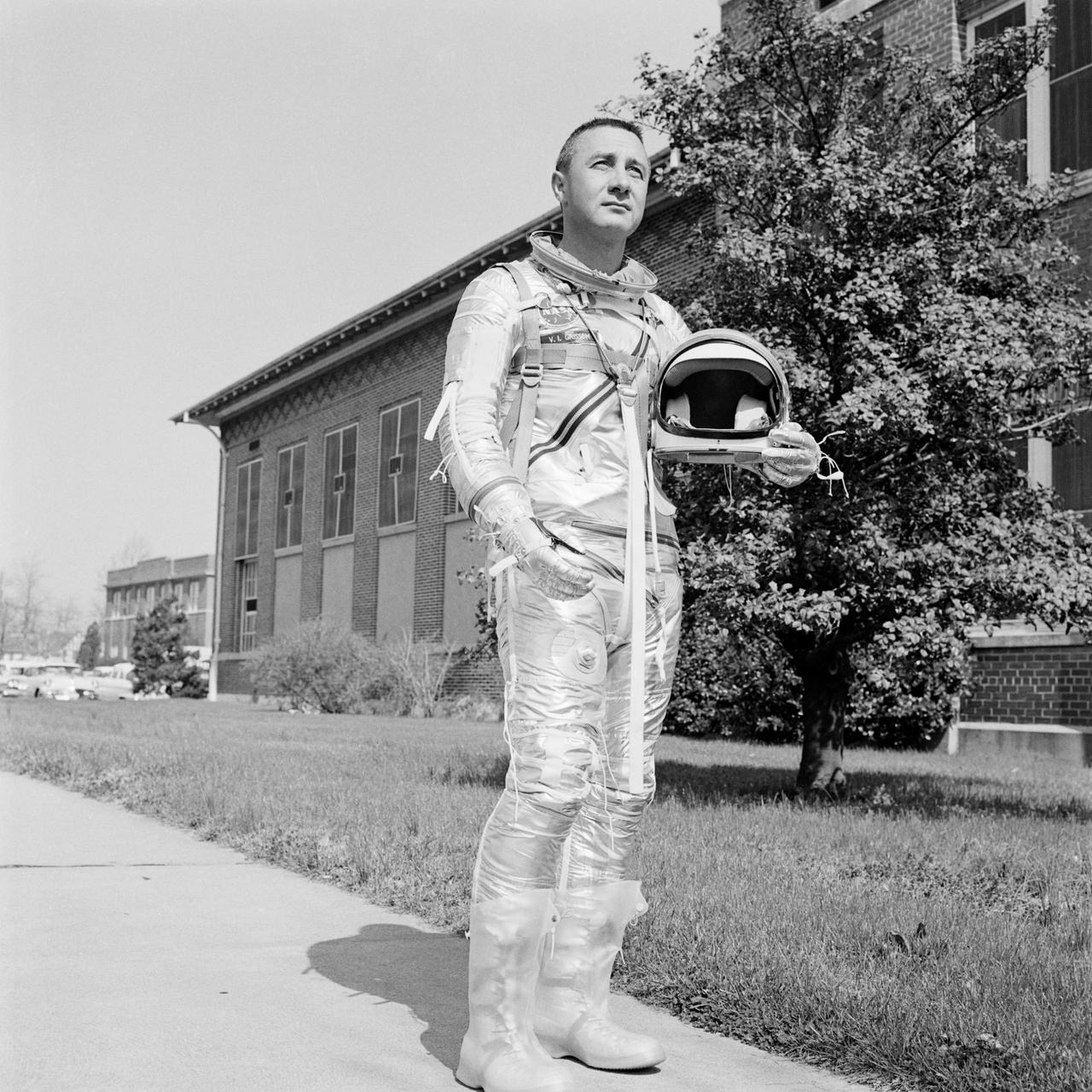
S61-01490 (4 April 1961) --- Astronaut Virgil Grissom photographed in the new Mercury spacesuit, holding his helmet. Photo credit: NASA
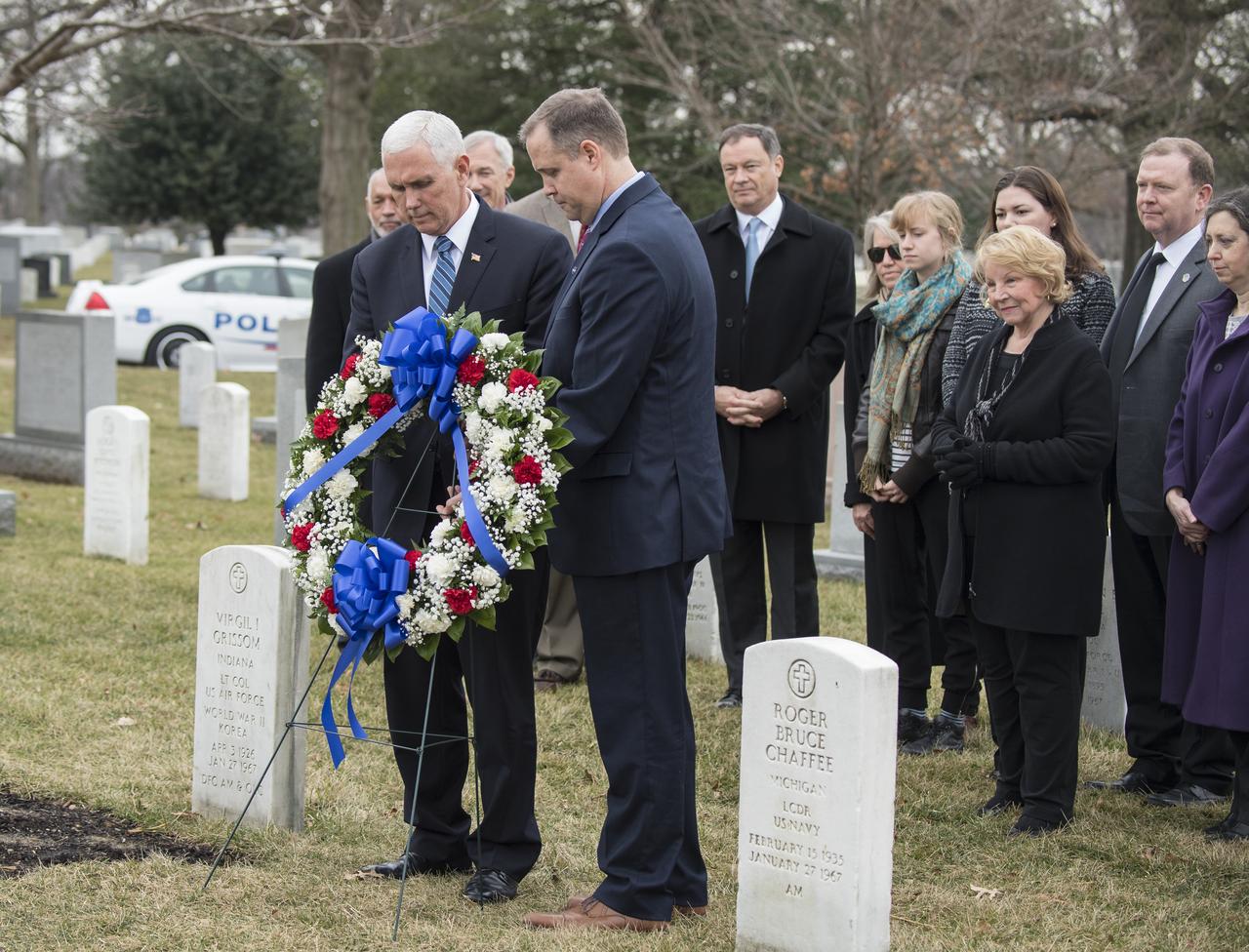
Vice President Mike Pence and NASA Administrator Jim Bridenstine lay a wreath at the grave markers of Virgil "Gus" Grissom and Roger Chaffee, from Apollo 1, as part of NASA's Day of Remembrance, Thursday, Feb. 7, 2019, at Arlington National Cemetery in Arlington, Va. Wreaths were laid in memory of those men and women who lost their lives in the quest for space exploration. Photo Credit: (NASA/Aubrey Gemignani)
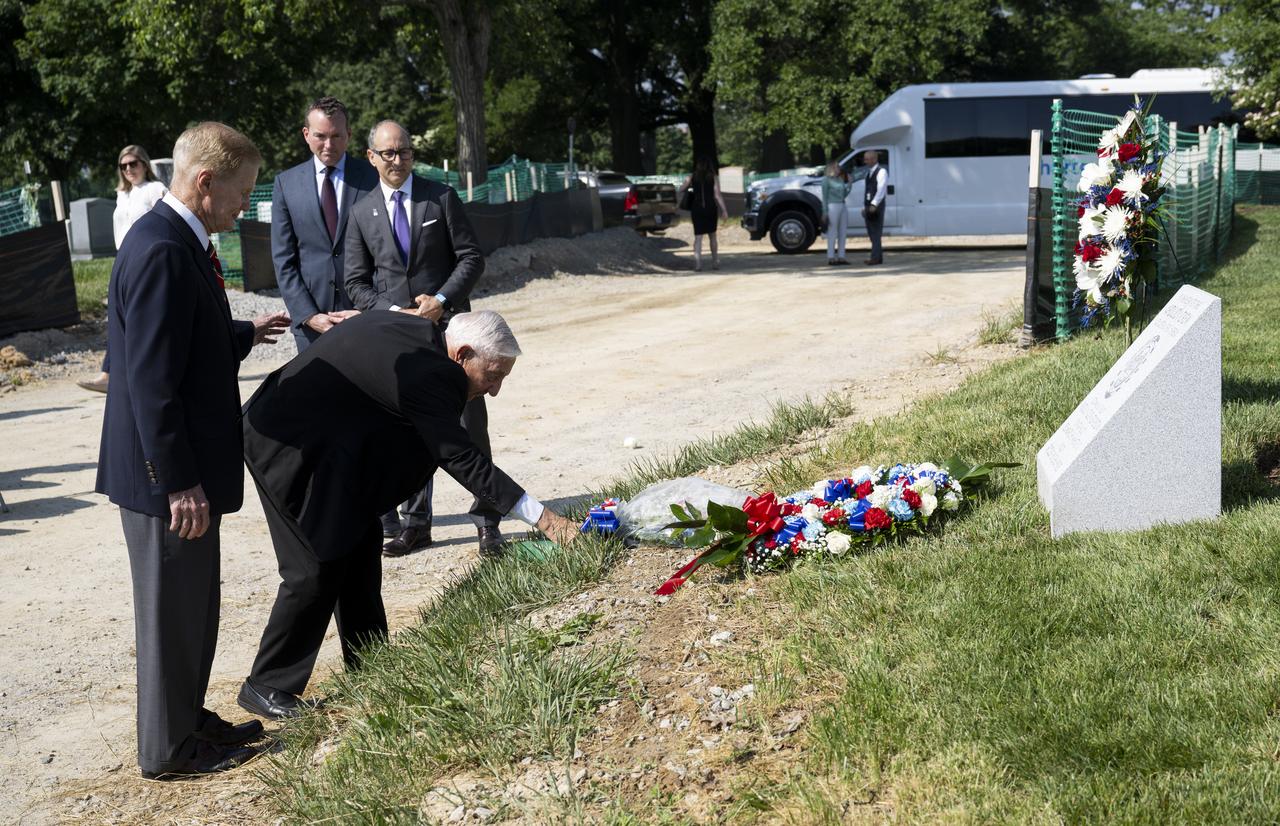
Lowell Grissom, brother of Apollo 1 astronaut Virgil I. “Gus” Grissom, is joined by NASA Administrator Bill Nelson as he places flowers at the Apollo 1 monument during its dedication at Arlington National Cemetery, Thursday, June 2, 2022, in Arlington, Va. The monument honors and memorializes the Apollo 1 crew of Virgil I. “Gus” Grissom, Edward H. White II, and Roger B. Chaffee. Photo Credit: (NASA/Bill Ingalls)
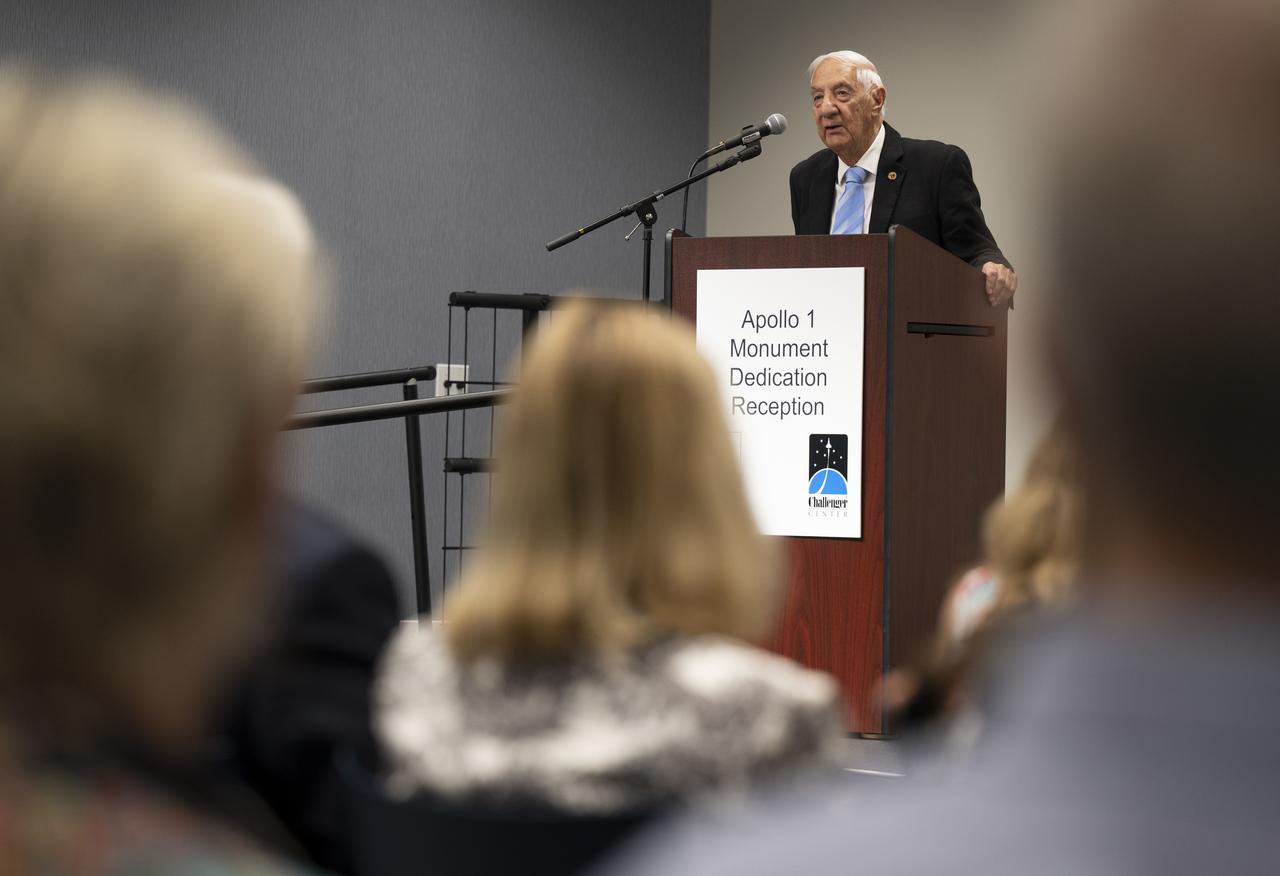
Lowell Grissom, brother of Apollo 1 astronaut Virgil I. “Gus” Grissom, delivers remarks at a reception following the dedication of the Apollo 1 monument, Thursday, June 2, 2022, in the Reception Hall of the Military Women’s Memorial at Arlington National Cemetery in Arlington, Va. The monument honors and memorializes the Apollo 1 crew of Virgil I. “Gus” Grissom, Edward H. White II, and Roger B. Chaffee. Photo Credit: (NASA/Bill Ingalls)
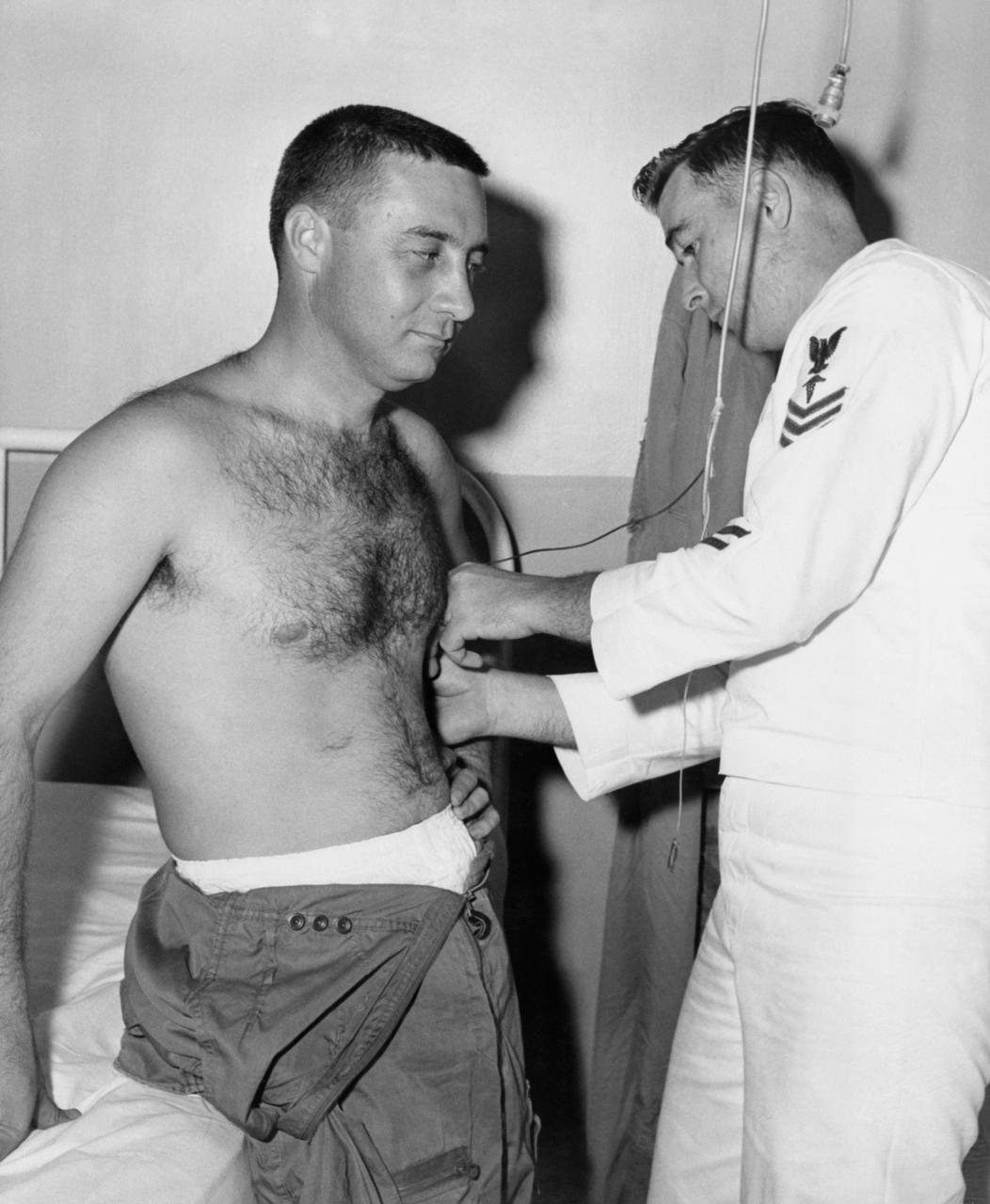
B59-00586 (1959) --- Astronaut Virgil (Gus) Grissom is seen preparing for training in the centrifuge at Johnsville. A Navy corpsman attaches sensors to Grissom to monitor his body's reaction to the centrifuge. Photo credit: NASA
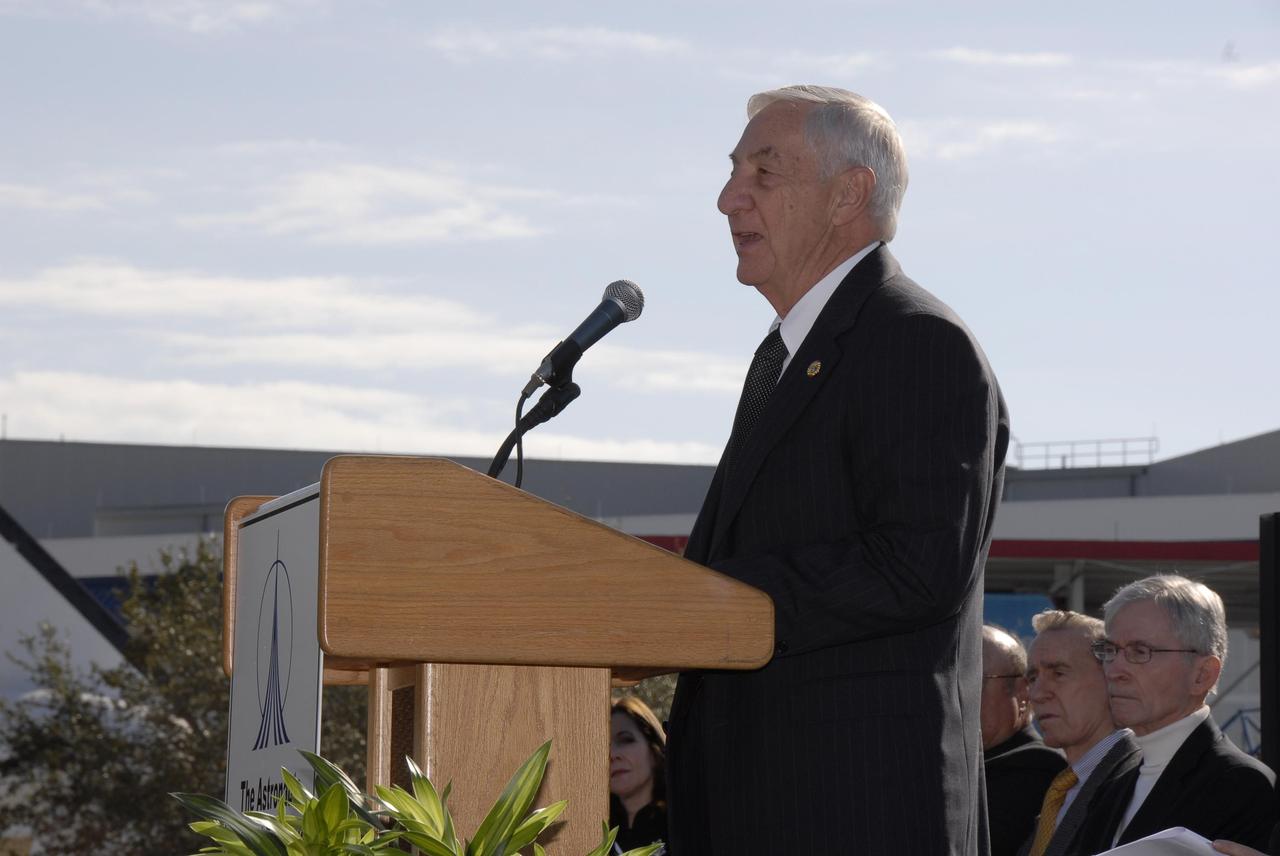
KENNEDY SPACE CENTER, FLA. -- Lowell Grissom addresses guests attending a ceremony at the KSC Visitor Complex held in remembrance of the astronauts lost in the Apollo 1 fire: Virgil "Gus" Grissom, Edward H. White II and Roger B. Chaffee. Grissom is the brother of Gus Grissom. Members of the Apollo 1 families, along with KSC Director Bill Parsons, Associate Administrator for Space Operations William Gerstenmaier, President of the Astronauts Memorial Foundation Stephen Feldman, Chairman of the Board of Directors of the Astronauts Memorial Foundation William Potter and former astronaut John Young (seen at lower right), attended the ceremony. Photo credit:NASA/Kim Shiflett
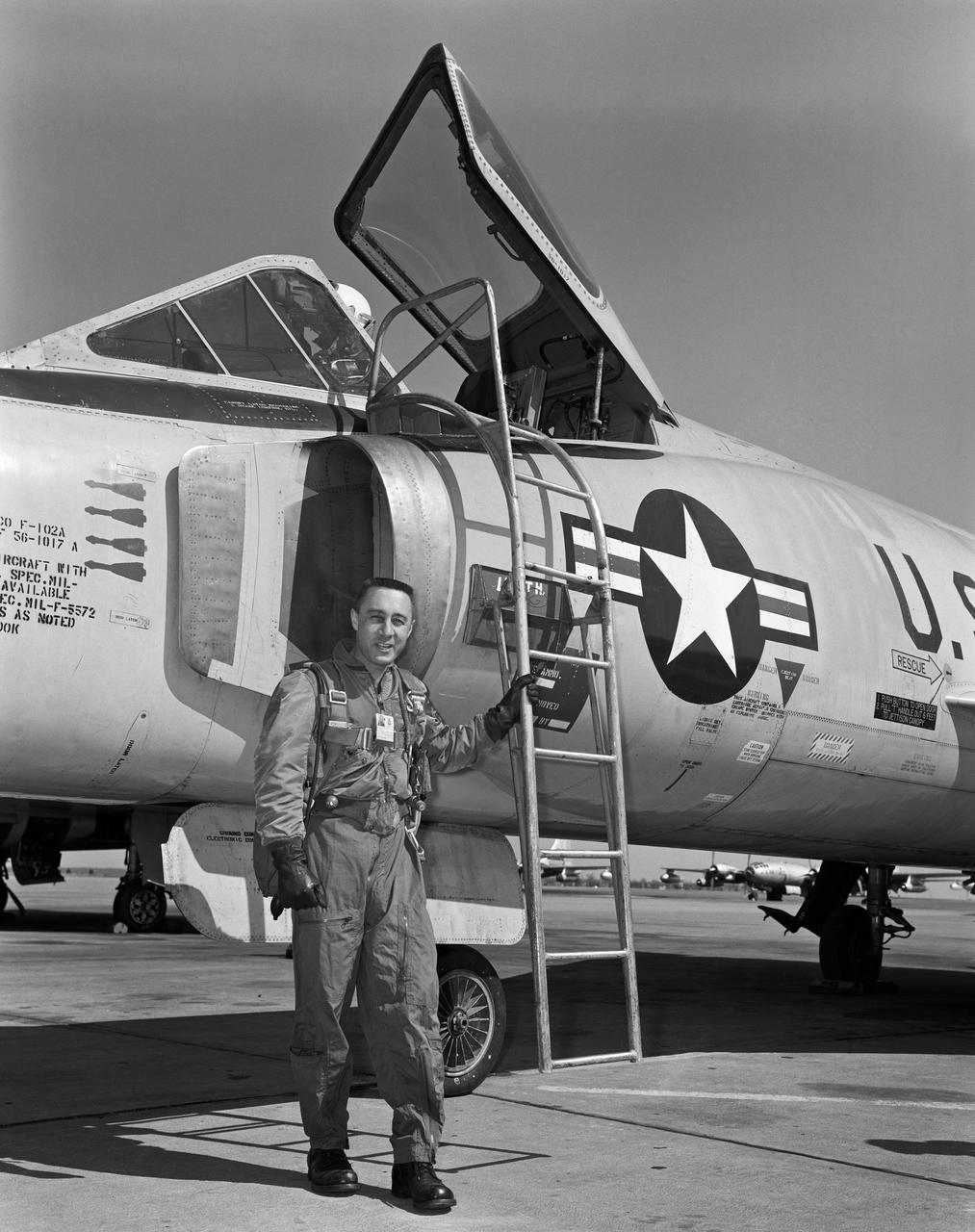
B60-00708 (1960) --- Astronaut Virgil I (Gus) Grissom pictured standing beside a F-102 on the flight line. Photo credit: NASA
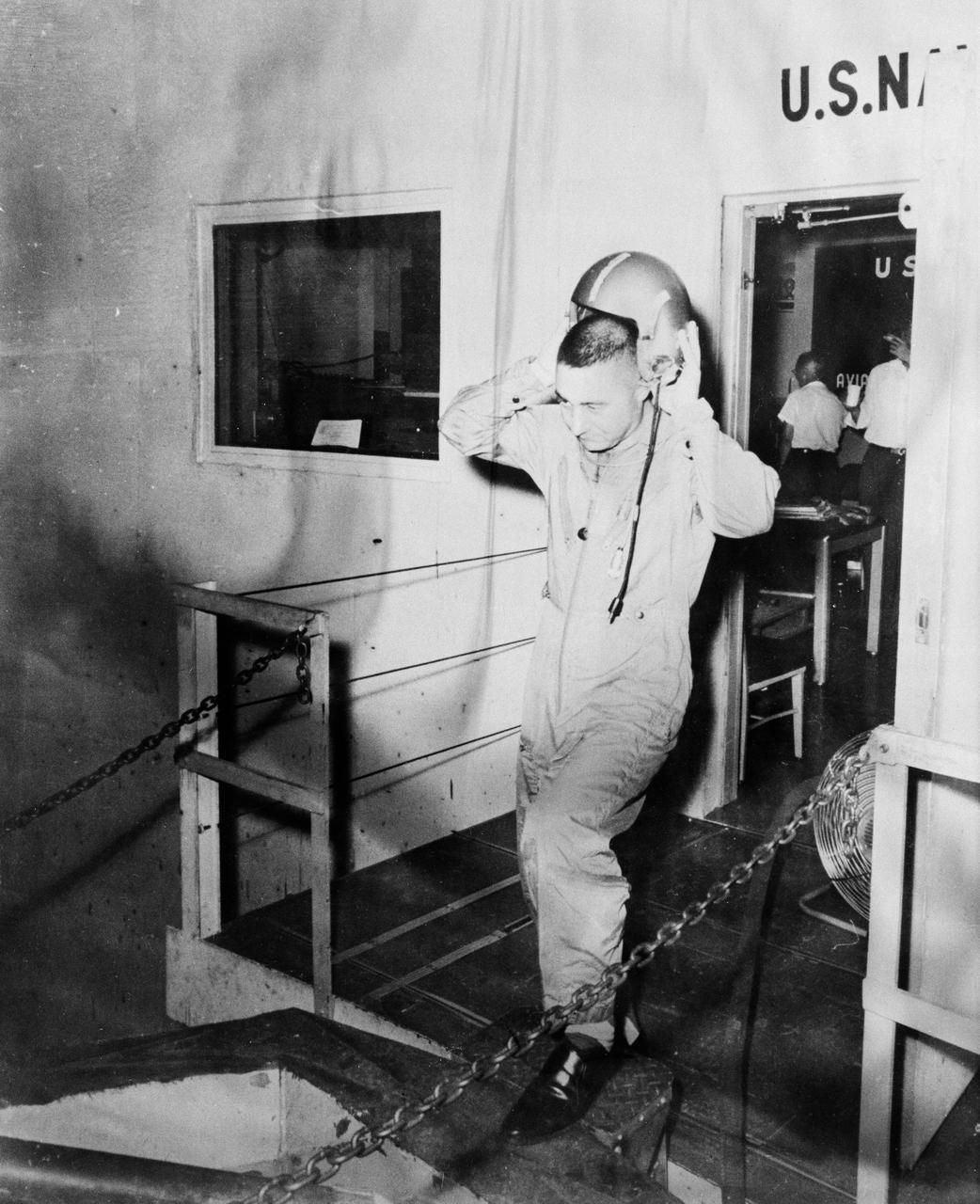
B59-00587 (1959) --- Astronaut Virgil (Gus) Grissom is pictured leaving a U.S. Navy installation and removing his helmet. Photo credit: NASA
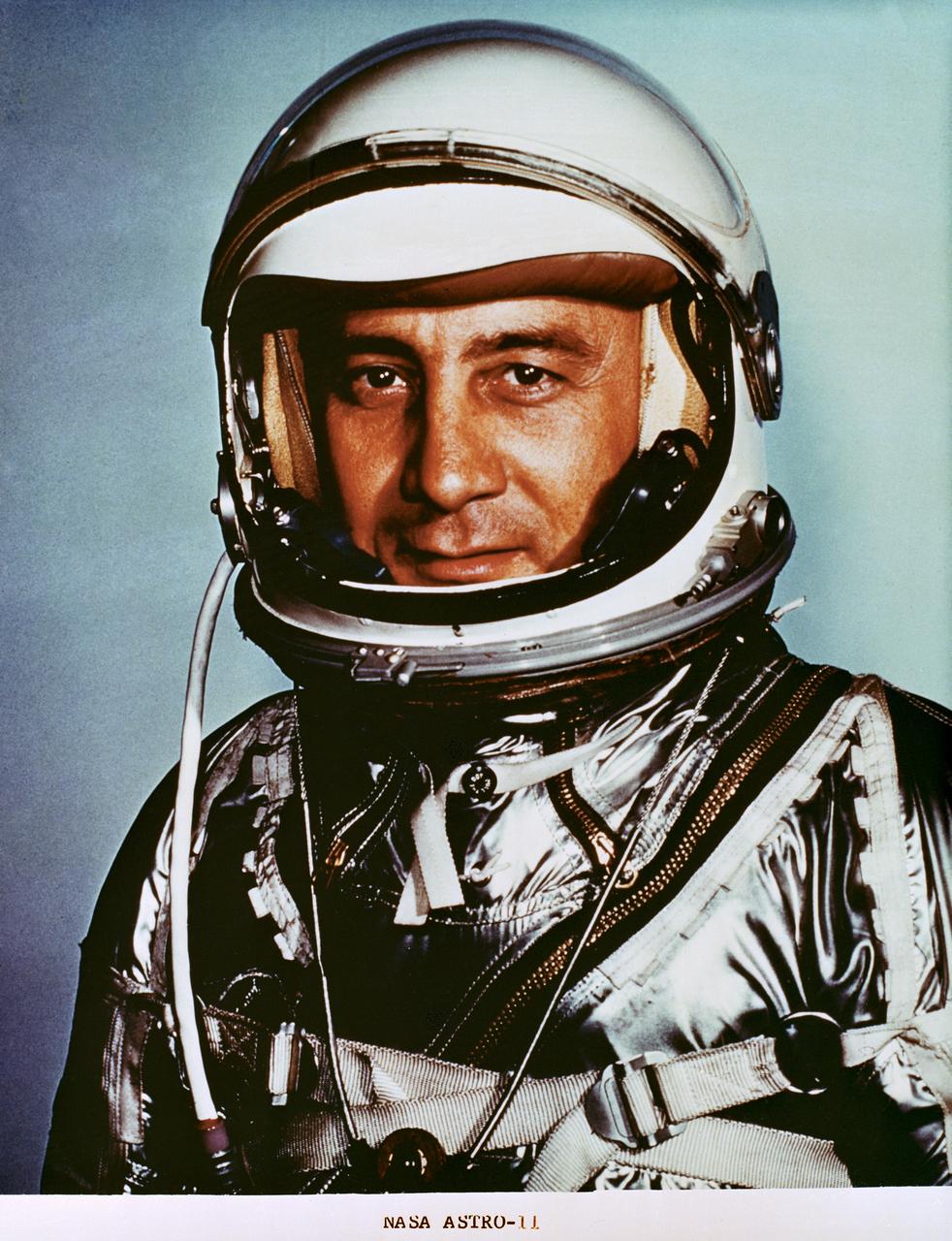
S88-55873 (1961) --- Astronaut Virgil I. (Gus) Grissom, pilot of the Mercury-Redstone 4 (MR-4) spaceflight. (NOTE: Astronaut "Gus" Grissom, one of the original seven astronauts, died Jan. 27, 1967, at NASA?s John F. Kennedy Space Center (KSC), Cape Canaveral Florida, in the Apollo 1 spacecraft fire.) Photo credit: NASA
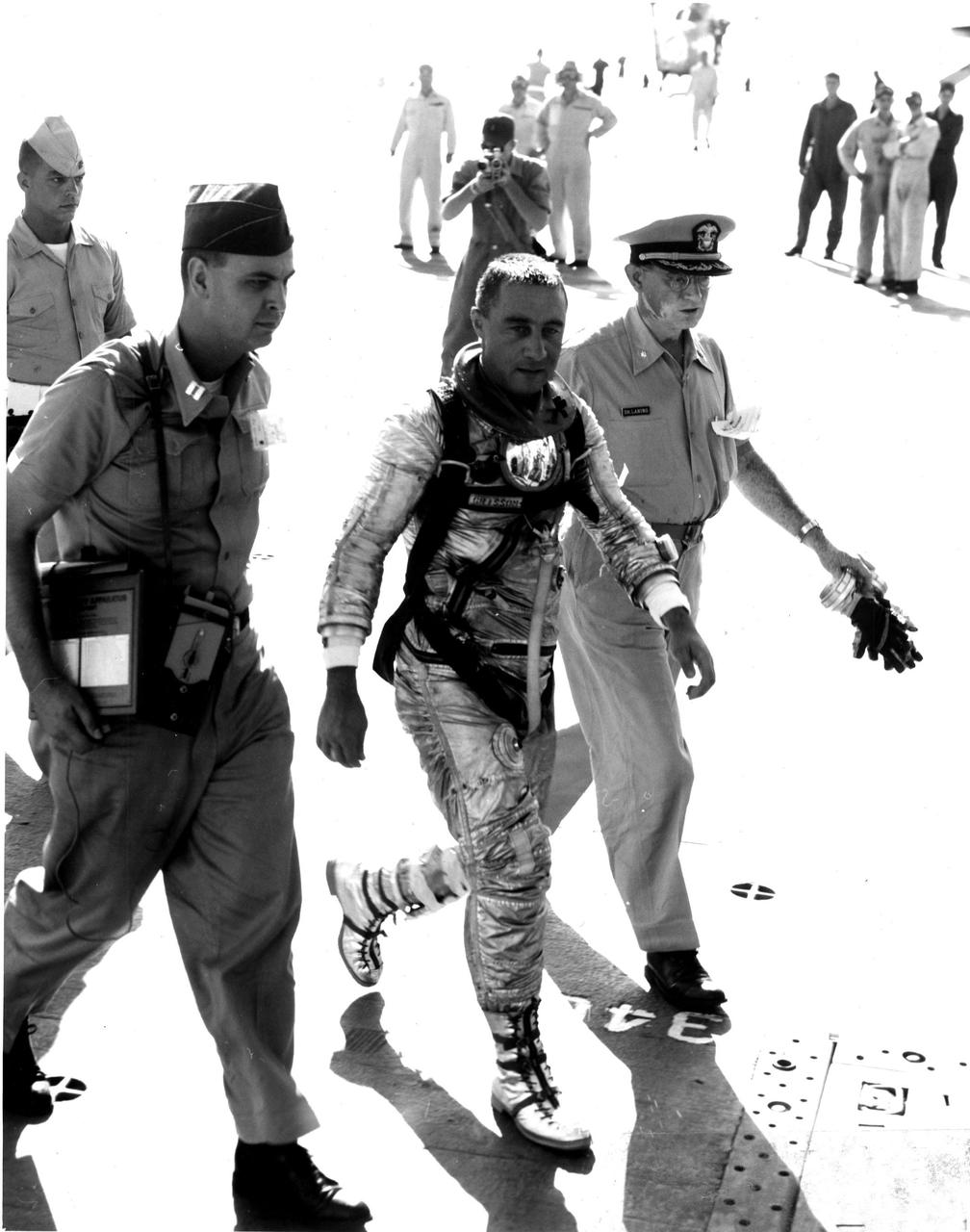
KENNEDY SPACE CENTER, FLA. -- Astronaut Virgil I. Grissom walks across the deck of the U.S.S. Randolph after being airlifted by helicopter from the Liberty Bell 7 impact area. 'Gus' Grissom was the second U.S. man in space. (NASA Photo)
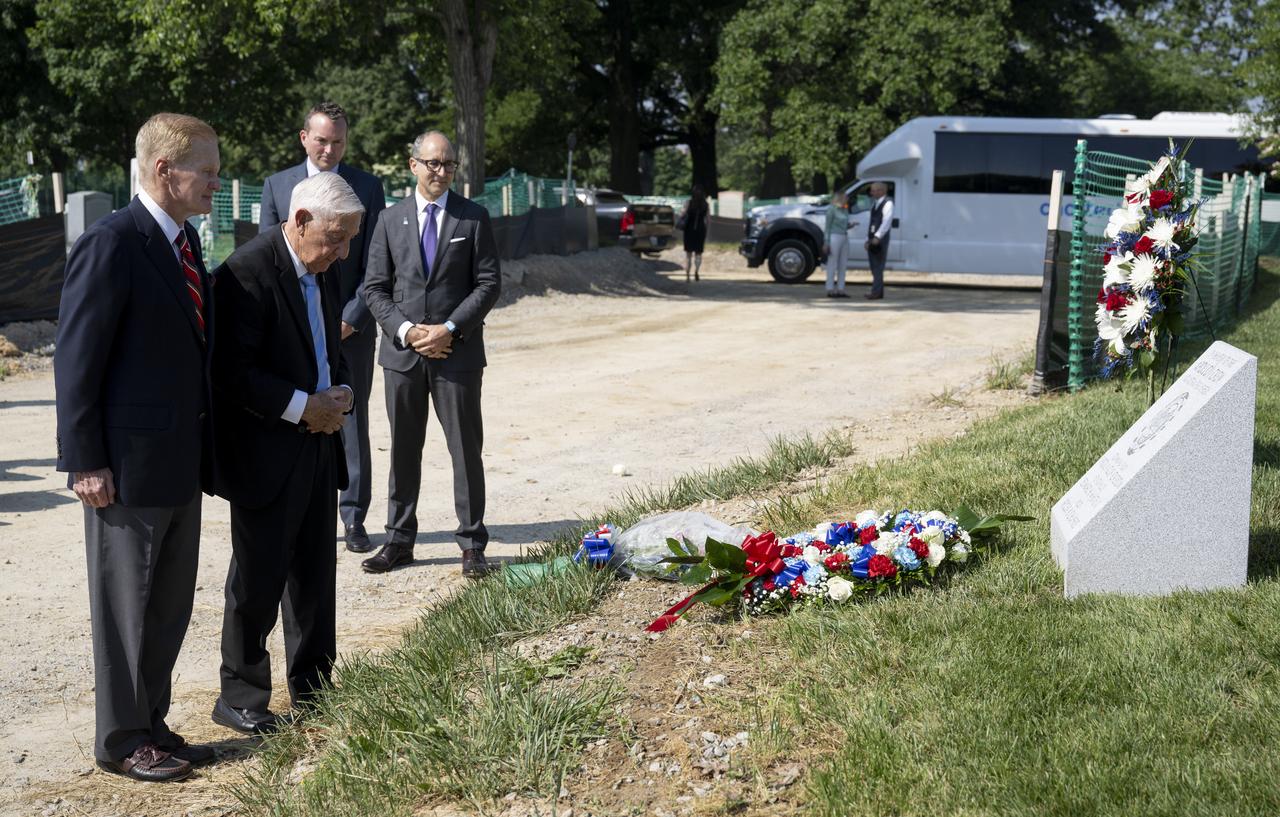
Lowell Grissom, brother of Apollo 1 astronaut Virgil I. “Gus” Grissom, is joined by NASA Administrator Bill Nelson as he places flowers at the Apollo 1 monument during its dedication at Arlington National Cemetery, Thursday, June 2, 2022, in Arlington, Va. Photo Credit: (NASA/Bill Ingalls)
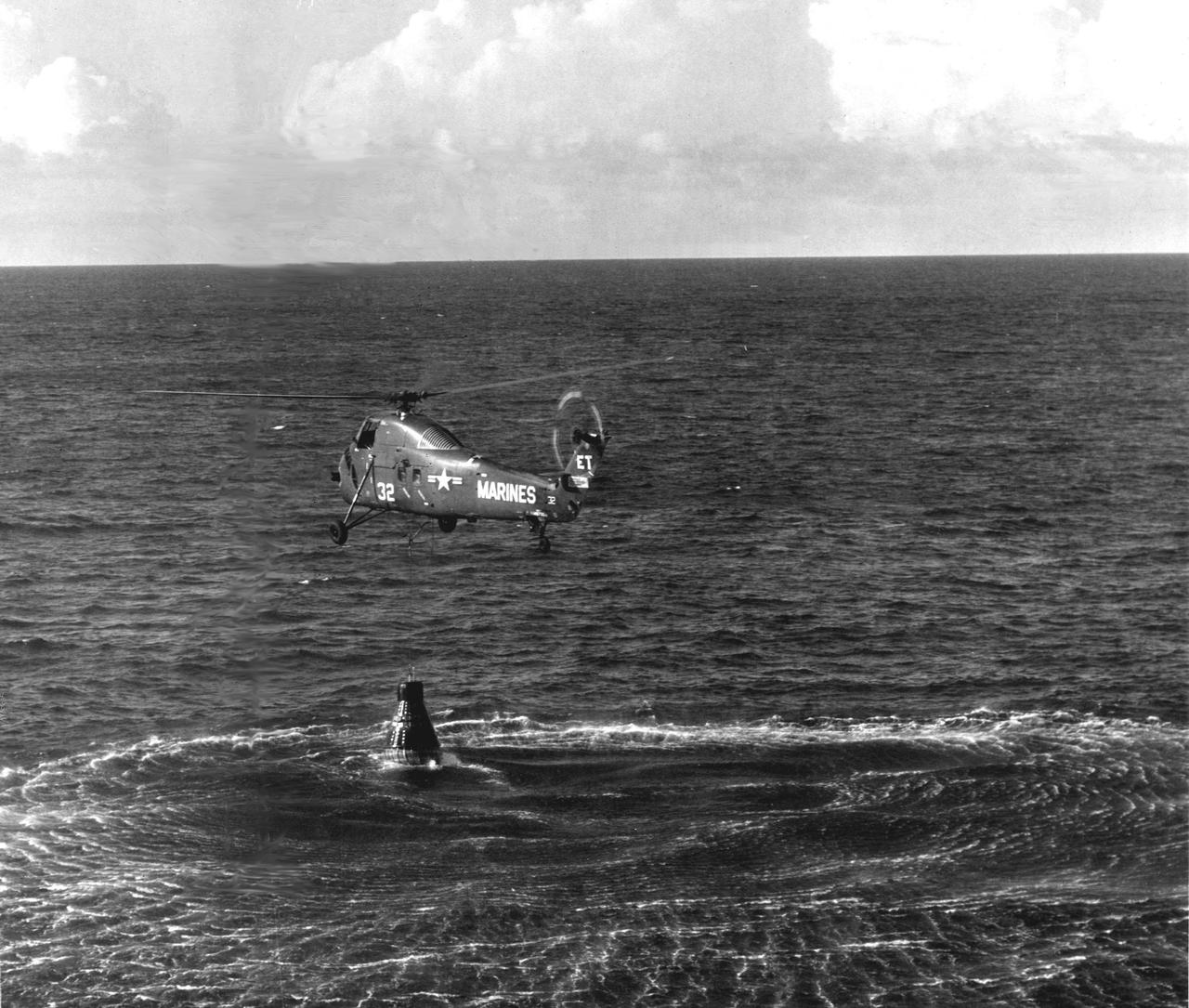
KENNEDY SPACE CENTER, FLA. -- Marine helicopter appears to have Liberty Bell 7 in tow after Virgil I. Grissom's successful flight of 305 miles down the Atlantic Missile Range. Minutes after 'Gus' Grissom got out of the spacecraft, it sank. (NASA Photo
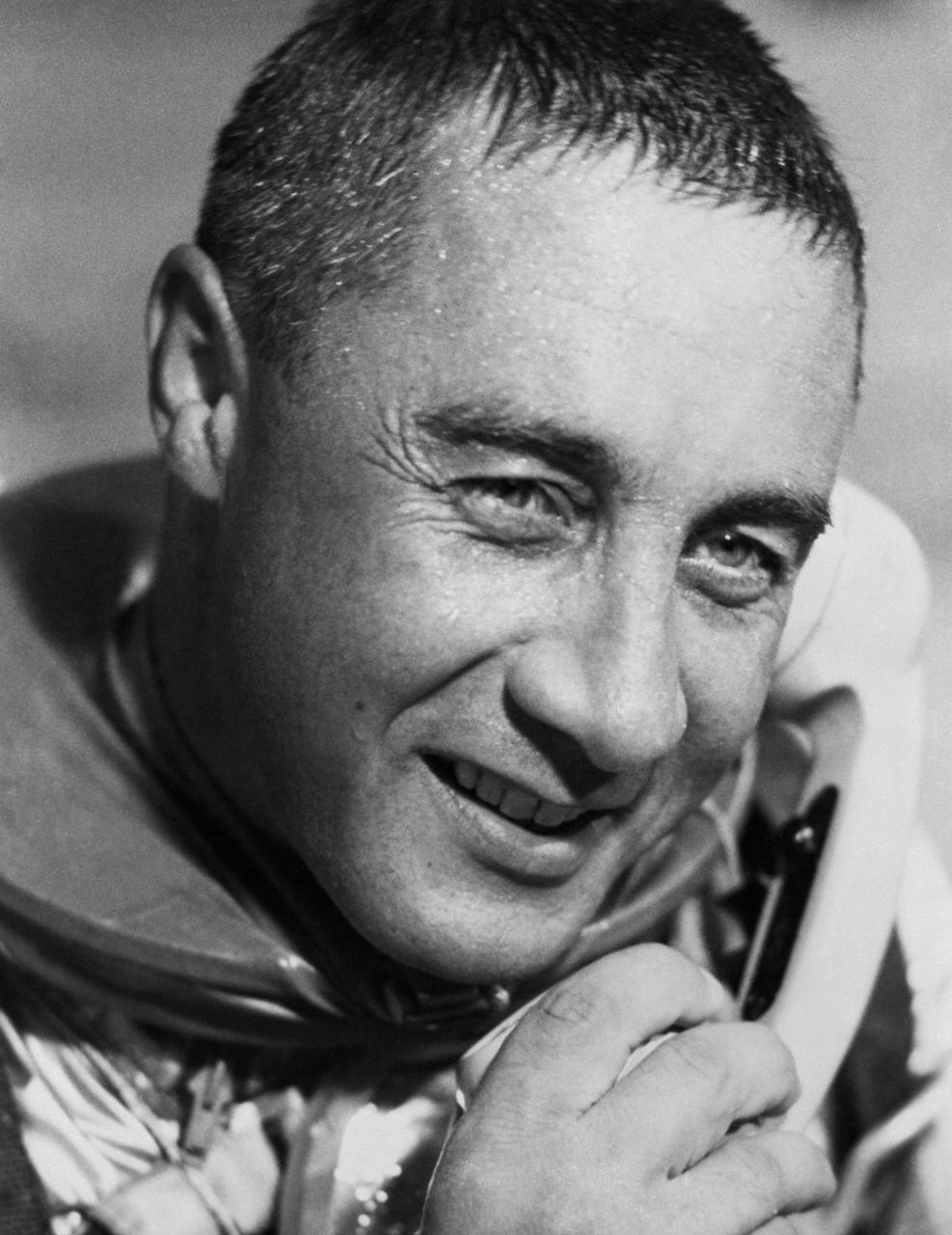
S61-02897 (21 July 1961) --- Virgil I. (Gus) Grissom, pilot of the Mercury-Redstone 4 (MR-4) ?Liberty Bell 7? spaceflight, talking on the phone with President Kennedy. Grissom is still wearing his pressure suit. Photo credit: NASA
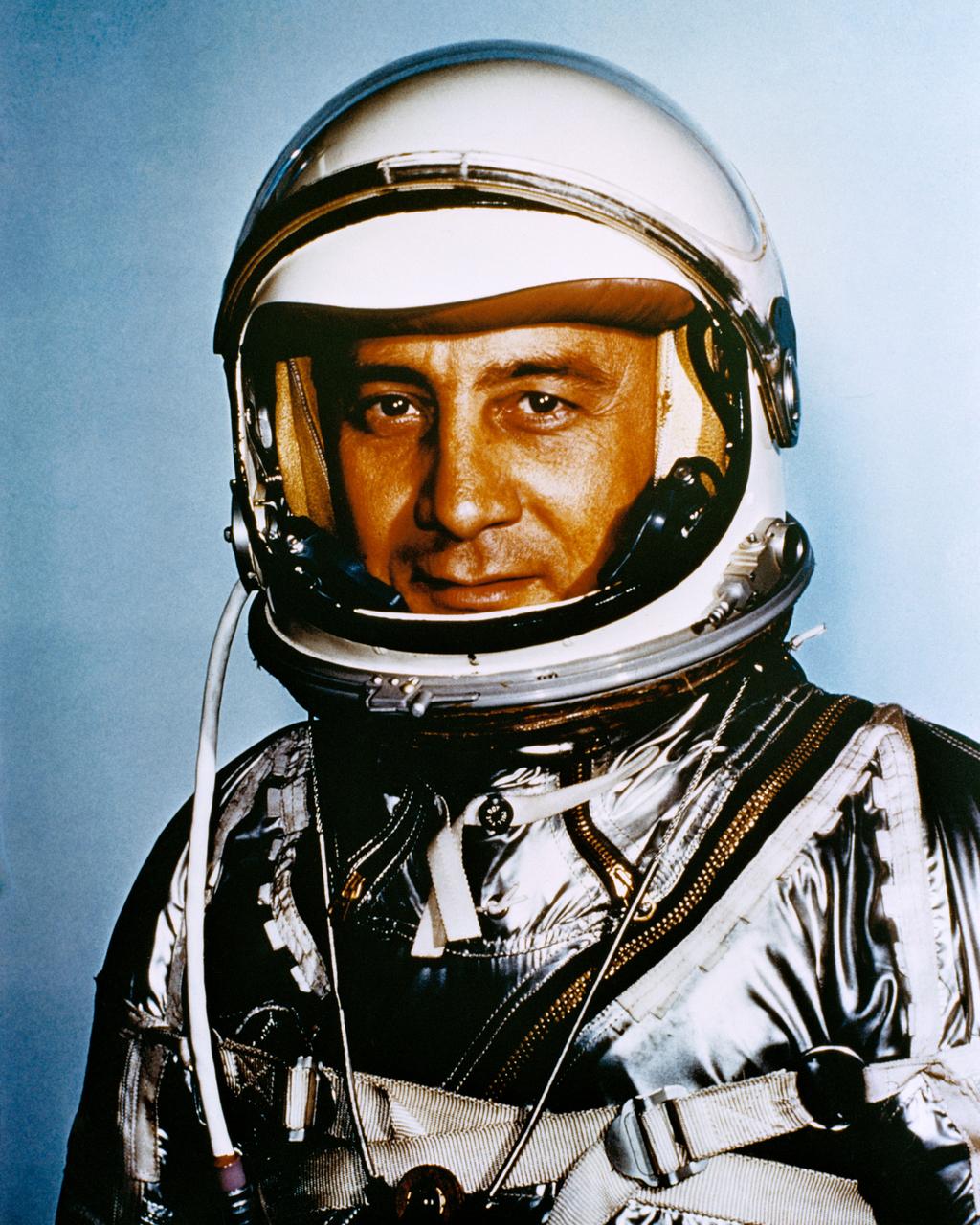
S87-40119 (1961) --- Astronaut Virgil I. Grissom. (NOTE: Astronaut "Gus" Grissom, one of the original seven astronauts, died January 27, 1967, at NASA?s John F. Kennedy Space Center (KSC), Cape Canaveral Florida, in the Apollo 1 spacecraft fire.)
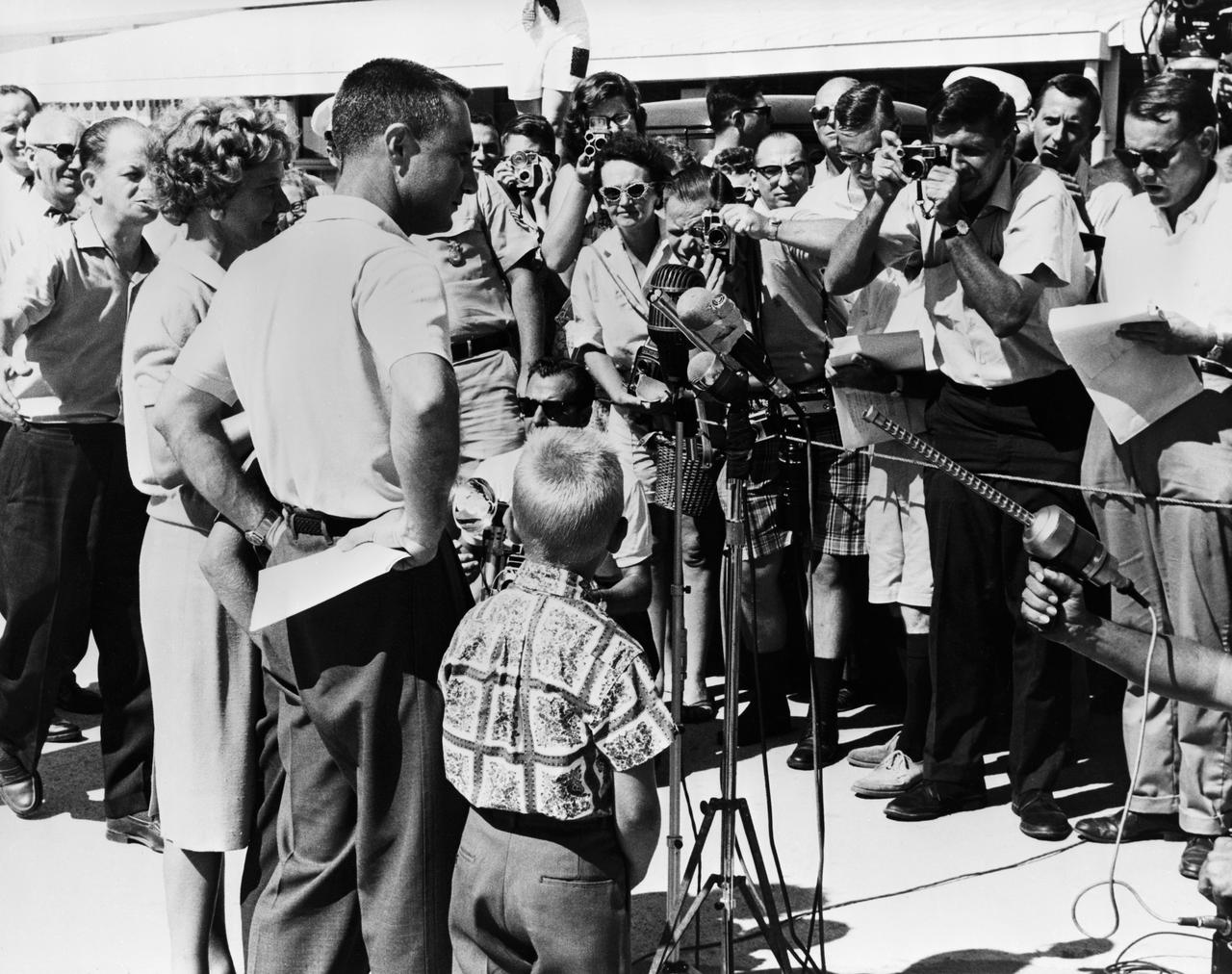
S61-03687 (21 July 1961) --- Astronaut Virgil I. (Gus) Grissom and his family are shown at the airport at Patrick Air Force Base facing a crowd of news media representatives. Grissom is speaking into microphones for the news media. Photo credit: NASA
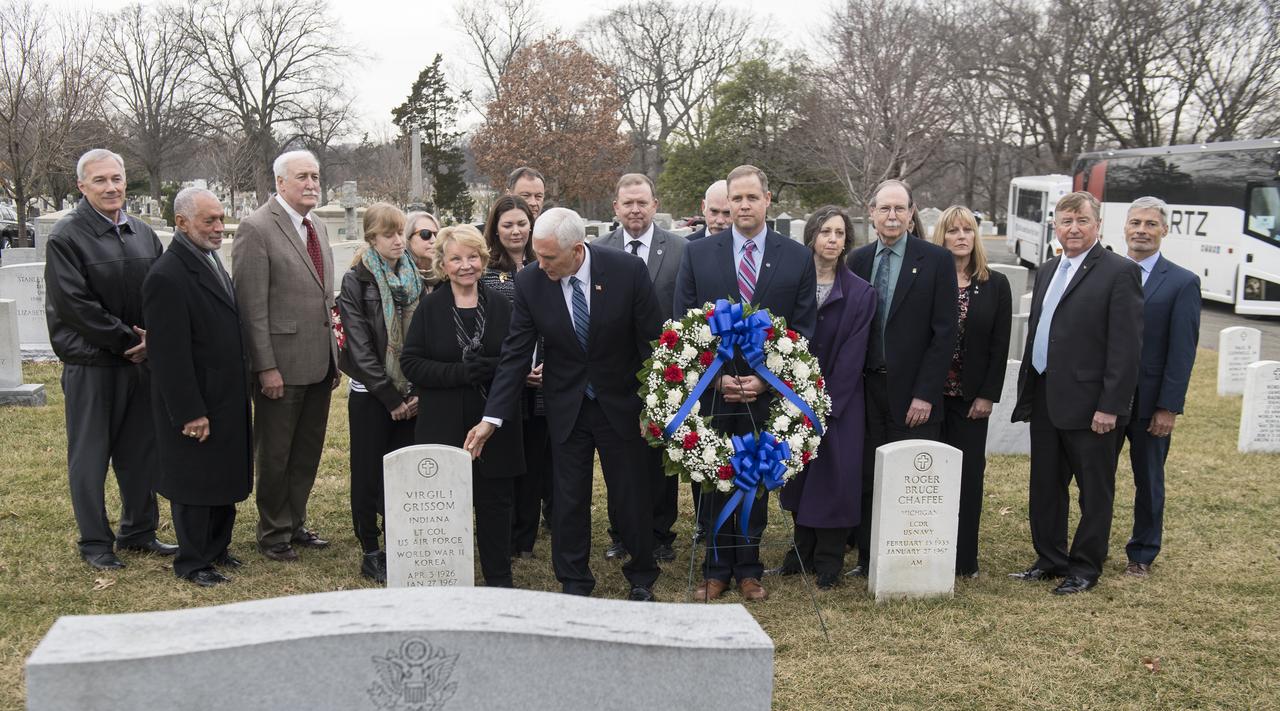
Vice President Mike Pence observes the grave marker of Virgil "Gus" Grissom, from Apollo 1, after family and friends of astronauts lost in the Challenger and Columbia missions, former NASA Administrators, and other NASA staff participated in a wreath laying ceremony that was part of NASA's Day of Remembrance, Thursday, Feb. 7, 2019, at Arlington National Cemetery in Arlington, Va. Wreaths were laid in memory of those men and women who lost their lives in the quest for space exploration. Photo Credit: (NASA/Aubrey Gemignani)
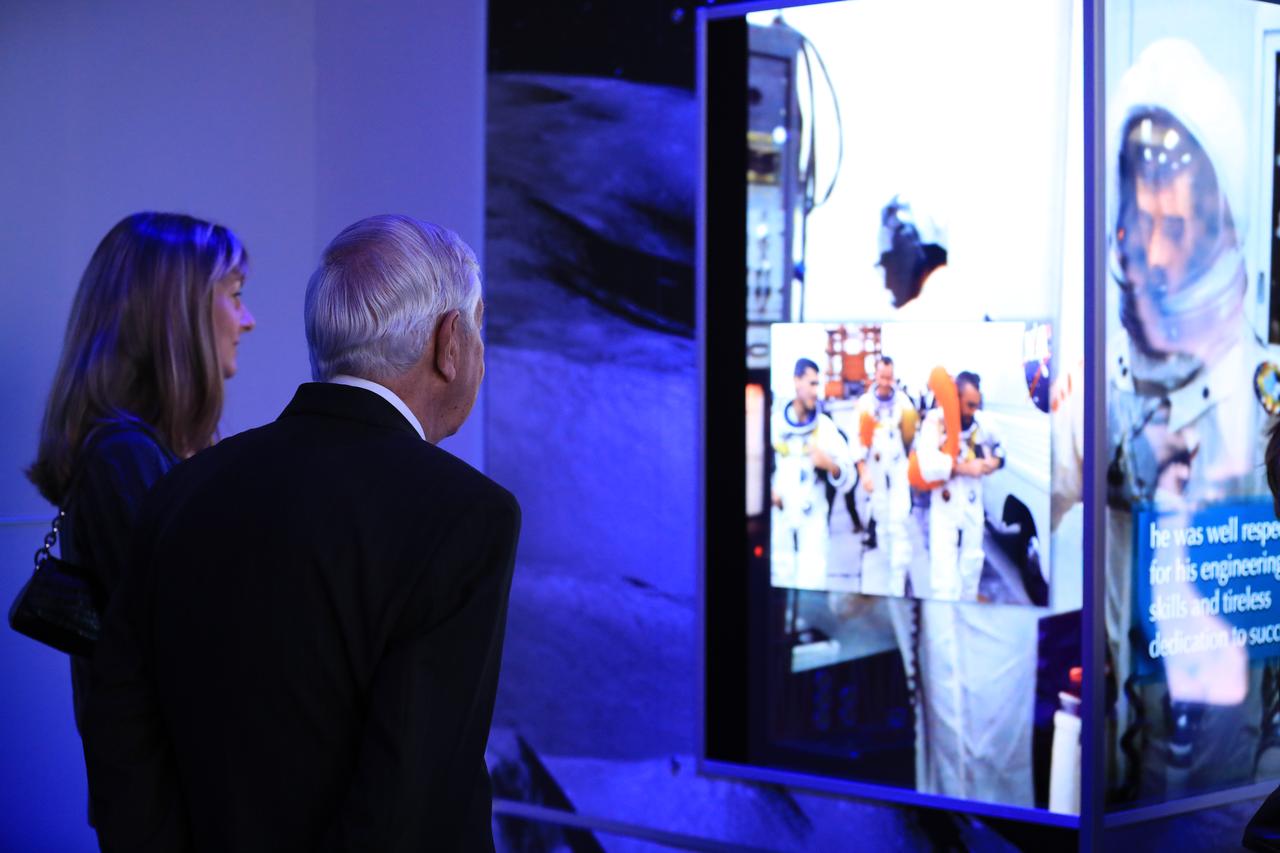
Lowell Grissom, brother of Gus Grissom, and Carly Sparks, granddaughter of Grissom, look at areas of the newly opened Apollo 1 tribute at the Apollo/Saturn V Center at NASA's Kennedy Space Center opened Jan. 27, 2017. Astronauts Gus Grissom, Ed White II and Chaffee perished in a fire at the launch pad on Jan. 27, 1967, during training for the mission. The tribute highlights the lives and careers of the astronauts. The tribute features numerous items recalling the lives of the three astronauts. The tribute also includes the three-part hatch to the spacecraft itself, the first time any part of the Apollo 1 spacecraft has been displayed publicly. A version of the hatch after it was redesigned is also showcased as an example of improvements NASA made throughout the agency and to the Apollo spacecraft that would later carry astronauts to the moon.
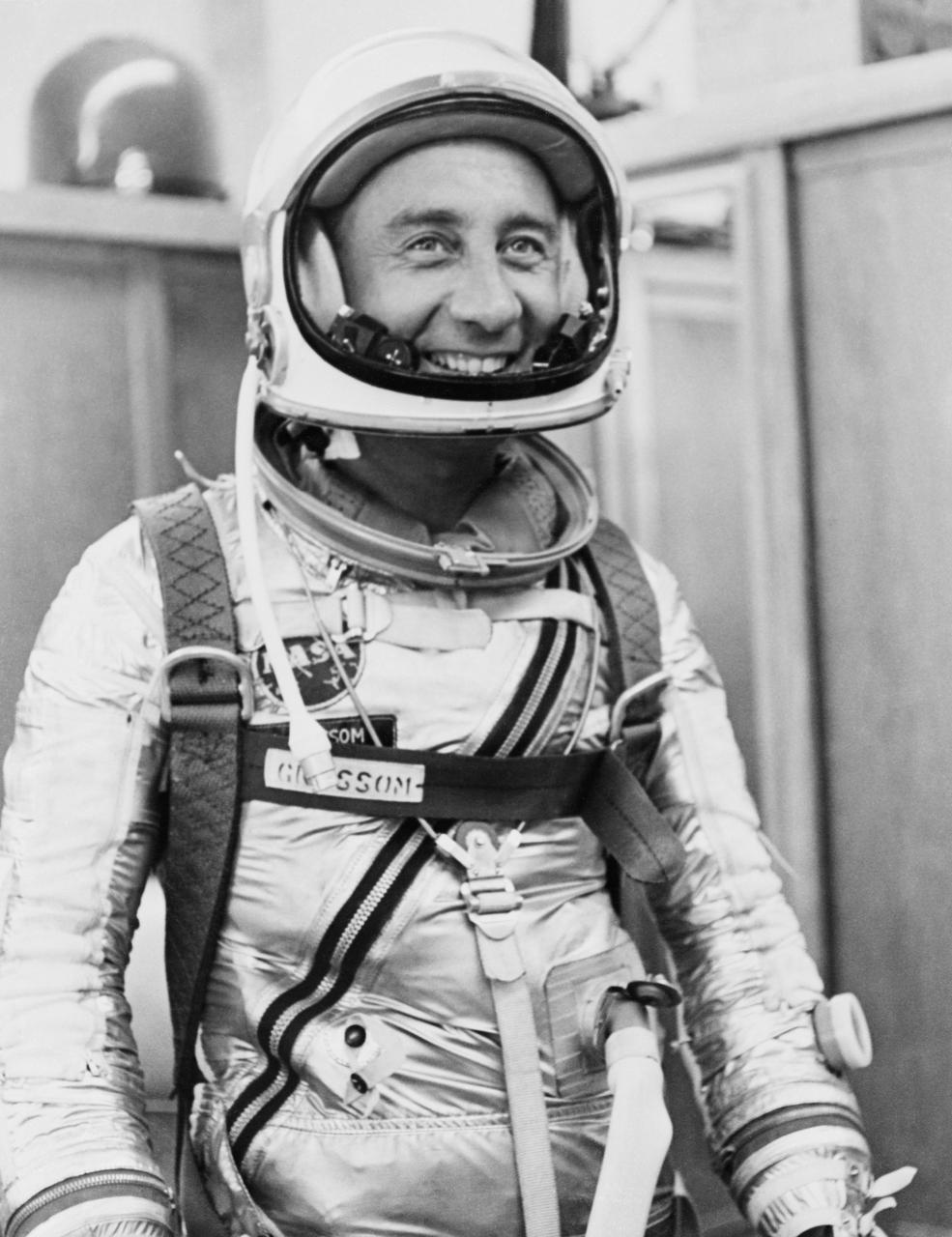
S61-02845 (1961) --- Portrait of astronaut Virgil I. (Gus) Grissom in his pressure suit and wearing his helmet in Hangar S at Cape Canaveral, Florida before the Mercury-Redstone 4 mission. Photo credit: NASA
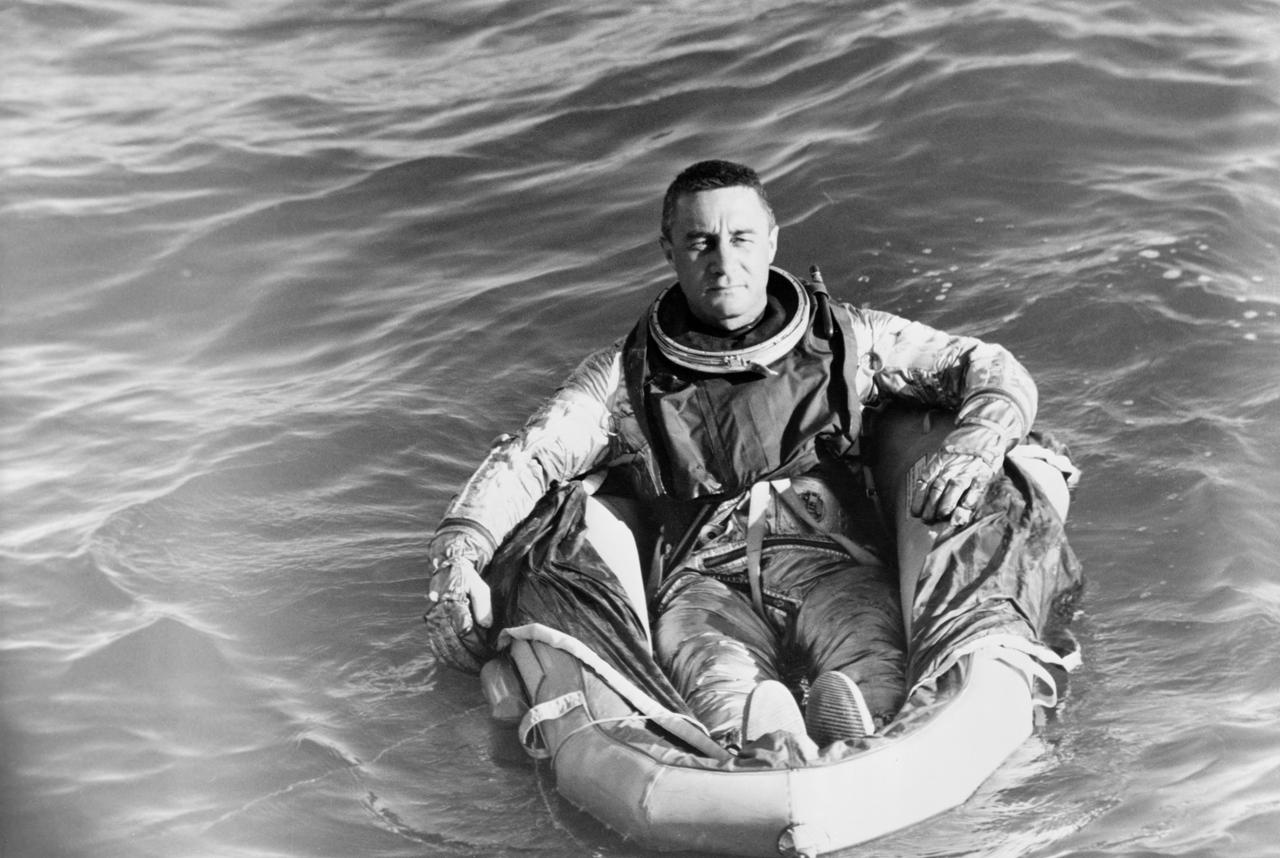
S61-04037 (1961) --- Astronaut Virgil I. (Gus) Grissom, pilot of the Mercury-Redstone 4 spaceflight, sits in a life raft during water egress training activies. Photo credit: NASA
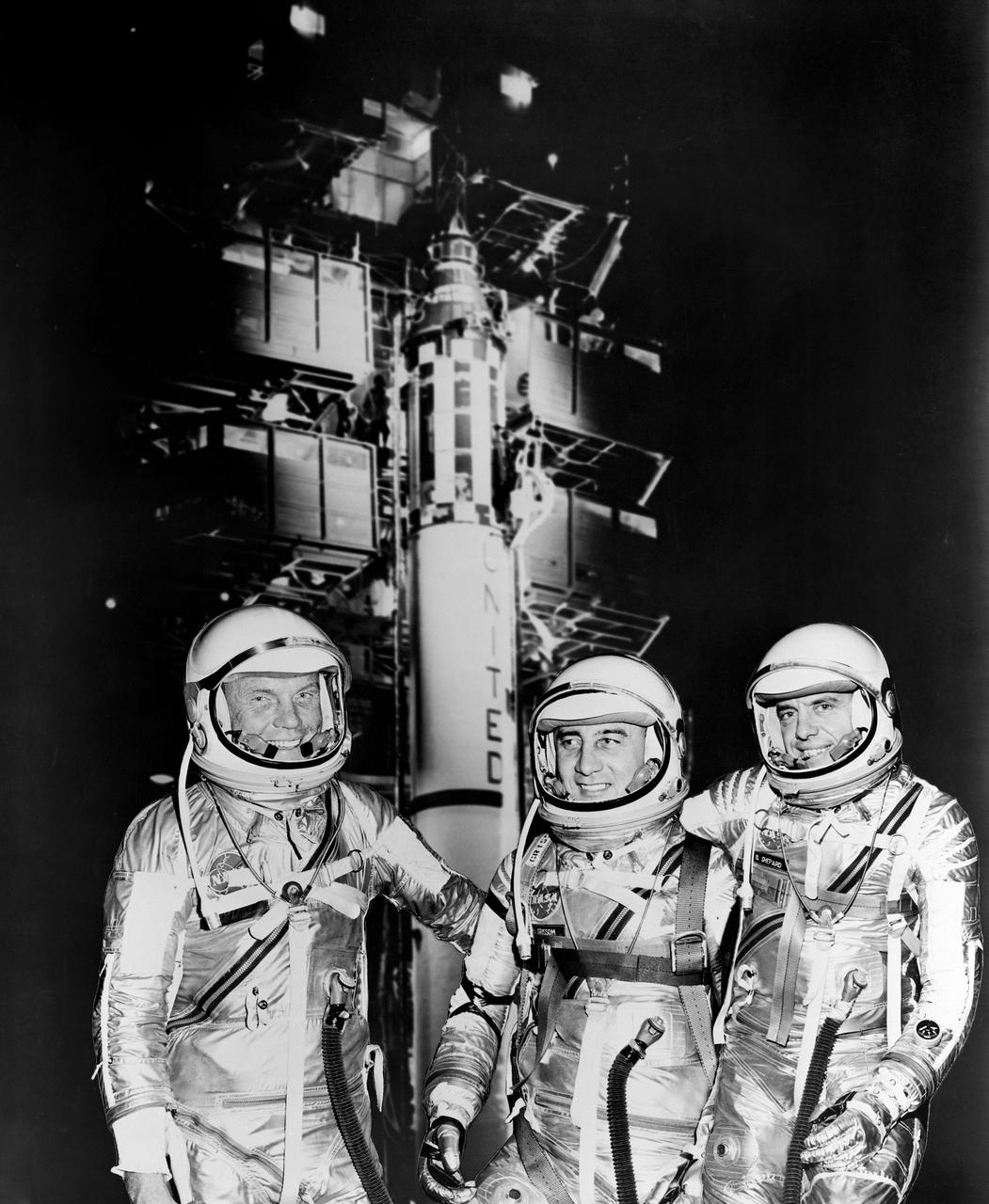
1961 -- The first three Americans in space, Mercury astronauts, from the left, John H. Glenn Jr., Virgil I. (Gus) Grissom and Alan B. Shepard Jr. standing by Redstone rocket in their spacesuits.

KENNEDY SPACE CENTER, FLA. -- CHAMBER TEST - Project Mercury astronaut Virgil I. 'Gus' Grissom, assisted by McDonnell technicians, leaves Mercury spacecraft, dubbed Liberty Bell 7, following simulated flight.
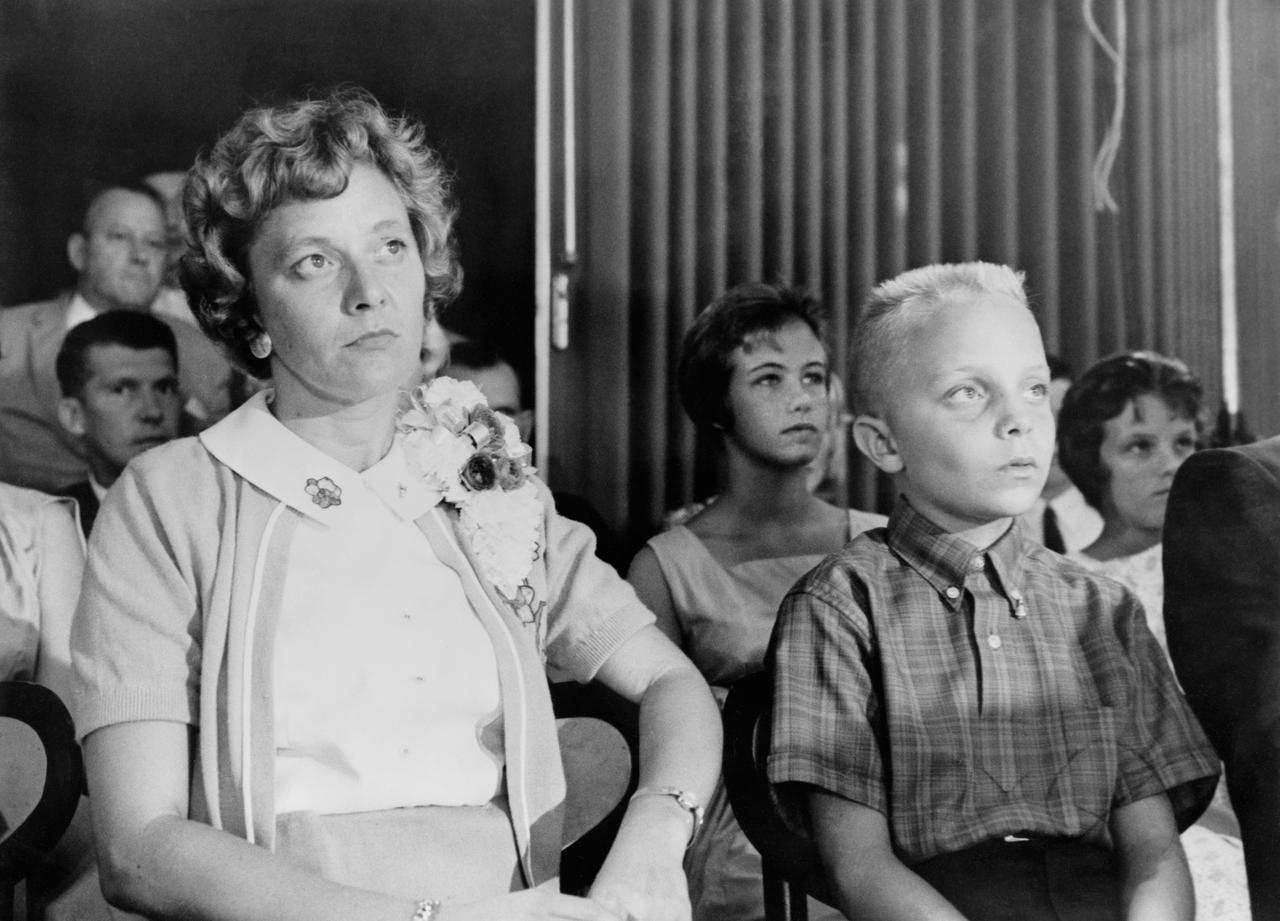
S61-03664 (23 July 1961) --- Astronaut Virgil I. (Gus) Grissom's wife and son watch from the audience as a press conference is held on July 23, 1961 at the Starlight motel. Photo credit: NASA
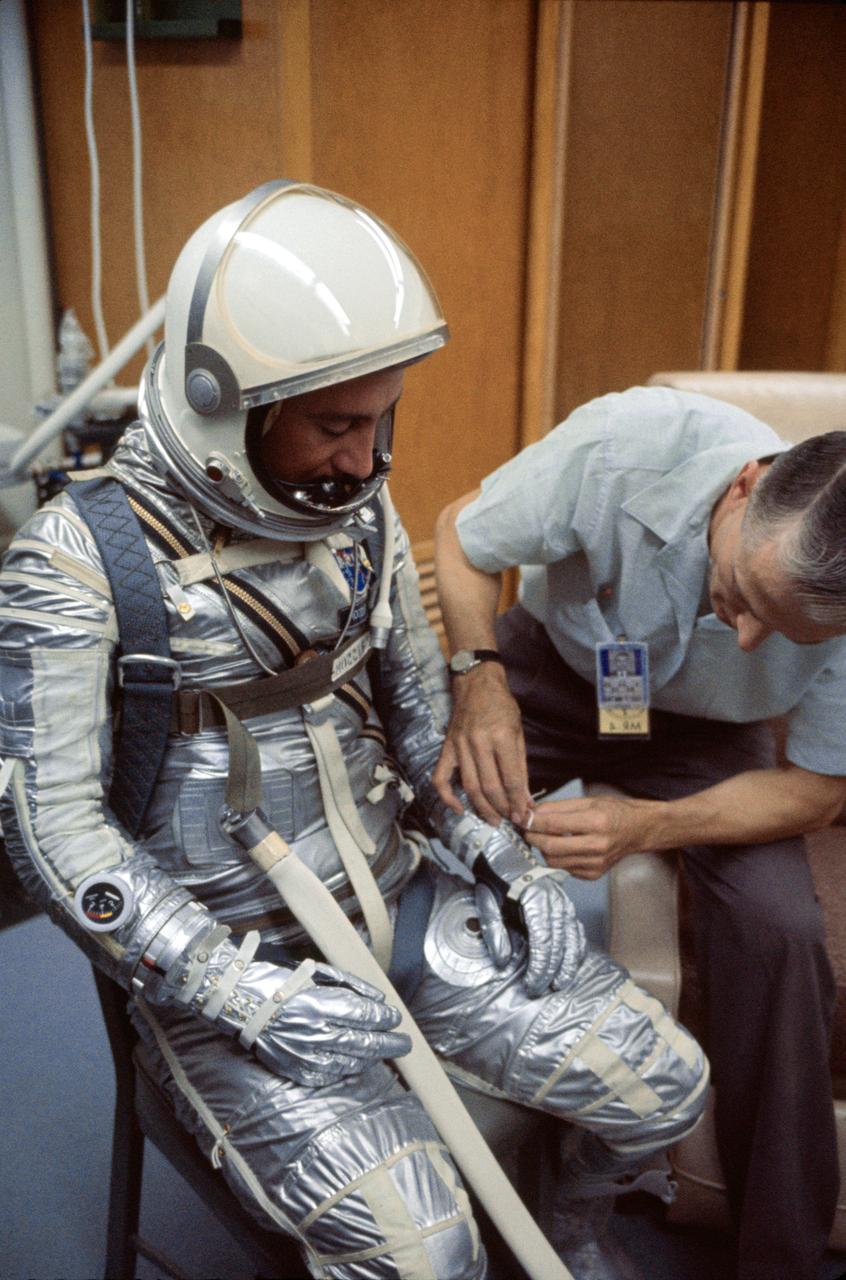
S64-36915 (1961) --- A NASA suit technician adjusts astronaut Virgil I. (Gus) Grissom's Mercury pressure suit during prelaunch activities at the Florida Space Center. Photo credit: NASA
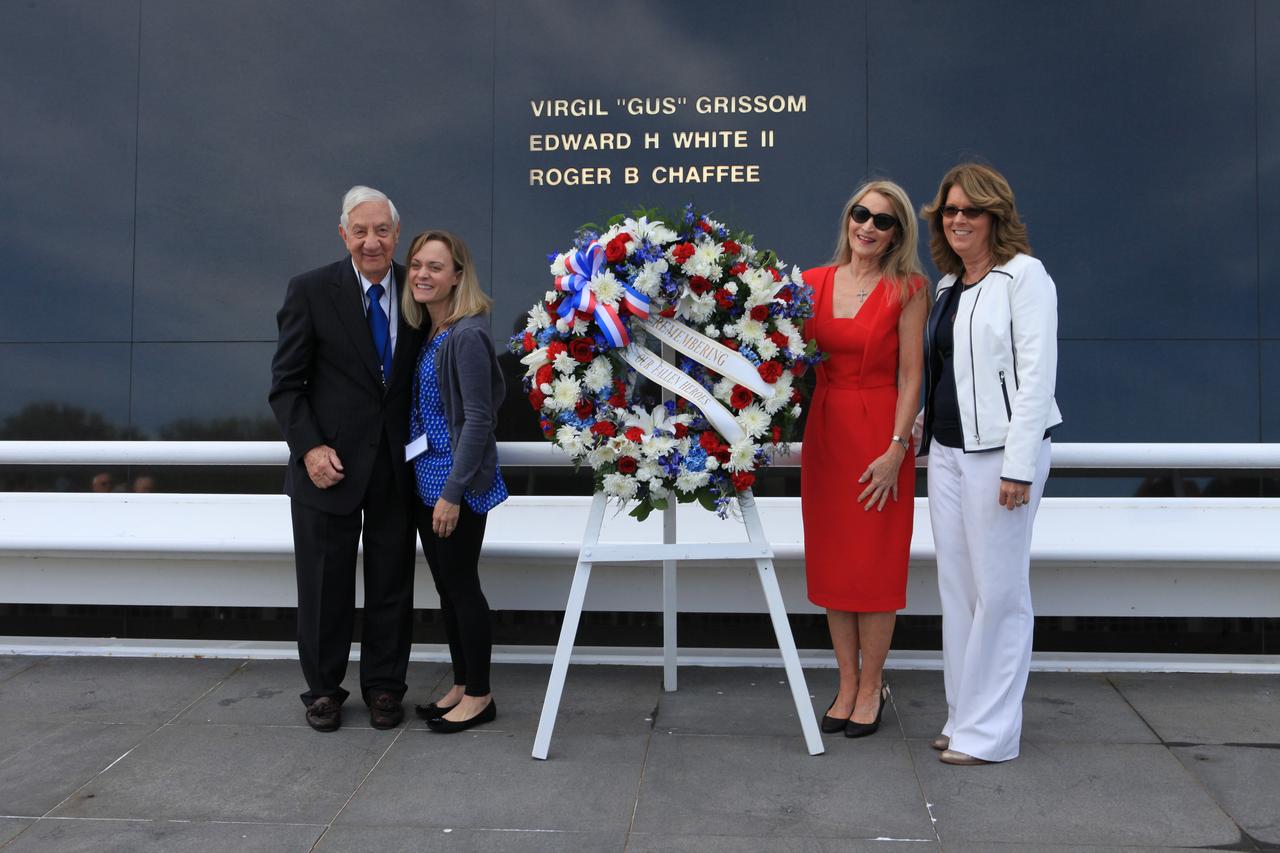
Family members of fallen Apollo 1 astronauts gather beside a wreath placed at the Space Mirror Memorial following Kennedy Space Center's Day of Remembrance ceremony at the Kennedy visitor complex. From left to right are Lowell Grissom, brother of astronaut Gus Grissom; Carly Sparks, granddaughter of Grissom; Bonnie White Baer, daughter of astronaut Ed White II; and Sheryl Chaffee, daughter of Roger Chaffee.
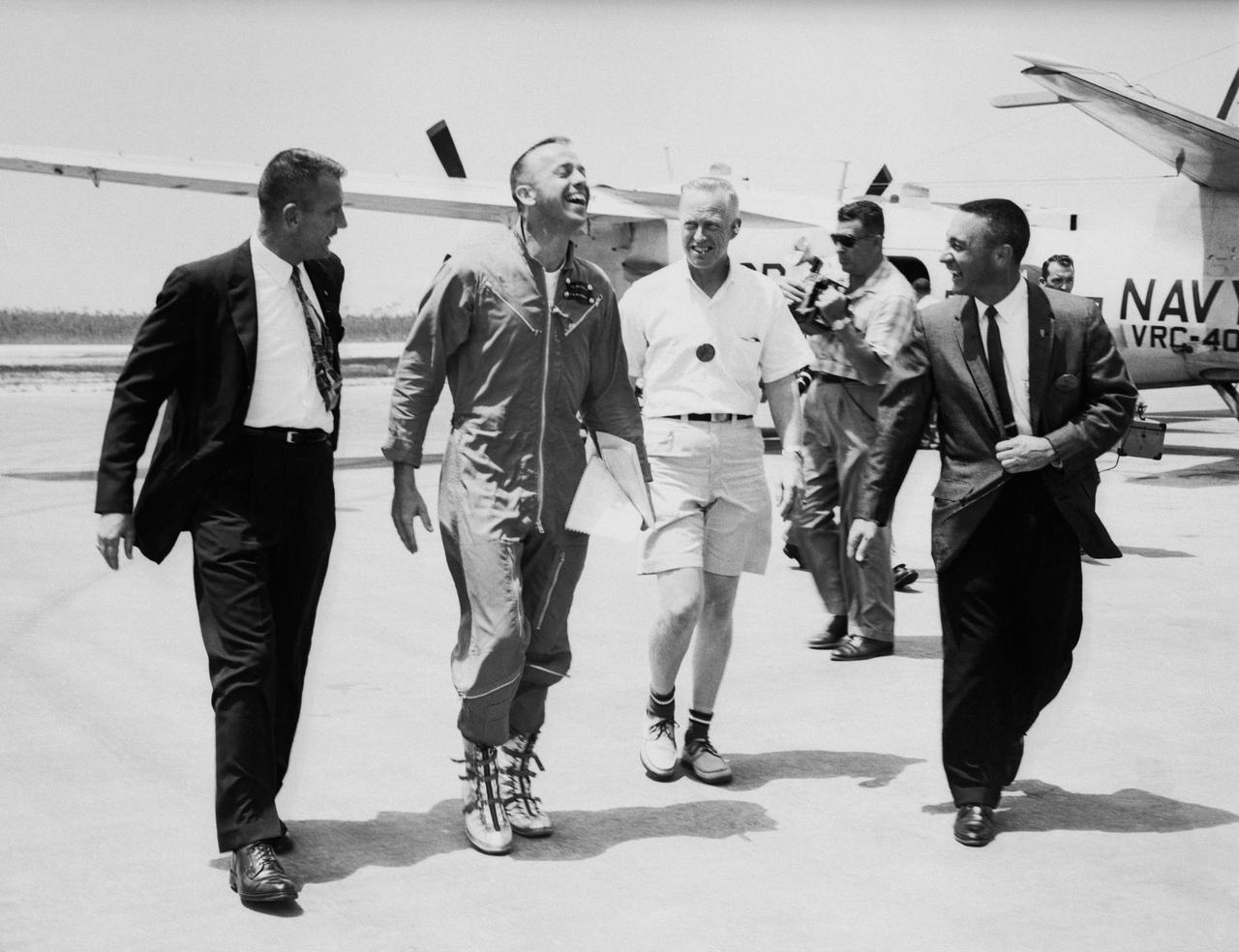
S61-02385 (5 July 1961) --- Astronaut Alan B. Shepard Jr. arrives at Grand Bahamas Island and is greeted by astronauts Virgil I. (Gus) Grissom (right) and Donald Slayton (left) and also by Keith Lindell (between Shepard and Grissom) after the first American suborbital flight. He will participate in a press conference with Grissom and Slayton. Photo credit: NASA or National Aeronautics and Space Administration
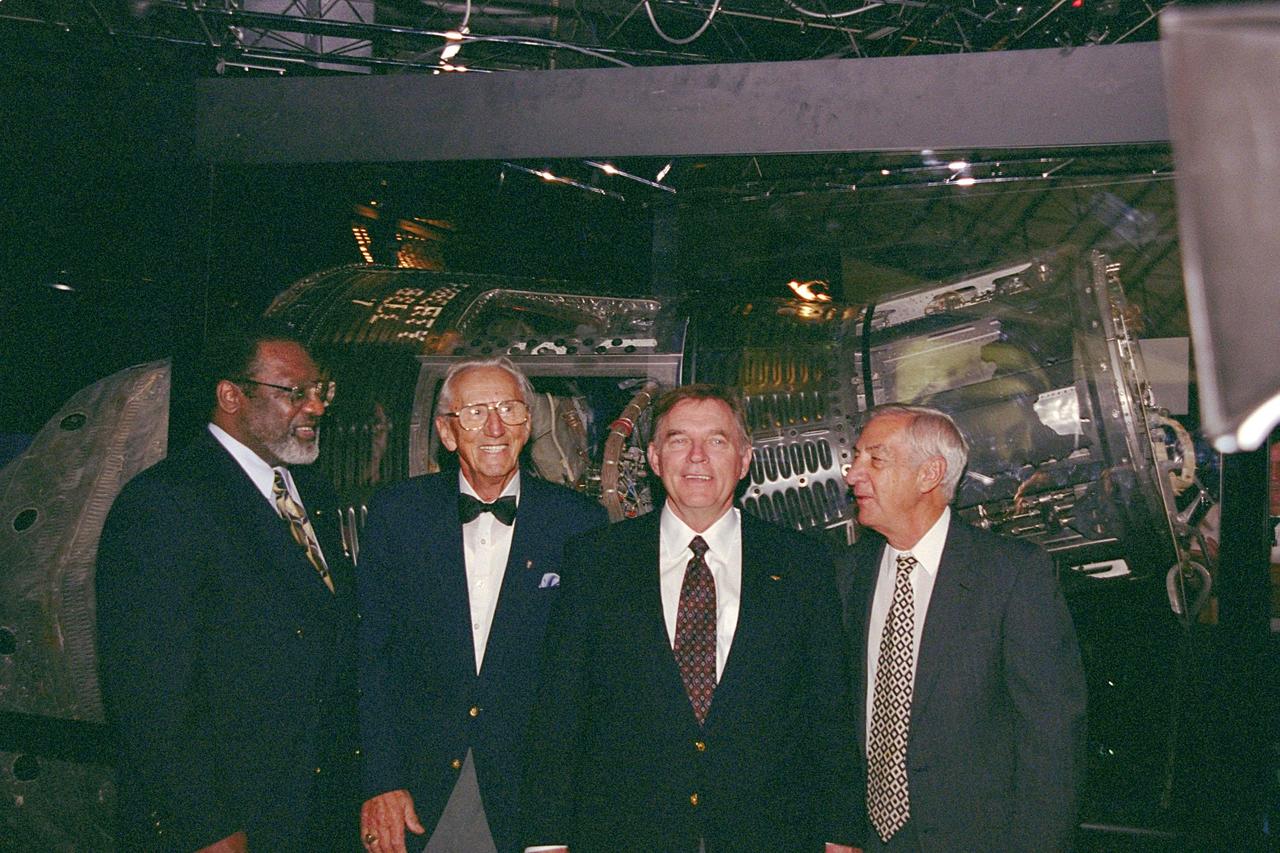
The Discovery Channel’s Liberty Bell 7 Space Capsule Exhibit, which opens to the public at the KSC Visitor Complex on Saturday, June 17, had a preview for the press today. Liberty Bell 7 launched U.S. Air Force Captain Virgil "Gus" Grissom July 21, 1961, on a mission that lasted 15 minutes and 37 seconds before sinking. The capsule lay undetected for nearly four decades before a Discovery Channel expedition located it and recovered it. Standing in front of the restored Liberty Bell 7 capsule are (left to right) KSC’s Deputy Director Jim Jennings; Gunther Wendt, who worked on the Liberty Bell 7 before its launch; Jim Lewis, who piloted the Hunt Club 1 helicopter that rescued Gus Grissom; and Larry Grissom, brother of Gus Grissom. The space capsule, now restored and preserved, is part of an interactive exhibit touring science centers and museums in 12 cities throughout the United States until 2003. The exhibit also includes hands-on elements such as a capsule simulator, a centrifuge, and ROV pilot
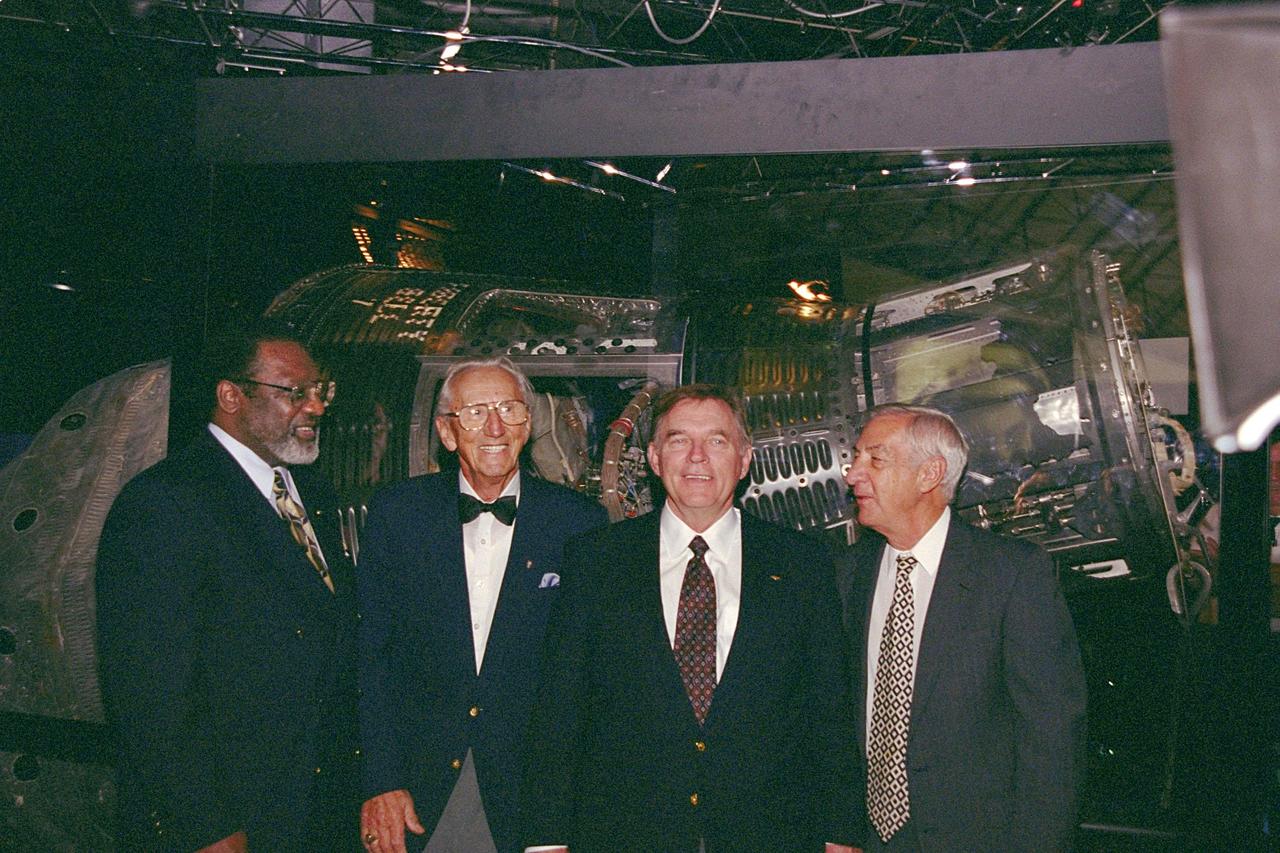
The Discovery Channel’s Liberty Bell 7 Space Capsule Exhibit, which opens to the public at the KSC Visitor Complex on Saturday, June 17, had a preview for the press today. Liberty Bell 7 launched U.S. Air Force Captain Virgil "Gus" Grissom July 21, 1961, on a mission that lasted 15 minutes and 37 seconds before sinking. The capsule lay undetected for nearly four decades before a Discovery Channel expedition located it and recovered it. Standing in front of the restored Liberty Bell 7 capsule are (left to right) KSC’s Deputy Director Jim Jennings; Gunther Wendt, who worked on the Liberty Bell 7 before its launch; Jim Lewis, who piloted the Hunt Club 1 helicopter that rescued Gus Grissom; and Larry Grissom, brother of Gus Grissom. The space capsule, now restored and preserved, is part of an interactive exhibit touring science centers and museums in 12 cities throughout the United States until 2003. The exhibit also includes hands-on elements such as a capsule simulator, a centrifuge, and ROV pilot
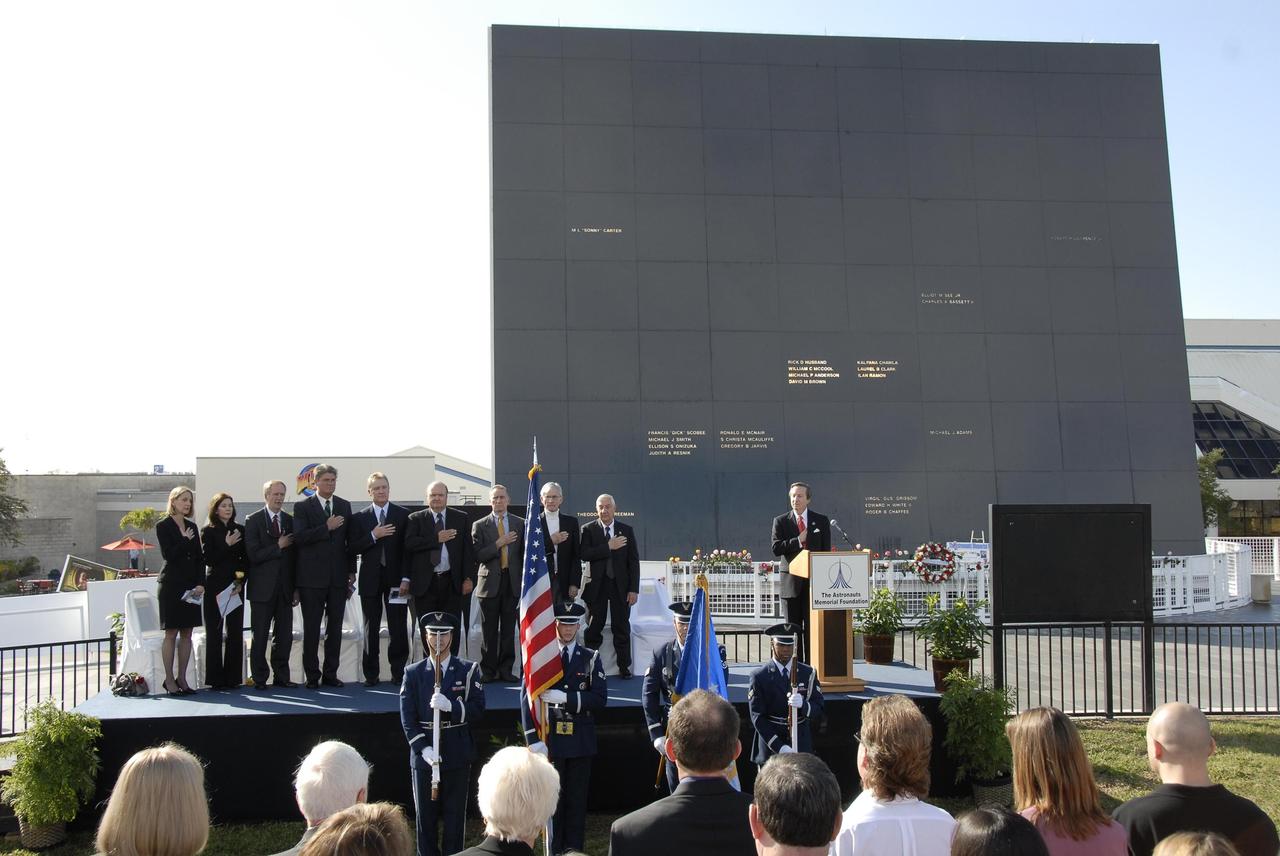
KENNEDY SPACE CENTER, FLA. -- Guests and attendees salute the U.S. flag during a ceremony at the KSC Visitor Complex held in remembrance of the astronauts lost in the Apollo 1 fire: Virgil "Gus" Grissom, Edward H. White II and Roger B. Chaffee. Among those gathered on stage are (from left) Faith Johnson, daughter of Theodore Freeman and Martha Chaffee, daughter of Roger Chaffee, Associate Administrator for Space Operations William Gerstenmaier and KSC Director Bill Parsons, plus former astronaut John Young and Lowell Grissom, brother of Gus Grissom (far right). At the podium is Stephen Feldman, president of the Astronauts Memorial Foundation. Behind the stage is the Space Mirror Memorial, designated as a national memorial by Congress and President George Bush in 1991 to honor fallen astronauts. Their names are emblazoned on the monument’s 42-½-foot-high by 50-foot-wide black granite surface as if to be projected into the heavens. Photo credit:NASA/Kim Shiflett
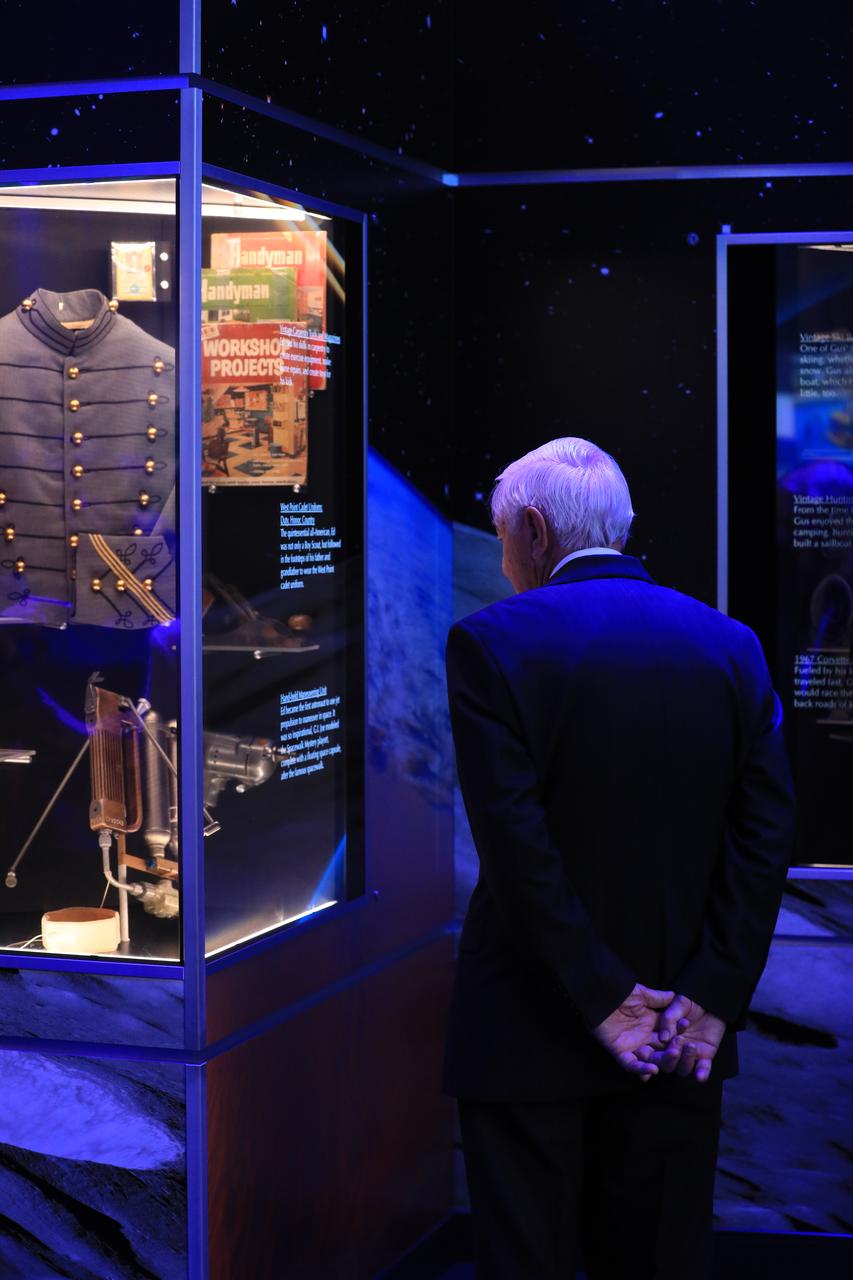
Lowell Grissom, brother of Gus Grissom, observes areas of the newly opened Apollo 1 tribute at the Apollo/Saturn V Center at NASA's Kennedy Space Center opened Jan. 27, 2017. Astronauts Gus Grissom, Ed White II and Chaffee perished in a fire at the launch pad on Jan. 27, 1967, during training for the mission. The tribute highlights the lives and careers of the astronauts. The tribute features numerous items recalling the lives of the three astronauts. The tribute also includes the three-part hatch to the spacecraft itself, the first time any part of the Apollo 1 spacecraft has been displayed publicly. A version of the hatch after it was redesigned is also showcased as an example of improvements NASA made throughout the agency and to the Apollo spacecraft that would later carry astronauts to the moon.
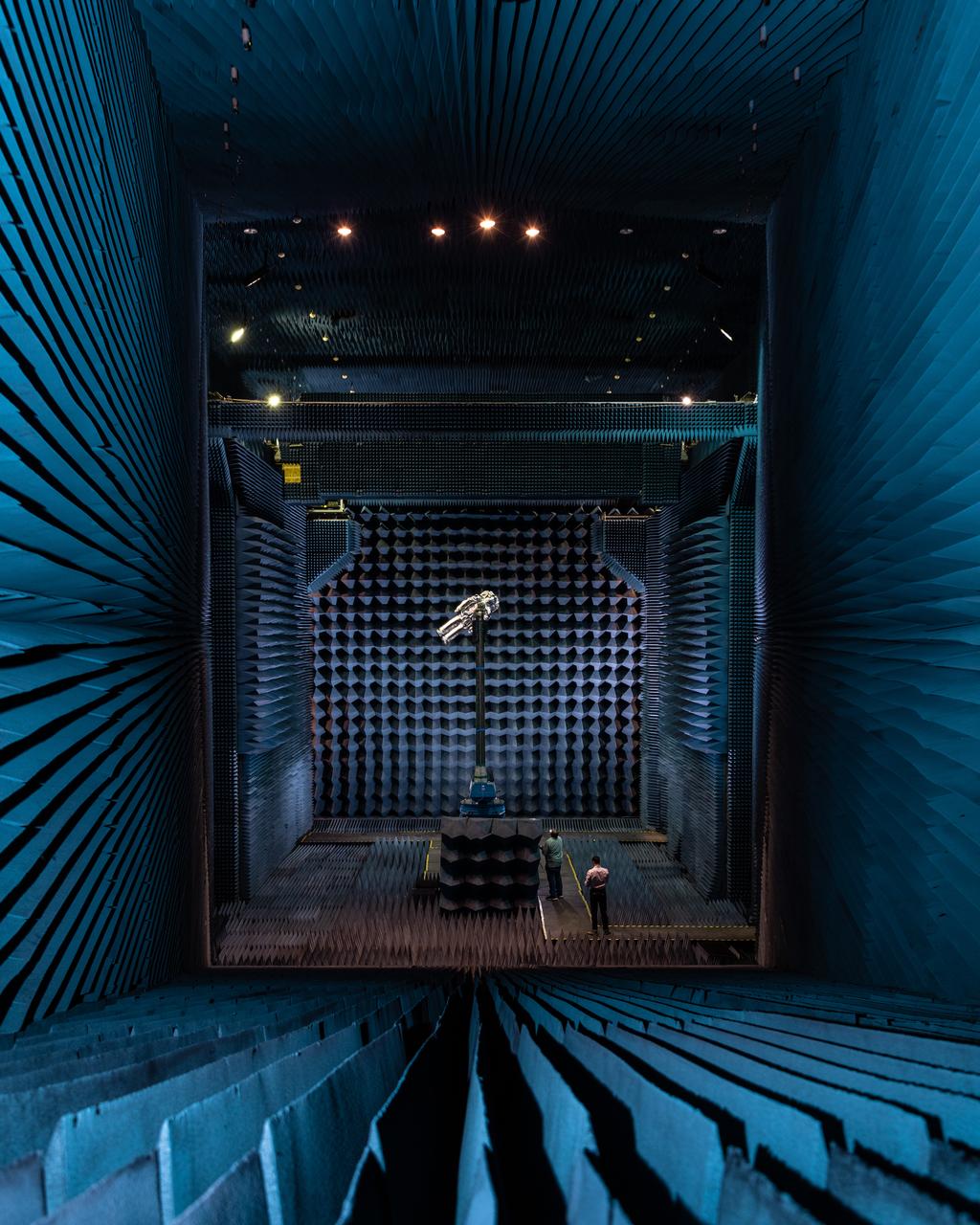
xEMU Antenna testing being performed in the B14 Anechoic Chamber to inspect MLI keep out zones for the antennas. The xEMU Test article is named xGUS, the successor to the EMU Test Article also named GUS (named after Gus Grissom and his iconic silver spacesuit). Image taken from where "horn" is located that sends out radio frequency signals for test. Photographer: Norah Moran – Johnson Space Center

NASA’s Kennedy Space Center in Florida paid tribute to the crews of Apollo 1 and space shuttles Challenger and Columbia, as well as other astronauts who lost their lives while furthering the cause of exploration and discovery, during the agency's Day of Remembrance on Jan. 27, 2022. Lowell Grissom, brother of fall astronaut Virgil “Gus” Grissom, speaks during a ceremony at the Center for Space Education at the Kennedy Space Center Visitor Complex.
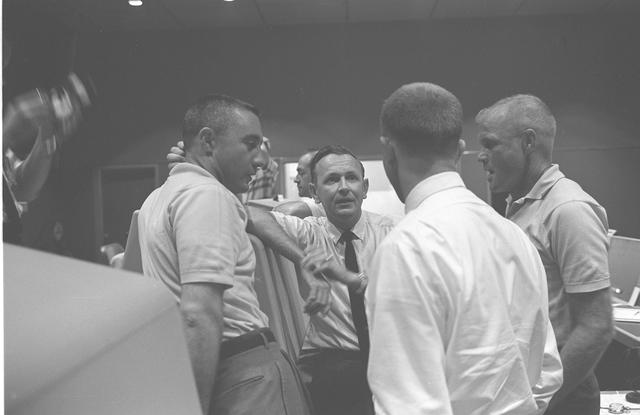
S64-10761 (1962) --- Astronauts Virgil I. (Gus) Grissom (left) and John H. Glenn Jr. hold a discussion in the Mercury Control Center during Mercury-Atlas 6 preflight activity. Glenn is the MA-6 pilot. Grissom was the pilot for the Mercury-Redstone 4 spaceflight made on July 21, 1961. Photo credit: NASA
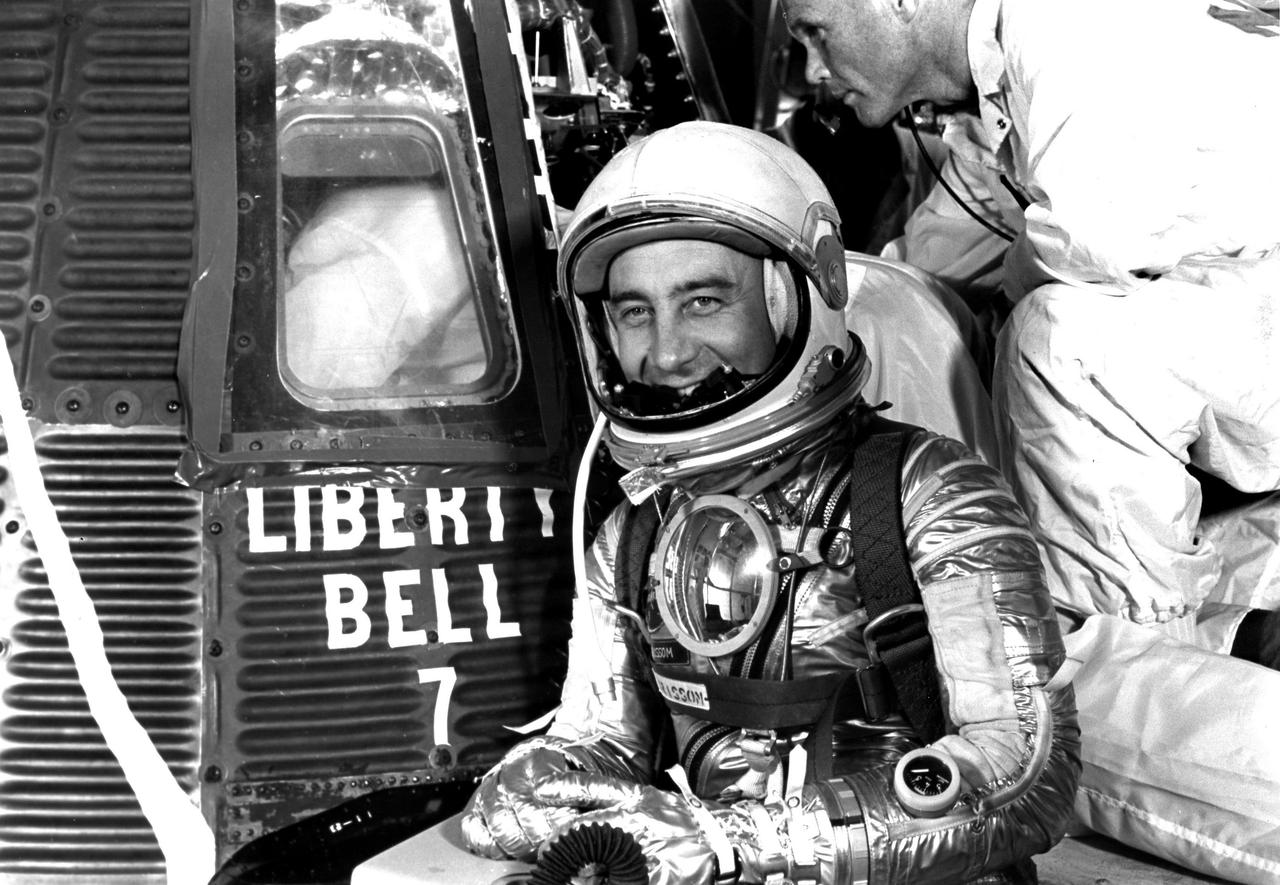
61-MR4-76 (1961) --- Astronaut Virgil I. (Gus) Grissom, suited up and ready to climb into Liberty Bell 7 spacecraft, poses for a picture. Backup pilot John Glenn is in the right corner of the view behind Grissom. The Mercury-Redstone 4 (MR-4) mission was scrubbed a few hours later due to unfavorable weather over the launch pad. Photo credit: NASA
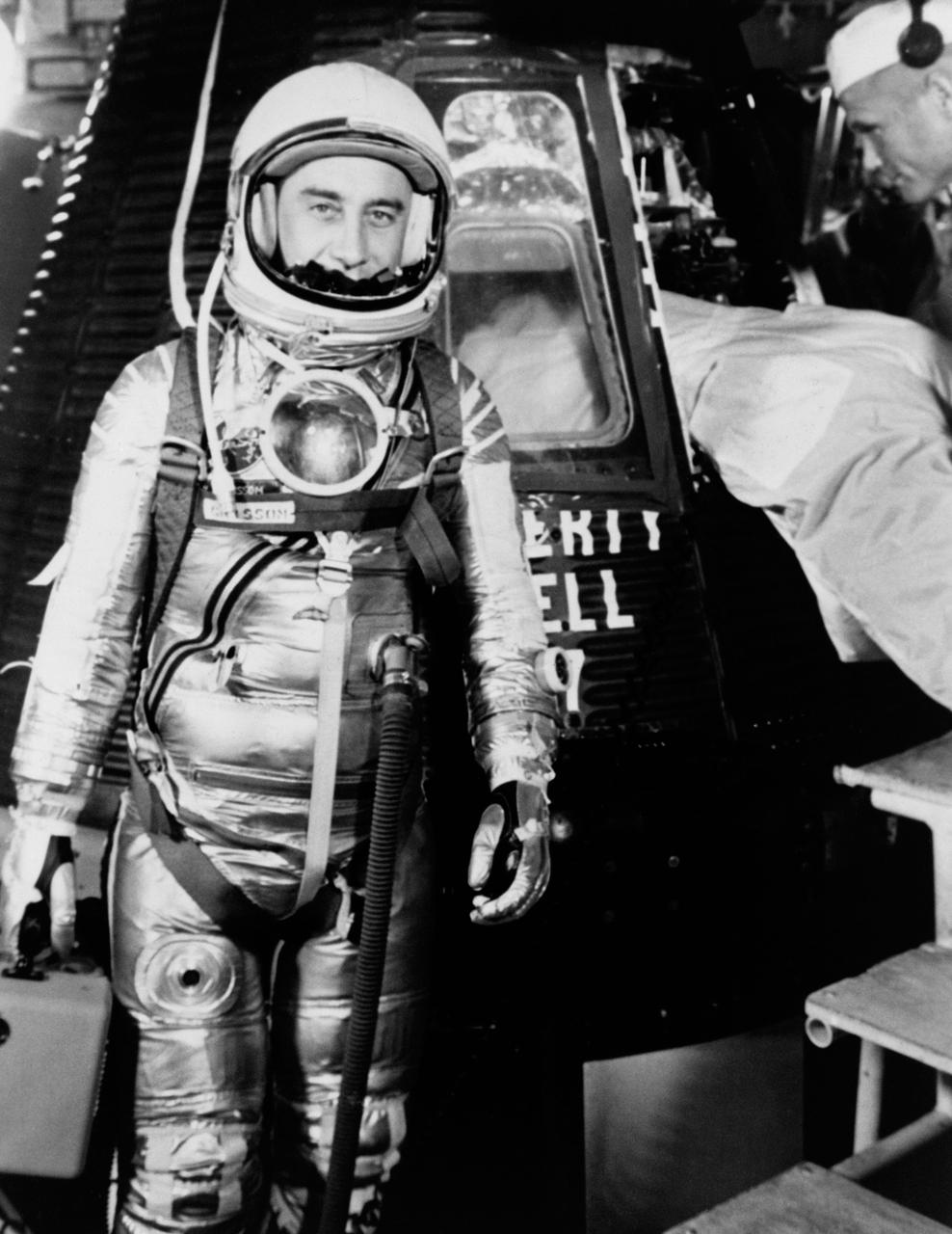
S61-02888 (1961) --- Astronaut Virgil I. (Gus) Grissom, suited up and ready to climb into Liberty Bell 7 spacecraft, stands in front of the capsule for a picture. Backup pilot John Glenn is in the right corner of the view behind Grissom. The Mercury-Redstone 4 (MR-4) mission was scrubbed a few hours later due to unfavorable weather over the launch pad. Photo credit: NASA

Former NASA astronauts Buzz Aldrin, left, and Winston Scott, center, talk with Lowell Grissom, bother of astronaut Gus Grissom as they walk to the Space Mirror Memorial. The names of fallen astronauts from Apollo 1, Challenger and Columbia, as well as the astronauts who perished in training and commercial airplane accidents are emblazoned on the monument. Each year spaceport employees and guests join others throughout NASA honoring the contributions of astronauts who have perished in the conquest of space.
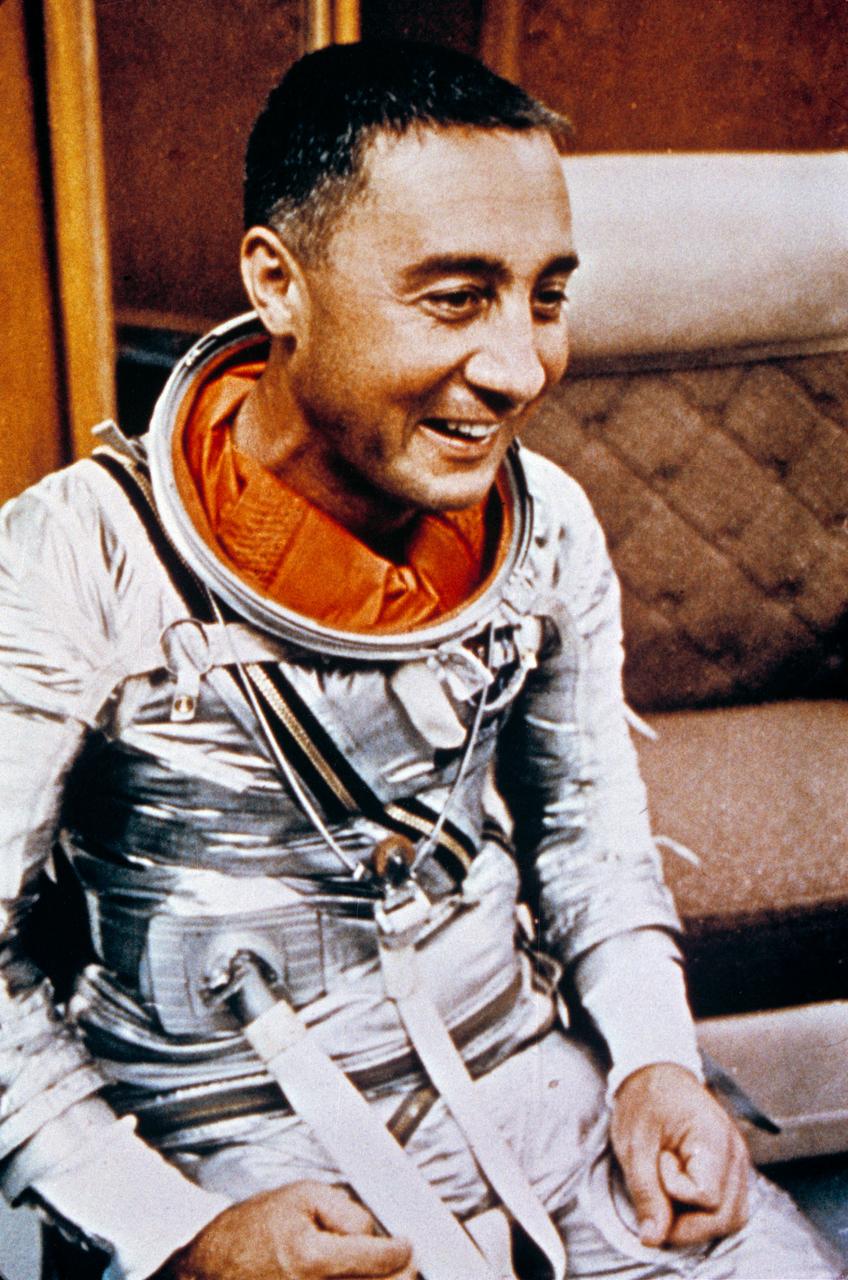
S64-36909 (1961) --- Astronaut Virgil I. (Gus) Grissom, pilot of the Mercury-Redstone 4 (MR-4) spaceflight, wearing Mercury pressure suit, poses for picture during training activities at the Florida Space Center. Photo credit: NASA
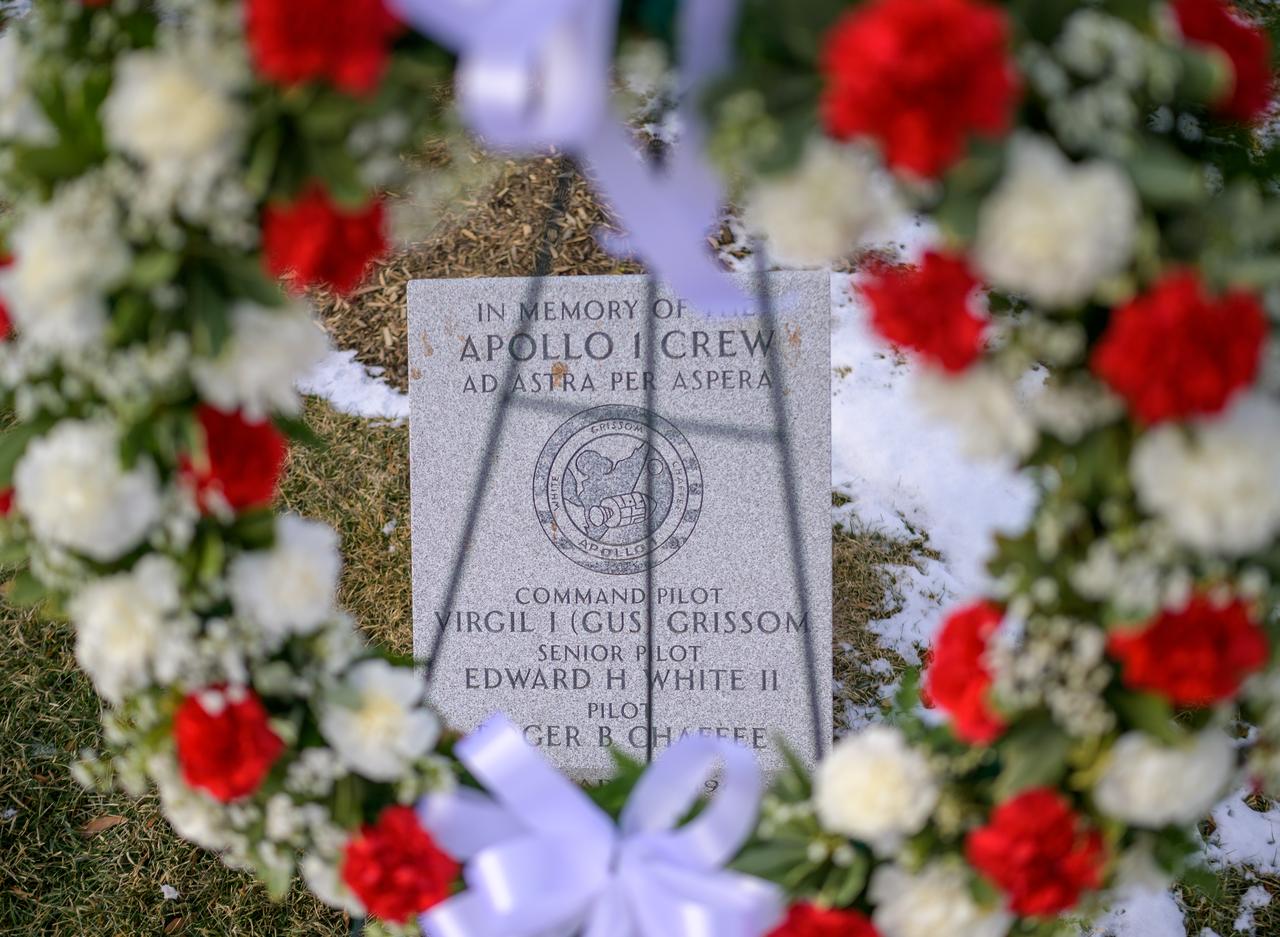
A wreath is left at the Apollo 1 monument as part of NASA's Day of Remembrance, Thursday, Jan. 23, 2025, at Arlington National Cemetery in Arlington, Va. The monument honors and memorializes the Apollo 1 crew of Virgil I. “Gus” Grissom, Edward H. White II, and Roger B. Chaffee. Photo Credit: (NASA/Bill Ingalls)
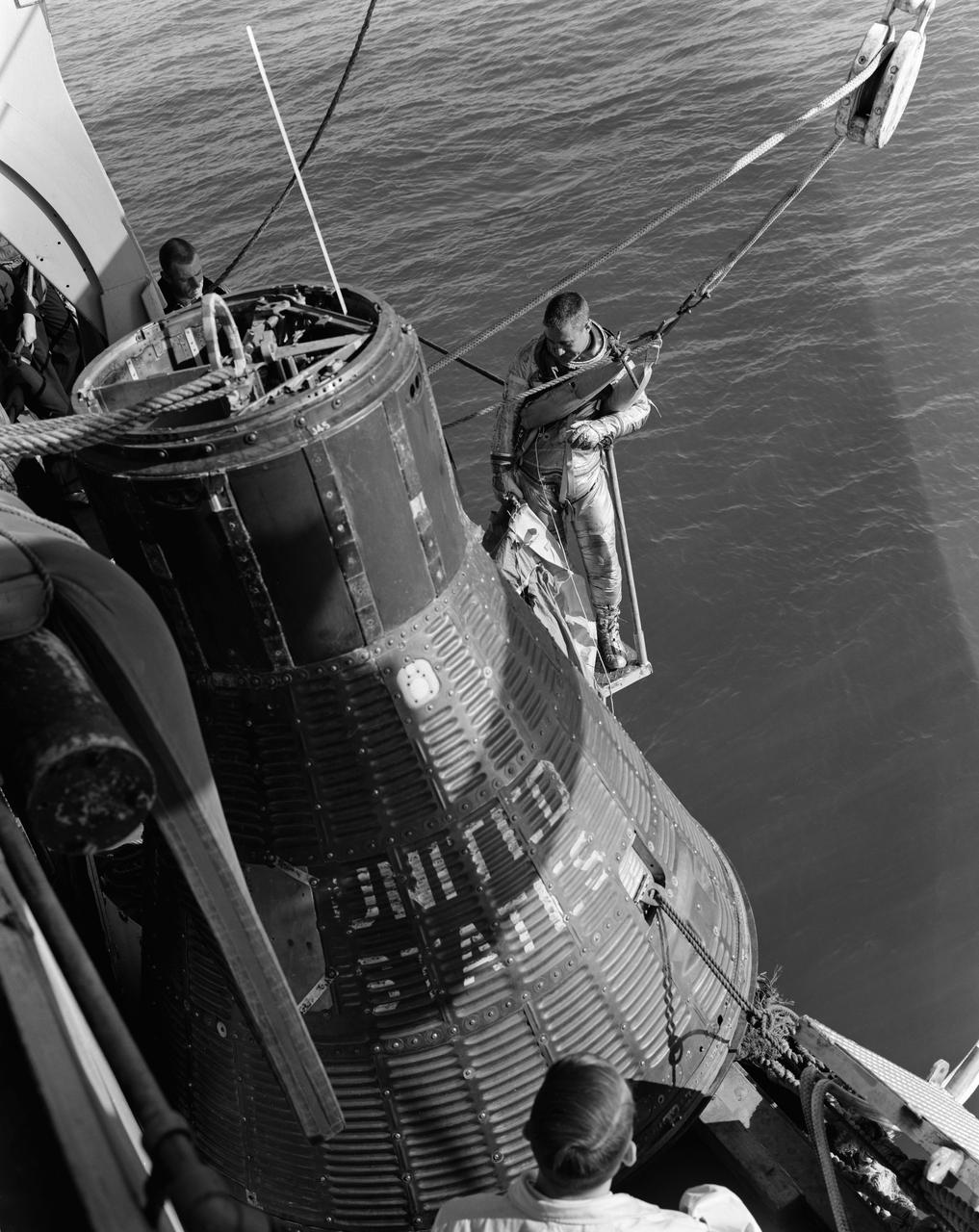
S61-03885 (26 April 1961) --- Astronaut Virgil I. (Gus) Grissom, wearing the new Mercury spacesuit, stands outside of a mock-up of the Mercury capsule on the deck of a ship taking him to emergency water egress training activities. Photo credit: NASA

The original seven astronauts for the Mercury Project pose in front of an Air Force Jet. From left to right: Scott Carpenter, L. Gordon Cooper, John H. Glenn, Virgil I. Gus Grissom, Walter M. Wally Schirra, Alan B. Shepard, and Donald K. Deke Slayton.
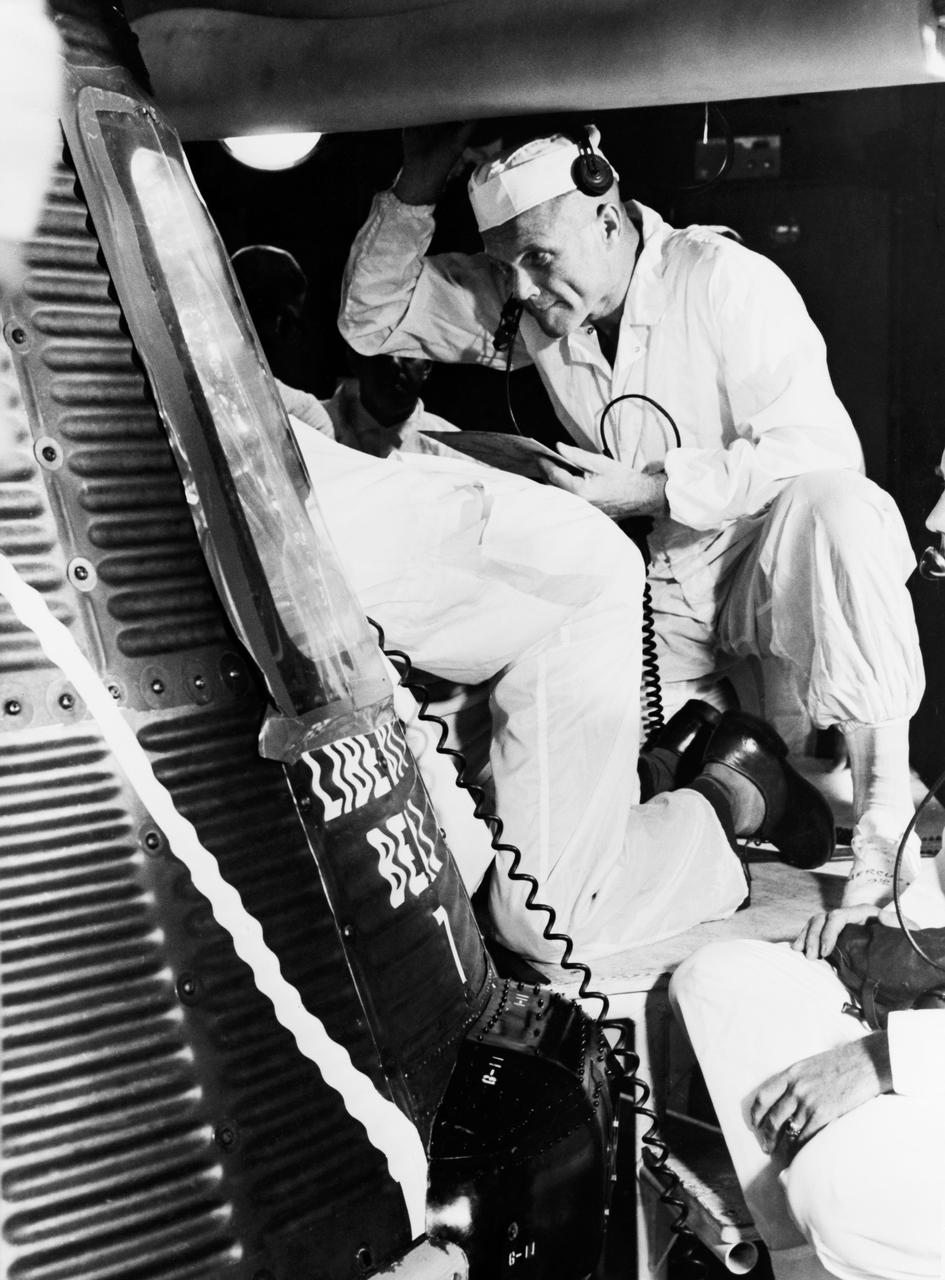
S61-03740 (20 July 1961) --- Astronaut John H. Glenn Jr. and a technician examine the interior of the Liberty Bell 7, the capsule flown a few days later during the Mercury-Redstone 4 mission with astronaut Virgil I. (Gus) Grissom. Photo credit: NASA
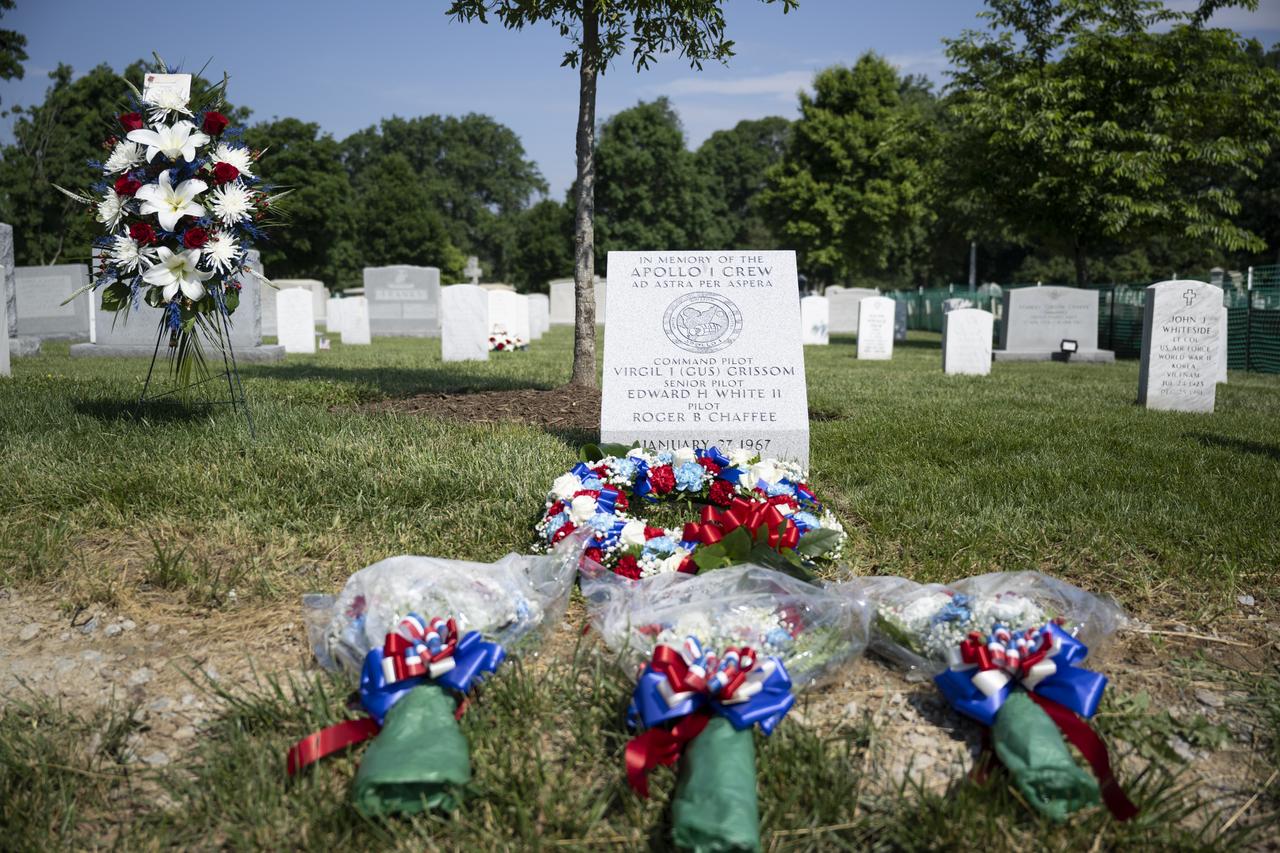
The Apollo 1 monument at Arlington National Cemetery is seen following its dedication, Thursday, June 2, 2022, in Arlington, Va. The monument honors and memorializes the Apollo 1 crew of Virgil I. “Gus” Grissom, Edward H. White II, and Roger B. Chaffee. Photo Credit: (NASA/Bill Ingalls)
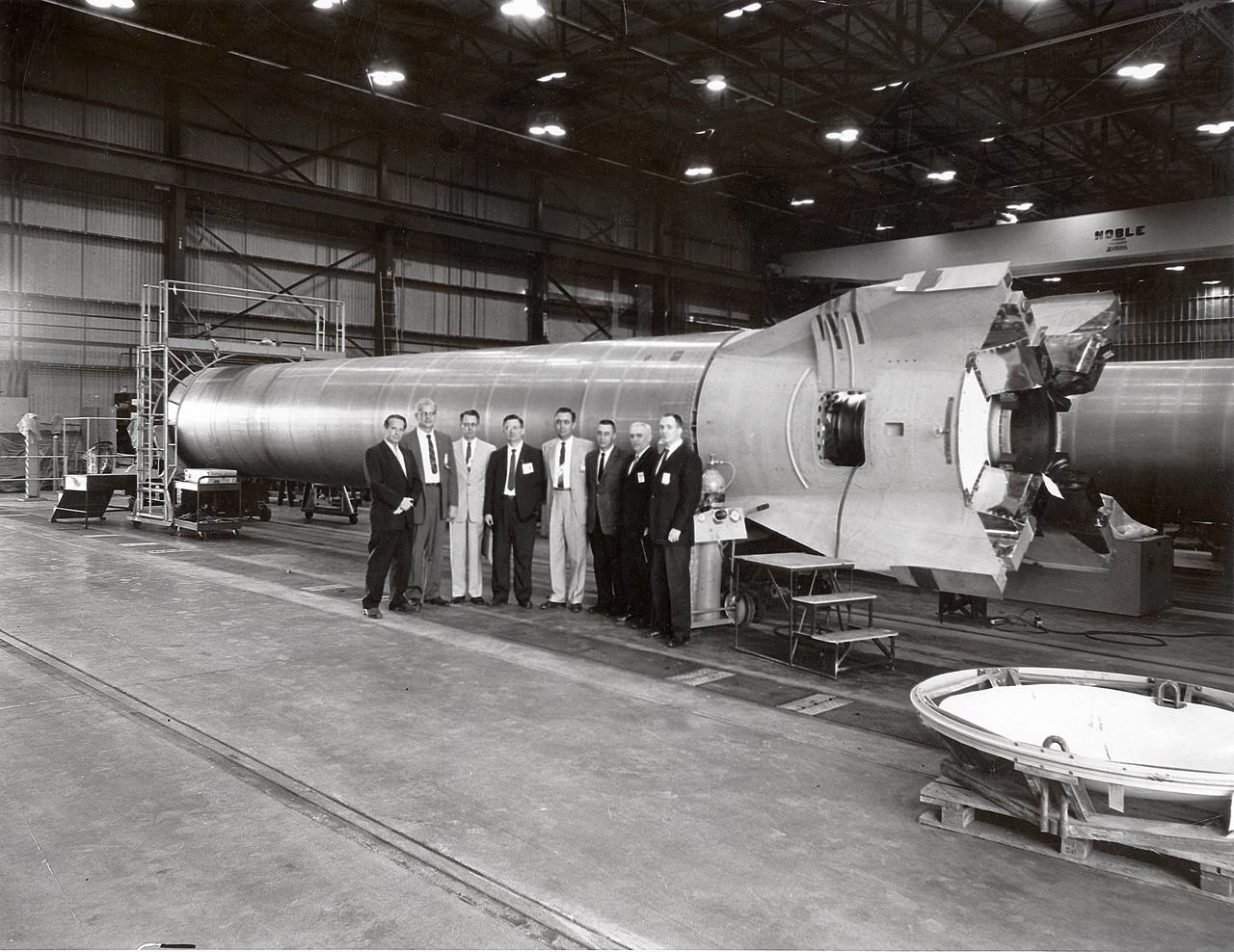
This photograph shows a group of officials standing before a Mercury-Redstone booster at the Marshall Space Flight Center (MSFC). Among those in the photograph are astronauts James Lovell, Walter Schirra, and Gus Grissom. Also pictured is Joachim Kuettner who managed responsibilities of MSFC's Mercury-Redstone program.
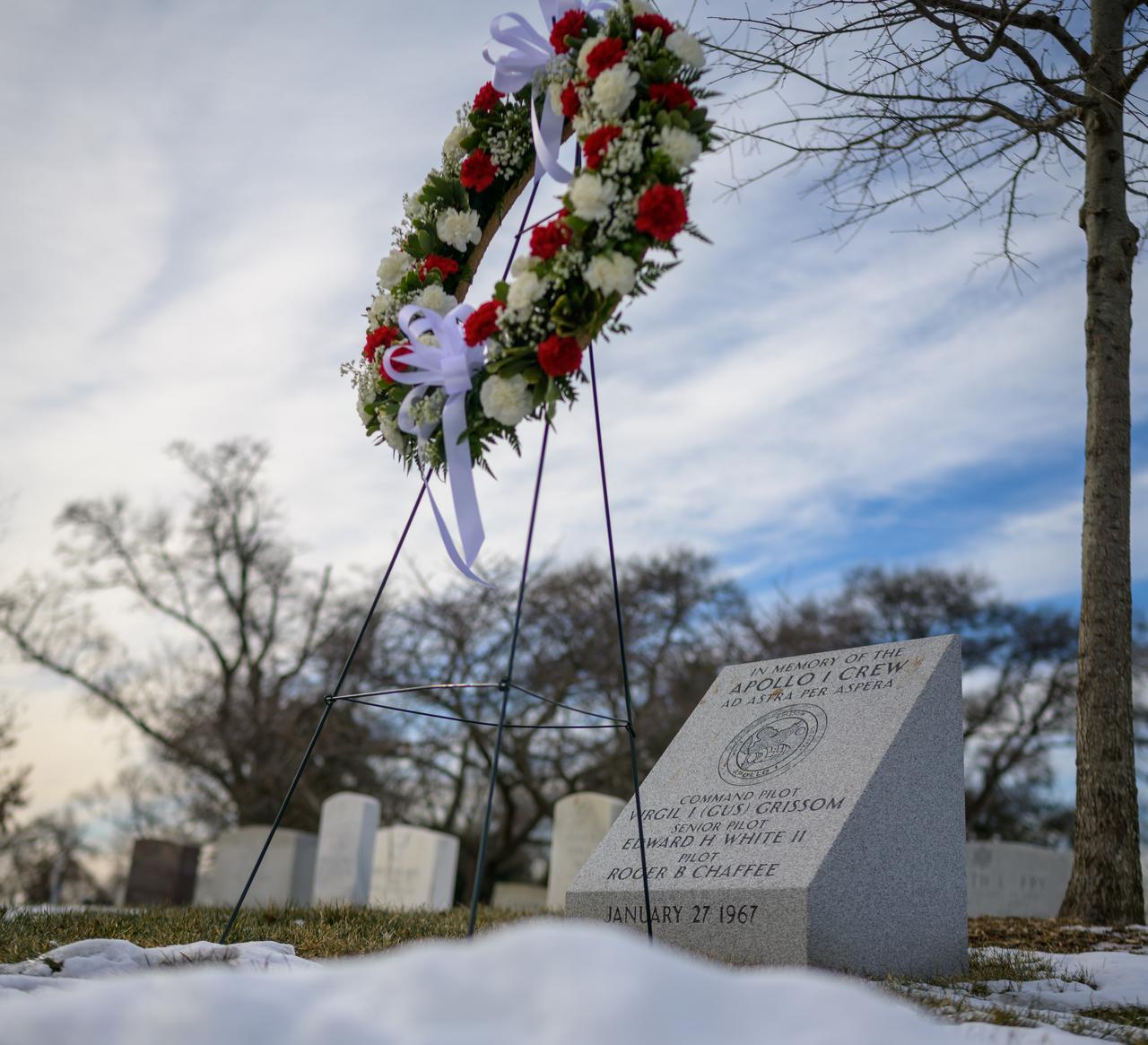
A wreath is left at the Apollo 1 monument as part of NASA's Day of Remembrance, Thursday, Jan. 23, 2025, at Arlington National Cemetery in Arlington, Va. The monument honors and memorializes the Apollo 1 crew of Virgil I. “Gus” Grissom, Edward H. White II, and Roger B. Chaffee. Photo Credit: (NASA/Bill Ingalls)
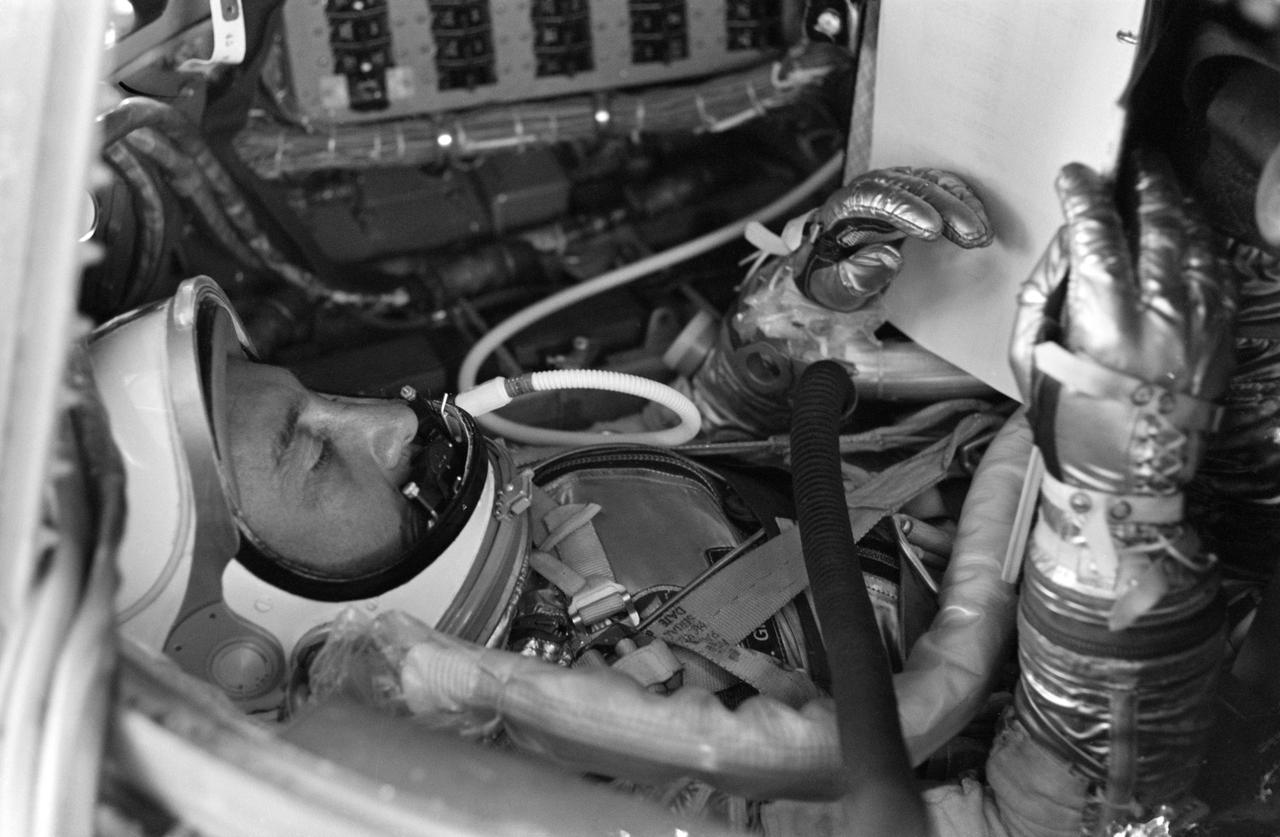
S64-10806 (21 July 1961) --- Astronaut Virgil I. (Gus) Grissom, pilot of the Mercury-Redstone 4 (MR-4) spaceflight, in his Mercury "Liberty Bell 7" spacecraft is checking his flight plan during prelaunch activities. Photo credit: NASA
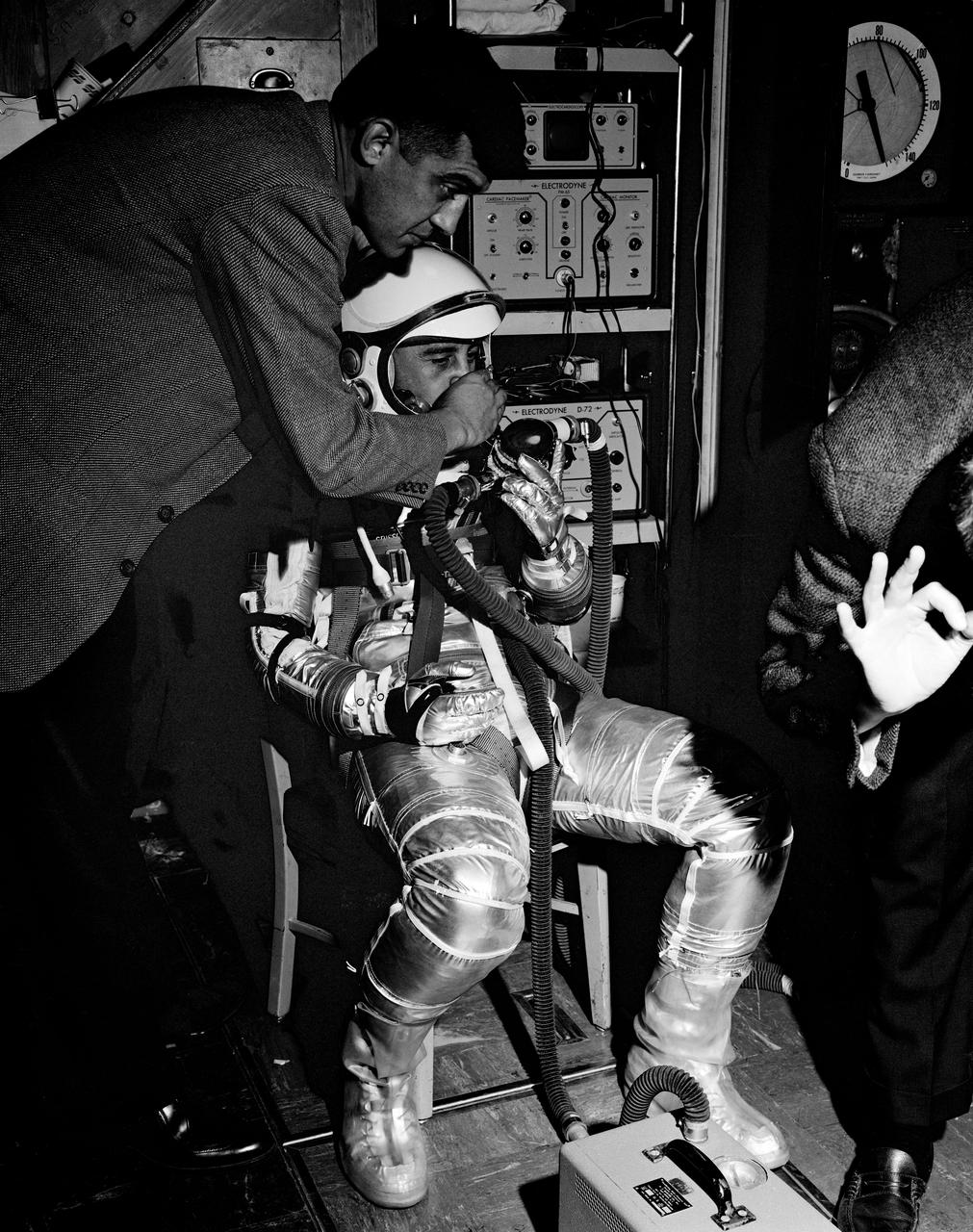
G61-00490 (1961) --- Astronaut Virgil I. (Gus) Grissom, wearing the new Mercury pressure suit, is preparing for centrifuge training. He is receiving assistance in adjusting the breathing apparatus which is attached to a data recording device at his feet. Assisting him is Dr. Jackson. Photo credit: NASA

Astronaut Virgil I. "Gus" Grissom, one of the original seven astronauts for Mercury Project selected by NASA on April 27, 1959. The MR-4 mission, boosted by the Mercury-Redstone vehicle, made the second marned suborbital flight. The capsule, Liberty Bell 7, sank into the sea after the splashdown.
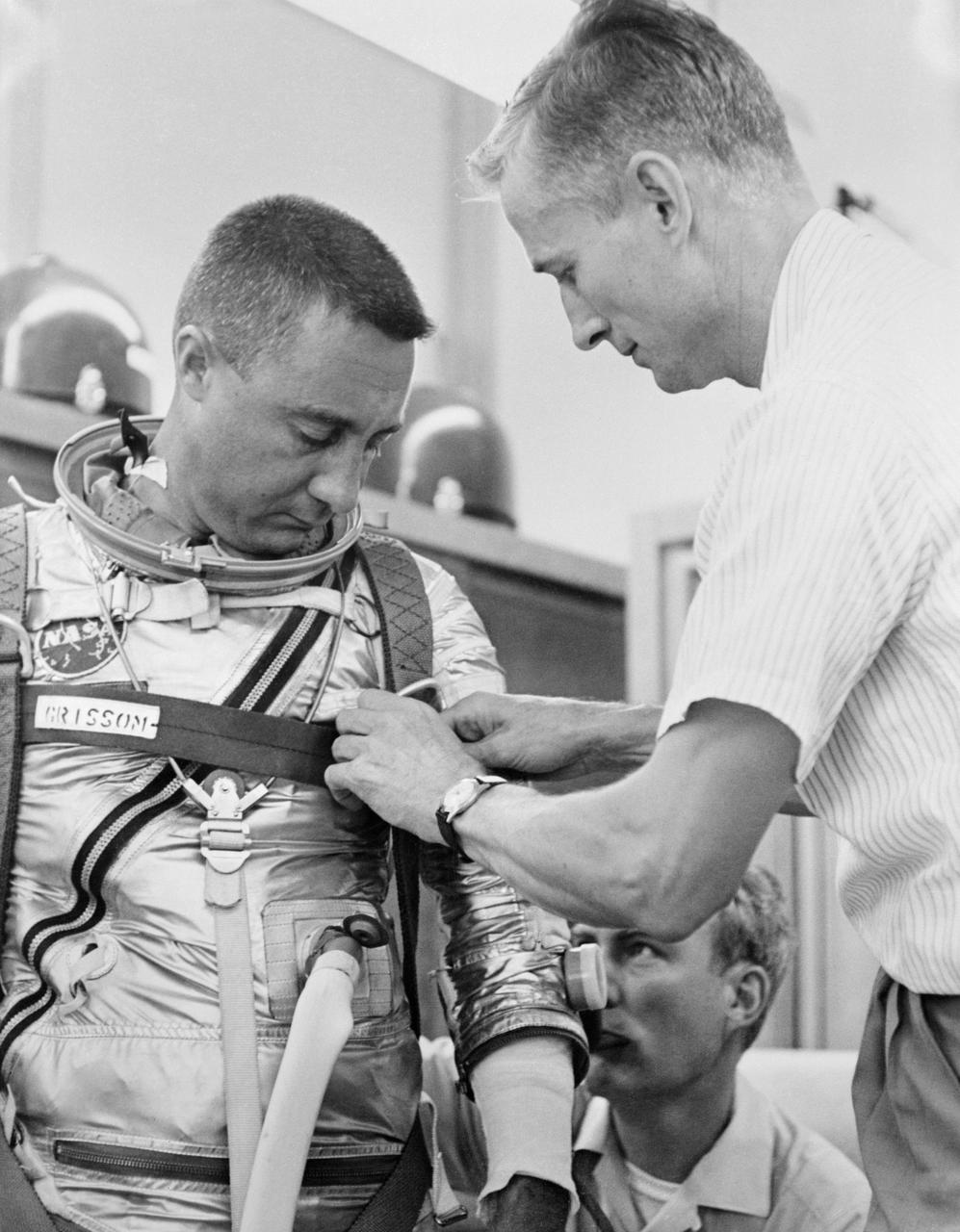
S61-02839 (1961) --- Astronaut Virgil I. (Gus) Grissom, pilot of the Mercury-Redstone 4 (MR-4) spaceflight, suits up for MR-4 simulation training. Assisting is suit technician Joe Schmitt. Photo credit: NASA
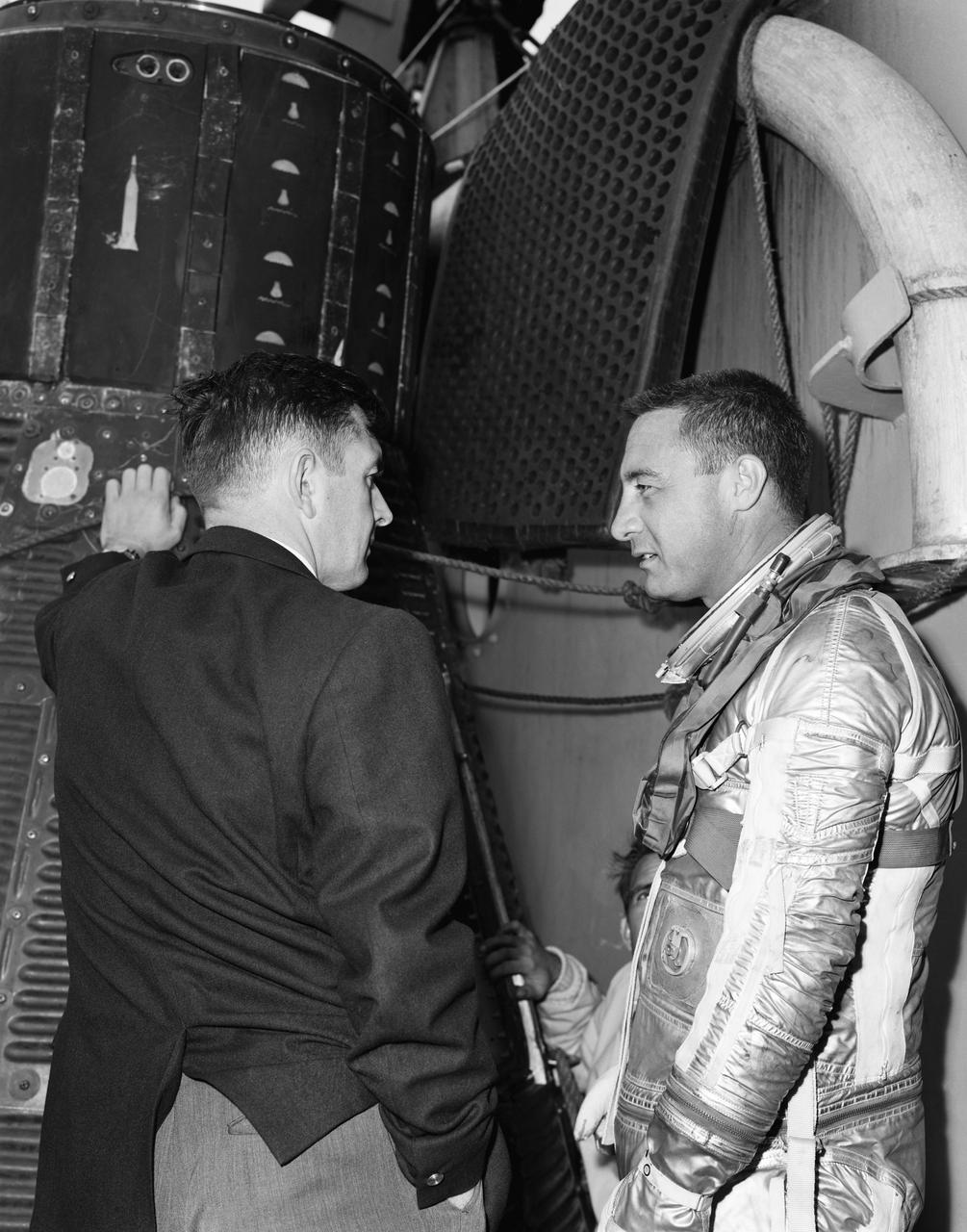
S61-03893 (26 April 1961) --- Astronaut Virgil I. (Gus) Grissom, wearing the new Mercury spacesuit, poses for a picture during emergency egress training activities at the Florida Space Center. He is seen standing in front of a mock-up of the Mercury capsule. Photo credit: NASA
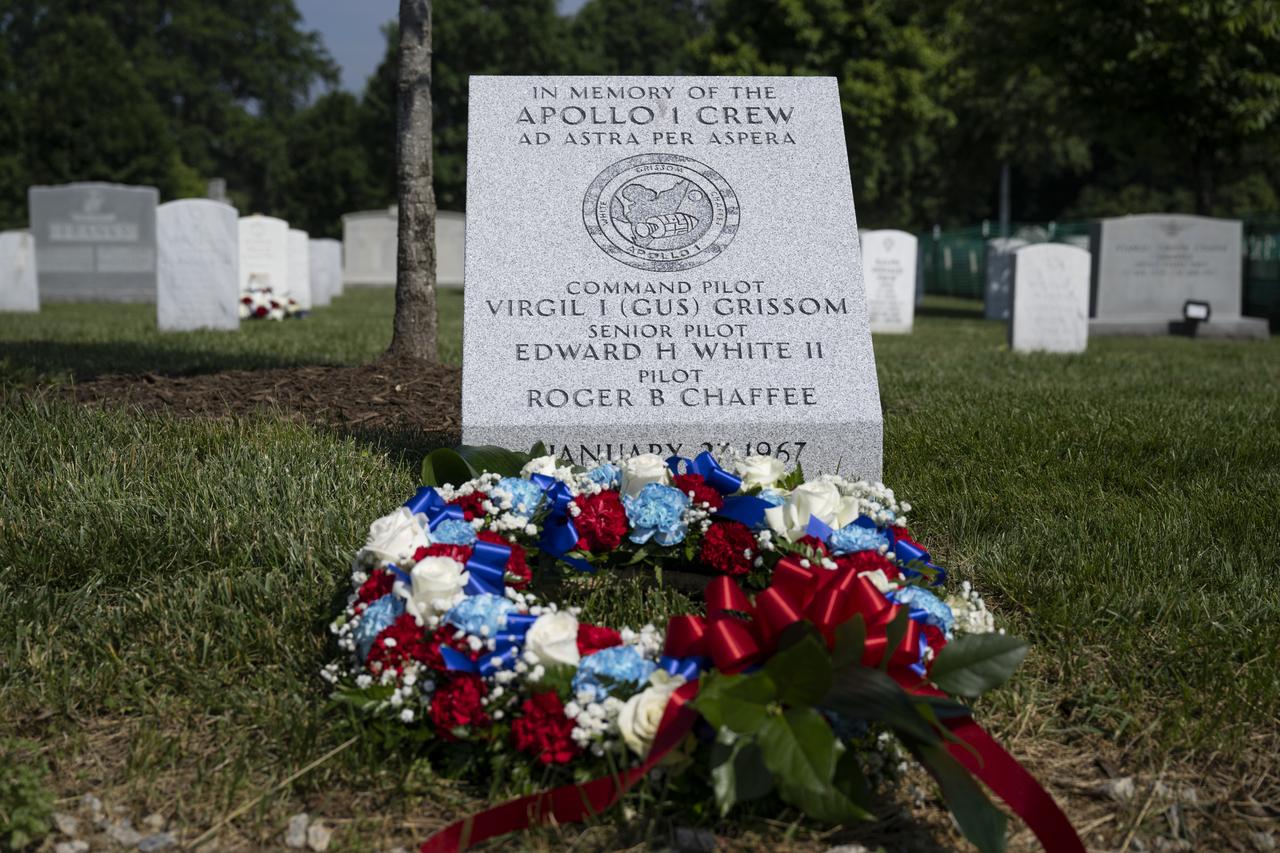
The Apollo 1 monument is seen at Arlington National Cemetery, Thursday, June 2, 2022, in Arlington, Va. The monument honors and memorializes the Apollo 1 crew of Virgil I. “Gus” Grissom, Edward H. White II, and Roger B. Chaffee. Photo Credit: (NASA/Bill Ingalls)
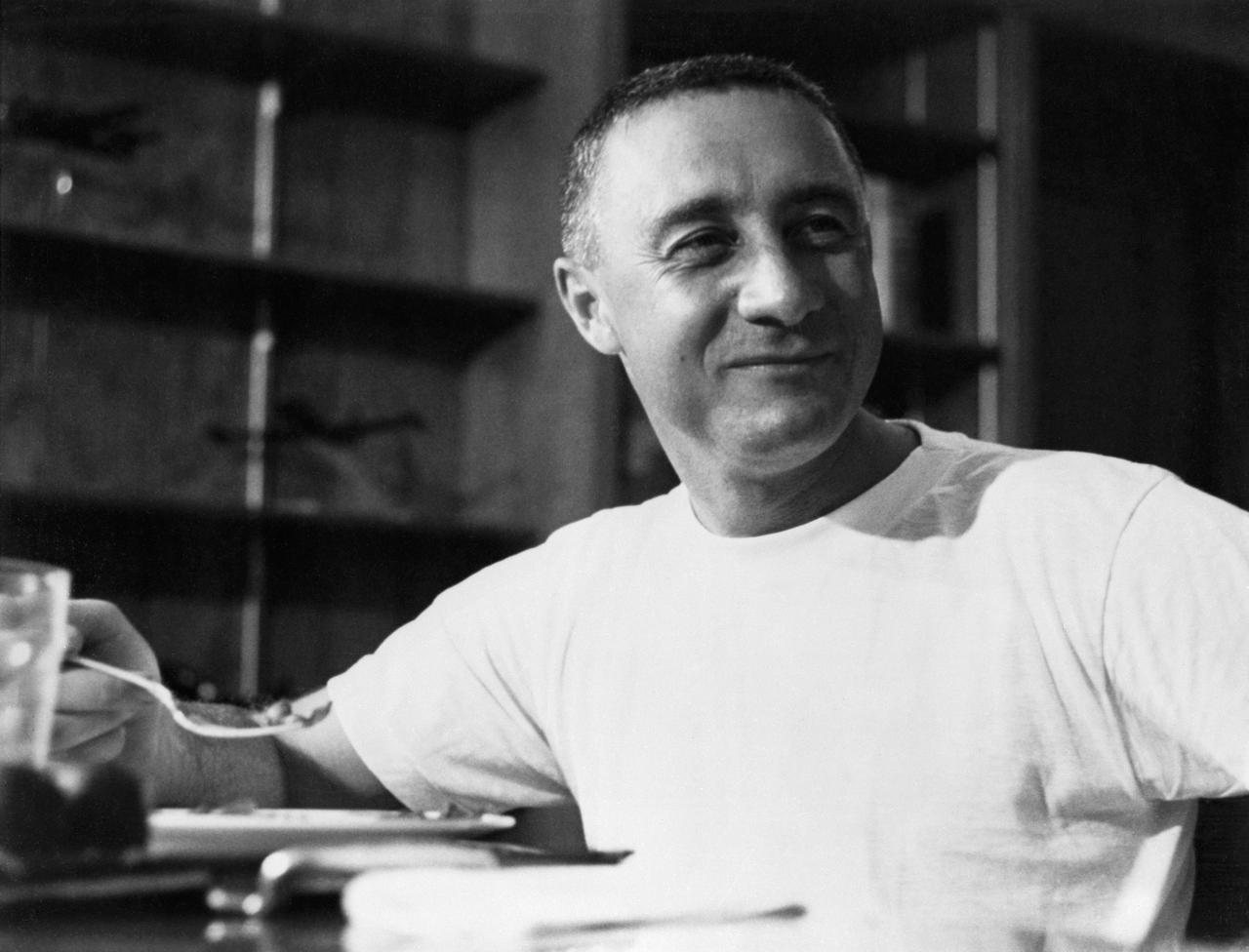
S61-02898 (21 July 1961) --- Virgil I. (Gus) Grissom, pilot of the Mercury-Redstone 4 (MR-4) ?Liberty Bell 7? spaceflight, enjoys a meal aboard the recovery ship, USS Randolph, following his 15-minute, 37-second suborbital space mission. Photo credit: NASA
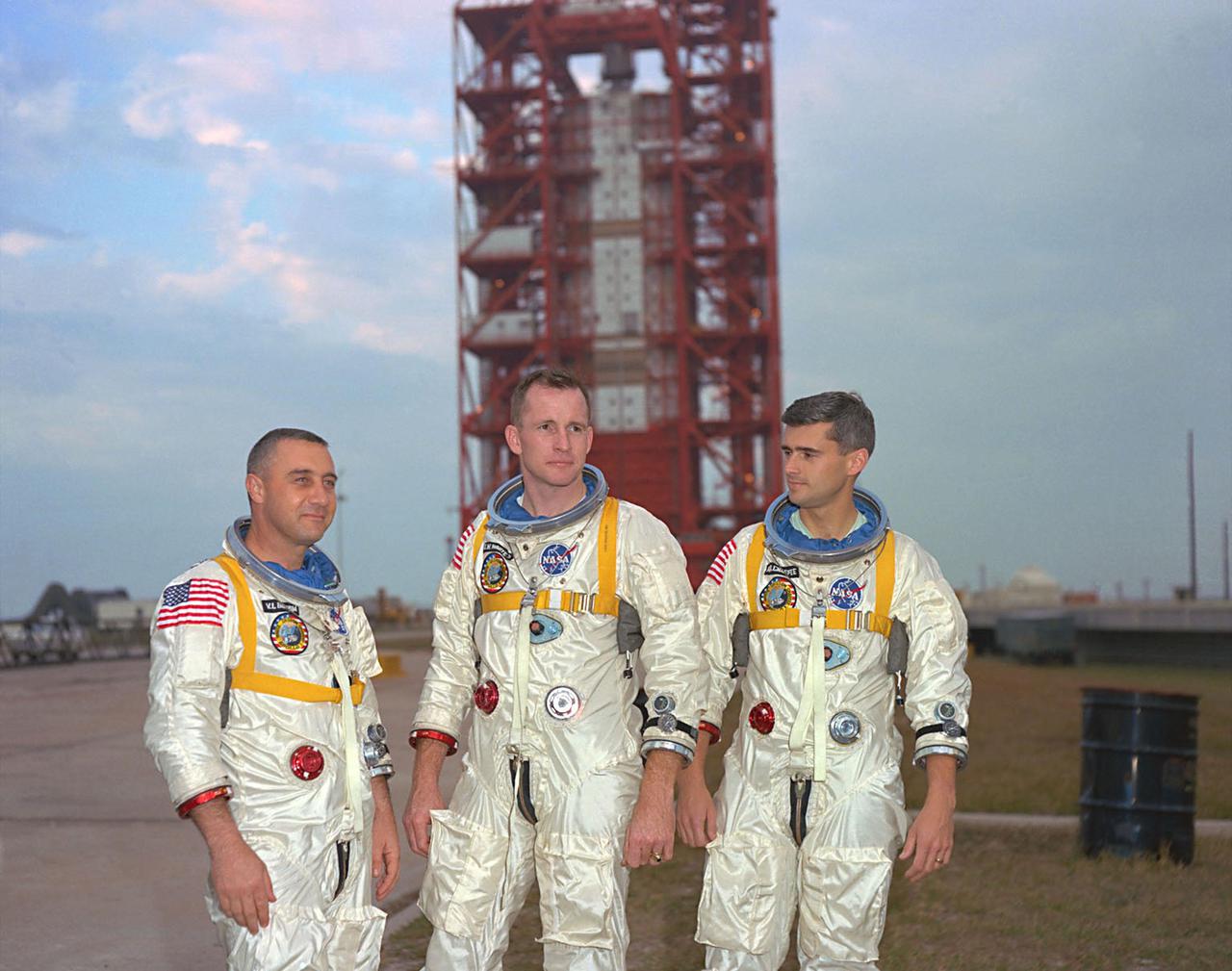
KENNEDY SPACE CENTER, FLA. -- Astronauts, left to right, Gus Grissom, Ed White, and Roger Chaffee, pose in front of Launch Complex 34 which is housing their Saturn 1 launch vehicle. The astronauts are scheduled for the Apollo Saturn 204 (Apollo 1) mission.
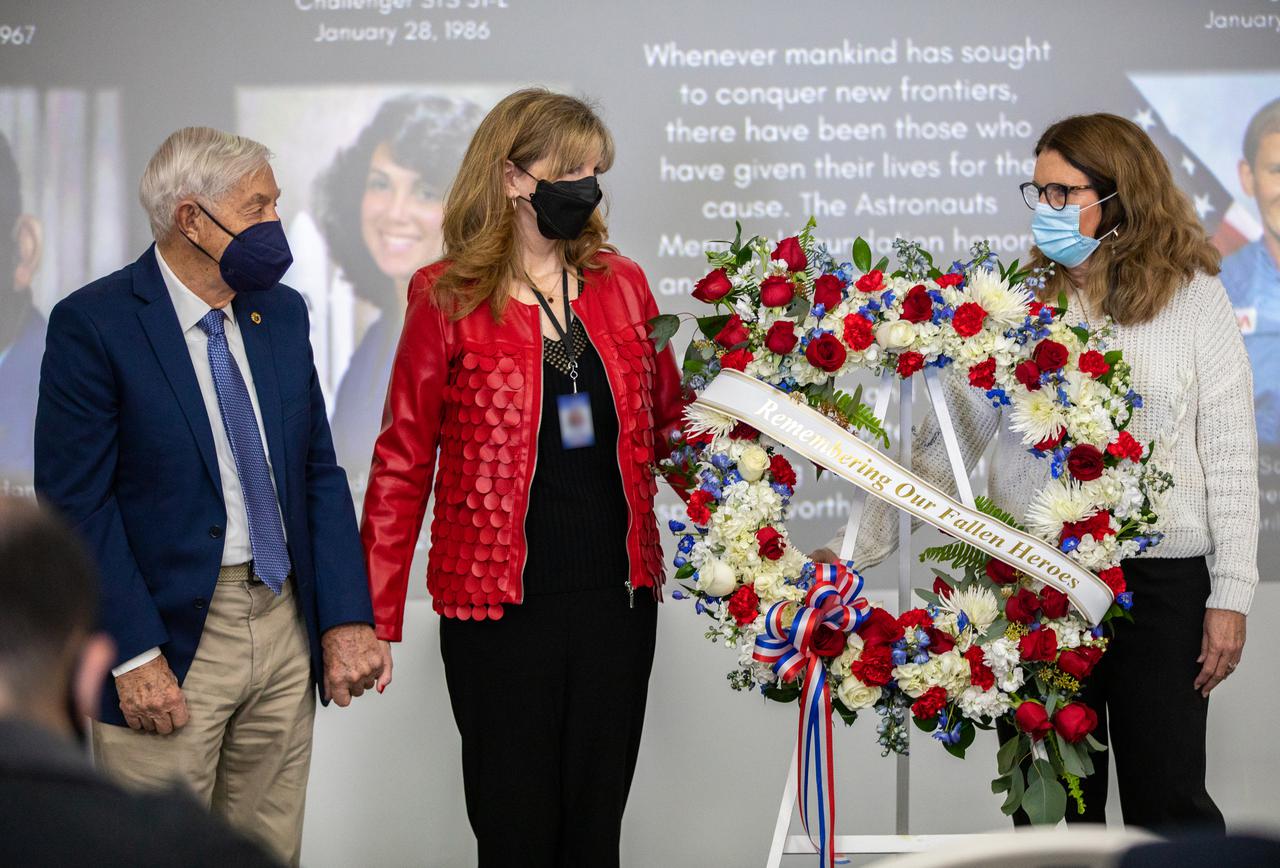
NASA’s Kennedy Space Center in Florida paid tribute to the crews of Apollo 1 and space shuttles Challenger and Columbia, as well as other astronauts who lost their lives while furthering the cause of exploration and discovery, during the agency's Day of Remembrance on Jan. 27, 2022. From left, Lowell Grissom, brother of Virgil “Gus” Grissom; Kathie Scobee Fulgham, daughter of Challenger Commander Francis R. Scobee; and Sheryl Chafee, daughter of Apollo 1 astronaut Roger Chafee, place a wreath in front of on-screen images of NASA astronauts who have perished in the line of duty. The ceremony was held in the Center for Space Education at Kennedy’s Visitor Complex in Florida.
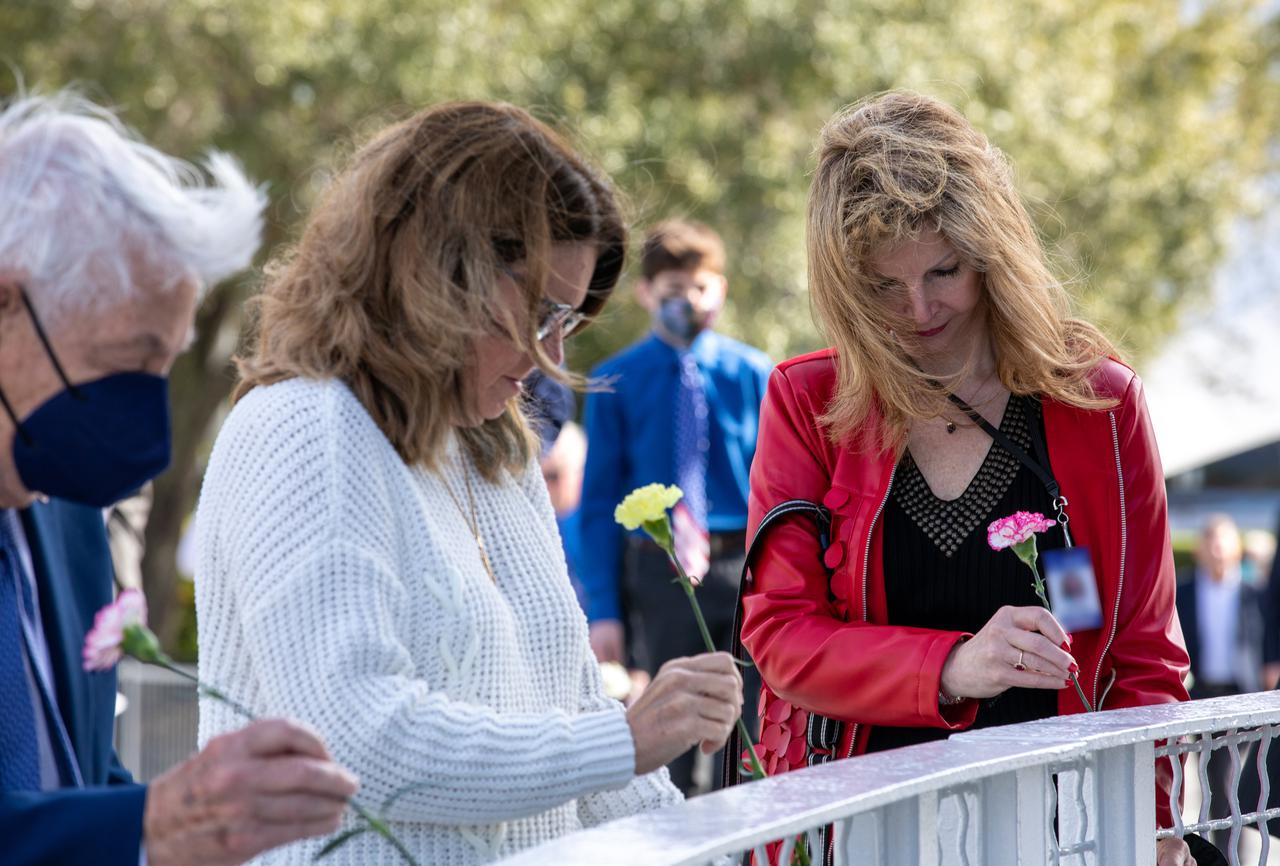
NASA’s Kennedy Space Center in Florida paid tribute to the crews of Apollo 1 and space shuttles Challenger and Columbia, as well as other astronauts who lost their lives while furthering the cause of exploration and discovery, during the agency's Day of Remembrance on Jan. 27, 2022. From left, Lowell Grissom, brother of Virgil “Gus” Grissom; Sheryl Chafee, daughter of Apollo 1 astronaut Roger Chafee; and Kathie Scobee Fulgham, daughter of Challenger Commander Francis R. Scobee, place carnations on the fence in front of the Space Mirror Memorial at the Kennedy Space Center Visitor Complex.
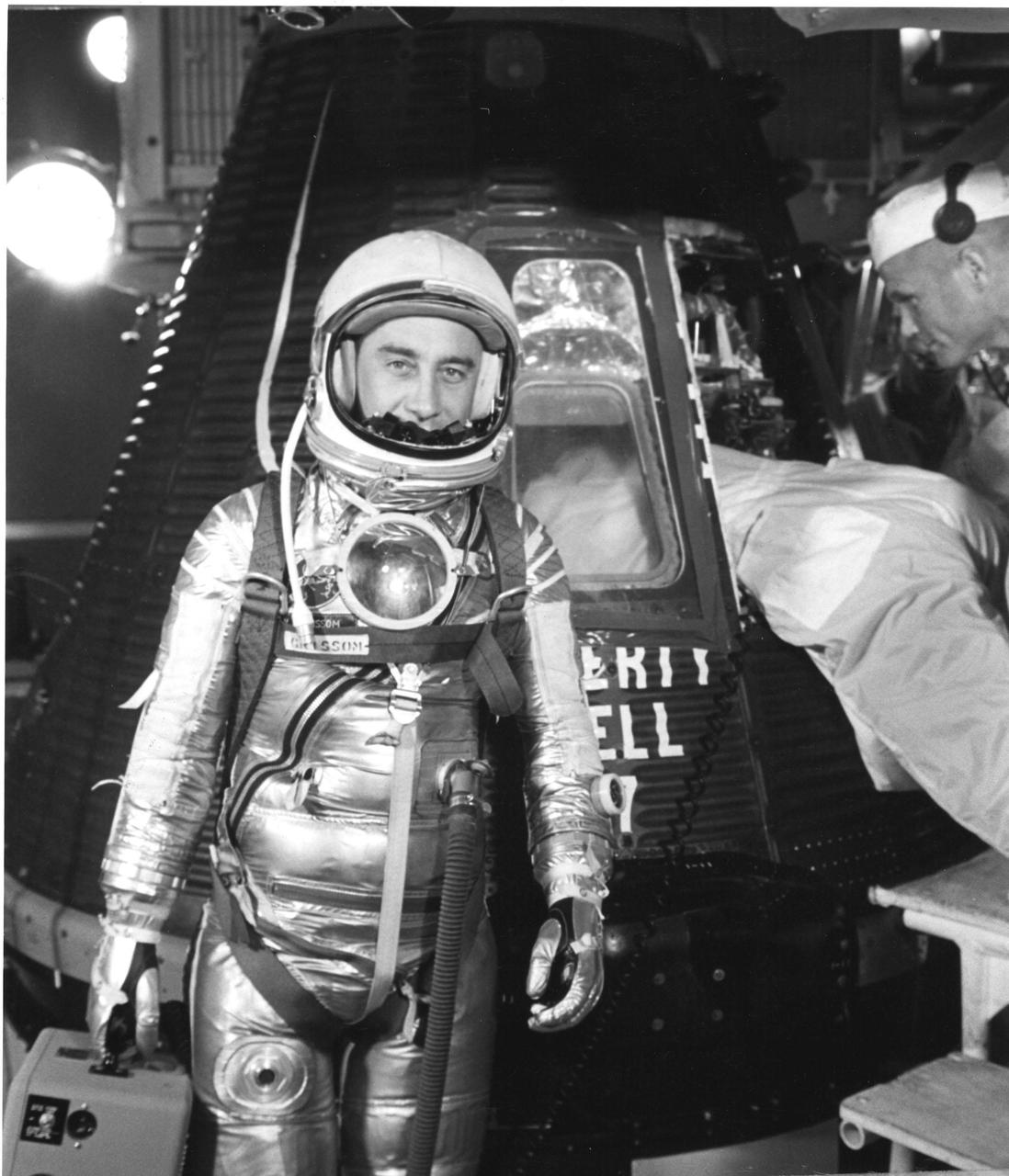
KENNEDY SPACE CENTER, FLA. -- READY FOR FLIGHT - On level three of gantry on pad 5, Project Mercury astronaut Virgil I. 'Gus' Grissom pauses briefly while a technician completes final adjustment in the Liberty Bell 7 spacecraft, which carried Grissom 118 miles into space on Friday, July 21, 1961. The craft's large trapezoidal observation window can be seen behind the pilot. The Pilot Observer Camera, which brought the astronaut's head and shoulders into view, was to reflect the lights on the flight events sequence panel through the 5-inch plexiglas parabolic mirror attached to Grissom's suit, to provide and accurately time record the pilot's voice communications, eye scan pattern and arm motions. The spacecraft sank on landing and has not been recovered. (NASA Photo)
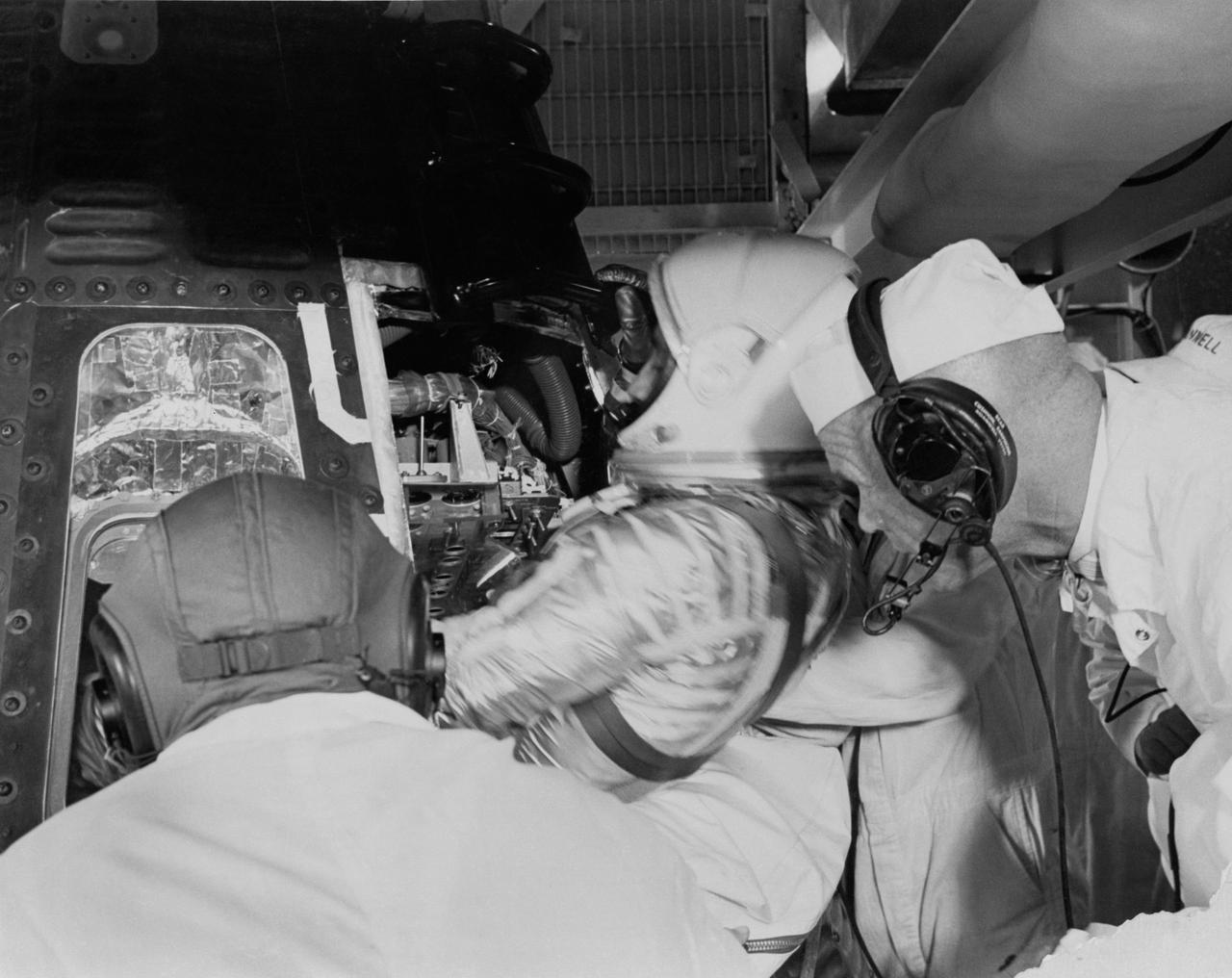
S61-02881 (1961) --- Astronaut Virgil I. (Gus) Grissom, suited up in a newly designed pressure suit, is assisted as he climbs into Liberty Bell 7 spacecraft. Behind him backup pilot John Glenn watches the insertion. The Mercury-Redstone 4 (MR-4) mission was scrubbed a few hours later due to unfavorable weather over the launch pad. Photo credit: NASA
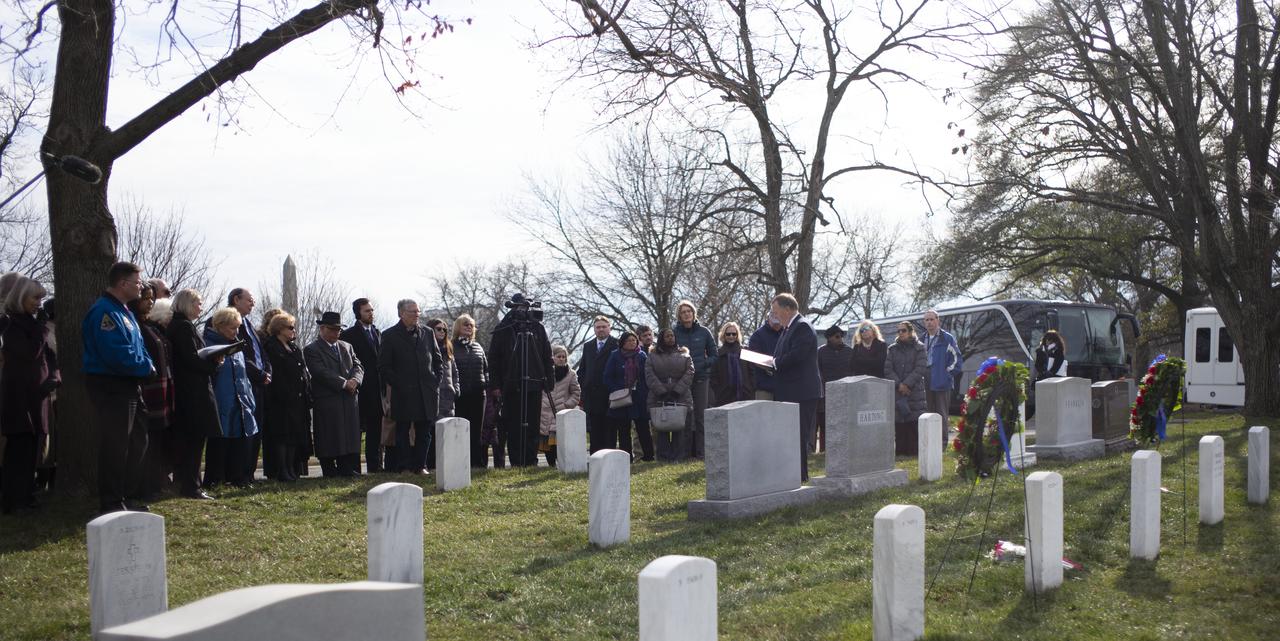
NASA Deputy Administrator Jim Morhard speaks after a wreath laying ceremony at the graves of Apollo 1 astronauts Virgil “Gus” Grissom and Roger Chaffee as part of NASA’s Day of Remembrance, Thursday, Jan. 30, 2020, at Arlington National Cemetery in Arlington, Va. The wreaths were laid in memory of those men and women who lost their lives in the quest for space exploration. Photo Credit: (NASA/Joel Kowsky)
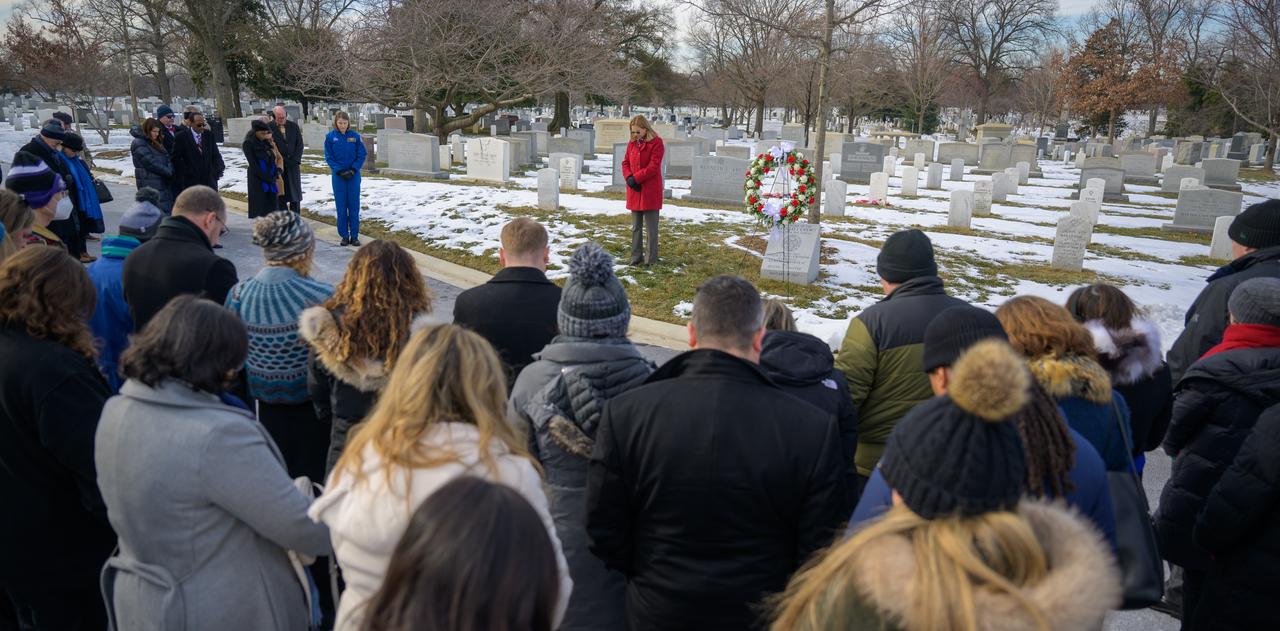
NASA acting Administrator Janet Petro leads guests to a moment of silence at the Apollo 1 monument as part of NASA's Day of Remembrance, Thursday, Jan. 23, 2025, at Arlington National Cemetery in Arlington, Va. The monument honors and memorializes the Apollo 1 crew of Virgil I. “Gus” Grissom, Edward H. White II, and Roger B. Chaffee. Photo Credit: (NASA/Bill Ingalls)
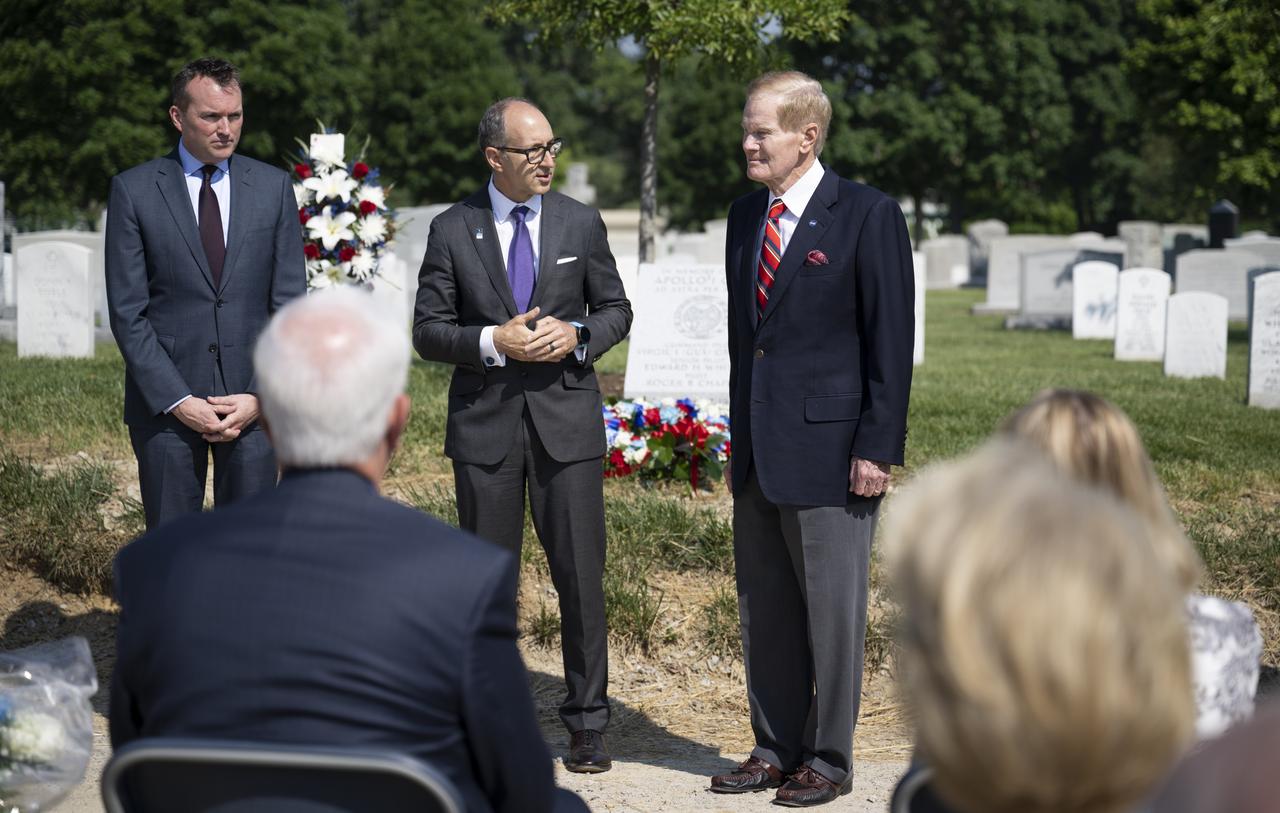
Eric Fanning, AIA President and CEO, left, Lance Bush, President and CEO of the Challenge Center, center, NASA Administrator Bill Nelson, left, are seen as they deliver remarks during the dedication of the Apollo 1 monument at Arlington National Cemetery, Thursday, June 2, 2022, in Arlington, Va. The monument honors and memorializes the Apollo 1 crew of Virgil I. “Gus” Grissom, Edward H. White II, and Roger B. Chaffee. Photo Credit: (NASA/Bill Ingalls)
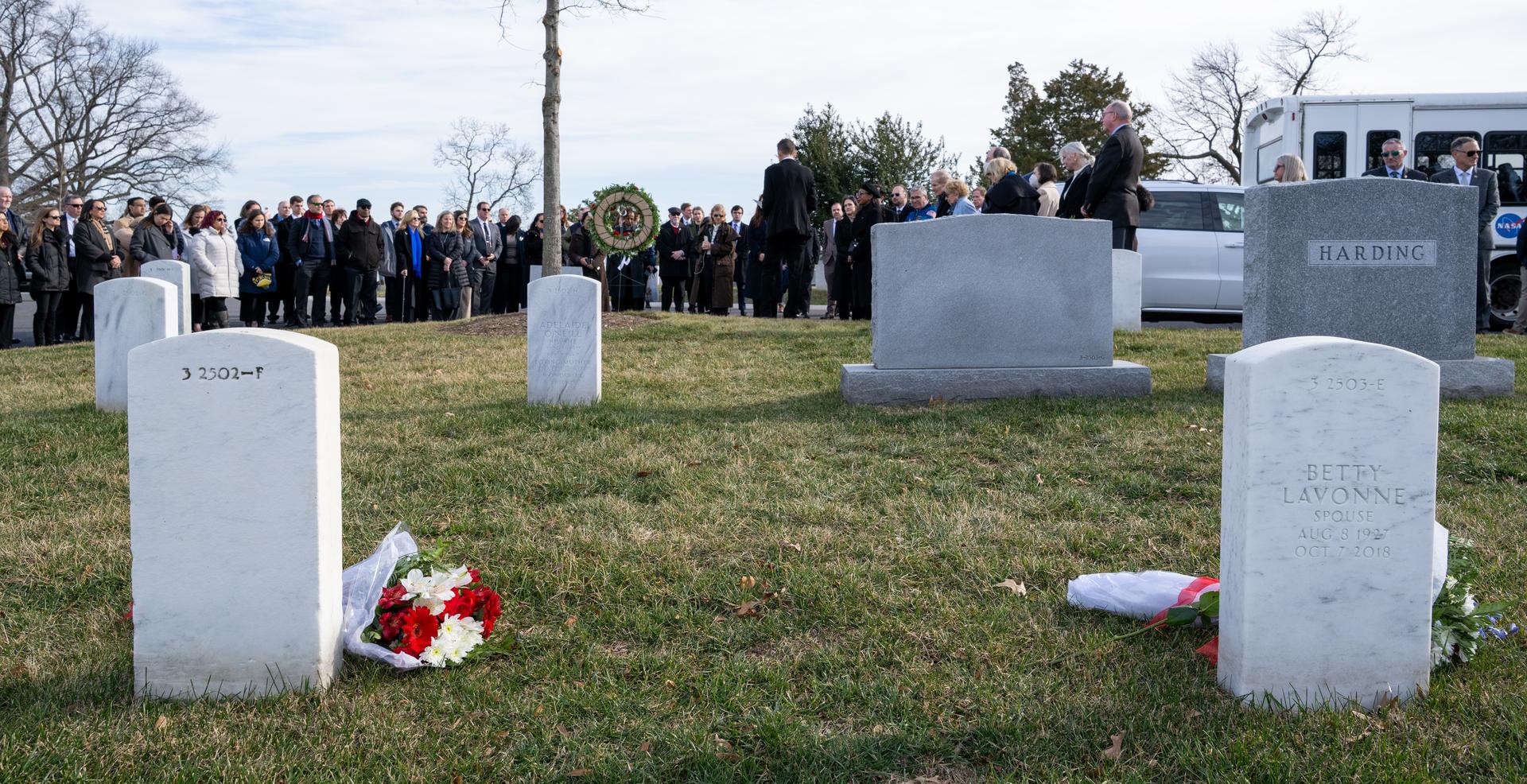
The Apollo 1 grave sites of Virgil I. “Gus” Grissom, and Roger B. Chaffee are seen with flowers as part of NASA's Day of Remembrance, Thursday, Jan. 22, 2026, at Arlington National Cemetery in Arlington, Va. Wreaths were laid in memory of those men and women who lost their lives in the quest for space exploration. Photo Credit: (NASA/Keegan Barber)
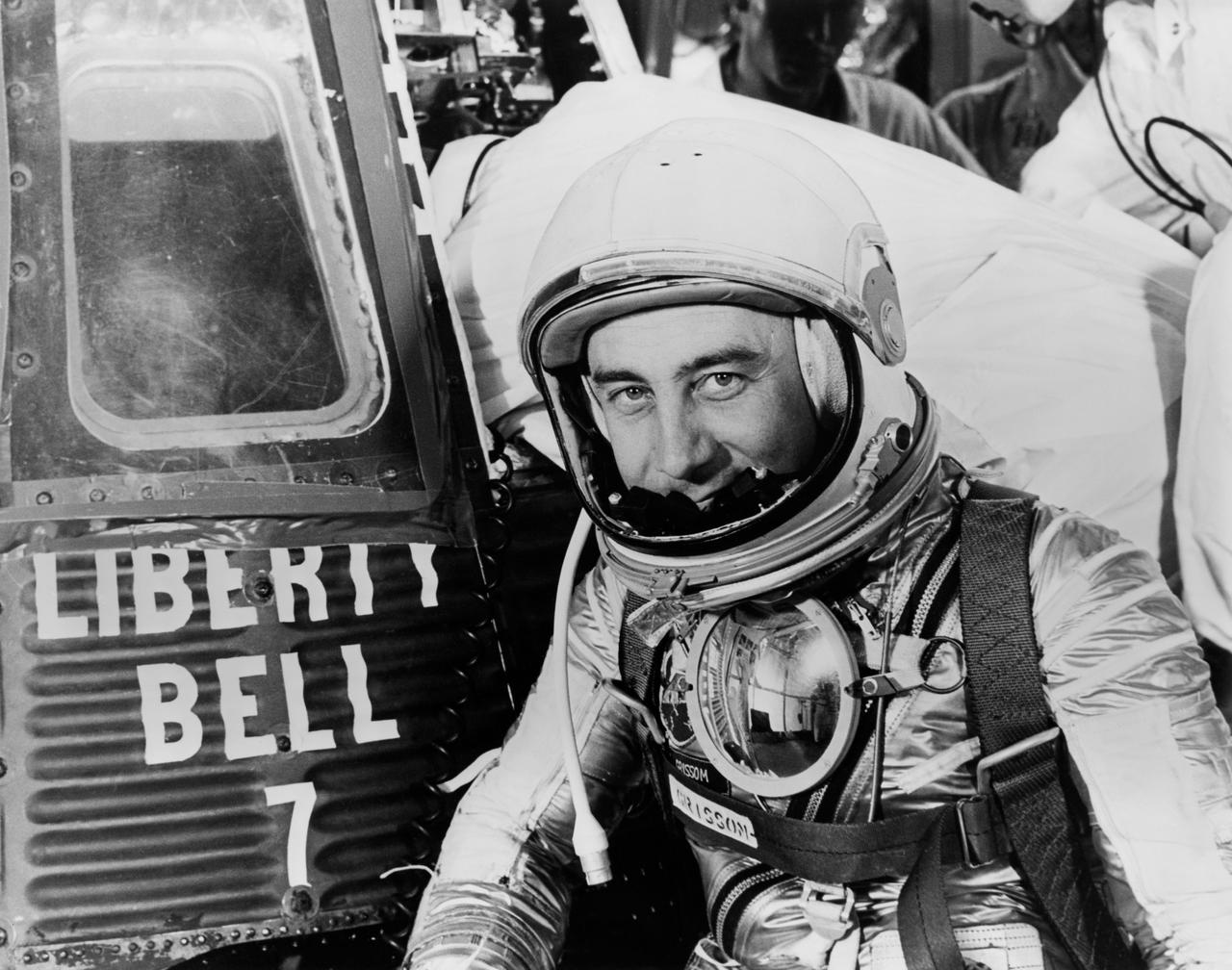
S61-03698 (1961) --- Astronaut Virgil I. (Gus) Grissom, suited up and ready to climb into Liberty Bell 7 spacecraft, sits in front of his capsule for a picture. Behind him technicians work inside the capsule. The Mercury-Redstone 4 (MR-4) mission was scrubbed a few hours later due to unfavorable weather over the launch pad. Photo credit: NASA
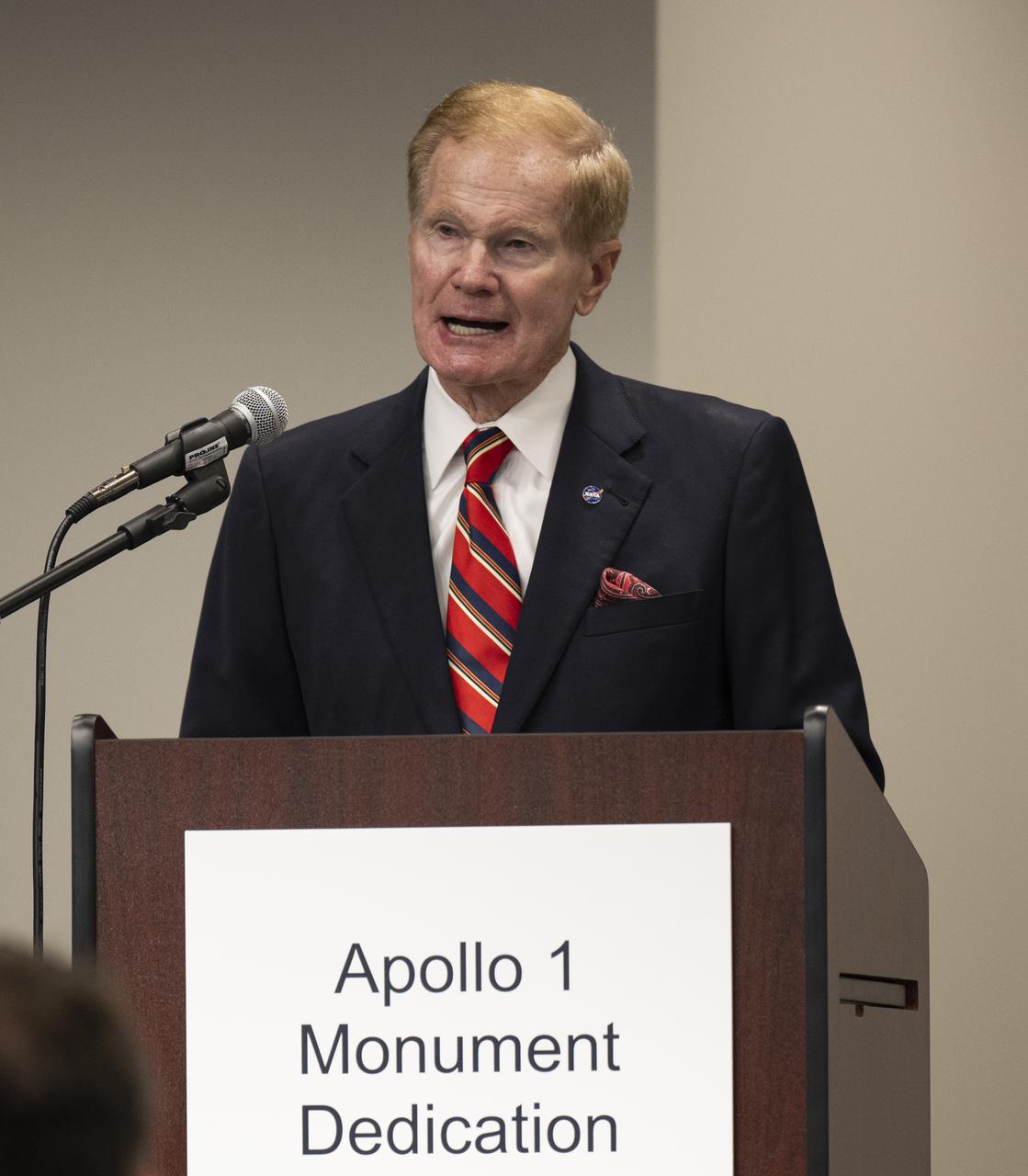
NASA Administrator Bill Nelson delivers remarks at a reception following the dedication of the Apollo 1 monument, Thursday, June 2, 2022, in the Reception Hall of the Military Women’s Memorial at Arlington National Cemetery in Arlington, Va. The monument honors and memorializes the Apollo 1 crew of Virgil I. “Gus” Grissom, Edward H. White II, and Roger B. Chaffee. Photo Credit: (NASA/Bill Ingalls)
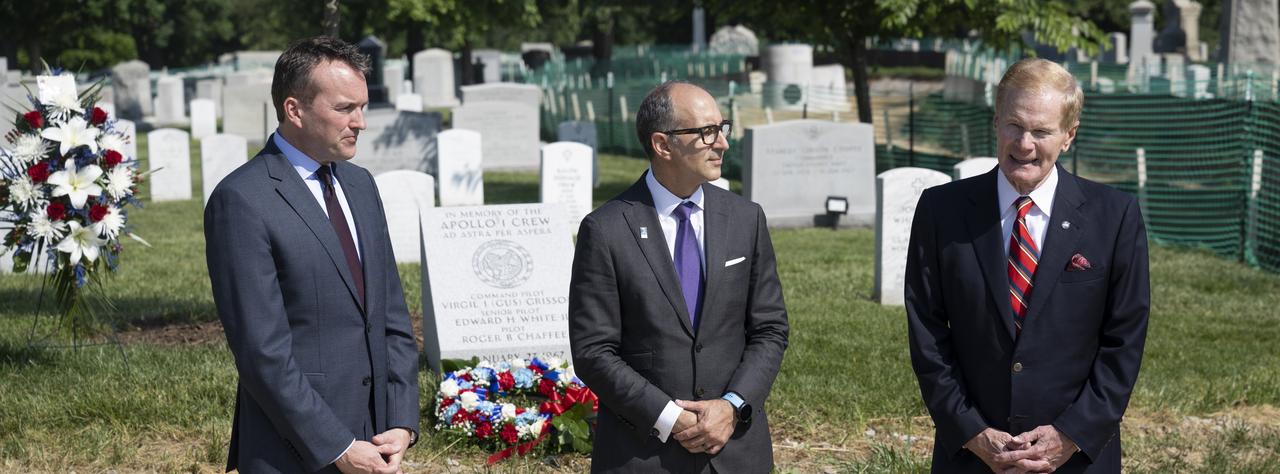
Eric Fanning, AIA President and CEO, left, Lance Bush, President and CEO of the Challenge Center, center, NASA Administrator Bill Nelson, right, are seen as they deliver remarks during the dedication of the Apollo 1 monument at Arlington National Cemetery, Thursday, June 2, 2022, in Arlington, Va. The monument honors and memorializes the Apollo 1 crew of Virgil I. “Gus” Grissom, Edward H. White II, and Roger B. Chaffee. Photo Credit: (NASA/Bill Ingalls)
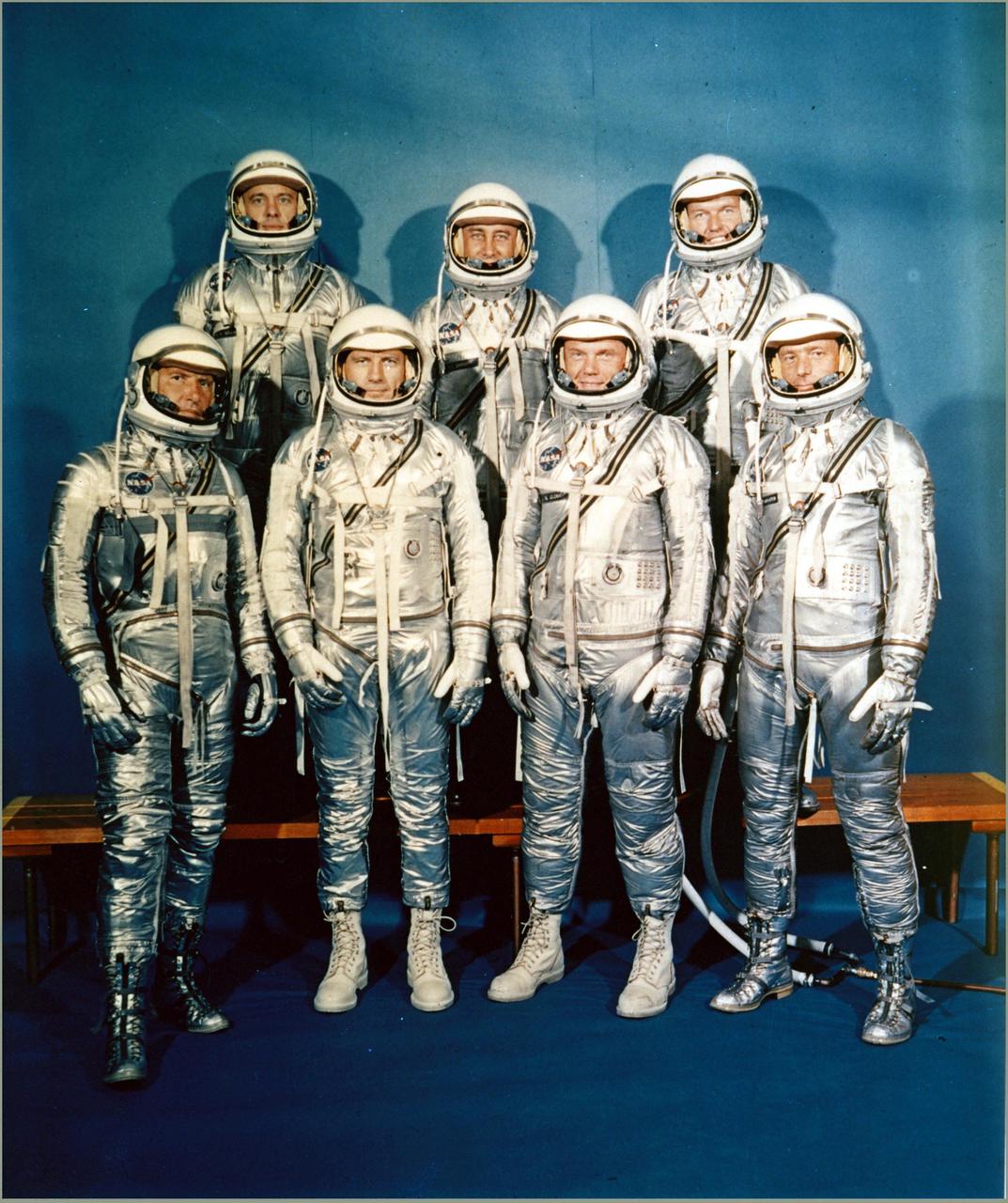
MANNED SPACECRAFT CENTER, HOUSTON, TX. -- FIRST ASTRONAUT TEAM -- Project Mercury Astronauts, whose selection was announced on April 9, 1959, only six months after the National Aeronautics and Space Administration was formally established on Oct. 1, 1958, included: front row, left to right, Walter H. Schirra Jr., Donald K. Slayton, John H. Glenn Jr., and Scott Carpenter back row, Alan B. Shepard Jr., Virgil I. 'Gus' Grissom, and L. Gordon Cooper.
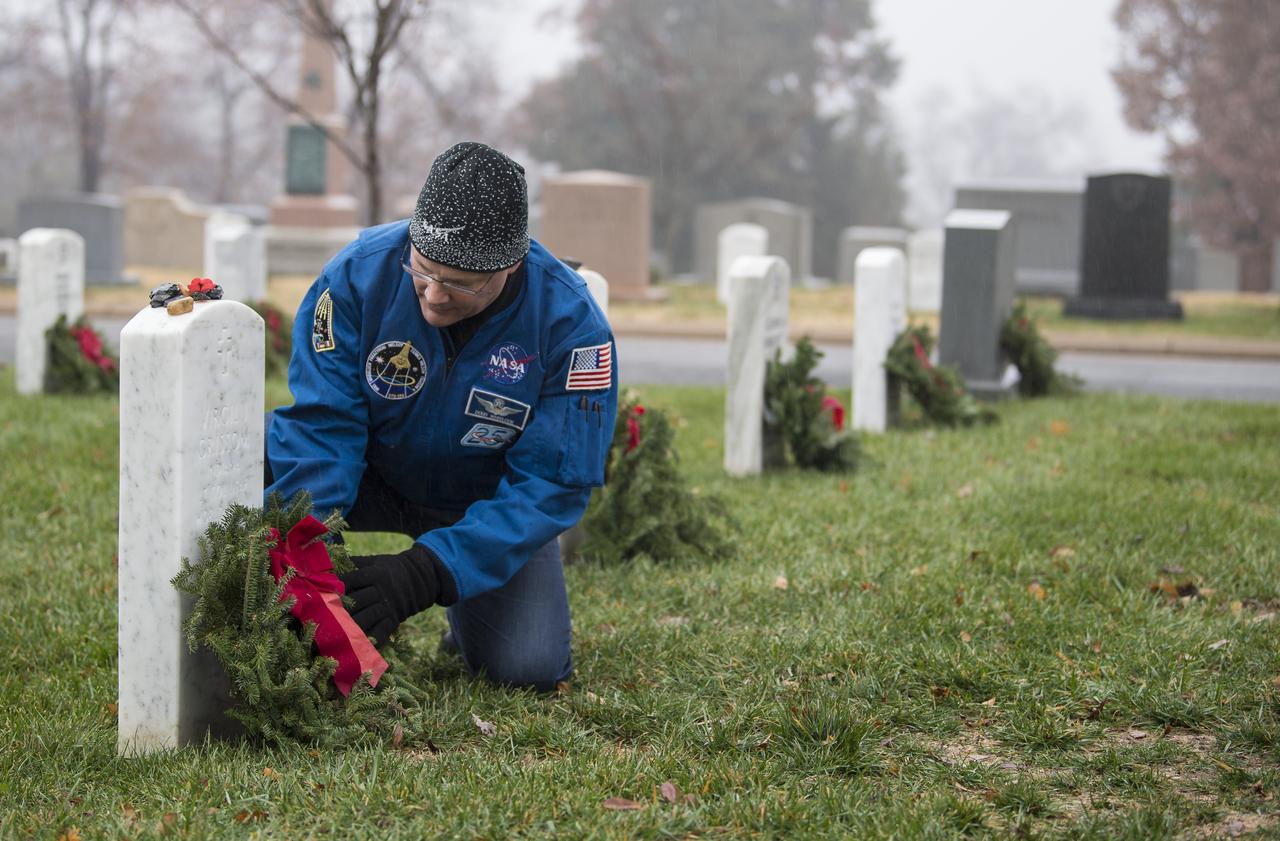
NASA astronaut Doug Wheelock lays a wreath at the grave marker of Virgil "Gus" Grissom from Apollo 1 as part of National Wreaths Across America Day, Sat., Dec. 14, 2019 at Arlington National Cemetery in Arlington, Va. National Wreaths Across America Day is held annually to celebrate the lives of military veterans and wreaths are placed at the foot of every headstone. Wheelock honored those who lost their lives in the quest for space exploration as well as fellow service members. Photo Credit: (NASA/Aubrey Gemignani)
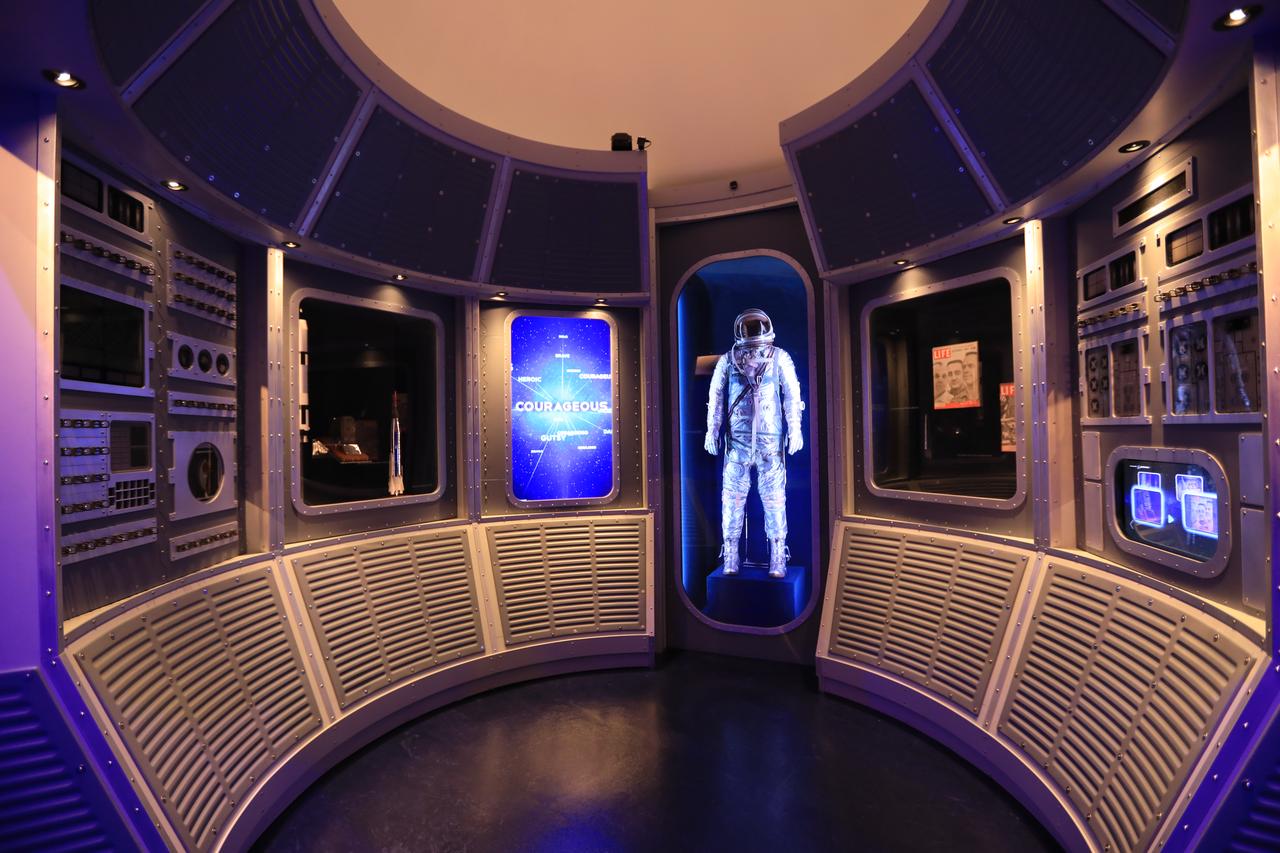
Inside the Heroes and Legends attraction at the Kennedy Space Center Visitor Complex, this display includes the spacesuit worn by astronaut Gus Grissom during his Mercury 4 suborbital flight of July 21, 1961. The new facility looks back to the pioneering efforts of Mercury, Gemini and Apollo. It sets the stage by providing the background and context for space exploration and the legendary men and women who pioneered the nation's journey into space.
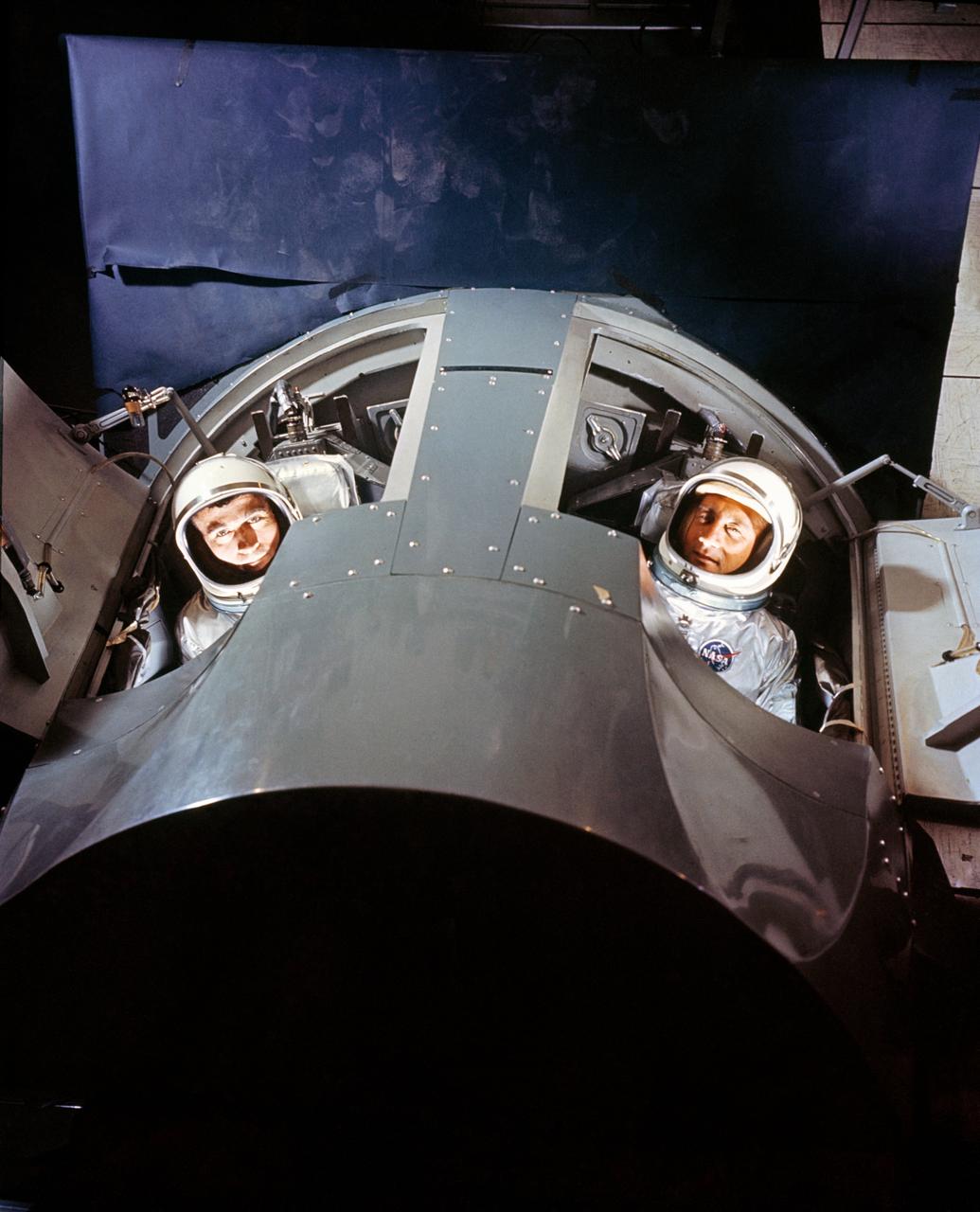
S64-25295 (March 1964) --- Astronauts Virgil I. (Gus) Grissom (right) and John W. Young, prime crew for the first manned Gemini mission (GT-3), are shown inside a Gemini mission simulator at McDonnell Aircraft Corp., St. Louis, MO. The simulator will provide Gemini astronauts and ground crews with realistic mission simulation during intensive training prior to actual launch.
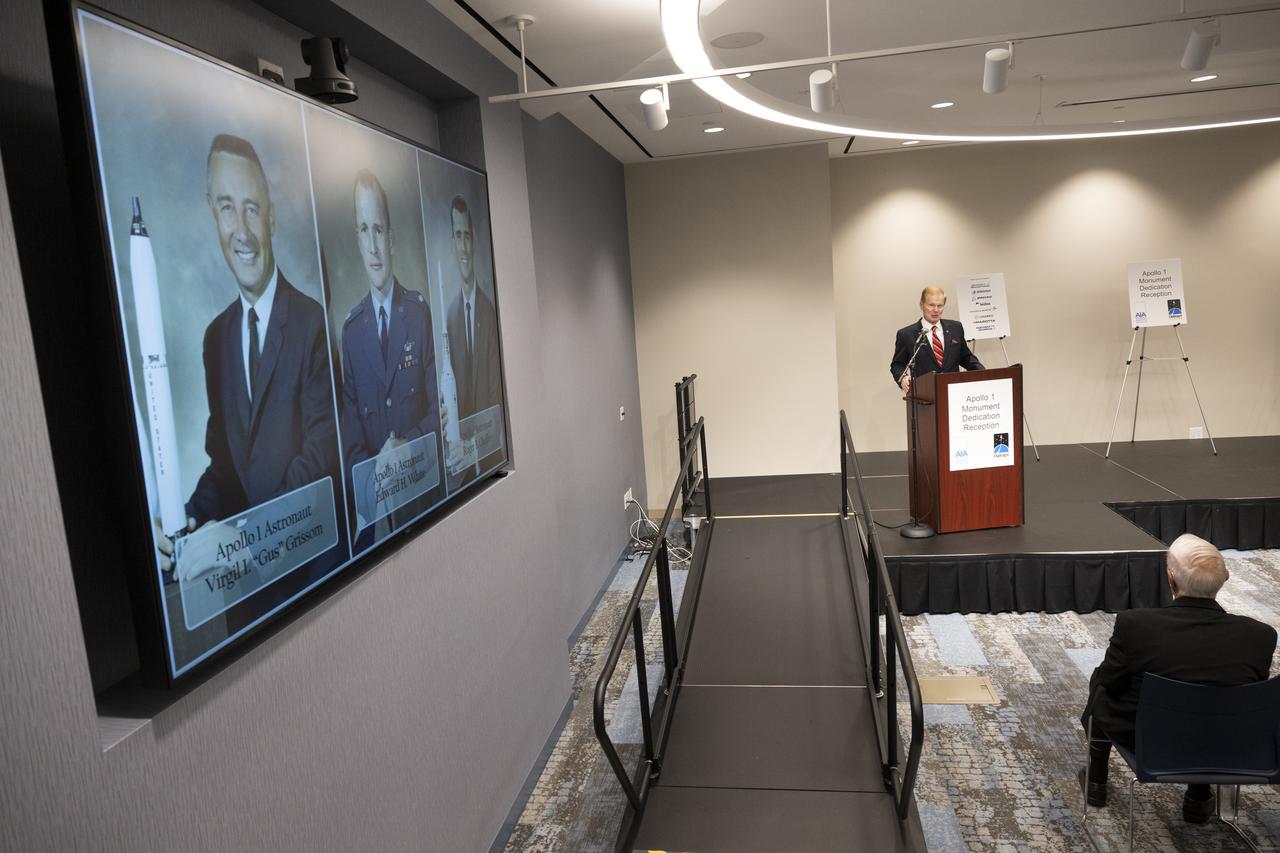
NASA Administrator Bill Nelson delivers remarks at a reception following the dedication of the Apollo 1 monument, Thursday, June 2, 2022, in the Reception Hall of the Military Women’s Memorial at Arlington National Cemetery in Arlington, Va. The monument honors and memorializes the Apollo 1 crew of Virgil I. “Gus” Grissom, Edward H. White II, and Roger B. Chaffee. Photo Credit: (NASA/Bill Ingalls)
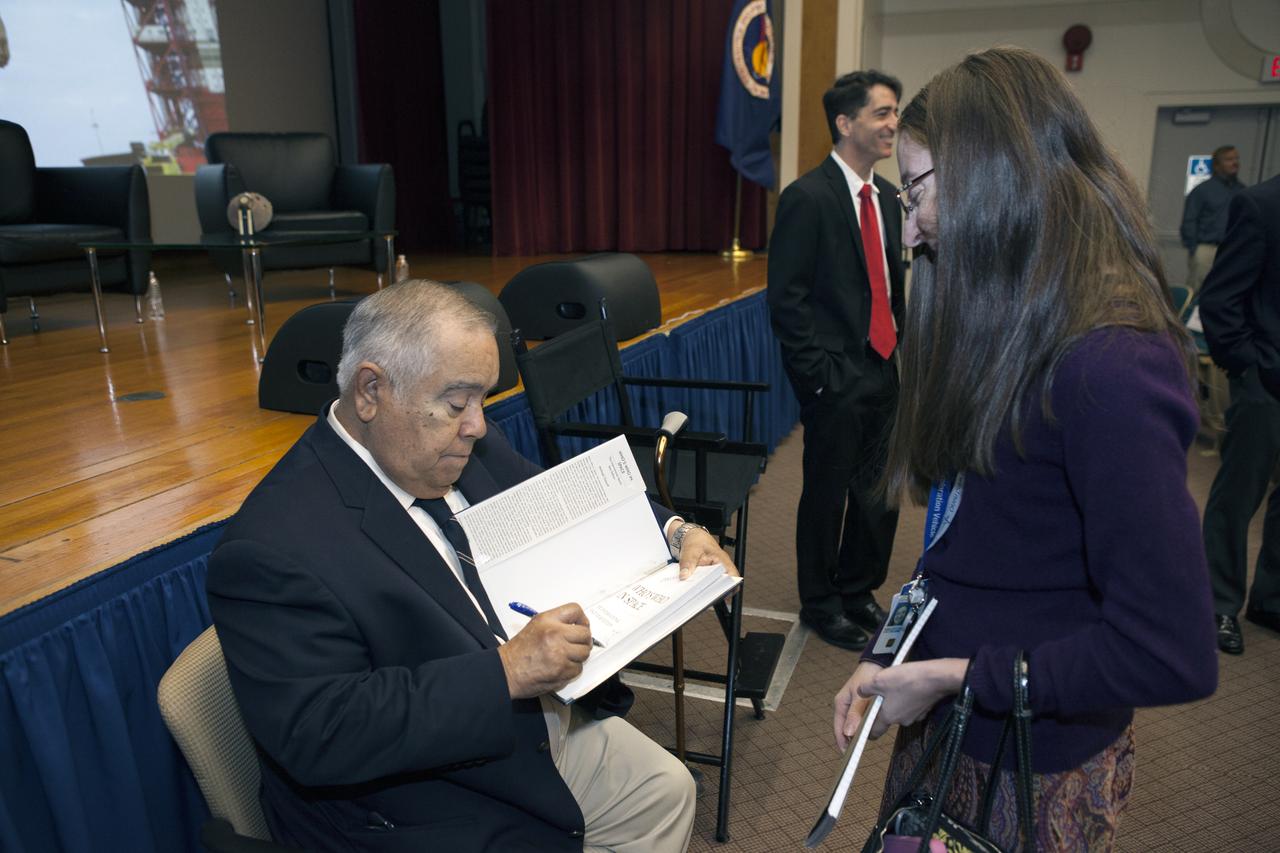
Ernie Reyes, retired, former Apollo 1 senior operations manager, signs a book for a worker after the Apollo 1 Lessons Learned presentation in the Training Auditorium at NASA's Kennedy Space Center in Florida. The theme of the program was "To there and Back Again." The event helped pay tribute to the Apollo 1 crew, Gus Grissom, Ed White II, and Roger Chaffee.
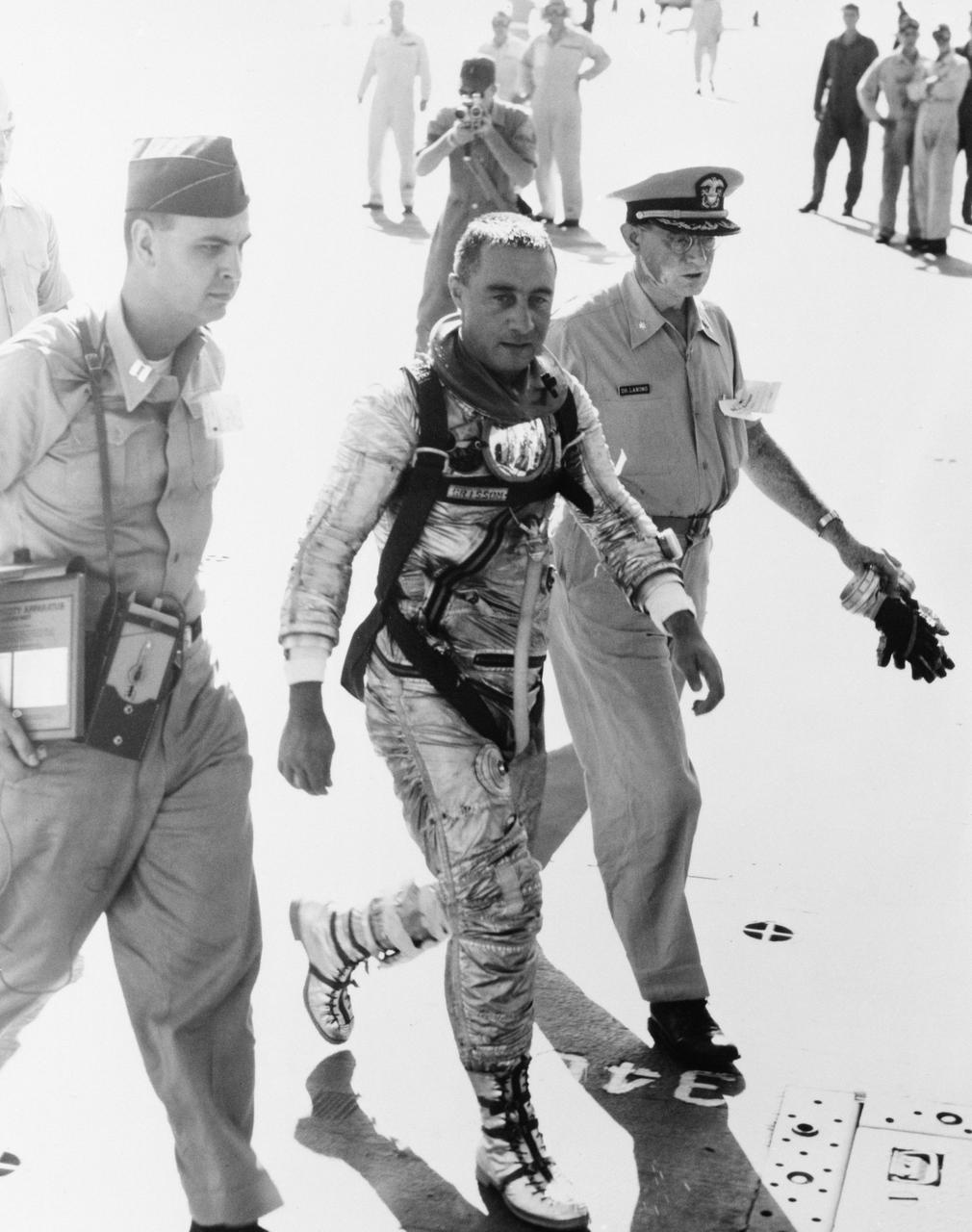
S61-02894 (21 July 1961) --- Astronaut Virgil I. (Gus) Grissom, pilot of the Mercury-Redstone 4 (MR-4) “Liberty Bell 7” spaceflight, arrives aboard the recovery ship, USS Randolph, following his 15-minute, 37-second suborbital space mission. He is flanked by military medical officers. Photo credit: NASA
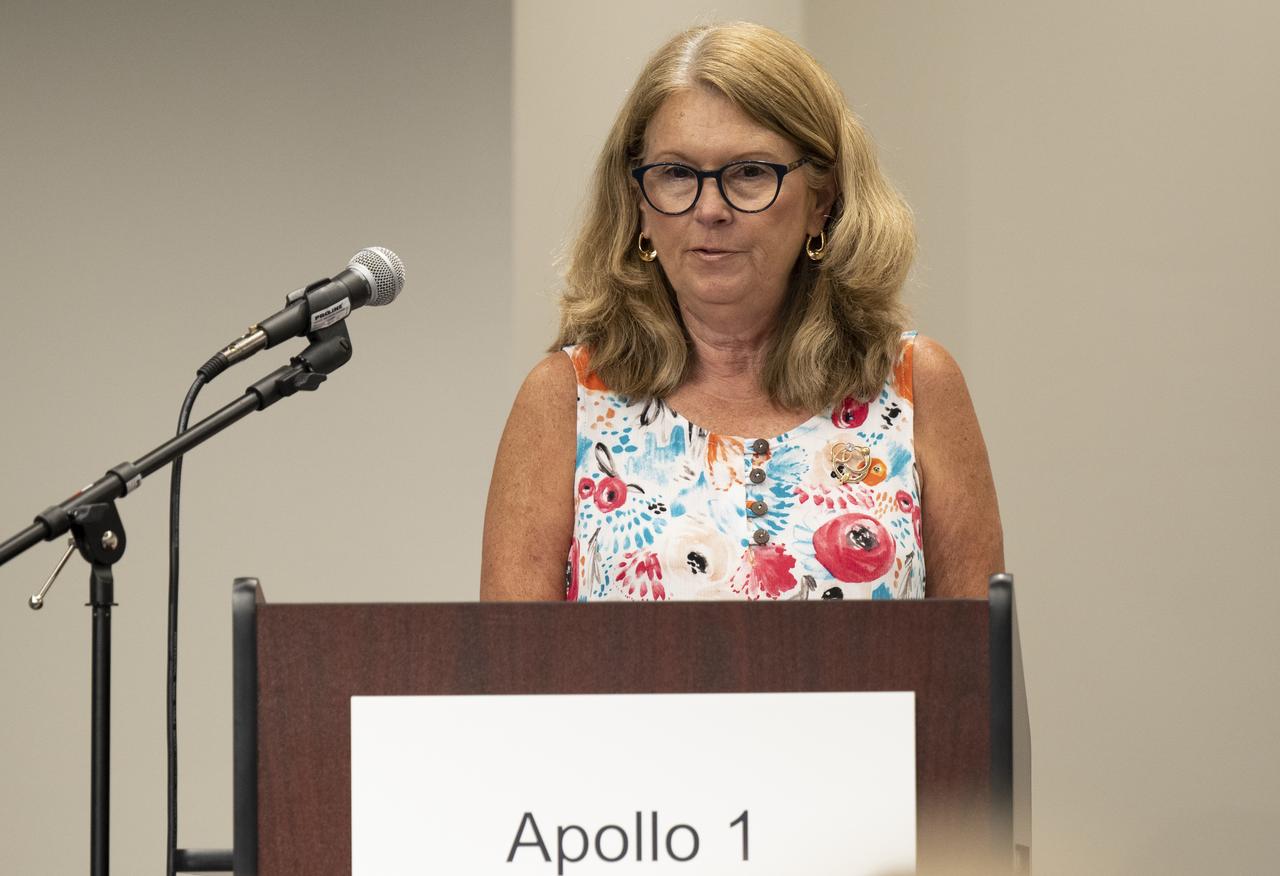
Sheryl Chaffee, daughter of Apollo 1 astronaut Roger B. Chaffee, delivers remarks at a reception following the dedication of the Apollo 1 monument, Thursday, June 2, 2022, in the Reception Hall of the Military Women’s Memorial at Arlington National Cemetery in Arlington, Va. The monument honors and memorializes the Apollo 1 crew of Virgil I. “Gus” Grissom, Edward H. White II, and Roger B. Chaffee. Photo Credit: (NASA/Bill Ingalls)
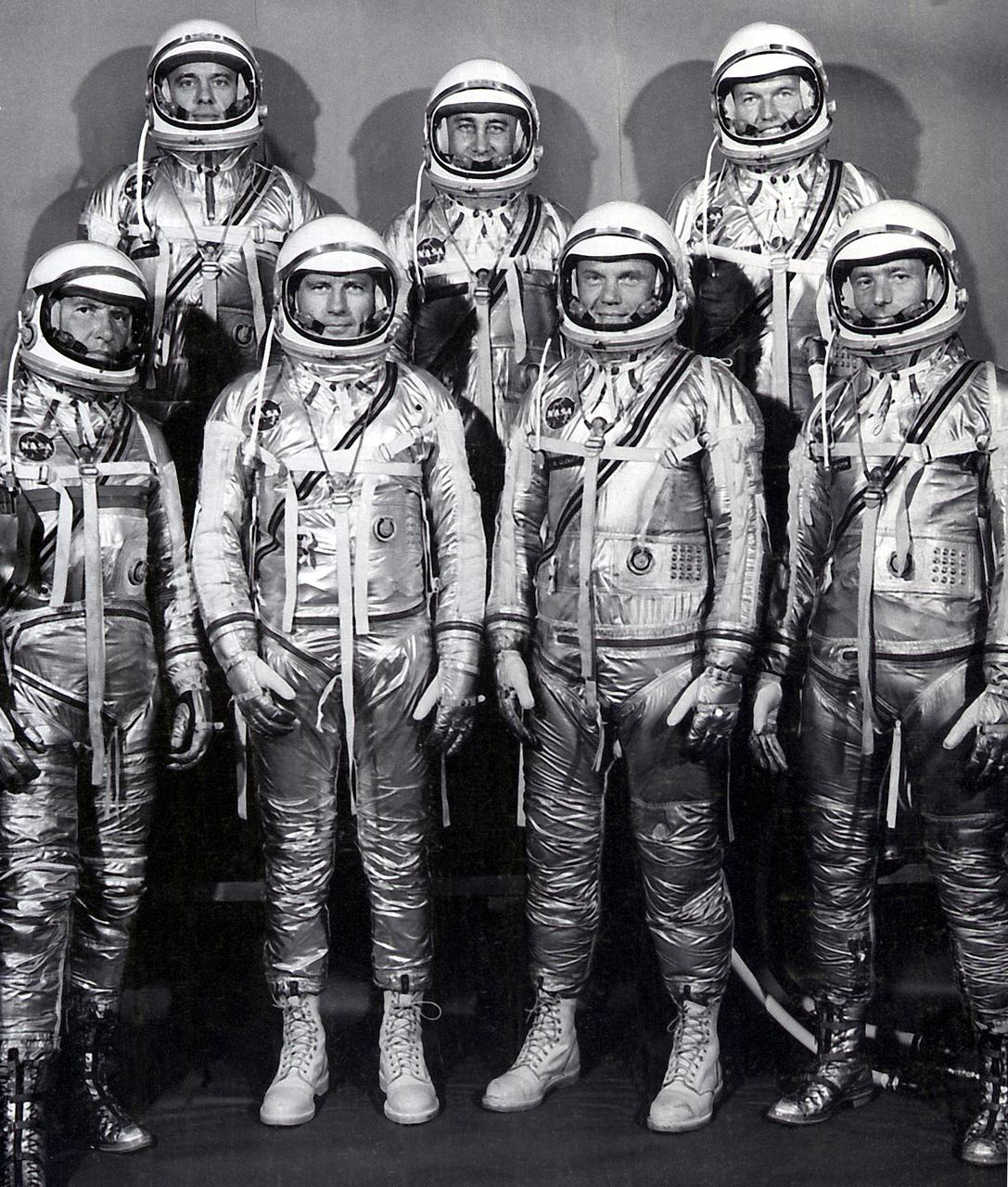
The group portrait of the original seven astronauts for the Mercury Project. NASA selected its first seven astronauts on April 27, 1959. Left to right at front: Walter M. Wally Schirra, Donald K. Deke Slayton, John H. Glenn, Jr., and Scott Carpenter. Left to right at rear: Alan B. Shepard, Virgil I. Gus Grissom, and L. Gordon Cooper, Jr.
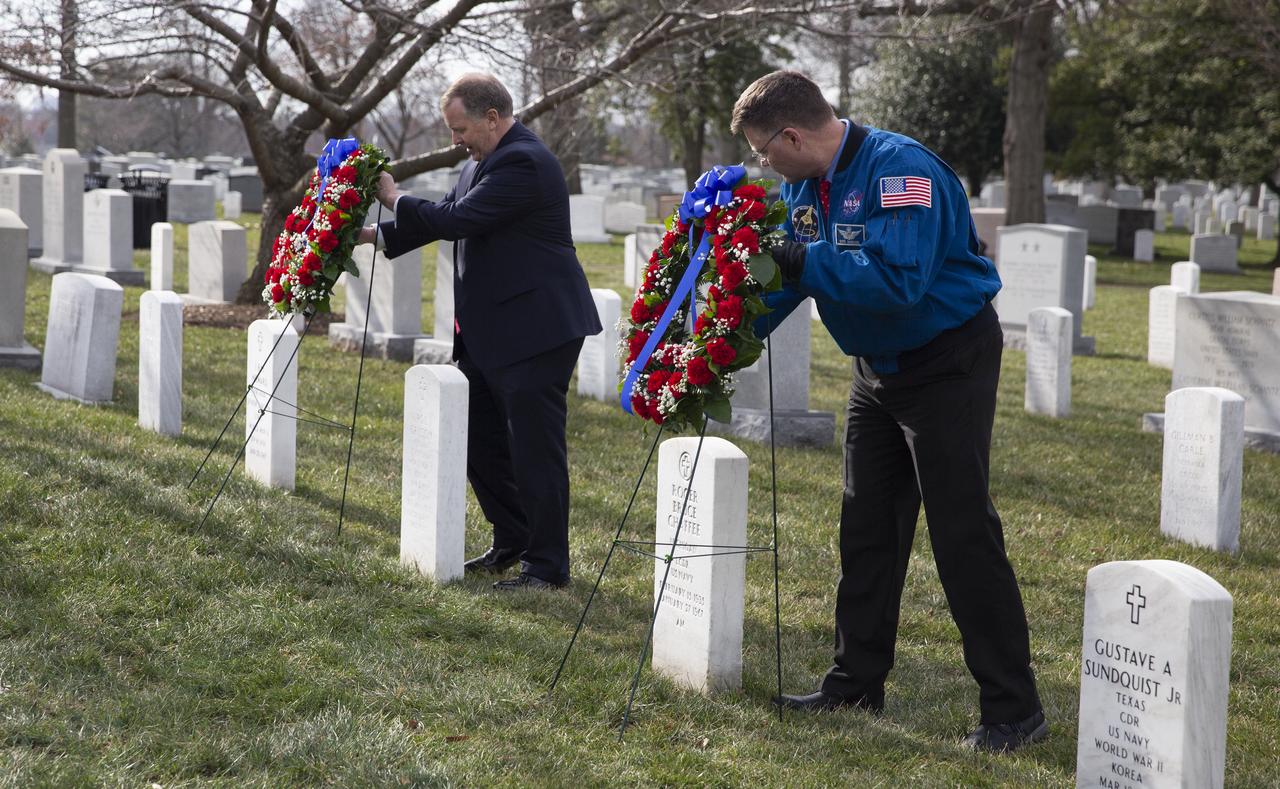
NASA Deputy Administrator Jim Morhard, left, and NASA astronaut Doug Wheelock, right, place wreaths at the graves of Apollo 1 astronauts Virgil “Gus” Grissom, and Roger Chaffee as part of NASA’s Day of Remembrance, Thursday, Jan. 30, 2020, at Arlington National Cemetery in Arlington, Va. The wreaths were laid in memory of those men and women who lost their lives in the quest for space exploration. Photo Credit: (NASA/Joel Kowsky)
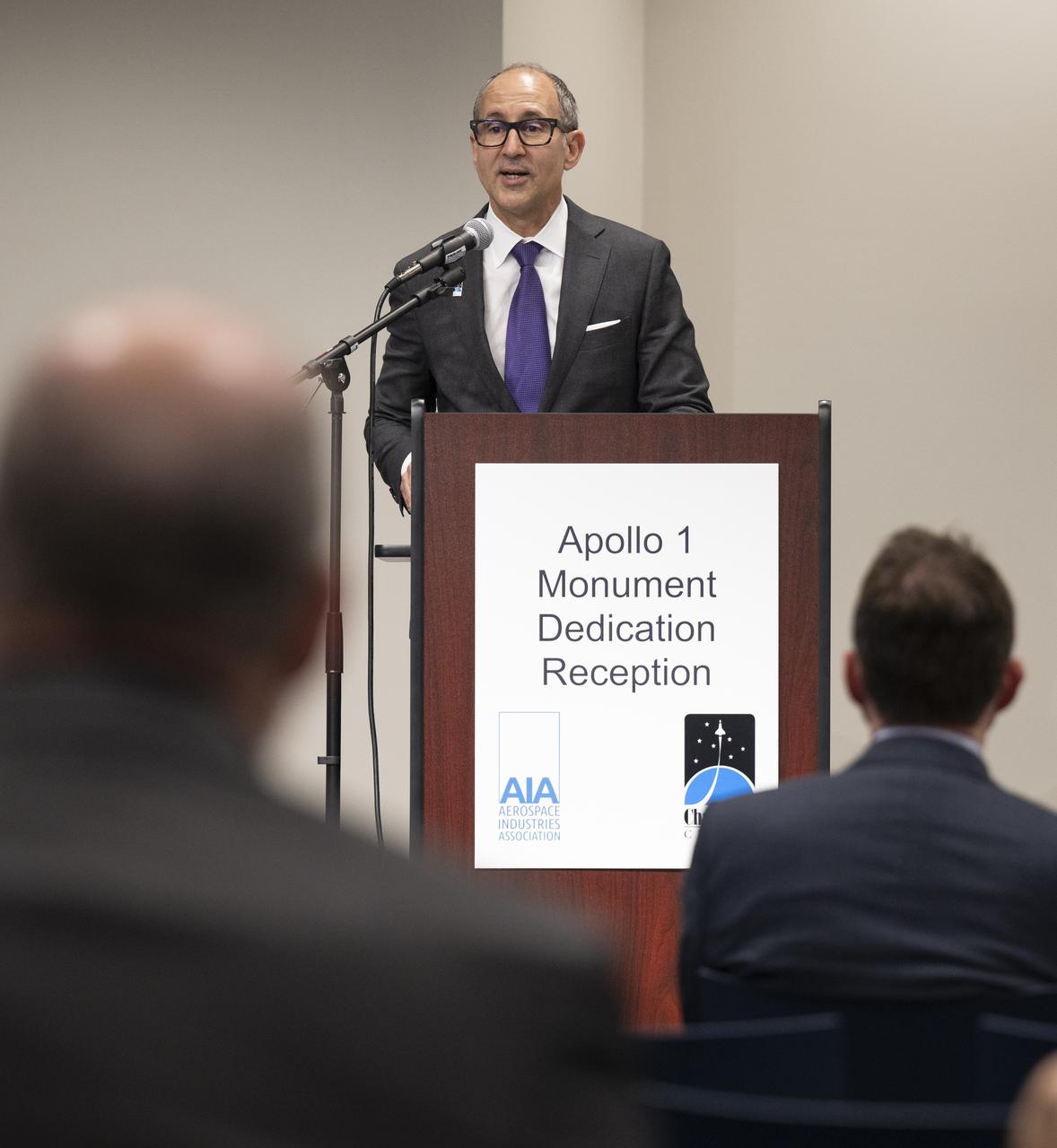
Lance Bush, President and CEO of the Challenge Center, delivers remarks at a reception following the dedication of the Apollo 1 monument, Thursday, June 2, 2022, in the Reception Hall of the Military Women’s Memorial at Arlington National Cemetery in Arlington, Va. The monument honors and memorializes the Apollo 1 crew of Virgil I. “Gus” Grissom, Edward H. White II, and Roger B. Chaffee. Photo Credit: (NASA/Bill Ingalls)