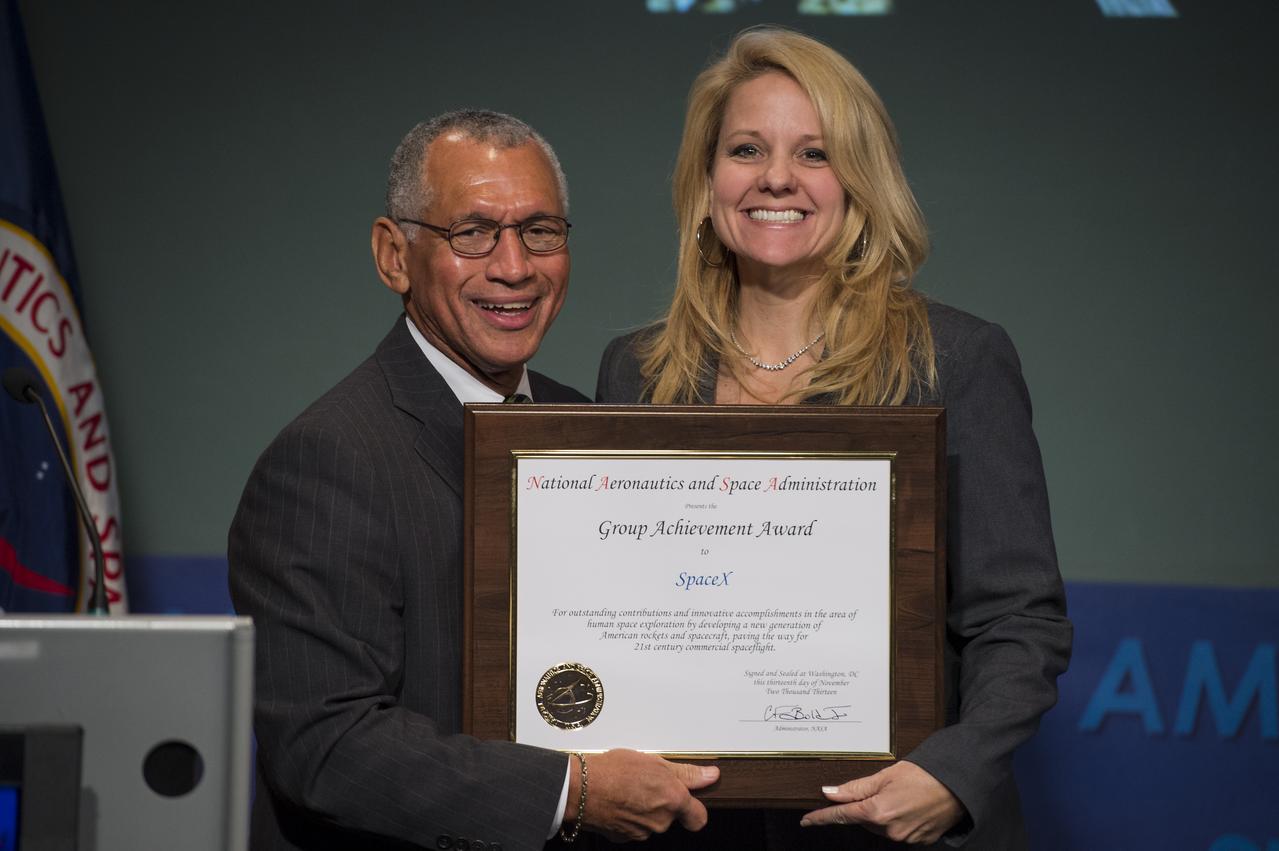
NASA Administrator Charles Bolden, left, presents NASA's Group Achievement Award to Gwynne Shotwell, President, SpaceX, at NASA Headquarters in Washington on Thursday, November 13, 2013. Shotwell received the award for outstanding contributions and innovative accomplishments in the completion of the Commercial Orbital Transportation Services (COTS) initiative. Through COTS, NASA's partners Space Exploration Technologies Corp. (SpaceX) and Orbital Sciences Corp., developed new U.S. rockets and spacecraft, launched from U.S. soil, capable of transporting cargo to low-Earth orbit and the International Space Station. Photo Credit: (NASA/Jay Westcott)
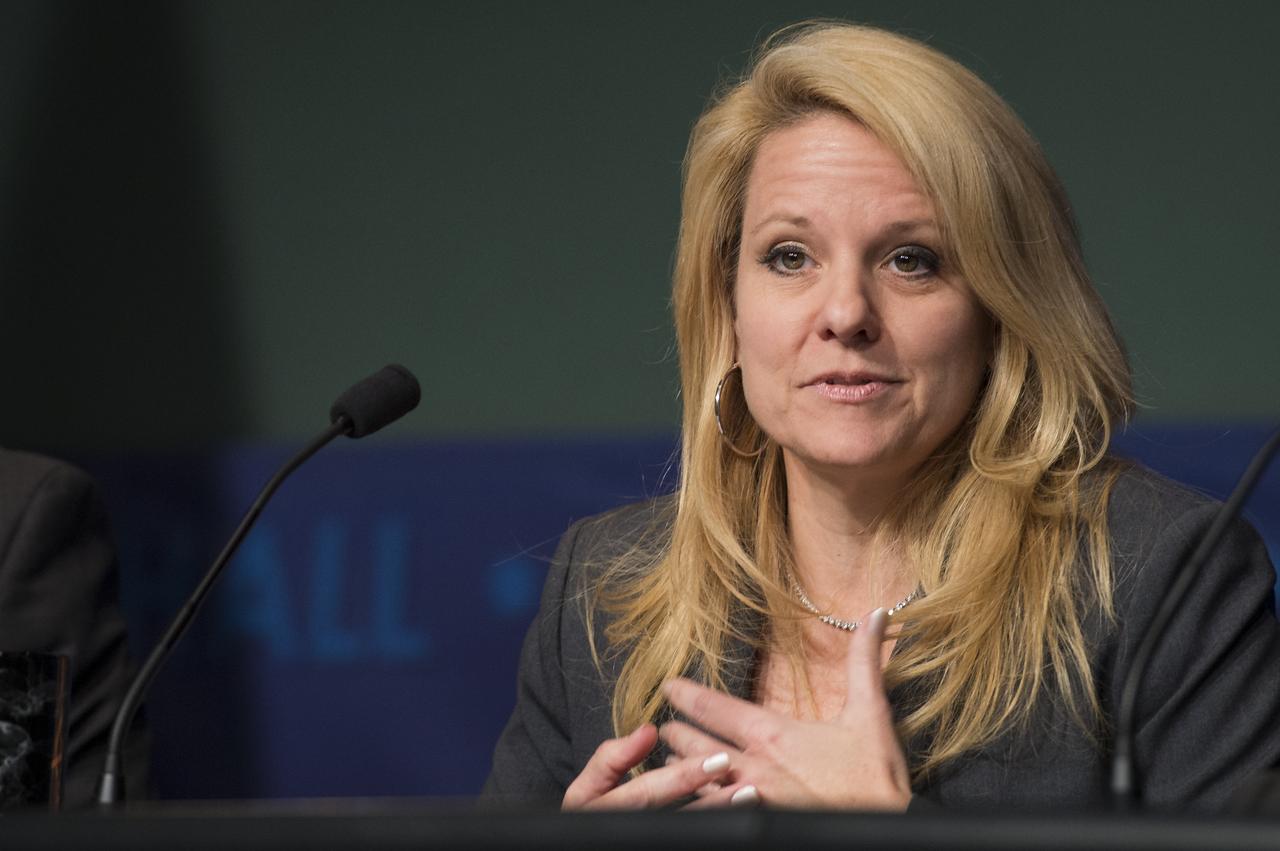
Gwynne Shotwell, President of SpaceX, delivers remarks panel discussion on the Commercial Orbital Transportation Services (COTS) initiative at NASA Headquarters in Washington on Wednesday, November 13, 2013. Through COTS, NASA's partners Space Exploration Technologies Corp. (SpaceX) and Orbital Sciences Corp., developed new U.S. rockets and spacecraft, launched from U.S. soil, capable of transporting cargo to low-Earth orbit and the International Space Station. Photo Credit: (NASA/Jay Westcott)

SpaceX President and Chief Operation Officer Gwynne Shotwell gives remarks during a NASA event announcing the astronauts assigned to crew the first flight tests and missions of the Boeing CST-100 Starliner and SpaceX Crew Dragon, Friday, Aug. 3, 2018 at NASA’s Johnson Space Center in Houston, Texas. Photo Credit: (NASA/Bill Ingalls)
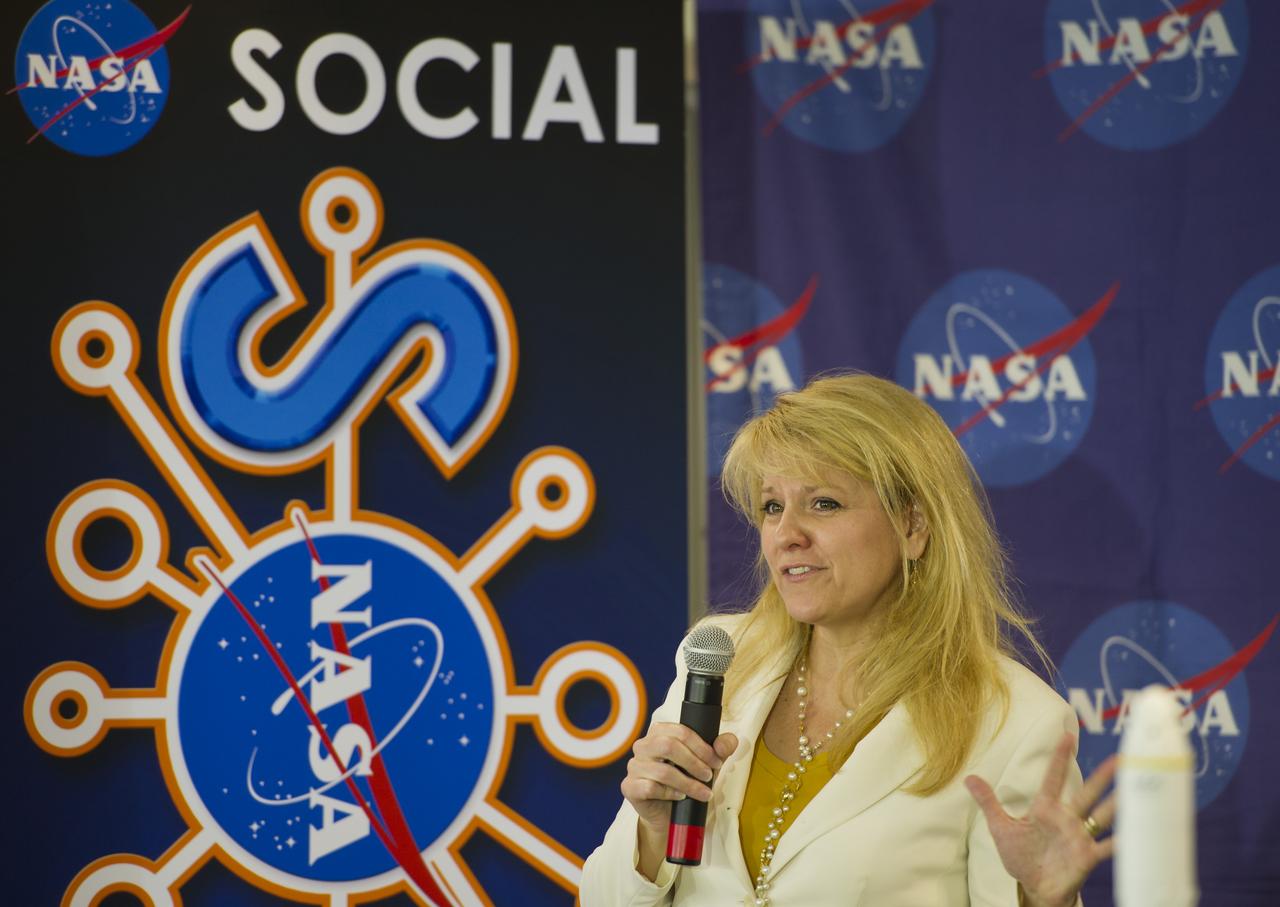
Gwynne Shotwell, President of SpaceX, speaks during a NASA Social, Friday, May 18, 2012, at Kennedy Space Center in Cape Canaveral, Fla. About 50 NASA Social followers attended an event as part of activities surrounding the launch of Space Exploration Technologies, or SpaceX, demonstration mission of the company's Falcon 9 rocket to the International Space Station. Photo Credit: (NASA/Paul E. Alers)

SpaceX President and Chief Operation Officer Gwynne Shotwell receives an American flag from NASA Administrator Jim Bridenstine during a NASA event announcing the astronauts assigned to crew the first flight tests and missions of the Boeing CST-100 Starliner and SpaceX Crew Dragon, Friday, Aug. 3, 2018 at NASA’s Johnson Space Center in Houston, Texas. The flag is to be flown to the International Space Station onboard SpaceX’s Demo-2 crew flight test and retrieved later during the SpaceX Crew Dragon first mission to station. Photo Credit: (NASA/Bill Ingalls)
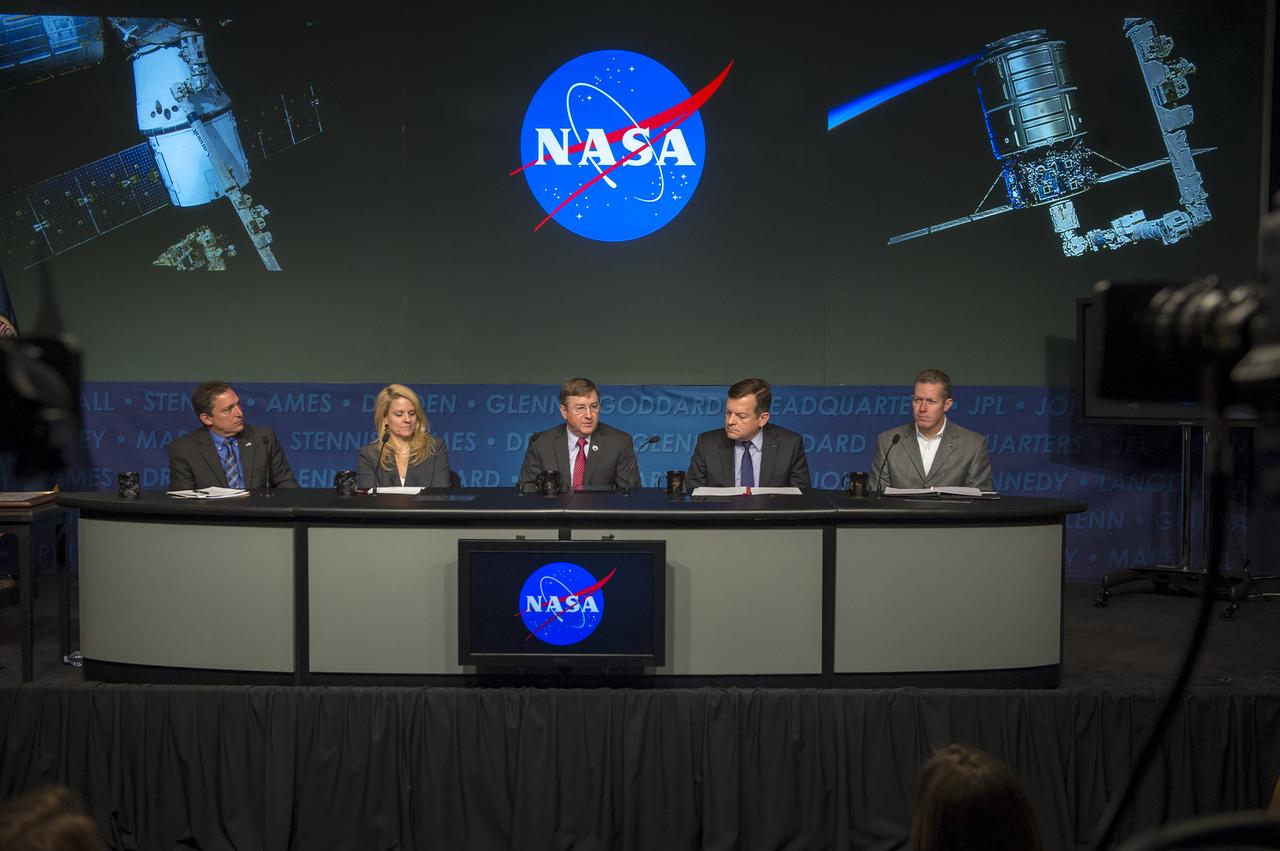
L-R: Alan Lindenmoyer, Manager of Commercial Crew and Cargo Program, NASA; Gwynne Shotwell, President, SpaceX; Frank Culbertson, Executive Vice President and General Manager, Orbital Sciences Advanced Programs Group; Frank Slazer, Vice President of Space Systems, Aerospace Industries Association and Phil McAlister, Director of Commercial Spaceflight Development at NASA, participate in a panel discussion on the Commercial Orbital Transportation Services (COTS) initiative at NASA Headquarters in Washington on Wednesday, November 13, 2013. Through COTS, NASA's partners Space Exploration Technologies Corp. (SpaceX) and Orbital Sciences Corp., developed new U.S. rockets and spacecraft, launched from U.S. soil, capable of transporting cargo to low-Earth orbit and the International Space Station. Photo Credit: (NASA/Jay Westcott)
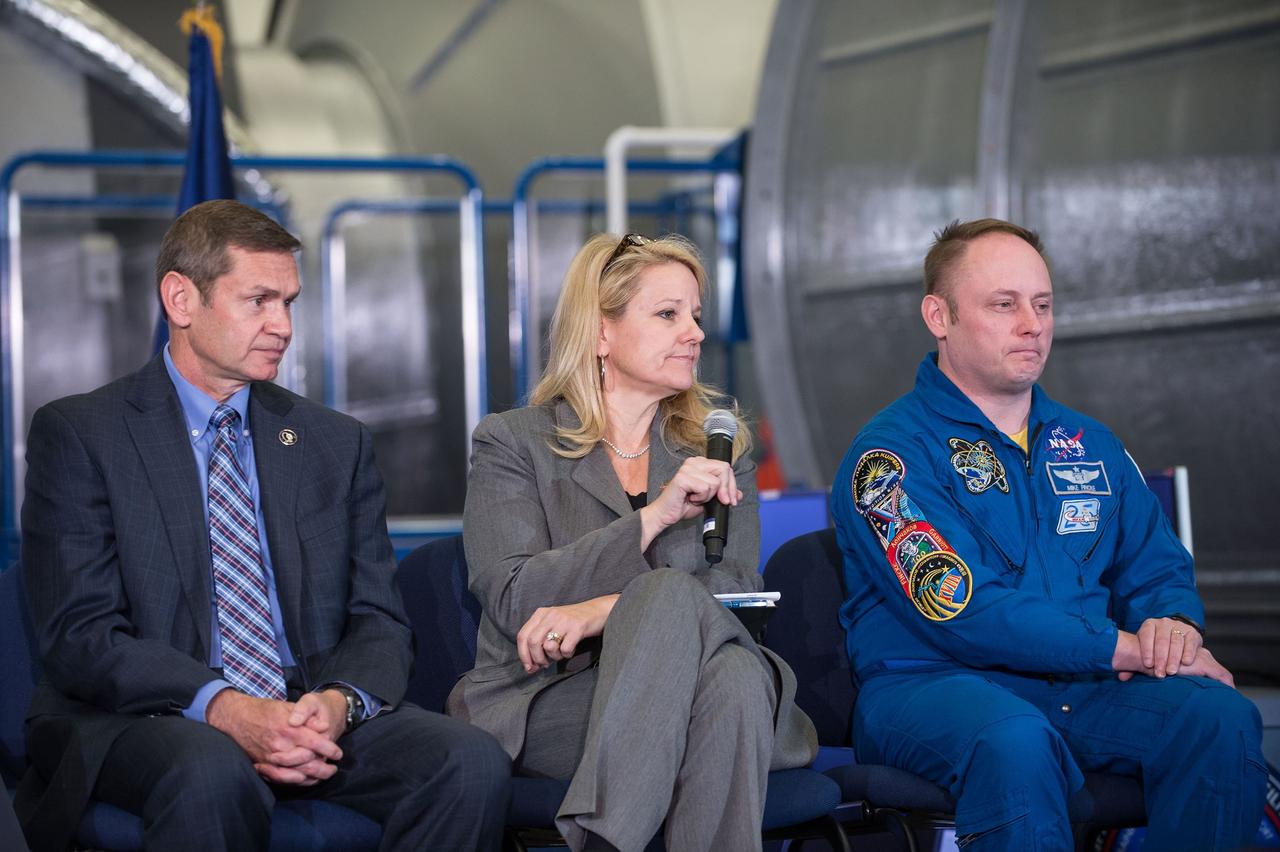
HOUSTON, Texas - jsc2015e031266 - Gwynne Shotwell, SpaceX President and Chief Operating Officer discusses the company's work with NASA's Commercial Crew Program as Boeing's John Elbon, left, and NASA astronaut Mike Fincke look on. Photo credit: NASA/Robert Markowitz
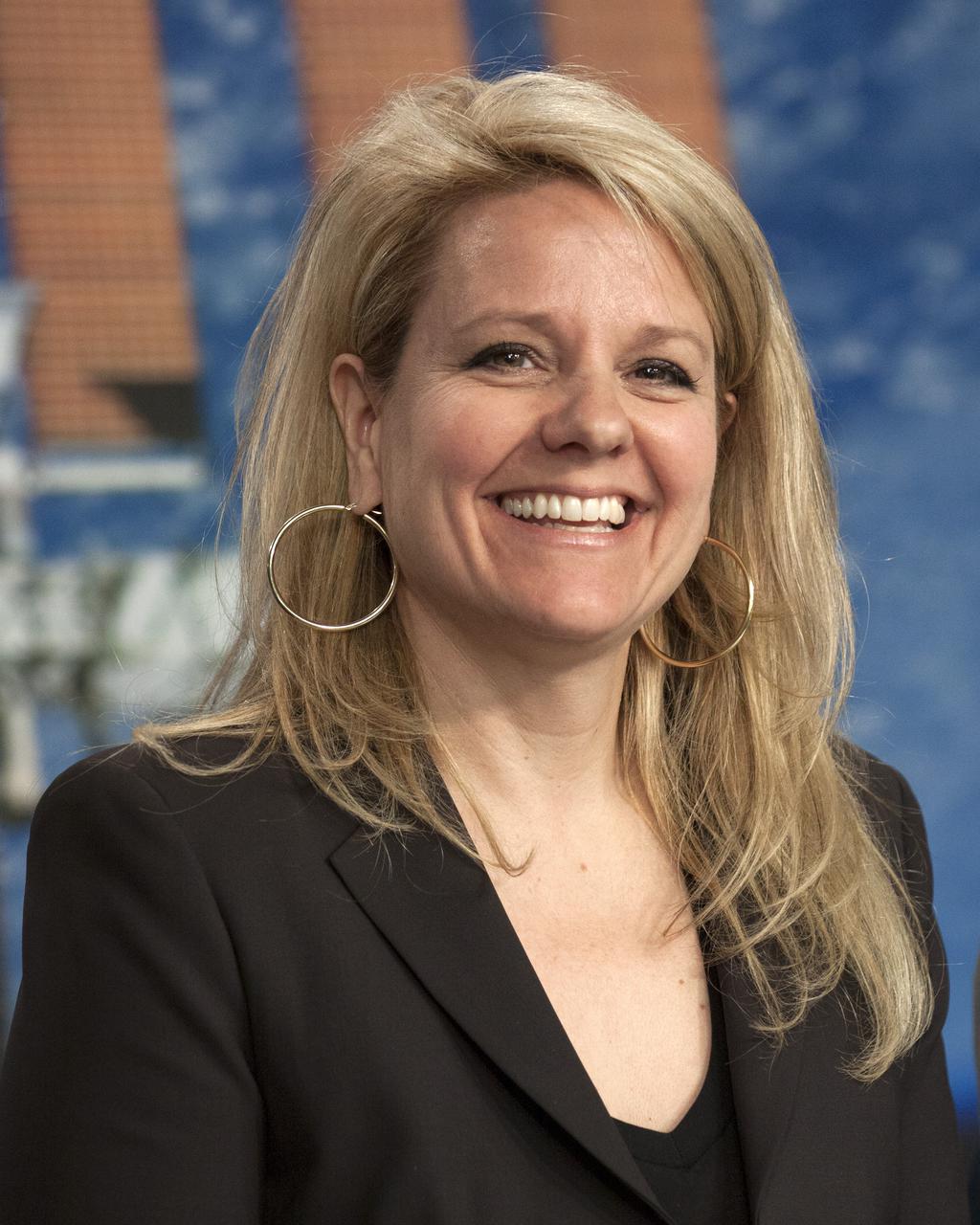
CAPE CANAVERAL, Fla. - Media attending a pre-launch news conference at the Kennedy Space Center, Fla. heard from Gwynne Shotwell, president of SpaceX. Scheduled for launch March 1 atop a Falcon 9 rocket, the SpaceX Dragon capsule will be making its third trip to the space station. The mission is the second of 12 SpaceX flights contracted by NASA to resupply the orbiting laboratory. For more information, visit http:__www.nasa.gov_mission_pages_station_structure_launch_spacex2-feature.html Photo credit: NASA_Kim Shiflett
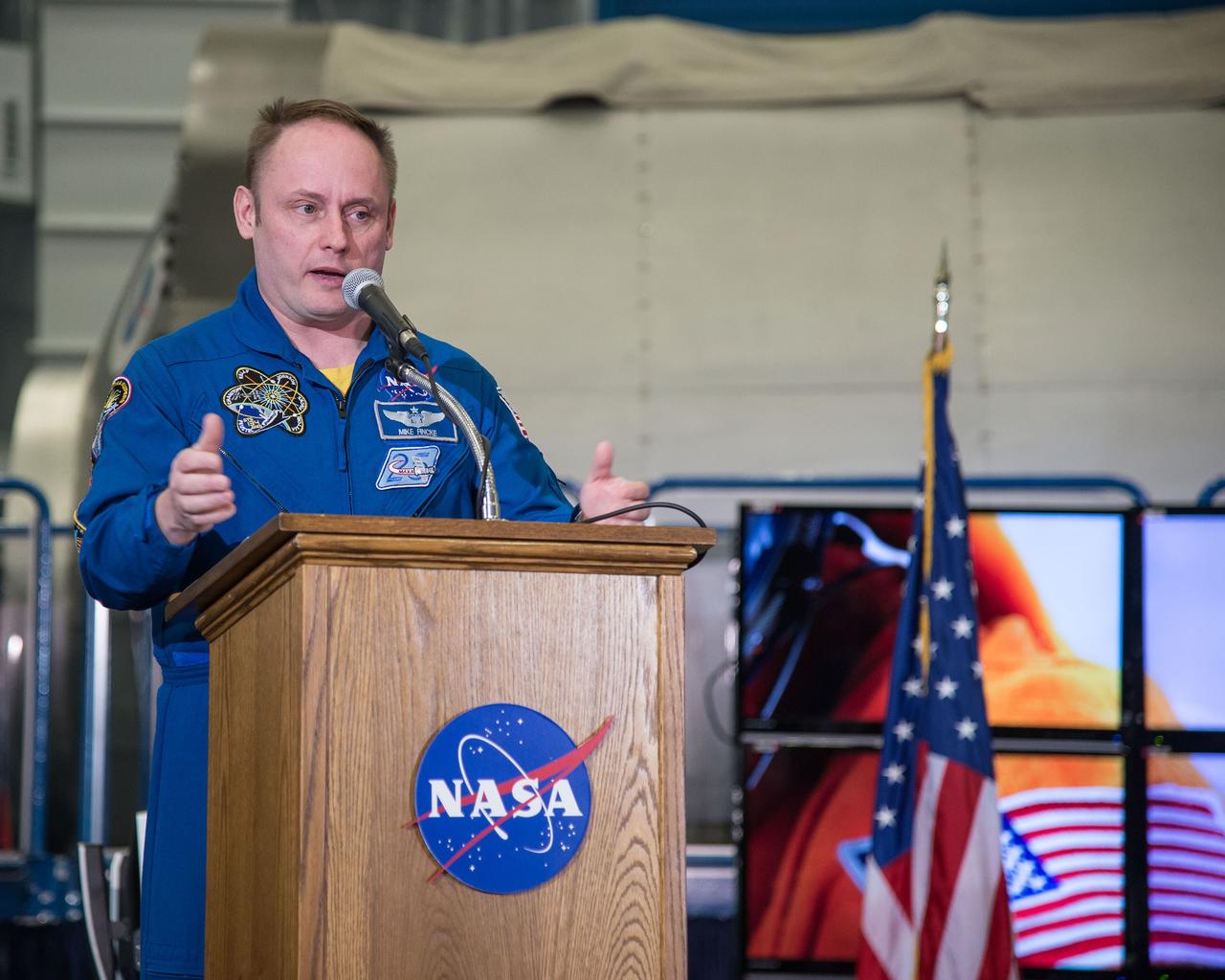
HOUSTON, Texas - jsc2015e031248 - NASA astronaut Mike Fincke discusses the agency's Commercial Crew Program during a presentation highlighting key development activities, test plans and objectives for achieving certification of two American crew transportation systems with NASA Administrator Charlie Bolden, Commercial Crew Program Manager Kathy Lueders, Boeing Space Exploration Vice President and General Manager John Elbon, Space X President and Chief Operating Officer Gwynne Shotwell and NASA Astronaut Mike Fincke. Photo credit: NASA/Robert Markowitz
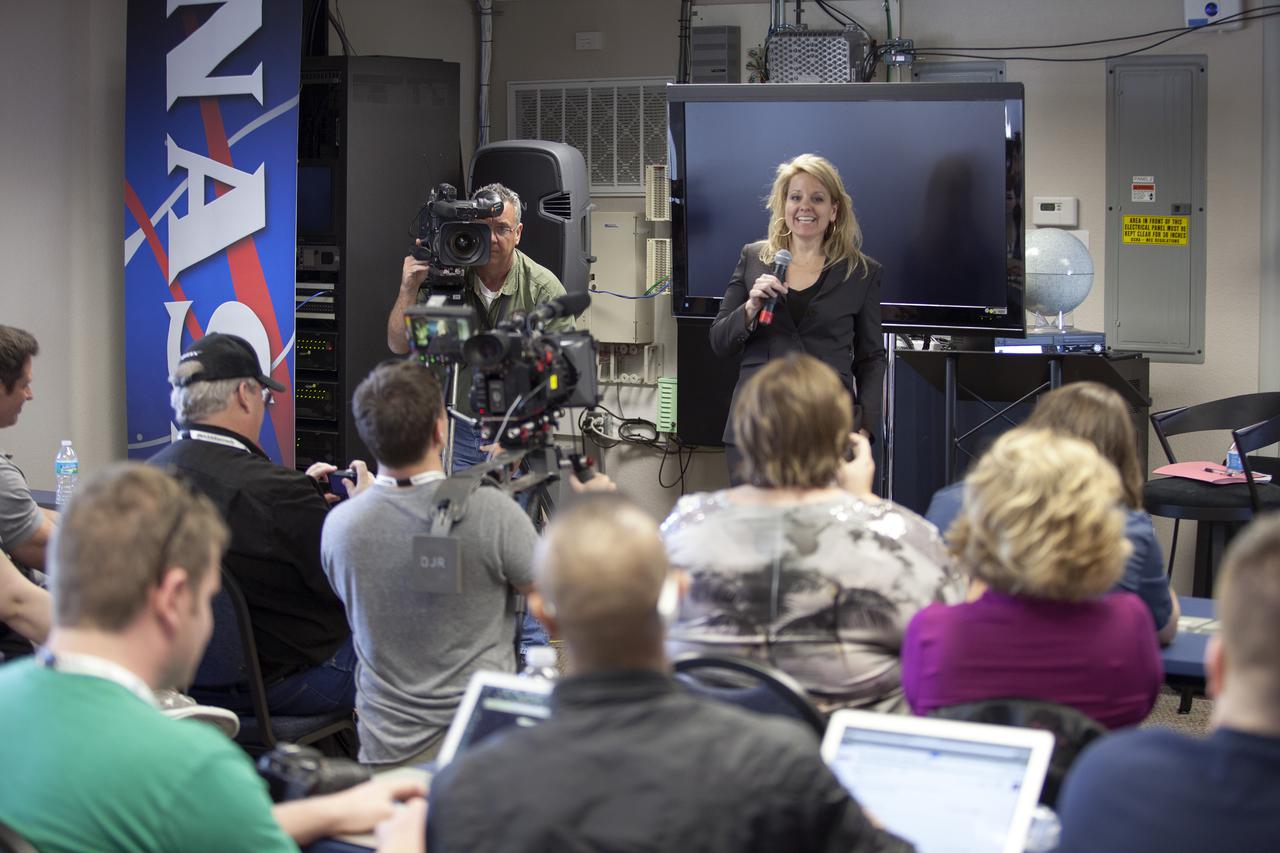
CAPE CANAVERAL, Fla. -- SpaceX President Gwynne Shotwell speaks to NASA’s social media followers during two days of presentations on the launch of SpaceX-2. The social media participants gathered at the Florida spaceport on Feb. 28 and March 1, to hear from key leaders who updated the space agency's current efforts. Photo credit: NASA_Frankie Martin
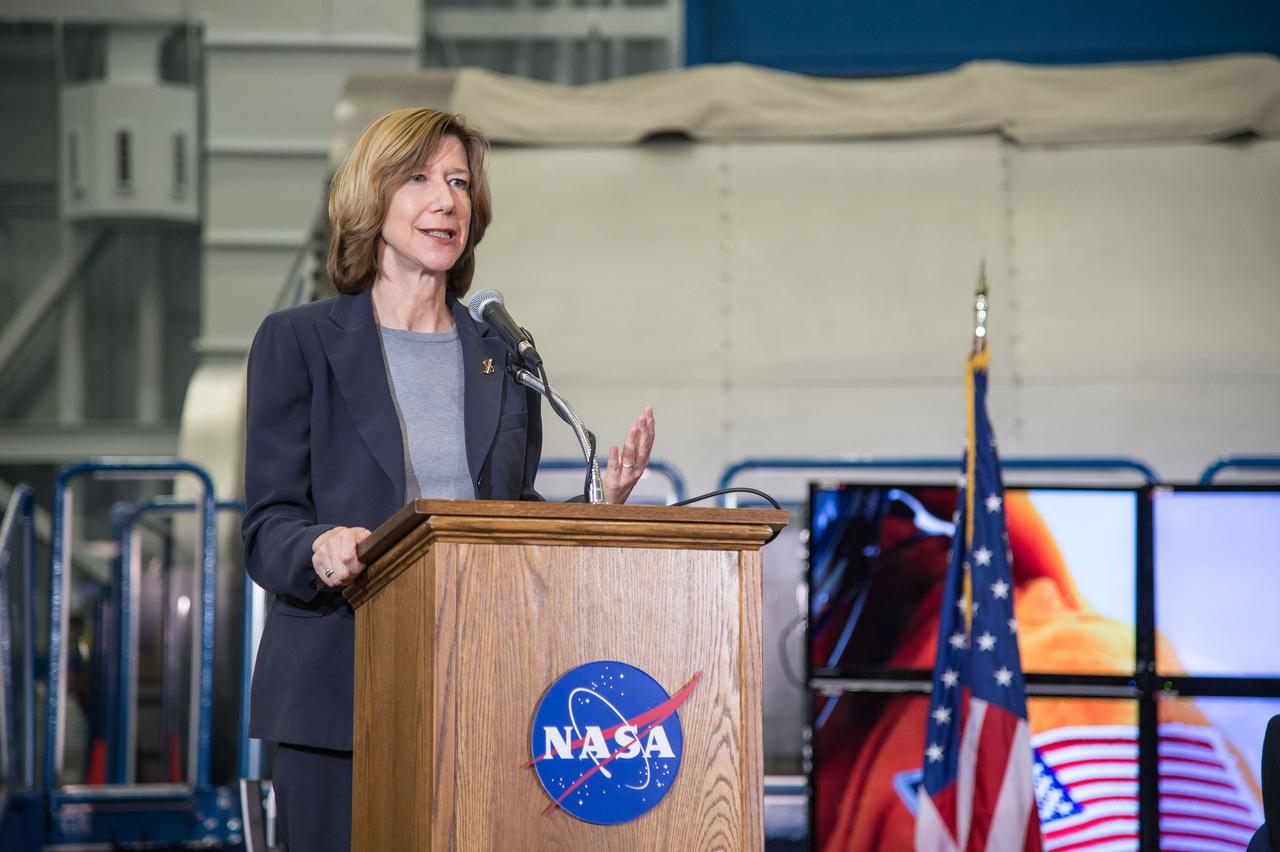
HOUSTON, Texas - jsc2015e031234 - Kathy Lueders, program manager of NASA's Commercial Crew Program, discusses the agency's approach during a presentation highlighting key development activities, test plans and objectives for achieving certification of two American crew transportation systems with NASA Administrator Charlie Bolden, Boeing Space Exploration Vice President and General Manager John Elbon, Space X President and Chief Operating Officer Gwynne Shotwell and NASA Astronaut Mike Fincke. Photo credit: NASA/Robert Markowitz
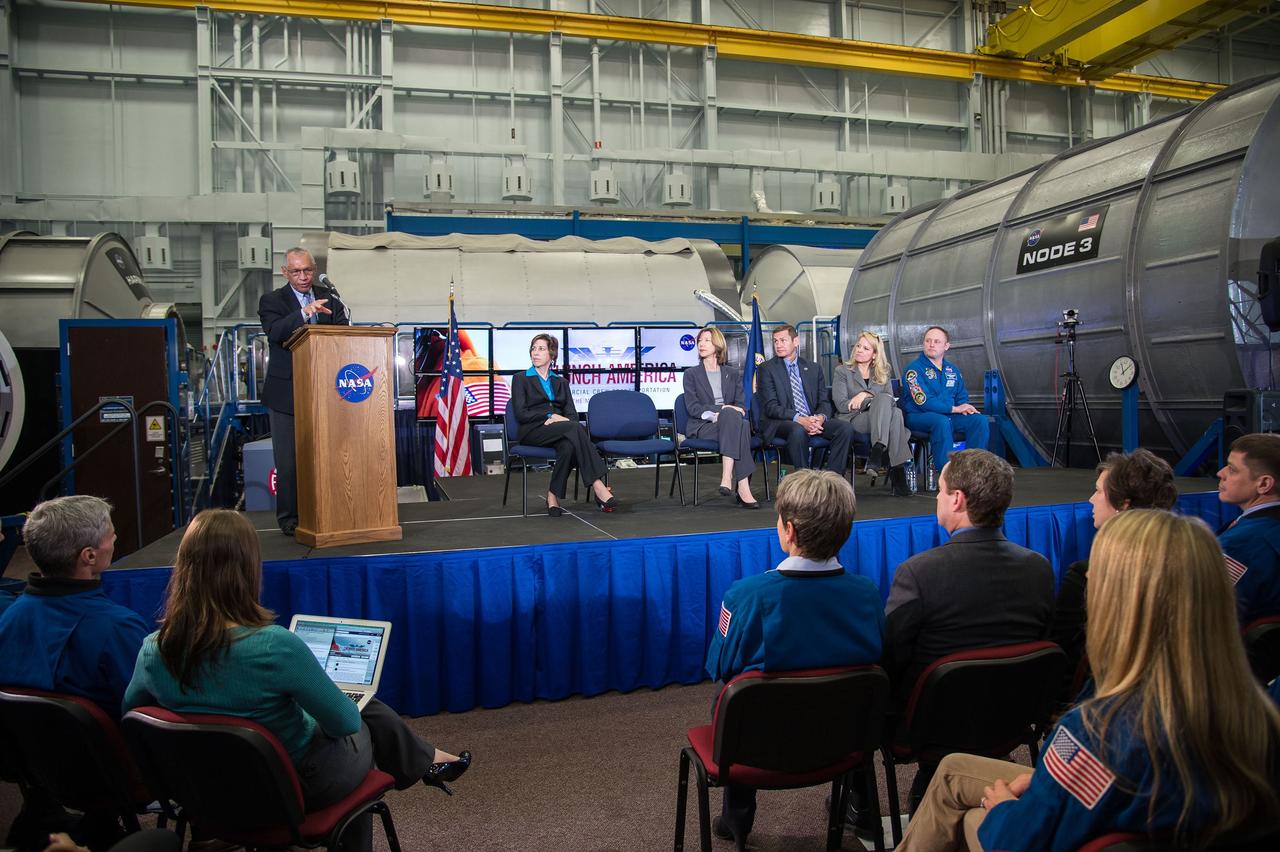
HOUSTON, Texas - jsc2015e031229 - NASA Administrator Charles Bolden discusses the agency's Commercial Crew Program during a presentation highlighting key development activities, test plans and objectives for achieving certification of two American crew transportation systems with Commercial Crew Program Manager Kathy Lueders, Boeing Space Exploration Vice President and General Manager John Elbon, Space X President and Chief Operating Officer Gwynne Shotwell and NASA Astronaut Mike Fincke. Photo credit: NASA/Robert Markowitz
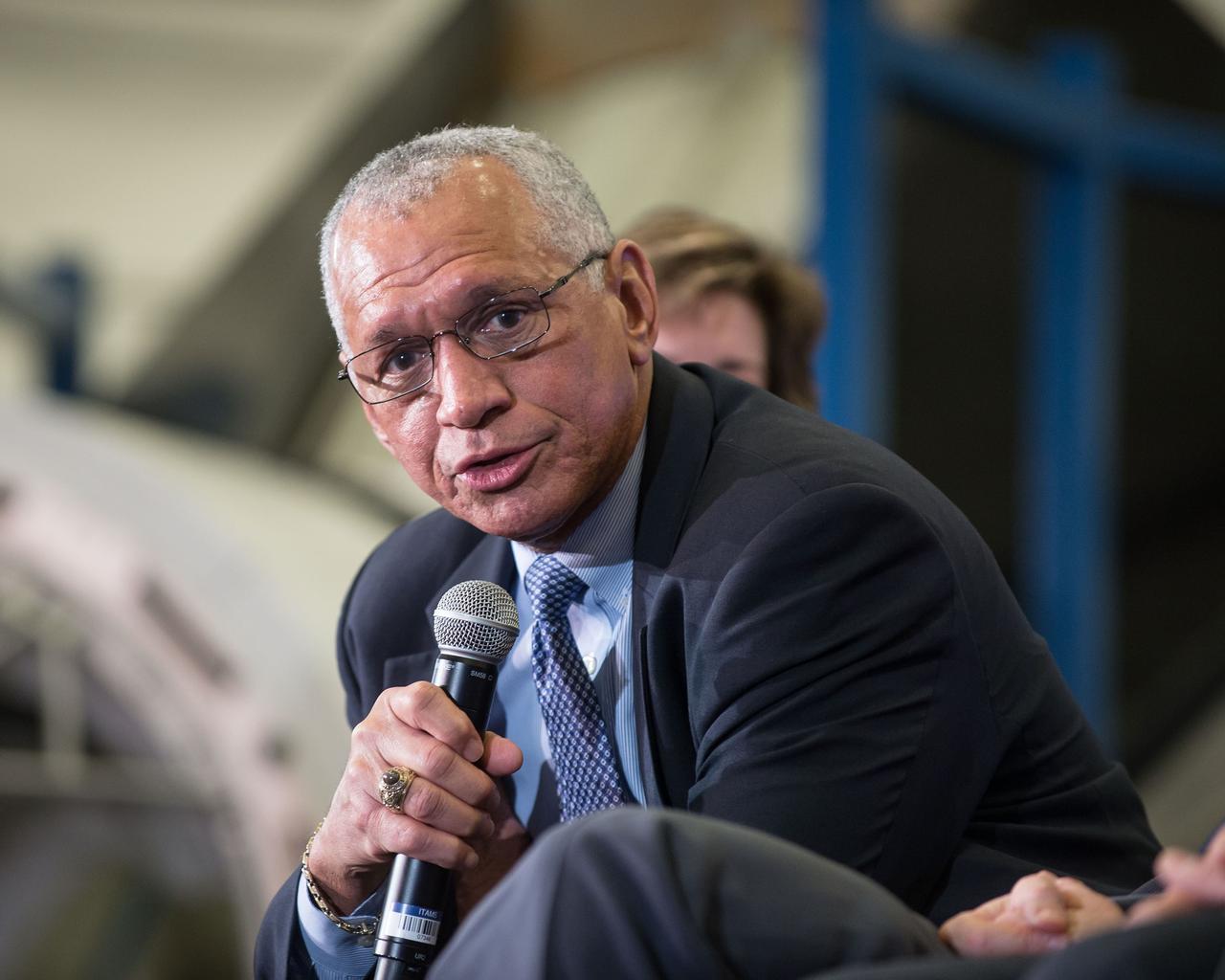
HOUSTON, Texas- jsc2015e031278 - NASA Administrator Charles Bolden discusses the agency's Commercial Crew Program during a presentation highlighting key development activities, test plans and objectives for achieving certification of two American crew transportation systems with Commercial Crew Program Manager Kathy Lueders, Boeing Space Exploration Vice President and General Manager John Elbon, Space X President and Chief Operating Officer Gwynne Shotwell and NASA Astronaut Mike Fincke. Photo credit: NASA/Robert Markowitz
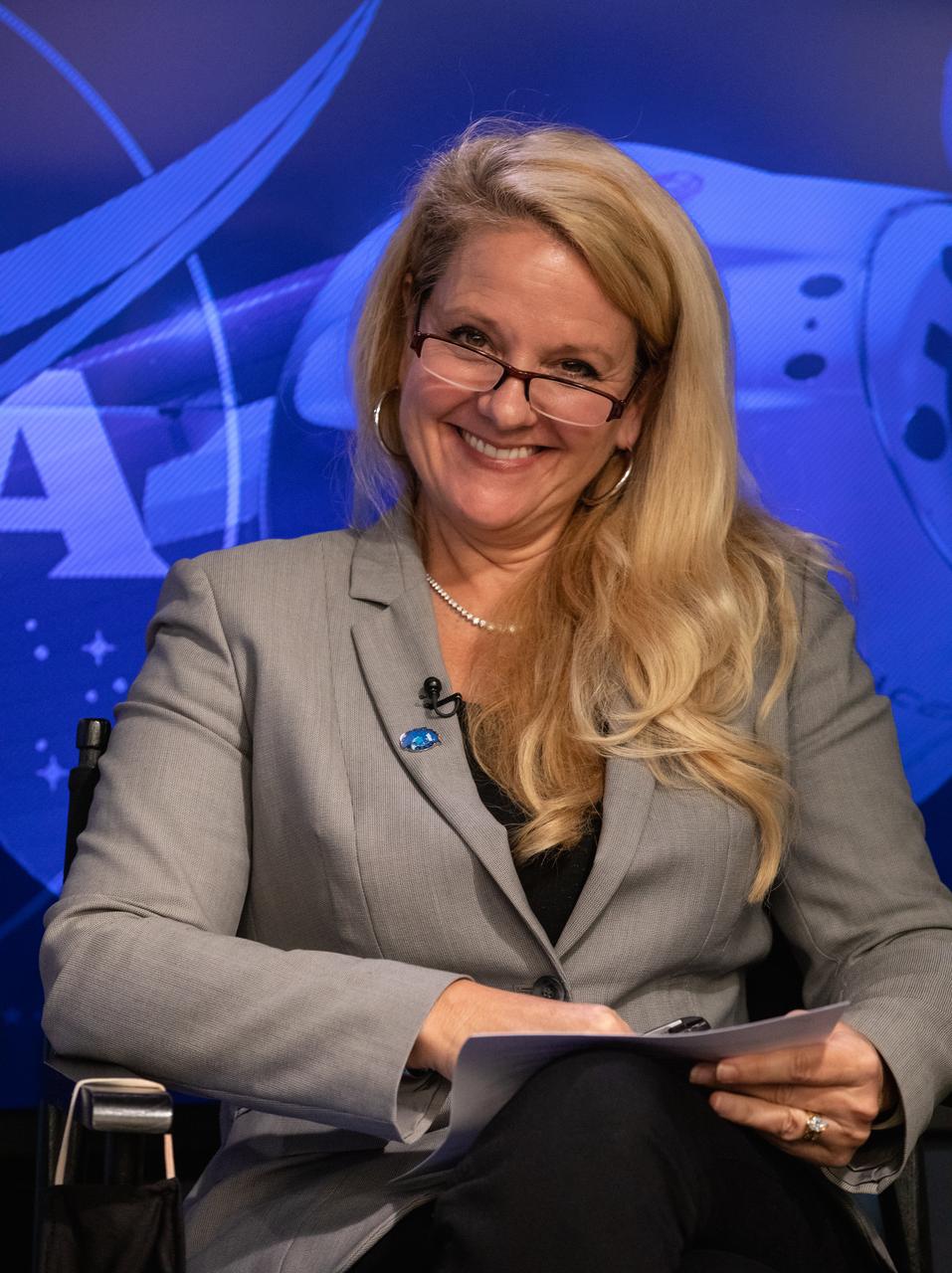
Gwynne Shotwell, president and chief operating officer, SpaceX, answers questions from members of the news media during a postlaunch news conference for NASA’s SpaceX Crew-1 mission on Nov. 15, 2020, at Kennedy Space Center in Florida. Liftoff time on a Falcon 9 rocket was at 7:27 p.m. EST. The Crew Dragon is carrying NASA astronauts Michael Hopkins, spacecraft commander; Victor Glover, pilot; Shannon Walker, mission specialist; and Japan Aerospace Exploration Agency astronaut Soichi Noguchi, mission specialist, to the International Space Station. Crew-1 is the first regular crew mission of a U.S. commercial spacecraft with astronauts to the space station as part of NASA’s Commercial Crew Program. The Crew Dragon will dock with the station and the crew will remain on the orbiting laboratory for a six-month science mission.
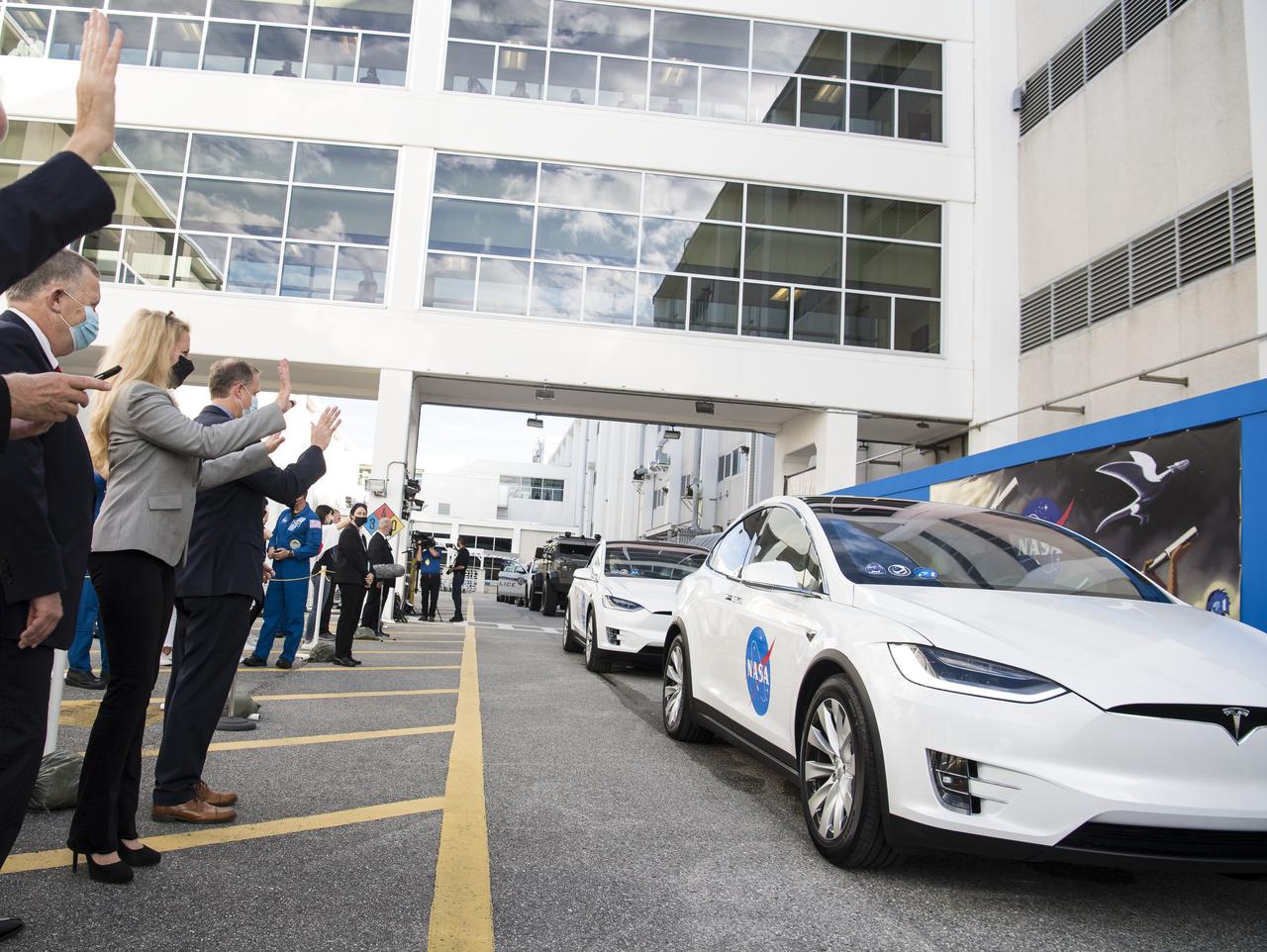
NASA Administrator Jim Bridenstine, Gwynne Shotwell, president and chief operating officer of SpaceX, and NASA Deputy Administrator Jim Morhard wave as NASA astronauts Mike Hopkins, Victor Glover, Shannon Walker, and Japan Aerospace Exploration Agency (JAXA) astronaut Soichi Noguchi, wearing SpaceX spacesuits, wave as they prepare to depart the Neil A. Armstrong Operations and Checkout Building for Launch Complex 39A to board the SpaceX Crew Dragon spacecraft for the Crew-1 mission launch, Sunday, Nov. 15, 2020, at NASA’s Kennedy Space Center in Florida. NASA’s SpaceX Crew-1 mission is the first crew rotation mission of the SpaceX Crew Dragon spacecraft and Falcon 9 rocket to the International Space Station as part of the agency’s Commercial Crew Program. NASA astronauts Mike Hopkins, Victor Glover, and Shannon Walker, and astronaut Soichi Noguchi of the Japan Aerospace Exploration Agency (JAXA) are scheduled to launch at 7:27 p.m. EST, from Launch Complex 39A at the Kennedy Space Center. Photo Credit: (NASA/Joel Kowsky)
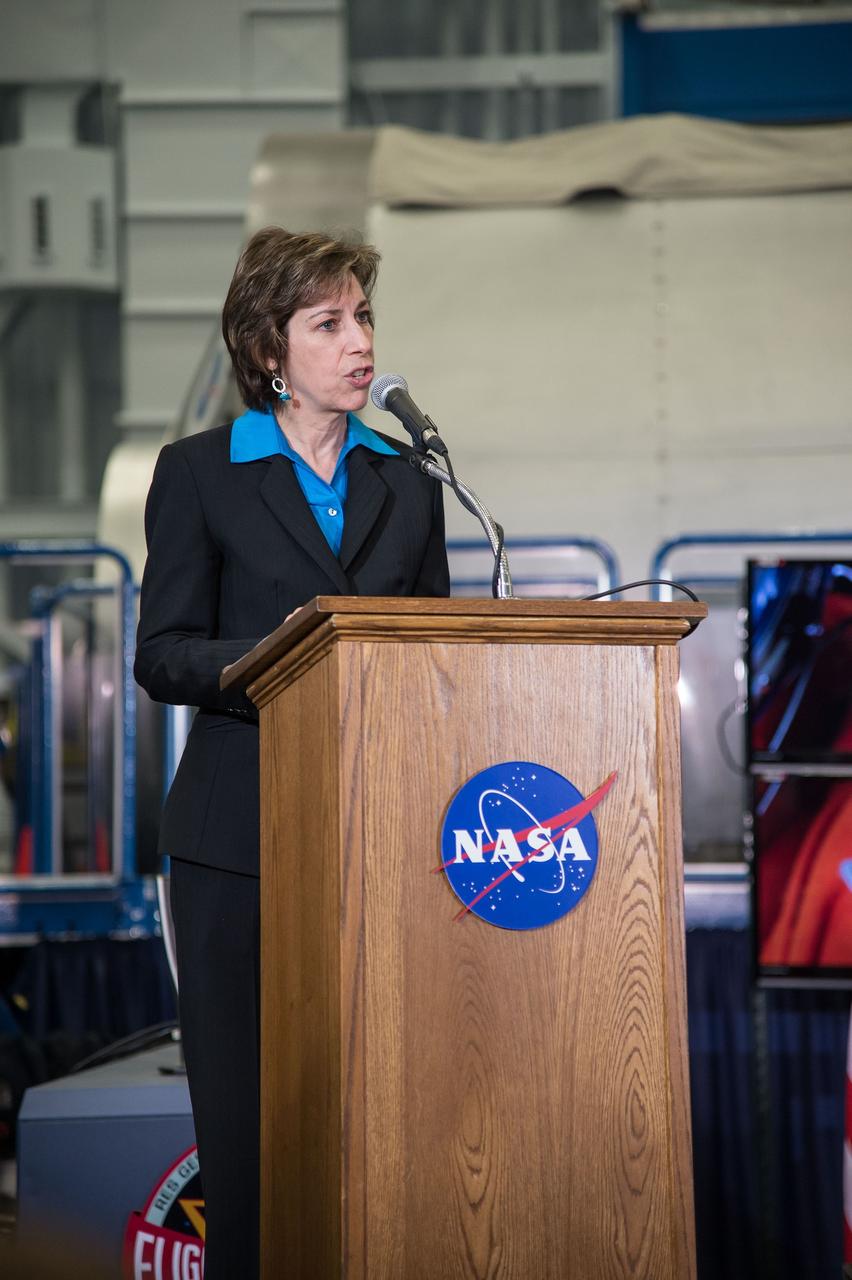
HOUSTON, Texas - jsc2015e031223 - Dr. Ellen Ochoa, director of NASA's Johnson Space Center in Houston, opens NASA's presentation about the agency's Commercial Crew Program highlighting key development activities, test plans and objectives for achieving certification of two American crew transportation systems with NASA Administrator Charlie Bolden, Commercial Crew Program Manager Kathy Lueders, Boeing Space Exploration Vice President and General Manager John Elbon, SpaceX President and Chief Operating Officer Gwynne Shotwell and NASA Astronaut Mike Fincke. Photo credit: NASA/Robert Markowitz
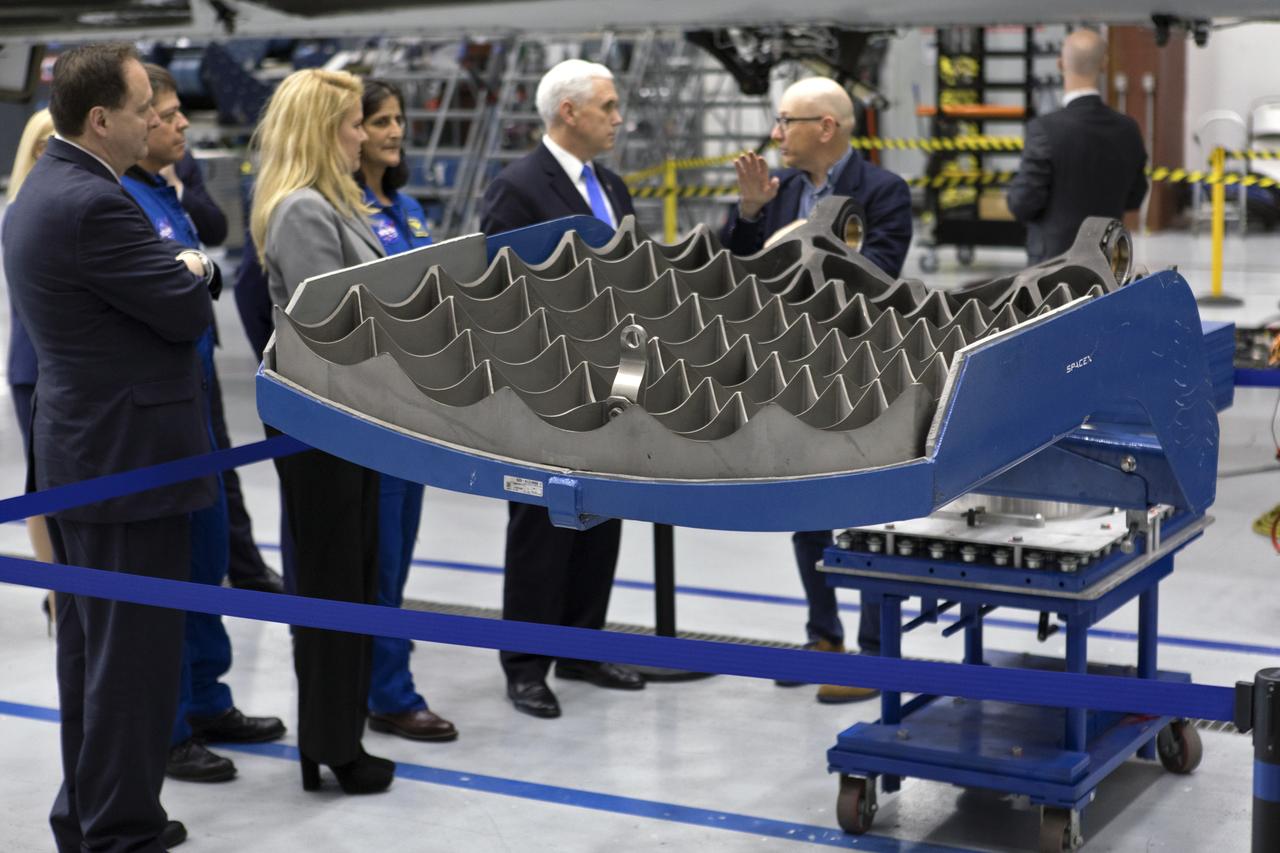
Vice President Mike Pence tours the SpaceX hangar at Launch Complex 39A, at NASA's Kennedy Space Center in Florida, on Feb. 21, 2018. SpaceX Director of Launch Pads John Muratore, far right, describes hardware to, from the left Acting NASA Administrator Robert Lightfoot, SpaceX President and COO Gwynne Shotwell, NASA astronaut Suni Williams and Pence. During his visit, Pence chaired a meeting of the National Space Council in the high bay of the center's Space Station Processing Facility. The council's role is to advise the president regarding national space policy and strategy, and review the nation's long-range goals for space activities.
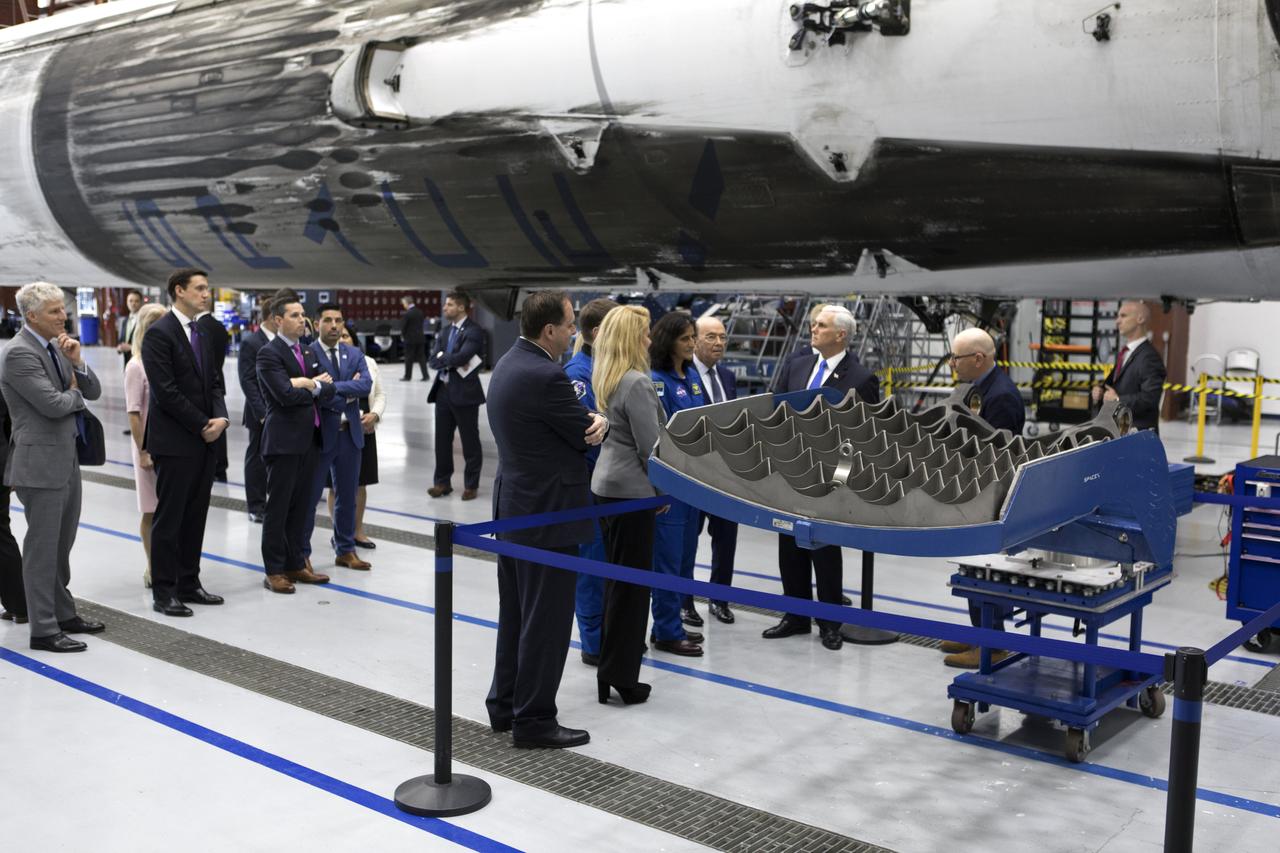
Vice President Mike Pence tours the SpaceX hangar at Launch Complex 39A, at NASA's Kennedy Space Center in Florida, on Feb. 21, 2018. SpaceX Director of launch Pads John Muratore, far right, describes hardware to, from the left Acting NASA Administrator Robert Lightfoot, SpaceX President and COO Gwynne Shotwell, NASA astronaut Suni Williams and Pence. During his visit, Pence chaired a meeting of the National Space Council in the high bay of the center's Space Station Processing Facility. The council's role is to advise the president regarding national space policy and strategy, and review the nation's long-range goals for space activities.
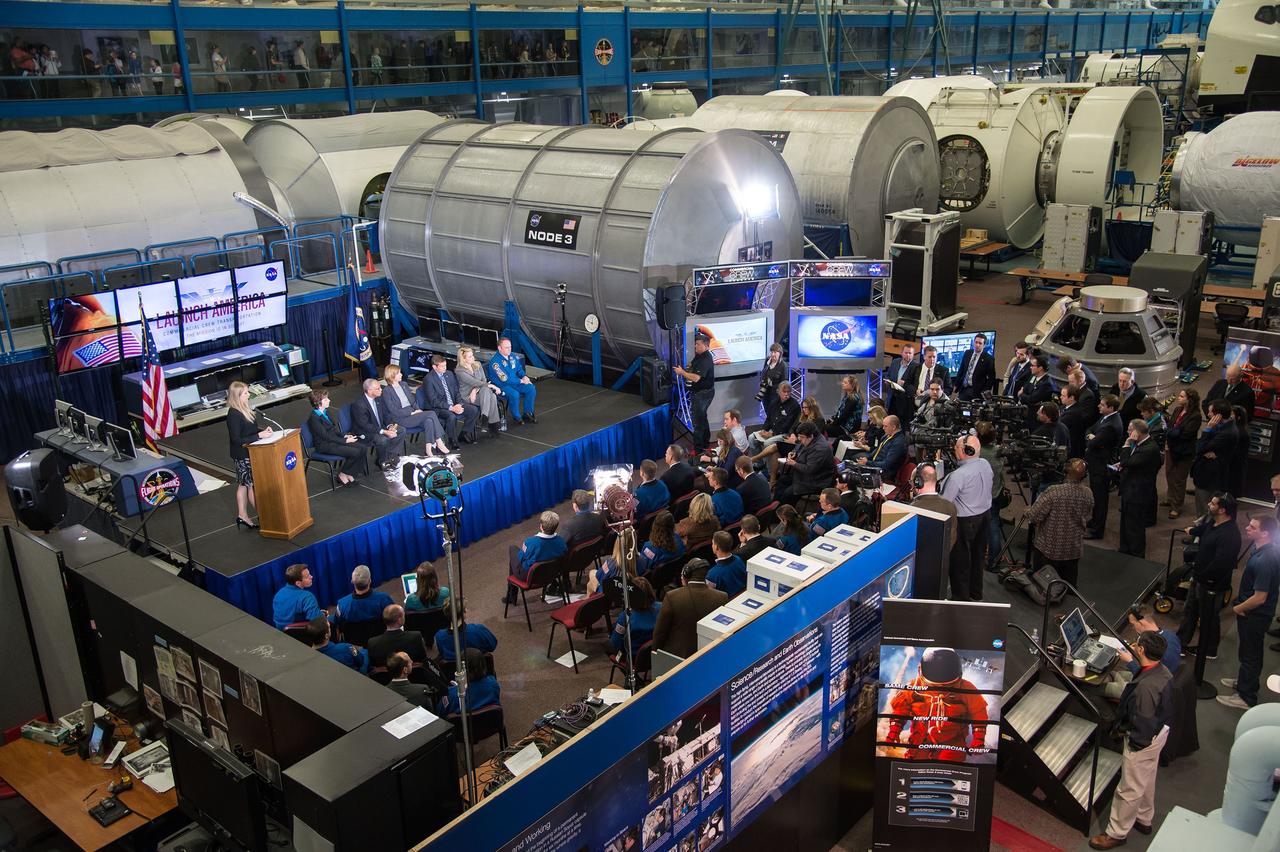
HOUSTON, Texas - jsc2015e031268 - HOUSTON, Texas - NASA's Stephanie Schierholz opens a presentation about the agency's Commercial Crew Program highlighting key development activities, test plans and objectives for achieving certification of two American crew transportation systems with Dr. Ellen Ochoa, director of NASA's Johnson Space Center in Houston, NASA Administrator Charlie Bolden, Commercial Crew Program Manager Kathy Lueders, Boeing Space Exploration Vice President and General Manager John Elbon, SpaceX President and Chief Operating Officer Gwynne Shotwell and NASA Astronaut Mike Fincke. Photo credit: NASA/Robert Markowitz
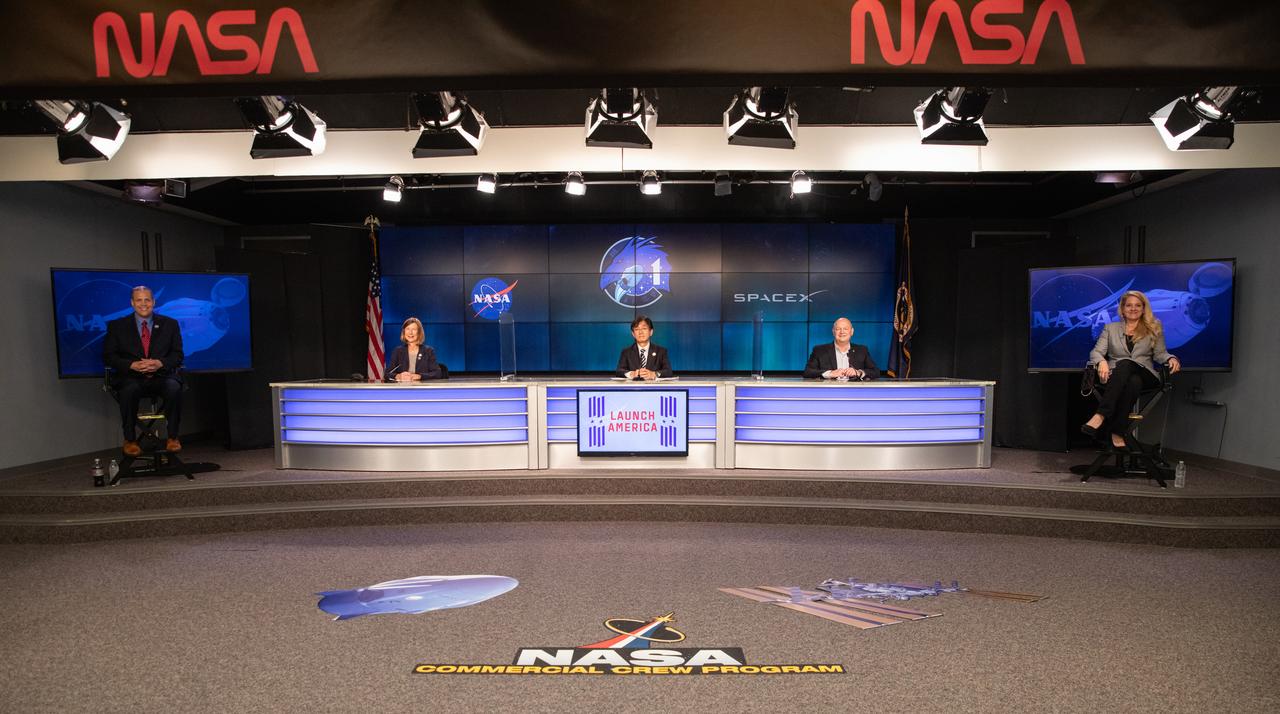
A postlaunch news conference for NASA’s SpaceX Crew-1 mission is held at Kennedy Space Center in Florida on Nov. 15, 2020. Liftoff time on a SpaceX Falcon 9 rocket was at 7:27 p.m. EST. From left are NASA Administrator Jim Bridenstine; Kathy Lueders, associate administrator for human exploration and operations, NASA Headquarters; Hiroshi Sasaki, vice president and director general, JAXA’s Human Spaceflight Technology Directorate; Steve Dickson, administrator, Federal Aviation Administration; and Gwynne Shotwell, president and chief operating officer, SpaceX. The Crew Dragon is carrying NASA astronauts Michael Hopkins, spacecraft commander; Victor Glover, pilot; Shannon Walker, mission specialist; and Japan Aerospace Exploration Agency astronaut Soichi Noguchi, mission specialist, to the international Space Station. Crew-1 is the first regular crew mission of a U.S. commercial spacecraft with astronauts to the space station as part of NASA’s Commercial Crew Program. The Crew Dragon will dock with the station and the crew will remain on the orbiting laboratory for a six-month science mission.
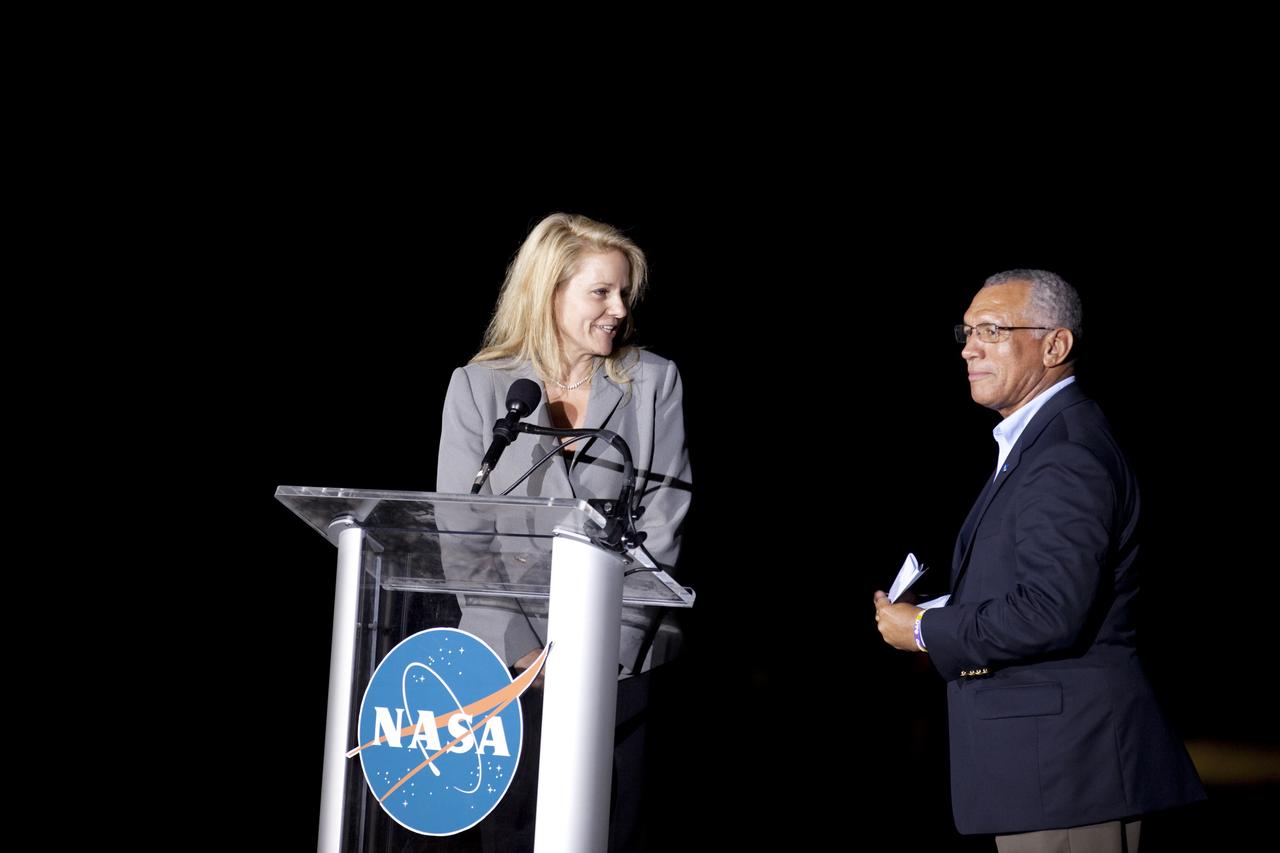
CAPE CANAVERAL, Fla. -- Gwynne Shotwell, president of Space Exploration Technologies Corp., or SpaceX, takes her turn at the podium from NASA Administrator Charlie Bolden, at right. Bolden and Shotwell are addressing news and social media representatives at the Press Site at NASA's Kennedy Space Center in Florida following the successful launch of NASA's first Commercial Resupply Services, or CRS-1, mission to the International Space Station. SpaceX built both the Falcon 9 rocket and Dragon capsule that launched at 8:35 p.m. EDT from Space Launch Complex 40 on Cape Canaveral Air Force Station. SpaceX CRS-1 is an important step toward making America’s microgravity research program self-sufficient by providing a way to deliver and return significant amounts of cargo, including science experiments, to and from the orbiting laboratory. NASA has contracted for 12 commercial resupply flights from SpaceX and eight from the Orbital Sciences Corp. For more information, visit http://www.nasa.gov/mission_pages/station/living/launch/index.html. Photo credit: NASA/Kim Shiflett
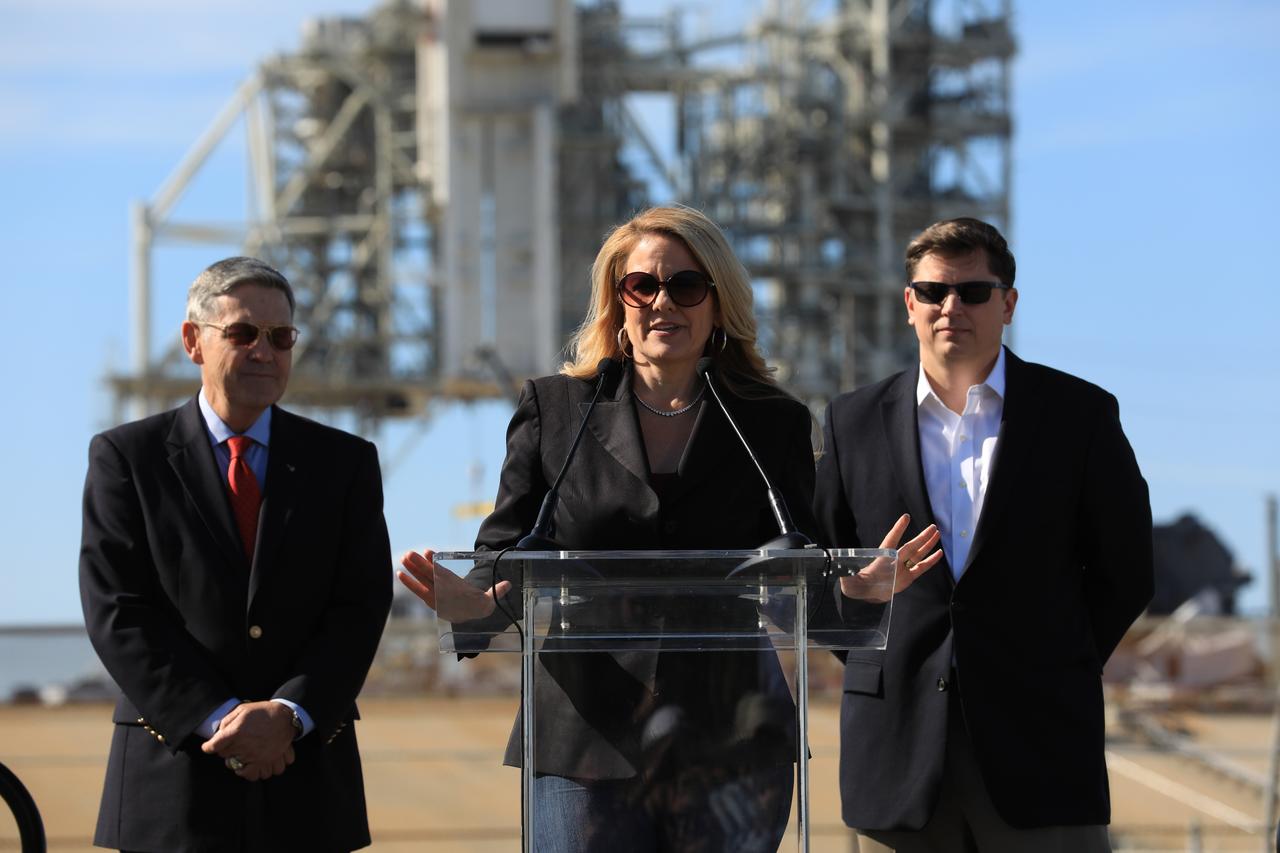
Gwynne Shotwell, president and chief operating officer of SpaceX, speaks to members of the news media at Launch Complex 39A. At left is Kennedy Space Center Director Bob Cabana. At right is Timothy Hughes, senior vice president and general counsel for SpaceX. On Feb. 18, a Falcon 9 rocket with a Dragon spacecraft atop is scheduled to lift off from the launch pad for the SpaceX CRS-10 mission. The historic site is where American astronauts first launched to the moon and was last used in 2011 for the final mission of the Space Shuttle Program. In April 2014, NASA officials signed a 20-year property agreement with SpaceX for use and operation of the launch pad for their Falcon 9 and Falcon 9 Heavy rockets. The SpaceX CRS-10 liftoff is another milestone further establishing Kennedy as a premier, multi-user spaceport. The Dragon spacecraft will deliver 5,000 pounds of supplies and research materials to the space station.
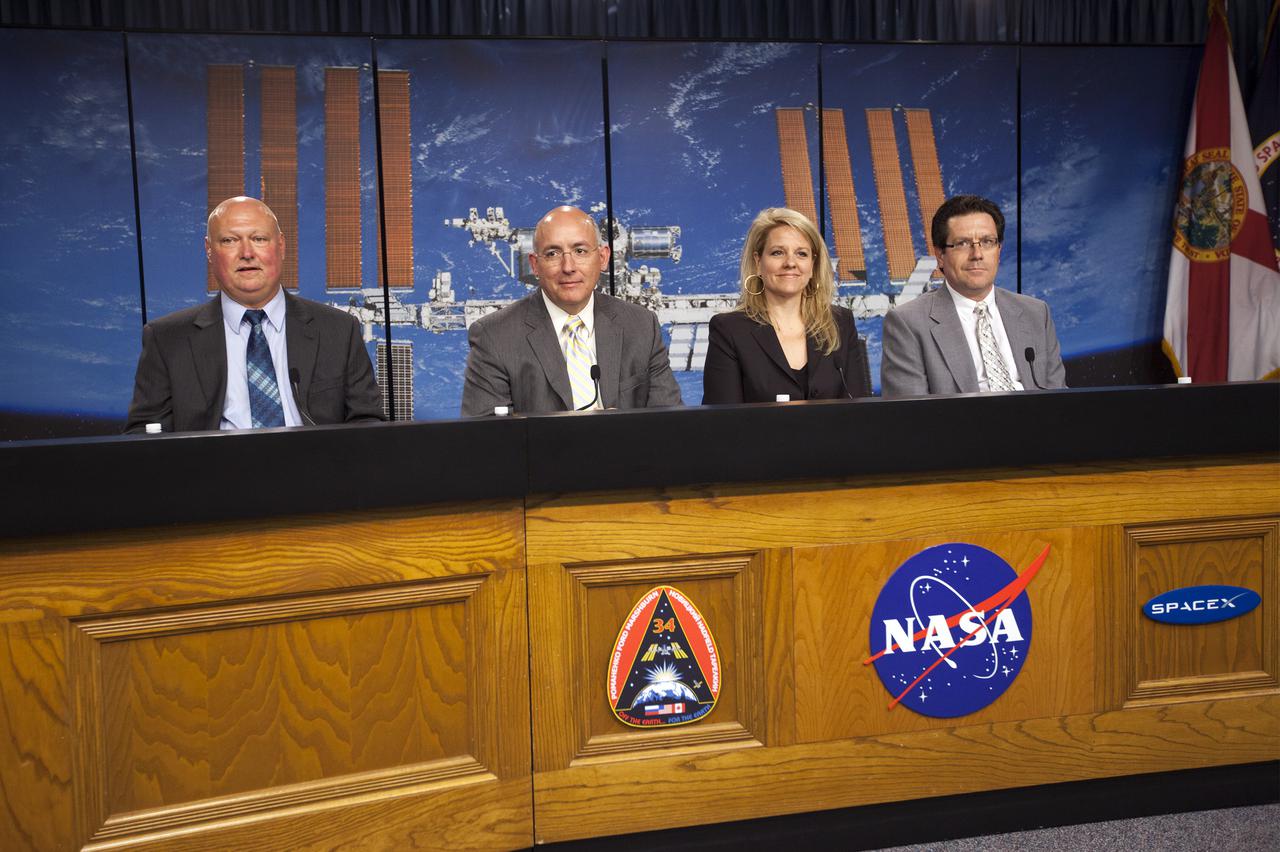
CAPE CANAVERAL, Fla. - Media attending a pre-launch news conference at the Kennedy Space Center, Fla. heard from officials who discussed payloads to be launched aboard a SpaceX Dragon capsule. From the left are: Mike Curie of NASA Public Affairs at the Kennedy Space Center, Mike Suffredini, NASA program manager for the International Space Station at the Johnson Space Center, Gwynne Shotwell, president of SpaceX, and Joel Tumbiolo, launch weather officer for the 45th Weather Squadron at Cape Canaveral Air Force Station. Scheduled for launch March 1 atop a Falcon 9 rocket, the SpaceX Dragon capsule will be making its third trip to the space station. The mission is the second of 12 SpaceX flights contracted by NASA to resupply the orbiting laboratory. For more information, visit http:__www.nasa.gov_mission_pages_station_structure_launch_spacex2-feature.html Photo credit: NASA_Kim Shiflett
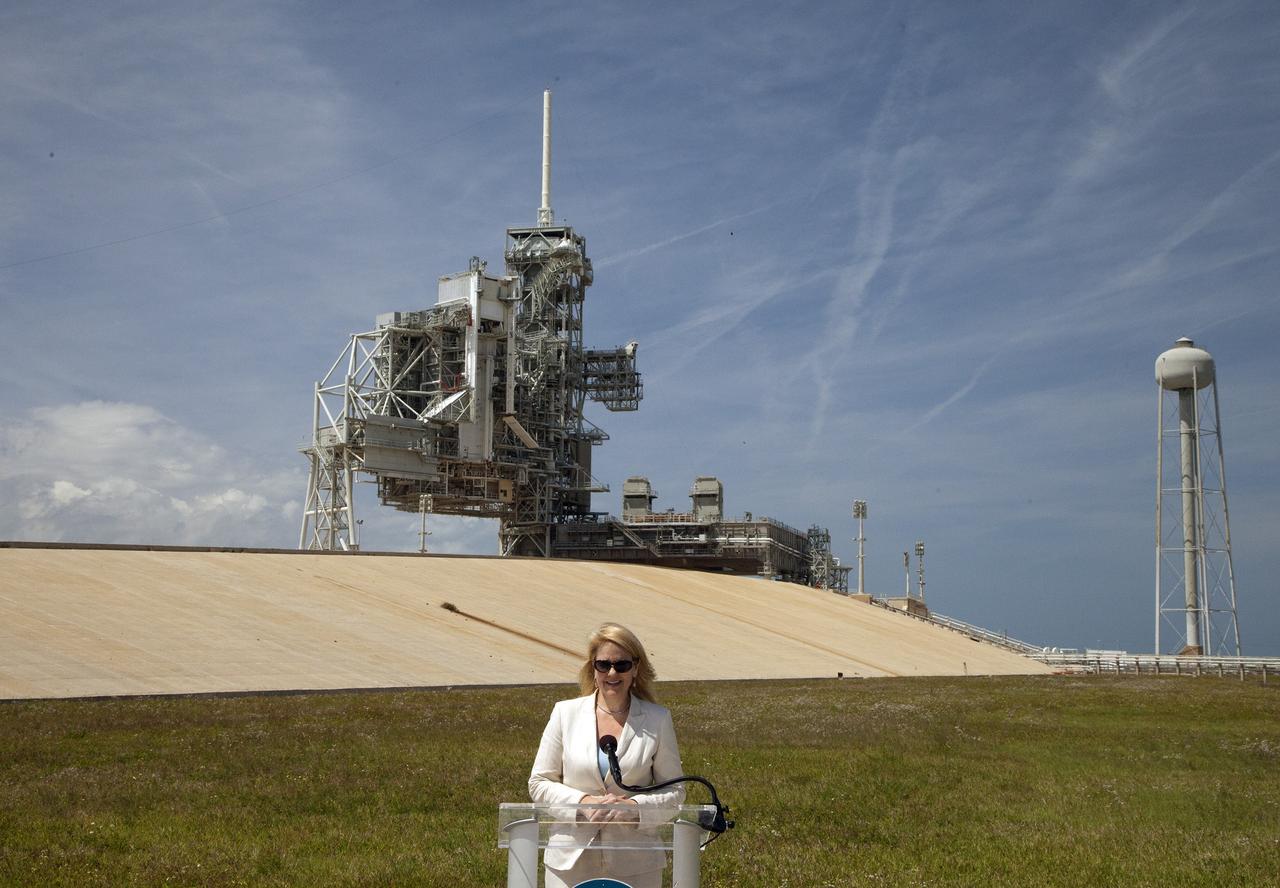
CAPE CANAVERAL, Fla. -- At Kennedy Space Center's Launch Pad 39A, Gwynne Shotwell, president and chief operating officer of Space Exploration Technologies SpaceX of Hawthorne, Calif., announces that NASA has just signed a lease agreement with SpaceX for use and operation of Launch Complex 39A. SpaceX will use Launch Complex 39A for rockets such as the Falcon Heavy, currently under development. Both launch pad 39A and 39B were originally built for the Apollo/Saturn V rockets that launched American astronauts on their historic journeys to the moon and later modified to support the 30-year shuttle program. Pad 39B is now being modified by NASA to support the Space Launch System SLS rocket boosting the Orion spacecraft part of the agency’s plan to explore beyond low-Earth orbit. To learn more about Launch Pad 39A visit: http://www.nasa.gov/mission_pages/shuttle/launch/launch-complex39-toc.html Photo credit: NASA/Dan Casper
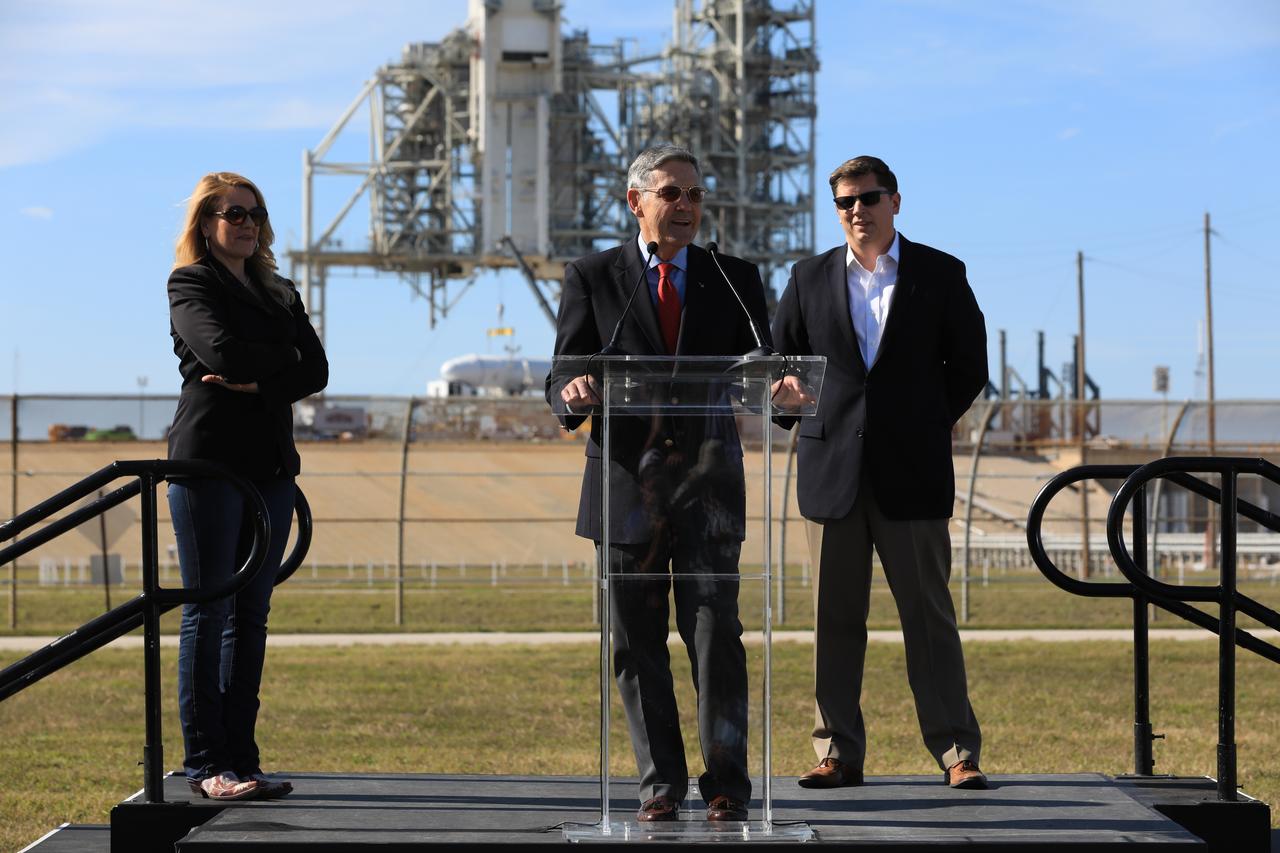
Kennedy Space Center Director Bob Cabana speaks to members of the news media at Launch Complex 39A. At left is Gwynne Shotwell, president and chief operating officer of SpaceX. At right is Timothy Hughes, senior vice president and general counsel for SpaceX. On Feb. 18, a Falcon 9 rocket with a Dragon spacecraft atop is scheduled to lift off from the launch pad for the SpaceX CRS-10 mission. The historic site is where American astronauts first launched to the moon and was last used in 2011 for the final mission of the Space Shuttle Program. In April 2014, NASA officials signed a 20-year property agreement with SpaceX for use and operation of the launch pad for their Falcon 9 and Falcon 9 Heavy rockets. The SpaceX CRS-10 liftoff is another milestone further establishing Kennedy as a premier, multi-user spaceport. The Dragon spacecraft will deliver 5,000 pounds of supplies and research materials to the space station.
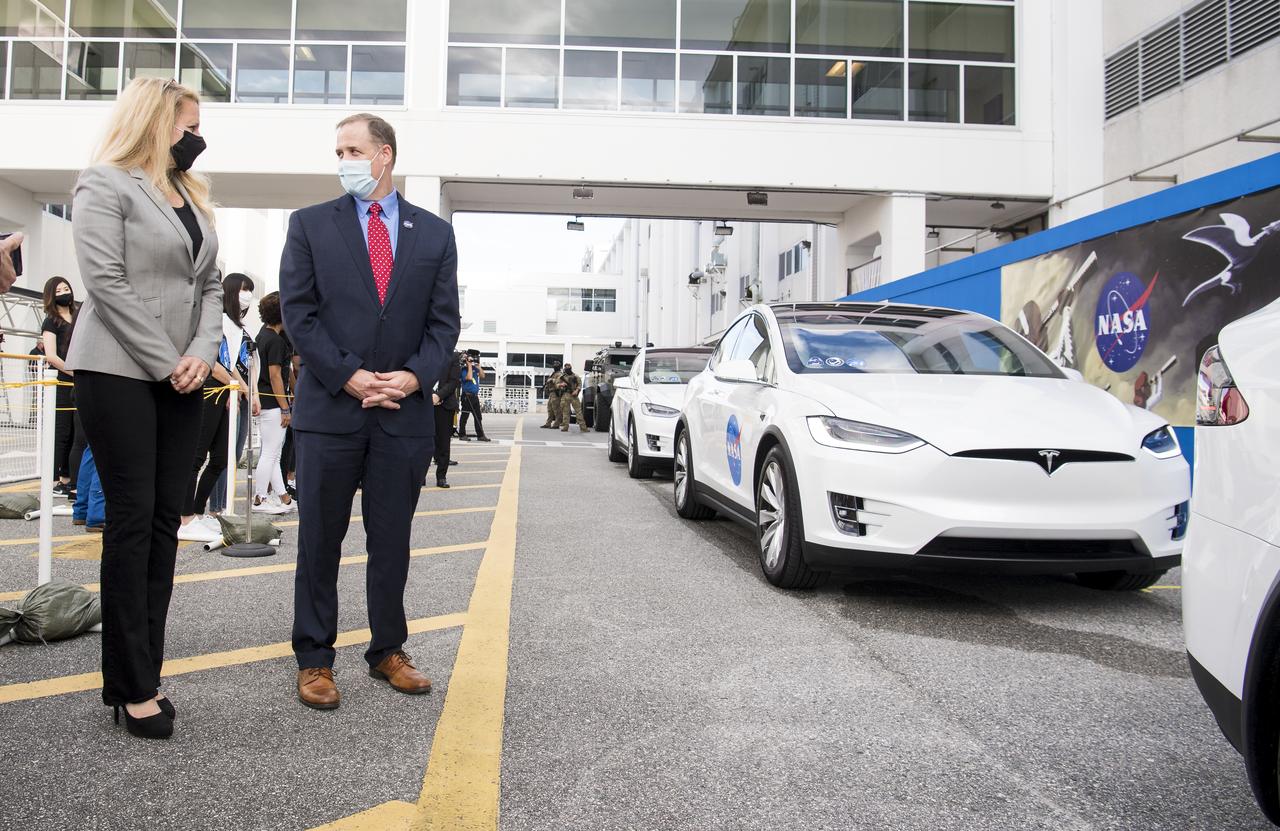
Gwynne Shotwell, president and chief operating officer of SpaceX, left, and NASA Administrator Jim Bridenstine, right, are seen as they wait to see NASA astronauts Mike Hopkins, Victor Glover, Shannon Walker, and Japan Aerospace Exploration Agency (JAXA) astronaut Soichi Noguchi, depart the Neil A. Armstrong Operations and Checkout Building for Launch Complex 39A to board the SpaceX Crew Dragon spacecraft for the Crew-1 mission launch Sunday, Nov. 15, 2020, at NASA’s Kennedy Space Center in Florida. NASA’s SpaceX Crew-1 mission is the first crew rotation mission of the SpaceX Crew Dragon spacecraft and Falcon 9 rocket to the International Space Station as part of the agency’s Commercial Crew Program. Hopkins, Glover, Walker, and Noguchi launched at 7:27 p.m. EST on Sunday, Nov. 15, from Launch Complex 39A at the Kennedy Space Center. Photo Credit: (NASA/Joel Kowsky)
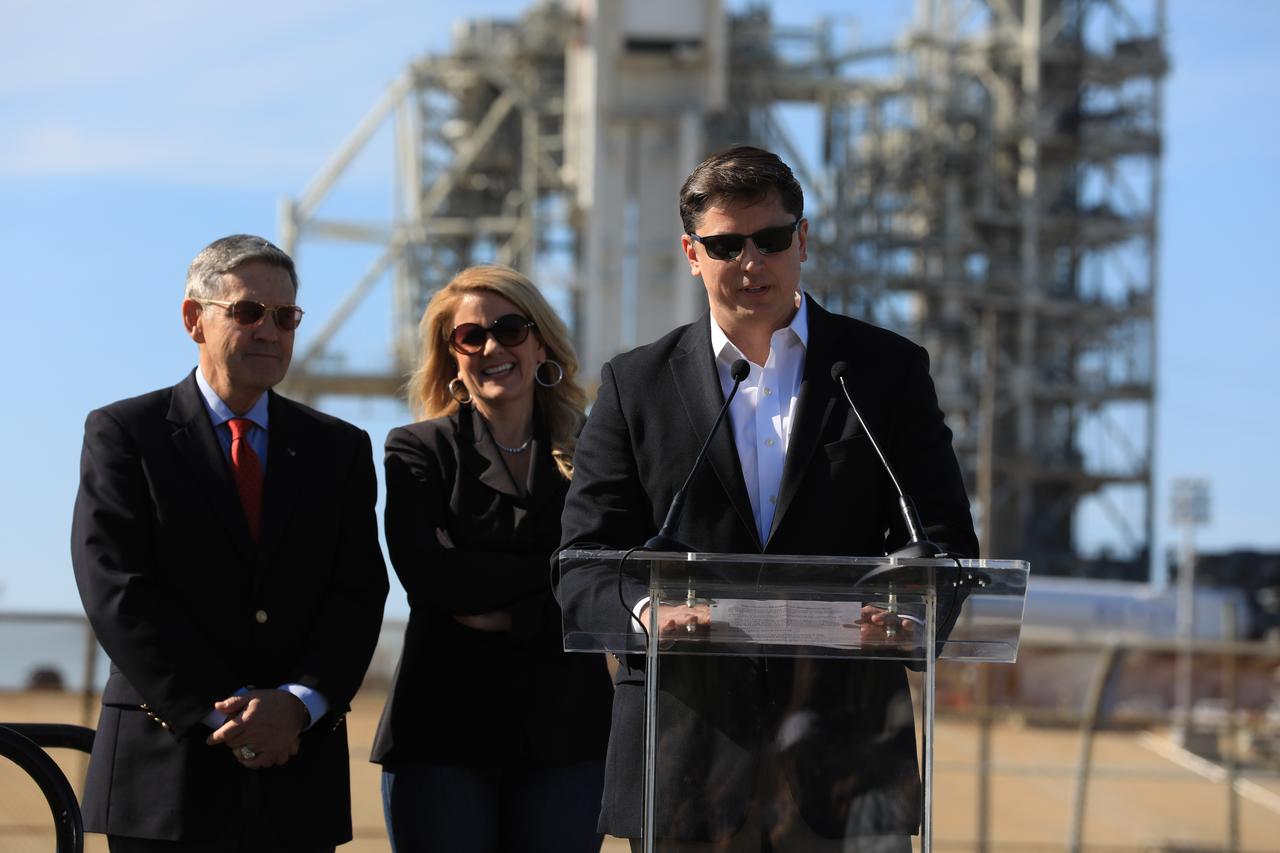
Timothy Hughes, senior vice president and general counsel for SpaceX speaks to members of the news media at Launch Complex 39A. Behind him, from left, are Kennedy Space Center Director Bob Cabana and Gwynne Shotwell, president and chief operating officer of SpaceX. On Feb. 18, a Falcon 9 rocket with a Dragon spacecraft atop is scheduled to lift off from the launch pad for the SpaceX CRS-10 mission. The historic site is where American astronauts first launched to the moon and was last used in 2011 for the final mission of the Space Shuttle Program. In April 2014, NASA officials signed a 20-year property agreement with SpaceX for use and operation of the launch pad for their Falcon 9 and Falcon 9 Heavy rockets. The SpaceX CRS-10 liftoff is another milestone further establishing Kennedy as a premier, multi-user spaceport. The Dragon spacecraft will deliver 5,000 pounds of supplies and research materials to the space station.
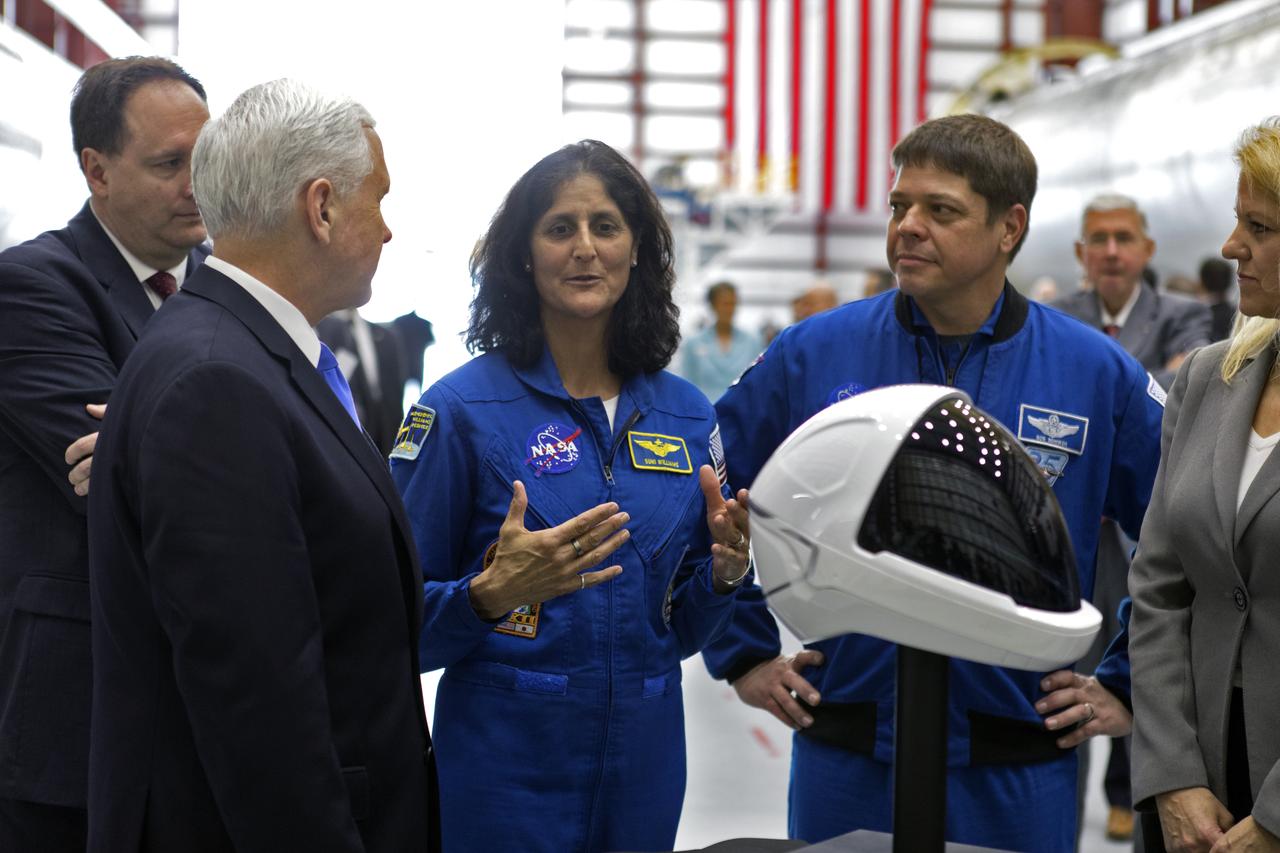
Vice President Mike Pence, left foreground, tours the SpaceX hangar at Launch Complex 39A, at NASA's Kennedy Space Center in Florida, on Feb. 21, 2018. NASA astronauts Suni Williams and Bob Behnken describe the type of pressure suit helmet to be worn as crews travel to the International Space Station aboard the company's Crew Dragon spacecraft. Behind Pence is Acting NASA Administrator Robert Lightfoot. To the far right is SpaceX President and COO Gwynne Shotwell. During his visit, Pence chaired a meeting of the National Space Council in the high bay of the center's Space Station Processing Facility. The council's role is to advise the president regarding national space policy and strategy, and review the nation's long-range goals for space activities.
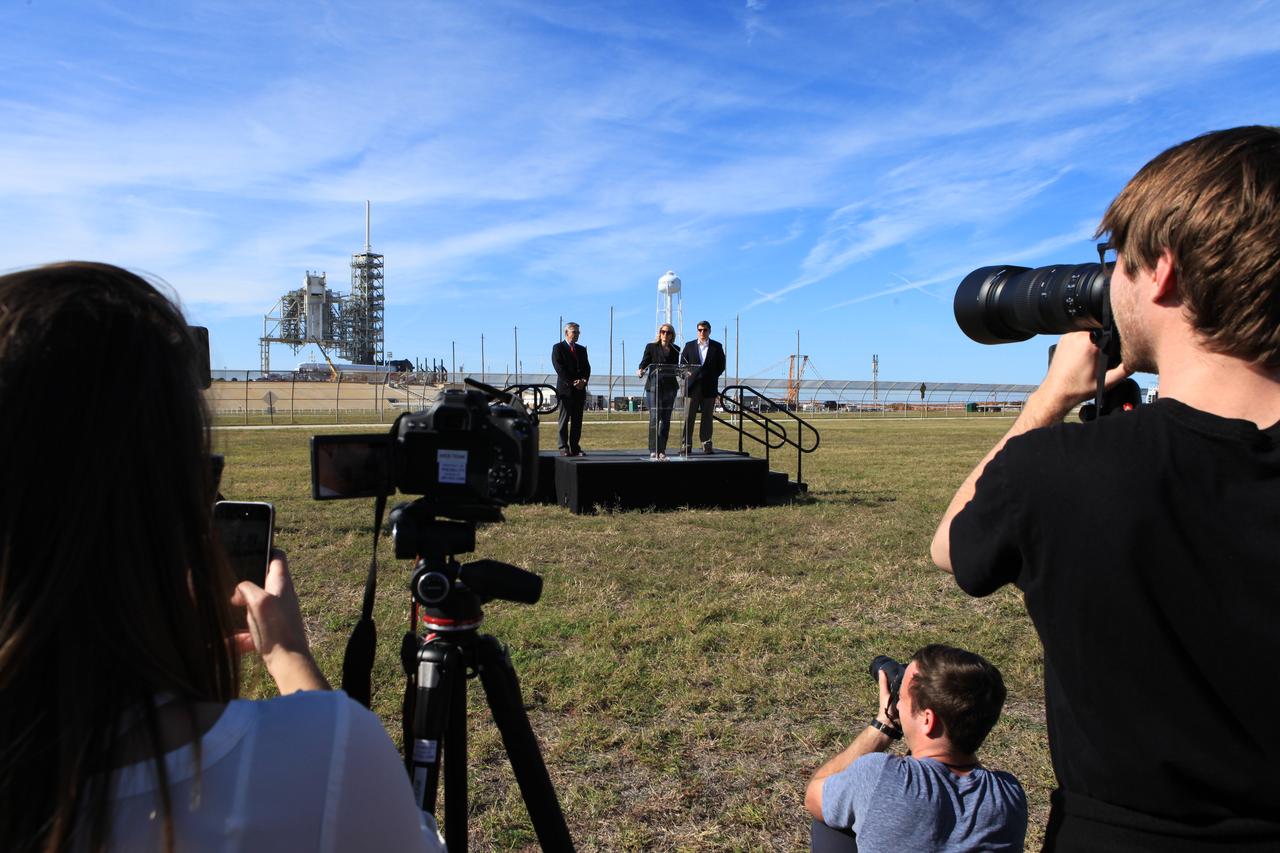
Gwynne Shotwell, president and chief operating officer of SpaceX, speaks to members of the news media at Launch Complex 39A. At left is Kennedy Space Center Director Bob Cabana. At right is Timothy Hughes, senior vice president and general counsel for SpaceX. On Feb. 18, a Falcon 9 rocket with a Dragon spacecraft atop is scheduled to lift off from the launch pad for the SpaceX CRS-10 mission. The historic site is where American astronauts first launched to the moon and was last used in 2011 for the final mission of the Space Shuttle Program. In April 2014, NASA officials signed a 20-year property agreement with SpaceX for use and operation of the launch pad for their Falcon 9 and Falcon 9 Heavy rockets. The SpaceX CRS-10 liftoff is another milestone further establishing Kennedy as a premier, multi-user spaceport. The Dragon spacecraft will deliver 5,000 pounds of supplies and research materials to the space station.
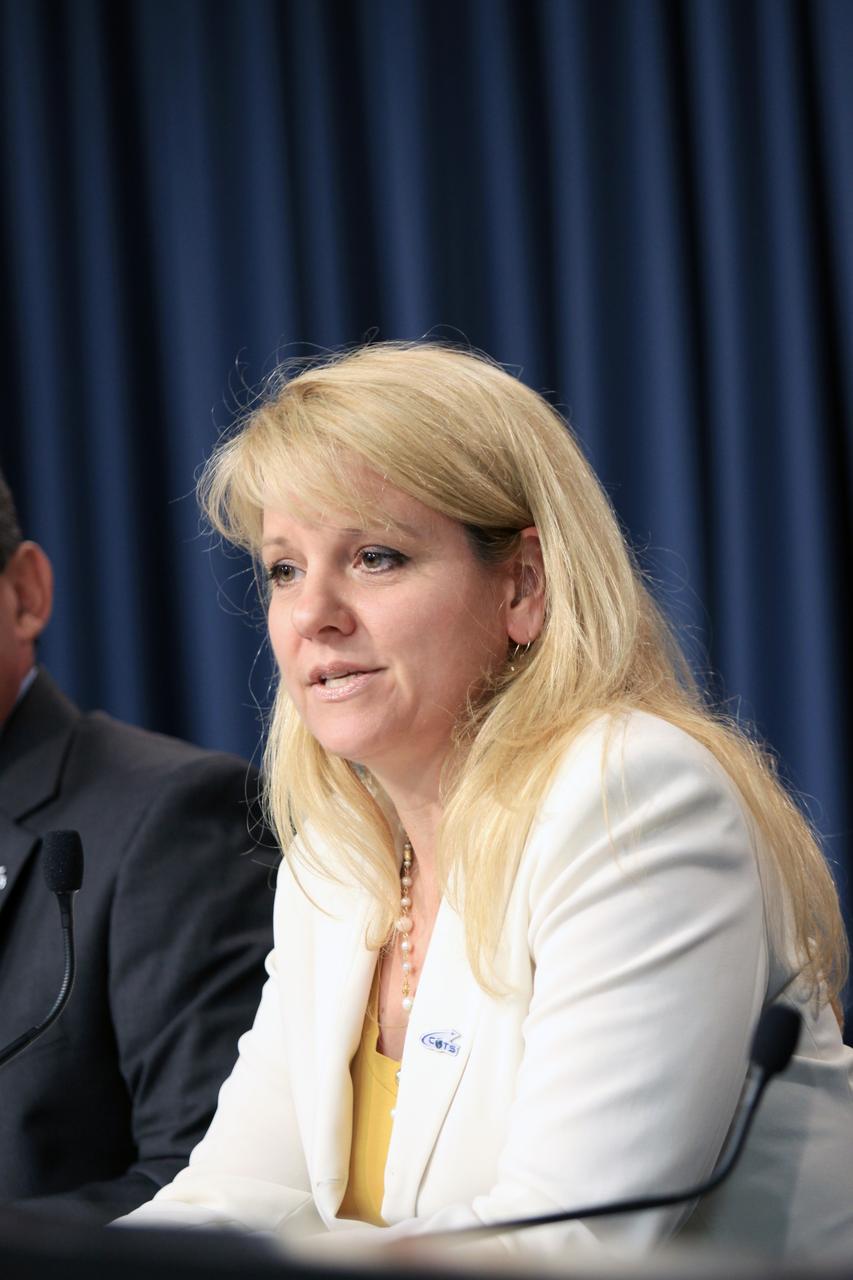
CAPE CANAVERAL, Fla. – Gwynne Shotwell, president of SpaceX, participates in a prelaunch news conference in the Press Site Auditorium at NASA’s Kennedy Space Center in Florida. Liftoff of the SpaceX Falcon 9 rocket carrying a Dragon capsule to orbit is set for 4:55 a.m. EDT on May 19. The launch will be the company's second demonstration test flight for NASA's Commercial Orbital Transportation Services Program, or COTS. During the flight, the capsule will conduct a series of check-out procedures to test and prove its systems, including rendezvous and berthing with the International Space Station. If the capsule performs as planned, the cargo and experiments it is carrying will be transferred to the station. The cargo includes food, water and provisions for the station’s Expedition crews, such as clothing, batteries and computer equipment. Under COTS, NASA has partnered with two aerospace companies to deliver cargo to the station. For more information, visit http://www.nasa.gov/spacex. Photo credit: NASA/Jim Grossmann
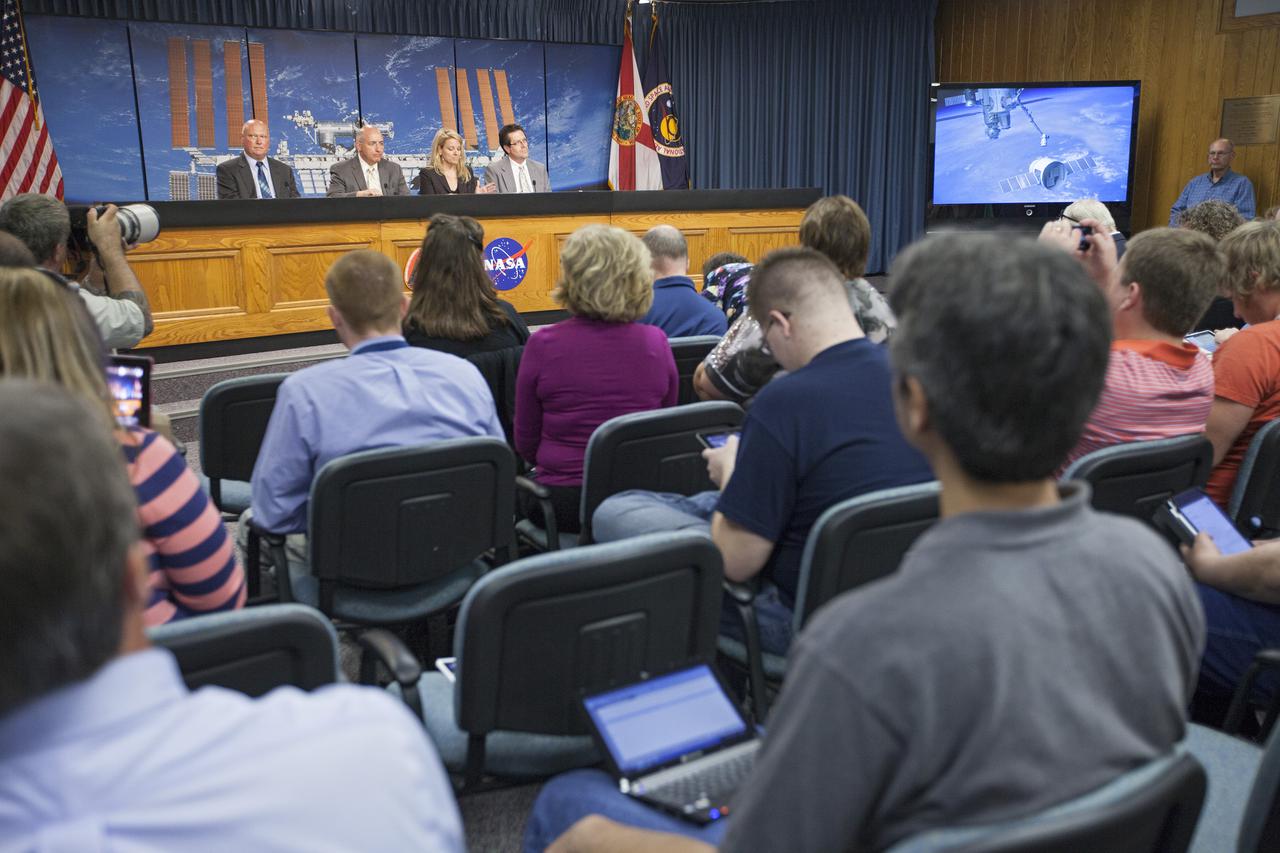
CAPE CANAVERAL, Fla. - Media attending a pre-launch news conference at the Kennedy Space Center, Fla. heard from officials who discussed payloads to be launched aboard a SpaceX Dragon capsule. From the left are: Mike Curie of NASA Public Affairs at the Kennedy Space Center, Mike Suffredini, NASA program manager for the International Space Station at the Johnson Space Center, Gwynne Shotwell, president of SpaceX, and Joel Tumbiolo, launch weather officer for the 45th Weather Squadron at Cape Canaveral Air Force Station. Scheduled for launch March 1 atop a Falcon 9 rocket, the SpaceX Dragon capsule will be making its third trip to the space station. The mission is the second of 12 SpaceX flights contracted by NASA to resupply the orbiting laboratory. For more information, visit http:__www.nasa.gov_mission_pages_station_structure_launch_spacex2-feature.html Photo credit: NASA_Kim Shiflett
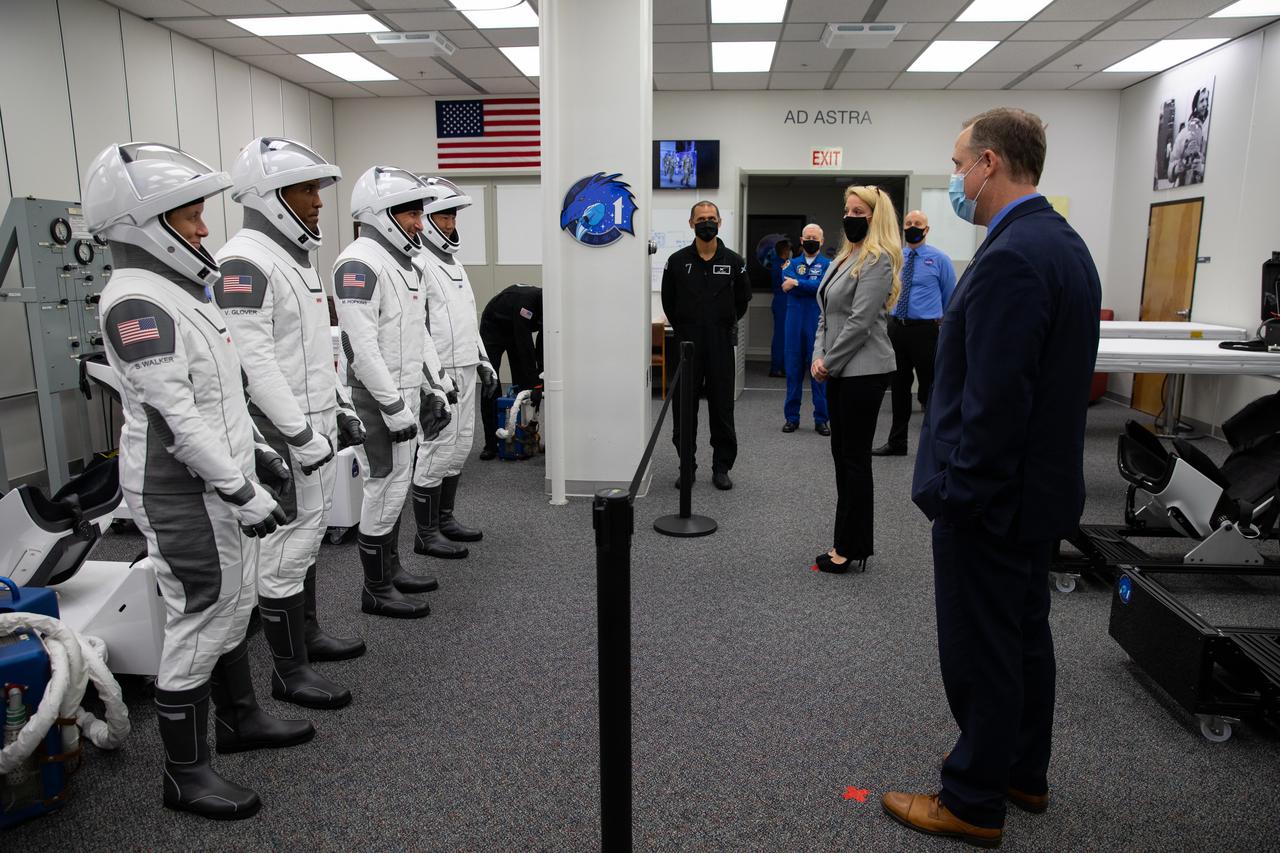
Inside the crew suit-up room in the Neil Armstrong Operations and Checkout Building at NASA’s Kennedy Space Center in Florida, on Nov. 15, 2020, NASA Administrator Jim Bridenstine, at far right, and Gwynne Shotwell, SpaceX president and chief operating officer, visit with the Crew-1 astronauts. From left are NASA astronaut Shannon Walker, mission specialist; NASA astronaut Victor Glover, pilot; NASA astronaut Michael Hopkins, spacecraft commander; and JAXA astronaut Soichi Noguchi, mission specialist. They are wearing SpaceX spacesuits in preparation for NASA SpaceX’s Crew-1 mission. Crew-1 is the first regular crew mission of a U.S. commercial spacecraft with astronauts to the International Space Station as part of NASA’s Commercial Crew Program. The SpaceX Crew Dragon Resilience capsule will launch atop the company’s Falcon 9 rocket from Launch Complex 39A to the space station for a six-month science mission.
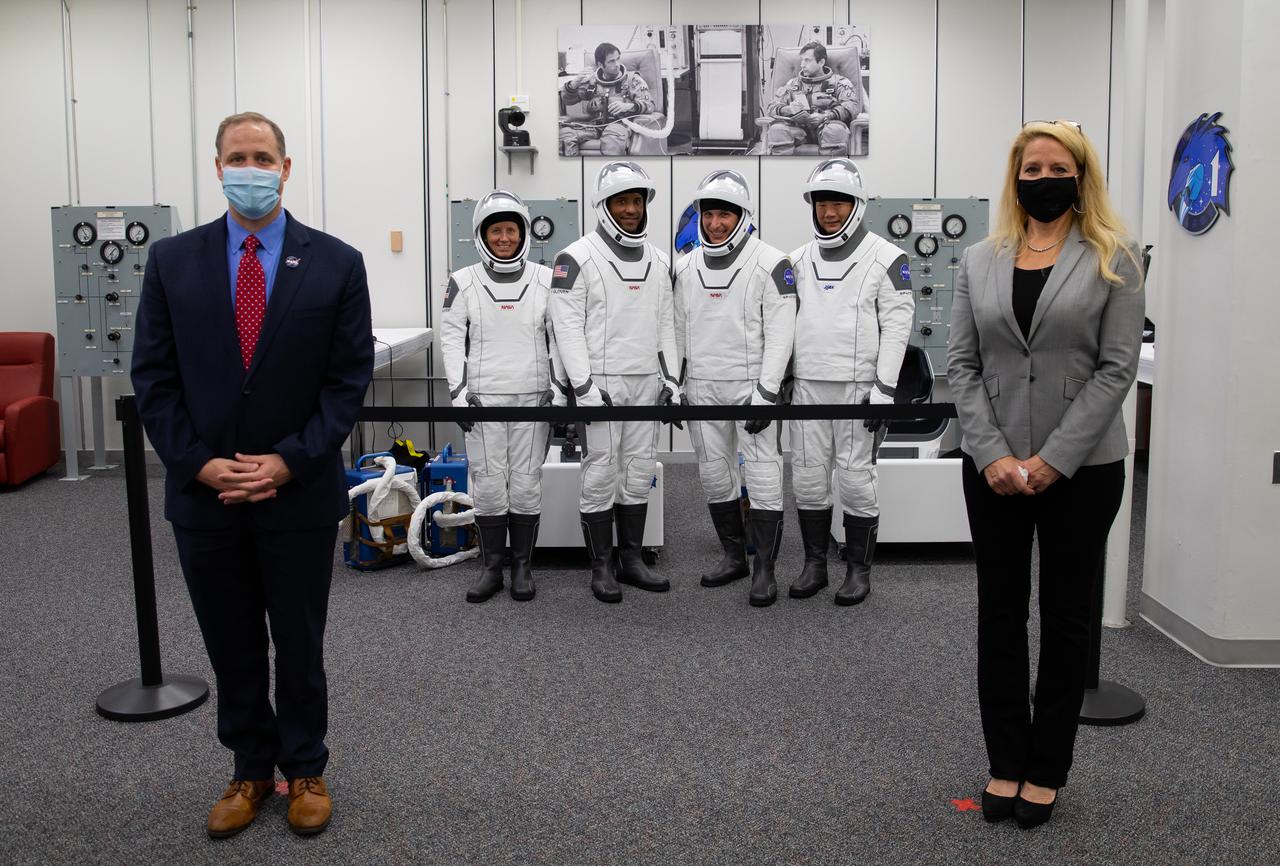
Inside the crew suit-up room in the Neil Armstrong Operations and Checkout Building at NASA’s Kennedy Space Center in Florida, on Nov. 15, 2020, NASA Administrator Jim Bridenstine, in front, at left, and Gwynne Shotwell, SpaceX president and chief operating officer, in front, at right, visit with the Crew-1 astronauts. Behind them from left are NASA astronaut Shannon Walker, mission specialist; NASA astronaut Victor Glover, pilot; NASA astronaut Michael Hopkins, spacecraft commander; and JAXA astronaut Soichi Noguchi, mission specialist. They are wearing SpaceX spacesuits in preparation for NASA SpaceX’s Crew-1 mission. Crew-1 is the first regular crew mission of a U.S. commercial spacecraft with astronauts to the International Space Station as part of NASA’s Commercial Crew Program. The SpaceX Crew Dragon Resilience capsule will launch atop the company’s Falcon 9 rocket from Launch Complex 39A to the space station for a six-month science mission.
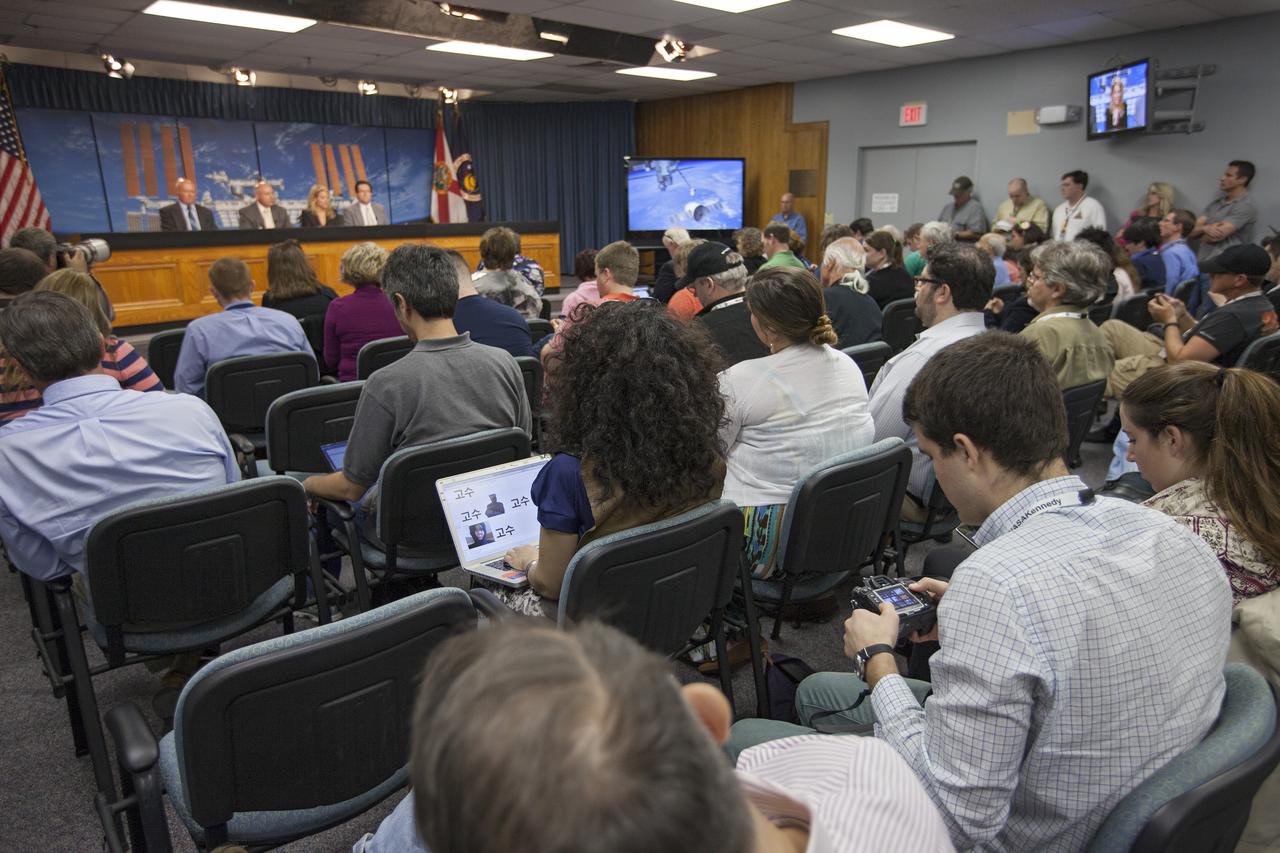
CAPE CANAVERAL, Fla. - Media attending a pre-launch news conference at the Kennedy Space Center, Fla. heard from officials who discussed payloads to be launched aboard a SpaceX Dragon capsule. From the left are: Mike Curie of NASA Public Affairs at the Kennedy Space Center, Mike Suffredini, NASA program manager for the International Space Station at the Johnson Space Center, Gwynne Shotwell, president of SpaceX, and Joel Tumbiolo, launch weather officer for the 45th Weather Squadron at Cape Canaveral Air Force Station. Scheduled for launch March 1 atop a Falcon 9 rocket, the SpaceX Dragon capsule will be making its third trip to the space station. The mission is the second of 12 SpaceX flights contracted by NASA to resupply the orbiting laboratory. For more information, visit http:__www.nasa.gov_mission_pages_station_structure_launch_spacex2-feature.html Photo credit: NASA_Kim Shiflett
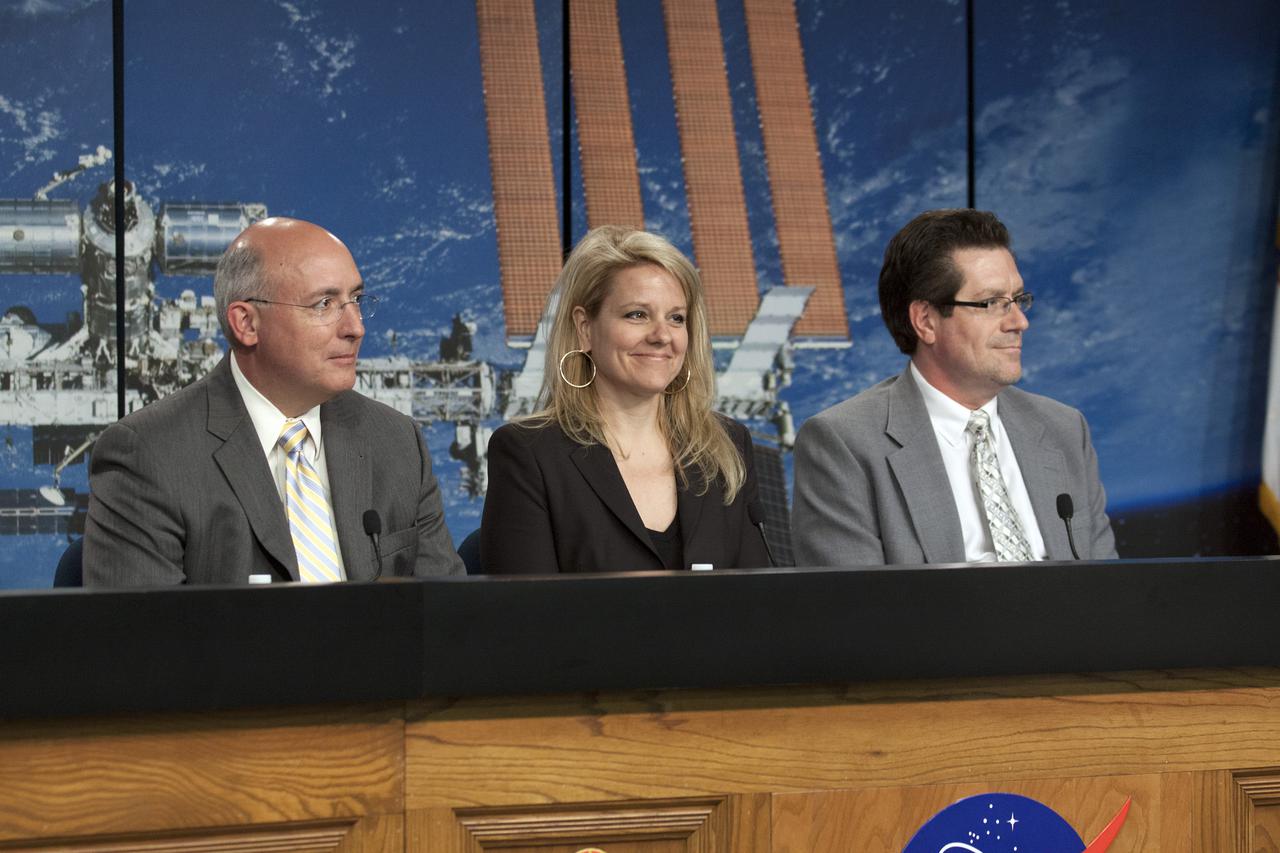
CAPE CANAVERAL, Fla. - Media attending a pre-launch news conference at the Kennedy Space Center, Fla. heard from officials who discussed payloads to be launched aboard a SpaceX Dragon capsule. From the left are: Mike Suffredini, NASA program manager for the International Space Station at the Johnson Space Center, Gwynne Shotwell, president of SpaceX, and Joel Tumbiolo, launch weather officer for the 45th Weather Squadron at Cape Canaveral Air Force Station. Scheduled for launch March 1 atop a Falcon 9 rocket, the SpaceX Dragon capsule will be making its third trip to the space station. The mission is the second of 12 SpaceX flights contracted by NASA to resupply the orbiting laboratory. For more information, visit http:__www.nasa.gov_mission_pages_station_structure_launch_spacex2-feature.html Photo credit: NASA_Kim Shiflett
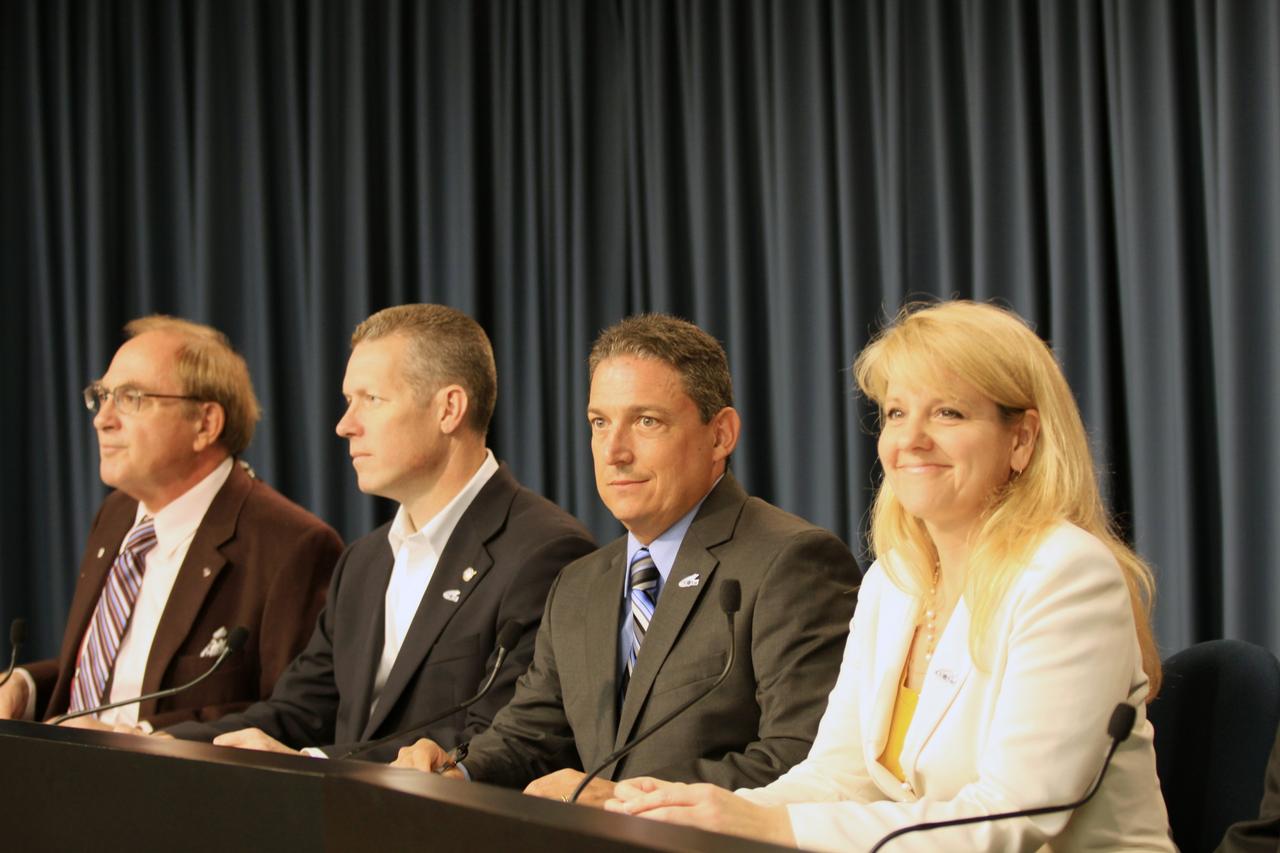
CAPE CANAVERAL, Fla. – Participating in a prelaunch news conference in the Press Site Auditorium at NASA’s Kennedy Space Center in Florida are, from left, George H. Diller, NASA Public Affairs, Phil McAlister, director, NASA Commercial Spaceflight Development, Alan Lindenmoyer, manager, NASA Commercial Crew and Cargo Program, and Gwynne Shotwell, president, SpaceX. Liftoff of the SpaceX Falcon 9 rocket carrying a Dragon capsule to orbit is set for 4:55 a.m. EDT on May 19. The launch will be the company's second demonstration test flight for NASA's Commercial Orbital Transportation Services Program, or COTS. During the flight, the capsule will conduct a series of check-out procedures to test and prove its systems, including rendezvous and berthing with the International Space Station. If the capsule performs as planned, the cargo and experiments it is carrying will be transferred to the station. The cargo includes food, water and provisions for the station’s Expedition crews, such as clothing, batteries and computer equipment. Under COTS, NASA has partnered with two aerospace companies to deliver cargo to the station. For more information, visit http://www.nasa.gov/spacex. Photo credit: NASA/Jim Grossmann
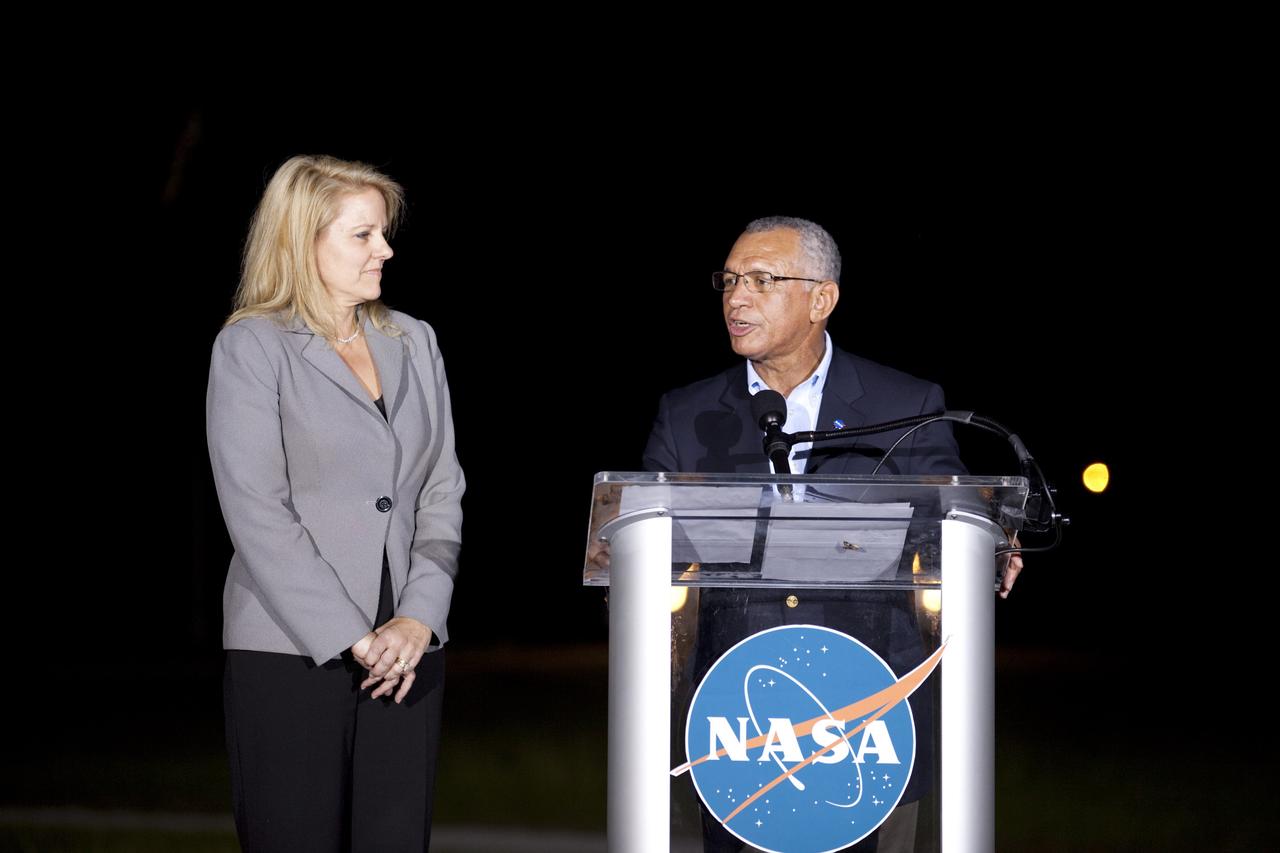
CAPE CANAVERAL, Fla. -- NASA Administrator Charlie Bolden addresses news and social media representatives at the Press Site at NASA's Kennedy Space Center in Florida following the successful launch of NASA's first Commercial Resupply Services, or CRS-1, mission to the International Space Station. Beside him on the podium is Gwynne Shotwell, president of Space Exploration Technologies Corp., or SpaceX. SpaceX built both the Falcon 9 rocket and Dragon capsule that launched at 8:35 p.m. EDT from Space Launch Complex 40 on Cape Canaveral Air Force Station. SpaceX CRS-1 is an important step toward making America’s microgravity research program self-sufficient by providing a way to deliver and return significant amounts of cargo, including science experiments, to and from the orbiting laboratory. NASA has contracted for 12 commercial resupply flights from SpaceX and eight from the Orbital Sciences Corp. For more information, visit http://www.nasa.gov/mission_pages/station/living/launch/index.html. Photo credit: NASA/Kim Shiflett
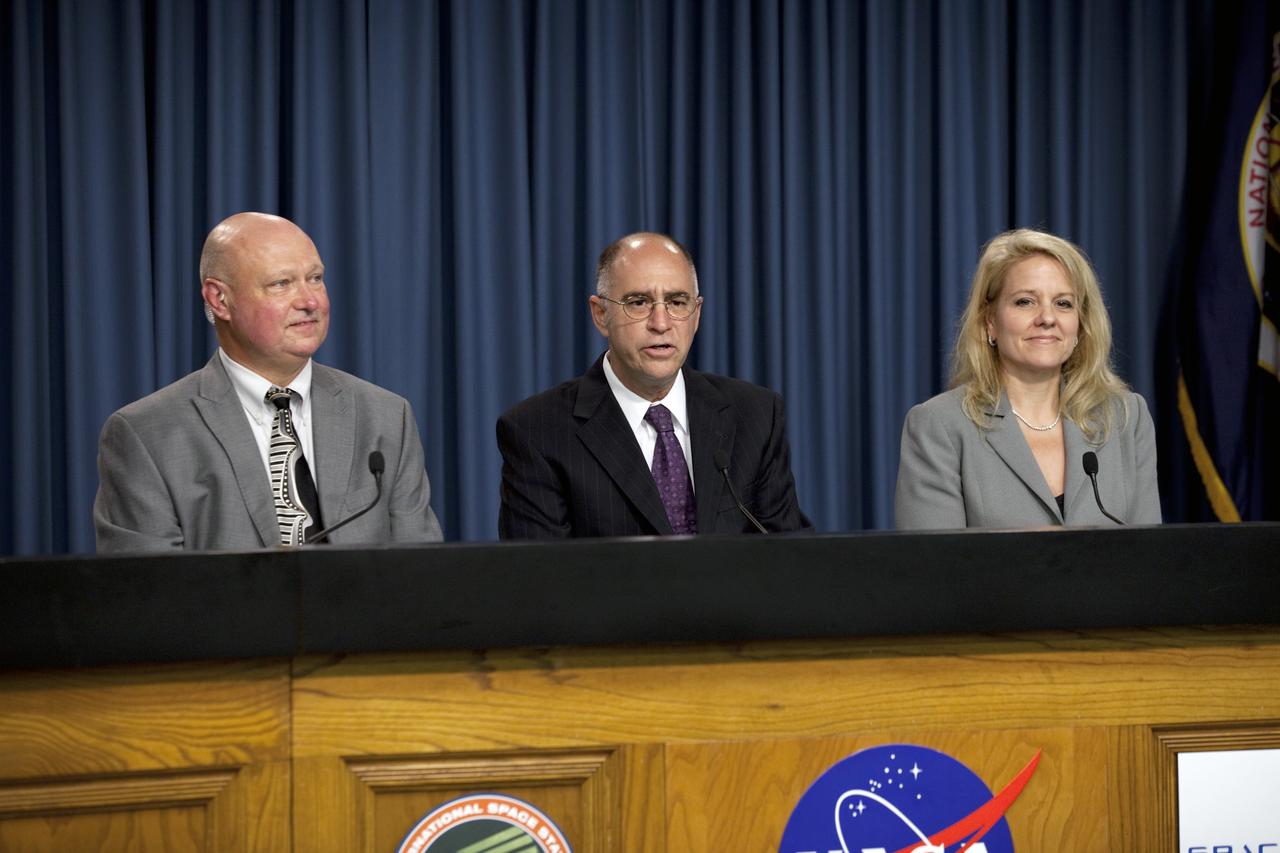
CAPE CANAVERAL, Fla. -- Sam Scimemi, director of International Space Station at NASA Headquarters, addresses news and social media representatives during a post-launch news conference in the Press Site auditorium at NASA's Kennedy Space Center in Florida following the successful launch of NASA's first Commercial Resupply Services, or CRS-1, mission to the International Space Station. Also participating in the conference are Michael Curie, at left, NASA Public Affairs, and Gwynne Shotwell, at right, president of Space Exploration Technologies Corp., or SpaceX. SpaceX built both the Falcon 9 rocket and Dragon capsule that launched at 8:35 p.m. EDT from Space Launch Complex 40 on Cape Canaveral Air Force Station. SpaceX CRS-1 is an important step toward making America’s microgravity research program self-sufficient by providing a way to deliver and return significant amounts of cargo, including science experiments, to and from the orbiting laboratory. NASA has contracted for 12 commercial resupply flights from SpaceX and eight from the Orbital Sciences Corp. For more information, visit http://www.nasa.gov/mission_pages/station/living/launch/index.html. Photo credit: NASA/Kim Shiflett
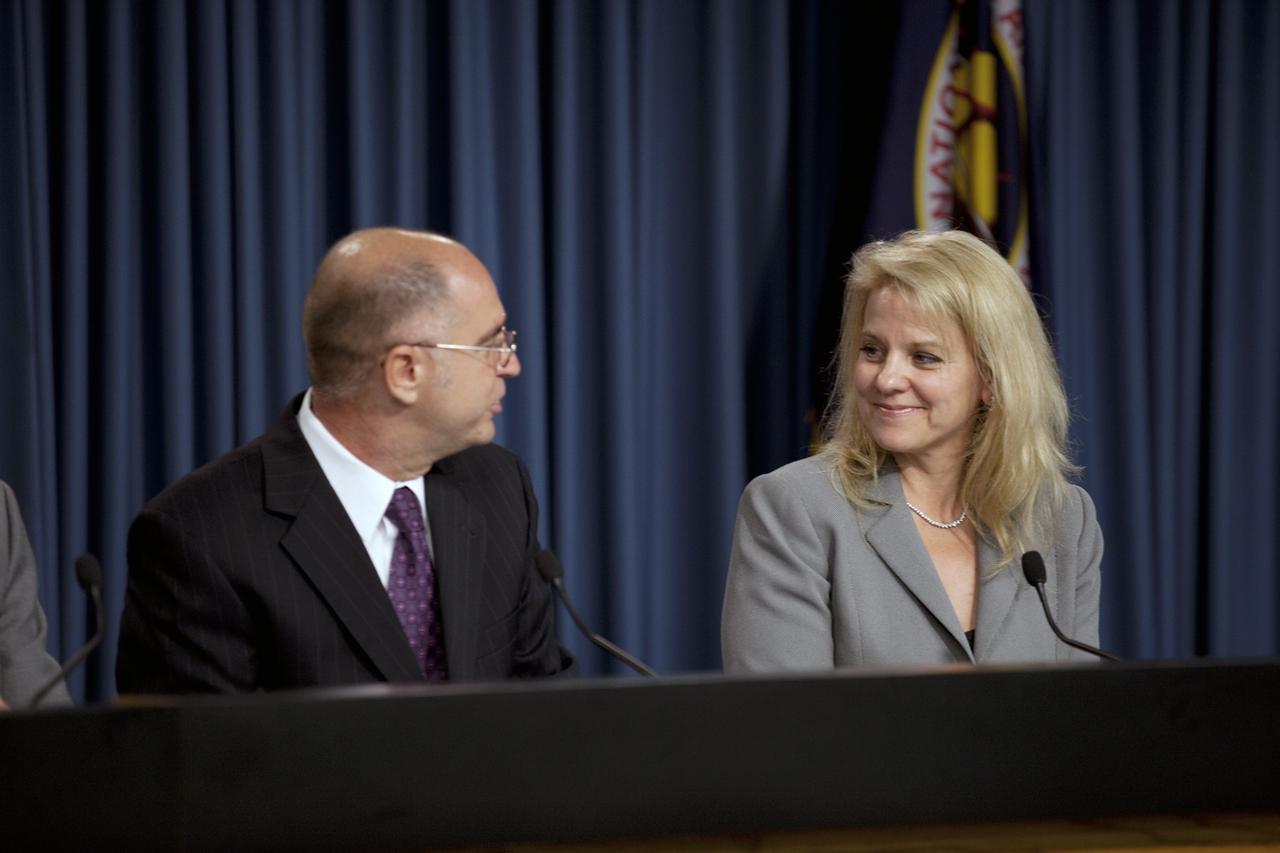
CAPE CANAVERAL, Fla. -- Sam Scimemi, at left, director of International Space Station at NASA Headquarters, congratulates Gwynne Shotwell, president of Space Exploration Technologies Corp., or SpaceX, on the successful launch of NASA's first Commercial Resupply Services, or CRS-1, mission to the International Space Station during a post-launch news conference held in the Press Site auditorium at NASA's Kennedy Space Center in Florida. SpaceX built both the Falcon 9 rocket and Dragon capsule that launched at 8:35 p.m. EDT from Space Launch Complex 40 on Cape Canaveral Air Force Station. SpaceX CRS-1 is an important step toward making America’s microgravity research program self-sufficient by providing a way to deliver and return significant amounts of cargo, including science experiments, to and from the orbiting laboratory. NASA has contracted for 12 commercial resupply flights from SpaceX and eight from the Orbital Sciences Corp. For more information, visit http://www.nasa.gov/mission_pages/station/living/launch/index.html. Photo credit: NASA/Kim Shiflett
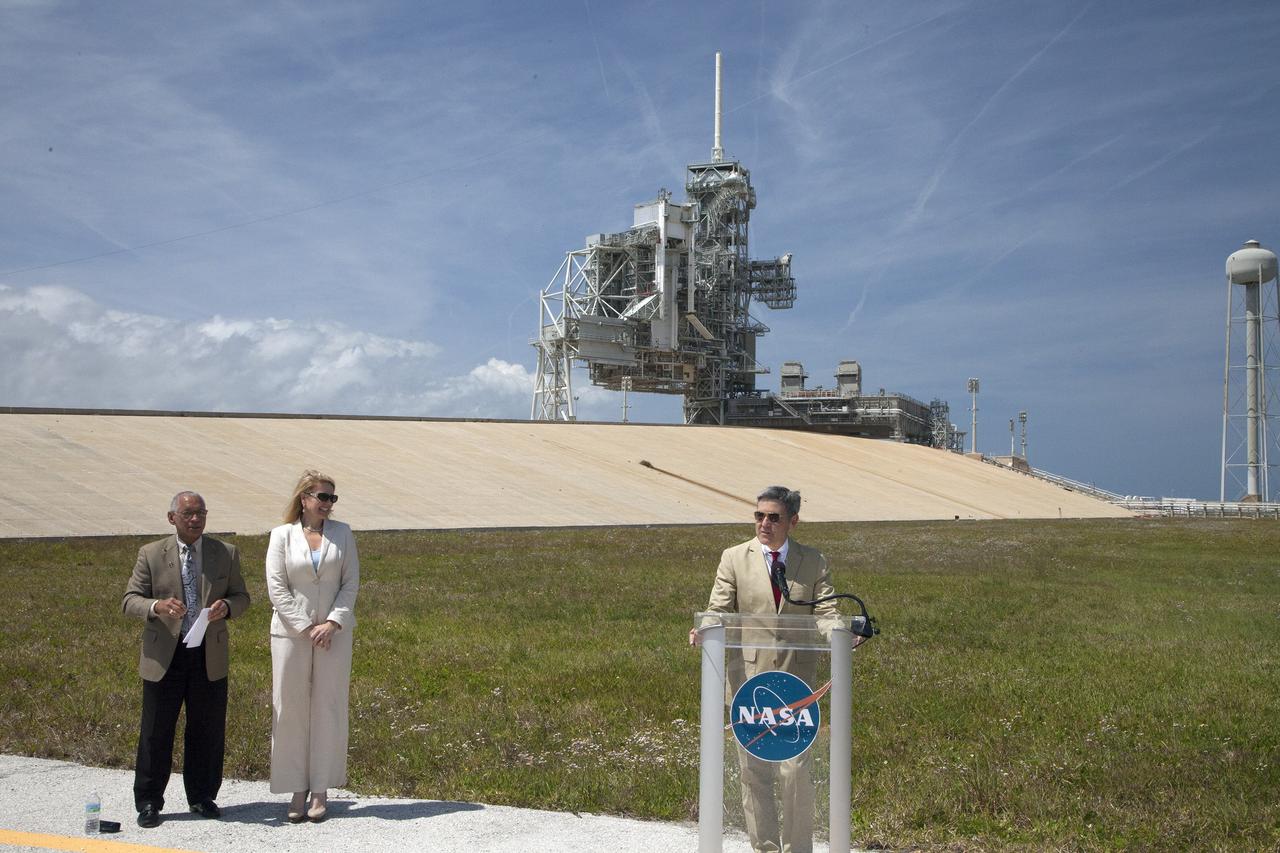
CAPE CANAVERAL, Fla. -- At Kennedy Space Center's Launch Pad 39A, center director Bob Cabana announces that NASA has just signed a lease agreement with Space Exploration Technologies SpaceX of Hawthorne, Calif., for use and operation of Launch Complex 39A. NASA Administrator Charlie Bolden, left, and Gwynne Shotwell, president and chief operating officer of SpaceX, look on. SpaceX will use Launch Complex 39A for rockets such as the Falcon Heavy, currently under development. Both launch pad 39A and 39B were originally built for the Apollo/Saturn V rockets that launched American astronauts on their historic journeys to the moon and later modified to support the 30-year shuttle program. Pad 39B is now being modified by NASA to support the Space Launch System SLS rocket boosting the Orion spacecraft part of the agency’s plan to explore beyond low-Earth orbit. To learn more about Launch Pad 39A visit: http://www.nasa.gov/mission_pages/shuttle/launch/launch-complex39-toc.html Photo credit: NASA/Dan Casper
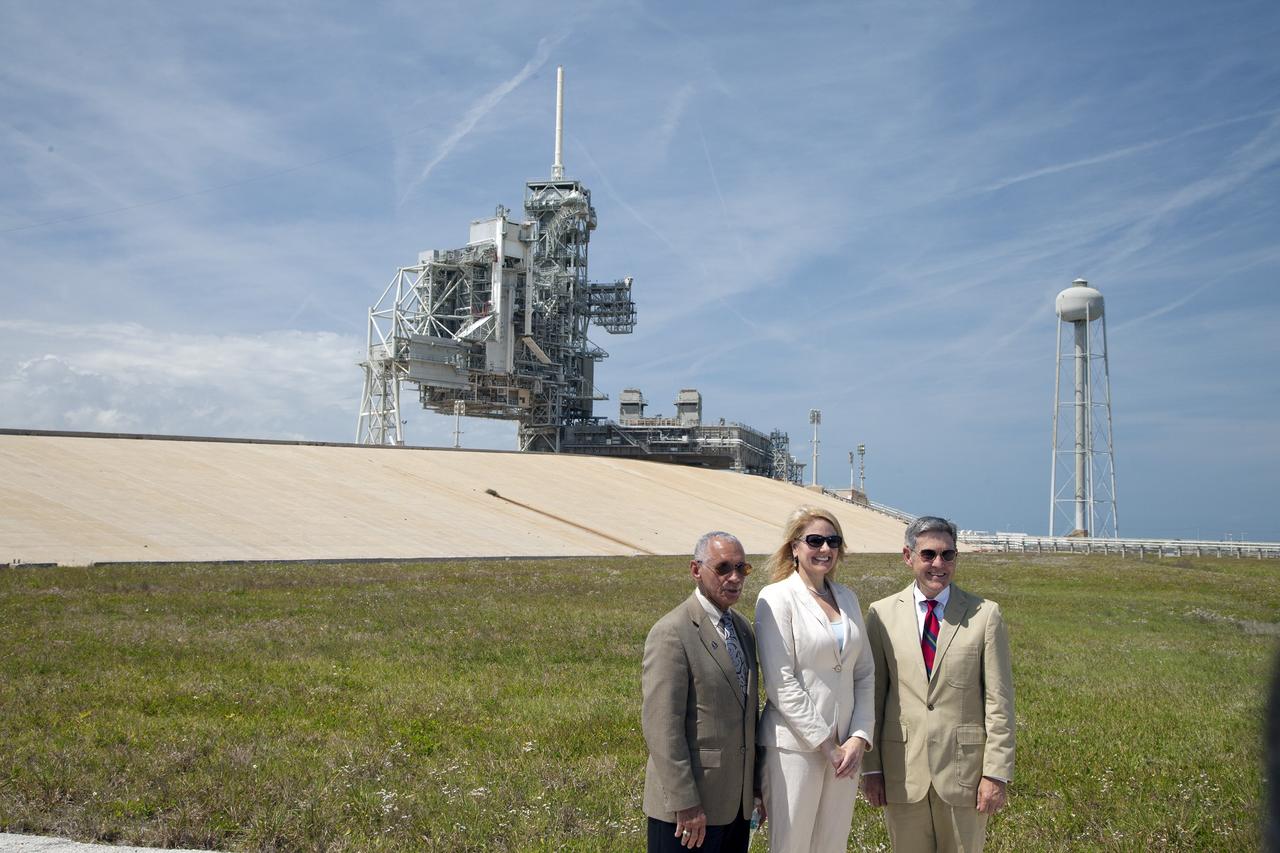
CAPE CANAVERAL, Fla. -- At Kennedy Space Center's Launch Pad 39A, from the left, NASA Administrator Charlie Bolden, Gwynne Shotwell, president and chief operating officer of Space Exploration Technologies SpaceX and Kennedy Space Center Director Bob Cabana pose in from the of the historic launch complex after announcing that NASA has just signed a lease agreement with SpaceX for use and operation of Launch Complex 39A. SpaceX will use Launch Complex 39A for rockets such as the Falcon Heavy, currently under development. Both launch pad 39A and 39B were originally built for the Apollo/Saturn V rockets that launched American astronauts on their historic journeys to the moon and later modified to support the 30-year shuttle program. Pad 39B is now being modified by NASA to support the Space Launch System SLS rocket boosting the Orion spacecraft part of the agency’s plan to explore beyond low-Earth orbit. To learn more about Launch Pad 39A visit: http://www.nasa.gov/mission_pages/shuttle/launch/launch-complex39-toc.html Photo credit: NASA/Dan Casper
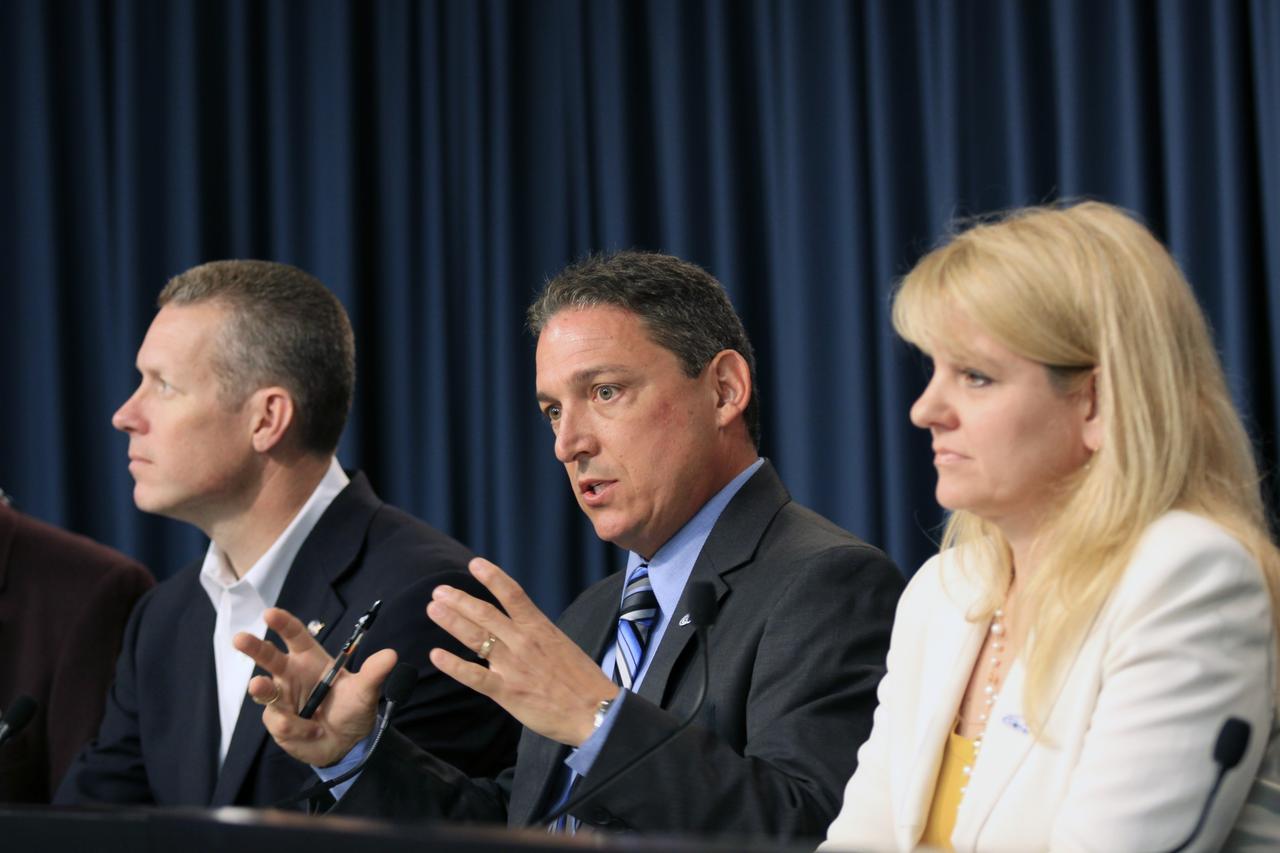
CAPE CANAVERAL, Fla. – Participating in a prelaunch news conference in the Press Site Auditorium at NASA’s Kennedy Space Center in Florida are, from left, Phil McAlister, director, NASA Commercial Spaceflight Development, Alan Lindenmoyer, manager, NASA Commercial Crew and Cargo Program, and Gwynne Shotwell, president, SpaceX. Liftoff of the SpaceX Falcon 9 rocket carrying a Dragon capsule to orbit is set for 4:55 a.m. EDT on May 19. The launch will be the company's second demonstration test flight for NASA's Commercial Orbital Transportation Services Program, or COTS. During the flight, the capsule will conduct a series of check-out procedures to test and prove its systems, including rendezvous and berthing with the International Space Station. If the capsule performs as planned, the cargo and experiments it is carrying will be transferred to the station. The cargo includes food, water and provisions for the station’s Expedition crews, such as clothing, batteries and computer equipment. Under COTS, NASA has partnered with two aerospace companies to deliver cargo to the station. For more information, visit http://www.nasa.gov/spacex. Photo credit: NASA/Jim Grossmann
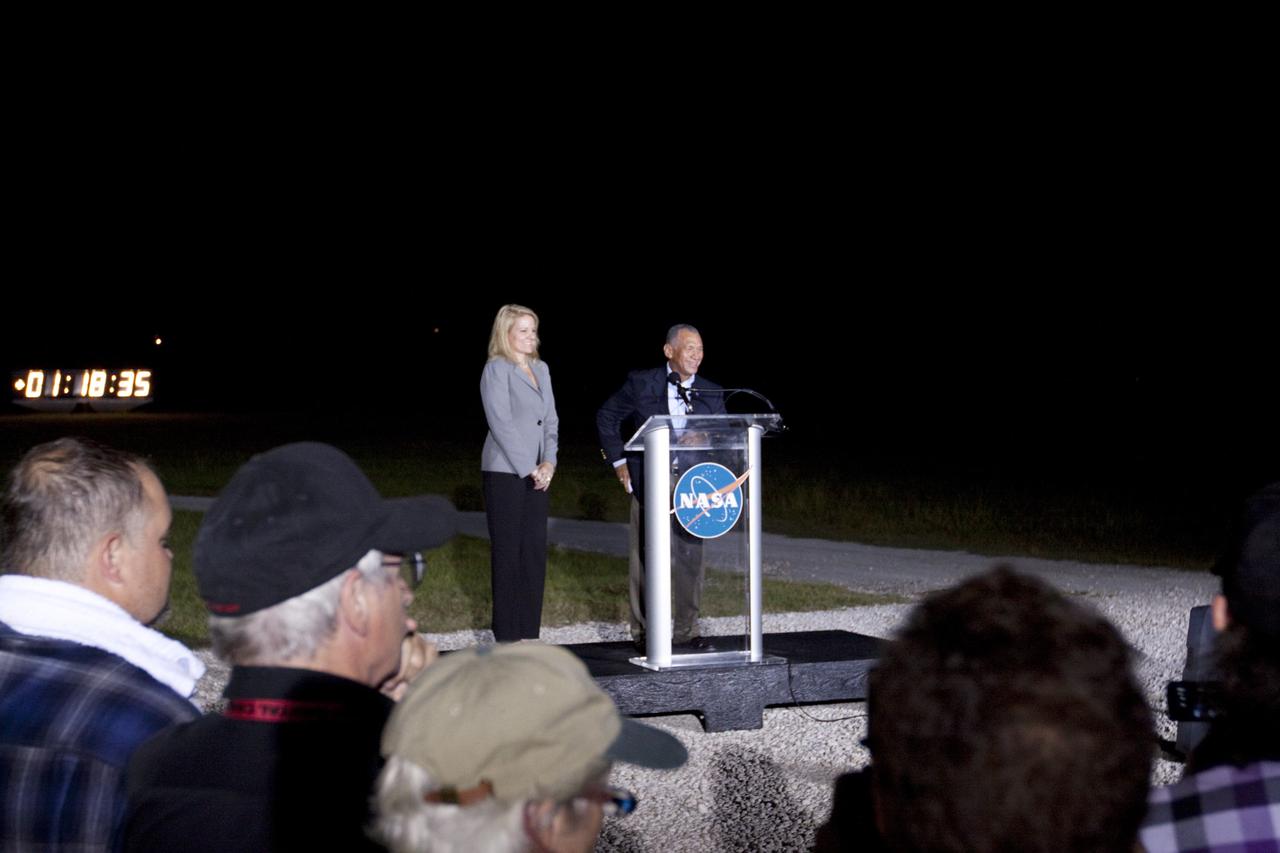
CAPE CANAVERAL, Fla. -- NASA Administrator Charlie Bolden addresses news and social media representatives at the Press Site at NASA's Kennedy Space Center in Florida following the successful launch of NASA's first Commercial Resupply Services, or CRS-1, mission to the International Space Station. Beside him on the podium is Gwynne Shotwell, president of Space Exploration Technologies Corp., or SpaceX. SpaceX built both the Falcon 9 rocket and Dragon capsule that launched at 8:35 p.m. EDT from Space Launch Complex 40 on Cape Canaveral Air Force Station. SpaceX CRS-1 is an important step toward making America’s microgravity research program self-sufficient by providing a way to deliver and return significant amounts of cargo, including science experiments, to and from the orbiting laboratory. NASA has contracted for 12 commercial resupply flights from SpaceX and eight from the Orbital Sciences Corp. For more information, visit http://www.nasa.gov/mission_pages/station/living/launch/index.html. Photo credit: NASA/Kim Shiflett
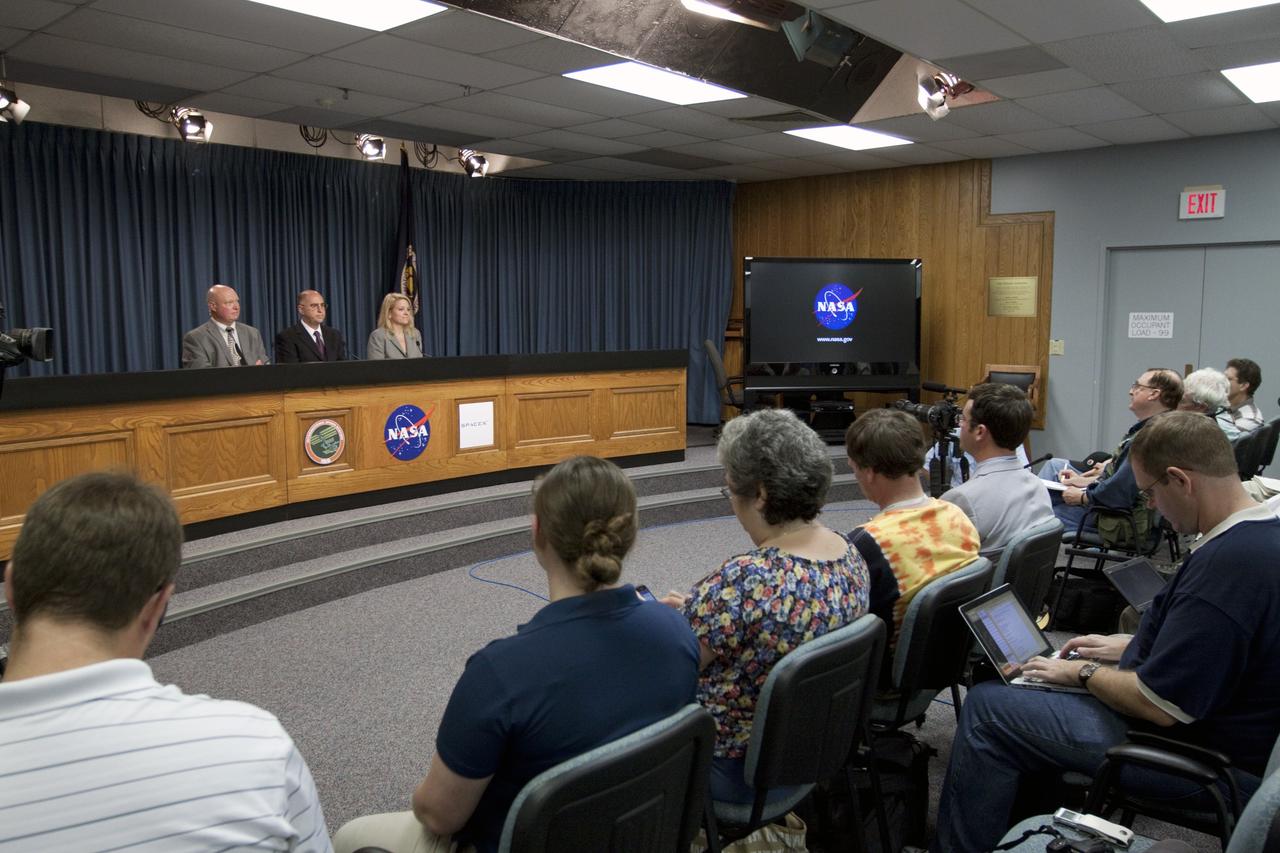
CAPE CANAVERAL, Fla. -- News and social media representatives participate in a post-launch news conference in the Press Site auditorium at NASA's Kennedy Space Center in Florida following the successful launch of NASA's first Commercial Resupply Services, or CRS-1, mission to the International Space Station. On the dais are, from left, Michael Curie, NASA Public Affairs, Sam Scimemi, director of International Space Station at NASA Headquarters, and Gwynne Shotwell, president of Space Exploration Technologies Corp., or SpaceX. SpaceX built both the Falcon 9 rocket and Dragon capsule that launched at 8:35 p.m. EDT from Space Launch Complex 40 on Cape Canaveral Air Force Station. SpaceX CRS-1 is an important step toward making America’s microgravity research program self-sufficient by providing a way to deliver and return significant amounts of cargo, including science experiments, to and from the orbiting laboratory. NASA has contracted for 12 commercial resupply flights from SpaceX and eight from the Orbital Sciences Corp. For more information, visit http://www.nasa.gov/mission_pages/station/living/launch/index.html. Photo credit: NASA/Kim Shiflett
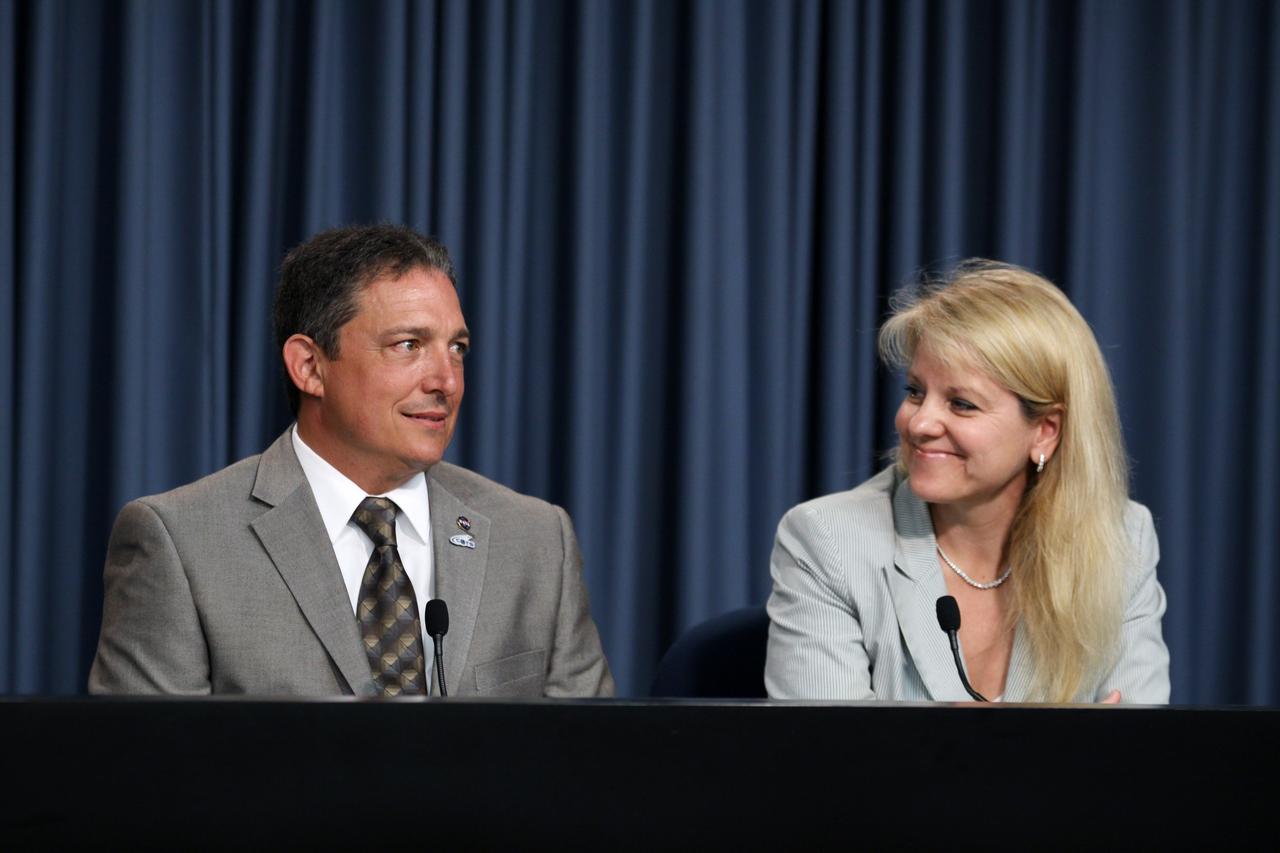
CAPE CANAVERAL, Fla. – Alan Lindenmoyer, manager of NASA’s Commercial Crew and Cargo Program, congratulates Gwynne Shotwell, president of SpaceX, on a job well done during a post-launch news conference in the Press Site auditorium at NASA’s Kennedy Space Center in Florida. The SpaceX Falcon 9 rocket launched into space at 3:44 a.m. EDT from Space Launch Complex-40 on Cape Canaveral Air Force Station in Florida. The launch is the company's second demonstration test flight for NASA's Commercial Orbital Transportation Services Program, or COTS. During the flight, the capsule will conduct a series of check-out procedures to test and prove its systems, including rendezvous and berthing with the International Space Station. If the capsule performs as planned, the cargo and experiments it is carrying will be transferred to the station. The cargo includes food, water and provisions for the station’s Expedition crews, such as clothing, batteries and computer equipment. Under COTS, NASA has partnered with two aerospace companies to deliver cargo to the station. For more information, visit http://www.nasa.gov/spacex. Photo credit: NASA/Kim Shiflett
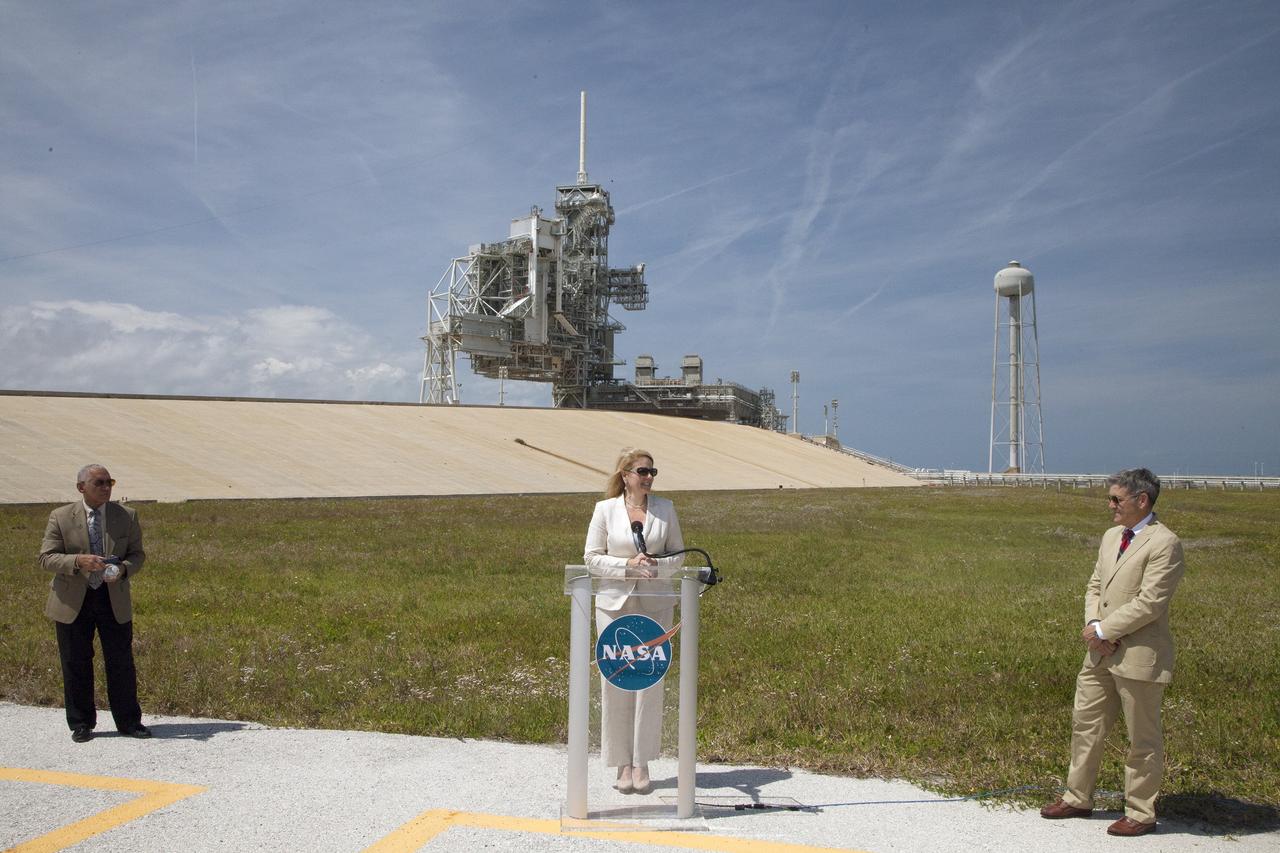
CAPE CANAVERAL, Fla. -- At Kennedy Space Center's Launch Pad 39A, Gwynne Shotwell, president and chief operating officer of Space Exploration Technologies SpaceX of Hawthorne, Calif., announces that NASA has just signed a lease agreement with SpaceX for use and operation of Launch Complex 39A. NASA Administrator Charlie Bolden, left, and Kennedy Space Center Director Bob Cabana listen. SpaceX will use Launch Complex 39A for rockets such as the Falcon Heavy, currently under development. Both launch pad 39A and 39B were originally built for the Apollo/Saturn V rockets that launched American astronauts on their historic journeys to the moon and later modified to support the 30-year shuttle program. Pad 39B is now being modified by NASA to support the Space Launch System SLS rocket boosting the Orion spacecraft part of the agency’s plan to explore beyond low-Earth orbit. To learn more about Launch Pad 39A visit: http://www.nasa.gov/mission_pages/shuttle/launch/launch-complex39-toc.html Photo credit: NASA/Dan Casper
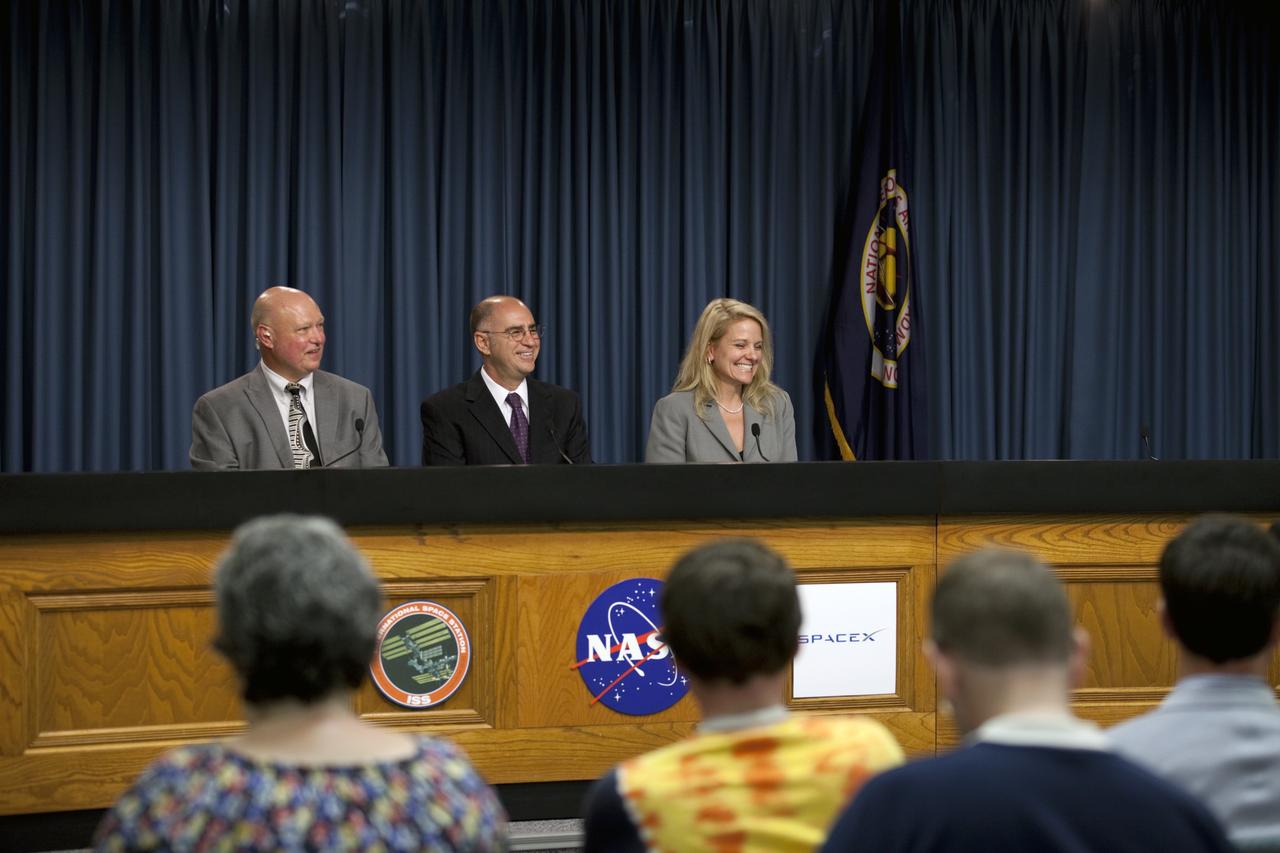
CAPE CANAVERAL, Fla. -- The participants of a post-launch news conference held in the Press Site auditorium at NASA's Kennedy Space Center in Florida are all smiles following the successful launch of NASA's first Commercial Resupply Services, or CRS-1, mission to the International Space Station. On the dais are, from left, Michael Curie, NASA Public Affairs, Sam Scimemi, director of International Space Station at NASA Headquarters, and Gwynne Shotwell, president of Space Exploration Technologies Corp., or SpaceX. SpaceX built both the Falcon 9 rocket and Dragon capsule that launched at 8:35 p.m. EDT from Space Launch Complex 40 on Cape Canaveral Air Force Station. SpaceX CRS-1 is an important step toward making America’s microgravity research program self-sufficient by providing a way to deliver and return significant amounts of cargo, including science experiments, to and from the orbiting laboratory. NASA has contracted for 12 commercial resupply flights from SpaceX and eight from the Orbital Sciences Corp. For more information, visit http://www.nasa.gov/mission_pages/station/living/launch/index.html. Photo credit: NASA/Kim Shiflett
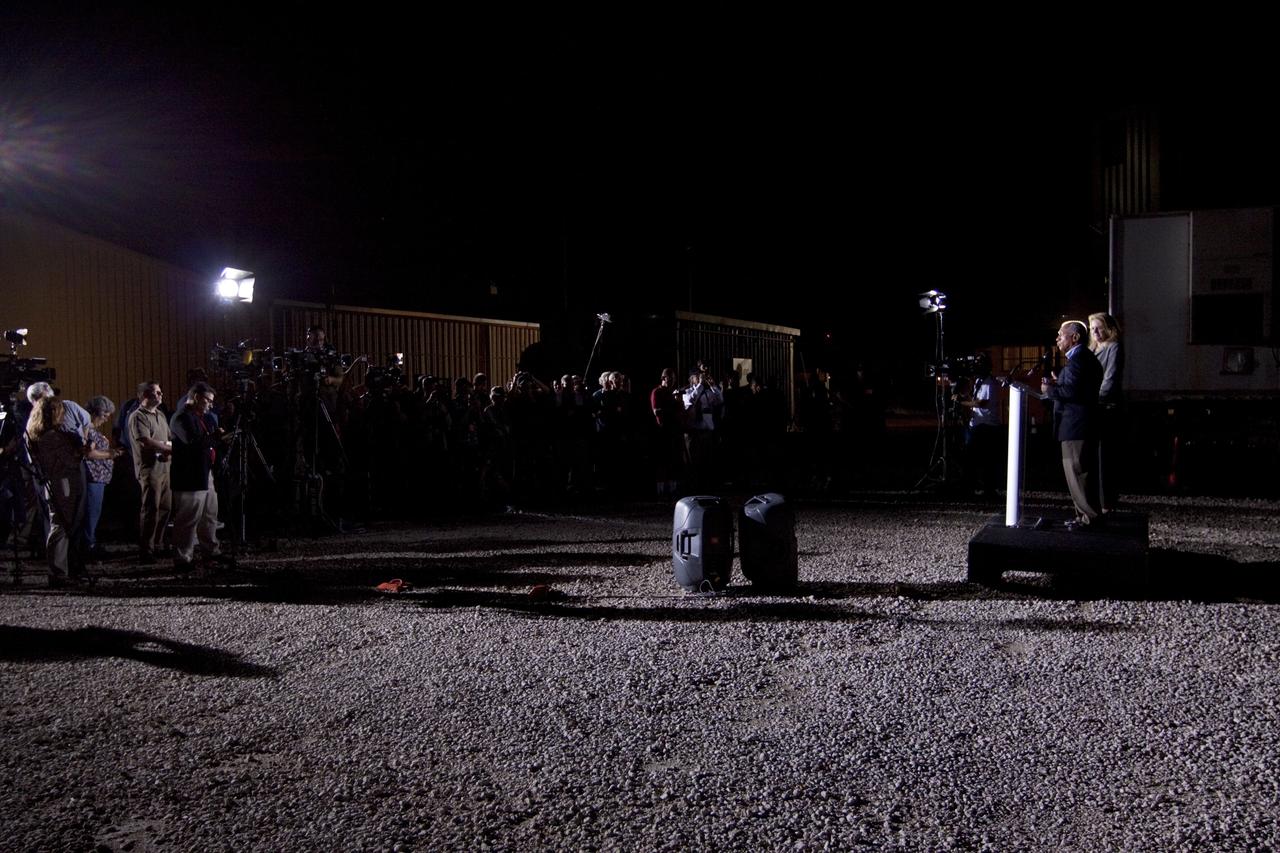
CAPE CANAVERAL, Fla. -- NASA Administrator Charlie Bolden addresses news and social media representatives at the Press Site at NASA's Kennedy Space Center in Florida following the successful launch of NASA's first Commercial Resupply Services, or CRS-1, mission to the International Space Station. Beside him on the podium is Gwynne Shotwell, president of Space Exploration Technologies Corp., or SpaceX. SpaceX built both the Falcon 9 rocket and Dragon capsule that launched at 8:35 p.m. EDT from Space Launch Complex 40 on Cape Canaveral Air Force Station. SpaceX CRS-1 is an important step toward making America’s microgravity research program self-sufficient by providing a way to deliver and return significant amounts of cargo, including science experiments, to and from the orbiting laboratory. NASA has contracted for 12 commercial resupply flights from SpaceX and eight from the Orbital Sciences Corp. For more information, visit http://www.nasa.gov/mission_pages/station/living/launch/index.html. Photo credit: NASA/Kim Shiflett
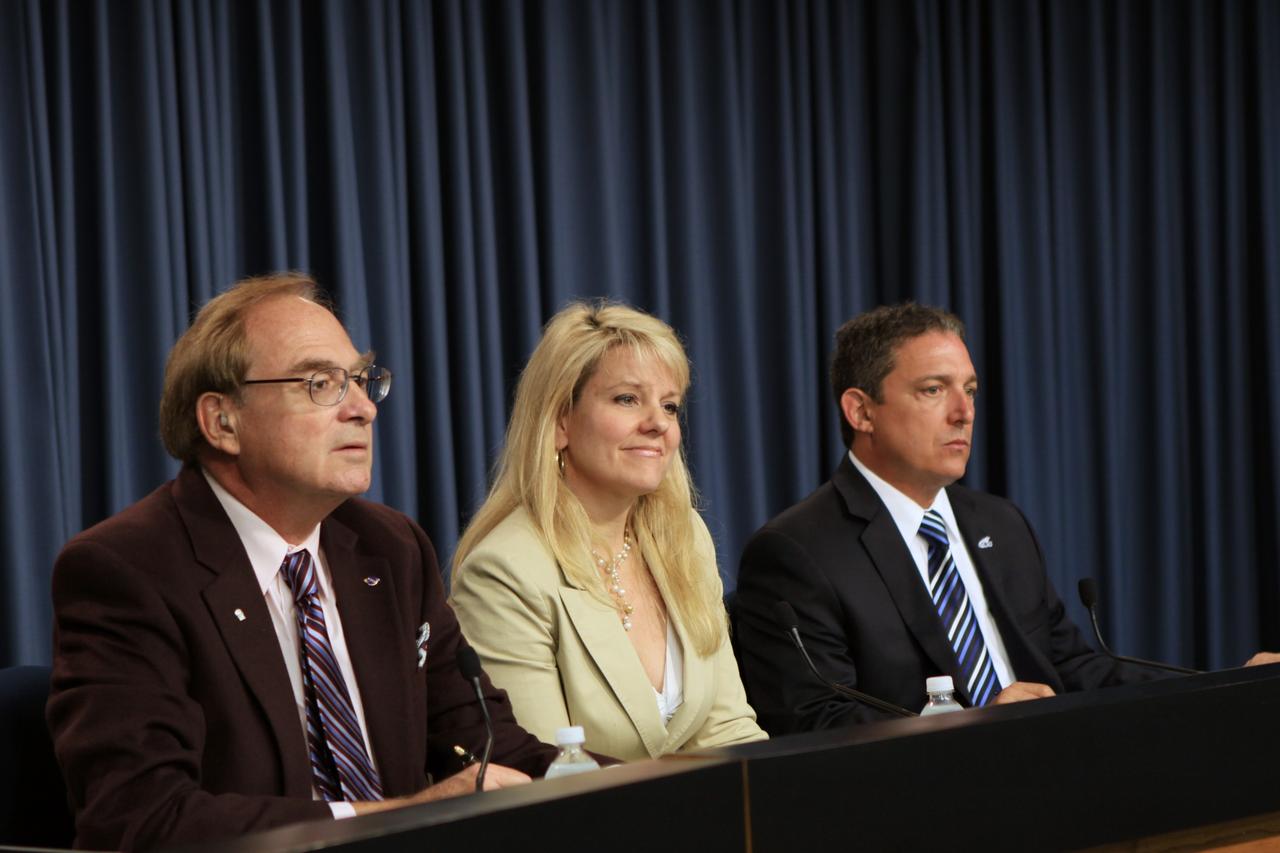
CAPE CANAVERAL, Fla. – A news conference is held in the Press Site auditorium at NASA’s Kennedy Space Center in Florida following the launch abort of the SpaceX demonstration test flight. From left are George H. Diller, NASA Public Affairs, Gwynne Shotwell, president, SpaceX, and Alan Lindenmoyer, manager, NASA Commercial Crew and Cargo Program. The next opportunity for liftoff of the SpaceX Falcon 9 rocket to carry the Dragon capsule to orbit is 4:33 a.m. EDT on May 22. The launch will be the company's second demonstration test flight for NASA's Commercial Orbital Transportation Services Program, or COTS. During the flight, the capsule will conduct a series of check-out procedures to test and prove its systems, including rendezvous and berthing with the International Space Station. If the capsule performs as planned, the cargo and experiments it is carrying will be transferred to the station. The cargo includes food, water and provisions for the station’s Expedition crews, such as clothing, batteries and computer equipment. Under COTS, NASA has partnered with two aerospace companies to deliver cargo to the station. For more information, visit http://www.nasa.gov/spacex. Photo credit: NASA/Jim Grossmann
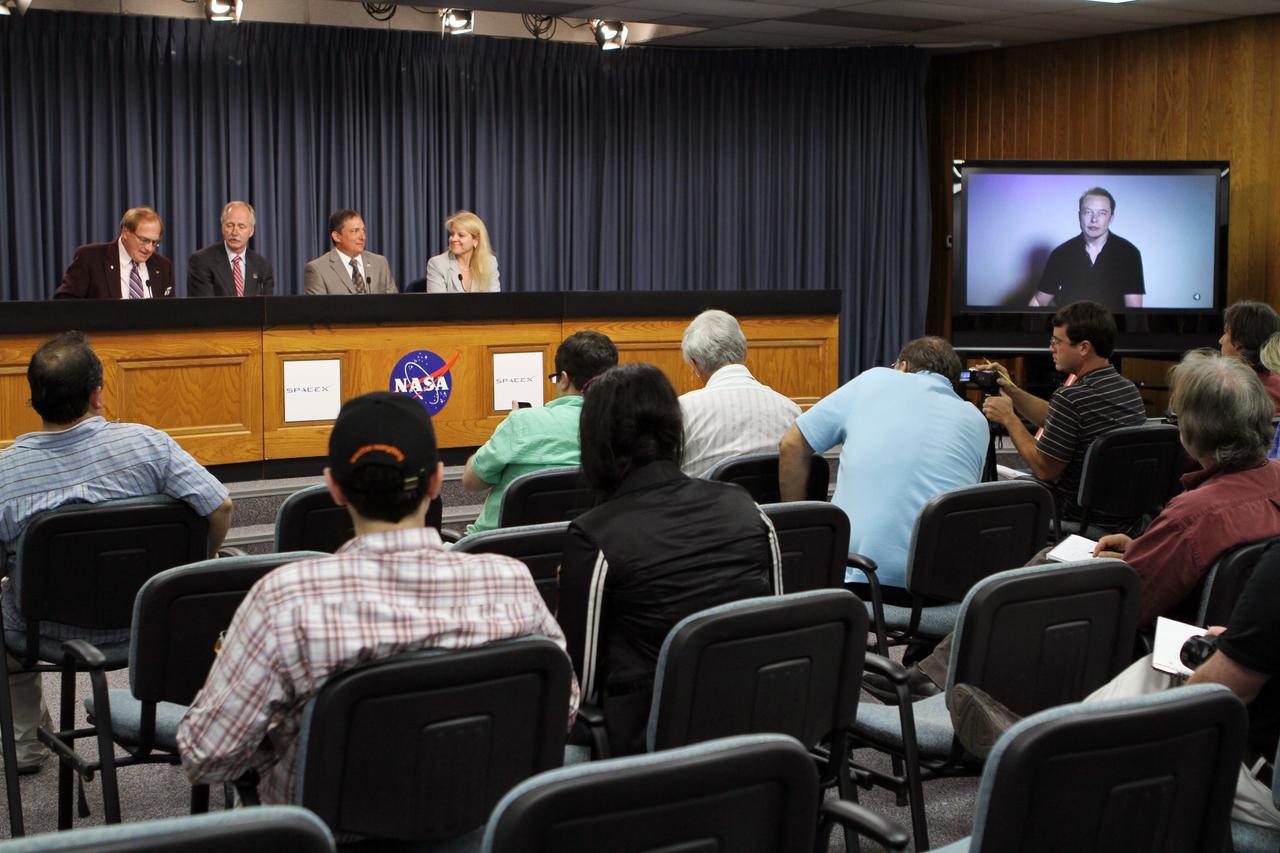
CAPE CANAVERAL, Fla. – Participating in a post-launch news conference in the Press Site auditorium at NASA’s Kennedy Space Center in Florida are, from left, George H. Diller, NASA Public Affairs, William Gerstenmaier, associate administrator of NASA’s Human Exploration and Operations Directorate, Alan Lindenmoyer, manager of NASA’s Commercial Crew and Cargo Program, and Gwynne Shotwell, president of SpaceX. Also participating by video teleconference, on the screen at right, is Elon Musk, chief executive officer and chief designer for SpaceX. The SpaceX Falcon 9 rocket launched into space at 3:44 a.m. EDT from Space Launch Complex-40 on Cape Canaveral Air Force Station in Florida. The launch is the company's second demonstration test flight for NASA's Commercial Orbital Transportation Services Program, or COTS. During the flight, the capsule will conduct a series of check-out procedures to test and prove its systems, including rendezvous and berthing with the International Space Station. If the capsule performs as planned, the cargo and experiments it is carrying will be transferred to the station. The cargo includes food, water and provisions for the station’s Expedition crews, such as clothing, batteries and computer equipment. Under COTS, NASA has partnered with two aerospace companies to deliver cargo to the station. For more information, visit http://www.nasa.gov/spacex. Photo credit: NASA/Kim Shiflett
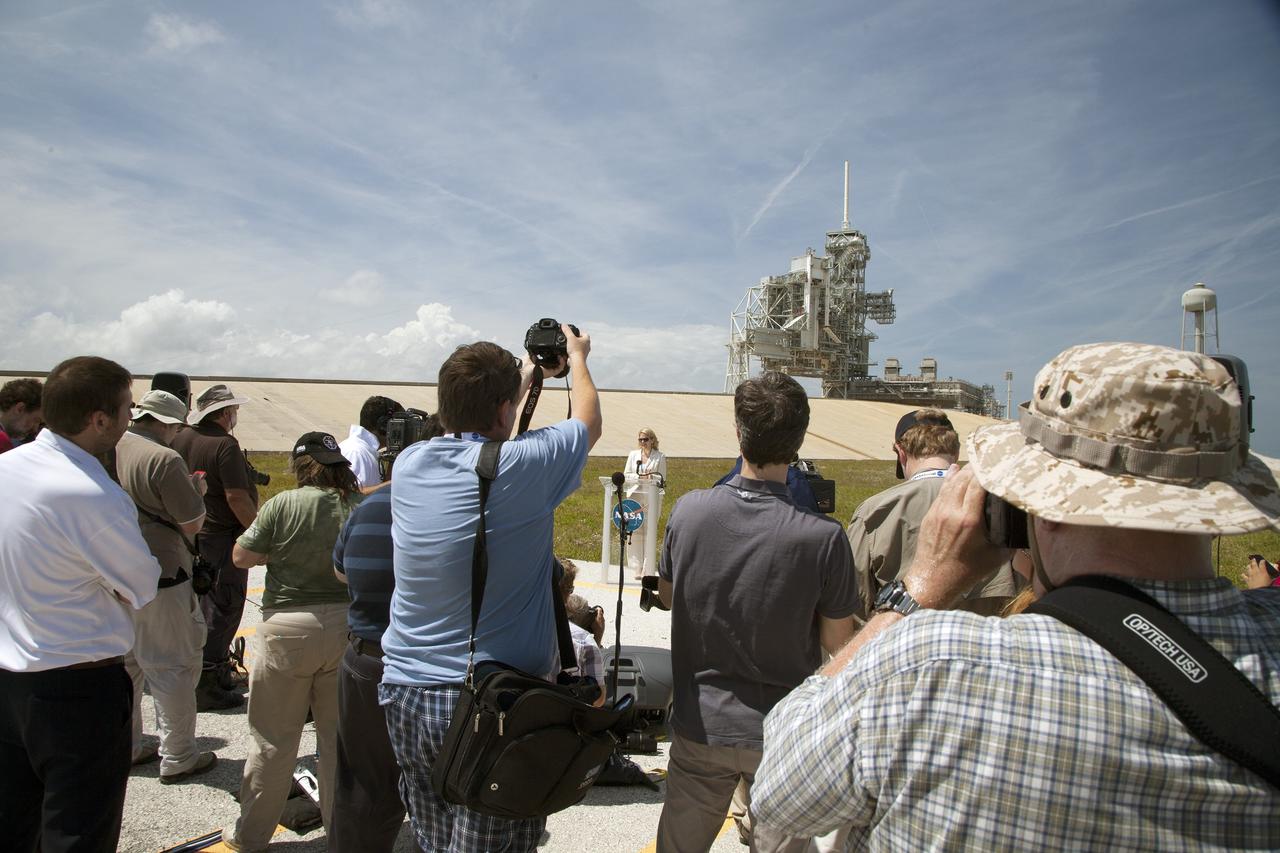
CAPE CANAVERAL, Fla. -- At Kennedy Space Center's Launch Pad 39A, Gwynne Shotwell, president and chief operating officer of Space Exploration Technologies SpaceX of Hawthorne, Calif., speaks to members of the news media announcing that NASA has just signed a lease agreement with SpaceX for use and operation of Launch Complex 39A. SpaceX will use Launch Complex 39A for rockets such as the Falcon Heavy, currently under development. Both launch pad 39A and 39B were originally built for the Apollo/Saturn V rockets that launched American astronauts on their historic journeys to the moon and later modified to support the 30-year shuttle program. Pad 39B is now being modified by NASA to support the Space Launch System SLS rocket boosting the Orion spacecraft part of the agency’s plan to explore beyond low-Earth orbit. To learn more about Launch Pad 39A visit: http://www.nasa.gov/mission_pages/shuttle/launch/launch-complex39-toc.html Photo credit: NASA/Dan Casper
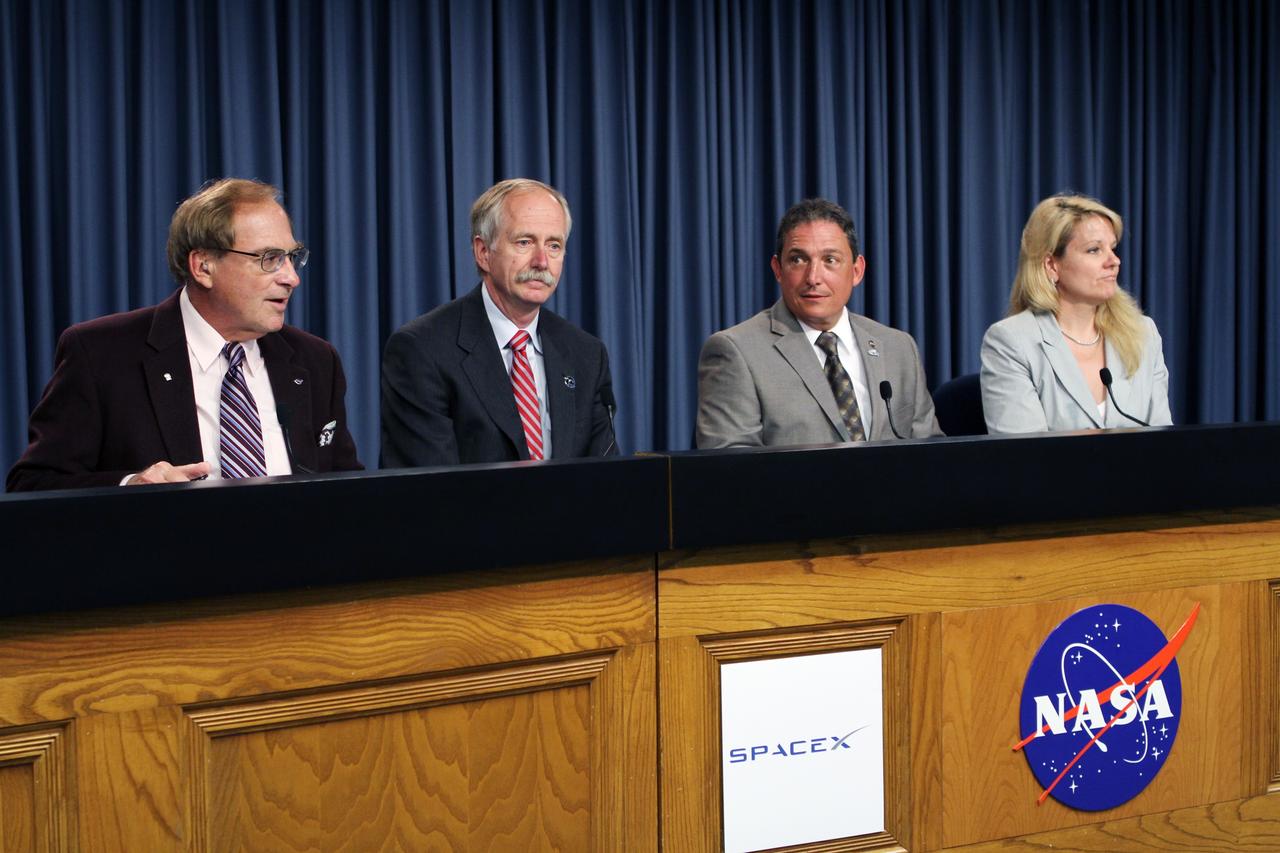
CAPE CANAVERAL, Fla. – Participating in a post-launch news conference in the Press Site auditorium at NASA’s Kennedy Space Center in Florida are, from left, George H. Diller, NASA Public Affairs, William Gerstenmaier, associate administrator of NASA’s Human Exploration and Operations Directorate, Alan Lindenmoyer, manager of NASA’s Commercial Crew and Cargo Program, and Gwynne Shotwell, president of SpaceX. The SpaceX Falcon 9 rocket launched into space at 3:44 a.m. EDT from Space Launch Complex-40 on Cape Canaveral Air Force Station in Florida. The launch is the company's second demonstration test flight for NASA's Commercial Orbital Transportation Services Program, or COTS. During the flight, the capsule will conduct a series of check-out procedures to test and prove its systems, including rendezvous and berthing with the International Space Station. If the capsule performs as planned, the cargo and experiments it is carrying will be transferred to the station. The cargo includes food, water and provisions for the station’s Expedition crews, such as clothing, batteries and computer equipment. Under COTS, NASA has partnered with two aerospace companies to deliver cargo to the station. For more information, visit http://www.nasa.gov/spacex. Photo credit: NASA/Kim Shiflett
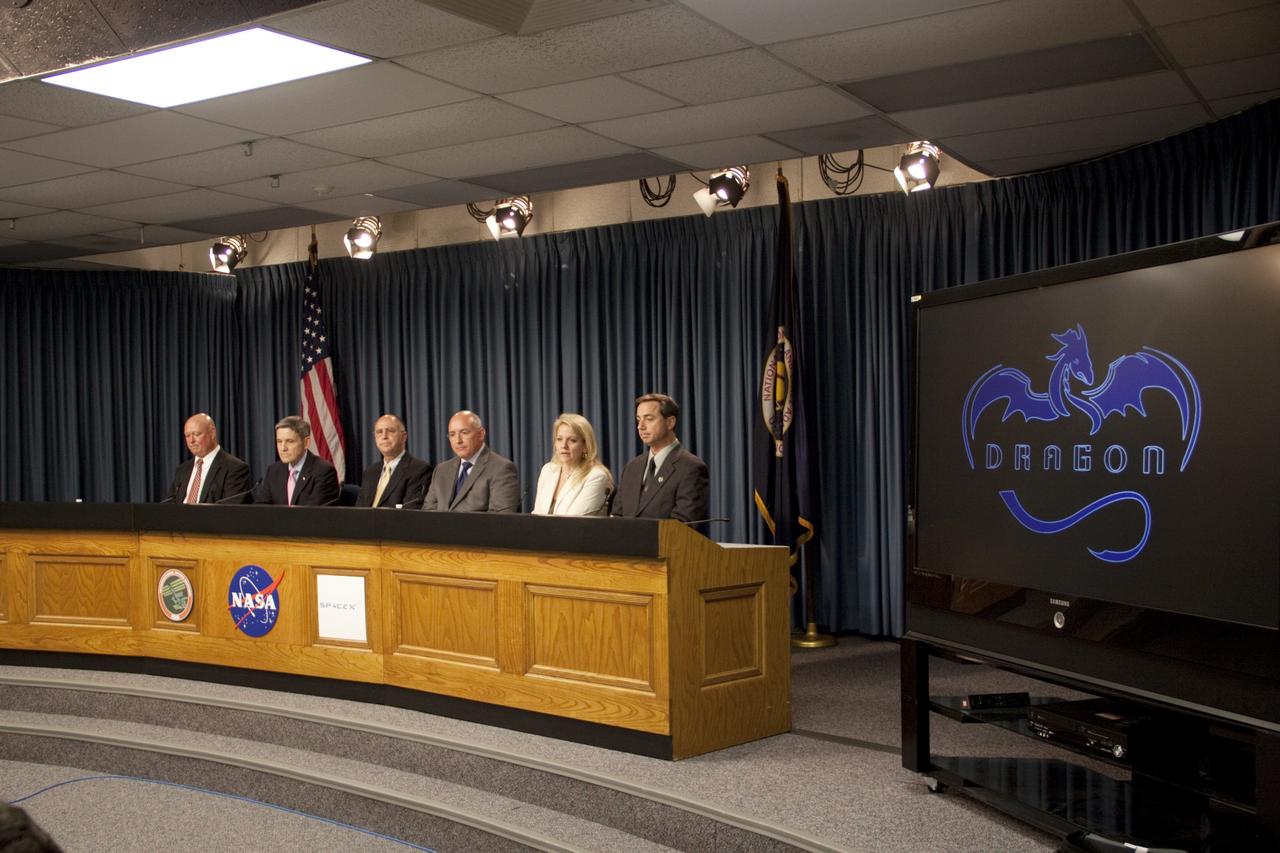
CAPE CANAVERAL, Fla. -- A prelaunch news conference is held in NASA Kennedy Space Center's Press Site auditorium in Florida. From left are Michael Curie, NASA Public Affairs, Bob Cabana, director of NASA Kennedy Space Center, Sam Scimemi, director of International Space Station at NASA Headquarters, Mike Suffredini, program manager of International Space Station at NASA Johnson Space Center, Gwynne Shotwell, president of Space Exploration Technologies Corp., or SpaceX, and Mike McAleenan, launch weather officer from the 45th Weather Squadron at Cape Canaveral Air Force Station. The news conference provided the media with a status on the readiness to launch NASA's first Commercial Resupply Services, or CRS-1, mission to the International Space Station. Space Exploration Technologies Corp., or SpaceX, built both the mission's Falcon 9 rocket and Dragon capsule. Launch is scheduled for 8:35 p.m. EDT on Oct. 7 from Space Launch Complex 40 on Cape Canaveral Air Force Station. SpaceX CRS-1 is an important step toward making America’s microgravity research program self-sufficient by providing a way to deliver and return significant amounts of cargo, including science experiments, to and from the orbiting laboratory. NASA has contracted for 12 commercial resupply flights from SpaceX and eight from the Orbital Sciences Corp. For more information, visit http://www.nasa.gov/mission_pages/station/living/launch/index.html. Photo credit: NASA/Jim Grossmann
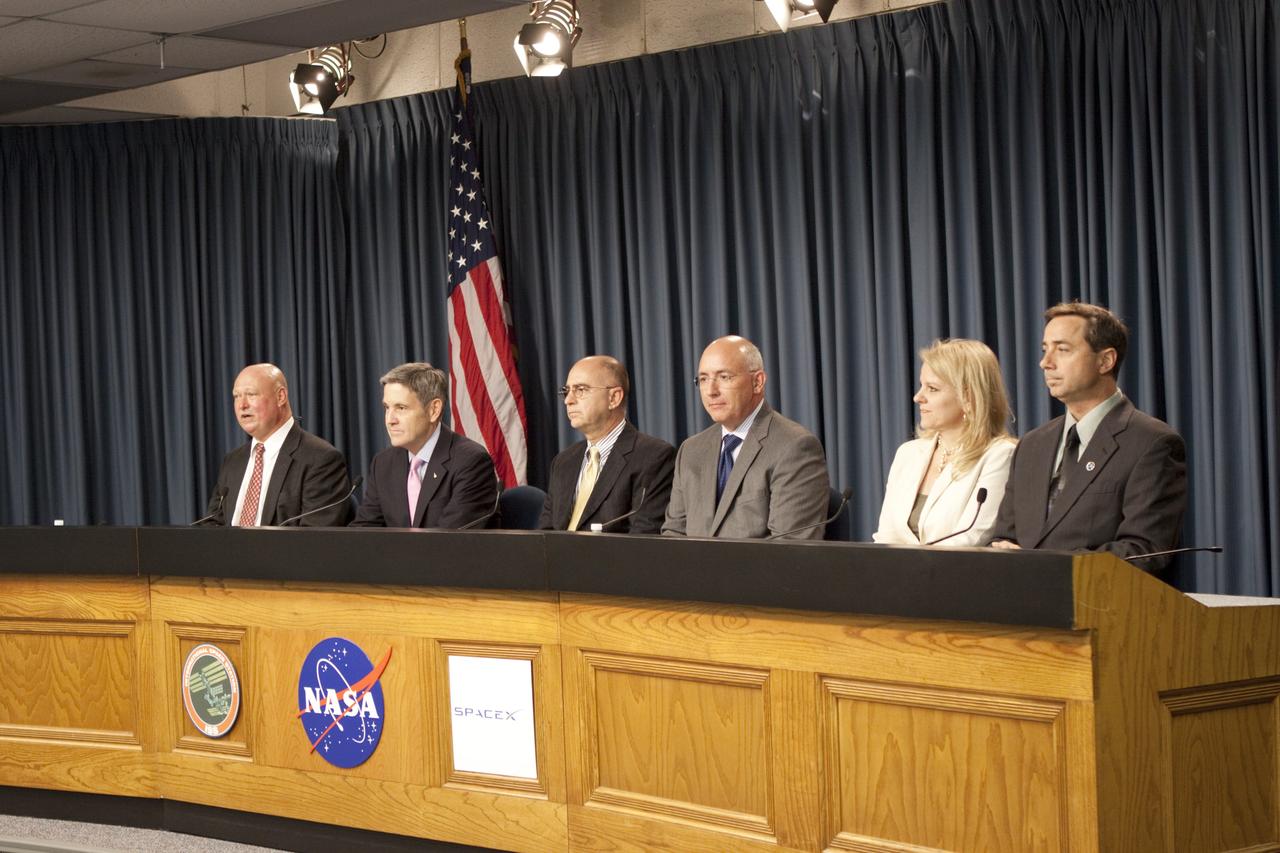
CAPE CANAVERAL, Fla. -- A prelaunch news conference is held in NASA Kennedy Space Center's Press Site auditorium in Florida. From left are Michael Curie, NASA Public Affairs, Bob Cabana, director of NASA Kennedy Space Center, Sam Scimemi, director of International Space Station at NASA Headquarters, Mike Suffredini, program manager of International Space Station at NASA Johnson Space Center, Gwynne Shotwell, president of Space Exploration Technologies Corp., or SpaceX, and Mike McAleenan, launch weather officer from the 45th Weather Squadron at Cape Canaveral Air Force Station. The news conference provided the media with a status on the readiness to launch NASA's first Commercial Resupply Services, or CRS-1, mission to the International Space Station. Space Exploration Technologies Corp., or SpaceX, built both the mission's Falcon 9 rocket and Dragon capsule. Launch is scheduled for 8:35 p.m. EDT on Oct. 7 from Space Launch Complex 40 on Cape Canaveral Air Force Station. SpaceX CRS-1 is an important step toward making America’s microgravity research program self-sufficient by providing a way to deliver and return significant amounts of cargo, including science experiments, to and from the orbiting laboratory. NASA has contracted for 12 commercial resupply flights from SpaceX and eight from the Orbital Sciences Corp. For more information, visit http://www.nasa.gov/mission_pages/station/living/launch/index.html. Photo credit: NASA/Jim Grossmann
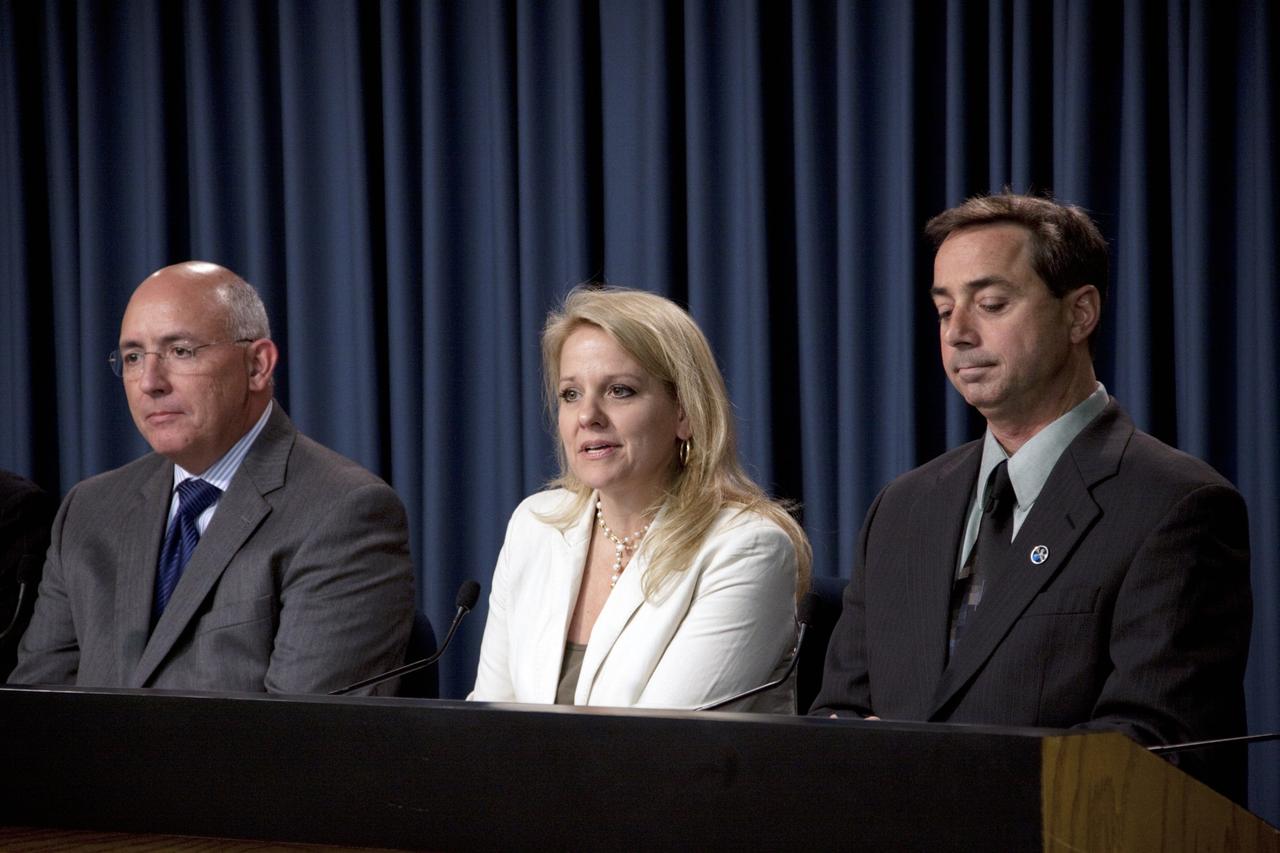
CAPE CANAVERAL, Fla. -- Gwynne Shotwell, president of Space Exploration Technologies Corp. or SpaceX, participates in a prelaunch news conference in Kennedy Space Center's Press Site auditorium in Florida. To her left is Mike Suffredini, program manager, International Space Station, Johnson Space Center and to her right is Mike McAleenan, launch weather officer, 45th Weather Squadron, Cape Canaveral Air Force Station The news conference provided the media with a status on the readiness to launch NASA's first Commercial Resupply Services, or CRS-1, mission to the International Space Station. Space Exploration Technologies Corp., or SpaceX, built both the mission's Falcon 9 rocket and Dragon capsule. Launch is scheduled for 8:35 p.m. EDT on Oct. 7 from Space Launch Complex 40 on Cape Canaveral Air Force Station. SpaceX CRS-1 is an important step toward making America’s microgravity research program self-sufficient by providing a way to deliver and return significant amounts of cargo, including science experiments, to and from the orbiting laboratory. NASA has contracted for 12 commercial resupply flights from SpaceX and eight from the Orbital Sciences Corp. For more information, visit http://www.nasa.gov/mission_pages/station/living/launch/index.html. Photo credit: NASA/Jim Grossmann The news conference provided the media with a status on the readiness to launch NASA's first Commercial Resupply Services, or CRS-1, mission to the International Space Station. Space Exploration Technologies Corp., or SpaceX, built both the mission's Falcon 9 rocket and Dragon capsule. Launch is scheduled for 8:35 p.m. EDT on Oct. 7 from Space Launch Complex 40 on Cape Canaveral Air Force Station. SpaceX CRS-1 is an important step toward making America’s microgravity research program self-sufficient by providing a way to deliver and return significant amounts of cargo, including science experiments, to and from the orbiting laboratory. NASA has contracted for 12 commercial resupply flights from SpaceX and eight from the Orbital Sciences Corp. For more information, visit http://www.nasa.gov/mission_pages/station/living/launch/index.html. Photo credit: NASA/Jim Grossmann
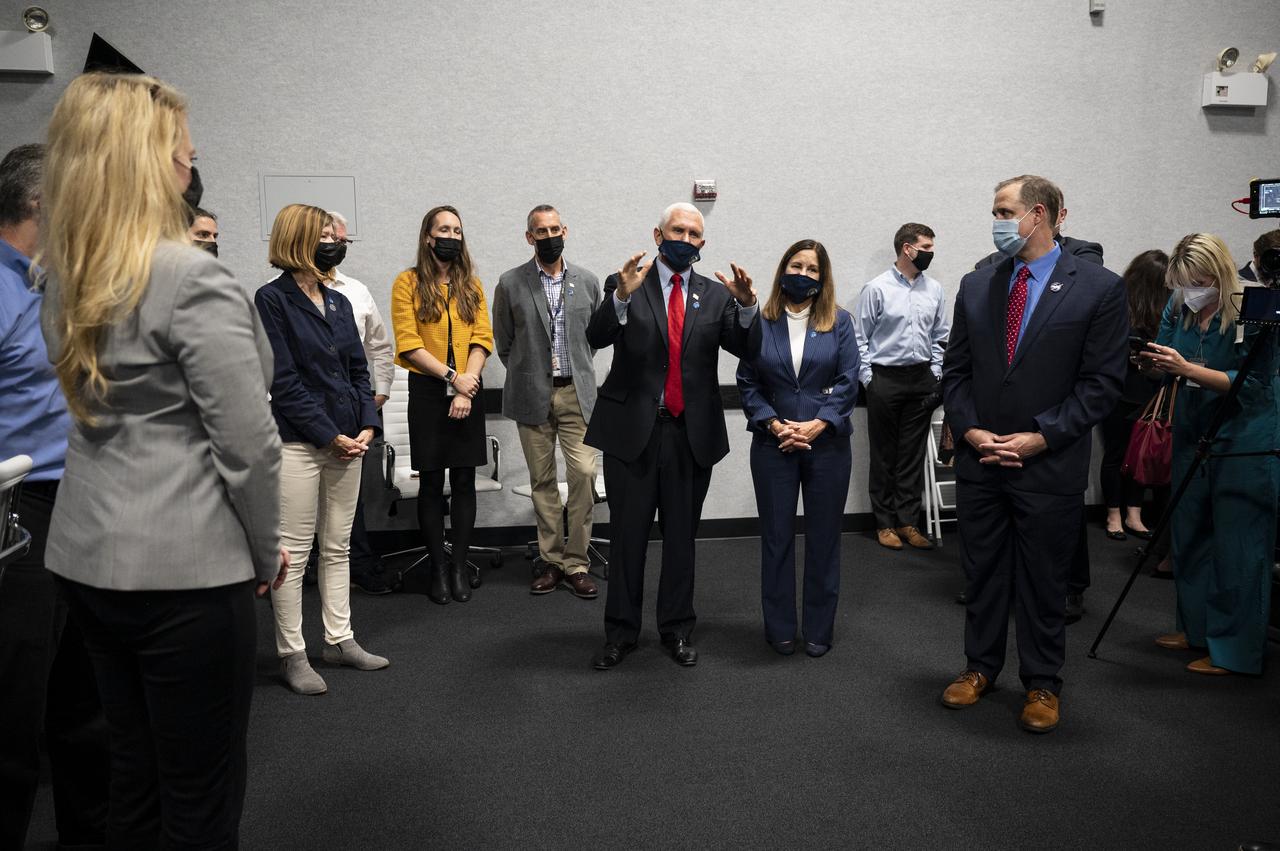
Vice President Mike Pence congratulates the NASA and SpaceX teams for a successful launch of the SpaceX Falcon 9 rocket carrying the company's Crew Dragon spacecraft on NASA’s SpaceX Crew-1 mission with NASA astronauts Mike Hopkins, Victor Glover, Shannon Walker, and Japan Aerospace Exploration Agency (JAXA) astronaut Soichi Noguchi onboard, Sunday, Nov. 15, 2020, in firing room four of the Launch Control Center at NASA’s Kennedy Space Center in Florida. NASA’s SpaceX Crew-1 mission is the first crew rotation mission of the SpaceX Crew Dragon spacecraft and Falcon 9 rocket to the International Space Station as part of the agency’s Commercial Crew Program. Hopkins, Glover, Walker, and Noguchi launched at 7:27 p.m. EST, from Launch Complex 39A at the Kennedy Space Center. Photo Credit: (NASA/Aubrey Gemignani)
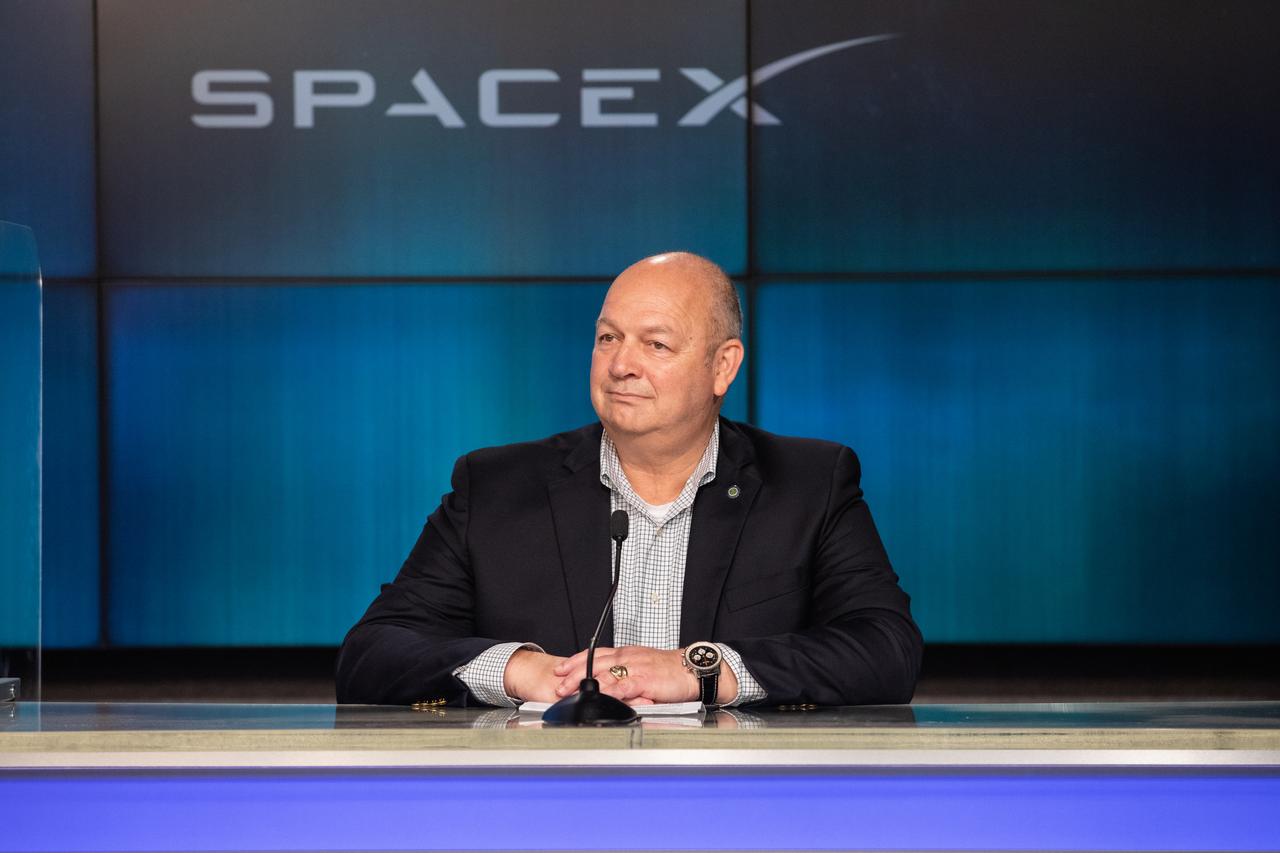
Steve Dickson, administrator, Federal Aviation Administration, answers questions from members of the news media during a postlaunch news conference for NASA’s SpaceX Crew-1 mission on Nov. 15, 2020, at Kennedy Space Center in Florida. Liftoff time on a Falcon 9 rocket was at 7:27 p.m. EST. The Crew Dragon is carrying NASA astronauts Michael Hopkins, spacecraft commander; Victor Glover, pilot; Shannon Walker, mission specialist; and Japan Aerospace Exploration Agency astronaut Soichi Noguchi, mission specialist, to the International Space Station. Crew-1 is the first regular crew mission of a U.S. commercial spacecraft with astronauts to the space station as part of NASA’s Commercial Crew Program. The Crew Dragon will dock with the station and the crew will remain on the orbiting laboratory for a six-month science mission.
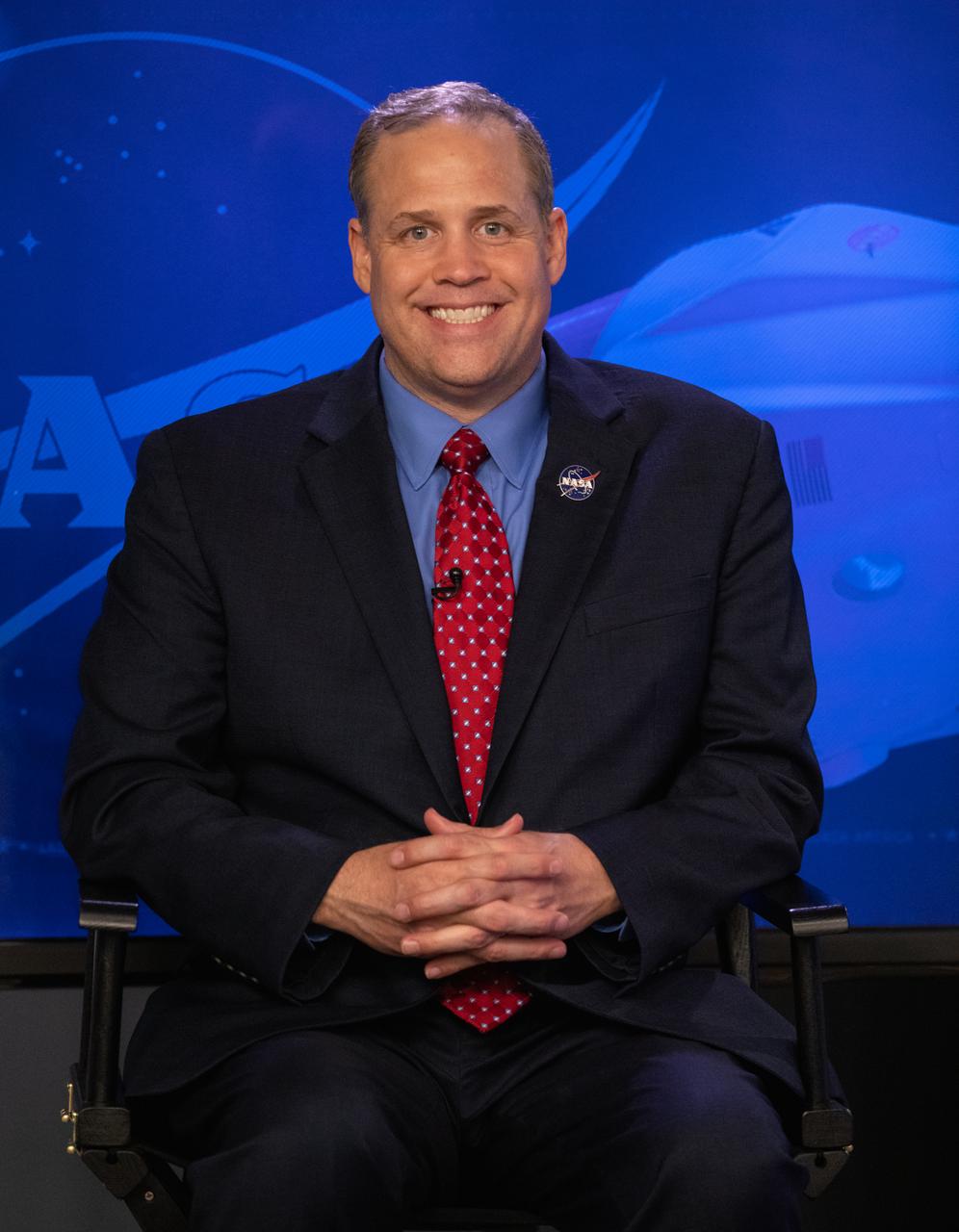
NASA Administrator Jim Bridenstine makes remarks during a postlaunch news conference for NASA’s SpaceX Crew-1 mission on Nov. 15, 2020, at Kennedy Space Center in Florida. Liftoff time on a Falcon 9 rocket was at 7:27 p.m. EST. The Crew Dragon is carrying NASA astronauts Michael Hopkins, spacecraft commander; Victor Glover, pilot; Shannon Walker, mission specialist; and Japan Aerospace Exploration Agency astronaut Soichi Noguchi, mission specialist, to the International Space Station. Crew-1 is the first regular crew mission of a U.S. commercial spacecraft with astronauts to the space station as part of NASA’s Commercial Crew Program. The Crew Dragon will dock with the station and the crew will remain on the orbiting laboratory for a six-month science mission.
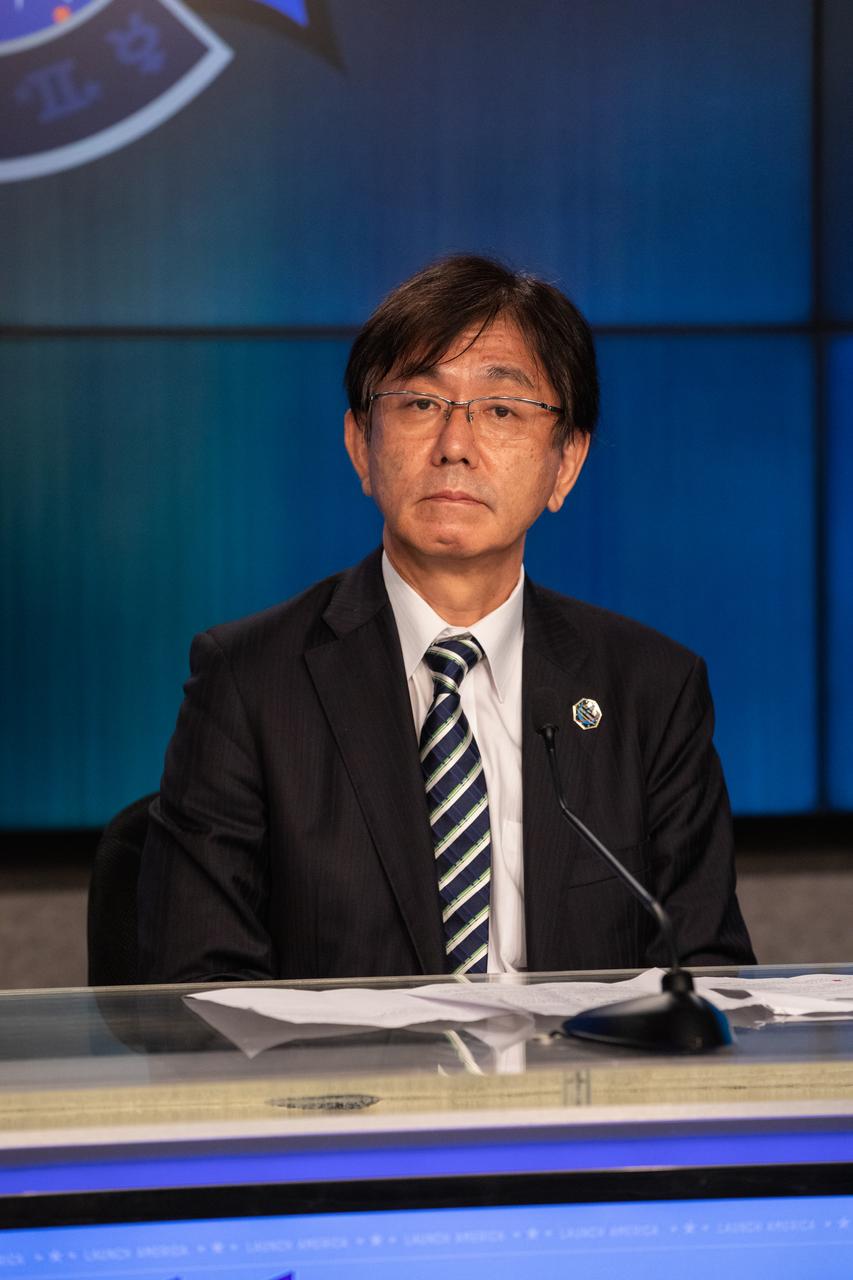
Hiroshi Sasaki, vice president and director general, JAXA’s Human Spaceflight Technology Directorate, answers questions from members of the news media during a postlaunch news conference for NASA’s SpaceX Crew-1 mission on Nov. 15, 2020, at Kennedy Space Center in Florida. Liftoff time on a Falcon 9 rocket was at 7:27 p.m. EST. The Crew Dragon is carrying NASA astronauts Michael Hopkins, spacecraft commander; Victor Glover, pilot; Shannon Walker, mission specialist; and Japan Aerospace Exploration Agency astronaut Soichi Noguchi, mission specialist, to the International Space Station. Crew-1 is the first regular crew mission of a U.S. commercial spacecraft with astronauts to the space station as part of NASA’s Commercial Crew Program. The Crew Dragon will dock with the station and the crew will remain on the orbiting laboratory for a six-month science mission.
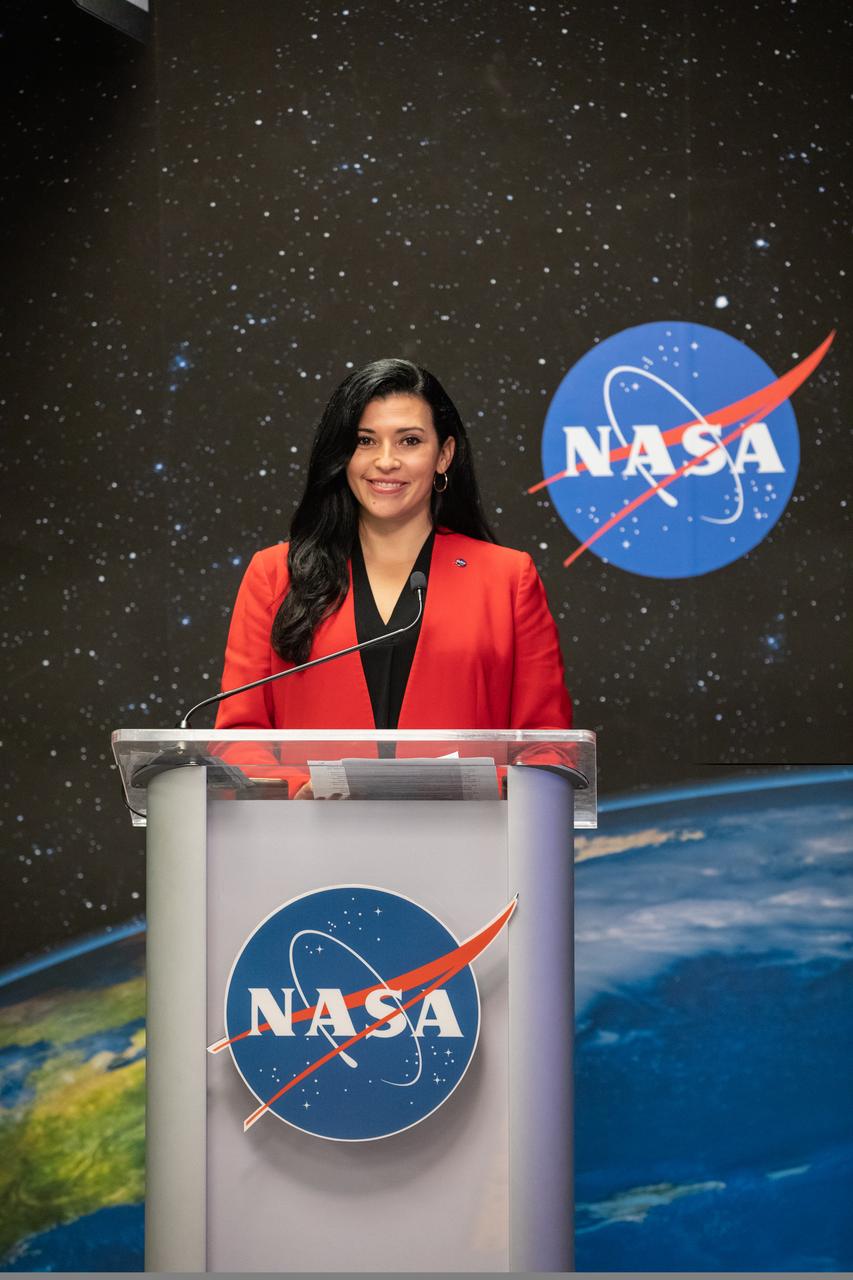
Bettina Inclan, NASA Communications, moderates a postlaunch news conference for NASA’s SpaceX Crew-1 mission on Nov. 15, 2020, at Kennedy Space Center in Florida. Liftoff time on a Falcon 9 rocket was at 7:27 p.m. EST. The Crew Dragon is carrying NASA astronauts Michael Hopkins, spacecraft commander; Victor Glover, pilot; Shannon Walker, mission specialist; and Japan Aerospace Exploration Agency astronaut Soichi Noguchi, mission specialist, to the International Space Station. Crew-1 is the first regular crew mission of a U.S. commercial spacecraft with astronauts to the space station as part of NASA’s Commercial Crew Program. The Crew Dragon will dock with the station and the crew will remain on the orbiting laboratory for a six-month science mission.
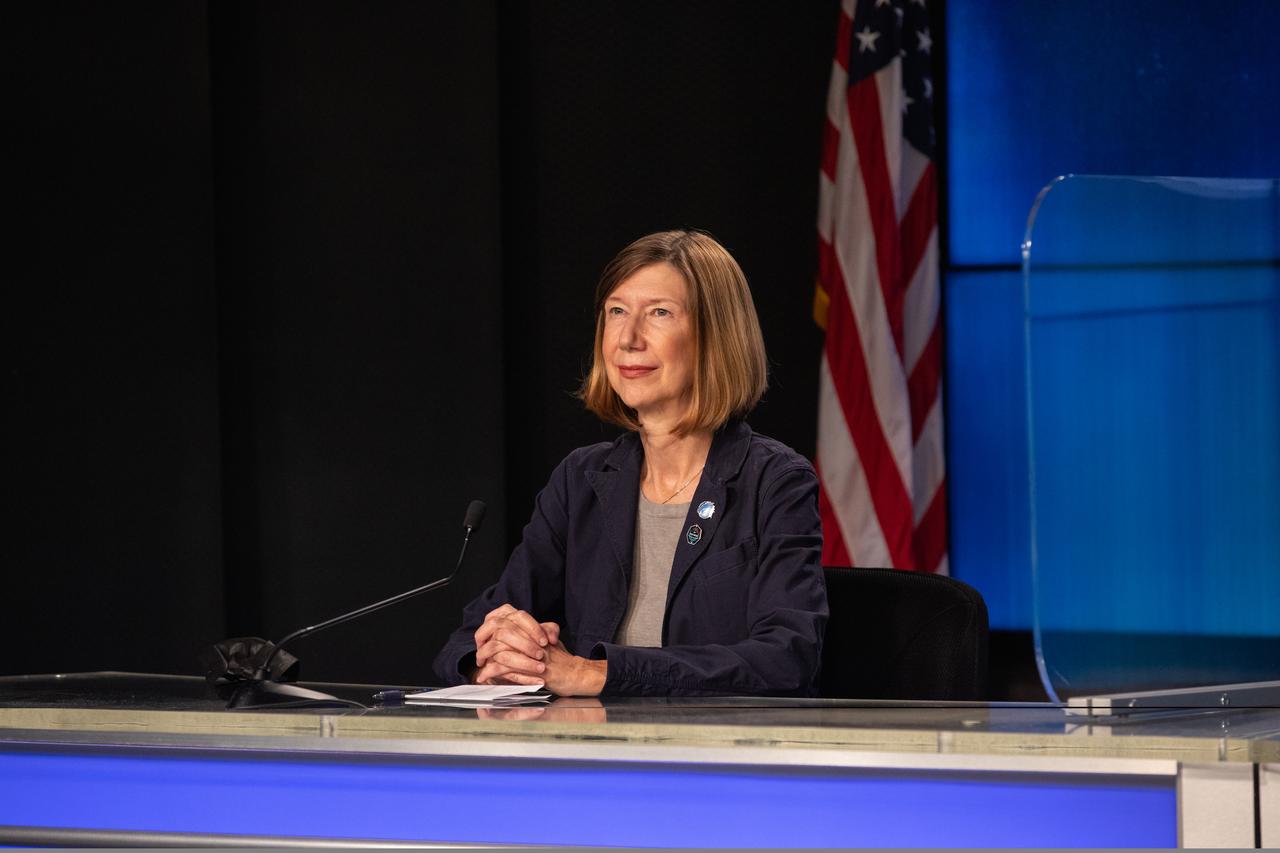
Kathy Lueders, associate administrator for human exploration and operations, NASA Headquarters, answers questions from members of the news media during a postlaunch news conference for NASA’s SpaceX Crew-1 mission on Nov. 15, 2020, at Kennedy Space Center in Florida. Liftoff time on a Falcon 9 rocket was at 7:27 p.m. EST. The Crew Dragon is carrying NASA astronauts Michael Hopkins, spacecraft commander; Victor Glover, pilot; Shannon Walker, mission specialist; and Japan Aerospace Exploration Agency astronaut Soichi Noguchi, mission specialist, to the International Space Station. Crew-1 is the first regular crew mission of a U.S. commercial spacecraft with astronauts to the space station as part of NASA’s Commercial Crew Program. The Crew Dragon will dock with the station and the crew will remain on the orbiting laboratory for a six-month science mission.