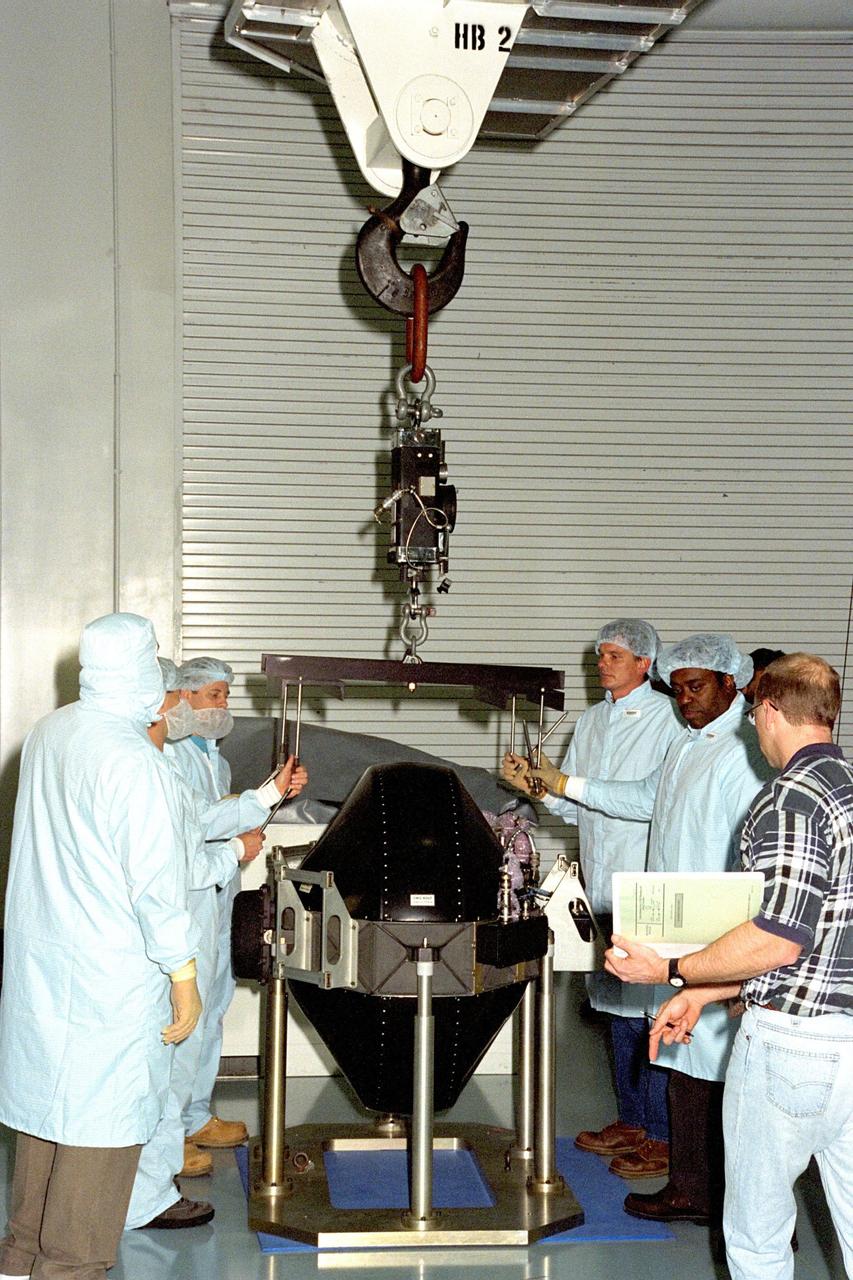
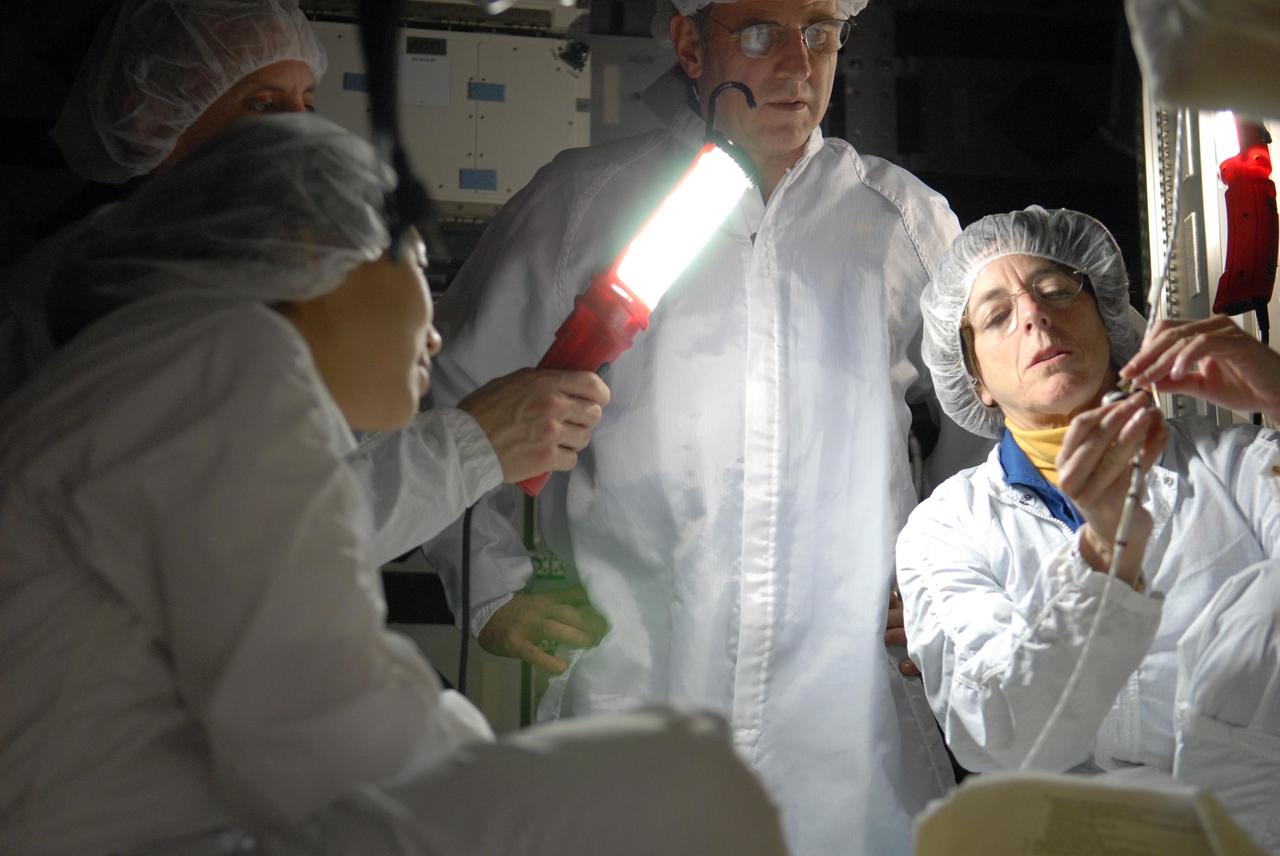
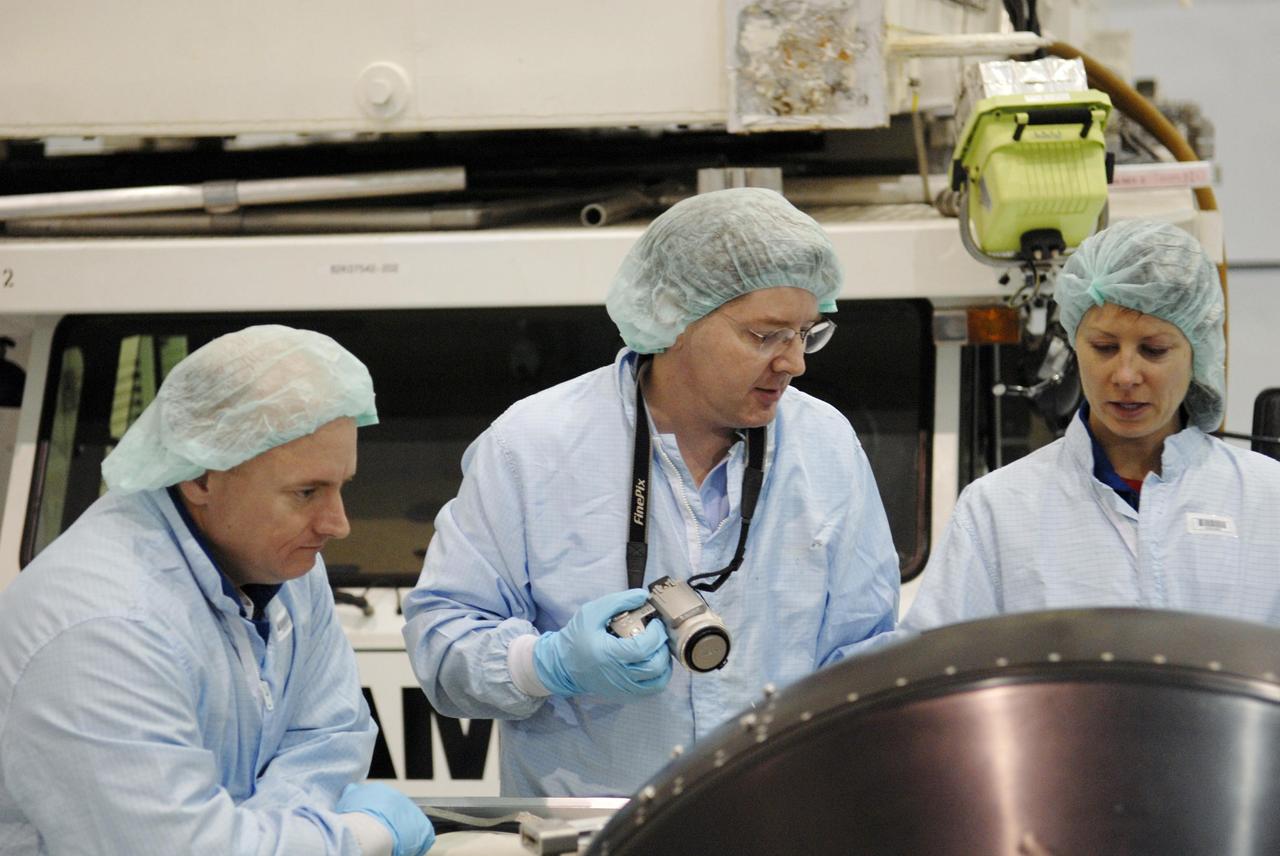
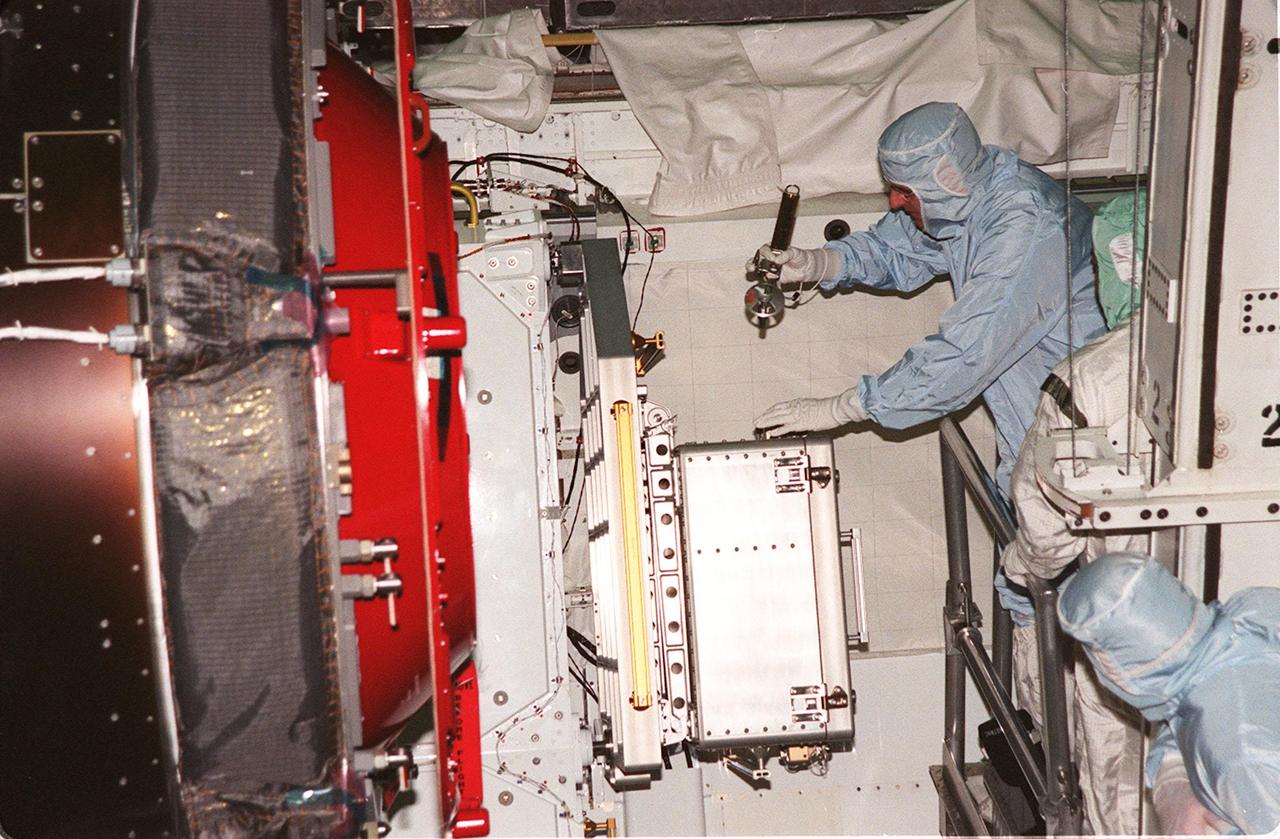
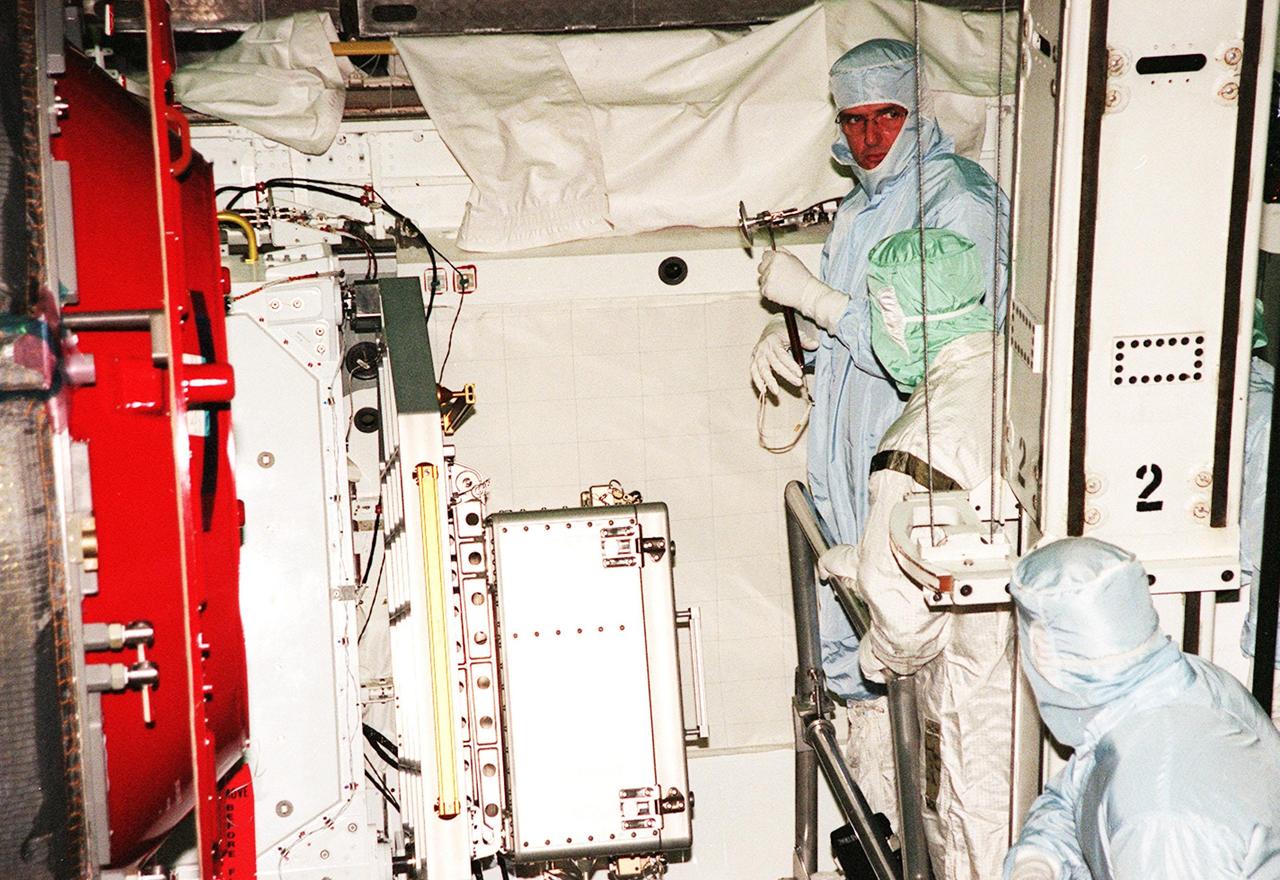
The Gravity Probe B (GP-B) is the relativity experiment developed at Stanford University to test two extraordinary predictions of Albert Einstein’s general theory of relativity. The experiment will measure, very precisely, the expected tiny changes in the direction of the spin axes of four gyroscopes contained in an Earth-orbiting satellite at a 400-mile altitude. So free are the gyroscopes from disturbance that they will provide an almost perfect space-time reference system. They will measure how space and time are very slightly warped by the presence of the Earth, and, more profoundly, how the Earth’s rotation very slightly drags space-time around with it. These effects, though small for the Earth, have far-reaching implications for the nature of matter and the structure of the Universe. In this photograph, Stanford engineer, Chris Gray, is inspecting the number 4 gyro under monochromatic light. GP-B is among the most thoroughly researched programs ever undertaken by NASA. This is the story of a scientific quest in which physicists and engineers have collaborated closely over many years. Inspired by their quest, they have invented a whole range of technologies that are already enlivening other branches of science and engineering.  Launched  April 20, 2004 , the GP-B program was managed for NASA by the Marshall Space Flight Center. Development of the GP-B is the responsibility of Stanford University along with major subcontractor Lockheed Martin Corporation.  (Image credit to Russ Leese, Stanford University.)
Space Science
KENNEDY SPACE CENTER, FLA. -- A control moment gyro (CMG) is processed in KSC's Space Station Processing Facility. This gyro is one of four CMGs that will stabilize the International Space Station (ISS) while on orbit. The four gyros will connect with the Z-1 truss that is scheduled to launch on the third ISS flight, scheduled to occur aboard the Space Shuttle Atlantis on STS-92.
KSC-98pc386
iss072e487421 (Jan. 16, 2025) --- NASA astronaut and Expedition 72 Commander Suni Williams is pictured during a spacewalk outside the International Space Station where she replaced a rate gyro assembly that helps maintain the orientation of the orbital outpost.
Astronaut Suni Williams during a spacewalk outside the International Space Station
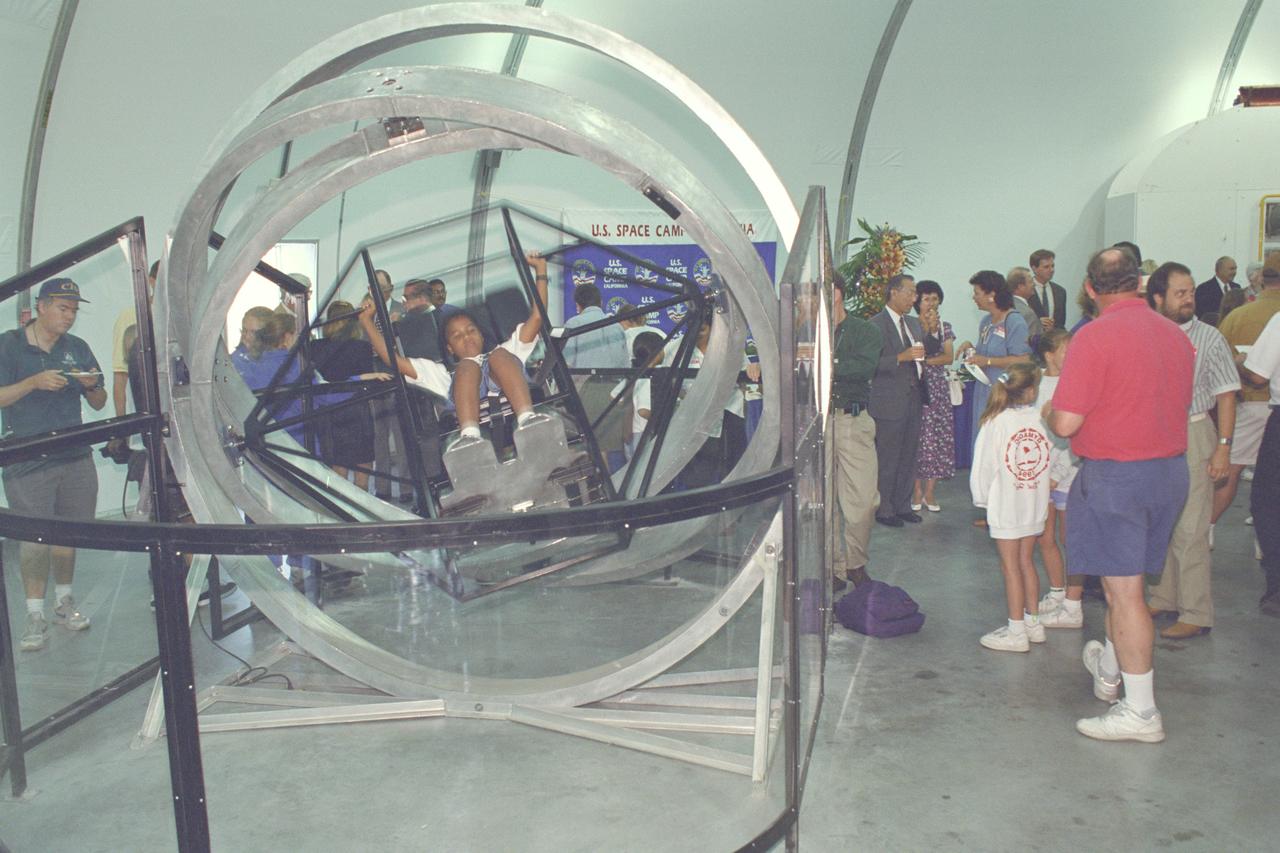
U.S. Space Camp California 'Day Camp' Grand Opening student tries out gyro chair
ARC-1996-AC96-0233-6
S73-33161 (24 Aug. 1973) --- Astronaut Jack R. Lousma, Skylab 3 pilot, hooks up a 23-foot, two-inch connecting cable for the rate gyro six pack during extravehicular activity (EVA) on Aug. 24, 1973, as seen in this photographic reproduction taken from a color television transmission made by a TV camera aboard the Skylab space station in Earth orbit. The rate gyros were mounted inside the Multiple Docking Adapter opposite the Apollo Telescope Mount control and display console. Photo credit: NASA
SKYLAB (SL)-3 - TELEVISION (EXTRAVEHICULAR ACTIVITY [EVA])
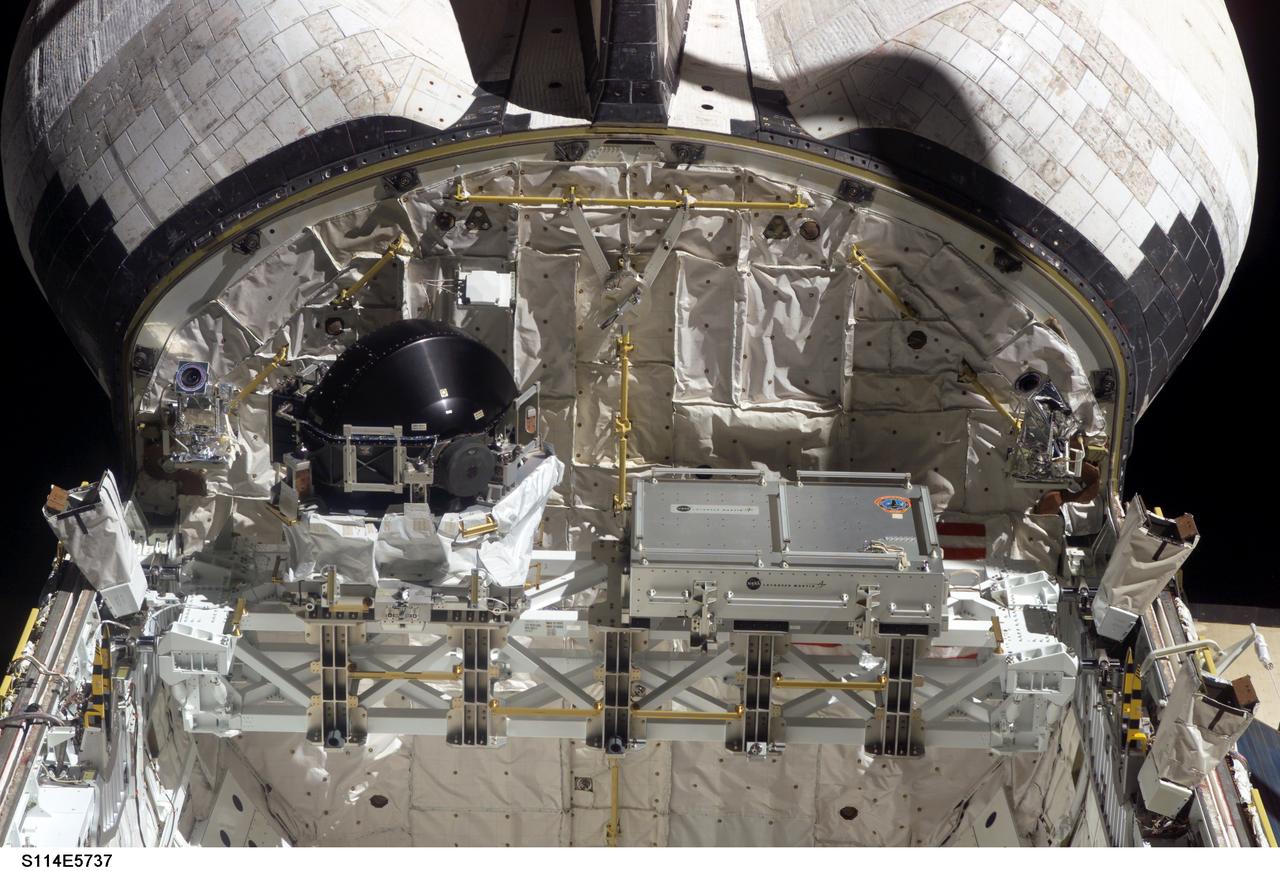
S114-E-5737 (29 July 2005) --- This high angle view of the aft end of Discovery's cargo bay in Earth orbit was taken from the International Space Station to which the Space Shuttle was docked at the time. The control moment gyro (CMG) replacement article, to be installed on an upcoming space walk, is on the left side of the frame.
Close-up view of Discovery aft payload bay
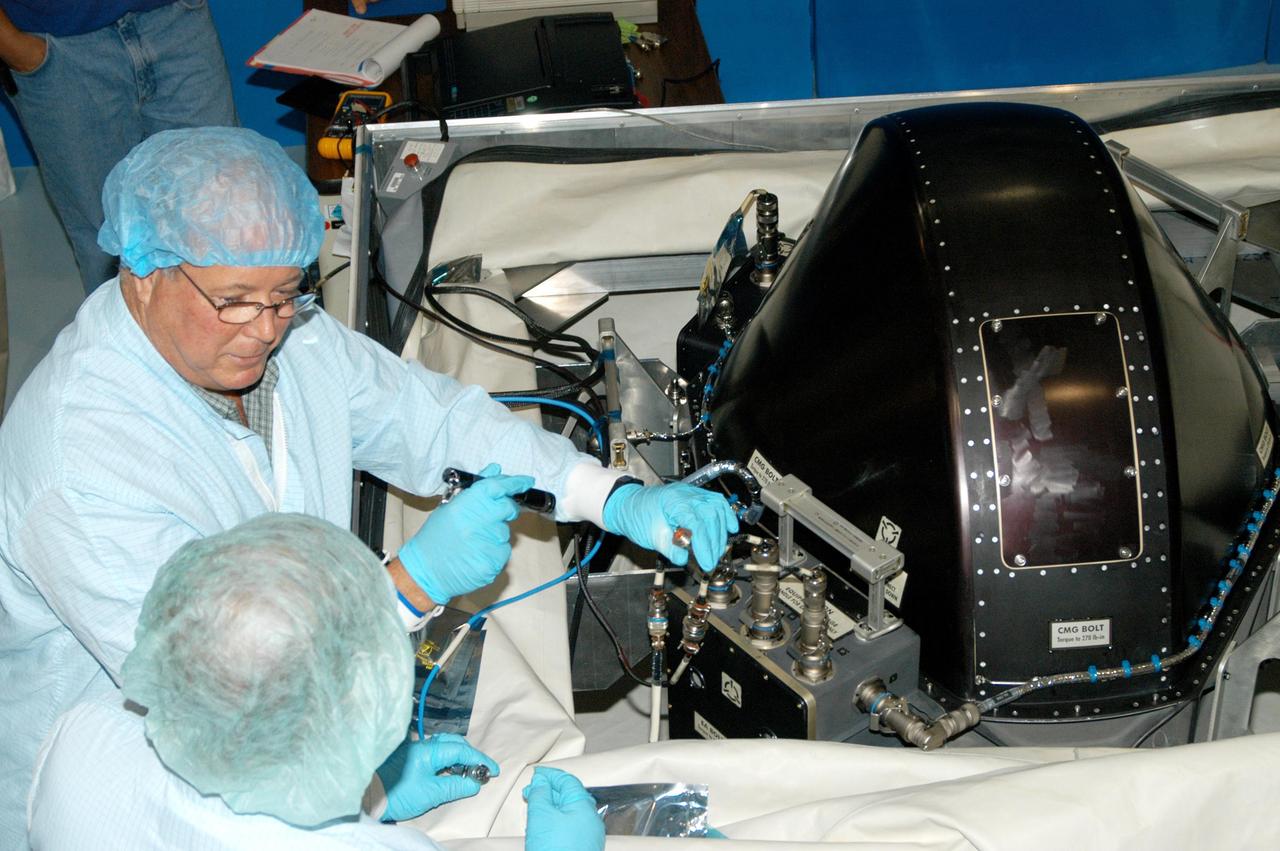
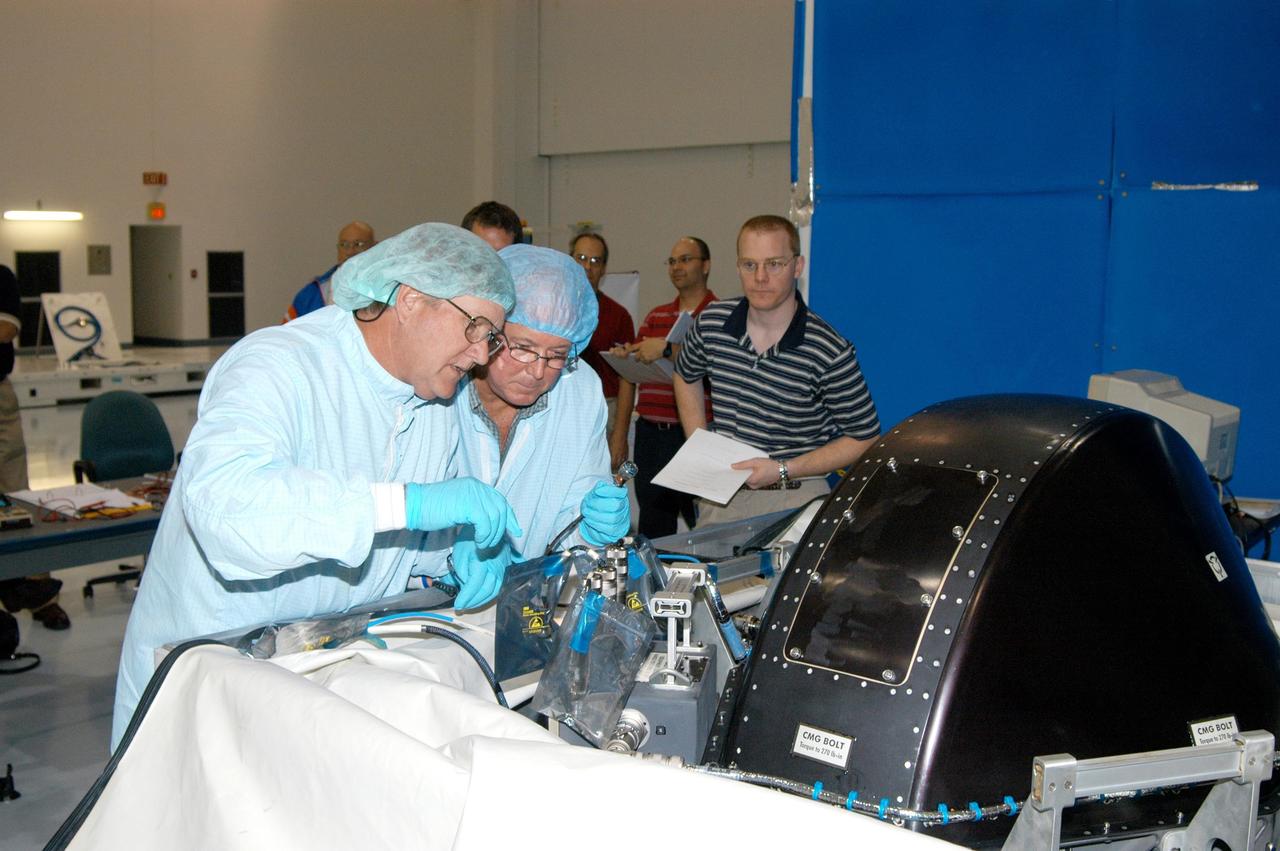
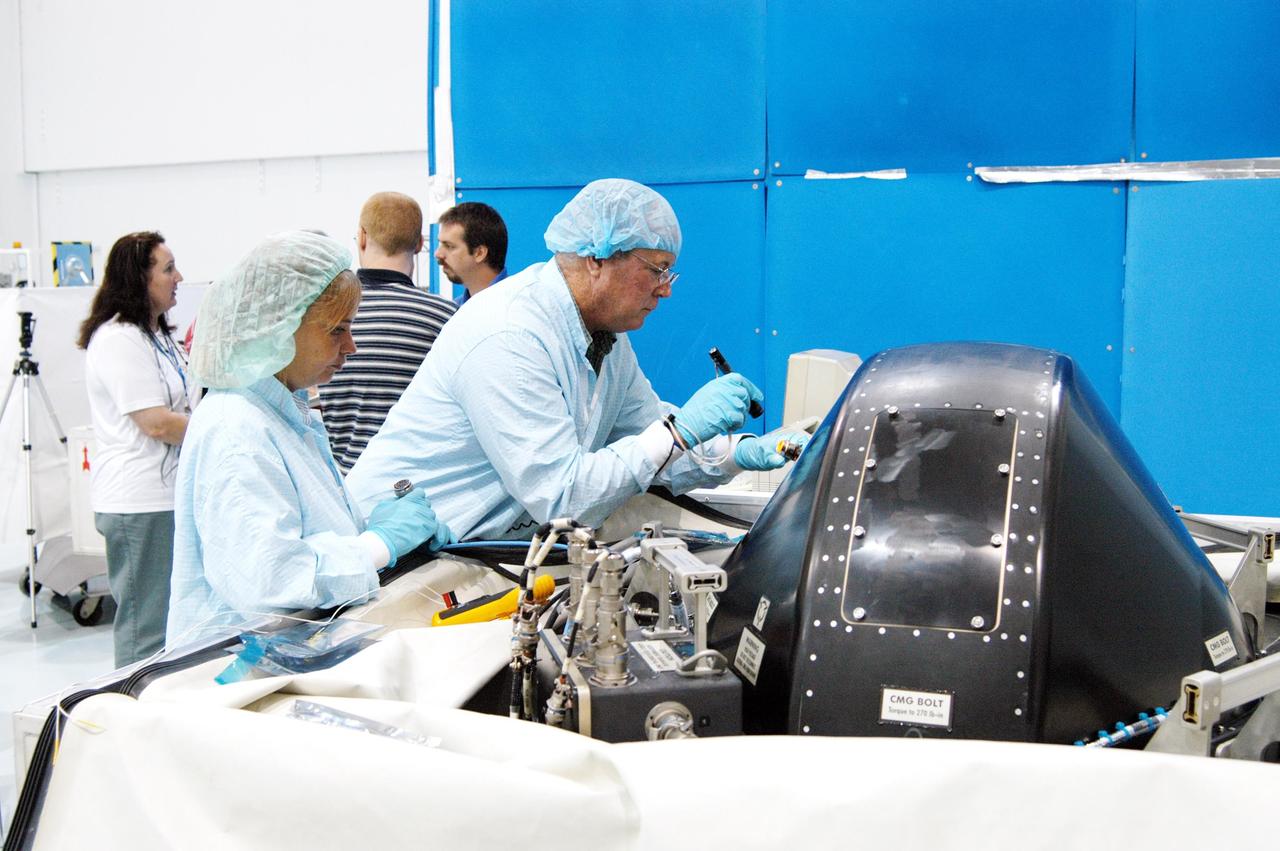
KENNEDY SPACE CENTER, FLA. - In the Space Station Processing Facility, workers conduct a post-delivery verification test on a Control Moment Gyro (CMG) that is scheduled to fly on mission STS-114.  The CMG will replace another on the International Space Station, which will require a spacewalk.
KSC-04pd1975
KENNEDY SPACE CENTER, FLA. - In the Space Station Processing Facility, workers conduct a post-delivery verification test on a Control Moment Gyro (CMG) that is scheduled to fly on mission STS-114.  The CMG will replace another on the International Space Station, which will require a spacewalk.
KSC-04pd1977
S131-E-008380 (9 April 2010) --- NASA astronaut Dorothy Metcalf-Lindenburger is pictured during the transfer of a spare Rate Gyro Assembly aboard the International Space Station. She is one of the 13 astronauts and cosmonauts currently sharing work aboard the orbital outpost.
MPLM Transfer OPS
KENNEDY SPACE CENTER, FLA. - In the Space Station Processing Facility, workers conduct a post-delivery verification test on a Control Moment Gyro (CMG) that is scheduled to fly on mission STS-114.  The CMG will replace another on the International Space Station, which will require a spacewalk.
KSC-04pd1976
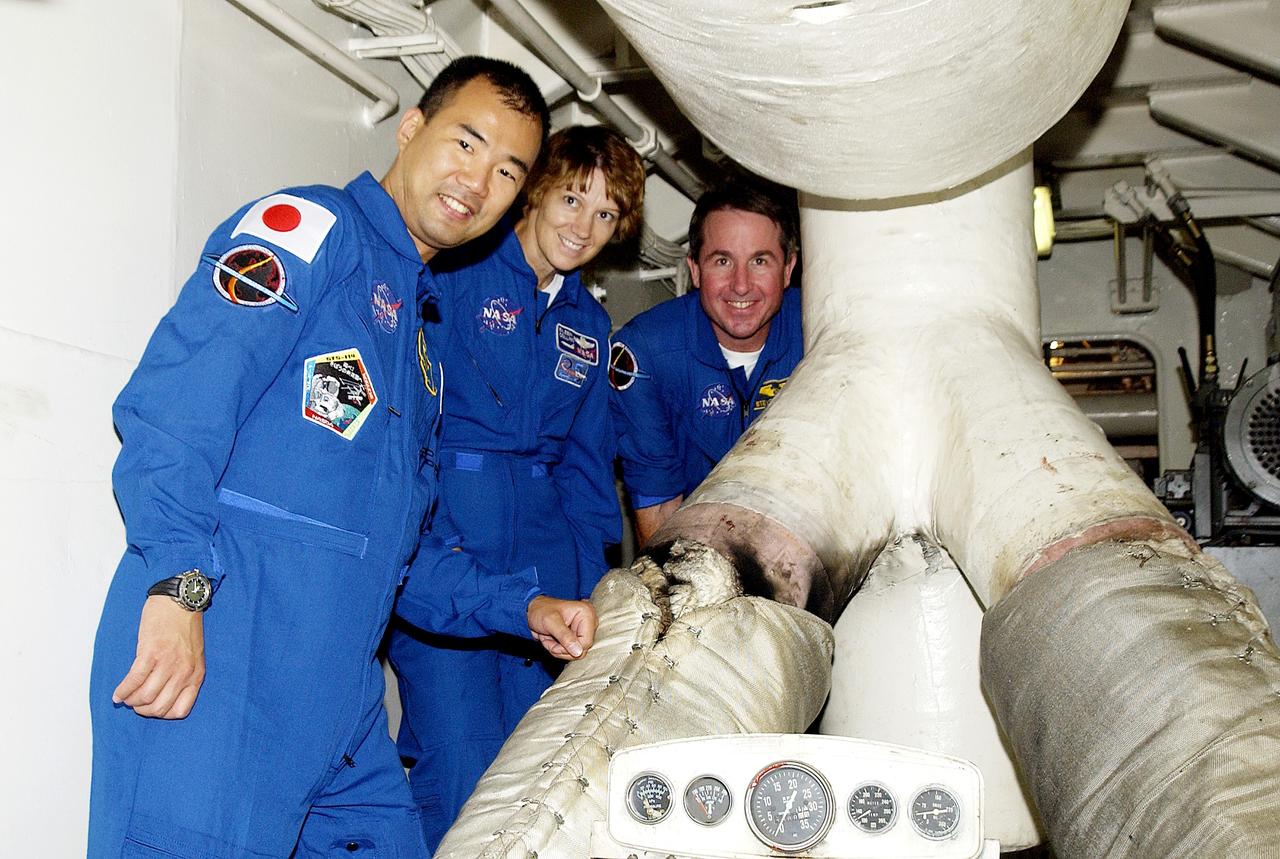
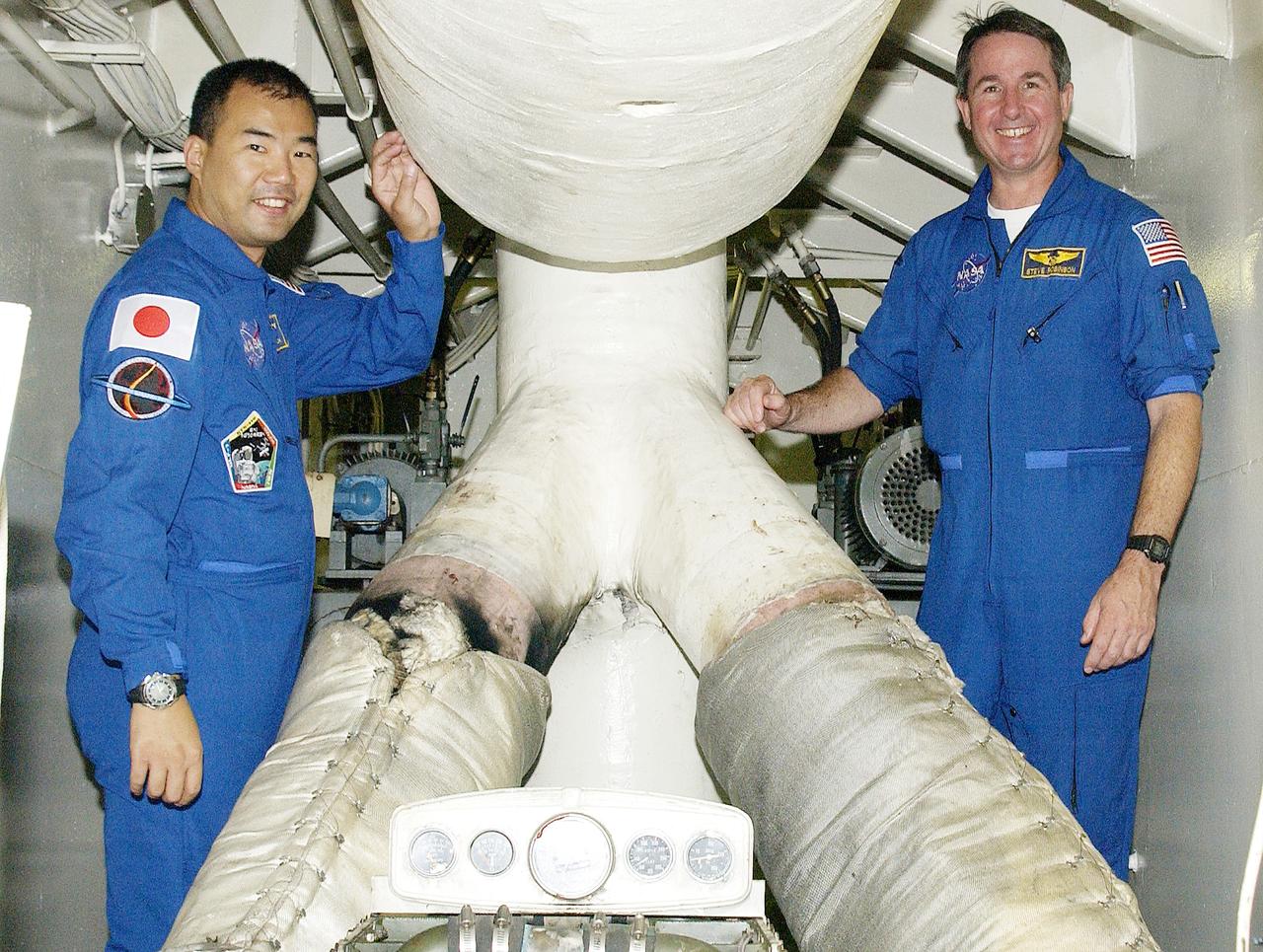
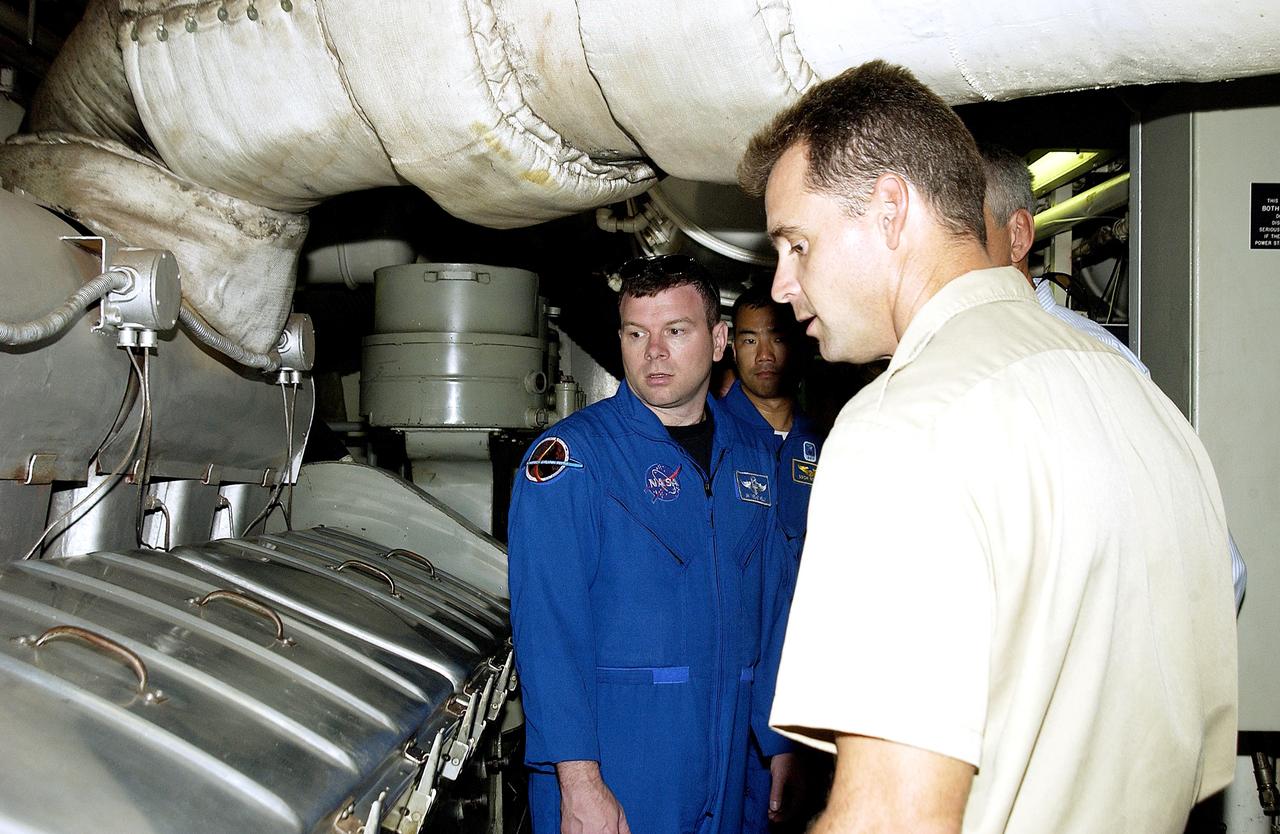
KENNEDY SPACE CENTER, FLA. -  STS-114  Mission Specialists Soichi Noguchi and Stephen Robinson visit the engine room of the Liberty Star, one of two SRB Retrieval Ships.  Noguchi is with the Japanese space agency NASDA. Other crew members on the tour are Commander Eileen Collins and Pilot James Kelly.  On their mission, the crew will carry the MultiPurpose Logistics Module (MPLM) Raffaello and External Stowage Platform 2 to the International Space Station.  The MPLM will contain supplies and equipment.  Another goal of the mission is to remove and replace a Control Moment Gyro.  Launch date for mission STS-114 is under review.
KENNEDY SPACE CENTER, FLA. - STS-114 Mission Specialists Soichi Noguchi and Stephen Robinson visit the engine room of the Liberty Star, one of two SRB Retrieval Ships. Noguchi is with the Japanese space agency NASDA. Other crew members on the tour are Commander Eileen Collins and Pilot James Kelly. On their mission, the crew will carry the MultiPurpose Logistics Module (MPLM) Raffaello and External Stowage Platform 2 to the International Space Station. The MPLM will contain supplies and equipment. Another goal of the mission is to remove and replace a Control Moment Gyro. Launch date for mission STS-114 is under review.
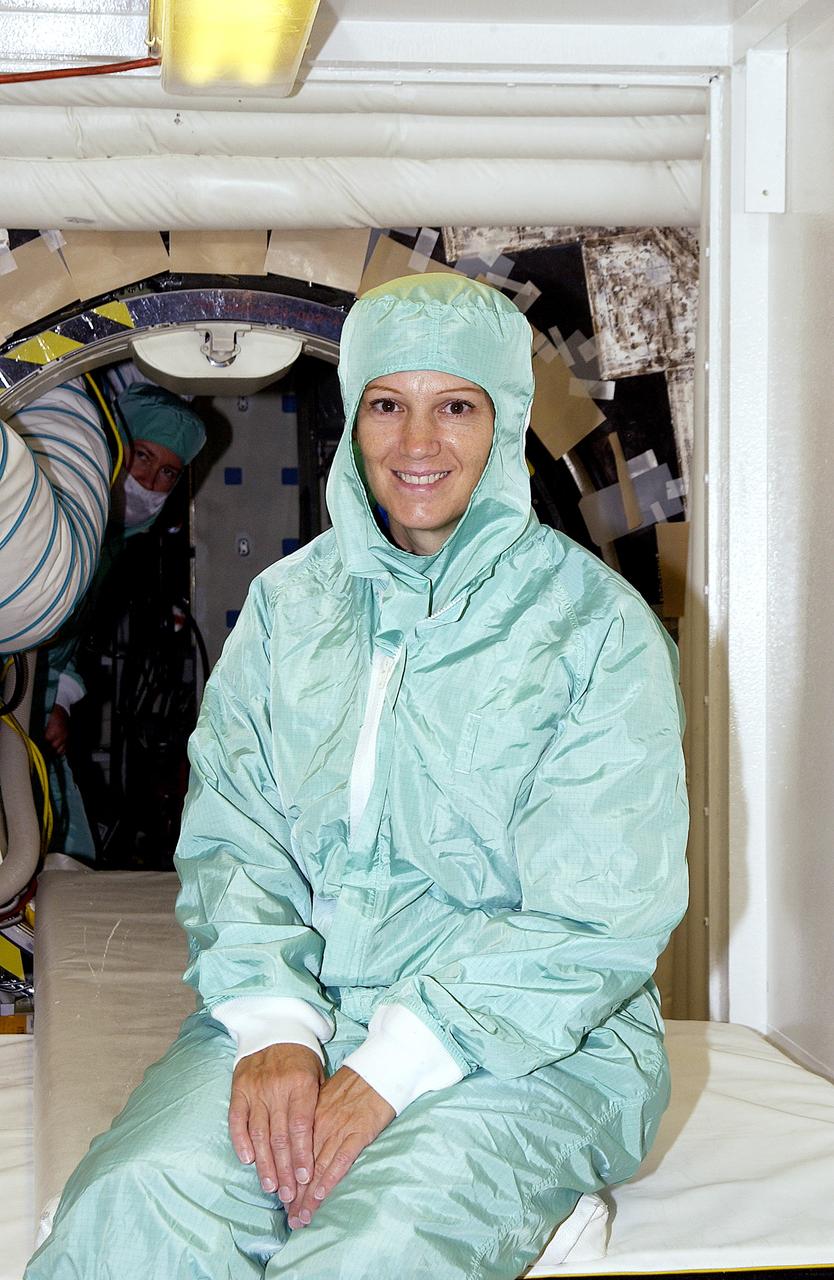
KENNEDY SPACE CENTER, FLA. -  STS-114 Pilot James Kelly sits in the entry hatch to orbiter Atlantis.  He and other crew members - Commander Eileen Collins and  Mission Specialists Soichi Noguchi and Stephen Robinson -  are at KSC for equipment familiarization. Noguchi is with the Japanese space agency NASDA. Mission STS-114 will carry the MultiPurpose Logistics Module (MPLM) Raffaello and External Stowage Platform 2 to the International Space Station.  The MPLM will contain supplies and equipment.  Another goal of the mission is to remove and replace a Control Moment Gyro.  Launch date for mission STS-114 is under review.
KENNEDY SPACE CENTER, FLA. - STS-114 Pilot James Kelly sits in the entry hatch to orbiter Atlantis. He and other crew members - Commander Eileen Collins and Mission Specialists Soichi Noguchi and Stephen Robinson - are at KSC for equipment familiarization. Noguchi is with the Japanese space agency NASDA. Mission STS-114 will carry the MultiPurpose Logistics Module (MPLM) Raffaello and External Stowage Platform 2 to the International Space Station. The MPLM will contain supplies and equipment. Another goal of the mission is to remove and replace a Control Moment Gyro. Launch date for mission STS-114 is under review.
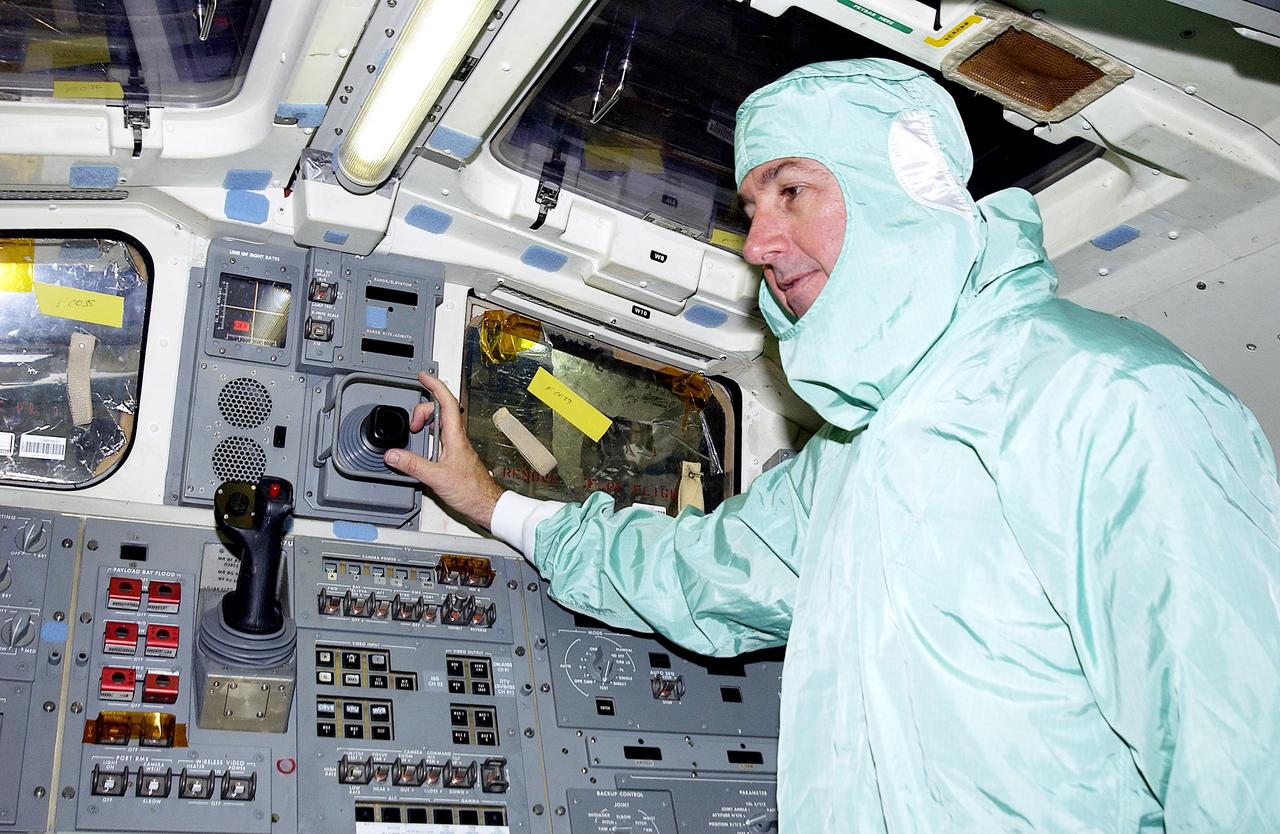
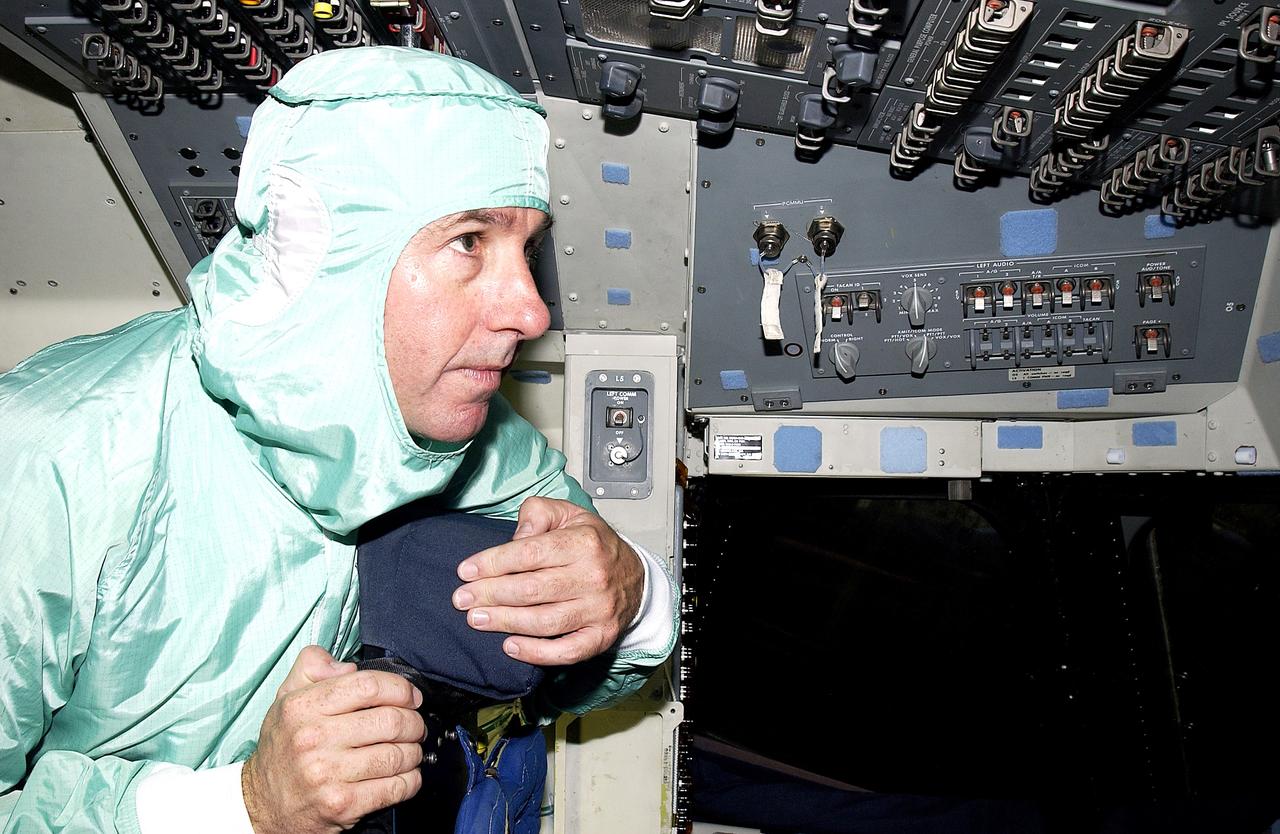
KENNEDY SPACE CENTER, FLA. -   STS-114 Mission Specialist Stephen Robinson looks at equipment in the flight deck of orbiter Atlantis.  He and other crew members -  Commander Eileen Collins, Pilot James Kelly and Mission Specialist Soichi Noguchi - are at KSC for equipment familiarization.  Noguchi is with the Japanese space agency NASDA.  Mission STS-114 will carry the MultiPurpose Logistics Module (MPLM) Raffaello and External Stowage Platform 2 to the International Space Station.  The MPLM will contain supplies and equipment.  Another goal of the mission is to remove and replace a Control Moment Gyro.  Launch date for mission STS-114 is under review.
KENNEDY SPACE CENTER, FLA. - STS-114 Mission Specialist Stephen Robinson looks at equipment in the flight deck of orbiter Atlantis. He and other crew members - Commander Eileen Collins, Pilot James Kelly and Mission Specialist Soichi Noguchi - are at KSC for equipment familiarization. Noguchi is with the Japanese space agency NASDA. Mission STS-114 will carry the MultiPurpose Logistics Module (MPLM) Raffaello and External Stowage Platform 2 to the International Space Station. The MPLM will contain supplies and equipment. Another goal of the mission is to remove and replace a Control Moment Gyro. Launch date for mission STS-114 is under review.
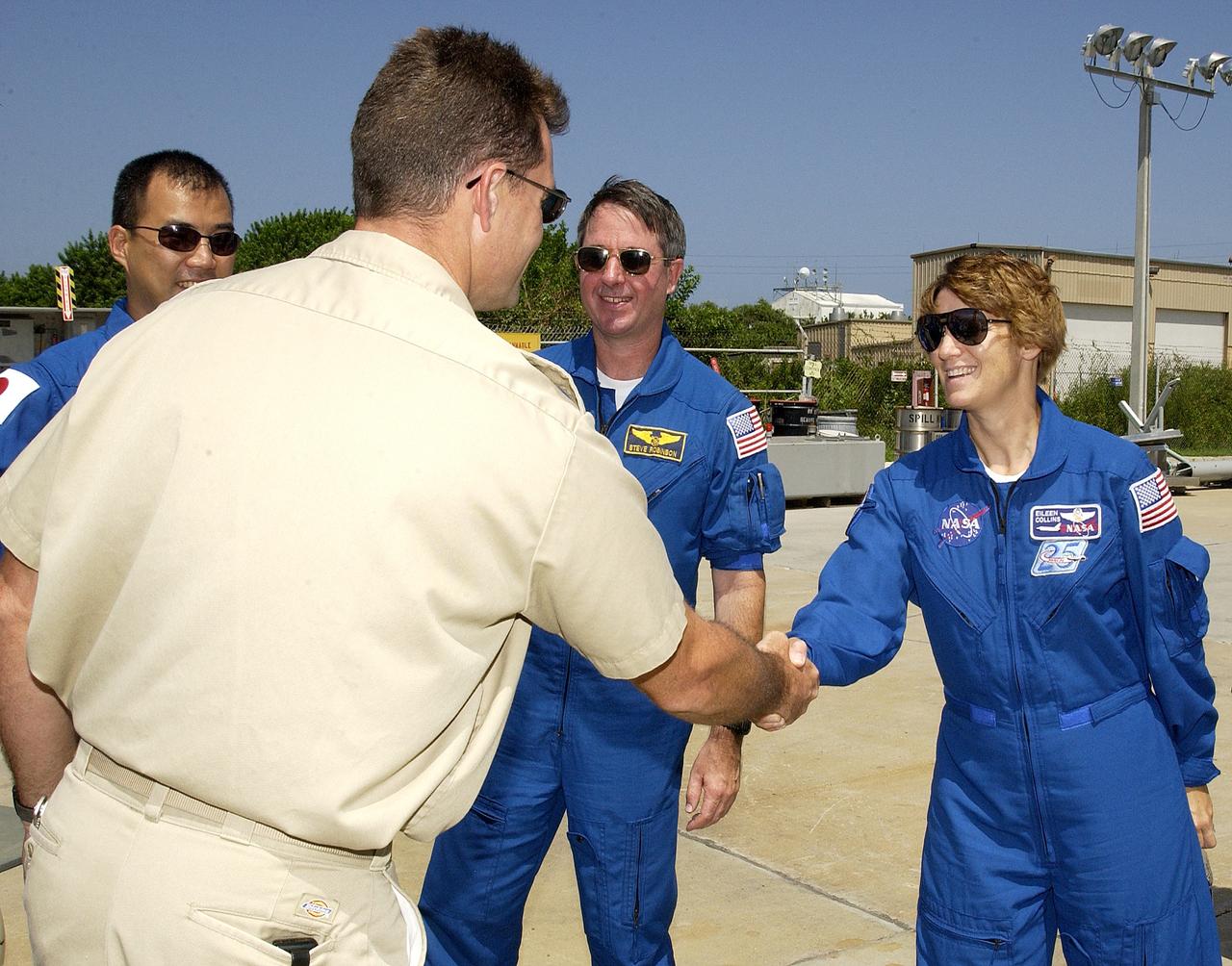
KENNEDY SPACE CENTER, FLA. -  Members of the STS-114 crew are welcomed to the Liberty Star, one of two SRB Retrieval Ships, by Captain Bren Wade (back to camera).  Crew members, from left, are Mission Specialist Soichi Noguchi, Mission Specialist Stephen Robinson and Commander Eileen Collins. Noguchi is with the Japanese space agency NASDA. Not pictured is Pilot James Kelly.  On their mission, the crew will carry the MultiPurpose Logistics Module (MPLM) Raffaello and External Stowage Platform 2 to the International Space Station.  The MPLM will contain supplies and equipment.  Another goal of the mission is to remove and replace a Control Moment Gyro.  Launch date for mission STS-114 is under review.
KENNEDY SPACE CENTER, FLA. - Members of the STS-114 crew are welcomed to the Liberty Star, one of two SRB Retrieval Ships, by Captain Bren Wade (back to camera). Crew members, from left, are Mission Specialist Soichi Noguchi, Mission Specialist Stephen Robinson and Commander Eileen Collins. Noguchi is with the Japanese space agency NASDA. Not pictured is Pilot James Kelly. On their mission, the crew will carry the MultiPurpose Logistics Module (MPLM) Raffaello and External Stowage Platform 2 to the International Space Station. The MPLM will contain supplies and equipment. Another goal of the mission is to remove and replace a Control Moment Gyro. Launch date for mission STS-114 is under review.
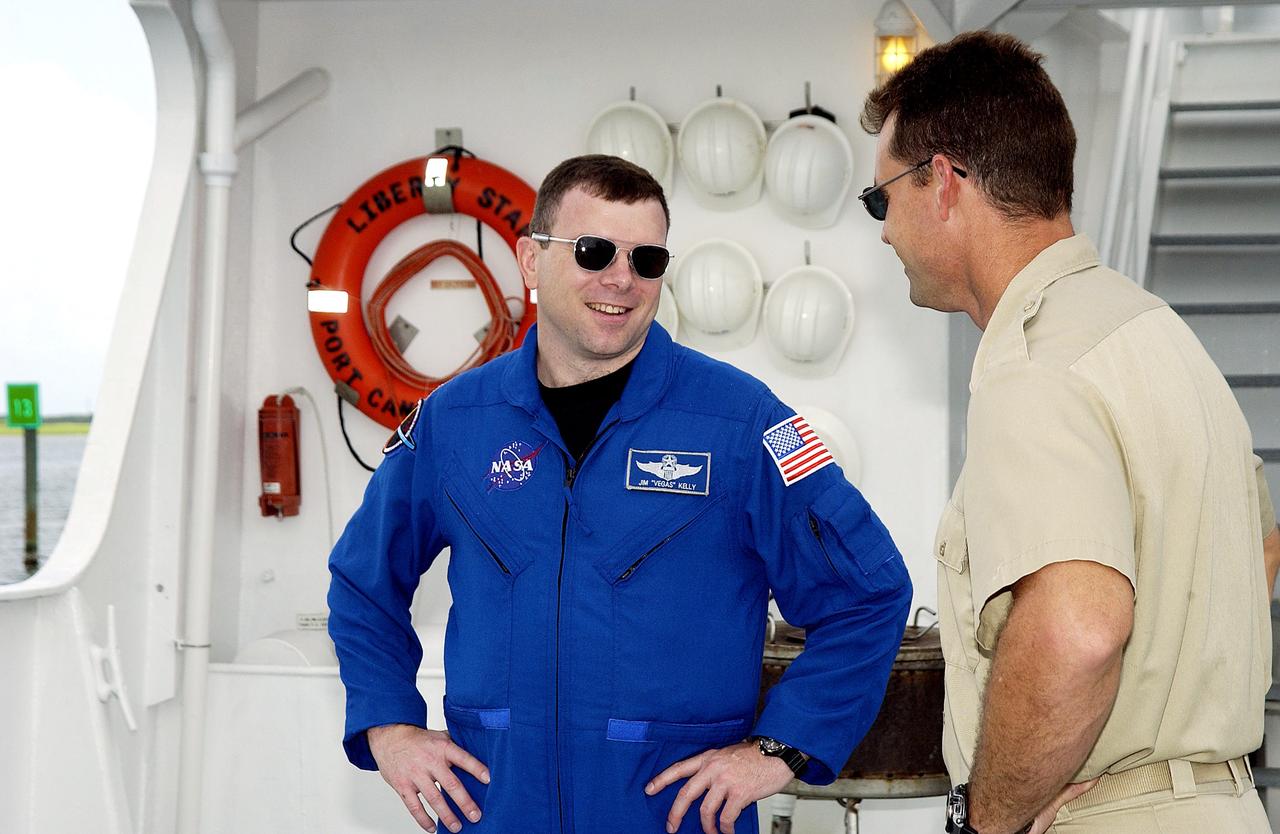
KENNEDY SPACE CENTER, FLA. -  STS-114 Pilot James Kelly talks with Bren Wade, captain of the Liberty Star, one of the SRB Retrieval Ships docked at Hangar AF on the Banana River.  Kelly and other crew members Commander Eileen Collins and Mission Specialists  Soichi Noguchi and Stephen Robinson toured the ships.  Noguchi is with the Japanese space agency NASDA.  Mission STS-114 will carry the MultiPurpose Logistics Module (MPLM) Raffaello and External Stowage Platform 2 to the International Space Station.  The MPLM will contain supplies and equipment.  Another goal of the mission is to remove and replace a Control Moment Gyro.  Launch date for mission STS-114 is under review.
KENNEDY SPACE CENTER, FLA. - STS-114 Pilot James Kelly talks with Bren Wade, captain of the Liberty Star, one of the SRB Retrieval Ships docked at Hangar AF on the Banana River. Kelly and other crew members Commander Eileen Collins and Mission Specialists Soichi Noguchi and Stephen Robinson toured the ships. Noguchi is with the Japanese space agency NASDA. Mission STS-114 will carry the MultiPurpose Logistics Module (MPLM) Raffaello and External Stowage Platform 2 to the International Space Station. The MPLM will contain supplies and equipment. Another goal of the mission is to remove and replace a Control Moment Gyro. Launch date for mission STS-114 is under review.
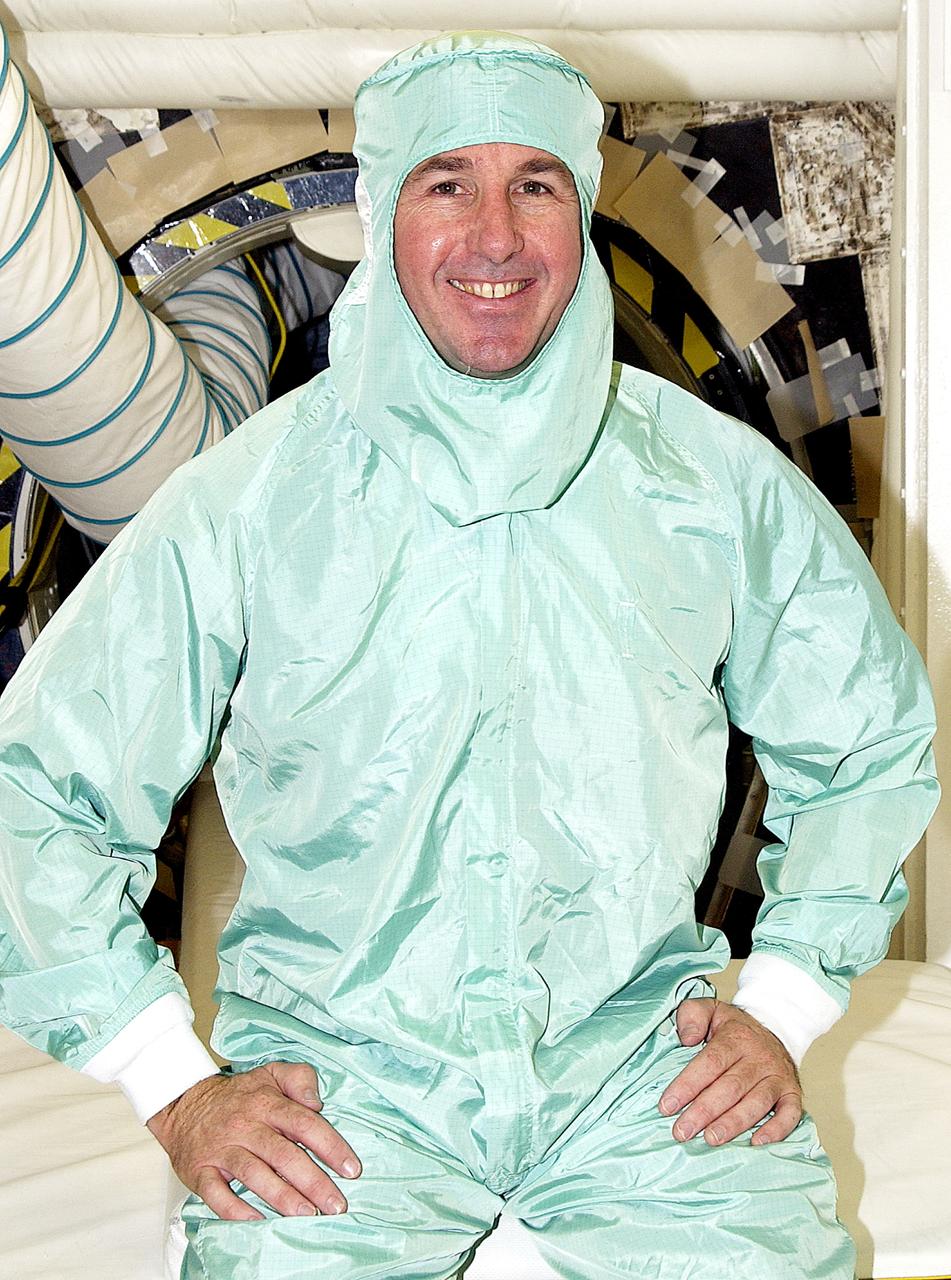
KENNEDY SPACE CENTER, FLA. -  STS-114 Mission Specialist Stephen Robinson sits in the entry hatch to orbiter Atlantis.  He and other crew members - Commander Eileen Collins, Pilot James Kelly and  Mission Specialist Soichi Noguchi - are at KSC for equipment familiarization. Noguchi is with the Japanese space agency NASDA. Mission STS-114 will carry the MultiPurpose Logistics Module (MPLM) Raffaello and External Stowage Platform 2 to the International Space Station.  The MPLM will contain supplies and equipment.  Another goal of the mission is to remove and replace a Control Moment Gyro.  Launch date for mission STS-114 is under review.
KENNEDY SPACE CENTER, FLA. - STS-114 Mission Specialist Stephen Robinson sits in the entry hatch to orbiter Atlantis. He and other crew members - Commander Eileen Collins, Pilot James Kelly and Mission Specialist Soichi Noguchi - are at KSC for equipment familiarization. Noguchi is with the Japanese space agency NASDA. Mission STS-114 will carry the MultiPurpose Logistics Module (MPLM) Raffaello and External Stowage Platform 2 to the International Space Station. The MPLM will contain supplies and equipment. Another goal of the mission is to remove and replace a Control Moment Gyro. Launch date for mission STS-114 is under review.
KENNEDY SPACE CENTER, FLA. -  STS-114 Commander Eileen Collins sits in the entry hatch to orbiter Atlantis.  She and other crew members - Pilot James Kelly and  Mission Specialists Soichi Noguchi and Stephen Robinson -  are at KSC for equipment familiarization. Noguchi is with the Japanese space agency NASDA. Mission STS-114 will carry the MultiPurpose Logistics Module (MPLM) Raffaello and External Stowage Platform 2 to the International Space Station.  The MPLM will contain supplies and equipment.  Another goal of the mission is to remove and replace a Control Moment Gyro.  Launch date for mission STS-114 is under review.
KENNEDY SPACE CENTER, FLA. - STS-114 Commander Eileen Collins sits in the entry hatch to orbiter Atlantis. She and other crew members - Pilot James Kelly and Mission Specialists Soichi Noguchi and Stephen Robinson - are at KSC for equipment familiarization. Noguchi is with the Japanese space agency NASDA. Mission STS-114 will carry the MultiPurpose Logistics Module (MPLM) Raffaello and External Stowage Platform 2 to the International Space Station. The MPLM will contain supplies and equipment. Another goal of the mission is to remove and replace a Control Moment Gyro. Launch date for mission STS-114 is under review.
KENNEDY SPACE CENTER, FLA. -   STS-114 Mission Specialist Stephen Robinson checks equipment in the flight deck of orbiter Atlantis.  He and other crew members -  Commander Eileen Collins, Pilot James Kelly and Mission Specialist Soichi Noguchi - are at KSC for equipment familiarization.  Noguchi is with the Japanese space agency NASDA.  Mission STS-114 will carry the MultiPurpose Logistics Module (MPLM) Raffaello and External Stowage Platform 2 to the International Space Station.  The MPLM will contain supplies and equipment.  Another goal of the mission is to remove and replace a Control Moment Gyro.  Launch date for mission STS-114 is under review.
KENNEDY SPACE CENTER, FLA. - STS-114 Mission Specialist Stephen Robinson checks equipment in the flight deck of orbiter Atlantis. He and other crew members - Commander Eileen Collins, Pilot James Kelly and Mission Specialist Soichi Noguchi - are at KSC for equipment familiarization. Noguchi is with the Japanese space agency NASDA. Mission STS-114 will carry the MultiPurpose Logistics Module (MPLM) Raffaello and External Stowage Platform 2 to the International Space Station. The MPLM will contain supplies and equipment. Another goal of the mission is to remove and replace a Control Moment Gyro. Launch date for mission STS-114 is under review.
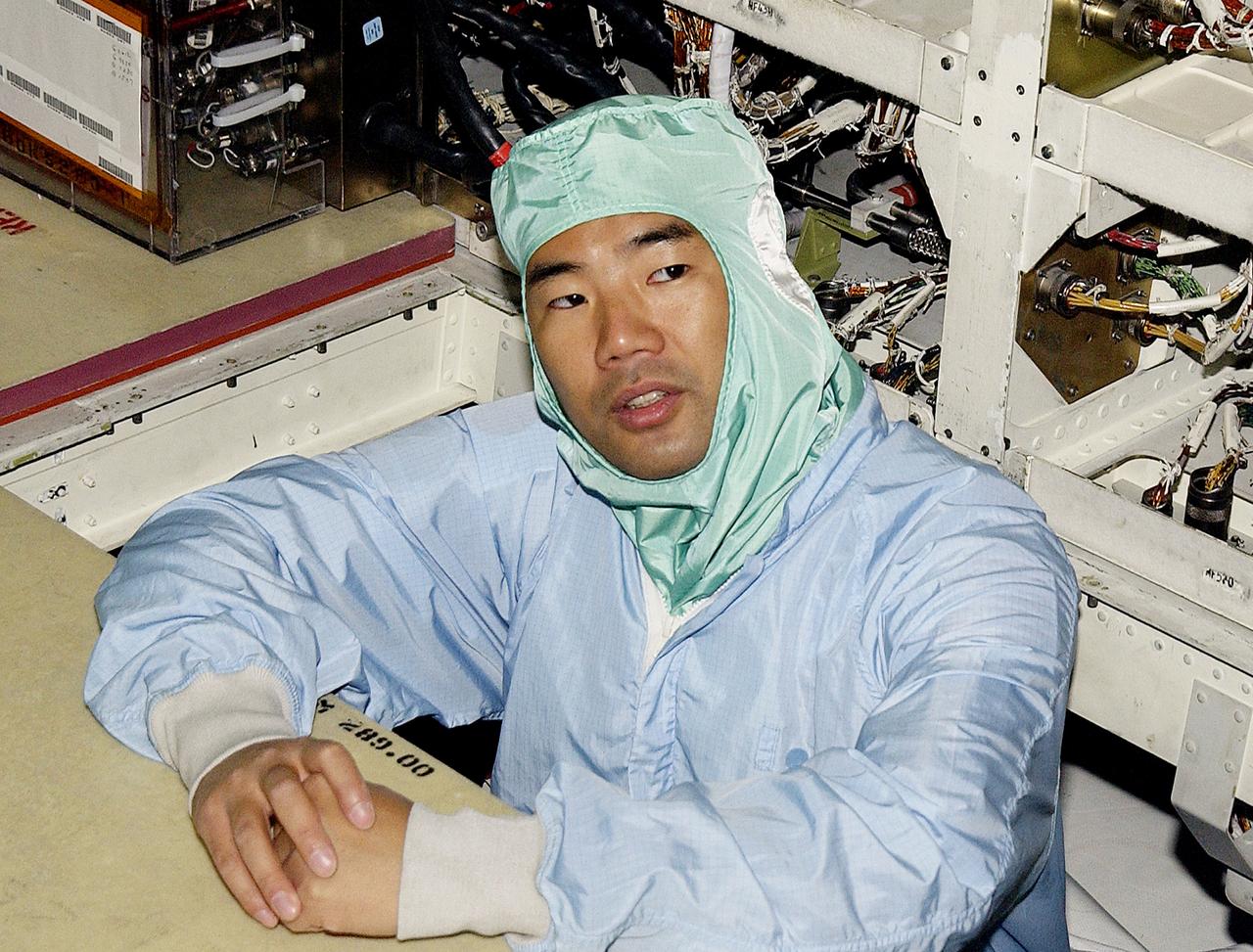
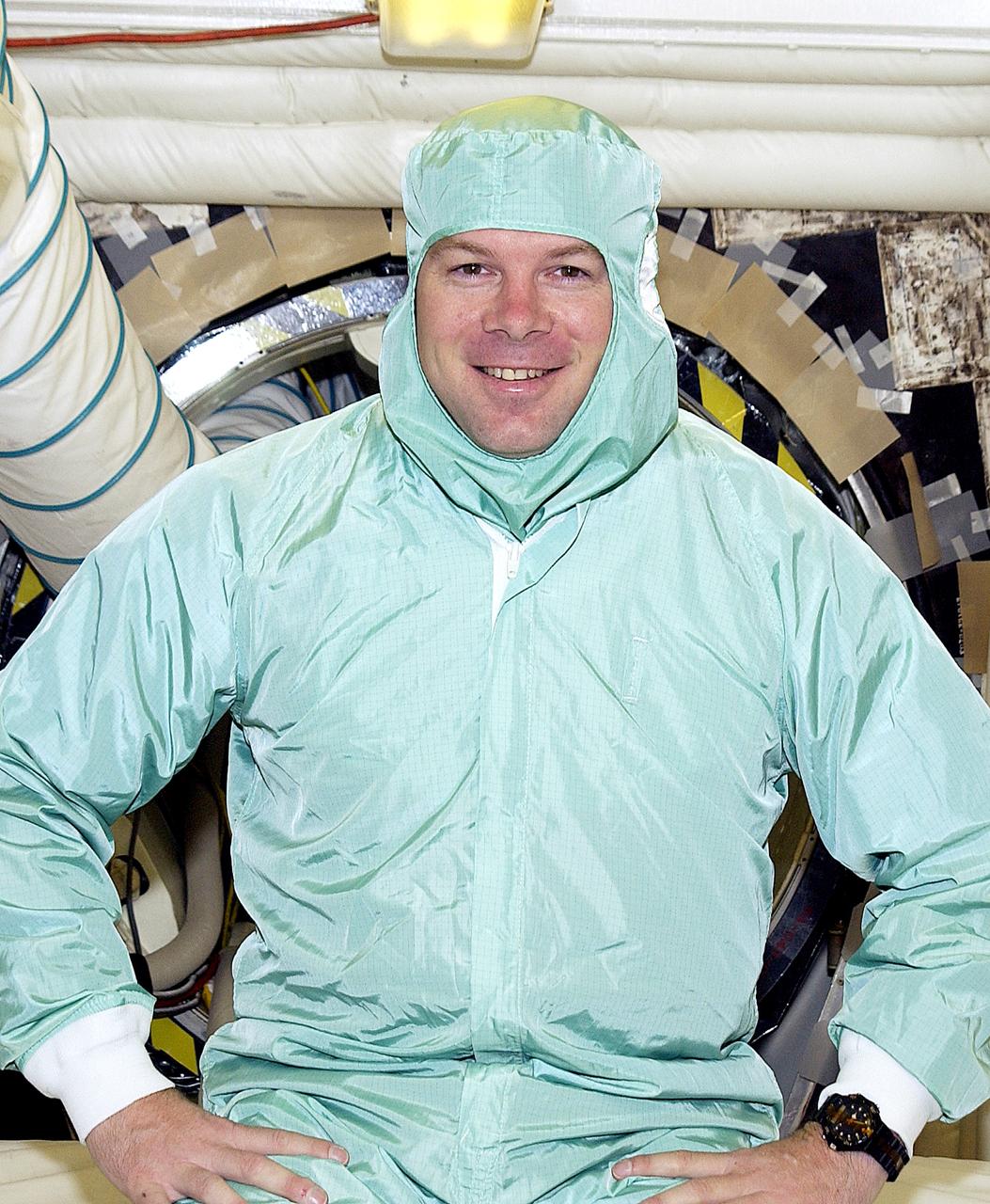
KENNEDY SPACE CENTER, FLA. -   STS-114 Mission Specialist Soichi Noguchi checks the midbody of orbiter Atlantis.  He and other crew members -  Commander Eileen Collins, Pilot James Kelly and Mission Specialist Stephen Robinson - are at KSC for equipment familiarization.  Noguchi is with the Japanese space agency NASDA.  Mission STS-114 will carry the MultiPurpose Logistics Module (MPLM) Raffaello and External Stowage Platform 2 to the International Space Station.  The MPLM will contain supplies and equipment.  Another goal of the mission is to remove and replace a Control Moment Gyro.  Launch date for mission STS-114 is under review.
KENNEDY SPACE CENTER, FLA. - STS-114 Mission Specialist Soichi Noguchi checks the midbody of orbiter Atlantis. He and other crew members - Commander Eileen Collins, Pilot James Kelly and Mission Specialist Stephen Robinson - are at KSC for equipment familiarization. Noguchi is with the Japanese space agency NASDA. Mission STS-114 will carry the MultiPurpose Logistics Module (MPLM) Raffaello and External Stowage Platform 2 to the International Space Station. The MPLM will contain supplies and equipment. Another goal of the mission is to remove and replace a Control Moment Gyro. Launch date for mission STS-114 is under review.
KENNEDY SPACE CENTER, FLA. -   Captain Bren Wade of the Liberty Star, one of two SRB Retrieval Ships, talks to STS-114 crew members about the engines.  Seen at left are Pilot James Kelly and Mission Specialist Soichi Noguchi, who is with the Japanese space agency NASDA..   On their mission, the crew  - which includes Commander Eileen Collins and Mission Specialist Stephen Robinson - will carry the MultiPurpose Logistics Module (MPLM) Raffaello and External Stowage Platform 2 to the International Space Station.  The MPLM will contain supplies and equipment.  Another goal of the mission is to remove and replace a Control Moment Gyro.  Launch date for mission STS-114 is under review.
KENNEDY SPACE CENTER, FLA. - Captain Bren Wade of the Liberty Star, one of two SRB Retrieval Ships, talks to STS-114 crew members about the engines. Seen at left are Pilot James Kelly and Mission Specialist Soichi Noguchi, who is with the Japanese space agency NASDA.. On their mission, the crew - which includes Commander Eileen Collins and Mission Specialist Stephen Robinson - will carry the MultiPurpose Logistics Module (MPLM) Raffaello and External Stowage Platform 2 to the International Space Station. The MPLM will contain supplies and equipment. Another goal of the mission is to remove and replace a Control Moment Gyro. Launch date for mission STS-114 is under review.
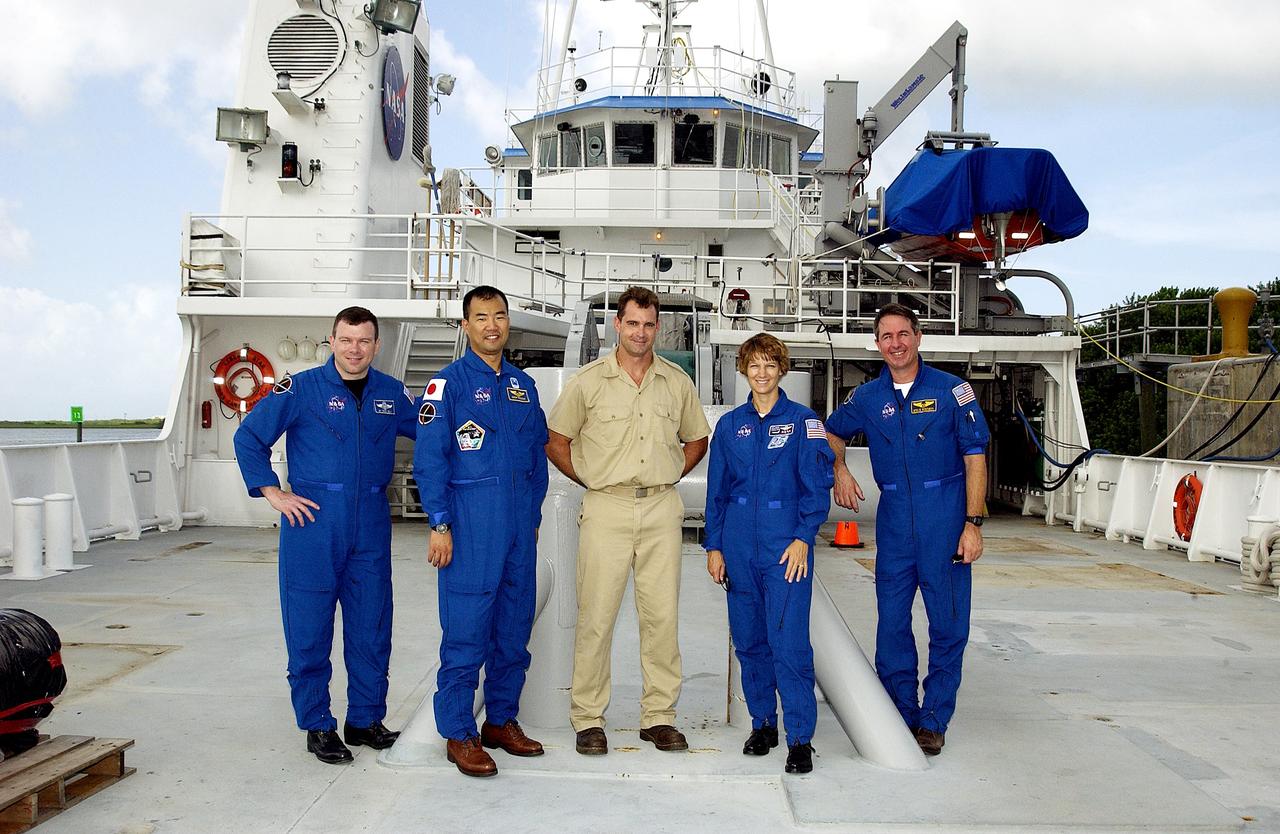
KENNEDY SPACE CENTER, FLA. -   The STS-114 crew poses on deck with the captain of the Liberty Star, one of the SRB Retrieval Ships docked at Hangar AF on the Banana River.   From left are Pilot James Kelly, Mission Specialist Soichi Noguchi, Capt. Bren Wade, Commander Eileen Collins and Mission Specialist Stephen Robinson.  Noguchi is with the Japanese space agency NASDA.  Mission STS-114 will carry the MultiPurpose Logistics Module (MPLM) Raffaello and External Stowage Platform 2 to the International Space Station.  The MPLM will contain supplies and equipment.  Another goal of the mission is to remove and replace a Control Moment Gyro.  Launch date for mission STS-114 is under review.
KENNEDY SPACE CENTER, FLA. - The STS-114 crew poses on deck with the captain of the Liberty Star, one of the SRB Retrieval Ships docked at Hangar AF on the Banana River. From left are Pilot James Kelly, Mission Specialist Soichi Noguchi, Capt. Bren Wade, Commander Eileen Collins and Mission Specialist Stephen Robinson. Noguchi is with the Japanese space agency NASDA. Mission STS-114 will carry the MultiPurpose Logistics Module (MPLM) Raffaello and External Stowage Platform 2 to the International Space Station. The MPLM will contain supplies and equipment. Another goal of the mission is to remove and replace a Control Moment Gyro. Launch date for mission STS-114 is under review.
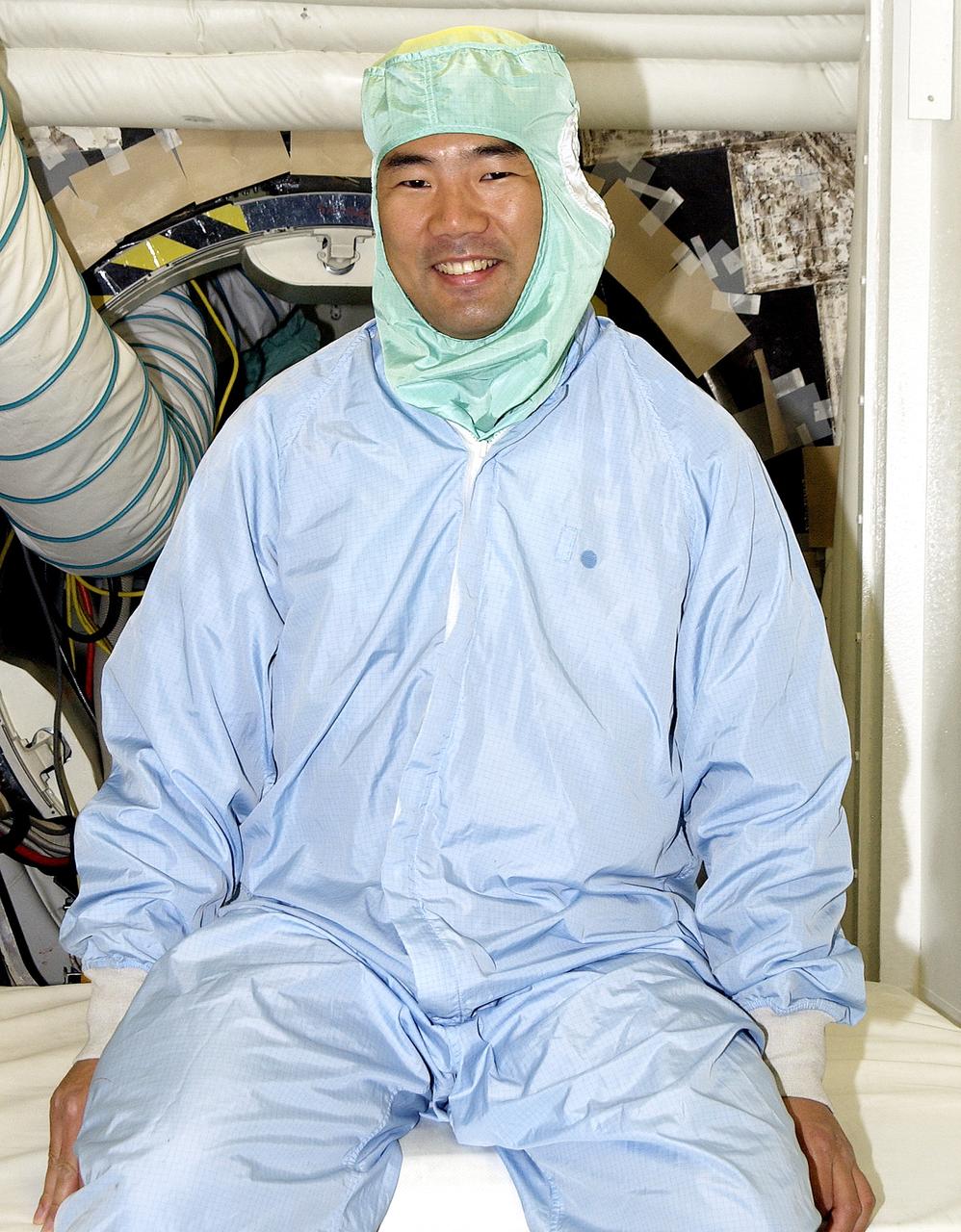
KENNEDY SPACE CENTER, FLA. -  Sitting in the entry hatch to orbiter Atlantis is STS-114 Mission Specialist Soichi Noguchi, who is with the Japanese space agency NASDA. He and other crew members - Commander Eileen Collins, Pilot James Kelly and Mission Specialist Stephen Robinson - are at KSC for equipment familiarization. Mission STS-114 will carry the MultiPurpose Logistics Module (MPLM) Raffaello and External Stowage Platform 2 to the International Space Station.  The MPLM will contain supplies and equipment.  Another goal of the mission is to remove and replace a Control Moment Gyro.  Launch date for mission STS-114 is under review.
KENNEDY SPACE CENTER, FLA. - Sitting in the entry hatch to orbiter Atlantis is STS-114 Mission Specialist Soichi Noguchi, who is with the Japanese space agency NASDA. He and other crew members - Commander Eileen Collins, Pilot James Kelly and Mission Specialist Stephen Robinson - are at KSC for equipment familiarization. Mission STS-114 will carry the MultiPurpose Logistics Module (MPLM) Raffaello and External Stowage Platform 2 to the International Space Station. The MPLM will contain supplies and equipment. Another goal of the mission is to remove and replace a Control Moment Gyro. Launch date for mission STS-114 is under review.
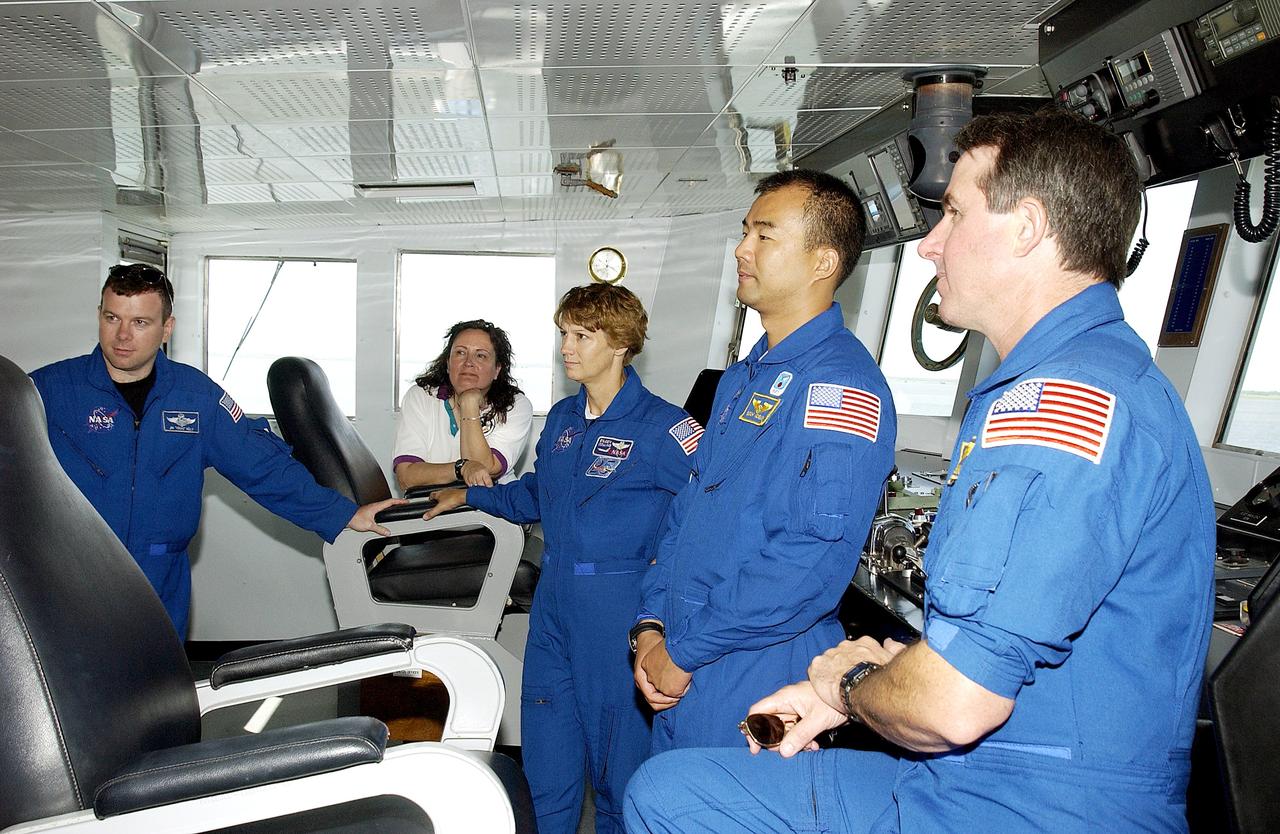
KENNEDY SPACE CENTER, FLA. -  The STS-114 crew visit the bridge of the Liberty Star, one of two SRB Retrieval Ships.  From left are Pilot James Kelly, Louise Kleba (with the Vehicle Integration Test Team (VITT) office), Commander Eileen Collins and Mission Specialists Soichi Noguchi and Stephen Robinson. Noguchi is with the Japanese space agency NASDA. On their mission, the crew will carry the MultiPurpose Logistics Module (MPLM) Raffaello and External Stowage Platform 2 to the International Space Station.  The MPLM will contain supplies and equipment.  Another goal of the mission is to remove and replace a Control Moment Gyro.  Launch date for mission STS-114 is under review.
KENNEDY SPACE CENTER, FLA. - The STS-114 crew visit the bridge of the Liberty Star, one of two SRB Retrieval Ships. From left are Pilot James Kelly, Louise Kleba (with the Vehicle Integration Test Team (VITT) office), Commander Eileen Collins and Mission Specialists Soichi Noguchi and Stephen Robinson. Noguchi is with the Japanese space agency NASDA. On their mission, the crew will carry the MultiPurpose Logistics Module (MPLM) Raffaello and External Stowage Platform 2 to the International Space Station. The MPLM will contain supplies and equipment. Another goal of the mission is to remove and replace a Control Moment Gyro. Launch date for mission STS-114 is under review.
KENNEDY SPACE CENTER, FLA. -  STS-114 Commander Eileen Collins sits in the entry hatch to orbiter Atlantis.  She and other crew members - Pilot James Kelly and  Mission Specialists Soichi Noguchi and Stephen Robinson -  are at KSC for equipment familiarization. Noguchi is with the Japanese space agency NASDA. Mission STS-114 will carry the MultiPurpose Logistics Module (MPLM) Raffaello and External Stowage Platform 2 to the International Space Station.  The MPLM will contain supplies and equipment.  Another goal of the mission is to remove and replace a Control Moment Gyro.  Launch date for mission STS-114 is under review.
KENNEDY SPACE CENTER, FLA. - STS-114 Commander Eileen Collins sits in the entry hatch to orbiter Atlantis. She and other crew members - Pilot James Kelly and Mission Specialists Soichi Noguchi and Stephen Robinson - are at KSC for equipment familiarization. Noguchi is with the Japanese space agency NASDA. Mission STS-114 will carry the MultiPurpose Logistics Module (MPLM) Raffaello and External Stowage Platform 2 to the International Space Station. The MPLM will contain supplies and equipment. Another goal of the mission is to remove and replace a Control Moment Gyro. Launch date for mission STS-114 is under review.
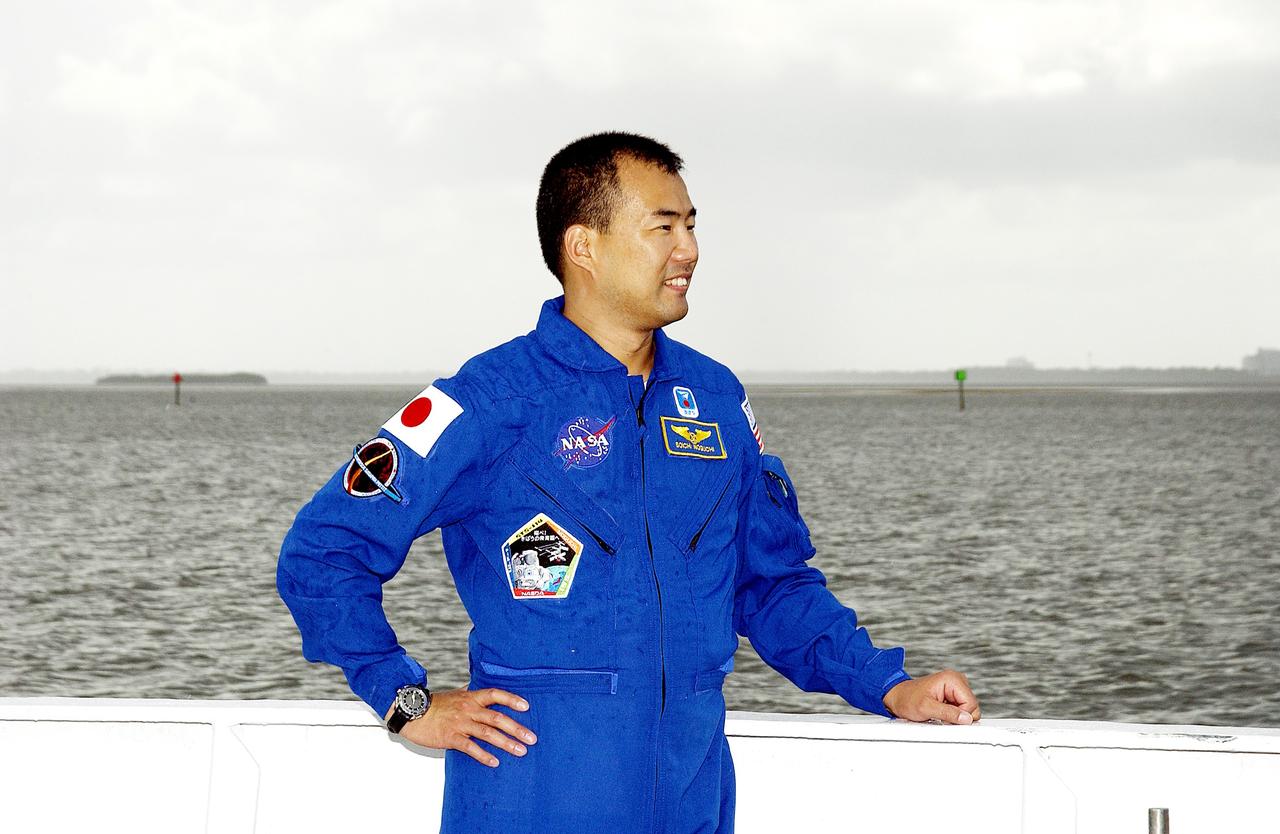
KENNEDY SPACE CENTER, FLA. -  STS-114 Mission Specialist Soichi Noguchi, who is with the Japanese space agency NASDA, poses on the deck of one of the SRB Retrieval Ships docked at Hangar AF on the Banana River.  He and other crew members Commander Eileen Collins, Pilot James Kelly and Mission Specialist Stephen Robinson toured the ships.  Mission STS-114 will carry the MultiPurpose Logistics Module (MPLM) Raffaello and External Stowage Platform 2 to the International Space Station.  The MPLM will contain supplies and equipment.  Another goal of the mission is to remove and replace a Control Moment Gyro.  Launch date for mission STS-114 is under review.
KENNEDY SPACE CENTER, FLA. - STS-114 Mission Specialist Soichi Noguchi, who is with the Japanese space agency NASDA, poses on the deck of one of the SRB Retrieval Ships docked at Hangar AF on the Banana River. He and other crew members Commander Eileen Collins, Pilot James Kelly and Mission Specialist Stephen Robinson toured the ships. Mission STS-114 will carry the MultiPurpose Logistics Module (MPLM) Raffaello and External Stowage Platform 2 to the International Space Station. The MPLM will contain supplies and equipment. Another goal of the mission is to remove and replace a Control Moment Gyro. Launch date for mission STS-114 is under review.
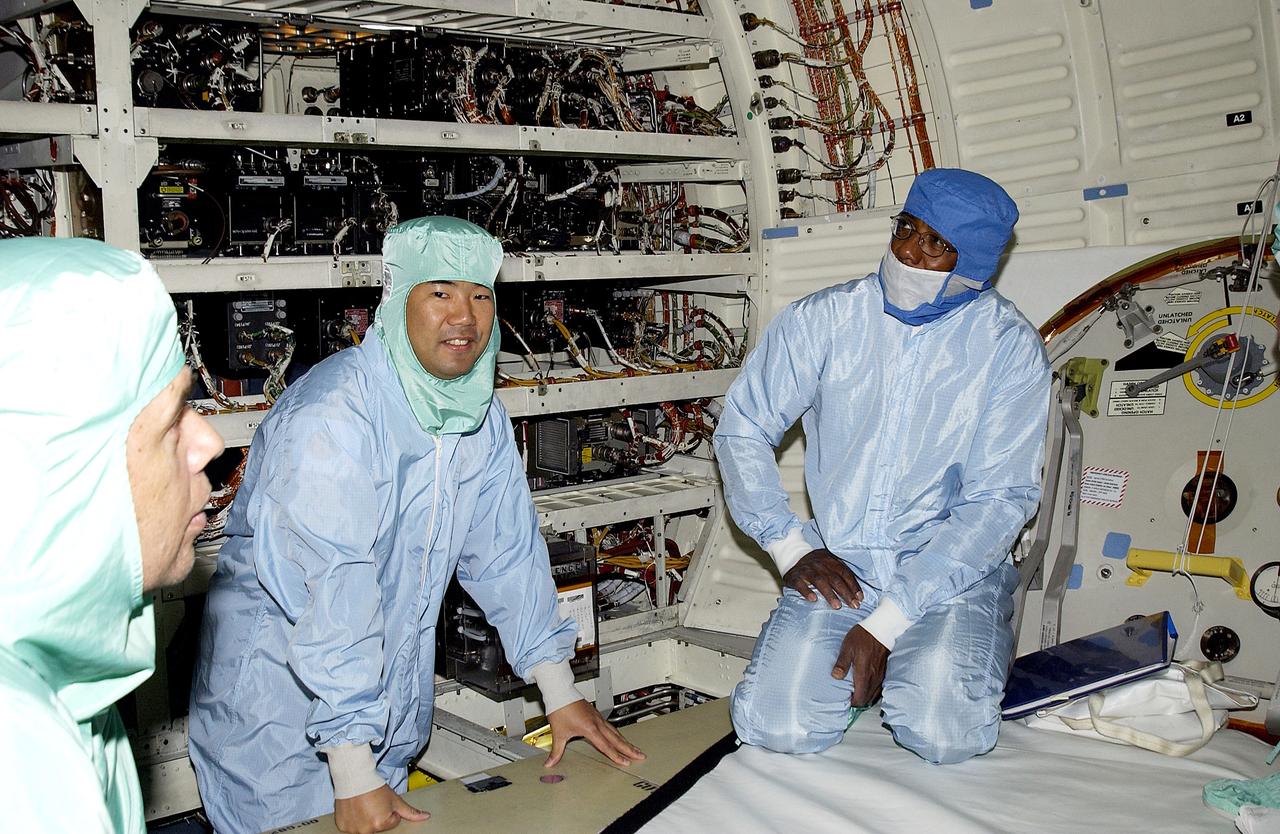
KENNEDY SPACE CENTER, FLA. -   In the midbody of orbiter Atlantis, STS-114 crew members look over equipment under the eyes of a technician.  At left are Pilot James Kelly and Mission Specialist Soichi Noguchi.  They and Commander Eileen Collins and Mission Specialist Stephen Robinson are at KSC for equipment familiarization.  Noguchi is with the Japanese space agency NASDA.  Mission STS-114 will carry the MultiPurpose Logistics Module (MPLM) Raffaello and External Stowage Platform 2 to the International Space Station.  The MPLM will contain supplies and equipment.  Another goal of the mission is to remove and replace a Control Moment Gyro.  Launch date for mission STS-114 is under review.
KENNEDY SPACE CENTER, FLA. - In the midbody of orbiter Atlantis, STS-114 crew members look over equipment under the eyes of a technician. At left are Pilot James Kelly and Mission Specialist Soichi Noguchi. They and Commander Eileen Collins and Mission Specialist Stephen Robinson are at KSC for equipment familiarization. Noguchi is with the Japanese space agency NASDA. Mission STS-114 will carry the MultiPurpose Logistics Module (MPLM) Raffaello and External Stowage Platform 2 to the International Space Station. The MPLM will contain supplies and equipment. Another goal of the mission is to remove and replace a Control Moment Gyro. Launch date for mission STS-114 is under review.
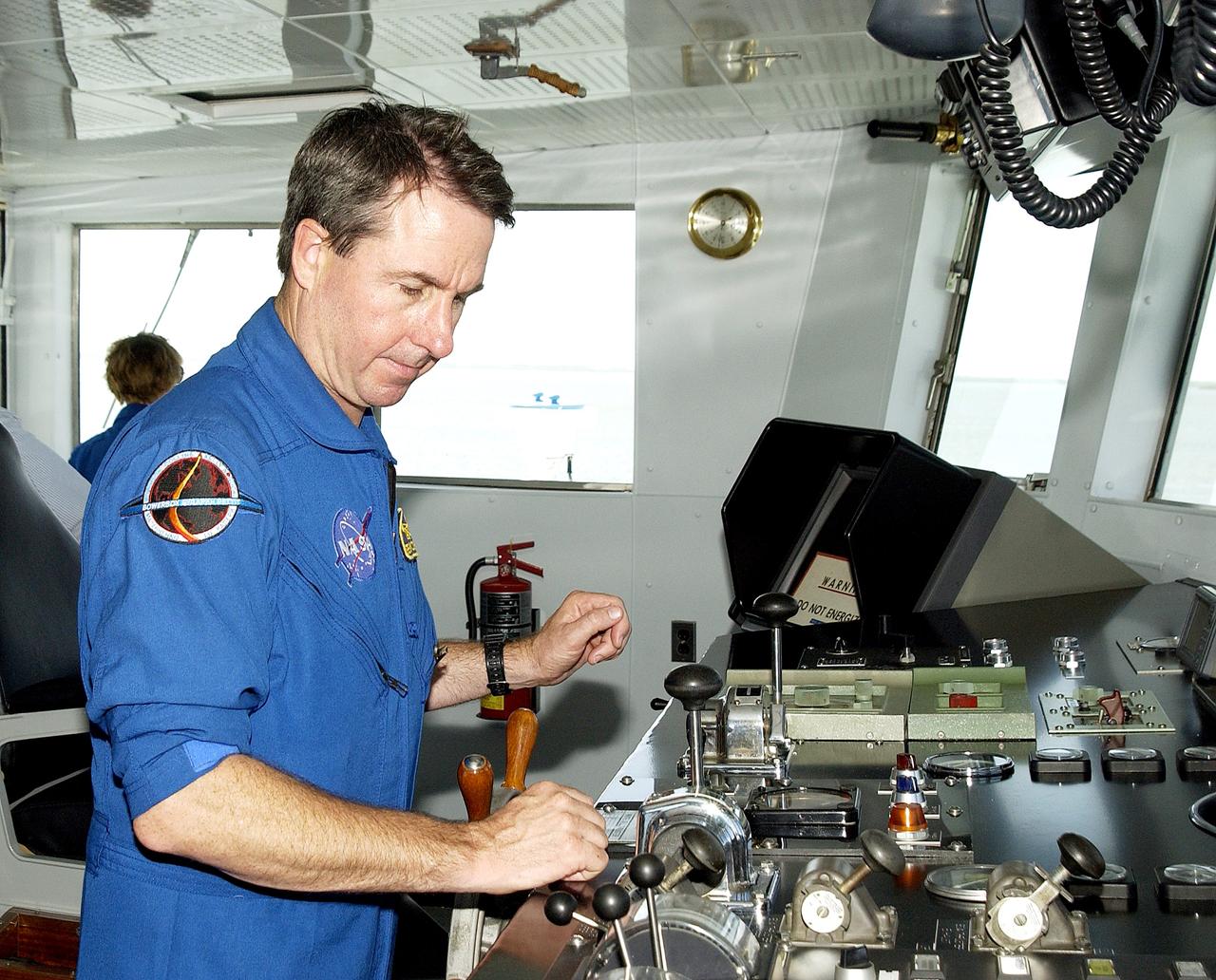
KENNEDY SPACE CENTER, FLA. -  On a tour of the Liberty Star, one of two SRB Retrieval Ships, STS-114 Mission Specialist Stephen Robinson looks over controls.  Other crew members are Mission Specialist Soichi Noguchi, Commander Eileen Collins and Pilot James Kelly.   Noguchi is with the Japanese space agency NASDA.  On their mission, the crew will carry the MultiPurpose Logistics Module (MPLM) Raffaello and External Stowage Platform 2 to the International Space Station.  The MPLM will contain supplies and equipment.  Another goal of the mission is to remove and replace a Control Moment Gyro.  Launch date for mission STS-114 is under review.
KENNEDY SPACE CENTER, FLA. - On a tour of the Liberty Star, one of two SRB Retrieval Ships, STS-114 Mission Specialist Stephen Robinson looks over controls. Other crew members are Mission Specialist Soichi Noguchi, Commander Eileen Collins and Pilot James Kelly. Noguchi is with the Japanese space agency NASDA. On their mission, the crew will carry the MultiPurpose Logistics Module (MPLM) Raffaello and External Stowage Platform 2 to the International Space Station. The MPLM will contain supplies and equipment. Another goal of the mission is to remove and replace a Control Moment Gyro. Launch date for mission STS-114 is under review.
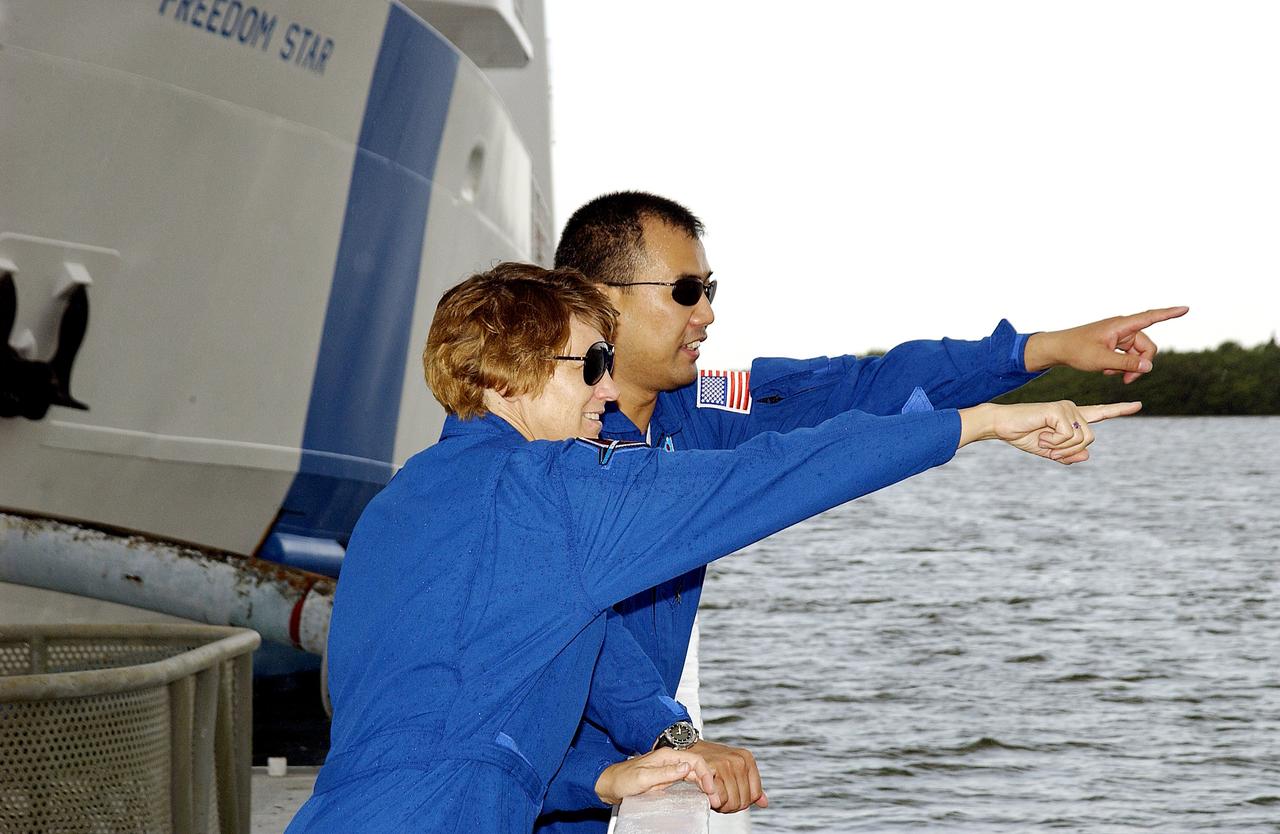
KENNEDY SPACE CENTER, FLA. -   While touring the SRB Retrieval Ship Freedom Star, STS-114 Commander Eileen Collins and Mission Specialist Soichi Noguchi point at something on the Banana River. Noguchi is with the Japanese space agency NASDA.  The ships routinely are docked at Hangar AF on the river.  On their mission, the crew - which also includes Pilot James Kelly and Mission Specialist Stephen Robinson - will carry the MultiPurpose Logistics Module (MPLM) Raffaello and External Stowage Platform 2 to the International Space Station.  The MPLM will contain supplies and equipment.  Another goal of the mission is to remove and replace a Control Moment Gyro.  Launch date for mission STS-114 is under review.
KENNEDY SPACE CENTER, FLA. - While touring the SRB Retrieval Ship Freedom Star, STS-114 Commander Eileen Collins and Mission Specialist Soichi Noguchi point at something on the Banana River. Noguchi is with the Japanese space agency NASDA. The ships routinely are docked at Hangar AF on the river. On their mission, the crew - which also includes Pilot James Kelly and Mission Specialist Stephen Robinson - will carry the MultiPurpose Logistics Module (MPLM) Raffaello and External Stowage Platform 2 to the International Space Station. The MPLM will contain supplies and equipment. Another goal of the mission is to remove and replace a Control Moment Gyro. Launch date for mission STS-114 is under review.
KENNEDY SPACE CENTER, FLA. -   Visiting the engine room of the Liberty Star, one of two SRB Retrieval Ships, are STS-114 crew members Soichi Noguchi, mission specialist, Eileen Collins, commander, and Stephen Robinson, mission specialist.  Noguchi is with the Japanese space agency NASDA. Not pictured is Pilot James Kelly.   On their mission, the crew will carry the MultiPurpose Logistics Module (MPLM) Raffaello and External Stowage Platform 2 to the International Space Station.  The MPLM will contain supplies and equipment.  Another goal of the mission is to remove and replace a Control Moment Gyro.  Launch date for mission STS-114 is under review.
KENNEDY SPACE CENTER, FLA. - Visiting the engine room of the Liberty Star, one of two SRB Retrieval Ships, are STS-114 crew members Soichi Noguchi, mission specialist, Eileen Collins, commander, and Stephen Robinson, mission specialist. Noguchi is with the Japanese space agency NASDA. Not pictured is Pilot James Kelly. On their mission, the crew will carry the MultiPurpose Logistics Module (MPLM) Raffaello and External Stowage Platform 2 to the International Space Station. The MPLM will contain supplies and equipment. Another goal of the mission is to remove and replace a Control Moment Gyro. Launch date for mission STS-114 is under review.
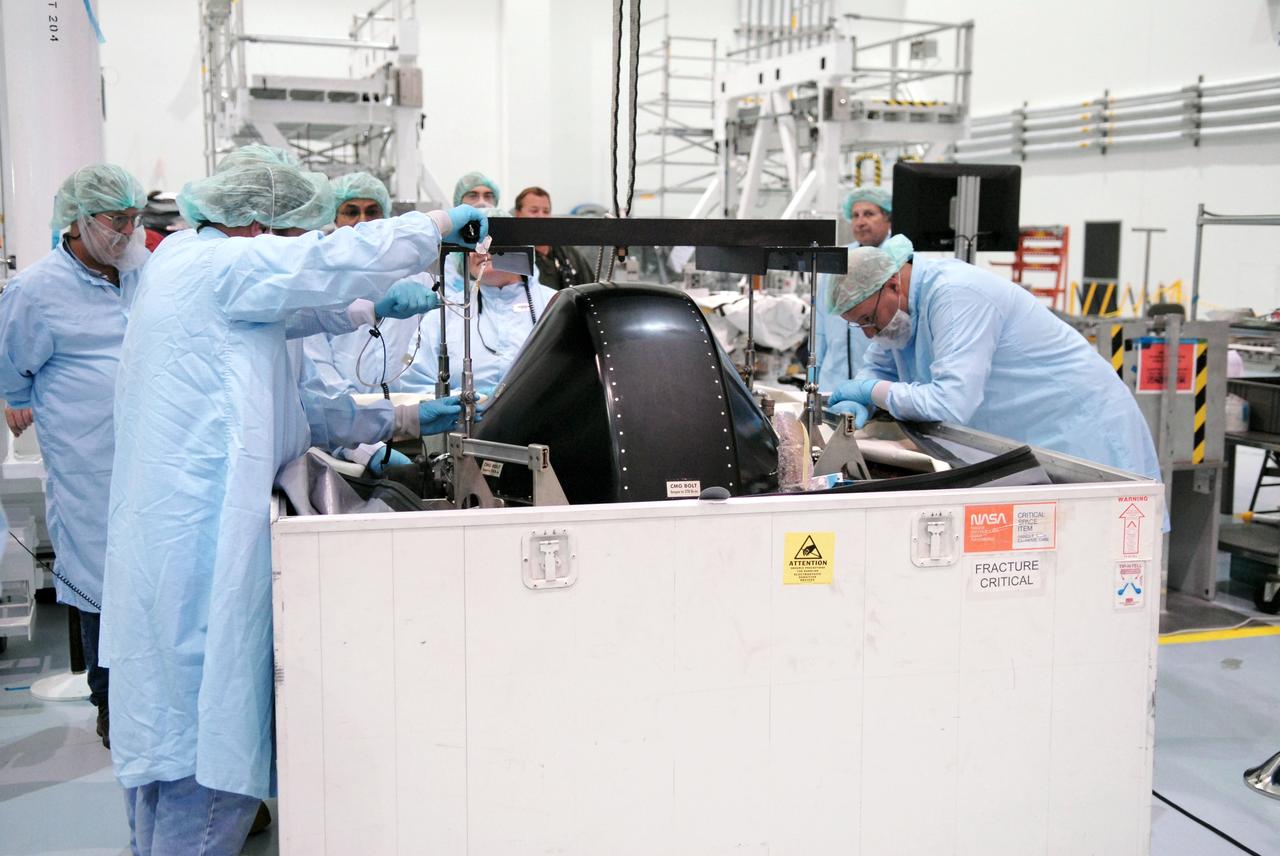
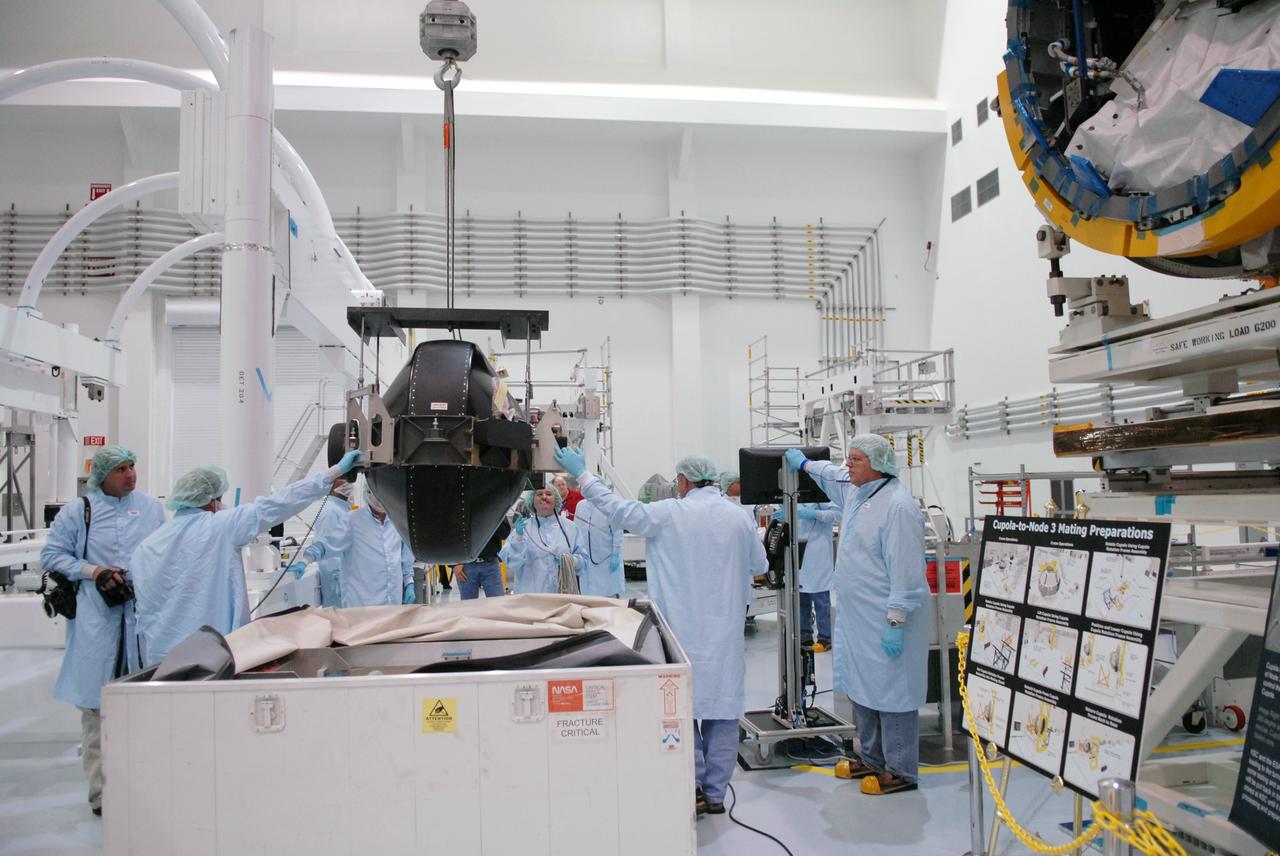
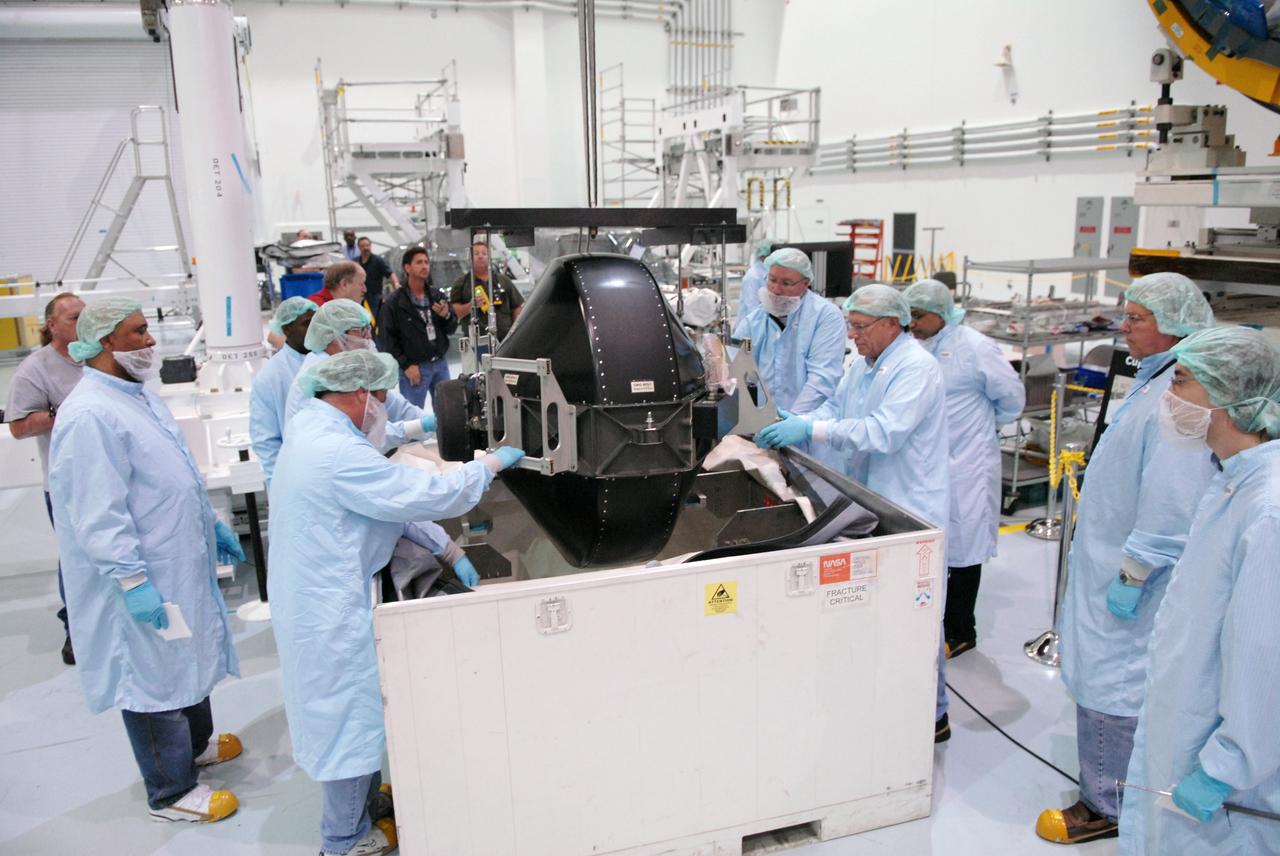
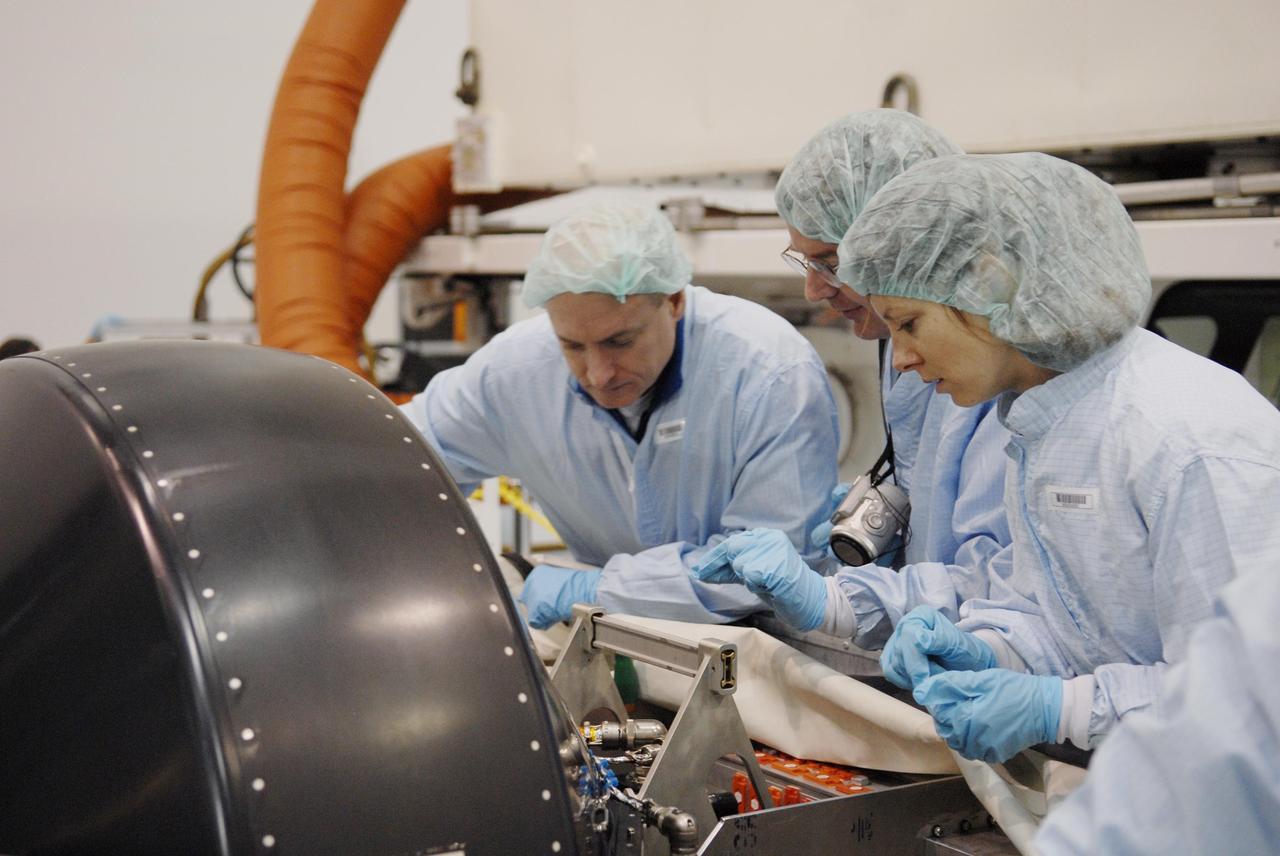
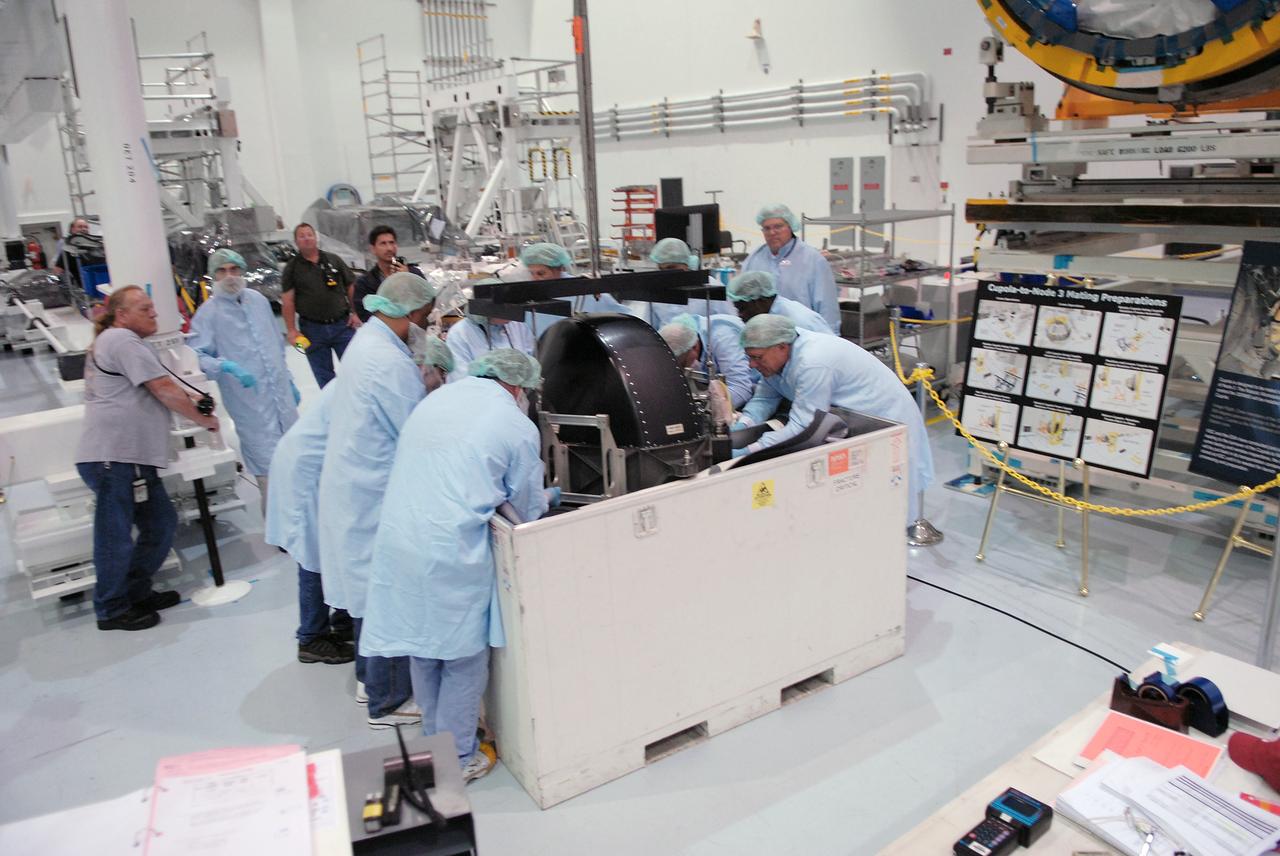
CAPE CANAVERAL, Fla. –  In the Space Station Processing Facility at NASA's Kennedy Space Center in Florida, technicians help lift the control moment gyro, or CMG, from its container.  The CMG is part of the payload on the STS-129 mission to the International Space Station. On the mission, space shuttle Atlantis also will deliver the orbital spares and replacement parts to sustain the life of the station.  Photo credit: NASA/Troy Cryder
KSC-2009-2478
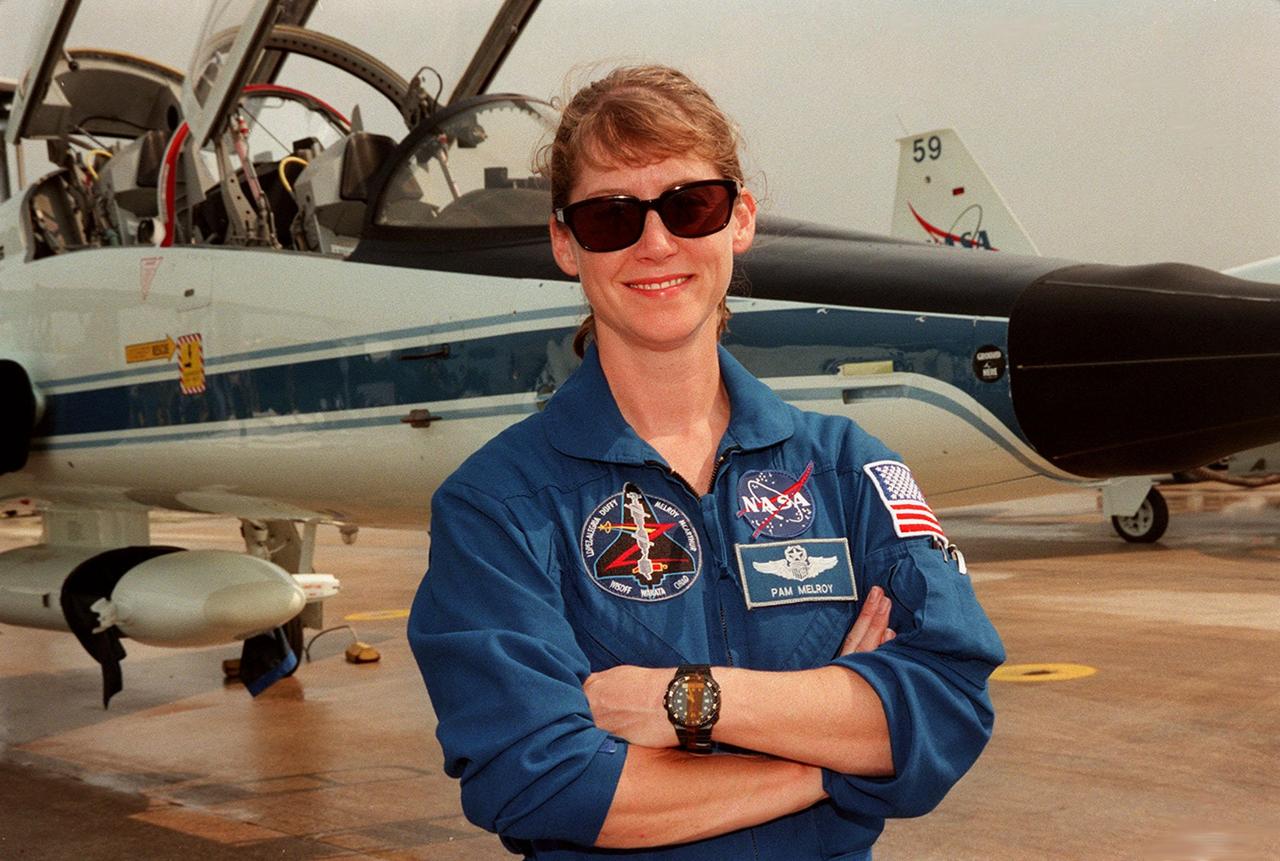
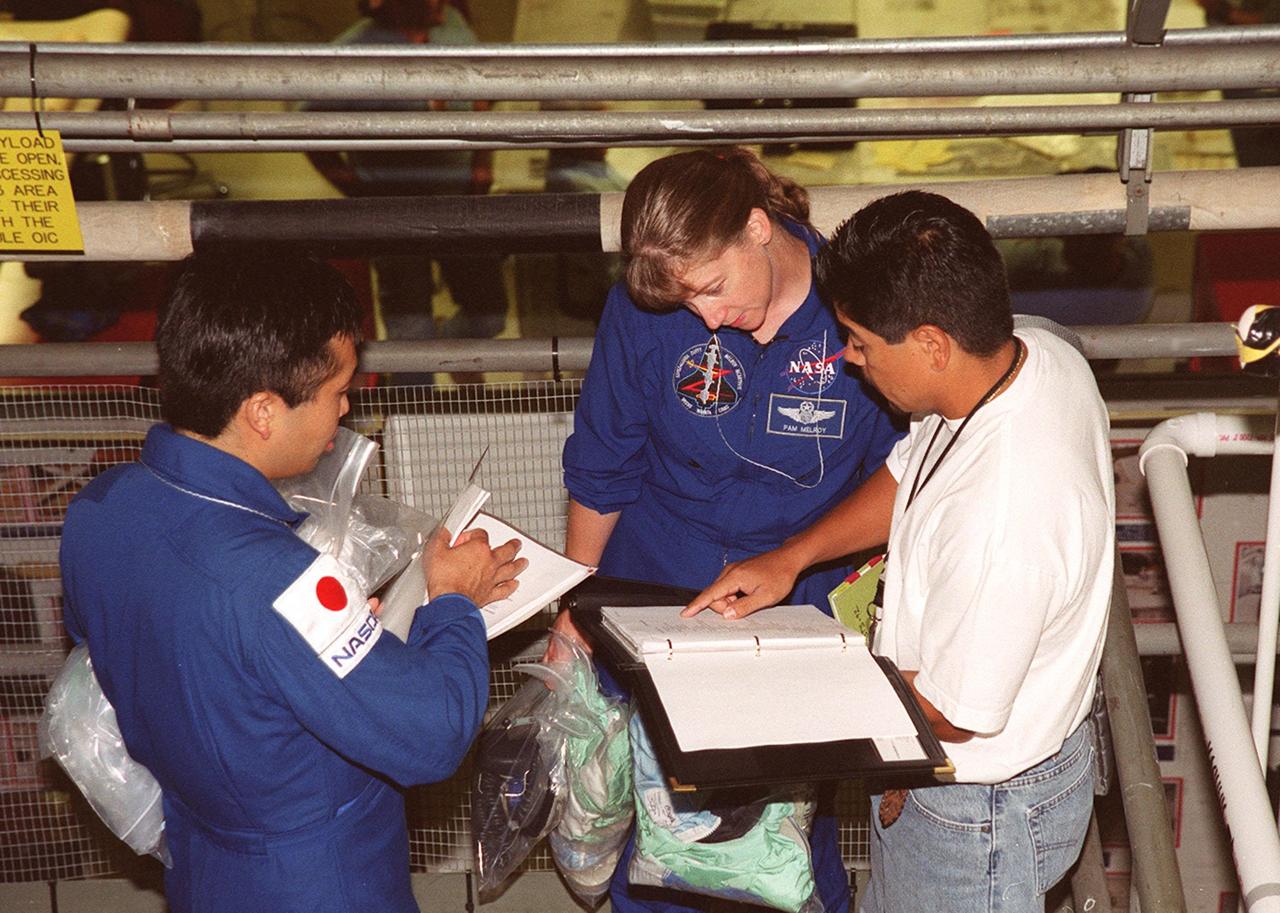
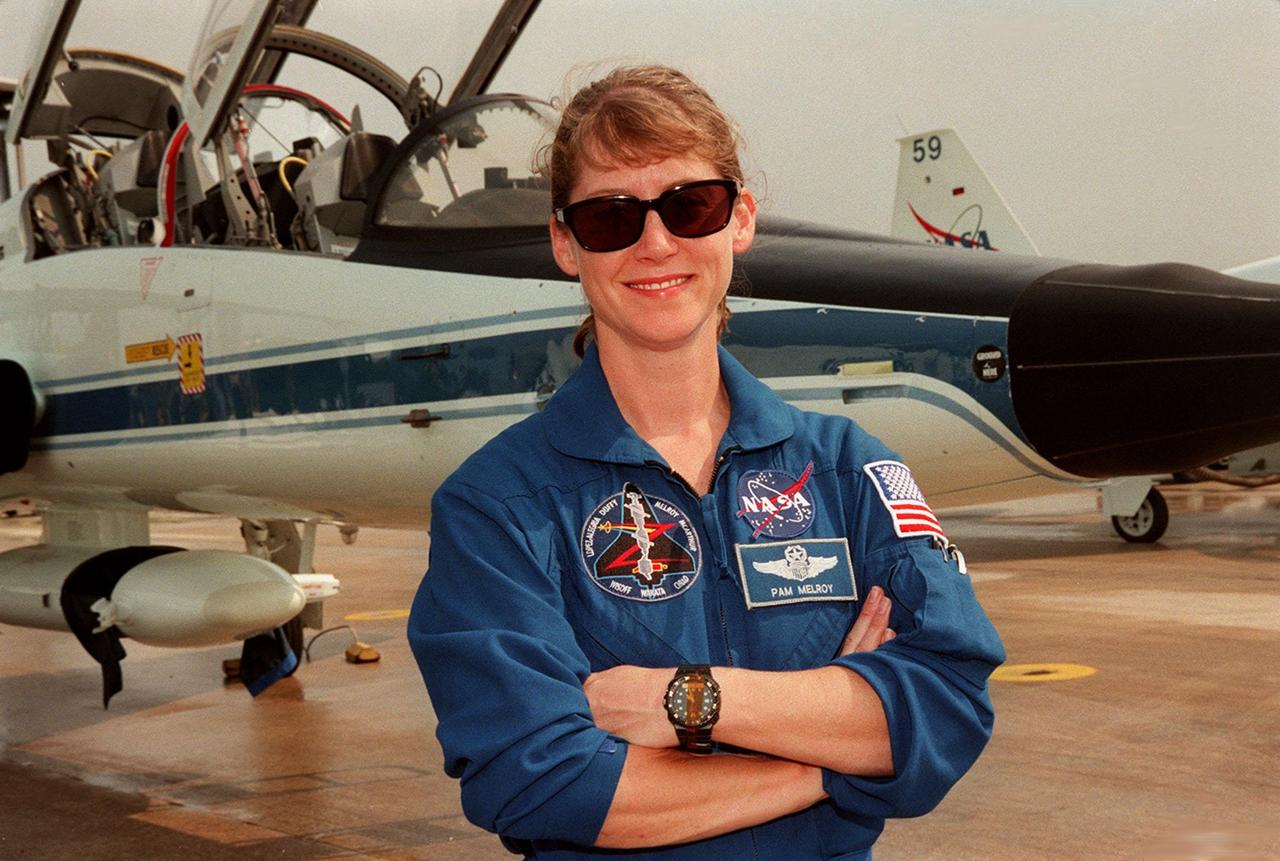
STS-92 Pilot Pam Melroy poses at the Shuttle Landing Facility before flying back to Houston. She and other crew members completed their Crew Equipment Interface Test activities, looking over their mission payload and related equipment. STS-92 is scheduled to launch Oct. 5 on Shuttle Discovery from Launch Pad 39A on the fifth flight to the International Space Station. Discovery will carry the Integrated Truss Structure (ITS) Z1, the PMA-3, Ku-band Communications System, and Control Moment Gyros (CMGs)
KSC-00pp0941
CAPE CANAVERAL, Fla. –  In the Space Station Processing Facility at NASA's Kennedy Space Center in Florida, technicians oversee the lifting of the control moment gyro, or CMG, from its container.   The CMG is part of the payload on the STS-129 mission to the International Space Station. On the mission, space shuttle Atlantis also will deliver the orbital spares and replacement parts to sustain the life of the station.  Photo credit: NASA/Troy Cryder
KSC-2009-2477
CAPE CANAVERAL, Fla. – In the Space Station Processing Facility at NASA's Kennedy Space Center in Florida, technicians oversee the removal of the control moment gyro, or CMG, from its container.  The CMG is part of the payload on the STS-129 mission to the International Space Station. On the mission, space shuttle Atlantis also will deliver the orbital spares and replacement parts to sustain the life of the station.  Photo credit: NASA/Troy Cryder
KSC-2009-2479
STS-92 Pilot Pam Melroy poses at the Shuttle Landing Facility before flying back to Houston. She and other crew members completed their Crew Equipment Interface Test activities, looking over their mission payload and related equipment. STS-92 is scheduled to launch Oct. 5 on Shuttle Discovery from Launch Pad 39A on the fifth flight to the International Space Station. Discovery will carry the Integrated Truss Structure (ITS) Z1, the PMA-3, Ku-band Communications System, and Control Moment Gyros (CMGs)
KSC00pp0941
KENNEDY SPACE CENTER, FLA. --   Members of the STS-118 crew take part in a hardware review of the SPACEHAB module, part of the payload on their mission.  Seen here is Mission Specialist Barbara Morgan, facing forward at the entrance of the module.  The mission payload also includes the third starboard truss segment (ITS S5), a control moment gyro and the external stowage platform 3 (ESP3).  STS-118 is targeted to launch June 28 from Launch Pad 39A.  Photo credit: NASA/Kim Shiflett
KSC-07pd0232
CAPE CANAVERAL, Fla. – In the Space Station Processing Facility at NASA's Kennedy Space Center in Florida, technicians help guide the control moment gyro, or CMG, as a crane lifts and moves it from its container.  The CMG is part of the payload on the STS-129 mission to the International Space Station. On the mission, space shuttle Atlantis also will deliver the orbital spares and replacement parts to sustain the life of the station.  Photo credit: NASA/Troy Cryder
KSC-2009-2480
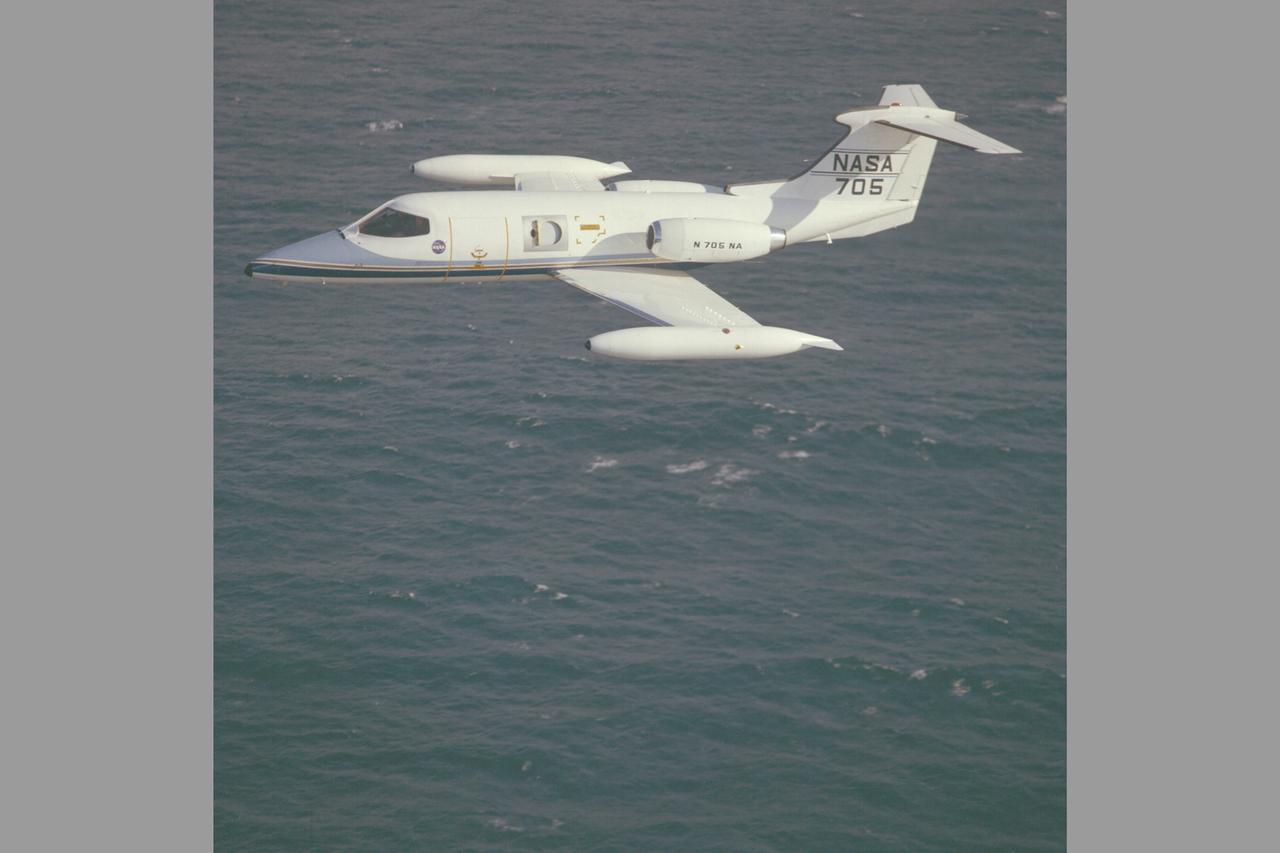
Lear Jet 24B  (NASA-705) in flight along California coast is used primarily as a high altitude observation platform carrying a 12' telescope with a special hatch on the starboard side for upward viewing. The hatch has a maximum circular clear aperture of 37.6 cm and can contain a 30 cm aperture open-port gyro-stabilized telescope designed especially for infrared astronomical research.
ARC-1975-AC75-0089-19
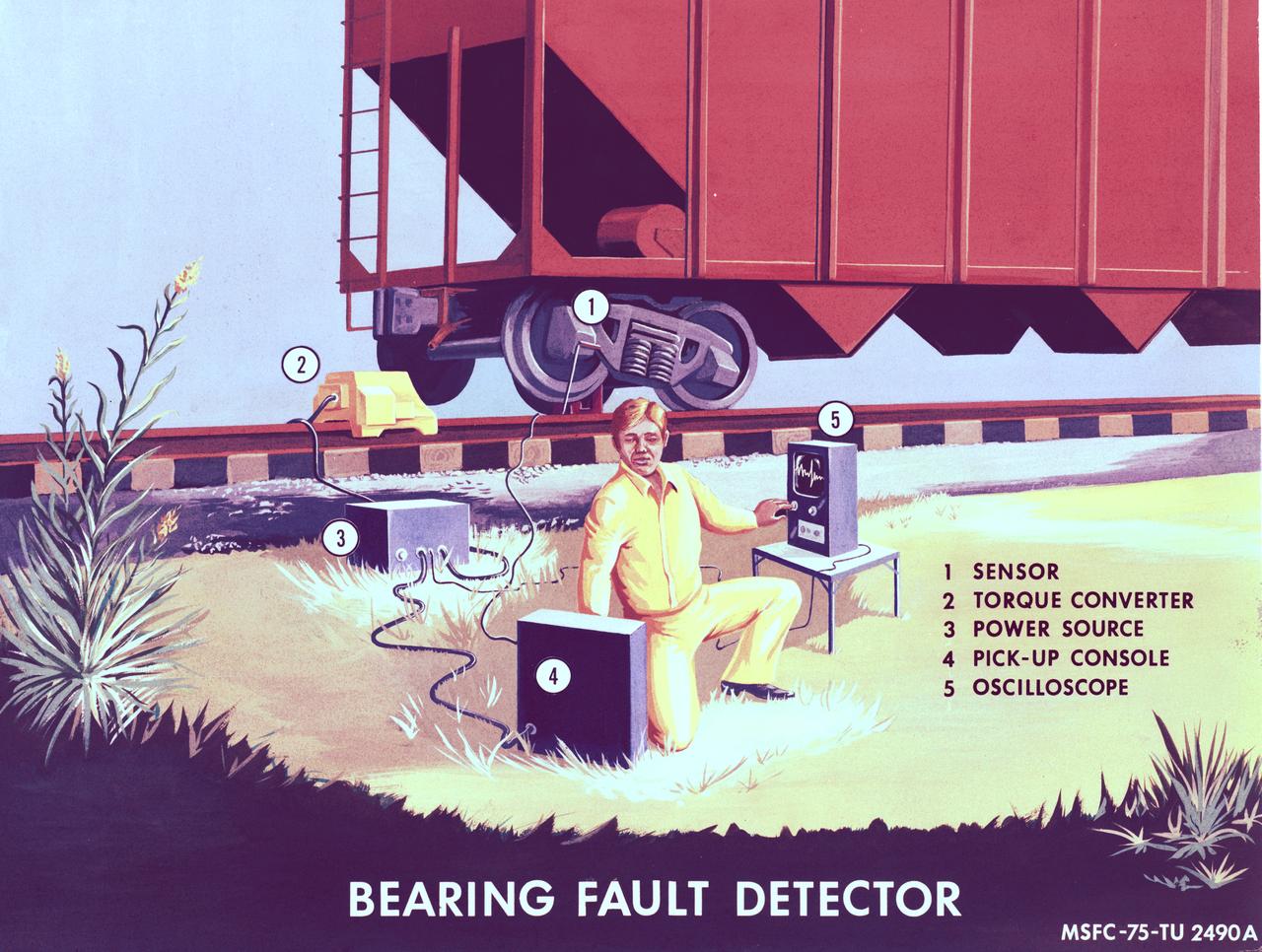
Technology derived by NASA for monitoring control gyros in the Skylab program is directly applicable to the problems of fault detection of railroad wheel bearings. Marhsall Space Flight Center's scientists have developed a detection concept based on the fact that bearing defects excite resonant frequency of rolling elements of the bearing as they impact the defect. By detecting resonant frequency and subsequently analyzing the character of this signal, bearing defects may be detected and identified as to source.
Benefit from NASA
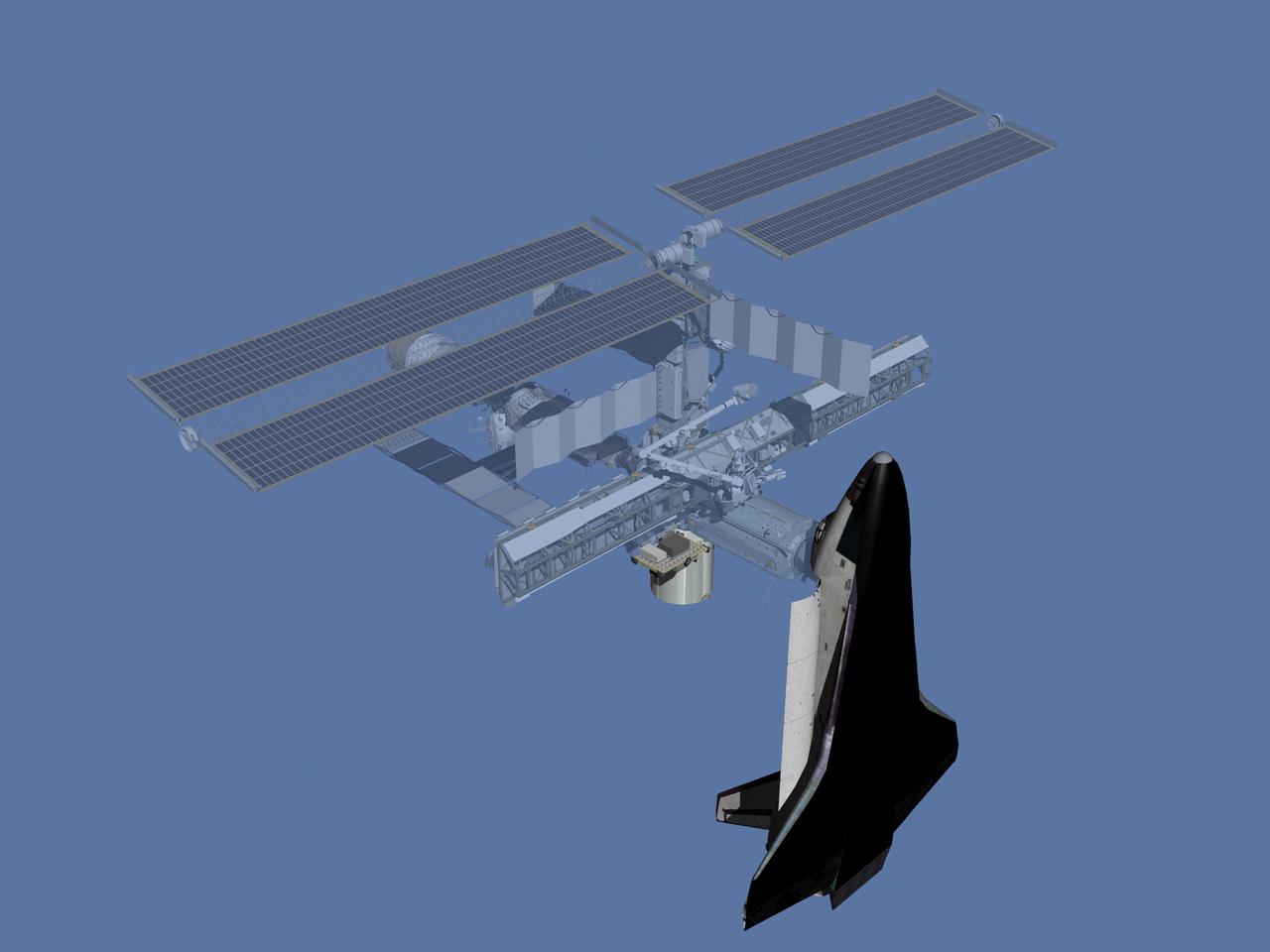
JSC2006-E-43496 (July 2005) --- Computer-generated artist's rendering of the International Space Station after flight STS-114/LF1. The Space Shuttle Discovery Return to Flight mission carried supplies and equipment inside the Italian-built Raffaello Multi-Purpose Logistics Module (MPLM) to the station. A faulty Control Moment Gyro was removed and replaced and External Stowage Platform-2 (ESP2) was installed.
ISS Assembly Sequence Rev H still images for use on Imagery Online, HSF web
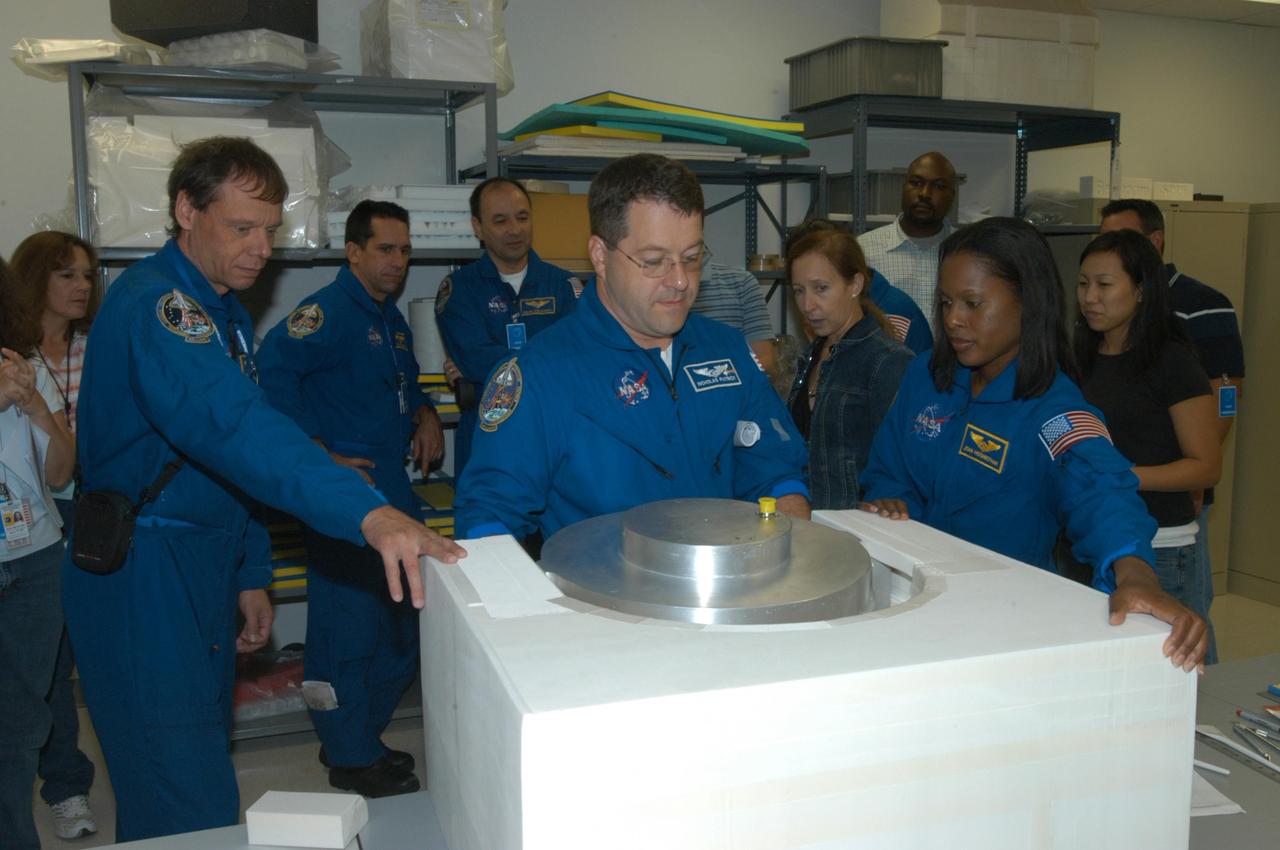
KENNEDY SPACE CENTER, FLA. -  At SPACEHAB in Cape Canaveral, Fla., STS-116  crew members get a close look at he Treadmill Vibration Isolation System Gyroscop during equipment familiarization.  Mission Specialist Nicholas Patrick (center) practices stowing the replacement gyro in the block of foam which is what the gyro will be stowed in inside the SPACEHAB module. The other crew members watching are, from left, Mission Specialists Christer Fuglesang,  Pilot William Oefelein, Commander Mark Polansky, and at right, Mission Specialist Joan Higginbotham.  Fuglesang, from Sweden,  represents the European Space Agency.  Between Patarick and Higginbotham is astronaut Marsha Ivins, who is currently assigned to the Astronaut Office, Space Station/Shuttle Branches for crew equipment, habitability and stowage.  Mission crews make frequent trips to the Space Coast to become familiar with the equipment and payloads they will be using.  STS-116 will be mission number 20 to the International Space Station and construction flight 12A.1.  The mission payload is the SPACEHAB module, the P5 integrated truss structure and other key components.   Launch is scheduled for no earlier than Dec. 7.  Photo credit: NASA/George Shelton
KSC-06pd2248
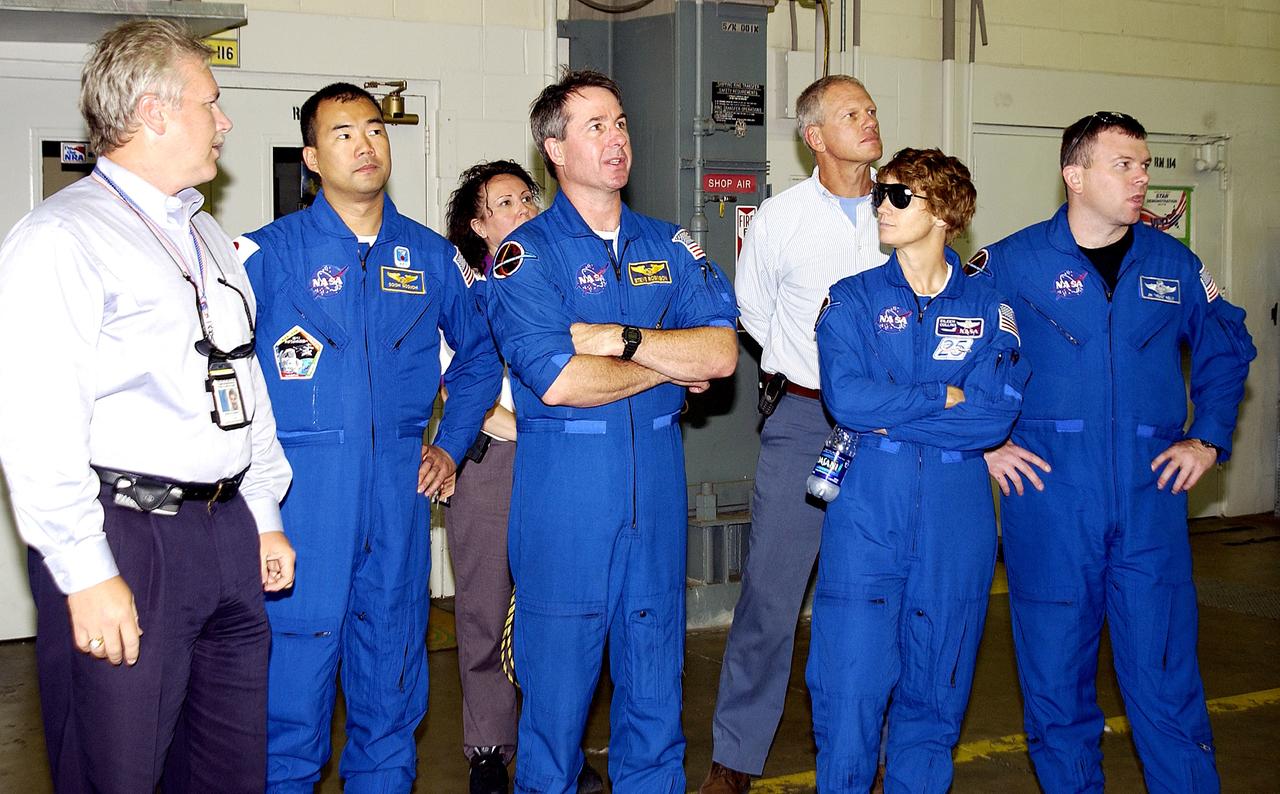
KENNEDY SPACE CENTER, FLA. -  In Hangar AF, Cape Canaveral Air Force Station, the STS-114 crew look at equipment used to disassemble and refurbish solid rocket boosters retrieved after a Shuttle launch.  Starting second from left are Mission Specialist Soichi Noguchi, Mission Specialist Stephen Robinson, Commander Eileen Collins, and Pilot James Kelly. Noguchi is with the Japanese space agency NASDA.  At far left is Joseph Chaput, with United Space Alliance. On their mission, the crew will carry the MultiPurpose Logistics Module (MPLM) Raffaello and External Stowage Platform 2 to the International Space Station.  The MPLM will contain supplies and equipment.  Another goal of the mission is to remove and replace a Control Moment Gyro.  Launch date for mission STS-114 is under review.
KENNEDY SPACE CENTER, FLA. - In Hangar AF, Cape Canaveral Air Force Station, the STS-114 crew look at equipment used to disassemble and refurbish solid rocket boosters retrieved after a Shuttle launch. Starting second from left are Mission Specialist Soichi Noguchi, Mission Specialist Stephen Robinson, Commander Eileen Collins, and Pilot James Kelly. Noguchi is with the Japanese space agency NASDA. At far left is Joseph Chaput, with United Space Alliance. On their mission, the crew will carry the MultiPurpose Logistics Module (MPLM) Raffaello and External Stowage Platform 2 to the International Space Station. The MPLM will contain supplies and equipment. Another goal of the mission is to remove and replace a Control Moment Gyro. Launch date for mission STS-114 is under review.
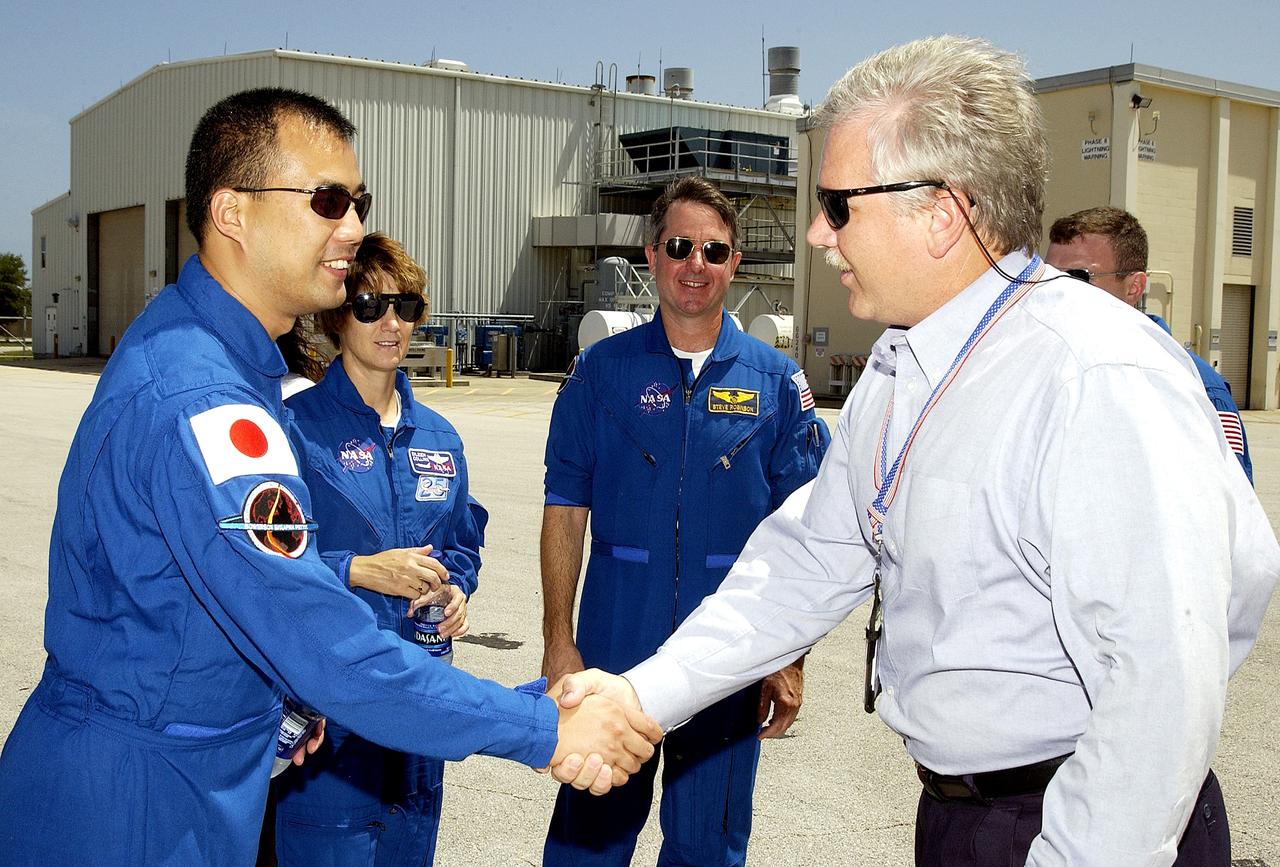
KENNEDY SPACE CENTER, FLA. -   The STS-114 crew is welcomed to Hangar AF, Cape Canaveral Air Force Station, by Joseph Chaput, with United Space Alliance. The crew, from left, are Mission Specialist Soichi Noguchi, Commander Eileen Collins, Mission Specialist Stephen Robinson and (partially hidden) Pilot James Kelly.  Noguchi is with the Japanese space agency NASDA.  On the mission, the crew will carry the MultiPurpose Logistics Module (MPLM) Raffaello and External Stowage Platform 2 to the International Space Station.  The MPLM will contain supplies and equipment.  Another goal of the mission is to remove and replace a Control Moment Gyro.  Launch date for mission STS-114 is under review.  Hangar AF is the site where SRB Retrieval Ships return the spent solid rocket boosters after a Shuttle launch.  The SRBs are lifted from the water and placed on rail cars to begin the disassembly and refurbishment process.
KENNEDY SPACE CENTER, FLA. - The STS-114 crew is welcomed to Hangar AF, Cape Canaveral Air Force Station, by Joseph Chaput, with United Space Alliance. The crew, from left, are Mission Specialist Soichi Noguchi, Commander Eileen Collins, Mission Specialist Stephen Robinson and (partially hidden) Pilot James Kelly. Noguchi is with the Japanese space agency NASDA. On the mission, the crew will carry the MultiPurpose Logistics Module (MPLM) Raffaello and External Stowage Platform 2 to the International Space Station. The MPLM will contain supplies and equipment. Another goal of the mission is to remove and replace a Control Moment Gyro. Launch date for mission STS-114 is under review. Hangar AF is the site where SRB Retrieval Ships return the spent solid rocket boosters after a Shuttle launch. The SRBs are lifted from the water and placed on rail cars to begin the disassembly and refurbishment process.
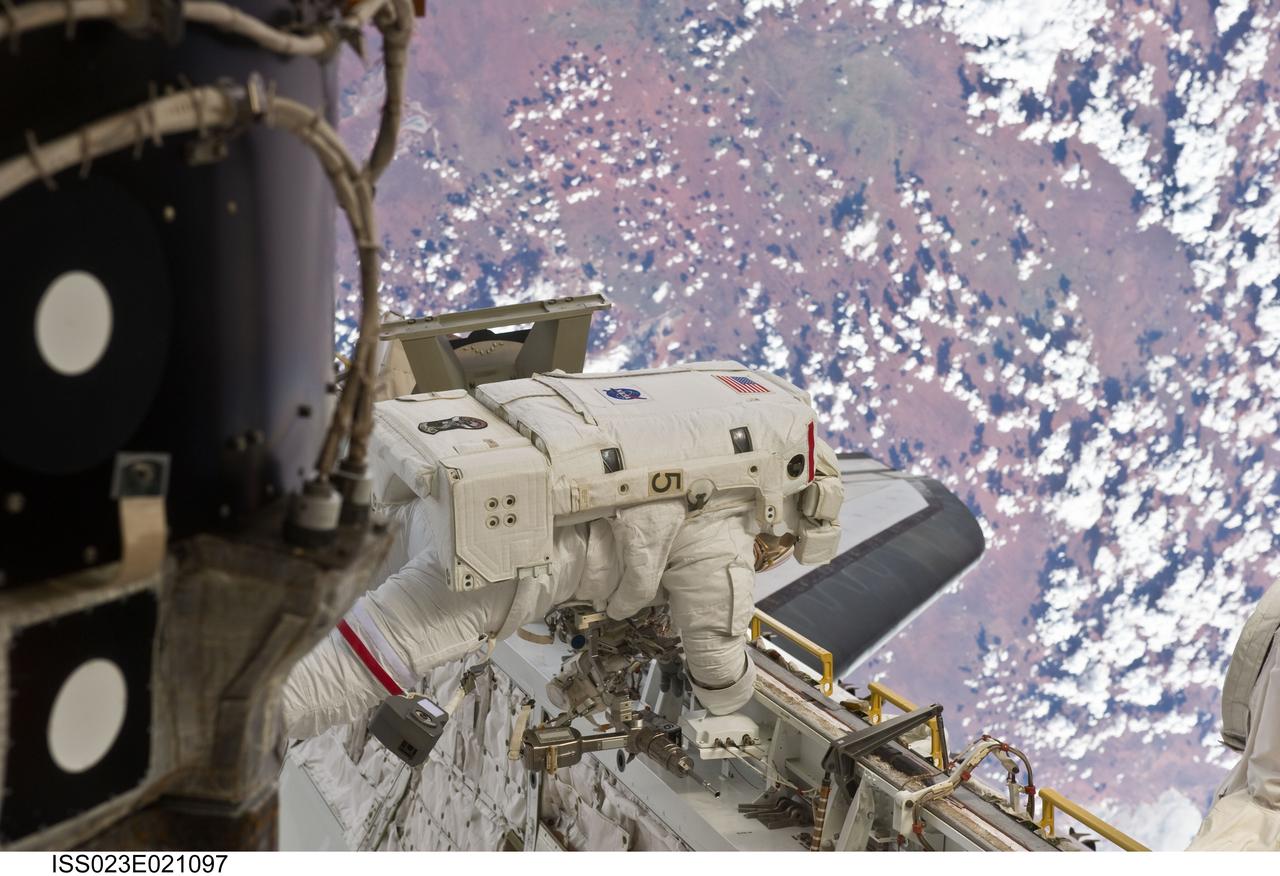
ISS023-E-021097 (9 April 2010) --- NASA astronaut Rick Mastracchio, STS-131 mission specialist, participates in the mission's first session of extravehicular activity (EVA) as construction and maintenance continue on the International Space Station. During the six-hour, 27-minute spacewalk, Mastracchio and astronaut Clayton Anderson (out of frame), mission specialist, helped move a new 1,700-pound ammonia tank from space shuttle Discovery’s cargo bay to a temporary parking place on the station, retrieved an experiment from the Japanese Kibo Laboratory exposed facility and replaced a Rate Gyro Assembly on one of the truss segments.
Mastracchio during EVA 1
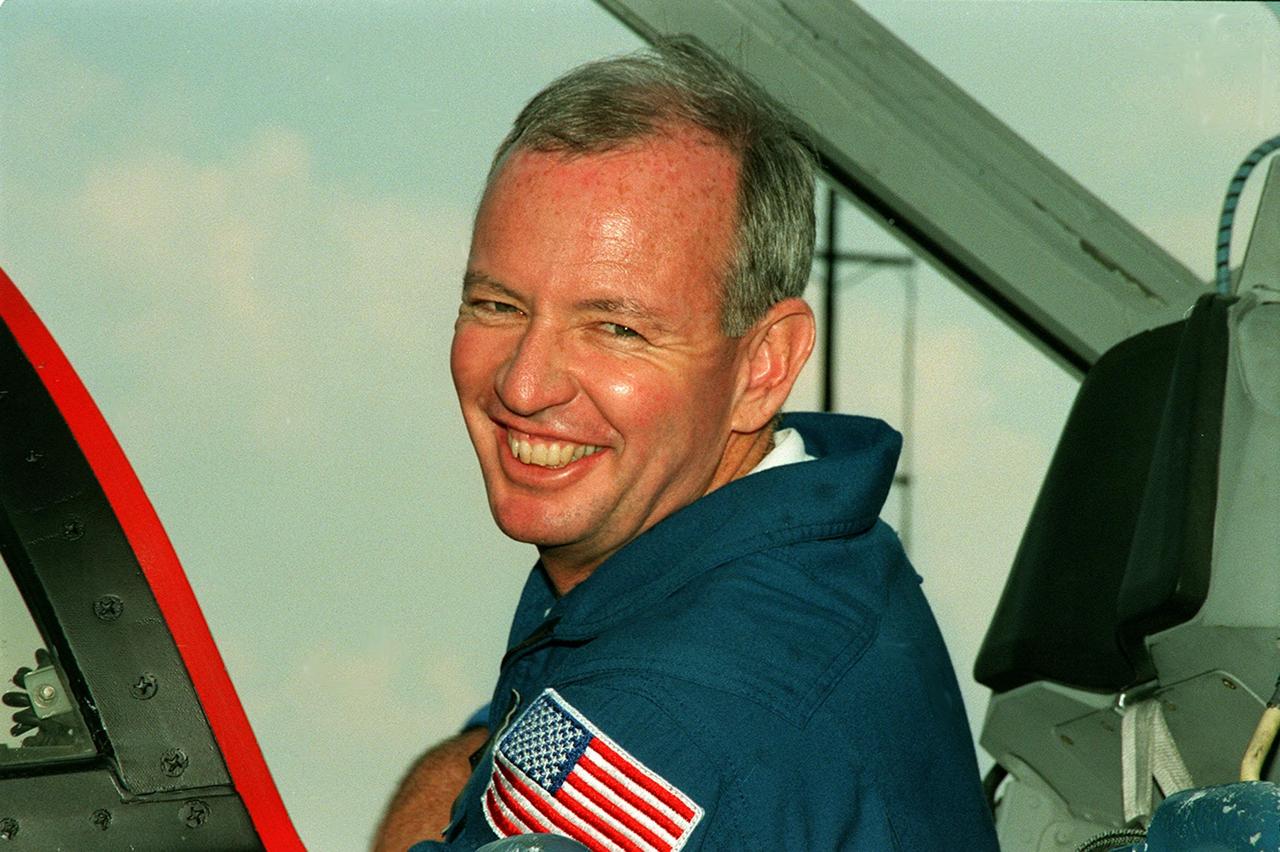
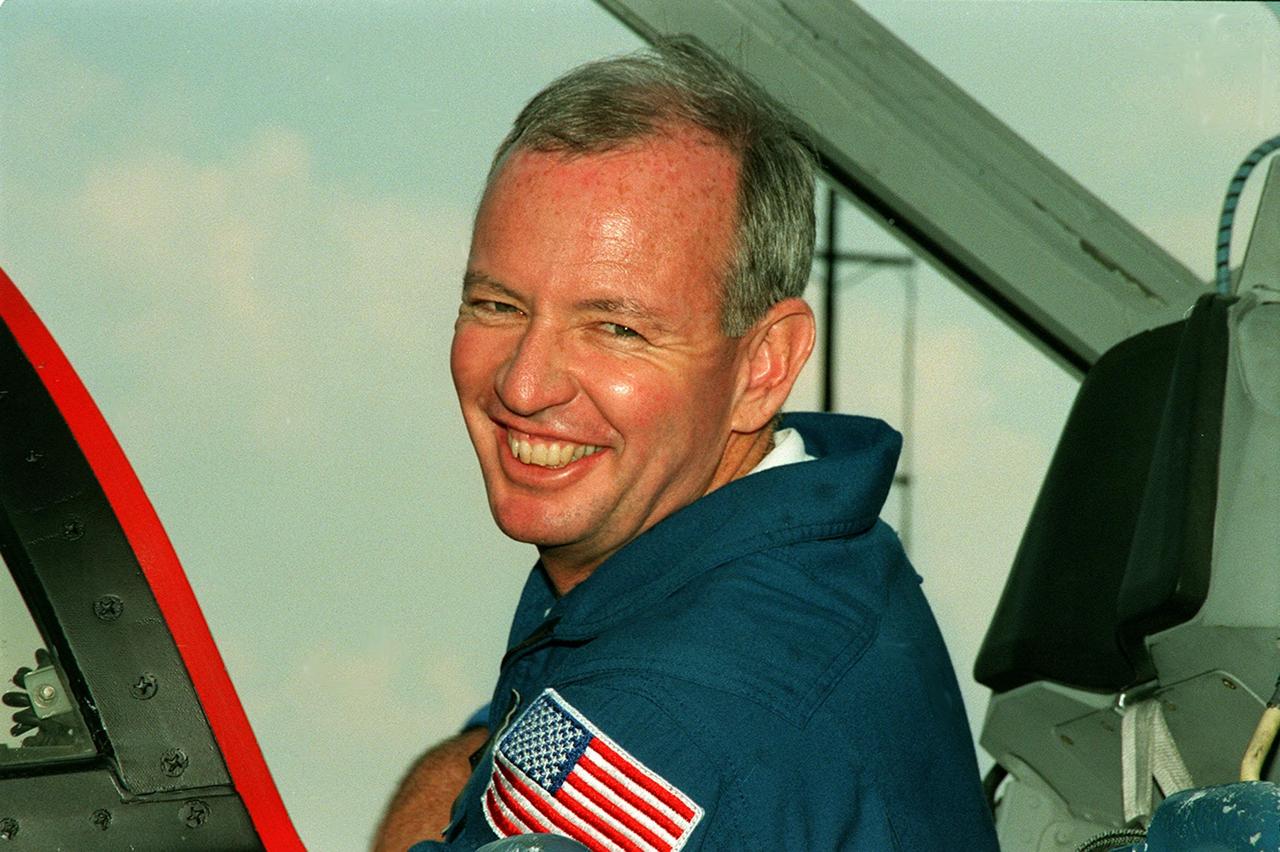
STS-92 Commander Brian Duffy climbs into a T-38 jet aircraft at KSC’s Shuttle Landing Facility for a flight back to Houston. He and other crew members were at KSC for Crew Equipment Interface Test (CEIT) activities, looking over their mission payload and related equipment. STS-92 is scheduled to launch Oct. 5 on Shuttle Discovery from Launch Pad 39A on the fifth flight to the International Space Station. Discovery will carry the Integrated Truss Structure (ITS) Z1, the PMA-3, Ku-band Communications System, and Control Moment Gyros (CMGs)
KSC-00pp0943
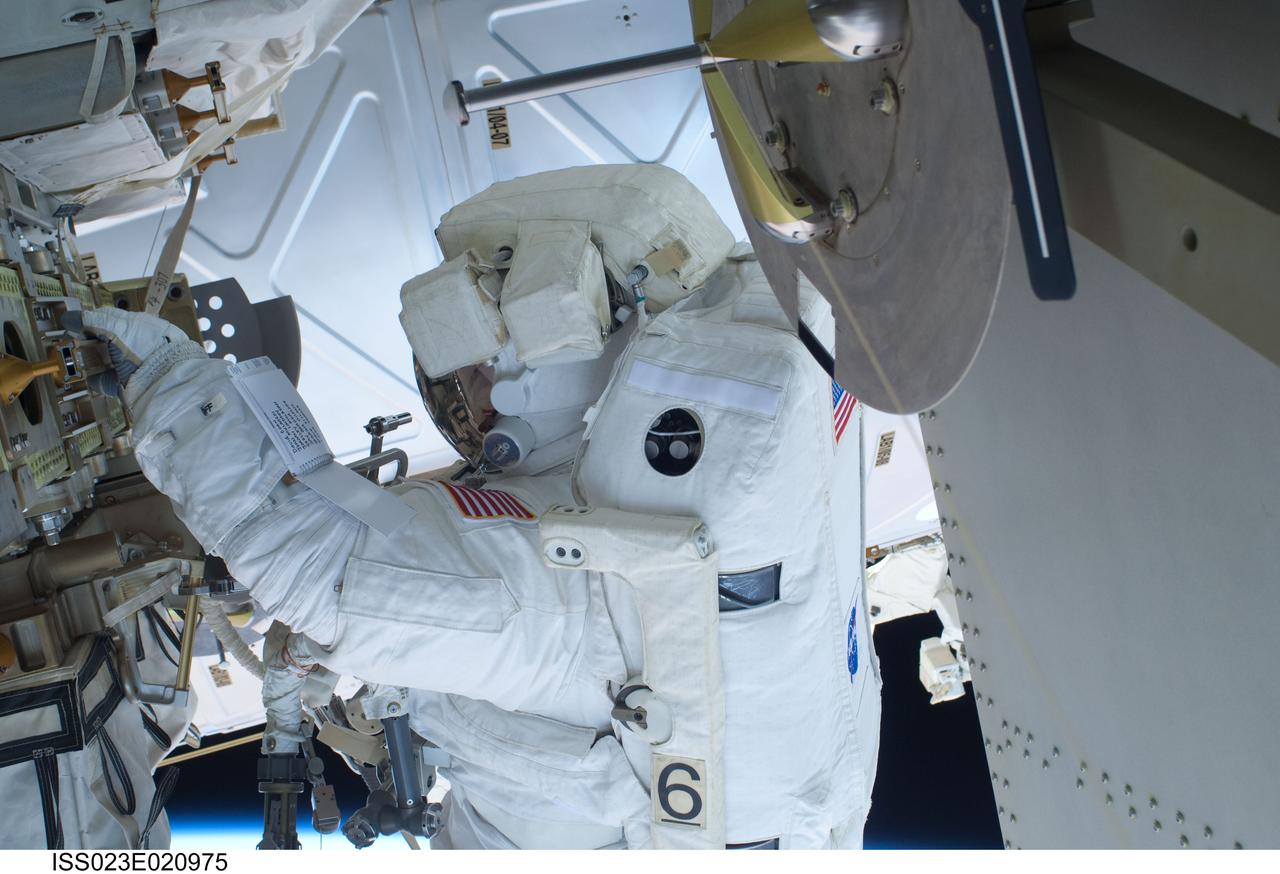
ISS023-E-020975 (9 April 2010) --- NASA astronaut Clayton Anderson, STS-131 mission specialist, participates in the mission's first session of extravehicular activity (EVA) as construction and maintenance continue on the International Space Station. During the six-hour, 27-minute spacewalk, Anderson and astronaut Rick Mastracchio (out of frame), mission specialist, helped move a new 1,700-pound ammonia tank from space shuttle Discovery’s cargo bay to a temporary parking place on the station, retrieved an experiment from the Japanese Kibo Laboratory exposed facility and replaced a Rate Gyro Assembly on one of the truss segments.
Anderson during EVA 1
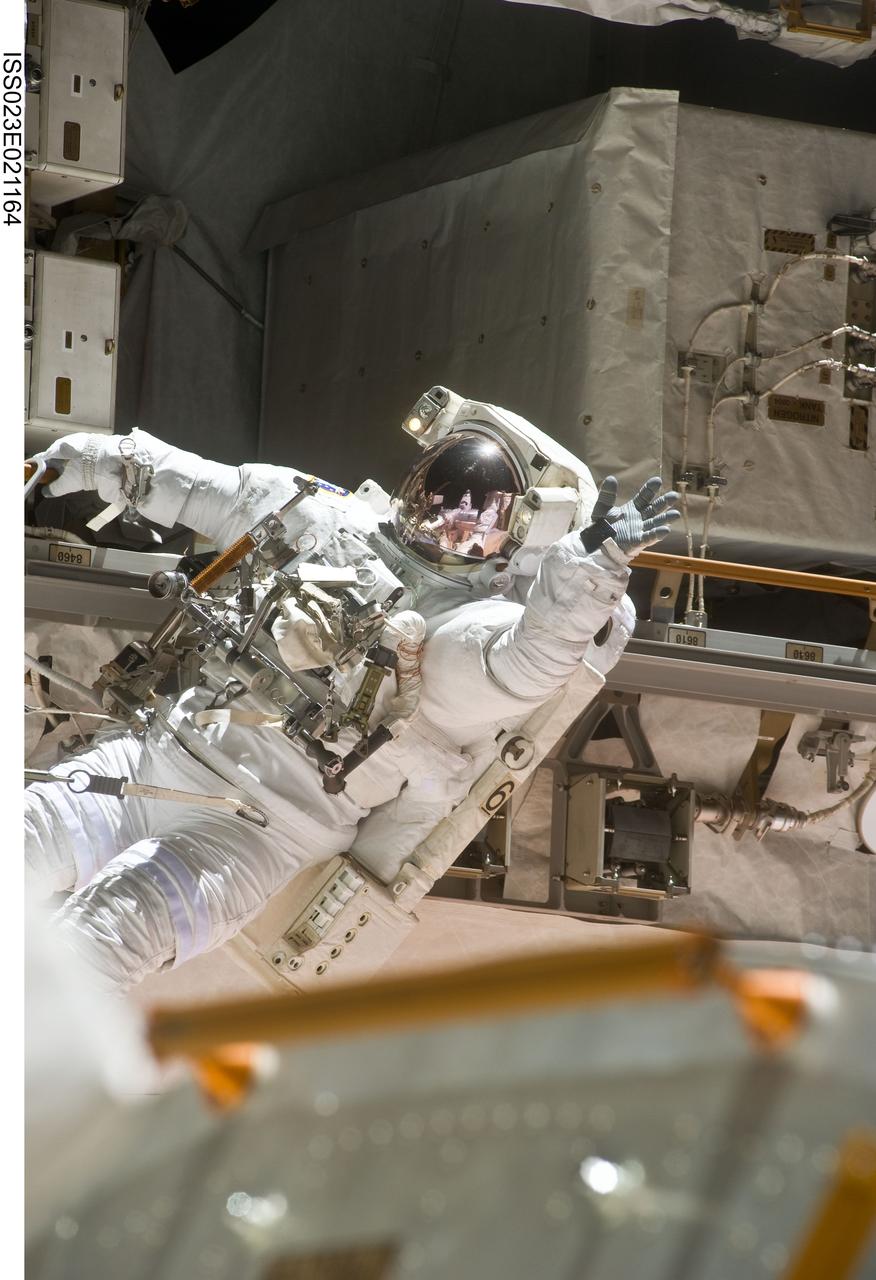
ISS023-E-021164 (9 April 2010) --- NASA astronaut Clayton Anderson, STS-131 mission specialist, participates in the mission's first session of extravehicular activity (EVA) as construction and maintenance continue on the International Space Station. During the six-hour, 27-minute spacewalk, Anderson and astronaut Rick Mastracchio (out of frame), mission specialist, helped move a new 1,700-pound ammonia tank from space shuttle Discovery’s cargo bay to a temporary parking place on the station, retrieved an experiment from the Japanese Kibo Laboratory exposed facility and replaced a Rate Gyro Assembly on one of the truss segments.
Anderson during EVA 1
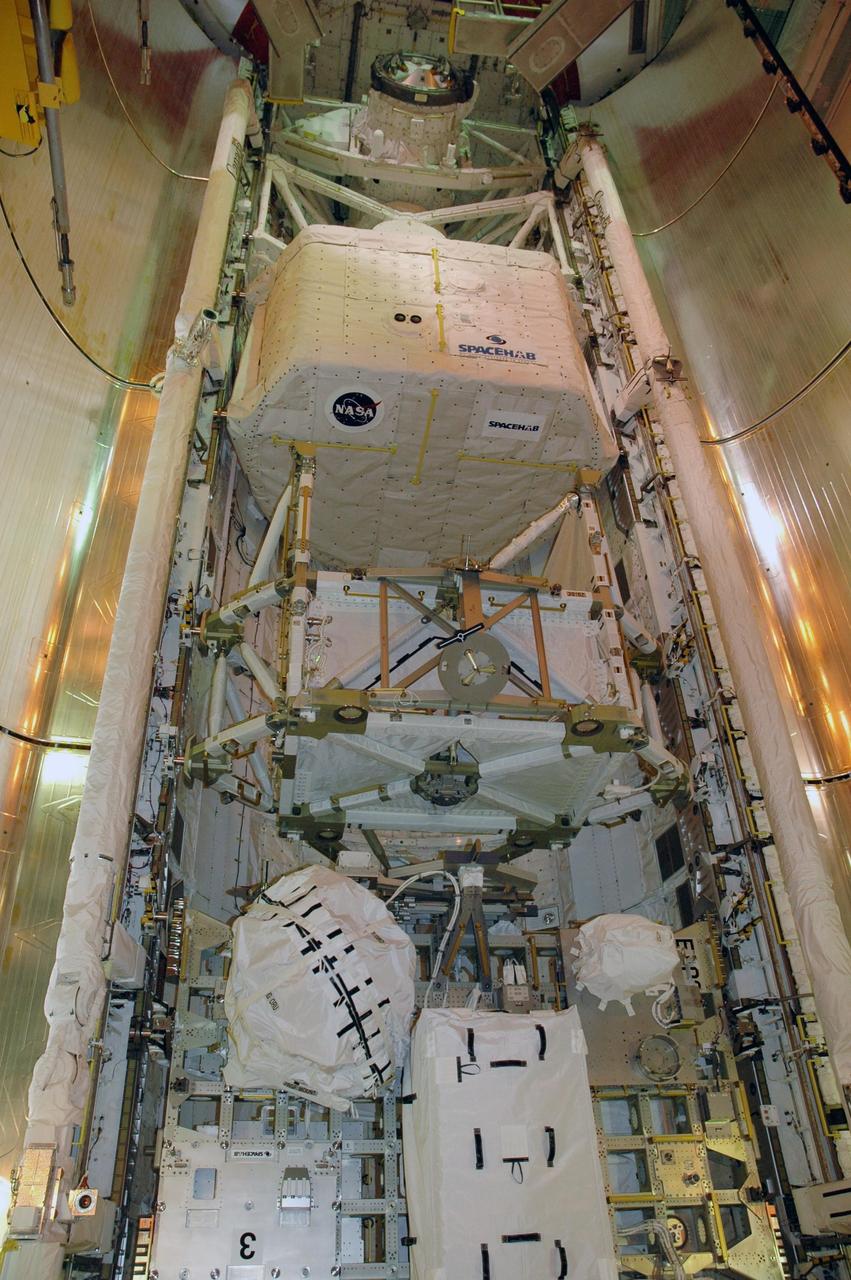
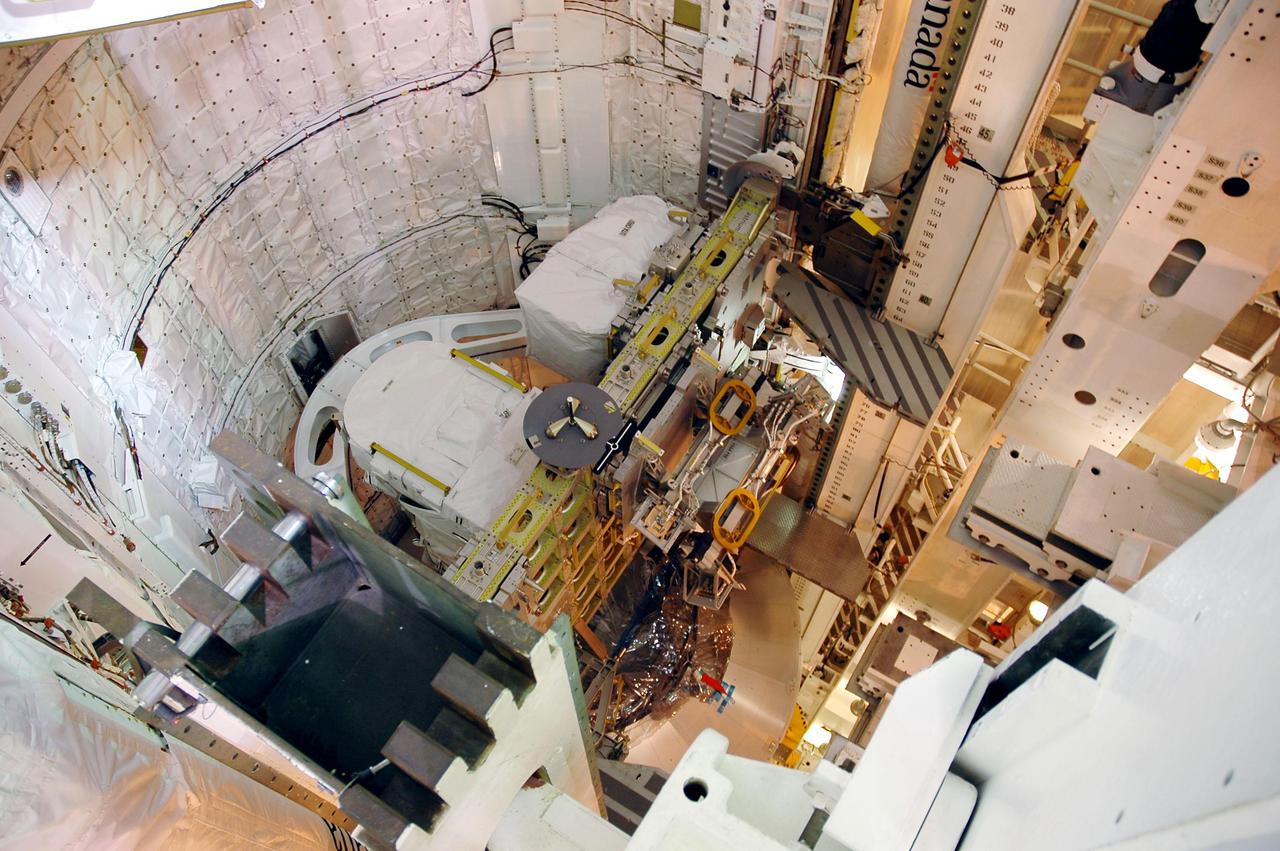
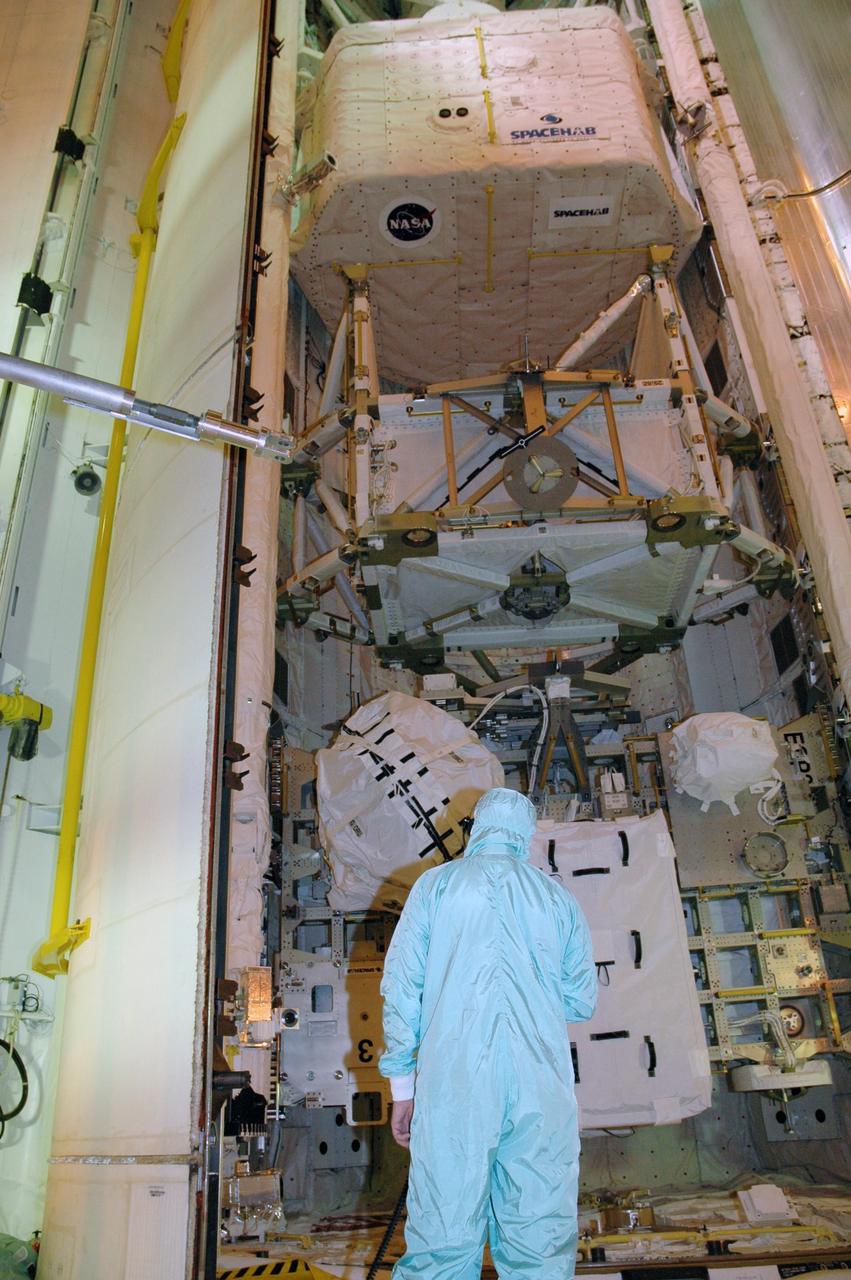
KENNEDY SPACE CENTER, FLA. --    On Launch Pad 39A, Endeavour's payload bay doors are open, revealing the cargo and equipment inside.  At the top is the orbiter docking system; below it are the SPACEHAB module, the S5 truss and the external stowage platform 3 holding a control moment gyro at left and other supplies.  The payload bay doors were opened to allow for payload closeouts, including camera tests on the shuttle robotic arm and the extension, known as the orbiter boom sensor system.  Endeavour is scheduled to launch Aug. 7 on mission STS-118, the 22nd flight to the International Space Station.  NASA/Charisse Nahser
KSC-07pd2119
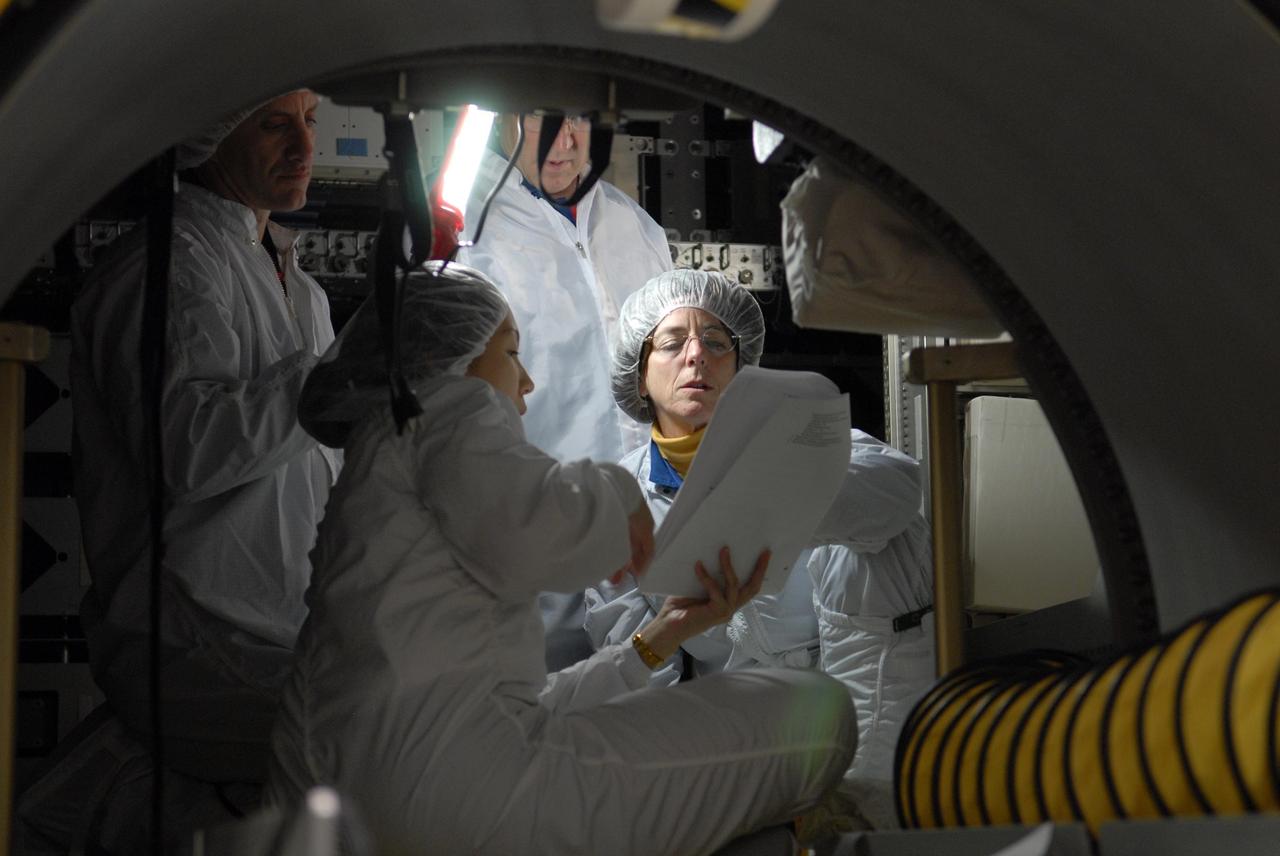
KENNEDY SPACE CENTER, FLA. --   Members of the STS-118 crew take part in a hardware review of the SPACEHAB module, part of the payload on their mission.  Seen here inside the module are Mission Specialists Richard Mastracchio (left), Dafydd Williams (center, standing) and Barbara Morgan (lower right).  Williams represents the Canadian Space Agency.  The mission payload also includes the third starboard truss segment (ITS S5), a control moment gyro and the external stowage platform 3 (ESP3).  STS-118 is targeted to launch June 28 from Launch Pad 39A.  Photo credit: NASA/Kim Shiflett
KSC-07pd0233
KENNEDY SPACE CENTER, FLA. --    Looking into the open payload bay doors of Space Shuttle Endeavour, the S5 truss takes the spotlight.  Other cargo elements are the SPACEHAB module and the external stowage platform 3.  At lower right is the control moment gyro.  The payload bay doors were opened to allow for payload closeouts, including camera tests on the shuttle robotic arm and the extension, known as the orbiter boom sensor system.  Endeavour is scheduled to launch Aug. 7 on mission STS-118, the 22nd flight to the International Space Station.  NASA/Charisse Nahser
KSC-07pd2120
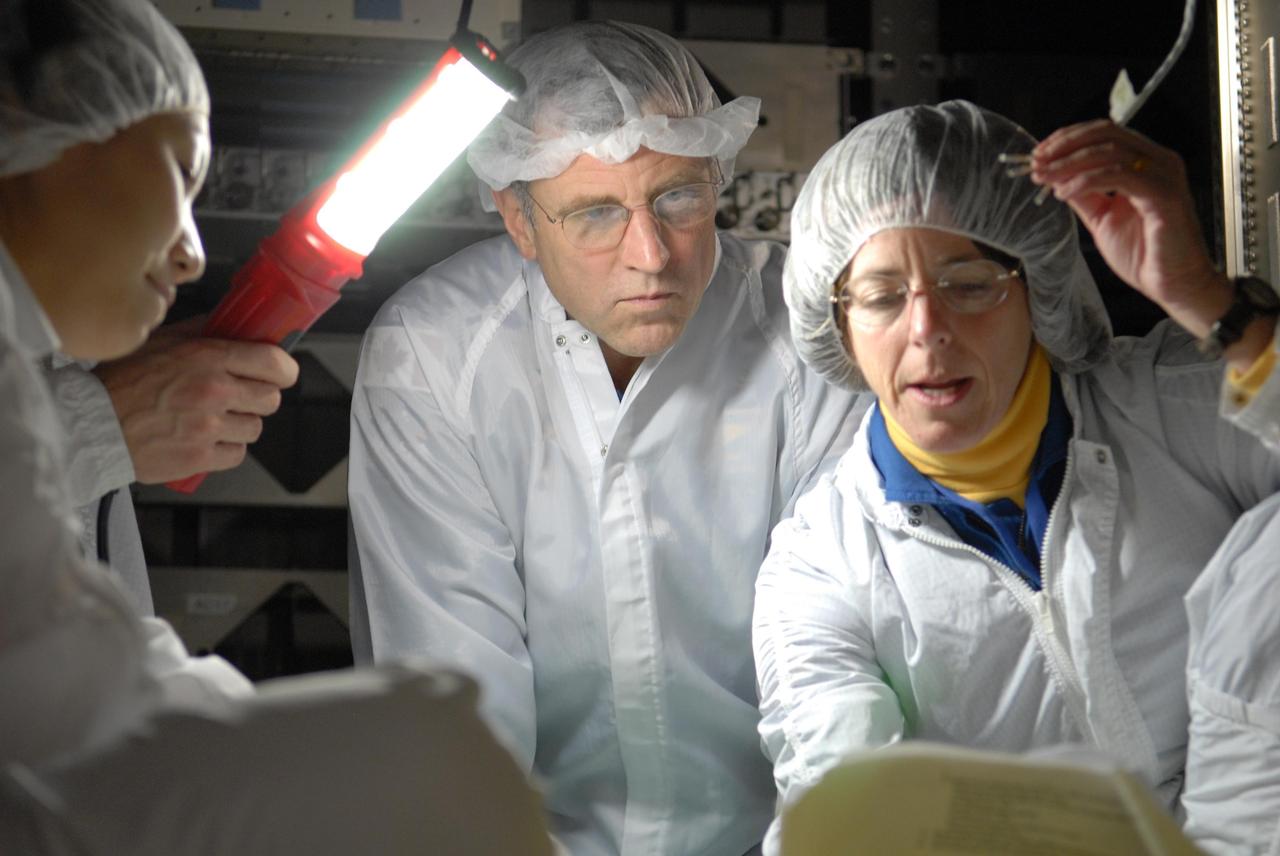
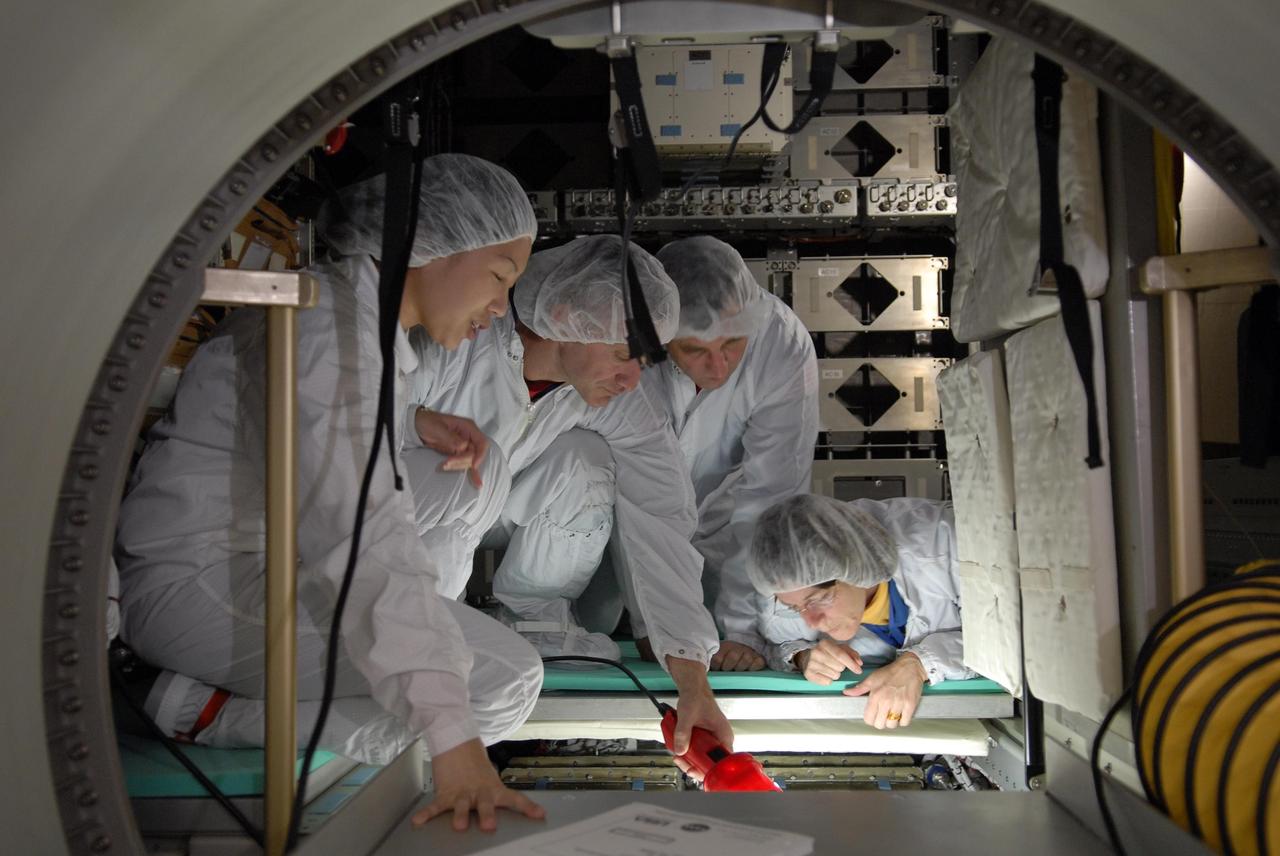
KENNEDY SPACE CENTER, FLA. --  Members of the STS-118 crew take part in a hardware review of the SPACEHAB module, part of the payload on their mission.  Looking inside one of the stowage compartments are Pilot Charles Hobaugh (holding a light) and Mission Specialists Dafydd Williams and Barbara Morgan. Williams represents the Canadian Space Agency.   The mission payload also includes the third starboard truss segment (ITS S5), a control moment gyro and the external stowage platform 3 (ESP3).  STS-118 is targeted to launch June 28 from Launch Pad 39A.  Photo credit: NASA/Kim Shiflett
KSC-07pd0236
ISS023-E-021178 (9 April 2010) --- NASA astronaut Rick Mastracchio, STS-131 mission specialist, participates in the mission's first session of extravehicular activity (EVA) as construction and maintenance continue on the International Space Station. During the six-hour, 27-minute spacewalk, Mastracchio and astronaut Clayton Anderson (out of frame), mission specialist, helped move a new 1,700-pound ammonia tank from space shuttle Discovery’s cargo bay to a temporary parking place on the station, retrieved an experiment from the Japanese Kibo Laboratory exposed facility and replaced a Rate Gyro Assembly on one of the truss segments.
Mastracchio during EVA 1
KENNEDY SPACE CENTER, FLA. --  Members of the STS-118 crew take part in a hardware review of the SPACEHAB module, part of the payload on their mission.  Seen here inside the module are Mission Specialists Dafydd Williams (center) and Barbara Morgan. Williams represents the Canadian Space Agency. The mission payload also includes the third starboard truss segment (ITS S5), a control moment gyro and the external stowage platform 3 (ESP3).  STS-118 is targeted to launch June 28 from Launch Pad 39A.  Photo credit: NASA/Kim Shiflett
KSC-07pd0235
KENNEDY SPACE CENTER, FLA. --    On Launch Pad 39A, a worker checks the movement of one of Endeavour's payload bay doors as it closes.  Seen in the photo are the cargo, from top, the SPACEHAB module, the S5 truss and the external stowage platform 3 with a control moment gyro at left.  The payload bay doors were opened to allow for payload closeouts, including camera tests on the shuttle robotic arm and the extension, known as the orbiter boom sensor system.  Endeavour is scheduled to launch Aug. 7 on mission STS-118, the 22nd flight to the International Space Station.  NASA/Charisse Nahser
KSC-07pd2122
STS-92 Commander Brian Duffy climbs into a T-38 jet aircraft at KSC’s Shuttle Landing Facility for a flight back to Houston. He and other crew members were at KSC for Crew Equipment Interface Test (CEIT) activities, looking over their mission payload and related equipment. STS-92 is scheduled to launch Oct. 5 on Shuttle Discovery from Launch Pad 39A on the fifth flight to the International Space Station. Discovery will carry the Integrated Truss Structure (ITS) Z1, the PMA-3, Ku-band Communications System, and Control Moment Gyros (CMGs)
KSC00pp0943
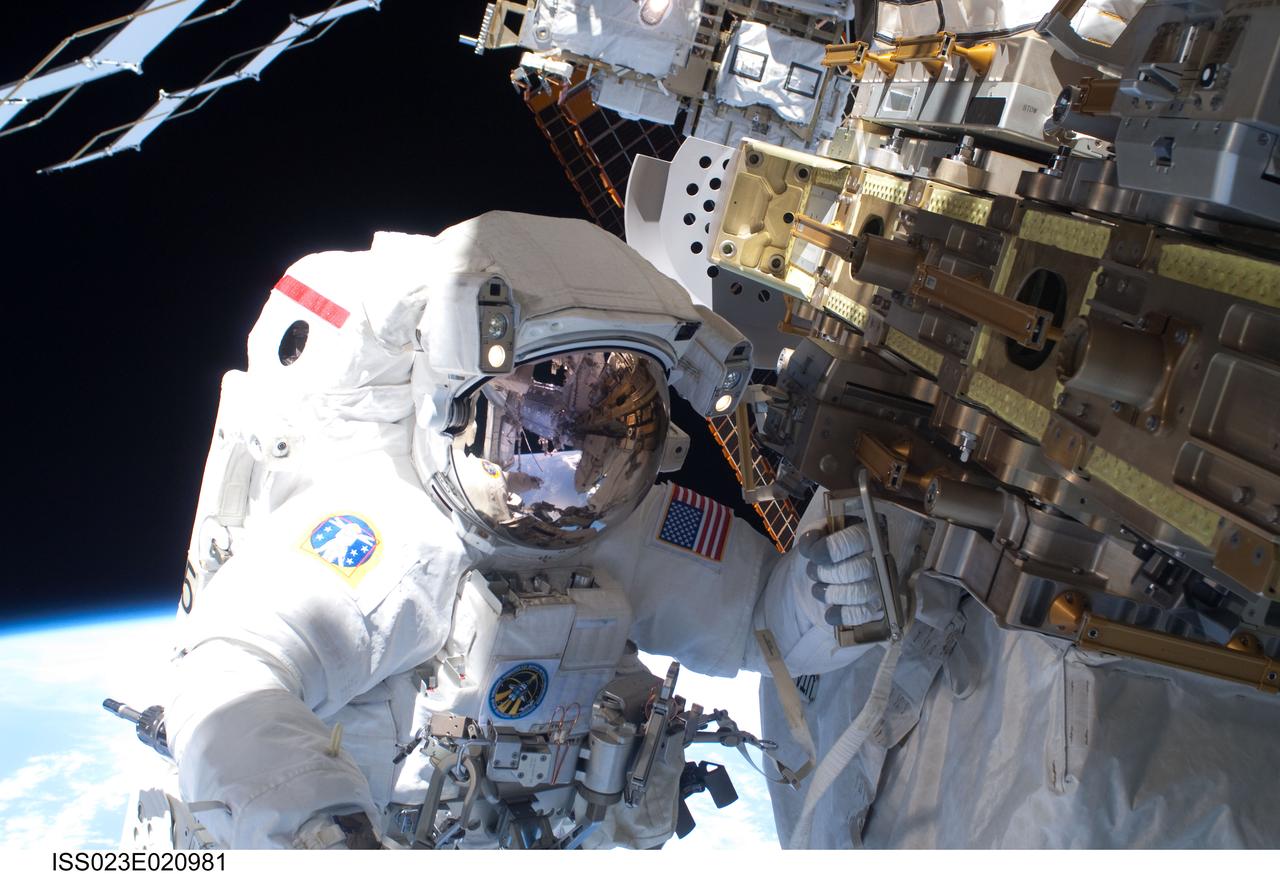
ISS023-E-020981 (9 April 2010) --- NASA astronaut Rick Mastracchio, STS-131 mission specialist, participates in the mission's first session of extravehicular activity (EVA) as construction and maintenance continue on the International Space Station. During the six-hour, 27-minute spacewalk, Mastracchio and astronaut Clayton Anderson (out of frame), mission specialist, helped move a new 1,700-pound ammonia tank from space shuttle Discovery’s cargo bay to a temporary parking place on the station, retrieved an experiment from the Japanese Kibo Laboratory exposed facility and replaced a Rate Gyro Assembly on one of the truss segments.
Mastracchio during EVA 1
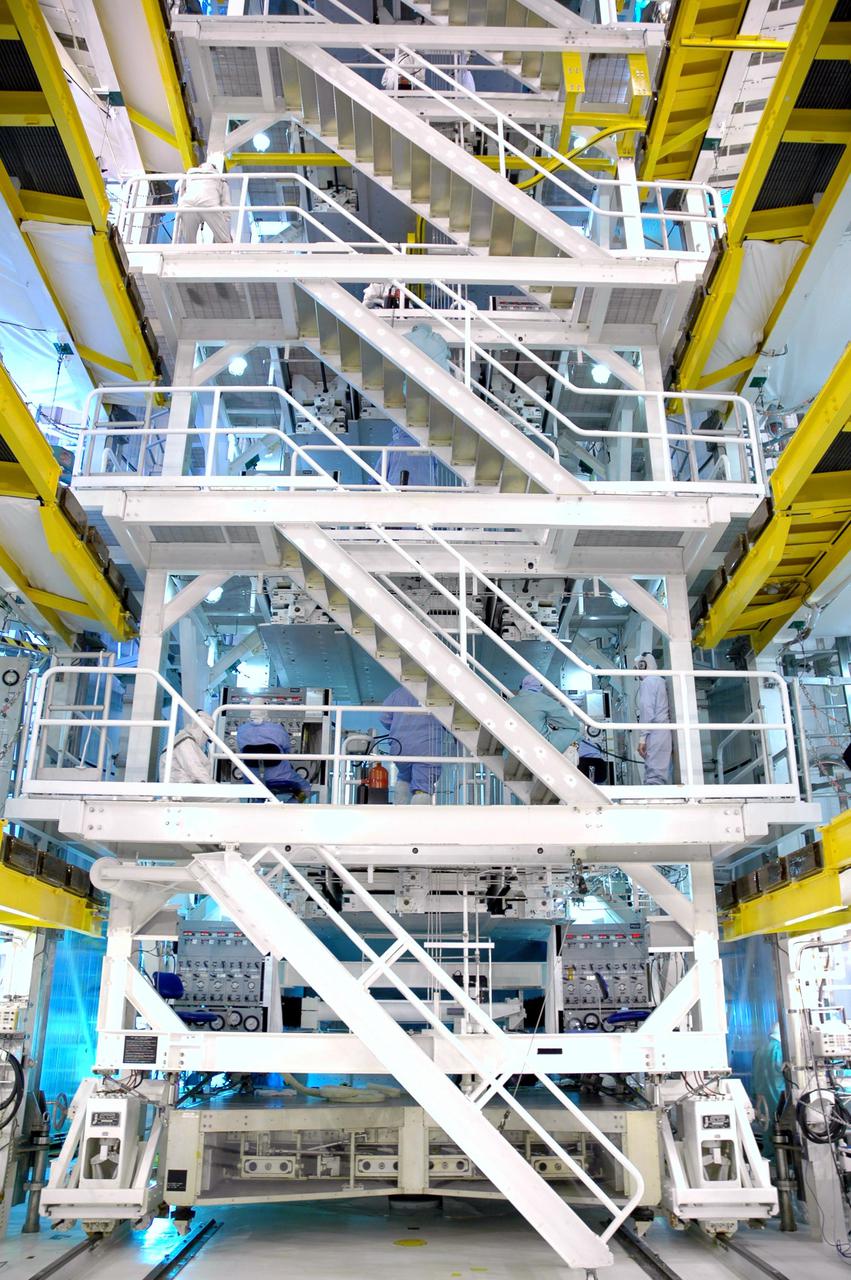
KENNEDY SPACE CENTER, FLA. - In the Payload Changeout Room on Launch Pad 39B, the payloads for Return to Flight mission STS-114 are being transferred to Discovery’s payload bay.  The payloads include a Control Moment Gyro, the Thermal Protection System Detailed Test Objective box, which is placed on the Lightweight Multi-Purpose Experiment Support Structure Carrier, the External Stowage Platform 2, and Multi-Purpose Logistics Module Raffaello. Already installed in the payload bay are the airlock, the Canadarm 2, or Shuttle arm, and the Orbiter Boom Sensor System.  The launch window for mission STS-114 extends from July 13 to July 31.
KSC-05pd-1355
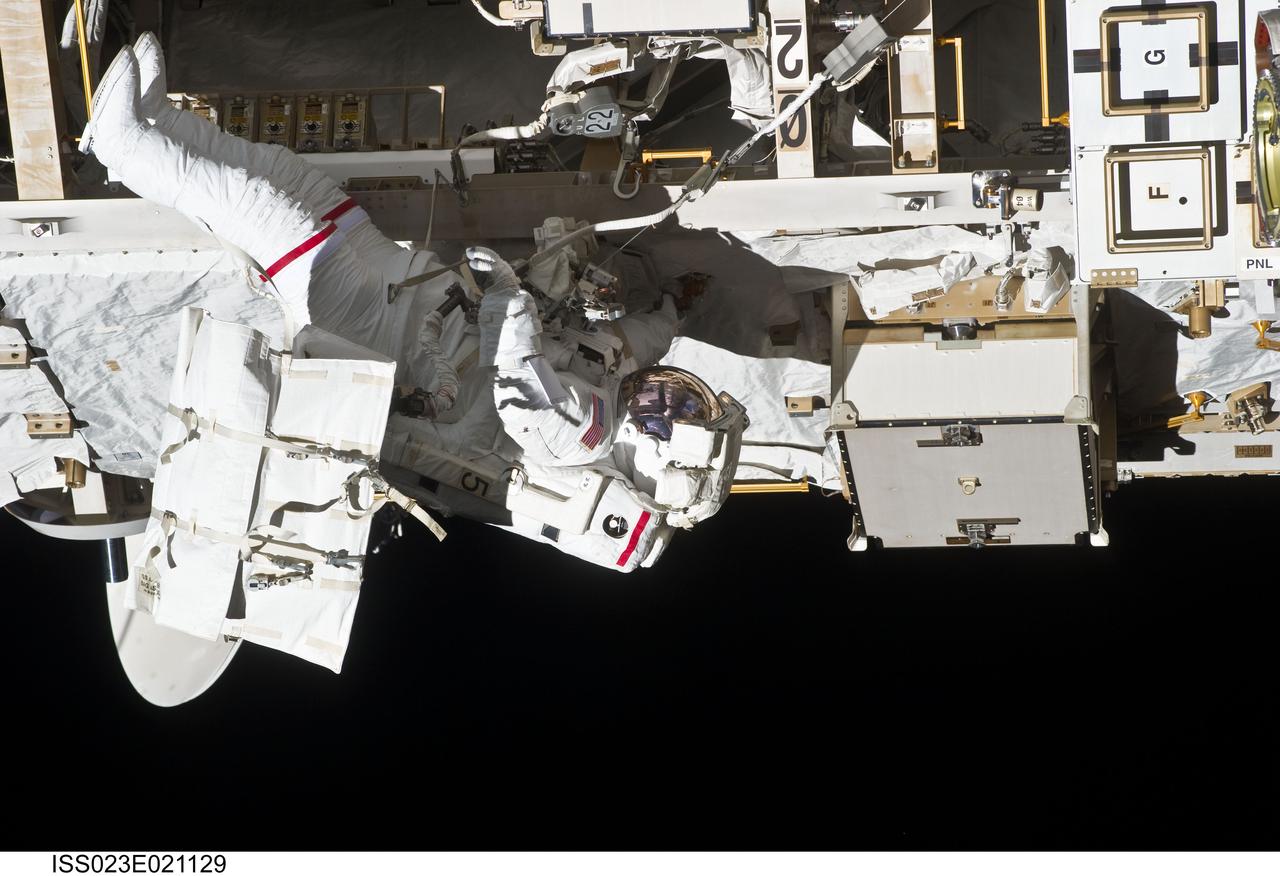
ISS023-E-021129 (9 April 2010) --- NASA astronaut Rick Mastracchio, STS-131 mission specialist, participates in the mission's first session of extravehicular activity (EVA) as construction and maintenance continue on the International Space Station. During the six-hour, 27-minute spacewalk, Mastracchio and astronaut Clayton Anderson (out of frame), mission specialist, helped move a new 1,700-pound ammonia tank from space shuttle Discovery’s cargo bay to a temporary parking place on the station, retrieved an experiment from the Japanese Kibo Laboratory exposed facility and replaced a Rate Gyro Assembly on one of the truss segments.
Mastracchio during EVA 1
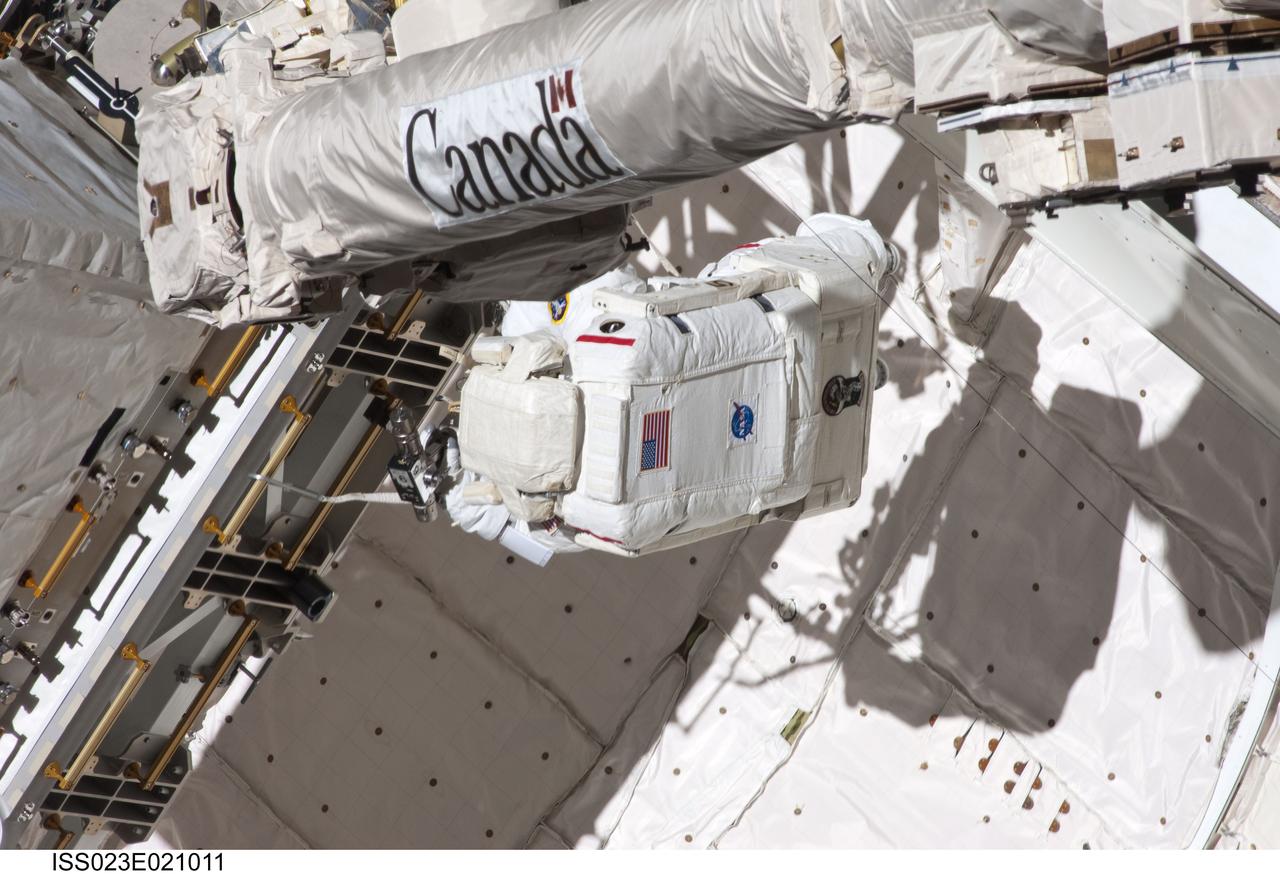
ISS023-E-021011 (9 April 2010) --- NASA astronaut Rick Mastracchio, STS-131 mission specialist, participates in the mission's first session of extravehicular activity (EVA) as construction and maintenance continue on the International Space Station. During the six-hour, 27-minute spacewalk, Mastracchio and astronaut Clayton Anderson (out of frame), mission specialist, helped move a new 1,700-pound ammonia tank from space shuttle Discovery’s cargo bay to a temporary parking place on the station, retrieved an experiment from the Japanese Kibo Laboratory exposed facility and replaced a Rate Gyro Assembly on one of the truss segments.
Mastracchio in Discovery Payload Bay during EVA 1
KENNEDY SPACE CENTER, FLA. - In the Payload Changeout Room on Launch Pad 39B, the payloads for Return to Flight mission STS-114 are being transferred to Discovery’s payload bay.  Seen here is the External Stowage Platform 2.  Other payloads includes a Control Moment Gyro and the Thermal Protection System Detailed Test Objective box, which is placed on the Lightweight Multi-Purpose Experiment Support Structure Carrier, and Multi-Purpose Logistics Module Raffaello. Already installed in the payload bay are the airlock, the Canadarm 2, or Shuttle arm, and the Orbiter Boom Sensor System.  The launch window for mission STS-114 extends from July 13 to July 31.
KSC-05pd-1356
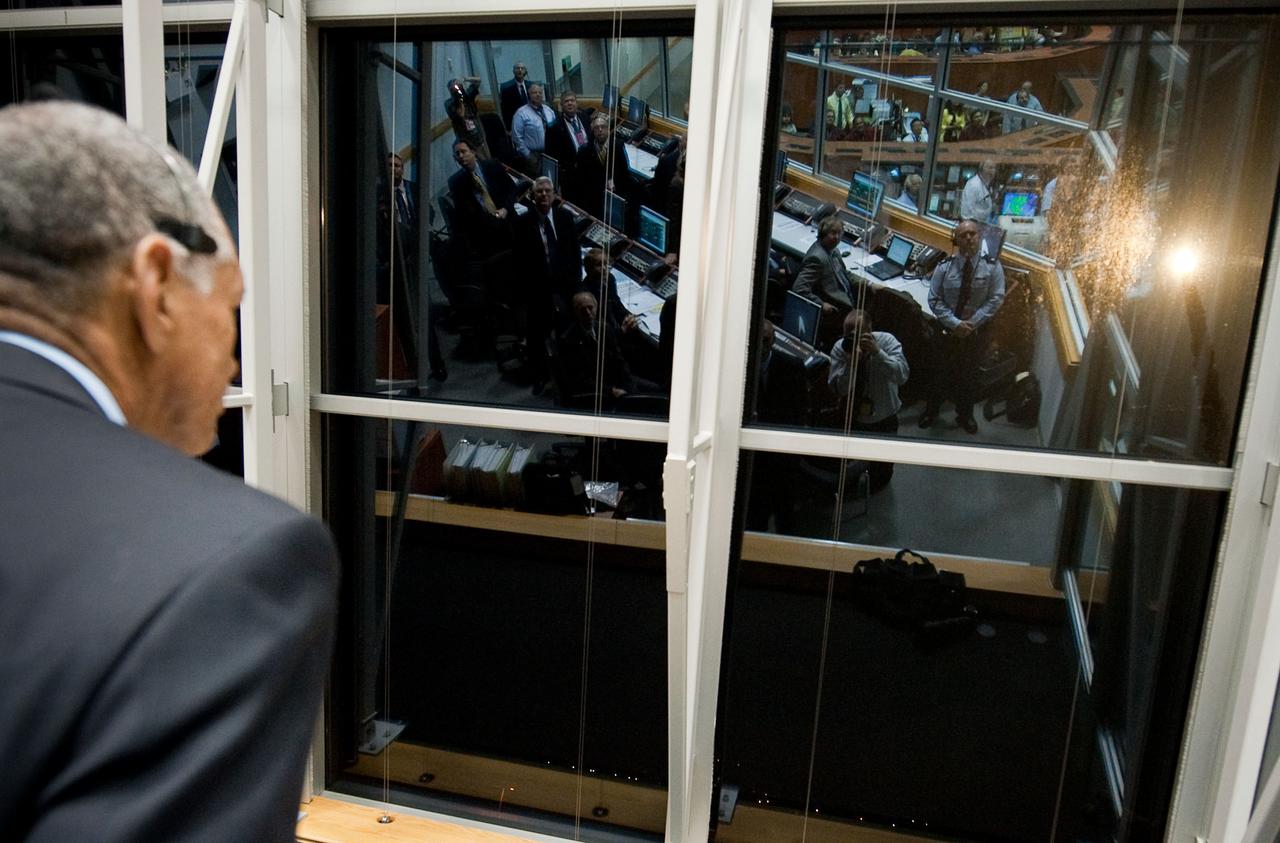
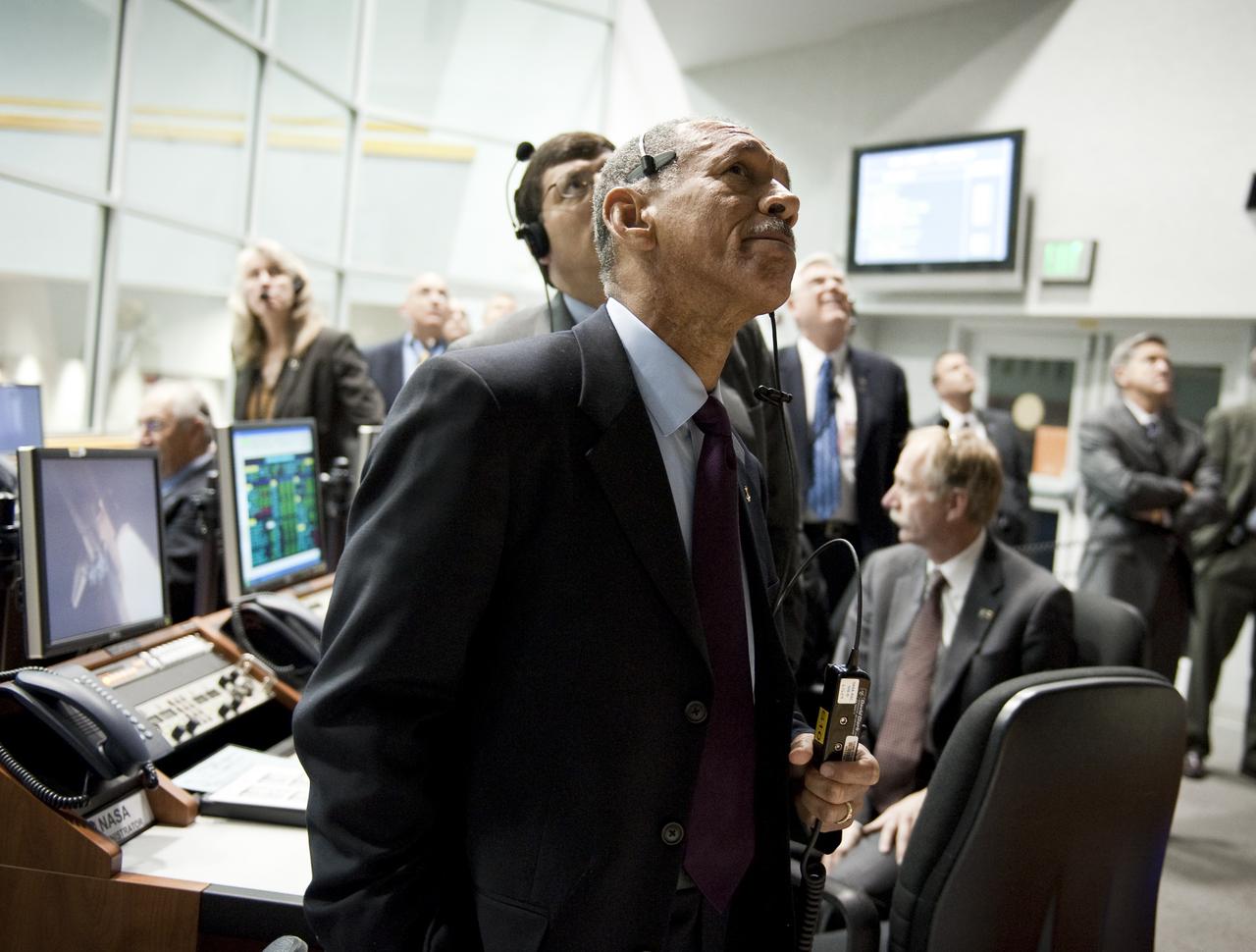
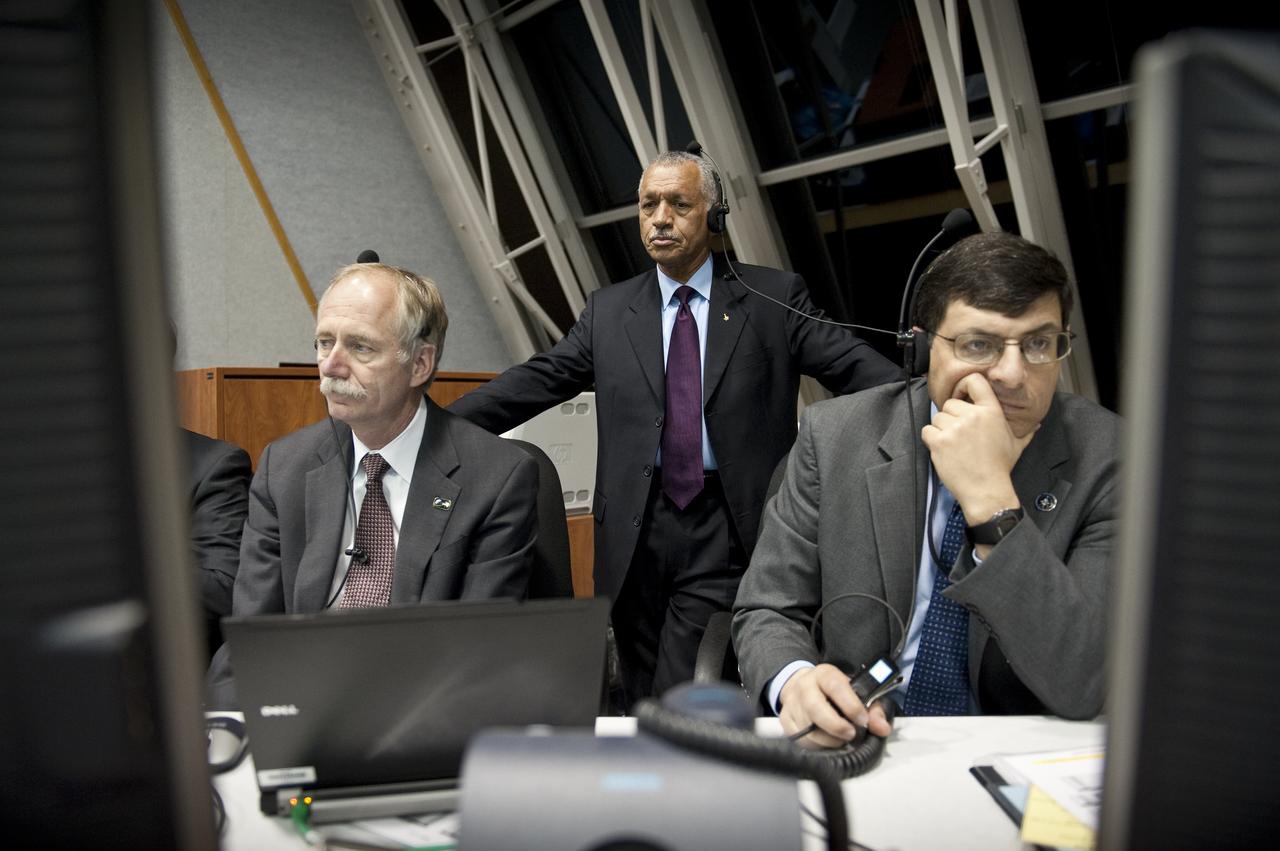
201004050001hq (5 April 2010) --- NASA Administrator Charles Bolden looks out the window of Firing Room Four in the Launch Control Center during the launch of the space shuttle Discovery and the start of the STS-131 mission at NASA Kennedy Space Center in Cape Canaveral, Fla. on April 5, 2010. Discovery is carrying a multi-purpose logistics module filled with science racks for the laboratories aboard the International Space Station. The mission has three planned spacewalks, with work to include replacing an ammonia tank assembly, retrieving a Japanese experiment from the station?s exterior, and switching out a rate gyro assembly on the station?s truss structure. Photo Credit: NASA/Bill Ingalls
STS-131 Discovery Launch
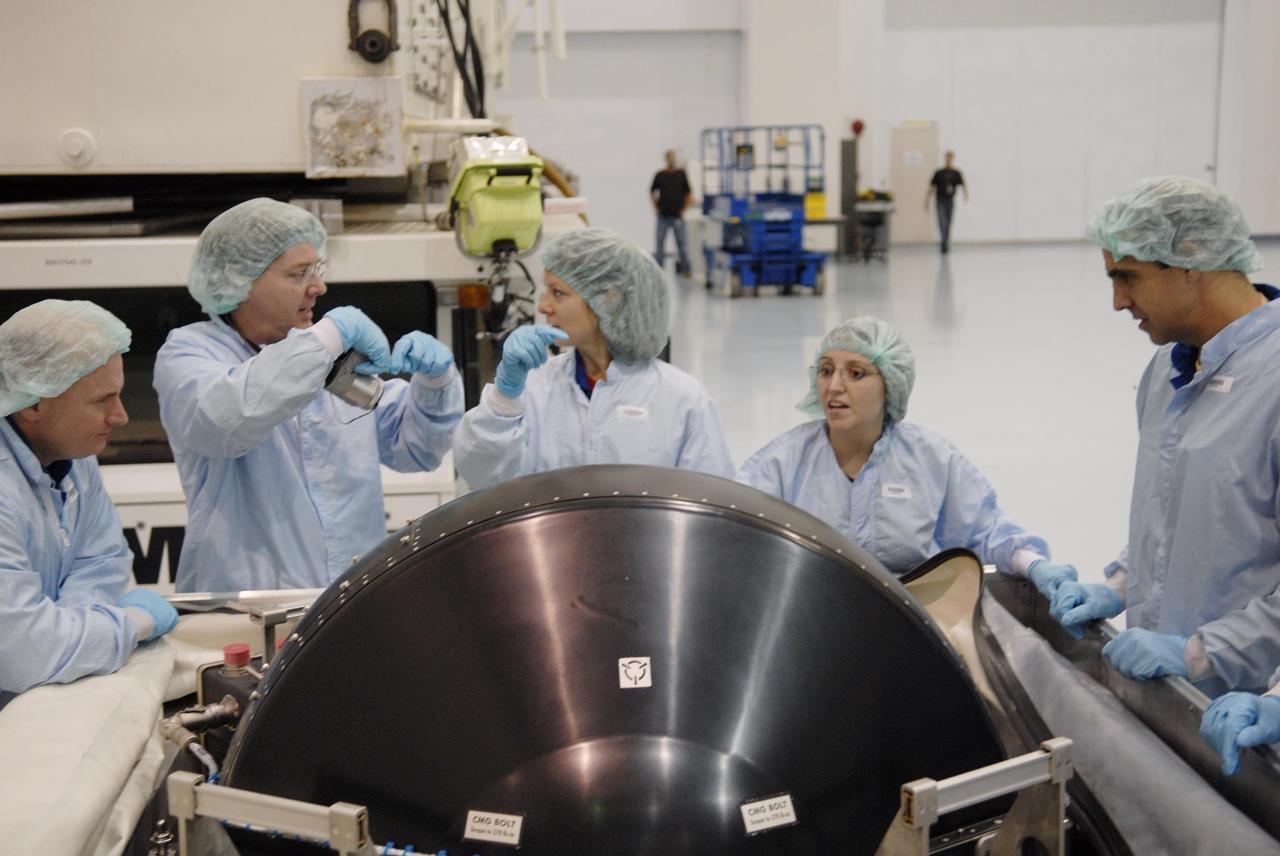
KENNEDY SPACE CENTER, FLA. --   In the Space Station Processing Facility, members of the STS-118 crew learn important information from technicians about the control moment gyro (CMG) in front of them that is part of the payload on their mission.  At far left is Commander Scott Kelly; at center is Mission Specialist Tracy Caldwell; and at far right is Mission Specialist Richard Mastracchio. The CMG will replace a faulty one on the International Space Station.  The payload also includes the SPACEHAB single cargo module, the third starboard truss segment (ITS S5) and the external stowage platform 3 (ESP3). STS-118 is targeted to launch June 28 from Launch Pad 39A.  Photo credit: NASA/Kim Shiflett
KSC-07pd0227
KENNEDY SPACE CENTER, FLA. -  In the Payload Changeout Room on Launch Pad 39B, the payloads for Return to Flight mission STS-114 are being transferred to Discovery’s payload bay. Seen here is the airlock, already installed in the payload bay.  Payloads being installed are a Control Moment Gyro, the Thermal Protection System Detailed Test Objective box, which is placed on the Lightweight Multi-Purpose Experiment Support Structure Carrier, External Stowage Platform 2 and Multi-Purpose Logistics Module Raffaello.  Already installed in the payload bay are the airlock, the Canadarm 2, or Shuttle arm, and the Orbiter Boom Sensor System.  The launch window for mission STS-114 extends from July 13 to July 31.
KSC-05pd-1357
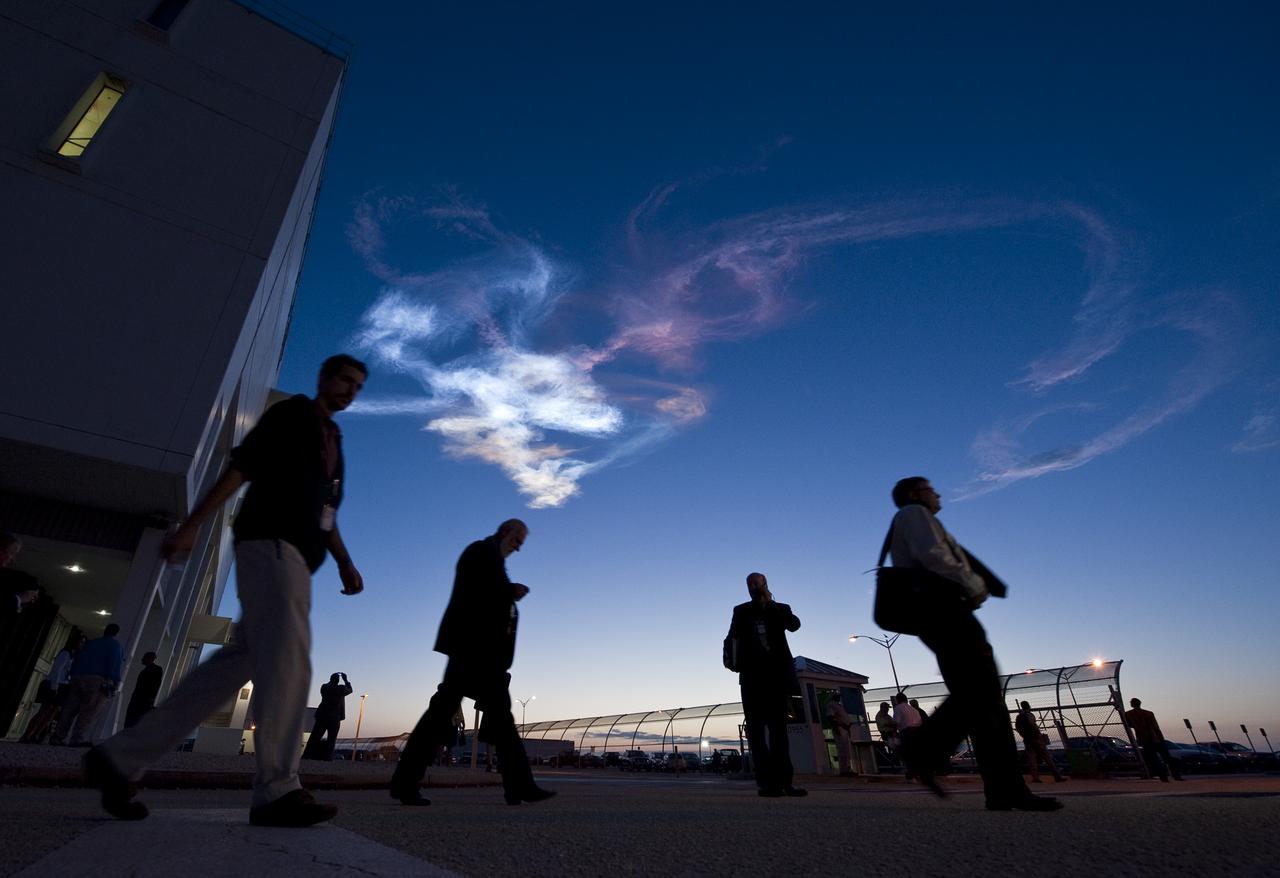
Contrails are seen as workers leave the Launch Control Center after the launch of the space shuttle Discovery and the start of the STS-131 mission at NASA Kennedy Space Center in Cape Canaveral, Fla. on Monday April 5, 2010. Discovery is carrying a multi-purpose logistics module filled with science racks for the laboratories aboard the station. The mission has three planned spacewalks, with work to include replacing an ammonia tank assembly, retrieving a Japanese experiment from the station’s exterior, and switching out a rate gyro assembly on the station’s truss structure. Photo Credit: (NASA/Bill Ingalls)
STS-131 Discovery Launch
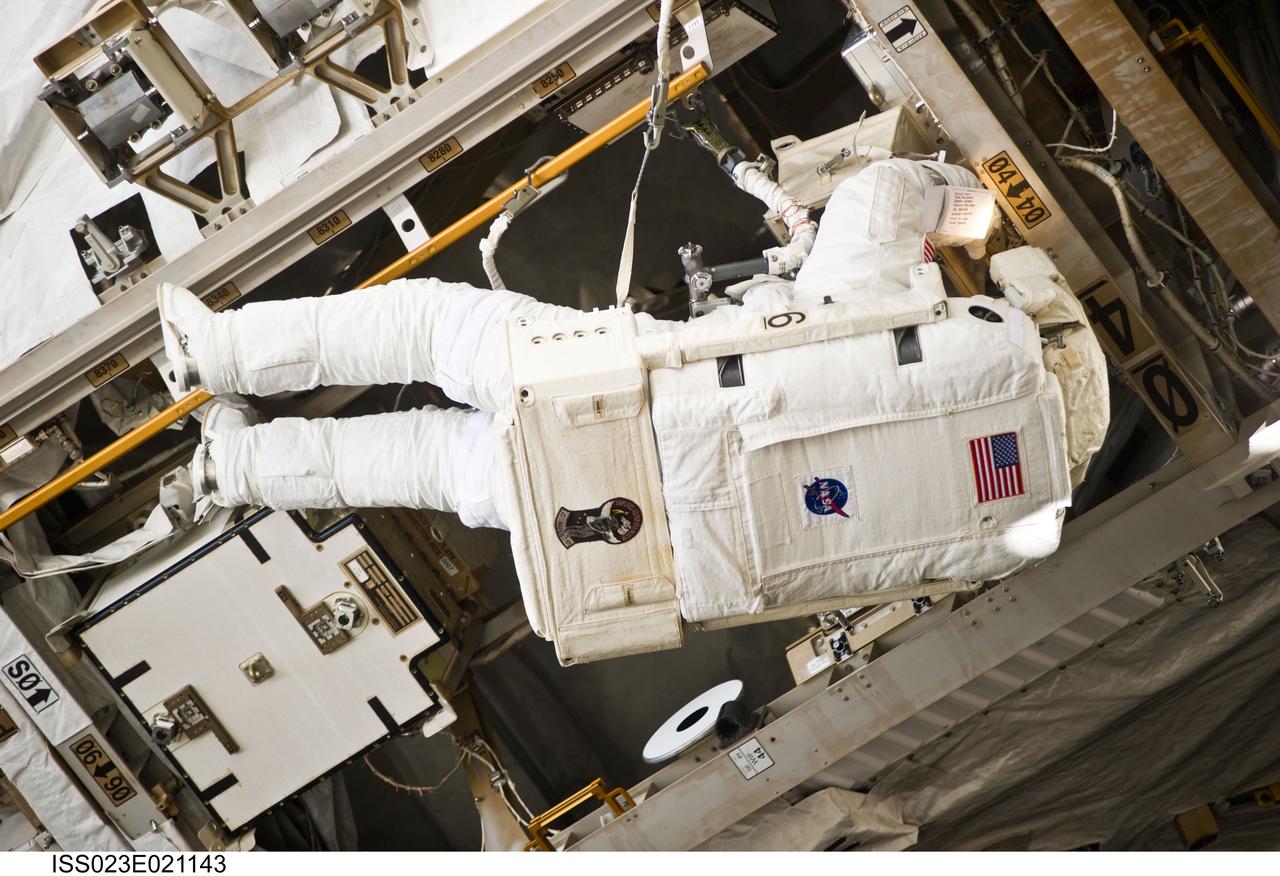
ISS023-E-021143 (9 April 2010) --- NASA astronaut Clayton Anderson, STS-131 mission specialist, participates in the mission's first session of extravehicular activity (EVA) as construction and maintenance continue on the International Space Station. During the six-hour, 27-minute spacewalk, Anderson and astronaut Rick Mastracchio (out of frame), mission specialist, helped move a new 1,700-pound ammonia tank from space shuttle Discovery’s cargo bay to a temporary parking place on the station, retrieved an experiment from the Japanese Kibo Laboratory exposed facility and replaced a Rate Gyro Assembly on one of the truss segments.
Anderson during EVA 1
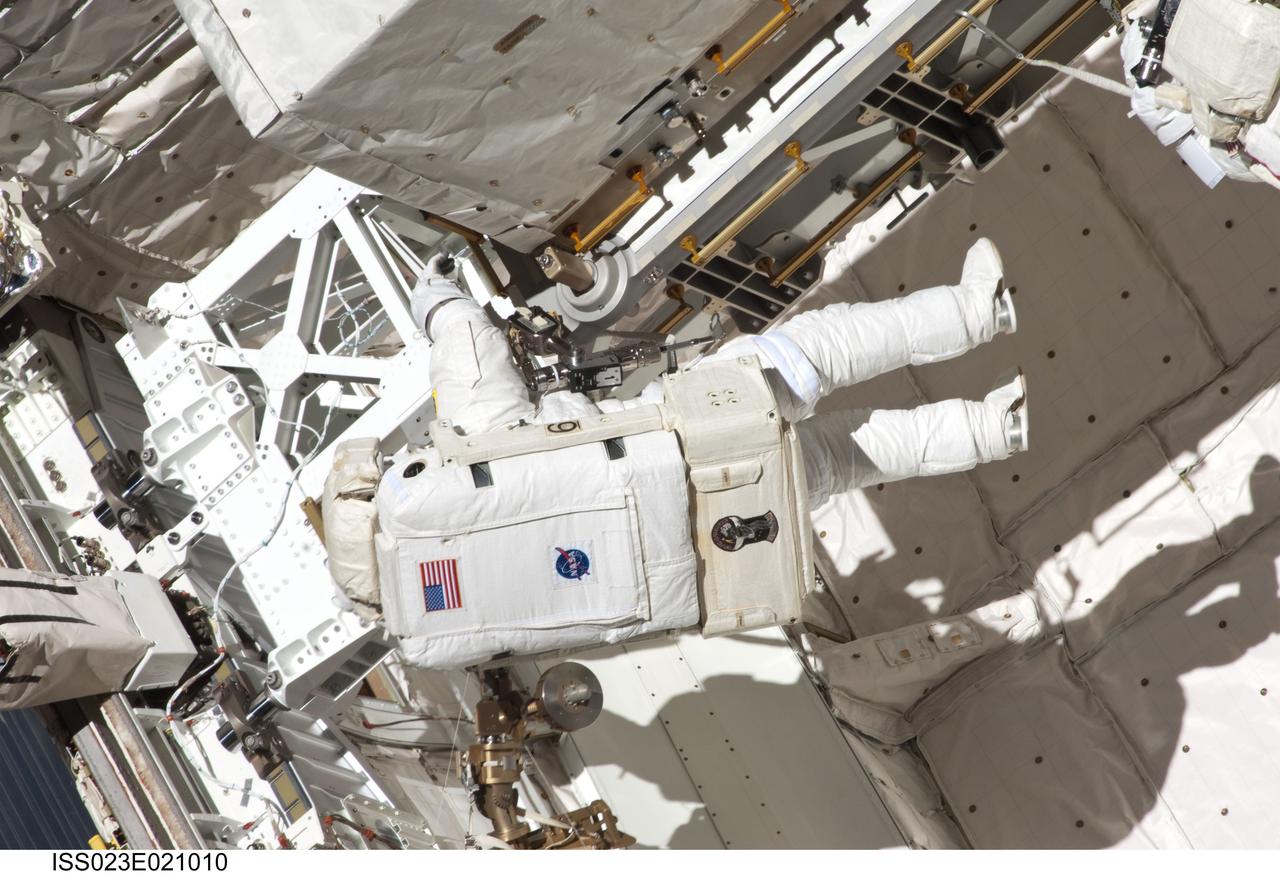
ISS023-E-021010 (9 April 2010) --- NASA astronaut Clayton Anderson, STS-131 mission specialist, participates in the mission's first session of extravehicular activity (EVA) as construction and maintenance continue on the International Space Station. During the six-hour, 27-minute spacewalk, Anderson and astronaut Rick Mastracchio (out of frame), mission specialist, helped move a new 1,700-pound ammonia tank from space shuttle Discovery’s cargo bay to a temporary parking place on the station, retrieved an experiment from the Japanese Kibo Laboratory exposed facility and replaced a Rate Gyro Assembly on one of the truss segments.
Anderson in Discovery Payload Bay during EVA 1
KENNEDY SPACE CENTER, FLA. --   In the Space Station Processing Facility, members of the STS-118 crew look over the control moment gyro (CMG) that is part of the payload on their mission.  At left is Commander Scott Kelly; at right is Mission Specialist Tracy Caldwell. The CMG will replace a faulty one on the International Space Station.  The payload also includes the SPACEHAB single cargo module, the third starboard truss segment (ITS S5) and the external stowage platform 3 (ESP3).   STS-118 is targeted to launch June 28 from Launch Pad 39A. Photo credit: NASA/Kim Shiflett
KSC-07pd0226
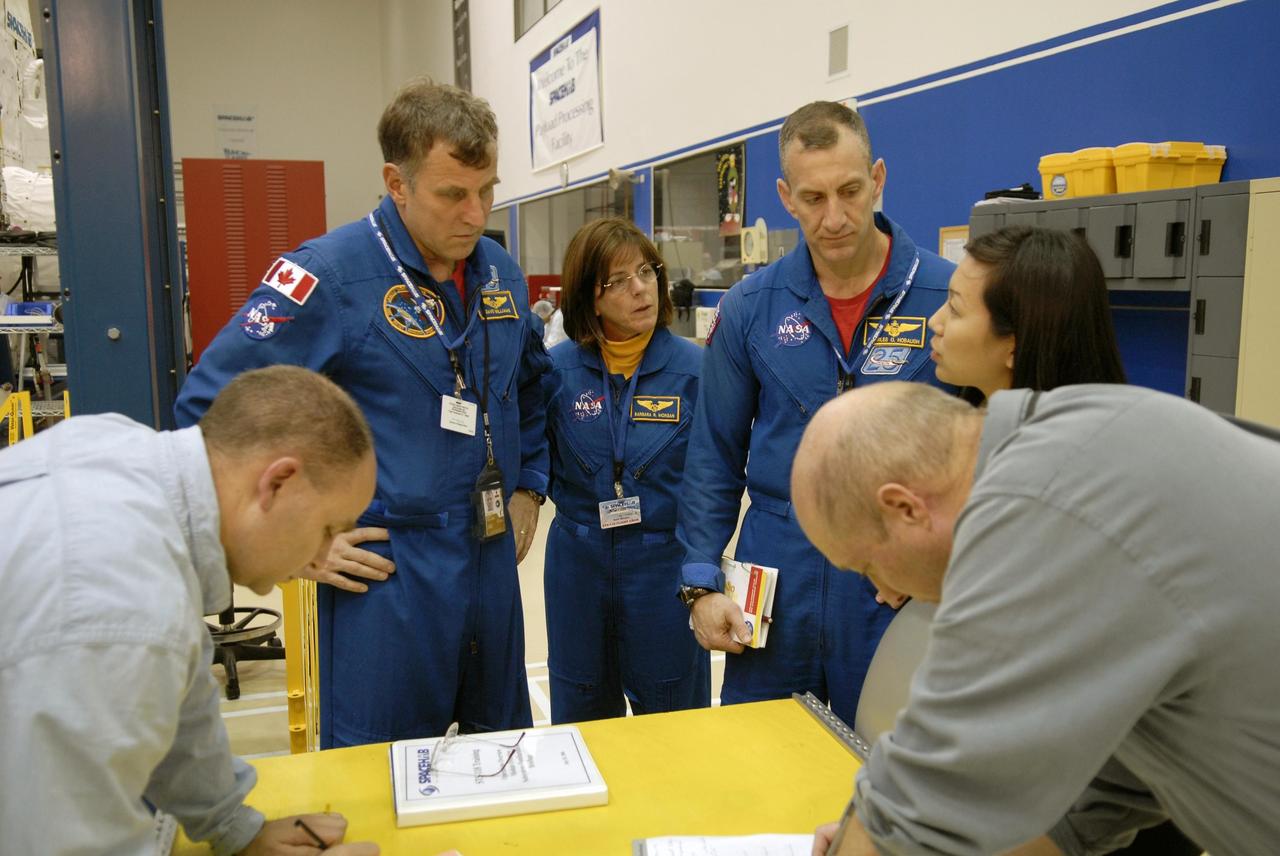
KENNEDY SPACE CENTER, FLA. --  Members of the STS-118 crew take part in a hardware review of the SPACEHAB module, part of the payload on their mission.  Seen here (in uniforms) from left are Mission Specialists Dafydd Williams and Barbara Morgan and Pilot Charles Hobaugh.  Williams represents the Canadian Space Agency.  The mission payload also includes the third starboard truss segment (ITS S5), a control moment gyro and the external stowage platform 3 (ESP3).  STS-118 is targeted to launch June 28 from Launch Pad 39A.  Photo credit: NASA/Kim Shiflett
KSC-07pd0237
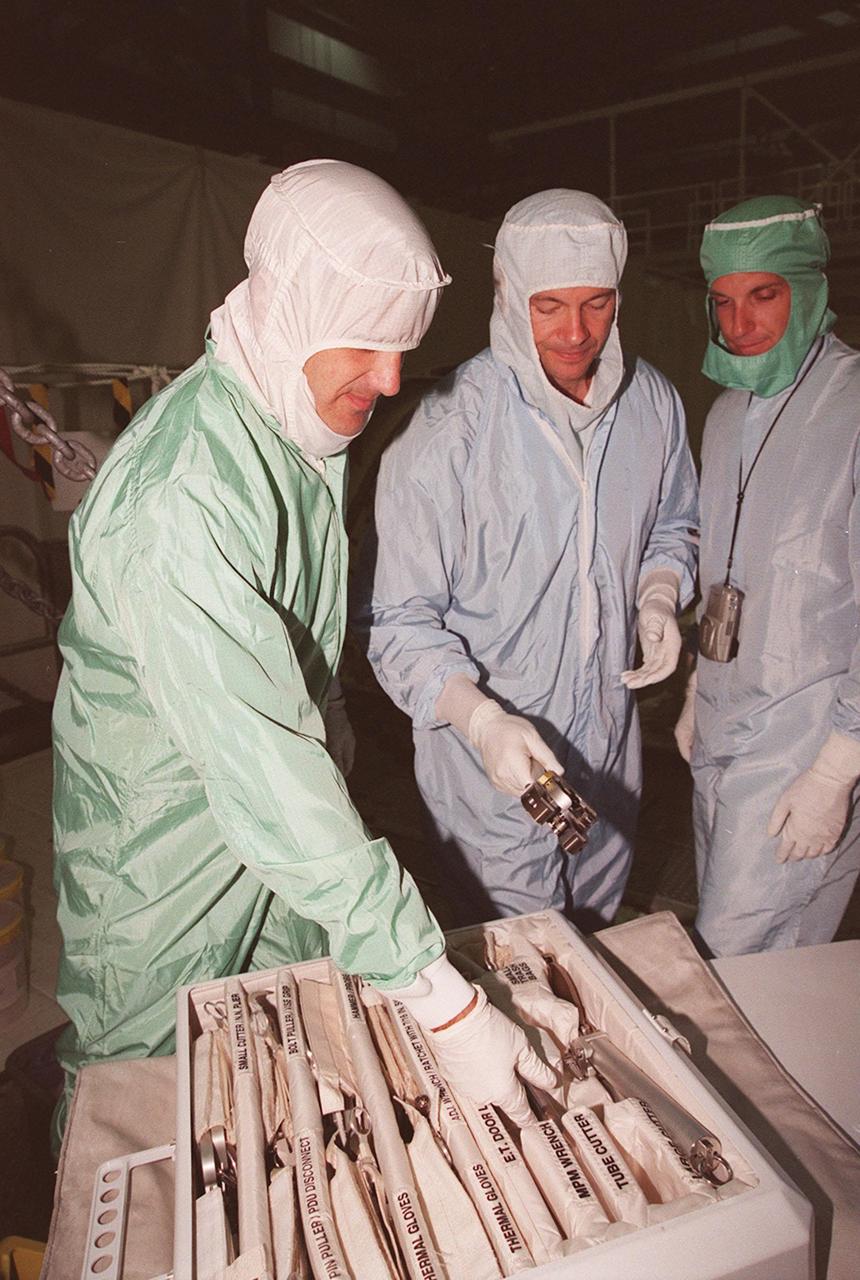
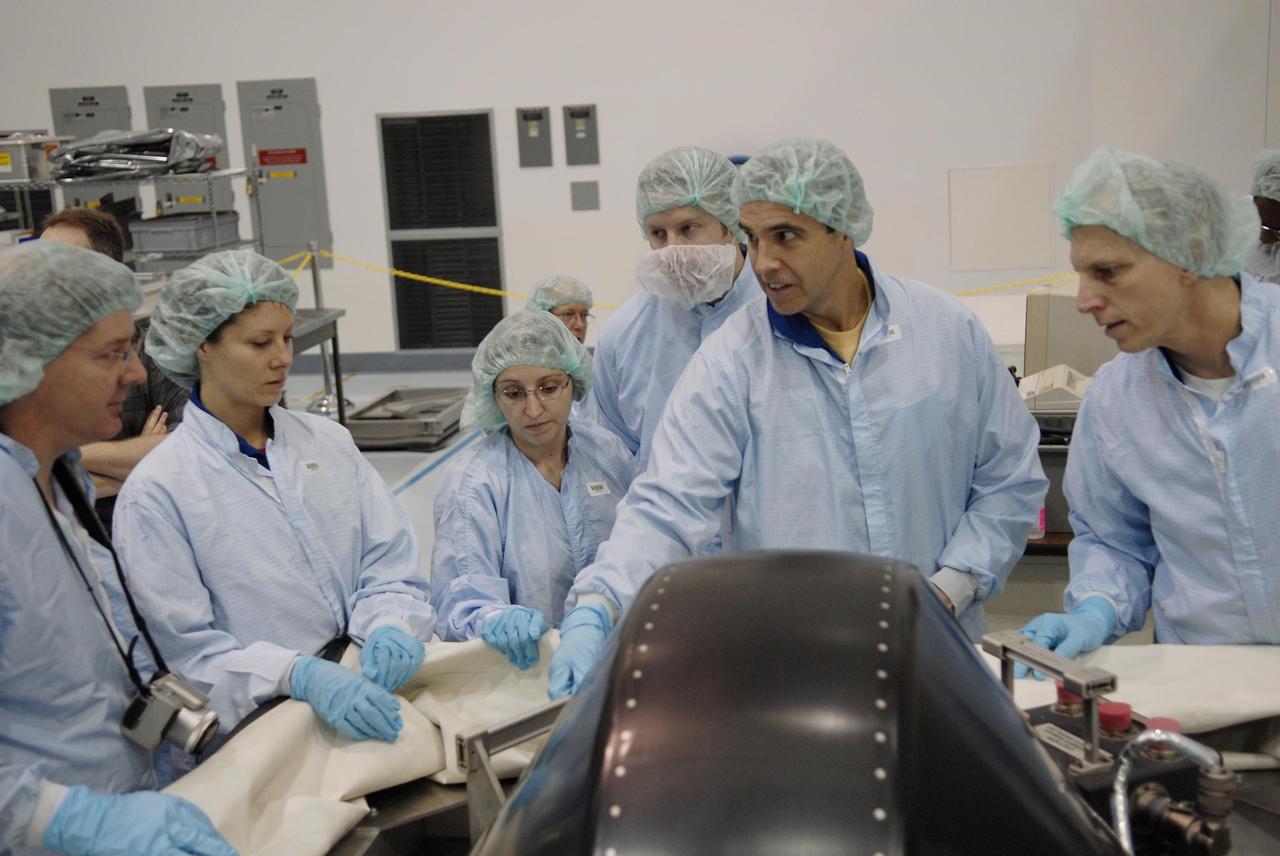
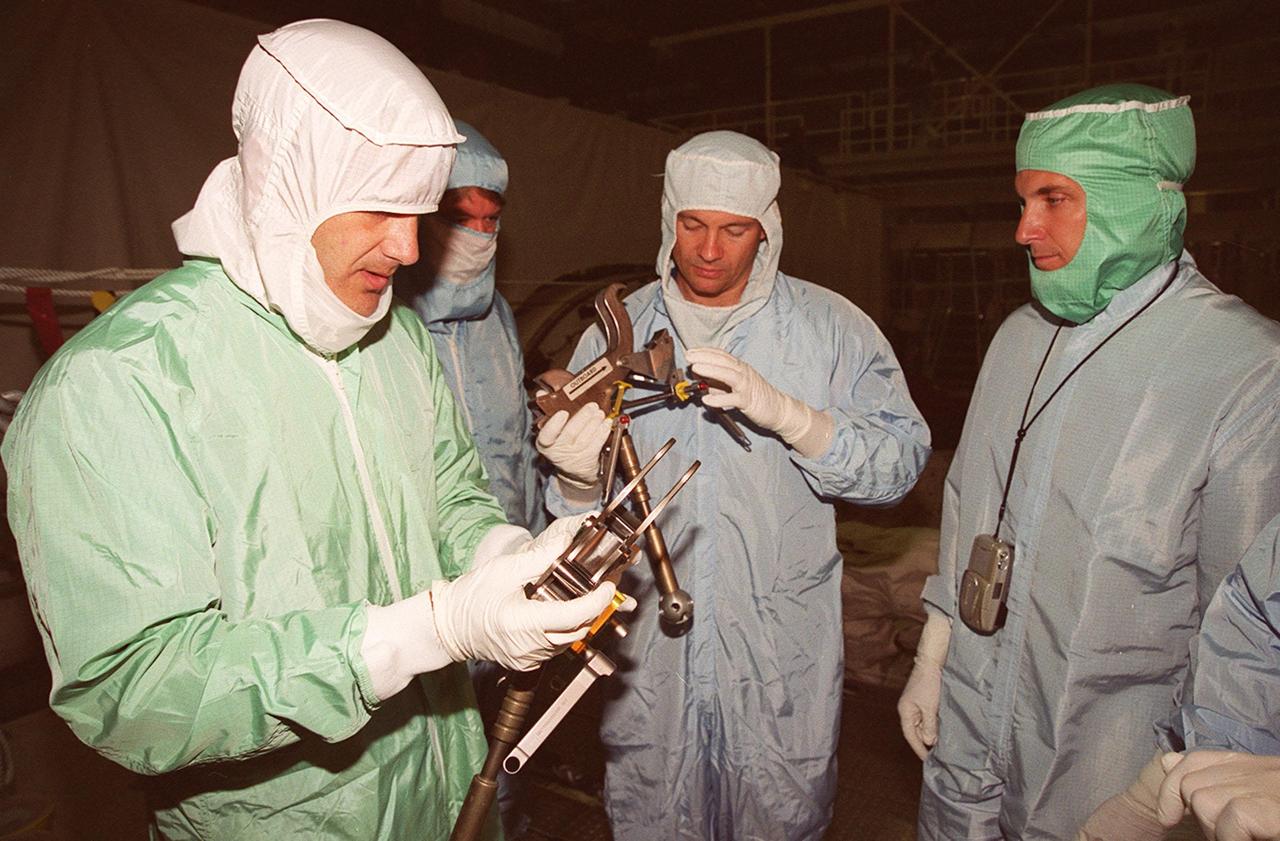
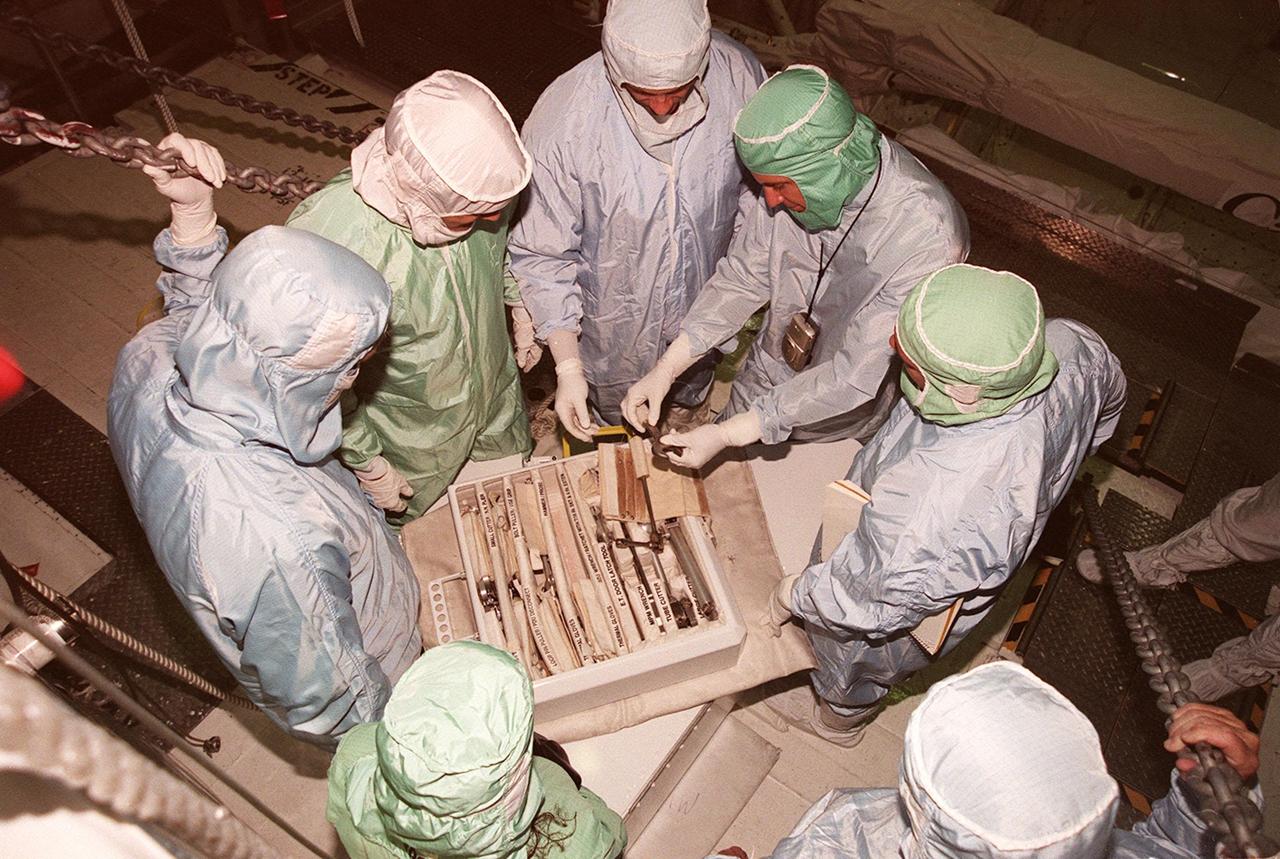
In the Orbiter Processing Facility bay 1, STS-92 crew members, along with Boeing workers, look closely at the tools they will be using on their mission. The crew comprises Commander Brian Duffy, Pilot Pam Melroy and Mission Specialists Koichi Wakata, Leroy Chiao, Jeff Wisoff, Michael Lopez-Alegria and Bill McArthur. STS-92 is scheduled to launch Oct. 5 on Shuttle Discovery from Launch Pad 39A on the fifth flight to the International Space Station. Discovery will carry the Integrated Truss Structure (ITS) Z1, Pressurized Mating Adapter 3, Ku-band Communications System, and Control Moment Gyros (CMGs)
KSC-00pp0917
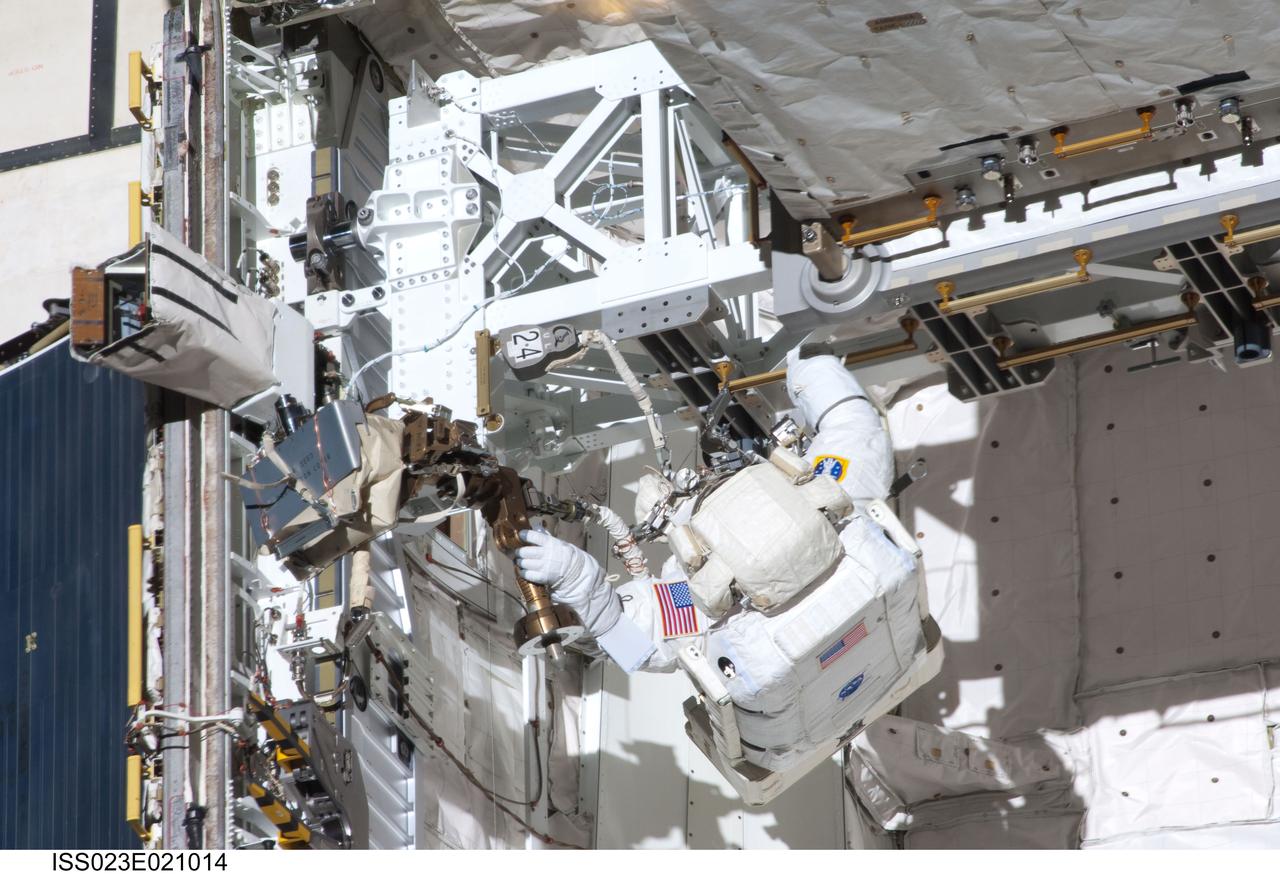
ISS023-E-021014 (9 April 2010) --- NASA astronaut Clayton Anderson, STS-131 mission specialist, participates in the mission's first session of extravehicular activity (EVA) as construction and maintenance continue on the International Space Station. During the six-hour, 27-minute spacewalk, Anderson and astronaut Rick Mastracchio (out of frame), mission specialist, helped move a new 1,700-pound ammonia tank from space shuttle Discovery’s cargo bay to a temporary parking place on the station, retrieved an experiment from the Japanese Kibo Laboratory exposed facility and replaced a Rate Gyro Assembly on one of the truss segments.
Anderson in Discovery Payload Bay during EVA 1
NASA Administrator Charles Bolden looks out the window of Firing Room Four in the Launch Control Center during the launch of the space shuttle Discovery and the start of the STS-131 mission at NASA Kennedy Space Center in Cape Canaveral, Fla. on Monday April 5, 2010. Discovery is carrying a multi-purpose logistics module filled with science racks for the laboratories aboard the station. The mission has three planned spacewalks, with work to include replacing an ammonia tank assembly, retrieving a Japanese experiment from the station’s exterior, and switching out a rate gyro assembly on the station’s truss structure. Photo Credit: (NASA/Bill Ingalls)
STS-131 Discovery Launch
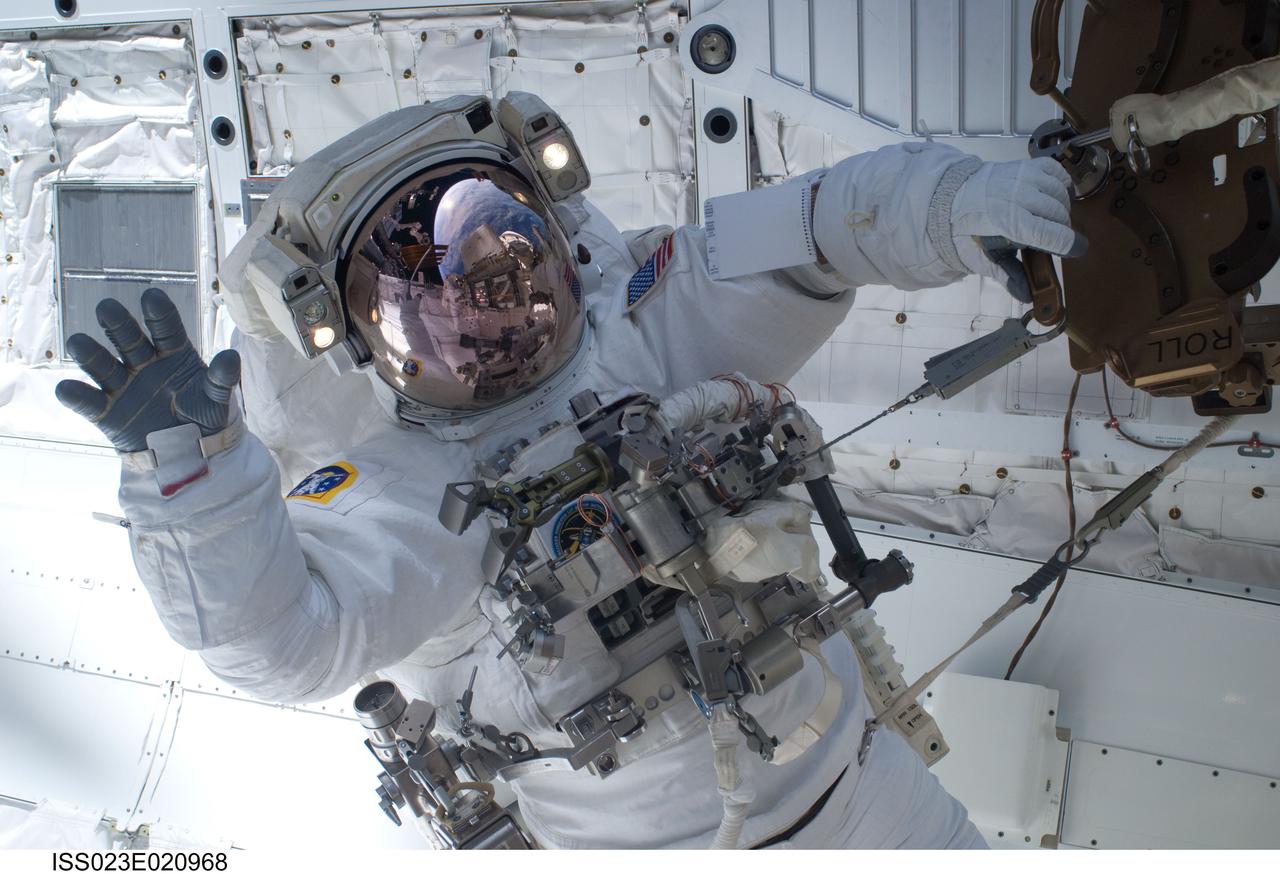
ISS023-E-020968 (9 April 2010) --- NASA astronaut Clayton Anderson, STS-131 mission specialist, participates in the mission's first session of extravehicular activity (EVA) as construction and maintenance continue on the International Space Station. During the six-hour, 27-minute spacewalk, Anderson and Rick Mastracchio (visible in the reflection of Anderson’s helmet visor), mission specialist, helped move a new 1,700-pound ammonia tank from space shuttle Discovery’s cargo bay to a temporary parking place on the station, retrieved an experiment from the Japanese Kibo Laboratory exposed facility and replaced a Rate Gyro Assembly on one of the truss segments.
Anderson during EVA 1
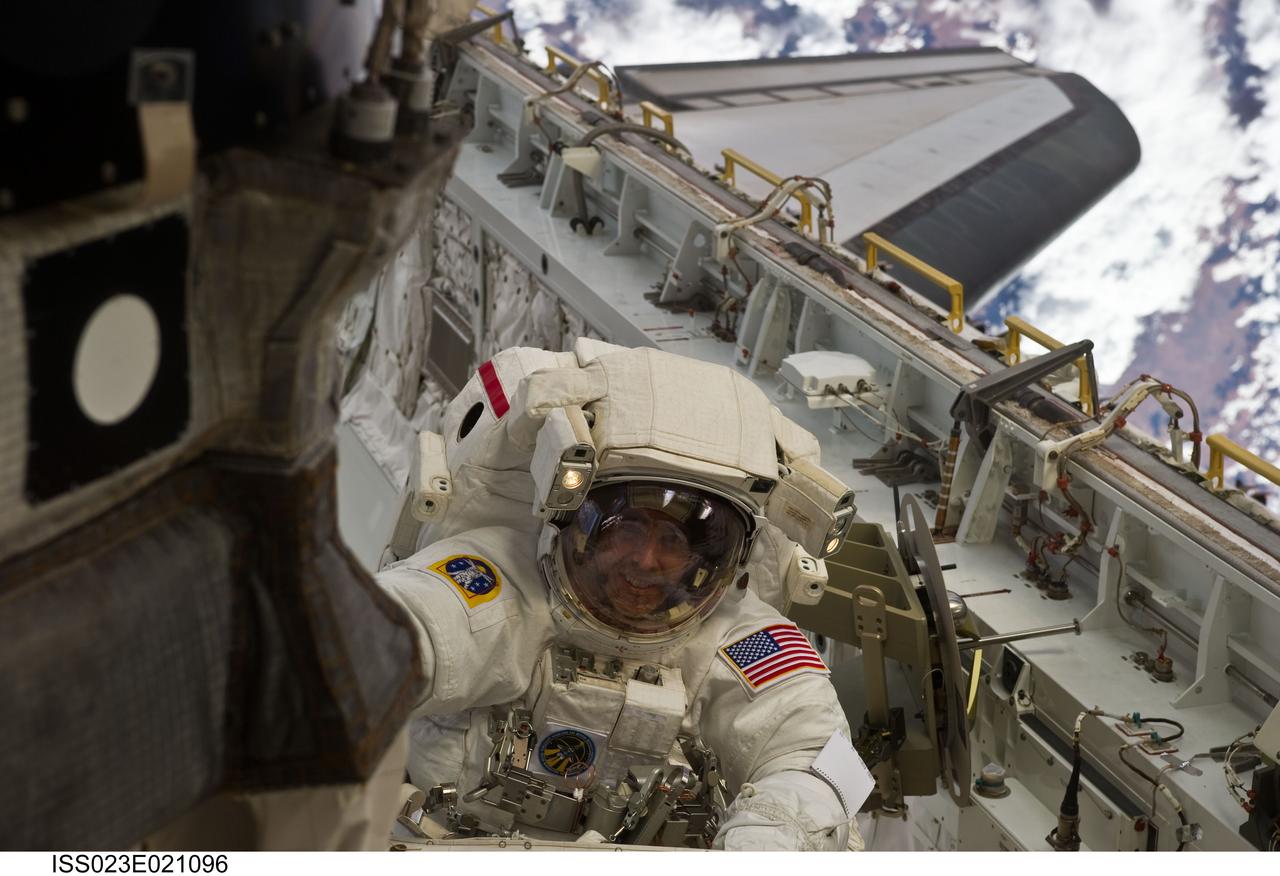
ISS023-E-021096 (9 April 2010) --- NASA astronaut Rick Mastracchio, STS-131 mission specialist, participates in the mission's first session of extravehicular activity (EVA) as construction and maintenance continue on the International Space Station. During the six-hour, 27-minute spacewalk, Mastracchio and astronaut Clayton Anderson (out of frame), mission specialist, helped move a new 1,700-pound ammonia tank from space shuttle Discovery’s cargo bay to a temporary parking place on the station, retrieved an experiment from the Japanese Kibo Laboratory exposed facility and replaced a Rate Gyro Assembly on one of the truss segments.
Mastracchio during EVA 1
KENNEDY SPACE CENTER, FLA. --  Members of the STS-118 crew take part in a hardware review of the SPACEHAB module, part of the payload on their mission.  Seen here inside the module are Mission Specialists Dafydd Williams (center) and Barbara Morgan. Williams represents the Canadian Space Agency. The mission payload also includes the third starboard truss segment (ITS S5), a control moment gyro and the external stowage platform 3 (ESP3).  STS-118 is targeted to launch June 28 from Launch Pad 39A.  Photo credit: NASA/Kim Shiflett
KSC-07pd0234
KENNEDY SPACE CENTER, FLA. --  In the Space Station Processing Facility, members of the STS-118 crew learn important information from technicians about the control moment gyro (CMG) in front of them that is part of the payload on their mission.  At left is Commander Scott Kelly; at right is Mission Specialist Tracy Caldwell. The CMG will replace a faulty one on the International Space Station.  The payload also includes the SPACEHAB single cargo module, the third starboard truss segment (ITS S5) and the external stowage platform 3 (ESP3). STS-118 is targeted to launch June 28 from Launch Pad 39A.  Photo credit: NASA/Kim Shiflett
KSC-07pd0228
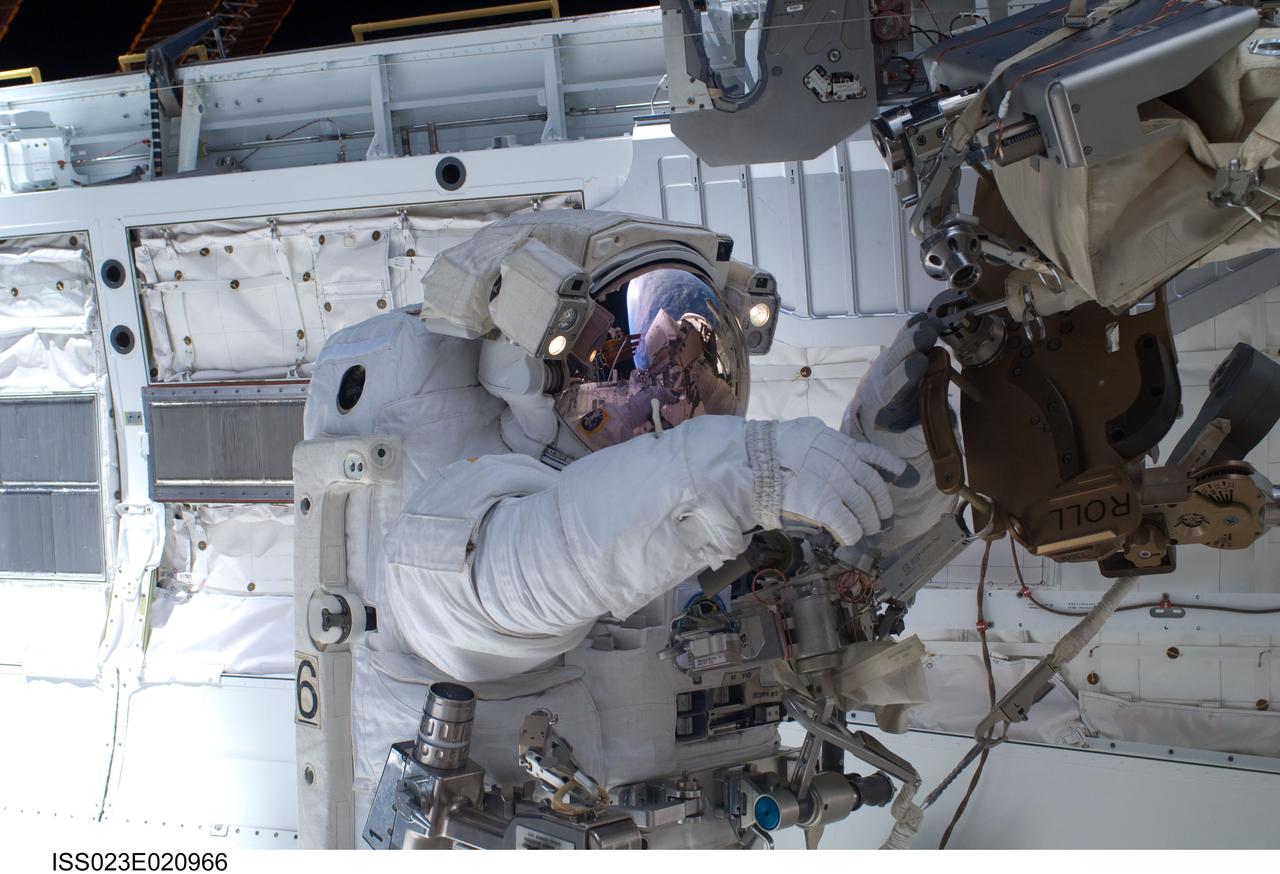
ISS023-E-020966 (9 April 2010) --- NASA astronaut Clayton Anderson, STS-131 mission specialist, participates in the mission's first session of extravehicular activity (EVA) as construction and maintenance continue on the International Space Station. During the six-hour, 27-minute spacewalk, Anderson and Rick Mastracchio (out of frame), mission specialist, helped move a new 1,700-pound ammonia tank from space shuttle Discovery’s cargo bay to a temporary parking place on the station, retrieved an experiment from the Japanese Kibo Laboratory exposed facility and replaced a Rate Gyro Assembly on one of the truss segments.
Anderson during EVA 1
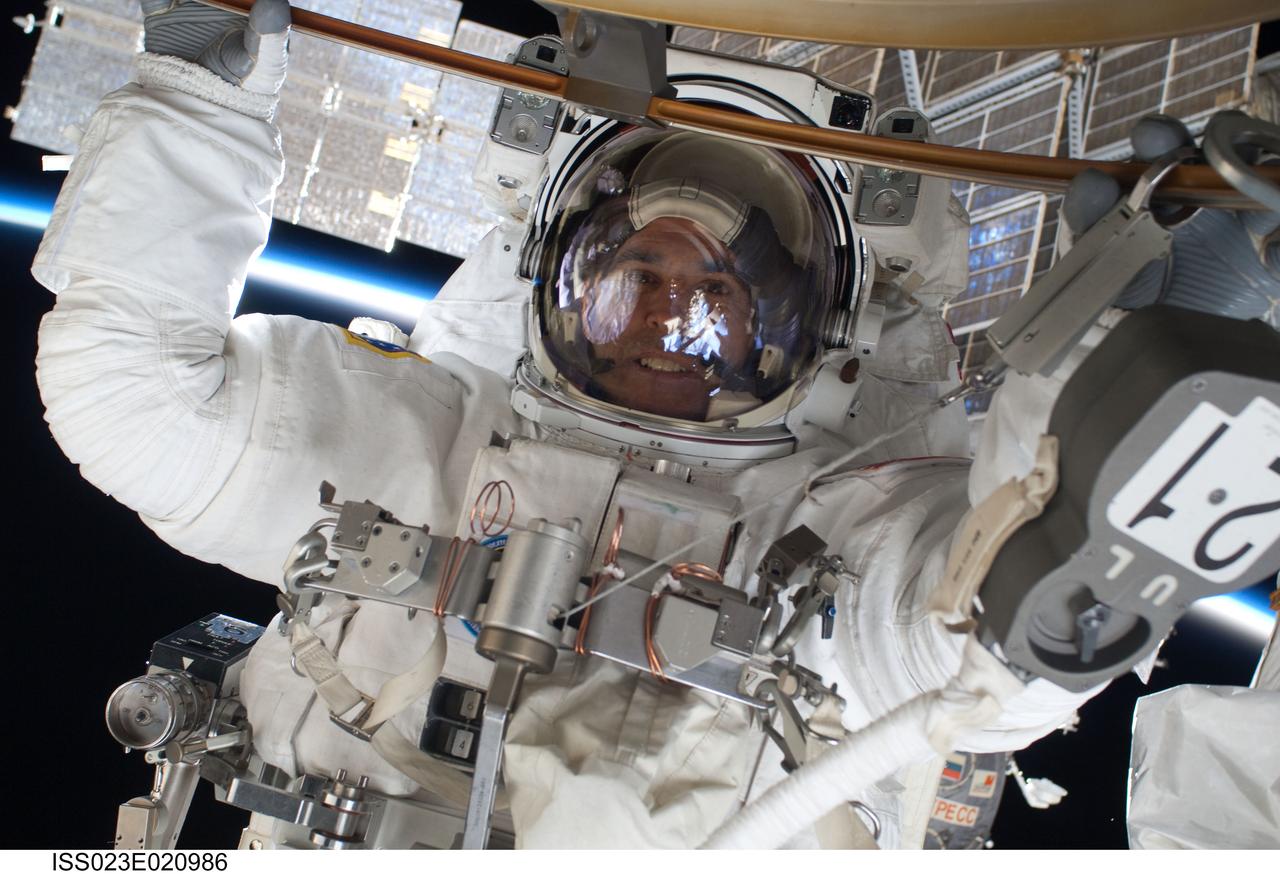
ISS023-E-020986 (9 April 2010) --- NASA astronaut Rick Mastracchio, STS-131 mission specialist, participates in the mission's first session of extravehicular activity (EVA) as construction and maintenance continue on the International Space Station. During the six-hour, 27-minute spacewalk, Mastracchio and astronaut Clayton Anderson (out of frame), mission specialist, helped move a new 1,700-pound ammonia tank from space shuttle Discovery’s cargo bay to a temporary parking place on the station, retrieved an experiment from the Japanese Kibo Laboratory exposed facility and replaced a Rate Gyro Assembly on one of the truss segments.
Mastracchio during EVA 1
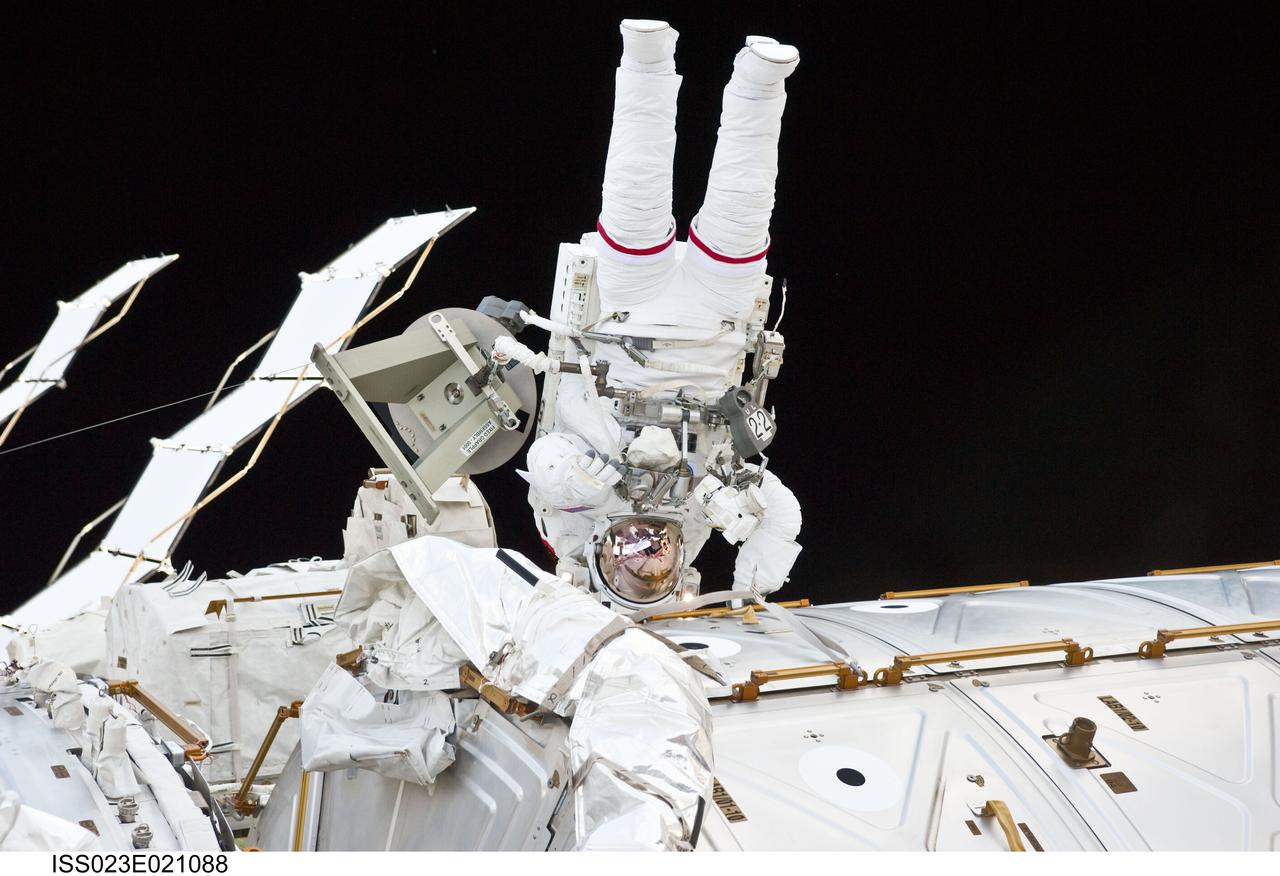
ISS023-E-021088 (9 April 2010) --- NASA astronaut Rick Mastracchio, STS-131 mission specialist, participates in the mission's first session of extravehicular activity (EVA) as construction and maintenance continue on the International Space Station. During the six-hour, 27-minute spacewalk, Mastracchio and astronaut Clayton Anderson (out of frame), mission specialist, helped move a new 1,700-pound ammonia tank from space shuttle Discovery’s cargo bay to a temporary parking place on the station, retrieved an experiment from the Japanese Kibo Laboratory exposed facility and replaced a Rate Gyro Assembly on one of the truss segments.
Mastracchio during EVA 1
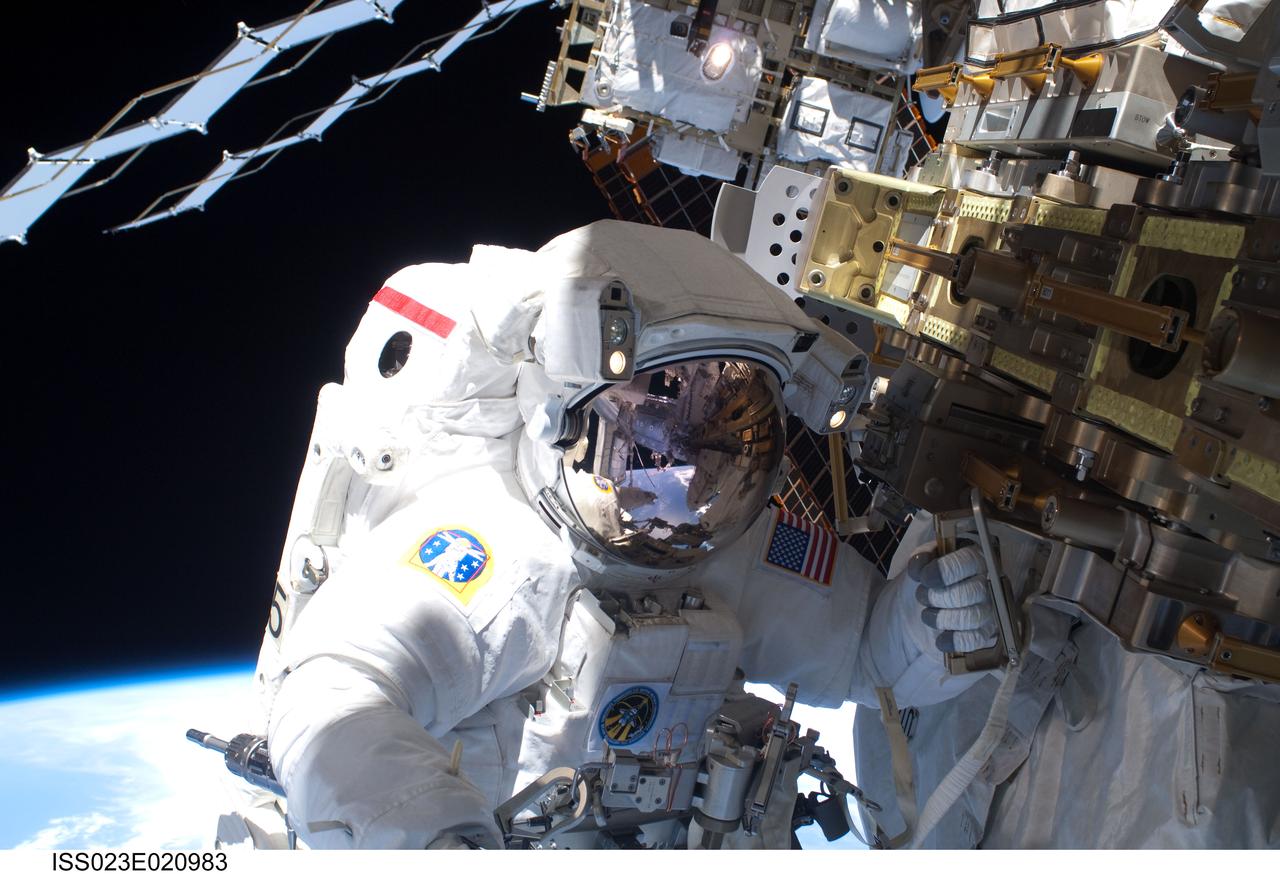
ISS023-E-020983 (9 April 2010) --- NASA astronaut Rick Mastracchio, STS-131 mission specialist, participates in the mission's first session of extravehicular activity (EVA) as construction and maintenance continue on the International Space Station. During the six-hour, 27-minute spacewalk, Mastracchio and astronaut Clayton Anderson (out of frame), mission specialist, helped move a new 1,700-pound ammonia tank from space shuttle Discovery’s cargo bay to a temporary parking place on the station, retrieved an experiment from the Japanese Kibo Laboratory exposed facility and replaced a Rate Gyro Assembly on one of the truss segments.
Mastracchio during EVA 1
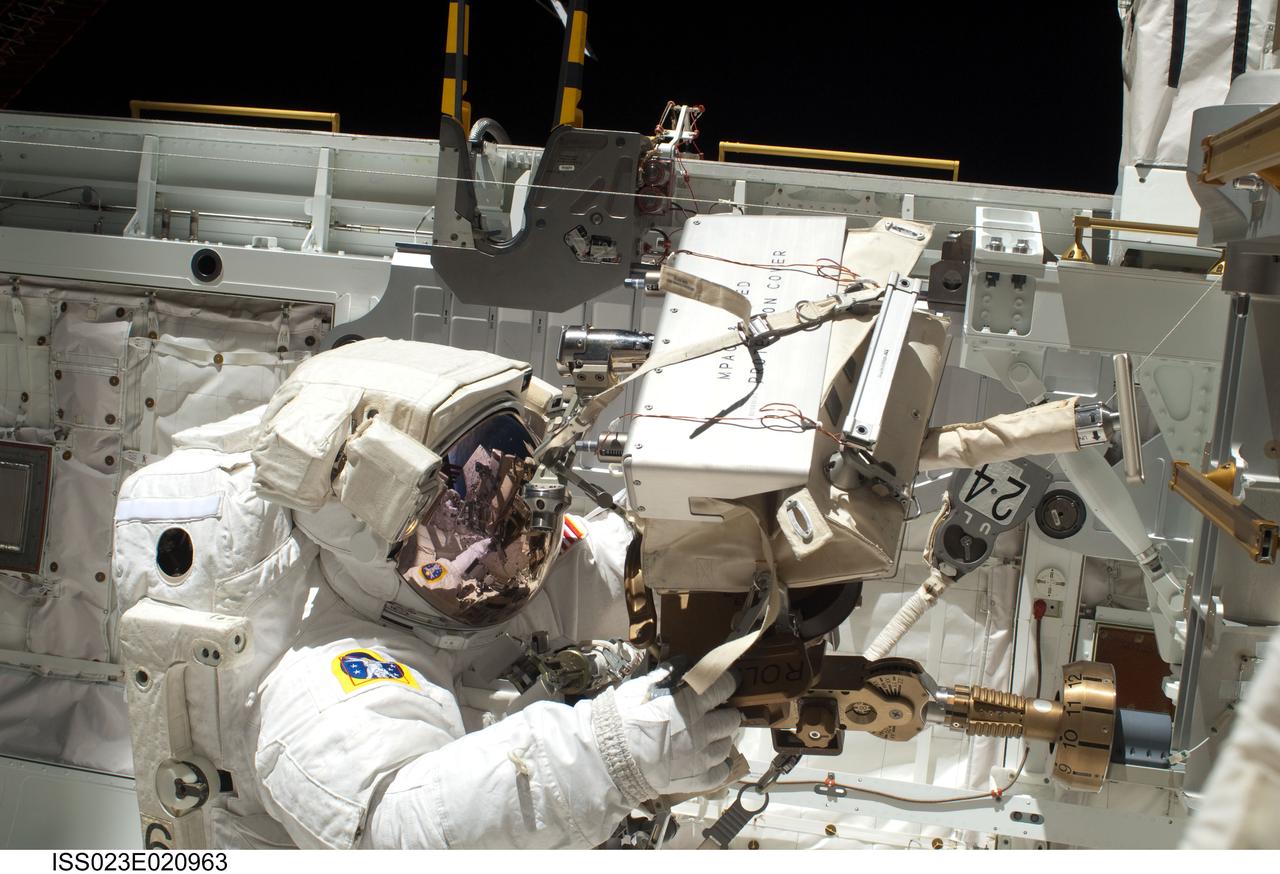
ISS023-E-020963 (9 April 2010) --- NASA astronaut Clayton Anderson, STS-131 mission specialist, participates in the mission's first session of extravehicular activity (EVA) as construction and maintenance continue on the International Space Station. During the six-hour, 27-minute spacewalk, Anderson and Rick Mastracchio (out of frame), mission specialist, helped move a new 1,700-pound ammonia tank from space shuttle Discovery’s cargo bay to a temporary parking place on the station, retrieved an experiment from the Japanese Kibo Laboratory exposed facility and replaced a Rate Gyro Assembly on one of the truss segments.
Anderson during EVA 1
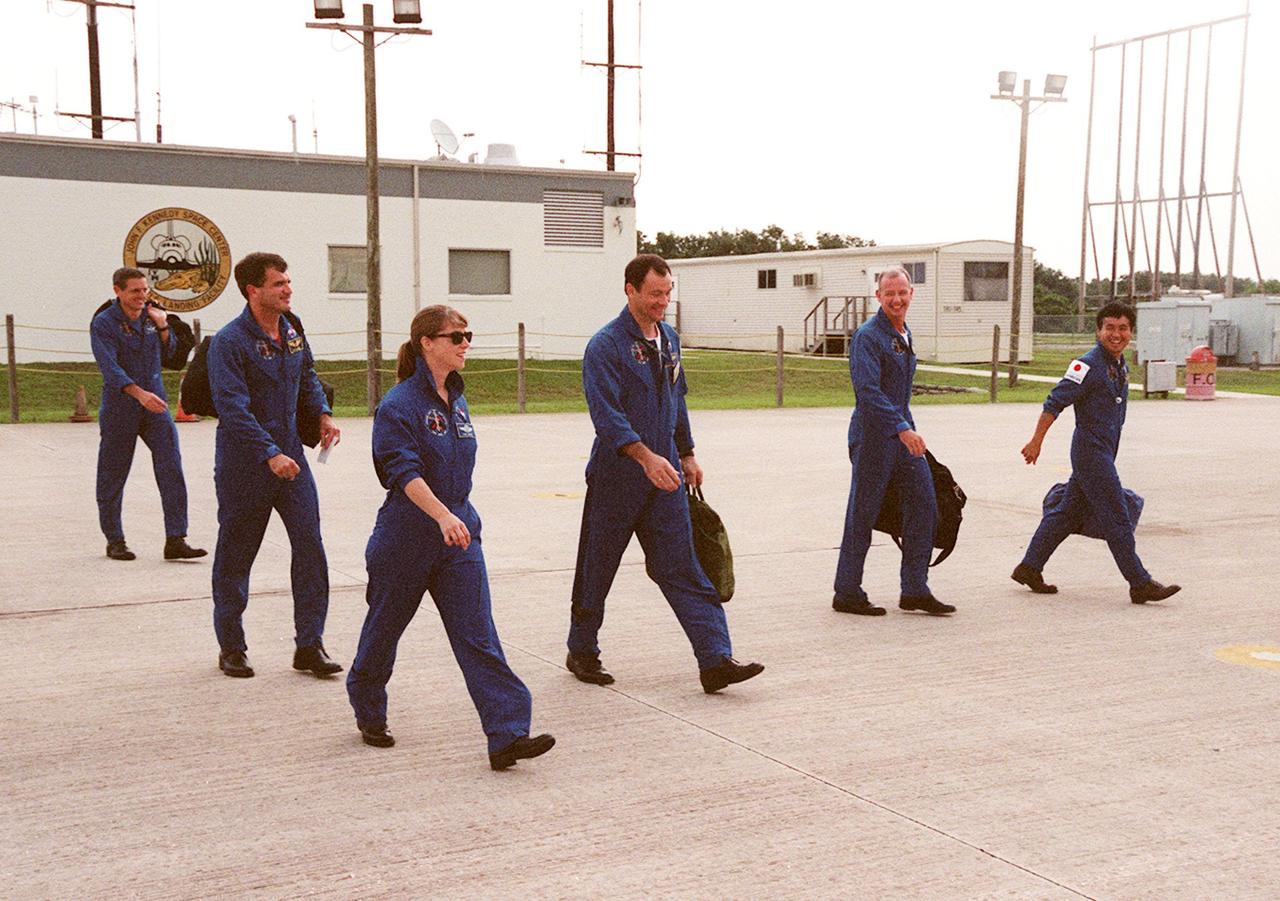
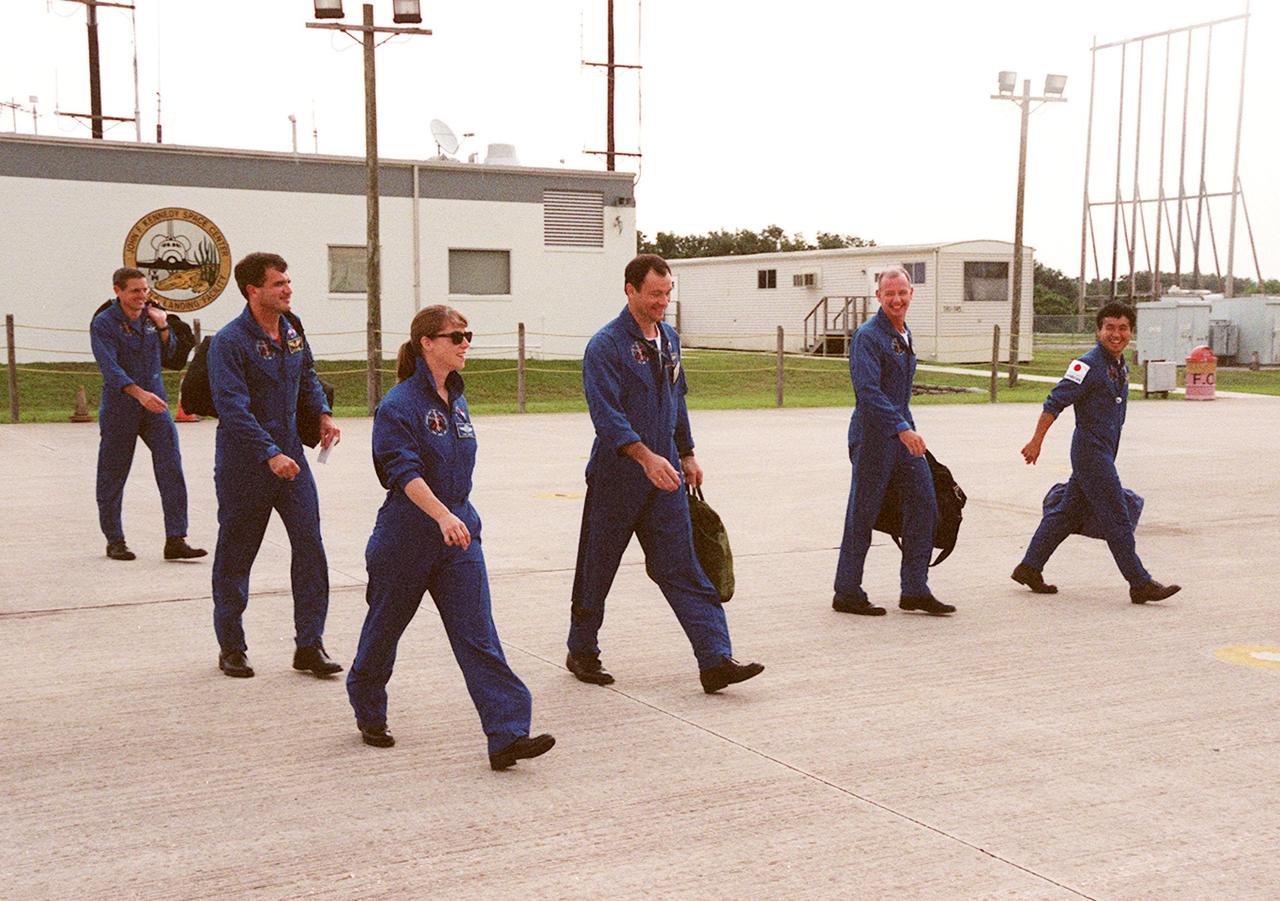
The STS-92 crew strides across the runway at KSC’s Shuttle Landing Facility, heading toward the aircraft that will take them back to Houston. They were at KSC for Crew Equipment Interface Test (CEIT) activities, looking over their mission payload and related equipment. From left are Mission Specialists Bill McArthur and Jeff Wisoff, Pilot Pam Melroy, Mission Specialist Michael Lopez-Alegria, Commander Brian Duffy and Mission Specialist Koichi Wakata, who is with the Japanese space agency. Not seen is Mission Specialist Leroy Chiao, who was also at KSC for the CEIT. STS-92 is scheduled to launch Oct. 5 on Shuttle Discovery from Launch Pad 39A on the fifth flight to the International Space Station. Discovery will carry the Integrated Truss Structure (ITS) Z1, the PMA-3, Ku-band Communications System, and Control Moment Gyros (CMGs)
KSC00pp0942
NASA Associate Administrator for Space Operations Bill Gerstenmaier, left, NASA Administrator Charles Bolden, center, and NASA Associate Administrator Chris Scolese monitor the launch countdown of the space shuttle Discovery and the start of the STS-131 mission from the Launch Control Center at NASA Kennedy Space Center in Cape Canaveral, Fla. on Monday April 5, 2010. Discovery is carrying a multi-purpose logistics module filled with science racks for the laboratories aboard the station. The mission has three planned spacewalks, with work to include replacing an ammonia tank assembly, retrieving a Japanese experiment from the station’s exterior, and switching out a rate gyro assembly on the S0 segment of the station’s truss structure. Photo Credit: (NASA/Bill Ingalls)
STS-131 Discovery Launch
As part of Crew Equipment Interface Test (CEIT) activities, STS-92 Mission Specialists Jeff Wisoff (left) and Michael Lopez-Alegria (center) check equipment on the orbiter Discovery that they will be using on their mission. At right is a Boeing worker. Discovery is in the Orbiter Processing Facility bay 1. Other crew members taking part in the CEIT are Commander Brian Duffy, Pilot Pam Melroy, and Mission Specialists Koichi Wakata, Leroy Chiao and Bill McArthur. STS-92 is scheduled to launch Oct. 5 from Launch Pad 39A on the fifth flight to the International Space Station. Discovery will carry the Integrated Truss Structure (ITS) Z1, Pressurized Mating Adapter 3, Ku-band Communications System, and Control Moment Gyros (CMGs).
KSC-00pp0911
The Zenith-1 (Z-1) Truss, the cornerstone truss of the Space Station, is shown on the floor of the Space Station Processing Facility. The Z-1 Truss was officially turned over to NASA from The Boeing Co. on July 31. It is scheduled to fly in Space Shuttle Discovery's payload pay on STS-92 targeted for launch Oct. 5, 2000. The Z-1 is considered a cornerstone truss because it carries critical components of the Station's attitude, communications, thermal and power control systems as well as four control moment gyros, high and low gain antenna systems, and two plasma contactor units used to disperse electrical charge build-ups. The Z-1 truss and a Pressurized Mating Adapter (PMA-3), also flying to the Station on the same mission, will be the first major U.S. elements flown to the ISS aboard the Shuttle since the launch of the Unity element in December 1998
KSC-00pp1054
KENNEDY SPACE CENTER, FLA. --  In the Space Station Processing Facility, members of the STS-118 crew learn important information from technicians about the control moment gyro (CMG) in front of them that is part of the payload on their mission.  Second from left is Mission Specialist Tracy Caldwell; at right are Mission Specialists Richard Mastracchio (pointing) and Clayton Anderson, who will be flying on STS-118 to join the Expedition 15 crew as flight engineer on the International Space Station.  The CMG will replace a faulty one on the International Space Station.  The payload also includes the SPACEHAB single cargo module, the third starboard truss segment (ITS S5) and the external stowage platform 3 (ESP3).  STS-118 is targeted to launch June 28 from Launch Pad 39A.  Photo credit: NASA/Kim Shiflett
KSC-07pd0230
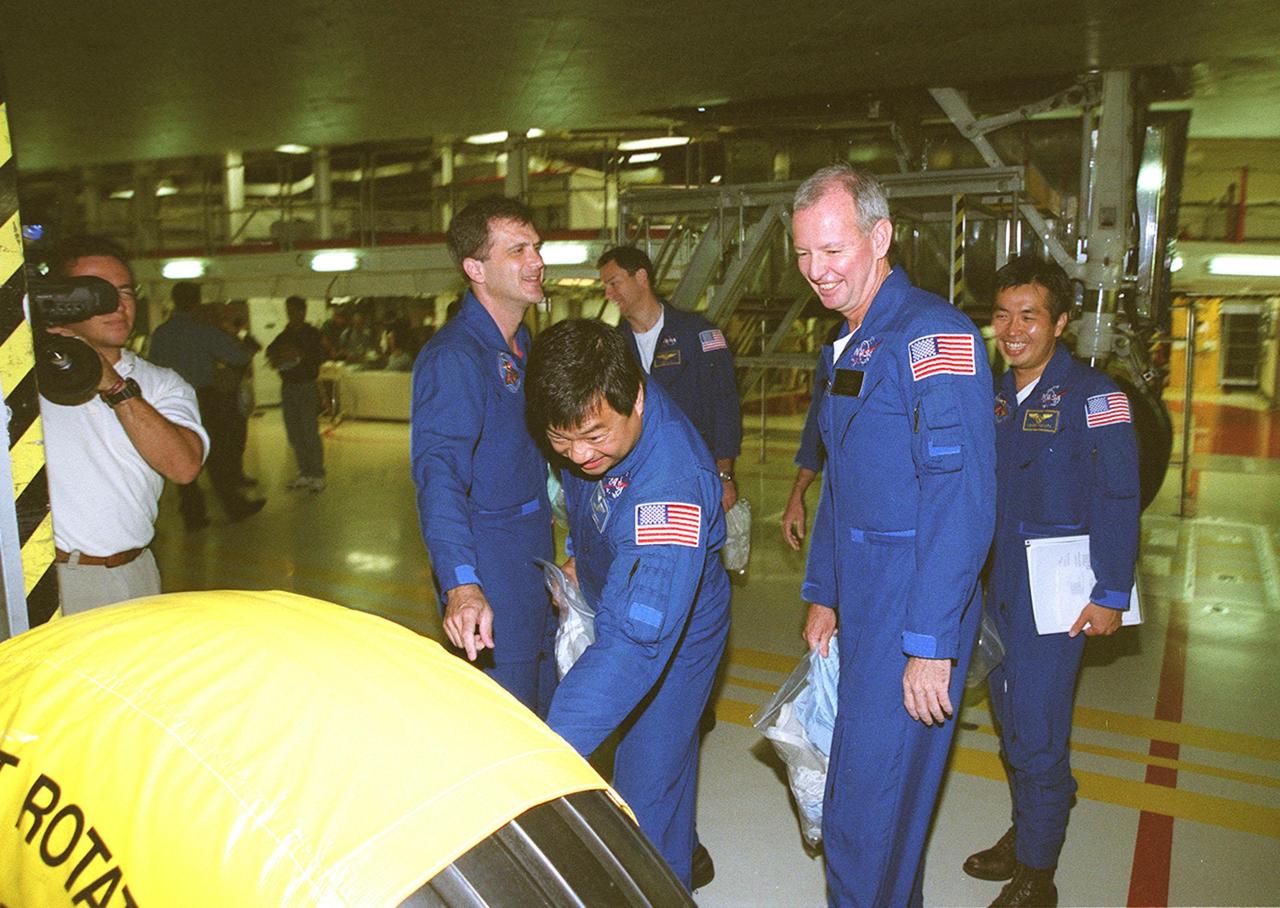
KENNEDY SPACE CENTER, FLA. -- Members of the STS-92 crew look over a tire on the landing gear of orbiter Discovery in the Orbiter Processing Facility bay 1. From left to right are Mission Specialists Jeff Wisoff (pointing) and Leroy Chiao, Commander Brian Duffy and Mission Specialist Koichi Wakata, who is with the Japanese space agency. Standing behind them is Mission Specialist Michael Lopez-Alegria. The crew is at KSC to take part in Crew Equipment Interface Test activities. Others taking part are Pilot Pam Melroy and Mission Specialist Bill McArthur. STS-92 is scheduled to launch Oct. 5 on Shuttle Discovery from Launch Pad 39A on the fifth flight to the International Space Station. Discovery will carry the Integrated Truss Structure (ITS) Z1, Pressurized Mating Adapter 3 (PMA-3), Ku-band Communications System, and Control Moment Gyros (CMGs)
KSC-00pp0908
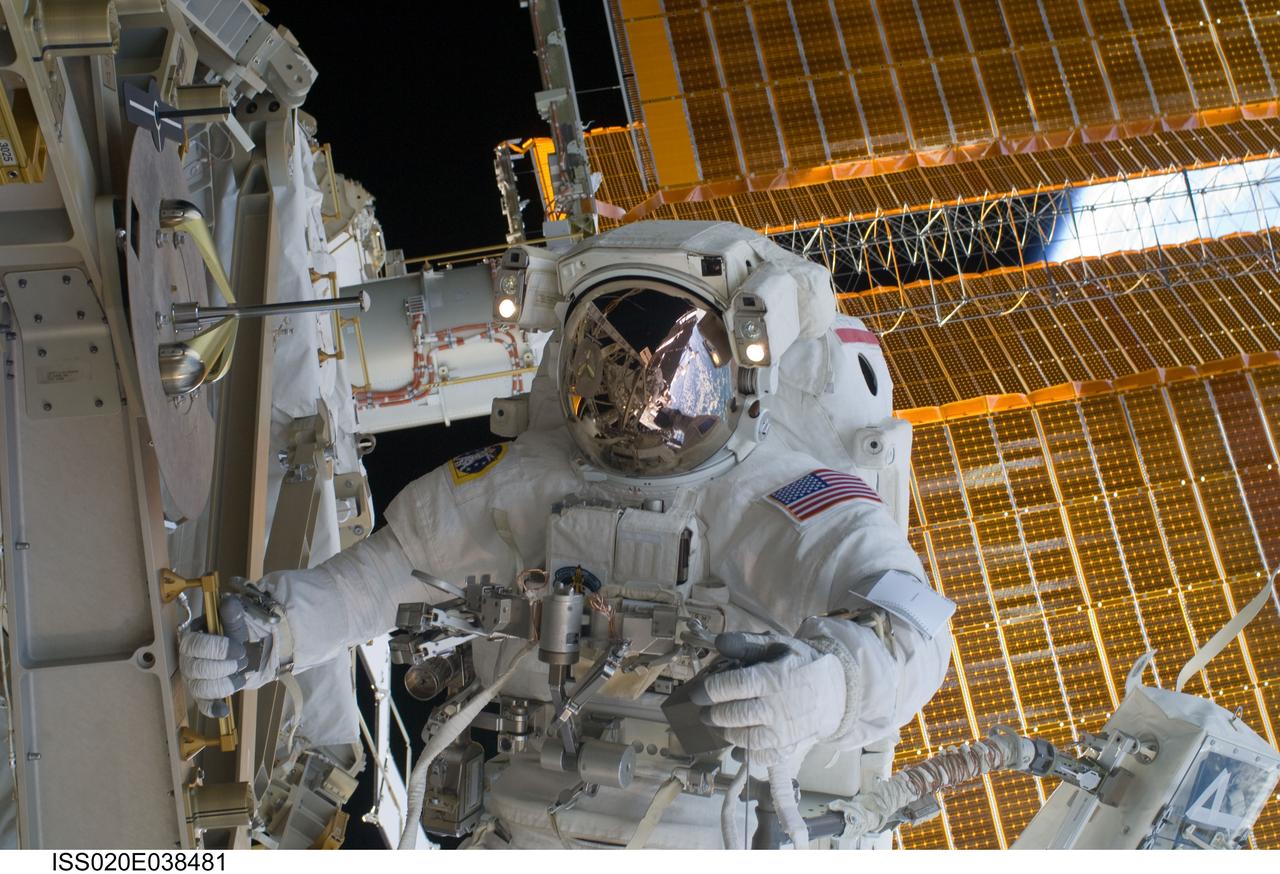
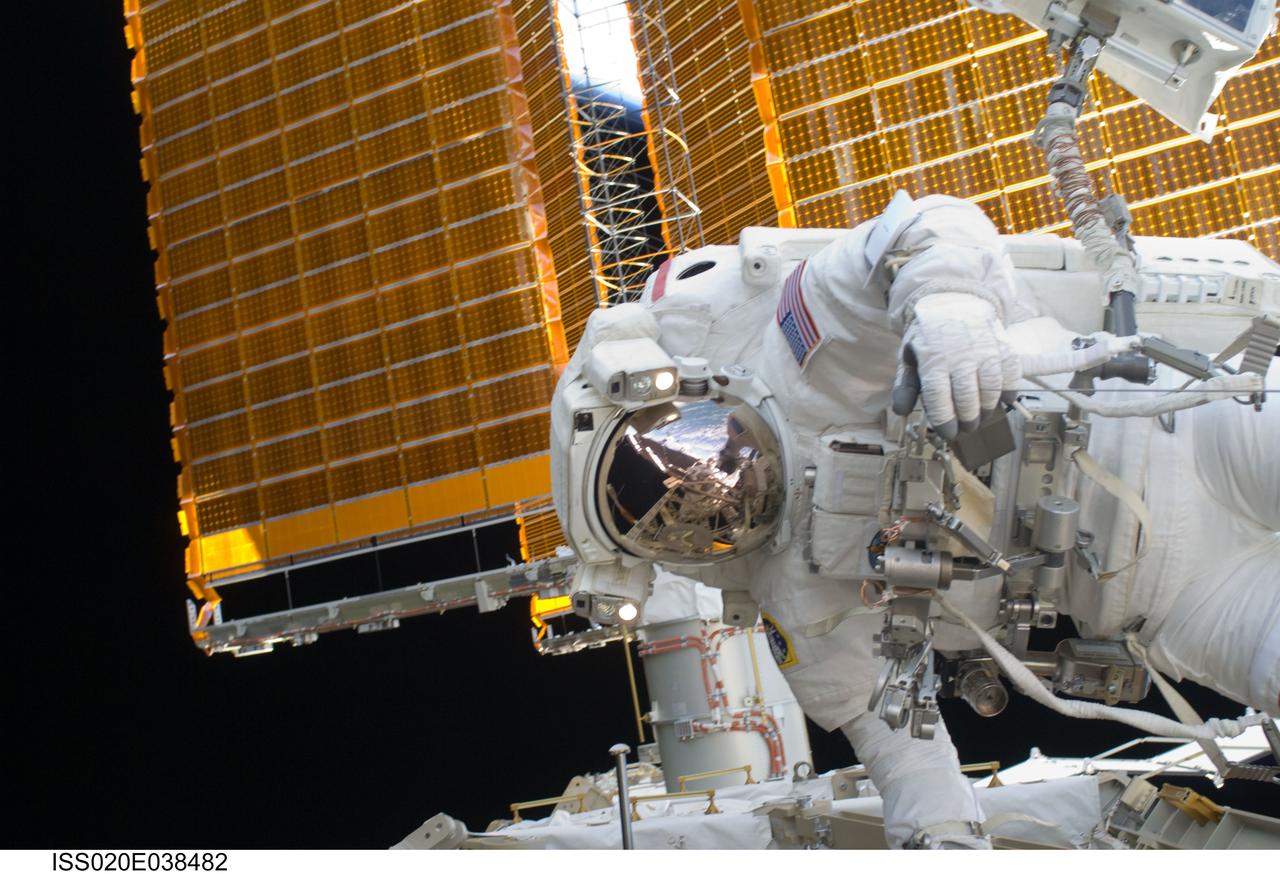
ISS020-E-038482 (5 Sept. 2009) --- NASA astronaut John ?Danny? Olivas, STS-128 mission specialist, participates in the mission's third and final session of extravehicular activity (EVA) as construction and maintenance continue on the International Space Station. Visible in the reflections of his helmet visor are various components of the station, Earth's horizon and European Space Agency astronaut Christer Fuglesang, mission specialist. During the seven-hour, one-minute spacewalk, Olivas and Fuglesang deployed the Payload Attachment System (PAS), replaced the Rate Gyro Assembly #2, installed two GPS antennae and did some work to prepare for the installation of Node 3 next year. During connection of one of two sets of avionics cables for Node 3, one of the connectors could not be mated. This cable and connector were wrapped in a protective sleeve and safed. All other cables were mated successfully.
iss020e038482
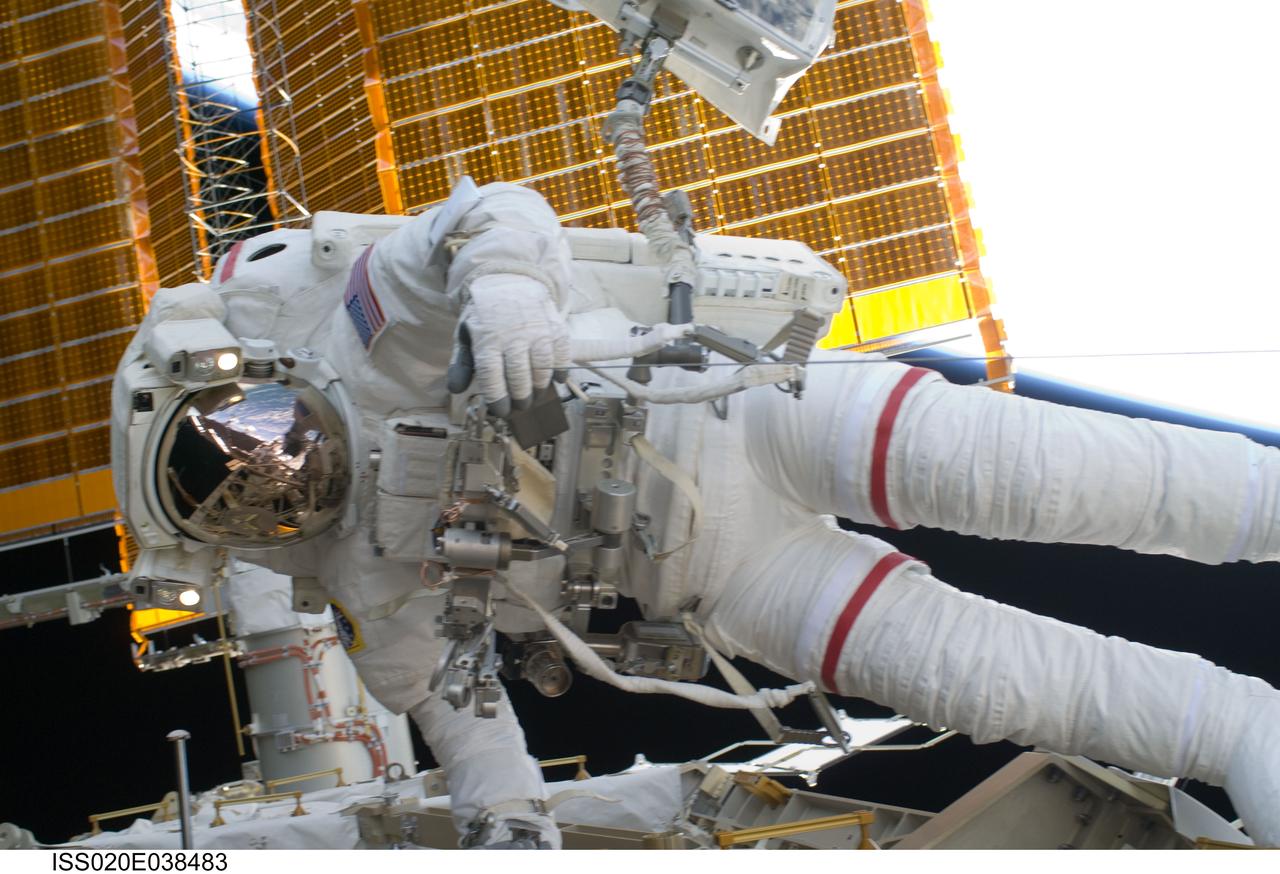
ISS020-E-038483 (5 Sept. 2009) --- NASA astronaut John ?Danny? Olivas, STS-128 mission specialist, participates in the mission's third and final session of extravehicular activity (EVA) as construction and maintenance continue on the International Space Station. Visible in the reflections of his helmet visor are various components of the station, Earth's horizon and European Space Agency astronaut Christer Fuglesang, mission specialist. During the seven-hour, one-minute spacewalk, Olivas and Fuglesang deployed the Payload Attachment System (PAS), replaced the Rate Gyro Assembly #2, installed two GPS antennae and did some work to prepare for the installation of Node 3 next year. During connection of one of two sets of avionics cables for Node 3, one of the connectors could not be mated. This cable and connector were wrapped in a protective sleeve and safed. All other cables were mated successfully.
iss020e038483
KENNEDY SPACE CENTER, FLA. - In the Payload Changeout Room on Launch Pad 39B, access stairs are rolled into place next to the Payload Ground Handling Mechanism, which is used to transfer the payloads into the orbiter.   The payloads for Return to Flight mission STS-114 that are being transferred to Discovery’s payload bay include a Control Moment Gyro, the Thermal Protection System Detailed Test Objective box, which is placed on the Lightweight Multi-Purpose Experiment Support Structure Carrier, External Stowage Platform 2 and Multi-Purpose Logistics Module Raffaello.   Already installed in the payload bay are the airlock, the Canadarm 2, or Shuttle arm, and the Orbiter Boom Sensor System.  The launch window for mission STS-114 extends from July 13 to July 31.
KSC-05pd-1359
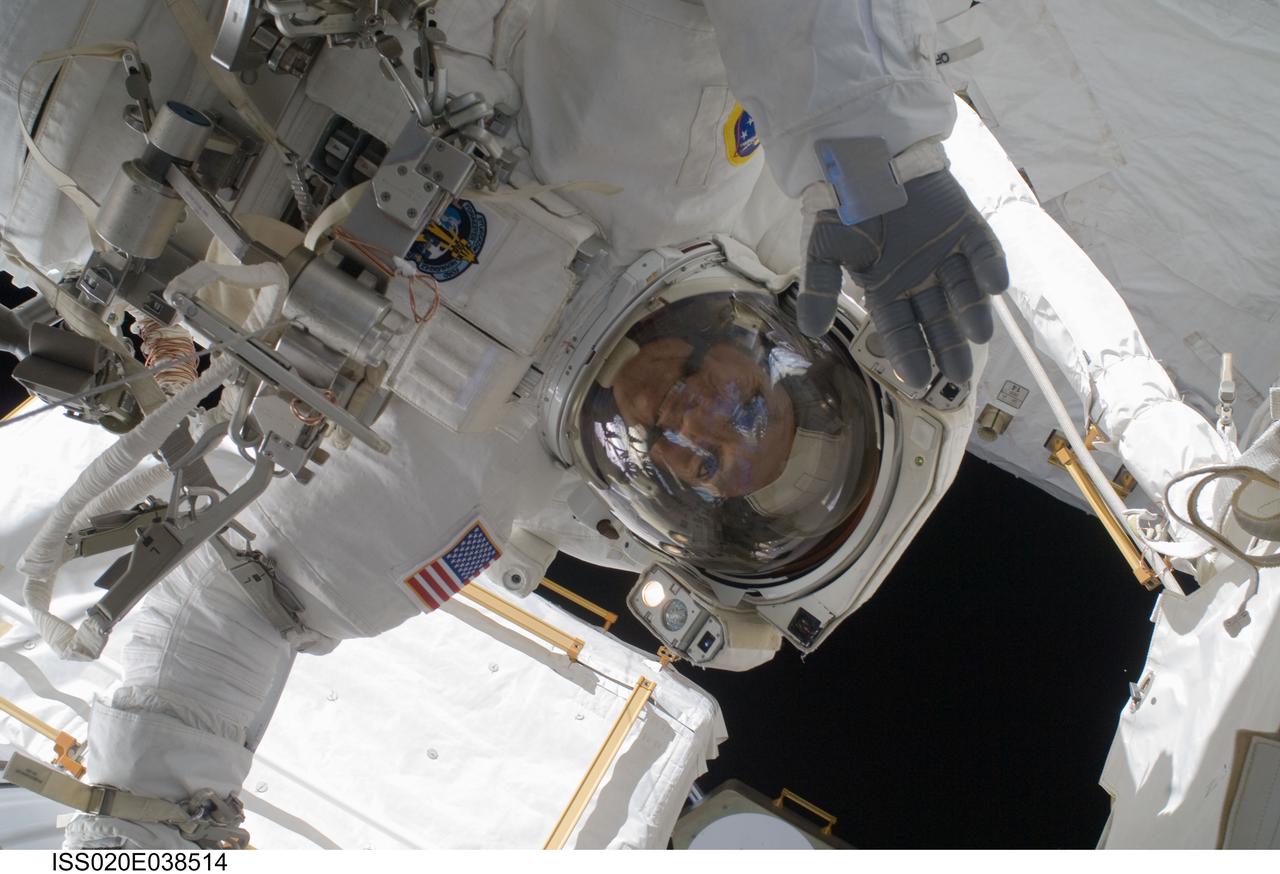
ISS020-E-038472 (5 Sept. 2009) --- NASA astronaut John ?Danny? Olivas, STS-128 mission specialist, participates in the mission's third and final session of extravehicular activity (EVA) as construction and maintenance continue on the International Space Station. During the seven-hour, one-minute spacewalk, Olivas and European Space Agency astronaut Christer Fuglesang (out of frame), mission specialist, deployed the Payload Attachment System (PAS), replaced the Rate Gyro Assembly #2, installed two GPS antennae and did some work to prepare for the installation of Node 3 next year. During connection of one of two sets of avionics cables for Node 3, one of the connectors could not be mated. This cable and connector were wrapped in a protective sleeve and safed. All other cables were mated successfully.
iss020e038472
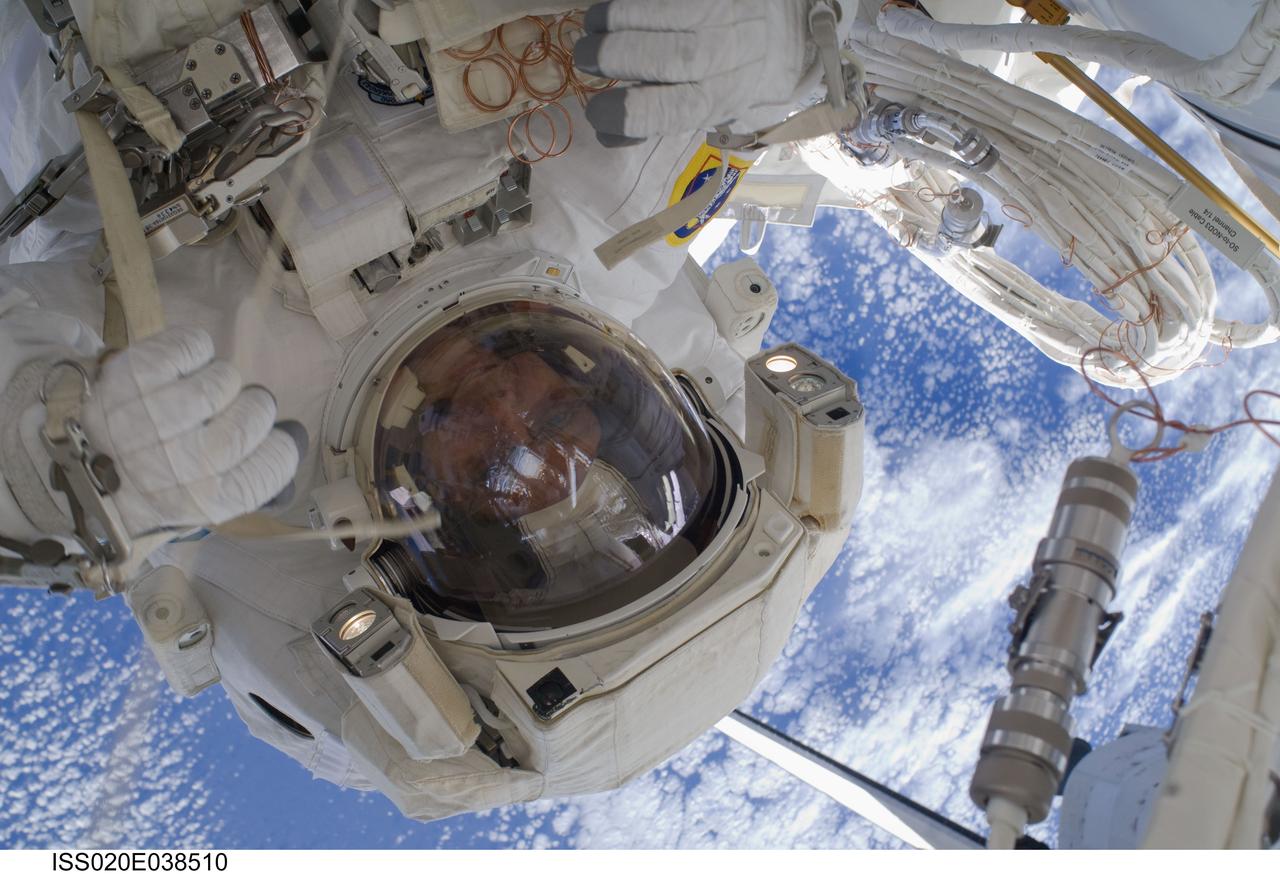
ISS020-E-038510 (5 Sept. 2009) --- European Space Agency astronaut Christer Fuglesang, STS-128 mission specialist, participates in the mission's third and final session of extravehicular activity (EVA) as construction and maintenance continue on the International Space Station. During the seven-hour, one-minute spacewalk, Fuglesang and NASA astronaut John ?Danny? Olivas (out of frame), mission specialist, deployed the Payload Attachment System (PAS), replaced the Rate Gyro Assembly #2, installed two GPS antennae and did some work to prepare for the installation of Node 3 next year. During connection of one of two sets of avionics cables for Node 3, one of the connectors could not be mated. This cable and connector were wrapped in a protective sleeve and safed. All other cables were mated successfully.
iss020e038510
KENNEDY SPACE CENTER, FLA. --  In the Space Station Processing Facility, members of the STS-118 crew learn important information from technicians about the control moment gyro (CMG) in front of them that is part of the payload on their mission.  Second from left is Mission Specialist Tracy Caldwell; at center, behind the CMG, is Mission Specialist Richard Mastracchio; second from right is Mission Specialist Clayton Anderson, who will be flying on STS-118 to join the Expedition 15 crew as flight engineer on the International Space Station.  The CMG will replace a faulty one on the International Space Station.  The payload also includes the SPACEHAB single cargo module, the third starboard truss segment (ITS S5) and the external stowage platform 3 (ESP3).  STS-118 is targeted to launch June 28 from Launch Pad 39A.  Photo credit: NASA/Kim Shiflett
KSC-07pd0229
S73-31322 (30 June 1973) --- The three prime crewmen of the Skylab 3 mission practice procedures which will be used during the extravehicular activity (EVA) portion of the scheduled Skylab rate gyro six-pac installation. They are scientist-astronaut Owen K. Garriott (center), astronaut Alan L. Bean (center background) and astronaut Jack R. Lousma (right). Garriott is working with a mock-up of a trunion plug plate which is on the space station's deployment assembly. This picture was taken during Skylab 3 prelaunch training at Johnson Space Center. In the left foreground with back to camera is astronaut Russell L. Schweickart, who is assisting with the Skylab 3 training. Another training officer is in the left background. Photo credit: NASA
Skylab 3 crewmen practice in the MDA
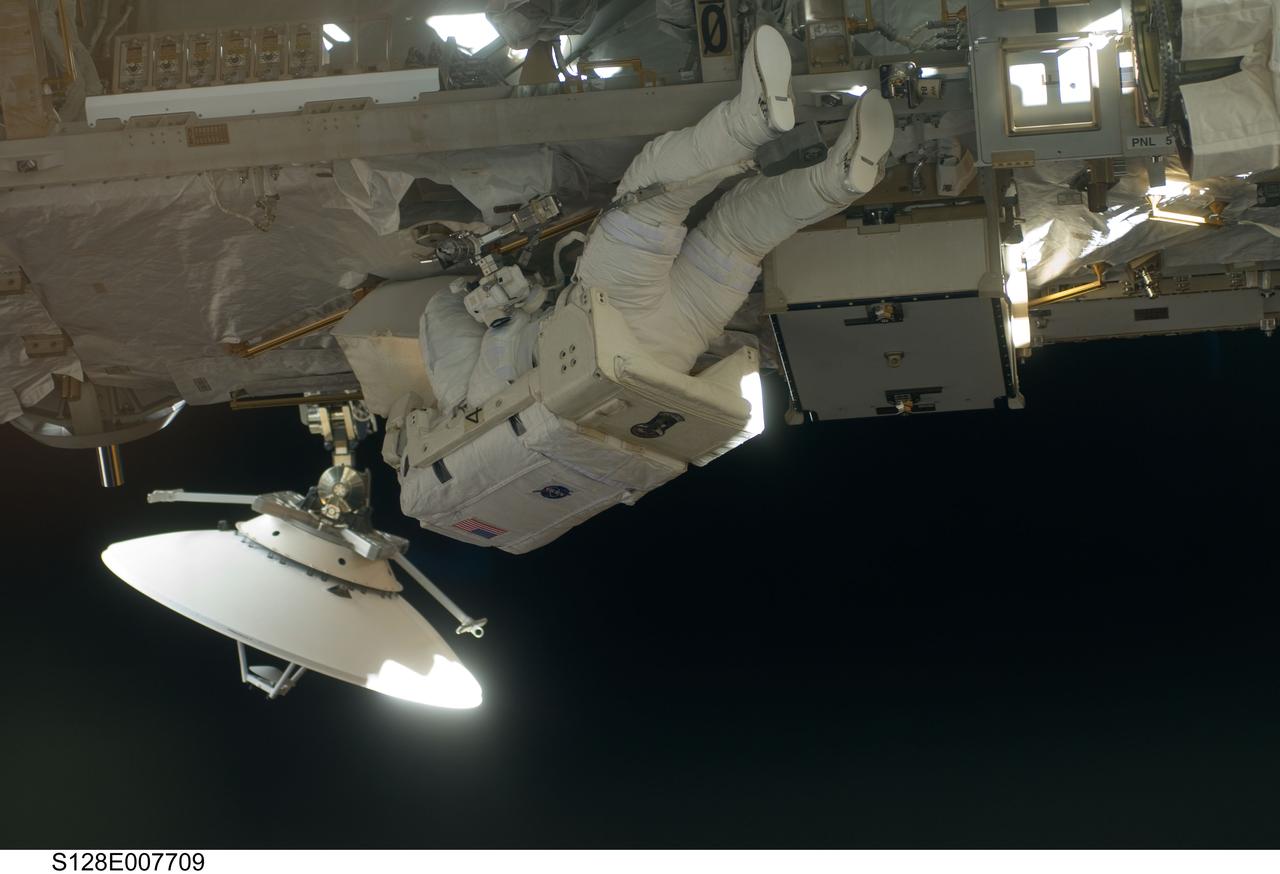
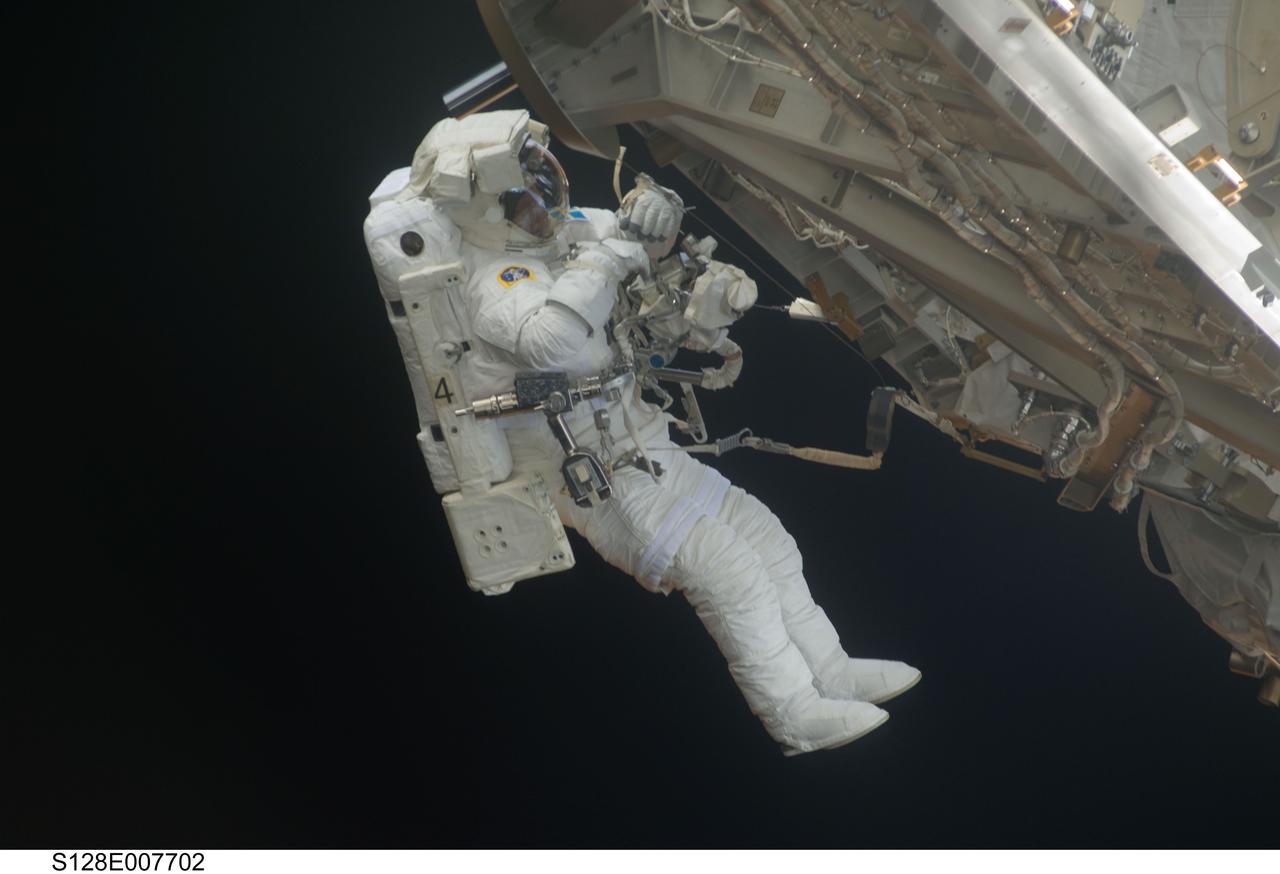
S128-E-007709 (5 Sept. 2009) --- European Space Agency astronaut Christer Fuglesang, STS-128 mission specialist, participates in the mission's third and final session of extravehicular activity (EVA) as construction and maintenance continue on the International Space Station. During the seven-hour, one-minute spacewalk, Fuglesang and NASA astronaut John “Danny” Olivas (out of frame), mission specialist, deployed the Payload Attachment System (PAS), replaced the Rate Gyro Assembly #2, installed two GPS antennae and did some work to prepare for the installation of Node 3 next year. During connection of one of two sets of avionics cables for Node 3, one of the connectors could not be mated. This cable and connector were wrapped in a protective sleeve and safed. All other cables were mated successfully.
STS-128 EVA 3 GPS Antenna Installation on S0 Truss
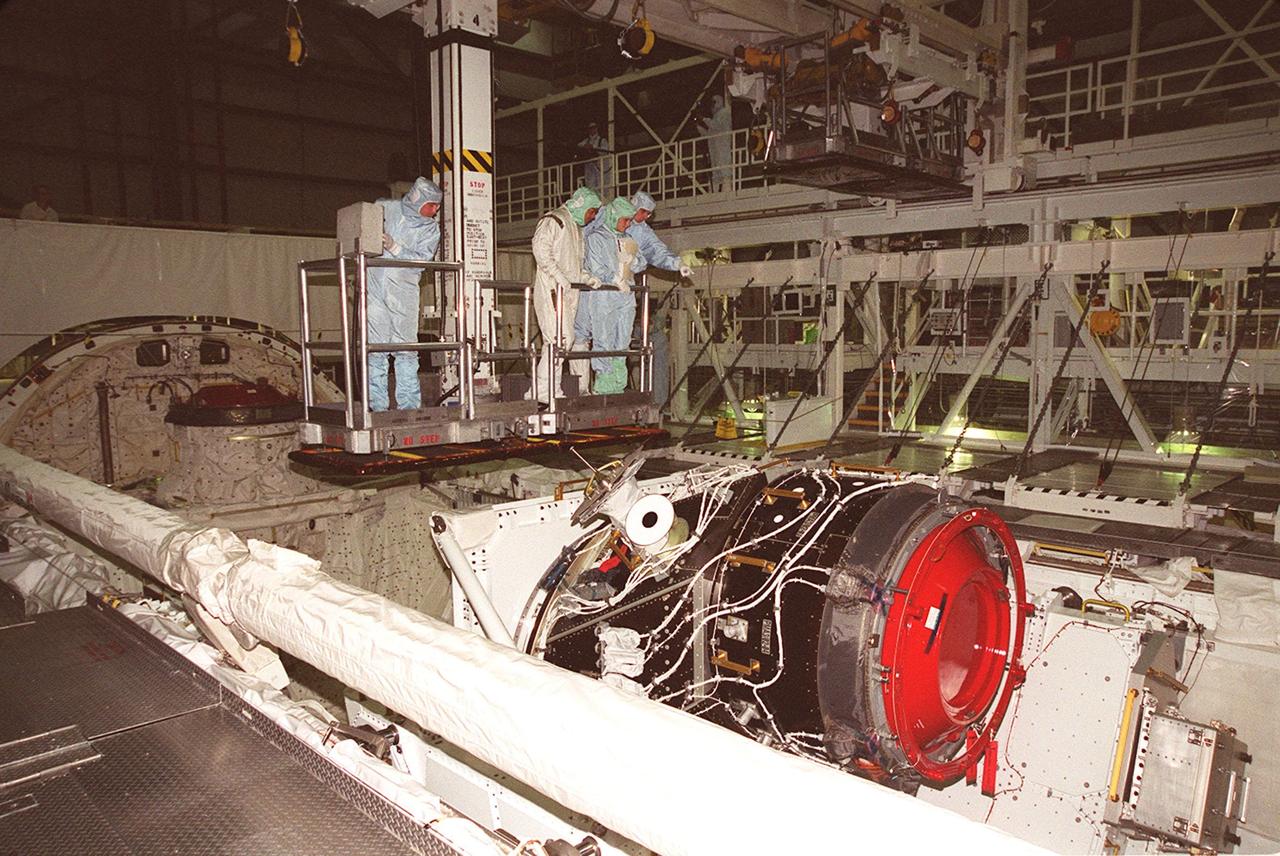
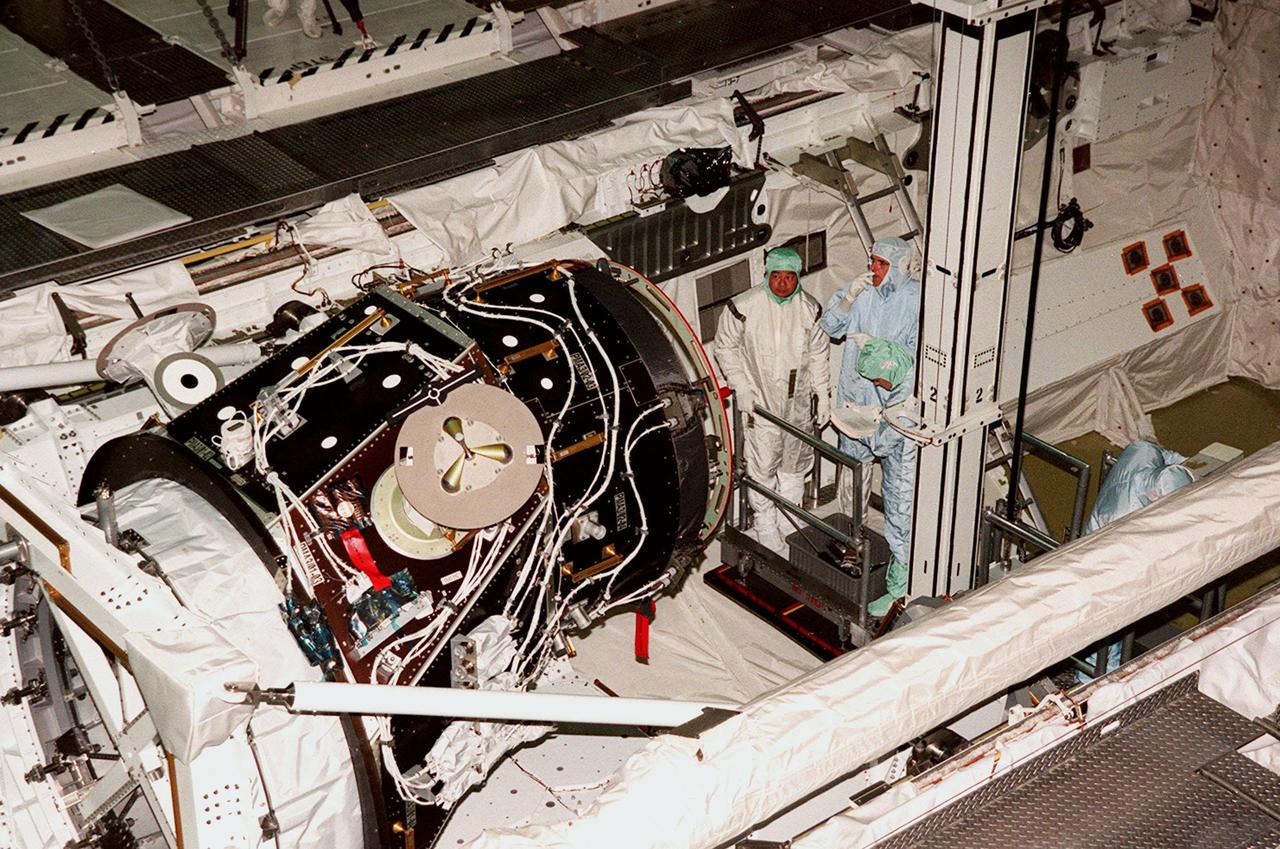
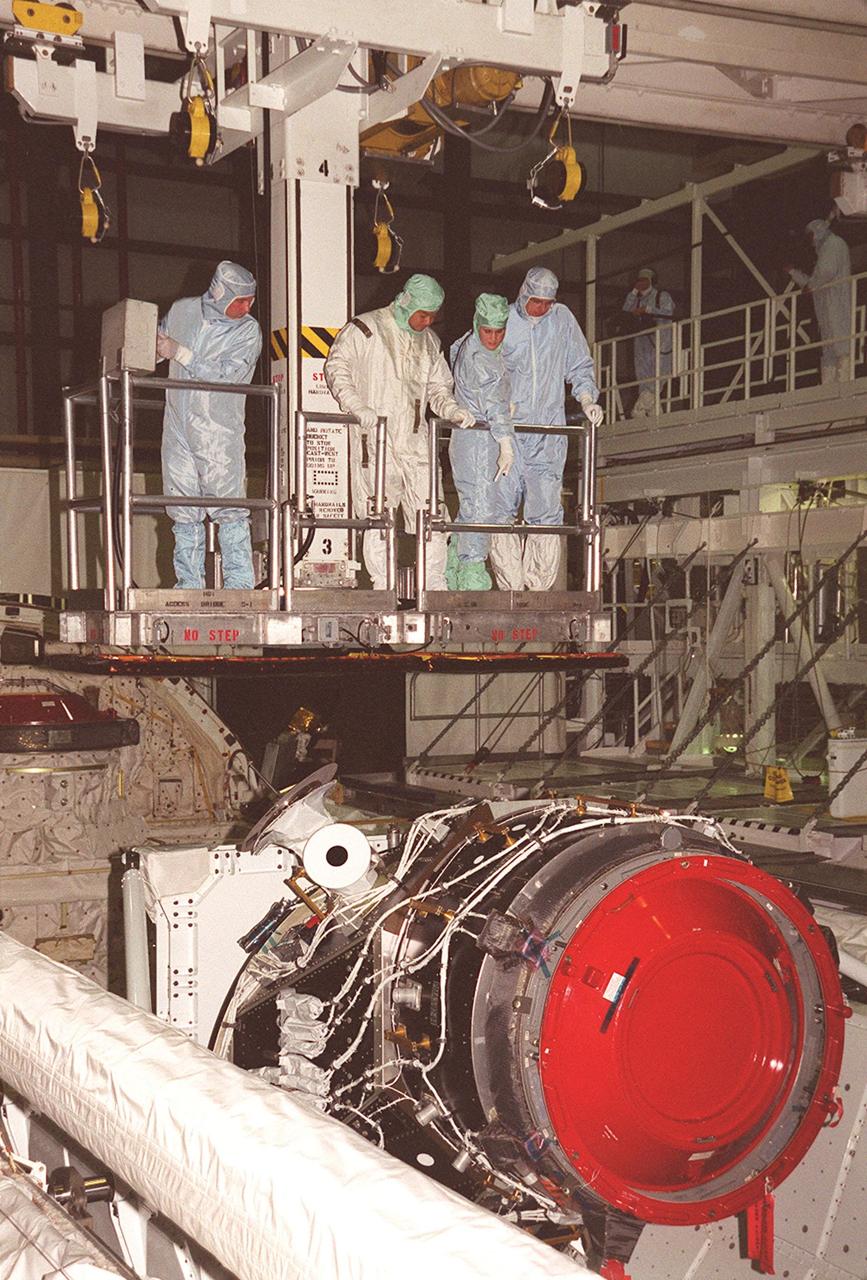
KENNEDY SPACE CENTER, FLA. -- On a platform inside the payload bay of Discovery, STS-92 Mission Specialists Leroy Chiao and Bill McArthur take a close look at Pressurized Mating Adapter-3 (PMA-3). They and other crew members Commander Brian Duffy, Pilot Pam Melroy and Mission Specialists Koichi Wakata, Jeff Wisoff, and Michael Lopez-Alegria are at KSC to take part in Crew Equipment Interface Test activities. Discovery is in the Orbiter Processing Facility bay 1. STS-92 is scheduled to launch Oct. 5 on Shuttle Discovery from Launch Pad 39A on the fifth flight to the International Space Station. Discovery will carry the Integrated Truss Structure (ITS) Z1, the PMA-3, Ku-band Communications System, and Control Moment Gyros (CMGs)
KSC00pp0919
KENNEDY SPACE CENTER, FLA. -- STS-92 Mission Specialist Bill McArthur (with tool in hand) gets a close look at the Pressurized Mating Adapter-3 (PMA-3) in the payload bay of orbiter Discovery. He and other crew members Commander Brian Duffy, Pilot Pam Melroy and Mission Specialists Koichi Wakata, Leroy Chiao, Jeff Wisoff, and Michael Lopez-Alegria are at KSC to take part in Crew Equipment Interface Test activities. Discovery is in the Orbiter Processing Facility bay 1. STS-92 is scheduled to launch Oct. 5 on Shuttle Discovery from Launch Pad 39A on the fifth flight to the International Space Station. Discovery will carry the Integrated Truss Structure (ITS) Z1, the PMA-3, Ku-band Communications System, and Control Moment Gyros (CMGs
KSC00pp0916
CAPE CANAVERAL, Fla.  –  In the Assembly and Refurbishment Facility at NASA's Kennedy Space Center, a crane is lowered over the aft skirt for the Ares 1-X  rocket.  The segment is being lifted into a machine shop work stand for drilling modifications.  The modifications will prepare it for the installation of the auxiliary power unit controller, the reduced-rate gyro unit, the booster decelerator motors and the booster tumble motors.  Ares I is an in-line, two-stage rocket that will transport the Orion crew exploration vehicle to low-Earth orbit.  Ares I-X is a test rocket. The Ares I first stage will be a five-segment solid rocket booster based on the four-segment design used for the shuttle.  Ares I’s fifth booster segment allows the launch vehicle to lift more weight and reach a higher altitude before the first stage separates from the upper stage, which ignites in midflight to propel the Orion spacecraft to Earth orbit.  Photo credit: NASA/Jim Grossmann
KSC-08pd1859
KENNEDY SPACE CENTER, FLA. -- Being lowered into the payload bay of Discovery for a closer look at the payload are STS-92 Mission Specialists Leroy Chiao (second from left) and Bill McArthur (far right), accompanied by Boeing workers. In the foreground is the Pressurized Mating Adapter-3. They and other crew members Commander Brian Duffy, Pilot Pam Melroy and Mission Specialists Koichi Wakata, Jeff Wisoff and Michael Lopez-Alegria are taking part in Crew Equipment Interface Test activities. STS-92 is scheduled to launch Oct. 5 on Shuttle Discovery from Launch Pad 39A on the fifth flight to the International Space Station. Discovery will carry the Integrated Truss Structure (ITS) Z1, the PMA-3, Ku-band Communications System, and Control Moment Gyros (CMGs)
KSC00pp0914
KENNEDY SPACE CENTER, FLA. -- In Orbiter Processing Facility bay 1, members of the STS-92 crew take part in Crew Equipment Interface Test (CEIT) activities. Being lowered into the payload bay of Discovery for a closer look at the payload are Mission Specialists Leroy Chiao (second from left) and Bill McArthur (far right), accompanied by Boeing workers. In the foreground is the Pressurized Mating Adapter-3 (PMA-3). Other crew members taking part in the CEIT are Commander Brian Duffy, Pilot Pam Melroy, and Mission Specialists Koichi Wakata, Jeff Wisoff and Michael Lopez-Alegria. STS-92 is scheduled to launch Oct. 5 on Shuttle Discovery from Launch Pad 39A on the fifth flight to the International Space Station. Discovery will carry the Integrated Truss Structure (ITS) Z1, the PMA-3, Ku-band Communications System, and Control Moment Gyros (CMGs)
KSC-00pp0913
ISS020-E-038507 (5 Sept. 2009) --- European Space Agency astronaut Christer Fuglesang, STS-128 mission specialist, participates in the mission's third and final session of extravehicular activity (EVA) as construction and maintenance continue on the International Space Station. During the seven-hour, one-minute spacewalk, Fuglesang and NASA astronaut John ?Danny? Olivas (out of frame), mission specialist, deployed the Payload Attachment System (PAS), replaced the Rate Gyro Assembly #2, installed two GPS antennae and did some work to prepare for the installation of Node 3 next year. During connection of one of two sets of avionics cables for Node 3, one of the connectors could not be mated. This cable and connector were wrapped in a protective sleeve and safed. All other cables were mated successfully.
iss020e038507
KENNEDY SPACE CENTER, FLA. -- In Orbiter Processing Facility bay 1, members of the STS-92 crew take part in Crew Equipment Interface Test (CEIT) activities. Being lowered into the payload bay of Discovery for a closer look at the payload are Mission Specialists Leroy Chiao (second from left) and Bill McArthur (far right), accompanied by Boeing workers. In the foreground is the Pressurized Mating Adapter-3 (PMA-3). Other crew members taking part in the CEIT are Commander Brian Duffy, Pilot Pam Melroy, and Mission Specialists Koichi Wakata, Jeff Wisoff and Michael Lopez-Alegria. STS-92 is scheduled to launch Oct. 5 on Shuttle Discovery from Launch Pad 39A on the fifth flight to the International Space Station. Discovery will carry the Integrated Truss Structure (ITS) Z1, the PMA-3, Ku-band Communications System, and Control Moment Gyros (CMGs)
KSC00pp0913