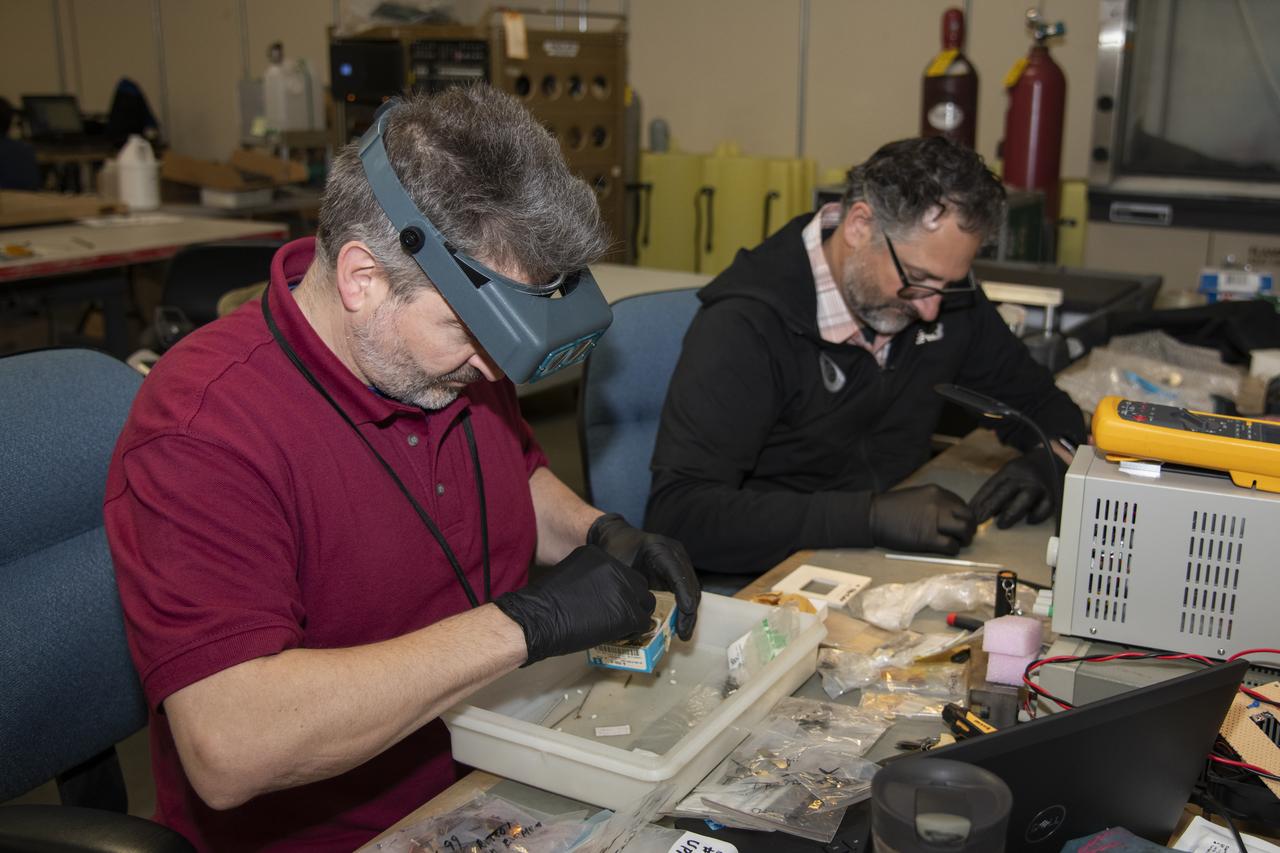
The Harvard Halogen Instrument (HAL) is prepared for integration on NASA's ER-2 by electrical engineer Marco Rivero and mechanical engineer Michael Greenberg for the Dynamics and Chemistry of the Summer Stratosphere, or DCOTSS, 2022 campaign.
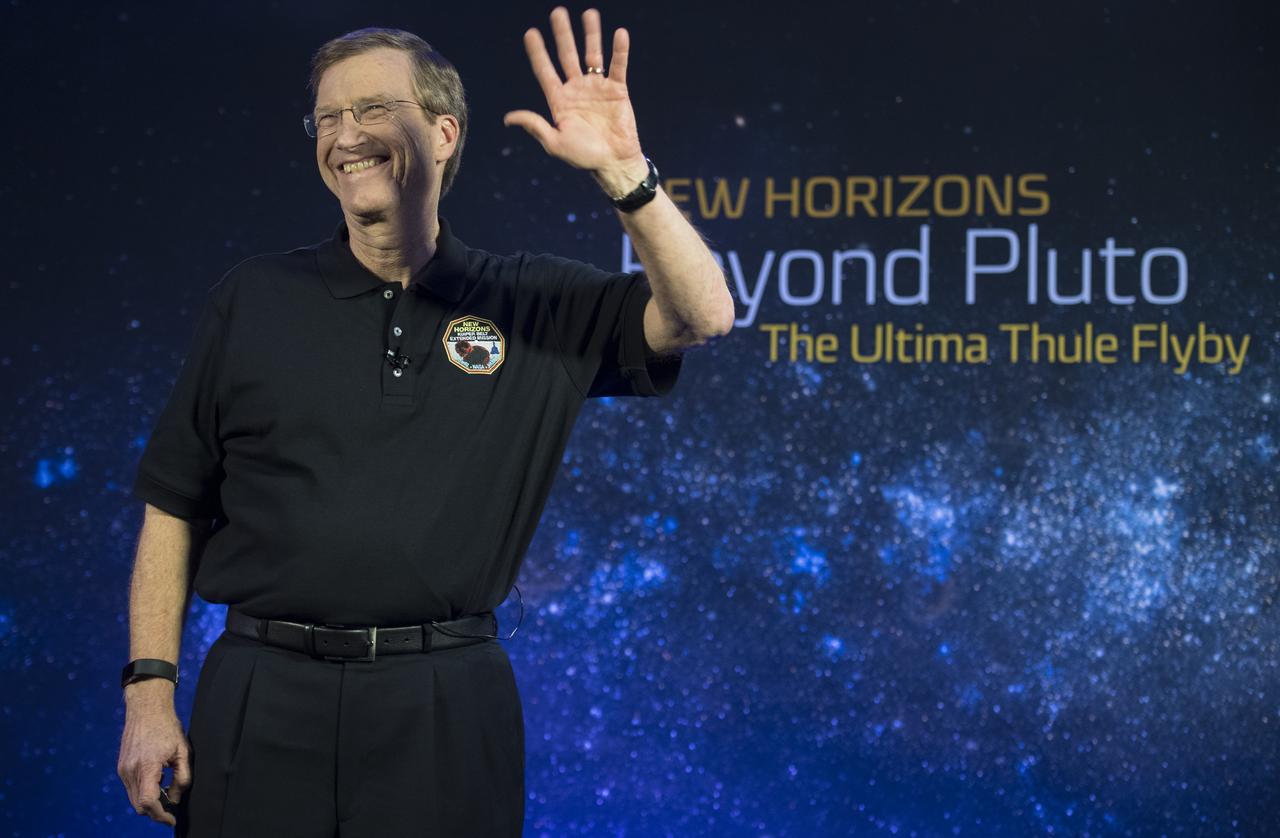
New Horizons project scientist Hal Weaver of the Johns Hopkins Applied Physics Laboratory speaks about the Kuiper Belt during an overview of the New Horizons Mission, Monday, Dec. 31, 2018 at Johns Hopkins University Applied Physics Laboratory (APL) in Laurel, Maryland. Photo Credit: (NASA/Joel Kowsky)
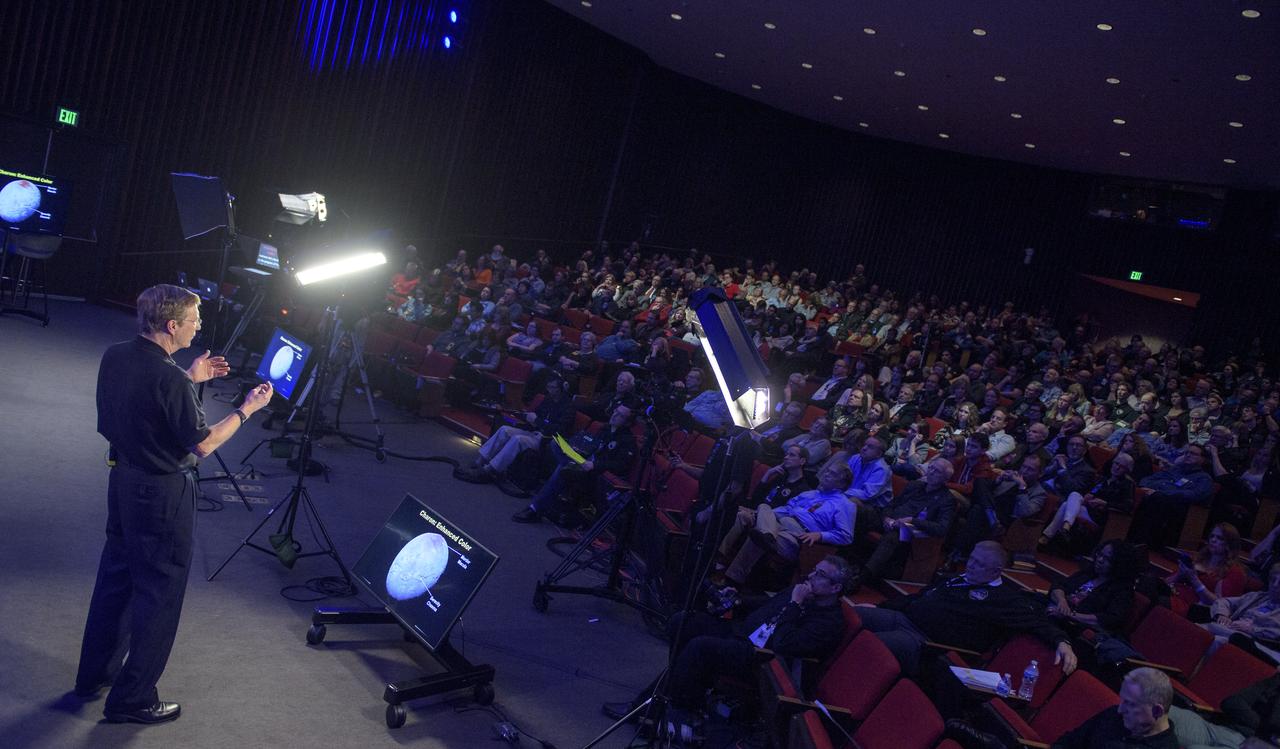
New Horizons project scientist Hal Weaver of the Johns Hopkins University Applied Physics Laboratory gives a talk titled "Pluto Flyby; Summer 2015", Monday, Dec. 31, 2018 at Johns Hopkins University Applied Physics Laboratory (APL) in Laurel, Maryland. Photo Credit: (NASA/Bill Ingalls)
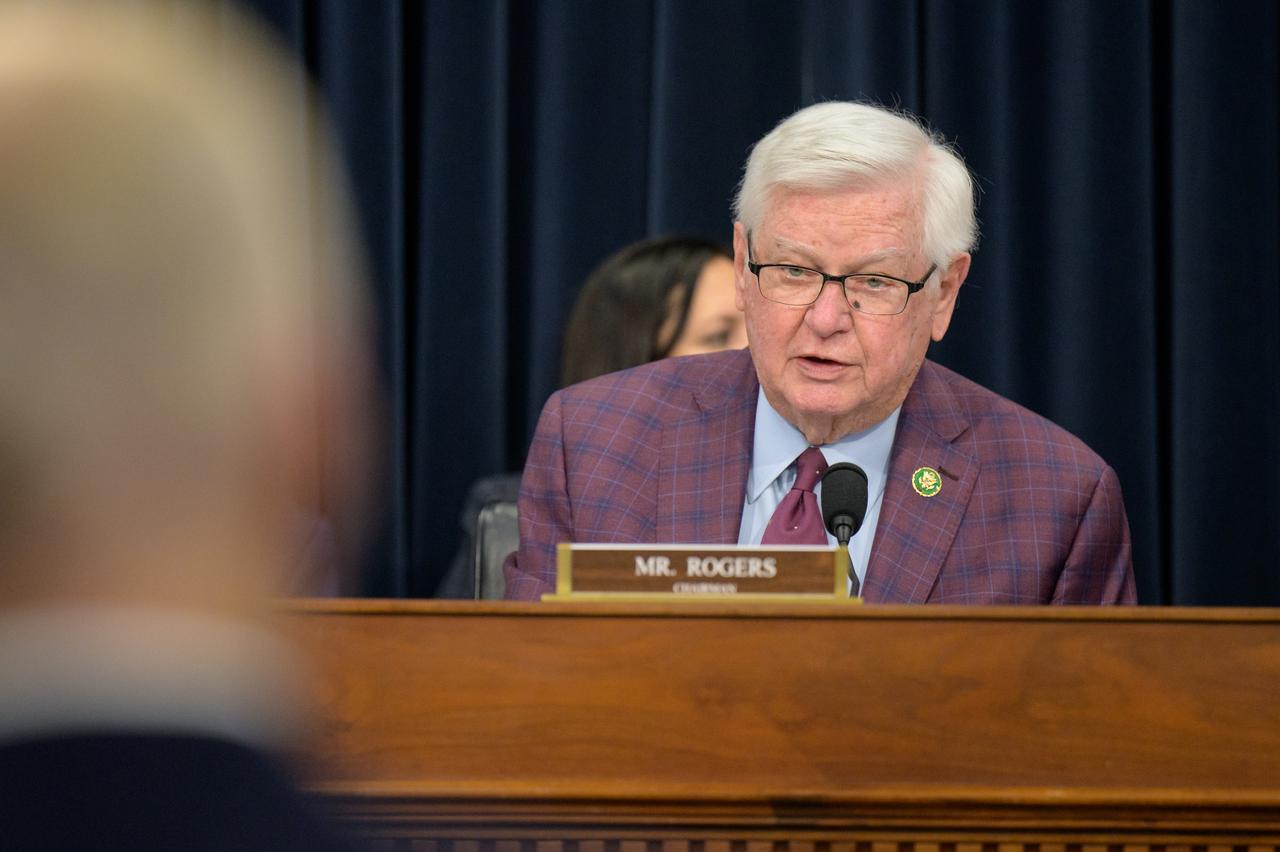
House Appropriations chairman Hal Rogers, R-Ky., questions NASA Administrator Bill Nelson during a House appropriations hearing on the fiscal year 2024 budget request, Wednesday, April 19, 2023 at the Rayburn House Office Building in Washington. Photo Credit: (NASA/Bill Ingalls)
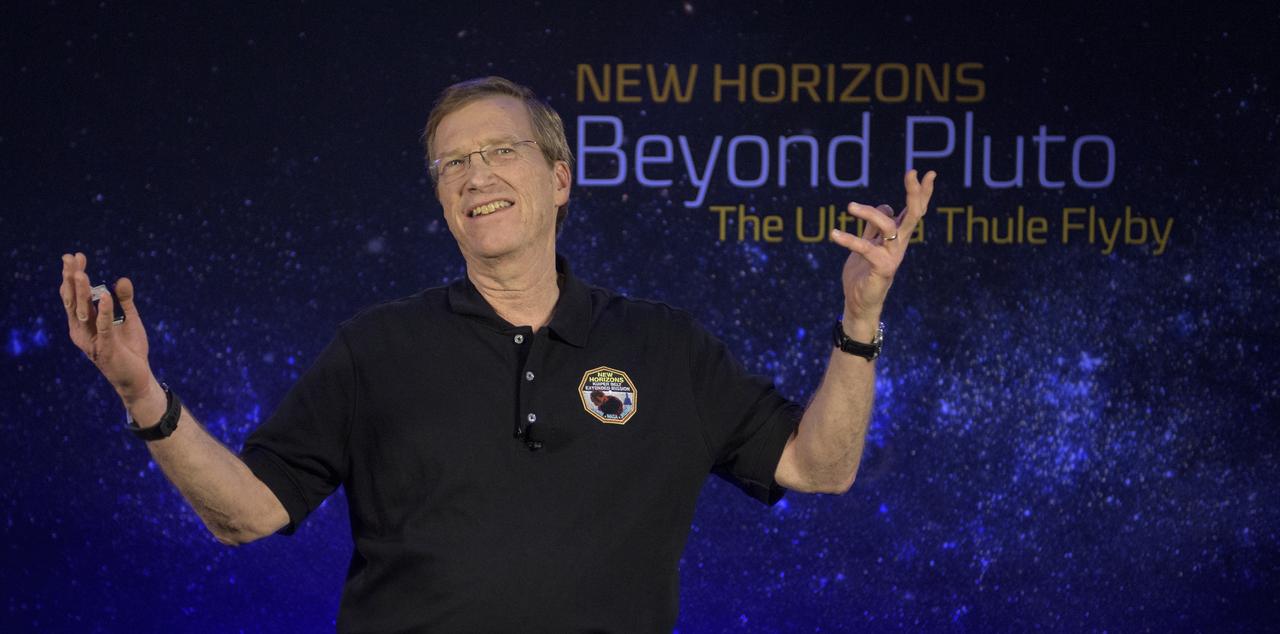
New Horizons project scientist Hal Weaver of the Johns Hopkins University Applied Physics Laboratory gives a talk titled "Pluto Flyby; Summer 2015", Monday, Dec. 31, 2018 at Johns Hopkins University Applied Physics Laboratory (APL) in Laurel, Maryland. Photo Credit: (NASA/Bill Ingalls)
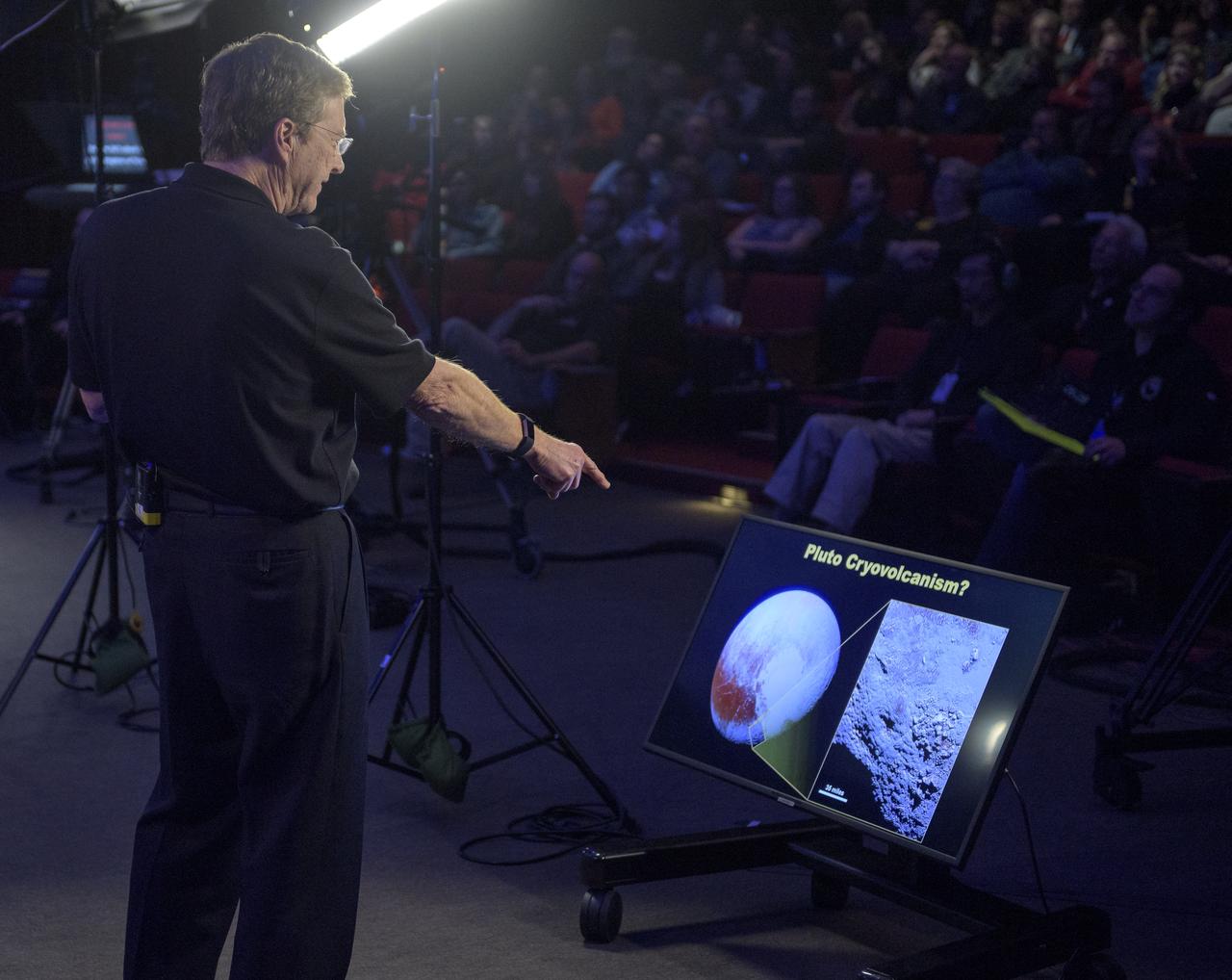
New Horizons project scientist Hal Weaver of the Johns Hopkins University Applied Physics Laboratory gives a talk titled "Pluto Flyby; Summer 2015", Monday, Dec. 31, 2018 at Johns Hopkins University Applied Physics Laboratory (APL) in Laurel, Maryland. Photo Credit: (NASA/Bill Ingalls)

New Horizons project scientist Hal Weaver of the Johns Hopkins Applied Physics Laboratory speaks about the Kuiper Belt during an overview of the New Horizons Mission, Monday, Dec. 31, 2018 at Johns Hopkins University Applied Physics Laboratory (APL) in Laurel, Maryland. Photo Credit: (NASA/Joel Kowsky)
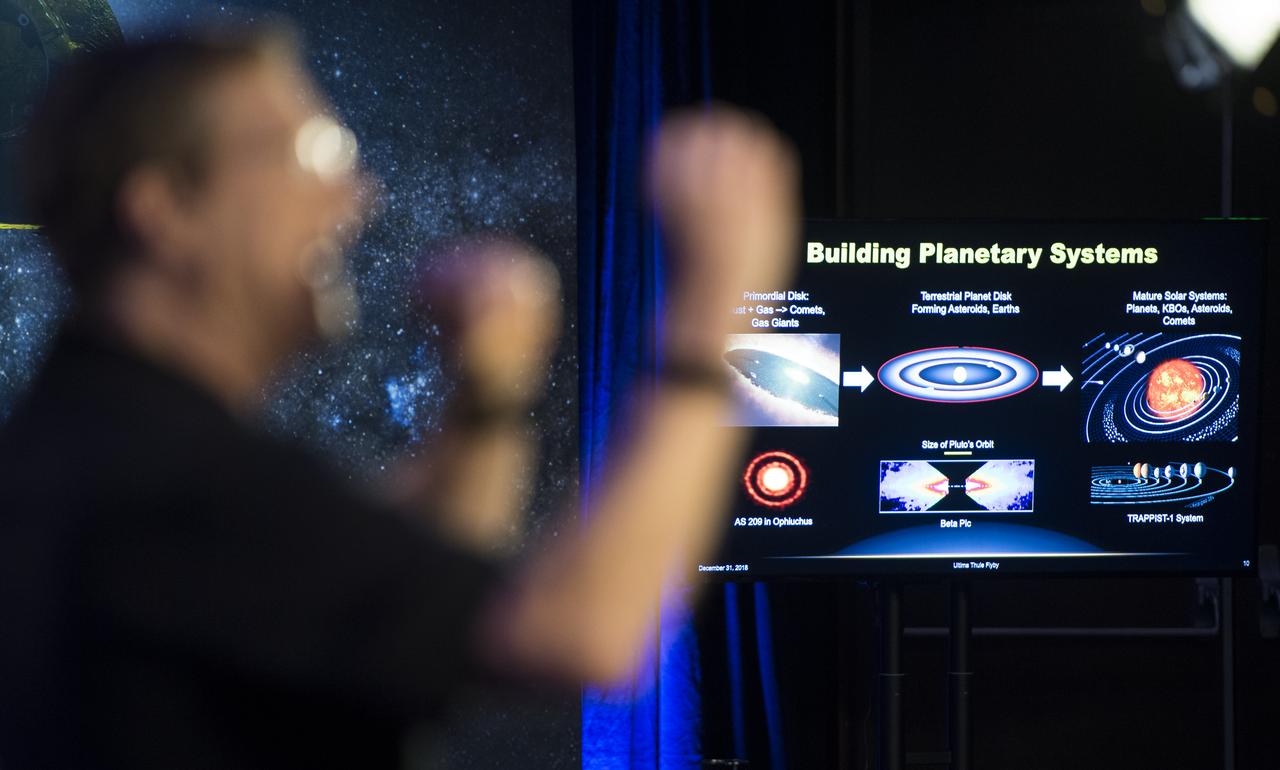
New Horizons project scientist Hal Weaver of the Johns Hopkins Applied Physics Laboratory speaks about the Kuiper Belt during an overview of the New Horizons Mission, Monday, Dec. 31, 2018 at Johns Hopkins University Applied Physics Laboratory (APL) in Laurel, Maryland. Photo Credit: (NASA/Joel Kowsky)
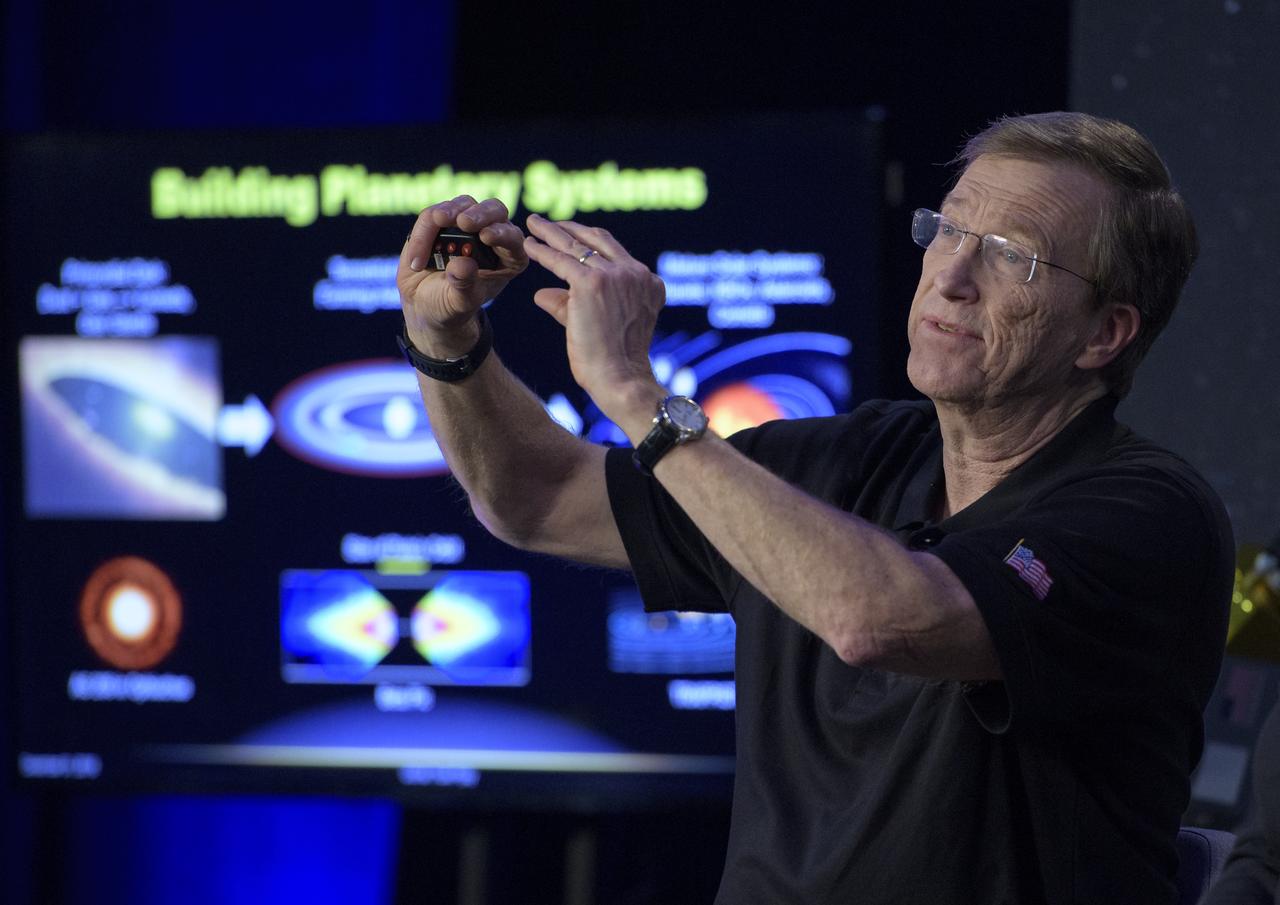
New Horizons project scientist Hal Weaver of the Johns Hopkins University Applied Physics Laboratory discusses what they hope to learn from the flyby of Ultima Thule, Monday, Dec. 31, 2018 at Johns Hopkins University Applied Physics Laboratory (APL) in Laurel, Maryland. Photo Credit: (NASA/Bill Ingalls)
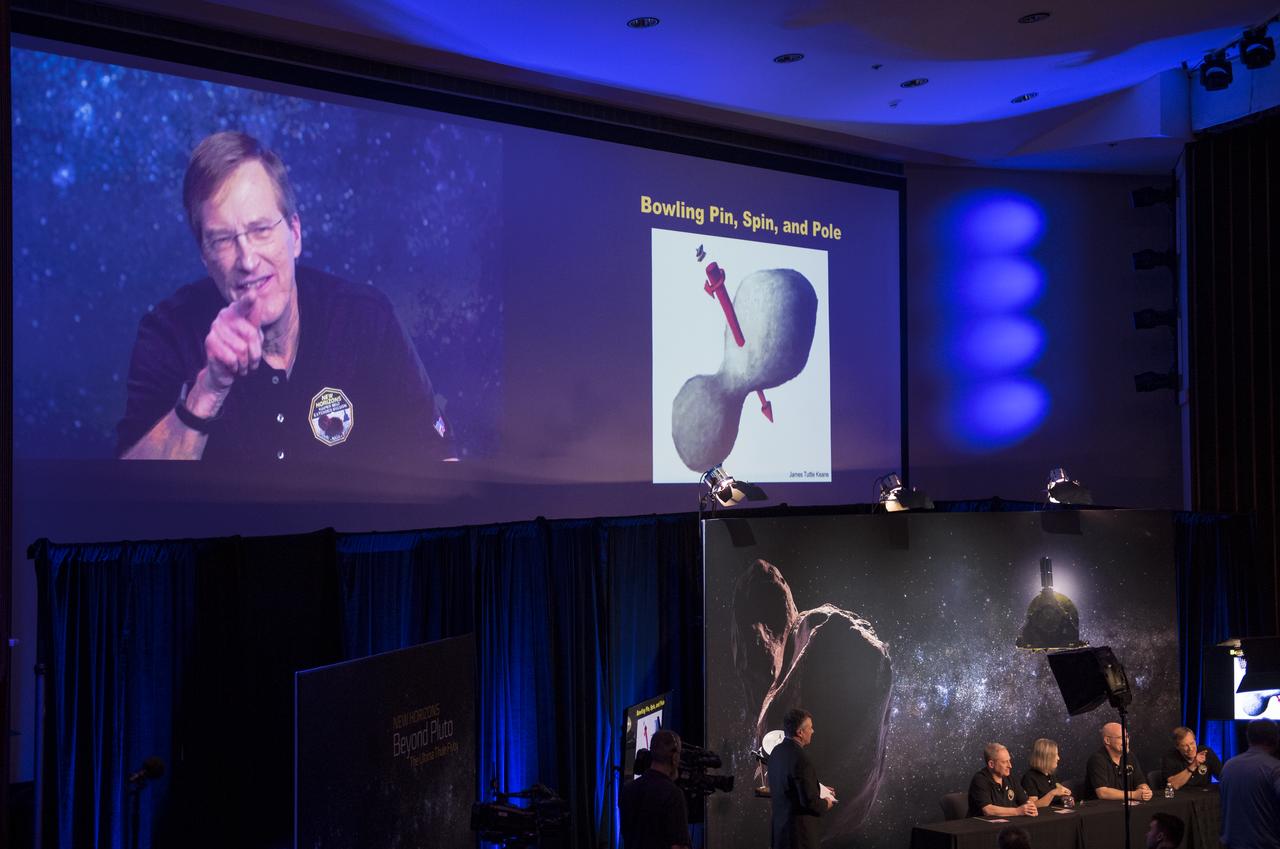
New Horizons project scientist Hal Weaver of the Johns Hopkins University Applied Physics Laboratory speaks about new data received from the New Horizons spacecraft during a press conference after the team received confirmation from the New Horizons spacecraft that it has completed the flyby of Ultima Thule, Tuesday, Jan. 1, 2019 at Johns Hopkins University Applied Physics Laboratory (APL) in Laurel, Maryland. Photo Credit: (NASA/Joel Kowsky)
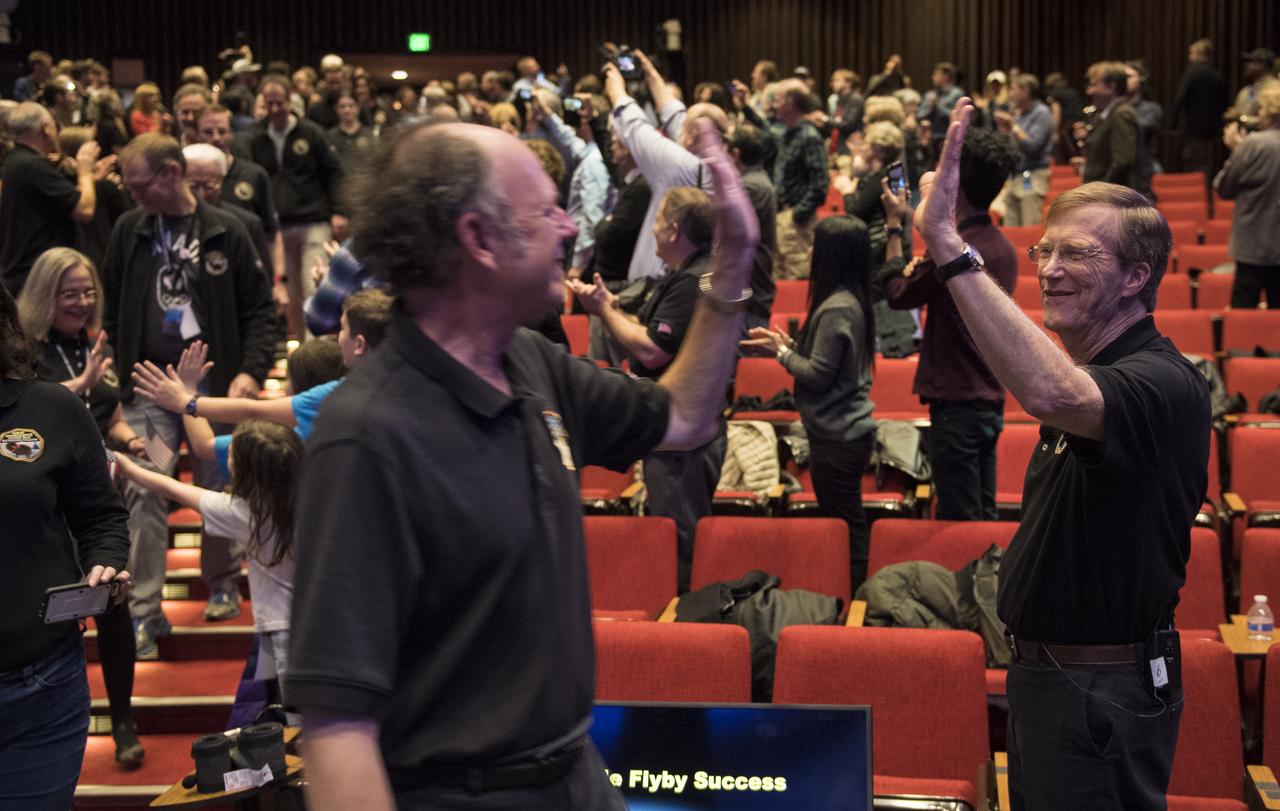
New Horizons project scientist Hal Weaver of the Johns Hopkins University Applied Physics Laboratory high-fives a New Horizons team member after the team received confirmation from the New Horizons spacecraft that it has completed the flyby of Ultima Thule, Tuesday, Jan. 1, 2019 at Johns Hopkins University Applied Physics Laboratory (APL) in Laurel, Maryland. Photo Credit: (NASA/Joel Kowsky)
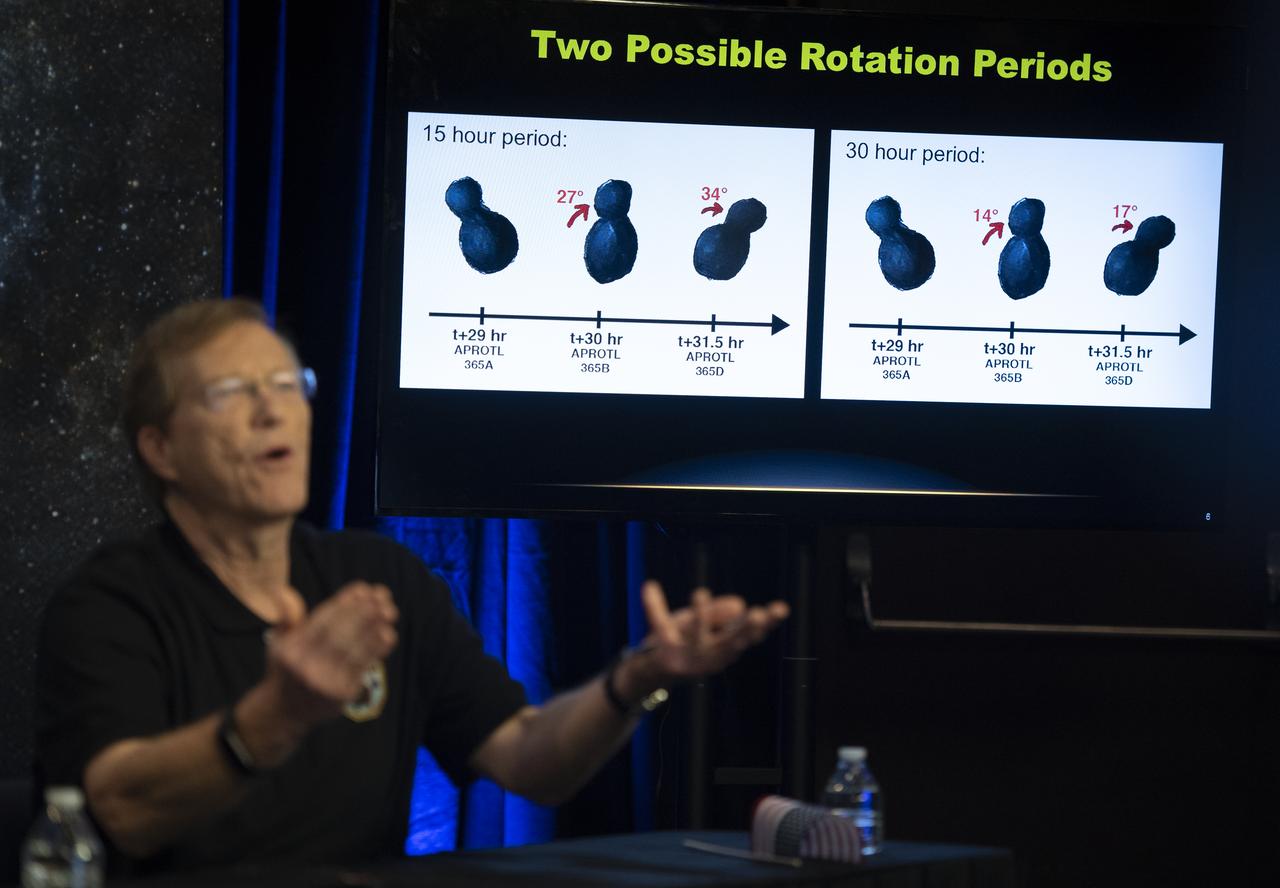
New Horizons project scientist Hal Weaver of the Johns Hopkins University Applied Physics Laboratory is seen during a press conference after the team received confirmation from the New Horizons spacecraft that it has completed the flyby of Ultima Thule, Tuesday, Jan. 1, 2019 at Johns Hopkins University Applied Physics Laboratory (APL) in Laurel, Maryland. Photo Credit: (NASA/Joel Kowsky)
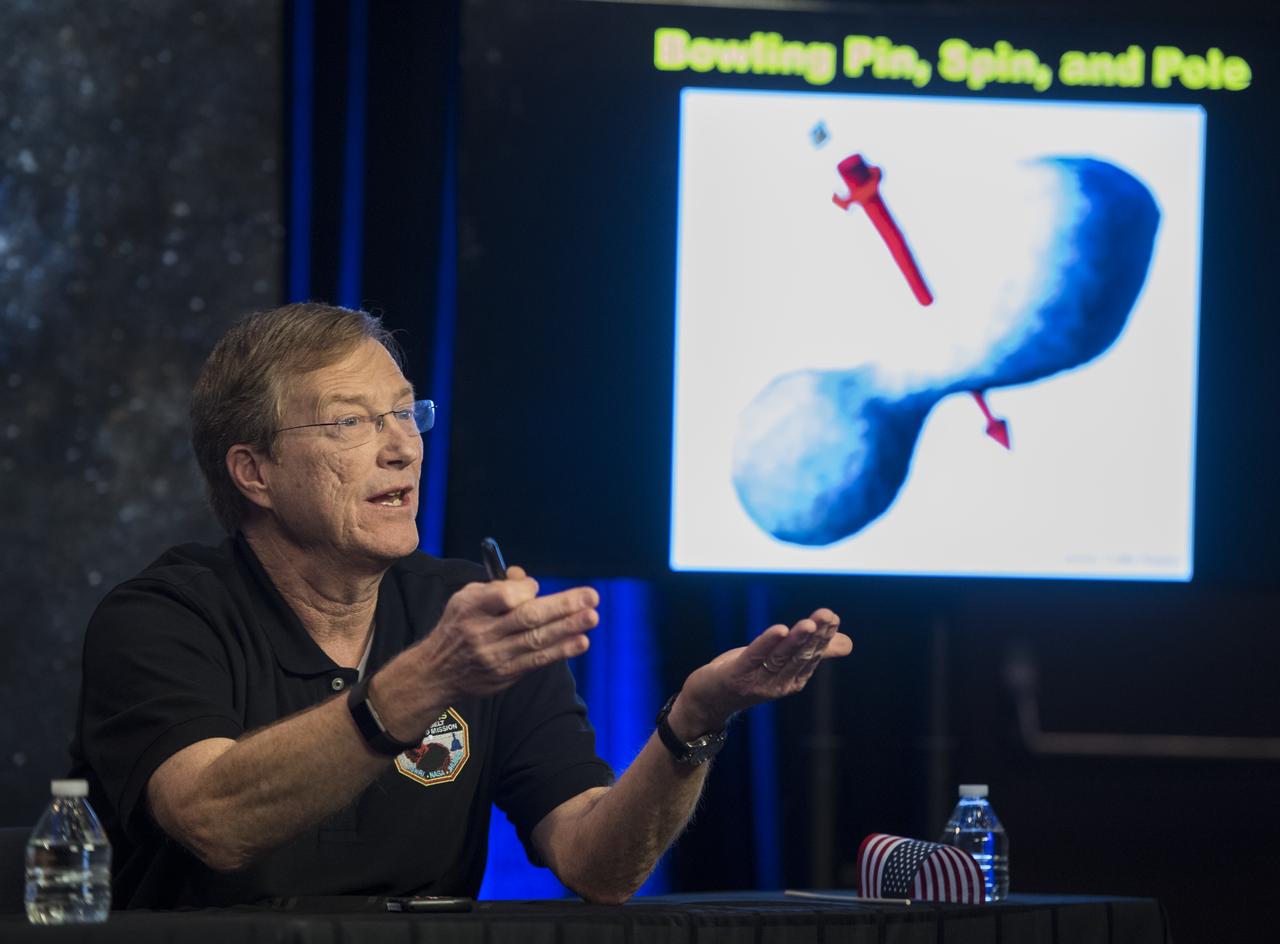
New Horizons project scientist Hal Weaver of the Johns Hopkins University Applied Physics Laboratory is seen during a press conference after the team received confirmation from the New Horizons spacecraft that it has completed the flyby of Ultima Thule, Tuesday, Jan. 1, 2019 at Johns Hopkins University Applied Physics Laboratory (APL) in Laurel, Maryland. Photo Credit: (NASA/Joel Kowsky)
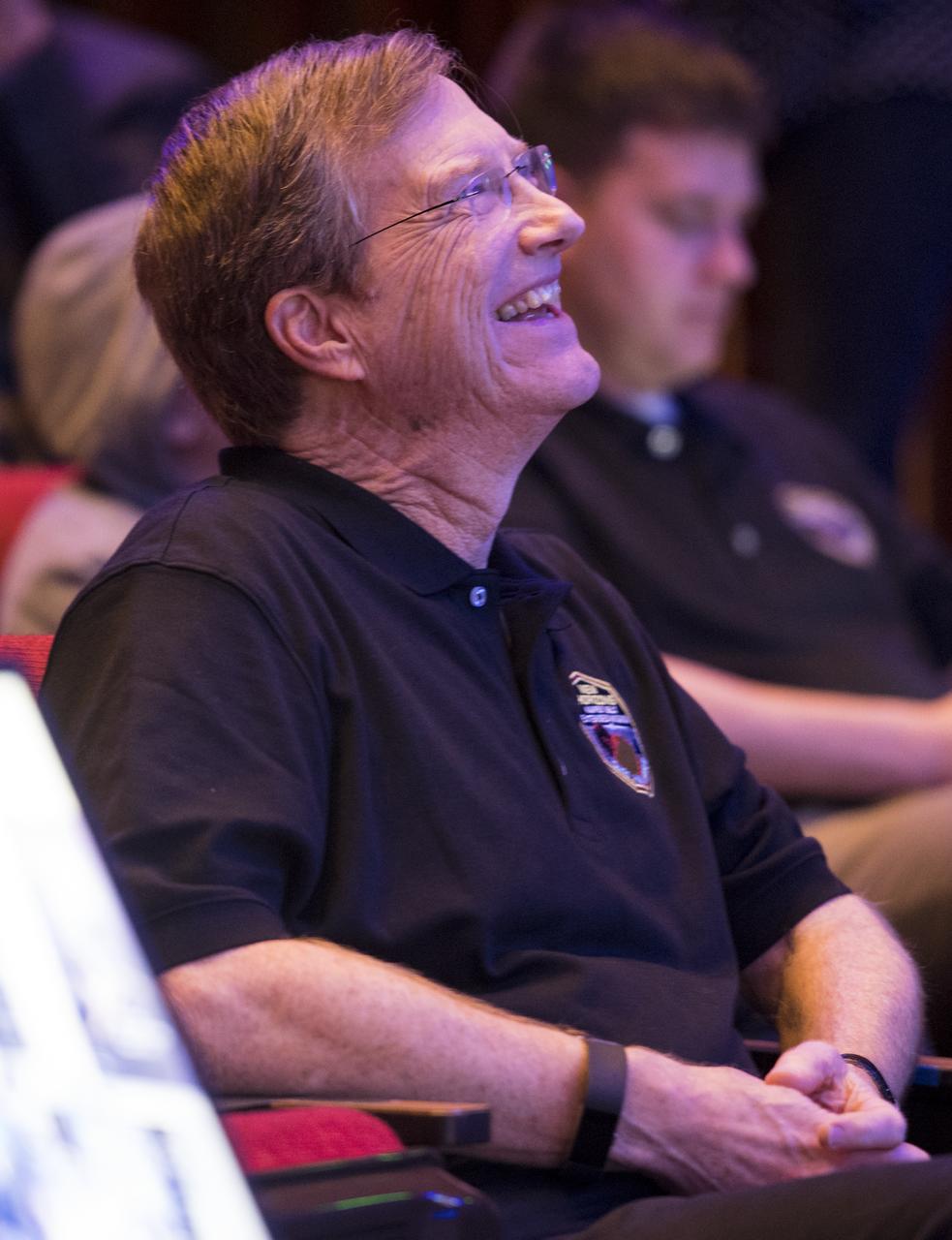
New Horizons project scientist Hal Weaver of the Johns Hopkins University Applied Physics Laboratory watches a live feed of the Mission Operations Center (MOC) as the team waits to receive confirmation from the spacecraft that it has completed the flyby of Ultima Thule, Tuesday, Jan. 1, 2019 at Johns Hopkins University Applied Physics Laboratory (APL) in Laurel, Maryland. Photo Credit: (NASA/Joel Kowsky)
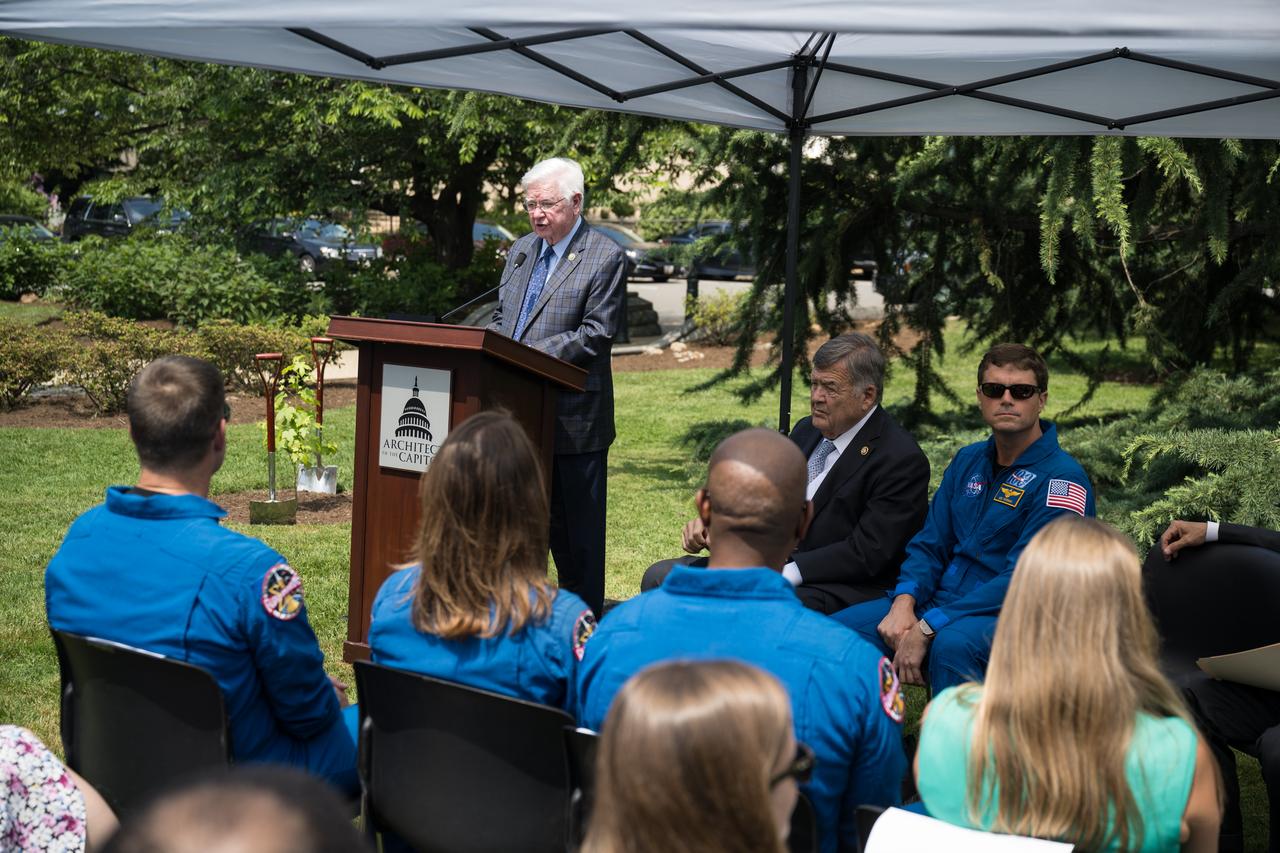
U.S. Rep. Harold “Hal” Rogers (R-KY) provides remarks at a Moon tree dedication ceremony, Tuesday, June 4, 2024 at the United States Capitol in Washington. The American Sweetgum tree planted on the southwestern side of the Capitol, was grown from a seed that was flown around the Moon during the Artemis I mission. Photo Credit: (NASA/Aubrey Gemignani)

Chairman Hal Rogers, R-Ky., delivers an opening statement before NASA Administrator Bill Nelson testifies before the House Appropriations Committee’s Commerce, Justice, Science, and Related Agencies Subcomittee, during a hearing on the fiscal year 2025 budget request, Wednesday, April 17, 2024 at the Rayburn House Office Building in Washington, DC. Photo Credit: (NASA/Joel Kowsky)

NASA astronauts Reid Wiseman, commander, second from right; Victor Glover, pilot, center; Christina Koch, mission specialist, second from left; and CSA (Canadian Space Agency) astronaut Jeremy Hansen, mission specialist, left; speak with Committee Chairman Hal Rogers, R-Ky., during a meeting with members of the House Appropriations Subcommittee on Commerce Justice, Science, and Related Agencies, Tuesday, May 12, 2026, at the Rayburn House Office Building in Washington. NASA’s Artemis II mission took Wiseman, Glover, Koch, and Hansen on a nearly 10-day journey around the Moon and back to Earth in April 2026. Photo Credit: (NASA/Joel Kowsky)
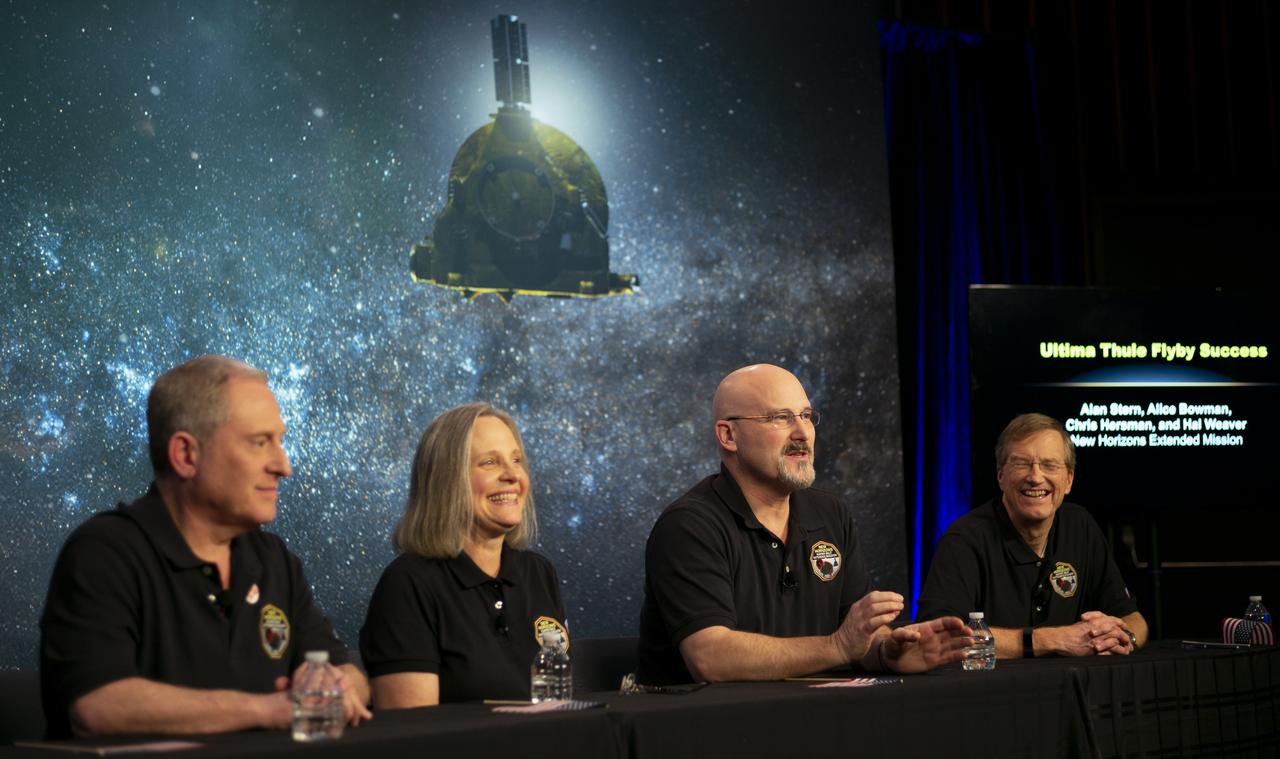
New Horizons principal investigator Alan Stern of the Southwest Research Institute (SwRI), Boulder, CO, left, New Horizons Mission Operations Manager Alice Bowman of the Johns Hopkins University Applied Physics Laboratory, second from left, New Horizons mission systems engineer Chris Hersman of the Johns Hopkins University Applied Physics Laboratory, second from right, and New Horizons project scientist Hal Weaver of the Johns Hopkins University Applied Physics Laboratory, right, participate in a press conference after the team received confirmation from the New Horizons spacecraft that it has completed the flyby of Ultima Thule, Tuesday, Jan. 1, 2019 at Johns Hopkins University Applied Physics Laboratory (APL) in Laurel, Maryland. Photo Credit: (NASA/Joel Kowsky)
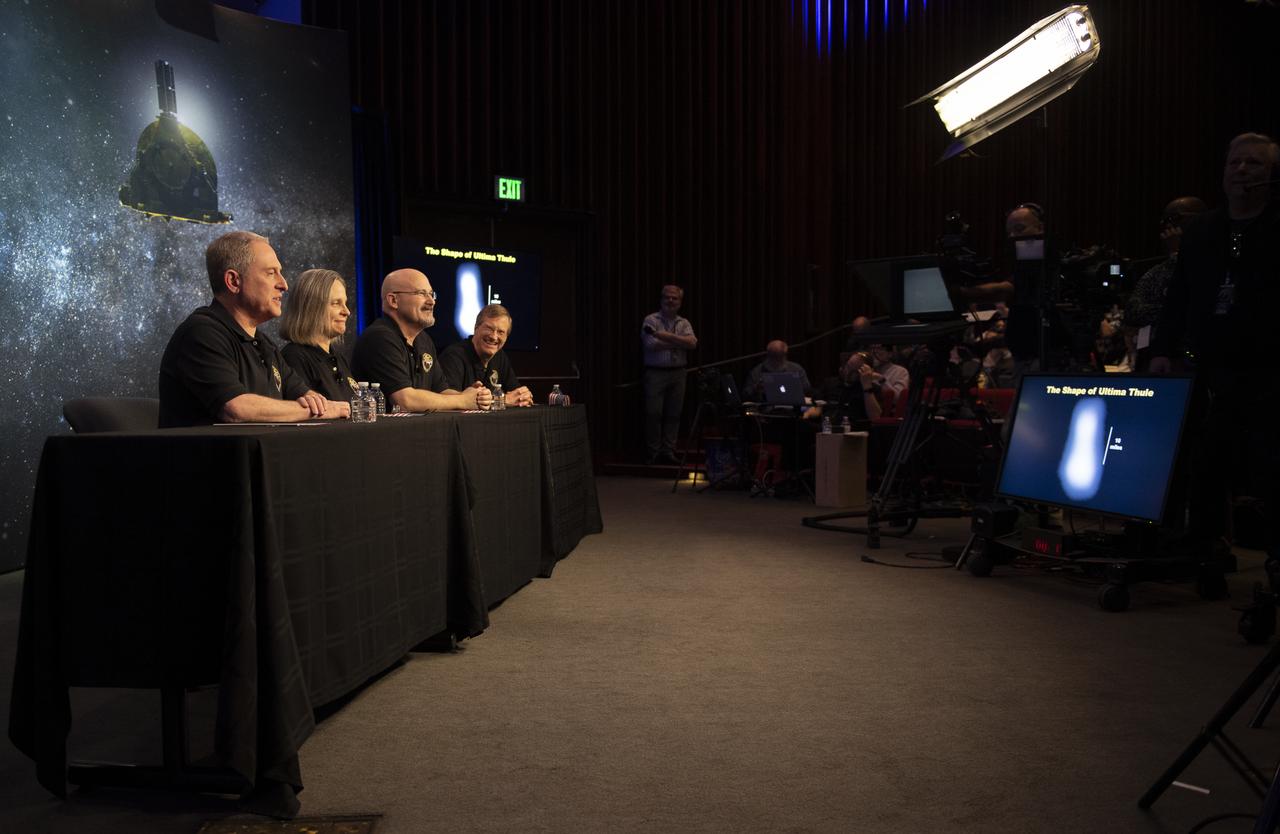
A new image of Ultima Thule is seen on a screen during a press conference after the team received confirmation from the New Horizons spacecraft that it has completed the flyby of Ultima Thule, Tuesday, Jan. 1, 2019 at Johns Hopkins University Applied Physics Laboratory (APL) in Laurel, Maryland. New Horizons principal investigator Alan Stern of the Southwest Research Institute (SwRI), Boulder, CO, New Horizons Mission Operations Manager Alice Bowman of the Johns Hopkins University Applied Physics Laboratory, New Horizons mission systems engineer Chris Hersman of the Johns Hopkins University Applied Physics Laboratory, and New Horizons project scientist Hal Weaver of the Johns Hopkins University Applied Physics Laboratory, spoke about the flyby and new pre-flyby information that was downlinked from the spacecraft. Photo Credit: (NASA/Joel Kowsky)
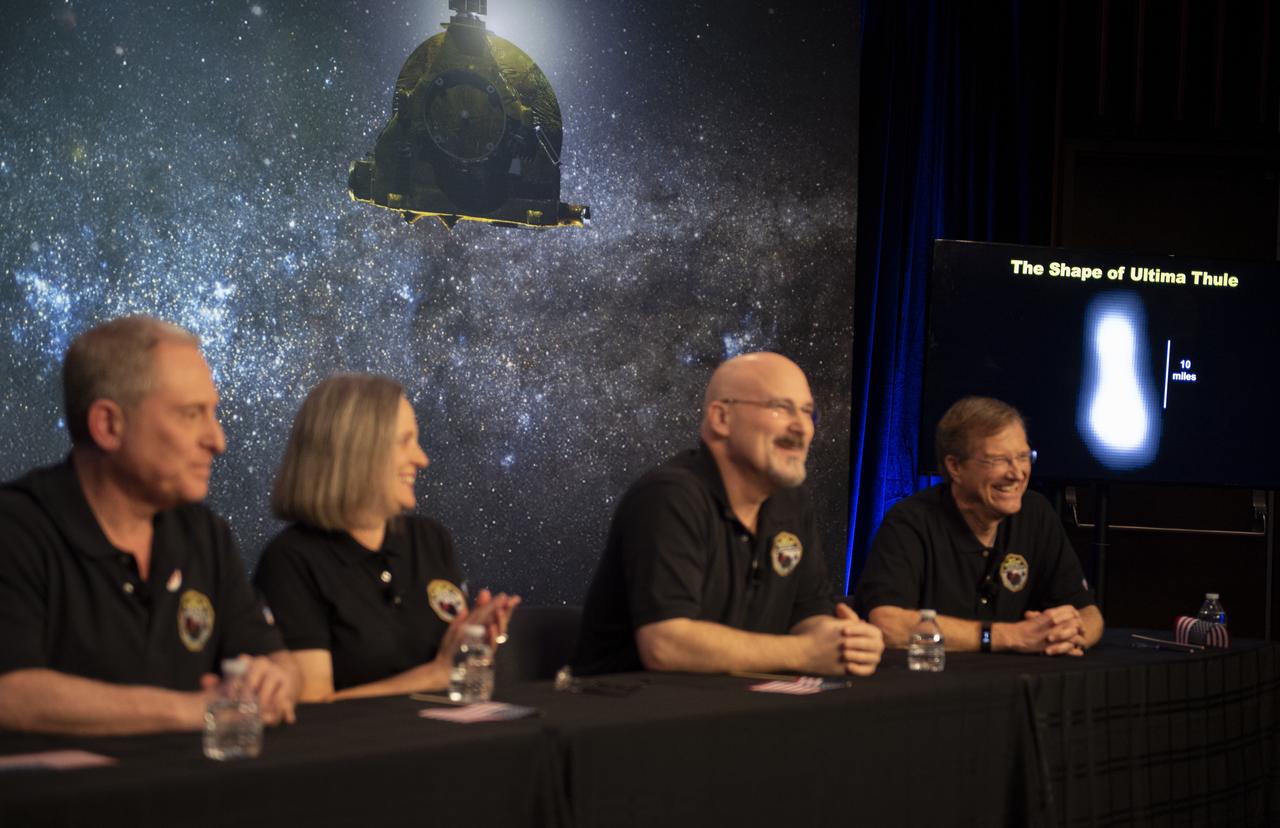
A new image of Ultima Thule is seen on a screen during a press conference after the team received confirmation from the New Horizons spacecraft that it has completed the flyby of Ultima Thule, Tuesday, Jan. 1, 2019 at Johns Hopkins University Applied Physics Laboratory (APL) in Laurel, Maryland. New Horizons principal investigator Alan Stern of the Southwest Research Institute (SwRI), Boulder, CO, New Horizons Mission Operations Manager Alice Bowman of the Johns Hopkins University Applied Physics Laboratory, New Horizons mission systems engineer Chris Hersman of the Johns Hopkins University Applied Physics Laboratory, and New Horizons project scientist Hal Weaver of the Johns Hopkins University Applied Physics Laboratory, spoke about the flyby and new pre-flyby information that was downlinked from the spacecraft. Photo Credit: (NASA/Joel Kowsky)
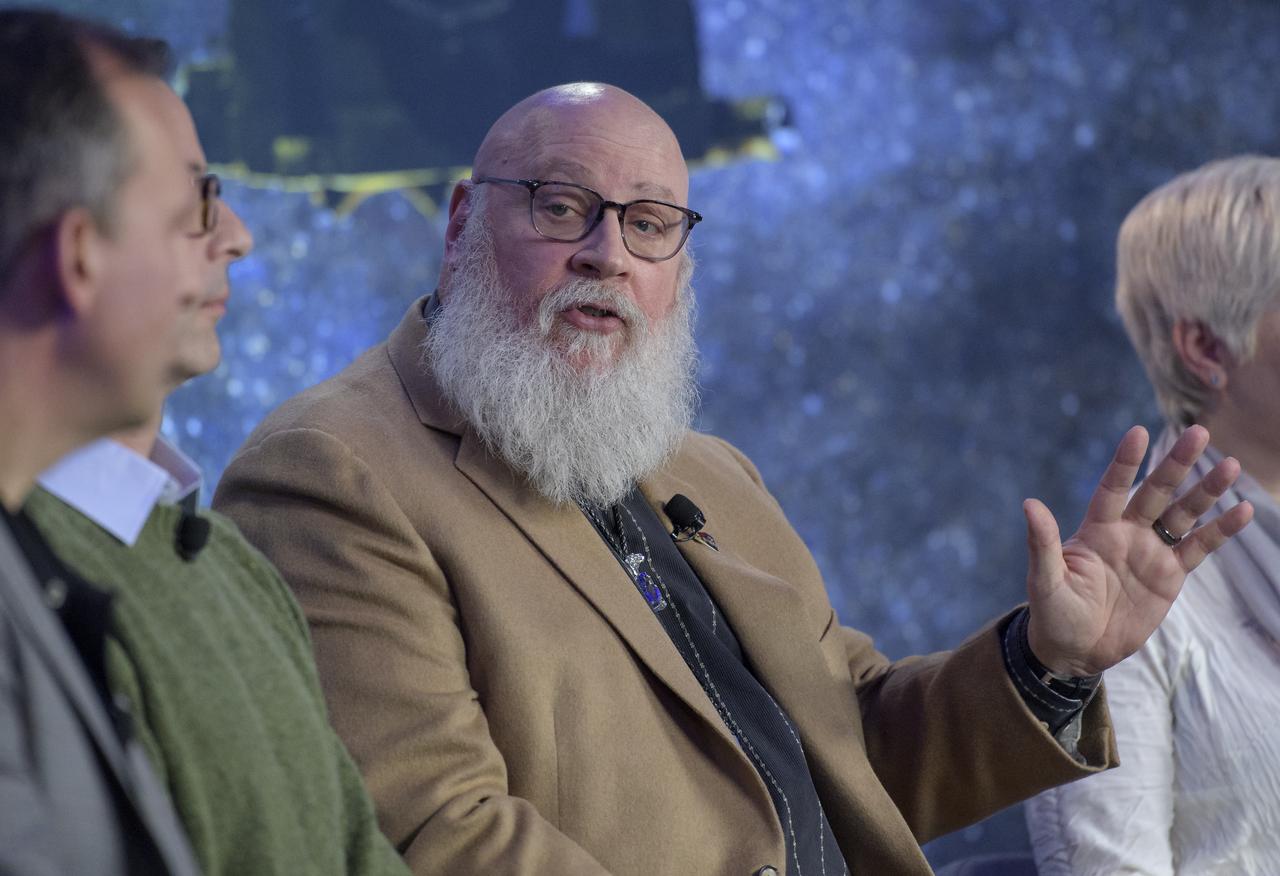
Harold "Hal" Levison from the Southwest Research Institute in Boulder, Colorado gives remarks about the Lucy mission during a briefing discussing small bodies missions, Monday, Dec. 31, 2018 at Johns Hopkins University Applied Physics Laboratory (APL) in Laurel, Maryland. Photo Credit: (NASA/Bill Ingalls)
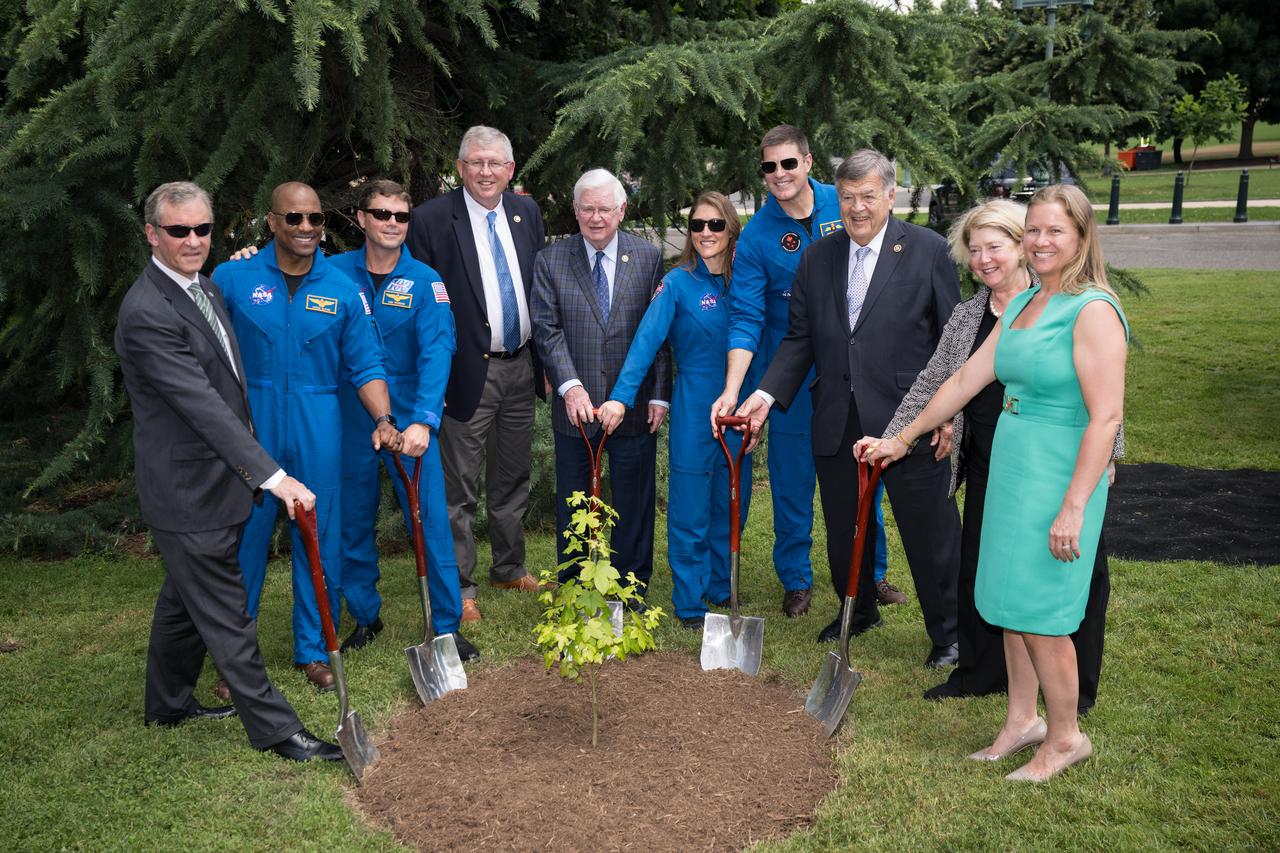
From left to right, U.S. Rep. Matt Cartwright (D-PA), Artemis II crew members, NASA astronauts Victor Glover and Reid Wiseman, U.S. Rep. Frank Lucas (R-OK), U.S. Rep. Harold “Hal” Rogers (R-KY), Artemis II crew members NASA astronaut Christina Koch and Canadian Space Agency (CSA) astronaut Jeremy Hansen, U.S. Rep. Charles Albert "Dutch" Ruppersberger III (D-MD), NASA Deputy Administrator Pam Melroy, and Minister, Congressional, Public, and Intergovernmental Affairs, Embassy of Canada, Carrie Goodge O'Brien, pose for a photo after a Moon tree dedication ceremony, Tuesday, June 4, 2024 at the United States Capitol in Washington. The American Sweetgum tree planted on the southwestern side of the Capitol, was grown from a seed that was flown around the Moon during the Artemis I mission. Photo Credit: (NASA/Aubrey Gemignani)
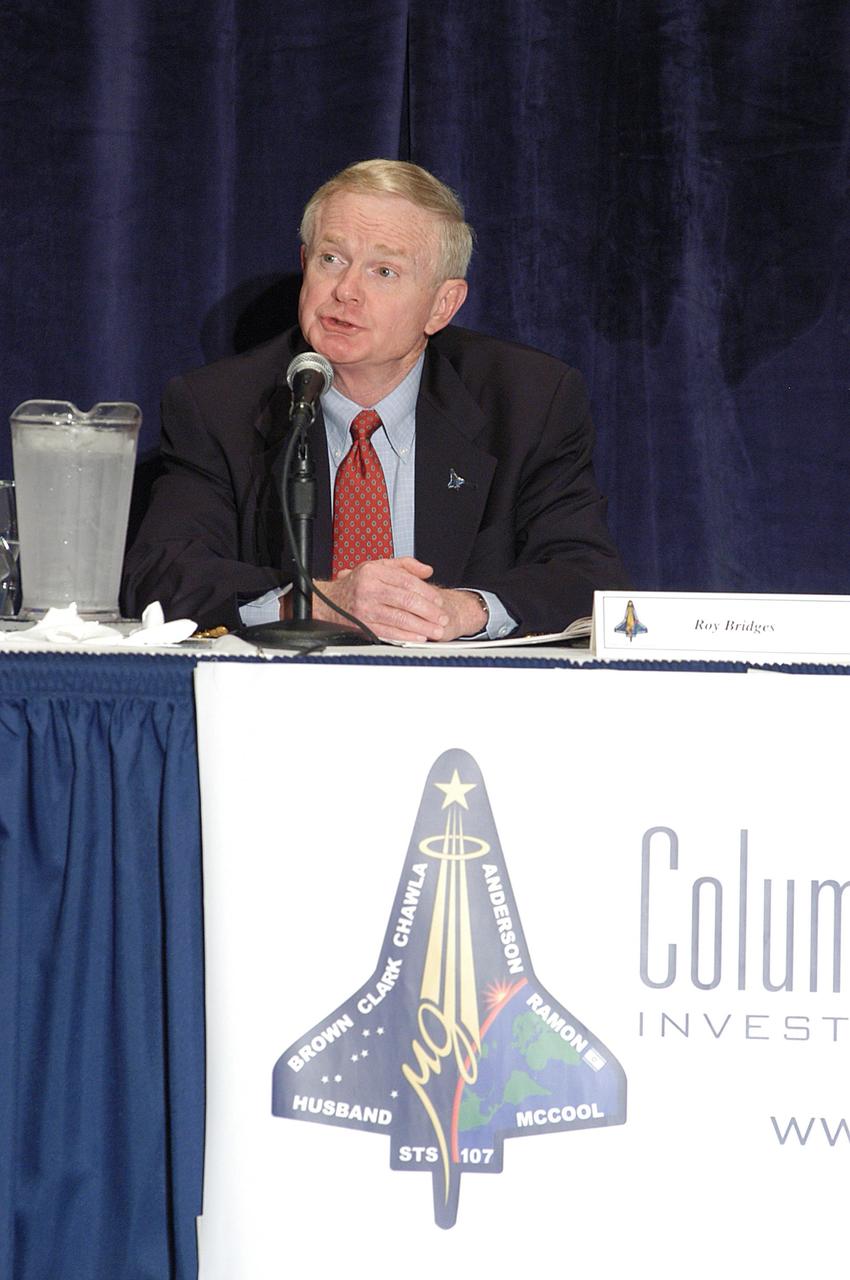
KENNEDY SPACE CENTER, FLA. - Center Director Roy Bridges speaks at a meeting of the Columbia Accident Investigation Board in Cape Canaveral, Fla. Over the course of two days, the Board's chairman, retired Navy Admiral Harold W. "Hal" Gehman Jr., and other board members would hear from experts discussing the role of the Kennedy Space Center in the Shuttle Program, Shuttle Safety and Debris Collection, Layout and Analysis and Forensic Metallurgy.
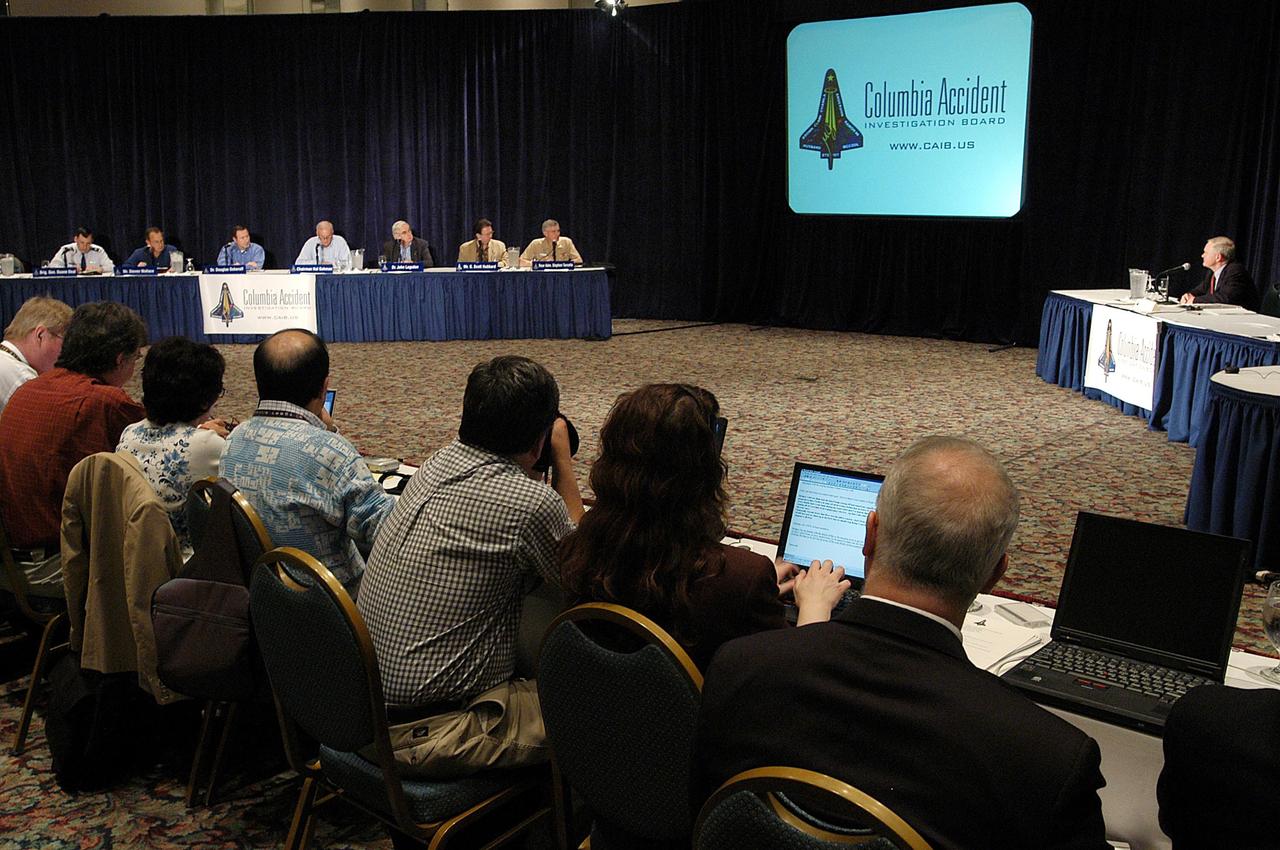
KENNEDY SPACE CENTER, FLA. - At the third public hearing of the Columbia Accident Investigation Board, held in Cape Canaveral, Fla., reporters listen intently to Center Director Roy Bridges (background, right). Board members are in the background, left. Over the course of two days, the Board's chairman, retired Navy Admiral Harold W. "Hal" Gehman Jr., and other board members would hear from experts discussing the role of the Kennedy Space Center in the Shuttle Program, Shuttle Safety and Debris Collection, Layout and Analysis and Forensic Metallurgy.
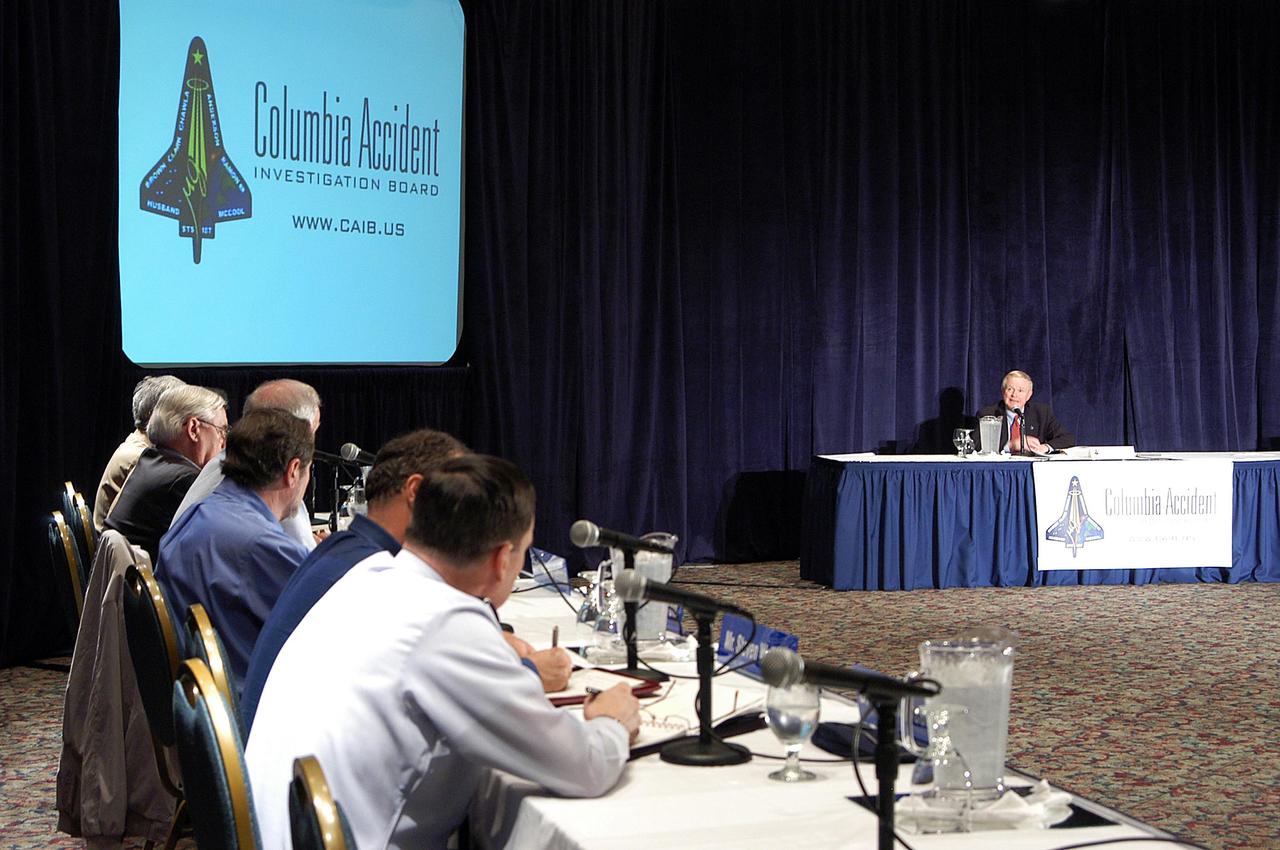
KENNEDY SPACE CENTER, FLA. - The Columbia Accident Investigation Board (left) listens to Center Director Roy Bridges at the third public hearing of the Board, held in Cape Canaveral, Fla. Over the course of two days, the Board's chairman, retired Navy Admiral Harold W. "Hal" Gehman Jr., and other board members would hear from experts discussing the role of the Kennedy Space Center in the Shuttle Program, Shuttle Safety and Debris Collection, Layout and Analysis and Forensic Metallurgy.
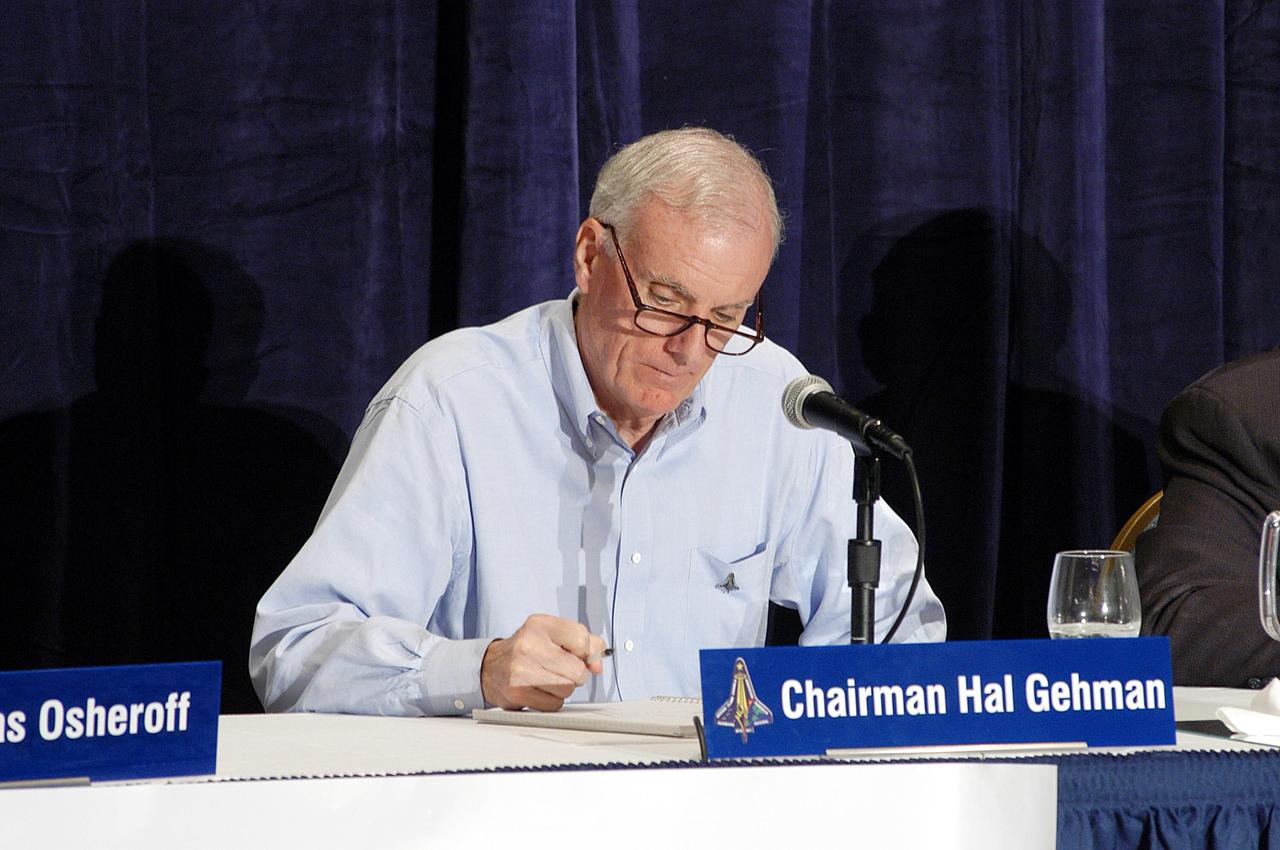
KENNEDY SPACE CENTER, FLA. - Retired Navy Admiral Harold W. "Hal" Gehman Jr., chairman of the Columbia Accident Investigation Board, checks his notes during the third public hearing of the board, held in Cape Canaveral, Fla. Over the course of two days, Gehman and other board members would hear from experts discussing the role of the Kennedy Space Center in the Shuttle Program, Shuttle Safety and Debris Collection, Layout and Analysis and Forensic Metallurgy.
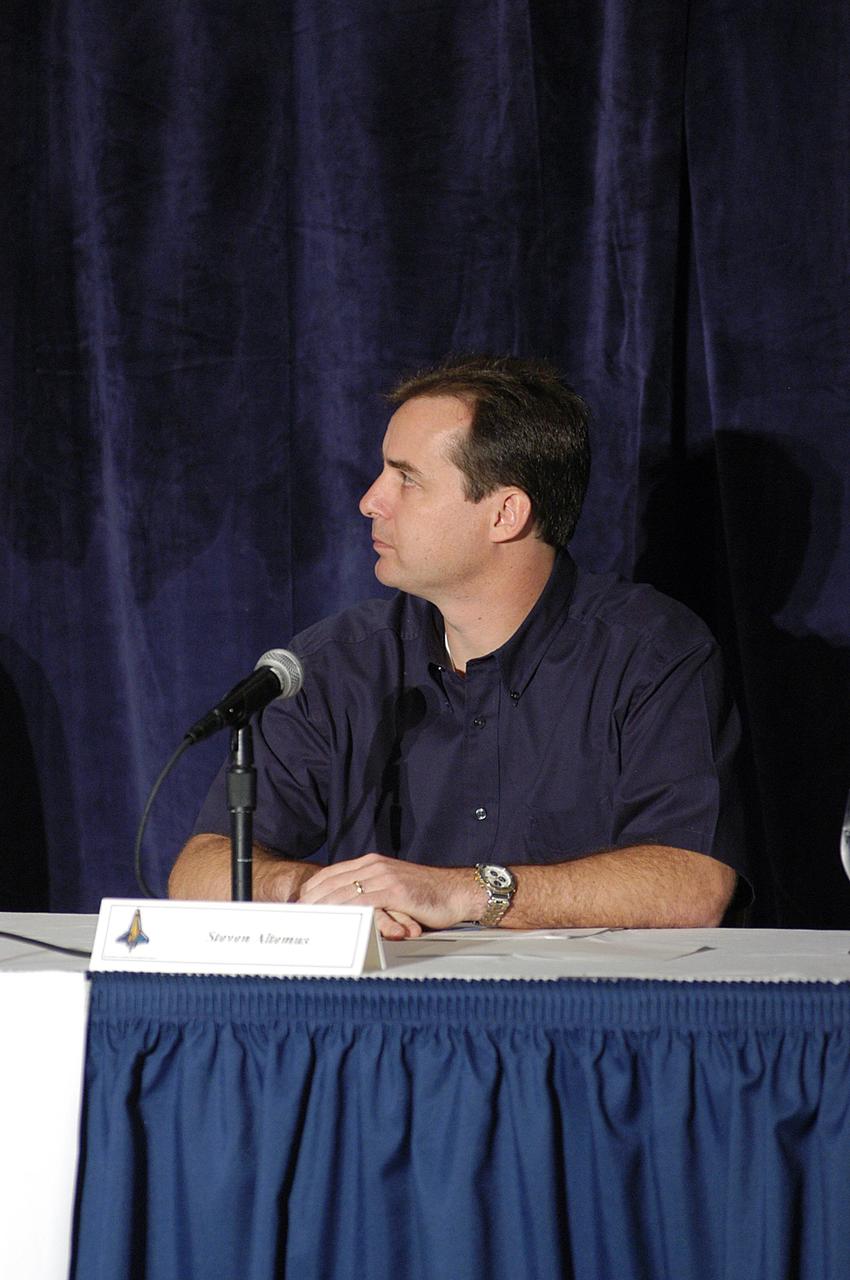
KENNEDY SPACE CENTER, FLA. - Steve Altemus, shuttle test director at KSC, provides expert information to the Columbia Accident Investigation Board. Over the course of two days, the Board's chairman, retired Navy Admiral Harold W. "Hal" Gehman Jr., and other board members have been hearing from experts discussing the role of the Kennedy Space Center in the Shuttle Program, Shuttle Safety and Debris Collection, Layout and Analysis and Forensic Metallurgy.
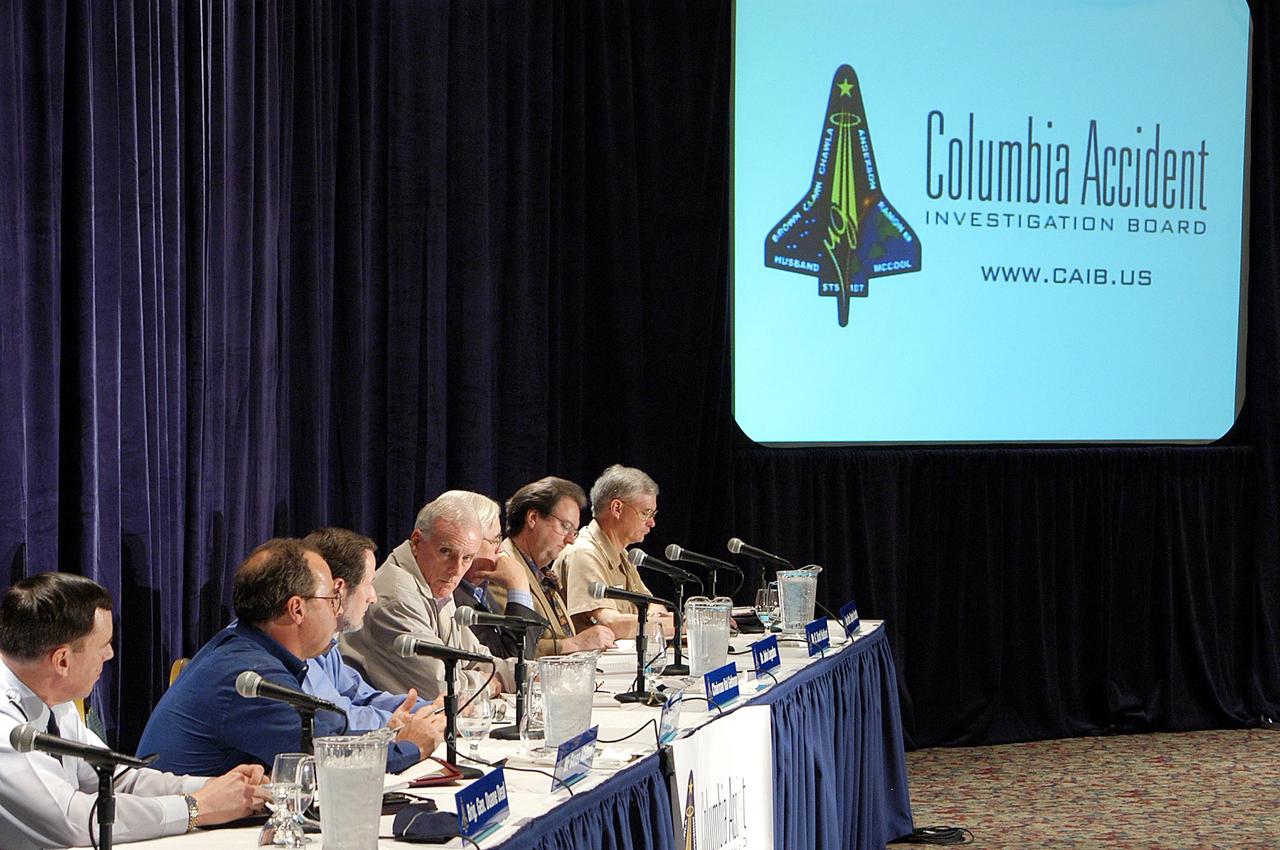
KENNEDY SPACE CENTER, FLA. - The Columbia Accident Investigation Board gathers for its third public hearing, held in Cape Canaveral, Fla. Over the course of two days, the Board's chairman, retired Navy Admiral Harold W. "Hal" Gehman Jr., and other board members would hear from experts discussing the role of the Kennedy Space Center in the Shuttle Program, Shuttle Safety and Debris Collection, Layout and Analysis and Forensic Metallurgy.
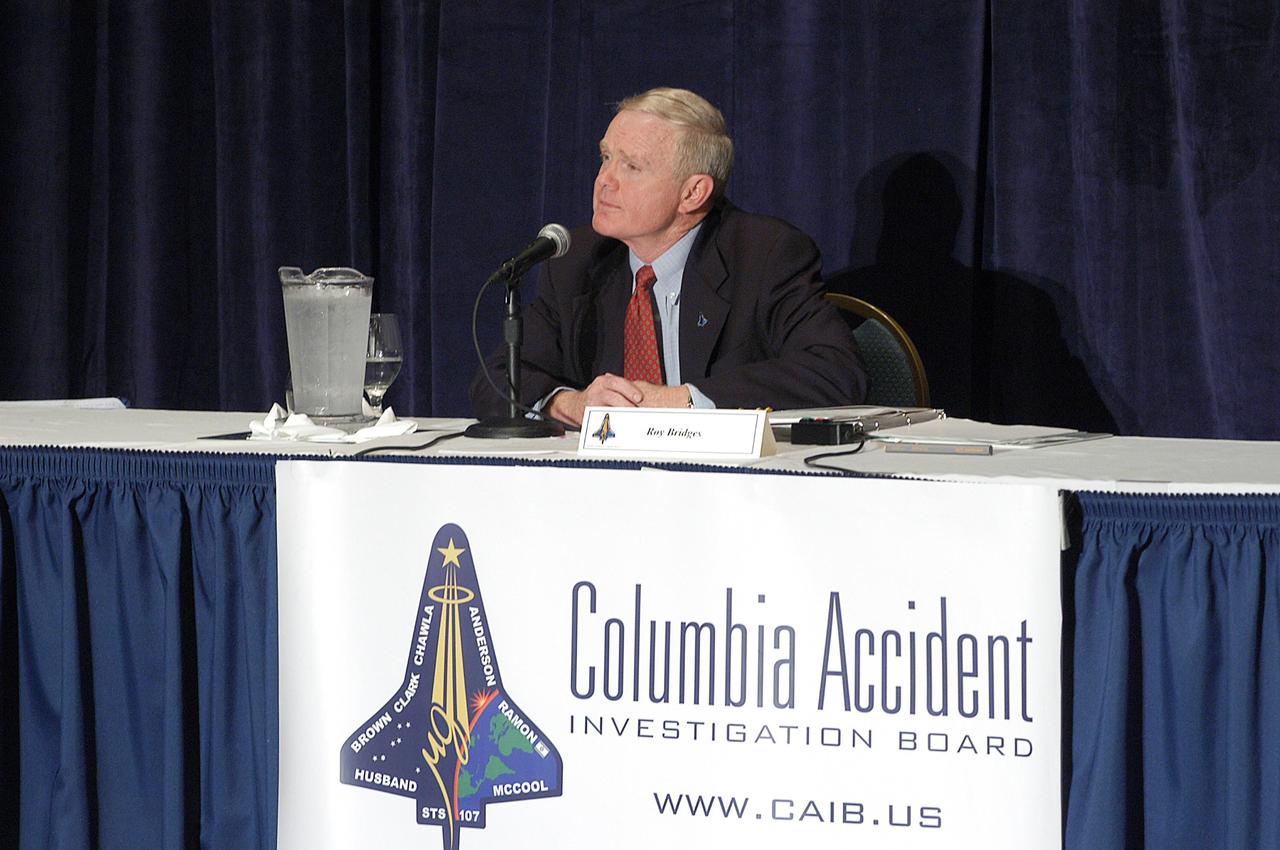
KENNEDY SPACE CENTER, FLA. - Center Director Roy Bridges speaks at a meeting of the Columbia Accident Investigation Board in Cape Canaveral, Fla. Over the course of two days, the Board's chairman, retired Navy Admiral Harold W. "Hal" Gehman Jr., and other board members would hear from experts discussing the role of the Kennedy Space Center in the Shuttle Program, Shuttle Safety and Debris Collection, Layout and Analysis and Forensic Metallurgy.
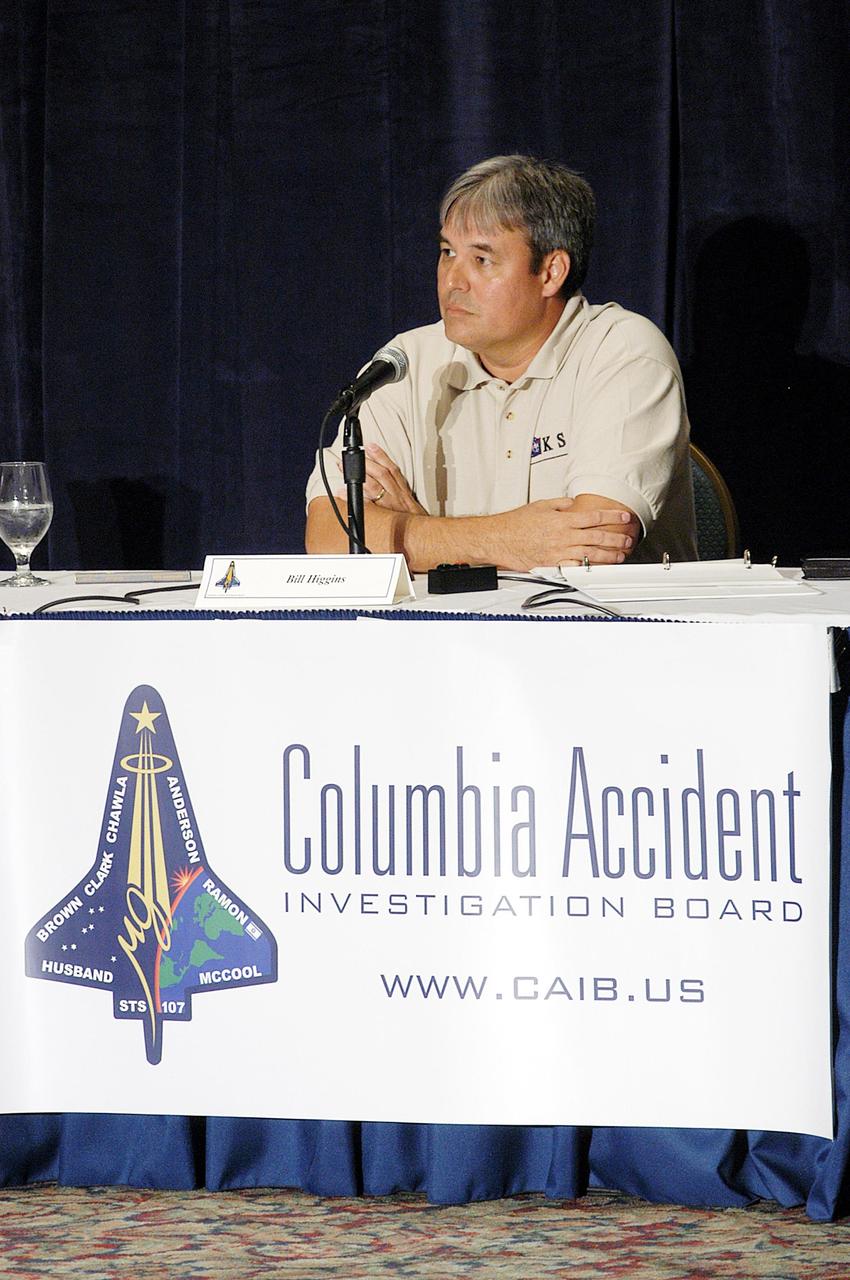
KENNEDY SPACE CENTER, FLA. - William Higgins, chief of Shuttle Processing Safety and Mission Assurance Division at KSC, talks to the Columbia Accident Investigation Board during its third public hearing, held in Cape Canaveral, Fla. Over the course of two days, the Board's chairman, retired Navy Admiral Harold W. "Hal" Gehman Jr., and other board members would hear from experts discussing the role of the Kennedy Space Center in the Shuttle Program, Shuttle Safety and Debris Collection, Layout and Analysis and Forensic Metallurgy.
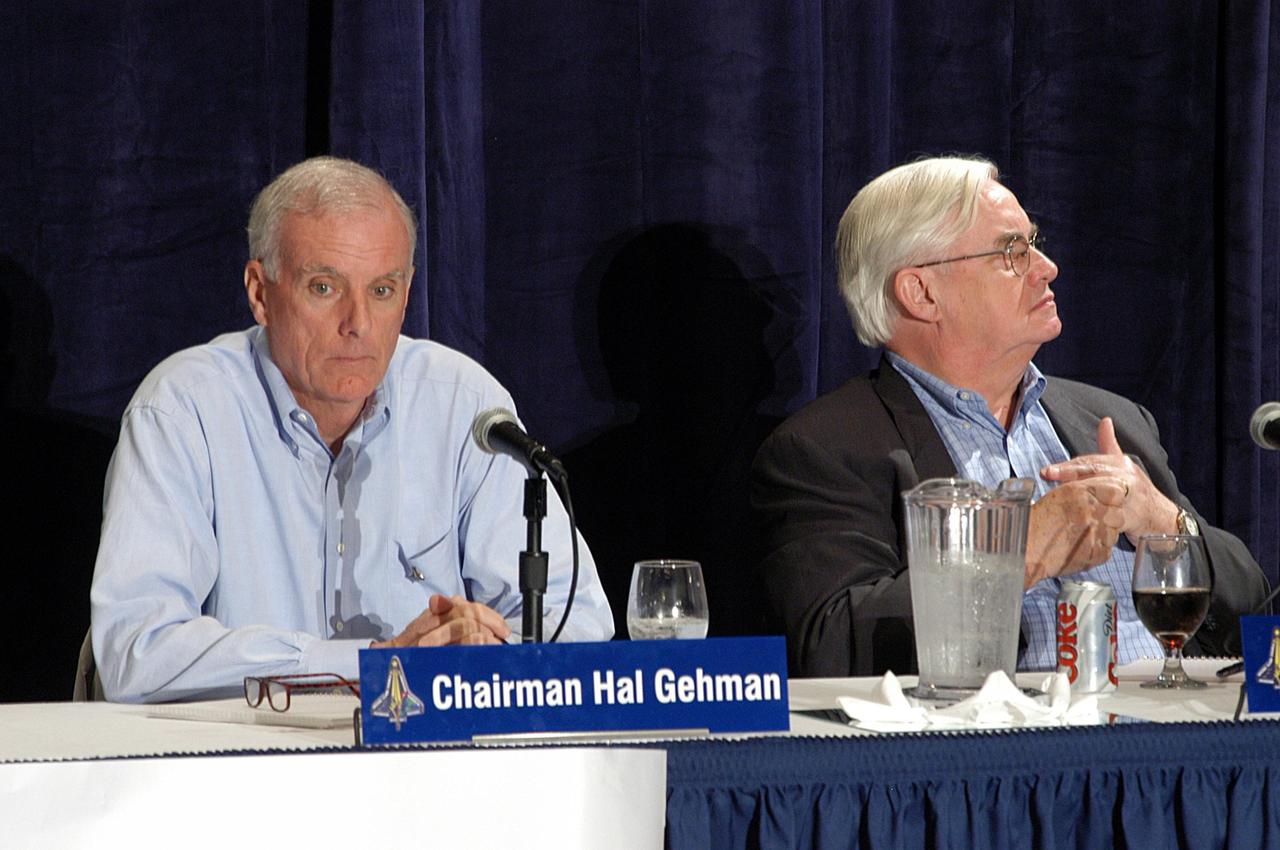
KENNEDY SPACE CENTER, FLA. - Retired Navy Admiral Harold W. "Hal" Gehman Jr., chairman of the Columbia Accident Investigation Board, and board member Dr. John Logsdon, director of the Space Policy Institute, George Washington University, listen to expert information about the role of the Kennedy Space Center in the Shuttle Program, Shuttle Safety and Debris Collection, Layout and Analysis and Forensic Metallurgy. This was the third public hearing of the board, which was held in Cape Canaveral, Fla.
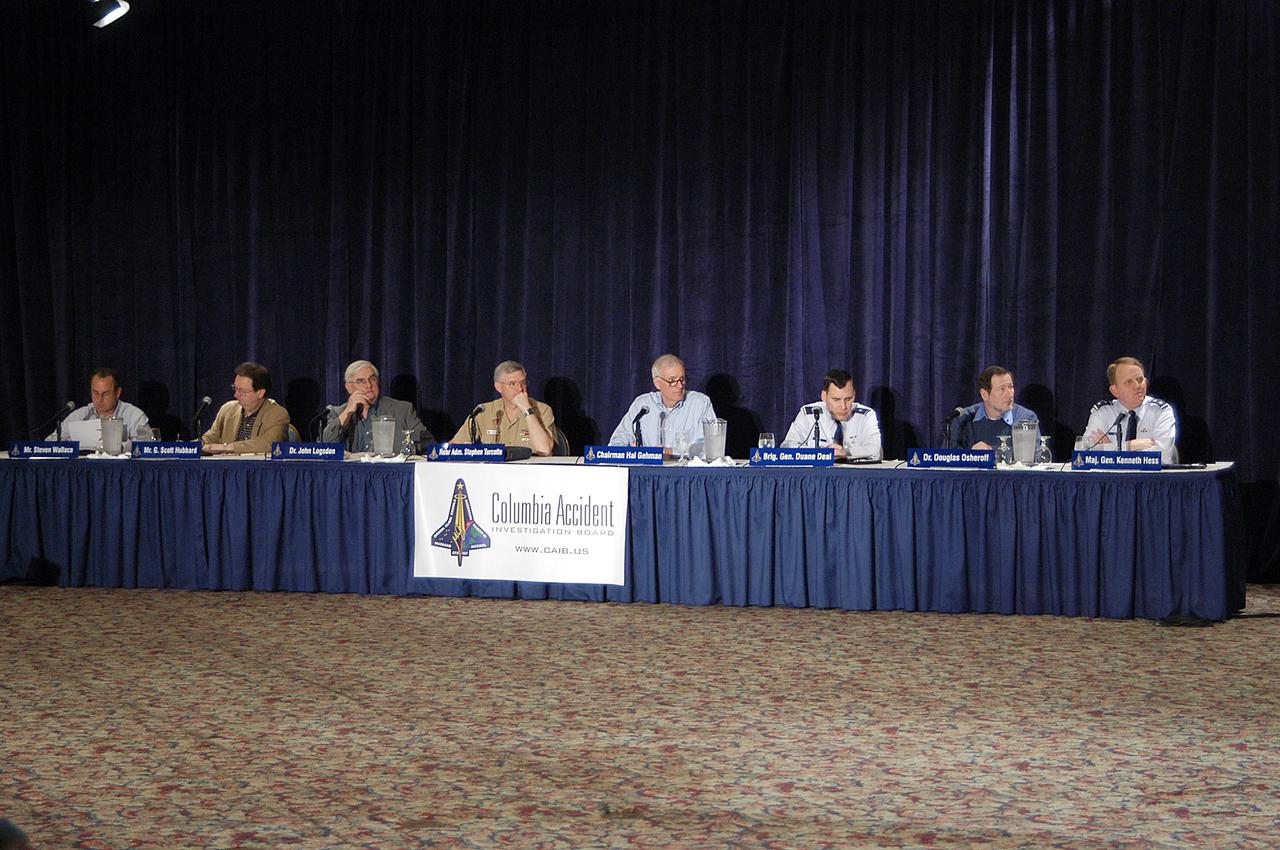
KENNEDY SPACE CENTER, FLA. - The Columbia Accident Investigation Board gathers for a second day for its third public hearing, held in Cape Canaveral, Fla. Over the course of two days, the Board's chairman, retired Navy Admiral Harold W. "Hal" Gehman Jr., and other board members have been hearing from experts discussing the role of the Kennedy Space Center in the Shuttle Program, Shuttle Safety and Debris Collection, Layout and Analysis and Forensic Metallurgy.

KENNEDY SPACE CENTER, FLA. - Appearing before the Columbia Accident Investigation Board are (left Michael Rudolphi, deputy director of NASA's Stennis Space Center in Bay St. Louis, Miss., and (right) Steve Altemus, shuttle test director at KSC. Over the course of two days, the Board's chairman, retired Navy Admiral Harold W. "Hal" Gehman Jr., and other board members have been hearing from experts discussing the role of the Kennedy Space Center in the Shuttle Program, Shuttle Safety and Debris Collection, Layout and Analysis and Forensic Metallurgy.
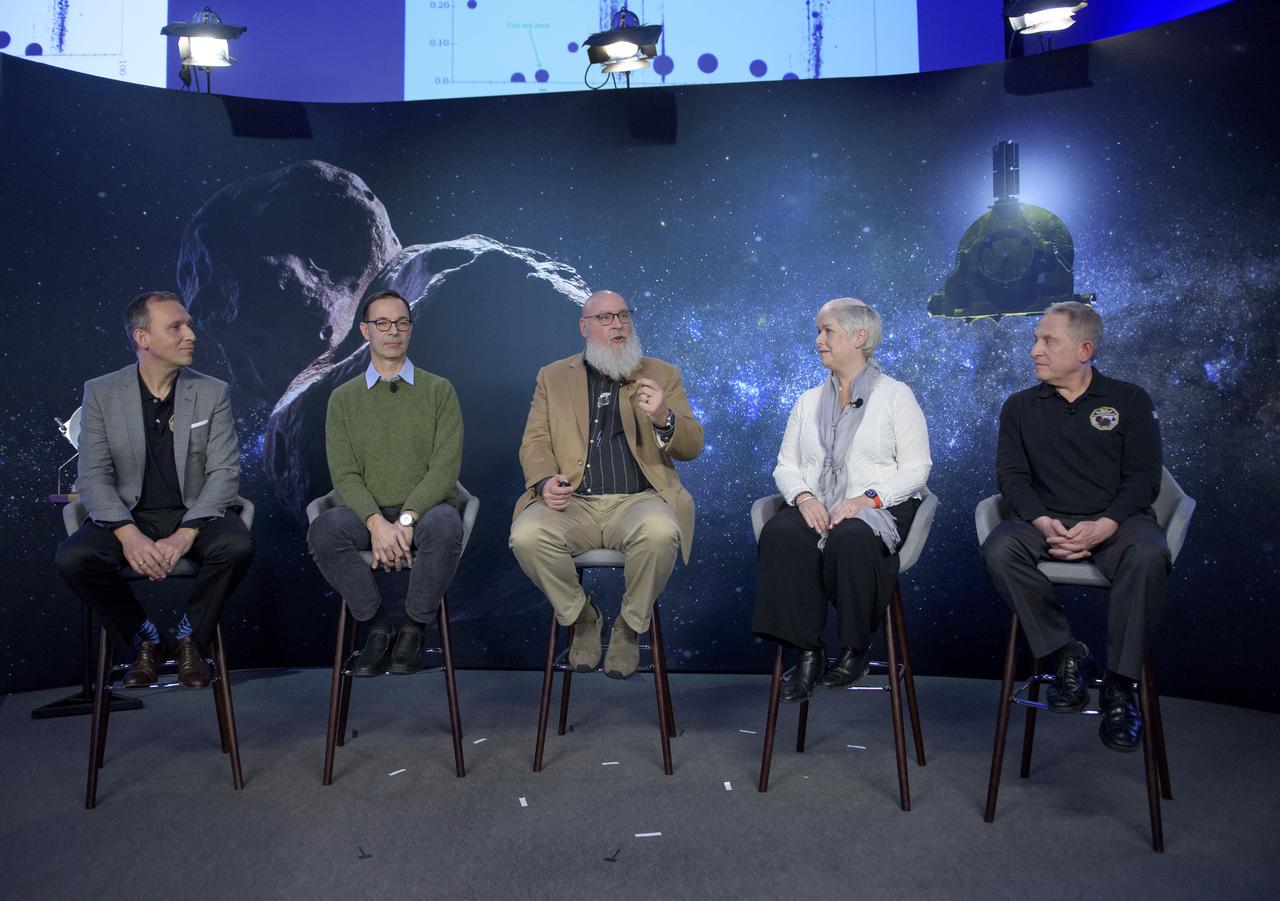
Associate Administrator for NASA's Science Mission Directorate Thomas Zurbuchen, left, Olivier Barnouin (US Instrument Scientist, Johns Hopkins University/APL), Harold "Hal" Levison from the Southwest Research Institute in Boulder, Colorado, Lindy Elkins-Tanton Principal Investigator of the Psyche mission from Arizona State University, and New Horizons principal investigator Alan Stern of the Southwest Research Institute (SwRI), Boulder, CO, right, are seen during a briefing discussing small bodies missions, Monday, Dec. 31, 2018 at Johns Hopkins University Applied Physics Laboratory (APL) in Laurel, Maryland. Photo Credit: (NASA/Bill Ingalls)
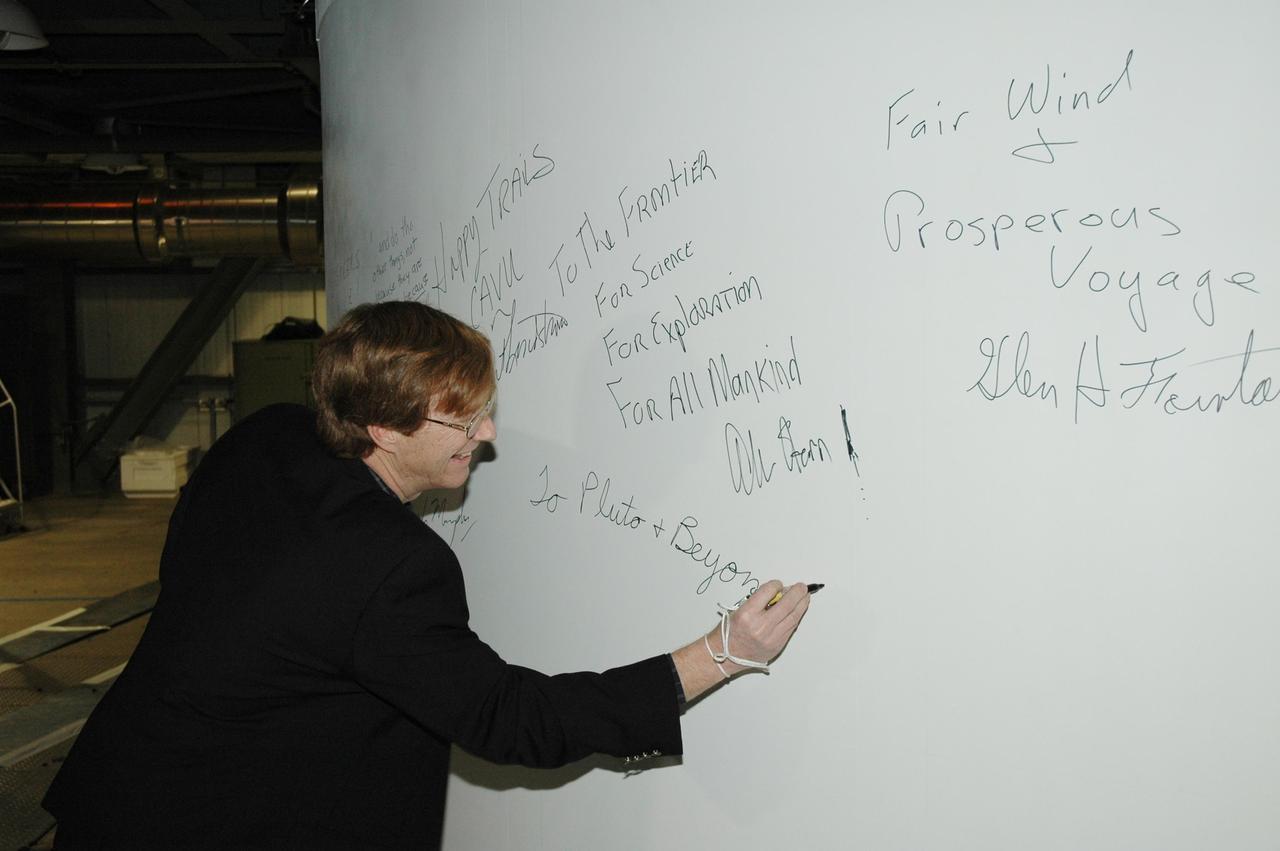
KENNEDY SPACE CENTER, FLA. - In the Vertical Integration Facility on Launch Complex 41, Cape Canaveral Air Force Station, Hal Weaver, New Horizons project scientist with the Johns Hopkins University Applied Physics Laboratory, signs the fairing enclosing the New Horizons spacecraft. The fairing protects the spacecraft during launch and flight through the atmosphere. Once out of the atmosphere, the fairing is jettisoned. The compact 1,060-pound New Horizons probe carries seven scientific instruments that will characterize the global geology and geomorphology of Pluto and its moon Charon, map their surface compositions and temperatures, and examine Pluto's complex atmosphere. New Horizons is the first mission in NASA's New Frontiers program of medium-class planetary missions. The spacecraft, designed for NASA by the Johns Hopkins University Applied Physics Laboratory in Laurel, Md., will fly by Pluto and Charon as early as summer 2015.

Hal Weaver, L'LORRI Instrument Principal Investigator, Johns Hopkins Applied Physics Laboratory, is introduced during a science briefing for the Lucy mission held inside the TV Auditorium at NASA’s Kennedy Space Center in Florida on Oct. 14, 2021. The mission is scheduled to launch at 5:34 a.m. EDT Saturday, Oct. 16, on a United Launch Alliance Atlas V 401 rocket from Space Launch Complex 41 at Cape Canaveral Space Force Station. NASA’s Launch Services Program, based at Kennedy, is managing the launch. During its 12-year primary mission, Lucy will explore a record-breaking number of asteroids, flying by one asteroid in the solar system’s main belt and seven Trojan asteroids. Additionally, Lucy’s path will circle back to Earth three times for gravity assists, making it the first spacecraft to return to the vicinity of Earth from the outer solar system.
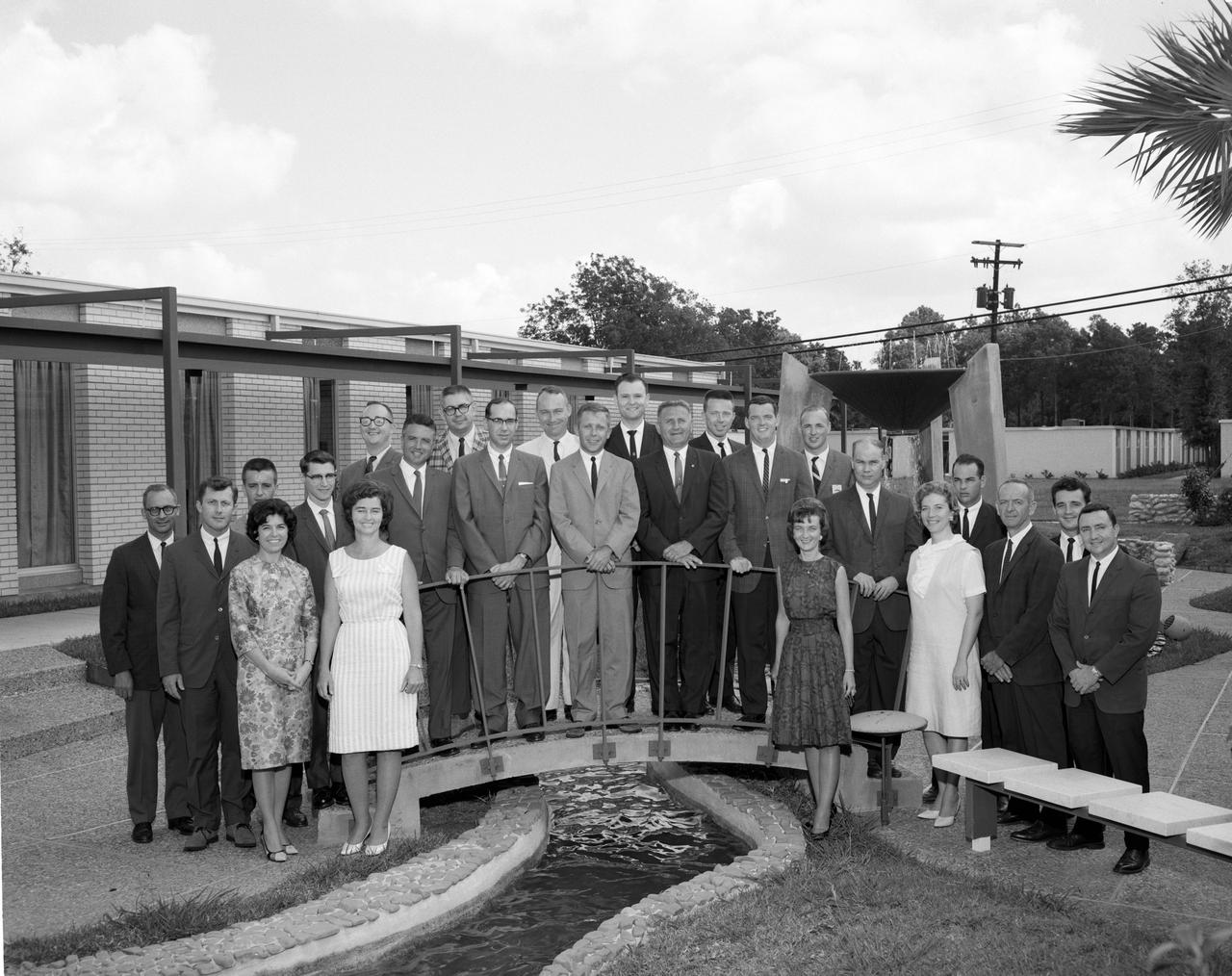
Group shot of the nucleus of the 1960 Flight Operations Division for the Mercury Program. Image taken at the Houston Petroleum Center (HPC) in Houston, TX, prior to their move to the Manned Spacecraft Center (MSC). This photo was published in the Space News Roundup, 07/08/1964. The women are (L-R): Doris Folkes, Cathy Osgood, Shirley Hunt and Mary Shep Burton. The men are (L-R): Dick Koos, Paul Brumberg, John O'Loughlin, Emil Schiesser, Jim Dalby, Morris Jenkins, Carl Huss, John Mayer, Bill Tindall, Hal Beck, Charlie Allen, Ted Skopinski, Jack Hartung, Glynn Lunney, John Shoosmith, Bill Reini, Lyn Dunseith, Jerry Engel, Harold Miller and Clay Hicks. ( 26644 ); Houston, TX
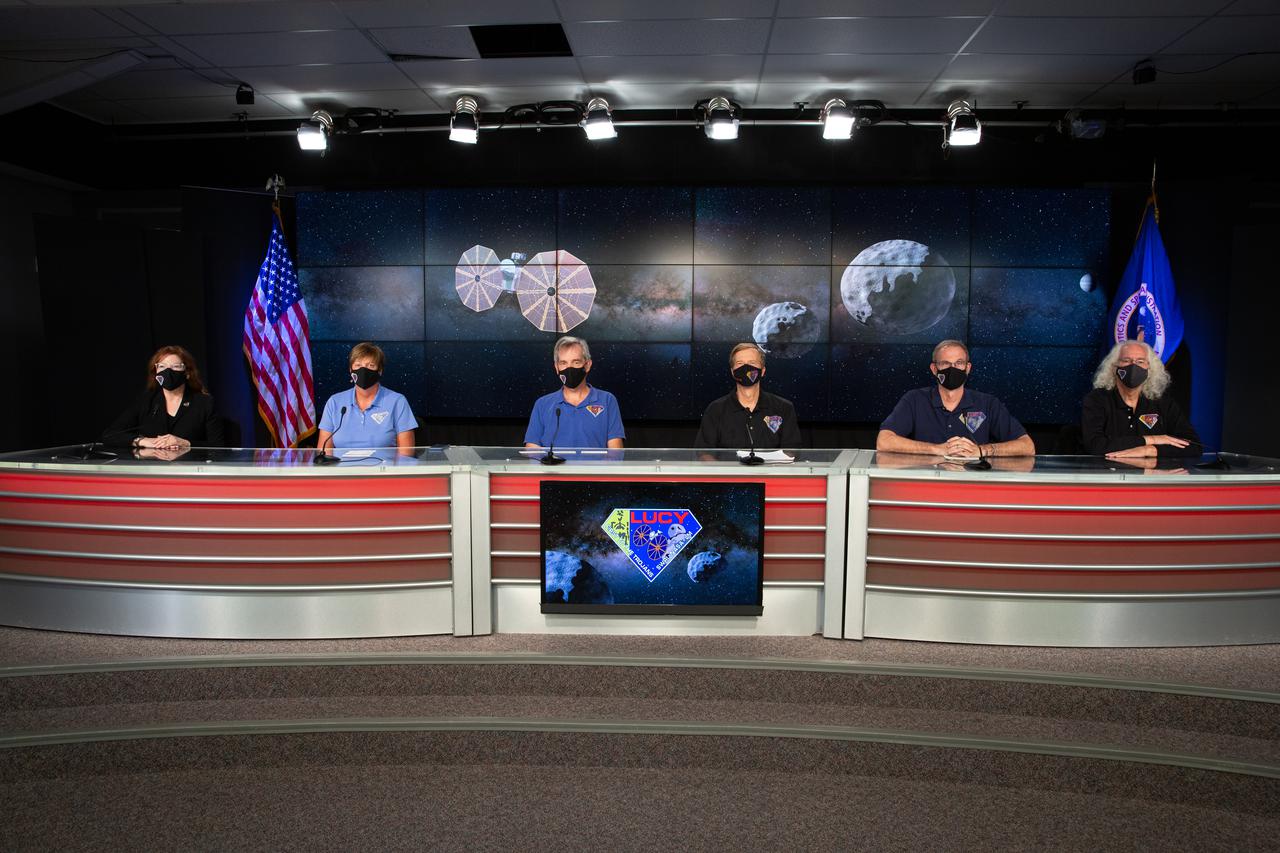
A science briefing for the Lucy mission is held inside the TV Auditorium at NASA’s Kennedy Space Center in Florida on Oct. 14, 2021. Participants included, from left to right, Adriana Ocampo, Lucy Program Executive, NASA Headquarters; Cathy Olkin, Lucy Deputy Principal Investigator, Southwest Research Institute; Keith Noll, Lucy Project Scientist at NASA’s Goddard Space Flight Center; Hal Weaver, L'LORRI Instrument Principal Investigator, Johns Hopkins Applied Physics Laboratory; Phil Christensen, L'TES Instrument Principal Investigator, Arizona State University; and Dennis Reuter, L’Ralph Instrument Principal Investigator at NASA’s Goddard Space Flight Center. Lucy is scheduled to launch at 5:34 a.m. EDT Saturday, Oct. 16, on a United Launch Alliance Atlas V 401 rocket from Space Launch Complex 41 at Cape Canaveral Space Force Station. NASA’s Launch Services Program, based at Kennedy, is managing the launch. Lucy is the first space mission to study the Trojan asteroids, which hold vital clues to the formation of our solar system.

On Saturday, Sept. 21, TRMM captured rainfall data on Typhoon Usagi as it passed between the northern Philippines and southern Taiwan. TRMM found rain falling at a rate of over 134 mm/hr (~5.2 inches) in USAGI's eye wall. Credit: SSAI/NASA, Hal Pierce <b><a href="http://www.nasa.gov/audience/formedia/features/MP_Photo_Guidelines.html" rel="nofollow">NASA image use policy.</a></b> <b><a href="http://www.nasa.gov/centers/goddard/home/index.html" rel="nofollow">NASA Goddard Space Flight Center</a></b> enables NASA’s mission through four scientific endeavors: Earth Science, Heliophysics, Solar System Exploration, and Astrophysics. Goddard plays a leading role in NASA’s accomplishments by contributing compelling scientific knowledge to advance the Agency’s mission. <b>Follow us on <a href="http://twitter.com/NASA_GoddardPix" rel="nofollow">Twitter</a></b> <b>Like us on <a href="http://www.facebook.com/pages/Greenbelt-MD/NASA-Goddard/395013845897?ref=tsd" rel="nofollow">Facebook</a></b> <b>Find us on <a href="http://instagram.com/nasagoddard?vm=grid" rel="nofollow">Instagram</a></b>
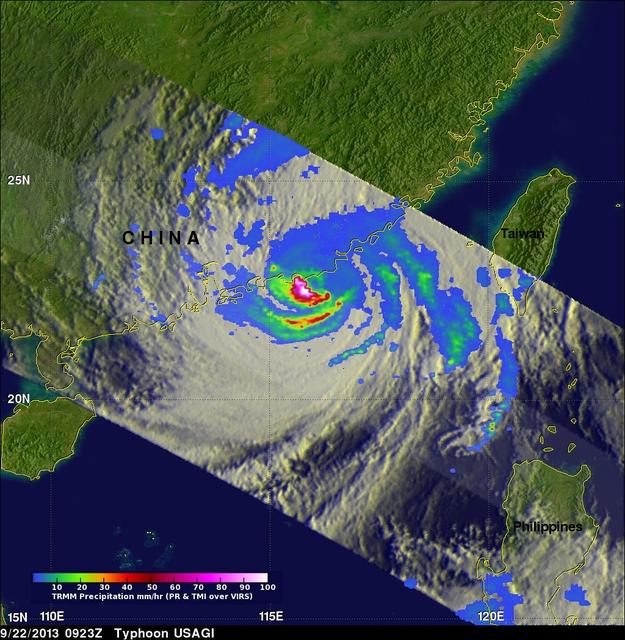
On Sept. 22 at 0923 UTC/5:23 a.m. EDT, just south of Usagi's eye where rain was falling at a rate of over 169mm/~6.7 inches per hour along China's coast. TRMM radar sliced through Usagi and found that heights of some thunderstorms were reaching only about 12 km /7.4 miles. Credit: NASA/SSAI, Hal Pierce <b><a href="http://www.nasa.gov/audience/formedia/features/MP_Photo_Guidelines.html" rel="nofollow">NASA image use policy.</a></b> <b><a href="http://www.nasa.gov/centers/goddard/home/index.html" rel="nofollow">NASA Goddard Space Flight Center</a></b> enables NASA’s mission through four scientific endeavors: Earth Science, Heliophysics, Solar System Exploration, and Astrophysics. Goddard plays a leading role in NASA’s accomplishments by contributing compelling scientific knowledge to advance the Agency’s mission. <b>Follow us on <a href="http://twitter.com/NASA_GoddardPix" rel="nofollow">Twitter</a></b> <b>Like us on <a href="http://www.facebook.com/pages/Greenbelt-MD/NASA-Goddard/395013845897?ref=tsd" rel="nofollow">Facebook</a></b> <b>Find us on <a href="http://instagram.com/nasagoddard?vm=grid" rel="nofollow">Instagram</a></b>
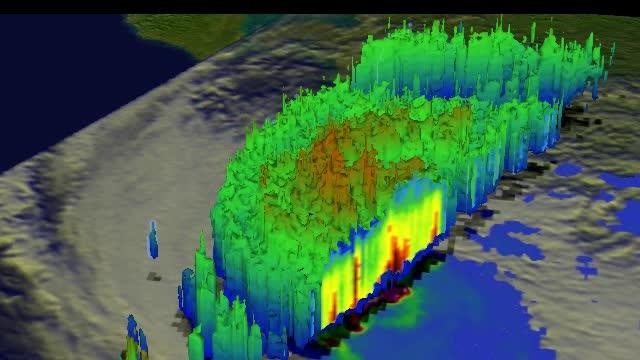
This simulated 3-D flyby animation over Typhoon Usagi on Sept. 22 at 0923 UT showed heavy rain south of the center a rate of over 169mm/~6.7 inches per hour along China's coast. Cloud heights of some thunderstorms were reaching only about 12 km /7.4 miles. Credit: SSAI/NASA, Hal Pierce <b><a href="http://www.nasa.gov/audience/formedia/features/MP_Photo_Guidelines.html" rel="nofollow">NASA image use policy.</a></b> <b><a href="http://www.nasa.gov/centers/goddard/home/index.html" rel="nofollow">NASA Goddard Space Flight Center</a></b> enables NASA’s mission through four scientific endeavors: Earth Science, Heliophysics, Solar System Exploration, and Astrophysics. Goddard plays a leading role in NASA’s accomplishments by contributing compelling scientific knowledge to advance the Agency’s mission. <b>Follow us on <a href="http://twitter.com/NASA_GoddardPix" rel="nofollow">Twitter</a></b> <b>Like us on <a href="http://www.facebook.com/pages/Greenbelt-MD/NASA-Goddard/395013845897?ref=tsd" rel="nofollow">Facebook</a></b> <b>Find us on <a href="http://instagram.com/nasagoddard?vm=grid" rel="nofollow">Instagram</a></b>
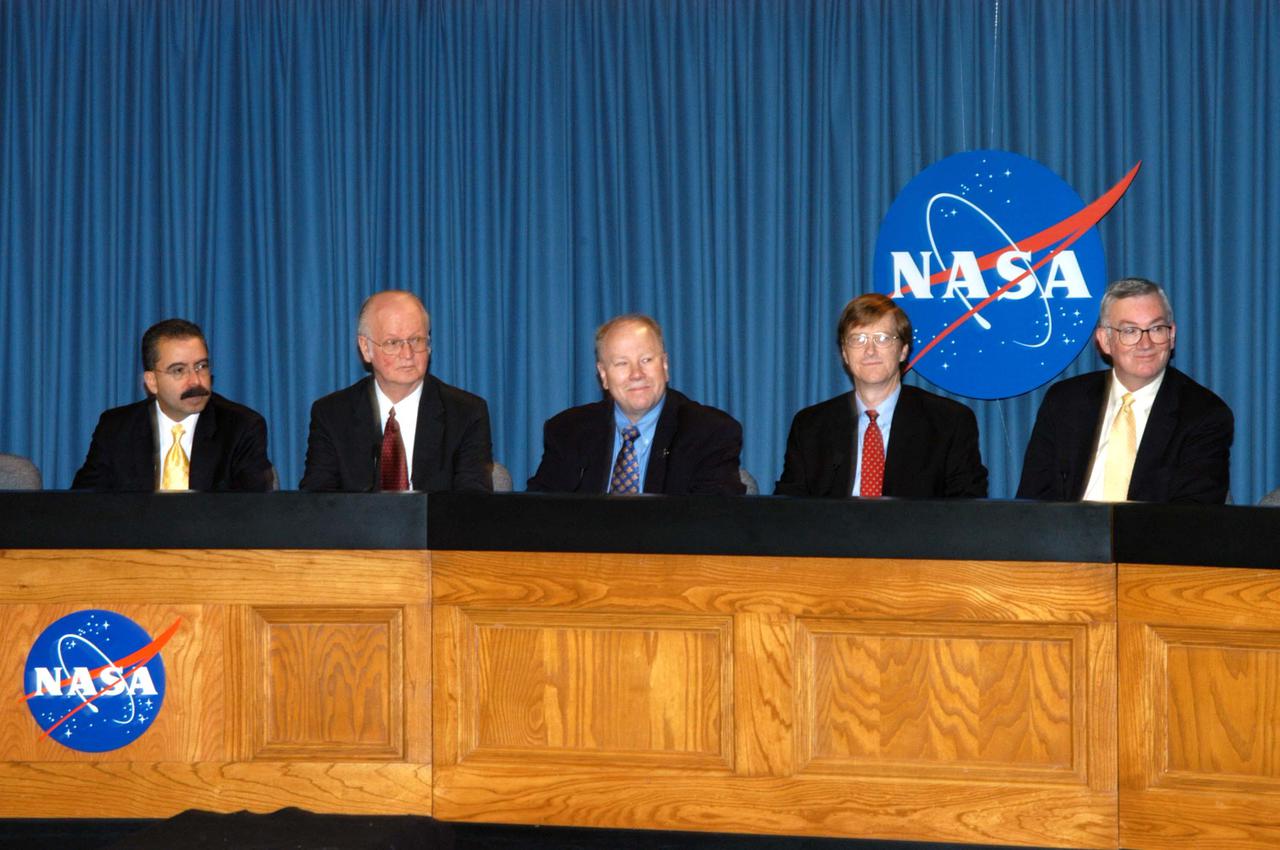
KENNEDY SPACE CENTER, FLA. - Representatives of NASA’s New Horizons Mission to Pluto are ready to answer questions during a press briefing on the Draft environmental Impact Statement at NASA’s Kennedy Space Center. From left are Orlando Figueroa, deputy association administrator for Programs, Science Mission Directorate; Earl Wahlquist, associate director for Space and Defense Power Systems, Department of Energy, in Germantown, Md.; Kurt Lindstrom, New Horizons Program executive, with NASA; Hal Weaver, New Horizons Project scientist, Johns Hopkins University Applied Physics Laboratory in Laurel, Md.; and Glen Fountain, New Horizons Project manager, also with Johns Hopkins University Applied Physics Laboratory. The spacecraft will explore Pluto, its moon Charon, and possibly one or more objects within the Kuiper Belt. New Horizons is planned for launch during a window from Jan. 11 to Feb. 14, 2006, on an Atlas V 551 booster with a Star 48B third stage. It will proceed to a Jupiter gravity assist between Feb. 25 and March 2, 2007, if launched during the first 23 days of the launch window. (If it is launched during the last 12 days of the launch window it will have a direct-to-Pluto trajectory. There is a backup launch opportunity in February 2007.)
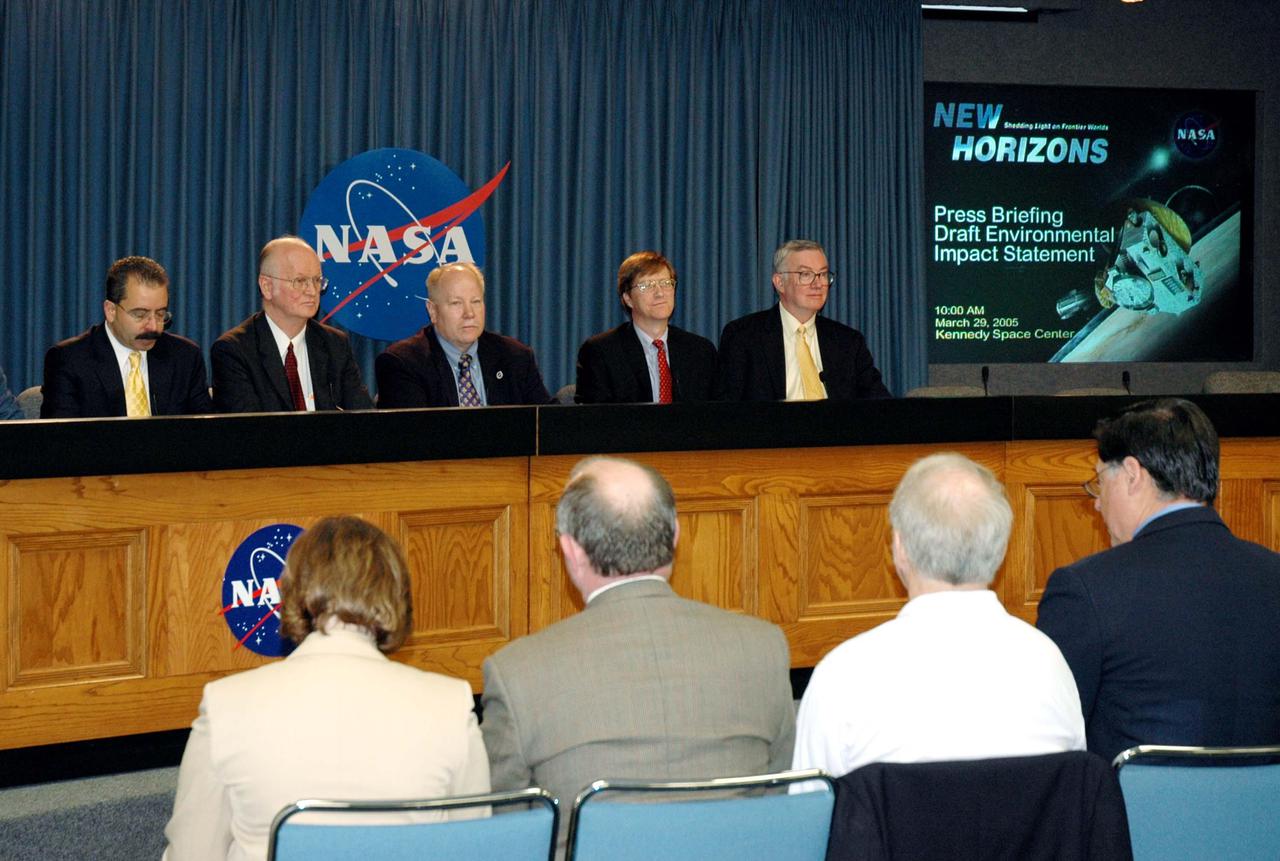
KENNEDY SPACE CENTER, FLA. - Representatives of NASA’s New Horizons Mission to Pluto discuss the mission during a press briefing on the Draft environmental Impact Statement at NASA’s Kennedy Space Center. From left are Orlando Figueroa, deputy association administrator for Programs, Science Mission Directorate; Earl Wahlquist, associate director for Space and Defense Power Systems, Department of Energy, in Germantown, Md.; Kurt Lindstrom, New Horizons Program executive, with NASA; Hal Weaver, New Horizons Project scientist, Johns Hopkins University Applied Physics Laboratory in Laurel, Md.; and Glen Fountain, New Horizons Project manager, also with Johns Hopkins University Applied Physics Laboratory. The spacecraft will explore Pluto, its moon Charon, and possibly one or more objects within the Kuiper Belt. New Horizons is planned for launch during a window from Jan. 11 to Feb. 14, 2006, on an Atlas V 551 booster with a Star 48B third stage. It will proceed to a Jupiter gravity assist between Feb. 25 and March 2, 2007, if launched during the first 23 days of the launch window. (If it is launched during the last 12 days of the launch window it will have a direct-to-Pluto trajectory. There is a backup launch opportunity in February 2007.)

Acting NASA Administrator Robert Lightfoot testifies during a House Subcommittee on Commerce, Justice, Science, and Related Agencies hearing to review the Fiscal Year 2018 budget request for the National Aeronautics and Space Administration, Thursday, June 8, 2017 at the Rayburn House Office Building in Washington. Photo Credit: (NASA/Aubrey Gemignani)
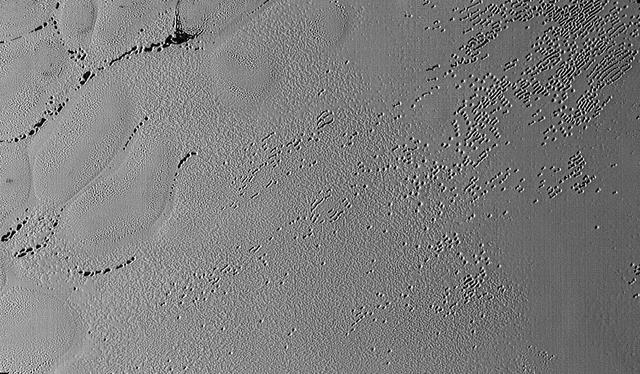
This image was taken by the Long Range Reconnaissance Imager (LORRI) on NASA's New Horizons spacecraft shortly before closest approach to Pluto on July 14, 2015; it resolves details as small as 270 yards (250 meters). The scene shown is about 130 miles (210 kilometers) across. The sun illuminates the scene from the left, and north is to the upper left. Credits: NASA/JHUAPL/SwRI It seems that the more we see of Pluto, the more fascinating it gets. With its prominent heart-shaped feature, icy mountains, and “snakeskin” terrain, Pluto has already surprised New Horizons scientists with the variety and complexity of its surface features. Now this latest image, from the heart of Pluto’s heart feature, show the plains’ enigmatic cellular pattern (at left) as well as unusual clusters of small pits and troughs (from lower left to upper right). Scientists believe that this area, informally known as Sputnik Planum, is composed of volatile ices such as solid nitrogen. They theorize that the pits and troughs – typically hundreds of meters across and tens of meters deep – are possibly formed by sublimation or evaporation of these ices. However, the reasons for the striking shapes and alignments of these features are a mystery. Adding to the intrigue is that even at this resolution, no impact craters are seen, testifying to the extreme geologic youth of Sputnik Planum. “Pluto is weird, in a good way,” said Hal Weaver, New Horizons project scientist with Johns Hopkins Applied Physics Laboratory in Laurel, Maryland. “The pits, and the way they’re aligned, provide clues about the ice flow and the exchange of volatiles between the surface and atmosphere, and the science team is working hard to understand what physical processes are at play here.” <b><a href="http://www.nasa.gov/audience/formedia/features/MP_Photo_Guidelines.html" rel="nofollow">NASA image use policy.</a></b> <b><a href="http://www.nasa.gov/centers/goddard/home/index.html" rel="nofollow">NASA Goddard Space Flight Center</a></b> enables NASA’s mission through four scientific endeavors: Earth Science, Heliophysics, Solar System Exploration, and Astrophysics. Goddard plays a leading role in NASA’s accomplishments by contributing compelling scientific knowledge to advance the Agency’s mission. <b>Follow us on <a href="http://twitter.com/NASAGoddardPix" rel="nofollow">Twitter</a></b> <b>Like us on <a href="http://www.facebook.com/pages/Greenbelt-MD/NASA-Goddard/395013845897?ref=tsd" rel="nofollow">Facebook</a></b> <b>Find us on <a href="http://instagrid.me/nasagoddard/?vm=grid" rel="nofollow">Instagram</a></b>

John Elbon, Chief Operating Officer, United Launch Alliance, is introduced during a prelaunch news conference for the Lucy mission held inside the TV Auditorium at NASA’s Kennedy Space Center in Florida on Oct. 13, 2021. The mission is targeted to launch at 5:34 a.m. EDT Saturday, Oct. 16, on a United Launch Alliance Atlas V 401 rocket from Space Launch Complex 41 at Cape Canaveral Space Force Station. NASA’s Launch Services Program, based at Kennedy, is managing the launch. During its 12-year primary mission, Lucy will explore a record-breaking number of asteroids, flying by one asteroid in the solar system’s main belt and seven Trojan asteroids. Additionally, Lucy’s path will circle back to Earth three times for gravity assists, making it the first spacecraft to return to the vicinity of Earth from the outer solar system.
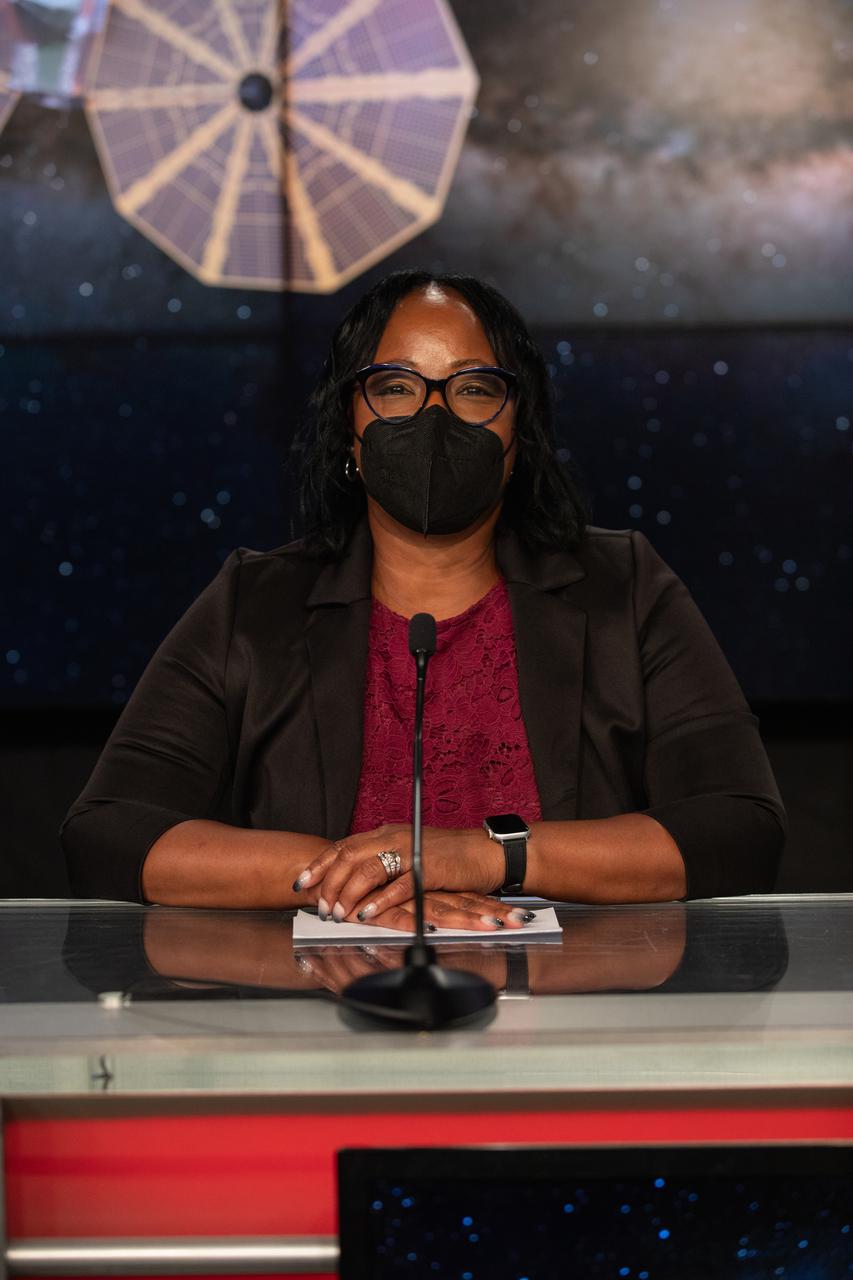
Donya Douglas-Bradshaw, Lucy project manager at NASA’s Goddard Space Flight Center, is introduced during a prelaunch news conference for the Lucy mission held inside the TV Auditorium at NASA’s Kennedy Space Center in Florida on Oct. 13, 2021. The mission is scheduled to launch no earlier than 5:34 a.m. EDT Saturday, Oct. 16, on a United Launch Alliance Atlas V 401 rocket from Space Launch Complex 41 at Cape Canaveral Space Force Station. NASA’s Launch Services Program, based at Kennedy, is managing the launch. During its 12-year primary mission, Lucy will explore a record-breaking number of asteroids, flying by one asteroid in the solar system’s main belt and seven Trojan asteroids. Additionally, Lucy’s path will circle back to Earth three times for gravity assists, making it the first spacecraft to return to the vicinity of Earth from the outer solar system.

Lucy Prelaunch News Conference with representatives from NASA, Southwest Research Institute, United Launch Alliance, and Space Launch Delta 45. Lucy, NASA’s first mission to explore the Trojan Asteroids, is set to launch on a United Launch Alliance Atlas V rocket from Cape Canaveral Space Force Station in Florida on Oct. 16. The launch is managed by NASA’s Launch Services Program based at Kennedy Space Center.
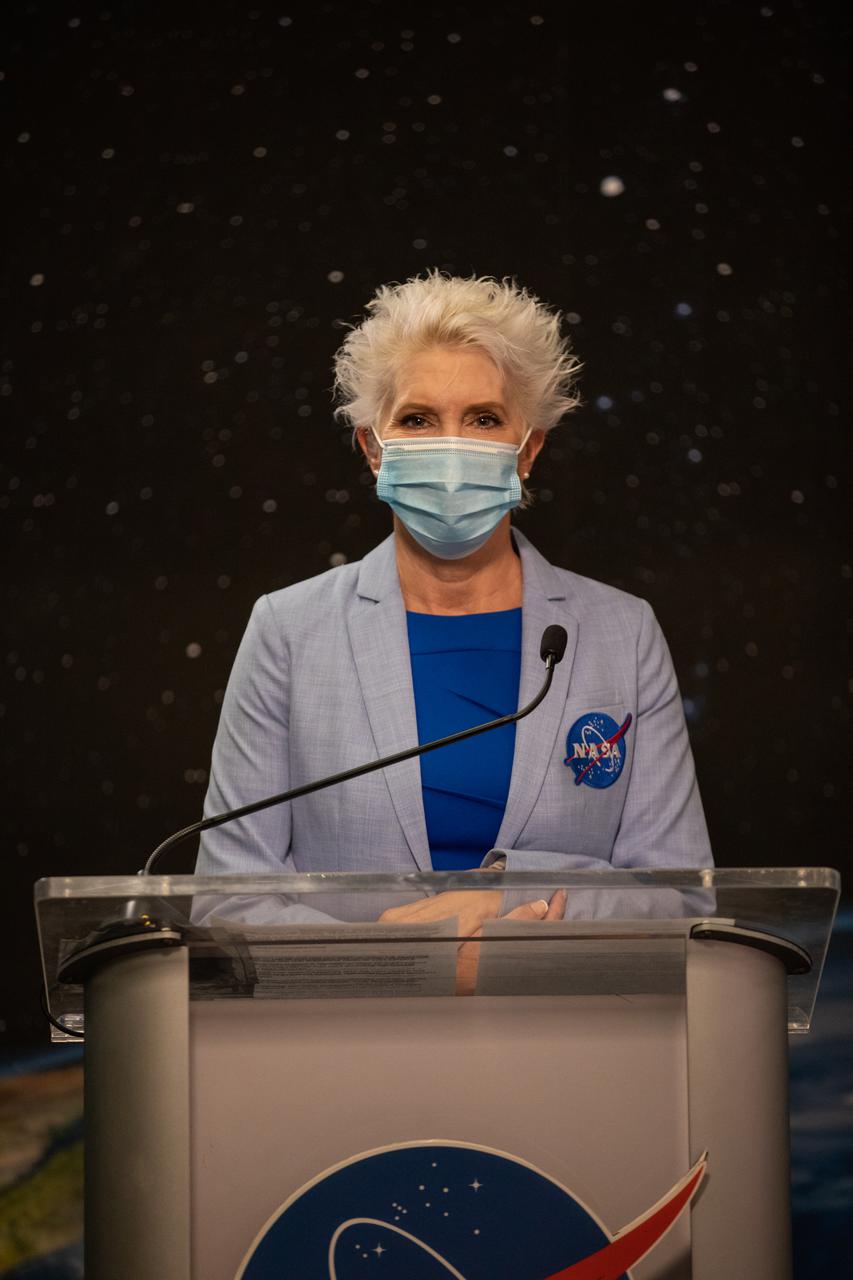
Tammy Long, NASA Communications, addresses the audience during a prelaunch news conference for the Lucy mission held inside the TV Auditorium at NASA’s Kennedy Space Center in Florida on Oct. 13, 2021. The mission is targeted to launch at 5:34 a.m. EDT Saturday, Oct. 16, on a United Launch Alliance Atlas V 401 rocket from Space Launch Complex 41 at Cape Canaveral Space Force Station. NASA’s Launch Services Program, based at Kennedy, is managing the launch. Lucy is the first space mission to study the Trojan asteroids, which hold vital clues to the formation of our solar system.
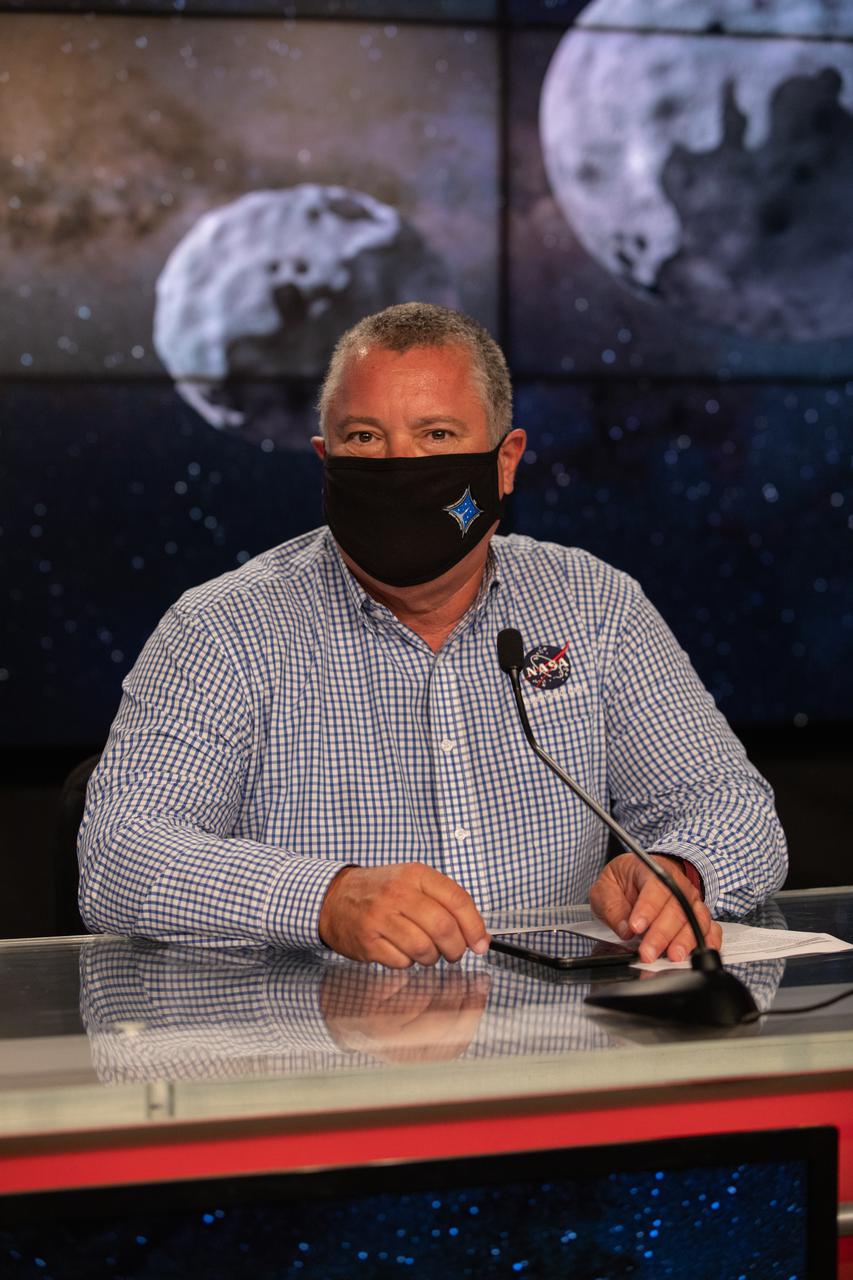
Omar Baez, Lucy Launch Director, NASA’s Launch Services Program, speaks during a prelaunch news conference for the Lucy mission held inside the TV Auditorium at NASA’s Kennedy Space Center in Florida on Oct. 13, 2021. The mission is targeted to launch at 5:34 a.m. EDT Saturday, Oct. 16, on a United Launch Alliance Atlas V 401 rocket from Space Launch Complex 41 at Cape Canaveral Space Force Station. NASA’s Launch Services Program, based at Kennedy, is managing the launch. Lucy is the first space mission to study the Trojan asteroids, which hold vital clues to the formation of our solar system.

Lucy Prelaunch News Conference with representatives from NASA, Southwest Research Institute, United Launch Alliance, and Space Launch Delta 45. Lucy, NASA’s first mission to explore the Trojan Asteroids, is set to launch on a United Launch Alliance Atlas V rocket from Cape Canaveral Space Force Station in Florida on Oct. 16. The launch is managed by NASA’s Launch Services Program based at Kennedy Space Center.
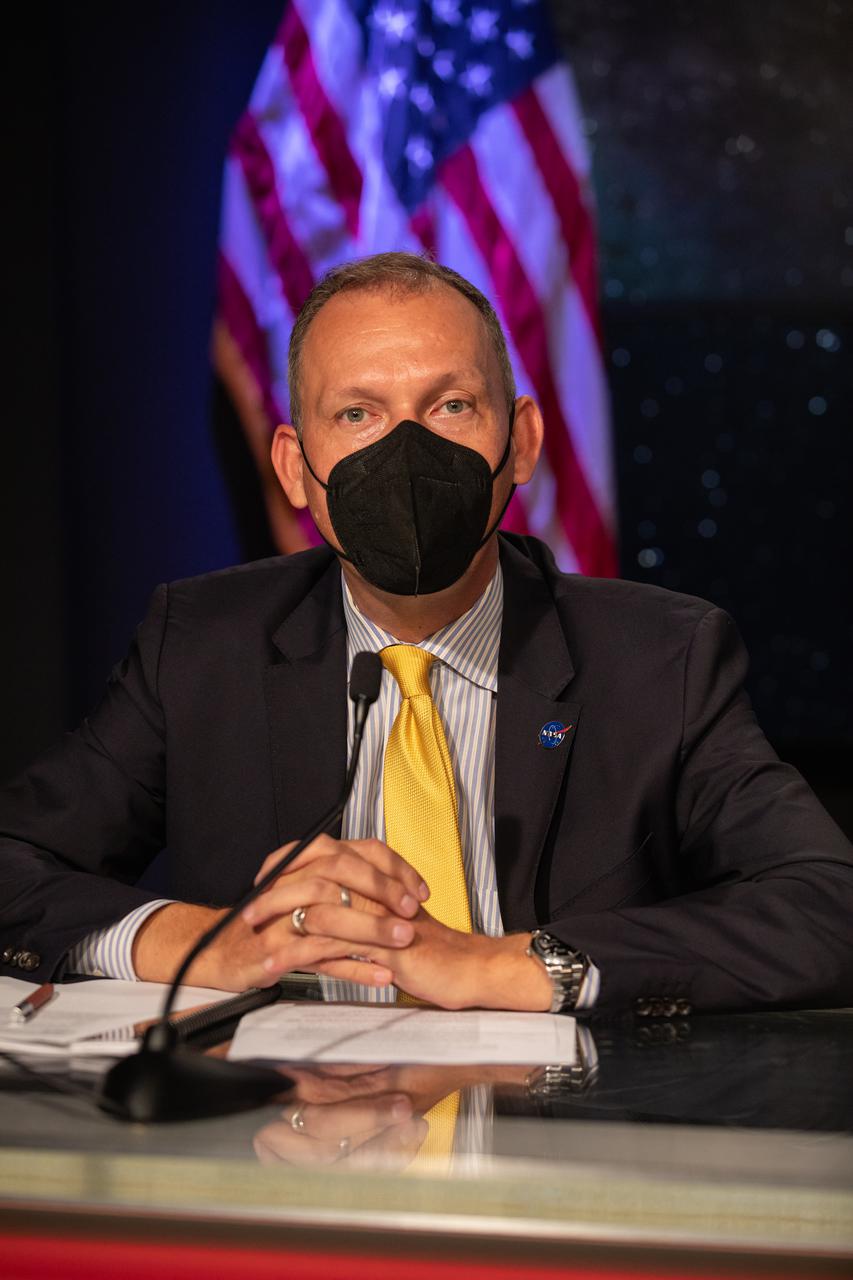
Thomas Zurbuchen, associate administrator, NASA’s Science Mission Directorate, is introduced during a prelaunch news conference for the Lucy mission held inside the TV Auditorium at NASA’s Kennedy Space Center in Florida on Oct. 13, 2021. The mission is scheduled to launch no earlier than 5:34 a.m. EDT Saturday, Oct. 16, on a United Launch Alliance Atlas V 401 rocket from Space Launch Complex 41 at Cape Canaveral Space Force Station. NASA’s Launch Services Program, based at Kennedy, is managing the launch. During its 12-year primary mission, Lucy will explore a record-breaking number of asteroids, flying by one asteroid in the solar system’s main belt and seven Trojan asteroids. Additionally, Lucy’s path will circle back to Earth three times for gravity assists, making it the first spacecraft to return to the vicinity of Earth from the outer solar system.
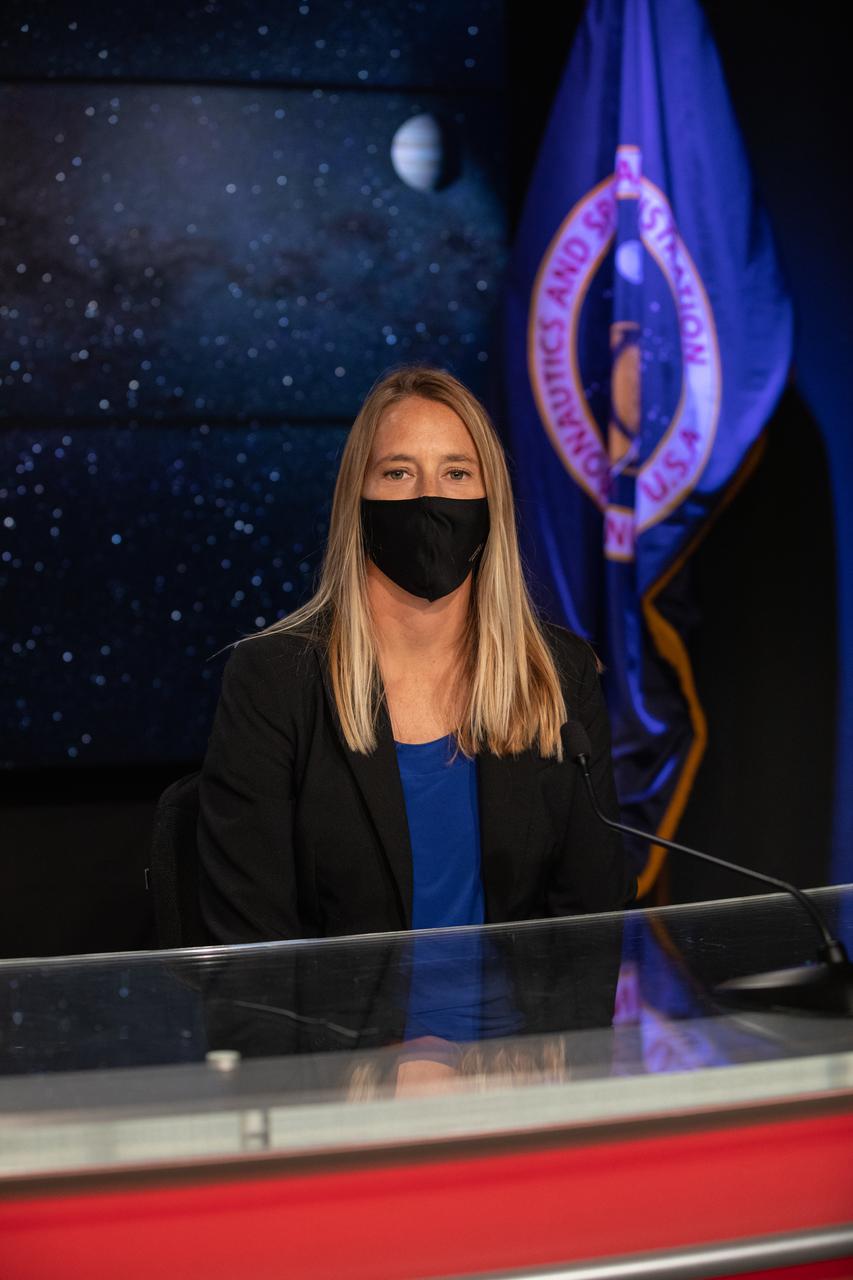
Jessica Williams, Launch Weather Officer, 45th Weather Squadron, Space Launch Delta 45, Cape Canaveral Space Force Station, is introduced during a prelaunch news conference for the Lucy mission held inside the TV Auditorium at NASA’s Kennedy Space Center in Florida on Oct. 13, 2021. The mission is targeted to launch at 5:34 a.m. EDT Saturday, Oct. 16, on a United Launch Alliance Atlas V 401 rocket from Space Launch Complex 41 at Cape Canaveral Space Force Station. NASA’s Launch Services Program, based at Kennedy, is managing the launch. Lucy is the first space mission to study the Trojan asteroids, which hold vital clues to the formation of our solar system.