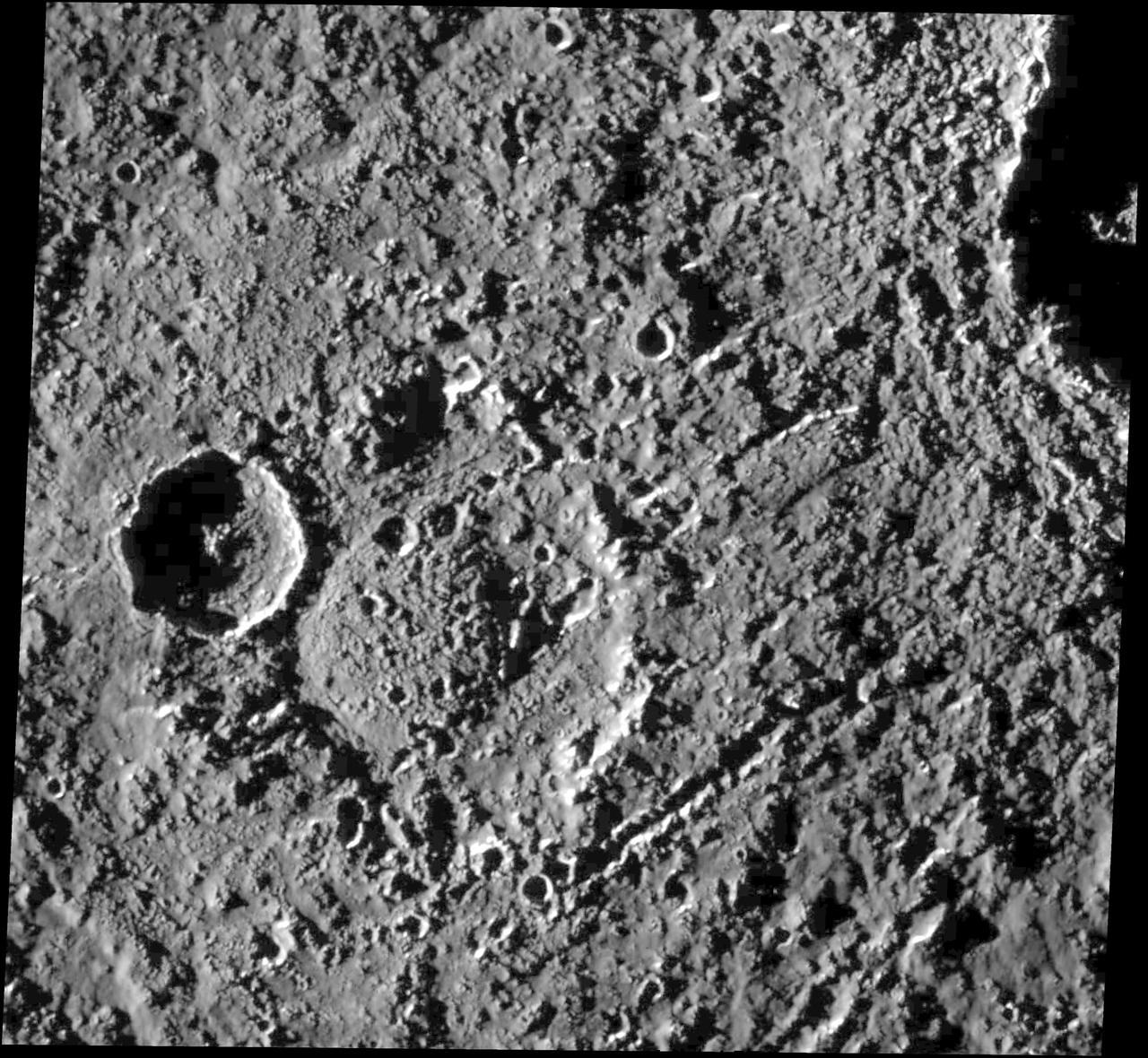
Har Crater on Callisto
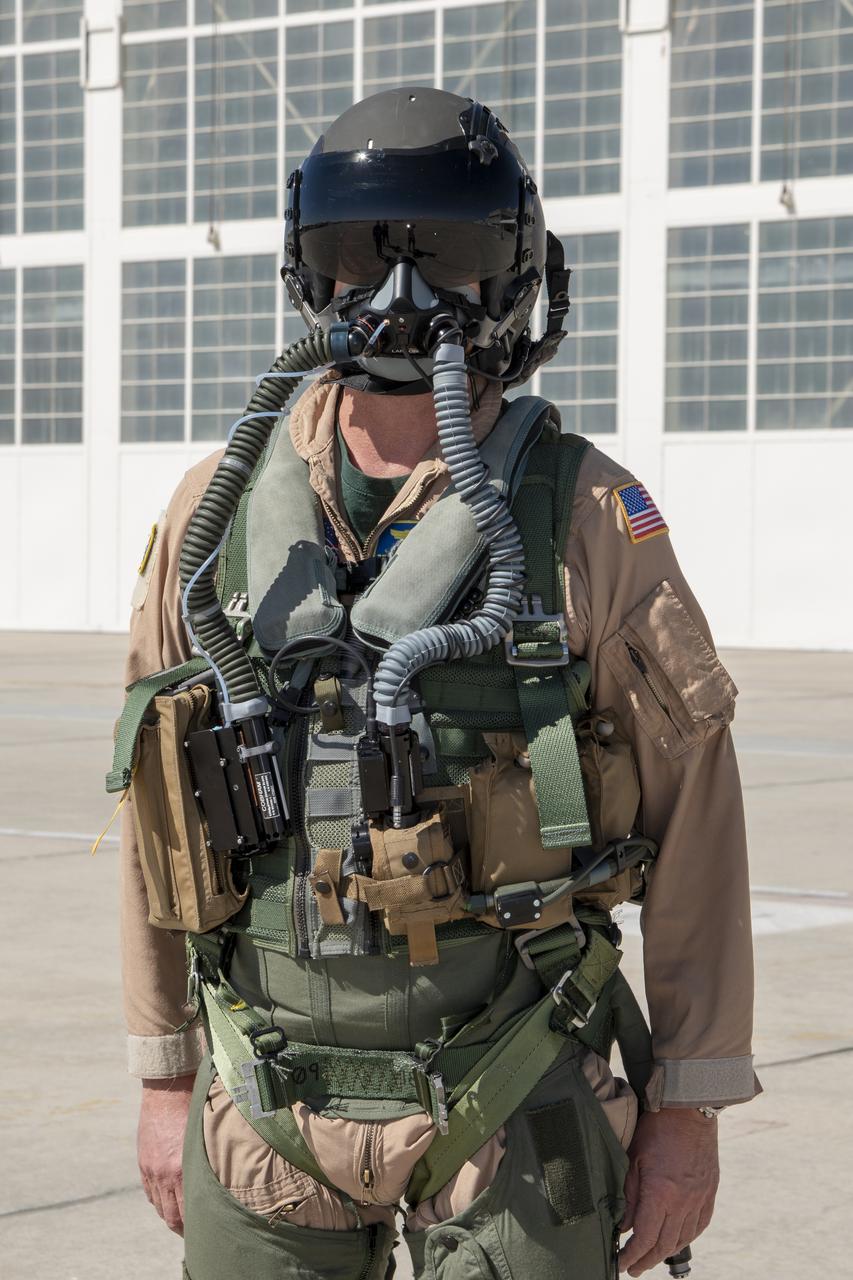
NASA Pilot Nils Larson wears a U.S. Navy harness configuration to show the integrated parachute harness and the built-in survival vest. The Navy configuration is bulkier and weighs more than the U.S. Air Force harness. Both configurations are being used in the Pilot Breathing Assessment program at NASA’s Armstrong Flight Research Center in California.
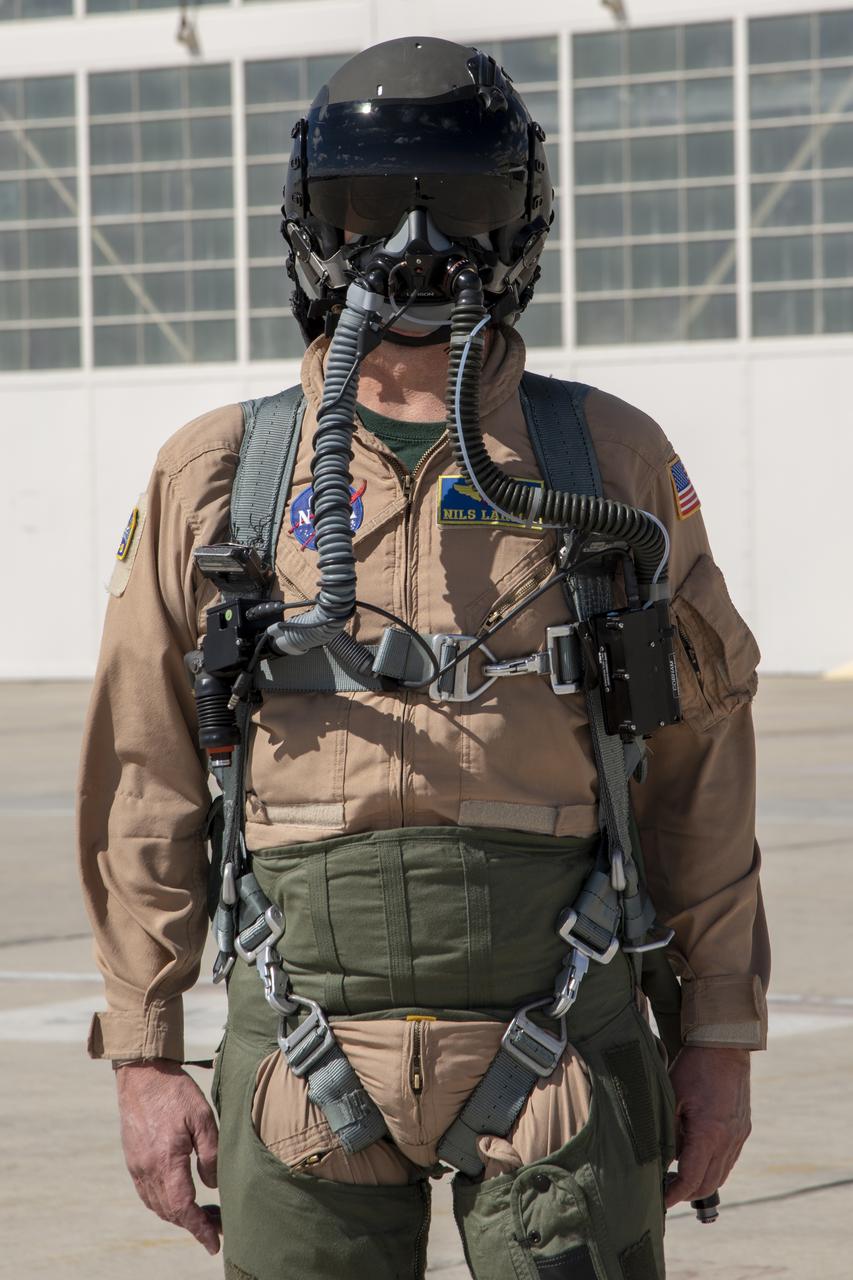
NASA Pilot Nils Larson wears a U.S. Air Force harness configuration with a helmet and an oxygen mask that is being used in the Pilot Breathing Assessment program at NASA's Armstrong Flight Research Center in California.
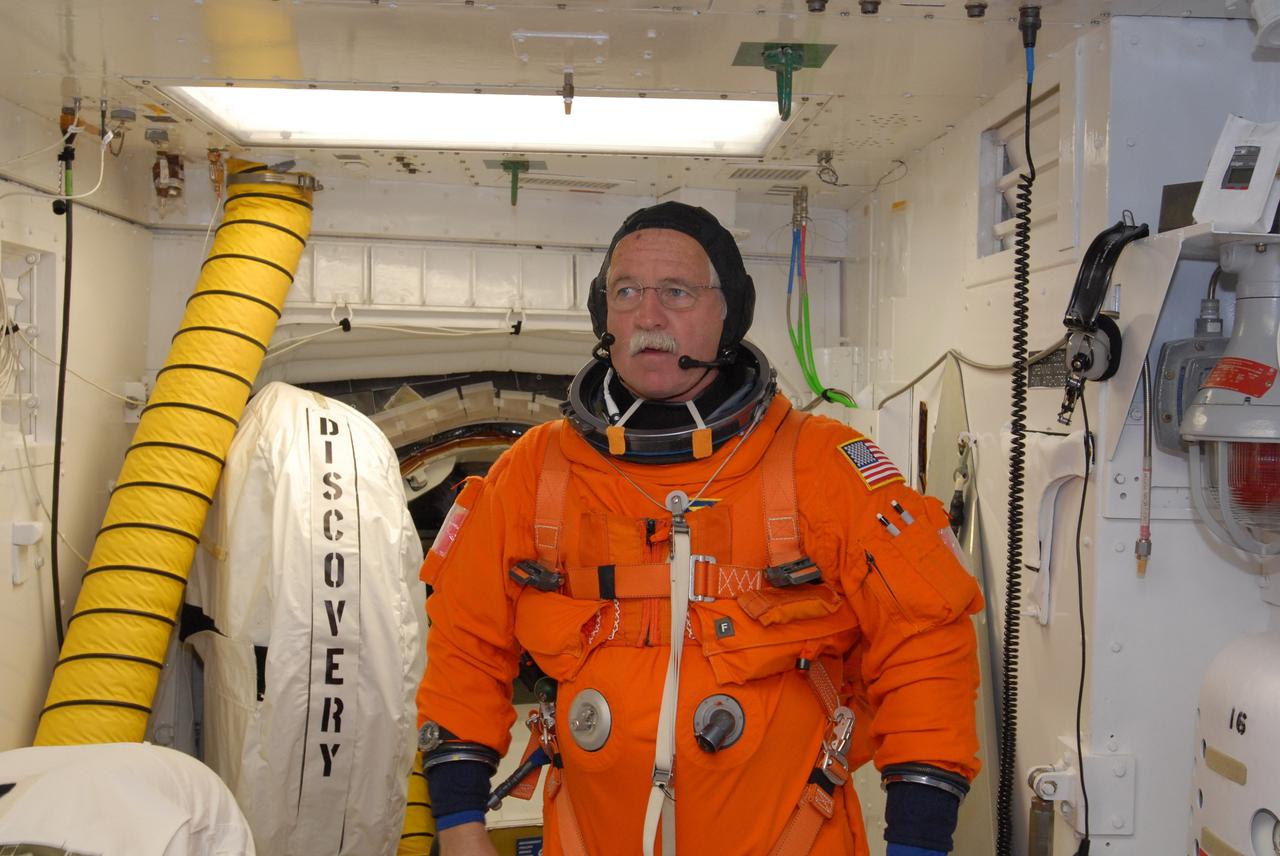
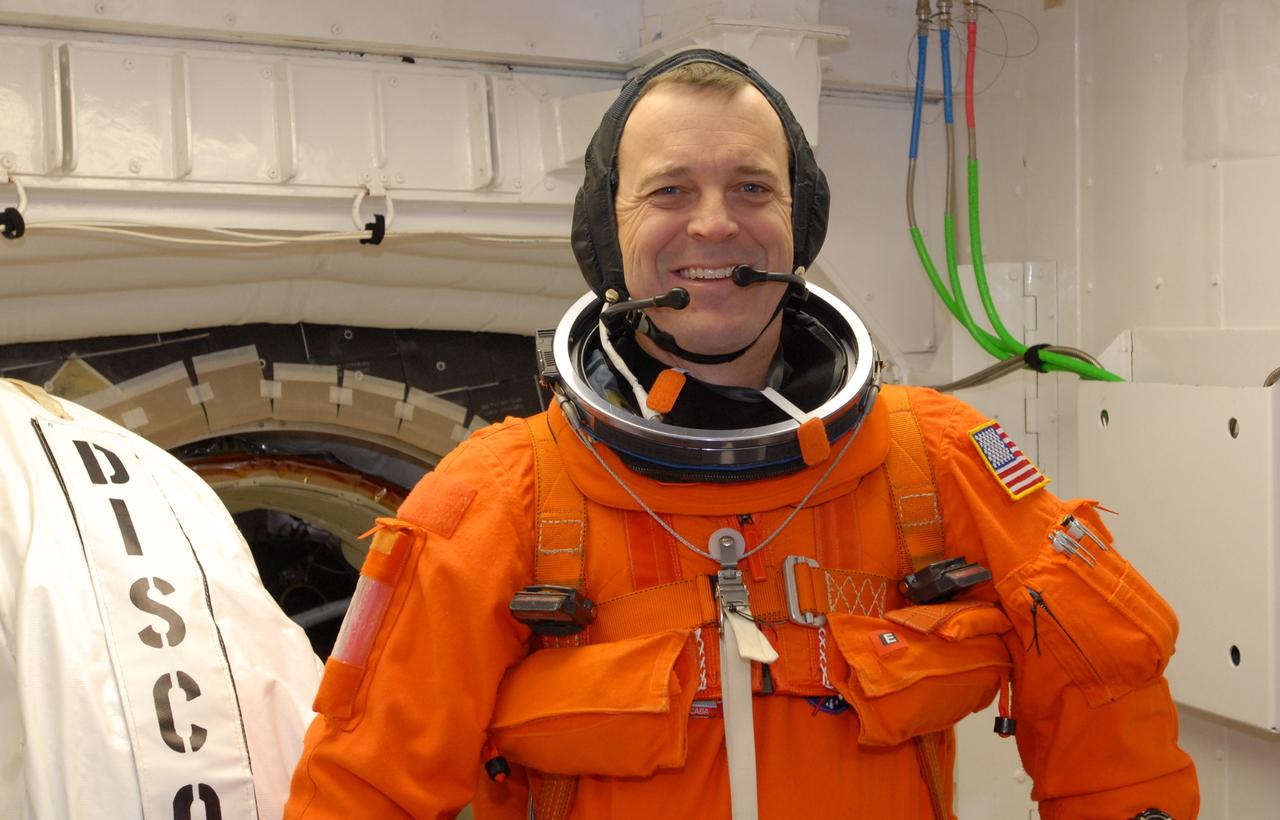
CAPE CANAVERAL, Fla. – In the White Room on Launch Pad 39A at NASA's Kennedy Space Center in Florida, STS-119 Mission Specialist John Phillips has donned the harness over his launch-and-entry suit. The White Room provides access into space shuttle Discovery. Phillips and other crew members will conduct a simulated launch countdown as part of the prelaunch preparation known as Terminal Countdown Demonstration Test. The TCDT also includes equipment familiarization and emergency egress training. Discovery is targeted to launch on the STS-119 mission Feb. 12. During the 14-day mission, the crew will install the S6 truss segment and solar arrays to the starboard side of the International Space Station, completing the station's truss, or backbone. Photo credit: NASA/Jim Grossmann
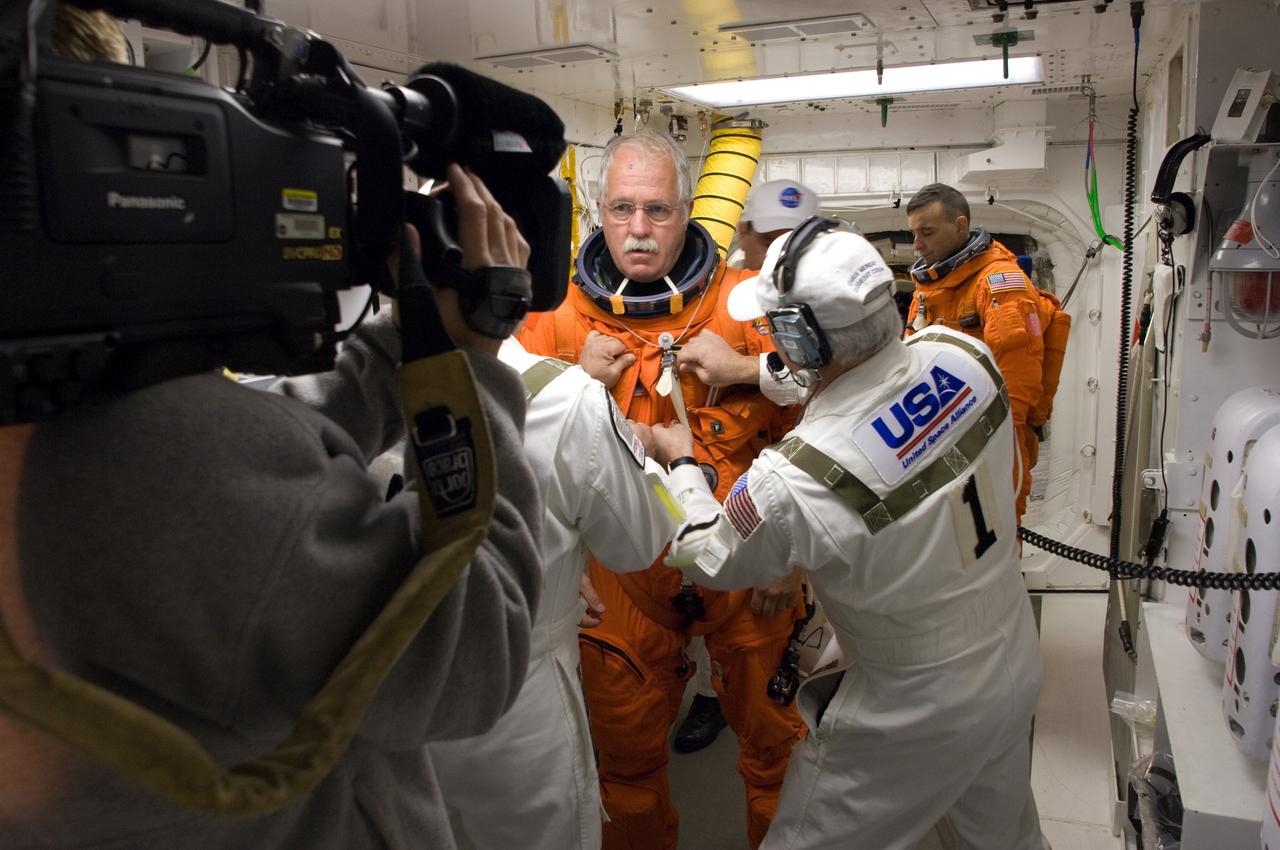
CAPE CANAVERAL, Fla. – In the White Room on Launch Pad 39A at NASA's Kennedy Space Center in Florida, STS-119 Mission Specialist John Phillips (center) is helped by the Closeout Crew to put on his harness. Phillips will join Commander Lee Archambault (background right) and other crew members to enter space shuttle Discovery to conduct a simulated launch countdown. The astronauts are at Kennedy to prepare for launch through Terminal Countdown Demonstration Test activities. The TCDT includes equipment familiarization and emergency egress training. Discovery is targeted to launch on the STS-119 mission Feb. 12. During the 14-day mission, the crew will install the S6 truss segment and solar arrays to the starboard side of the International Space Station, completing the station's truss, or backbone. Photo credit: NASA/Sandra Joseph, Kevin O'Connell, Tom Farrar

CAPE CANAVERAL, Fla. – In the White Room on Launch Pad 39A at NASA's Kennedy Space Center in Florida, STS-119 Mission Specialist Koichi Wakata is helped by the Closeout Crew to put on his harness. Wakata will join other crew members to enter space shuttle Discovery to conduct a simulated launch countdown. The astronauts are at Kennedy to prepare for launch through Terminal Countdown Demonstration Test activities. The TCDT includes equipment familiarization and emergency egress training. Discovery is targeted to launch on the STS-119 mission Feb. 12. During the 14-day mission, the crew will install the S6 truss segment and solar arrays to the starboard side of the International Space Station, completing the station's truss, or backbone. Photo credit: NASA/Sandra Joseph, Kevin O'Connell, Tom Farrar
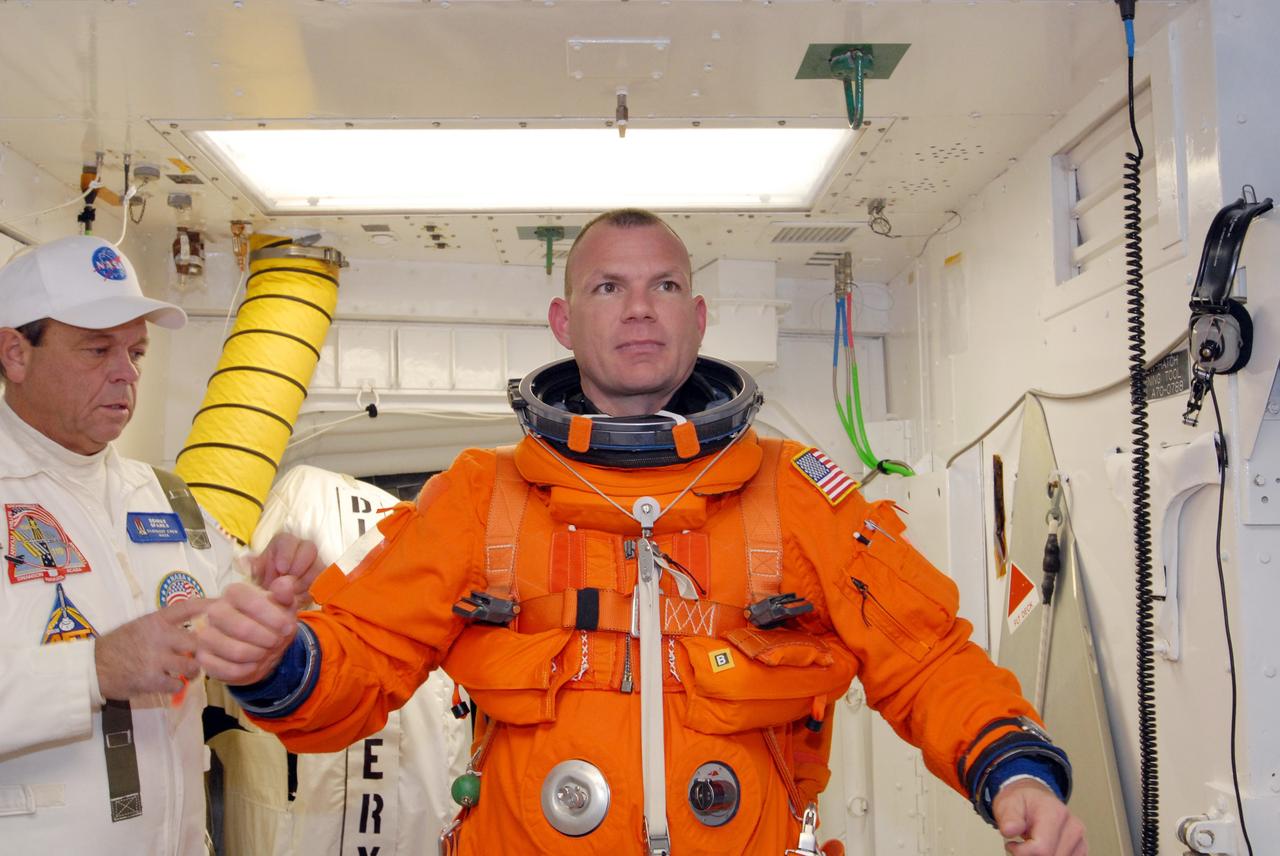
CAPE CANAVERAL, Fla. – In the White Room on Launch Pad 39A at NASA's Kennedy Space Center in Florida, STS-119 Pilot Tony Antonelli is helped by the Closeout Crew to put on his harness. The White Room provides access into space shuttle Discovery. Antonelli and other crew members will conduct a simulated launch countdown as part of the prelaunch preparation known as Terminal Countdown Demonstration Test. The TCDT also includes equipment familiarization and emergency egress training. Discovery is targeted to launch on the STS-119 mission Feb. 12. During the 14-day mission, the crew will install the S6 truss segment and solar arrays to the starboard side of the International Space Station, completing the station's truss, or backbone. Photo credit: NASA/Jim Grossmann
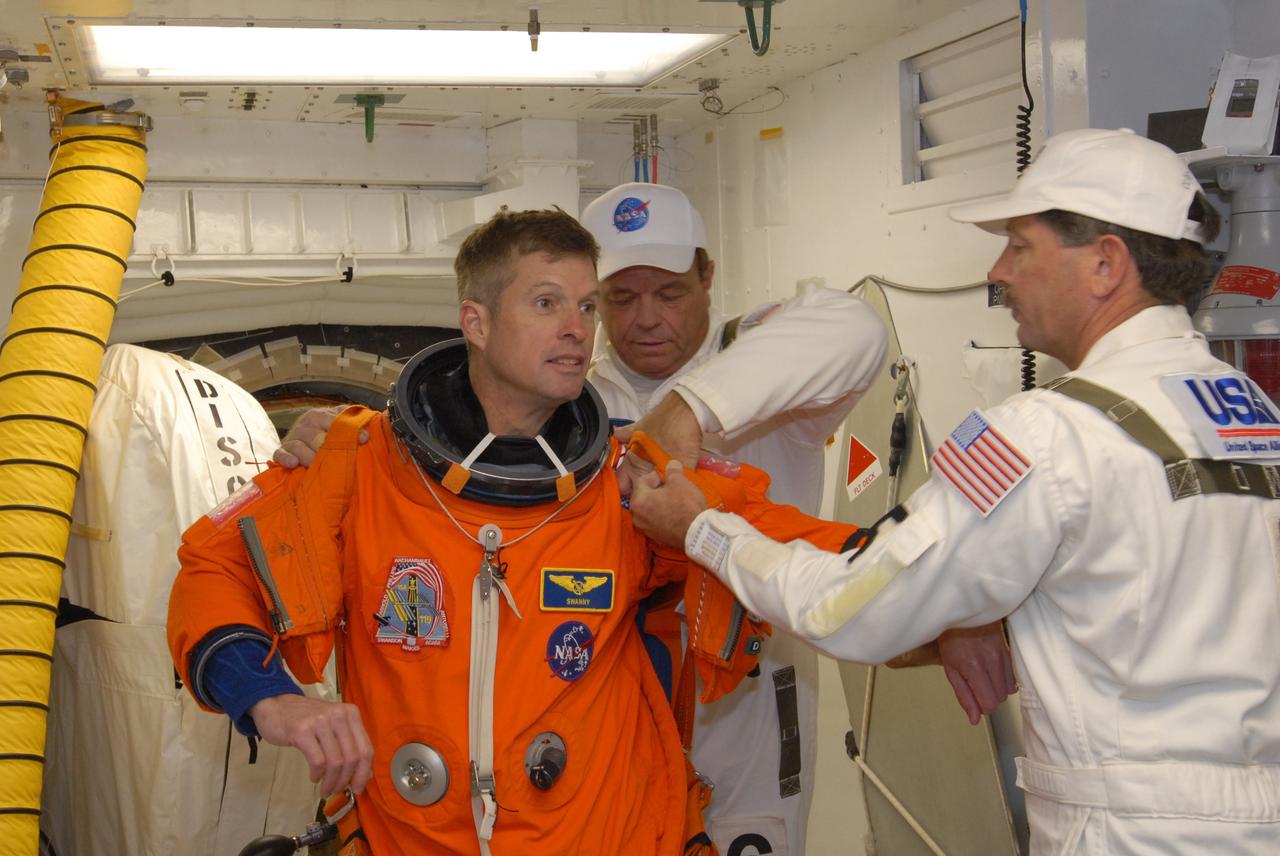
CAPE CANAVERAL, Fla. – In the White Room on Launch Pad 39A at NASA's Kennedy Space Center in Florida, STS-119 Mission Specialist Steve Swanson is helped by the Closeout Crew to put on his harness. The White Room provides access into space shuttle Discovery. Swanson and other crew members will conduct a simulated launch countdown as part of the prelaunch preparation known as Terminal Countdown Demonstration Test. The TCDT also includes equipment familiarization and emergency egress training. Discovery is targeted to launch on the STS-119 mission Feb. 12. During the 14-day mission, the crew will install the S6 truss segment and solar arrays to the starboard side of the International Space Station, completing the station's truss, or backbone. Photo credit: NASA/Jim Grossmann
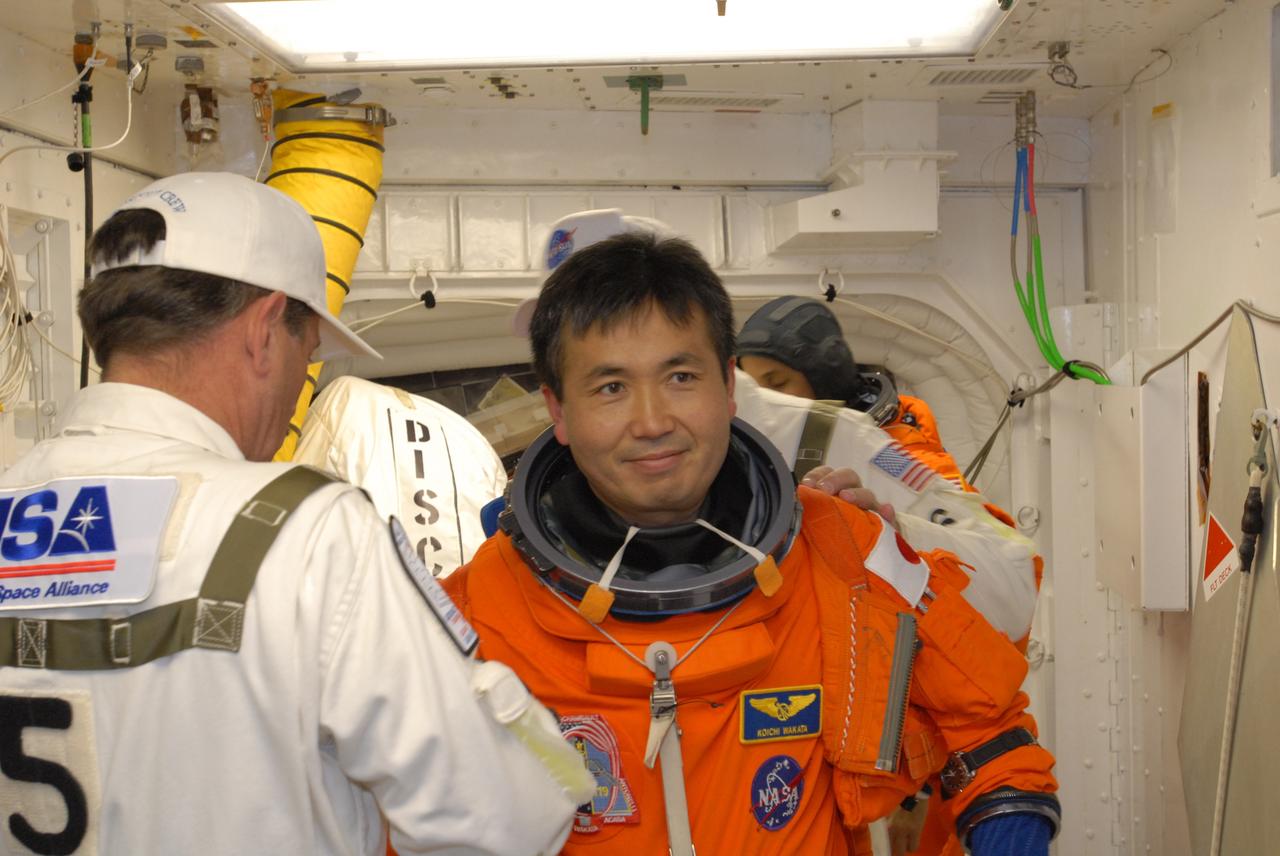
CAPE CANAVERAL, Fla. – In the White Room on Launch Pad 39A at NASA's Kennedy Space Center in Florida, STS-119 Mission Specialist Koichi Wakata is helped by the Closeout Crew to put on his harness. The White Room provides access into space shuttle Discovery. Wakata and other crew members will conduct a simulated launch countdown as part of the prelaunch preparation known as Terminal Countdown Demonstration Test. The TCDT also includes equipment familiarization and emergency egress training. Discovery is targeted to launch on the STS-119 mission Feb. 12. During the 14-day mission, the crew will install the S6 truss segment and solar arrays to the starboard side of the International Space Station, completing the station's truss, or backbone. Photo credit: NASA/Jim Grossmann
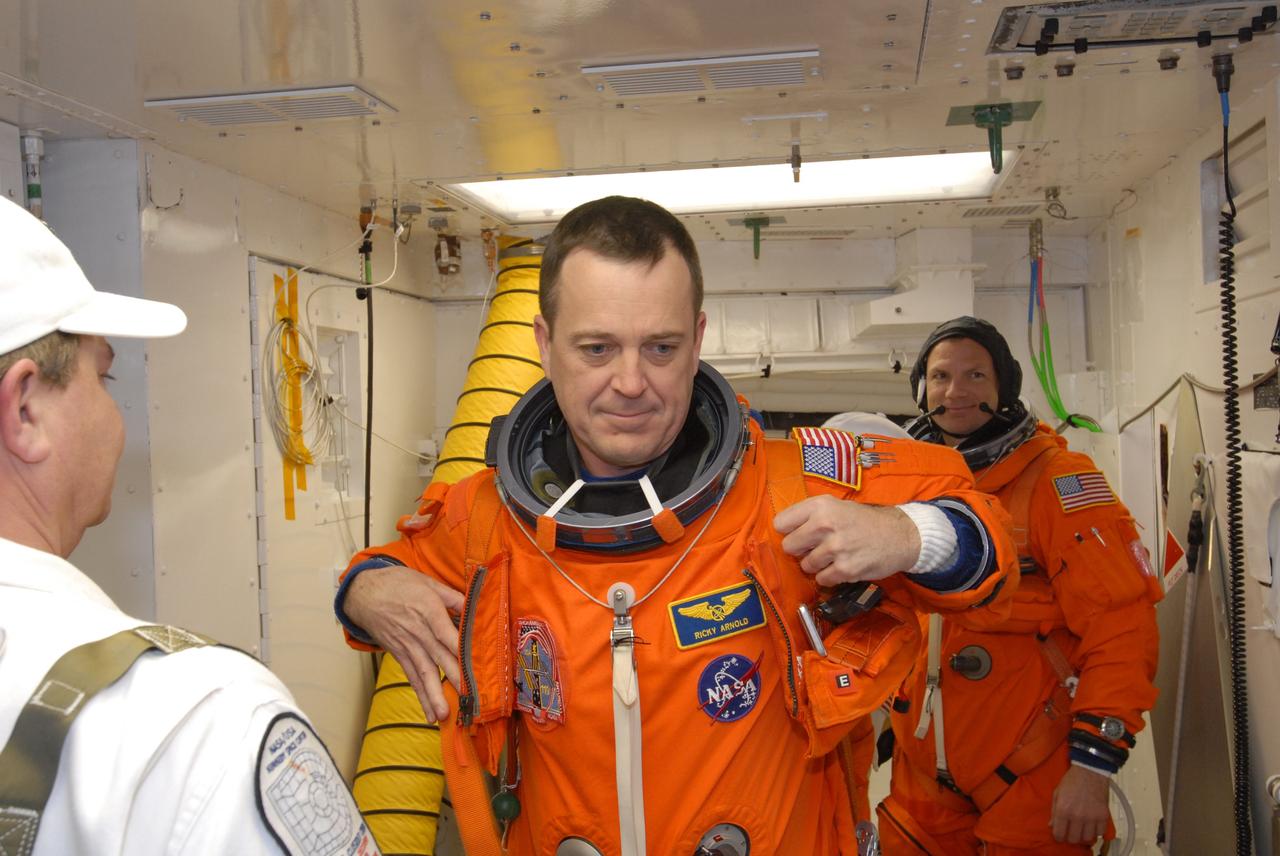
CAPE CANAVERAL, Fla. – In the White Room on Launch Pad 39A at NASA's Kennedy Space Center in Florida, STS-119 Mission Specialist Richard Arnold is helped by the Closeout Crew to put on his harness. The White Room provides access into space shuttle Discovery. Behind Arnold is Pilot Tony Antonelli. Arnold, Antonelli and other crew members will conduct a simulated launch countdown as part of the prelaunch preparation known as Terminal Countdown Demonstration Test. The TCDT also includes equipment familiarization and emergency egress training. Discovery is targeted to launch on the STS-119 mission Feb. 12. During the 14-day mission, the crew will install the S6 truss segment and solar arrays to the starboard side of the International Space Station, completing the station's truss, or backbone. Photo credit: NASA/Jim Grossmann
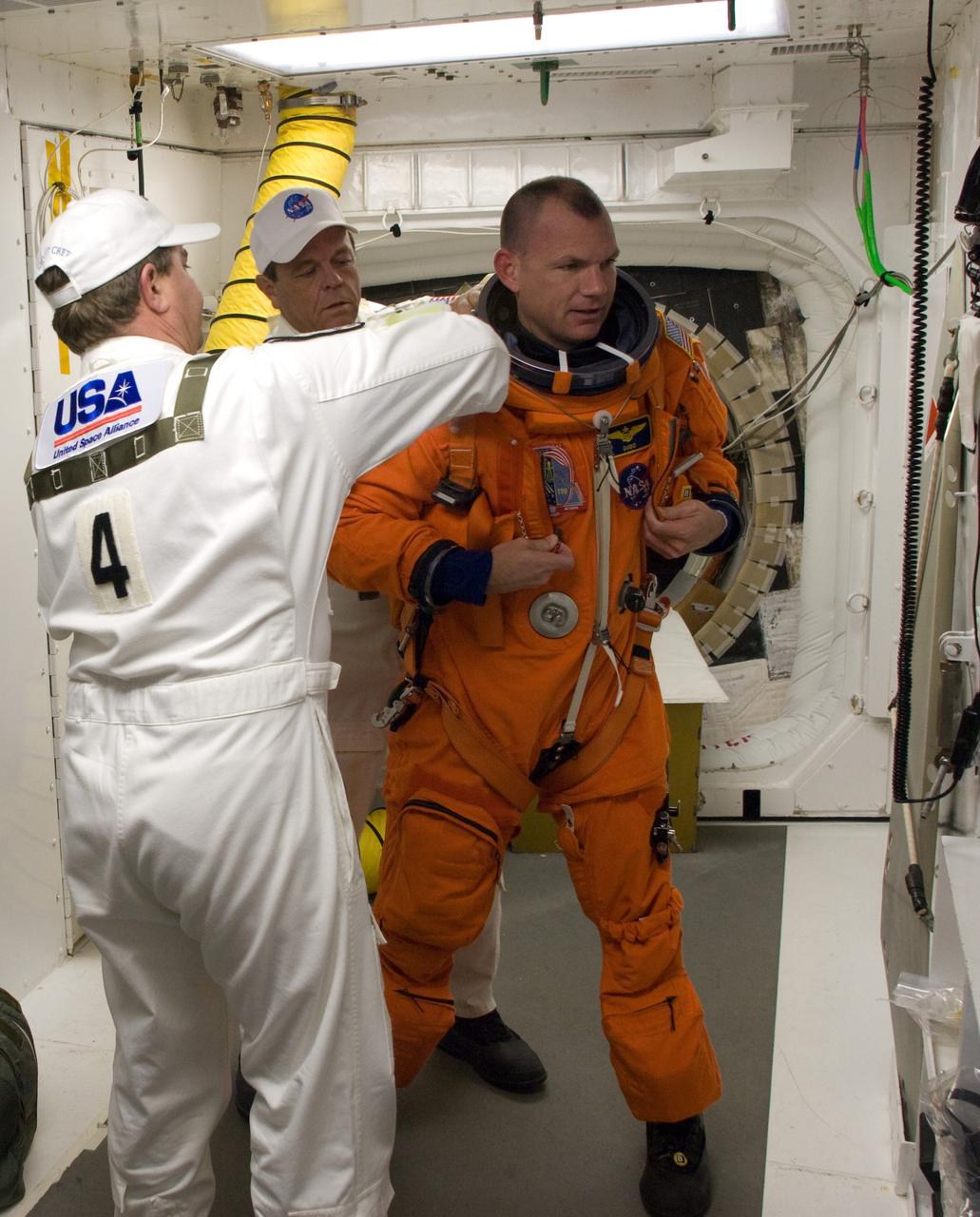
CAPE CANAVERAL, Fla. – In the White Room on Launch Pad 39A at NASA's Kennedy Space Center in Florida, STS-119 Pilot Tony Antonelli is helped by the Closeout Crew to put on his harness. Antonelli will enter space shuttle Discovery along with the other crew members to conduct a simulated launch countdown. The astronauts are at Kennedy to prepare for launch through Terminal Countdown Demonstration Test activities. The TCDT includes equipment familiarization and emergency egress training. Discovery is targeted to launch on the STS-119 mission Feb. 12. During the 14-day mission, the crew will install the S6 truss segment and solar arrays to the starboard side of the International Space Station, completing the station's truss, or backbone. Photo credit: NASA/Sandra Joseph, Kevin O'Connell, Tom Farrar
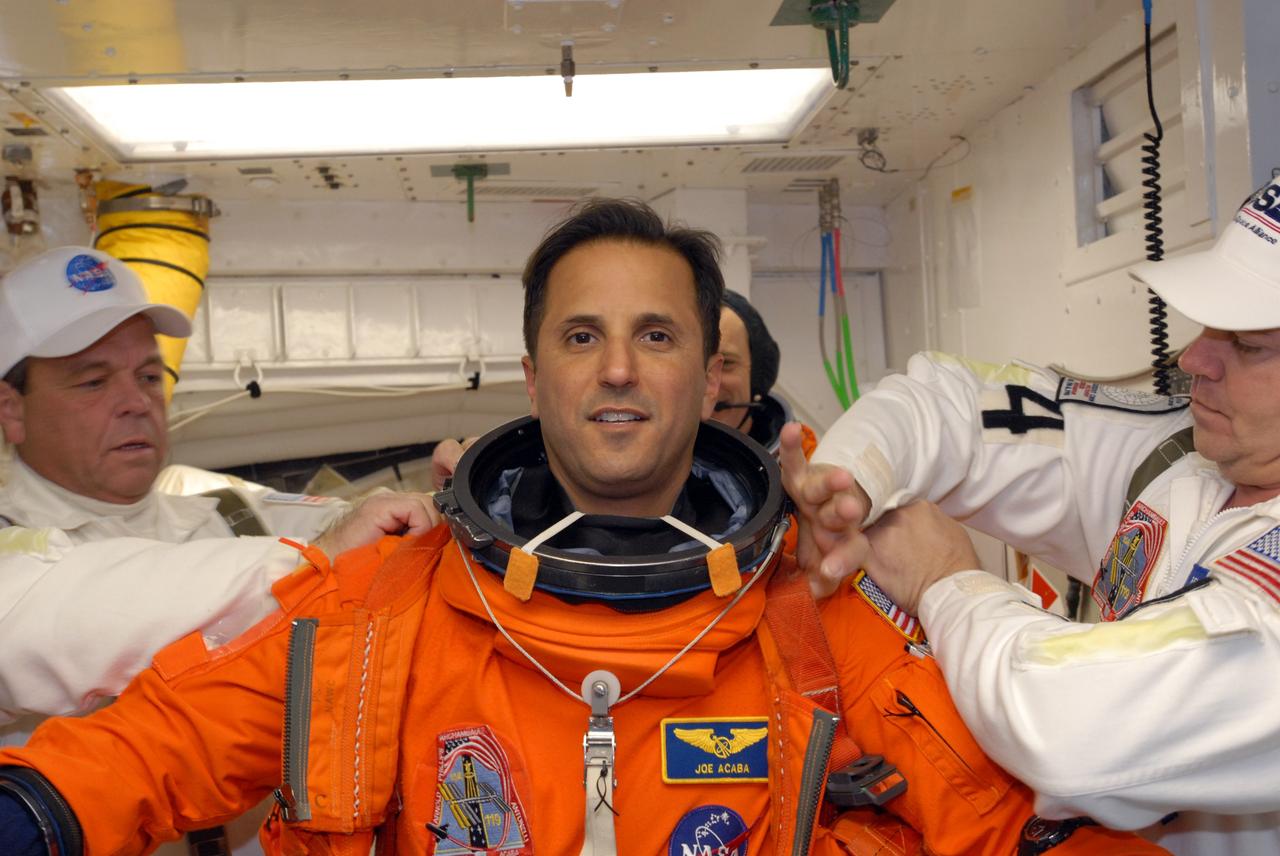
CAPE CANAVERAL, Fla. – In the White Room on Launch Pad 39A at NASA's Kennedy Space Center in Florida, STS-119 Mission Specialist Joseph Acaba is helped by the Closeout Crew to put on his harness. The White Room provides access into space shuttle Discovery. Acaba and other crew members will conduct a simulated launch countdown as part of the prelaunch preparation known as Terminal Countdown Demonstration Test. The TCDT also includes equipment familiarization and emergency egress training. Discovery is targeted to launch on the STS-119 mission Feb. 12. During the 14-day mission, the crew will install the S6 truss segment and solar arrays to the starboard side of the International Space Station, completing the station's truss, or backbone. Photo credit: NASA/Jim Grossmann
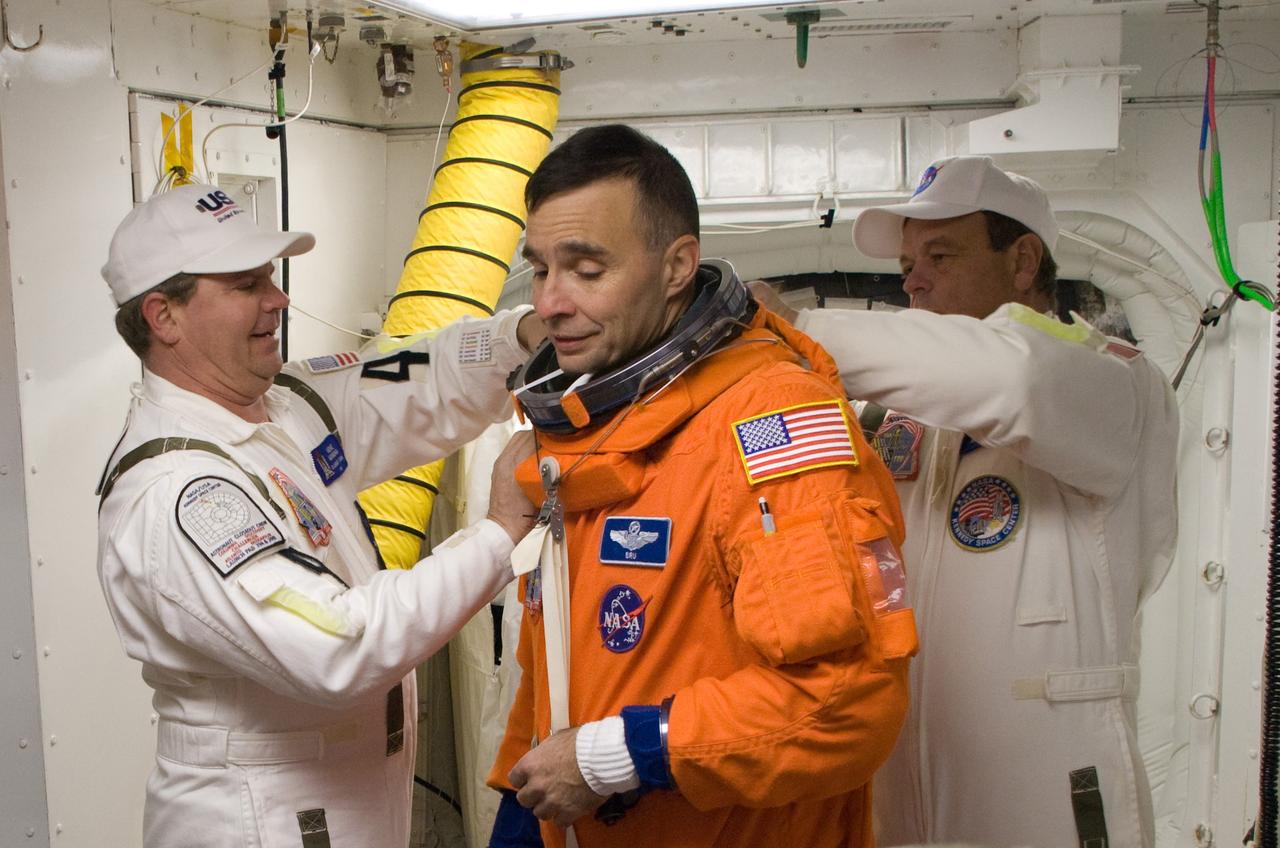
CAPE CANAVERAL, Fla. – In the White Room on Launch Pad 39A at NASA's Kennedy Space Center in Florida, STS-119 Commander Lee Archambault is helped by the Closeout Crew to put on his harness. Archambault will enter space shuttle Discovery along with the other crew members to conduct a simulated launch countdown. The astronauts are at Kennedy to prepare for launch through Terminal Countdown Demonstration Test activities. The TCDT includes equipment familiarization and emergency egress training. Discovery is targeted to launch on the STS-119 mission Feb. 12. During the 14-day mission, the crew will install the S6 truss segment and solar arrays to the starboard side of the International Space Station, completing the station's truss, or backbone. Photo credit: NASA/Sandra Joseph, Kevin O'Connell, Tom Farrar
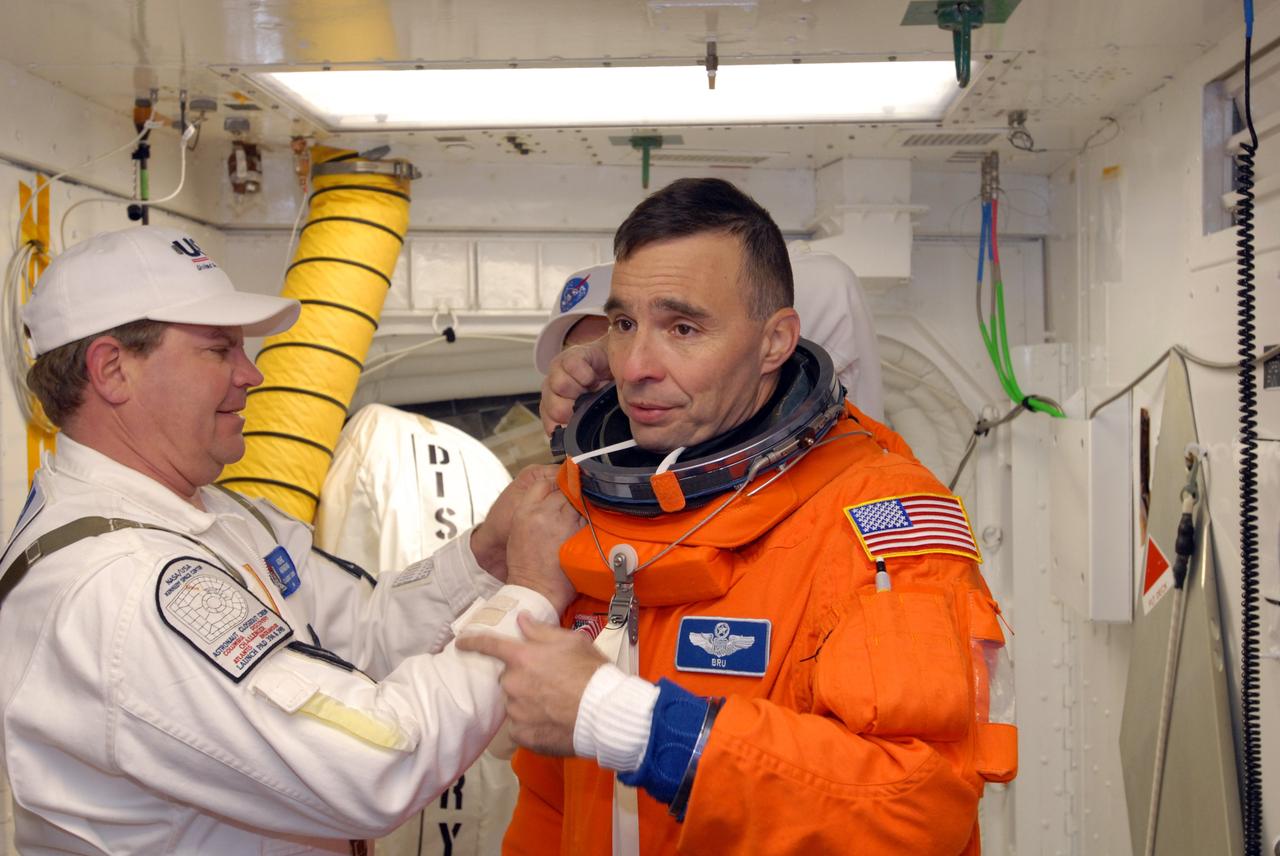
CAPE CANAVERAL, Fla. – In the White Room on Launch Pad 39A at NASA's Kennedy Space Center in Florida, STS-119 Commander Lee Archambault is helped by the Closeout Crew to put on his harness. The White Room provides access into space shuttle Discovery. Archambault and other crew members will conduct a simulated launch countdown as part of the prelaunch preparation known as Terminal Countdown Demonstration Test. The TCDT also includes equipment familiarization and emergency egress training. Discovery is targeted to launch on the STS-119 mission Feb. 12. During the 14-day mission, the crew will install the S6 truss segment and solar arrays to the starboard side of the International Space Station, completing the station's truss, or backbone. Photo credit: NASA/Jim Grossmann
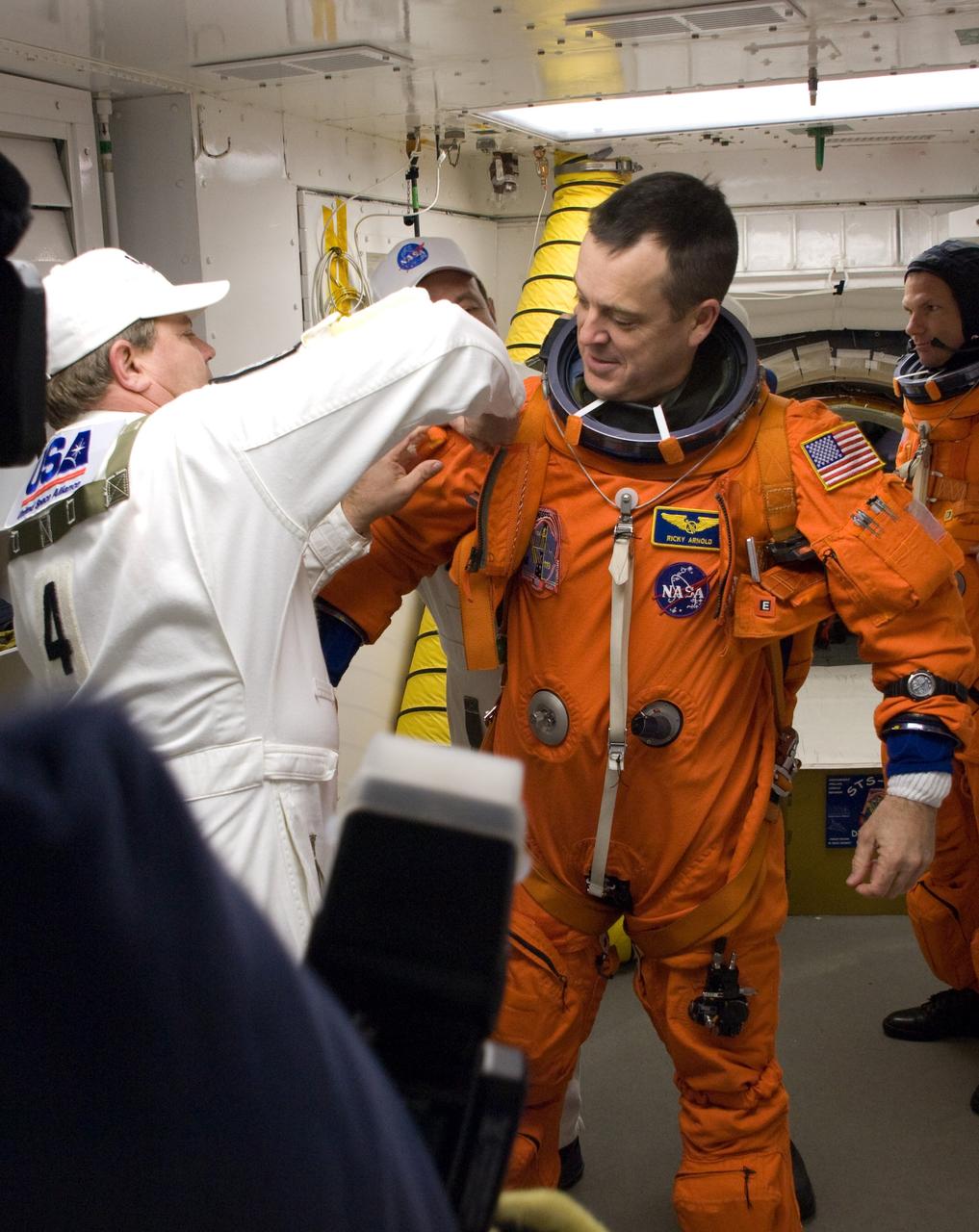
CAPE CANAVERAL, Fla. – In the White Room on Launch Pad 39A at NASA's Kennedy Space Center in Florida, STS-119 Mission Specialist Richard Arnold (foreground) is helped by the Closeout Crew to put on his harness. Arnold will join Pilot Tony Antonelli (background right) and other crew members to enter space shuttle Discovery to conduct a simulated launch countdown. The astronauts are at Kennedy to prepare for launch through Terminal Countdown Demonstration Test activities. The TCDT includes equipment familiarization and emergency egress training. Discovery is targeted to launch on the STS-119 mission Feb. 12. During the 14-day mission, the crew will install the S6 truss segment and solar arrays to the starboard side of the International Space Station, completing the station's truss, or backbone. Photo credit: NASA/Sandra Joseph, Kevin O'Connell, Tom Farrar
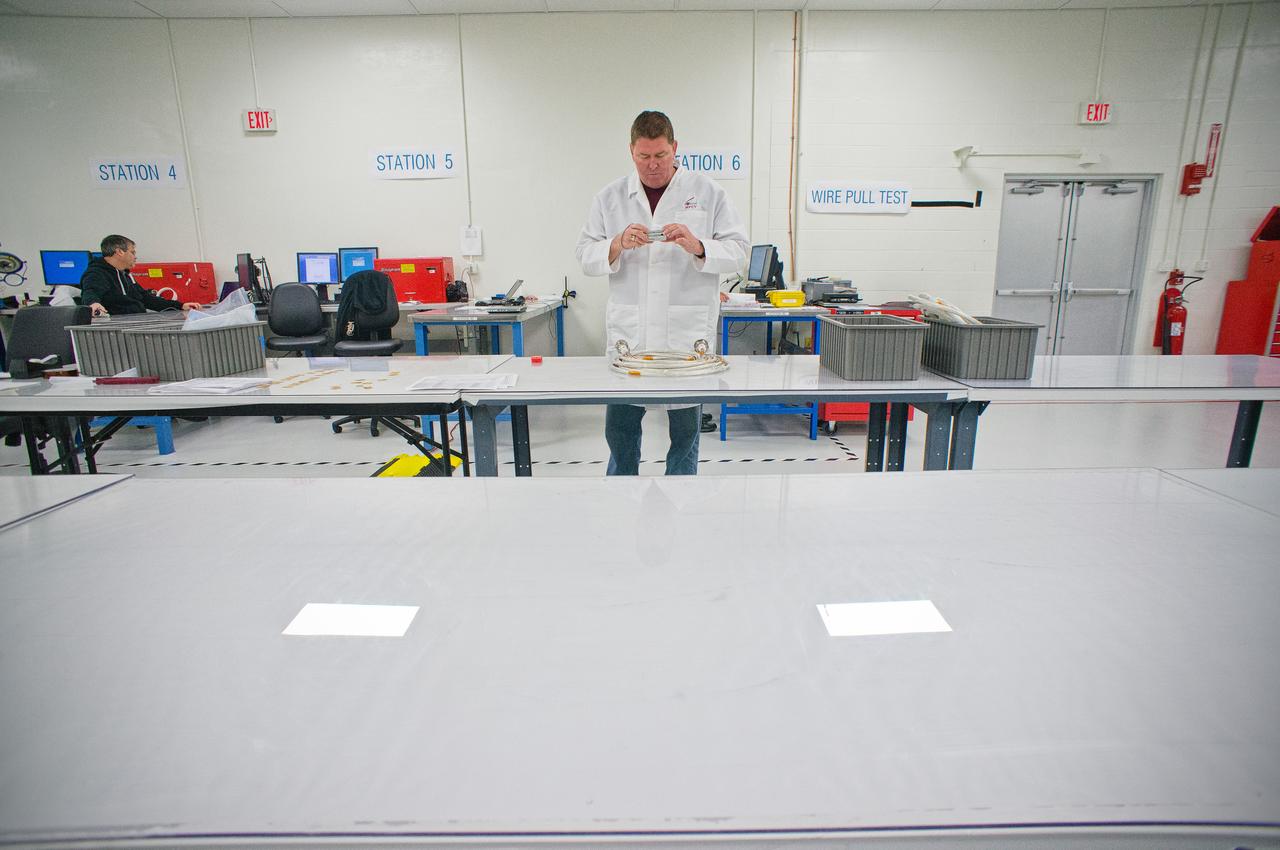
Technicians work on the harness assembly for the Exploration Flight Test-1 (EFT-1) Orion in the Operations and Checkout (O&C) Building at NASA’s Kennedy Space Center on Jan. 1, 2012. Part of Batch image transfer from Flickr.
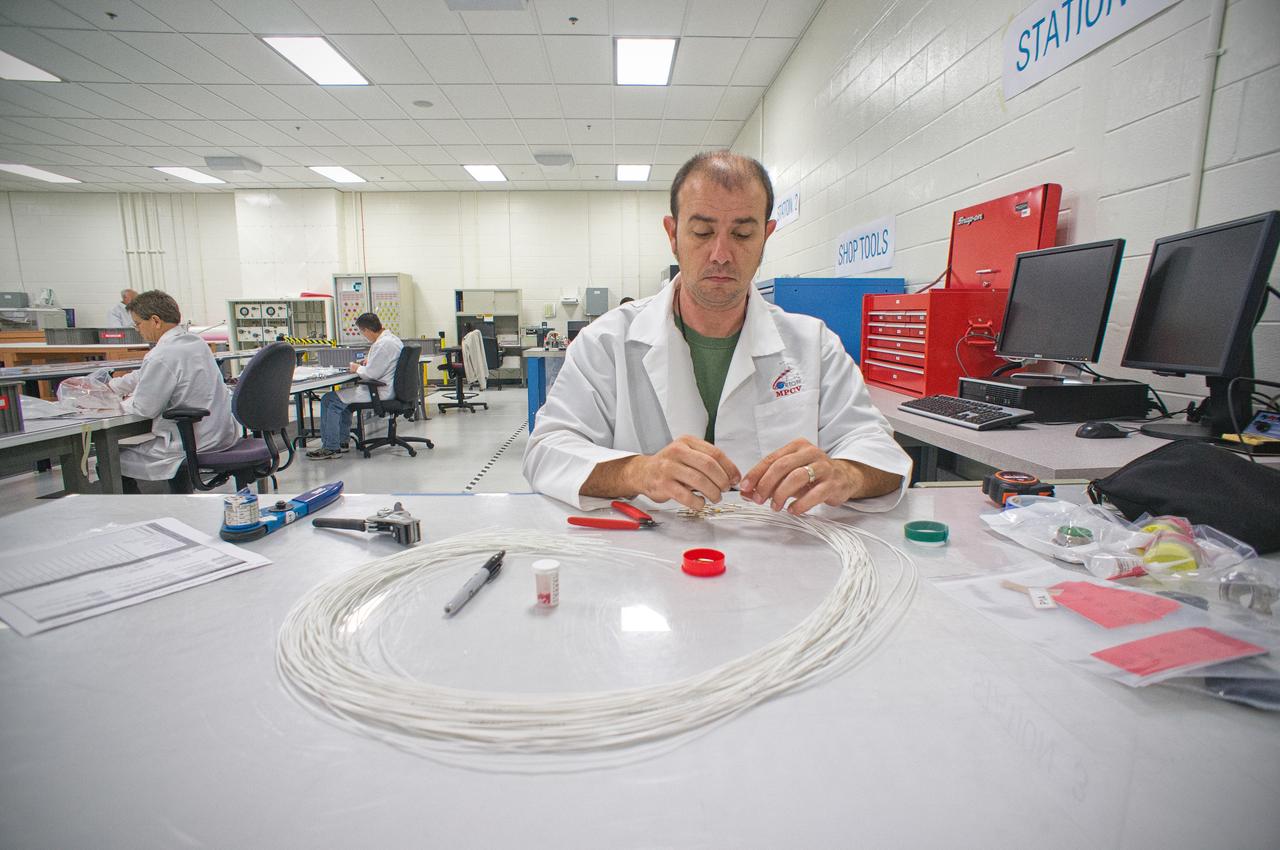
Technicians work on the harness assembly for the Exploration Flight Test-1 (EFT-1) Orion in the Operations and Checkout (O&C) Building at NASA’s Kennedy Space Center on Jan. 1, 2012. Part of Batch image transfer from Flickr.

Technicians work on the harness assembly for the Exploration Flight Test-1 (EFT-1) Orion in the Operations and Checkout (O&C) Building at NASA’s Kennedy Space Center on Nov. 16, 2012. Part of Batch image transfer from Flickr.
Technicians work on the harness assembly for the Exploration Flight Test-1 (EFT-1) Orion in the Operations and Checkout (O&C) Building at NASA’s Kennedy Space Center on Jan. 1, 2012. Part of Batch image transfer from Flickr.
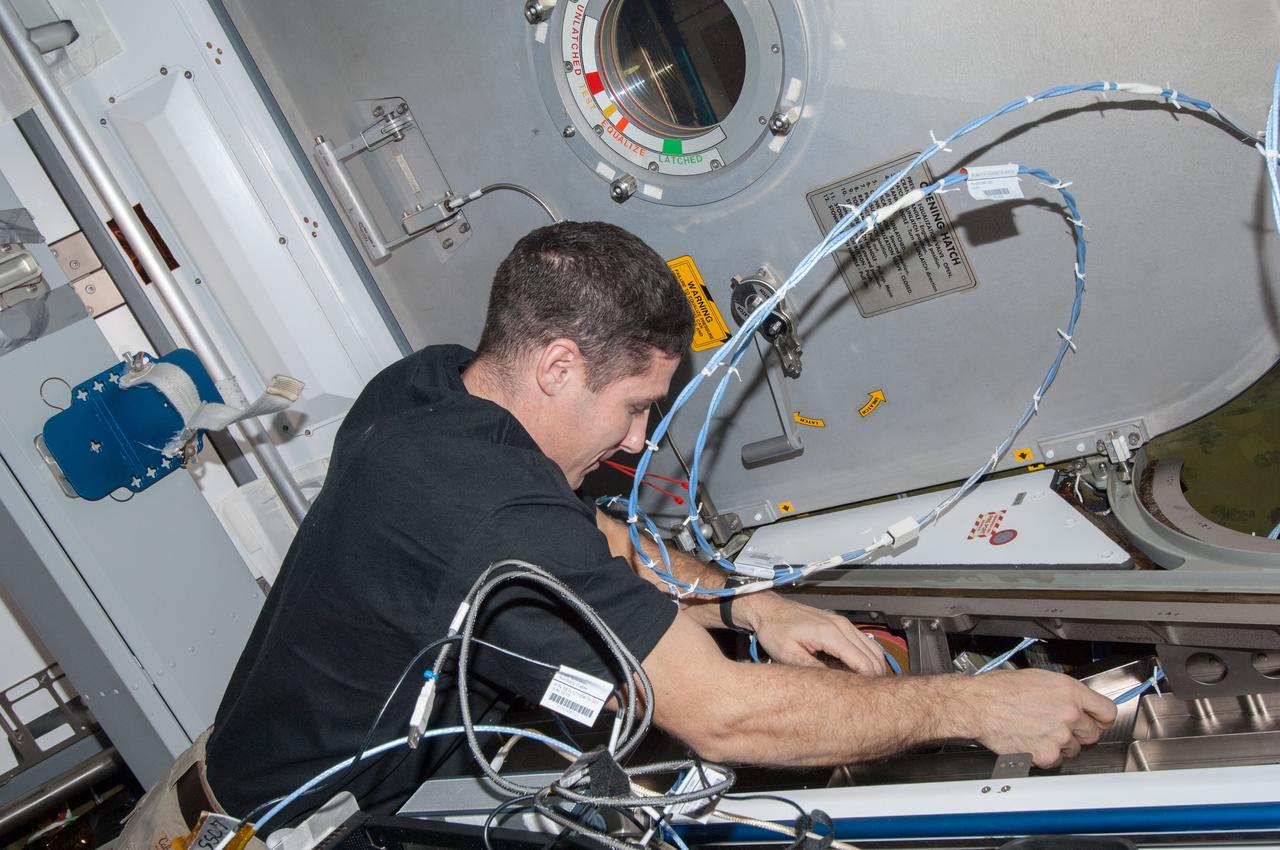
ISS038-E-008291 (24 Nov. 2013) --- NASA astronaut Michael Hopkins, Expedition 38 flight engineer, installs wire harnesses in the International Space Station?s Harmony node to support the installation of Ethernet video cables for the station?s local area network. These new cables will provide Ethernet connectivity to the visiting vehicles that dock to Harmony?s Earth-facing port.

Apollo 11 astronaut Buzz Aldrin and tour guide Mary Ann Harness check out models of the Ares 1 and Ares 5 space vehicles during Aldrin's tour of NASA Dryden.
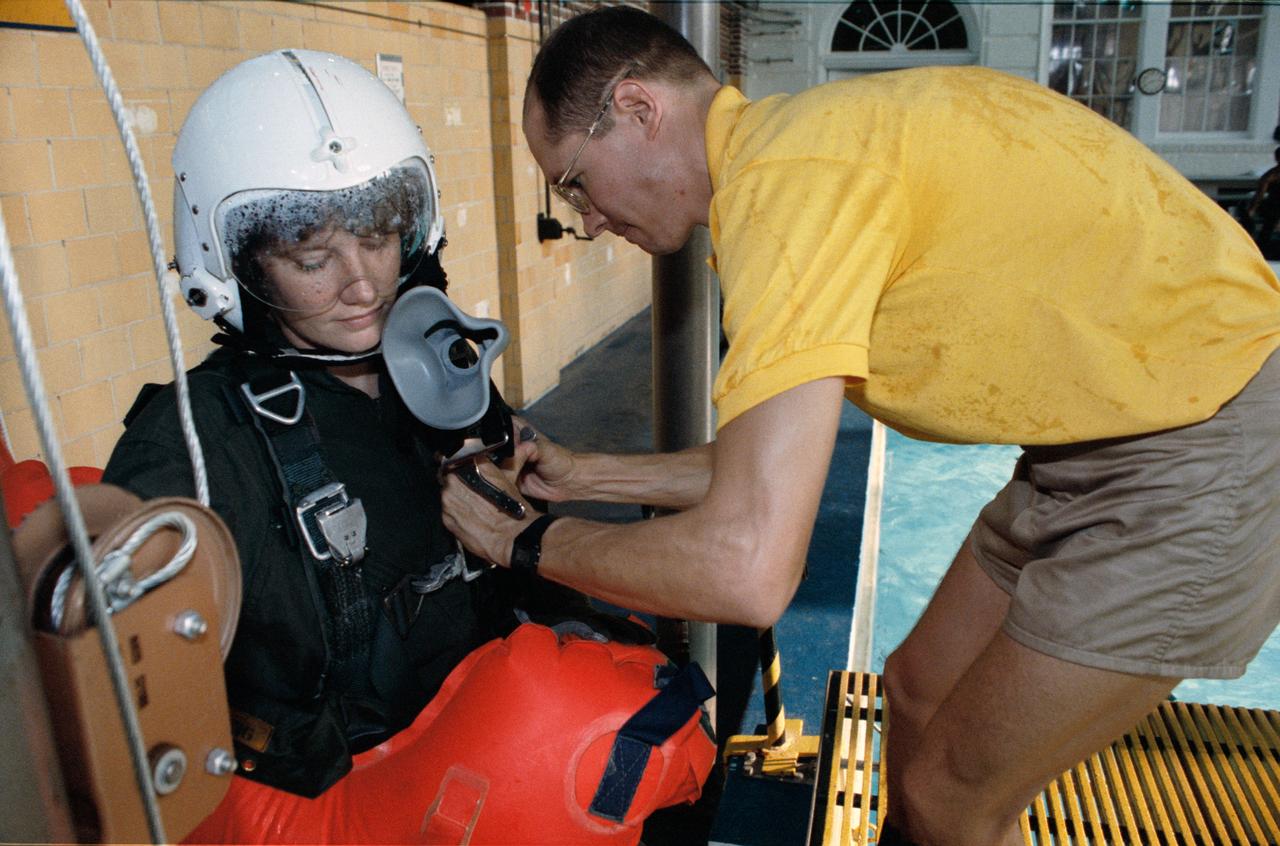
1990 Group 13 Astronaut Candidate (ASCAN) Susan J. Helms, wearing helmet with oxygen mask and inflated life jacket, is assisted by training instructor during water survival exercises at Elgin Air Force Base (AFB) in Pensacola, Florida. Helms looks on as the instructor adjusts her parachute harness. When ready, Helms will be dropped from the harness into the pool (in background) to simulate a water landing after T-38 ejection. ASCANs participated in the exercises from 08-14-90 through 08-17-90.
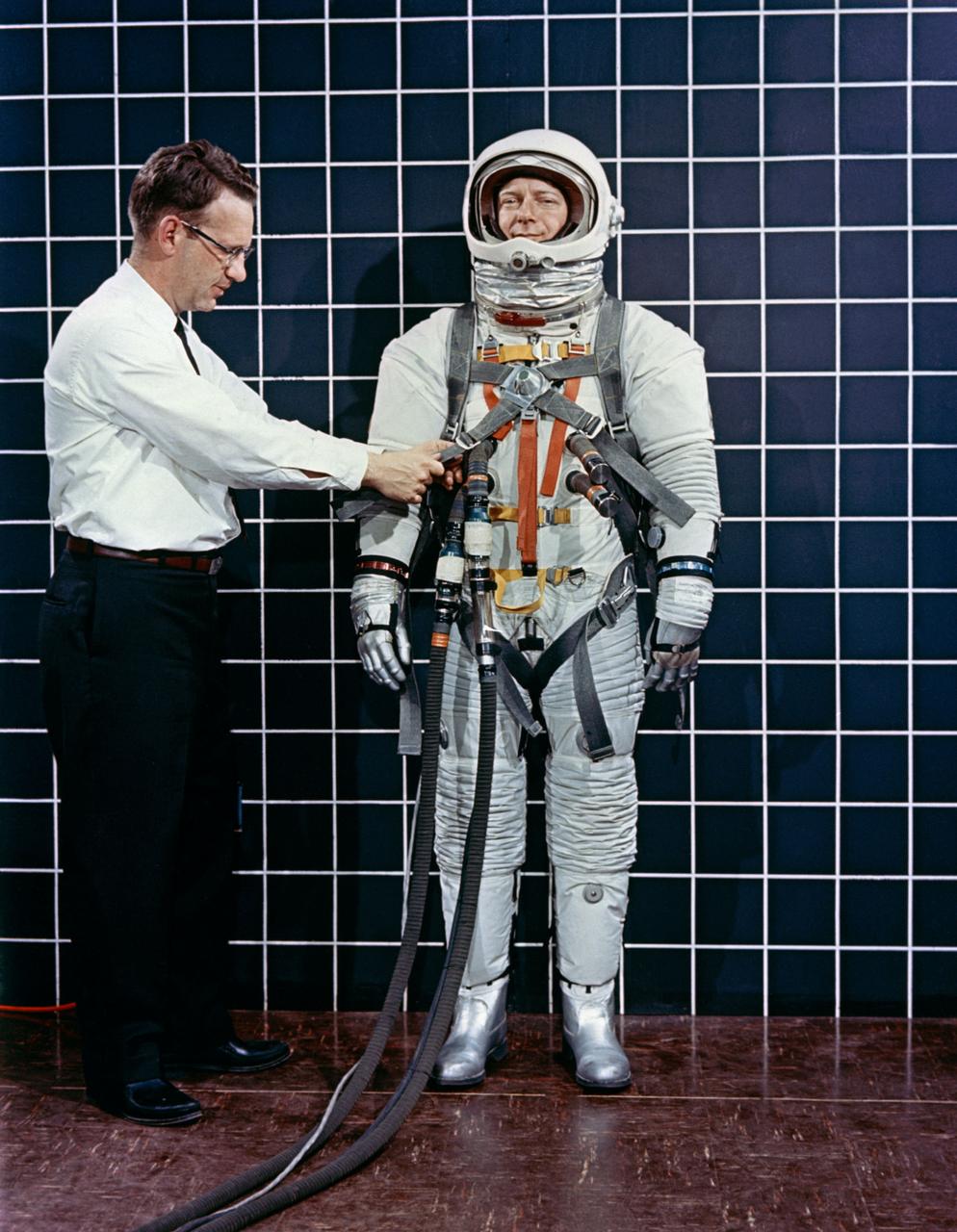
Engineer Bill Peterson fits test pilot Bob Smyth in spacesuit A-3H-024 with the LEM Astronaut restraint harness during suit evaluation study.
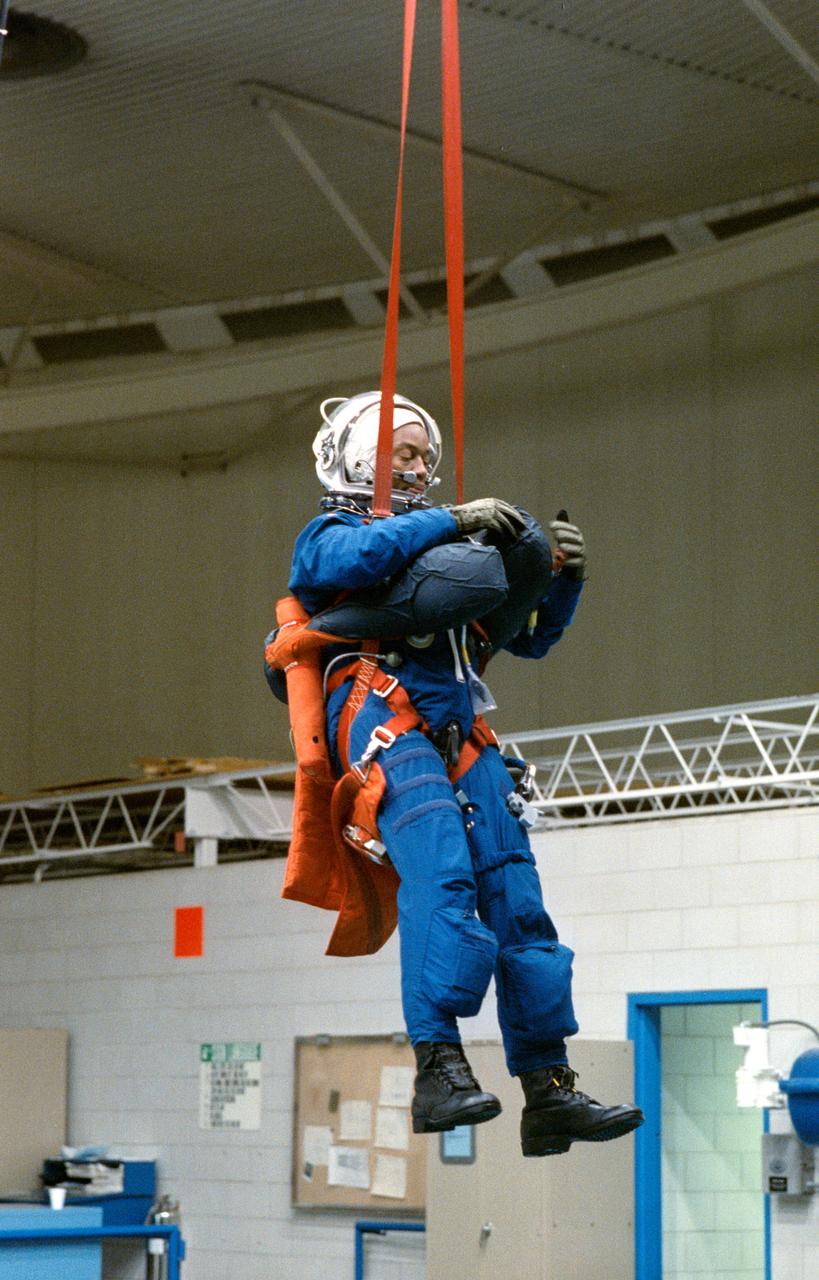
S90-54755 (13 Dec 1990) --- Astronaut Guion S. Bluford, Jr., STS-39 Mission Specialist wearing launch and entry suit (LES) and launch and entry helmet (LEH), is suspended above JSC's Weightless Environment Training Facility (WETF) Bldg 29 pool via his parachute harness. Bluford will be dropped from the harness into the WETF's 25 ft deep pool to simulate an emergency egress bailout from the Space Shuttle into the ocean.
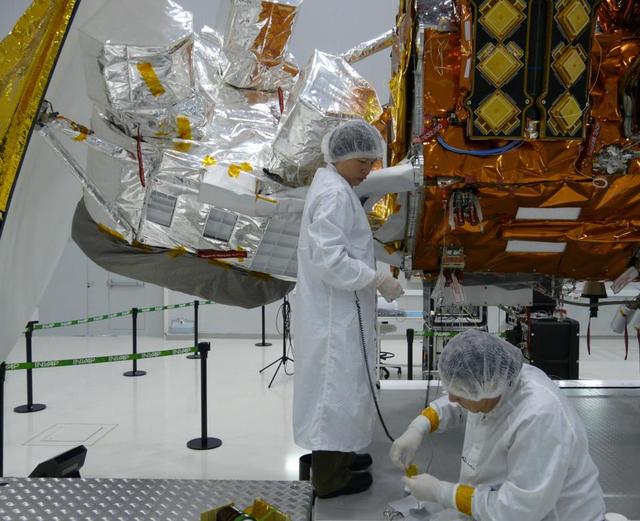
Completion of the thermal blanket patterns for the Aquarius bipod after routing the flight harness from the SAC-D service platform.
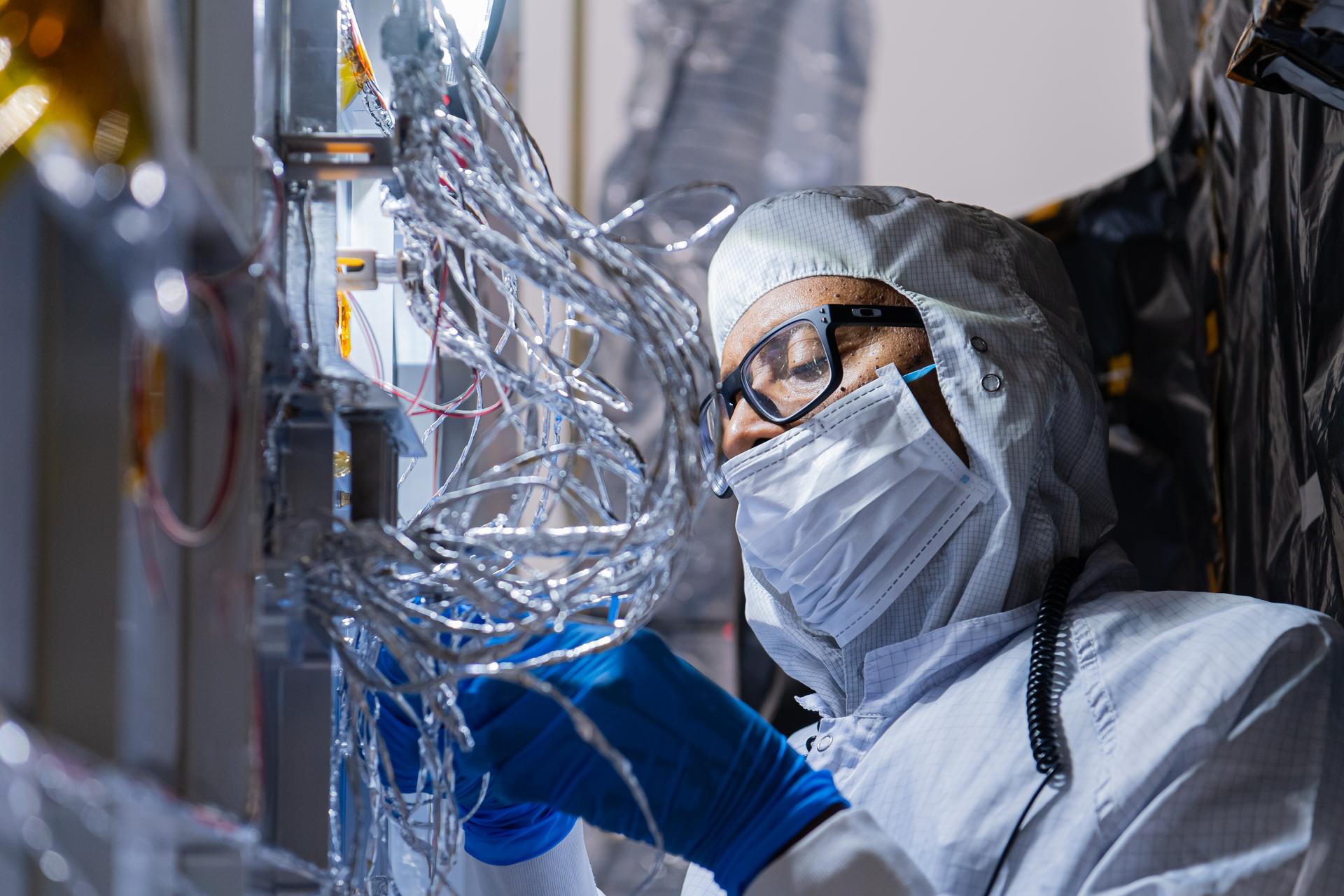
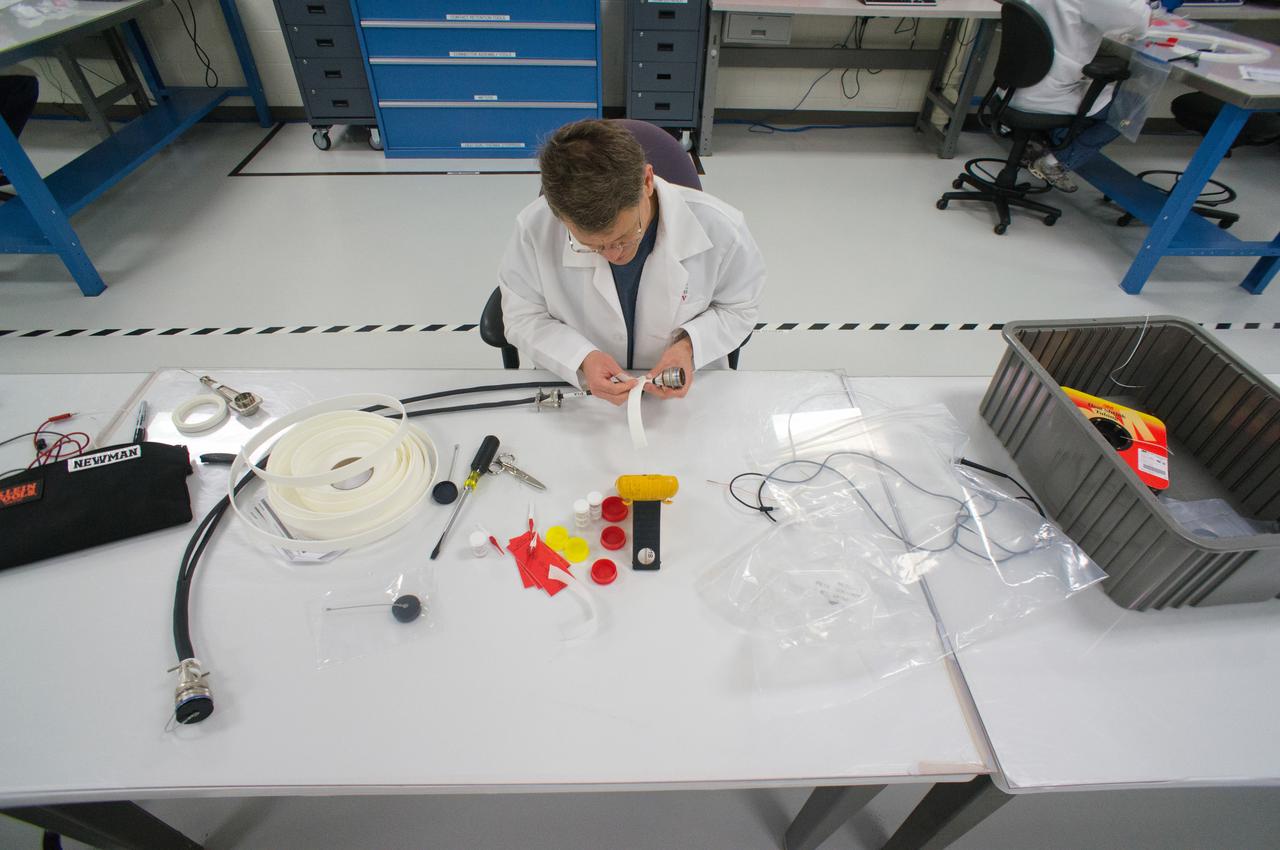
OSAM-1 Electrical Engineer Gregory Griffin tapes hardware on the underside of the OSAM-1 Servicing Payload inside cleanroom at Goddard Space Flight Center, Greenbelt Md., Aug 19, 2024. This photo has been reviewed by the Export Control Office, project Management, and Maxar release authority and is released for public view. NASA/Mike Guinto
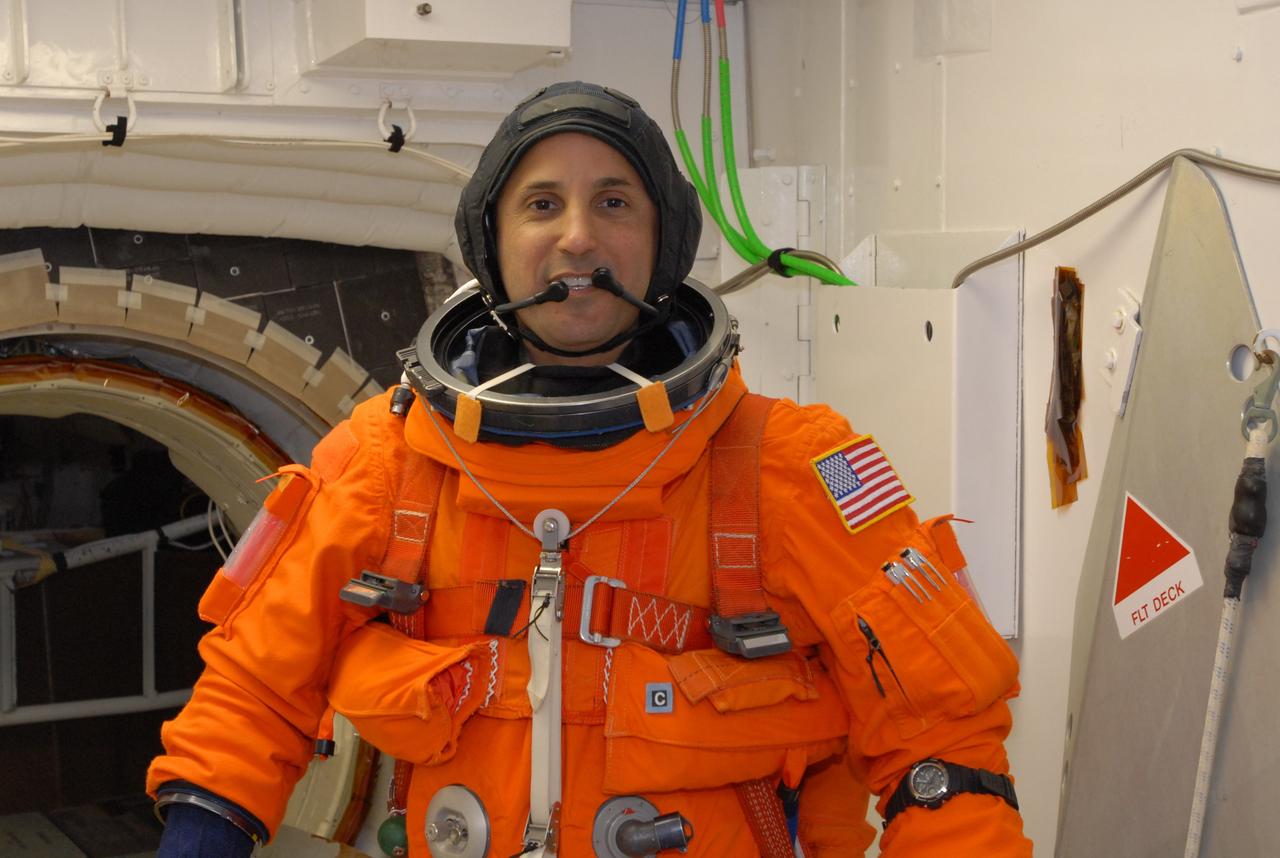
CAPE CANAVERAL, Fla. – In the White Room on Launch Pad 39A at NASA's Kennedy Space Center in Florida, STS-119 Mission Specialist Joseph Acaba is ready to enter space shuttle Discovery, behind him. The White Room provides access into Discovery. Acaba and other crew members will conduct a simulated launch countdown as part of the prelaunch preparation known as Terminal Countdown Demonstration Test. The TCDT also includes equipment familiarization and emergency egress training. Discovery is targeted to launch on the STS-119 mission Feb. 12. During the 14-day mission, the crew will install the S6 truss segment and solar arrays to the starboard side of the International Space Station, completing the station's truss, or backbone. Photo credit: NASA/Jim Grossmann
CAPE CANAVERAL, Fla. – In the White Room on Launch Pad 39A at NASA's Kennedy Space Center in Florida, STS-119 Mission Specialist Richard Arnold gets ready to enter space shuttle Discovery, behind him. The White Room provides access into Discovery. Arnold and other crew members will conduct a simulated launch countdown as part of the prelaunch preparation known as Terminal Countdown Demonstration Test. The TCDT also includes equipment familiarization and emergency egress training. Discovery is targeted to launch on the STS-119 mission Feb. 12. During the 14-day mission, the crew will install the S6 truss segment and solar arrays to the starboard side of the International Space Station, completing the station's truss, or backbone. Photo credit: NASA/Jim Grossmann
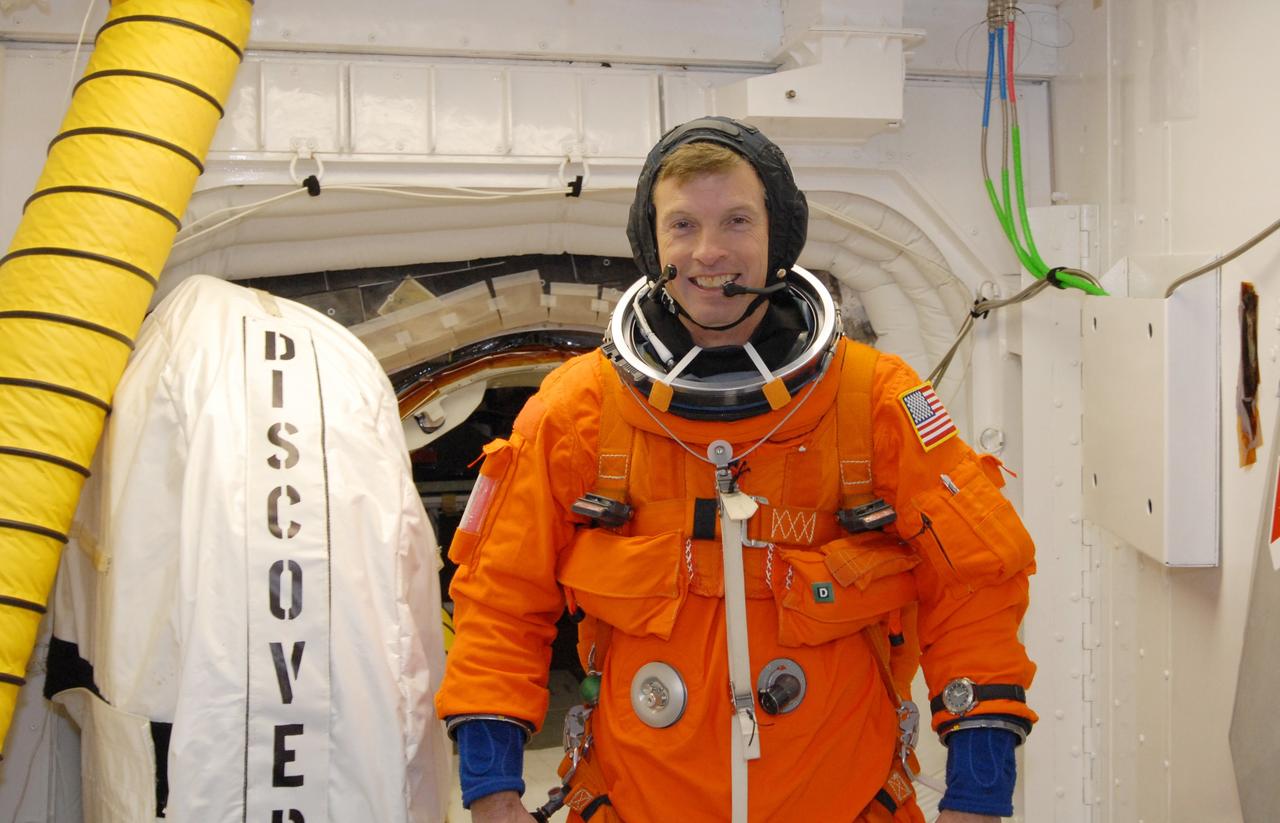
CAPE CANAVERAL, Fla. – In the White Room on Launch Pad 39A at NASA's Kennedy Space Center in Florida, STS-119 Mission Specialist Steve Swanson is ready to enter space shuttle Discovery, behind him. The White Room provides access into Discovery. Swanson and other crew members will conduct a simulated launch countdown as part of the prelaunch preparation known as Terminal Countdown Demonstration Test. The TCDT also includes equipment familiarization and emergency egress training. Discovery is targeted to launch on the STS-119 mission Feb. 12. During the 14-day mission, the crew will install the S6 truss segment and solar arrays to the starboard side of the International Space Station, completing the station's truss, or backbone. Photo credit: NASA/Jim Grossmann
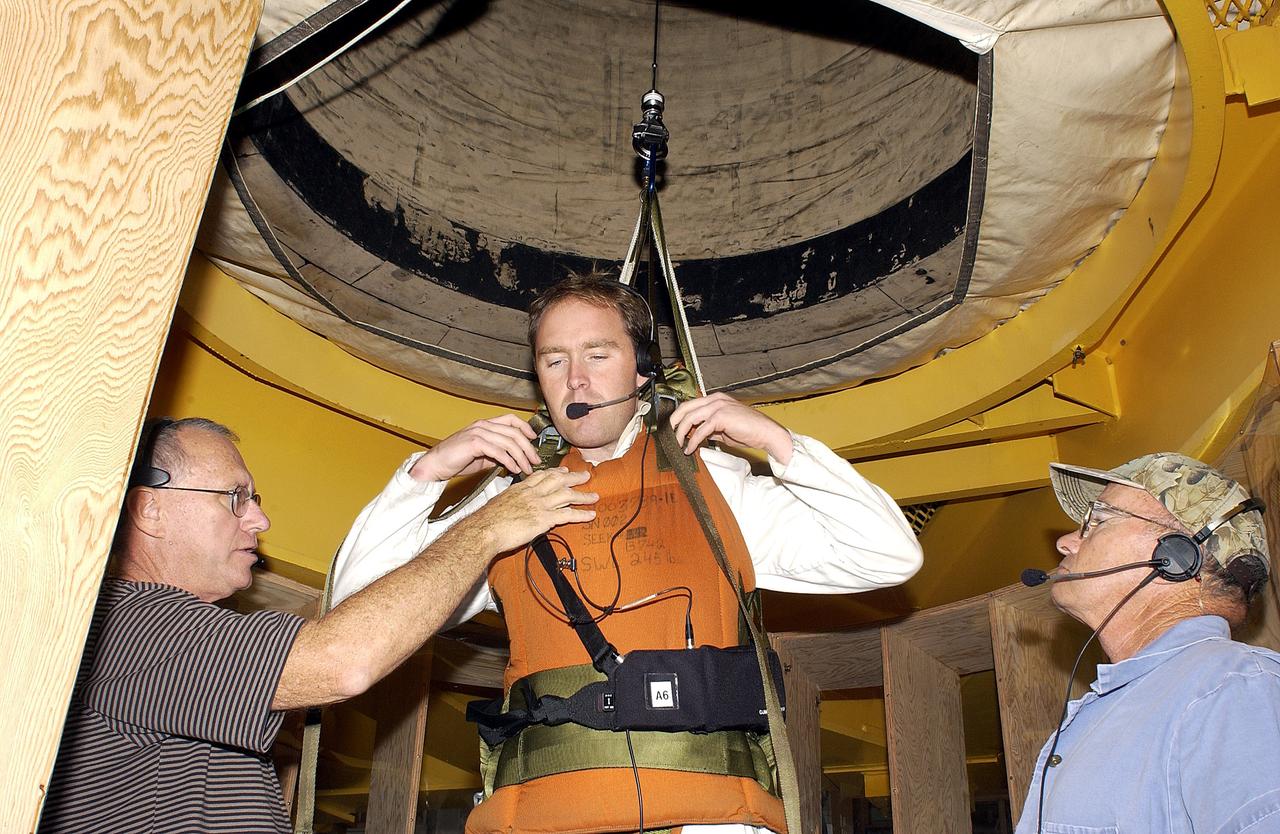
KENNEDY SPACE CENTER, FLA. - Jeff Thon, an SRB mechanic with United Space Alliance, is fitted with a harness to test a vertical solid rocket booster propellant grain inspection technique. Thon will be lowered inside a mockup of two segments of the SRBs. The inspection of segments is required as part of safety analysis.
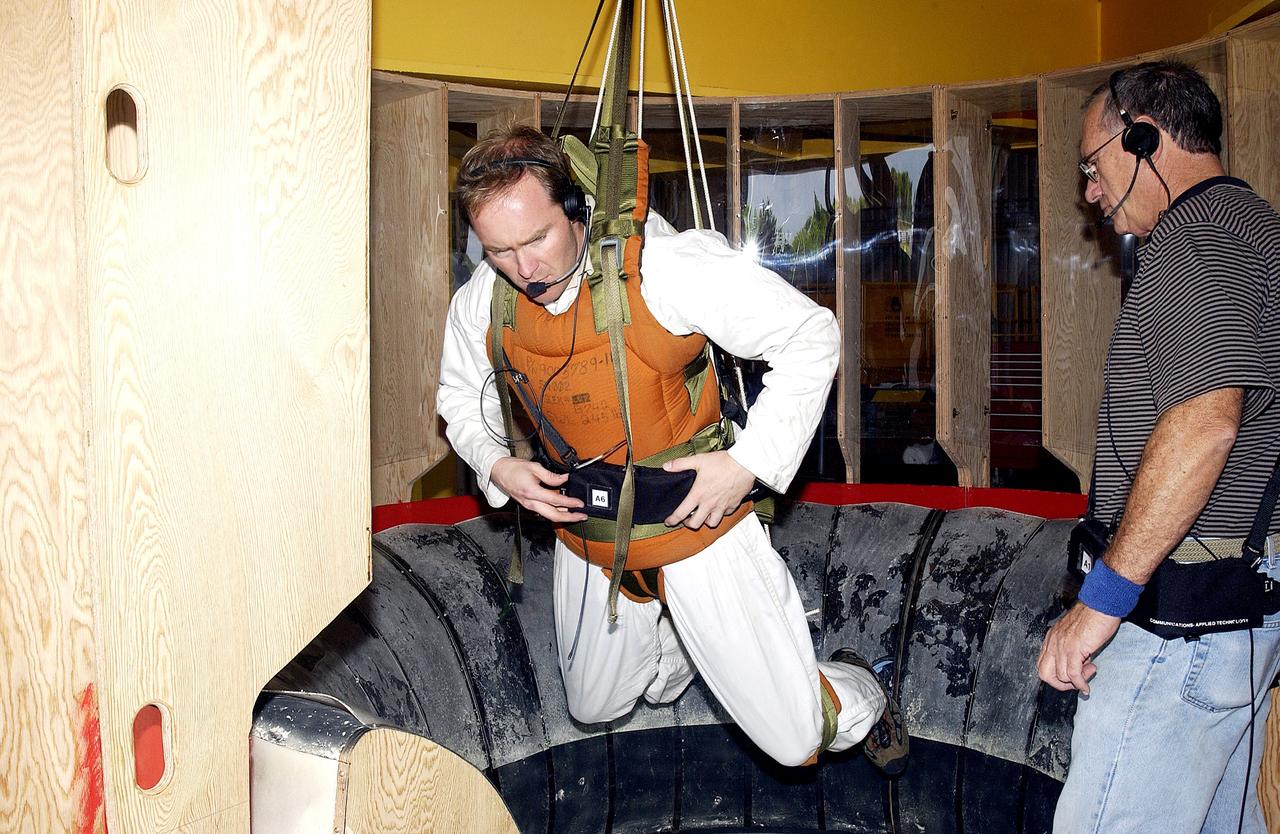
KENNEDY SPACE CENTER, FLA. - Jeff Thon, an SRB mechanic with United Space Alliance, is fitted with a harness to test a vertical solid rocket booster propellant grain inspection technique. Thon will be lowered inside a mockup of two segments of the SRBs. The inspection of segments is required as part of safety analysis.
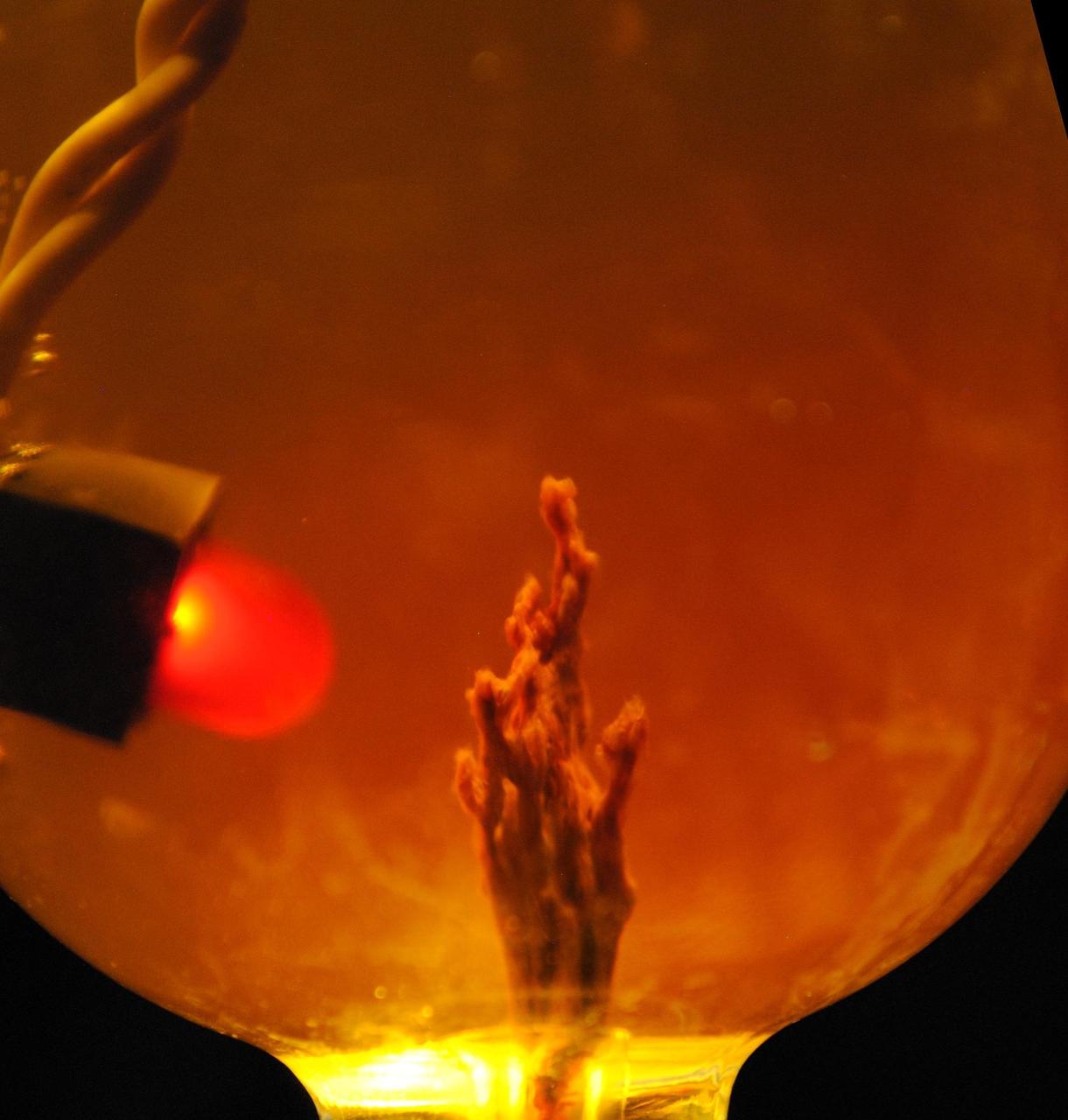
This photo simulation shows a laboratory-created "chemical garden," which is a chimney-like structure found at bubbling vents on the seafloor. Some researchers think life on Earth might have got its start at structures like these billions of years ago, partly due to their ability to transfer electrical currents -- an essential trait of life as we know it. The battery-like property of these chemical gardens was demonstrated by linking several together in series to light an LED (light-emitting diode) bulb. In this photo simulation, the bulb is not really attached to the chimney. The chimney membranes are made of iron sulfides and iron hydroxides, geologic materials that conduct electrons. JPL's research team is part of the Icy Worlds team of the NASA Astrobiology Institute, based at NASA's Ames Research Center in Moffett Field, California. JPL is managed by the California Institute of Technology in Pasadena for NASA. http://photojournal.jpl.nasa.gov/catalog/PIA19834
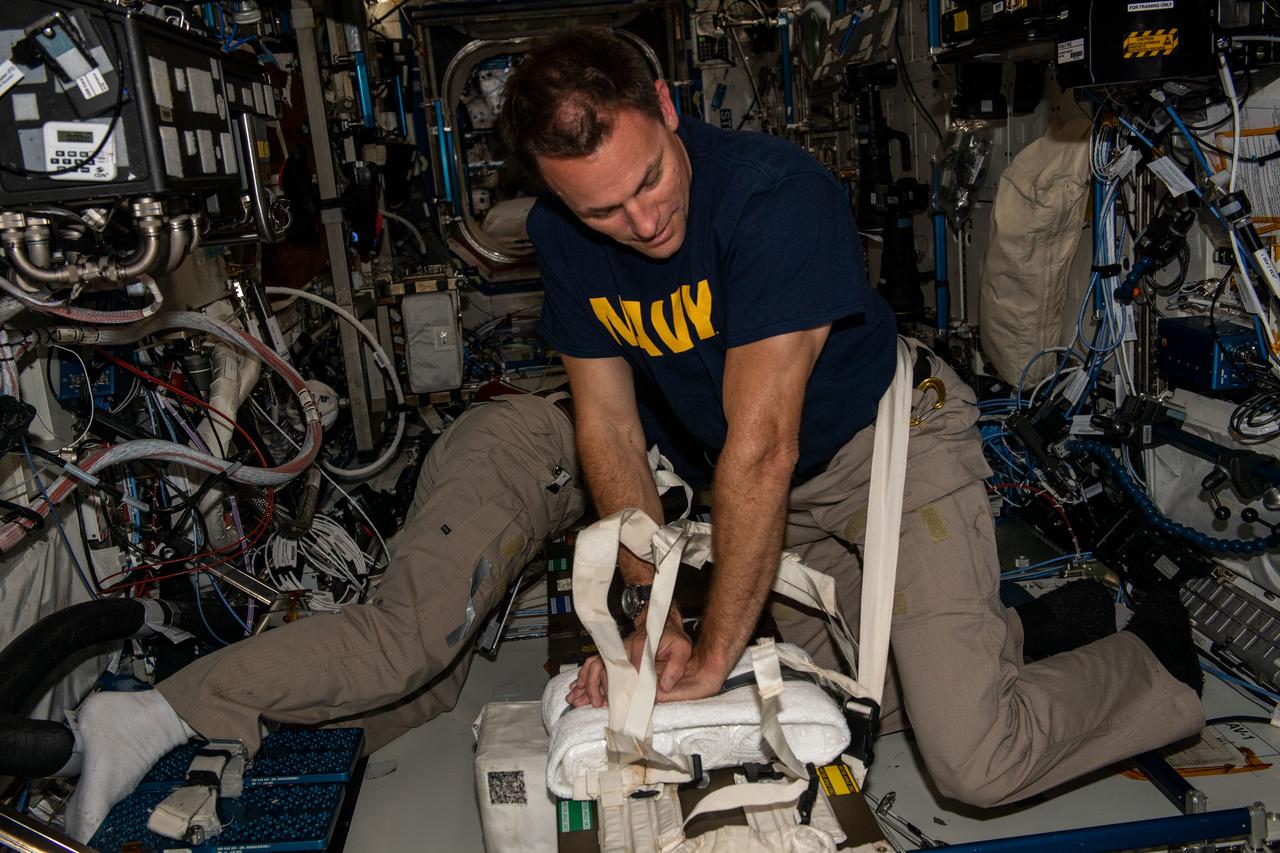
iss068e019662 (Oct. 27, 2022) --- NASA astronaut and Expedition 68 Flight Engineer Josh Cassada practices cardiopulmonary resuscitation (CPR) during a medical emergency drill in the weightless environment of the International Space Station. During the chest compressions a patient would be restrained with harnesses and the rescuing crew member may position themselves by pushing themselves with their feet on an opposing surface or restrain themselves with a harness when compressing by the patient's side.

ISS013-E-78506 (7 Sept. 2006) --- Sand dunes near Mongolia's Har Lake are featured in this image photographed by an Expedition 13 crewmember on the International Space Station. Har (or Black) Lake is located in the western part of the country within the Valley of Lakes--part of a system of closed basins that stretches across central Asia. According to scientists, these basins are the remnants of larger paleolakes that had begun to shrink in size by approximately five thousand years ago as regional climate became drier. Today, the Valley of Lakes is an important ecological resource for study of steppe grasslands, and as resting points for large numbers of migratory birds. Portions of the basin are designated as national parks or other protected areas, and Har Lake itself is an ecotourism destination (usually by horseback). This oblique view captures the dynamic nature of the landscape of Har Lake. The lake is encircled by sand dune fields which encroach on the lower slopes of the Tobhata Mountains to the west and south. Gaps in the mountains have been exploited by sand dunes moving eastward (indicating westerly winds) -- the most striking example being a series of dunes entering Har Lake along its southwestern shoreline. Here, the dune forms reflect the channeling of winds through the break in the mountain ridgeline, leading to dune crests oriented transverse to northwesterly winds. Another well-developed line of dunes is visible between Har and Baga Lakes. While these dunes appear to cut across a lake surface, the dunes have in fact moved across a narrow stream channel.
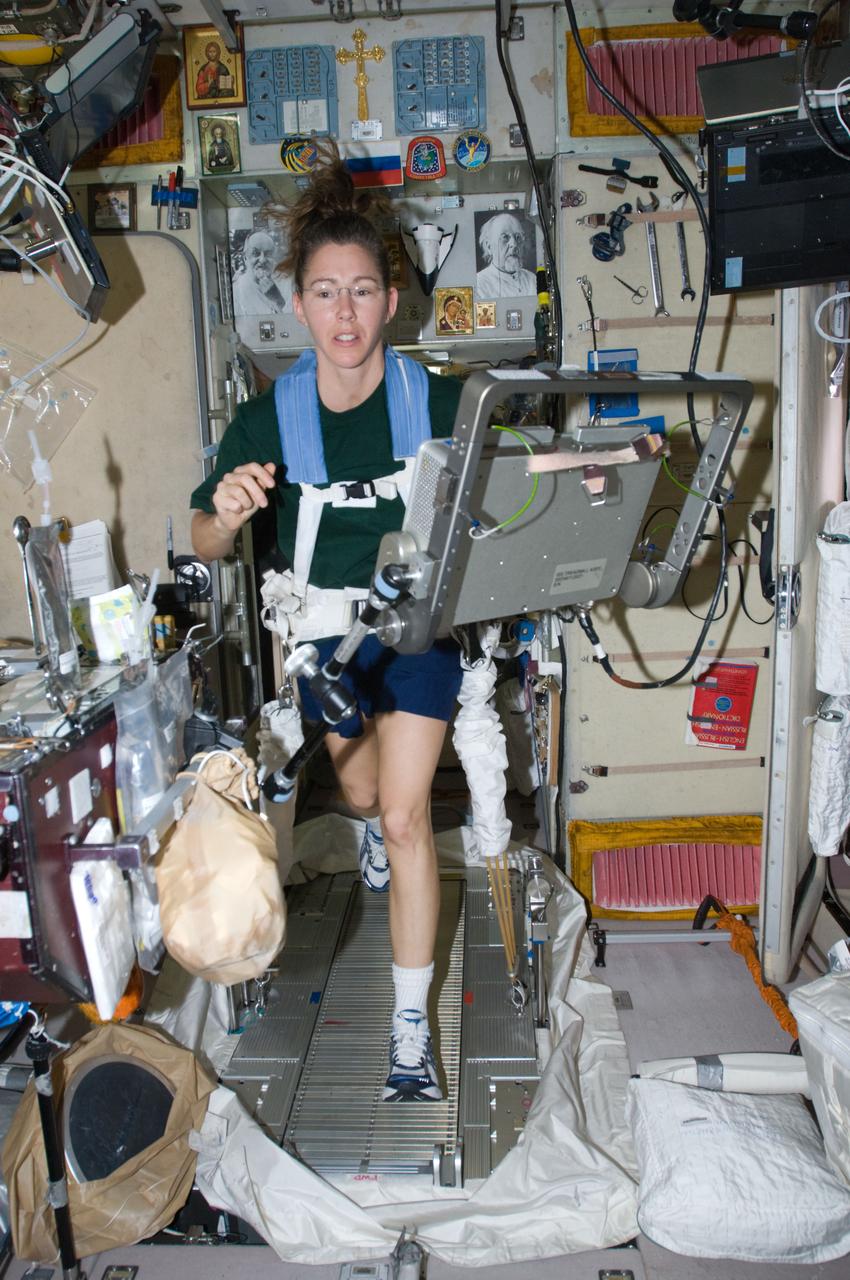
ISS018-E-030096 (12 Feb. 2009) --- Astronaut Sandra Magnus, Expedition 18 flight engineer, equipped with a bungee harness, exercises on the Treadmill Vibration Isolation System (TVIS) in the Zvezda Service Module of the International Space Station.
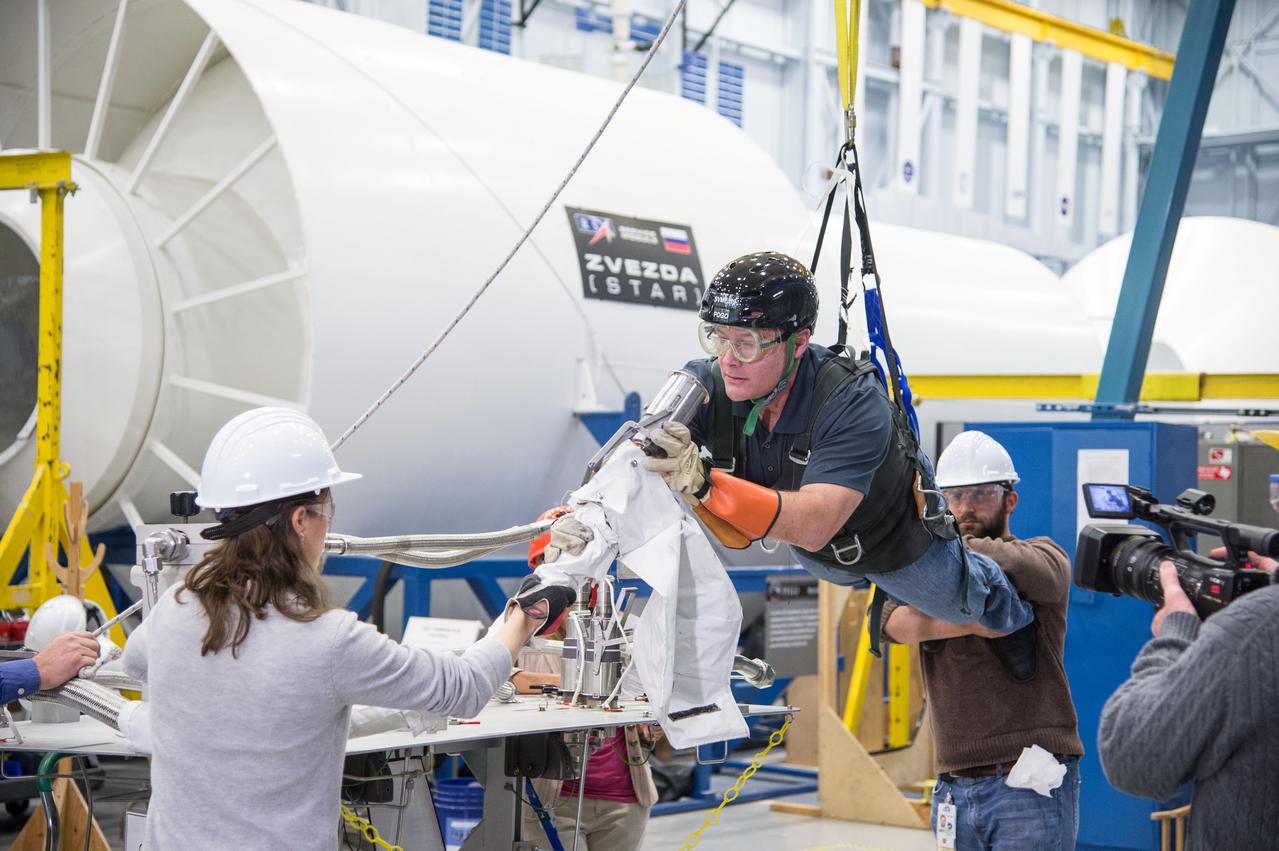
Date: 12/16/13 Location: Bldg 9NW, POGO Stand Subject: Doug Wheelock in POGO harness to evaluate EVA procedures and preparations for the ammonia coolant leak on ISS Photographer: James Blair/NASA
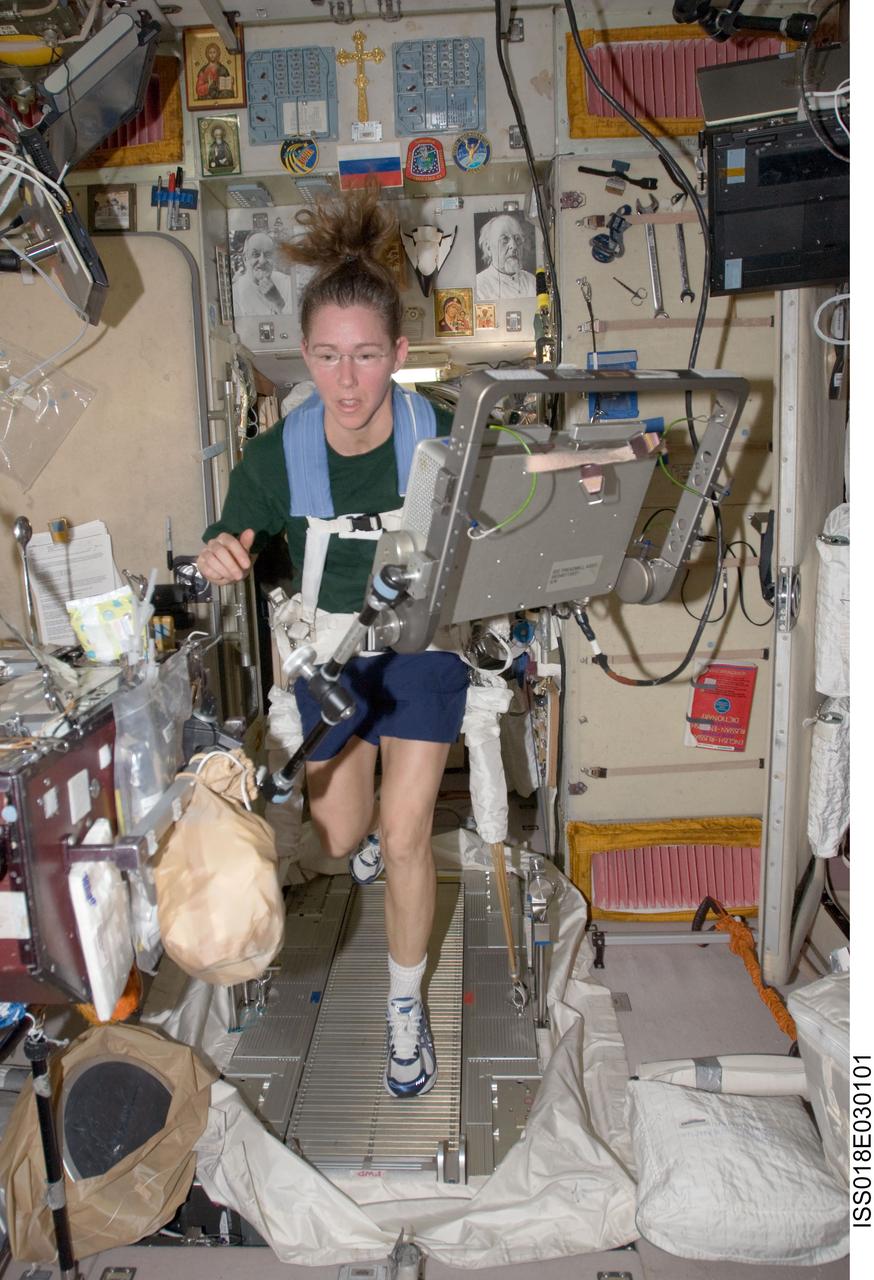
ISS018-E-030101 (12 Feb. 2009) --- Astronaut Sandra Magnus, Expedition 18 flight engineer, equipped with a bungee harness, exercises on the Treadmill Vibration Isolation System (TVIS) in the Zvezda Service Module of the International Space Station.
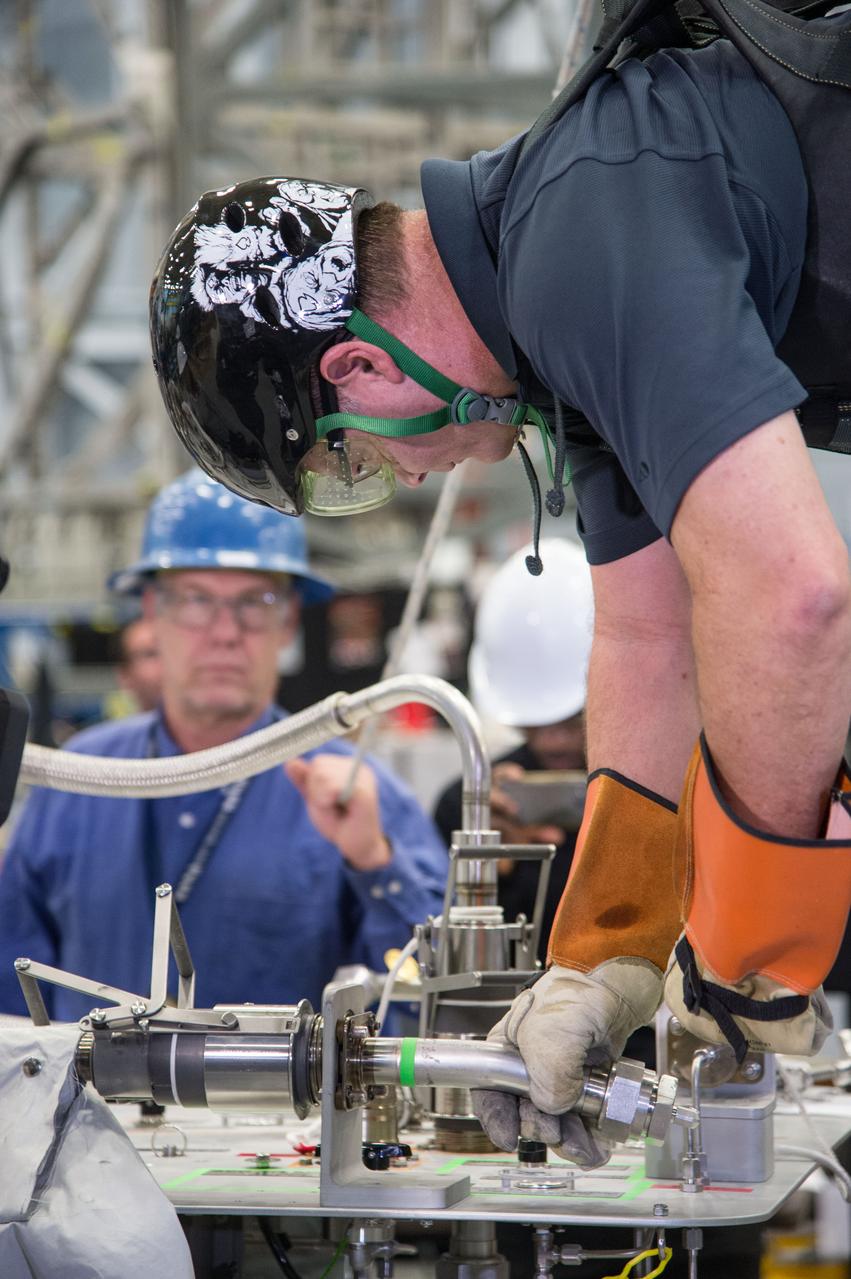
Date: 12/16/13 Location: Bldg 9NW, POGO Stand Subject: Doug Wheelock in POGO harness to evaluate EVA procedures and preparations for the ammonia coolant leak on ISS Photographer: James Blair/NASA
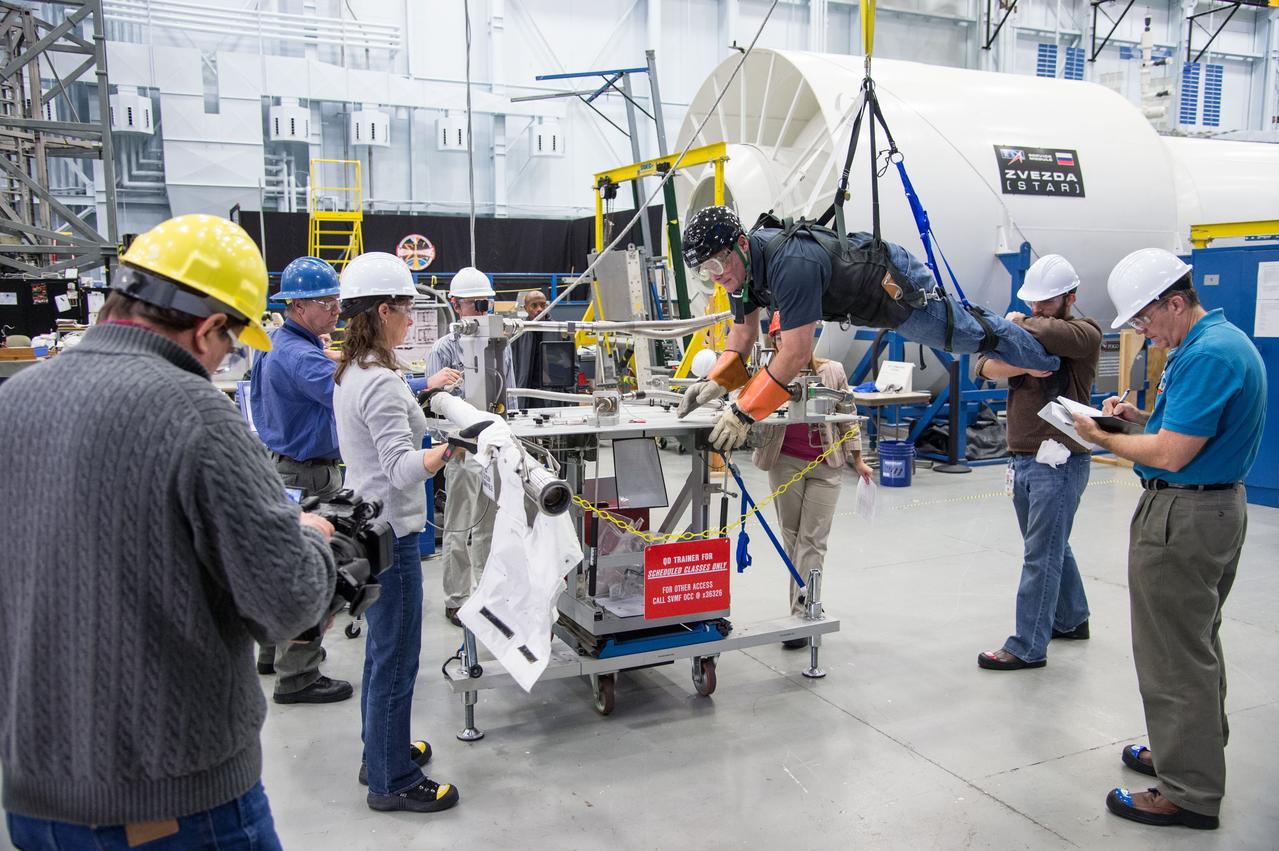
Date: 12/16/13 Location: Bldg 9NW, POGO Stand Subject: Doug Wheelock in POGO harness to evaluate EVA procedures and preparations for the ammonia coolant leak on ISS Photographer: James Blair/NASA
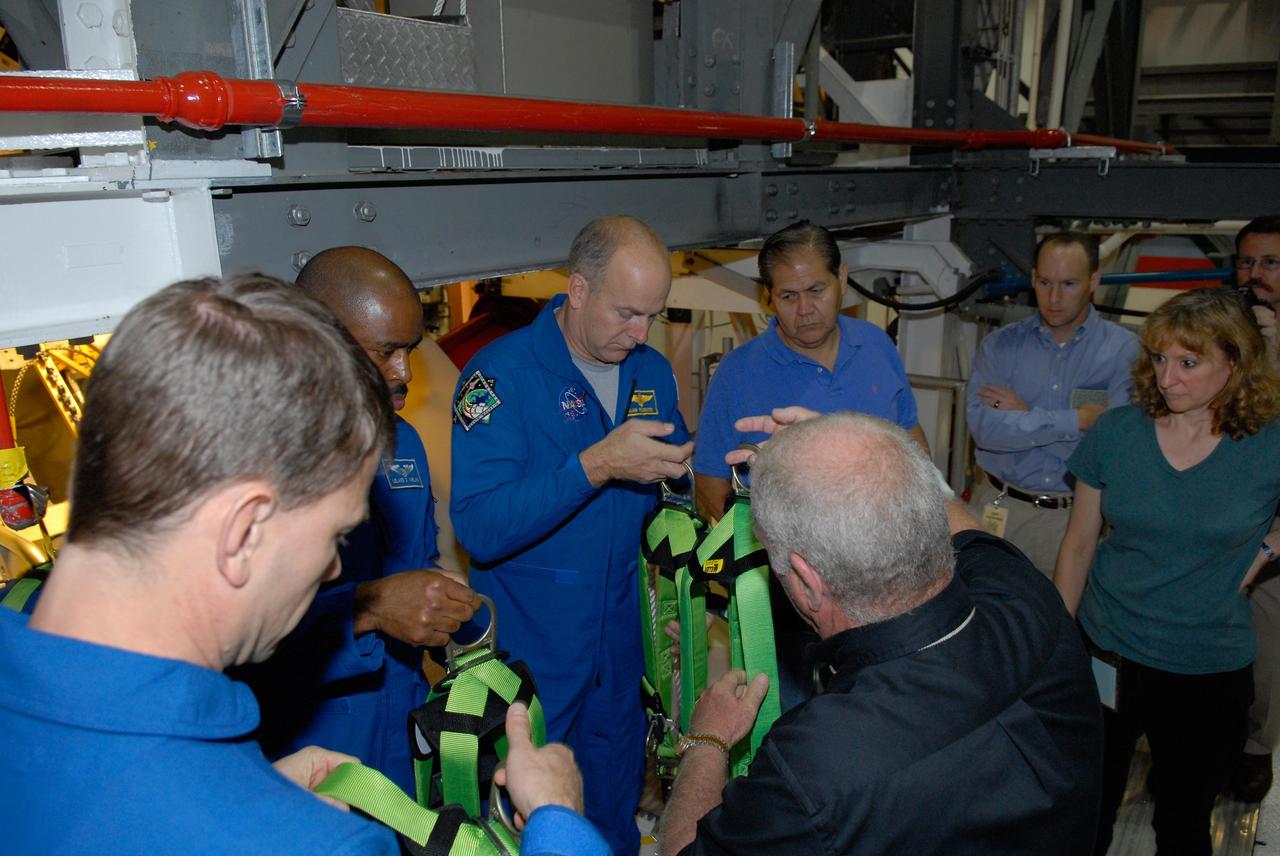
KENNEDY SPACE CENTER, FLA. -- Members of the STS-122 crew take part in harness training in the Orbiter Processing Facility at NASA's Kennedy Space Center. Seen from left are Mission Specialists Stanley Love and Leland Melvin and Pilot Alan Poindexter. The crew is at Kennedy to take part in a crew equipment interface test, or CEIT, which helps familiarize them with equipment and payloads for the mission. Among the activities standard to a CEIT are harness training, inspection of the thermal protection system and camera operation for planned extravehicular activities, or EVAs. STS-122 is targeted for launch in December. Photo credit: NASA/Kim Shiflett
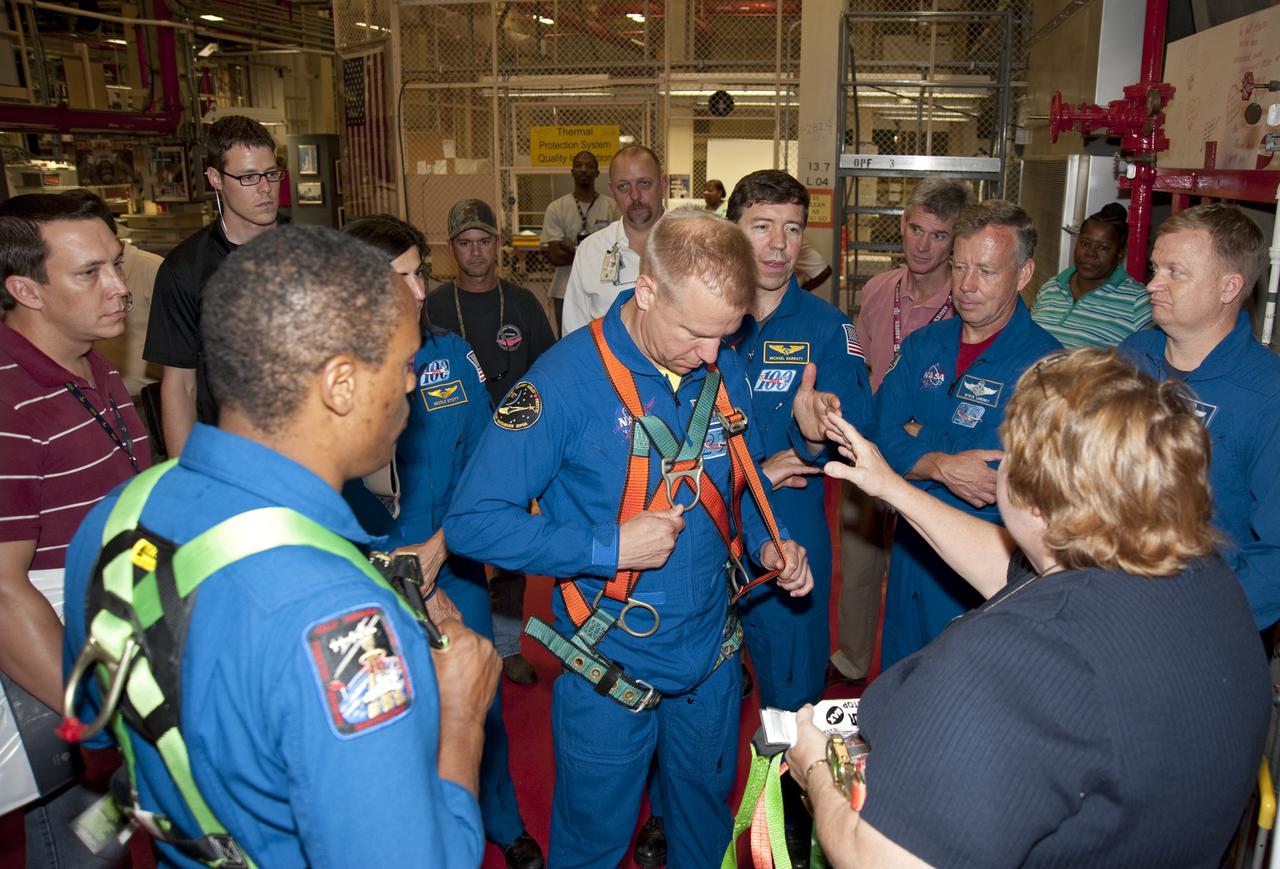
CAPE CANAVERAL, Fla. -- In Orbiter Processing Facility-3 at NASA's Kennedy Space Center in Florida, the STS-133 crew members are instructed on the correct fit of a harness. From right are Pilot Eric Boe, Commander Steve Lindsey, Mission Specialists Michael Barratt, Tim Kopra (with harness) Nicole Stott and Alvin Drew. The astronauts are at Kennedy for the Crew Equipment Interface Test, or CEIT, which provides the crew with hands-on training and observation of shuttle and flight hardware for their mission to the International Space Station. Launch of the STS-133 mission on space shuttle Discovery is targeted for Nov. 1 at 4:33 p.m. EDT. Photo credit: NASA_Kim Shiflett
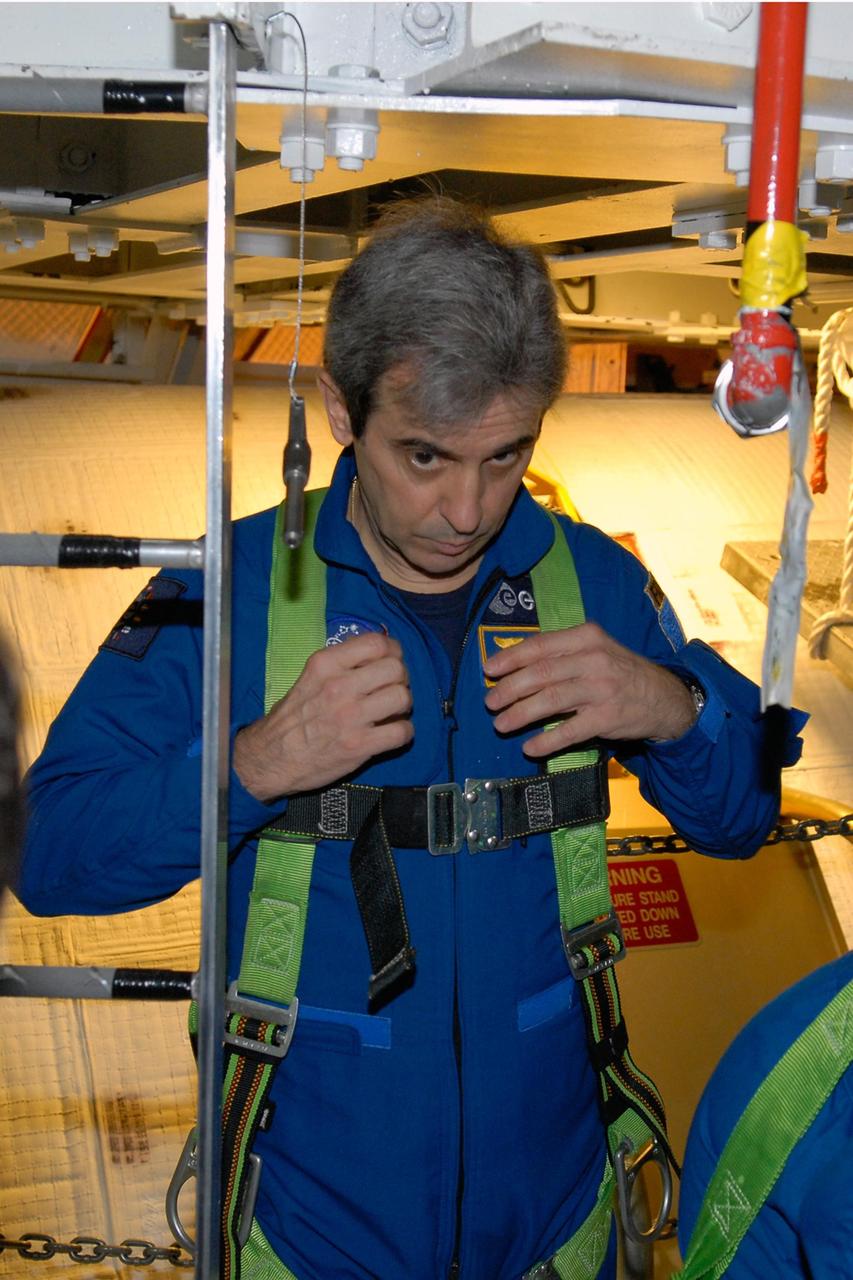
KENNEDY SPACE CENTER, FLA. -- Astronaut Leopold Eyharts, who represents the European Space Agency, tries on a harness in the Orbiter Processing Facility. Eyharts will be traveling to the International Space Station to join the Expedition 16 crew as a flight engineer. The crew is at Kennedy to take part in a crew equipment interface test, or CEIT, which helps familiarize them with equipment and payloads for the mission. Among the activities standard to a CEIT are harness training, inspection of the thermal protection system and camera operation for planned extravehicular activities, or EVAs. STS-122 is targeted for launch in December. Photo credit: NASA/Kim Shiflett
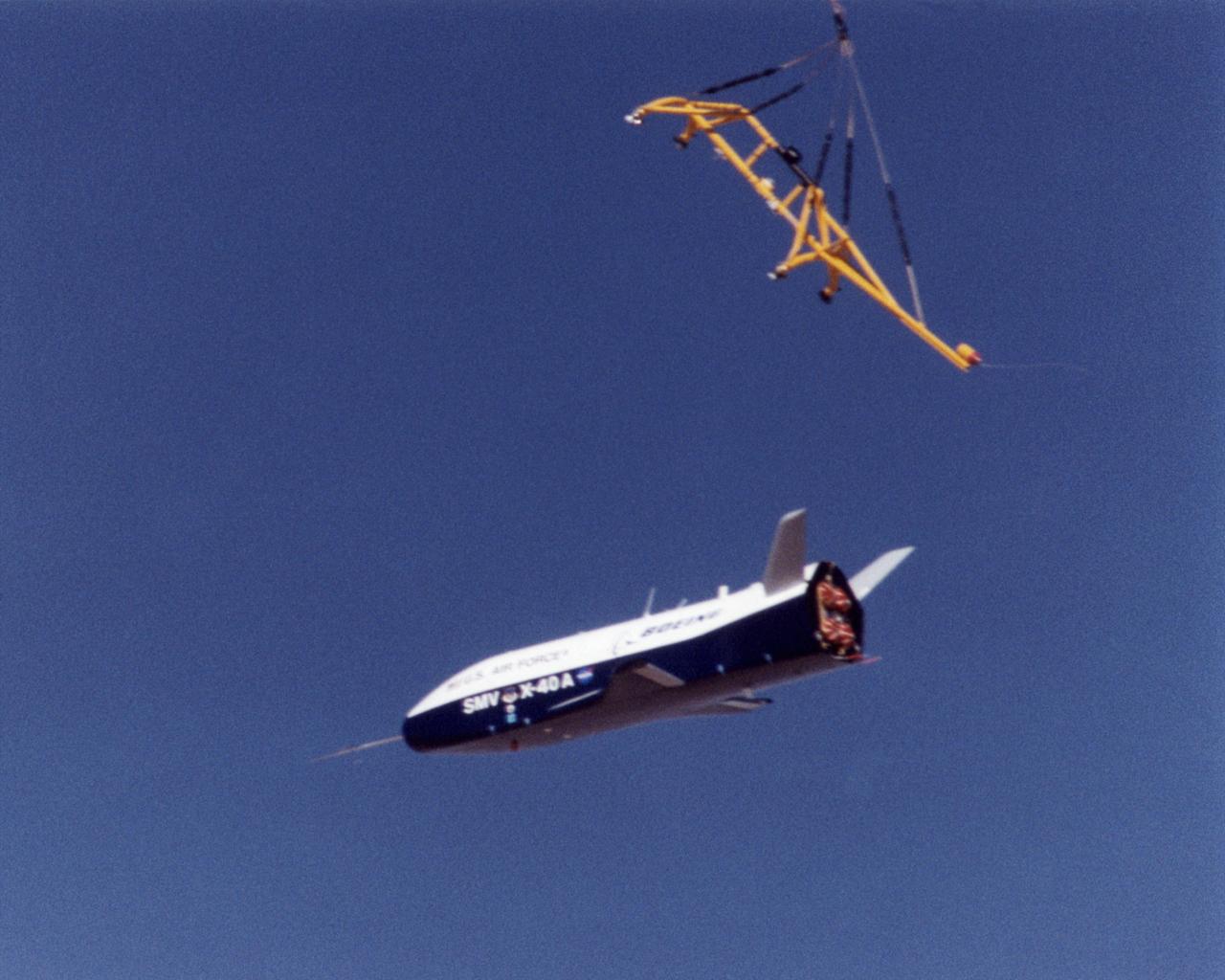
The X-40A immediately after release from its harness suspended from a helicopter 15,000 feet above NASA's Dryden Flight Research Center at Edwards Air Force Base, California, on March 14, 2001. The unpiloted X-40 is a risk-reduction vehicle for the X-37, which is intended to be a reusable space vehicle. NASA's Marshall Space Flight Center in Huntsville, Ala, manages the X-37 project. At Dryden, the X-40A will undergo a series of ground and air tests to reduce possible risks to the larger X-37, including drop tests from a helicopter to check guidance and navigation systems planned for use in the X-37. The X-37 is designed to demonstrate technologies in the orbital and reentry environments for next-generation reusable launch vehicles that will increase both safety and reliability, while reducing launch costs from $10,000 per pound to $1,000 per pound.
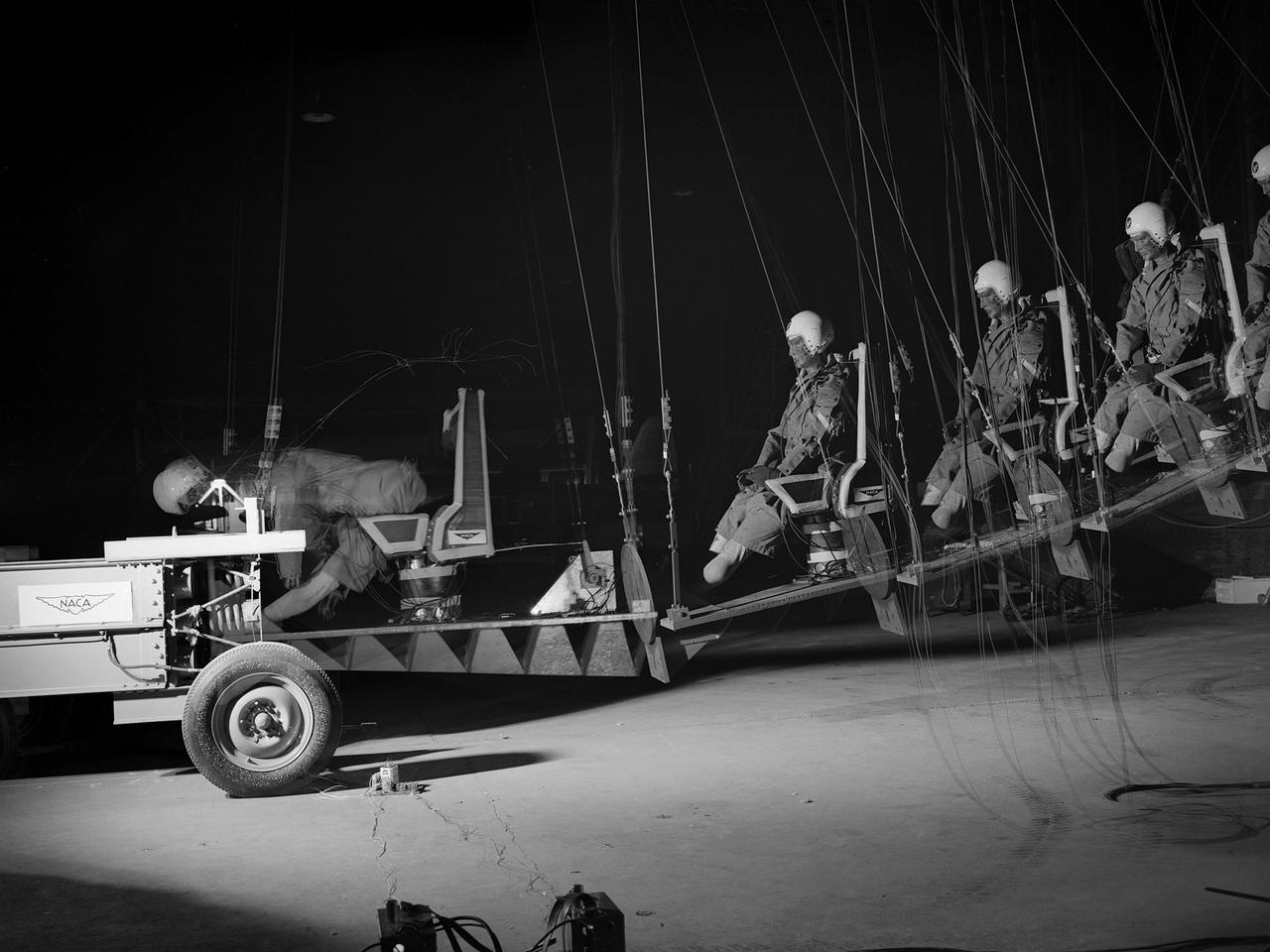
This time-lapse photograph shows the test of a pilot seat and restraint designed by researchers at the National Advisory Committee for Aeronautics (NACA) Lewis Flight Propulsion Laboratory. The laboratory had undertaken a multi-year investigation into the causes and preventative measures for fires resulting from low altitude aircraft crashes. The program was expanded in the mid-1950s to include the study of crash impact on passengers, new types of types of seat restraints, and better seat designs. The impact program began by purposely wrecking surplus transport Fairchild C-82 Packet and Piper Cub aircraft into barricades at the end of a test runway. Instrumented dummies and cameras were installed in the pilot and passenger areas. After determining the different loads experienced during a crash and the effects on the passengers, the NACA researchers began designing new types of seats and restraints. The result was an elastic seat that flexed upon impact, absorbing 75 percent of the loads before it slowly recoiled. This photograph shows the seats mounted on a pendulum with a large spring behind the platform to provide the jolt that mimicked the forces of a crash. The seat was constructed without any potentially damaging metal parts and included rubber-like material, an inflated back and arms, and a seat cushion. After the pendulum tests, the researchers compared the flexible seats to the rigid seats during a crash of a transport aircraft. They found the passengers in the rigid seats received 66 percent higher g-forces than the NACA-designed seats.
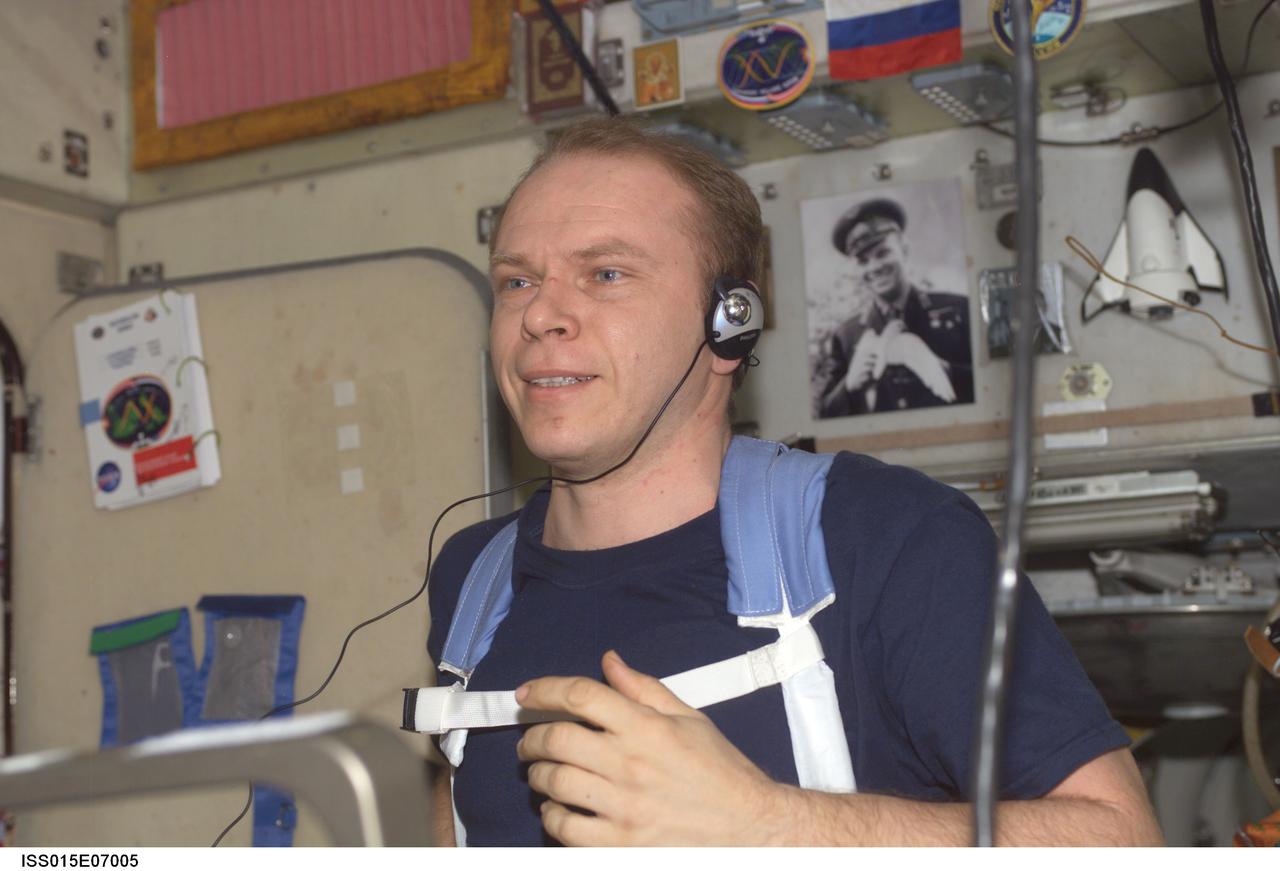
ISS015-E-07005 (6 May 2007) --- Cosmonaut Oleg V. Kotov, Expedition 15 flight engineer representing Russia's Federal Space Agency, equipped with a bungee harness, exercises on the Treadmill Vibration Isolation System (TVIS) in the Zvezda Service Module of the International Space Station.
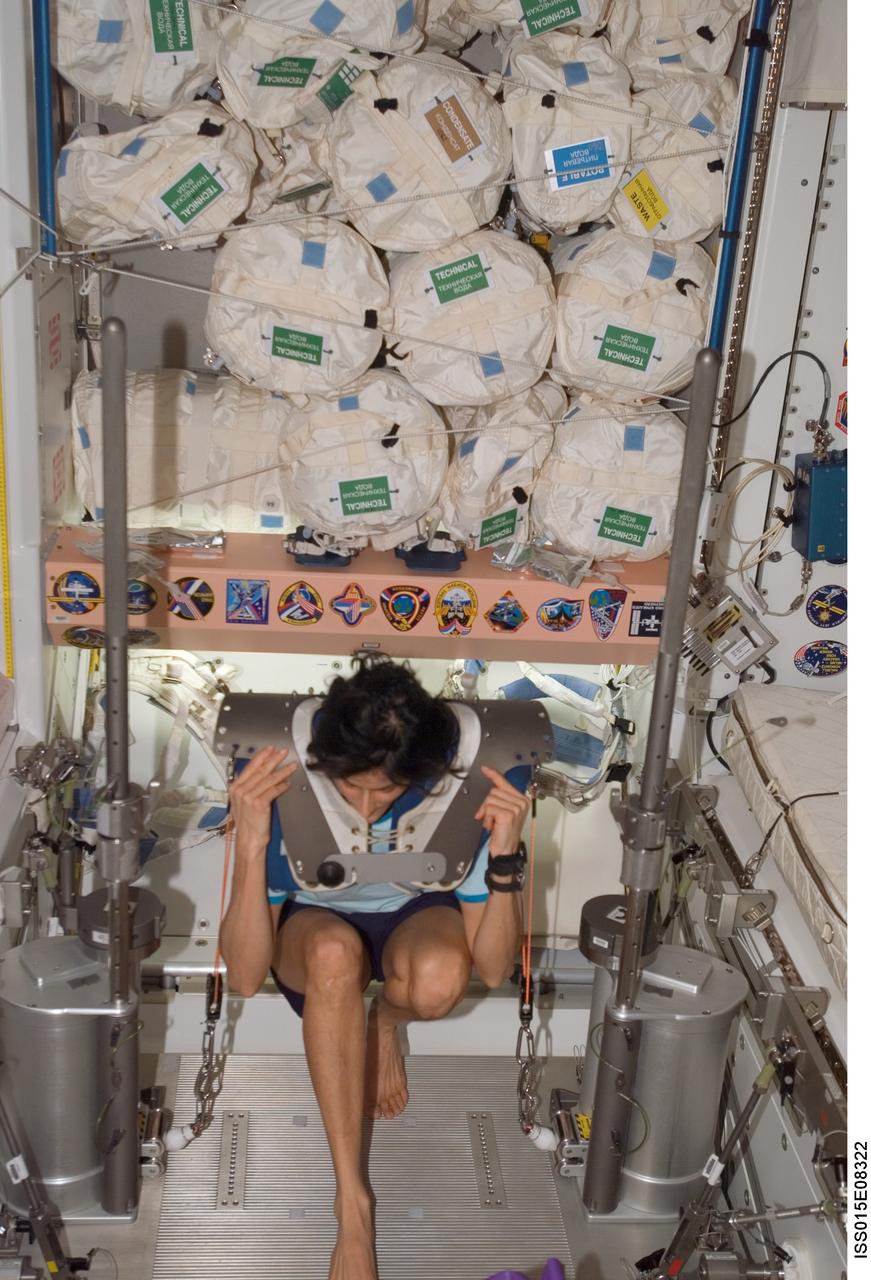
ISS015-E-08322 (6 May 2007) --- Astronaut Sunita L. Williams, Expedition 15 flight engineer, dons squat harness pads in preparation to exercise using the Interim Resistive Exercise Device (IRED) equipment in the Unity node of the International Space Station.
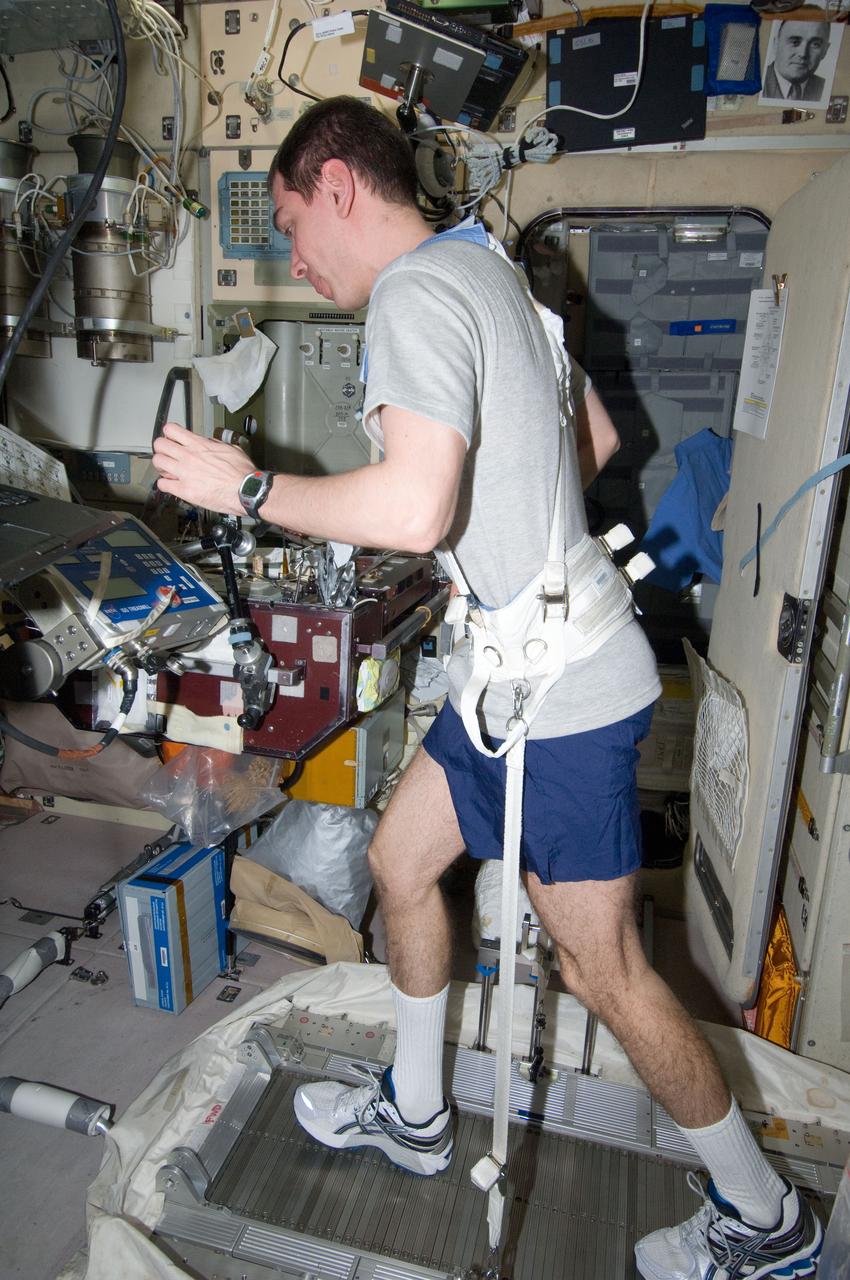
ISS029-E-040701 (8 Nov. 2011) --- Russian cosmonaut Sergei Volkov, Expedition 29 flight engineer, equipped with a bungee harness, exercises on the Treadmill Vibration Isolation System (TVIS) in the Zvezda Service Module of the International Space Station.
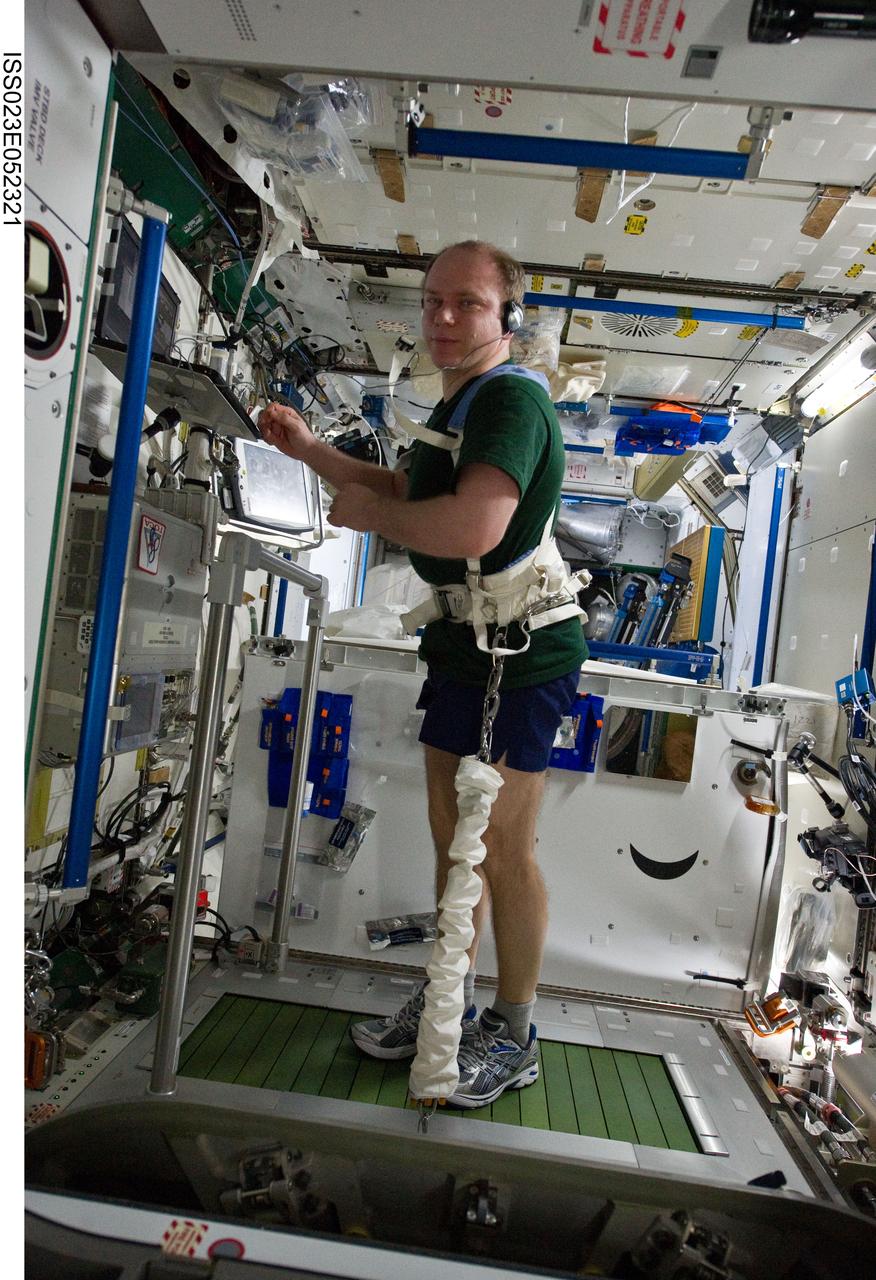
ISS023-E-052321 (26 May 2010) --- Russian cosmonaut Oleg Kotov, Expedition 23 commander, equipped with a bungee harness, prepares to exercise on the Combined Operational Load Bearing External Resistance Treadmill (COLBERT) in the Tranquility node of the International Space Station.
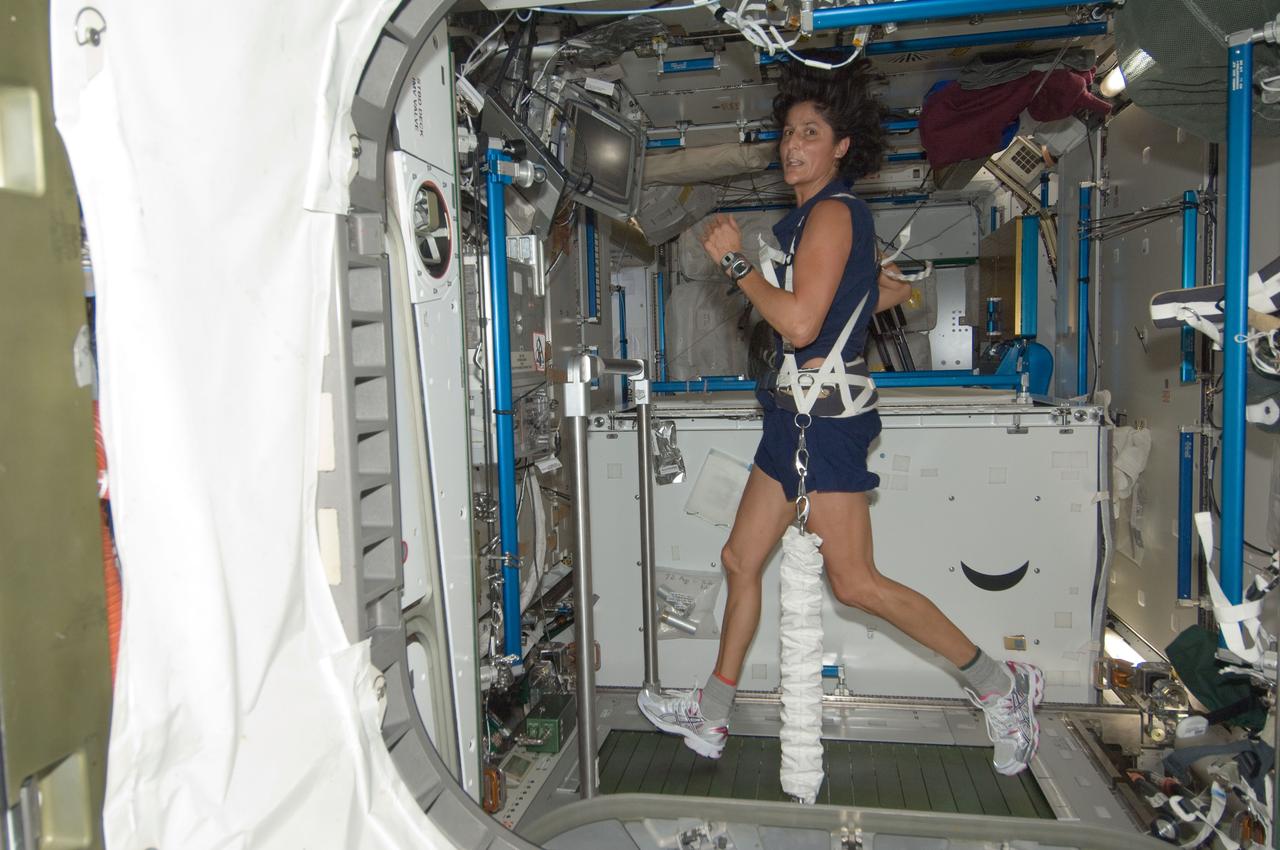
ISS032-E-011693 (4 Aug. 2012) --- NASA astronaut Sunita Williams, Expedition 32 flight engineer, equipped with a bungee harness, exercises on the Combined Operational Load Bearing External Resistance Treadmill (COLBERT) in the Tranquility node of the International Space Station.
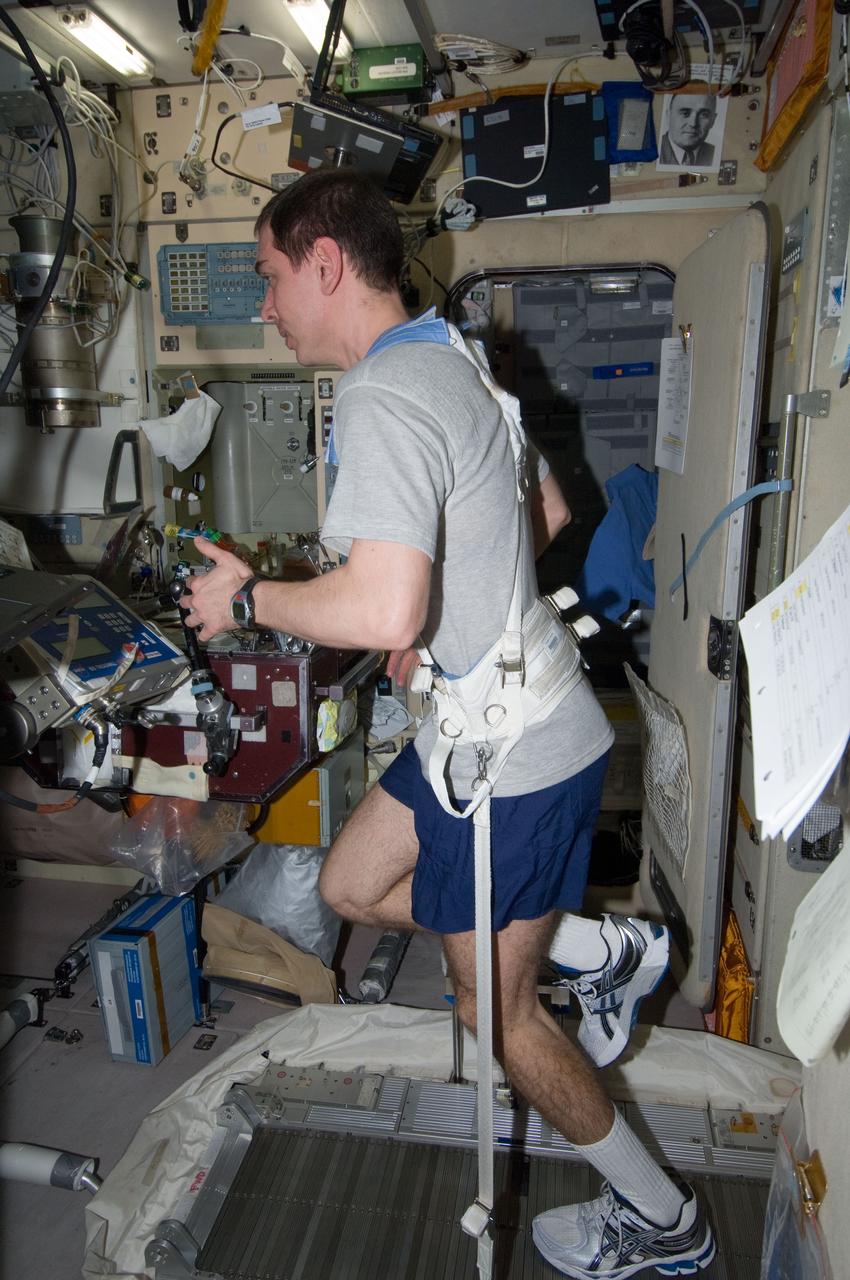
ISS029-E-040702 (8 Nov. 2011) --- Russian cosmonaut Sergei Volkov, Expedition 29 flight engineer, equipped with a bungee harness, exercises on the Treadmill Vibration Isolation System (TVIS) in the Zvezda Service Module of the International Space Station.
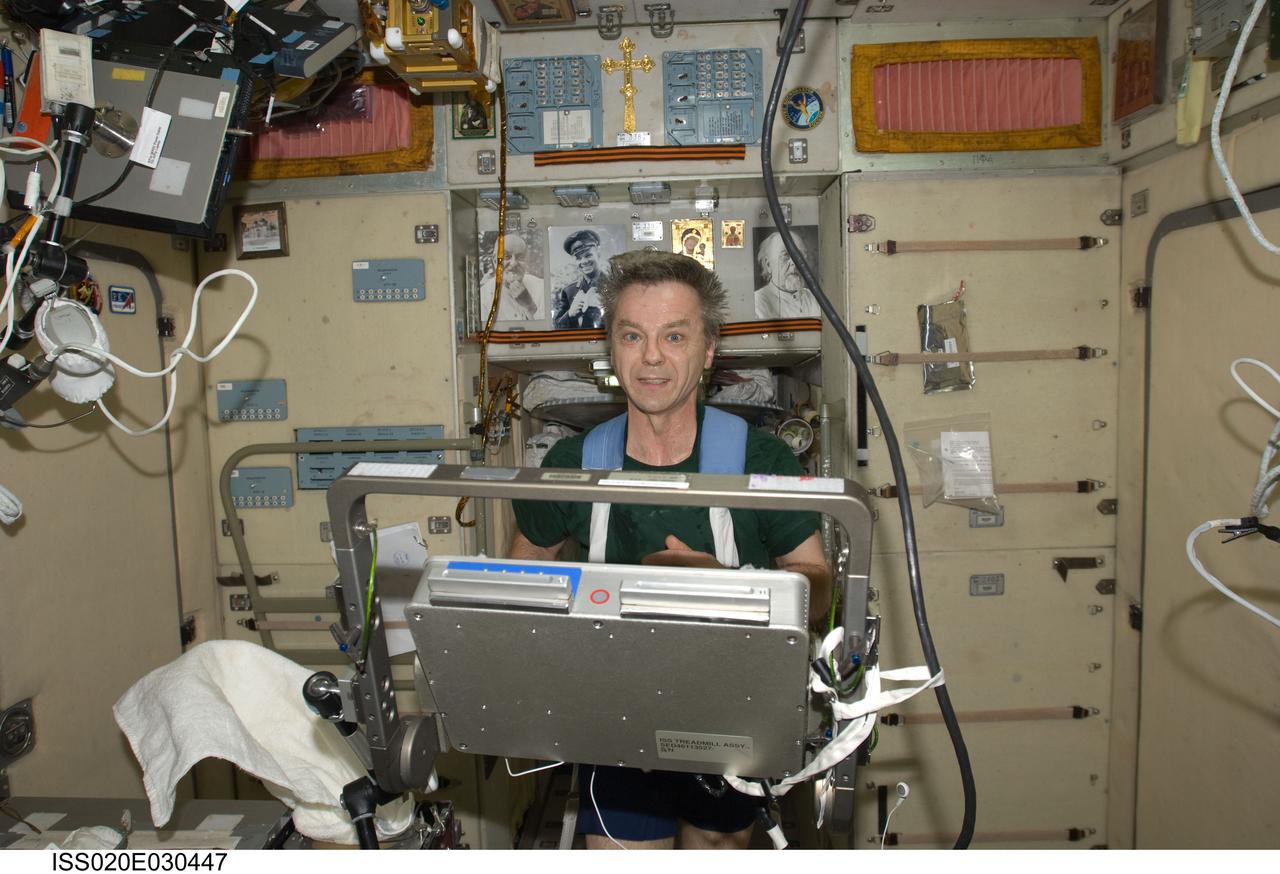
ISS020-E-030447 (13 Aug. 2009) --- Canadian Space Agency astronaut Robert Thirsk, Expedition 20 flight engineer, equipped with a bungee harness, exercises on the Treadmill Vibration Isolation System (TVIS) in the Zvezda Service Module of the International Space Station.
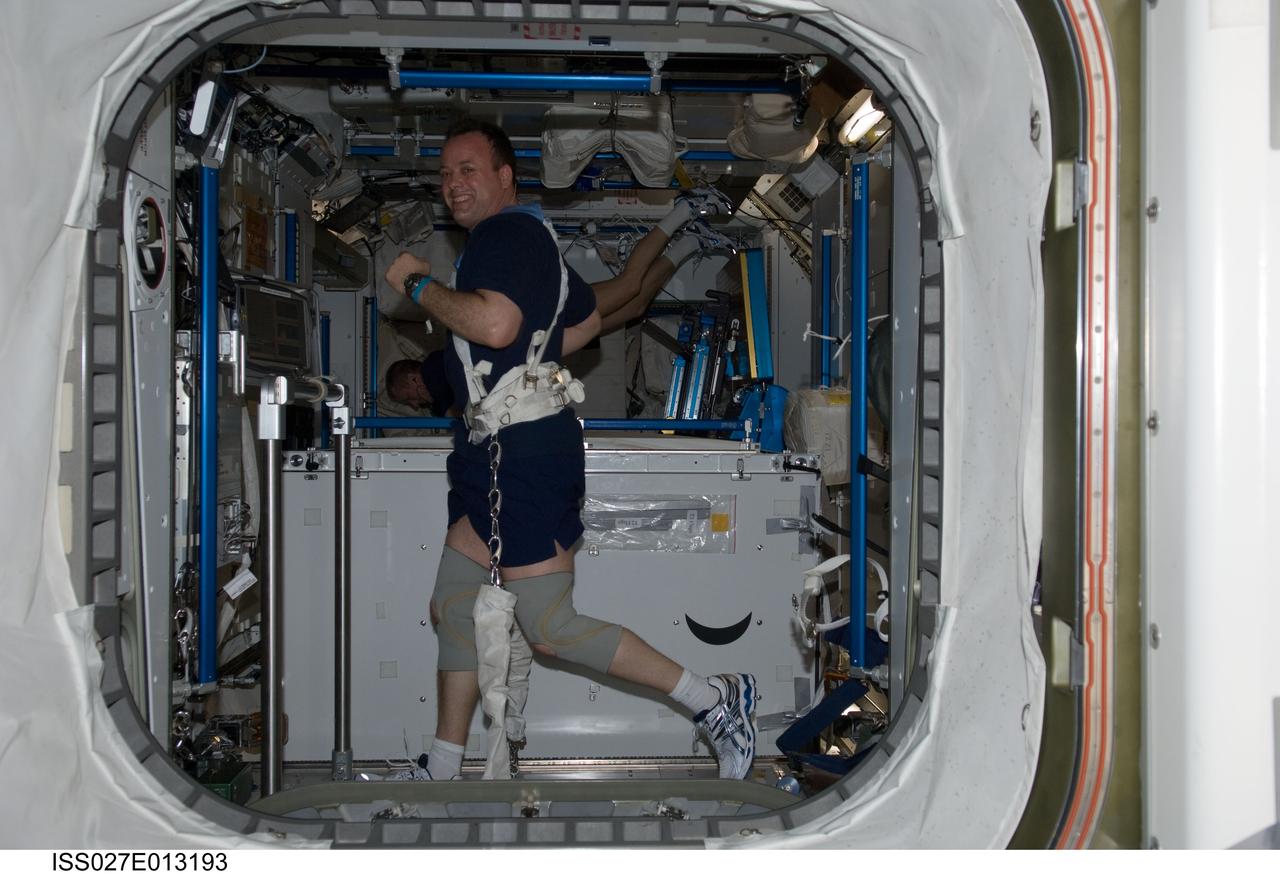
ISS027-E-013193 (15 April 2011) --- NASA astronaut Ron Garan, Expedition 27 flight engineer, equipped with a bungee harness, exercises on the Combined Operational Load Bearing External Resistance Treadmill (COLBERT) in the Tranquility node of the International Space Station.
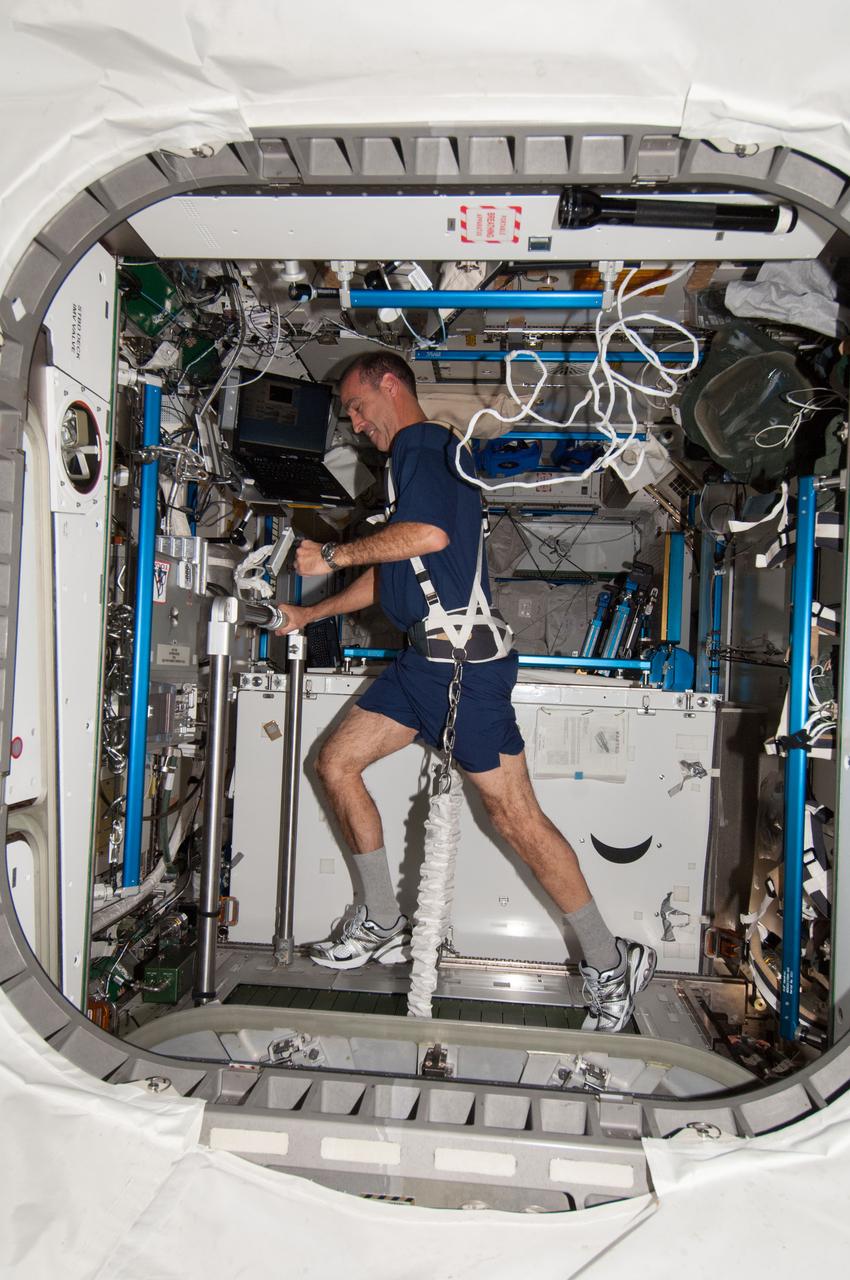
ISS037-E-028165 (9 Nov. 2013) --- NASA astronaut Rick Mastracchio, Expedition 38 flight engineer, equipped with a bungee harness, exercises on the Combined Operational Load Bearing External Resistance Treadmill (COLBERT) in the Tranquility node of the International Space Station.
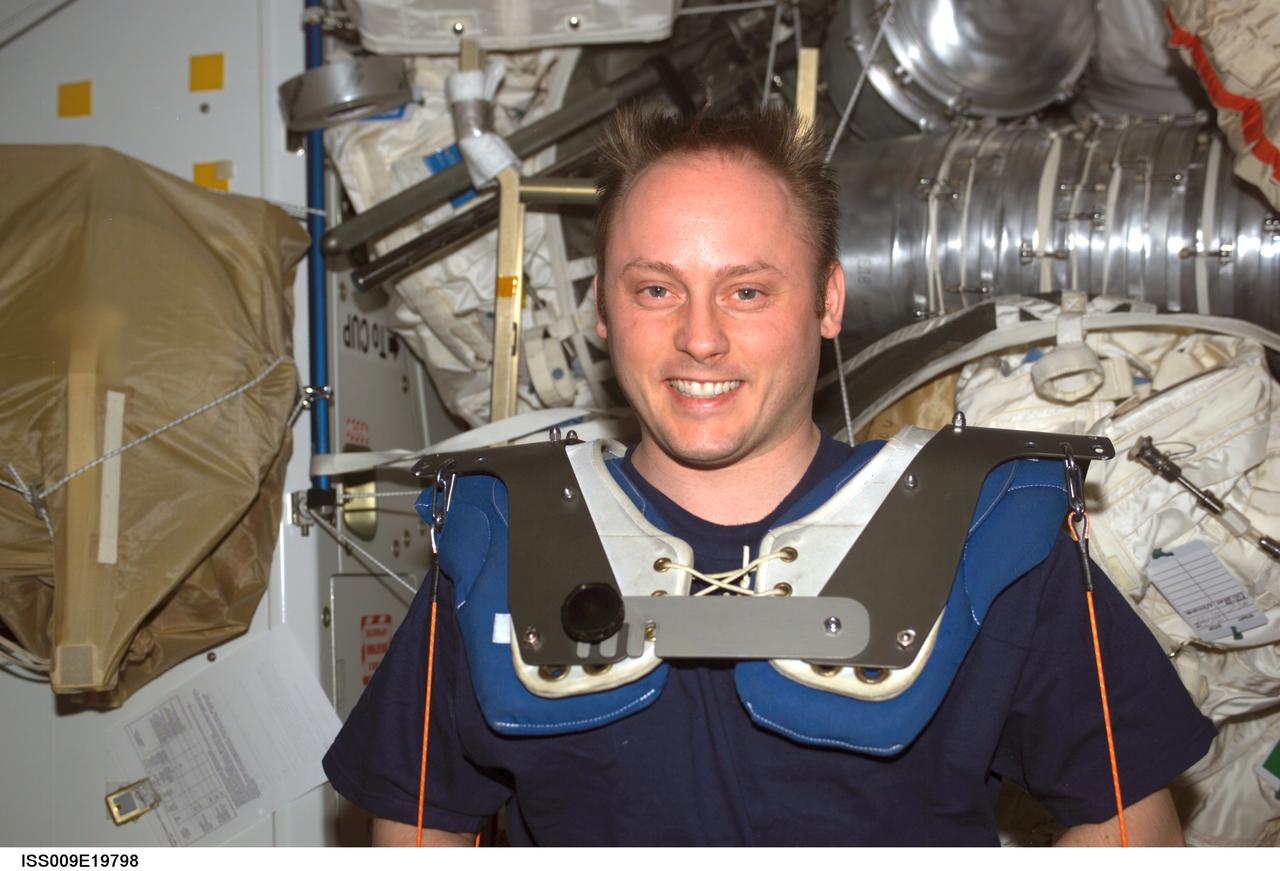
ISS009-E-19798 (23 August 2004) --- Astronaut Edward M. (Mike) Fincke, Expedition 9 NASA ISS science officer and flight engineer, wearing squat harness pads, exercises using the Interim Resistive Exercise Devise (IRED) equipment in the Unity node of the International Space Station (ISS).
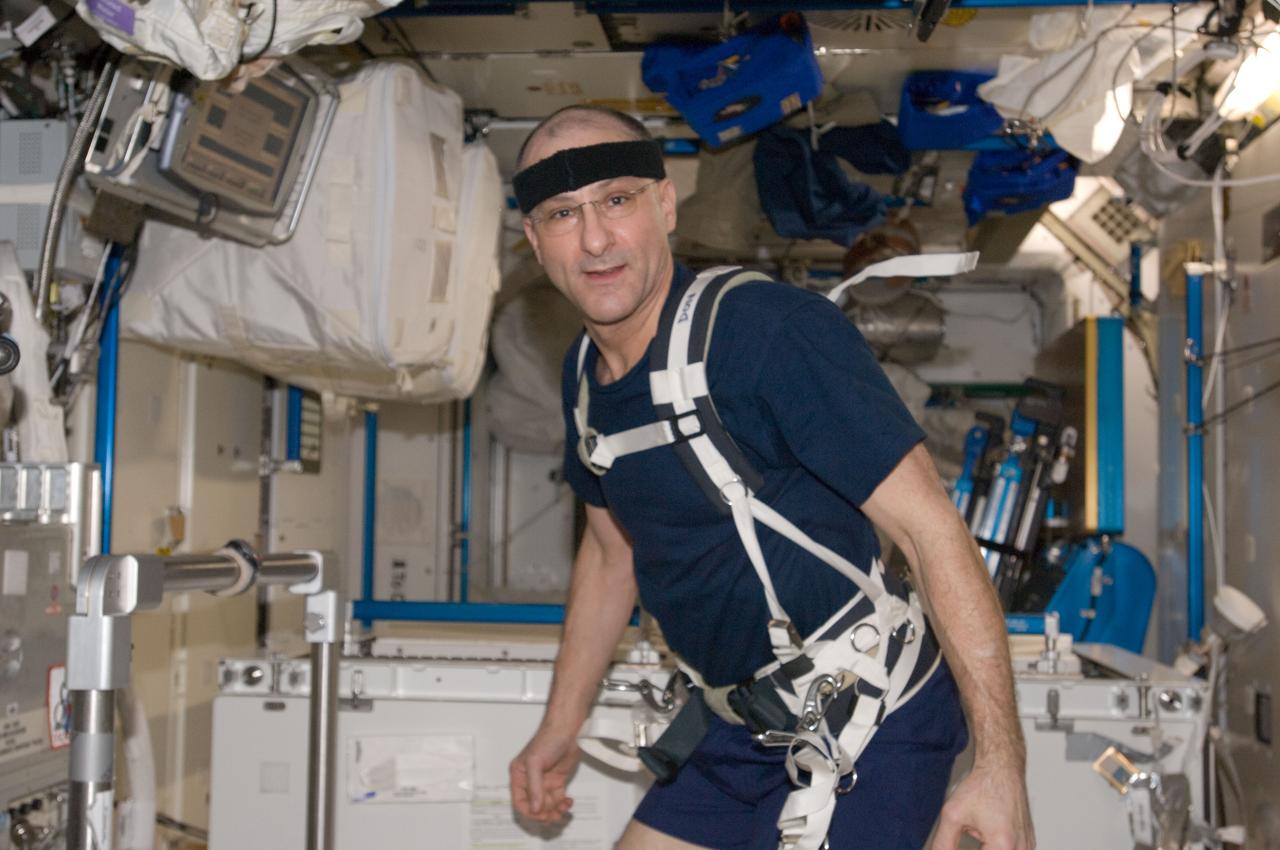
ISS030-E-132525 (6 March 2012) --- NASA astronaut Don Pettit, Expedition 30 flight engineer, equipped with a bungee harness, prepares to exercise on the Combined Operational Load Bearing External Resistance Treadmill (COLBERT) in the Tranquility node of the International Space Station.
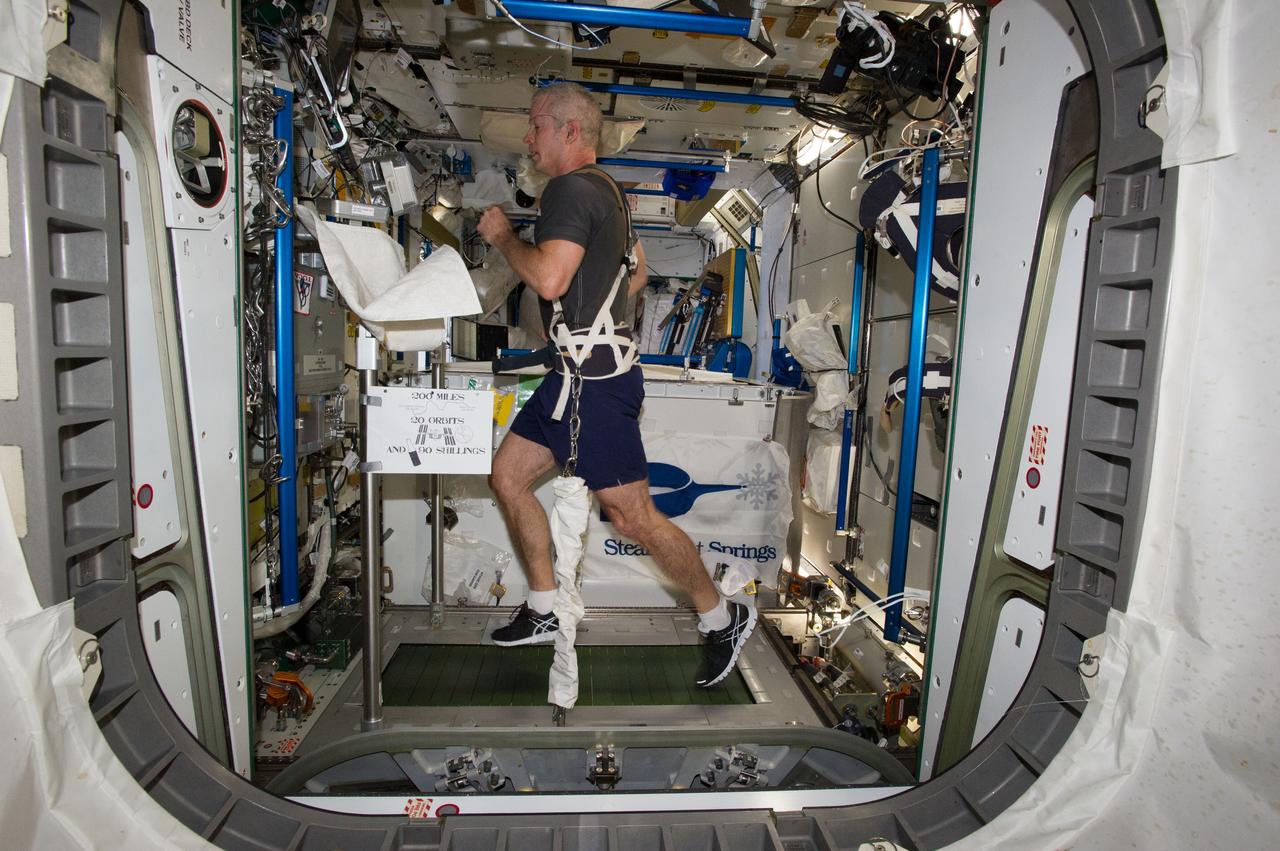
ISS040-E-086619 (2 Aug. 2014) --- NASA astronaut Steve Swanson, Expedition 40 commander, equipped with a bungee harness, exercises on the Combined Operational Load Bearing External Resistance Treadmill (COLBERT) in the Tranquility node of the International Space Station.

ISS025-E-011183 (3 Nov. 2010) --- NASA astronaut Doug Wheelock, Expedition 25 commander, equipped with a bungee harness, exercises on the Combined Operational Load Bearing External Resistance Treadmill (COLBERT) in the Tranquility node of the International Space Station.
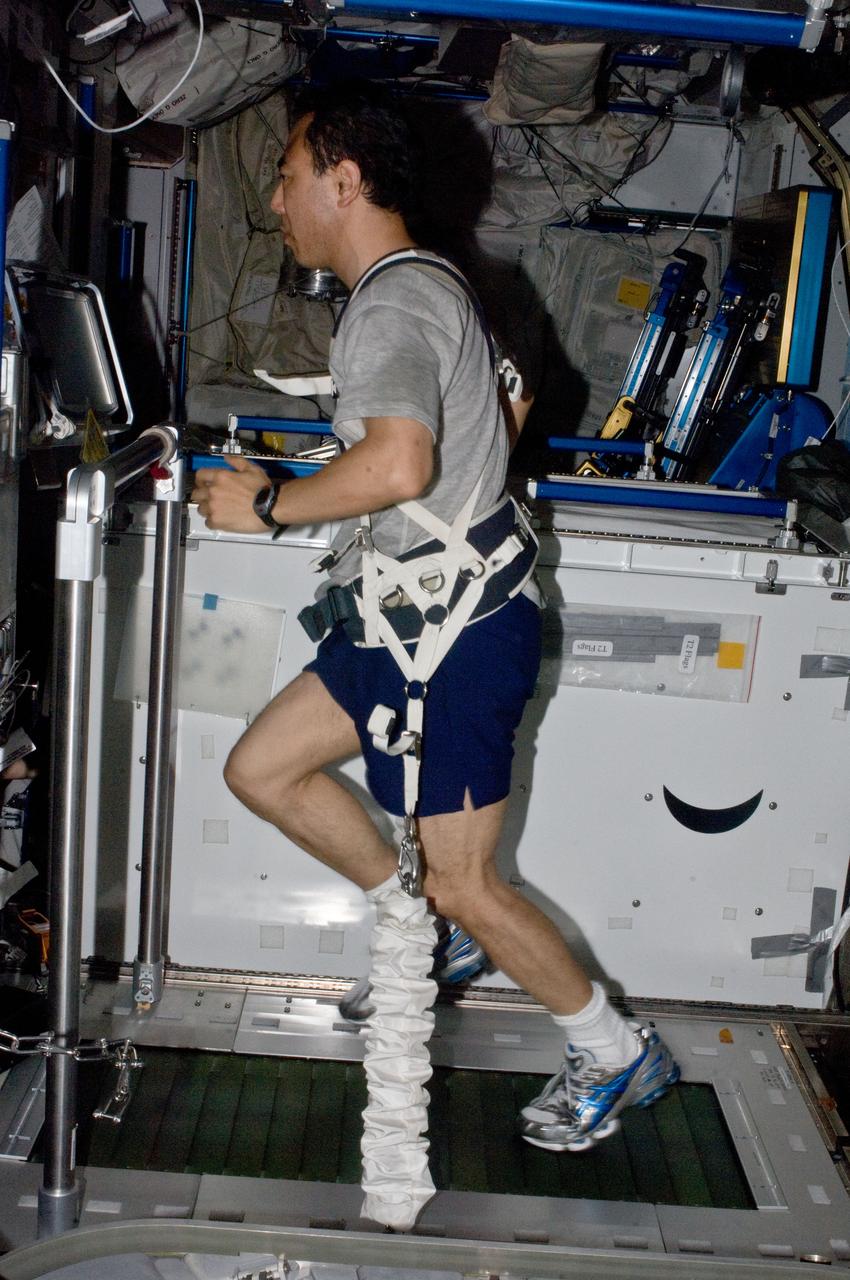
ISS028-E-019535 (30 July 2011) --- Japan Aerospace Exploration Agency astronaut Satoshi Furukawa, Expedition 28 flight engineer, equipped with a bungee harness, exercises on the Combined Operational Load Bearing External Resistance Treadmill (COLBERT) in the Tranquility node of the International Space Station.
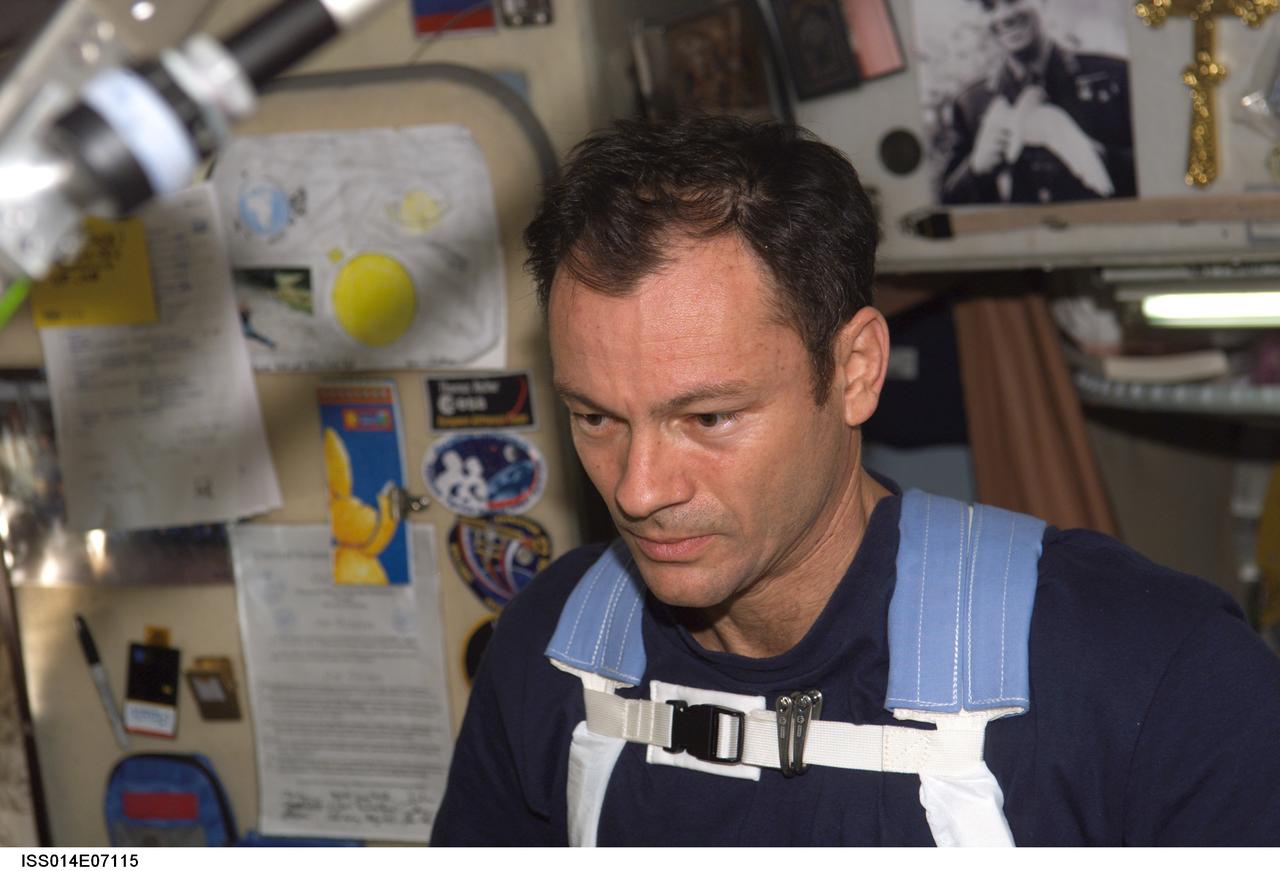
ISS014-E-07115 (2 Nov. 2006) --- Astronaut Michael E. Lopez-Alegria, Expedition 14 commander and NASA space station science officer, equipped with a bungee harness, exercises on the Treadmill Vibration Isolation System (TVIS) in the Zvezda Service Module of the International Space Station. In this close-up view, the TVIS is out of frame.
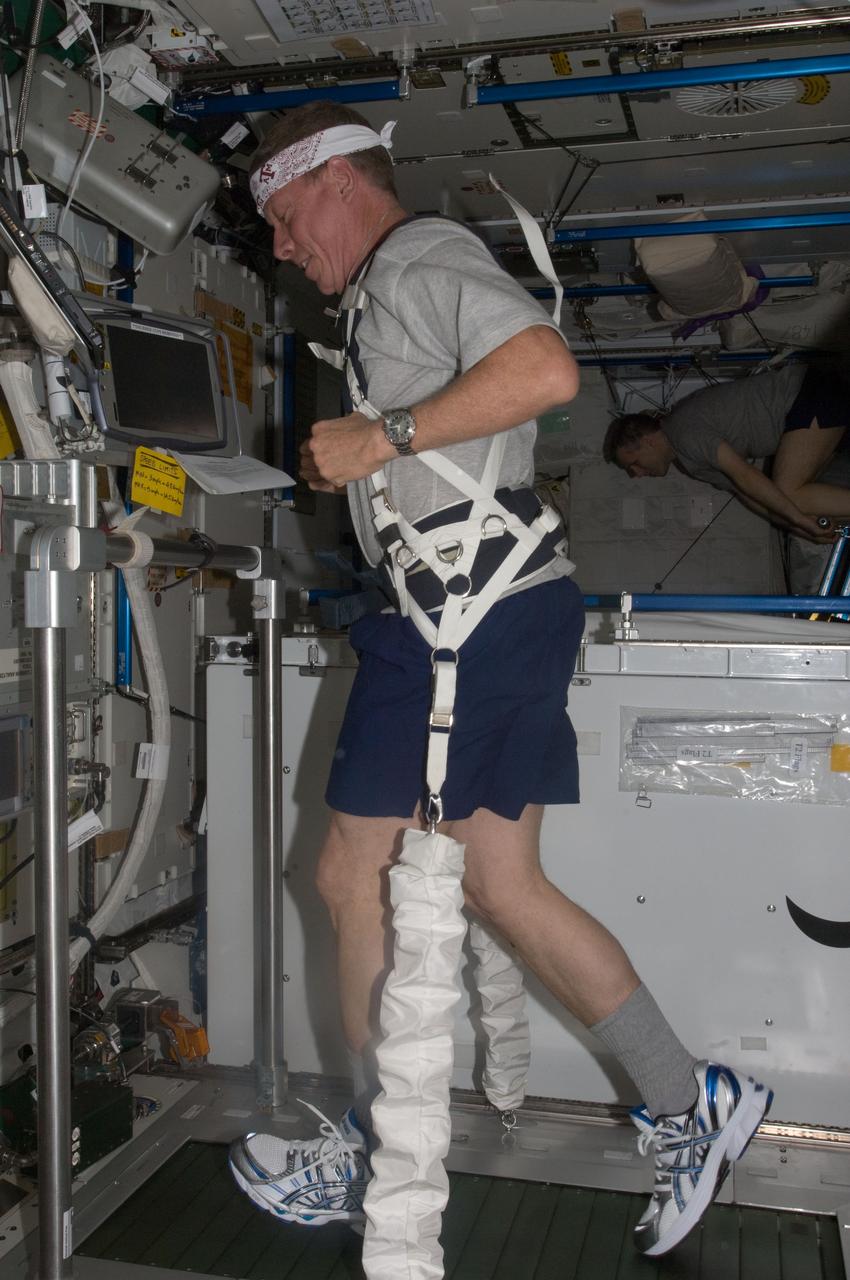
ISS028-E-007723 (16 June 2011) --- NASA astronaut Mike Fossum, Expedition 28 flight engineer, equipped with a bungee harness, exercises on the Combined Operational Load Bearing External Resistance Treadmill (COLBERT) in the Tranquility node of the International Space Station.
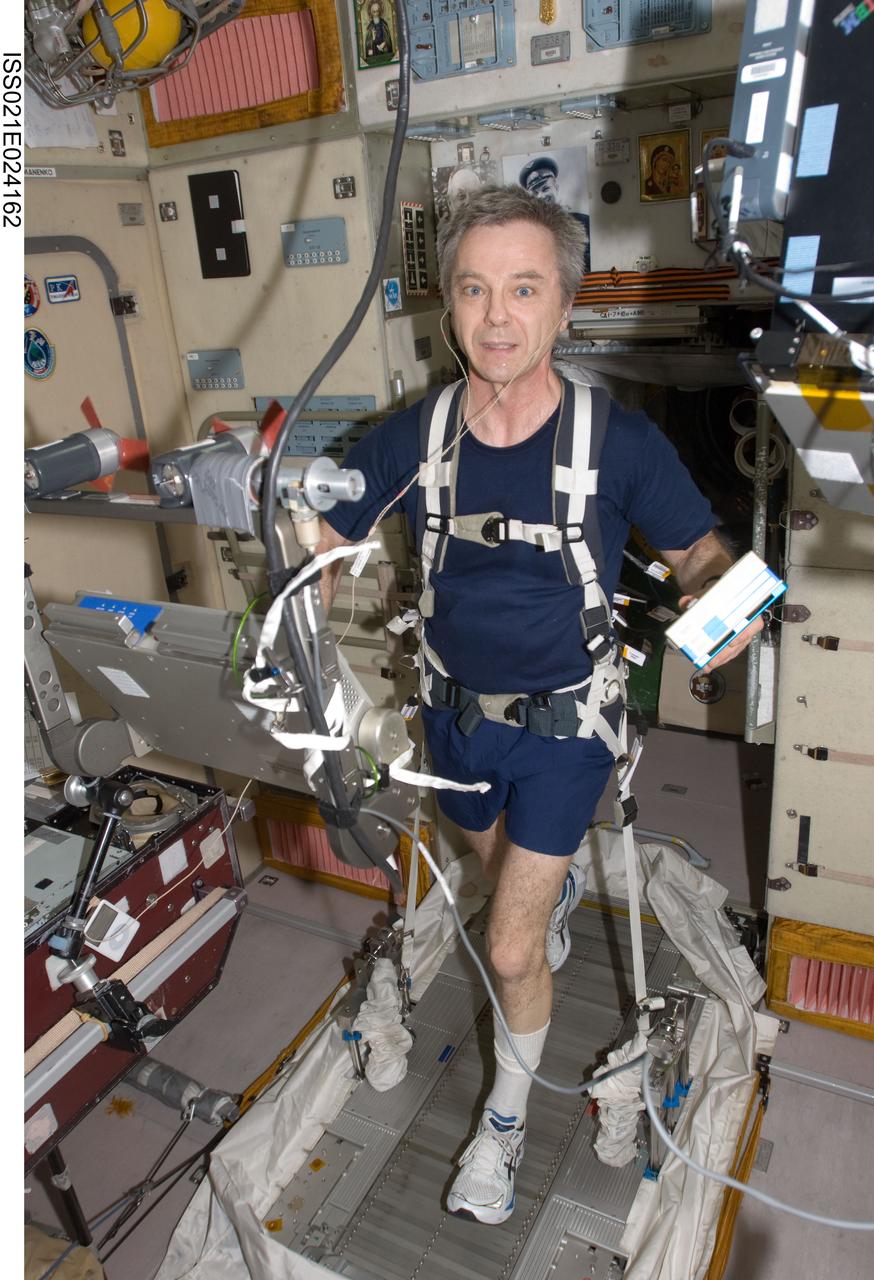
ISS021-E-024162 (11 Nov. 2009) --- Canadian Space Agency astronaut Robert Thirsk, Expedition 21 flight engineer, equipped with a bungee harness, exercises on the Treadmill Vibration Isolation System (TVIS) in the Zvezda Service Module of the International Space Station.
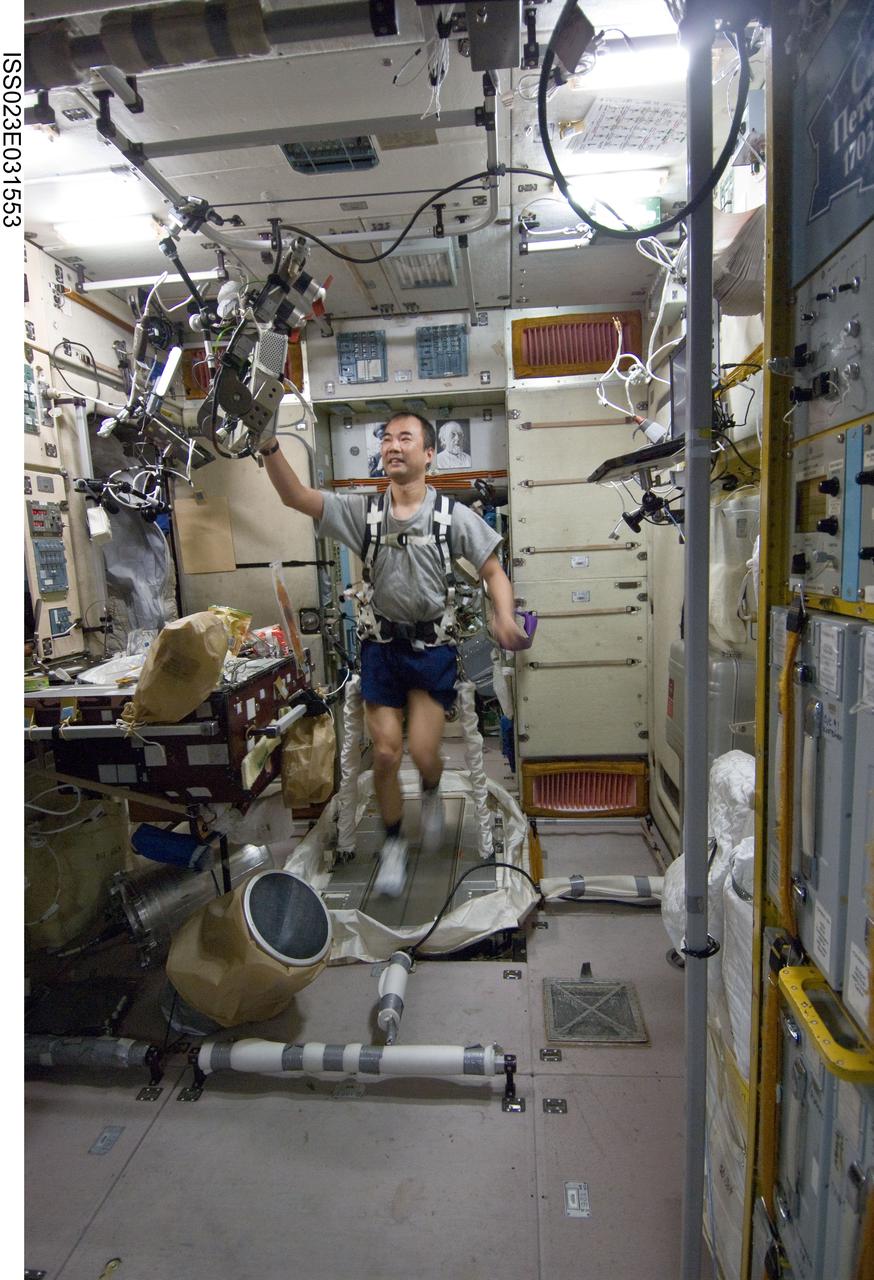
ISS023-E-031553 (4 May 2010) --- Japan Aerospace Exploration Agency (JAXA) astronaut Soichi Noguchi, Expedition 23 flight engineer, equipped with a bungee harness, exercises on the Treadmill Vibration Isolation System (TVIS) in the Zvezda Service Module of the International Space Station.
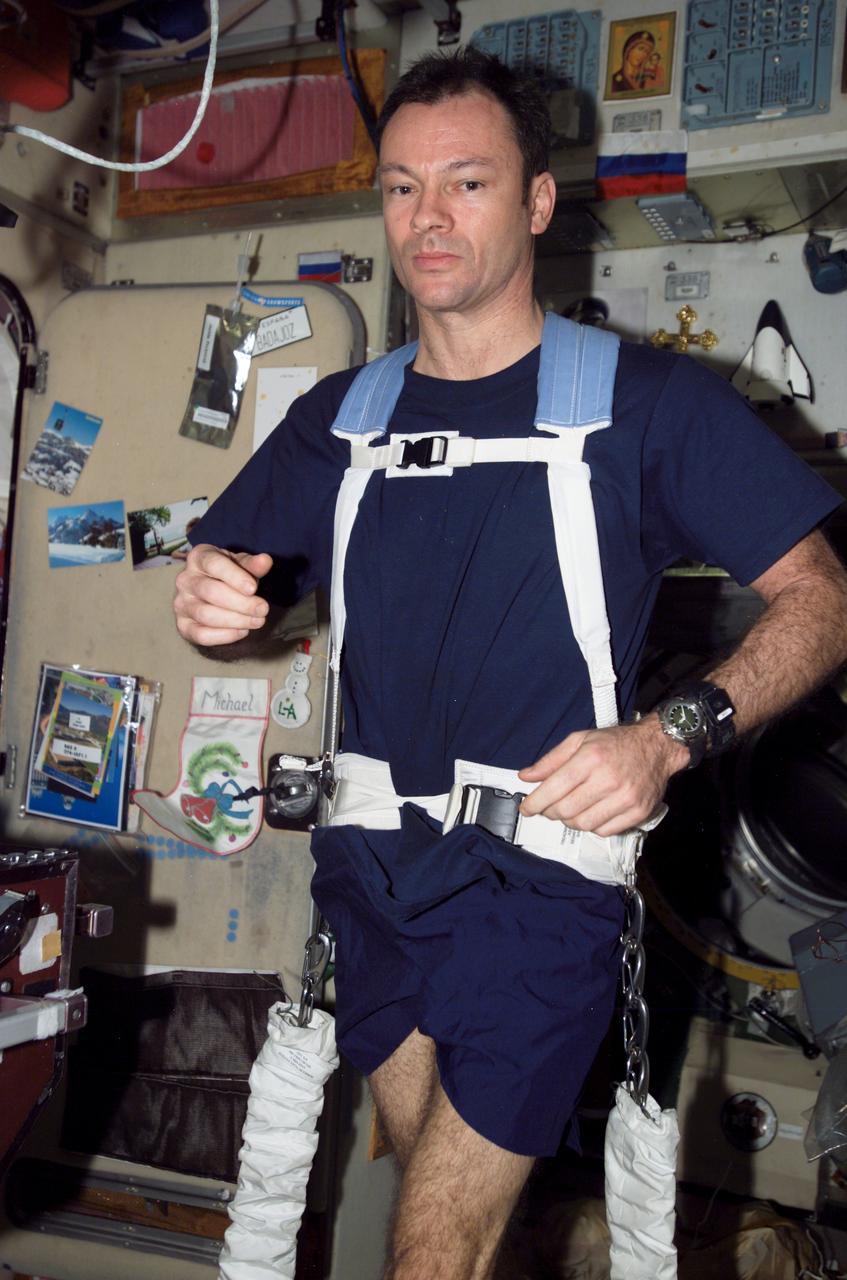
ISS014-E-12154 (15 Jan. 2007) --- Astronaut Michael E. Lopez-Alegria, Expedition 14 commander and NASA space station science officer, equipped with a bungee harness, exercises on the Treadmill Vibration Isolation System (TVIS) in the Zvezda Service Module of the International Space Station.
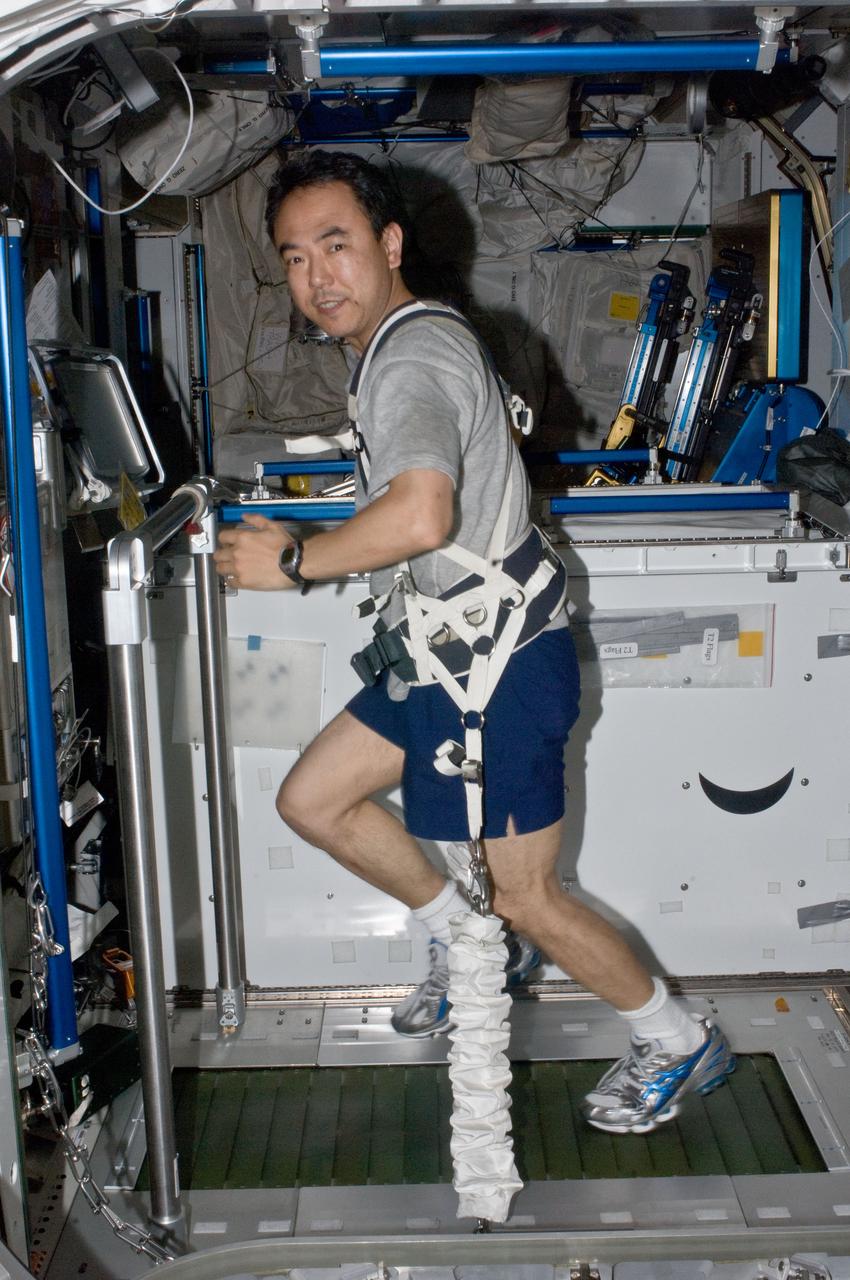
ISS028-E-019530 (30 July 2011) --- Japan Aerospace Exploration Agency astronaut Satoshi Furukawa, Expedition 28 flight engineer, equipped with a bungee harness, exercises on the Combined Operational Load Bearing External Resistance Treadmill (COLBERT) in the Tranquility node of the International Space Station.

ISS014-E-10591 (28 Dec. 2006) --- Astronaut Sunita L. Williams, Expedition 14 flight engineer, equipped with a bungee harness, exercises on the Treadmill Vibration Isolation System (TVIS) in the Zvezda Service Module of the International Space Station.

ISS020-E-041515 (21 Sept. 2009) --- NASA astronaut Nicole Stott, Expedition 20 flight engineer, equipped with a bungee harness, exercises on the Treadmill Vibration Isolation System (TVIS) in the Zvezda Service Module of the International Space Station.

ISS040-E-006091 (31 May 2014) --- NASA astronaut Reid Wiseman, Expedition 40 flight engineer, equipped with a bungee harness, exercises on the Combined Operational Load Bearing External Resistance Treadmill (COLBERT) in the Tranquility node of the International Space Station.
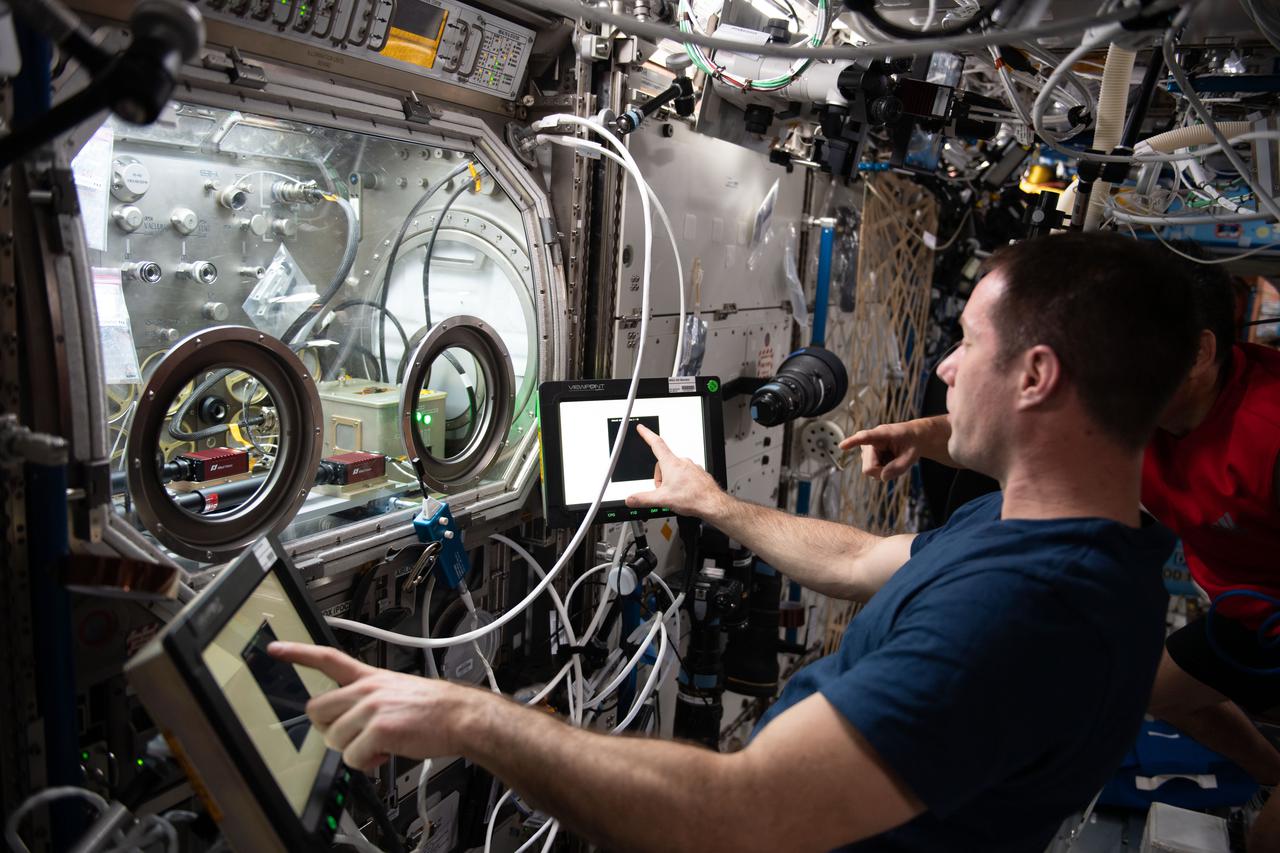
iss065e163214 (June 9, 2021) --- Expedition 65 Flight Engineer Thomas Pesquet of ESA (European Space Agency) conducts a session for the InSPACE-4 physics study. The space manufacturing investigation takes place inside the Microgravity Science Glovebox and explores ways to harness nanoparticles to fabricate new and advanced materials.
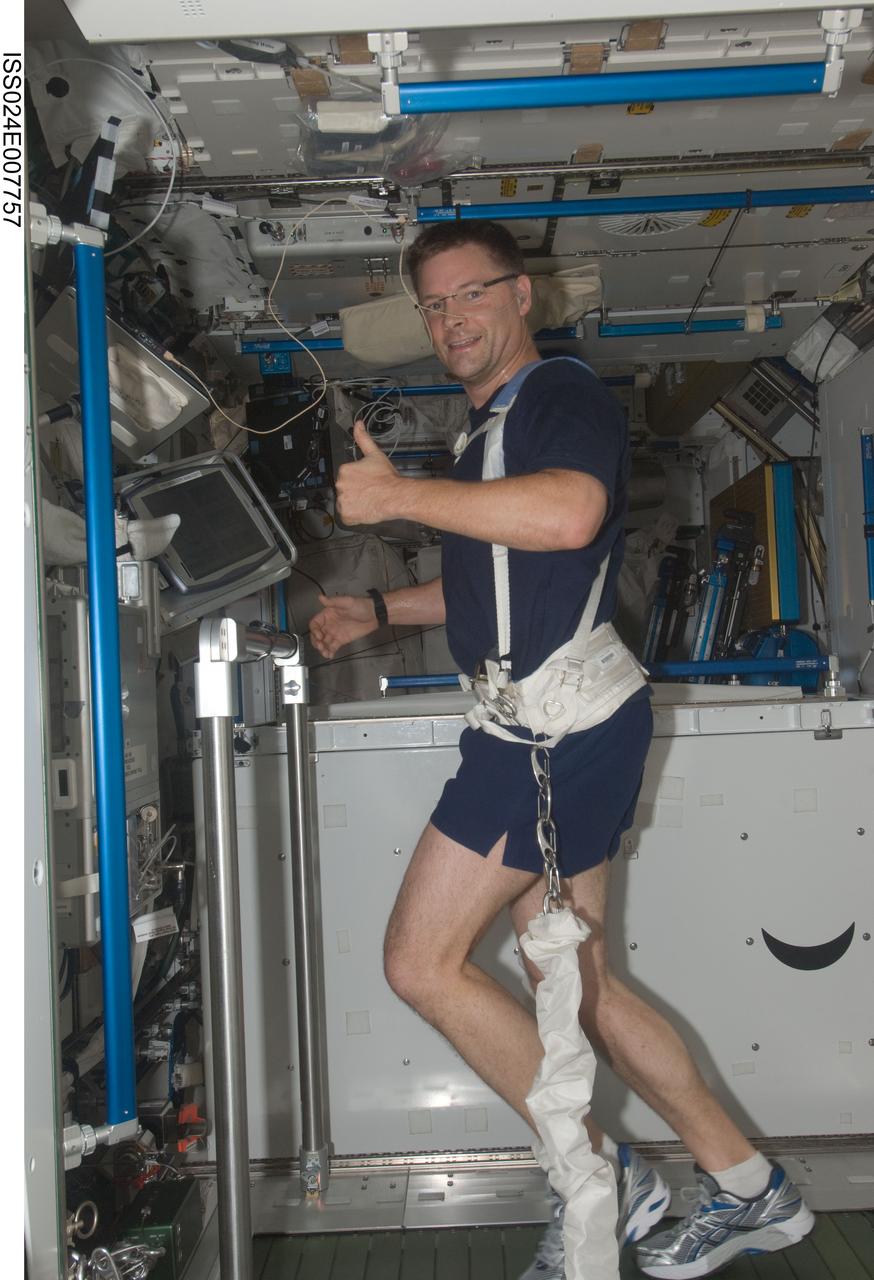
ISS024-E-007757 (11 July 2010) --- NASA astronaut Doug Wheelock, Expedition 24 flight engineer, equipped with a bungee harness, exercises on the Combined Operational Load Bearing External Resistance Treadmill (COLBERT) in the Tranquility node of the International Space Station.
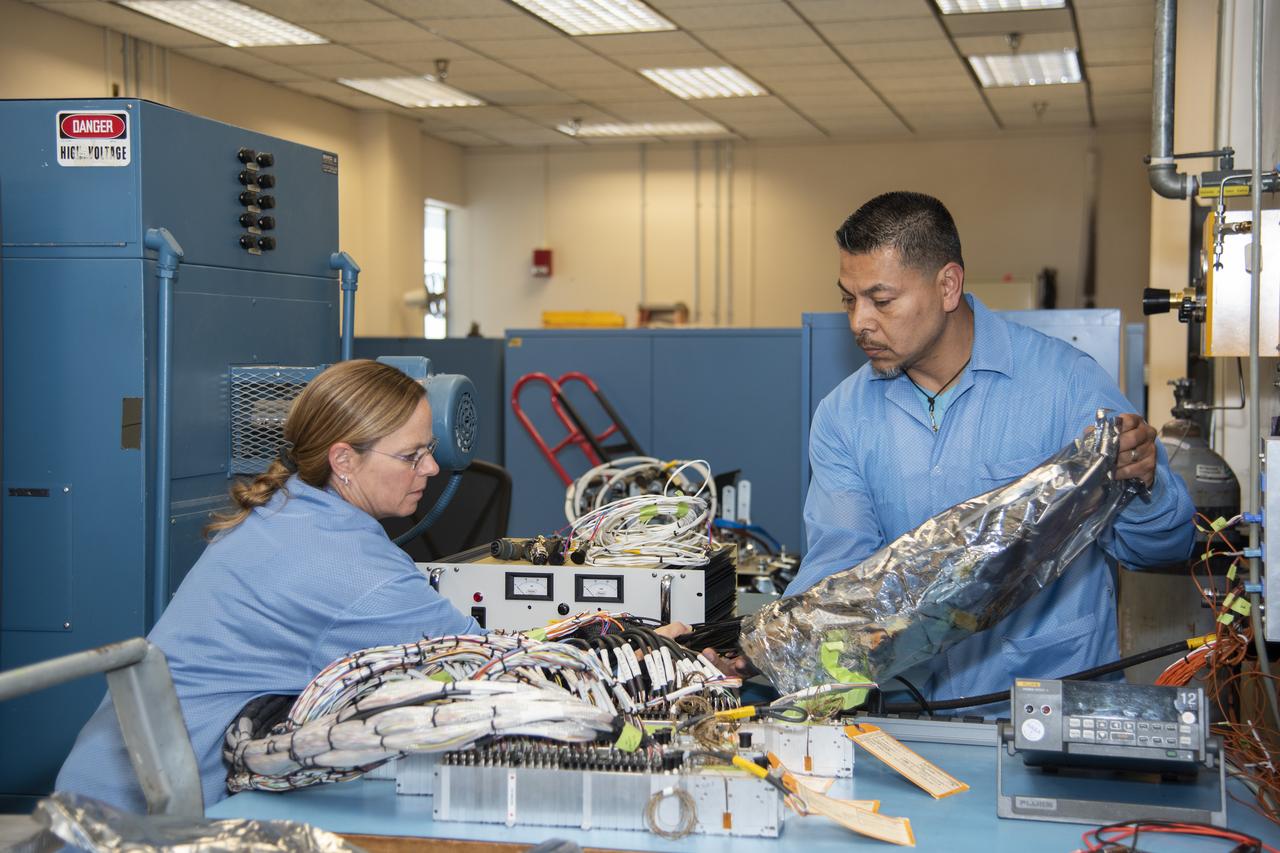
April Torres and Angelo De La Rosa remove wire harnesses for signal input for the Orion AA-2 vehicle from electrostatic discharge protective covers at NASA’s Armstrong Flight Research Center in California. The AA-2 test article is scheduled for a flight in 2019.
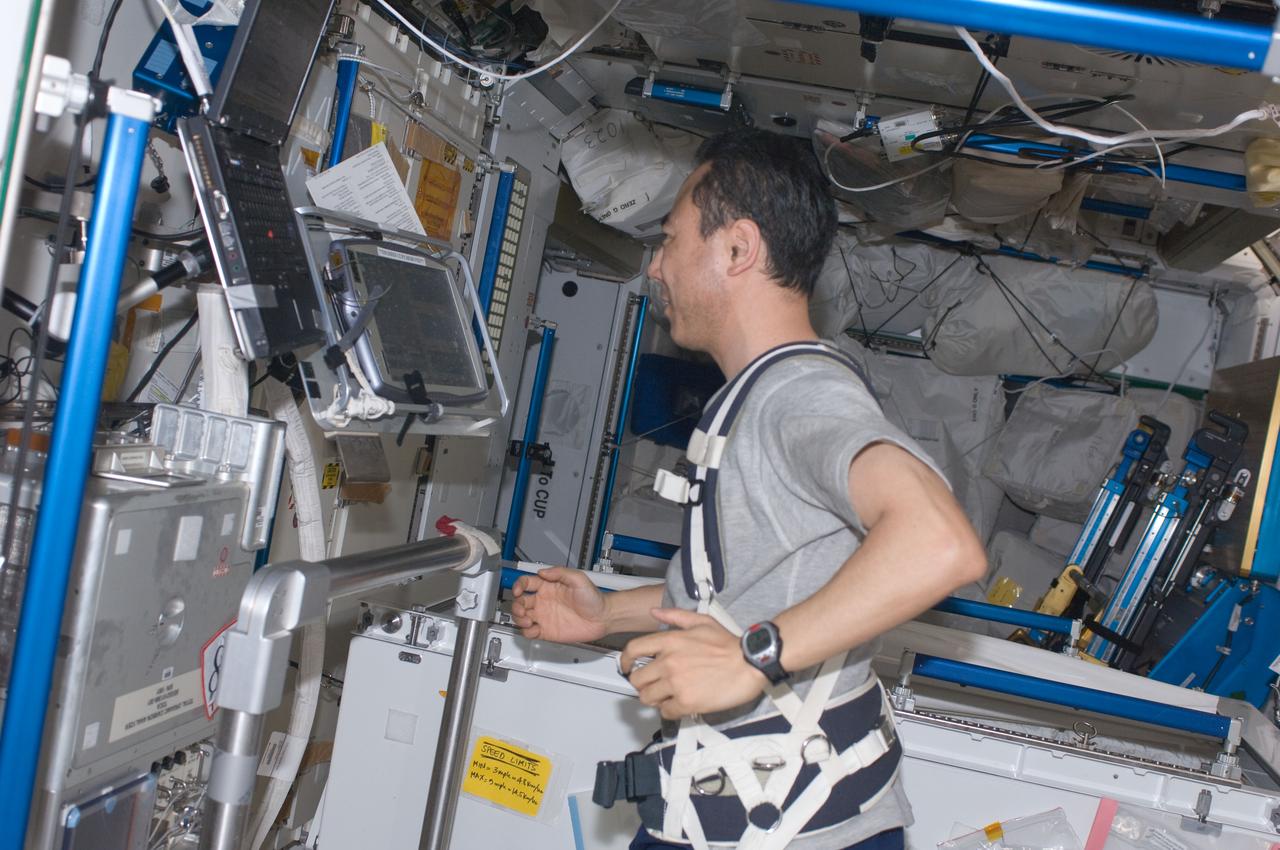
ISS028-E-034131 (26 Aug. 2011) --- Japan Aerospace Exploration Agency astronaut Satoshi Furukawa, Expedition 28 flight engineer, equipped with a bungee harness, exercises on the Combined Operational Load Bearing External Resistance Treadmill (COLBERT) in the Tranquility node of the International Space Station.
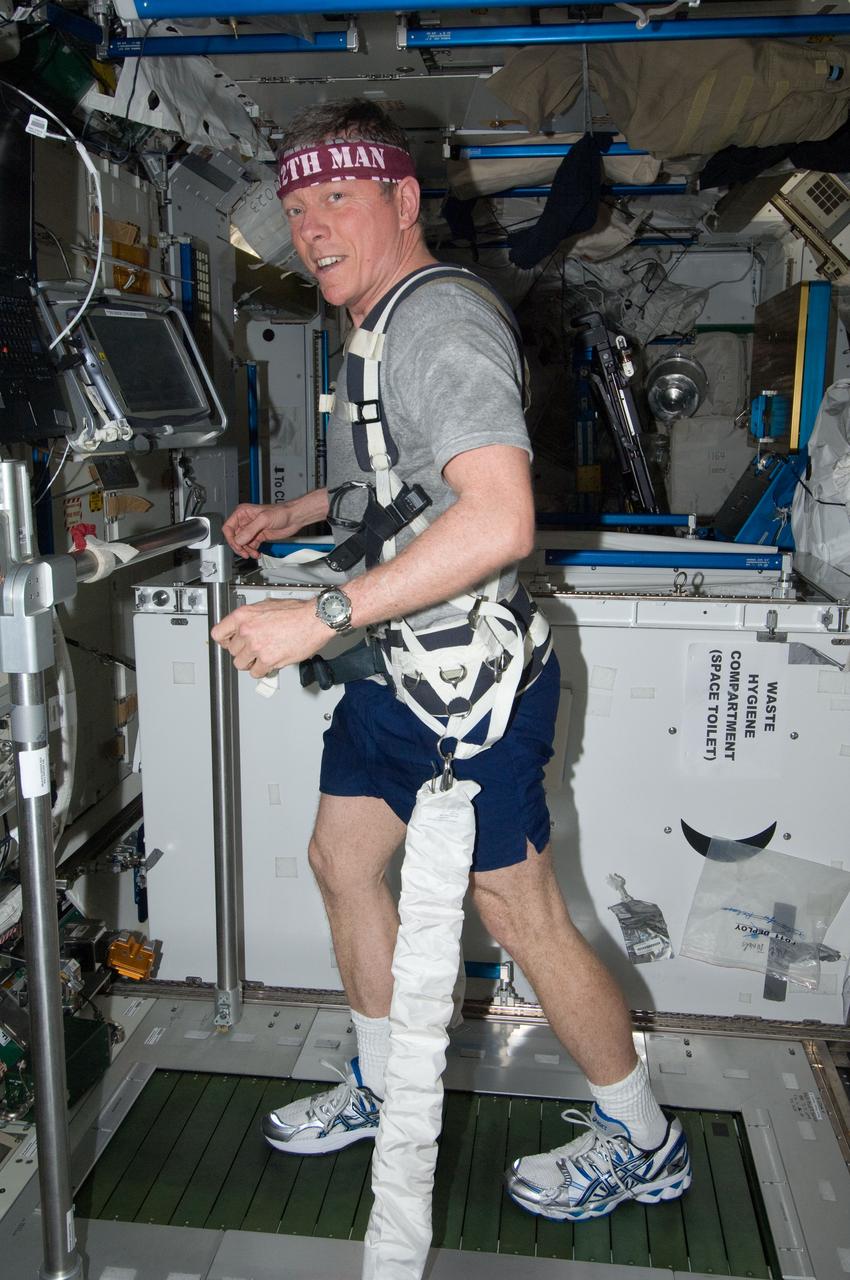
ISS029-E-039858 (5 Nov. 2011) --- NASA astronaut Mike Fossum, Expedition 29 commander, is equipped with a bungee harness as he exercises on the Combined Operational Load Bearing External Resistance Treadmill (COLBERT) in the Tranquility node of the International Space Station.
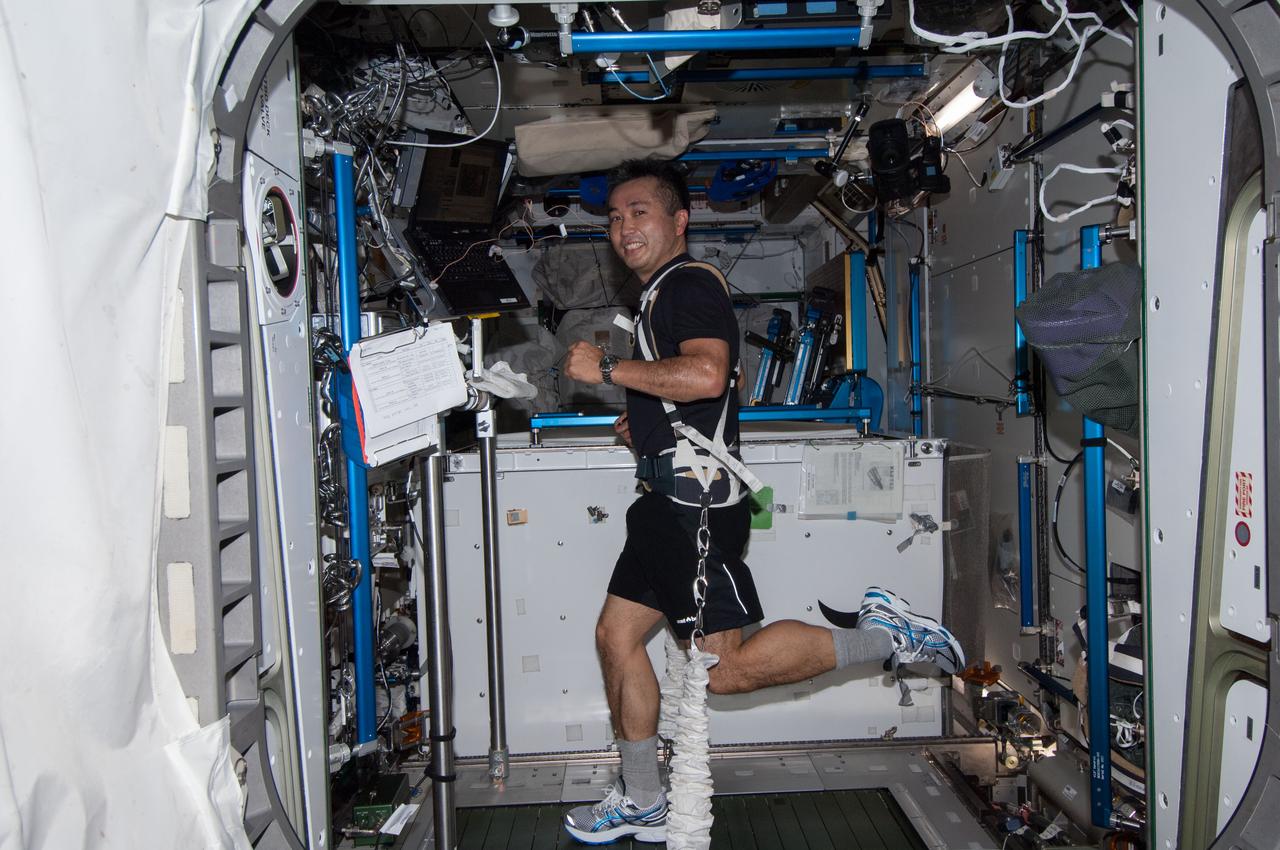
ISS038-E-002210 (14 Nov. 2013) --- Japan Aerospace Exploration Agency astronaut Koichi Wakata, Expedition 38 flight engineer, equipped with a bungee harness, exercises on the Combined Operational Load Bearing External Resistance Treadmill (COLBERT) in the Tranquility node of the International Space Station.
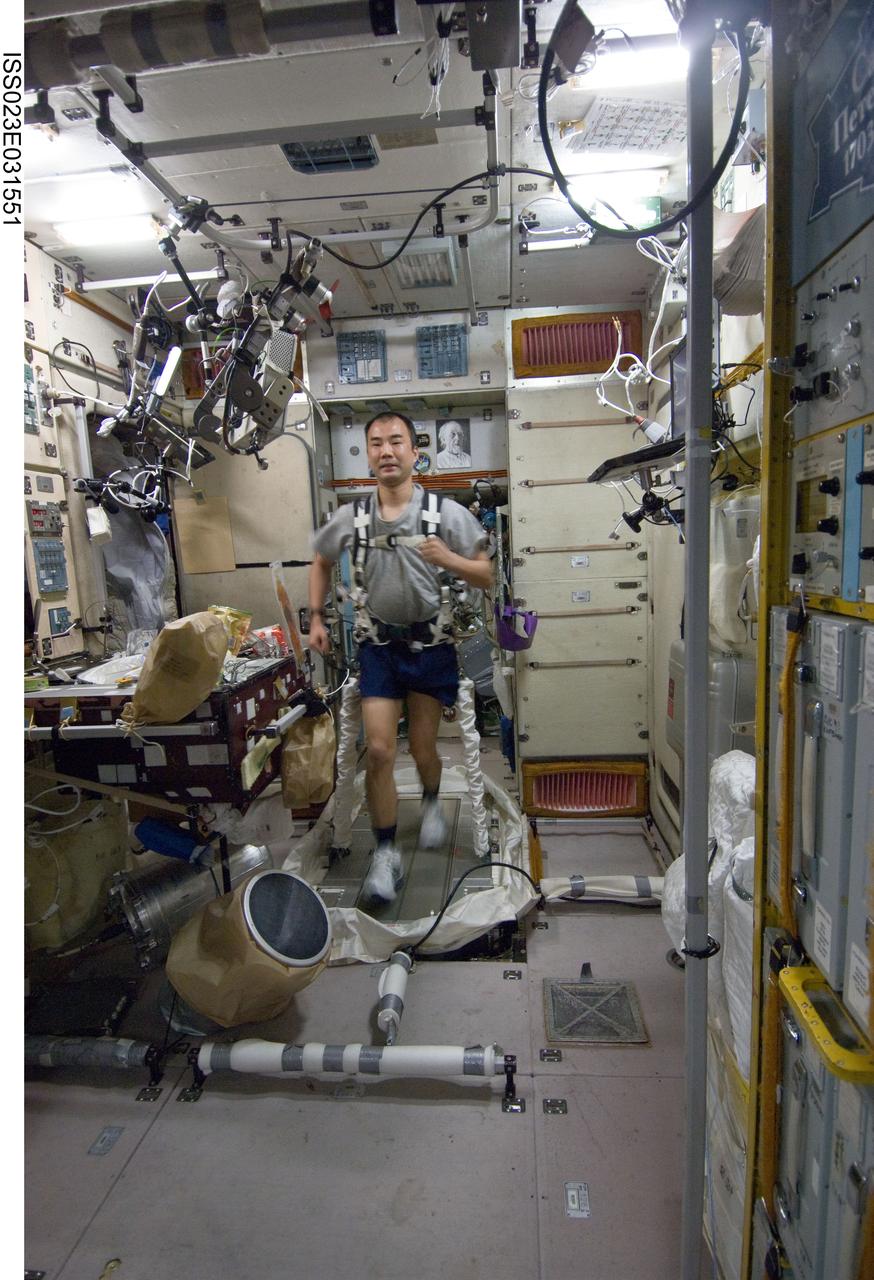
ISS023-E-031551 (4 May 2010) --- Japan Aerospace Exploration Agency (JAXA) astronaut Soichi Noguchi, Expedition 23 flight engineer, equipped with a bungee harness, exercises on the Treadmill Vibration Isolation System (TVIS) in the Zvezda Service Module of the International Space Station.
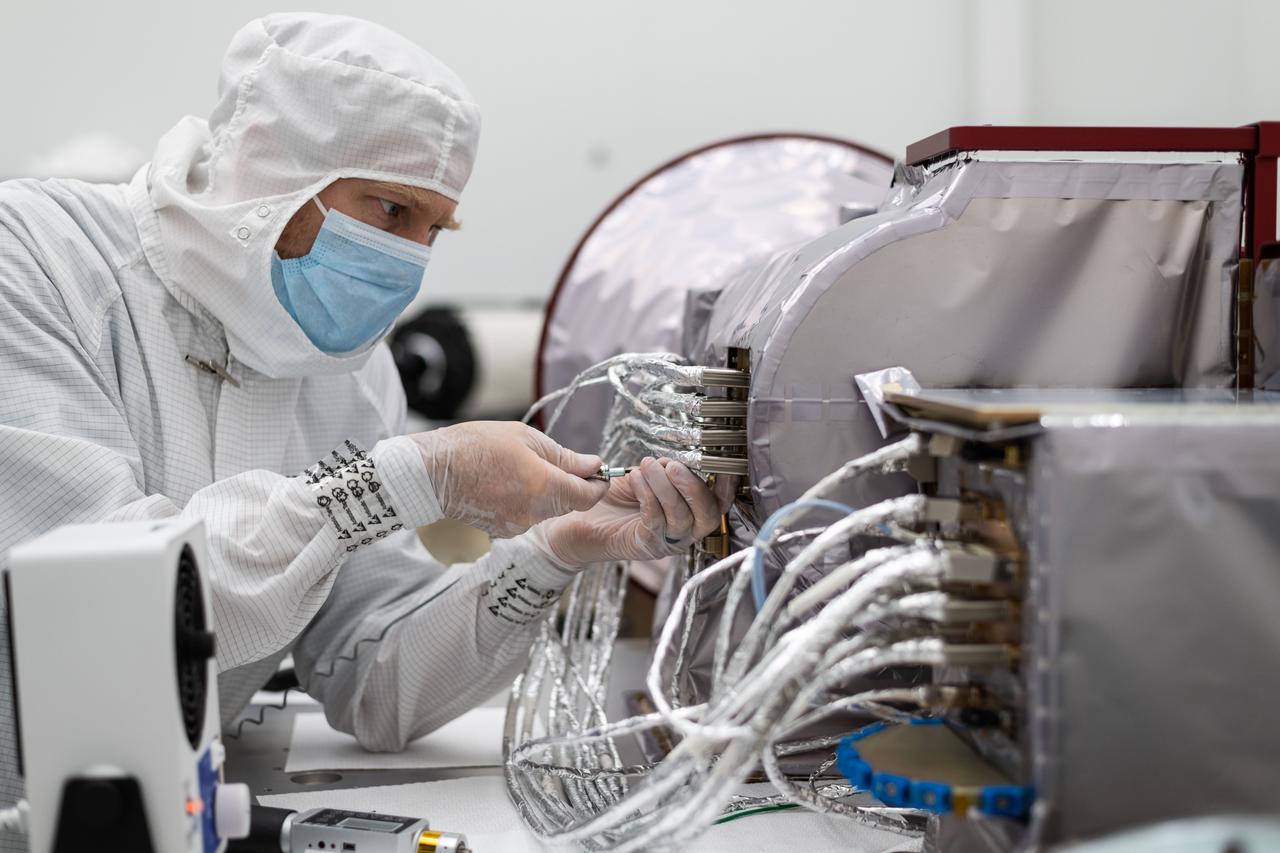
jsc2023e055880 (11/21/2022) --- Space Dynamics Laboratory (SDL) employee installs the cable harness installation on the Opto-Mechanical Assembly, with the Instrument Electronics Box in the foreground SDL facilities on Utah State University’s Innovation Campus. Image courtesy of SDL/Allison Bills.
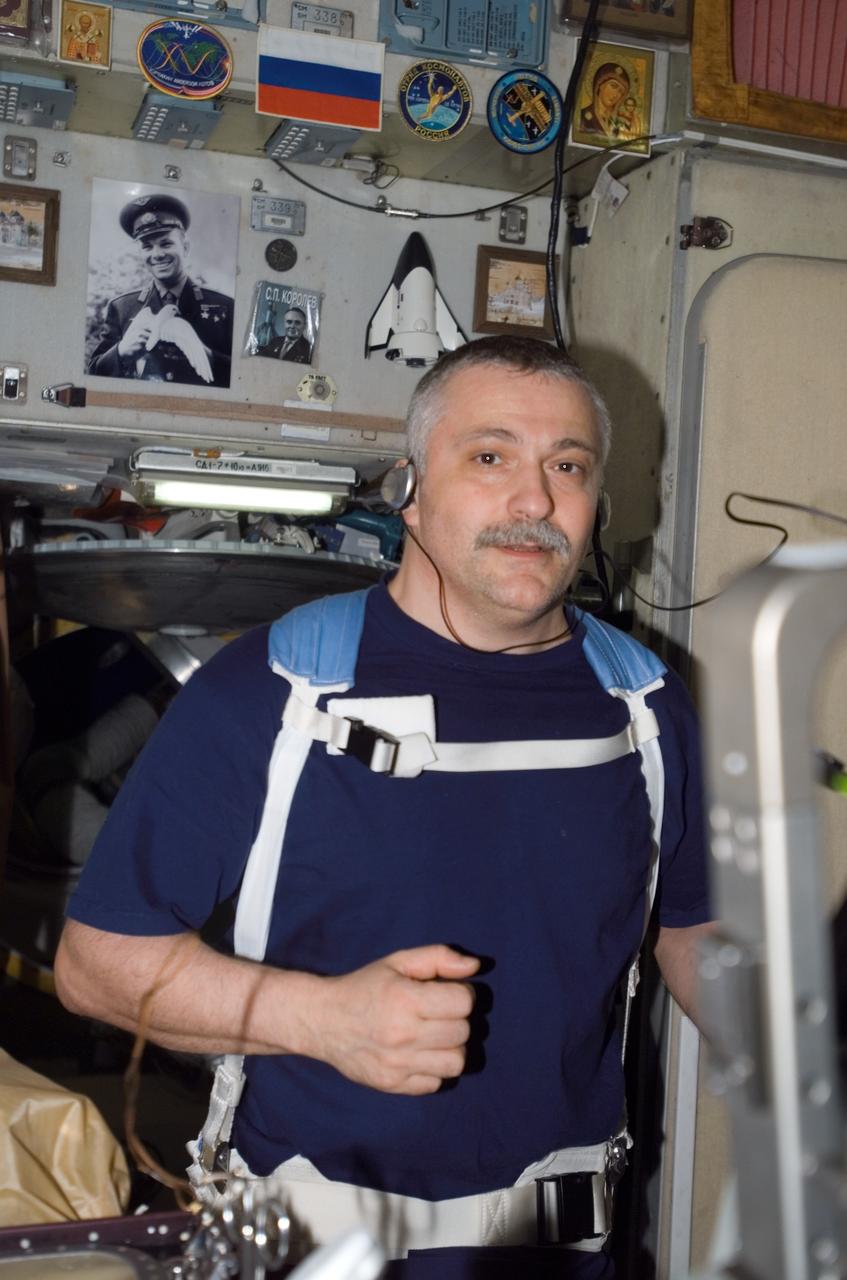
ISS015-E-17639 (4 July 2007) --- Cosmonaut Fyodor N. Yurchikhin, Expedition 15 commander representing Russia's Federal Space Agency, equipped with a bungee harness, exercises on the Treadmill Vibration Isolation System (TVIS) in the Zvezda Service Module of the International Space Station.
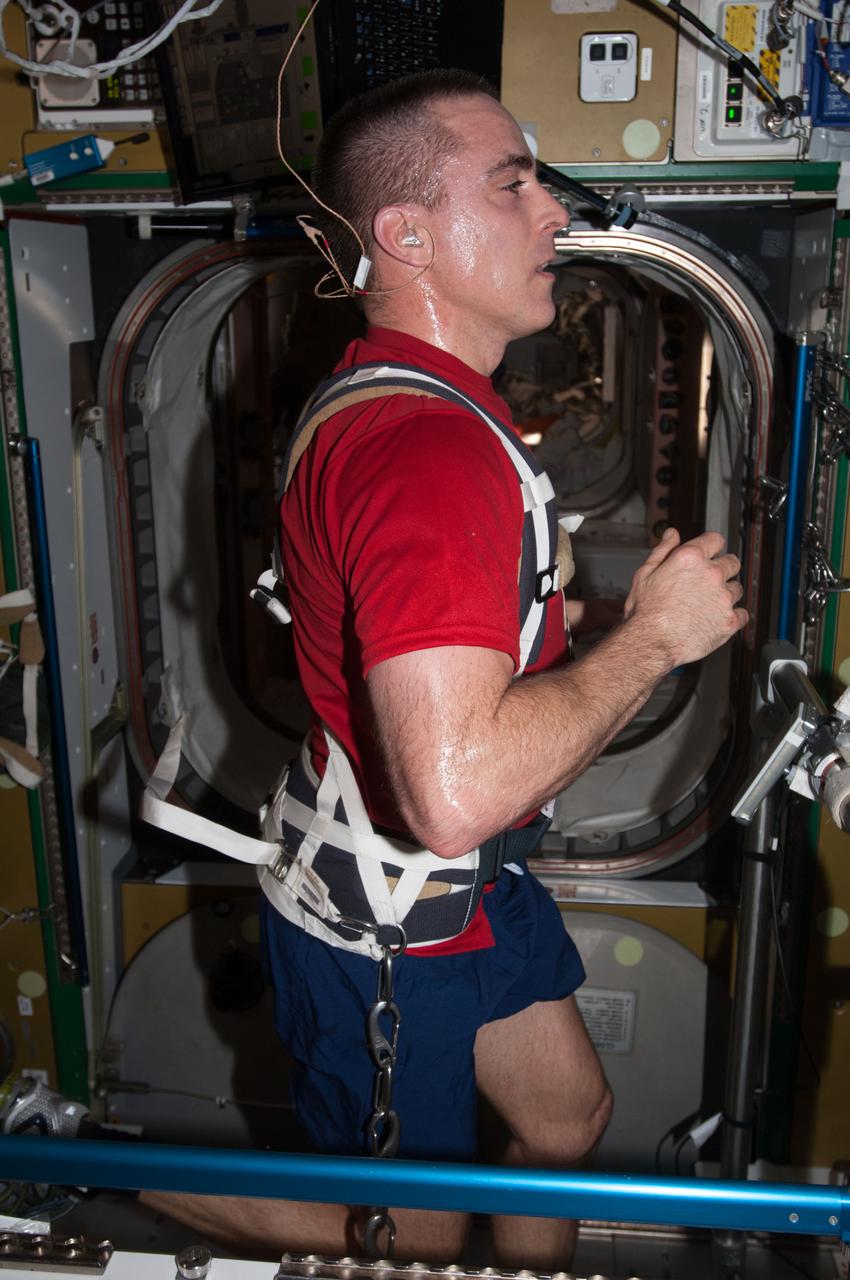
ISS036-E-018065 (4 July 2013) --- NASA astronaut Chris Cassidy, Expedition 36 flight engineer, equipped with a bungee harness, exercises on the Combined Operational Load Bearing External Resistance Treadmill (COLBERT) in the Tranquility node of the International Space Station.
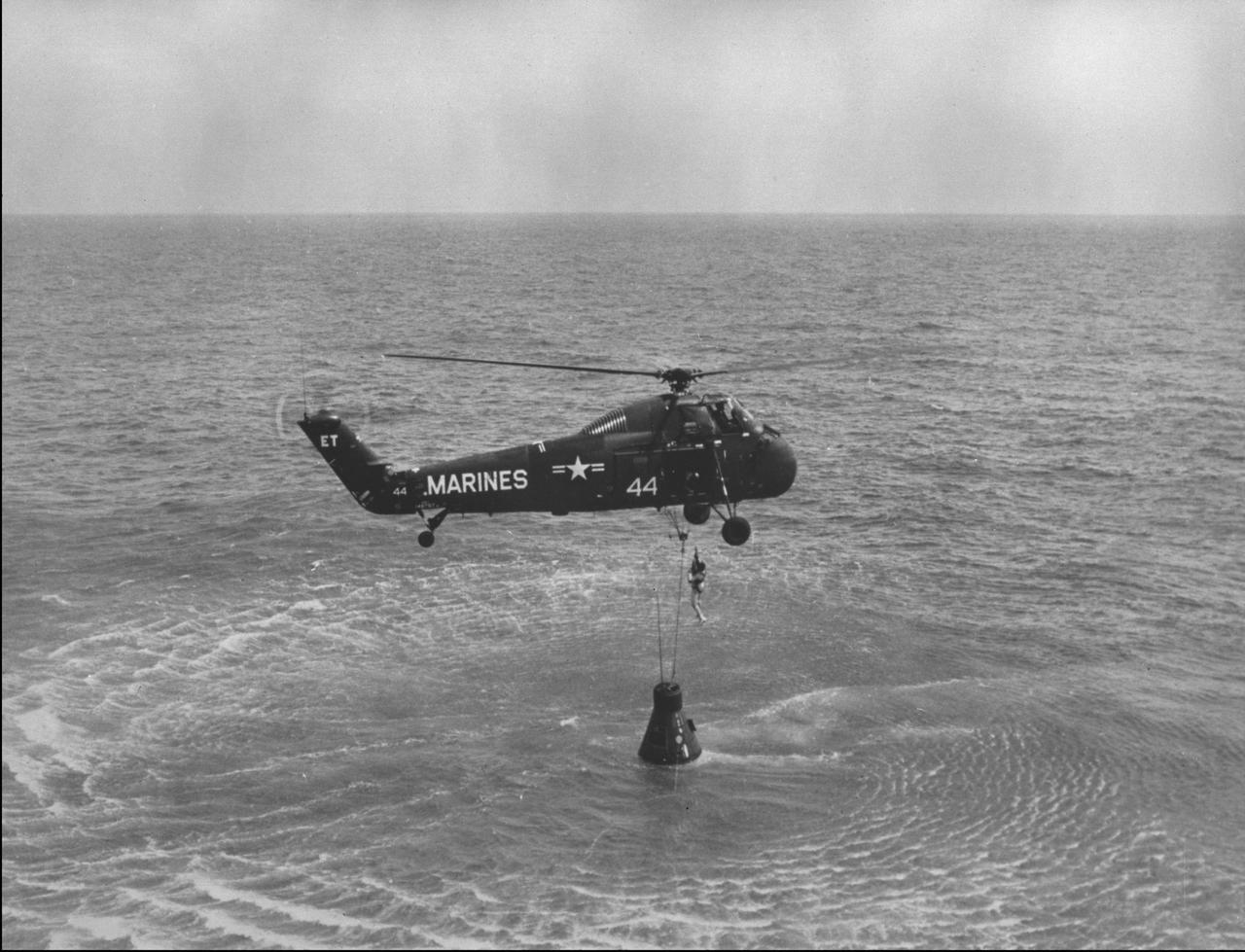
KENNEDY SPACE CENTER, FLA. -- NASA Astronaut Alan B. Shepard Jr. is hoisted up in a body harness by a U.S. Marine helicopter recovery team following the first Project Mercury suborbital space flight. Astronaut Shepard, along with his spacecraft, was then taken to the U.S. Navy Carrier Chaplain.
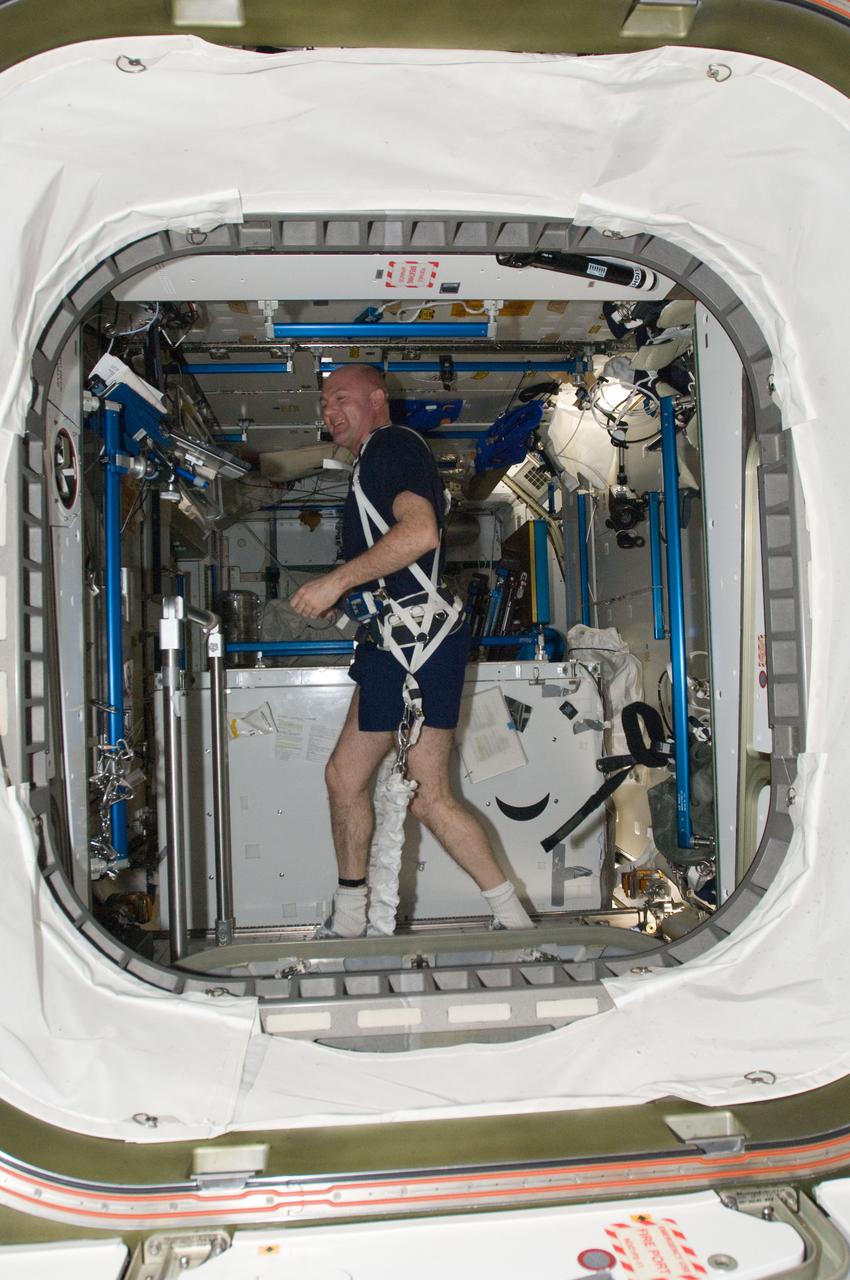
ISS030-E-049576 (18 Jan. 2012) --- European Space Agency astronaut Andre Kuipers, Expedition 30 flight engineer, equipped with a bungee harness, exercises on the Combined Operational Load Bearing External Resistance Treadmill (COLBERT) in the Tranquility node of the International Space Station.

ISS040-E-086609 (2 Aug. 2014) --- NASA astronaut Steve Swanson, Expedition 40 commander, equipped with a bungee harness, exercises on the Combined Operational Load Bearing External Resistance Treadmill (COLBERT) in the Tranquility node of the International Space Station.
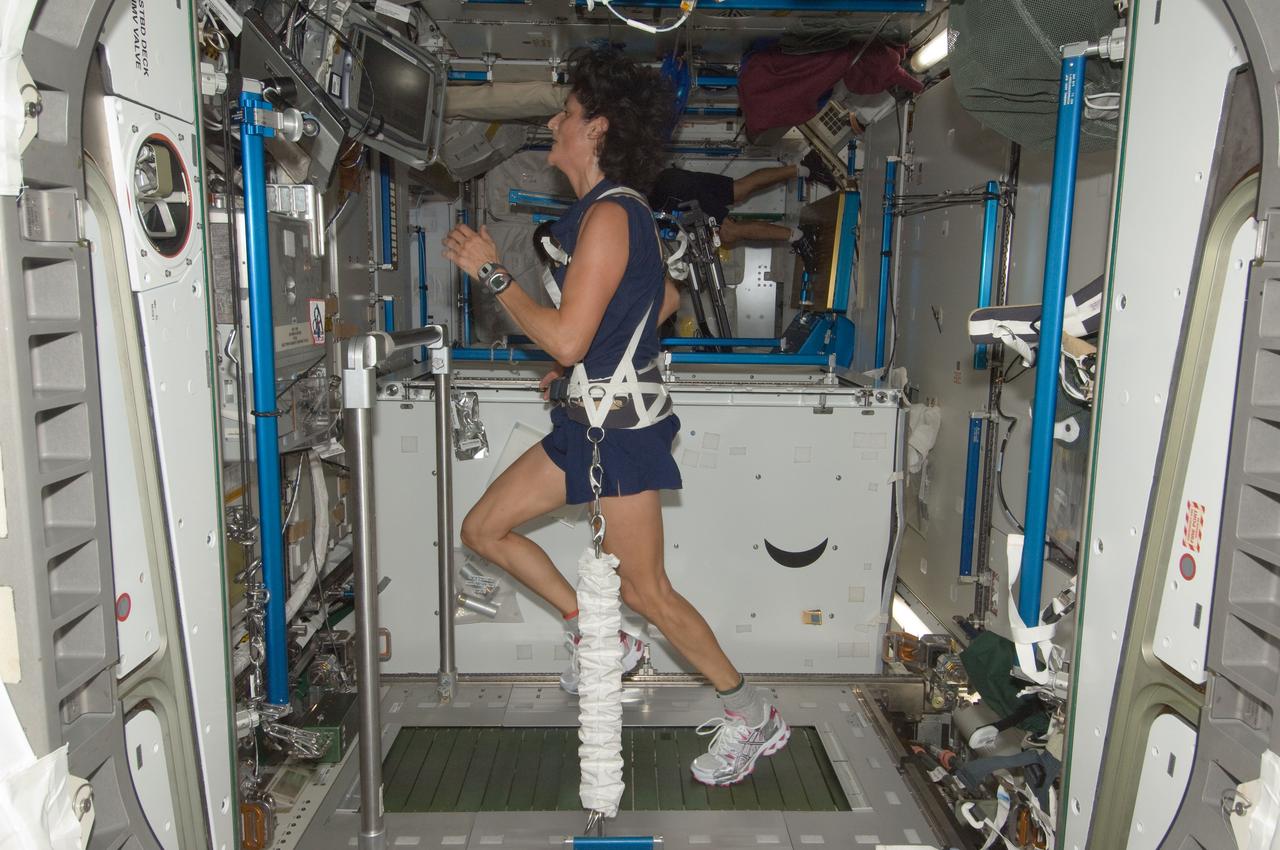
ISS032-E-011700 (4 Aug. 2012) --- NASA astronaut Sunita Williams, Expedition 32 flight engineer, equipped with a bungee harness, exercises on the Combined Operational Load Bearing External Resistance Treadmill (COLBERT) in the Tranquility node of the International Space Station.
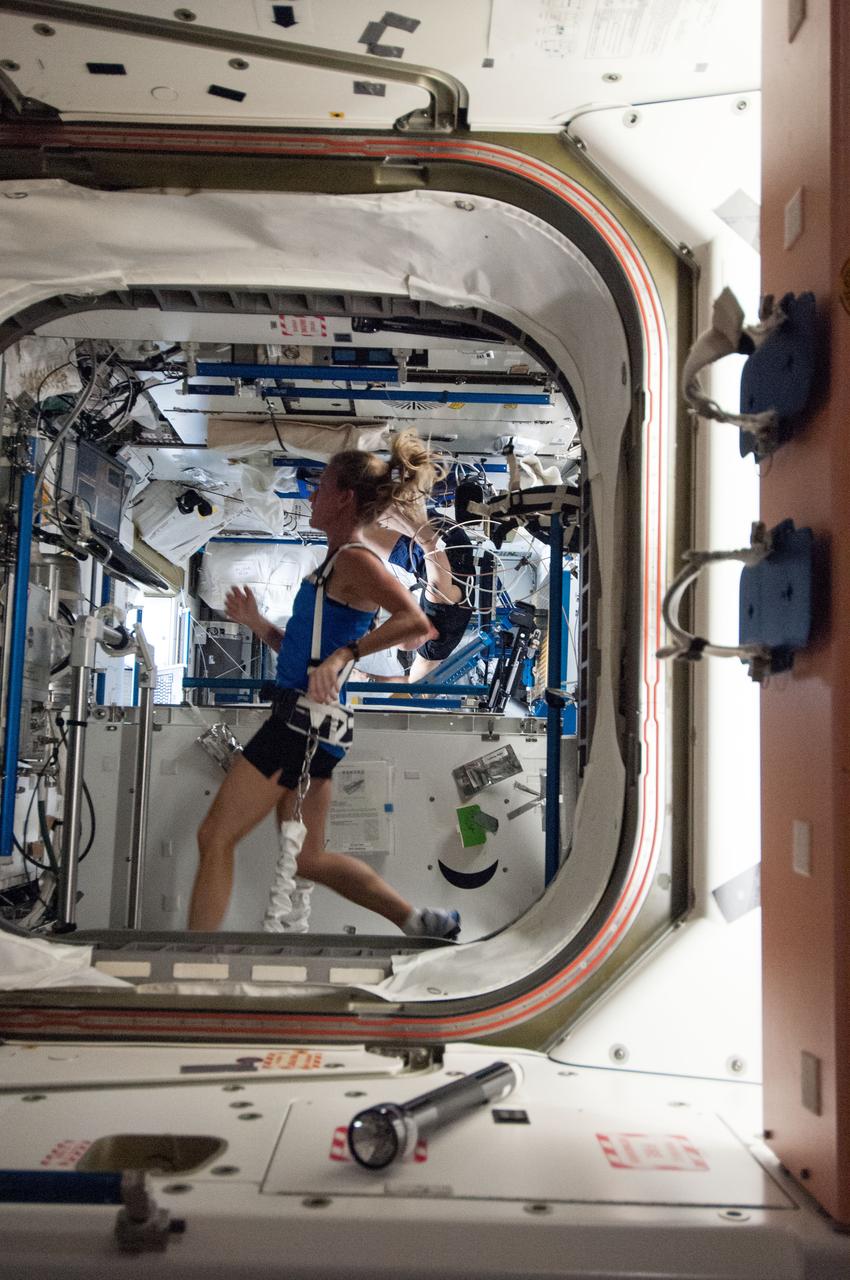
ISS036-E-022476 (22 July 2013) --- NASA astronaut Karen Nyberg, Expedition 36 flight engineer, equipped with a bungee harness, exercises on the Combined Operational Load Bearing External Resistance Treadmill (COLBERT) in the Tranquility node of the International Space Station.
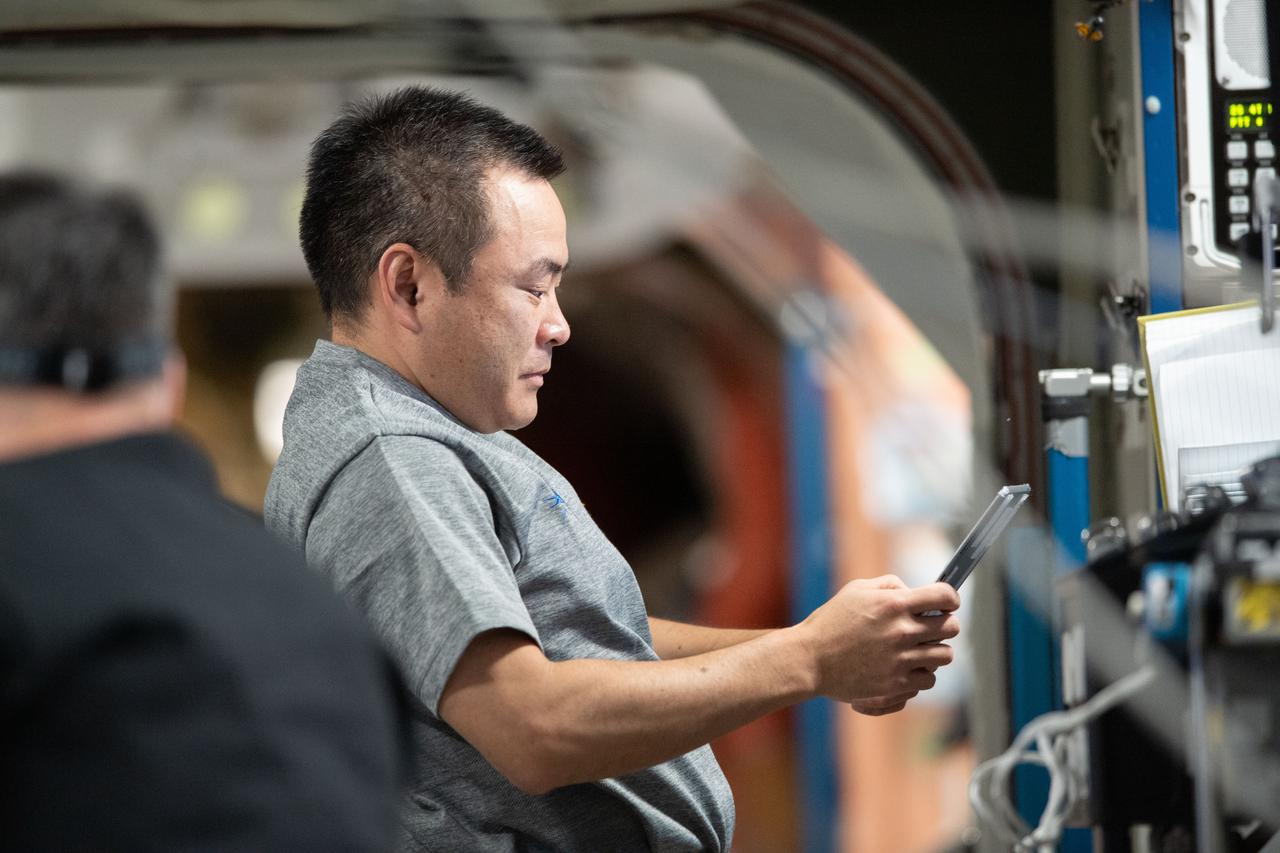
iss065e158464 (July 8, 2021) --- Expedition 65 Commander Akihiko Hoshide of the Japan Aerospace Exploration Agency reviews procedures on a computer tablet for the InSPACE-4 physics study that explores the ability to harness nanoparticles to fabricate new and advanced materials.
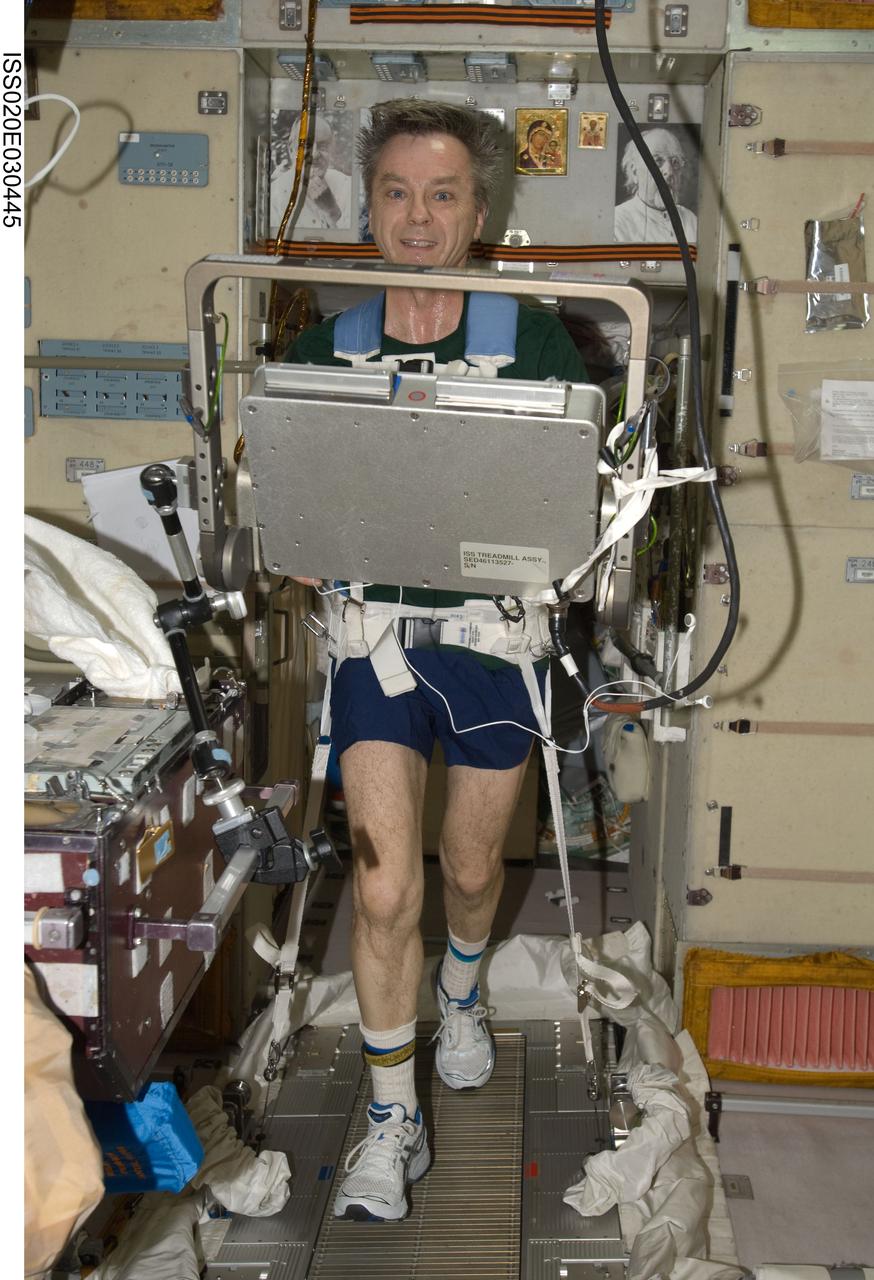
ISS020-E-030445 (13 Aug. 2009) --- Canadian Space Agency astronaut Robert Thirsk, Expedition 20 flight engineer, equipped with a bungee harness, exercises on the Treadmill Vibration Isolation System (TVIS) in the Zvezda Service Module of the International Space Station.
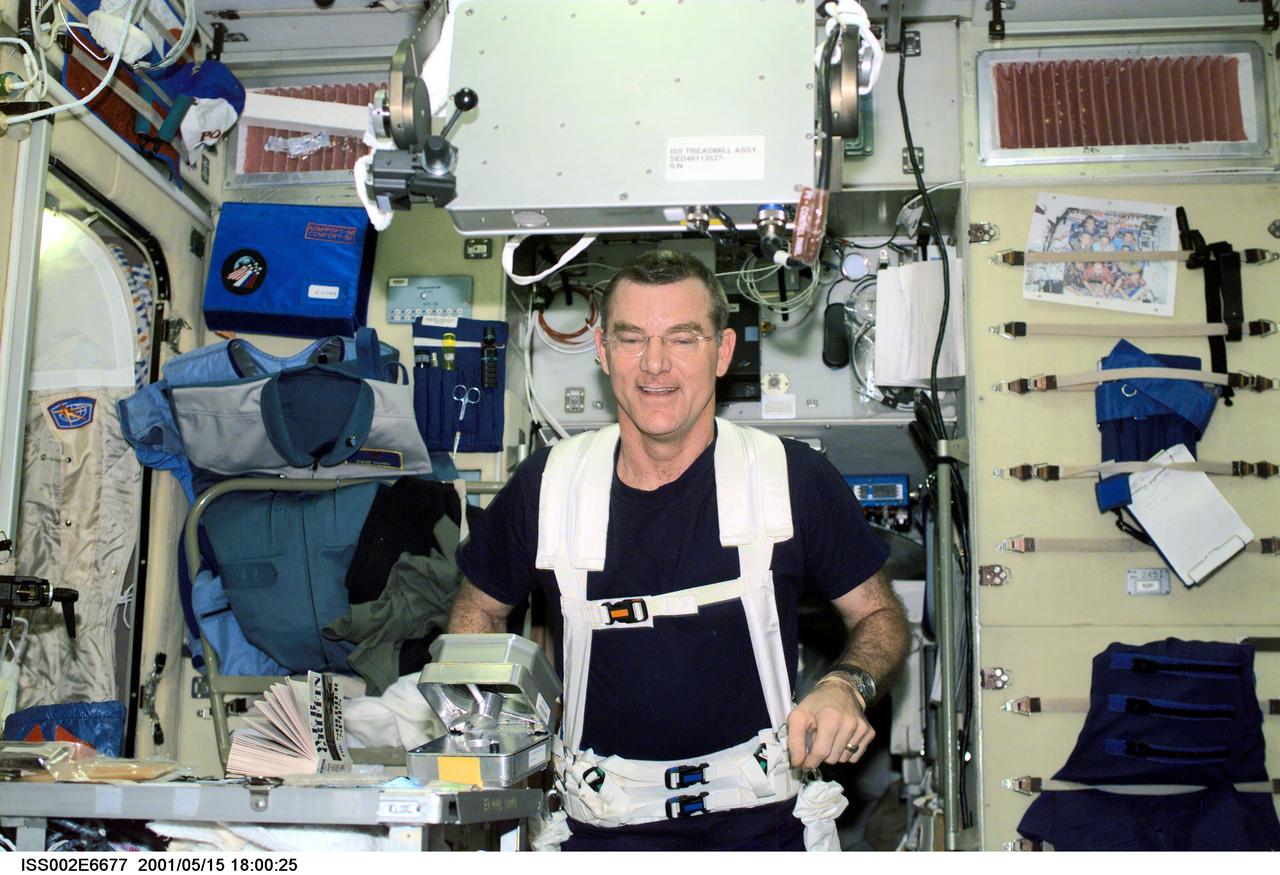
ISS002-E-06677 (15 May 2001) --- James S. Voss, Expedition Two flight engineer, wearing a safety harness, exercises on the Treadmill Vibration Isolation System (TVIS) equipment in the Zvezda Service Module. This image was taken with a digital still camera.
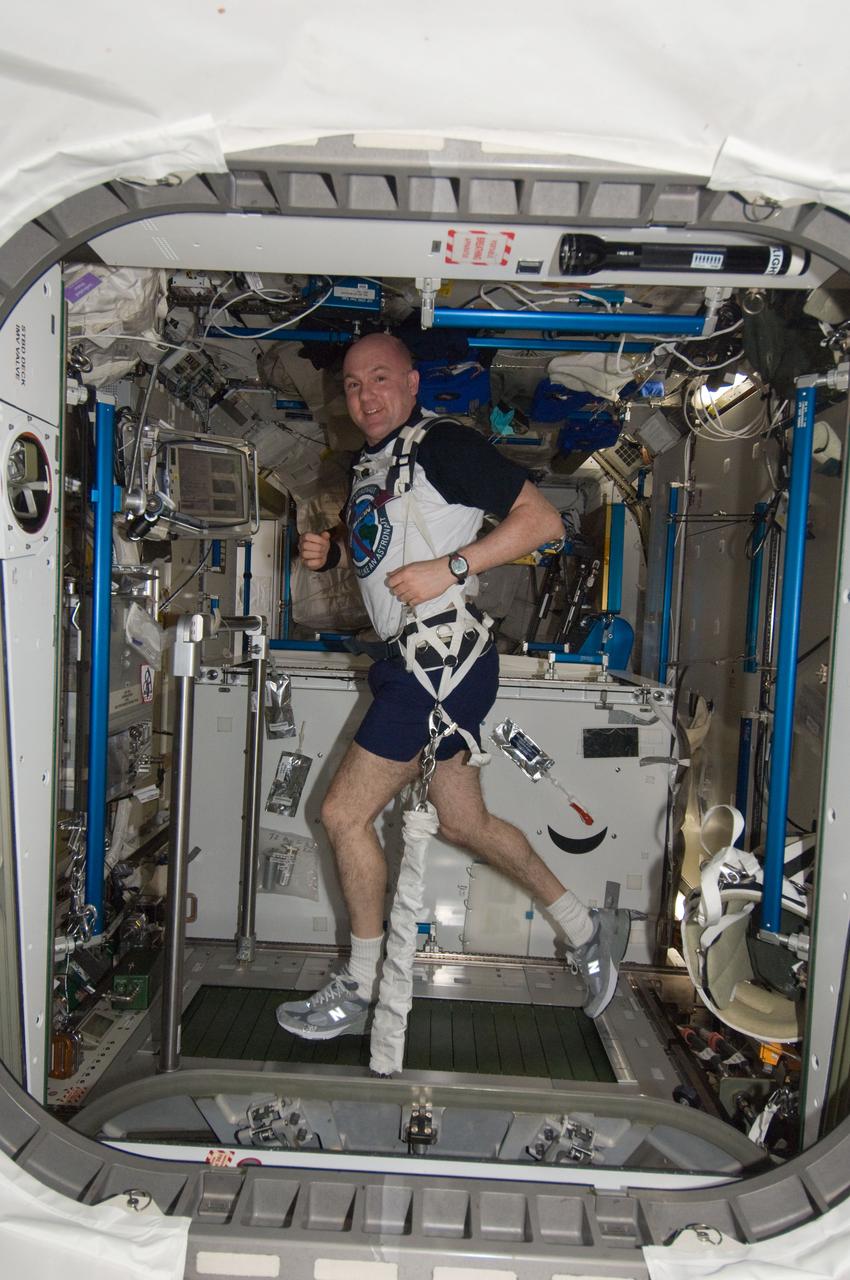
ISS030-E-210743 (3 April 2012) --- European Space Agency astronaut Andre Kuipers, Expedition 30 flight engineer, equipped with a bungee harness, exercises on the Combined Operational Load Bearing External Resistance Treadmill (COLBERT) in the Tranquility node of the International Space Station.
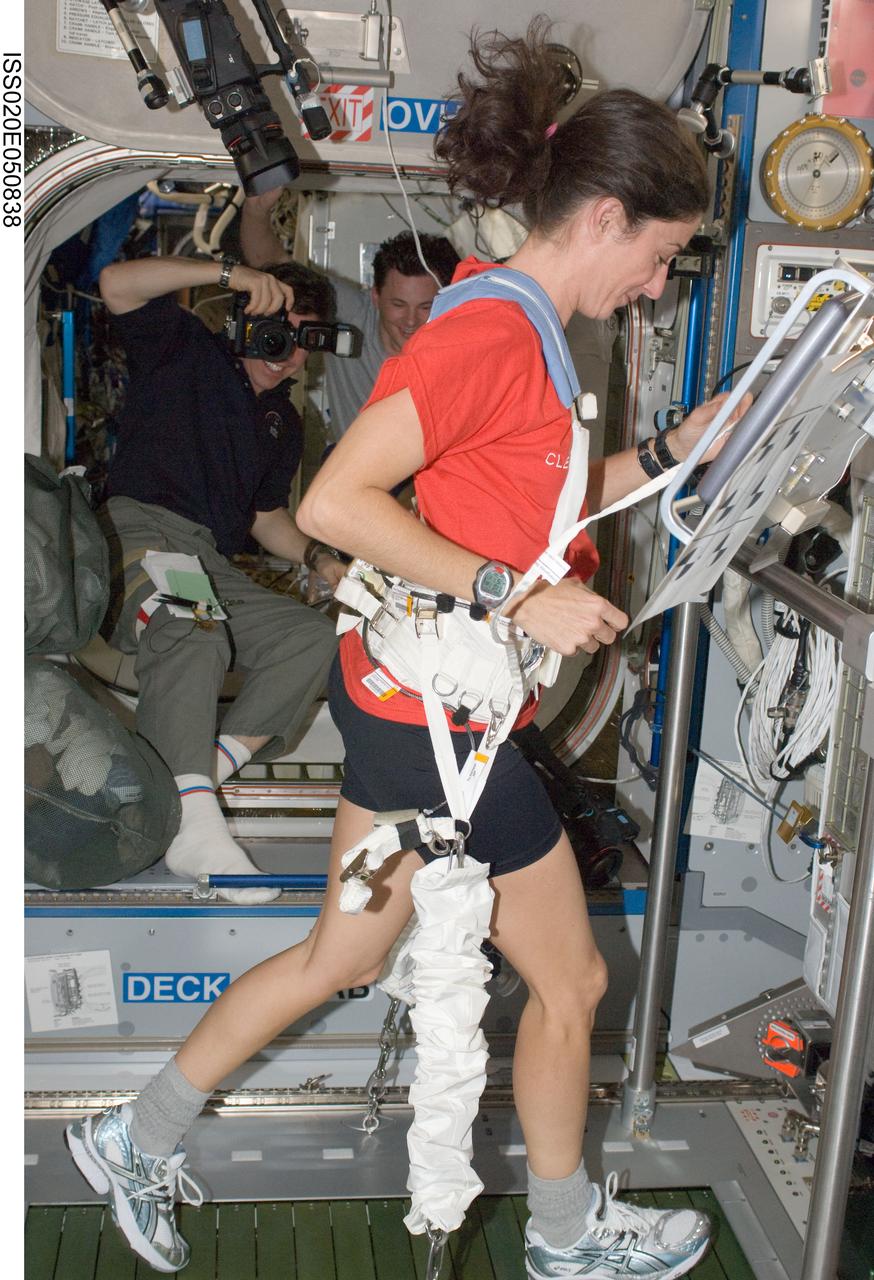
ISS020-E-050838 (9 Oct. 2009) --- NASA astronaut Nicole Stott, Expedition 20/21 flight engineer, equipped with a bungee harness, exercises on the Combined Operational Load Bearing External Resistance Treadmill (COLBERT) in the Harmony node of the International Space Station.
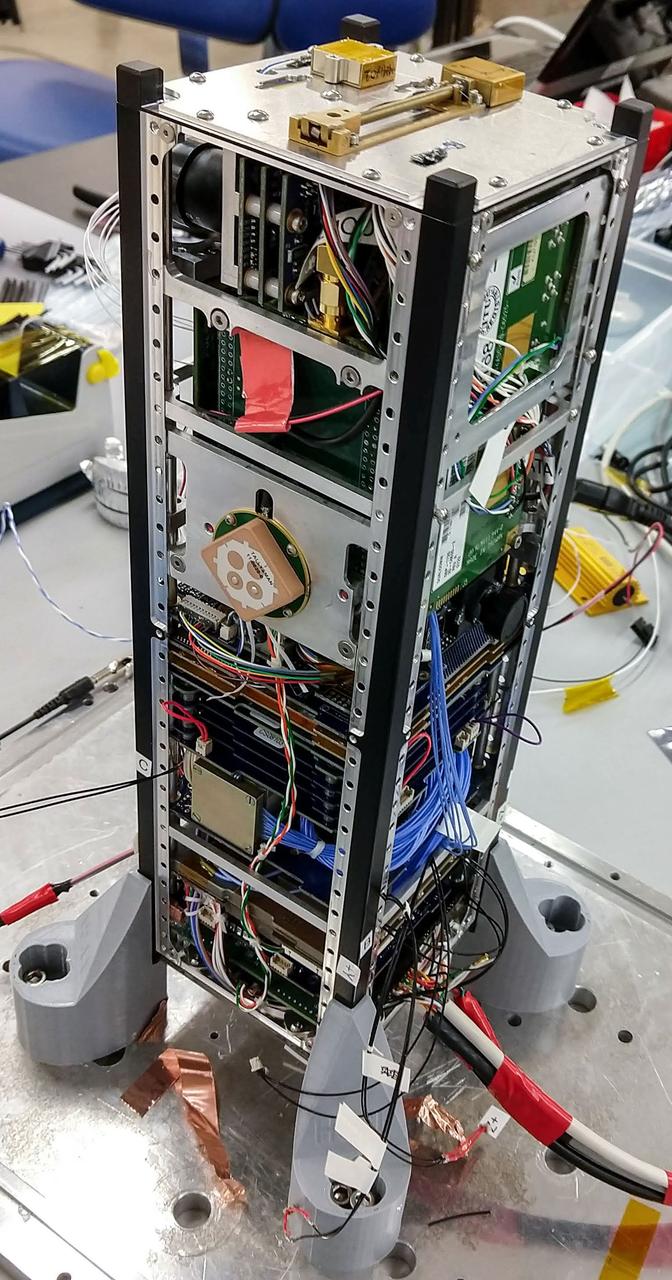
jsc2020e012431 (2/27/2020) --- A preflight view of Neutron-1 internal components and harnessing. The NanoRacks-NEUTRON-1 investigation maps neutron abundance in low-Earth orbit. Data gathered on global neutron counts could contribute to better understanding of the complex relationship between Earth and the Sun. Image courtesy of HSFL
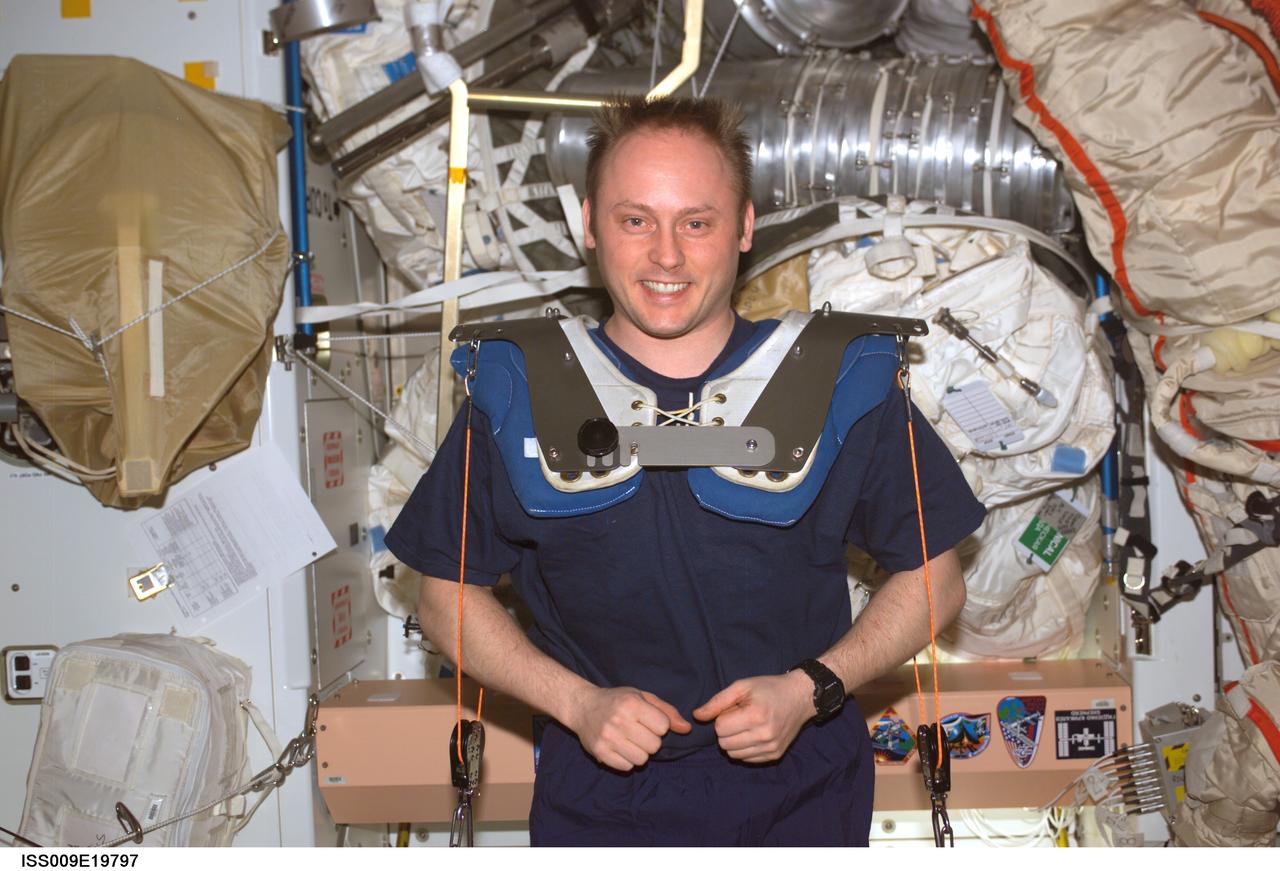
ISS009-E-19797 (23 August 2004) --- Astronaut Edward M. (Mike) Fincke, Expedition 9 NASA ISS science officer and flight engineer, wearing squat harness pads, exercises using the Interim Resistive Exercise Device (IRED) equipment in the Unity node on the International Space Station (ISS).
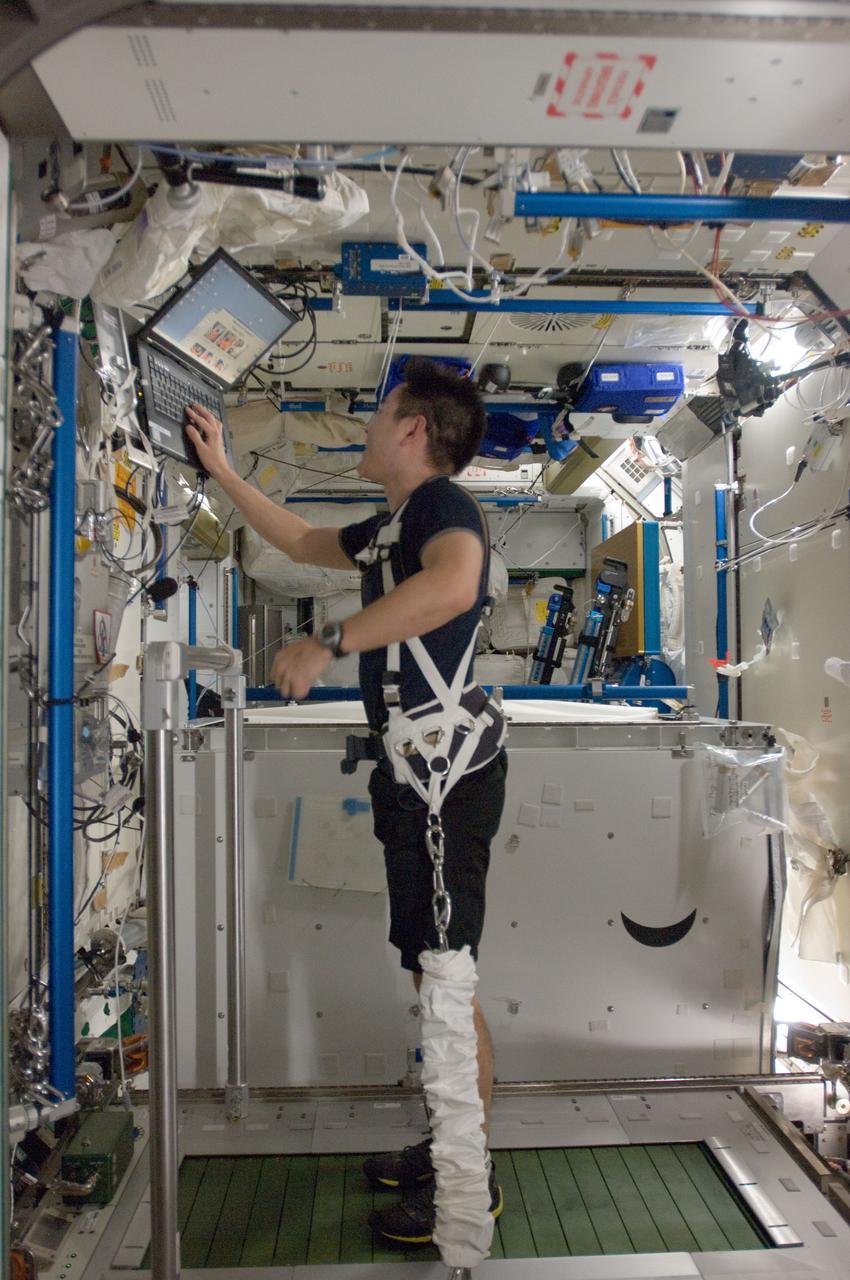
ISS033-E-018848 (12 Nov. 2012) --- Japan Aerospace Exploration Agency astronaut Aki Hoshide, Expedition 33 flight engineer, equipped with a bungee harness, prepares to exercise on the Combined Operational Load Bearing External Resistance Treadmill (COLBERT) in the Tranquility node of the International Space Station.

ISS012-E-05937 (19 Oct. 2005) --- Astronaut William S. McArthur Jr., Expedition 12 commander and NASA science officer, equipped with a bungee harness, exercises on the Treadmill Vibration Isolation System (TVIS) in the Zvezda Service Module of the international space station.
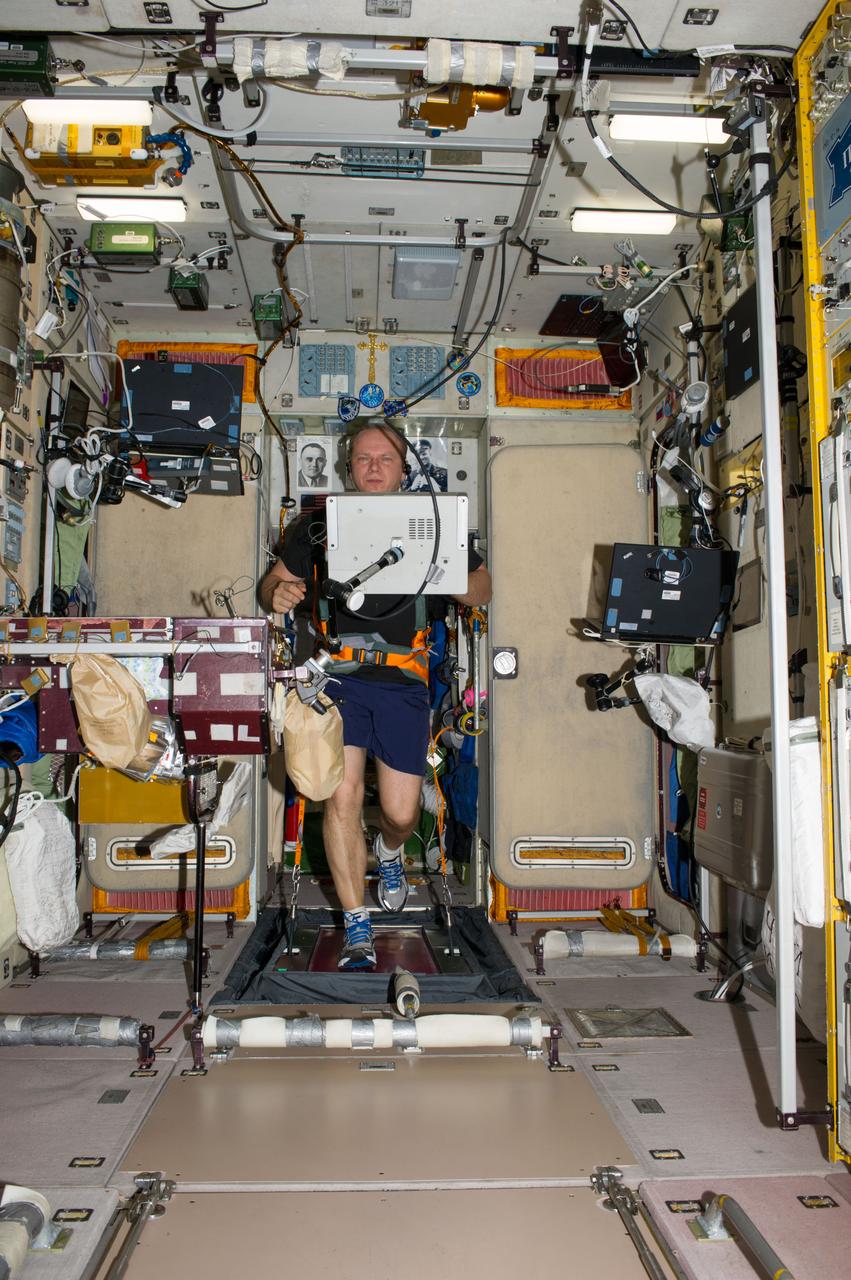
ISS037-E-013276 (9 Oct. 2013) --- Russian cosmonaut Oleg Kotov, Expedition 37 flight engineer, equipped with a bungee harness, exercises on the Treadmill Vibration Isolation System (TVIS) in the Zvezda Service Module of the International Space Station.
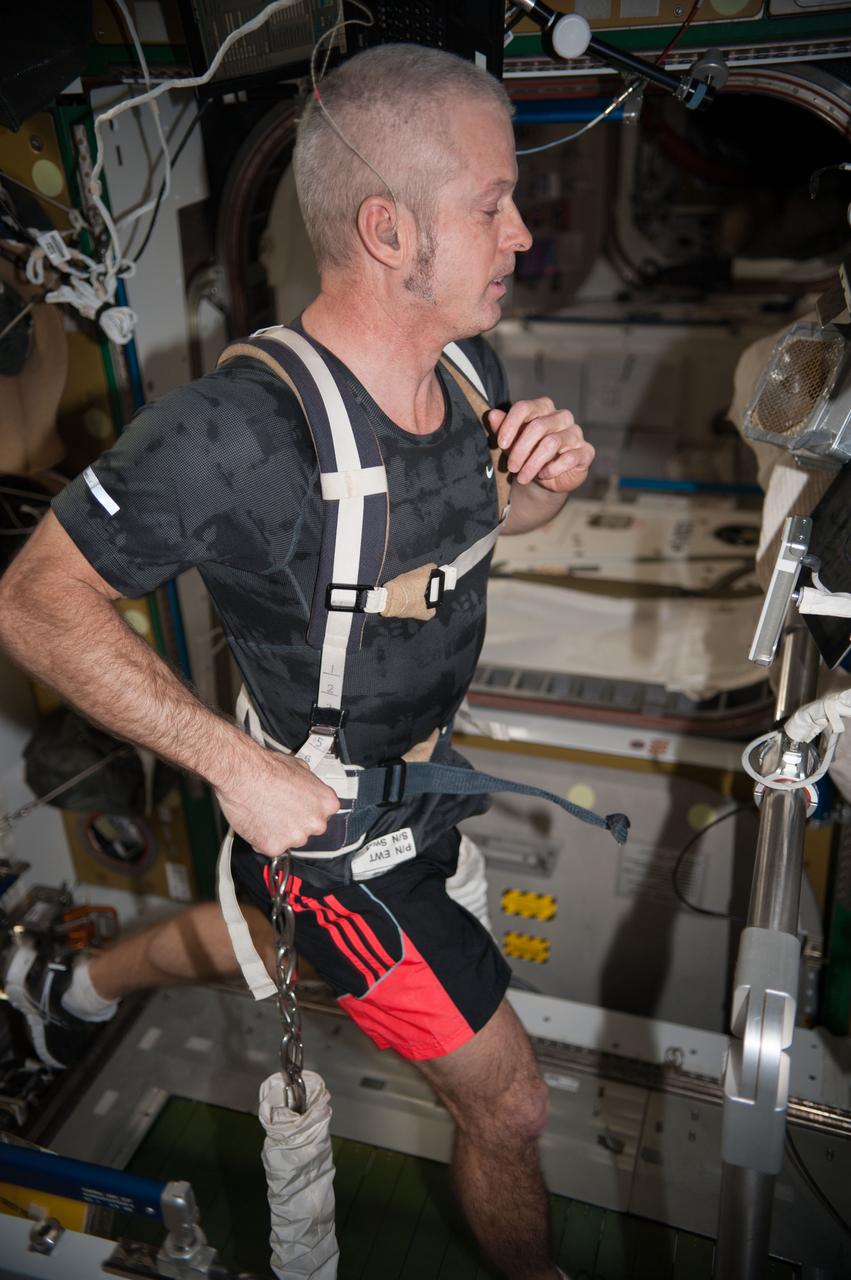
ISS040-E-074769 (23 July 2014) --- NASA astronaut Steve Swanson, Expedition 40 commander, equipped with a bungee harness, exercises on the Combined Operational Load Bearing External Resistance Treadmill (COLBERT) in the Tranquility node of the International Space Station.
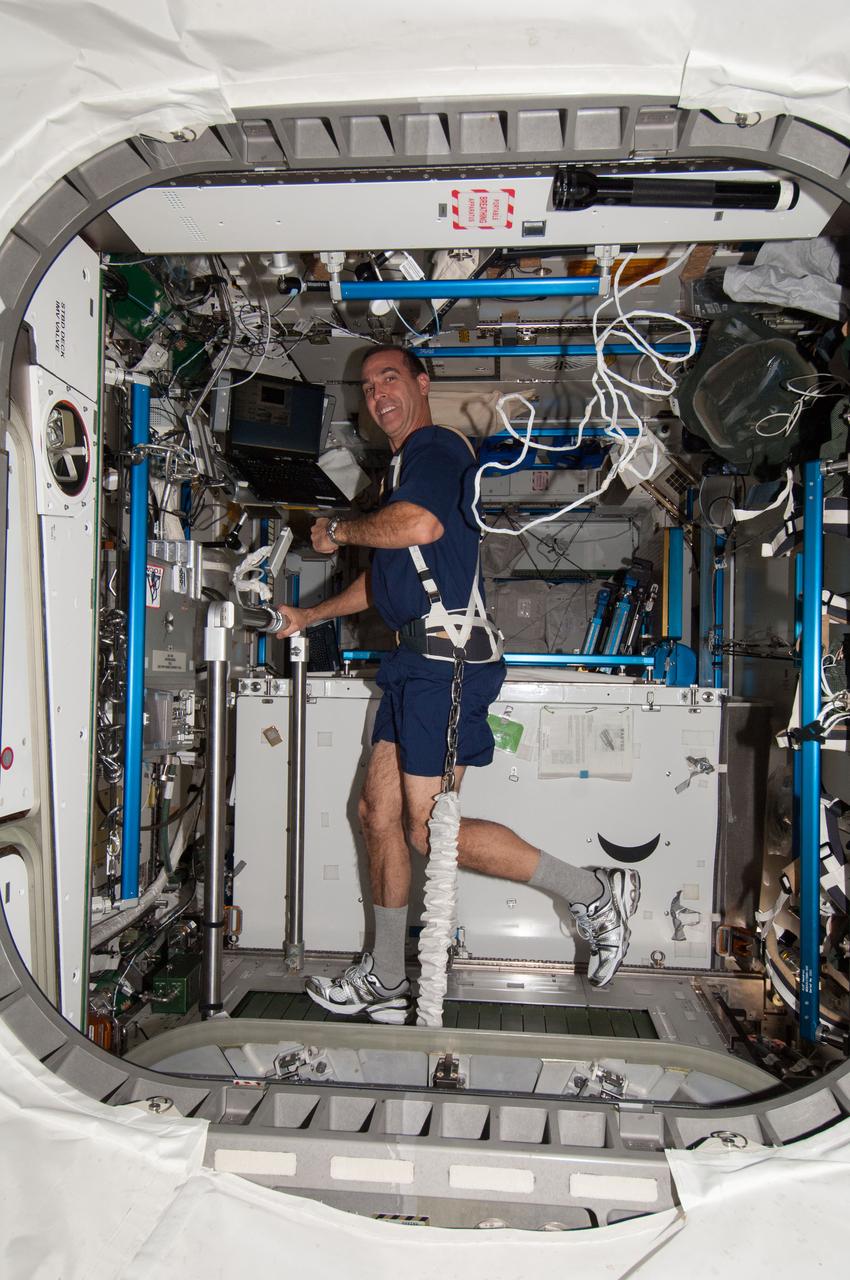
ISS037-E-028164 (9 Nov. 2013) --- NASA astronaut Rick Mastracchio, Expedition 38 flight engineer, equipped with a bungee harness, exercises on the Combined Operational Load Bearing External Resistance Treadmill (COLBERT) in the Tranquility node of the International Space Station.
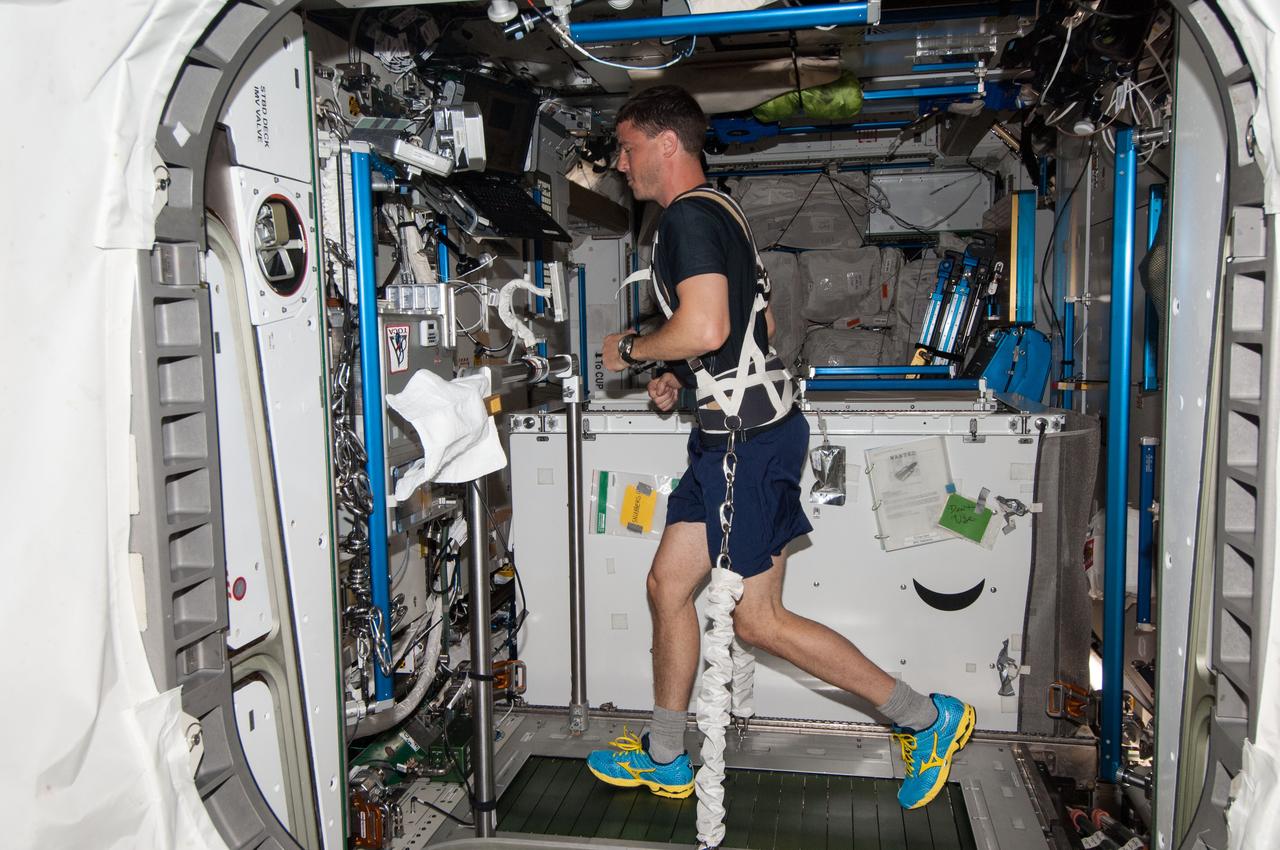
ISS040-E-006087 (31 May 2014) --- NASA astronaut Reid Wiseman, Expedition 40 flight engineer, equipped with a bungee harness, exercises on the Combined Operational Load Bearing External Resistance Treadmill (COLBERT) in the Tranquility node of the International Space Station.
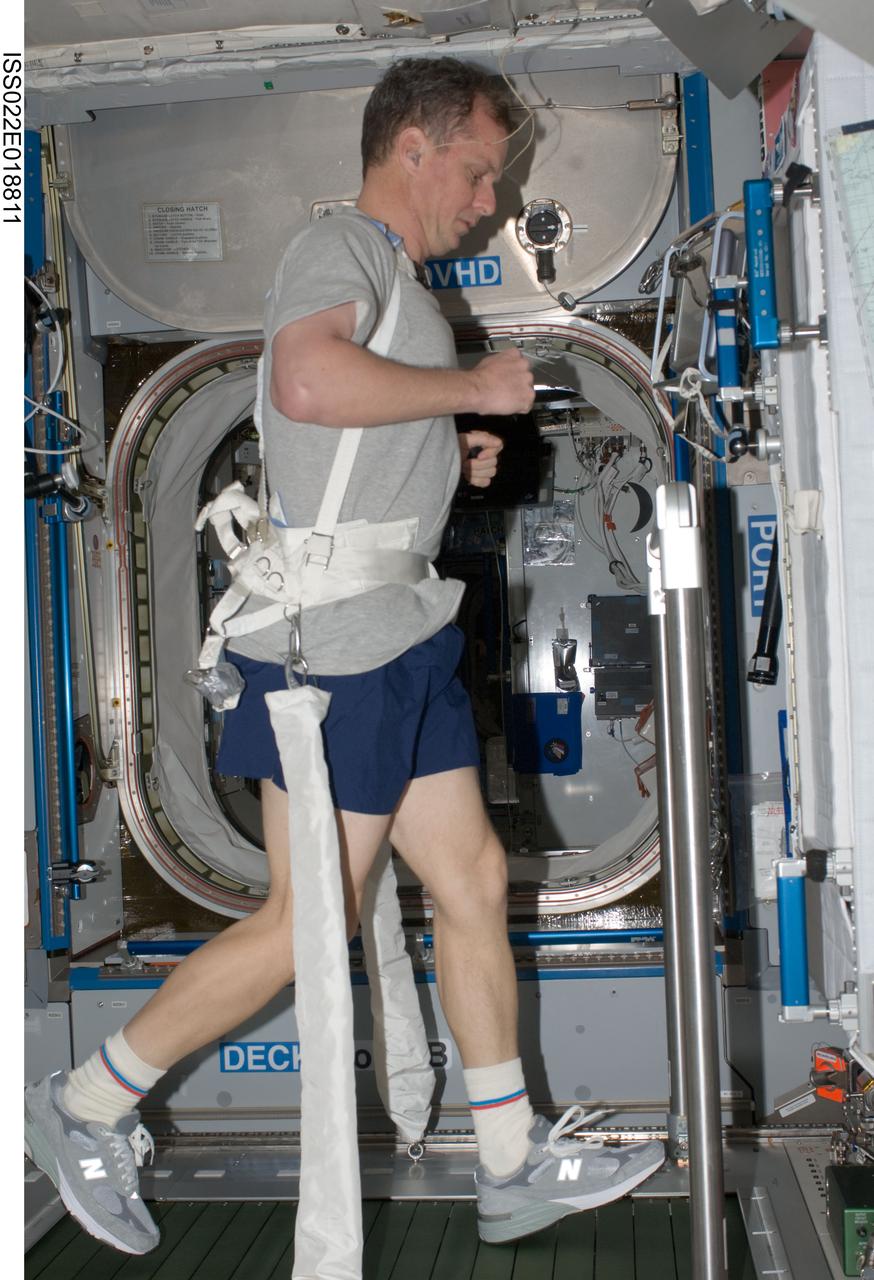
ISS022-E-018811 (2 Jan. 2010) --- NASA astronaut T.J. Creamer, Expedition 22 flight engineer, equipped with a bungee harness, exercises on the Combined Operational Load Bearing External Resistance Treadmill (COLBERT) in the Harmony node of the International Space Station.
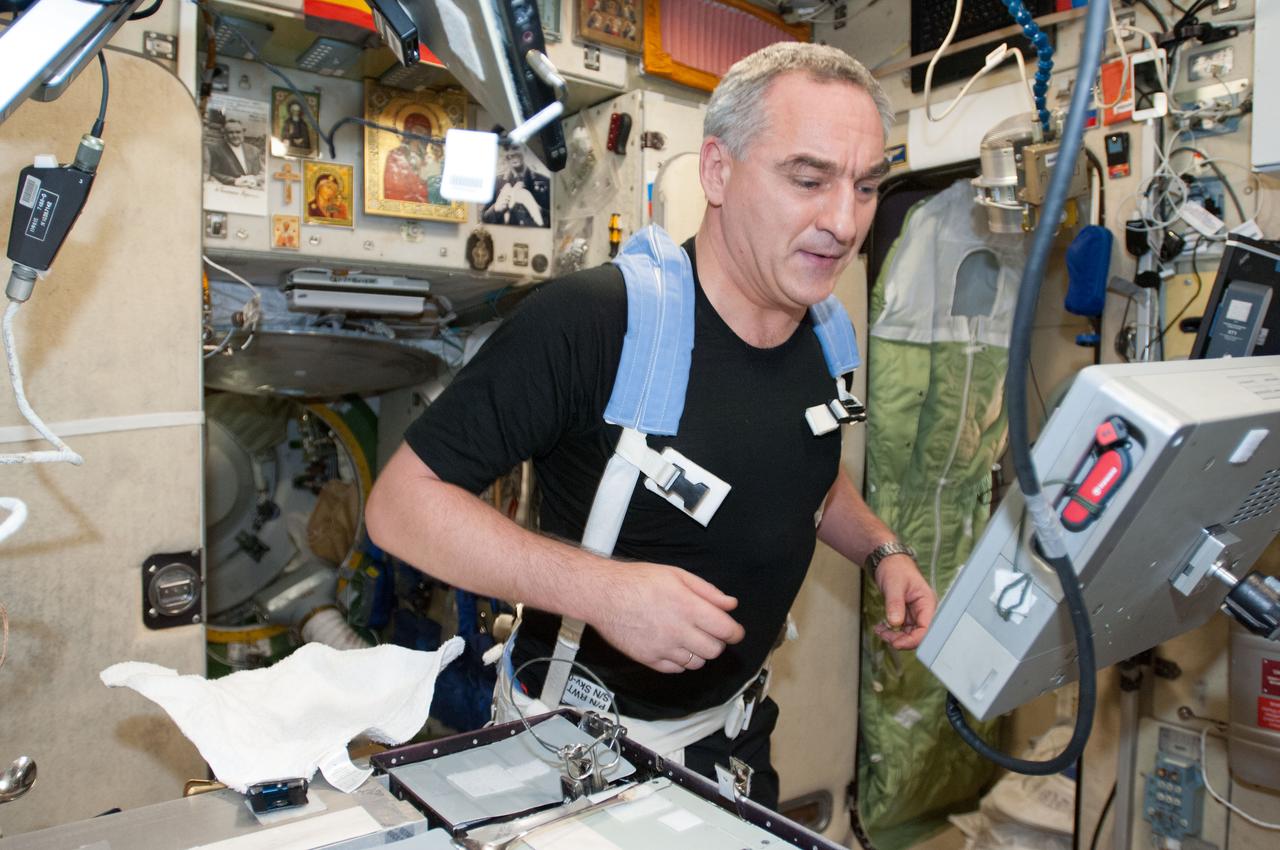
ISS040-E-074764 (24 July 2014) --- Russian cosmonaut Alexander Skvortsov, Expedition 40 flight engineer, equipped with a bungee harness, exercises on the Treadmill Vibration Isolation System (TVIS) in the Zvezda Service Module of the International Space Station.
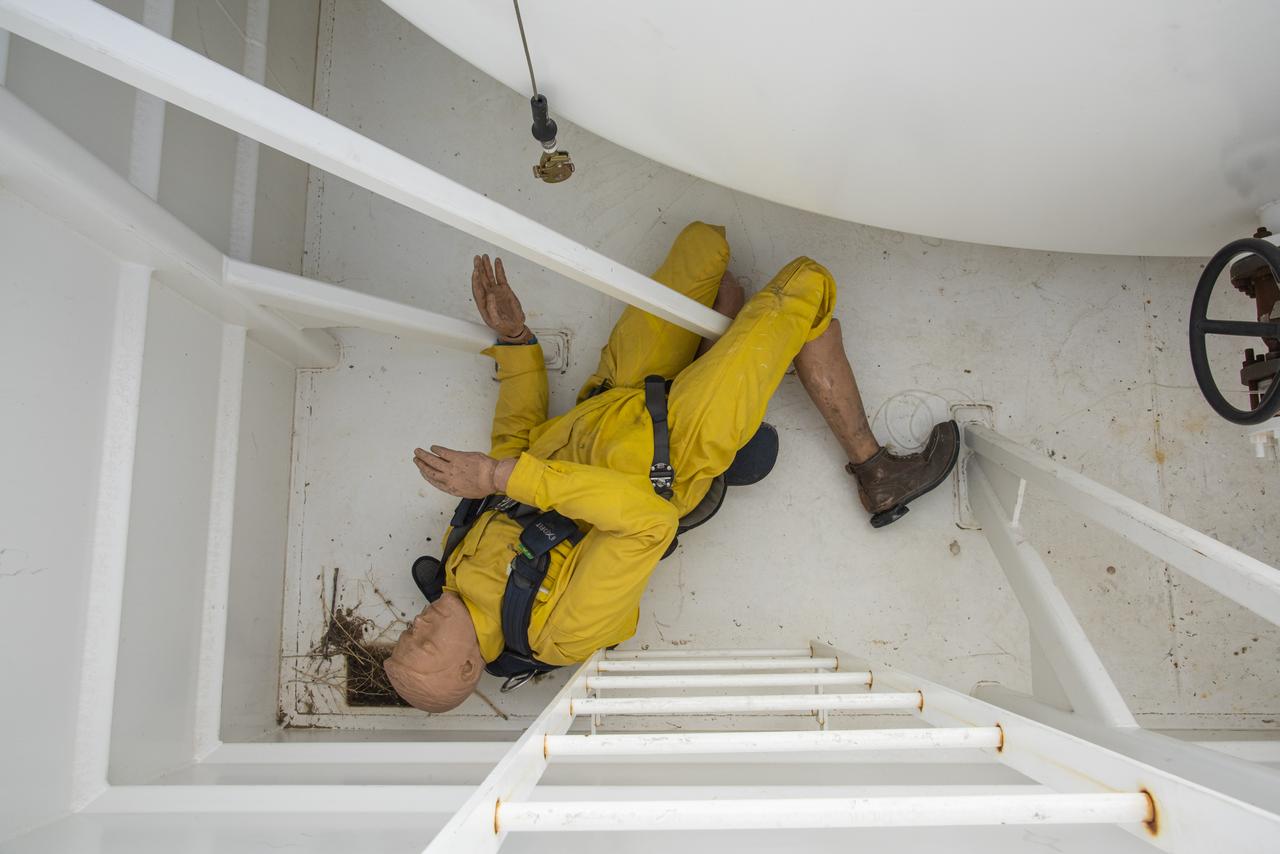
A mannequin is used to simulate a worker who has collapsed and come free from a harness intended to extricate the worker in case of emergency as part of a confined spaces training at NASA Armstrong Flight Research Center’s Building 703 in Palmdale, California.
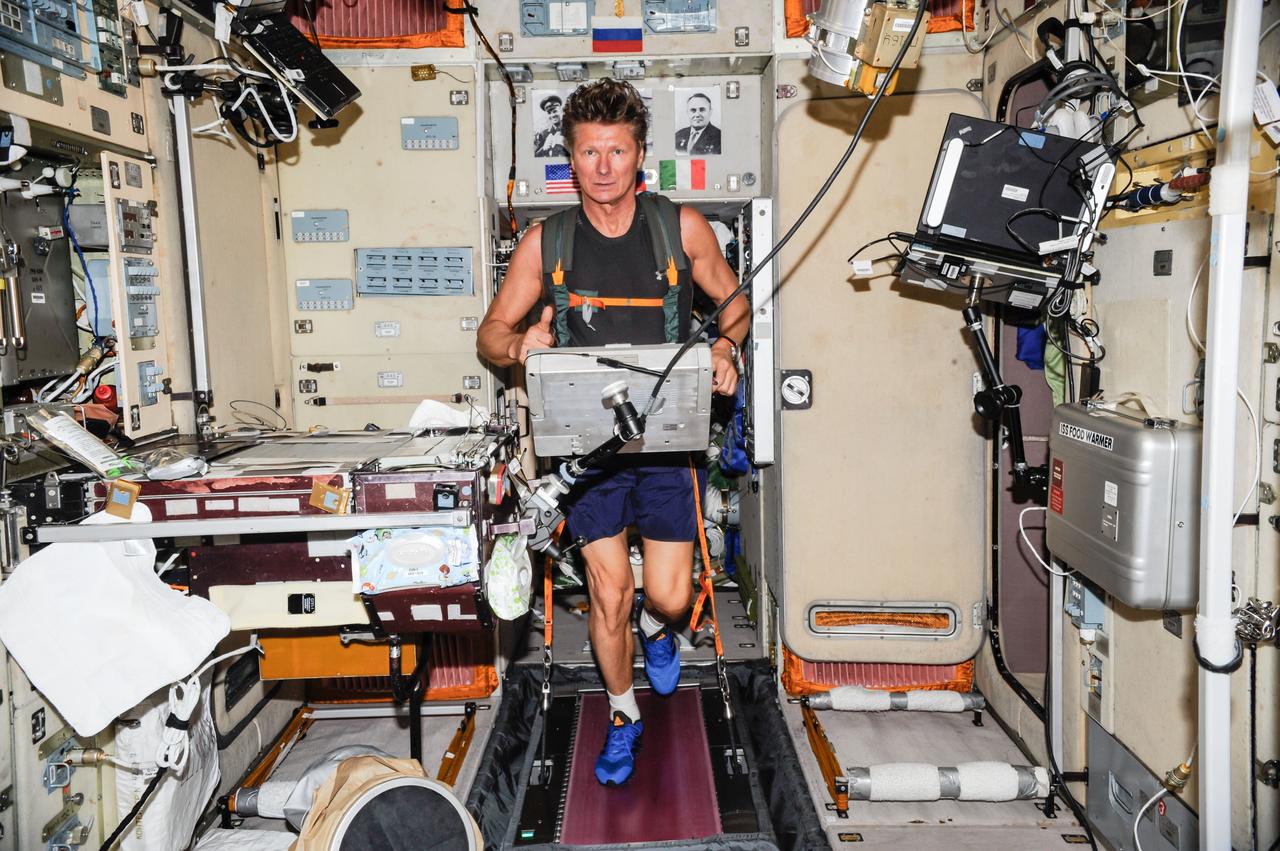
iss043e308120 (4/25/2015) --- Russian cosmonaut G.I. Padalka, Expedition 43 flight engineer, equipped with a bungee harness, exercises on the Treadmill Vibration Isolation System (TVIS) (БД-2 / BD-2) in the Zvezda Service Module of the International Space Station.
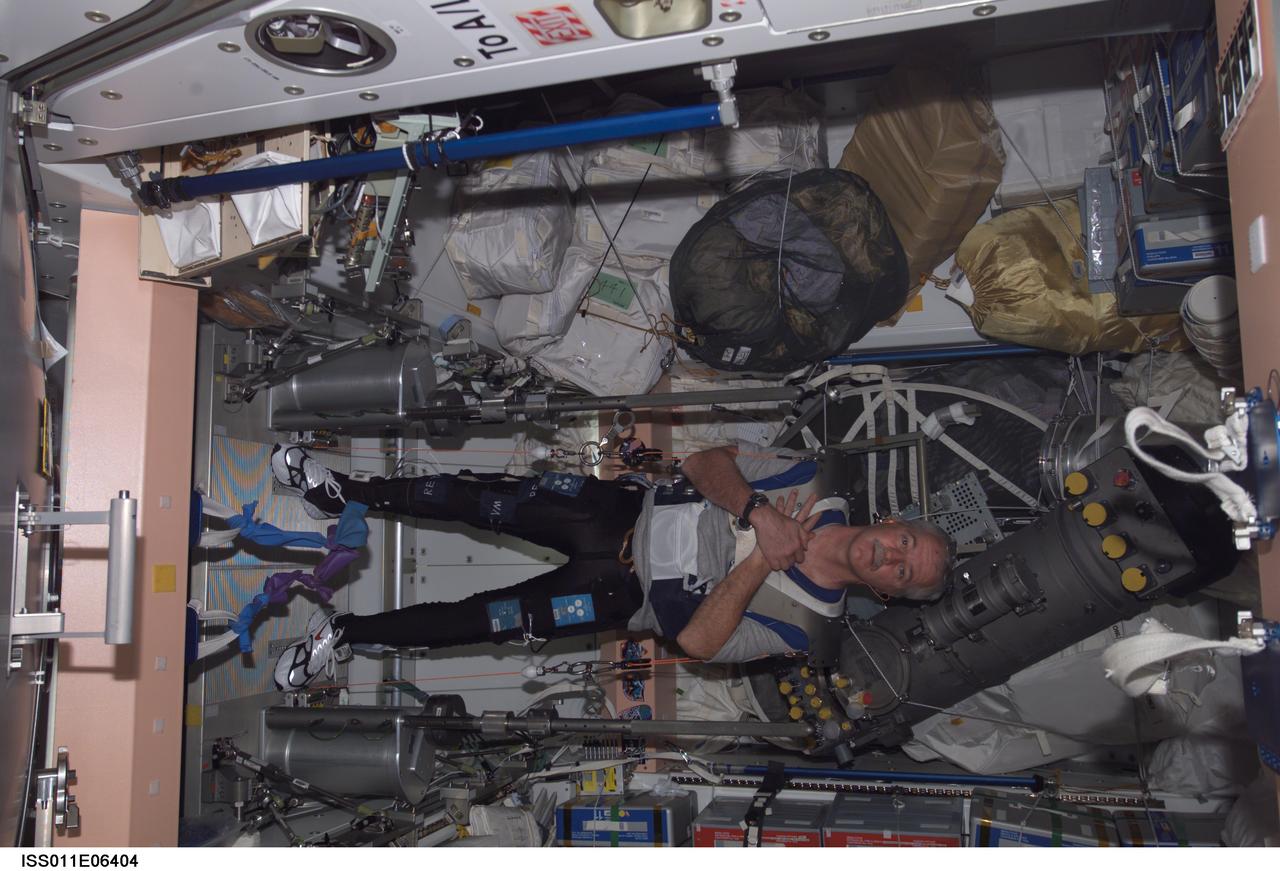
ISS011-E-06404 (18 May 2005) --- Astronaut John L. Phillips, Expedition 11 NASA space station science officer and flight engineer, wearing squat harness pads, exercises using the Interim Resistive Exercise Device (IRED) equipment in the Unity node of the International Space Station.