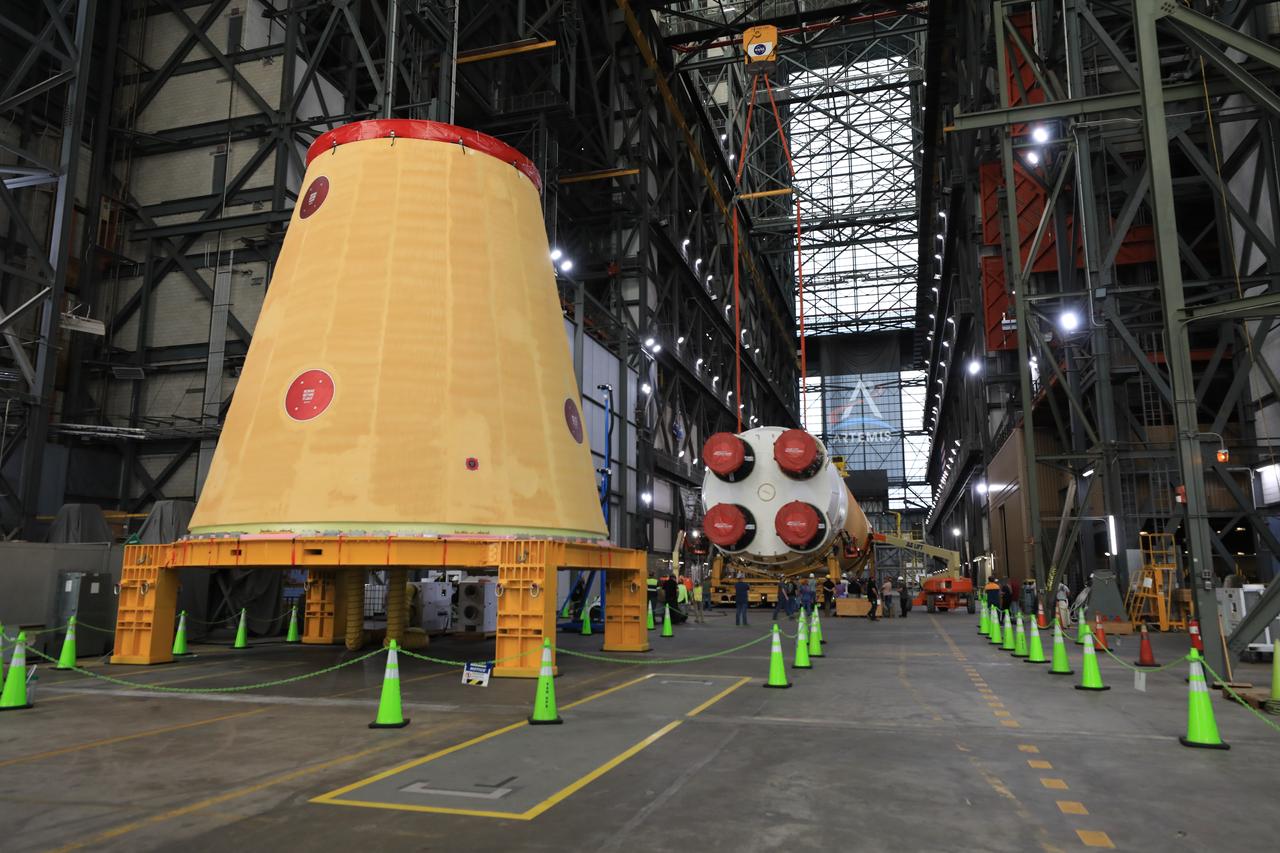
Technicians from NASA’s Exploration Ground Systems use massive cranes inside the agency’s Vehicle Assembly Building (VAB) to lift the fully assembled SLS (Space Launch System) core stage vertically 225 feet above the ground from High Bay 2 to a horizontal position in the facility’s transfer aisle at NASA’s Kennedy Space Center in Florida on Friday, March 14, 2025. The 212-foot core stage will undergo final checkouts before being lifted into the VAB’s High Bay 3 for integration alongside the completed stack of twin solid rocket booster segments.

Teams from Kennedy lift NASA’s integrated Artemis III SLS (Space Launch System) core stage engine section with its boat-tail inside the center’s Vehicle Assembly Building at NASA’s Kennedy Space Center in Florida on Wednesday, Aug. 13, 2025. Shown inside the facility’s High Bay 2 for processing, the engine section is one the most complex and intricate parts of the rocket stage that will help power the Artemis missions to the Moon.
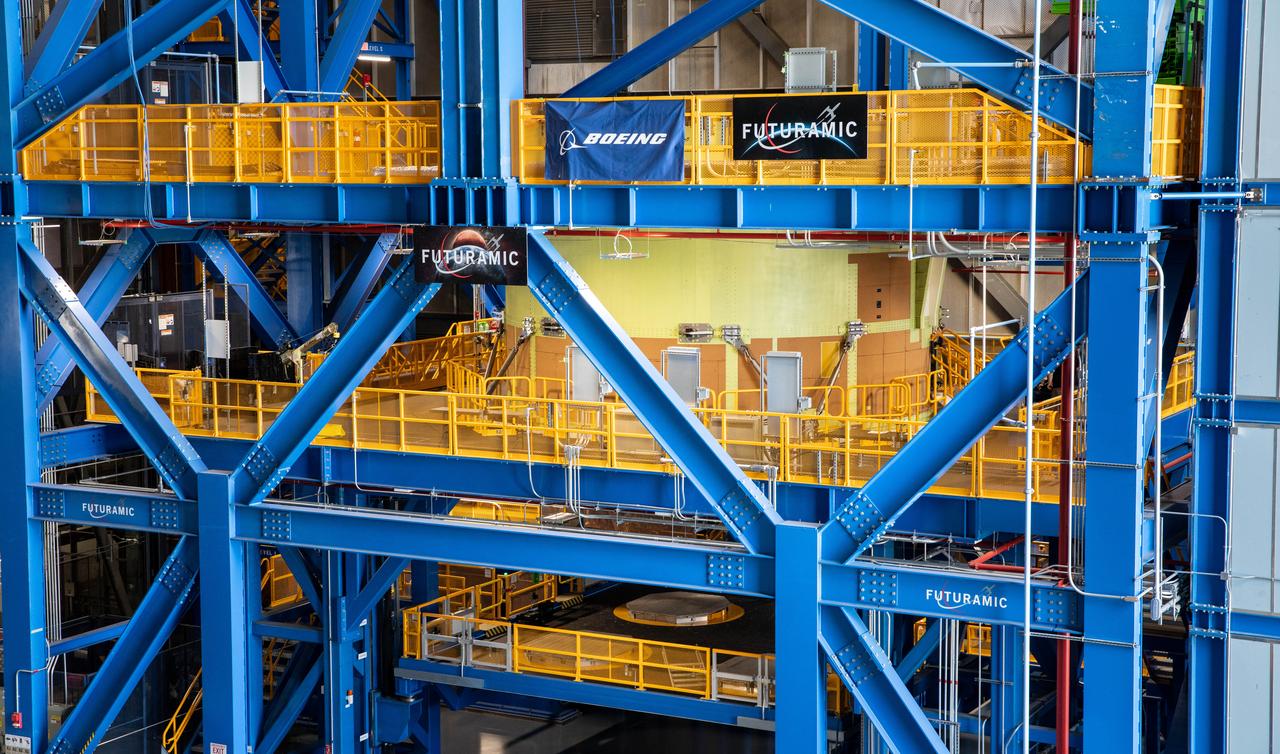
Teams from Kennedy lift NASA’s integrated Artemis III SLS (Space Launch System) core stage engine section with its boat-tail inside the center’s Vehicle Assembly Building at NASA’s Kennedy Space Center in Florida on Wednesday, Aug. 13, 2025. Shown inside the facility’s High Bay 2 for processing, the engine section is one the most complex and intricate parts of the rocket stage that will help power the Artemis missions to the Moon.

Technicians from NASA’s Exploration Ground Systems use massive cranes inside the agency’s Vehicle Assembly Building (VAB) to lift the fully assembled SLS (Space Launch System) core stage vertically 225 feet above the ground from High Bay 2 to a horizontal position in the facility’s transfer aisle at NASA’s Kennedy Space Center in Florida on Friday, March 14, 2025. The 212-foot core stage will undergo final checkouts before being lifted into the VAB’s High Bay 3 for integration alongside the completed stack of twin solid rocket booster segments.
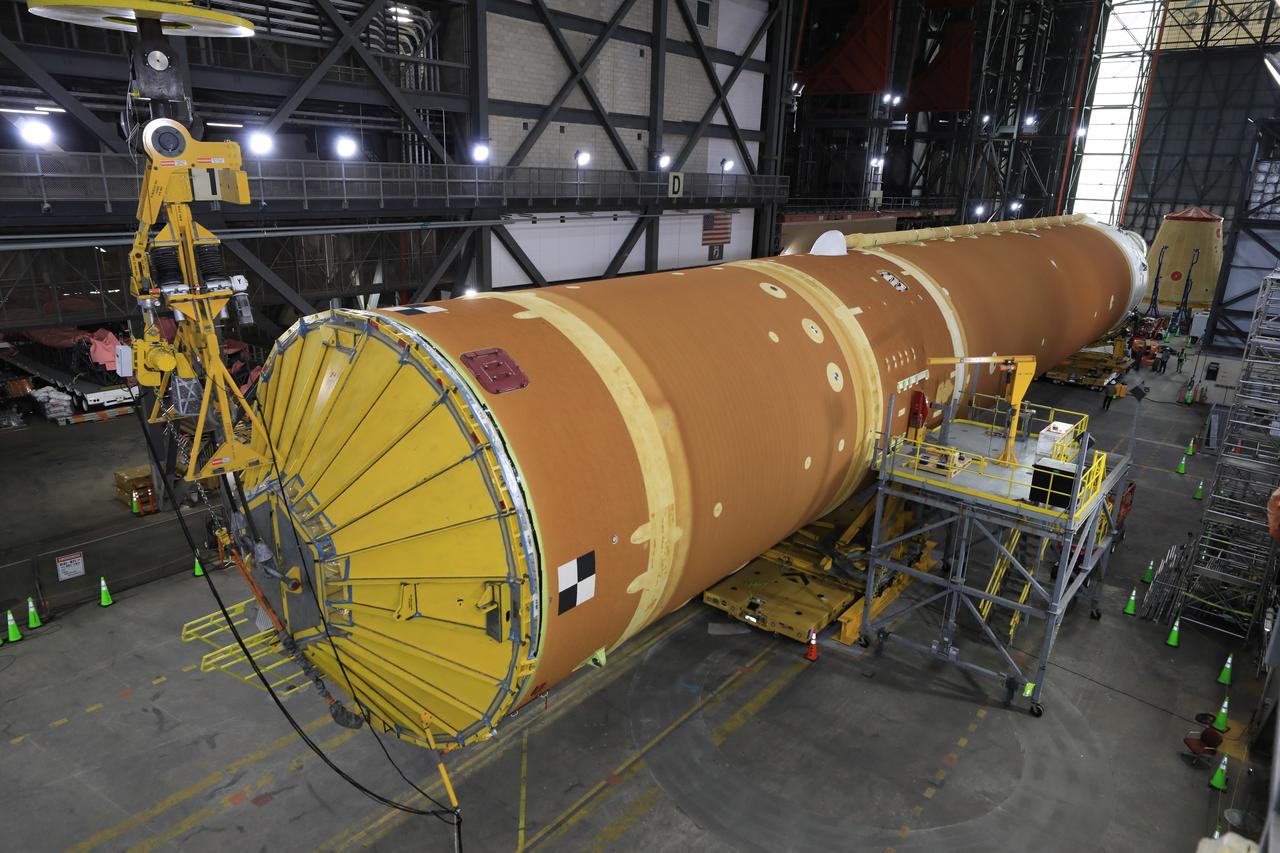
Technicians from NASA’s Exploration Ground Systems use massive cranes inside the agency’s Vehicle Assembly Building (VAB) to lift the fully assembled SLS (Space Launch System) core stage vertically 225 feet above the ground from High Bay 2 to a horizontal position in the facility’s transfer aisle at NASA’s Kennedy Space Center in Florida on Friday, March 14, 2025. The 212-foot core stage will undergo final checkouts before being lifted into the VAB’s High Bay 3 for integration alongside the completed stack of twin solid rocket booster segments.
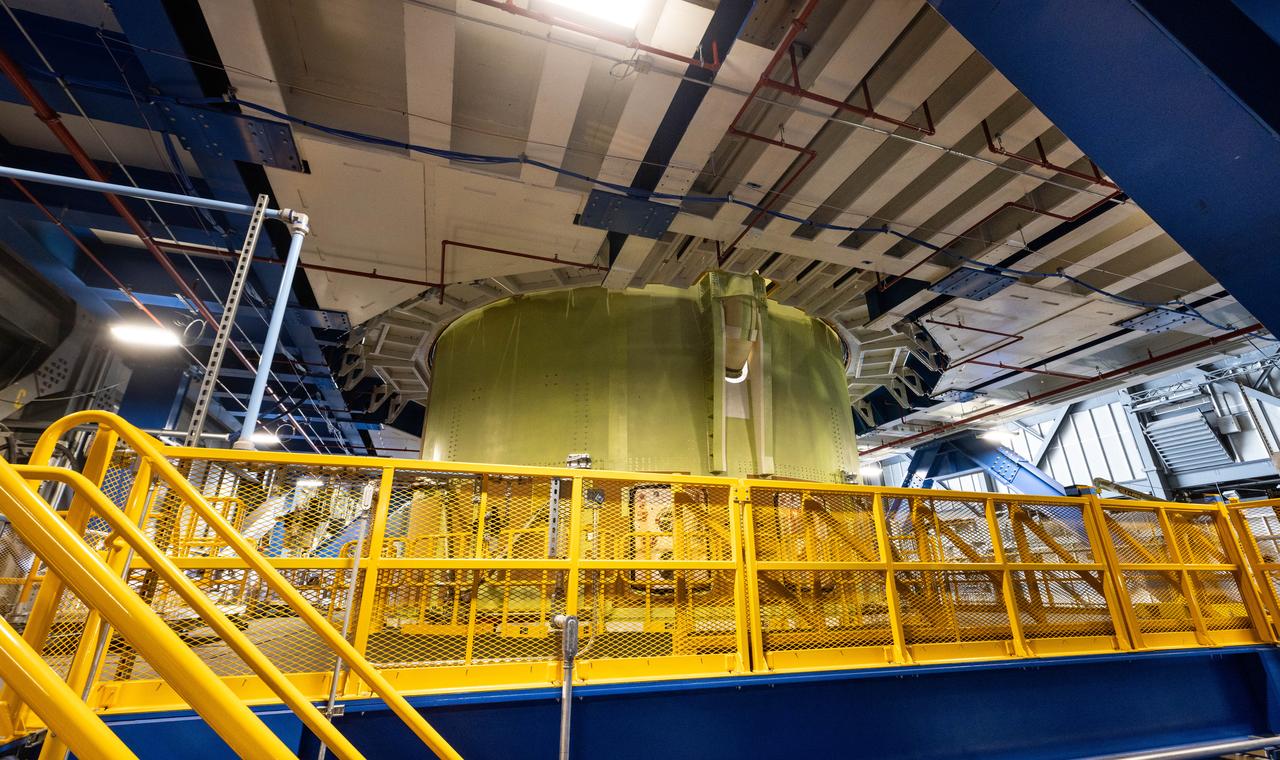
Teams from Kennedy lift NASA’s integrated Artemis III SLS (Space Launch System) core stage engine section with its boat-tail inside the center’s Vehicle Assembly Building at NASA’s Kennedy Space Center in Florida on Wednesday, Aug. 13, 2025. Shown inside the facility’s High Bay 2 for processing, the engine section is one the most complex and intricate parts of the rocket stage that will help power the Artemis missions to the Moon.

Teams from Kennedy lift NASA’s integrated Artemis III SLS (Space Launch System) core stage engine section with its boat-tail inside the center’s Vehicle Assembly Building at NASA’s Kennedy Space Center in Florida on Wednesday, Aug. 13, 2025. Shown inside the facility’s High Bay 2 for processing, the engine section is one the most complex and intricate parts of the rocket stage that will help power the Artemis missions to the Moon.
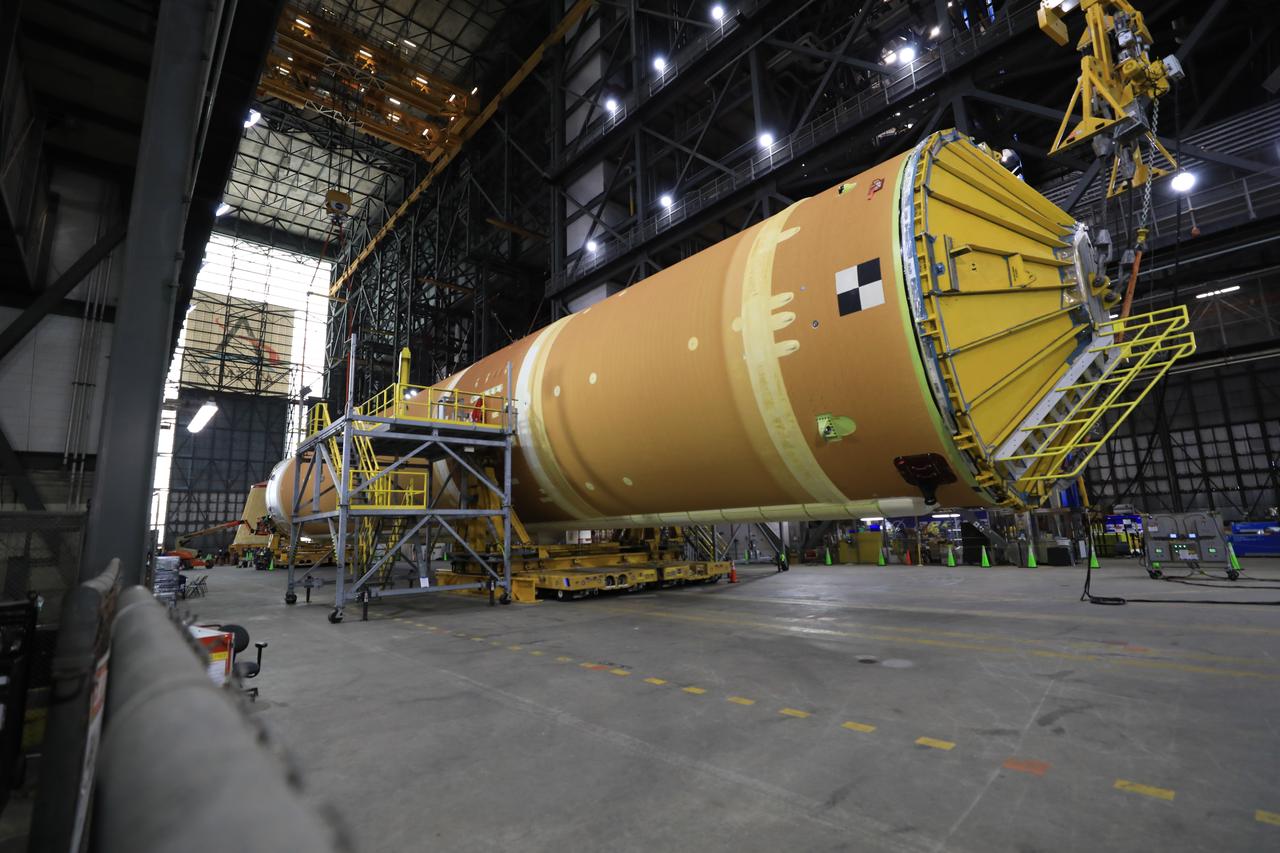
Technicians from NASA’s Exploration Ground Systems use massive cranes inside the agency’s Vehicle Assembly Building (VAB) to lift the fully assembled SLS (Space Launch System) core stage vertically 225 feet above the ground from High Bay 2 to a horizontal position in the facility’s transfer aisle at NASA’s Kennedy Space Center in Florida on Friday, March 14, 2025. The 212-foot core stage will undergo final checkouts before being lifted into the VAB’s High Bay 3 for integration alongside the completed stack of twin solid rocket booster segments.
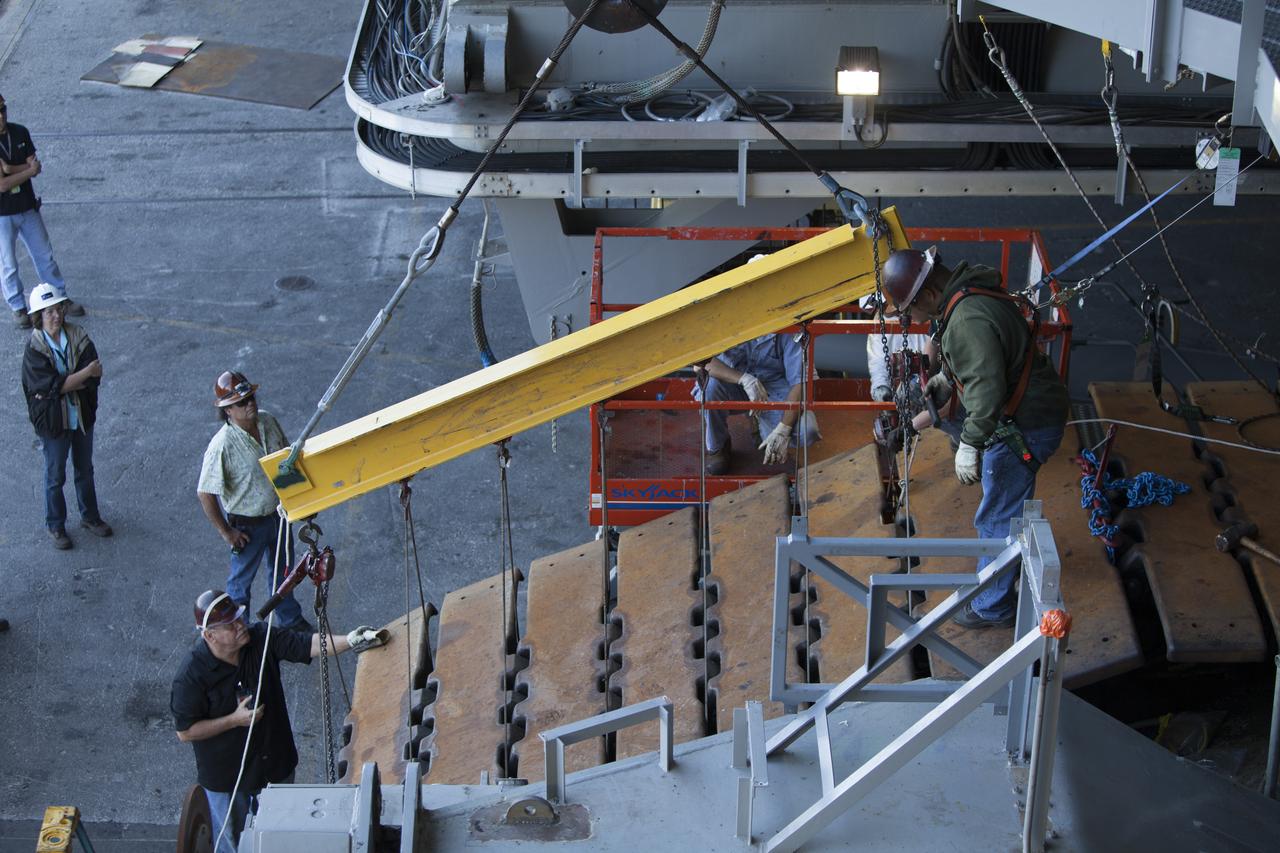
CAPE CANAVERAL, Fla. – Inside the Vehicle Assembly Building at NASA’s Kennedy Space Center in Florida, ground support technicians have attached crane lines to a portion of the treads on the C truck of crawler-transporter 2, or CT-2, so they can be lifted up and away. The treads are being removed in order to gain access to remove the gear boxes. Work continues in high bay 2 to upgrade CT-2. The modifications are designed to ensure CT-2’s ability to transport launch vehicles currently in development, such as the agency’s Space Launch System, to the launch pad. The Ground Systems Development and Operations Program office at Kennedy is overseeing the upgrades. For more than 45 years the crawler-transporters were used to transport the mobile launcher platform and the Apollo-Saturn V rockets and, later, space shuttles to Launch Pads 39A and B. For more information, visit: http://www.nasa.gov/exploration/systems/ground/crawler-transporter. Photo credit: NASA/Dimitri Gerondidakis
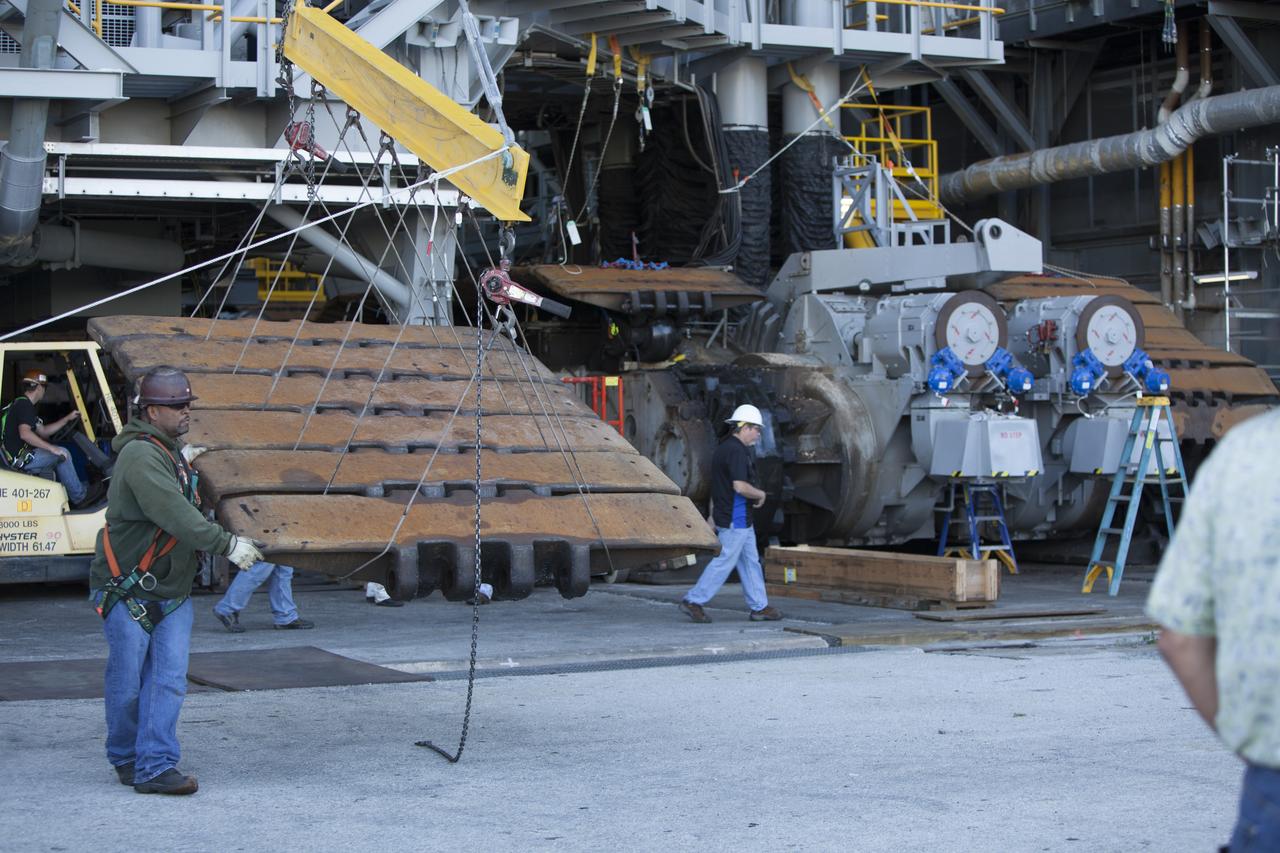
CAPE CANAVERAL, Fla. – Inside the Vehicle Assembly Building at NASA’s Kennedy Space Center in Florida, ground support technicians assist as a crane lifts a portion of the treads on the C truck of crawler-transporter 2, or CT-2, away from the vehicle. The treads are being removed in order to gain access to remove the gear boxes. Work continues in high bay 2 to upgrade CT-2. The modifications are designed to ensure CT-2’s ability to transport launch vehicles currently in development, such as the agency’s Space Launch System, to the launch pad. The Ground Systems Development and Operations Program office at Kennedy is overseeing the upgrades. For more than 45 years the crawler-transporters were used to transport the mobile launcher platform and the Apollo-Saturn V rockets and, later, space shuttles to Launch Pads 39A and B. For more information, visit: http://www.nasa.gov/exploration/systems/ground/crawler-transporter. Photo credit: NASA/Dimitri Gerondidakis
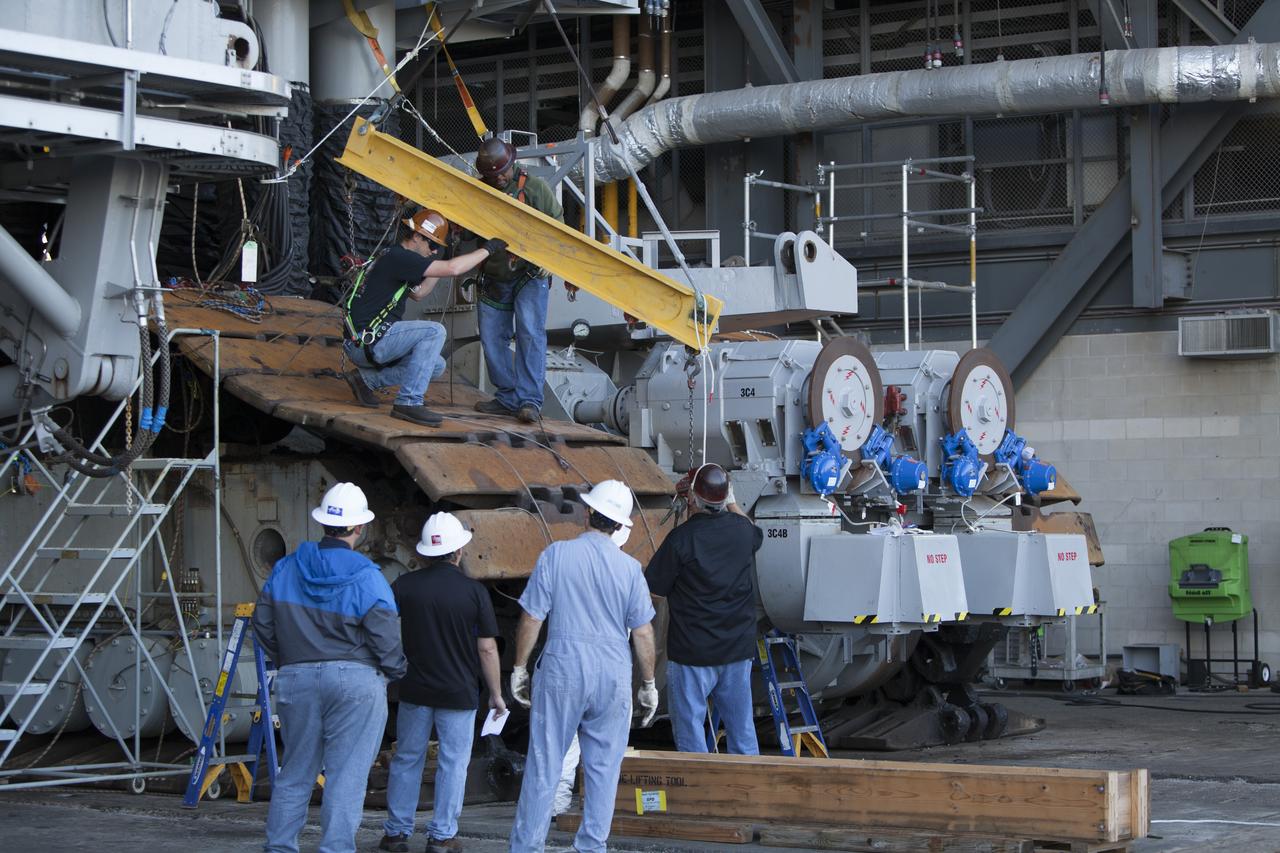
CAPE CANAVERAL, Fla. – Inside the Vehicle Assembly Building at NASA’s Kennedy Space Center in Florida, ground support technicians attach crane lines to the treads on the C truck of crawler-transporter 2, or CT-2, so they can be lifted up and away. The treads are being removed in order to gain access to remove the gear boxes. Work continues in high bay 2 to upgrade CT-2. The modifications are designed to ensure CT-2’s ability to transport launch vehicles currently in development, such as the agency’s Space Launch System, to the launch pad. The Ground Systems Development and Operations Program office at Kennedy is overseeing the upgrades. For more than 45 years the crawler-transporters were used to transport the mobile launcher platform and the Apollo-Saturn V rockets and, later, space shuttles to Launch Pads 39A and B. For more information, visit: http://www.nasa.gov/exploration/systems/ground/crawler-transporter. Photo credit: NASA/Dimitri Gerondidakis
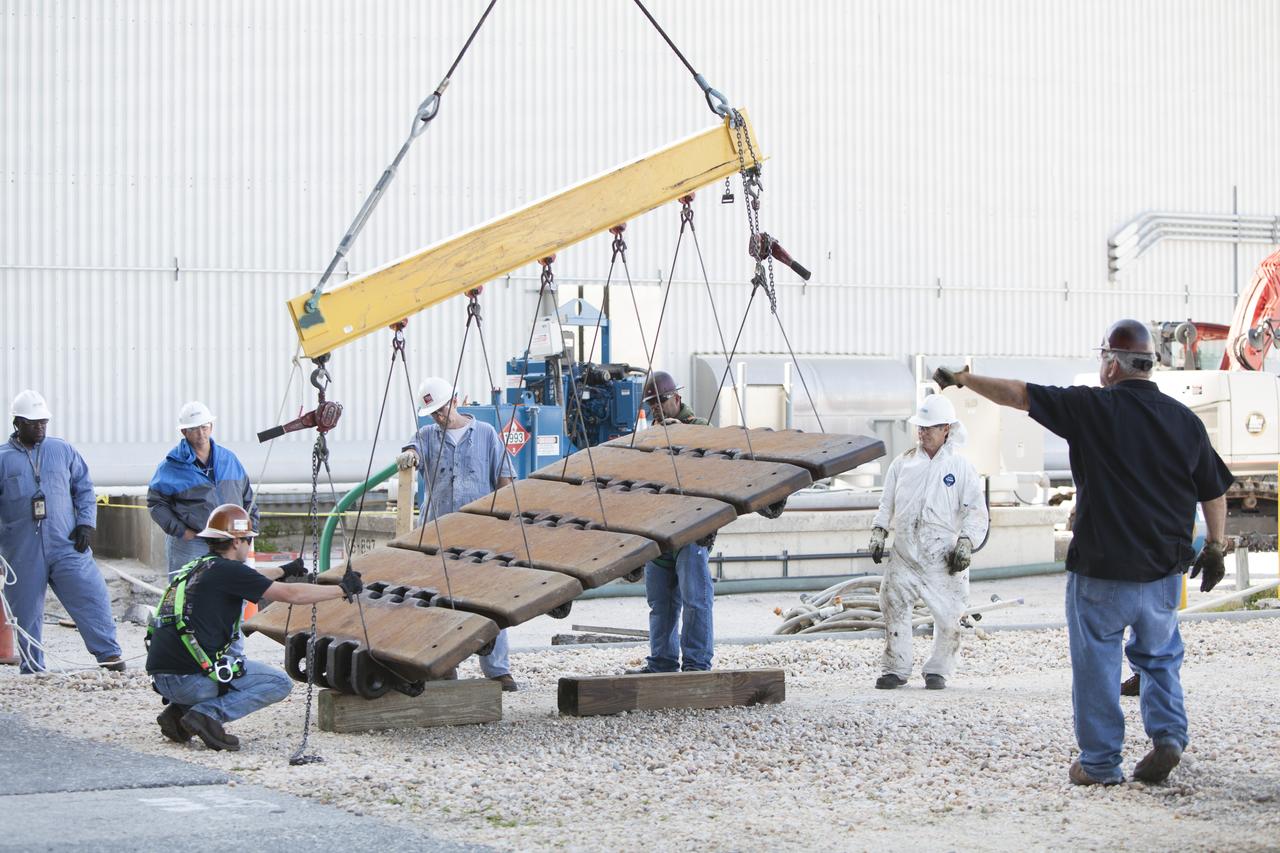
CAPE CANAVERAL, Fla. – A section of the treads on the C truck of crawler-transporter 2, or CT-2, have been removed and are being stored near the Vehicle Assembly Building at NASA’s Kennedy Space Center in Florida. The treads are being removed from the crawler in order to gain access to remove the gear boxes. Work continues in high bay 2 to upgrade CT-2. The modifications are designed to ensure CT-2’s ability to transport launch vehicles currently in development, such as the agency’s Space Launch System, to the launch pad. The Ground Systems Development and Operations Program office at Kennedy is overseeing the upgrades. For more than 45 years the crawler-transporters were used to transport the mobile launcher platform and the Apollo-Saturn V rockets and, later, space shuttles to Launch Pads 39A and B. For more information, visit: http://www.nasa.gov/exploration/systems/ground/crawler-transporter. Photo credit: NASA/Dimitri Gerondidakis
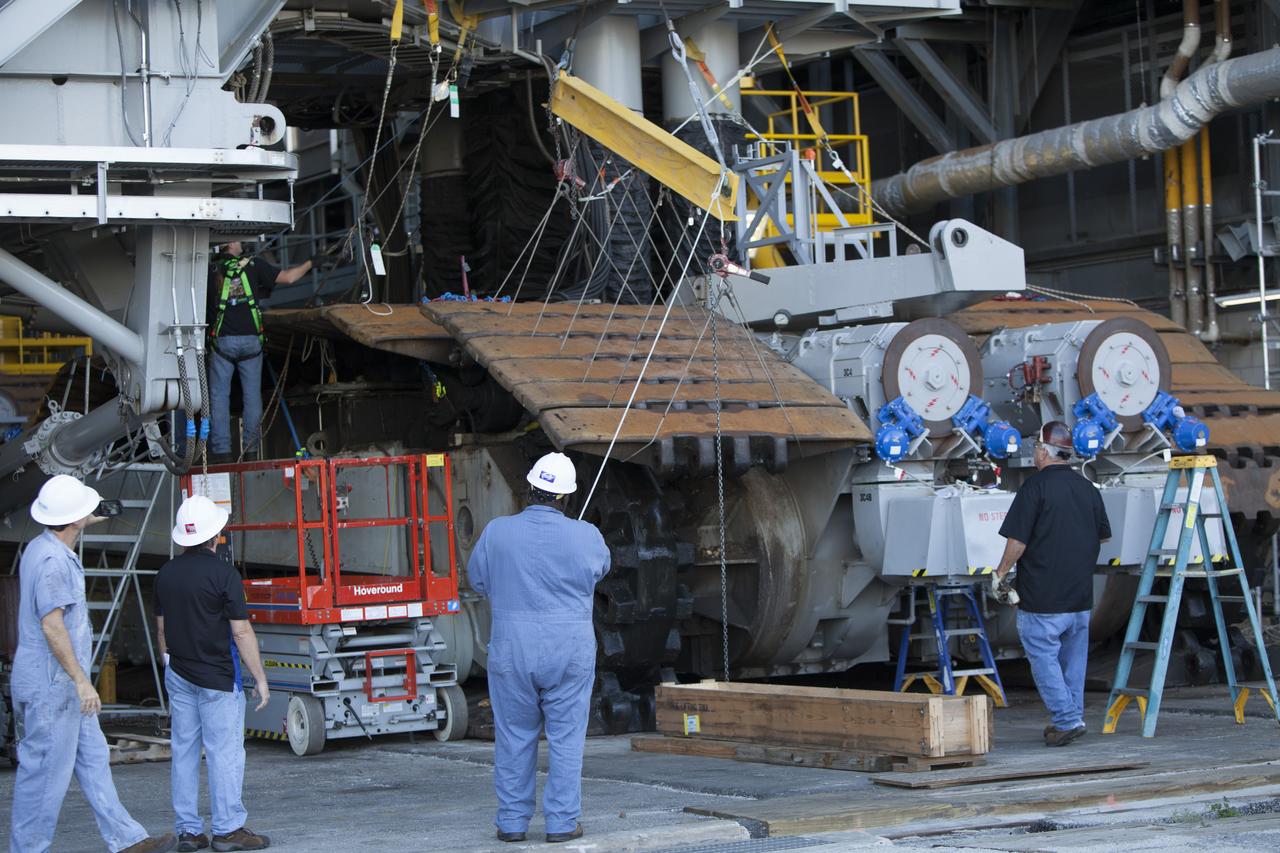
CAPE CANAVERAL, Fla. – Inside the Vehicle Assembly Building at NASA’s Kennedy Space Center in Florida, ground support technicians have attached crane lines to a portion of the treads on the C truck of crawler-transporter 2, or CT-2, so they can be lifted up and away. The treads are being removed in order to gain access to remove the gear boxes. Work continues in high bay 2 to upgrade CT-2. The modifications are designed to ensure CT-2’s ability to transport launch vehicles currently in development, such as the agency’s Space Launch System, to the launch pad. The Ground Systems Development and Operations Program office at Kennedy is overseeing the upgrades. For more than 45 years the crawler-transporters were used to transport the mobile launcher platform and the Apollo-Saturn V rockets and, later, space shuttles to Launch Pads 39A and B. For more information, visit: http://www.nasa.gov/exploration/systems/ground/crawler-transporter. Photo credit: NASA/Dimitri Gerondidakis
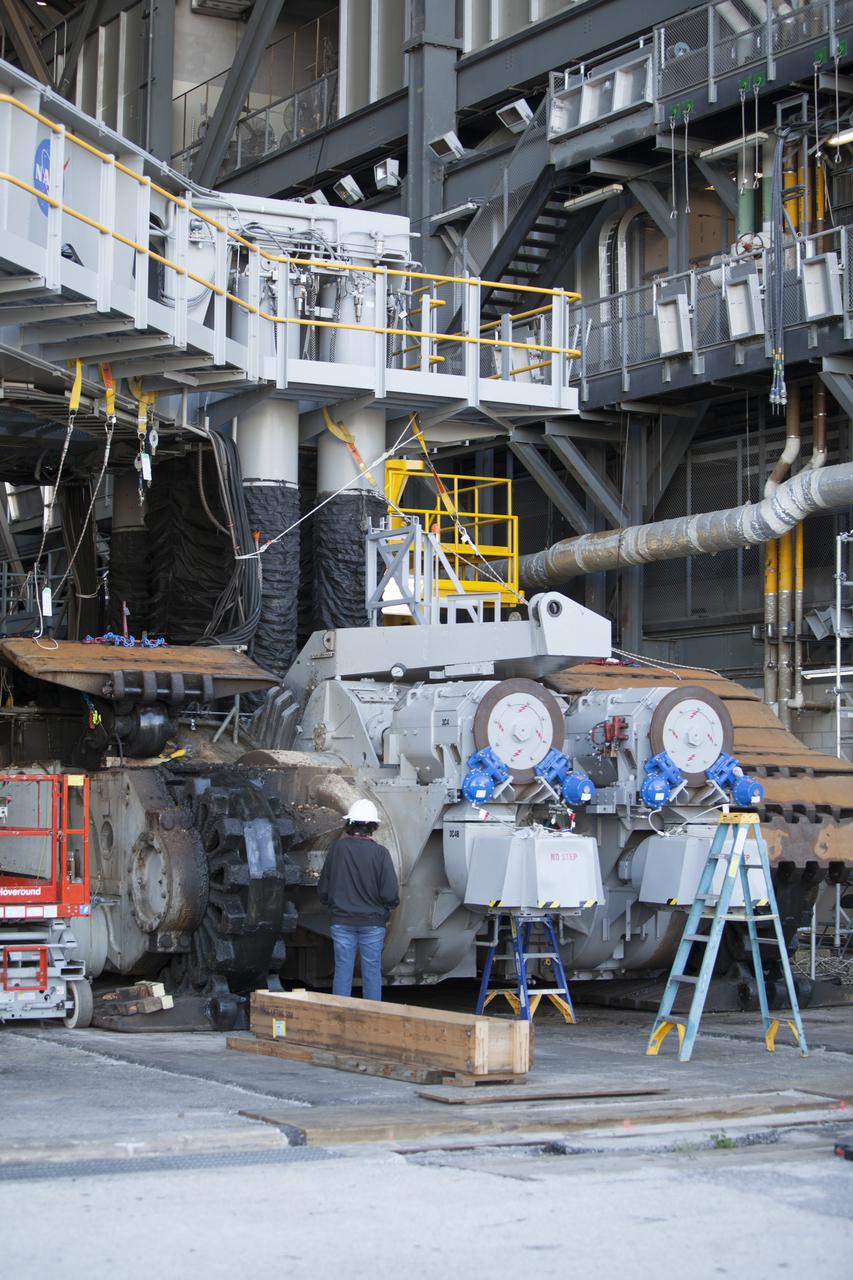
CAPE CANAVERAL, Fla. – Inside the Vehicle Assembly Building at NASA’s Kennedy Space Center in Florida, a portion of the treads on the C truck of crawler-transporter 2, or CT-2, have been removed from the vehicle. The treads are being removed in order to gain access to remove the gear boxes. Work continues in high bay 2 to upgrade CT-2. The modifications are designed to ensure CT-2’s ability to transport launch vehicles currently in development, such as the agency’s Space Launch System, to the launch pad. The Ground Systems Development and Operations Program office at Kennedy is overseeing the upgrades. For more than 45 years the crawler-transporters were used to transport the mobile launcher platform and the Apollo-Saturn V rockets and, later, space shuttles to Launch Pads 39A and B. For more information, visit: http://www.nasa.gov/exploration/systems/ground/crawler-transporter. Photo credit: NASA/Dimitri Gerondidakis
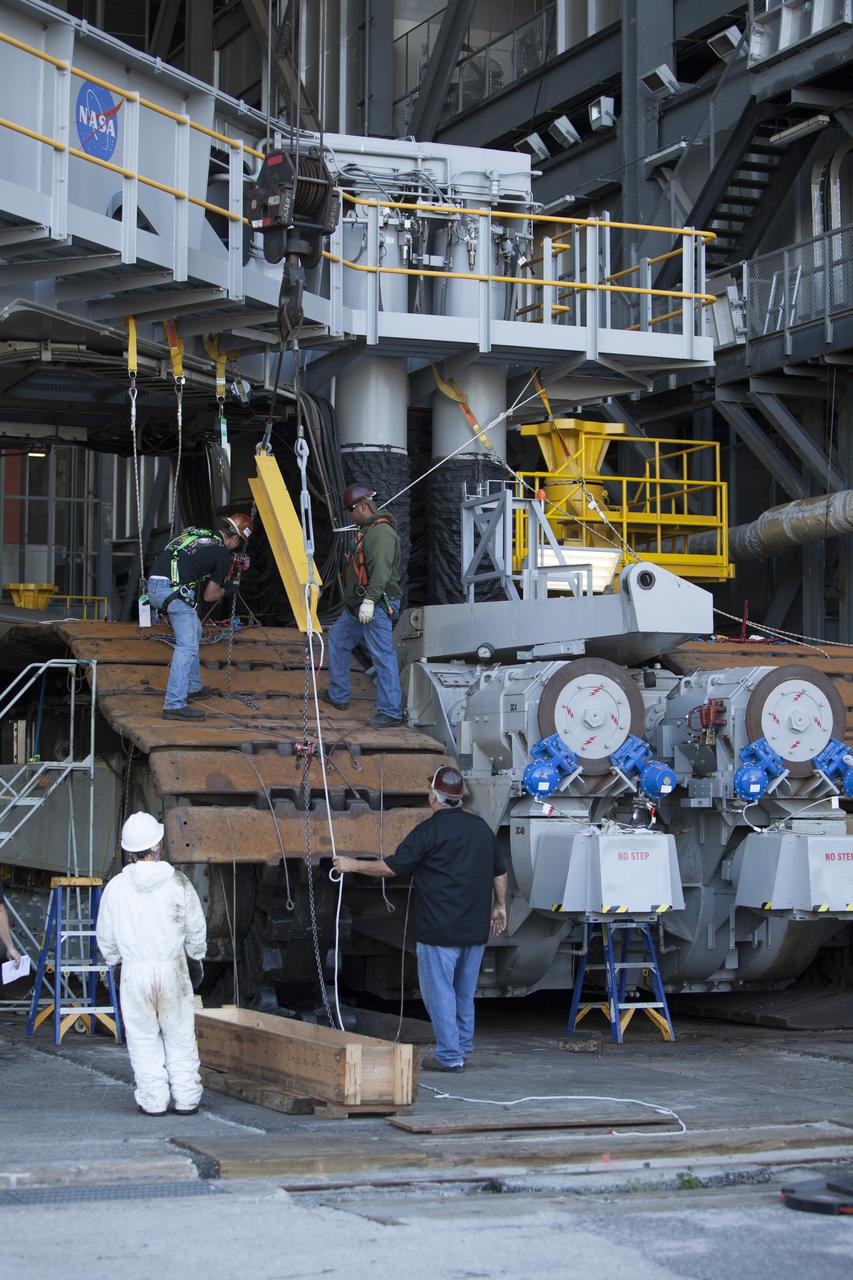
CAPE CANAVERAL, Fla. – Inside the Vehicle Assembly Building at NASA’s Kennedy Space Center in Florida, ground support technicians attach crane lines to the treads on the C truck of crawler-transporter 2, or CT-2, so they can be lifted up and away. The treads are being removed in order to gain access to remove the gear boxes. Work continues in high bay 2 to upgrade CT-2. The modifications are designed to ensure CT-2’s ability to transport launch vehicles currently in development, such as the agency’s Space Launch System, to the launch pad. The Ground Systems Development and Operations Program office at Kennedy is overseeing the upgrades. For more than 45 years the crawler-transporters were used to transport the mobile launcher platform and the Apollo-Saturn V rockets and, later, space shuttles to Launch Pads 39A and B. For more information, visit: http://www.nasa.gov/exploration/systems/ground/crawler-transporter. Photo credit: NASA/Dimitri Gerondidakis
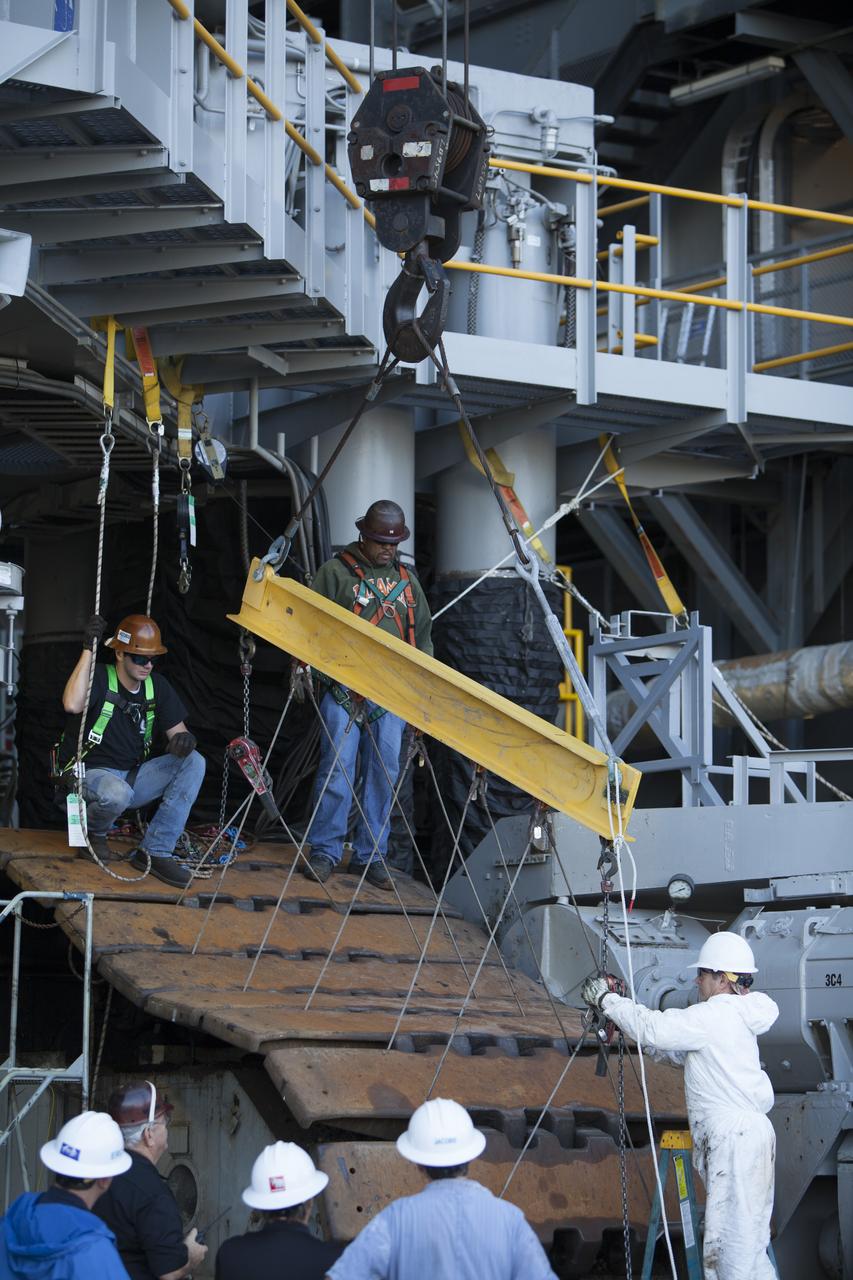
CAPE CANAVERAL, Fla. – Inside the Vehicle Assembly Building at NASA’s Kennedy Space Center in Florida, ground support technicians attach crane lines to the treads on the C truck of crawler-transporter 2, or CT-2, so they can be lifted up and away. The treads are being removed in order to gain access to remove the gear boxes. Work continues in high bay 2 to upgrade CT-2. The modifications are designed to ensure CT-2’s ability to transport launch vehicles currently in development, such as the agency’s Space Launch System, to the launch pad. The Ground Systems Development and Operations Program office at Kennedy is overseeing the upgrades. For more than 45 years the crawler-transporters were used to transport the mobile launcher platform and the Apollo-Saturn V rockets and, later, space shuttles to Launch Pads 39A and B. For more information, visit: http://www.nasa.gov/exploration/systems/ground/crawler-transporter. Photo credit: NASA/Dimitri Gerondidakis
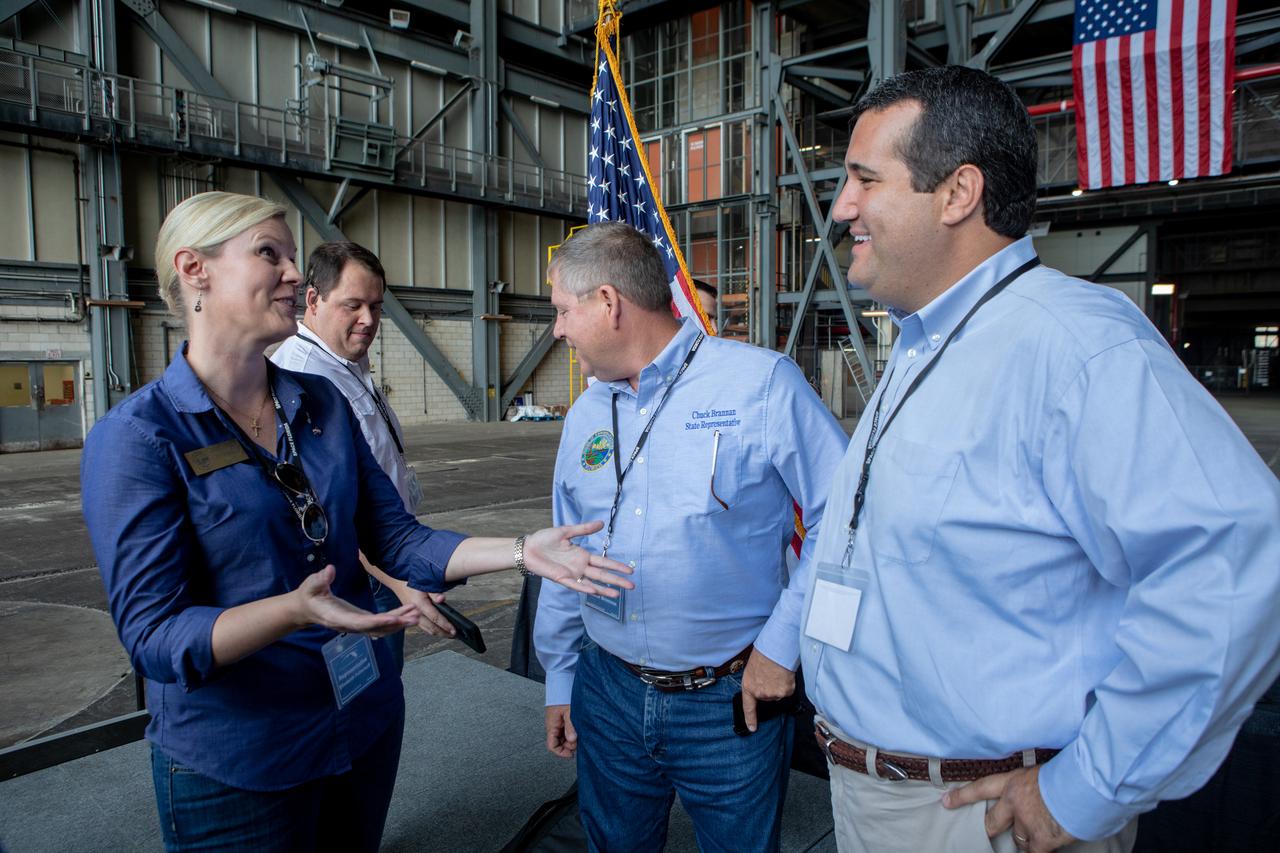
Elected officials and guests visit after a ribbon cutting ceremony on Aug. 16, 2019, in High Bay 2 of the Vehicle Assembly Building (VAB) at NASA’s Kennedy Space Center in Florida. The VAB is getting its first commercial tenant. Northrop Grumman signed a Reimbursable Space Act Agreement with NASA for use of the facilities. The company will assemble and test its new OmegA rocket inside the massive facility’s High Bay 2. The company also will modify mobile launcher platform-3 to serve as the launch vehicle’s assembly and launch platform. Northrop Grumman is developing the OmegA rocket, an intermediate/heavy-class launch vehicle, as part of a launch services agreement with the U.S. Air Force.
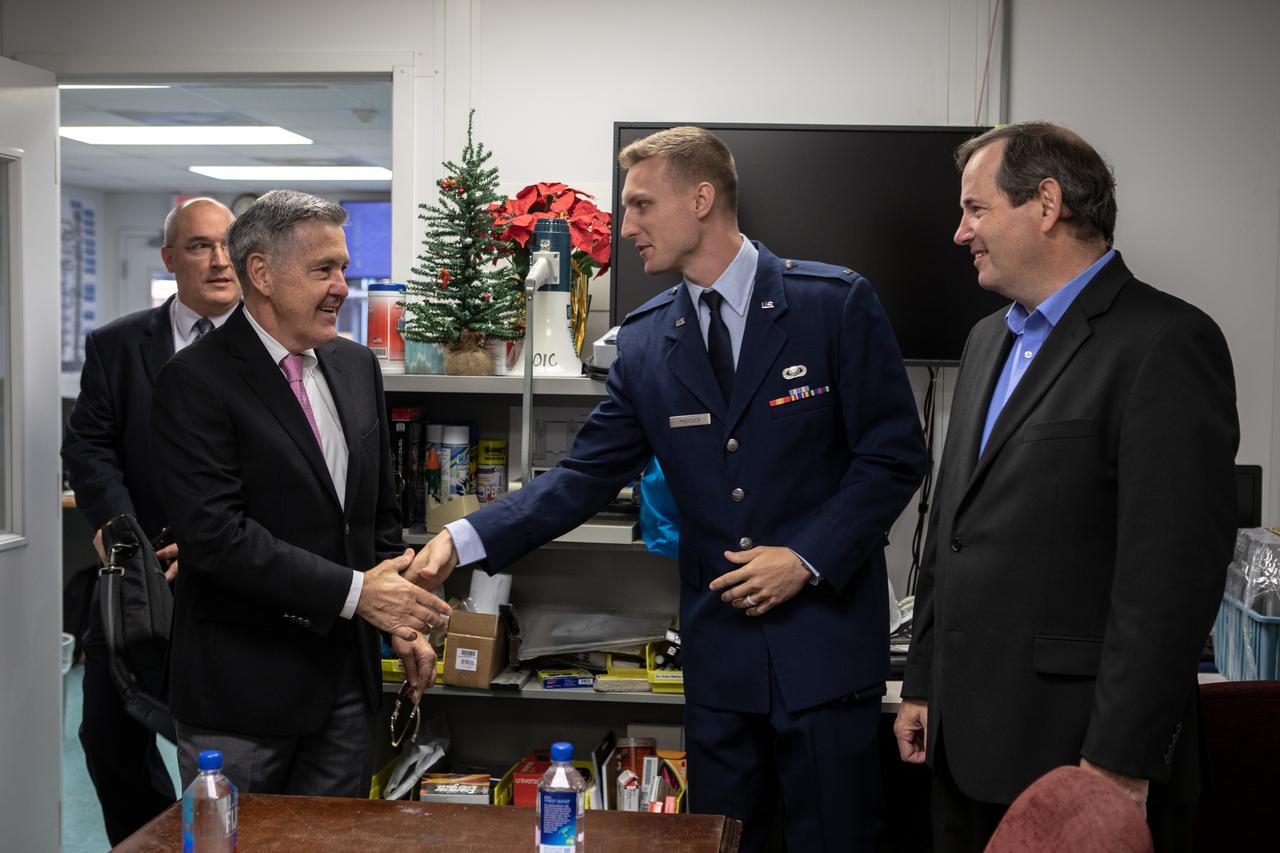
Just before a ribbon cutting ceremony on Aug. 16, 2019, in High Bay 2 of the Vehicle Assembly (VAB) at NASA’s Kennedy Space Center in Florida, Center Director Bob Cabana, at left, shakes hands with First Lieutenant Alex Priesser, U.S. Air Force, 45th Space Wing. At far right is Jim Williams, director of media operations, 45th Space Wing. The VAB is getting its first commercial tenant. Northrop Grumman signed a Reimbursable Space Act Agreement with NASA for use of the facilities. The company will assemble and test its new OmegA rocket inside the massive facility’s High Bay 2. The company also will modify the space shuttle-era mobile launcher platform-3 to serve as the launch vehicle’s assembly and launch platform. Northrop Grumman is developing the OmegA rocket, an intermediate/heavy-class launch vehicle, as part of a launch services agreement with the U.S. Air Force.
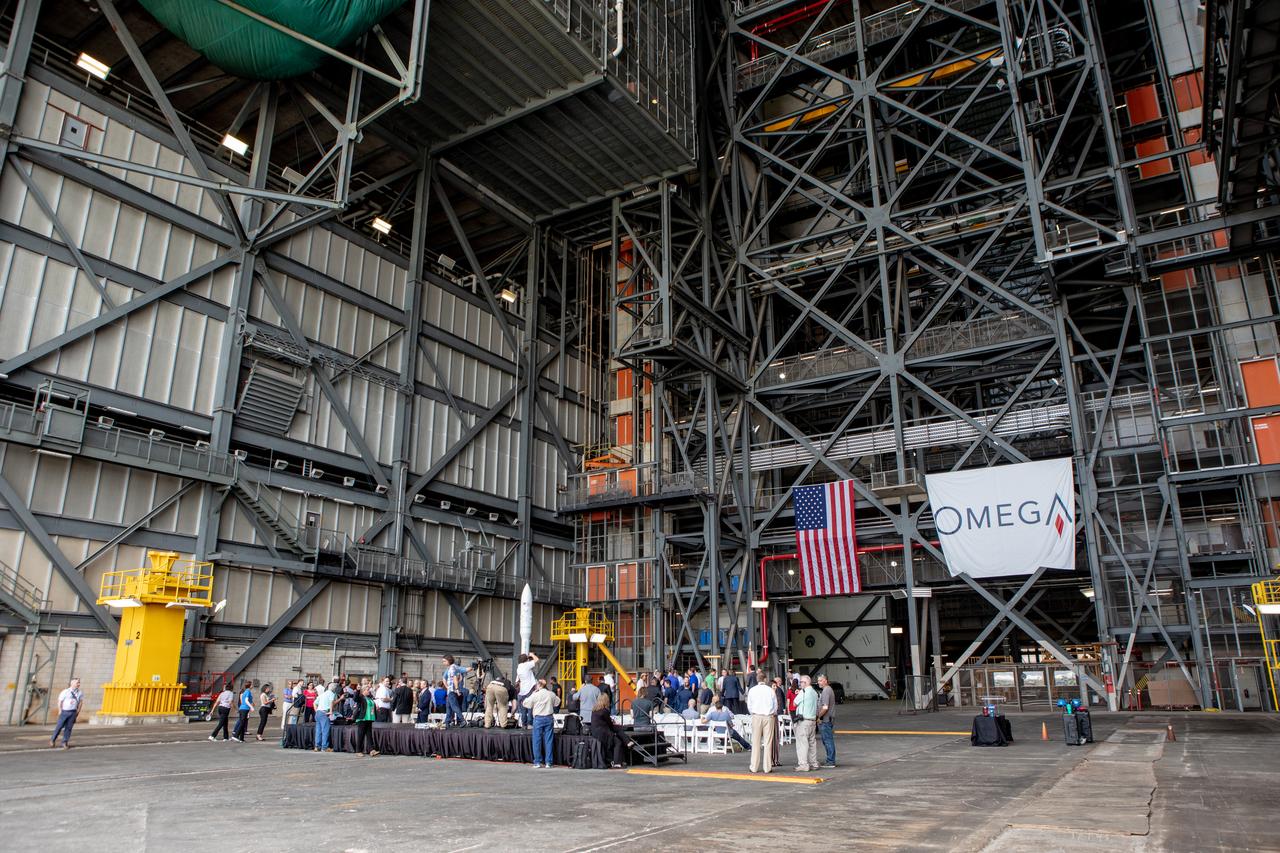
Legislators, invited guests and members of the media attend a ribbon cutting ceremony on Aug. 16, 2019, in High Bay 2 of the Vehicle Assembly Building (VAB) at NASA’s Kennedy Space Center in Florida. The VAB is getting its first commercial tenant. Northrop Grumman signed a Reimbursable Space Act Agreement with NASA for use of the facilities. The company will assemble and test its new OmegA rocket inside the massive facility’s High Bay 2. The company also will modify MLP-3 to serve as the launch vehicle’s assembly and launch platform. Northrop Grumman is developing the OmegA rocket, an intermediate/heavy-class launch vehicle, as part of a launch services agreement with the U.S. Air Force.

During a ribbon cutting ceremony on Aug. 16, 2019, in High Bay 2 of the Vehicle Assembly Building (VAB) at NASA’s Kennedy Space Center in Florida, Col. Thomas Ste. Marie, vice commander, U.S. Air Force, 45th Space Wing, speaks to legislators and guests. Seated behind him, from left, are Kennedy Center Director Bob Cabana; Kent Rominger, Northrop Grumman’s vice president and capture lead for the OmegA launch system; and Tom Engler, director of Kennedy’s Center Planning and Development Office. The VAB is getting its first commercial tenant. Northrop Grumman signed a Reimbursable Space Act Agreement with NASA for use of the facilities. The company will assemble and test its new OmegA rocket inside the massive facility’s High Bay 2. The company also will modify mobile launcher platform-3 to serve as the launch vehicle’s assembly and launch platform. Northrop Grumman is developing the OmegA rocket, an intermediate/heavy-class launch vehicle, as part of a launch services agreement with the U.S. Air Force.
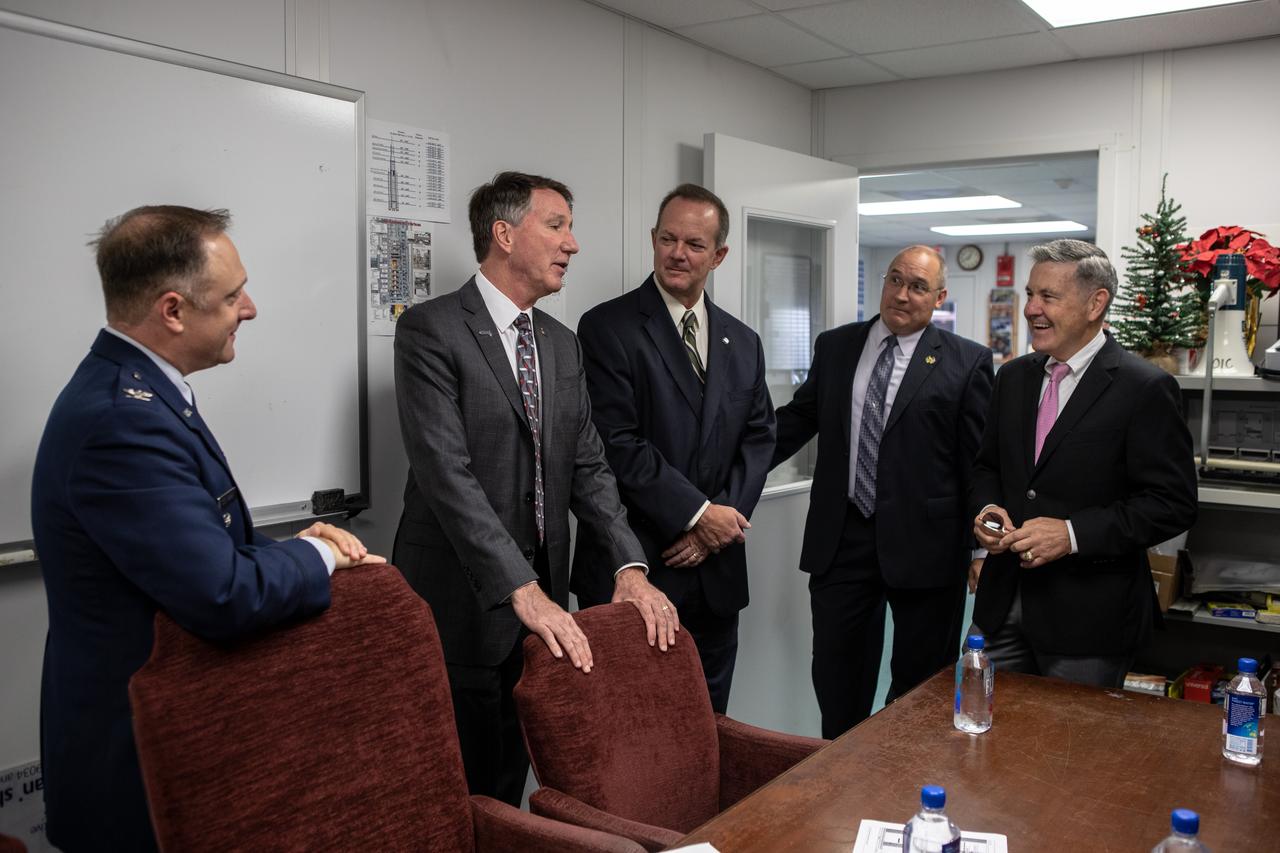
Just before a ribbon cutting ceremony on Aug. 16, 2019, in High Bay 2 of the Vehicle Assembly (VAB) at NASA’s Kennedy Space Center in Florida, Center Director Bob Cabana, at right, visits with, from left, Col. Thomas Ste. Marie, vice commander, U.S. Air Force, 45th Space Wing; Kurt Rominger, Northrop Grumman’s vice president and capture lead for the OmegA launch system; Tom Engler, director of Kennedy’s Center Planning and Development Office; and Greg Harland, NASA communications. The VAB is getting its first commercial tenant. Northrop Grumman signed a Reimbursable Space Act Agreement with NASA for use of the facilities. The company will assemble and test its new OmegA rocket inside the massive facility’s High Bay 2. The company also will modify the space shuttle-era mobile launcher platform-3 to serve as the launch vehicle’s assembly and launch platform. Northrop Grumman is developing the OmegA rocket, an intermediate/heavy-class launch vehicle, as part of a launch services agreement with the U.S. Air Force.
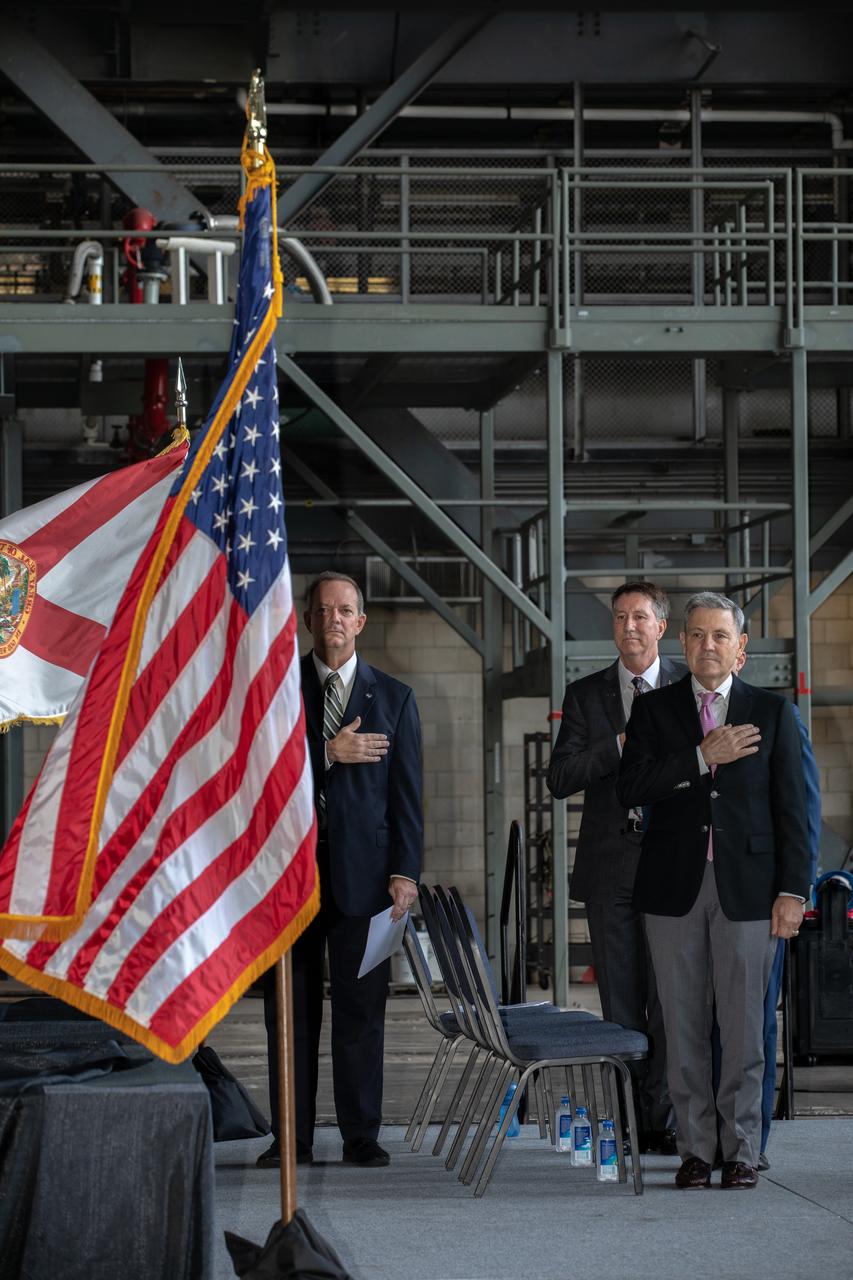
The National Anthem is sung during a ribbon cutting ceremony on Aug. 16, 2019, in High Bay 2 of the Vehicle Assembly Building (VAB) at NASA’s Kennedy Space Center in Florida. From left are Tom Engler, director of Kennedy’s Center Planning and Development Office; Kent Rominger, Northrop Grumman’s vice president and capture lead for the OmegA launch system; and Kennedy’s Center Director Bob Cabana. The VAB is getting its first commercial tenant. Northrop Grumman signed a Reimbursable Space Act Agreement with NASA for use of the facilities. The company will assemble and test its new OmegA rocket inside the massive facility’s High Bay 2. The company also will modify mobile launcher platform-3 to serve as the launch vehicle’s assembly and launch platform. Northrop Grumman is developing the OmegA rocket, an intermediate/heavy-class launch vehicle, as part of a launch services agreement with the U.S. Air Force.
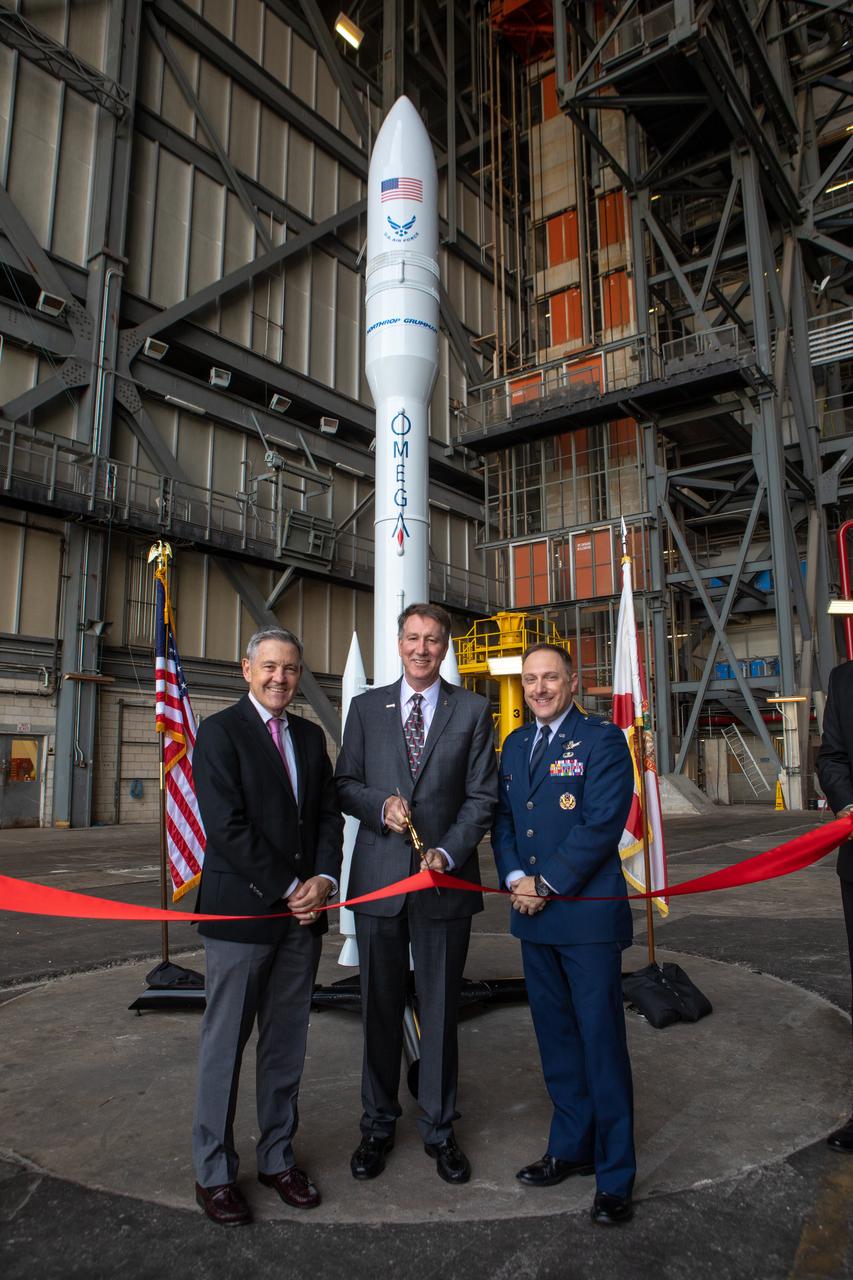
A ribbon cutting ceremony took place on Aug. 16, 2019, in High Bay 2 of the Vehicle Assembly Building (VAB) at NASA’s Kennedy Space Center in Florida. From left are Kennedy Center Director Bob Cabana; Kent Rominger, Northrop Grumman’s vice president and capture lead for the OmegA launch system; and Col. Thomas Ste. Marie, vice commander, U.S. Air Force, 45th Space Wing. Behind them is a scale model of the OmegA launch system. The VAB is getting its first commercial tenant. Northrop Grumman signed a Reimbursable Space Act Agreement with NASA for use of the facilities. The company will assemble and test its new OmegA rocket inside the massive facility’s High Bay 2. The company also will modify mobile launcher platform-3 to serve as the launch vehicle’s assembly and launch platform. Northrop Grumman is developing the OmegA rocket, an intermediate/heavy-class launch vehicle, as part of a launch services agreement with the U.S. Air Force.
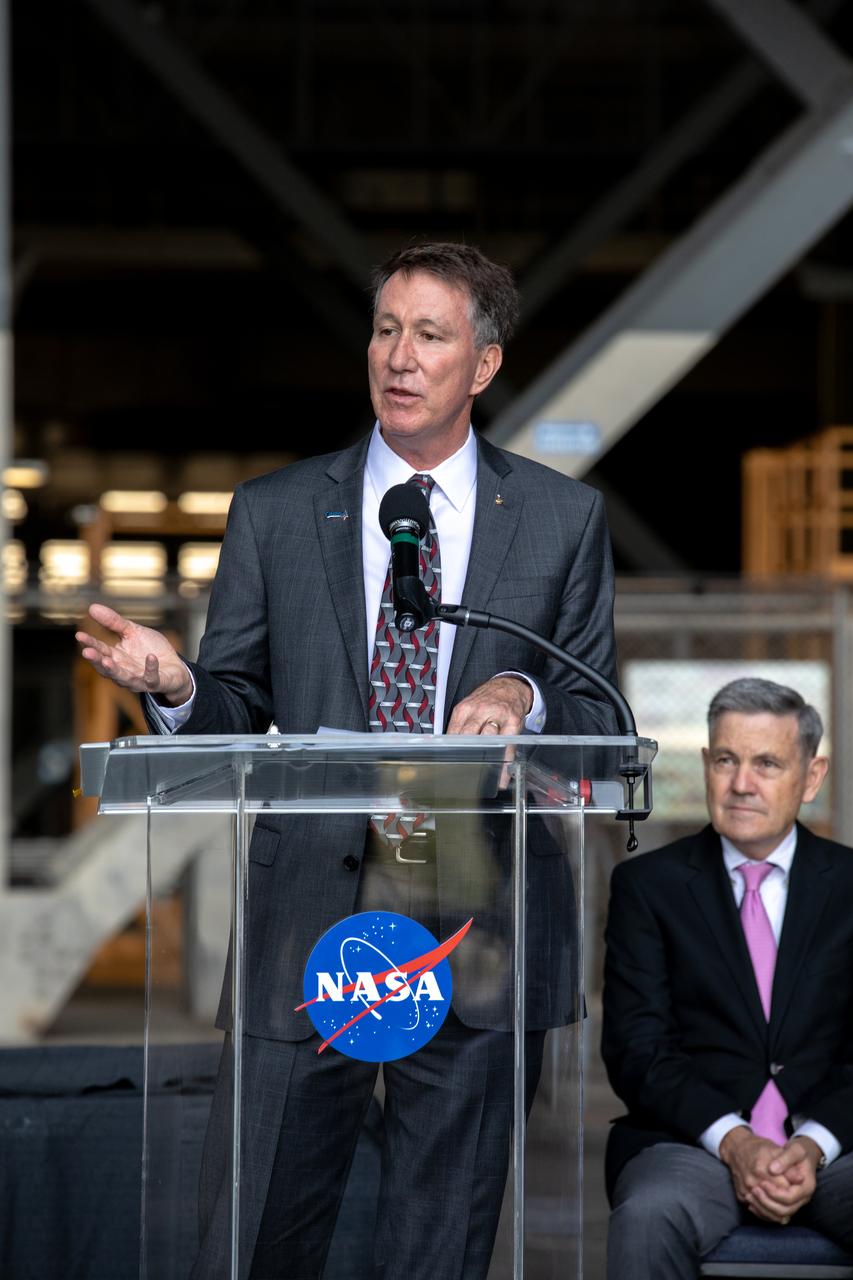
During a ribbon cutting ceremony on Aug. 16, 2019, in High Bay 2 of the Vehicle Assembly Building (VAB) at NASA’s Kennedy Space Center in Florida, Kent Rominger, Northrop Grumman’s vice president and capture lead for the OmegA launch system, speaks to legislators and guests. Seated behind him is Kennedy Center Director Bob Cabana. The VAB is getting its first commercial tenant. Northrop Grumman signed a Reimbursable Space Act Agreement with NASA for use of the facilities. The company will assemble and test its new OmegA rocket inside the massive facility’s High Bay 2. The company also will modify mobile launcher platform-3 to serve as the launch vehicle’s assembly and launch platform. Northrop Grumman is developing the OmegA rocket, an intermediate/heavy-class launch vehicle, as part of a launch services agreement with the U.S. Air Force.
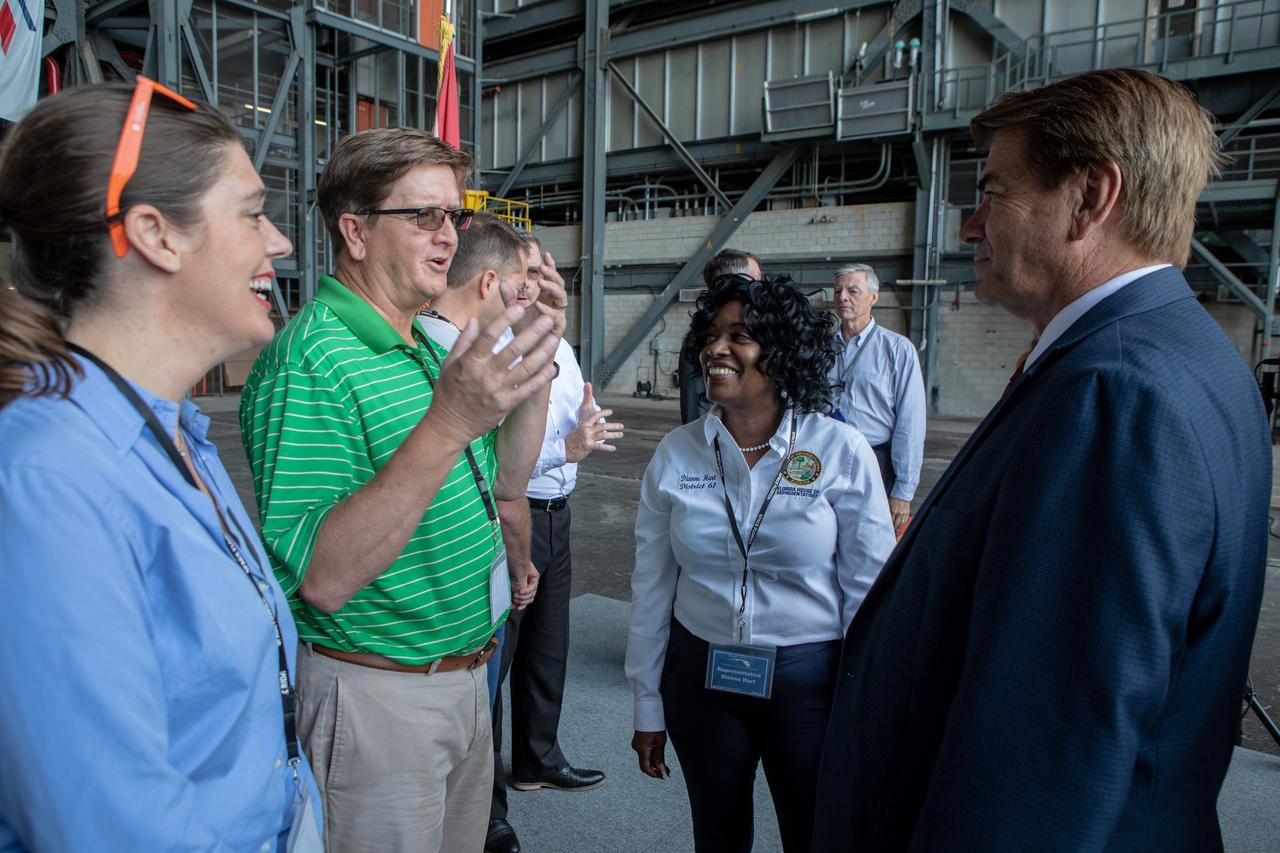
Elected officials and guests visit after a ribbon cutting ceremony on Aug. 16, 2019, in High Bay 2 of the Vehicle Assembly Building (VAB) at NASA’s Kennedy Space Center in Florida. At far right is Florida State Senator Thad Altman. The VAB is getting its first commercial tenant. Northrop Grumman signed a Reimbursable Space Act Agreement with NASA for use of the facilities. The company will assemble and test its new OmegA rocket inside the massive facility’s High Bay 2. The company also will modify mobile launcher platform-3 to serve as the launch vehicle’s assembly and launch platform. Northrop Grumman is developing the OmegA rocket, an intermediate/heavy-class launch vehicle, as part of a launch services agreement with the U.S. Air Force.
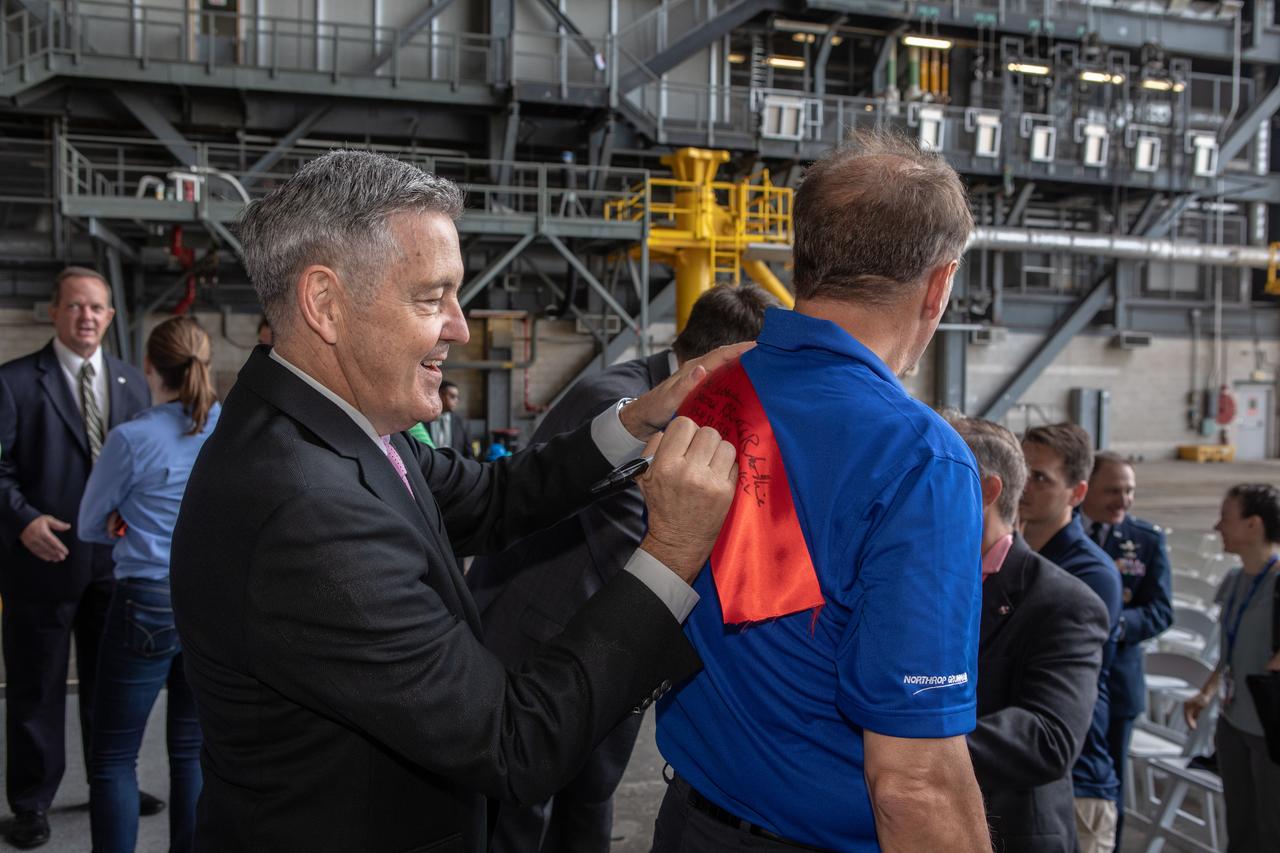
Legislators, invited guests and members of the media attend a ribbon cutting ceremony on Aug. 16, 2019, in High Bay 2 of the Vehicle Assembly Building (VAB) at NASA’s Kennedy Space Center in Florida. Kennedy Center Director Bob Cabana autographs a portion of the ribbon for a guest. In view, at far left, is Tom Engler, director of Kennedy’s Center Planning and Development Office. The VAB is getting its first commercial tenant. Northrop Grumman signed a Reimbursable Space Act Agreement with NASA for use of the facilities. The company will assemble and test its new OmegA rocket inside the massive facility’s High Bay 2. The company also will modify mobile launcher platform-3 to serve as the launch vehicle’s assembly and launch platform. Northrop Grumman is developing the OmegA rocket, an intermediate/heavy-class launch vehicle, as part of a launch services agreement with the U.S. Air Force.
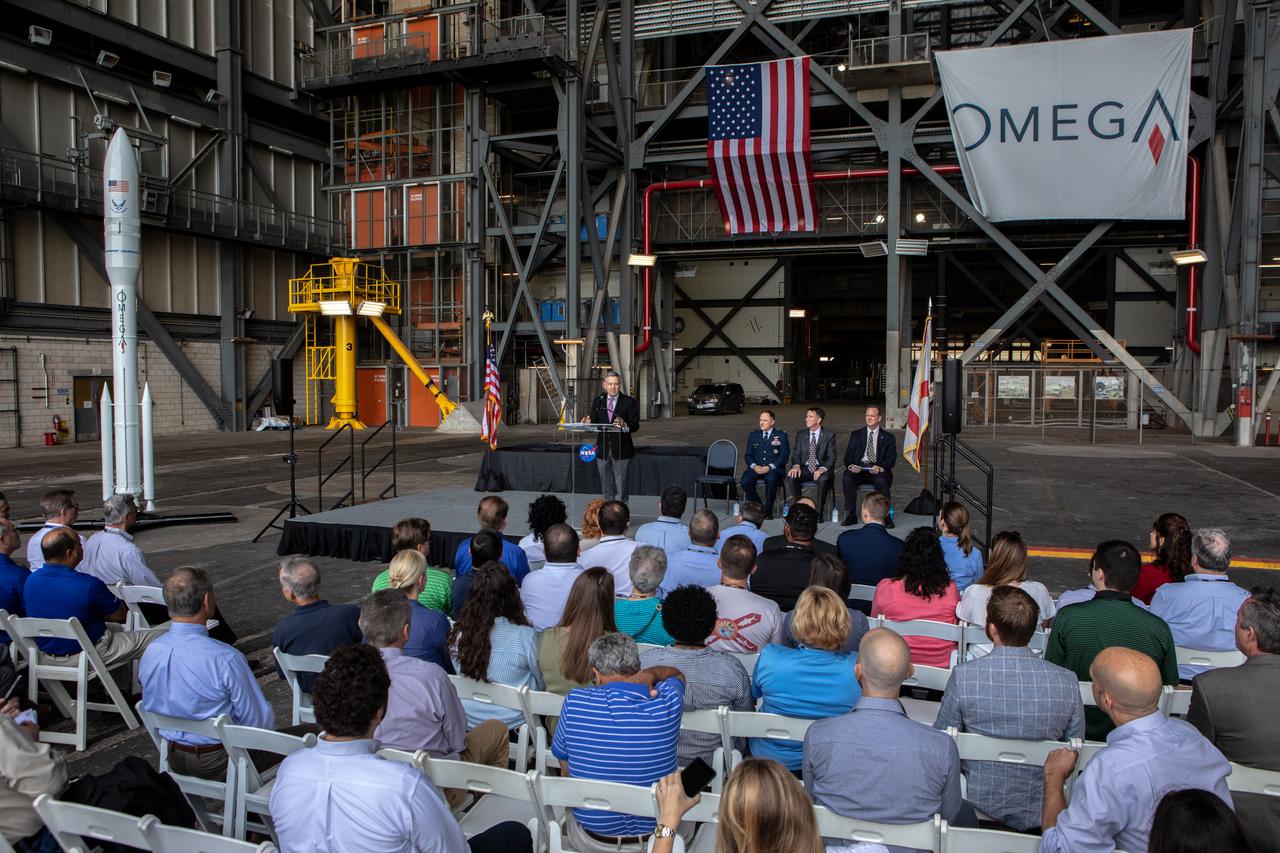
During a ribbon cutting ceremony on Aug. 16, 2019, in High Bay 2 of the Vehicle Assembly Building (VAB) at NASA’s Kennedy Space Center in Florida, Kennedy Center Director Bob Cabana speaks to legislators and guests. Seated from left, are Col. Thomas Ste. Marie, vice commander, U.S. Air Force, 45th Space Wing; Kent Rominger, Northrop Grumman’s vice president and capture lead for the OmegA launch system; and Tom Engler, director of Kennedy’s Center Planning and Development Office. The VAB is getting its first commercial tenant. Northrop Grumman signed a Reimbursable Space Act Agreement with NASA for use of the facilities. The company will assemble and test its new OmegA rocket inside the massive facility’s High Bay 2. The company also will modify mobile launcher platform-3 to serve as the launch vehicle’s assembly and launch platform. Northrop Grumman is developing the OmegA rocket, an intermediate/heavy-class launch vehicle, as part of a launch services agreement with the U.S. Air Force.
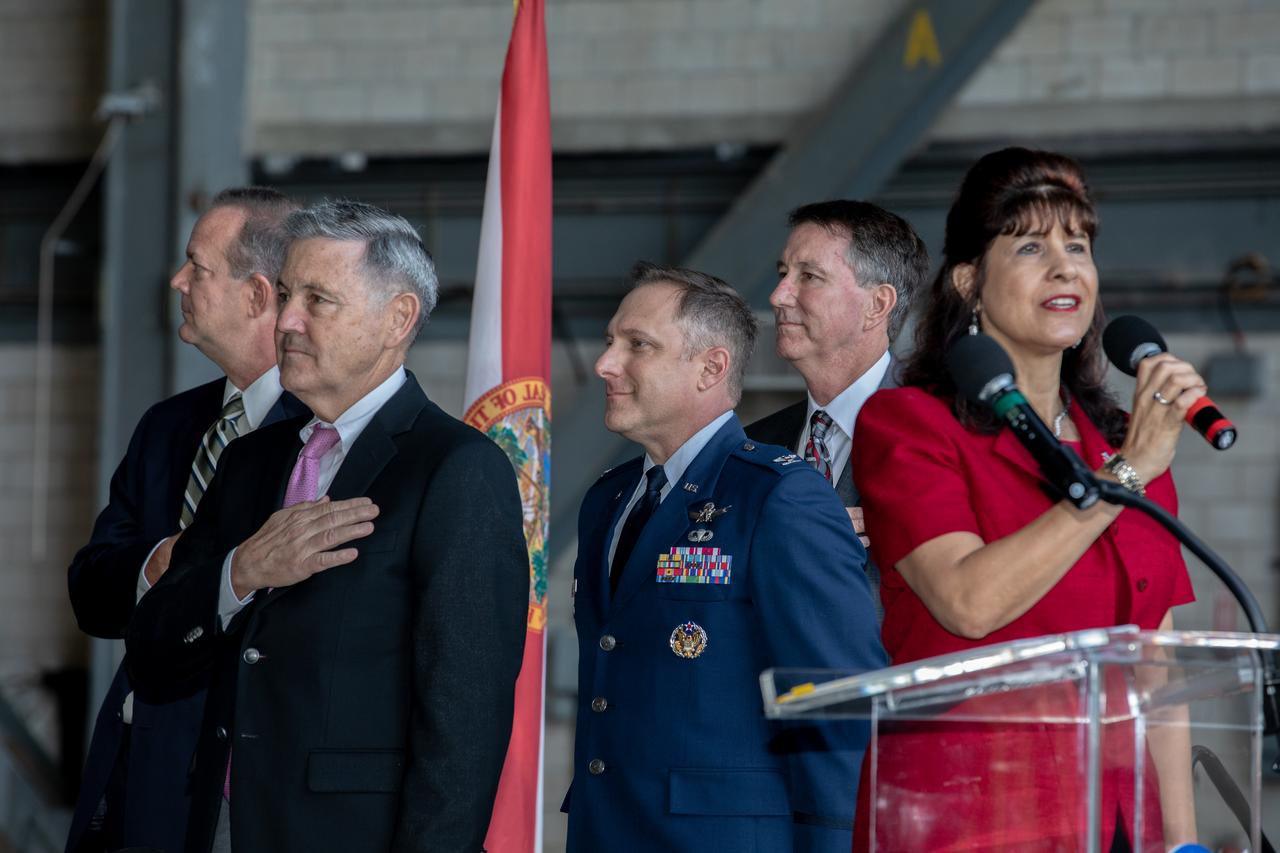
The National Anthem is sung by Suzy Cunningham, NASA Strategy and Integration manager, during a ribbon cutting ceremony on Aug. 16, 2019, in High Bay 2 of the Vehicle Assembly Building (VAB) at NASA’s Kennedy Space Center in Florida. From left are Tom Engler, director of Kennedy’s Center Planning and Development Office; Kennedy’s Center Director Bob Cabana; Col. Thomas Ste. Marie, vice commander, U.S. Air Force, 45th Space Wing; and Kent Rominger, Northrop Grumman’s vice president and capture lead for the OmegA launch system. The VAB is getting its first commercial tenant. Northrop Grumman signed a Reimbursable Space Act Agreement with NASA for use of the facilities. The company will assemble and test its new OmegA rocket inside the massive facility’s High Bay 2. The company also will modify mobile launcher platform-3 to serve as the launch vehicle’s assembly and launch platform. Northrop Grumman is developing the OmegA rocket, an intermediate/heavy-class launch vehicle, as part of a launch services agreement with the U.S. Air Force.
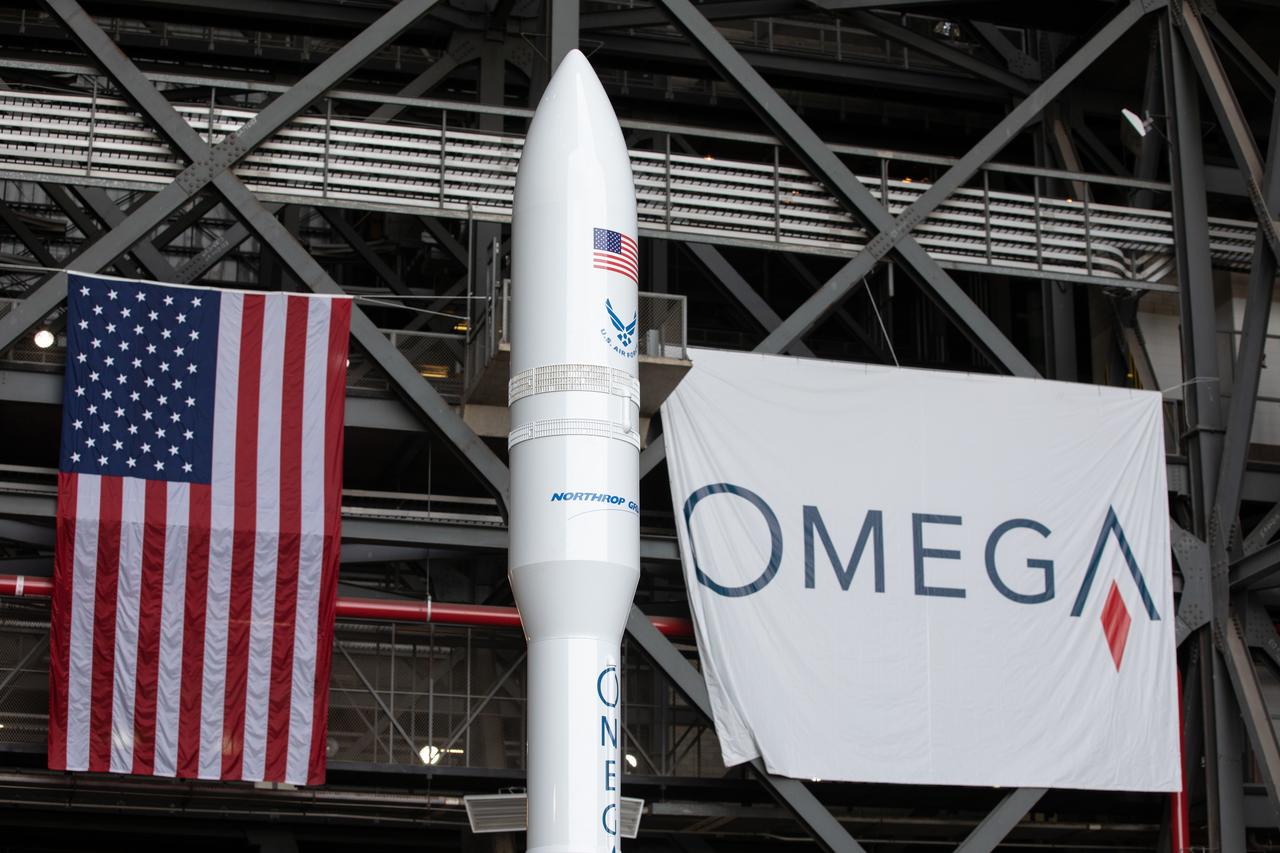
During a ribbon cutting ceremony on Aug. 16, 2019, in High Bay 2 of the Vehicle Assembly Building (VAB) at NASA’s Kennedy Space Center in Florida, a scale model of the Northrop Grumman OmegA launch system is in view. The VAB is getting its first commercial tenant. Northrop Grumman signed a Reimbursable Space Act Agreement with NASA for use of the facilities. The company will assemble and test its new OmegA rocket inside the massive facility’s High Bay 2. The company also will modify mobile launcher platform-3 to serve as the launch vehicle’s assembly and launch platform. Northrop Grumman is developing the OmegA rocket, an intermediate/heavy-class launch vehicle, as part of a launch services agreement with the U.S. Air Force.
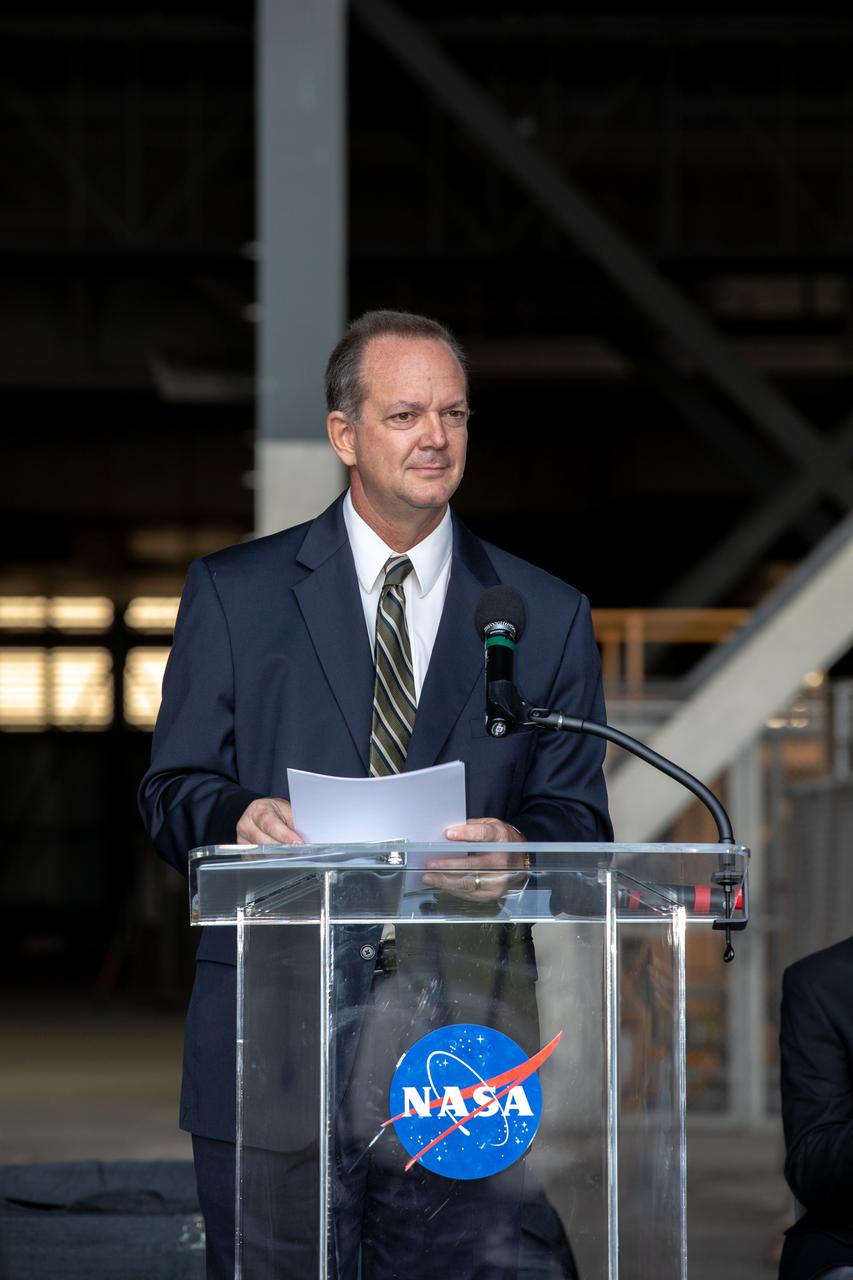
During a ribbon cutting ceremony on Aug. 16, 2019, in High Bay 2 of the Vehicle Assembly Building (VAB) at NASA’s Kennedy Space Center in Florida, Tom Engler, director of Kennedy’s Center Planning and Development Office, welcomes legislators and guests. The VAB is getting its first commercial tenant. Northrop Grumman signed a Reimbursable Space Act Agreement with NASA for use of the facilities. The company will assemble and test its new OmegA rocket inside the massive facility’s High Bay 2. The company also will modify MLP-3 to serve as the launch vehicle’s assembly and launch platform. Northrop Grumman is developing the OmegA rocket, an intermediate/heavy-class launch vehicle, as part of a launch services agreement with the U.S. Air Force.
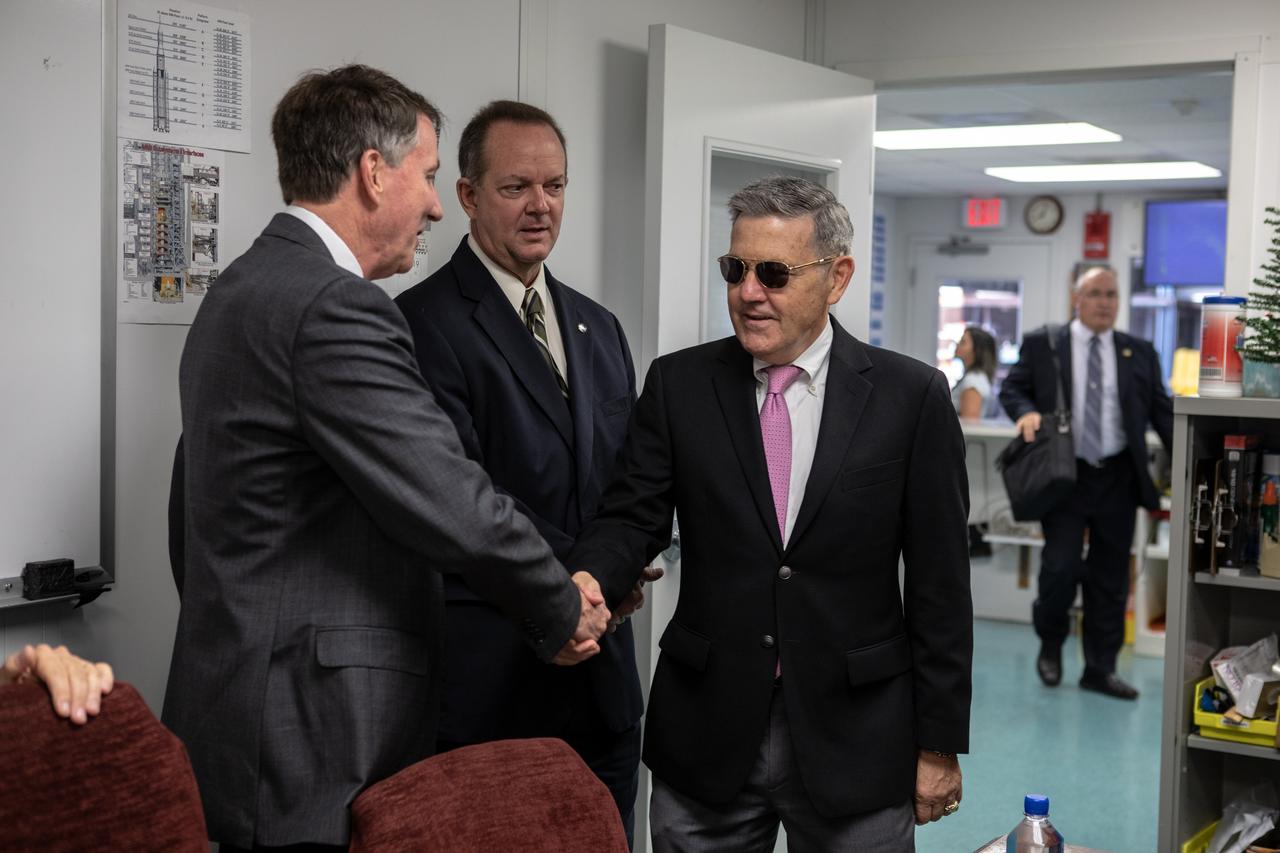
Just before a ribbon cutting ceremony on Aug. 16, 2019, in High Bay 2 of the Vehicle Assembly (VAB) at NASA’s Kennedy Space Center in Florida, Center Director Bob Cabana, at right, shakes hands with Kent Rominger, Northrop Grumman’s vice president and capture lead for the OmegA launch system. In the center is Tom Engler, director of the Center Planning and Development Office at Kennedy. The VAB is getting its first commercial tenant. Northrop Grumman signed a Reimbursable Space Act Agreement with NASA for use of the facilities. The company will assemble and test its new OmegA rocket inside the massive facility’s High Bay 2. The company also will modify the space shuttle-era mobile launcher platform-3 to serve as the launch vehicle’s assembly and launch platform. Northrop Grumman is developing the OmegA rocket, an intermediate/heavy-class launch vehicle, as part of a launch services agreement with the U.S. Air Force.
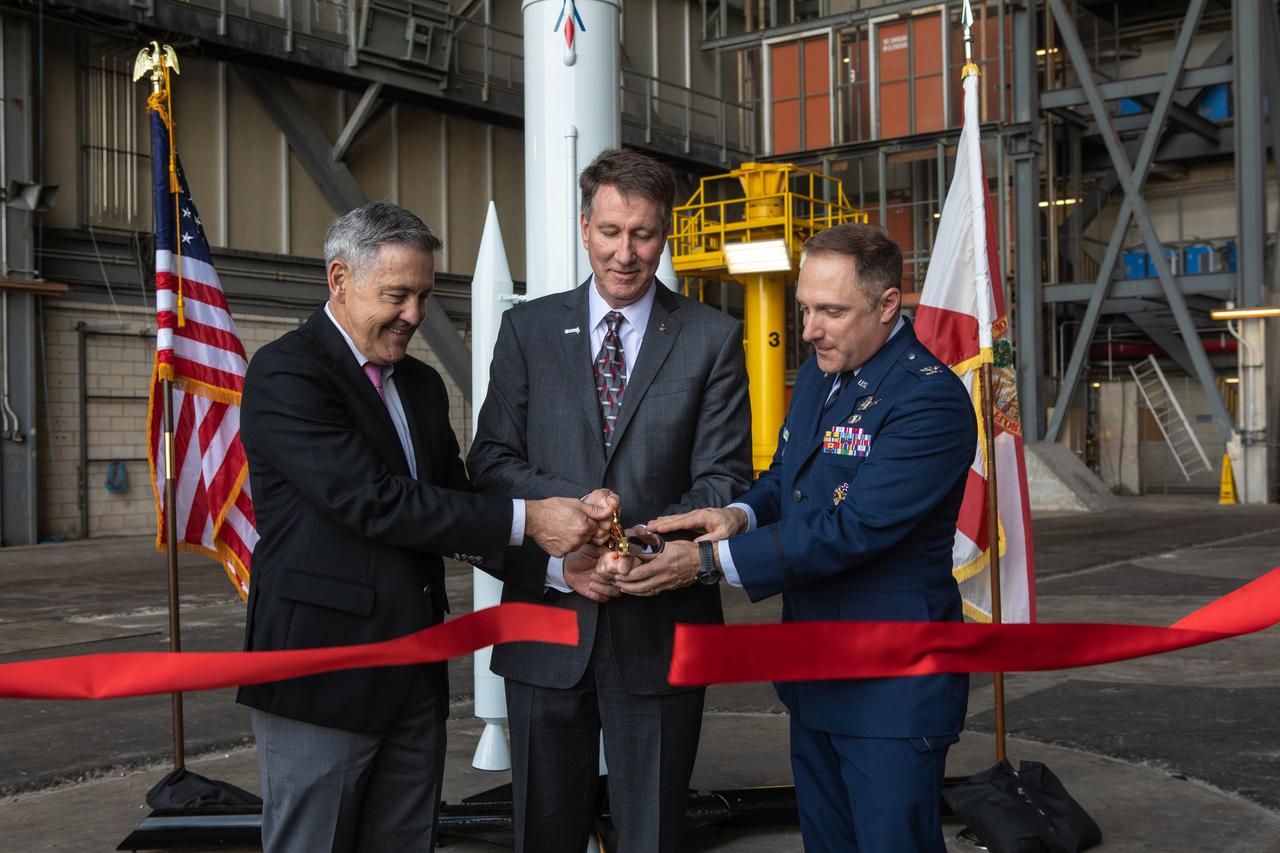
A ribbon cutting ceremony took place on Aug. 16, 2019, in High Bay 2 of the Vehicle Assembly Building (VAB) at NASA’s Kennedy Space Center in Florida. From left are Kennedy Center Director Bob Cabana; Kent Rominger, Northrop Grumman’s vice president and capture lead for the OmegA launch system; and Col. Thomas Ste. Marie, vice commander, U.S. Air Force, 45th Space Wing. Behind them is a scale model of the OmegA launch system. The VAB is getting its first commercial tenant. Northrop Grumman signed a Reimbursable Space Act Agreement with NASA for use of the facilities. The company will assemble and test its new OmegA rocket inside the massive facility’s High Bay 2. The company also will modify mobile launcher platform-3 to serve as the launch vehicle’s assembly and launch platform. Northrop Grumman is developing the OmegA rocket, an intermediate/heavy-class launch vehicle, as part of a launch services agreement with the U.S. Air Force.
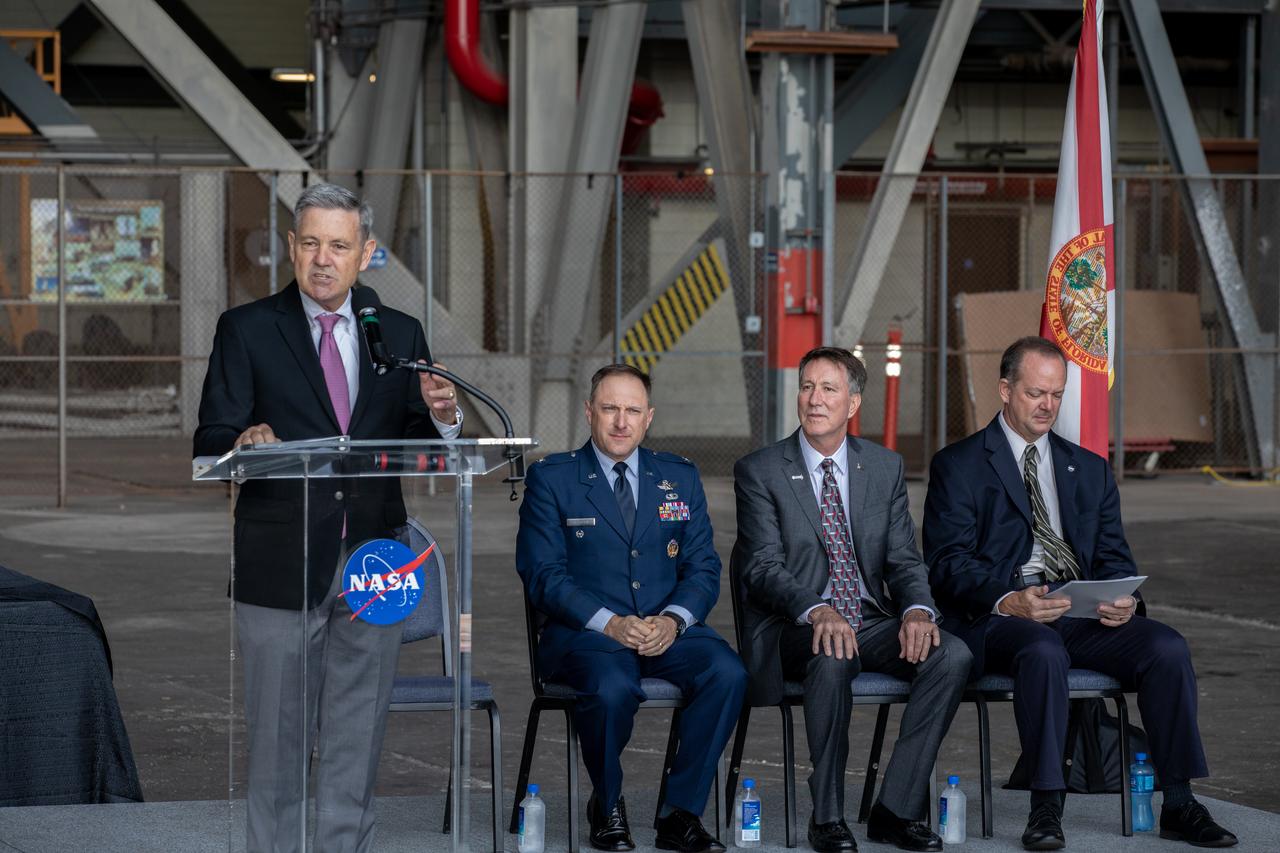
During a ribbon cutting ceremony on Aug. 16, 2019, in High Bay 2 of the Vehicle Assembly Building (VAB) at NASA’s Kennedy Space Center in Florida, Center Director Bob Cabana speaks to legislators and guests. Seated behind him, from left, are Col. Thomas St. Marie, vice commander, U.S. Air Force, 45th Space Wing; Kent Rominger, Northrop Grumman’s vice president and capture lead for the OmegA launch system; and Tom Engler, director of Kennedy’s Center Planning and Development Office. The VAB is getting its first commercial tenant. Northrop Grumman signed a Reimbursable Space Act Agreement with NASA for use of the facilities. The company will assemble and test its new OmegA rocket inside the massive facility’s High Bay 2. The company also will modify mobile launcher platform-3 to serve as the launch vehicle’s assembly and launch platform. Northrop Grumman is developing the OmegA rocket, an intermediate/heavy-class launch vehicle, as part of a launch services agreement with the U.S. Air Force.
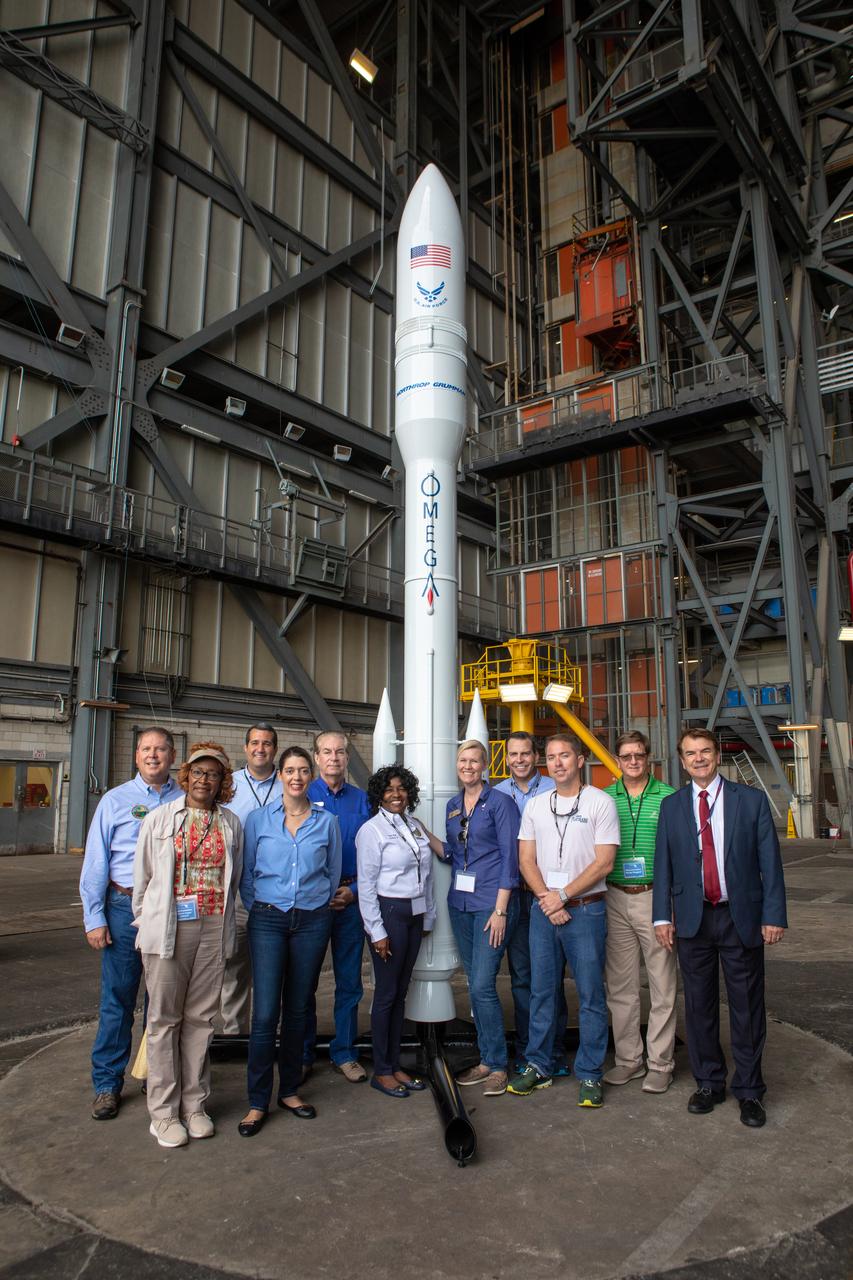
Legislators and invited guests attend a ribbon cutting ceremony on Aug. 16, 2019, in High Bay 2 of the Vehicle Assembly Building (VAB) at NASA’s Kennedy Space Center in Florida. At far right is Florida State Senator Thad Altman. Behind the group is a scale model of the Northrop Grumman OmegA launch vehicle. The VAB is getting its first commercial tenant. Northrop Grumman signed a Reimbursable Space Act Agreement with NASA for use of the facilities. The company will assemble and test its new OmegA rocket inside the massive facility’s High Bay 2. The company also will modify mobile launcher platform-3 to serve as the launch vehicle’s assembly and launch platform. Northrop Grumman is developing the OmegA rocket, an intermediate/heavy-class launch vehicle, as part of a launch services agreement with the U.S. Air Force.
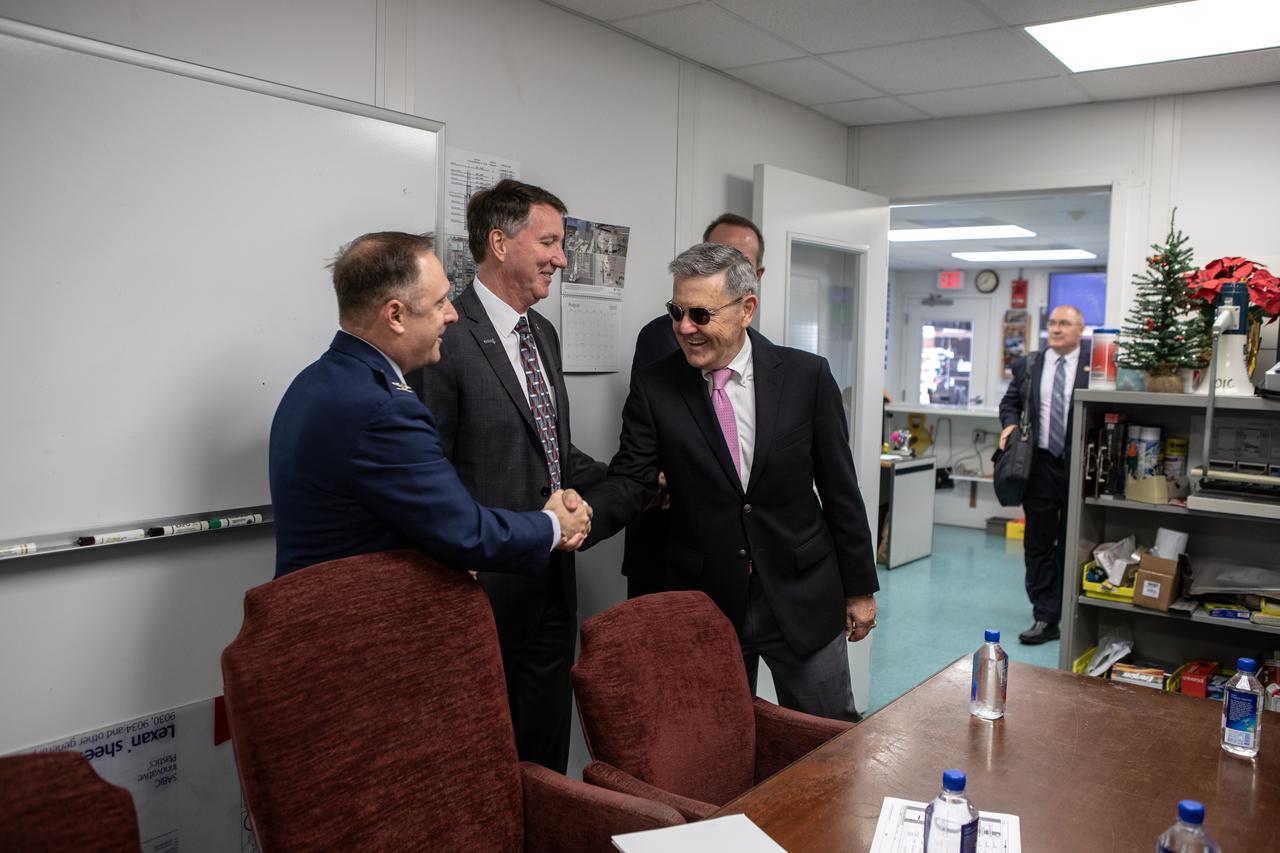
Just before a ribbon cutting ceremony on Aug. 16, 2019, in High Bay 2 of the Vehicle Assembly (VAB) at NASA’s Kennedy Space Center in Florida, Center Director Bob Cabana, at right, shakes hands with Col. Thomas Ste. Marie, vice commander, U.S. Air Force, 45th Space Wing. In the center is Kent Rominger, Northrop Grumman’s vice president and capture lead for the OmegA launch system. The VAB is getting its first commercial tenant. Northrop Grumman signed a Reimbursable Space Act Agreement with NASA for use of the facilities. The company will assemble and test its new OmegA rocket inside the massive facility’s High Bay 2. The company also will modify the space shuttle-era mobile launcher platform-3 to serve as the launch vehicle’s assembly and launch platform. Northrop Grumman is developing the OmegA rocket, an intermediate/heavy-class launch vehicle, as part of a launch services agreement with the U.S. Air Force.
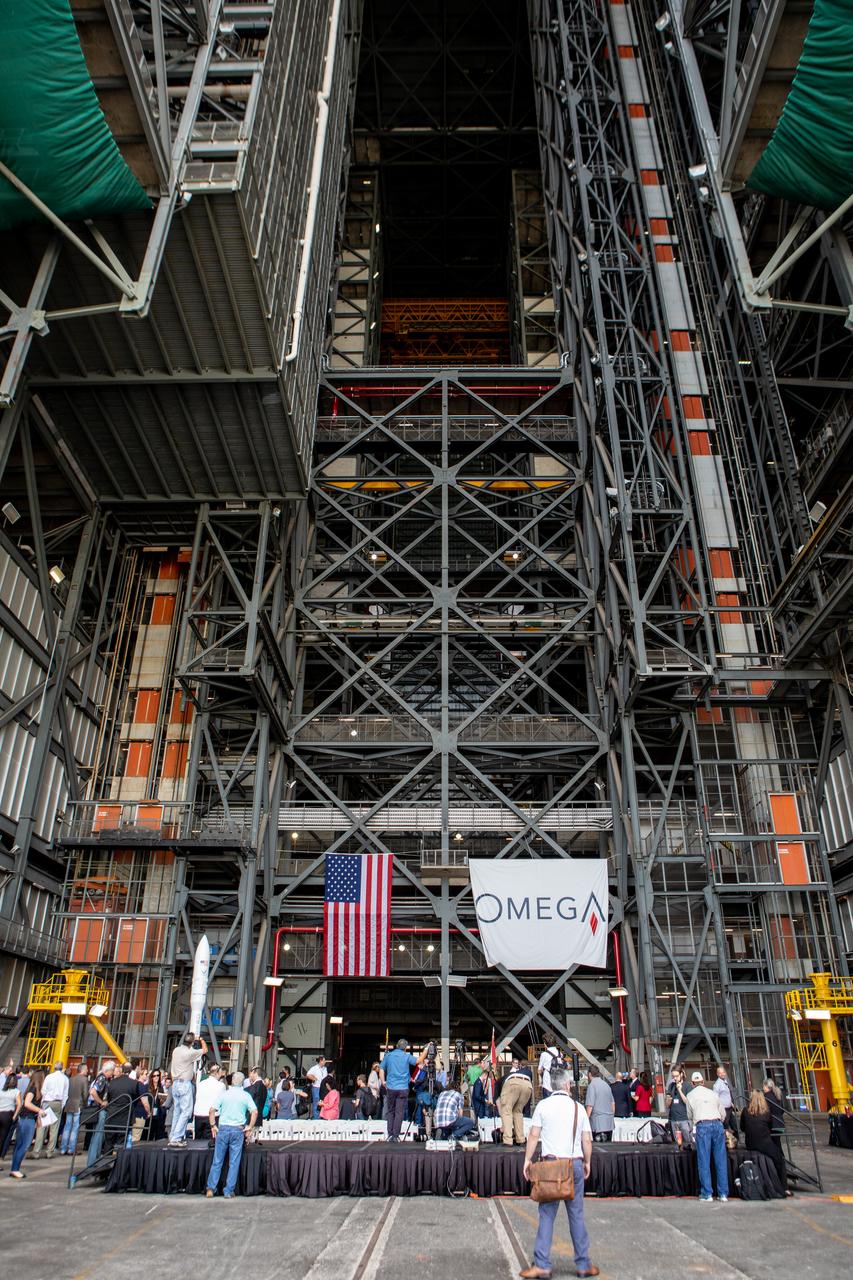
Legislators, invited guests and members of the media attend a ribbon cutting ceremony on Aug. 16, 2019, in High Bay 2 of the Vehicle Assembly Building (VAB) at NASA’s Kennedy Space Center in Florida. The VAB is getting its first commercial tenant. Northrop Grumman signed a Reimbursable Space Act Agreement with NASA for use of the facilities. The company will assemble and test its new OmegA rocket inside the massive facility’s High Bay 2. The company also will modify MLP-3 to serve as the launch vehicle’s assembly and launch platform. Northrop Grumman is developing the OmegA rocket, an intermediate/heavy-class launch vehicle, as part of a launch services agreement with the U.S. Air Force.

A ribbon cutting ceremony took place on Aug. 16, 2019, in High Bay 2 of the Vehicle Assembly Building (VAB) at NASA’s Kennedy Space Center in Florida. Attendees included legislators and invited guests. In the center is Florida State Senator Thad Altman. In the front row, far left, is Kennedy Center Director Bob Cabana. In the front row, far right, is Col. Thomas Ste. Marie, vice commander, U.S. Air Force, 45th Space Wing. In the back row, far right, is Kent Rominger, Northrop Grumman’s vice president and capture lead for the OmegA launch system. The VAB is getting its first commercial tenant. Northrop Grumman signed a Reimbursable Space Act Agreement with NASA for use of the facilities. The company will assemble and test its new OmegA rocket inside the massive facility’s High Bay 2. The company also will modify mobile launcher platform-3 to serve as the launch vehicle’s assembly and launch platform. Northrop Grumman is developing the OmegA rocket, an intermediate/heavy-class launch vehicle, as part of a launch services agreement with the U.S. Air Force.
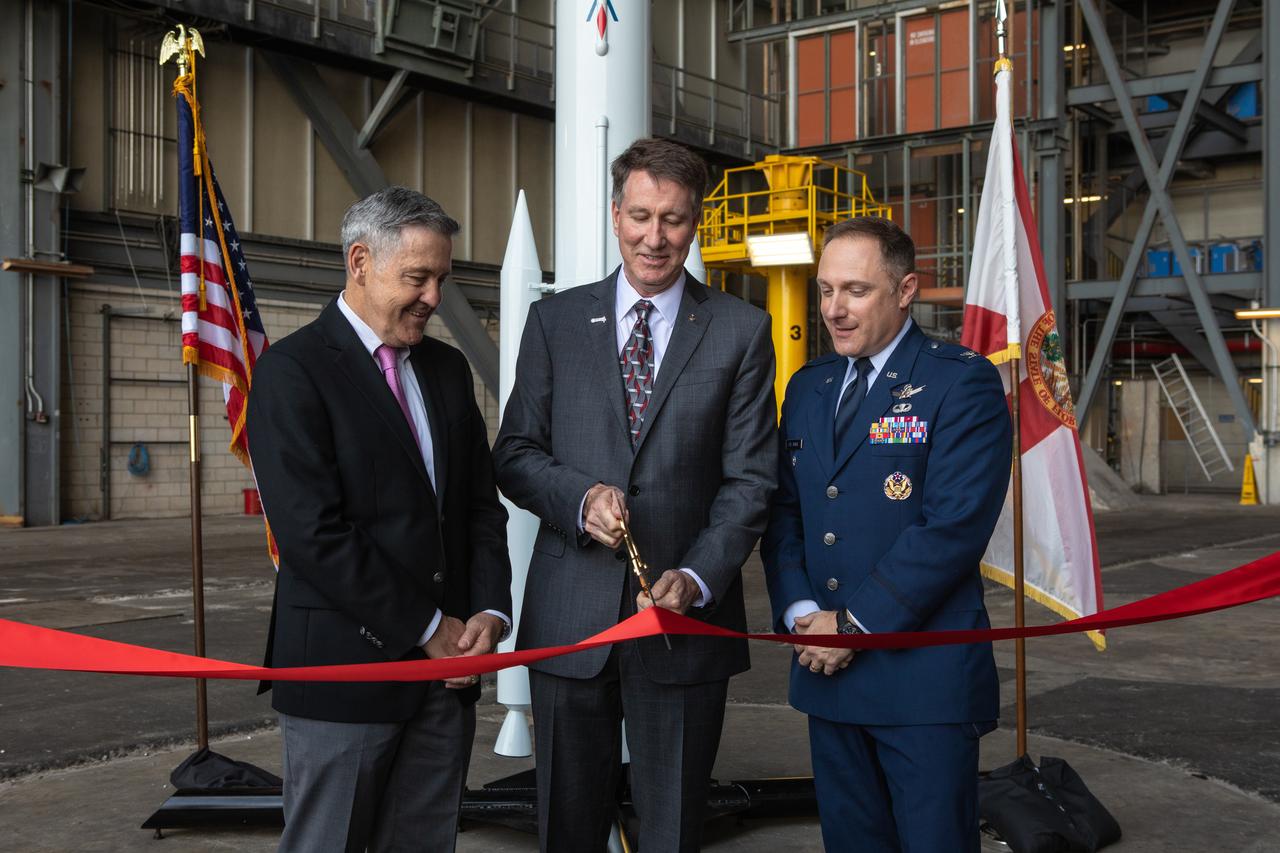
A ribbon cutting ceremony took place on Aug. 16, 2019, in High Bay 2 of the Vehicle Assembly Building (VAB) at NASA’s Kennedy Space Center in Florida. From left are Kennedy Center Director Bob Cabana; Kent Rominger, Northrop Grumman’s vice president and capture lead for the OmegA launch system; and Col. Thomas Ste. Marie, vice commander, U.S. Air Force, 45th Space Wing. Behind them is a scale model of the OmegA launch system. The VAB is getting its first commercial tenant. Northrop Grumman signed a Reimbursable Space Act Agreement with NASA for use of the facilities. The company will assemble and test its new OmegA rocket inside the massive facility’s High Bay 2. The company also will modify mobile launcher platform-3 to serve as the launch vehicle’s assembly and launch platform. Northrop Grumman is developing the OmegA rocket, an intermediate/heavy-class launch vehicle, as part of a launch services agreement with the U.S. Air Force.

A ribbon cutting ceremony took place on Aug. 16, 2019, in High Bay 2 of the Vehicle Assembly Building (VAB) at NASA’s Kennedy Space Center in Florida. From left are Kennedy Center Director Bob Cabana; Kent Rominger, Northrop Grumman’s vice president and capture lead for the OmegA launch system; and Col. Thomas Ste. Marie, vice commander, U.S. Air Force, 45th Space Wing. Behind them is a scale model of the OmegA launch system. The VAB is getting its first commercial tenant. Northrop Grumman signed a Reimbursable Space Act Agreement with NASA for use of the facilities. The company will assemble and test its new OmegA rocket inside the massive facility’s High Bay 2. The company also will modify mobile launcher platform-3 to serve as the launch vehicle’s assembly and launch platform. Northrop Grumman is developing the OmegA rocket, an intermediate/heavy-class launch vehicle, as part of a launch services agreement with the U.S. Air Force.
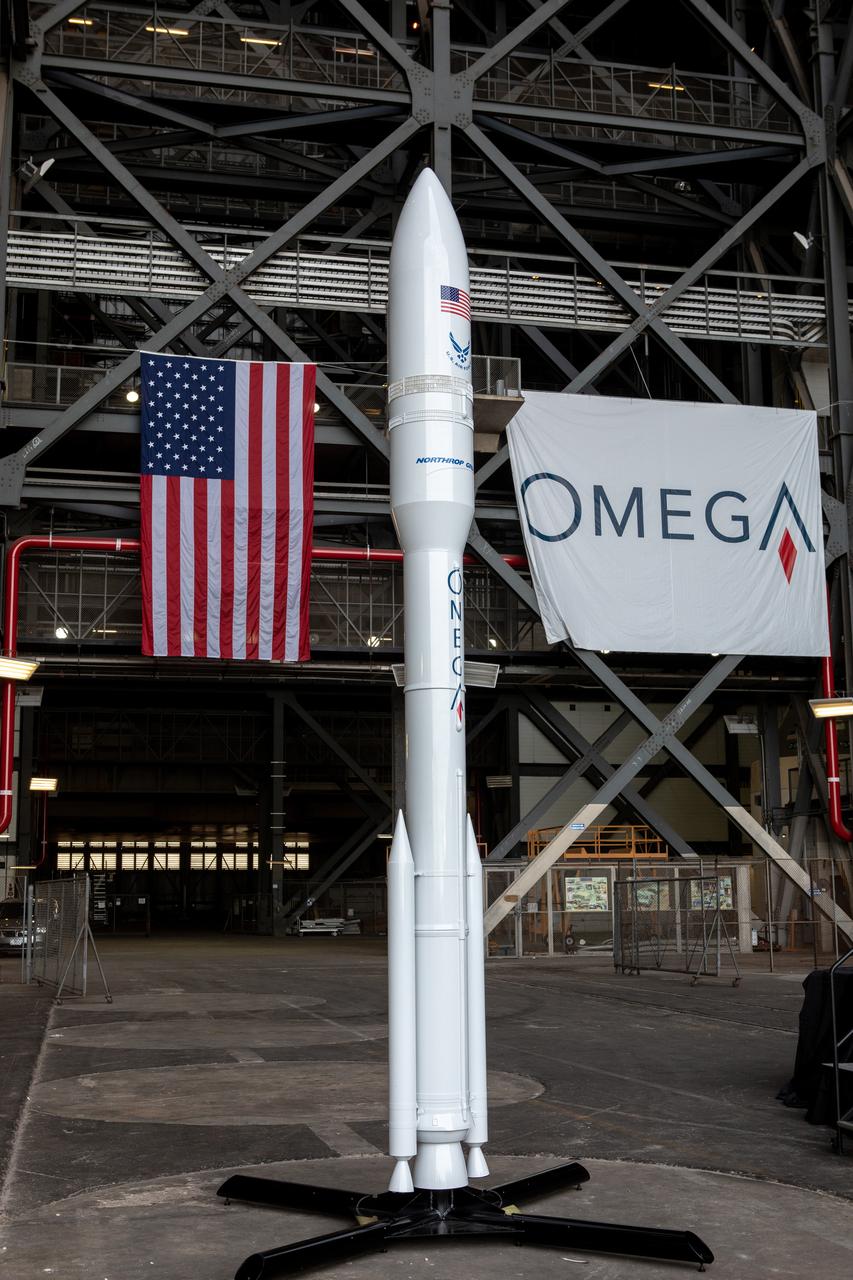
During a ribbon cutting ceremony on Aug. 16, 2019, in High Bay 2 of the Vehicle Assembly Building (VAB) at NASA’s Kennedy Space Center in Florida, a scale model of the Northrop Grumman OmegA launch system is on display. The VAB is getting its first commercial tenant. Northrop Grumman signed a Reimbursable Space Act Agreement with NASA for use of the facilities. The company will assemble and test its new OmegA rocket inside the massive facility’s High Bay 2. The company also will modify mobile launcher platform-3 to serve as the launch vehicle’s assembly and launch platform. Northrop Grumman is developing the OmegA rocket, an intermediate/heavy-class launch vehicle, as part of a launch services agreement with the U.S. Air Force.
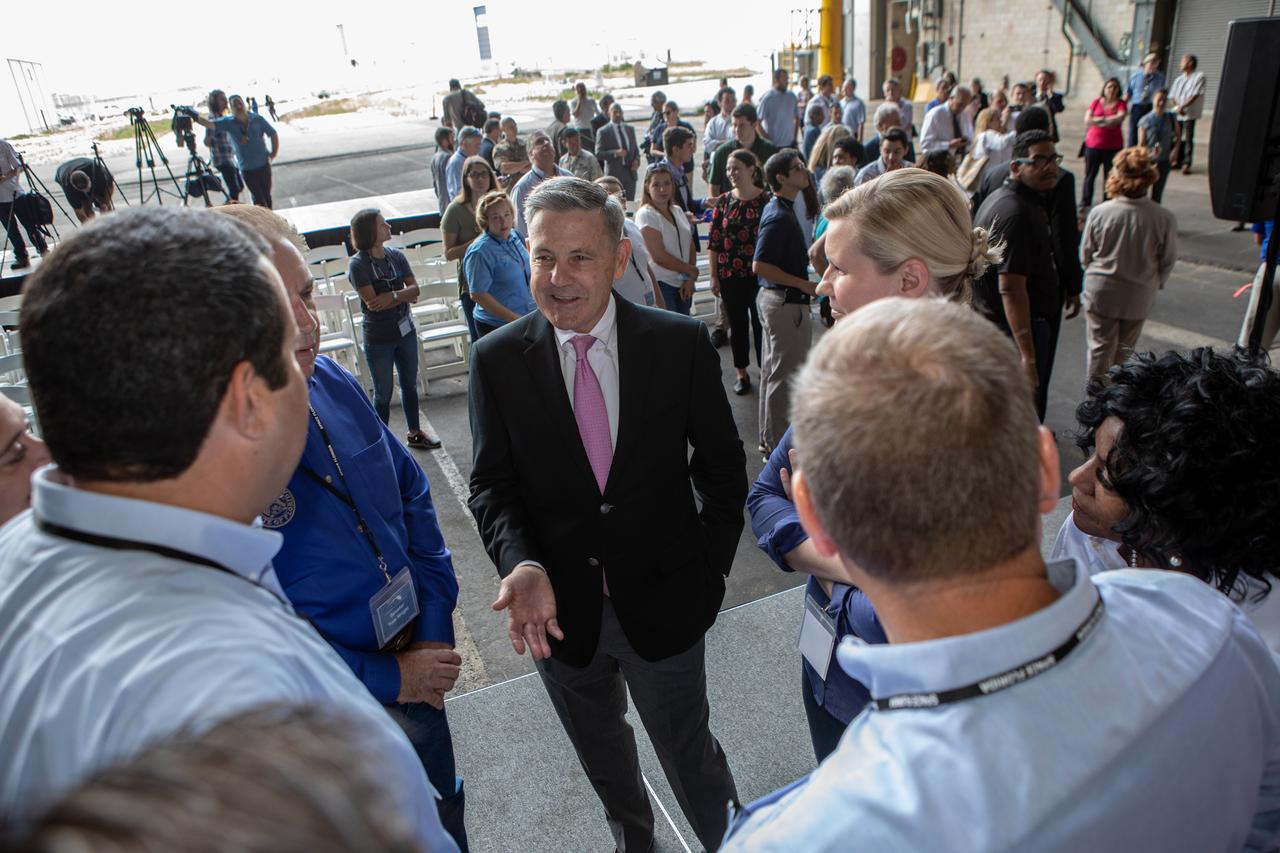
Kennedy Space Center Director Bob Cabana speaks with guests after a ribbon cutting ceremony on Aug. 16, 2019, in High Bay 2 of the Vehicle Assembly Building (VAB) at NASA’s Kennedy Space Center in Florida. The VAB is getting its first commercial tenant. Northrop Grumman signed a Reimbursable Space Act Agreement with NASA for use of the facilities. The company will assemble and test its new OmegA rocket inside the massive facility’s High Bay 2. The company also will modify mobile launcher platform-3 to serve as the launch vehicle’s assembly and launch platform. Northrop Grumman is developing the OmegA rocket, an intermediate/heavy-class launch vehicle, as part of a launch services agreement with the U.S. Air Force.
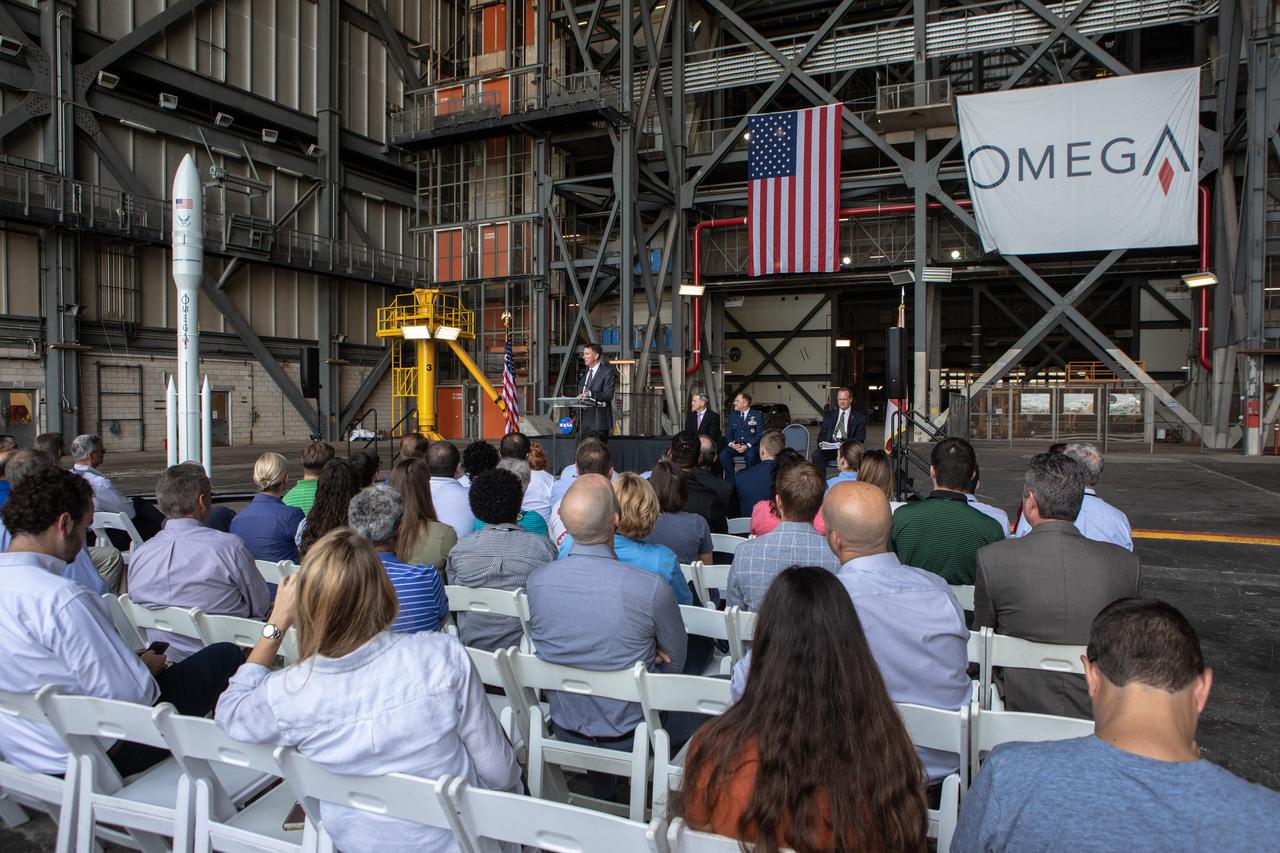
During a ribbon cutting ceremony on Aug. 16, 2019, in High Bay 2 of the Vehicle Assembly Building (VAB) at NASA’s Kennedy Space Center in Florida, Kent Rominger, Northrop Grumman’s vice president and capture lead for the OmegA launch system, speaks to legislators and guests. Seated behind him, from left, are Kennedy Center Director Bob Cabana; Col. Thomas Ste. Marie, vice commander, U.S. Air Force, 45th Space Wing; and Tom Engler, director of Kennedy’s Center Planning and Development Office. The VAB is getting its first commercial tenant. Northrop Grumman signed a Reimbursable Space Act Agreement with NASA for use of the facilities. The company will assemble and test its new OmegA rocket inside the massive facility’s High Bay 2. The company also will modify mobile launcher platform-3 to serve as the launch vehicle’s assembly and launch platform. Northrop Grumman is developing the OmegA rocket, an intermediate/heavy-class launch vehicle, as part of a launch services agreement with the U.S. Air Force.

During a ribbon cutting ceremony on Aug. 16, 2019, in High Bay 2 of the Vehicle Assembly Building (VAB) at NASA’s Kennedy Space Center in Florida, Col. Thomas Ste. Marie, vice commander, U.S. Air Force, 45th Space Wing, speaks to legislators and guests. The VAB is getting its first commercial tenant. Northrop Grumman signed a Reimbursable Space Act Agreement with NASA for use of the facilities. The company will assemble and test its new OmegA rocket inside the massive facility’s High Bay 2. The company also will modify mobile launcher platform-3 to serve as the launch vehicle’s assembly and launch platform. Northrop Grumman is developing the OmegA rocket, an intermediate/heavy-class launch vehicle, as part of a launch services agreement with the U.S. Air Force.
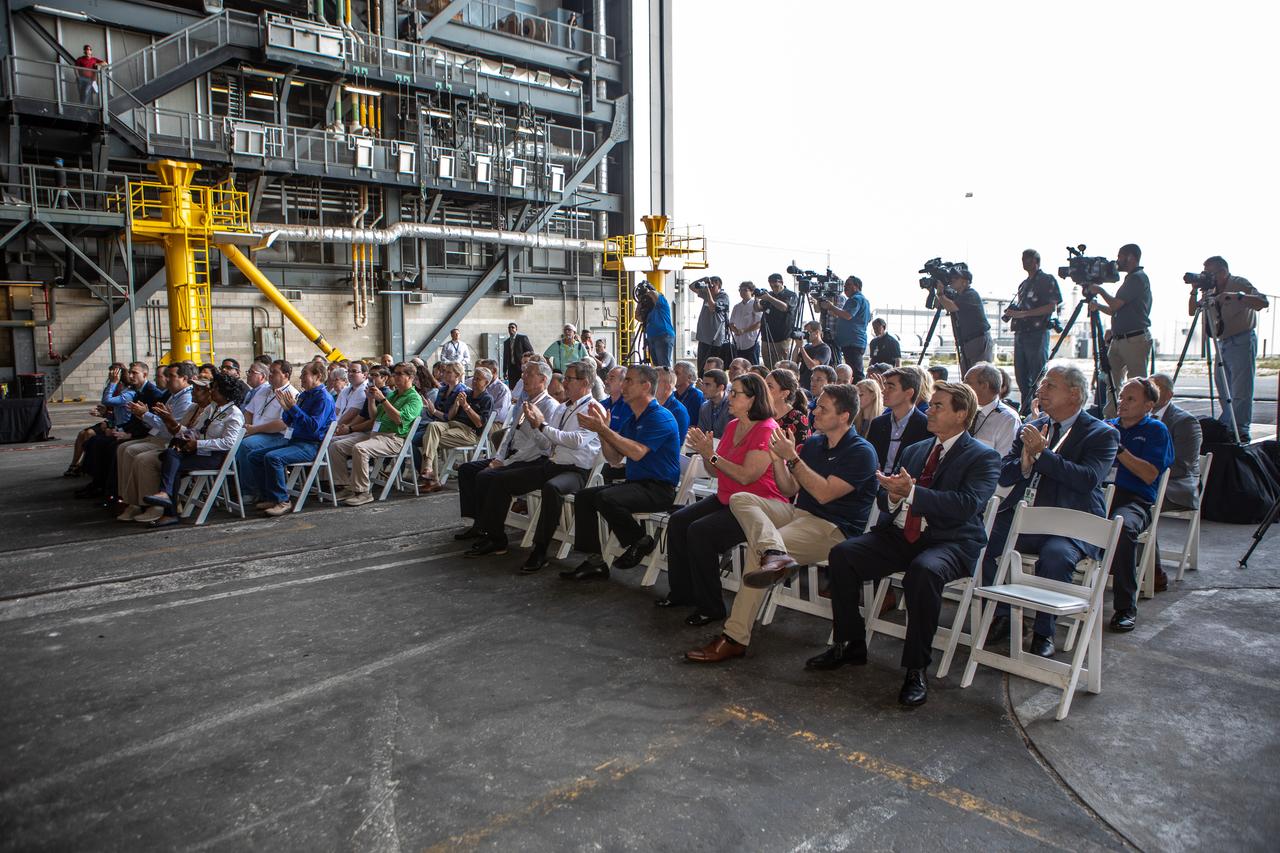
Legislators and invited guests clap during a ribbon cutting ceremony on Aug. 16, 2019, in High Bay 2 of the Vehicle Assembly Building (VAB) at NASA’s Kennedy Space Center in Florida. The VAB is getting its first commercial tenant. Northrop Grumman signed a Reimbursable Space Act Agreement with NASA for use of the facilities. The company will assemble and test its new OmegA rocket inside the massive facility’s High Bay 2. The company also will modify mobile launcher platform-3 to serve as the launch vehicle’s assembly and launch platform. Northrop Grumman is developing the OmegA rocket, an intermediate/heavy-class launch vehicle, as part of a launch services agreement with the U.S. Air Force.