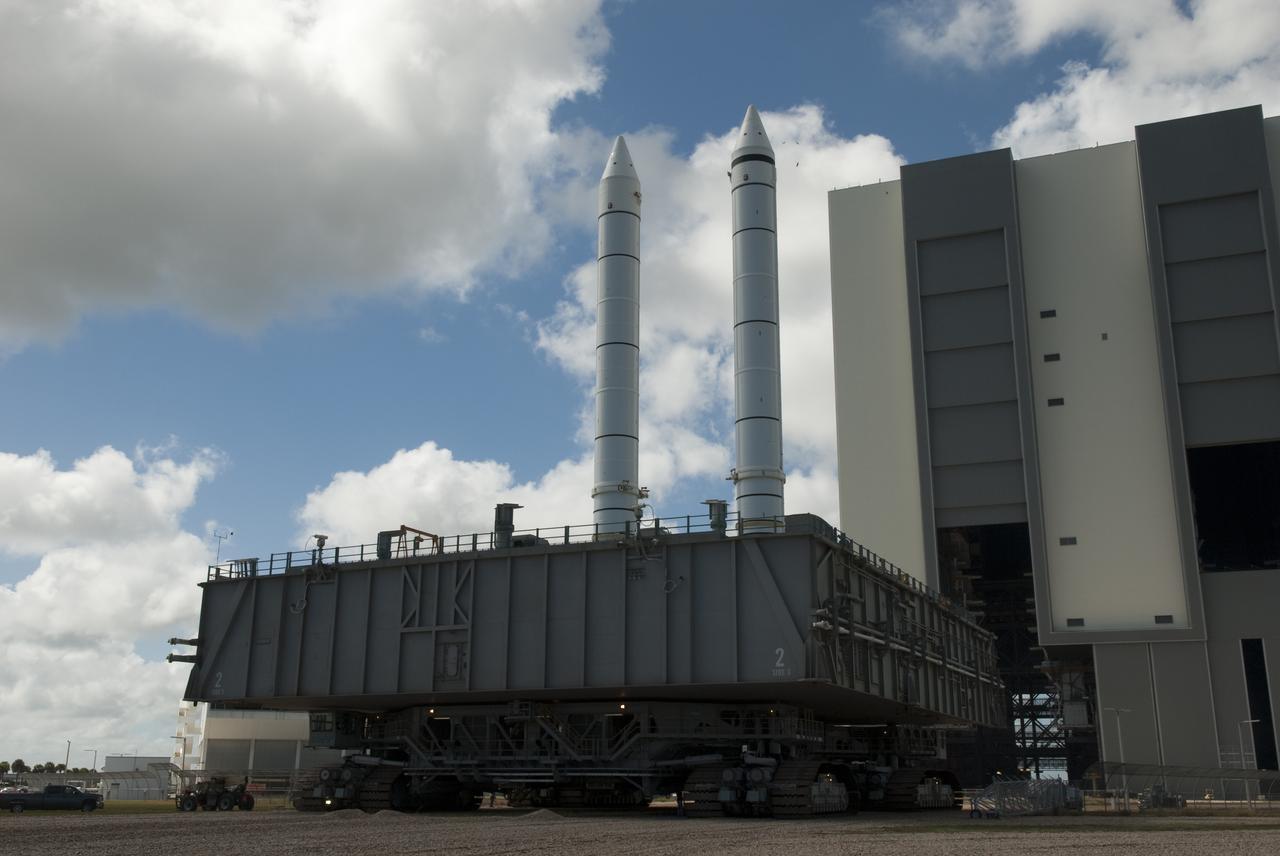
STS-134 MLP2 SRB STACK MOVE FROM HB1 TO HB3 IN VAB
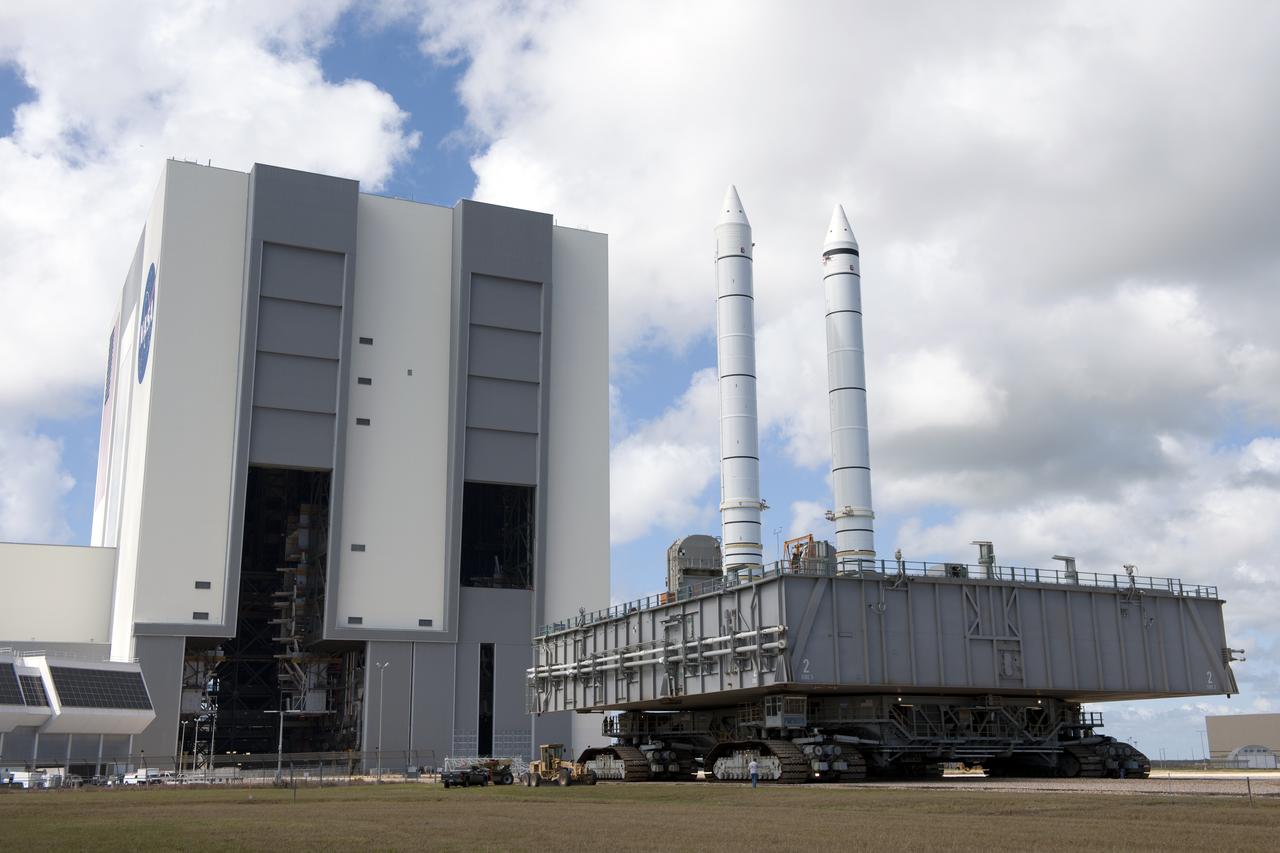
STS-134 MLP2 SRB STACK MOVE FROM HB1 TO HB3 IN VAB
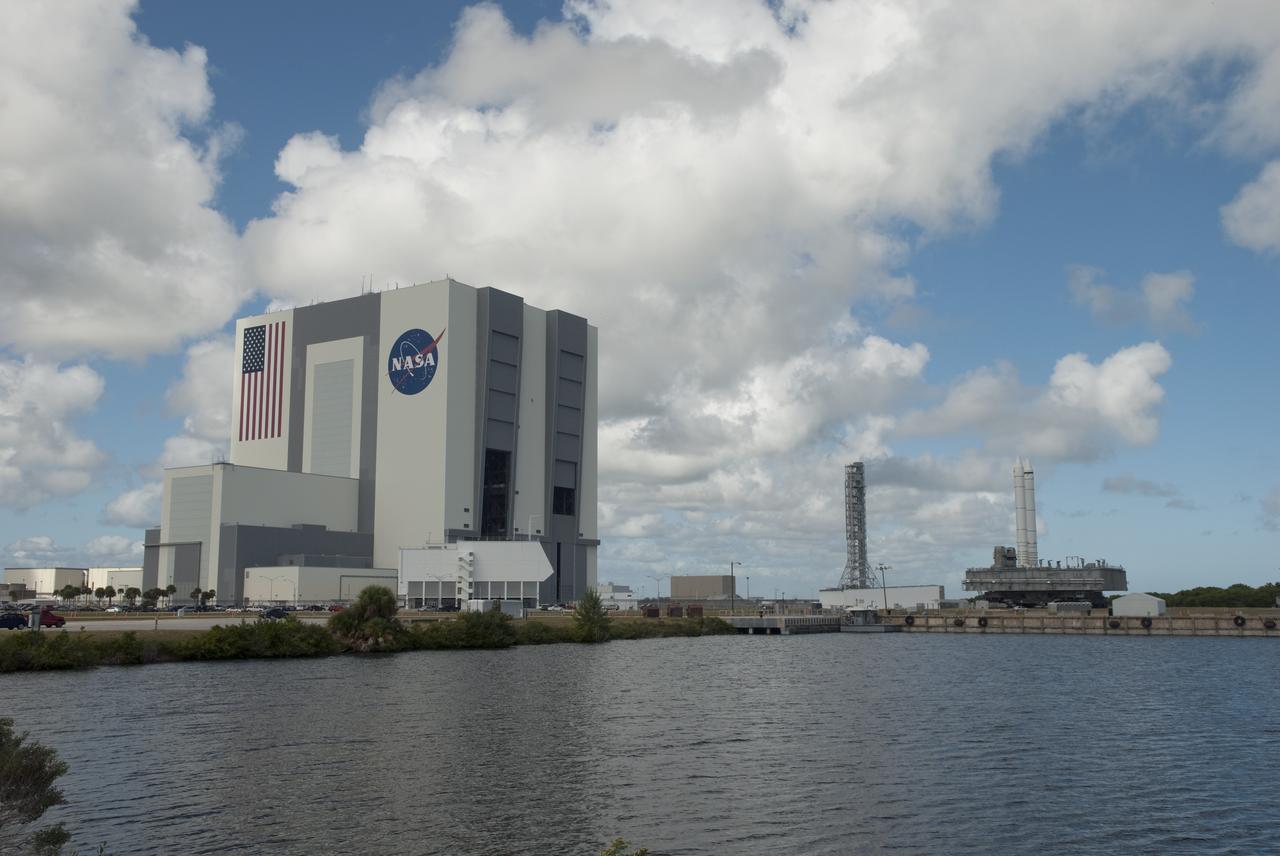
STS-134 MLP2 SRB STACK MOVE FROM HB1 TO HB3 IN VAB
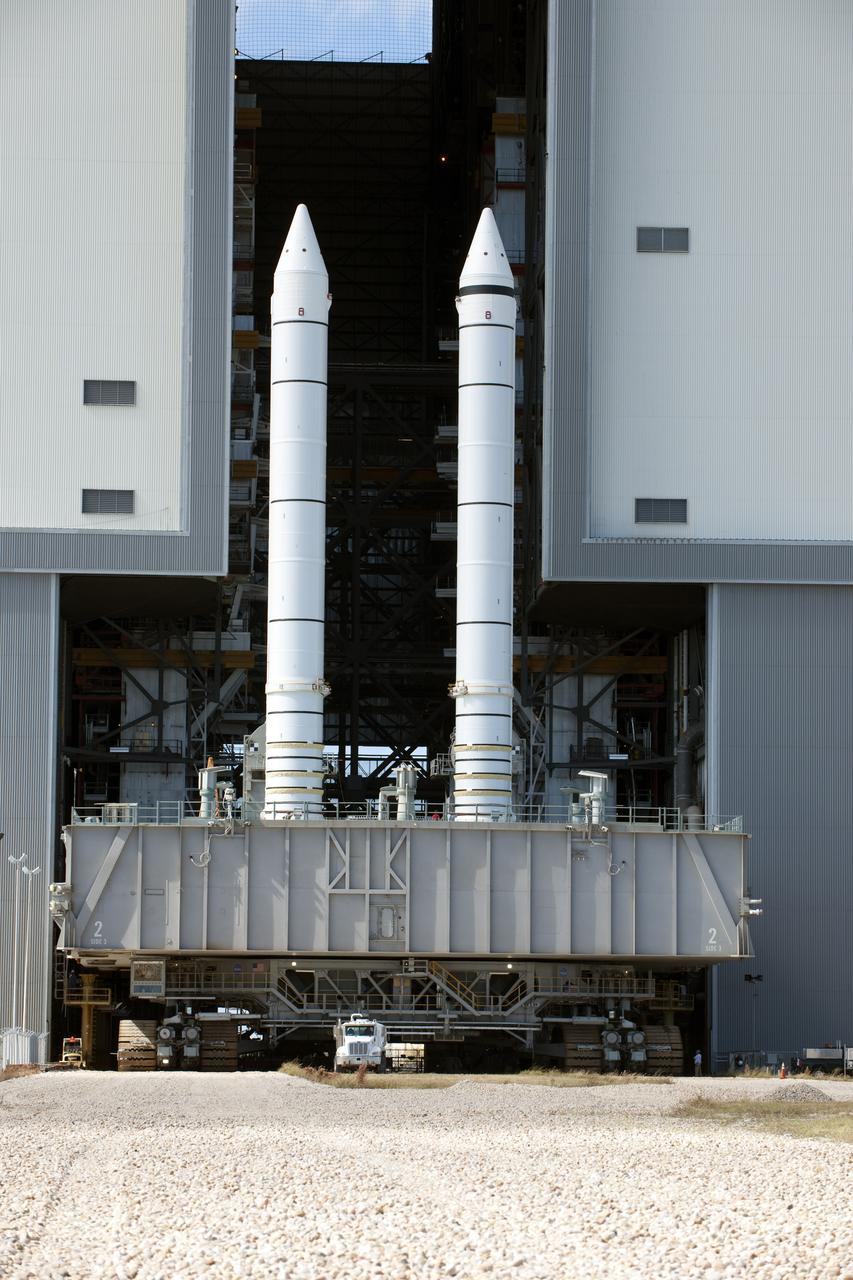
STS-134 MLP2 SRB STACK MOVE FROM HB1 TO HB3 IN VAB
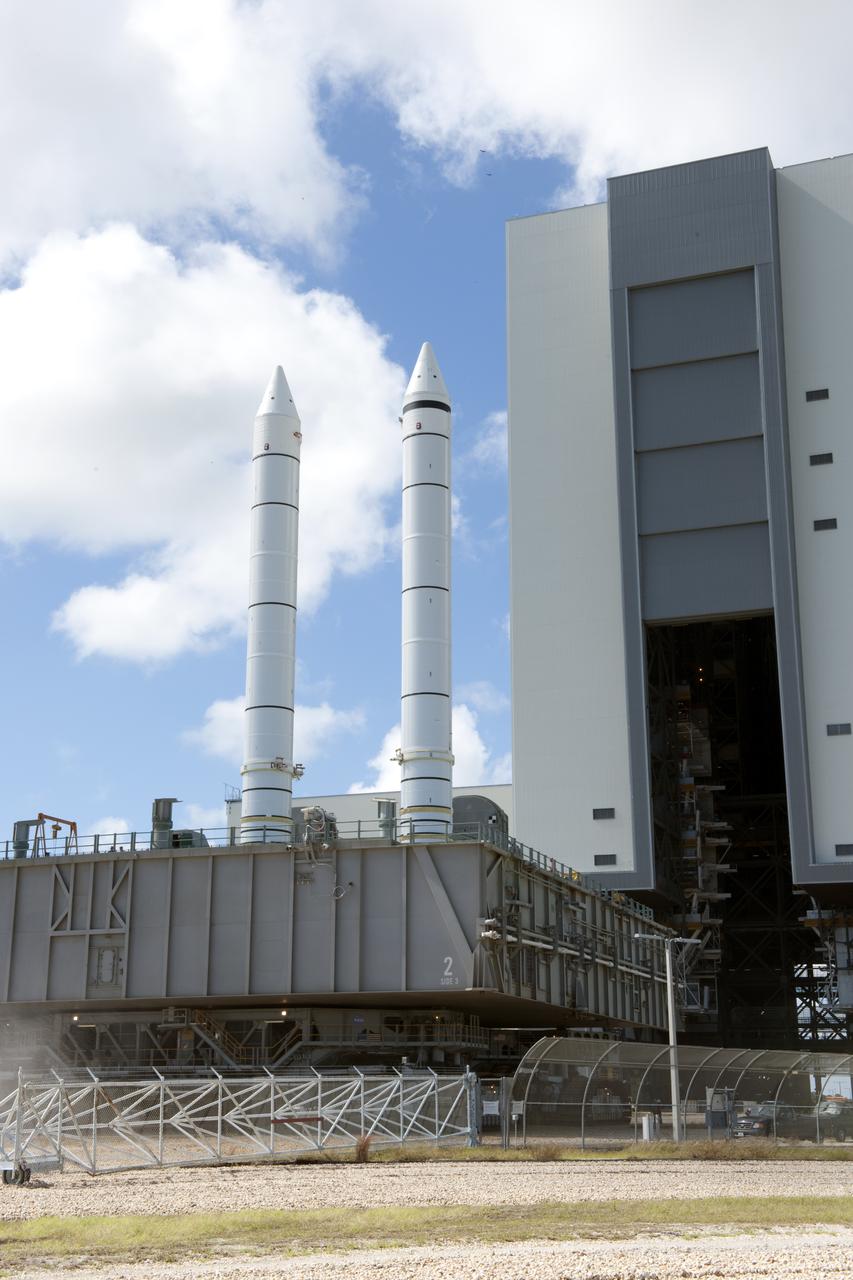
STS-134 MLP2 SRB STACK MOVE FROM HB1 TO HB3 IN VAB
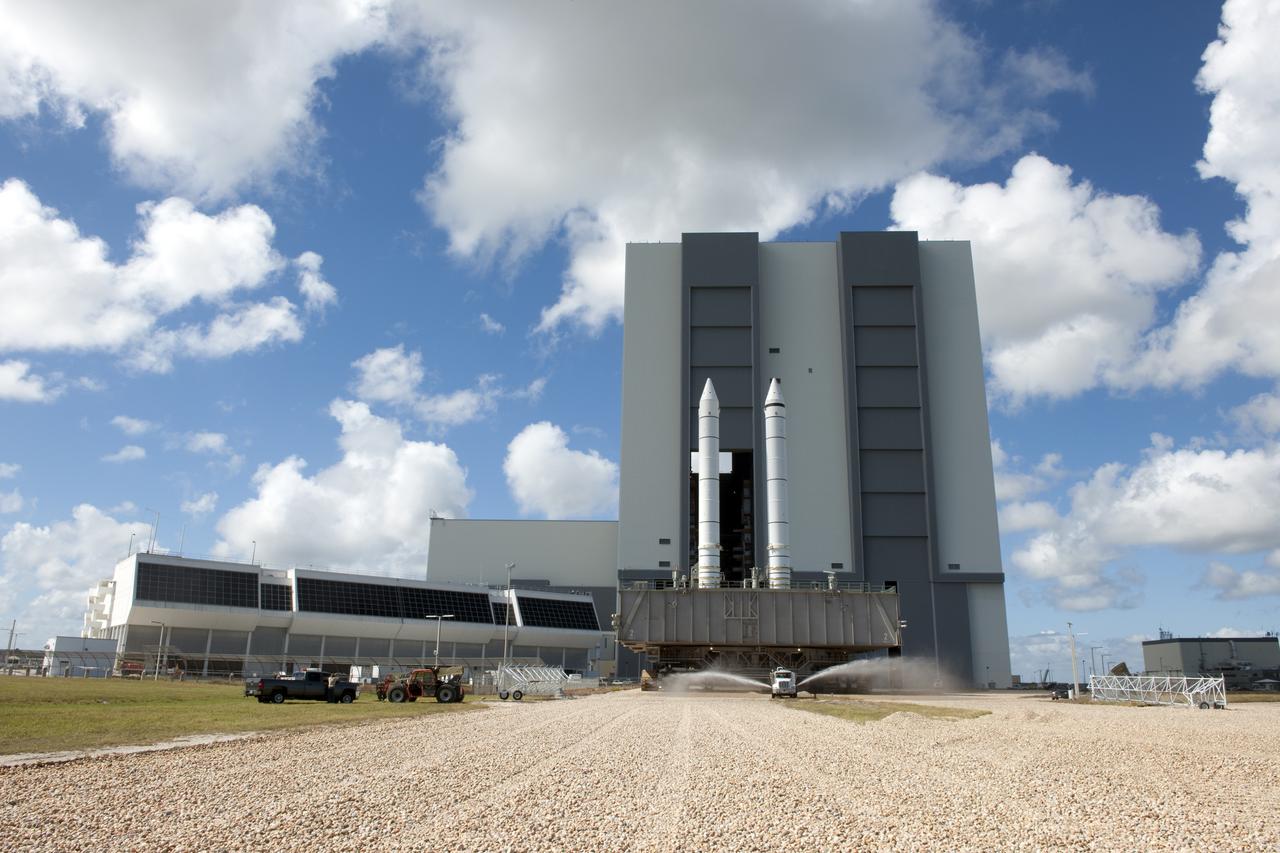
STS-134 MLP2 SRB STACK MOVE FROM HB1 TO HB3 IN VAB

CAPE CANAVERAL, Fla. – In the Vehicle Assembly Building at NASA's Kennedy Space Center in Florida, this platform is being removed from high bay 3 as part of the refurbishment of the facility for the Constellation Program's Ares 1-X vehicle. The Ares I and Ares V rockets will be more than 325 feet tall, considerably taller than the space shuttle atop its mobile launcher platform. Photo credit: NASA/Jack Pfaller
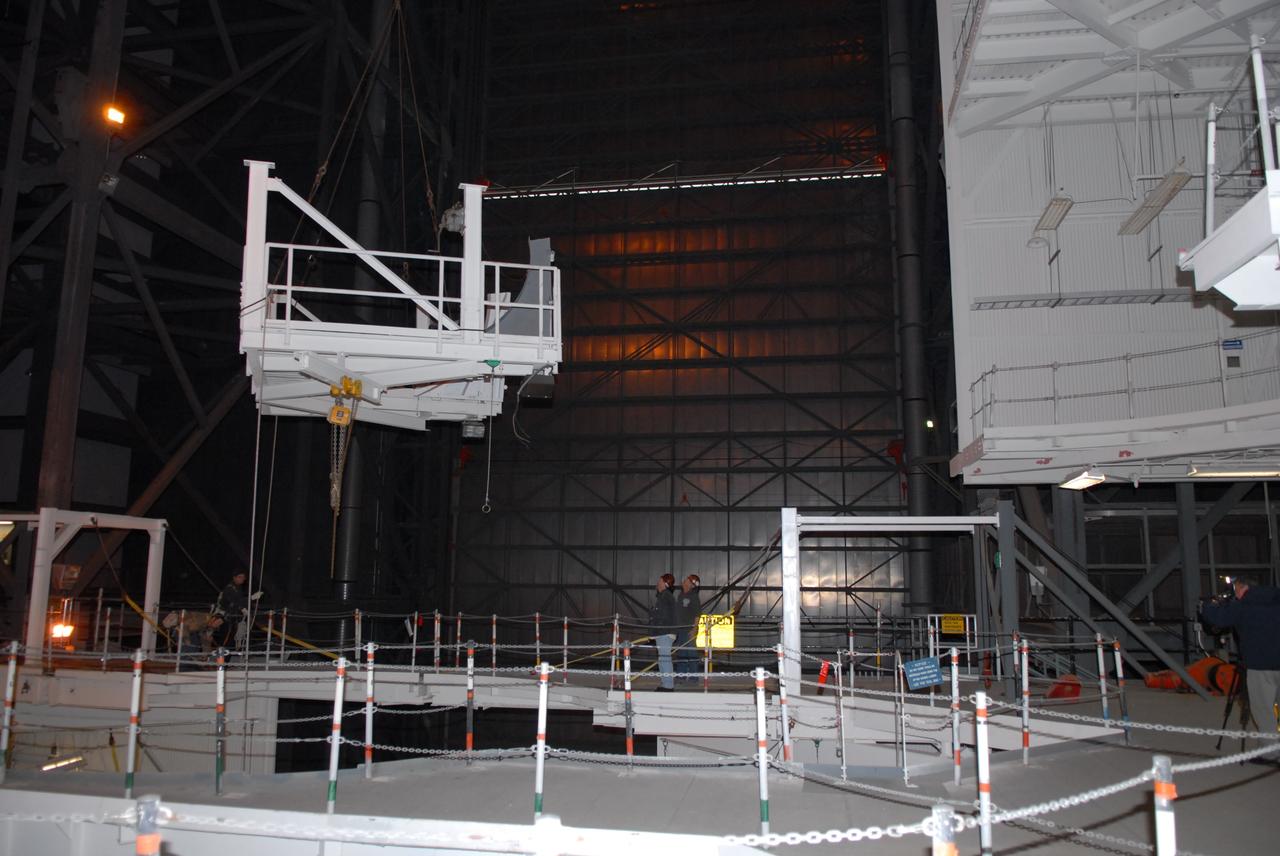
CAPE CANAVERAL, Fla. – In the Vehicle Assembly Building at NASA's Kennedy Space Center in Florida, this platform is lifted from an upper level in high bay 3. Its removal is part of the refurbishment of the facility for the Constellation Program's Ares 1-X vehicle. The Ares I and Ares V rockets will be more than 325 feet tall, considerably taller than the space shuttle atop its mobile launcher platform. Photo credit: NASA/Jack Pfaller
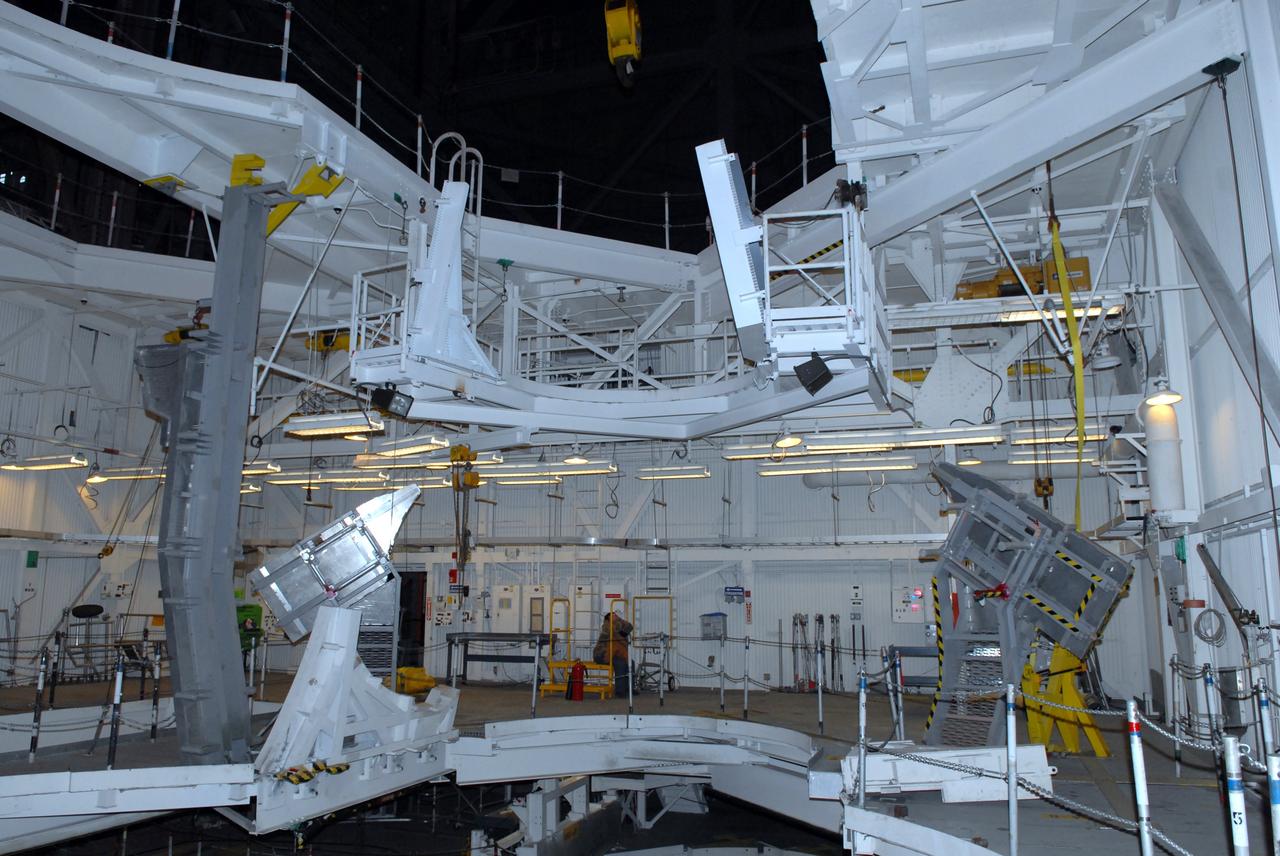
CAPE CANAVERAL, Fla. – In the Vehicle Assembly Building at NASA's Kennedy Space Center in Florida, this platform will be removed from high bay 3 as part of the refurbishment of the facility for the Constellation Program's Ares 1-X vehicle. The Ares I and Ares V rockets will be more than 325 feet tall, considerably taller than the space shuttle atop its mobile launcher platform. Photo credit: NASA/Jack Pfaller
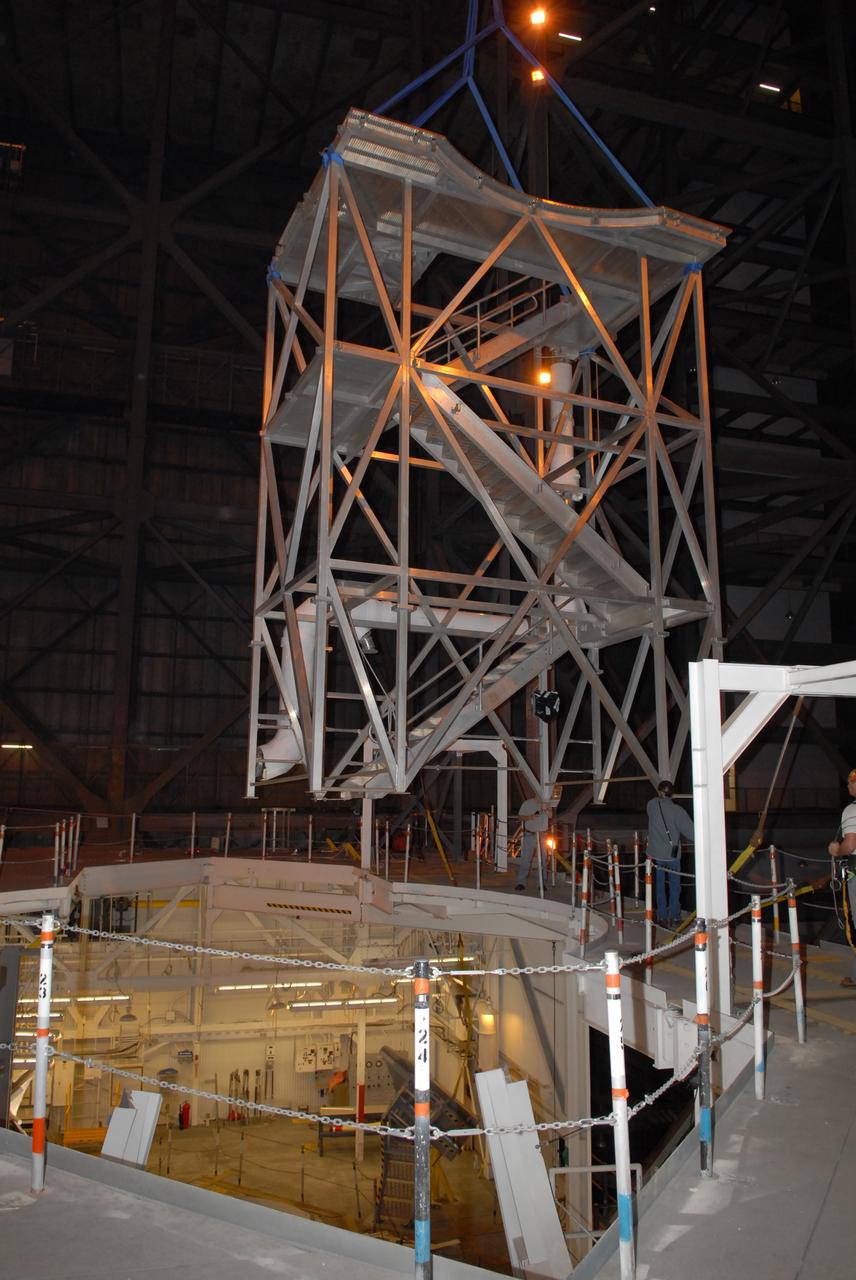
CAPE CANAVERAL, Fla. – In the Vehicle Assembly Building at NASA's Kennedy Space Center in Florida, a new platform is lifted to install on the 16th level in high bay 3. The refurbishment of the facility is for the Constellation Program's Ares vehicles. The Ares I and Ares V rockets will be 325 feet and 360 feet tall, respectively, considerably taller than the space shuttle atop its mobile launcher platform. Photo credit: NASA/Jack Pfaller
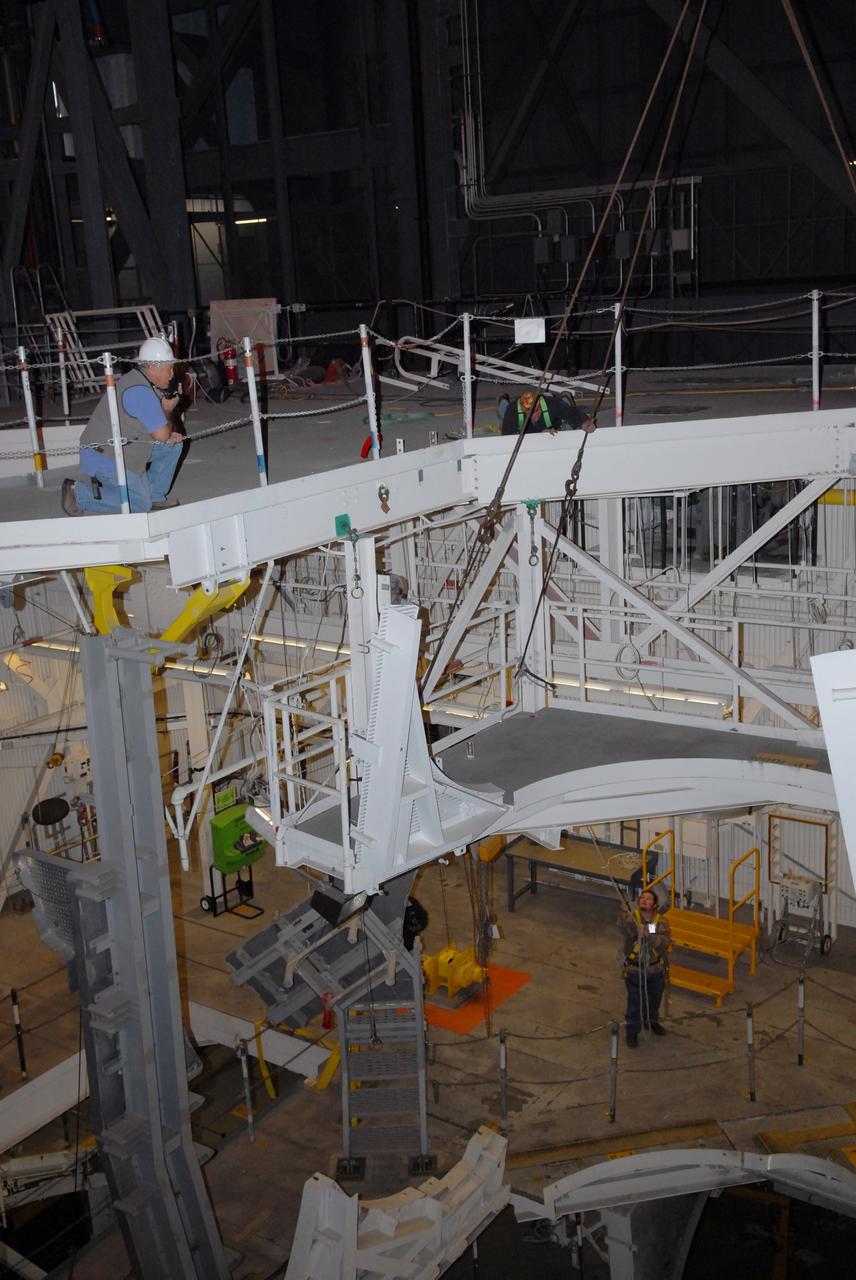
CAPE CANAVERAL, Fla. – In the Vehicle Assembly Building at NASA's Kennedy Space Center in Florida, the platform is being lifted from an upper level in high bay 3. Its removal is part of the refurbishment of the facility for the Constellation Program's Ares 1-X vehicle. The Ares I and Ares V rockets will be more than 325 feet tall, considerably taller than the space shuttle atop its mobile launcher platform. Photo credit: NASA/Jack Pfaller
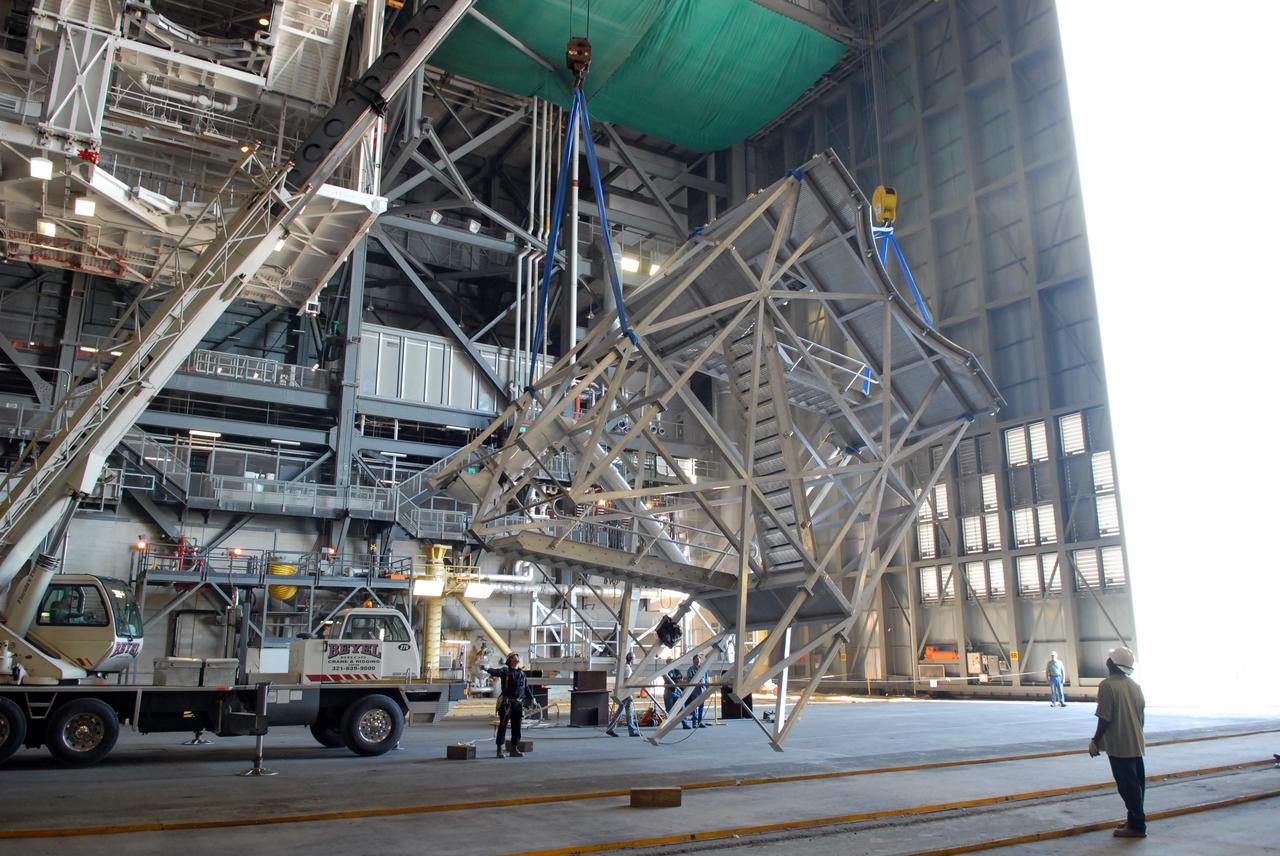
CAPE CANAVERAL, Fla. – In the Vehicle Assembly Building at NASA's Kennedy Space Center in Florida, a new platform is lifted to install on the 16th level in high bay 3. The refurbishment of the facility is for the Constellation Program's Ares vehicles. The Ares I and Ares V rockets will be 325 feet and 360 feet tall, respectively, considerably taller than the space shuttle atop its mobile launcher platform. Photo credit: NASA/Jack Pfaller
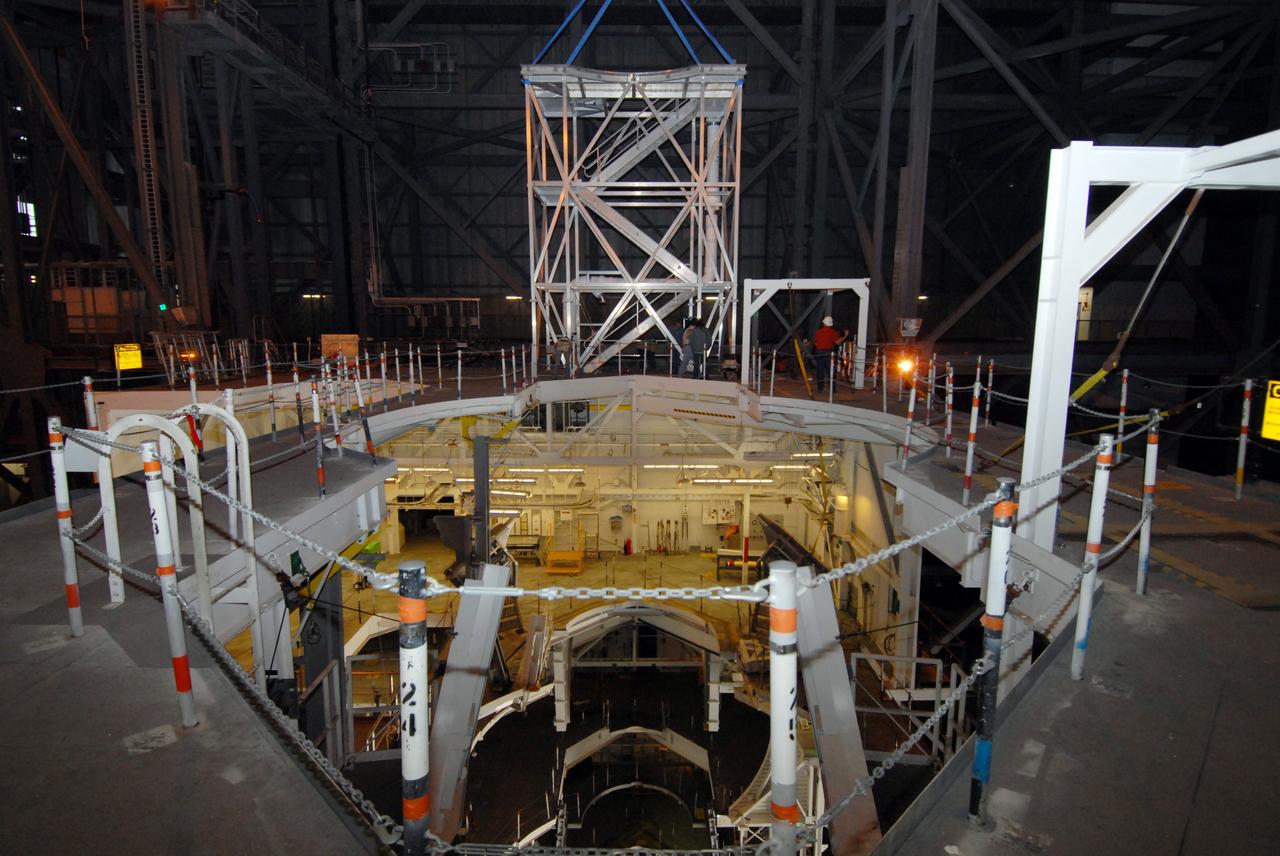
CAPE CANAVERAL, Fla. – In the Vehicle Assembly Building at NASA's Kennedy Space Center in Florida, a new platform is installed on the 16th level in high bay 3. The refurbishment of the facility is for the Constellation Program's Ares vehicles. The Ares I and Ares V rockets will be 325 feet and 360 feet tall, respectively, considerably taller than the space shuttle atop its mobile launcher platform. Photo credit: NASA/Jack Pfaller
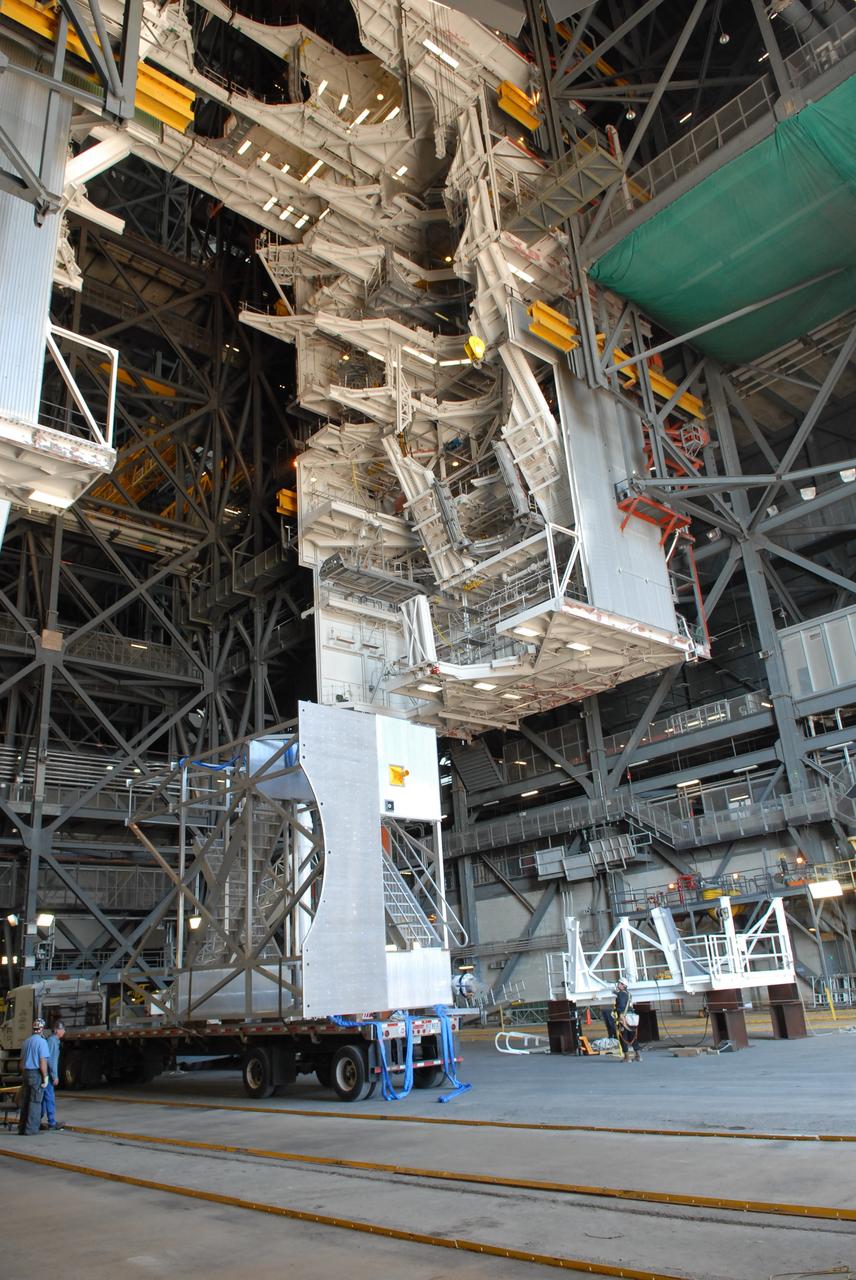
CAPE CANAVERAL, Fla. – In the Vehicle Assembly Building at NASA's Kennedy Space Center in Florida, new platforms are being added to the 16th level in high bay 3. The refurbishment of the facility is for the Constellation Program's Ares vehicles. The Ares I and Ares V rockets will be 325 feet and 360 feet tall, respectively, considerably taller than the space shuttle atop its mobile launcher platform. Photo credit: NASA/Jack Pfaller
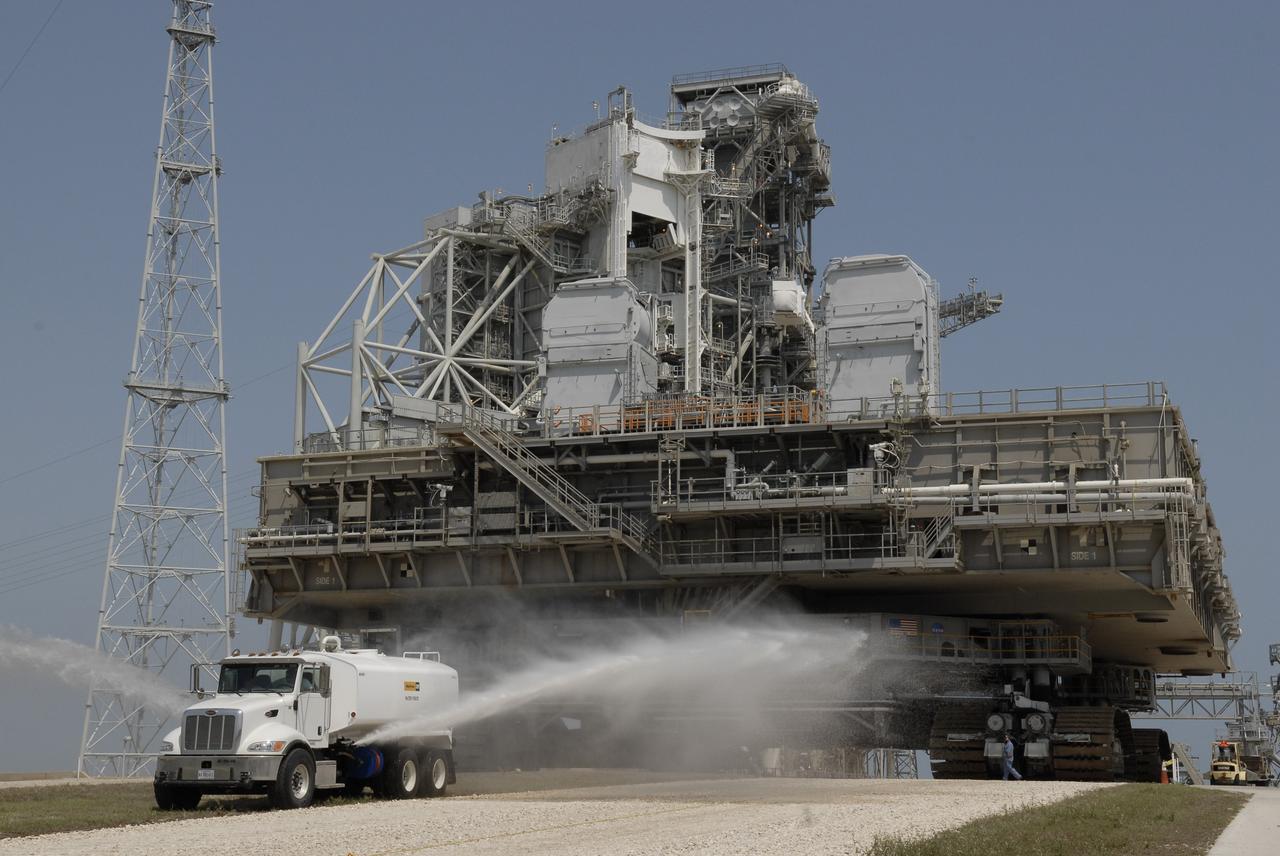
CAPE CANAVERAL, Fla. – At NASA's Kennedy Space Center in Florida, a water truck sprays the dry crawlerway in front of the crawler-transporter carrying the mobile launcher platform on top as it moves away from Kennedy's Launch pad 39B. The platform, turned over from the shuttle program to the Constellation Program last month, will be rolled into the Vehicle Assembly Building's High Bay 3 in preparation for the Ares I-X flight test this summer. Ares I-X is the test vehicle for the Ares I, which is part of the Constellation Program to return men to the moon and beyond. Ground Control System hardware was installed in MLP-1 in December 2008. The platform was moved to the launch pad to check out the installed hardware with the Launch Control Center Firing Room 1 equipment, using the actual circuits that will be used when the fully stacked Ares I-X vehicle is rolled out later this year for launch. Photo credit: NASA/Kim Shiflett
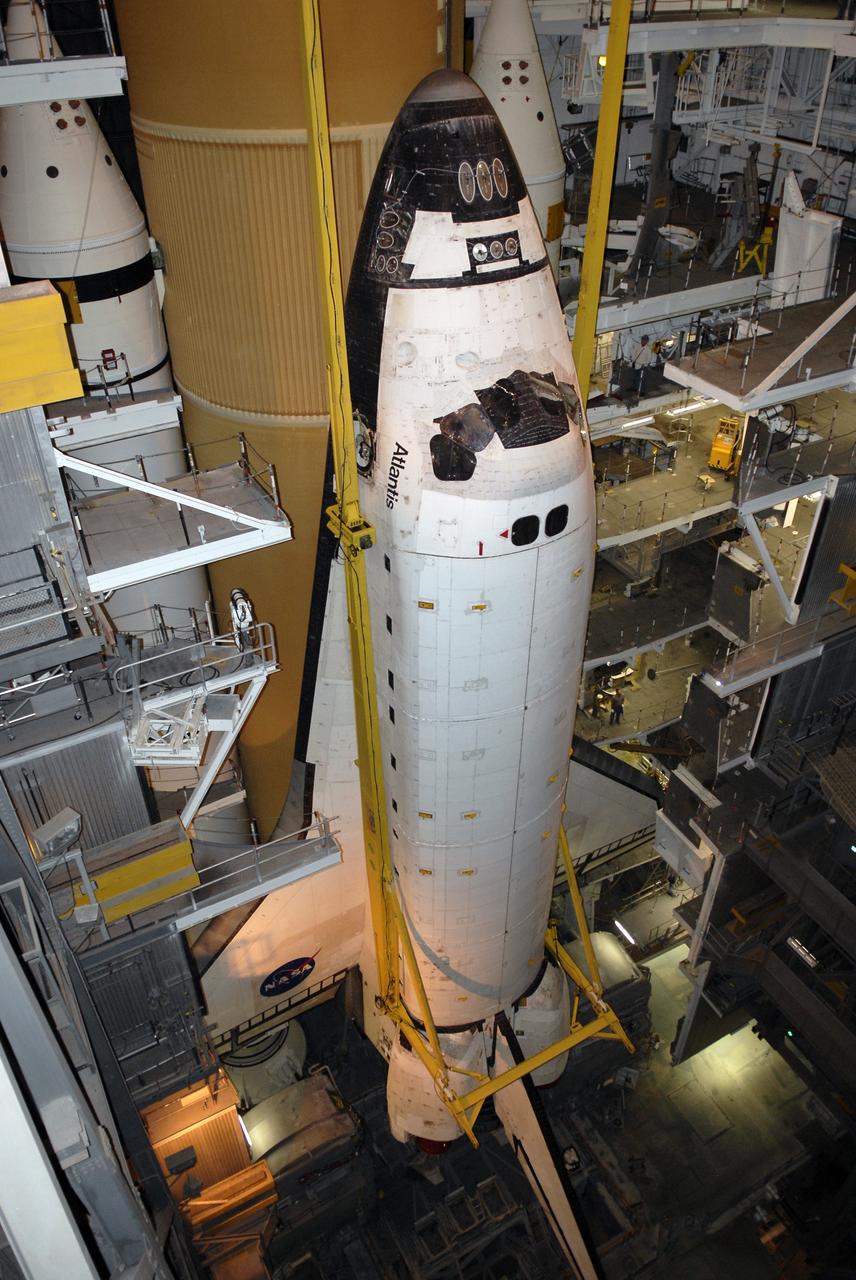
CAPE CANAVERAL, Fla. – In the Vehicle Assembly Building at NASA's Kennedy Space Center in Florida, space shuttle Atlantis is lowered alongside the external fuel tank and solid rocket boosters in High Bay 3. The shuttle will be mated with the external tank and boosters on the mobile launcher platform. After additional preparations are made, the shuttle will be rolled out to Launch Pad 39A for a targeted launch on May 12 on the STS-125 mission to service NASA's Hubble Space Telescope. Photo credit: NASA/Kim Shiflett
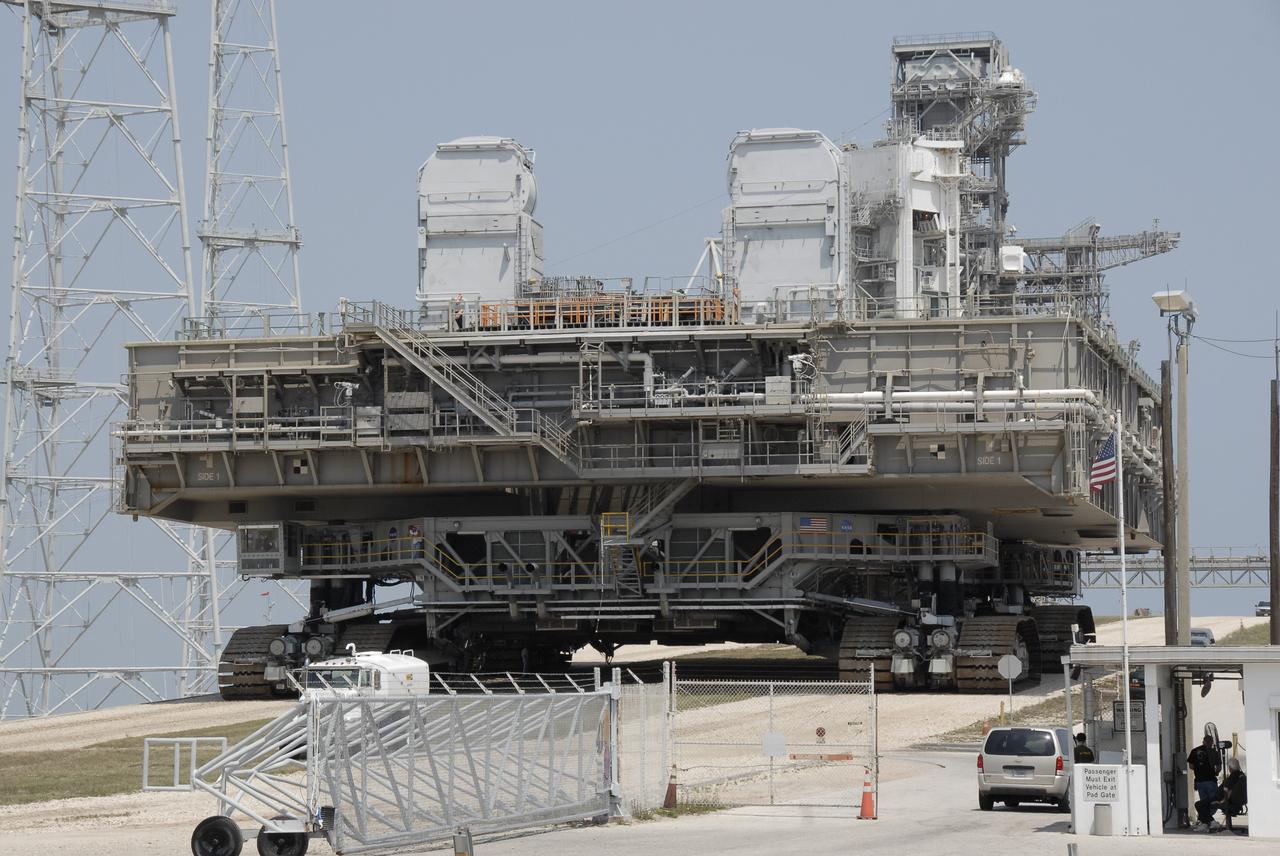
CAPE CANAVERAL, Fla. – At NASA's Kennedy Space Center in Florida, the mobile launcher platform that was turned over from the shuttle program to the Constellation Program last month moves off Kennedy's Launch Pad 39B via the crawler-transporter underneath. The platform will be rolled into the Vehicle Assembly Building's High Bay 3 in preparation for the Ares I-X flight test this summer. Ares I-X is the test vehicle for the Ares I, which is part of the Constellation Program to return men to the moon and beyond. Ground Control System hardware was installed in MLP-1 in December 2008. The platform was moved to the launch pad to check out the installed hardware with the Launch Control Center Firing Room 1 equipment, using the actual circuits that will be used when the fully stacked Ares I-X vehicle is rolled out later this year for launch. Photo credit: NASA/Kim Shiflett
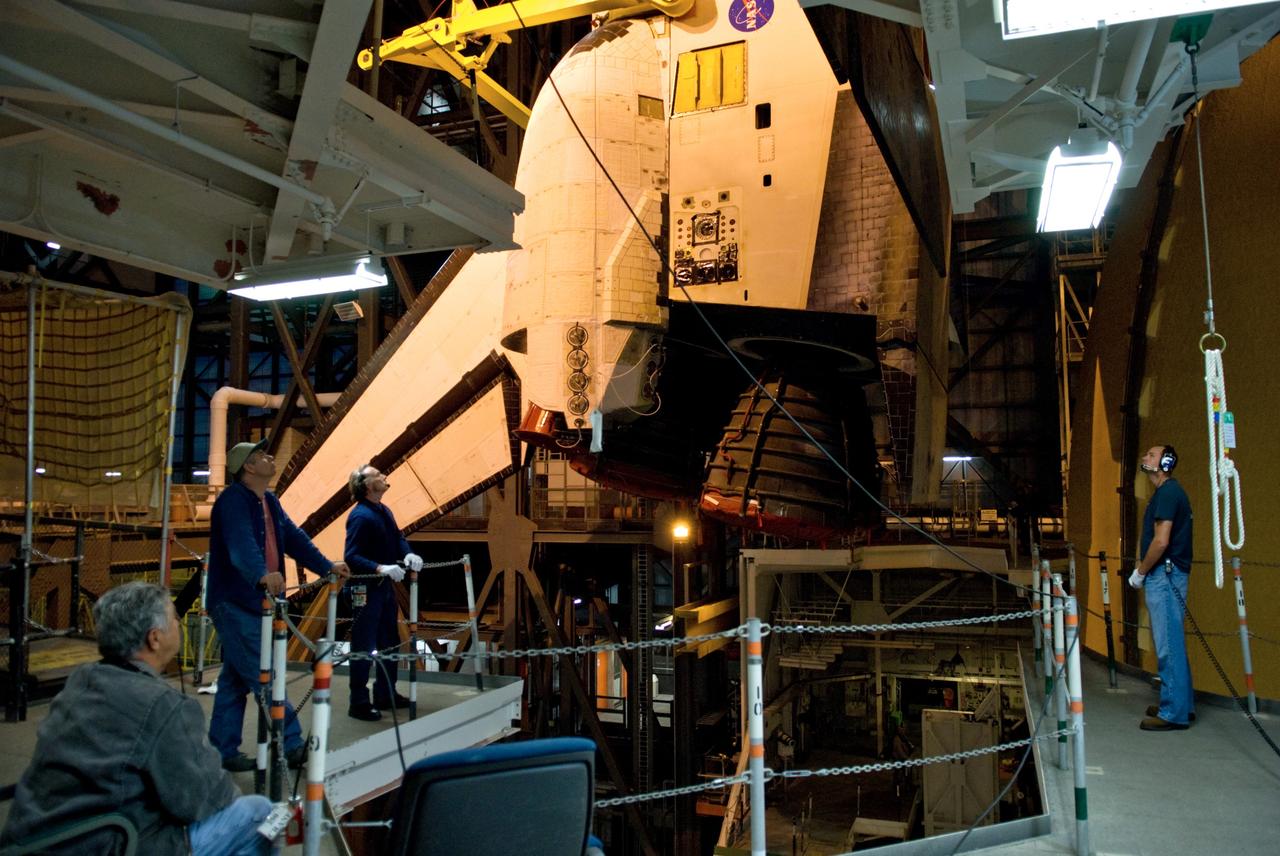
CAPE CANAVERAL, Fla. – In the Vehicle Assembly Building at NASA's Kennedy Space Center in Florida, workers observe the movement of space shuttle Atlantis as it is lowered toward the mobile launcher platform. The shuttle will be mated with the external fuel tank and solid rocket boosters on the platform. After additional preparations are made, the shuttle will be rolled out to Launch Pad 39A for a targeted launch on May 12 on the STS-125 mission to service NASA's Hubble Space Telescope. Photo credit: NASA/Kim Shiflett
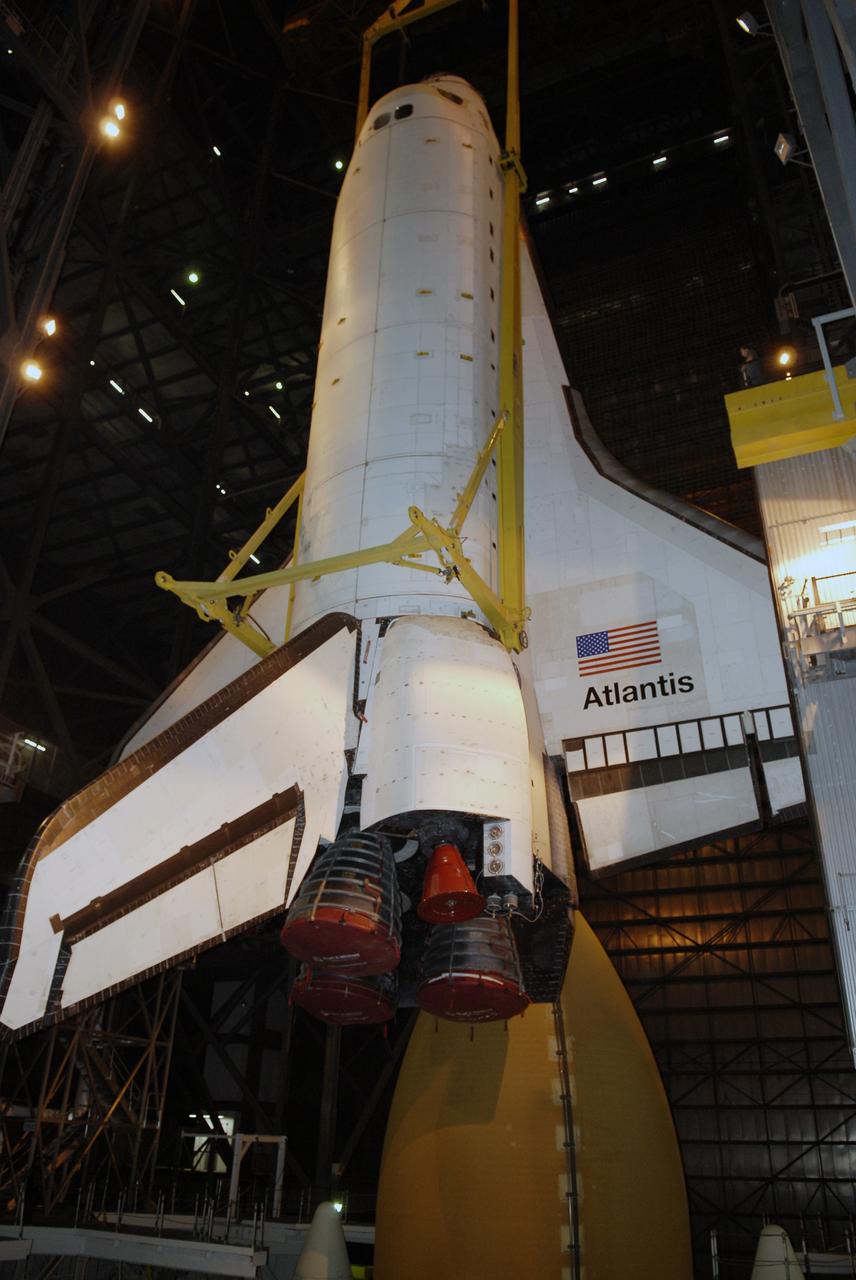
CAPE CANAVERAL, Fla. – In the Vehicle Assembly Building at NASA's Kennedy Space Center in Florida, space shuttle Atlantis is lowered alongside the external fuel tank in High Bay 3. In the bay, the shuttle will be mated with the external tank and solid rocket boosters on the mobile launcher platform. After additional preparations are made, the shuttle will be rolled out to Launch Pad 39A for a targeted launch on May 12 on the STS-125 mission to service NASA's Hubble Space Telescope. Photo credit: NASA/Kim Shiflett
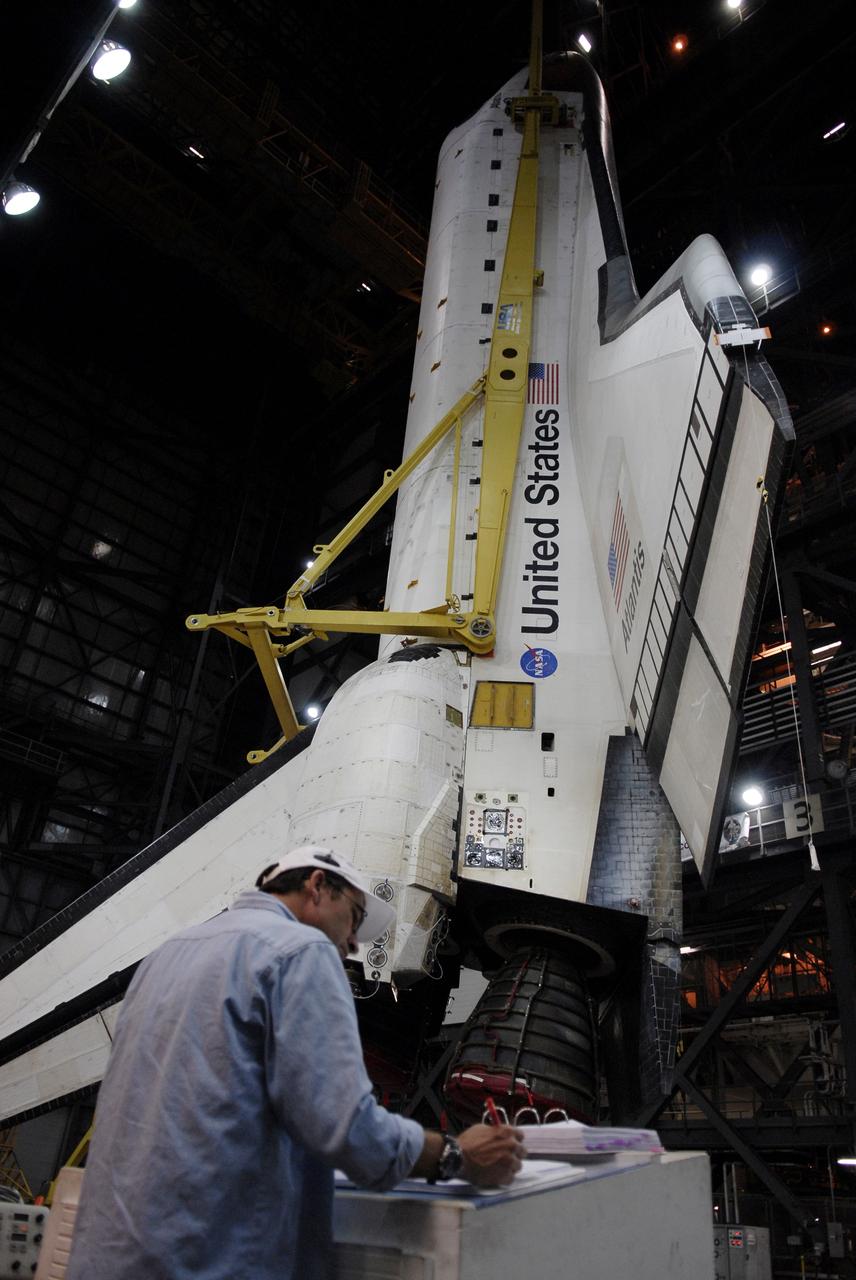
CAPE CANAVERAL, Fla. – In the Vehicle Assembly Building at NASA's Kennedy Space Center in Florida, a technician checks data before space shuttle Atlantis is lifted into High Bay 3. In the bay, the shuttle will be lowered and mated with its external fuel tank and solid rocket boosters on the mobile launcher platform. After additional preparations are made, the shuttle will be rolled out to Launch Pad 39A for a targeted launch on May 12 on the STS-125 mission to service NASA's Hubble Space Telescope. Photo credit: NASA/Kim Shiflett
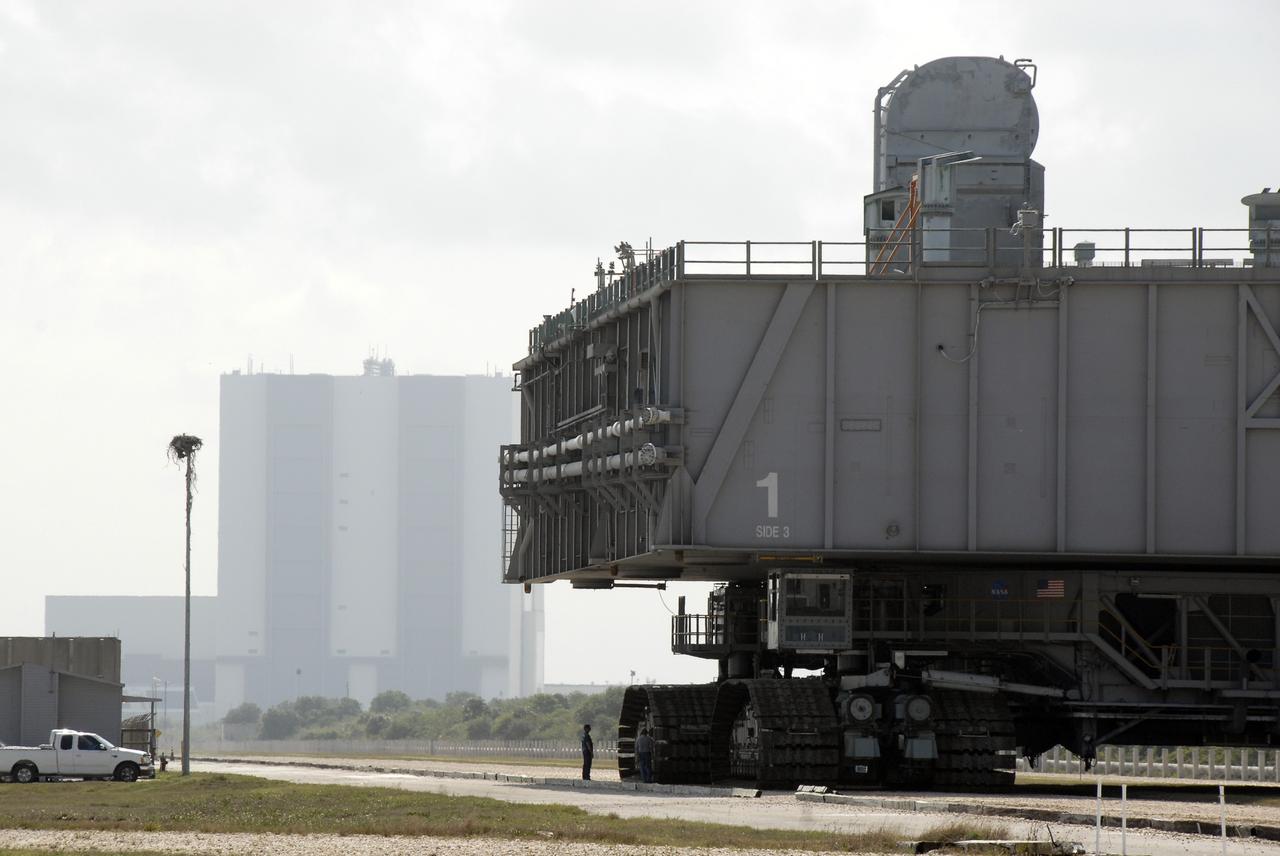
CAPE CANAVERAL, Fla. – A worker is dwarfed by the giant crawler-transporter and mobile launcher platform moving along the crawlerway toward the Vehicle Assembly Building. The platform will be rolled into the VAB's High Bay 3 in preparation for the Ares I-X flight test this summer. Ares I-X is the test vehicle for the Ares I, which is part of the Constellation Program to return men to the moon and beyond. Ground Control System hardware was installed in MLP-1 in December 2008. The platform was moved to the launch pad to check out the installed hardware with the Launch Control Center Firing Room 1 equipment, using the actual circuits that will be used when the fully stacked Ares I-X vehicle is rolled out later this year for launch. Photo credit: NASA/Kim Shiflett
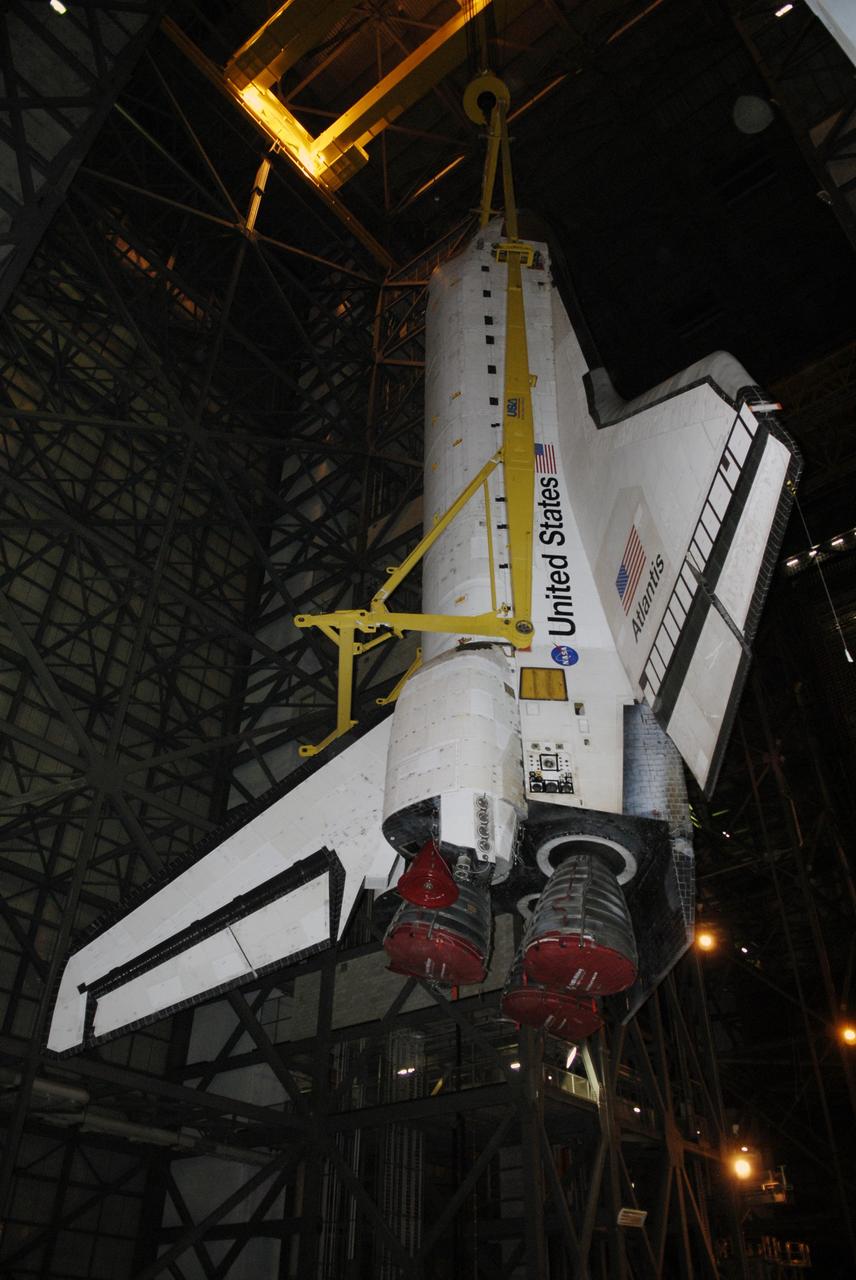
CAPE CANAVERAL, Fla. – In the Vehicle Assembly Building at NASA's Kennedy Space Center in Florida, space shuttle Atlantis is lifted toward the upper levels where it can be moved into High Bay 3. In the bay, the shuttle will be lowered and mated with its external fuel tank and solid rocket boosters on the mobile launcher platform. After additional preparations are made, the shuttle will be rolled out to Launch Pad 39A for a targeted launch on May 12 on the STS-125 mission to service NASA's Hubble Space Telescope. Photo credit: NASA/Kim Shiflett
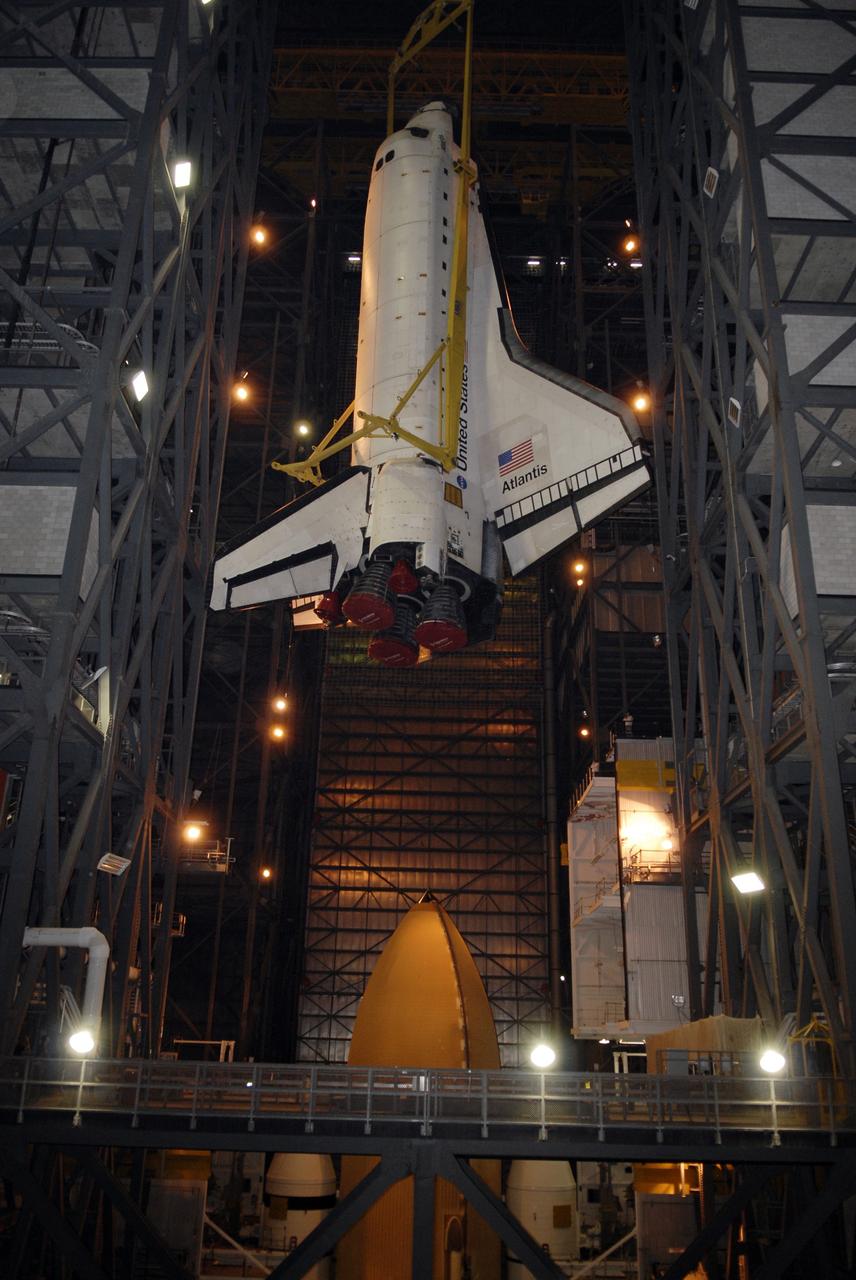
CAPE CANAVERAL, Fla. – In the Vehicle Assembly Building at NASA's Kennedy Space Center in Florida, space shuttle Atlantis is moved toward High Bay 3 where the top of its external fuel tank can be seen. In the bay, the shuttle will be lowered and mated with the external tank and solid rocket boosters on the mobile launcher platform. After additional preparations are made, the shuttle will be rolled out to Launch Pad 39A for a targeted launch on May 12 on the STS-125 mission to service NASA's Hubble Space Telescope. Photo credit: NASA/Kim Shiflett
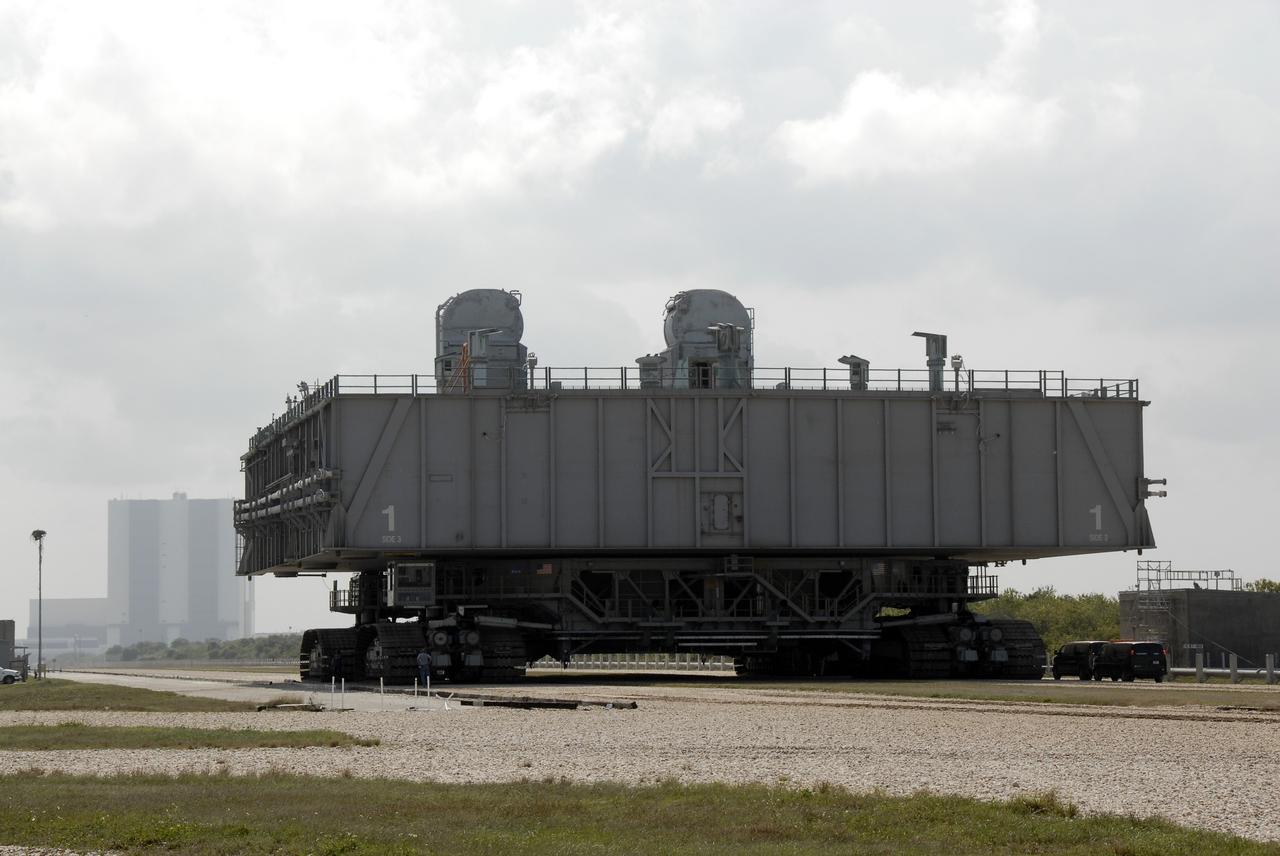
CAPE CANAVERAL, Fla. – At NASA's Kennedy Space Center in Florida, the mobile launcher platform that was turned over from the shuttle program to the Constellation Program last month moves along the crawlerway via the crawler-transporter underneath. In the background is the Vehicle Assembly Building. The platform will be rolled into the VAB's High Bay 3 in preparation for the Ares I-X flight test this summer. Ares I-X is the test vehicle for the Ares I, which is part of the Constellation Program to return men to the moon and beyond. Ground Control System hardware was installed in MLP-1 in December 2008. The platform was moved to the launch pad to check out the installed hardware with the Launch Control Center Firing Room 1 equipment, using the actual circuits that will be used when the fully stacked Ares I-X vehicle is rolled out later this year for launch. Photo credit: NASA/Kim Shiflett
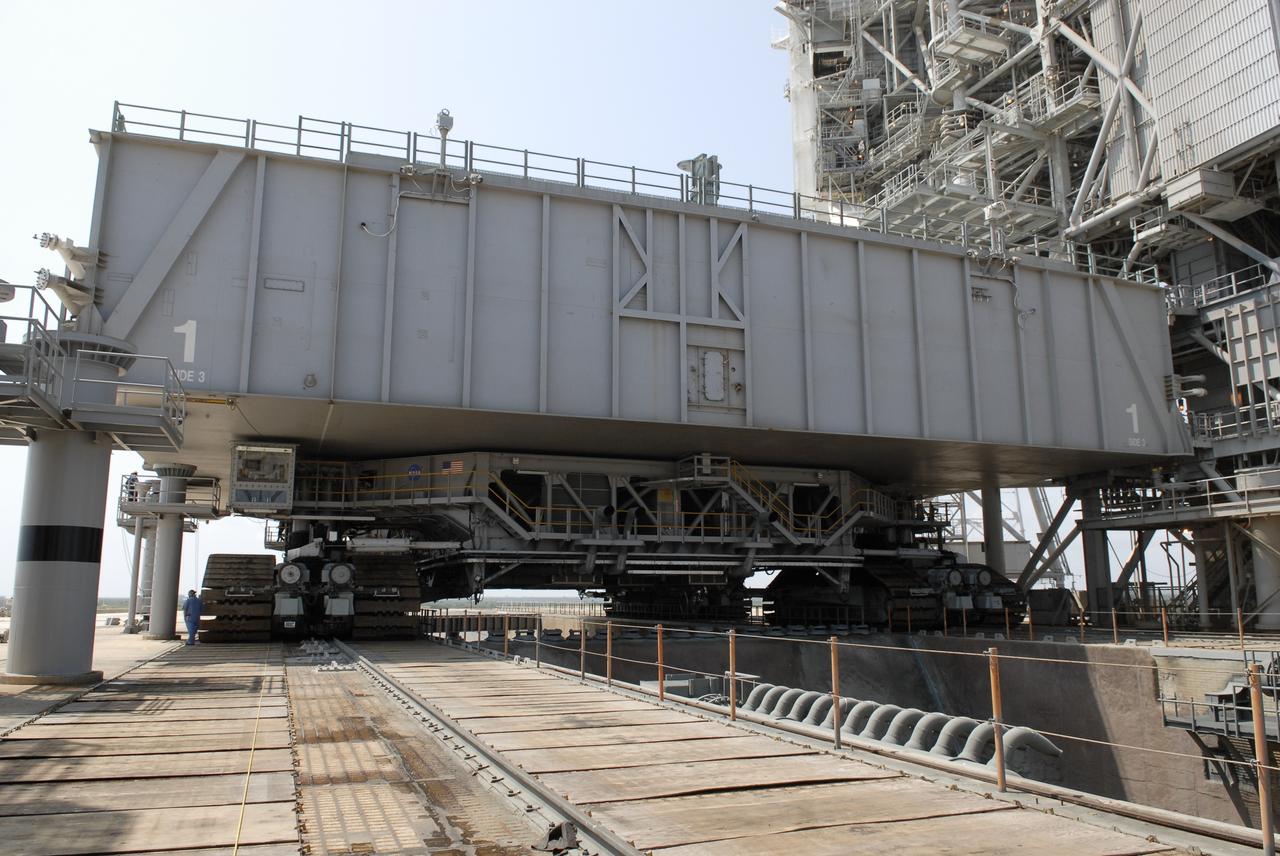
CAPE CANAVERAL, Fla. – At NASA's Kennedy Space Center in Florida, the mobile launcher platform that was turned over from the shuttle program to the Constellation Program last month is being moved from Kennedy's Launch Pad 39B via the crawler-transporter underneath. Here, the platform and crawler can be seen straddling the flame trench on the launch pad. The platform will be rolled into the Vehicle Assembly Building's High Bay 3 in preparation for the Ares I-X flight test this summer. Ares I-X is the test vehicle for the Ares I, which is part of the Constellation Program to return men to the moon and beyond. Ground Control System hardware was installed in MLP-1 in December 2008. The platform was moved to the launch pad to check out the installed hardware with the Launch Control Center Firing Room 1 equipment, using the actual circuits that will be used when the fully stacked Ares I-X vehicle is rolled out later this year for launch. Photo credit: NASA/Kim Shiflett
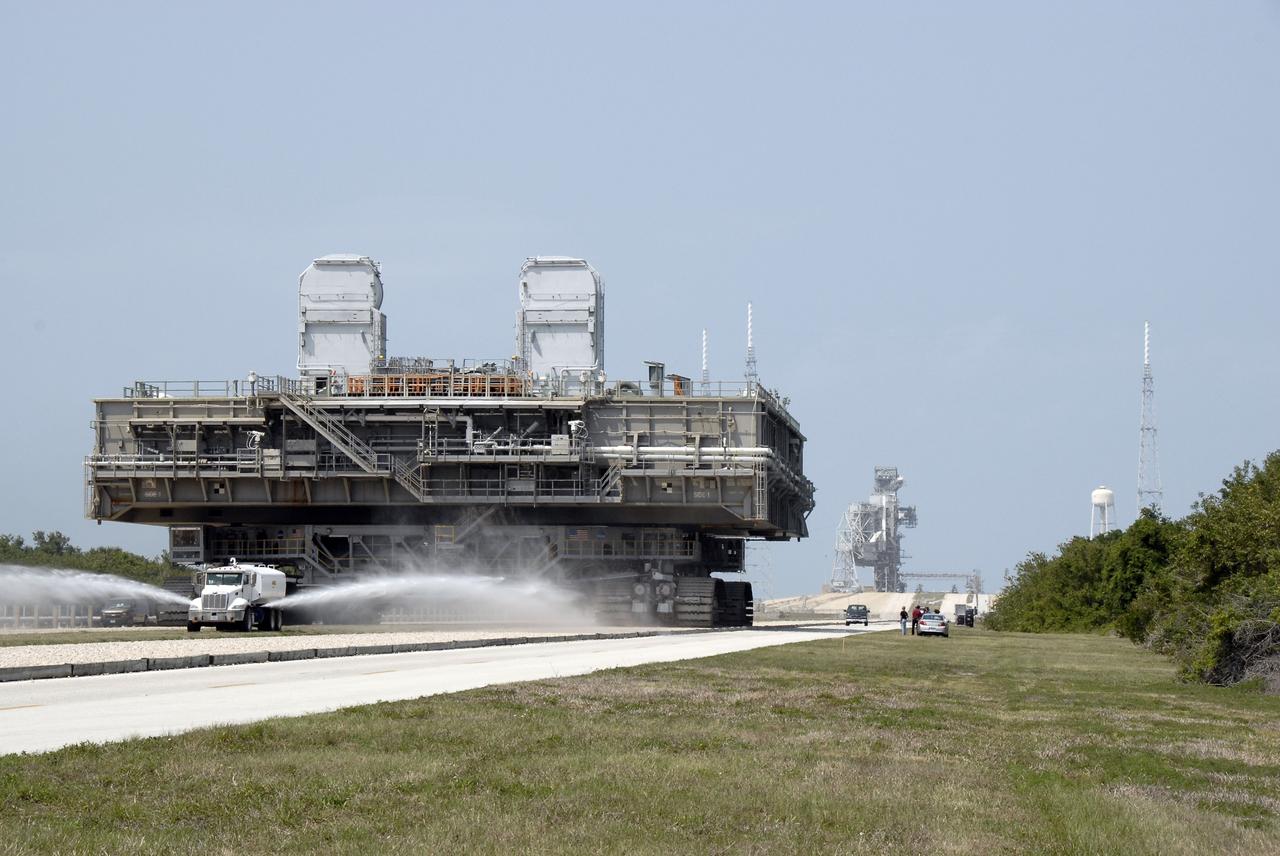
CAPE CANAVERAL, Fla. – At NASA's Kennedy Space Center in Florida, a water truck continues to spray the dry crawlerway in front of the crawler-transporter as it moves the mobile launcher platform on top away from Kennedy's Launch pad 39B. The platform, turned over from the shuttle program to the Constellation Program last month, will be rolled into the Vehicle Assembly Building's High Bay 3 in preparation for the Ares I-X flight test this summer. Ares I-X is the test vehicle for the Ares I, which is part of the Constellation Program to return men to the moon and beyond. Ground Control System hardware was installed in MLP-1 in December 2008. The platform was moved to the launch pad to check out the installed hardware with the Launch Control Center Firing Room 1 equipment, using the actual circuits that will be used when the fully stacked Ares I-X vehicle is rolled out later this year for launch. Photo credit: NASA/Kim Shiflett
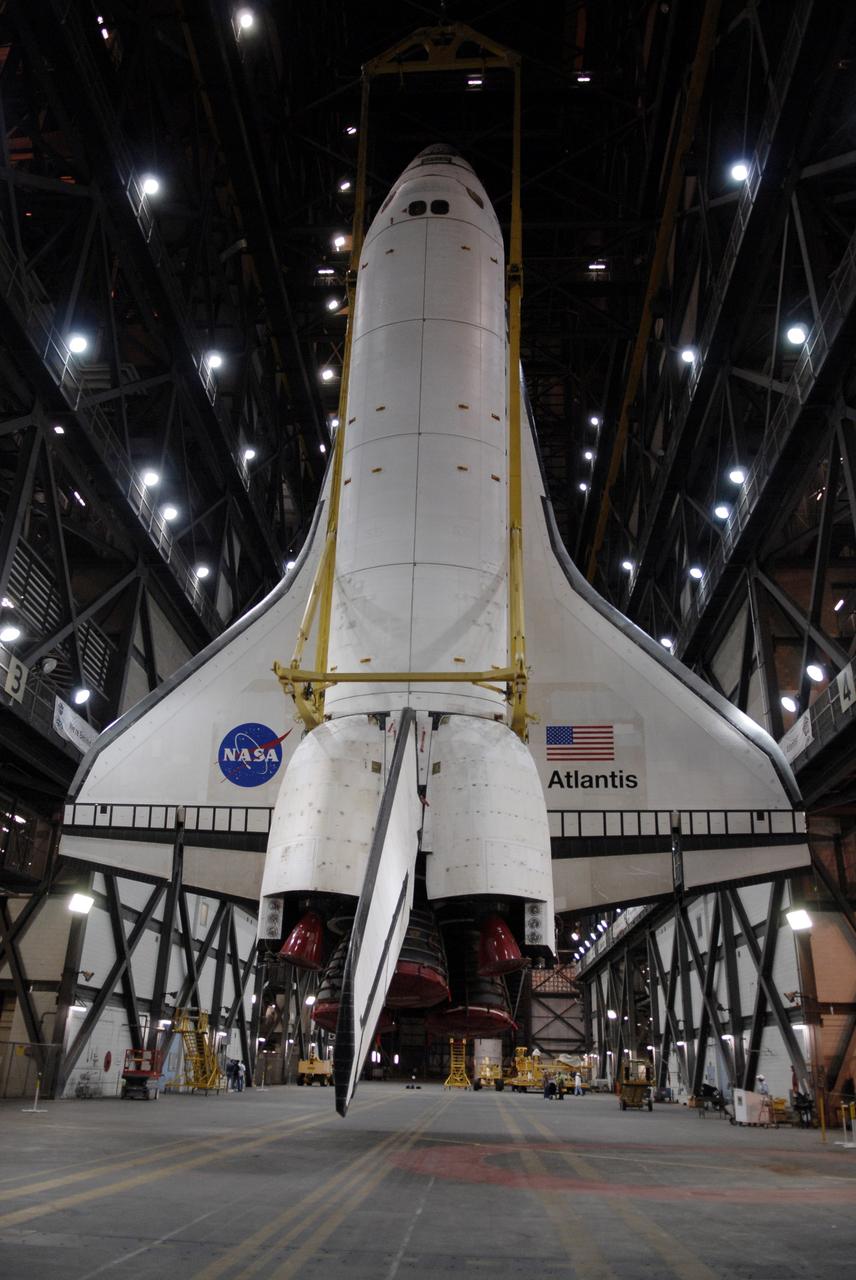
CAPE CANAVERAL, Fla. – After rotation in the Vehicle Assembly Building at NASA's Kennedy Space Center in Florida, space shuttle Atlantis is suspended vertically above the transfer aisle. The shuttle will be lifted into High Bay 3 where it will be lowered and mated with its external fuel tank and solid rocket boosters on the mobile launcher platform. After additional preparations are made, the shuttle will be rolled out to Launch Pad 39A for a targeted launch on May 12 on the STS-125 mission to service NASA's Hubble Space Telescope. Photo credit: NASA/Kim Shiflett
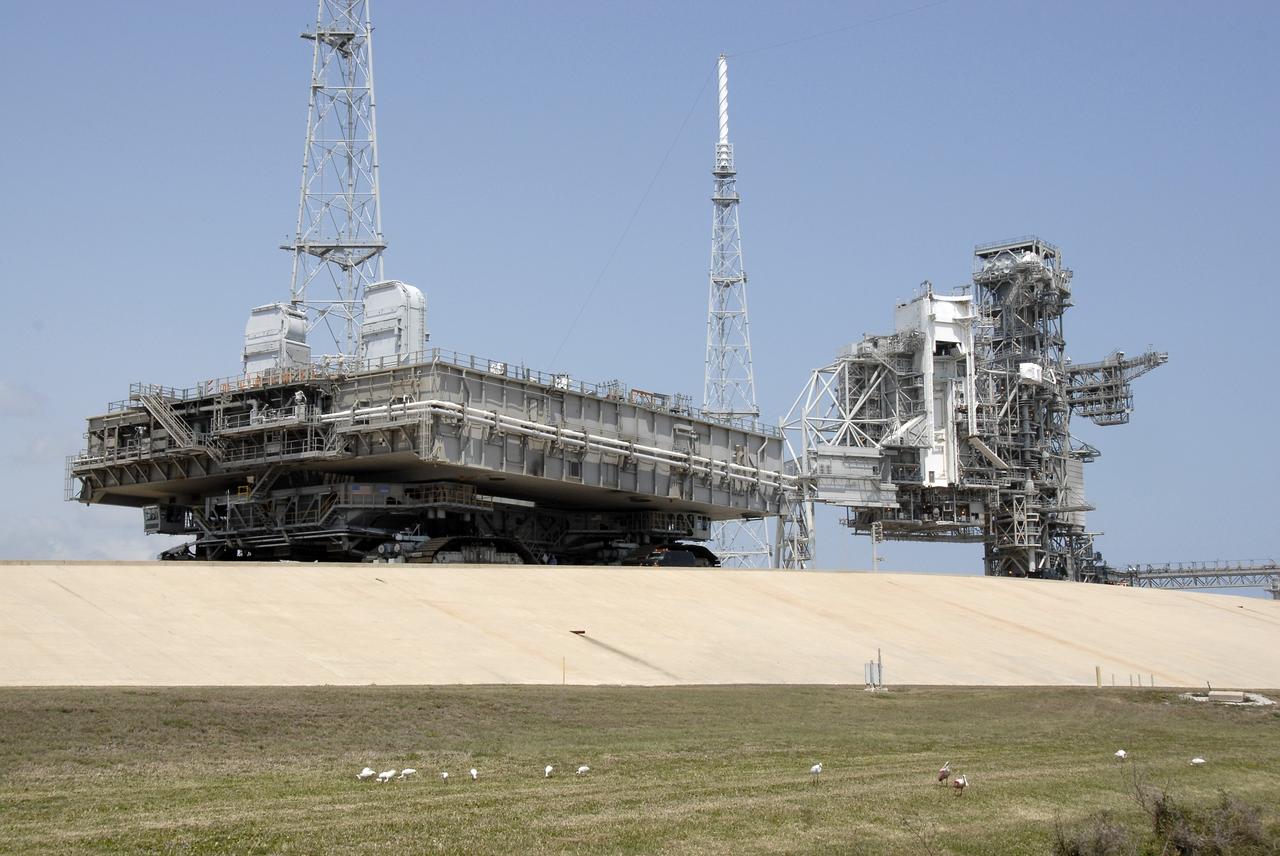
CAPE CANAVERAL, Fla. – At NASA's Kennedy Space Center in Florida, the mobile launcher platform that was turned over from the shuttle program to the Constellation Program last month is being moved from Kennedy's Launch Pad 39B via the crawler-transporter underneath. The platform will be rolled into the Vehicle Assembly Building's High Bay 3 in preparation for the Ares I-X flight test this summer. Ares I-X is the test vehicle for the Ares I, which is part of the Constellation Program to return men to the moon and beyond. Ground Control System hardware was installed in MLP-1 in December 2008. The platform was moved to the launch pad to check out the installed hardware with the Launch Control Center Firing Room 1 equipment, using the actual circuits that will be used when the fully stacked Ares I-X vehicle is rolled out later this year for launch. Photo credit: NASA/Kim Shiflett
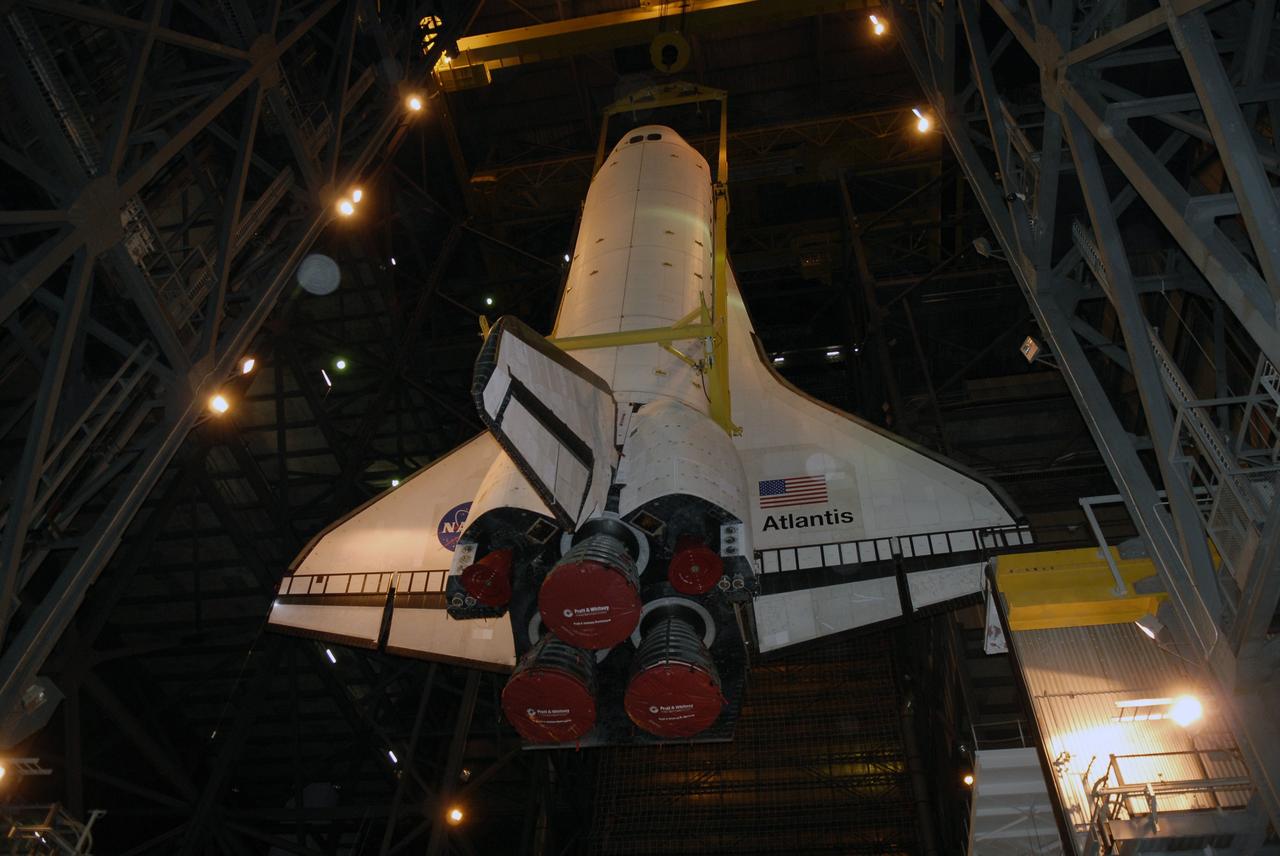
CAPE CANAVERAL, Fla. – In the Vehicle Assembly Building at NASA's Kennedy Space Center in Florida, space shuttle Atlantis is lowered into High Bay 3. In the bay, the shuttle will be mated with its external fuel tank and solid rocket boosters on the mobile launcher platform. After additional preparations are made, the shuttle will be rolled out to Launch Pad 39A for a targeted launch on May 12 on the STS-125 mission to service NASA's Hubble Space Telescope. Photo credit: NASA/Kim Shiflett
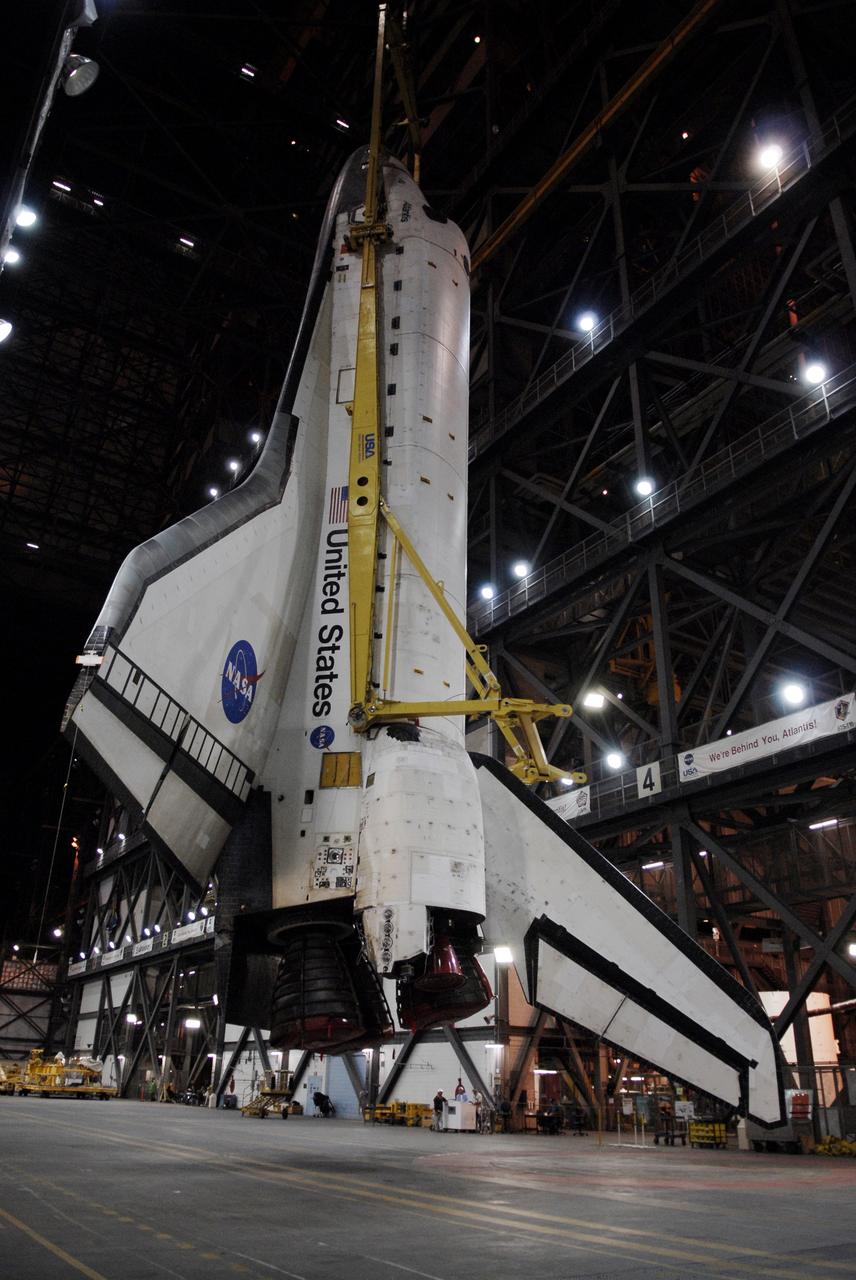
CAPE CANAVERAL, Fla. – In the Vehicle Assembly Building at NASA's Kennedy Space Center in Florida, a crane begins to lift space shuttle Atlantis into the upper levels to move it into High Bay 3. In the bay, the shuttle will be lowered and mated with its external fuel tank and solid rocket boosters on the mobile launcher platform. After additional preparations are made, the shuttle will be rolled out to Launch Pad 39A for a targeted launch on May 12 on the STS-125 mission to service NASA's Hubble Space Telescope. Photo credit: NASA/Kim Shiflett
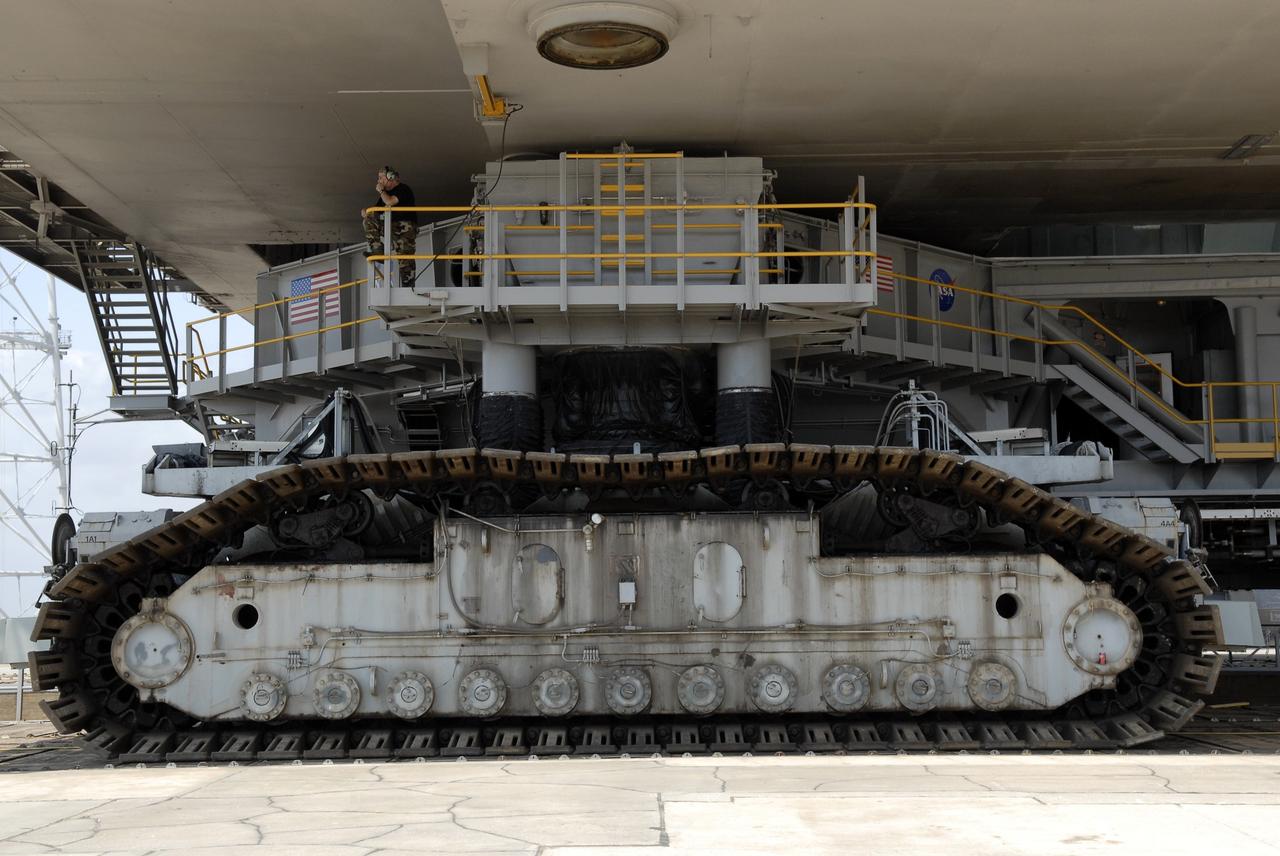
CAPE CANAVERAL, Fla. – At NASA's Kennedy Space Center in Florida, the crawler-transporter is underneath the mobile launcher platform to move it from Kennedy's Launch Pad 39B to the Vehicle Assembly Building's High Bay 3 in preparation for the Ares I-X flight test this summer. The platform was turned over from the shuttle program to the Constellation Program last month. Ares I-X is the test vehicle for the Ares I, which is part of the Constellation Program to return men to the moon and beyond. Ground Control System hardware was installed in MLP-1 in December 2008. The platform was moved to the launch pad to check out the installed hardware with the Launch Control Center Firing Room 1 equipment, using the actual circuits that will be used when the fully stacked Ares I-X vehicle is rolled out later this year for launch. Photo credit: NASA/Kim Shiflett
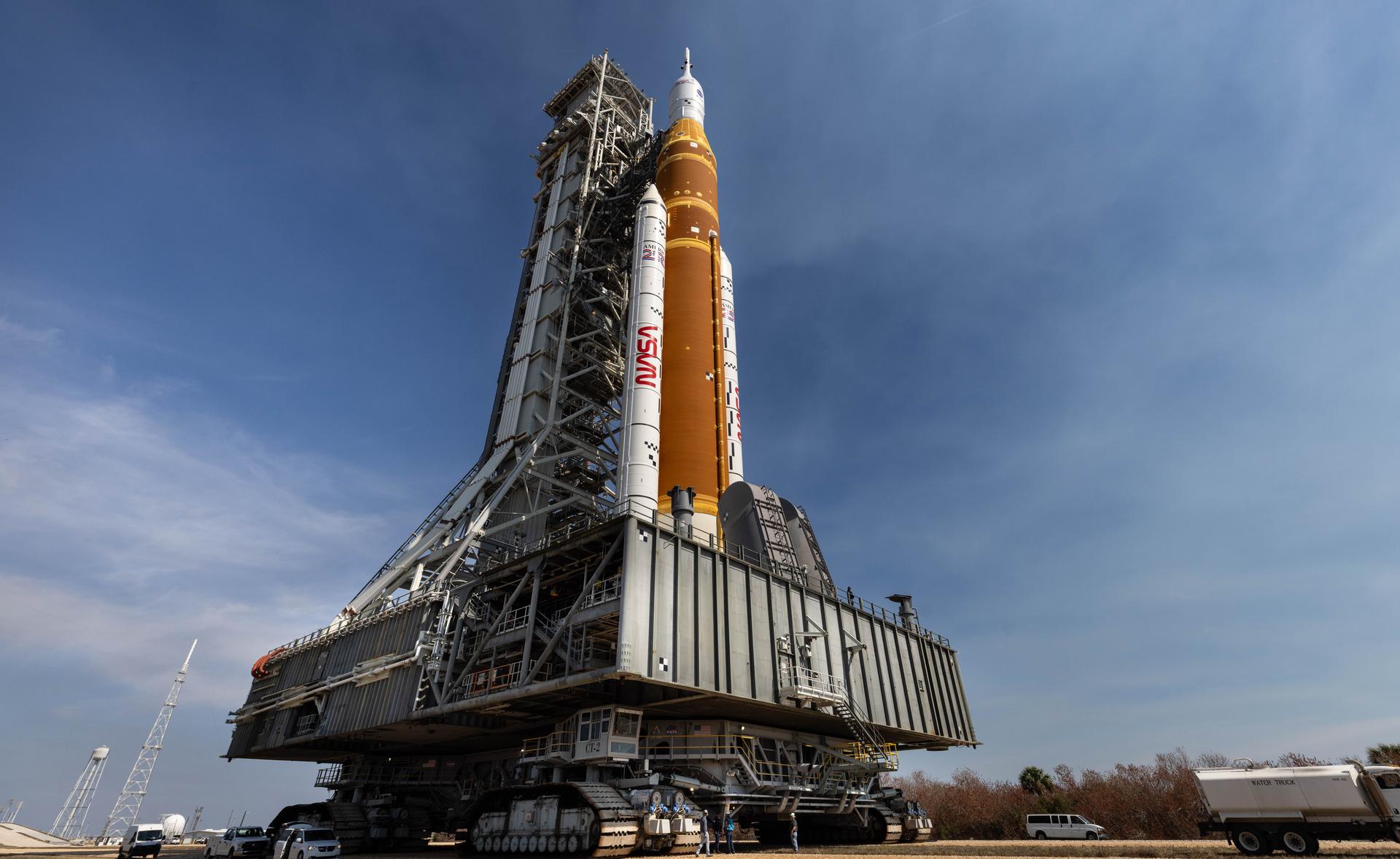
NASA’s crawler-transporter 2, carrying NASA’s Artemis II SLS (Space Launch System) rocket with the Orion spacecraft secured to mobile launcher 1, rolls back Wednesday, Feb. 25, 2026, to the Vehicle Assembly Building at NASA’s Kennedy Space Center in Florida to troubleshoot the flow of helium to the rocket’s upper stage, the interim cryogenic propulsion stage. Once complete, the SLS rocket will roll back to Launch Complex 39B to prepare to launch four astronauts around the Moon and back for the Artemis II test flight.
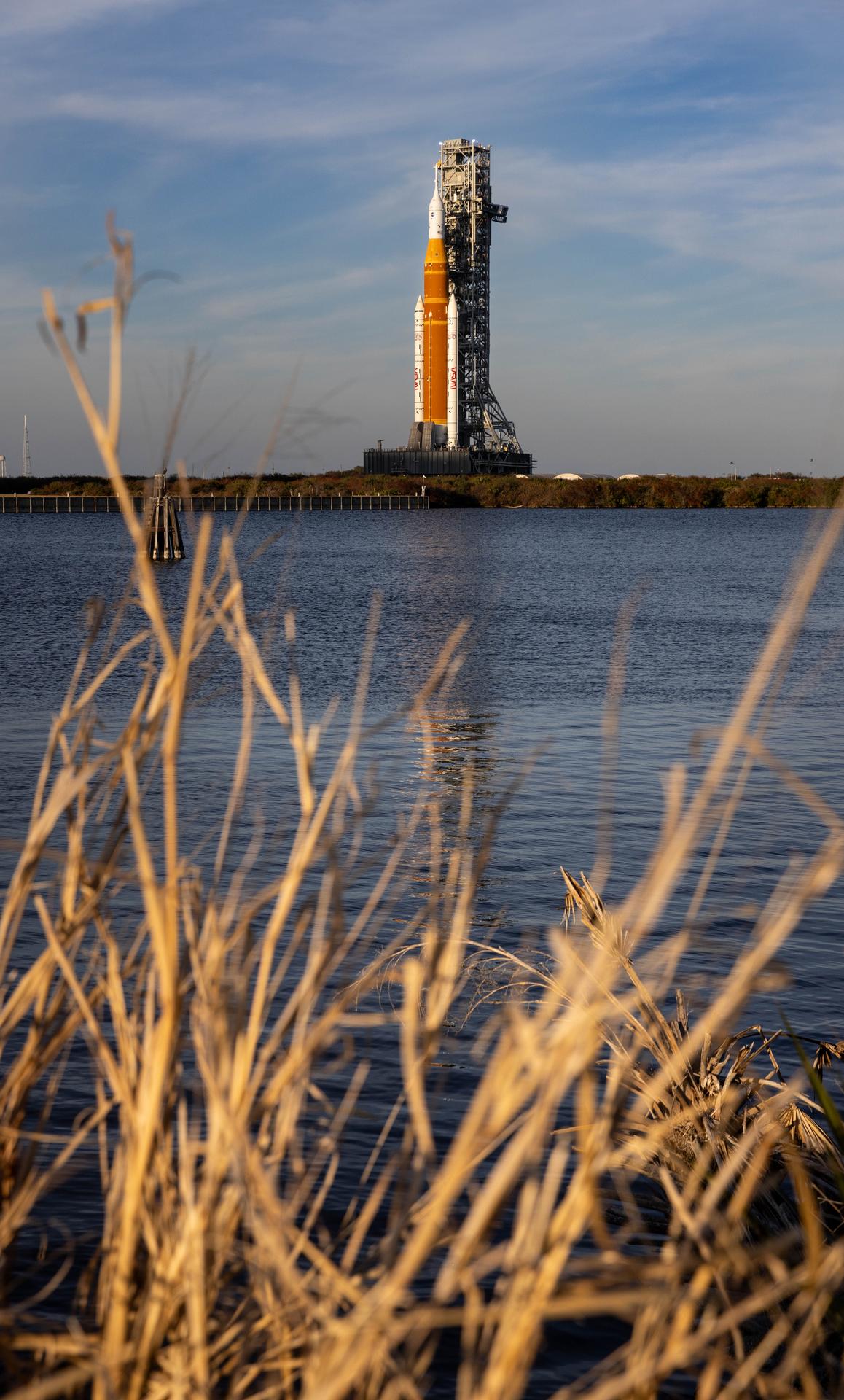
NASA’s crawler-transporter 2, carrying NASA’s Artemis II SLS (Space Launch System) rocket with the Orion spacecraft secured to mobile launcher 1, rolls back Wednesday, Feb. 25, 2026, to the Vehicle Assembly Building at NASA’s Kennedy Space Center in Florida to troubleshoot the flow of helium to the rocket’s upper stage, the interim cryogenic propulsion stage. Once complete, the SLS rocket will roll back to Launch Complex 39B to prepare to launch four astronauts around the Moon and back for the Artemis II test flight.

NASA’s crawler-transporter 2, carrying NASA’s Artemis II SLS (Space Launch System) rocket with the Orion spacecraft secured to mobile launcher 1, rolls back Wednesday, Feb. 25, 2026, to the Vehicle Assembly Building at NASA’s Kennedy Space Center in Florida to troubleshoot the flow of helium to the rocket’s upper stage, the interim cryogenic propulsion stage. Once complete, the SLS rocket will roll back to Launch Complex 39B to prepare to launch four astronauts around the Moon and back for the Artemis II test flight.
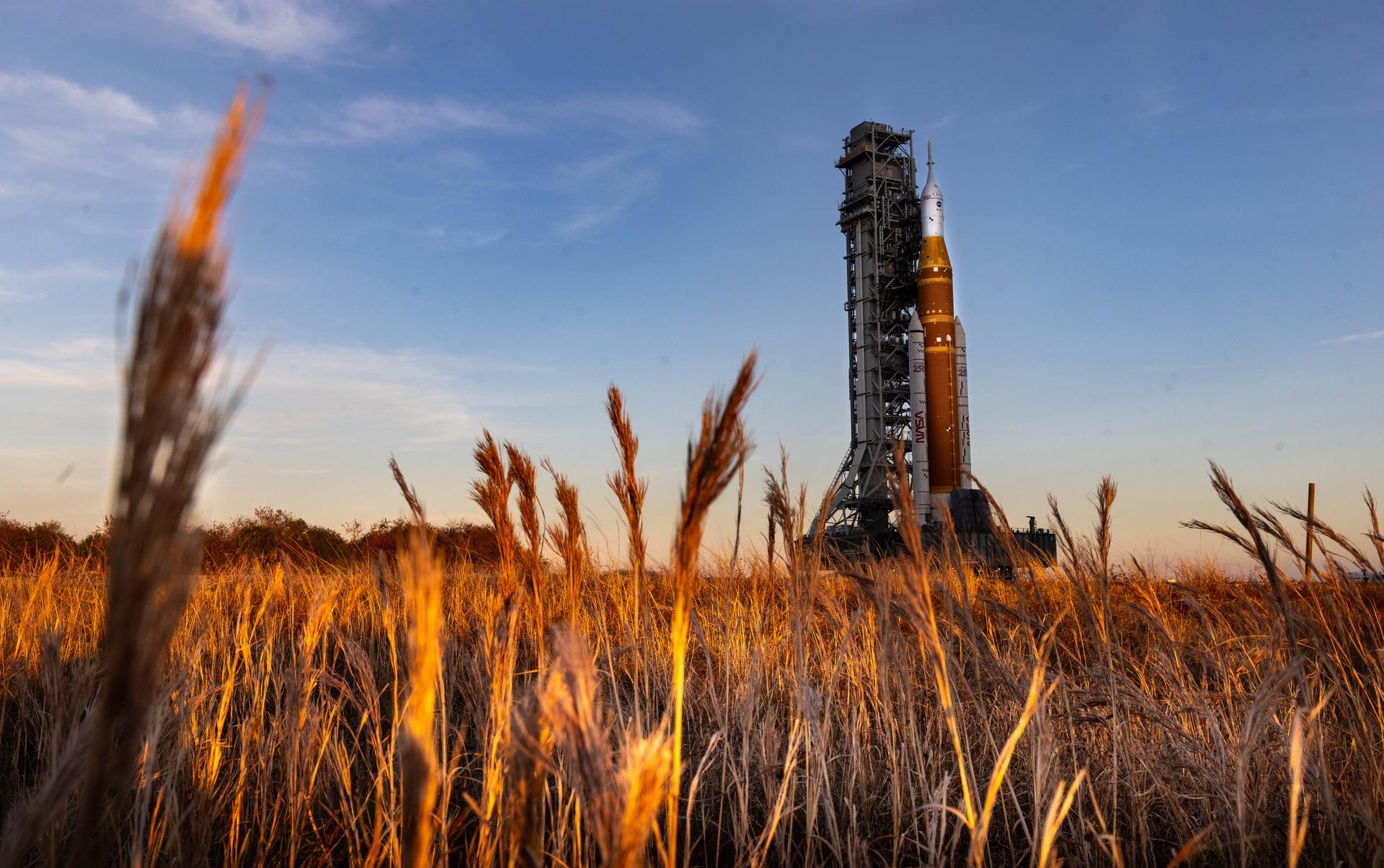
NASA’s crawler-transporter 2, carrying NASA’s Artemis II SLS (Space Launch System) rocket with the Orion spacecraft secured to mobile launcher 1, rolls back Wednesday, Feb. 25, 2026, to the Vehicle Assembly Building at NASA’s Kennedy Space Center in Florida to troubleshoot the flow of helium to the rocket’s upper stage, the interim cryogenic propulsion stage. Once complete, the SLS rocket will roll back to Launch Complex 39B to prepare to launch four astronauts around the Moon and back for the Artemis II test flight.
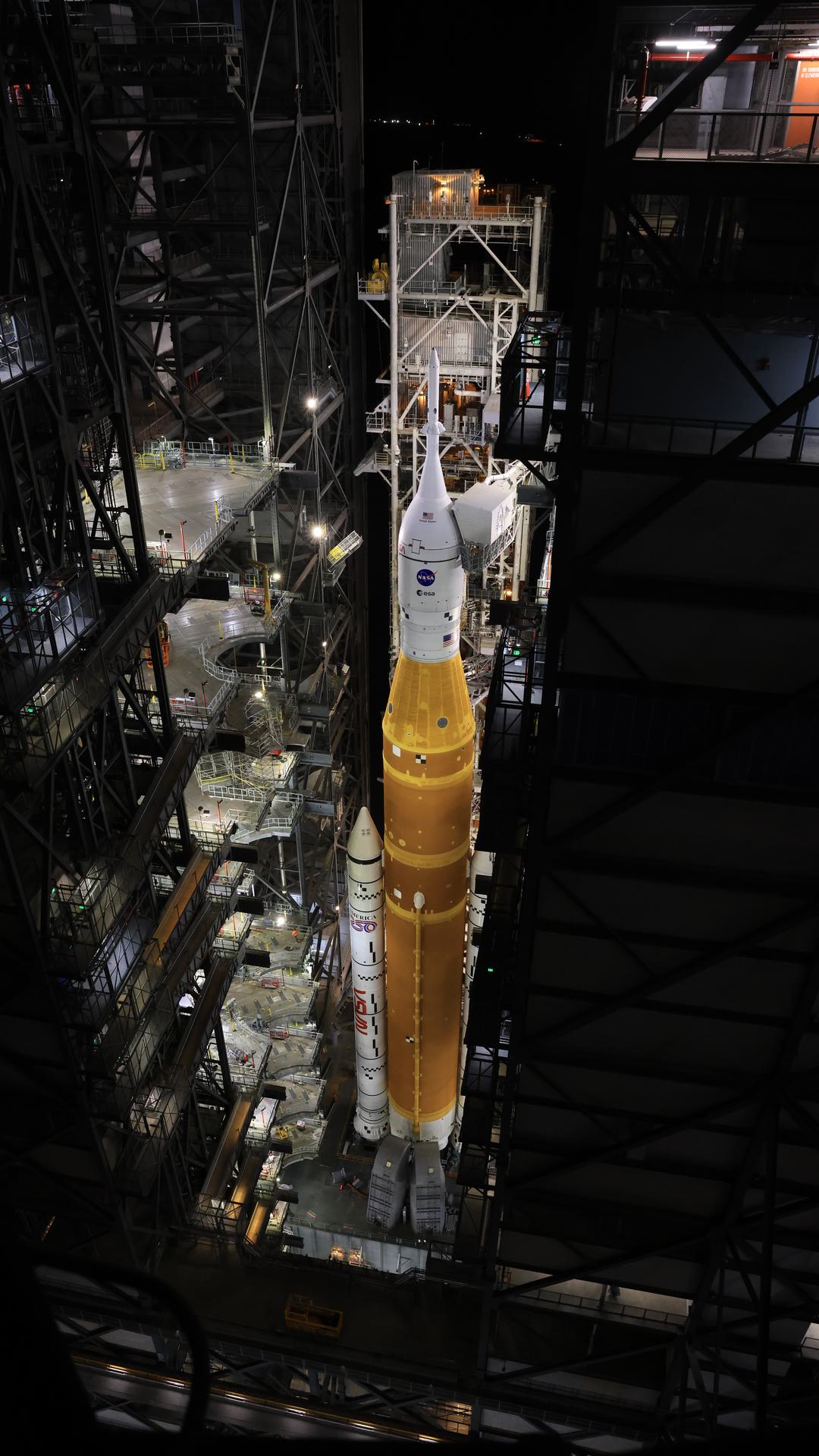
NASA’s crawler-transporter 2, carrying NASA’s Artemis II SLS (Space Launch System) rocket with the Orion spacecraft, arrives Wednesday, Feb. 25, 2026, inside the Vehicle Assembly Building at NASA’s Kennedy Space Center in Florida to troubleshoot the flow of helium to the rocket’s upper stage, the interim cryogenic propulsion stage. Once complete, the SLS rocket will roll back to Launch Complex 39B to prepare to launch four astronauts around the Moon and back for the Artemis II test flight.
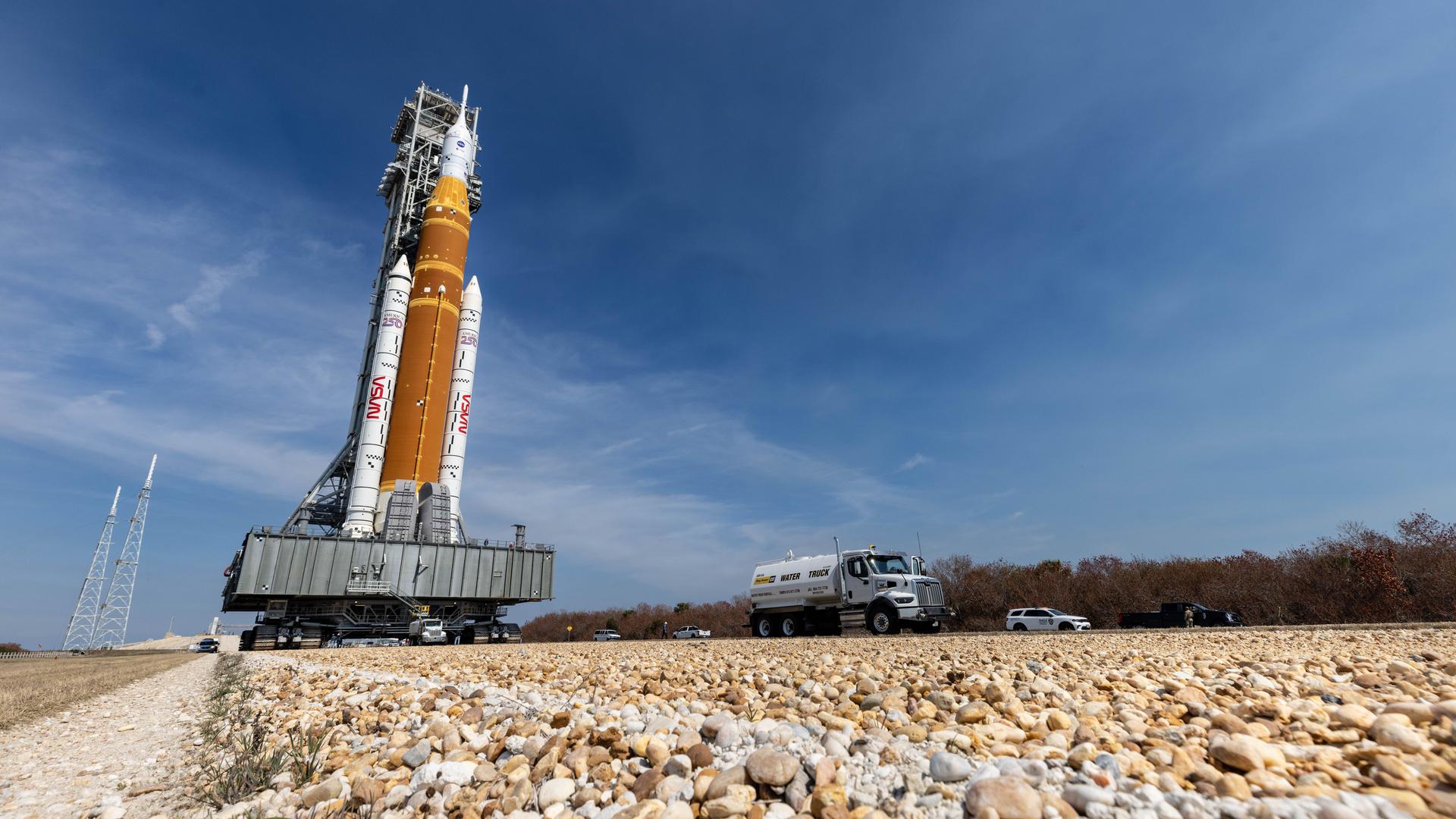
NASA’s crawler-transporter 2, carrying NASA’s Artemis II SLS (Space Launch System) rocket with the Orion spacecraft secured to mobile launcher 1, rolls back Wednesday, Feb. 25, 2026, to the Vehicle Assembly Building at NASA’s Kennedy Space Center in Florida to troubleshoot the flow of helium to the rocket’s upper stage, the interim cryogenic propulsion stage. Once complete, the SLS rocket will roll back to Launch Complex 39B to prepare to launch four astronauts around the Moon and back for the Artemis II test flight.
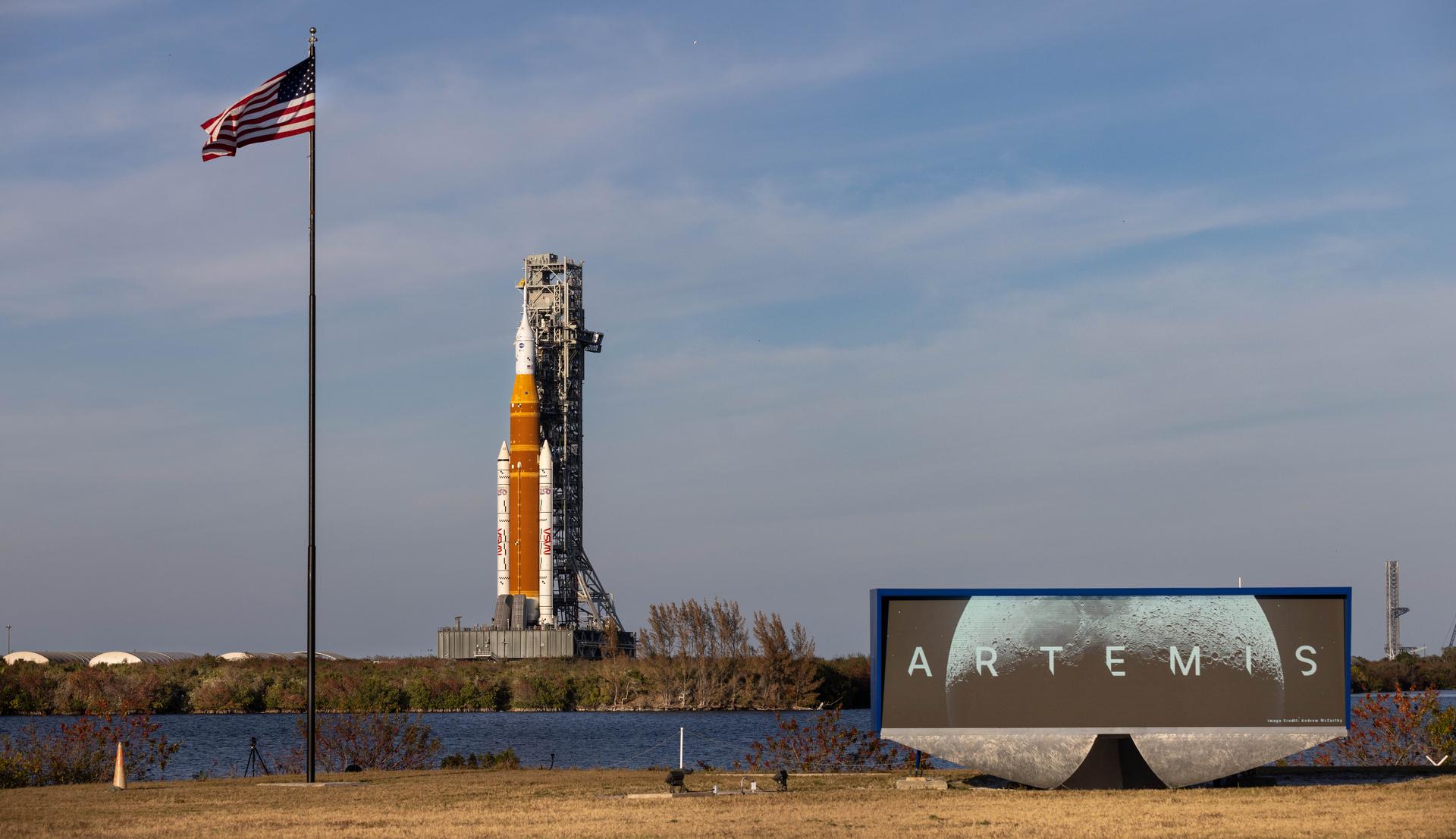
NASA’s crawler-transporter 2, carrying NASA’s Artemis II SLS (Space Launch System) rocket with the Orion spacecraft secured to mobile launcher 1, rolls back Wednesday, Feb. 25, 2026, to the Vehicle Assembly Building at NASA’s Kennedy Space Center in Florida to troubleshoot the flow of helium to the rocket’s upper stage, the interim cryogenic propulsion stage. Once complete, the SLS rocket will roll back to Launch Complex 39B to prepare to launch four astronauts around the Moon and back for the Artemis II test flight.
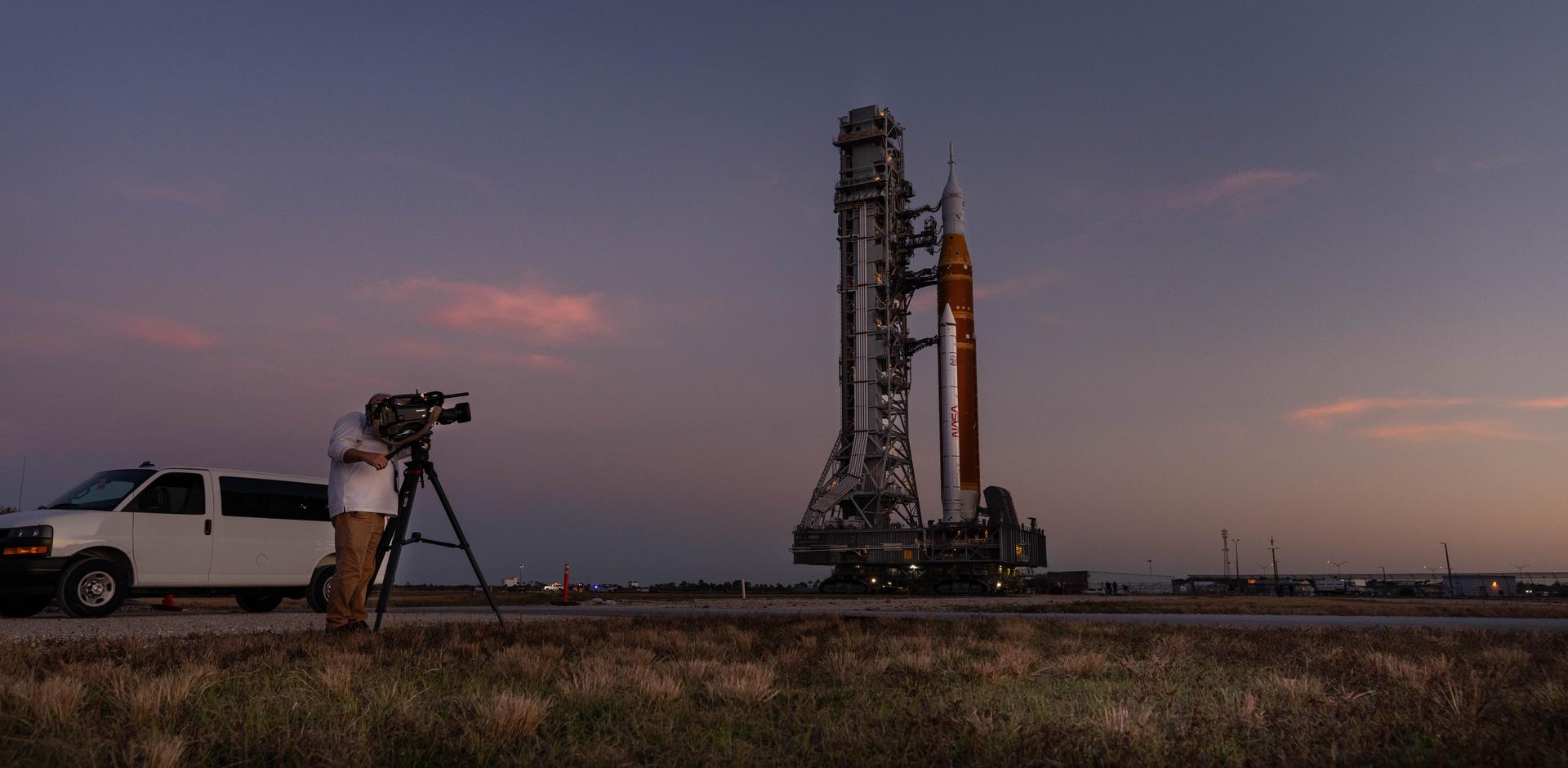
NASA’s crawler-transporter 2, carrying NASA’s Artemis II SLS (Space Launch System) rocket with the Orion spacecraft secured to mobile launcher 1, rolls back Wednesday, Feb. 25, 2026, to the Vehicle Assembly Building at NASA’s Kennedy Space Center in Florida to troubleshoot the flow of helium to the rocket’s upper stage, the interim cryogenic propulsion stage. Once complete, the SLS rocket will roll back to Launch Complex 39B to prepare to launch four astronauts around the Moon and back for the Artemis II test flight.
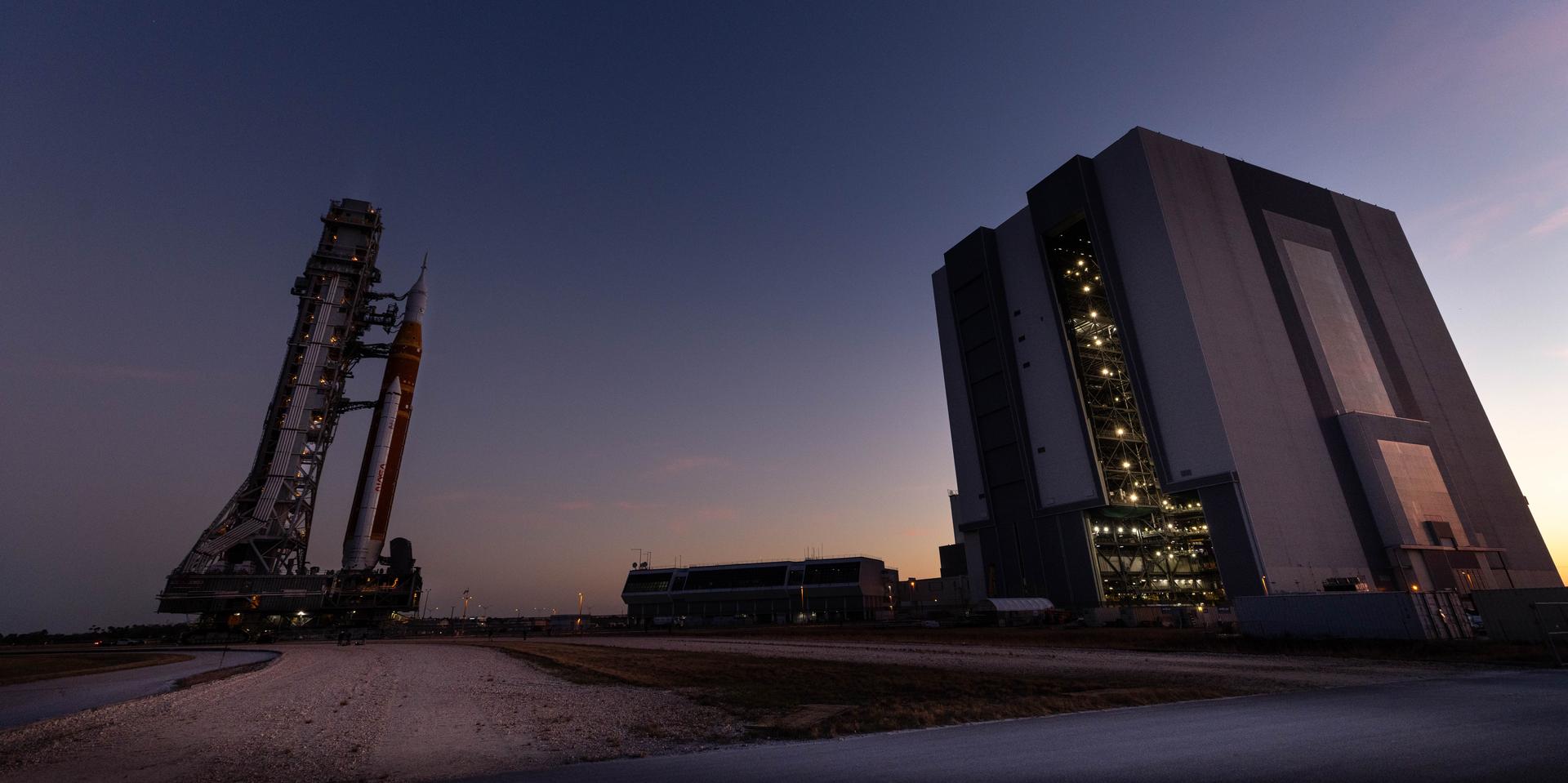
NASA’s crawler-transporter 2, carrying NASA’s Artemis II SLS (Space Launch System) rocket with the Orion spacecraft secured to mobile launcher 1, approaches the Vehicle Assembly Building at NASA’s Kennedy Space Center in Florida as the sun sets on Wednesday, Feb. 25, 2026, to troubleshoot the flow of helium to the rocket’s upper stage, the interim cryogenic propulsion stage. Seen in the background is also mobile launcher 2, which will be used on future Artemis flights beginning with Artemis IV. Once complete, the SLS rocket will roll back to Launch Complex 39B to prepare to launch four astronauts around the Moon and back for the Artemis II test flight.
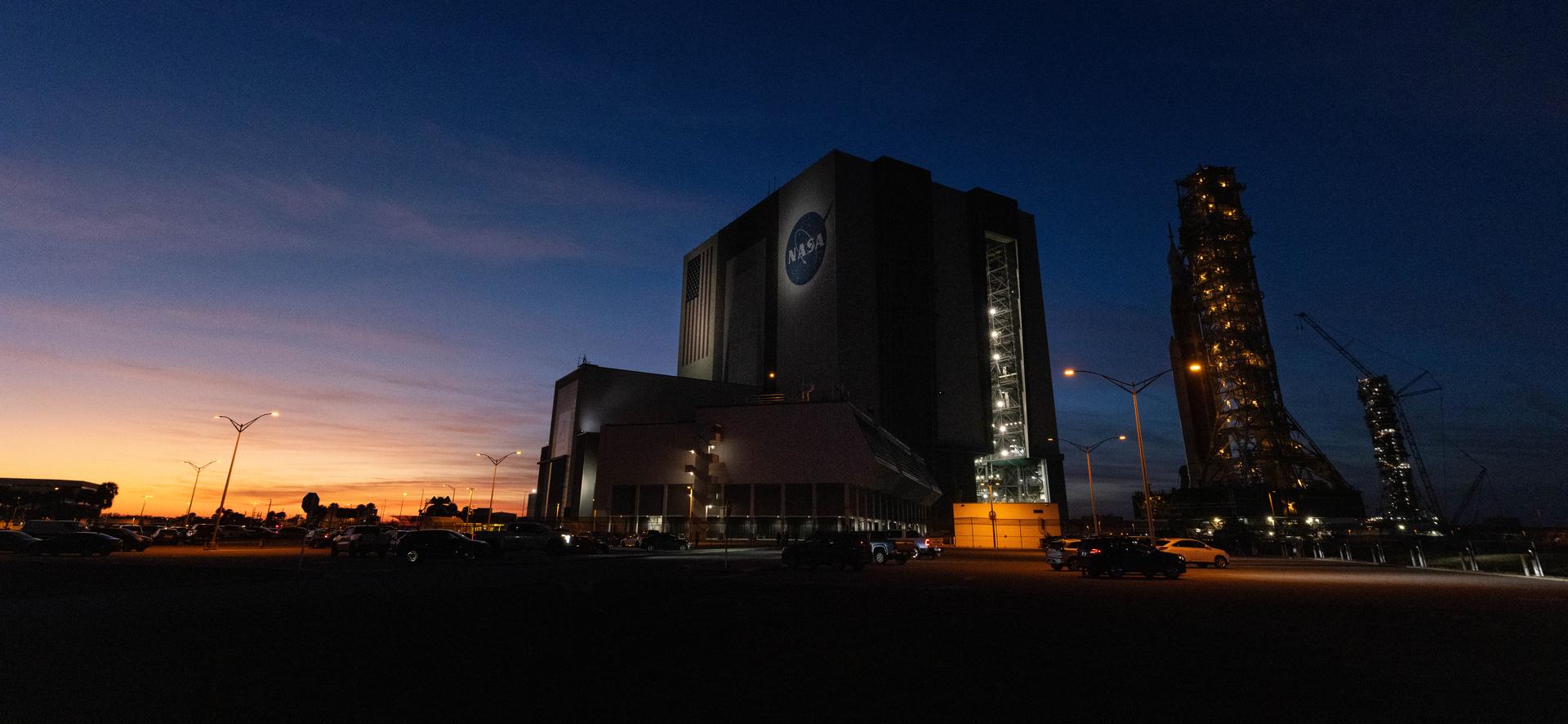
NASA’s crawler-transporter 2, carrying NASA’s Artemis II SLS (Space Launch System) rocket with the Orion spacecraft secured to mobile launcher 1, approaches the Vehicle Assembly Building at NASA’s Kennedy Space Center in Florida as the sun sets on Wednesday, Feb. 25, 2026, to troubleshoot the flow of helium to the rocket’s upper stage, the interim cryogenic propulsion stage. Seen in the background is also mobile launcher 2, which will be used on future Artemis flights beginning with Artemis IV. Once complete, the SLS rocket will roll back to Launch Complex 39B to prepare to launch four astronauts around the Moon and back for the Artemis II test flight.
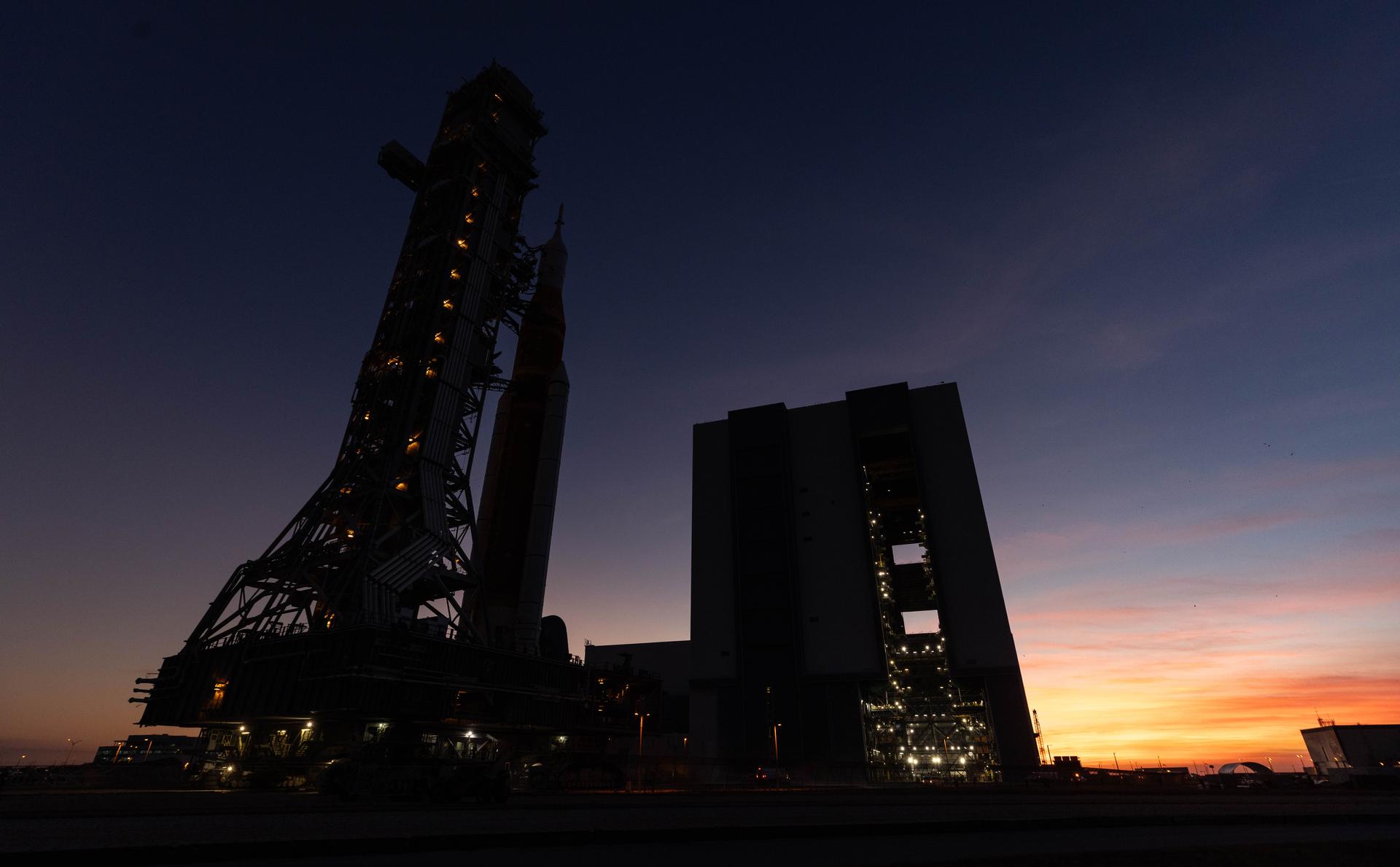
NASA’s crawler-transporter 2, carrying NASA’s Artemis II SLS (Space Launch System) rocket with the Orion spacecraft secured to mobile launcher 1, approaches the Vehicle Assembly Building at NASA’s Kennedy Space Center in Florida during the evening hours on Wednesday, Feb. 25, 2026, to troubleshoot the flow of helium to the rocket’s upper stage, the interim cryogenic propulsion stage. Once complete, the SLS rocket will roll back to Launch Complex 39B to prepare to launch four astronauts around the Moon and back for the Artemis II test flight.
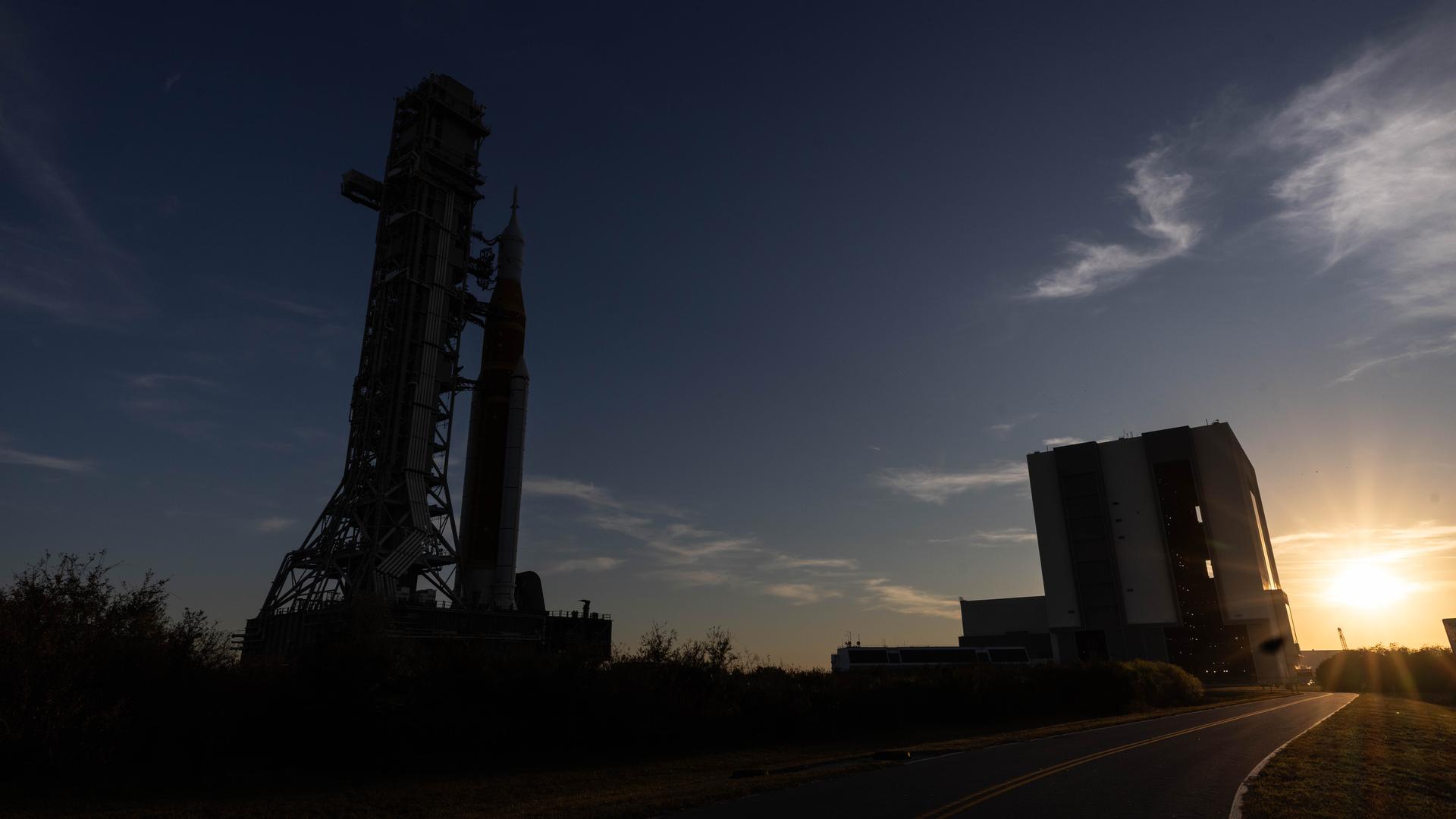
NASA’s crawler-transporter 2, carrying NASA’s Artemis II SLS (Space Launch System) rocket with the Orion spacecraft secured to mobile launcher 1, approaches the Vehicle Assembly Building at NASA’s Kennedy Space Center in Florida as the sun sets on Wednesday, Feb. 25, 2026, to troubleshoot the flow of helium to the rocket’s upper stage, the interim cryogenic propulsion stage. Seen in the background is also mobile launcher 2, which will be used on future Artemis flights beginning with Artemis IV. Once complete, the SLS rocket will roll back to Launch Complex 39B to prepare to launch four astronauts around the Moon and back for the Artemis II test flight.
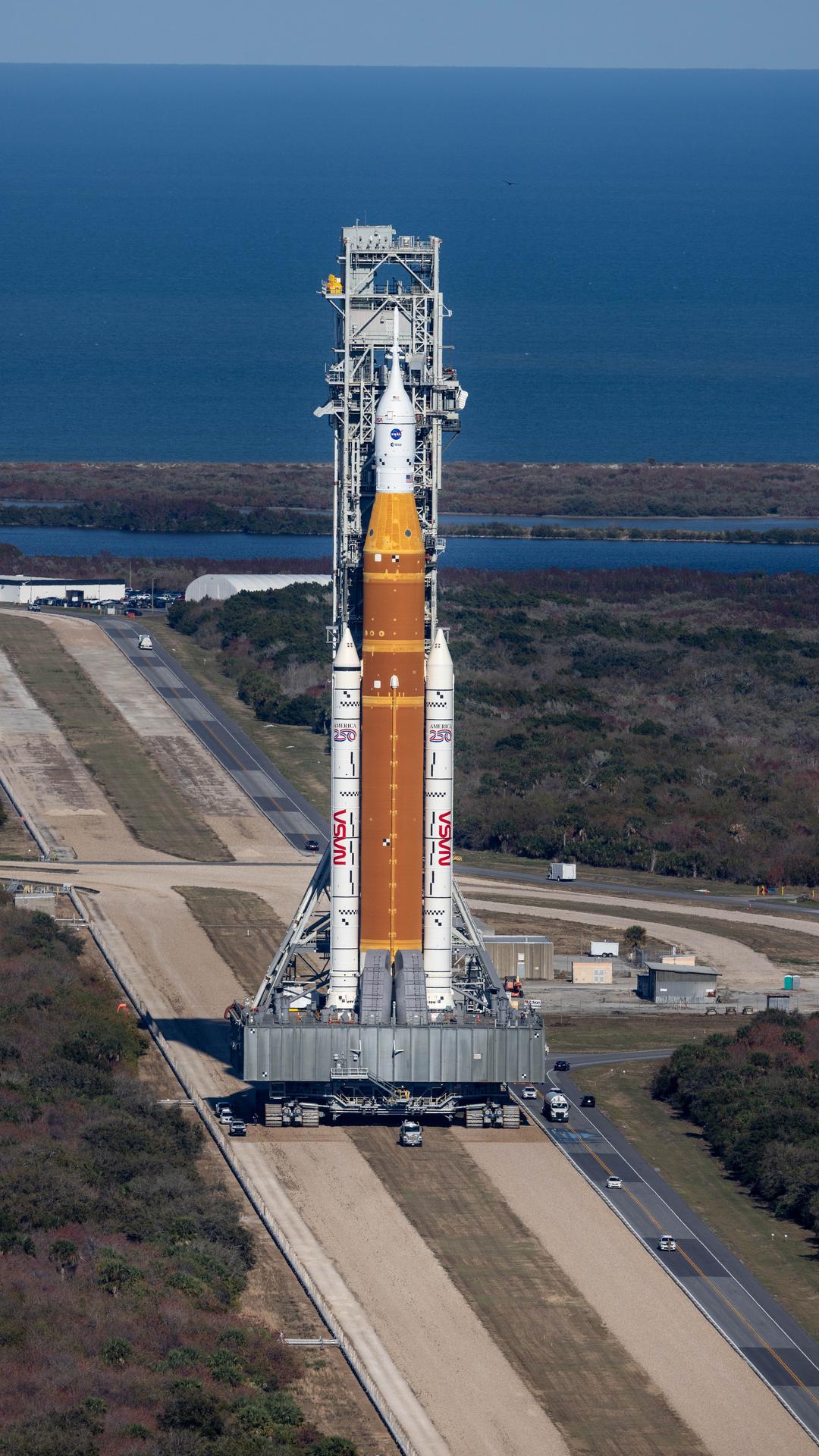
NASA’s crawler-transporter 2, carrying NASA’s Artemis II SLS (Space Launch System) rocket with the Orion spacecraft secured to mobile launcher 1, rolls back Wednesday, Feb. 25, 2026, to the Vehicle Assembly Building at NASA’s Kennedy Space Center in Florida to troubleshoot the flow of helium to the rocket’s upper stage, the interim cryogenic propulsion stage. Once complete, the SLS rocket will roll back to Launch Complex 39B to prepare to launch four astronauts around the Moon and back for the Artemis II test flight.
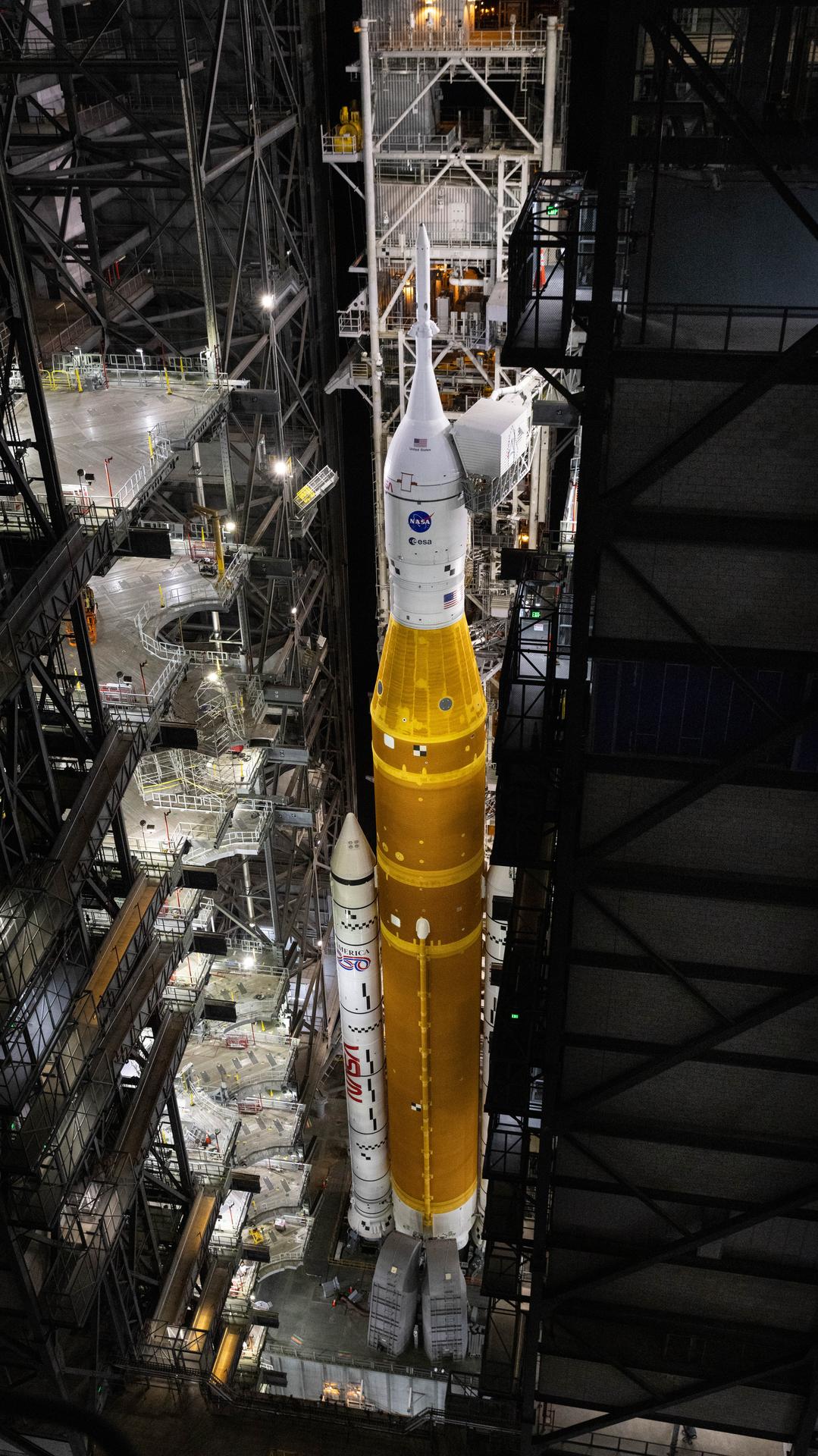
NASA’s crawler-transporter 2, carrying NASA’s Artemis II SLS (Space Launch System) rocket with the Orion spacecraft, arrives Wednesday, Feb. 25, 2026, inside the Vehicle Assembly Building at NASA’s Kennedy Space Center in Florida to troubleshoot the flow of helium to the rocket’s upper stage, the interim cryogenic propulsion stage. Once complete, the SLS rocket will roll back to Launch Complex 39B to prepare to launch four astronauts around the Moon and back for the Artemis II test flight.
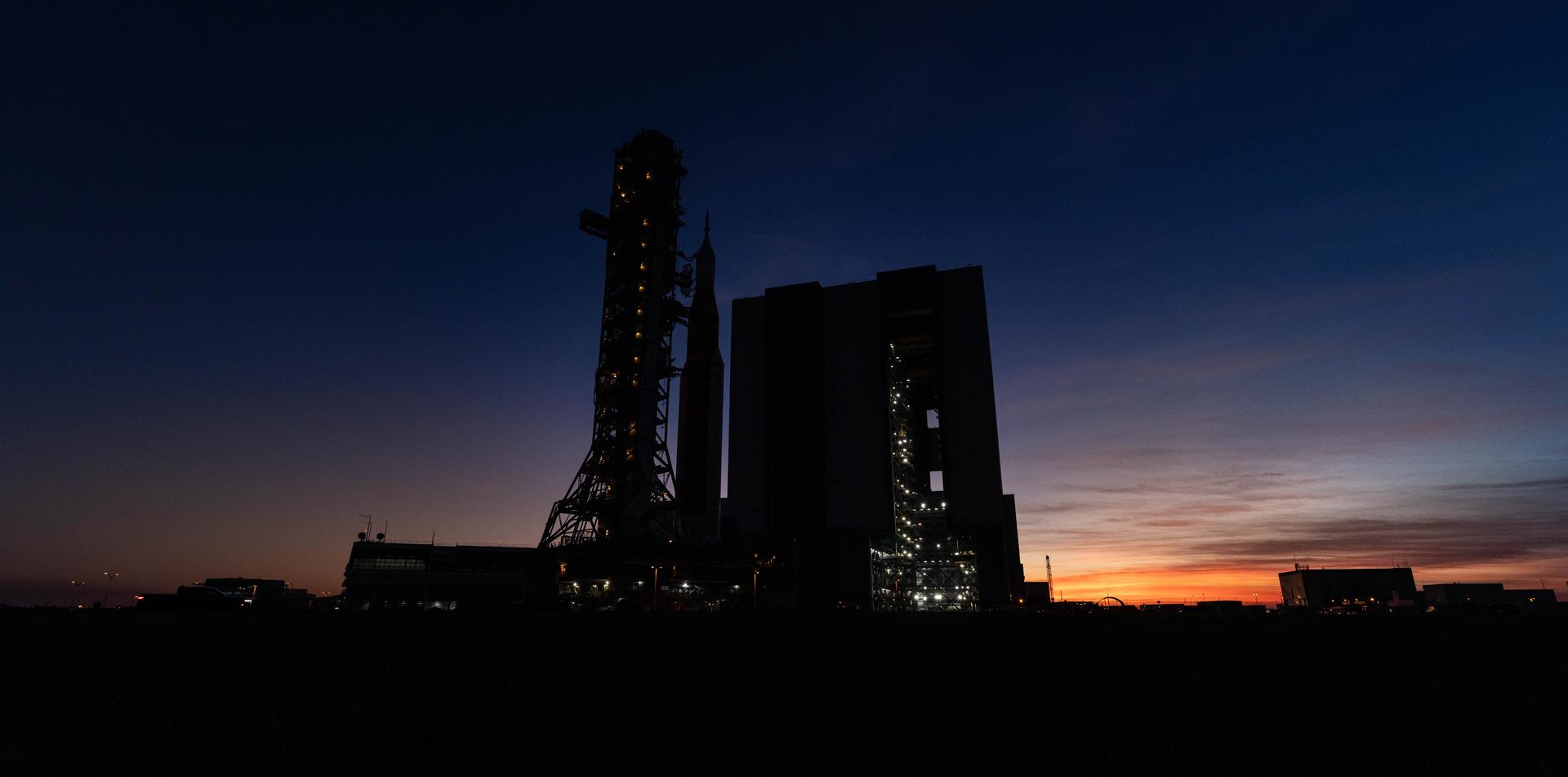
NASA’s crawler-transporter 2, carrying NASA’s Artemis II SLS (Space Launch System) rocket with the Orion spacecraft secured to mobile launcher 1, approaches the Vehicle Assembly Building at NASA’s Kennedy Space Center in Florida during the evening hours on Wednesday, Feb. 25, 2026, to troubleshoot the flow of helium to the rocket’s upper stage, the interim cryogenic propulsion stage. Once complete, the SLS rocket will roll back to Launch Complex 39B to prepare to launch four astronauts around the Moon and back for the Artemis II test flight.
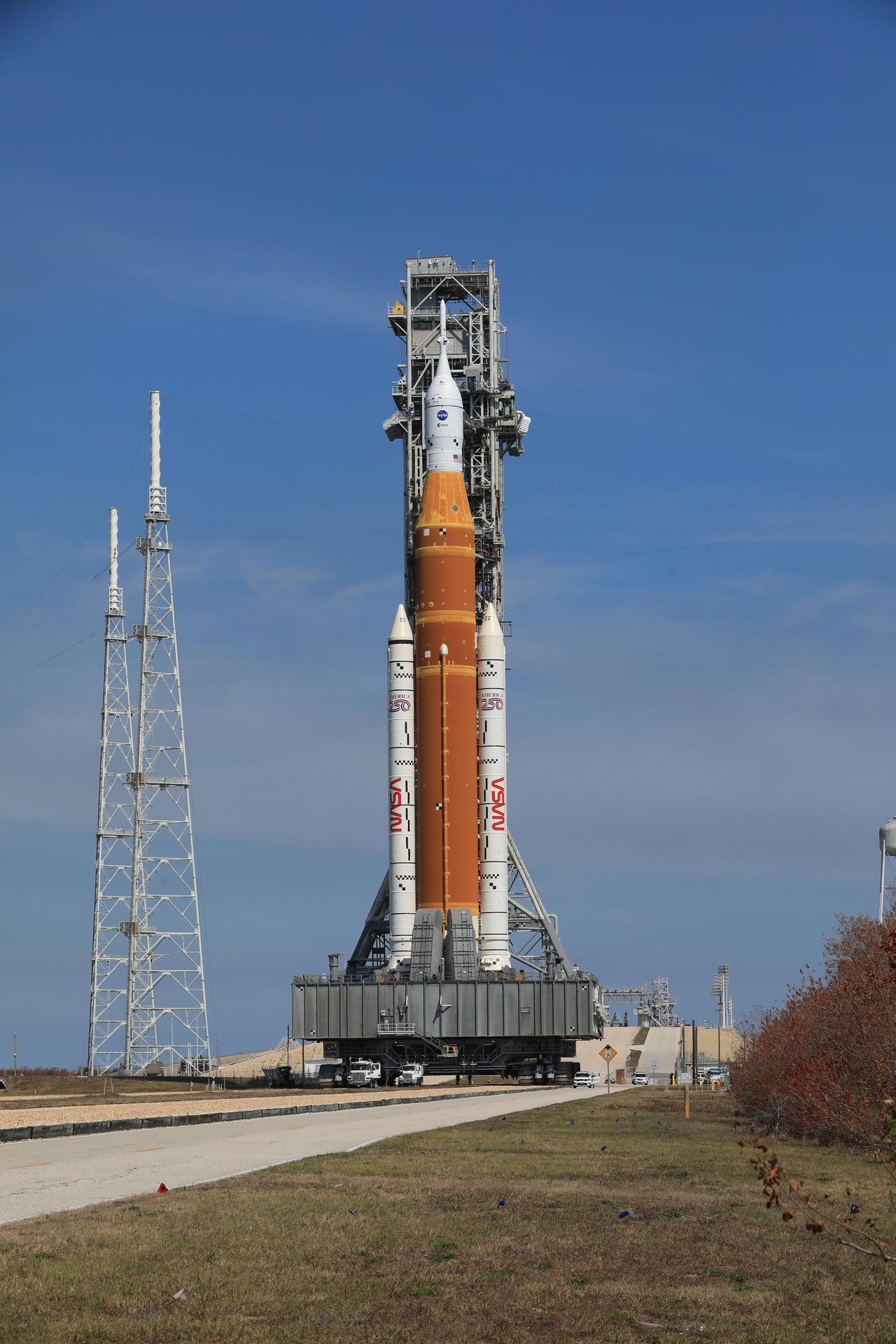
NASA’s crawler-transporter 2, carrying NASA’s Artemis II SLS (Space Launch System) rocket with the Orion spacecraft secured to mobile launcher 1, leaves Launch Complex 39B to roll back to the Vehicle Assembly Building at NASA’s Kennedy Space Center in Florida on Wednesday, Feb. 25, 2026, to troubleshoot the flow of helium to the rocket’s upper stage, the interim cryogenic propulsion stage. Once complete, the SLS rocket will roll back to Launch Complex 39B to prepare to launch four astronauts around the Moon and back for the Artemis II test flight.
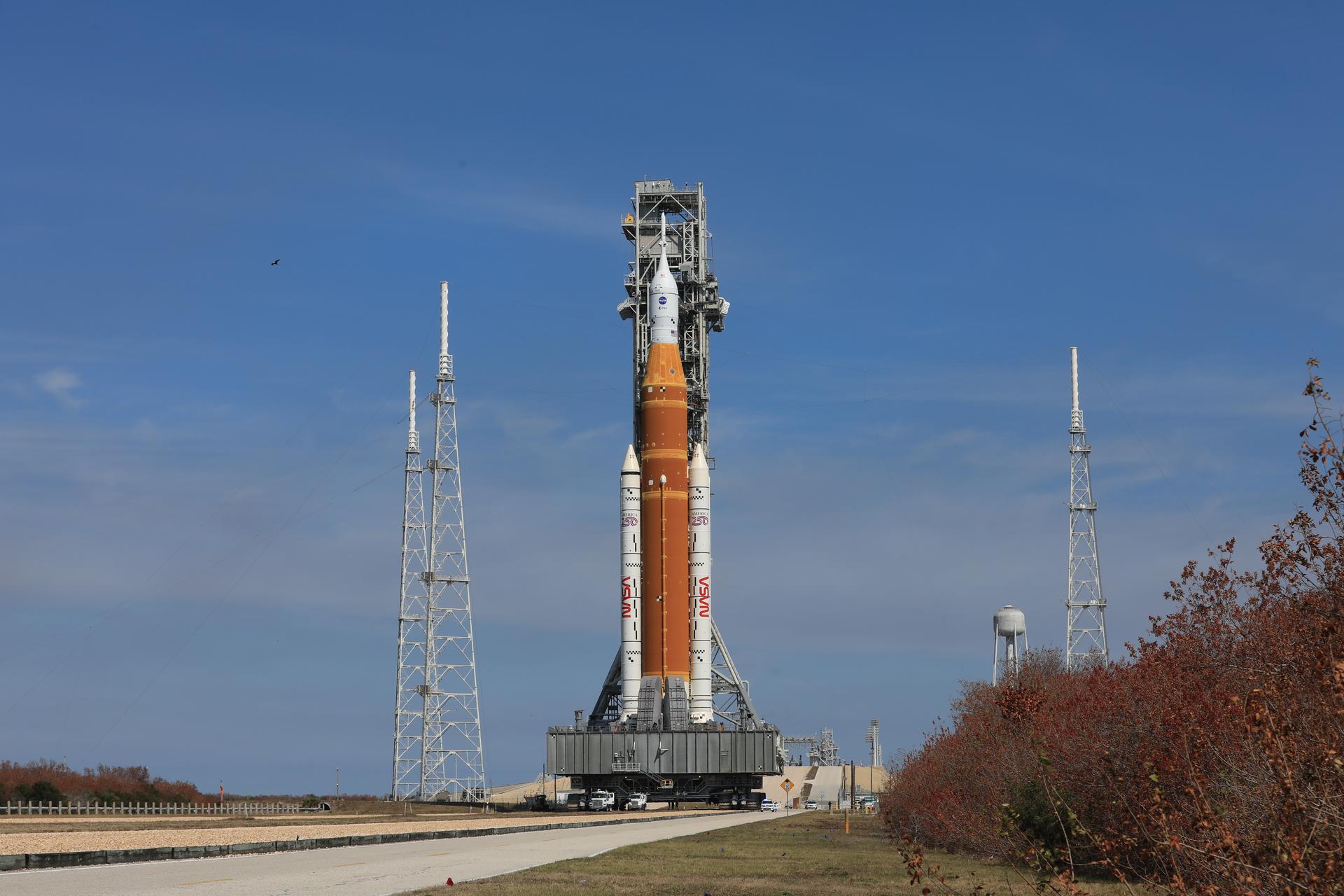
NASA’s crawler-transporter 2, carrying NASA’s Artemis II SLS (Space Launch System) rocket with the Orion spacecraft secured to mobile launcher 1, leaves Launch Complex 39B to roll back to the Vehicle Assembly Building at NASA’s Kennedy Space Center in Florida on Wednesday, Feb. 25, 2026, to troubleshoot the flow of helium to the rocket’s upper stage, the interim cryogenic propulsion stage. Once complete, the SLS rocket will roll back to Launch Complex 39B to prepare to launch four astronauts around the Moon and back for the Artemis II test flight.
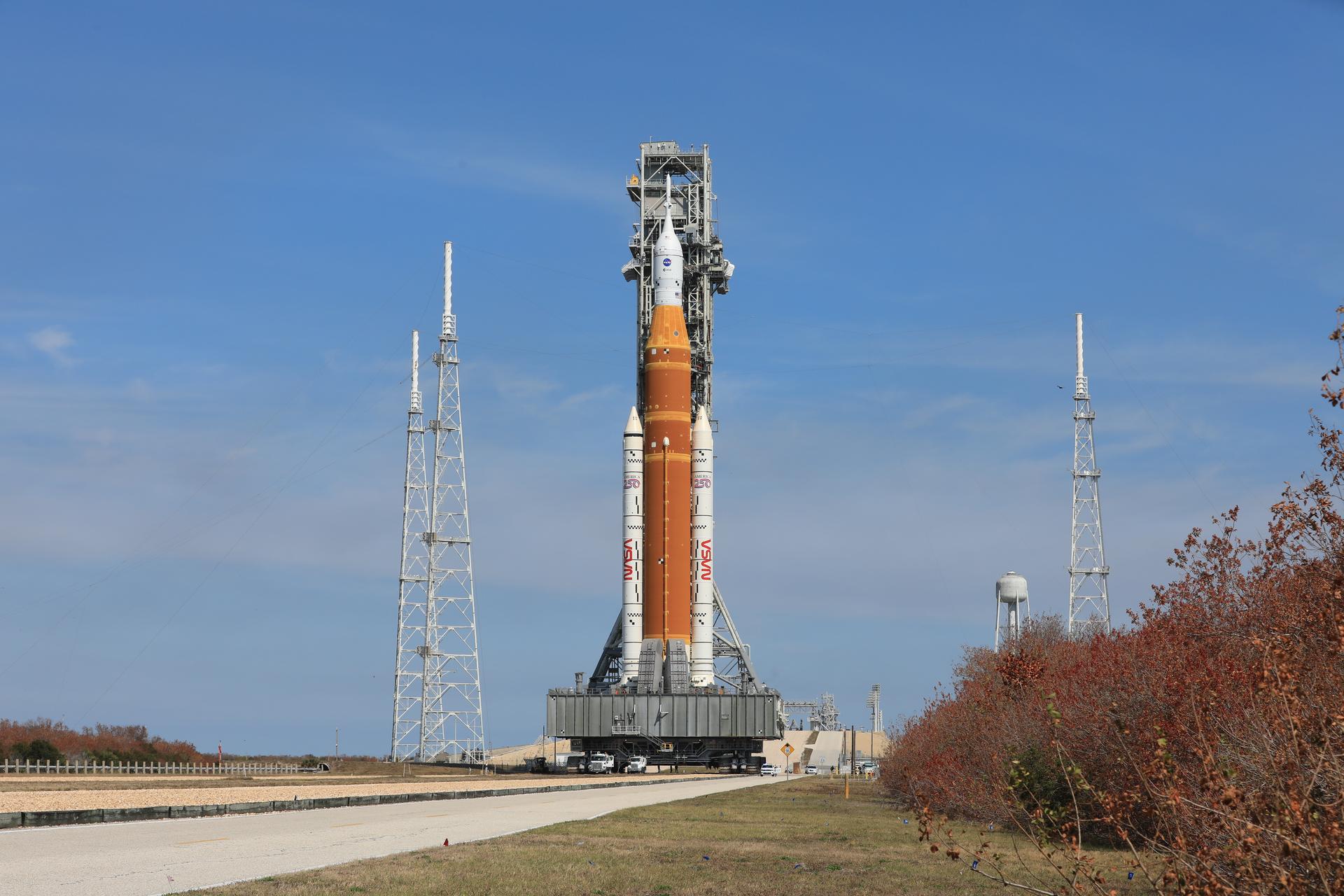
NASA’s crawler-transporter 2, carrying NASA’s Artemis II SLS (Space Launch System) rocket with the Orion spacecraft secured to mobile launcher 1, rolls back Wednesday, Feb. 25, 2026, to the Vehicle Assembly Building at NASA’s Kennedy Space Center in Florida to troubleshoot the flow of helium to the rocket’s upper stage, the interim cryogenic propulsion stage. Once complete, the SLS rocket will roll back to Launch Complex 39B to prepare to launch four astronauts around the Moon and back for the Artemis II test flight.
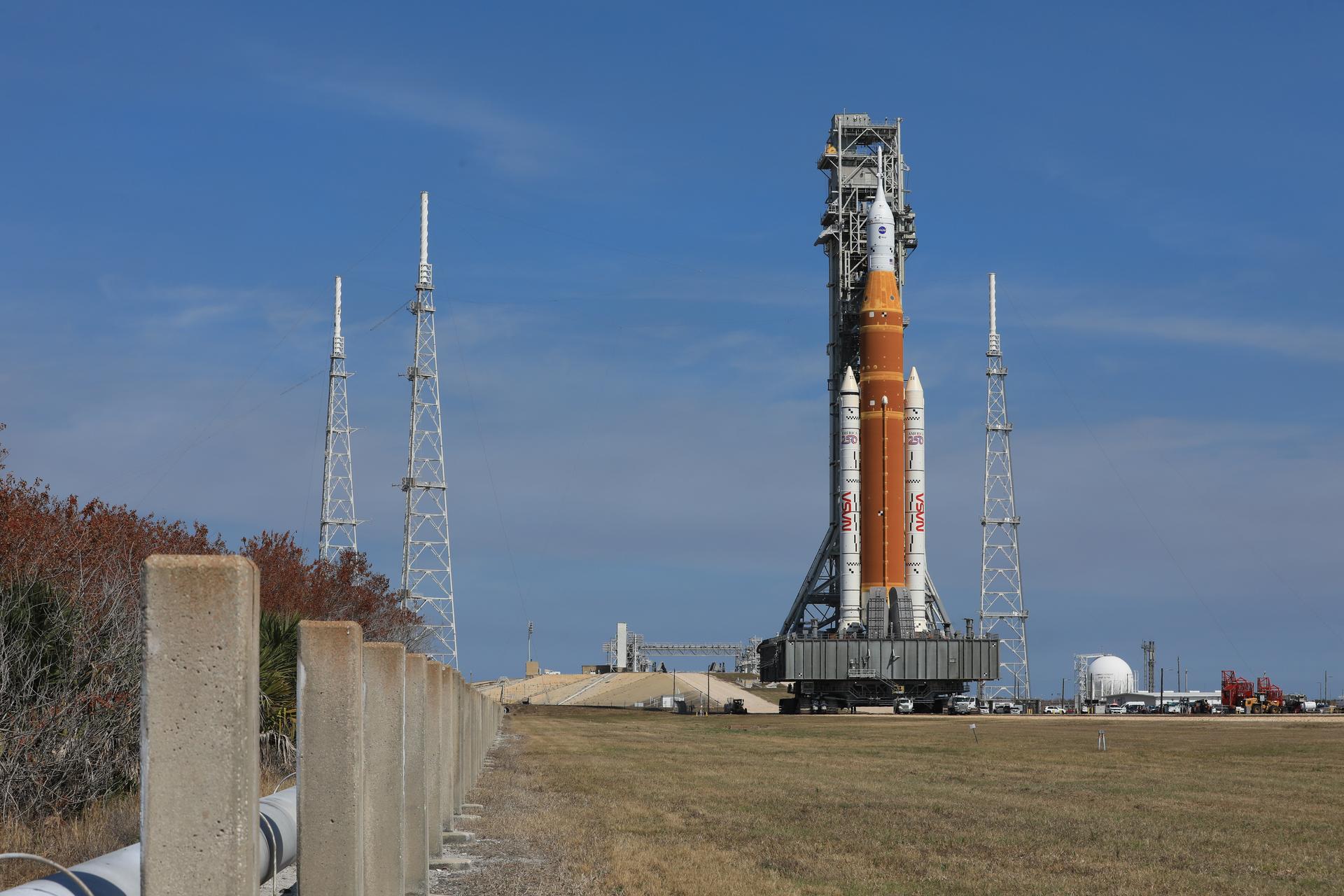
NASA’s crawler-transporter 2, carrying NASA’s Artemis II SLS (Space Launch System) rocket with the Orion spacecraft secured to mobile launcher 1, rolls back Wednesday, Feb. 25, 2026, to the Vehicle Assembly Building at NASA’s Kennedy Space Center in Florida to troubleshoot the flow of helium to the rocket’s upper stage, the interim cryogenic propulsion stage. Once complete, the SLS rocket will roll back to Launch Complex 39B to prepare to launch four astronauts around the Moon and back for the Artemis II test flight.
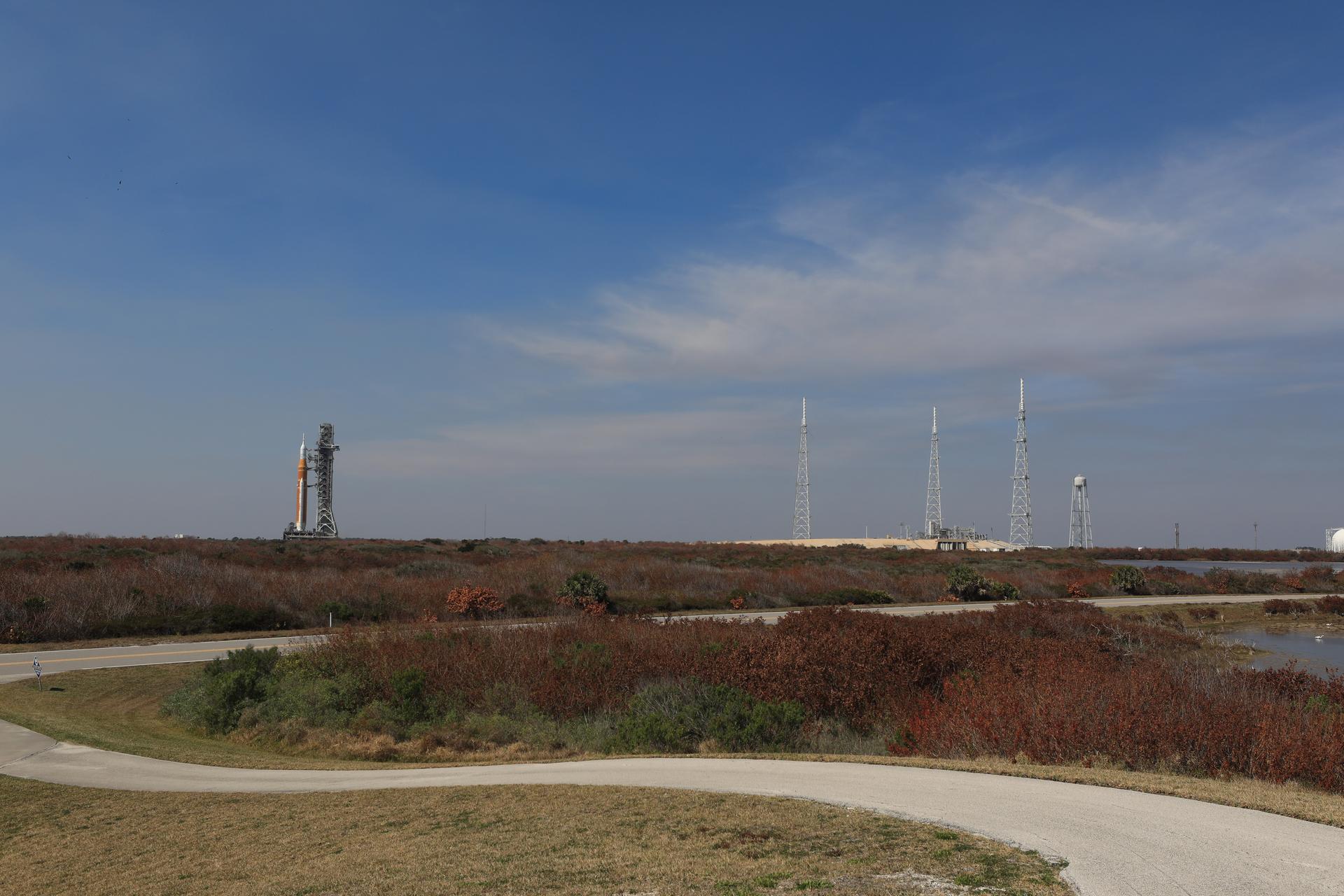
NASA’s crawler-transporter 2, carrying NASA’s Artemis II SLS (Space Launch System) rocket with the Orion spacecraft secured to mobile launcher 1, rolls back Wednesday, Feb. 25, 2026, to the Vehicle Assembly Building at NASA’s Kennedy Space Center in Florida to troubleshoot the flow of helium to the rocket’s upper stage, the interim cryogenic propulsion stage. Once complete, the SLS rocket will roll back to Launch Complex 39B to prepare to launch four astronauts around the Moon and back for the Artemis II test flight.
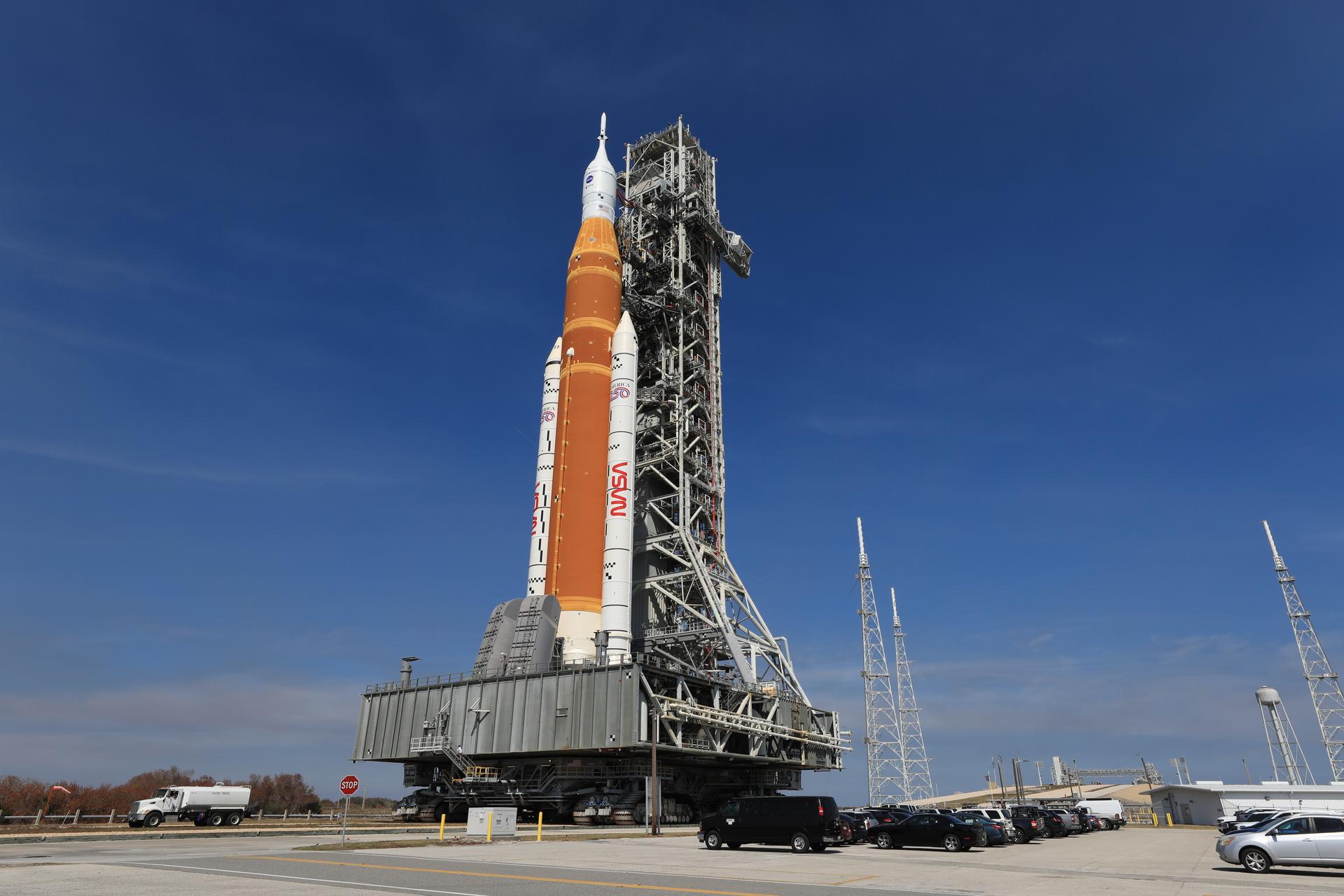
NASA’s crawler-transporter 2, carrying NASA’s Artemis II SLS (Space Launch System) rocket with the Orion spacecraft secured to mobile launcher 1, leaves Launch Complex 39B to roll back to the Vehicle Assembly Building at NASA’s Kennedy Space Center in Florida on Wednesday, Feb. 25, 2026, to troubleshoot the flow of helium to the rocket’s upper stage, the interim cryogenic propulsion stage. Once complete, the SLS rocket will roll back to Launch Complex 39B to prepare to launch four astronauts around the Moon and back for the Artemis II test flight.