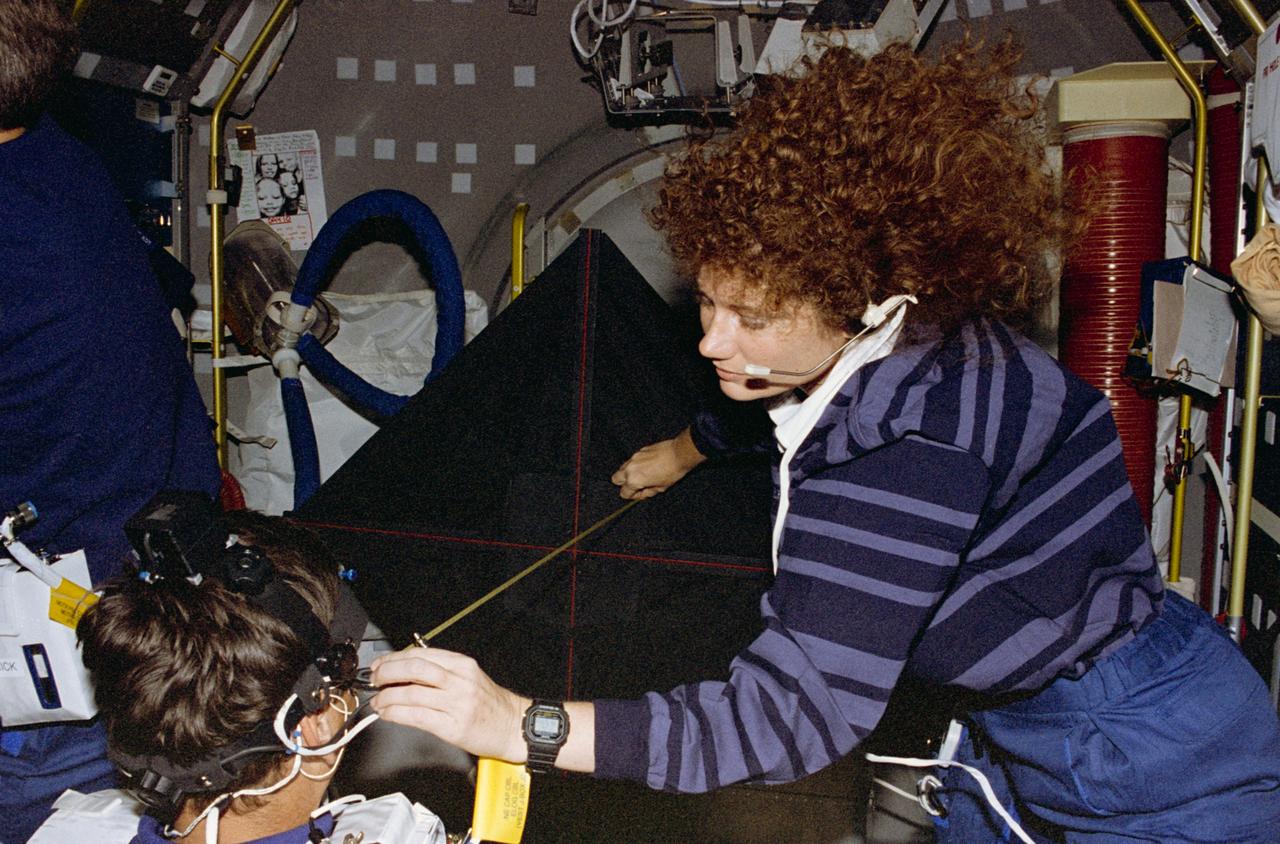
STS078-398-032 (20 June - 7 July 1996) --- Astronaut Susan J. Helms, payload commander, measures the distance between Jean-Jacques Favier’s head and the luminous torque, used for the Canal and Otolith Interaction Study (COIS) on the Life and Microgravity Spacelab (LMS-1) mission. Favier, representing the French Space Agency (CNES), is one of two international payload specialists on the almost-17-day flight. This view shows the Voluntary Head Movement (VHM) segment of the experiment. The VHM is meant to characterize how the coordination of head and eye movement changes as a result of spaceflight. Since most vestibular functions are influenced by gravity, the COIS experiment is meant to measure response differences in microgravity.
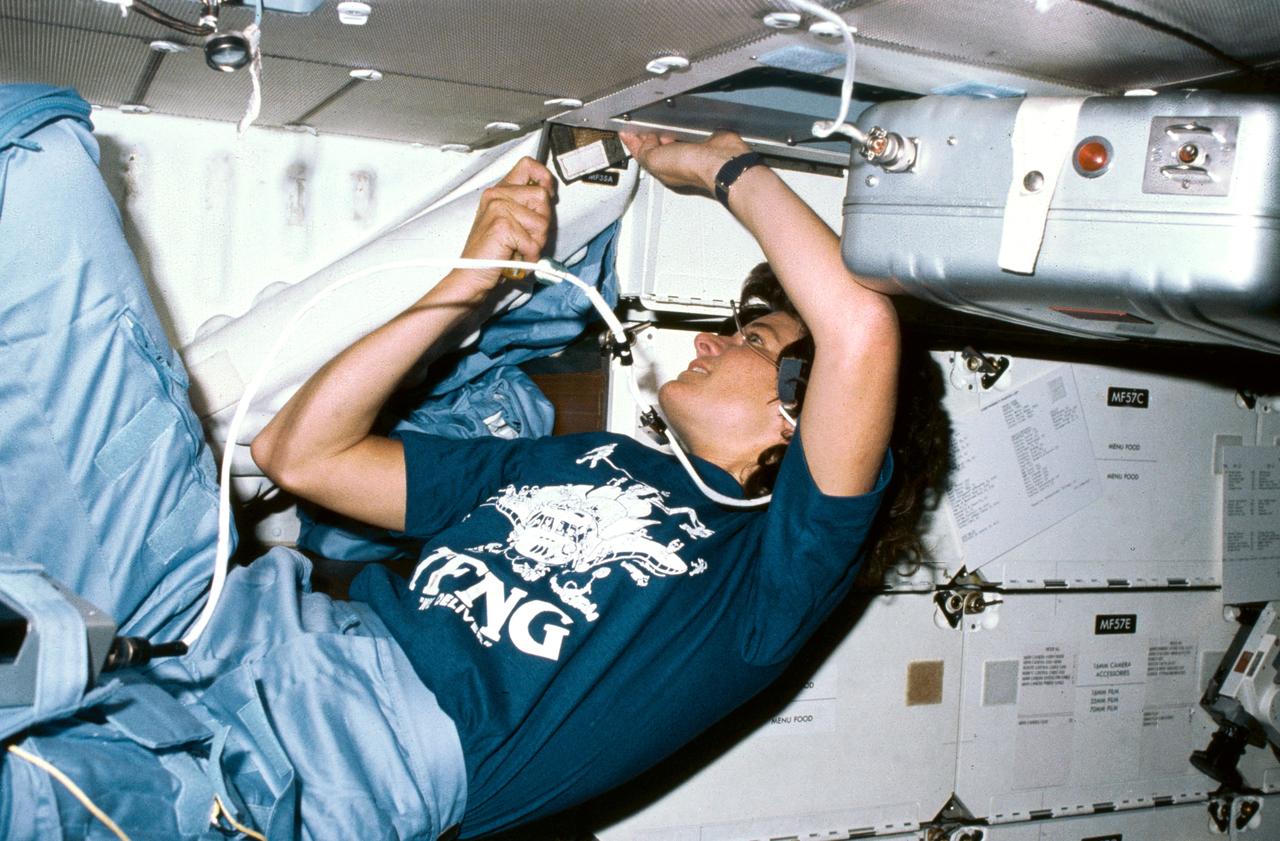
S83-35768 (18-24 June 1983) --- Astronaut Sally K. Ride, mission specialist for STS-7, uses a screw driver in order to clean out an air filtering system in the mid-deck of the Earth-orbiting Space Shuttle Challenger. Dr. Ride's constant wear garment bears some extras -- a cartoon of 35 busy astronauts around a Space Shuttle and the acronym TFNG, below which is written, "We deliver!" TFNG stands for thirty-five new guys, referring to the 1978 class of astronaut candidates (ASCAN) from which Dr. Ride and three of her crew members hail. The tiny two-word declarative in white lettering refers to the successful deployment of two communications satellites. This photograph was made with a 35mm camera.
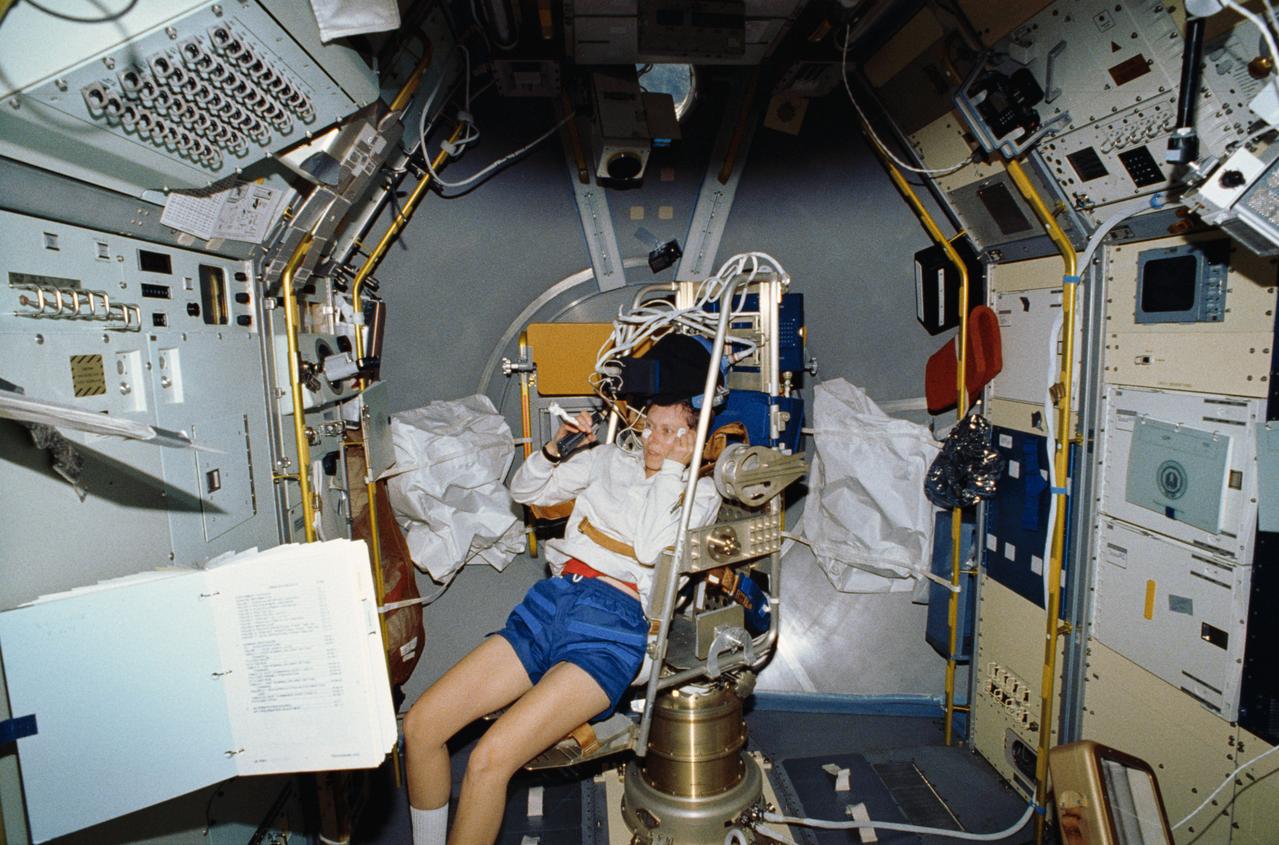
STS042-06-031 (30 Jan 1992) - - - STS-42 Payload Specialist Roberta L. Bondar gets into the Microgravity Vestibular Investigations (MVI) rotator chair to begin an experiment. The chair is mounted in the center aisle of the International Microgravity Laboratory 1 (IML-1) Spacelab (SL) module. Just above Bondar's head is the helmet assembly which is outfitted with accelerometers to measure head movements and visors that fit over each eye independently to provide visual stimuli. The chair system has three movement patterns: "sinusoidal" or traveling predictably back and forth over the same distance at a constant speed; "pseudorandom" or moving back and forth over varying distances; and "stepped" or varying speeds beginning and stopping suddenly.
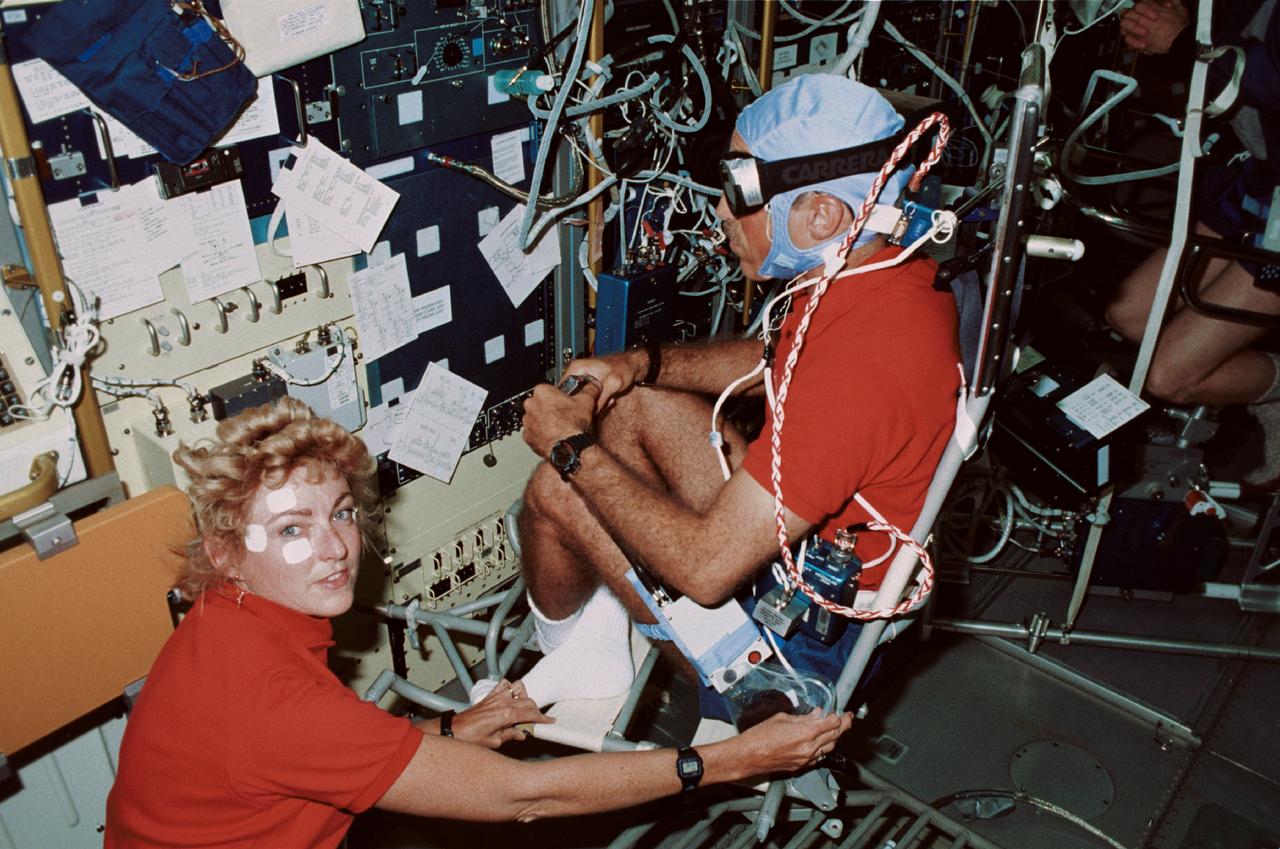
STS040-211-020 (5-14 June 1991) --- Vestibular experiment activities were captured onboard Columbia's Spacelab Life Sciences (SLS-1) module in this 35mm scene. Astronaut James P. Bagian, STS-40 mission specialist, is in a rotating chair while wearing an accelometer and electrodes to record head motion and horizontal and vertical eye movements during the rotations. Payload specialist Millie Hughes-Fulford, lower left, assists with the test.
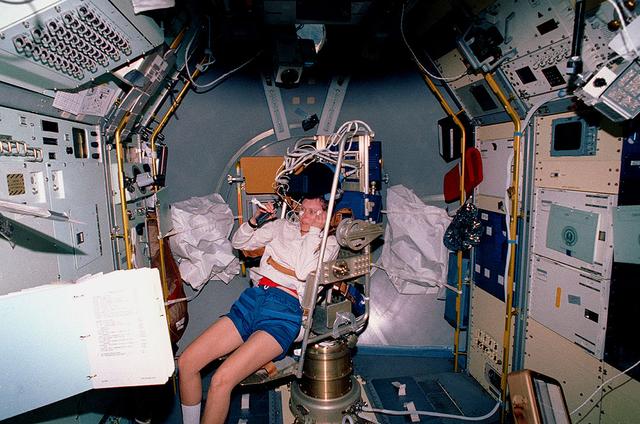
This Space Shuttle Orbiter Discovery (STS-42) onboard photo shows Canadian Payload Specialist Roberta Bondar getting into the Microgravity Vestibular Investigation (MVI) chair to begin an experiment in the International Microgravity Lab-1 (IML-1) Science Module. The (MVI) chair was designed to test the crew member's visual and vestibular responses to head and body movements.
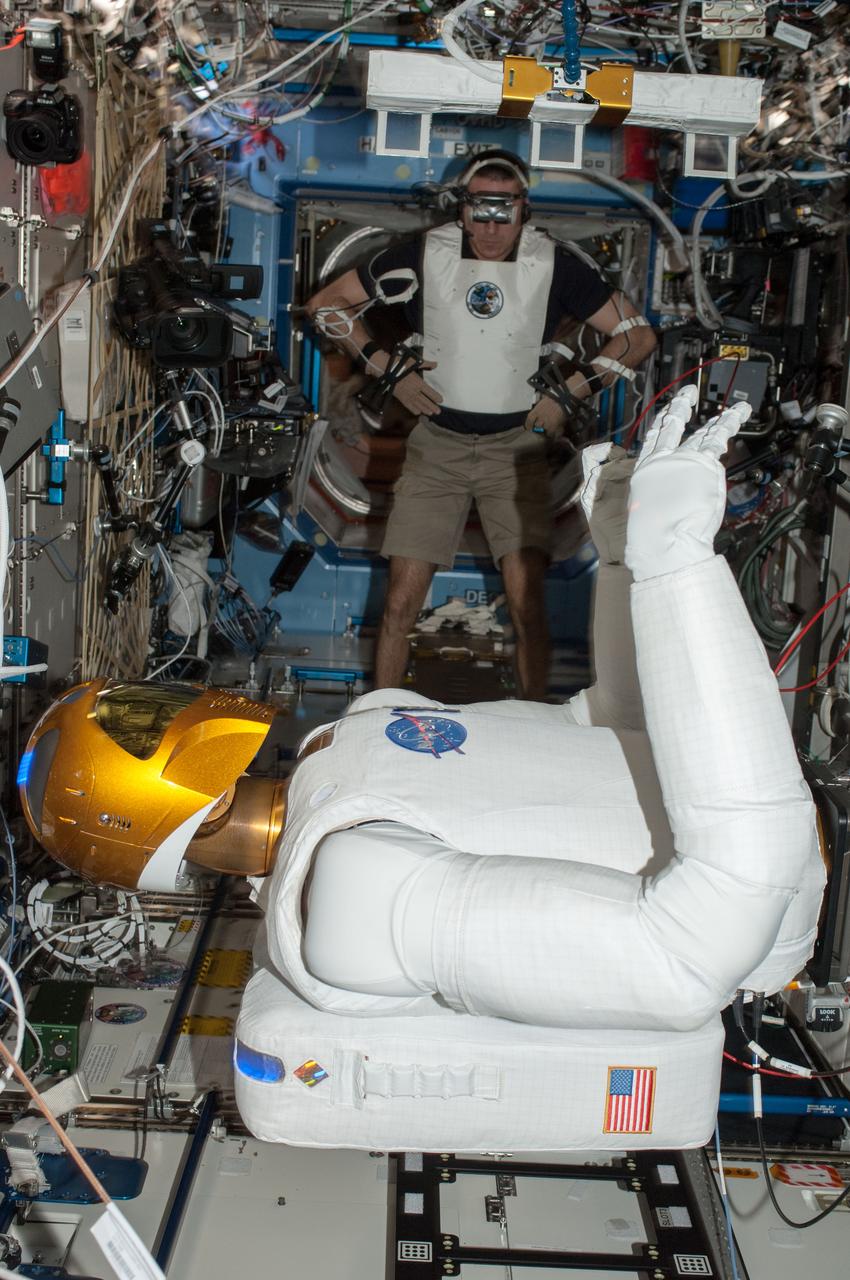
ISS036-E-029109 (6 Aug. 2013) --- In the International Space Station’s Destiny laboratory, NASA astronaut Chris Cassidy, Expedition 36 flight engineer, wears tele-operation gear consisting of a vest, gloves and visor to telerobotically test Robonaut 2’s maneuvers. Cassidy was able to manipulate R2’s head, neck, arms and fingers telerobotically through his own movements as well as through verbal commands.

A prominence rose up above the sun, sent an arch of plasma to link up magnetically with an active region over a one-day period (Jan, 9-10, 2017). Then the flow of plasma seemed to largely change direction and head back where it came from. Finally, amidst the confused patterns of movement, it dissipated and fell away. Prominences are cooler clouds of charged particles tenuously tethered to the sun by magnetic forces. Images were taken in a wavelength of extreme ultraviolet light. Movies are available at https://photojournal.jpl.nasa.gov/catalog/PIA22199
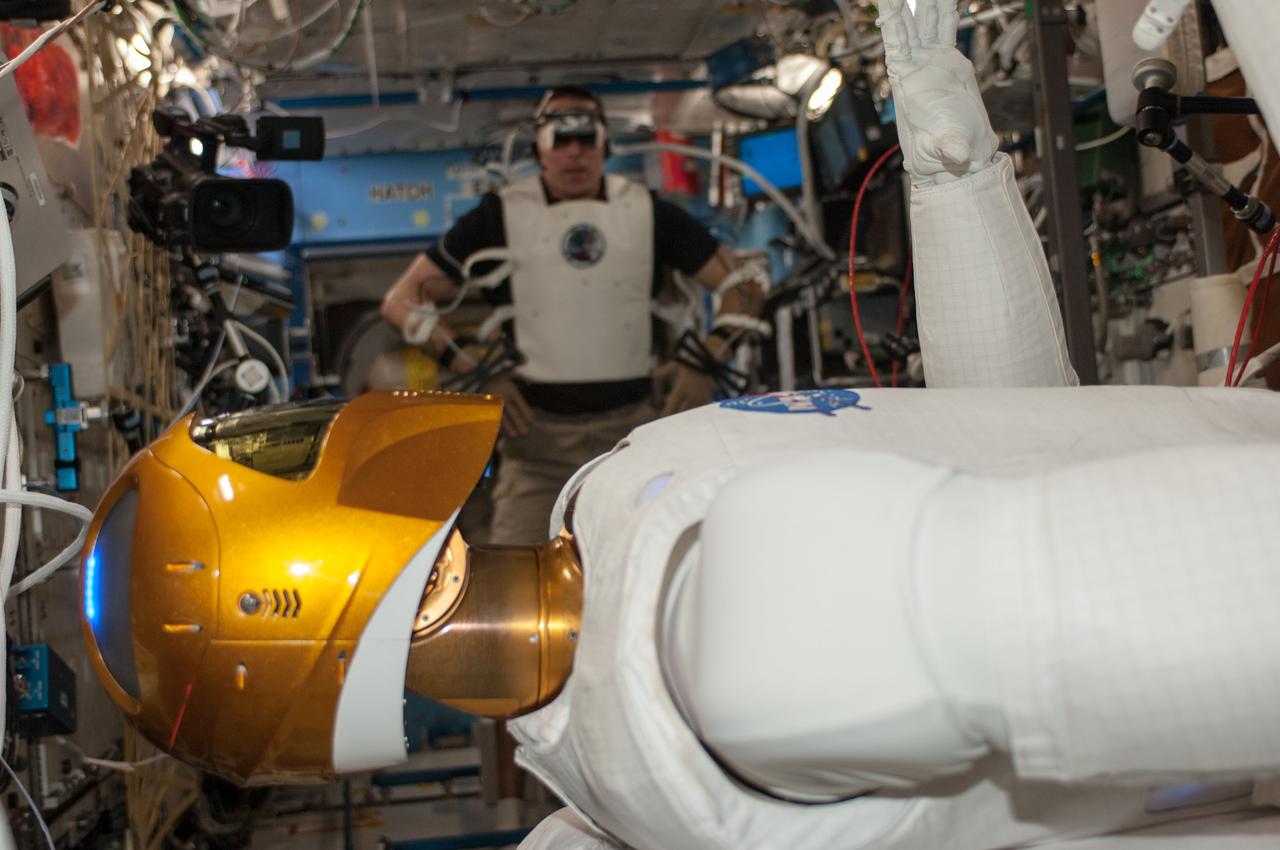
ISS036-E-029110 (6 Aug. 2013) --- In the International Space Station’s Destiny laboratory, NASA astronaut Chris Cassidy, Expedition 36 flight engineer, wears tele-operation gear consisting of a vest, gloves and visor to telerobotically test Robonaut 2’s maneuvers. Cassidy was able to manipulate R2’s head, neck, arms and fingers telerobotically through his own movements as well as through verbal commands.
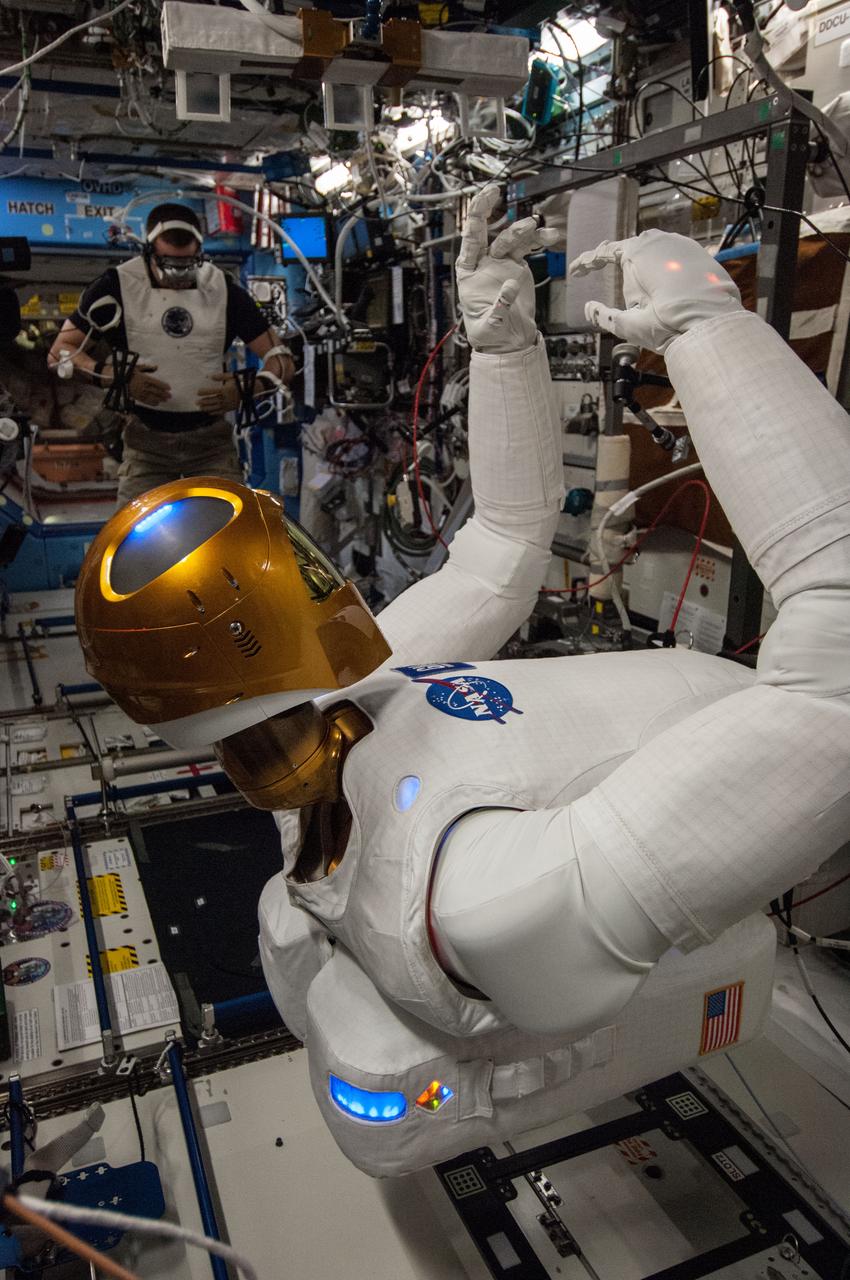
ISS036-E-029144 (6 Aug. 2013) --- In the International Space Station?s Destiny laboratory, NASA astronaut Chris Cassidy, Expedition 36 flight engineer, wears tele-operation gear consisting of a vest, gloves and visor to telerobotically test Robonaut 2?s maneuvers. Cassidy was able to manipulate R2?s head, neck, arms and fingers telerobotically through his own movements as well as through verbal commands.
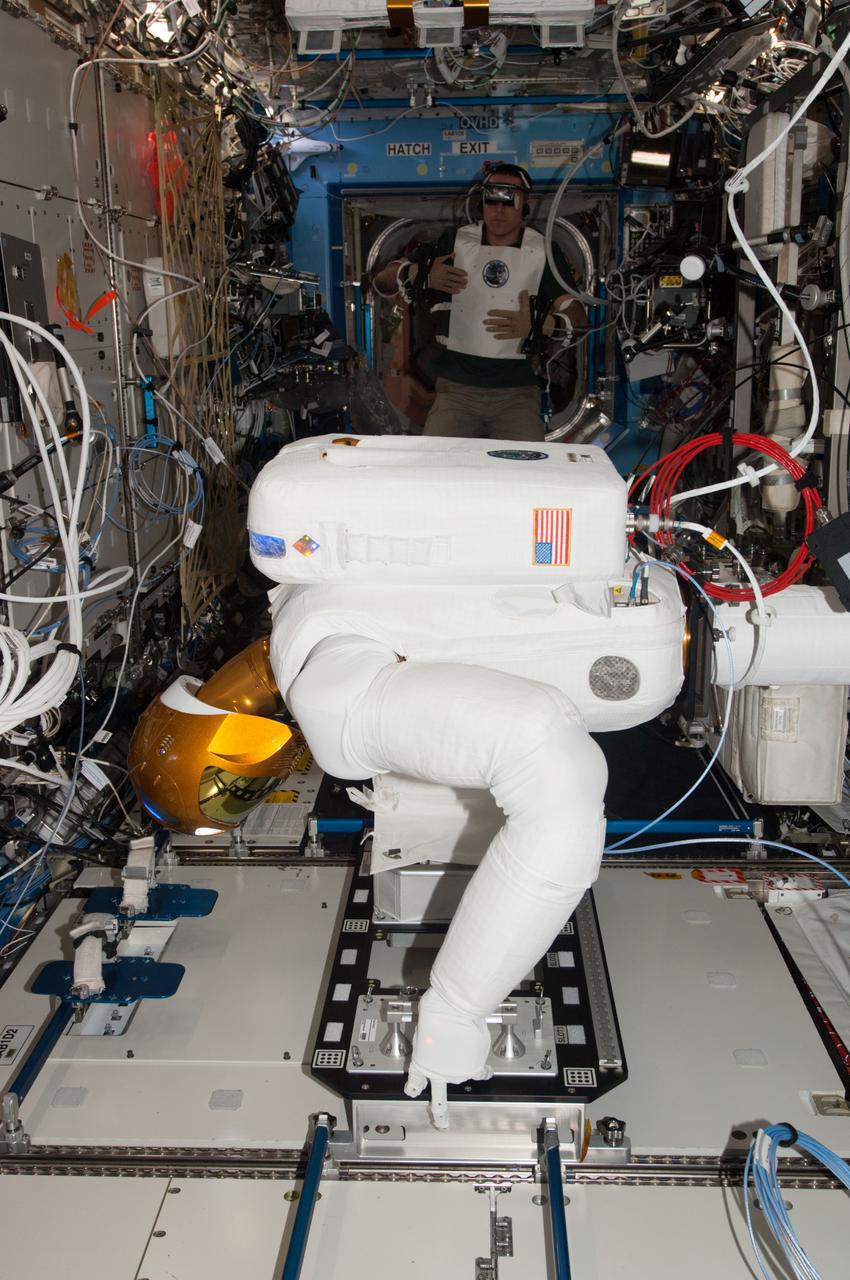
ISS036-E-038293 (28 Aug. 2013) --- In the International Space Station's Destiny laboratory, NASA astronaut Chris Cassidy, Expedition 36 flight engineer, wears tele-operation gear consisting of a vest, gloves and visor to telerobotically test Robonaut 2's maneuvers. Cassidy was able to manipulate R2's head, neck, arms and fingers telerobotically through his own movements as well as through verbal commands.
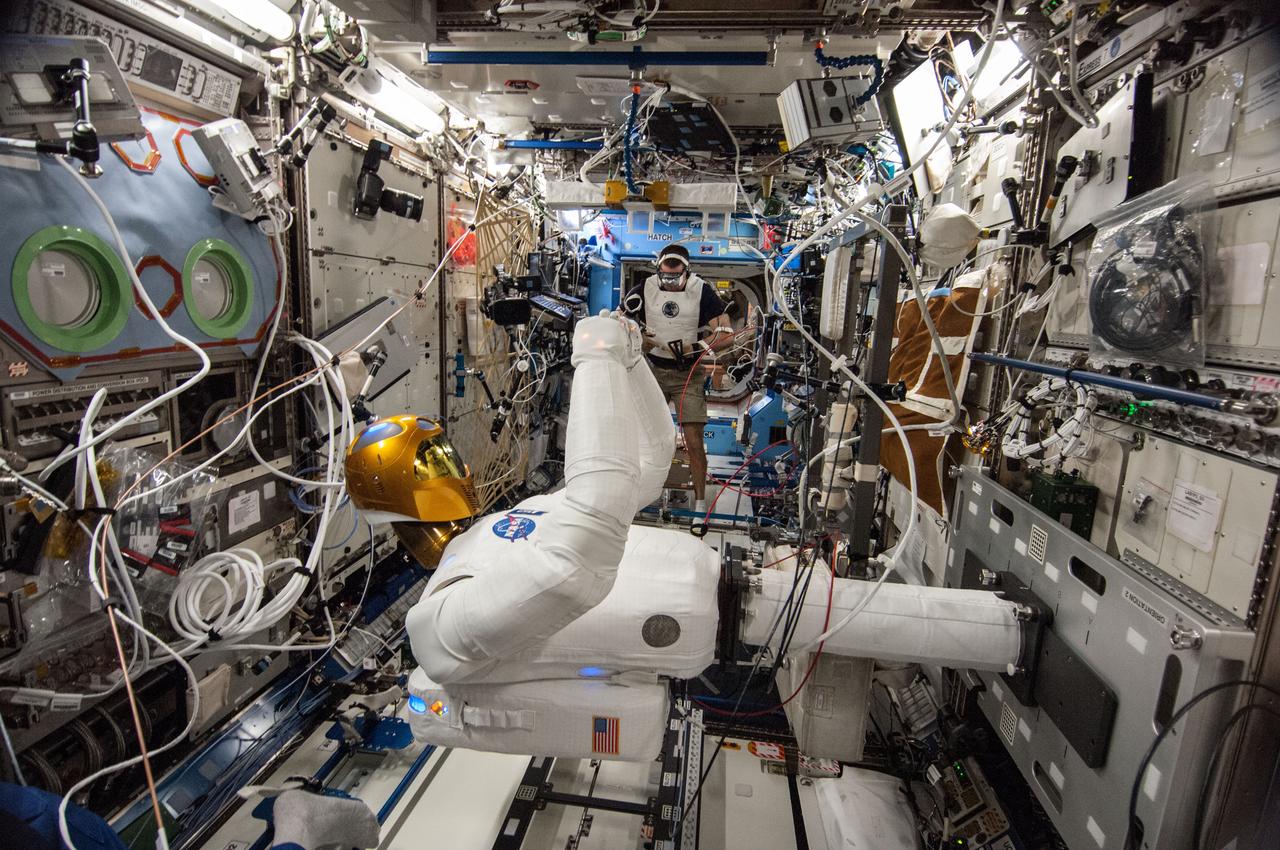
ISS036-E-029140 (6 Aug. 2013) --- In the International Space Station?s Destiny laboratory, NASA astronaut Chris Cassidy, Expedition 36 flight engineer, wears tele-operation gear consisting of a vest, gloves and visor to telerobotically test Robonaut 2?s maneuvers. Cassidy was able to manipulate R2?s head, neck, arms and fingers telerobotically through his own movements as well as through verbal commands.
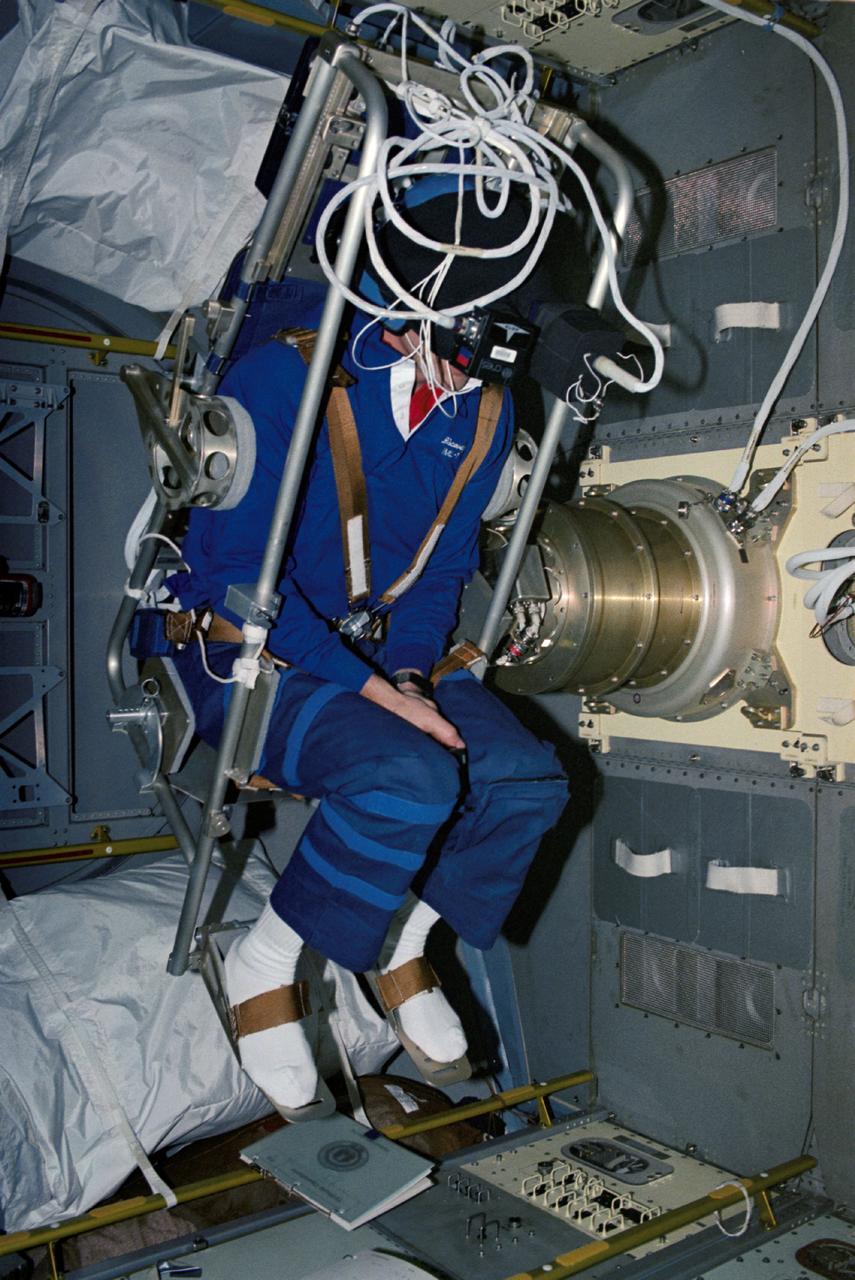
STS042-27-037 (22-30 Jan. 1992) --- Astronaut David C. Hilmers, STS-42 mission specialist, wearing a helmet assembly, sits in the Microgravity Vestibular Investigation (MVI) rotating chair. The scene is in the International Microgravity Laboratory (IML-1) science module aboard Discovery. Hilmers, a mission specialist, and six other crewmembers spent more than eight days in Earth-orbit conducting experiments. Hilmer's helmet assembly is outfitted with accelerometers to measure head movements and visors that fit over each eye independently to provide visual stimuli. The chair system has three movement patterns: "sinusoidal" or traveling predictably back and forth over the same distance at a constant speed; "pseudorandom" or moving back and forth over the varying distances; and "stepped" or varying speeds beginning and stopping suddenly.
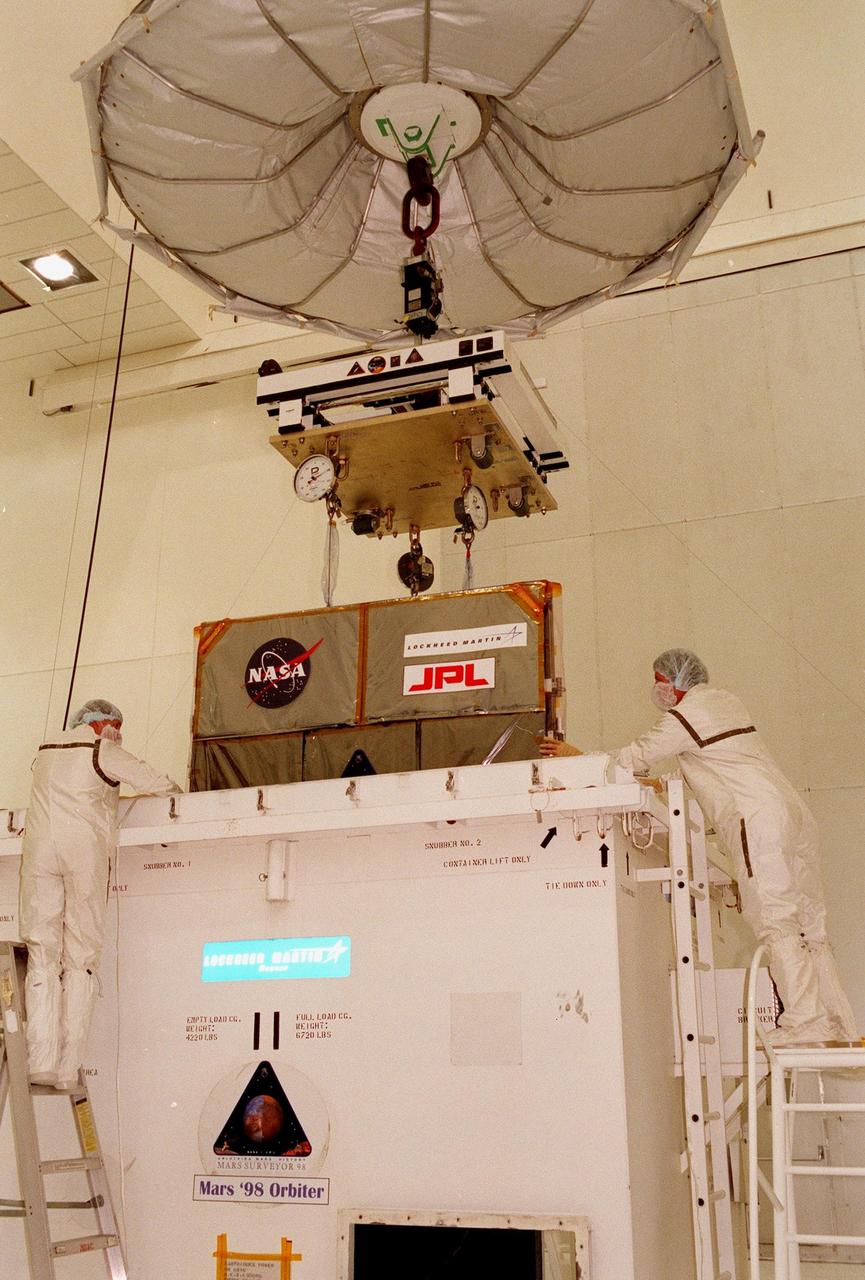
Technicians in the Spacecraft Assembly and Encapsulation Facility-2 (SAEF-2) oversee the removal of the Mars Climate Orbiter from its container. The Mars Climate Orbiter is heading for Mars where it will primarily support its companion Mars Polar Lander spacecraft, planned for launch on Jan. 3, 1999. After that, the Mars Climate Orbiter's instruments will monitor the Martian atmosphere and image the planet's surface on a daily basis for one Martian year (two Earth years). It will observe the appearance and movement of atmospheric dust and water vapor, as well as characterize seasonal changes on the surface. The detailed images of the surface features will provide important clues to the planet's early climate history and give scientists more information about possible liquid water reserves beneath the surface. The scheduled launch date for the Mars Climate Orbiter is Dec. 10, 1998, on a Boeing Delta II 7425 rocket
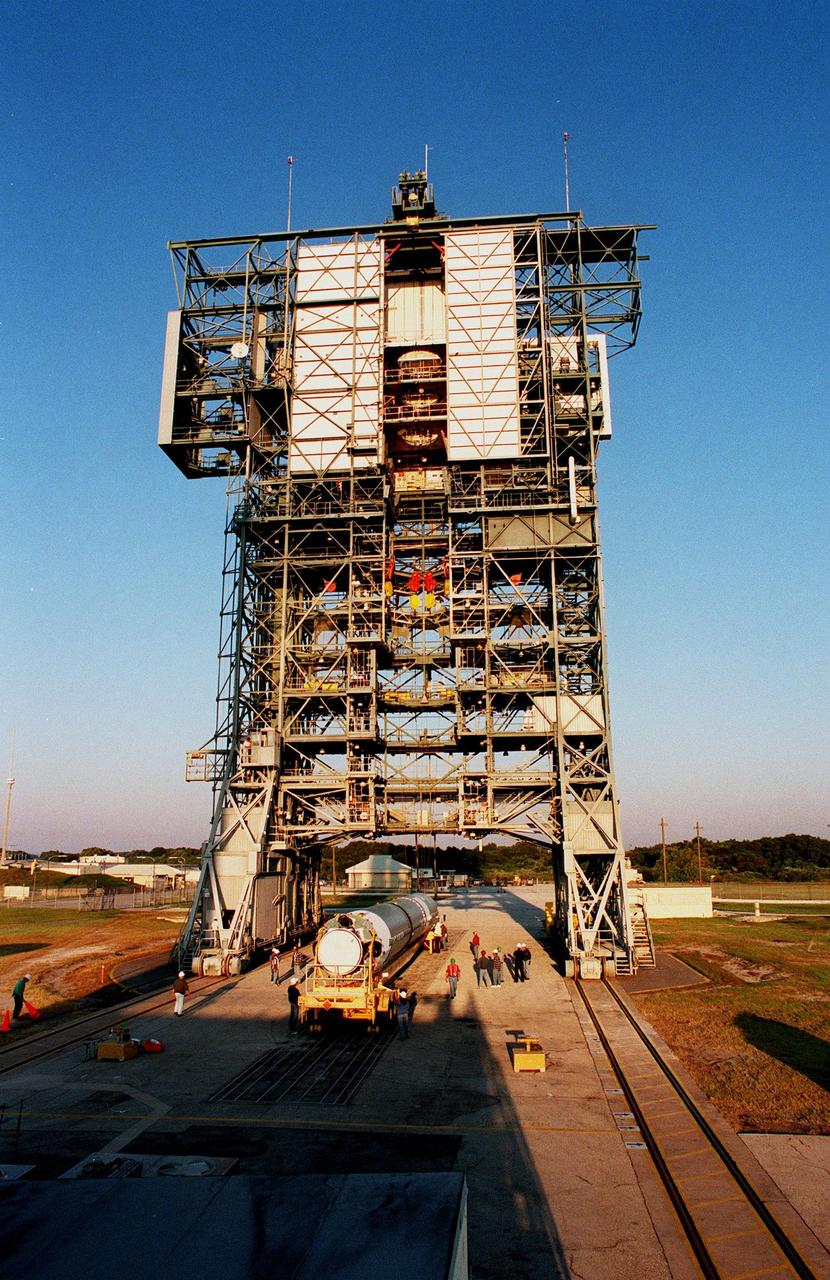
KENNEDY SPACE CENTER, FLA. -- The gantry on Pad 17A at Cape Canaveral Air Station appears to straddle the Delta II rocket below it that is being moved into position for lifting. The rocket is scheduled for launch on Dec. 10, 1998, carrying the Mars Climate Orbiter. The orbiter is heading for Mars where it will primarily support its companion Mars Polar Lander spacecraft, which is planned for launch on Jan. 3, 1999. The orbiter's instruments will monitor the Martian atmosphere and image the planet's surface on a daily basis for one Martian year (1.8 Earth years). It will observe the appearance and movement of atmospheric dust and water vapor, as well as characterize seasonal changes on the surface. The detailed images of the surface features will provide important clues to the planet's early climate history and give scientists more information about possible liquid water reserves beneath the surface
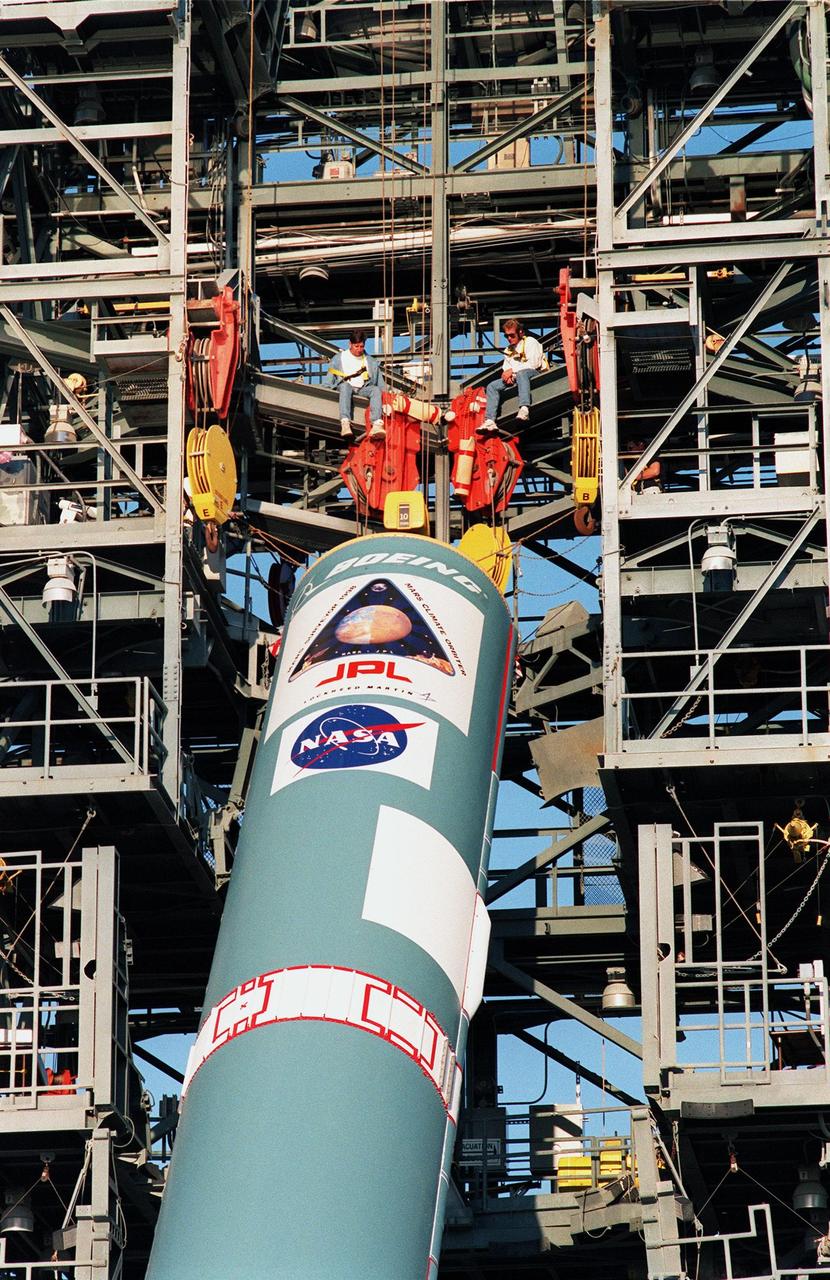
KENNEDY SPACE CENTER, FLA. -- On Pad 17A at Cape Canaveral Air Station, workers on the gantry watch as cables lift a Delta II rocket into position for launch. Scheduled for launch on Dec. 10, 1998, the rocket is carrying the Mars Climate Orbiter. The orbiter is heading for Mars where it will primarily support its companion Mars Polar Lander spacecraft, which is planned for launch on Jan. 3, 1999. The orbiter's instruments will monitor the Martian atmosphere and image the planet's surface on a daily basis for one Martian year (1.8 Earth years). It will observe the appearance and movement of atmospheric dust and water vapor, as well as characterize seasonal changes on the surface. The detailed images of the surface features will provide important clues to the planet's early climate history and give scientists more information about possible liquid water reserves beneath the surface
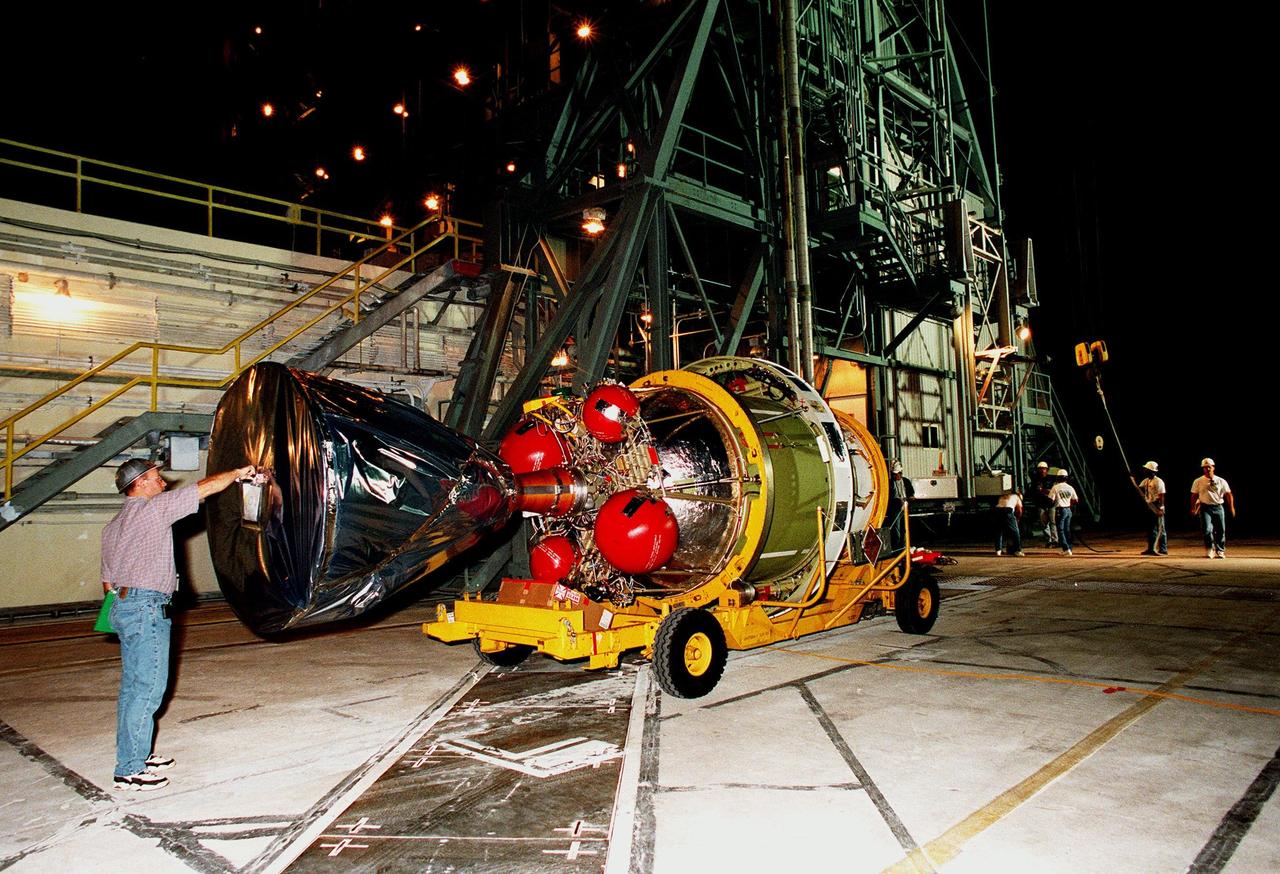
The second stage of a Delta II rocket arrives at pad 17A at Cape Canaveral Air Station. The rocket is scheduled to be launched on Dec. 10, 1998, heading for Mars and carrying the Mars Climate Orbiter. The orbiter's instruments will monitor the Martian atmosphere and image the planet's surface on a daily basis for 657 days. It will observe the appearance and movement of atmospheric dust and water vapor, as well as characterize seasonal changes on the surface. The detailed images of the surface features will provide important clues to the planet's early climate history and give scientists more information about possible liquid water reserves beneath the surface. The orbiter will primarily support its companion Mars Polar Lander spacecraft, which is planned for launch on Jan. 3, 1999
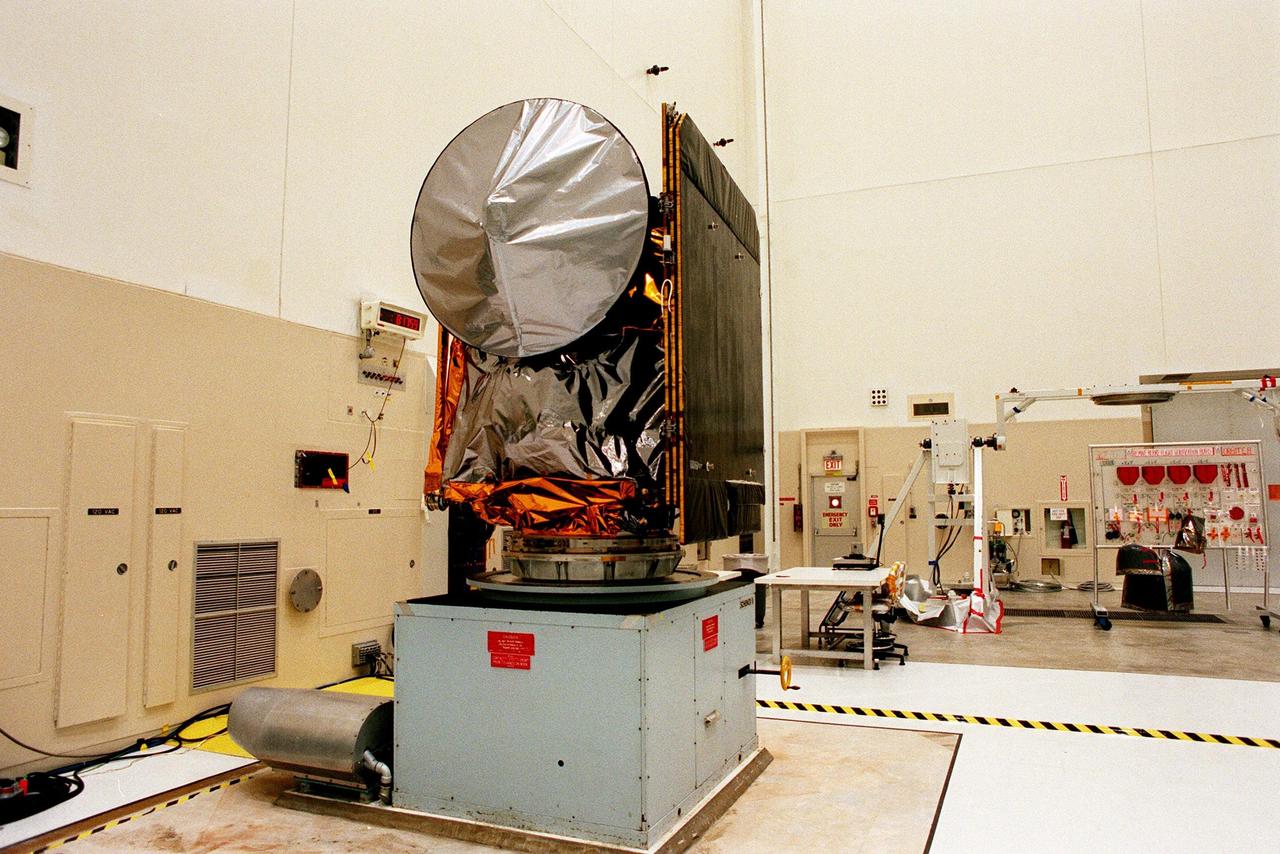
KENNEDY SPACE CENTER, FLA. -- In the Spacecraft Assembly and Encapsulation Facility -2 (SAEF-2), the Mars Climate Orbiter is in place for its spin test. Targeted for launch aboard a Delta II rocket on Dec. 10, 1998, the orbiter is heading for Mars where it will primarily support its companion Mars Polar Lander spacecraft, which is planned for launch on Jan. 3, 1999. The orbiter's instruments will monitor the Martian atmosphere and image the planet's surface on a daily basis for 687 Earth days. It will observe the appearance and movement of atmospheric dust and water vapor, as well as characterize seasonal changes on the surface. The detailed images of the surface features will provide important clues to the planet's early climate history and give scientists more information about possible liquid water reserves beneath the surface
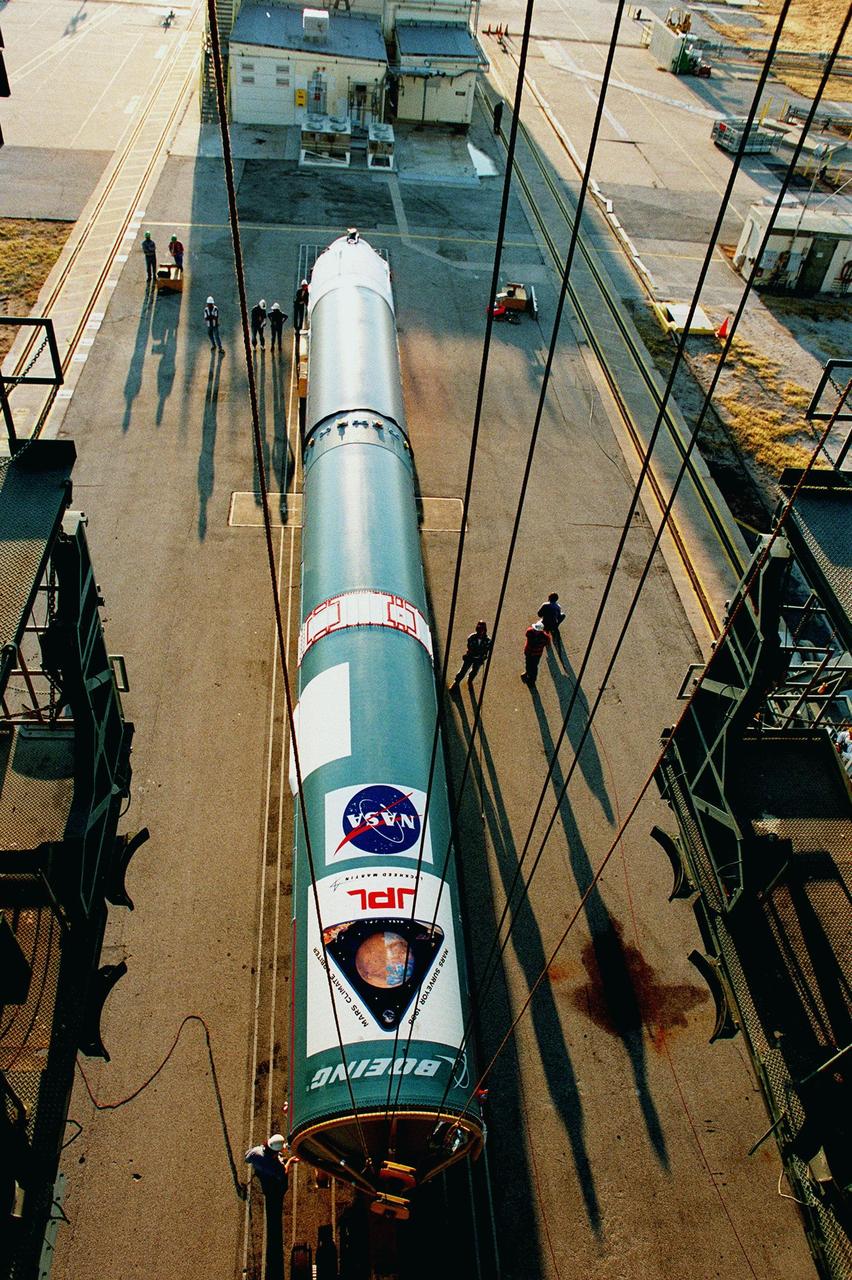
KENNEDY SPACE CENTER, FLA. -- On Pad 17A at Cape Canaveral Air Station, cables from the top of the gantry are attached to the Delta II rocket to lift it into position for launch. Scheduled to launch Dec. 10, 1998, the rocket will be carrying the Mars Climate Orbiter. The orbiter is heading for Mars where it will primarily support its companion Mars Polar Lander spacecraft, which is planned for launch on Jan. 3, 1999. The orbiter's instruments will monitor the Martian atmosphere and image the planet's surface on a daily basis for one Martian year (1.8 Earth years). It will observe the appearance and movement of atmospheric dust and water vapor, as well as characterize seasonal changes on the surface. The detailed images of the surface features will provide important clues to the planet's early climate history and give scientists more information about possible liquid water reserves beneath the surface
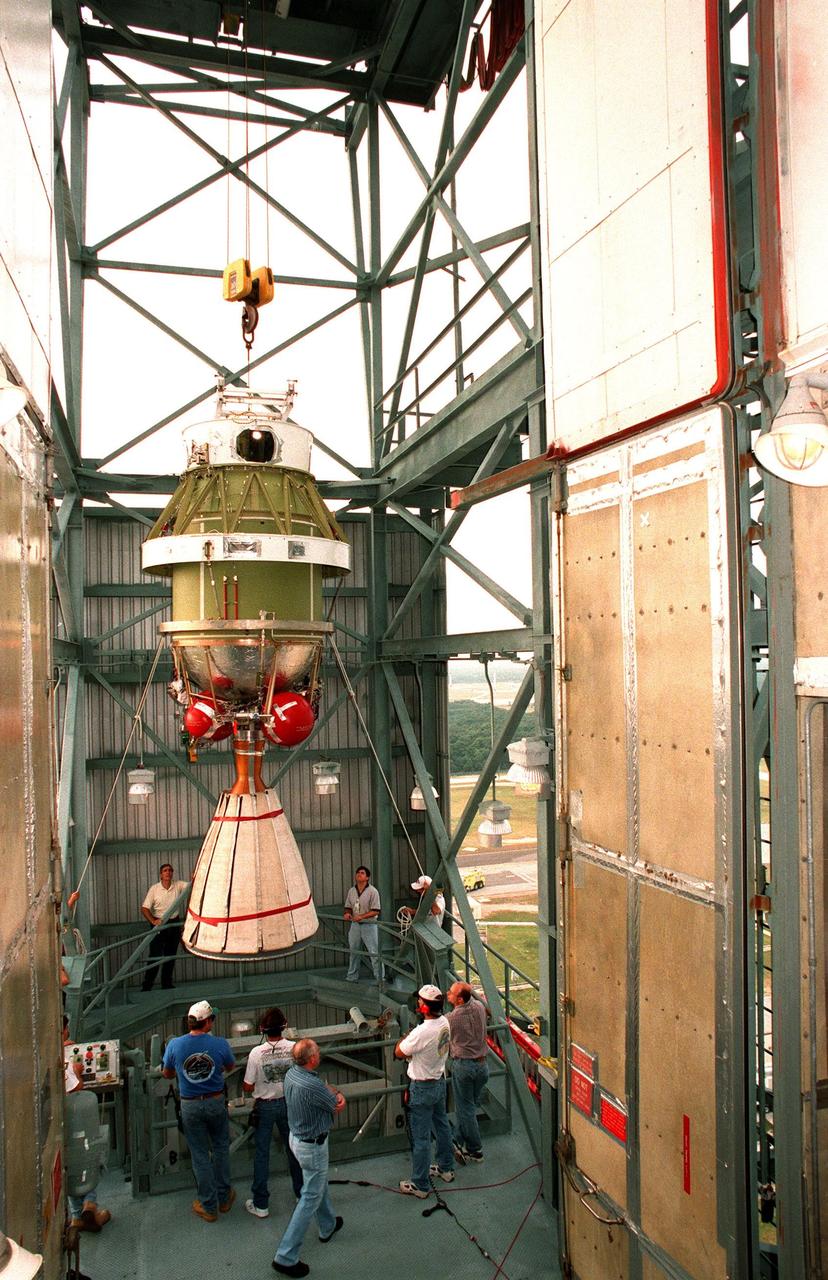
Workers at pad 17A at Cape Canaveral Air Station maneuver the second stage of a Delta II rocket inside the gantry. The rocket is scheduled to be launched on Dec. 10, 1998, heading for Mars and carrying the Mars Climate Orbiter. The orbiter's instruments will monitor the Martian atmosphere and image the planet's surface on a daily basis for 657 days. It will observe the appearance and movement of atmospheric dust and water vapor, as well as characterize seasonal changes on the surface. The detailed images of the surface features will provide important clues to the planet's early climate history and give scientists more information about possible liquid water reserves beneath the surface. The orbiter will primarily support its companion Mars Polar Lander spacecraft, which is planned for launch on Jan. 3, 1999
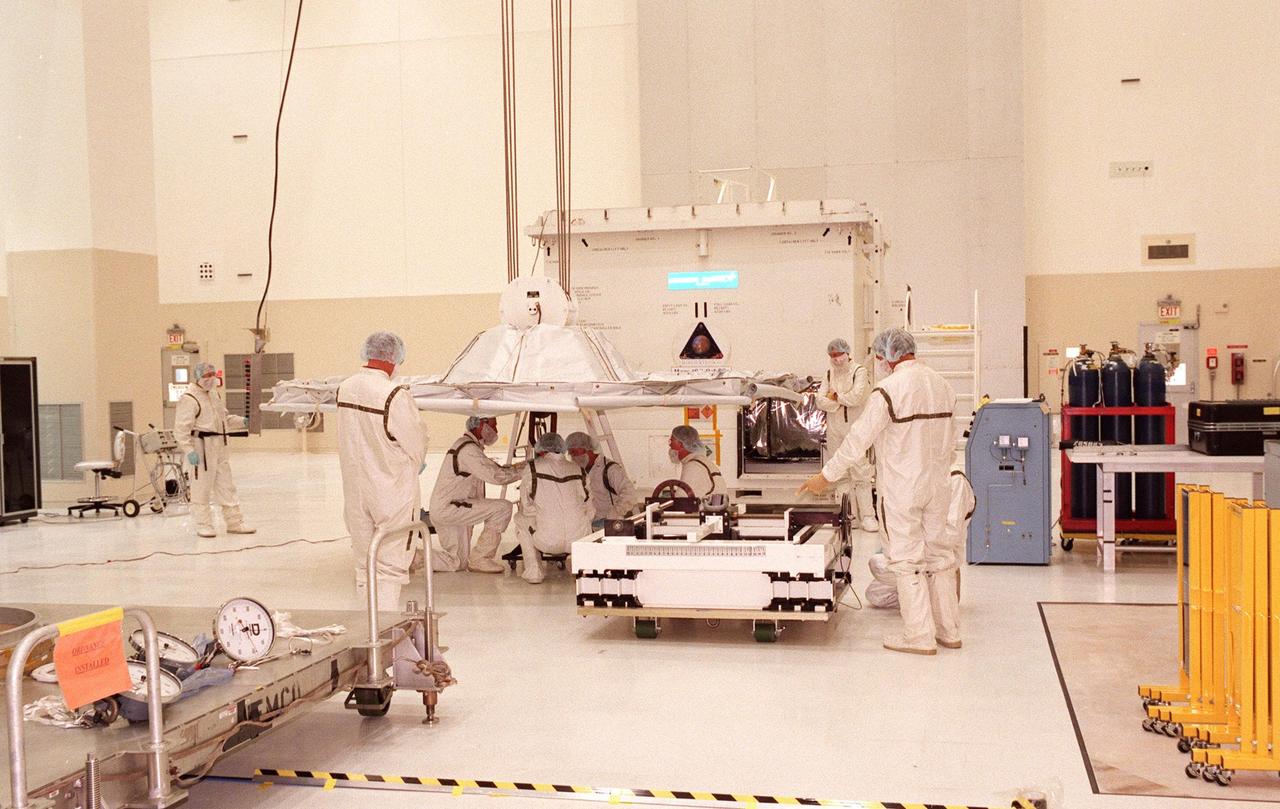
Technicians in the Spacecraft Assembly and Encapsulation Facility-2 (SAEF-2) prepare a lifting device they will use to remove the Mars Climate Orbiter from its container (behind the workers). The Mars Climate Orbiter is heading for Mars where it will primarily support its companion Mars Polar Lander spacecraft, planned for launch on Jan. 3, 1999. After that, the Mars Climate Orbiter's instruments will monitor the Martian atmosphere and image the planet's surface on a daily basis for one Martian year (two Earth years). It will observe the appearance and movement of atmospheric dust and water vapor, as well as characterize seasonal changes on the surface. The detailed images of the surface features will provide important clues to the planet's early climate history and give scientists more information about possible liquid water reserves beneath the surface. The scheduled launch date for the Mars Climate Orbiter is Dec. 10, 1998, on a Boeing Delta II 7425 rocket
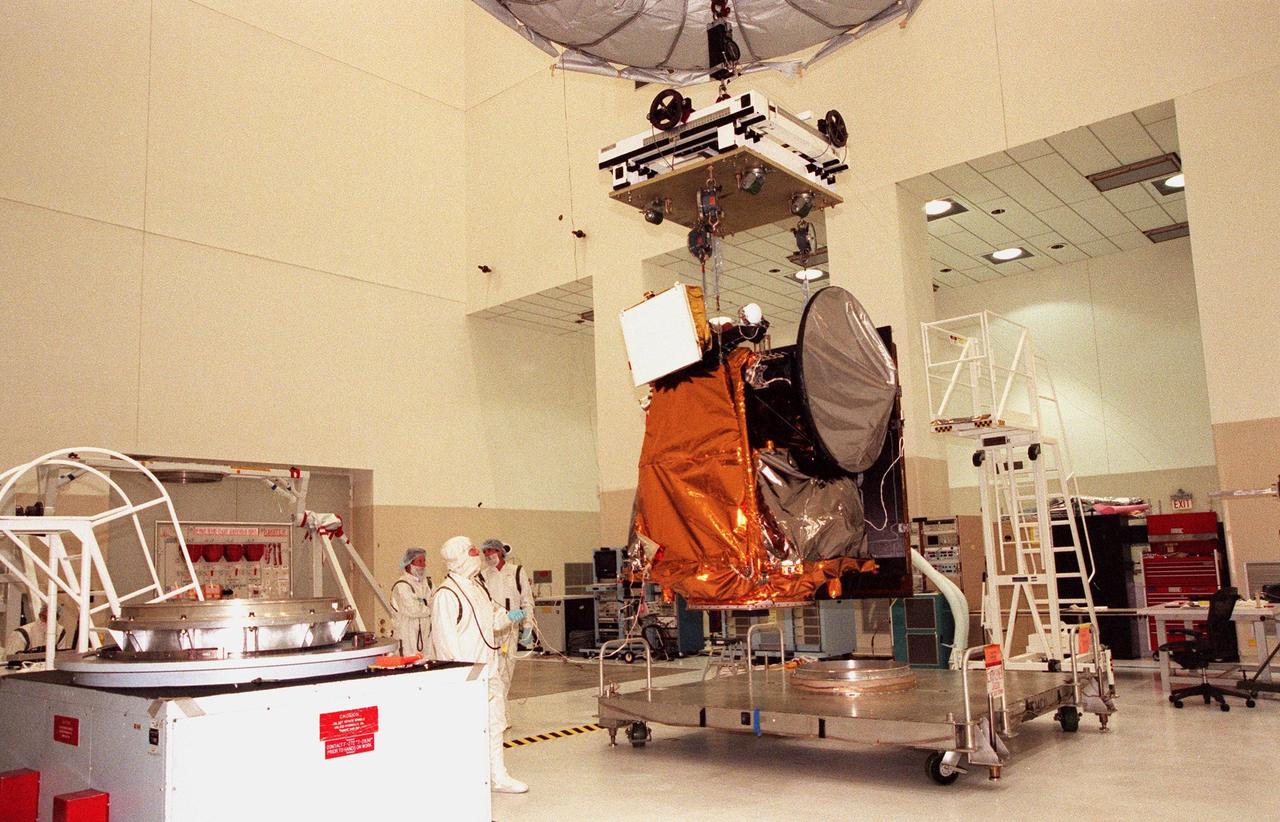
KENNEDY SPACE CENTER, FLA. -- In the Spacecraft Assembly and Encapsulation Facility -2 (SAEF-2), the Mars Climate Orbiter is lifted from the workstand to move it to another site for a spin test. Targeted for launch aboard a Delta II rocket on Dec. 10, 1998, the orbiter is heading for Mars where it will primarily support its companion Mars Polar Lander spacecraft, which is planned for launch on Jan. 3, 1999. The orbiter's instruments will monitor the Martian atmosphere and image the planet's surface on a daily basis for 687 Earth days. It will observe the appearance and movement of atmospheric dust and water vapor, as well as characterize seasonal changes on the surface. The detailed images of the surface features will provide important clues to the planet's early climate history and give scientists more information about possible liquid water reserves beneath the surface
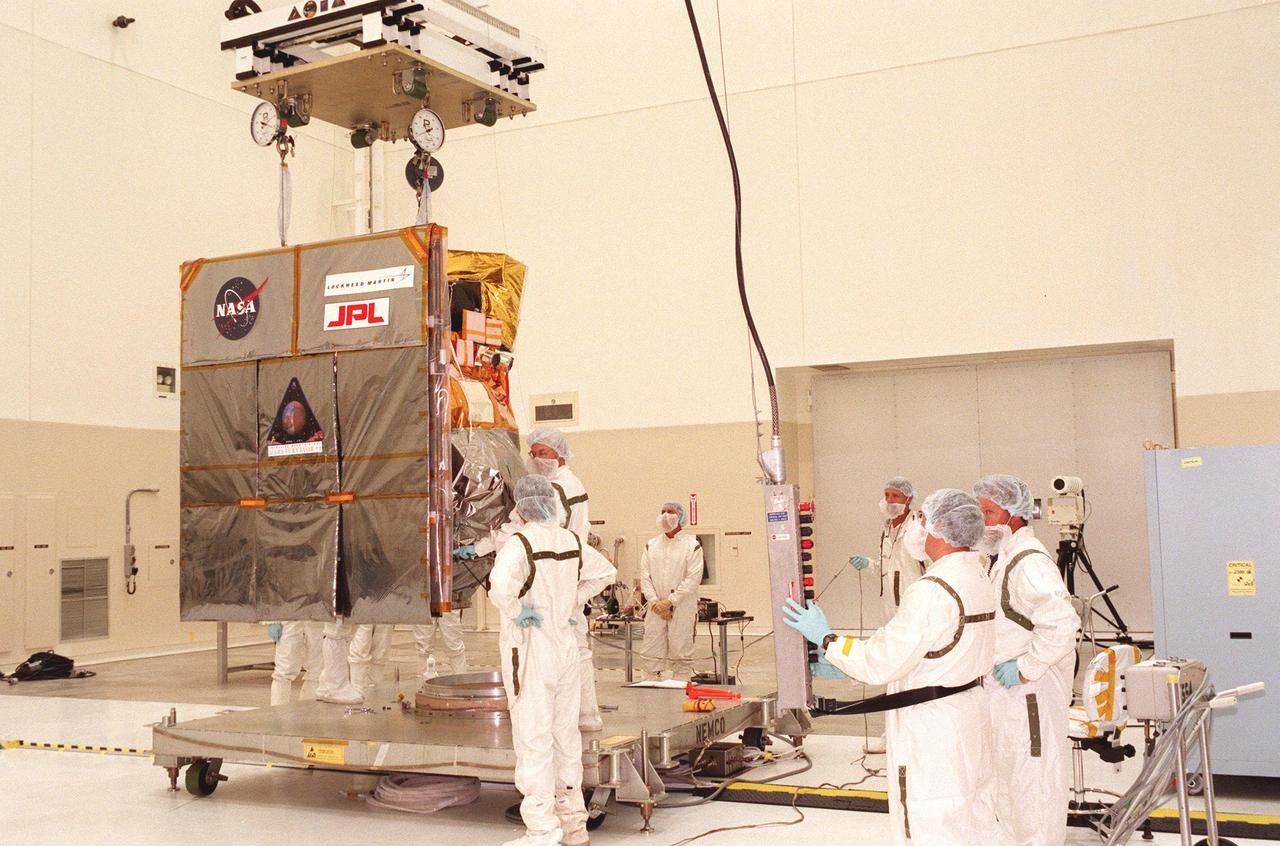
Technicians carefully maneuver the Mars Climate Orbiter toward its workstand in the Spacecraft Assembly and Encapsulation Facility-2 (SAEF-2). The Mars Climate Orbiter is heading for Mars where it will primarily support its companion Mars Polar Lander spacecraft, planned for launch on Jan. 3, 1999. After that, the Mars Climate Orbiter's instruments will monitor the Martian atmosphere and image the planet's surface on a daily basis for one Martian year (two Earth years). It will observe the appearance and movement of atmospheric dust and water vapor, as well as characterize seasonal changes on the surface. The detailed images of the surface features will provide important clues to the planet's early climate history and give scientists more information about possible liquid water reserves beneath the surface. The scheduled launch date for the Mars Climate Orbiter is Dec. 10, 1998, on a Boeing Delta II 7425 rocket
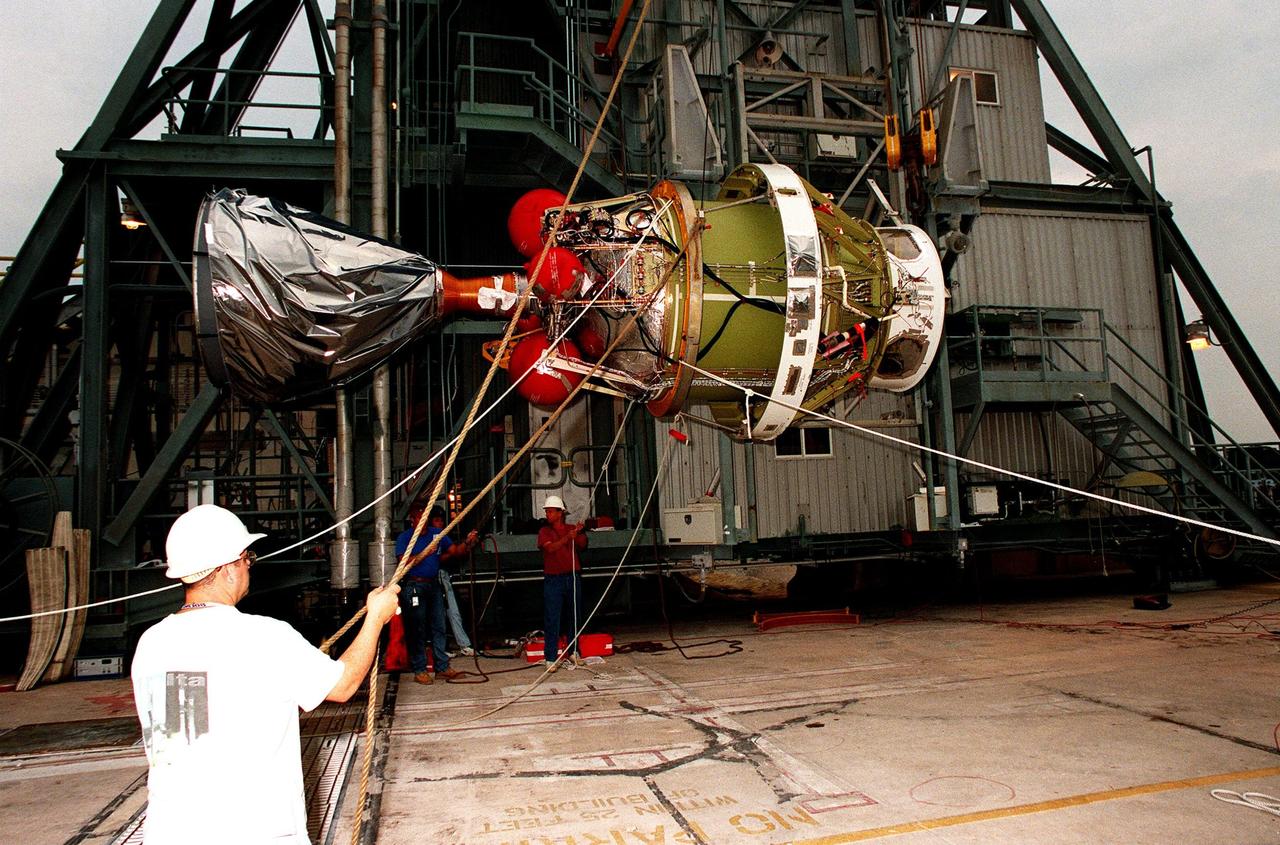
The second stage of a Delta II rocket is prepared for its shift to vertical alongside the gantry at pad 17A at Cape Canaveral Air Station. The rocket is scheduled to be launched on Dec. 10, 1998, heading for Mars and carrying the Mars Climate Orbiter. The orbiter's instruments will monitor the Martian atmosphere and image the planet's surface on a daily basis for 657 days. It will observe the appearance and movement of atmospheric dust and water vapor, as well as characterize seasonal changes on the surface. The detailed images of the surface features will provide important clues to the planet's early climate history and give scientists more information about possible liquid water reserves beneath the surface. The orbiter will primarily support its companion Mars Polar Lander spacecraft, which is planned for launch on Jan. 3, 1999
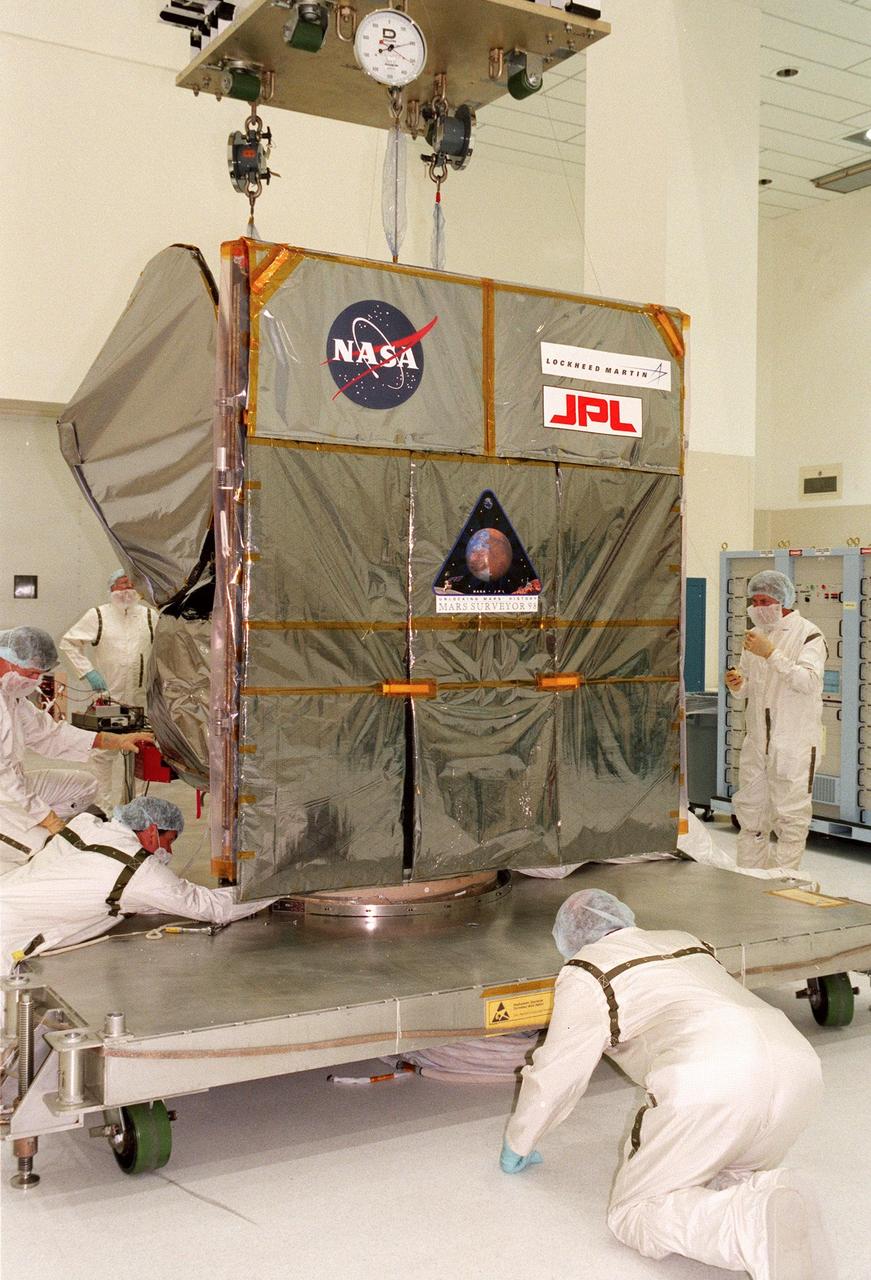
Technicians check the connections on the workstand holding the Mars Climate Orbiter in the Spacecraft Assembly and Encapsulation Facility-2 (SAEF-2). The Mars Climate Orbiter is heading for Mars where it will primarily support its companion Mars Polar Lander spacecraft, planned for launch on Jan. 3, 1999. After that, the Mars Climate Orbiter's instruments will monitor the Martian atmosphere and image the planet's surface on a daily basis for one Martian year (two Earth years). It will observe the appearance and movement of atmospheric dust and water vapor, as well as characterize seasonal changes on the surface. The detailed images of the surface features will provide important clues to the planet's early climate history and give scientists more information about possible liquid water reserves beneath the surface. The scheduled launch date for the Mars Climate Orbiter is Dec. 10, 1998, on a Boeing Delta II 7425 rocket
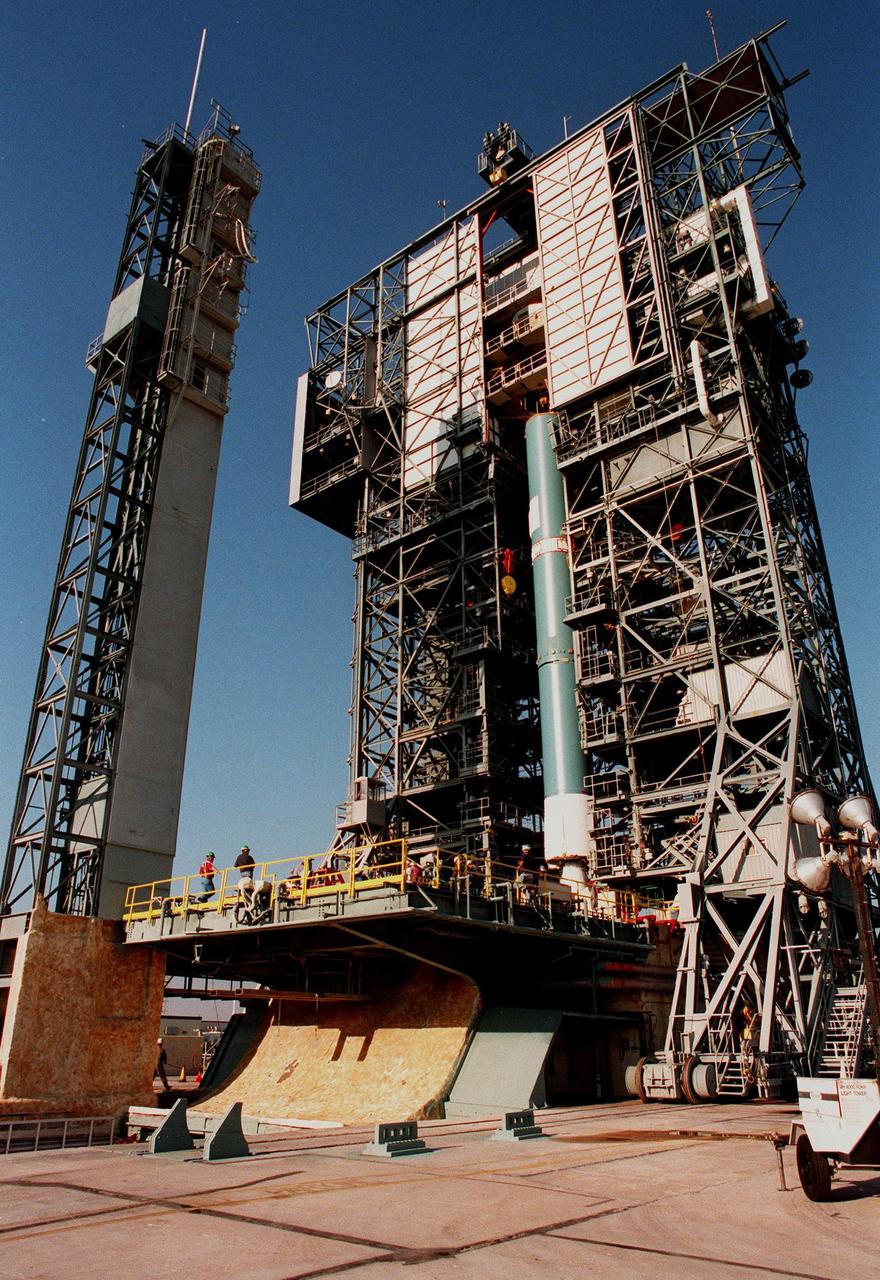
KENNEDY SPACE CENTER, FLA. -- On Pad 17A at Cape Canaveral Air Station, a Delta II rocket is maneuvered into position for launch on Dec. 10, 1998. The rocket is carrying the Mars Climate Orbiter which will head for Mars primarily to support its companion Mars Polar Lander spacecraft, which is planned for launch on Jan. 3, 1999. The orbiter's instruments will monitor the Martian atmosphere and image the planet's surface on a daily basis for one Martian year (1.8 Earth years). It will observe the appearance and movement of atmospheric dust and water vapor, as well as characterize seasonal changes on the surface. The detailed images of the surface features will provide important clues to the planet's early climate history and give scientists more information about possible liquid water reserves beneath the surface
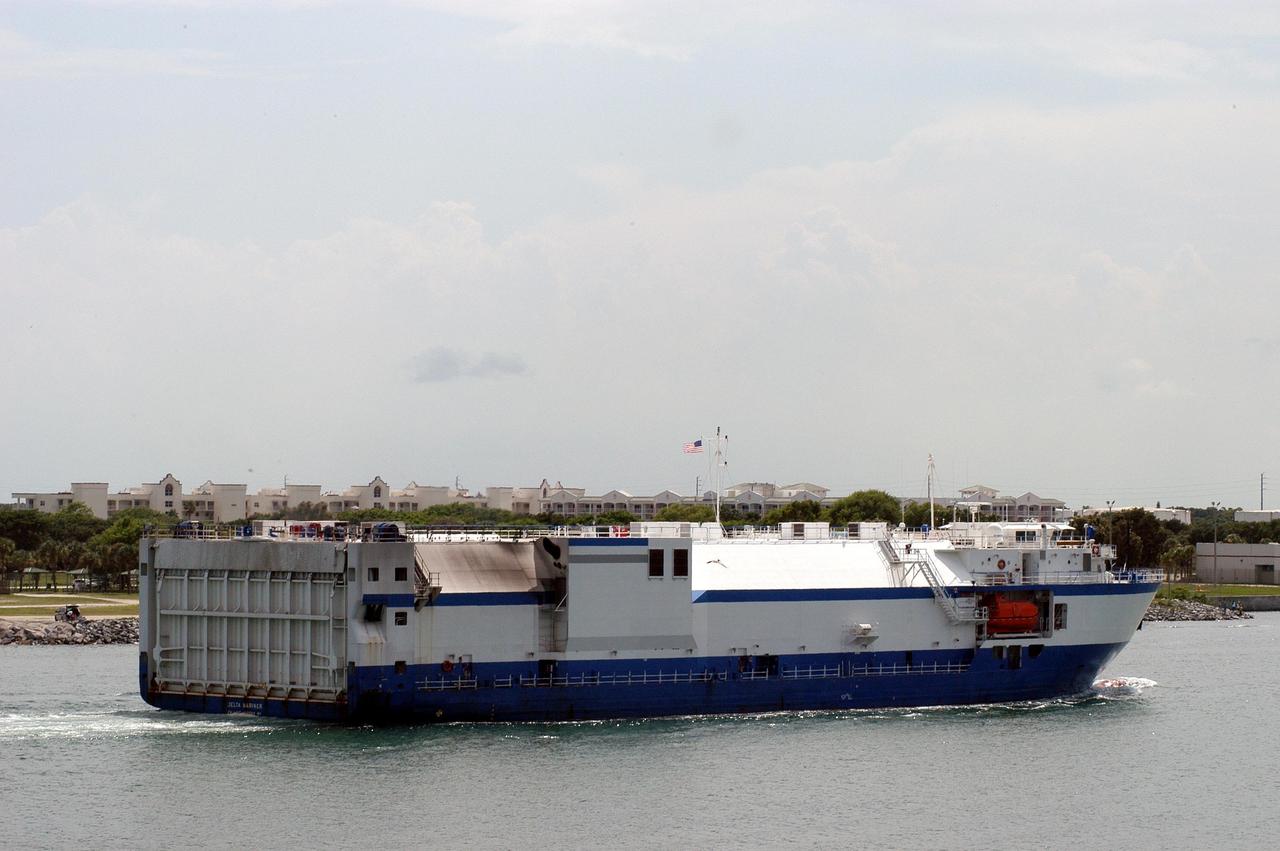
KENNEDY SPACE CENTER, FLA. - Two Boeing Delta IV first stages are being shipped on the Delta Mariner, heading for Cape Canaveral Air Force Station. After arrival at Port Canaveral, they will be transported to the Horizontal Integration Facility at Launch Complex 37, CCAFS. The rocket will be used for the December launching of the GOES-N weather satellite for NASA and NOAA. The GOES-N is the first in a series of three advanced weather satellites including GOES-O and GOES-P. This satellite will provide continuous monitoring necessary for intensive data analysis. It will provide a constant vigil for the atmospheric “triggers” of severe weather conditions such as tornadoes, flash floods, hail storms and hurricanes. When these conditions develop, GOES-N will be able to monitor storm development and track their movements.

KENNEDY SPACE CENTER, FLA. -- On Pad 17A at Cape Canaveral Air Station, a Delta II rocket appears to float just above the pad as it is lifted up the gantry. Scheduled for launch on Dec. 10, 1998, the rocket is carrying the Mars Climate Orbiter. The orbiter is heading for Mars where it will primarily support its companion Mars Polar Lander spacecraft, which is planned for launch on Jan. 3, 1999. The orbiter's instruments will monitor the Martian atmosphere and image the planet's surface on a daily basis for one Martian year (1.8 Earth years). It will observe the appearance and movement of atmospheric dust and water vapor, as well as characterize seasonal changes on the surface. The detailed images of the surface features will provide important clues to the planet's early climate history and give scientists more information about possible liquid water reserves beneath the surface
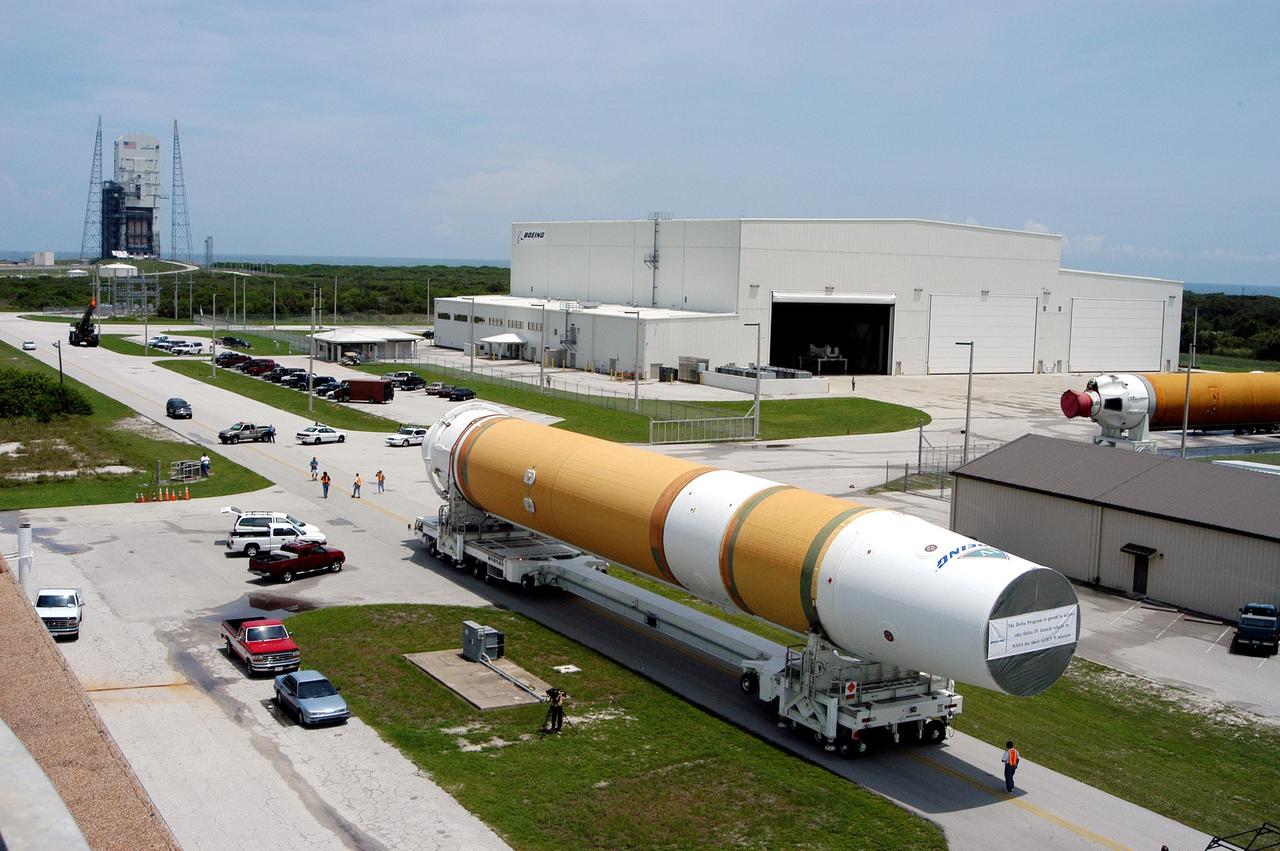
KENNEDY SPACE CENTER, FLA. - Two Boeing Delta IV first stages head to the Horizontal Integration Facility (upper right) at Launch Complex 37, Cape Canaveral Air Force Station. The rockets were shipped by barge from Decatur, Ala., to Port Canaveral and offloaded onto Elevating Platform Transporters. A Boeing Delta IV will be used for the December launching of the GOES-N weather satellite for NASA and NOAA. The GOES-N is the first in a series of three advanced weather satellites including GOES-O and GOES-P. This satellite will provide continuous monitoring necessary for intensive data analysis. It will provide a constant vigil for the atmospheric “triggers” of severe weather conditions such as tornadoes, flash floods, hail storms and hurricanes. When these conditions develop, GOES-N will be able to monitor storm development and track their movements.
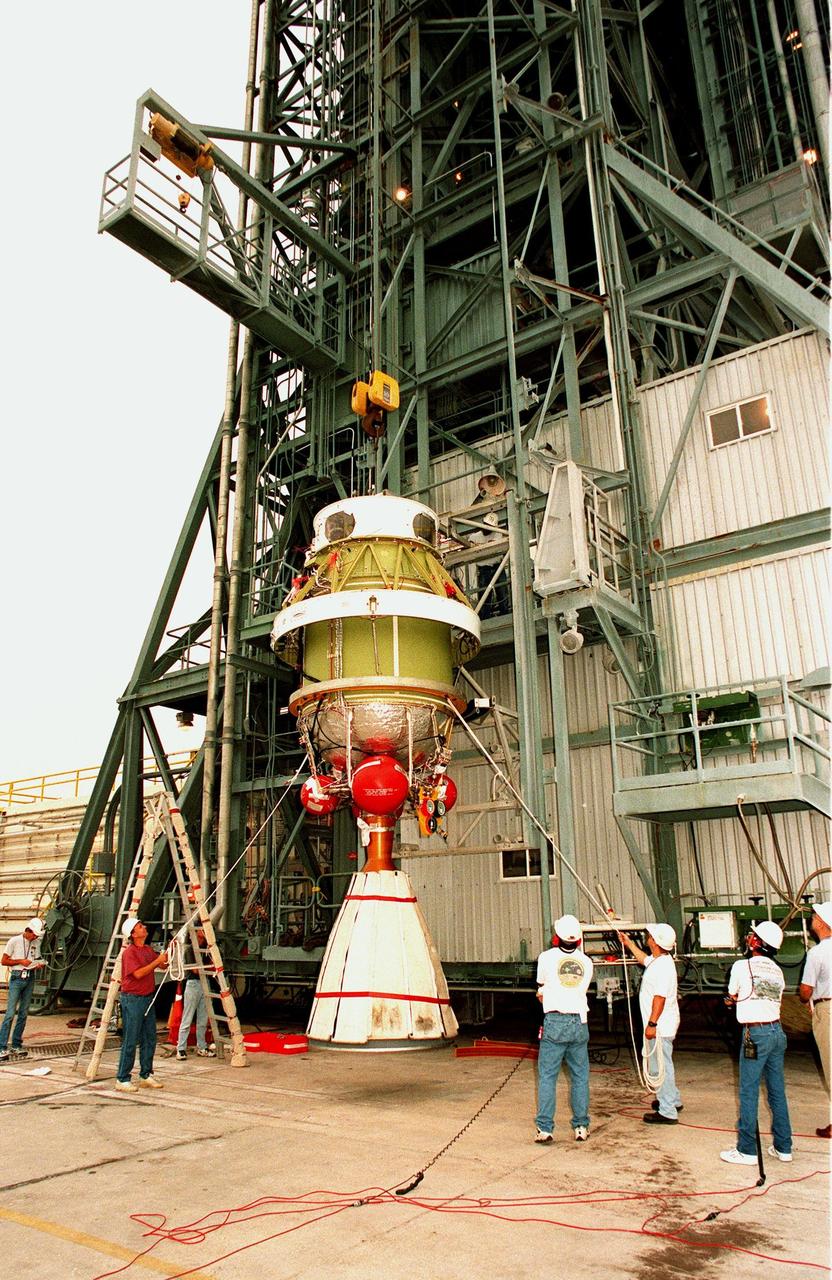
Workers at pad 17A at Cape Canaveral Air Station begin lifting the second stage of a Delta II rocket up the gantry . The rocket is scheduled to be launched on Dec. 10, 1998, heading for Mars and carrying the Mars Climate Orbiter. The orbiter's instruments will monitor the Martian atmosphere and image the planet's surface on a daily basis for 657 days. It will observe the appearance and movement of atmospheric dust and water vapor, as well as characterize seasonal changes on the surface. The detailed images of the surface features will provide important clues to the planet's early climate history and give scientists more information about possible liquid water reserves beneath the surface. The orbiter will primarily support its companion Mars Polar Lander spacecraft, which is planned for launch on Jan. 3, 1999
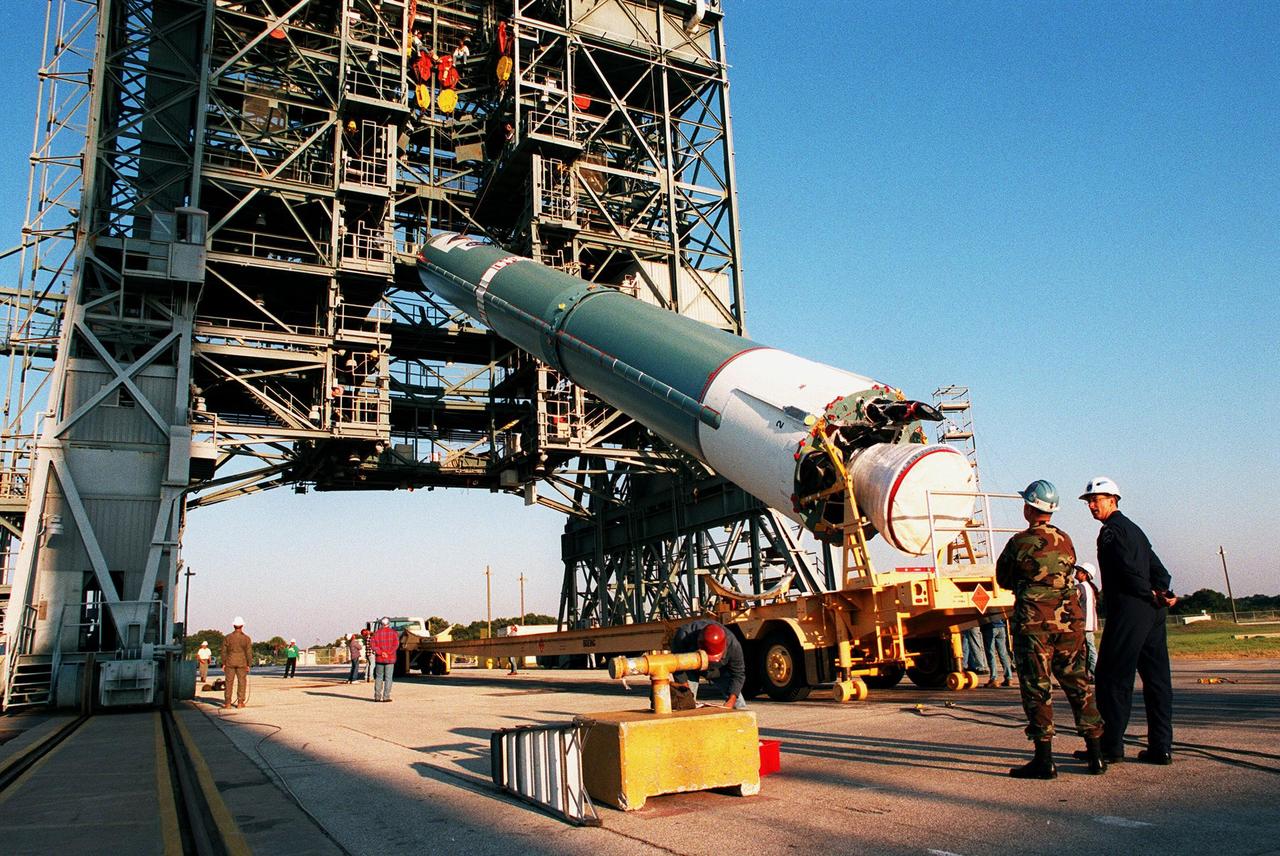
KENNEDY SPACE CENTER, FLA. -- On Pad 17A at Cape Canaveral Air Station, cables lift the Delta II rocket into position for launch. Scheduled for launch on Dec. 10, 1998, the rocket is carrying the Mars Climate Orbiter. The orbiter is heading for Mars where it will primarily support its companion Mars Polar Lander spacecraft, which is planned for launch on Jan. 3, 1999. The orbiter's instruments will monitor the Martian atmosphere and image the planet's surface on a daily basis for one Martian year (1.8 Earth years). It will observe the appearance and movement of atmospheric dust and water vapor, as well as characterize seasonal changes on the surface. The detailed images of the surface features will provide important clues to the planet's early climate history and give scientists more information about possible liquid water reserves beneath the surface
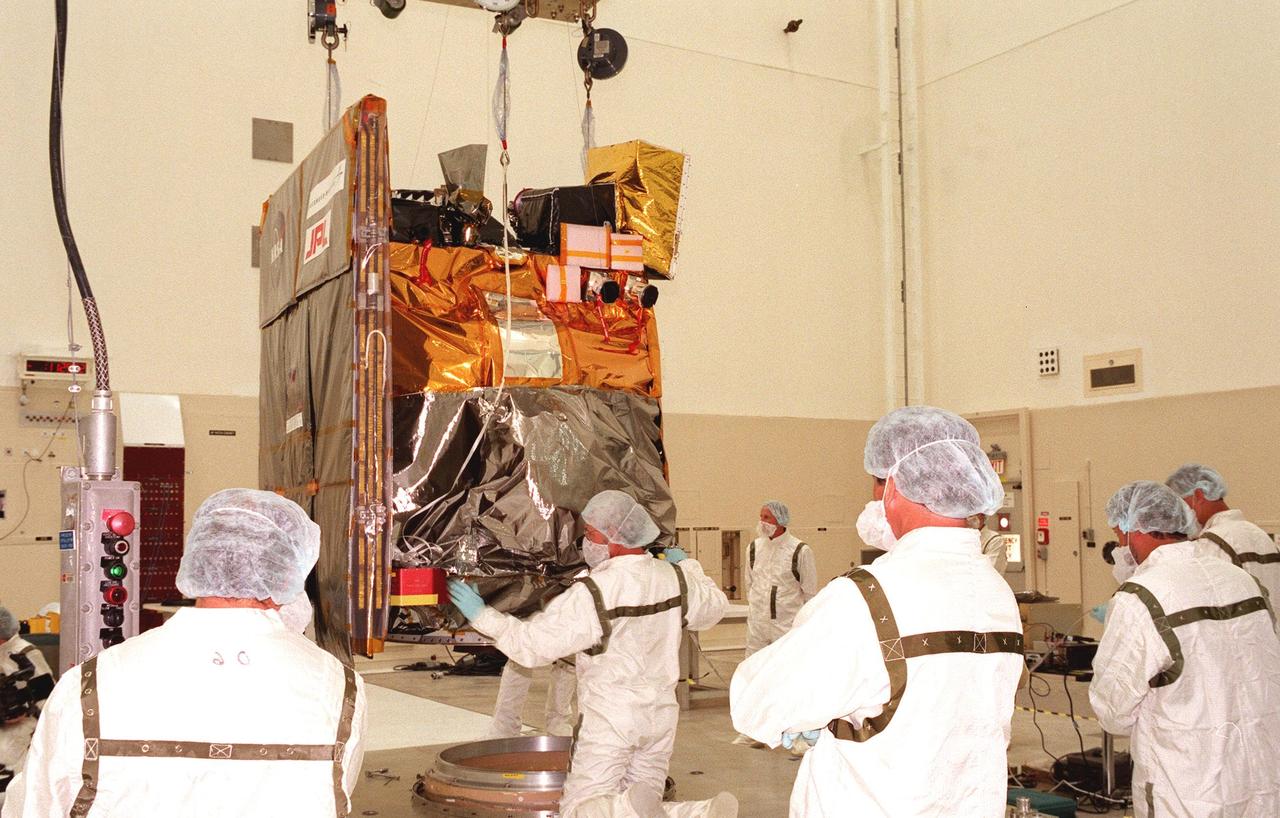
Technicians lower the Mars Climate Orbiter onto its workstand in the Spacecraft Assembly and Encapsulation Facility-2 (SAEF-2). The Mars Climate Orbiter is heading for Mars where it will primarily support its companion Mars Polar Lander spacecraft, planned for launch on Jan. 3, 1999. After that, the Mars Climate Orbiter's instruments will monitor the Martian atmosphere and image the planet's surface on a daily basis for one Martian year (two Earth years). It will observe the appearance and movement of atmospheric dust and water vapor, as well as characterize seasonal changes on the surface. The detailed images of the surface features will provide important clues to the planet's early climate history and give scientists more information about possible liquid water reserves beneath the surface. The scheduled launch date for the Mars Climate Orbiter is Dec. 10, 1998, on a Boeing Delta II 7425 rocket

In the Spacecraft Assembly and Encapsulation Facility-2 (SAEF-2), the Mars Climate Orbiter (background) is moved toward the workstand being readied by technicians (foreground). The Mars Climate Orbiter is heading for Mars where it will primarily support its companion Mars Polar Lander spacecraft, planned for launch on Jan. 3, 1999. After that, the Mars Climate Orbiter's instruments will monitor the Martian atmosphere and image the planet's surface on a daily basis for one Martian year (two Earth years). It will observe the appearance and movement of atmospheric dust and water vapor, as well as characterize seasonal changes on the surface. The detailed images of the surface features will provide important clues to the planet's early climate history and give scientists more information about possible liquid water reserves beneath the surface. The scheduled launch date for the Mars Climate Orbiter is Dec. 10, 1998, on a Boeing Delta II 7425 rocket

KENNEDY SPACE CENTER, FLA. -- In the Spacecraft Assembly and Encapsulation Facility -2 (SAEF-2), workers prepare the Mars Climate Orbiter for a spin test. Targeted for launch aboard a Delta II rocket on Dec. 10, 1998, the orbiter is heading for Mars where it will primarily support its companion Mars Polar Lander spacecraft, which is planned for launch on Jan. 3, 1999. At the extreme right can be seen the lander in another work area. The orbiter's instruments will monitor the Martian atmosphere and image the planet's surface on a daily basis for 687 Earth days. It will observe the appearance and movement of atmospheric dust and water vapor, as well as characterize seasonal changes on the surface. The detailed images of the surface features will provide important clues to the planet's early climate history and give scientists more information about possible liquid water reserves beneath the surface
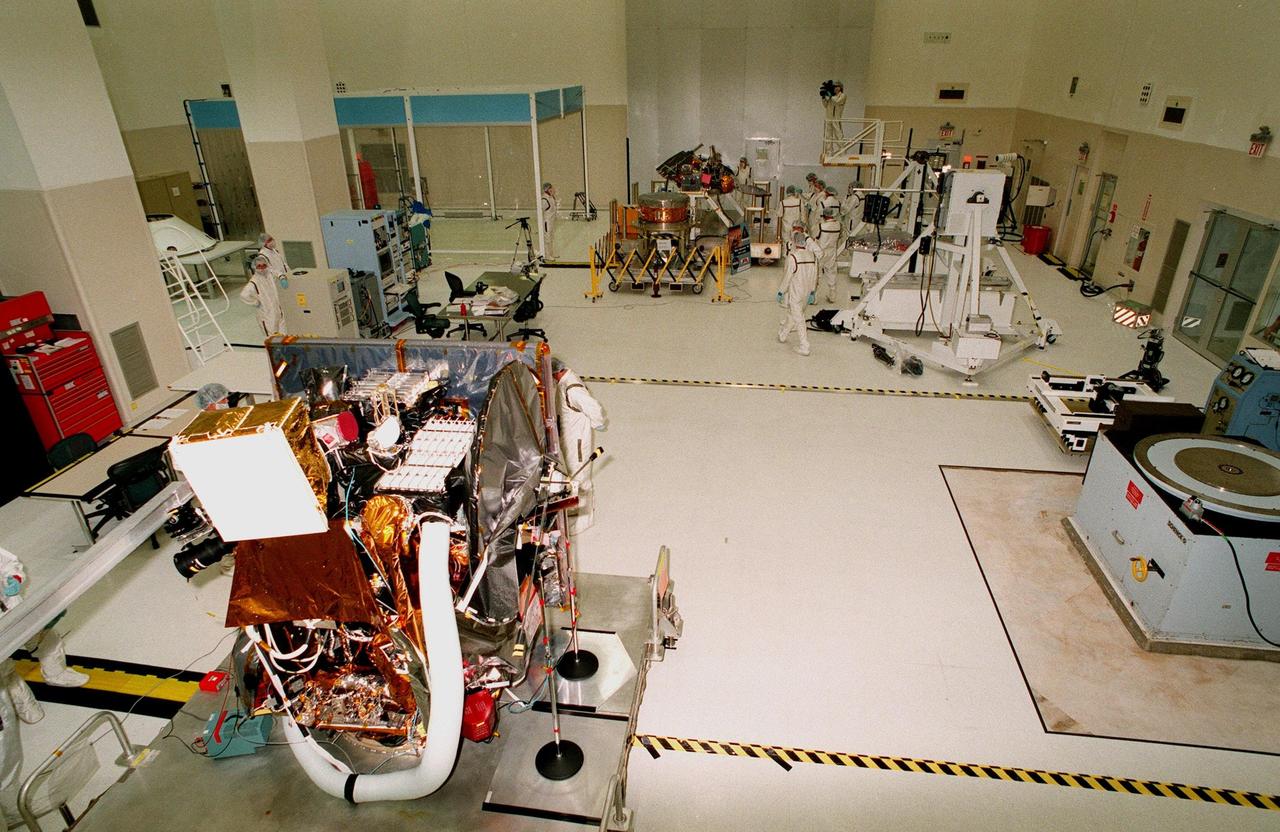
In the Spacecraft Assembly and Encapsulation Facility-2 (SAEF-2), the Mars Climate Orbiter (foreground) and the Mars Polar Lander are on display for the media. The scheduled launch date for the Mars Climate Orbiter is Dec. 10, 1998, aboard a Boeing Delta II rocket. It is heading for Mars where it will primarily support its companion Mars Polar Lander spacecraft, planned for launch on Jan. 3, 1999. After that, the Mars Climate Orbiter's instruments will monitor the Martian atmosphere and image the planet's surface on a daily basis for one Martian year (two Earth years). It will observe the appearance and movement of atmospheric dust and water vapor, as well as characterize seasonal changes on the surface. The detailed images of the surface features will provide important clues to the planet's early climate history and give scientists more information about possible liquid water reserves beneath the surface
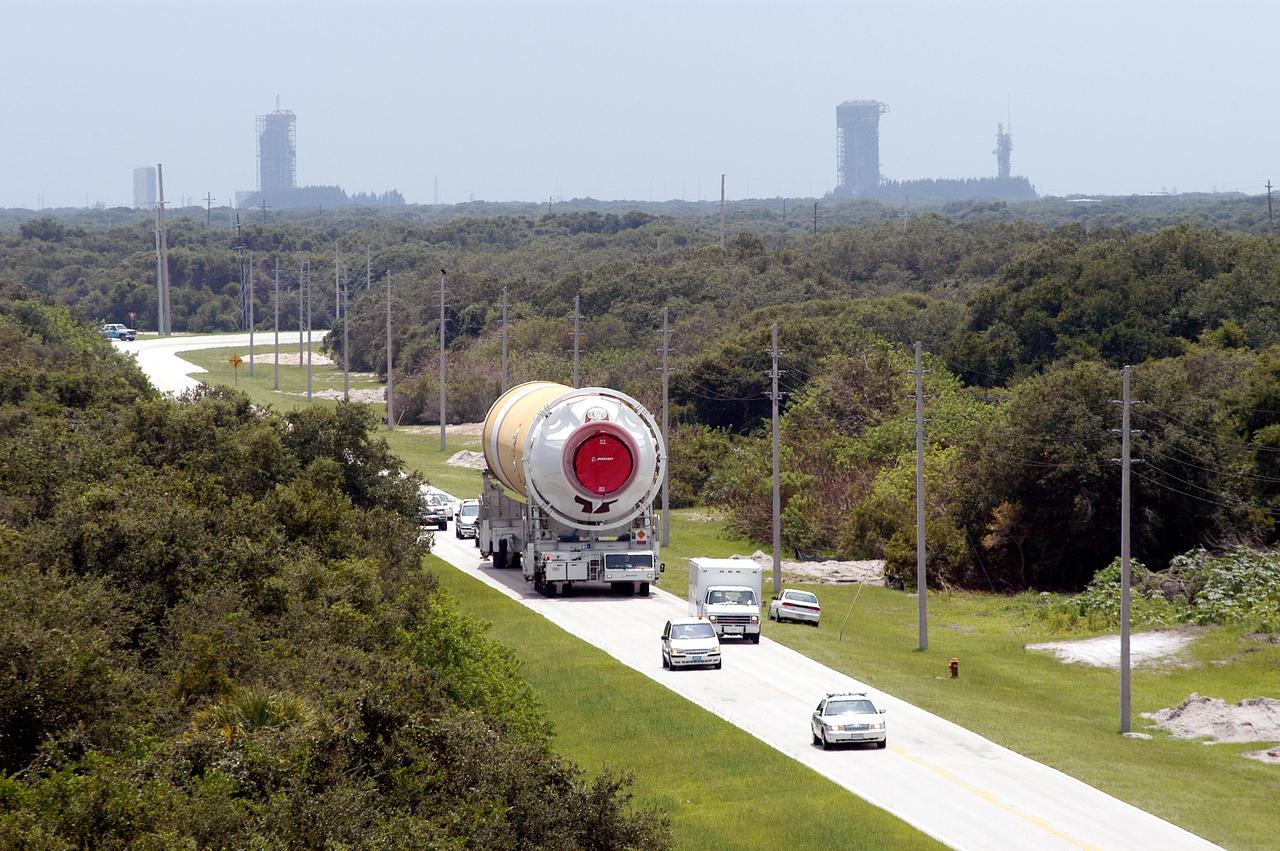
KENNEDY SPACE CENTER, FLA. - A Security escort leads the way as this Boeing Delta IV first stage heads to the Horizontal Integration Facility at Launch Complex 37, Cape Canaveral Air Force Station. Two of the launch pads on Cape Canaveral’s coast can be seen in the background. Two rockets were shipped by barge from Decatur, Ala., to Port Canaveral and offloaded onto Elevating Platform Transporters. A Boeing Delta IV will be used for the December launching of the GOES-N weather satellite for NASA and NOAA. The GOES-N is the first in a series of three advanced weather satellites including GOES-O and GOES-P. This satellite will provide continuous monitoring necessary for intensive data analysis. It will provide a constant vigil for the atmospheric “triggers” of severe weather conditions such as tornadoes, flash floods, hail storms and hurricanes. When these conditions develop, GOES-N will be able to monitor storm development and track their movements.
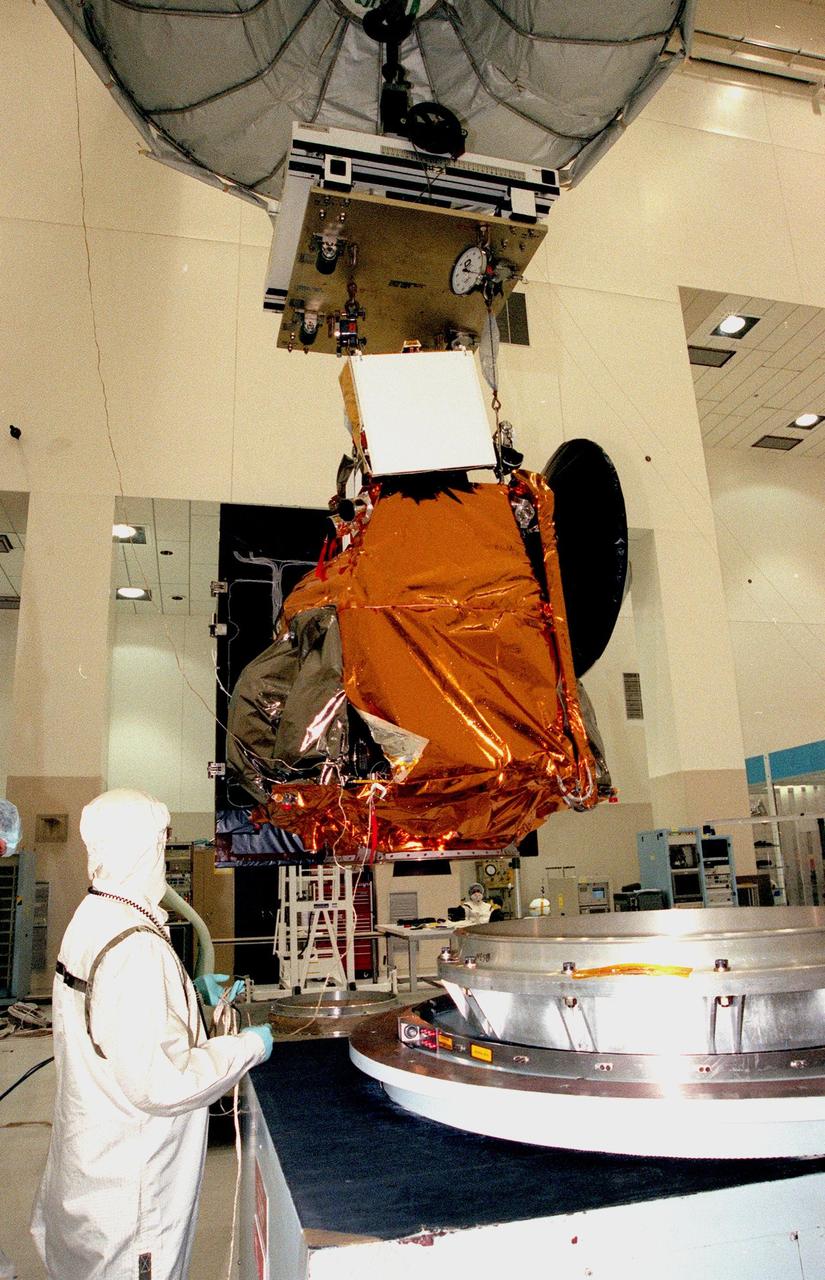
KENNEDY SPACE CENTER, FLA. -- In the Spacecraft Assembly and Encapsulation Facility -2 (SAEF-2), a worker maneuvers the Mars Climate Orbiter, suspended by an overhead crane, to the spin test equipment at lower right. Targeted for launch aboard a Delta II rocket on Dec. 10, 1998, the orbiter is heading for Mars where it will primarily support its companion Mars Polar Lander spacecraft, which is planned for launch on Jan. 3, 1999. The orbiter's instruments will monitor the Martian atmosphere and image the planet's surface on a daily basis for 687 Earth days. It will observe the appearance and movement of atmospheric dust and water vapor, as well as characterize seasonal changes on the surface. The detailed images of the surface features will provide important clues to the planet's early climate history and give scientists more information about possible liquid water reserves beneath the surface

KENNEDY SPACE CENTER, FLA. -- In the Spacecraft Assembly and Encapsulation Facility -2 (SAEF-2), workers lower the Mars Climate Orbiter into place on the spin test equipment. Targeted for launch aboard a Delta II rocket on Dec. 10, 1998, the orbiter is heading for Mars where it will primarily support its companion Mars Polar Lander spacecraft, which is planned for launch on Jan. 3, 1999. The orbiter's instruments will monitor the Martian atmosphere and image the planet's surface on a daily basis for 687 Earth days. It will observe the appearance and movement of atmospheric dust and water vapor, as well as characterize seasonal changes on the surface. The detailed images of the surface features will provide important clues to the planet's early climate history and give scientists more information about possible liquid water reserves beneath the surface
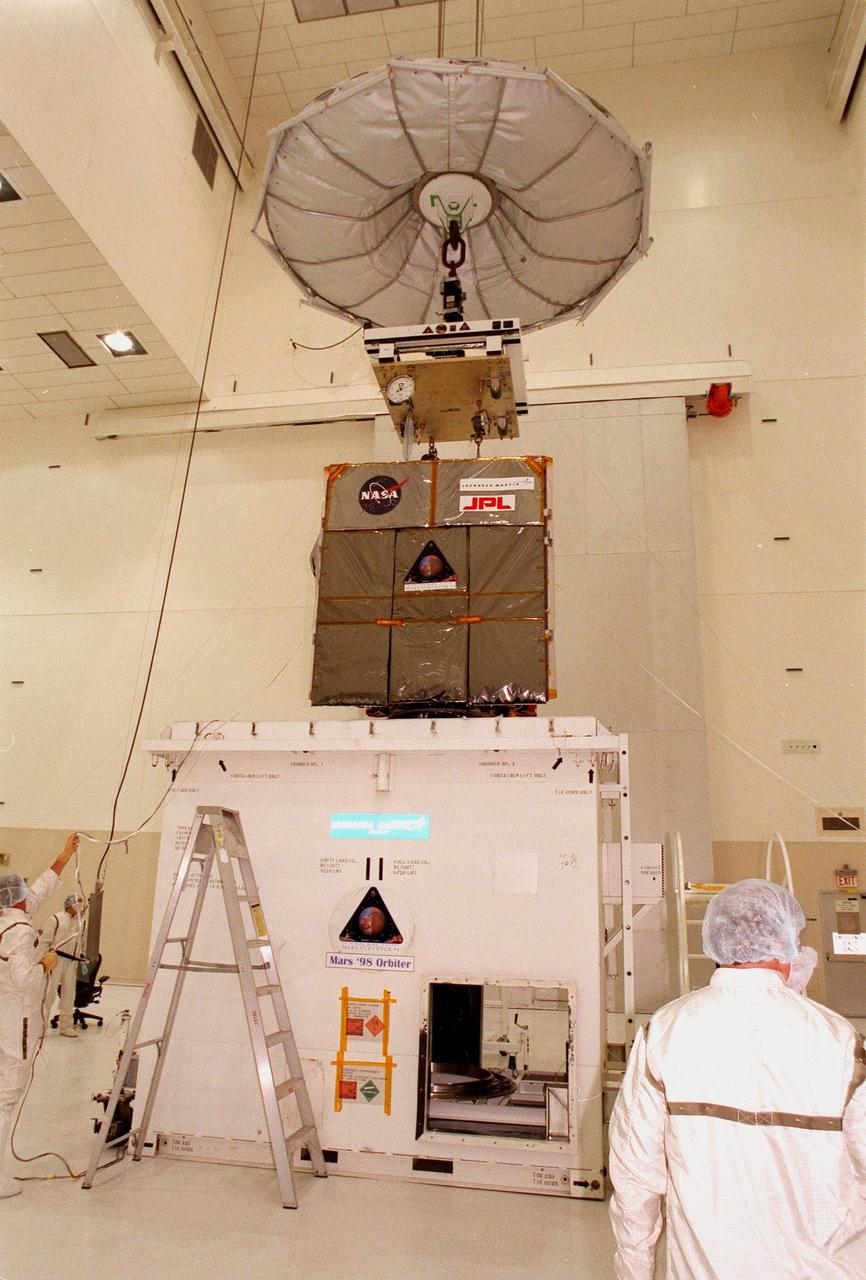
The Mars Climate Orbiter is lifted clear of the top of its container in the Spacecraft Assembly and Encapsulation Facility-2 (SAEF-2). The Mars Climate Orbiter is heading for Mars where it will primarily support its companion Mars Polar Lander spacecraft, planned for launch on Jan. 3, 1999. After that, the Mars Climate Orbiter's instruments will monitor the Martian atmosphere and image the planet's surface on a daily basis for one Martian year (two Earth years). It will observe the appearance and movement of atmospheric dust and water vapor, as well as characterize seasonal changes on the surface. The detailed images of the surface features will provide important clues to the planet's early climate history and give scientists more information about possible liquid water reserves beneath the surface. The scheduled launch date for the Mars Climate Orbiter is Dec. 10, 1998, on a Boeing Delta II 7425 rocket
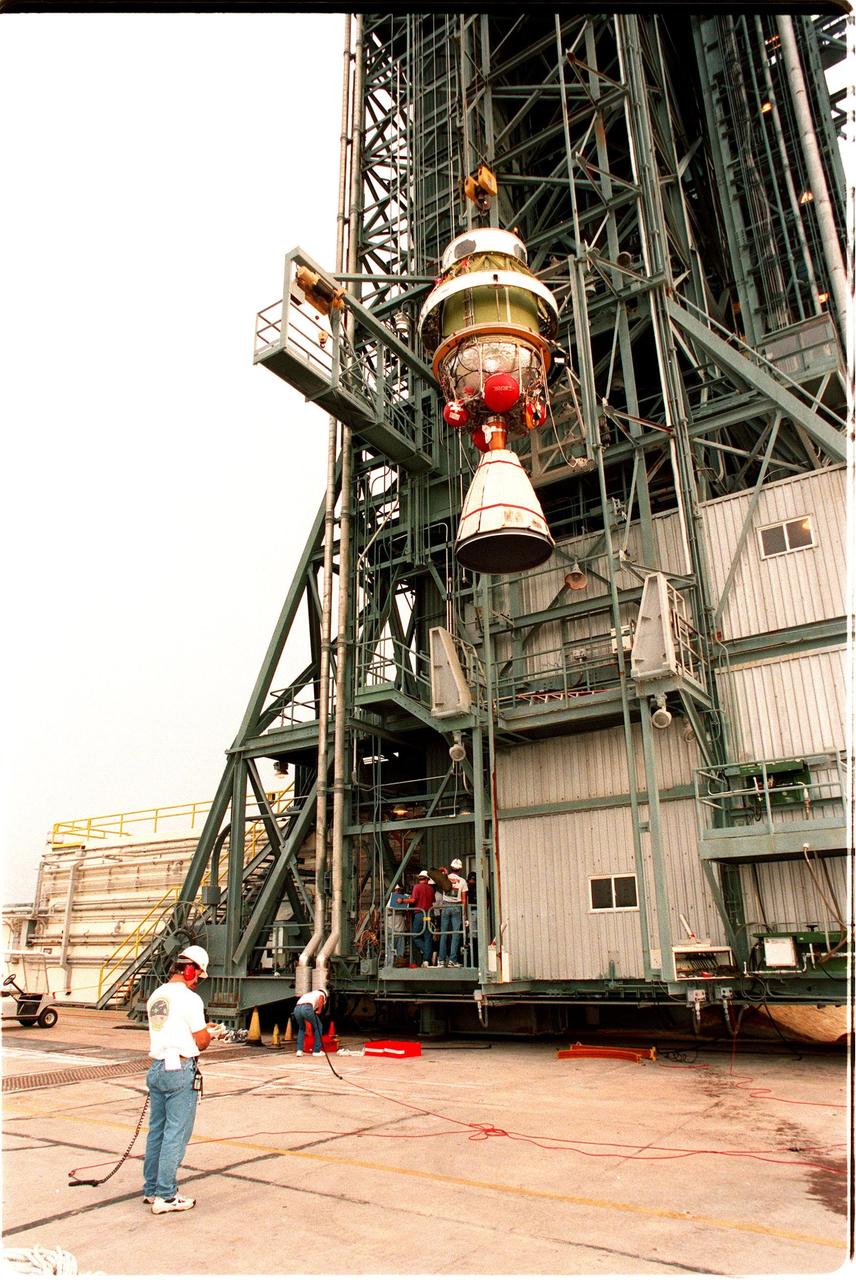
At pad 17A, Cape Canaveral Air Station, the second stage of a Delta II rocket is lifted up the gantry . The rocket is scheduled to be launched on Dec. 10, 1998, heading for Mars and carrying the Mars Climate Orbiter. The orbiter's instruments will monitor the Martian atmosphere and image the planet's surface on a daily basis for 657 days. It will observe the appearance and movement of atmospheric dust and water vapor, as well as characterize seasonal changes on the surface. The detailed images of the surface features will provide important clues to the planet's early climate history and give scientists more information about possible liquid water reserves beneath the surface. The orbiter will primarily support its companion Mars Polar Lander spacecraft, which is planned for launch on Jan. 3, 1999
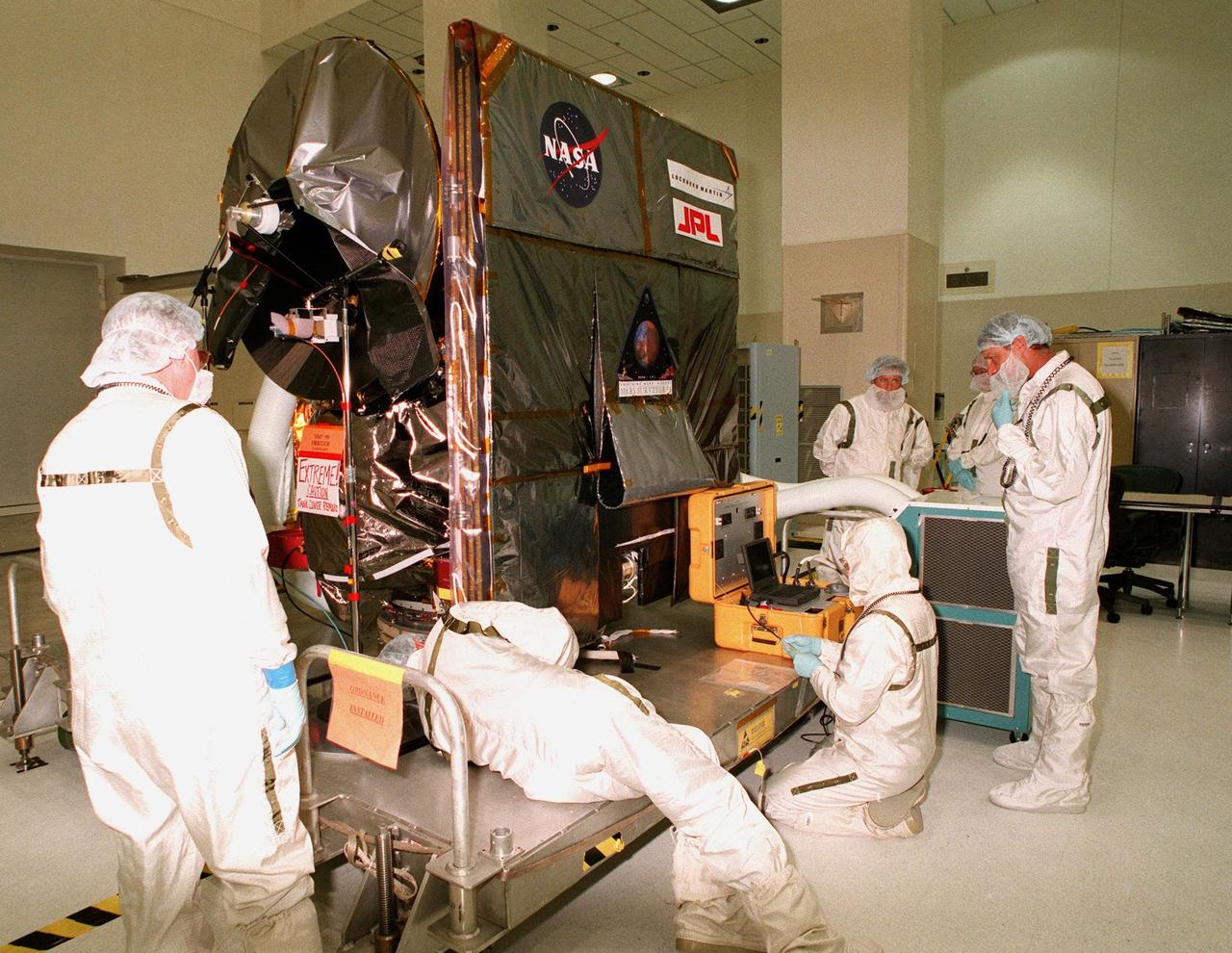
KENNEDY SPACE CENTER, FLA. -- In the Spacecraft Assembly and Encapsulation Facility-2 (SAEF-2), a technician works on the Mars Climate Orbiter which is scheduled to launch on Dec. 10, 1998, aboard a Boeing Delta II rocket. The Mars Climate Orbiter is heading for Mars where it will primarily support its companion Mars Polar Lander spacecraft, planned for launch on Jan. 3, 1999. After that, the Mars Climate Orbiter's instruments will monitor the Martian atmosphere and image the planet's surface on a daily basis for one Martian year (two Earth years). It will observe the appearance and movement of atmospheric dust and water vapor, as well as characterize seasonal changes on the surface. The detailed images of the surface features will provide important clues to the planet's early climate history and give scientists more information about possible liquid water reserves beneath the surface
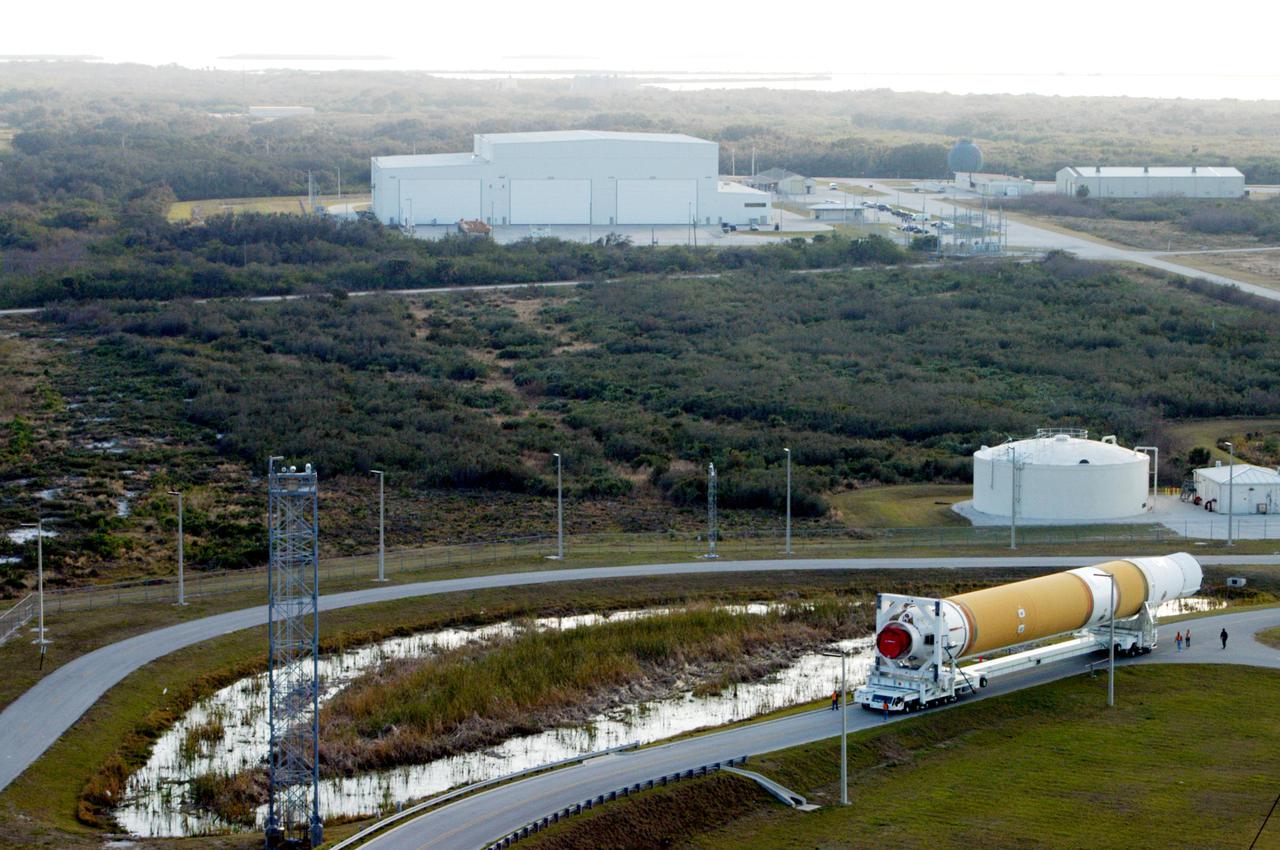
KENNEDY SPACE CENTER, FLA. - The first and second stages of the Boeing Delta IV rocket head for Launch Pad 37-B at Cape Canaveral Air Force Station after leaving the Horizontal Integration Facility, where the two stages were mated. The Delta IV is scheduled to launch the GOES-N satellite May 4. The satellite is the first of three for the National Oceanic and Atmospheric Administration that will provide continuous monitoring necessary for intensive data analysis. GOES-N will provide a constant vigil for the atmospheric “triggers” of severe weather conditions such as tornadoes, flash floods, hail storms and hurricanes. When these conditions develop, GOES-N will be able to monitor storm development and track their movements. NASA’s Goddard Space Flight Center is responsible for development of the satellite and testing of the spacecraft and its instruments.
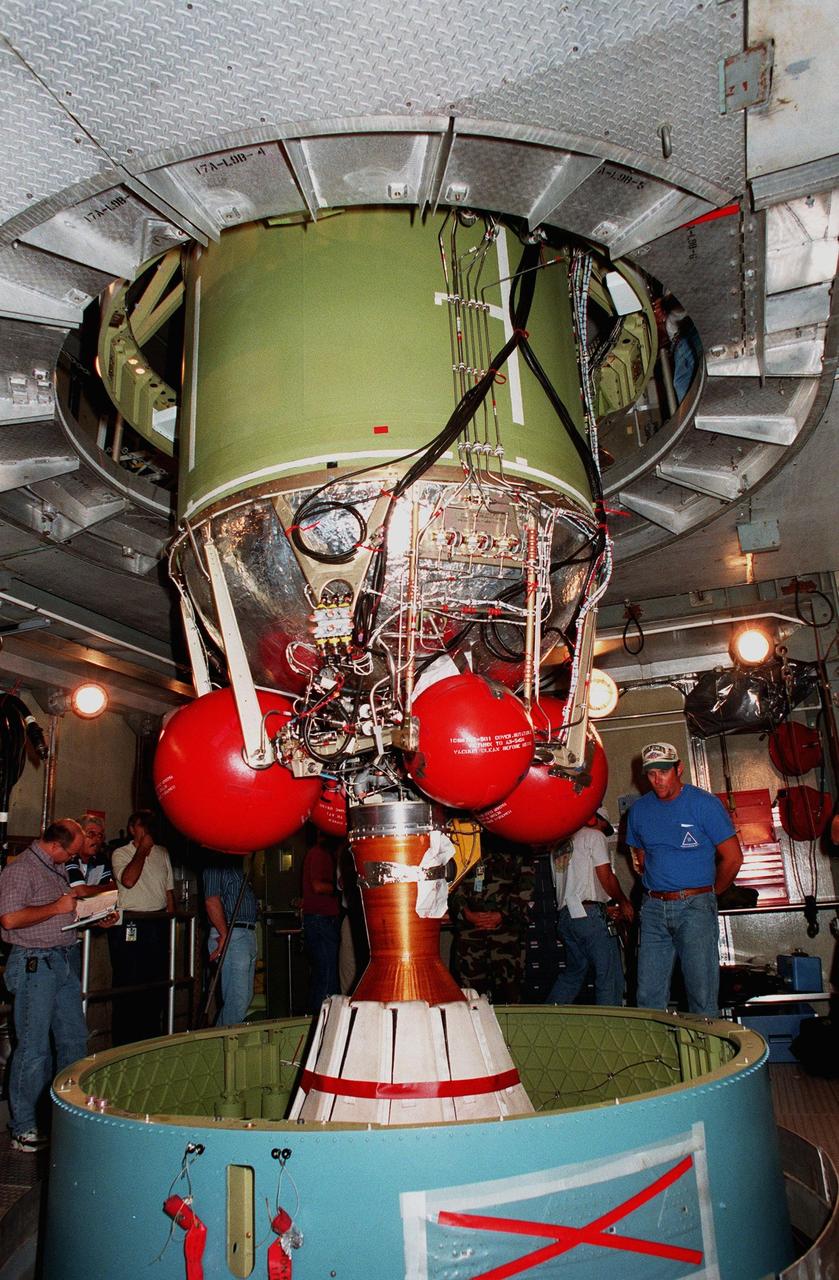
At pad 17A at Cape Canaveral Air Station, the second stage of a Delta II rocket is lowered into the first stage. The rocket is scheduled to be launched on Dec. 10, 1998, heading for Mars and carrying the Mars Climate Orbiter. The orbiter's instruments will monitor the Martian atmosphere and image the planet's surface on a daily basis for 657 days. It will observe the appearance and movement of atmospheric dust and water vapor, as well as characterize seasonal changes on the surface. The detailed images of the surface features will provide important clues to the planet's early climate history and give scientists more information about possible liquid water reserves beneath the surface. The orbiter will primarily support its companion Mars Polar Lander spacecraft, which is planned for launch on Jan. 3, 1999
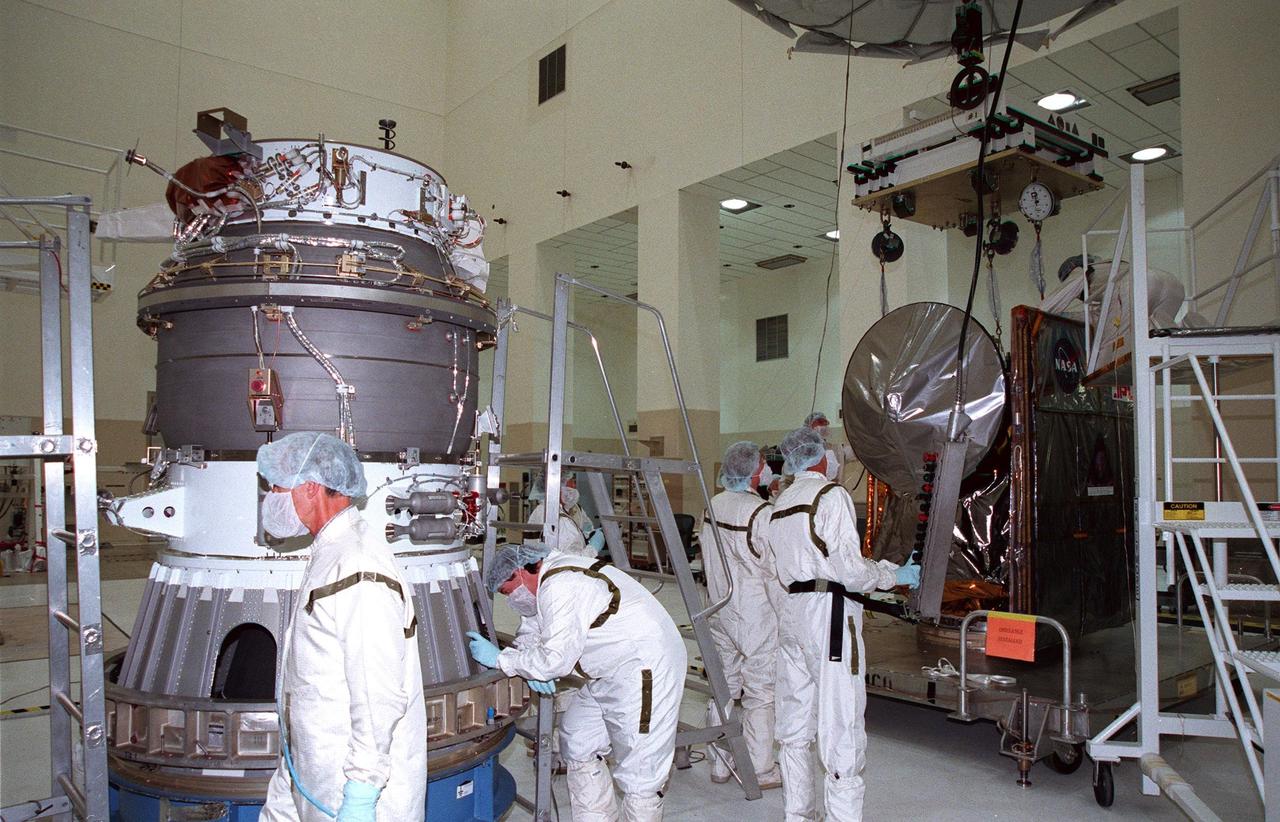
KENNEDY SPACE CENTER, FLA. -- In the Spacecraft Assembly and Encapsulation Facility -2 (SAEF-2), the third stage of the Boeing Delta II launch vehicle (left) waits for mating with the Mars Climate Orbiter (right). The third stage is a solid-propellant Thiokol Star 48B booster, the same final stage used in the 1996 launch of Mars Global Surveyor. Targeted for launch on Dec. 10, 1998, the orbiter is heading for Mars where it will primarily support its companion Mars Polar Lander spacecraft, which is planned for launch on Jan. 3, 1999. The orbiter's instruments will monitor the Martian atmosphere and image the planet's surface on a daily basis for 687 Earth days. It will observe the appearance and movement of atmospheric dust and water vapor, as well as characterize seasonal changes on the surface. The detailed images of the surface features will provide important clues to the planet's early climate history and give scientists more information about possible liquid water reserves beneath the surface
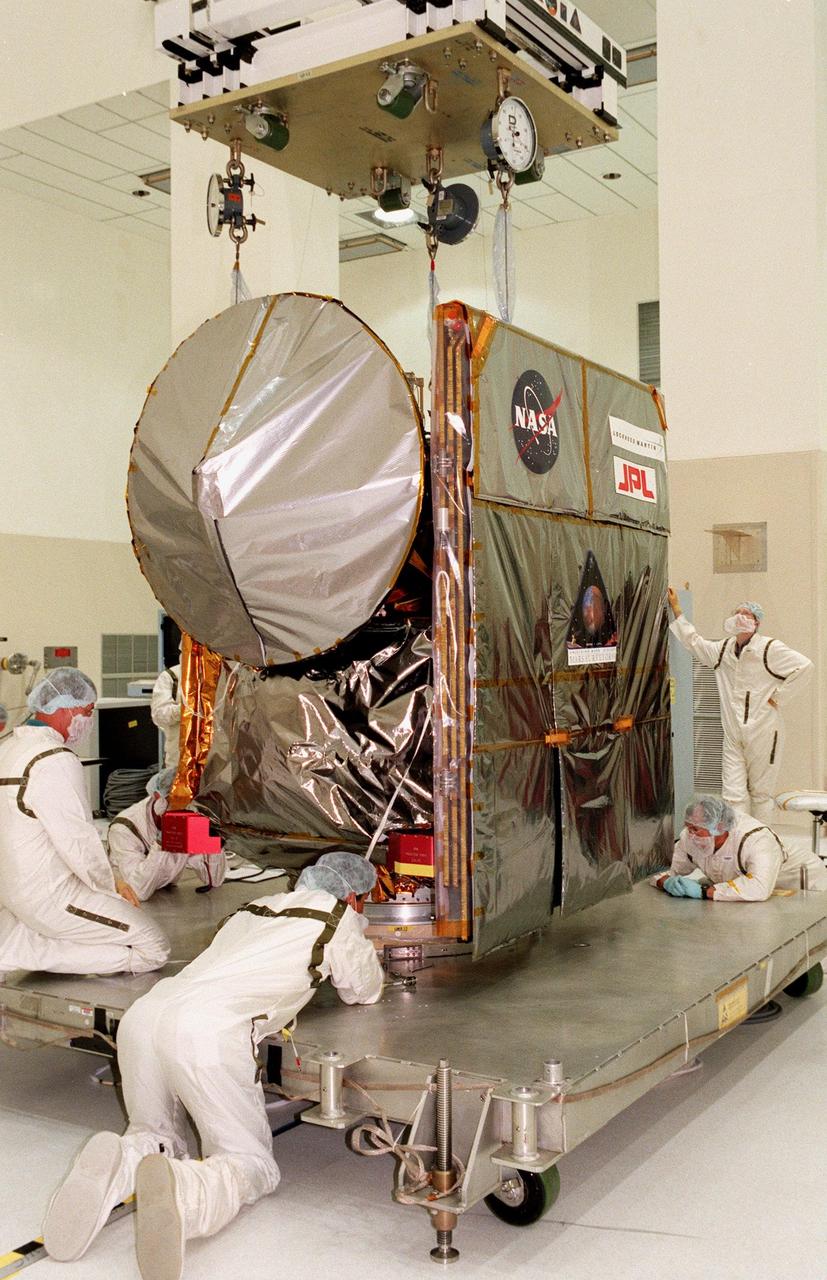
Technicians check the connections on the workstand holding the Mars Climate Orbiter in the Spacecraft Assembly and Encapsulation Facility-2 (SAEF-2). The Mars Climate Orbiter is heading for Mars where it will primarily support its companion Mars Polar Lander spacecraft, planned for launch on Jan. 3, 1999. After that, the Mars Climate Orbiter's instruments will monitor the Martian atmosphere and image the planet's surface on a daily basis for one Martian year (two Earth years). It will observe the appearance and movement of atmospheric dust and water vapor, as well as characterize seasonal changes on the surface. The detailed images of the surface features will provide important clues to the planet's early climate history and give scientists more information about possible liquid water reserves beneath the surface. The scheduled launch date for the Mars Climate Orbiter is Dec. 10, 1998, on a Boeing Delta II 7425 rocket
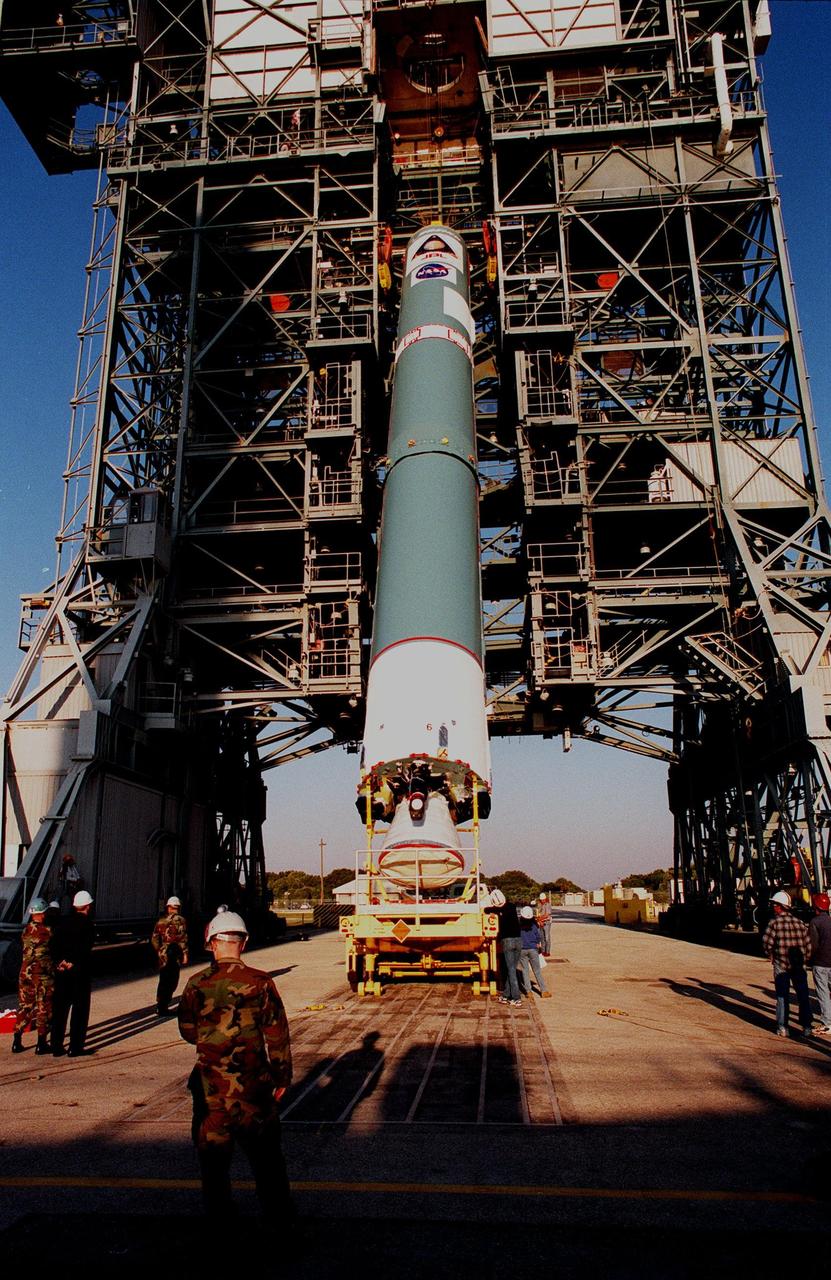
KENNEDY SPACE CENTER, FLA. -- On Pad 17A at Cape Canaveral Air Station, workers on the ground watch as cables lift a Delta II rocket into vertical position. Scheduled for launch on Dec. 10, 1998, the rocket is carrying the Mars Climate Orbiter. The orbiter is heading for Mars where it will primarily support its companion Mars Polar Lander spacecraft, which is planned for launch on Jan. 3, 1999. The orbiter's instruments will monitor the Martian atmosphere and image the planet's surface on a daily basis for one Martian year (1.8 Earth years). It will observe the appearance and movement of atmospheric dust and water vapor, as well as characterize seasonal changes on the surface. The detailed images of the surface features will provide important clues to the planet's early climate history and give scientists more information about possible liquid water reserves beneath the surface
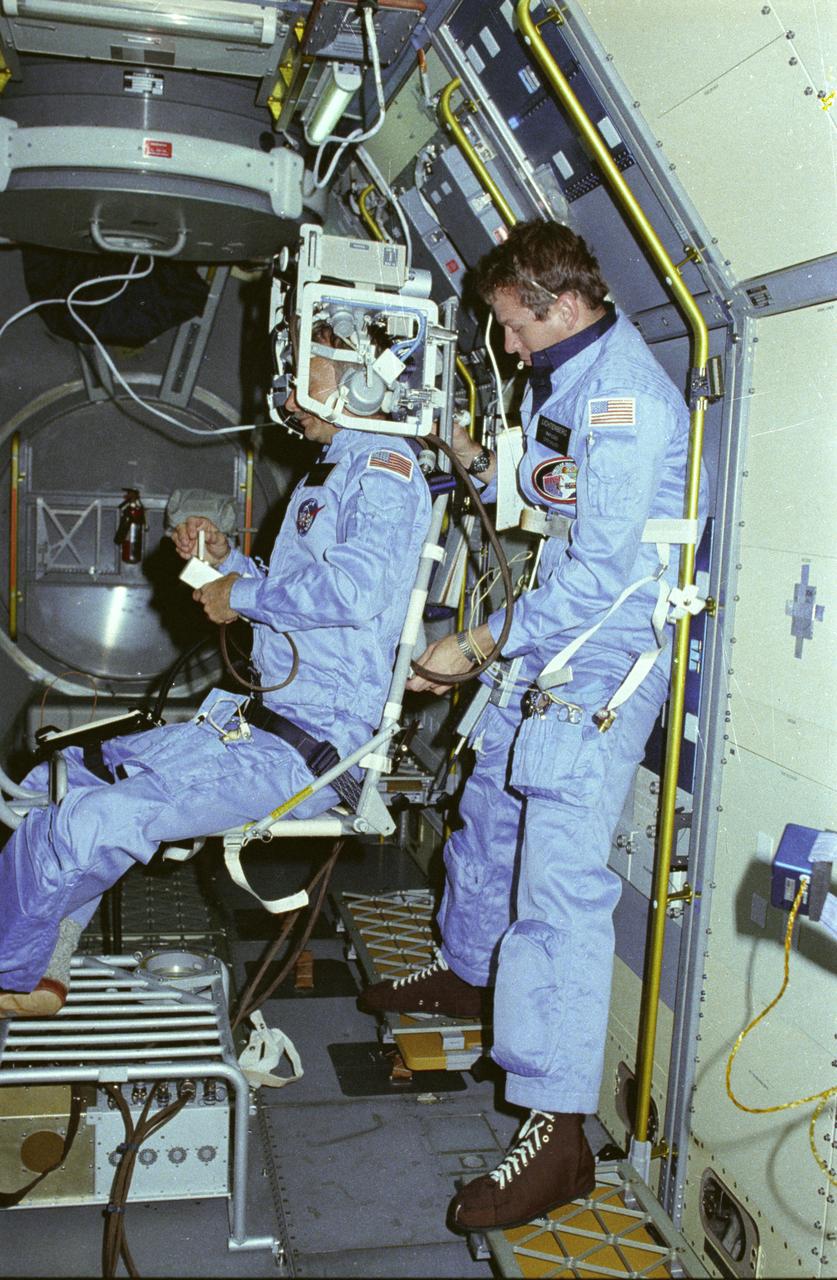
In this photograph, astronauts Owen Garriott on the body restriant system and Byron Lichtenberg prepare for a Vestibular Experiment during the Spacelab-1 mission. The Vestibular Experiments in Space were the study of the interaction among the otoliths, semicircular canals, vision, and spinal reflexes in humans. The main objective was to determine how the body, which receives redundant information for several sensory sources, interprets this information in microgravity. Another objective was to record and characterize the symptoms of space sickness experienced by crewmembers. The body restraint system was a rotating chair with a harness to hold the test subject in place. The crewmember wore an accelerometer and electrodes to record head motion and horizontal and vertical eye movement as the body rotated. The first Spacelab mission, Spacelab-1, sponsored jointly and shared equally by NASA and the European Space Agency, was a multidisciplinary mission; that is, investigations were performed in several different fields of scientific research. The overall goal of the mission was to verify Spacelab performance through a variety of scientific experiments. The Spacelab-1 was launched aboard the Space Shuttle Orbiter Columbia for the STS-9 mission on November 28, 1983. The Marshall Space Flight Center had management responsibilities for the mission.
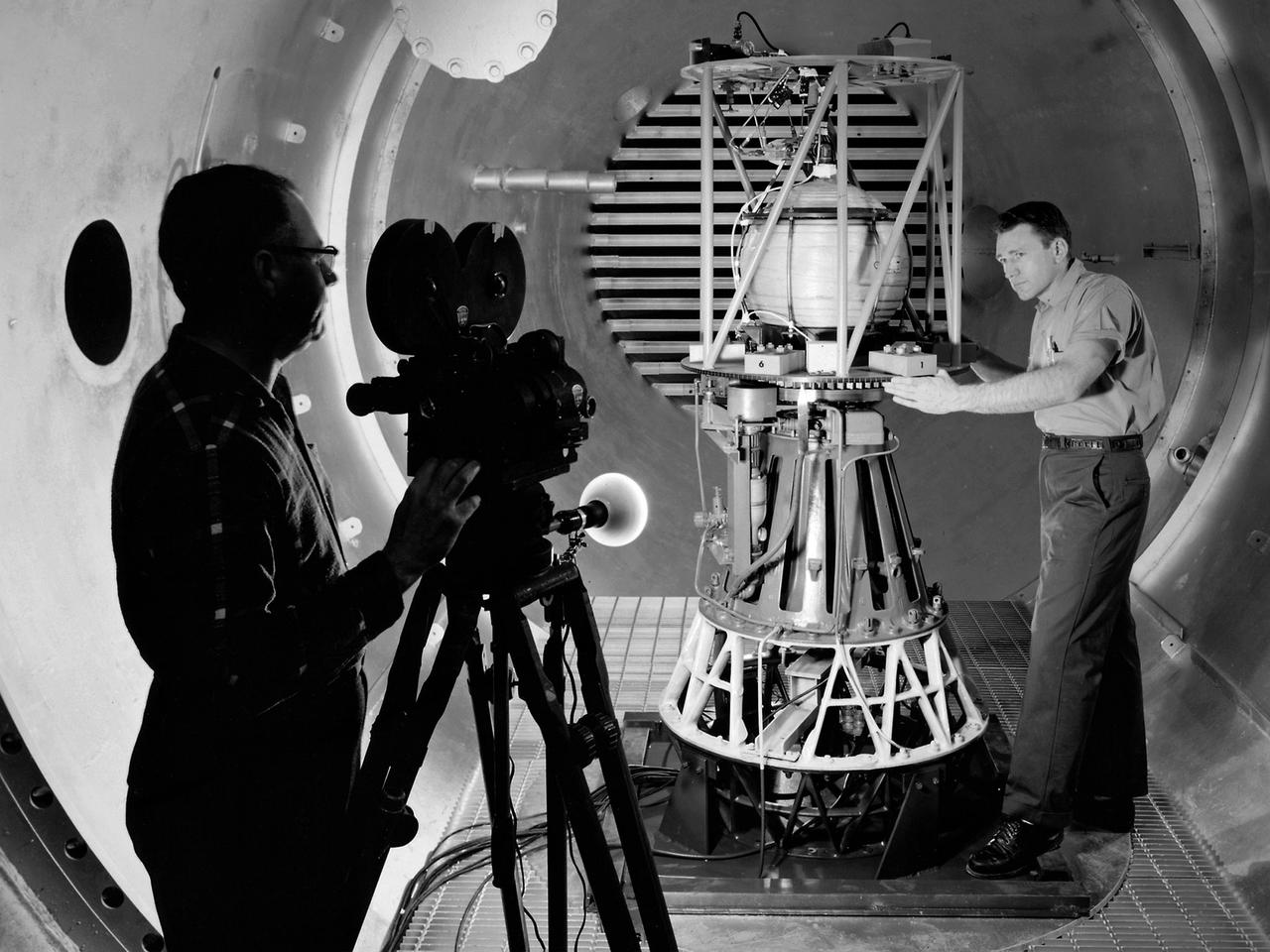
Mechanic Howard Wine inspects the setup of a spin isolator in Cell 2 of the Propulsion Systems Laboratory at the National Aeronautics and Space Administration (NASA) Lewis Research Center. Photographer Al Jecko filmed the proceedings. This test was unique in that the chamber’s altitude system was used, but not its inlet air flow. The test was in preparation for an upcoming launch of modified liquid hydrogen propellant tank on a sounding rocket. This Weightlessness Analysis Sounding Probe (WASP) was part of Lewis investigation into methods for controlling partially filled liquid hydrogen fuel tanks during flight. Second-stage rockets, the Centaur in particular, were designed to stop their engines and coast, then restart them when needed. During this coast period, the propellant often shifted inside the tank. This movement could throw the rocket off course or result in the sloshing of fuel away from the fuel pump. Wine was one of only three journeymen mechanics at Lewis when he was hired in January 1954. He spent his first decade in the Propulsion Systems Laboratory and was soon named a section head. Wine went on to serve as Assistant Division Chief and later served as an assistant to the director. Jecko joined the center in 1947 as a photographer and artist. He studied at the Cleveland School or Art and was known for his cartoon drawing. He worked at the center for 26 years.
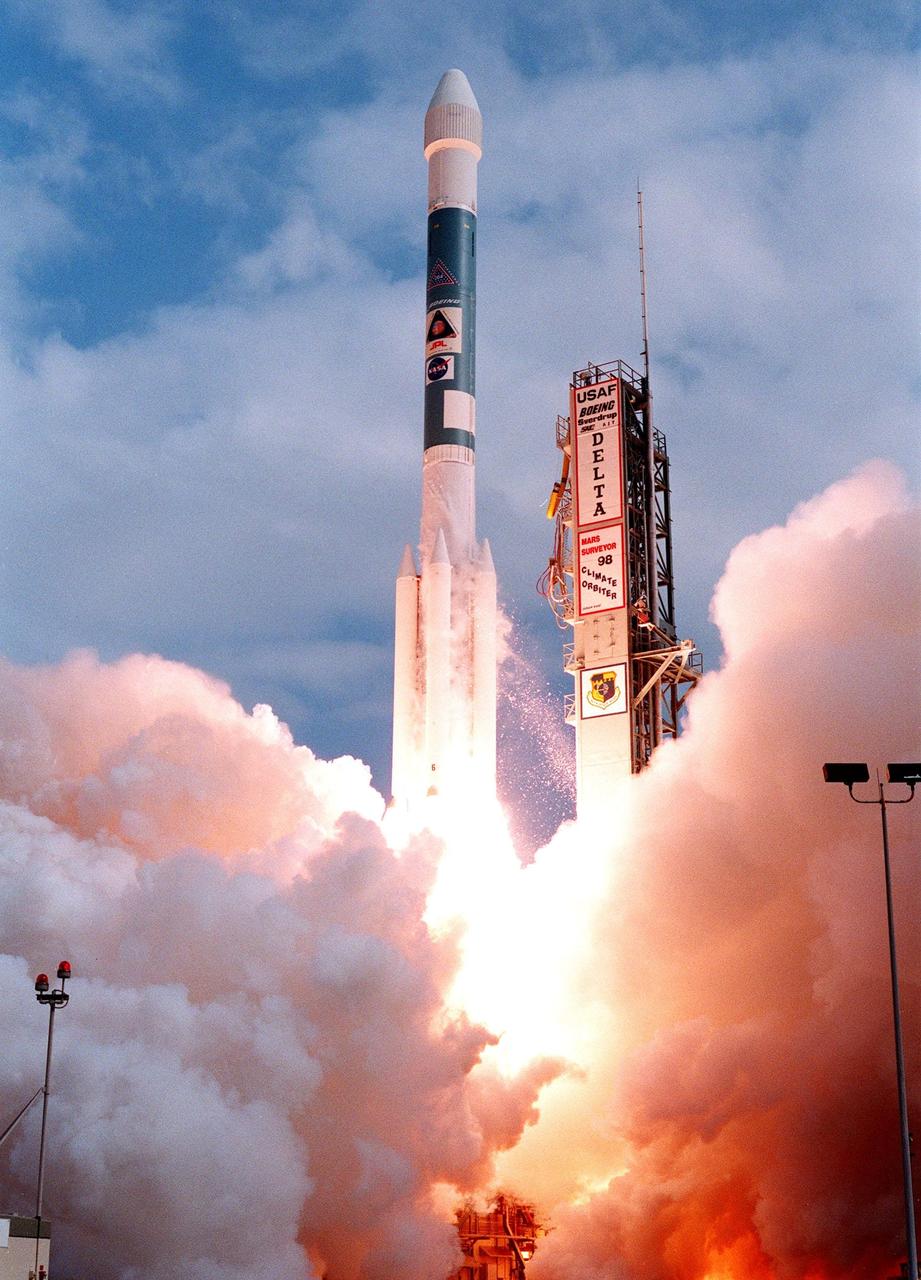
KENNEDY SPACE CENTER, FLA. -- A Boeing Delta II expendable launch vehicle lifts off with NASA's Mars Climate Orbiter at 1:45:51 p.m. EST, on Dec. 11, 1998, from Launch Complex 17A, Cape Canaveral Air Station. The launch was delayed one day when personnel detected a battery-related software problem in the spacecraft. The problem was corrected and the launch was rescheduled for the next day. The first of a pair of spacecraft to be launched in the Mars Surveyor '98 Project, the orbiter is heading for Mars where it will first provide support to its companion Mars Polar Lander spacecraft, which is planned for launch on Jan. 3, 1999. The orbiter's instruments will then monitor the Martian atmosphere and image the planet's surface on a daily basis for one Martian year (1.8 Earth years). It will observe the appearance and movement of atmospheric dust and water vapor, as well as characterize seasonal changes on the surface. The detailed images of the surface features will provide important clues to the planet's early climate history and give scientists more information about possible liquid water reserves beneath the surface
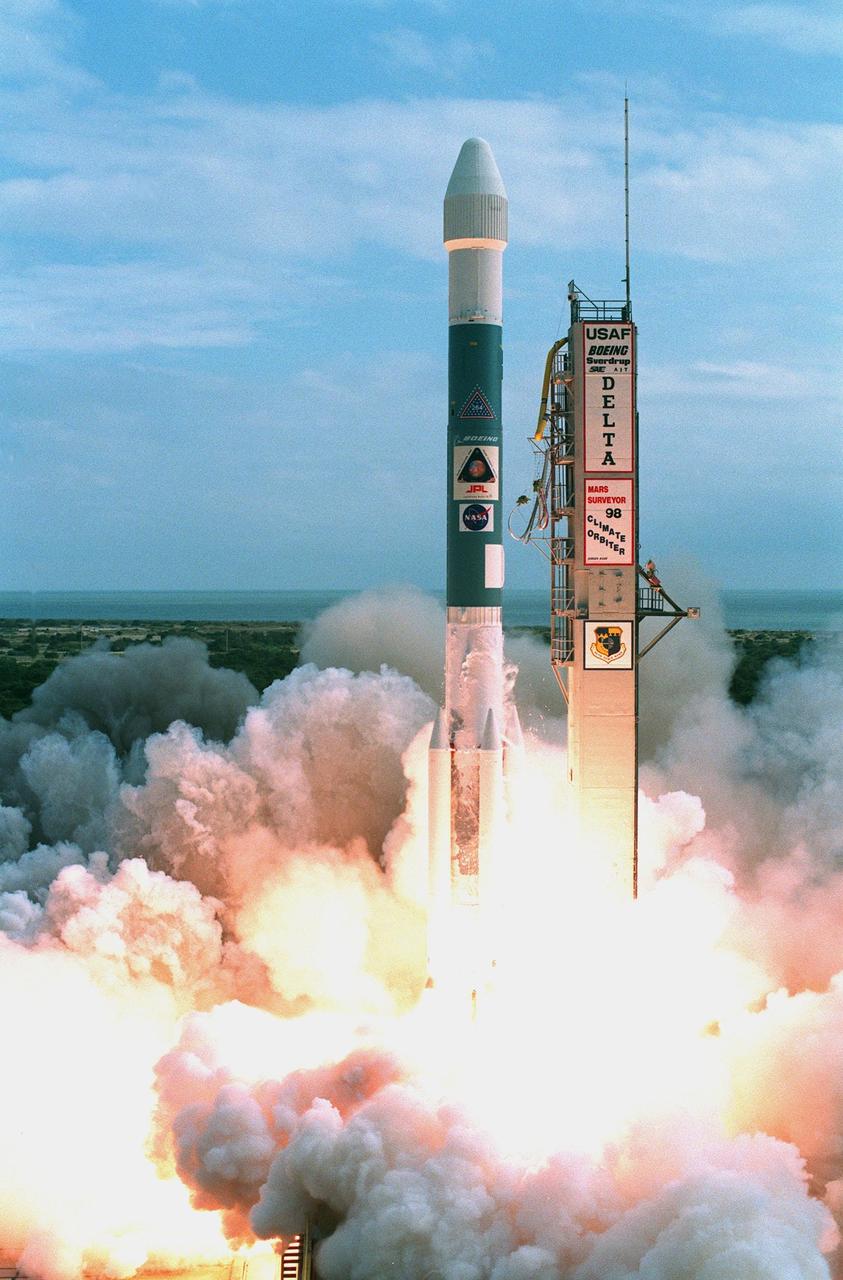
KENNEDY SPACE CENTER, FLA. -- A Boeing Delta II expendable launch vehicle lifts off with NASA's Mars Climate Orbiter at 1:45:51 p.m. EST, on Dec. 11, 1998, from Launch Complex 17A, Cape Canaveral Air Station. The launch was delayed one day when personnel detected a battery-related software problem in the spacecraft. The problem was corrected and the launch was rescheduled for the next day. The first of a pair of spacecraft to be launched in the Mars Surveyor '98 Project, the orbiter is heading for Mars where it will first provide support to its companion Mars Polar Lander spacecraft, which is planned for launch on Jan. 3, 1999. The orbiter's instruments will then monitor the Martian atmosphere and image the planet's surface on a daily basis for one Martian year (1.8 Earth years). It will observe the appearance and movement of atmospheric dust and water vapor, as well as characterize seasonal changes on the surface. The detailed images of the surface features will provide important clues to the planet's early climate history and give scientists more information about possible liquid water reserves beneath the surface
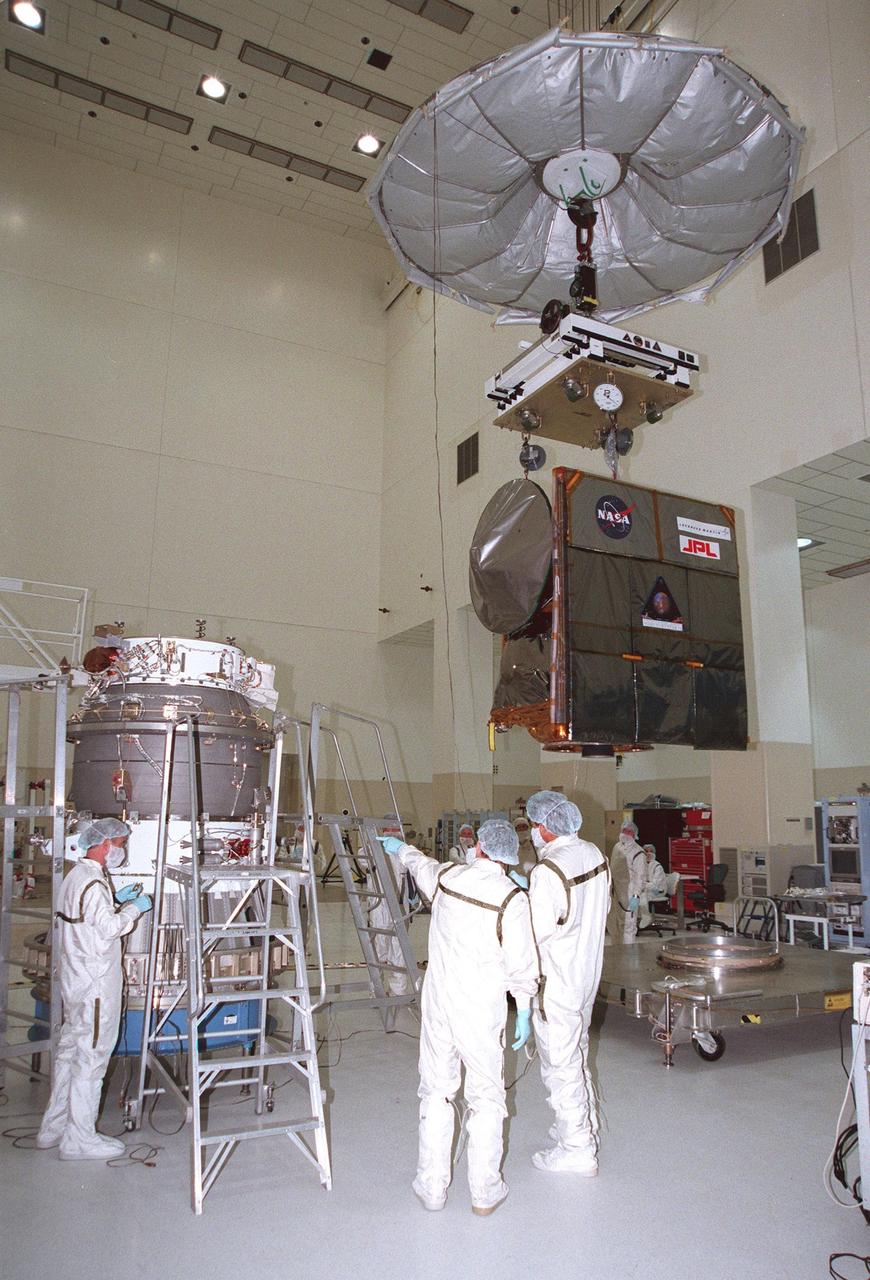
KENNEDY SPACE CENTER, FLA. -- In the Spacecraft Assembly and Encapsulation Facility -2 (SAEF-2), the Mars Climate Orbiter (right) is lifted to move it for mating to the third stage of the Boeing Delta II launch vehicle waiting at left. The third stage is a solid-propellant Thiokol Star 48B booster, the same final stage used in the 1996 launch of Mars Global Surveyor. Targeted for launch on Dec. 10, 1998, the orbiter is heading for Mars where it will primarily support its companion Mars Polar Lander spacecraft, which is planned for launch on Jan. 3, 1999. The orbiter's instruments will monitor the Martian atmosphere and image the planet's surface on a daily basis for 687 Earth days. It will observe the appearance and movement of atmospheric dust and water vapor, as well as characterize seasonal changes on the surface. The detailed images of the surface features will provide important clues to the planet's early climate history and give scientists more information about possible liquid water reserves beneath the surface. <BR>; <BR>; <BR> <BR> <BR> <CENTER
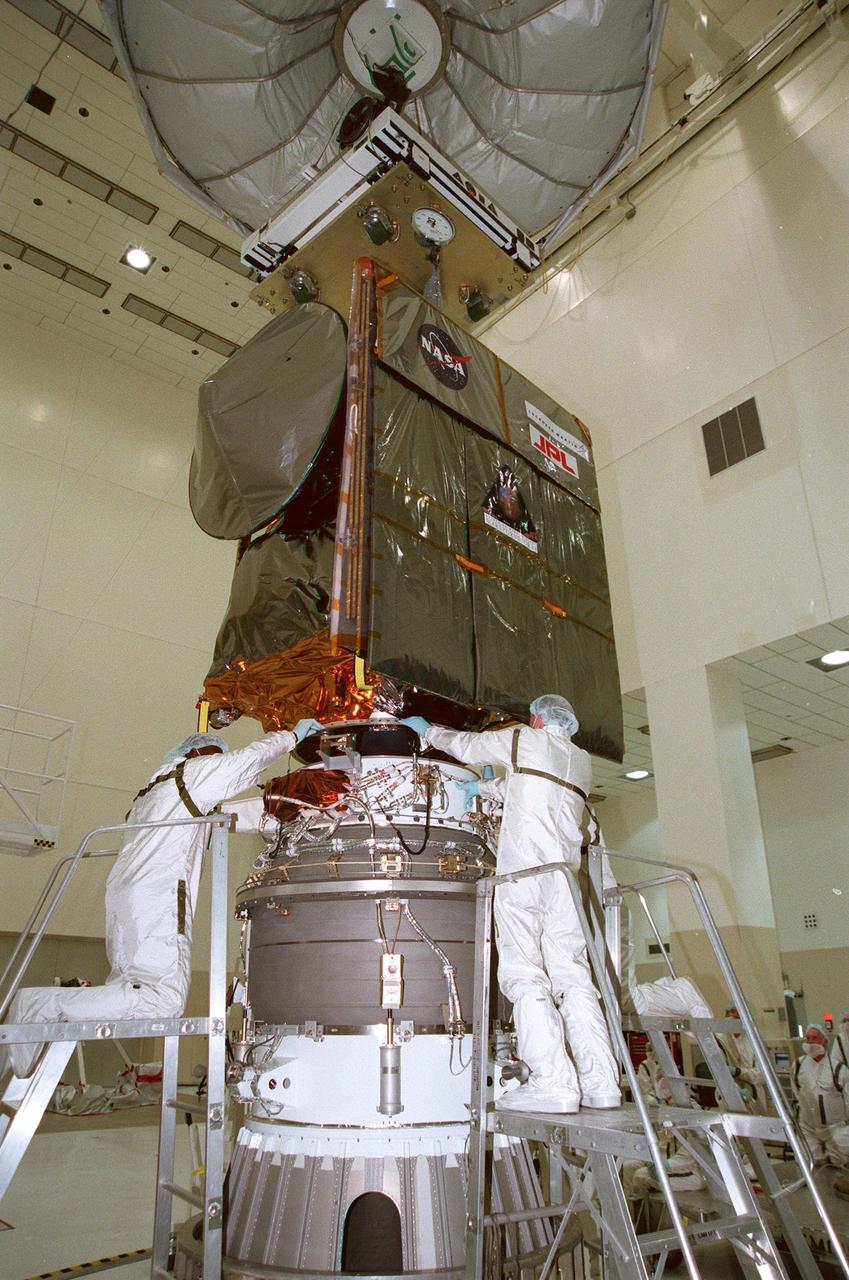
KENNEDY SPACE CENTER, FLA. -- In the Spacecraft Assembly and Encapsulation Facility -2 (SAEF-2), workers check on the fitting between the Mars Climate Orbiter (above) and the third stage of the Boeing Delta II launch vehicle (below). The third stage is a solid-propellant Thiokol Star 48B booster, the same final stage used in the 1996 launch of Mars Global Surveyor. Targeted for launch on Dec. 10, 1998, the orbiter is heading for Mars where it will primarily support its companion Mars Polar Lander spacecraft, which is planned for launch on Jan. 3, 1999. The orbiter's instruments will monitor the Martian atmosphere and image the planet's surface on a daily basis for 687 Earth days. It will observe the appearance and movement of atmospheric dust and water vapor, as well as characterize seasonal changes on the surface. The detailed images of the surface features will provide important clues to the planet's early climate history and give scientists more information about possible liquid water reserves beneath the surface

KENNEDY SPACE CENTER, FLA. -- After launch tower retraction, the Boeing Delta II rocket carrying NASA's Mars Climate Orbiter undergoes final preparations for liftoff on Dec. 11, 1998, at Launch Complex 17A, Cape Canaveral Air Station. The launch was delayed one day when personnel detected a battery-related software problem in the spacecraft. The problem was corrected and the launch was rescheduled for the next day. The first of a pair of spacecraft in the Mars Surveyor '98 Project, the orbiter is heading for Mars where it will first provide support to its companion Mars Polar Lander spacecraft, which is planned for launch on Jan. 3, 1999. The orbiter's instruments will then monitor the Martian atmosphere and image the planet's surface on a daily basis for one Martian year (1.8 Earth years). It will observe the appearance and movement of atmospheric dust and water vapor, as well as characterize seasonal changes on the surface. The detailed images of the surface features will provide important clues to the planet's early climate history and give scientists more information about possible liquid water reserves beneath the surface

A Boeing Delta II expendable launch vehicle lifts off with NASA's Mars Climate Orbiter at 1:45:51 p.m. EST, on Dec. 11, 1998, from Launch Complex 17A, Cape Canaveral Air Station. The launch was delayed one day when personnel detected a battery-related software problem in the spacecraft. The problem was corrected and the launch was rescheduled for the next day. The first of a pair of spacecraft to be launched in the Mars Surveyor '98 Project, the orbiter is heading for Mars where it will first provide support to its companion Mars Polar Lander spacecraft, which is planned for launch on Jan. 3, 1999. The orbiter's instruments will then monitor the Martian atmosphere and image the planet's surface on a daily basis for one Martian year (1.8 Earth years). It will observe the appearance and movement of atmospheric dust and water vapor, as well as characterize seasonal changes on the surface. The detailed images of the surface features will provide important clues to the planet's early climate history and give scientists more information about possible liquid water reserves beneath the surface
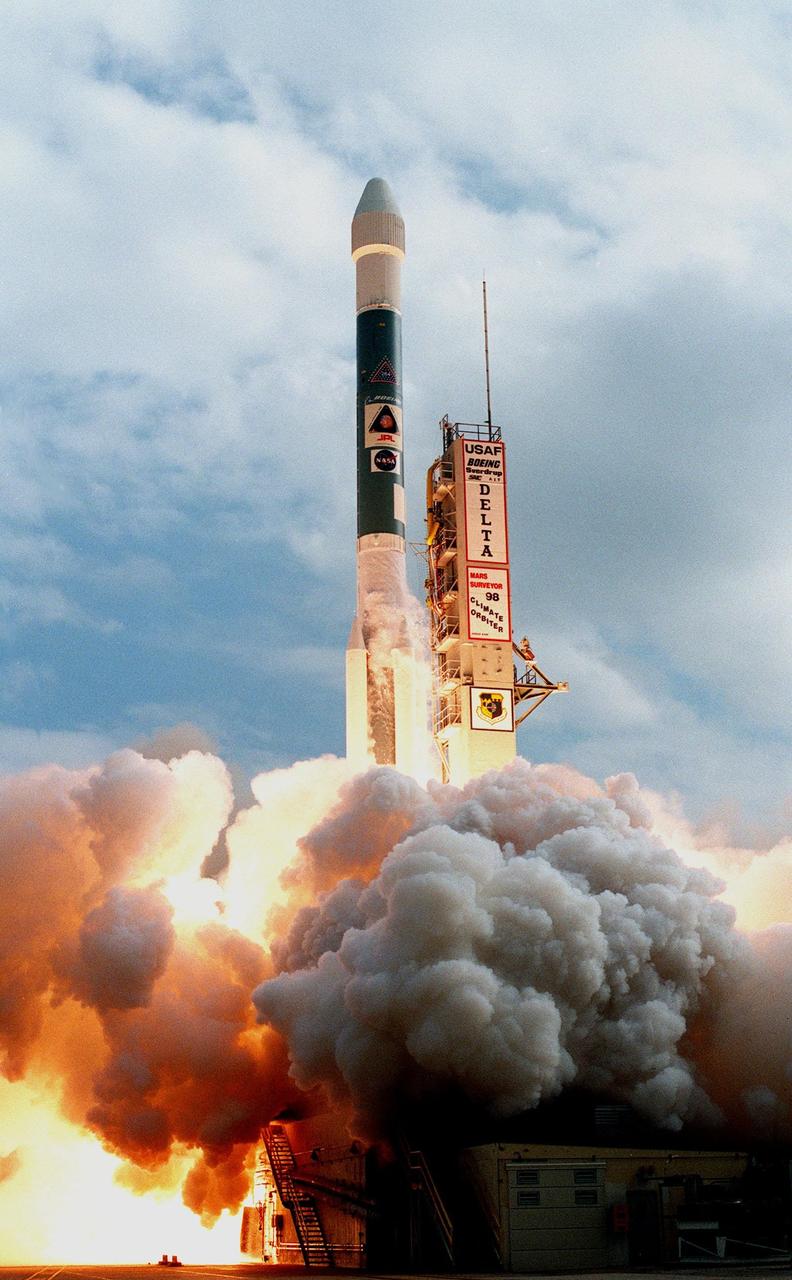
KENNEDY SPACE CENTER, FLA. -- A Boeing Delta II expendable launch vehicle lifts off with NASA's Mars Climate Orbiter at 1:45:51 p.m. EST, on Dec. 11, 1998, from Launch Complex 17A, Cape Canaveral Air Station. The launch was delayed one day when personnel detected a battery-related software problem in the spacecraft. The problem was corrected and the launch was rescheduled for the next day. The first of a pair of spacecraft to be launched in the Mars Surveyor '98 Project, the orbiter is heading for Mars where it will first provide support to its companion Mars Polar Lander spacecraft, which is planned for launch on Jan. 3, 1999. The orbiter's instruments will then monitor the Martian atmosphere and image the planet's surface on a daily basis for one Martian year (1.8 Earth years). It will observe the appearance and movement of atmospheric dust and water vapor, as well as characterize seasonal changes on the surface. The detailed images of the surface features will provide important clues to the planet's early climate history and give scientists more information about possible liquid water reserves beneath the surface
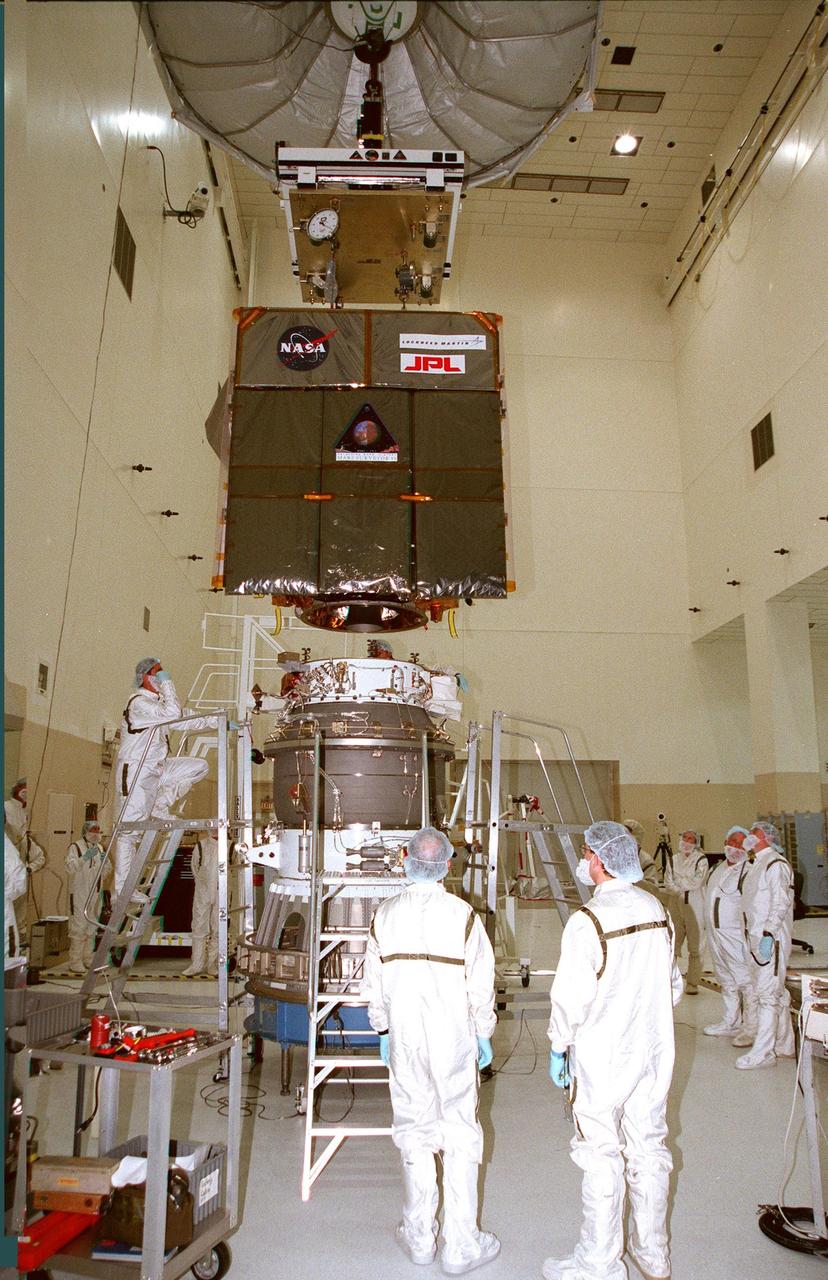
KENNEDY SPACE CENTER, FLA. -- In the Spacecraft Assembly and Encapsulation Facility -2 (SAEF-2), the Mars Climate Orbiter (top) is lowered toward the third stage of the Boeing Delta II launch vehicle below it, to which it will be attached. The third stage is a solid-propellant Thiokol Star 48B booster, the same final stage used in the 1996 launch of Mars Global Surveyor. Targeted for launch on Dec. 10, 1998, the orbiter is heading for Mars where it will primarily support its companion Mars Polar Lander spacecraft, which is planned for launch on Jan. 3, 1999. The orbiter's instruments will monitor the Martian atmosphere and image the planet's surface on a daily basis for 687 Earth days. It will observe the appearance and movement of atmospheric dust and water vapor, as well as characterize seasonal changes on the surface. The detailed images of the surface features will provide important clues to the planet's early climate history and give scientists more information about possible liquid water reserves beneath the surface