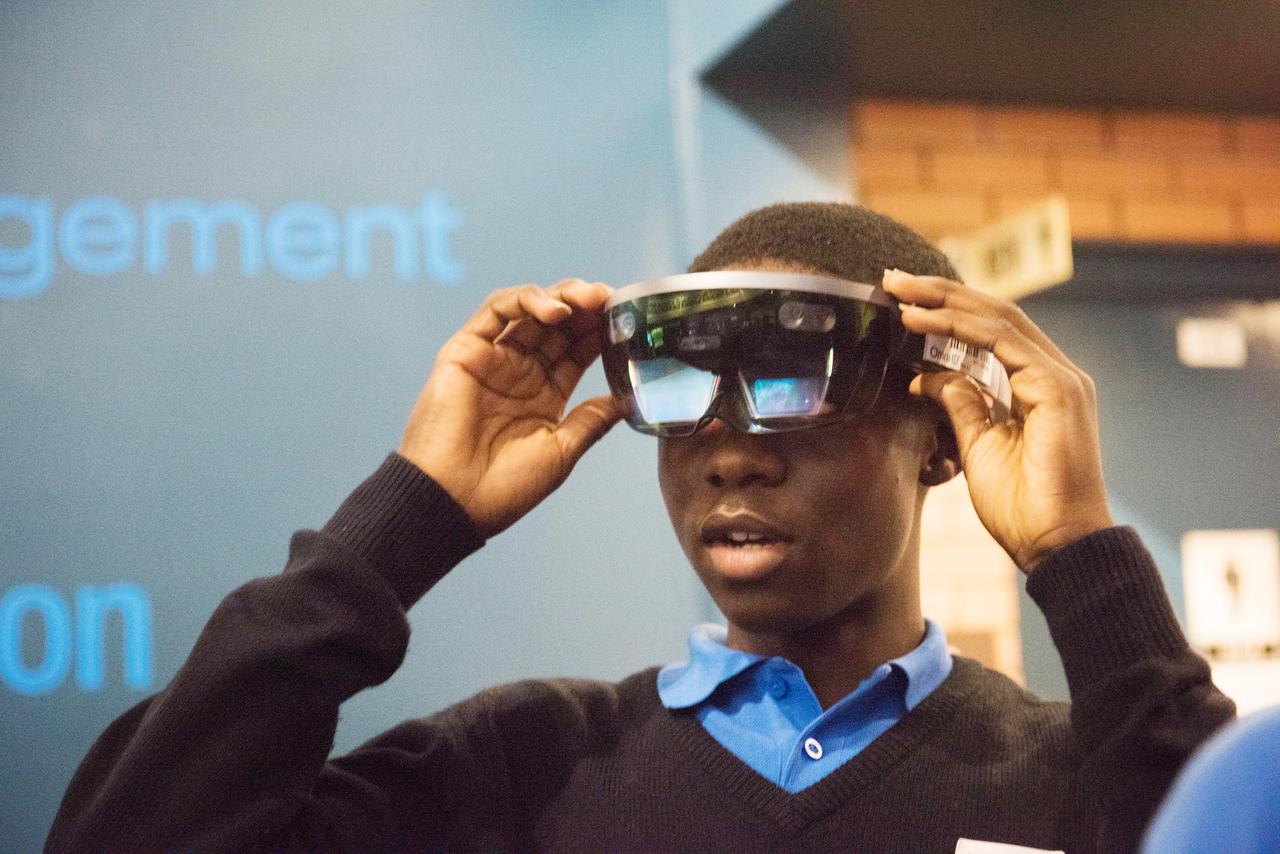
During Avaiation Day, 2018, a Participant uses a Microsoft HoloLens Virtual Reality Headset to view a NASA Created Immersive Visualization
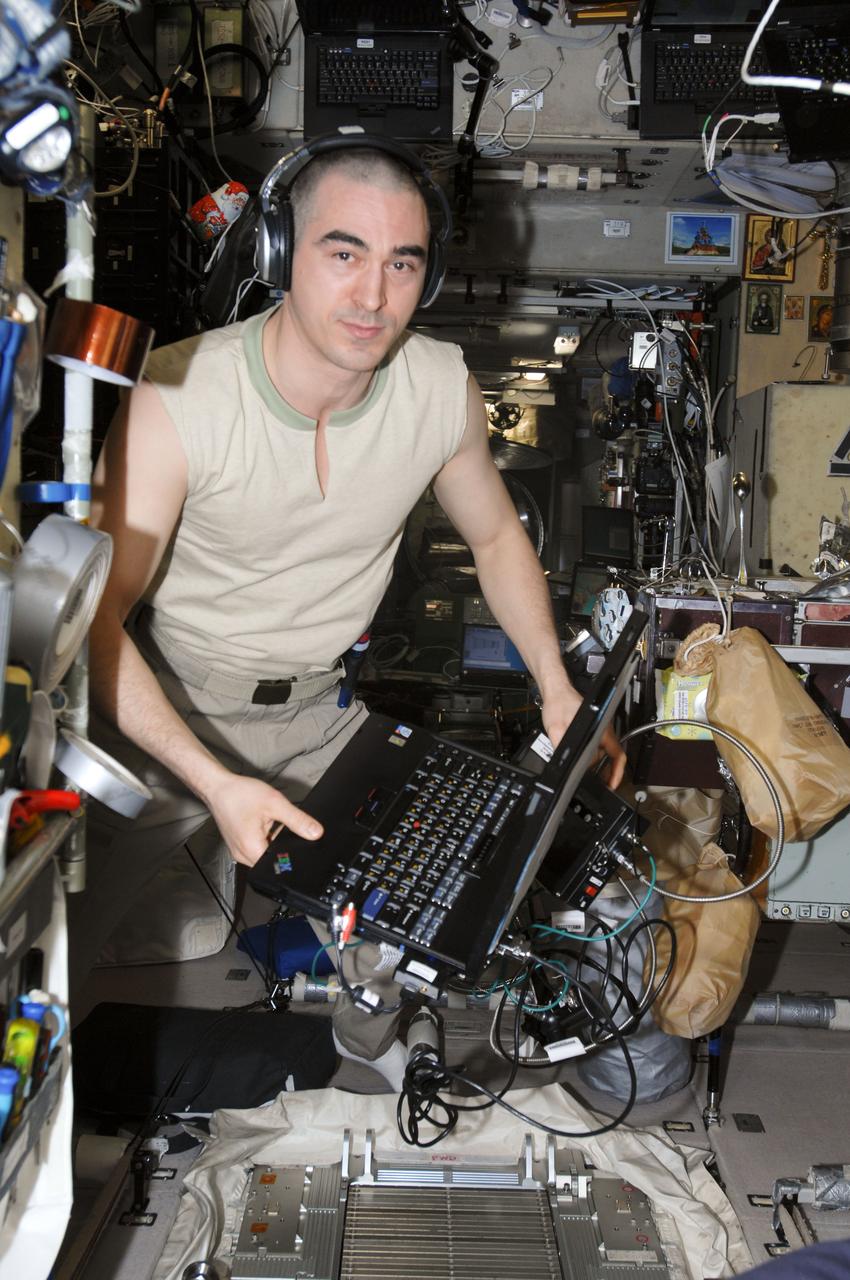
ISS030-E-021036 (5 Jan. 2012) --- Russian cosmonaut Anatoly Ivanishin, Expedition 30 flight engineer, wears a communication system headset while using a computer in the Zvezda Service Module of the International Space Station.
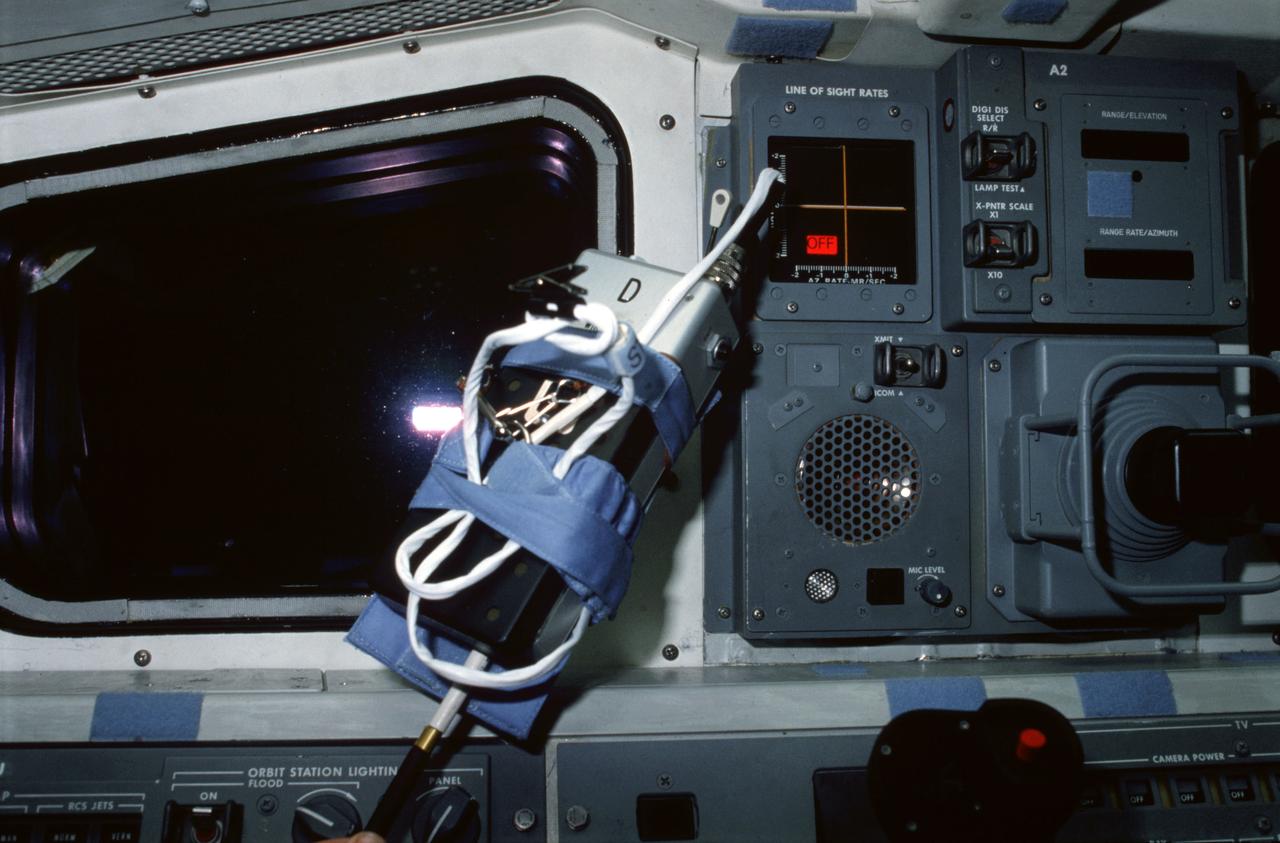
STS008-18-479 (5 Sept 1983) --- Aft flight deck documentation includes on orbit station with control panel A2, aft viewing window W9, and communications kit assembly (ASSY) headset (HDST) interface unit (HIU) and cable free floating in front of it.

iss072e422426 (Dec. 27, 2024) --- NASA astronaut and Expedition 72 Commander Suni Williams wears a virtual reality headset and practices emergency maneuvers a spacewalker would use in the unlikely event they became untethered from the International Space Station. During spacewalks astronauts wear U.S. spacesuits with a jetpack installed called a SAFER, or Simplified Aid for EVA (Extra Vehicular Activity) Rescue, that contains a controller and thrusters used to guide a crew member back to the safety of the orbital outpost.
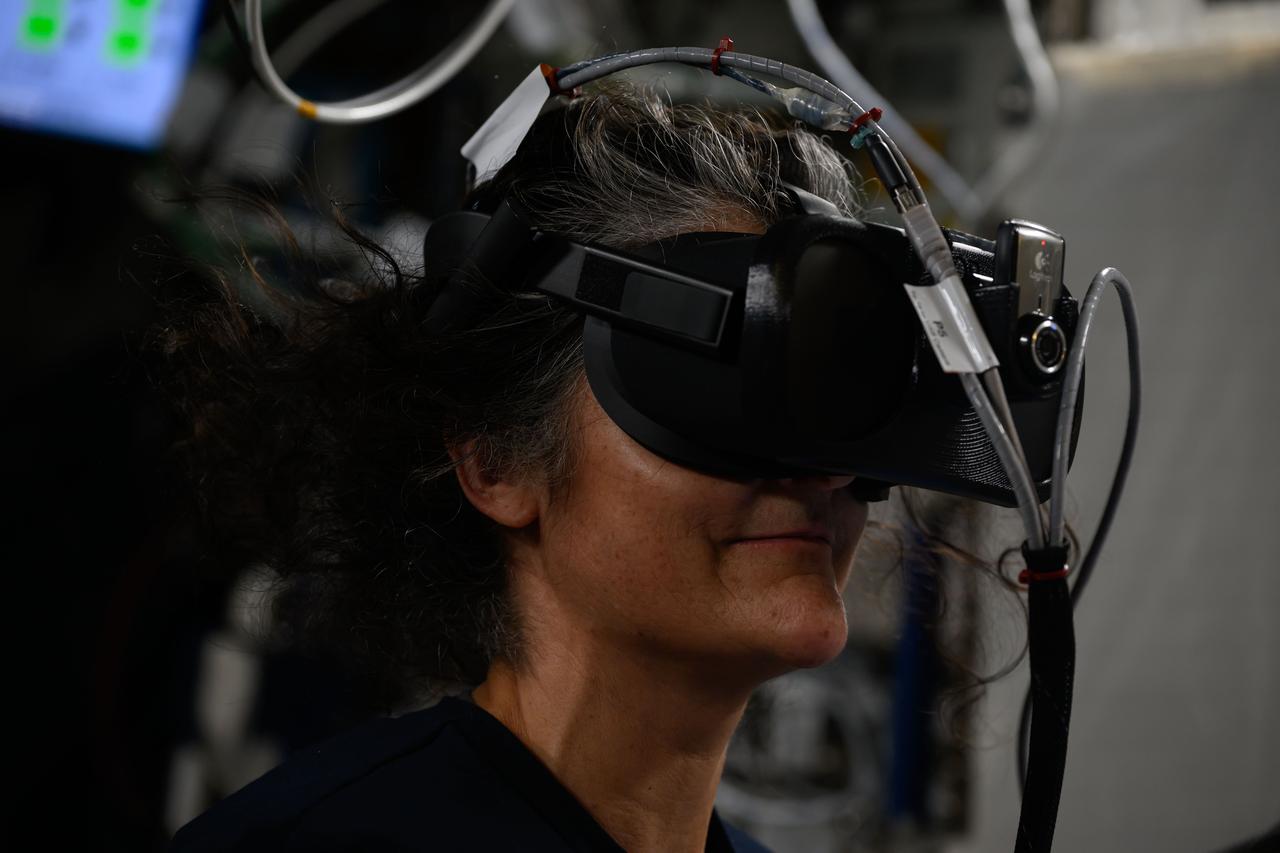
iss072e422431 (Dec. 27, 2024) --- NASA astronaut and Expedition 72 Commander Suni Williams wears a virtual reality headset and practices emergency maneuvers a spacewalker would use in the unlikely event they became untethered from the International Space Station. During spacewalks astronauts wear U.S. spacesuits with a jetpack installed called a SAFER, or Simplified Aid for EVA (Extra Vehicular Activity) Rescue, that contains a controller and thrusters used to guide a crew member back to the safety of the orbital outpost.
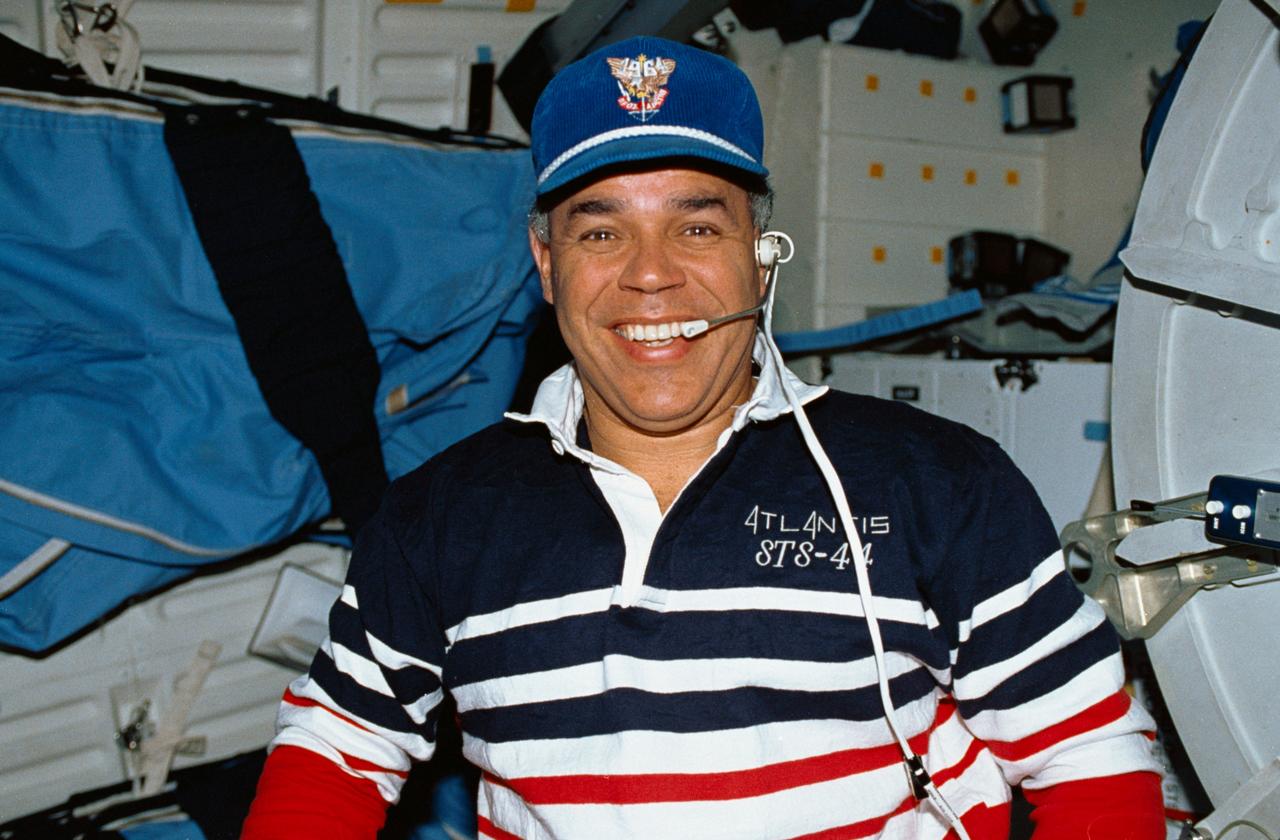
STS044-32-030 (24 Nov-1 Dec 1991) --- STS-44 Commander Frederick D. Gregory wears a cap honoring his alma mater, the United States Air Force (USAF) Academy, on the middeck of Atlantis, Orbiter Vehicle (OV) 104. Gregory, who also has his lightweight headset on, was photographed while talking to ground controllers.

STS-36 Commander John O. Creighton, smiling and wearing a headset, listens to music as the tape recorder freefloats in front of him. During this lighter moment of the mission, Creighton is positioned at the commanders station on the forward flight deck of Atlantis, Orbiter Vehicle (OV) 104. Forward flight deck windows W1 and W2 appear on his left. Creighton and four other astronauts spent four days, 10 hours and 19 minutes aboard the spacecraft for the Department of Defense (DOD) devoted mission.
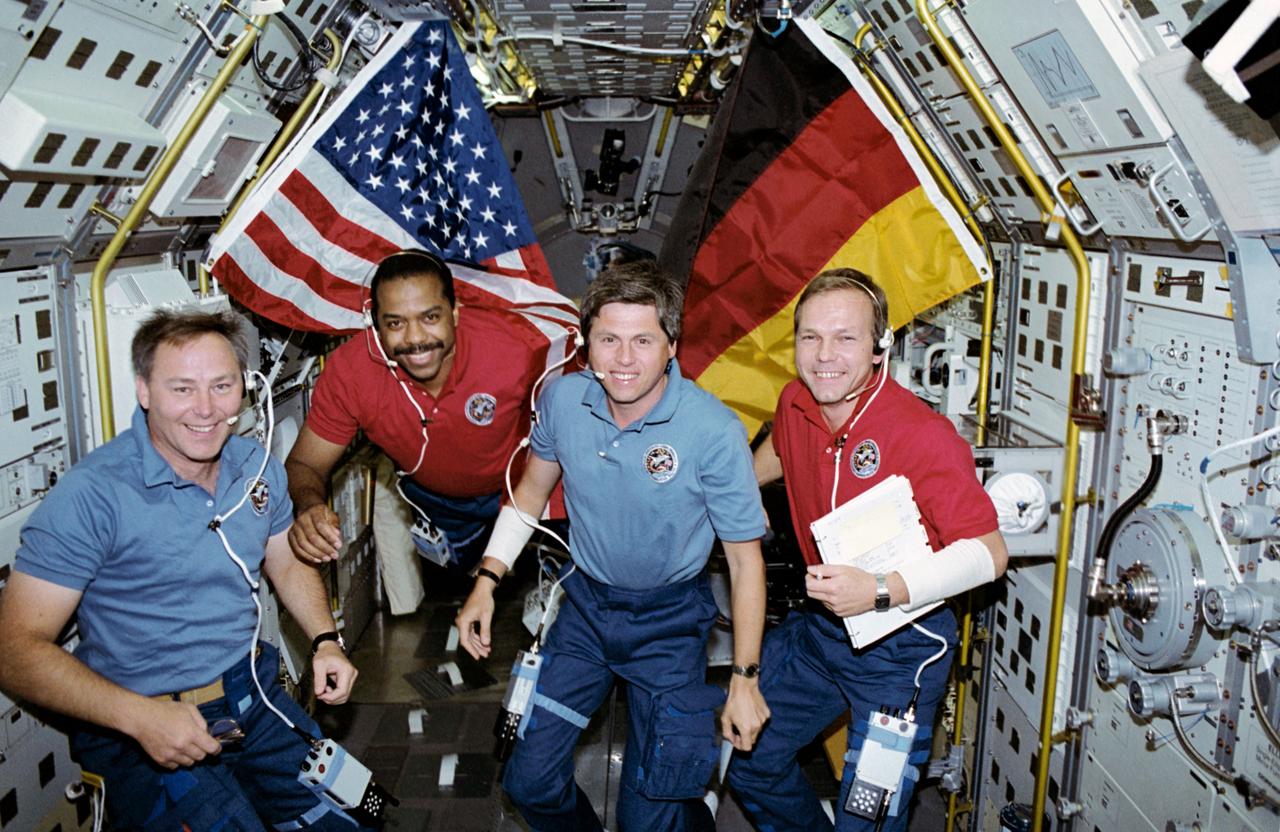
STS-55 crewmembers pose with United States and German flags inside the Spacelab Deutsche 2 (SL-D2) science module located in the payload bay (PLB) of Columbia, Orbiter Vehicle (OV) 102. Wearing communications kit assembly headsets (HDSTs) are (left to right) Mission Specialist 1 (MS1) and Payload Commander (PLC) Jerry L. Ross, MS3 Bernard A. Harris, Jr, German Payload Specialist 1 Ulrich Walter, and Payload Specialist 2 Hans Schlegel.
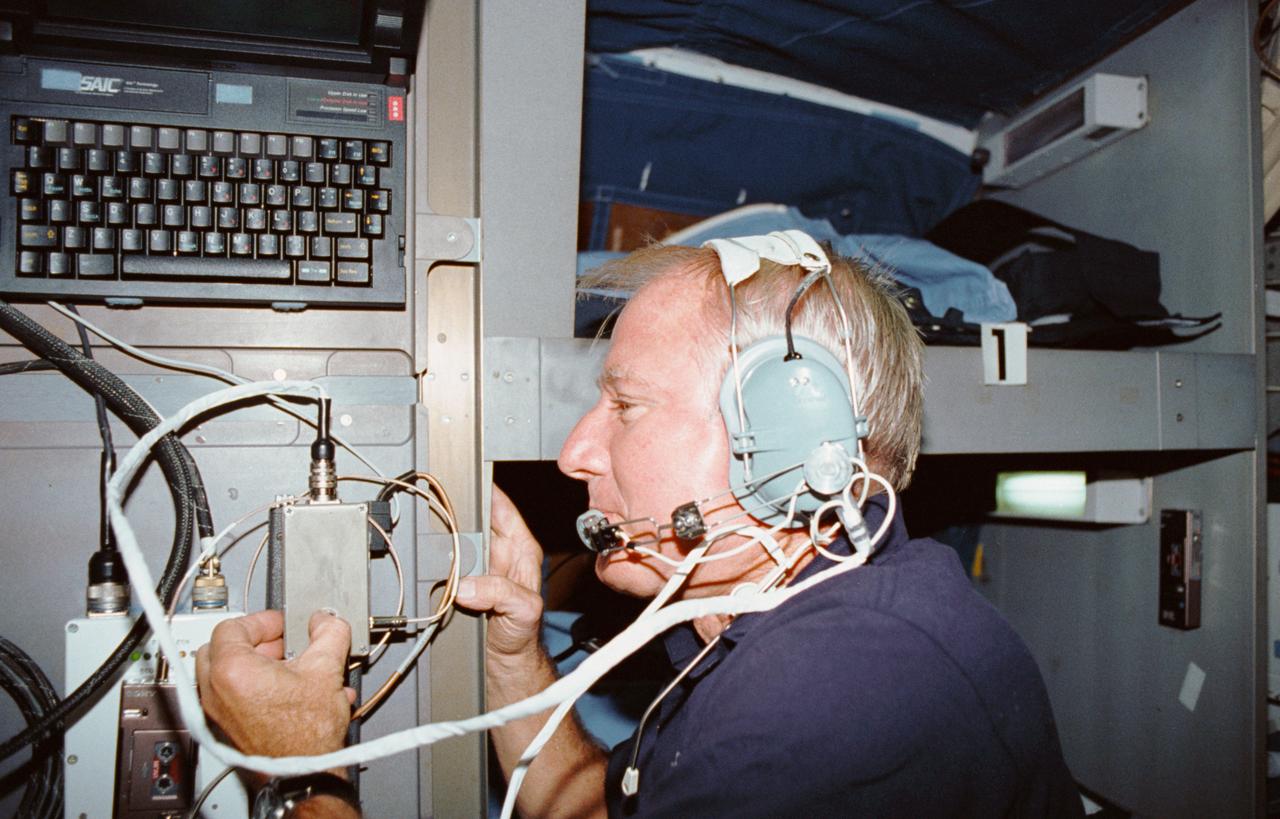
STS035-05-036 (2-10 Dec 1990) --- STS-35 Commander Vance D. Brand, wearing headset, communicates with family members using Shuttle Amateur Radio Experiment (SAREX) on Columbia's, Orbiter Vehicle (OV) 102's, middeck. SAREX and its portable laptop computer mounted on the outside of the middeck sleep station allowed the STS-35 crewmembers to "visit" and briefly share some of their in space experiences with family members. It also provided radio transmissions between ground based amateur radio operators around the world and OV-102. The experiment enabled students from all over the United States to have a chance to communicate with a crewmember in space.
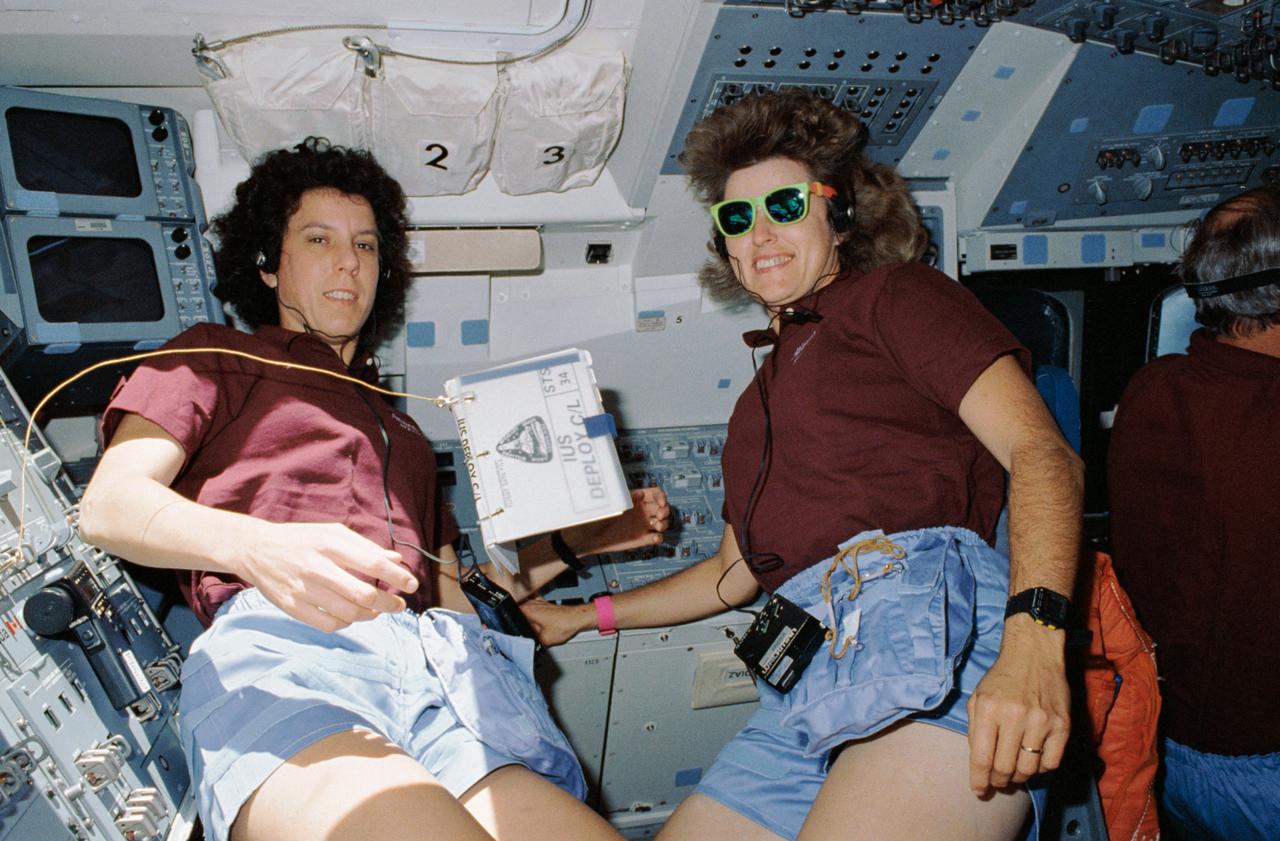
STS034-09-007 (23 Oct. 1989) --- Having been in space only a few hours, three of the STS-34 astronaut crew prepare for pre-deployment exercises involving one of the most prominent "passengers" of the flight -- the Galileo payload which was lying in Atlantis', Orbiter Vehicle (OV) 104's, payload bay (PLB). Pictured, left to right, are astronauts Ellen S. Baker and Shannon W. Lucid, both mission specialists; along with Donald E. Williams, commander, who guided OV-104's course during the exercise. Baker and Lucid communicated with ground controllers while juggling other Galileo-related chores. Both Baker and Lucid are equipped with SONY Walkmans and are wearing headsets. Lucid wears a pair of sunglasses with brightly colored frames. A tethered inertial upper stage (IUS) deploy checklist (C/L) floats between the two and a spotmeter is Velcroed to an on orbit station control panel.
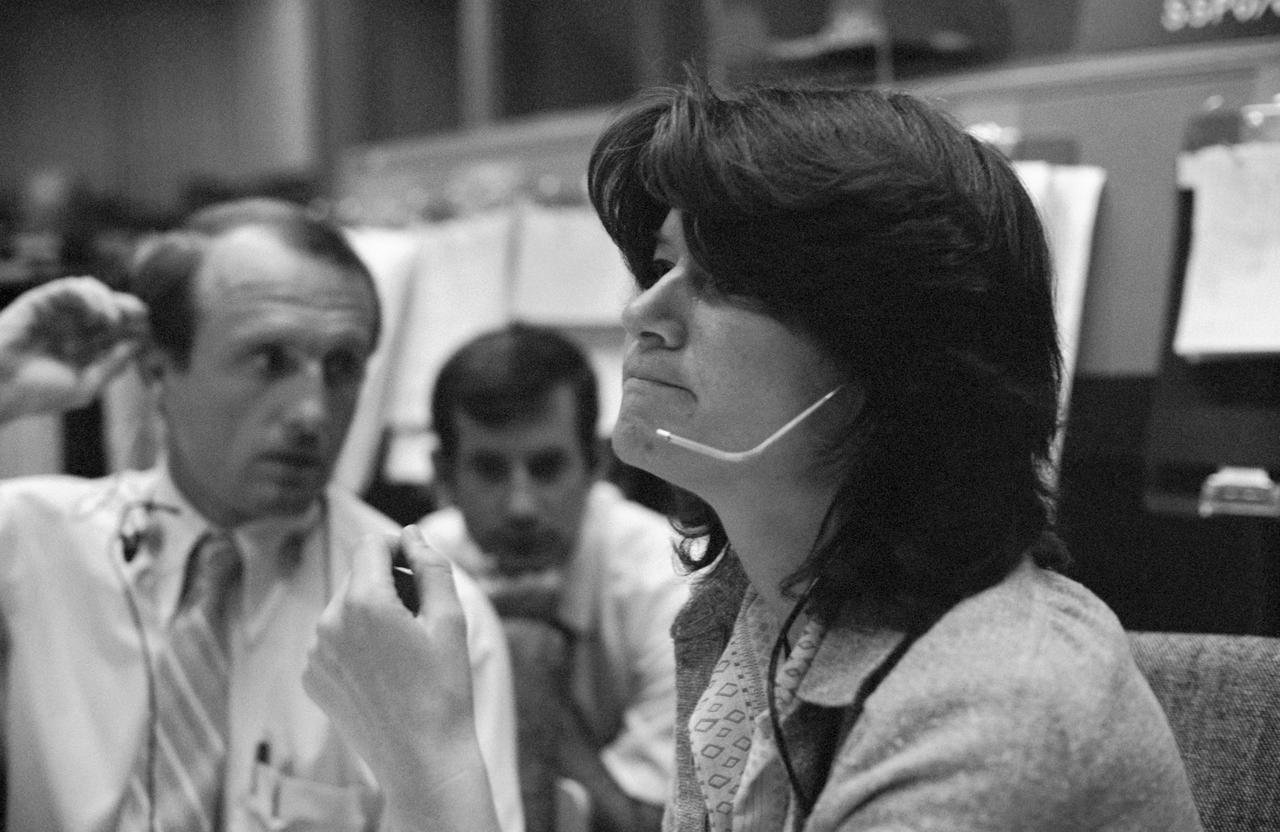
Astronaut Sally Ride at the CapCom console during the STS-2 simulation. She appears to be speaking to the crew using a headset.
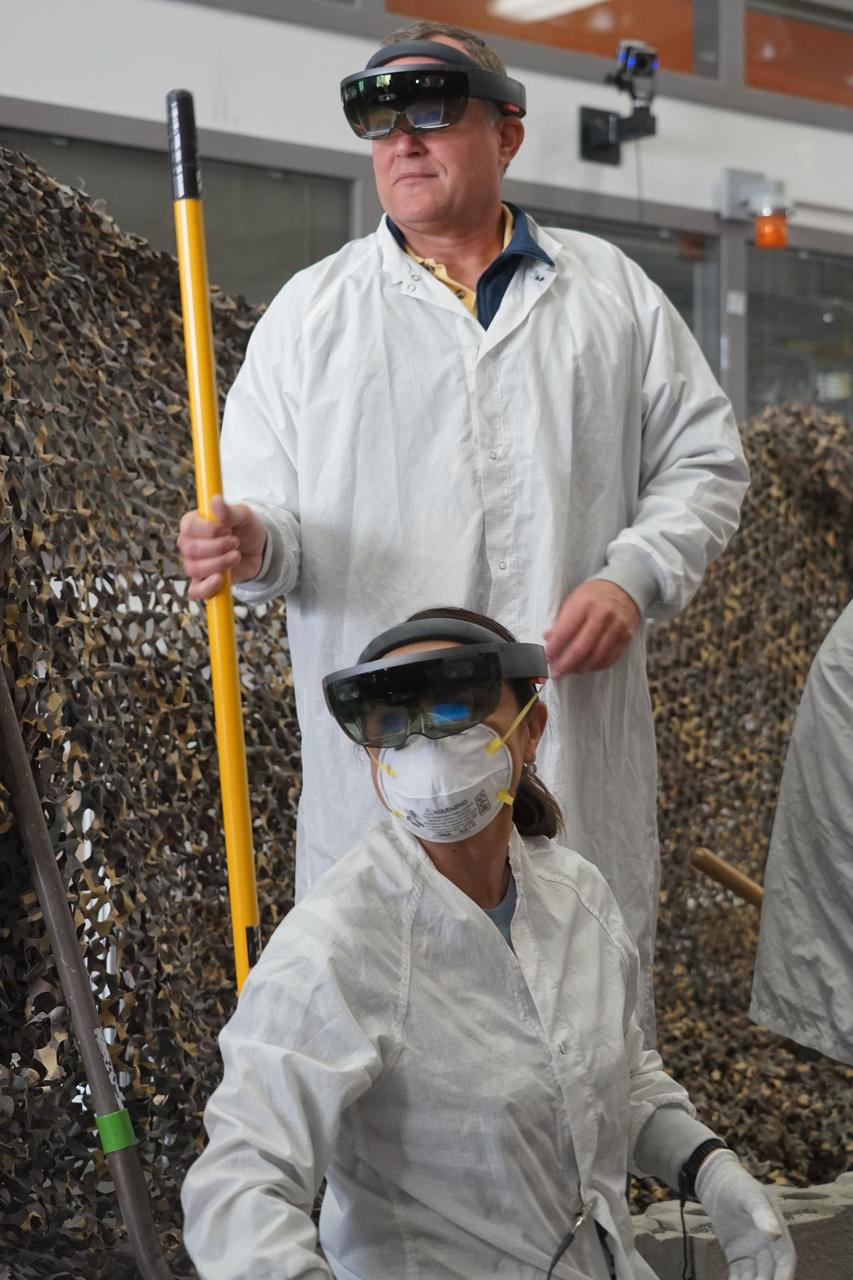
InSight Project Manager Tom Hoffman (standing) and engineer Marleen Sundgaard wear Microsoft HoloLens augmented reality headsets, which project digital terrain models of InSight's landing location on Mars over a lab space. https://photojournal.jpl.nasa.gov/catalog/PIA22951
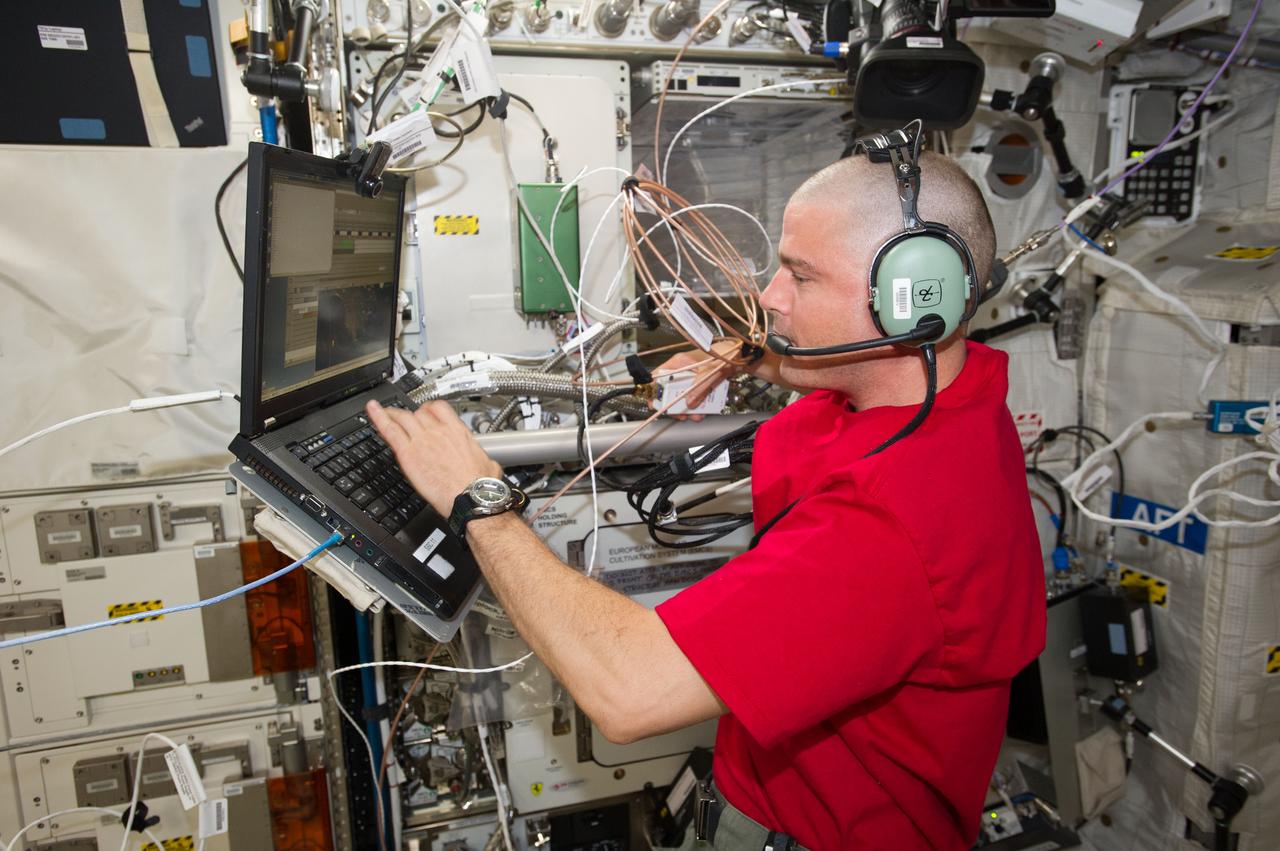
ISS040-E-024110 (28 June 2014) --- NASA astronaut Reid Wiseman, Expedition 40 flight engineer, wearing a communication headset, uses a computer in the Columbus laboratory of the International Space Station.
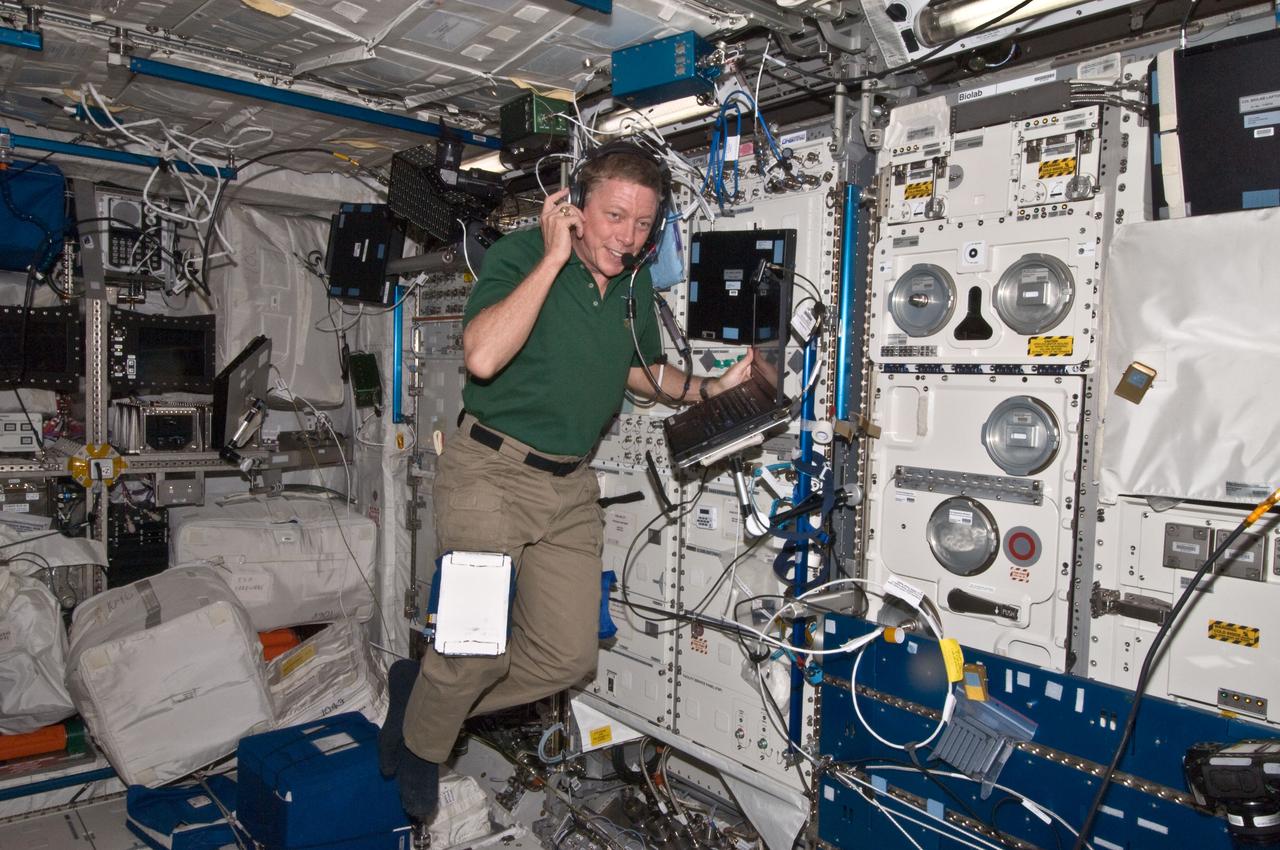
ISS028-E-013729 (30 June 2011) --- NASA astronaut Mike Fossum, Expedition 28 flight engineer, is pictured wearing a communication headset in the Columbus laboratory of the International Space Station.
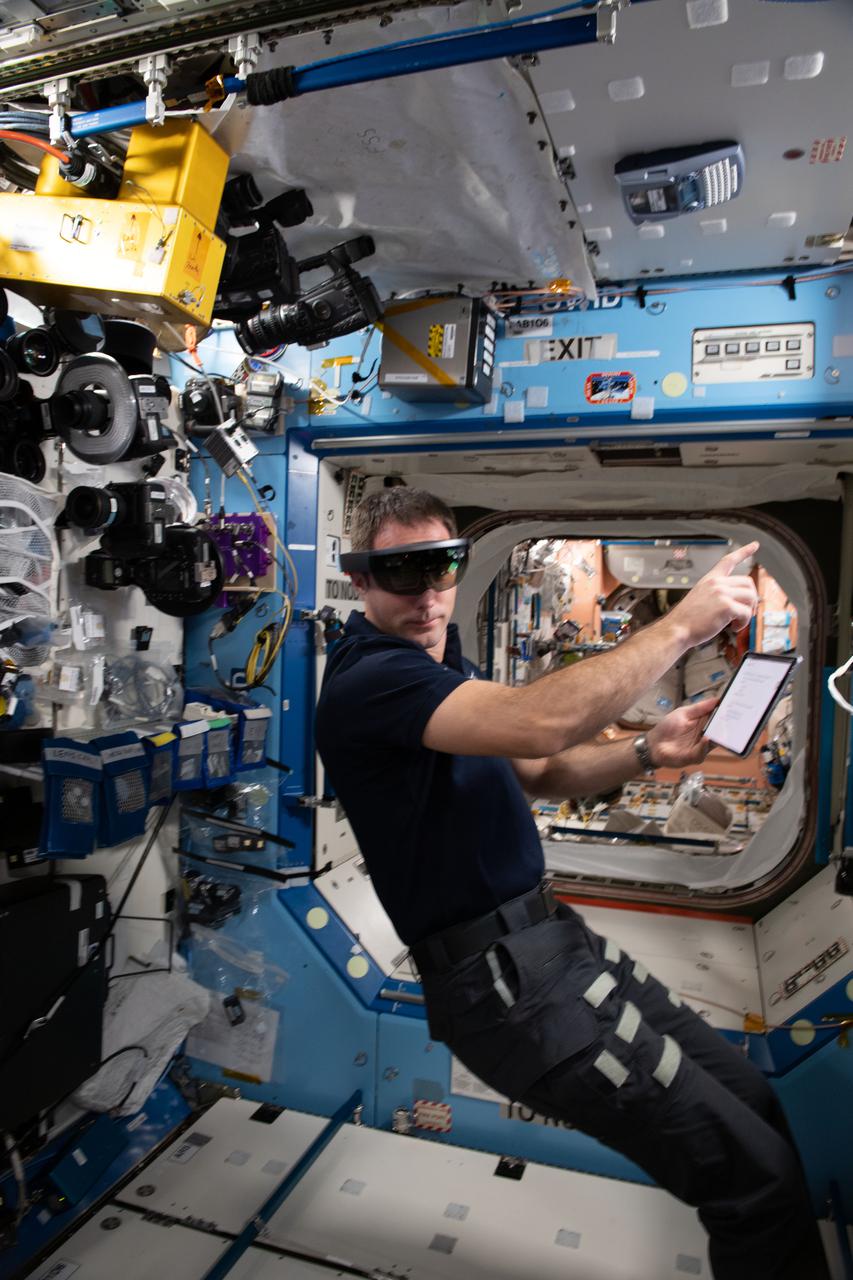
iss065e163235 (June 9, 2021) --- Expedition 65 Flight Engineer Thomas Pesquet of ESA (European Space Agency) is pictured wearing the specialized Sidekick headset and tests using augmented reality aboard the International Space Station.
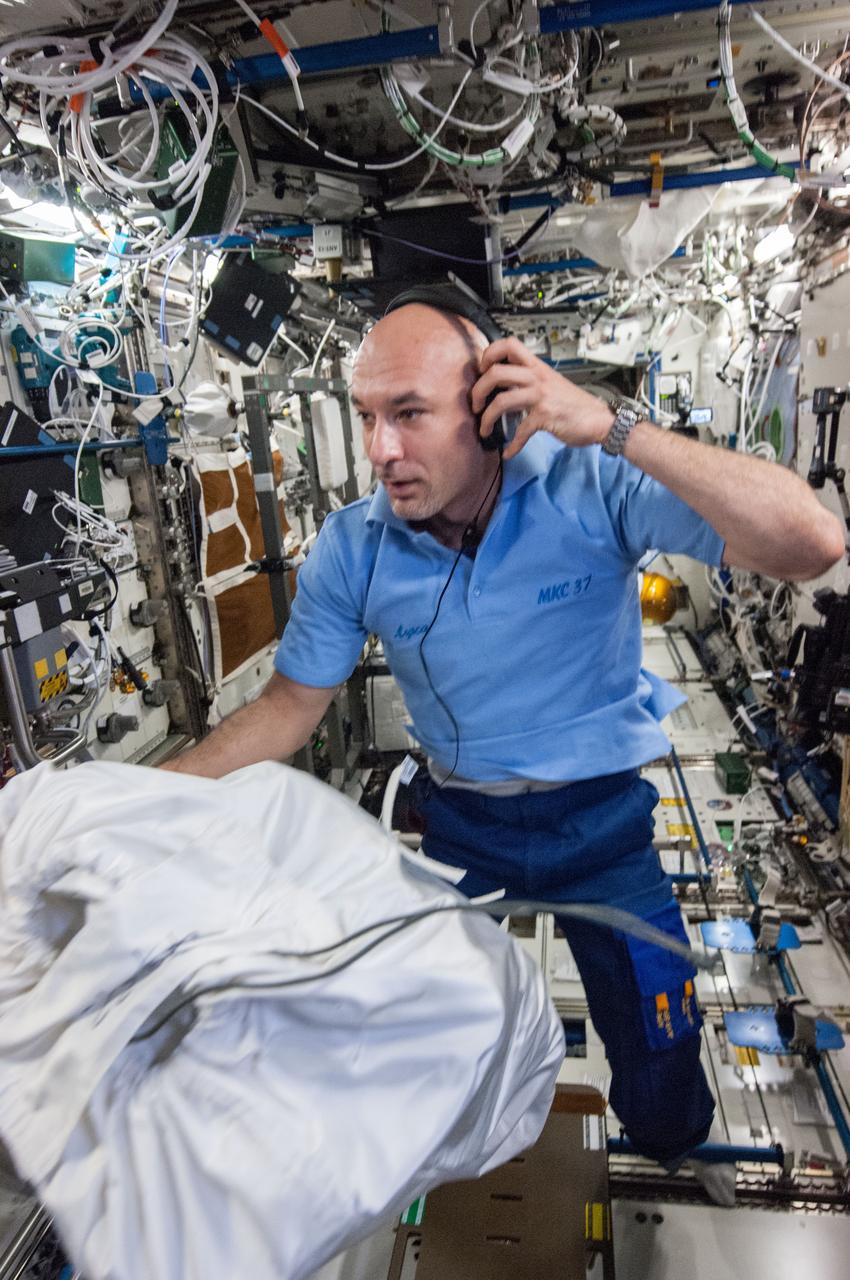
ISS036-E-022498 (22 July 2013) --- European Space Agency astronaut Luca Parmitano, Expedition 36 flight engineer, wearing a communication headset, moves a stowage bag in the Destiny laboratory of the International Space Station.
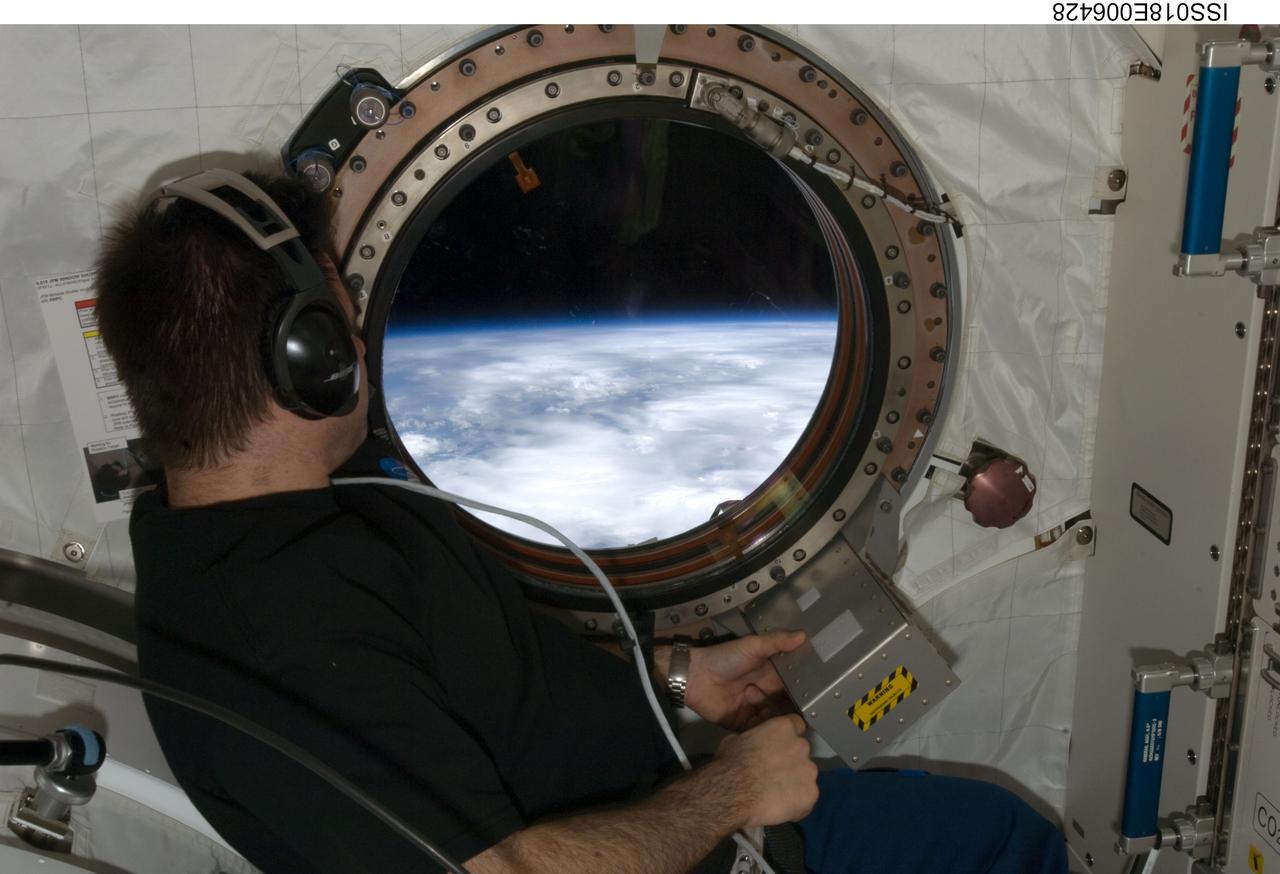
ISS018-E-006428 (2 Nov. 2008) --- Astronaut Greg Chamitoff, Expedition 18 flight engineer, wears a communication system headset while looking through a window in the Kibo laboratory of the International Space Station.
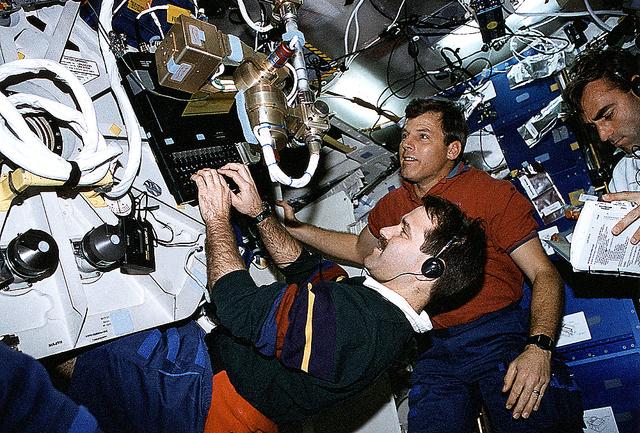
Onboard Space Shuttle Endeavour (STS-67) astronaut John Grunsfeld works at a laptop computer while wearing a headset. Commander Stephen Oswald watches Grunsfeld and Pilot Bill Gregory reads a checklist on the shuttle mid-deck.
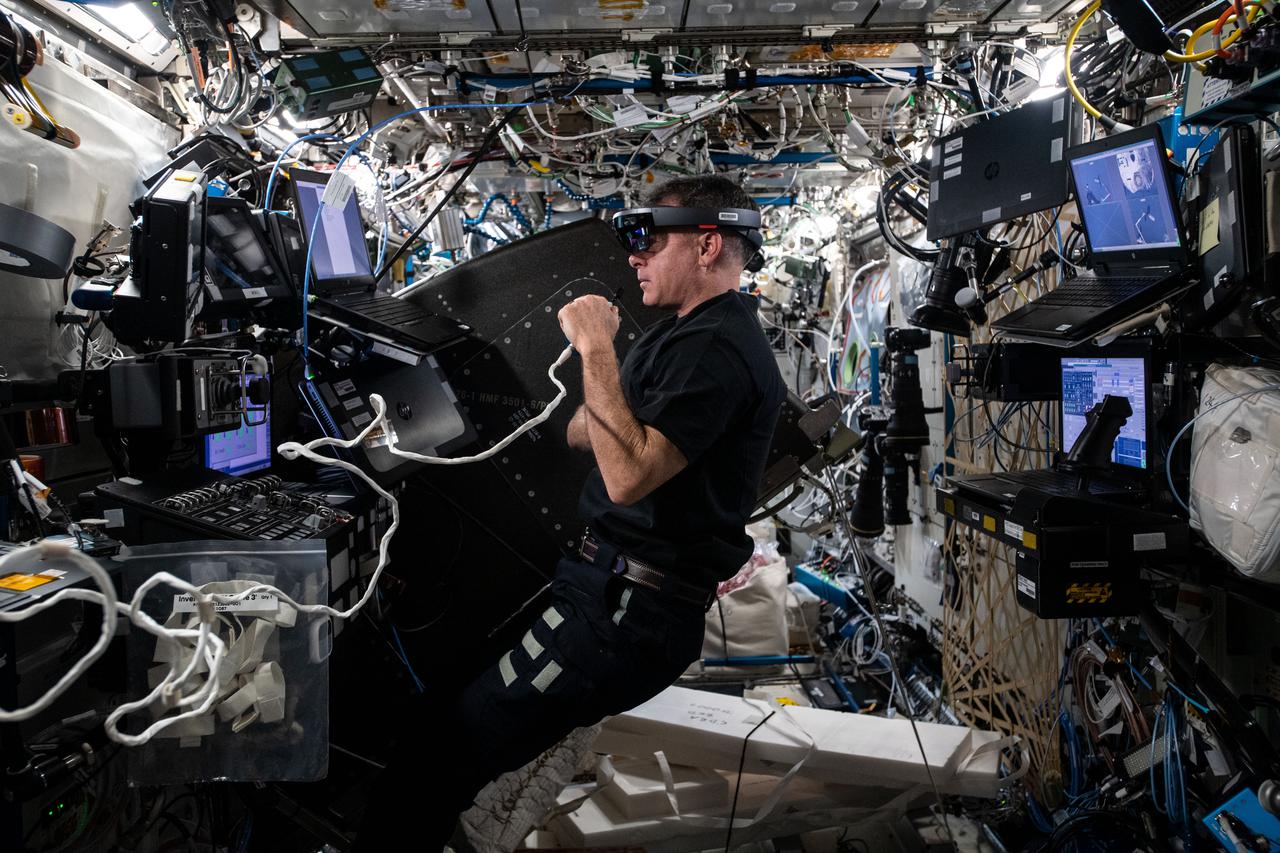
iss065e358558 (Sept. 7, 2021) --- NASA astronaut and Expedition 65 Flight Engineer Shane Kimbrough wears an augmented reality headset while servicing hardware on the International Space Station.
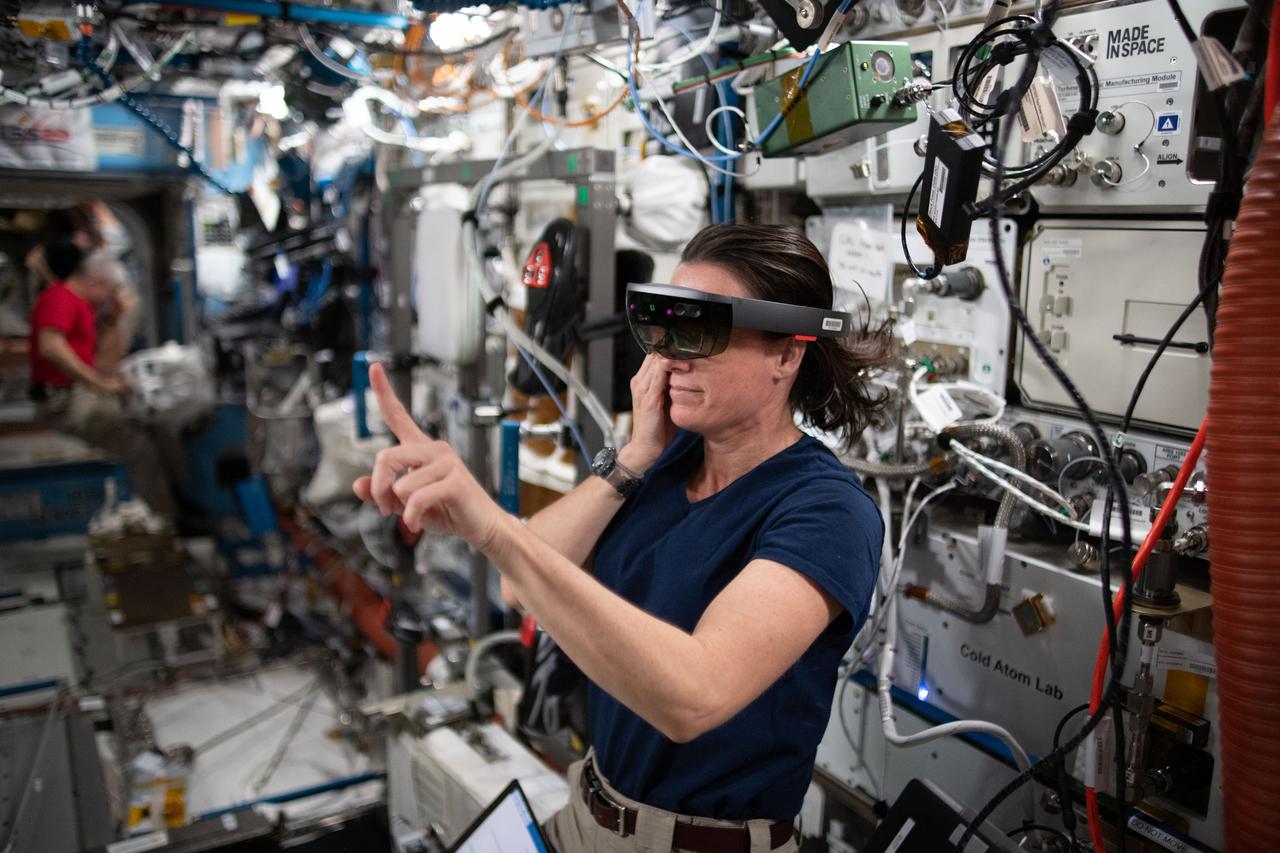
iss065e154542 (June 30, 2021) --- NASA astronaut and Expedition 65 Flight Engineer Megan McArthur wears the specialized Sidekick headset and tests using augmented reality aboard the International Space Station.
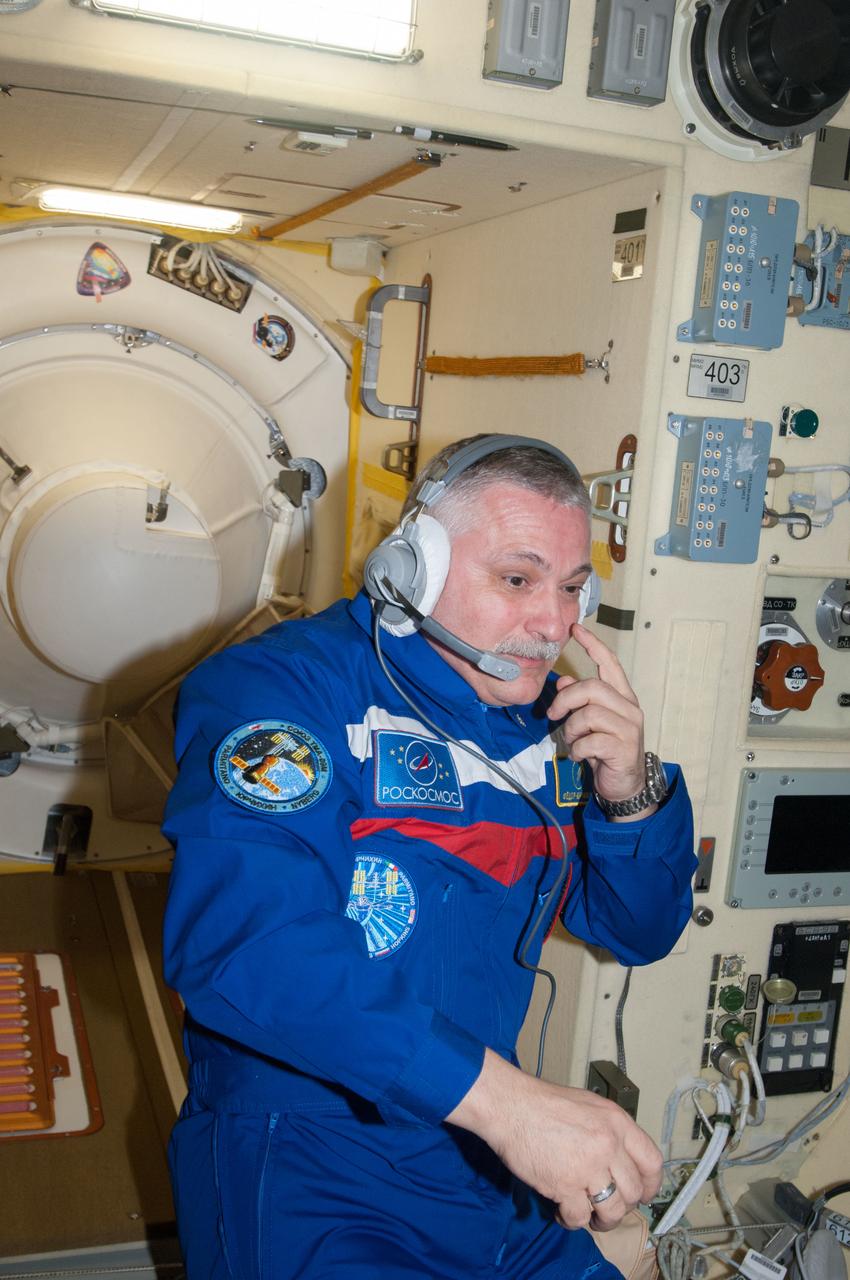
ISS037-E-002682 (25 Sept. 2013) --- Russian cosmonaut Fyodor Yurchikhin, Expedition 37 commander, wearing a communication headset, is pictured in the Poisk Mini-Research Module 2 (MRM2) of the International Space Station.
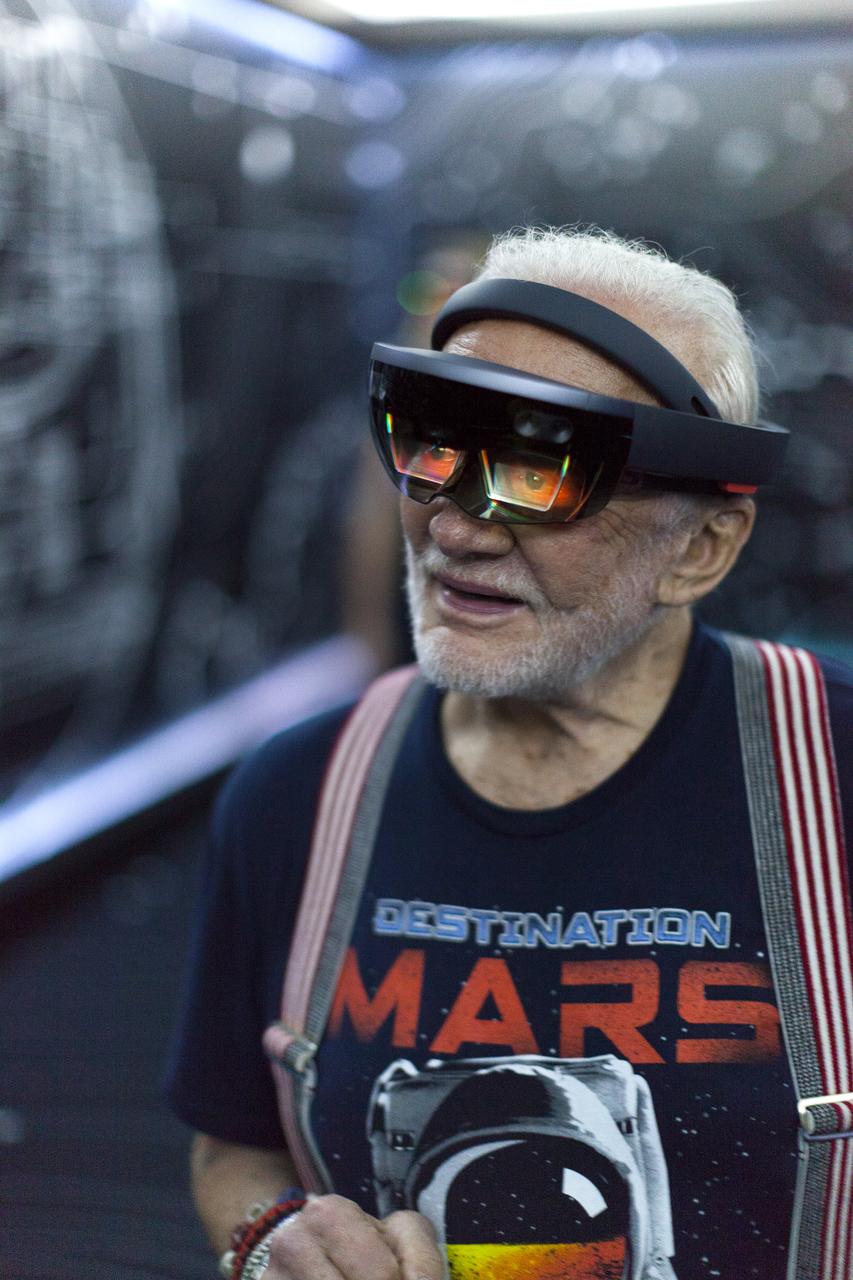
Apollo 11 astronaut Buzz Aldrin tries out Microsoft HoloLens mixed reality headset during a preview of the new Destination: Mars experience at the Kennedy Space Center Visitor Complex. Destination: Mars gives guests an opportunity to “visit” several sites on Mars using real imagery from NASA’s Curiosity Mars Rover. Based on OnSight, a tool created by NASA’s Jet Propulsion Laboratory in Pasadena, California, the experience brings guests together with a holographic version of Aldrin as they are guided to Mars using the headset. Photo credit: NASA/Charles Babir
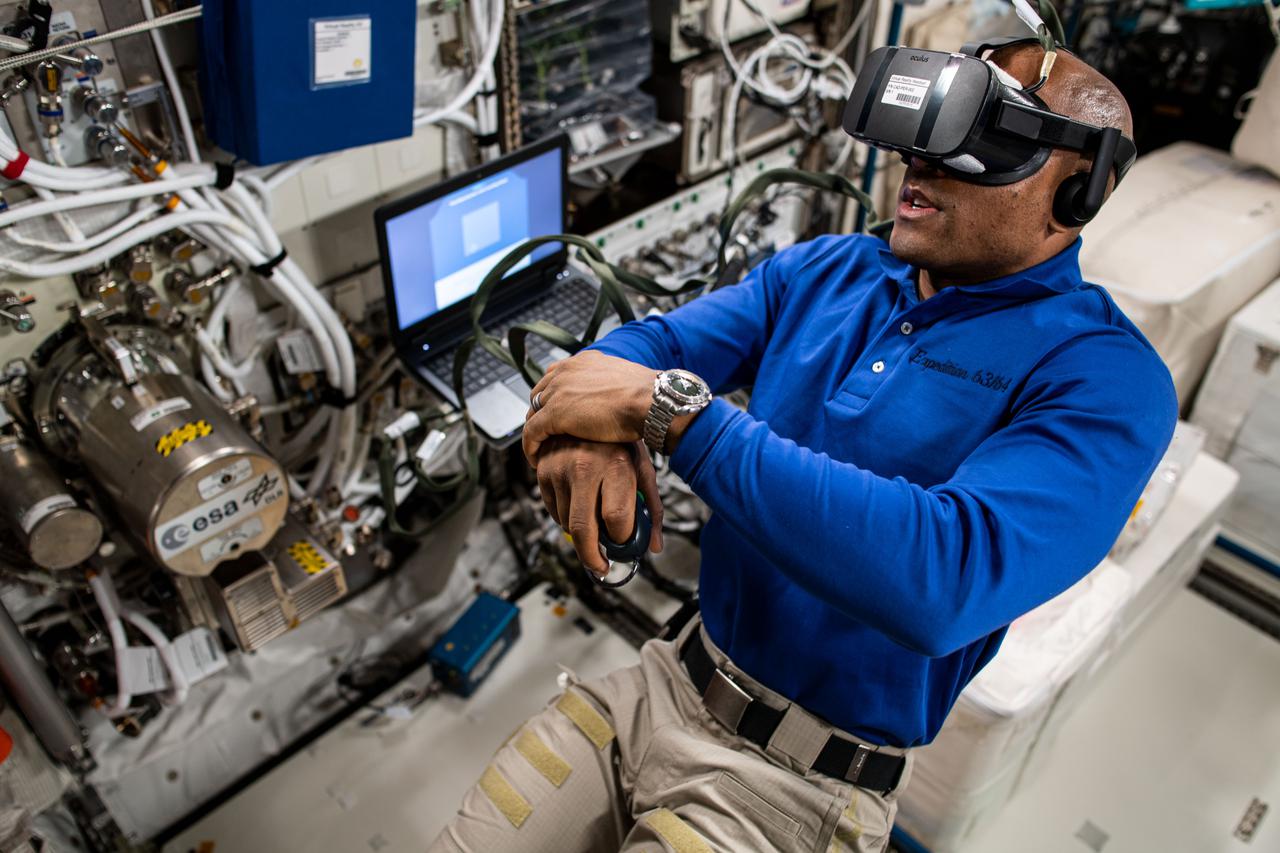
This ESA (European Space Agency) Time Perception in Microgravity investigation is studying crew member reaction times and time perception in space. Glover participates as a research subject using a virtual reality headset. This work helps provide data on astronaut cognitive performance, a critical factor for ensuring crew safety and mission success.
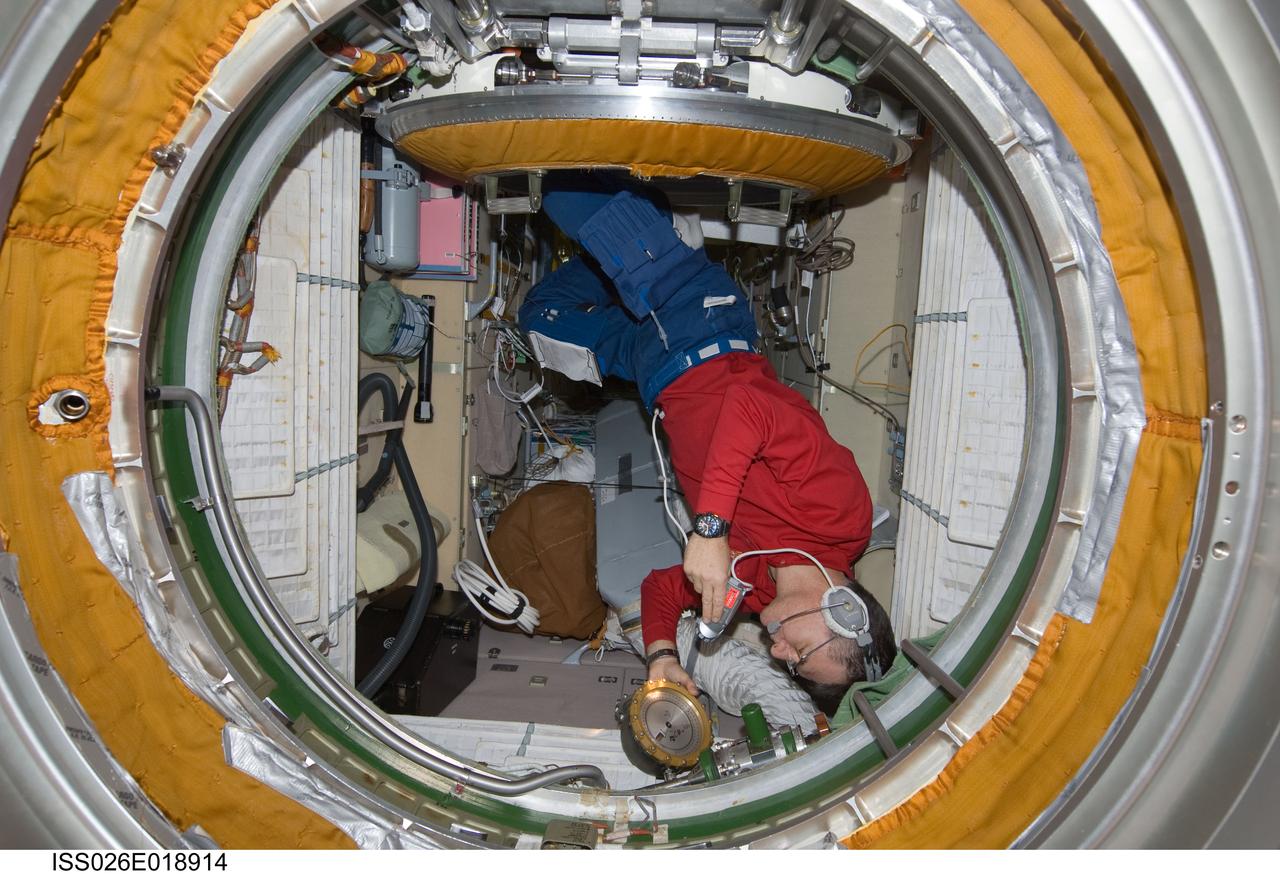
ISS026-E-018914 (21 Jan. 2011) --- While wearing a communication system headset, European Space Agency astronaut Paolo Nespoli, Expedition 26 flight engineer, uses a flashlight while checking an Absolute Pressure gauge in the Zarya Functional Cargo Block (FGB) of the International Space Station.
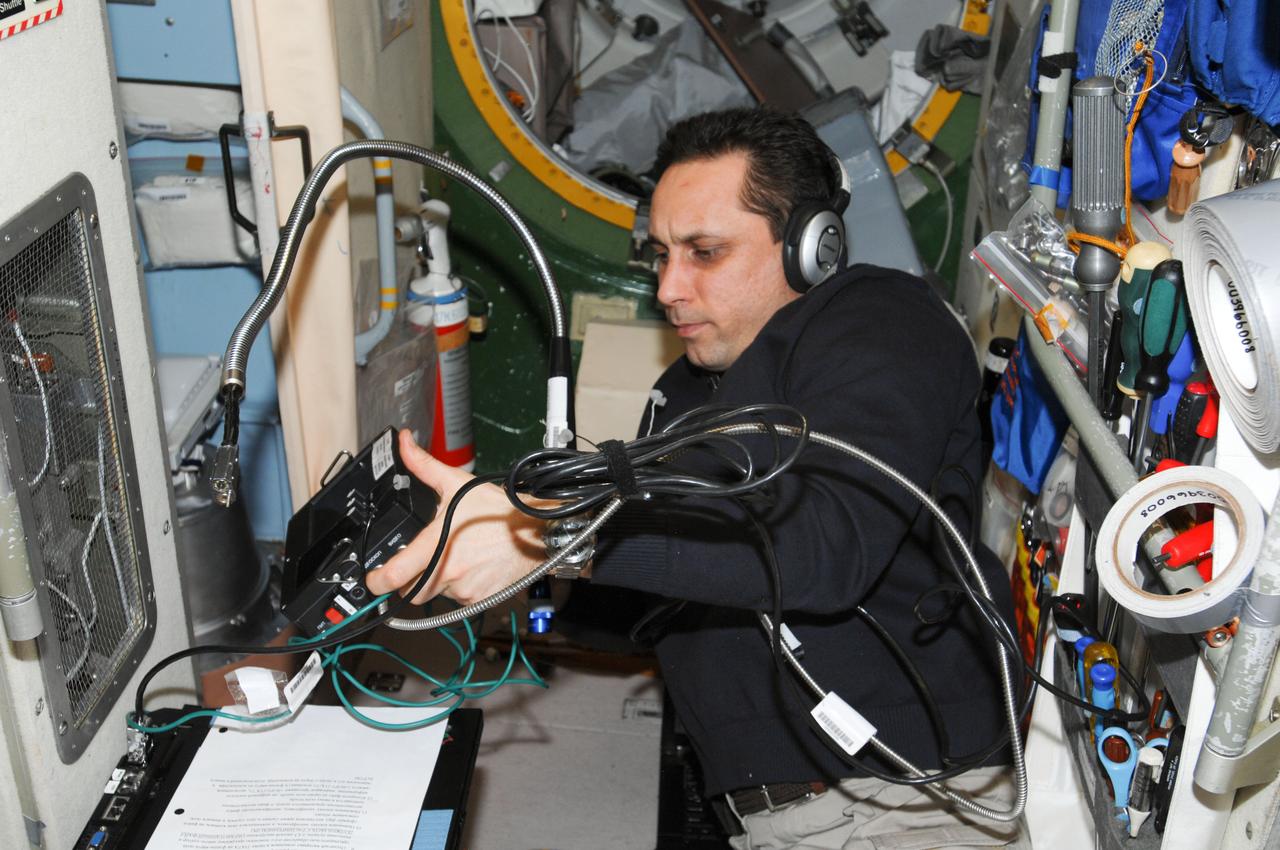
ISS030-E-021039 (5 Jan. 2012) --- Russian cosmonaut Anton Shkaplerov, Expedition 30 flight engineer, wears a communication system headset while working with a video display unit in the Zvezda Service Module of the International Space Station.
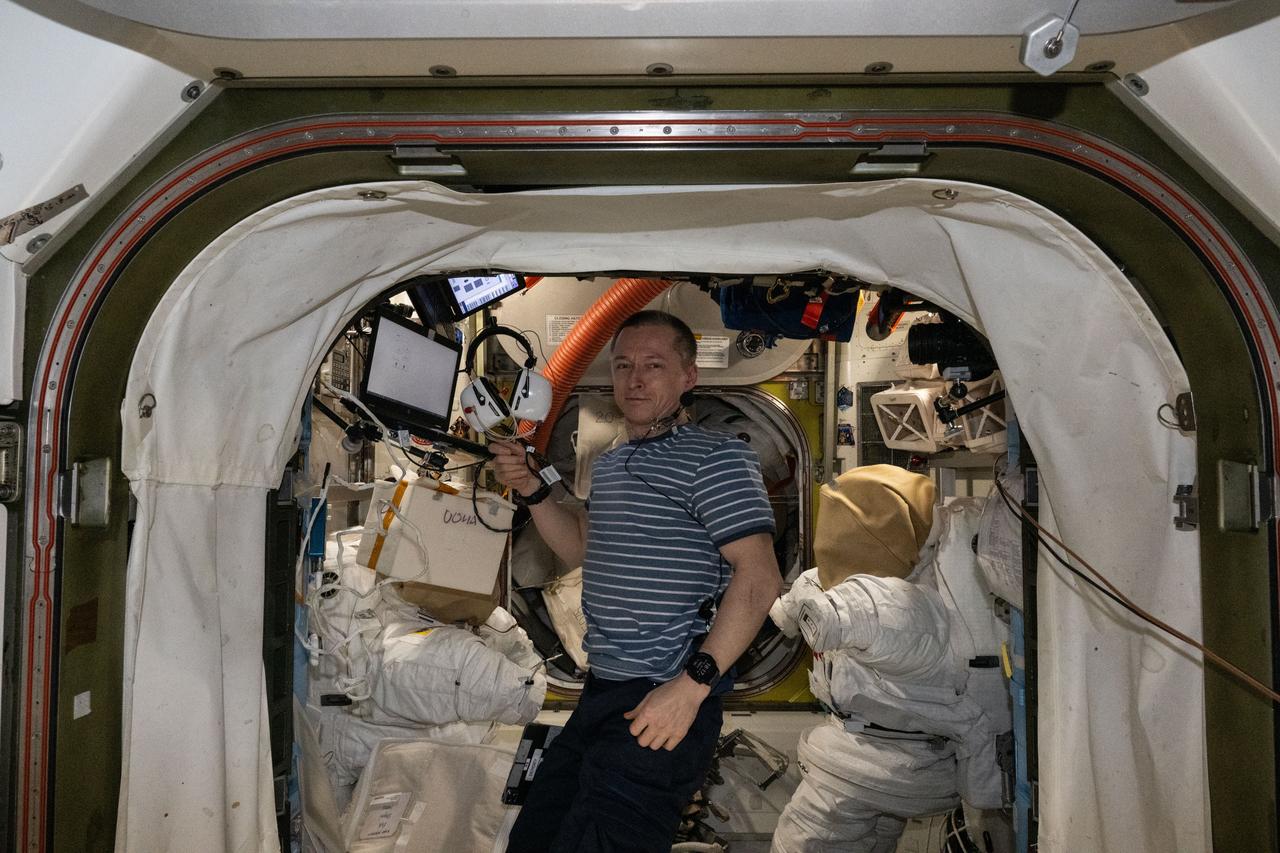
iss073e0658312 (Sept. 10, 2025) --- Roscosmos cosmonaut and Expedition 73 Commander Sergey Ryzhikov holds a headset inside the International Space Station's Quest airlock. Ryzhikov was conducting a hearing examination frequently conducted inside Quest due to the module's quiet environment. Quest is used primarily to service spacesuits and stage spacewalks.
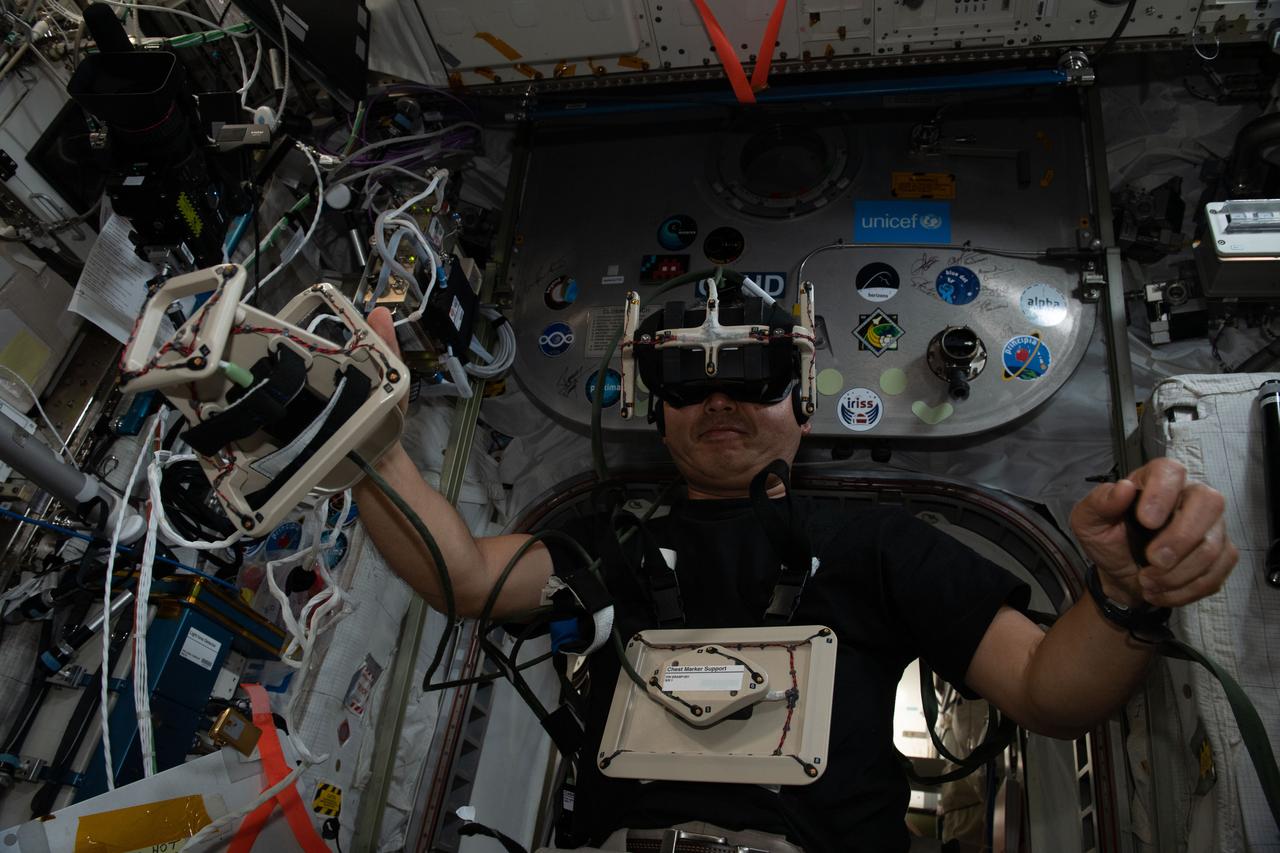
iss068e017255 (Oct. 14, 2022) --- Expedition 68 Flight Engineer Koichi Wakata of the Japan Aerospace Exploration Agency (JAXA) wears a virtual reality headset for the GRASP study exploring how weightlessness affects the central nervous system, or more specifically an astronaut’s reach-to-grasp function.
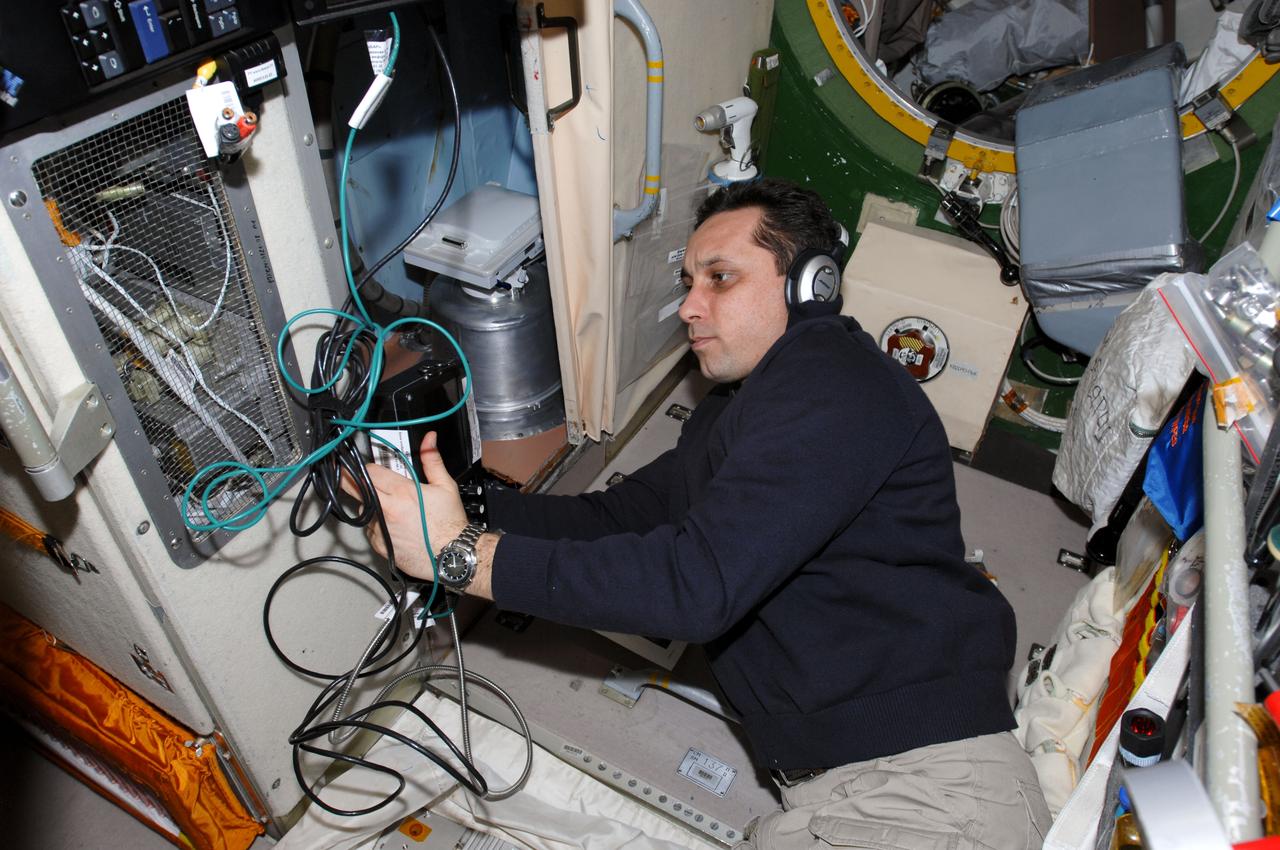
ISS030-E-021042 (5 Jan. 2012) --- Russian cosmonaut Anton Shkaplerov, Expedition 30 flight engineer, wears a communication system headset while working with a video display unit in the Zvezda Service Module of the International Space Station.
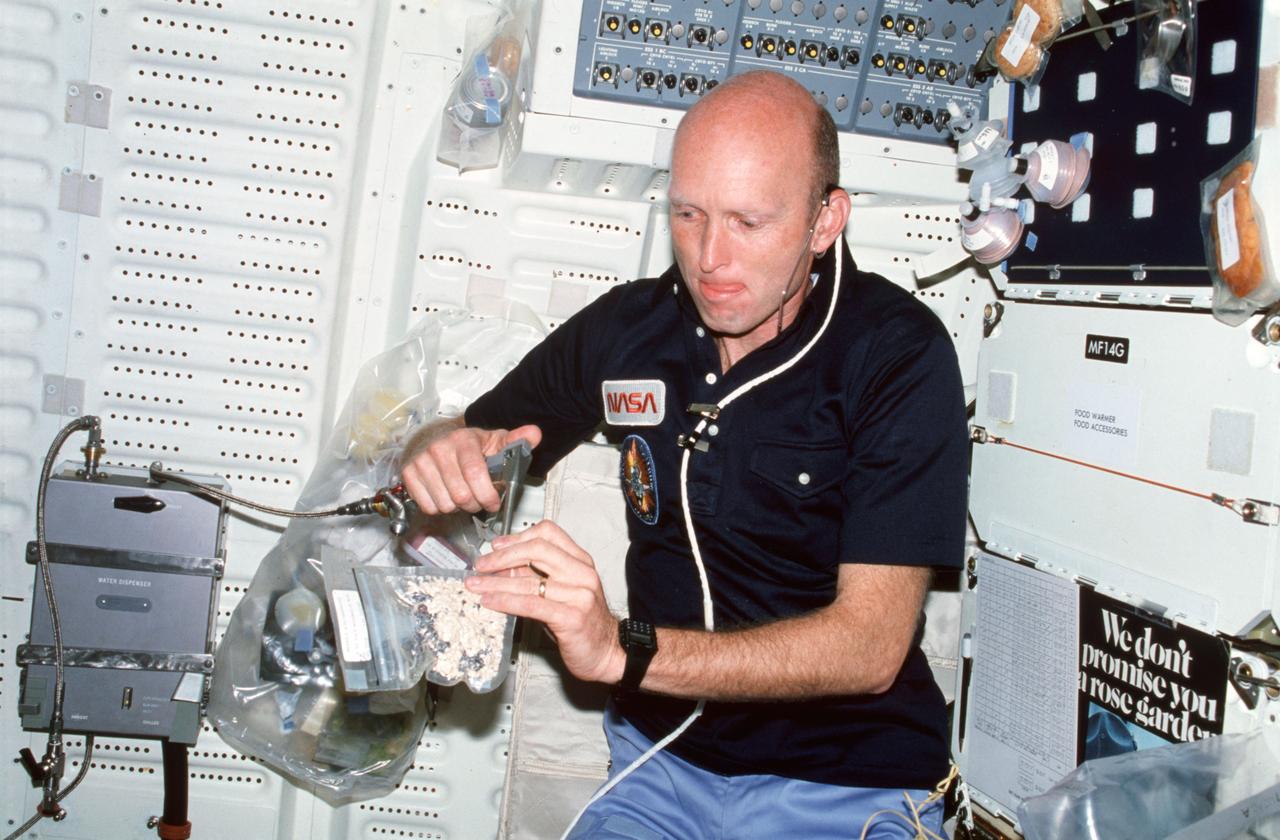
STS003-26-254 (30 March 1982) --- Astronaut Gordon Fullerton, STS-3 pilot, wearing communications kit assembly (ASSY) mini-headset (HDST), inserts the JSC water dispenser kit water gun in rehydratable plastic food (cereal) package to fill it with hot water. Photo credit: NASA
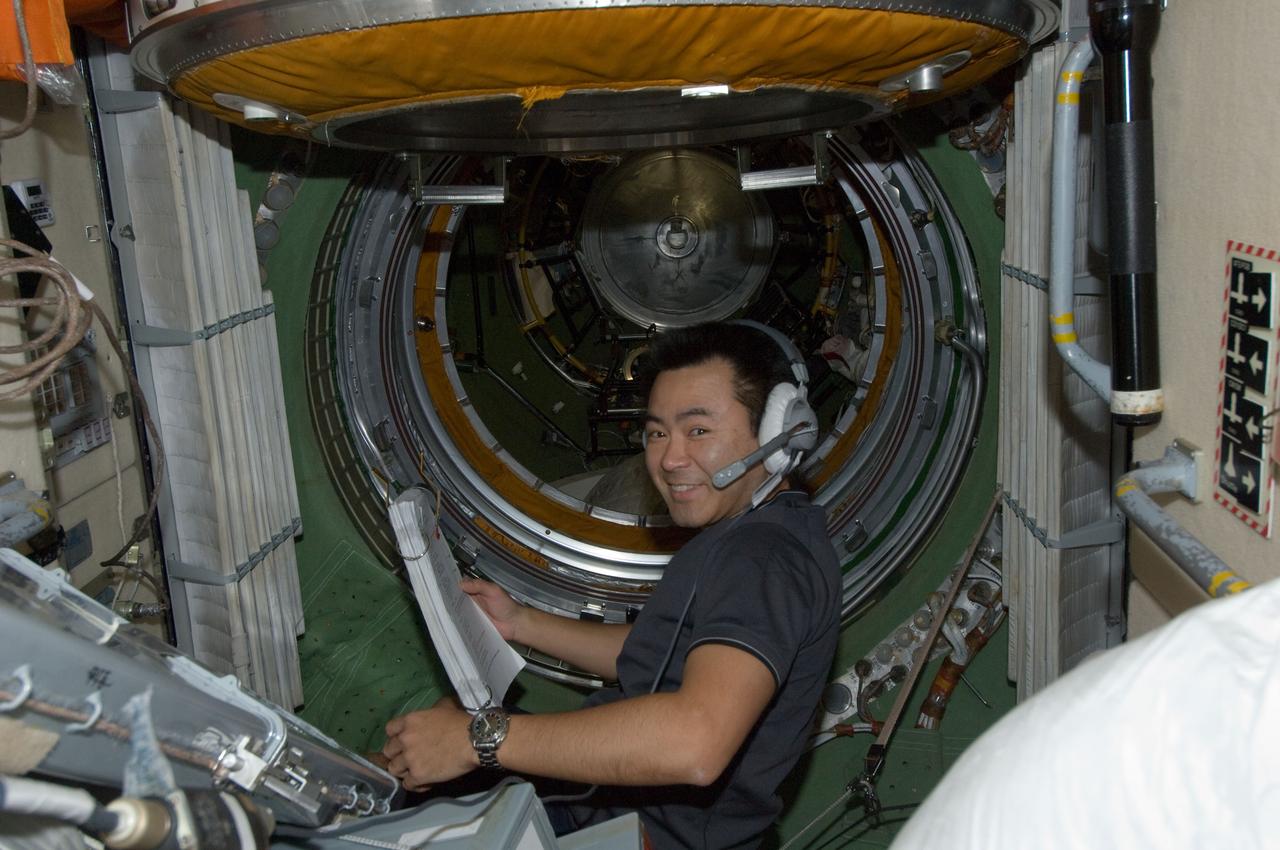
ISS032-E-020821 (20 Aug. 2012) --- Japan Aerospace Exploration Agency astronaut Aki Hoshide, Expedition 32 flight engineer, wearing a communication headset, works in the Zarya Functional Cargo Block (FGB) of the International Space Station.
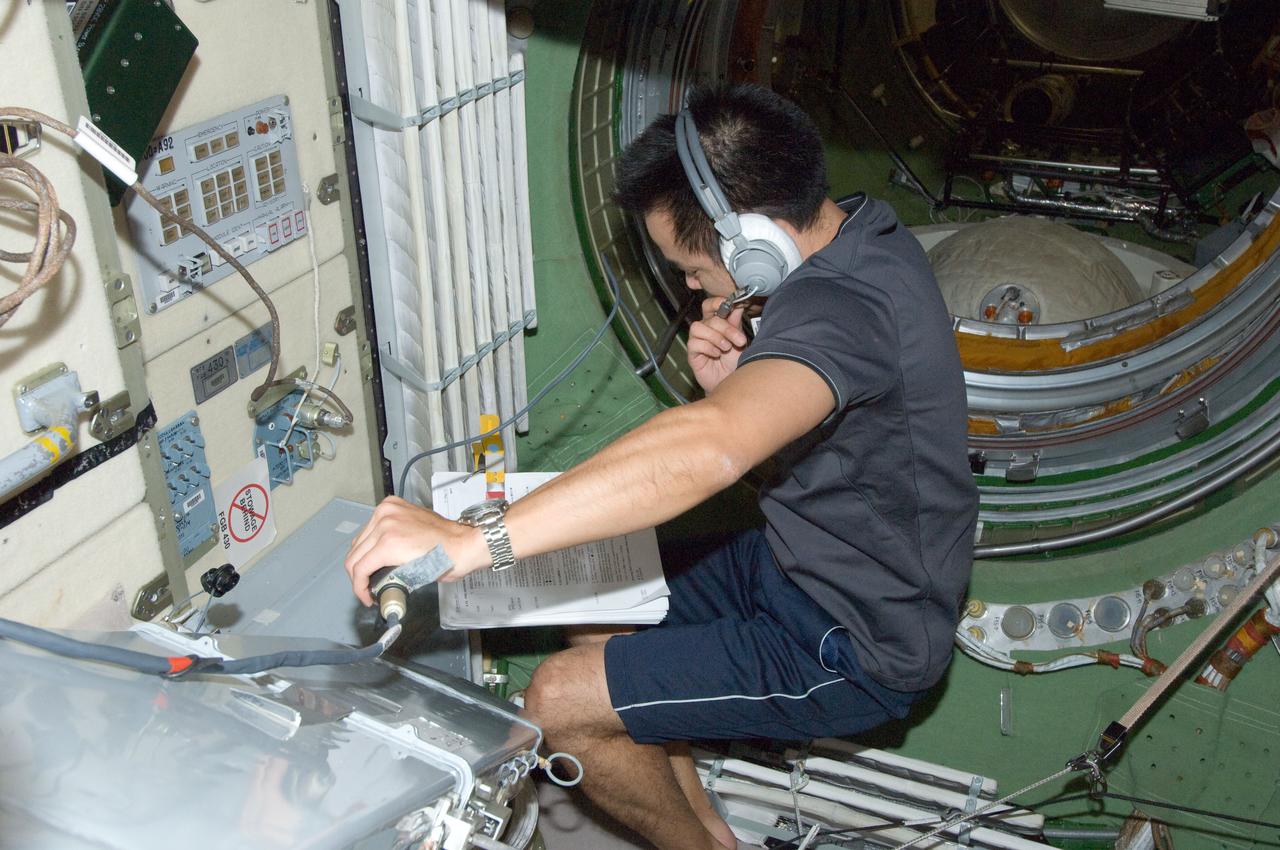
ISS032-E-020817 (20 Aug. 2012) --- Japan Aerospace Exploration Agency astronaut Aki Hoshide, Expedition 32 flight engineer, wearing a communication headset, works in the Zarya Functional Cargo Block (FGB) of the International Space Station.

STS008-04-106 (30 Aug-5 Sept 1983) --- On aft flight deck, Richard M. Truly, STS-8 commander, holds communication kit assembly (ASSY) headset (HDST) interface unit (HIU) and mini-HDST in front of the on orbit station. Hasselblad camera is positioned on overhead window W8.
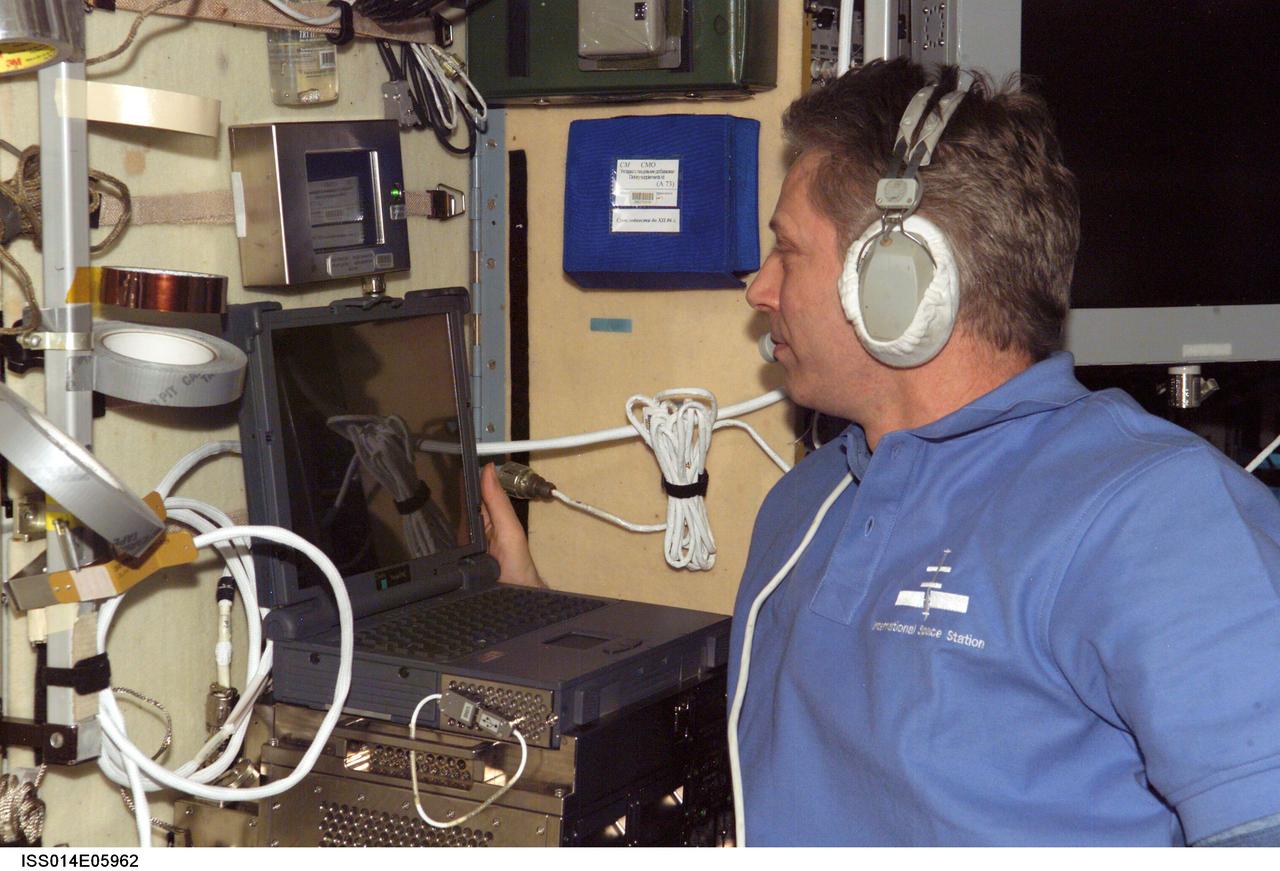
ISS014-E-05962 (October 2006) --- European Space Agency (ESA) astronaut Thomas Reiter, Expedition 14 flight engineer, wears a communication system headset while using a computer in the Zvezda Service Module of the International Space Station.
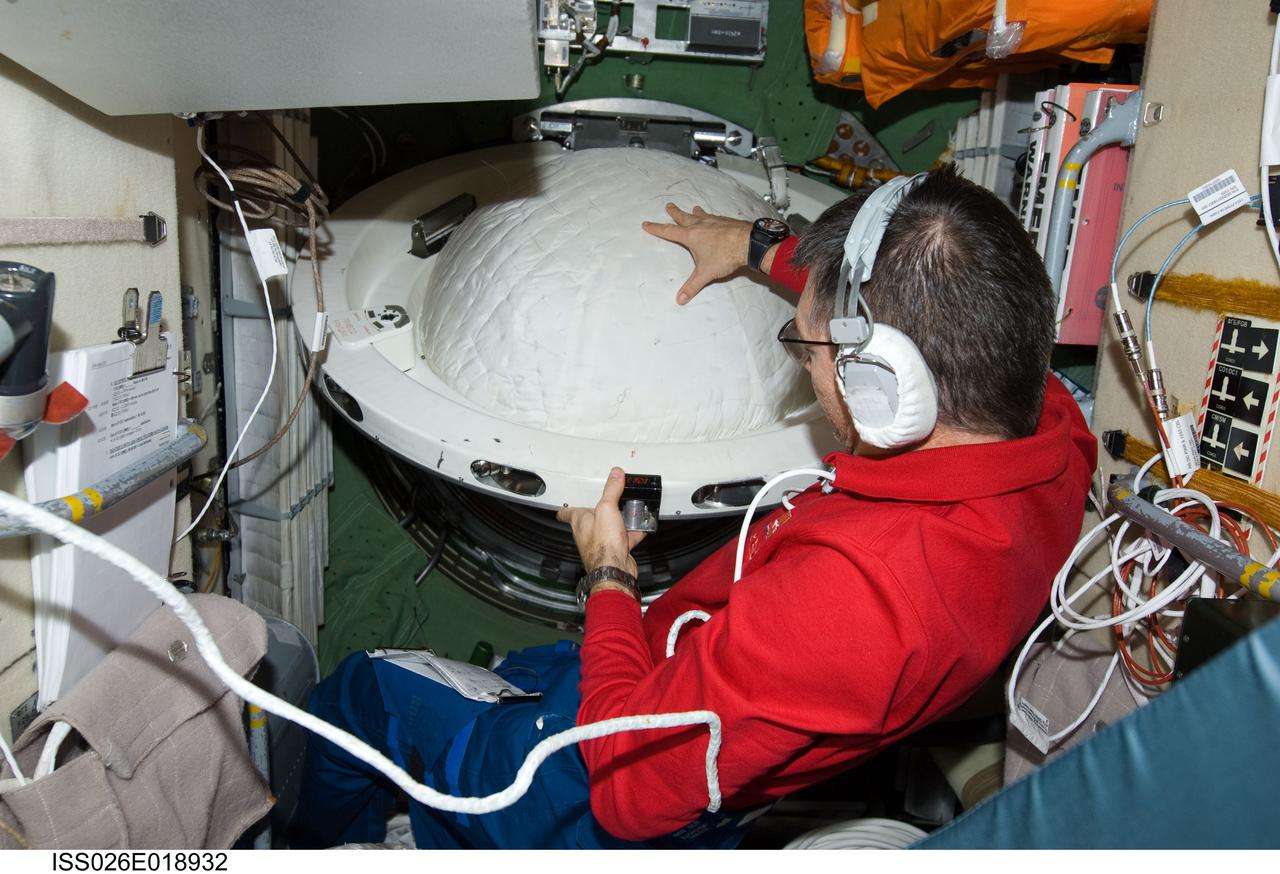
ISS026-E-018932 (21 Jan. 2011) --- While wearing a communication system headset, European Space Agency astronaut Paolo Nespoli, Expedition 26 flight engineer, closes a hatch in the Zarya Functional Cargo Block (FGB) of the International Space Station.
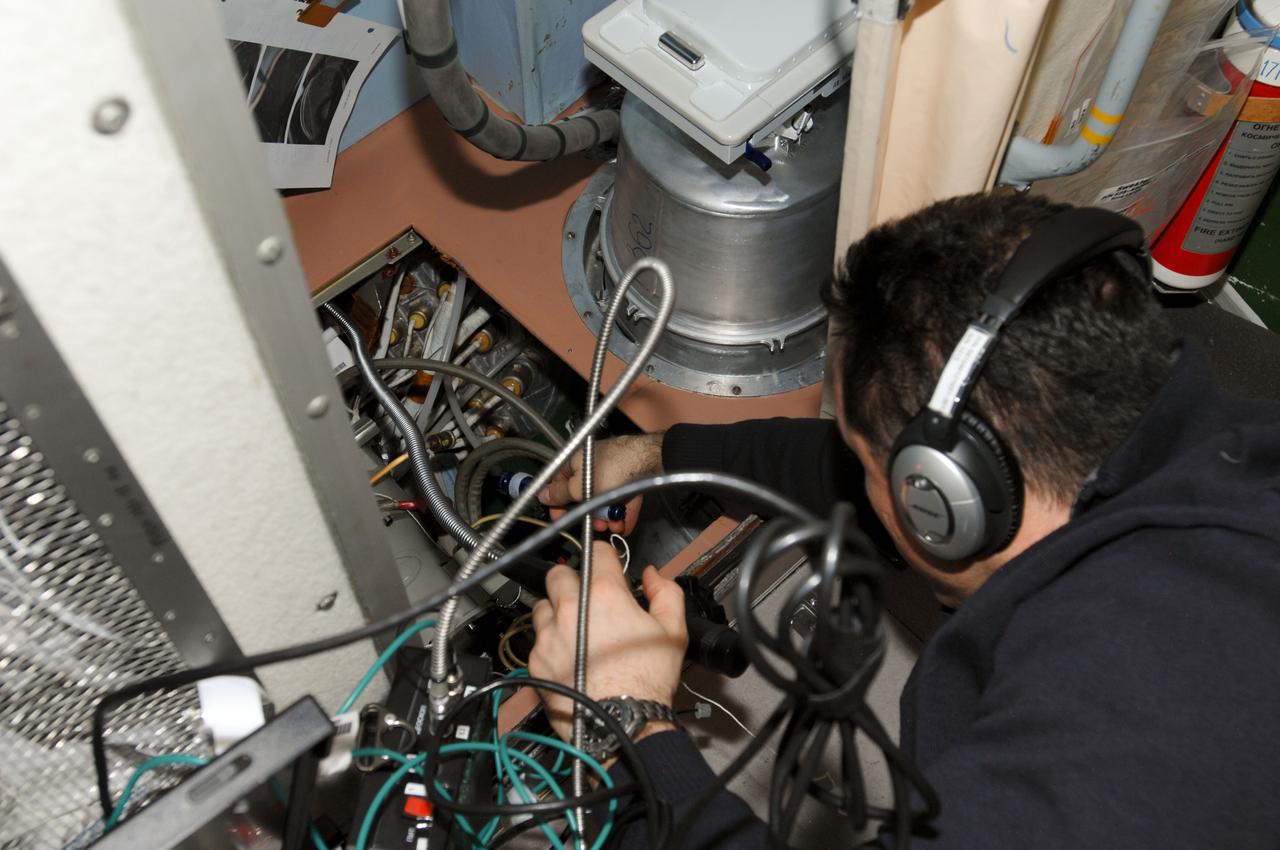
ISS030-E-021041 (5 Jan. 2012) --- Russian cosmonaut Anton Shkaplerov, Expedition 30 flight engineer, wears a communication system headset while working with a video display unit in the Zvezda Service Module of the International Space Station.
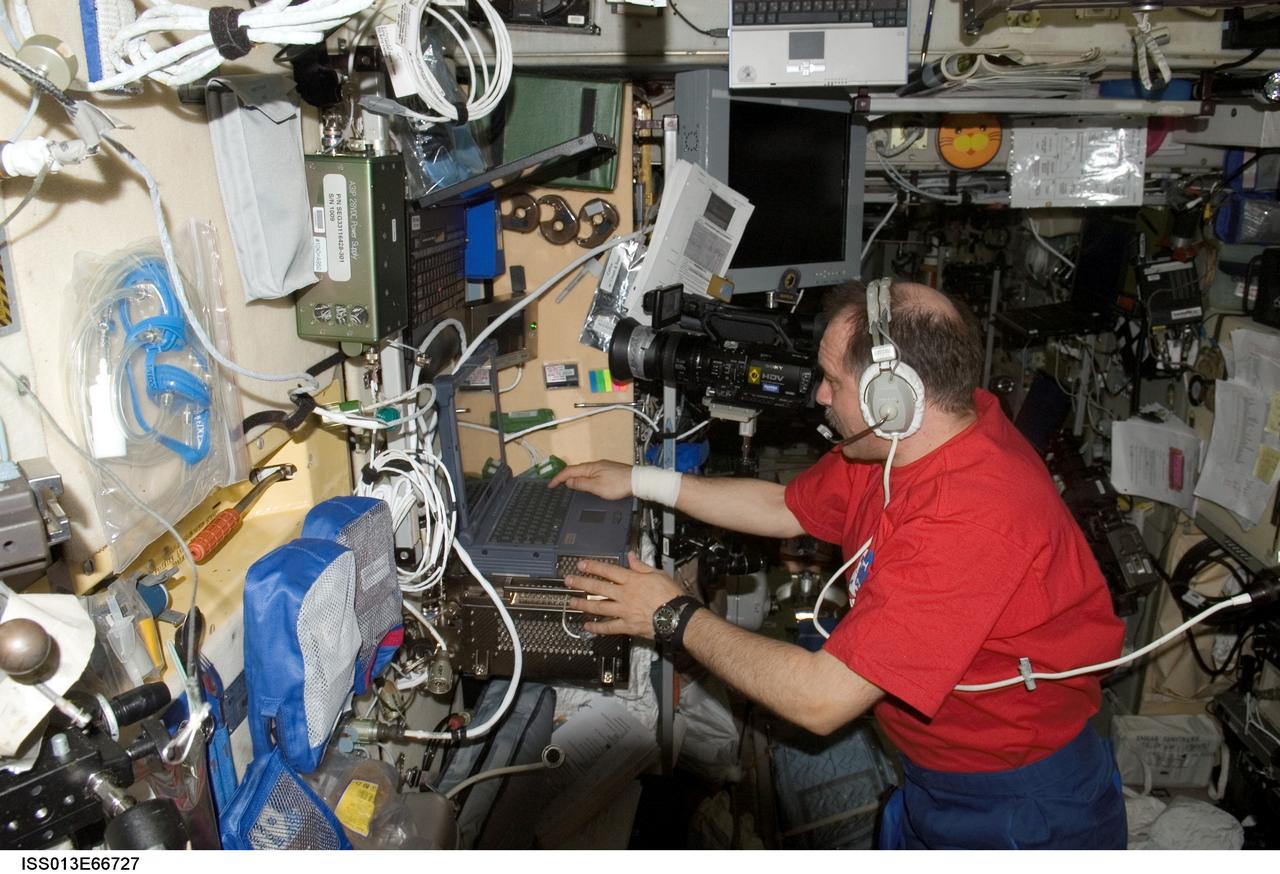
ISS013-E-66727 (August 2006) --- Cosmonaut Pavel V. Vinogradov, Expedition 13 commander representing Russia's Federal Space Agency, wears a communication system headset while using a video camcorder and computer in the Zvezda Service Module of the International Space Station.
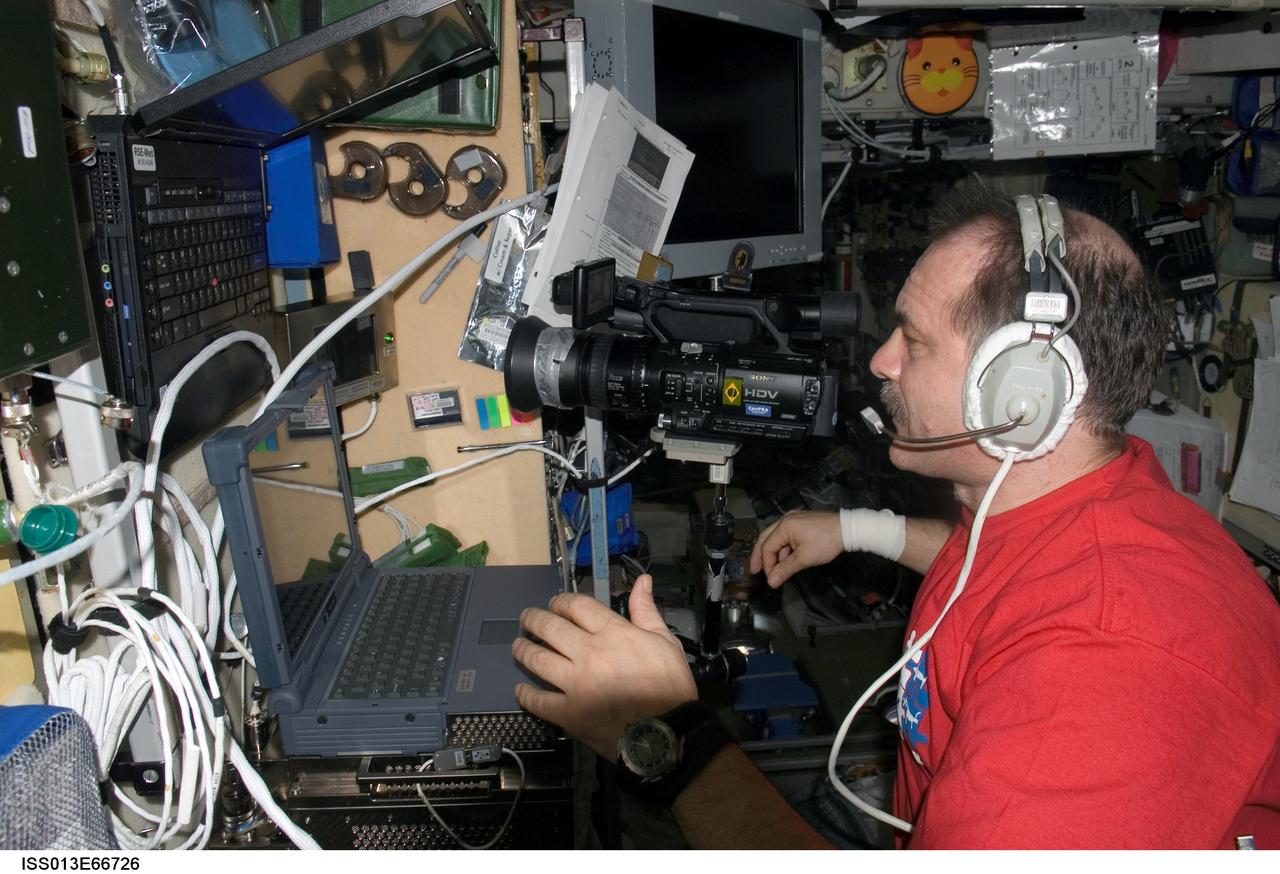
ISS013-E-66726 (August 2006) --- Cosmonaut Pavel V. Vinogradov, Expedition 13 commander representing Russia's Federal Space Agency, wears a communication system headset while using a video camcorder and computer in the Zvezda Service Module of the International Space Station.
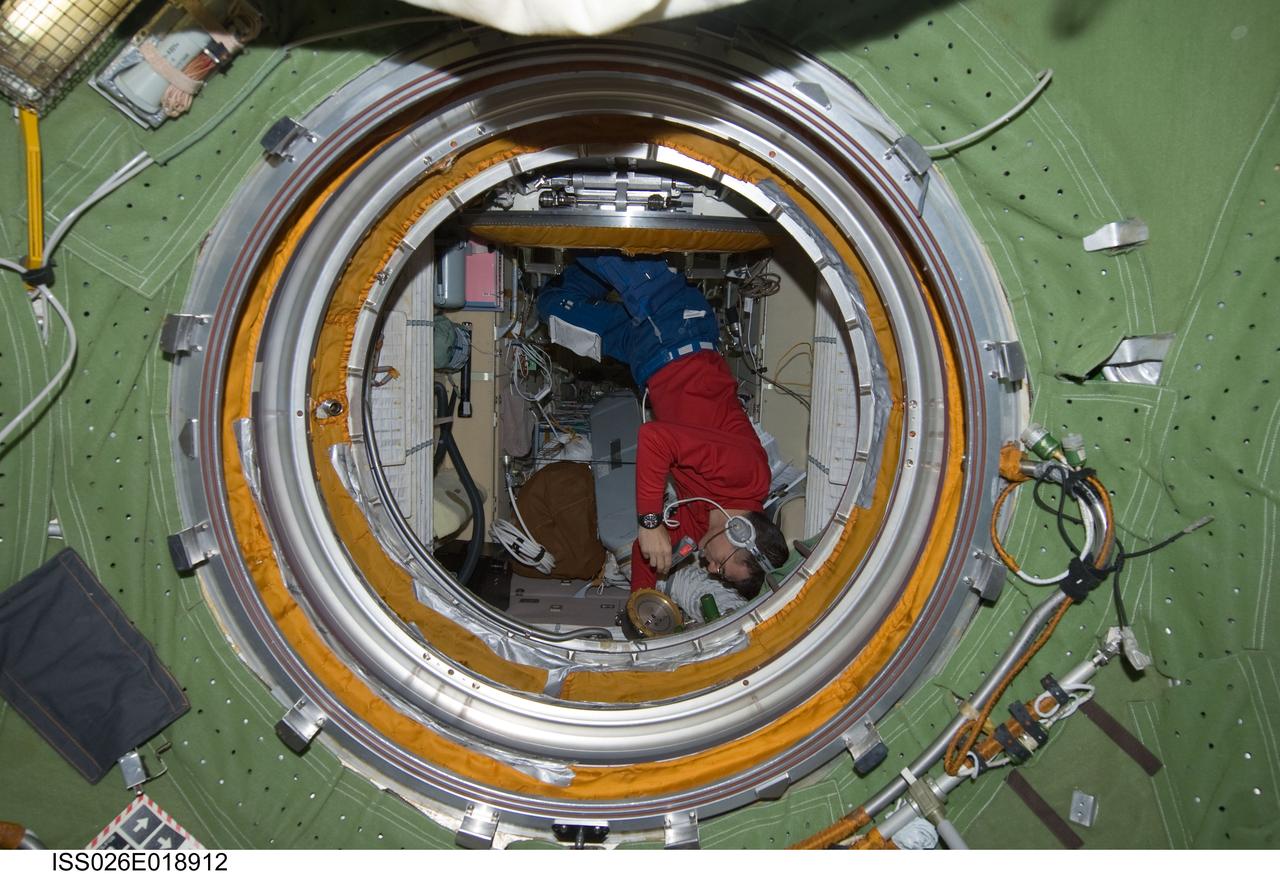
ISS026-E-018912 (21 Jan. 2011) --- While wearing a communication system headset, European Space Agency astronaut Paolo Nespoli, Expedition 26 flight engineer, uses a flashlight while checking an Absolute Pressure gauge in the Zarya Functional Cargo Block (FGB) of the International Space Station.
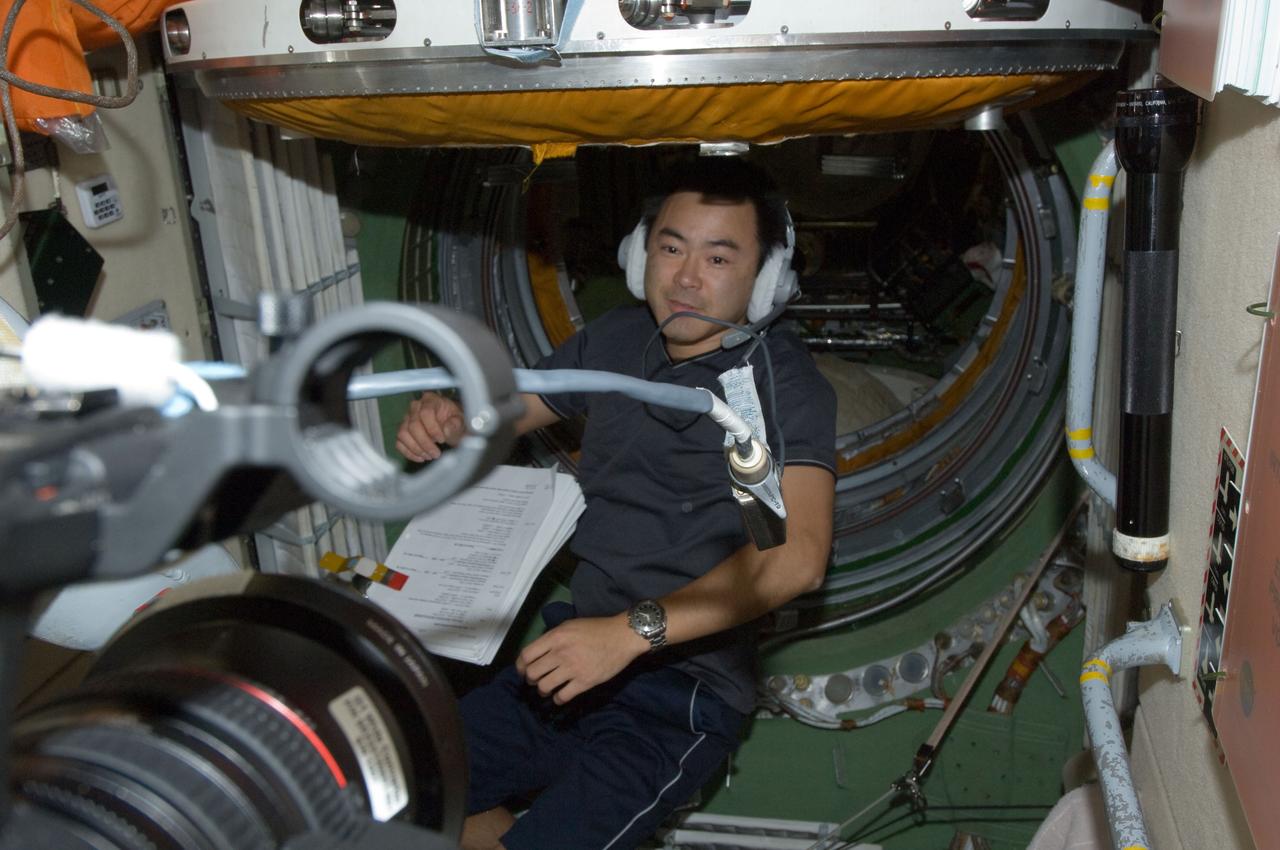
ISS032-E-020818 (20 Aug. 2012) --- Japan Aerospace Exploration Agency astronaut Aki Hoshide, Expedition 32 flight engineer, wearing a communication headset, works in the Zarya Functional Cargo Block (FGB) of the International Space Station.
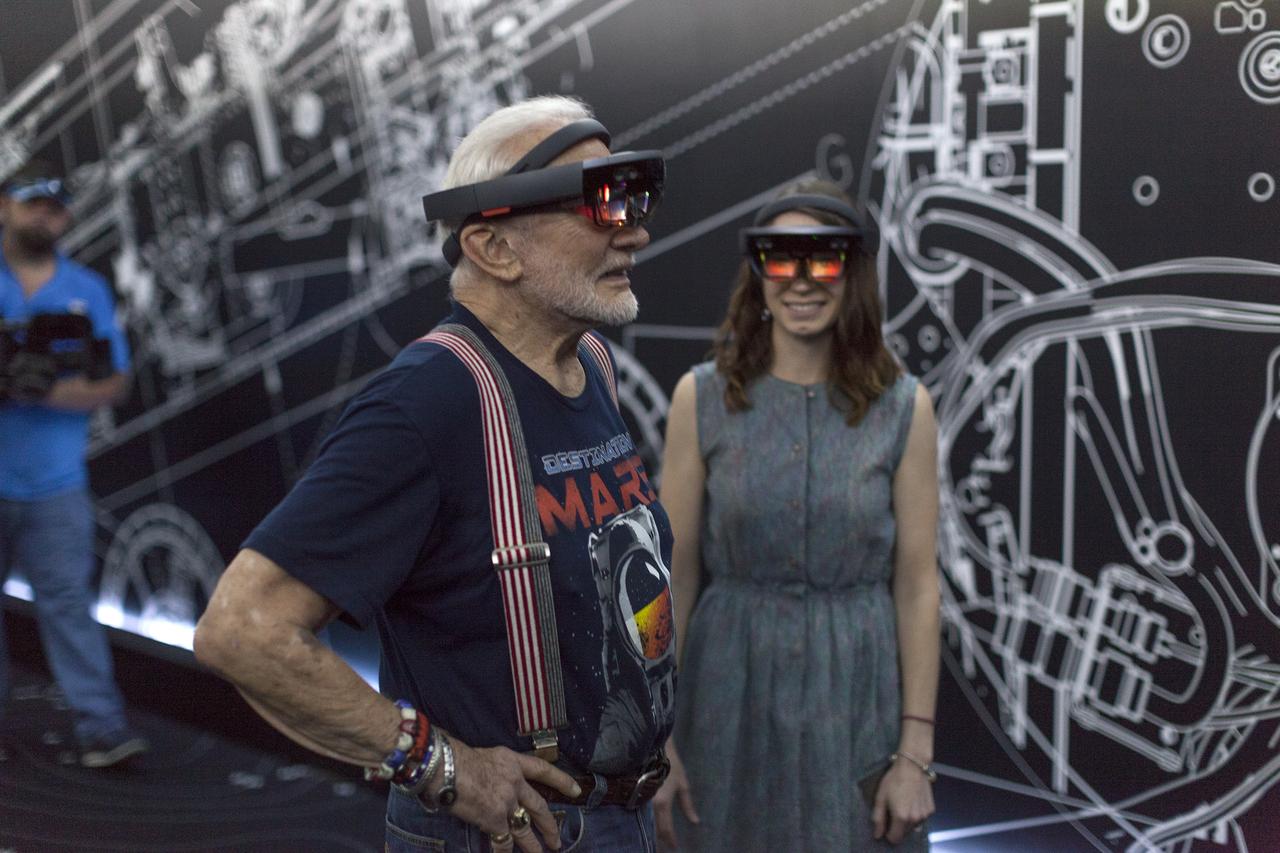
Apollo 11 astronaut Buzz Aldrin, left and Erisa Hines of NASA’s Jet Propulsion Laboratory (JPL) in Pasadena, California, try out Microsoft HoloLens mixed reality headset during a preview of the new Destination: Mars experience at the Kennedy Space Center Visitor Complex. Destination: Mars gives guests an opportunity to “visit” several sites on Mars using real imagery from NASA’s Curiosity Mars Rover. Based on OnSight, a tool created by NASA’s Jet Propulsion Laboratory in Pasadena, California, the experience brings guests together with a holographic version of Aldrin and Curiosity rover driver Hines as they are guided to Mars using Microsoft HoloLens mixed reality headset. Photo credit: NASA/Charles Babir
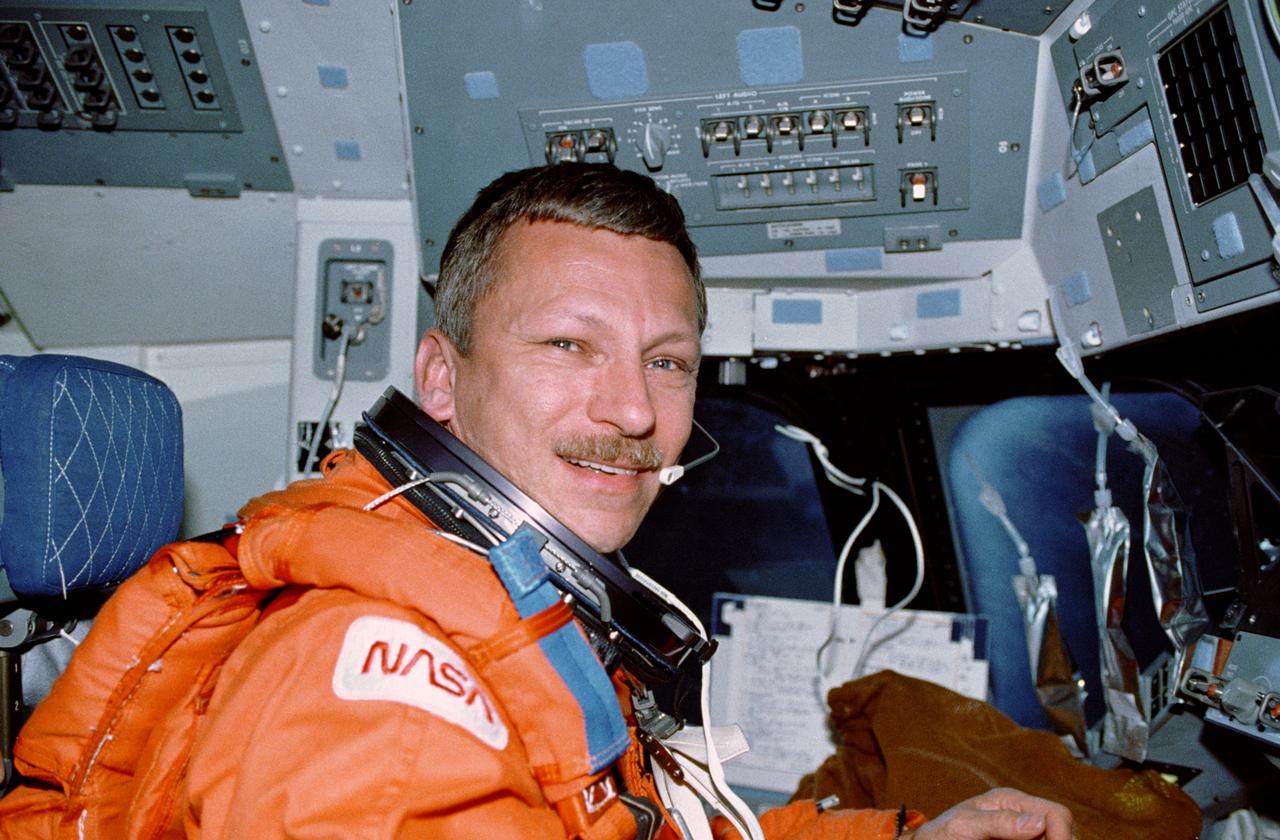
STS037-13-036 (5-11 April 1991) --- Astronaut Steven R. Nagel talks to ground controllers from the commander's station on the space shuttle Atlantis. He is wearing the special partial pressure suit used by space shuttle crew members for ascent and entry phases. Nagel, mission commander, and four other astronauts spent six days in space during which they readied the Gamma Ray Observatory (GRO) for deployment, released it into space, tested possible Space Station Freedom translation aid devices, conducted experiments, took photographs and performed other duties. This frame was taken with a 35mm camera. This was one of the visuals used by the crew members during their April 19 Post Flight Press Conference (PFPC) at the Johnson Space Center (JSC). Photo credit: NASA
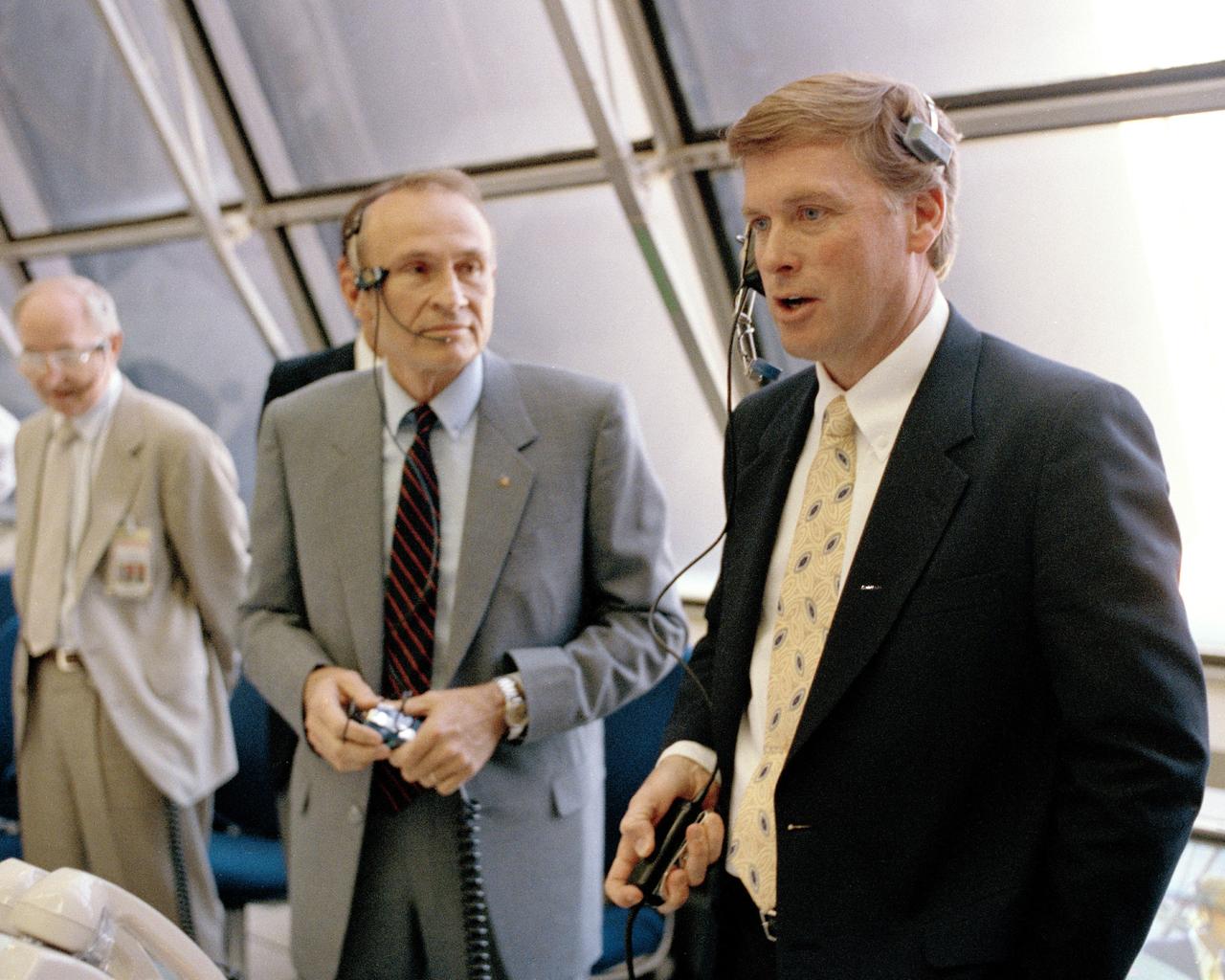
CAPE CANAVERAL, Fla. -- Vice President of the United States Dan Quayle. right. tries on a communications headset in the Launch Control Center and learns about firing room activities from Launch Director Robert Sieck. Quayle spoke with members of the STS-39 flight crew participating in the Terminal Countdown Demonstration Test, toured the launch pad and other center facilities, addressed workers and held a press conference. Image credit: NASA

A Mars celebration attendee views the surface of Mars via a virtual reality headset Saturday, June 1, 2019, in Mars, Pennsylvania. NASA is in the small town to celebrate Mars exploration and share the agency’s excitement about landing astronauts on the Moon in five years. The celebration includes a weekend of Science, Technology, Engineering, Arts and Mathematics (STEAM) activities. Photo Credit: (NASA/Bill Ingalls)

iss056e014352 (June 18, 2018) --- Flight Engineer Alexander Gerst of the European Space Agency (ESA) is in quasi-free-floating configuration for the GRASP study taking place inside Europe's Columbus laboratory module. The ESA-sponsored research is studying how the body adapts to the microgravity environment. GRASP uses virtual reality headsets as a way to understand how important gravity is, compared to the other senses, when reaching for an object.
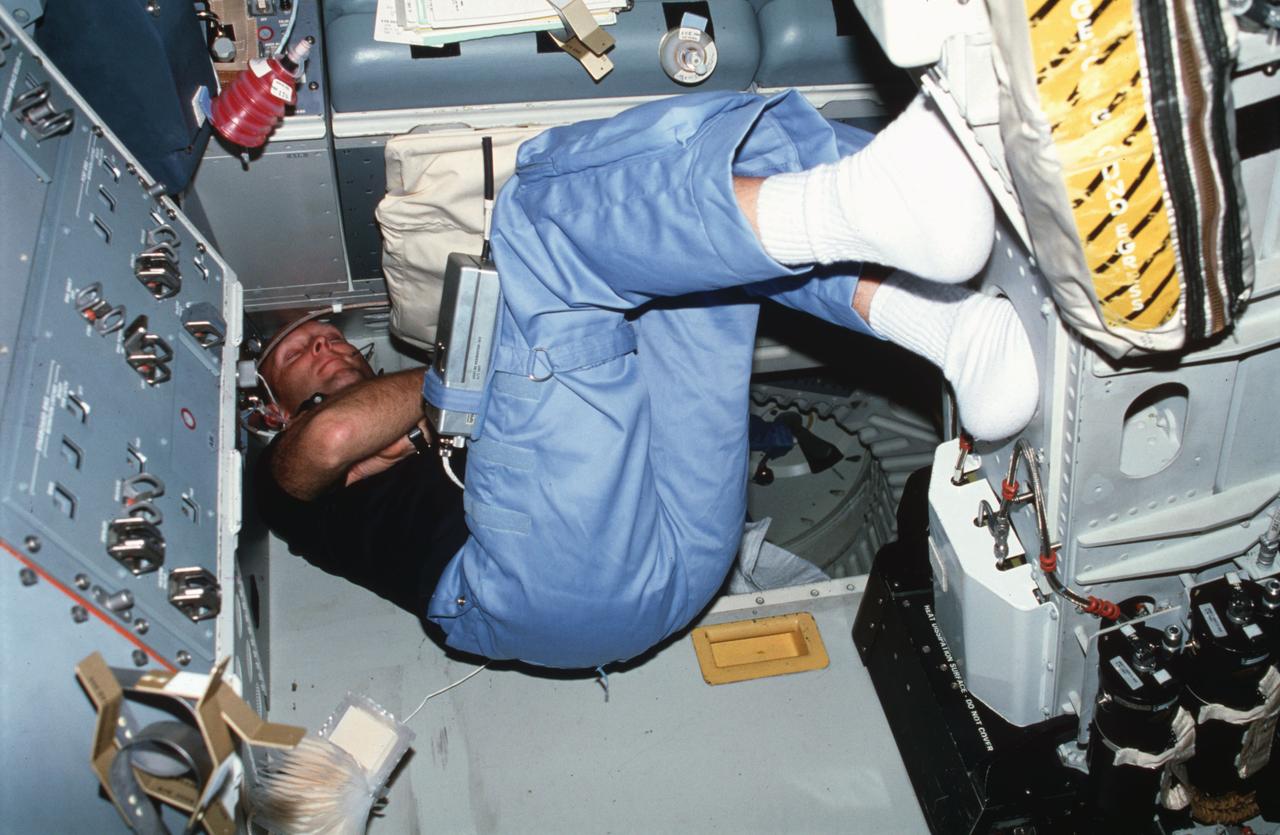
STS003-22-113 (24 March 1982) --- Astronaut Gordon Fullerton, STS-3 pilot, wearing communication kit assembly mini-headset (HDST), sleeps on aft flight deck resting his back against the floor and his feet against commander's ejection seat (S1) back. On-orbit station control panel A8 and payload station panel L15 appear above Fullerton. Special clips for holding notebooks open and beverage containers are velcroed on various panels. Photo credit: NASA
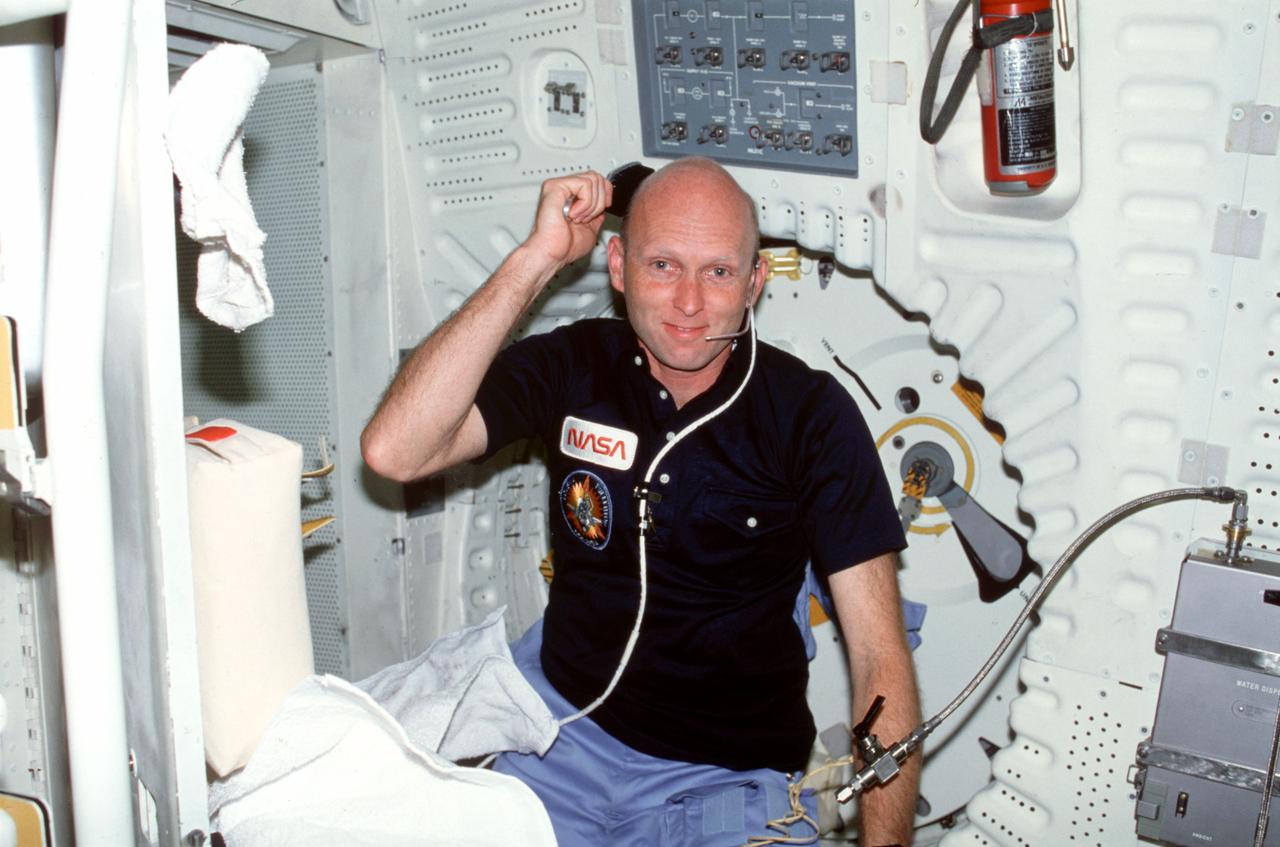
STS003-22-119 (30 March 1982) --- Astronaut Gordon Fullerton, STS-3 pilot, wearing communications kit assembly (ASSY) mini-headset (HDST), uses hygiene kit hair brush on aft middeck. He makes light of his lack of hair during a freshening up session. He makes a token effort with a hair brush. Side hatch and panel ML31C appear behind him. Photo credit: NASA
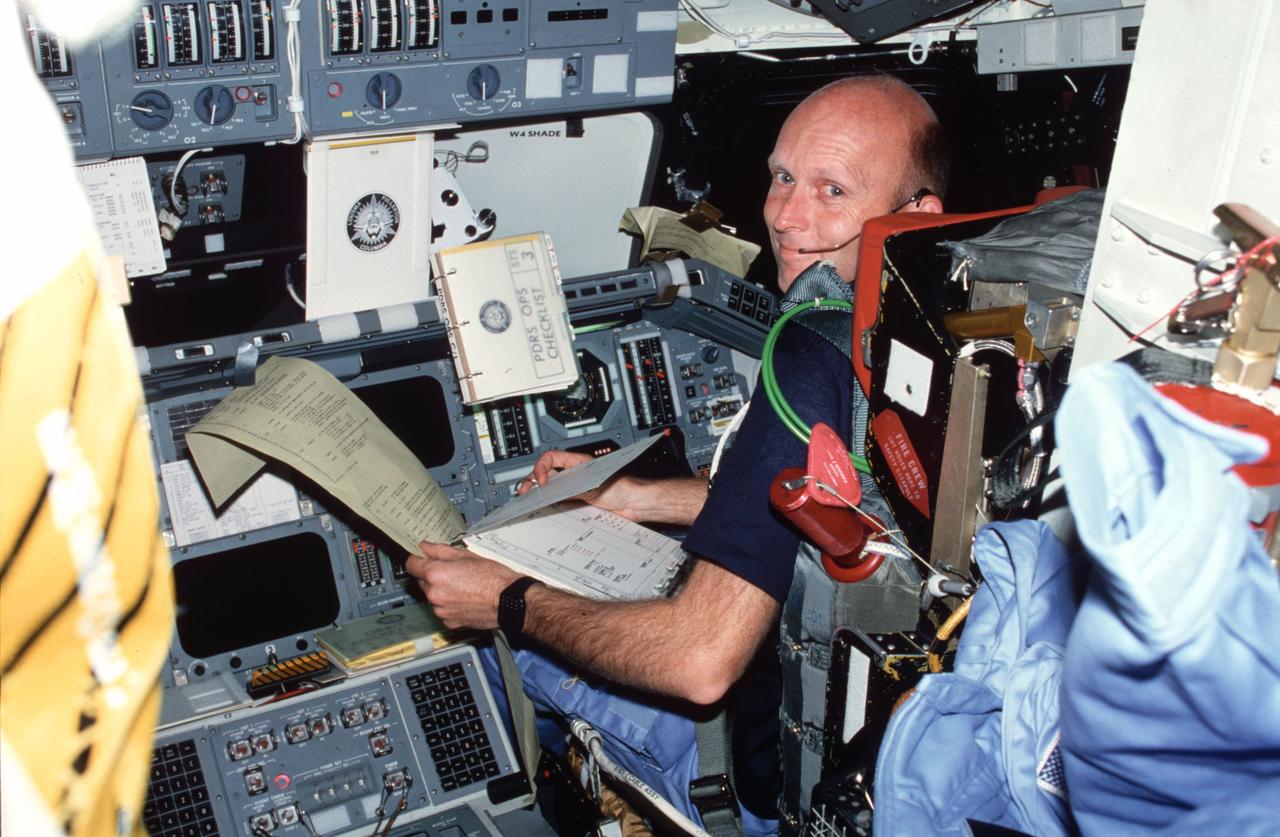
STS003-23-180 (22-30 March 1982) --- Astronaut Gordon Fullerton, STS-3 pilot, wearing communications kit assembly (ASSY) mini-headset (HDST), reviews flight data file (FDF) checklist and text and graphics system (TAGS) printout (ticker tape) while in pilots ejection seat (S2). Pilot station control panels F4, F7, F8, O3, window shade, and portable oxygen system (POS) assy appear in view. Photo credit: NASA
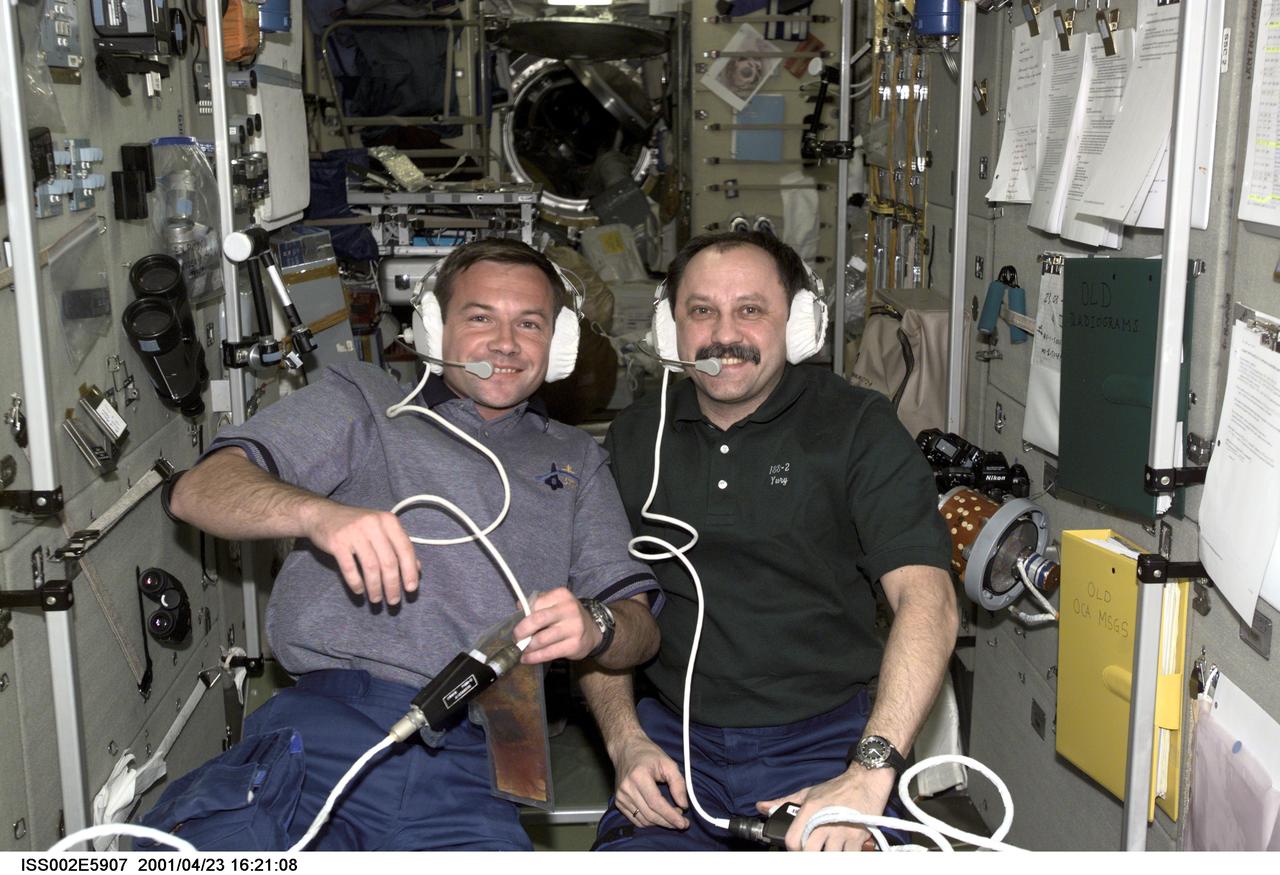
ISS002-E-5907 (23 April 2001) --- Two cosmonauts representing Rosaviakosmos, Yuri V. Lonchakov (left), STS-100 mission specialist, and Yury V. Usachev, Expedtion Two mission commander, communicate with mission control using headsets in the Zvezda Service Module during the STS-100 visit to the International Space Station (ISS). The image was taken with a digital still camera.
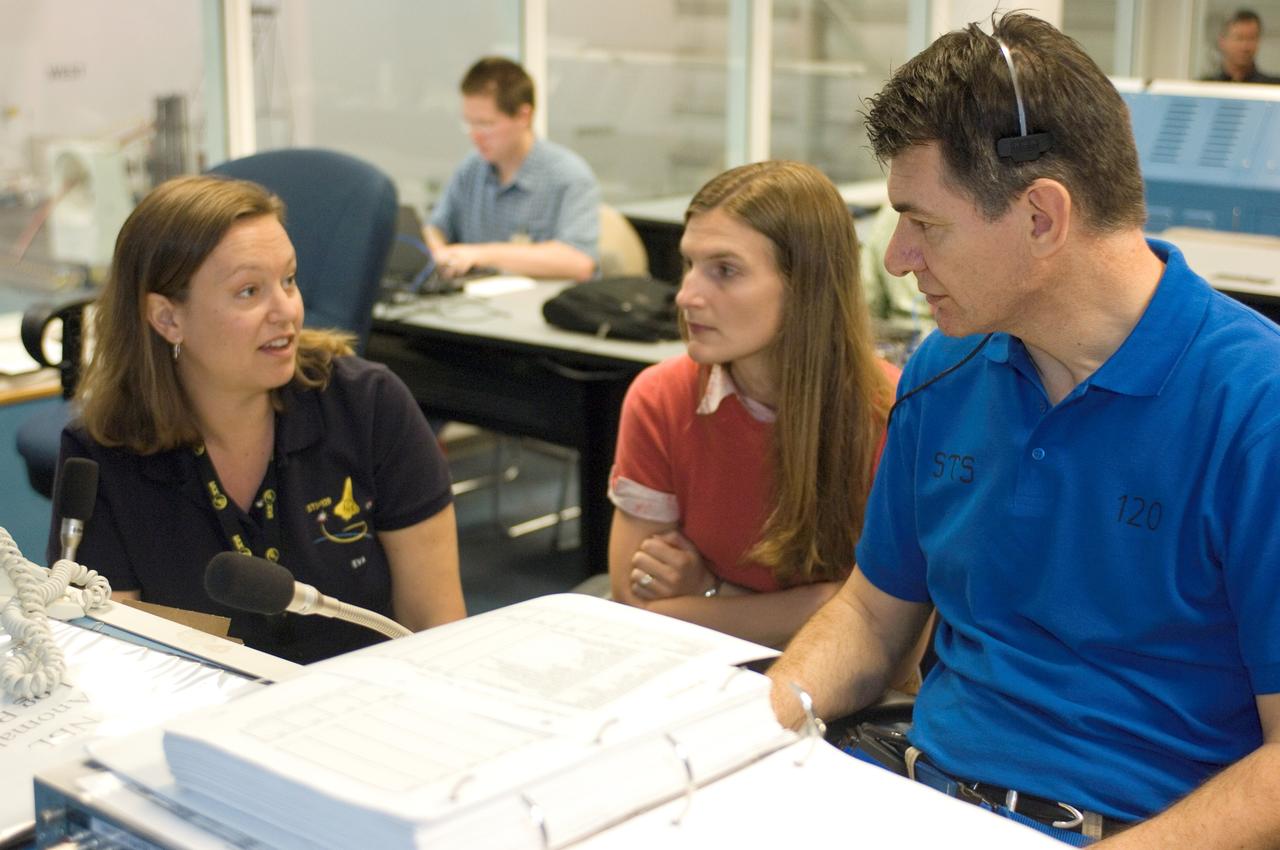
JSC2007-E-46556 (18 Sept. 2007) --- European Space Agency (ESA) astronaut Paolo Nespoli (with communication headset), STS-120 mission specialist, participates in a training session at a console in the simulation control area in the Neutral Buoyancy Laboratory (NBL) at the Sonny Carter Training Facility (SCTF) near Johnson Space Center. Dina E. Contella (left) and Sarah Kazukiewicz Korona (center) assisted Nespoli.
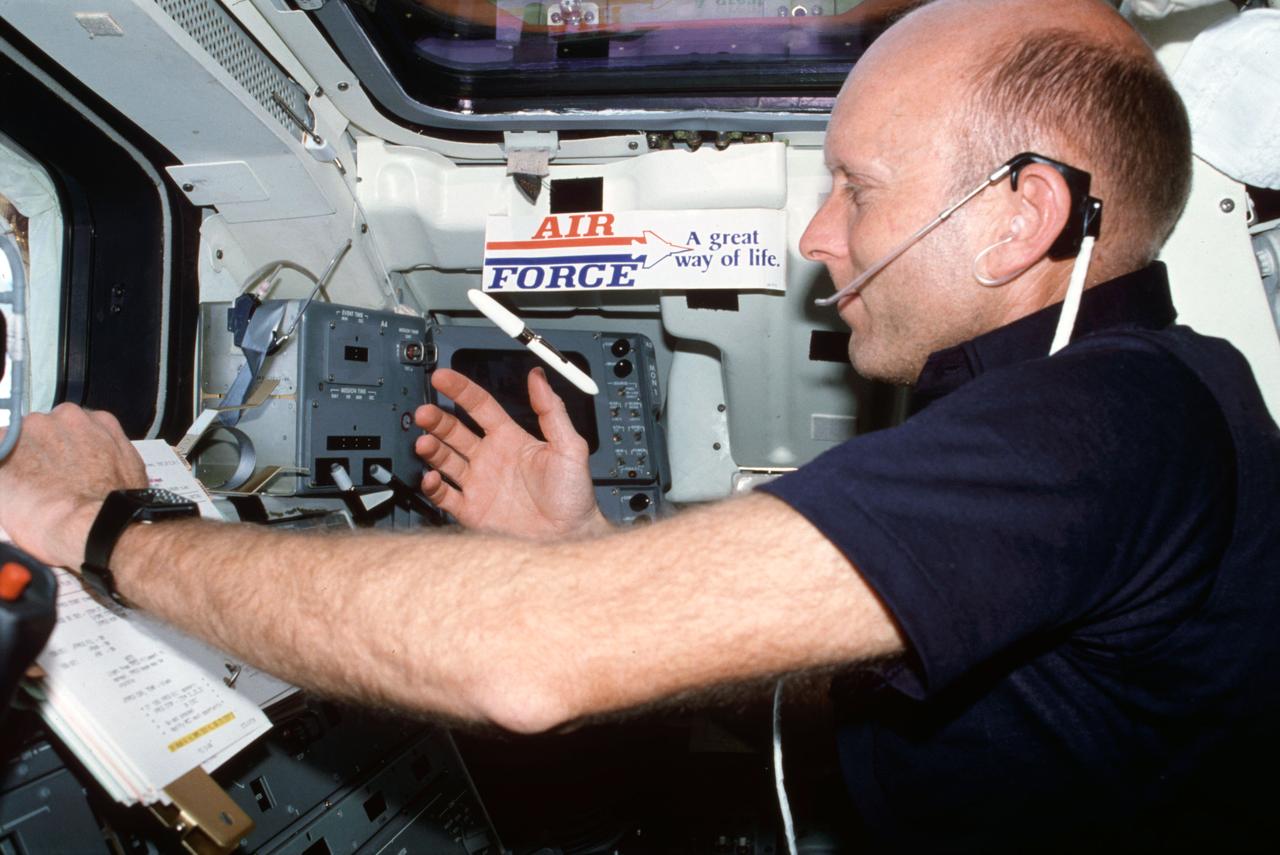
STS003-21-086 (22-30 March 1982) --- Astronaut Gordon Fullerton, STS-3 pilot, wearing communications kit assembly mini-headset, watches a free-floating pen during checklist procedures at the aft flight deck on-orbit station. Taken from the aft flight deck starboard side, Fullerton is seen in front of panels A7 and A8 with W8 and a "United States Air Force - a Great Way of Life" decal overhead. Photo credit: NASA
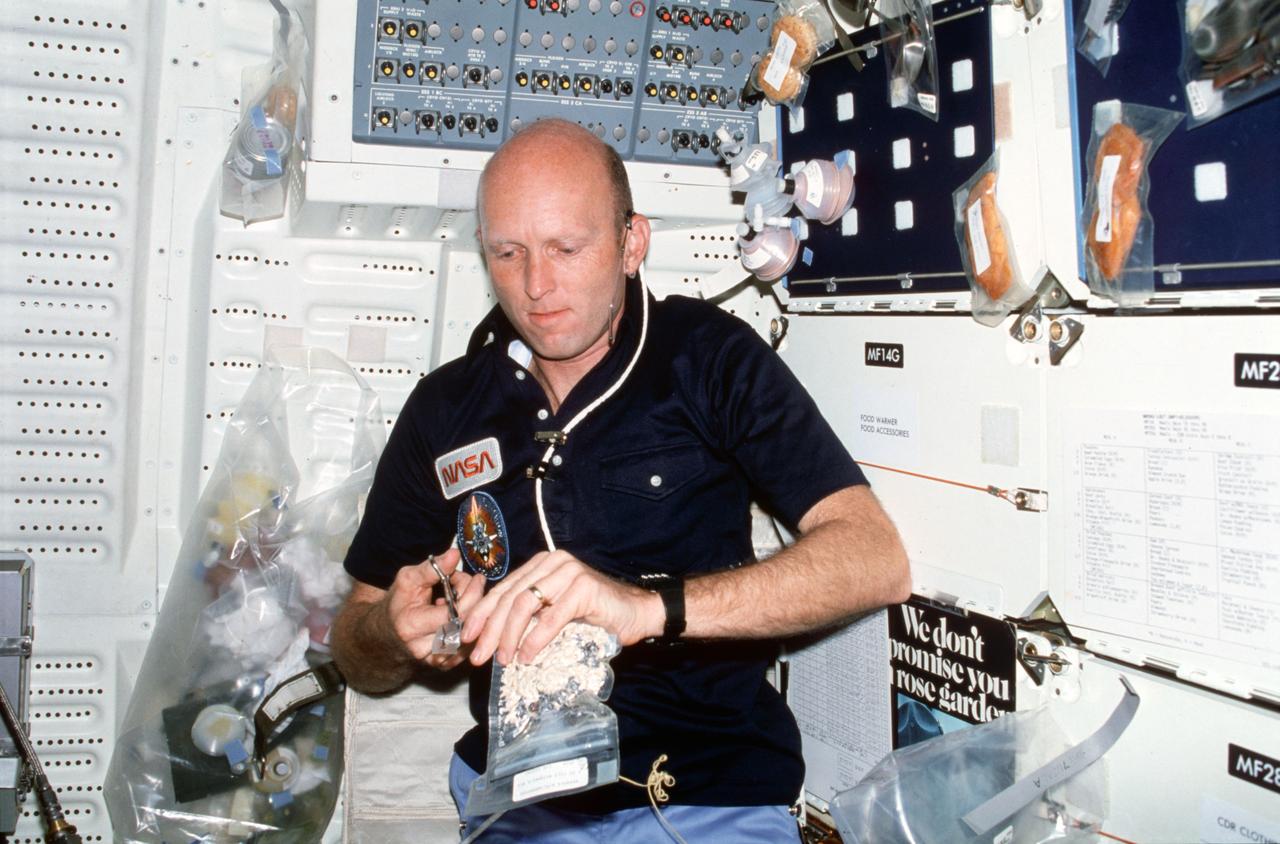
STS003-26-253 (30 March 1982) --- Astronaut Gordon Fullerton, STS-3 pilot, wearing communications kit assembly (assy) mini-headset (HDST), prepares meal on middeck. Fullerton clips corner of rehydratable food (cereal) package with scissors. The opening will allow Fullerton to insert JSC water dispenser kit water gun in order to heat contents with hot water. Meal tray assembly is secured to forward middeck locker and holds additional food packages and beverage containers. Photo credit: NASA
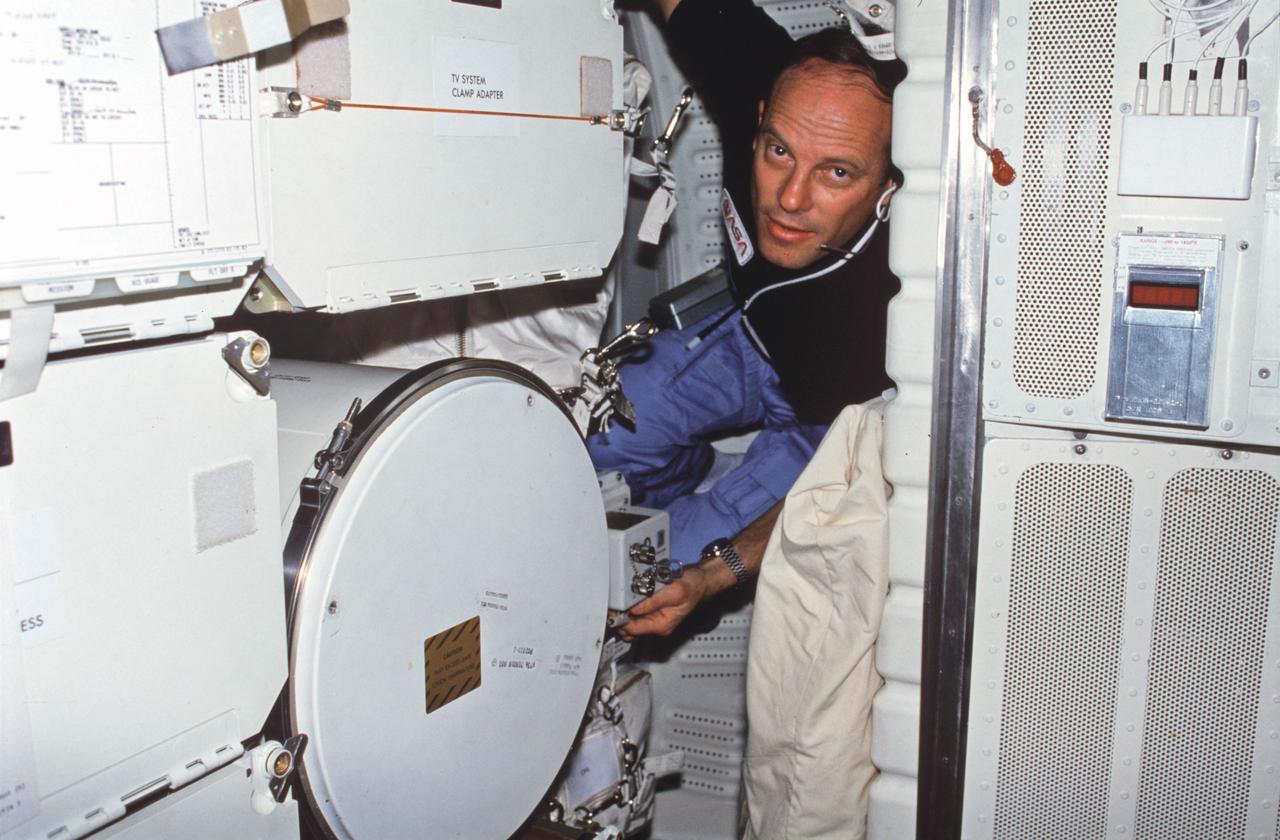
STS003-22-127 (22-30 March 1982) --- Astronaut Jack R. Lousma, STS-3 commander, wearing communications kit assembly (assy) mini-headset, adjusts controls on Monodisperse Latex Reactor (MLR) experiment located in forward middeck lockers MF57H and MF57K. To reach MLR support electronics assy controls, Lousma squeezes in between forward lockers and Development Flight Instrument (DFI) unit on starboard bulkhead. Photo credit: NASA
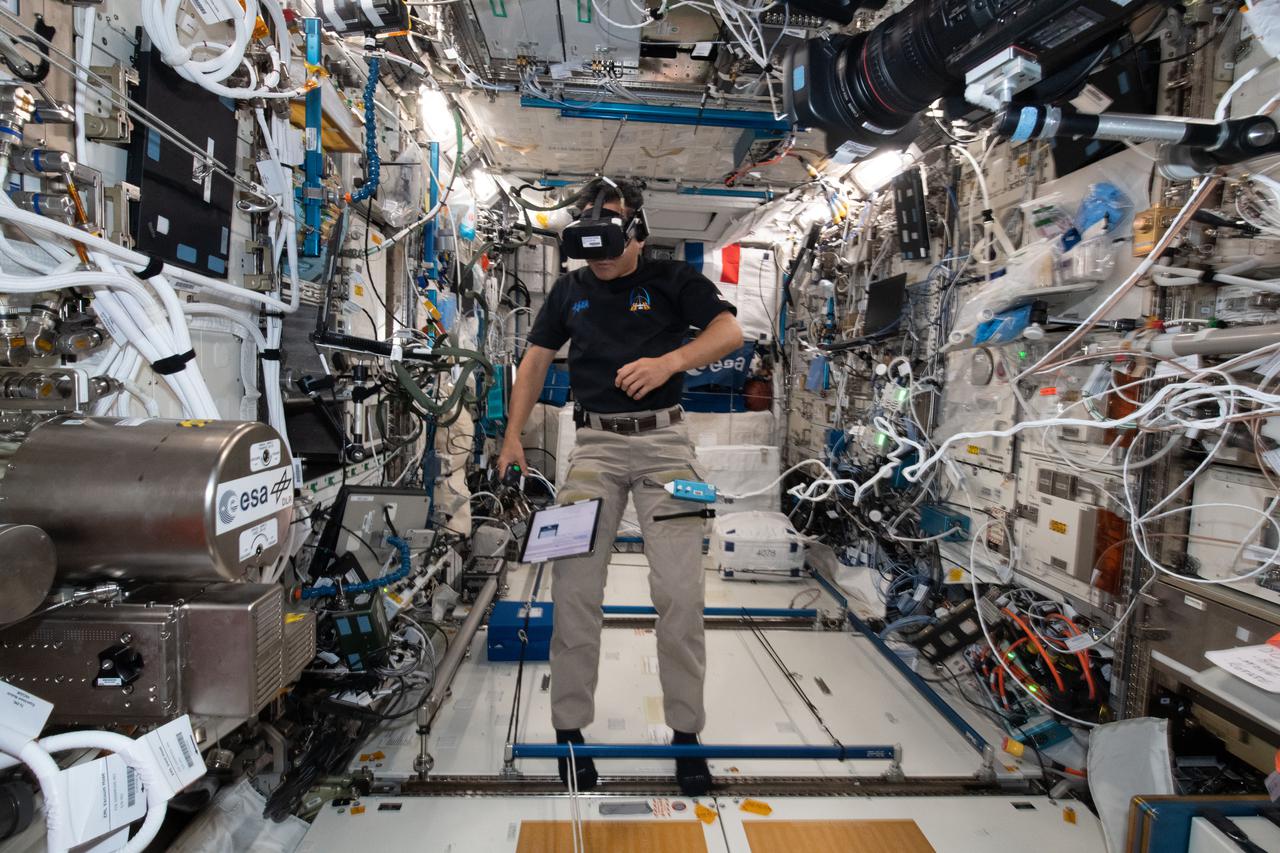
iss065e048382 (May 19, 2021) --- Expedition 65 Commander Akihiko Hoshide of the Japan Aerospace Exploration Agency is pictured wearing a virtual reality headset and clicking a trackball for the Time Perception experiment. The human research study takes place inside the Columbus laboratory module and explores how astronauts perceive space and time which may impact navigation and fine motor coordination in microgravity.
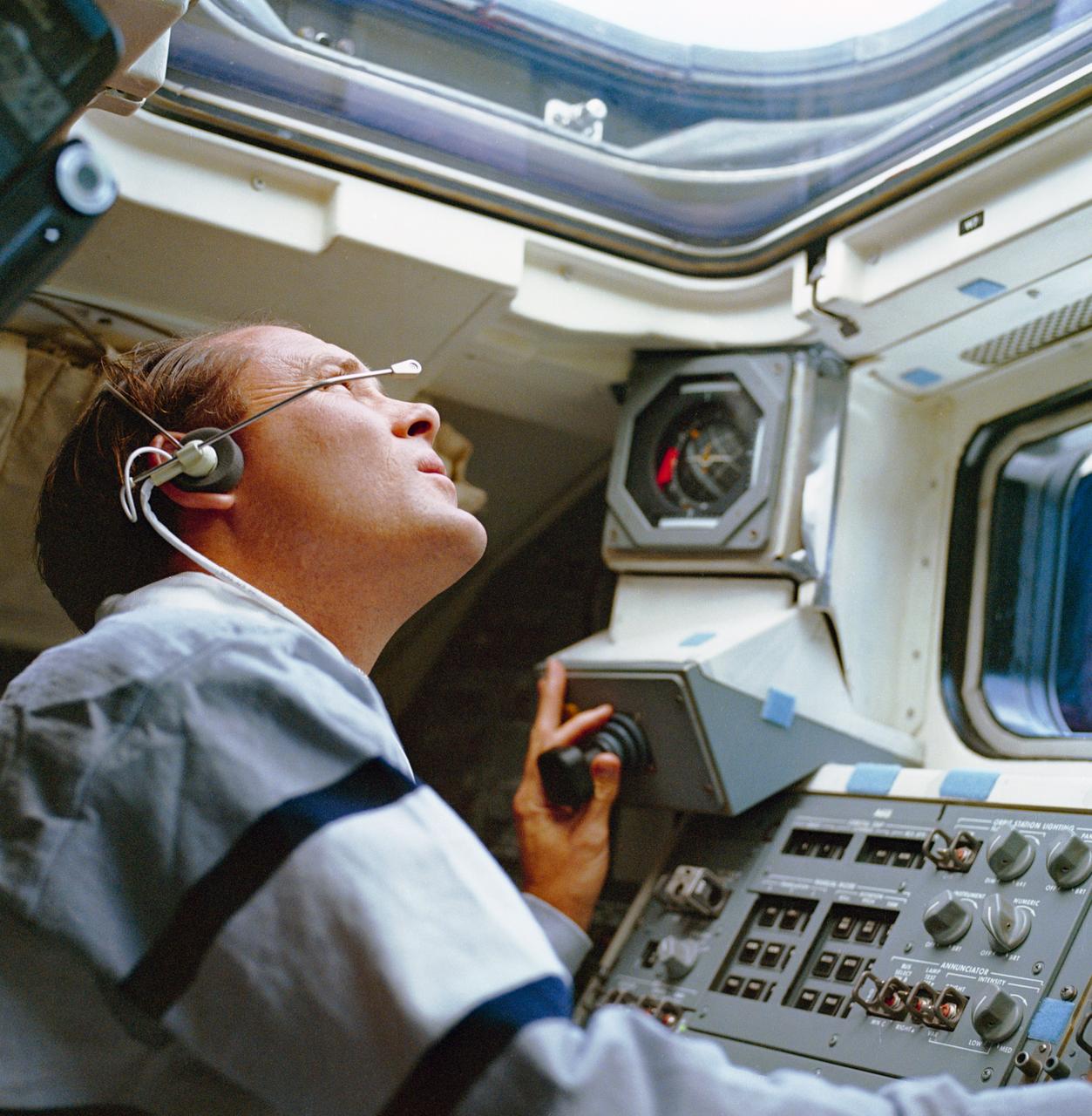
STS033-93-011 (27 Nov 1989) --- Astronaut Manley L. Carter, Jr., STS-33 mission specialist, operates translation hand control (THC) at the aft flight deck on orbit station while peering out overhead window W7. Carter's communications kit assembly headset microphone extends across his face.
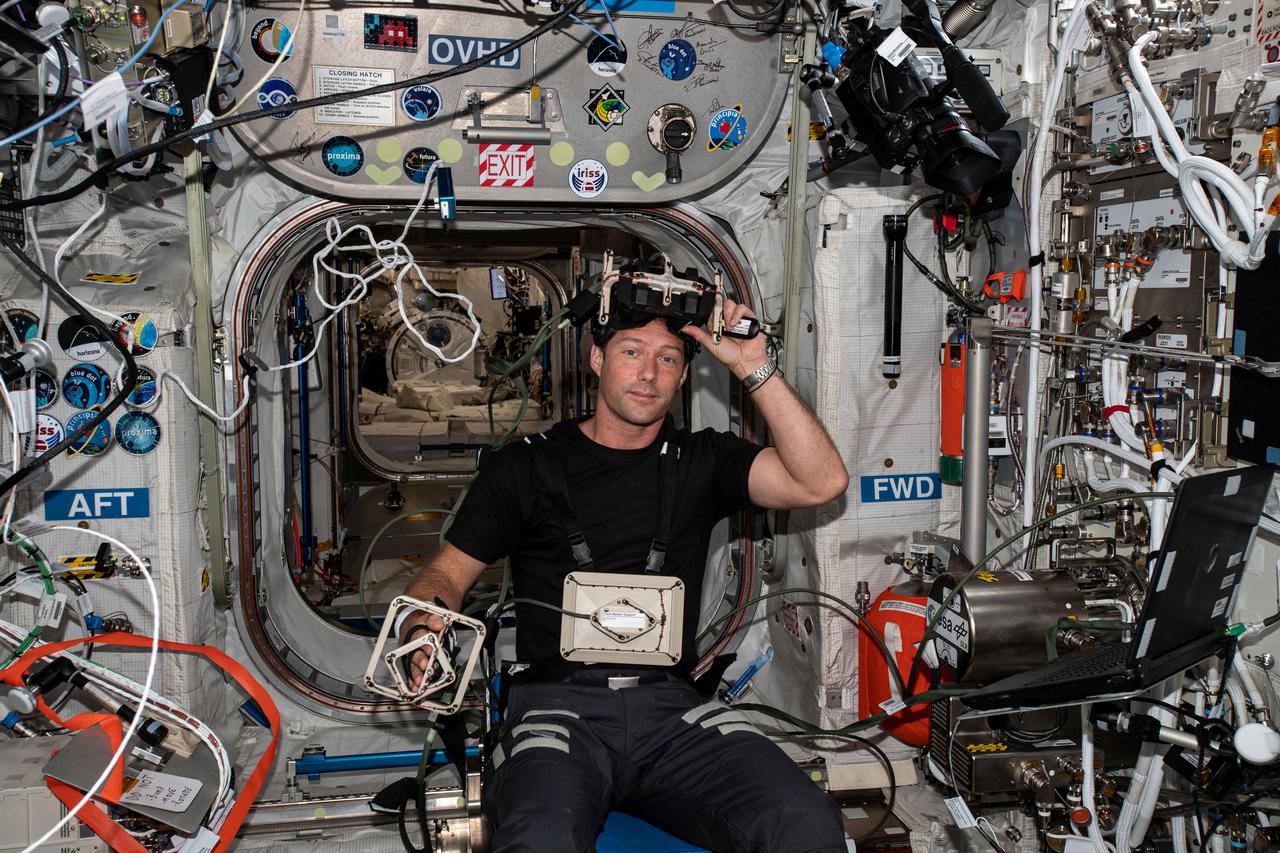
iss065e009555 (April 29, 2021) --- ESA (European Space Agency) astronaut and Expedition Flight Engineer Thomas Pesquet is seated inside the Columbus laboratory module for the GRASP experiment. The central nervous system investigation requires an astronaut to wear a virtual reality headset and reach toward virtual objects to help scientists understand how the brain adapts to microgravity.
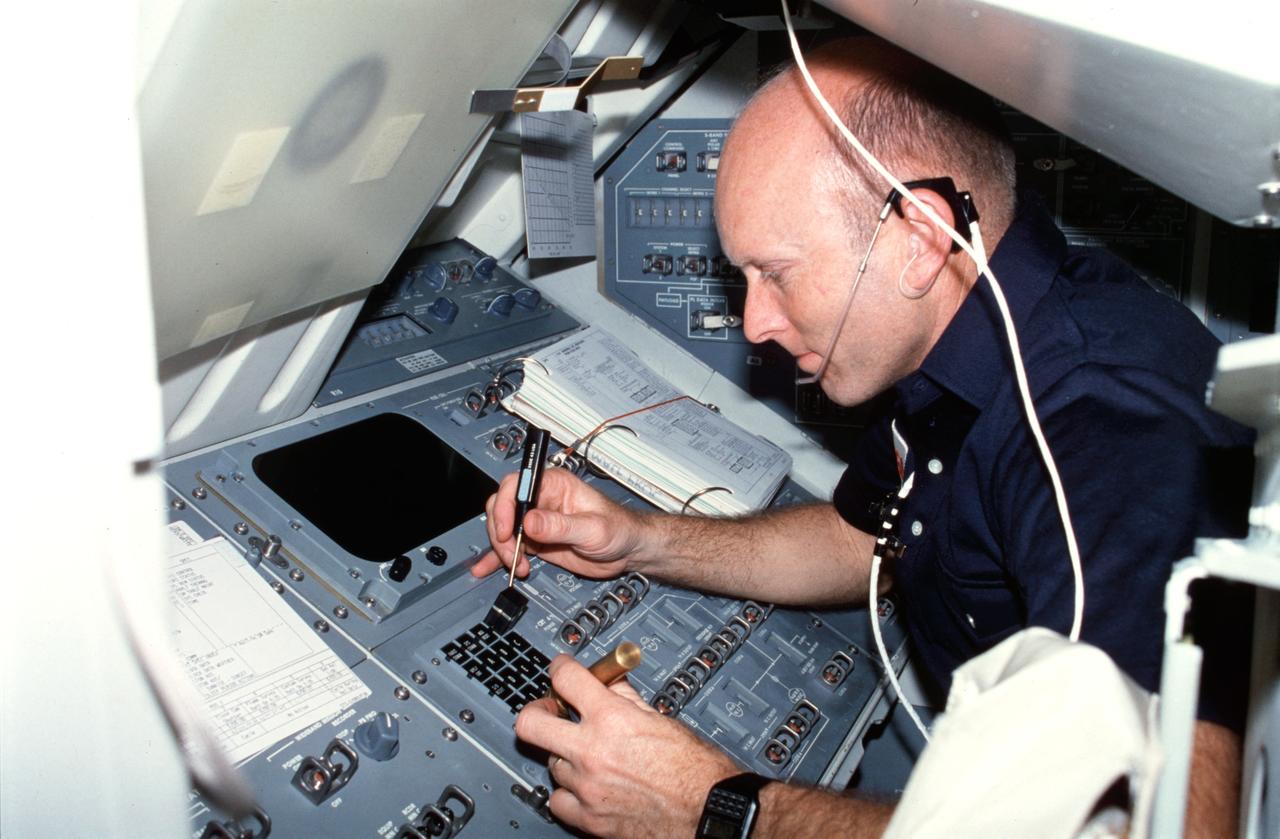
STS003-25-228 (22-30 March 1982) --- Astronaut Gordon Fullerton, STS-3 pilot, wearing communication kit assembly (ASSY) mini-headset (HDST) and using a screwdriver and flashlight (penlight), replaces acknowledge (ACK) key on aft flight deck mission station control panel R12L keyboard. Photo credit: NASA
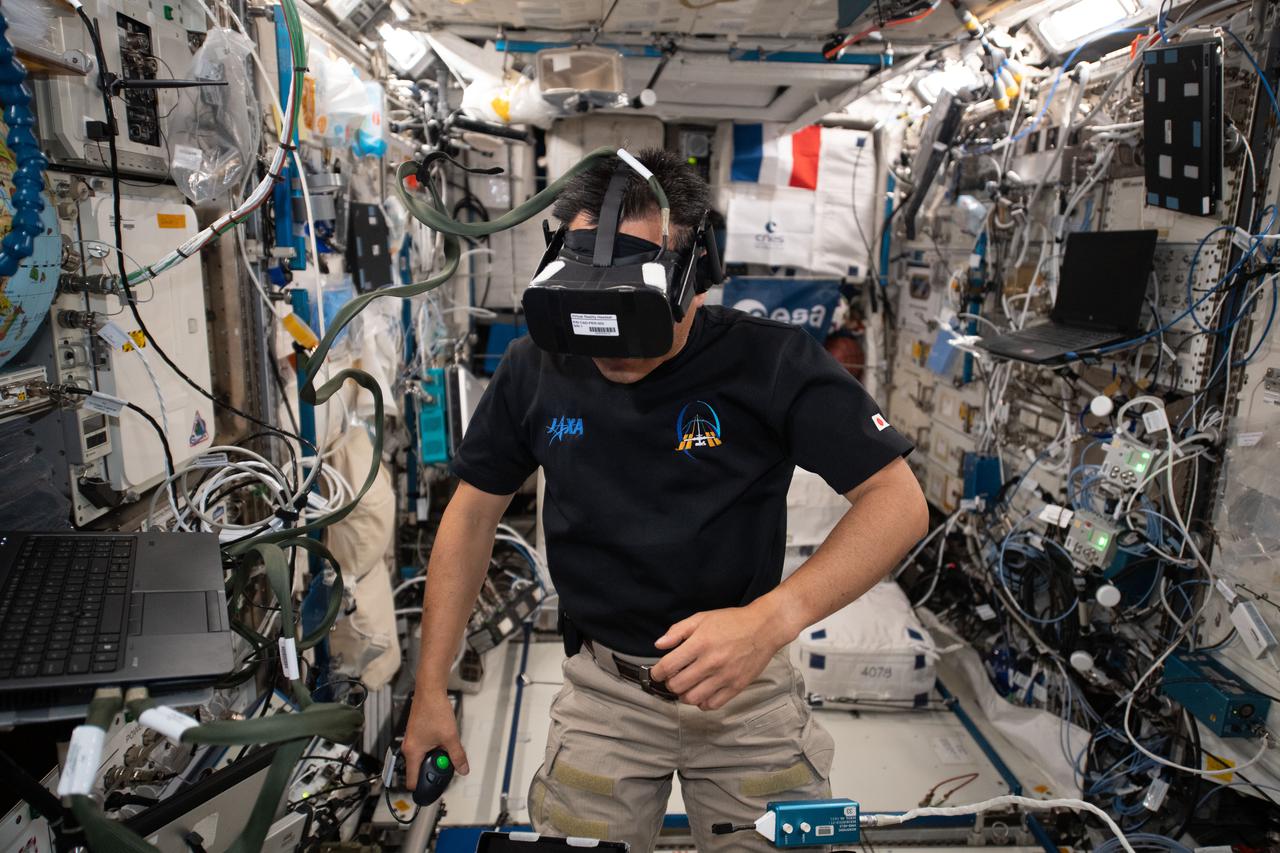
iss065e048387 (May 19, 2021) --- Expedition 65 Commander Akihiko Hoshide of the Japan Aerospace Exploration Agency is pictured wearing a virtual reality headset and clicking a trackball for the Time Perception experiment. The human research study takes place inside the Columbus laboratory module and explores how astronauts perceive space and time which may impact navigation and fine motor coordination in microgravity.
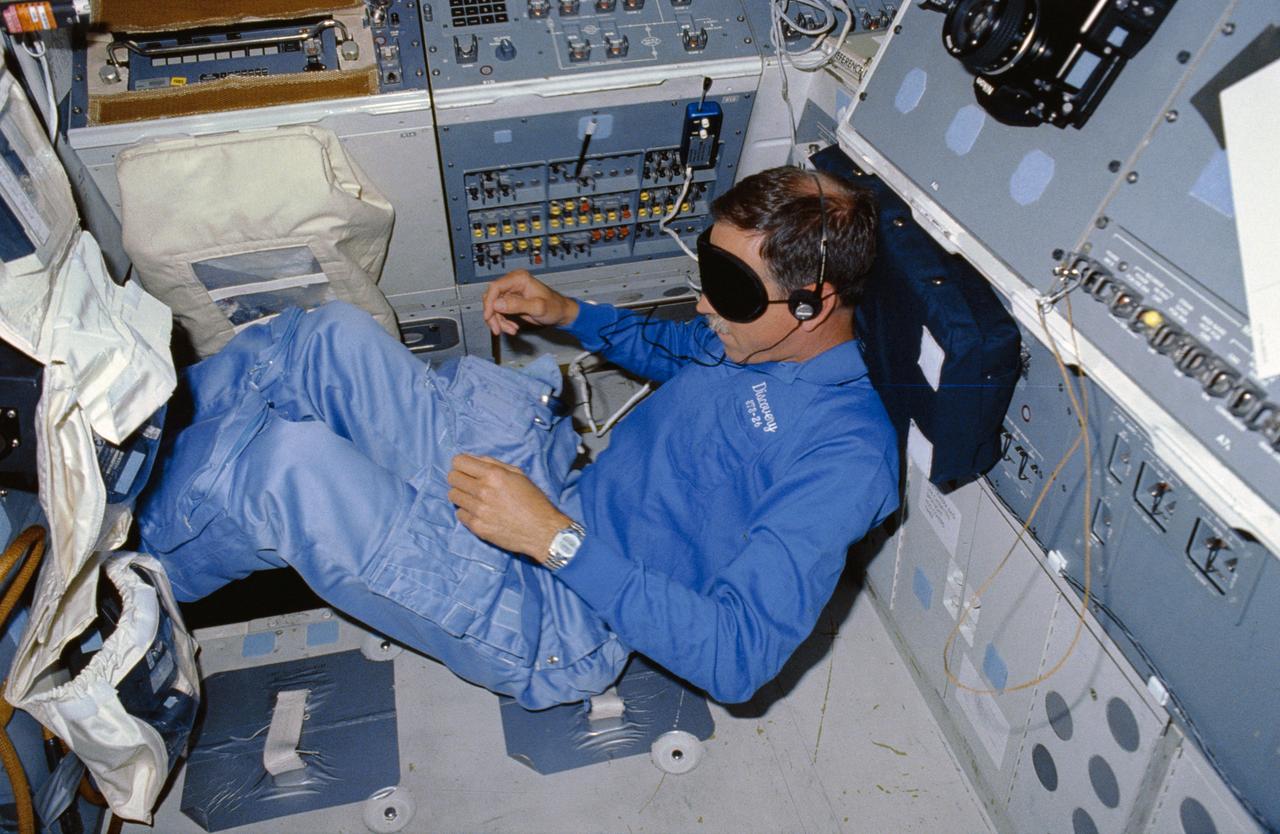
STS026-09-021 (3 Oct 1988) --- Astronaut Richard O. Covey, STS-26 pilot, wearing sleep mask (blindfold) and a headset, props his feet under the pilots seat and rests his head and back on the aft flight deck on orbit station panels while he sleeps. At Covey's right are the mission station control panels.
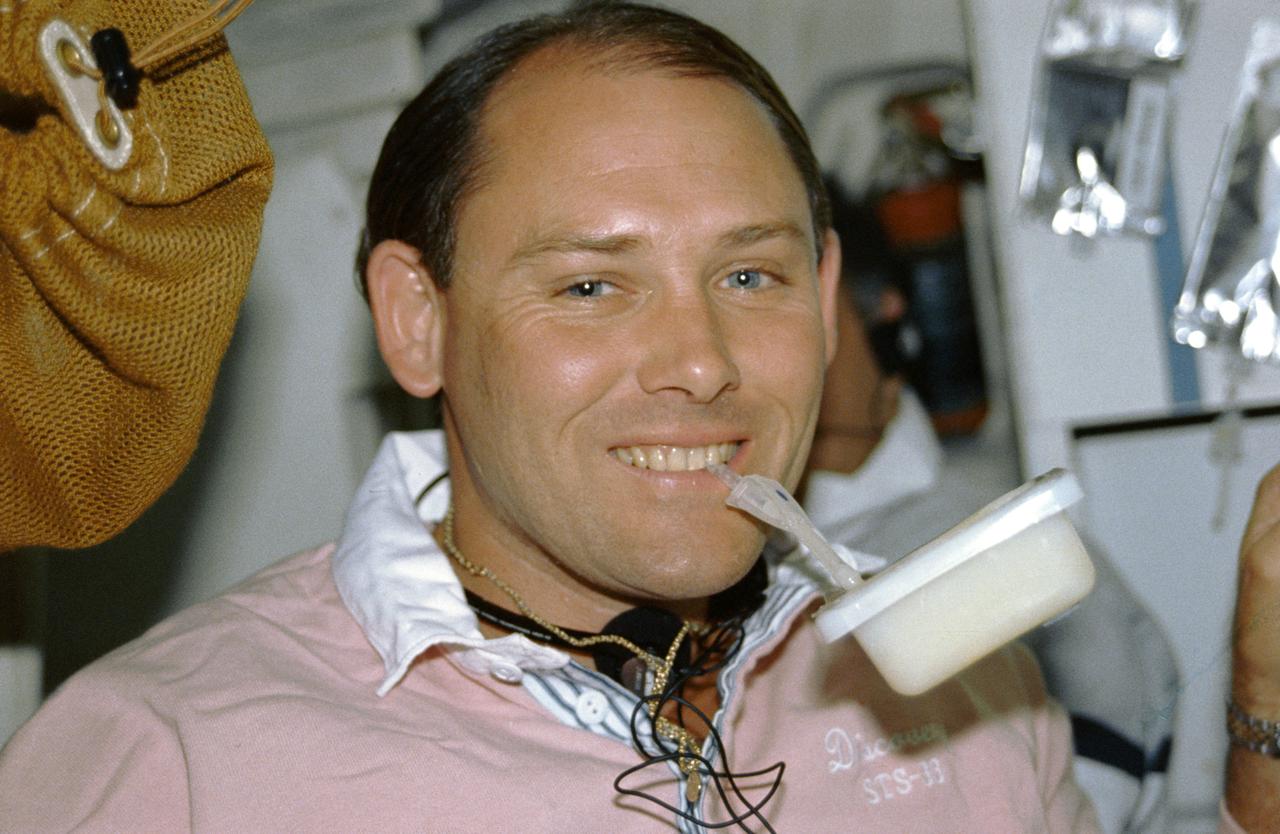
STS033-17-005A (27 Nov 1989) --- Astronaut Manley L. Carter, Jr., STS-33 mission specialist, smiling, sips drink from a beverage container using a straw on Discovery's, Orbiter Vehicle (OV) 103's, middeck. Around Carter's neck are a necklace and tape recorder headphones (headset). A net stowage bag free floats next to Carter's head.
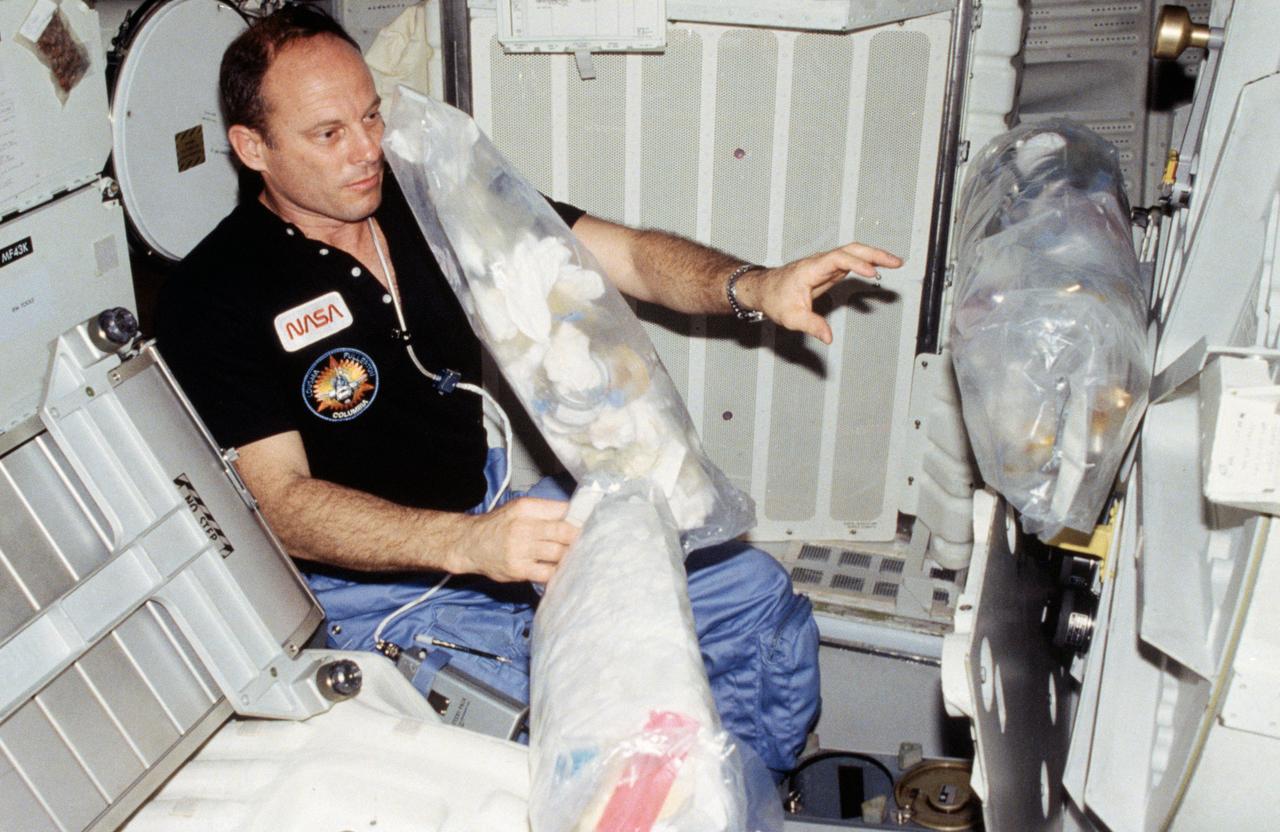
STS003-25-231 (22-30 March 1982) --- Astronaut Jack R. Lousma, STS-3 commander, wearing communication kit assembly mini headset, gathers three freefloating plastic trash bags filled with empty containers, paper towels, straws, etc. Lousma will stow them in a designated stowage volume. Photo credit: NASA
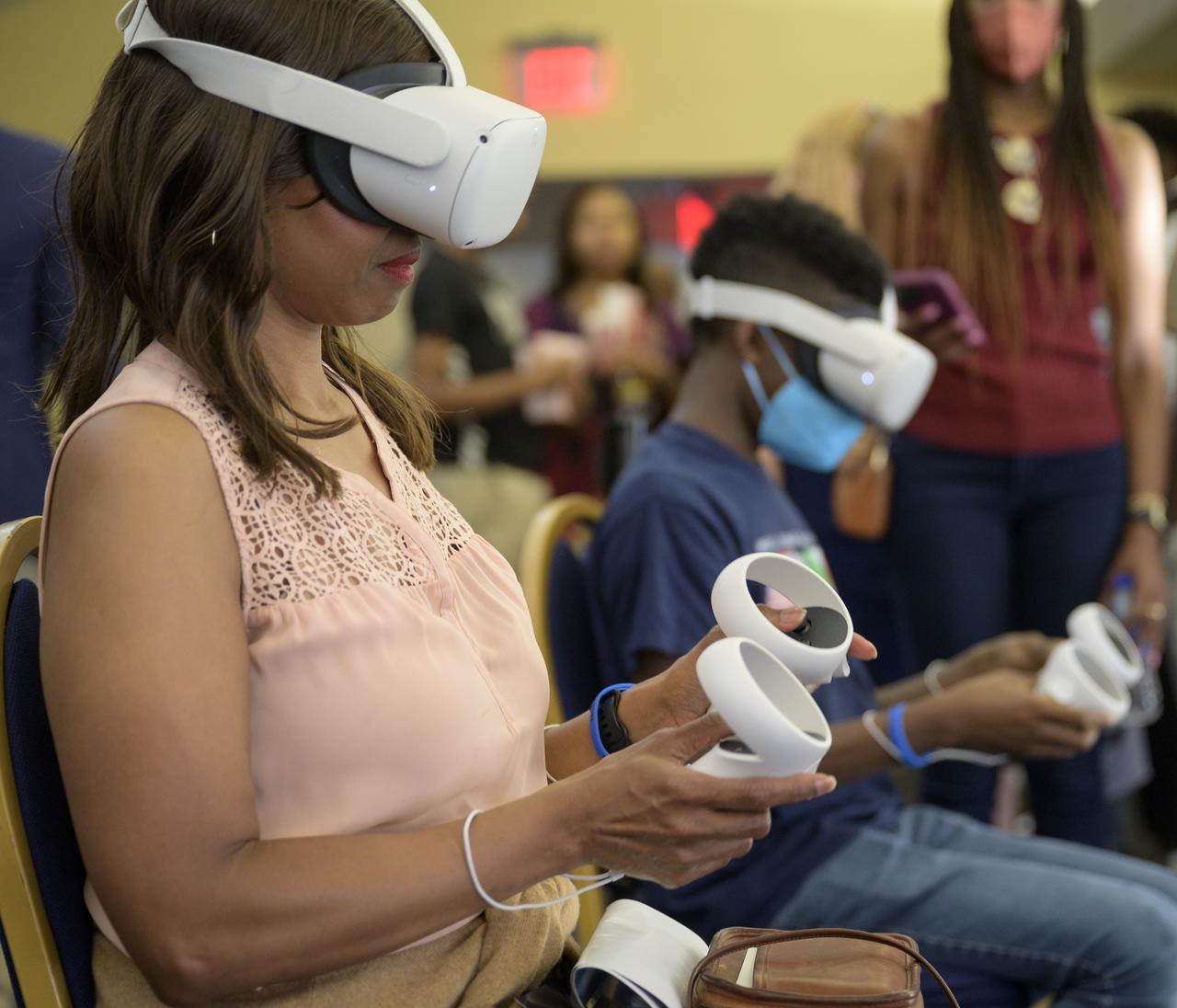
Attendees try on Oculus headsets and experience the International Space Station using virtual reality prior to the screening of the NASA produced documentary “The Color of Space” at Howard University’s Cramton Auditorium in Washington, Saturday, June 18, 2022. Premiering on Juneteenth, the federal holiday commemorating the end of slavery in the United States, “The Color of Space” is an inspirational documentary that tells the stories of NASA’s Black astronauts determined to reach the stars. Photo Credit: (NASA/Bill Ingalls)
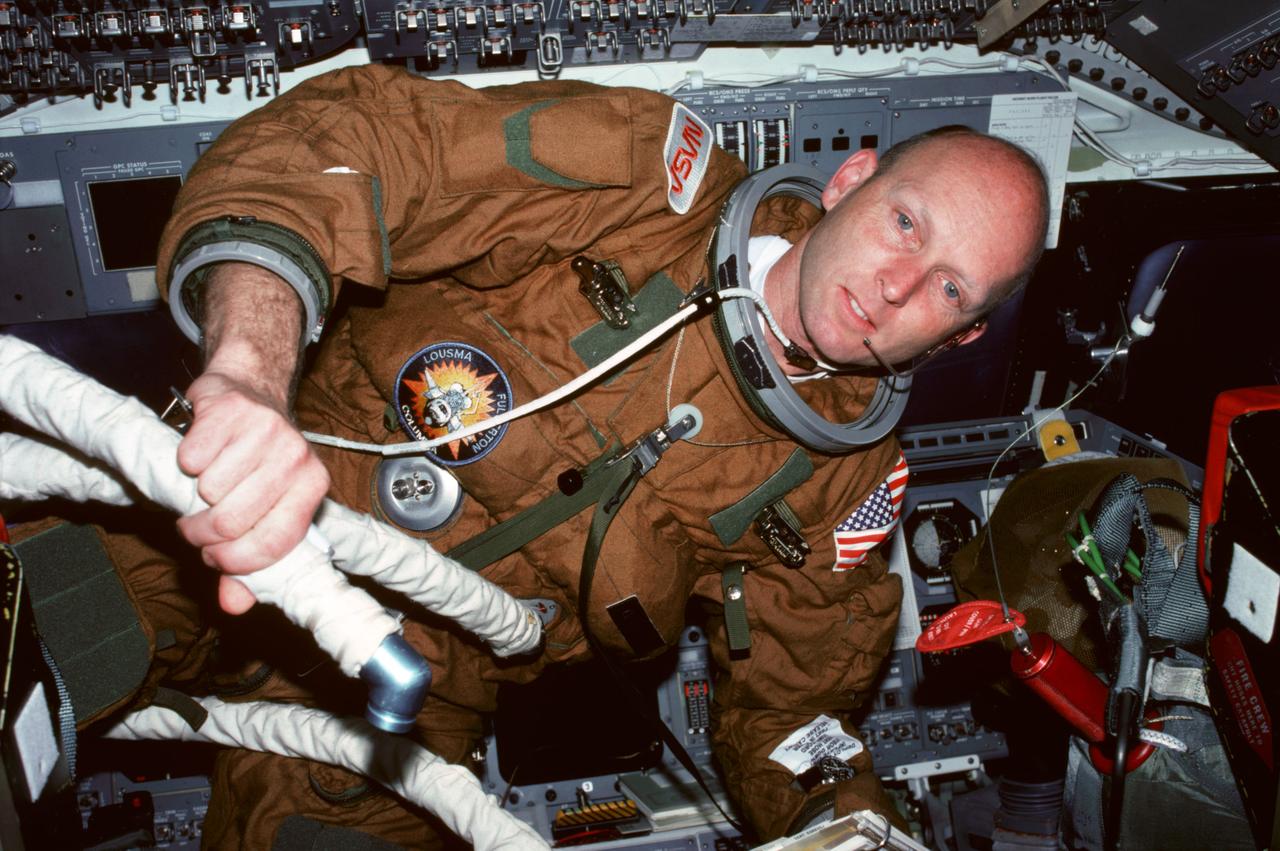
STS003-31-290 (30 March 1982) --- Astronaut Gordon Fullerton, STS-3 pilot, wearing communications kit assembly (ASSY) mini-headset (HDST) and ejection escape suit (EES), holds flexible hose attached to his EES vent hose fitting and second hose for commander's EES while behind pilots ejection seat (S2) seat back on the aft flight deck. Forward flight deck control panels are visible in the background. Photo credit: NASA
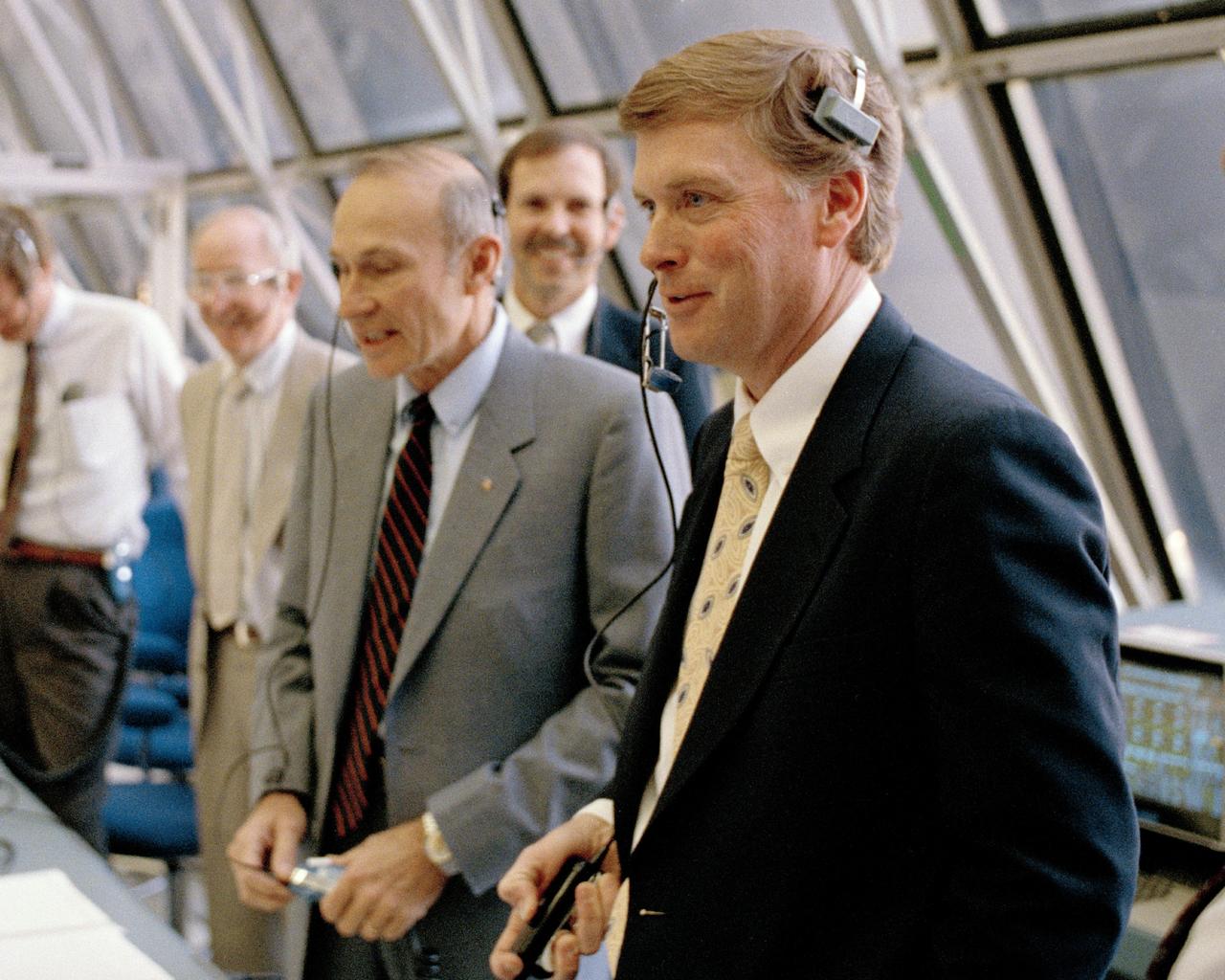
Vice President of the United States Dan Quayle, right, tries on a communications headset in the Launch Control Center and learns about firing room activities from Launch Director Robert Sieck. Quayle spoke with members of the STS-39 flight crew participating in the Terminal Countdown Demonstration Test, toured the launch pad and other center facilities, addressed workers and held a press conference. Image credit: NASA
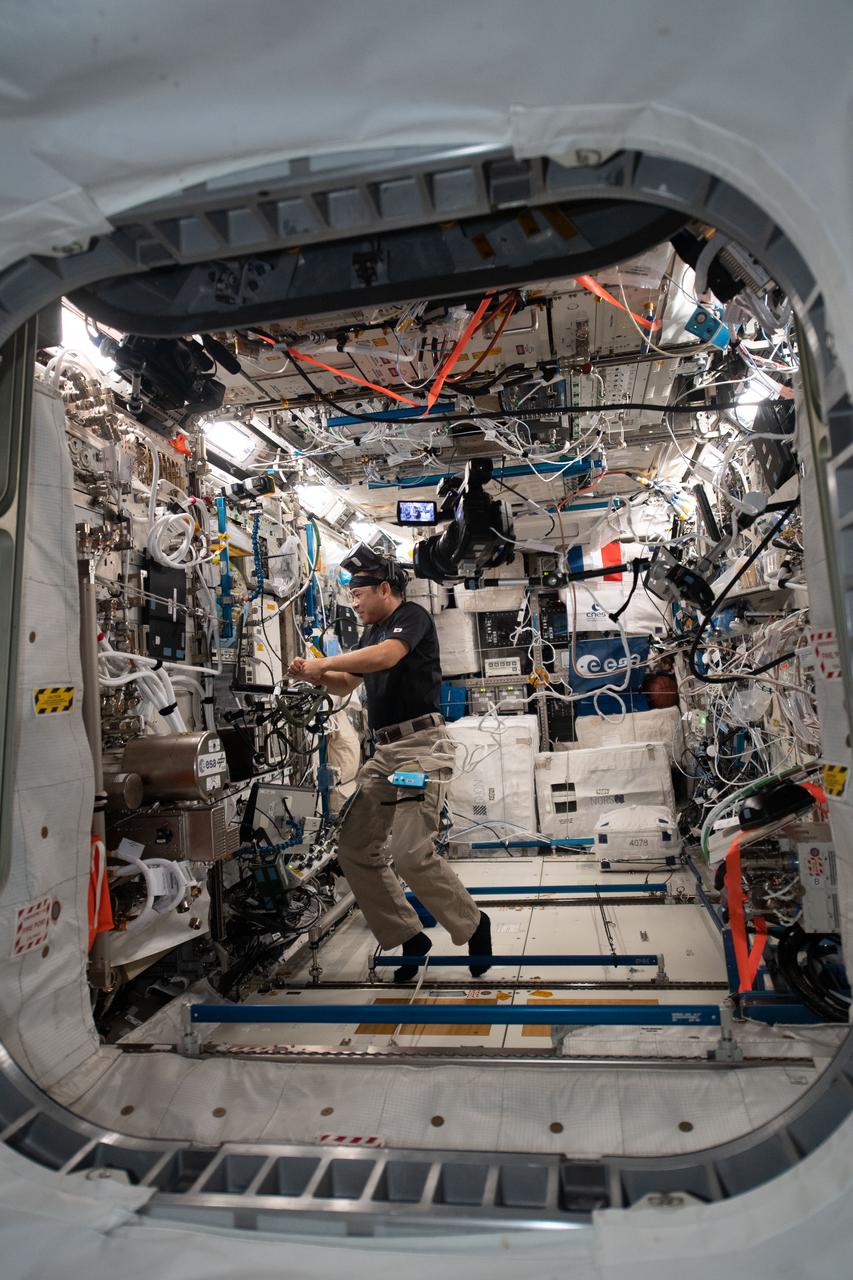
iss065e048413 (May 19, 2021) --- Expedition 65 Commander Akihiko Hoshide of the Japan Aerospace Exploration Agency is pictured inside the Columbus laboratory module wrapping up activities for the Time Perception experiment. During the investigation a crew member wears a virtual reality headset and clicks on a trackball to explore how astronauts perceive time and space which may impact navigation and fine motor coordination in microgravity.
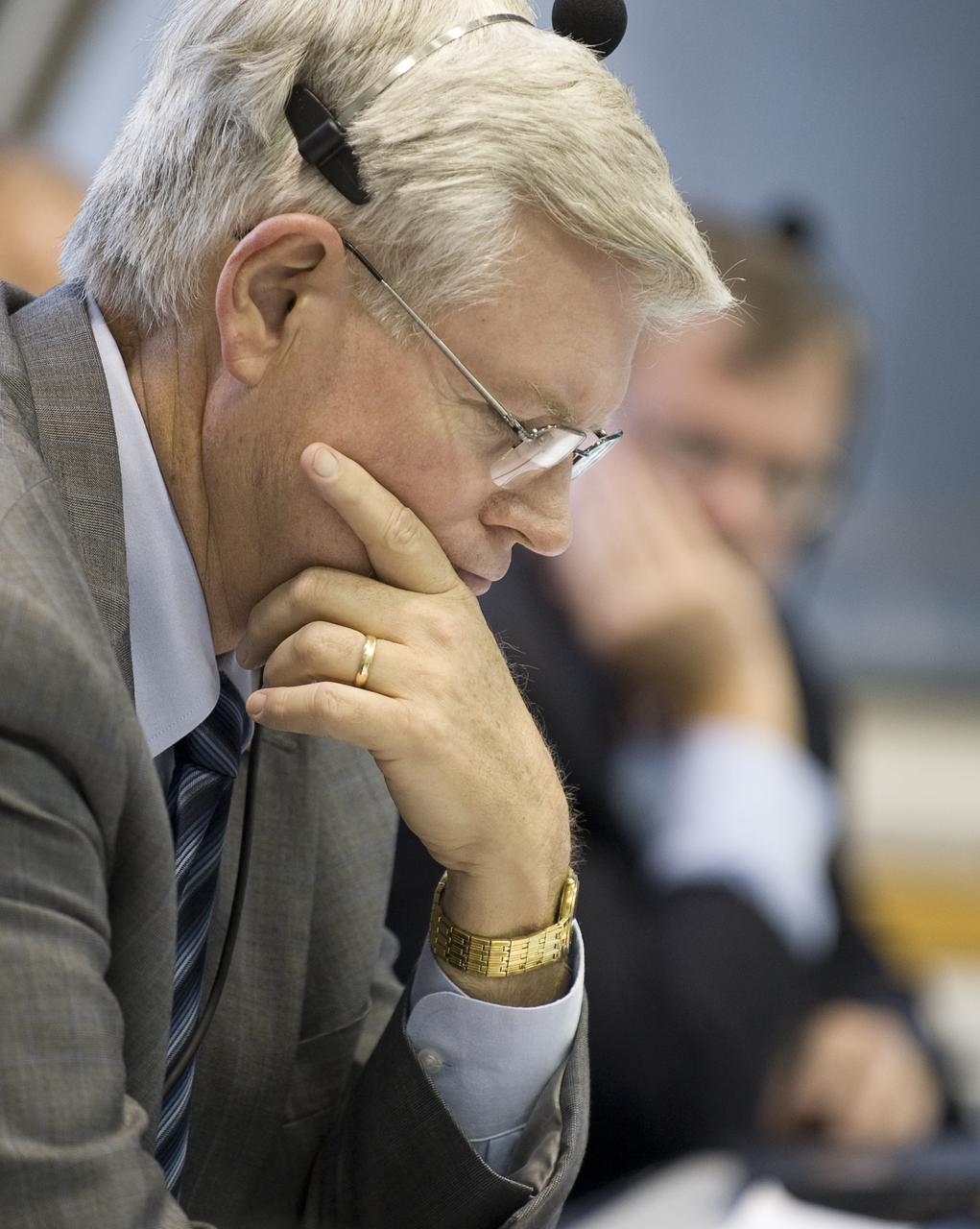
NASA Johnson Space Center Director Michael Coats monitors the launch team discussions on his headset from Firing Room Four of the Launch Control Center at NASA's Kennedy Space Center in Cape Canaveral, Florida, Sunday, July 12, 2009. The space shuttle Endeavour is set to launch at 7:13p.m. EDT with the crew of STS-127 and start a 16-day mission that will feature five spacewalks and complete construction of the Japan Aerospace Exploration Agency's Kibo laboratory. Photo Credit: (NASA/Bill Ingalls)
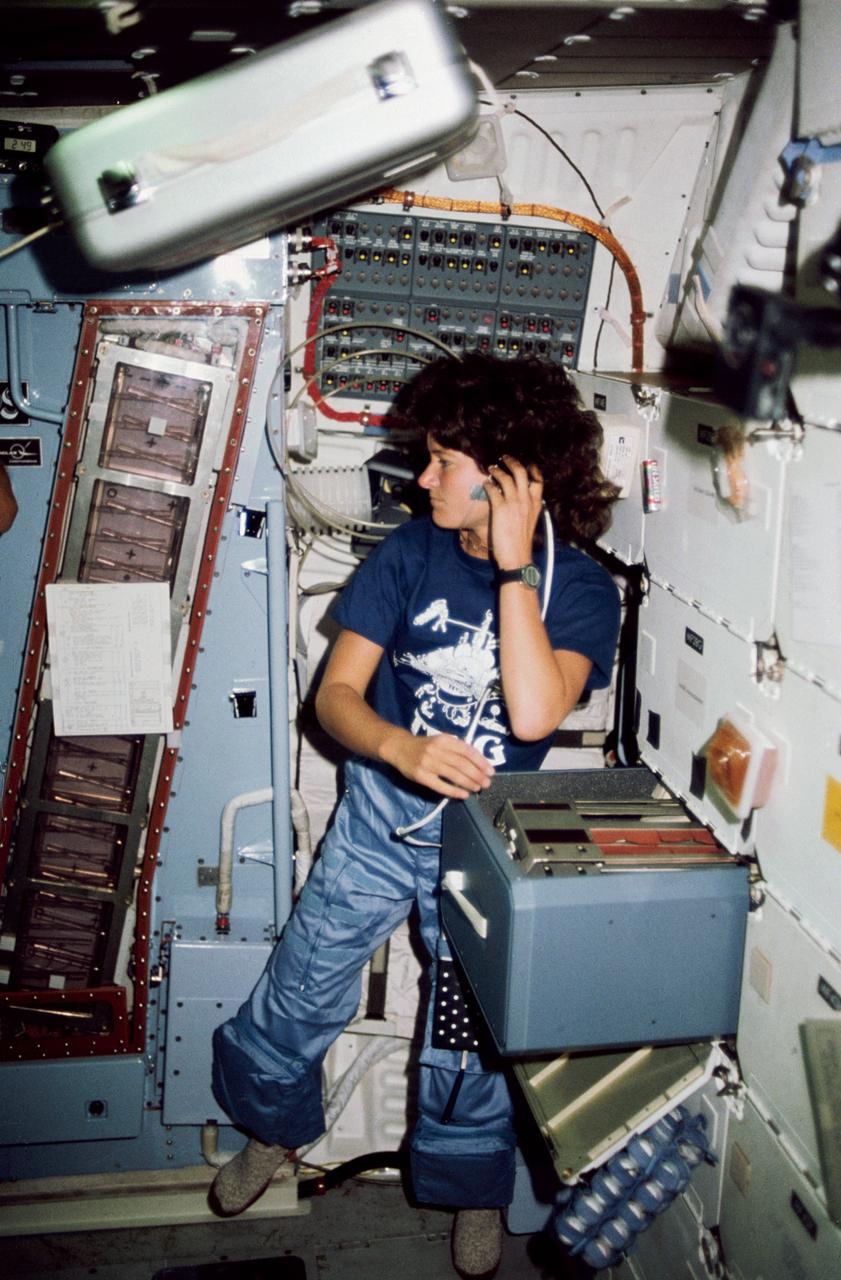
STS007-11-495 (18-24 June 1983) --- Astronaut Sally K. Ride, STS-7 mission specialist, communicates with ground controllers from the mid deck of the Earth-orbiting Space Shuttle Challenger. She has just opened one of the large lockers during the operation and monitoring of the continuous flow electrophoresis system (CFES) experiment at left edge. This photograph was made with a 35mm camera.
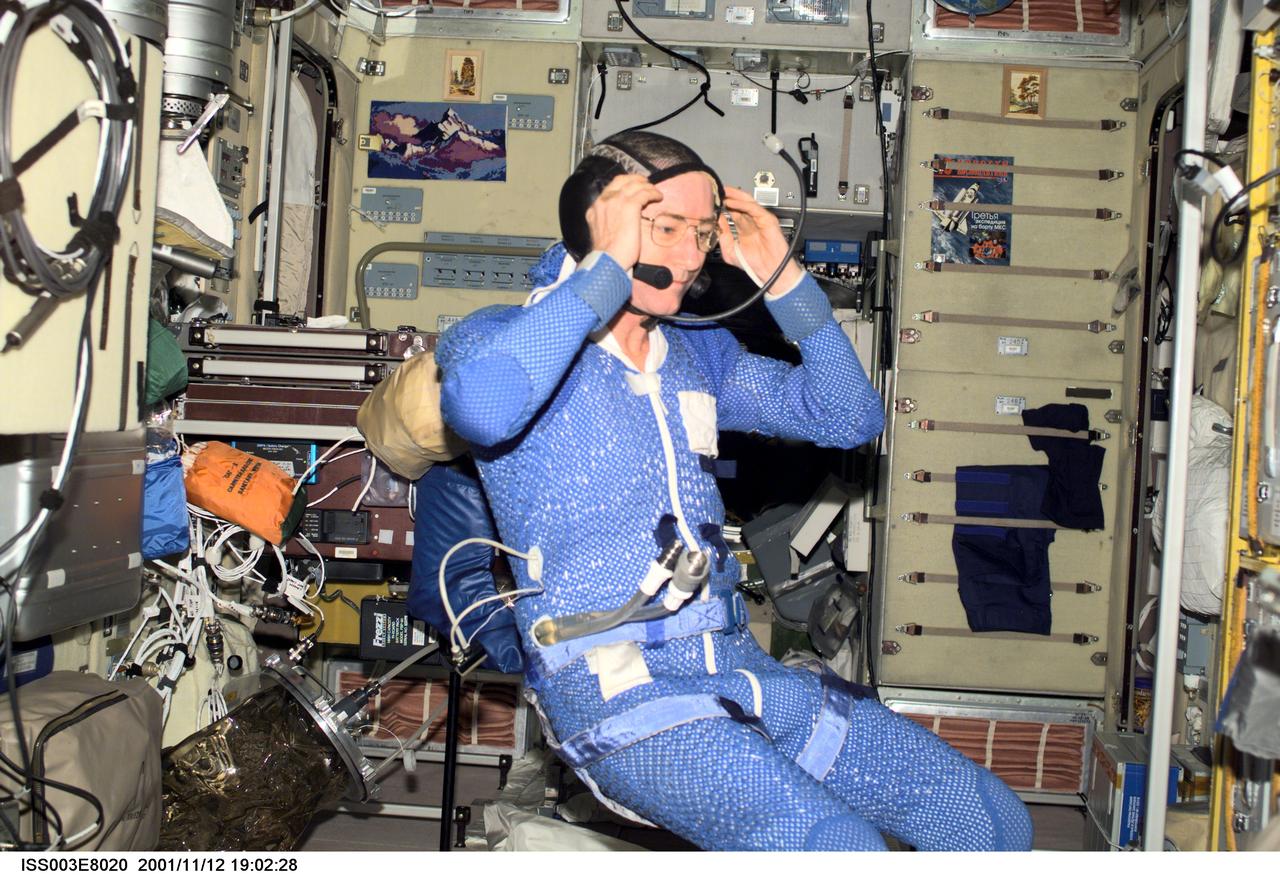
ISS003-E-8020 (12 November 2001) --- Astronaut Frank L. Culbertson, Jr., Expedition Three mission commander, wearing thermal undergarment, adjusts his communication headgear in the Zvezda Service Module on the International Space Station (ISS). This image was taken with a digital still camera.
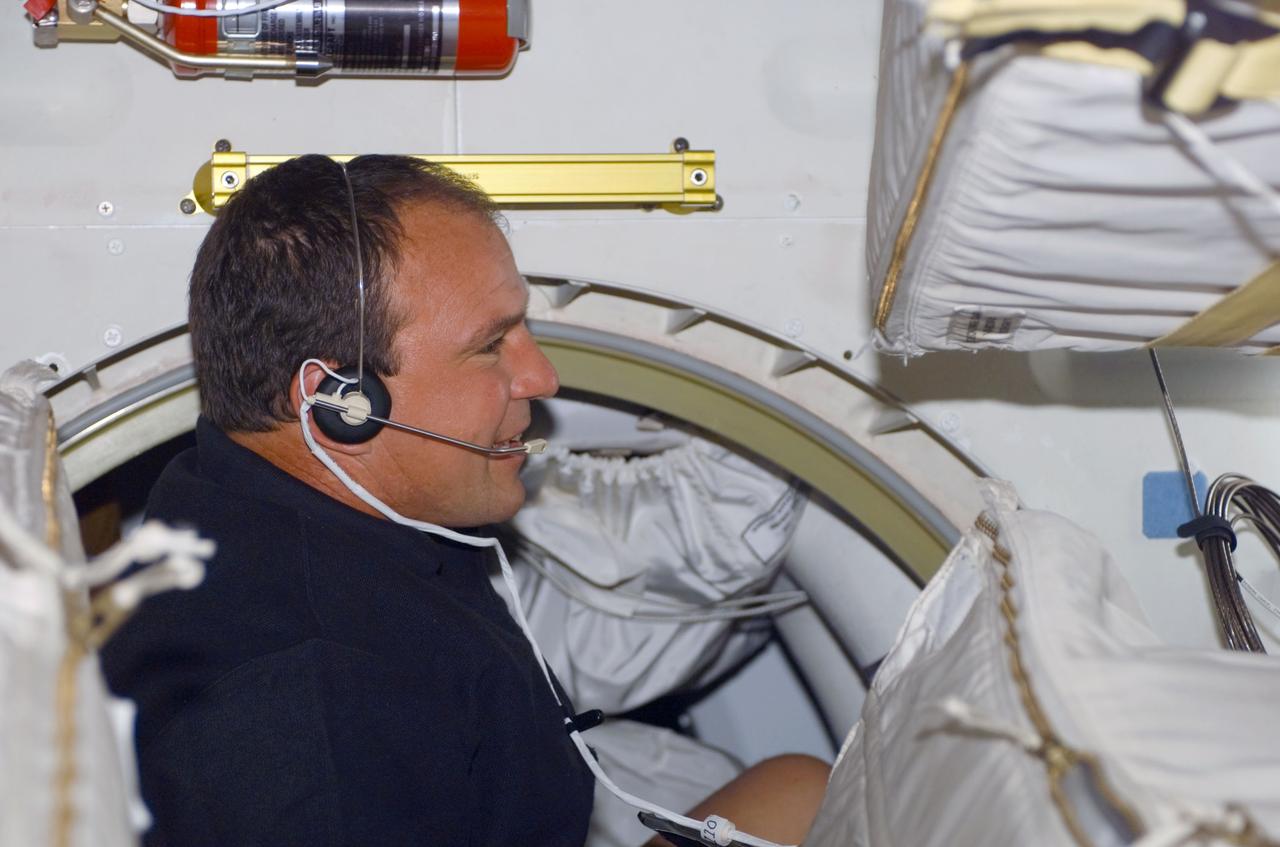
STS110-E-5038 (8 April 2002) --- Astronaut Michael J. Bloomfield, STS-110 mission commander, converses with ground controllers while traversing through the Space Shuttle Atlantis. The image was taken with a digital still camera.
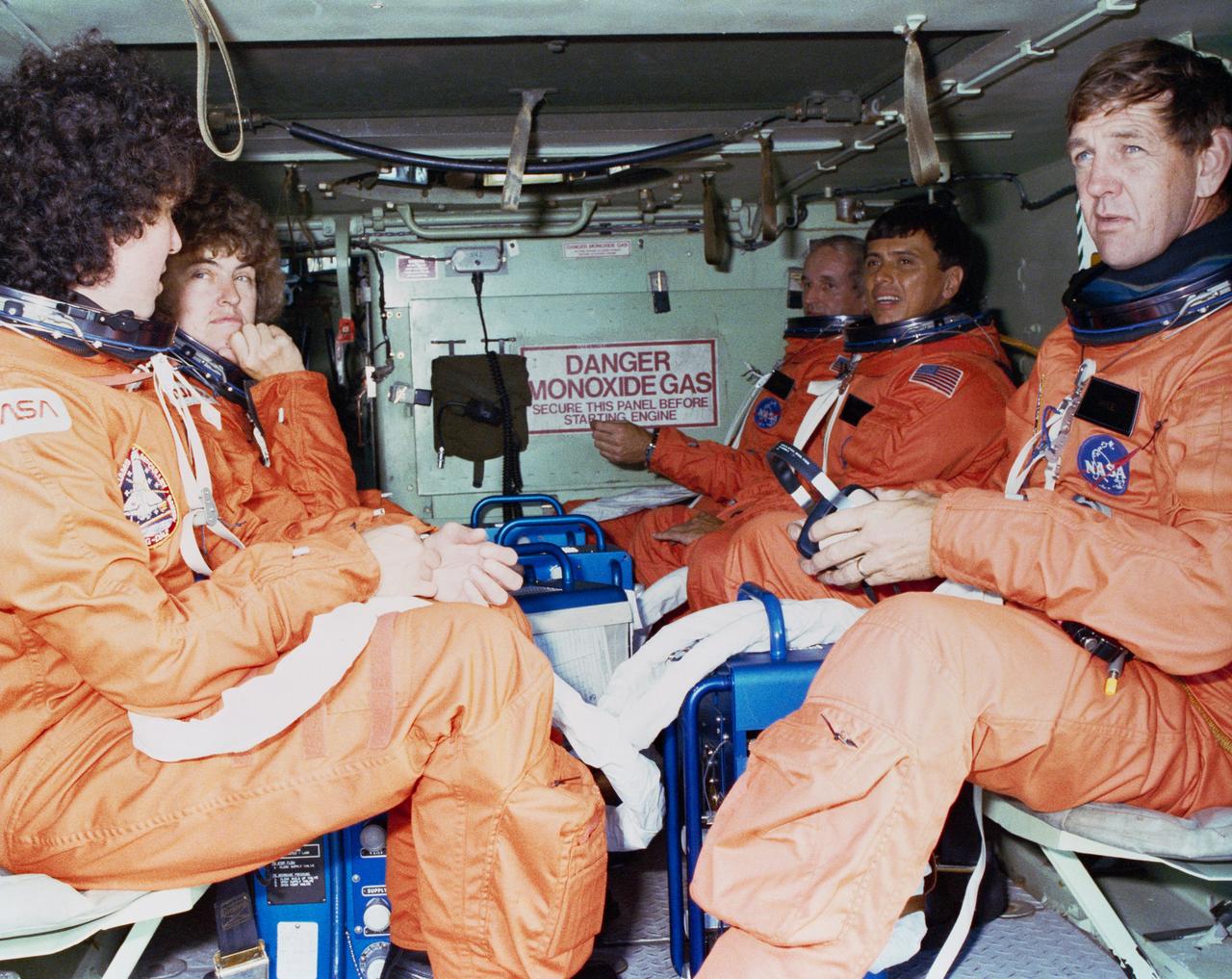
STS-34 crewmembers sit in M1-13 Armored Personnel Carrier (APC) during emergency egress training at KSC's shuttle landing facility (SLF) prior to terminal countdown demonstration test (TCDT) activities. Wearing launch and entry suits (LESs), are (from left) Mission Specialist (MS) Ellen S. Baker, MS Shannon W. Lucid, Commander Donald E. Williams (right side, in back), MS Franklin R. Chang-Diaz, and Pilot Michael J. McCulley (holding headset). View provided by KSC with alternate number KSC-89PC-871.
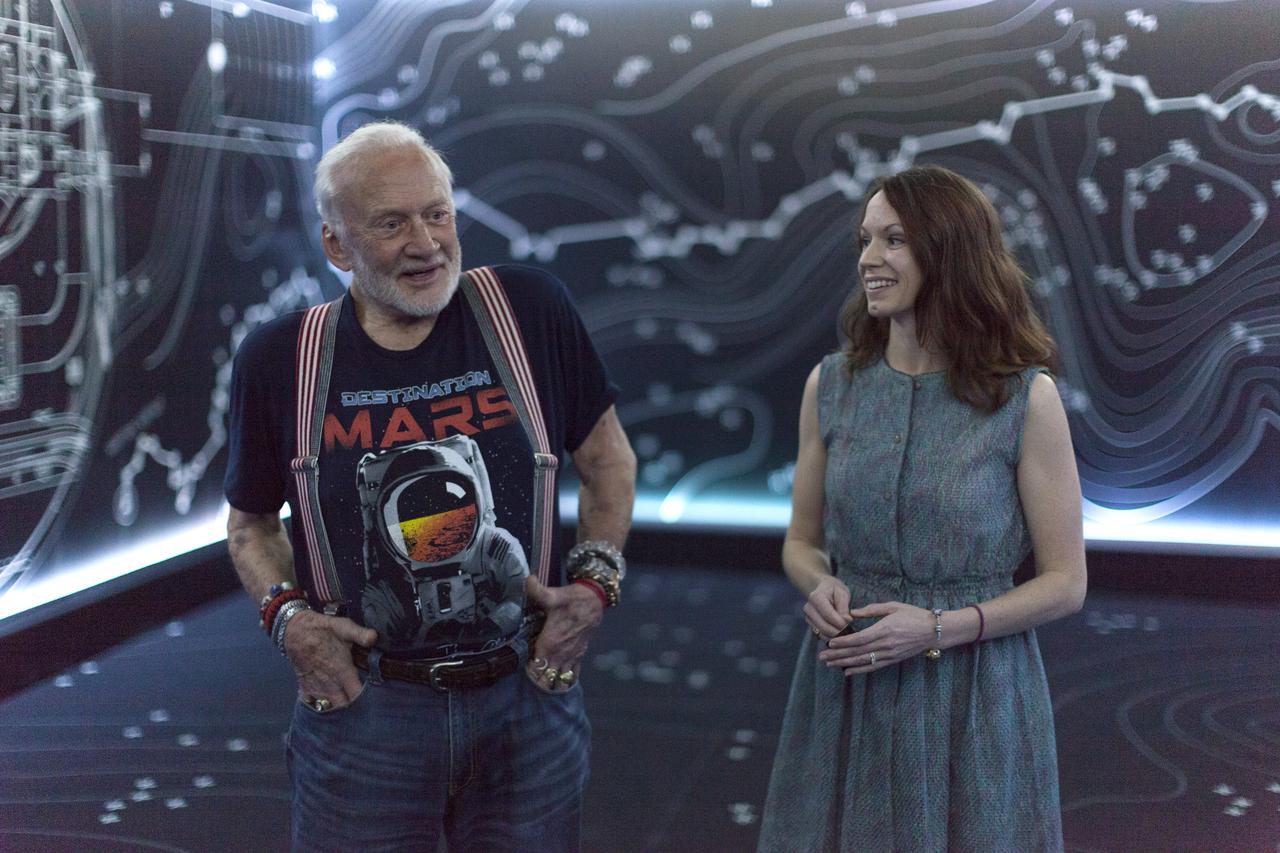
Apollo 11 astronaut Buzz Aldrin, left and Erisa Hines of NASA’s Jet Propulsion Laboratory (JPL) in Pasadena, California, speak to members of the news media during a preview of the new Destination: Mars experience at the Kennedy Space Center Visitor Complex. Destination: Mars gives guests an opportunity to “visit” several sites on Mars using real imagery from NASA’s Curiosity Mars Rover. Based on OnSight, a tool created by JPL, the experience brings guests together with a holographic version of Aldrin and Curiosity rover driver Hines as they are guided to Mars using Microsoft HoloLens mixed reality headset. Photo credit: NASA/Charles Babir
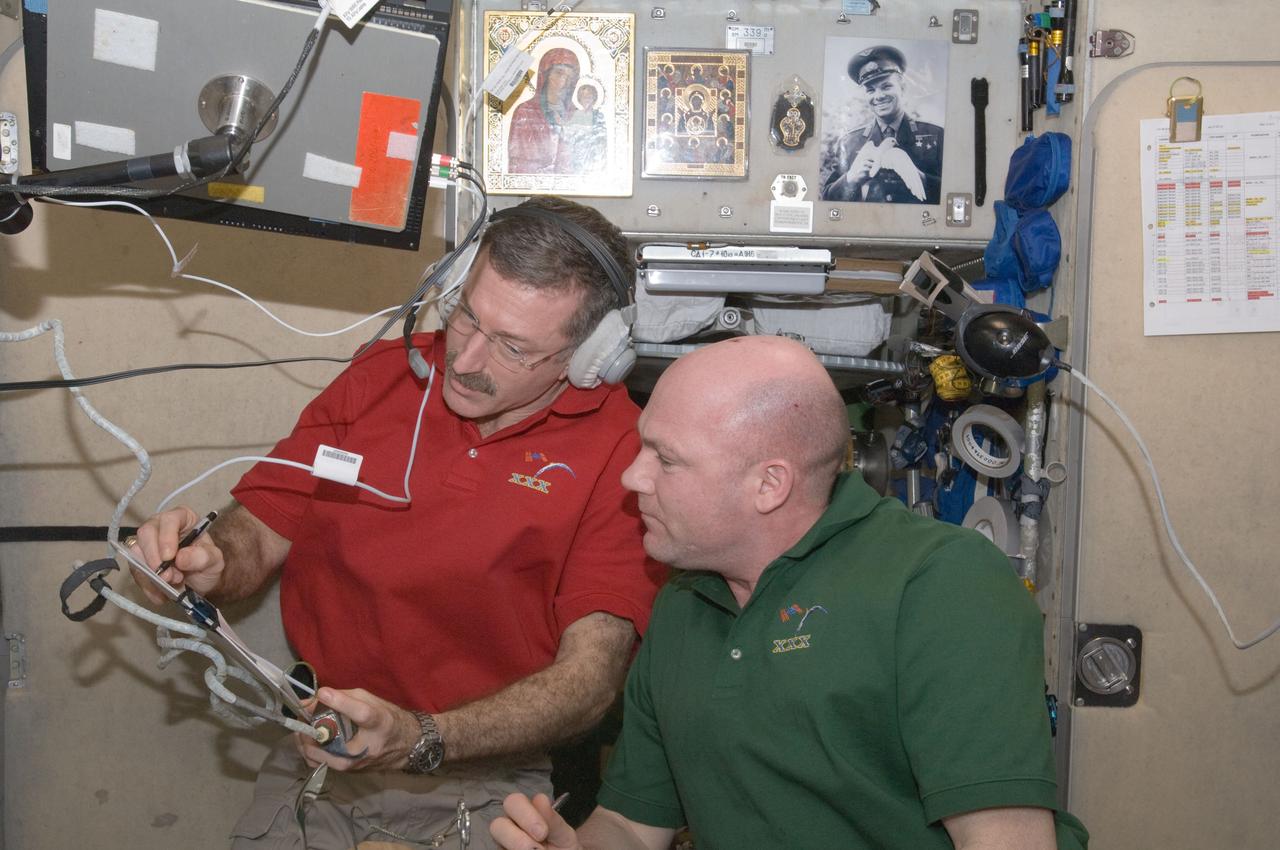
ISS030-E-171113 (24 March 2012) --- NASA astronaut Dan Burbank (wearing a communication headset), Expedition 30 commander; and European Space Agency astronaut Andre Kuipers, flight engineer, review crew procedures in the Zvezda Service Module of the International Space Station in preparation of moving to the appropriate Soyuz vehicles, due to the possibility that space debris could pass close to the station. Burbank, Shkaplerov and Ivanishin sheltered in the Soyuz TMA-22 spacecraft attached to the Poisk Mini-Research Module 2 (MRM2) while Kononenko, Kuipers and Pettit took to the Soyuz TMA-03M docked to the Rassvet Mini-Research Module 1 (MRM-1).
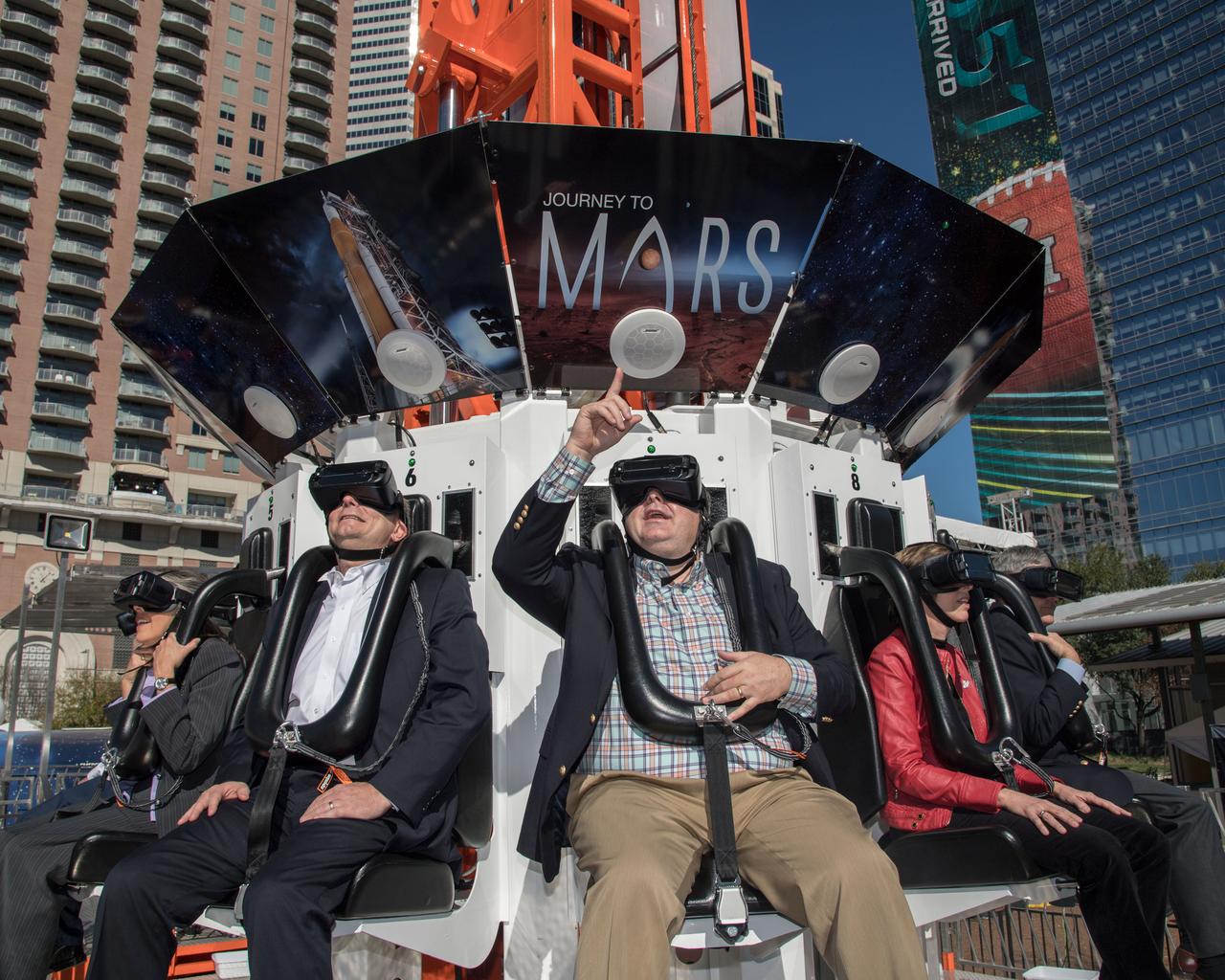
jsc2017e011382 (01/30/2017) --- Ready to take the Journey to Mars and back, a virtual reality experience at the Houston Texas Super Bowl, the Kennedy Space Center Director Robert Cabana (far right), Johnson Space Center Director Ellen Ochoa, Marshal Space Flight Center Director Todd May and the Orion Program Manager Mark Kirasich have been fitted with virtual headsets and are ready for the flight to begin. The Orion capsule will rise high above, some 90 feet, then drop suddenly to match and enhance the reality experience. The ride is part of the NASA Future Flight experience at the Super Bowl events in the Houston’s Discovery Green. NASA PHOTOGRAPHER: Bill Stafford
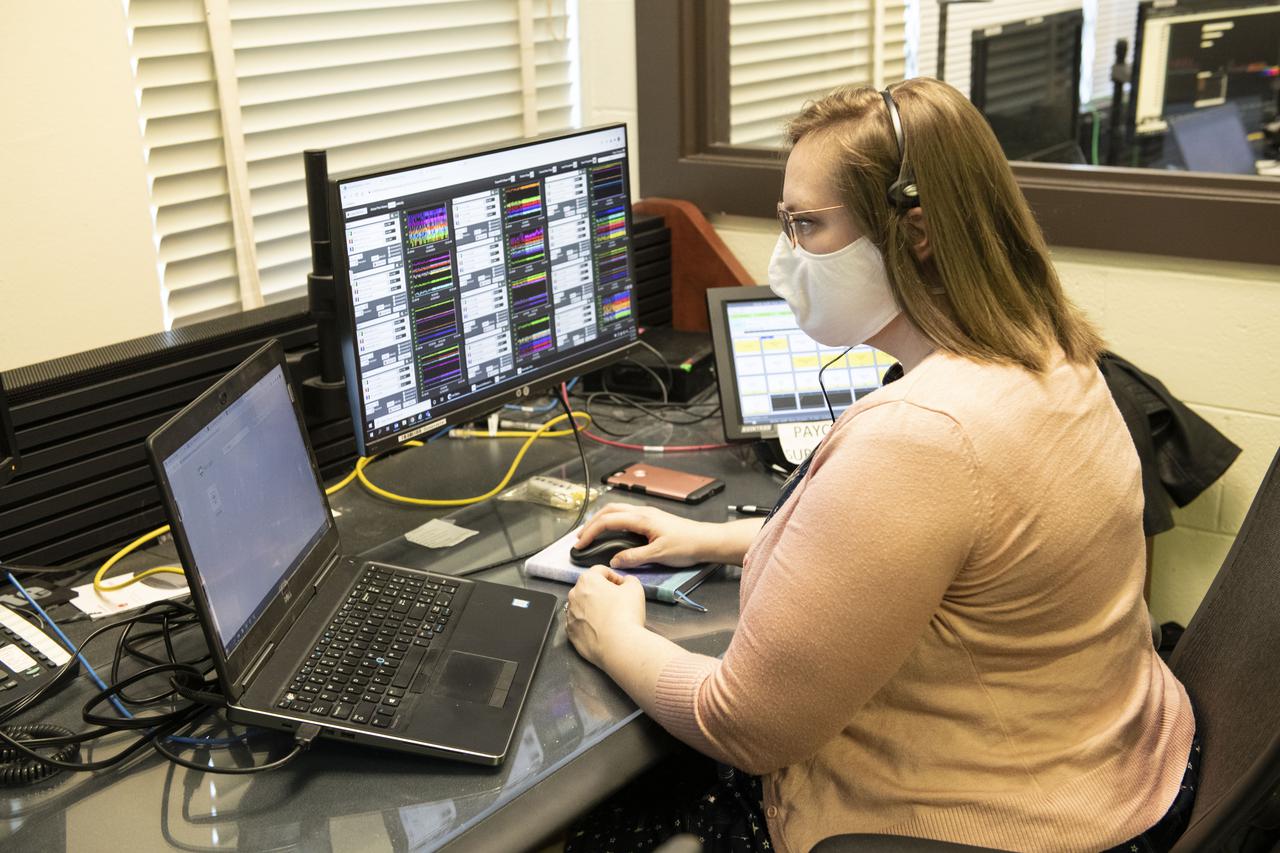
Teams at NASA’s Marshall Space Flight Center help monitor launch conditions for the Crew 1 mission from the Huntsville Operations Support Center in Huntsville, Alabama. SpaceX will launch a Falcon 9 rocket carrying NASA astronauts aboard the company’s Crew Dragon spacecraft to the International Space Station on Nov. 15, 2020. The Marshall team is supporting flight control teams working with NASA’s Johnson Space Center in Houston, Texas, NASA’s Kennedy Space Center in Cape Canaveral, Florida, and SpaceX headquarters in Hawthorne, California, as they monitor the different phases of the upcoming mission. Engineers and technicians at Marshall will use headsets and loops to communicate with the multiple locations on console for the launch.
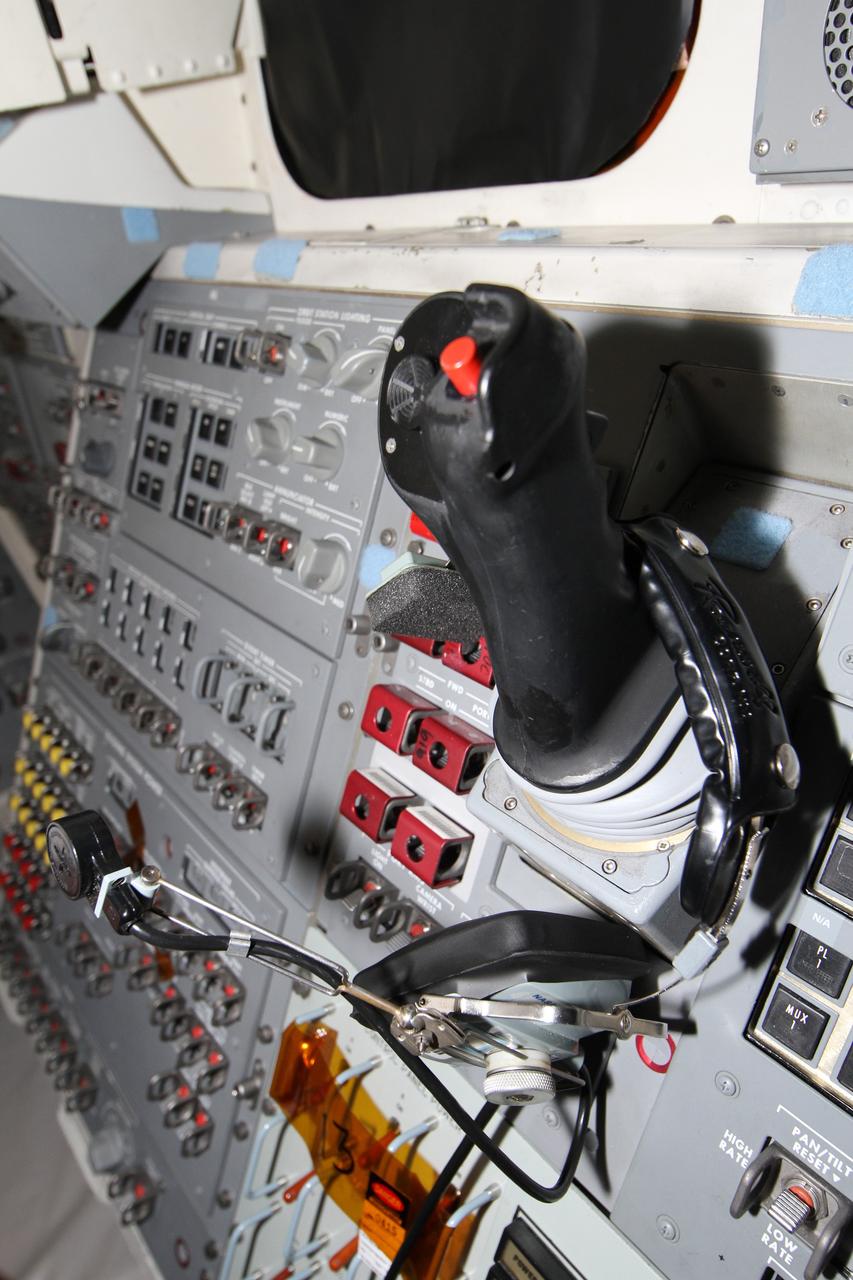
CAPE CANAVERAL, Fla. – Communication no longer required between Orbiter Processing Facility-2 and the Launch Control Center at NASA’s Kennedy Space Center in Florida, a headset is left on a console on space shuttle Endeavour’s flight deck after the shuttle is powered down for the final time. Endeavour is being prepared for public display at the California Science Center in Los Angeles. Its ferry flight to California is targeted for mid-September. Endeavour was the last space shuttle added to NASA’s orbiter fleet. Over the course of its 19-year career, Endeavour spent 299 days in space during 25 missions. For more information, visit http://www.nasa.gov/transition. Photo credit: NASA/Ben Smegelsky
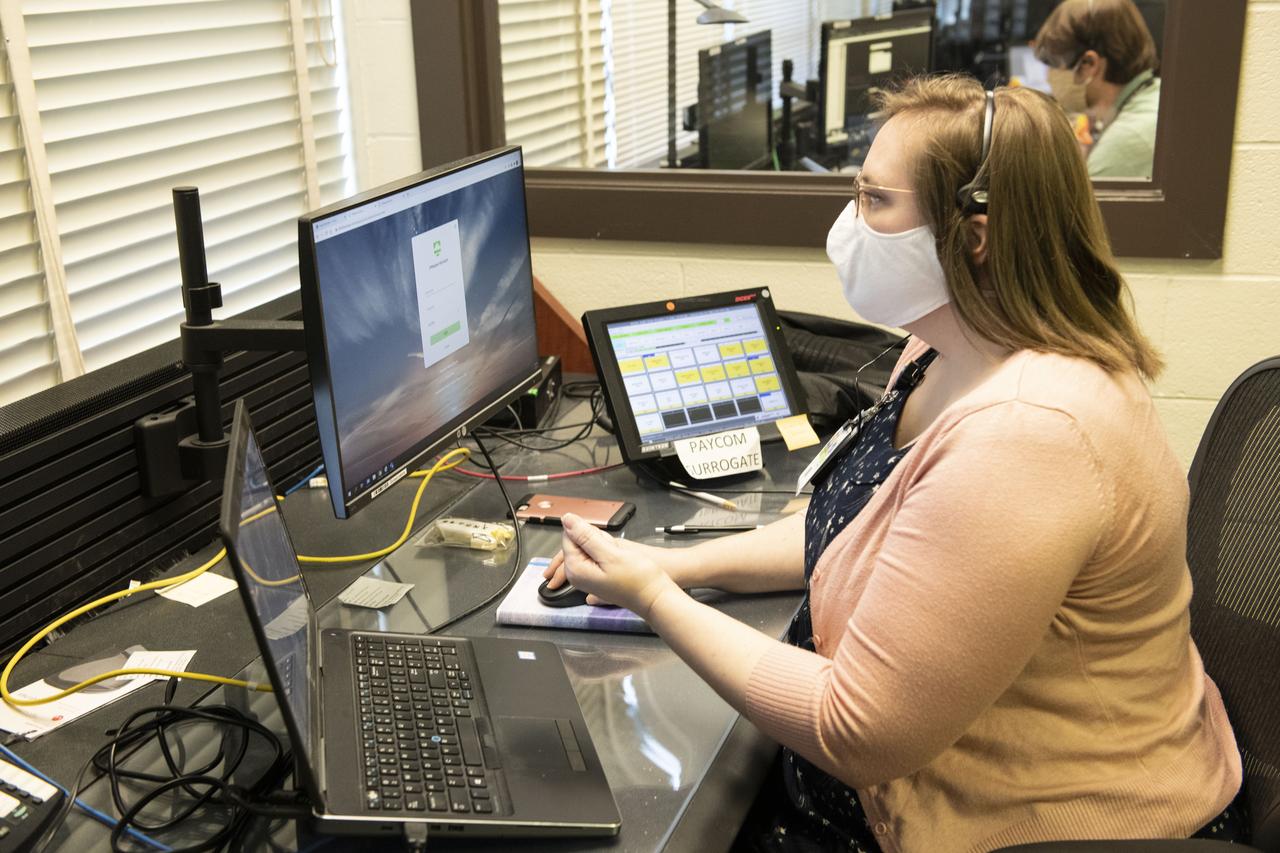
Teams at NASA’s Marshall Space Flight Center help monitor launch conditions for the Crew 1 mission from the Huntsville Operations Support Center in Huntsville, Alabama. SpaceX will launch a Falcon 9 rocket carrying NASA astronauts aboard the company’s Crew Dragon spacecraft to the International Space Station on Nov. 15, 2020. The Marshall team is supporting flight control teams working with NASA’s Johnson Space Center in Houston, Texas, NASA’s Kennedy Space Center in Cape Canaveral, Florida, and SpaceX headquarters in Hawthorne, California, as they monitor the different phases of the upcoming mission. Engineers and technicians at Marshall will use headsets and loops to communicate with the multiple locations on console for the launch.

Teams at NASA’s Marshall Space Flight Center help monitor launch conditions for the Crew 1 mission from the Huntsville Operations Support Center in Huntsville, Alabama. SpaceX will launch a Falcon 9 rocket carrying NASA astronauts aboard the company’s Crew Dragon spacecraft to the International Space Station on Nov. 15, 2020. The Marshall team is supporting flight control teams working with NASA’s Johnson Space Center in Houston, Texas, NASA’s Kennedy Space Center in Cape Canaveral, Florida, and SpaceX headquarters in Hawthorne, California, as they monitor the different phases of the upcoming mission. Engineers and technicians at Marshall will use headsets and loops to communicate with the multiple locations on console for the launch.
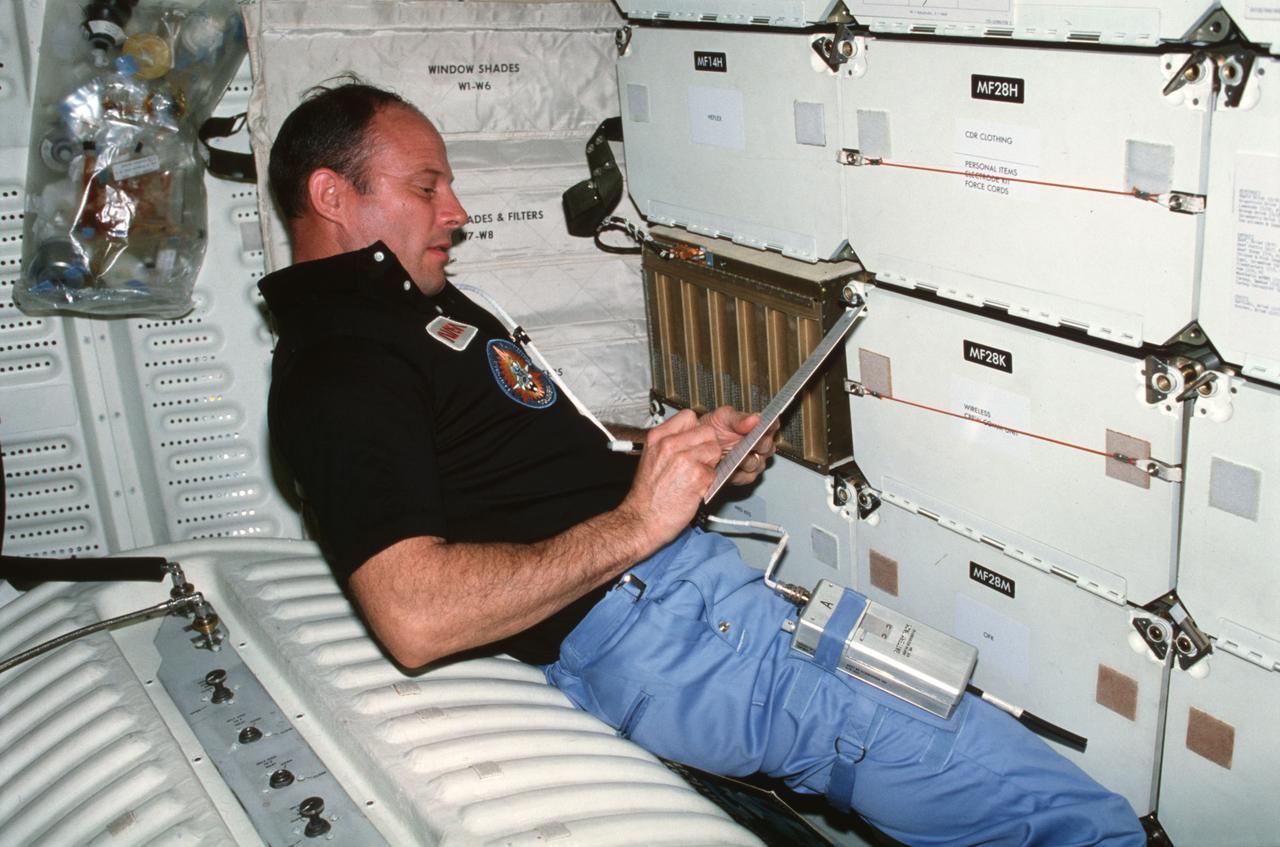
STS003-22-122 (30 March 1982) --- STS-3 Commander Lousma, wearing communications kit assembly (ASSY) mini-headset (HDST), records Plant Growth Unit (PGU) data for the Influence of Weightlessness on Plant Lignification Experiment at forward middeck locker MF14K. The experiment is designed to demonstrate the effect of weightlessness on the quantity and rate of lignin formation in different plant species during early stages of development. Port side bulkhead with window shade and filter kit appears behind Lousma and potable water tank below him. Trash bag also appears in view. Photo credit: NASA
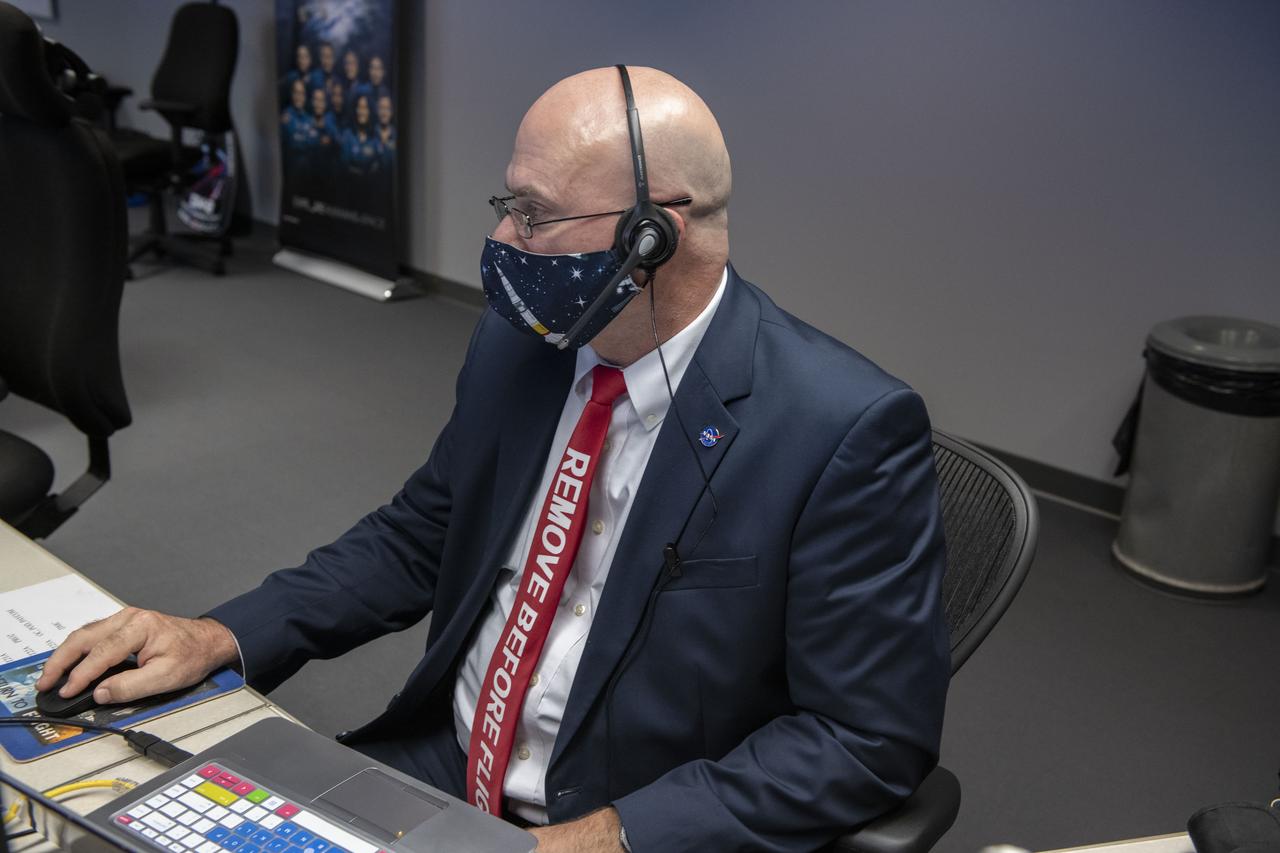
Teams at NASA’s Marshall Space Flight Center help monitor launch conditions for the Crew 1 mission from the Huntsville Operations Support Center in Huntsville, Alabama. SpaceX will launch a Falcon 9 rocket carrying NASA astronauts aboard the company’s Crew Dragon spacecraft to the International Space Station on Nov. 15, 2020. The Marshall team is supporting flight control teams working with NASA’s Johnson Space Center in Houston, Texas, NASA’s Kennedy Space Center in Cape Canaveral, Florida, and SpaceX headquarters in Hawthorne, California, as they monitor the different phases of the upcoming mission. Engineers and technicians at Marshall will use headsets and loops to communicate with the multiple locations on console for the launch.
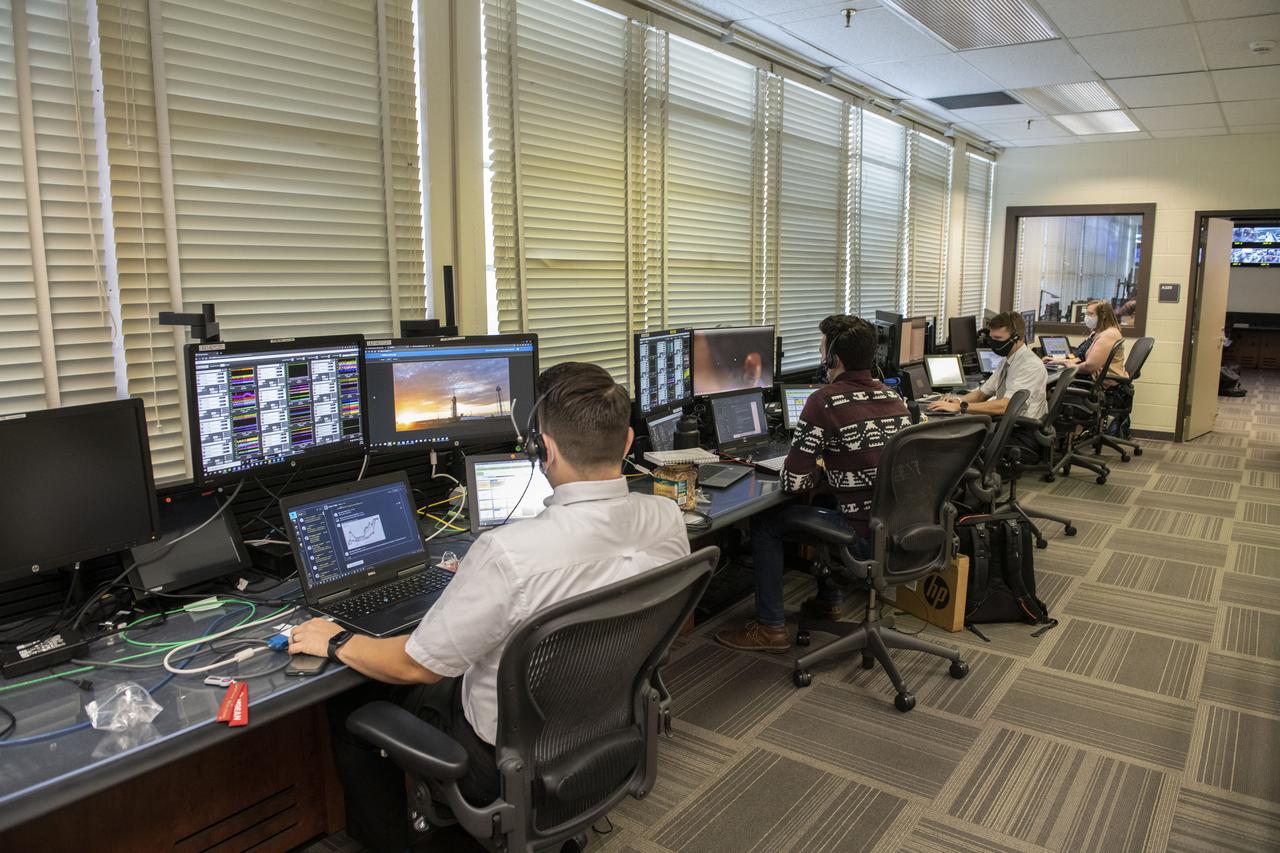
Teams at NASA’s Marshall Space Flight Center help monitor launch conditions for the Crew 1 mission from the Huntsville Operations Support Center in Huntsville, Alabama. SpaceX will launch a Falcon 9 rocket carrying NASA astronauts aboard the company’s Crew Dragon spacecraft to the International Space Station on Nov. 15, 2020. The Marshall team is supporting flight control teams working with NASA’s Johnson Space Center in Houston, Texas, NASA’s Kennedy Space Center in Cape Canaveral, Florida, and SpaceX headquarters in Hawthorne, California, as they monitor the different phases of the upcoming mission. Engineers and technicians at Marshall will use headsets and loops to communicate with the multiple locations on console for the launch.
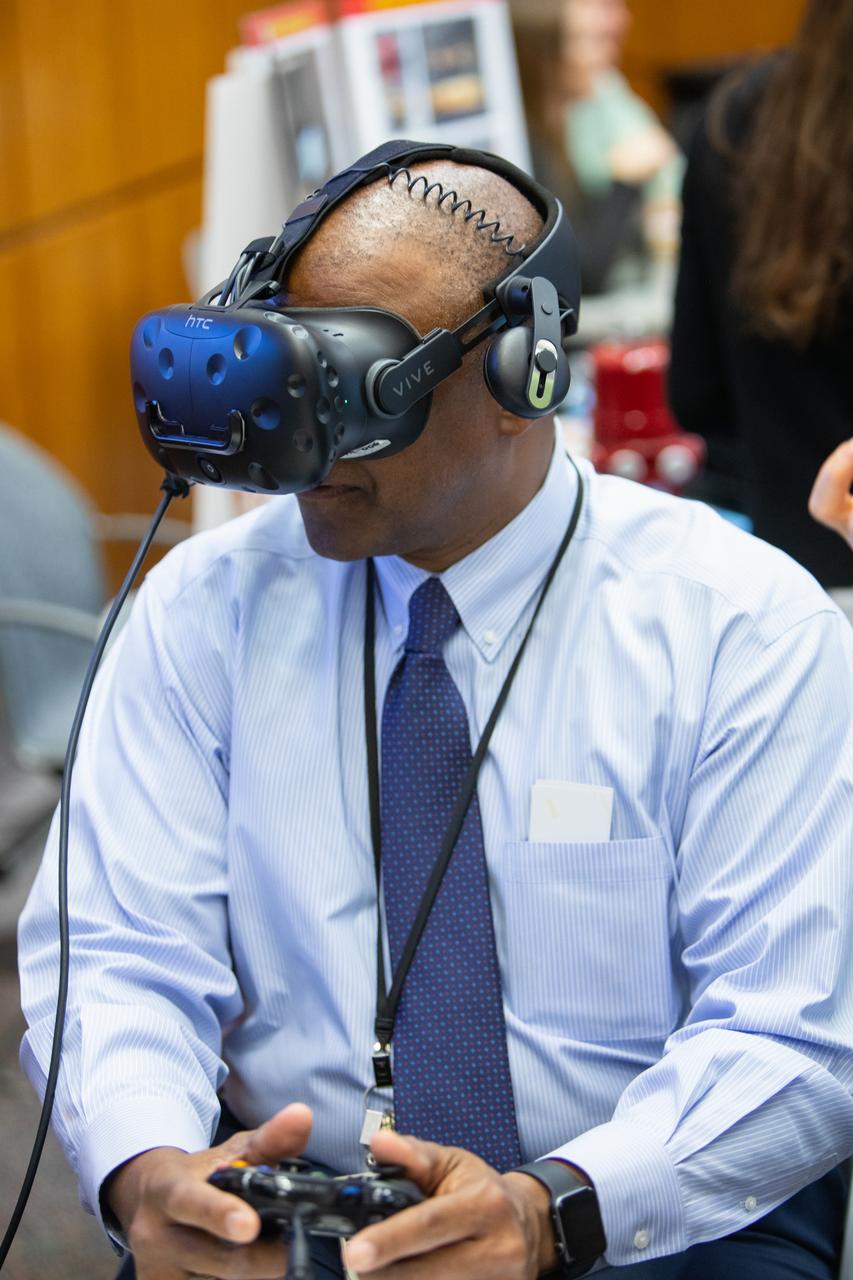
Kennedy Space Center Associate Director, Technical, Kelvin Manning tries out a virtual reality headset during an innovation showcase on Nov. 19, 2019, in the Florida spaceport’s Neil Armstrong Operations and Checkout Building’s Mission Briefing Room. Nearly 50 exhibitors gathered to demonstrate new technologies and innovations during the center’s Innovation Days – one of several events throughout the year aimed at fostering and encouraging an innovative culture at Kennedy. Showcase participants included individuals from multiple directorates, programs and organizations throughout Kennedy. In addition to the showcase, employees had the opportunity to attend an overview presentation on NASA’s Human Landing System (HLS), hosted by HLS Program Manager Lisa Watson-Morgan.
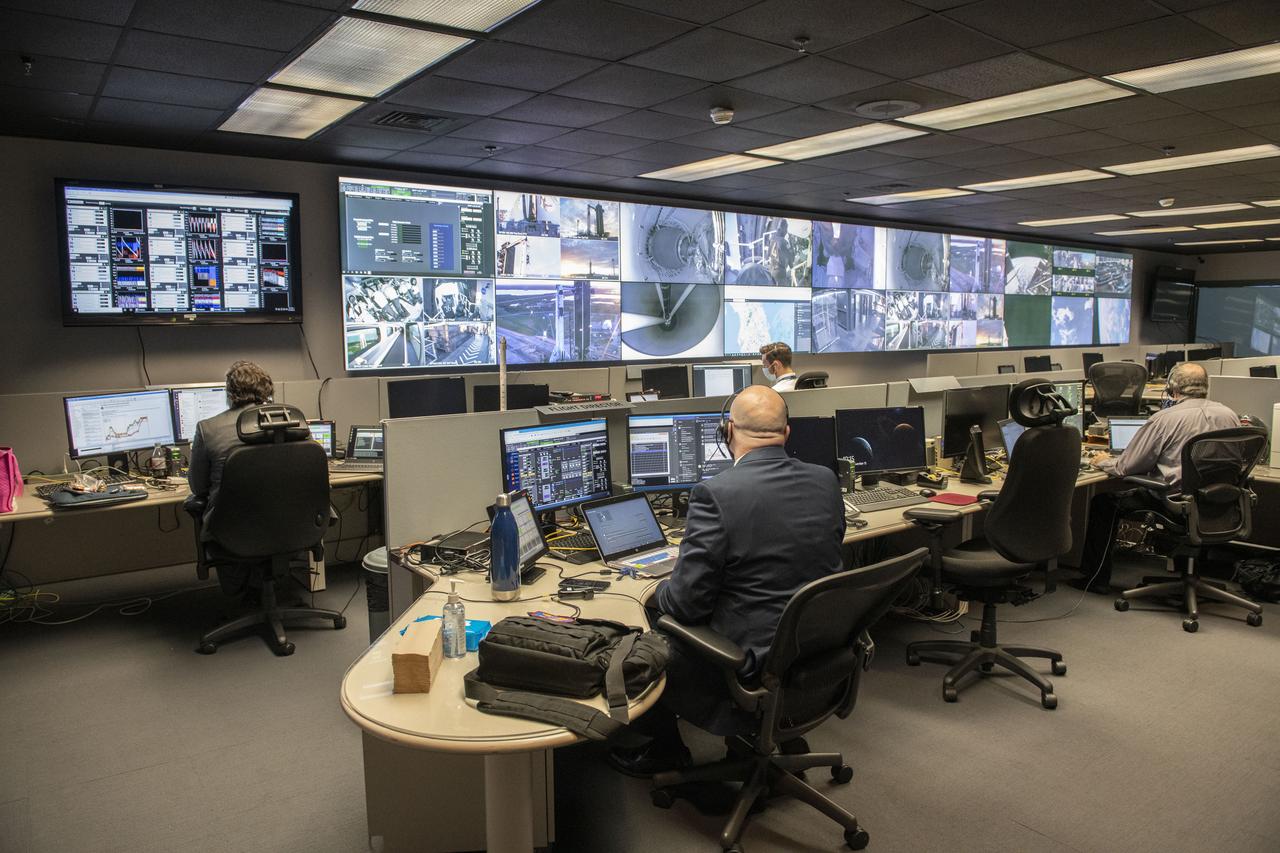
Teams at NASA’s Marshall Space Flight Center help monitor launch conditions for the Crew 1 mission from the Huntsville Operations Support Center in Huntsville, Alabama. SpaceX will launch a Falcon 9 rocket carrying NASA astronauts aboard the company’s Crew Dragon spacecraft to the International Space Station on Nov. 15, 2020. The Marshall team is supporting flight control teams working with NASA’s Johnson Space Center in Houston, Texas, NASA’s Kennedy Space Center in Cape Canaveral, Florida, and SpaceX headquarters in Hawthorne, California, as they monitor the different phases of the upcoming mission. Engineers and technicians at Marshall will use headsets and loops to communicate with the multiple locations on console for the launch.
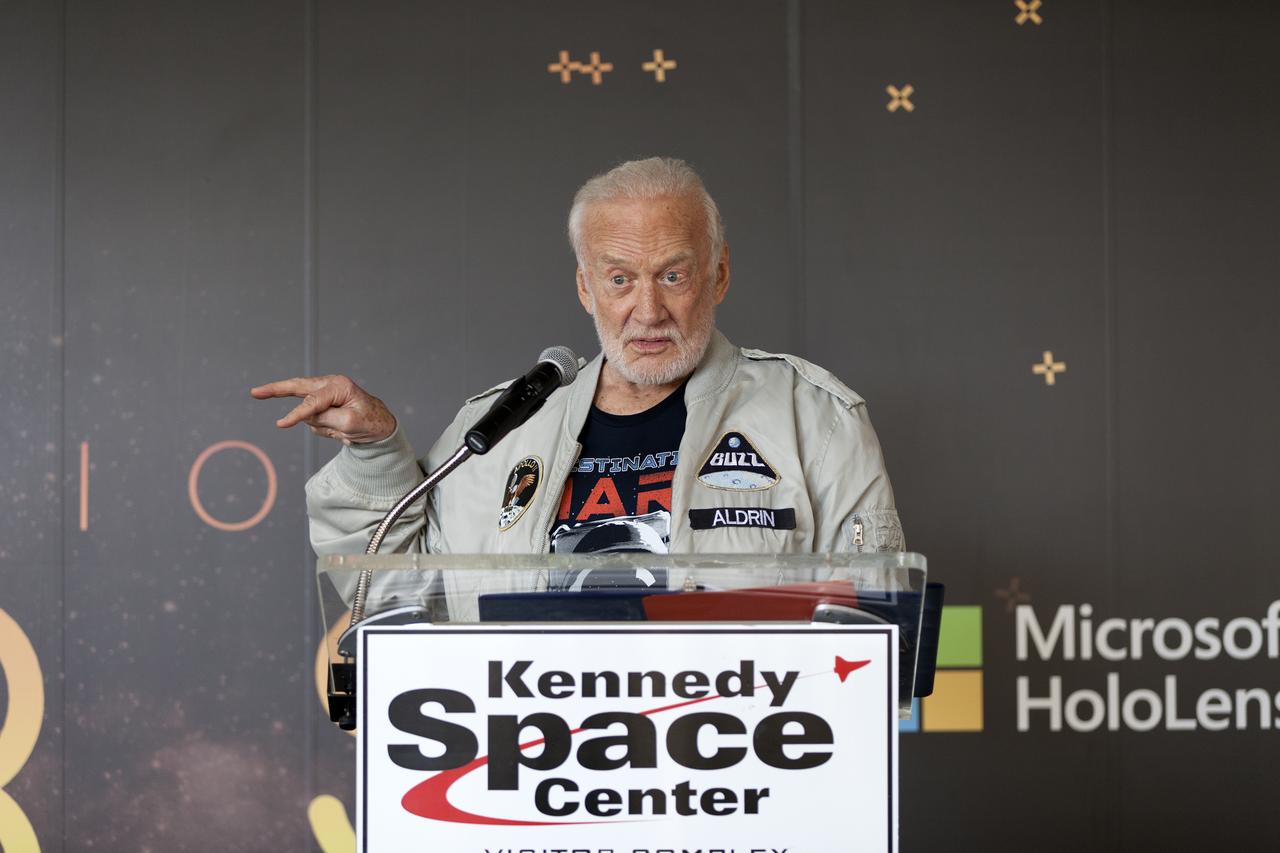
Apollo 11 astronaut Buzz Aldrin speaks to members of the news media during a preview of the new Destination: Mars experience at the Kennedy Space Center Visitor Complex. Destination: Mars gives guests an opportunity to “visit” several sites on Mars using real imagery from NASA’s Curiosity Mars Rover. Based on OnSight, a tool created by NASA’s Jet Propulsion Laboratory in Pasadena, California, the experience brings guests together with a holographic version of Aldrin as they are guided to Mars using Microsoft HoloLens mixed reality headset. Photo credit: NASA/Charles Babir
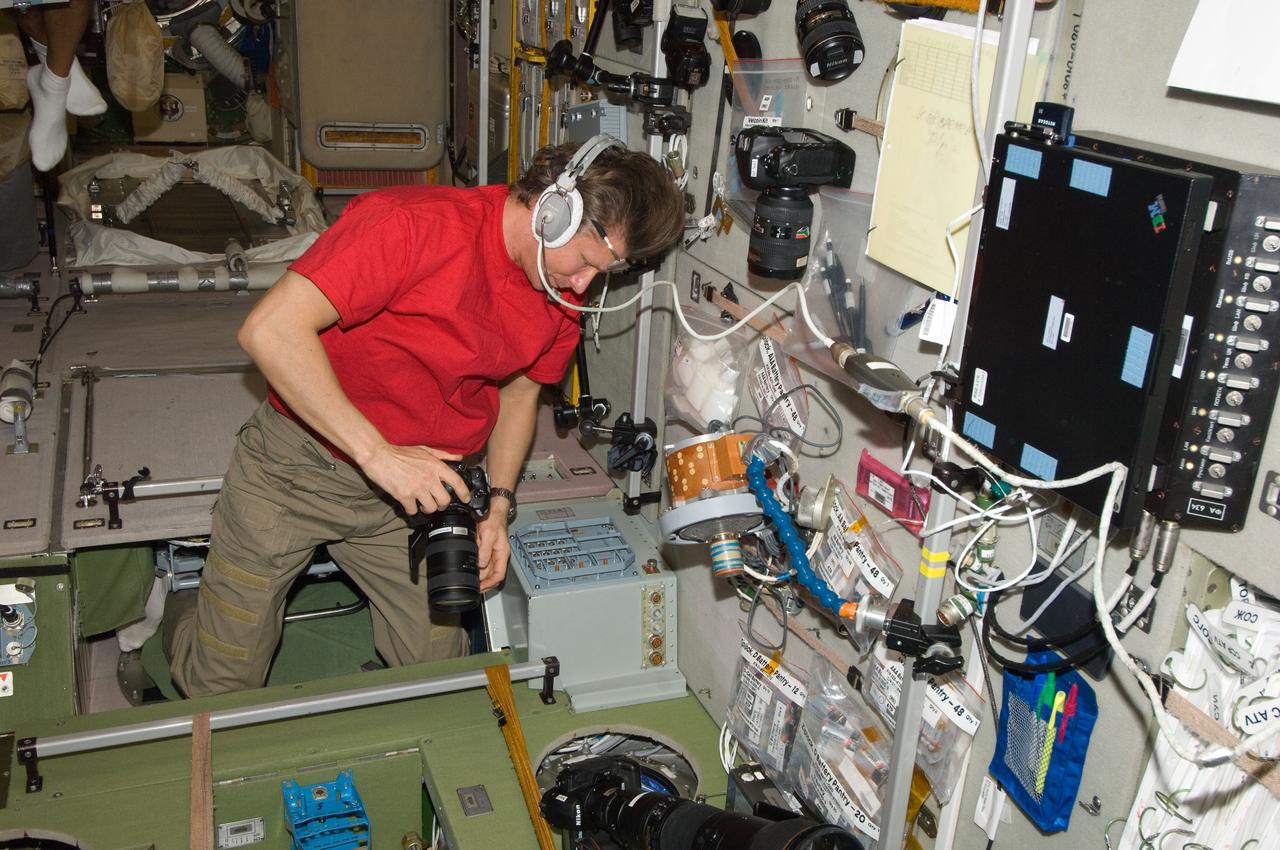
ISS032-E-010066 (22 July 2012) --- Russian cosmonaut Gennady Padalka, Expedition 32 commander, wearing a communication headset and holding a still camera, monitors the undocking of the unpiloted Progress 47 resupply spacecraft from a window in the Zvezda Service Module of the International Space Station. The Progress temporarily undocked from the station’s Pirs Docking Compartment on July 22, 2012 in order to perform a series of engineering tests during re-docking designed to verify an upgraded automated rendezvous system that will facilitate future dockings of Russian vehicles to the space station. Progress 47 separated from the station to a distance of about 100 miles and held position for 24 hours.

Teams at NASA’s Marshall Space Flight Center help monitor launch conditions for the Crew 1 mission from the Huntsville Operations Support Center in Huntsville, Alabama. SpaceX will launch a Falcon 9 rocket carrying NASA astronauts aboard the company’s Crew Dragon spacecraft to the International Space Station on Nov. 15, 2020. The Marshall team is supporting flight control teams working with NASA’s Johnson Space Center in Houston, Texas, NASA’s Kennedy Space Center in Cape Canaveral, Florida, and SpaceX headquarters in Hawthorne, California, as they monitor the different phases of the upcoming mission. Engineers and technicians at Marshall will use headsets and loops to communicate with the multiple locations on console for the launch.
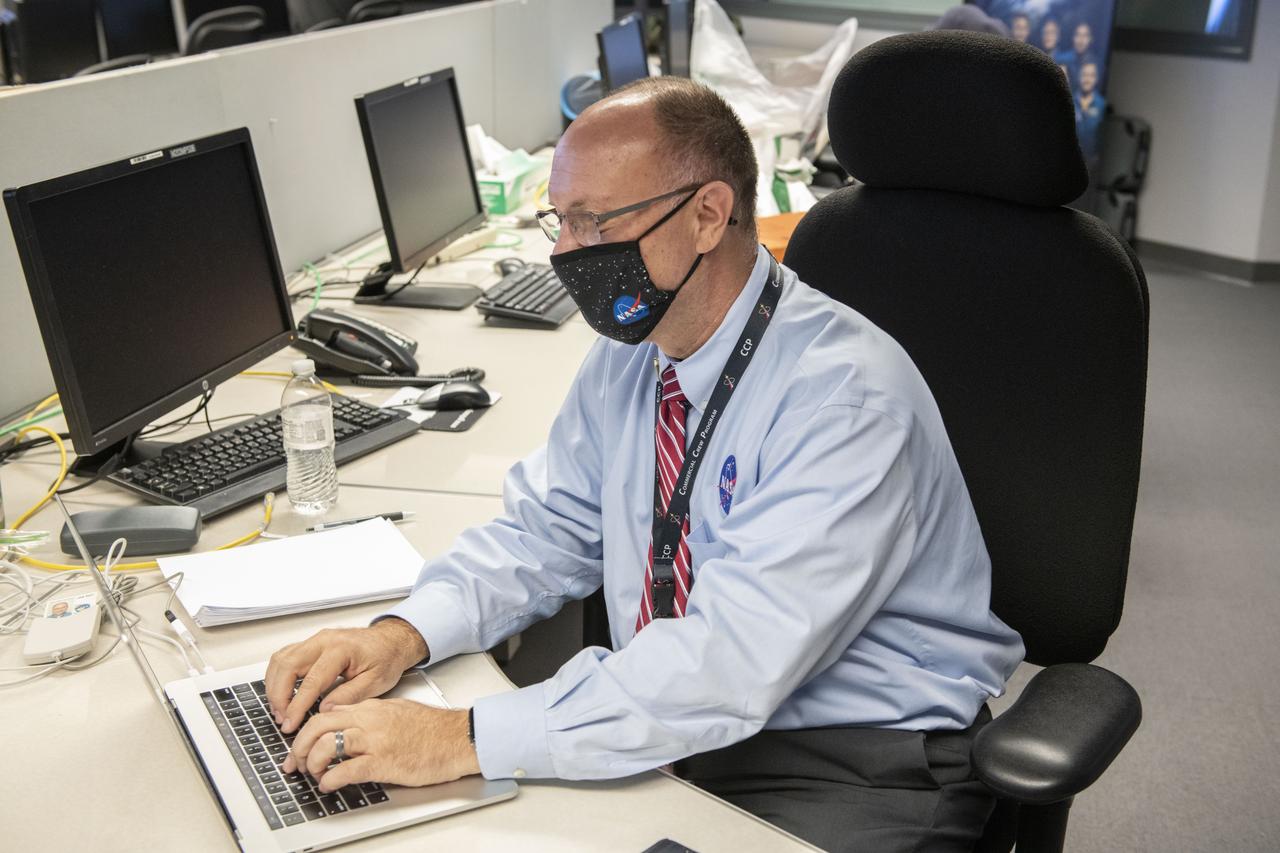
Teams at NASA’s Marshall Space Flight Center help monitor launch conditions for the Crew 1 mission from the Huntsville Operations Support Center in Huntsville, Alabama. SpaceX will launch a Falcon 9 rocket carrying NASA astronauts aboard the company’s Crew Dragon spacecraft to the International Space Station on Nov. 15, 2020. The Marshall team is supporting flight control teams working with NASA’s Johnson Space Center in Houston, Texas, NASA’s Kennedy Space Center in Cape Canaveral, Florida, and SpaceX headquarters in Hawthorne, California, as they monitor the different phases of the upcoming mission. Engineers and technicians at Marshall will use headsets and loops to communicate with the multiple locations on console for the launch.
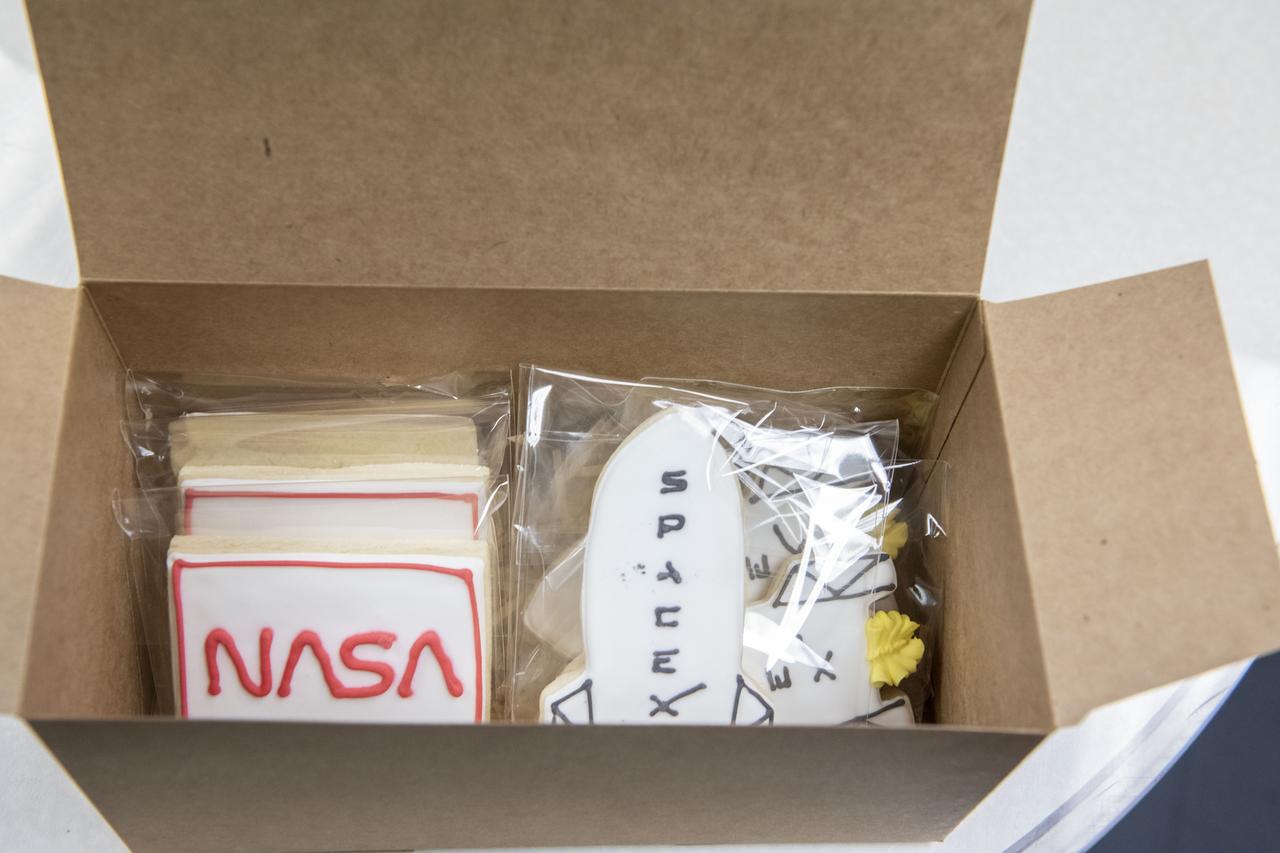
Teams at NASA’s Marshall Space Flight Center help monitor launch conditions for the Crew 1 mission from the Huntsville Operations Support Center in Huntsville, Alabama. SpaceX will launch a Falcon 9 rocket carrying NASA astronauts aboard the company’s Crew Dragon spacecraft to the International Space Station on Nov. 15, 2020. The Marshall team is supporting flight control teams working with NASA’s Johnson Space Center in Houston, Texas, NASA’s Kennedy Space Center in Cape Canaveral, Florida, and SpaceX headquarters in Hawthorne, California, as they monitor the different phases of the upcoming mission. Engineers and technicians at Marshall will use headsets and loops to communicate with the multiple locations on console for the launch.
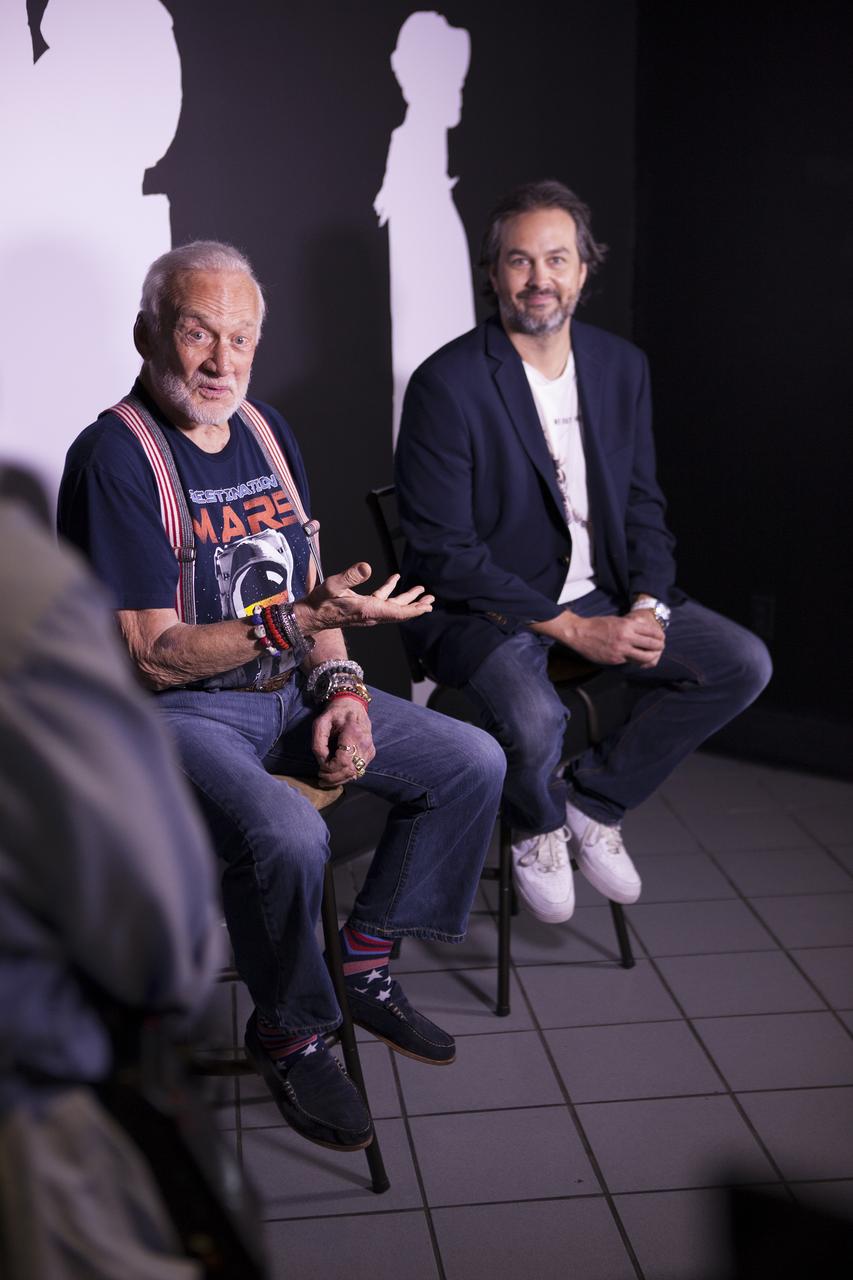
Apollo 11 astronaut Buzz Aldrin, left, and Kudo Tsunoda of Microsoft, speak to members of the news media during a preview of the new Destination: Mars experience at the Kennedy Space Center Visitor Complex. Destination: Mars gives guests an opportunity to “visit” several sites on Mars using real imagery from NASA’s Curiosity Mars Rover. Based on OnSight, a tool created by NASA’s Jet Propulsion Laboratory in Pasadena, California, the experience brings guests together with a holographic version of Aldrin as they are guided to Mars using Microsoft HoloLens mixed reality headset. Photo credit: NASA/Charles Babir
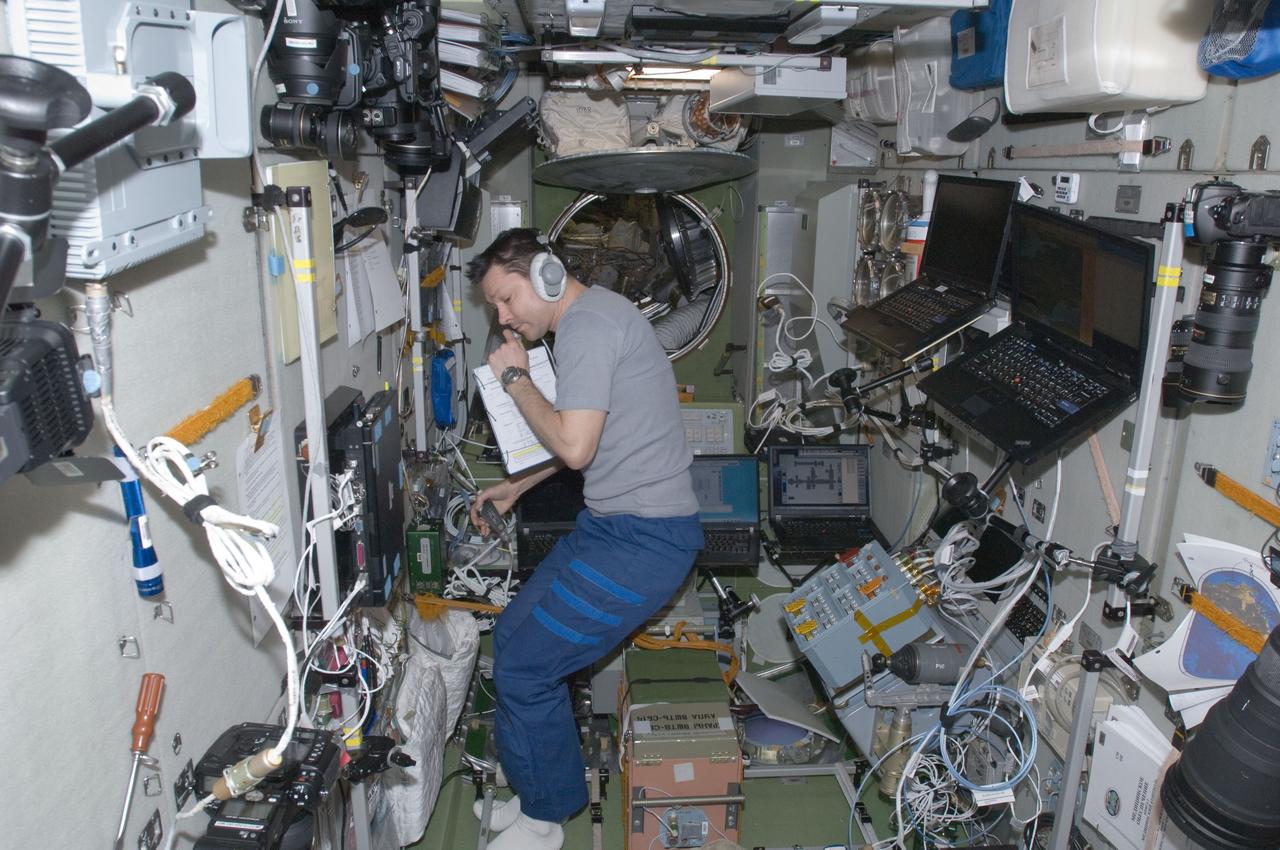
ISS030-E-171108 (24 March 2012) --- Russian cosmonaut Oleg Kononenko, Expedition 30 flight engineer, wearing a communication headset, is pictured in the Zvezda Service Module of the International Space Station as crew members prepare for their move to the appropriate Soyuz vehicles, due to the possibility that space debris could pass close to the station. Burbank, Shkaplerov and Ivanishin sheltered in the Soyuz TMA-22 spacecraft attached to the Poisk Mini-Research Module 2 (MRM2) while Kononenko, Kuipers and Pettit took to the Soyuz TMA-03M docked to the Rassvet Mini-Research Module 1 (MRM-1).
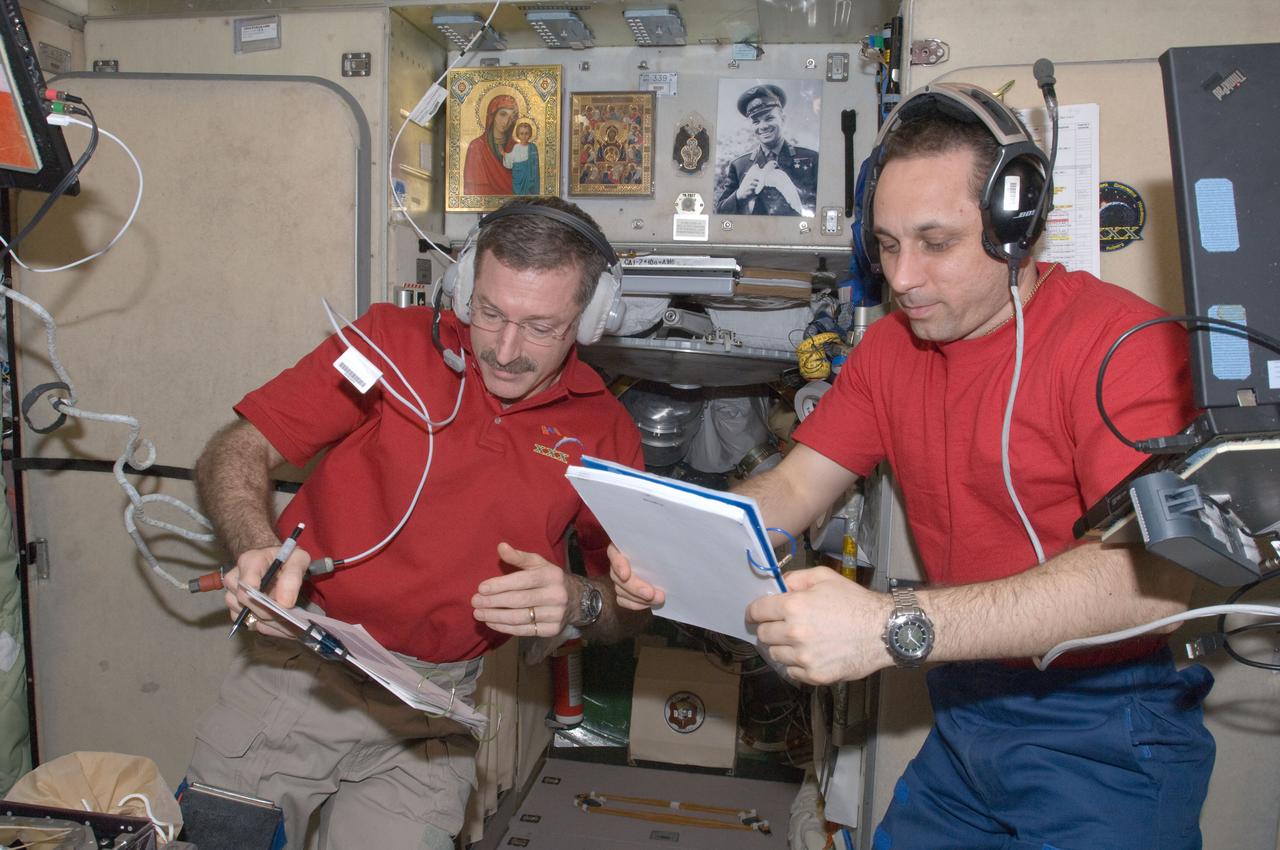
ISS030-E-171107 (24 March 2012) --- NASA astronaut Dan Burbank (left), Expedition 30 commander; and Russian cosmonaut Anton Shkaplerov, flight engineer, wearing communication headsets, review crew procedures in the Zvezda Service Module of the International Space Station in preparation of moving to the appropriate Soyuz vehicles, due to the possibility that space debris could pass close to the station. Burbank, Shkaplerov and Ivanishin sheltered in the Soyuz TMA-22 spacecraft attached to the Poisk Mini-Research Module 2 (MRM2) while Kononenko, Kuipers and Pettit took to the Soyuz TMA-03M docked to the Rassvet Mini-Research Module 1 (MRM-1).
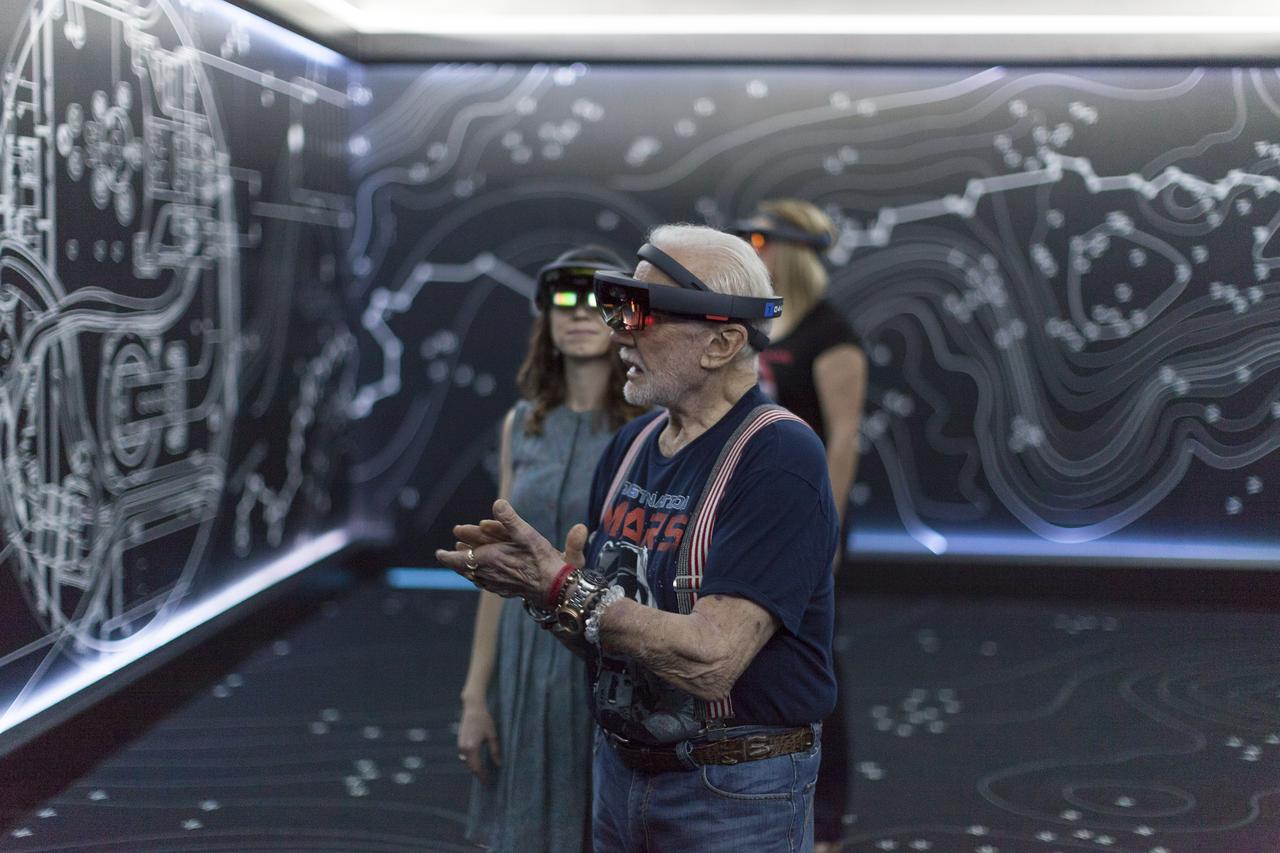
Apollo 11 astronaut Buzz Aldrin, right and Erisa Hines of NASA’s Jet Propulsion Laboratory (JPL) in Pasadena, California, speak to members of the news media during a preview of the new Destination: Mars experience at the Kennedy Space Center Visitor Complex. Destination: Mars gives guests an opportunity to “visit” several sites on Mars using real imagery from NASA’s Curiosity Mars Rover. Based on OnSight, a tool created by JPL, the experience brings guests together with a holographic version of Aldrin and Curiosity rover driver Hines as they are guided to Mars using Microsoft HoloLens mixed reality headset. Photo credit: NASA/Charles Babir
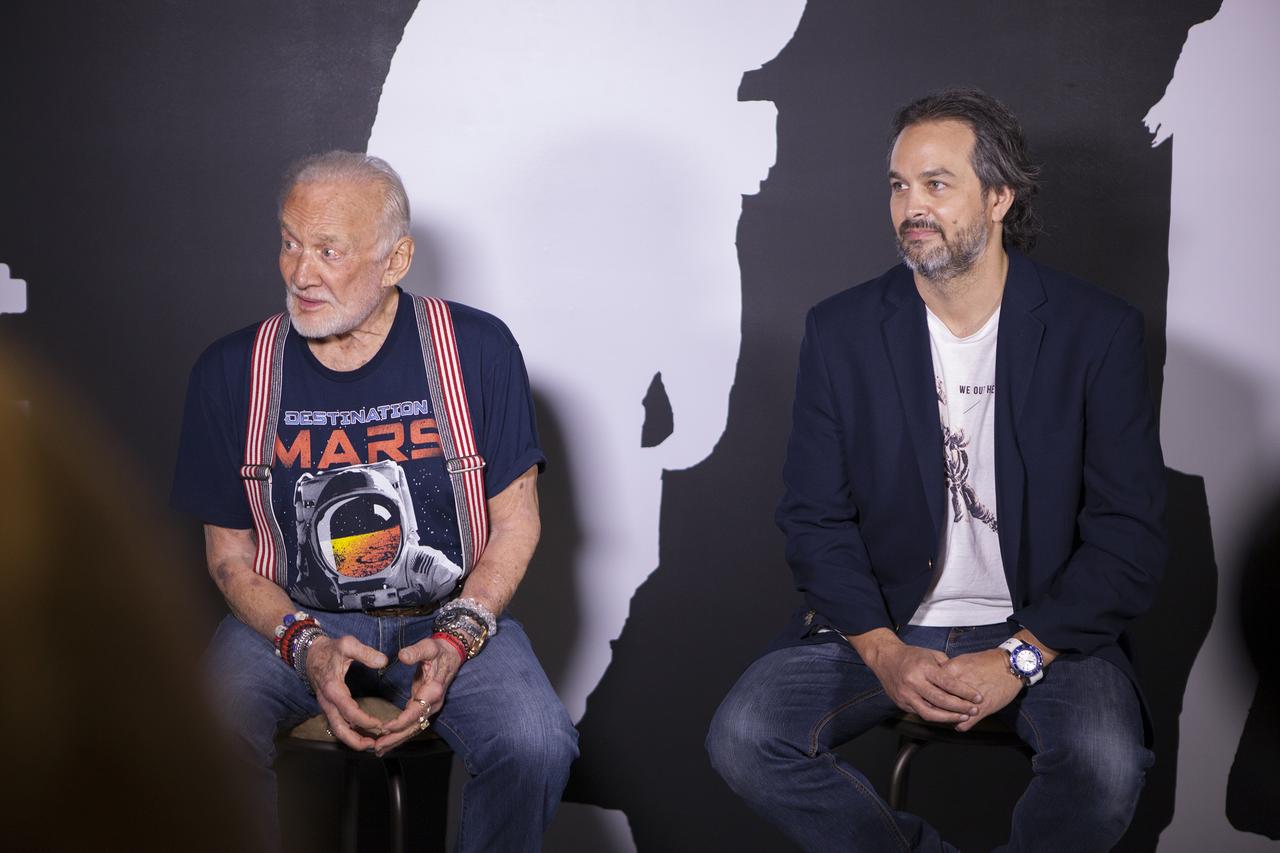
Apollo 11 astronaut Buzz Aldrin, left, and Kudo Tsunoda of Microsoft, speak to members of the news media during a preview of the new Destination: Mars experience at the Kennedy Space Center Visitor Complex. Destination: Mars gives guests an opportunity to “visit” several sites on Mars using real imagery from NASA’s Curiosity Mars Rover. Based on OnSight, a tool created by NASA’s Jet Propulsion Laboratory in Pasadena, California, the experience brings guests together with a holographic version of Aldrin as they are guided to Mars using Microsoft HoloLens mixed reality headset. Photo credit: NASA/Charles Babir
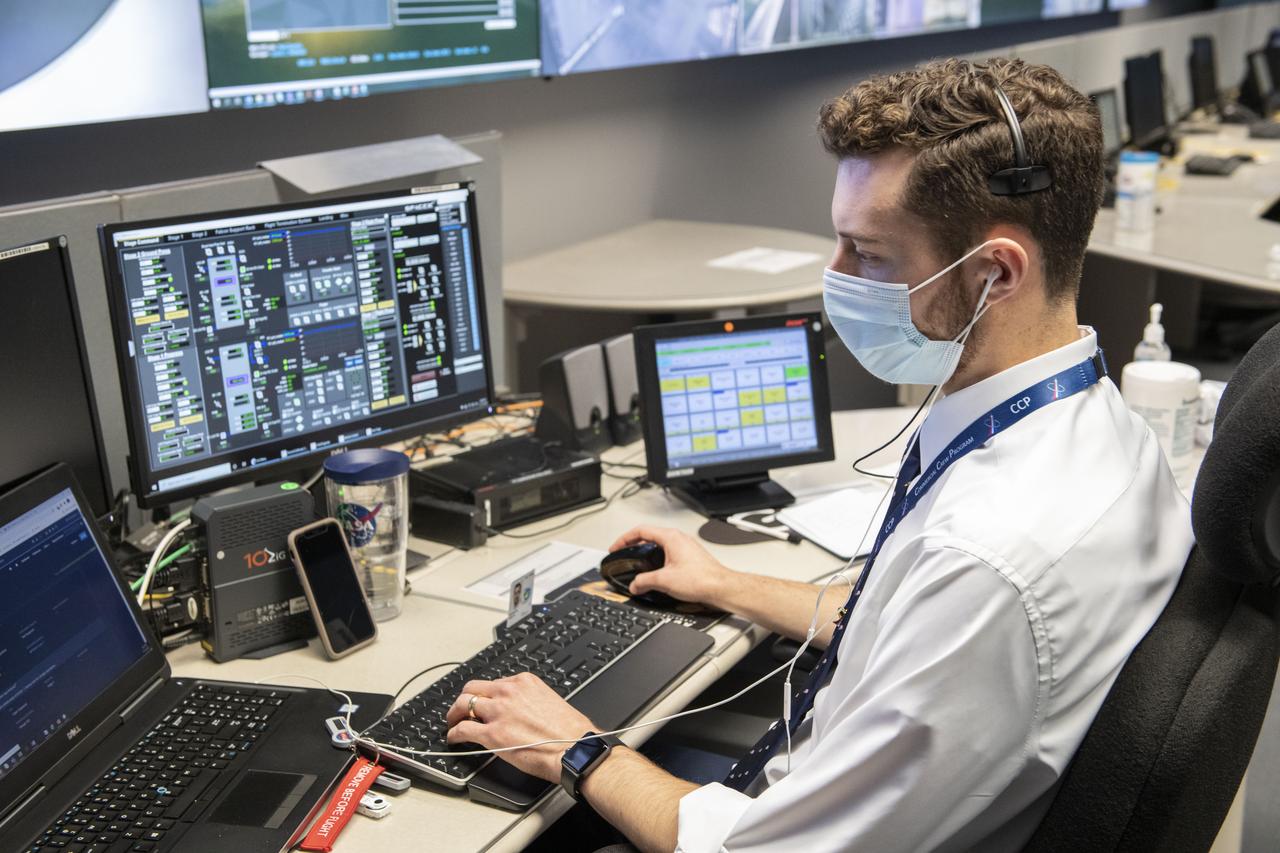
Teams at NASA’s Marshall Space Flight Center help monitor launch conditions for the Crew 1 mission from the Huntsville Operations Support Center in Huntsville, Alabama. SpaceX will launch a Falcon 9 rocket carrying NASA astronauts aboard the company’s Crew Dragon spacecraft to the International Space Station on Nov. 15, 2020. The Marshall team is supporting flight control teams working with NASA’s Johnson Space Center in Houston, Texas, NASA’s Kennedy Space Center in Cape Canaveral, Florida, and SpaceX headquarters in Hawthorne, California, as they monitor the different phases of the upcoming mission. Engineers and technicians at Marshall will use headsets and loops to communicate with the multiple locations on console for the launch.
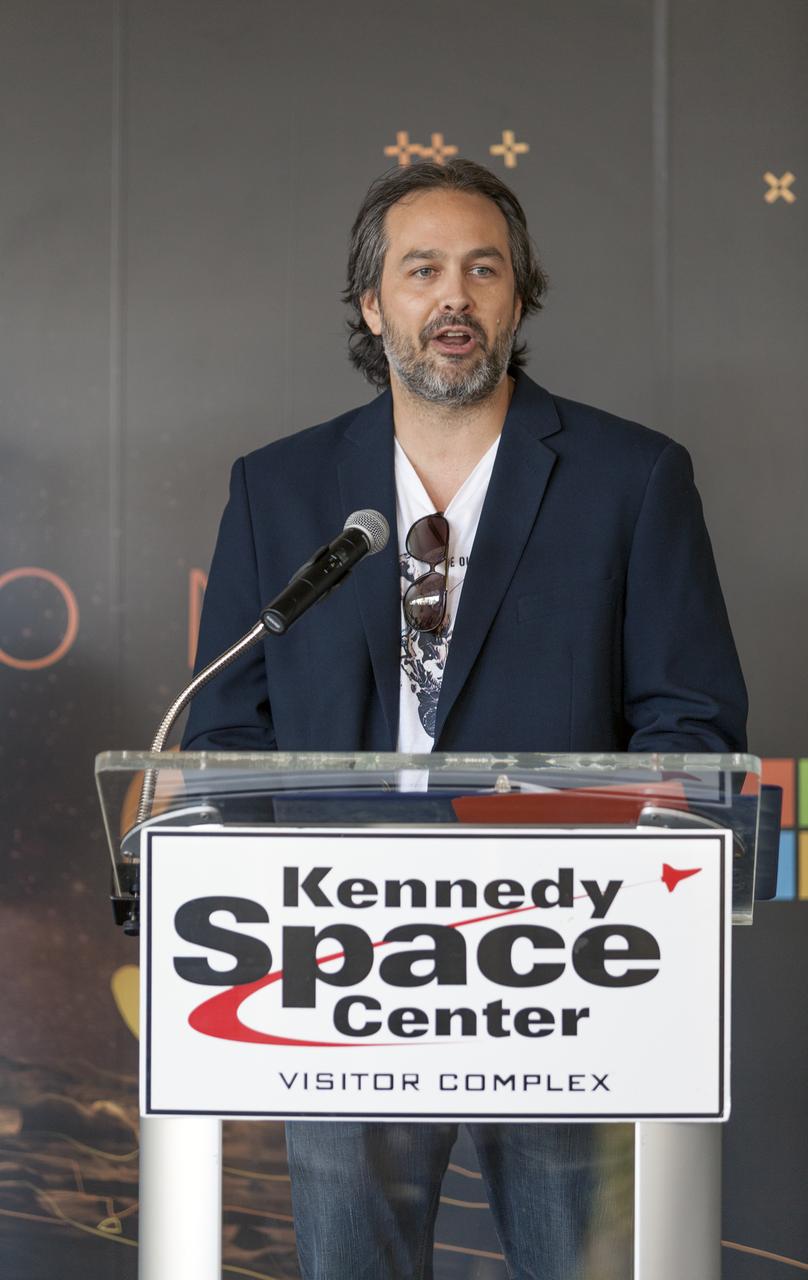
Kudo Tsunoda of Microsoft, speaks to members of the news media during a preview of the new Destination: Mars experience at the Kennedy Space Center Visitor Complex. Destination: Mars gives guests an opportunity to “visit” several sites on Mars using real imagery from NASA’s Curiosity Mars Rover. Based on OnSight, a tool created by NASA’s Jet Propulsion Laboratory in Pasadena, California, the experience brings guests together with a holographic version of Apollo 11 astronaut Buzz Aldrin as they are guided to Mars using Microsoft HoloLens mixed reality headset. Photo credit: NASA/Charles Babir
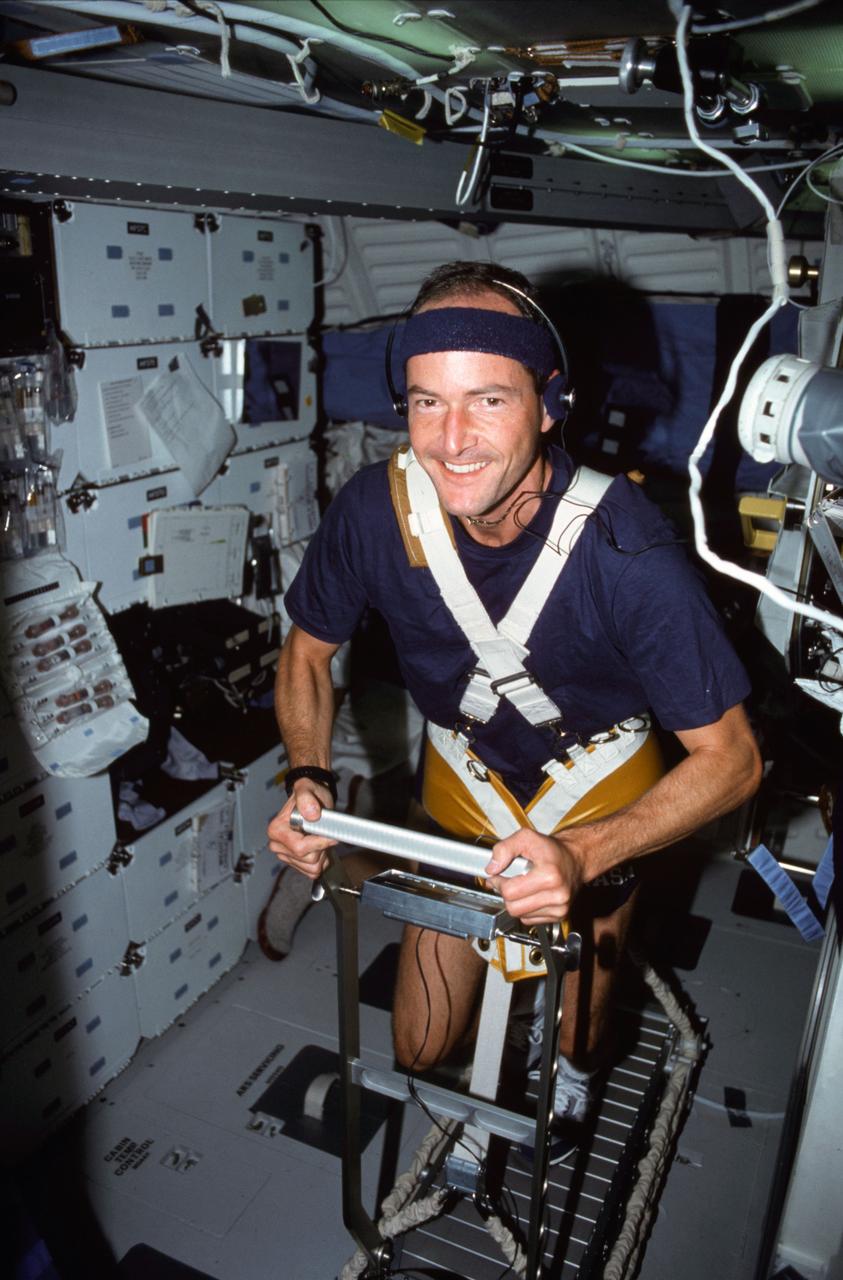
STS043-04-016 (2-11 Aug 1991) --- Astronaut G. David Low, STS-43 mission specialist, works out on a treadmill device which was used for medical testing on the nine-day flight. The scene, photographed with a 35mm camera, is on Atlantis? flight deck.
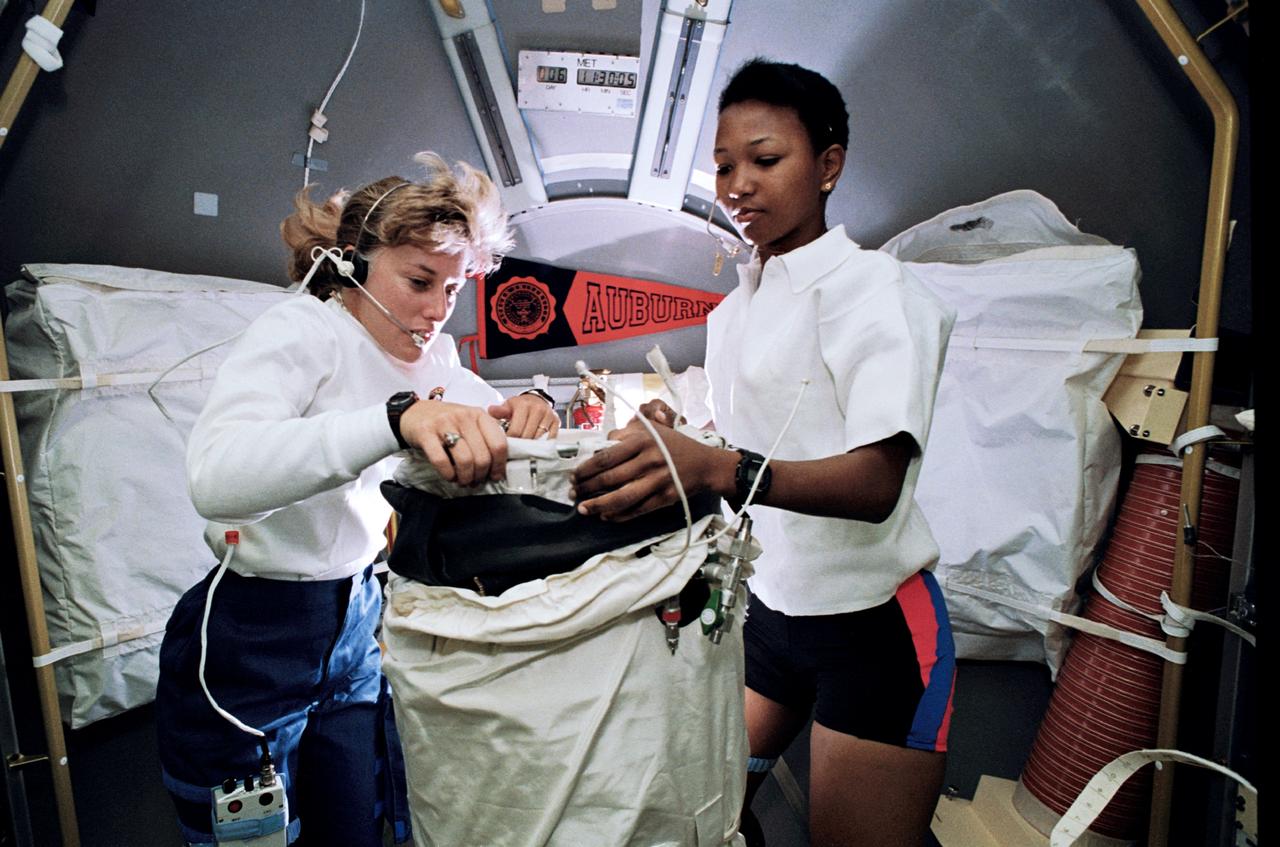
STS047-46-027 (12-20 Sept. 1992) --- Astronauts N. Jan Davis (left) and Mae C. Jemison, STS-47 mission specialists, prepare to deploy the Lower Body Negative Pressure (LBNP) apparatus in this 35mm frame photographed in the Science Module aboard the Earth-orbiting Space Shuttle Endeavour. Making their first flight in space, the two were joined by four other NASA astronauts and a Japanese payload specialist for eight days of research. The Spacelab-J mission is a joint effort between Japan and the United States of America.
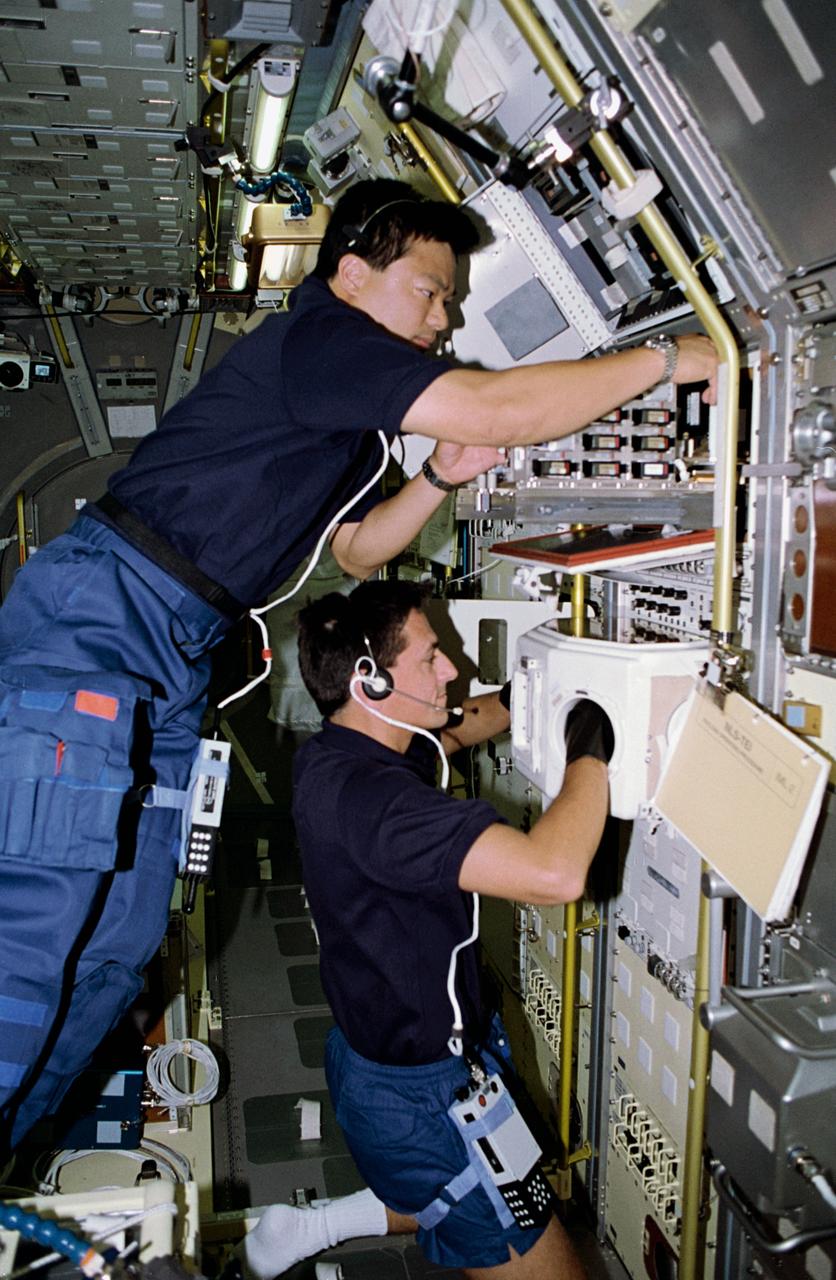
STS-65 Mission Specialist (MS) Leroy Chiao (top) and MS Donald A. Thomas are seen at work in the International Microgravity Laboratory 2 (IML-2) spacelab science module aboard the Space Shuttle Columbia, Orbiter Vehicle (OV) 102. The two crewmembers are conducting experiments at the IML-2 Rack 5 Biorack (BR). Chiao places a sample in the BR incubator as Thomas handles another sample inside the BR glovebox. The glovebox is used to prepare samples for BR and slow rotating centrifuge microscope (NIZEMI) experiments.
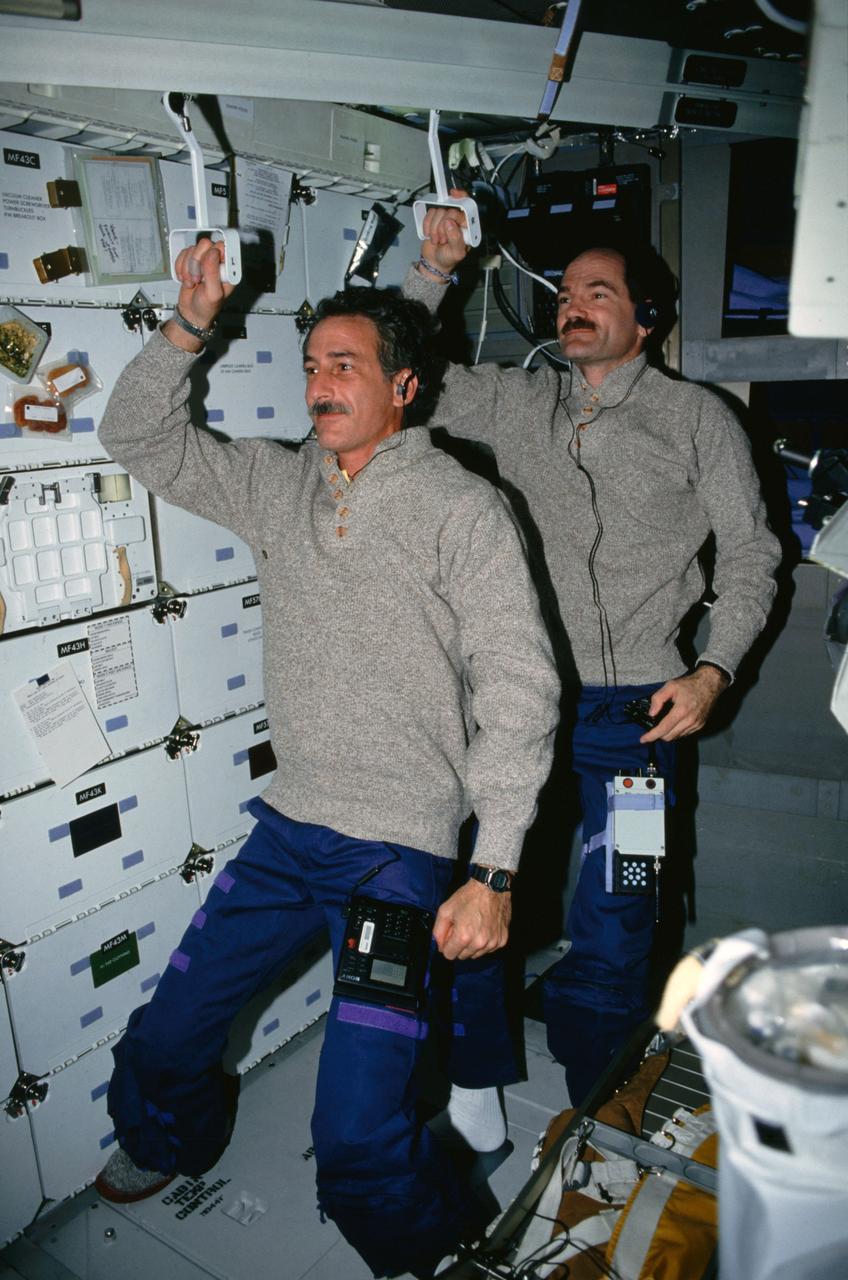
STS035-10-005 (2-10 Dec 1990) --- STS-35 Mission Specialist (MS) Jeffrey A. Hoffman (front) and Pilot Guy S. Gardner, holding Development Test Objective (DTO) 634 trash compactor handles to the ceiling, "commute" to work on the middeck of Columbia, Orbiter Vehicle (OV) 102. Just below Hoffman's right elbow in locker MF43G DTO 634, Trash Compaction and Retention System Demonstration, trash compactor with a geared mechanism that allows manual compaction of wet and dry trash is visible. Also in the view are the stowed treadmill on the middeck floor and the starboard side sleep station.
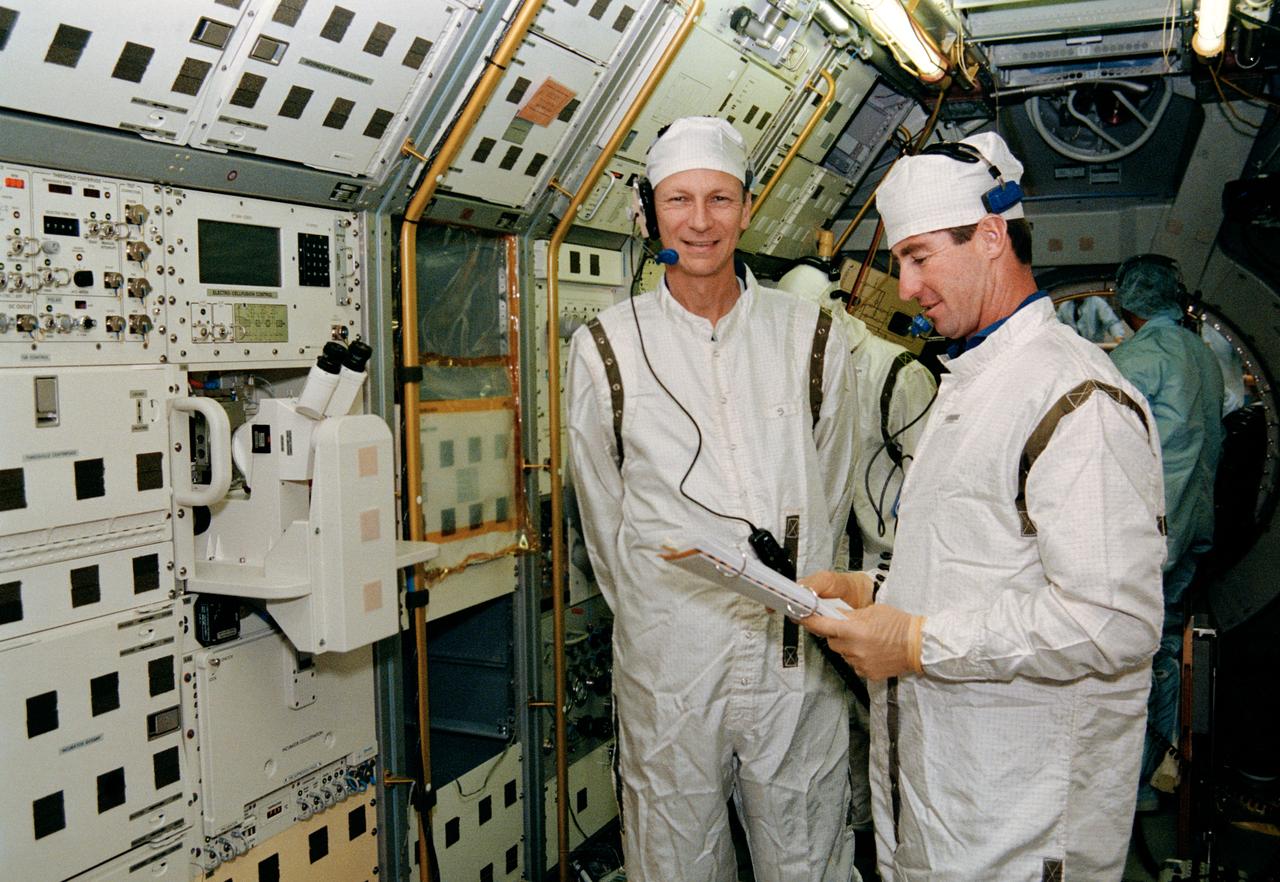
S93-29830 (4 Nov 1992) --- Inside the Spacelab D-2 module in the Operations and Checkout Building high bay, STS-55 Mission Commander Steven R. Nagel (left) and Pilot Terence T. Henricks are participating in a mission sequence test to check out experiment steps and procedures which will be conducted on-orbit. Spacelab D-2, the second German Spacelab, is scheduled to fly on space shuttle mission STS-55 in 1993.
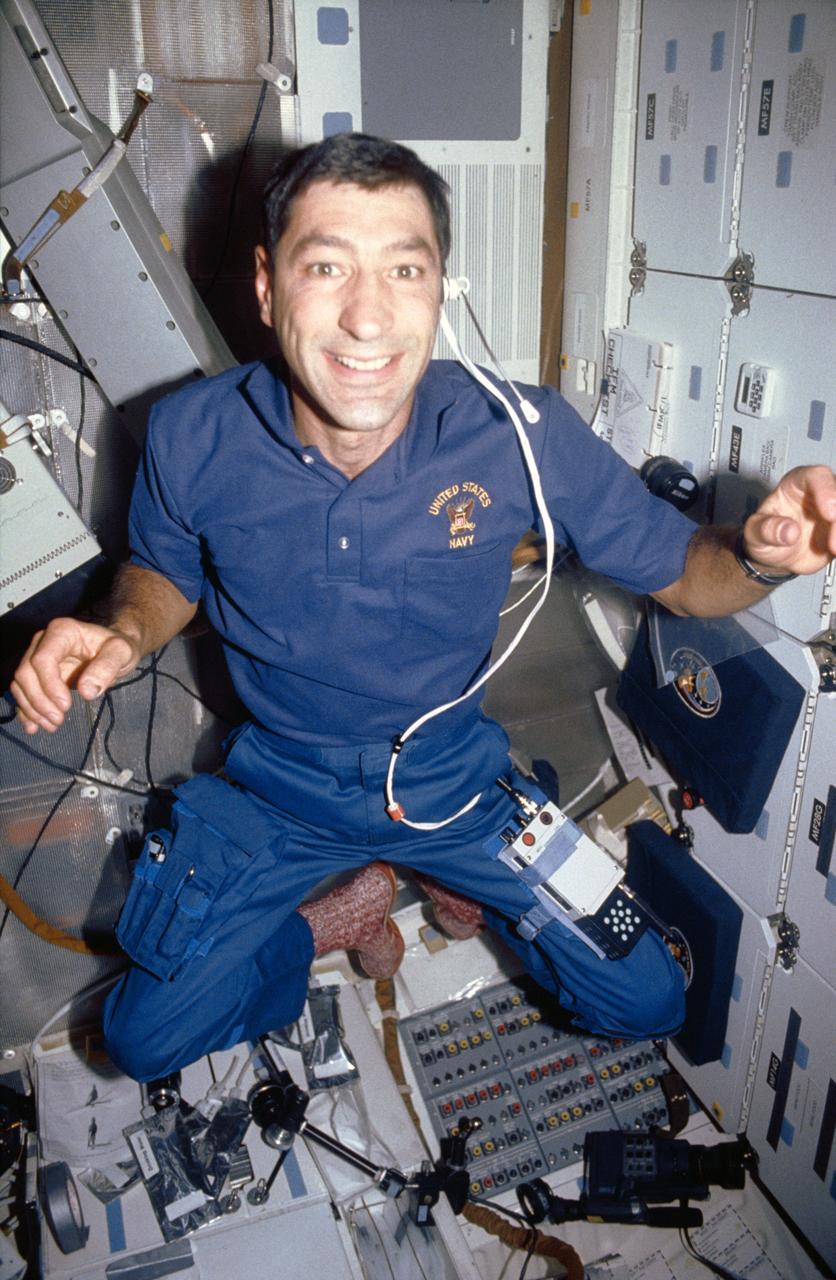
STS044-19-026 (24 Nov-1 Dec 1991) --- Astronaut Mario Runco Jr., STS-44 mission specialist, floats on Atlantis' middeck.
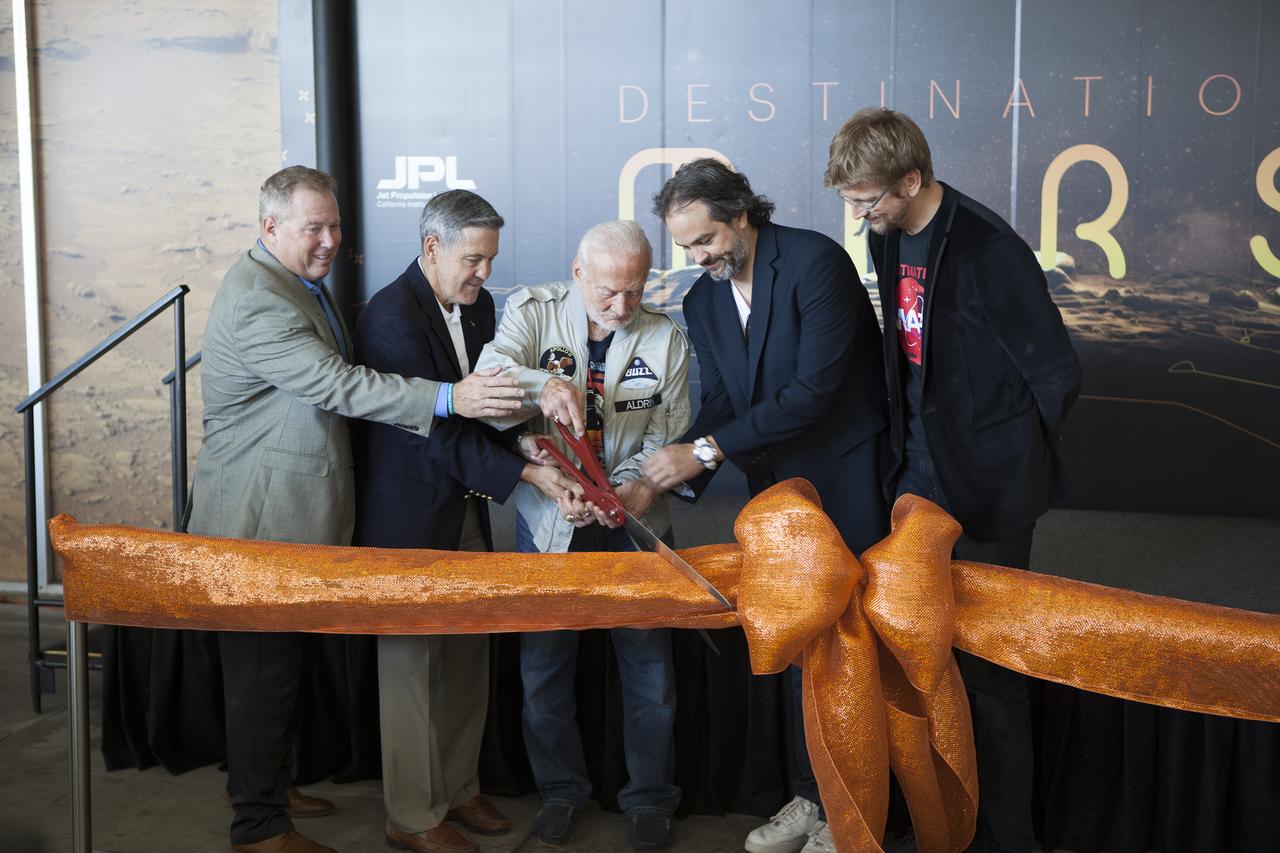
A ceremonial ribbon is cut for the opening of new Destination: Mars experience at the Kennedy Space Center Visitor Complex. From the left are Therrin Protze, chief operating officer of the visitor complex, center director Bob Cabana, Apollo 11 astronaut Buzz Aldrin, Kudo Tsunoda of Microsoft, and Jeff Norris of NASA’s Jet Propulsion Laboratory (JPL) in Pasadena, California. Destination: Mars gives guests an opportunity to “visit” several sites on Mars using real imagery from NASA’s Curiosity Mars Rover. Based on OnSight, a tool created by JPL, the experience brings guests together with a holographic version of Aldrin as they are guided to Mars using Microsoft HoloLens mixed reality headset. Photo credit: NASA/Charles Babir