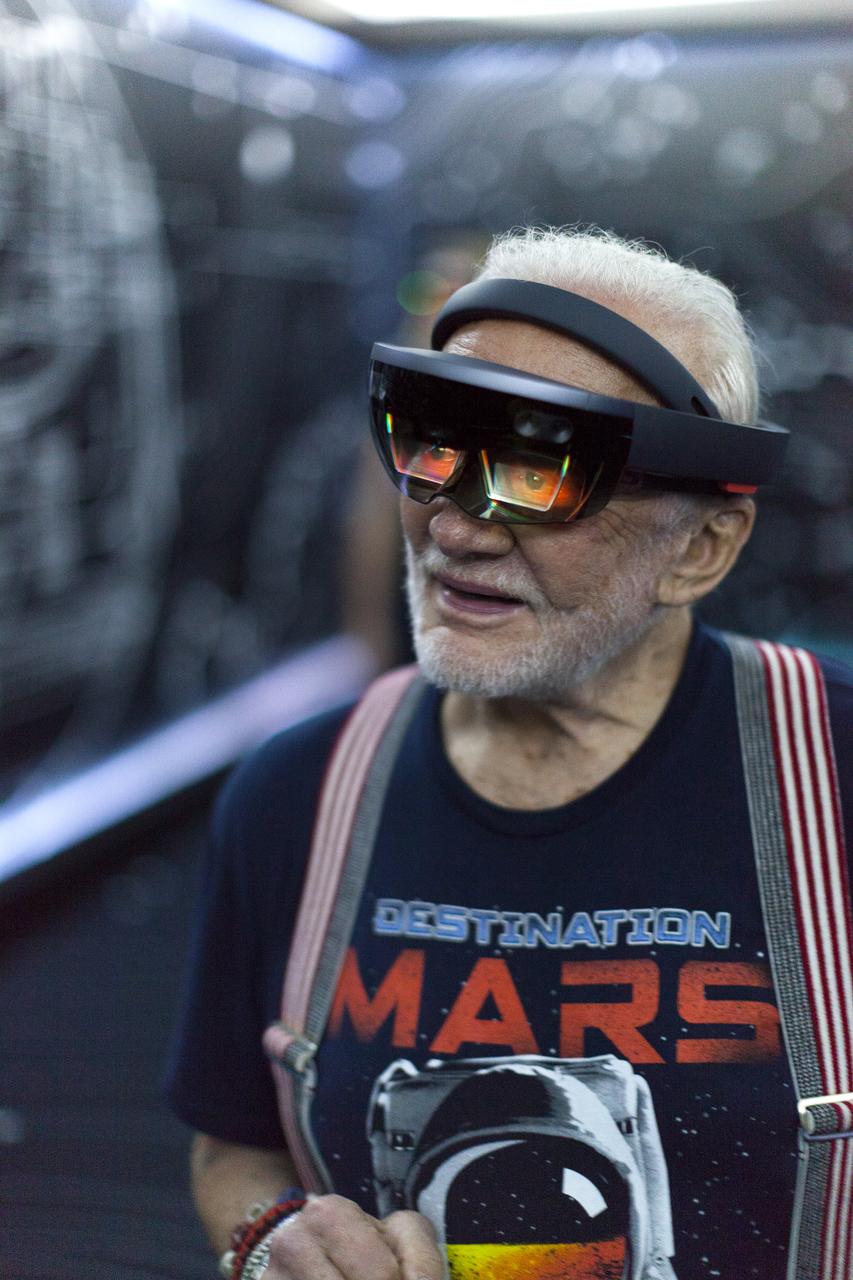
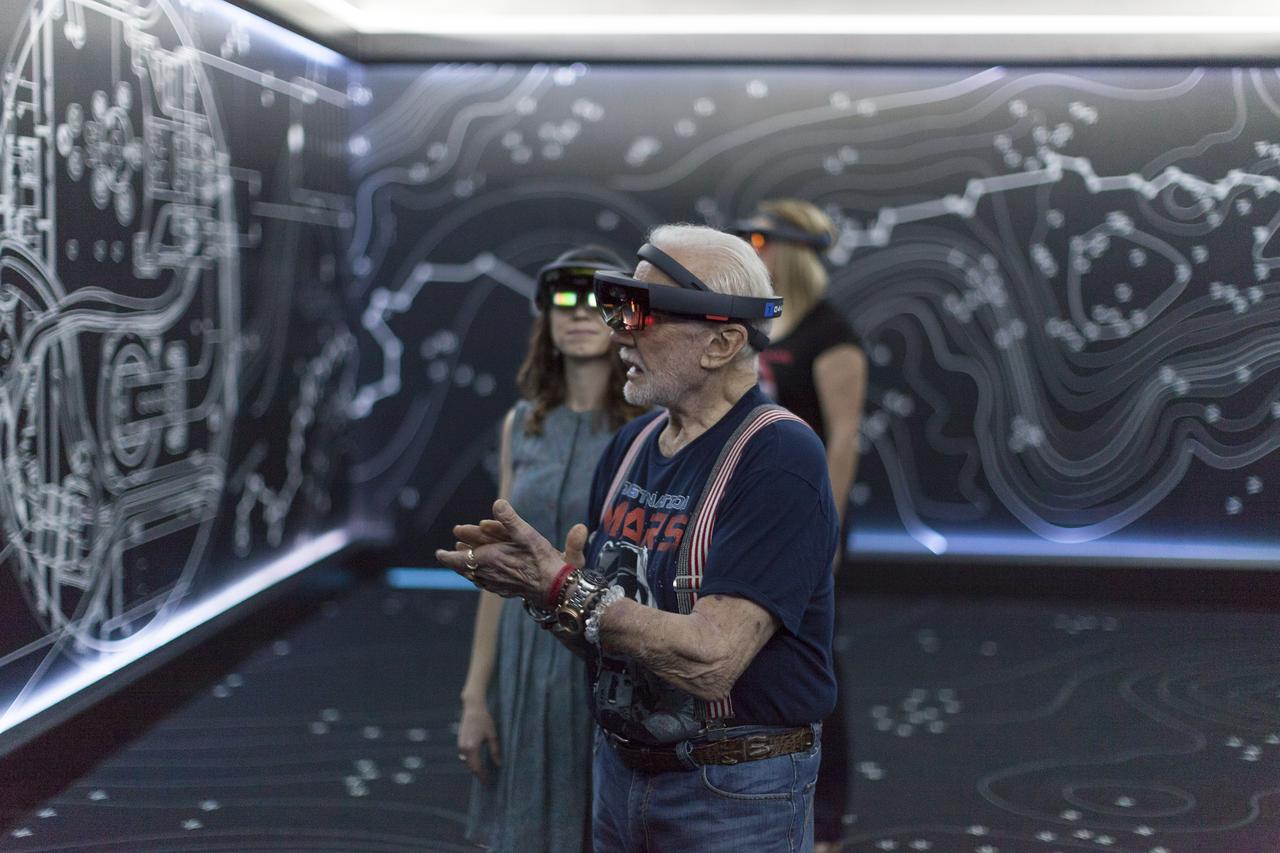
Apollo 11 astronaut Buzz Aldrin tries out Microsoft HoloLens mixed reality headset during a preview of the new Destination: Mars experience at the Kennedy Space Center Visitor Complex. Destination: Mars gives guests an opportunity to “visit” several sites on Mars using real imagery from NASA’s Curiosity Mars Rover. Based on OnSight, a tool created by NASA’s Jet Propulsion Laboratory in Pasadena, California, the experience brings guests together with a holographic version of Aldrin as they are guided to Mars using the headset. Photo credit: NASA/Charles Babir
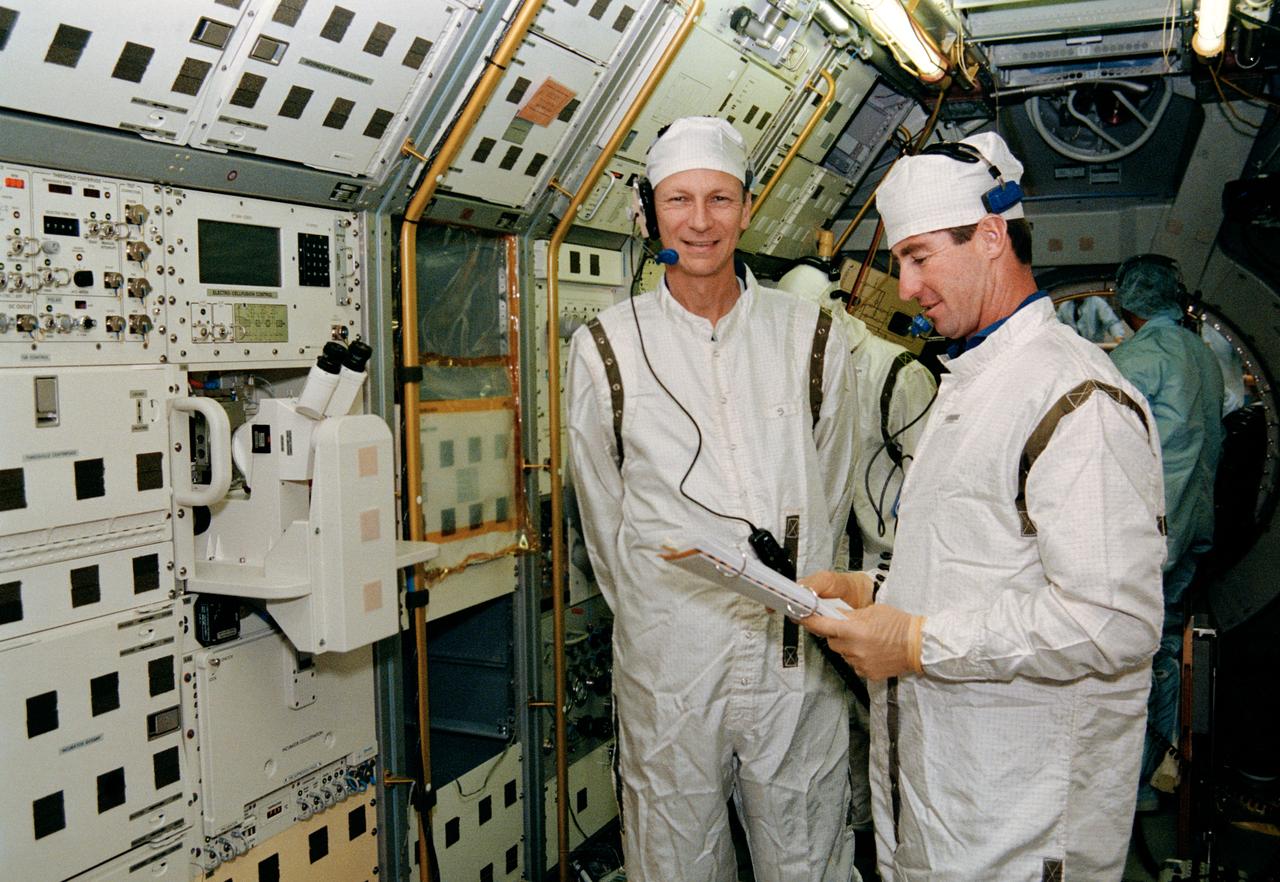
S93-29830 (4 Nov 1992) --- Inside the Spacelab D-2 module in the Operations and Checkout Building high bay, STS-55 Mission Commander Steven R. Nagel (left) and Pilot Terence T. Henricks are participating in a mission sequence test to check out experiment steps and procedures which will be conducted on-orbit. Spacelab D-2, the second German Spacelab, is scheduled to fly on space shuttle mission STS-55 in 1993.

NASA Johnson Space Center Director Michael Coats monitors the launch team discussions on his headset from Firing Room Four of the Launch Control Center at NASA's Kennedy Space Center in Cape Canaveral, Florida, Sunday, July 12, 2009. The space shuttle Endeavour is set to launch at 7:13p.m. EDT with the crew of STS-127 and start a 16-day mission that will feature five spacewalks and complete construction of the Japan Aerospace Exploration Agency's Kibo laboratory. Photo Credit: (NASA/Bill Ingalls)
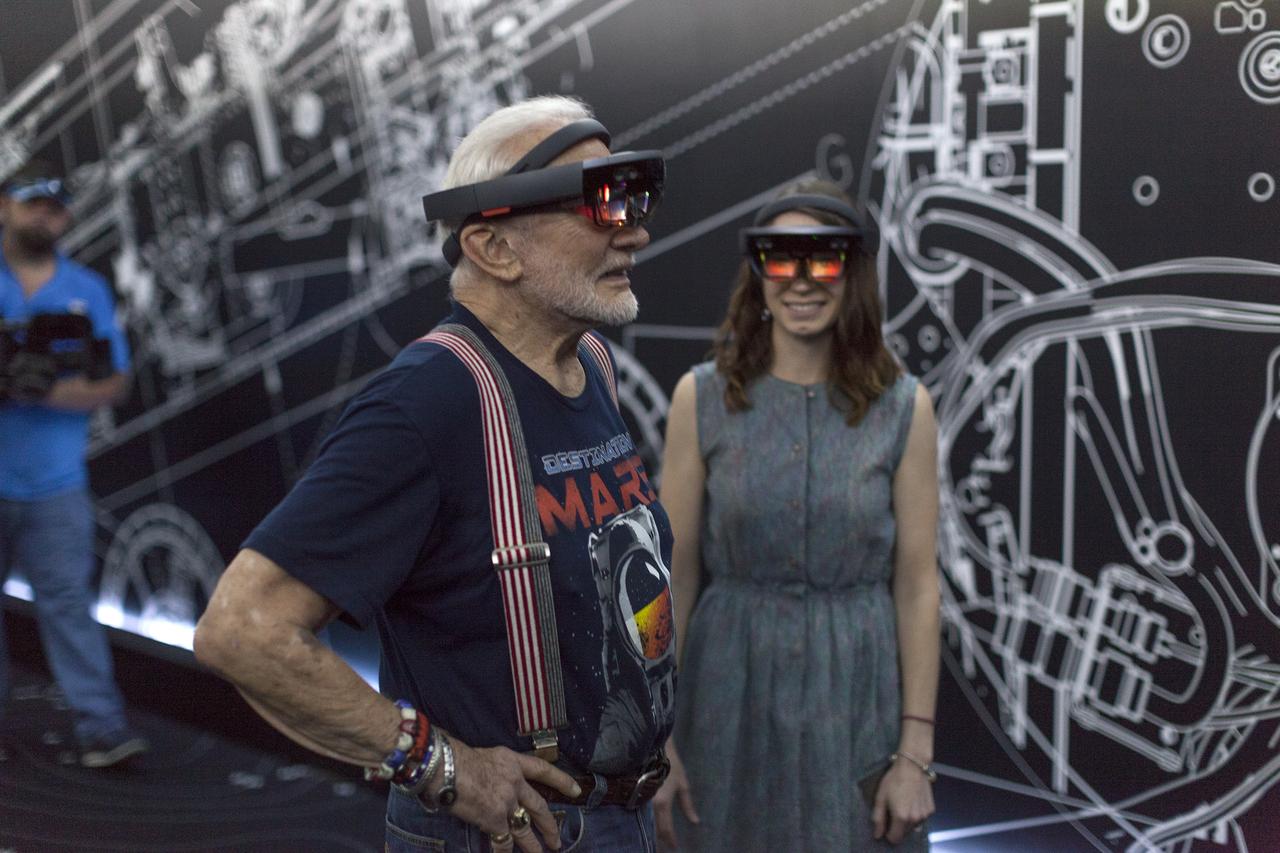
Apollo 11 astronaut Buzz Aldrin, left and Erisa Hines of NASA’s Jet Propulsion Laboratory (JPL) in Pasadena, California, try out Microsoft HoloLens mixed reality headset during a preview of the new Destination: Mars experience at the Kennedy Space Center Visitor Complex. Destination: Mars gives guests an opportunity to “visit” several sites on Mars using real imagery from NASA’s Curiosity Mars Rover. Based on OnSight, a tool created by NASA’s Jet Propulsion Laboratory in Pasadena, California, the experience brings guests together with a holographic version of Aldrin and Curiosity rover driver Hines as they are guided to Mars using Microsoft HoloLens mixed reality headset. Photo credit: NASA/Charles Babir
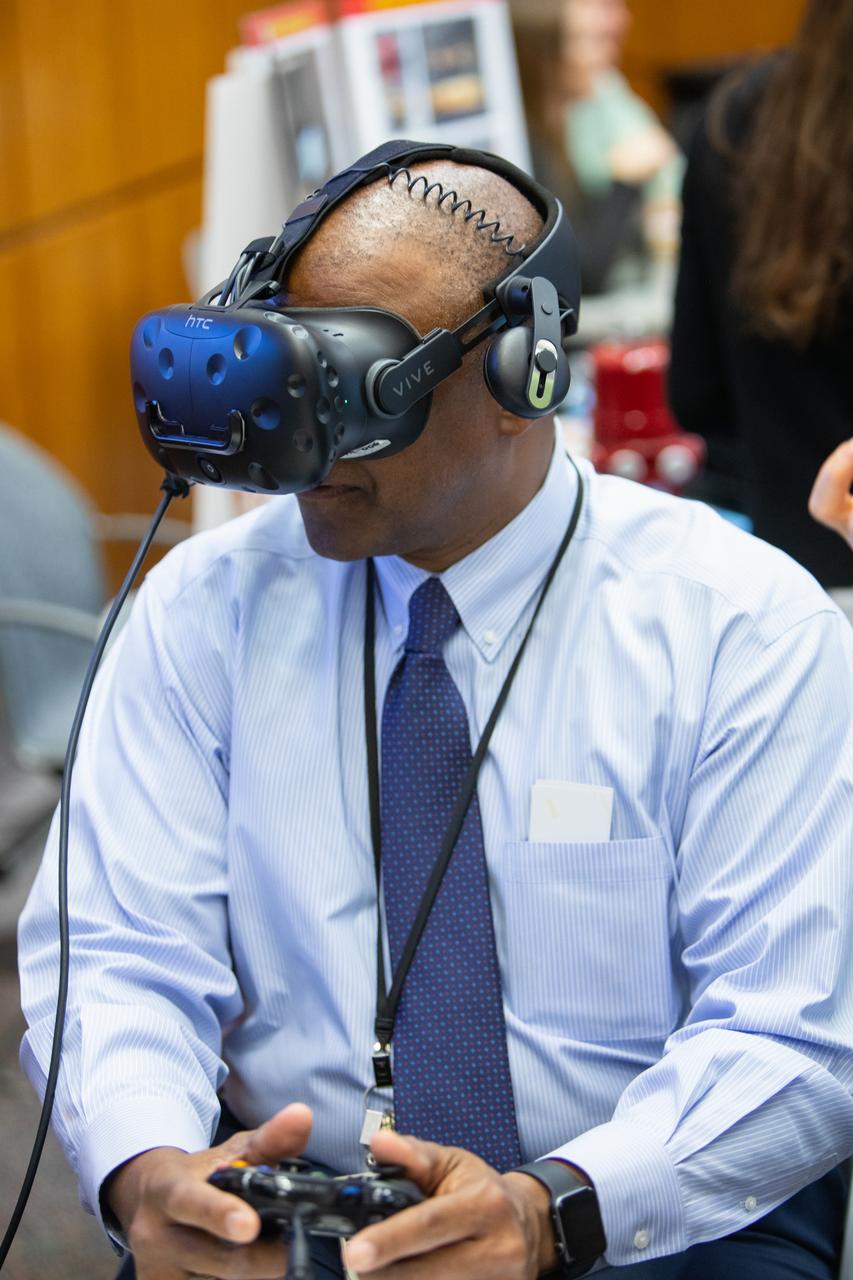
Kennedy Space Center Associate Director, Technical, Kelvin Manning tries out a virtual reality headset during an innovation showcase on Nov. 19, 2019, in the Florida spaceport’s Neil Armstrong Operations and Checkout Building’s Mission Briefing Room. Nearly 50 exhibitors gathered to demonstrate new technologies and innovations during the center’s Innovation Days – one of several events throughout the year aimed at fostering and encouraging an innovative culture at Kennedy. Showcase participants included individuals from multiple directorates, programs and organizations throughout Kennedy. In addition to the showcase, employees had the opportunity to attend an overview presentation on NASA’s Human Landing System (HLS), hosted by HLS Program Manager Lisa Watson-Morgan.
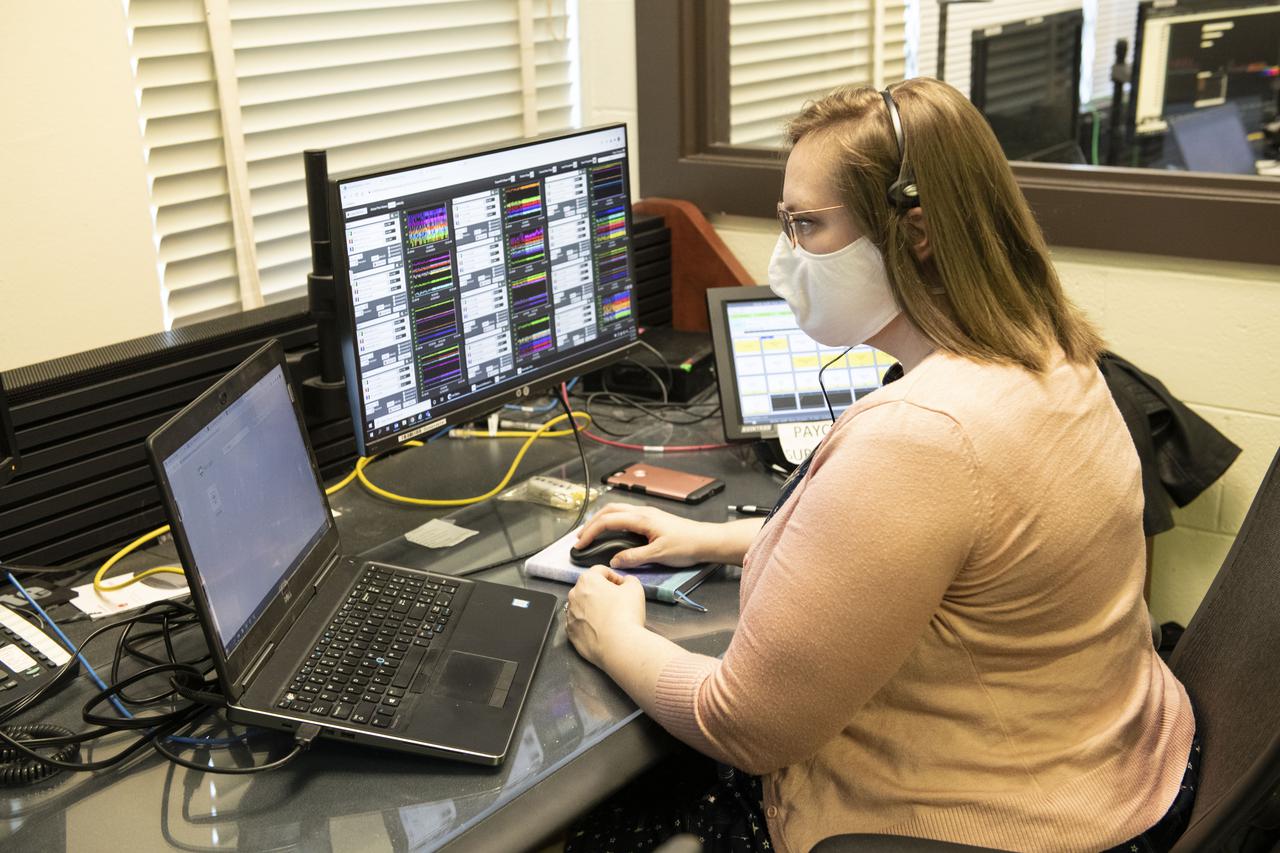
Teams at NASA’s Marshall Space Flight Center help monitor launch conditions for the Crew 1 mission from the Huntsville Operations Support Center in Huntsville, Alabama. SpaceX will launch a Falcon 9 rocket carrying NASA astronauts aboard the company’s Crew Dragon spacecraft to the International Space Station on Nov. 15, 2020. The Marshall team is supporting flight control teams working with NASA’s Johnson Space Center in Houston, Texas, NASA’s Kennedy Space Center in Cape Canaveral, Florida, and SpaceX headquarters in Hawthorne, California, as they monitor the different phases of the upcoming mission. Engineers and technicians at Marshall will use headsets and loops to communicate with the multiple locations on console for the launch.
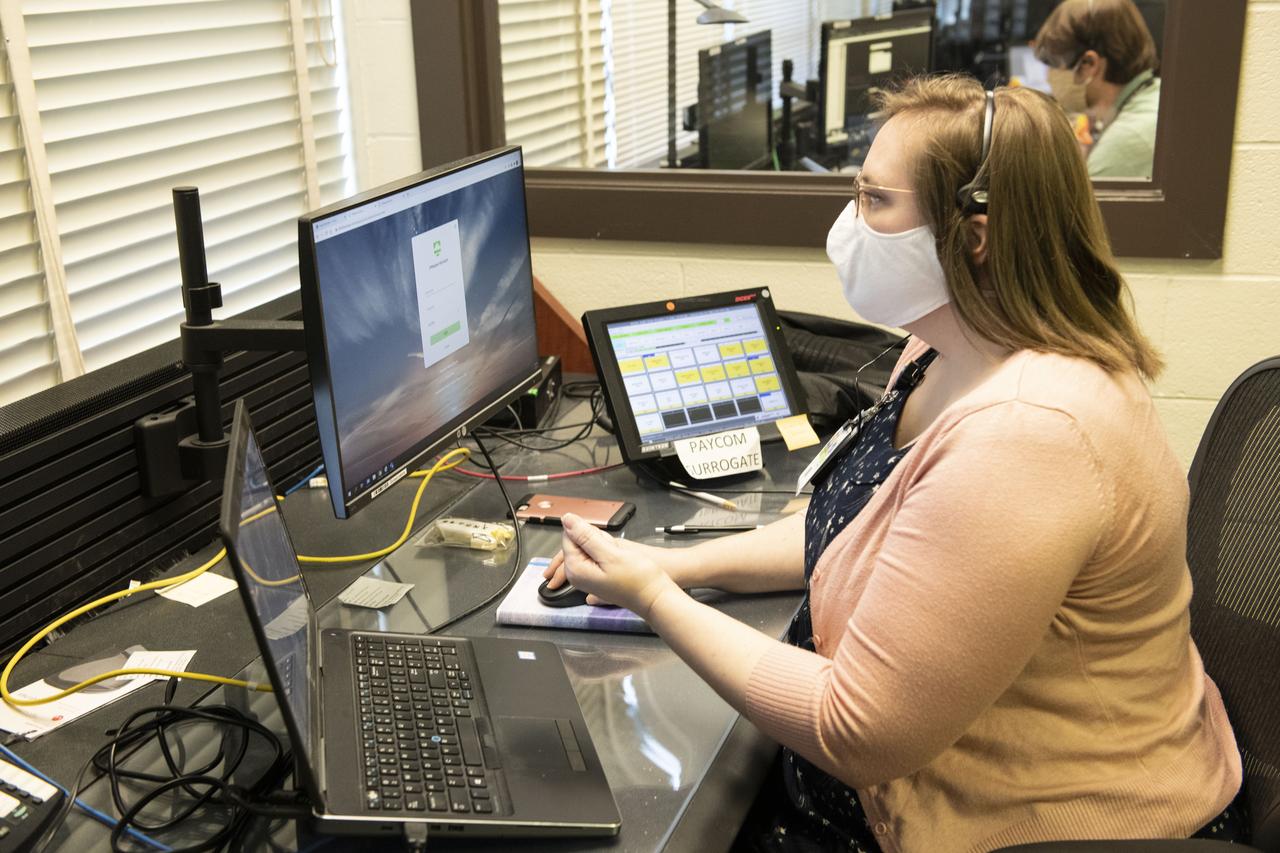
Teams at NASA’s Marshall Space Flight Center help monitor launch conditions for the Crew 1 mission from the Huntsville Operations Support Center in Huntsville, Alabama. SpaceX will launch a Falcon 9 rocket carrying NASA astronauts aboard the company’s Crew Dragon spacecraft to the International Space Station on Nov. 15, 2020. The Marshall team is supporting flight control teams working with NASA’s Johnson Space Center in Houston, Texas, NASA’s Kennedy Space Center in Cape Canaveral, Florida, and SpaceX headquarters in Hawthorne, California, as they monitor the different phases of the upcoming mission. Engineers and technicians at Marshall will use headsets and loops to communicate with the multiple locations on console for the launch.

Teams at NASA’s Marshall Space Flight Center help monitor launch conditions for the Crew 1 mission from the Huntsville Operations Support Center in Huntsville, Alabama. SpaceX will launch a Falcon 9 rocket carrying NASA astronauts aboard the company’s Crew Dragon spacecraft to the International Space Station on Nov. 15, 2020. The Marshall team is supporting flight control teams working with NASA’s Johnson Space Center in Houston, Texas, NASA’s Kennedy Space Center in Cape Canaveral, Florida, and SpaceX headquarters in Hawthorne, California, as they monitor the different phases of the upcoming mission. Engineers and technicians at Marshall will use headsets and loops to communicate with the multiple locations on console for the launch.
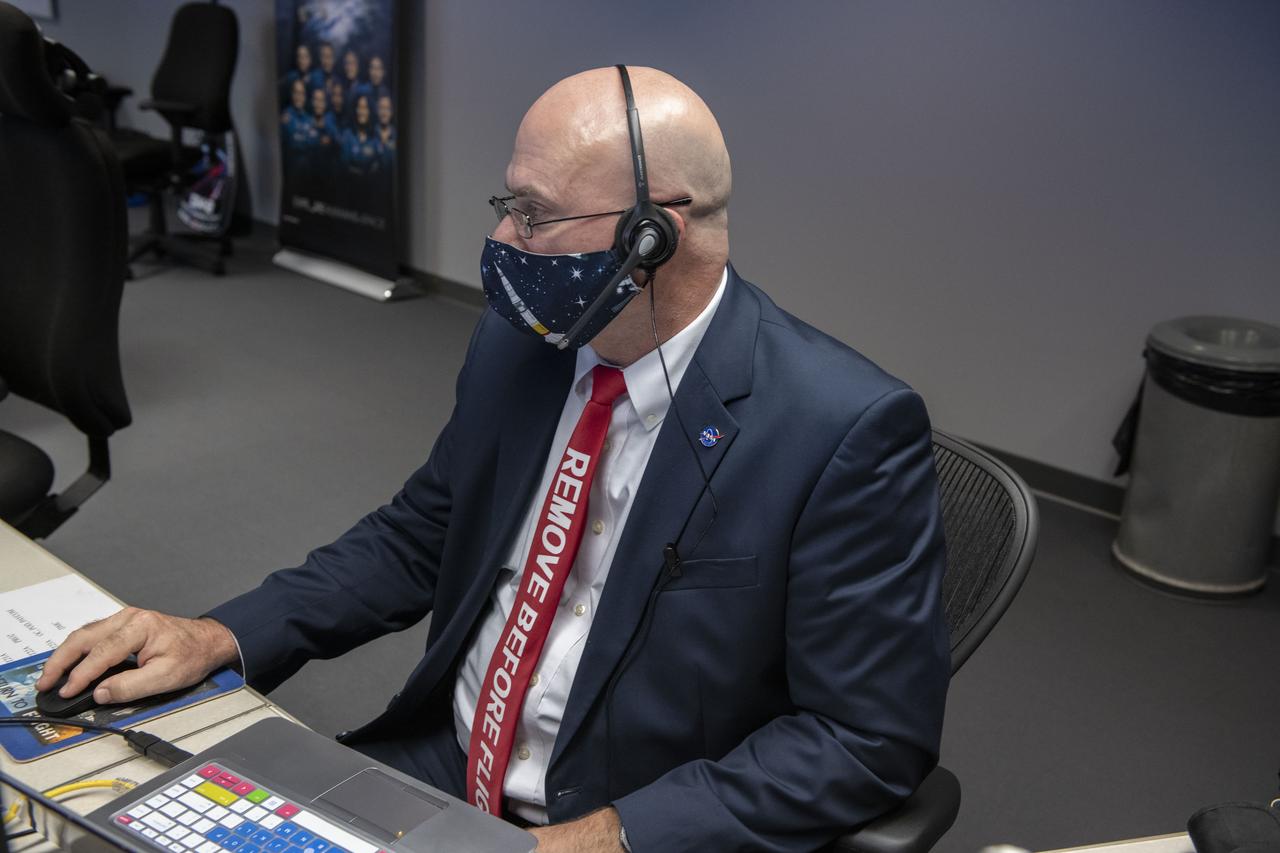
Teams at NASA’s Marshall Space Flight Center help monitor launch conditions for the Crew 1 mission from the Huntsville Operations Support Center in Huntsville, Alabama. SpaceX will launch a Falcon 9 rocket carrying NASA astronauts aboard the company’s Crew Dragon spacecraft to the International Space Station on Nov. 15, 2020. The Marshall team is supporting flight control teams working with NASA’s Johnson Space Center in Houston, Texas, NASA’s Kennedy Space Center in Cape Canaveral, Florida, and SpaceX headquarters in Hawthorne, California, as they monitor the different phases of the upcoming mission. Engineers and technicians at Marshall will use headsets and loops to communicate with the multiple locations on console for the launch.
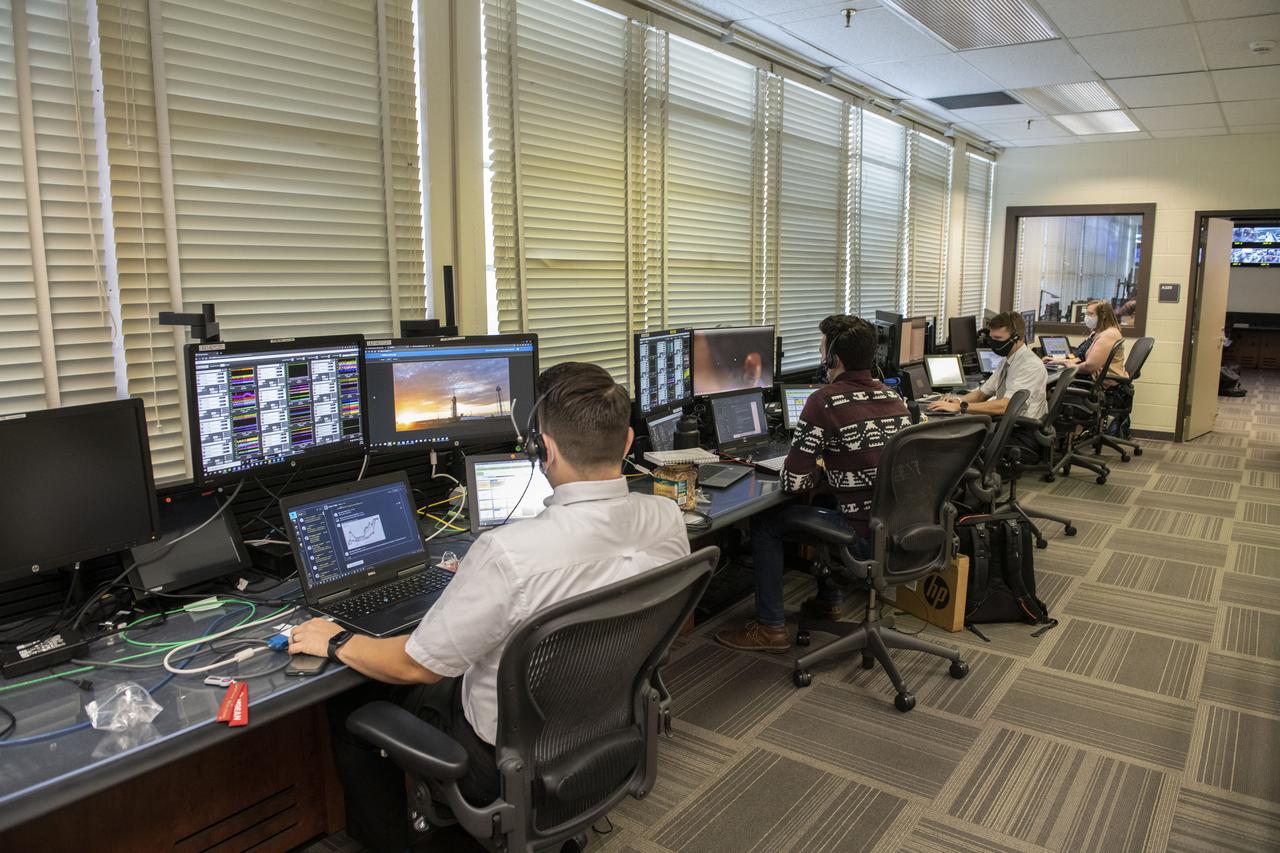
Teams at NASA’s Marshall Space Flight Center help monitor launch conditions for the Crew 1 mission from the Huntsville Operations Support Center in Huntsville, Alabama. SpaceX will launch a Falcon 9 rocket carrying NASA astronauts aboard the company’s Crew Dragon spacecraft to the International Space Station on Nov. 15, 2020. The Marshall team is supporting flight control teams working with NASA’s Johnson Space Center in Houston, Texas, NASA’s Kennedy Space Center in Cape Canaveral, Florida, and SpaceX headquarters in Hawthorne, California, as they monitor the different phases of the upcoming mission. Engineers and technicians at Marshall will use headsets and loops to communicate with the multiple locations on console for the launch.
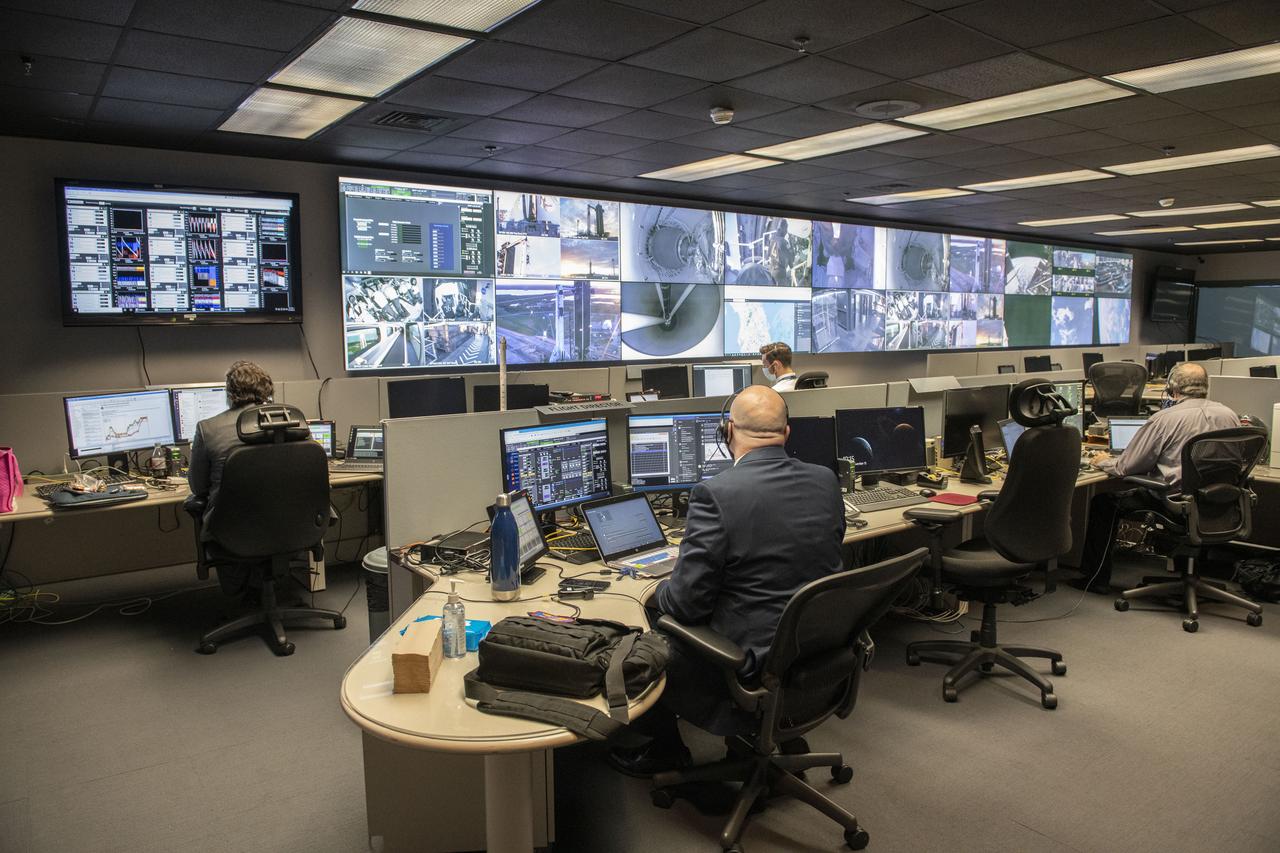
Teams at NASA’s Marshall Space Flight Center help monitor launch conditions for the Crew 1 mission from the Huntsville Operations Support Center in Huntsville, Alabama. SpaceX will launch a Falcon 9 rocket carrying NASA astronauts aboard the company’s Crew Dragon spacecraft to the International Space Station on Nov. 15, 2020. The Marshall team is supporting flight control teams working with NASA’s Johnson Space Center in Houston, Texas, NASA’s Kennedy Space Center in Cape Canaveral, Florida, and SpaceX headquarters in Hawthorne, California, as they monitor the different phases of the upcoming mission. Engineers and technicians at Marshall will use headsets and loops to communicate with the multiple locations on console for the launch.

Teams at NASA’s Marshall Space Flight Center help monitor launch conditions for the Crew 1 mission from the Huntsville Operations Support Center in Huntsville, Alabama. SpaceX will launch a Falcon 9 rocket carrying NASA astronauts aboard the company’s Crew Dragon spacecraft to the International Space Station on Nov. 15, 2020. The Marshall team is supporting flight control teams working with NASA’s Johnson Space Center in Houston, Texas, NASA’s Kennedy Space Center in Cape Canaveral, Florida, and SpaceX headquarters in Hawthorne, California, as they monitor the different phases of the upcoming mission. Engineers and technicians at Marshall will use headsets and loops to communicate with the multiple locations on console for the launch.
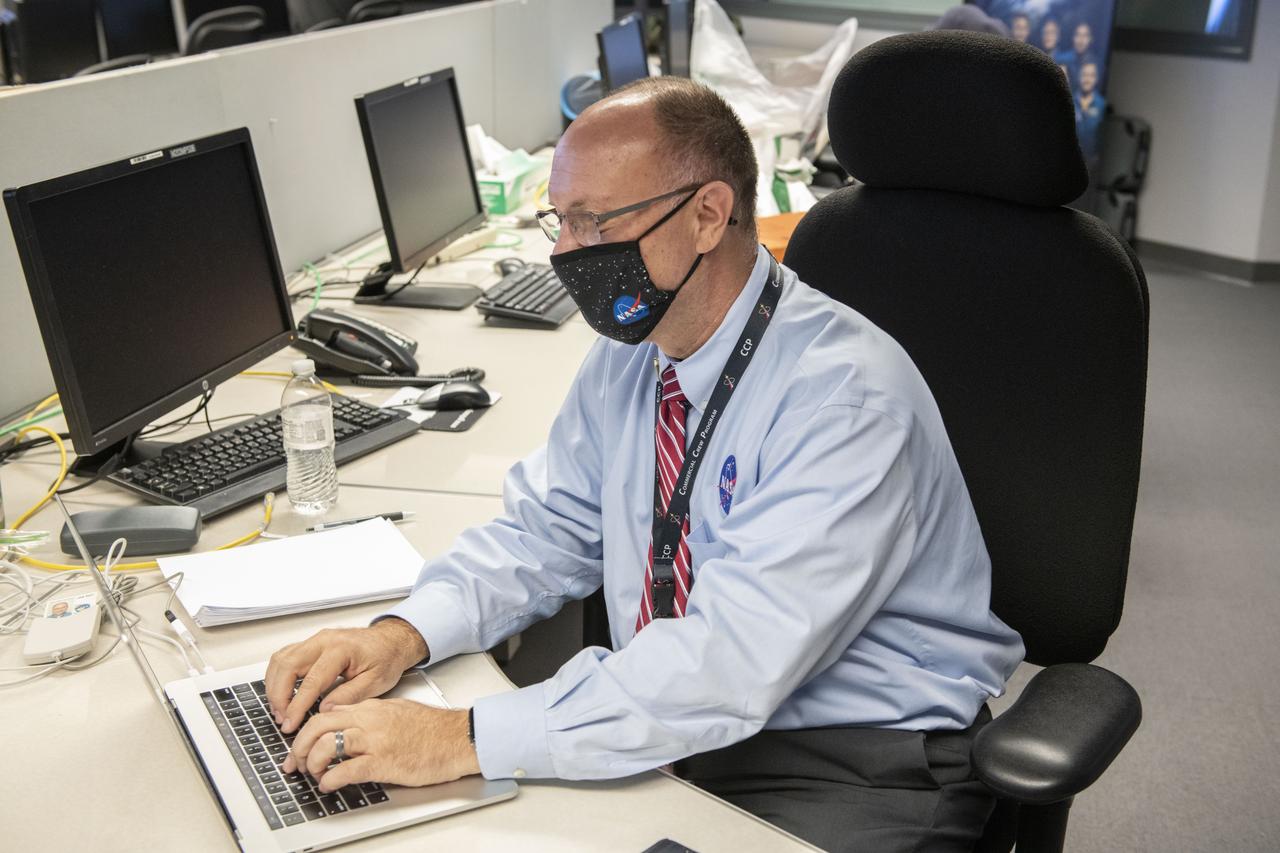
Teams at NASA’s Marshall Space Flight Center help monitor launch conditions for the Crew 1 mission from the Huntsville Operations Support Center in Huntsville, Alabama. SpaceX will launch a Falcon 9 rocket carrying NASA astronauts aboard the company’s Crew Dragon spacecraft to the International Space Station on Nov. 15, 2020. The Marshall team is supporting flight control teams working with NASA’s Johnson Space Center in Houston, Texas, NASA’s Kennedy Space Center in Cape Canaveral, Florida, and SpaceX headquarters in Hawthorne, California, as they monitor the different phases of the upcoming mission. Engineers and technicians at Marshall will use headsets and loops to communicate with the multiple locations on console for the launch.
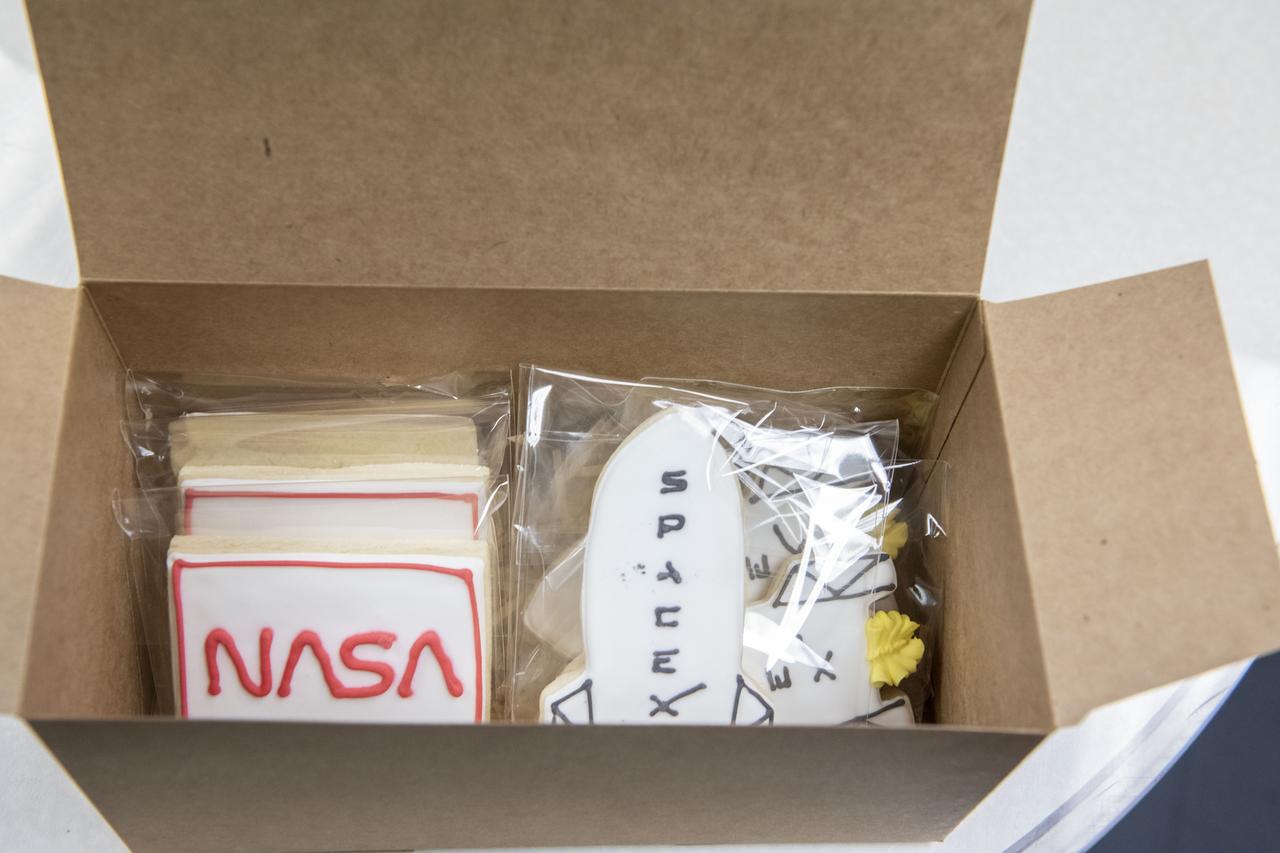
Teams at NASA’s Marshall Space Flight Center help monitor launch conditions for the Crew 1 mission from the Huntsville Operations Support Center in Huntsville, Alabama. SpaceX will launch a Falcon 9 rocket carrying NASA astronauts aboard the company’s Crew Dragon spacecraft to the International Space Station on Nov. 15, 2020. The Marshall team is supporting flight control teams working with NASA’s Johnson Space Center in Houston, Texas, NASA’s Kennedy Space Center in Cape Canaveral, Florida, and SpaceX headquarters in Hawthorne, California, as they monitor the different phases of the upcoming mission. Engineers and technicians at Marshall will use headsets and loops to communicate with the multiple locations on console for the launch.
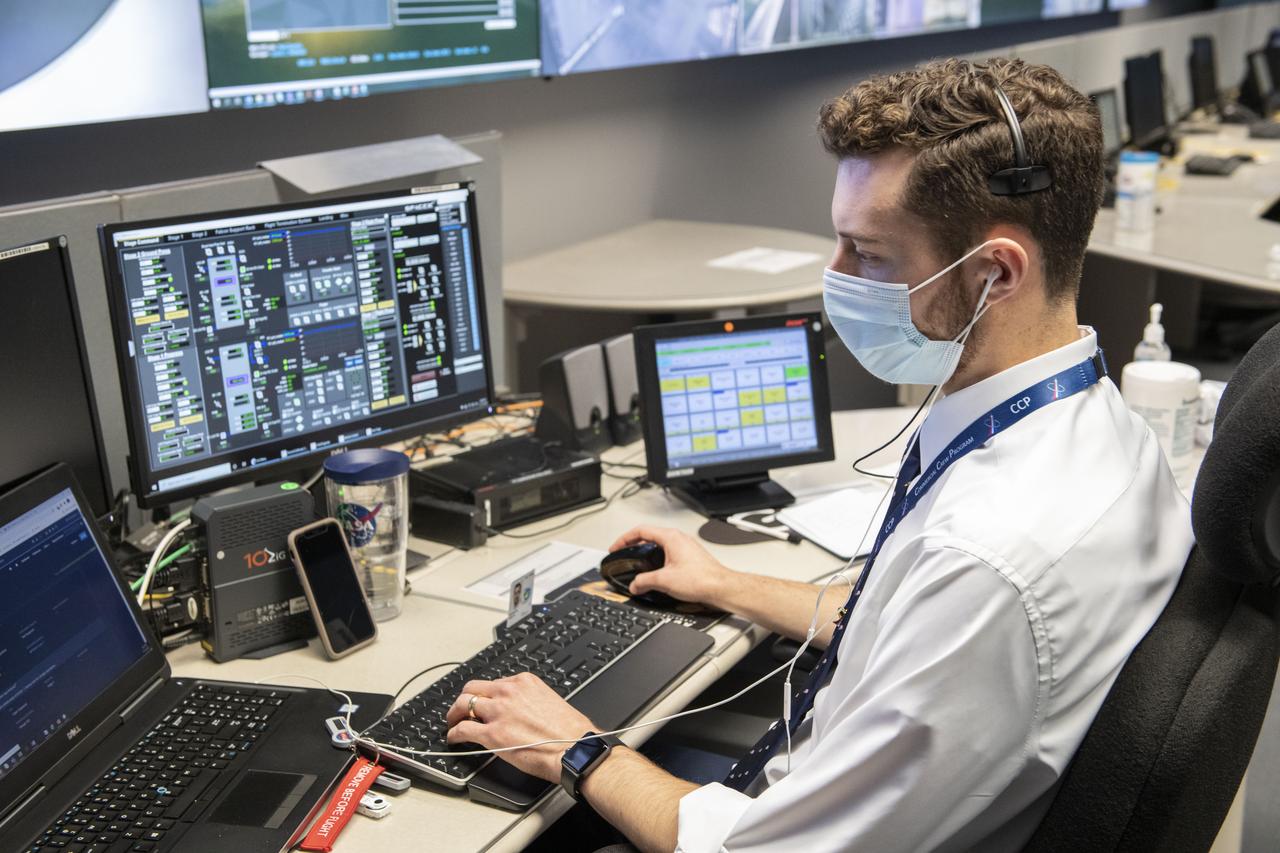
Teams at NASA’s Marshall Space Flight Center help monitor launch conditions for the Crew 1 mission from the Huntsville Operations Support Center in Huntsville, Alabama. SpaceX will launch a Falcon 9 rocket carrying NASA astronauts aboard the company’s Crew Dragon spacecraft to the International Space Station on Nov. 15, 2020. The Marshall team is supporting flight control teams working with NASA’s Johnson Space Center in Houston, Texas, NASA’s Kennedy Space Center in Cape Canaveral, Florida, and SpaceX headquarters in Hawthorne, California, as they monitor the different phases of the upcoming mission. Engineers and technicians at Marshall will use headsets and loops to communicate with the multiple locations on console for the launch.
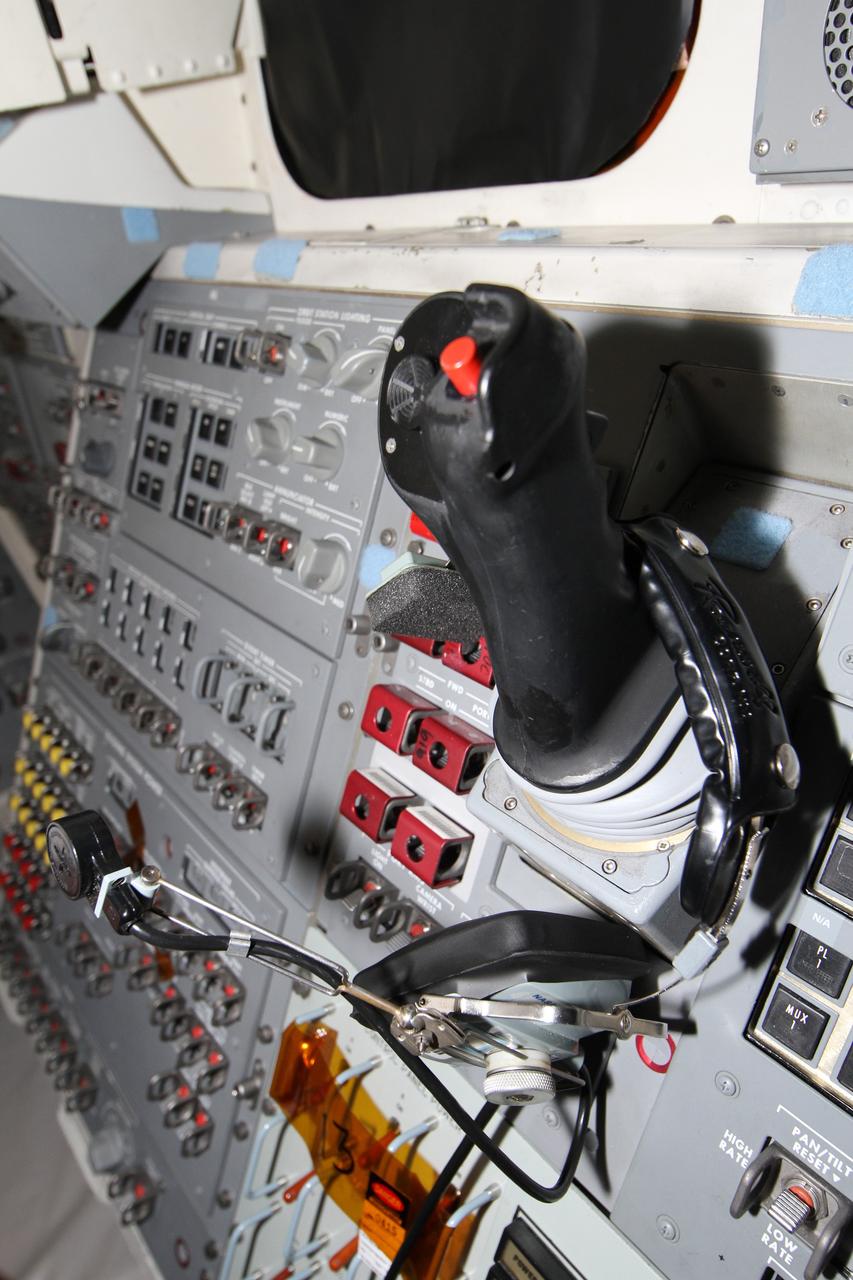
CAPE CANAVERAL, Fla. – Communication no longer required between Orbiter Processing Facility-2 and the Launch Control Center at NASA’s Kennedy Space Center in Florida, a headset is left on a console on space shuttle Endeavour’s flight deck after the shuttle is powered down for the final time. Endeavour is being prepared for public display at the California Science Center in Los Angeles. Its ferry flight to California is targeted for mid-September. Endeavour was the last space shuttle added to NASA’s orbiter fleet. Over the course of its 19-year career, Endeavour spent 299 days in space during 25 missions. For more information, visit http://www.nasa.gov/transition. Photo credit: NASA/Ben Smegelsky
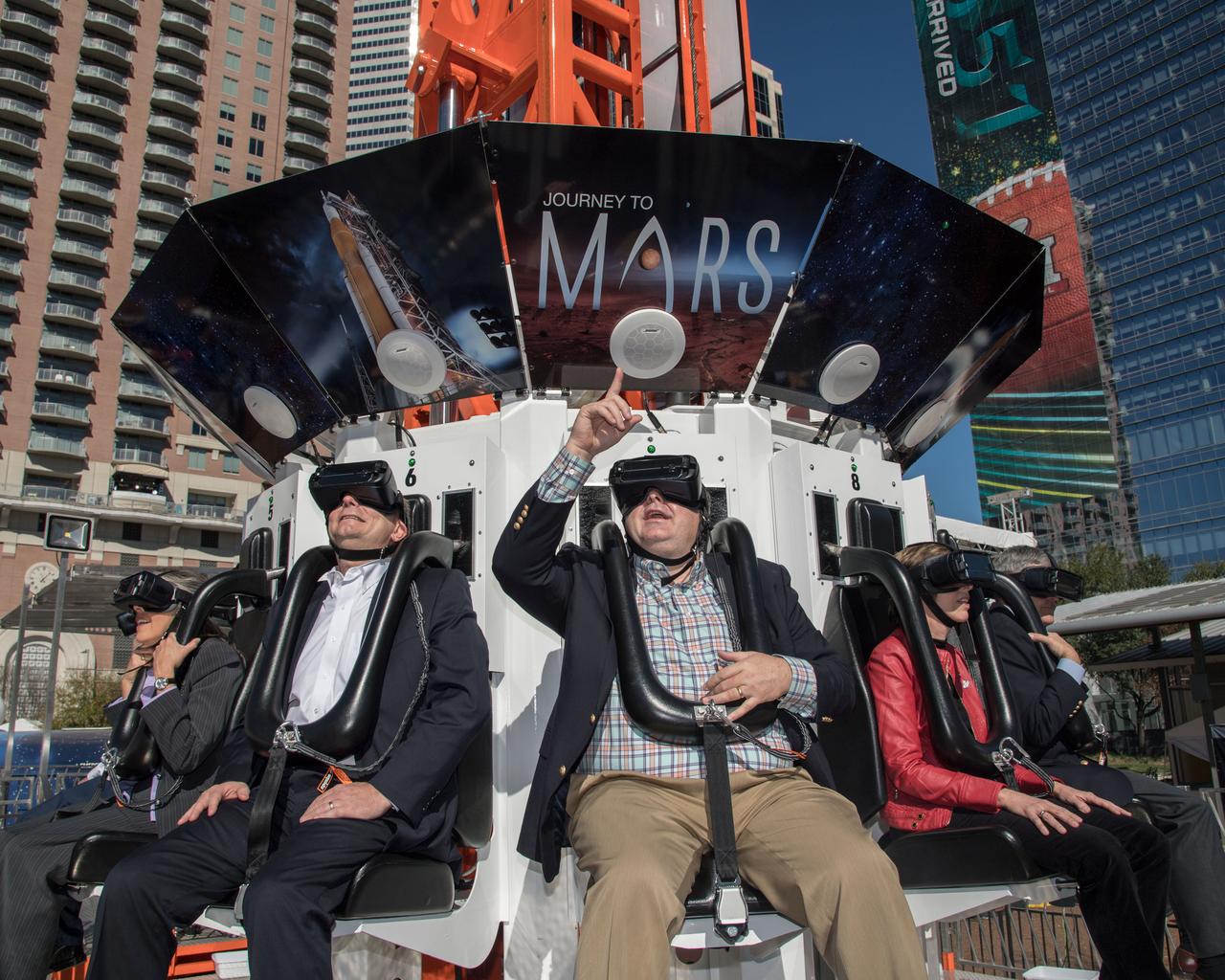
jsc2017e011382 (01/30/2017) --- Ready to take the Journey to Mars and back, a virtual reality experience at the Houston Texas Super Bowl, the Kennedy Space Center Director Robert Cabana (far right), Johnson Space Center Director Ellen Ochoa, Marshal Space Flight Center Director Todd May and the Orion Program Manager Mark Kirasich have been fitted with virtual headsets and are ready for the flight to begin. The Orion capsule will rise high above, some 90 feet, then drop suddenly to match and enhance the reality experience. The ride is part of the NASA Future Flight experience at the Super Bowl events in the Houston’s Discovery Green. NASA PHOTOGRAPHER: Bill Stafford
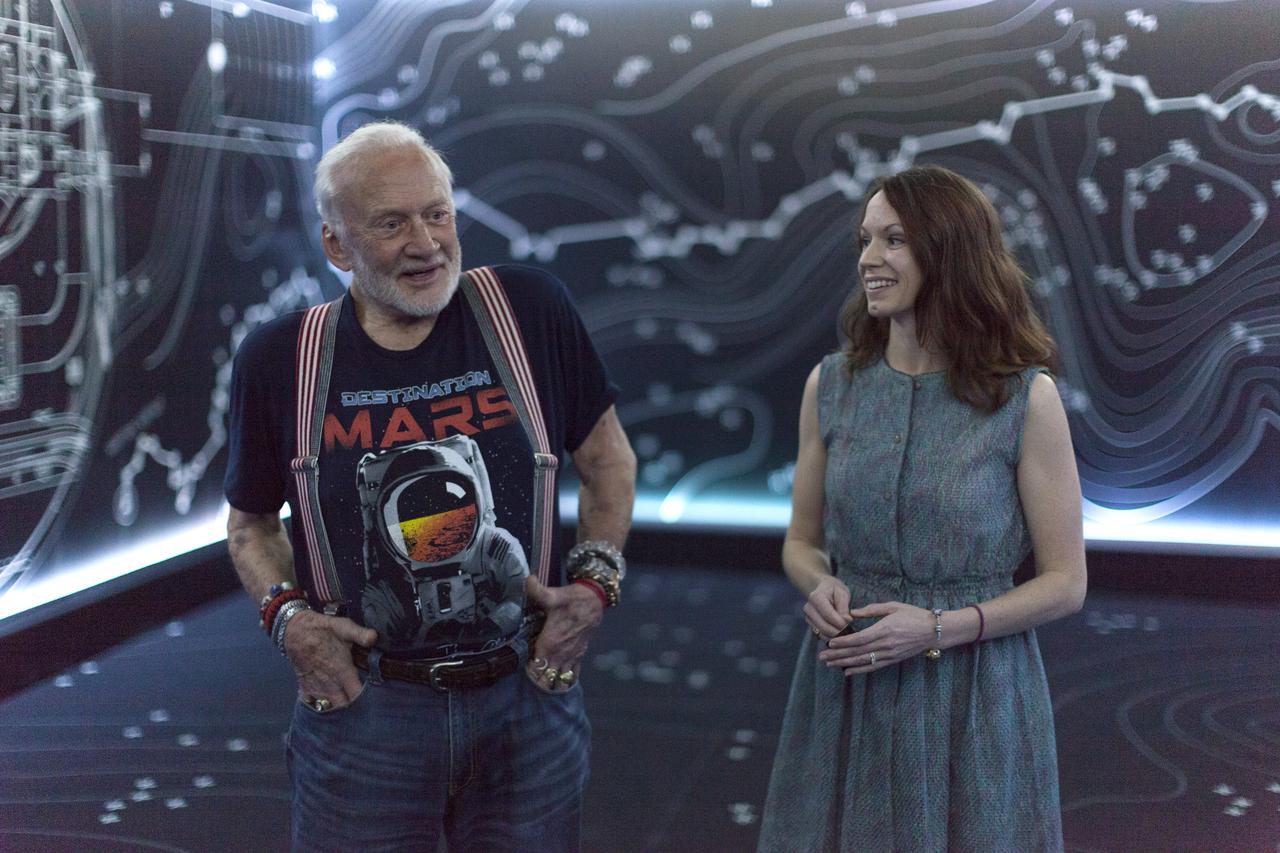
Apollo 11 astronaut Buzz Aldrin, left and Erisa Hines of NASA’s Jet Propulsion Laboratory (JPL) in Pasadena, California, speak to members of the news media during a preview of the new Destination: Mars experience at the Kennedy Space Center Visitor Complex. Destination: Mars gives guests an opportunity to “visit” several sites on Mars using real imagery from NASA’s Curiosity Mars Rover. Based on OnSight, a tool created by JPL, the experience brings guests together with a holographic version of Aldrin and Curiosity rover driver Hines as they are guided to Mars using Microsoft HoloLens mixed reality headset. Photo credit: NASA/Charles Babir
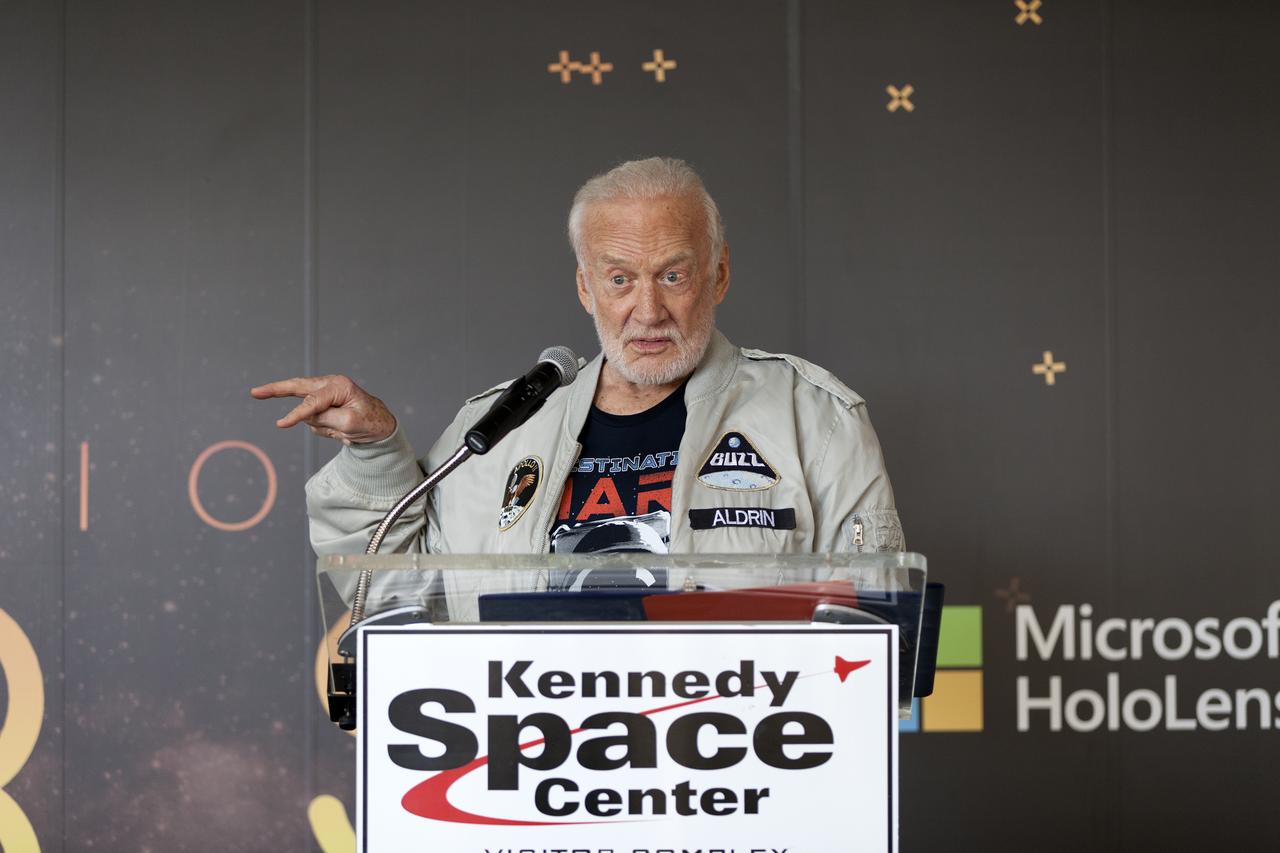
Apollo 11 astronaut Buzz Aldrin speaks to members of the news media during a preview of the new Destination: Mars experience at the Kennedy Space Center Visitor Complex. Destination: Mars gives guests an opportunity to “visit” several sites on Mars using real imagery from NASA’s Curiosity Mars Rover. Based on OnSight, a tool created by NASA’s Jet Propulsion Laboratory in Pasadena, California, the experience brings guests together with a holographic version of Aldrin as they are guided to Mars using Microsoft HoloLens mixed reality headset. Photo credit: NASA/Charles Babir
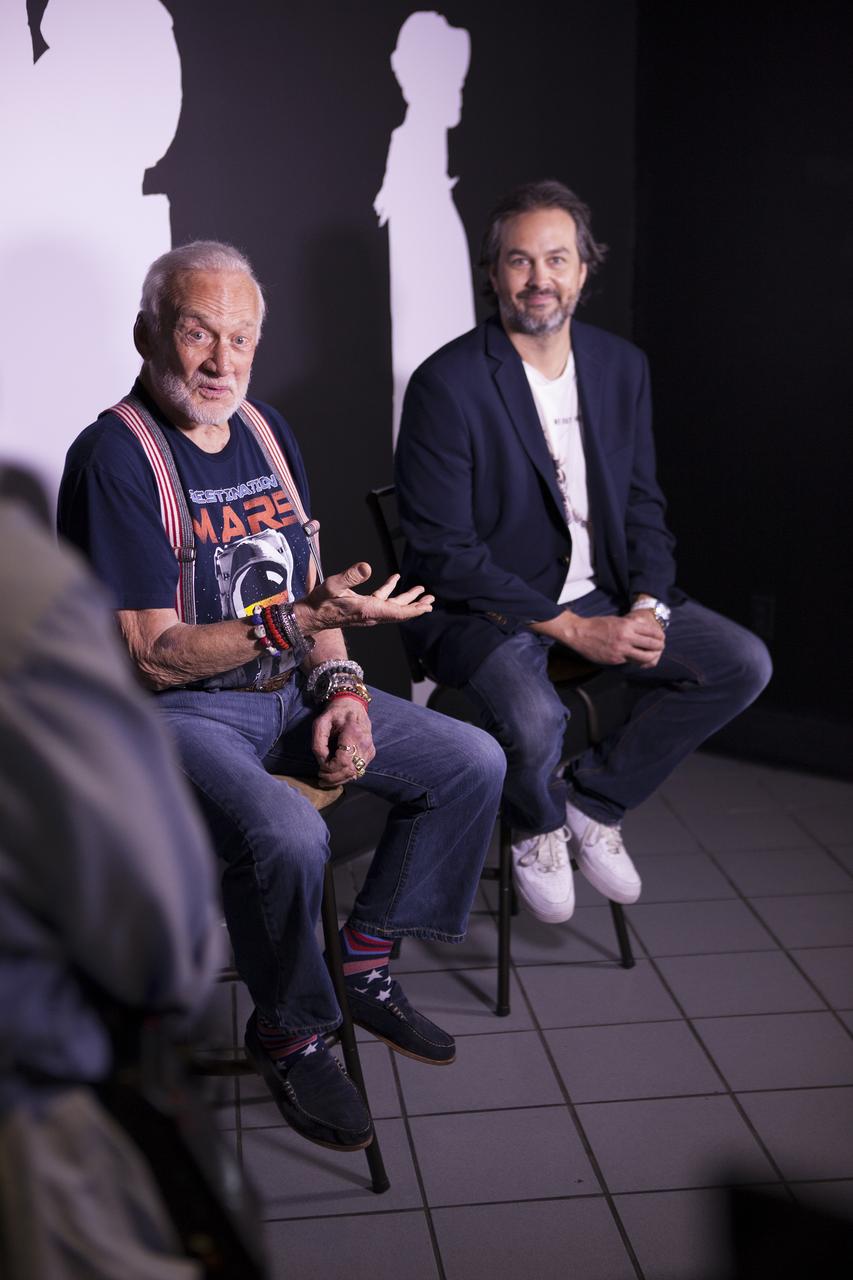
Apollo 11 astronaut Buzz Aldrin, left, and Kudo Tsunoda of Microsoft, speak to members of the news media during a preview of the new Destination: Mars experience at the Kennedy Space Center Visitor Complex. Destination: Mars gives guests an opportunity to “visit” several sites on Mars using real imagery from NASA’s Curiosity Mars Rover. Based on OnSight, a tool created by NASA’s Jet Propulsion Laboratory in Pasadena, California, the experience brings guests together with a holographic version of Aldrin as they are guided to Mars using Microsoft HoloLens mixed reality headset. Photo credit: NASA/Charles Babir
Apollo 11 astronaut Buzz Aldrin, right and Erisa Hines of NASA’s Jet Propulsion Laboratory (JPL) in Pasadena, California, speak to members of the news media during a preview of the new Destination: Mars experience at the Kennedy Space Center Visitor Complex. Destination: Mars gives guests an opportunity to “visit” several sites on Mars using real imagery from NASA’s Curiosity Mars Rover. Based on OnSight, a tool created by JPL, the experience brings guests together with a holographic version of Aldrin and Curiosity rover driver Hines as they are guided to Mars using Microsoft HoloLens mixed reality headset. Photo credit: NASA/Charles Babir
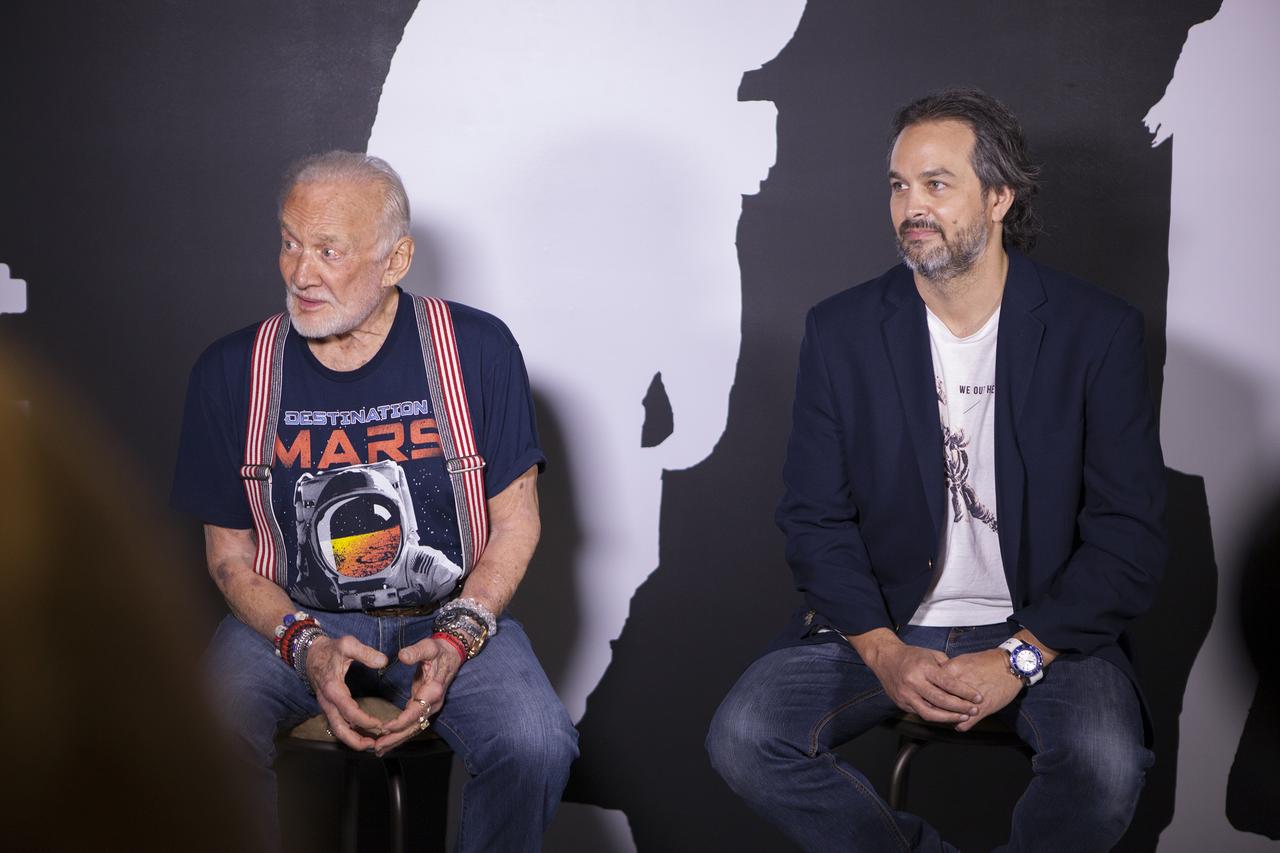
Apollo 11 astronaut Buzz Aldrin, left, and Kudo Tsunoda of Microsoft, speak to members of the news media during a preview of the new Destination: Mars experience at the Kennedy Space Center Visitor Complex. Destination: Mars gives guests an opportunity to “visit” several sites on Mars using real imagery from NASA’s Curiosity Mars Rover. Based on OnSight, a tool created by NASA’s Jet Propulsion Laboratory in Pasadena, California, the experience brings guests together with a holographic version of Aldrin as they are guided to Mars using Microsoft HoloLens mixed reality headset. Photo credit: NASA/Charles Babir
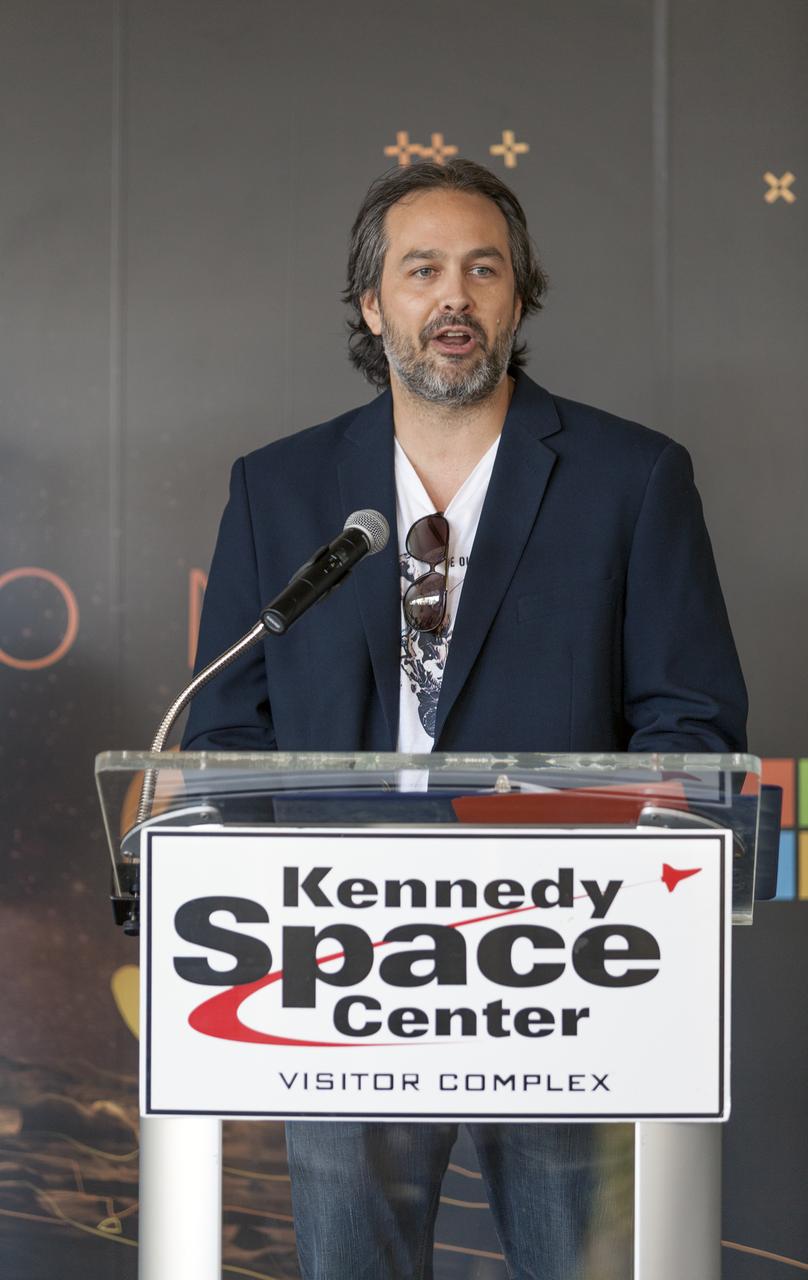
Kudo Tsunoda of Microsoft, speaks to members of the news media during a preview of the new Destination: Mars experience at the Kennedy Space Center Visitor Complex. Destination: Mars gives guests an opportunity to “visit” several sites on Mars using real imagery from NASA’s Curiosity Mars Rover. Based on OnSight, a tool created by NASA’s Jet Propulsion Laboratory in Pasadena, California, the experience brings guests together with a holographic version of Apollo 11 astronaut Buzz Aldrin as they are guided to Mars using Microsoft HoloLens mixed reality headset. Photo credit: NASA/Charles Babir
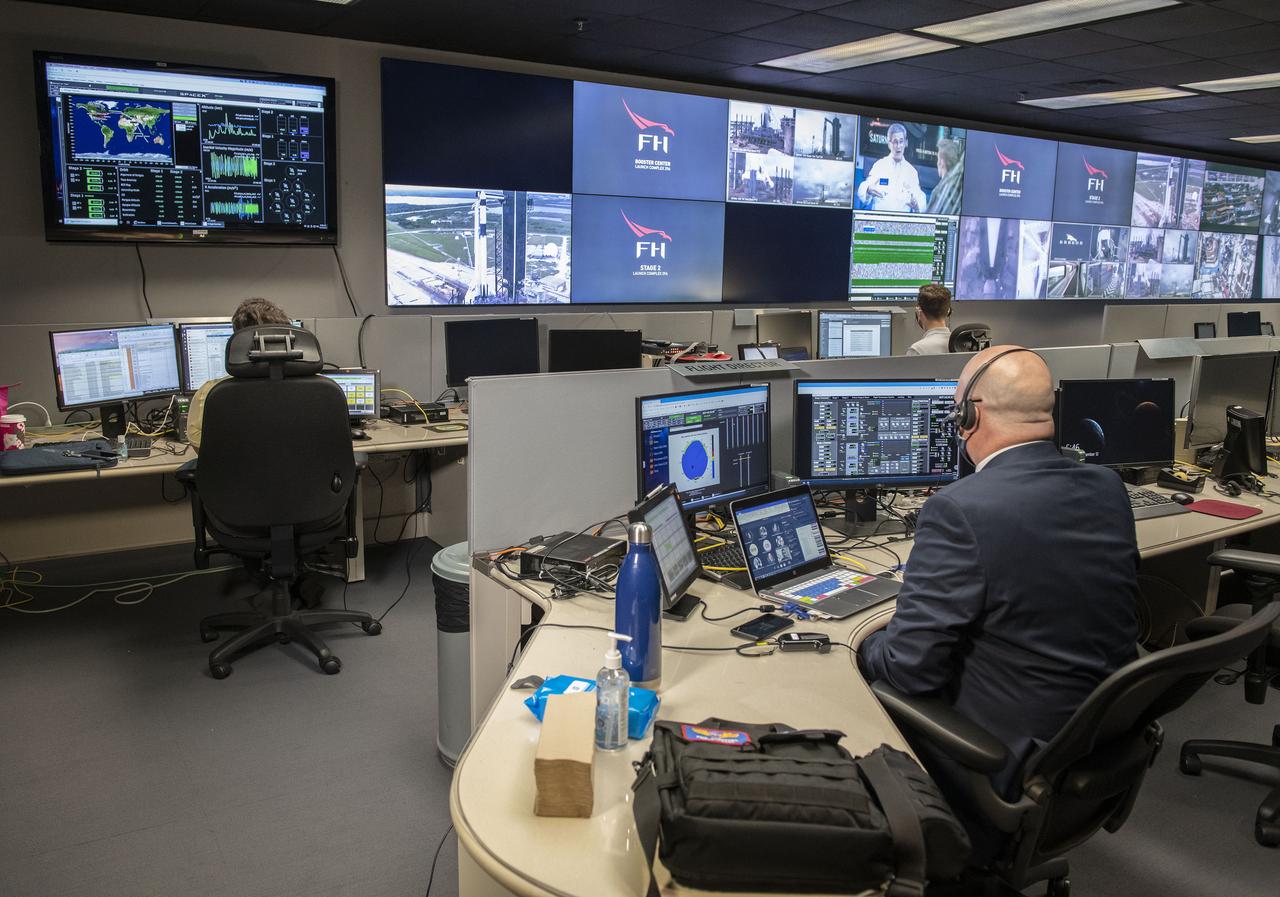
Teams at NASA’s Marshall Space Flight Center help monitor launch conditions for the Crew 1 mission from the Huntsville Operations Support Center in Huntsville, Alabama. SpaceX will launch a Falcon 9 rocket carrying NASA astronauts aboard the company’s Crew Dragon spacecraft to the International Space Station on Nov. 14, 2020. The Marshall team is supporting flight control teams working with NASA’s Johnson Space Center in Houston, Texas, NASA’s Kennedy Space Center in Cape Canaveral, Florida, and SpaceX headquarters in Hawthorne, California, as they monitor the different phases of the upcoming mission. Engineers and technicians at Marshall will use headsets and loops to communicate with the multiple locations on console for the launch. The Crew 1 flight is part of NASA’s Commercial Crew Program. The Crew 1 astronauts will arrive at the space station for docking a short time later at 4:20 a.m. on Sunday, Nov. 15 to join Expedition 64 for a six-month science mission.
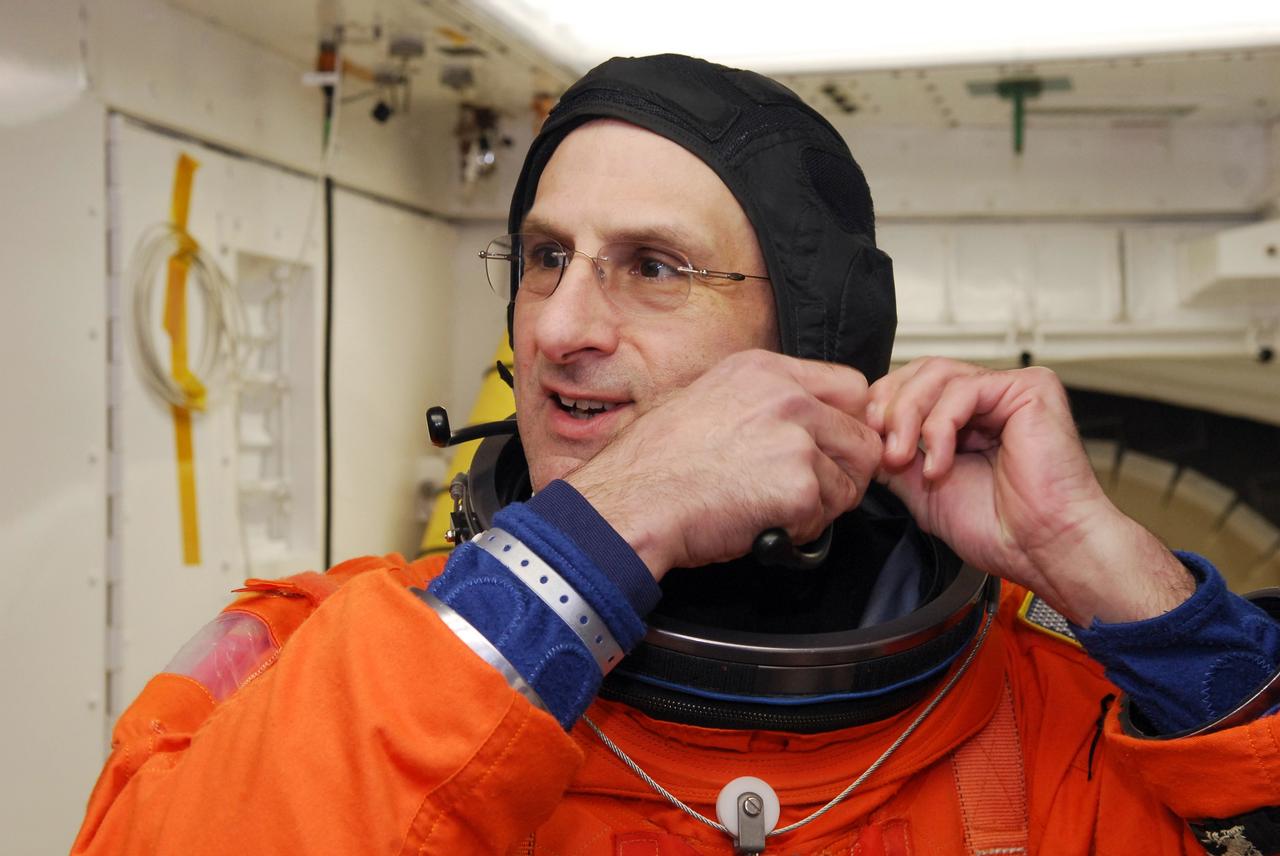
CAPE CANAVERAL, Fla. – In the White Room on Launch Pad 39A at NASA's Kennedy Space Center in Florida, STS-126 Mission Specialist Donald Pettit adjusts his headset. He will enter space shuttle Endeavour to take part in a simulated launch countdown with the other crew members. The crew is at Kennedy to take part in the Terminal Countdown Demonstration Test, which includes equipment familiarization, emergency exit training and the simulated countdown. On the STS-126 mission, space shuttle Endeavour's crew will deliver equipment and supplies to the International Space Station in preparation for expansion from a three- to six-person resident crew aboard the complex. The mission also will include four spacewalks to service the station’s Solar Alpha Rotary Joints. Endeavour is targeted to launch Nov. 14. Photo credit: NASA/Troy Cryder
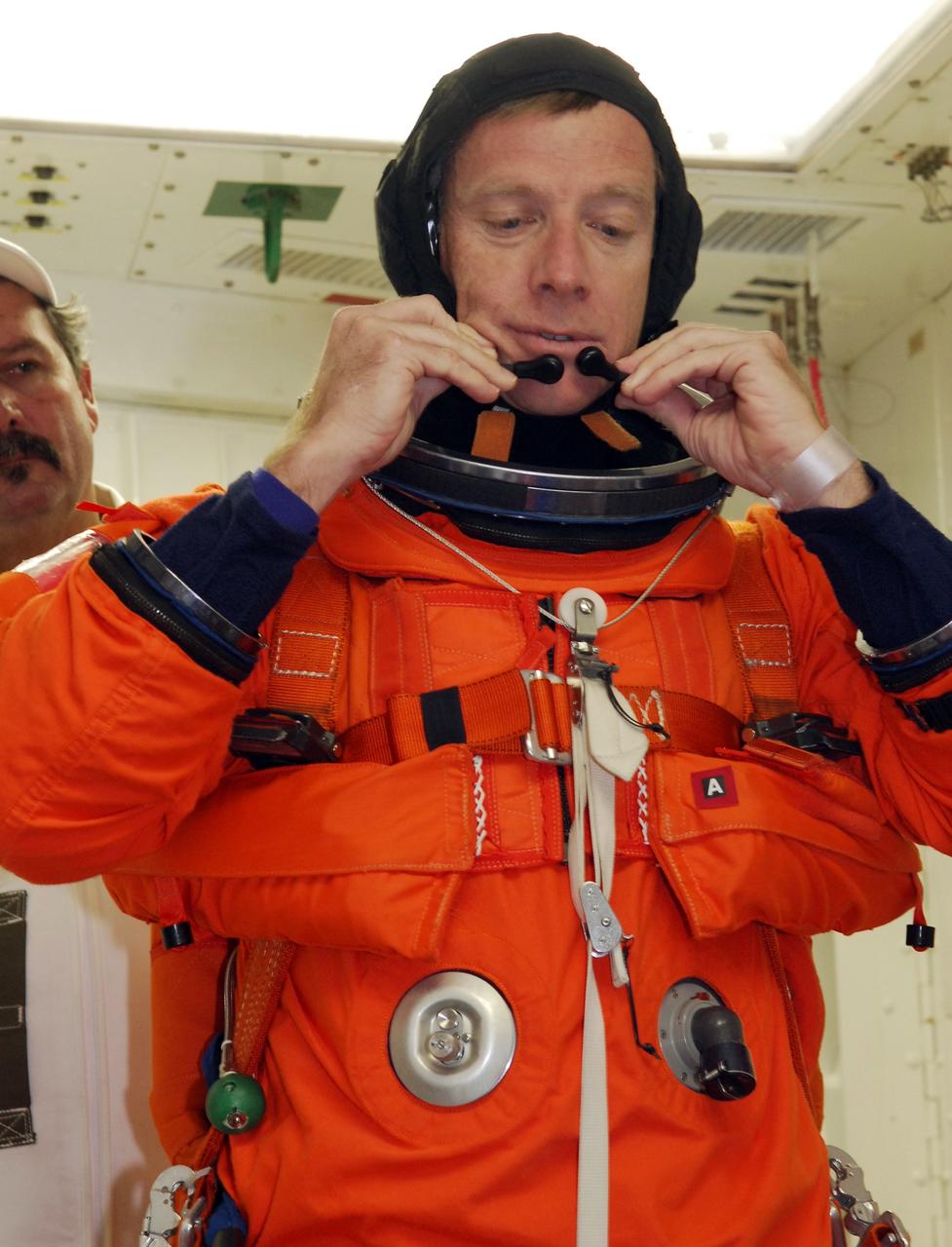
CAPE CANAVERAL, Fla. – In the White Room on Launch Pad 39A at NASA's Kennedy Space Center in Florida, STS-126 Commander Chris Ferguson adjusts his headset before donning his helmet. He will enter space shuttle Endeavour to take part in a simulated launch countdown with the other crew members. The crew is at Kennedy to take part in the Terminal Countdown Demonstration Test, which includes equipment familiarization, emergency exit training and the simulated countdown. On the STS-126 mission, space shuttle Endeavour's crew will deliver equipment and supplies to the International Space Station in preparation for expansion from a three- to six-person resident crew aboard the complex. The mission also will include four spacewalks to service the station’s Solar Alpha Rotary Joints. Endeavour is targeted to launch Nov. 14. Photo credit: NASA/Troy Cryder
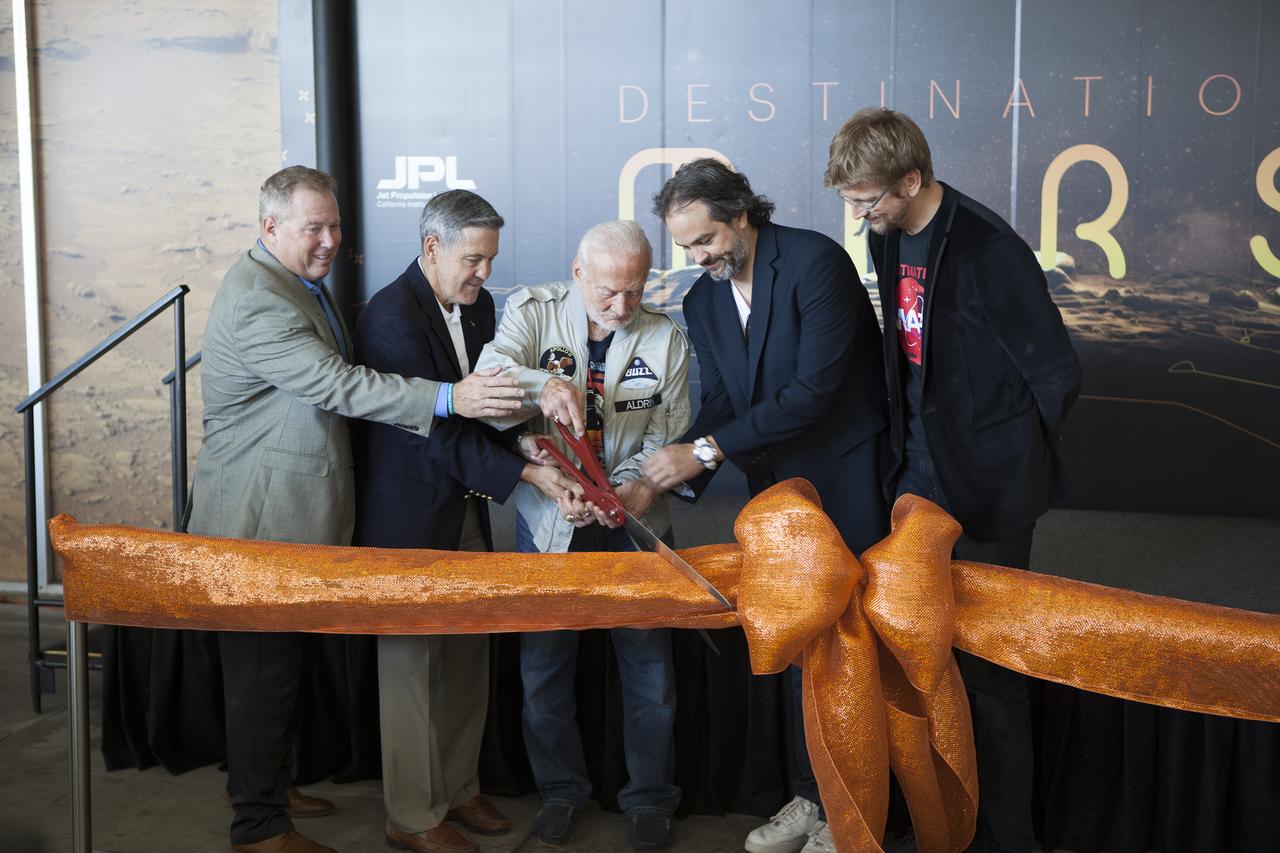
A ceremonial ribbon is cut for the opening of new Destination: Mars experience at the Kennedy Space Center Visitor Complex. From the left are Therrin Protze, chief operating officer of the visitor complex, center director Bob Cabana, Apollo 11 astronaut Buzz Aldrin, Kudo Tsunoda of Microsoft, and Jeff Norris of NASA’s Jet Propulsion Laboratory (JPL) in Pasadena, California. Destination: Mars gives guests an opportunity to “visit” several sites on Mars using real imagery from NASA’s Curiosity Mars Rover. Based on OnSight, a tool created by JPL, the experience brings guests together with a holographic version of Aldrin as they are guided to Mars using Microsoft HoloLens mixed reality headset. Photo credit: NASA/Charles Babir

Teams at NASA’s Marshall Space Flight Center help monitor launch conditions for the Crew 1 mission from the Huntsville Operations Support Center in Huntsville, Alabama. SpaceX will launch a Falcon 9 rocket carrying NASA astronauts aboard the company’s Crew Dragon spacecraft to the International Space Station on Nov. 14, 2020. The Marshall team is supporting flight control teams working with NASA’s Johnson Space Center in Houston, Texas, NASA’s Kennedy Space Center in Cape Canaveral, Florida, and SpaceX headquarters in Hawthorne, California, as they monitor the different phases of the upcoming mission. Engineers and technicians at Marshall will use headsets and loops to communicate with the multiple locations on console for the launch. The Crew 1 flight is part of NASA’s Commercial Crew Program. The Crew 1 astronauts will arrive at the space station for docking a short time later at 4:20 a.m. on Sunday, Nov. 15 to join Expedition 64 for a six-month science mission.
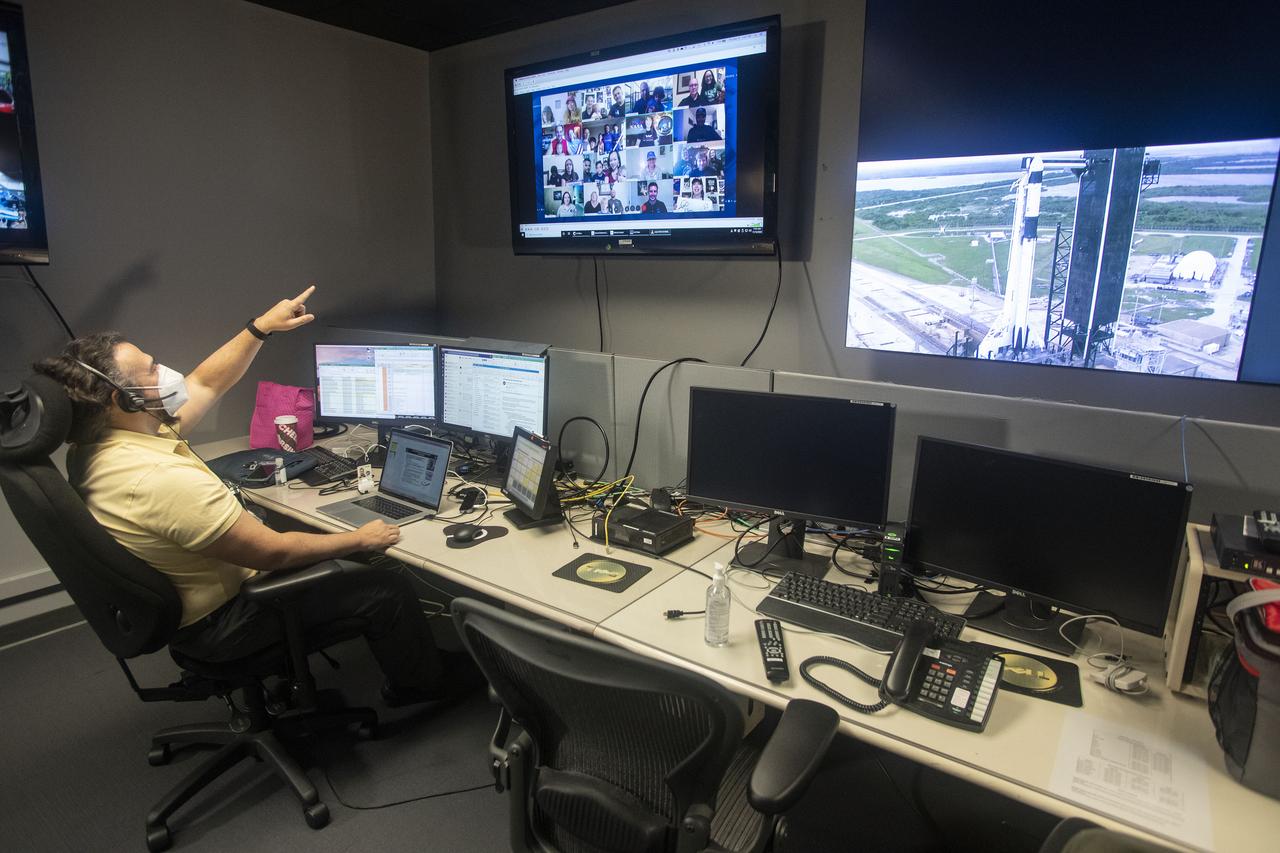
Teams at NASA’s Marshall Space Flight Center help monitor launch conditions for the Crew 1 mission from the Huntsville Operations Support Center in Huntsville, Alabama. SpaceX will launch a Falcon 9 rocket carrying NASA astronauts aboard the company’s Crew Dragon spacecraft to the International Space Station on Nov. 14, 2020. The Marshall team is supporting flight control teams working with NASA’s Johnson Space Center in Houston, Texas, NASA’s Kennedy Space Center in Cape Canaveral, Florida, and SpaceX headquarters in Hawthorne, California, as they monitor the different phases of the upcoming mission. Engineers and technicians at Marshall will use headsets and loops to communicate with the multiple locations on console for the launch. The Crew 1 flight is part of NASA’s Commercial Crew Program. The Crew 1 astronauts will arrive at the space station for docking a short time later at 4:20 a.m. on Sunday, Nov. 15 to join Expedition 64 for a six-month science mission.
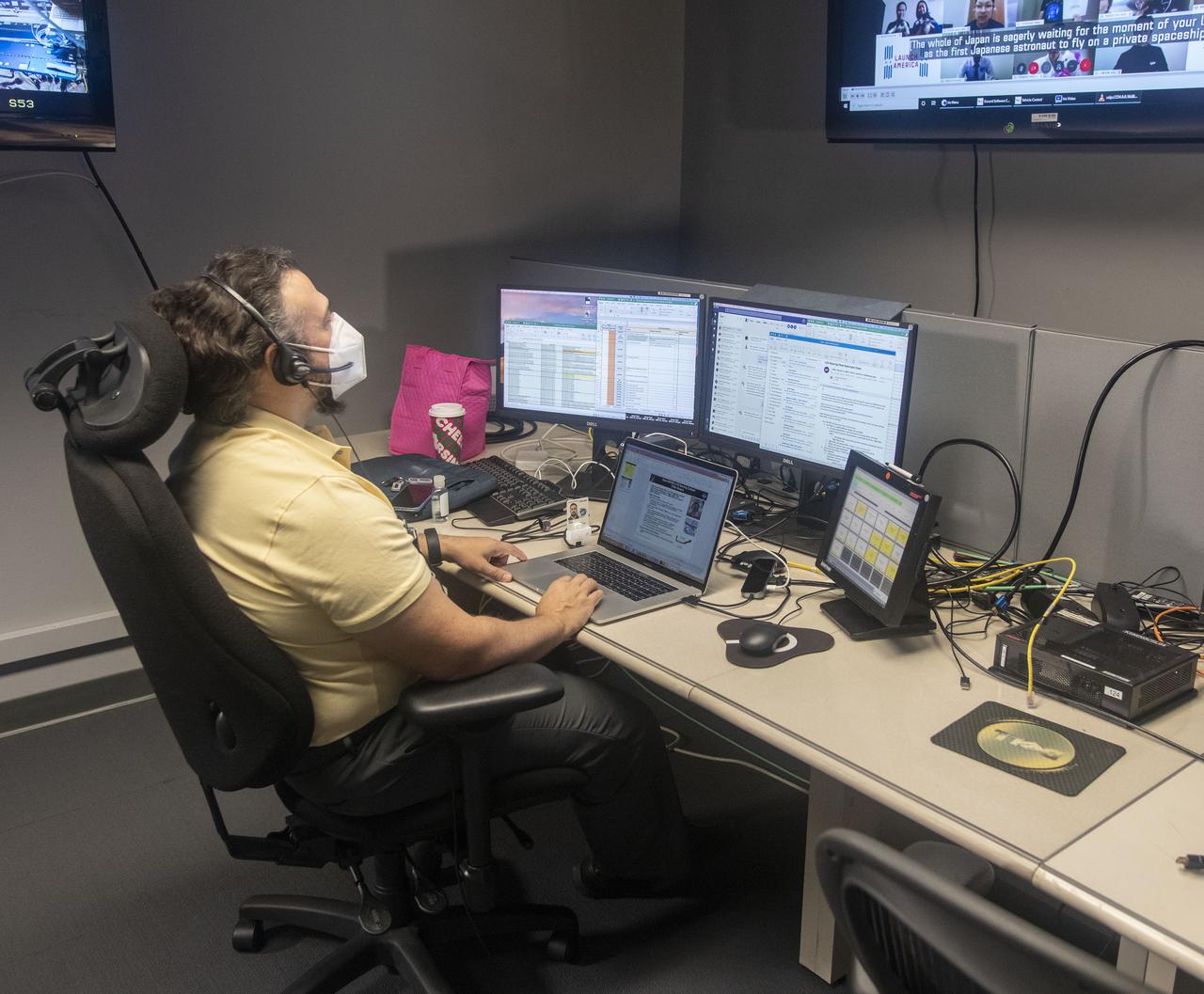
Teams at NASA’s Marshall Space Flight Center help monitor launch conditions for the Crew 1 mission from the Huntsville Operations Support Center in Huntsville, Alabama. SpaceX will launch a Falcon 9 rocket carrying NASA astronauts aboard the company’s Crew Dragon spacecraft to the International Space Station on Nov. 14, 2020. The Marshall team is supporting flight control teams working with NASA’s Johnson Space Center in Houston, Texas, NASA’s Kennedy Space Center in Cape Canaveral, Florida, and SpaceX headquarters in Hawthorne, California, as they monitor the different phases of the upcoming mission. Engineers and technicians at Marshall will use headsets and loops to communicate with the multiple locations on console for the launch. The Crew 1 flight is part of NASA’s Commercial Crew Program. The Crew 1 astronauts will arrive at the space station for docking a short time later at 4:20 a.m. on Sunday, Nov. 15 to join Expedition 64 for a six-month science mission.
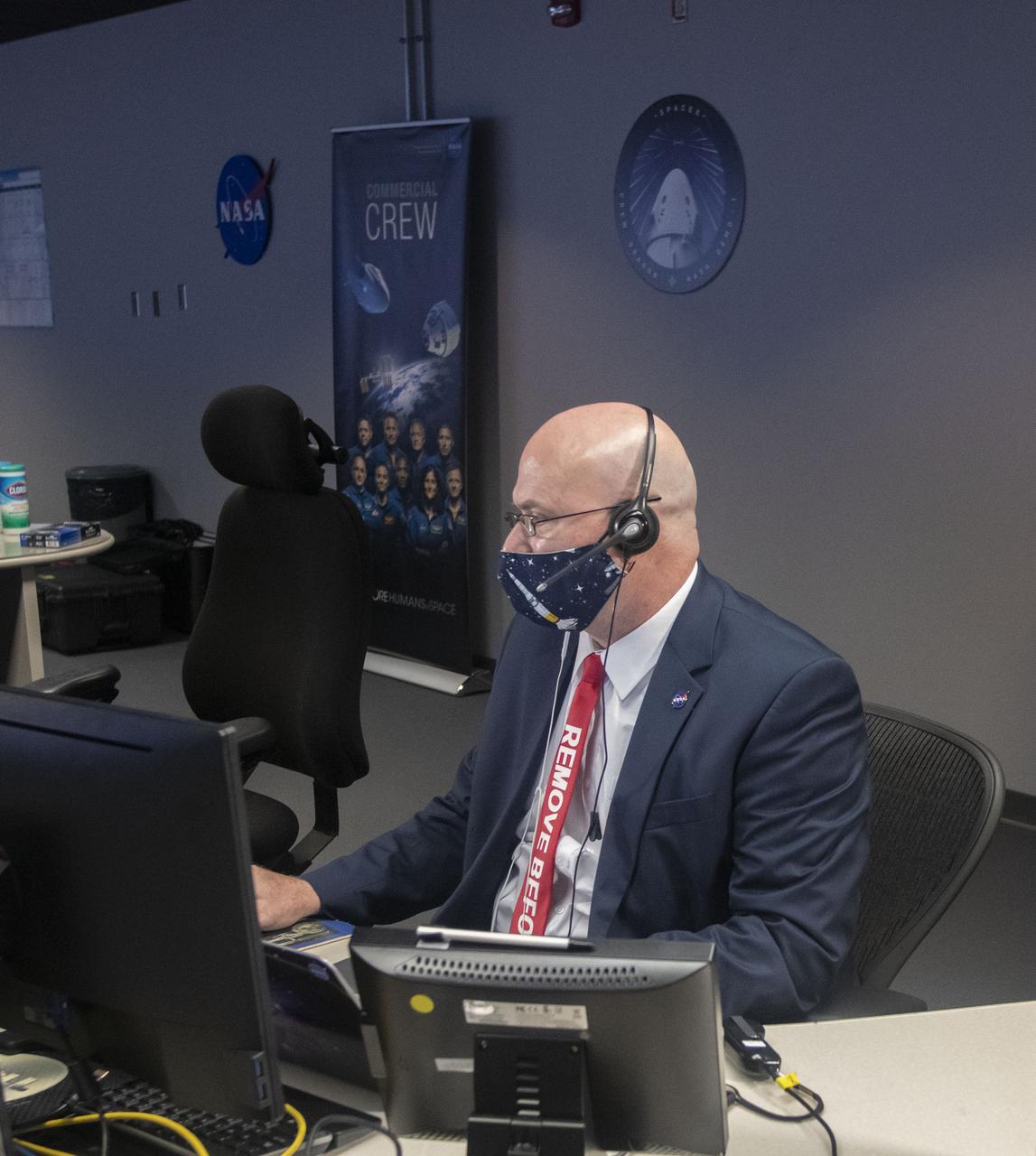
Teams at NASA’s Marshall Space Flight Center help monitor launch conditions for the Crew 1 mission from the Huntsville Operations Support Center in Huntsville, Alabama. SpaceX will launch a Falcon 9 rocket carrying NASA astronauts aboard the company’s Crew Dragon spacecraft to the International Space Station on Nov. 14, 2020. The Marshall team is supporting flight control teams working with NASA’s Johnson Space Center in Houston, Texas, NASA’s Kennedy Space Center in Cape Canaveral, Florida, and SpaceX headquarters in Hawthorne, California, as they monitor the different phases of the upcoming mission. Engineers and technicians at Marshall will use headsets and loops to communicate with the multiple locations on console for the launch. The Crew 1 flight is part of NASA’s Commercial Crew Program. The Crew 1 astronauts will arrive at the space station for docking a short time later at 4:20 a.m. on Sunday, Nov. 15 to join Expedition 64 for a six-month science mission.
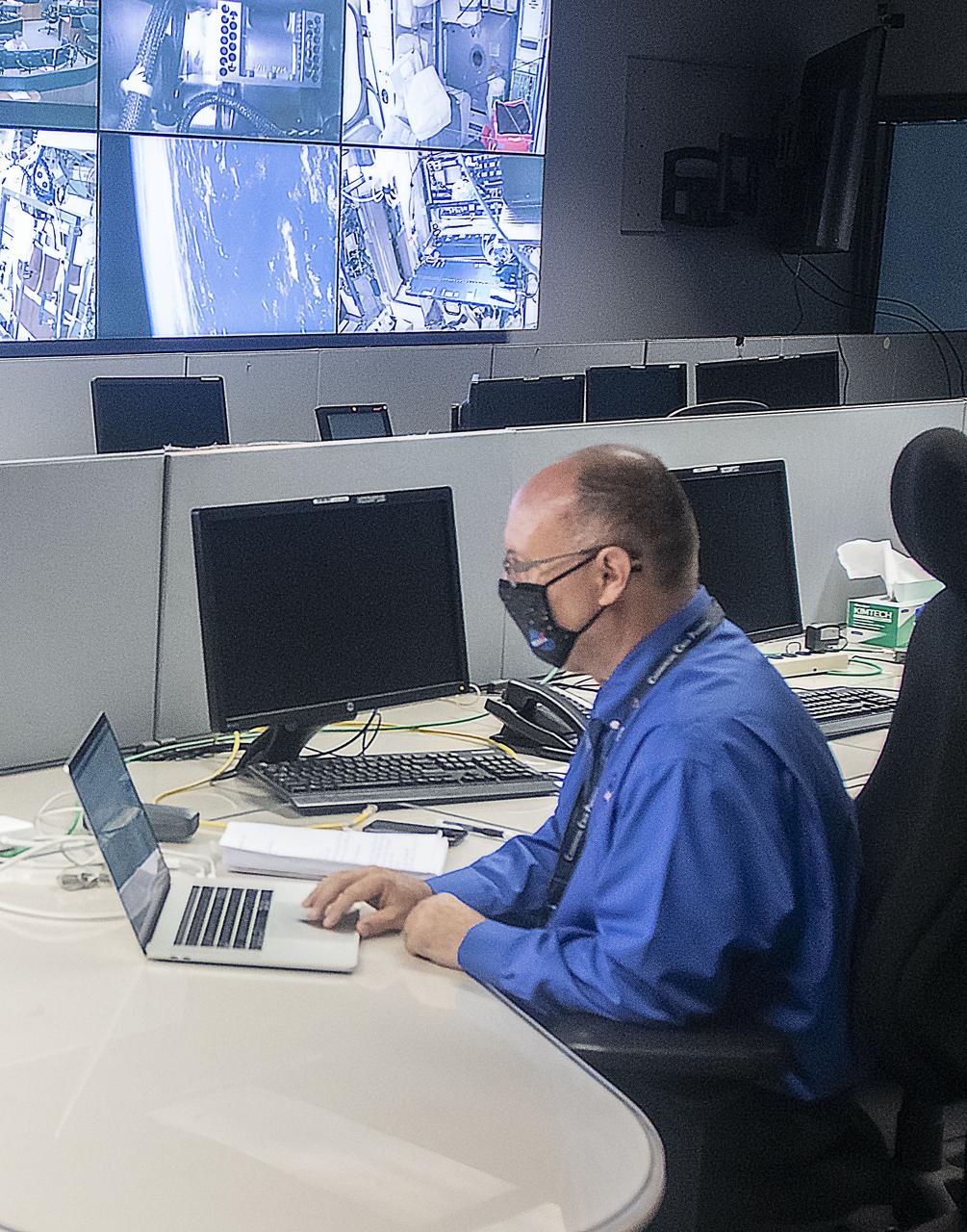
Teams at NASA’s Marshall Space Flight Center help monitor launch conditions for the Crew 1 mission from the Huntsville Operations Support Center in Huntsville, Alabama. SpaceX will launch a Falcon 9 rocket carrying NASA astronauts aboard the company’s Crew Dragon spacecraft to the International Space Station on Nov. 14, 2020. The Marshall team is supporting flight control teams working with NASA’s Johnson Space Center in Houston, Texas, NASA’s Kennedy Space Center in Cape Canaveral, Florida, and SpaceX headquarters in Hawthorne, California, as they monitor the different phases of the upcoming mission. Engineers and technicians at Marshall will use headsets and loops to communicate with the multiple locations on console for the launch. The Crew 1 flight is part of NASA’s Commercial Crew Program. The Crew 1 astronauts will arrive at the space station for docking a short time later at 4:20 a.m. on Sunday, Nov. 15 to join Expedition 64 for a six-month science mission.
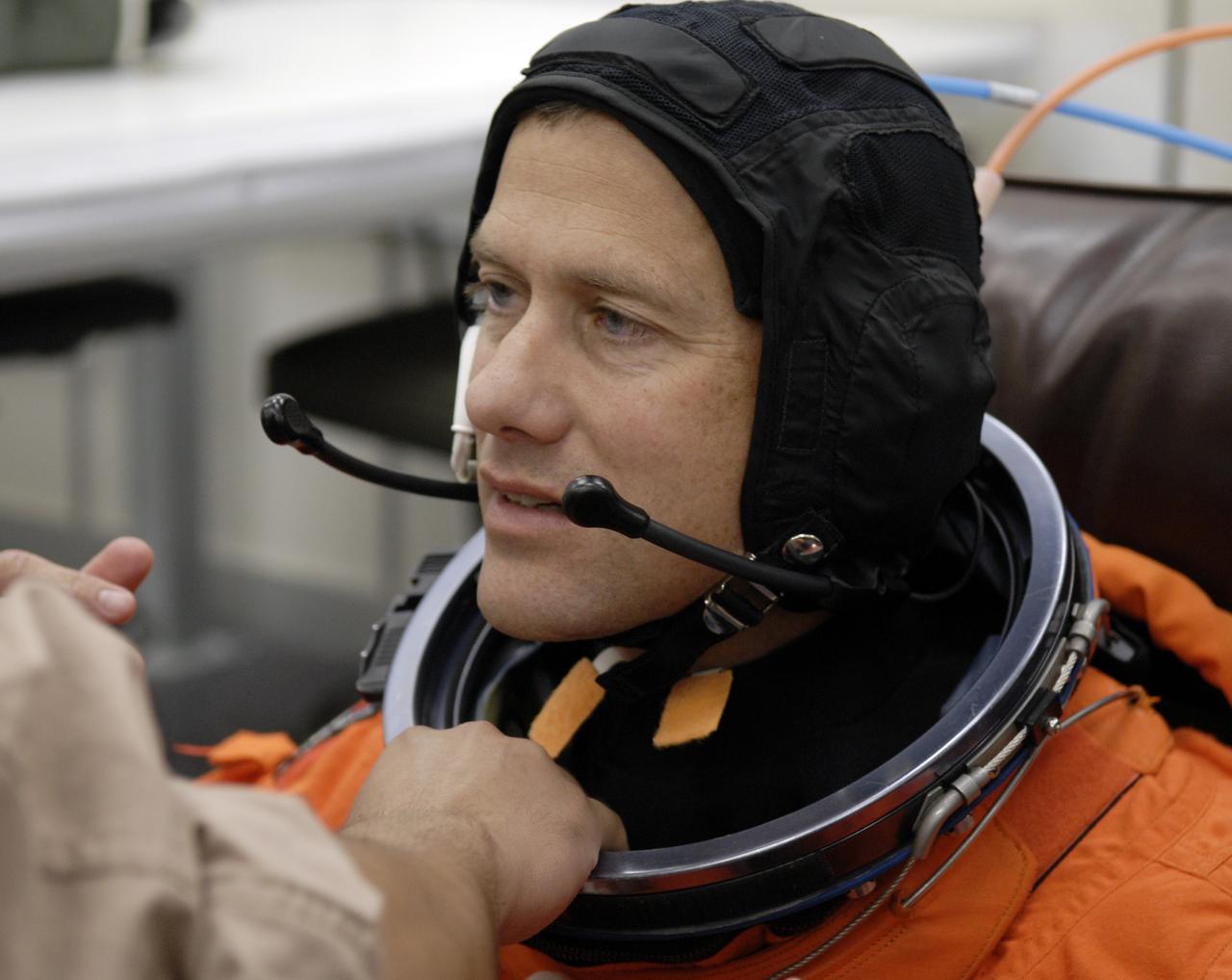
CAPE CANAVERAL, Fla. – In the Operations and Checkout Building at NASA's Kennedy Space Center in Florida, STS-127 crew members put on their launch-and-entry suits before heading to the Astrovan for the 3.4-mile drive to Launch Pad 39A. Seen here is Mission Specialist Tom Marshburn, who is checking his headset. He is making his first shuttle flight. At the pad, Marshburn and the other crew members will complete their suitup and enter space shuttle Endeavour for the 7:13 p.m. EDT liftoff. This is the fourth launch attempt for the STS-127 mission. The first two launch attempts on June 13 and June 17 were scrubbed when a hydrogen gas leak occurred during tanking due to a misaligned Ground Umbilical Carrier Plate. Mission managers also decided to delay tanking on July 11 for a launch attempt later in the day to allow engineers and safety personnel time to analyze data captured during lightning strikes near the pad on July 10. Endeavour will deliver the Japanese Experiment Module's Exposed Facility, or JEM-EF, and the Experiment Logistics Module-Exposed Section, or ELM-ES, in the final of three flights dedicated to the assembly of the Japan Aerospace Exploration Agency's Kibo laboratory complex on the International Space Station. STS-127 is the 29th flight for the assembly of the space station. Photo credit: NASA/Kim Shiflett