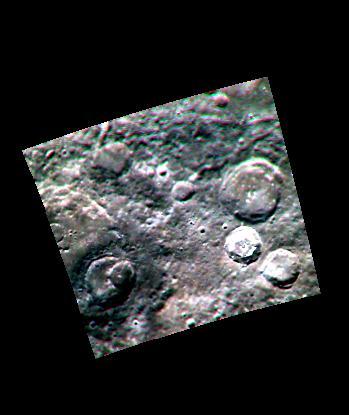
Heart of Darkness
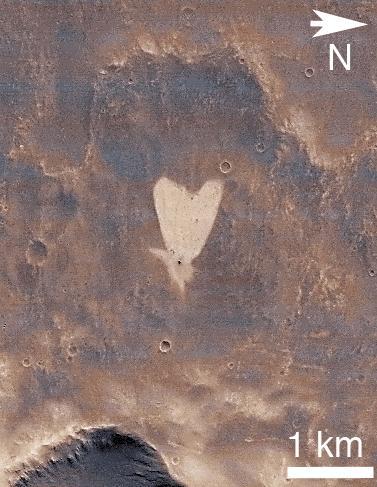
This picture of a heart-shaped feature in Arabia Terra on Mars was taken on May 23, 2010, by NASA Mars Reconnaissance Orbiter. A small impact crater near the tip of the heart is responsible for the formation of the bright, heart-shaped feature.
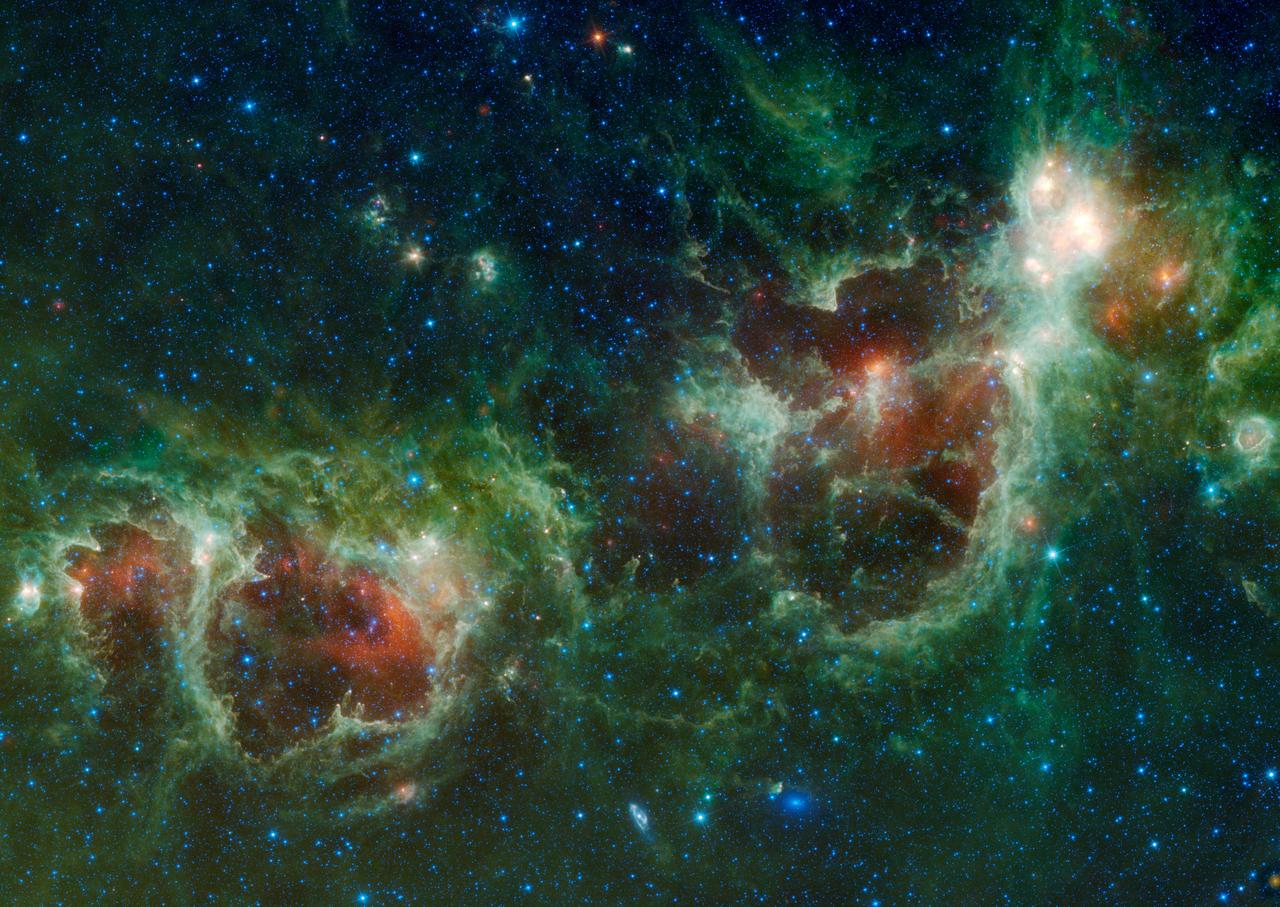
NASA Wide-field Infrared Survey Explorer has captured a huge mosaic of two bubbling clouds in space, known as the Heart and Soul nebulae.
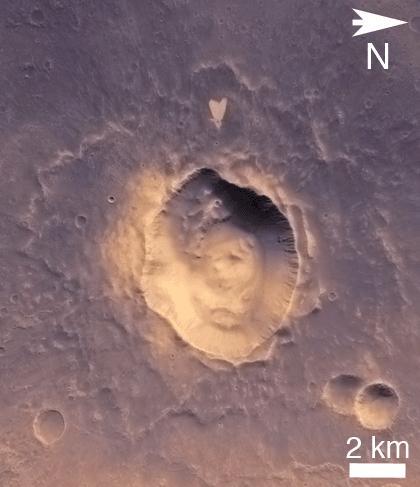
This wide-view picture of a heart-shaped feature in Arabia Terra on Mars was taken on May 23, 2010, by NASA Mars Reconnaissance Orbiter. A small impact crater near the tip of the heart is responsible for the formation of the bright, heart-shaped feature
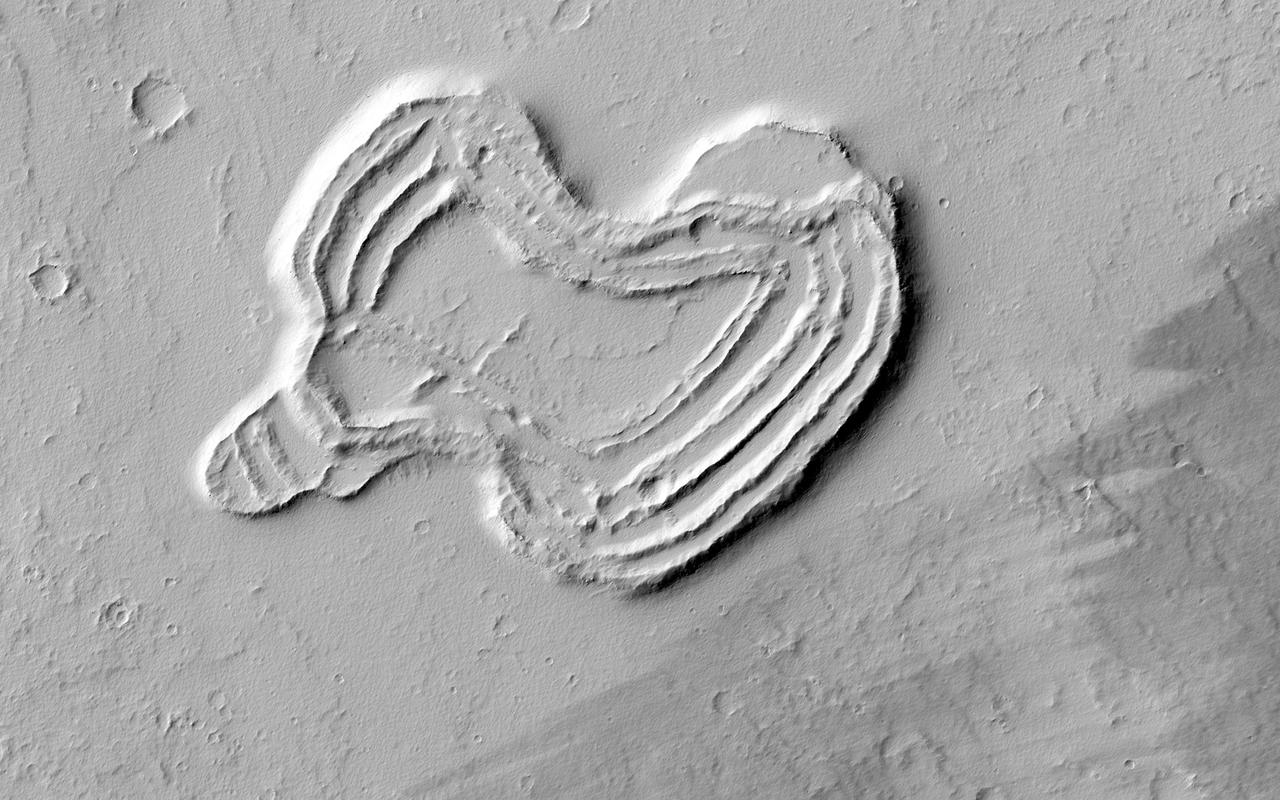
This feature from NASA Mars Reconnaissance Orbiter looks like a heart. It is located south of Ascraeus Mons, which is a large volcano within the Tharsis volcanic plateau, making it extremely likely that this feature was formed by a volcanic process.

Image release date September 22, 2010 To view a video of this image go here: <a href="http://www.flickr.com/photos/gsfc/5014452203">www.flickr.com/photos/gsfc/5014452203</a> Caption: A spectacular new NASA/ESA Hubble Space Telescope image reveals the heart of the Lagoon Nebula. Seen as a massive cloud of glowing dust and gas, bombarded by the energetic radiation of new stars, this placid name hides a dramatic reality. The Advanced Camera for Surveys (ACS) on the NASA/ESA Hubble Space Telescope has captured a dramatic view of gas and dust sculpted by intense radiation from hot young stars deep in the heart of the Lagoon Nebula (Messier 8). This spectacular object is named after the wide, lagoon-shaped dust lane that crosses the glowing gas of the nebula. This structure is prominent in wide-field images, but cannot be seen in this close-up. However the strange billowing shapes and sandy texture visible in this image make the Lagoon Nebula’s watery name eerily appropriate from this viewpoint too. Located four to five thousand light-years away, in the constellation of Sagittarius (the Archer), Messier 8 is a huge region of star birth that stretches across one hundred light-years. Clouds of hydrogen gas are slowly collapsing to form new stars, whose bright ultraviolet rays then light up the surrounding gas in a distinctive shade of red. The wispy tendrils and beach-like features of the nebula are not caused by the ebb and flow of tides, but rather by ultraviolet radiation’s ability to erode and disperse the gas and dust into the distinctive shapes that we see. In recent years astronomers probing the secrets of the Lagoon Nebula have found the first unambiguous proof that star formation by accretion of matter from the gas cloud is ongoing in this region. Young stars that are still surrounded by an accretion disc occasionally shoot out long tendrils of matter from their poles. Several examples of these jets, known as Herbig-Haro objects, have been found in this nebula in the last five years, providing strong support for astronomers’ theories about star formation in such hydrogen-rich regions. The Lagoon Nebula is faintly visible to the naked eye on dark nights as a small patch of grey in the heart of the Milky Way. Without a telescope, the nebula looks underwhelming because human eyes are unable to distinguish clearly between colours at low light levels. Charles Messier, the 18th century French astronomer, observed the nebula and included it in his famous astronomical catalogue, from which the nebula’s alternative name comes. But his relatively small refracting telescope would only have hinted at the dramatic structures and colours now visible thanks to Hubble. The Hubble Space Telescope is a project of international cooperation between ESA and NASA. Image credit: NASA, ESA <b><a href="http://www.nasa.gov/audience/formedia/features/MP_Photo_Guidelines.html" rel="nofollow">NASA image use policy.</a></b> <b><a href="http://www.nasa.gov/centers/goddard/home/index.html" rel="nofollow">NASA Goddard Space Flight Center</a></b> enables NASA’s mission through four scientific endeavors: Earth Science, Heliophysics, Solar System Exploration, and Astrophysics. Goddard plays a leading role in NASA’s accomplishments by contributing compelling scientific knowledge to advance the Agency’s mission. <b>Follow us on <a href="http://twitter.com/NASAGoddardPix" rel="nofollow">Twitter</a></b> <b>Like us on <a href="http://www.facebook.com/pages/Greenbelt-MD/NASA-Goddard/395013845897?ref=tsd" rel="nofollow">Facebook</a></b> <b>Find us on <a href="http://instagram.com/nasagoddard?vm=grid" rel="nofollow">Instagram</a></b> To learn more about the Hubble Space Telescope go here: <a href="http://www.nasa.gov/mission_pages/hubble/main/index.html" rel="nofollow">www.nasa.gov/mission_pages/hubble/main/index.html</a>
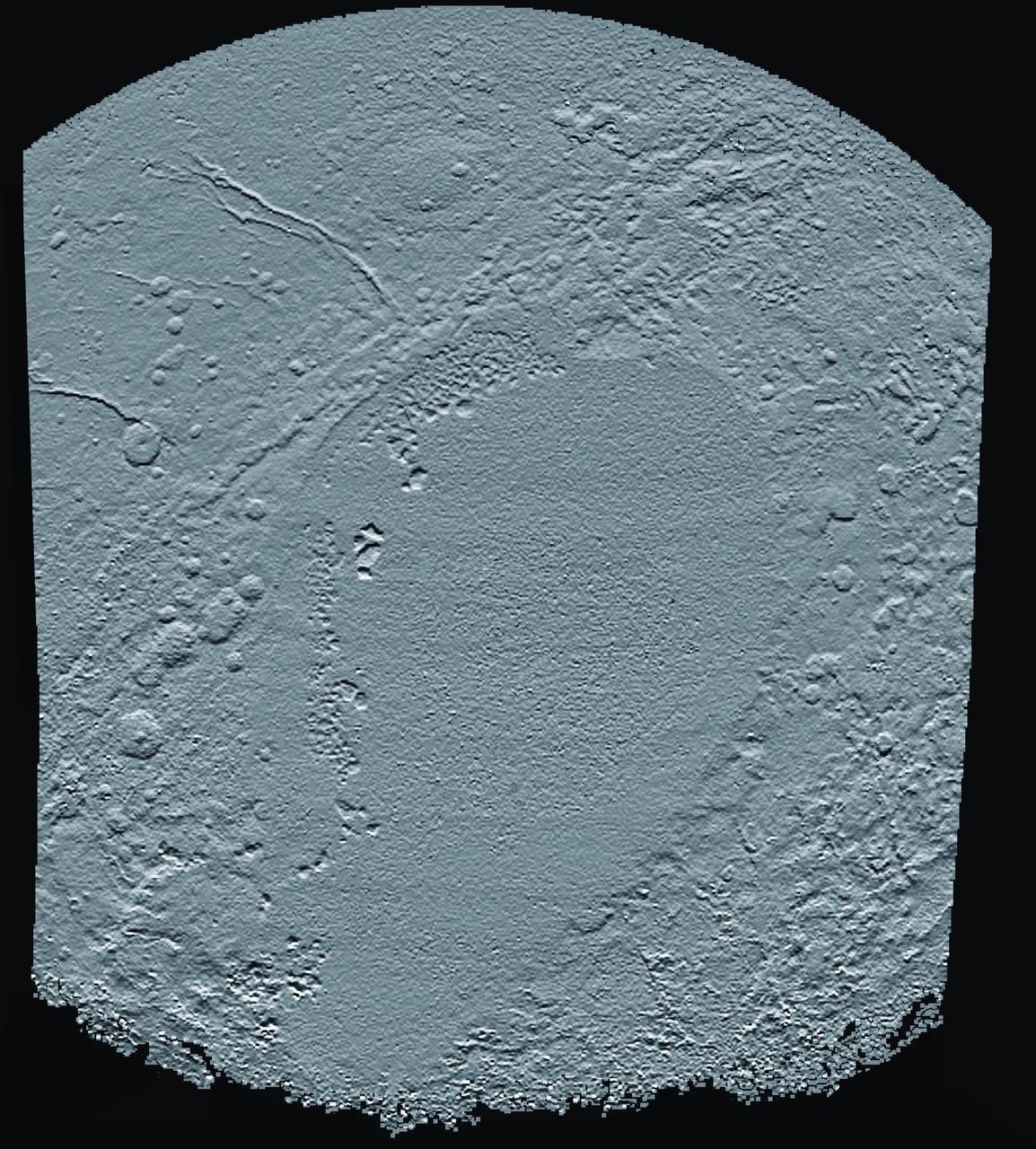
This shaded relief view from NASA New Horizons of the region surrounding the left side of Pluto heart-shaped feature, informally named Sputnik Planum, shows that the vast expanse of its icy surface.

Peering deep into the core of the Crab Nebula, this close-up image reveals the beating heart of one of the most historic and intensively studied remnants of a supernova, an exploding star. The inner region sends out clock-like pulses of radiation and tsunamis of charged particles embedded in magnetic fields. The neutron star at the very center of the Crab Nebula has about the same mass as the sun but compressed into an incredibly dense sphere that is only a few miles across. Spinning 30 times a second, the neutron star shoots out detectable beams of energy that make it look like it's pulsating. The NASA Hubble Space Telescope snapshot is centered on the region around the neutron star (the rightmost of the two bright stars near the center of this image) and the expanding, tattered, filamentary debris surrounding it. Hubble's sharp view captures the intricate details of glowing gas, shown in red, that forms a swirling medley of cavities and filaments. Inside this shell is a ghostly blue glow that is radiation given off by electrons spiraling at nearly the speed of light in the powerful magnetic field around the crushed stellar core. The neutron star is a showcase for extreme physical processes and unimaginable cosmic violence. Bright wisps are moving outward from the neutron star at half the speed of light to form an expanding ring. It is thought that these wisps originate from a shock wave that turns the high-speed wind from the neutron star into extremely energetic particles. When this "heartbeat" radiation signature was first discovered in 1968, astronomers realized they had discovered a new type of astronomical object. Now astronomers know it's the archetype of a class of supernova remnants called pulsars - or rapidly spinning neutron stars. These interstellar "lighthouse beacons" are invaluable for doing observational experiments on a variety of astronomical phenomena, including measuring gravity waves. Observations of the Crab supernova were recorded by Chinese astronomers in 1054 A.D. The nebula, bright enough to be visible in amateur telescopes, is located 6,500 light-years away in the constellation Taurus. Credits: NASA and ESA, Acknowledgment: J. Hester (ASU) and M. Weisskopf (NASA/MSFC) <b><a href="http://www.nasa.gov/audience/formedia/features/MP_Photo_Guidelines.html" rel="nofollow">NASA image use policy.</a></b> <b><a href="http://www.nasa.gov/centers/goddard/home/index.html" rel="nofollow">NASA Goddard Space Flight Center</a></b> enables NASA’s mission through four scientific endeavors: Earth Science, Heliophysics, Solar System Exploration, and Astrophysics. Goddard plays a leading role in NASA’s accomplishments by contributing compelling scientific knowledge to advance the Agency’s mission. <b>Follow us on <a href="http://twitter.com/NASAGoddardPix" rel="nofollow">Twitter</a></b> <b>Like us on <a href="http://www.facebook.com/pages/Greenbelt-MD/NASA-Goddard/395013845897?ref=tsd" rel="nofollow">Facebook</a></b> <b>Find us on <a href="http://instagrid.me/nasagoddard/?vm=grid" rel="nofollow">Instagram</a></b>
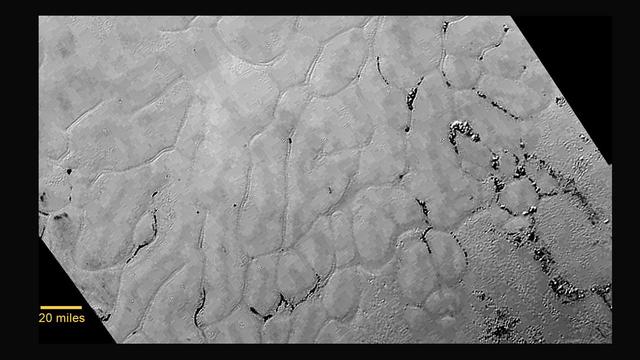
At center left of Pluto vast heart-shaped feature "Tombaugh Regio" -- lies a vast, craterless plain that appears to be no more than 100 million years old, and is possibly still being shaped by geologic processes as seen by NASA New Horizons spacecraft. This frozen region is north of Pluto's icy mountains and has been informally named Sputnik Planum (Sputnik Plain), after Earth's first artificial satellite. The surface appears to be divided into irregularly-shaped segments that are ringed by narrow troughs. Features that appear to be groups of mounds and fields of small pits are also visible. This image was acquired by the Long Range Reconnaissance Imager (LORRI) on July 14 from a distance of 48,000 miles (77,000 kilometers). Features as small as one-half mile (1 kilometer) across are visible. The blocky appearance of some features is due to compression of the image. http://photojournal.jpl.nasa.gov/catalog/PIA19841
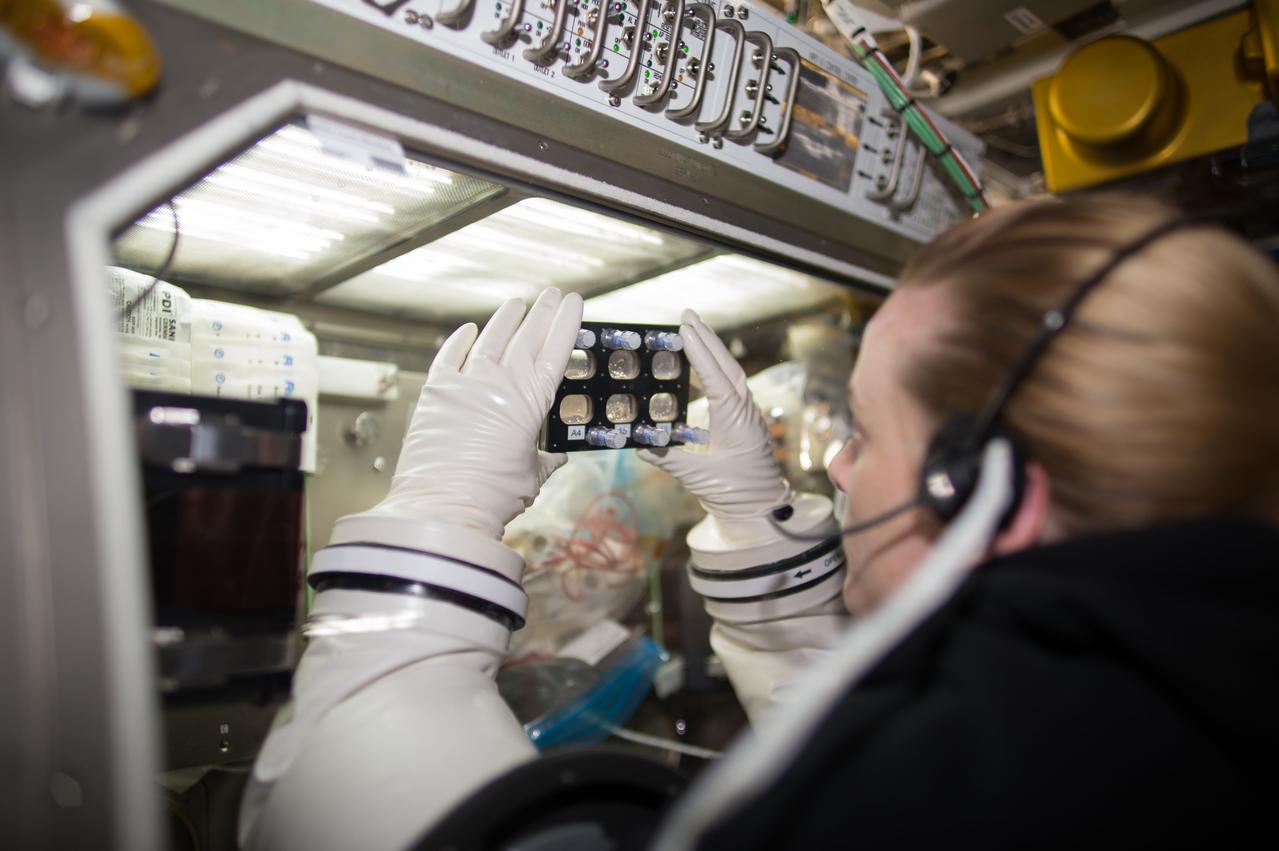
iss048e045908 (7/29/2016) --- NASA astronaut Kate Rubins is photographed at the Microgravity Science Glovebox (MSG) as she works to change the media in the Multiwell BioCells for the Heart Cells experiment. Effects of Microgravity on Stem Cell-Derived Cardiomyocytes (Heart Cells) studies the human heart, specifically how heart muscle tissue, contracts, grows and changes (gene expression) in microgravity and how those changes vary between subjects
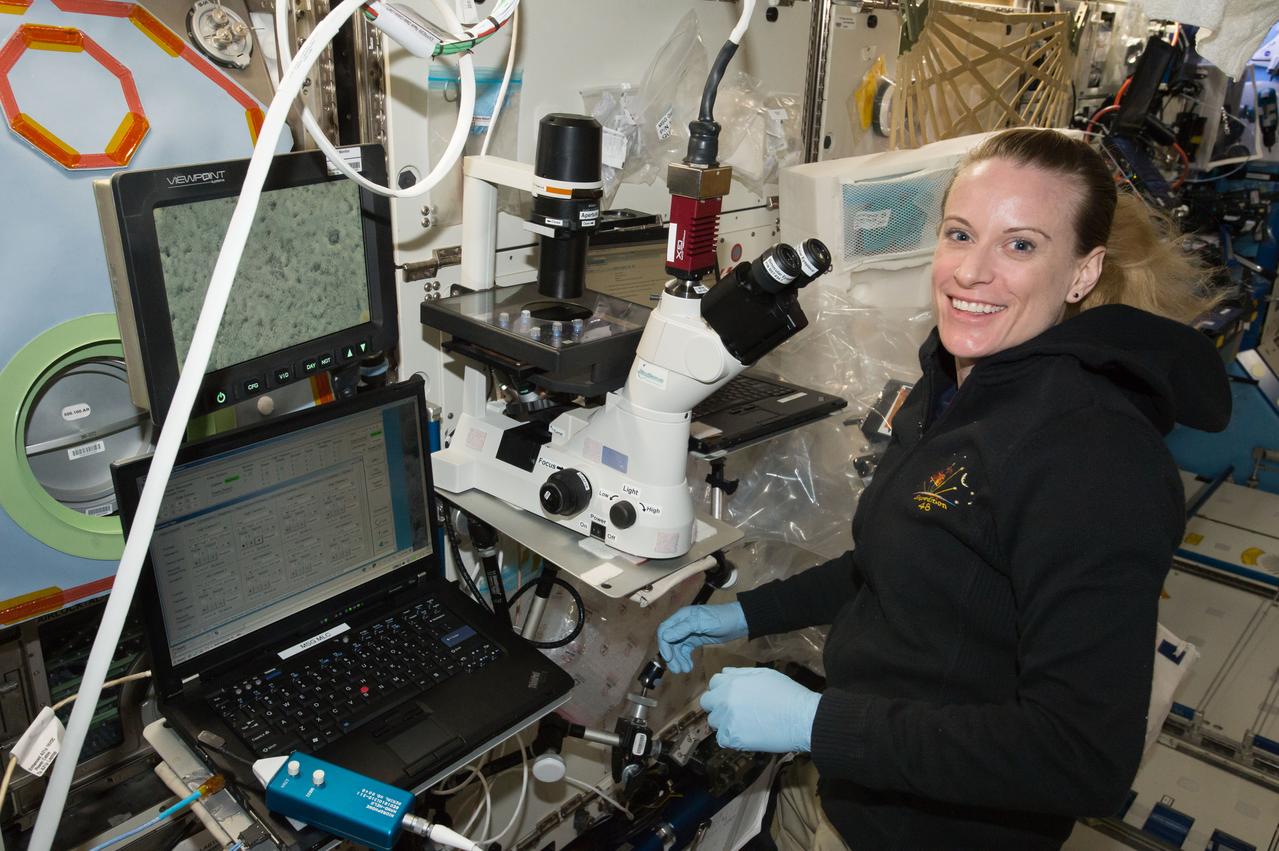
iss048e045065 (7/27/2016) --- NASA astronaut Kate Rubins pauses for a photo while using the Microscope to conduct Heart Cells experiment operations. Effects of Microgravity on Stem Cell-Derived Cardiomyocytes (Heart Cells) studies the human heart, specifically how heart muscle tissue, contracts, grows and changes (gene expression) in microgravity and how those changes vary between subjects.
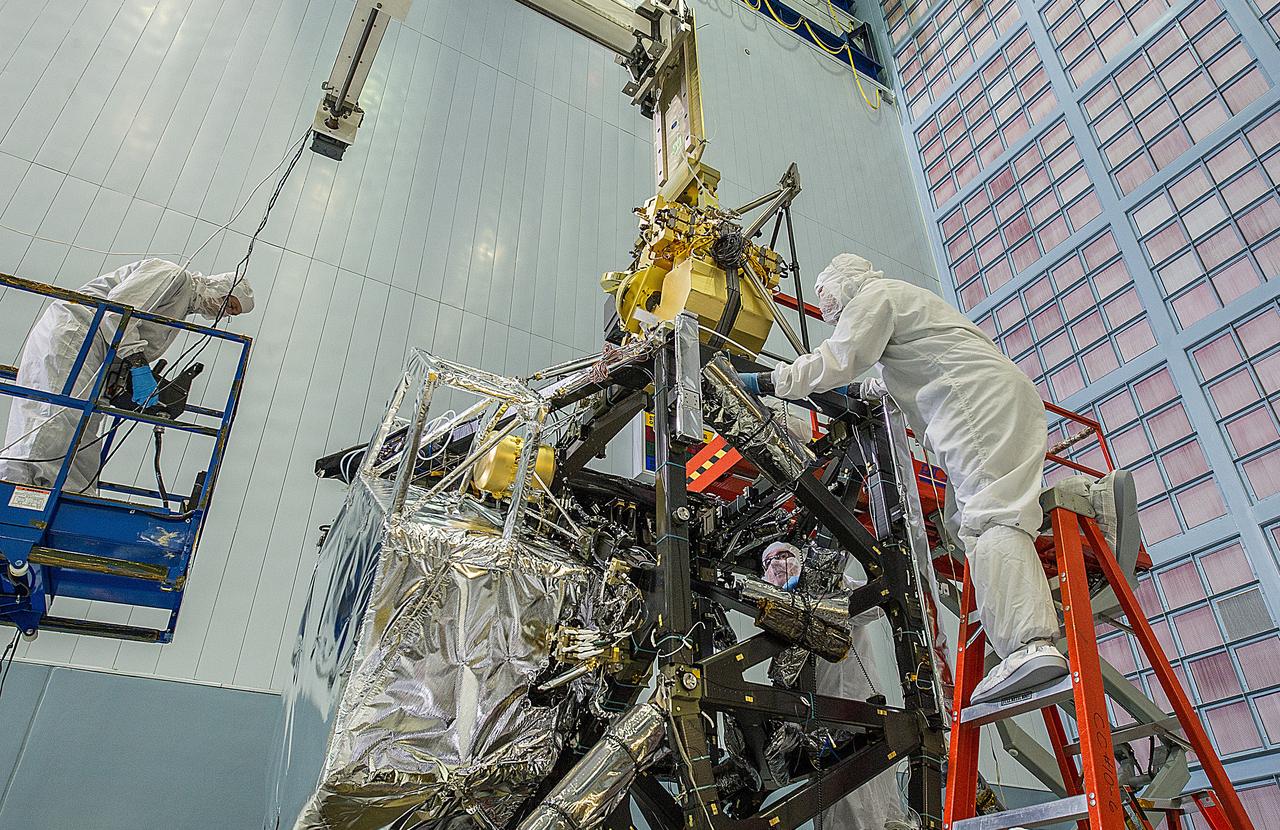
nside the world's largest clean room at NASA's Goddard Space Flight Center in Greenbelt, Md., engineers worked tirelessly to install another essential part of the James Webb Space Telescope - the Near Infrared Camera into the heart of the telescope. To complete this installation, the engineers needed to carefully move NIRCam inside the heart or ISIM, or Integrated Science Instrument Module that will house all of the science instruments. "Installing NIRCam into the center of the structure is nerve wracking because of the tight clearances," said Marcia J. Rieke, Professor of Astronomy at the University of Arizona, and principal investigator for the NIRCam. "I'm glad nothing bumped, and all the bolts are in place." NIRCam is a unique machine because in addition to being one of the four science instruments on the Webb, it also serves as the wavefront sensor, which means it will provide vital information for shaping the telescope mirrors and aligning its optics so that they can function properly and see into the distant universe. The NIRCam instrument will operate at very cold temperatures, and will be tested to ensure that it will be able to withstand the environment of space. The NIRCam is Webb's primary imager that will cover the infrared wavelength range 0.6 to 5 microns. It will detect light from the earliest stars and galaxies in the process of formation, the population of stars in nearby galaxies, as well as young stars and exoplanets in the Milky Way. NIRCam is provided by the University of Arizona and Lockheed Martin Advanced Technology Center. Webb is an international project led by NASA with its partners the European Space Agency and the Canadian Space Agency. The James Webb Space Telescope is the successor to NASA's Hubble Space Telescope. It will be the most powerful space telescope ever built. For more information about the Webb telescope, visit: <a href="http://www.jwst.nasa.gov" rel="nofollow">www.jwst.nasa.gov</a> or <a href="http://www.nasa.gov/webb" rel="nofollow">www.nasa.gov/webb</a> Credit: NASA/Goddard/Chris Gunn <b><a href="http://www.nasa.gov/audience/formedia/features/MP_Photo_Guidelines.html" rel="nofollow">NASA image use policy.</a></b> <b><a href="http://www.nasa.gov/centers/goddard/home/index.html" rel="nofollow">NASA Goddard Space Flight Center</a></b> enables NASA’s mission through four scientific endeavors: Earth Science, Heliophysics, Solar System Exploration, and Astrophysics. Goddard plays a leading role in NASA’s accomplishments by contributing compelling scientific knowledge to advance the Agency’s mission. <b>Follow us on <a href="http://twitter.com/NASAGoddardPix" rel="nofollow">Twitter</a></b> <b>Like us on <a href="http://www.facebook.com/pages/Greenbelt-MD/NASA-Goddard/395013845897?ref=tsd" rel="nofollow">Facebook</a></b> <b>Find us on <a href="http://instagram.com/nasagoddard?vm=grid" rel="nofollow">Instagram</a></b>

This NASA/ESA Hubble Space Telescope image shows Messier 96, a spiral galaxy just over 35 million light-years away in the constellation of Leo (The Lion). It is of about the same mass and size as the Milky Way. It was first discovered by astronomer Pierre Méchain in 1781, and added to Charles Messier’s famous catalogue of astronomical objects just four days later. The galaxy resembles a giant maelstrom of glowing gas, rippled with dark dust that swirls inwards towards the nucleus. Messier 96 is a very asymmetric galaxy; its dust and gas are unevenly spread throughout its weak spiral arms, and its core is not exactly at the galactic center. Its arms are also asymmetrical, thought to have been influenced by the gravitational pull of other galaxies within the same group as Messier 96. This group, named the M96 Group, also includes the bright galaxies Messier 105 and Messier 95, as well as a number of smaller and fainter galaxies. It is the nearest group containing both bright spirals and a bright elliptical galaxy (Messier 105). Image credit: ESA/Hubble & NASA and the LEGUS Team, Acknowledgement: R. Gendler <b><a href="http://www.nasa.gov/audience/formedia/features/MP_Photo_Guidelines.html" rel="nofollow">NASA image use policy.</a></b> <b><a href="http://www.nasa.gov/centers/goddard/home/index.html" rel="nofollow">NASA Goddard Space Flight Center</a></b> enables NASA’s mission through four scientific endeavors: Earth Science, Heliophysics, Solar System Exploration, and Astrophysics. Goddard plays a leading role in NASA’s accomplishments by contributing compelling scientific knowledge to advance the Agency’s mission. <b>Follow us on <a href="http://twitter.com/NASAGoddardPix" rel="nofollow">Twitter</a></b> <b>Like us on <a href="http://www.facebook.com/pages/Greenbelt-MD/NASA-Goddard/395013845897?ref=tsd" rel="nofollow">Facebook</a></b> <b>Find us on <a href="http://instagrid.me/nasagoddard/?vm=grid" rel="nofollow">Instagram</a></b>
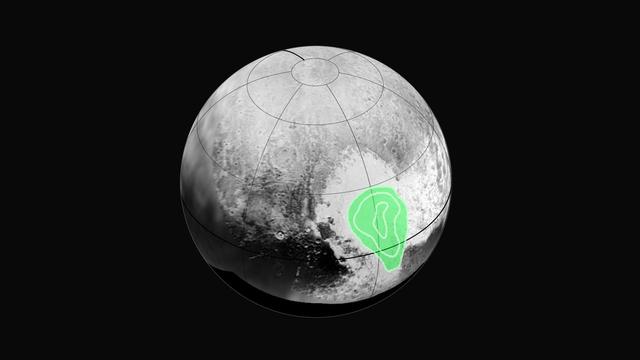
Peering closely at the "heart of Pluto," in the western half of what mission scientists have informally named Tombaugh Regio (Tombaugh Region), NASA's New Horizons' Ralph instrument revealed evidence of carbon monoxide ice. The contours indicate that the concentration of frozen carbon monoxide increases towards the center of the "bull's eye." These data were acquired by the spacecraft on July 14 and transmitted to Earth on July 16. http://photojournal.jpl.nasa.gov/catalog/PIA19718
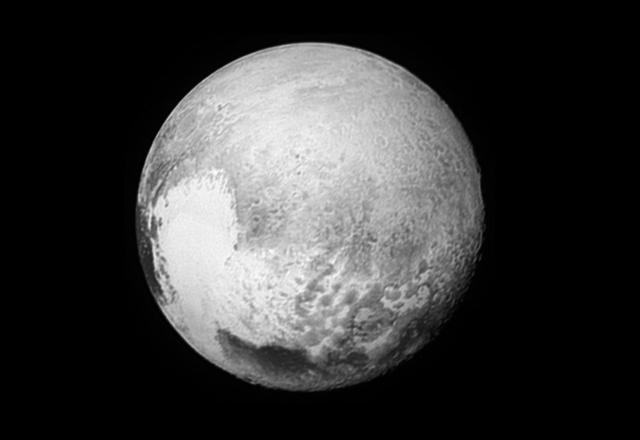
In addition to transmitting new high-resolution images and other data on the familiar close-approach hemispheres of Pluto and Charon, NASA's New Horizons spacecraft is also returning images -- such as this one -- to improve maps of other regions. This image was taken by the New Horizons Long Range Reconnaissance Imager (LORRI) on the morning of July 13, 2015, from a range of 1.03 million miles (1.7 million kilometers) and has a resolution of 5.1 miles (8.3 kilometers) per pixel. It provides fascinating new details to help the science team map the informally named Krun Macula (the prominent dark spot at the bottom of the image) and the complex terrain east and northeast of Pluto's "heart" (Tombaugh Regio). Pluto's north pole is on the planet's disk at the 12 o'clock position of this image. http://photojournal.jpl.nasa.gov/catalog/PIA20037
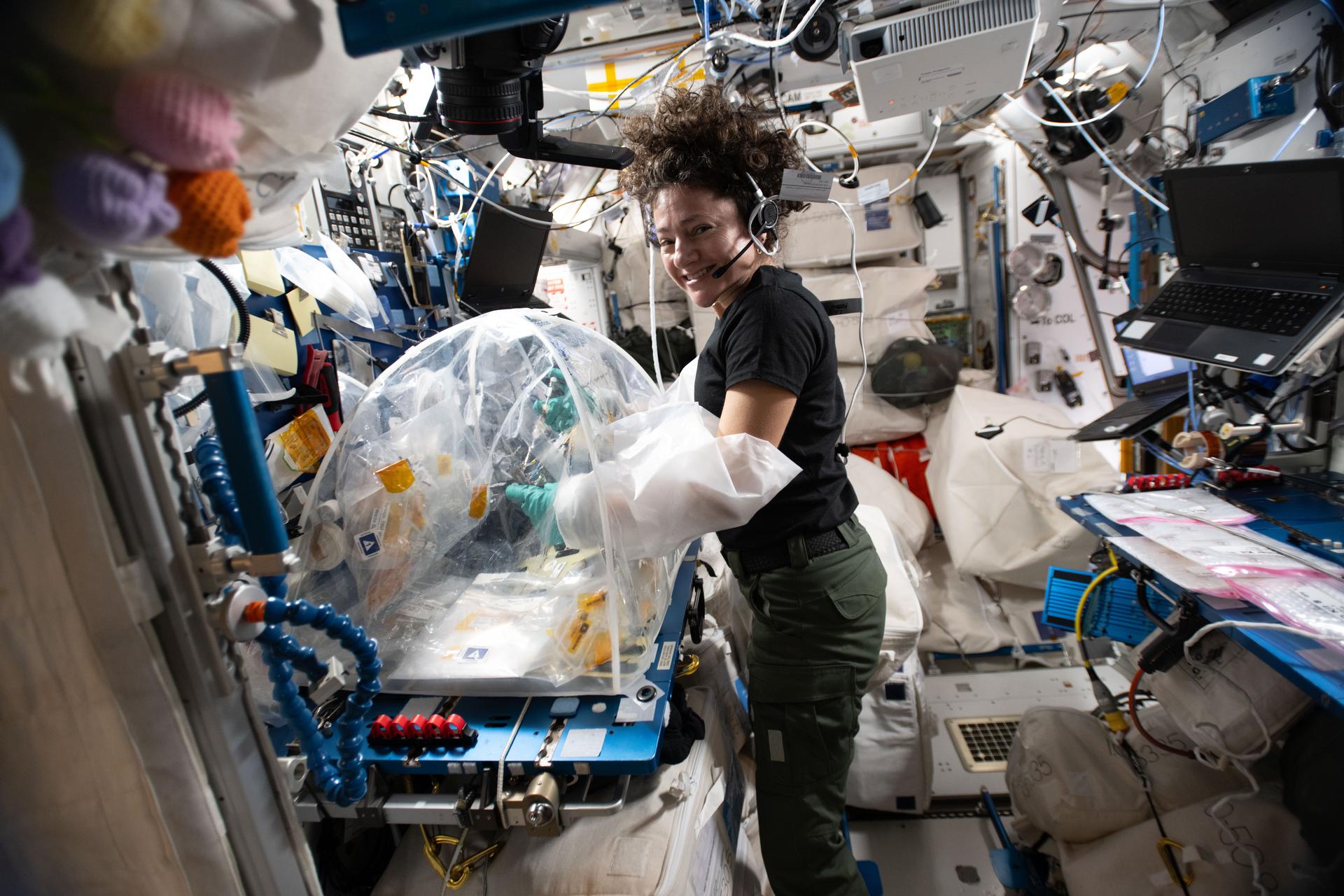
iss074e0518253 (April 23, 2026) --- NASA astronaut and Expedition 74 flight engineer Jessica Meir processes samples of heart stem cells and bacteria that cause pneumonia using a portable glovebag inside the International Space Station's Harmony module. Observations in microgravity may give doctors a clearer understanding of how cellular and molecular mechanisms of infectious diseases damage heart tissue, potentially leading to advanced treatments for heart conditions on and off the Earth. Credit: NASA/Chris Williams
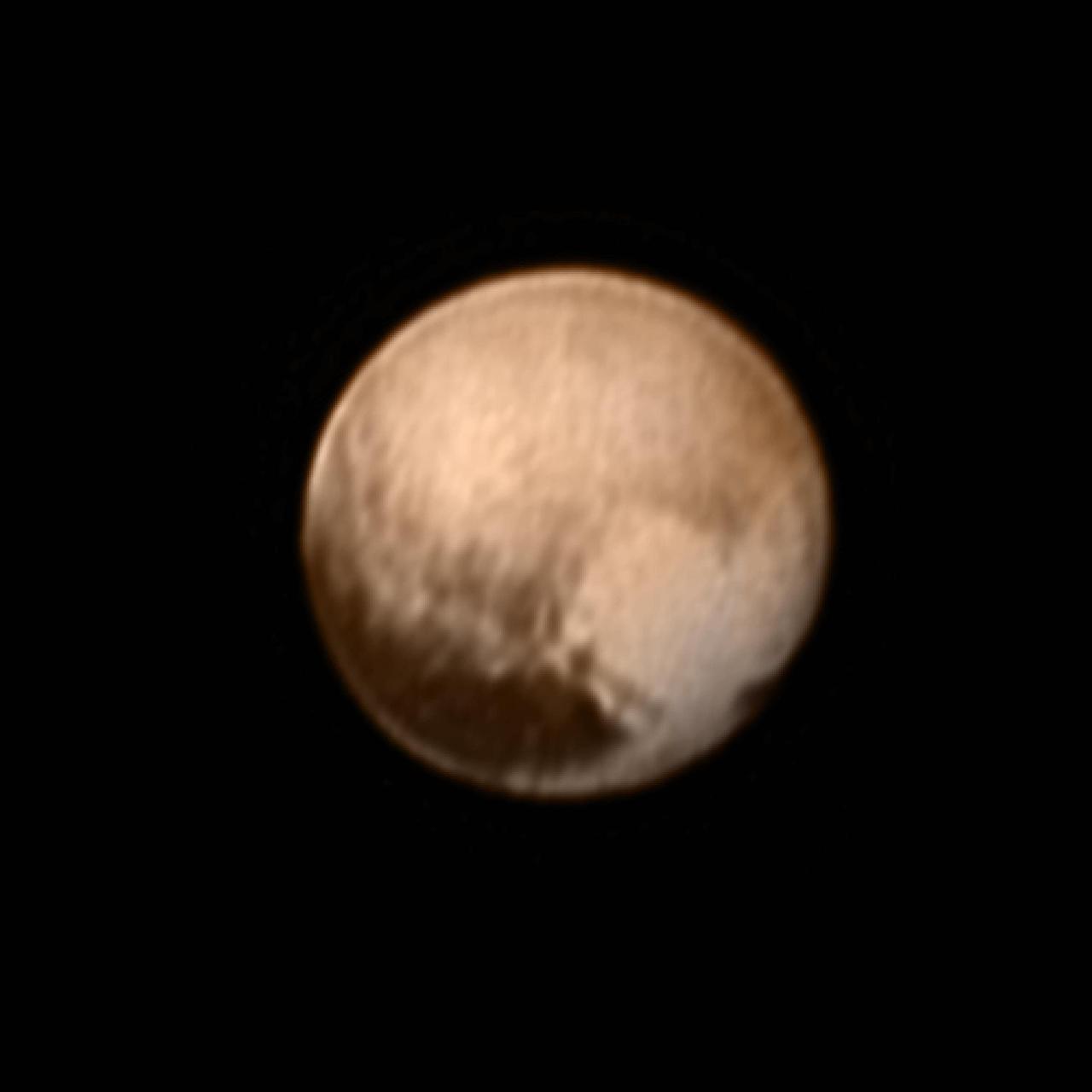
In the early morning hours of July 8, 2015, mission scientists received this new view of Pluto -- the most detailed yet returned by the Long Range Reconnaissance Imager (LORRI) aboard New Horizons. The image was taken on July 7, when the NASA spacecraft was just under 5 million miles (8 million kilometers) from Pluto, and is the first to be received since the July 4 anomaly that sent the spacecraft into safe mode. This view is centered roughly on the area that will be seen close-up during New Horizons' July 14 closest approach. This side of Pluto is dominated by three broad regions of varying brightness. Most prominent are an elongated dark feature at the equator, informally known as "the whale," and a large heart-shaped bright area measuring some 1,200 miles (2,000 kilometers) across on the right. Above those features is a polar region that is intermediate in brightness. http://photojournal.jpl.nasa.gov/catalog/PIA19702

This new Hubble image is centered on NGC 5793, a spiral galaxy over 150 million light-years away in the constellation of Libra. This galaxy has two particularly striking features: a beautiful dust lane and an intensely bright center — much brighter than that of our own galaxy, or indeed those of most spiral galaxies we observe. NGC 5793 is a Seyfert galaxy. These galaxies have incredibly luminous centers that are thought to be caused by hungry supermassive black holes — black holes that can be billions of times the size of the sun — that pull in and devour gas and dust from their surroundings. This galaxy is of great interest to astronomers for many reasons. For one, it appears to house objects known as masers. Whereas lasers emit visible light, masers emit microwave radiation. The term "masers" comes from the acronym Microwave Amplification by Stimulated Emission of Radiation. Maser emission is caused by particles that absorb energy from their surroundings and then re-emit this in the microwave part of the spectrum. Naturally occurring masers, like those observed in NGC 5793, can tell us a lot about their environment; we see these kinds of masers in areas where stars are forming. In NGC 5793 there are also intense mega-masers, which are thousands of times more luminous than the sun. Credit: NASA, ESA, and E. Perlman (Florida Institute of Technology) <b><a href="http://www.nasa.gov/audience/formedia/features/MP_Photo_Guidelines.html" rel="nofollow">NASA image use policy.</a></b> <b><a href="http://www.nasa.gov/centers/goddard/home/index.html" rel="nofollow">NASA Goddard Space Flight Center</a></b> enables NASA’s mission through four scientific endeavors: Earth Science, Heliophysics, Solar System Exploration, and Astrophysics. Goddard plays a leading role in NASA’s accomplishments by contributing compelling scientific knowledge to advance the Agency’s mission. <b>Follow us on <a href="http://twitter.com/NASAGoddardPix" rel="nofollow">Twitter</a></b> <b>Like us on <a href="http://www.facebook.com/pages/Greenbelt-MD/NASA-Goddard/395013845897?ref=tsd" rel="nofollow">Facebook</a></b> <b>Find us on <a href="http://instagram.com/nasagoddard?vm=grid" rel="nofollow">Instagram</a></b>
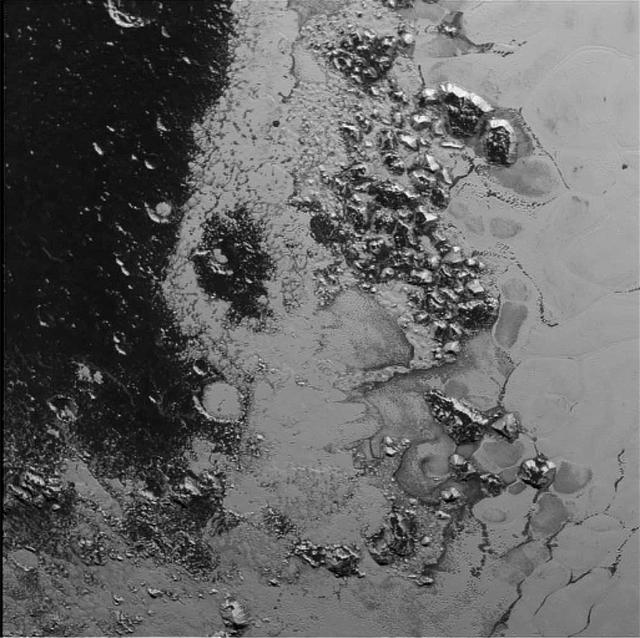
A newly discovered mountain range lies near the southwestern margin of Pluto heart-shaped Tombaugh Regio Tombaugh Region, situated between bright, icy plains and dark, heavily-cratered terrain. This image was acquired by NASA's New Horizons' Long Range Reconnaissance Imager (LORRI) on July 14, 2015, from a distance of 48,000 miles (77,000 kilometers) and sent back to Earth on July 20. Features as small as a half-mile (1 kilometer) across are visible. These frozen peaks are estimated to be one-half mile to one mile (1-1.5 kilometers) high, about the same height as the United States' Appalachian Mountains. The Norgay Montes (Norgay Mountains) discovered by New Horizons on July 15 more closely approximate the height of the taller Rocky Mountains The names of features on Pluto have all been given on an informal basis by the New Horizons team. http://photojournal.jpl.nasa.gov/catalog/PIA19842
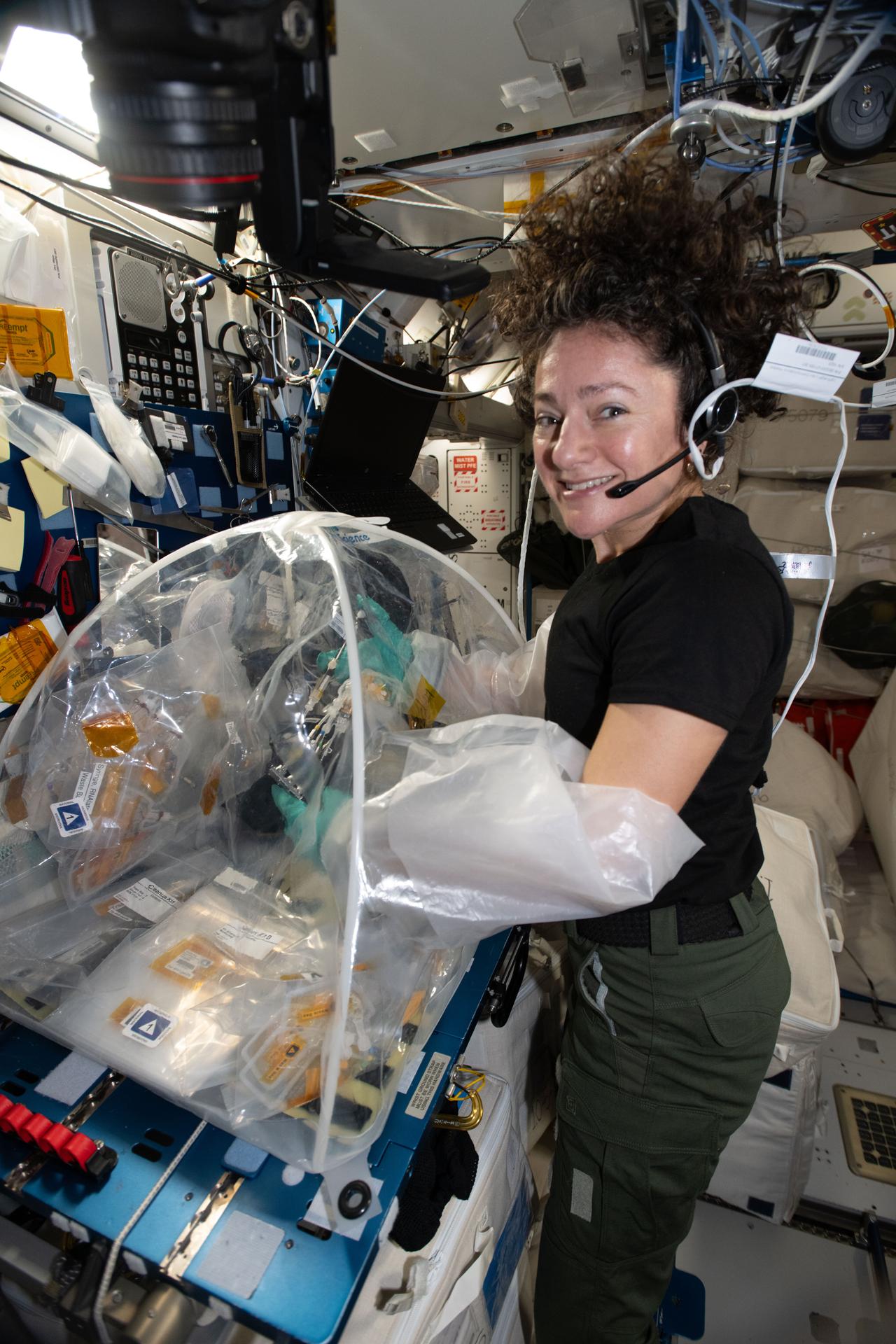
iss074e0518242 (April 23, 2026) --- NASA astronaut and Expedition 74 flight engineer Jessica Meir processes samples of heart stem cells and bacteria that cause pneumonia using a portable glovebag inside the International Space Station's Harmony module. Research in microgravity may give doctors a clearer understanding of how infectious disease processes damage heart tissue at the cellular and molecular level. These insights could lead to advanced treatments for heart conditions both on Earth and in space. Credit: NASA/Chris Williams
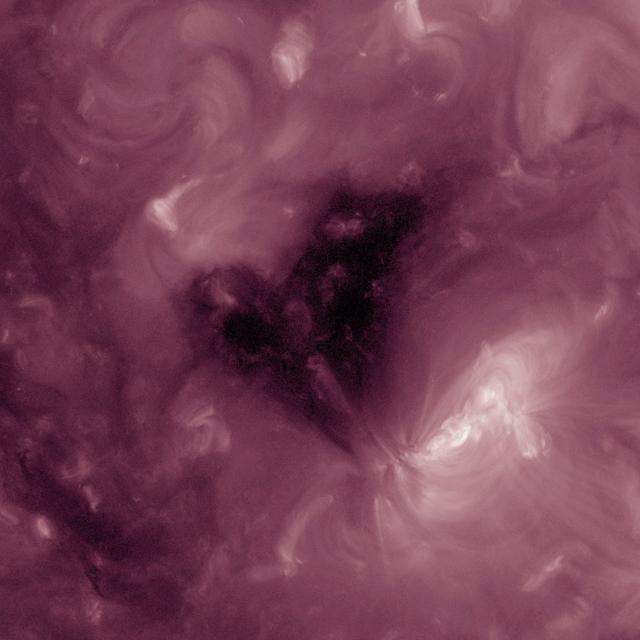
This Solar Dynamics Observatory image of the Sun taken on February 1, 2013 in extreme ultraviolet light captures a heart-shaped dark coronal hole. Coronal holes are areas of the Sun's surface that are the source of open magnetic field lines that head way out into space. They are also the source regions of the fast solar wind, which is characterized by a relatively steady speed of approximately 800 km/s (about 1.8 million mph).
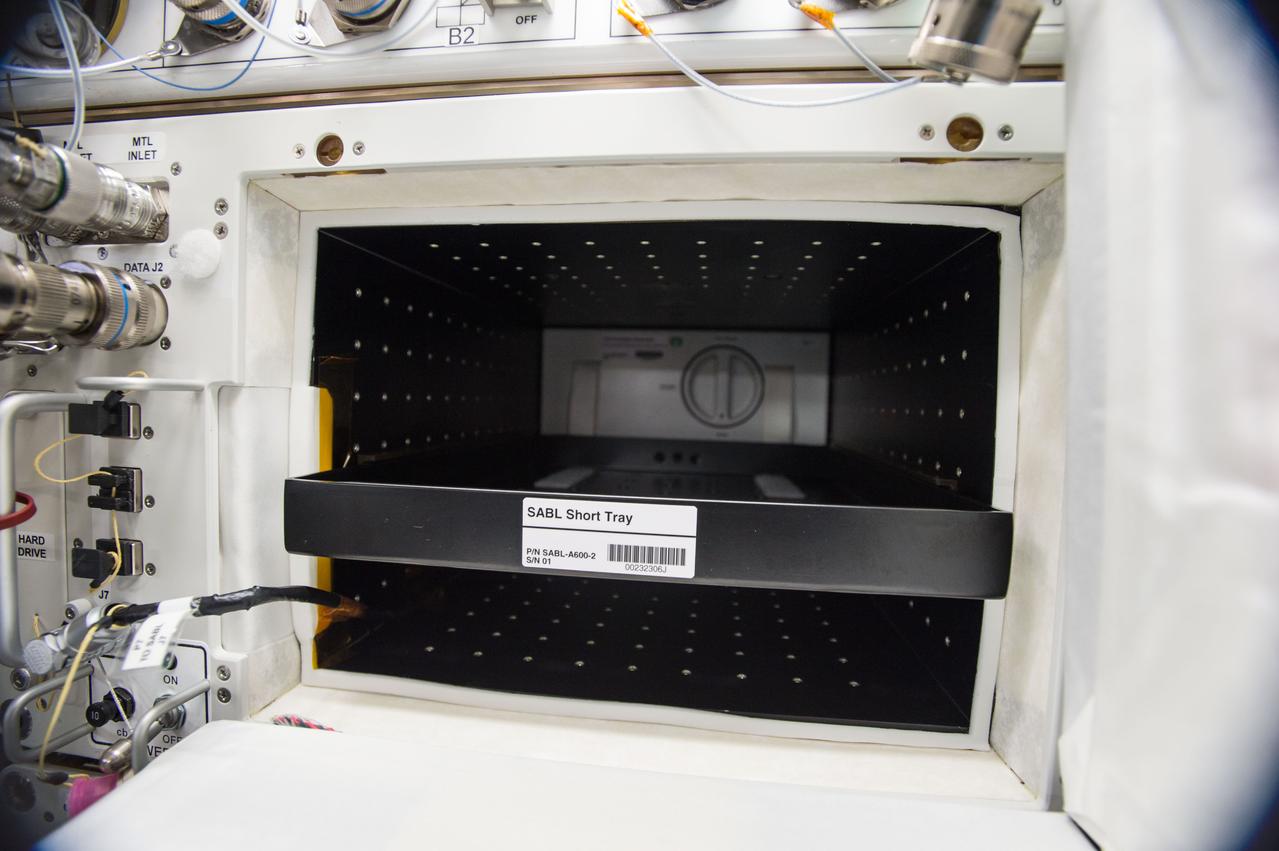
iss048e042380(7/21/2016) --- A view of the Space Automated Bioproduct Laboratory (SABL) Short Tray inside the SABL 2 following installation of the Carbon Dioxide (CO2) Incubator Controller. Image was taken during Heart Cells experiment setup in the Destiny U.S. Laboratory. The Space Automated Bioproduct Laboratory (SABL) supports a wide variety of experiments in the life, physical and material sciences with a focus on supporting research of biological systems and processes.
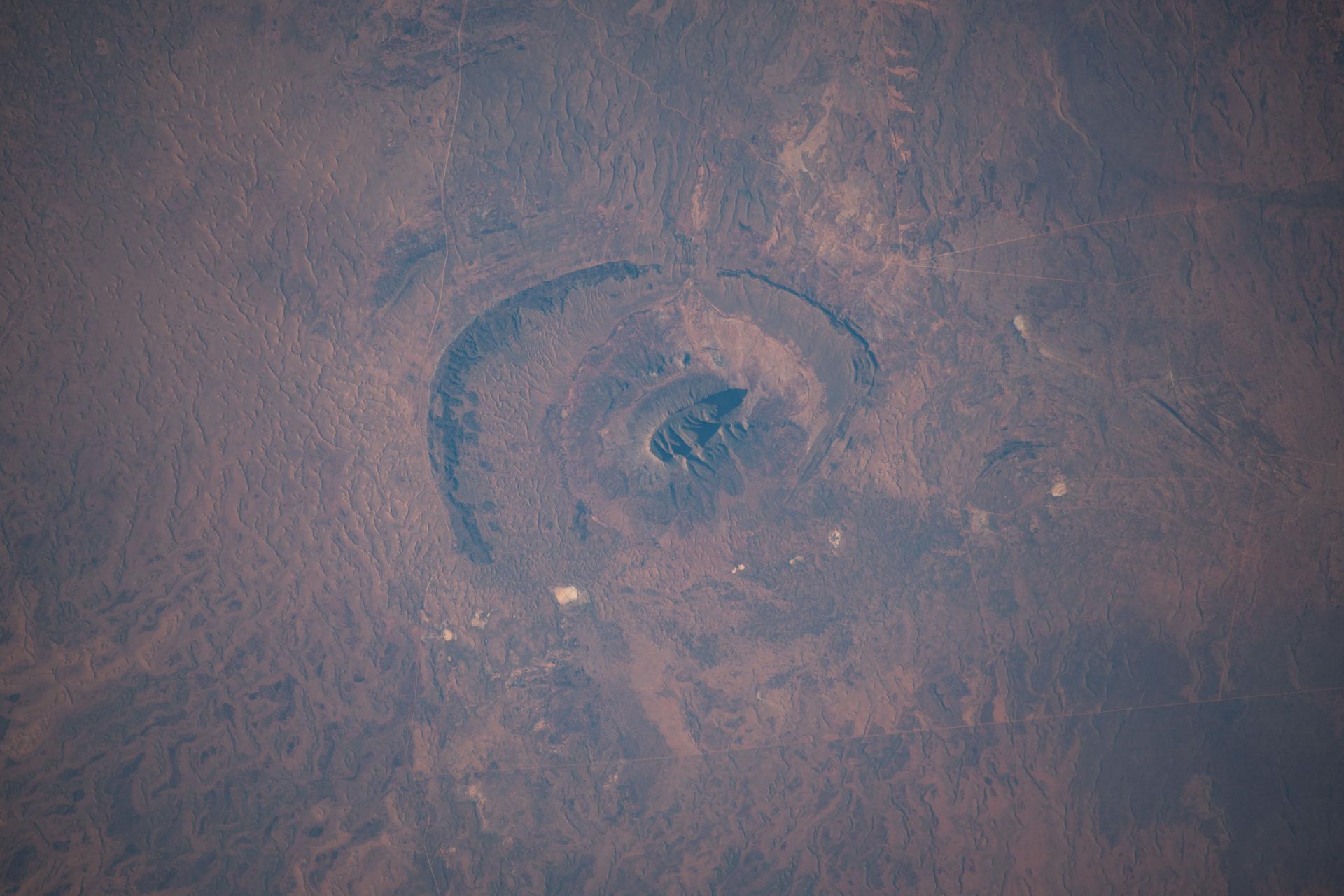
iss074e0046183 (Jan. 4, 2025) --- Mount Conner, in the arid heart of Australia’s Northern Territory—also known as the Red Centre—is a flat-topped mesa and an erosional remnant whose distinct formation took shape approximately 100 million years ago. It resembles an impact crater because it sits on a broad, eroded plain with shallow depressions, while the surrounding terrain was shaped by millions of years of weathering and erosion. The International Space Station was orbiting 262 miles above the island continent when this photograph was taken. Credit: NASA/Chris Williams.
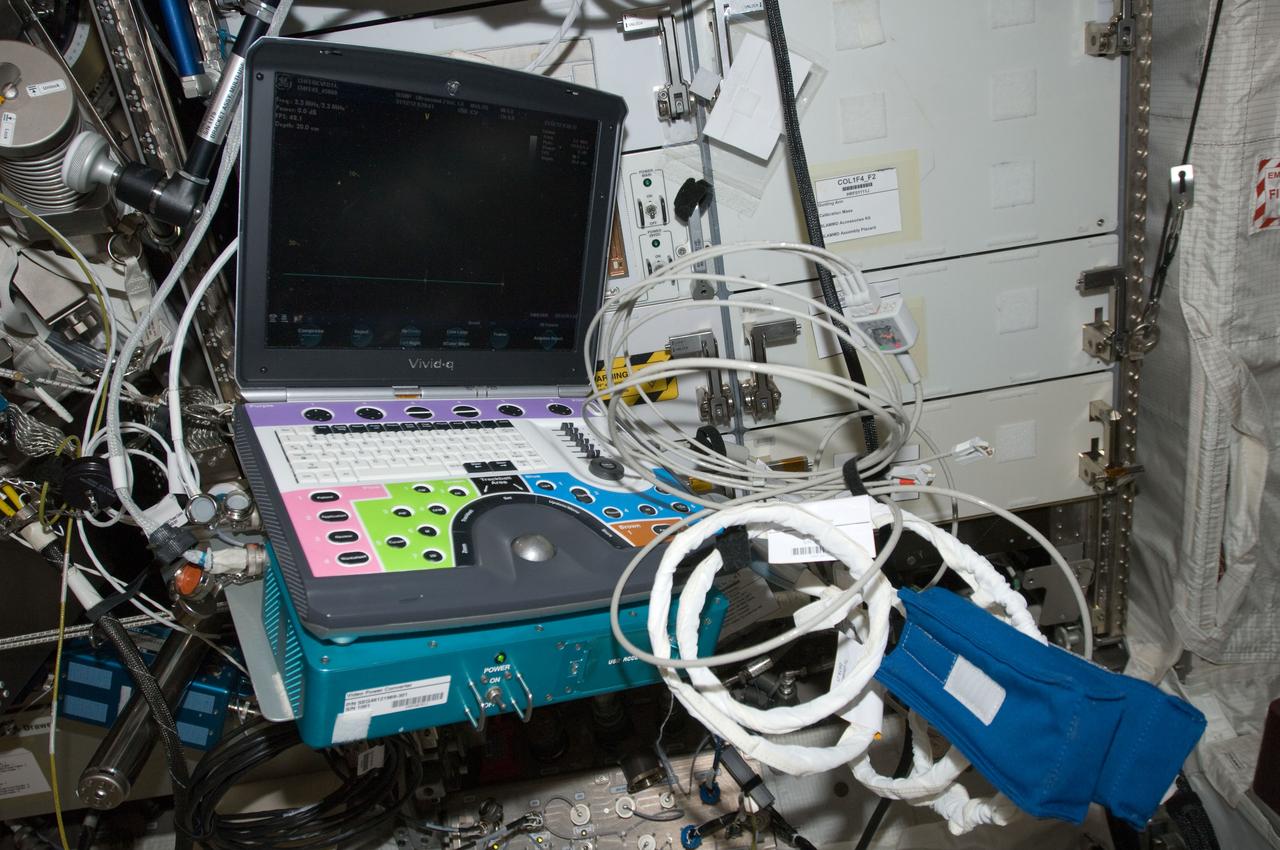
View of Integrated Cardiovascular (ICV) Echo Ultrasound Scan,in the Columbus module. ICV aims to quantify the extent,time course and clinical significance of cardiac atrophy (decrease in the size of the heart muscle) in space. Photo was taken during Expedition 34.

S65-46634 (29 Aug. 1965) --- Astronaut Charles Conrad Jr. has his heart rate checked by a physician after the Gemini-5 mission.
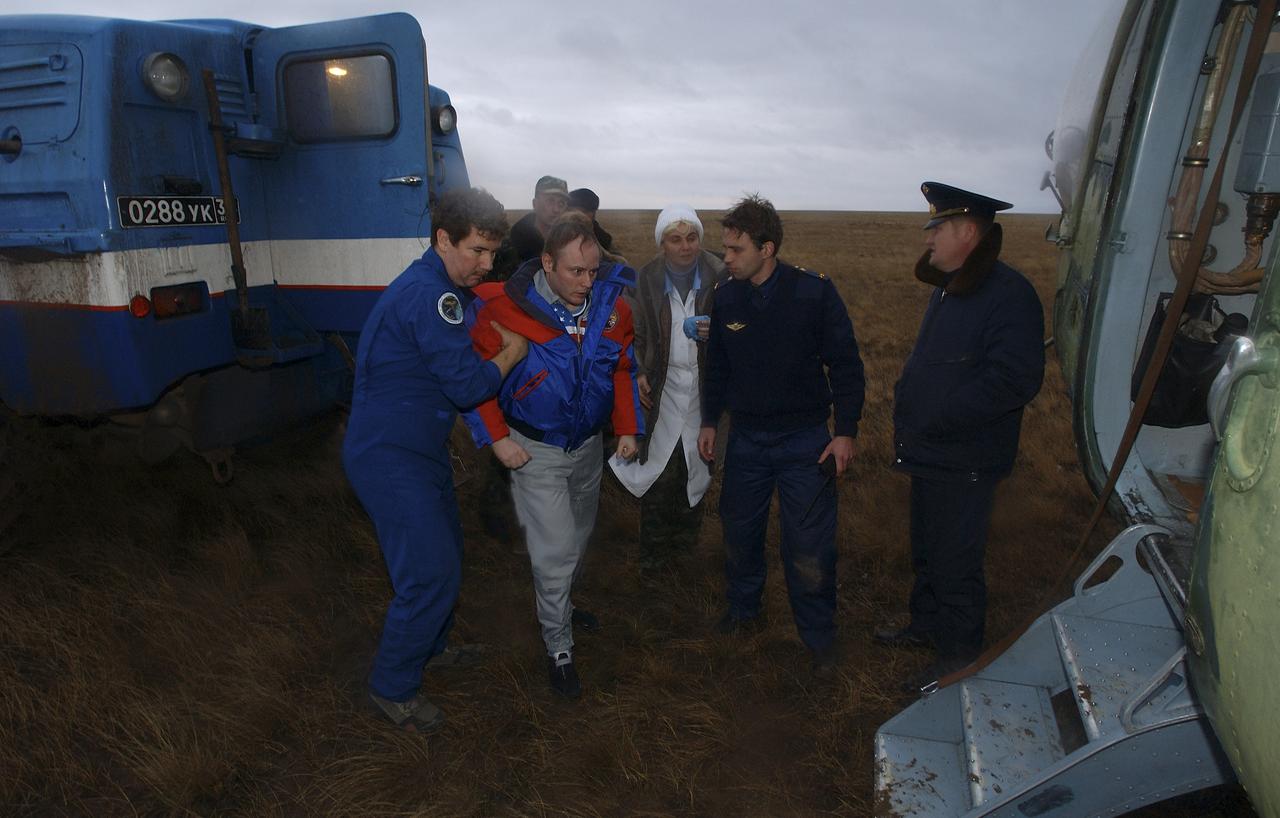
Expedition 9 Flight Engineer Michael Fincke is assisted by NASA Flight Doctor Steve Heart as he walks to the helicopter near the Soyuz landing site for the flight back to Kustanay, Kazakhstan. The Soyuz capsule landed with Expedition 9 Flight Engineer Mike Fincke, Expedition 9 Commander Gennady Padalka and Russian Space Forces cosmonaut Yuri Shargin approximately 85 kilometers northeast of Arkalyk in northern Kazakhstan, Sunday, October 24, 2004. Photo Credit: (NASA/Bill Ingalls)

The German-built 100-inch telescope that is the heart of NASA's Stratospheric Observatory for Infrared Astronomy is nestled in the SOFIA 747's rear fuselage.
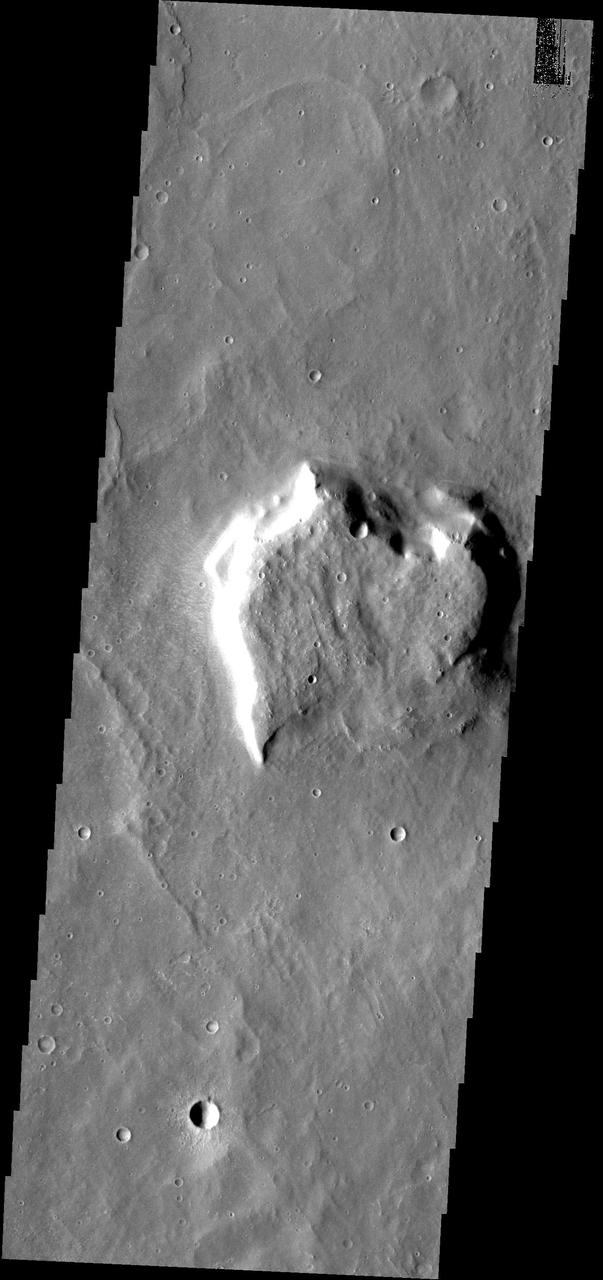
Back by popular demand: THEMIS ART IMAGE #65 Valentines Day is past, but this martian mesa reminds us of a heart
![This isolated mesa [lower left center of the image] has an almost heart-shaped margin. Happy Valentine Day from Mars](https://images-assets.nasa.gov/image/PIA02174/PIA02174~medium.jpg)
This isolated mesa [lower left center of the image] has an almost heart-shaped margin. Happy Valentine Day from Mars
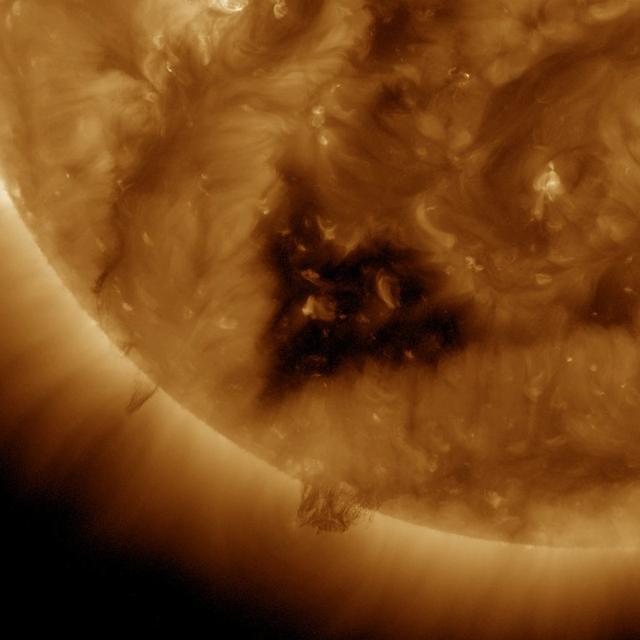
This Solar Dynamics Observatory (SDO) image of the Sun taken on January 20, 2012 in extreme ultraviolet light captures a heart-shaped dark coronal hole. Coronal holes are areas of the Sun's surface that are the source of open magnetic field lines that head way out into space. They are also the source regions of the fast solar wind, which is characterized by a relatively steady speed of approximately 800 km/s (about 1.8 million mph). <b><a href="http://www.nasa.gov/audience/formedia/features/MP_Photo_Guidelines.html" rel="nofollow">NASA image use policy.</a></b> <b><a href="http://www.nasa.gov/centers/goddard/home/index.html" rel="nofollow">NASA Goddard Space Flight Center</a></b> enables NASA’s mission through four scientific endeavors: Earth Science, Heliophysics, Solar System Exploration, and Astrophysics. Goddard plays a leading role in NASA’s accomplishments by contributing compelling scientific knowledge to advance the Agency’s mission. <b>Follow us on <a href="http://twitter.com/NASA_GoddardPix" rel="nofollow">Twitter</a></b> <b>Like us on <a href="http://www.facebook.com/pages/Greenbelt-MD/NASA-Goddard/395013845897?ref=tsd" rel="nofollow">Facebook</a></b> <b>Find us on <a href="http://instagram.com/nasagoddard?vm=grid" rel="nofollow">Instagram</a></b>

This Solar Dynamics Observatory (SDO) image of the Sun taken on January 20, 2012 in extreme ultraviolet light captures a heart-shaped dark coronal hole. Coronal holes are areas of the Sun's surface that are the source of open magnetic field lines that head way out into space. They are also the source regions of the fast solar wind, which is characterized by a relatively steady speed of approximately 800 km/s (about 1.8 million mph). <b><a href="http://www.nasa.gov/audience/formedia/features/MP_Photo_Guidelines.html" rel="nofollow">NASA image use policy.</a></b> <b><a href="http://www.nasa.gov/centers/goddard/home/index.html" rel="nofollow">NASA Goddard Space Flight Center</a></b> enables NASA’s mission through four scientific endeavors: Earth Science, Heliophysics, Solar System Exploration, and Astrophysics. Goddard plays a leading role in NASA’s accomplishments by contributing compelling scientific knowledge to advance the Agency’s mission. <b>Follow us on <a href="http://twitter.com/NASA_GoddardPix" rel="nofollow">Twitter</a></b> <b>Like us on <a href="http://www.facebook.com/pages/Greenbelt-MD/NASA-Goddard/395013845897?ref=tsd" rel="nofollow">Facebook</a></b> <b>Find us on <a href="http://instagram.com/nasagoddard?vm=grid" rel="nofollow">Instagram</a></b>
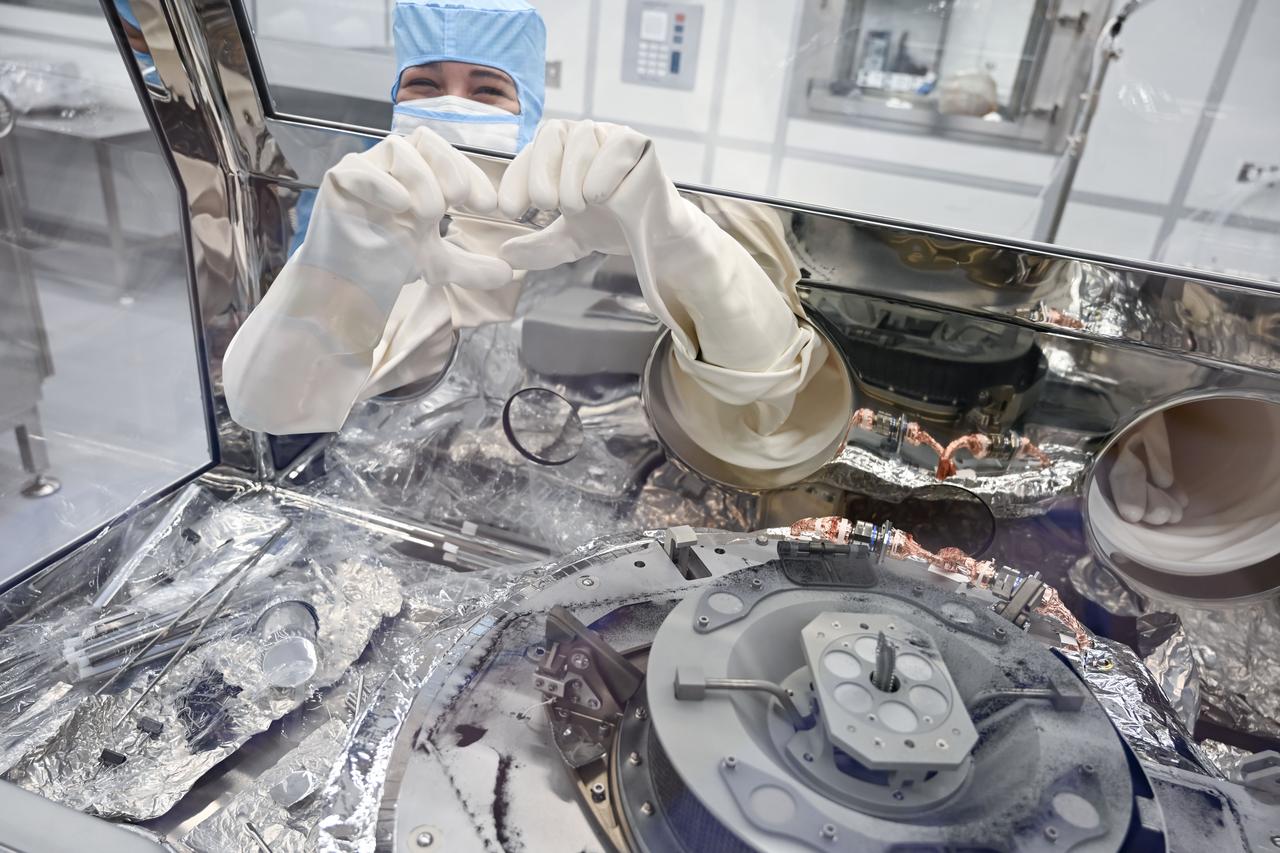
Astromaterials processor Mari Montoya shows a hand heart while working in the OSIRIS-REx canister glovebox at NASA’s Johnson Space Center in Houston. Montoya was sweeping asteroid material on the avionics deck of the OSIRIS-REx canister and was so deep in concentration that she didn’t realize the dust had formed the shape of a heart until her teammate on the other side of the glovebox pointed it out.
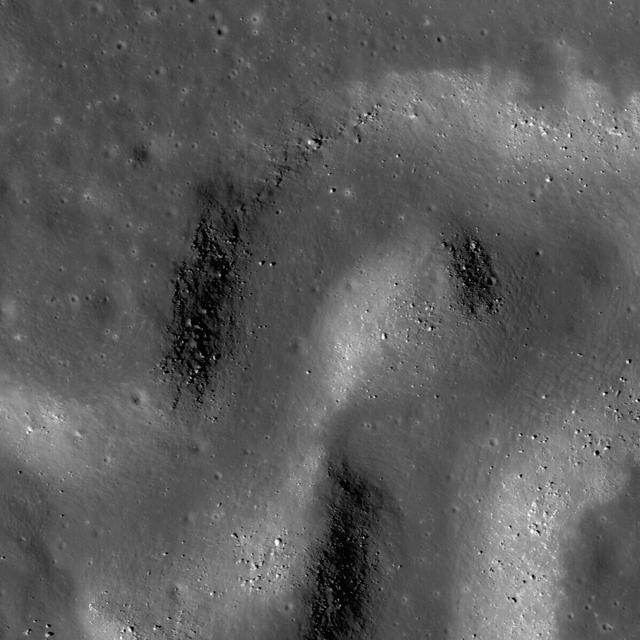
NASA Lunar Reconnaissance Orbiter shows a sinuous rille winding its way across a much larger rille in the heart of the Aristarchus Plateau.

NASA NuSTAR has captured these first, focused views of the supermassive black hole at the heart of our Milky Way galaxy in high-energy X-ray light.
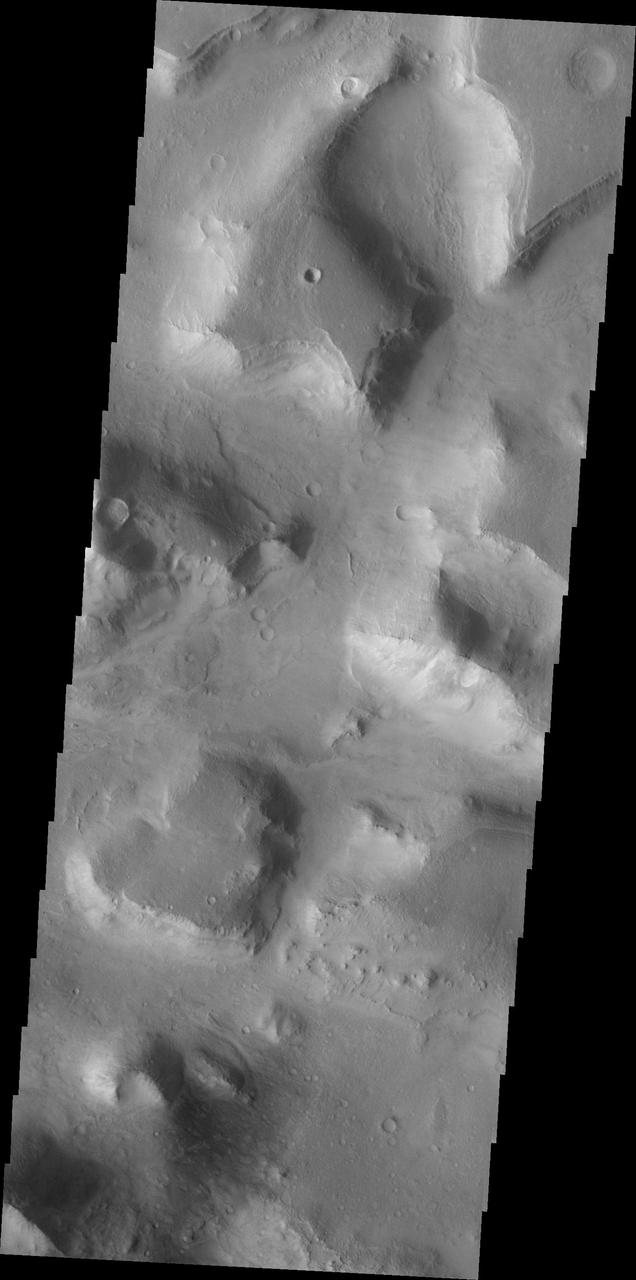
Do you see what I see in this image captured by NASA 2001 Mars Odyssey spacecraft? One of the mesas in this image is heart shaped.
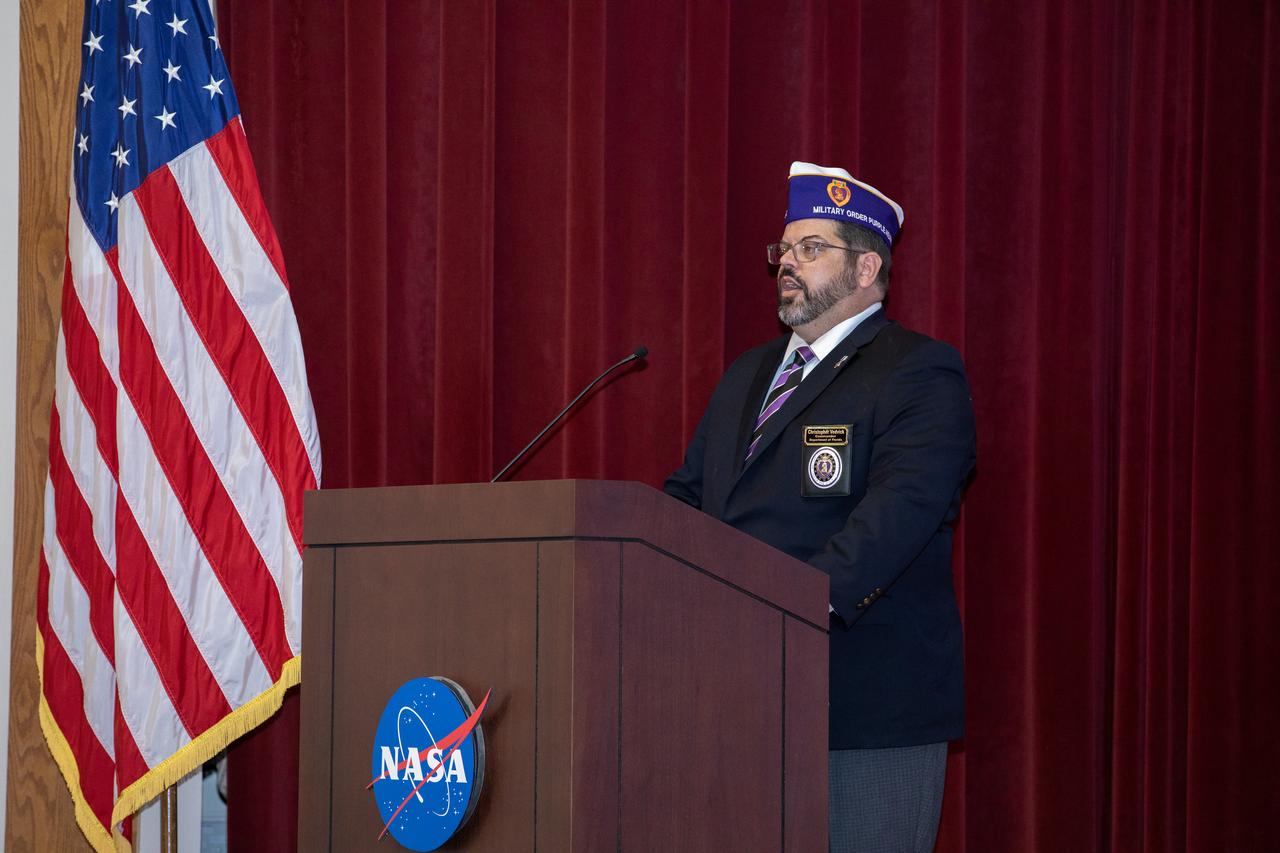
Christopher Vedvick, a combat wounded veteran and Military Order of the Purple Heart department of Florida commander, speaks at a Veterans Day observance event on Nov. 7, 2019, in the Kennedy Space Center Training Auditorium. During the event, Kennedy was named a Purple Heart Entity by the Military Order of the Purple Heart, becoming the first NASA center to receive this designation for support and services provided to veterans through the Florida spaceport’s Veterans employee resource group. Attendees included Kennedy employees and more than 20 Purple Heart recipients.
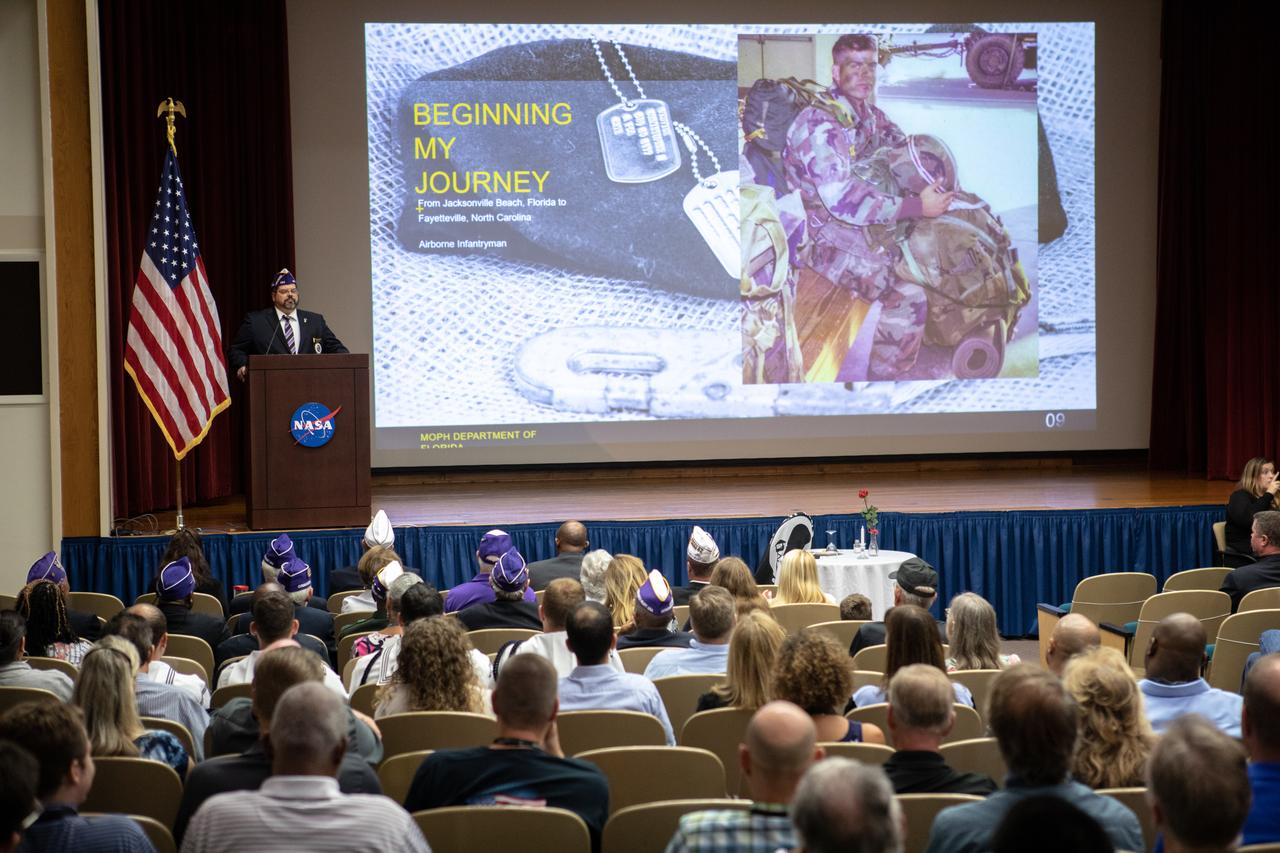
Christopher Vedvick, a combat wounded veteran and Military Order of the Purple Heart department of Florida commander, speaks at a Veterans Day observance event on Nov. 7, 2019, in the Kennedy Space Center Training Auditorium. During the event, Kennedy was named a Purple Heart Entity by the Military Order of the Purple Heart, becoming the first NASA center to receive this designation for support and services provided to veterans through the Florida spaceport’s Veterans employee resource group. Attendees included Kennedy employees and more than 20 Purple Heart recipients.
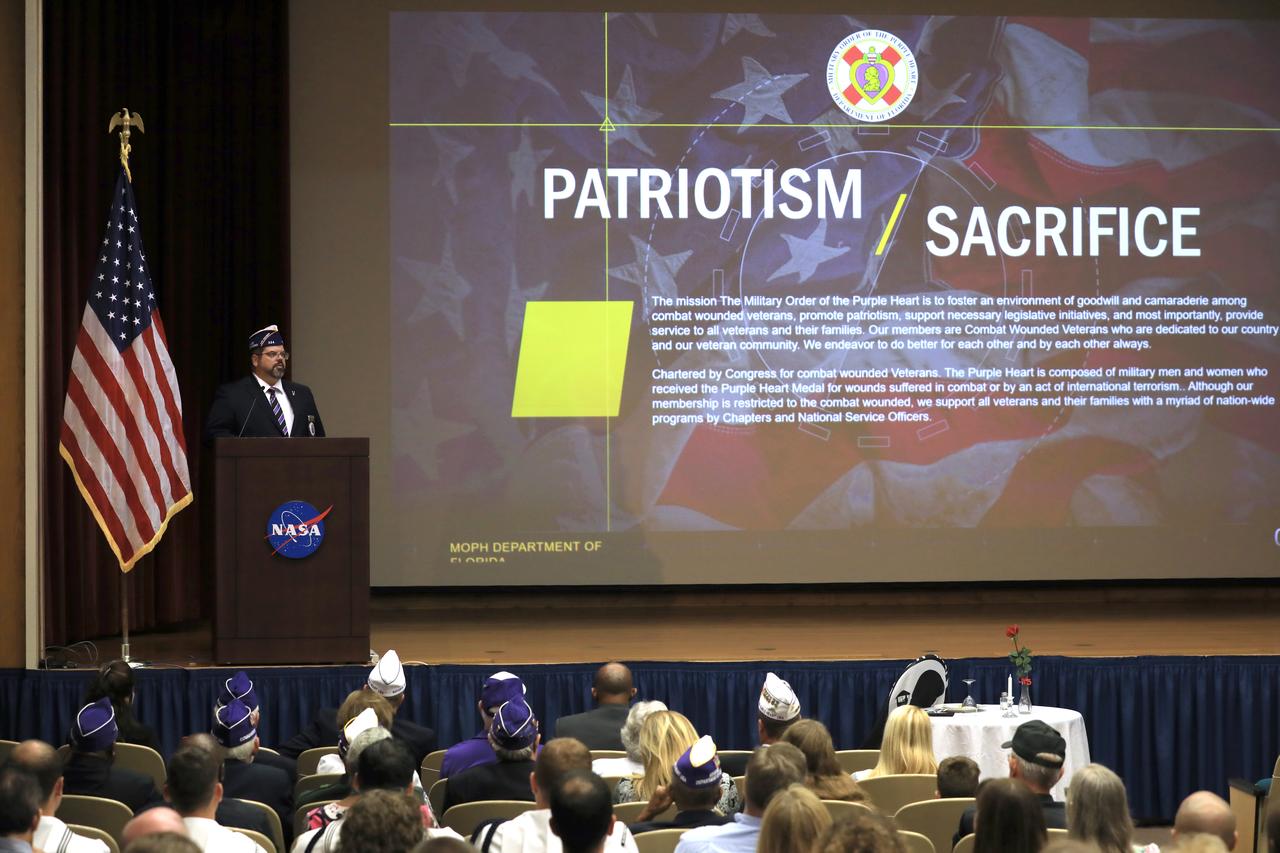
Christopher Vedvick, a combat wounded veteran and Military Order of the Purple Heart department of Florida commander, speaks at a Veterans Day observance event on Nov. 7, 2019, in the Kennedy Space Center Training Auditorium. During the event, Kennedy was named a Purple Heart Entity by the Military Order of the Purple Heart, becoming the first NASA center to receive this designation for support and services provided to veterans through the Florida spaceport’s Veterans employee resource group. Attendees included Kennedy employees and more than 20 Purple Heart recipients.
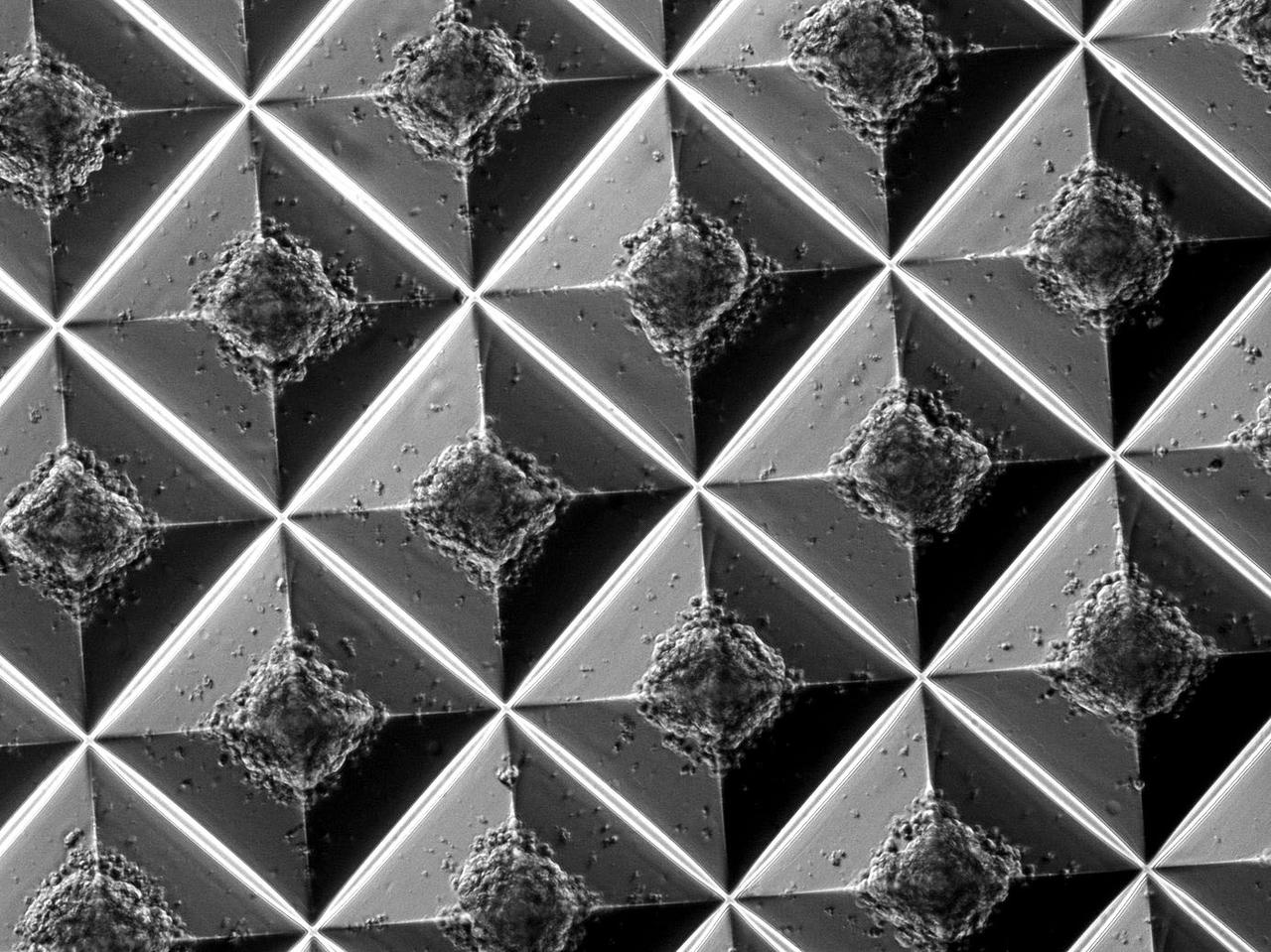
jsc2022e072970 (9/22/2022) --- A preflight view of 3D heart cells generated by microscale tissue engineering. ISS: Engineering Stem Cell-Derived Cardiac Microtissues with Metabolic Regulators in Space to Promote Cardiomyocyte Maturation (Project EAGLE) grows 3D cultures of heart cells on the International Space Station. What is learned could help scientists establish a functional heart tissue model that mimics heart disease and can be used to test new drugs. Image courtesy of Parvin Forghani, Ph.D., Emory University.
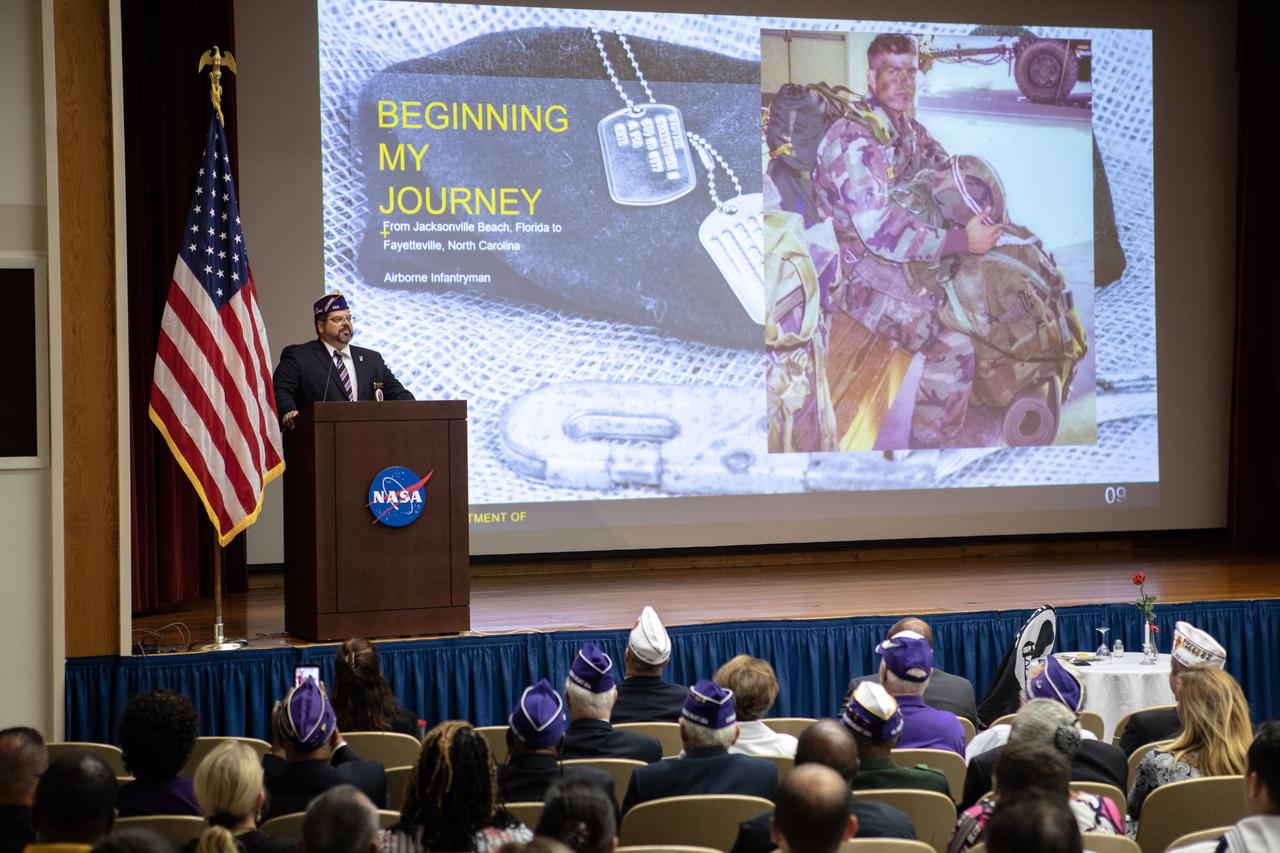
Christopher Vedvick, a combat wounded veteran and Military Order of the Purple Heart department of Florida commander, speaks at a Veterans Day observance event on Nov. 7, 2019, in the Kennedy Space Center Training Auditorium. During the event, Kennedy was named a Purple Heart Entity by the Military Order of the Purple Heart, becoming the first NASA center to receive this designation for support and services provided to veterans through the Florida spaceport’s Veterans employee resource group. Attendees included Kennedy employees and more than 20 Purple Heart recipients.
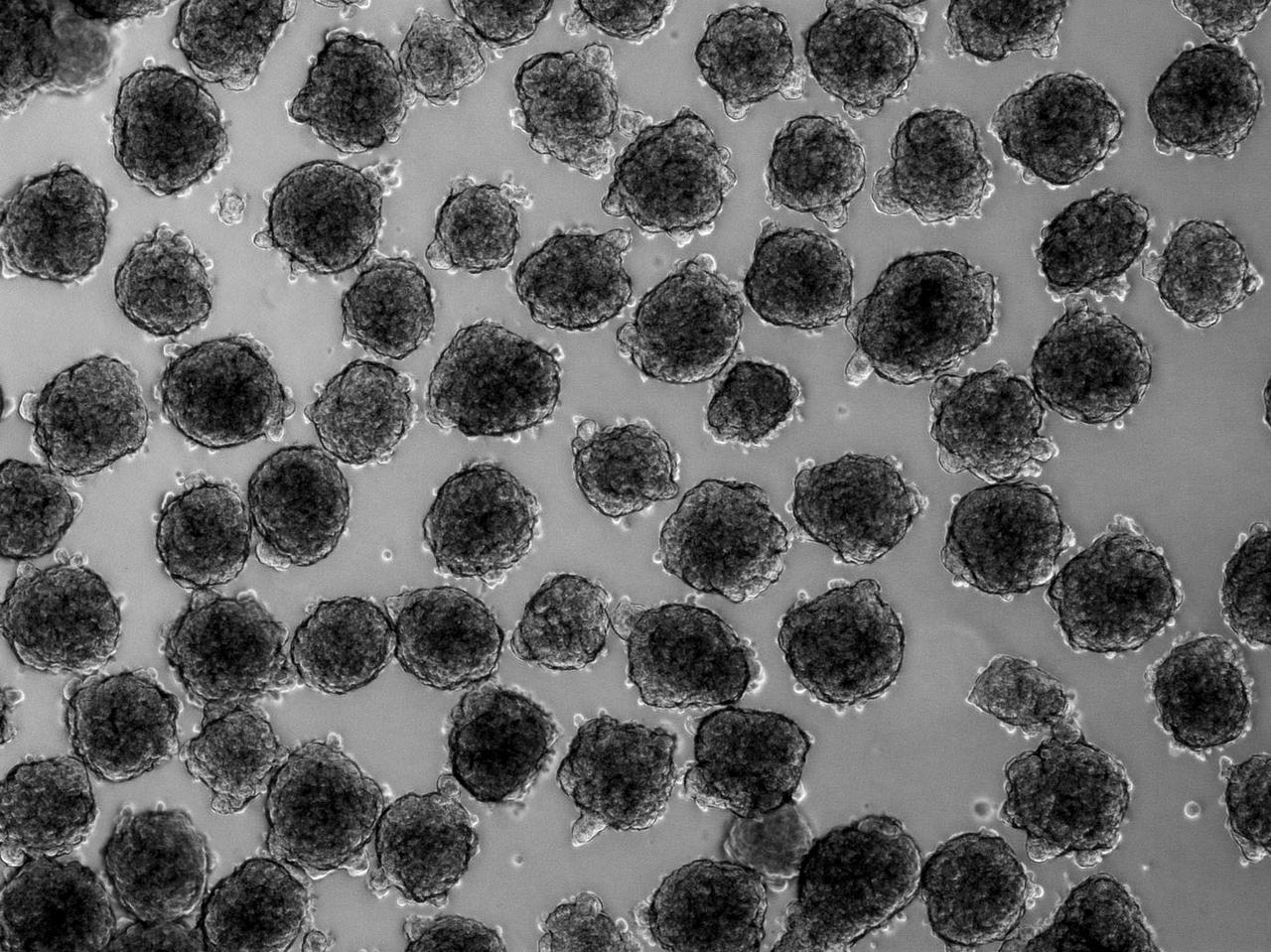
jsc2022e072971 (9/22/2022) --- A preflight view 3D heart cells in suspension culture. ISS: Engineering Stem Cell-Derived Cardiac Microtissues with Metabolic Regulators in Space to Promote Cardiomyocyte Maturation (Project EAGLE) grows 3D cultures of heart cells on the International Space Station. What is learned could help scientists establish a functional heart tissue model that mimics heart disease and can be used to test new drugs. Image courtesy of Parvin Forghani, Ph.D., Emory University.
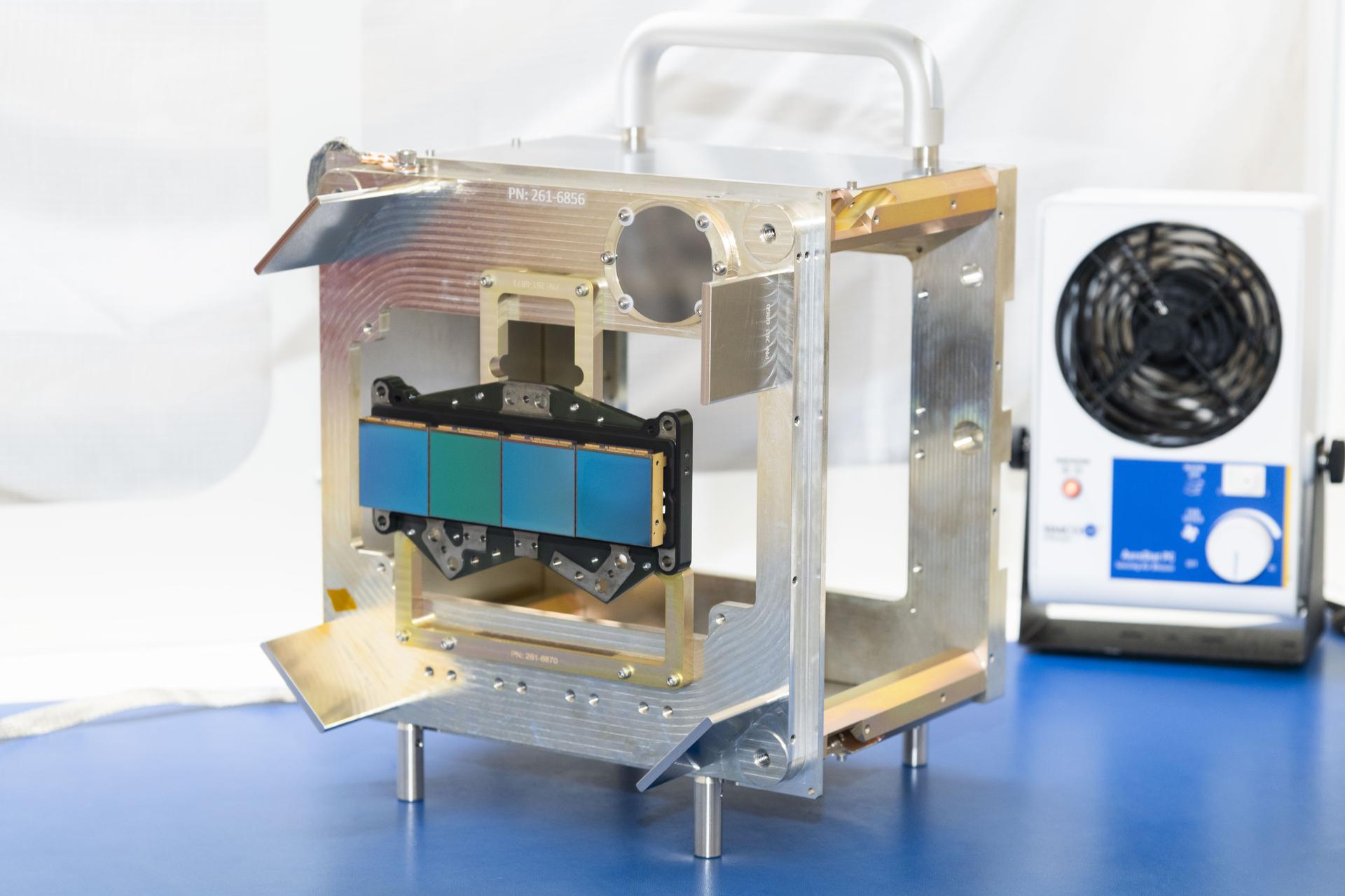
Four mid-wavelength infrared science detectors for NASA’s Near-Earth Object (NEO) Surveyor mission are shown here on a clean room bench at the Space Dynamics Laboratory (SDL) in Logan, Utah. Mounted to a sensor chip assembly, the four blue-green-colored detectors are made with mercury cadmium telluride (HgCdTe), a versatile semiconducting alloy that is sensitive to infrared wavelengths. There are two such assemblies that form the heart of NEO Surveyor’s two science cameras. These state-of-the-art cameras sense solar heat re-radiated by near-Earth objects. The mission’s cameras and telescope, which has an aperture of nearly 20 inches (50 centimeters), will be housed inside the spacecraft’s instrument enclosure, a structure that is designed to ensure heat produced by the spacecraft and instrument during operations doesn’t interfere with its infrared observations. Targeting launch in late 2027, the NEO Surveyor mission is led by Professor Amy Mainzer at the University of California, Los Angeles for NASA’s Planetary Defense Coordination Office and is being managed by the agency’s Jet Propulsion Laboratory in Southern California for the Planetary Missions Program Office at NASA’s Marshall Space Flight Center in Huntsville, Alabama. BAE Systems and the Space Dynamics Laboratory in Logan, Utah, and Teledyne are among the companies that were contracted to build the spacecraft and its instrumentation. The Laboratory for Atmospheric and Space Physics at the University of Colorado Boulder will support operations, and IPAC at Caltech in Pasadena, California, is responsible for producing some of the mission’s data products. Caltech manages JPL for NASA. More information about NEO Surveyor is available at: https://science.nasa.gov/mission/neo-surveyor/
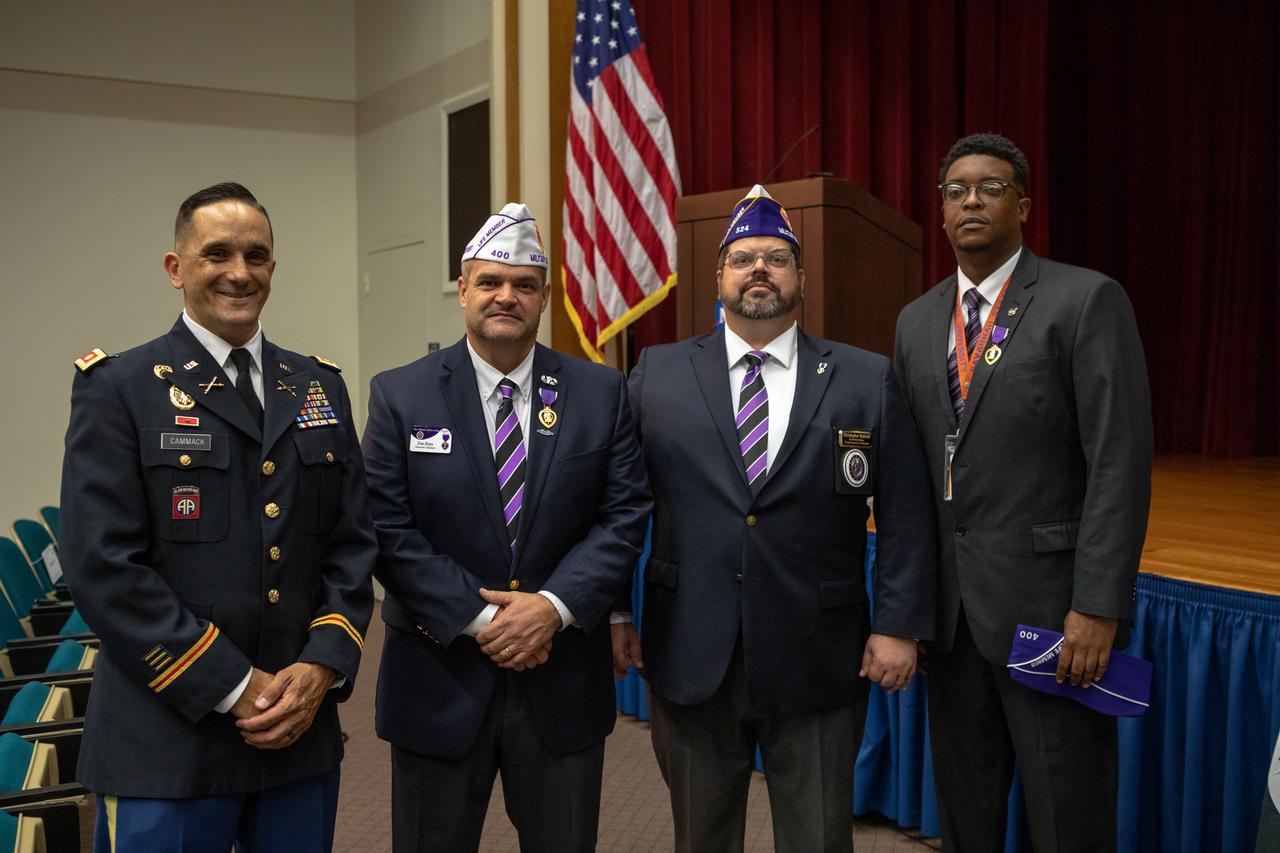
From left, NASA Public Affairs Officer Dustin Cammack, Military Order of the Purple Heart National Adjutant Ernie Rivera, Military Order of the Purple Heart Department of Florida Commander Christopher Vedvick and NASA Public Affairs Officer Derrick Matthews are photographed inside Kennedy Space Center’s Training Auditorium during a Veterans Day observance ceremony on Nov. 7, 2019. During the event, Kennedy was named a Purple Heart Entity by the Military Order of the Purple Heart, becoming the first NASA center to receive this designation for support and services provided to veterans through the Florida spaceport’s Veterans employee resource group. Attendees included Kennedy employees and more than 20 Purple Heart recipients. Following the award presentation, Vedvick, a combat wounded veteran, spoke about his experience serving in the United States Army before retiring, his involvement in the Military Order of the Purple Heart and the purpose of the organization.
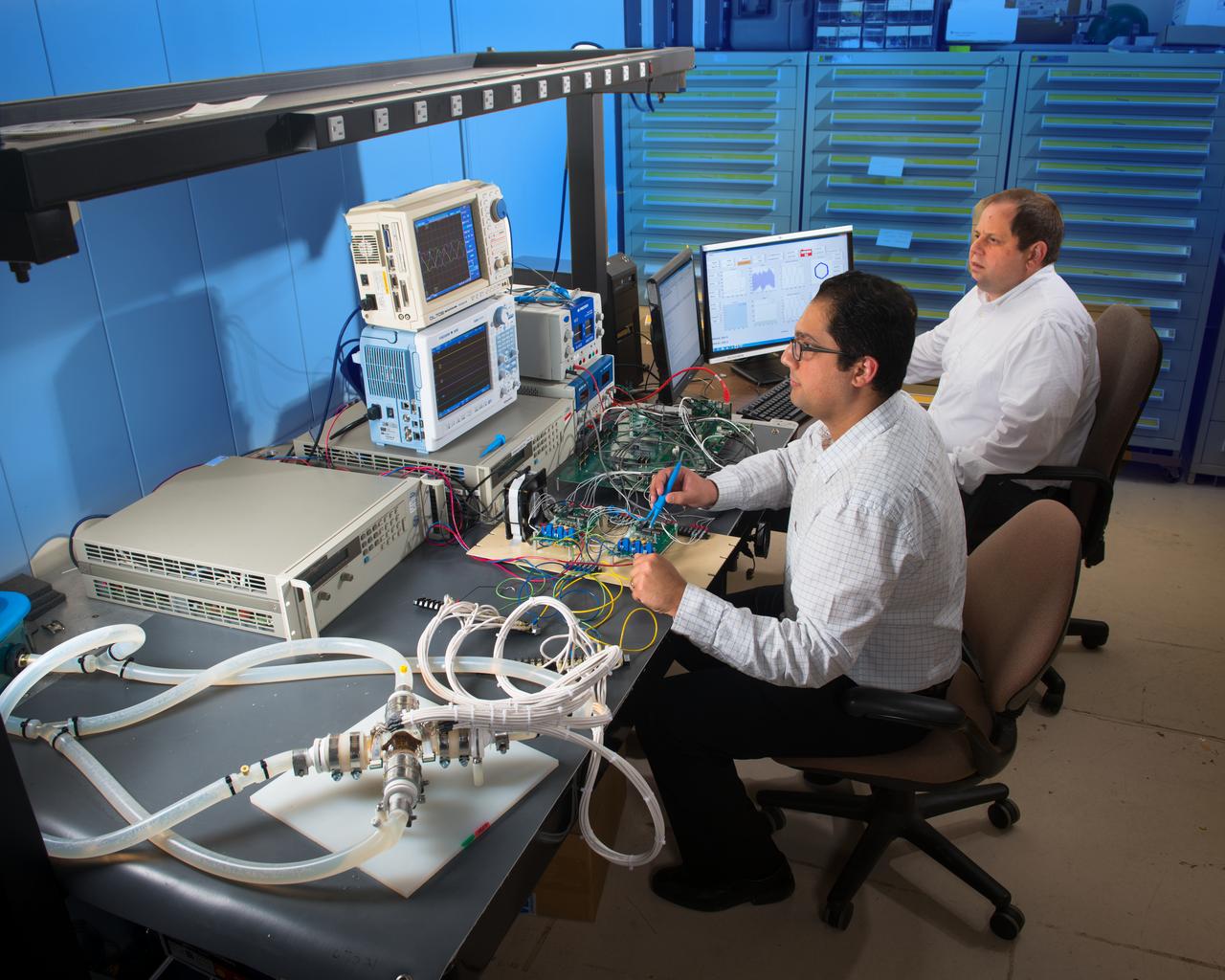
Heart Pump
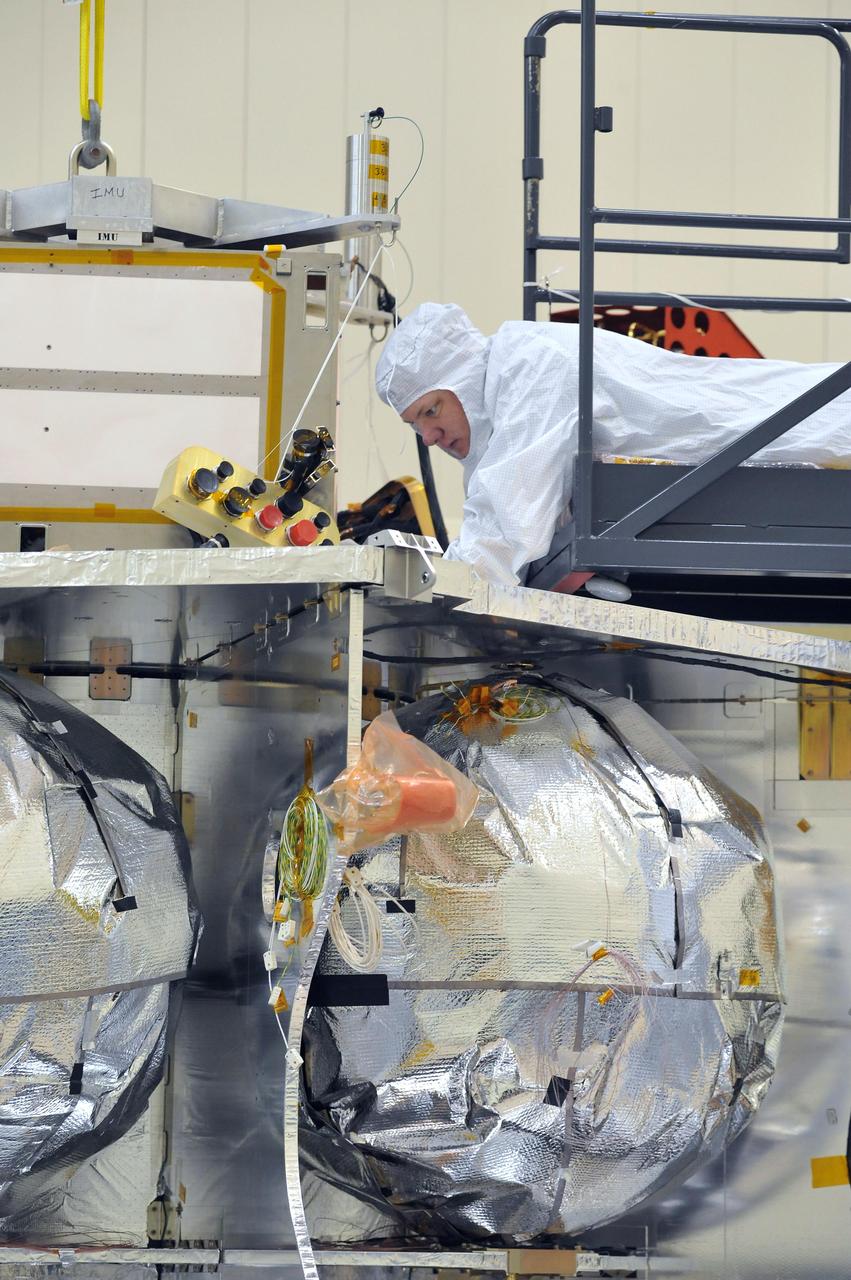
Technicians installed the special radiation vault for NASA Juno spacecraft on the propulsion module. The radiation vault has titanium walls to protect the spacecraft electronic brain and heart from Jupiter harsh radiation environment.
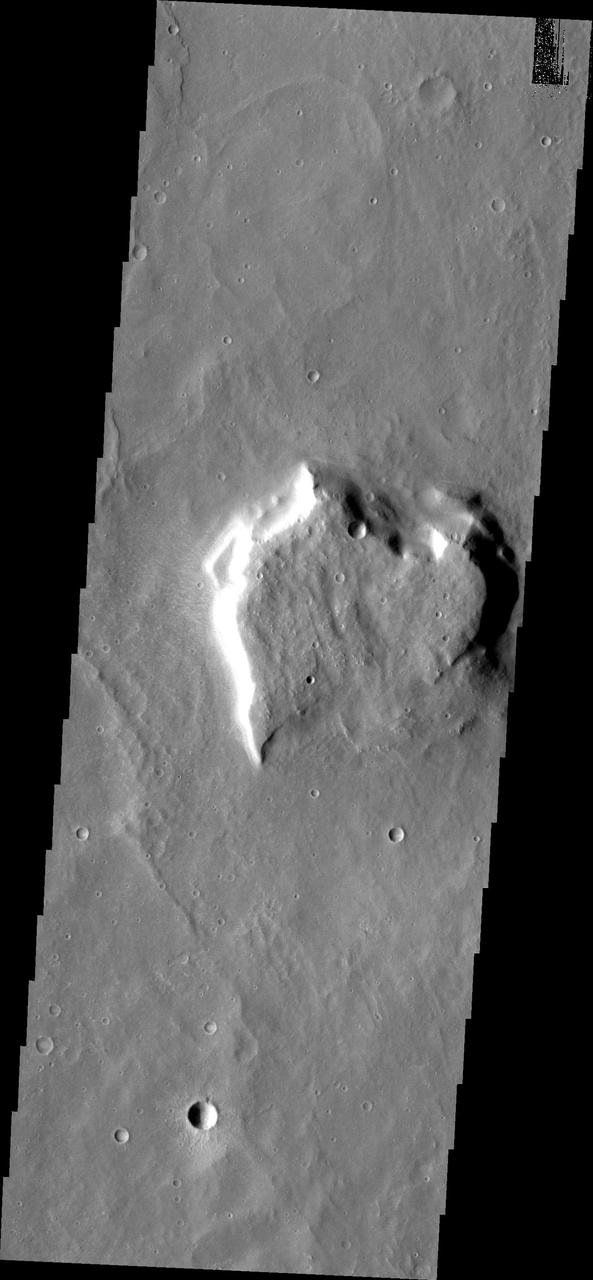
Do you see what I see in this image from NASA Mars Odyssey spacecraft? Though not as pretty as our previous heart-shaped mesa, here another one.
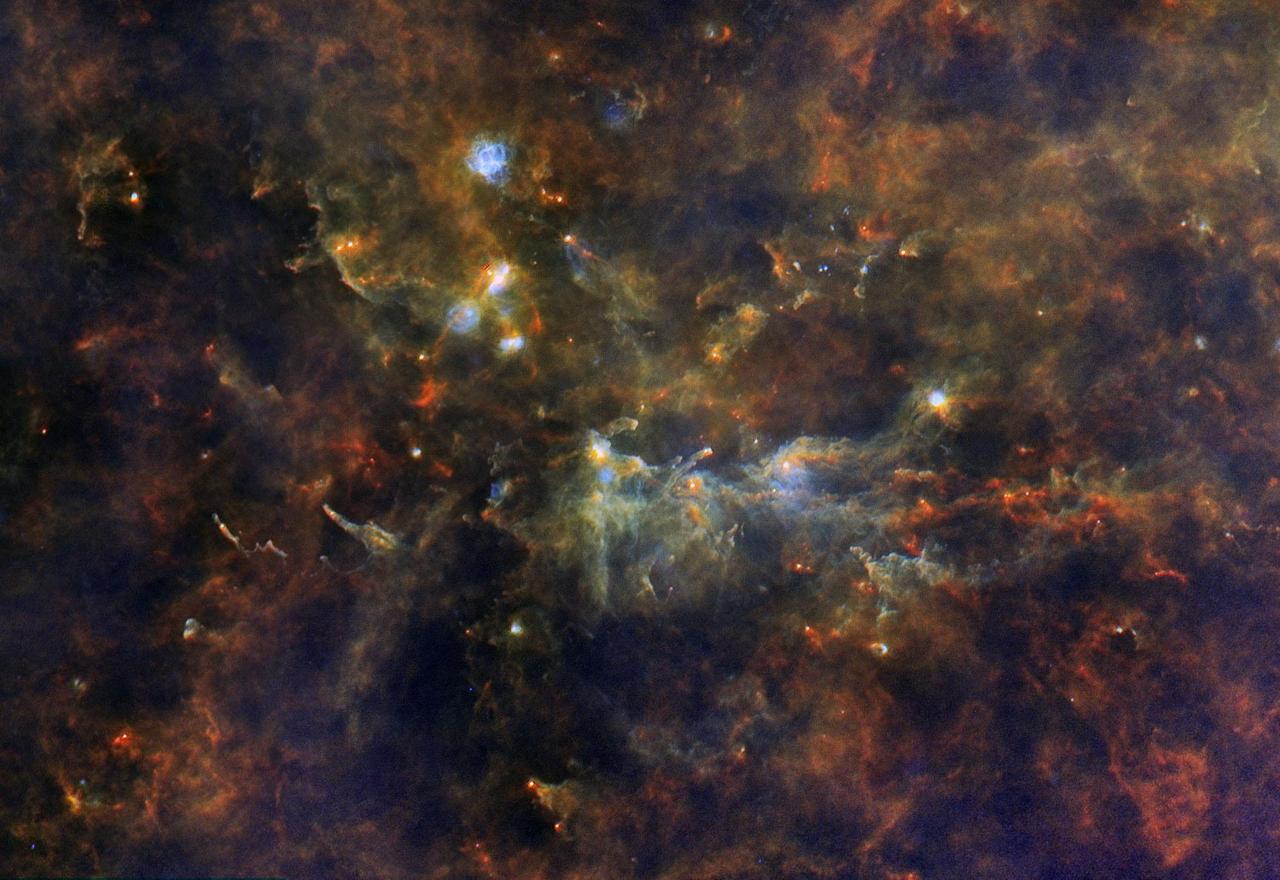
New stars are the lifeblood of our galaxy, and there is enough material revealed by ESA Herschel of the constellation Vulpecula little fox OB1. The giant stars at the heart of Vulpecula OB1 are some of the biggest in the galaxy.
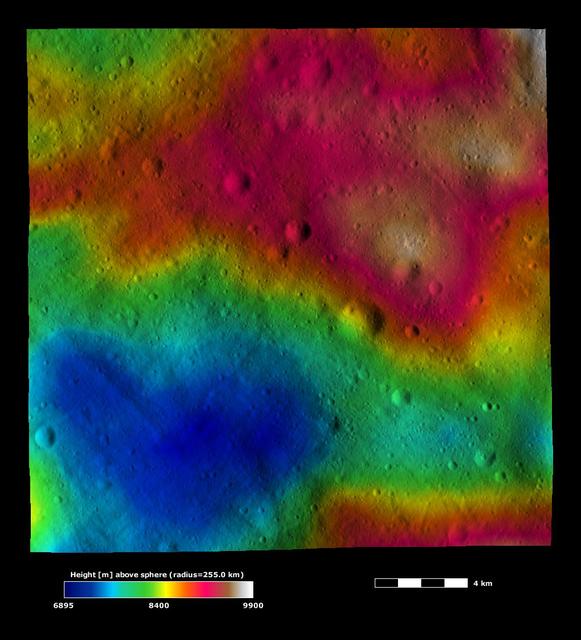
This image from NASA Dawn spacecraft, is based on a framing camera image that is overlain by a color-coded height representation of topography. This heart-shaped hollow is roughly 10 kilometers 6 miles across at its widest point.
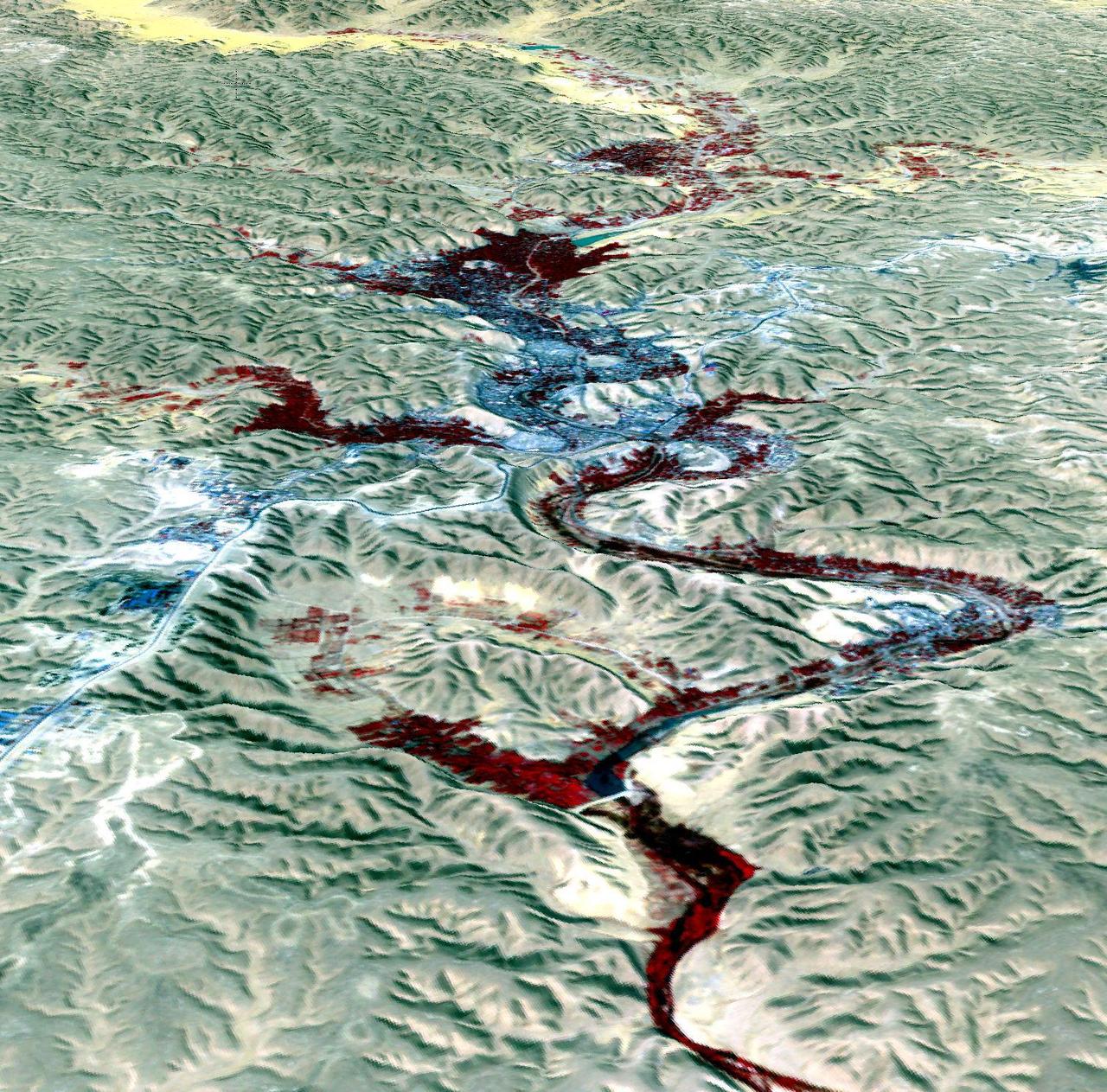
Located 600 km south of Algiers, Algeria in the heart of the Sahara Desert, the five ksour fortified villages of the MZab Valley form an extraordinarily homogenous ensemble in this image captured by NASA Terra spacecraft.

This artist concept illustrates a supermassive black hole with millions to billions times the mass of our sun. Supermassive black holes are enormously dense objects buried at the hearts of galaxies.

A range of supermassive black holes lights up this new image from NASA NuSTAR. All of the dots are active black holes tucked inside the hearts of galaxies, with colors representing different energies of X-ray light.

This image from NASA WISE spacecraft shows a blazar, a voracious supermassive black hole inside a galaxy with a jet that happens to be pointed right toward Earth. Active black holes are often found at the hearts of elliptical galaxies.

This artist concept shows a feeding, or active, supermassive black hole with a jet streaming outward at nearly the speed of light. Such active black holes are often found at the hearts of elliptical galaxies.

This mosaic from NASA WISE Telescope is of the Soul Nebula. It is an open cluster of stars surrounded by a cloud of dust and gas located about 6,500 light-years from Earth in the constellation Cassiopeia, near the Heart Nebula.
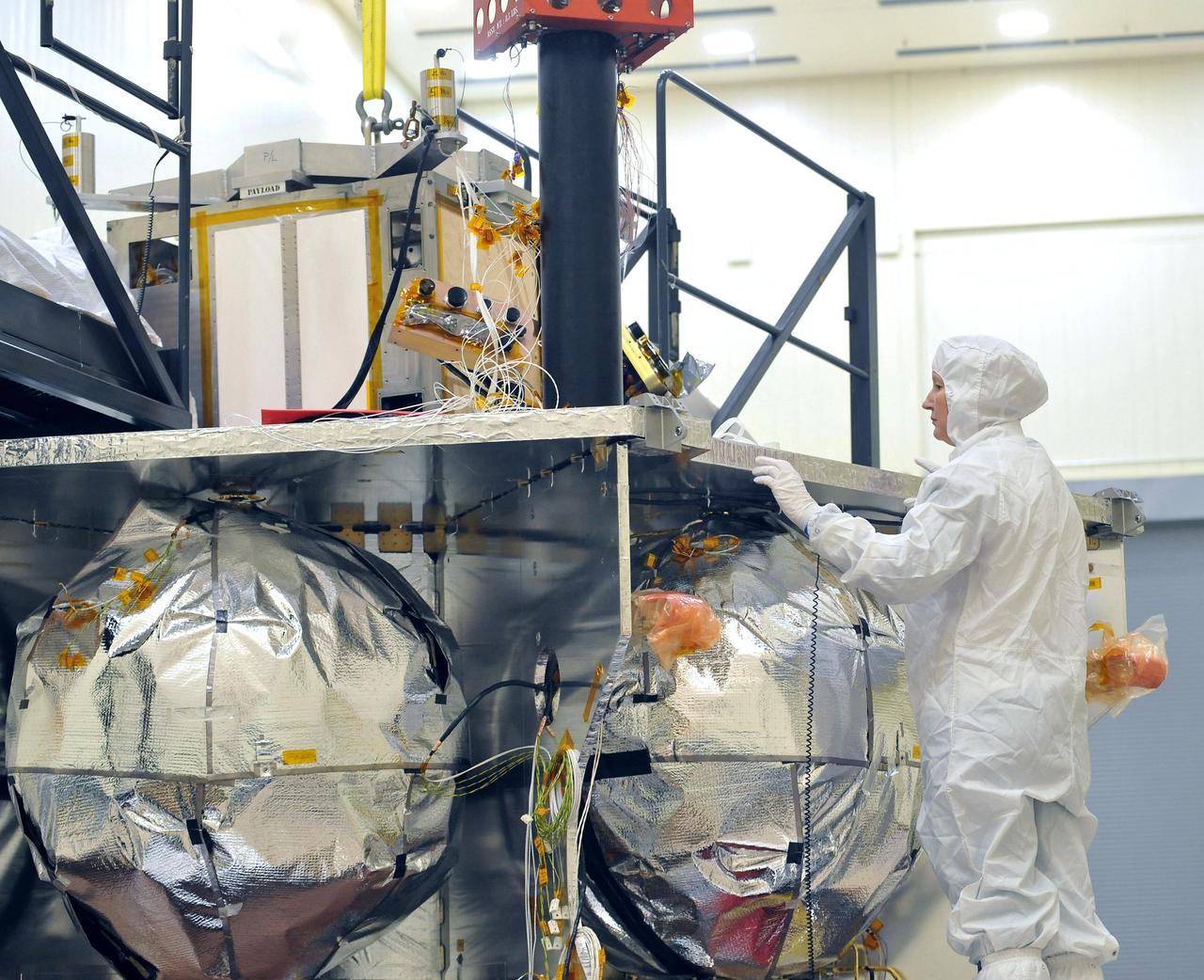
A technician inspects the special radiation vault being installed atop the propulsion module of NASA Juno spacecraft; the vault has titanium walls to protect the spacecraft electronic brain and heart from Jupiter harsh radiation environment.

Kennedy Space Center Associate Director, Technical, Kelvin Manning speaks during a Veterans Day observance event on Nov. 7, 2019, in the Florida spaceport’s Training Auditorium. During the event, Kennedy was named a Purple Heart Entity by the Military Order of the Purple Heart, becoming the first NASA center to receive this designation for support and services provided to veterans through the center’s Veterans employee resource group. Following this recognition, Christopher Vedvick, a combat wounded veteran and Military Order of the Purple Heart department of Florida commander, spoke about his experience serving in the United States Army before retiring, his involvement in the Military Order of the Purple Heart and the purpose of the organization.
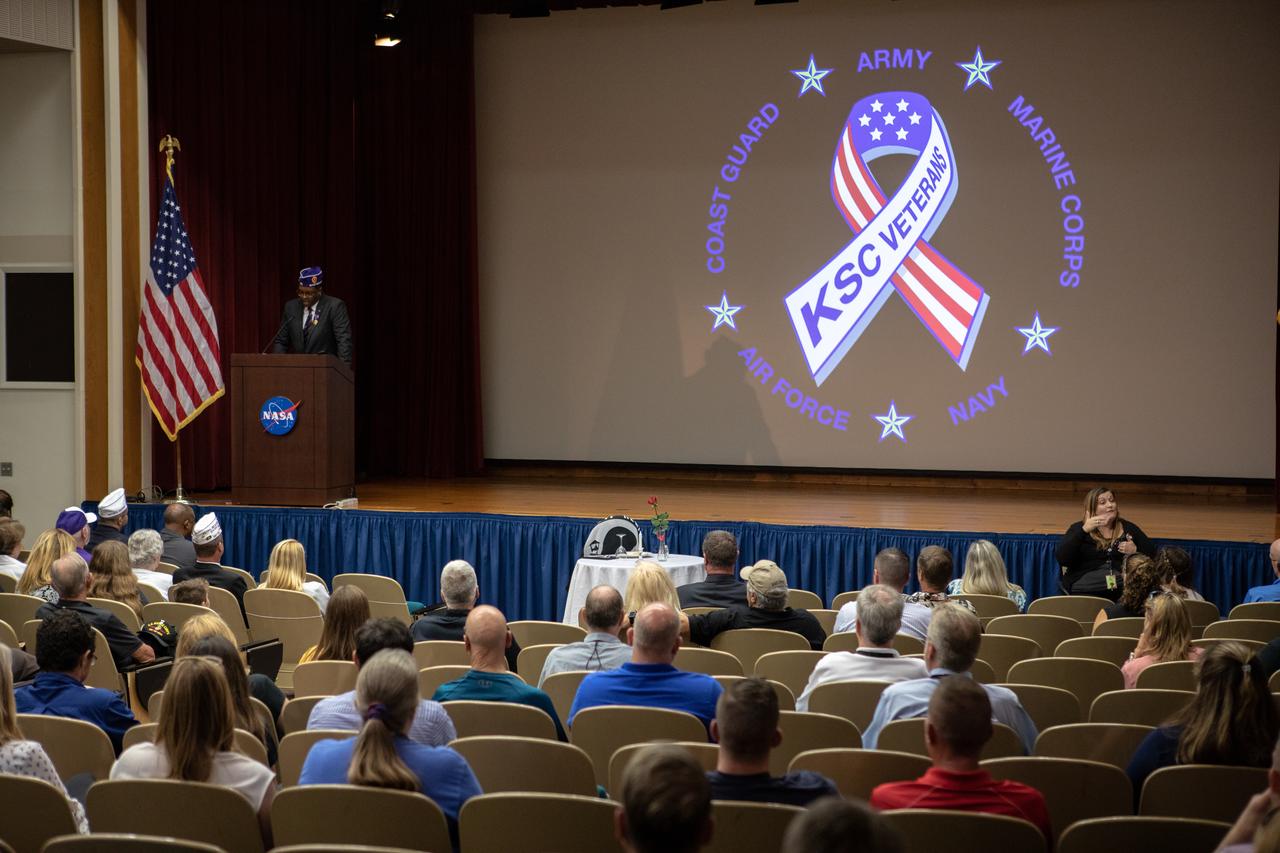
NASA Public Affairs Officer Derrick Matthews serves as emcee during a Veterans Day observance event on Nov. 7, 2019, at the Kennedy Space Center Training Auditorium in Florida. During the event, Kennedy was named a Purple Heart Entity by the Military Order of the Purple Heart, becoming the first NASA center to receive this designation for support and services provided to veterans through the spaceport’s Veterans employee resource group. Attendees included Kennedy employees and more than 20 Purple Heart recipients. Following the award presentation, Christopher Vedvick, a combat wounded veteran and Military Order of the Purple Heart department of Florida commander, spoke about his experience serving in the United States Army before retiring, his involvement in the Military Order of the Purple Heart and the purpose of the organization.
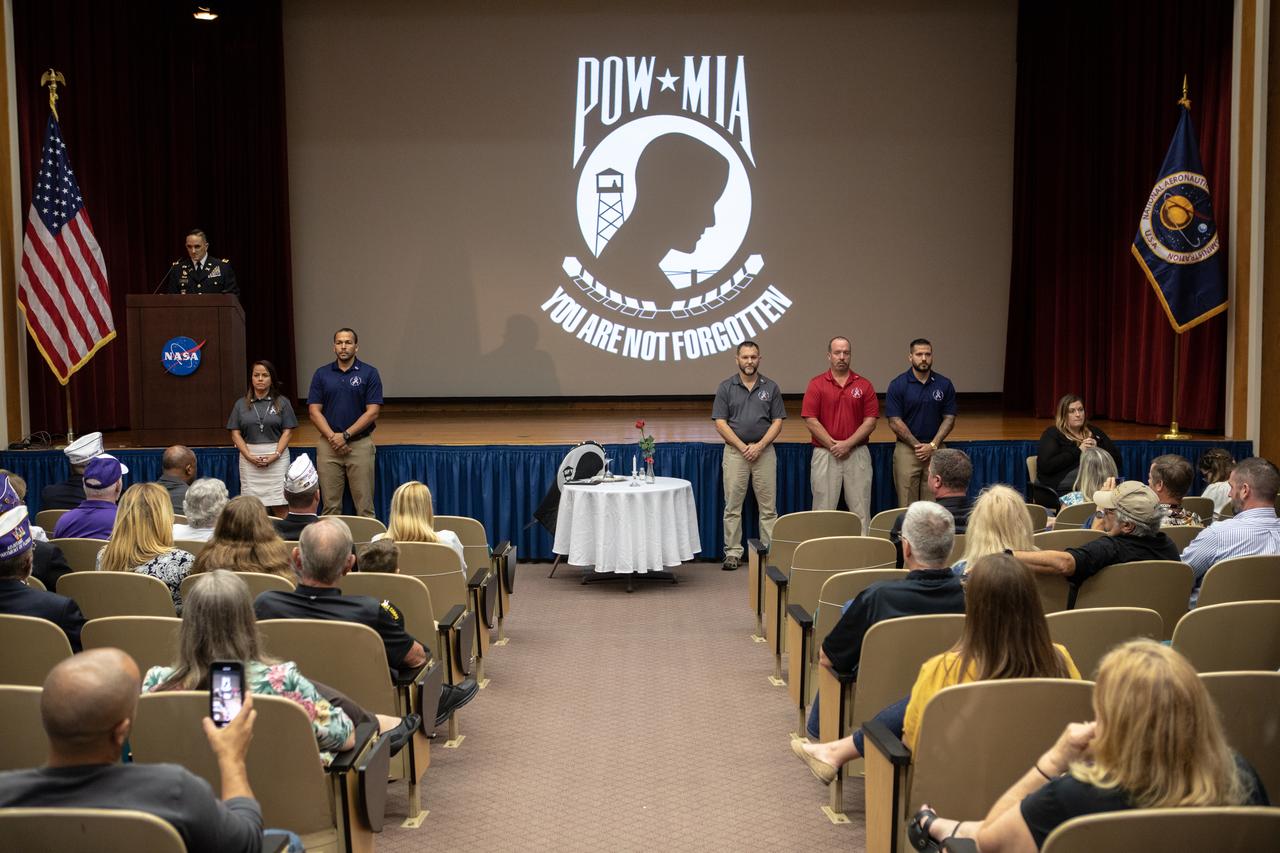
NASA Public Affairs Officer Dustin Cammack conducts a prisoner of war, missing in action ceremony at the start of a Veterans Day observance event on Nov. 7, 2019, at the Kennedy Space Center Training Auditorium in Florida. During the event, Kennedy was named a Purple Heart Entity by the Military Order of the Purple Heart, becoming the first NASA center to receive this designation for support and services provided to veterans through the spaceport’s Veterans employee resource group. Attendees included Kennedy employees and more than 20 Purple Heart recipients. Following the award presentation, Christopher Vedvick, a combat wounded veteran and Military Order of the Purple Heart department of Florida commander, spoke about his experience serving in the United States Army before retiring, his involvement in the Military Order of the Purple Heart and the purpose of the organization.
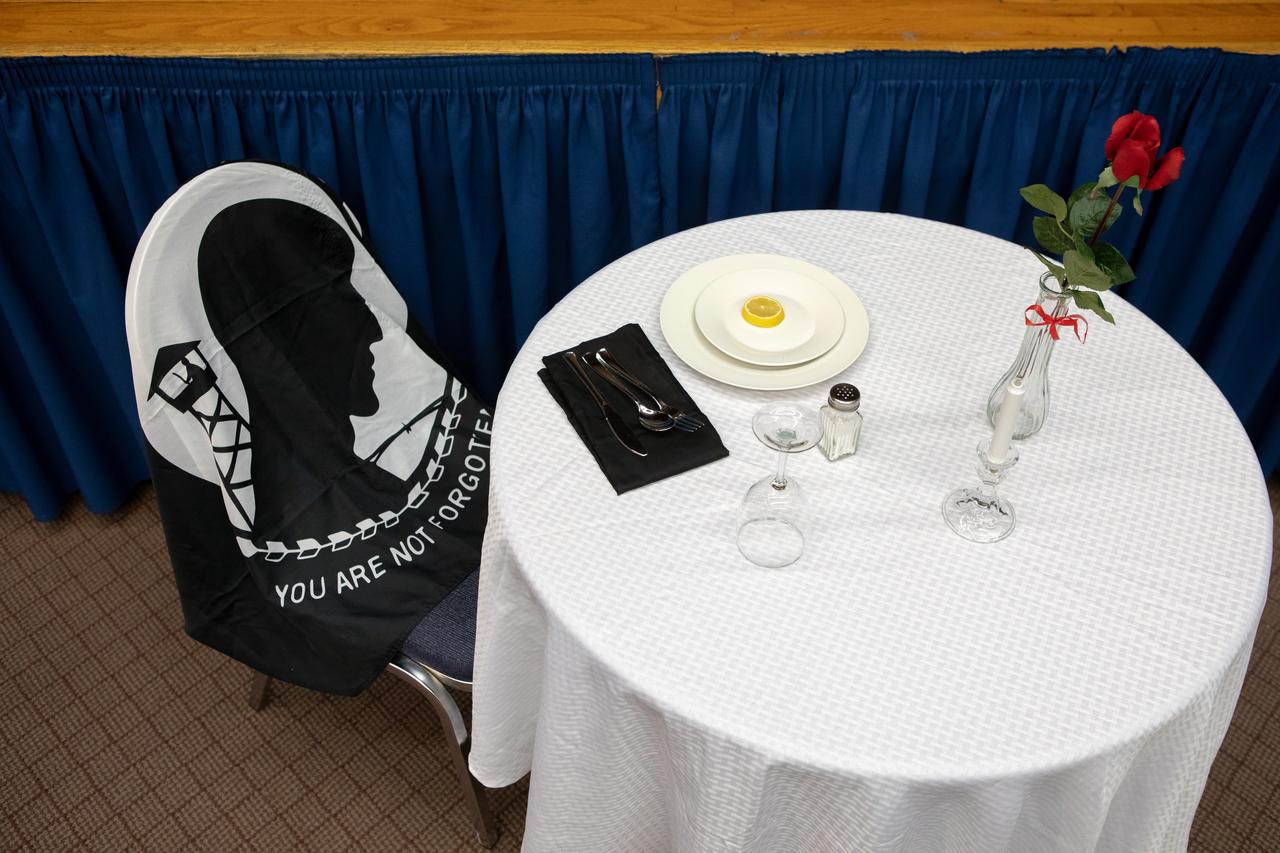
A prisoner of war (POW), missing in action (MIA) table is on display in the Training Auditorium at NASA’s Kennedy Space Center in Florida during a Veterans Day observance event on Nov. 7, 2019. The event began with a POW MIA ceremony, followed by an awards recognition, naming Kennedy a Purple Heart Entity by the Military Order of the Purple Heart. Kennedy is the first NASA center to receive this designation for support and services provided to veterans through the spaceport’s Veterans employee resource group. Attendees included Kennedy employees and more than 20 Purple Heart recipients. Following the award presentation, Christopher Vedvick, a combat wounded veteran and Military Order of the Purple Heart department of Florida commander, spoke about his experience serving in the United States Army before retiring, his involvement in the Military Order of the Purple Heart and the purpose of the organization.

From left, Kennedy Space Center Associate Director, Technical, Kelvin Manning, Kennedy’s Veterans employee resource group chair Ana Contreras and executive champion Edwin Martinez are photographed with the proclamation designating Kennedy a Purple Heart Entity on Nov. 7, 2019. The proclamation was presented by the Military Order of the Purple Heart during a Veterans Day observance event held in the center’s Training Auditorium. Kennedy is the first NASA center to receive this designation for support and services provided to veterans through the Florida spaceport’s Veterans employee resource group. Attendees included Kennedy employees and more than 20 Purple Heart recipients. Following this, Christopher Vedvick, a combat wounded veteran and Military Order of the Purple Heart department of Florida commander, spoke about his experience serving in the United States Army before retiring, his involvement in the Military Order of the Purple Heart and the purpose of the organization.

The National Anthem is sung by Suzy Cunningham, NASA Strategy and Integration manager, during a Veterans Day observance ceremony held in the Kennedy Space Center’s Training Auditorium in Florida on Nov. 7, 2019. During the event, Kennedy was named a Purple Heart Entity by the Military Order of the Purple Heart, becoming the first NASA center to receive this designation for support and services provided to veterans through the spaceport’s Veterans employee resource group. Attendees included Kennedy employees and more than 20 Purple Heart recipients. Following the award presentation, Christopher Vedvick, a combat wounded veteran and Military Order of the Purple Heart department of Florida commander, spoke about his experience serving in the United States Army before retiring, his involvement in the Military Order of the Purple Heart and the purpose of the organization.
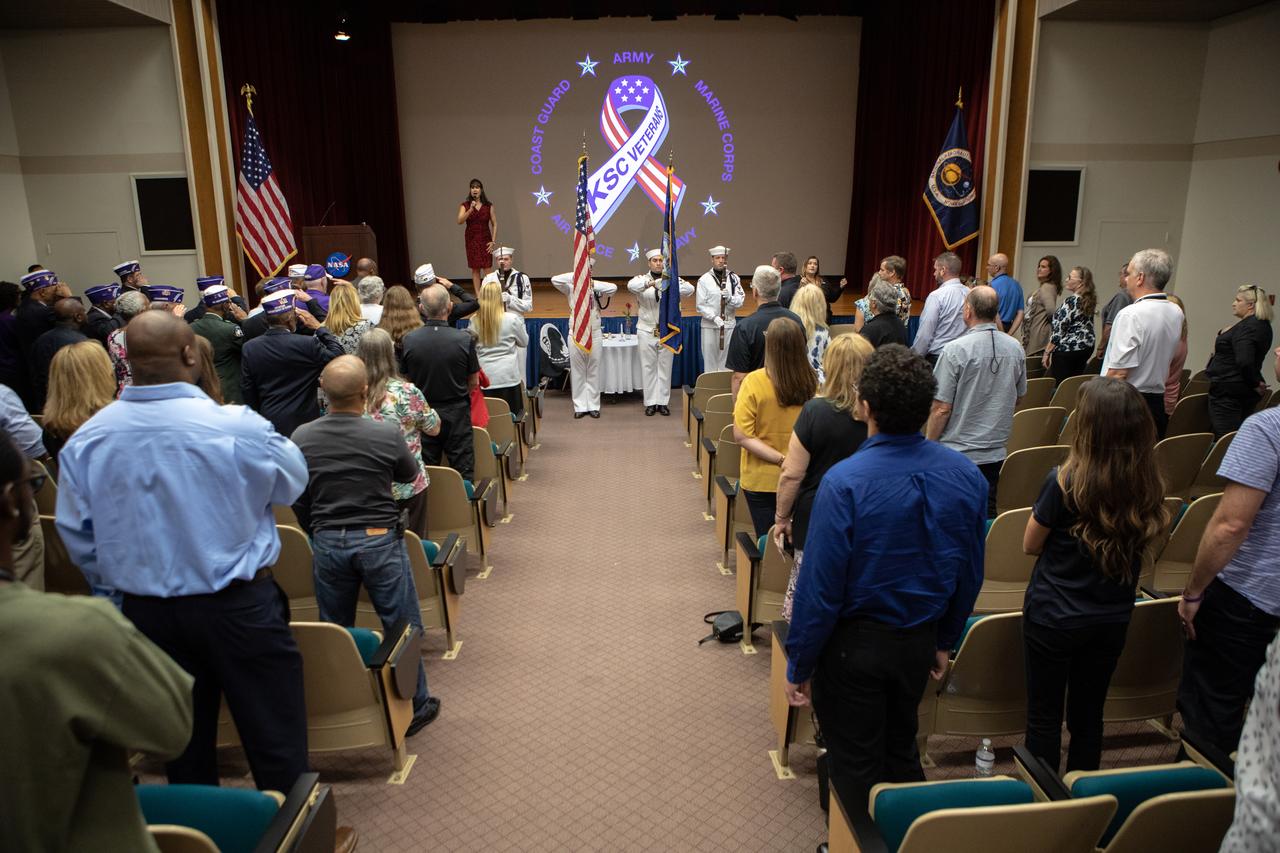
The National Anthem is sung by Suzy Cunningham, NASA Strategy and Integration manager, during a Veterans Day observance ceremony held in the Kennedy Space Center’s Training Auditorium in Florida on Nov. 7, 2019. During the event, Kennedy was named a Purple Heart Entity by the Military Order of the Purple Heart, becoming the first NASA center to receive this designation for support and services provided to veterans through the spaceport’s Veterans employee resource group. Attendees included Kennedy employees and more than 20 Purple Heart recipients. Following the award presentation, Christopher Vedvick, a combat wounded veteran and Military Order of the Purple Heart department of Florida commander, spoke about his experience serving in the United States Army before retiring, his involvement in the Military Order of the Purple Heart and the purpose of the organization.
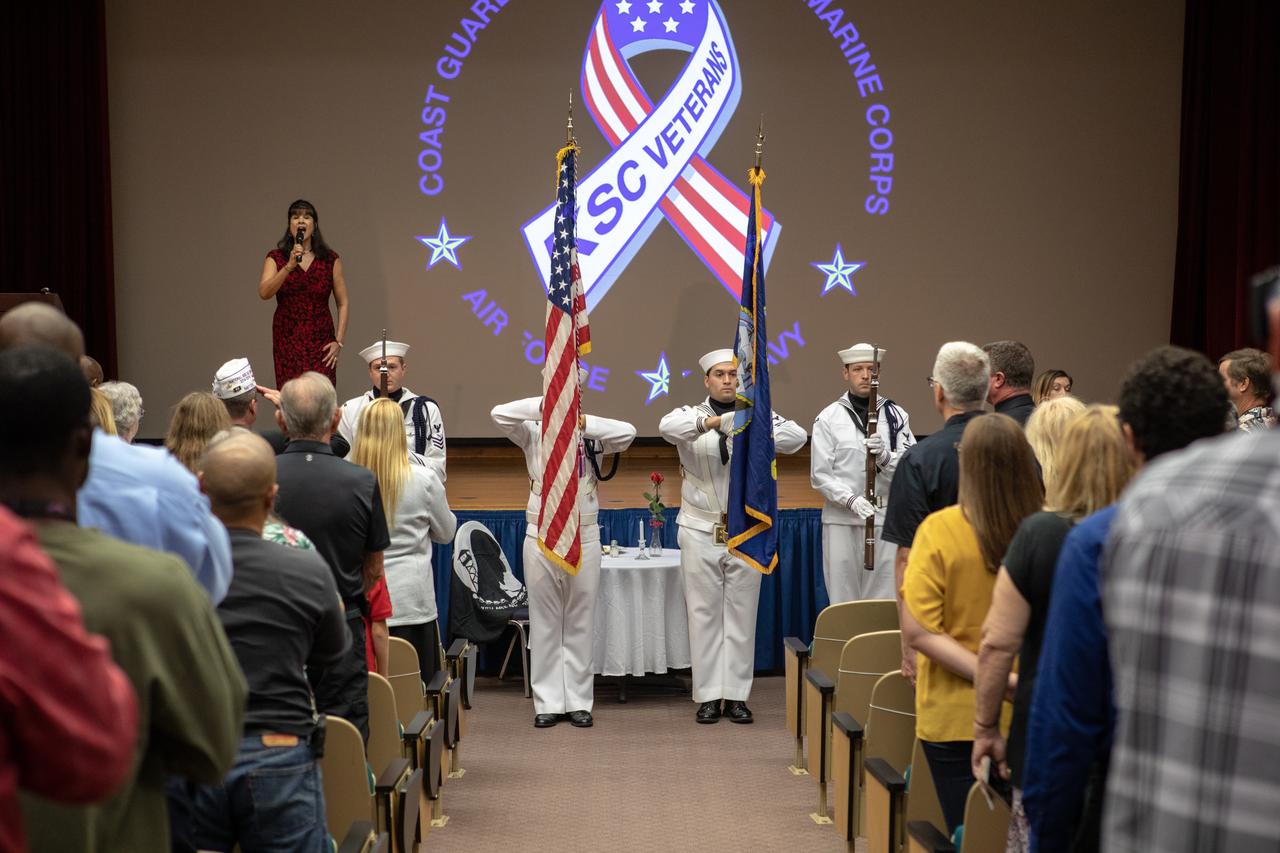
The National Anthem is sung by Suzy Cunningham, NASA Strategy and Integration manager, during a Veterans Day observance ceremony held in the Kennedy Space Center’s Training Auditorium in Florida on Nov. 7, 2019. During the event, Kennedy was named a Purple Heart Entity by the Military Order of the Purple Heart, becoming the first NASA center to receive this designation for support and services provided to veterans through the spaceport’s Veterans employee resource group. Attendees included Kennedy employees and more than 20 Purple Heart recipients. Following the award presentation, Christopher Vedvick, a combat wounded veteran and Military Order of the Purple Heart department of Florida commander, spoke about his experience serving in the United States Army before retiring, his involvement in the Military Order of the Purple Heart and the purpose of the organization.
Few large craters are to be found in the wrinkled terrain of Enceladus, where the surface has been reworked by geologic processes presumably resulting from the moon inner warmth
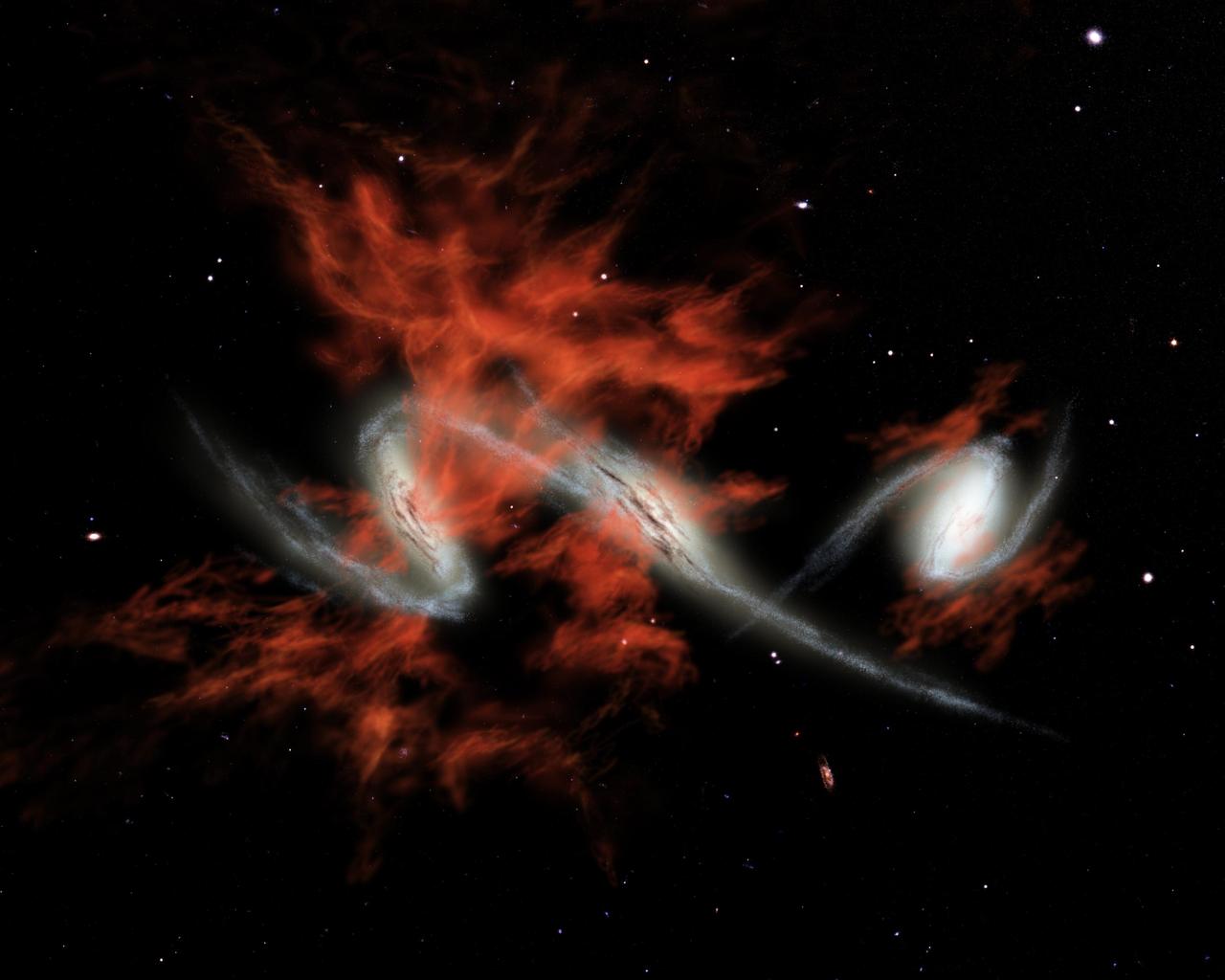
This artist's concept illustrates one possible answer to the puzzle of the "giant galactic blobs." These blobs (red), first identified about five years ago, are mammoth clouds of intensely glowing material that surround distant galaxies (white). Astronomers using visible-light telescopes can see the glow of the blobs, but they didn't know what provides the energy to light them up. NASA's Spitzer Space Telescope set its infrared eyes on one well-known blob located 11 billion light-years away, and discovered three tremendously bright galaxies, each shining with the light of more than one trillion Suns, headed toward each other. Spitzer also observed three other blobs in the same galactic neighborhood and found equally bright galaxies within them. One of these blobs is also known to contain galaxies merging together. The findings suggest that galactic mergers might be the mysterious source of blobs. If so, then one explanation for how mergers produce such large clouds of material is that they trigger intense bursts of star formation. This star formation would lead to exploding massive stars, or supernovae, which would then shoot gases outward in a phenomenon known as superwinds. Blobs produced in this fashion are illustrated in this artist's concept. http://photojournal.jpl.nasa.gov/catalog/PIA07221

Pluto nearly fills the frame in this image from NASA New Horizons spacecraft, taken on July 13, 2015. This is the last and most detailed image sent to Earth before the spacecraft closest approach to Pluto on July 14.
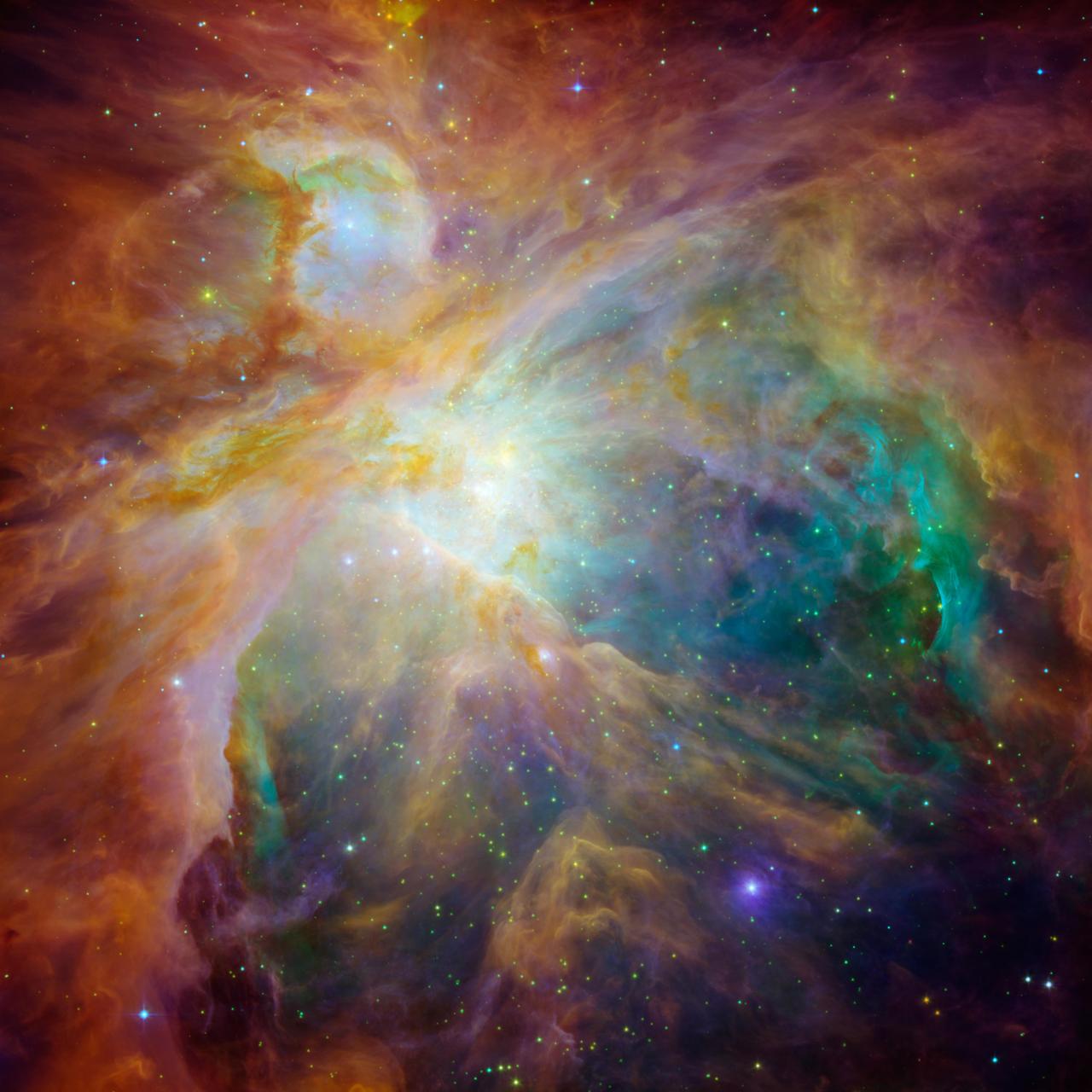
NASA Spitzer and Hubble Space Telescopes have teamed up to expose the chaos that baby stars are creating 1,500 light-years away in a cosmic cloud called the Orion nebula.
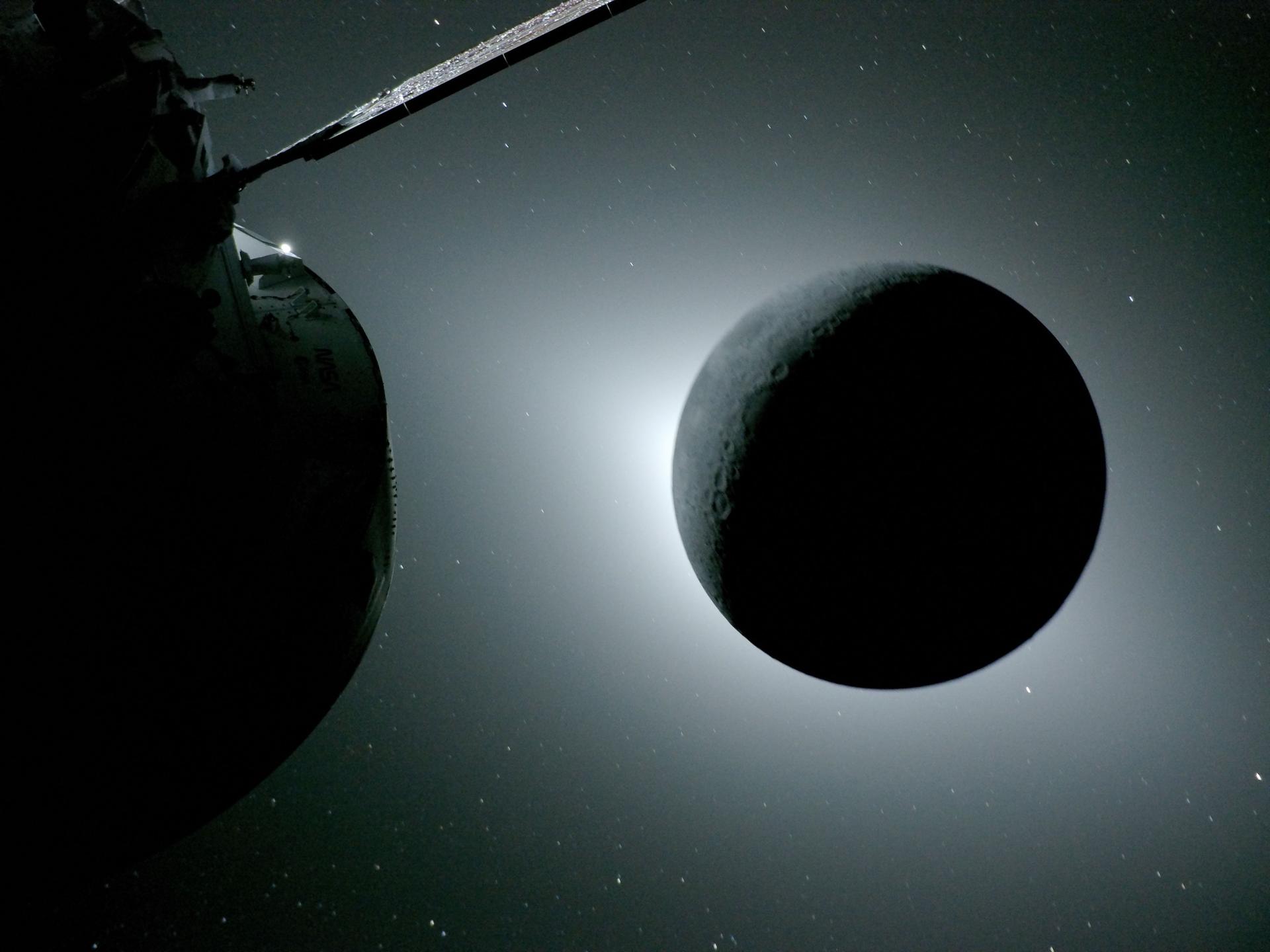
art002e009573 (April 6, 2026) - The Moon, seen here backlit by the Sun during a solar eclipse on April 6, 2026, is photographed by one of the cameras on the Orion spacecraft’s solar array wings. Orion is visible in the foreground on the left. Earth is reflecting sunlight at the left edge of the Moon, which is slightly brighter than the rest of the disk. The bright spot visible just below the Moon’s bottom right edge is Saturn. Beyond that, the bright spot at the right edge of the image is Mars. Credit: NASA
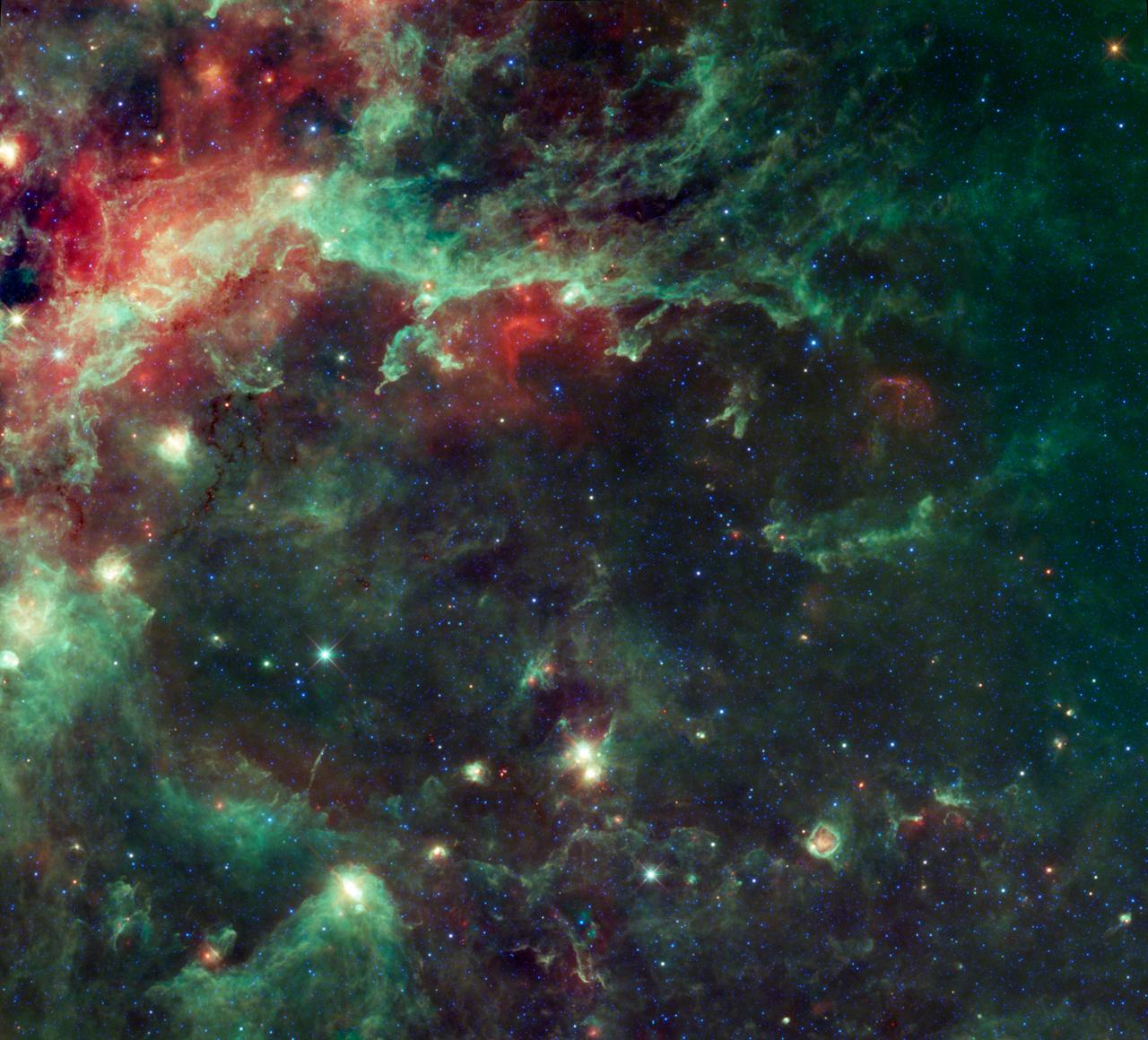
Best known as a swan winging its way across the night, the constellation Cygnus is easily seen in the northern hemisphere summertime sky. NASA WISE telescope captured this image of a huge complex of star-forming clouds and stellar clusters.
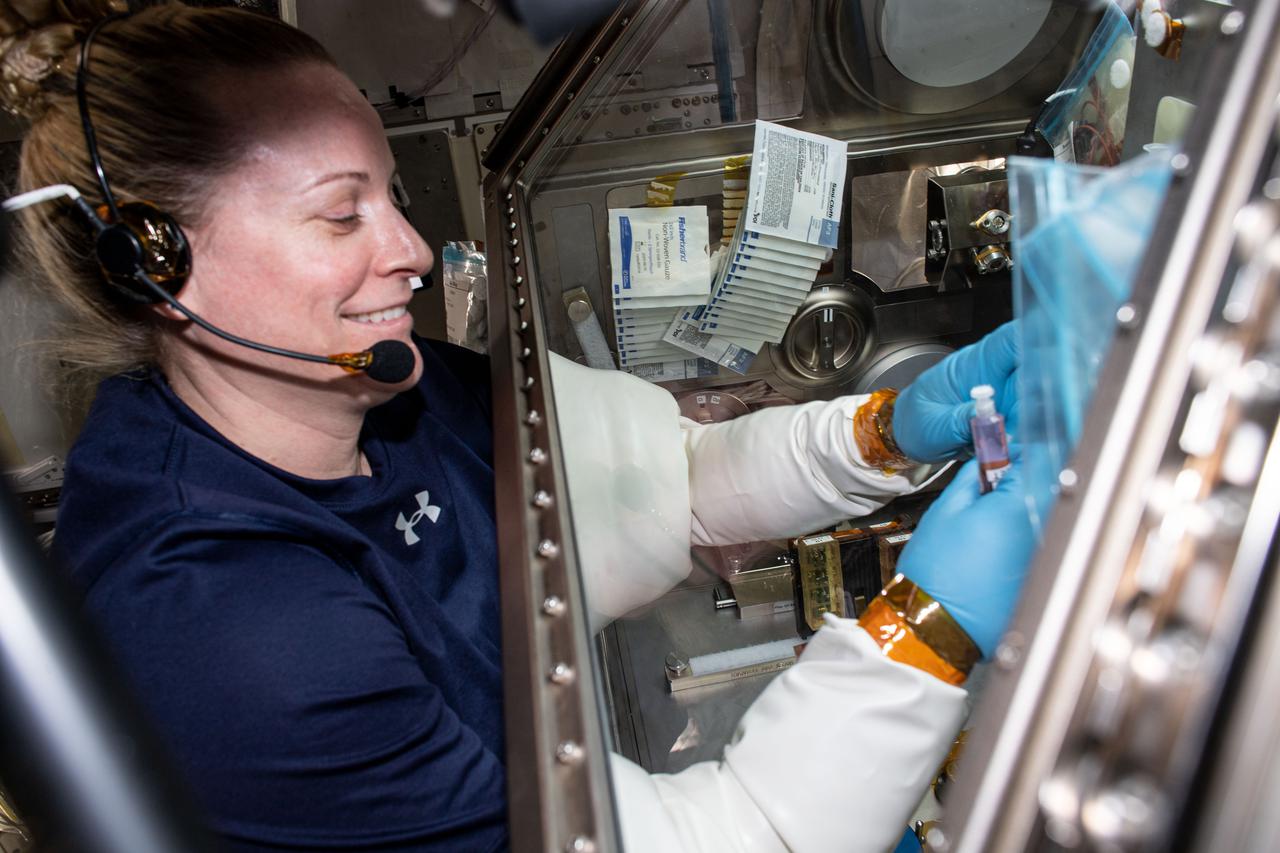
iss064e020036 (Jan. 5, 2021) --- Expedition 64 Flight Engineer and NASA astronaut Kate Rubins explores the space-caused aging and weakening of heart muscles that astronauts experience for the Cardinal Heart study. The experiment uses engineered heart tissue samples and is taking place inside the Life Sciences Glovebox located in the Japanese Kibo laboratory module.
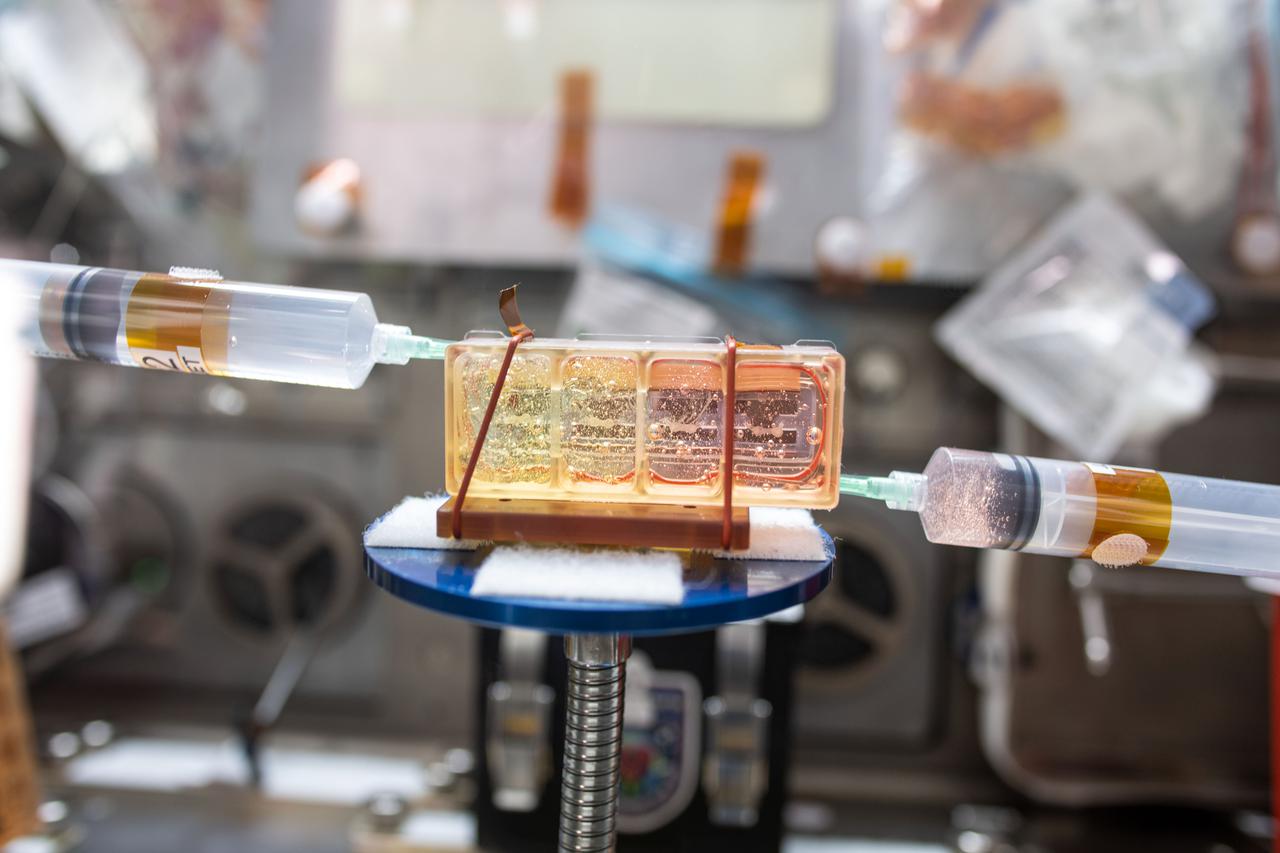
iss064e020062 (1/5/2021) --- A close-up view of the cell culture media change in a chamber containing engineered heart tissues as part of the Cardinal Heart experiment aboard the International Space Station (ISS). This investigation seeks to help scientists understand the aging and weakening of heart muscles to provide new treatments for humans on Earth and astronauts in space.
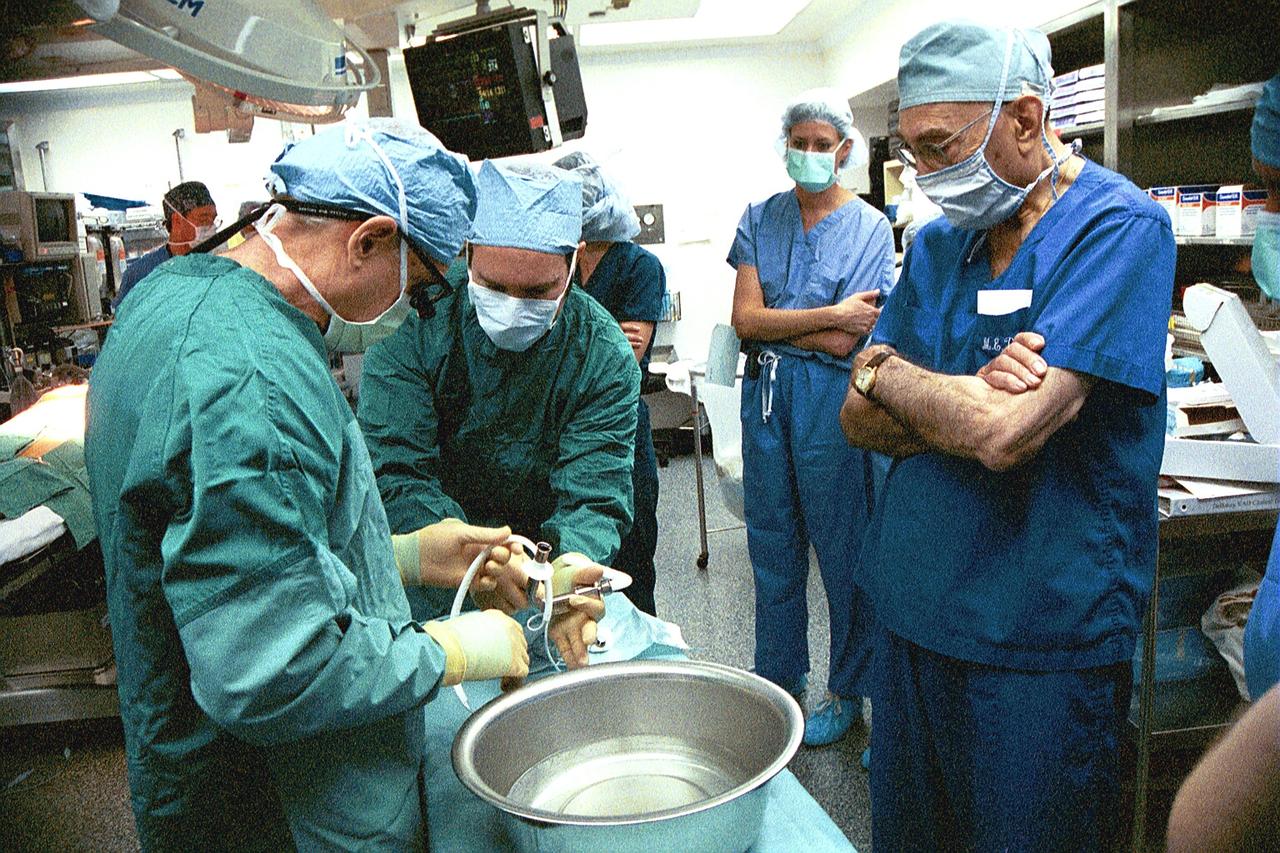
JSC2004-E-26519 --- Dr. Michael DeBakey (far right) observes preparation procedures before the implantation of a MicroMed DeBakey VAD® (ventricular assist device). The revolutionary heart pump received FDA approval in February 2004 for use in critically ill children awaiting heart transplants. The heart pump was designed with the help of NASA engineers who began working with Dr. DeBakey on the pump's development in the mid-1980s.
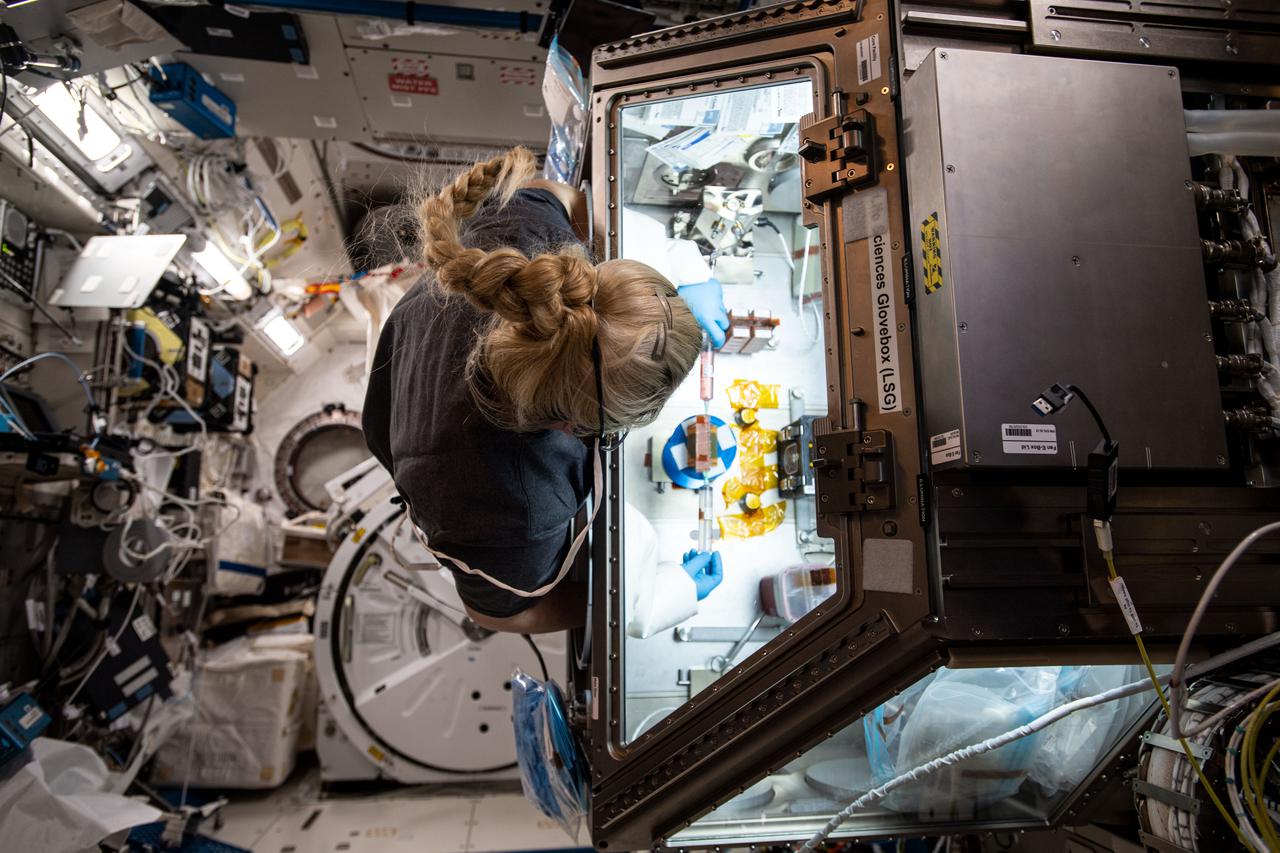
iss064e015251 (12/24/2020) --- NASA astronaut Kate Rubins works inside the Life Sciences Glovebox conducting research for the Cardinal Heart study. The biomedical research seeks to help scientists understand the aging and weakening of heart muscles to provide new treatments for humans on Earth and astronauts in space.
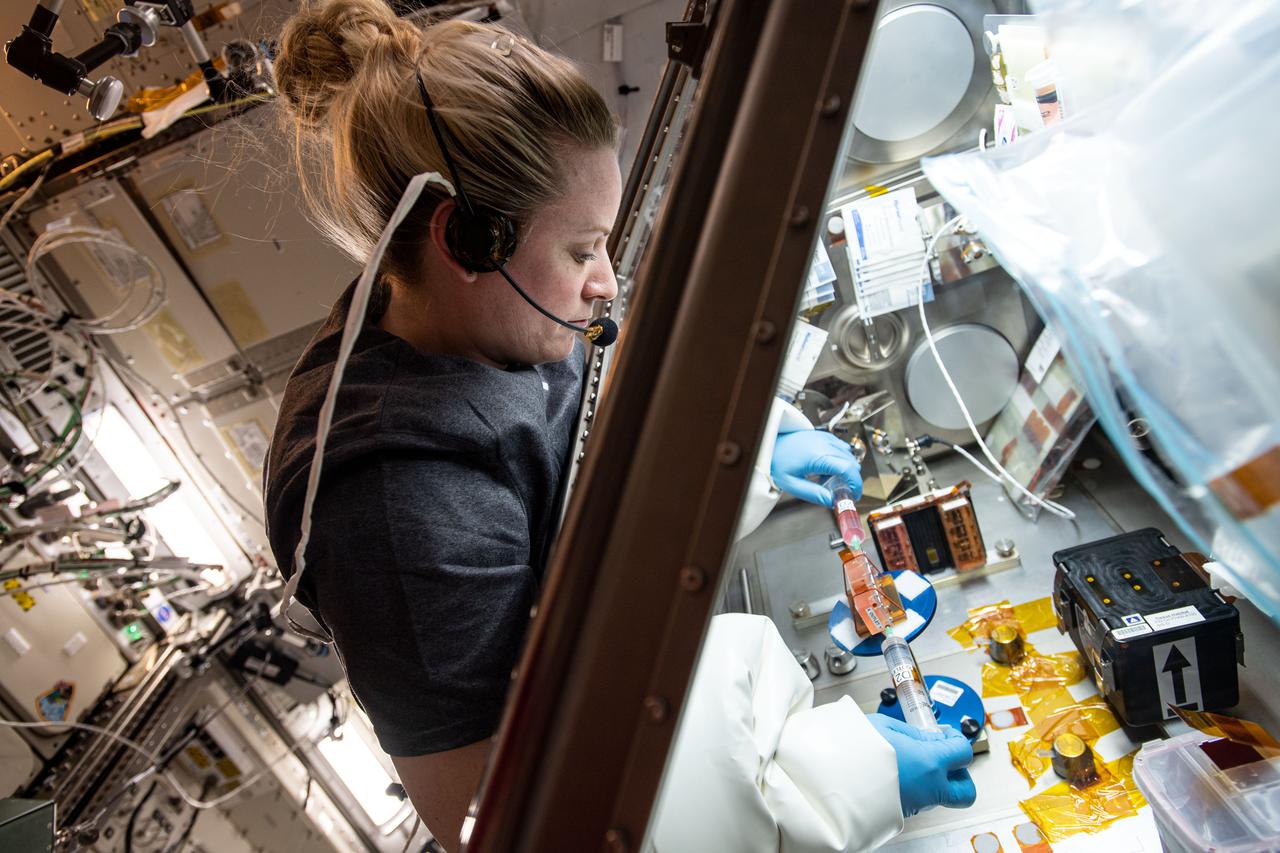
iss064e015256 (12/24/2020) --- NASA astronaut Kate Rubins works inside the Life Sciences Glovebox conducting research for the Cardinal Heart study. The biomedical research seeks to help scientists understand the aging and weakening of heart muscles to provide new treatments for humans on Earth and astronauts in space.
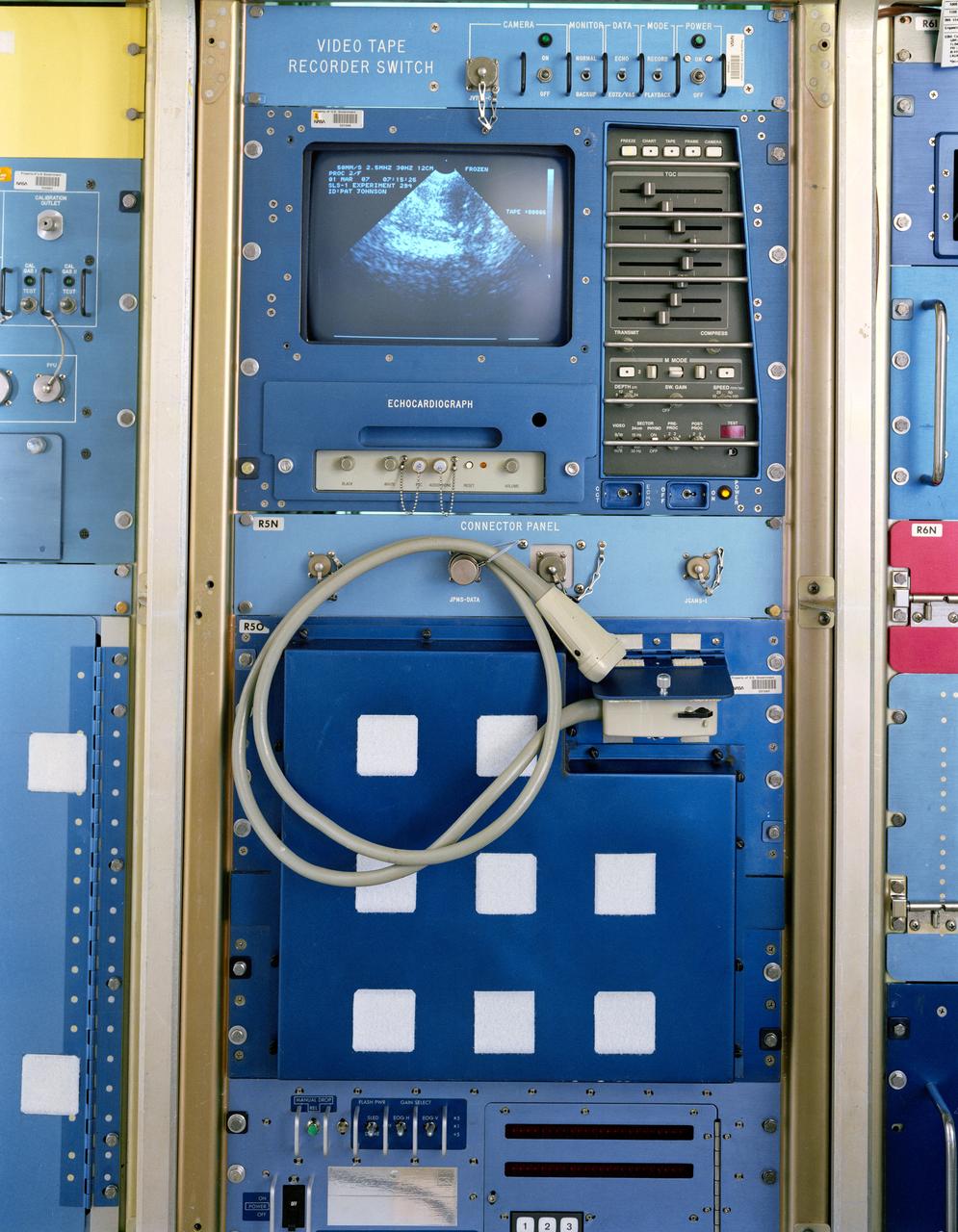
S87-28936 (March 1987) --- The Spacelab Life Sciences-1 (SLS-1) echocardiograph, installed in a science module rack, displays the image of a human heart. One of the objectives on SLS-1 is the investigation of the effects of microgravity on heart size and function.
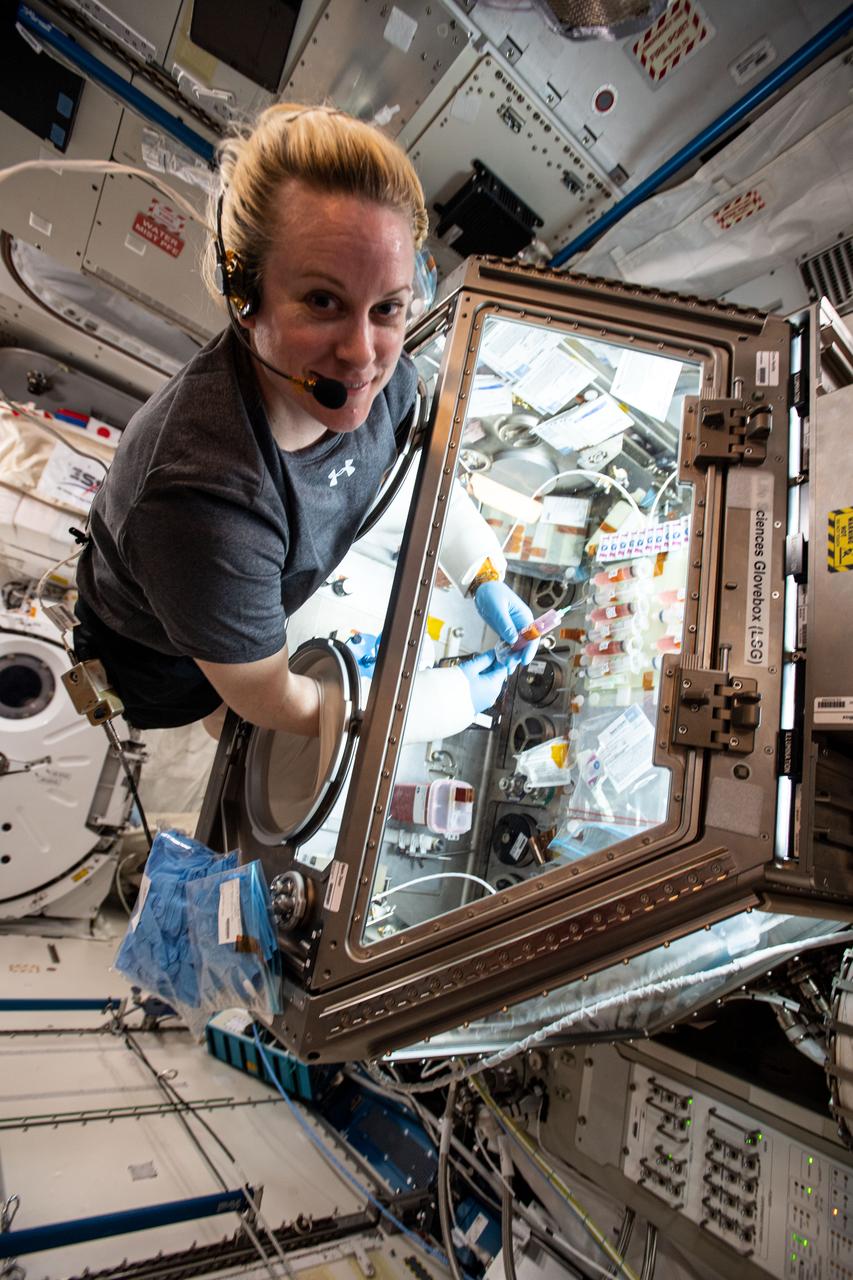
iss064e015250 (Dec. 24, 2020) --- NASA astronaut and Expedition 64 Flight Engineer Kate Rubins works inside the Life Sciences Glovebox (LSG) servicing engineered heart tissue samples for the Cardinal Heart study that seeks to understand space-caused cell and tissue abnormalities. The LSG is located inside Japan's Kibo laboratory module.

In the heart of the high plateau of Grenada in southern Spain is the small town of Orce. Archaeological excavations have discovered the remains of the earliest humans on the European continent, dating back 1.4 million years. At that time, the area was near ancient Lake Orce-Baza, and supported a rich fauna of animals, including mammoths and sabre-tooth tigers. The image was acquired August 10, 2023, covers an area of 22.6 by 23.7 km, and is located at 37.7 degrees north, 2.5 degrees west. https://photojournal.jpl.nasa.gov/catalog/PIA26286
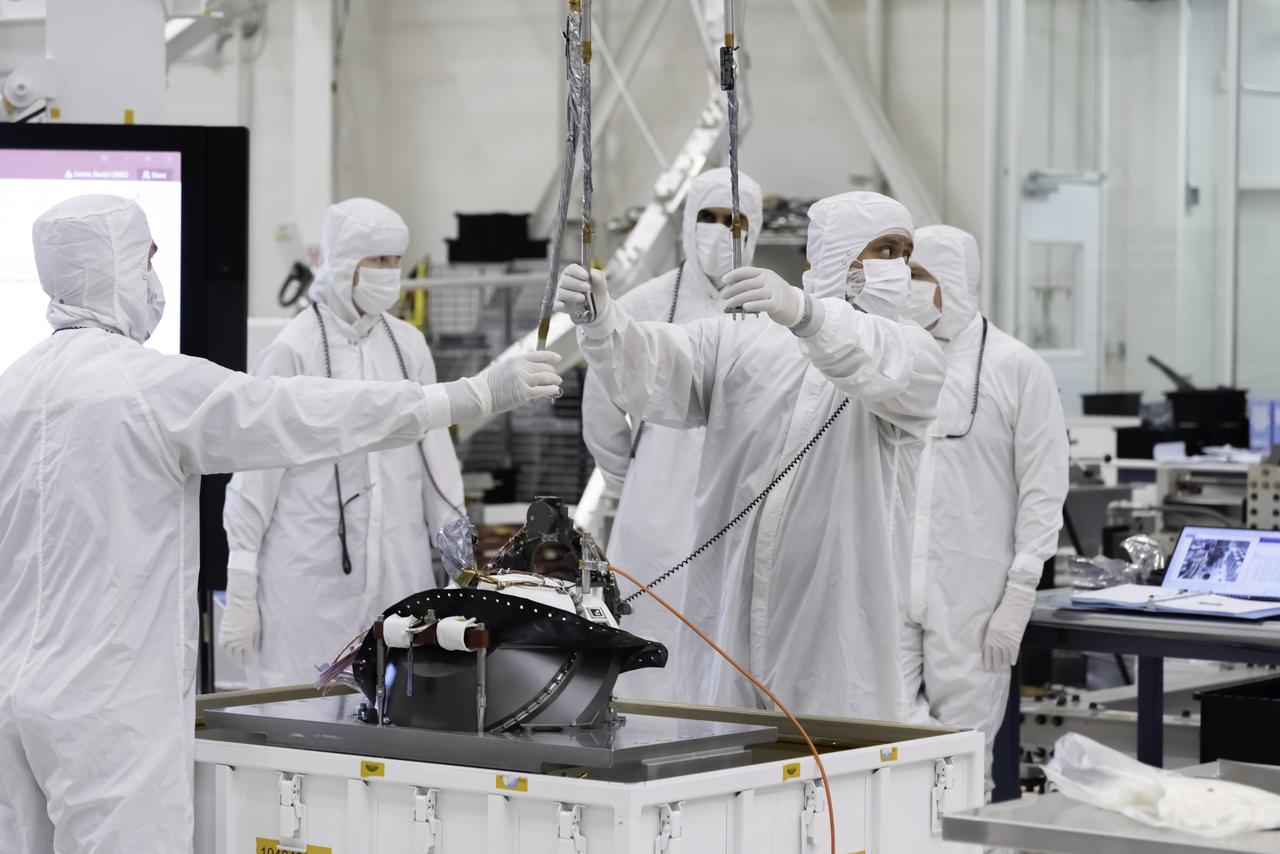
Engineers at NASA's Jet Propulsion Laboratory lift the Mars 2020 rover's bit carousel out of its storage container. The bit carousel is a mechanism that is at the heart of the rover's Sample Caching System. The image was taken on Aug. 5, 2019, in the Spacecraft Assembly Facility's High Bay 1 at JPL. https://photojournal.jpl.nasa.gov/catalog/PIA23320

NASA's Voyager 1 image of Io showing active plume of Loki on limb. Heart-shaped feature southeast of Loki consists of fallout deposits from active plume Pele. The images that make up this mosaic were taken from an average distance of approximately 490,000 kilometers (340,000 miles). http://photojournal.jpl.nasa.gov/catalog/PIA00010

Kennedy Space Center employees attend a Veterans Day observance event on Nov. 7, 2019, in the Florida spaceport’s Training Auditorium. Those employees standing are being recognized for serving in the United States Armed Forces. During the event, Kennedy was named a Purple Heart Entity by the Military Order of the Purple Heart, becoming the first NASA center to receive this designation for support and services provided to veterans through the center’s Veterans employee resource group. Following this recognition, Christopher Vedvick, a combat wounded veteran and Military Order of the Purple Heart department of Florida commander, spoke about his experience serving in the United States Army before retiring, his involvement in the Military Order of the Purple Heart and the purpose of the organization.
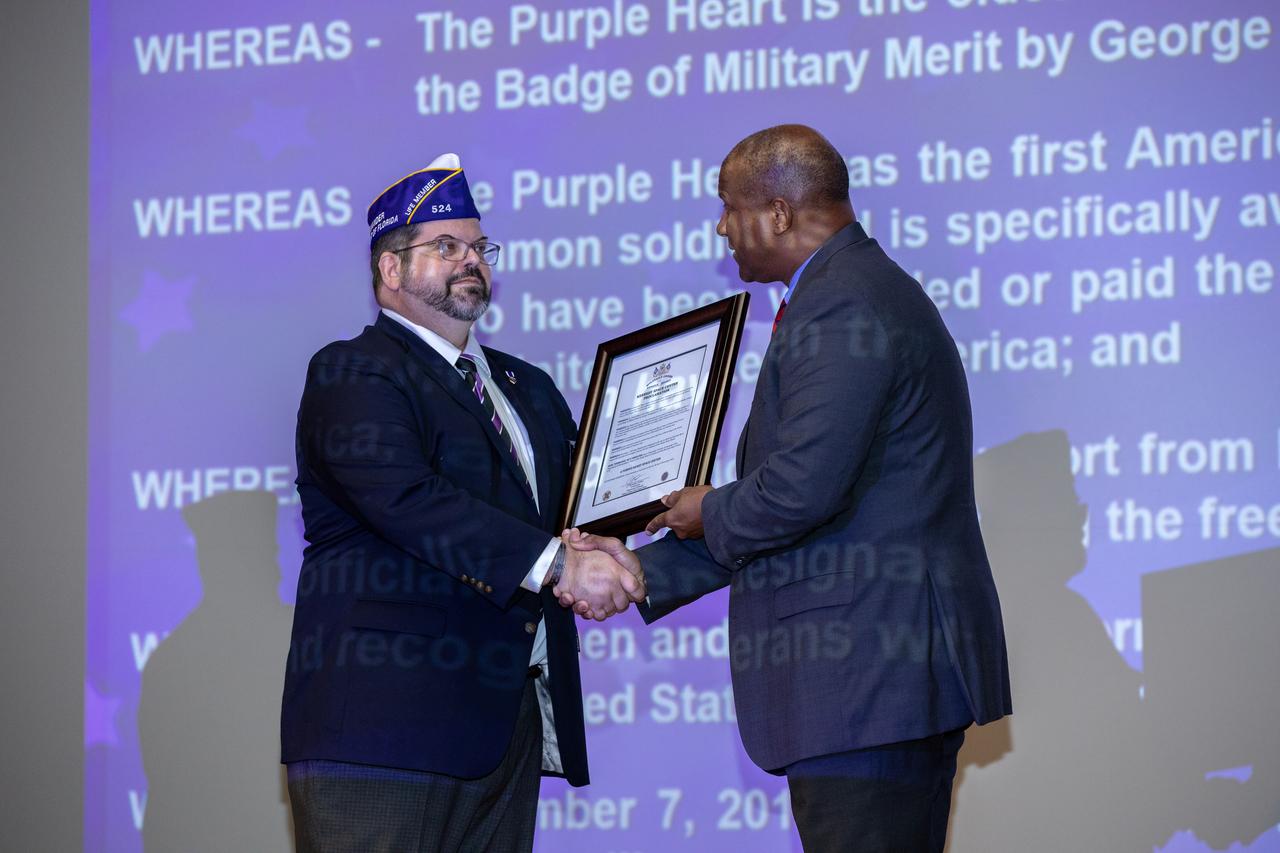
Christopher Vedvick, left, a combat wounded veteran and Military Order of the Purple Heart department of Florida commander, presents Kennedy Space Center’s Associate Director, Technical, Kelvin Manning with a proclamation designating Kennedy a Purple Heart Entity during a Veterans Day observance event on Nov. 7, 2019, in the Training Auditorium. Kennedy is the first NASA center to receive this designation for support and services provided to veterans through the Florida spaceport’s Veterans employee resource group. Attendees included Kennedy employees and more than 20 Purple Heart recipients. Following this recognition, Vedvick, spoke about his experience serving in the United States Army before retiring, his involvement in the Military Order of the Purple Heart and the purpose of the organization.
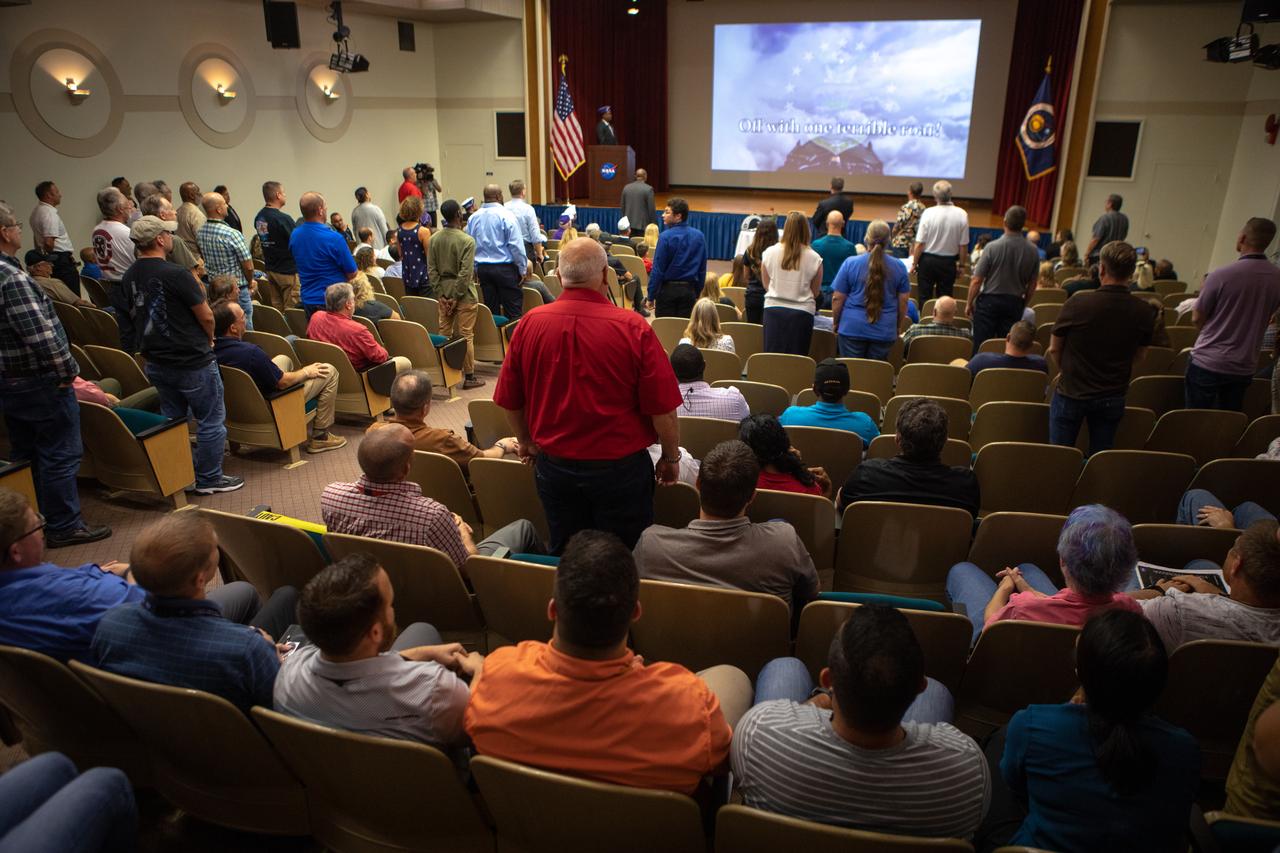
Kennedy Space Center employees attend a Veterans Day observance event on Nov. 7, 2019, in the Florida spaceport’s Training Auditorium. Those employees standing are being recognized for serving in the United States Armed Forces. During the event, Kennedy was named a Purple Heart Entity by the Military Order of the Purple Heart, becoming the first NASA center to receive this designation for support and services provided to veterans through the center’s Veterans employee resource group. Following this recognition, Christopher Vedvick, a combat wounded veteran and Military Order of the Purple Heart department of Florida commander, spoke about his experience serving in the United States Army before retiring, his involvement in the Military Order of the Purple Heart and the purpose of the organization.
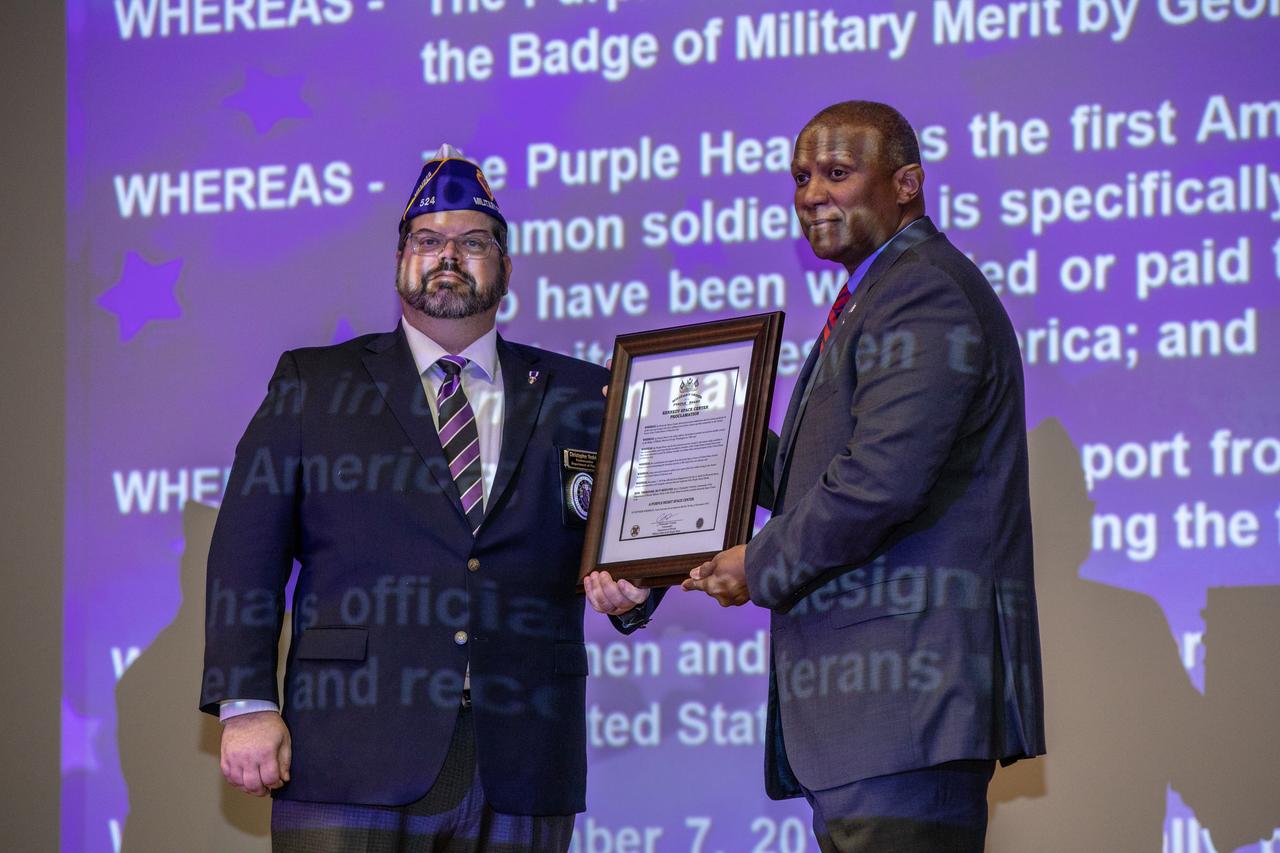
Christopher Vedvick, left, a combat wounded veteran and Military Order of the Purple Heart department of Florida commander, presents Kennedy Space Center’s Associate Director, Technical, Kelvin Manning with a proclamation designating Kennedy a Purple Heart Entity during a Veterans Day observance event on Nov. 7, 2019, in the Training Auditorium. Kennedy is the first NASA center to receive this designation for support and services provided to veterans through the Florida spaceport’s Veterans employee resource group. Attendees included Kennedy employees and more than 20 Purple Heart recipients. Following this recognition, Vedvick, spoke about his experience serving in the United States Army before retiring, his involvement in the Military Order of the Purple Heart and the purpose of the organization.
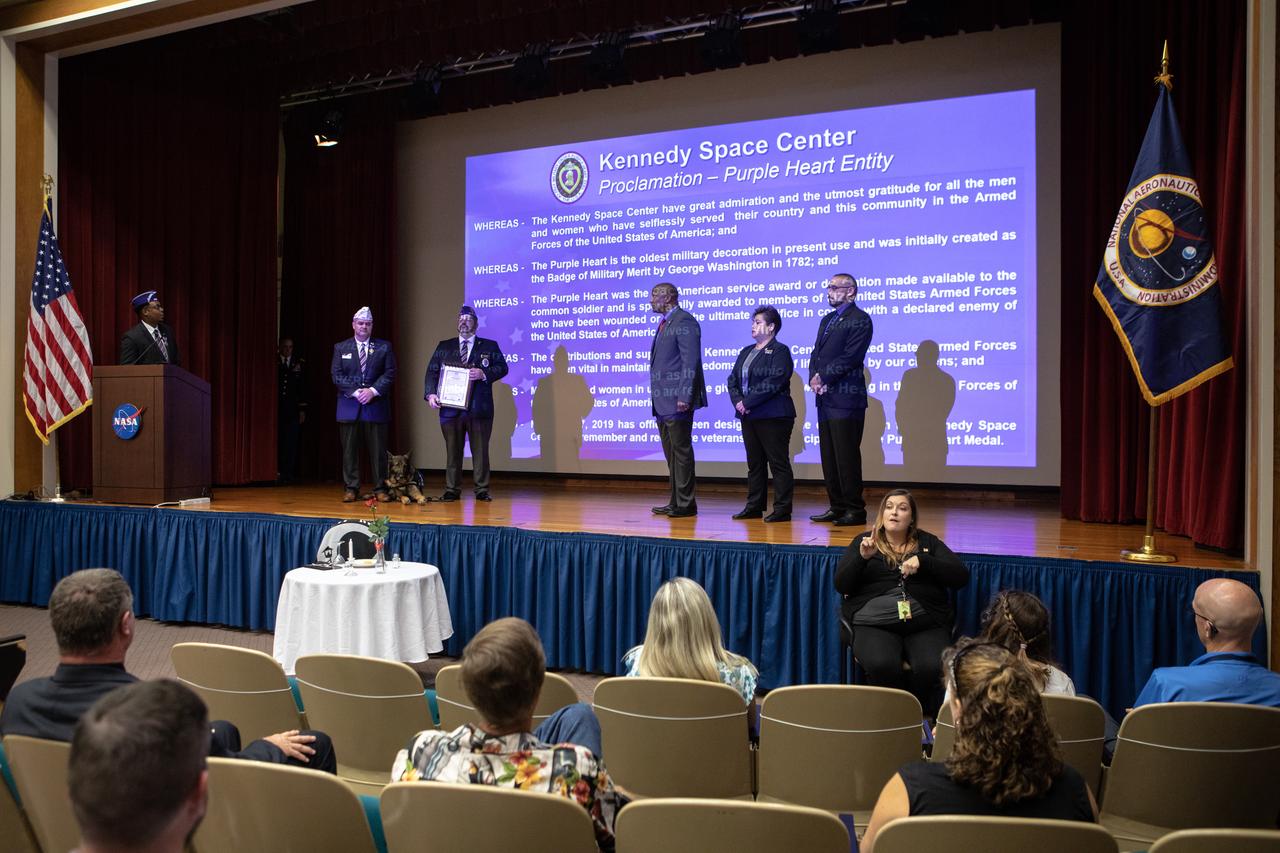
NASA Public Affairs Officer Derrick Matthews (far left) reads a proclamation by the Military Order of the Purple Heart designating Kennedy Space Center a Purple Heart Entity during a Veterans Day observance event in Kennedy’s Training Auditorium in Florida on Nov. 7, 2019. Following the reading, Military Order of the Purple Heart National Adjutant Ernie Rivera (second from left) and Department of Florida Commander Christopher Vedvick presented Kennedy’s Associate Director, Technical, Kelvin Manning (third from right), and the Veterans employee resource group chair Ana Contreras and executive champion Edwin Martinez, with a plaque stating this recognition. Kennedy is the first NASA center to receive this designation for support and services provided to veterans through the spaceport’s Veterans employee resource group. Attendees included Kennedy employees and more than 20 Purple Heart recipients. Following the award presentation, Vedvick, a combat wounded veteran, spoke about his experience serving in the United States Army before retiring, his involvement in the Military Order of the Purple Heart and the purpose of the organization.
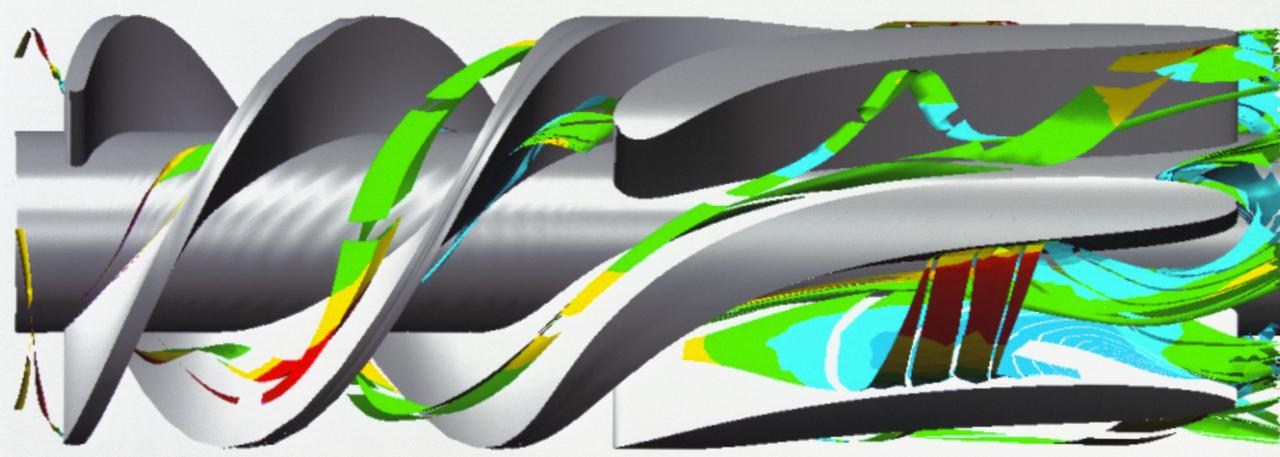
NASA Baylor college 'left ventericular assist device (LVAD) Heart analysis: inside impeller (data by Kiris)
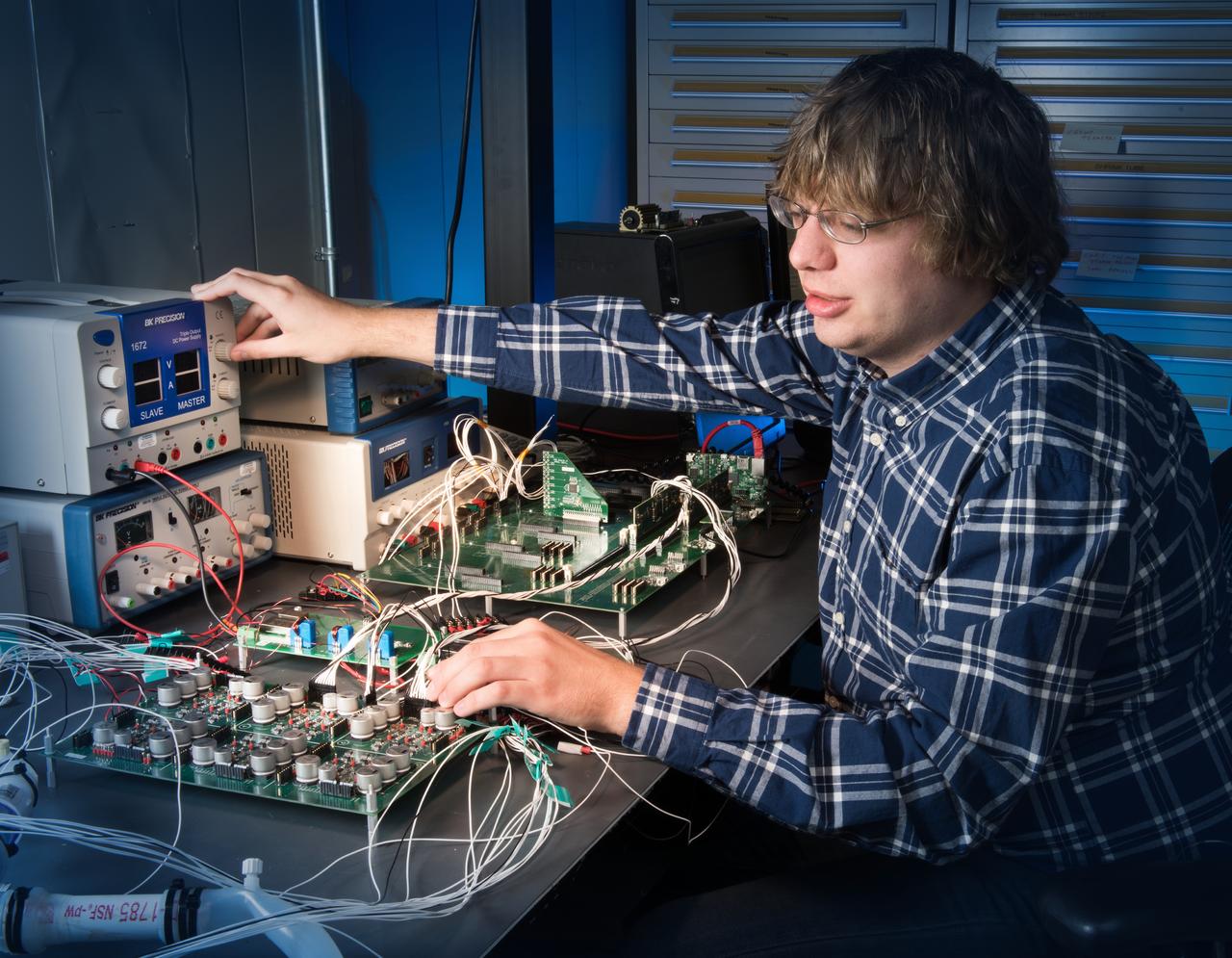
Environmental Portrait of a Telecommunications Engineer with the University of Indiana Heart Pump, Motor Controller Electronics
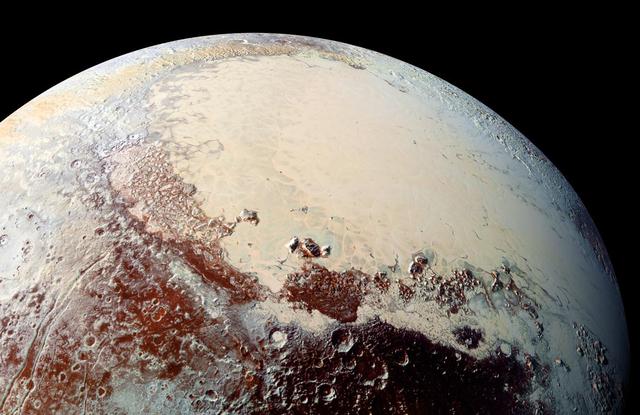
This high-resolution image captured by NASA's New Horizons spacecraft combines blue, red and infrared images taken by the Ralph/Multispectral Visual Imaging Camera (MVIC). The bright expanse is the western lobe of the "heart," informally called Sputnik Planum, which has been found to be rich in nitrogen, carbon monoxide and methane ices. http://photojournal.jpl.nasa.gov/catalog/PIA20007
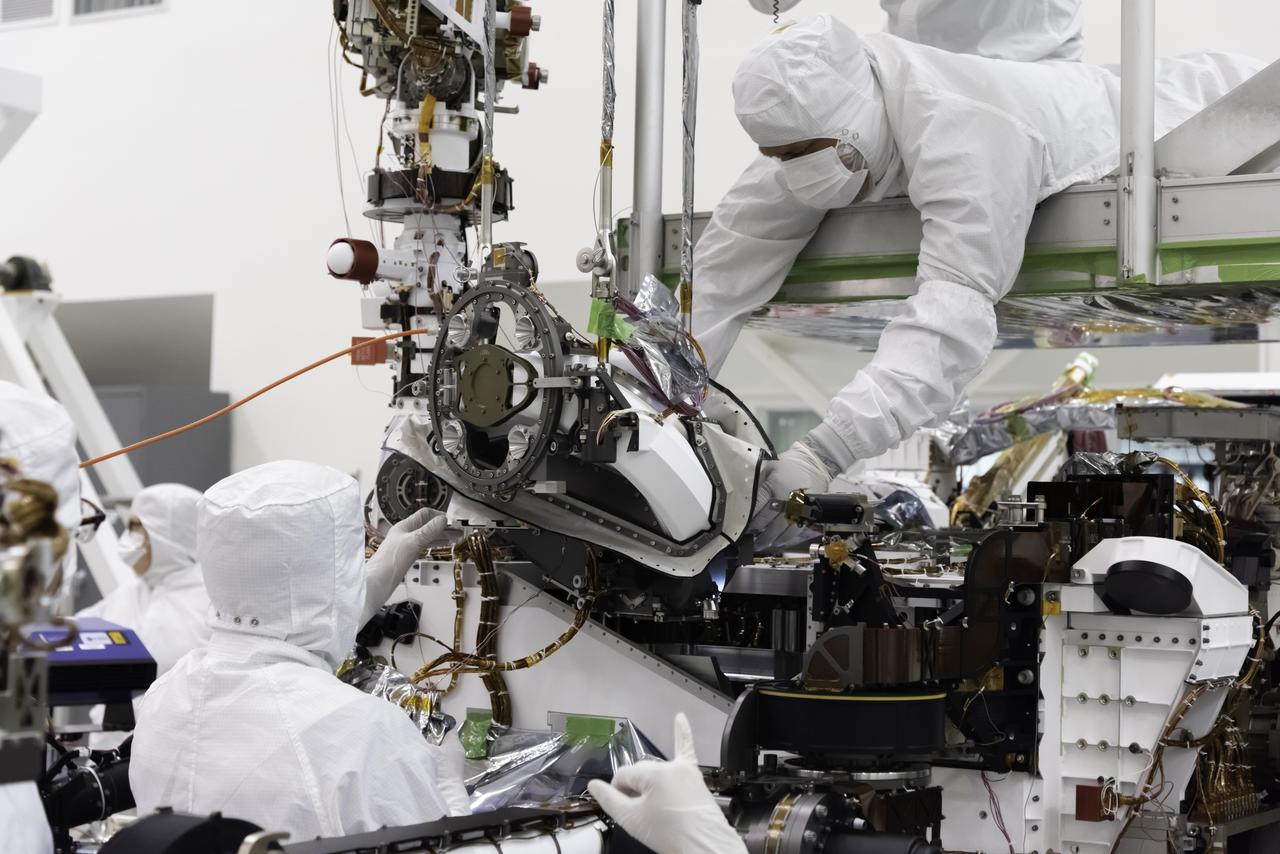
The bit carousel, which lies at the heart of Sample Caching System of NASA's Mars 2020 mission, is attached to the front end of the rover in the Spacecraft Assembly Facility's High Bay 1 at the Jet Propulsion Laboratory in Pasadena, California. The carousel contains all of the tools the coring drill uses to sample the Martian surface and is the gateway for the samples to move into the rover for assessment and processing. The image was taken on Aug. 5, 2019. https://photojournal.jpl.nasa.gov/catalog/PIA23319

This artist concept based on data fromNASA Spitzer Space Telescope shows delicate greenish crystals sprinkled throughout the violent core of a pair of colliding galaxies. The white spots represent a thriving population of stars of all sizes and ages.
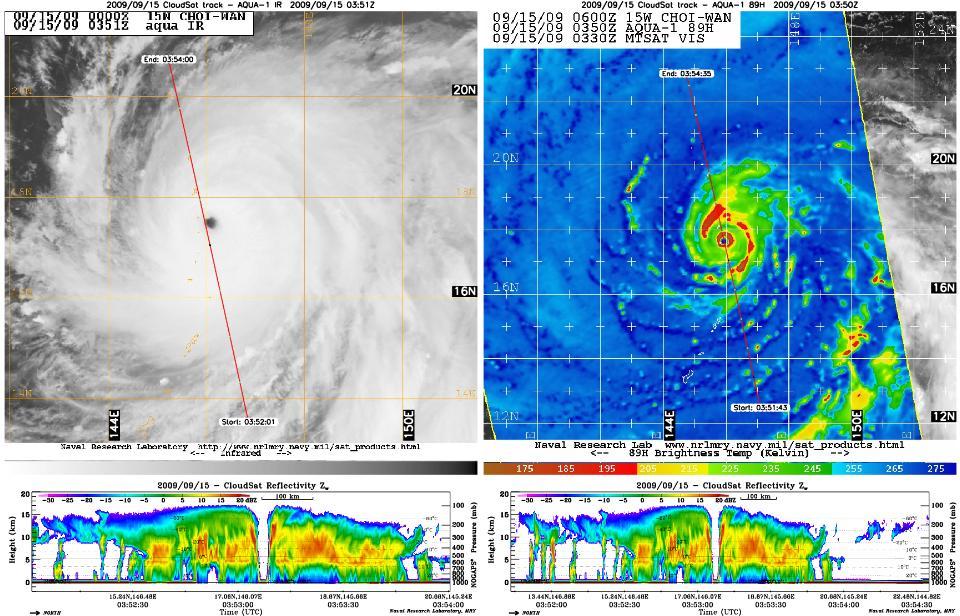
NASA CloudSat satellite captured an eye overpass of Super Typhoon Choi-Wan in the Western Pacific on September 15, 2009 at 0352Z.
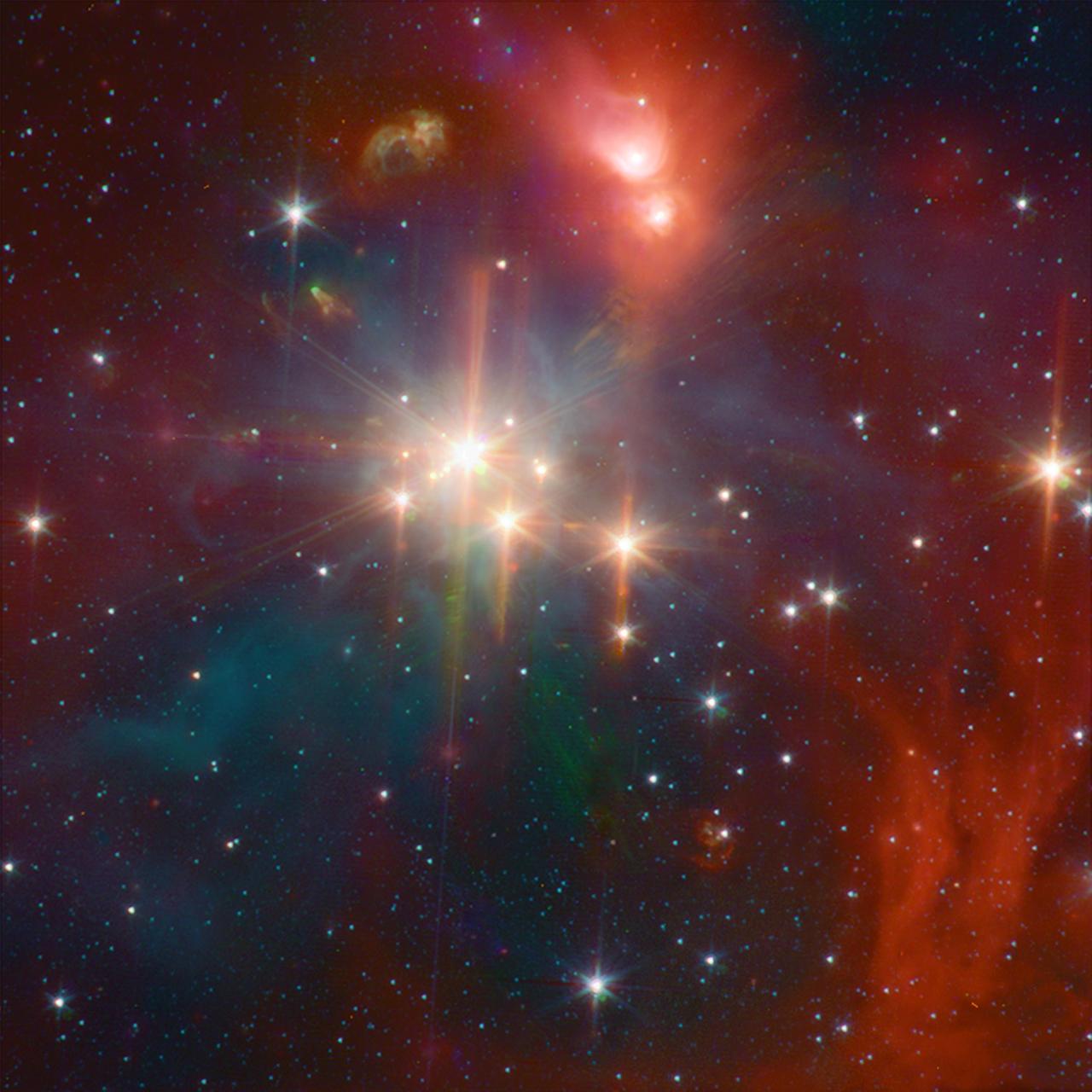
This image from NASA Spitzer Space Telescope shows young stars plus diffuse emission from dust. The Corona Australis region containing, at its heart, the Coronet cluster is one of the nearest and most active regions of ongoing star formation.
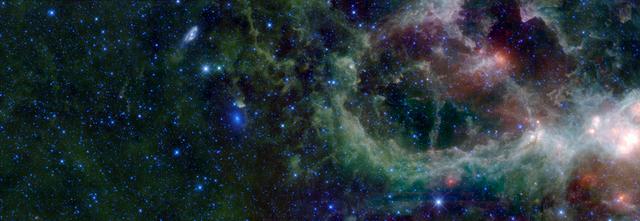
This mosaic of images from NASA WISE Telescope is in the constellation of Cassiopeia. This region contains a large star forming nebula within the Milky Way Galaxy, sometimes called the Heart Nebula, and is over 6 thousand light-years from Earth.
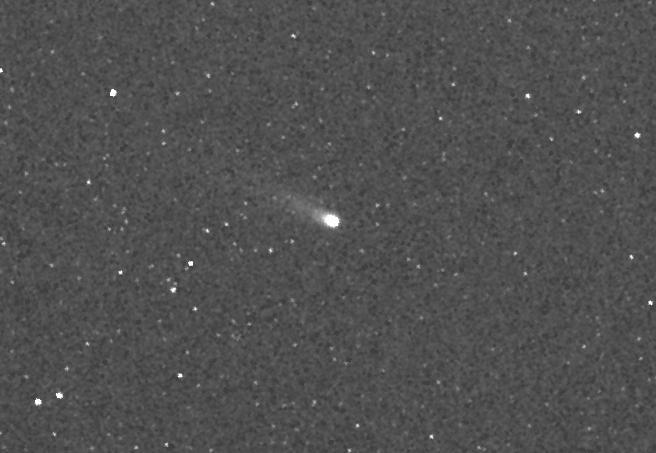
An optical color image of galaxies is seen here overlaid with X-ray data magenta from NASA Nuclear Spectroscopic Telescope Array NuSTAR. Both magenta blobs show X-rays from massive black holes buried at the hearts of galaxies.
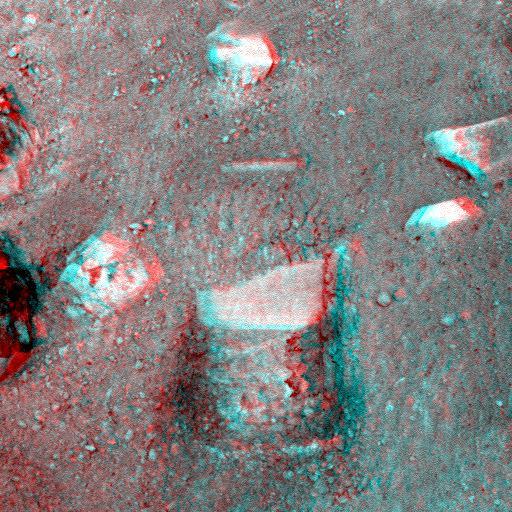
This anaglyph image, acquired by NASA’s Phoenix Lander’s Surface Stereo Imager on June 1, 2008, shows a stereoscopic 3D view of the so-called Knave of Hearts first-dig test area to the north of the lander. 3D glasses are necessary to view this image.
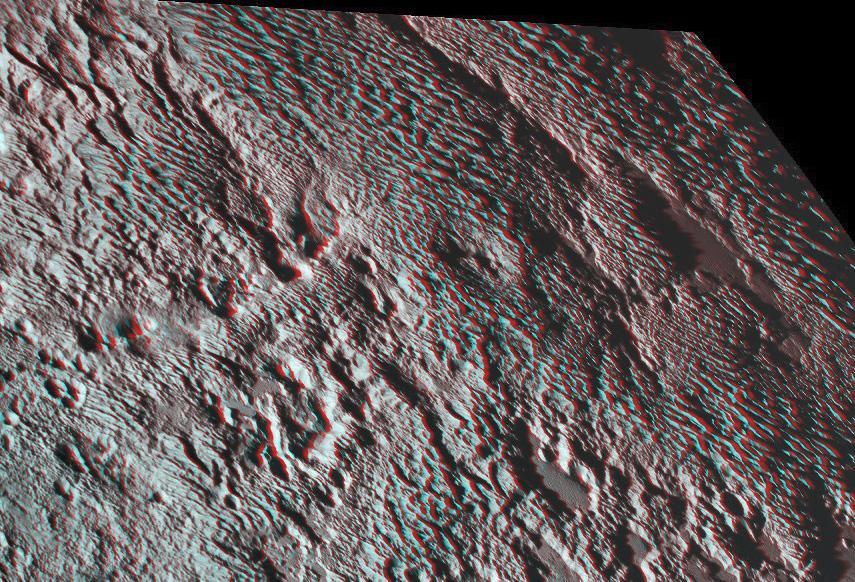
One of the strangest landforms spotted by NASA New Horizons spacecraft when it flew past Pluto last July was the bladed terrain just east of Tombaugh Regio, the informal name given to Pluto large heart-shaped surface feature.

MSFC DEPUTY DIRECTOR GENE GOLDMAN AND SIRAN STACY, KEYNOTE SPEAKER FOR CFC "THANKS FOR GIVING" PROGRAM, WITH HANDS ON HEART DURING SINGING OF NATIONAL ANTHEM
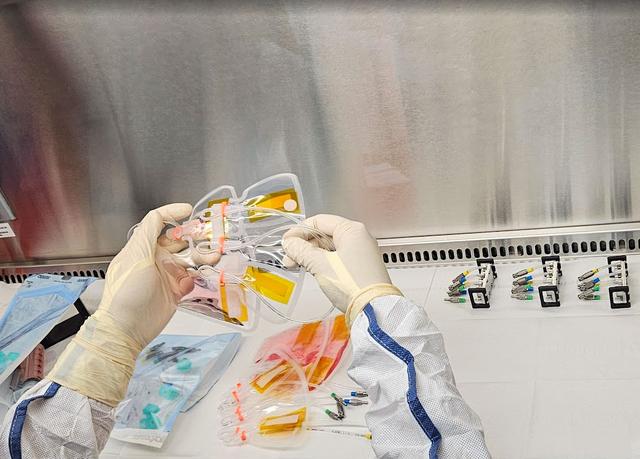
An image shows the culture medium bags during preflight testing as part of the MVP Cell-09. This investigation aims to understand the cellular and molecular mechanisms by which Streptococcus pneumoniae, the leading cause of community-acquired pneumonia damages heart tissue. Bacteria are generally more active and virulent in the unique conditions of space. Investigators hypothesize microgravity may amplify the effects of Streptococcus pneumoniae on heart cells, exaggerating important cell responses that would not be detected on Earth. Credit. University of Alabama at Birmingham.
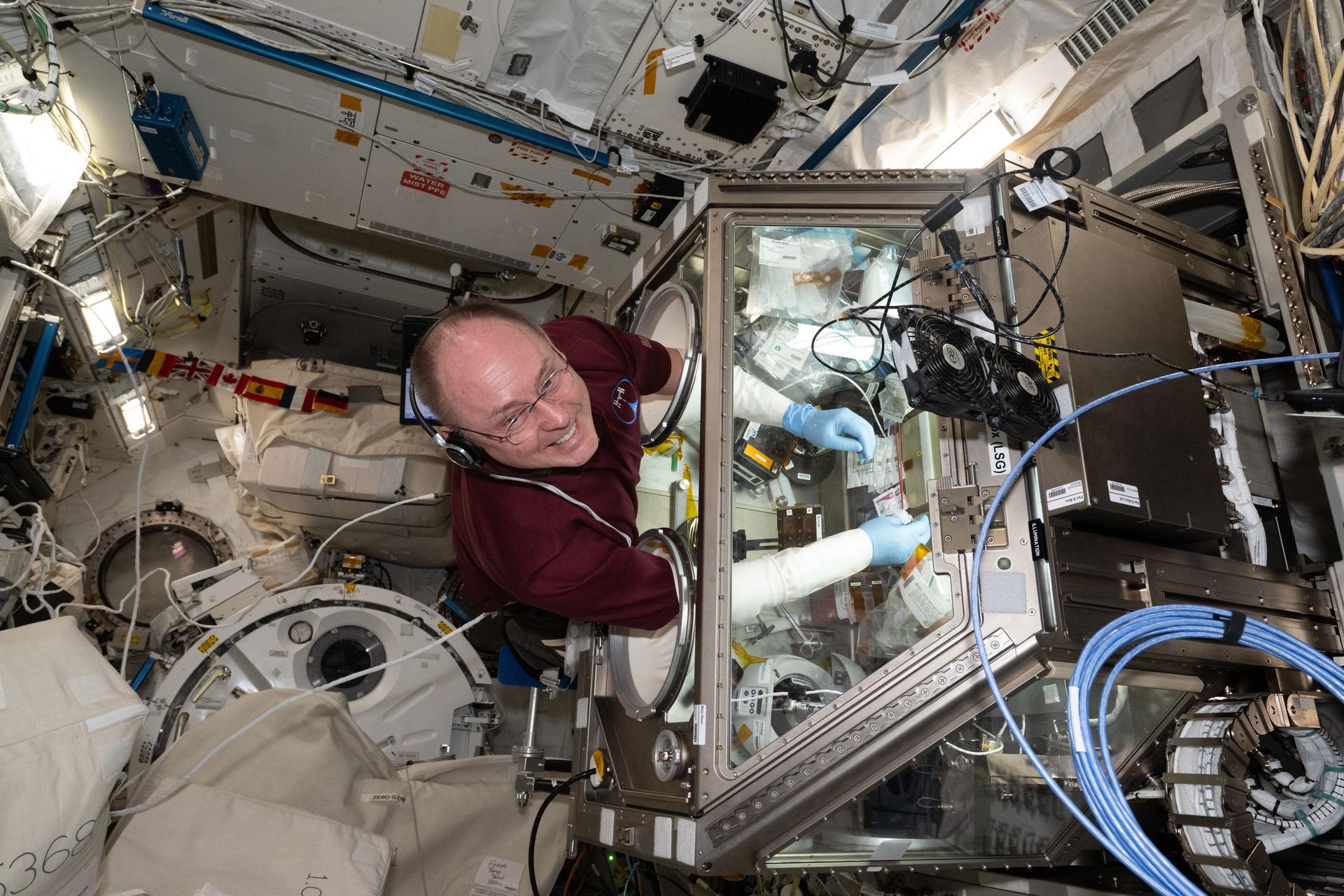
iss073e1046752 (Oct. 31, 2025) --- NASA astronaut and Expedition 73 Flight Engineer Mike Fincke conducts research operations inside the Life Science Glovebox aboard the International Space Station’s Kibo laboratory module. Fincke was assisting scientists in studying the behavior, growth, and differentiation of stem cells, and how they can be converted into brain or heart cells in microgravity. The results could lead to advancements in crew health monitoring and drug manufacturing in space, as well as new treatments for heart and neurodegenerative diseases on Earth.
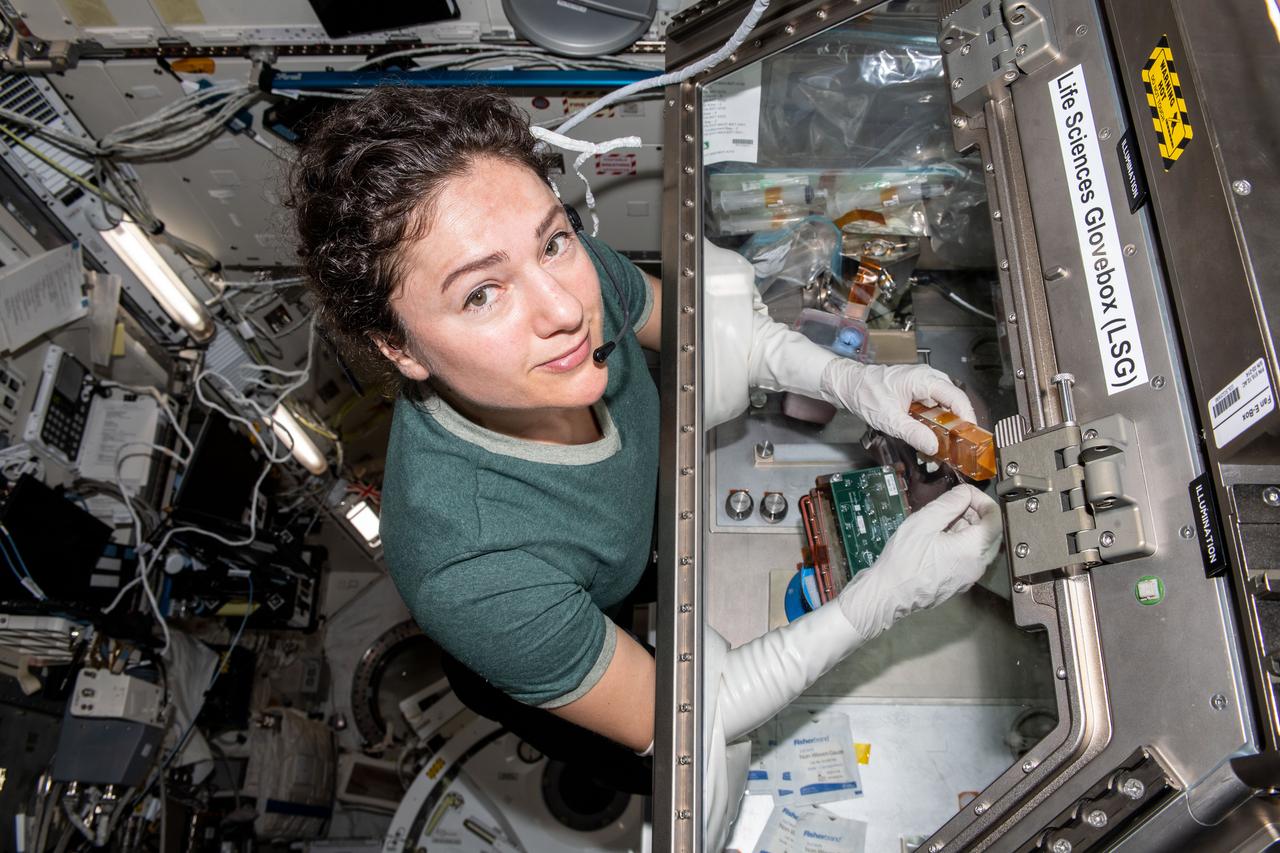
iss062e120658 (April 2, 2020) --- NASA astronaut and Expedition 62 Flight Engineer conducts cardiac research in the Life Sciences Glovebox located in the Japanese Kibo laboratory module. The Engineered Heart Tissues investigation could promote a better understanding of cardiac function in microgravity which would be useful for drug development and other applications related to heart conditions on Earth.
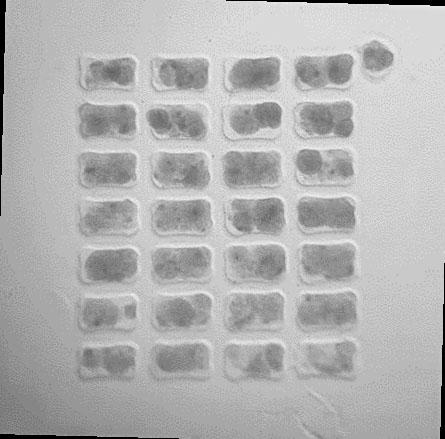
An image of the cardiac tissue chip with an array of cardiac tissues as part of MVP Cell-09. This investigation aims to understand the cellular and molecular mechanisms by which Streptococcus pneumoniae, the leading cause of community-acquired pneumonia damages heart tissue. Bacteria are generally more active and virulent in the unique conditions of space. Investigators hypothesize microgravity may amplify the effects of Streptococcus pneumoniae on heart cells, exaggerating important cell responses that would not be detected on Earth. Credit. University of Alabama at Birmingham.