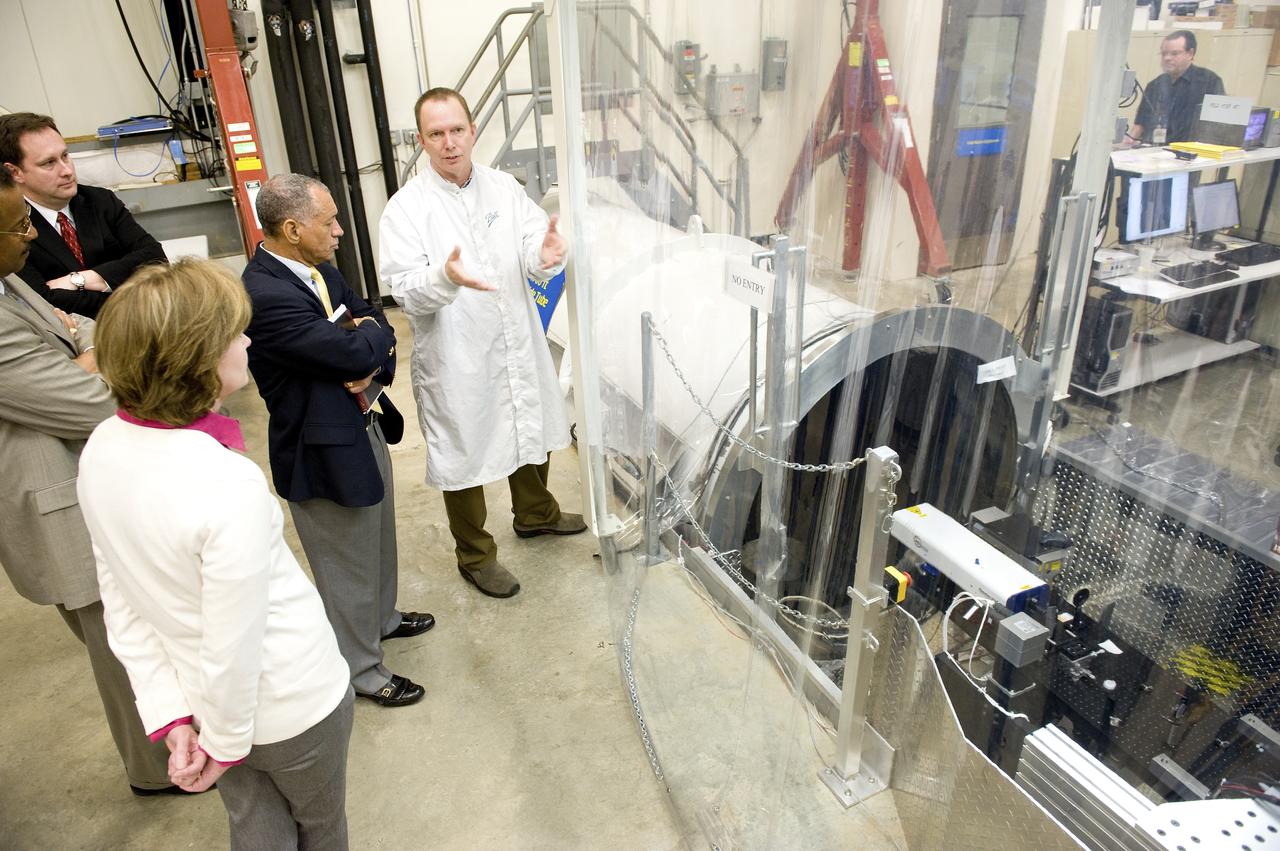
NASA ADMINISTRATOR CHARLES BOLDEN LOOKS ON AS BALL AEROSPACE TECHNOLOGIES CORPORATION PRINCIPLE OPTICAL ENGINEER DAVE CHANEY EXPLAINS HOW THE JAMES WEBB SPACE TELESCOPE MIRROR SEGMENTS ARE TESTED IN MARSHALL'S X-RAY AND CRYOGENIC FACILITY. PICTURED FROM LEFT: HELEN COLE, WEBB TELESCOPE ACTIVITIES PROJECT MANAGER AT MARSHALL; CHARLES SCALES, ASSOCIATE DEPUTY ADMINISTRATOR: ROBERT LIGHTFOOT, CENTER DIRECTOR; CHARLES BOLDEN, NASA ADMINISTRATOR; DAVE CHANEY, BALL OPTICAL ENGINEER.
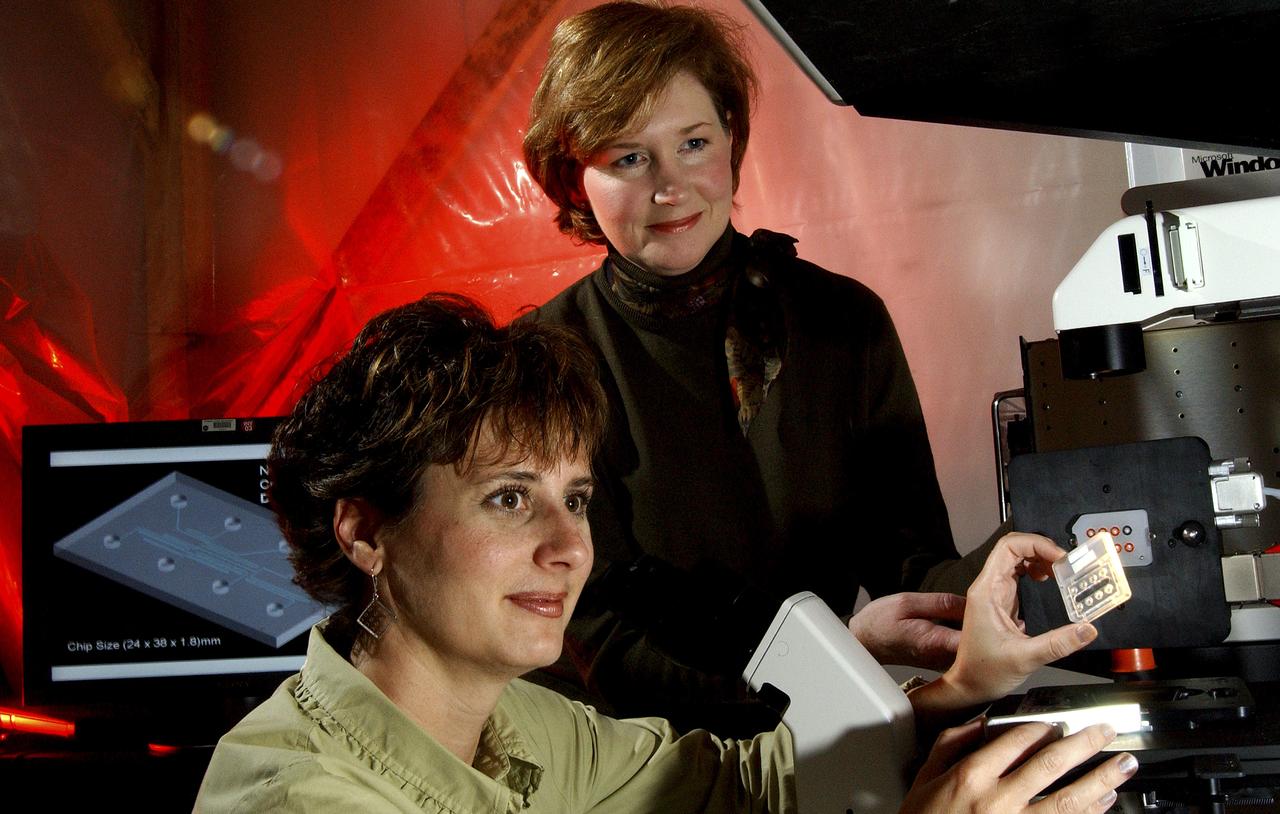
Helen Cole, the project manager for the Lab-on-a-Chip Applications Development program, and Lisa Monaco, the project scientist for the program, insert a lab on a chip into the Caliper 42 which is specialized equipment that controls processes on commercial chips to support development of lab-on-a-chip applications. The system has special microscopes and imaging systems, so scientists can process and study different types of fluid, chemical, and medical tests conducted on chips. For example, researchers have examined fluorescent bacteria as it flows through the chips' fluid channels or microfluidic capillaries. Researchers at NASA's Marshall Space Flight Center (MSFC) in Huntsville, Alabama, have been studying how the lab-on-a-chip technology can be used for microbial detection, water quality monitoring, and detecting biosignatures of past or present life on Mars. The Marshall Center team is also collaborating with scientists at other NASA centers and at universities to develop custom chip designs for not only space applications, but for many Earth applications, such as for detecting deadly microbes in heating and air systems. (NASA/MSFC/D.Stoffer)