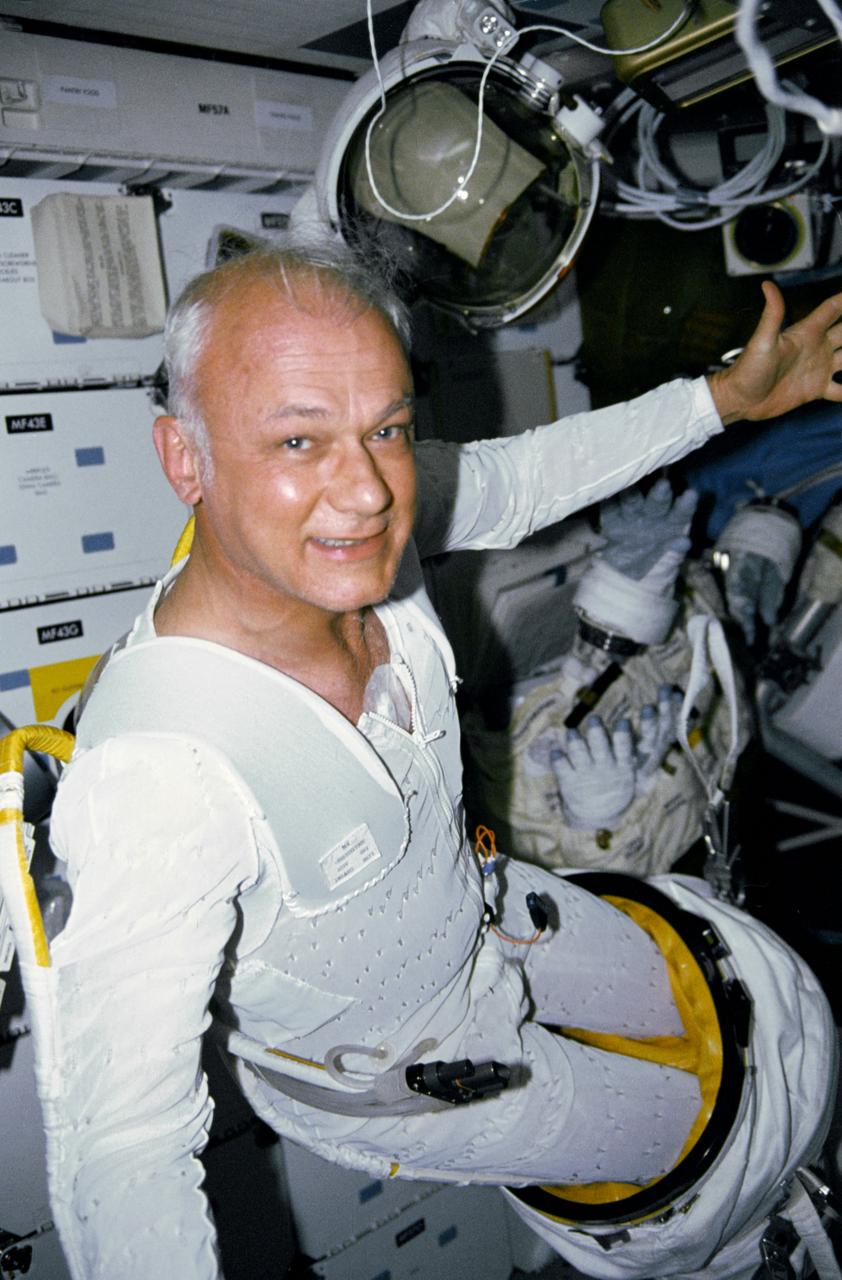
STS-31 Mission Specialist (MS) Bruce McCandless II, wearing liquid cooling and ventilation garment (LCVG), works his way out of the extravehicular mobility unit (EMU) lower torso on the middeck of Discovery, Orbiter Vehicle (OV) 103. McCandless was in a standby mode to perform extravehicular activity (EVA) if needed to support Hubble Space Telescope (HST) deployment and post- deployment tasks. None was needed. His helmet and gloves freefloat in the background.
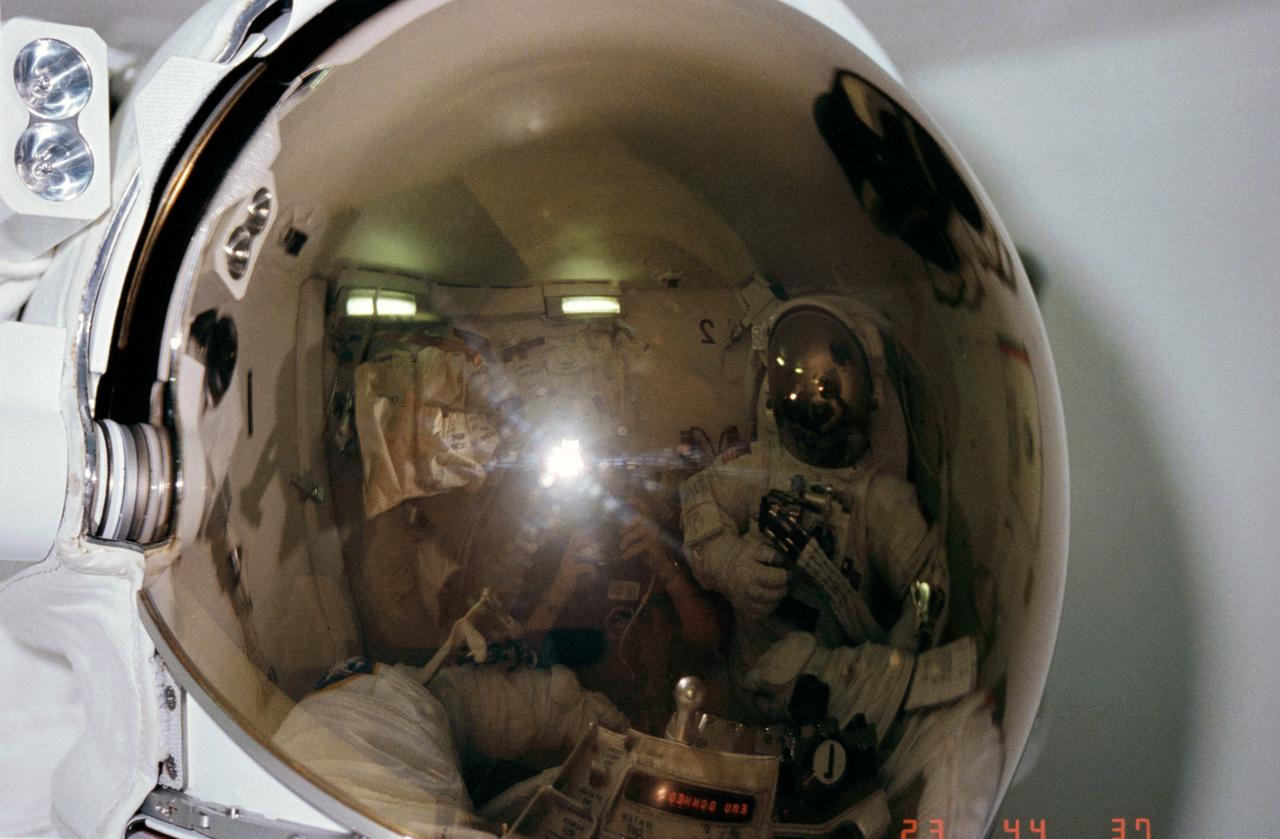
STS006-06-465 (7 April 1983) --- Three-fourths of the STS-6 astronaut crew appears in this unusual 35mm frame exposed in the airlock of the Earth-orbiting space shuttle Challenger. Astronaut F. Story Musgrave’s helmet visor encompasses all the action in the frame. Dr. Musgrave and astronaut Donald H. Peterson (reflected on right side of the visor) were fully suited in their Extravehicular Mobility Unit (EMU) spacesuits and were participating in EVA preparation exercises. Astronaut Karol J. Bobko, STS-6 pilot, wearing conventional onboard shuttle clothing, photographed the two during their procedures and appears at center of frame. The reversed number (1 and 2 in the mirrored image represent the EVA designations for the two mission specialists. Photo credit: NASA
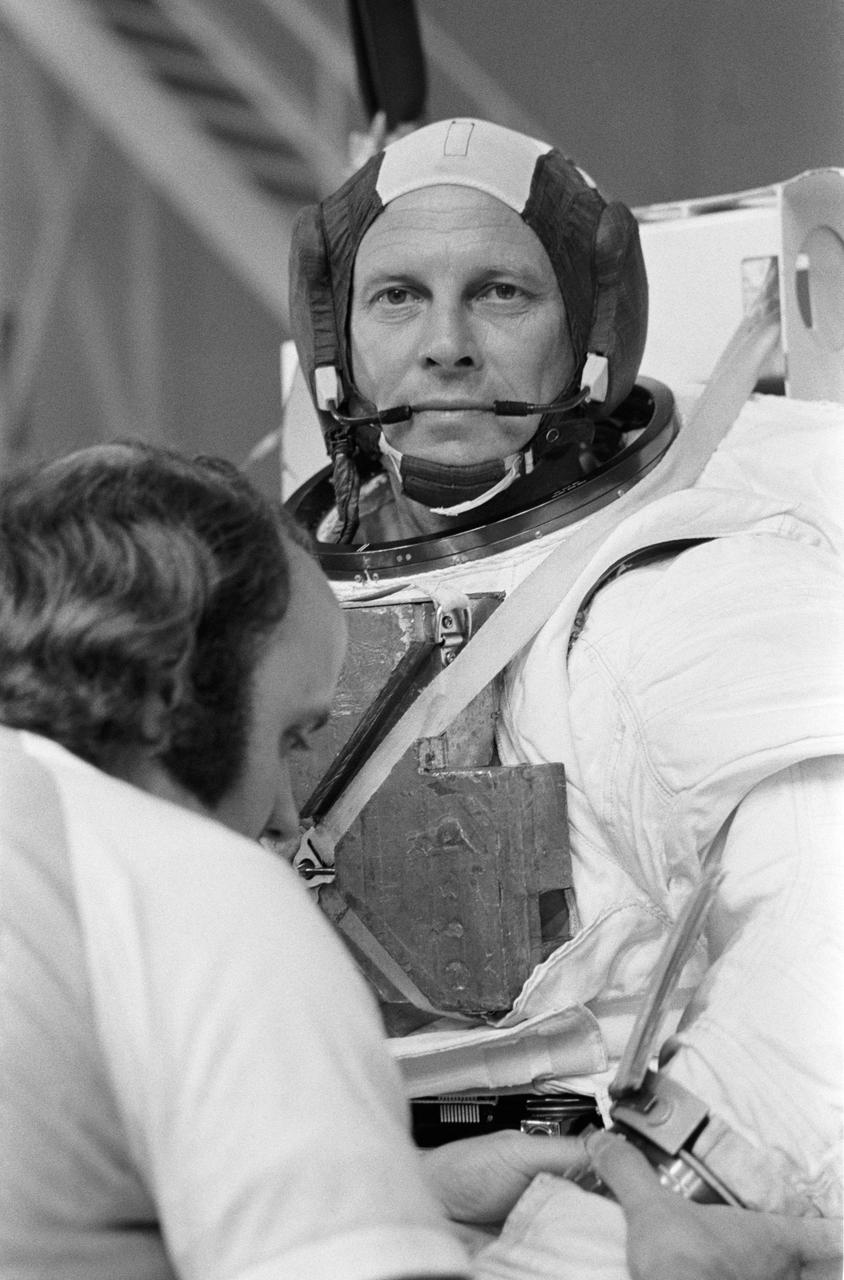
Portrait view of astronaut Jack Lousma in the Extravehicular Mobility Unit (EMU) at bldg 29 Weightless Environment Training Facility (WETF). He is wearing the EMU minus the helmet.
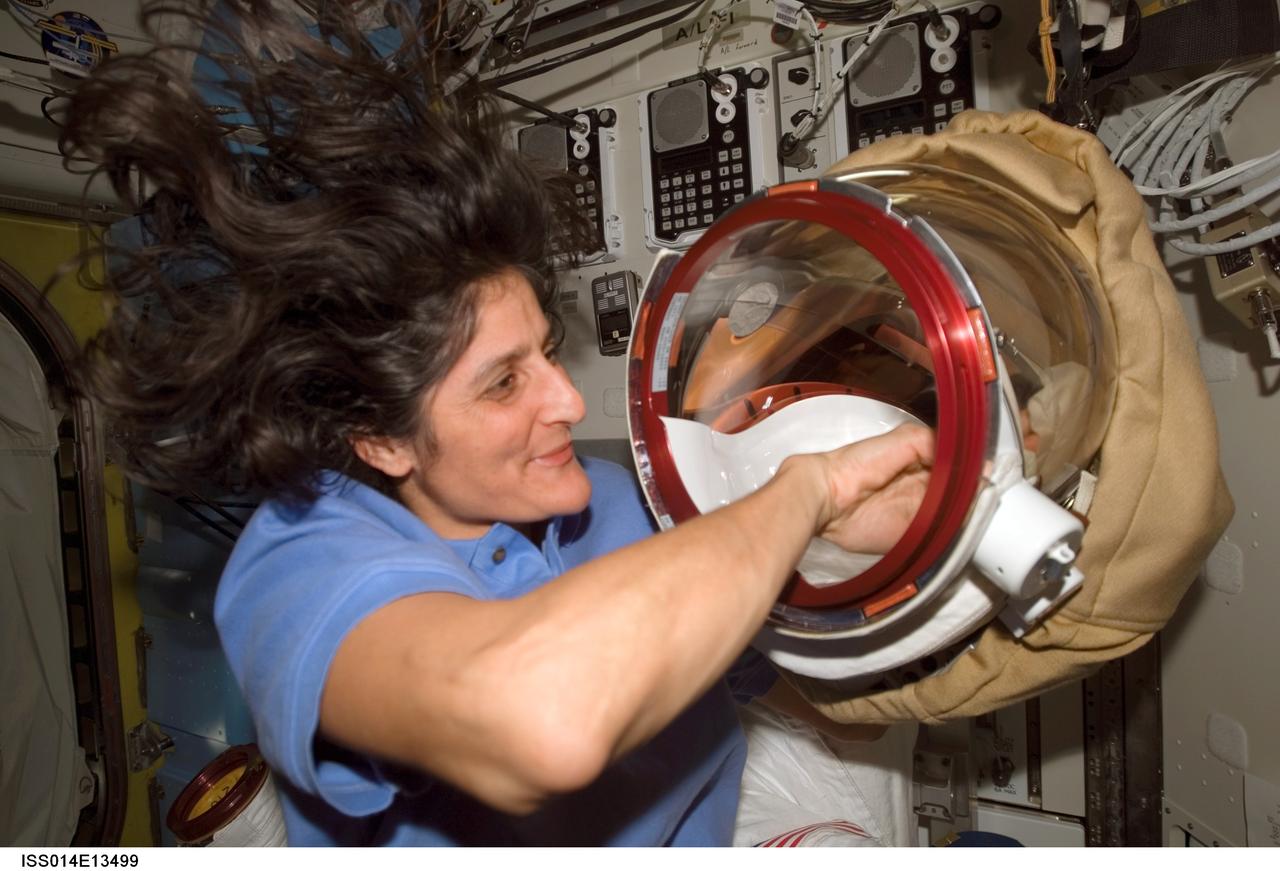
ISS014-E-13499 (7 Feb. 2007) --- Astronaut Sunita L. Williams, Expedition 14 flight engineer, works with the helmet of her Extravehicular Mobility Unit (EMU) spacesuit in the Quest Airlock of the International Space Station as she prepares for the final of three sessions of extravehicular activity (EVA) in nine days, scheduled for Feb. 8.
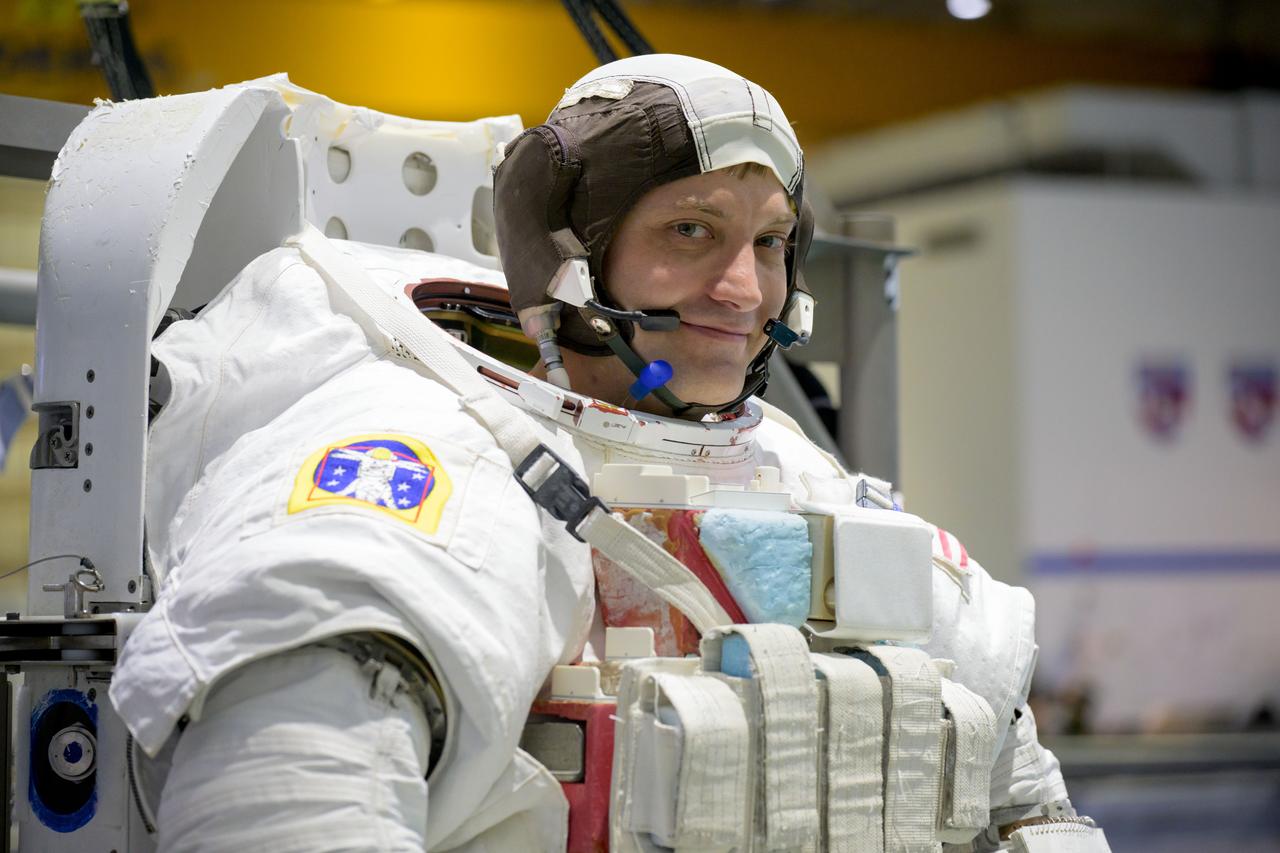
View of SpaceX Crew-8 and NASA astronaut Matthew Dominick in his Extravehicular Mobility Unit (EMU) without his helmet before the ISS Extravehicular Activity (EVA) Maintenance 4 with a suited run at the Neutral Buoyancy Laboratory (NBL).
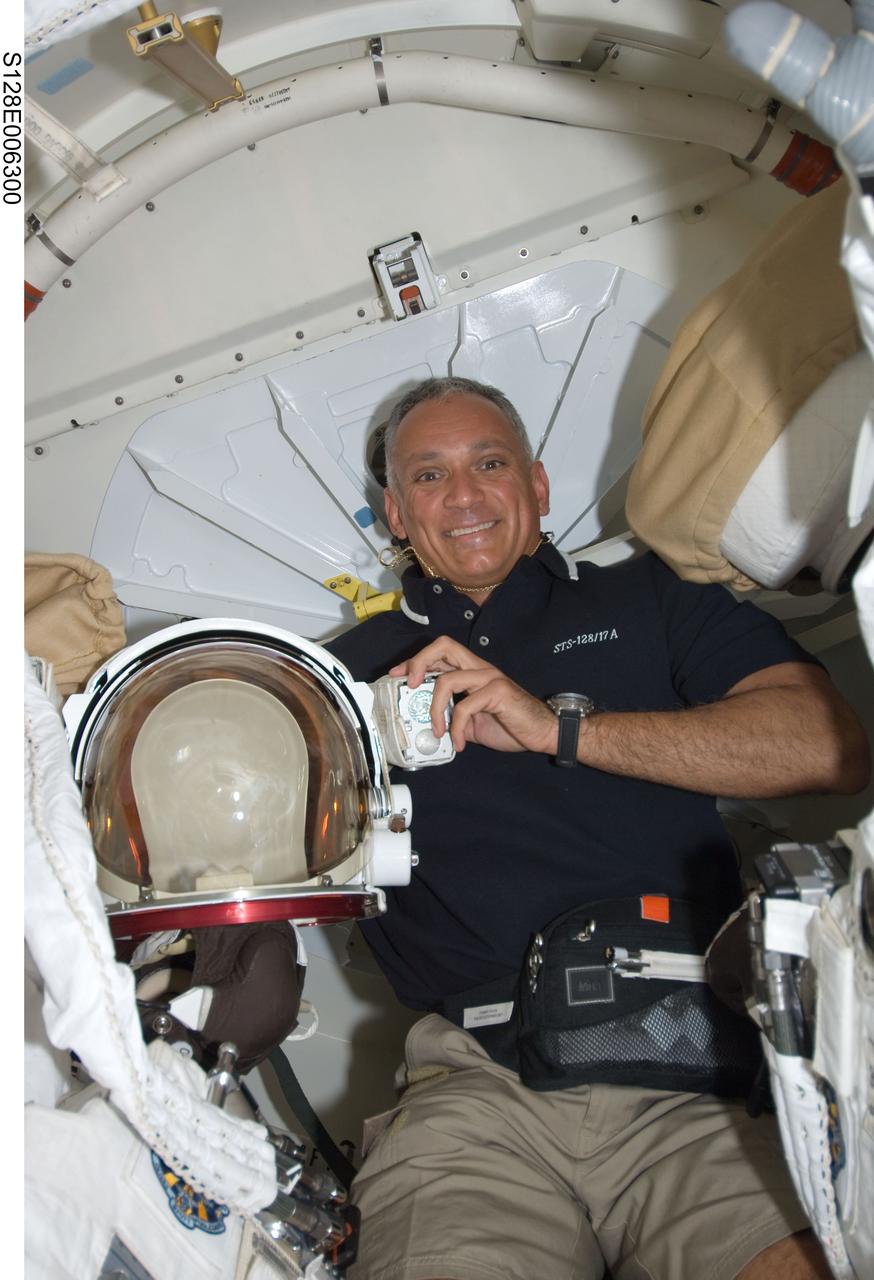
S128-E-006300 (29 Aug. 2009) --- Astronaut John “Danny” Olivas, STS-128 mission specialist, poses for a photo while holding an Extravehicular Mobility Unit (EMU) spacesuit helmet on the Space Shuttle Discovery during flight day two activities.
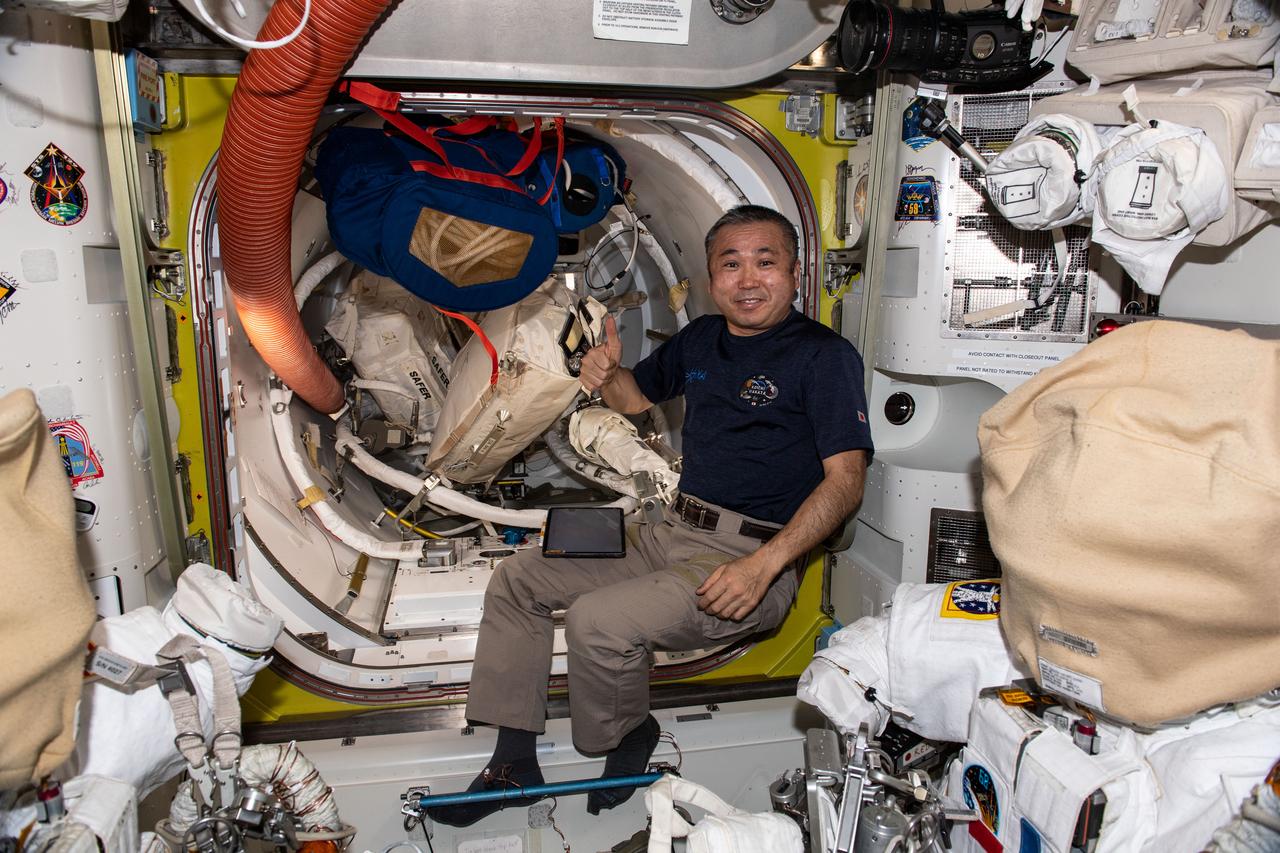
iss068e044024 (Jan. 31, 2023) --- Expedition 68 Flight Engineer Koichi Wakata of the Japan Aerospace Exploration Agency (JAXA) is pictured inside the International Space Station's Quest airlock while organizing spacewalk tools and hardware. In the foreground, are two Extravehicular Mobility Units (EMUs), or spacesuits, with their helmets covered and the lower arms and gloves detached.
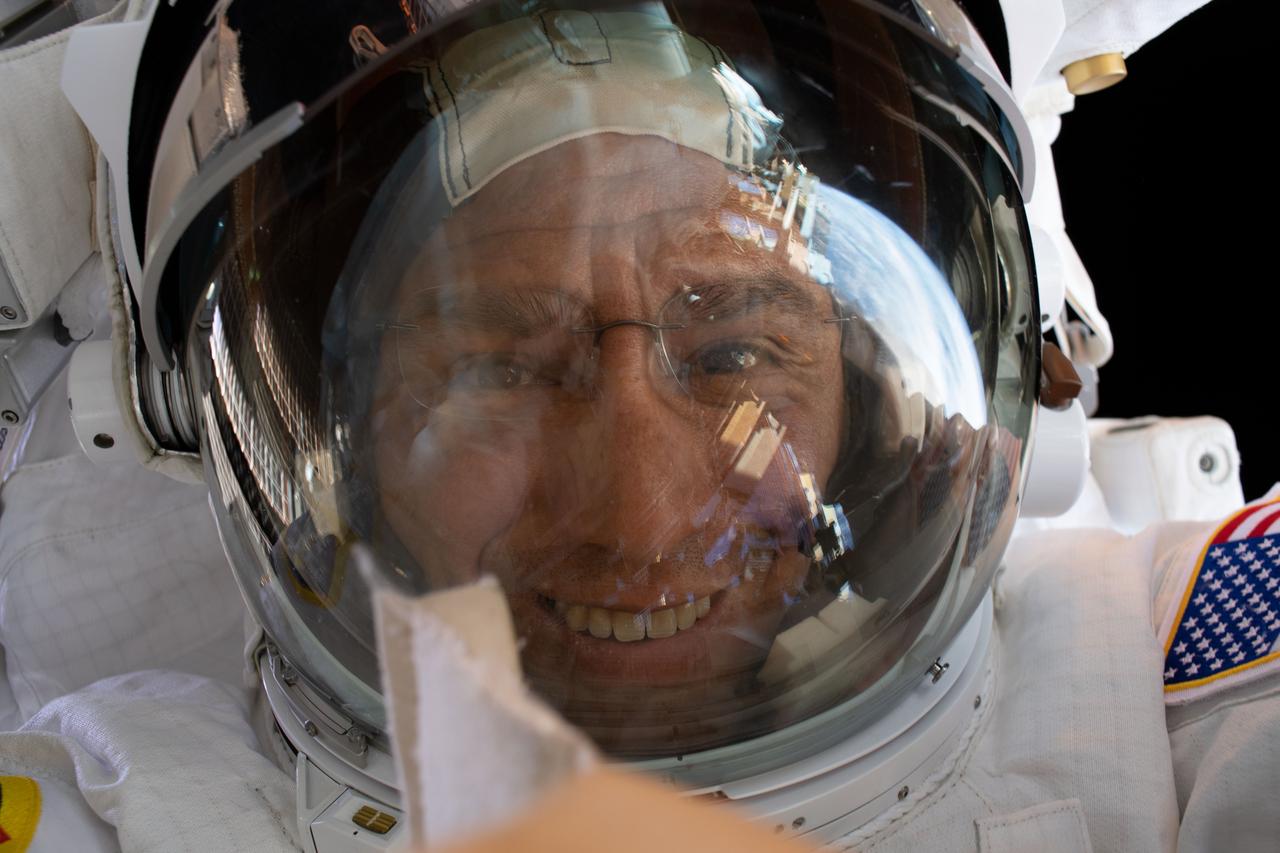
iss068e022445 (Nov. 15, 2022) --- NASA astronaut and Expedition 68 Flight Engineer Frank Rubio points his camera toward himself and takes an out-of-this-world "space-selfie" with his helmet visor's reflective shield up during a spacewalk in his Extravehicular Mobility Unit, or spacesuit.
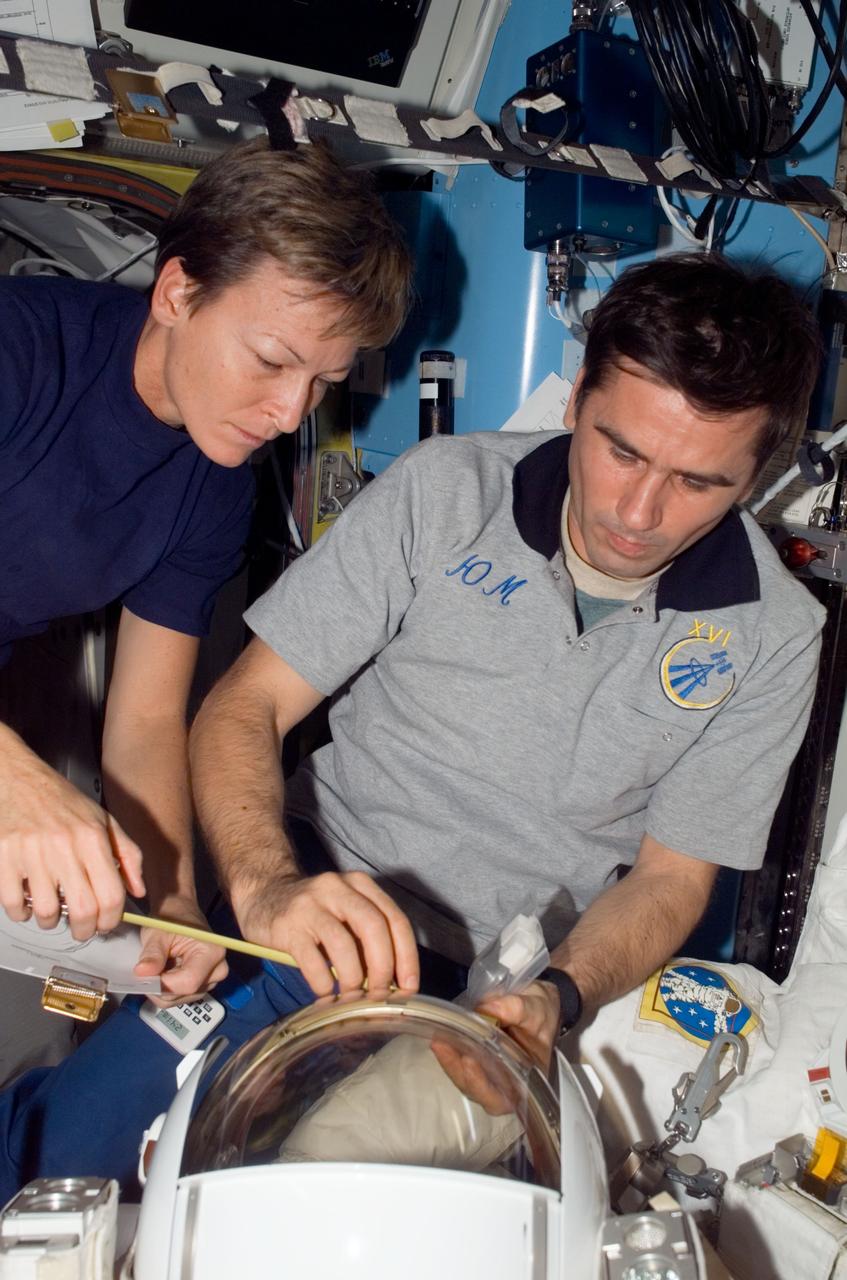
ISS016-E-010241 (8 Nov. 2007) --- Astronaut Peggy A. Whitson, Expedition 16 commander; and cosmonaut Yuri I. Malenchenko, flight engineer representing Russia's Federal Space Agency, work with an Extravehicular Mobility Unit (EMU) helmet in the Quest Airlock of the International Space Station.
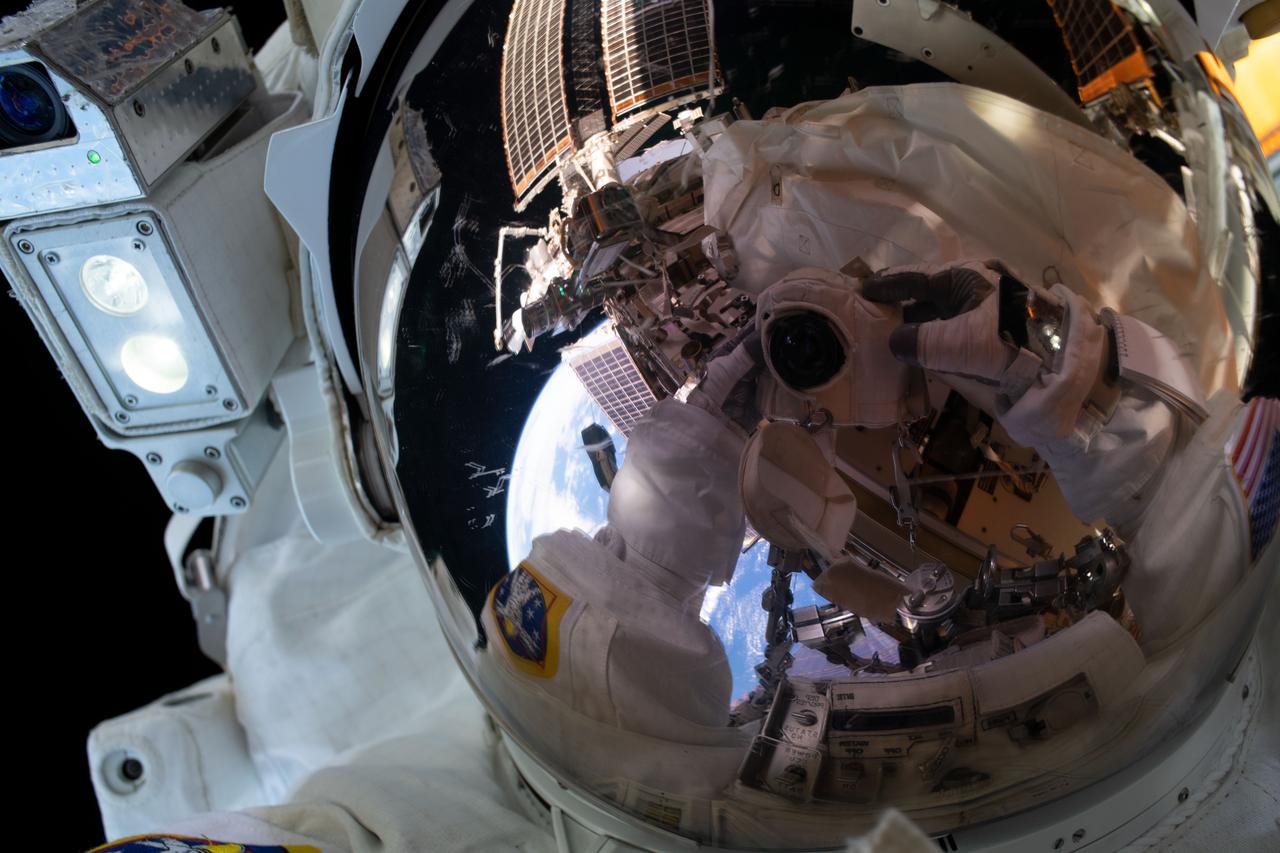
iss068e022442 (Nov. 15, 2022) --- NASA astronaut and Expedition 68 Flight Engineer Frank Rubio points his camera toward himself and takes an out-of-this-world "space-selfie" with his helmet visor's reflective shield down during a spacewalk in his Extravehicular Mobility Unit, or spacesuit.
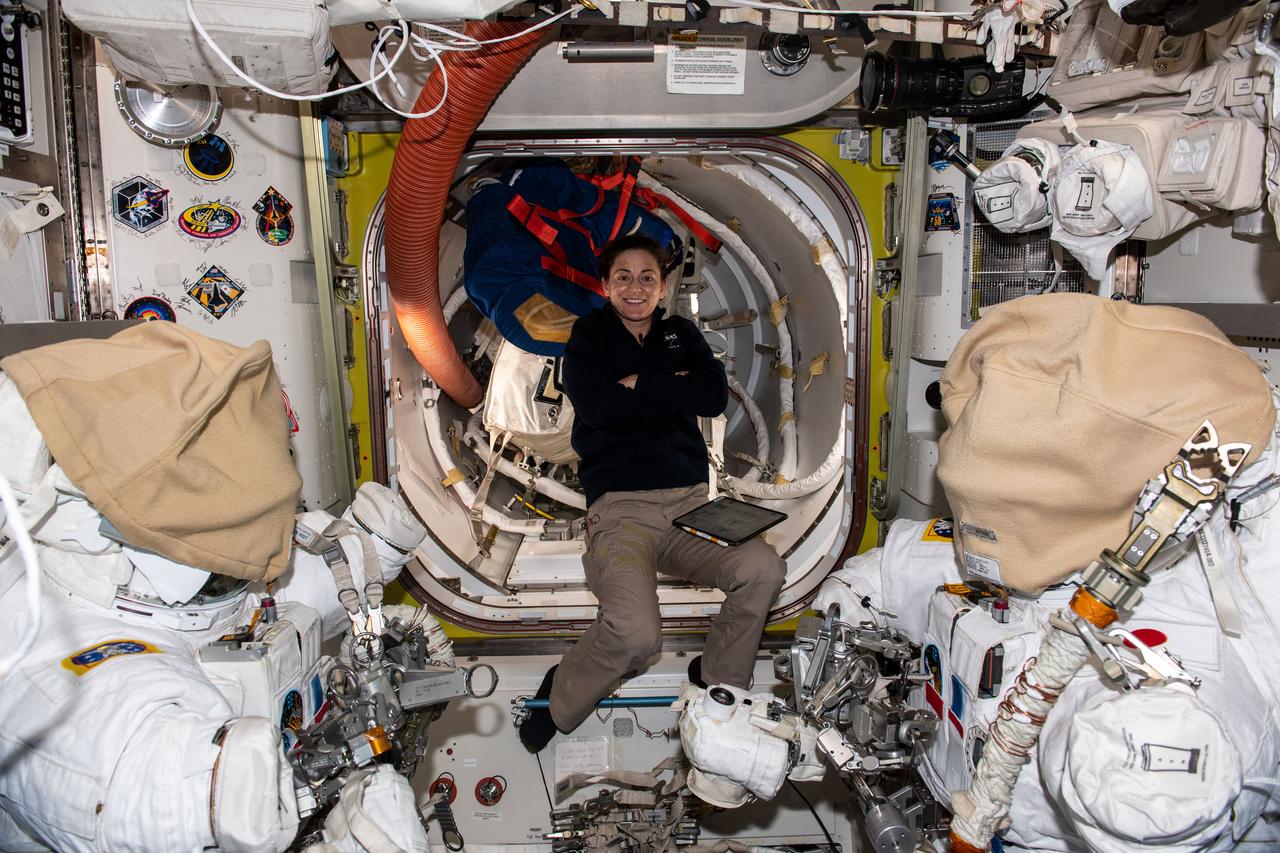
iss068e044025 (Jan. 31, 2023) --- NASA astronaut and Expedition 68 Flight Engineer Nicole Mann is pictured inside the International Space Station's Quest airlock while organizing spacewalk tools and hardware. In the foreground, are two Extravehicular Mobility Units (EMUs), or spacesuits, with their helmets covered and the lower arms and gloves detached.
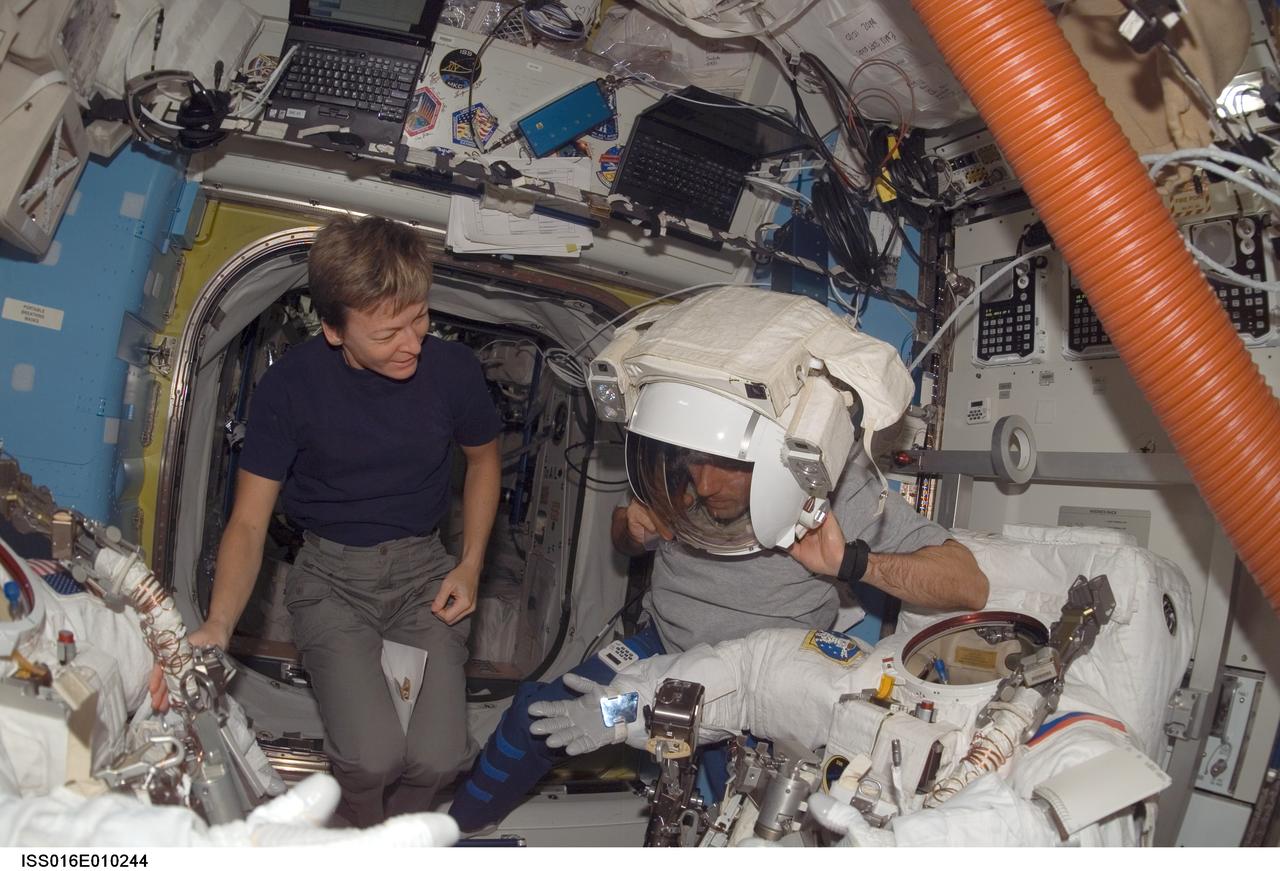
ISS016-E-010244 (8 Nov. 2007) --- Cosmonaut Yuri I. Malenchenko, Expedition 16 flight engineer representing Russia's Federal Space Agency, tries on an Extravehicular Mobility Unit (EMU) helmet in the Quest Airlock of the International Space Station. Astronaut Peggy A. Whitson, commander, assisted Malenchenko.
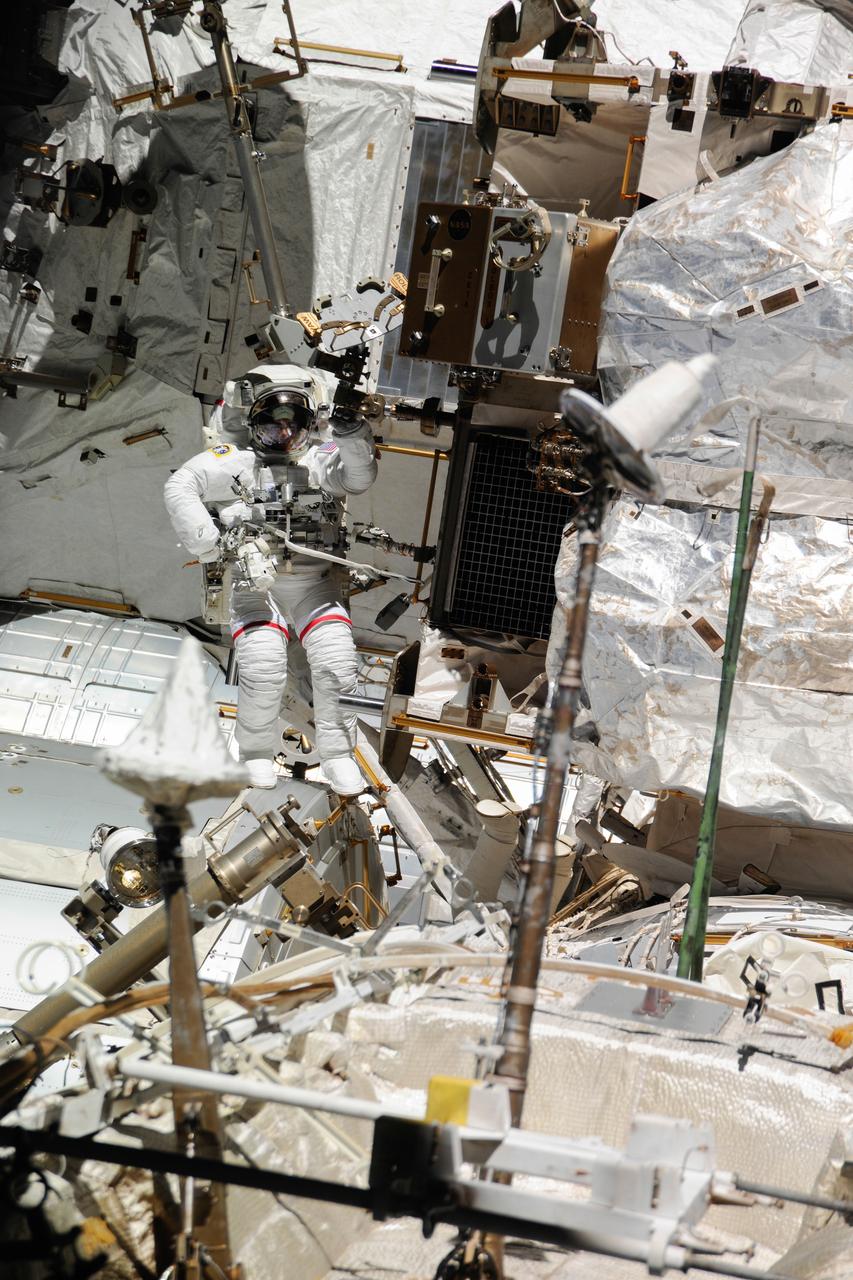
ISS036-E-020926 (16 July 2013) --- NASA astronaut Chris Cassidy, Expedition 36 flight engineer, attired in an Extravehicular Mobility Unit (EMU) spacesuit, participates in a session of extravehicular activity (EVA) as work continues on the International Space Station. A little more than one hour into the spacewalk, European Space Agency astronaut Luca Parmitano (out of frame) reported water floating behind his head inside his helmet. The water was not an immediate health hazard for Parmitano, but Mission Control decided to end the spacewalk early.
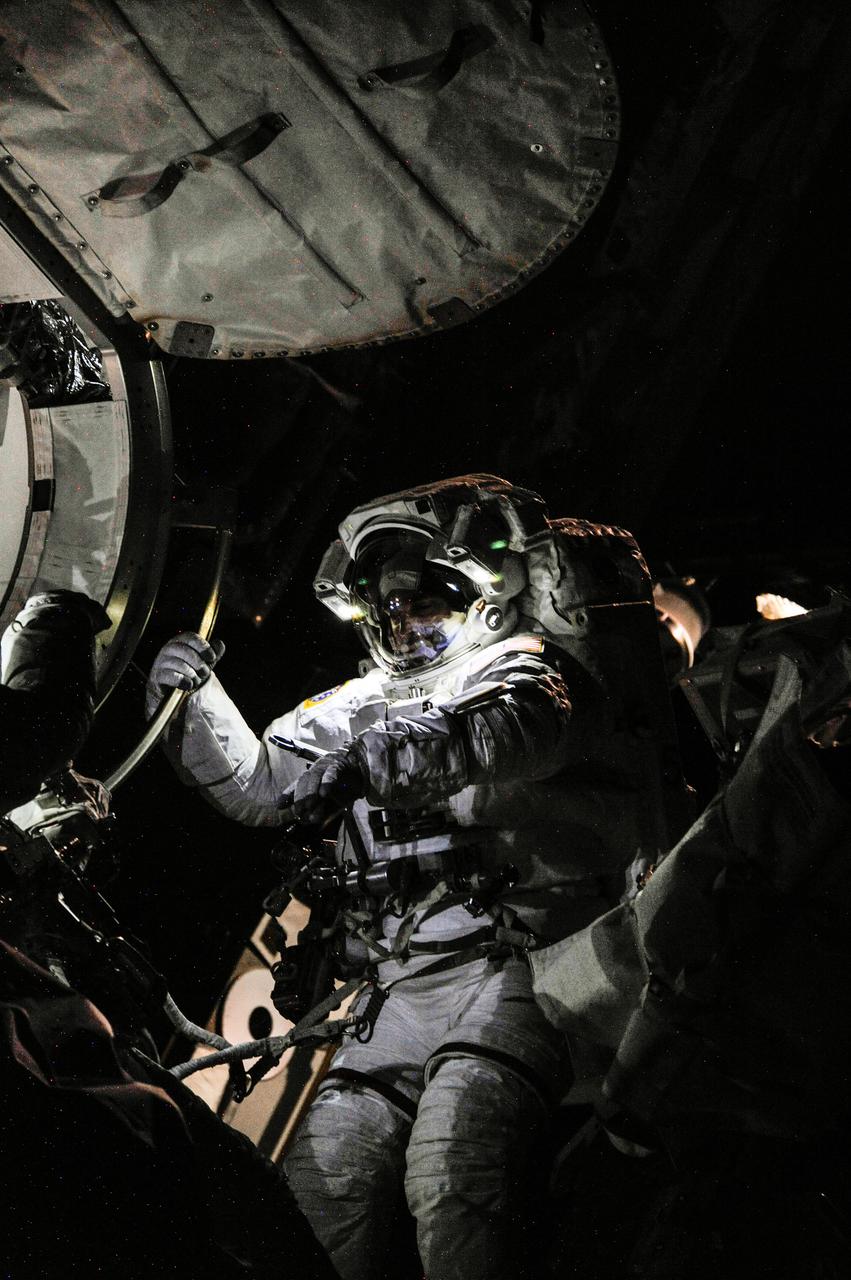
ISS036-E-020762 (16 July 2013) --- NASA astronaut Chris Cassidy, Expedition 36 flight engineer, attired in an Extravehicular Mobility Unit (EMU) spacesuit, participates in a session of extravehicular activity (EVA) as work continues on the International Space Station. A little more than one hour into the spacewalk, European Space Agency astronaut Luca Parmitano (out of frame) reported water floating behind his head inside his helmet. The water was not an immediate health hazard for Parmitano, but Mission Control decided to end the spacewalk early.
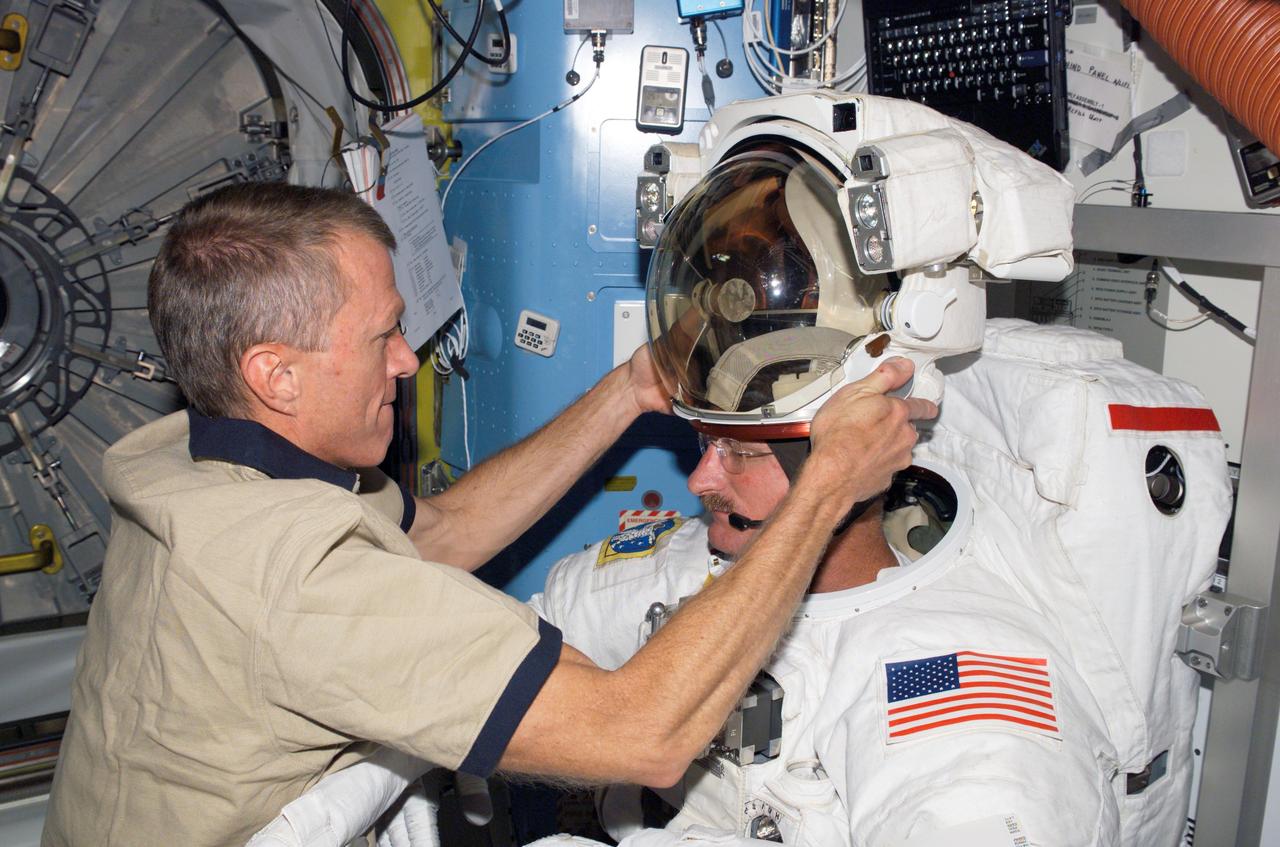
S115-E-06075 (15 Sept. 2006) --- Astronaut Brent W. Jett, Jr., STS-115 commander, helps astronaut Joseph R. Tanner, mission specialist, with the helmet for his extravehicular mobility unit (EMU) spacesuit as they prepare for the mission's third session of extravehicular activity (EVA) in the Quest Airlock of the International Space Station while the Space Shuttle Atlantis was docked with the station.
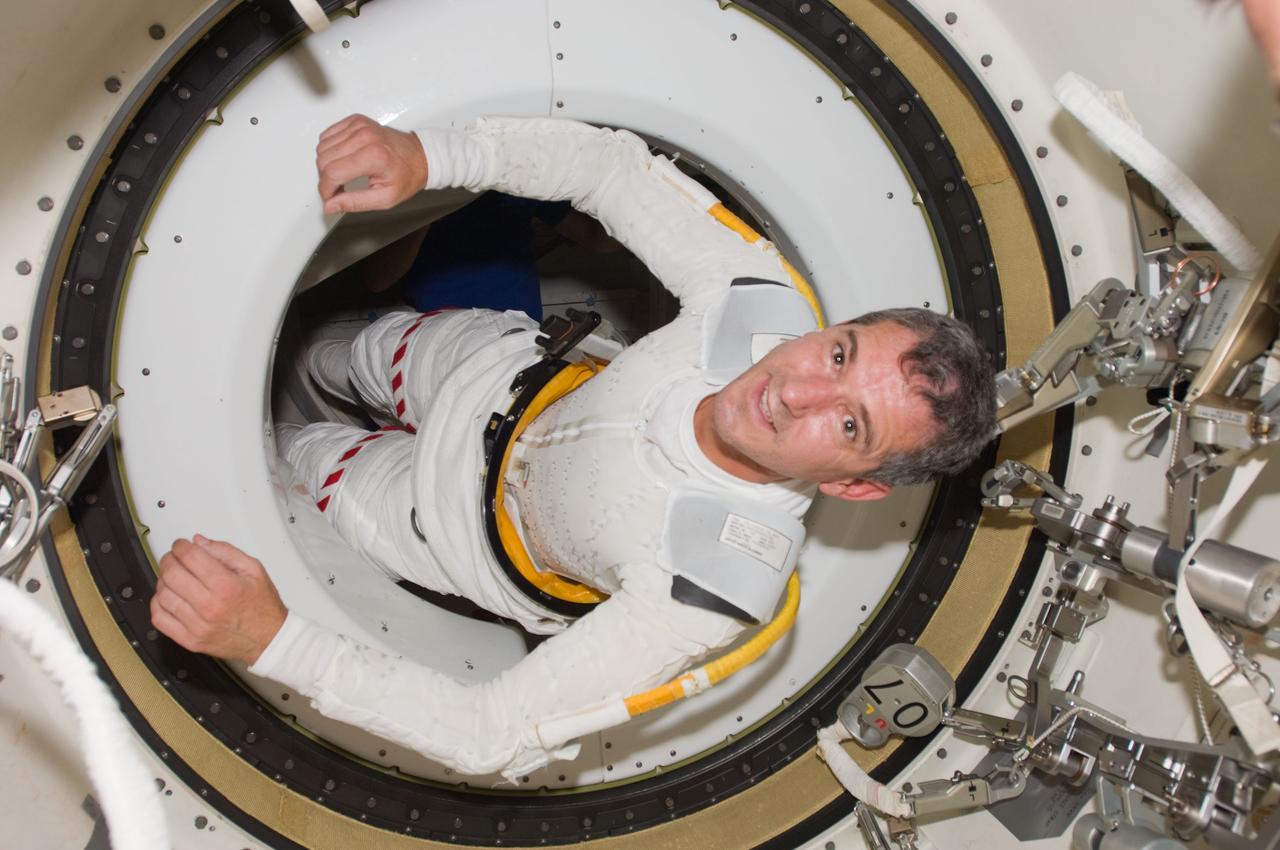
S125-E-007803 (15 May 2009) --- Judging by his countenance, astronaut Michael Good onboard the Space Shuttle Atlantis is enjoying his first experience not only in space but in participating in a very important space walk, as well. The mission specialist is lacking the gloves, helmet and outer torso part of the extravehicular mobility unit space suit, but he is wearing the pants portion. Astronauts Good and Mike Massimino successfully completed the second of five scheduled sessions of extravehicular activity for this crew.
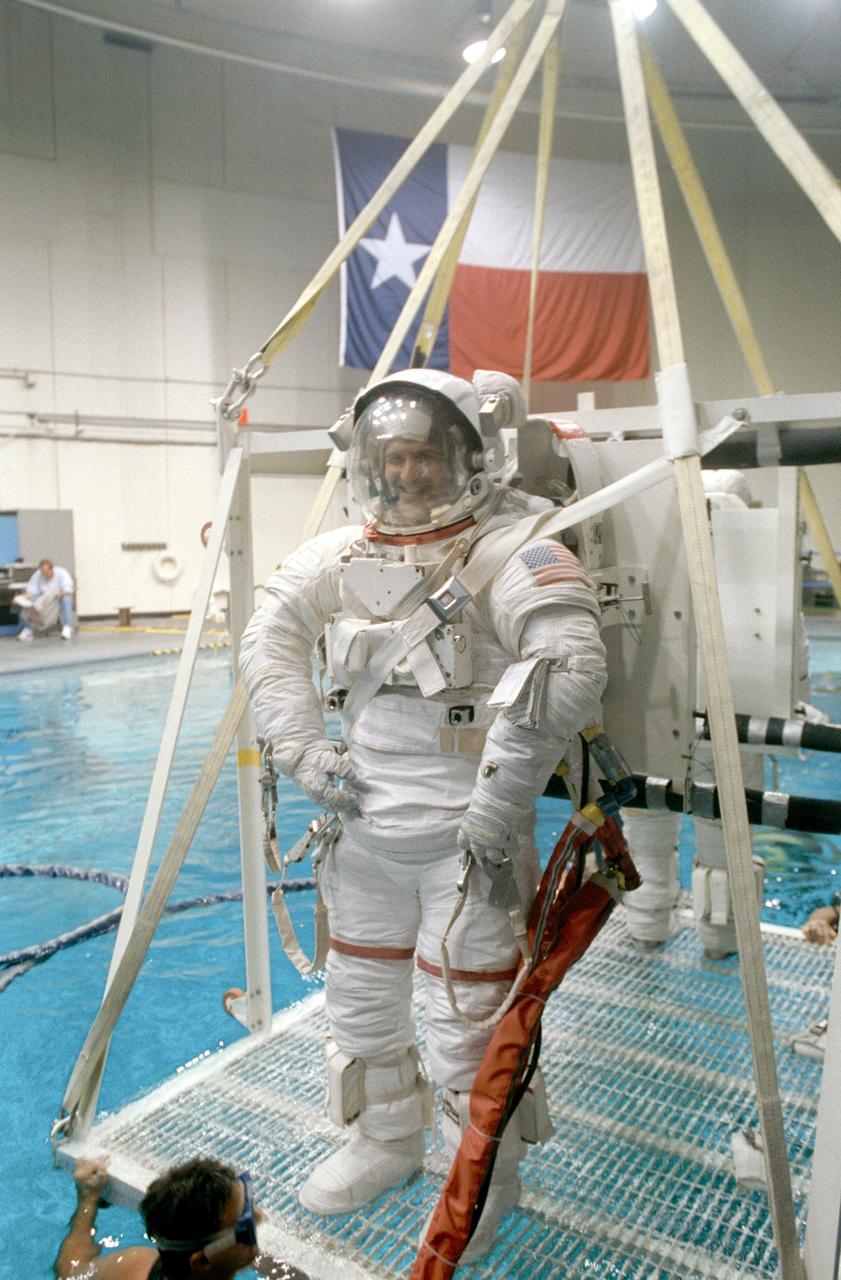
S92-40378 (1 July 1992) --- Astronaut Peter J.K. Wisoff, STS-57 mission specialist, fully suited in an extravehicular mobility unit (EMU) and helmet and standing on a platform, is lowered into the 25 foot deep pool of Johnson Space Center?s (JSC) Weightless Environment Training Facility (WETF) Bldg 29. Once underwater, Wisoff will participate in an underwater extravehicular activity (EVA) simulation. A scuba-equipped diver already in the pool guides the platform into the water.
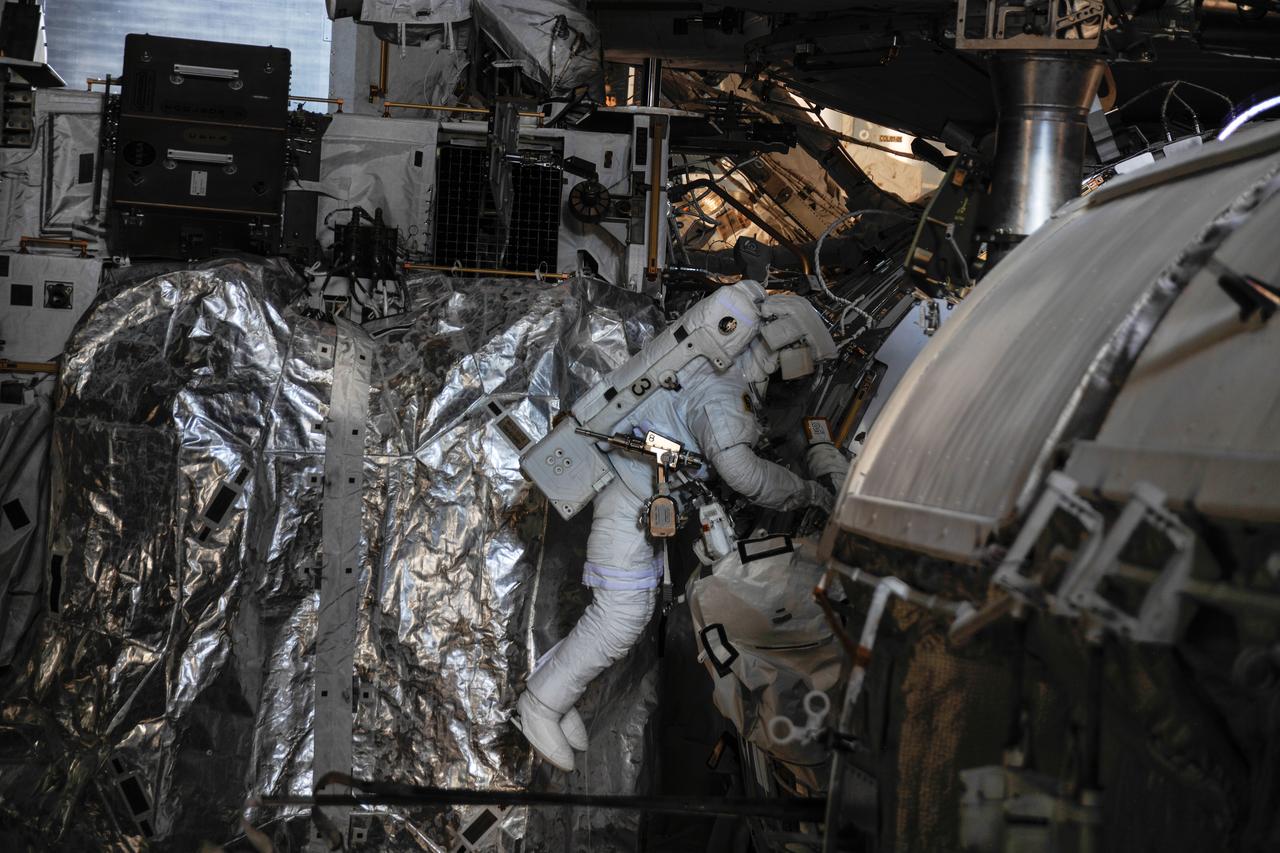
ISS036-E-020862 (16 July 2013) --- European Space Agency astronaut Luca Parmitano, Expedition 36 flight engineer, attired in an Extravehicular Mobility Unit (EMU) spacesuit, participates in a session of extravehicular activity (EVA) as work continues on the International Space Station. A little more than one hour into the spacewalk, Parmitano reported water floating behind his head inside his helmet. The water was not an immediate health hazard for Parmitano, but Mission Control decided to end the spacewalk early.
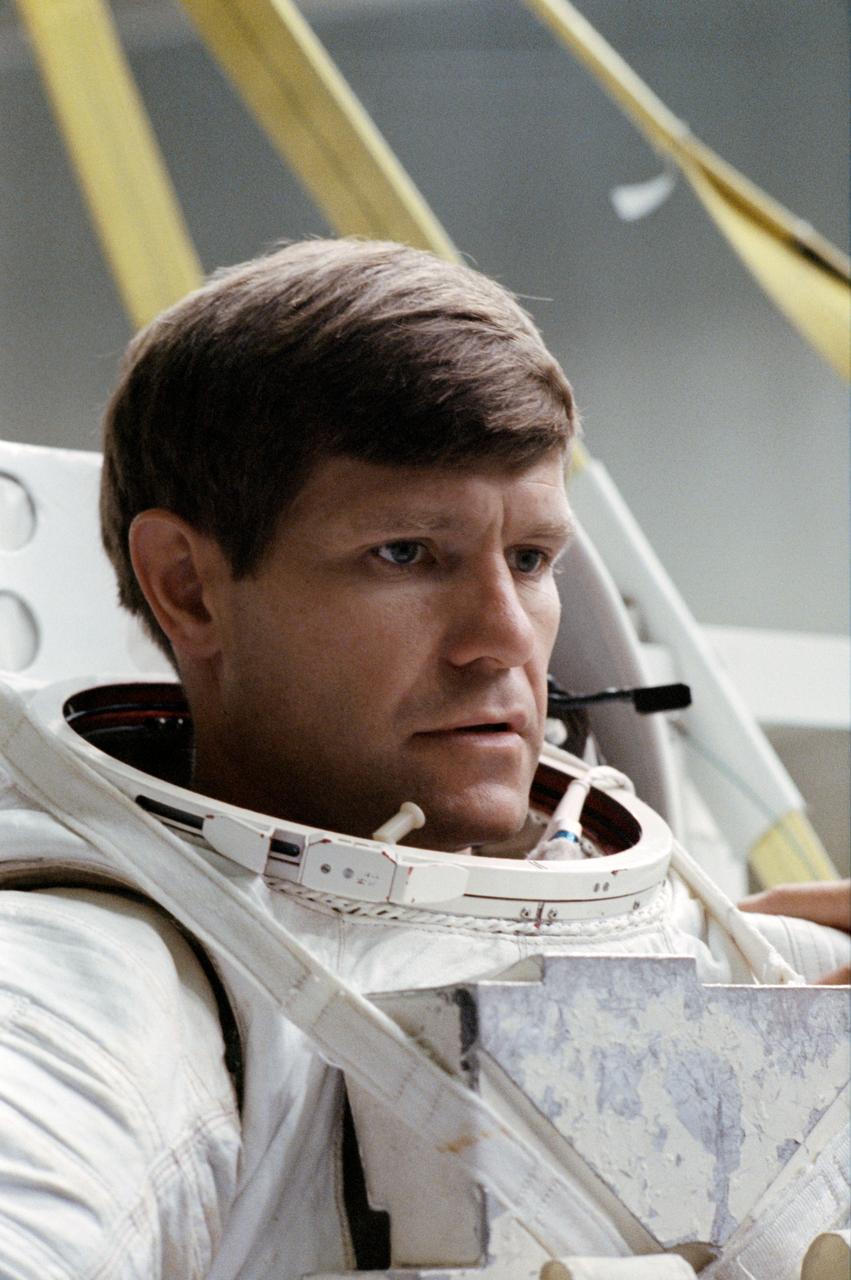
S90-46036 (Aug 1990) --- Astronaut Donald R. McMonagle awaits arrival of helmet gear for his extravehicular mobility unit (EMU) spacesuit as he prepares to be lowered into a 25-ft. deep pool at the Johnson Space Center's weightless environment training facility (WET-F). McMonagle was preparing to participate in the simulation of a contingency extravehicular activity (EVA) for the mission, scheduled for Discovery in the spring of 1991.
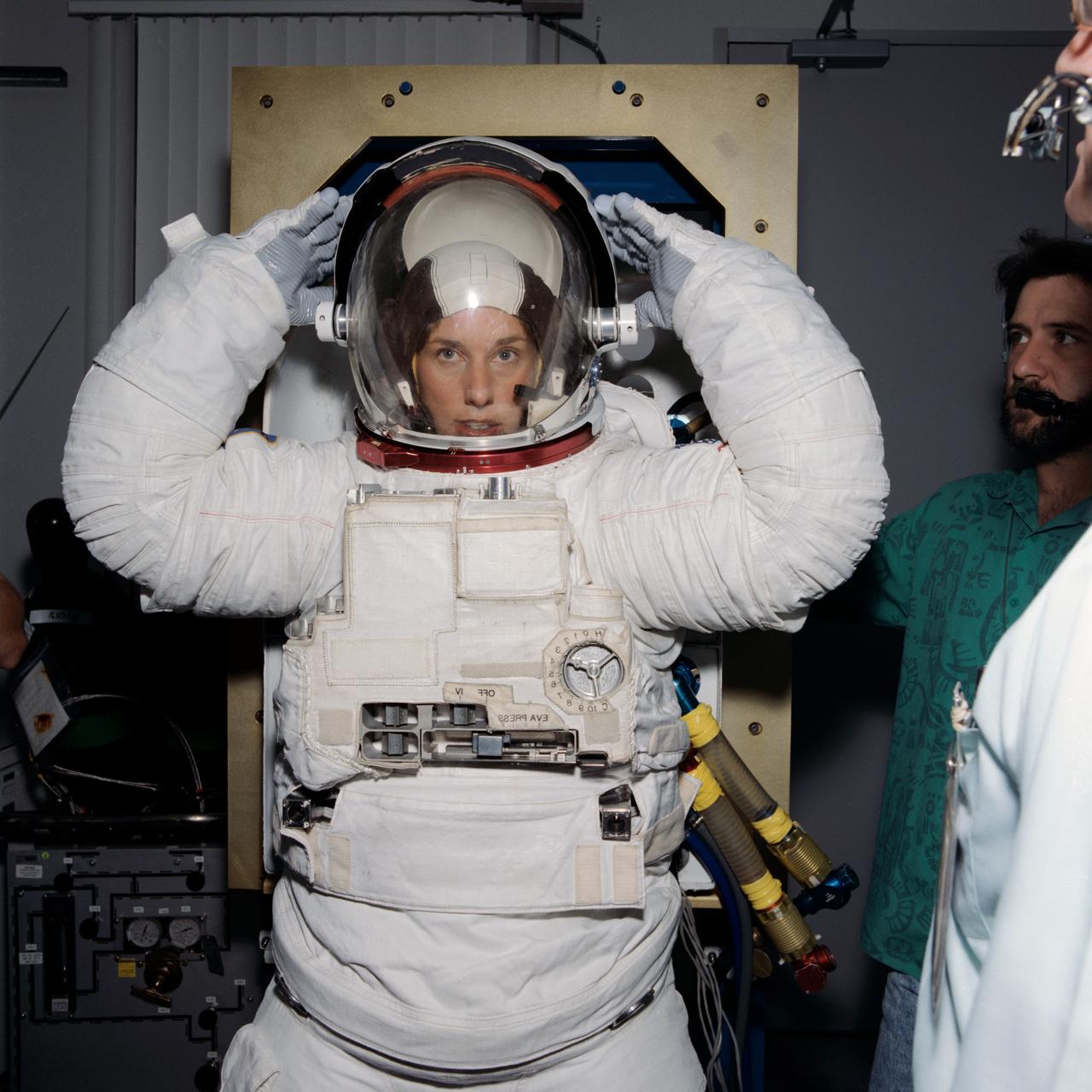
Astronaut N. Jan Davis, with her arms over her head, adjusts her helmet visor during crewmember shuttle suit fit check conducted at JSC's Crew Systems Laboratory Bldg 7.
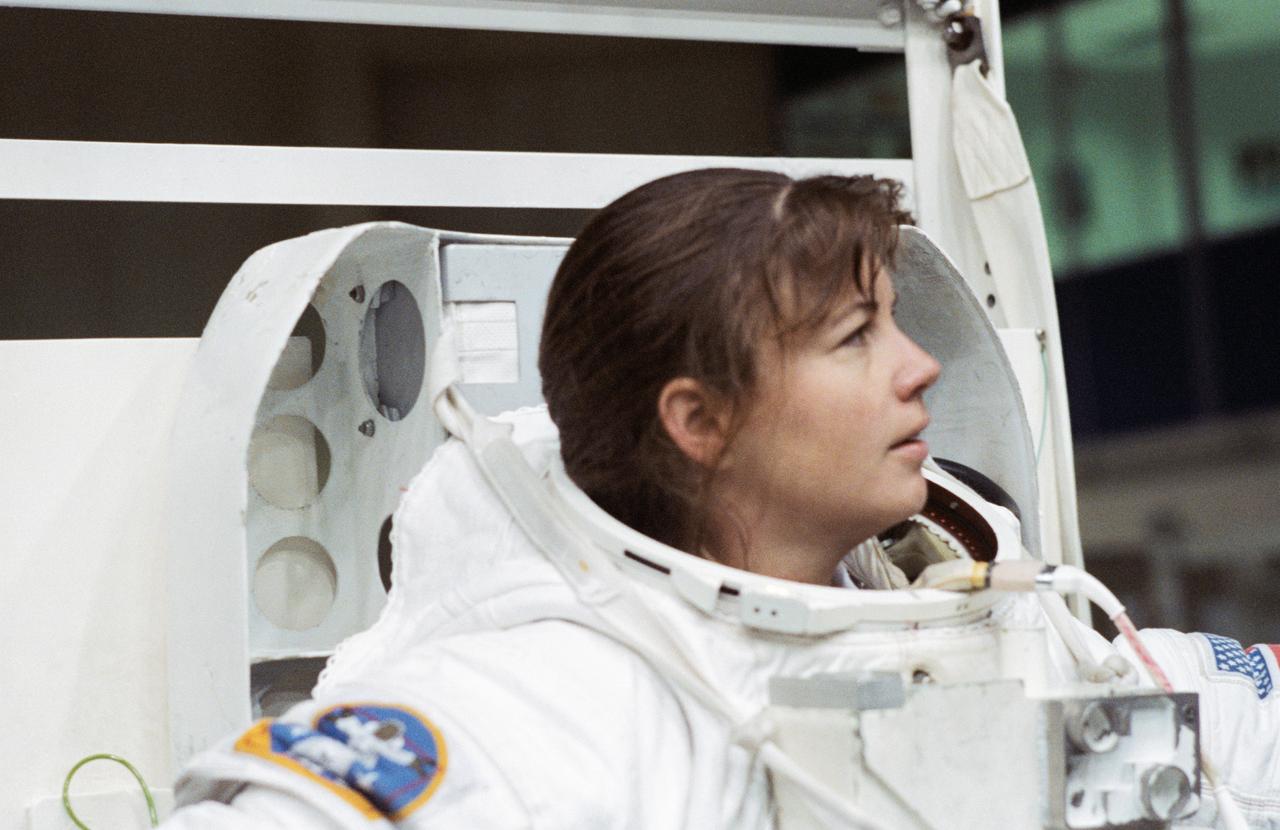
Astronaut and mission specialist Catherine G. Coleman is about to don the helmet portion of a high fidelity training version of the Extravehicular Mobility Unit (EMU) space suit at the Johnson Space Center’s (JSC) Weightless Environment Training Facility (WET-F). This particular training was in preparation for the STS-73 mission. The STS-73 mission was the second flight of the United States Microgravity Laboratory (USML-2), managed by scientists and engineers from the Marshall Space Flight Center.
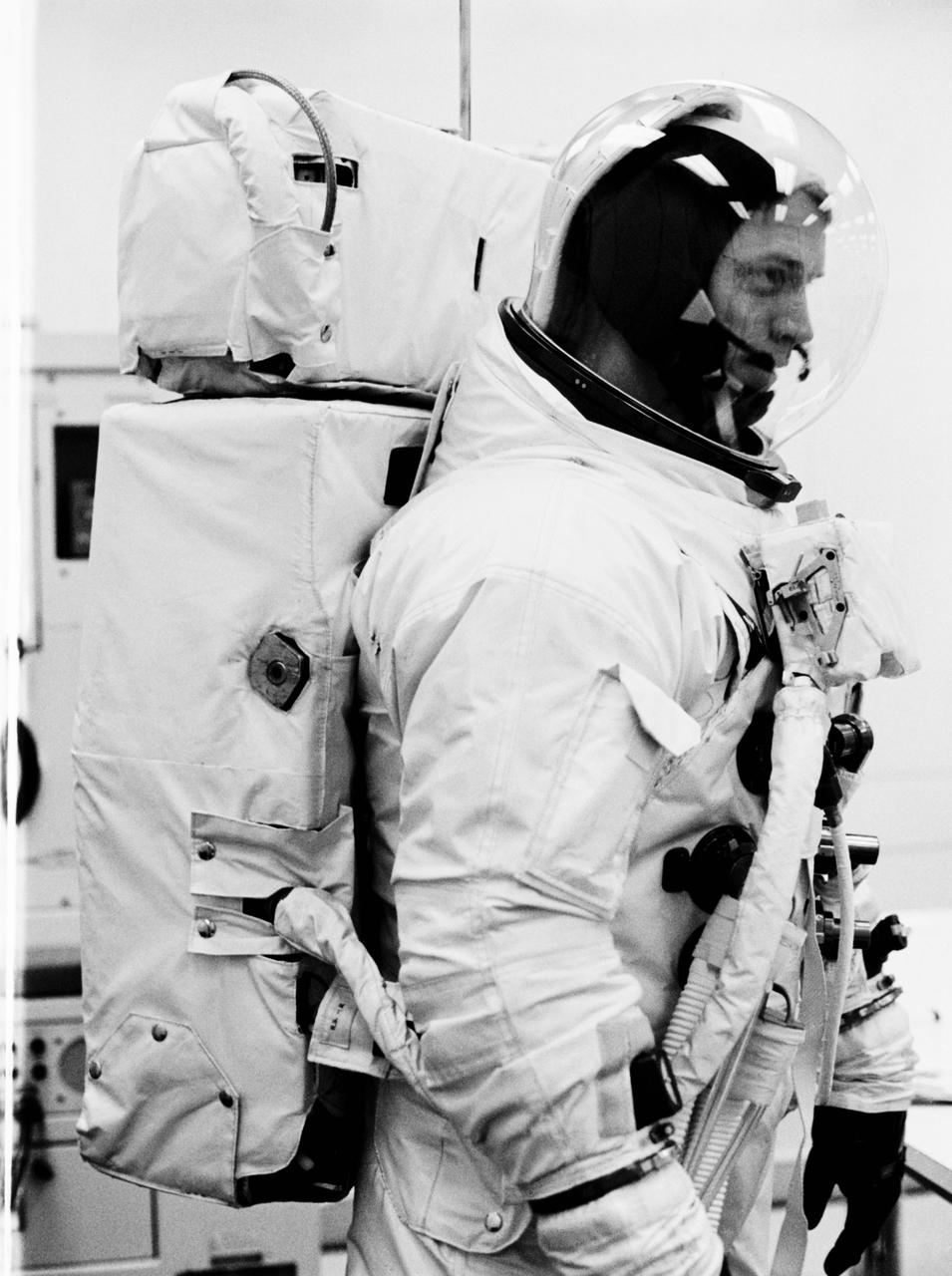
S69-25878 (23 Feb. 1969) --- Astronaut Russell L. Schweickart, lunar module pilot of the Apollo 9 prime crew, wears the Extravehicular Mobility Unit (EMU) which he will use during his scheduled Apollo 9 extravehicular activity. In addition to the space suit and bubble helmet, the EMU also includes a Portable Life Support System back pack, an Oxygen Purge System (seen atop the PLSS), and a Remote Control Unit on his chest. This equipment will be completely independent of the spacecraft during Schweickart's EVA. He will be secured only by a tether line. When this photograph was taken, Schweickart was suited to participate in an Apollo 9 Countdown Demonstration Test.
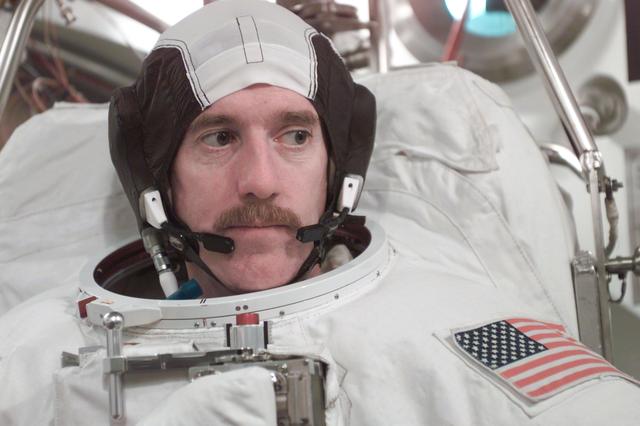
JSC2001-E-11691 (9 April 2001) --- Astronaut James F. Reilly, STS-104 mission specialist, prepares to don his helmet for an Extravehicular Mobility Unit (EMU) fit check in one of the chambers in the Crew Systems Laboratory at the Johnson Space Center (JSC). The STS-104 mission to the International Space Station (ISS) represents the Space Shuttle Atlantis' first flight using a new engine and is targeted for a liftoff no earlier than June 14, 2001.
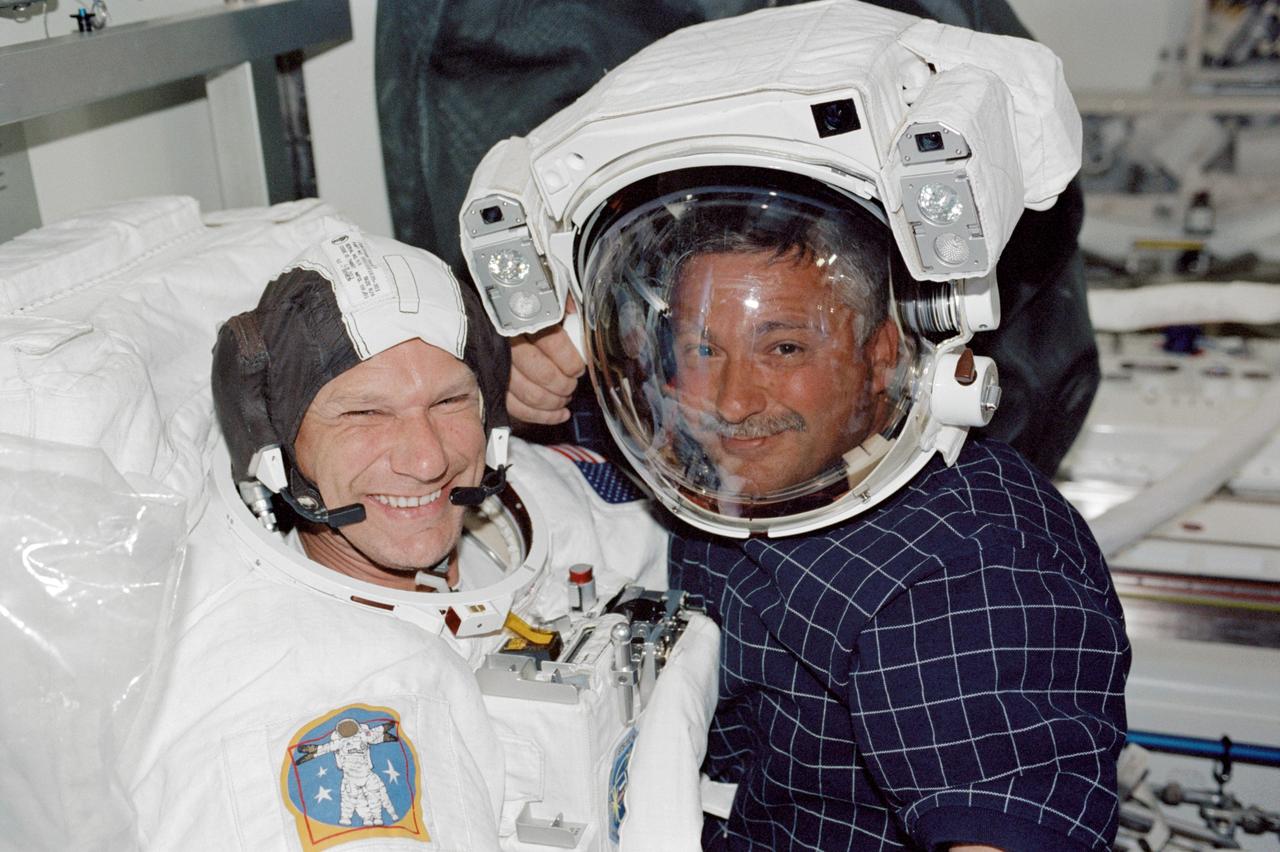
STS112-318-013 (14 October 2002) --- Astronaut Piers J. Sellers (left) and cosmonaut Fyodor N. Yurchikhin, both STS-112 mission specialists, enjoy a light moment in the Quest Airlock on the International Space Station (ISS). Sellers is wearing his Extravehicular Mobility Unit (EMU) space suit and Yurchikhin is wearing Sellers’ helmet. Yurchikhin represents Rosaviakosmos.
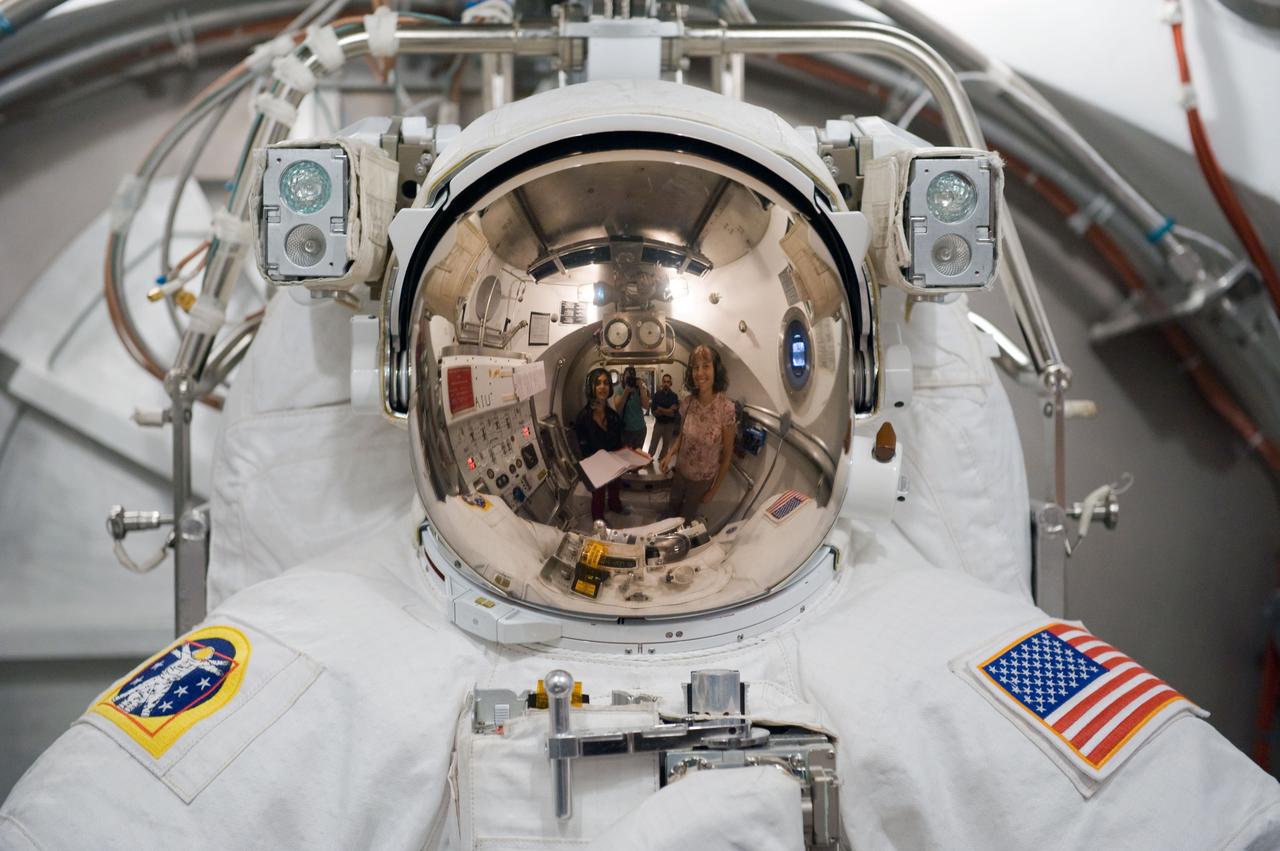
JSC2009-E-240510 (5 Nov. 2009) --- Astronaut Clayton Anderson, STS-131 mission specialist, participates in an Extravehicular Mobility Unit (EMU) spacesuit fit check in the Space Station Airlock Test Article (SSATA) in the Crew Systems Laboratory at NASA's Johnson Space Center. Astronaut Dorothy Metcalf-Lindenburger, mission specialist; along with technicians assisting Anderson, are visible in the reflection in his helmet visor.
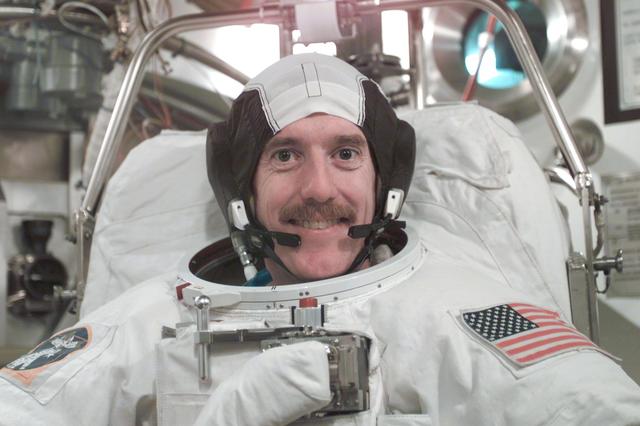
JSC2001-E-11690 (9 April 2001) --- Astronaut James F. Reilly, STS-104 mission specialist, prepares to don his helmet for an Extravehicular Mobility Unit (EMU) fit check in one of the chambers in the Crew Systems Laboratory at the Johnson Space Center (JSC). The STS-104 mission to the International Space Station (ISS) represents the Space Shuttle Atlantis' first flight using a new engine and is targeted for a liftoff no earlier than June 14, 2001.
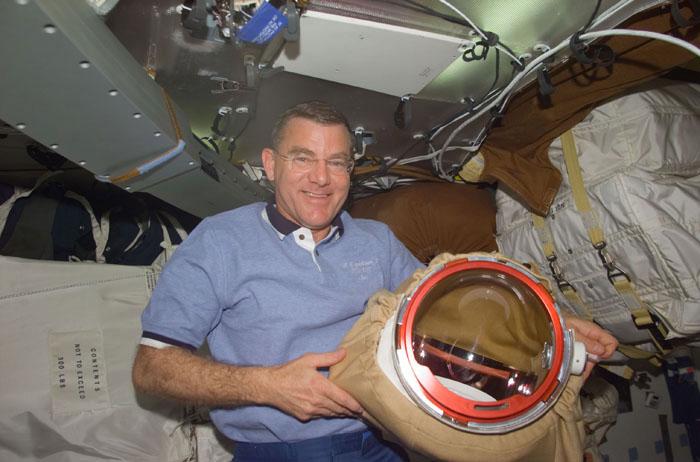
STS102-E-5047 (10 March 2001) --- Astronaut James S. Voss, STS-102 mission specialist, inspects one of two Extravehicular Mobility Unit (EMU) helmets and other supplies on mid deck. Voss is one of two astronauts assigned to space walk duties after the Space Shuttle Discovery and the International Space Station (ISS) link in Earth orbit. The photograph was recorded with a digital still camera.
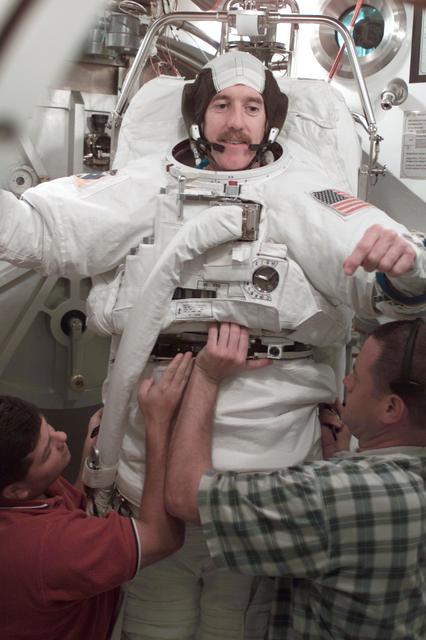
JSC2001-E-11692 (9 April 2001) --- Astronaut James F. Reilly, mission specialist, prepares to don his helmet for an Extravehicular Mobility Unit (EMU) fit check in one of the chambers in the Crew Systems Laboratory at the Johnson Space Center (JSC). The STS-104 mission to the International Space Station (ISS) represents the Space Shuttle Atlantis' first flight using a new engine and is targeted for a liftoff no earlier than June 14, 2001.
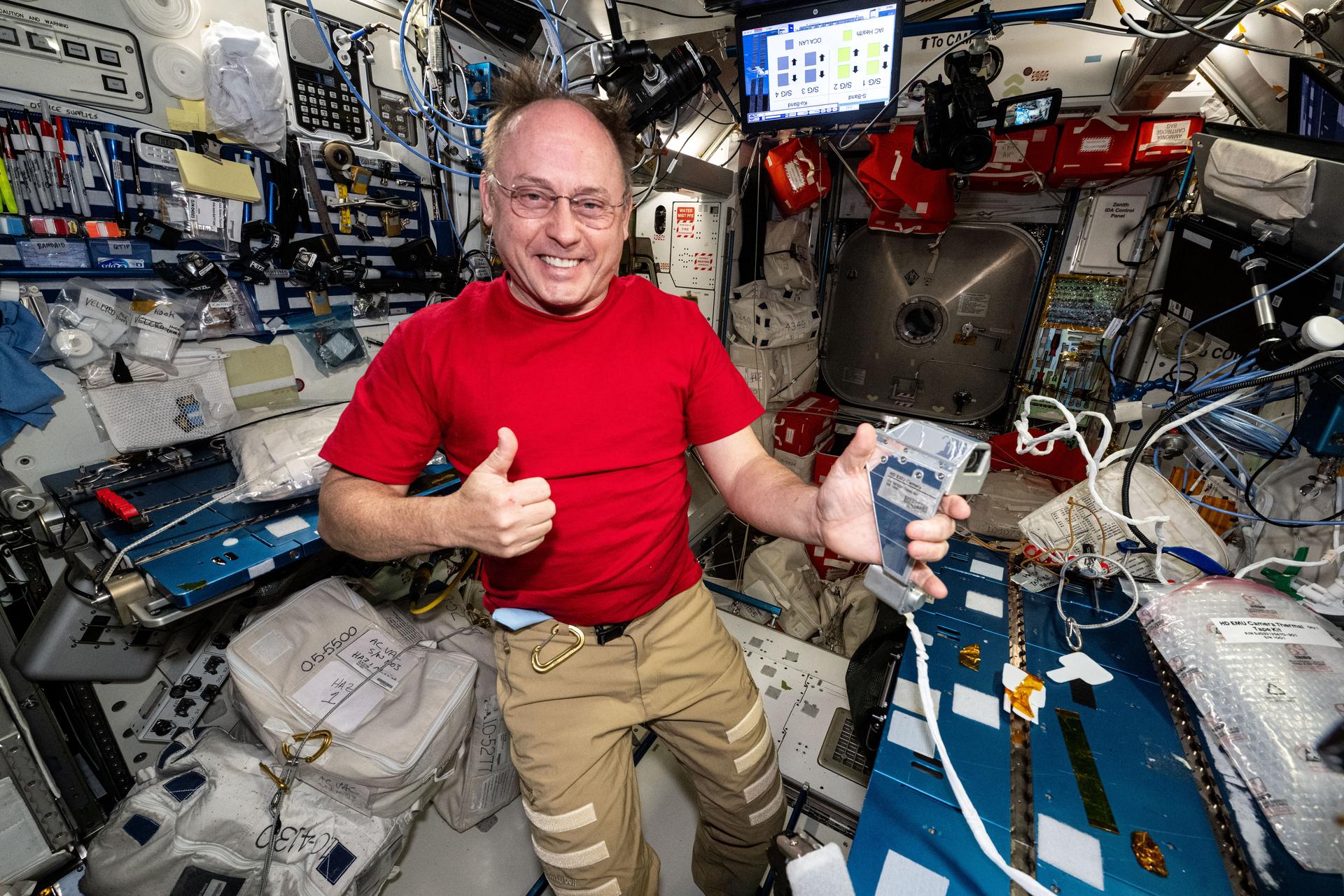
iss073e0510684 (Aug. 18, 2025) --- NASA astronaut and Expedition 73 Flight Engineer Mike Fincke gives a “thumbs up” while holding a High Definition Extravehicular Mobility Unit Camera, or HECA. The spacesuit helmet-mounted camera streams real-time, high-definition video of spacewalk activities to mission controllers on the ground. Earlier, Fincke replaced the thermal tape that shields the HECA from the harsh environment of space.
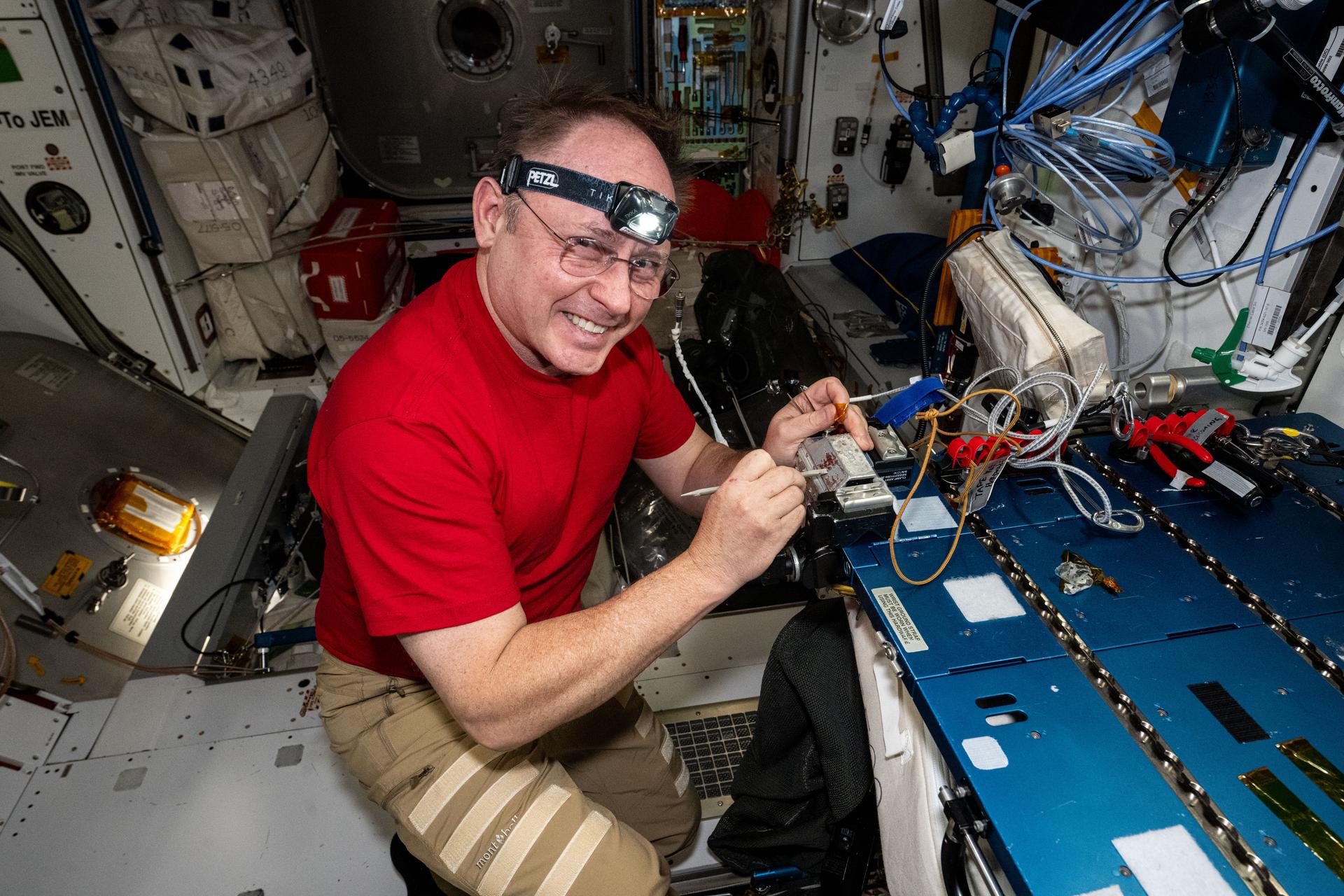
iss073e0510683 (Aug. 18, 2025) --- NASA astronaut and Expedition 73 Flight Engineer Mike Fincke replaces thermal tape on a High Definition Extravehicular Mobility Unit Camera, or HECA. The spacesuit helmet-mounted camera streams real-time, high-definition video of spacewalk activities to mission controllers on the ground, while the thermal tape shields the HECA from the harsh environment of space.
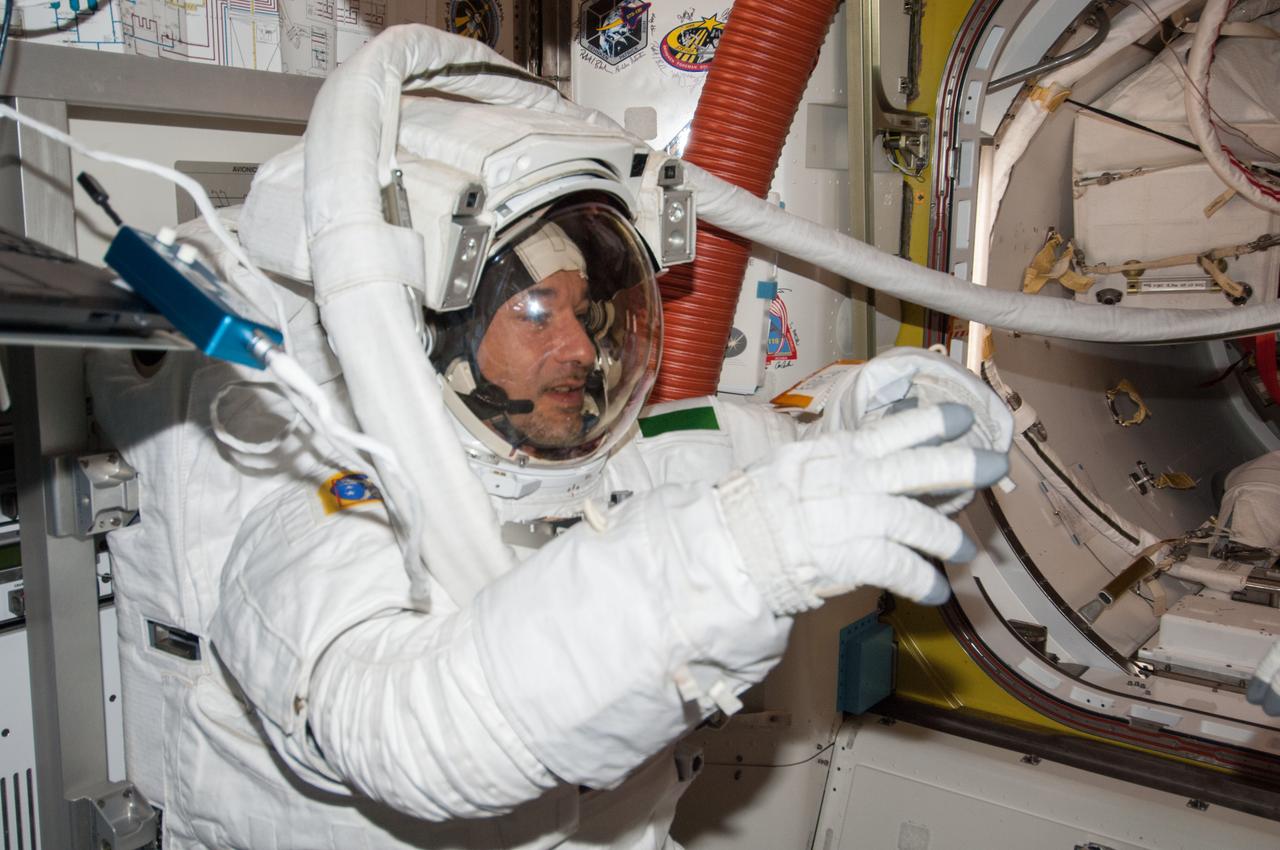
ISS036-E-019886 (16 July 2013) --- European Space Agency astronaut Luca Parmitano, Expedition 36 flight engineer, attired in an Extravehicular Mobility Unit (EMU) spacesuit, is pictured in the International Space Station’s Quest airlock as the July 16 spacewalk draws to a close. A little more than one hour into the spacewalk, Parmitano reported water floating behind his head inside his helmet. The water was not an immediate health hazard for Parmitano, but Mission Control decided to end the spacewalk early.
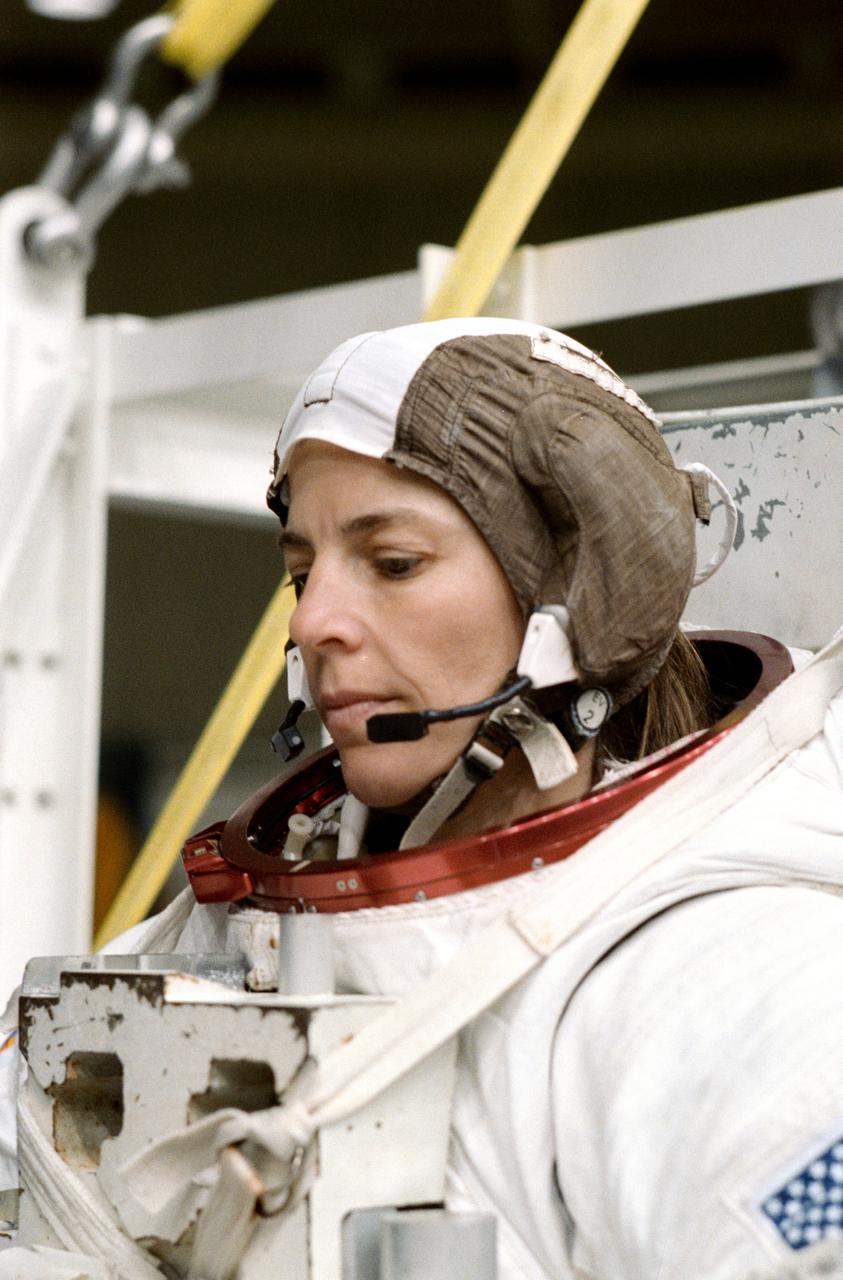
S89-41600 (Nov 1989) --- Astronaut Bonnie J. Dunbar, wearing an extravehicular mobility unit (EMU) spacesuit, prepares to don a helmet and be lowered by a hoist device for a session of underwater training in the Johnson Space Center's weightless environment training facility (WET-F). Minutes later, Astronauts Dunbar and G. David Low, mission specialists, were neutrally buoyant in the nearby 25-ft. deep pool simulating a contingency extravehicular activity (EVA) for the scheduled December 1989 STS-32 mission. There are no scheduled EVAs for the crew, whose main missions are to retrieve the Long Duration Exposure Facility (LDEF) and to deploy a Syncom satellite.
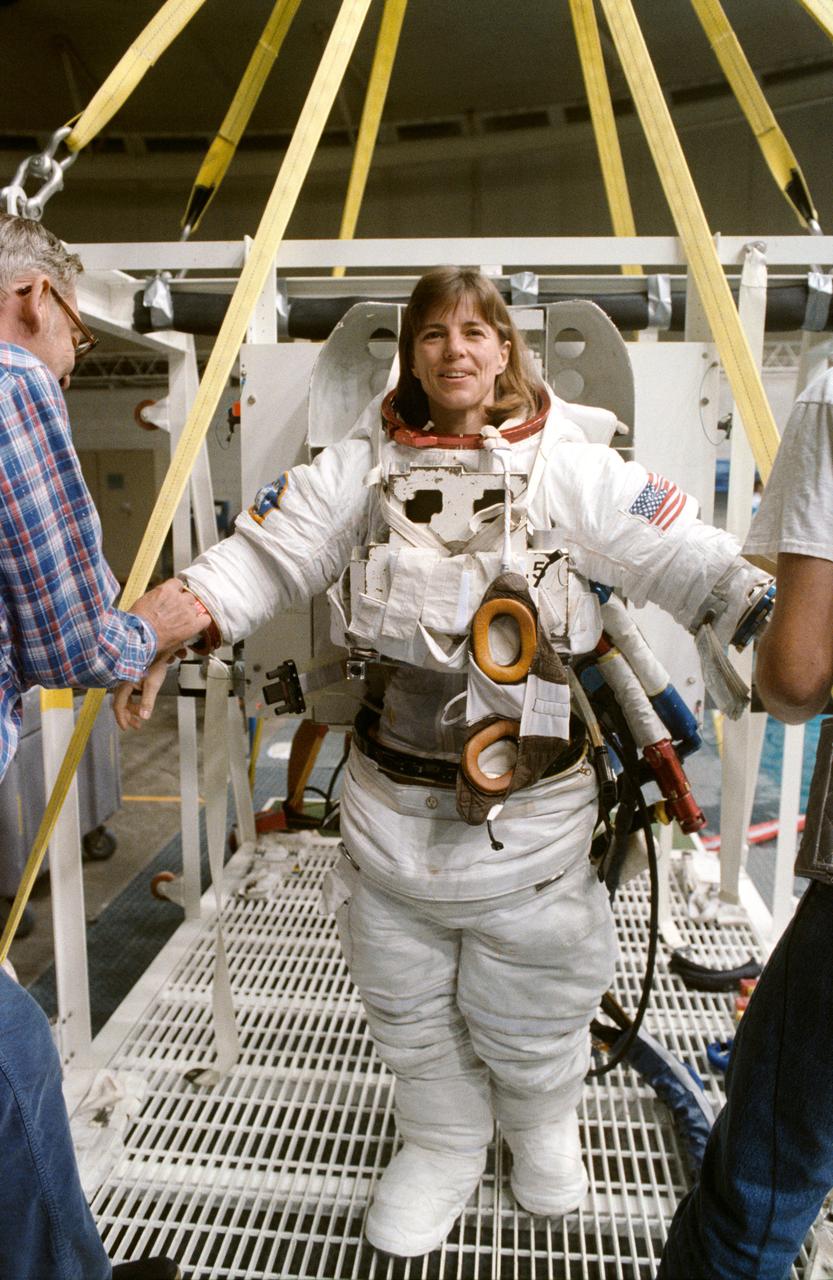
S89-41597 (Nov 1989) --- Astronaut Bonnie J. Dunbar, wearing an extravehicular mobility unit (EMU) spacesuit, prepares to don gloves and subsequently a helmet and to be lowered by a hoist device for a session of underwater training in the Johnson Space Center's weightless environment training facility (WET-F). Minutes later, Astronauts Dunbar and G. David Low, mission specialists, were neutrally buoyant in the nearby 25-ft. deep pool simulating a contingency extravehicular activity (EVA) for the scheduled December 1989 STS-32 mission. There are no scheduled EVAs for the crew, whose main missions are to retrieve the Long Duration Exposure Facility (LDEF) and to deploy a Syncom satellite.
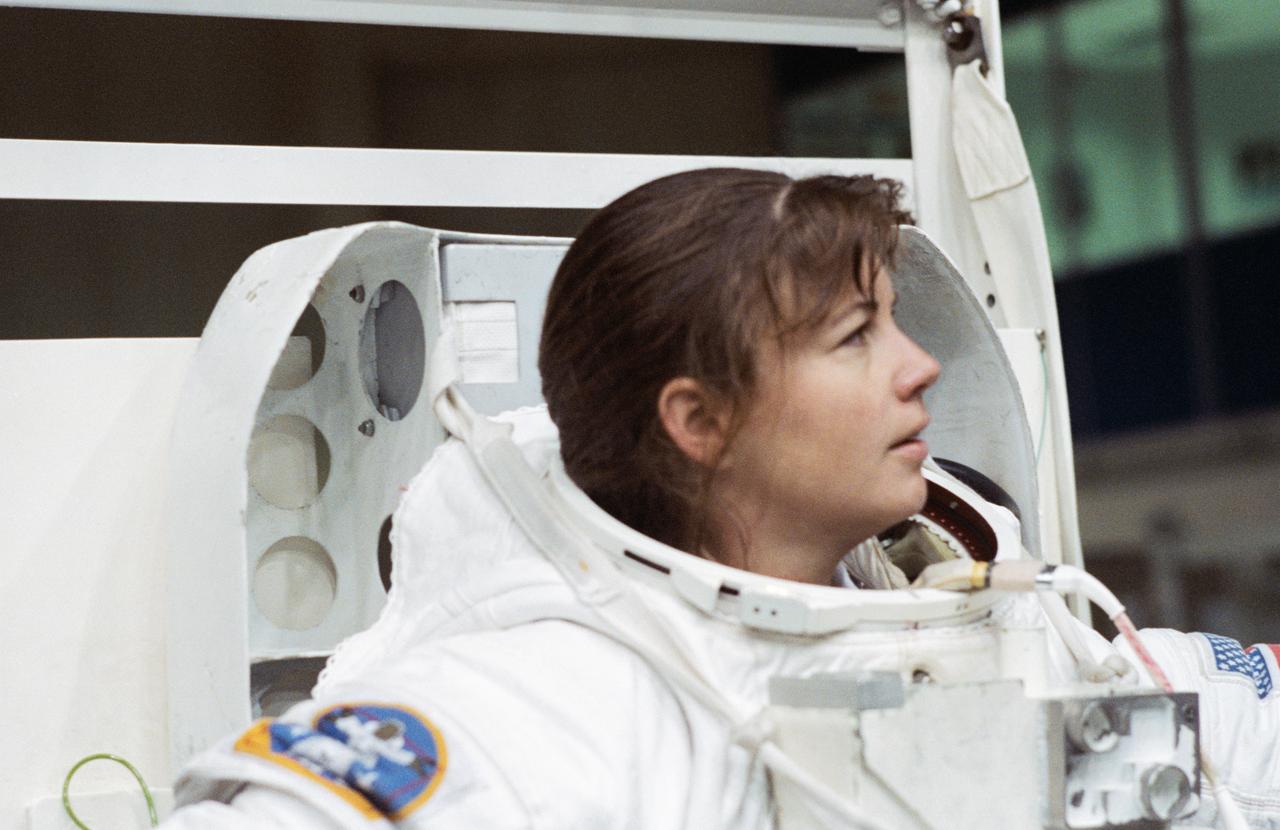
S93-42453 (September 1993) --- Astronaut Catherine G. Coleman, mission specialist for STS-73, is about to don the helmet portion of a high-fidelity training version of an Extravehicular Mobility Unit (EMU) space suit at the Johnson Space Center?s (JSC) Weightless Environment Training Facility (WET-F). Coleman, who has recently been named as one of seven crew members for the U.S. Microgravity Laboratory (USML-2) mission, was about to go underwater in a 25-feet deep pool. The pool is used to train astronauts for mission specific space walk chores as well as for contingency Extravehicular Activity (EVA) tasks. There is no space walk planned for STS-73.
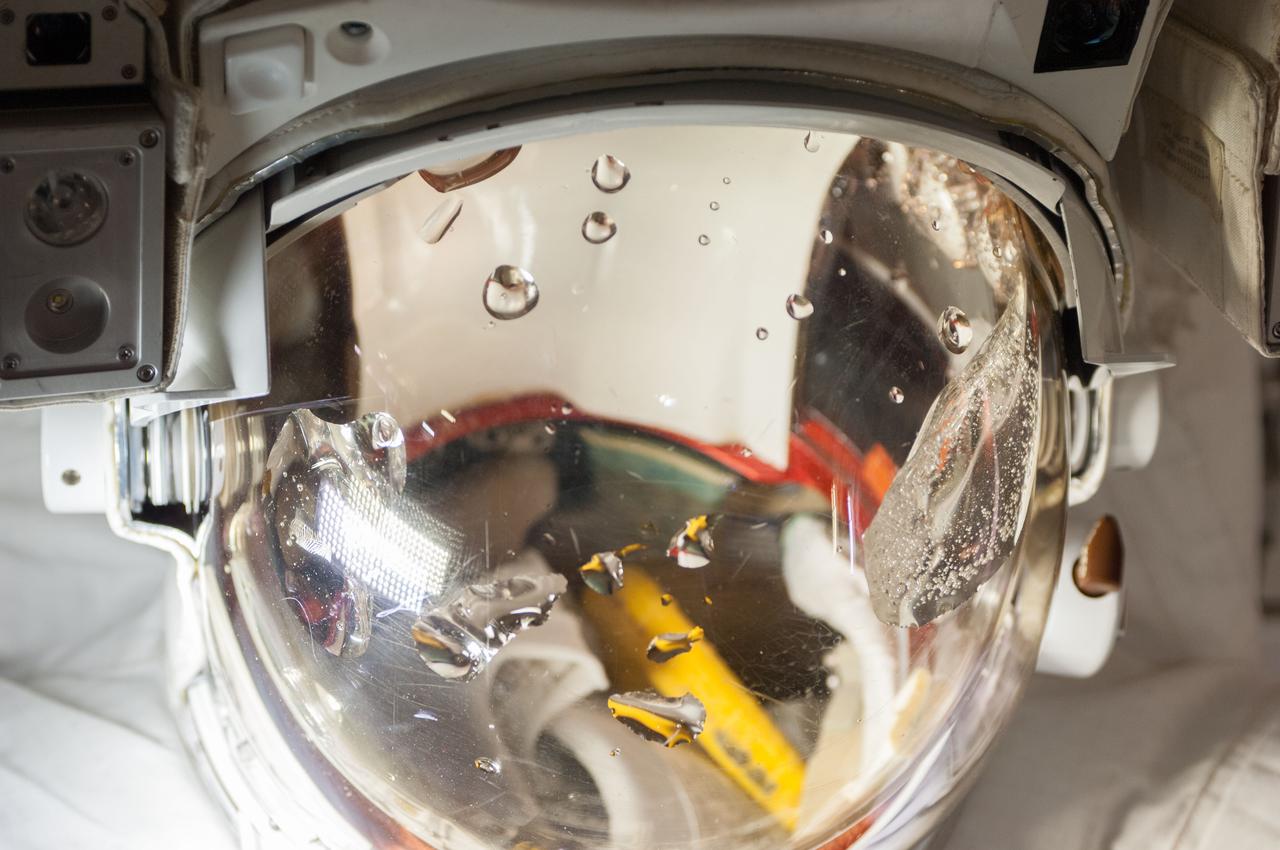
ISS036-E-037249 (27 Aug. 2013) --- The Extravehicular Mobility Unit (EMU) spacesuit helmet ? worn by European Space Agency astronaut Luca Parmitano during a July 16 spacewalk that was cut short when the helmet began to fill with water ? is captured in a close-up image in the Quest airlock of the International Space Station. After assembling and powering up the empty suit as if it were about to go out on another spacewalk, Parmitano and NASA astronaut Chris Cassidy (both out of frame), both Expedition 36 flight engineers, observed water once again leaking into the helmet. With the issue reproduced, NASA now has a baseline configuration for the crew to begin swapping out parts for additional tests to pinpoint the problem. There are also opportunities to either launch replacement parts on upcoming cargo flights or return parts to Earth for further study once more is known about the cause of the issue.
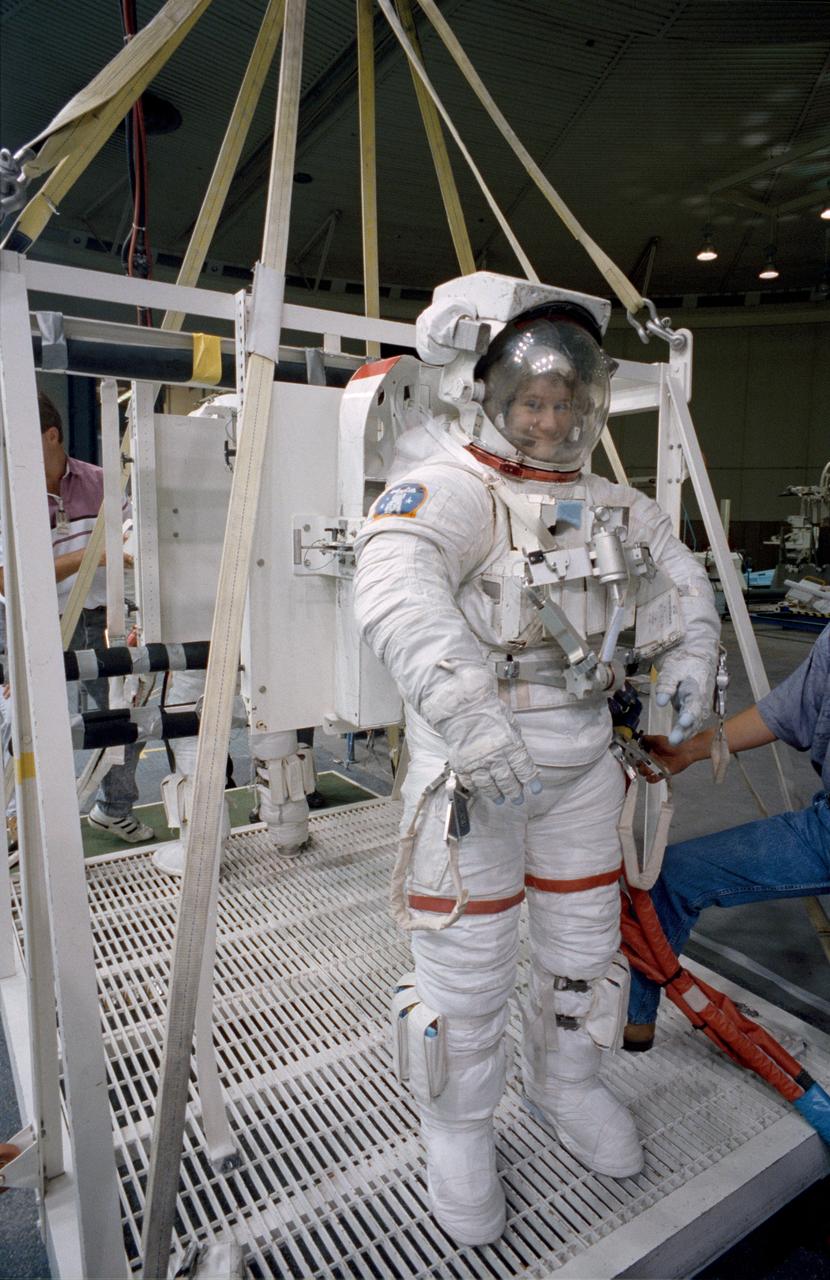
S92-42754 (31 July 1992) --- Astronaut Susan J. Helms, mission specialist assigned to fly aboard the Space Shuttle Endeavour for the STS-54 mission, gets assistance to complete the donning of her spacesuit. Though not assigned to the scheduled extravehicular activity (EVA), Helms is trained in the weightless environment training facility (WET-F). She will aid astronauts Gregory J. Harbaugh and Mario Runco Jr. in their planned EVA, scheduled for January of next year, and serve a backup role. Wearing this high fidelity training version of the extravehicular mobility unit (EMU), Helms was later lowered into the 25-ft. deep WET-F pool. The pressurized suit is weighted so as to allow Helms to achieve neutral buoyancy and simulate the various chores of the spacewalk.
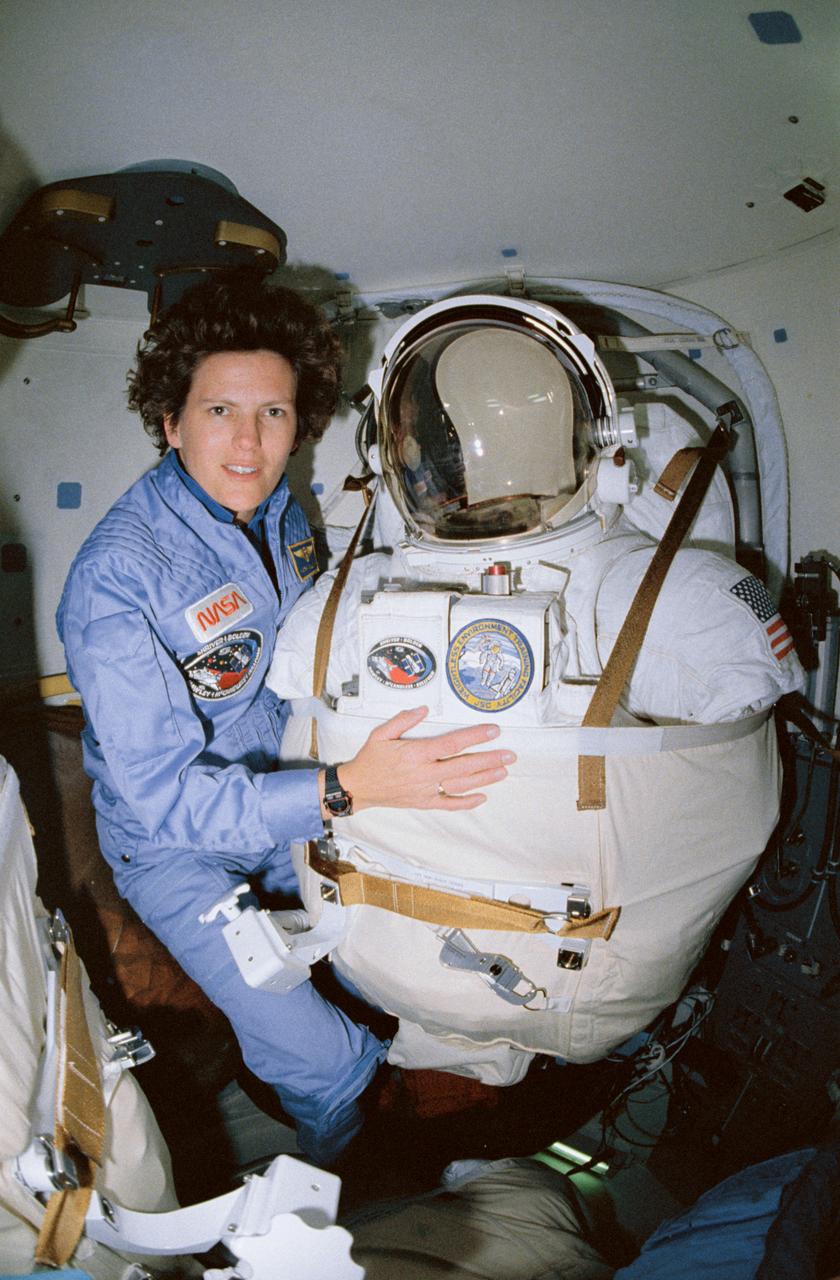
STS-31 Mission Specialist (MS) Kathryn D. Sullivan poses for a picture before beginning extravehicular mobility unit (EMU) donning procedures in the airlock of Discovery, Orbiter Vehicle (OV) 103. Sullivan will remove the lower torso restraint and don EMU which is supported on an airlock adapter plate (AAP). When suited, Sullivan will be ready for contingency extravehicular activity (EVA) in the event that problems arise with the Hubble Space Telescope (HST) deployment. Displayed on the front of the EMU are the STS-31 mission insignia and the JSC Weightless Environment Training Facility (WETF) insignia.
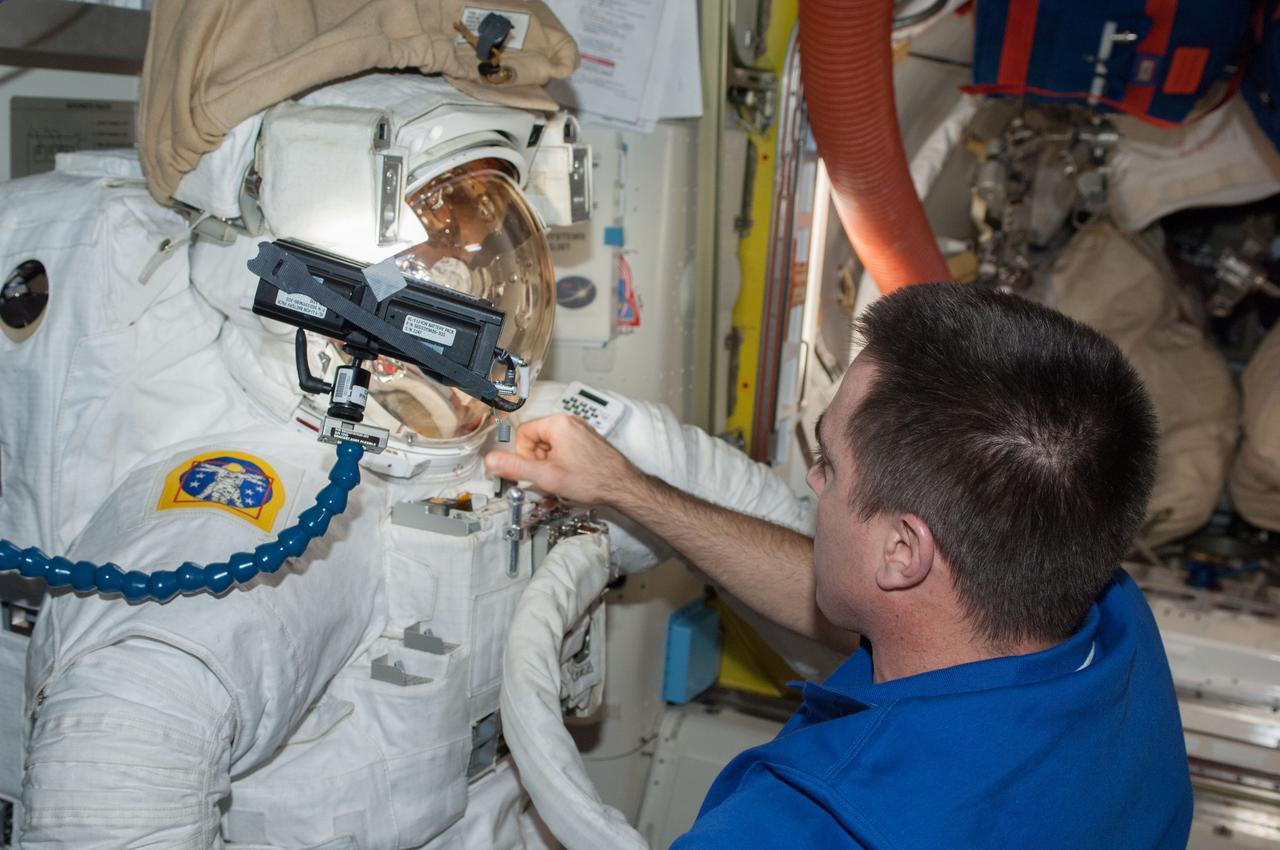
ISS036-E-037231 (27 Aug. 2013) --- NASA astronaut Chris Cassidy, Expedition 36 flight engineer, works with an Extravehicular Mobility Unit (EMU) spacesuit in the Quest airlock of the International Space Station. Cassidy is performing a checkout of the spacesuit worn by European Space Agency astronaut Luca Parmitano during a July 16 spacewalk that was cut short when its helmet began to fill with water. After assembling and powering up the empty suit as if it were about to go out on another spacewalk, Cassidy and Parmitano (out of frame) observed water once again leaking into the helmet. With the issue reproduced, NASA now has a baseline configuration for the crew to begin swapping out parts for additional tests to pinpoint the problem. There are also opportunities to either launch replacement parts on upcoming cargo flights or return parts to Earth for further study once more is known about the cause of the issue.
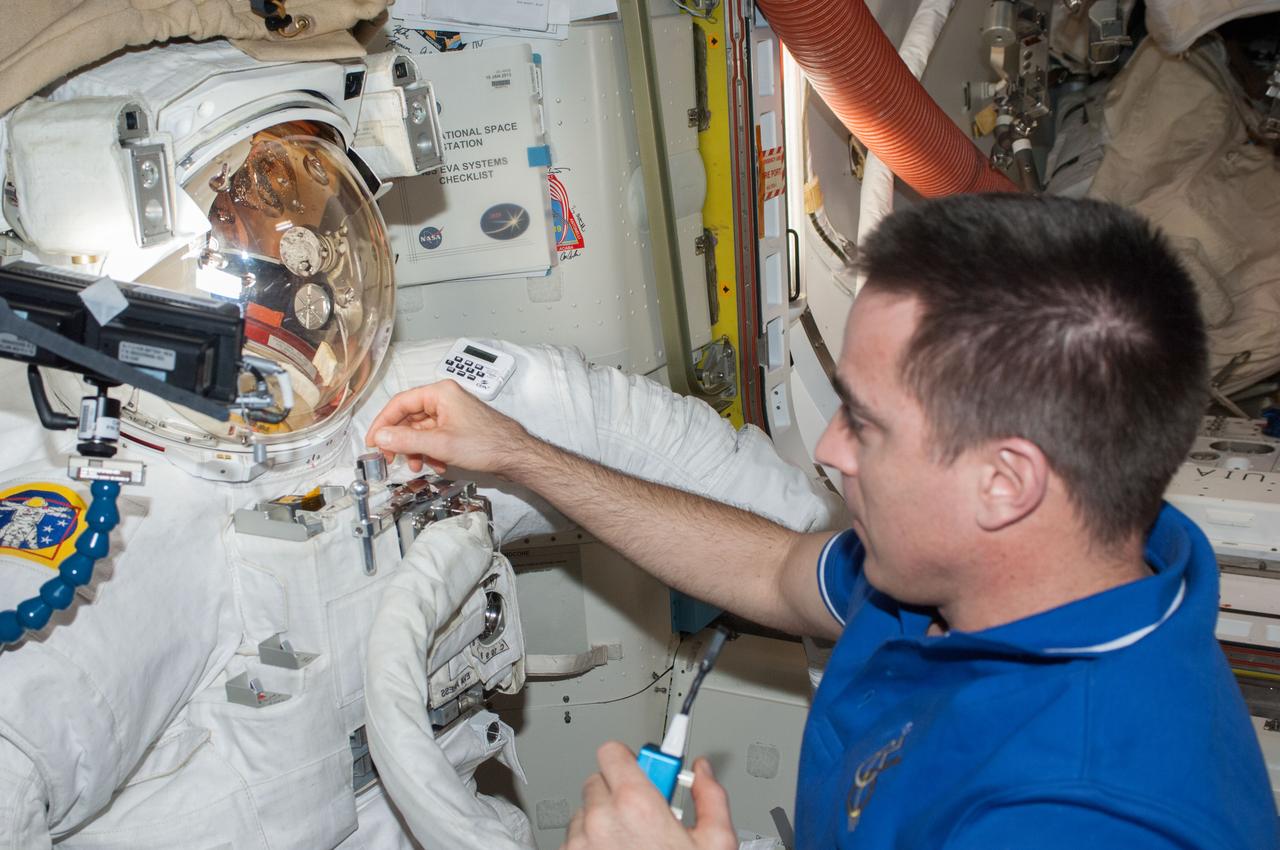
ISS036-E-037230 (27 Aug. 2013) --- NASA astronaut Chris Cassidy, Expedition 36 flight engineer, works with an Extravehicular Mobility Unit (EMU) spacesuit in the Quest airlock of the International Space Station. Cassidy is performing a checkout of the spacesuit worn by European Space Agency astronaut Luca Parmitano during a July 16 spacewalk that was cut short when its helmet began to fill with water. After assembling and powering up the empty suit as if it were about to go out on another spacewalk, Cassidy and Parmitano (out of frame) observed water once again leaking into the helmet. With the issue reproduced, NASA now has a baseline configuration for the crew to begin swapping out parts for additional tests to pinpoint the problem. There are also opportunities to either launch replacement parts on upcoming cargo flights or return parts to Earth for further study once more is known about the cause of the issue.
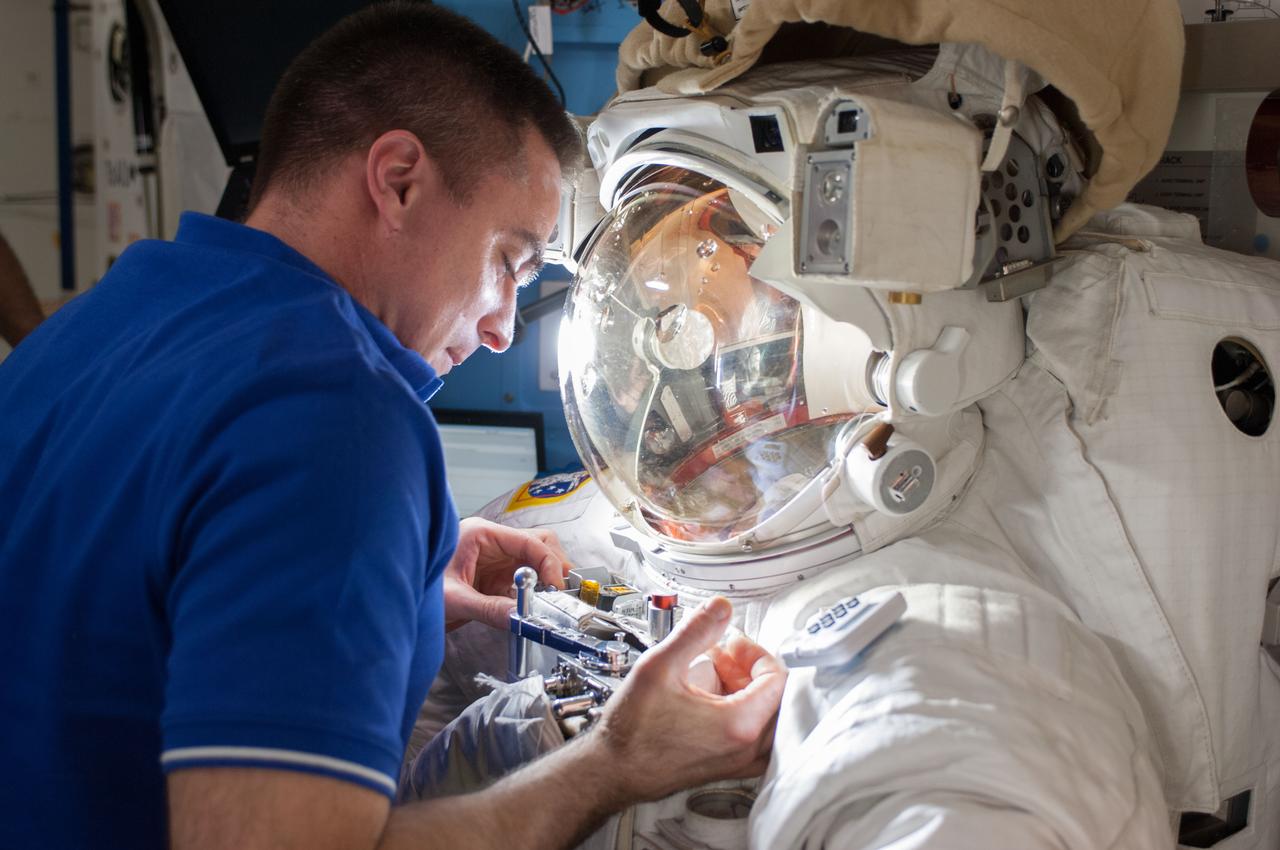
ISS036-E-037243 (27 Aug. 2013) --- NASA astronaut Chris Cassidy, Expedition 36 flight engineer, works with an Extravehicular Mobility Unit (EMU) spacesuit in the Quest airlock of the International Space Station. Cassidy is performing a checkout of the spacesuit worn by European Space Agency astronaut Luca Parmitano during a July 16 spacewalk that was cut short when its helmet began to fill with water. After assembling and powering up the empty suit as if it were about to go out on another spacewalk, Cassidy and Parmitano (out of frame) observed water once again leaking into the helmet. With the issue reproduced, NASA now has a baseline configuration for the crew to begin swapping out parts for additional tests to pinpoint the problem. There are also opportunities to either launch replacement parts on upcoming cargo flights or return parts to Earth for further study once more is known about the cause of the issue.
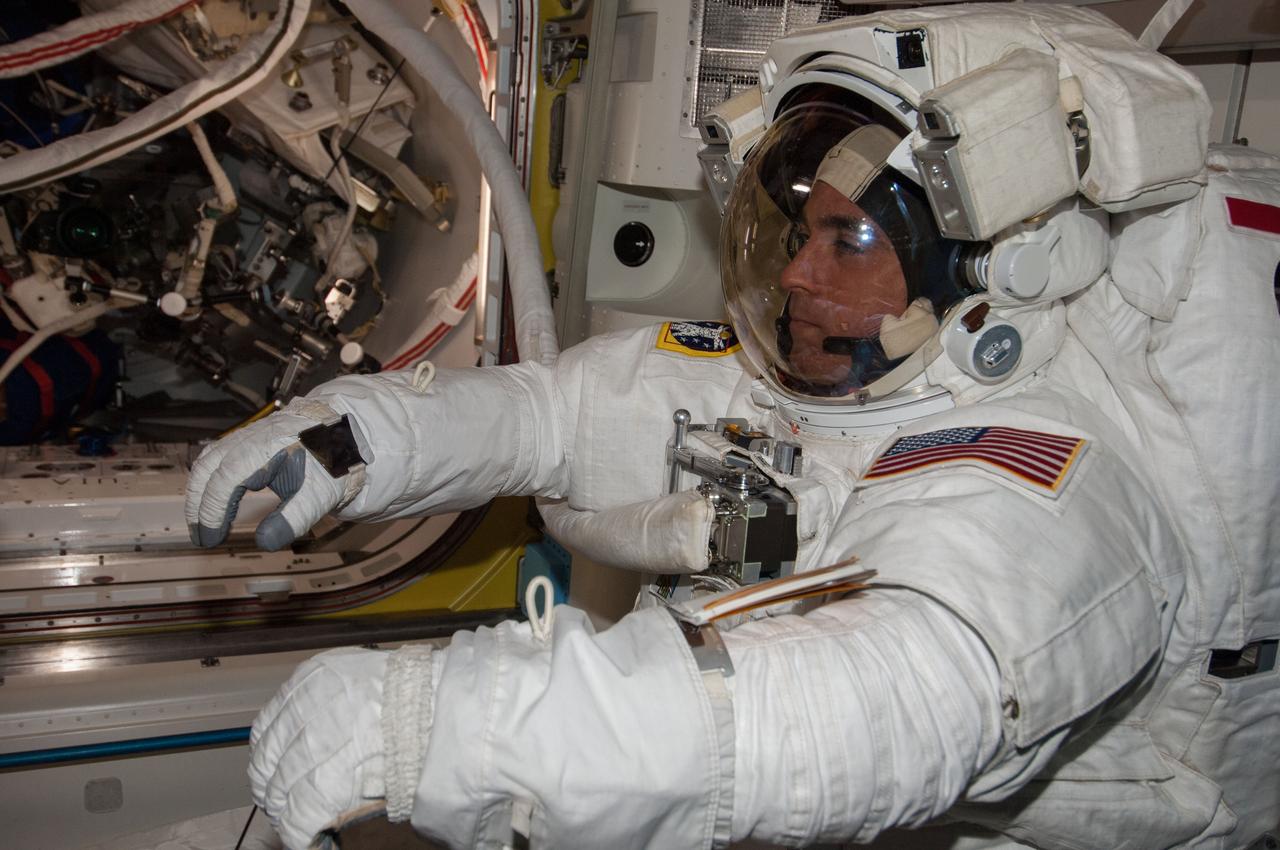
ISS036-E-019885 (16 July 2013) --- NASA astronaut Chris Cassidy, Expedition 36 flight engineer, attired in an Extravehicular Mobility Unit (EMU) spacesuit, is pictured in the International Space Station’s Quest airlock as the July 16 spacewalk draws to a close. A little more than one hour into the spacewalk, European Space Agency astronaut Luca Parmitano (out of frame) reported water floating behind his head inside his helmet. The water was not an immediate health hazard for Parmitano, but Mission Control decided to end the spacewalk early.
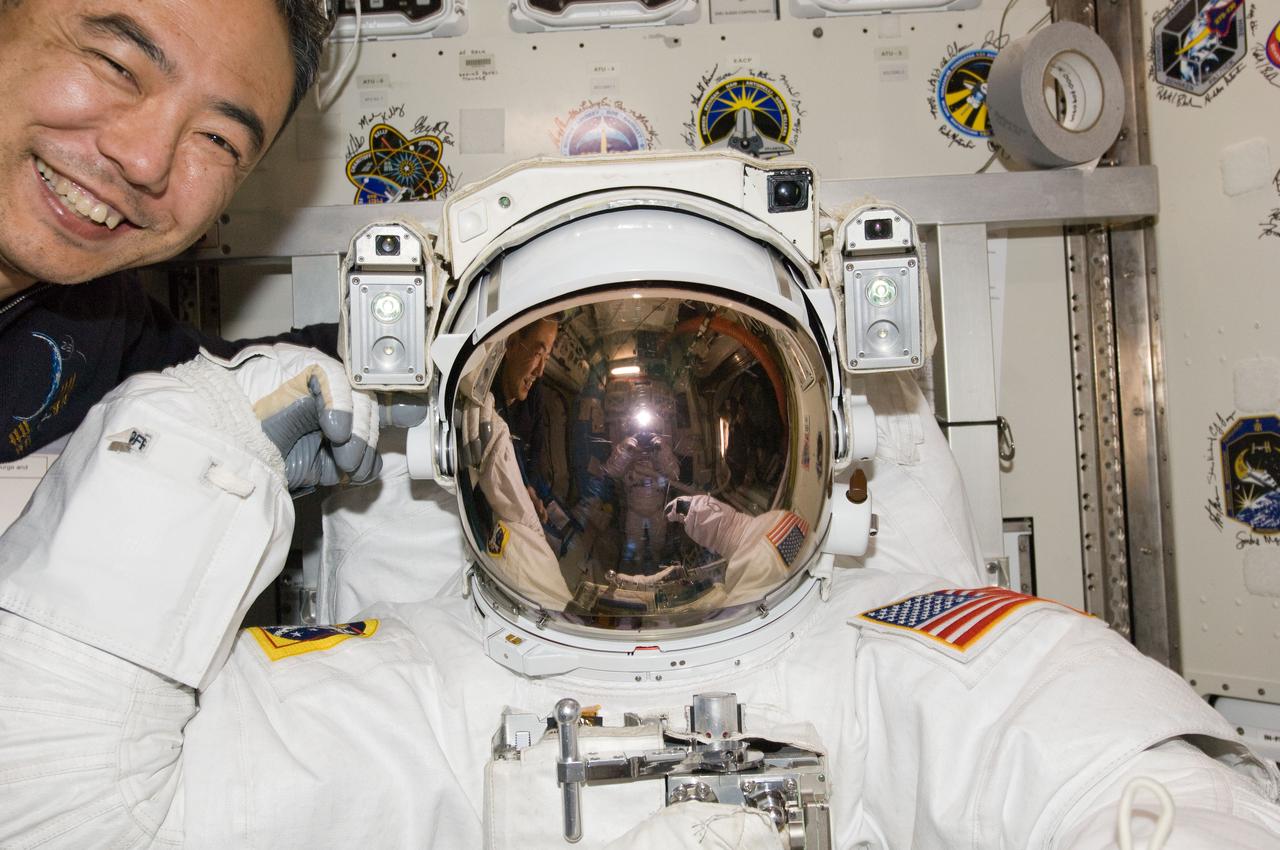
ISS028-E-009228 (22 June 2011) --- NASA astronaut Ron Garan, attired in his Extravehicular Mobility Unit (EMU) spacesuit, is pictured in the Quest airlock of the International Space Station. Garan and NASA astronaut Mike Fossum (visible in the reflections of Garan?s helmet visor), both Expedition 28 flight engineers, were participating in a ?dry run? in preparation for a planned spacewalk during STS-135/ULF-7. Japan Aerospace Exploration Agency astronaut Satoshi Furukawa, flight engineer, assisted Garan and Fossum during the exercise.
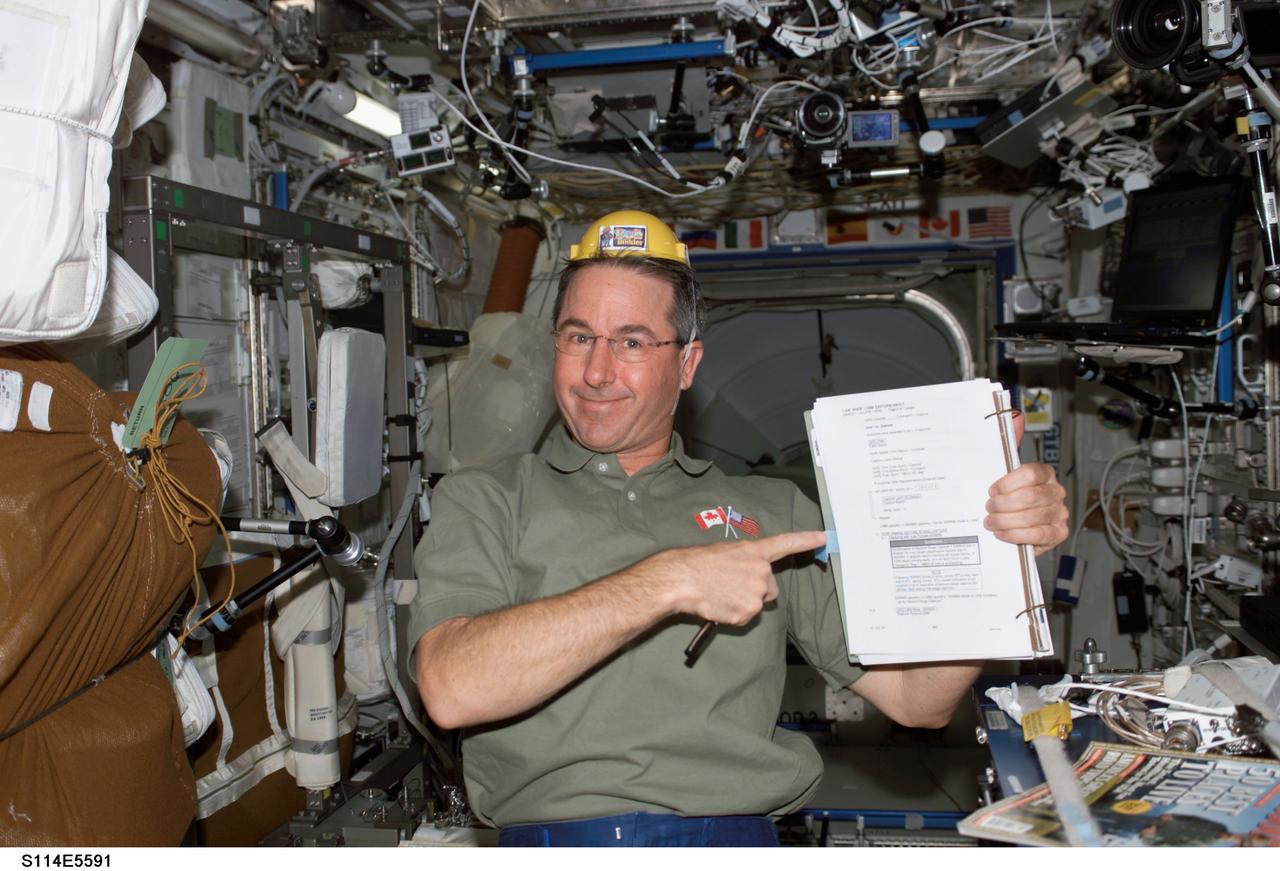
S114-E-5591 (29 July 2005) --- Less than 24 hours away from performing a space walk, when he will be exchanging this gag hardhat for the helmet portion of an extravehicular mobility unit (EMU) space suit, astronaut Stephen K. Robinson shares some light humor with his spacewalking colleague, Japanese Aerospace Agency astronaut Soichi Noguchi, out of frame. Before the EVA is scheduled to begin, however, those two will assist in moving supplies from Raffaello. Today marks the second day of joint activities between the astronauts of Discovery and the crewmembers of the International Space Station onboard the orbital outpost.
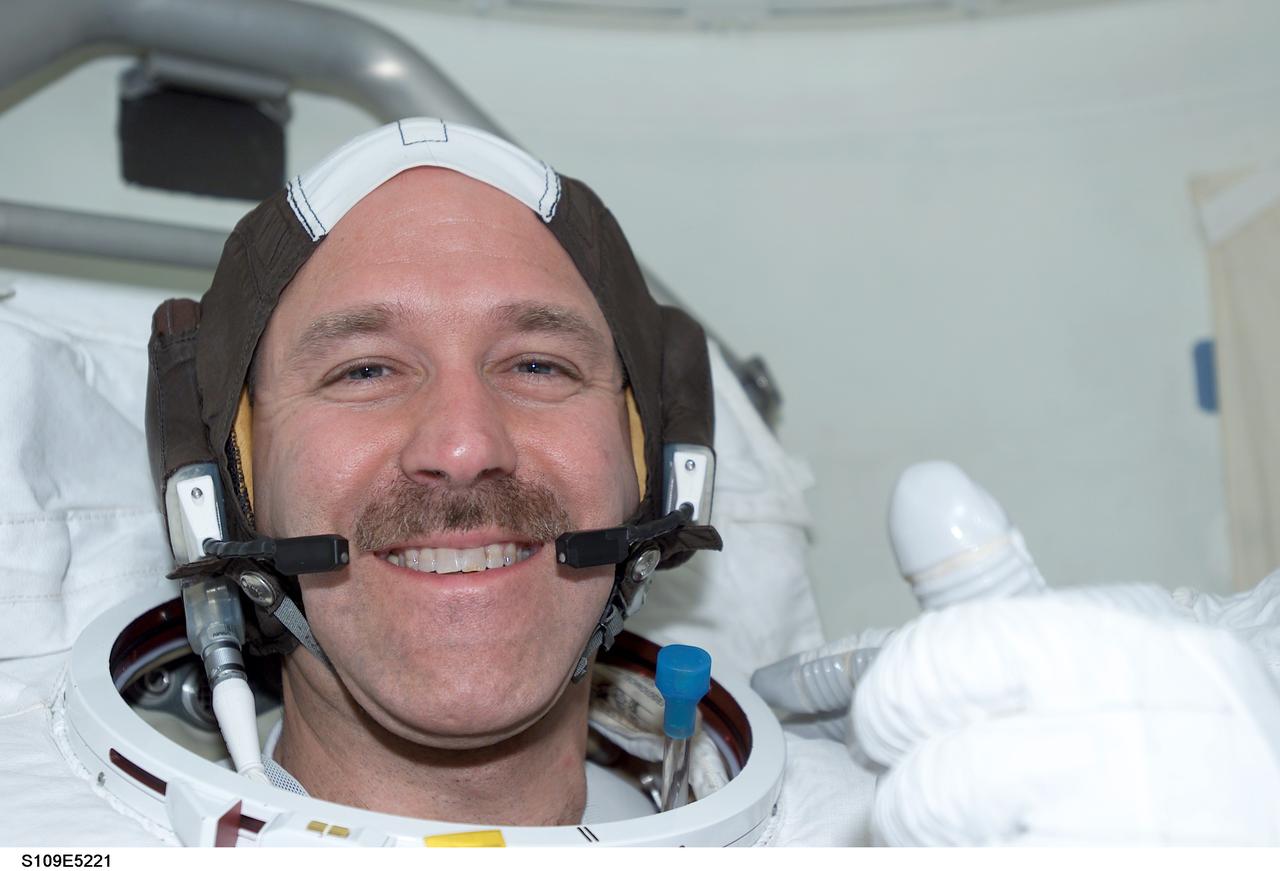
STS109-E-5221 (4 March 2002) --- Astronaut John M. Grunsfeld, payload commander, signals readiness for the first the first of his assigned STS-109 space walks to perform work on the Hubble Space Telescope (HST). Astronauts Grunsfeld and Richard M. Linnehan later donned their helmets and the remainder pieces of their extravehicular mobility unit (EMU) space suits and egressed the Space Shuttle Columbia, eventually replacing the giant telescope’s starboard solar array during a space walk that ended at 7:38 a.m. (CST) or 13:38 GMT March 4, 2002.
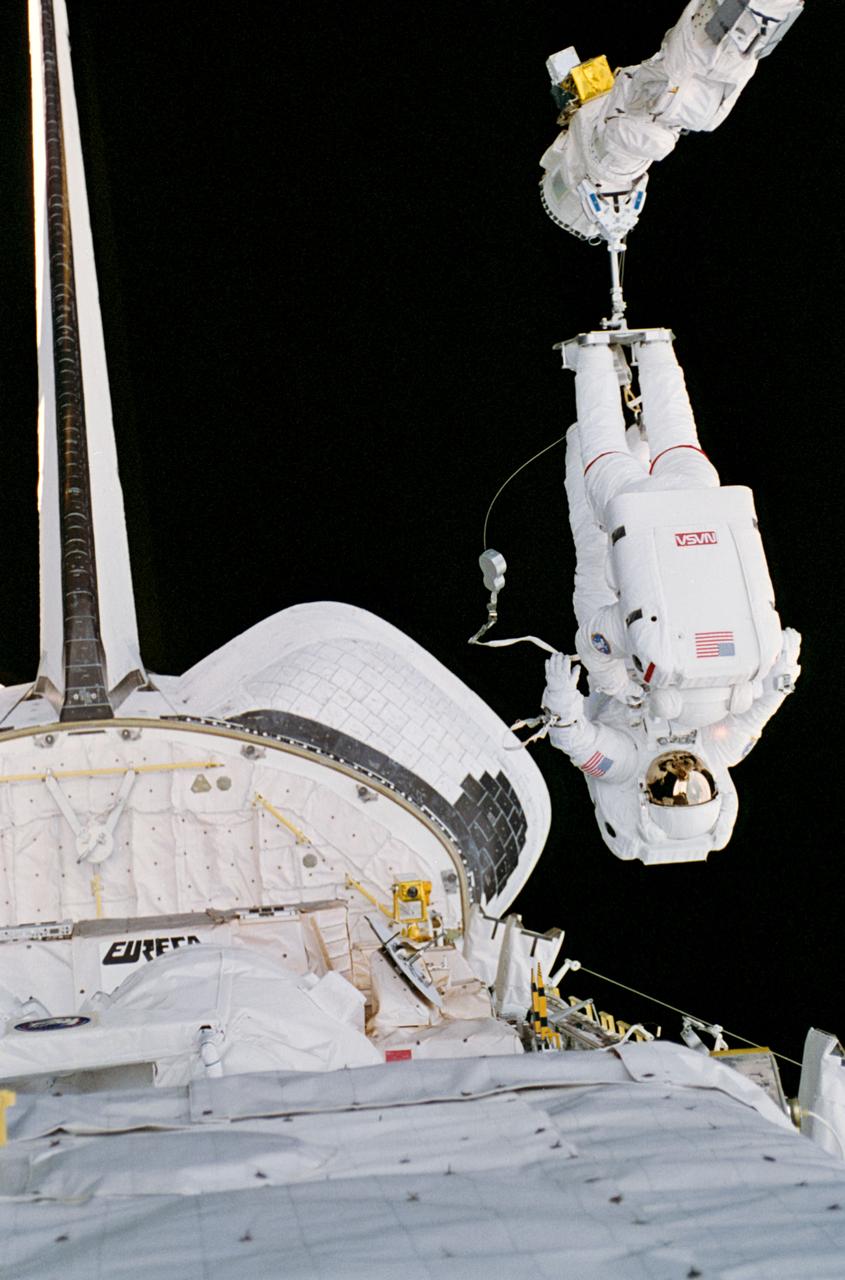
STS057-32-008 (25 June 1993) --- Astronaut G. David Low (nearer camera), his feet anchored to Endeavour's Remote Manipulator System (RMS), lifts fellow astronaut Peter J. K. (Jeff) Wisoff during a special phase of the lengthy June 25, 1993, extravehicular activity (EVA). This phase of the EVA dealt with the simulation of handling large components in space. This particular task was rehearsed with eyes toward the servicing of the Hubble Space Telescope (HST) in the near future or the assembly and maintenance of the International Space Station later. The two mission specialists and four other NASA astronauts spent almost ten days aboard the Space Shuttle Endeavour in Earth-orbit supporting the SPACEHAB mission, retrieving the European Retrievable Carrier (EURECA) and conducting various experiments.
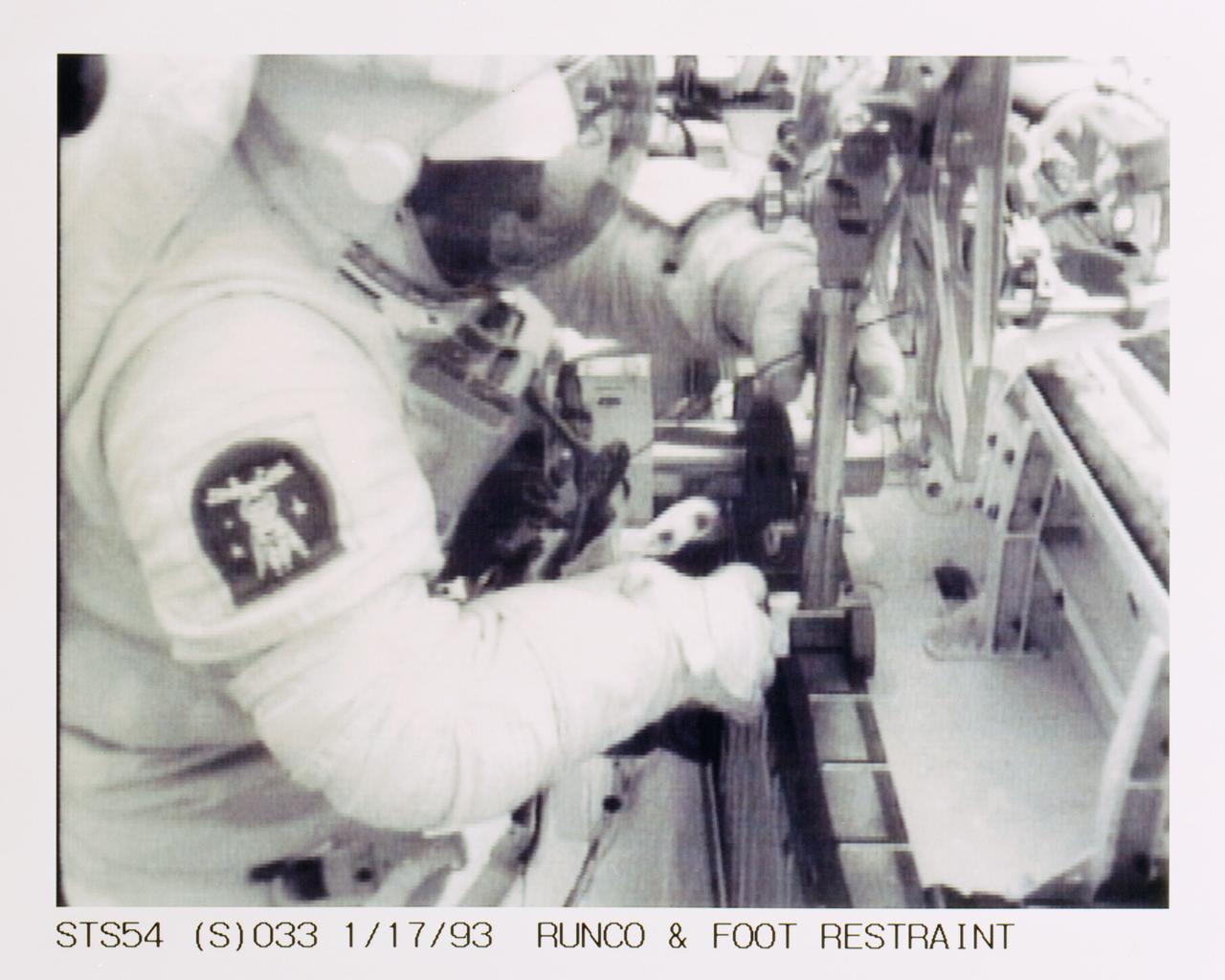
STS054-S-033 (17 Jan 1993) --- Runco works with a mobile foot restraint during extravehicular activity (EVA) in Endeavour's cargo bay. The scene was downlinked at 11:52:04:28 GMT, Jan. 17, 1993.
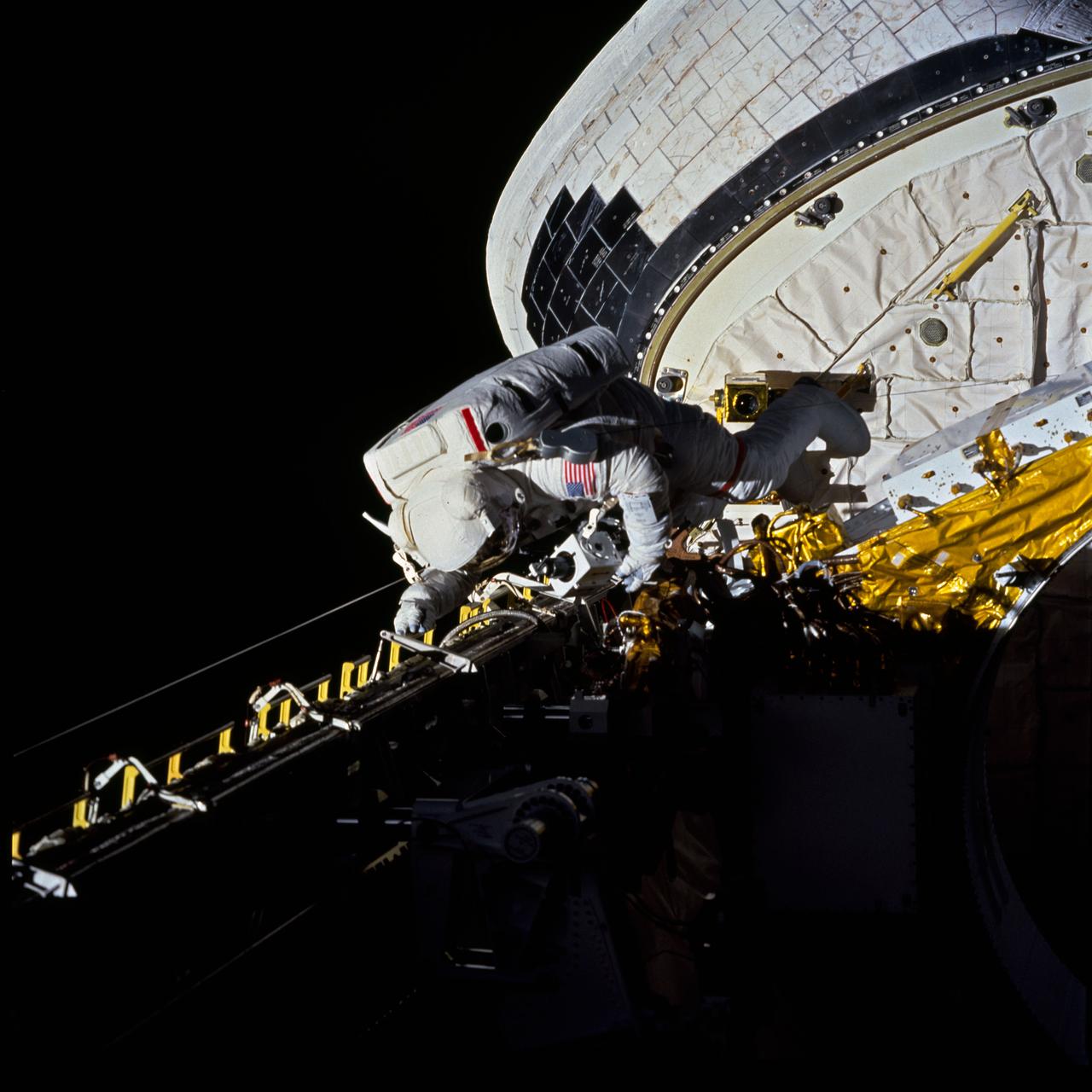
STS054-80-0N (17 Jan 1993) --- Astronaut Gregory J. Harbaugh moves along the starboard side of Endeavour's cargo bay during the four-plus hour long extravehicular activity (EVA) on January 17, 1993. The photograph was taken with a 70mm camera from inside Endeavour's cabin by a fellow crewmember. Three astronauts remained inside to support the spacewalk by astronauts Harbaugh and Mario Runco Jr. (out of frame).
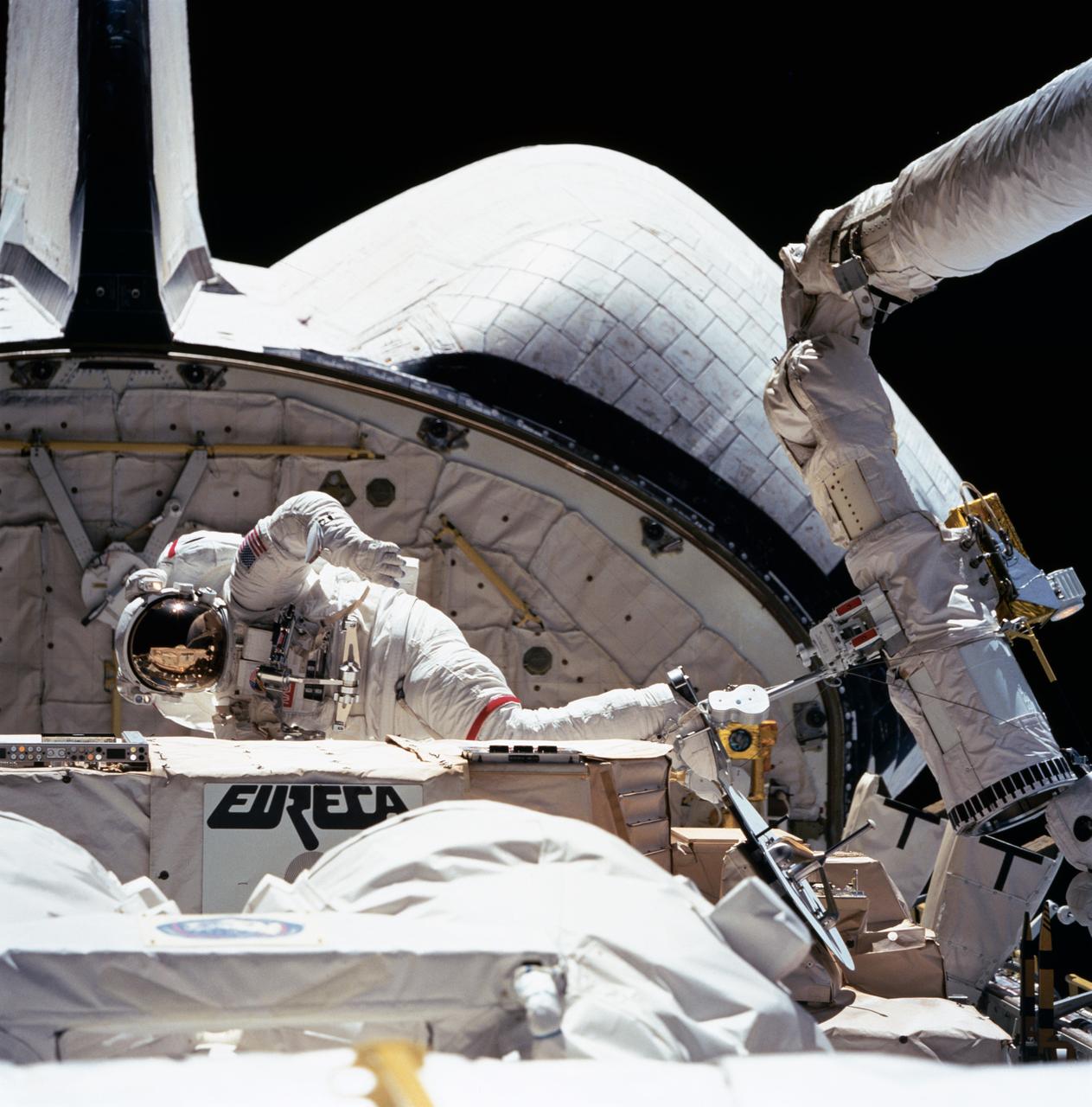
The darkness of space forms the backdrop for this extravehicular activity (EVA) scene captured by one of the STS-57 crewmembers in Endeavour's, Orbiter Vehicle (OV) 105's, crew cabin. Pictured near the recently "captured" European Retrievable Carrier (EURECA) at frame center is Mission Specialist (MS) and Payload Commander (PLC) G. David Low. Suited in an extravehicular mobility unit (EMU), Low, anchored to the remote manipulator system (RMS) via a portable foot restraint (PFR) (manipulator foot restraint (MFR)), is conducting Detailed Test Objective (DTO) 1210 procedures. Specifically, this activity will assist in refining several procedures being developed to service the Hubble Space Telescope (HST) on mission STS-61 in December 1993. The PFR is attached to the RMS end effector via a PFR attachment device (PAD). Partially visible in the foreground is the Superfluid Helium Onorbit Transfer (SHOOT) payload.
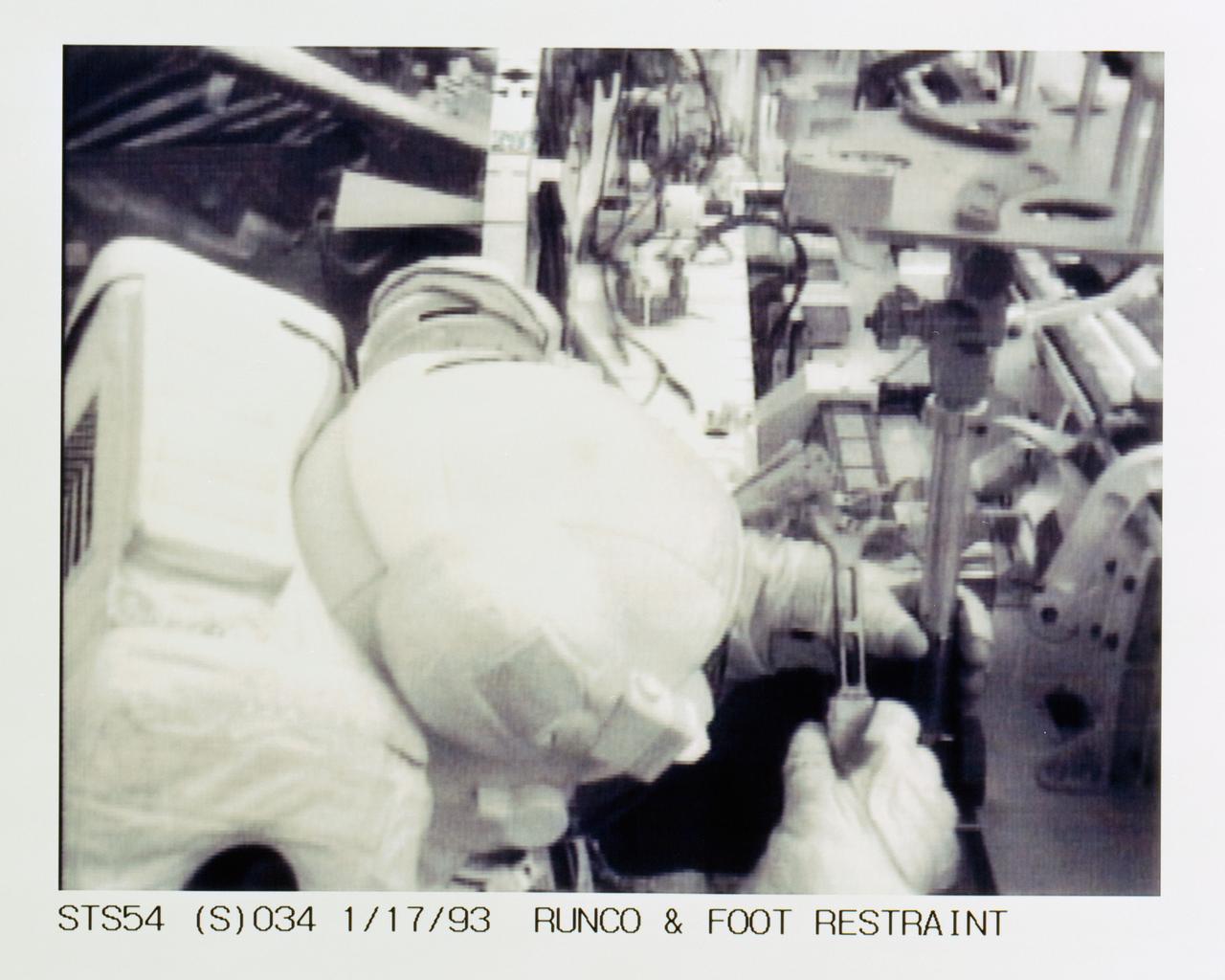
STS054-S-034 (17 Jan 1993) --- Closeup view of Runco as he works to install a mobile foot restraint during extravehicular activity (EVA) in Endeavour's cargo bay. The scene was downlinked at 11:55:07:24 GMT, Jan. 17, 1993.

STS-48 Mission Specialist (MS) James F. Buchli, wearing an extravehicular mobility unit (EMU), is watched by SCUBA-equipped divers as the platform he is standing on is lowered into JSC's Weightless Environment Training Facility (WETF) Bldg 29 pool. When completely underwater, Buchli will be released from the platform and will perform contingency extravehicular activity (EVA) operations. This underwater simulation of a spacewalk is part of the training required for Buchli's upcoming mission aboard Discovery, Orbiter Vehicle (OV) 103.
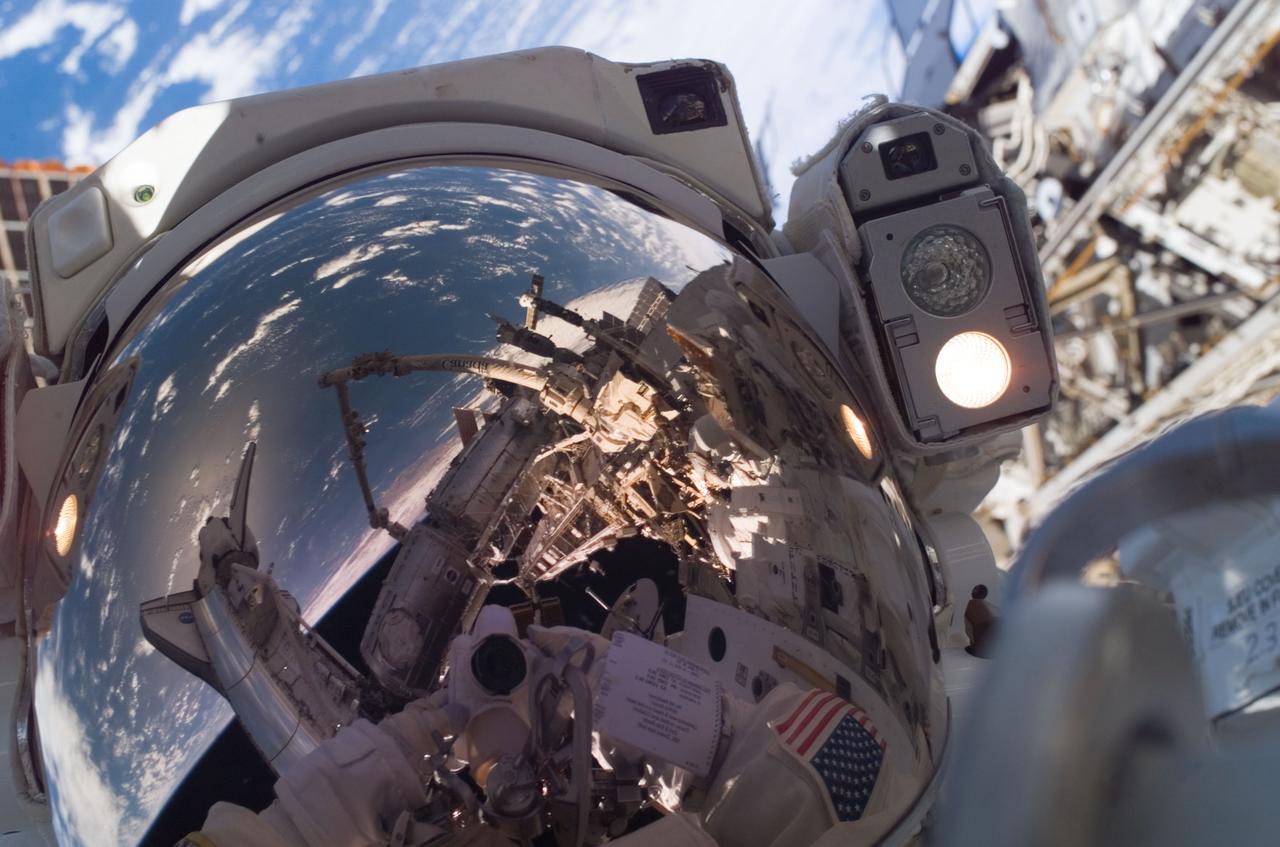
ISS016-E-032705 (13/14 March 2008) --- Astronaut Garrett Reisman, Expedition 16 flight engineer, uses a digital camera to expose a photo of his helmet visor during the mission's first scheduled session of extravehicular activity (EVA) as construction and maintenance continue on the International Space Station. Also visible in the reflections in the visor are various components of the station, the docked Space Shuttle Endeavour and a blue and white portion of Earth. During the seven-hour and one-minute spacewalk, Reisman and astronaut Rick Linnehan (out of frame), STS-123 mission specialist, prepared the Japanese logistics module-pressurized section (JLP) for removal from Space Shuttle Endeavour's payload bay; opened the Centerline Berthing Camera System on top of the Harmony module; removed the Passive Common Berthing Mechanism and installed both the Orbital Replacement Unit (ORU) tool change out mechanisms on the Canadian-built Dextre robotic system, the final element of the station's Mobile Servicing System.
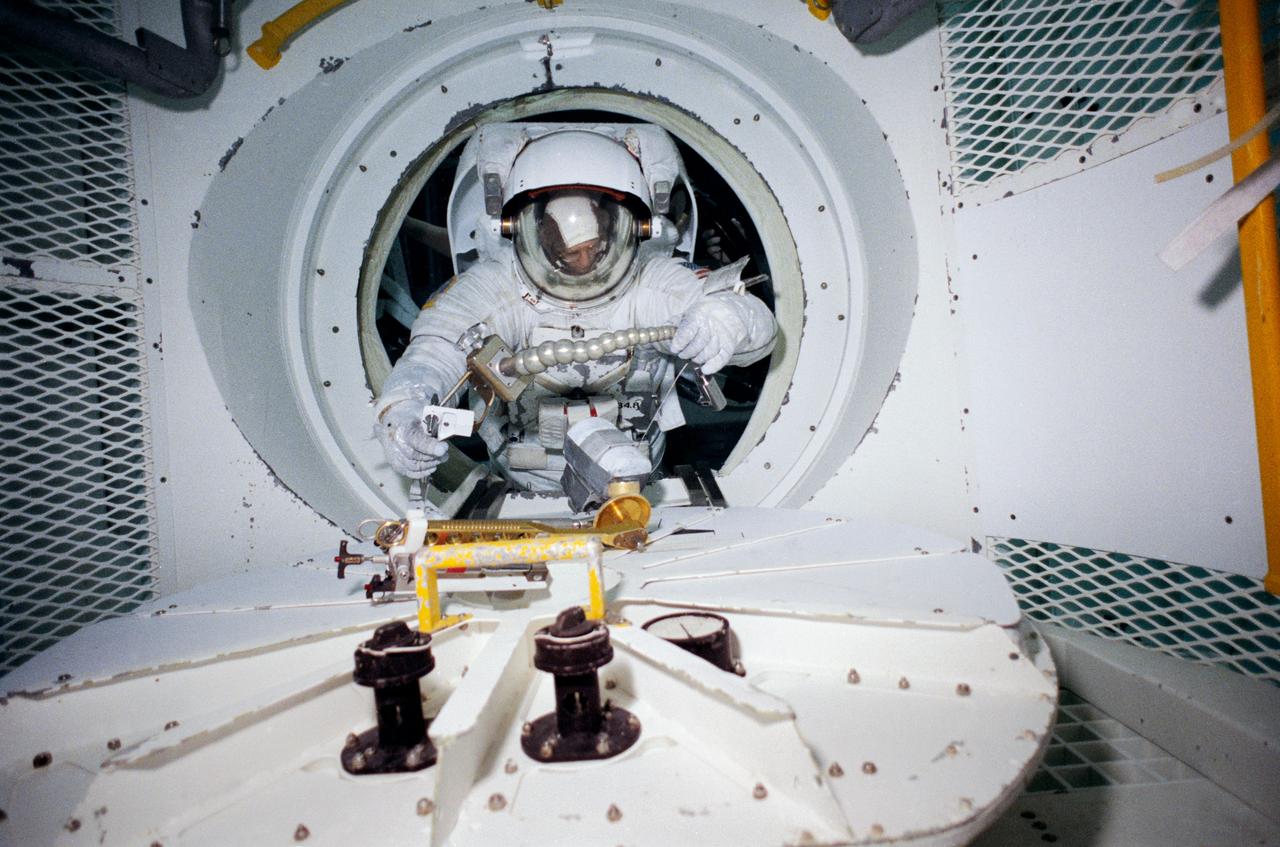
S90-30521 (20 Feb 1990) --- Though no extravehicular activity is planned for STS-31, two crewmembers train for contingencies that would necessitate leaving their shirt sleeve environment of Discovery's cabin and performing chores with their Hubble Space Telescope payload or related hardware. Astronaut Kathryn D. Sullivan, mission specialist, is seen egressing the hatchway of the airlock of a full scale mockup of a Shuttle cabin to interface with an HST mockup in JSC's 25.-ft. deep pool in the weightless environment training facility (WET-F). Two SCUBA-equipped divers who assisted in the training session are also seen. Astronaut Bruce McCandless II, mission specialist, is out of frame.