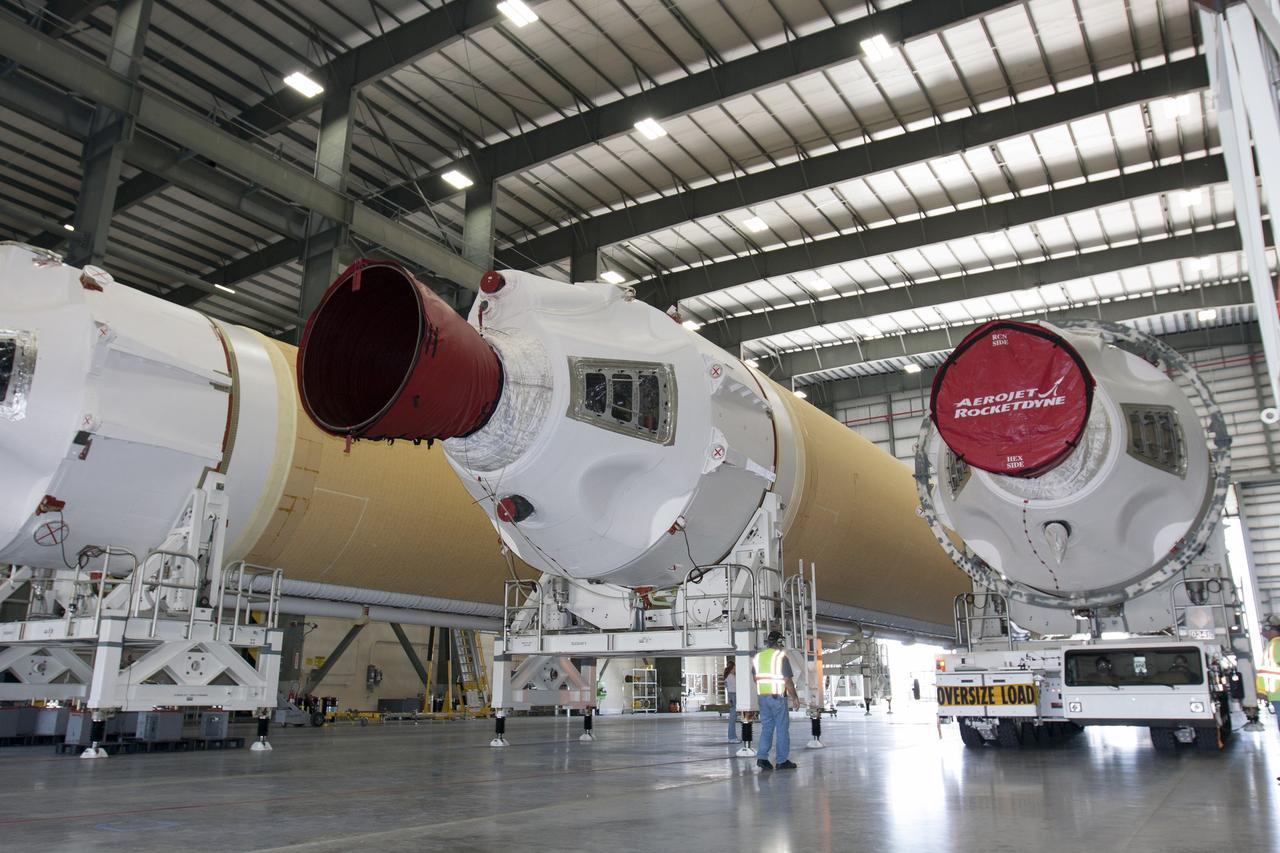
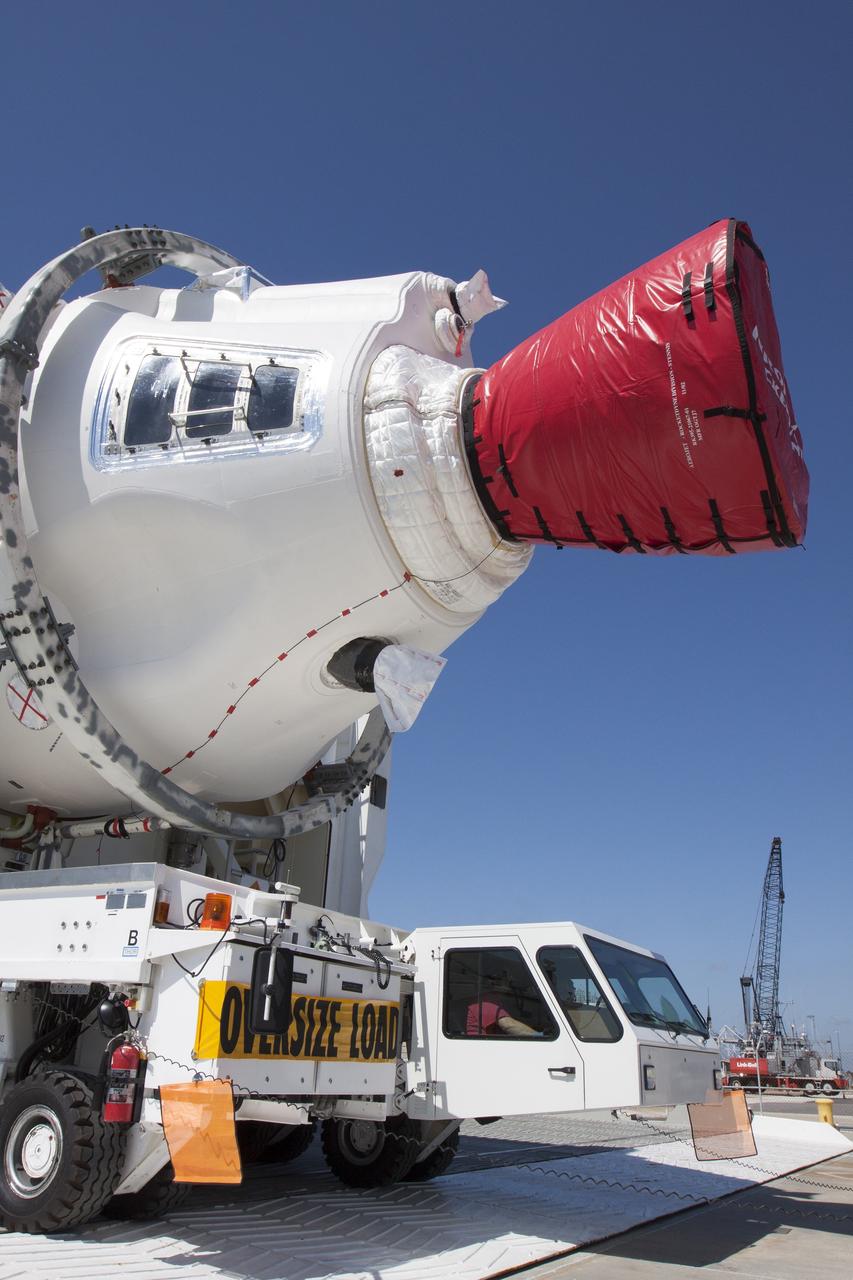
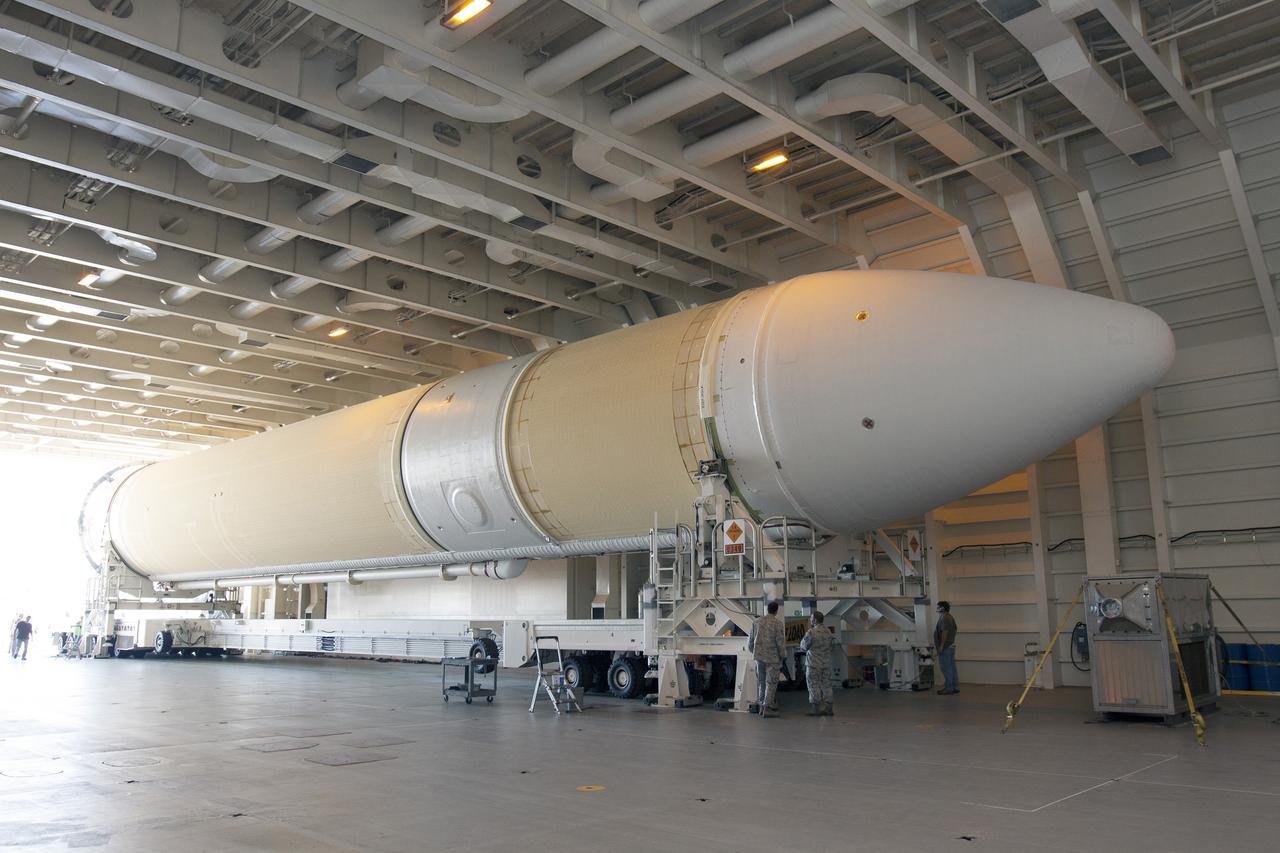
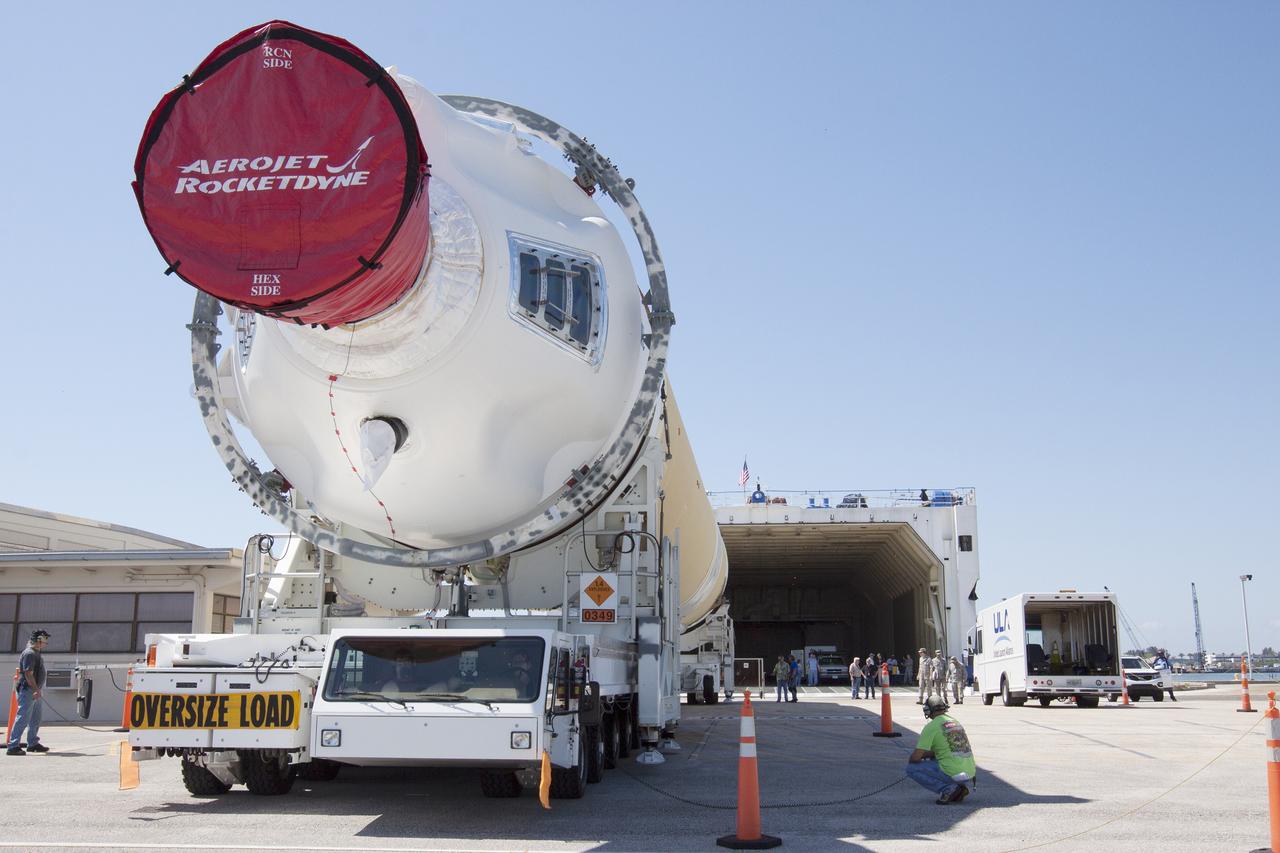
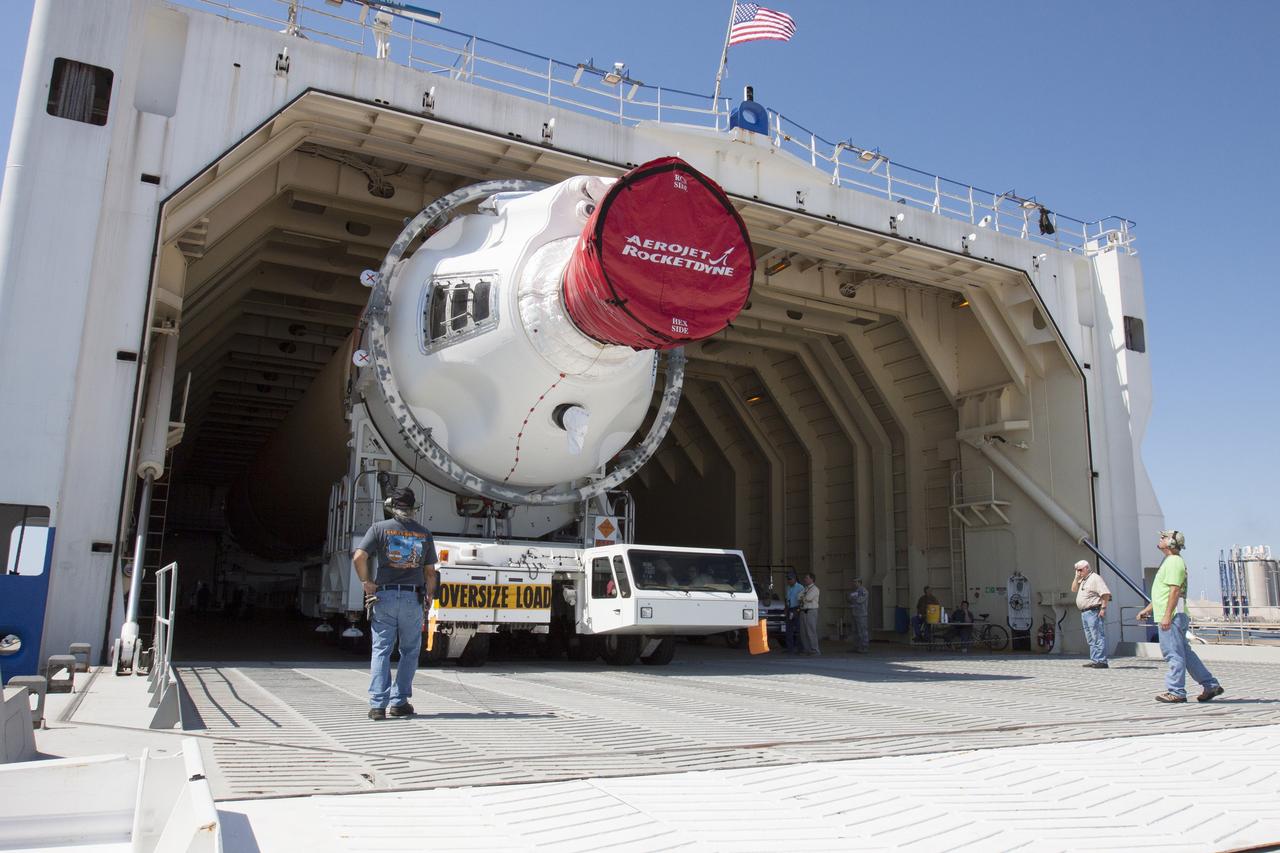
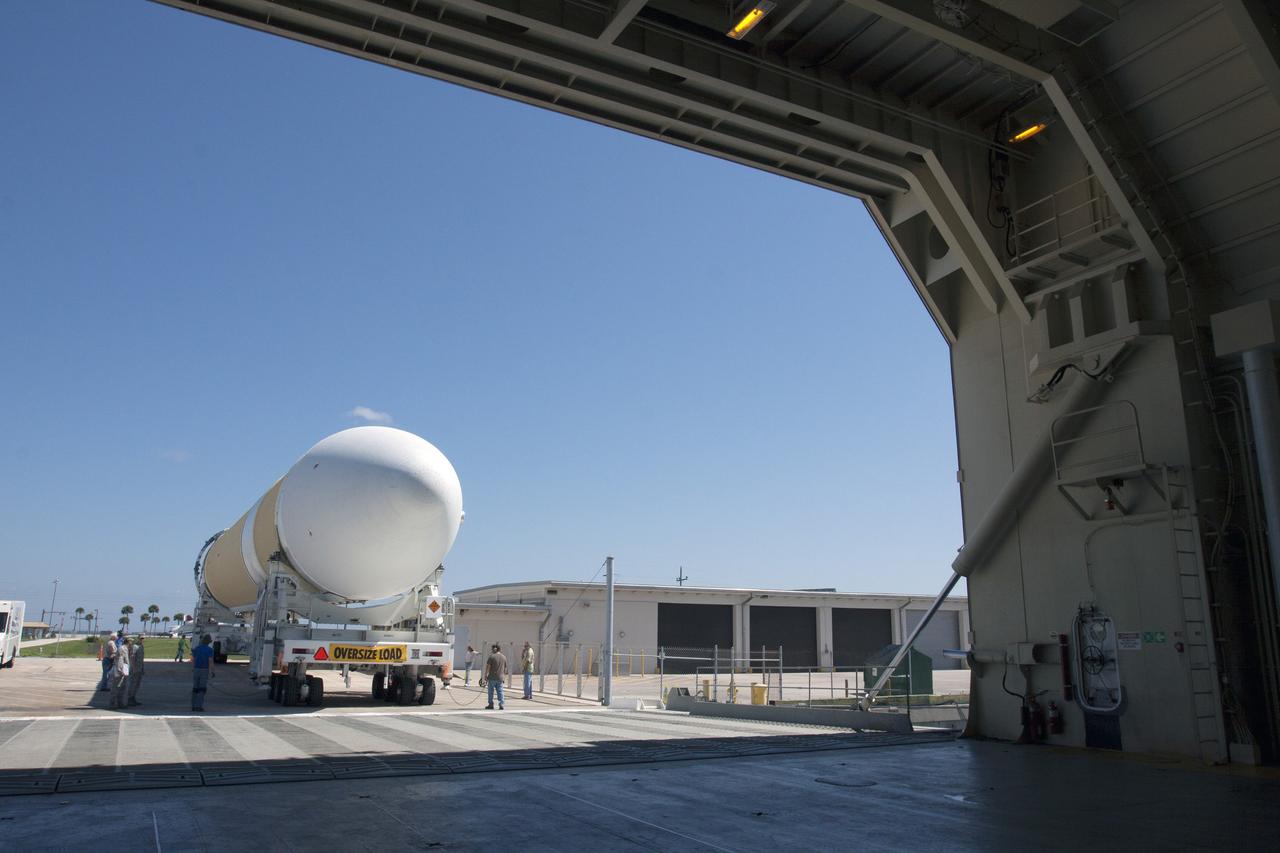
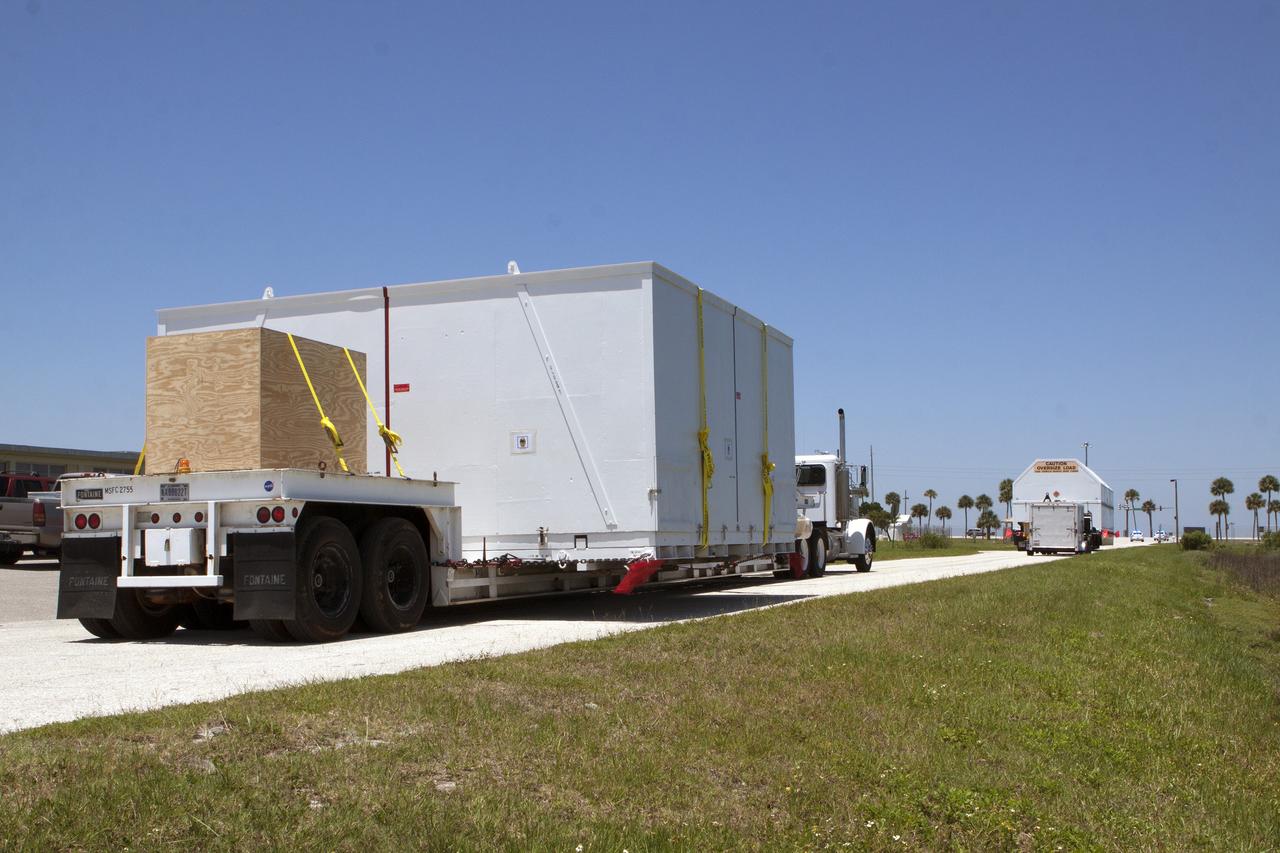
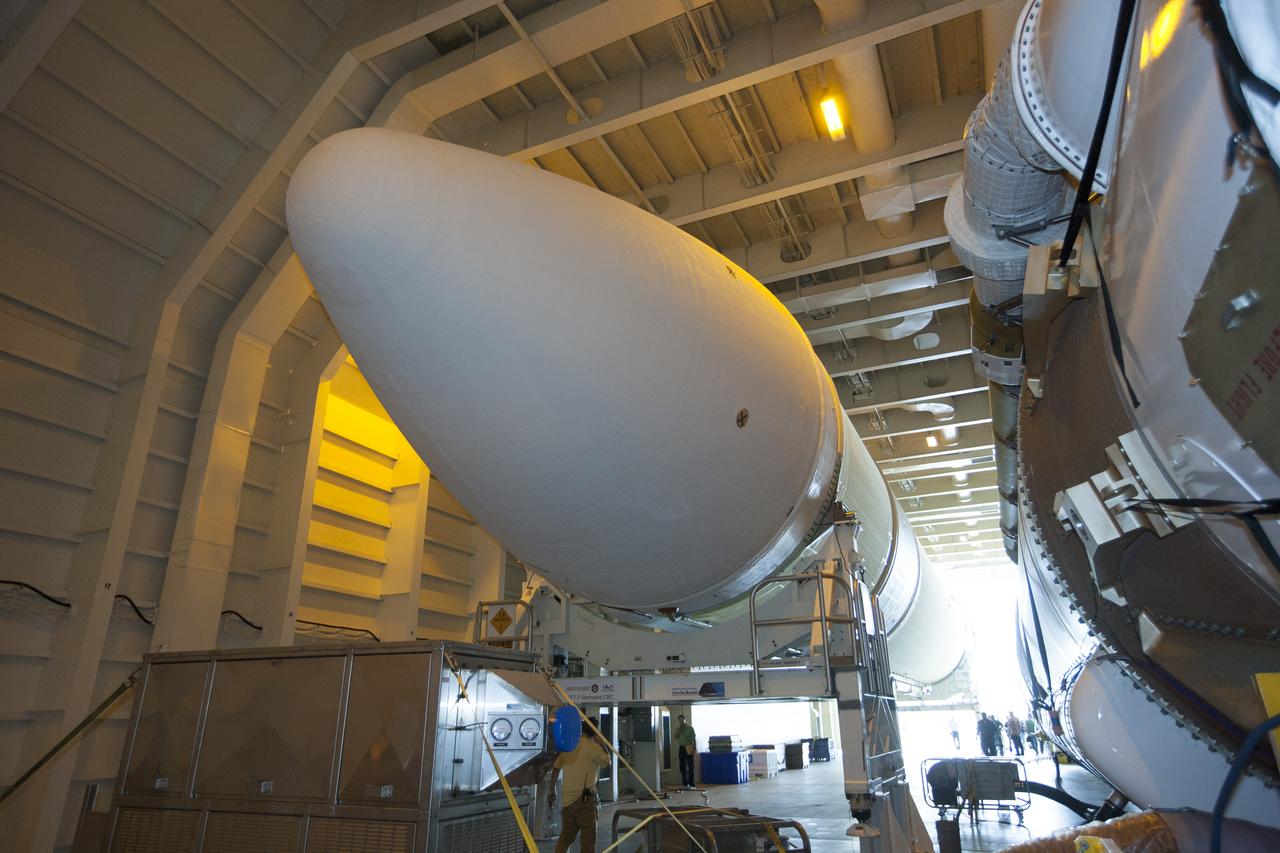
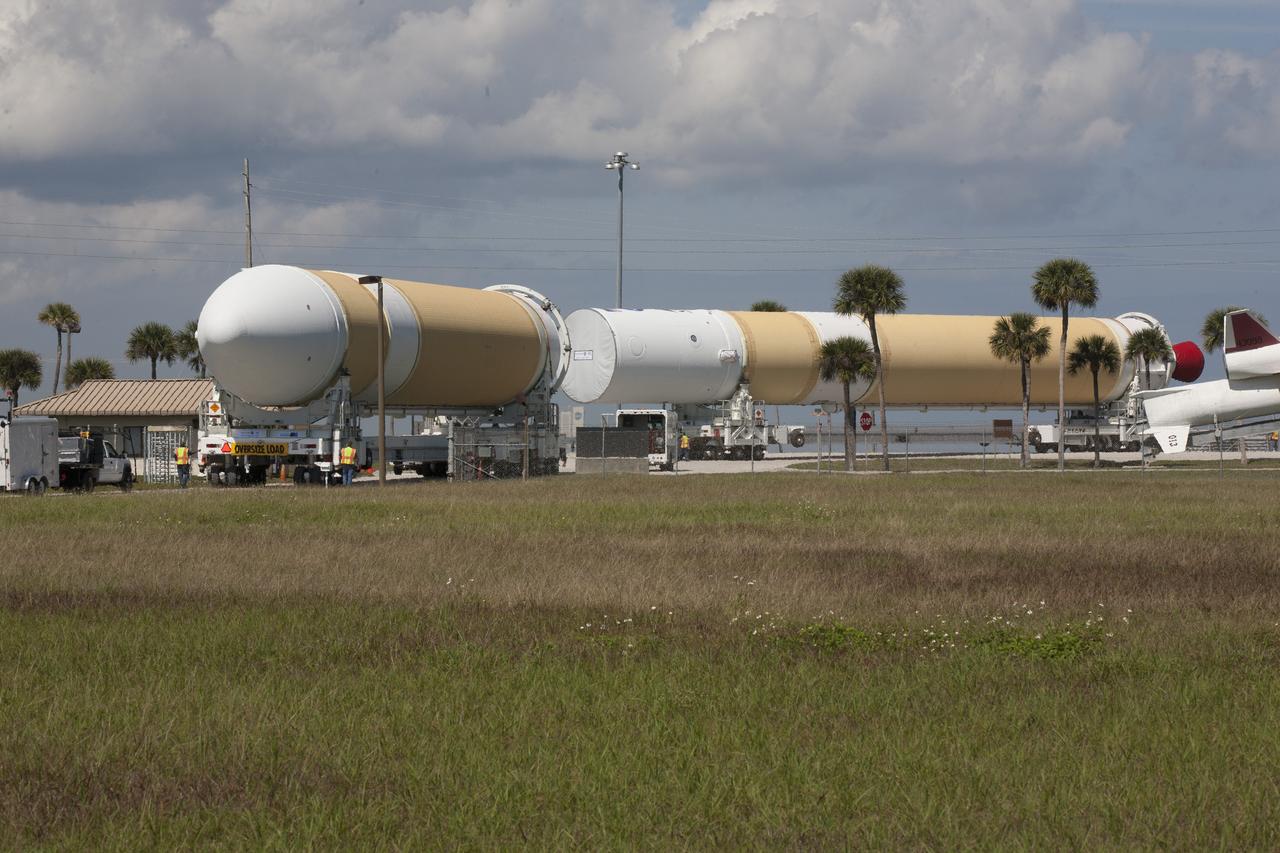
CAPE CANAVERAL, Fla. -- A transporter for oversize loads carries the port booster for the United Launch Alliance Delta IV Heavy for Exploration Flight Test-1, or EFT-1, into the Horizontal Integration Facility, or HIF, at Space Launch Complex 37 on Cape Canaveral Air Force Station in Florida. The port booster joins the other two boosters of the Delta IV Heavy already in the HIF. The upper stage and spacecraft adapter arrived with the booster on a barge at the U.S. Army Outpost wharf at Port Canaveral, and were transported to the HIF on May 6. At the HIF, all three booster stages will be processed and checked out before being moved to the nearby launch pad and hoisted into position. The spacecraft adapter will connect Orion to the ULA Delta IV, and also will connect Orion to NASA's new rocket, the Space Launch System, on its first mission in 2017. During the EFT-1 mission, Orion will travel farther into space than any human spacecraft has gone in more than 40 years. The data gathered during the flight will influence design decisions, validate existing computer models and innovative new approaches to space systems development, as well as reduce overall mission risks and costs for later Orion flights. Liftoff of Orion on EFT-1 is planned for fall 2014. Photo credit: NASA/Kim Shiflett
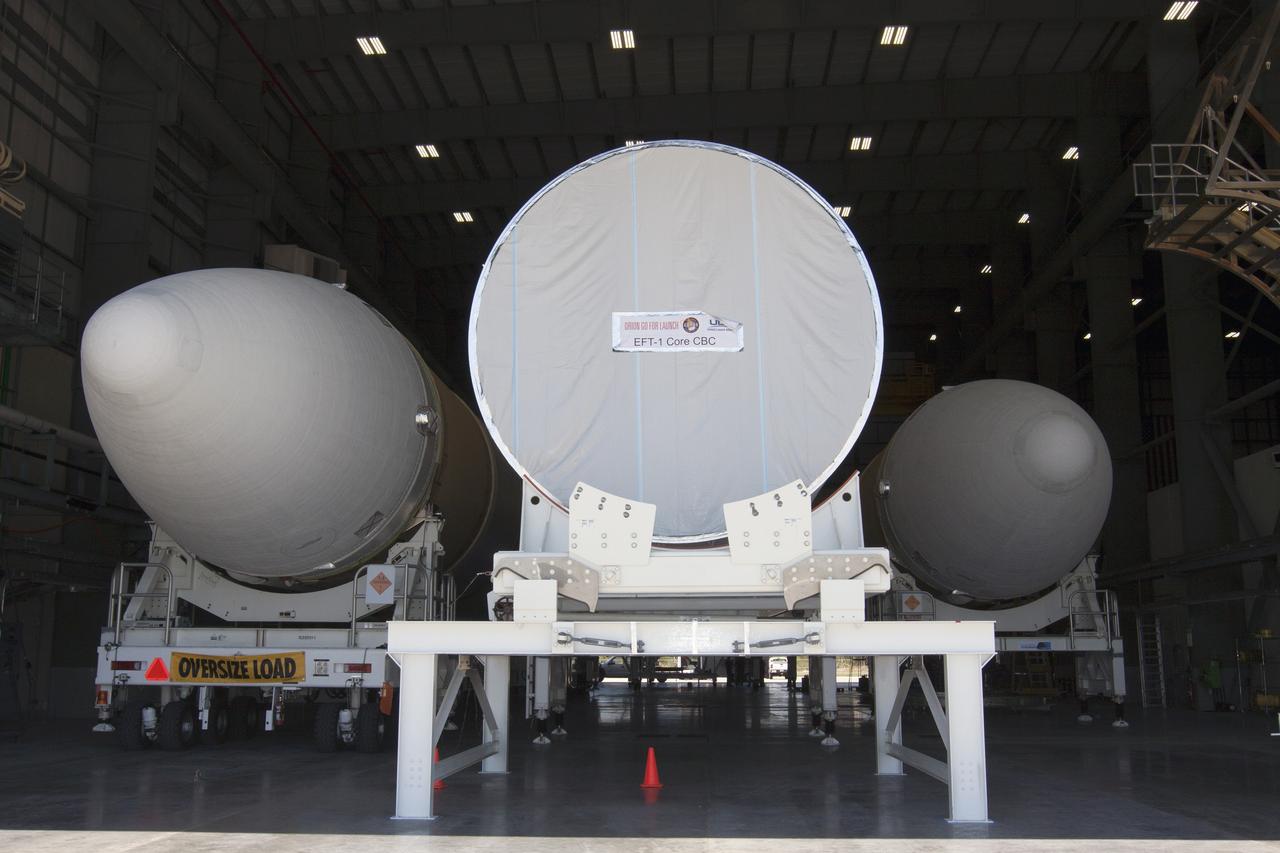
CAPE CANAVERAL, Fla. -- A transporter for oversize loads carries the port booster for the United Launch Alliance Delta IV Heavy for Exploration Flight Test-1, or EFT-1, into the Horizontal Integration Facility, or HIF, at Space Launch Complex 37 on Cape Canaveral Air Force Station in Florida. The port booster joins the other two boosters of the Delta IV Heavy already in the HIF. The upper stage and spacecraft adapter arrived with the booster on a barge at the U.S. Army Outpost wharf at Port Canaveral, and were transported to the HIF on May 6. At the HIF, all three booster stages will be processed and checked out before being moved to the nearby launch pad and hoisted into position. The spacecraft adapter will connect Orion to the ULA Delta IV, and also will connect Orion to NASA's new rocket, the Space Launch System, on its first mission in 2017. During the EFT-1 mission, Orion will travel farther into space than any human spacecraft has gone in more than 40 years. The data gathered during the flight will influence design decisions, validate existing computer models and innovative new approaches to space systems development, as well as reduce overall mission risks and costs for later Orion flights. Liftoff of Orion on EFT-1 is planned for fall 2014. Photo credit: NASA/Kim Shiflett
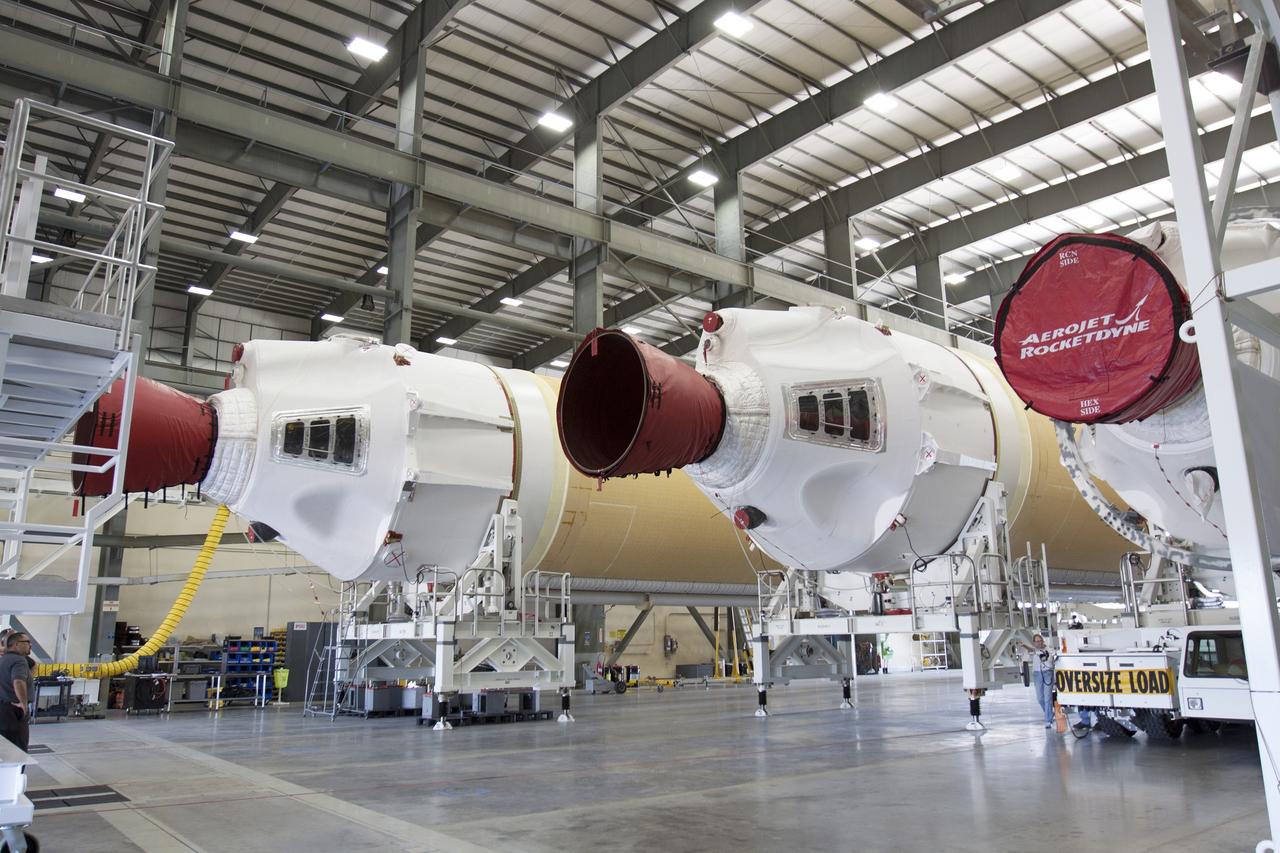
CAPE CANAVERAL, Fla. -- A transporter for oversize loads carries the port booster for the United Launch Alliance Delta IV Heavy for Exploration Flight Test-1, or EFT-1, into the Horizontal Integration Facility, or HIF, at Space Launch Complex 37 on Cape Canaveral Air Force Station in Florida. The port booster joins the other two boosters of the Delta IV Heavy already in the HIF. The upper stage and spacecraft adapter arrived with the booster on a barge at the U.S. Army Outpost wharf at Port Canaveral, and were transported to the HIF on May 6. At the HIF, all three booster stages will be processed and checked out before being moved to the nearby launch pad and hoisted into position. The spacecraft adapter will connect Orion to the ULA Delta IV, and also will connect Orion to NASA's new rocket, the Space Launch System, on its first mission in 2017. During the EFT-1 mission, Orion will travel farther into space than any human spacecraft has gone in more than 40 years. The data gathered during the flight will influence design decisions, validate existing computer models and innovative new approaches to space systems development, as well as reduce overall mission risks and costs for later Orion flights. Liftoff of Orion on EFT-1 is planned for fall 2014. Photo credit: NASA/Kim Shiflett
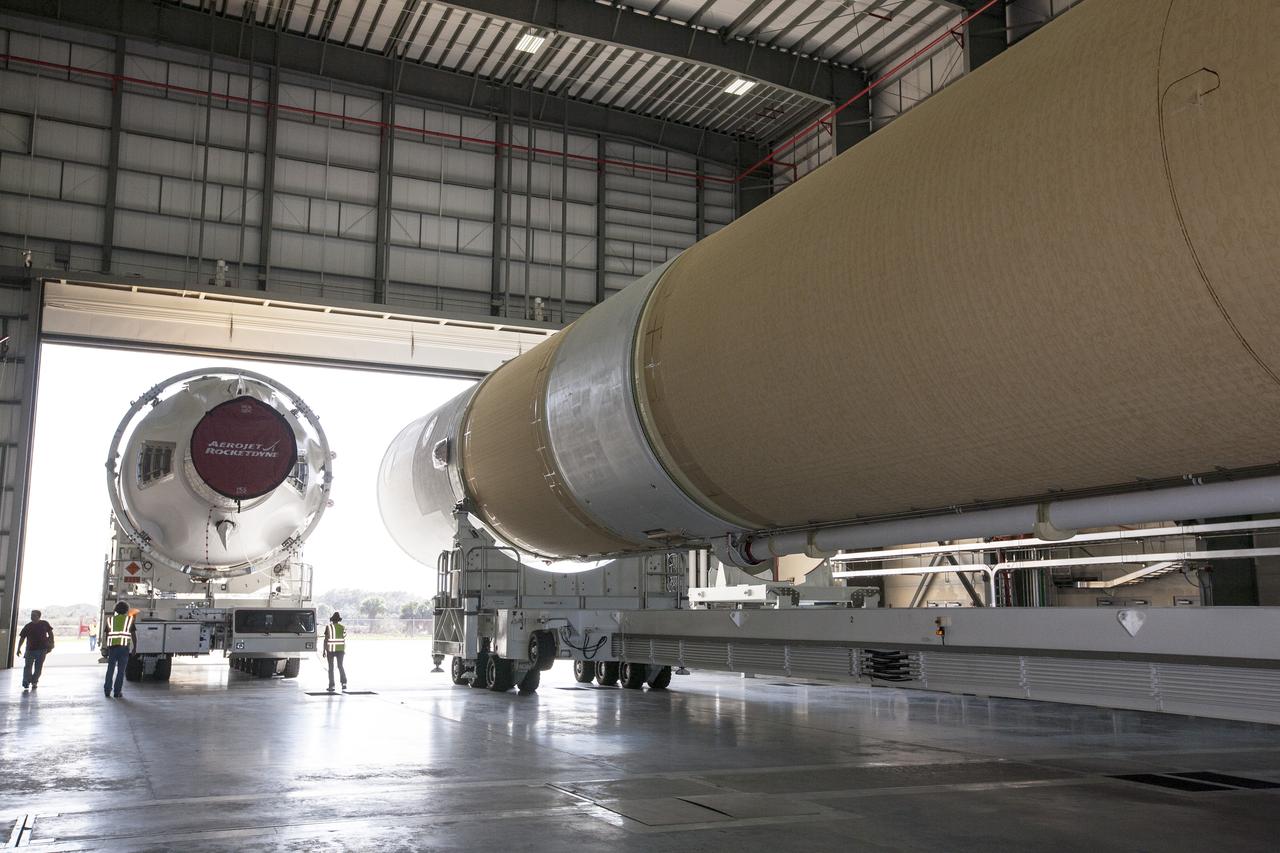
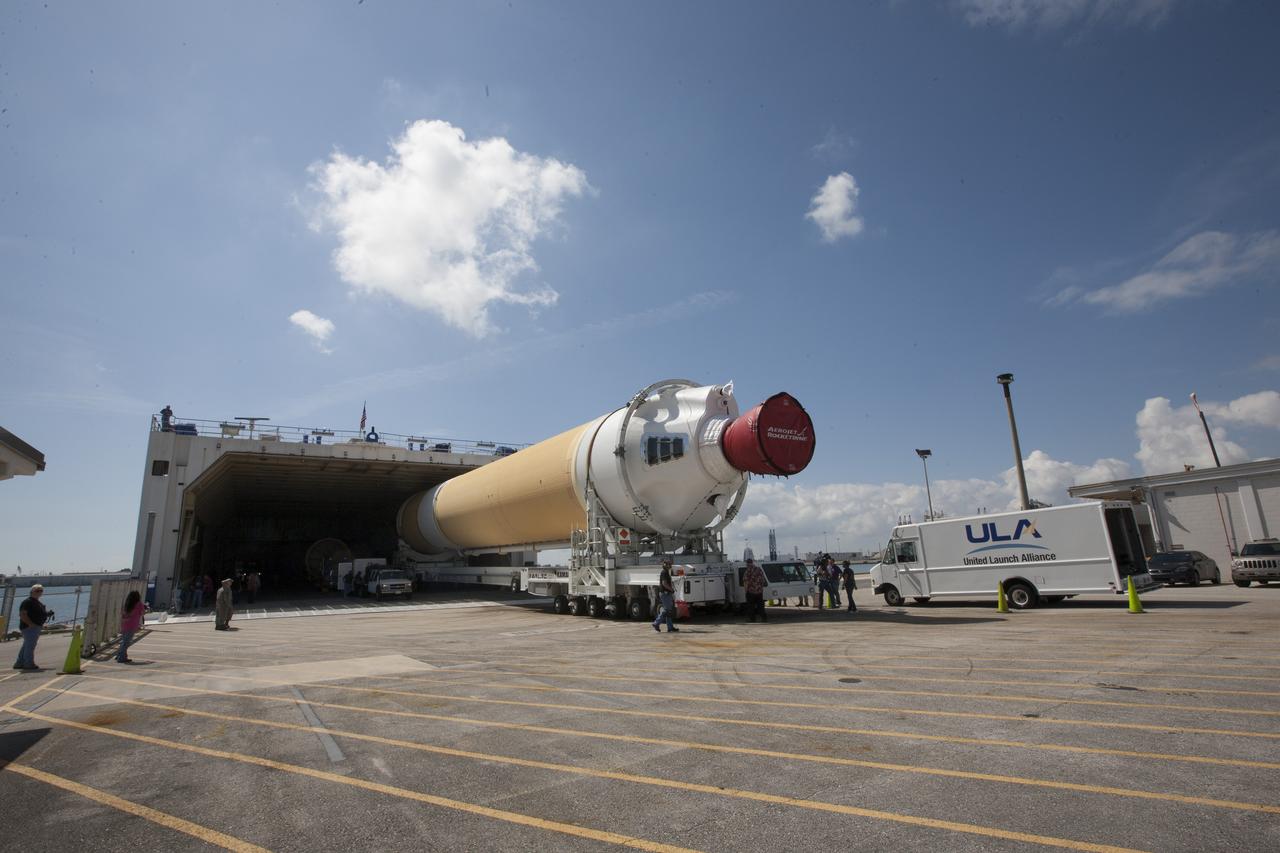
CAPE CANAVERAL, Fla. – Two of the three United Launch Alliance Delta IV heavy boosters for NASA’s upcoming Exploration Flight Test-1, or EFT-1, mission with the Orion spacecraft, were transported to the Horizontal Integration Facility, or HIF, at Space Launch Complex 37 on Cape Canaveral Air Force Station in Florida. The core booster and starboard booster arrived by barge at the U.S. Army Outpost wharf at Port Canaveral. The port booster and the upper stage are planned to be shipped to Cape Canaveral in April. At the HIF, all three boosters will be processed and checked out before being moved to the nearby launch pad and hoisted into position. During the EFT-1 mission, Orion will travel farther into space than any human spacecraft has gone in more than 40 years. The data gathered during the flight will influence design decisions, validate existing computer models and innovative new approaches to space systems development, as well as reduce overall mission risks and costs for later Orion flights. Liftoff of Orion on EFT-1 is planned for fall 2014. Photo credit: NASA/Kim Shiflett
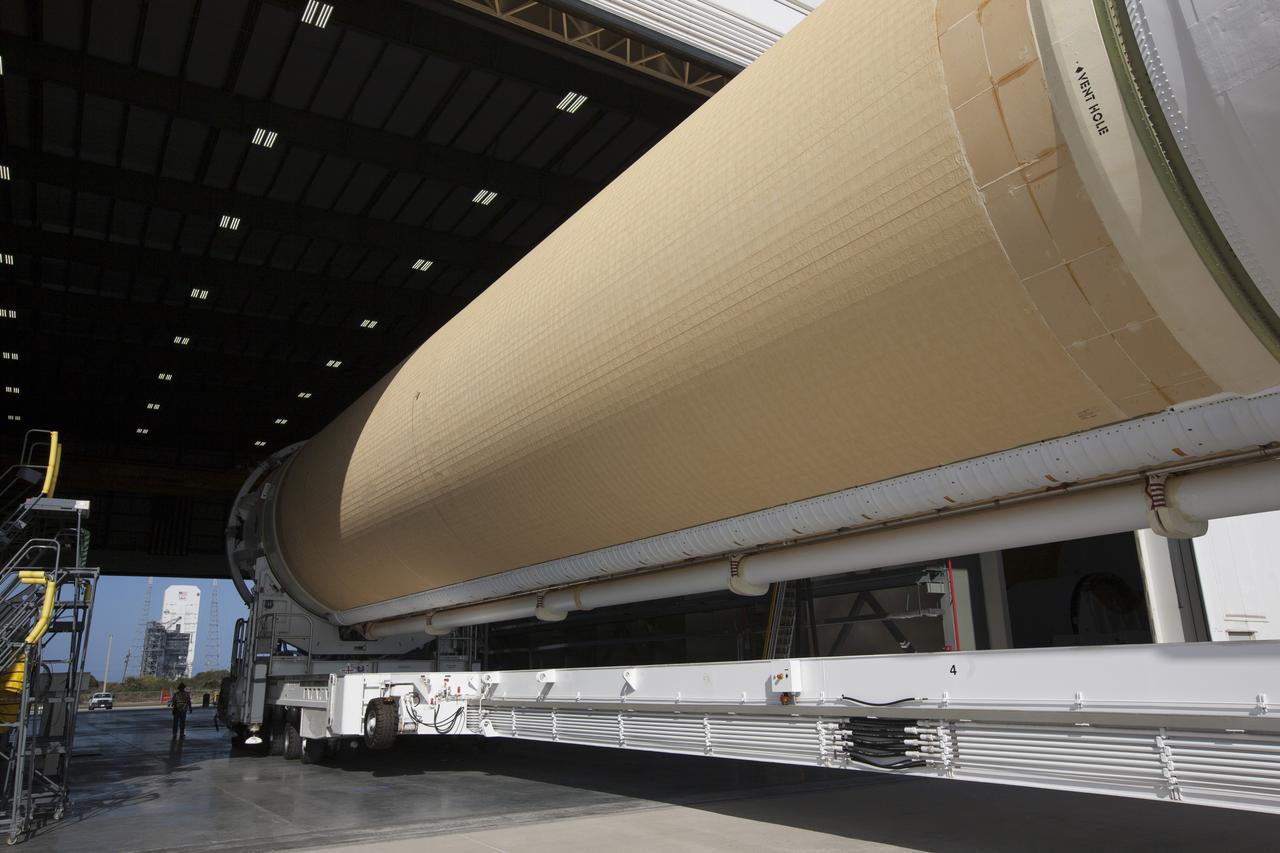
CAPE CANAVERAL, Fla. – The core booster for the United Launch Alliance Delta IV heavy for NASA’s upcoming Exploration Flight Test-1, or EFT-1, mission with the Orion spacecraft, was transported to the Horizontal Integration Facility, or HIF, at Space Launch Complex 37 on Cape Canaveral Air Force Station in Florida. The core booster and starboard booster arrived by barge at the U.S. Army Outpost wharf at Port Canaveral. The port booster and the upper stage are planned to be shipped to Cape Canaveral in April. At the HIF, all three boosters will be processed and checked out before being moved to the nearby launch pad and hoisted into position. During the EFT-1 mission, Orion will travel farther into space than any human spacecraft has gone in more than 40 years. The data gathered during the flight will influence design decisions, validate existing computer models and innovative new approaches to space systems development, as well as reduce overall mission risks and costs for later Orion flights. Liftoff of Orion on EFT-1 is planned for fall 2014. Photo credit: NASA/Kim Shiflett
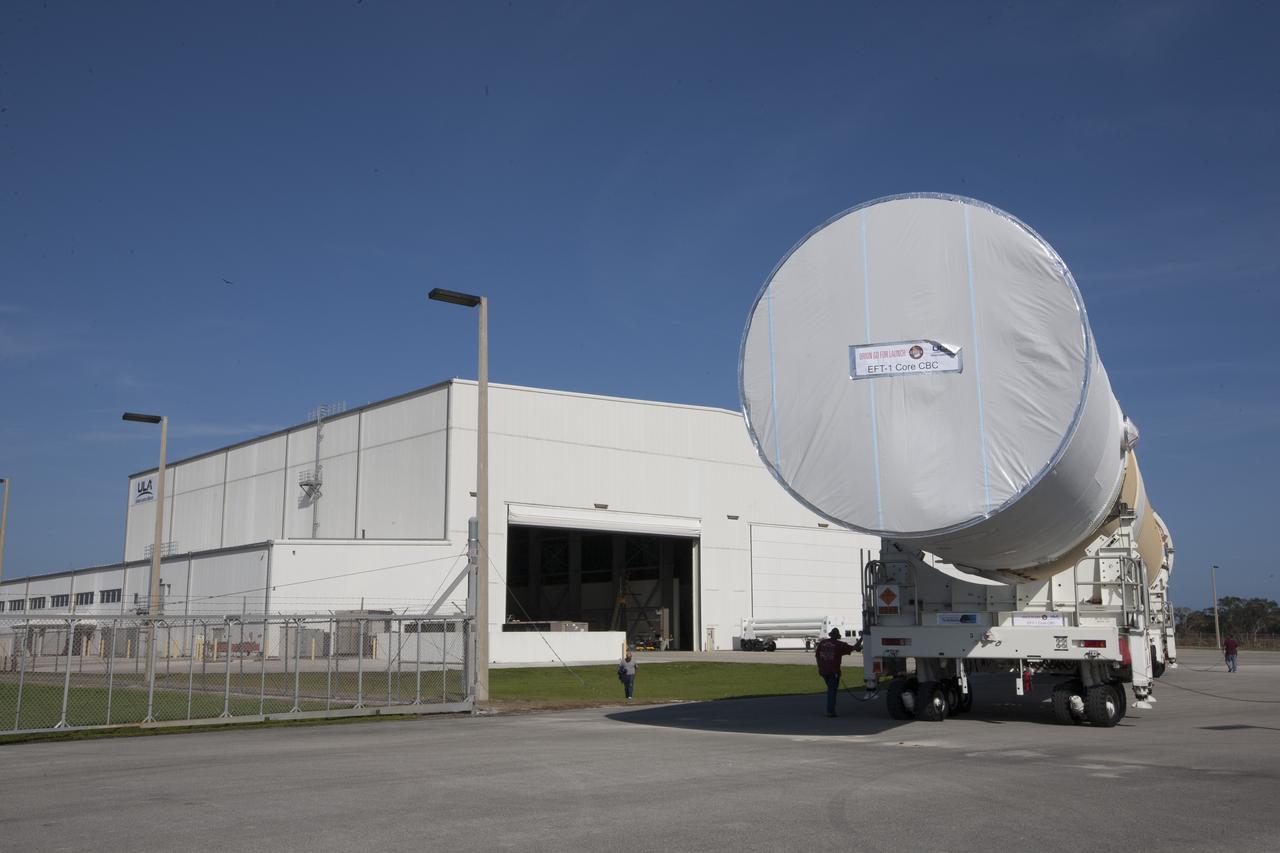
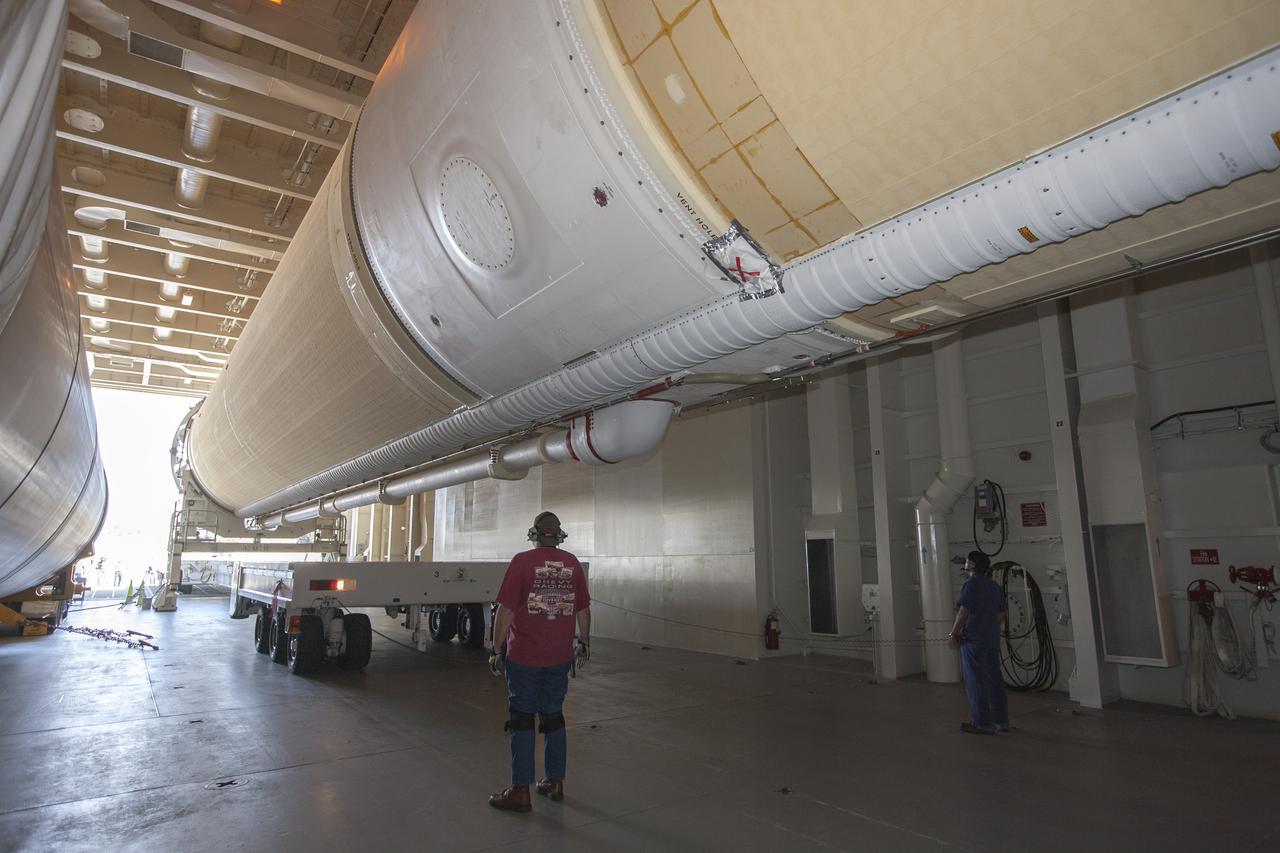
CAPE CANAVERAL, Fla. – Two of the three United Launch Alliance Delta IV heavy boosters for NASA’s upcoming Exploration Flight Test-1, or EFT-1, mission with the Orion spacecraft, arrived by barge at the U.S. Army Outpost wharf at Port Canaveral in Florida. The core booster, shown in this photo, and starboard booster were offloaded and transported to the Horizontal Integration Facility, or HIF, at Space Launch Complex 37 on Cape Canaveral Air Force Station. The port booster and the upper stage are planned to be shipped to Cape Canaveral in April. At the HIF, all three boosters will be processed and checked out before being moved to the nearby launch pad and hoisted into position. During the EFT-1 mission, Orion will travel farther into space than any human spacecraft has gone in more than 40 years. The data gathered during the flight will influence design decisions, validate existing computer models and innovative new approaches to space systems development, as well as reduce overall mission risks and costs for later Orion flights. Liftoff of Orion on EFT-1 is planned for fall 2014. Photo credit: NASA/Kim Shiflett
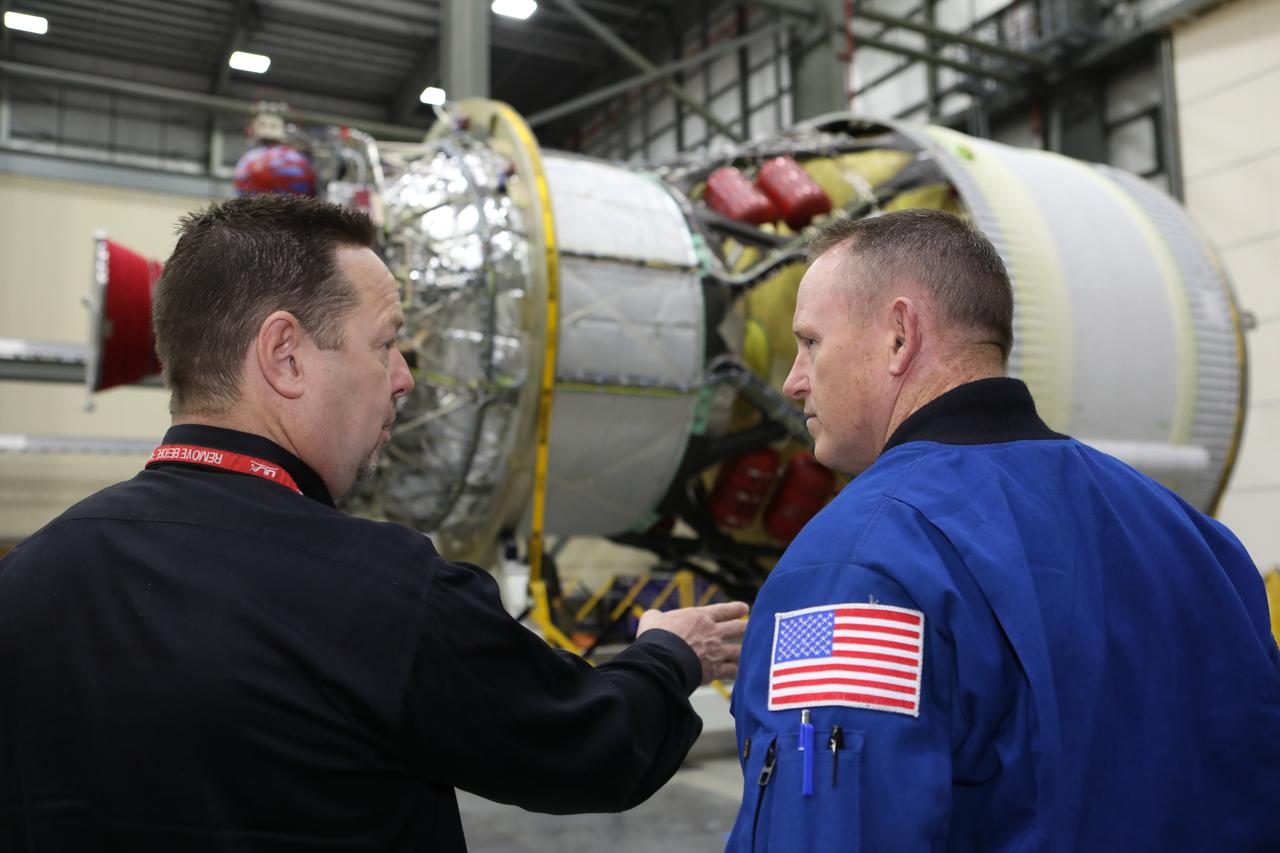
Inside the United Launch Alliance Horizontal Integration Facility at Cape Canaveral Air Force Station in Florida, NASA astronaut Barry "Butch" Wilmore views the first integrated piece of flight hardware for NASA's Space Launch System (SLS) rocket, the Interim Cryogenic Propulsion Stage (ICPS). The ICPS is the in-space stage that is located toward the top of the rocket, between the Launch Vehicle Stage Adapter and the Orion Spacecraft Adapter. It will provide some of the in-space propulsion during Orion's first flight test atop the SLS on Exploration Mission 1.
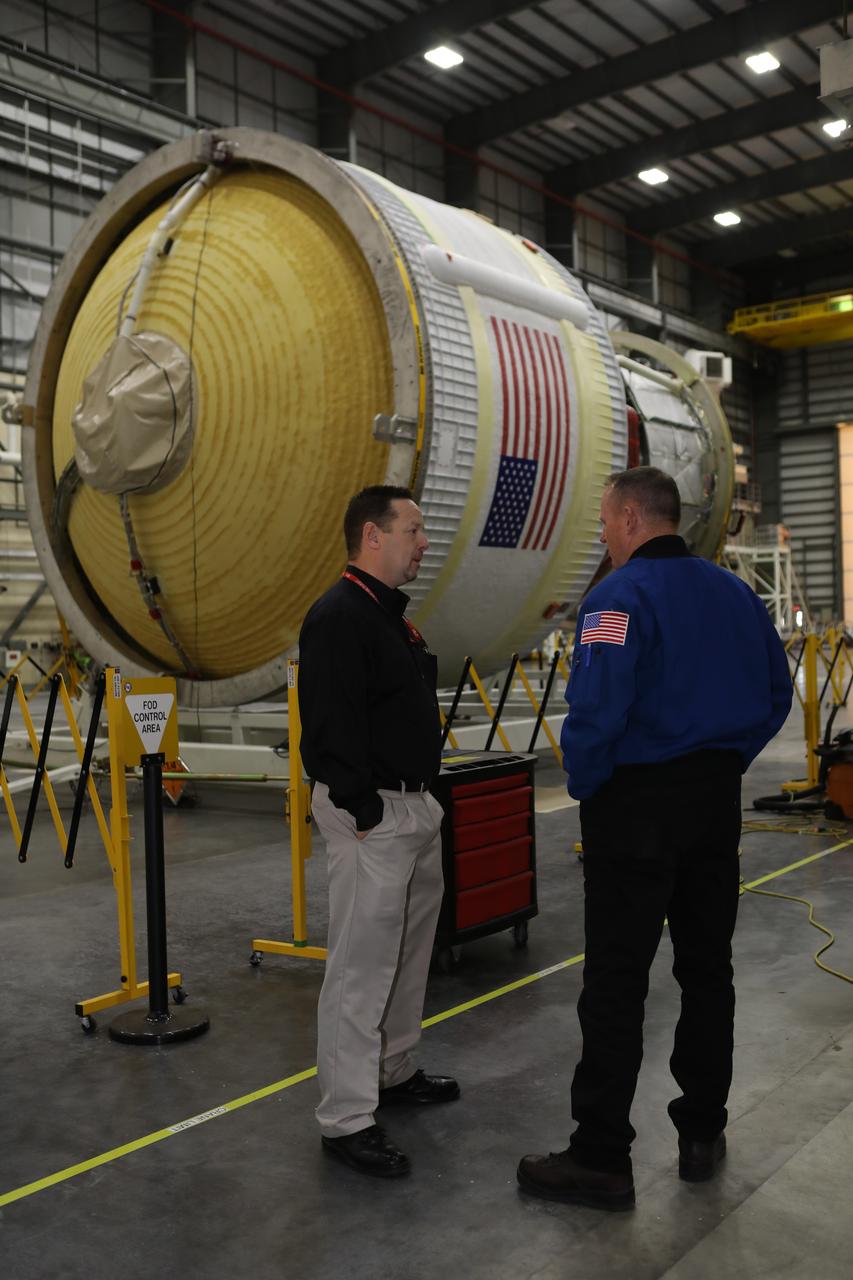
Inside the United Launch Alliance Horizontal Integration Facility at Cape Canaveral Air Force Station in Florida, NASA astronaut Barry "Butch" Wilmore views the first integrated piece of flight hardware for NASA's Space Launch System (SLS) rocket, the Interim Cryogenic Propulsion Stage (ICPS). The ICPS is the in-space stage that is located toward the top of the rocket, between the Launch Vehicle Stage Adapter and the Orion Spacecraft Adapter. It will provide some of the in-space propulsion during Orion's first flight test atop the SLS on Exploration Mission 1.
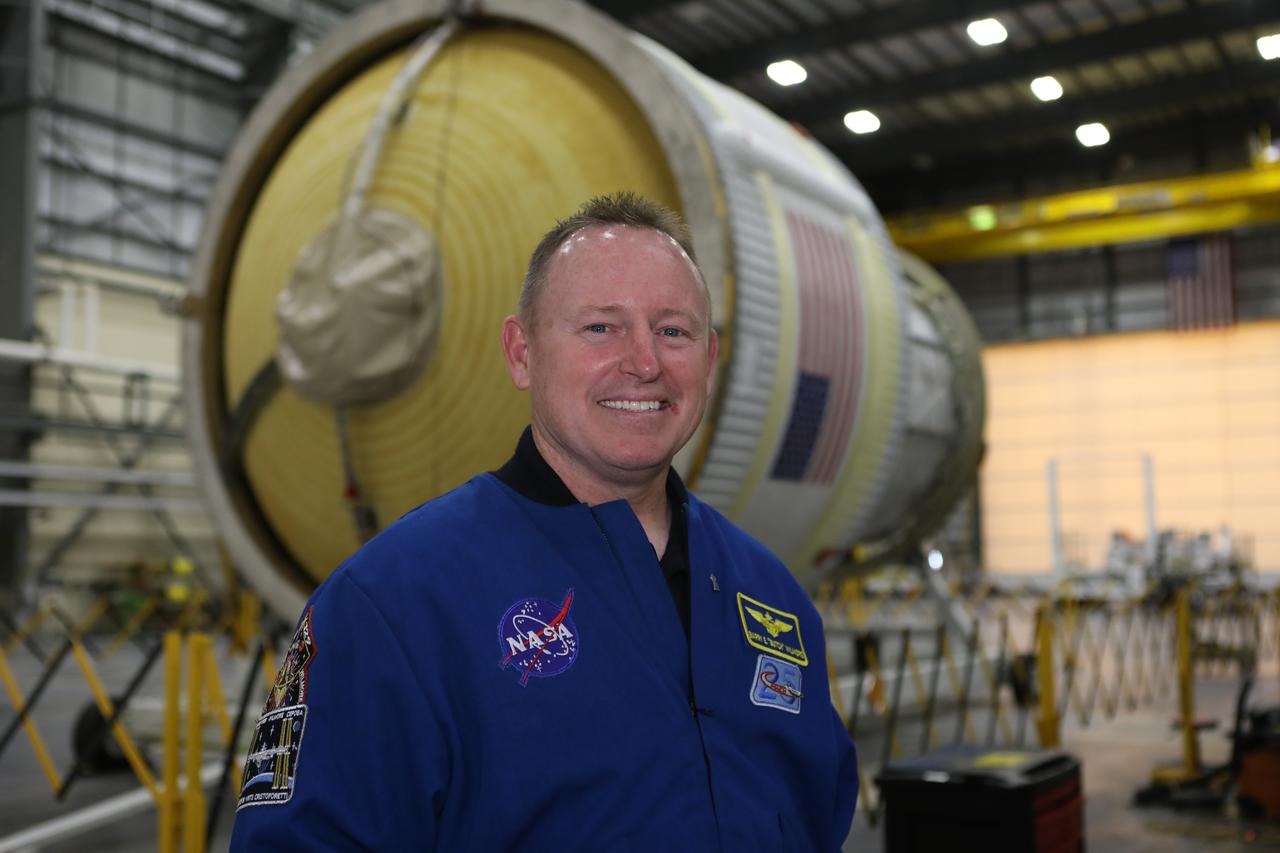
Inside the United Launch Alliance Horizontal Integration Facility at Cape Canaveral Air Force Station in Florida, NASA astronaut Barry "Butch" Wilmore views the first integrated piece of flight hardware for NASA's Space Launch System (SLS) rocket, the Interim Cryogenic Propulsion Stage (ICPS). The ICPS is the in-space stage that is located toward the top of the rocket, between the Launch Vehicle Stage Adapter and the Orion Spacecraft Adapter. It will provide some of the in-space propulsion during Orion's first flight test atop the SLS on Exploration Mission 1.
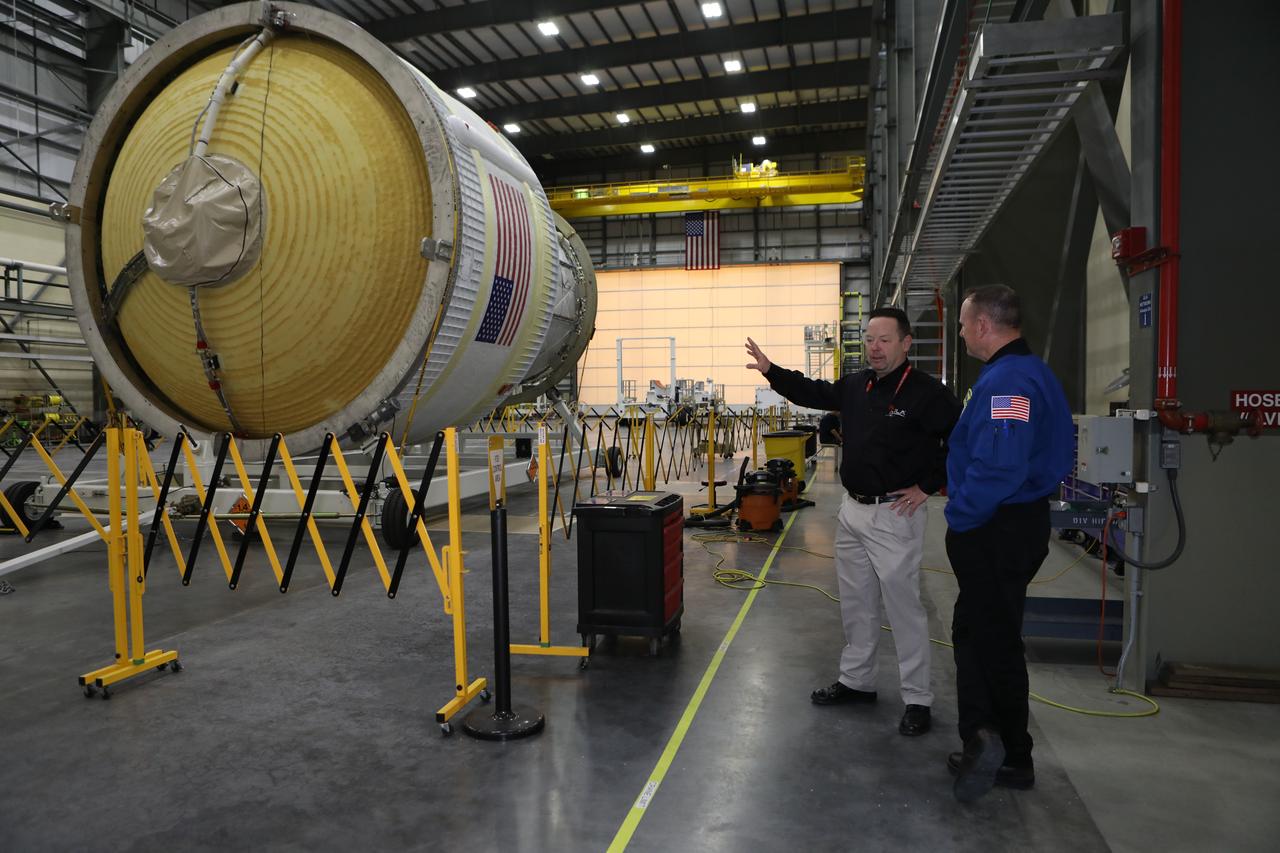
Inside the United Launch Alliance Horizontal Integration Facility at Cape Canaveral Air Force Station in Florida, NASA astronaut Barry "Butch" Wilmore views the first integrated piece of flight hardware for NASA's Space Launch System (SLS) rocket, the Interim Cryogenic Propulsion Stage (ICPS). The ICPS is the in-space stage that is located toward the top of the rocket, between the Launch Vehicle Stage Adapter and the Orion Spacecraft Adapter. It will provide some of the in-space propulsion during Orion's first flight test atop the SLS on Exploration Mission 1.
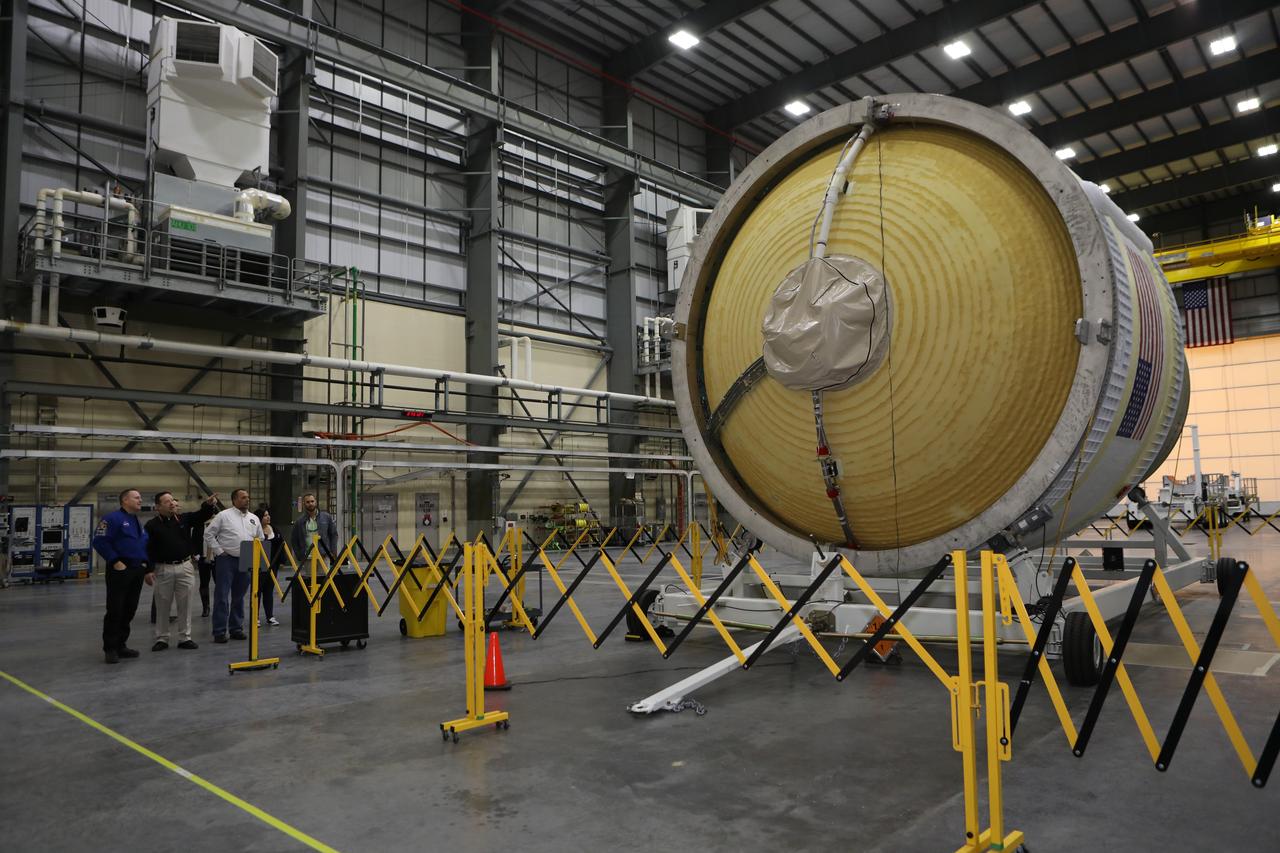
Inside the United Launch Alliance Horizontal Integration Facility at Cape Canaveral Air Force Station in Florida, NASA astronaut Barry "Butch" Wilmore, far left, views the first integrated piece of flight hardware for NASA's Space Launch System (SLS) rocket, the Interim Cryogenic Propulsion Stage (ICPS). The ICPS is the in-space stage that is located toward the top of the rocket, between the Launch Vehicle Stage Adapter and the Orion Spacecraft Adapter. It will provide some of the in-space propulsion during Orion's first flight test atop the SLS on Exploration Mission 1.
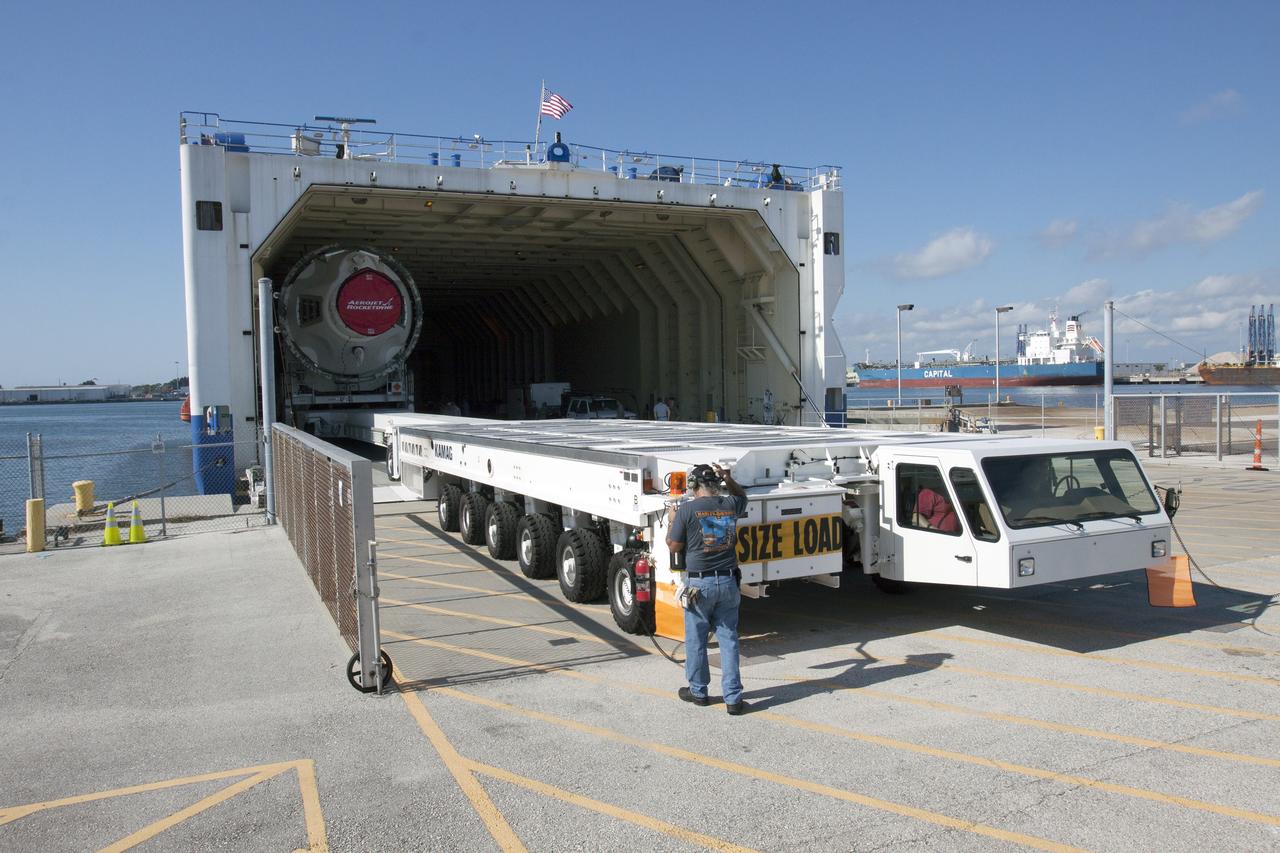
CAPE CANAVERAL, Fla. -- The port booster for the United Launch Alliance Delta IV Heavy for Exploration Flight Test-1, or EFT-1, is being offloaded from the barge at the U.S. Army Outpost wharf at Port Canaveral in Florida and will be transported to the Horizontal Integration Facility, or HIF, at Space Launch Complex 37 on Cape Canaveral Air Force Station. The upper stage and spacecraft adapter arrived with the booster and were transported to the HIF on May 6. At the HIF, all three booster stages will be processed and checked out before being moved to the nearby launch pad and hoisted into position. The spacecraft adapter will connect Orion to the ULA Delta IV, and also will connect Orion to NASA's new rocket, the Space Launch System, on its first mission in 2017. During the EFT-1 mission, Orion will travel farther into space than any human spacecraft has gone in more than 40 years. The data gathered during the flight will influence design decisions, validate existing computer models and innovative new approaches to space systems development, as well as reduce overall mission risks and costs for later Orion flights. Liftoff of Orion on EFT-1 is planned for fall 2014. Photo credit: NASA/Kim Shiflett
CAPE CANAVERAL, Fla. -- The port booster for the United Launch Alliance Delta IV Heavy for Exploration Flight Test-1, or EFT-1, has been offloaded from the barge at the U.S. Army Outpost wharf at Port Canaveral in Florida and will be transported to the Horizontal Integration Facility, or HIF, at Space Launch Complex 37 on Cape Canaveral Air Force Station. The upper stage and spacecraft adapter arrived with the booster and were transported to the HIF on May 6. At the HIF, all three booster stages will be processed and checked out before being moved to the nearby launch pad and hoisted into position. The spacecraft adapter will connect Orion to the ULA Delta IV, and also will connect Orion to NASA's new rocket, the Space Launch System, on its first mission in 2017. During the EFT-1 mission, Orion will travel farther into space than any human spacecraft has gone in more than 40 years. The data gathered during the flight will influence design decisions, validate existing computer models and innovative new approaches to space systems development, as well as reduce overall mission risks and costs for later Orion flights. Liftoff of Orion on EFT-1 is planned for fall 2014. Photo credit: NASA/Kim Shiflett
CAPE CANAVERAL, Fla. -- The port booster for the United Launch Alliance Delta IV Heavy for Exploration Flight Test-1, or EFT-1, is being offloaded from the barge at the U.S. Army Outpost wharf at Port Canaveral in Florida and will be transported to the Horizontal Integration Facility, or HIF, at Space Launch Complex 37 on Cape Canaveral Air Force Station. The upper stage and spacecraft adapter arrived with the booster and were transported to the HIF on May 6. At the HIF, all three booster stages will be processed and checked out before being moved to the nearby launch pad and hoisted into position. The spacecraft adapter will connect Orion to the ULA Delta IV, and also will connect Orion to NASA's new rocket, the Space Launch System, on its first mission in 2017. During the EFT-1 mission, Orion will travel farther into space than any human spacecraft has gone in more than 40 years. The data gathered during the flight will influence design decisions, validate existing computer models and innovative new approaches to space systems development, as well as reduce overall mission risks and costs for later Orion flights. Liftoff of Orion on EFT-1 is planned for fall 2014. Photo credit: NASA/Kim Shiflett
CAPE CANAVERAL, Fla. -- The port booster for the United Launch Alliance Delta IV Heavy for Exploration Flight Test-1, or EFT-1, has been offloaded from the barge at the U.S. Army Outpost wharf at Port Canaveral in Florida and will be transported to the Horizontal Integration Facility, or HIF, at Space Launch Complex 37 on Cape Canaveral Air Force Station. The upper stage and spacecraft adapter arrived with the booster and were transported to the HIF on May 6. At the HIF, all three booster stages will be processed and checked out before being moved to the nearby launch pad and hoisted into position. The spacecraft adapter will connect Orion to the ULA Delta IV, and also will connect Orion to NASA's new rocket, the Space Launch System, on its first mission in 2017. During the EFT-1 mission, Orion will travel farther into space than any human spacecraft has gone in more than 40 years. The data gathered during the flight will influence design decisions, validate existing computer models and innovative new approaches to space systems development, as well as reduce overall mission risks and costs for later Orion flights. Liftoff of Orion on EFT-1 is planned for fall 2014. Photo credit: NASA/Kim Shiflett
CAPE CANAVERAL, Fla. -- The port booster for the United Launch Alliance Delta IV Heavy for Exploration Flight Test-1, or EFT-1, is being offloaded from the barge at the U.S. Army Outpost wharf at Port Canaveral in Florida and will be transported to the Horizontal Integration Facility, or HIF, at Space Launch Complex 37 on Cape Canaveral Air Force Station. The upper stage and spacecraft adapter arrived with the booster and were transported to the HIF on May 6. At the HIF, all three booster stages will be processed and checked out before being moved to the nearby launch pad and hoisted into position. The spacecraft adapter will connect Orion to the ULA Delta IV, and also will connect Orion to NASA's new rocket, the Space Launch System, on its first mission in 2017. During the EFT-1 mission, Orion will travel farther into space than any human spacecraft has gone in more than 40 years. The data gathered during the flight will influence design decisions, validate existing computer models and innovative new approaches to space systems development, as well as reduce overall mission risks and costs for later Orion flights. Liftoff of Orion on EFT-1 is planned for fall 2014. Photo credit: NASA/Kim Shiflett
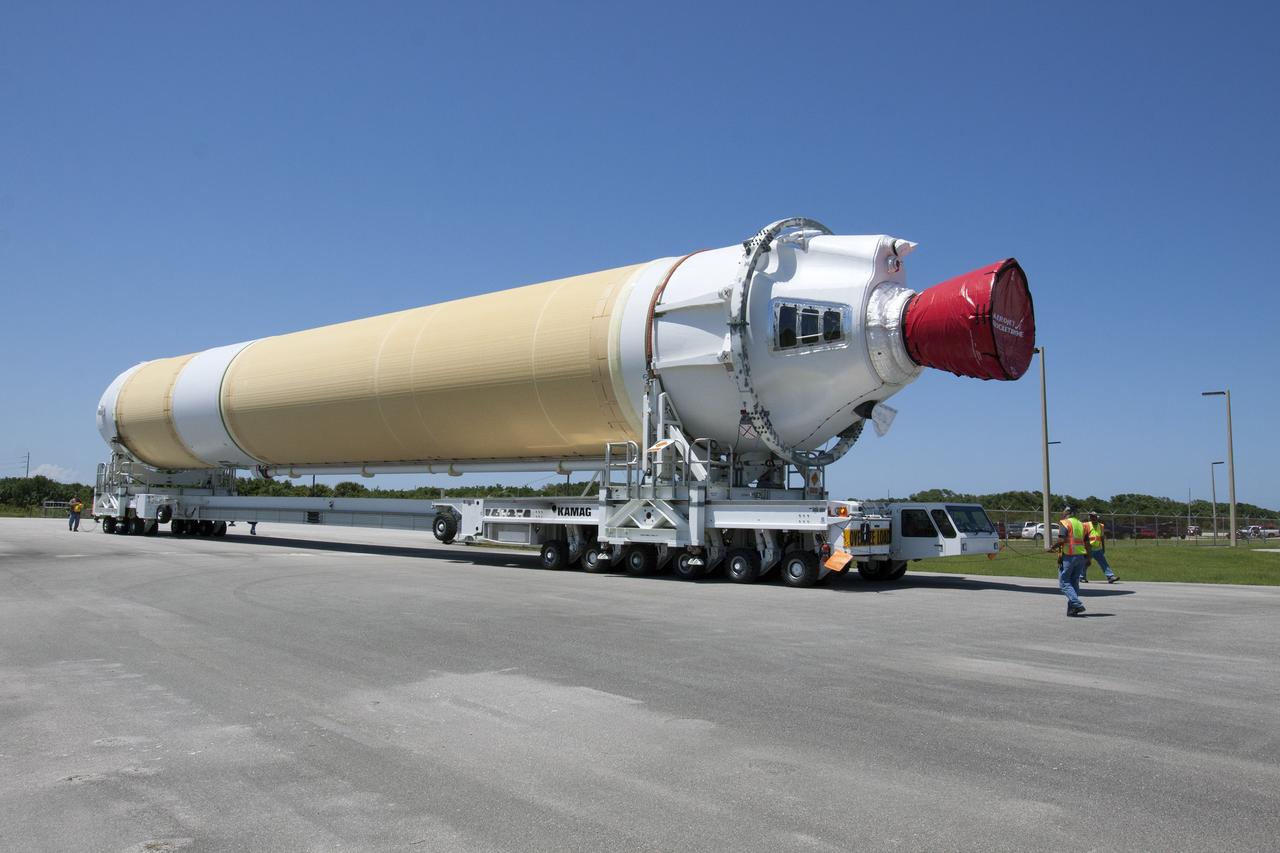
CAPE CANAVERAL, Fla. -- A transporter for oversize loads carries the port booster for the United Launch Alliance Delta IV Heavy for Exploration Flight Test-1, or EFT-1, to Space Launch Complex 37 on Cape Canaveral Air Force Station after it was offloaded from the barge at the U.S. Army Outpost wharf at Port Canaveral in Florida. The booster will be transported to the Horizontal Integration Facility, or HIF, at the launch complex. The upper stage and spacecraft adapter arrived with the booster and were transported to the HIF on May 6. At the HIF, all three booster stages will be processed and checked out before being moved to the nearby launch pad and hoisted into position. The spacecraft adapter will connect Orion to the ULA Delta IV, and also will connect Orion to NASA's new rocket, the Space Launch System, on its first mission in 2017. During the EFT-1 mission, Orion will travel farther into space than any human spacecraft has gone in more than 40 years. The data gathered during the flight will influence design decisions, validate existing computer models and innovative new approaches to space systems development, as well as reduce overall mission risks and costs for later Orion flights. Liftoff of Orion on EFT-1 is planned for fall 2014. Photo credit: NASA/Kim Shiflett
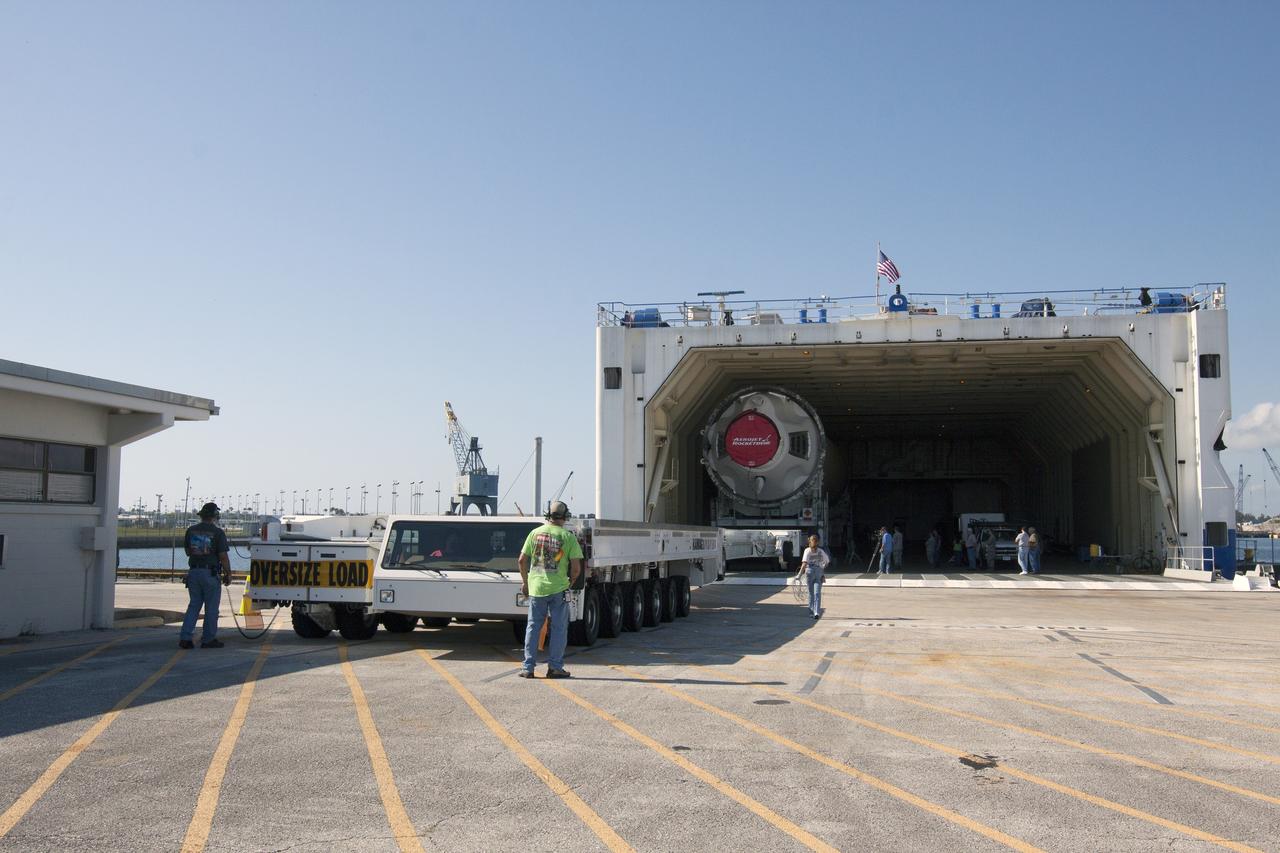
CAPE CANAVERAL, Fla. -- The port booster for the United Launch Alliance Delta IV Heavy for Exploration Flight Test-1, or EFT-1, is being offloaded from the barge at the U.S. Army Outpost wharf at Port Canaveral in Florida and will be transported to the Horizontal Integration Facility, or HIF, at Space Launch Complex 37 on Cape Canaveral Air Force Station. The upper stage and spacecraft adapter arrived with the booster and were transported to the HIF on May 6. At the HIF, all three booster stages will be processed and checked out before being moved to the nearby launch pad and hoisted into position. The spacecraft adapter will connect Orion to the ULA Delta IV, and also will connect Orion to NASA's new rocket, the Space Launch System, on its first mission in 2017. During the EFT-1 mission, Orion will travel farther into space than any human spacecraft has gone in more than 40 years. The data gathered during the flight will influence design decisions, validate existing computer models and innovative new approaches to space systems development, as well as reduce overall mission risks and costs for later Orion flights. Liftoff of Orion on EFT-1 is planned for fall 2014. Photo credit: NASA/Kim Shiflett
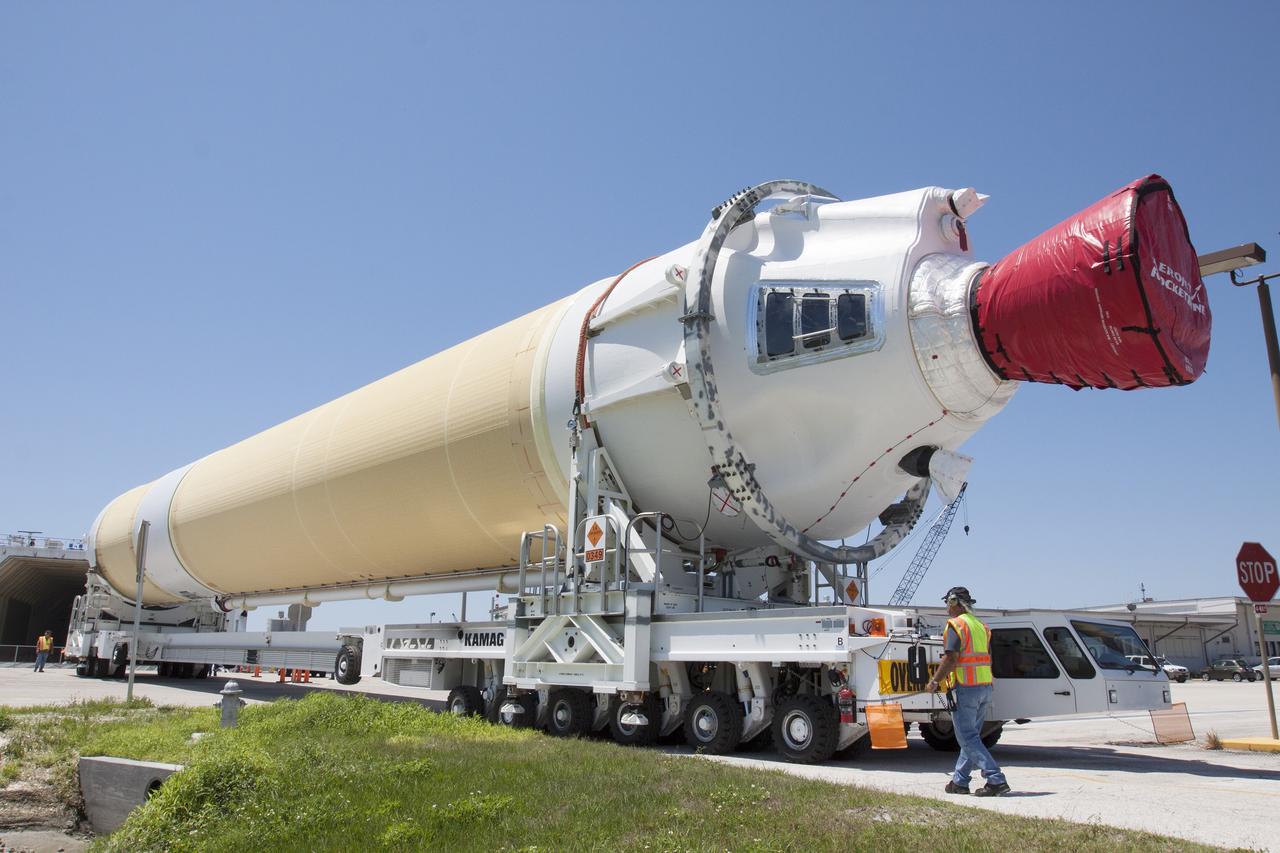
CAPE CANAVERAL, Fla. -- The port booster for the United Launch Alliance Delta IV Heavy for Exploration Flight Test-1, or EFT-1, has been offloaded from the barge at the U.S. Army Outpost wharf at Port Canaveral in Florida and is being transported to the Horizontal Integration Facility, or HIF, at Space Launch Complex 37 on Cape Canaveral Air Force Station. The upper stage and spacecraft adapter arrived with the booster and were transported to the HIF on May 6. At the HIF, all three booster stages will be processed and checked out before being moved to the nearby launch pad and hoisted into position. The spacecraft adapter will connect Orion to the ULA Delta IV, and also will connect Orion to NASA's new rocket, the Space Launch System, on its first mission in 2017. During the EFT-1 mission, Orion will travel farther into space than any human spacecraft has gone in more than 40 years. The data gathered during the flight will influence design decisions, validate existing computer models and innovative new approaches to space systems development, as well as reduce overall mission risks and costs for later Orion flights. Liftoff of Orion on EFT-1 is planned for fall 2014. Photo credit: NASA/Kim Shiflett
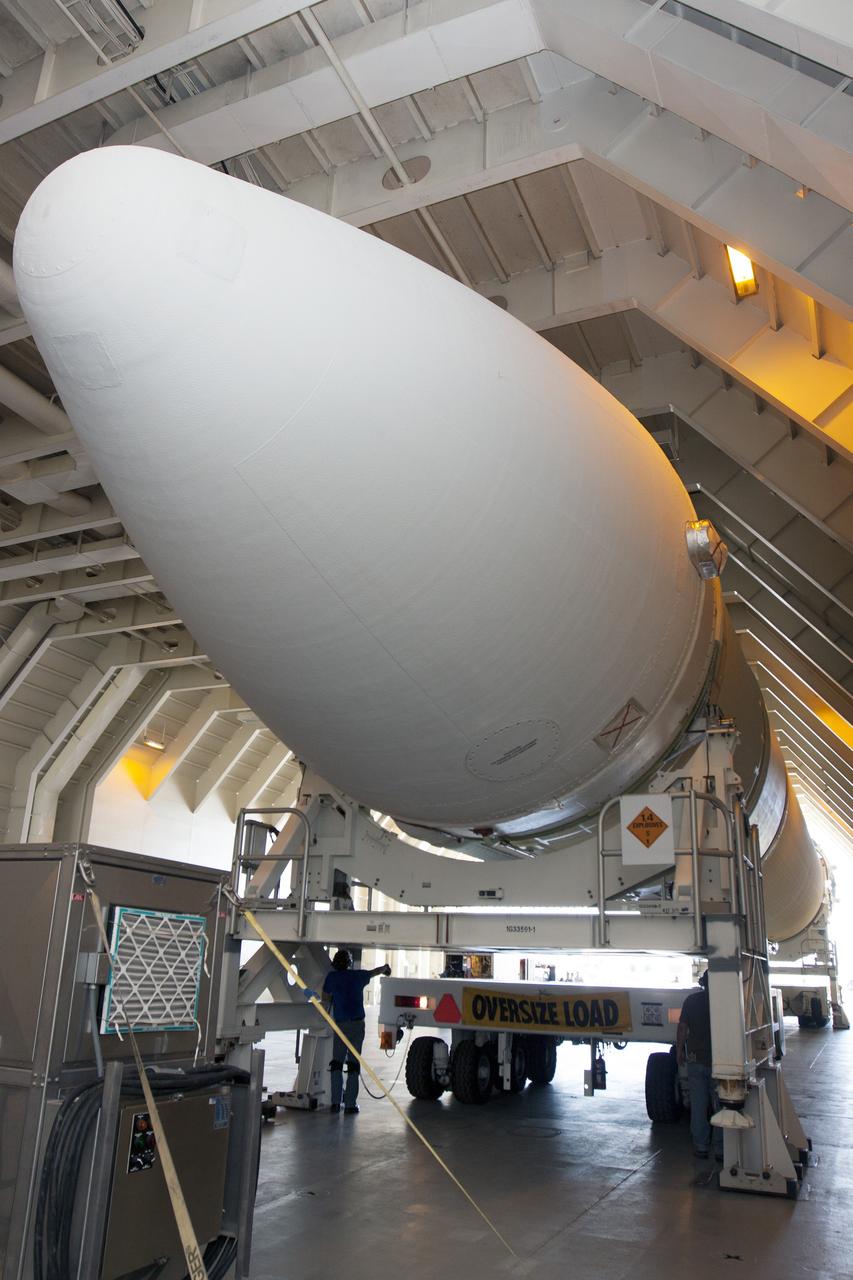
CAPE CANAVERAL, Fla. -- The port booster for the United Launch Alliance Delta IV Heavy for Exploration Flight Test-1, or EFT-1, is being offloaded from the barge at the U.S. Army Outpost wharf at Port Canaveral in Florida and will be transported to the Horizontal Integration Facility, or HIF, at Space Launch Complex 37 on Cape Canaveral Air Force Station. The upper stage and spacecraft adapter arrived with the booster and were transported to the HIF on May 6. At the HIF, all three booster stages will be processed and checked out before being moved to the nearby launch pad and hoisted into position. The spacecraft adapter will connect Orion to the ULA Delta IV, and also will connect Orion to NASA's new rocket, the Space Launch System, on its first mission in 2017. During the EFT-1 mission, Orion will travel farther into space than any human spacecraft has gone in more than 40 years. The data gathered during the flight will influence design decisions, validate existing computer models and innovative new approaches to space systems development, as well as reduce overall mission risks and costs for later Orion flights. Liftoff of Orion on EFT-1 is planned for fall 2014. Photo credit: NASA/Kim Shiflett
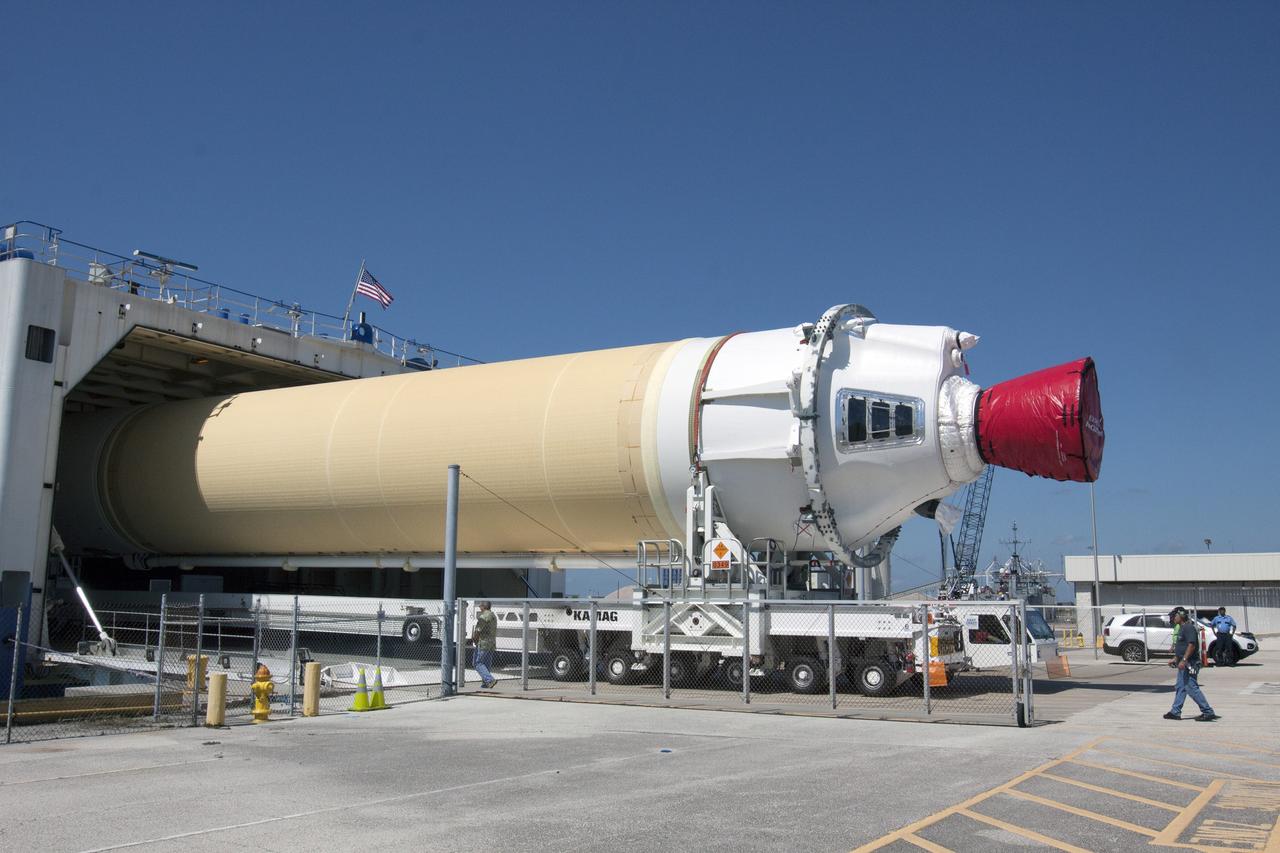
CAPE CANAVERAL, Fla. -- The port booster for the United Launch Alliance Delta IV Heavy for Exploration Flight Test-1, or EFT-1, has been offloaded from the barge at the U.S. Army Outpost wharf at Port Canaveral in Florida and will be transported to the Horizontal Integration Facility, or HIF, at Space Launch Complex 37 on Cape Canaveral Air Force Station. The upper stage and spacecraft adapter arrived with the booster and were transported to the HIF on May 6. At the HIF, all three booster stages will be processed and checked out before being moved to the nearby launch pad and hoisted into position. The spacecraft adapter will connect Orion to the ULA Delta IV, and also will connect Orion to NASA's new rocket, the Space Launch System, on its first mission in 2017. During the EFT-1 mission, Orion will travel farther into space than any human spacecraft has gone in more than 40 years. The data gathered during the flight will influence design decisions, validate existing computer models and innovative new approaches to space systems development, as well as reduce overall mission risks and costs for later Orion flights. Liftoff of Orion on EFT-1 is planned for fall 2014. Photo credit: NASA/Kim Shiflett
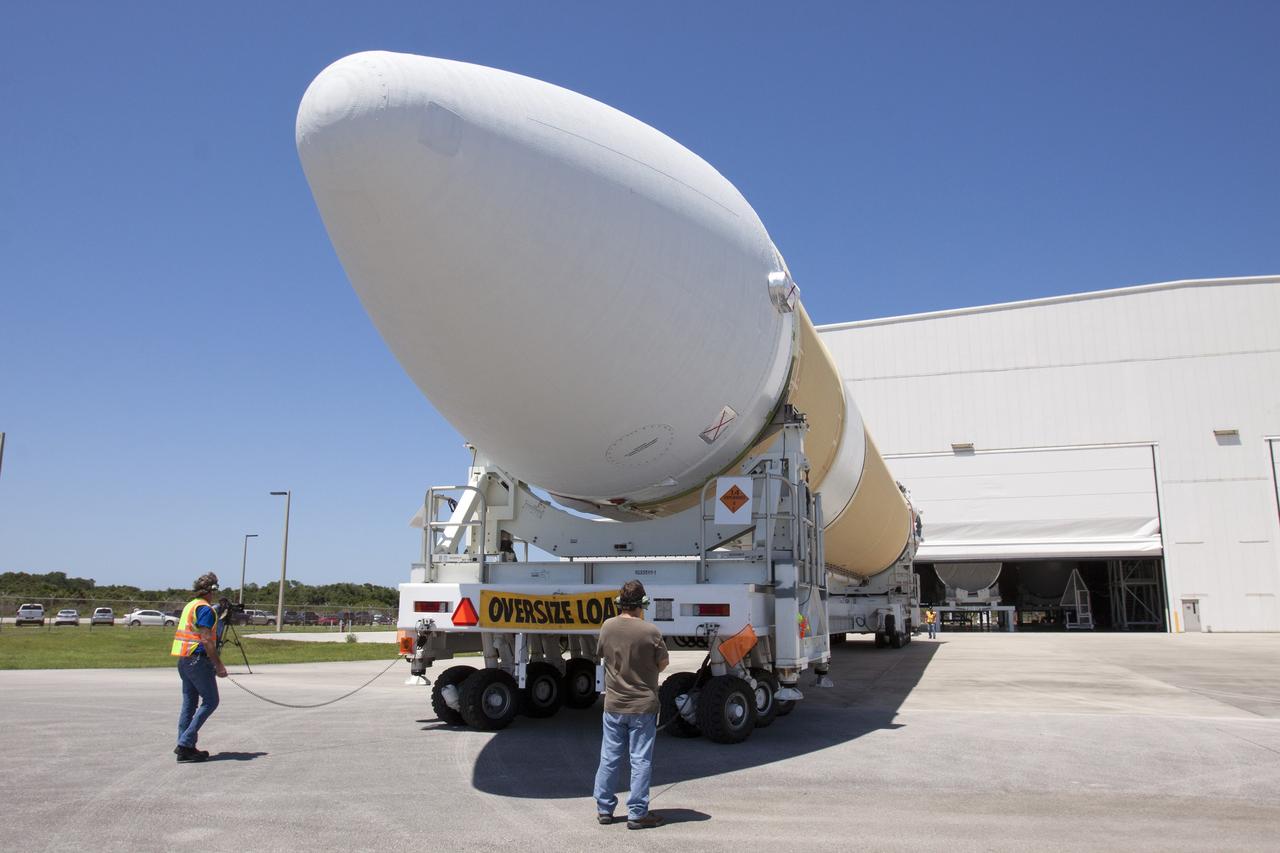
CAPE CANAVERAL, Fla. -- A transporter for oversize loads carries the port booster for the United Launch Alliance Delta IV Heavy for Exploration Flight Test-1, or EFT-1, to the Horizontal Integration Facility, or HIF, at Space Launch Complex 37 on Cape Canaveral Air Force Station in Florida. The upper stage and spacecraft adapter arrived with the booster on a barge at the U.S. Army Outpost wharf at Port Canaveral, and were transported to the HIF on May 6. At the HIF, all three booster stages will be processed and checked out before being moved to the nearby launch pad and hoisted into position. The spacecraft adapter will connect Orion to the ULA Delta IV, and also will connect Orion to NASA's new rocket, the Space Launch System, on its first mission in 2017. During the EFT-1 mission, Orion will travel farther into space than any human spacecraft has gone in more than 40 years. The data gathered during the flight will influence design decisions, validate existing computer models and innovative new approaches to space systems development, as well as reduce overall mission risks and costs for later Orion flights. Liftoff of Orion on EFT-1 is planned for fall 2014. Photo credit: NASA/Kim Shiflett
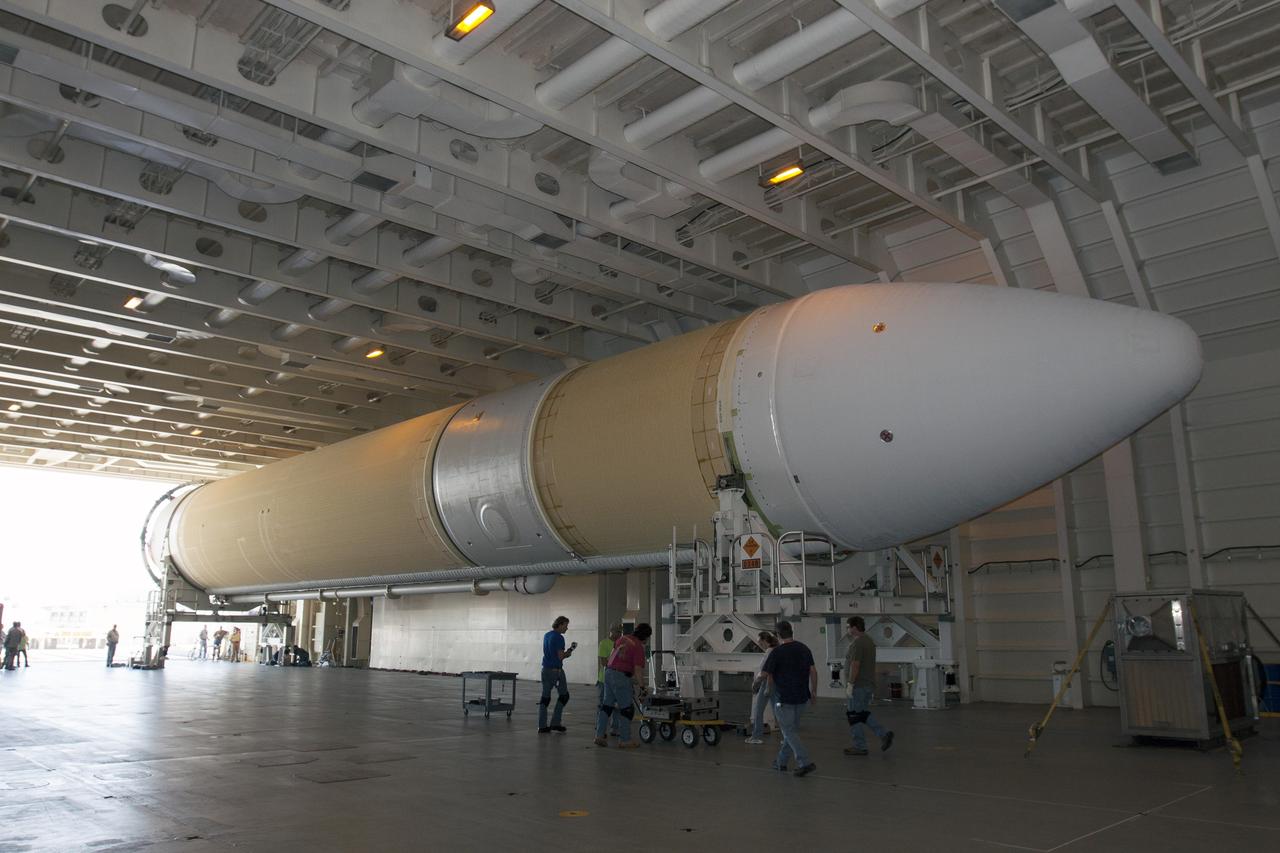
CAPE CANAVERAL, Fla. -- The port booster for the United Launch Alliance Delta IV Heavy for Exploration Flight Test-1, or EFT-1, is being offloaded from the barge at the U.S. Army Outpost wharf at Port Canaveral in Florida and will be transported to the Horizontal Integration Facility, or HIF, at Space Launch Complex 37 on Cape Canaveral Air Force Station. The upper stage and spacecraft adapter arrived with the booster and were transported to the HIF on May 6. At the HIF, all three booster stages will be processed and checked out before being moved to the nearby launch pad and hoisted into position. The spacecraft adapter will connect Orion to the ULA Delta IV, and also will connect Orion to NASA's new rocket, the Space Launch System, on its first mission in 2017. During the EFT-1 mission, Orion will travel farther into space than any human spacecraft has gone in more than 40 years. The data gathered during the flight will influence design decisions, validate existing computer models and innovative new approaches to space systems development, as well as reduce overall mission risks and costs for later Orion flights. Liftoff of Orion on EFT-1 is planned for fall 2014. Photo credit: NASA/Kim Shiflett
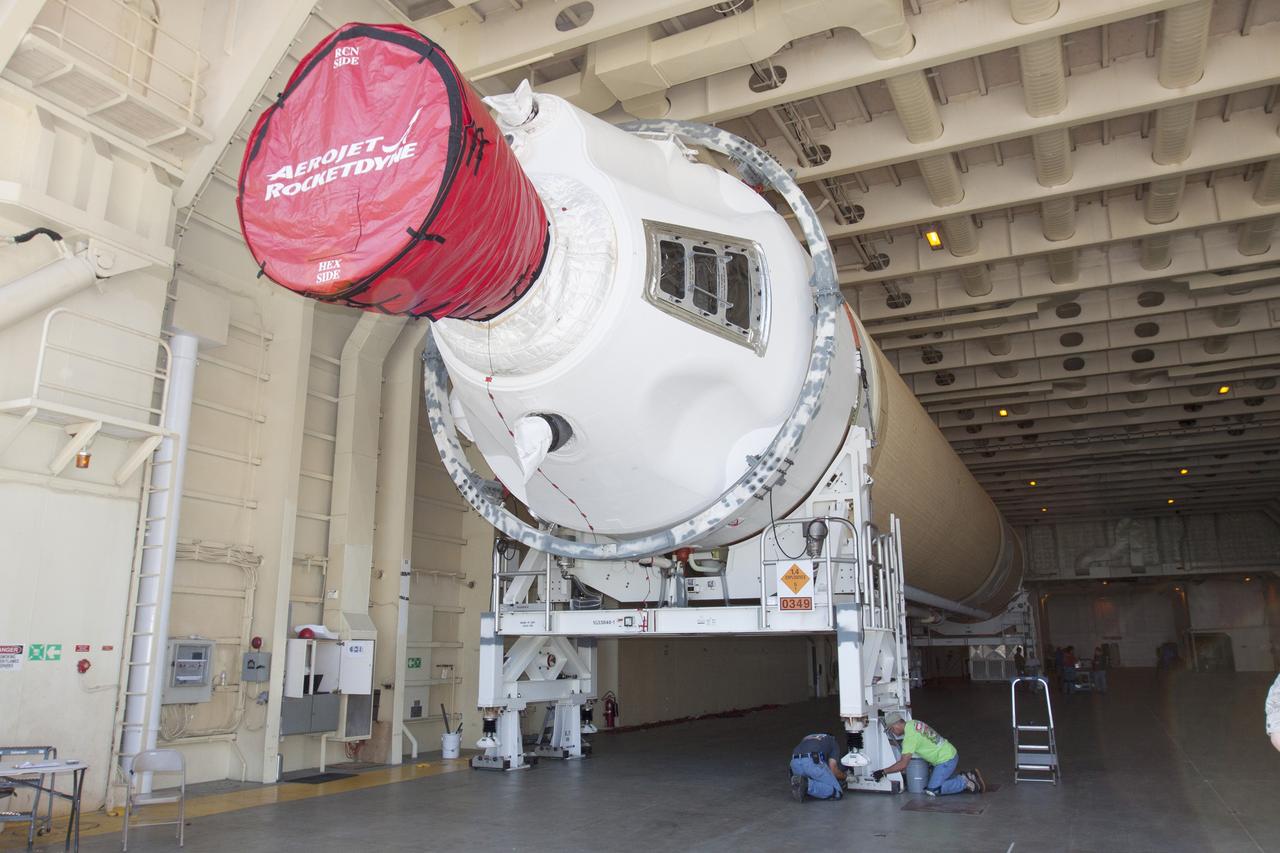
CAPE CANAVERAL, Fla. -- The port booster for the United Launch Alliance Delta IV Heavy for Exploration Flight Test-1, or EFT-1, is being offloaded from the barge at the U.S. Army Outpost wharf at Port Canaveral in Florida and will be transported to the Horizontal Integration Facility, or HIF, at Space Launch Complex 37 on Cape Canaveral Air Force Station. The upper stage and spacecraft adapter arrived with the booster and were transported to the HIF on May 6. At the HIF, all three booster stages will be processed and checked out before being moved to the nearby launch pad and hoisted into position. The spacecraft adapter will connect Orion to the ULA Delta IV, and also will connect Orion to NASA's new rocket, the Space Launch System, on its first mission in 2017. During the EFT-1 mission, Orion will travel farther into space than any human spacecraft has gone in more than 40 years. The data gathered during the flight will influence design decisions, validate existing computer models and innovative new approaches to space systems development, as well as reduce overall mission risks and costs for later Orion flights. Liftoff of Orion on EFT-1 is planned for fall 2014. Photo credit: NASA/Kim Shiflett
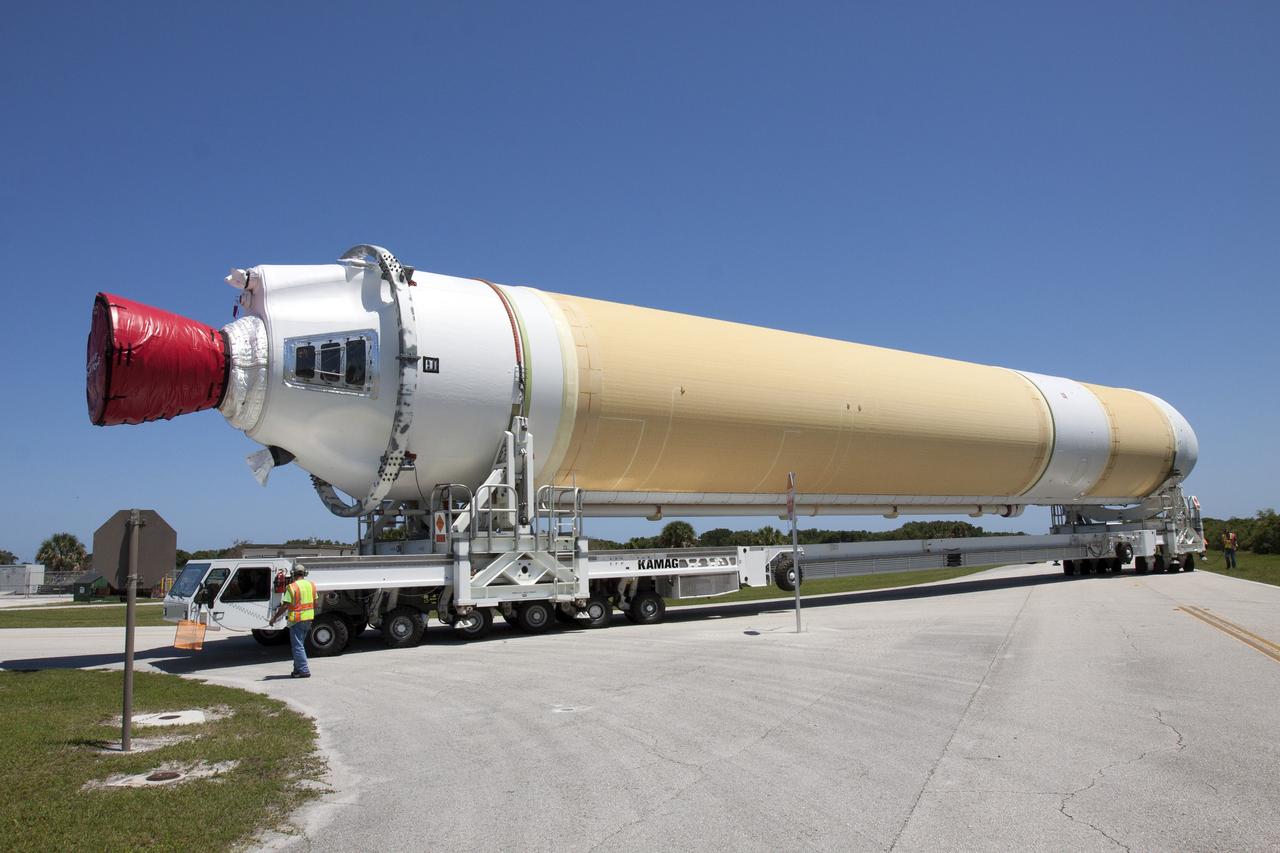
CAPE CANAVERAL, Fla. -- A transporter for oversize loads carries the port booster for the United Launch Alliance Delta IV Heavy for Exploration Flight Test-1, or EFT-1, to Space Launch Complex 37 on Cape Canaveral Air Force Station after it was offloaded from the barge at the U.S. Army Outpost wharf at Port Canaveral in Florida. The booster will be transported to the Horizontal Integration Facility, or HIF, at the launch complex. The upper stage and spacecraft adapter arrived with the booster and were transported to the HIF on May 6. At the HIF, all three booster stages will be processed and checked out before being moved to the nearby launch pad and hoisted into position. The spacecraft adapter will connect Orion to the ULA Delta IV, and also will connect Orion to NASA's new rocket, the Space Launch System, on its first mission in 2017. During the EFT-1 mission, Orion will travel farther into space than any human spacecraft has gone in more than 40 years. The data gathered during the flight will influence design decisions, validate existing computer models and innovative new approaches to space systems development, as well as reduce overall mission risks and costs for later Orion flights. Liftoff of Orion on EFT-1 is planned for fall 2014. Photo credit: NASA/Kim Shiflett
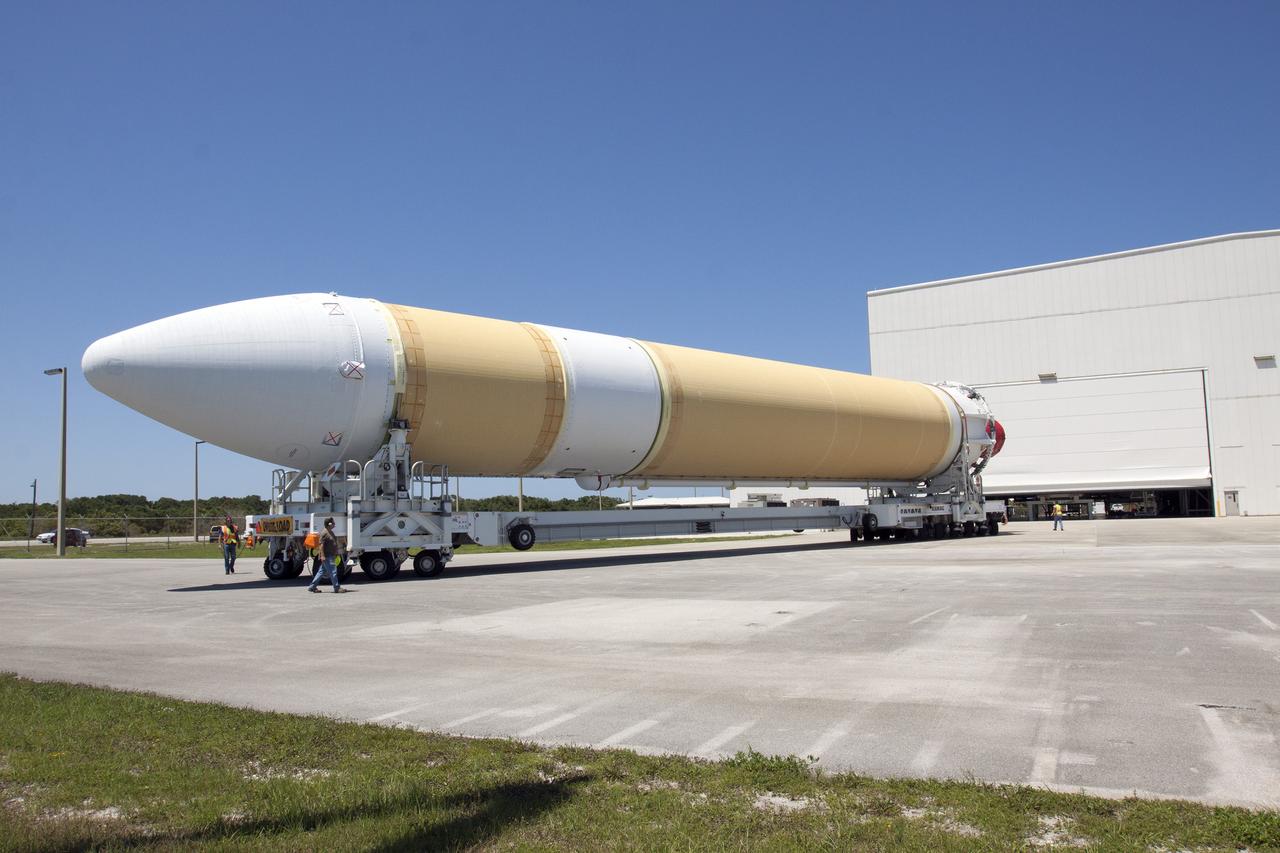
CAPE CANAVERAL, Fla. -- A transporter for oversize loads carries the port booster for the United Launch Alliance Delta IV Heavy for Exploration Flight Test-1, or EFT-1, to Space Launch Complex 37 on Cape Canaveral Air Force Station after it was offloaded from the barge at the U.S. Army Outpost wharf at Port Canaveral in Florida. The booster will be transported to the Horizontal Integration Facility, or HIF, at the launch complex. The upper stage and spacecraft adapter arrived with the booster and were transported to the HIF on May 6. At the HIF, all three booster stages will be processed and checked out before being moved to the nearby launch pad and hoisted into position. The spacecraft adapter will connect Orion to the ULA Delta IV, and also will connect Orion to NASA's new rocket, the Space Launch System, on its first mission in 2017. During the EFT-1 mission, Orion will travel farther into space than any human spacecraft has gone in more than 40 years. The data gathered during the flight will influence design decisions, validate existing computer models and innovative new approaches to space systems development, as well as reduce overall mission risks and costs for later Orion flights. Liftoff of Orion on EFT-1 is planned for fall 2014. Photo credit: NASA/Kim Shiflett
CAPE CANAVERAL, Fla. -- The port booster for the United Launch Alliance Delta IV Heavy for Exploration Flight Test-1, or EFT-1, has been offloaded from the barge at the U.S. Army Outpost wharf at Port Canaveral in Florida and will be transported to the Horizontal Integration Facility, or HIF, at Space Launch Complex 37 on Cape Canaveral Air Force Station. The upper stage and spacecraft adapter arrived with the booster and were transported to the HIF on May 6. At the HIF, all three booster stages will be processed and checked out before being moved to the nearby launch pad and hoisted into position. The spacecraft adapter will connect Orion to the ULA Delta IV, and also will connect Orion to NASA's new rocket, the Space Launch System, on its first mission in 2017. During the EFT-1 mission, Orion will travel farther into space than any human spacecraft has gone in more than 40 years. The data gathered during the flight will influence design decisions, validate existing computer models and innovative new approaches to space systems development, as well as reduce overall mission risks and costs for later Orion flights. Liftoff of Orion on EFT-1 is planned for fall 2014. Photo credit: NASA/Kim Shiflett
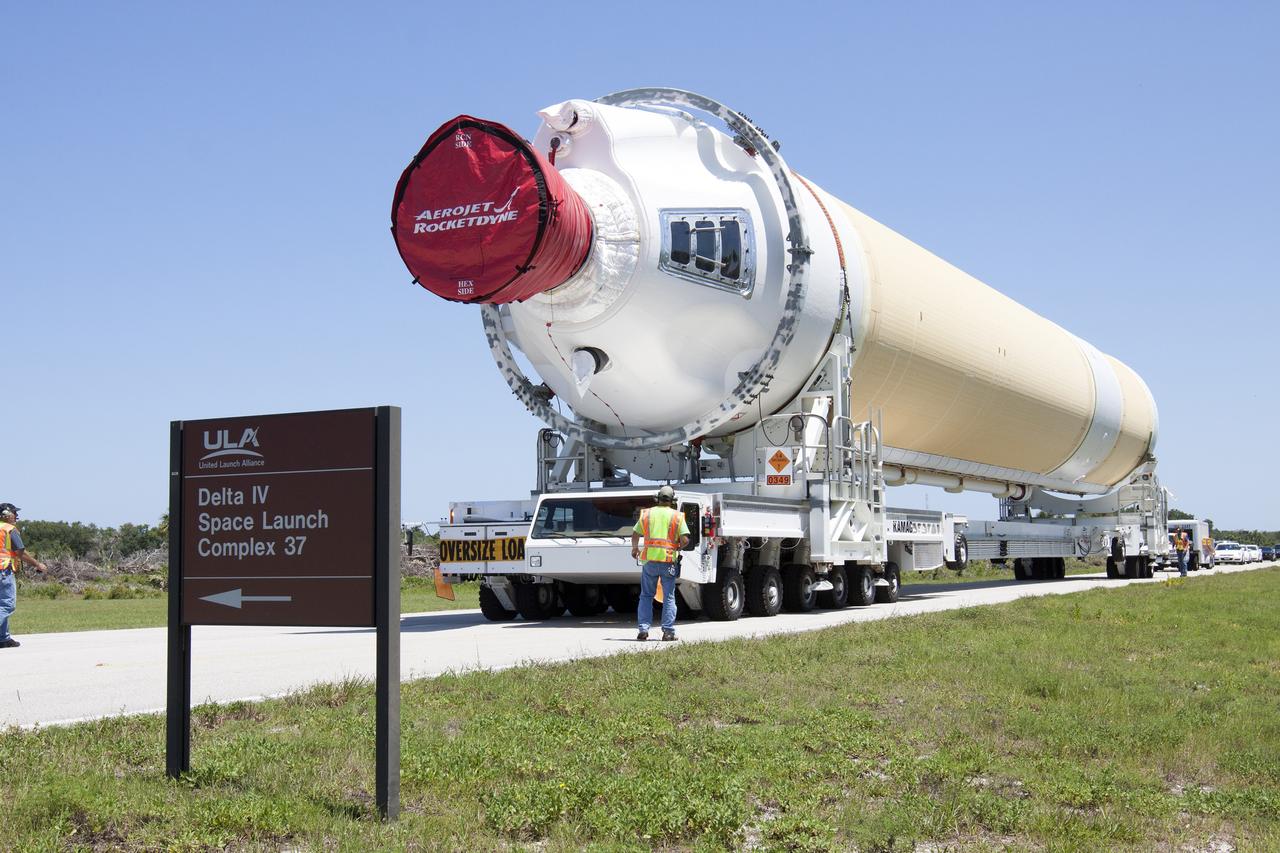
CAPE CANAVERAL, Fla. -- A transporter for oversize loads carries the port booster for the United Launch Alliance Delta IV Heavy for Exploration Flight Test-1, or EFT-1, to Space Launch Complex 37 on Cape Canaveral Air Force Station after it was offloaded from the barge at the U.S. Army Outpost wharf at Port Canaveral in Florida. The booster will be transported to the Horizontal Integration Facility, or HIF, at the launch complex. The upper stage and spacecraft adapter arrived with the booster and were transported to the HIF on May 6. At the HIF, all three booster stages will be processed and checked out before being moved to the nearby launch pad and hoisted into position. The spacecraft adapter will connect Orion to the ULA Delta IV, and also will connect Orion to NASA's new rocket, the Space Launch System, on its first mission in 2017. During the EFT-1 mission, Orion will travel farther into space than any human spacecraft has gone in more than 40 years. The data gathered during the flight will influence design decisions, validate existing computer models and innovative new approaches to space systems development, as well as reduce overall mission risks and costs for later Orion flights. Liftoff of Orion on EFT-1 is planned for fall 2014. Photo credit: NASA/Kim Shiflett
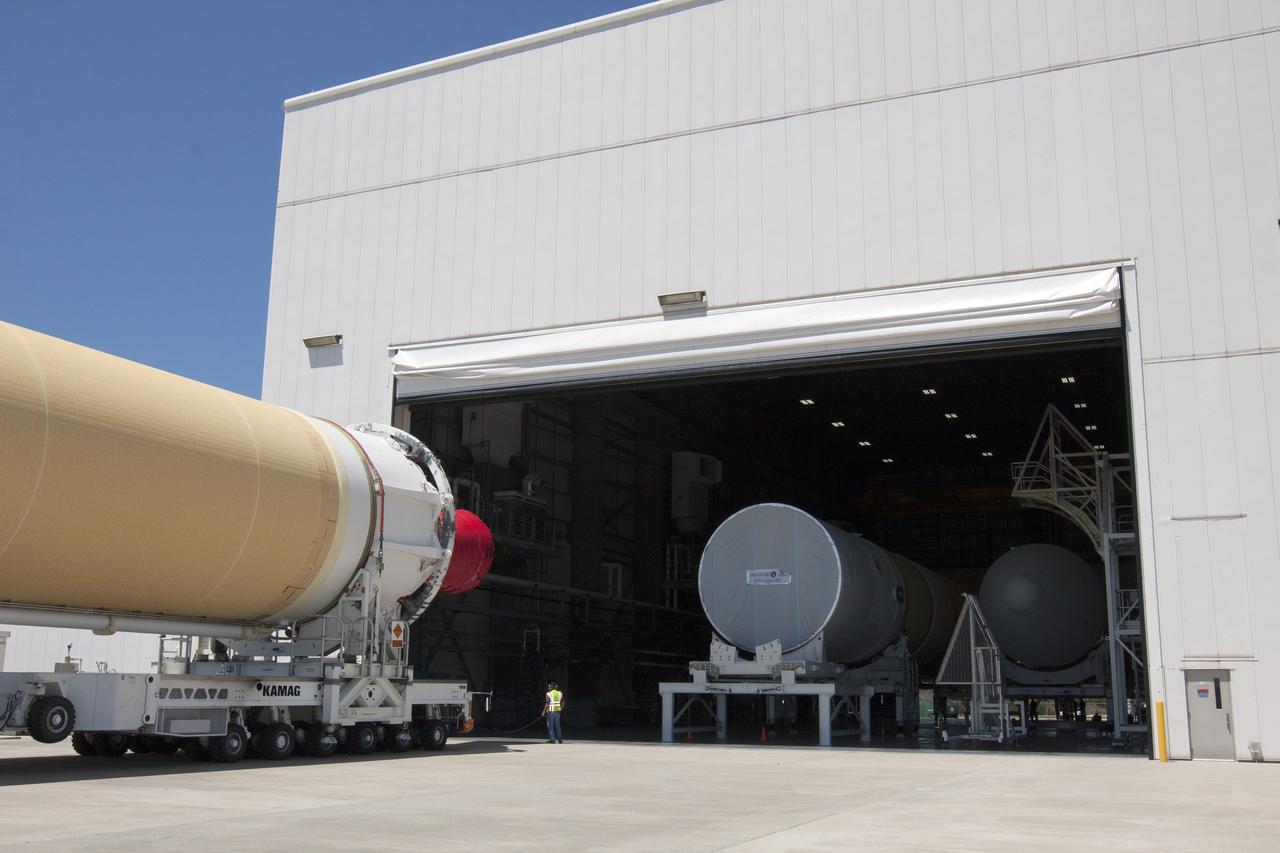
CAPE CANAVERAL, Fla. -- A transporter for oversize loads carries the port booster for the United Launch Alliance Delta IV Heavy for Exploration Flight Test-1, or EFT-1, to the Horizontal Integration Facility, or HIF, at Space Launch Complex 37 on Cape Canaveral Air Force Station in Florida. The upper stage and spacecraft adapter arrived with the booster on a barge at the U.S. Army Outpost wharf at Port Canaveral, and were transported to the HIF on May 6. At the HIF, all three booster stages will be processed and checked out before being moved to the nearby launch pad and hoisted into position. The spacecraft adapter will connect Orion to the ULA Delta IV, and also will connect Orion to NASA's new rocket, the Space Launch System, on its first mission in 2017. During the EFT-1 mission, Orion will travel farther into space than any human spacecraft has gone in more than 40 years. The data gathered during the flight will influence design decisions, validate existing computer models and innovative new approaches to space systems development, as well as reduce overall mission risks and costs for later Orion flights. Liftoff of Orion on EFT-1 is planned for fall 2014. Photo credit: NASA/Kim Shiflett
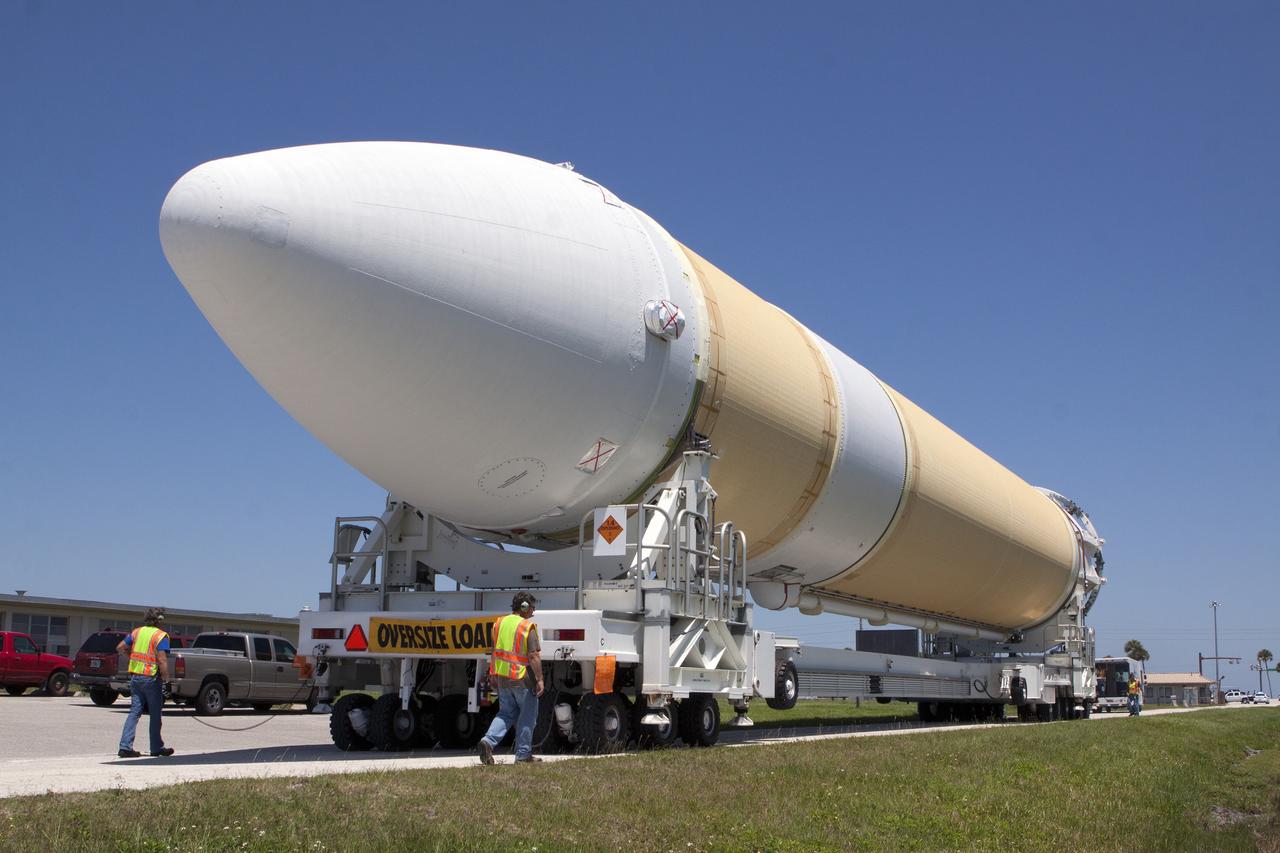
CAPE CANAVERAL, Fla. -- The port booster for the United Launch Alliance Delta IV Heavy for Exploration Flight Test-1, or EFT-1, has been offloaded from the barge at the U.S. Army Outpost wharf at Port Canaveral in Florida and is being transported to the Horizontal Integration Facility, or HIF, at Space Launch Complex 37 on Cape Canaveral Air Force Station. The upper stage and spacecraft adapter arrived with the booster and were transported to the HIF on May 6. At the HIF, all three booster stages will be processed and checked out before being moved to the nearby launch pad and hoisted into position. The spacecraft adapter will connect Orion to the ULA Delta IV, and also will connect Orion to NASA's new rocket, the Space Launch System, on its first mission in 2017. During the EFT-1 mission, Orion will travel farther into space than any human spacecraft has gone in more than 40 years. The data gathered during the flight will influence design decisions, validate existing computer models and innovative new approaches to space systems development, as well as reduce overall mission risks and costs for later Orion flights. Liftoff of Orion on EFT-1 is planned for fall 2014. Photo credit: NASA/Kim Shiflett
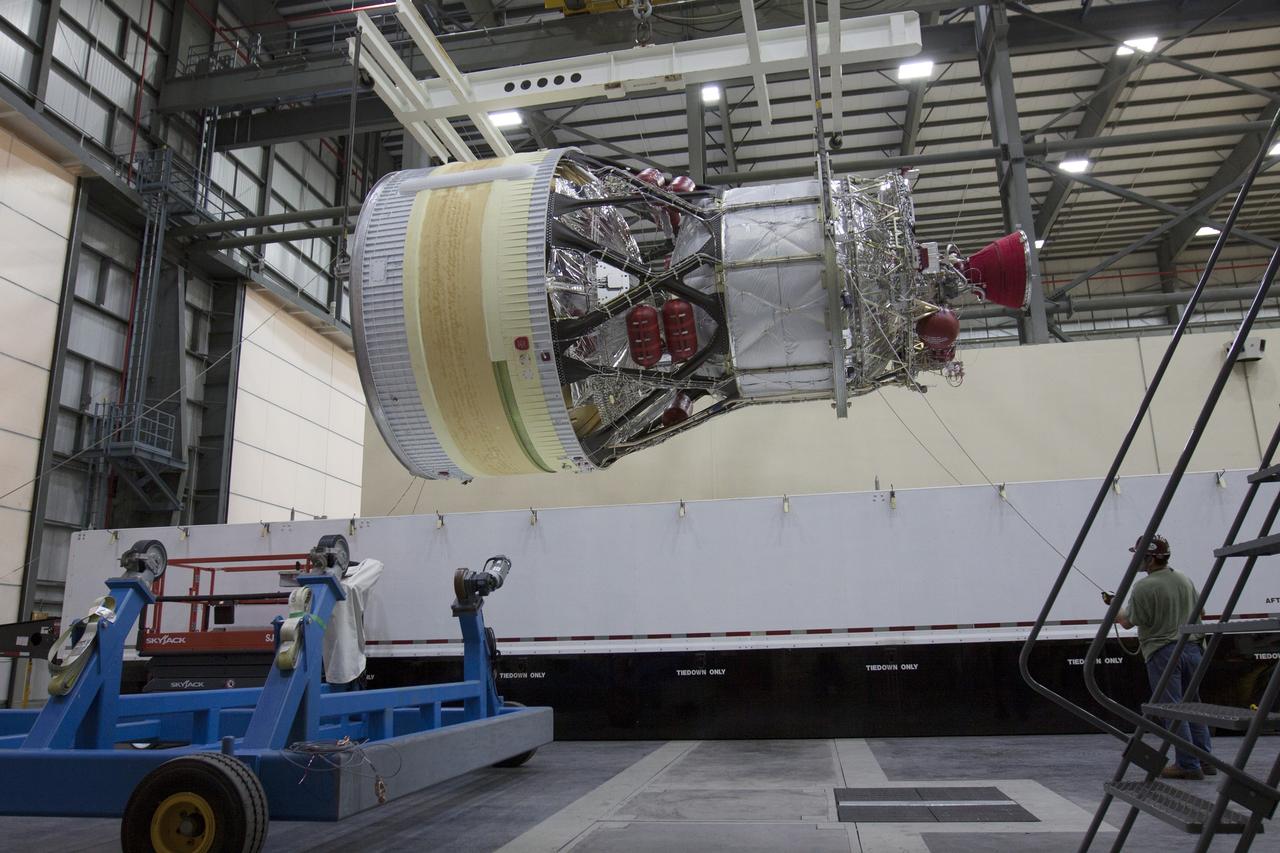
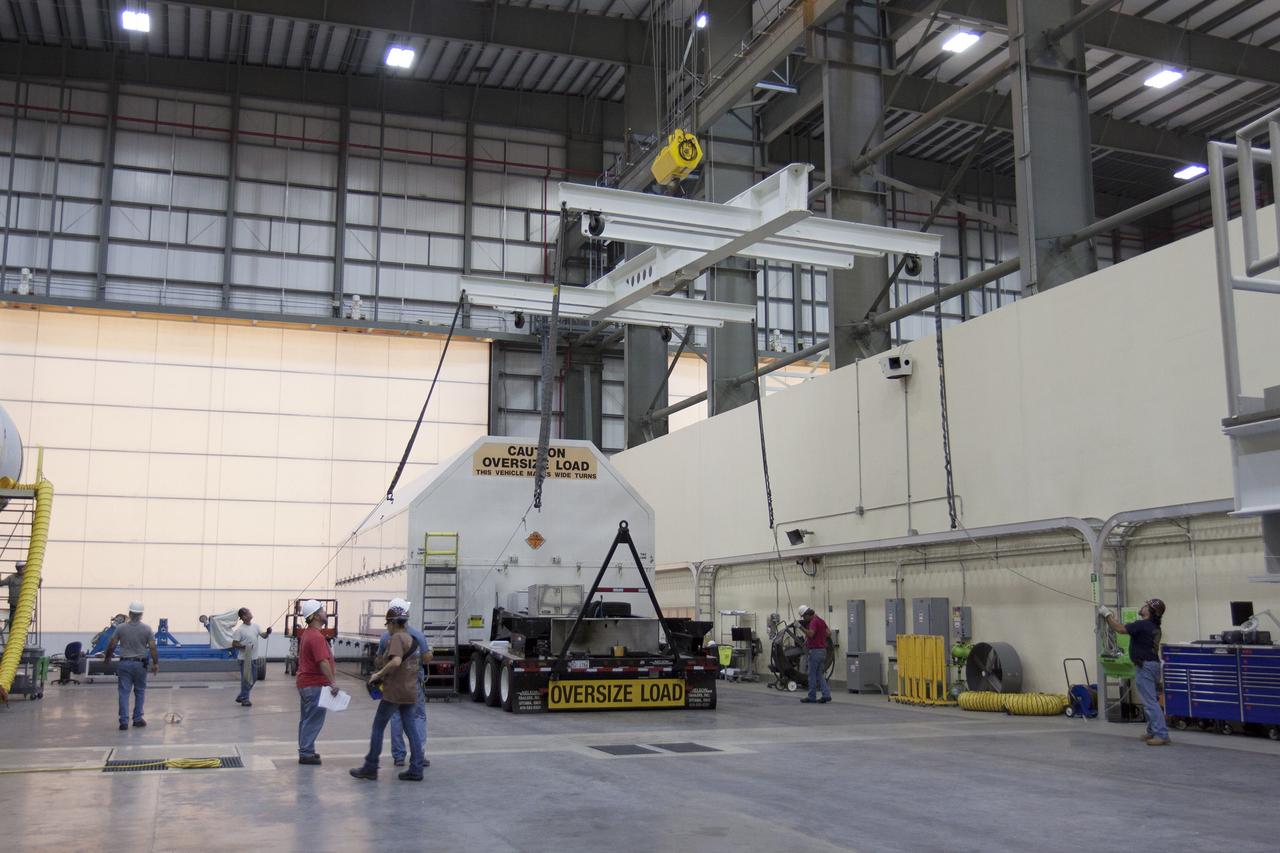
CAPE CANAVERAL, Fla. -- Inside the Horizontal Integration Facility, or HIF, at Space Launch Complex 37 on Cape Canaveral Air Force Station in Florida, the upper stage for the United Launch Alliance Delta IV Heavy for Exploration Flight Test-1, or EFT-1, is being removed from its transportation container. The upper stage, along with the port booster and spacecraft adapter arrived by barge at the U.S. Army Outpost wharf at Port Canaveral in Florida and were transported to the HIF. At the HIF, all three booster stages will be processed and checked out before being moved to the nearby launch pad and hoisted into position. The spacecraft adapter will connect Orion to the ULA Delta IV, and also will connect Orion to NASA's new rocket, the Space Launch System, on its first mission in 2017. During the EFT-1 mission, Orion will travel farther into space than any human spacecraft has gone in more than 40 years. The data gathered during the flight will influence design decisions, validate existing computer models and innovative new approaches to space systems development, as well as reduce overall mission risks and costs for later Orion flights. Liftoff of Orion on EFT-1 is planned for fall 2014. Photo credit: NASA/Kim Shiflett
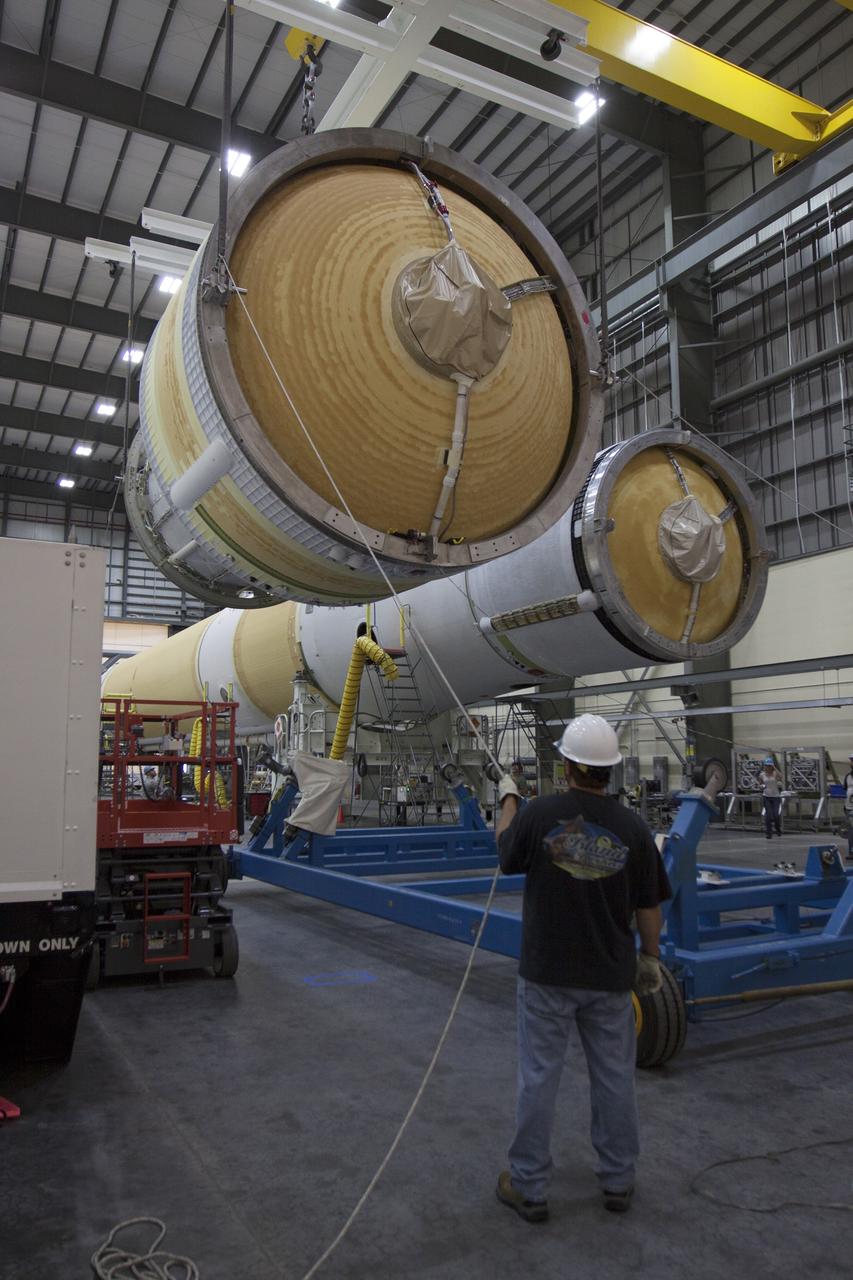
CAPE CANAVERAL, Fla. -- Inside the Horizontal Integration Facility, or HIF, at Space Launch Complex 37 on Cape Canaveral Air Force Station in Florida, the upper stage for the United Launch Alliance Delta IV Heavy for Exploration Flight Test-1, or EFT-1, has been removed from its transportation container and will be lowered onto a cradle. The upper stage, along with the port booster and spacecraft adapter arrived by barge at the U.S. Army Outpost wharf at Port Canaveral in Florida and were transported to the HIF. At the HIF, all three booster stages will be processed and checked out before being moved to the nearby launch pad and hoisted into position. The spacecraft adapter will connect Orion to the ULA Delta IV, and also will connect Orion to NASA's new rocket, the Space Launch System, on its first mission in 2017. During the EFT-1 mission, Orion will travel farther into space than any human spacecraft has gone in more than 40 years. The data gathered during the flight will influence design decisions, validate existing computer models and innovative new approaches to space systems development, as well as reduce overall mission risks and costs for later Orion flights. Liftoff of Orion on EFT-1 is planned for fall 2014. Photo credit: NASA/Kim Shiflett
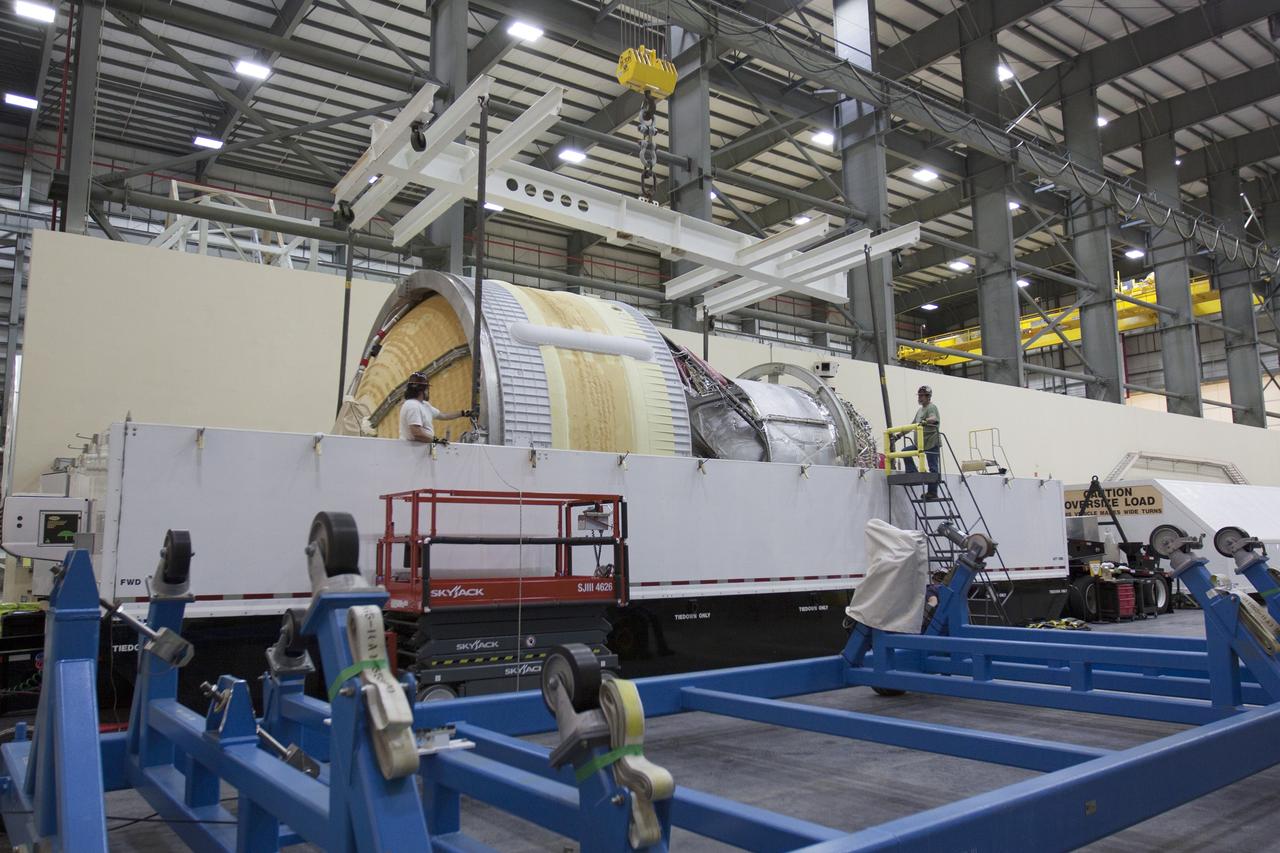
CAPE CANAVERAL, Fla. -- Inside the Horizontal Integration Facility, or HIF, at Space Launch Complex 37 on Cape Canaveral Air Force Station in Florida, the upper stage for the United Launch Alliance Delta IV Heavy for Exploration Flight Test-1, or EFT-1, is being prepared for removal from its transportation container. The upper stage, along with the port booster and spacecraft adapter arrived by barge at the U.S. Army Outpost wharf at Port Canaveral in Florida and were transported to the HIF. At the HIF, all three booster stages will be processed and checked out before being moved to the nearby launch pad and hoisted into position. The spacecraft adapter will connect Orion to the ULA Delta IV, and also will connect Orion to NASA's new rocket, the Space Launch System, on its first mission in 2017. During the EFT-1 mission, Orion will travel farther into space than any human spacecraft has gone in more than 40 years. The data gathered during the flight will influence design decisions, validate existing computer models and innovative new approaches to space systems development, as well as reduce overall mission risks and costs for later Orion flights. Liftoff of Orion on EFT-1 is planned for fall 2014. Photo credit: NASA/Kim Shiflett
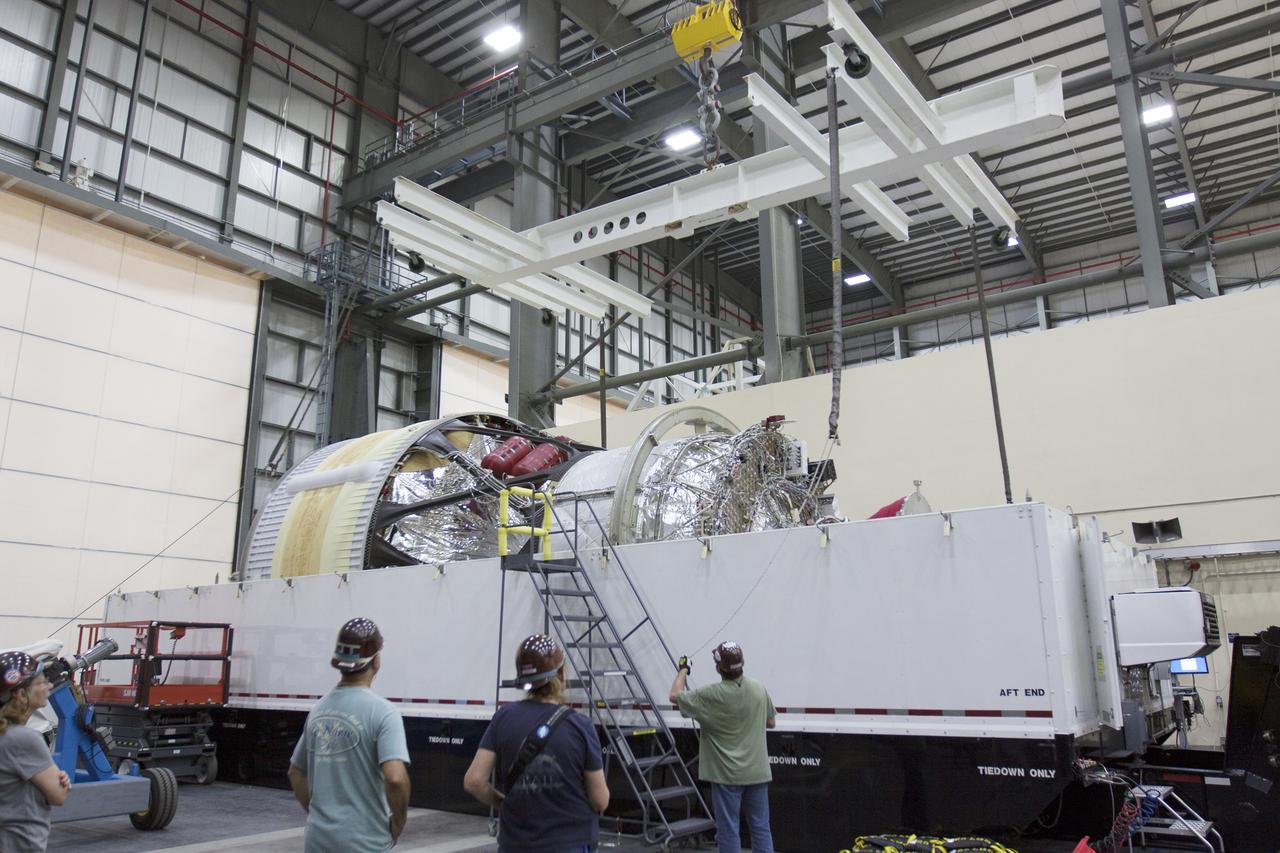
CAPE CANAVERAL, Fla. -- Inside the Horizontal Integration Facility, or HIF, at Space Launch Complex 37 on Cape Canaveral Air Force Station in Florida, the upper stage for the United Launch Alliance Delta IV Heavy for Exploration Flight Test-1, or EFT-1, is being prepared for removal from its transportation container. The upper stage, along with the port booster and spacecraft adapter arrived by barge at the U.S. Army Outpost wharf at Port Canaveral in Florida and were transported to the HIF. At the HIF, all three booster stages will be processed and checked out before being moved to the nearby launch pad and hoisted into position. The spacecraft adapter will connect Orion to the ULA Delta IV, and also will connect Orion to NASA's new rocket, the Space Launch System, on its first mission in 2017. During the EFT-1 mission, Orion will travel farther into space than any human spacecraft has gone in more than 40 years. The data gathered during the flight will influence design decisions, validate existing computer models and innovative new approaches to space systems development, as well as reduce overall mission risks and costs for later Orion flights. Liftoff of Orion on EFT-1 is planned for fall 2014. Photo credit: NASA/Kim Shiflett
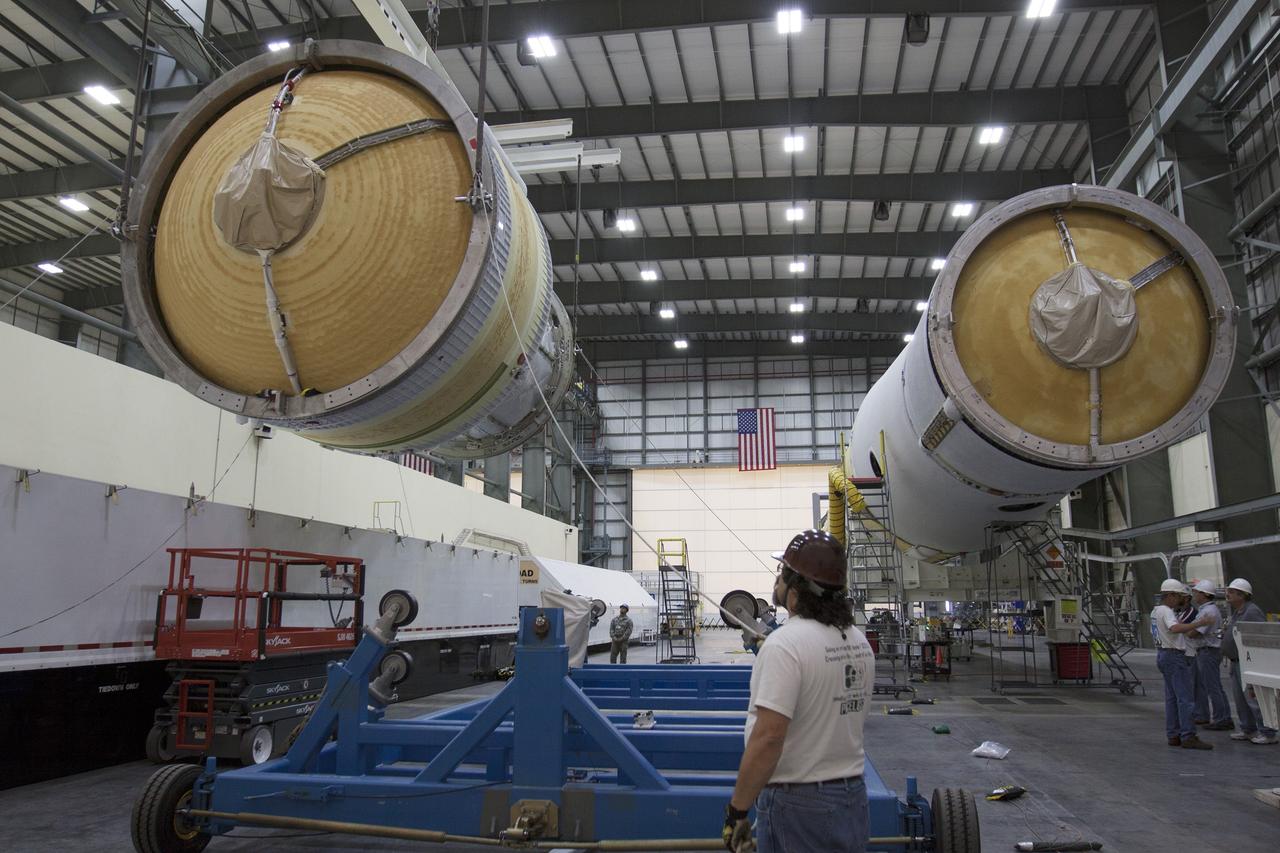
CAPE CANAVERAL, Fla. -- Inside the Horizontal Integration Facility, or HIF, at Space Launch Complex 37 on Cape Canaveral Air Force Station in Florida, the upper stage for the United Launch Alliance Delta IV Heavy for Exploration Flight Test-1, or EFT-1, has been removed from its transportation container and will be lowered onto a cradle. The upper stage, along with the port booster and spacecraft adapter arrived by barge at the U.S. Army Outpost wharf at Port Canaveral in Florida and were transported to the HIF. At the HIF, all three booster stages will be processed and checked out before being moved to the nearby launch pad and hoisted into position. The spacecraft adapter will connect Orion to the ULA Delta IV, and also will connect Orion to NASA's new rocket, the Space Launch System, on its first mission in 2017. During the EFT-1 mission, Orion will travel farther into space than any human spacecraft has gone in more than 40 years. The data gathered during the flight will influence design decisions, validate existing computer models and innovative new approaches to space systems development, as well as reduce overall mission risks and costs for later Orion flights. Liftoff of Orion on EFT-1 is planned for fall 2014. Photo credit: NASA/Kim Shiflett
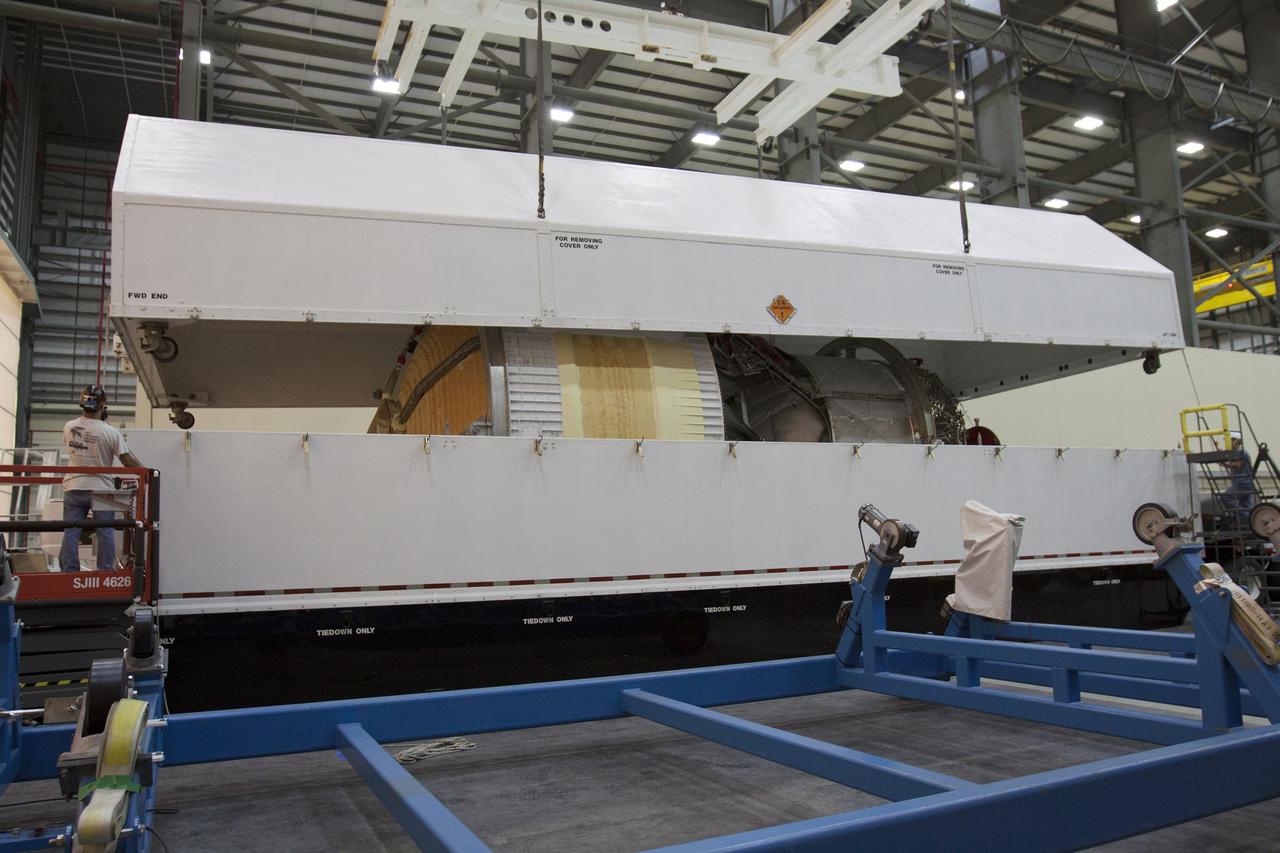
CAPE CANAVERAL, Fla. -- The second stage, port booster and spacecraft adapter, the remaining stages for the United Launch Alliance Delta IV Heavy boosters for NASA’s upcoming Exploration Flight Test-1, or EFT-1, mission with the Orion spacecraft, have been transported in their containers to the Horizontal Integration Facility, or HIF, at Space Launch Complex 37 on Cape Canaveral Air Force Station in Florida. Inside the facility, technicians uncrate the upper stage. The segments arrived by barge at the U.S. Army Outpost wharf at Port Canaveral. At the HIF, all three booster stages will be processed and checked out before being moved to the nearby launch pad and hoisted into position. The spacecraft adapter will connect Orion to the ULA Delta IV, and also will connect Orion to NASA's new rocket, the Space Launch System, on its first mission in 2017. During the EFT-1 mission, Orion will travel farther into space than any human spacecraft has gone in more than 40 years. The data gathered during the flight will influence design decisions, validate existing computer models and innovative new approaches to space systems development, as well as reduce overall mission risks and costs for later Orion flights. Liftoff of Orion on EFT-1 is planned for fall 2014. Photo credit: NASA/Kim Shiflett
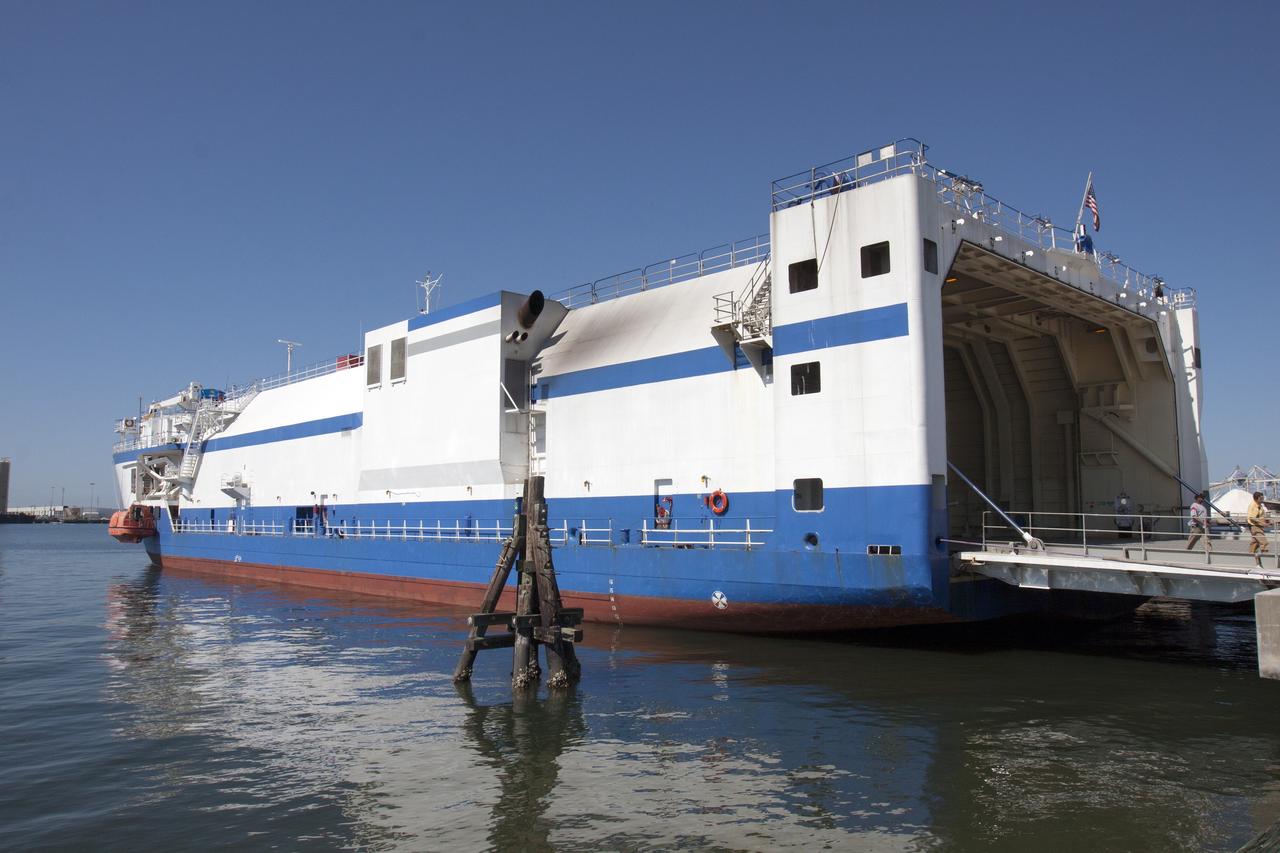
CAPE CANAVERAL, Fla. -- A barge arrives at the U.S. Army Outpost wharf at Port Canaveral in Florida, carrying the second stage, port booster and spacecraft adapter, the remaining stages for the United Launch Alliance Delta IV Heavy boosters for NASA’s upcoming Exploration Flight Test-1, or EFT-1, mission with the Orion spacecraft. They will be offloaded in their containers and transported to the Horizontal Integration Facility, or HIF, at Space Launch Complex 37 on Cape Canaveral Air Force Station. At the HIF, all three booster stages will be processed and checked out before being moved to the nearby launch pad and hoisted into position. The spacecraft adapter will connect Orion to the ULA Delta IV, and also will connect Orion to NASA's new rocket, the Space Launch System, on its first mission in 2017. During the EFT-1 mission, Orion will travel farther into space than any human spacecraft has gone in more than 40 years. The data gathered during the flight will influence design decisions, validate existing computer models and innovative new approaches to space systems development, as well as reduce overall mission risks and costs for later Orion flights. Liftoff of Orion on EFT-1 is planned for fall 2014. Photo credit: NASA/Kim Shiflett
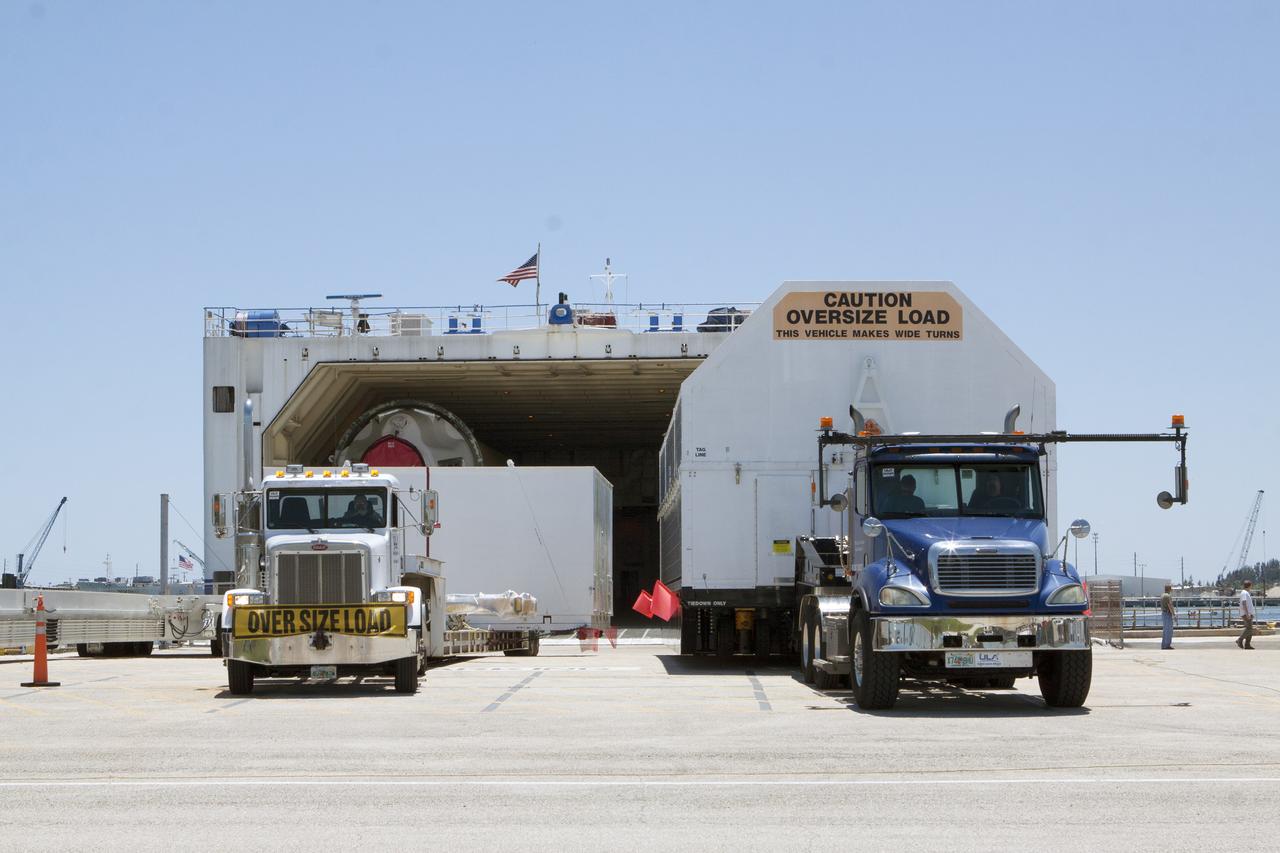
CAPE CANAVERAL, Fla. -- A barge has arrived at the U.S. Army Outpost wharf at Port Canaveral in Florida, carrying the second stage, port booster and spacecraft adapter, the remaining stages for the United Launch Alliance Delta IV Heavy boosters for NASA’s upcoming Exploration Flight Test-1, or EFT-1, mission with the Orion spacecraft. The segments are being offloaded in their containers for transport to the Horizontal Integration Facility, or HIF, at Space Launch Complex 37 on Cape Canaveral Air Force Station. At the HIF, all three booster stages will be processed and checked out before being moved to the nearby launch pad and hoisted into position. The spacecraft adapter will connect Orion to the ULA Delta IV, and also will connect Orion to NASA's new rocket, the Space Launch System, on its first mission in 2017. During the EFT-1 mission, Orion will travel farther into space than any human spacecraft has gone in more than 40 years. The data gathered during the flight will influence design decisions, validate existing computer models and innovative new approaches to space systems development, as well as reduce overall mission risks and costs for later Orion flights. Liftoff of Orion on EFT-1 is planned for fall 2014. Photo credit: NASA/Kim Shiflett
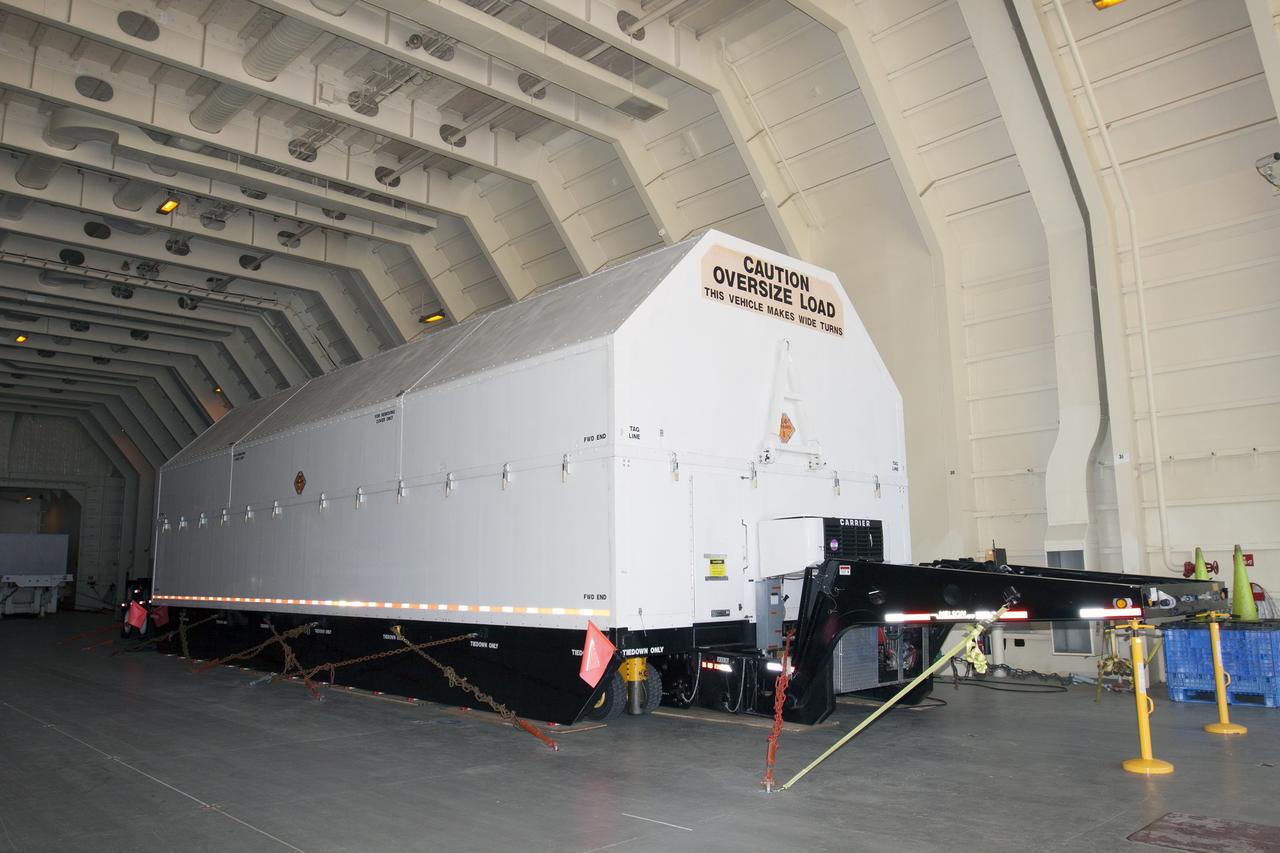
CAPE CANAVERAL, Fla. -- A barge has arrived at the U.S. Army Outpost wharf at Port Canaveral in Florida, carrying the second stage, port booster and spacecraft adapter, the remaining stages for the United Launch Alliance Delta IV Heavy boosters for NASA’s upcoming Exploration Flight Test-1, or EFT-1, mission with the Orion spacecraft. They are being offloaded in their containers for transport to the Horizontal Integration Facility, or HIF, at Space Launch Complex 37 on Cape Canaveral Air Force Station. At the HIF, all three booster stages will be processed and checked out before being moved to the nearby launch pad and hoisted into position. The spacecraft adapter will connect Orion to the ULA Delta IV, and also will connect Orion to NASA's new rocket, the Space Launch System, on its first mission in 2017. During the EFT-1 mission, Orion will travel farther into space than any human spacecraft has gone in more than 40 years. The data gathered during the flight will influence design decisions, validate existing computer models and innovative new approaches to space systems development, as well as reduce overall mission risks and costs for later Orion flights. Liftoff of Orion on EFT-1 is planned for fall 2014. Photo credit: NASA/Kim Shiflett
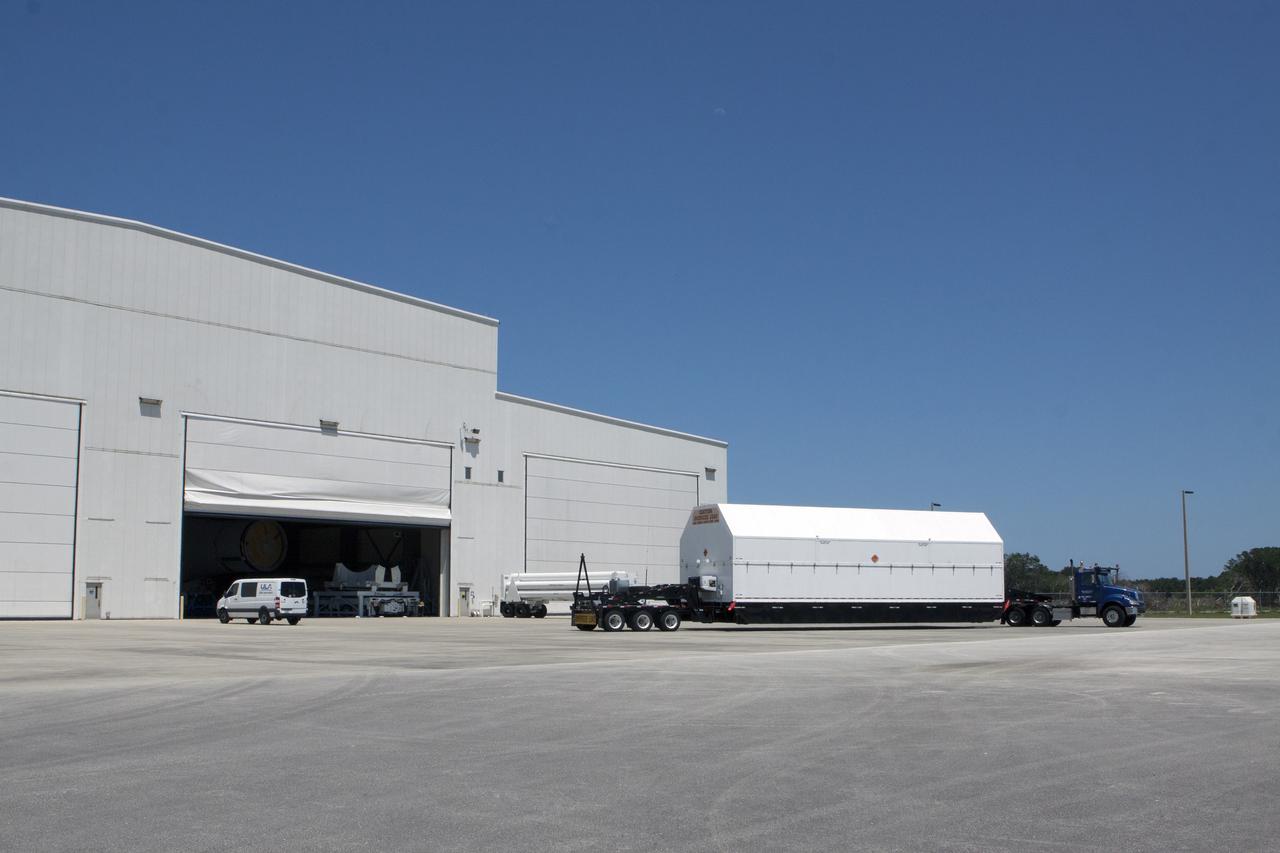
CAPE CANAVERAL, Fla. -- After arriving by barge at the U.S. Army Outpost wharf at Port Canaveral in Florida, the second stage, port booster and spacecraft adapter, the remaining stages for the United Launch Alliance Delta IV Heavy boosters for NASA’s upcoming Exploration Flight Test-1, or EFT-1, mission with the Orion spacecraft, were offloaded in their containers. They were transported to the Horizontal Integration Facility, or HIF, at Space Launch Complex 37 on Cape Canaveral Air Force Station. At the HIF, all three booster stages will be processed and checked out before being moved to the nearby launch pad and hoisted into position. The spacecraft adapter will connect Orion to the ULA Delta IV, and also will connect Orion to NASA's new rocket, the Space Launch System, on its first mission in 2017. During the EFT-1 mission, Orion will travel farther into space than any human spacecraft has gone in more than 40 years. The data gathered during the flight will influence design decisions, validate existing computer models and innovative new approaches to space systems development, as well as reduce overall mission risks and costs for later Orion flights. Liftoff of Orion on EFT-1 is planned for fall 2014. Photo credit: NASA/Kim Shiflett

CAPE CANAVERAL, Fla. -- The second stage, port booster and spacecraft adapter, the remaining stages for the United Launch Alliance Delta IV Heavy boosters for NASA’s upcoming Exploration Flight Test-1, or EFT-1, mission with the Orion spacecraft, have been transported in their containers to the Horizontal Integration Facility, or HIF, at Space Launch Complex 37 on Cape Canaveral Air Force Station in Florida. Inside the facility, technicians uncrate the port booster. The segments arrived by barge at the U.S. Army Outpost wharf at Port Canaveral. At the HIF, all three booster stages will be processed and checked out before being moved to the nearby launch pad and hoisted into position. The spacecraft adapter will connect Orion to the ULA Delta IV, and also will connect Orion to NASA's new rocket, the Space Launch System, on its first mission in 2017. During the EFT-1 mission, Orion will travel farther into space than any human spacecraft has gone in more than 40 years. The data gathered during the flight will influence design decisions, validate existing computer models and innovative new approaches to space systems development, as well as reduce overall mission risks and costs for later Orion flights. Liftoff of Orion on EFT-1 is planned for fall 2014. Photo credit: NASA/Kim Shiflett
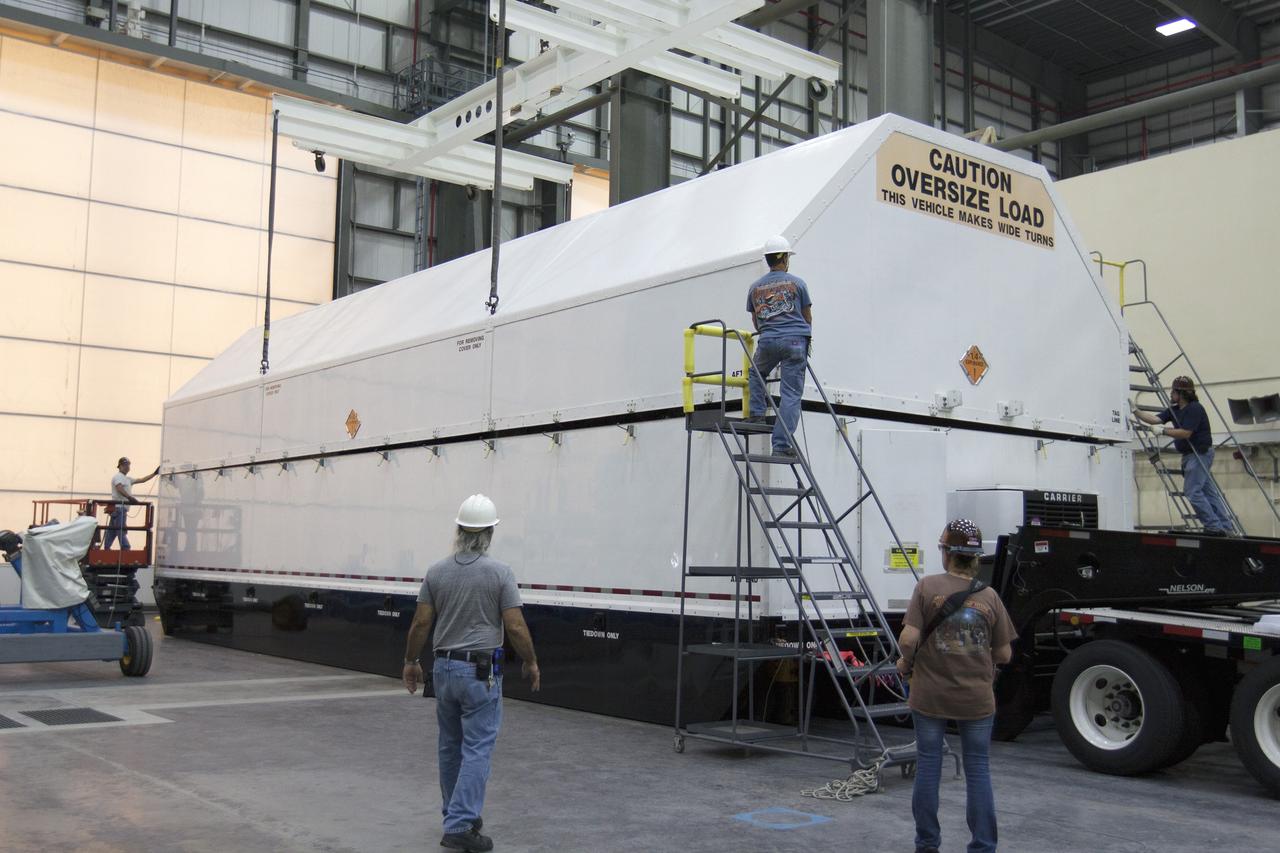
CAPE CANAVERAL, Fla. -- The second stage, port booster and spacecraft adapter, the remaining stages for the United Launch Alliance Delta IV Heavy boosters for NASA’s upcoming Exploration Flight Test-1, or EFT-1, mission with the Orion spacecraft, have been transported in their containers to the Horizontal Integration Facility, or HIF, at Space Launch Complex 37 on Cape Canaveral Air Force Station in Florida for uncrating. The segments arrived by barge at the U.S. Army Outpost wharf at Port Canaveral. At the HIF, all three booster stages will be processed and checked out before being moved to the nearby launch pad and hoisted into position. The spacecraft adapter will connect Orion to the ULA Delta IV, and also will connect Orion to NASA's new rocket, the Space Launch System, on its first mission in 2017. During the EFT-1 mission, Orion will travel farther into space than any human spacecraft has gone in more than 40 years. The data gathered during the flight will influence design decisions, validate existing computer models and innovative new approaches to space systems development, as well as reduce overall mission risks and costs for later Orion flights. Liftoff of Orion on EFT-1 is planned for fall 2014. Photo credit: NASA/Kim Shiflett
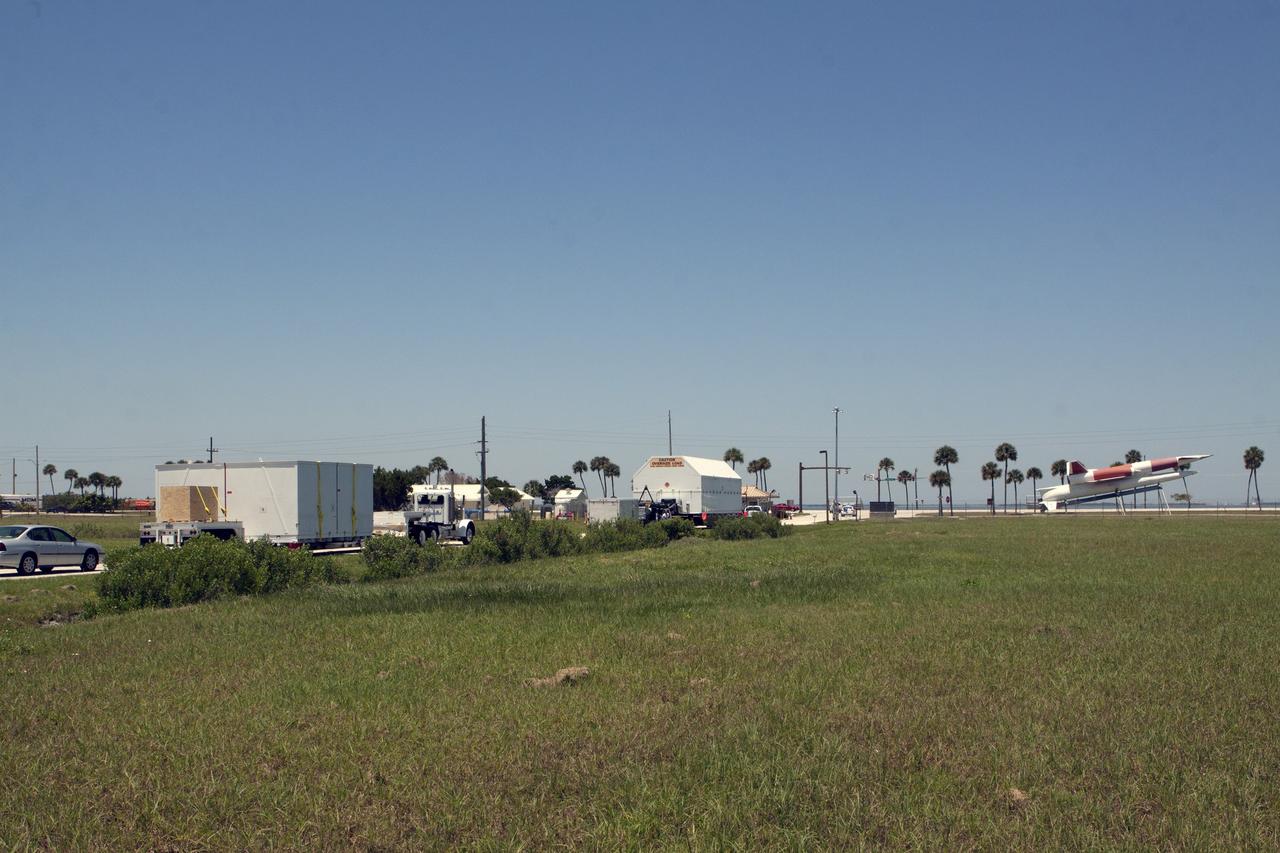
CAPE CANAVERAL, Fla. -- After arriving by barge at the U.S. Army Outpost wharf at Port Canaveral in Florida, the second stage, port booster and spacecraft adapter, the remaining stages for the United Launch Alliance Delta IV Heavy boosters for NASA’s upcoming Exploration Flight Test-1, or EFT-1, mission with the Orion spacecraft, were offloaded in their containers. They are being transported to the Horizontal Integration Facility, or HIF, at Space Launch Complex 37 on Cape Canaveral Air Force Station. At the HIF, all three booster stages will be processed and checked out before being moved to the nearby launch pad and hoisted into position. The spacecraft adapter will connect Orion to the ULA Delta IV, and also will connect Orion to NASA's new rocket, the Space Launch System, on its first mission in 2017. During the EFT-1 mission, Orion will travel farther into space than any human spacecraft has gone in more than 40 years. The data gathered during the flight will influence design decisions, validate existing computer models and innovative new approaches to space systems development, as well as reduce overall mission risks and costs for later Orion flights. Liftoff of Orion on EFT-1 is planned for fall 2014. Photo credit: NASA/Kim Shiflett

CAPE CANAVERAL, Fla. -- A barge has arrived at the U.S. Army Outpost wharf at Port Canaveral in Florida, carrying the second stage, port booster and spacecraft adapter, the remaining stages for the United Launch Alliance Delta IV Heavy boosters for NASA’s upcoming Exploration Flight Test-1, or EFT-1, mission with the Orion spacecraft. They are being offloaded in their containers for transport to the Horizontal Integration Facility, or HIF, at Space Launch Complex 37 on Cape Canaveral Air Force Station. At the HIF, all three booster stages will be processed and checked out before being moved to the nearby launch pad and hoisted into position. The spacecraft adapter will connect Orion to the ULA Delta IV, and also will connect Orion to NASA's new rocket, the Space Launch System, on its first mission in 2017. During the EFT-1 mission, Orion will travel farther into space than any human spacecraft has gone in more than 40 years. The data gathered during the flight will influence design decisions, validate existing computer models and innovative new approaches to space systems development, as well as reduce overall mission risks and costs for later Orion flights. Liftoff of Orion on EFT-1 is planned for fall 2014. Photo credit: NASA/Kim Shiflett
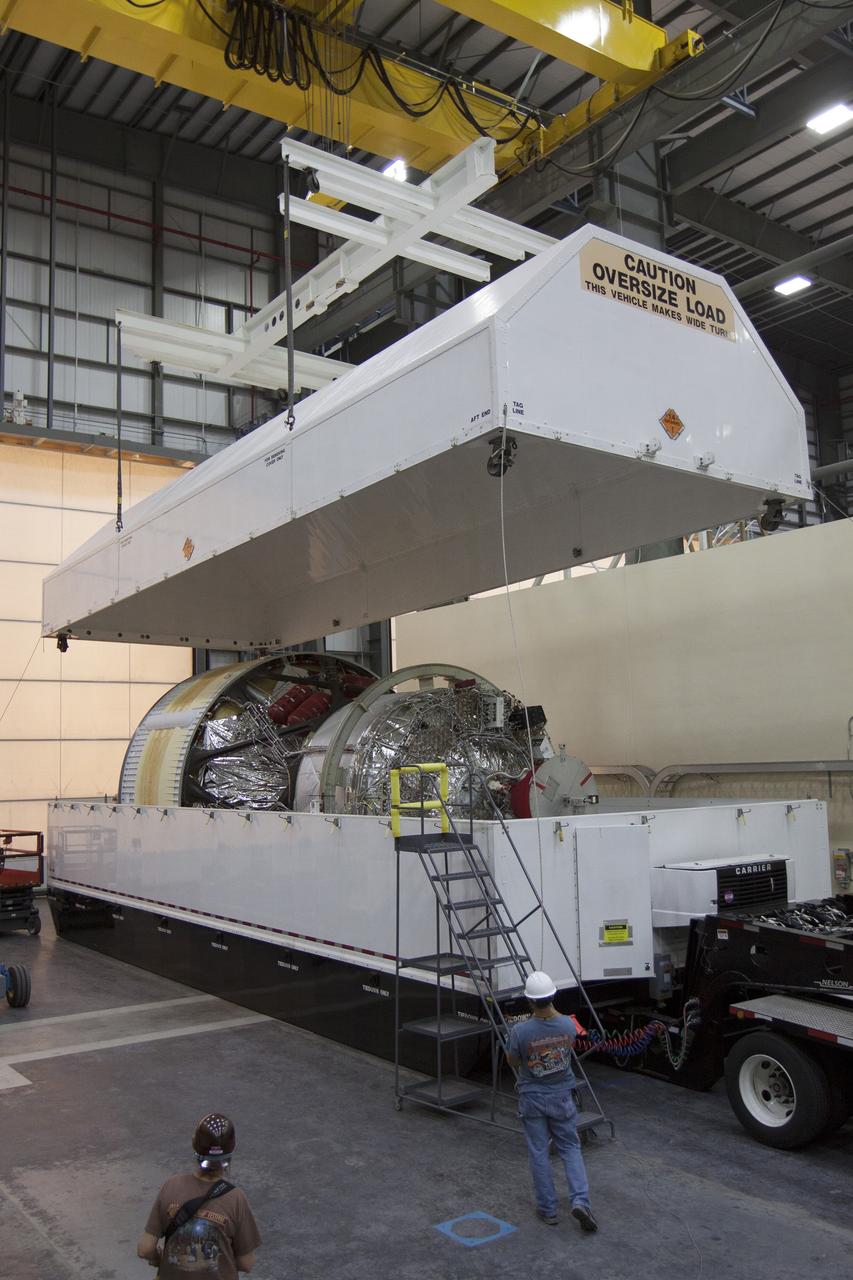
CAPE CANAVERAL, Fla. -- The second stage, port booster and spacecraft adapter, the remaining stages for the United Launch Alliance Delta IV Heavy boosters for NASA’s upcoming Exploration Flight Test-1, or EFT-1, mission with the Orion spacecraft, have been transported in their containers to the Horizontal Integration Facility, or HIF, at Space Launch Complex 37 on Cape Canaveral Air Force Station in Florida. Inside the facility, technicians uncrate the upper stage. The segments arrived by barge at the U.S. Army Outpost wharf at Port Canaveral. At the HIF, all three booster stages will be processed and checked out before being moved to the nearby launch pad and hoisted into position. The spacecraft adapter will connect Orion to the ULA Delta IV, and also will connect Orion to NASA's new rocket, the Space Launch System, on its first mission in 2017. During the EFT-1 mission, Orion will travel farther into space than any human spacecraft has gone in more than 40 years. The data gathered during the flight will influence design decisions, validate existing computer models and innovative new approaches to space systems development, as well as reduce overall mission risks and costs for later Orion flights. Liftoff of Orion on EFT-1 is planned for fall 2014. Photo credit: NASA/Kim Shiflett
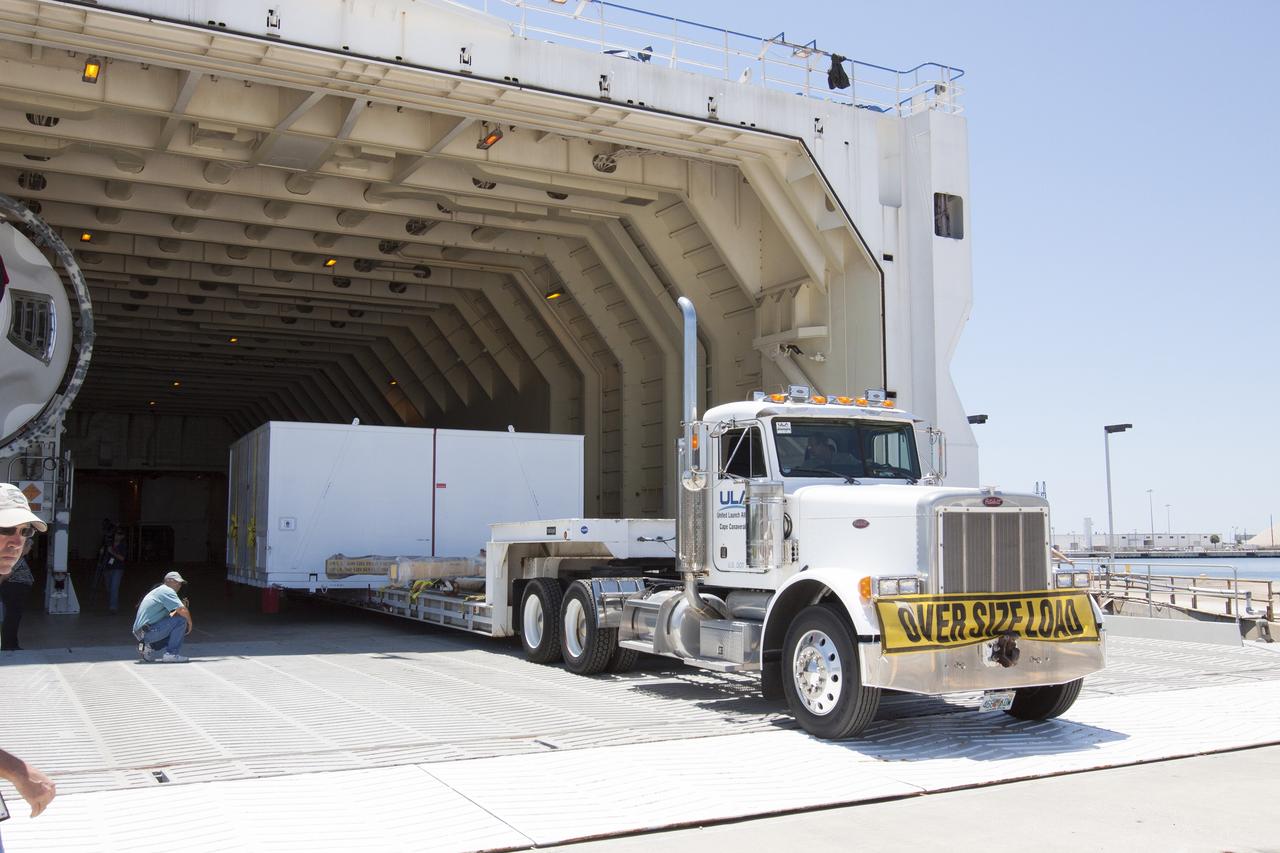
CAPE CANAVERAL, Fla. -- A barge has arrived at the U.S. Army Outpost wharf at Port Canaveral in Florida, carrying the second stage, port booster and spacecraft adapter, the remaining stages for the United Launch Alliance Delta IV Heavy boosters for NASA’s upcoming Exploration Flight Test-1, or EFT-1, mission with the Orion spacecraft. They are being offloaded in their containers for transport to the Horizontal Integration Facility, or HIF, at Space Launch Complex 37 on Cape Canaveral Air Force Station. At the HIF, all three booster stages will be processed and checked out before being moved to the nearby launch pad and hoisted into position. The spacecraft adapter will connect Orion to the ULA Delta IV, and also will connect Orion to NASA's new rocket, the Space Launch System, on its first mission in 2017. During the EFT-1 mission, Orion will travel farther into space than any human spacecraft has gone in more than 40 years. The data gathered during the flight will influence design decisions, validate existing computer models and innovative new approaches to space systems development, as well as reduce overall mission risks and costs for later Orion flights. Liftoff of Orion on EFT-1 is planned for fall 2014. Photo credit: NASA/Kim Shiflett
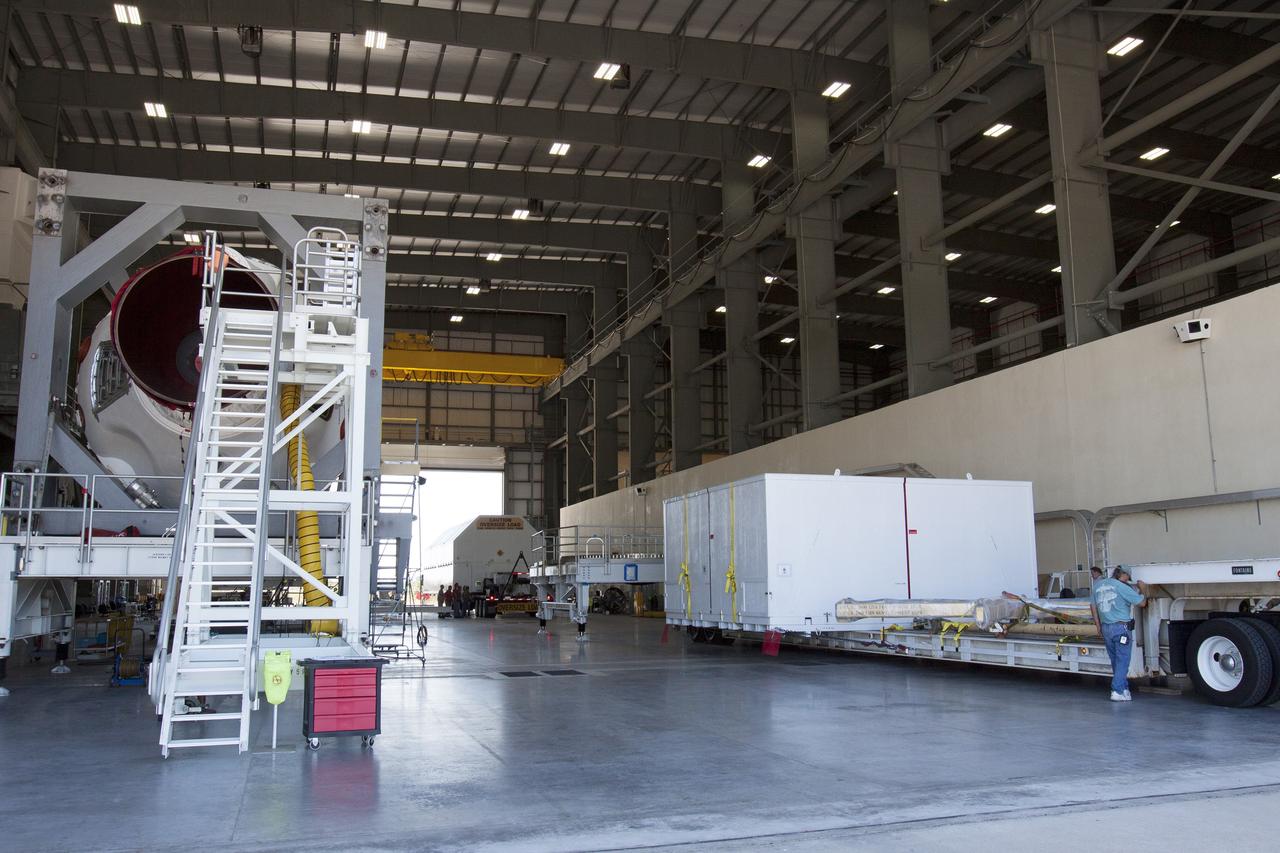
CAPE CANAVERAL, Fla. -- The second stage, port booster and spacecraft adapter, the remaining stages for the United Launch Alliance Delta IV Heavy boosters for NASA’s upcoming Exploration Flight Test-1, or EFT-1, mission with the Orion spacecraft, have been transported in their containers to the Horizontal Integration Facility, or HIF, at Space Launch Complex 37 on Cape Canaveral Air Force Station in Florida for uncrating. The segments arrived by barge at the U.S. Army Outpost wharf at Port Canaveral. At the HIF, all three booster stages will be processed and checked out before being moved to the nearby launch pad and hoisted into position. The spacecraft adapter will connect Orion to the ULA Delta IV, and also will connect Orion to NASA's new rocket, the Space Launch System, on its first mission in 2017. During the EFT-1 mission, Orion will travel farther into space than any human spacecraft has gone in more than 40 years. The data gathered during the flight will influence design decisions, validate existing computer models and innovative new approaches to space systems development, as well as reduce overall mission risks and costs for later Orion flights. Liftoff of Orion on EFT-1 is planned for fall 2014. Photo credit: NASA/Kim Shiflett
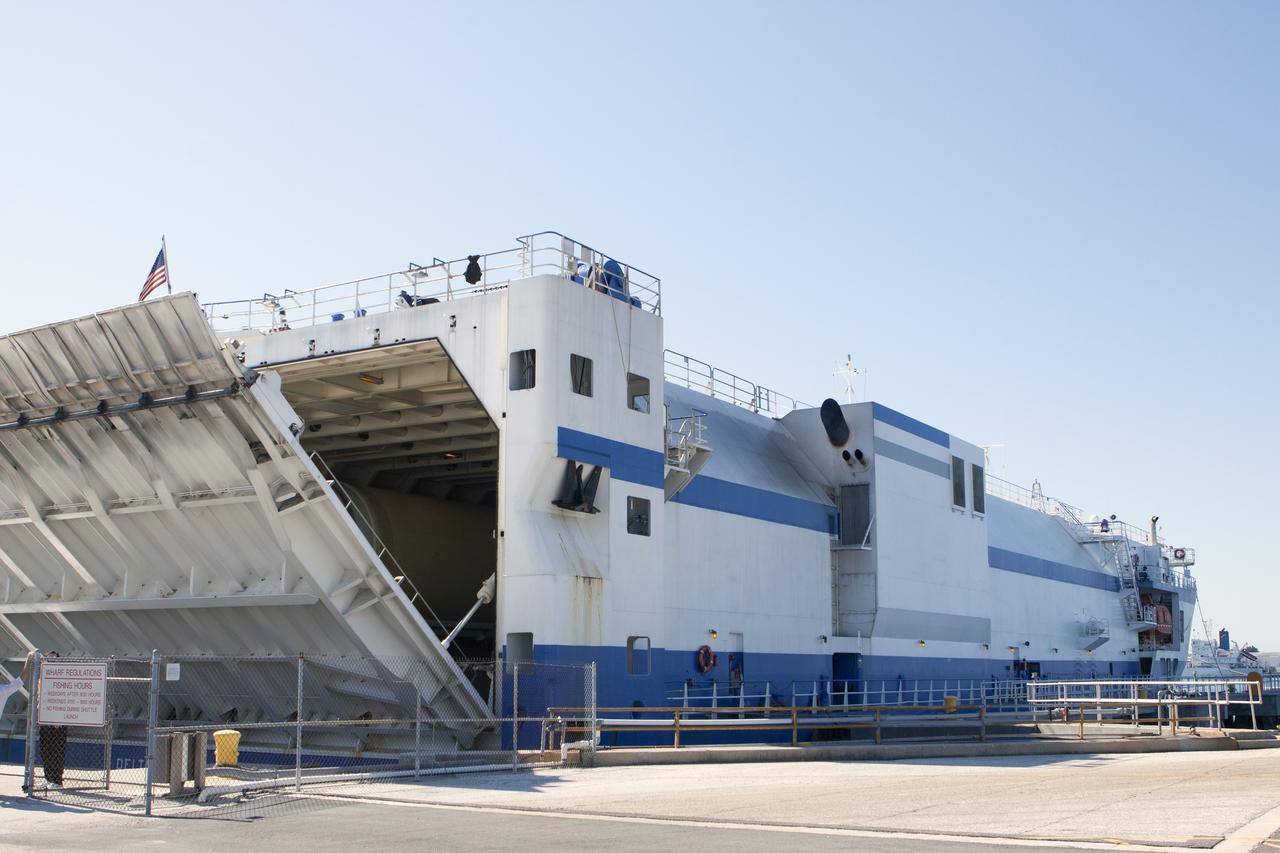
CAPE CANAVERAL, Fla. -- A barge arrives at the U.S. Army Outpost wharf at Port Canaveral in Florida, carrying the second stage, port booster and spacecraft adapter, the remaining stages for the United Launch Alliance Delta IV Heavy boosters for NASA’s upcoming Exploration Flight Test-1, or EFT-1, mission with the Orion spacecraft. They will be offloaded in their containers and transported to the Horizontal Integration Facility, or HIF, at Space Launch Complex 37 on Cape Canaveral Air Force Station. At the HIF, all three booster stages will be processed and checked out before being moved to the nearby launch pad and hoisted into position. The spacecraft adapter will connect Orion to the ULA Delta IV, and also will connect Orion to NASA's new rocket, the Space Launch System, on its first mission in 2017. During the EFT-1 mission, Orion will travel farther into space than any human spacecraft has gone in more than 40 years. The data gathered during the flight will influence design decisions, validate existing computer models and innovative new approaches to space systems development, as well as reduce overall mission risks and costs for later Orion flights. Liftoff of Orion on EFT-1 is planned for fall 2014. Photo credit: NASA/Kim Shiflett
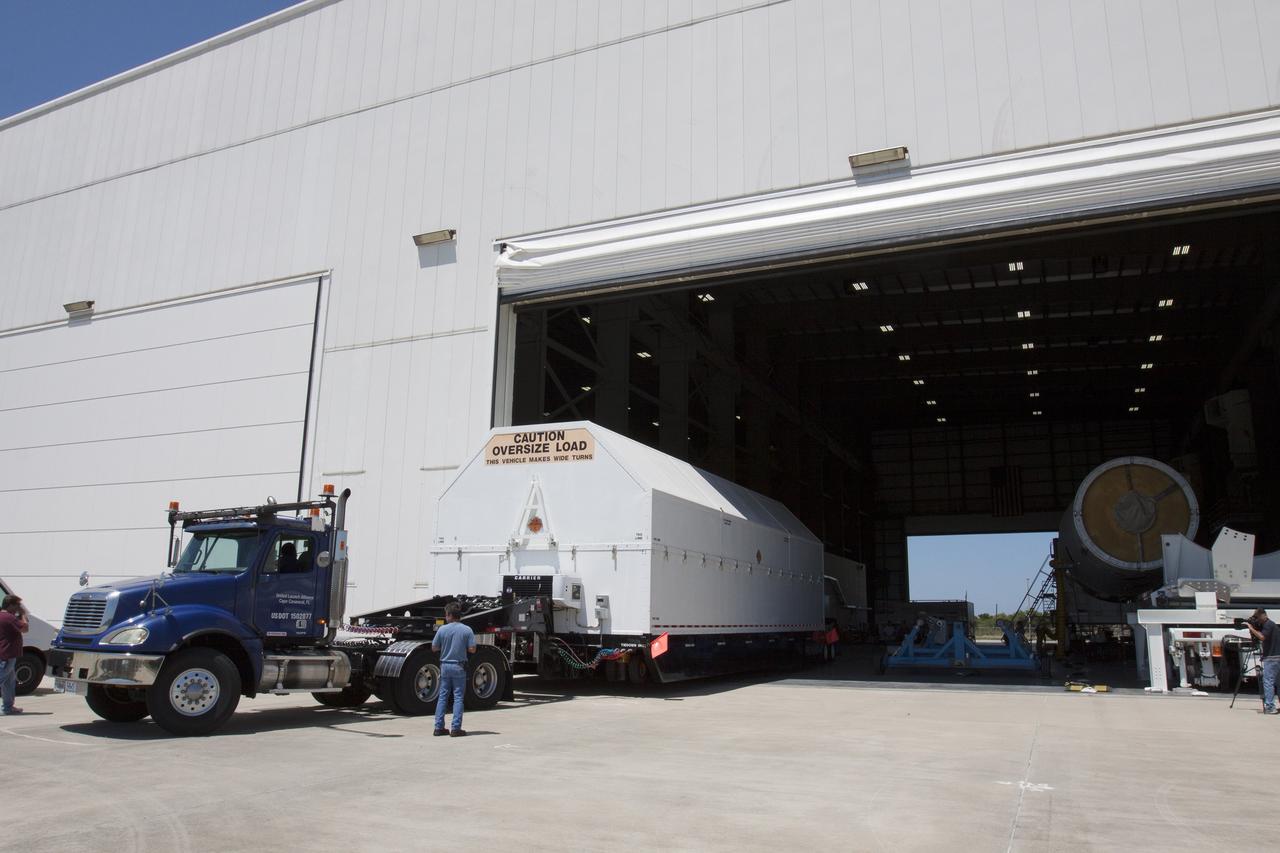
CAPE CANAVERAL, Fla. -- The second stage, port booster and spacecraft adapter, the remaining stages for the United Launch Alliance Delta IV Heavy boosters for NASA’s upcoming Exploration Flight Test-1, or EFT-1, mission with the Orion spacecraft, have been transported in their containers to the Horizontal Integration Facility, or HIF, at Space Launch Complex 37 on Cape Canaveral Air Force Station in Florida. The segments arrived by barge at the U.S. Army Outpost wharf at Port Canaveral. At the HIF, all three booster stages will be processed and checked out before being moved to the nearby launch pad and hoisted into position. The spacecraft adapter will connect Orion to the ULA Delta IV, and also will connect Orion to NASA's new rocket, the Space Launch System, on its first mission in 2017. During the EFT-1 mission, Orion will travel farther into space than any human spacecraft has gone in more than 40 years. The data gathered during the flight will influence design decisions, validate existing computer models and innovative new approaches to space systems development, as well as reduce overall mission risks and costs for later Orion flights. Liftoff of Orion on EFT-1 is planned for fall 2014. Photo credit: NASA/Kim Shiflett
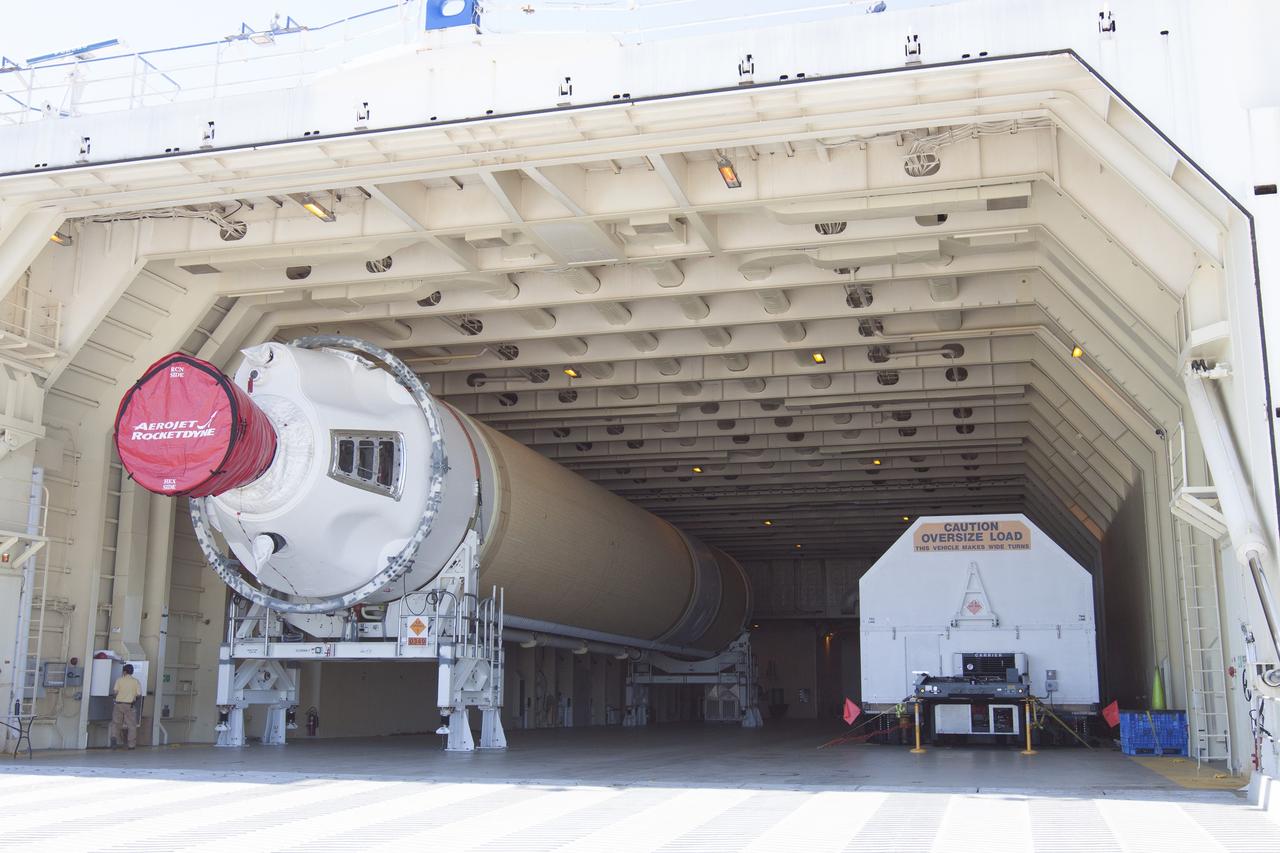
CAPE CANAVERAL, Fla. -- A barge arrives at the U.S. Army Outpost wharf at Port Canaveral in Florida, carrying the second stage, port booster and spacecraft adapter, the remaining stages for the United Launch Alliance Delta IV Heavy boosters for NASA’s upcoming Exploration Flight Test-1, or EFT-1, mission with the Orion spacecraft. They will be offloaded in their containers and transported to the Horizontal Integration Facility, or HIF, at Space Launch Complex 37 on Cape Canaveral Air Force Station. At the HIF, all three booster stages will be processed and checked out before being moved to the nearby launch pad and hoisted into position. The spacecraft adapter will connect Orion to the ULA Delta IV, and also will connect Orion to NASA's new rocket, the Space Launch System, on its first mission in 2017. During the EFT-1 mission, Orion will travel farther into space than any human spacecraft has gone in more than 40 years. The data gathered during the flight will influence design decisions, validate existing computer models and innovative new approaches to space systems development, as well as reduce overall mission risks and costs for later Orion flights. Liftoff of Orion on EFT-1 is planned for fall 2014. Photo credit: NASA/Kim Shiflett
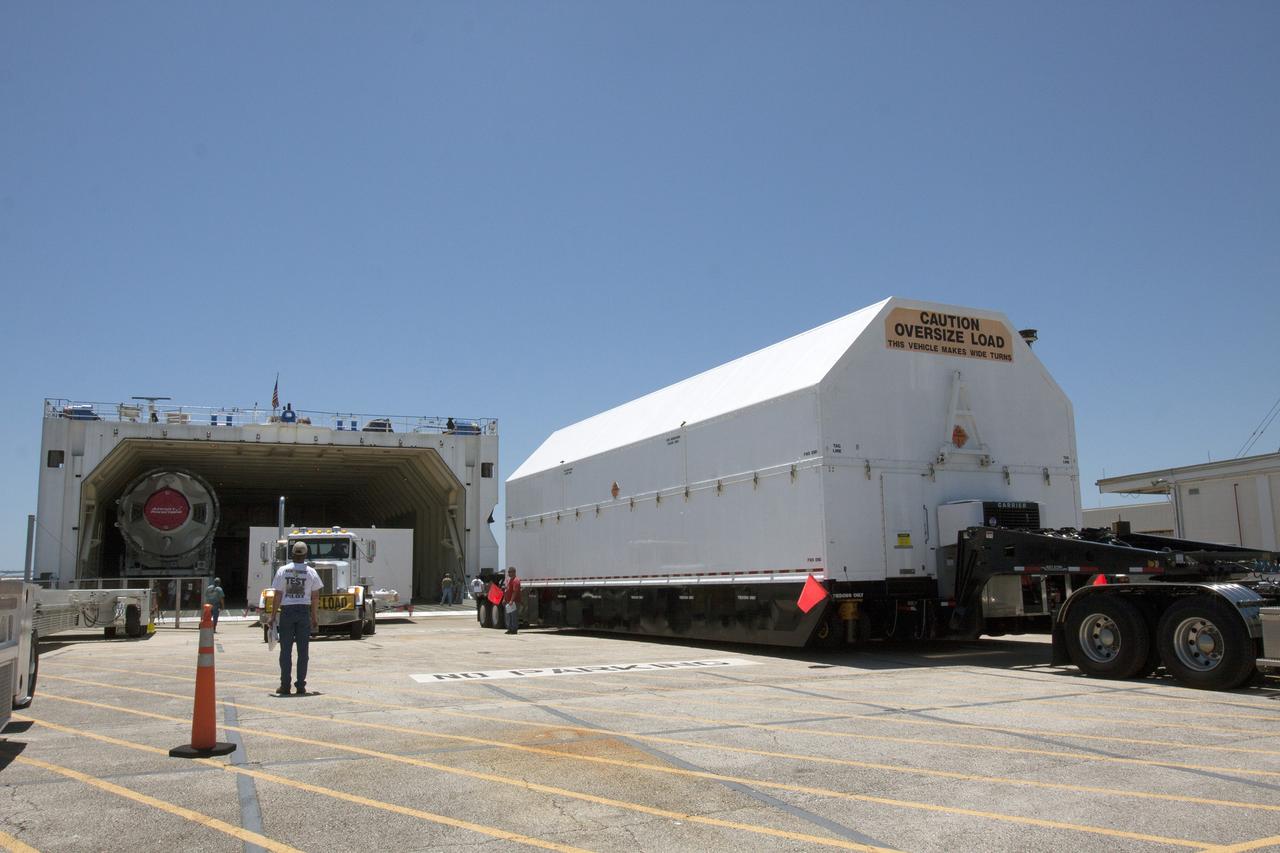
CAPE CANAVERAL, Fla. -- A barge has arrived at the U.S. Army Outpost wharf at Port Canaveral in Florida, carrying the second stage, port booster and spacecraft adapter, the remaining stages for the United Launch Alliance Delta IV Heavy boosters for NASA’s upcoming Exploration Flight Test-1, or EFT-1, mission with the Orion spacecraft. The segments are being offloaded in their containers for transport to the Horizontal Integration Facility, or HIF, at Space Launch Complex 37 on Cape Canaveral Air Force Station. At the HIF, all three booster stages will be processed and checked out before being moved to the nearby launch pad and hoisted into position. The spacecraft adapter will connect Orion to the ULA Delta IV, and also will connect Orion to NASA's new rocket, the Space Launch System, on its first mission in 2017. During the EFT-1 mission, Orion will travel farther into space than any human spacecraft has gone in more than 40 years. The data gathered during the flight will influence design decisions, validate existing computer models and innovative new approaches to space systems development, as well as reduce overall mission risks and costs for later Orion flights. Liftoff of Orion on EFT-1 is planned for fall 2014. Photo credit: NASA/Kim Shiflett
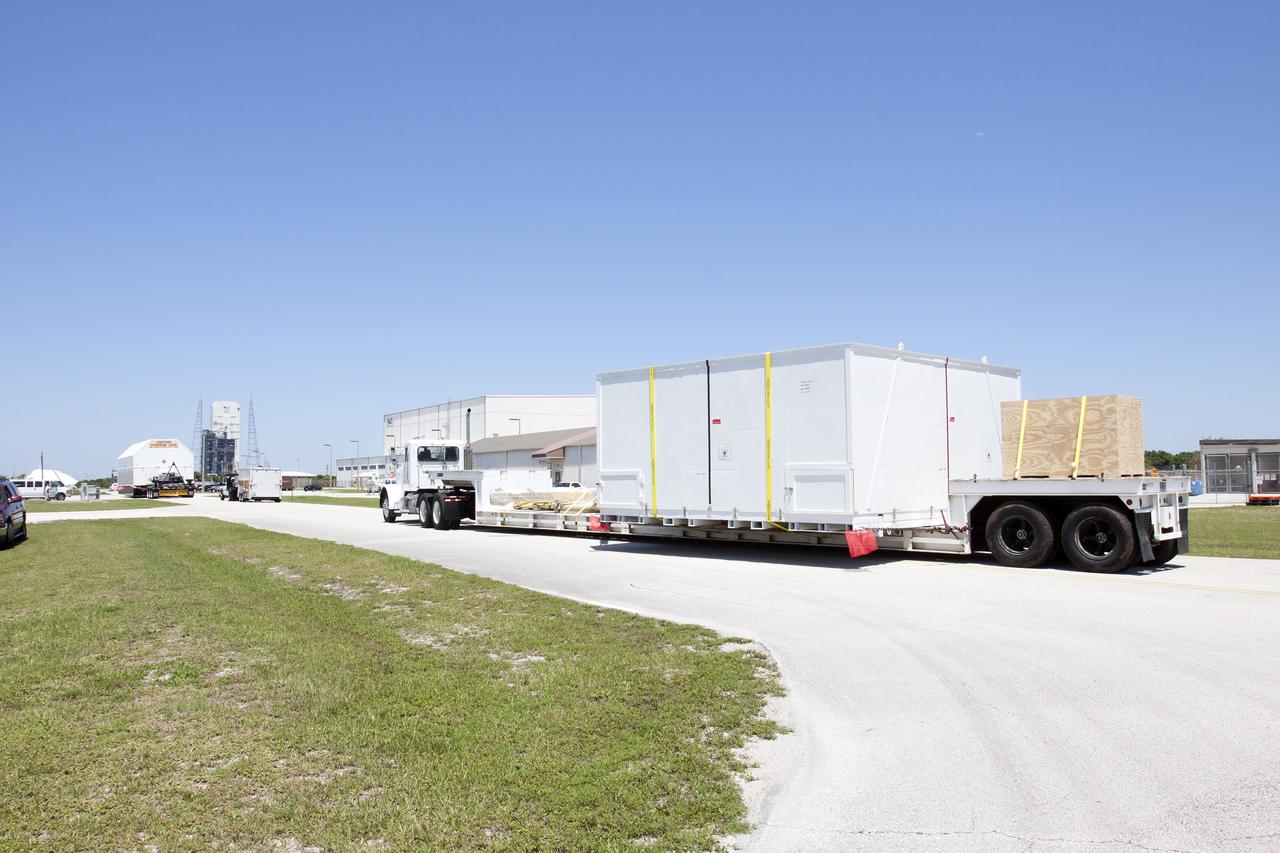
CAPE CANAVERAL, Fla. -- After arriving by barge at the U.S. Army Outpost wharf at Port Canaveral in Florida, the second stage, port booster and spacecraft adapter, the remaining stages for the United Launch Alliance Delta IV Heavy boosters for NASA’s upcoming Exploration Flight Test-1, or EFT-1, mission with the Orion spacecraft, were offloaded in their containers. They are being transported to the Horizontal Integration Facility, or HIF, at Space Launch Complex 37 on Cape Canaveral Air Force Station. At the HIF, all three booster stages will be processed and checked out before being moved to the nearby launch pad and hoisted into position. The spacecraft adapter will connect Orion to the ULA Delta IV, and also will connect Orion to NASA's new rocket, the Space Launch System, on its first mission in 2017. During the EFT-1 mission, Orion will travel farther into space than any human spacecraft has gone in more than 40 years. The data gathered during the flight will influence design decisions, validate existing computer models and innovative new approaches to space systems development, as well as reduce overall mission risks and costs for later Orion flights. Liftoff of Orion on EFT-1 is planned for fall 2014. Photo credit: NASA/Kim Shiflett
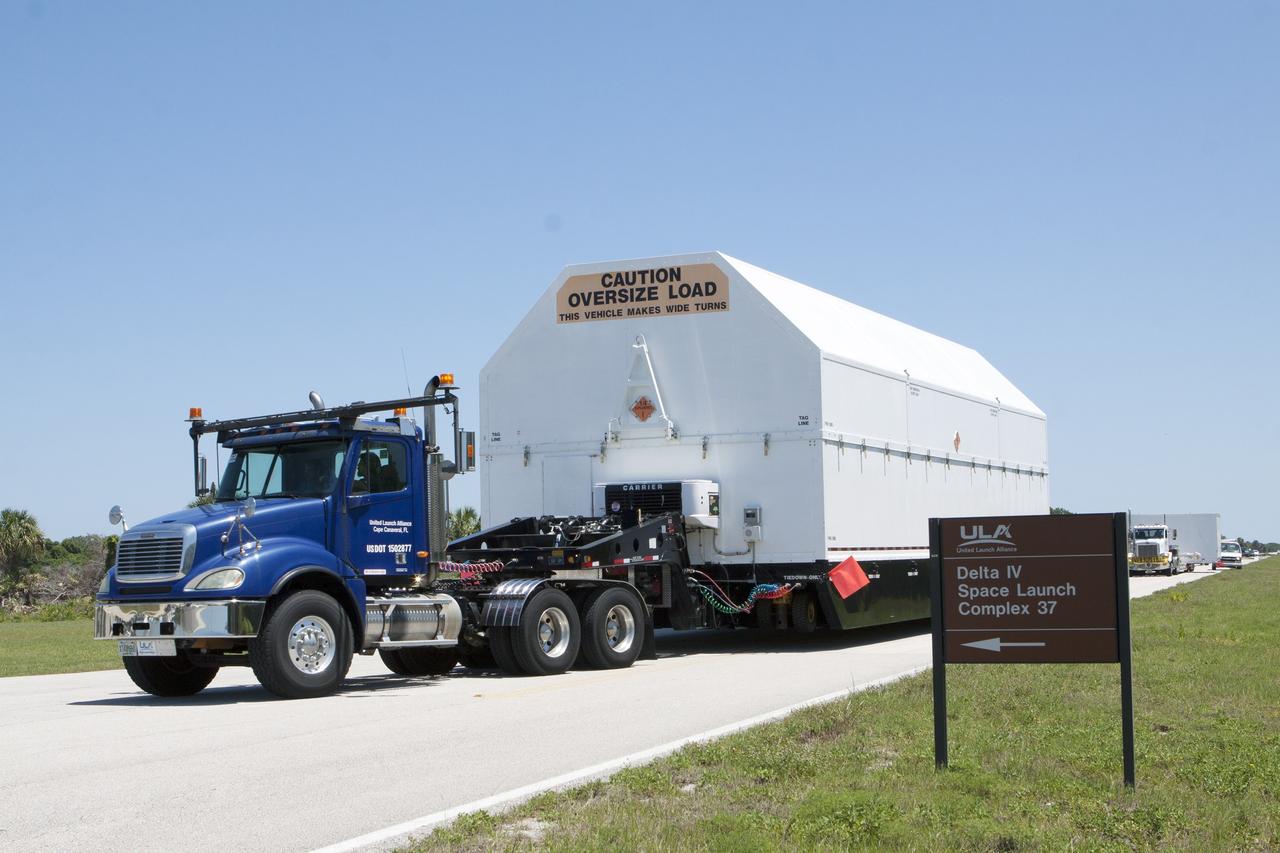
CAPE CANAVERAL, Fla. -- After arriving by barge at the U.S. Army Outpost wharf at Port Canaveral in Florida, the second stage, port booster and spacecraft adapter, the remaining stages for the United Launch Alliance Delta IV Heavy boosters for NASA’s upcoming Exploration Flight Test-1, or EFT-1, mission with the Orion spacecraft, were offloaded in their containers. They are being transported to the Horizontal Integration Facility, or HIF, at Space Launch Complex 37 on Cape Canaveral Air Force Station. At the HIF, all three booster stages will be processed and checked out before being moved to the nearby launch pad and hoisted into position. The spacecraft adapter will connect Orion to the ULA Delta IV, and also will connect Orion to NASA's new rocket, the Space Launch System, on its first mission in 2017. During the EFT-1 mission, Orion will travel farther into space than any human spacecraft has gone in more than 40 years. The data gathered during the flight will influence design decisions, validate existing computer models and innovative new approaches to space systems development, as well as reduce overall mission risks and costs for later Orion flights. Liftoff of Orion on EFT-1 is planned for fall 2014. Photo credit: NASA/Kim Shiflett
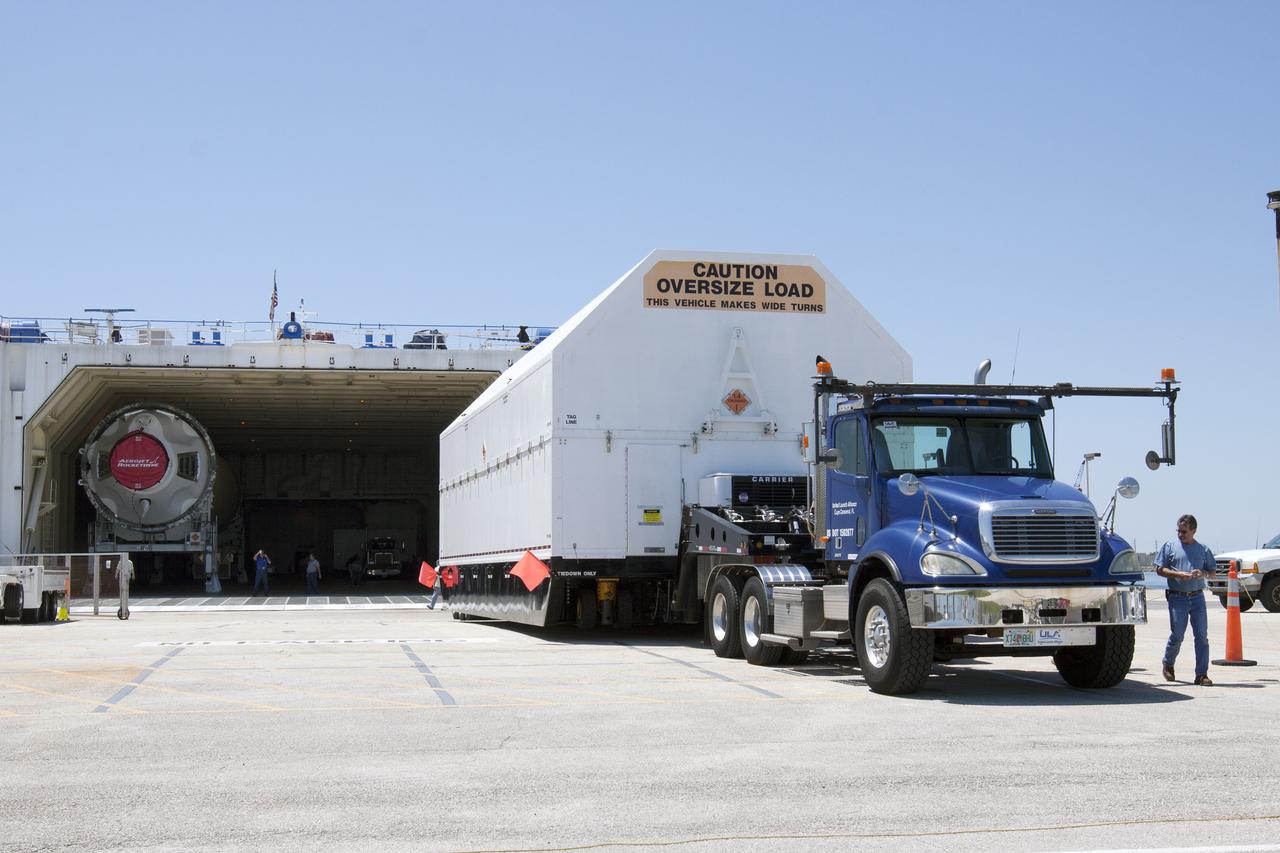
CAPE CANAVERAL, Fla. -- A barge has arrived at the U.S. Army Outpost wharf at Port Canaveral in Florida, carrying the second stage, port booster and spacecraft adapter, the remaining stages for the United Launch Alliance Delta IV Heavy boosters for NASA’s upcoming Exploration Flight Test-1, or EFT-1, mission with the Orion spacecraft. They are being offloaded in their containers for transport to the Horizontal Integration Facility, or HIF, at Space Launch Complex 37 on Cape Canaveral Air Force Station. At the HIF, all three booster stages will be processed and checked out before being moved to the nearby launch pad and hoisted into position. The spacecraft adapter will connect Orion to the ULA Delta IV, and also will connect Orion to NASA's new rocket, the Space Launch System, on its first mission in 2017. During the EFT-1 mission, Orion will travel farther into space than any human spacecraft has gone in more than 40 years. The data gathered during the flight will influence design decisions, validate existing computer models and innovative new approaches to space systems development, as well as reduce overall mission risks and costs for later Orion flights. Liftoff of Orion on EFT-1 is planned for fall 2014. Photo credit: NASA/Kim Shiflett
CAPE CANAVERAL, Fla. -- After arriving by barge at the U.S. Army Outpost wharf at Port Canaveral in Florida, the second stage, port booster and spacecraft adapter, the remaining stages for the United Launch Alliance Delta IV Heavy boosters for NASA’s upcoming Exploration Flight Test-1, or EFT-1, mission with the Orion spacecraft, were offloaded in their containers. They are being transported to the Horizontal Integration Facility, or HIF, at Space Launch Complex 37 on Cape Canaveral Air Force Station. At the HIF, all three booster stages will be processed and checked out before being moved to the nearby launch pad and hoisted into position. The spacecraft adapter will connect Orion to the ULA Delta IV, and also will connect Orion to NASA's new rocket, the Space Launch System, on its first mission in 2017. During the EFT-1 mission, Orion will travel farther into space than any human spacecraft has gone in more than 40 years. The data gathered during the flight will influence design decisions, validate existing computer models and innovative new approaches to space systems development, as well as reduce overall mission risks and costs for later Orion flights. Liftoff of Orion on EFT-1 is planned for fall 2014. Photo credit: NASA/Kim Shiflett
CAPE CANAVERAL, Fla. -- The second stage, port booster and spacecraft adapter, the remaining stages for the United Launch Alliance Delta IV Heavy boosters for NASA’s upcoming Exploration Flight Test-1, or EFT-1, mission with the Orion spacecraft, have been transported in their containers to the Horizontal Integration Facility, or HIF, at Space Launch Complex 37 on Cape Canaveral Air Force Station in Florida for uncrating. The segments arrived by barge at the U.S. Army Outpost wharf at Port Canaveral. At the HIF, all three booster stages will be processed and checked out before being moved to the nearby launch pad and hoisted into position. The spacecraft adapter will connect Orion to the ULA Delta IV, and also will connect Orion to NASA's new rocket, the Space Launch System, on its first mission in 2017. During the EFT-1 mission, Orion will travel farther into space than any human spacecraft has gone in more than 40 years. The data gathered during the flight will influence design decisions, validate existing computer models and innovative new approaches to space systems development, as well as reduce overall mission risks and costs for later Orion flights. Liftoff of Orion on EFT-1 is planned for fall 2014. Photo credit: NASA/Kim Shiflett
CAPE CANAVERAL, Fla. – Two of the three United Launch Alliance Delta IV heavy boosters for NASA’s upcoming Exploration Flight Test-1, or EFT-1, mission with the Orion spacecraft, have arrived by barge at the U.S. Army Outpost wharf at Port Canaveral in Florida. The core booster and starboard booster will be offloaded and then transported to the Horizontal Integration Facility, or HIF, at Space Launch Complex 37 on Cape Canaveral Air Force Station. The port booster and the upper stage are planned to be shipped to Cape Canaveral in April. At the HIF, all three boosters will be processed and checked out before being moved to the nearby launch pad and hoisted into position. During the EFT-1 mission, Orion will travel farther into space than any human spacecraft has gone in more than 40 years. The data gathered during the flight will influence design decisions, validate existing computer models and innovative new approaches to space systems development, as well as reduce overall mission risks and costs for later Orion flights. Liftoff of Orion on EFT-1 is planned for fall 2014. Photo credit: NASA/Kim Shiflett
CAPE CANAVERAL, Fla. – Two of the three United Launch Alliance Delta IV heavy boosters for NASA’s upcoming Exploration Flight Test-1, or EFT-1, mission with the Orion spacecraft, have arrived by barge at the U.S. Army Outpost wharf at Port Canaveral in Florida. The core booster and starboard booster are being offloaded and will be transported to the Horizontal Integration Facility, or HIF, at Space Launch Complex 37 on Cape Canaveral Air Force Station. The port booster and the upper stage are planned to be shipped to Cape Canaveral in April. At the HIF, all three boosters will be processed and checked out before being moved to the nearby launch pad and hoisted into position. During the EFT-1 mission, Orion will travel farther into space than any human spacecraft has gone in more than 40 years. The data gathered during the flight will influence design decisions, validate existing computer models and innovative new approaches to space systems development, as well as reduce overall mission risks and costs for later Orion flights. Liftoff of Orion on EFT-1 is planned for fall 2014. Photo credit: NASA/Kim Shiflett
CAPE CANAVERAL, Fla. – Two of the three United Launch Alliance Delta IV heavy boosters for NASA’s upcoming Exploration Flight Test-1, or EFT-1, mission with the Orion spacecraft, have arrived by barge at the U.S. Army Outpost wharf at Port Canaveral in Florida. The core booster and starboard booster will be offloaded and then transported to the Horizontal Integration Facility, or HIF, at Space Launch Complex 37 on Cape Canaveral Air Force Station. The port booster and the upper stage are planned to be shipped to Cape Canaveral in April. At the HIF, all three boosters will be processed and checked out before being moved to the nearby launch pad and hoisted into position. During the EFT-1 mission, Orion will travel farther into space than any human spacecraft has gone in more than 40 years. The data gathered during the flight will influence design decisions, validate existing computer models and innovative new approaches to space systems development, as well as reduce overall mission risks and costs for later Orion flights. Liftoff of Orion on EFT-1 is planned for fall 2014. Photo credit: NASA/Kim Shiflett
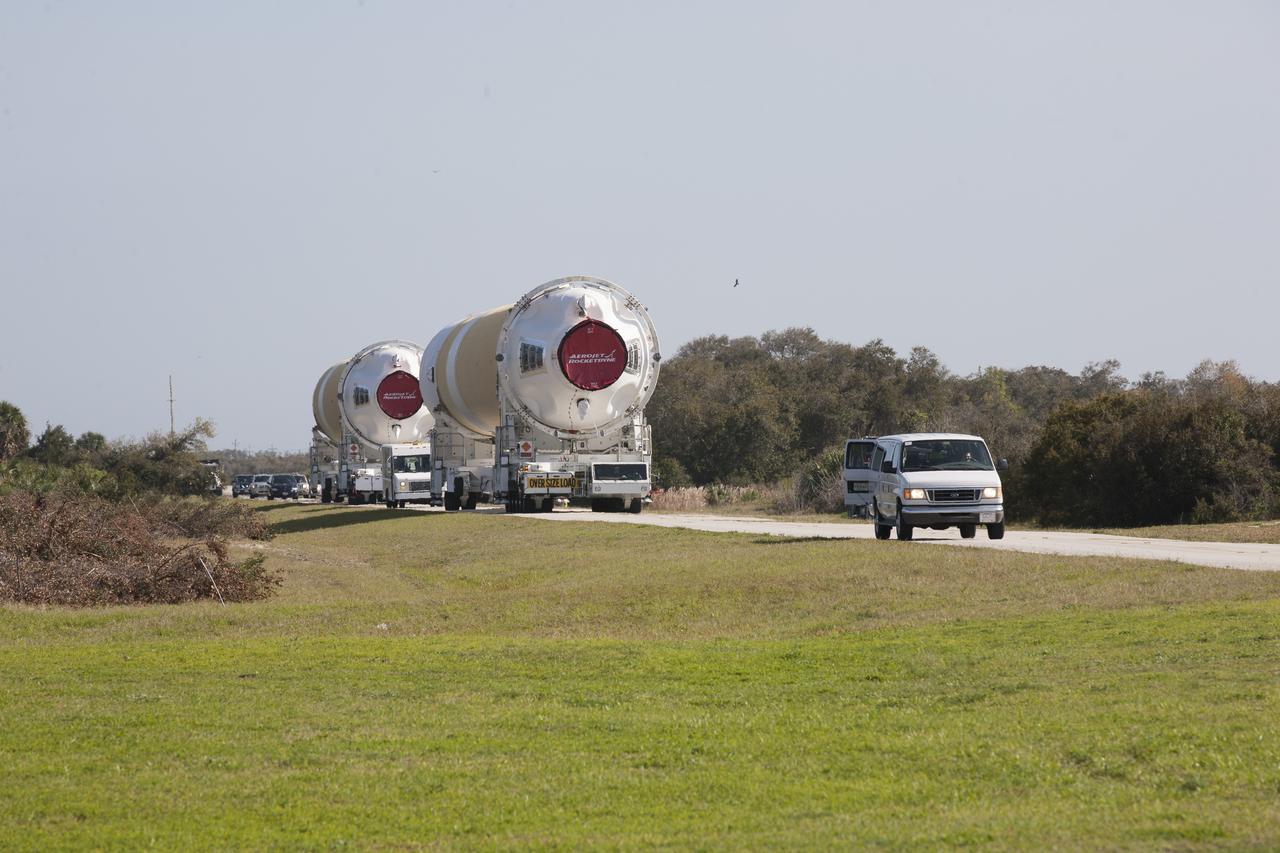
CAPE CANAVERAL, Fla. – Two of the three United Launch Alliance Delta IV heavy boosters for NASA’s upcoming Exploration Flight Test-1, or EFT-1, mission with the Orion spacecraft, arrived by barge at the U.S. Army Outpost wharf at Port Canaveral in Florida. The core booster and starboard booster were offloaded and are being transported to the Horizontal Integration Facility, or HIF, at Space Launch Complex 37 on Cape Canaveral Air Force Station. The port booster and the upper stage are planned to be shipped to Cape Canaveral in April. At the HIF, all three boosters will be processed and checked out before being moved to the nearby launch pad and hoisted into position. During the EFT-1 mission, Orion will travel farther into space than any human spacecraft has gone in more than 40 years. The data gathered during the flight will influence design decisions, validate existing computer models and innovative new approaches to space systems development, as well as reduce overall mission risks and costs for later Orion flights. Liftoff of Orion on EFT-1 is planned for fall 2014. Photo credit: NASA/Kim Shiflett
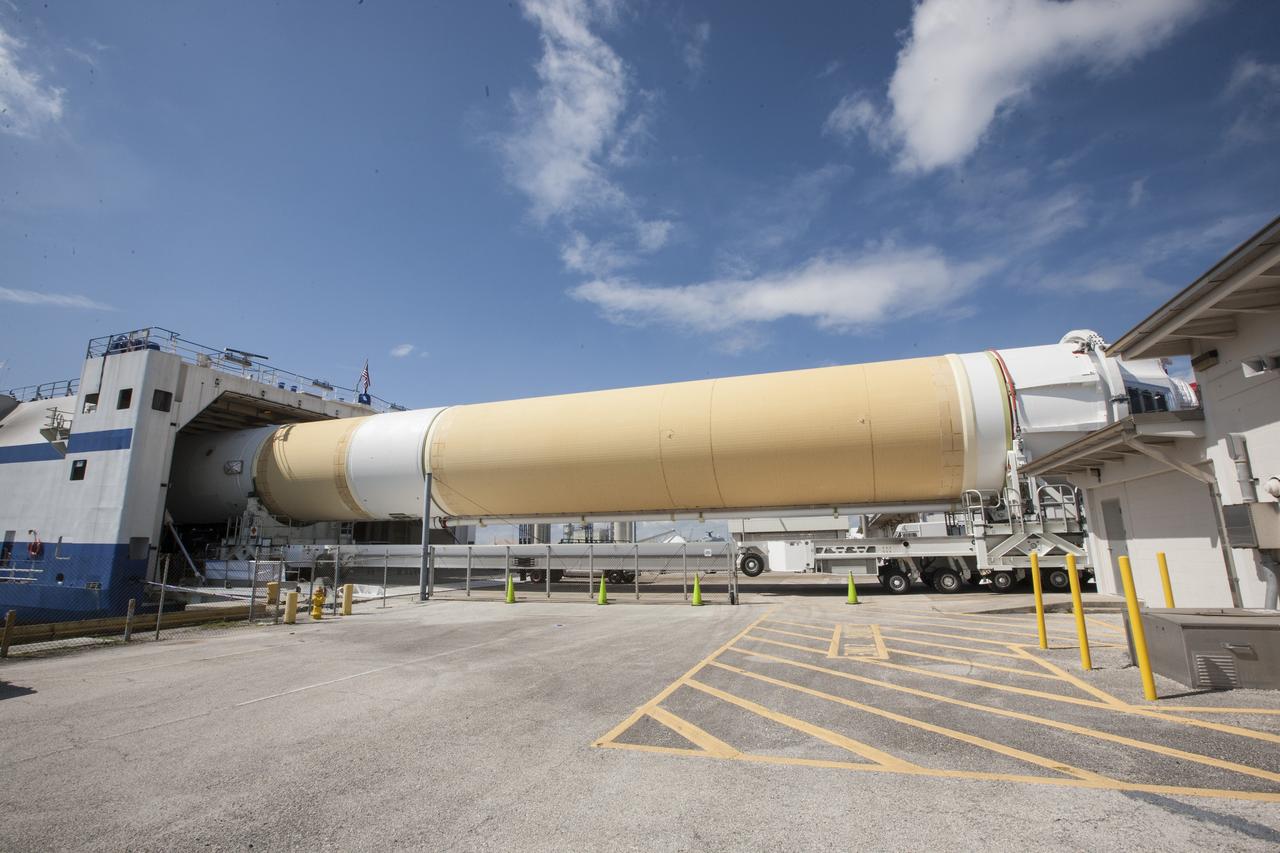
CAPE CANAVERAL, Fla. – Two of the three United Launch Alliance Delta IV heavy boosters for NASA’s upcoming Exploration Flight Test-1, or EFT-1, mission with the Orion spacecraft, have arrived by barge at the U.S. Army Outpost wharf at Port Canaveral in Florida. The core booster and starboard booster are being offloaded and will be transported to the Horizontal Integration Facility, or HIF, at Space Launch Complex 37 on Cape Canaveral Air Force Station. The port booster and the upper stage are planned to be shipped to Cape Canaveral in April. At the HIF, all three boosters will be processed and checked out before being moved to the nearby launch pad and hoisted into position. During the EFT-1 mission, Orion will travel farther into space than any human spacecraft has gone in more than 40 years. The data gathered during the flight will influence design decisions, validate existing computer models and innovative new approaches to space systems development, as well as reduce overall mission risks and costs for later Orion flights. Liftoff of Orion on EFT-1 is planned for fall 2014. Photo credit: NASA/Kim Shiflett
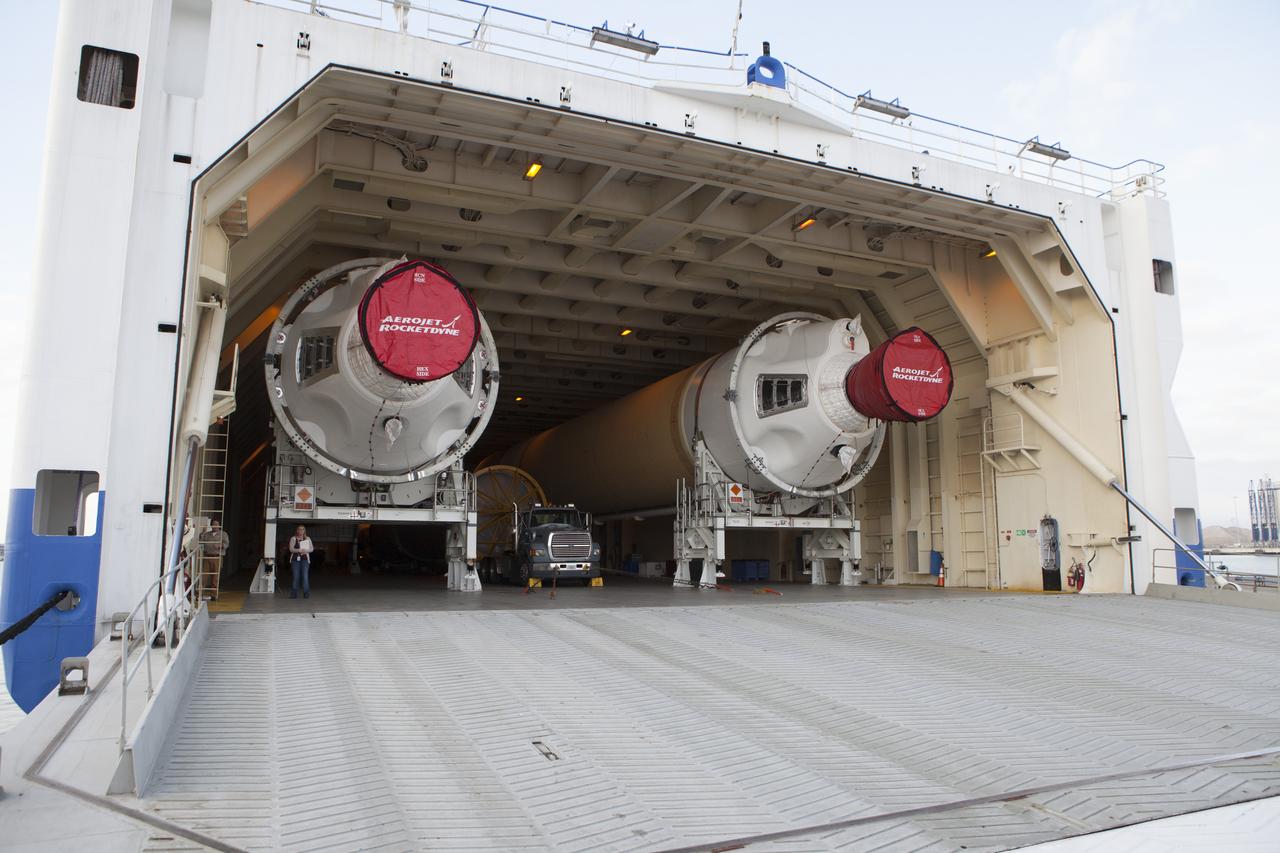
CAPE CANAVERAL, Fla. – A barge arrives at the U.S. Army Outpost wharf at Port Canaveral in Florida, carrying two of the three United Launch Alliance Delta IV heavy boosters for NASA’s upcoming Exploration Flight Test-1, or EFT-1, mission with the Orion spacecraft. The core booster and starboard booster will be offloaded and then transported to the Horizontal Integration Facility, or HIF, at Space Launch Complex 37 on Cape Canaveral Air Force Station. The port booster and the upper stage are planned to be shipped to Cape Canaveral in April. At the HIF, all three boosters will be processed and checked out before being moved to the nearby launch pad and hoisted into position. During the EFT-1 mission, Orion will travel farther into space than any human spacecraft has gone in more than 40 years. The data gathered during the flight will influence design decisions, validate existing computer models and innovative new approaches to space systems development, as well as reduce overall mission risks and costs for later Orion flights. Liftoff of Orion on EFT-1 is planned for fall 2014. Photo credit: NASA/Kim Shiflett
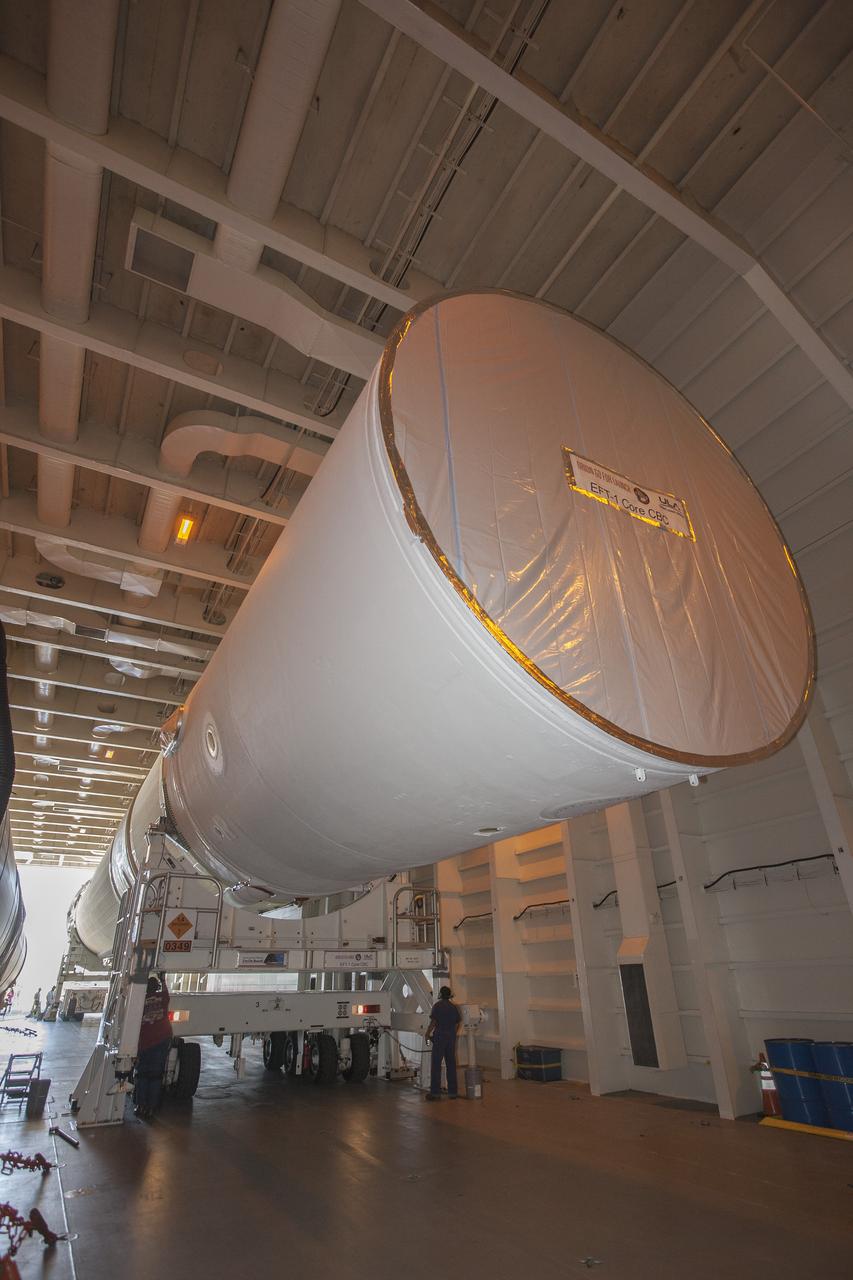
CAPE CANAVERAL, Fla. – Two of the three United Launch Alliance Delta IV heavy boosters for NASA’s upcoming Exploration Flight Test-1, or EFT-1, mission with the Orion spacecraft, have arrived by barge at the U.S. Army Outpost wharf at Port Canaveral in Florida. The core booster and starboard booster will be offloaded and then transported to the Horizontal Integration Facility, or HIF, at Space Launch Complex 37 on Cape Canaveral Air Force Station. The port booster and the upper stage are planned to be shipped to Cape Canaveral in April. At the HIF, all three boosters will be processed and checked out before being moved to the nearby launch pad and hoisted into position. During the EFT-1 mission, Orion will travel farther into space than any human spacecraft has gone in more than 40 years. The data gathered during the flight will influence design decisions, validate existing computer models and innovative new approaches to space systems development, as well as reduce overall mission risks and costs for later Orion flights. Liftoff of Orion on EFT-1 is planned for fall 2014. Photo credit: NASA/Kim Shiflett
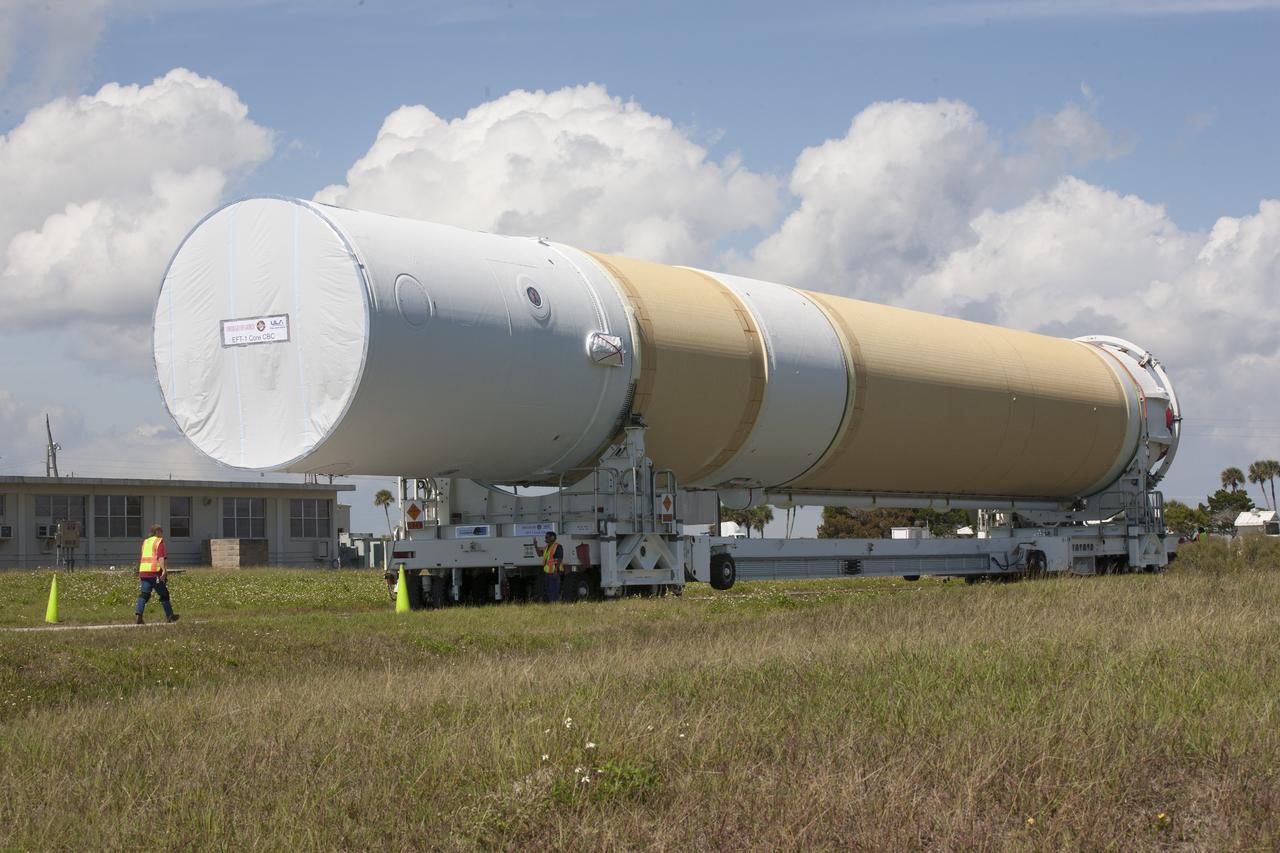
CAPE CANAVERAL, Fla. – Two of the three United Launch Alliance Delta IV heavy boosters for NASA’s upcoming Exploration Flight Test-1, or EFT-1, mission with the Orion spacecraft, arrived by barge at the U.S. Army Outpost wharf at Port Canaveral in Florida. The core booster, shown in this photo, and starboard booster were offloaded and will be transported to the Horizontal Integration Facility, or HIF, at Space Launch Complex 37 on Cape Canaveral Air Force Station. The port booster and the upper stage are planned to be shipped to Cape Canaveral in April. At the HIF, all three boosters will be processed and checked out before being moved to the nearby launch pad and hoisted into position. During the EFT-1 mission, Orion will travel farther into space than any human spacecraft has gone in more than 40 years. The data gathered during the flight will influence design decisions, validate existing computer models and innovative new approaches to space systems development, as well as reduce overall mission risks and costs for later Orion flights. Liftoff of Orion on EFT-1 is planned for fall 2014. Photo credit: NASA/Kim Shiflett
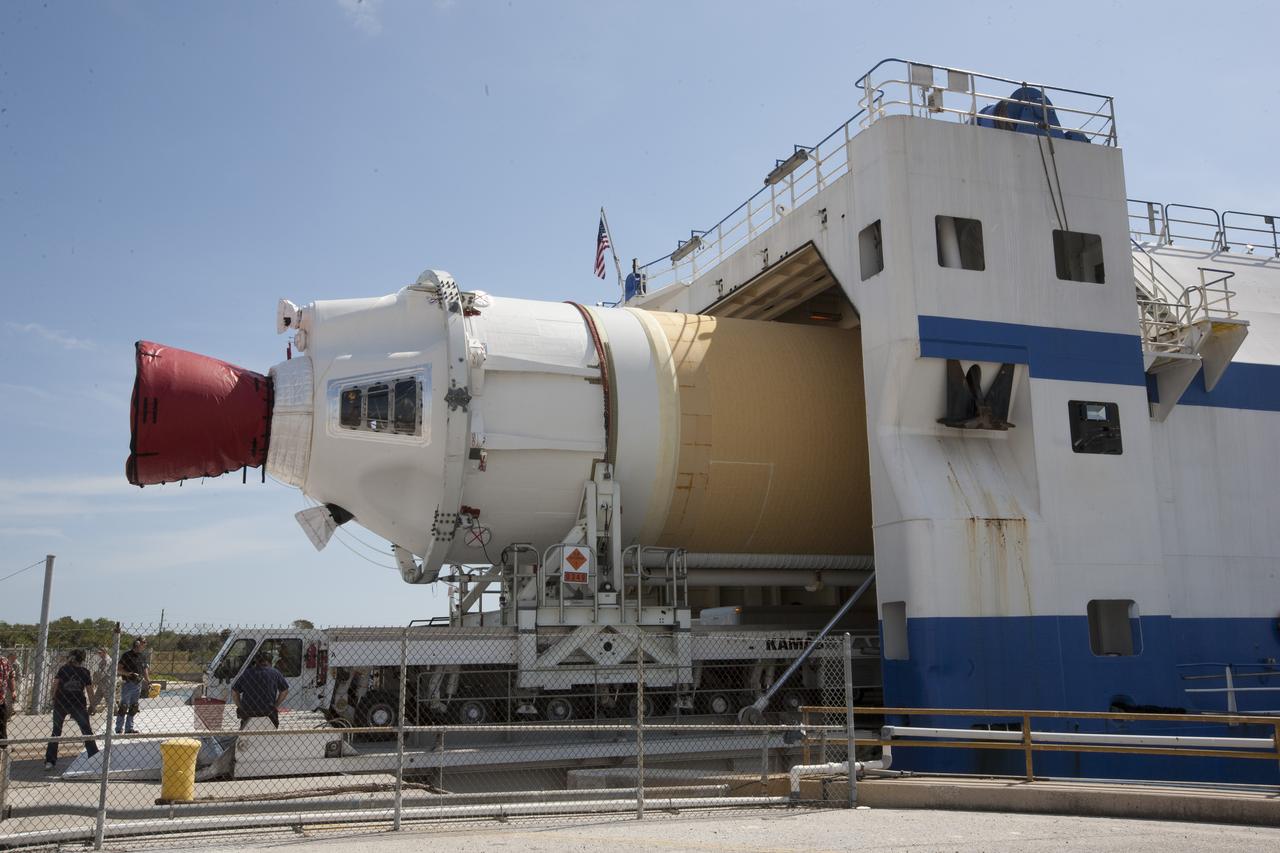
CAPE CANAVERAL, Fla. – Two of the three United Launch Alliance Delta IV heavy boosters for NASA’s upcoming Exploration Flight Test-1, or EFT-1, mission with the Orion spacecraft, have arrived by barge at the U.S. Army Outpost wharf at Port Canaveral in Florida. The core booster and starboard booster are being offloaded and will be transported to the Horizontal Integration Facility, or HIF, at Space Launch Complex 37 on Cape Canaveral Air Force Station. The port booster and the upper stage are planned to be shipped to Cape Canaveral in April. At the HIF, all three boosters will be processed and checked out before being moved to the nearby launch pad and hoisted into position. During the EFT-1 mission, Orion will travel farther into space than any human spacecraft has gone in more than 40 years. The data gathered during the flight will influence design decisions, validate existing computer models and innovative new approaches to space systems development, as well as reduce overall mission risks and costs for later Orion flights. Liftoff of Orion on EFT-1 is planned for fall 2014. Photo credit: NASA/Kim Shiflett
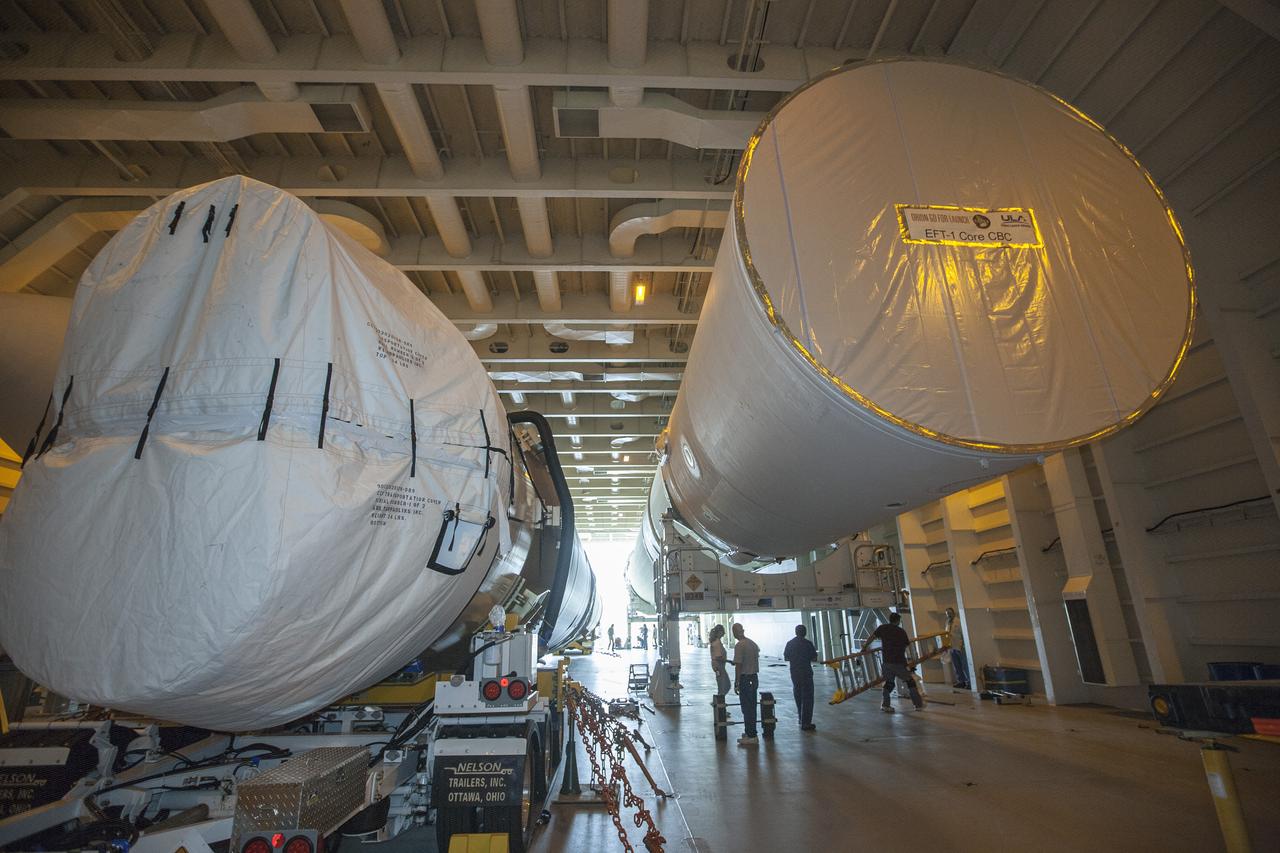
CAPE CANAVERAL, Fla. – A barge arrives at the U.S. Army Outpost wharf at Port Canaveral in Florida, carrying two of the three United Launch Alliance Delta IV heavy boosters for NASA’s upcoming Exploration Flight Test-1, or EFT-1, mission with the Orion spacecraft. The core booster and starboard booster will be offloaded and then transported to the Horizontal Integration Facility, or HIF, at Space Launch Complex 37 on Cape Canaveral Air Force Station. The port booster and the upper stage are planned to be shipped to Cape Canaveral in April. At the HIF, all three boosters will be processed and checked out before being moved to the nearby launch pad and hoisted into position. During the EFT-1 mission, Orion will travel farther into space than any human spacecraft has gone in more than 40 years. The data gathered during the flight will influence design decisions, validate existing computer models and innovative new approaches to space systems development, as well as reduce overall mission risks and costs for later Orion flights. Liftoff of Orion on EFT-1 is planned for fall 2014. Photo credit: NASA/Kim Shiflett
CAPE CANAVERAL, Fla. – Two of the three United Launch Alliance Delta IV heavy boosters for NASA’s upcoming Exploration Flight Test-1, or EFT-1, mission with the Orion spacecraft, arrived by barge at the U.S. Army Outpost wharf at Port Canaveral in Florida. The core booster and starboard booster were offloaded and are being transported to the Horizontal Integration Facility, or HIF, at Space Launch Complex 37 on Cape Canaveral Air Force Station. The port booster and the upper stage are planned to be shipped to Cape Canaveral in April. At the HIF, all three boosters will be processed and checked out before being moved to the nearby launch pad and hoisted into position. During the EFT-1 mission, Orion will travel farther into space than any human spacecraft has gone in more than 40 years. The data gathered during the flight will influence design decisions, validate existing computer models and innovative new approaches to space systems development, as well as reduce overall mission risks and costs for later Orion flights. Liftoff of Orion on EFT-1 is planned for fall 2014. Photo credit: NASA/Kim Shiflett
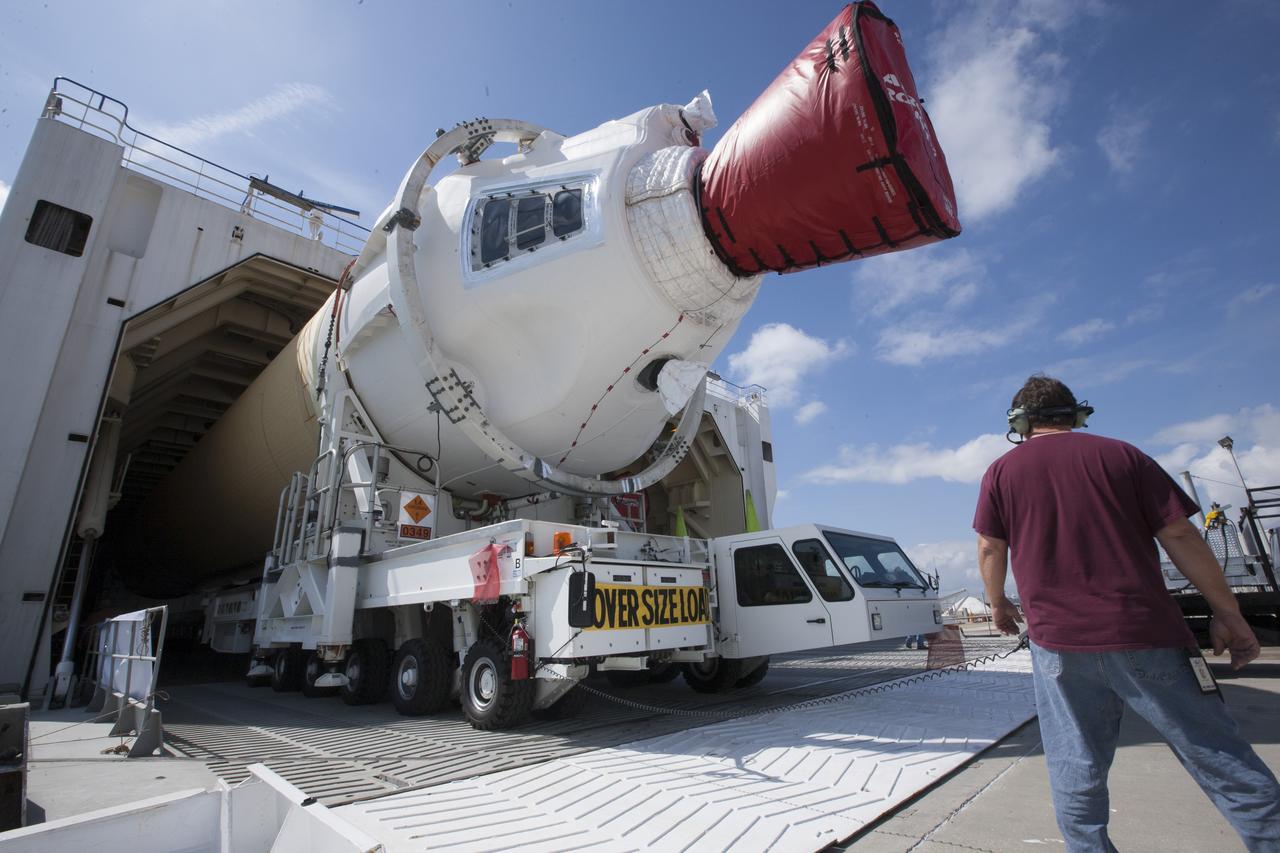
CAPE CANAVERAL, Fla. – Two of the three United Launch Alliance Delta IV heavy boosters for NASA’s upcoming Exploration Flight Test-1, or EFT-1, mission with the Orion spacecraft, have arrived by barge at the U.S. Army Outpost wharf at Port Canaveral in Florida. The core booster and starboard booster are being offloaded and will be transported to the Horizontal Integration Facility, or HIF, at Space Launch Complex 37 on Cape Canaveral Air Force Station. The port booster and the upper stage are planned to be shipped to Cape Canaveral in April. At the HIF, all three boosters will be processed and checked out before being moved to the nearby launch pad and hoisted into position. During the EFT-1 mission, Orion will travel farther into space than any human spacecraft has gone in more than 40 years. The data gathered during the flight will influence design decisions, validate existing computer models and innovative new approaches to space systems development, as well as reduce overall mission risks and costs for later Orion flights. Liftoff of Orion on EFT-1 is planned for fall 2014. Photo credit: NASA/Kim Shiflett
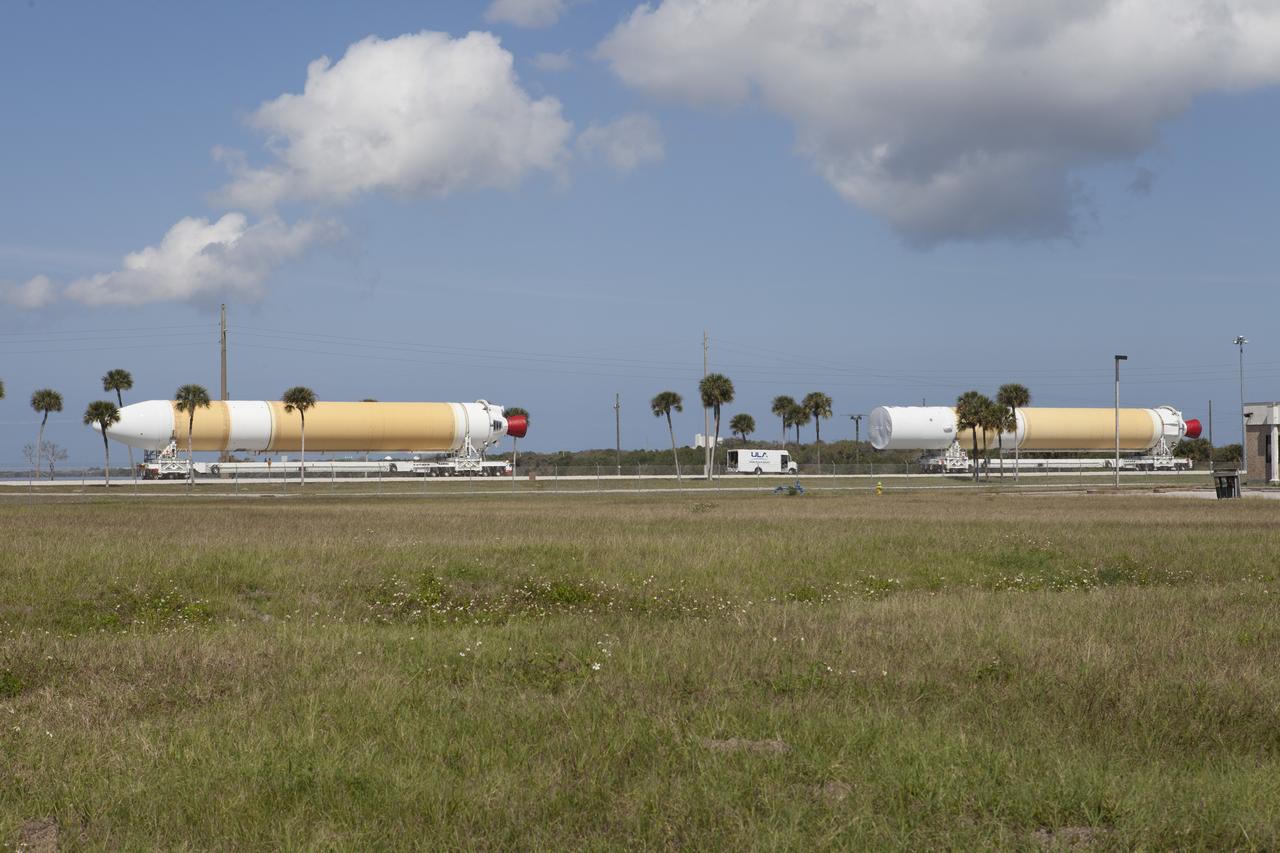
CAPE CANAVERAL, Fla. – Two of the three United Launch Alliance Delta IV heavy boosters for NASA’s upcoming Exploration Flight Test-1, or EFT-1, mission with the Orion spacecraft, arrived by barge at the U.S. Army Outpost wharf at Port Canaveral in Florida. The core booster and starboard booster were offloaded and are being transported to the Horizontal Integration Facility, or HIF, at Space Launch Complex 37 on Cape Canaveral Air Force Station. The port booster and the upper stage are planned to be shipped to Cape Canaveral in April. At the HIF, all three boosters will be processed and checked out before being moved to the nearby launch pad and hoisted into position. During the EFT-1 mission, Orion will travel farther into space than any human spacecraft has gone in more than 40 years. The data gathered during the flight will influence design decisions, validate existing computer models and innovative new approaches to space systems development, as well as reduce overall mission risks and costs for later Orion flights. Liftoff of Orion on EFT-1 is planned for fall 2014. Photo credit: NASA/Kim Shiflett
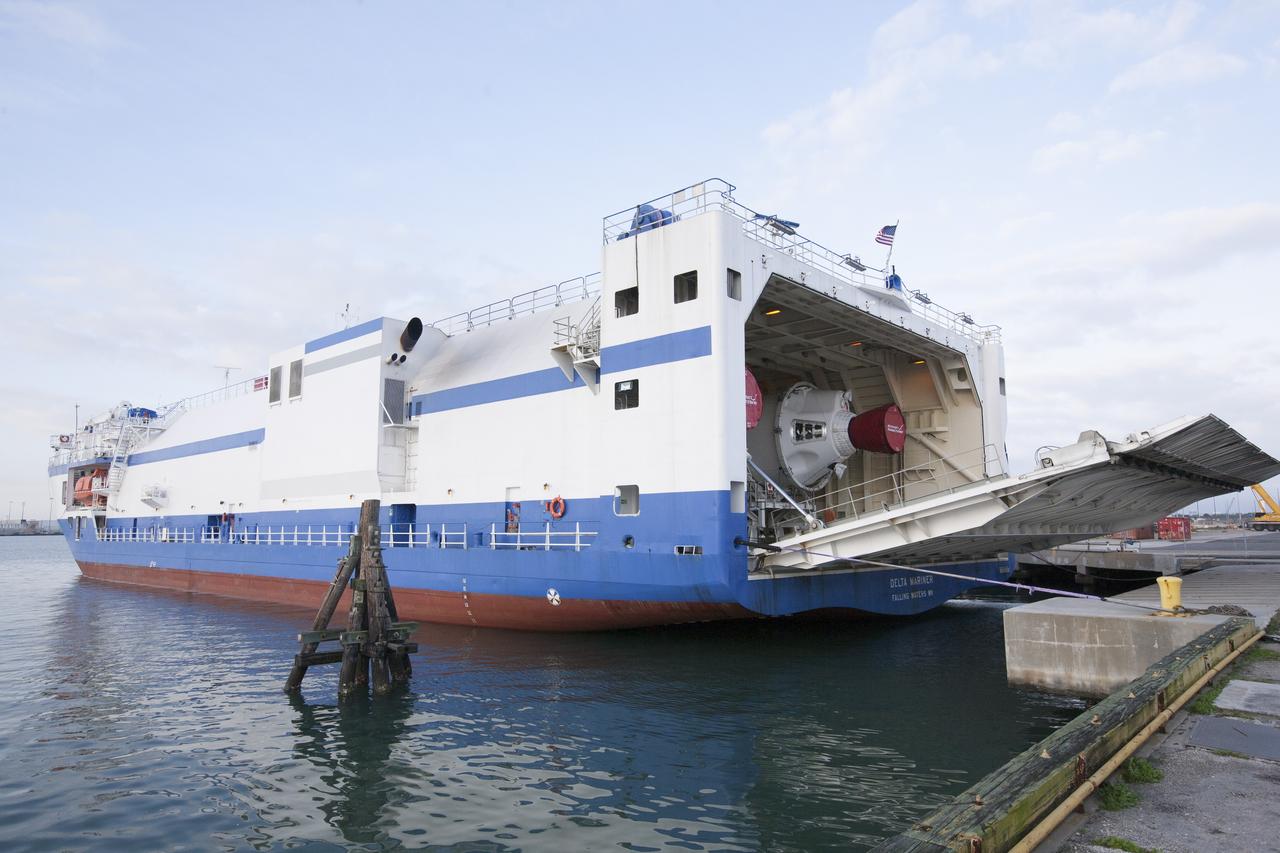
CAPE CANAVERAL, Fla. – A barge arrives at the U.S. Army Outpost wharf at Port Canaveral in Florida, carrying two of the three United Launch Alliance Delta IV heavy boosters for NASA’s upcoming Exploration Flight Test-1, or EFT-1, mission with the Orion spacecraft. The core booster and starboard booster will be offloaded and then transported to the Horizontal Integration Facility, or HIF, at Space Launch Complex 37 on Cape Canaveral Air Force Station. The port booster and the upper stage are planned to be shipped to Cape Canaveral in April. At the HIF, all three boosters will be processed and checked out before being moved to the nearby launch pad and hoisted into position. During the EFT-1 mission, Orion will travel farther into space than any human spacecraft has gone in more than 40 years. The data gathered during the flight will influence design decisions, validate existing computer models and innovative new approaches to space systems development, as well as reduce overall mission risks and costs for later Orion flights. Liftoff of Orion on EFT-1 is planned for fall 2014. Photo credit: NASA/Kim Shiflett
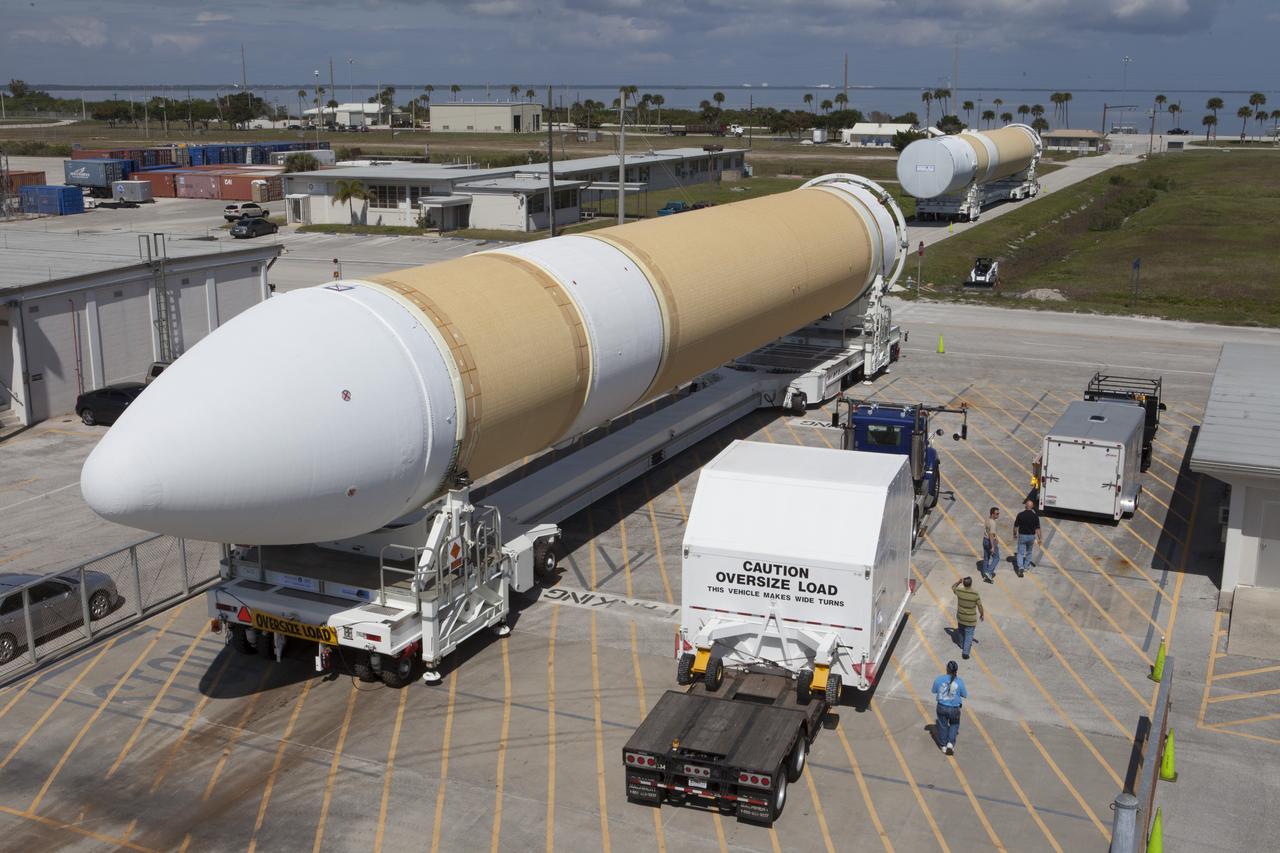
CAPE CANAVERAL, Fla. – Two of the three United Launch Alliance Delta IV heavy boosters for NASA’s upcoming Exploration Flight Test-1, or EFT-1, mission with the Orion spacecraft, arrived by barge at the U.S. Army Outpost wharf at Port Canaveral in Florida. The core booster and starboard booster have been offloaded and will be transported to the Horizontal Integration Facility, or HIF, at Space Launch Complex 37 on Cape Canaveral Air Force Station. The port booster and the upper stage are planned to be shipped to Cape Canaveral in April. At the HIF, all three boosters will be processed and checked out before being moved to the nearby launch pad and hoisted into position. During the EFT-1 mission, Orion will travel farther into space than any human spacecraft has gone in more than 40 years. The data gathered during the flight will influence design decisions, validate existing computer models and innovative new approaches to space systems development, as well as reduce overall mission risks and costs for later Orion flights. Liftoff of Orion on EFT-1 is planned for fall 2014. Photo credit: NASA/Kim Shiflett
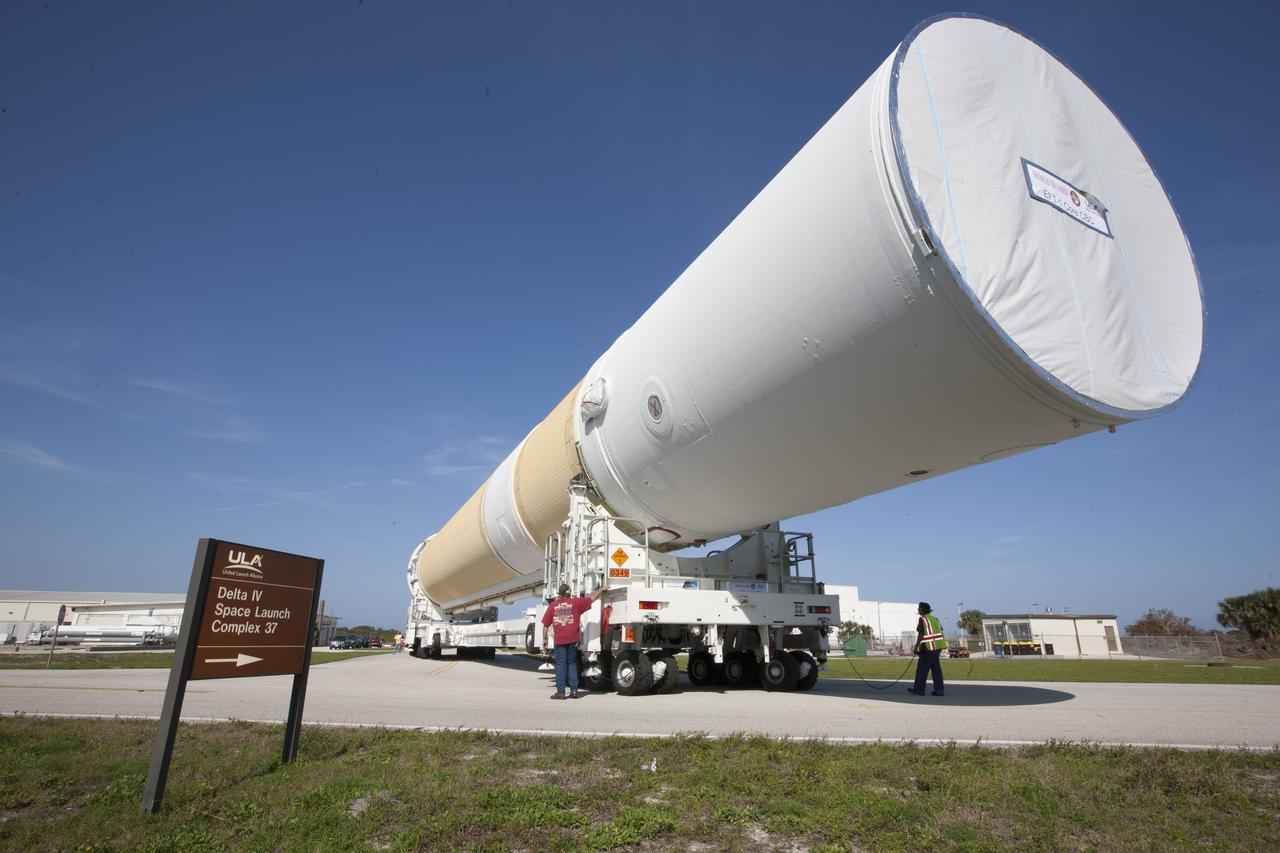
CAPE CANAVERAL, Fla. – Two of the three United Launch Alliance Delta IV heavy boosters for NASA’s upcoming Exploration Flight Test-1, or EFT-1, mission with the Orion spacecraft, arrived by barge at the U.S. Army Outpost wharf at Port Canaveral in Florida. The core booster and starboard booster were offloaded and are being transported to the Horizontal Integration Facility, or HIF, at Space Launch Complex 37 on Cape Canaveral Air Force Station. The port booster and the upper stage are planned to be shipped to Cape Canaveral in April. At the HIF, all three boosters will be processed and checked out before being moved to the nearby launch pad and hoisted into position. During the EFT-1 mission, Orion will travel farther into space than any human spacecraft has gone in more than 40 years. The data gathered during the flight will influence design decisions, validate existing computer models and innovative new approaches to space systems development, as well as reduce overall mission risks and costs for later Orion flights. Liftoff of Orion on EFT-1 is planned for fall 2014. Photo credit: NASA/Kim Shiflett
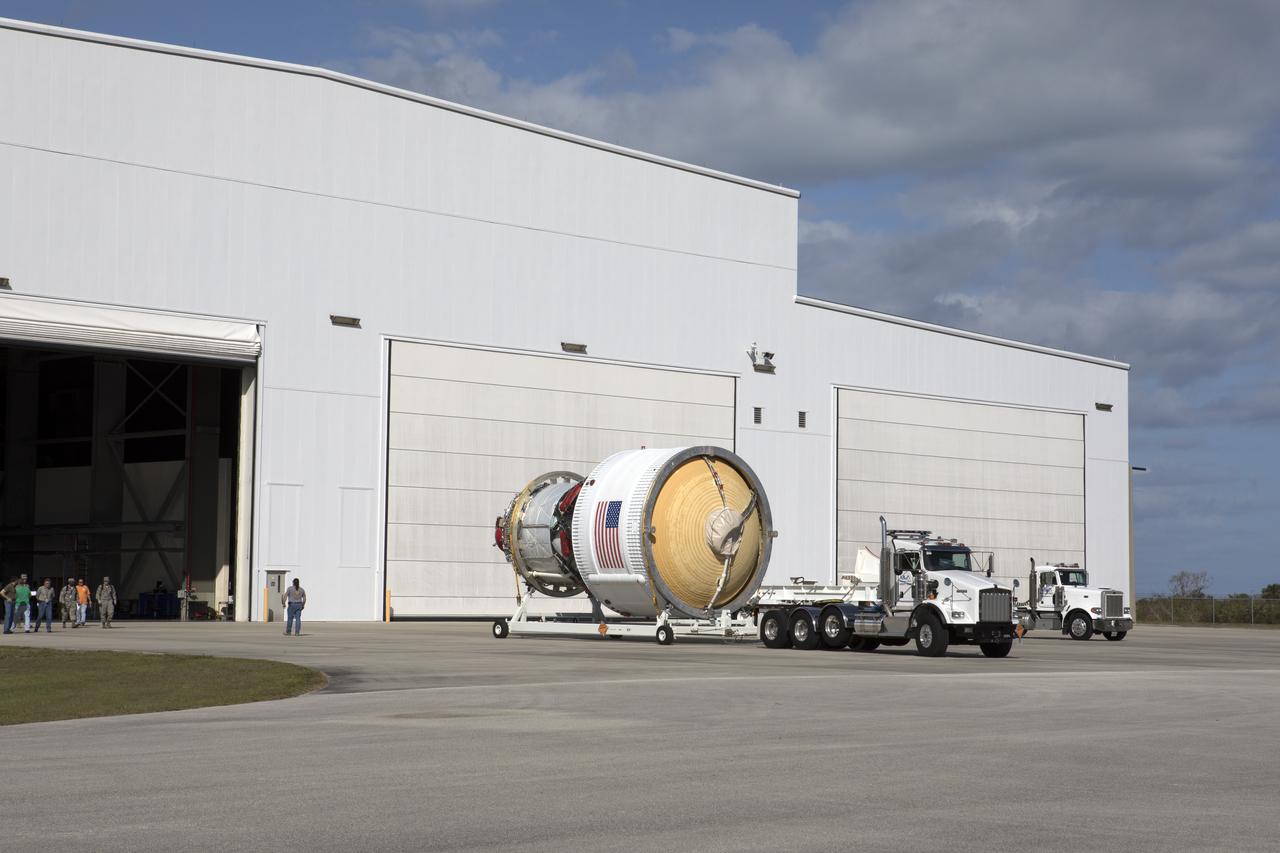
The Interim Cryogenic Propulsion Stage (ICPS) for NASA's Space Launch System (SLS) rocket has been moved on its transport stand by truck out of the United Launch Alliance (ULA) Horizontal Integration Facility near Space Launch Complex 37 at Cape Canaveral Air Force Station in Florida. The ICPS will be transported to the Delta Operations Center. The ICPS is the first integrated piece of flight hardware to arrive for the SLS. It is the in-space stage that is located toward the top of the rocket, between the Launch Vehicle Stage Adapter and the Orion Spacecraft Adapter. It will provide some of the in-space propulsion during Orion's first flight test atop the SLS on Exploration Mission-1.
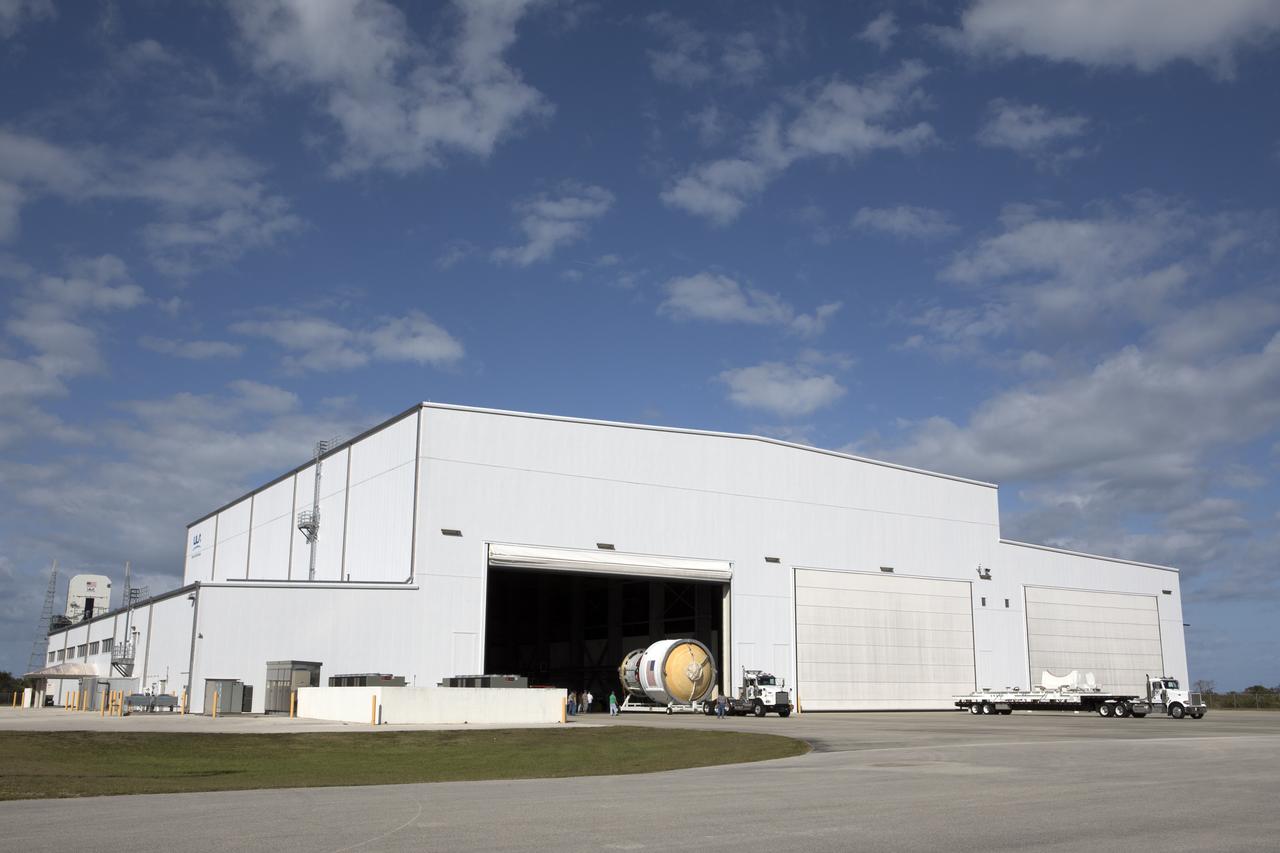
The Interim Cryogenic Propulsion Stage (ICPS) for NASA's Space Launch System (SLS) rocket is moved on its transport stand by truck out of the United Launch Alliance (ULA) Horizontal Integration Facility near Space Launch Complex 37 at Cape Canaveral Air Force Station in Florida. The ICPS will be transported to the Delta Operations Center. The ICPS is the first integrated piece of flight hardware to arrive for the SLS. It is the in-space stage that is located toward the top of the rocket, between the Launch Vehicle Stage Adapter and the Orion Spacecraft Adapter. It will provide some of the in-space propulsion during Orion's first flight test atop the SLS on Exploration Mission-1.
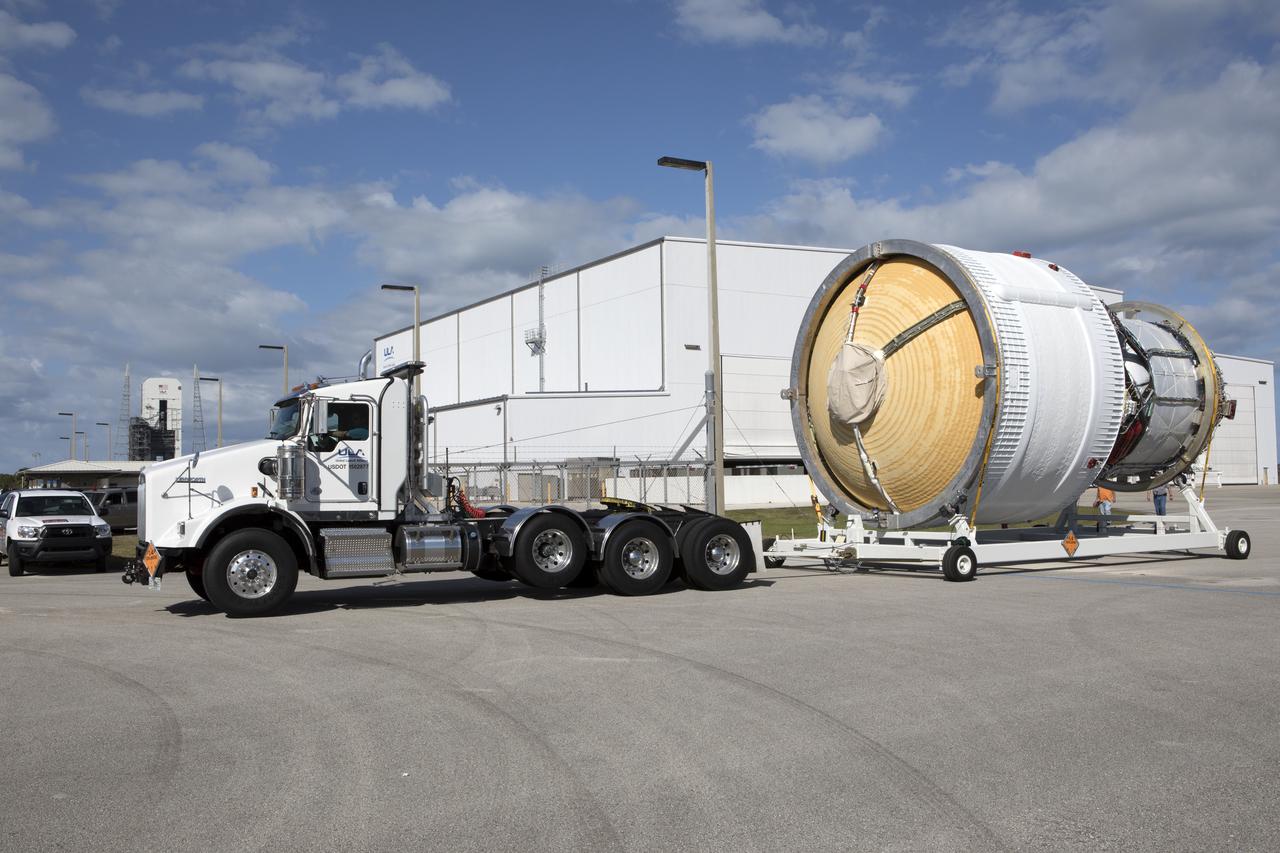
The Interim Cryogenic Propulsion Stage (ICPS) for NASA's Space Launch System (SLS) rocket has been moved on its transport stand by truck out of the United Launch Alliance (ULA) Horizontal Integration Facility near Space Launch Complex 37 at Cape Canaveral Air Force Station in Florida, on its way to the Delta Operations Center. The ICPS is the first integrated piece of flight hardware to arrive for the SLS. It is the in-space stage that is located toward the top of the rocket, between the Launch Vehicle Stage Adapter and the Orion Spacecraft Adapter. It will provide some of the in-space propulsion during Orion's first flight test atop the SLS on Exploration Mission-1.

On the same day it arrived, the Atlas V Centaur stage is moved into the Atlas Spaceflight Operations Center near Space Launch Complex 41 at Cape Canaveral Air Force Station in Florida. The Geostationary Operational Environmental Satellite (GOES-R) will launch aboard the Atlas V rocket in November. GOES-R will be the first satellite in a series of next-generation NOAA GOES Satellites.
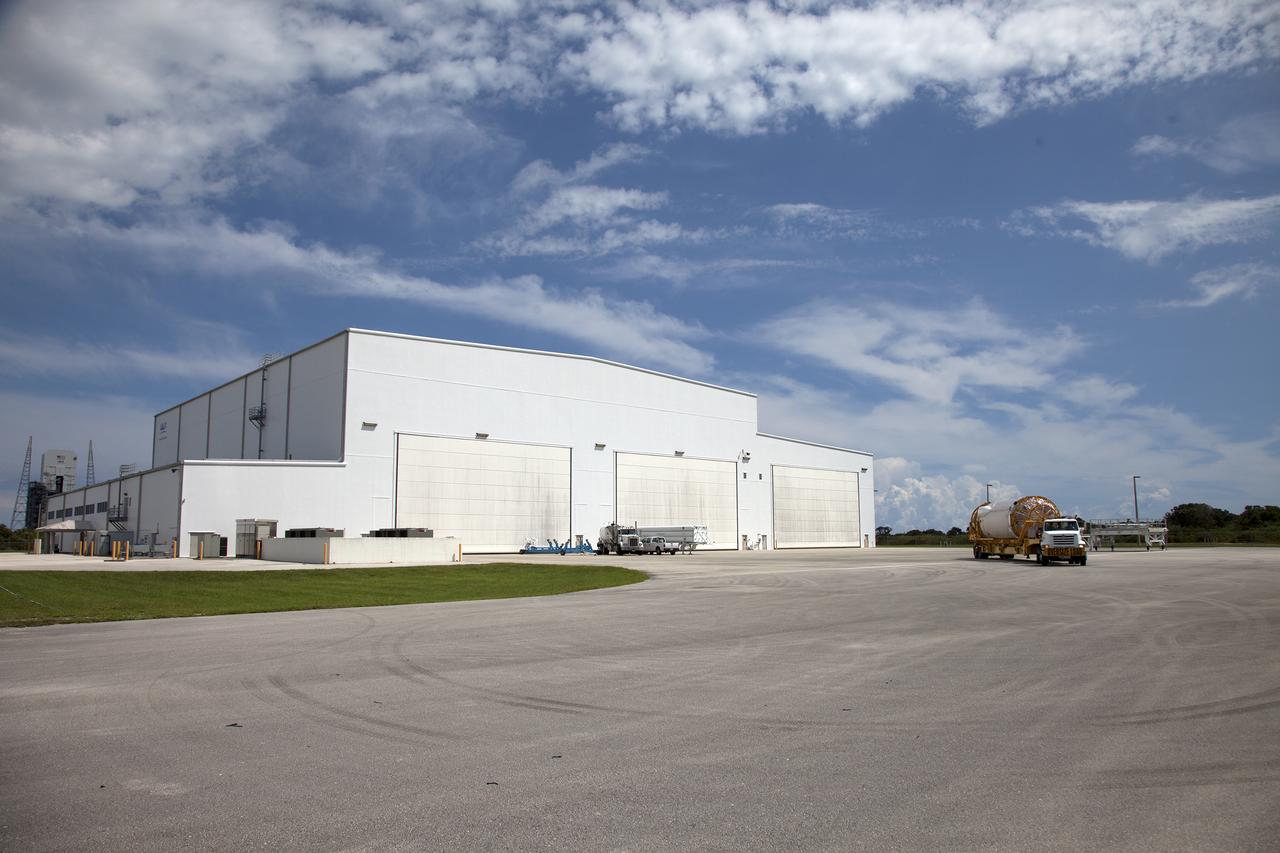
On the same day it arrived, the Atlas V Centaur stage departs the Horizontal Integration Facility on its way to the Atlas Spaceflight Operations Center near Space Launch Complex 41 at Cape Canaveral Air Force Station in Florida. The Geostationary Operational Environmental Satellite (GOES-R) will launch aboard the Atlas V rocket in November. GOES-R will be the first satellite in a series of next-generation NOAA GOES Satellites.

On the same day it arrived, the Atlas V Centaur stage is being transported to the Atlas Spaceflight Operations Center near Space Launch Complex 41 at Cape Canaveral Air Force Station in Florida. The Geostationary Operational Environmental Satellite (GOES-R) will launch aboard the Atlas V rocket in November. GOES-R will be the first satellite in a series of next-generation NOAA GOES Satellites.
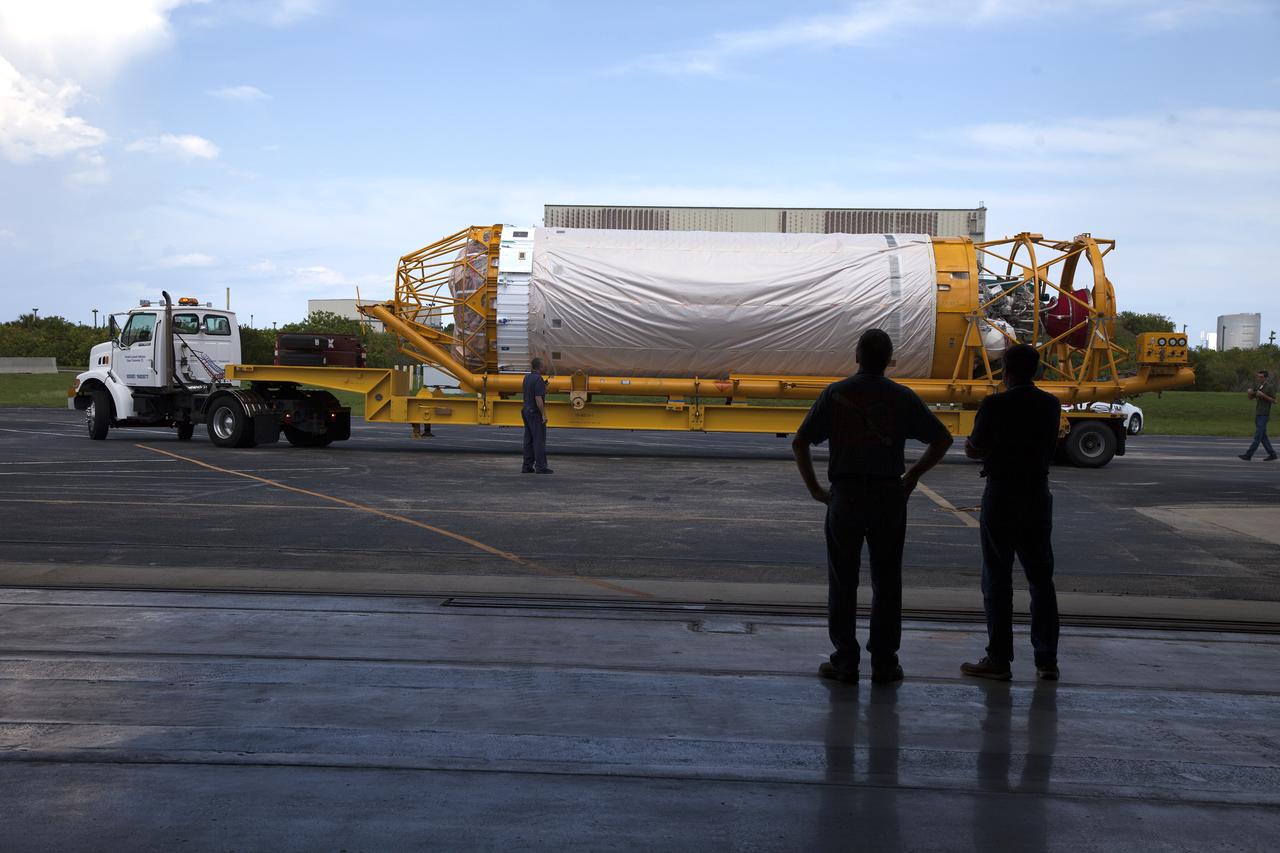
On the same day it arrived, the Atlas V Centaur stage is being transported to the Atlas Spaceflight Operations Center near Space Launch Complex 41 at Cape Canaveral Air Force Station in Florida. The Geostationary Operational Environmental Satellite (GOES-R) will launch aboard the Atlas V rocket in November. GOES-R will be the first satellite in a series of next-generation NOAA GOES Satellites.
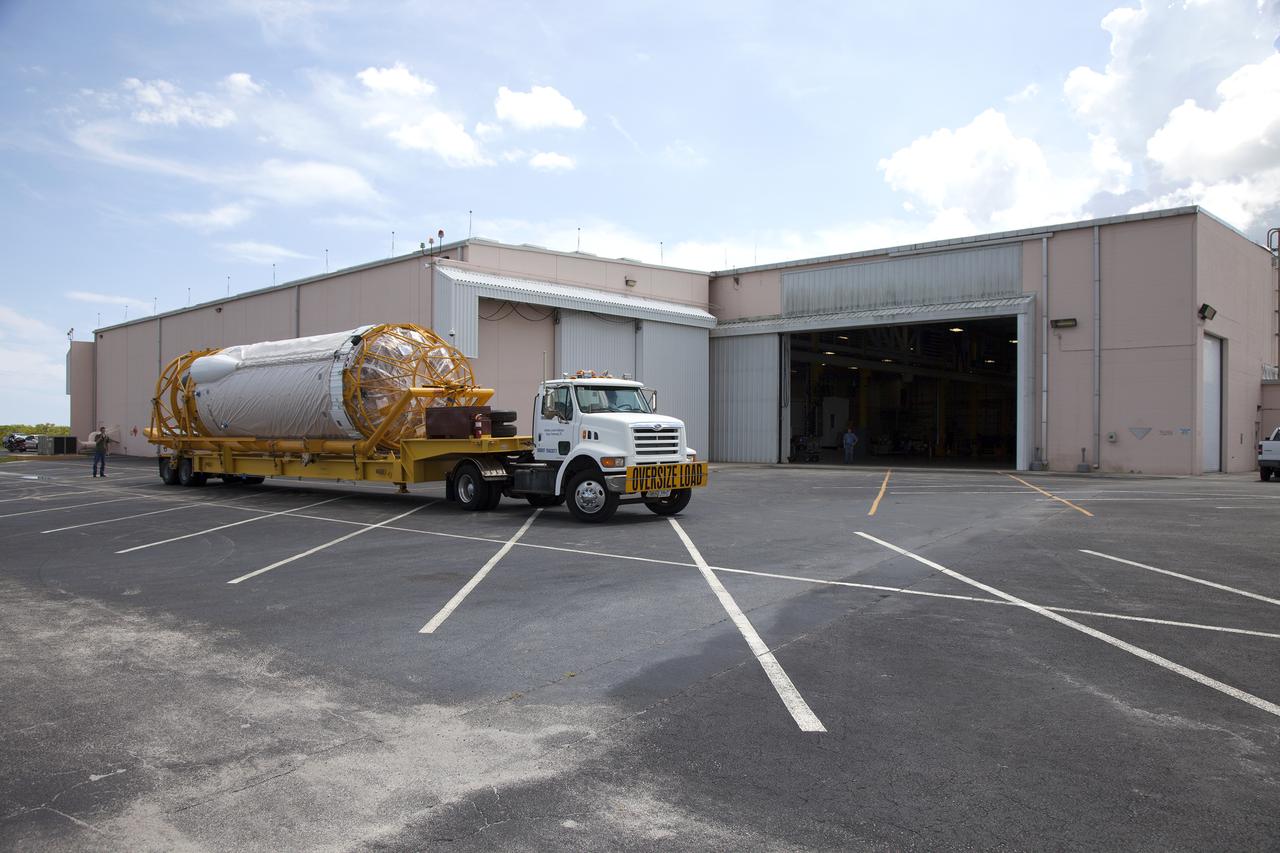
On the same day it arrived, the Atlas V Centaur stage arrives at the Atlas Spaceflight Operations Center near Space Launch Complex 41 at Cape Canaveral Air Force Station in Florida. The Geostationary Operational Environmental Satellite (GOES-R) will launch aboard the Atlas V rocket in November. GOES-R will be the first satellite in a series of next-generation NOAA GOES Satellites.
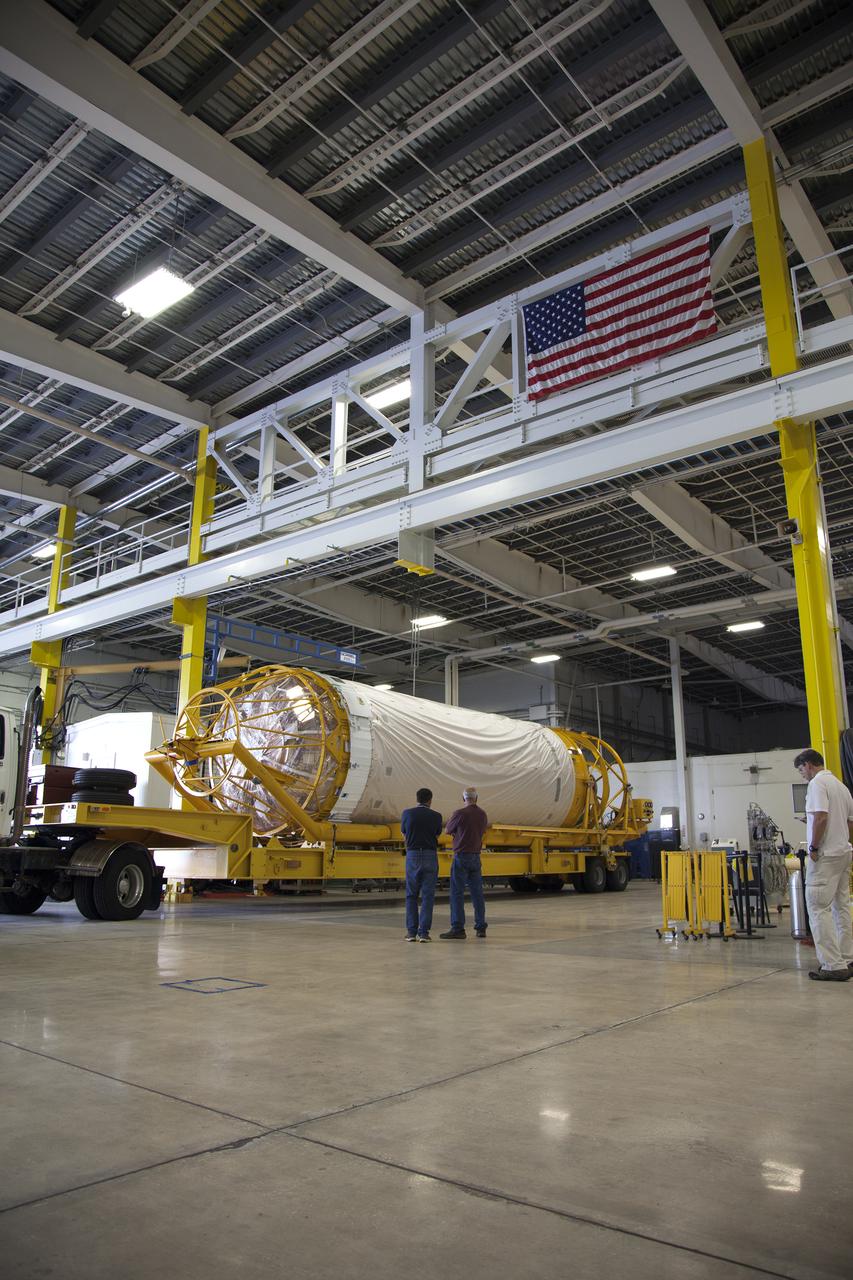
On the same day it arrived, the Atlas V Centaur stage is moved into the Atlas Spaceflight Operations Center near Space Launch Complex 41 at Cape Canaveral Air Force Station in Florida. The Geostationary Operational Environmental Satellite (GOES-R) will launch aboard the Atlas V rocket in November. GOES-R will be the first satellite in a series of next-generation NOAA GOES Satellites.
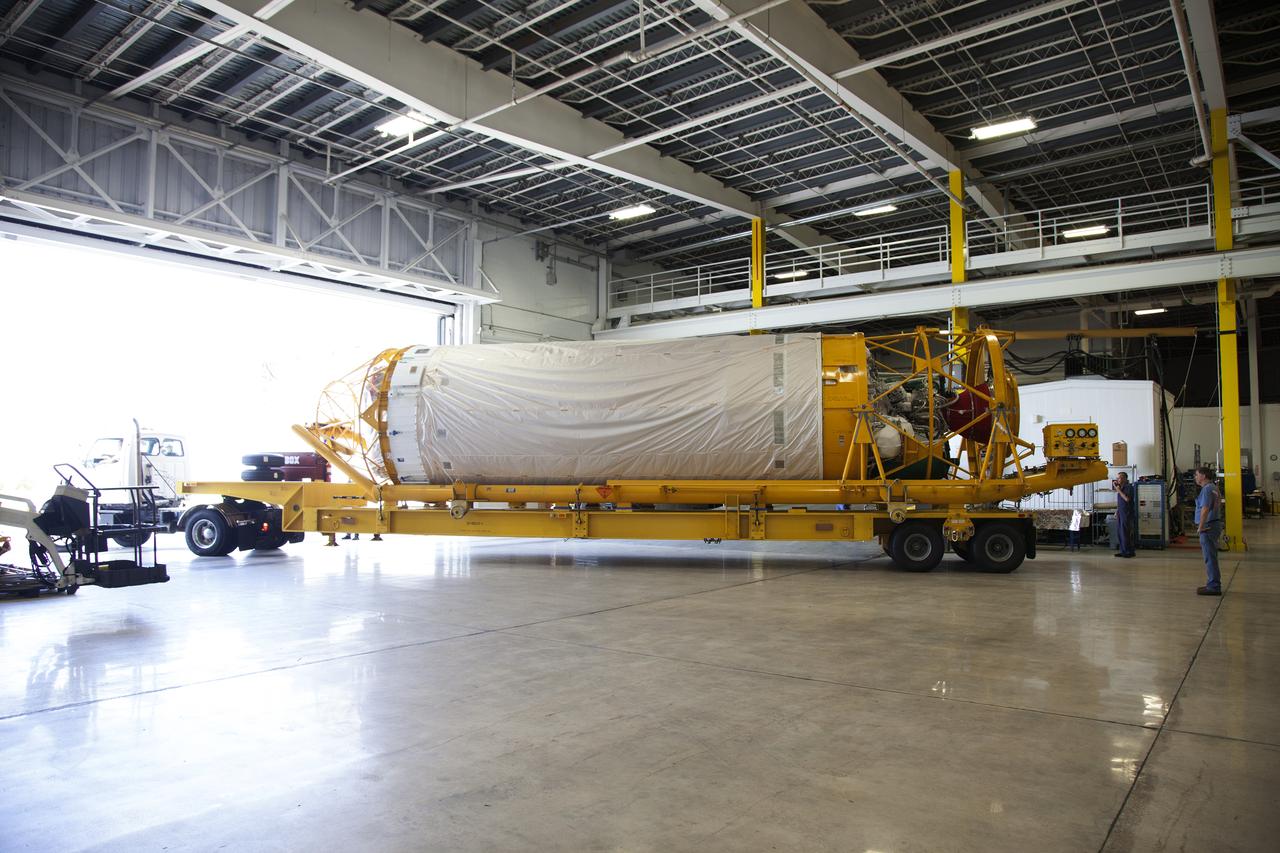
On the same day it arrived, the Atlas V Centaur stage is moved into the Atlas Spaceflight Operations Center near Space Launch Complex 41 at Cape Canaveral Air Force Station in Florida. The Geostationary Operational Environmental Satellite (GOES-R) will launch aboard the Atlas V rocket in November. GOES-R will be the first satellite in a series of next-generation NOAA GOES Satellites.
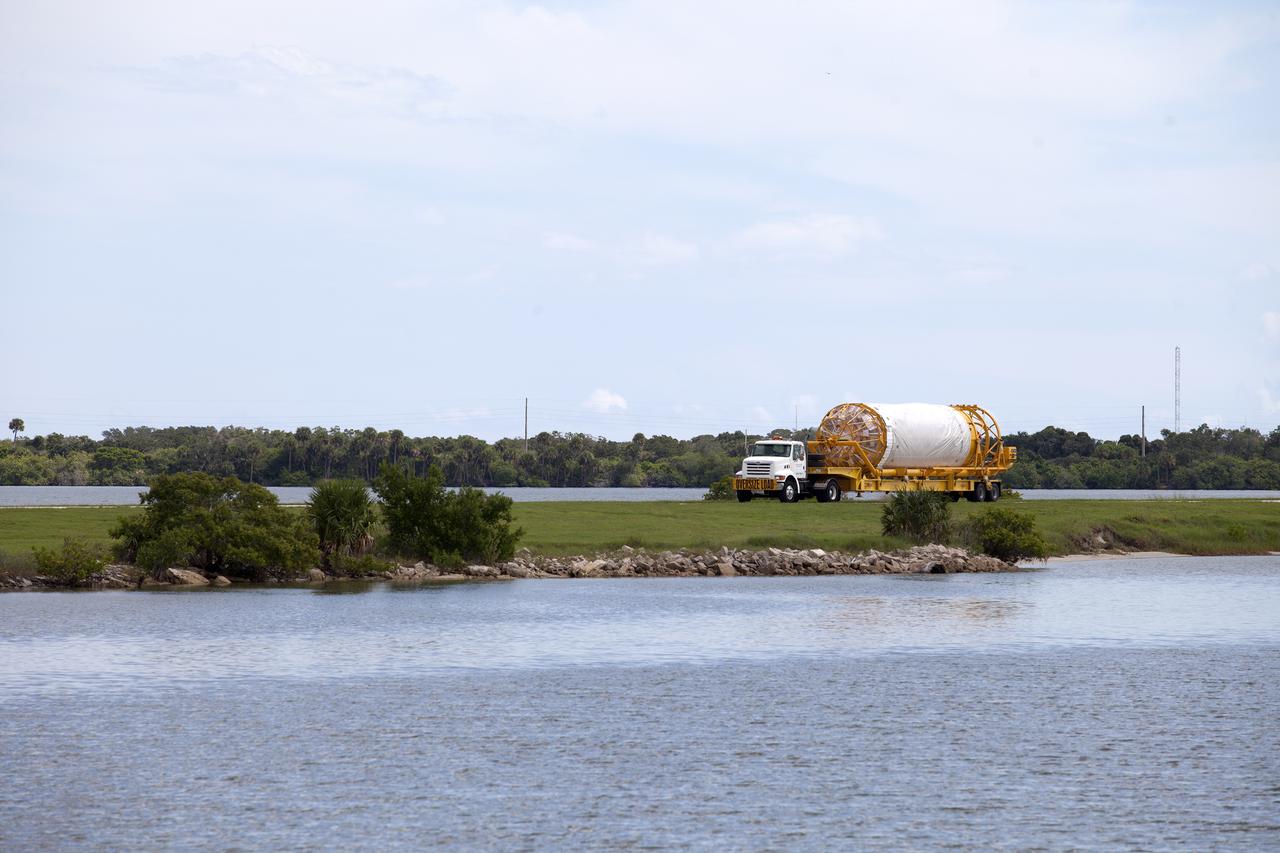
On the same day it arrived, the Atlas V Centaur stage is being transported to the Atlas Spaceflight Operations Center near Space Launch Complex 41 at Cape Canaveral Air Force Station in Florida. The Geostationary Operational Environmental Satellite (GOES-R) will launch aboard the Atlas V rocket in November. GOES-R will be the first satellite in a series of next-generation NOAA GOES Satellites.
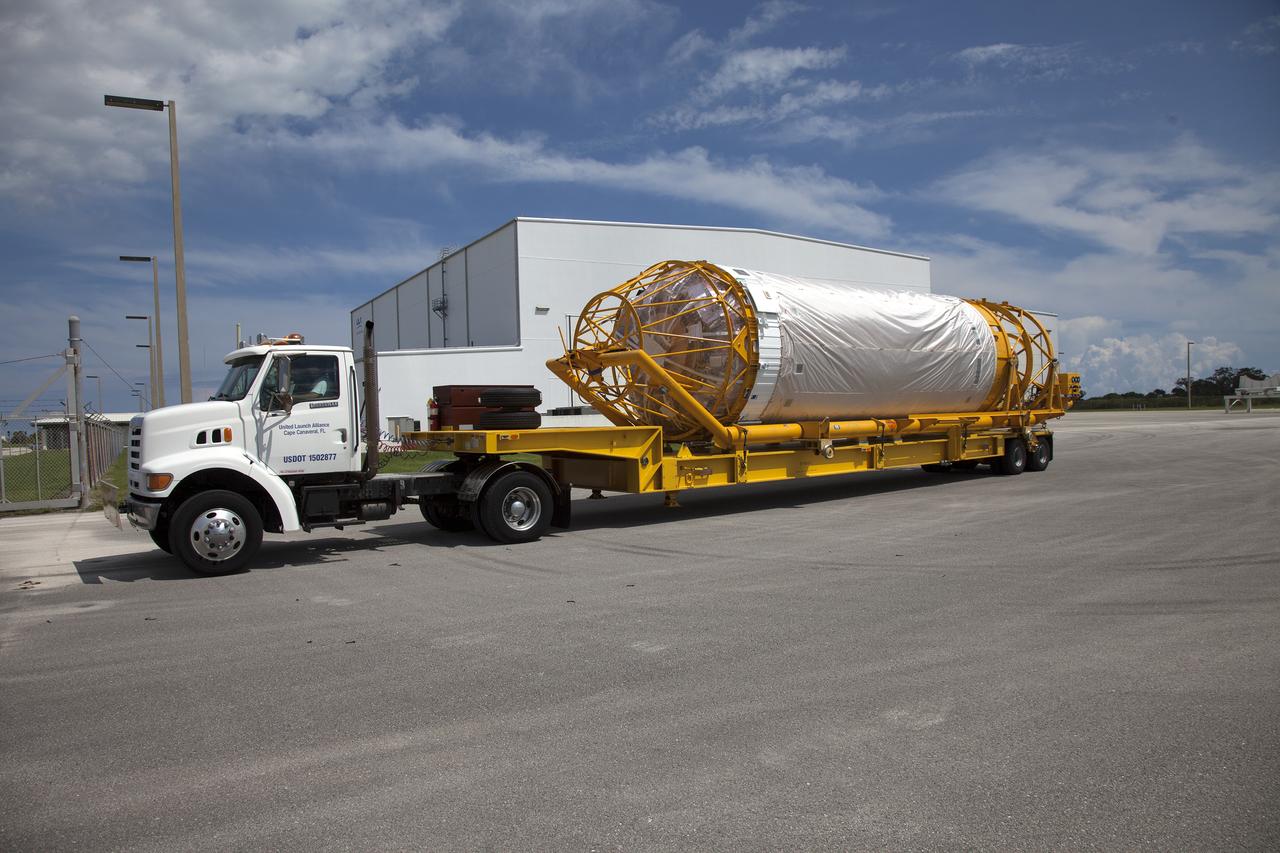
On the same day it arrived, the Atlas V Centaur stage departs the Horizontal Integration Facility on its way to the Atlas Spaceflight Operations Center near Space Launch Complex 41 at Cape Canaveral Air Force Station in Florida. The Geostationary Operational Environmental Satellite (GOES-R) will launch aboard the Atlas V rocket in November. GOES-R will be the first satellite in a series of next-generation NOAA GOES Satellites.

Inside the Integrated Processing Facility at Vandenberg Space Force Base in California, the first of two payload fairings for the United Launch Alliance Atlas V rocket is lifted by crane on June 3, 2021, to prepare it for NASA’s Landsat 9 satellite. The Atlas V will launch NASA’s Landsat 9 satellite from Vandenberg in September 2021. The launch is being managed by NASA’s Launch Services Program based at Kennedy Space Center. Landsat 9 will continue the nearly 50-year legacy of previous Landsat missions. It will monitor key natural and economic resources from orbit. Landsat 9 is managed by the agency’s Goddard Space Flight Center in Greenbelt, Maryland. It will carry two instruments: the Operational Land Imager 2, which collects images of Earth’s landscapes in visible, near infrared and shortwave infrared light, and the Thermal Infrared Sensor 2, which measures the temperature of land surfaces. Like its predecessors, Landsat 9 is a joint mission between NASA and the U.S. Geological Survey.
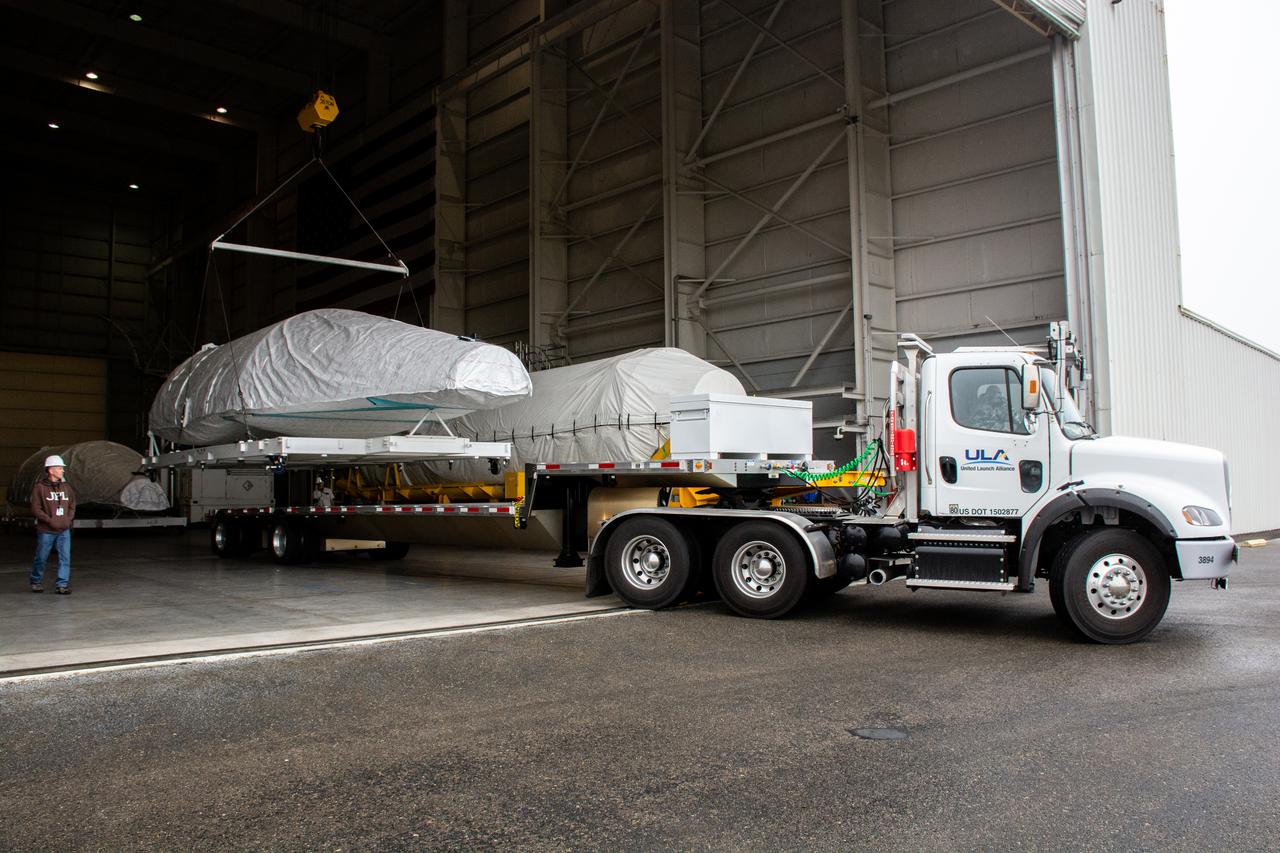
A flatbed truck carrying the United Launch Alliance Atlas V rocket payload fairings for NASA’s Landsat 9 satellite departs the Horizontal Integration Facility at Vandenberg Space Force Base in California, on June 3, 2021. The fairings are on their way to the nearby Integrated Processing Facility. The Landsat 9 satellite will launch atop the Atlas V from Vandenberg in September 2021. The launch is being managed by NASA’s Launch Services Program based at Kennedy Space Center. Landsat 9 will continue the nearly 50-year legacy of previous Landsat missions. It will monitor key natural and economic resources from orbit. Landsat 9 is managed by the agency’s Goddard Space Flight Center in Greenbelt, Maryland. It will carry two instruments: the Operational Land Imager 2, which collects images of Earth’s landscapes in visible, near-infrared and shortwave infrared light, and the Thermal Infrared Sensor 2, which measures the temperature of land surfaces. Like its predecessors, Landsat 9 is a joint mission between NASA and the U.S. Geological Survey.
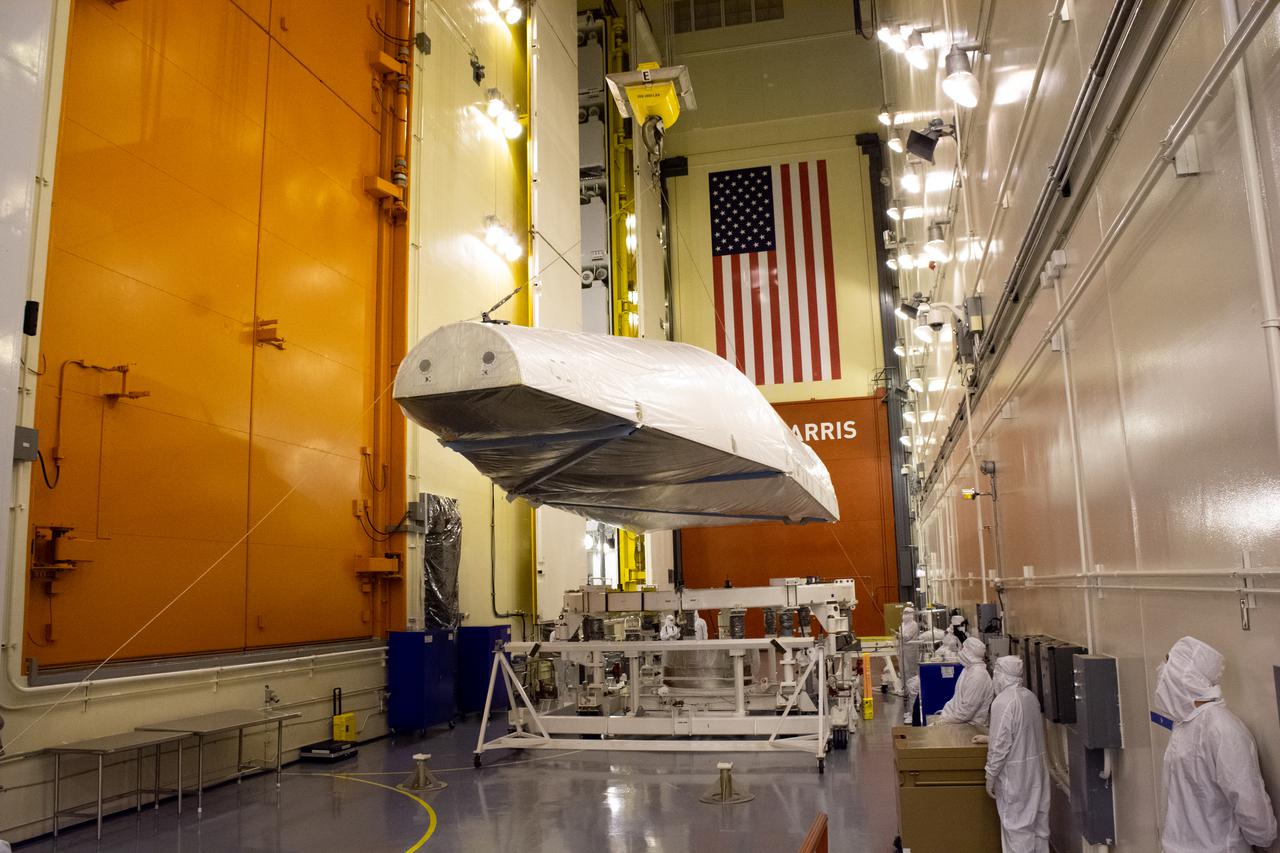
Inside the Integrated Processing Facility at Vandenberg Space Force Base in California, the first of two payload fairings for the United Launch Alliance Atlas V rocket is lifted by crane on June 3, 2021, to prepare it for NASA’s Landsat 9 satellite. The Atlas V will launch NASA’s Landsat 9 satellite from Vandenberg in September 2021. The launch is being managed by NASA’s Launch Services Program based at Kennedy Space Center. Landsat 9 will continue the nearly 50-year legacy of previous Landsat missions. It will monitor key natural and economic resources from orbit. Landsat 9 is managed by the agency’s Goddard Space Flight Center in Greenbelt, Maryland. It will carry two instruments: the Operational Land Imager 2, which collects images of Earth’s landscapes in visible, near infrared and shortwave infrared light, and the Thermal Infrared Sensor 2, which measures the temperature of land surfaces. Like its predecessors, Landsat 9 is a joint mission between NASA and the U.S. Geological Survey.
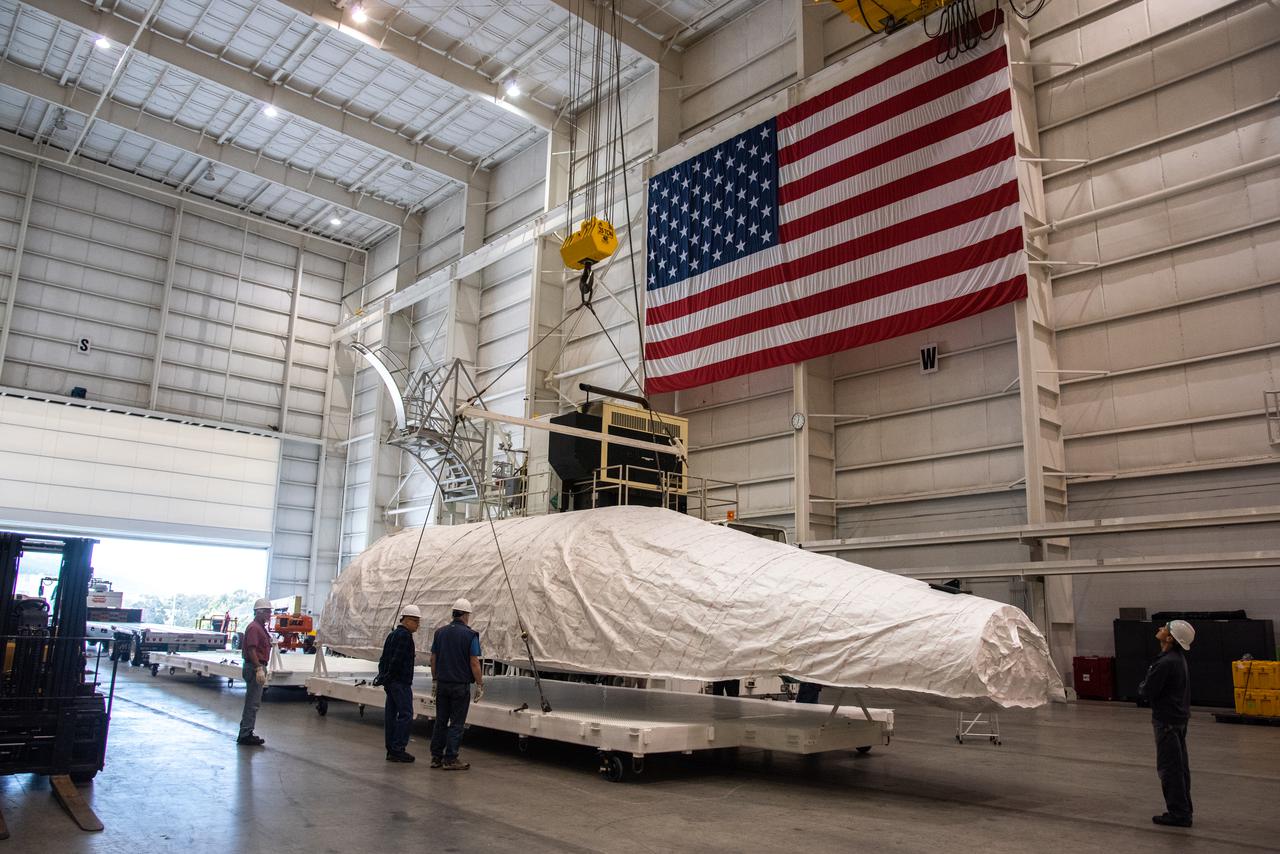
The second of two payload fairings for the United Launch Alliance Atlas V rocket arrives inside the Integrated Processing Facility at Vandenberg Space Force Base in California, on June 4, 2021, to prepare it for NASA’s Landsat 9 satellite. The Landsat 9 satellite will launch atop the Atlas V from Vandenberg in September 2021. The launch is being managed by NASA’s Launch Services Program based at Kennedy Space Center. Landsat 9 will continue the nearly 50-year legacy of previous Landsat missions. It will monitor key natural and economic resources from orbit. Landsat 9 is managed by the agency’s Goddard Space Flight Center in Greenbelt, Maryland. It will carry two instruments: the Operational Land Imager 2, which collects images of Earth’s landscapes in visible, near infrared and shortwave infrared light, and the Thermal Infrared Sensor 2, which measures the temperature of land surfaces. Like its predecessors, Landsat 9 is a joint mission between NASA and the U.S. Geological Survey.
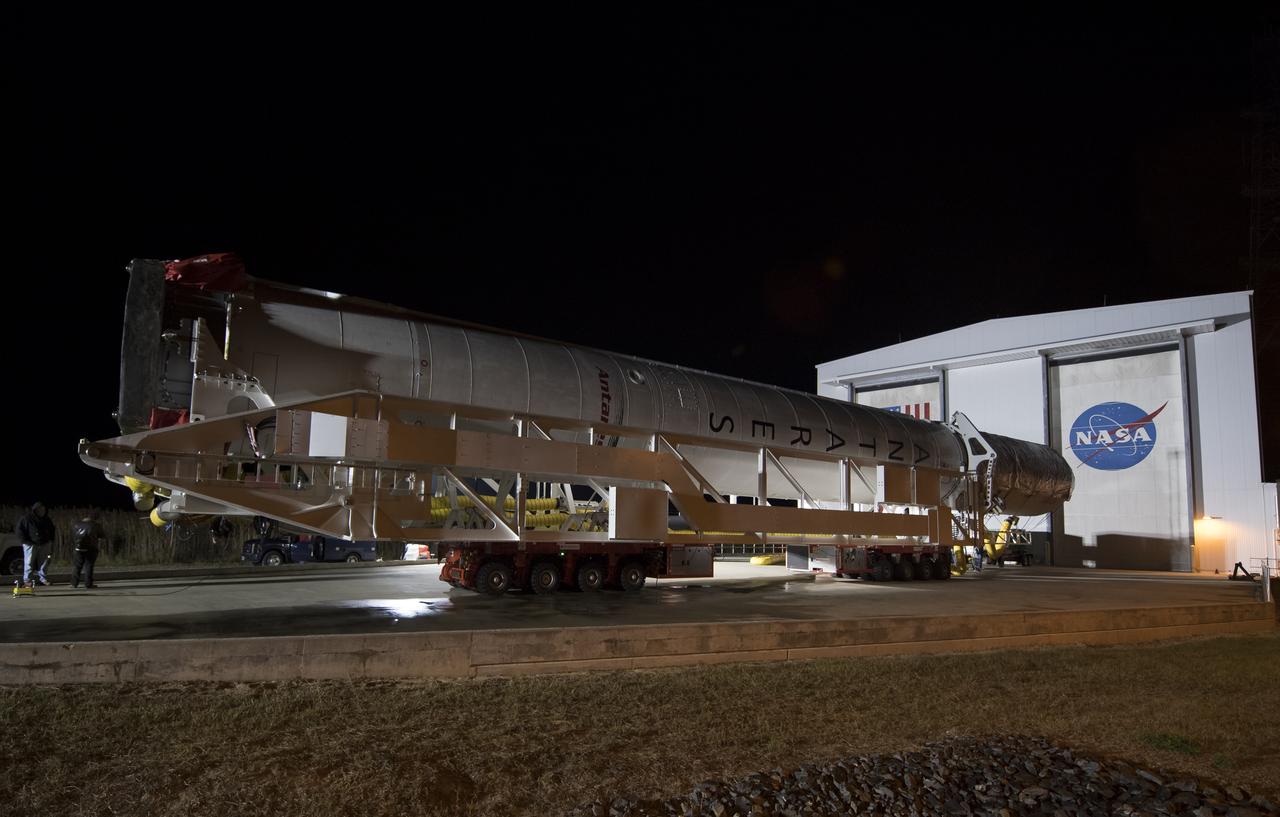
The Orbital ATK Antares rocket is rolled from the Horizontal Integration Facility (HIF) to launch Pad-0A, Thursday, Nov. 9, 2017 at NASA's Wallops Flight Facility in Virginia. Orbital ATK’s eighth contracted cargo resupply mission with NASA to the International Space Station will deliver over 7,400 pounds of science and research, crew supplies and vehicle hardware to the orbital laboratory and its crew. Photo Credit: (NASA/Bill Ingalls)
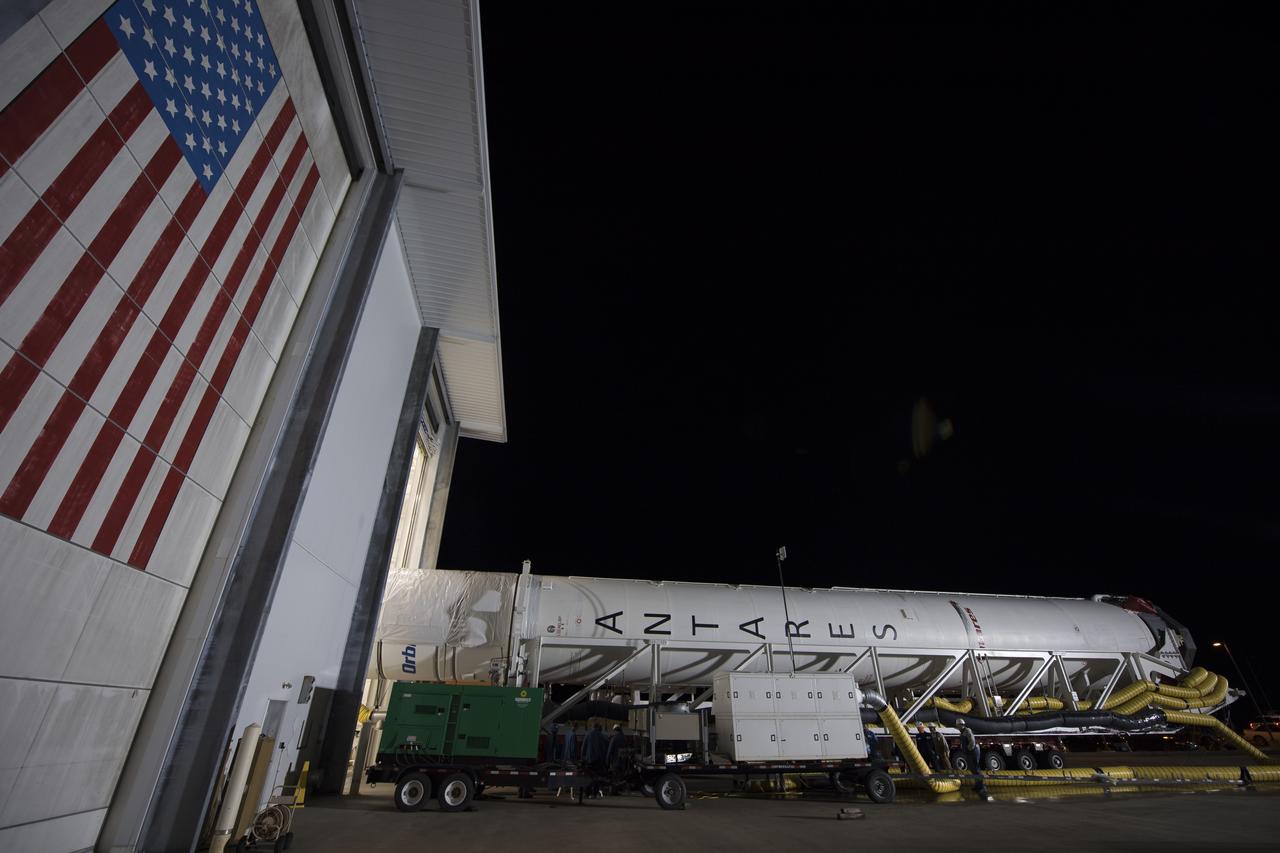
The Orbital ATK Antares rocket is rolled from the Horizontal Integration Facility (HIF) to launch Pad-0A, Thursday, Nov. 9, 2017 at NASA's Wallops Flight Facility in Virginia. Orbital ATK’s eighth contracted cargo resupply mission with NASA to the International Space Station will deliver over 7,400 pounds of science and research, crew supplies and vehicle hardware to the orbital laboratory and its crew. Photo Credit: (NASA/Bill Ingalls)
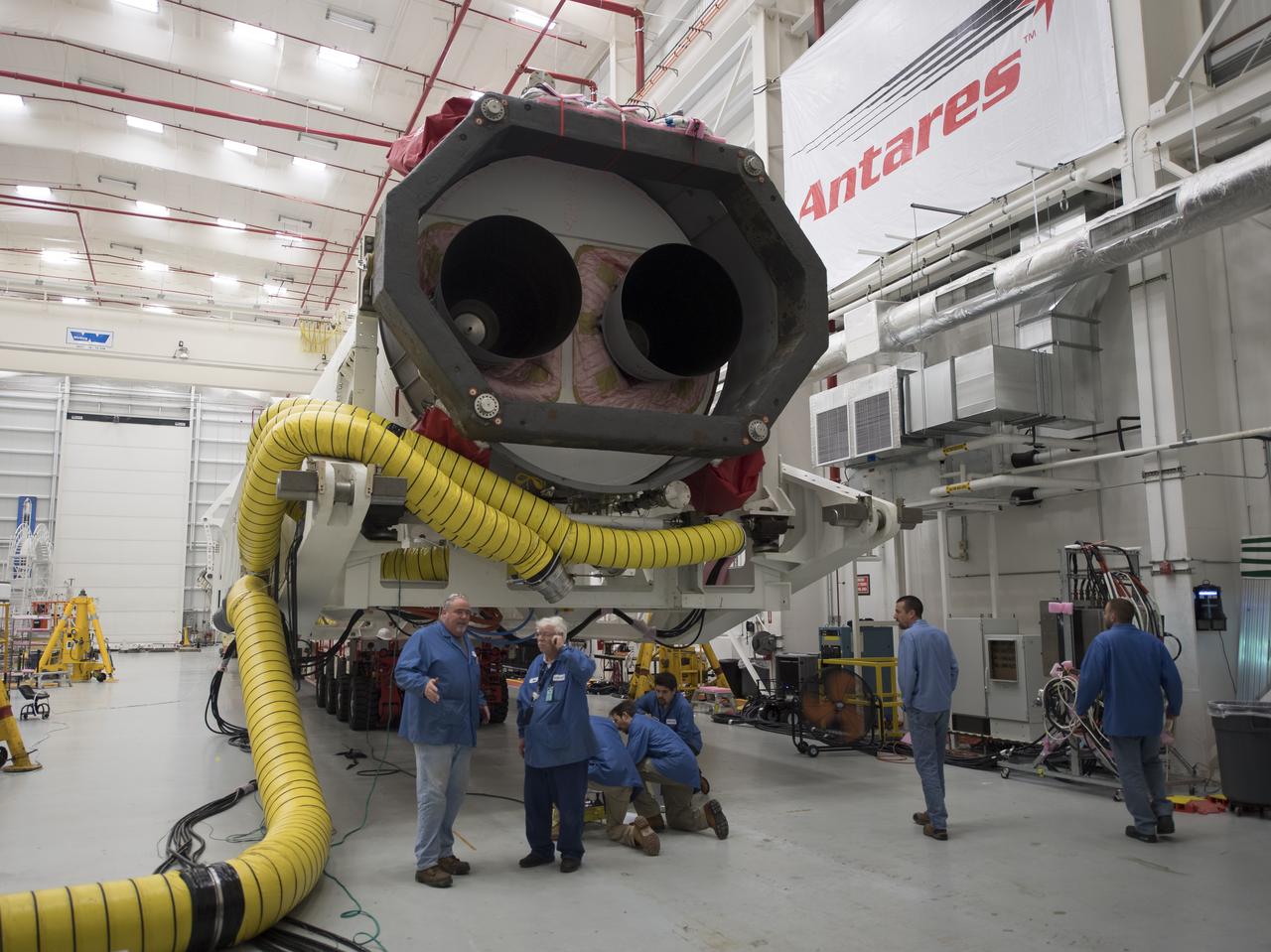
The Orbital ATK Antares rocket is rolled from the Horizontal Integration Facility (HIF) to launch Pad-0A, Thursday, Nov. 9, 2017 at NASA's Wallops Flight Facility in Virginia. Orbital ATK’s eighth contracted cargo resupply mission with NASA to the International Space Station will deliver over 7,400 pounds of science and research, crew supplies and vehicle hardware to the orbital laboratory and its crew. Photo Credit: (NASA/Bill Ingalls)
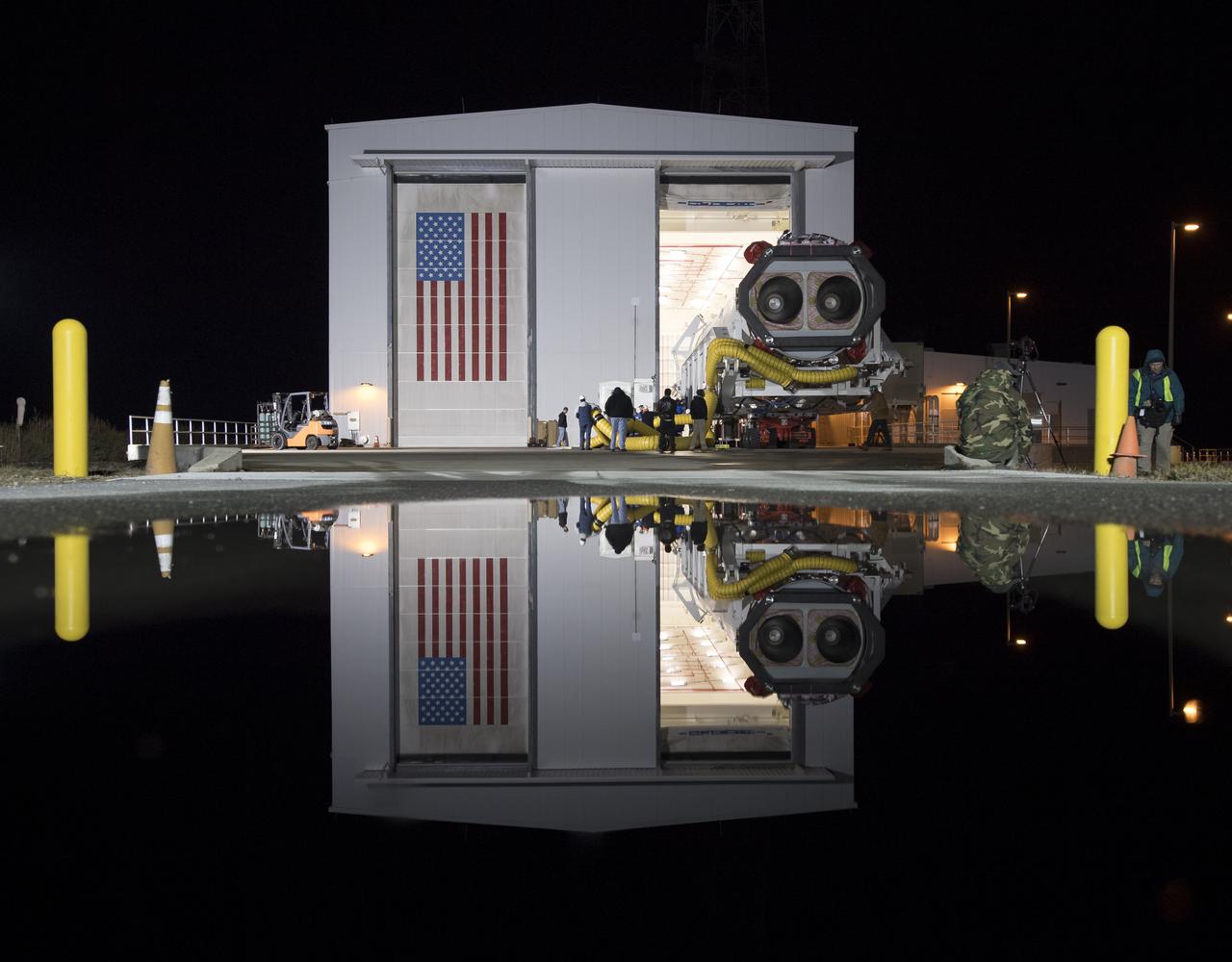
The Orbital ATK Antares rocket is rolled from the Horizontal Integration Facility (HIF) to launch Pad-0A, Thursday, Nov. 9, 2017 at NASA's Wallops Flight Facility in Virginia. Orbital ATK’s eighth contracted cargo resupply mission with NASA to the International Space Station will deliver over 7,400 pounds of science and research, crew supplies and vehicle hardware to the orbital laboratory and its crew. Photo Credit: (NASA/Bill Ingalls)
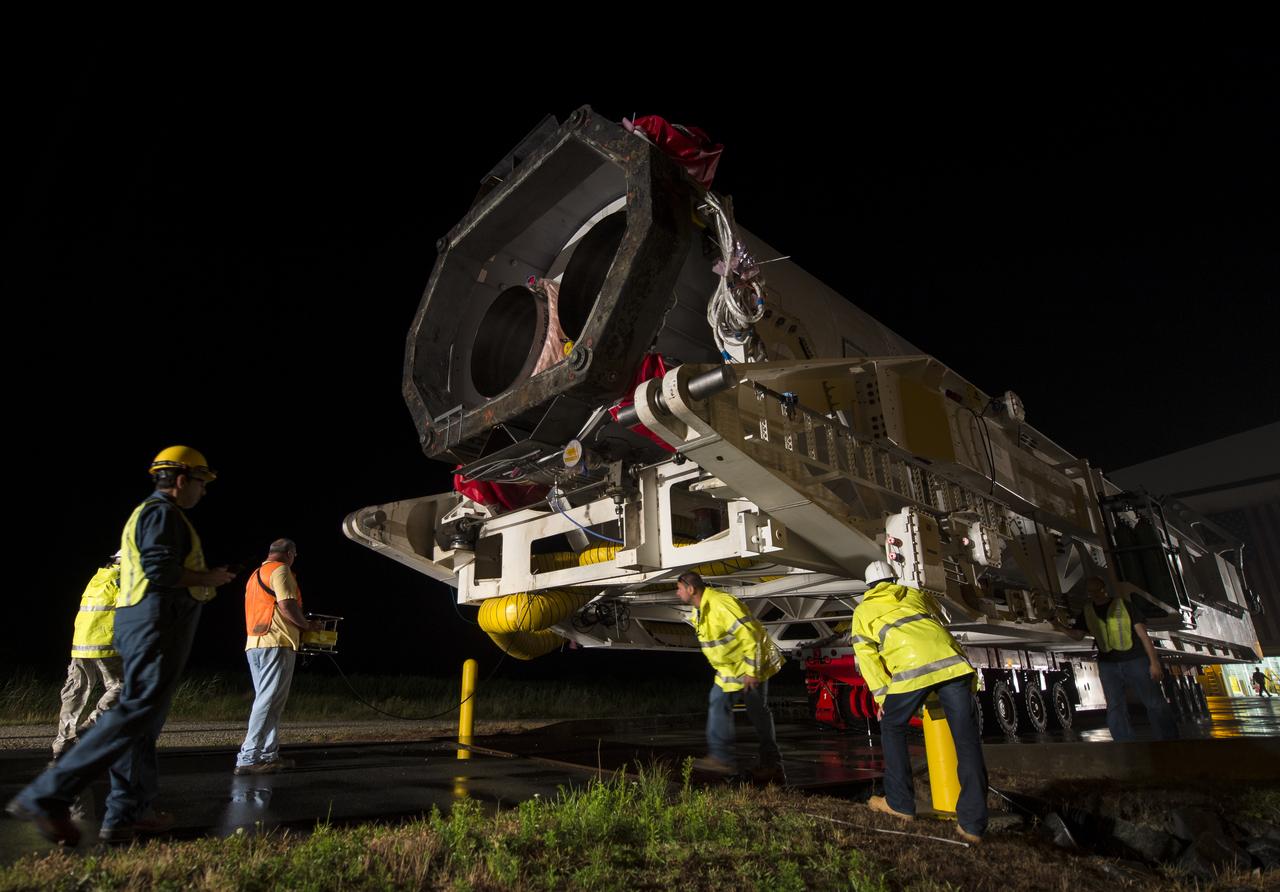
The Orbital Sciences Corporation Antares rocket, with the Cygnus spacecraft onboard, is rolled out of the Horizontal Integration Facility (HIF) to begin the approximately half-mile journey to launch Pad-0A, Thursday, July 10, 2014, at NASA's Wallops Flight Facility in Virginia. The Antares will launch with the Cygnus spacecraft filled with over 3,000 pounds of supplies for the International Space Station, including science experiments, experiment hardware, spare parts, and crew provisions. The Orbital-2 mission is Orbital Sciences' second contracted cargo delivery flight to the space station for NASA. Photo Credit: (NASA/Bill Ingalls)
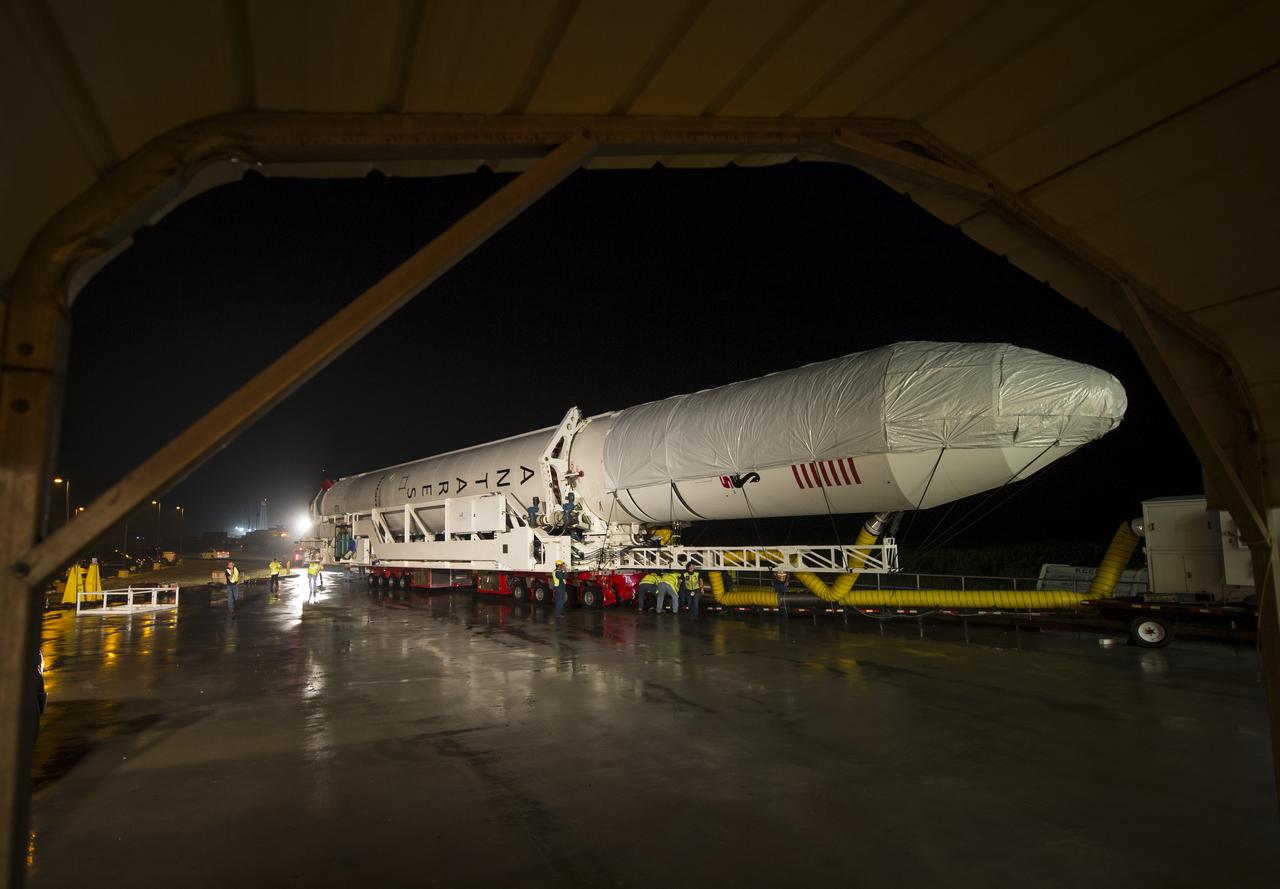
The Orbital Sciences Corporation Antares rocket, with the Cygnus spacecraft onboard, is rolled out of the Horizontal Integration Facility (HIF) to begin the approximately half-mile journey to launch Pad-0A, Thursday, July 10, 2014, at NASA's Wallops Flight Facility in Virginia. The Antares will launch with the Cygnus spacecraft filled with over 3,000 pounds of supplies for the International Space Station, including science experiments, experiment hardware, spare parts, and crew provisions. The Orbital-2 mission is Orbital Sciences' second contracted cargo delivery flight to the space station for NASA. Photo Credit: (NASA/Bill Ingalls)
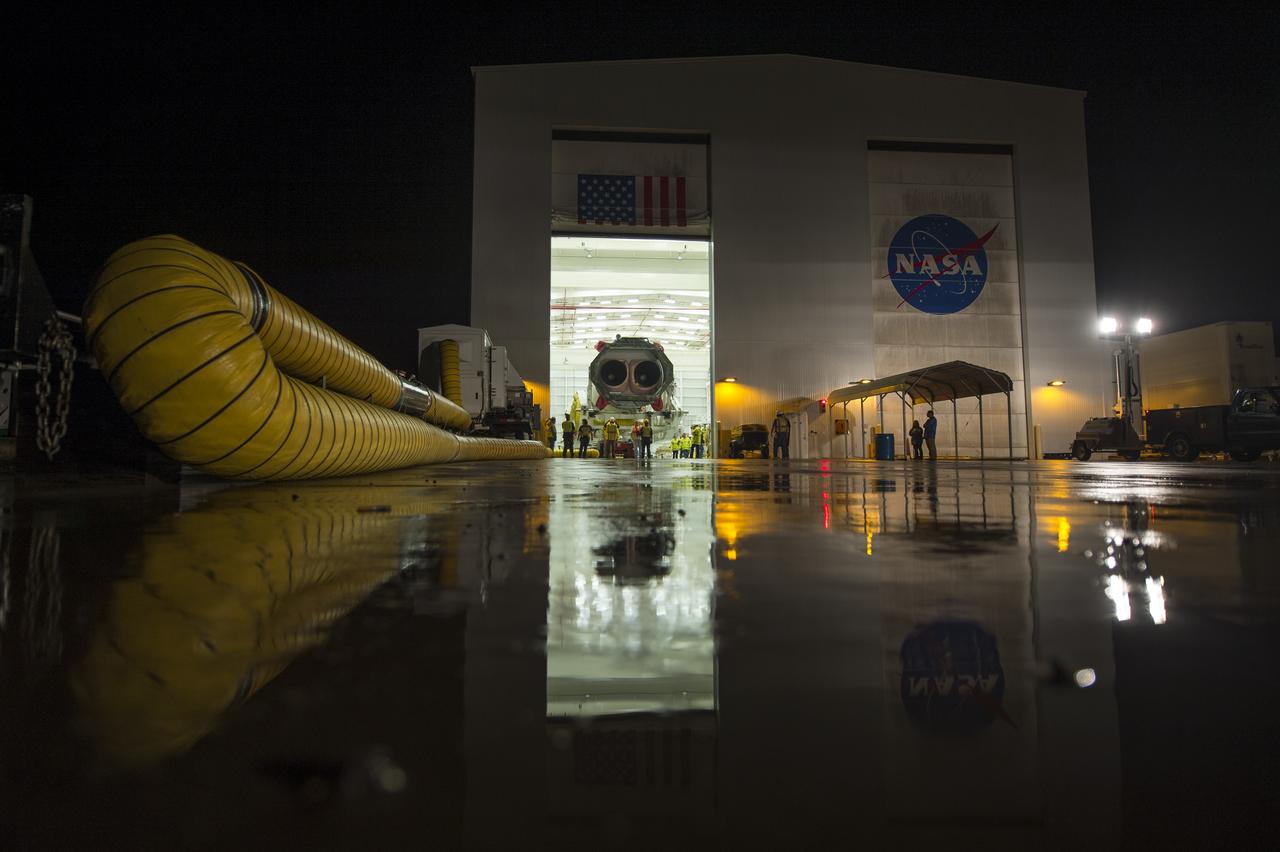
The Orbital Sciences Corporation Antares rocket, with the Cygnus spacecraft onboard, is rolled out of the Horizontal Integration Facility (HIF) to begin the approximately half-mile journey to launch Pad-0A, Thursday, July 10, 2014, at NASA's Wallops Flight Facility in Virginia. The Antares will launch with the Cygnus spacecraft filled with over 3,000 pounds of supplies for the International Space Station, including science experiments, experiment hardware, spare parts, and crew provisions. The Orbital-2 mission is Orbital Sciences' second contracted cargo delivery flight to the space station for NASA. Photo Credit: (NASA/Bill Ingalls)
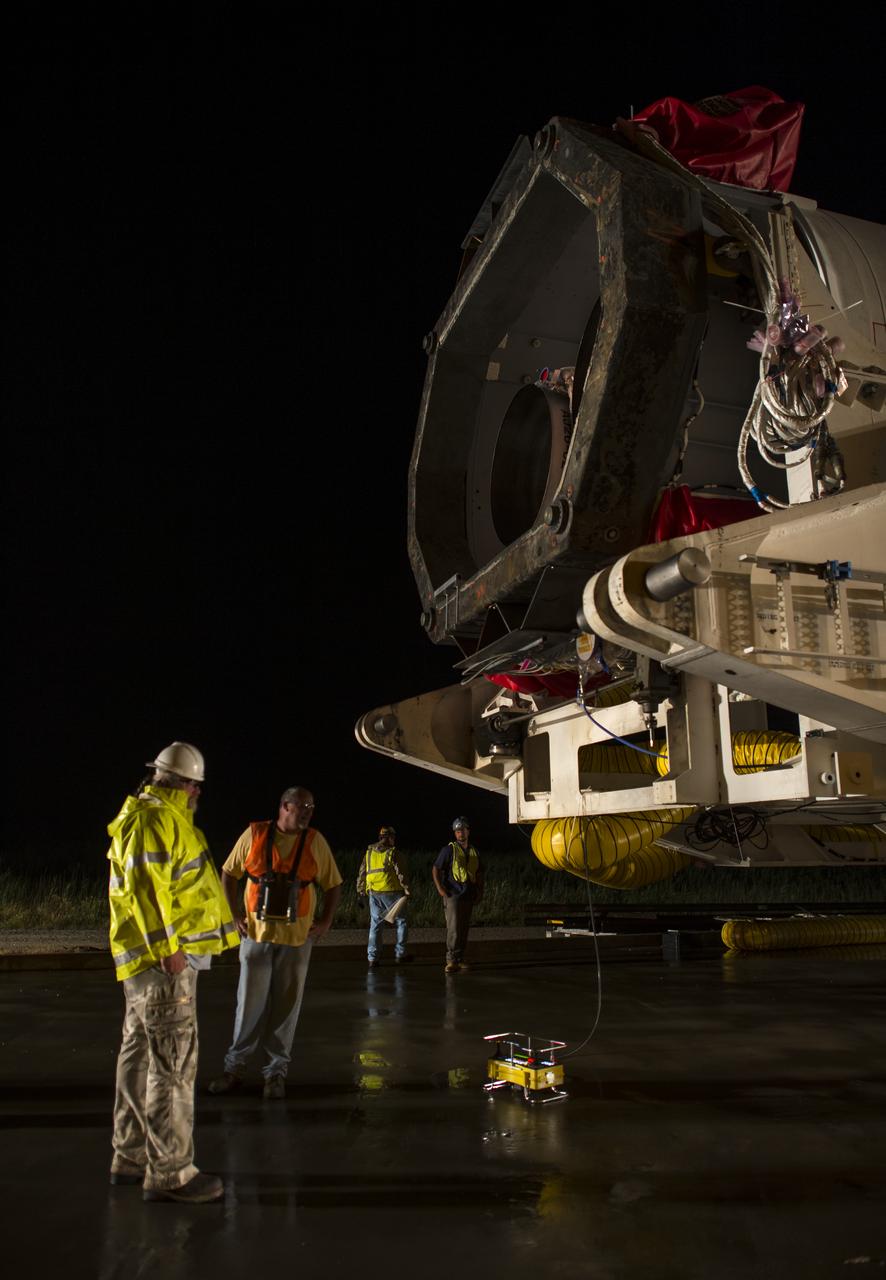
Workers prepare to drive the Orbital Sciences Corporation Antares rocket, with the Cygnus spacecraft onboard, from the Horizontal Integration Facility (HIF) to launch Pad-0A, Thursday, July 10, 2014, at NASA's Wallops Flight Facility in Virginia. The Antares will launch with the Cygnus spacecraft filled with over 3,000 pounds of supplies for the International Space Station, including science experiments, experiment hardware, spare parts, and crew provisions. The Orbital-2 mission is Orbital Sciences' second contracted cargo delivery flight to the space station for NASA. Photo Credit: (NASA/Bill Ingalls)
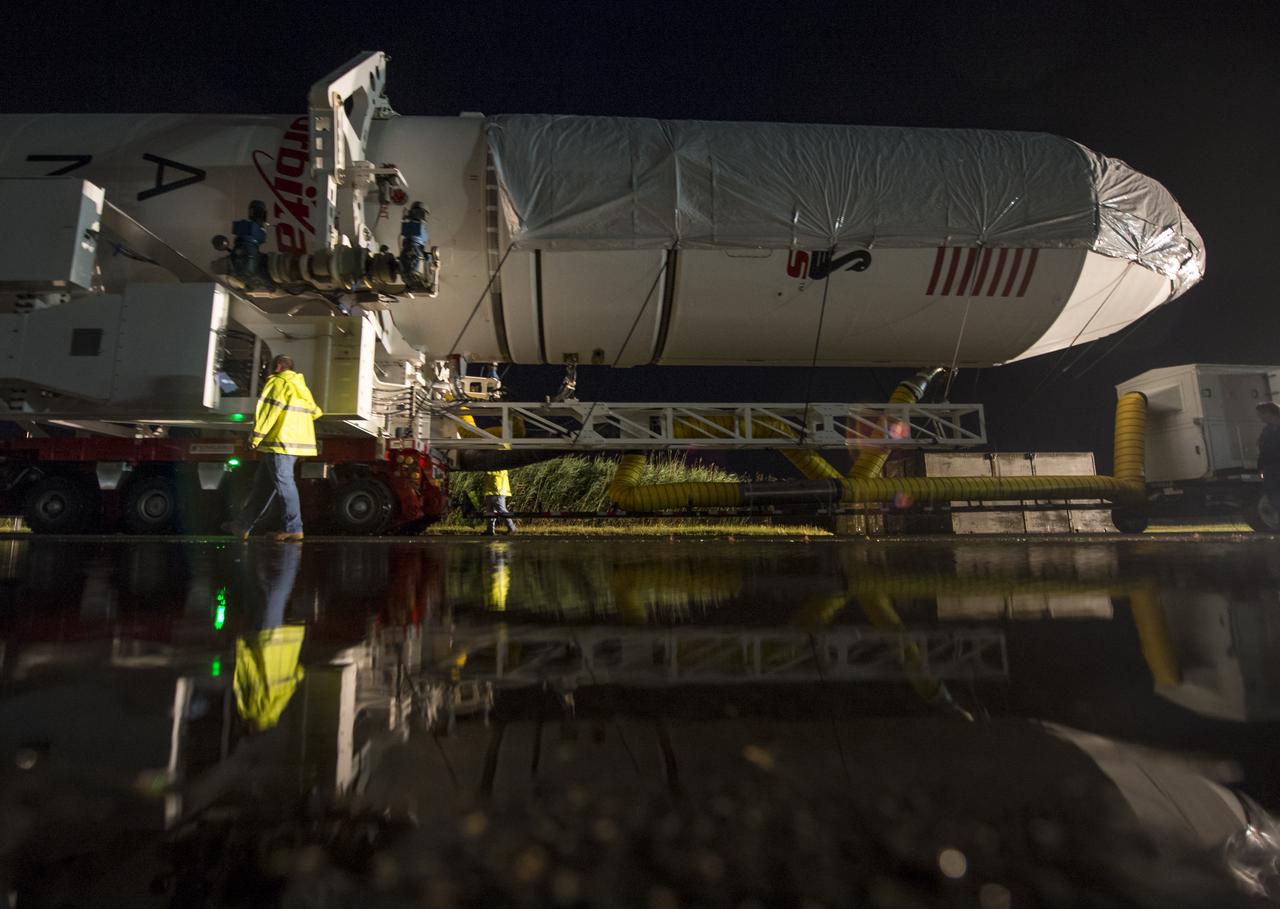
The Orbital Sciences Corporation Antares rocket, with the Cygnus spacecraft onboard, rolls from the Horizontal Integration Facility (HIF) to launch Pad-0A, Thursday, July 10, 2014, at NASA's Wallops Flight Facility in Virginia. The Antares will launch with the Cygnus spacecraft filled with over 3,000 pounds of supplies for the International Space Station, including science experiments, experiment hardware, spare parts, and crew provisions. The Orbital-2 mission is Orbital Sciences' second contracted cargo delivery flight to the space station for NASA. Photo Credit: (NASA/Bill Ingalls)
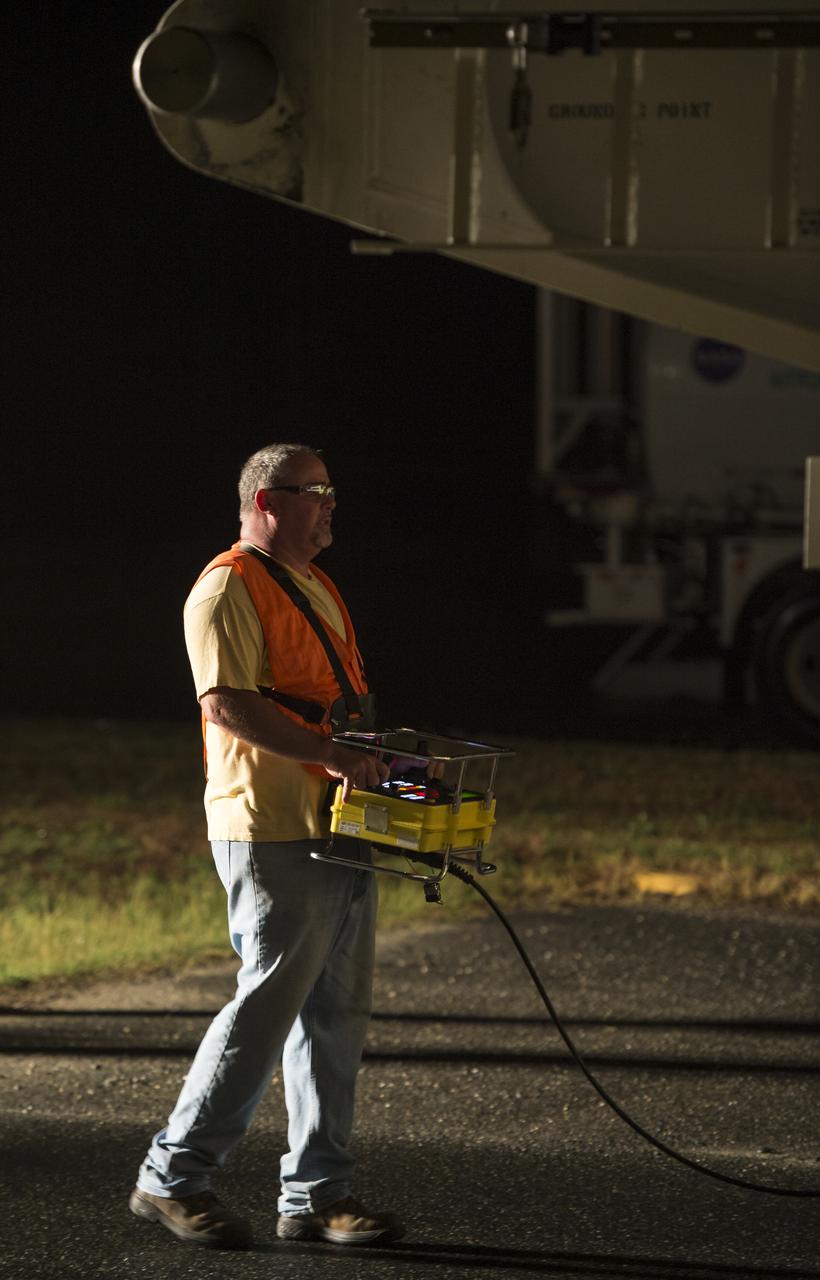
Chris McDonald with Orbital Sciences, drives the Antares rocket, with the Cygnus spacecraft onboard, from the Horizontal Integration Facility (HIF) to launch Pad-0A, Thursday, July 10, 2014, at NASA's Wallops Flight Facility in Virginia. The Antares will launch with the Cygnus spacecraft filled with over 3,000 pounds of supplies for the International Space Station, including science experiments, experiment hardware, spare parts, and crew provisions. The Orbital-2 mission is Orbital Sciences' second contracted cargo delivery flight to the space station for NASA. Photo Credit: (NASA/Bill Ingalls)
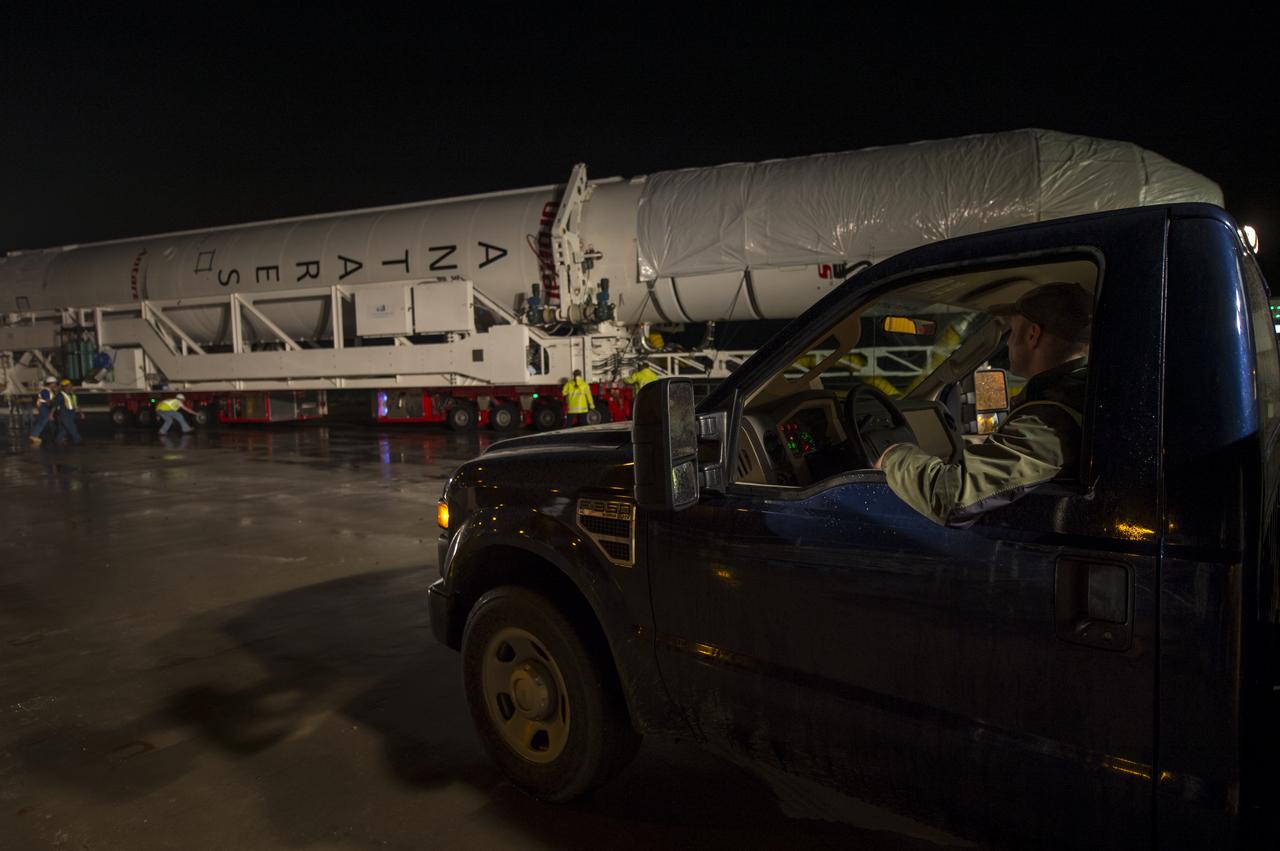
The Orbital Sciences Corporation Antares rocket, with the Cygnus spacecraft onboard, is rolled out of the Horizontal Integration Facility (HIF) to begin the approximately half-mile journey to launch Pad-0A, Thursday, July 10, 2014, at NASA's Wallops Flight Facility in Virginia. The Antares will launch with the Cygnus spacecraft filled with over 3,000 pounds of supplies for the International Space Station, including science experiments, experiment hardware, spare parts, and crew provisions. The Orbital-2 mission is Orbital Sciences' second contracted cargo delivery flight to the space station for NASA. Photo Credit: (NASA/Bill Ingalls)
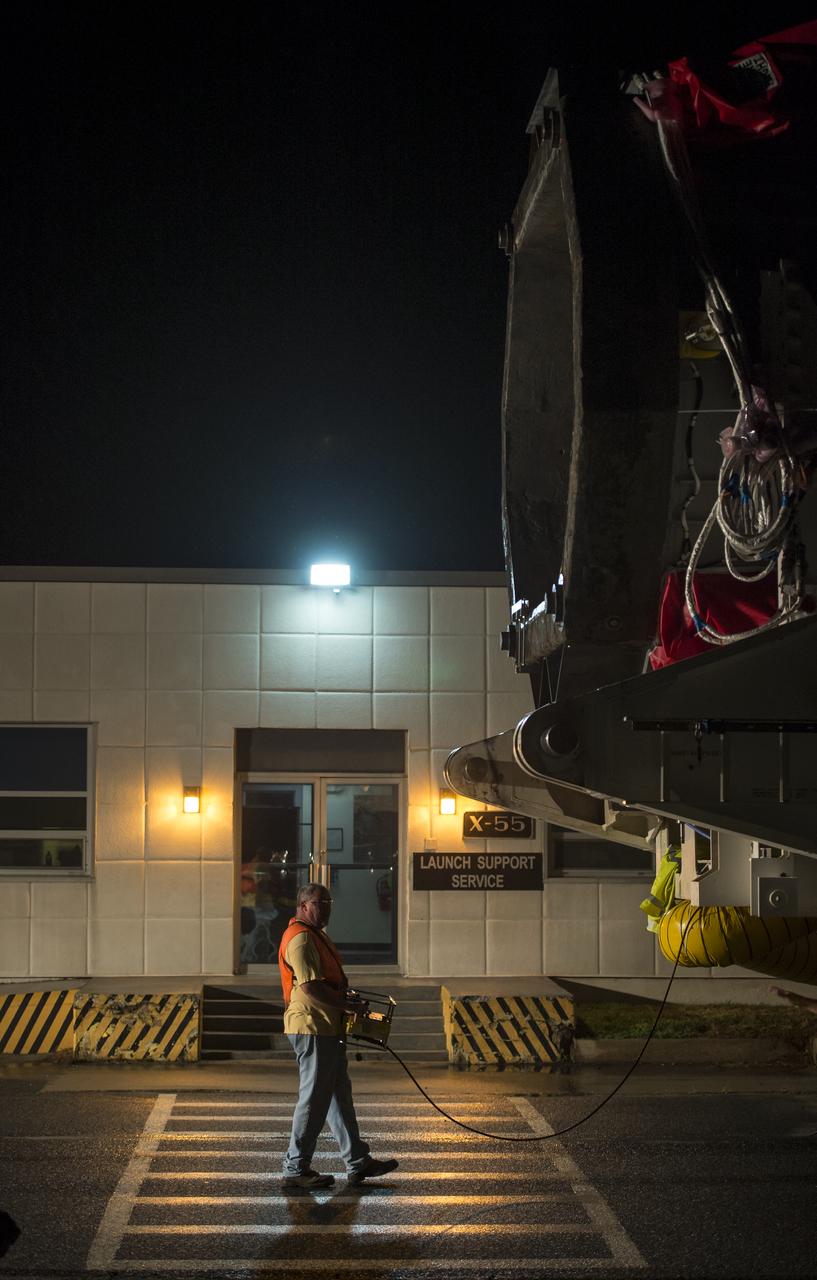
Chris McDonald with Orbital Sciences, drives the Antares rocket, with the Cygnus spacecraft onboard, from the Horizontal Integration Facility (HIF) to launch Pad-0A, Thursday, July 10, 2014, at NASA's Wallops Flight Facility in Virginia. The Antares will launch with the Cygnus spacecraft filled with over 3,000 pounds of supplies for the International Space Station, including science experiments, experiment hardware, spare parts, and crew provisions. The Orbital-2 mission is Orbital Sciences' second contracted cargo delivery flight to the space station for NASA. Photo Credit: (NASA/Bill Ingalls)