
ISS030-E-060104 (1 Feb. 2012) --- NASA astronaut Dan Burbank, Expedition 30 commander, uses a video camera in the Destiny laboratory of the International Space Station during installation and routing of video cable for the High Rate Communication System (HRCS). HRCS will allow for two additional space-to-ground audio channels and two additional downlink video channels.
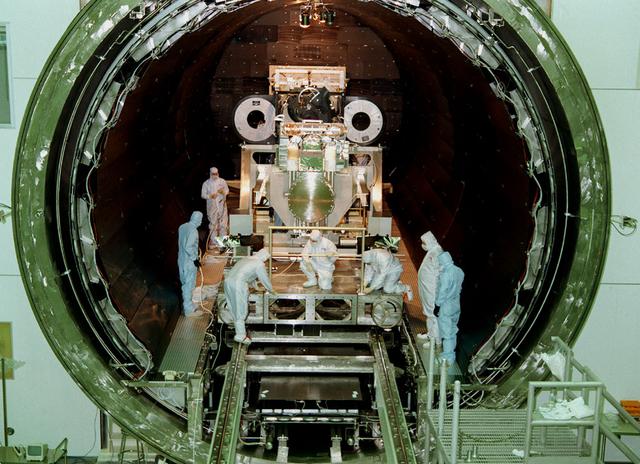
This photo shows the High Resolution Camera (HRC) for the Chandra X-Ray Observatory (CXO), formerly Advanced X-Ray Astrophysics Facility (AXAF), being integrated with the High Resolution Mirror Assembly (HRMA) in Marshall Space Flight Center's (MSFC's) 24-foot Vacuum Chamber at the X-Ray Calibration Facility (XRCF). The AXAF was renamed CXO in 1999. The CXO is the most sophisticated and the world's most poweful x-ray telescope ever built. It observes x-rays from high-energy regions of the universe, such as hot gas in the remnants of exploded stars. The HRC is one of the two instruments used at the focus of CXO, where it will detect x-rays reflected from an assembly of eight mirrors. The unique capabilities of the HRC stem from the close match of its imaging capability to the focusing of the mirrors. When used with CXO mirrors, the HRC makes images that reveal detail as small as one-half an arc second. This is equivalent to the ability to read a newspaper at a distance of 1 kilometer. MSFC's XRCF is the world's largest, most advanced laboratory for simulating x-ray emissions from distant celestial objects. It produces a space-like environment in which components relatedto x-ray telescope imaging are tested and the quality of their performances in space is predicted. TRW, Inc. was the prime contractor for the development of the CXO and NASA's MSFC was responsible for its project management. The Smithsonian Astrophysical Observatory controls science and flight operations of the CXO for NASA from Cambridge, Massachusetts. The CXO was launched July 22, 1999 aboard the Space Shuttle Columbia (STS-93).
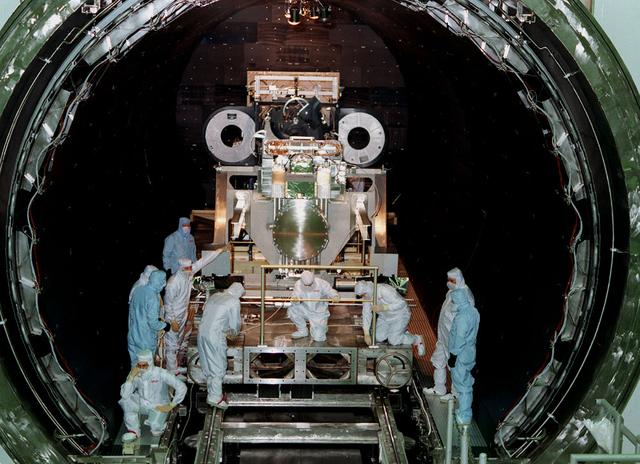
This photo shows the High Resolution Camera (HRC) for the Chandra X-Ray Observatory (CXO), formerly Advanced X-Ray Astrophysics Facility (AXAF), being integrated with the High Resolution Mirror Assembly (HRMA) in Marshall Space Flight Center's (MSFC's) 24-foot Vacuum Chamber at the X-Ray Calibration Facility (XRCF). The AXAF was renamed CXO in 1999. The CXO is the most sophisticated and the world's most powerful x-ray telescope ever built. It observes x-rays from high-energy regions of the universe, such as hot gas in the remnants of exploded stars. The HRC is one of the two instruments used at the focus of CXO, where it will detect x-rays reflected from an assembly of eight mirrors. The unique capabilities of the HRC stem from the close match of its imaging capability to the focusing of the mirrors. When used with CXO mirrors, the HRC makes images that reveal detail as small as one-half an arc second. This is equivalent to the ability to read a newspaper at a distance of 1 kilometer. MSFC's XRCF is the world's largest, most advanced laboratory for simulating x-ray emissions from distant celestial objects. It produces a space-like environment in which components related to x-ray telescope imaging are tested and the quality of their performances in space is predicted. TRW, Inc. was the prime contractor for the development of the CXO and NASA's MSFC was responsible for its project management. The Smithsonian Astrophysical Observatory controls science and flight operations of the CXO for NASA from Cambridge, Massachusetts. The CXO was launched July 22, 1999 aboard the Space Shuttle Columbia (STS-93).
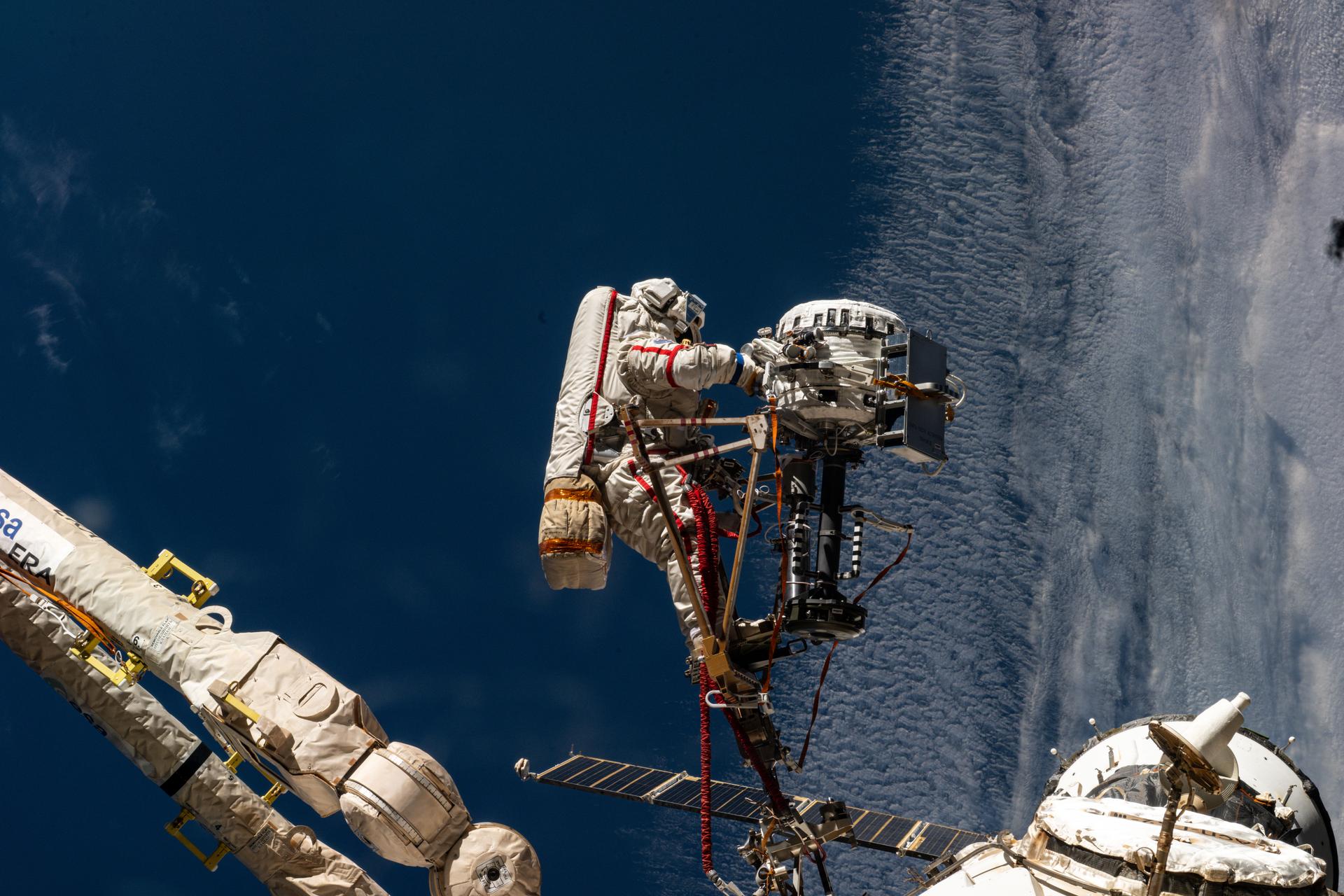
iss073e0981126 (Oct. 16, 2025) --- Roscosmos cosmonaut Sergey Ryzhikov is pictured attached to the end effector of the European robotic arm, holding the high-resolution camera (HRC) monoblock he removed during a six-hour and nine-minute spacewalk outside the International Space Station's Roscosmos segment. The HRC monoblock is part of a scientific optical telescope system designed to test compact radio-optical detectors for Earth observation, ecological monitoring, and emergency response.
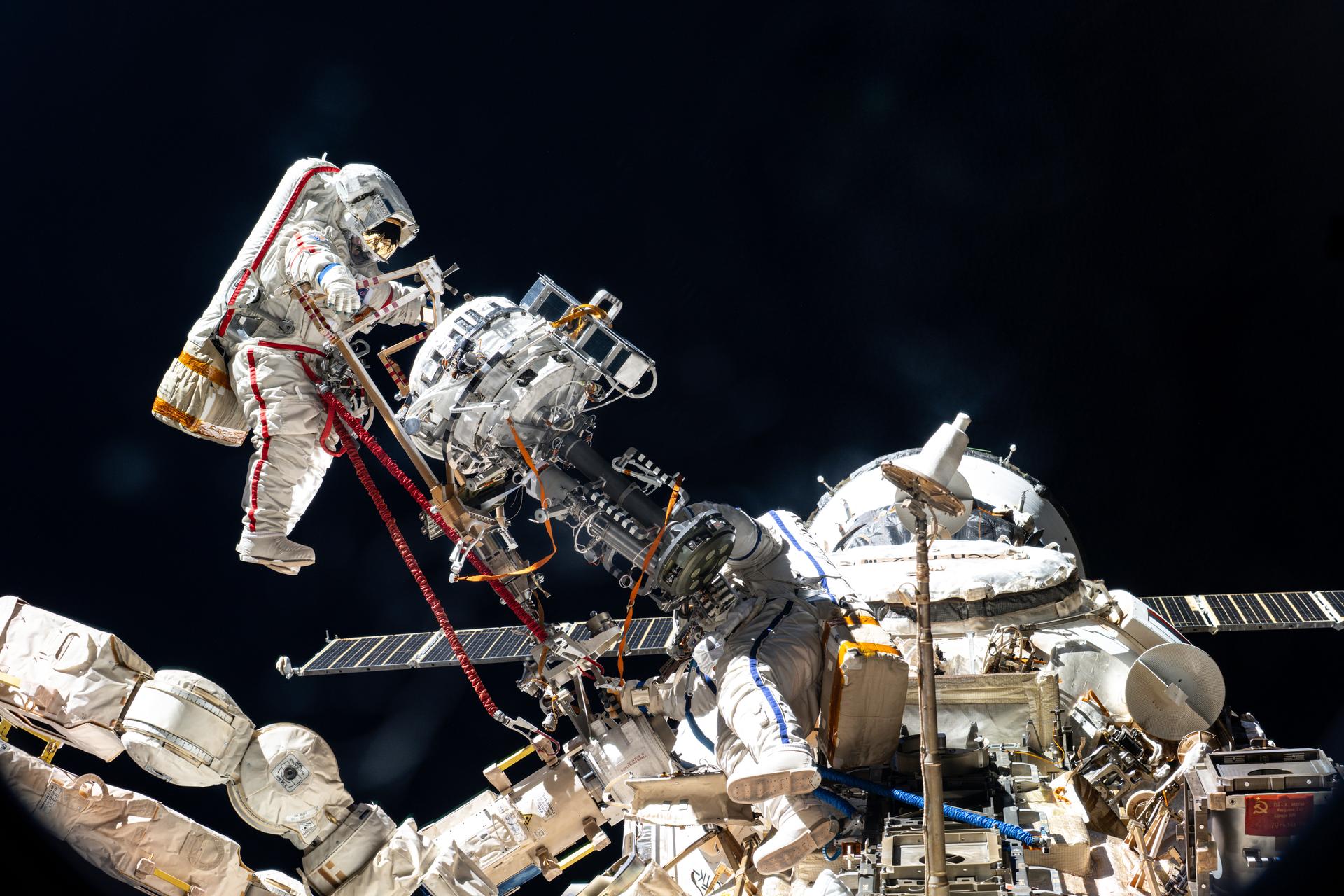
iss073e0981212 (Oct. 16, 2025) --- Roscosmos cosmonauts Sergey Ryzhikov (left) and Alexey Zubritsky (bottom right) work together to remove a high-resolution camera (HRC) monoblock during a six-hour and nine-minute spacewalk outside the International Space Station's Roscosmos segment. The HRC monoblock is part of a scientific optical telescope system designed to test compact radio-optical detectors for Earth observation, ecological monitoring, and emergency response.

ISS030-E-060117 (1 Feb. 2012) --- In the International Space Station?s Destiny laboratory, European Space Agency astronaut Andre Kuipers, Expedition 30 flight engineer, routes video cable for the High Rate Communication System (HRCS). HRCS will allow for two additional space-to-ground audio channels and two additional downlink video channels.
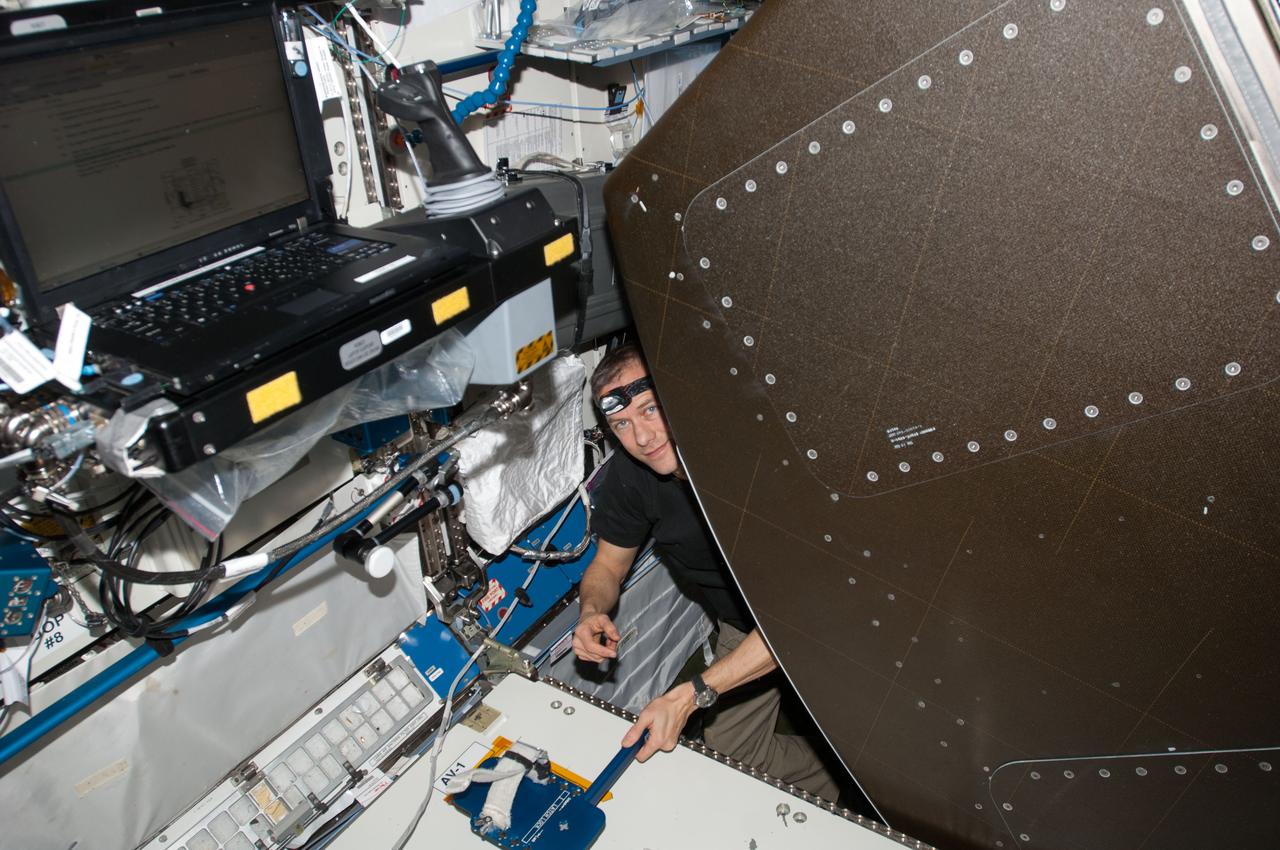
ISS034-E-030206 (16 Jan. 2013) --- NASA astronaut Tom Marshburn, Expedition 34 flight engineer, works behind a rack in the Destiny laboratory of the International Space Station.
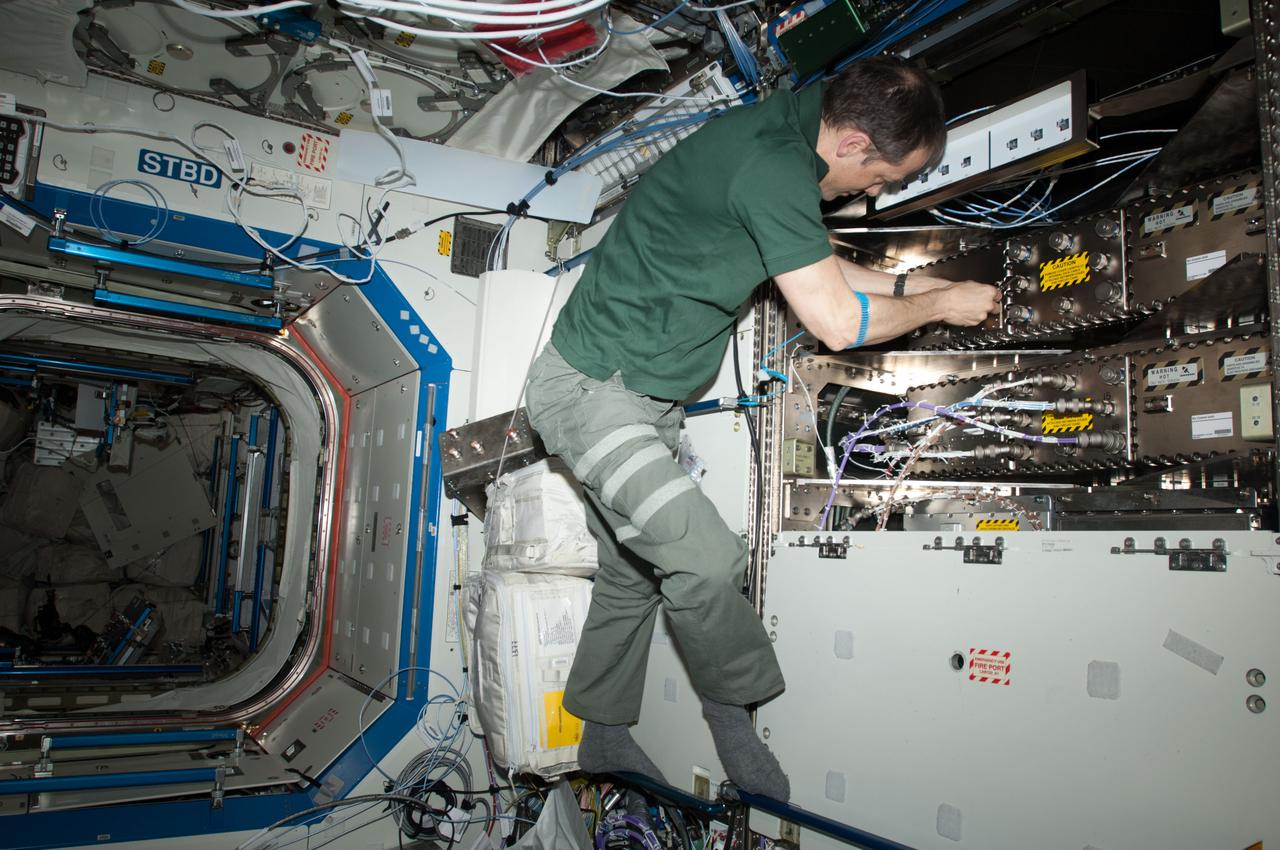
ISS035-E-018389 (11 April 2013) --- Expedition 35 Flight Engineer Tom Marshburn, NASA astronaut, works to install the redundant Ku Communications 1 unit in Destiny to complete the refurbishment of the Ku system aboard the International Space Station. Expedition 35 Commander Chris Hadfield (out of frame), astronaut with the Canadian Space Agency, joined Marshburn for this work.

ISS035-E-018278 (11 April 2013) --- Expedition 35 Flight Engineer Tom Marshburn, NASA astronaut, installs the redundant Ku Communications 1 unit in Destiny to complete the refurbishment of the Ku system aboard the International Space Station. Expedition 35 Commander Chris Hadfield (out of frame), astronaut with the Canadian Space Agency, joined Marshburn for this work.
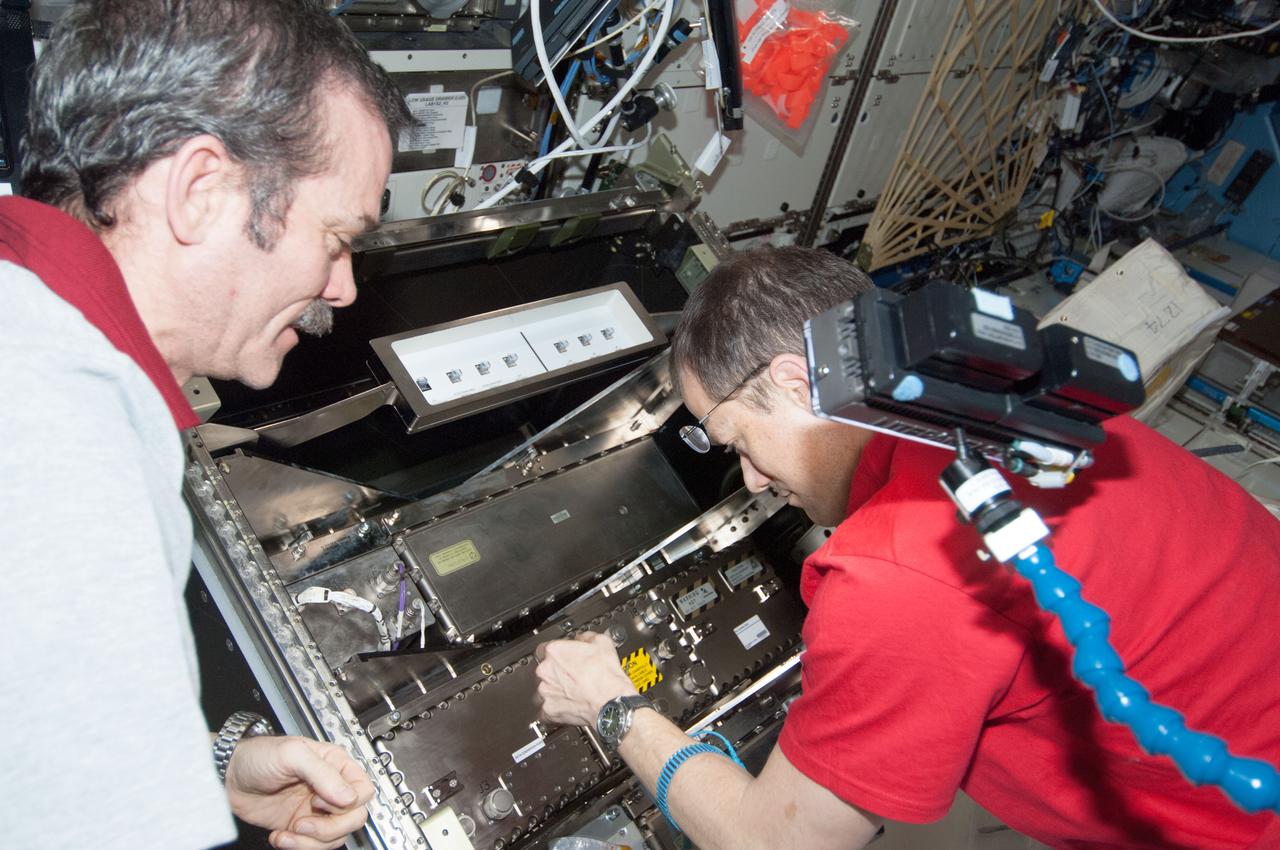
ISS035-E-013783 (2 April 2013) --- In the U.S. lab Destiny on the International Space Station, Expedition 35 Commander Chris Hadfield (right) and Flight Engineer Tom Marshburn remove the Video Baseband Signal Processor (VBSP) in order to replace it with a new Ku communication unit and its associated data and Ethernet cabling.
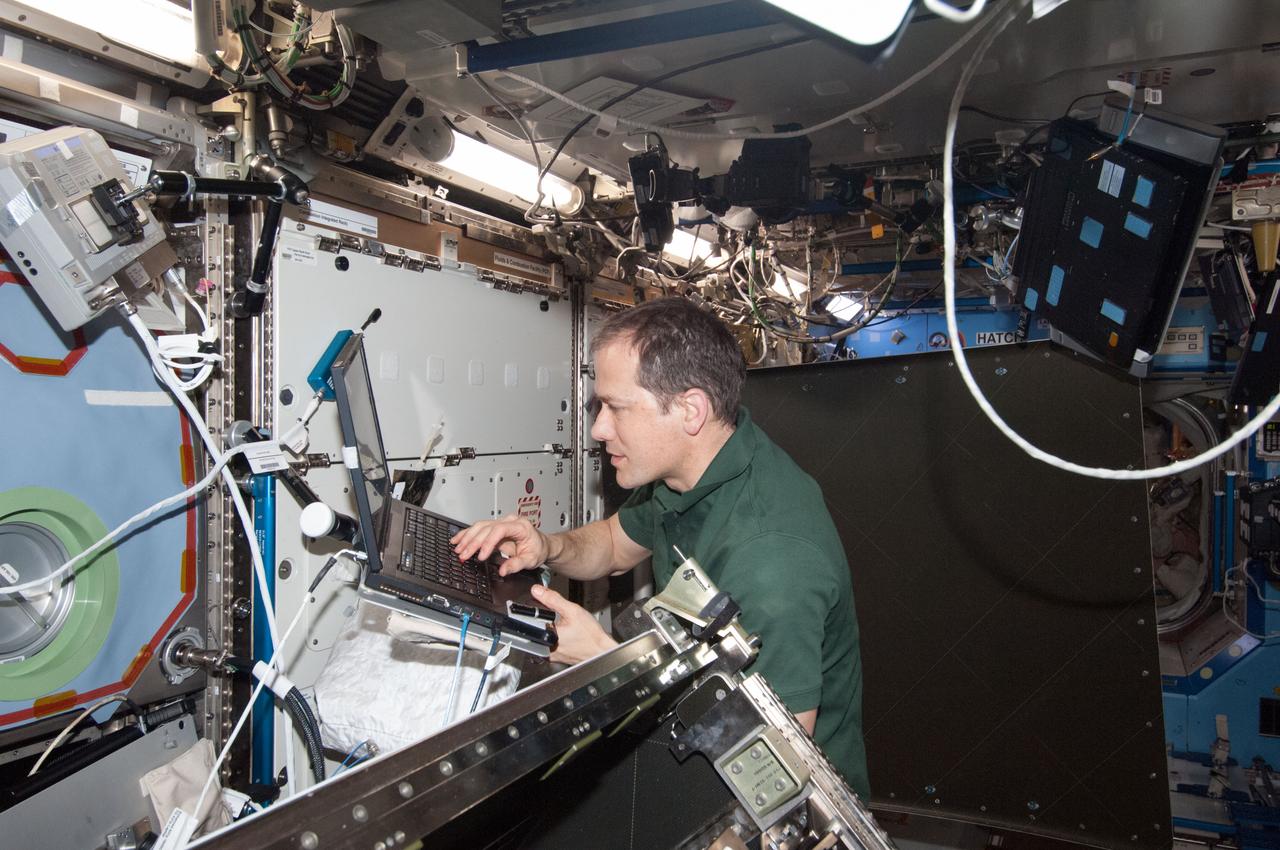
ISS035-E-018268 (11 April 2013) --- Expedition 35 Flight Engineer Tom Marshburn, NASA astronaut, installs the redundant Ku Communications 1 unit in Destiny to complete the refurbishment of the Ku system aboard the International Space Station. Expedition 35 Commander Chris Hadfield (out of frame), astronaut with the Canadian Space Agency, joined Marshburn for this work.
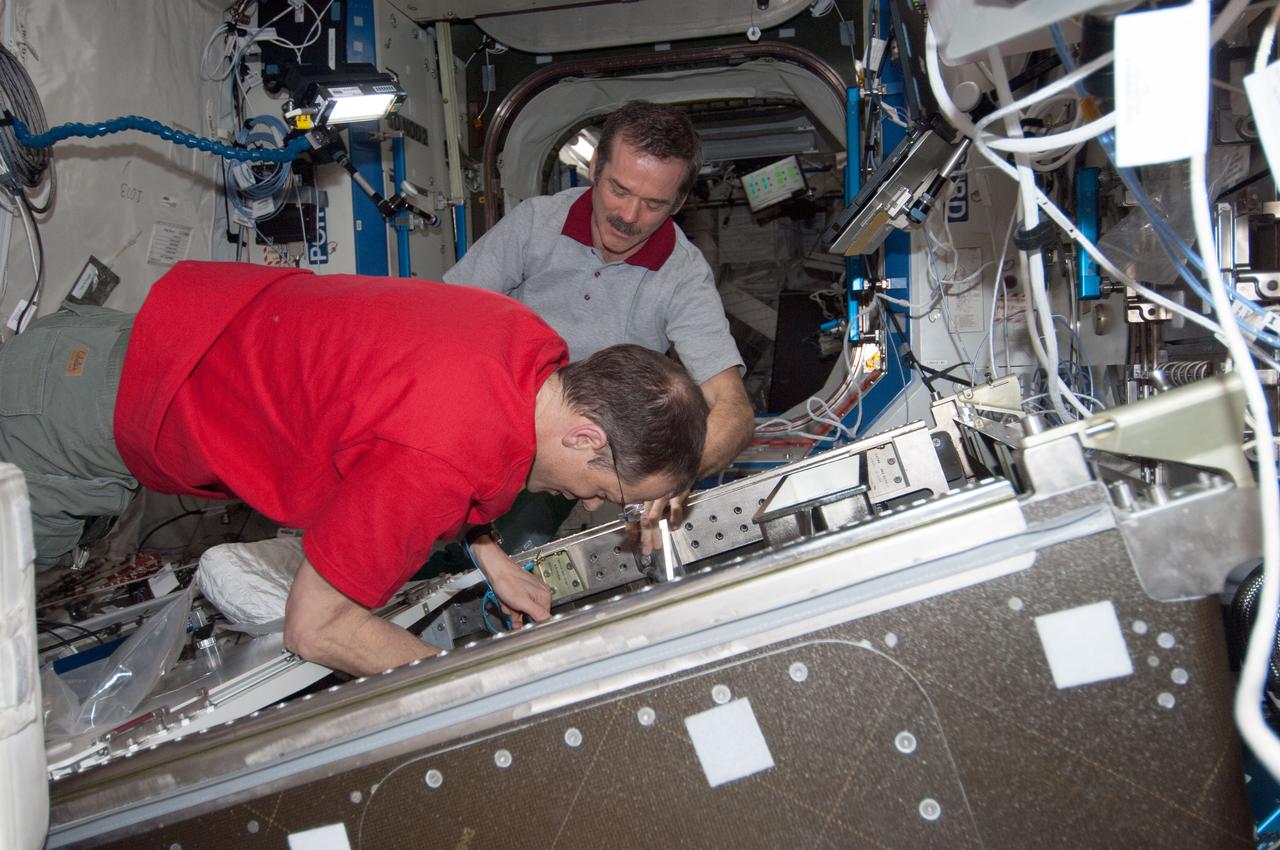
ISS035-E-013790 (2 April 2013) --- In the U.S. lab Destiny on the International Space Station, Expedition 35 Commander Chris Hadfield (background) and Flight Engineer Tom Marshburn remove the Video Baseband Signal Processor (VBSP) in order to replace it with a new Ku communication unit and its associated data and Ethernet cabling.
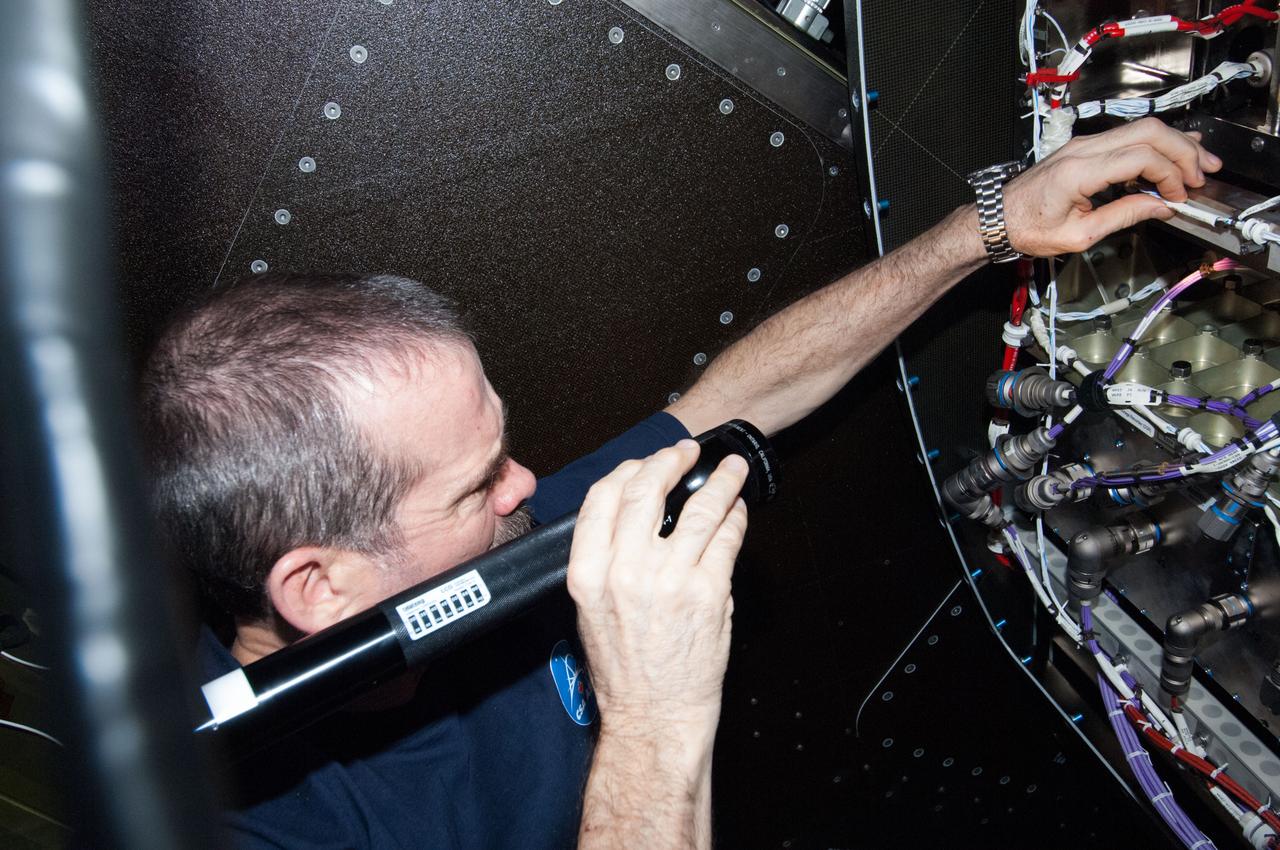
ISS035-E-018277 (11 April 2013) --- Expedition 35 Commander Chris Hadfield, astronaut with the Canadian Space Agency, installs the redundant Ku Communications 1 unit in Destiny to complete the refurbishment of the Ku system aboard the International Space Station. NASA astronaut Tom Marshburn (out of frame), Expedition 35 flight engineer, joined Hadfield for this work.