
View of Human Research Facility (HRF) Containment Bag,Part Number (P/N): SDD46107234-306,Serial Number (S/N): 1240. Photo was taken during Expedition 34.
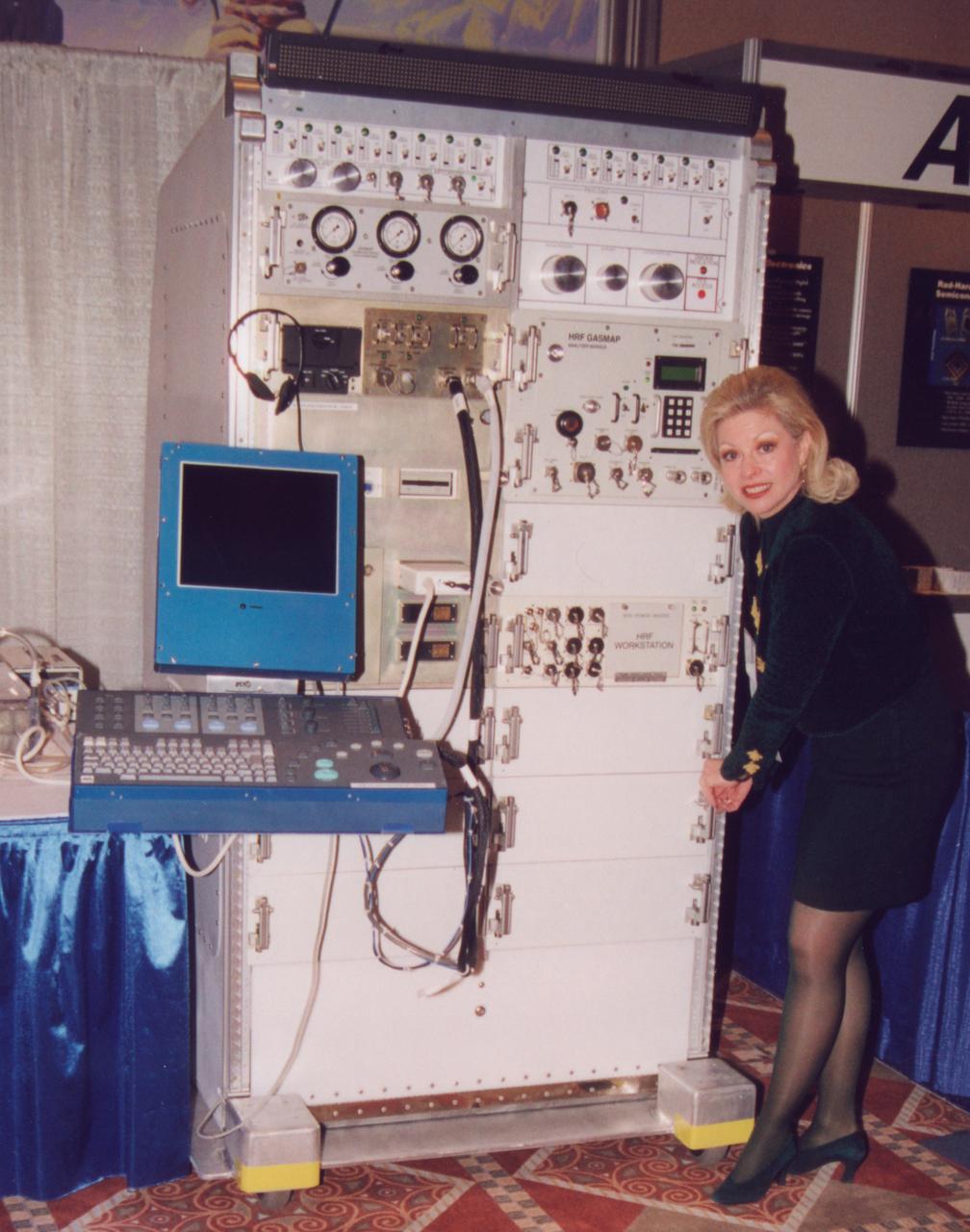
Arn Harris Hoover of Lockheed Martin Company demonstrates an engineering mockup of the Human Research Facility (HRF) that will be installed in Destiny, the U.S. Laboratory Module on the International Space Station (ISS). Using facilities similar to research hardware available in laboratories on Earth, the HRF will enable systematic study of cardiovascular, musculoskeletal, neurosensory, pulmonary, radiation, and regulatory physiology to determine biomedical changes resulting from space flight. Research results obtained using this facility are relevant to the health and the performance of the astronaut as well as future exploration of space. Because this is a mockup, the actual flight hardware may vary as desings are refined. (Credit: NASA/Marshall Space Flight Center)
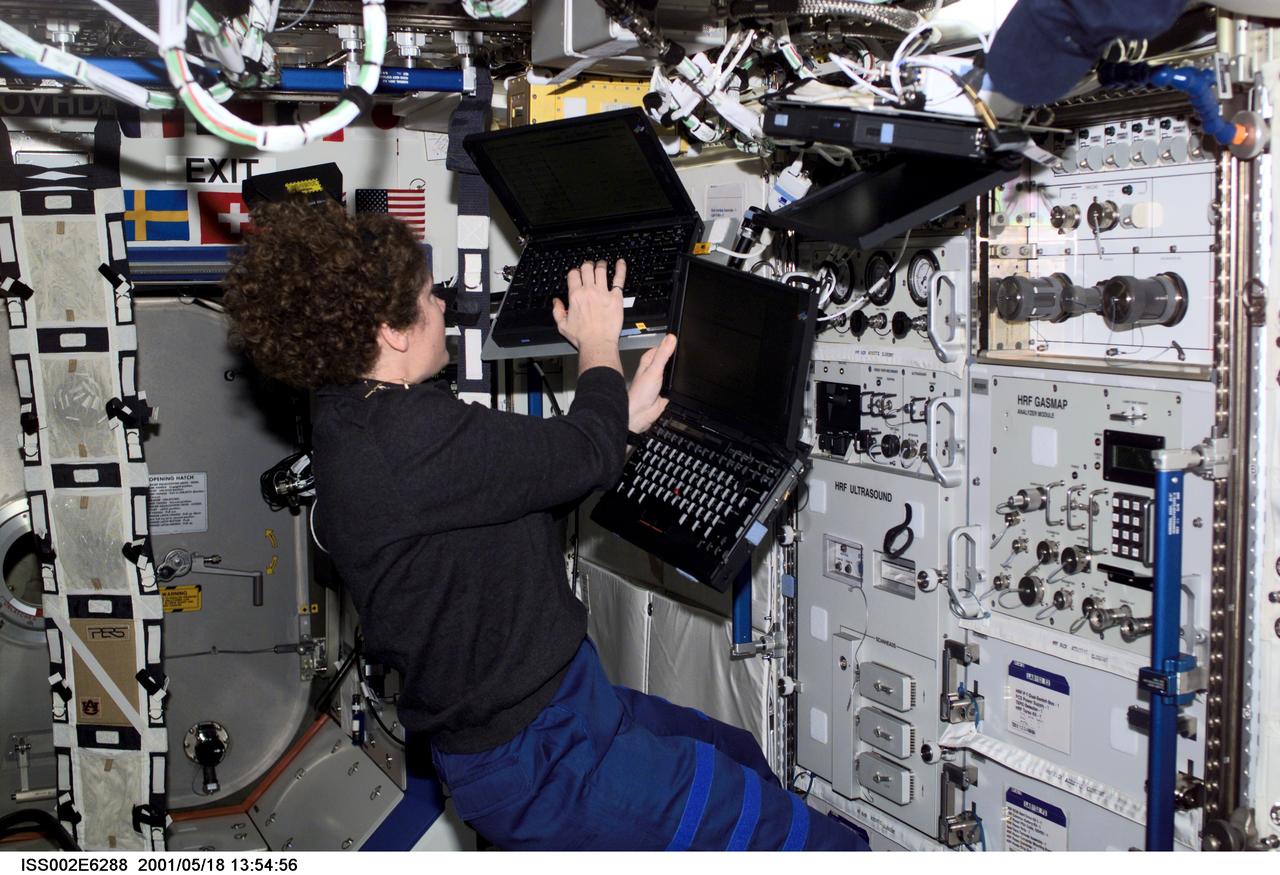
ISS002-E-6288 (18 May 2001) --- Susan J. Helms, Expedition Two flight engineer, works with three laptop computers at the Human Research Facility (HRF) in the U.S. Laboratory. The image was taken with a digital still camera.
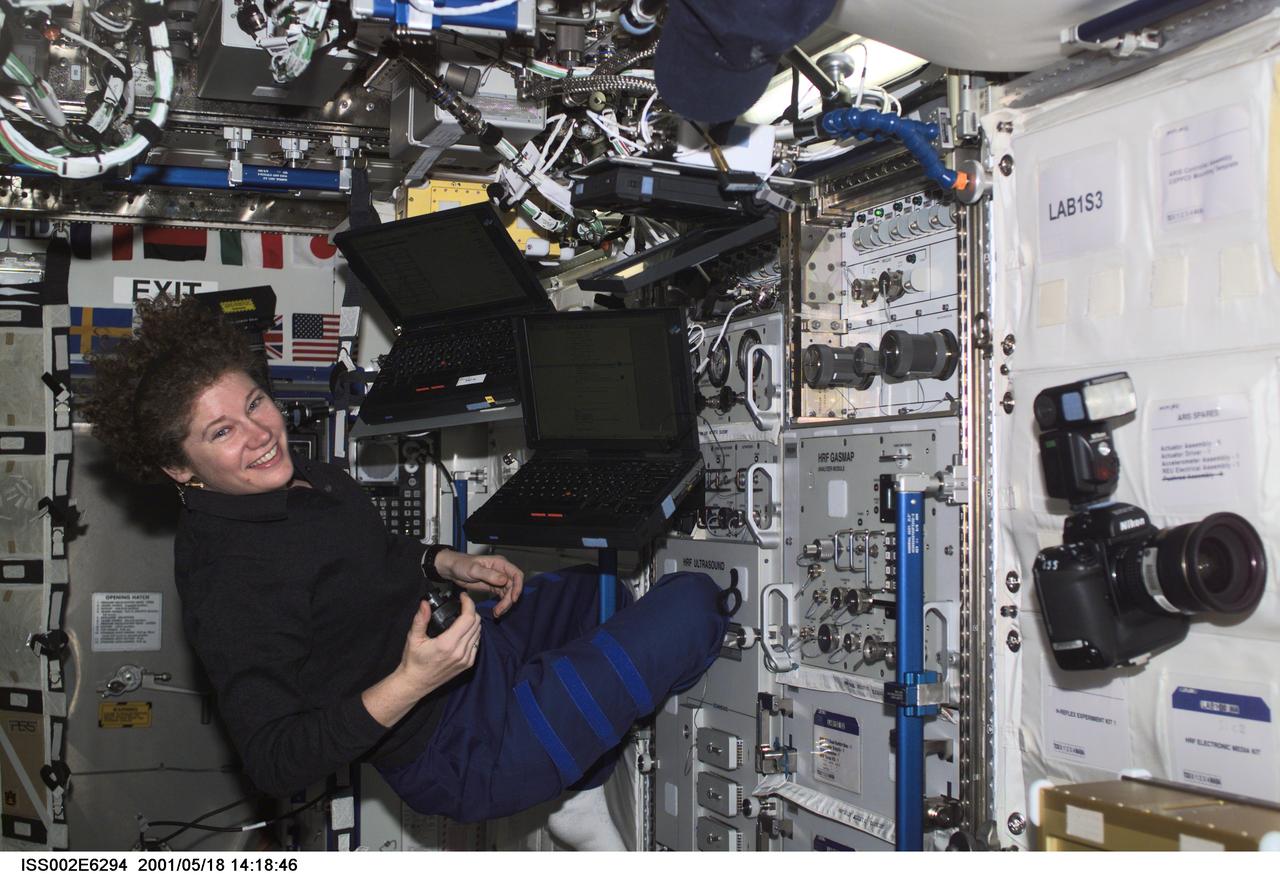
ISS002-E-6294 (18 May 2001) --- Susan J. Helms, Expedition Two flight engineer, works with three laptop computers at the Human Research Facility (HRF) in the U.S. Laboratory. The image was taken with a digital still camera.

ISS006-E-13995 (2 January 2003) --- Astronaut Donald R. Pettit, Expedition Six NASA ISS science officer, performs the Human Research Facility (HRF) Ultrasound functional checkout in the Destiny laboratory on the International Space Station (ISS).
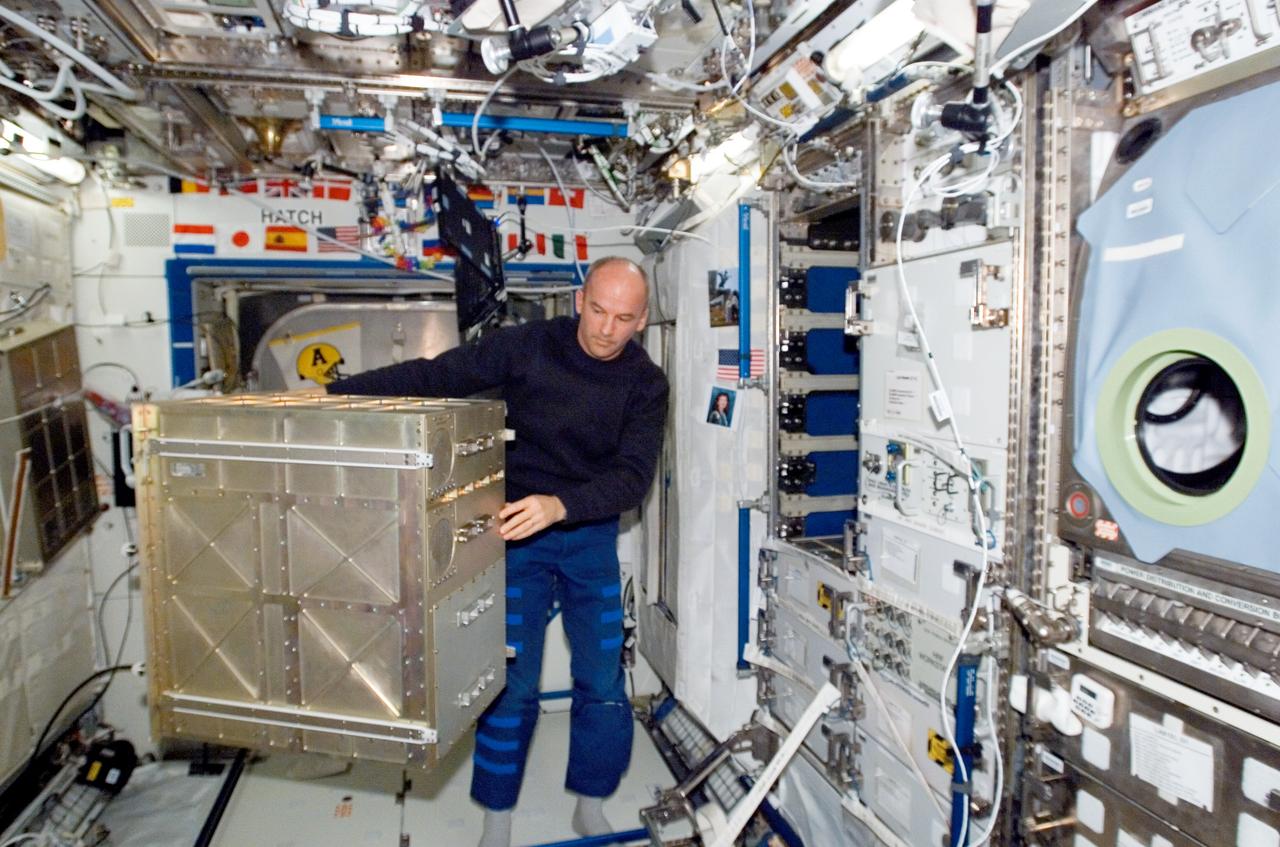
ISS013-E-38339 (17 June 2006) --- Astronaut Jeffrey N. Williams, Expedition 13 NASA space station science officer and flight engineer, works with a section of the Human Research Facility (HRF) rack in the Destiny laboratory of the International Space Station.
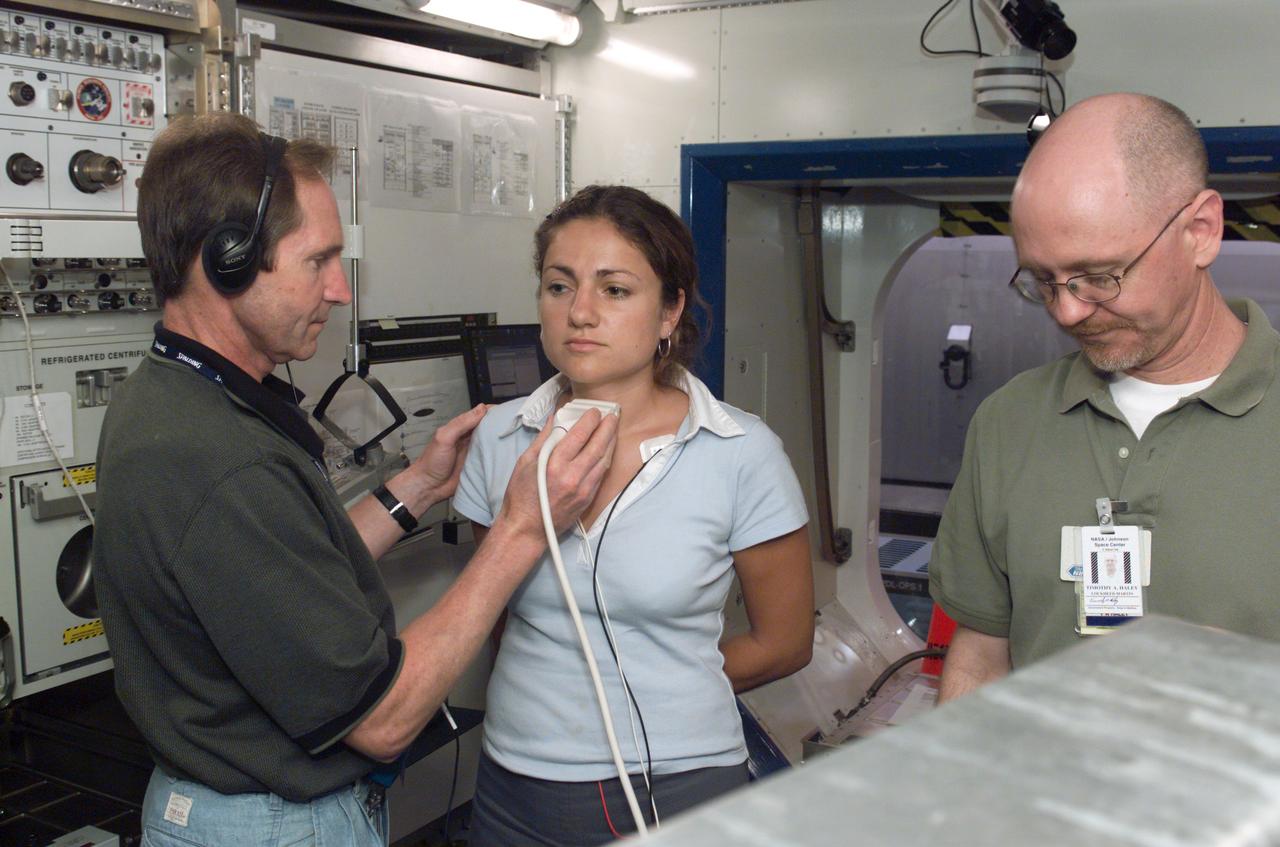
JSC2003-E-37776 (22 May 2003) --- Cosmonaut Valery I. Tokarev (left), Expedition 9 flight engineer, participates in Human Research Facility (HRF) training in the International Space Station (ISS) Destiny laboratory mockup/trainer at the Johnson Space Center’s (JSC) Space Vehicle Mockup Facility. Instructor Jessica Meir (center) and trainer Tim Haley assisted Tokarev, who represents Rosaviakosmos.
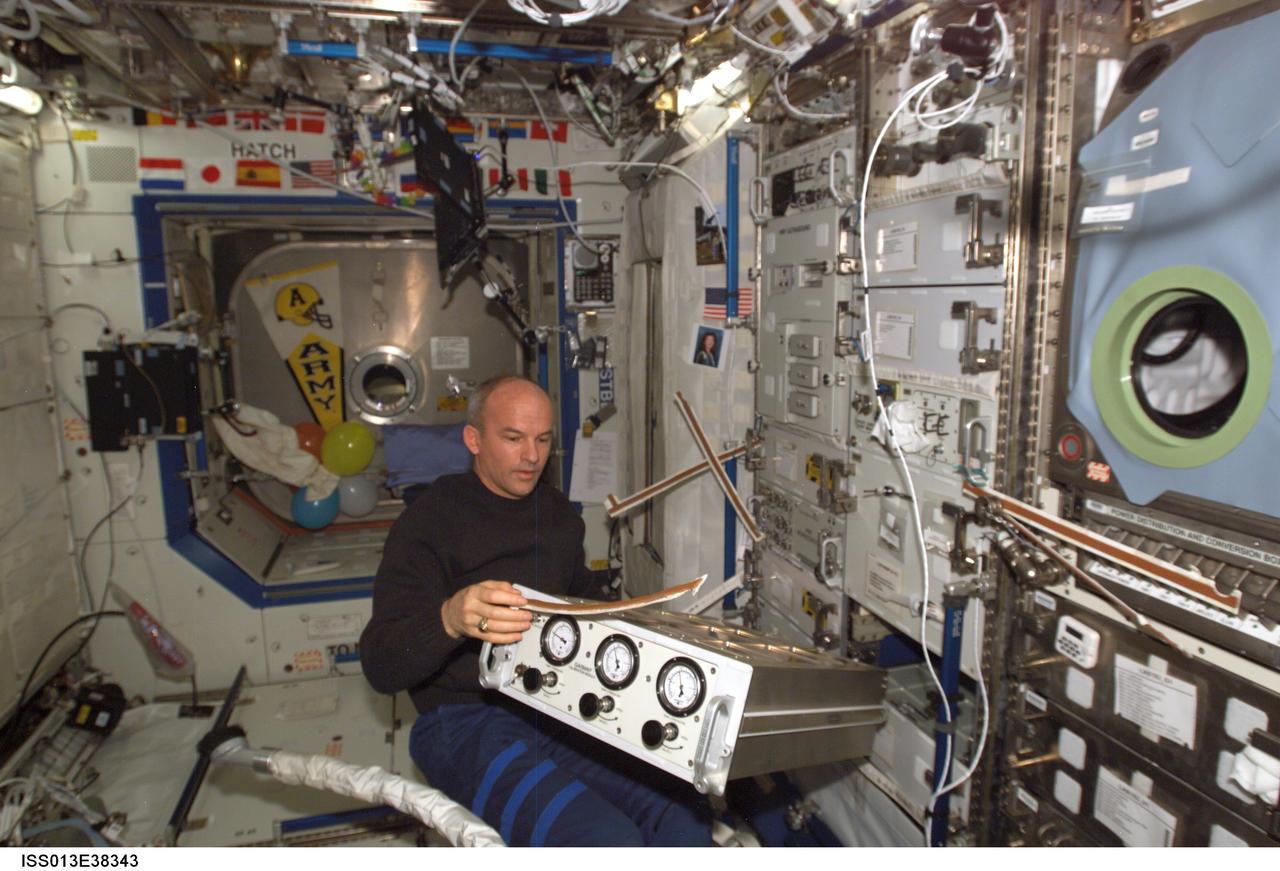
ISS013-E-38343 (17 June 2006) --- Astronaut Jeffrey N. Williams, Expedition 13 NASA space station science officer and flight engineer, works with the Gas Analysis System for Metabolic Analysis of Physiology (GASMAP) section of the Human Research Facility (HRF) in the Destiny laboratory of the International Space Station.
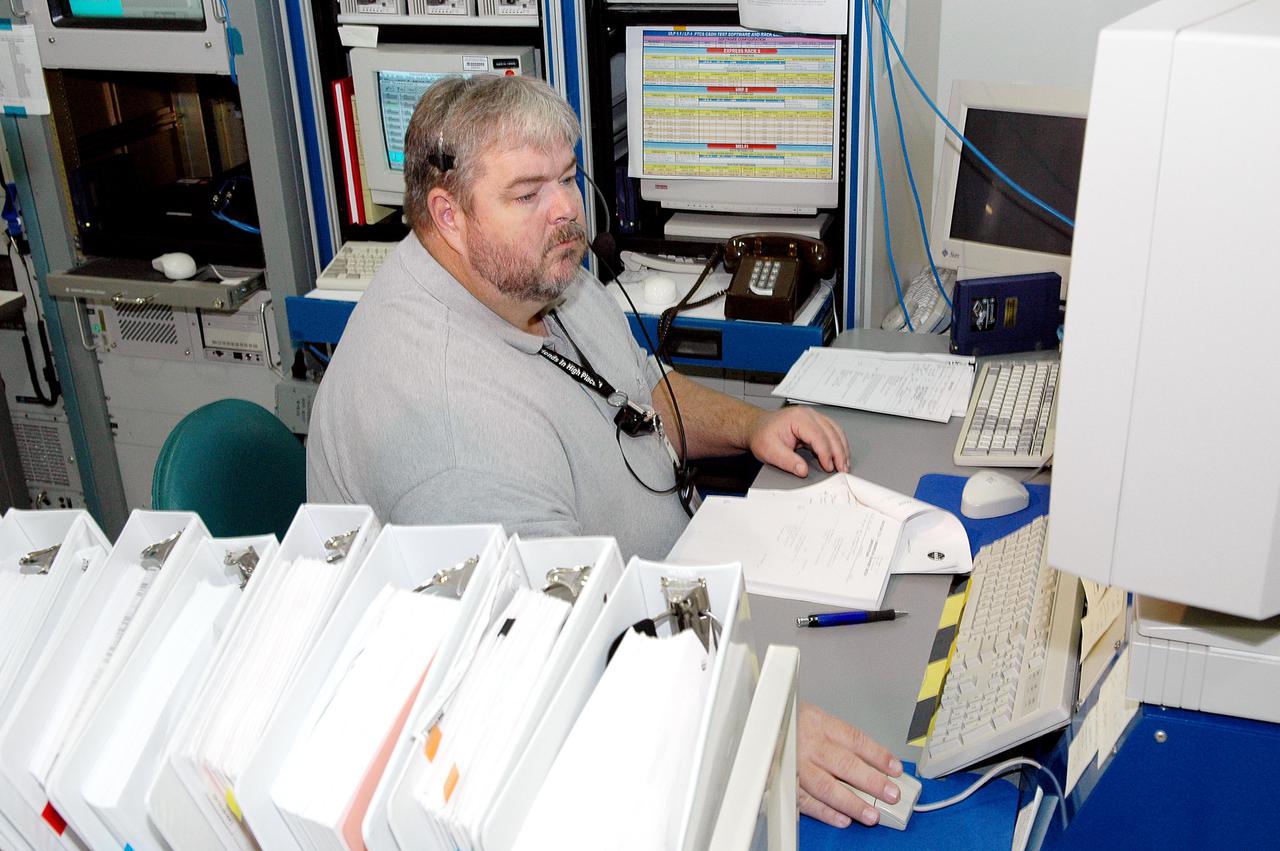
KENNEDY SPACE CENTER, FLA. - Joe Mounts, with Boeing, monitors the Payload Test and Checkout System for the Human Research Facility (HRF) Rack -2 payload. The HRF-2 is scheduled to fly on Return to Flight Space Shuttle mission STS-114. The HRF-2 will deliver additional biomedical instrumentation and research capability to the International Space Station. HRF Rack 1 contains an ultrasound unit and gas analyzer system and has been operational in the U.S. Lab since May 2001. HRF-2 will also be installed in the U. S. Lab and will provide structural, power, thermal, command and data handling, and communication and tracking interfaces between the HRF biomedical instrumentation and the U. S. Lab.
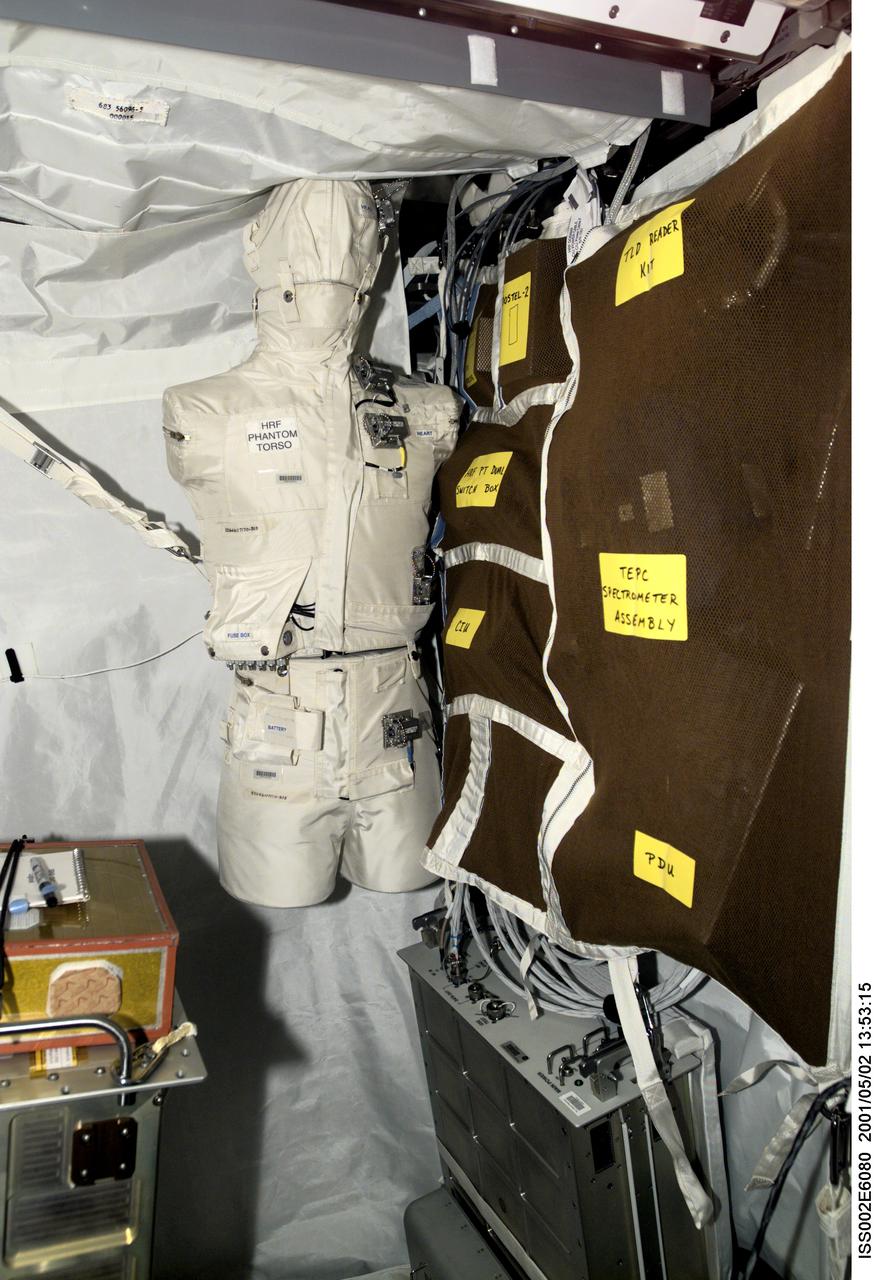
ISS002-E-6080 (2 May 2001) --- The Phantom Torso, seen here in the Human Research Facility (HRF) section of the Destiny/U.S. laboratory on the International Space Station (ISS), is designed to measure the effects of radiation on organs inside the body by using a torso that is similar to those used to train radiologists on Earth. The torso is equivalent in height and weight to an average adult male. It contains radiation detectors that will measure, in real-time, how much radiation the brain, thyroid, stomach, colon, and heart and lung area receive on a daily basis. The data will be used to determine how the body reacts to and shields its internal organs from radiation, which will be important for longer duration space flights. The experiment was delivered to the orbiting outpost during by the STS-100/6A crew in April 2001. Dr. Gautam Badhwar, NASA JSC, Houston, TX, is the principal investigator for this experiment. A digital still camera was used to record this image.
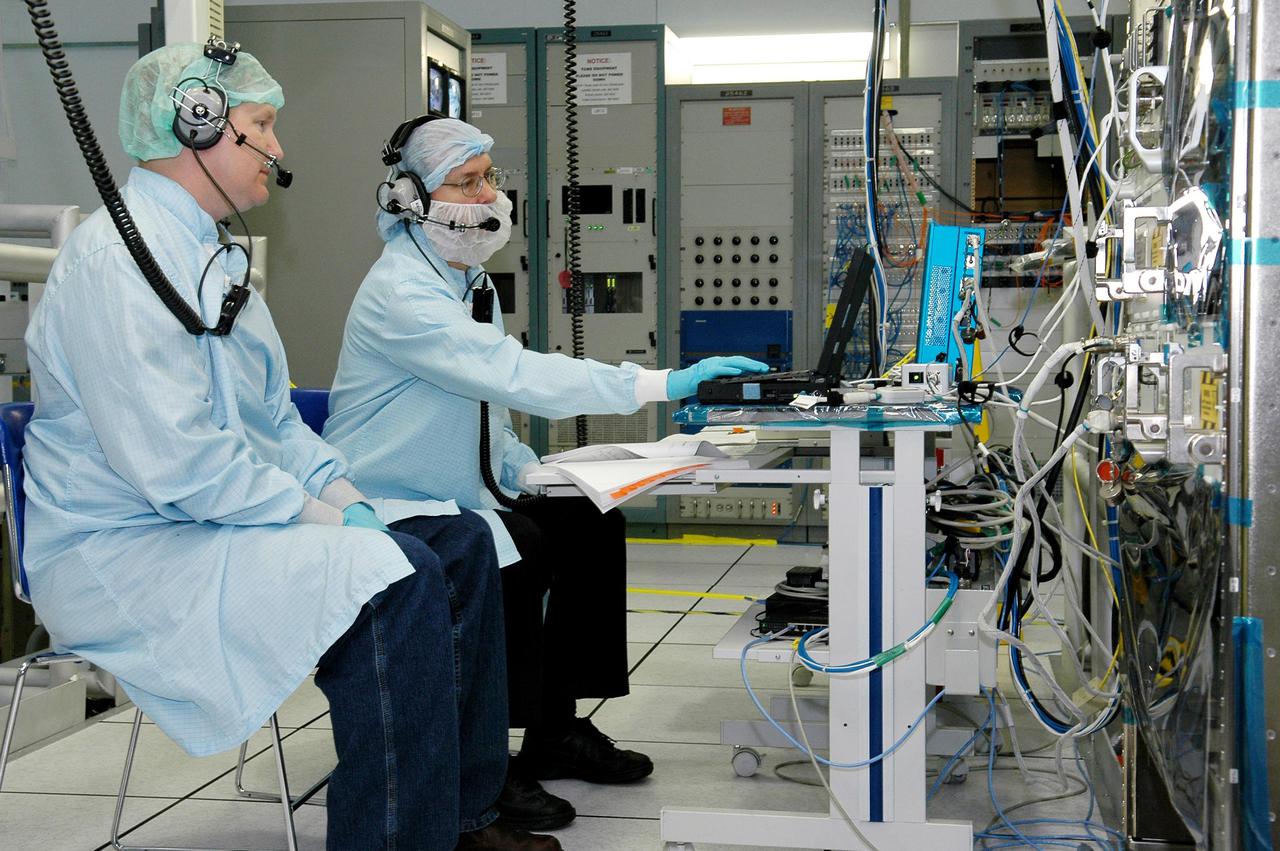
KENNEDY SPACE CENTER, FLA. - - In the Space Station Processing Facility, Gaschen Geissen and Elton Witt, with Lockheed Martin, monitor the Payload Test and Checkout System for the Human Research Facility (HRF) Rack -2 payload. The HRF-2 is scheduled to fly on Return to Flight Space Shuttle mission STS-114. The HRF-2 will deliver additional biomedical instrumentation and research capability to the International Space Station. HRF Rack 1 contains an ultrasound unit and gas analyzer system and has been operational in the U.S. Lab since May 2001. HRF-2 will also be installed in the U. S. Lab and will provide structural, power, thermal, command and data handling, and communication and tracking interfaces between the HRF biomedical instrumentation and the U. S. Lab.
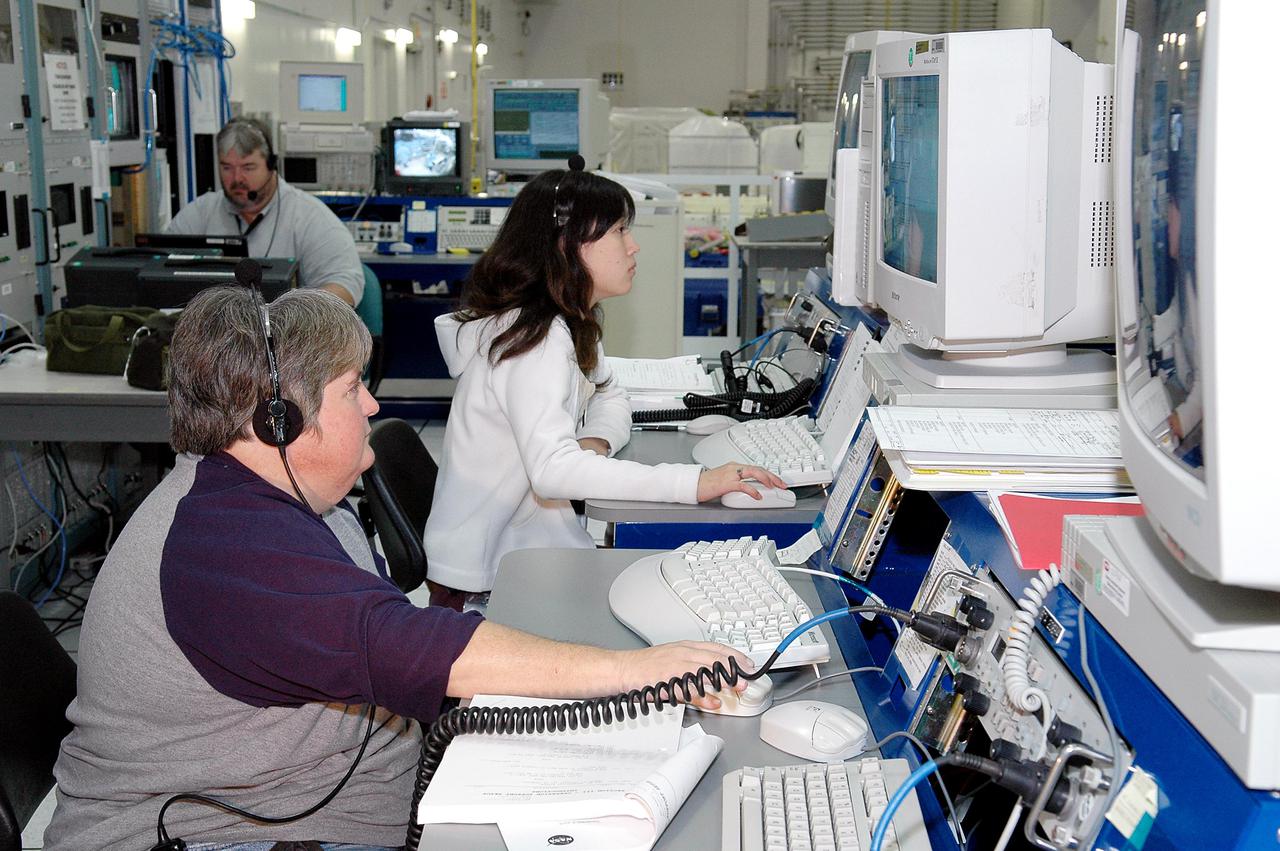
KENNEDY SPACE CENTER, FLA. - Nancy Lowry (left) and Mikiko Ujihara, with Boeing, monitor the Payload Test and Checkout System for the Human Research Facility (HRF) Rack -2 payload. The HRF-2 is scheduled to fly on Return to Flight Space Shuttle mission STS-114. The HRF-2 will deliver additional biomedical instrumentation and research capability to the International Space Station. HRF Rack 1 contains an ultrasound unit and gas analyzer system and has been operational in the U.S. Lab since May 2001. HRF-2 will also be installed in the U. S. Lab and will provide structural, power, thermal, command and data handling, and communication and tracking interfaces between the HRF biomedical instrumentation and the U. S. Lab.
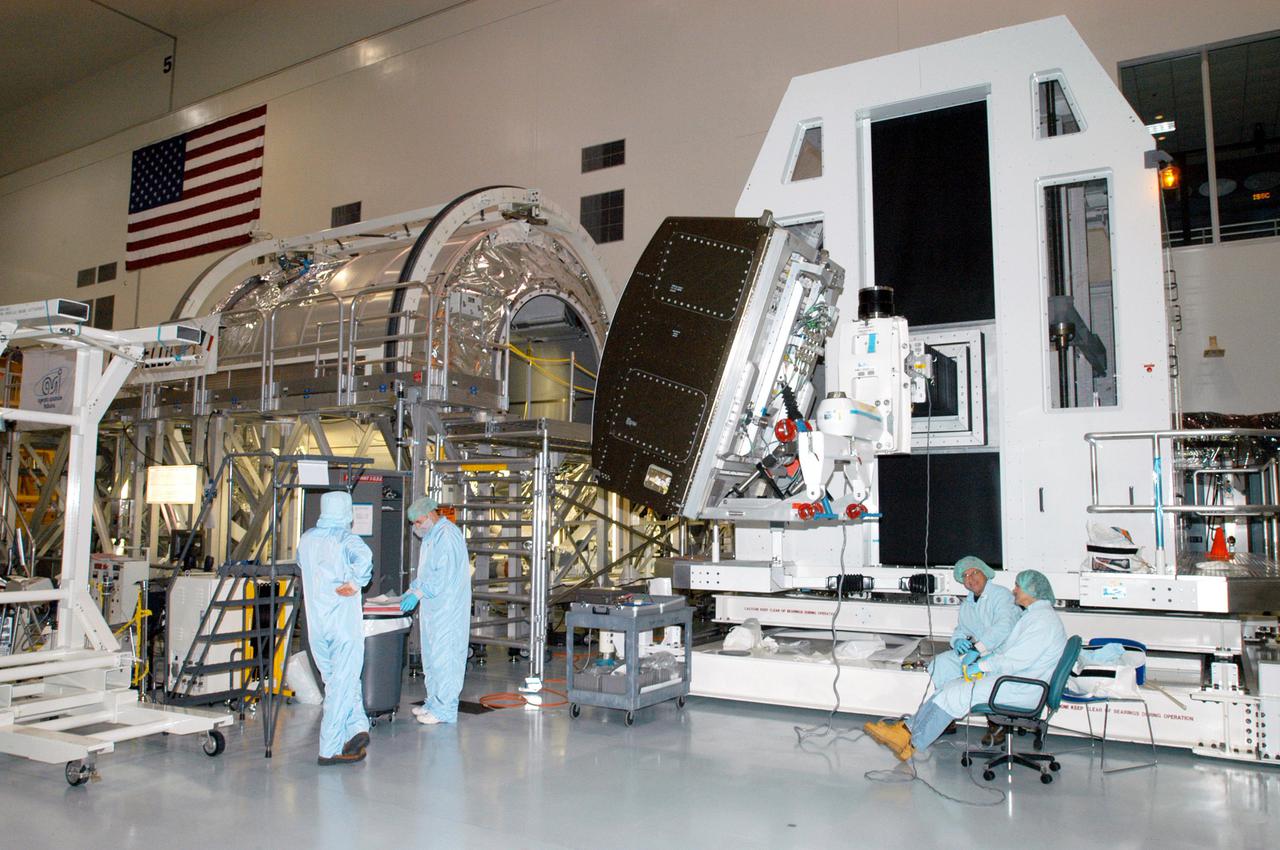
KENNEDY SPACE CENTER, FLA. - In the Space Station Processing Facility, workers prepare to attach the Human Research Facility-2 (HRF-2) science rack onto the Rack Insertion Device. HRF-2 will be installed into the Multi-Purpose Logistics Module Raffaello (at left) for flight on Space Shuttle Discovery’s Return to Flight mission, STS-114. The HRF-2 will deliver additional biomedical instrumentation and research capability to the International Space Station. HRF-1, installed on the U.S. Lab since May 2001, contains an ultrasound unit and gas analyzer. Both racks provide structural, power, thermal, command and data handling, and communication and tracking interfaces between the HRF biomedical instrumentation and the U.S. Laboratory, Destiny. NASA Kennedy Space Center and their prime contractor responsible for ISS element processing, The Boeing Company, prepared the rack for installation. The HRF Project is managed by NASA Johnson Space Center and implemented through contract with Lockheed Martin, Houston, Texas.
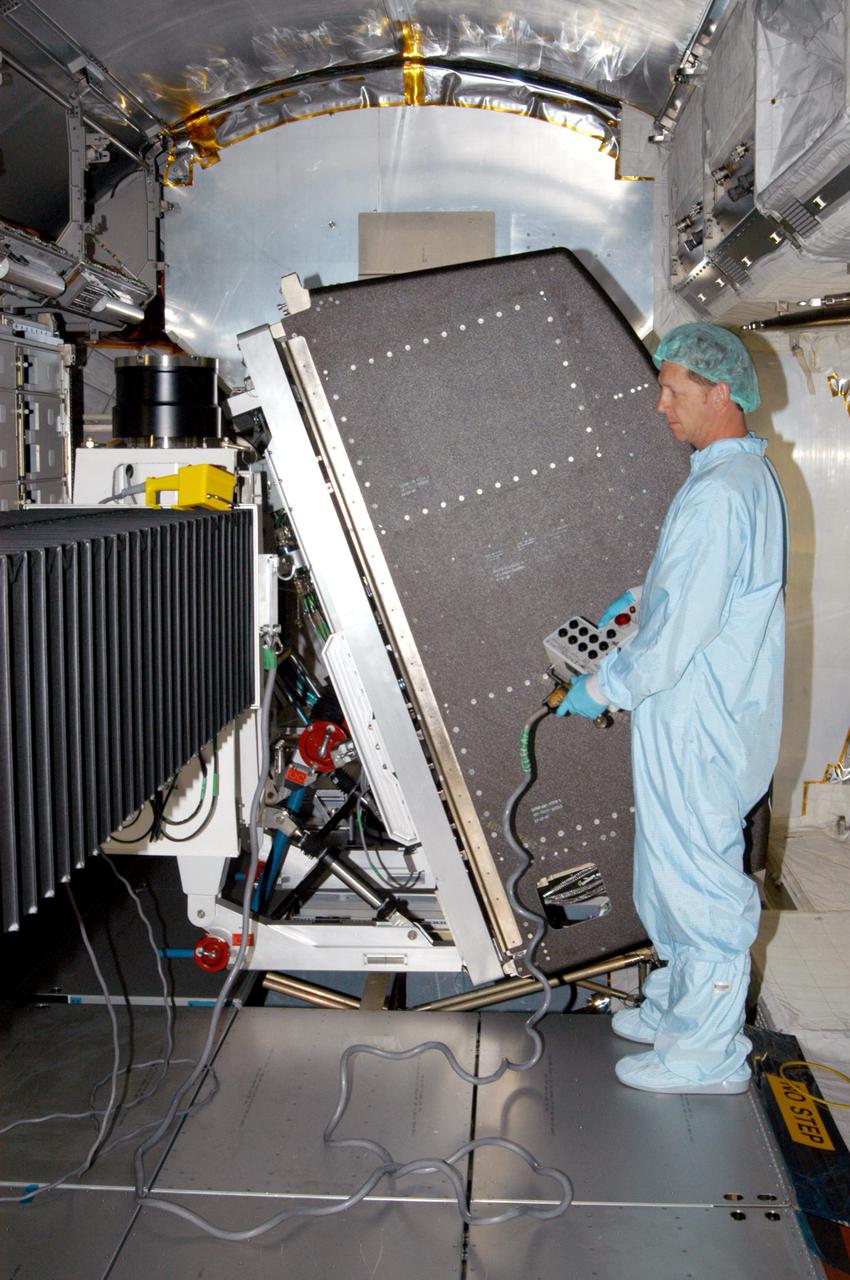
KENNEDY SPACE CENTER, FLA. - In the Space Station Processing Facility, a worker inside the Multi-Purpose Logistics Module Raffaello is ready for installation of the Human Research Facility-2 (HRF-2) science rack. Raffaello will fly on Space Shuttle Discovery’s Return to Flight mission, STS-114. The HRF-2 will deliver additional biomedical instrumentation and research capability to the International Space Station. HRF-1, installed on the U.S. Lab since May 2001, contains an ultrasound unit and gas analyzer. Both racks provide structural, power, thermal, command and data handling, and communication and tracking interfaces between the HRF biomedical instrumentation and the U.S. Laboratory, Destiny. NASA Kennedy Space Center and their prime contractor responsible for ISS element processing, The Boeing Company, prepared the rack for installation. The HRF Project is managed by NASA Johnson Space Center and implemented through contract with Lockheed Martin, Houston, Texas.

KENNEDY SPACE CENTER, FLA. - In the Space Station Processing Facility, a worker stands by as the Rack Insertion Device slowly moves the Human Research Facility-2 (HRF-2) science rack into the Multi-Purpose Logistics Module Raffaello for flight on Space Shuttle Discovery’s Return to Flight mission, STS-114. The HRF-2 will deliver additional biomedical instrumentation and research capability to the International Space Station. HRF-1, installed on the U.S. Lab since May 2001, contains an ultrasound unit and gas analyzer. Both racks provide structural, power, thermal, command and data handling, and communication and tracking interfaces between the HRF biomedical instrumentation and the U.S. Laboratory, Destiny. NASA Kennedy Space Center and their prime contractor responsible for ISS element processing, The Boeing Company, prepared the rack for installation. The HRF Project is managed by NASA Johnson Space Center and implemented through contract with Lockheed Martin, Houston, Texas.
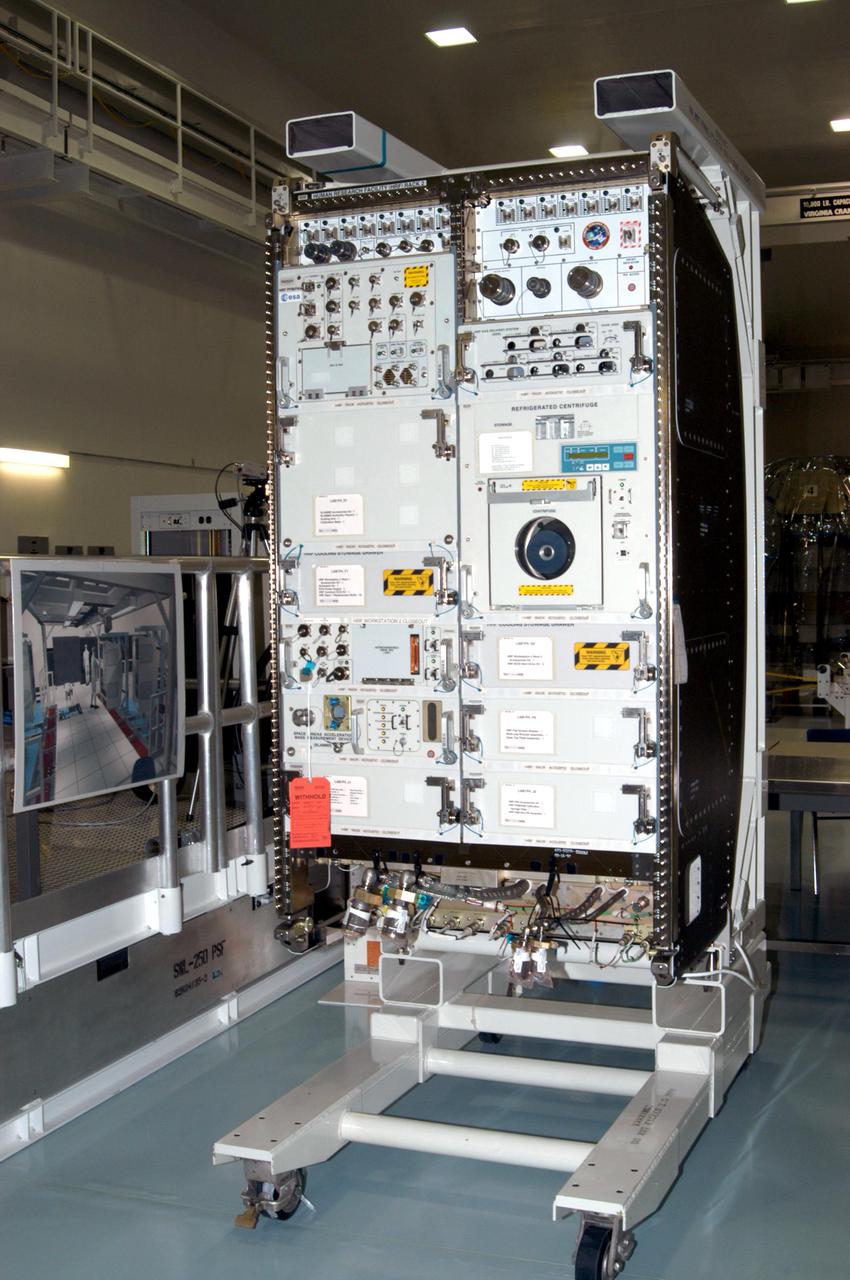
KENNEDY SPACE CENTER, FLA. - In the Space Station Processing Facility, the Human Research Facility-2 (HRF-2) science rack sits on a stand waiting to be installed into the Multi-Purpose Logistics Module Raffaello for flight on Space Shuttle Discovery’s Return to Flight mission, STS-114. The HRF-2 will deliver additional biomedical instrumentation and research capability to the International Space Station. HRF-1, installed on the U.S. Lab since May 2001, contains an ultrasound unit and gas analyzer. Both racks provide structural, power, thermal, command and data handling, and communication and tracking interfaces between the HRF biomedical instrumentation and the U.S. Laboratory, Destiny. NASA Kennedy Space Center and their prime contractor responsible for ISS element processing, The Boeing Company, prepared the rack for installation. The HRF Project is managed by NASA Johnson Space Center and implemented through contract with Lockheed Martin, Houston, Texas.
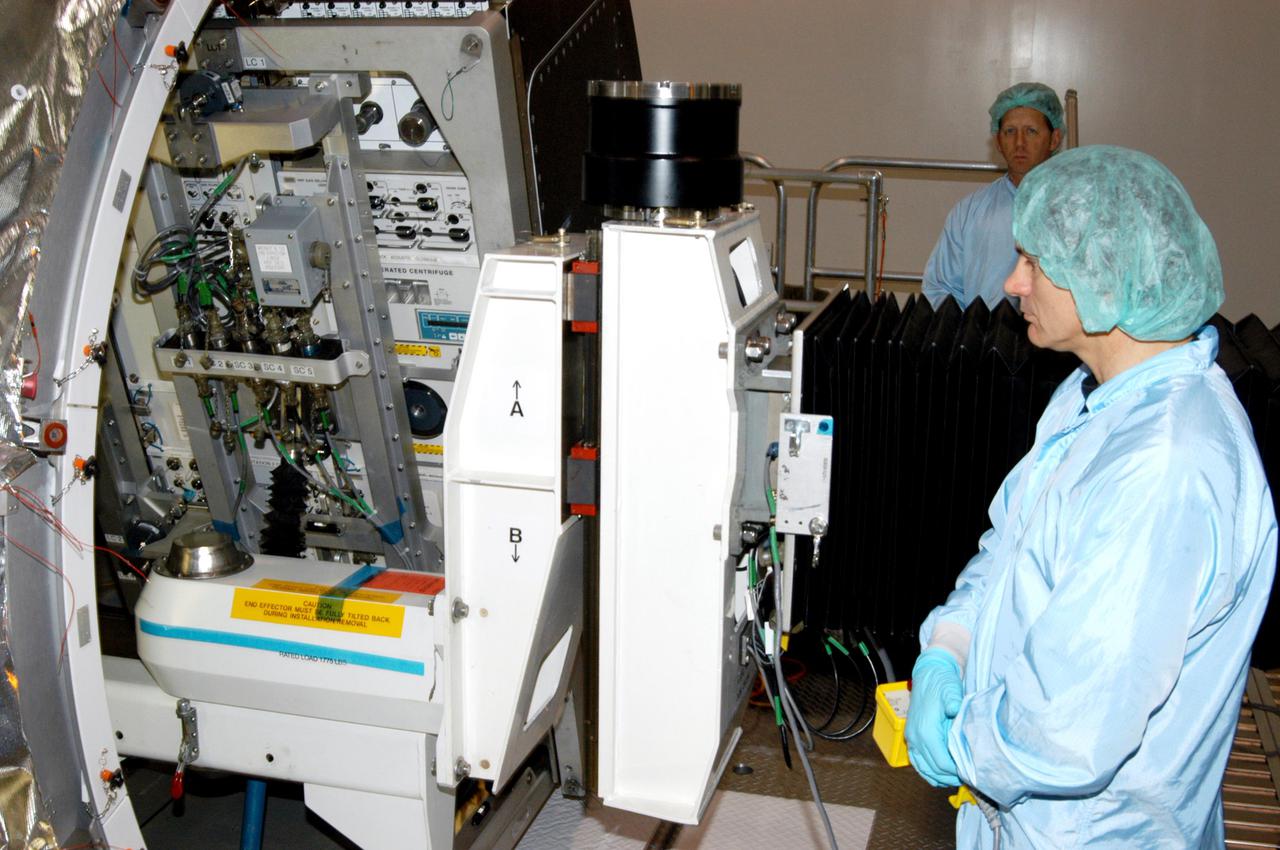
KENNEDY SPACE CENTER, FLA. - In the Space Station Processing Facility, a worker watches as the Rack Insertion Device slowly moves the Human Research Facility-2 (HRF-2) science rack into the Multi-Purpose Logistics Module Raffaello for flight on Space Shuttle Discovery’s Return to Flight mission, STS-114. The HRF-2 will deliver additional biomedical instrumentation and research capability to the International Space Station. HRF-1, installed on the U.S. Lab since May 2001, contains an ultrasound unit and gas analyzer. Both racks provide structural, power, thermal, command and data handling, and communication and tracking interfaces between the HRF biomedical instrumentation and the U.S. Laboratory, Destiny. NASA Kennedy Space Center and their prime contractor responsible for ISS element processing, The Boeing Company, prepared the rack for installation. The HRF Project is managed by NASA Johnson Space Center and implemented through contract with Lockheed Martin, Houston, Texas.
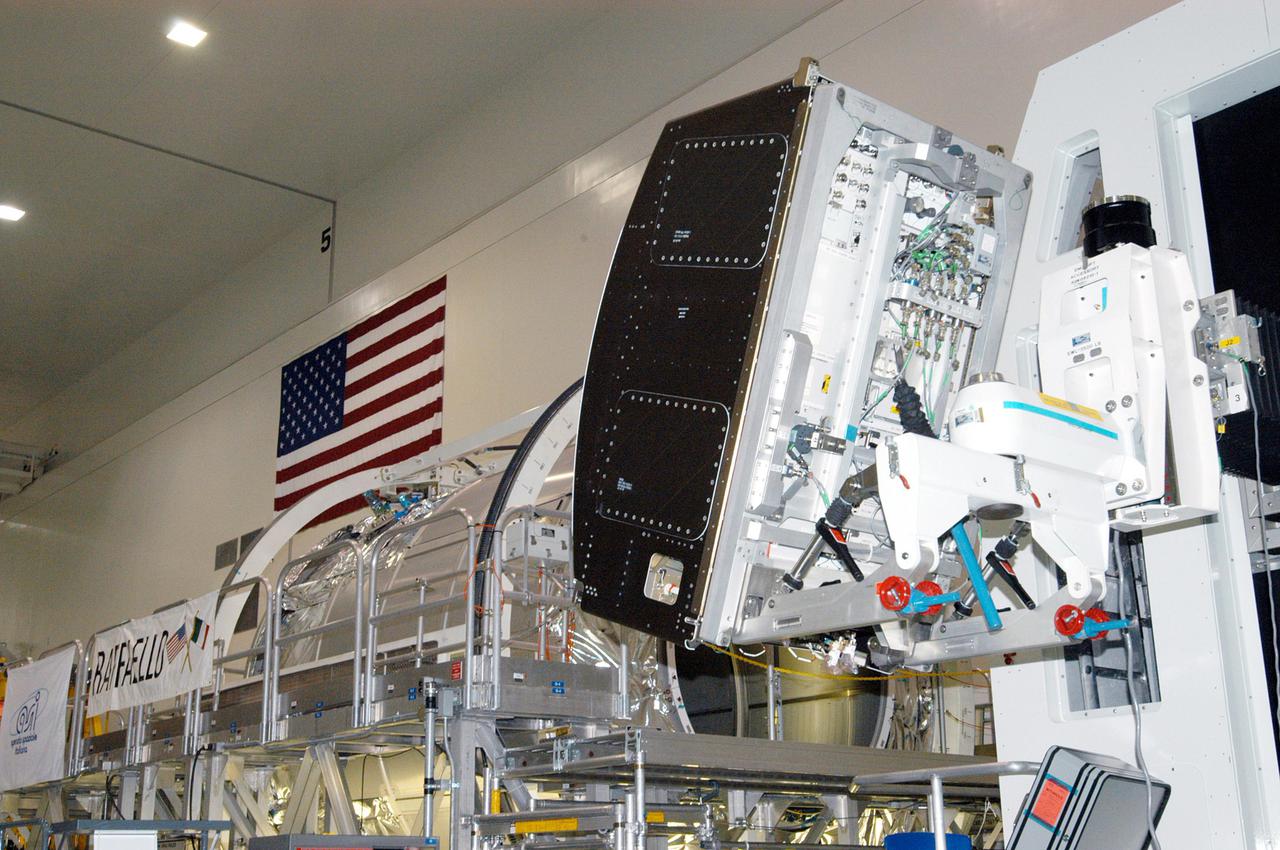
KENNEDY SPACE CENTER, FLA. - In the Space Station Processing Facility, the Human Research Facility-2 (HRF-2) science rack is attached to the Rack Insertion Device that will install it into the Multi-Purpose Logistics Module Raffaello (at left) for flight on Space Shuttle Discovery’s Return to Flight mission, STS-114. The HRF-2 will deliver additional biomedical instrumentation and research capability to the International Space Station. HRF-1, installed on the U.S. Lab since May 2001, contains an ultrasound unit and gas analyzer. Both racks provide structural, power, thermal, command and data handling, and communication and tracking interfaces between the HRF biomedical instrumentation and the U.S. Laboratory, Destiny. NASA Kennedy Space Center and their prime contractor responsible for ISS element processing, The Boeing Company, prepared the rack for installation. The HRF Project is managed by NASA Johnson Space Center and implemented through contract with Lockheed Martin, Houston, Texas.
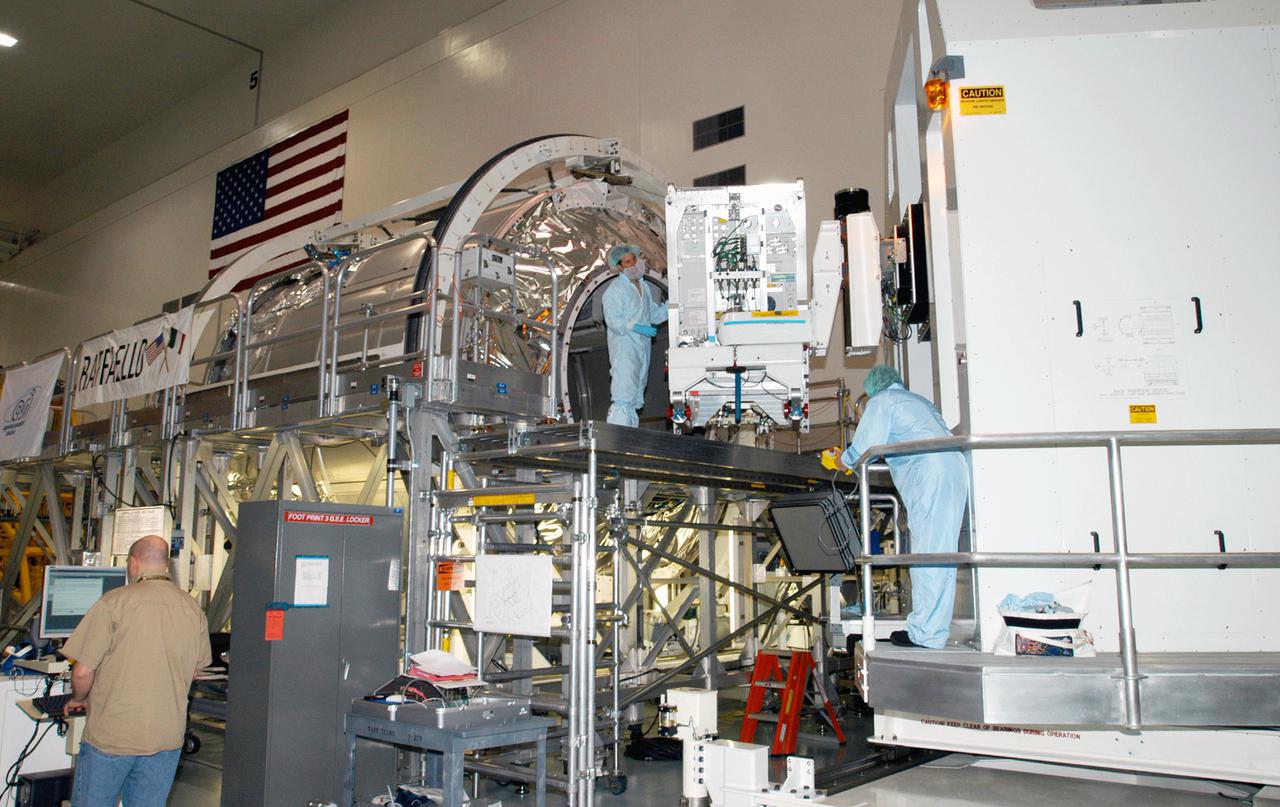
KENNEDY SPACE CENTER, FLA. - In the Space Station Processing Facility, the Rack Insertion Device moves the Human Research Facility-2 (HRF-2) science rack toward the Multi-Purpose Logistics Module Raffaello (at left) for flight on Space Shuttle Discovery’s Return to Flight mission, STS-114. The HRF-2 will deliver additional biomedical instrumentation and research capability to the International Space Station. HRF-1, installed on the U.S. Lab since May 2001, contains an ultrasound unit and gas analyzer. Both racks provide structural, power, thermal, command and data handling, and communication and tracking interfaces between the HRF biomedical instrumentation and the U.S. Laboratory, Destiny. NASA Kennedy Space Center and their prime contractor responsible for ISS element processing, The Boeing Company, prepared the rack for installation. The HRF Project is managed by NASA Johnson Space Center and implemented through contract with Lockheed Martin, Houston, Texas.
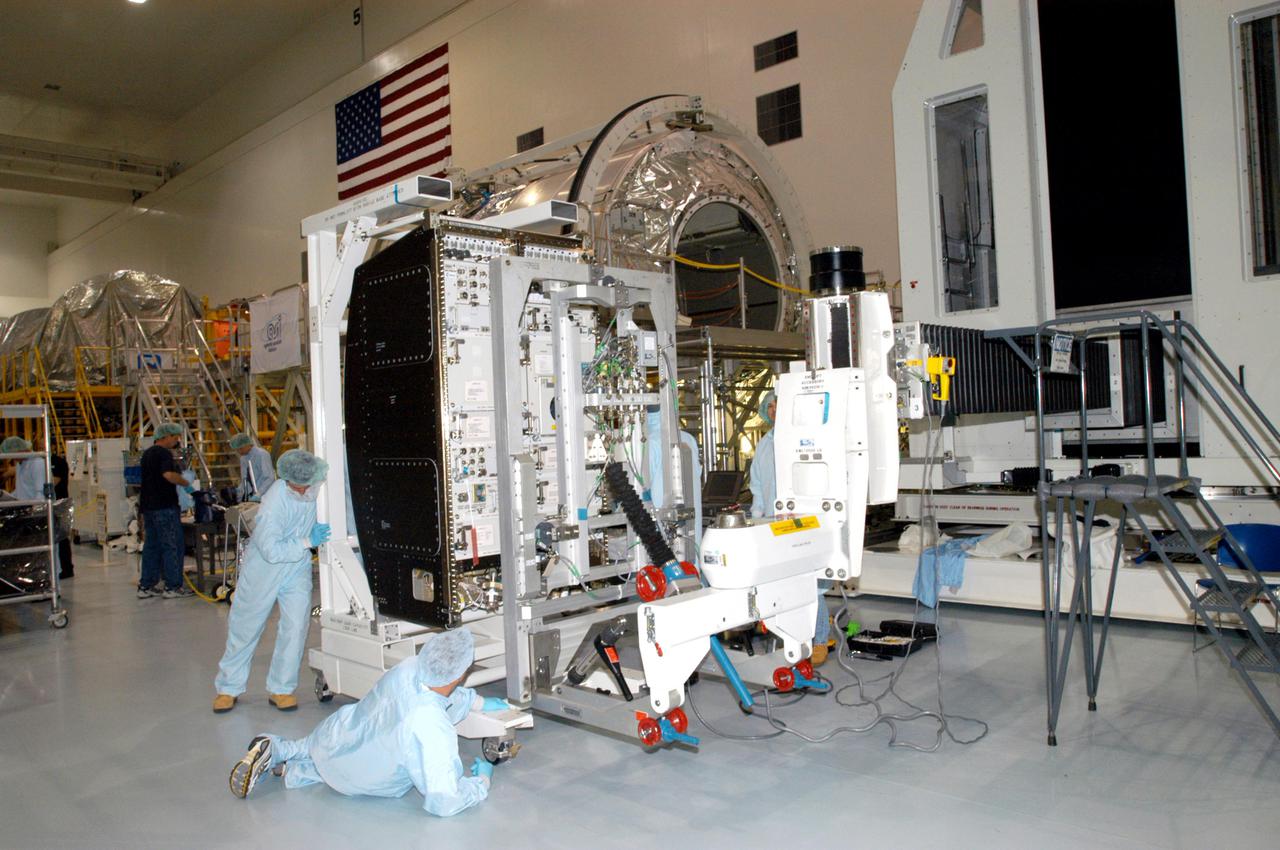
KENNEDY SPACE CENTER, FLA. - In the Space Station Processing Facility, workers prepare the Human Research Facility-2 (HRF-2) science rack for installation into the Multi-Purpose Logistics Module Raffaello for flight on Space Shuttle Discovery’s Return to Flight mission, STS-114. The HRF-2 will deliver additional biomedical instrumentation and research capability to the International Space Station. HRF-1, installed on the U.S. Lab since May 2001, contains an ultrasound unit and gas analyzer. Both racks provide structural, power, thermal, command and data handling, and communication and tracking interfaces between the HRF biomedical instrumentation and the U.S. Laboratory, Destiny. NASA Kennedy Space Center and their prime contractor responsible for ISS element processing, The Boeing Company, prepared the rack for installation. The HRF Project is managed by NASA Johnson Space Center and implemented through contract with Lockheed Martin, Houston, Texas.
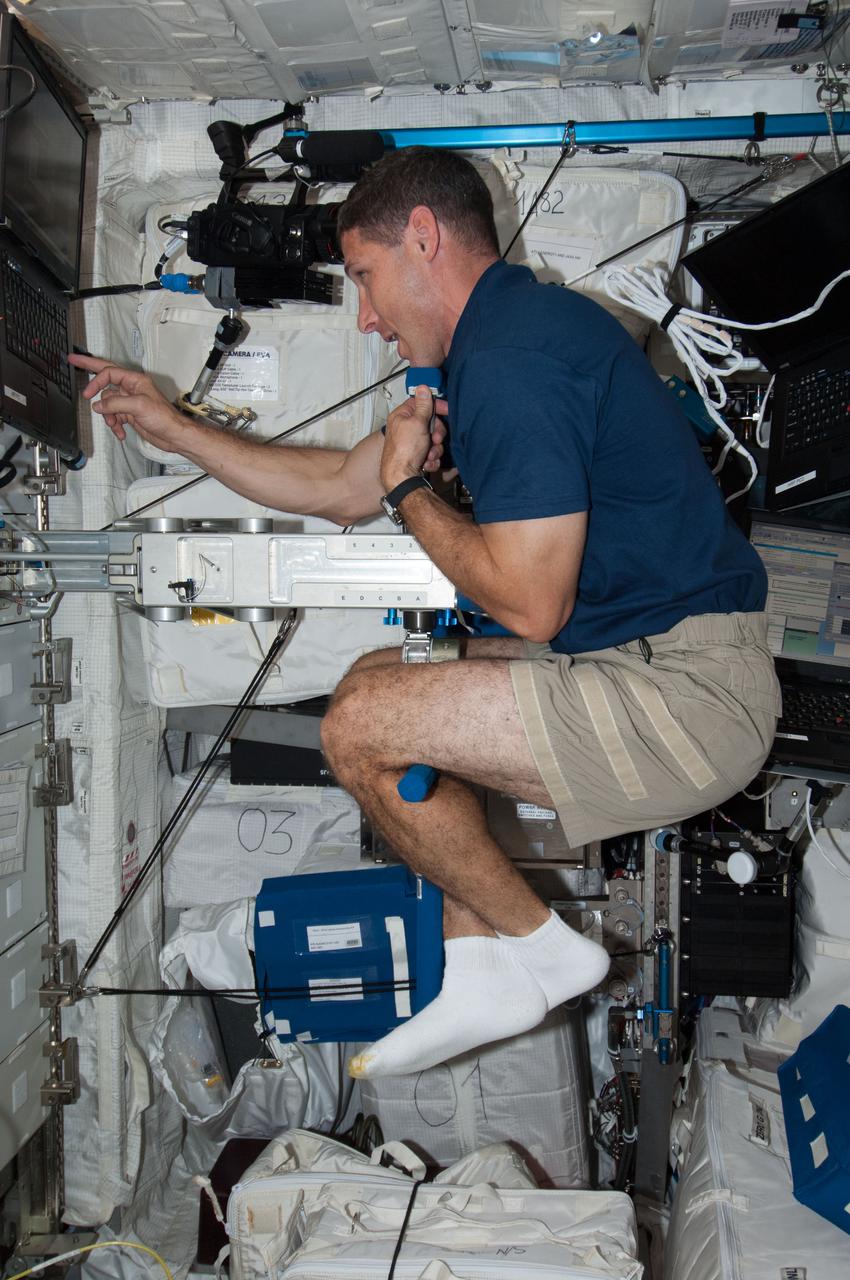
ISS037-E-006478 (3 Oct. 2013) --- NASA astronaut Michael Hopkins, Expedition 37 flight engineer, performs Body Mass Measurement activities using the Space Linear Acceleration Mass Measurement Device (SLAMMD) in the Columbus laboratory aboard the Earth-orbiting International Space Station.
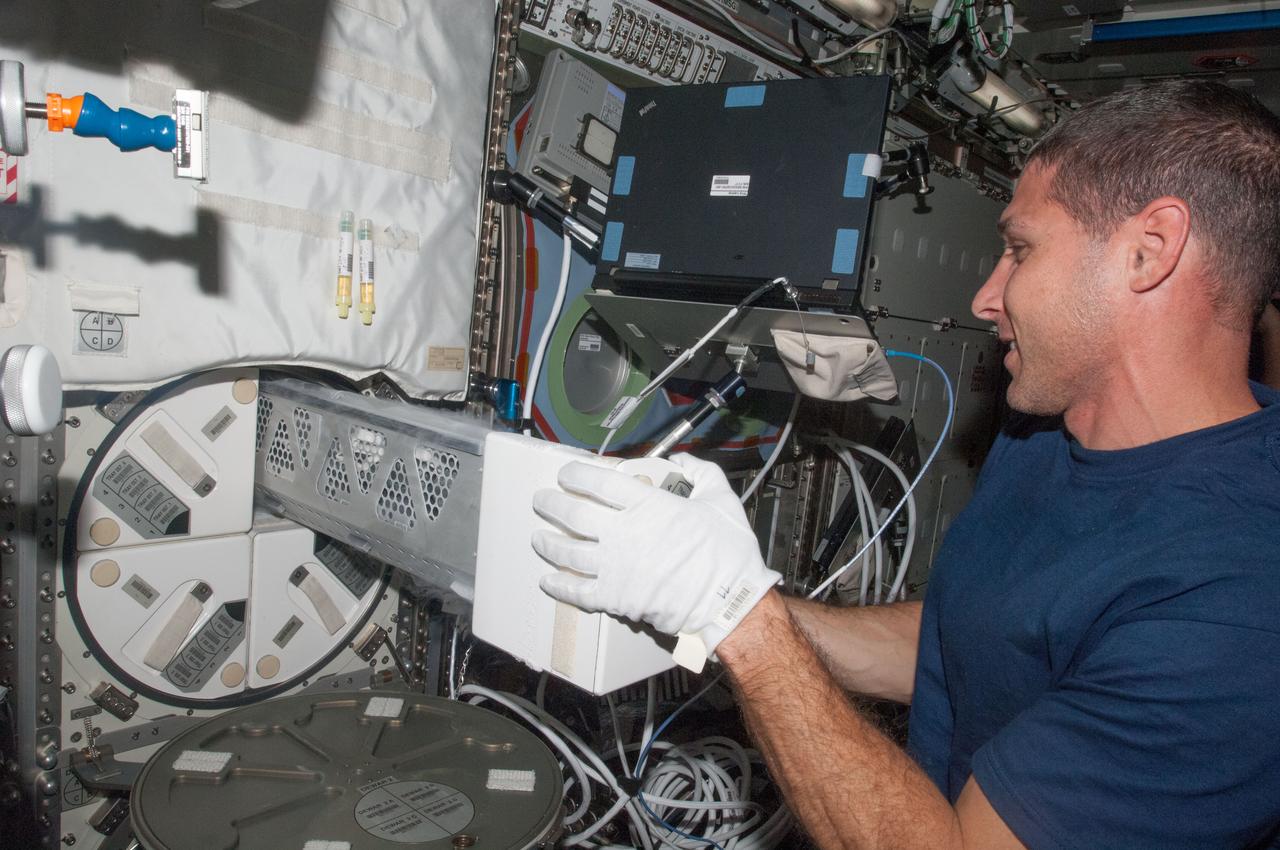
ISS037-E-010711 (5 Oct. 2013) --- In the International Space Station’s Destiny laboratory, NASA astronaut Michael Hopkins, Expedition 37 flight engineer, removes a dewar tray from the Minus Eighty Laboratory Freezer for ISS (MELFI) in order to insert biological samples into the trays.
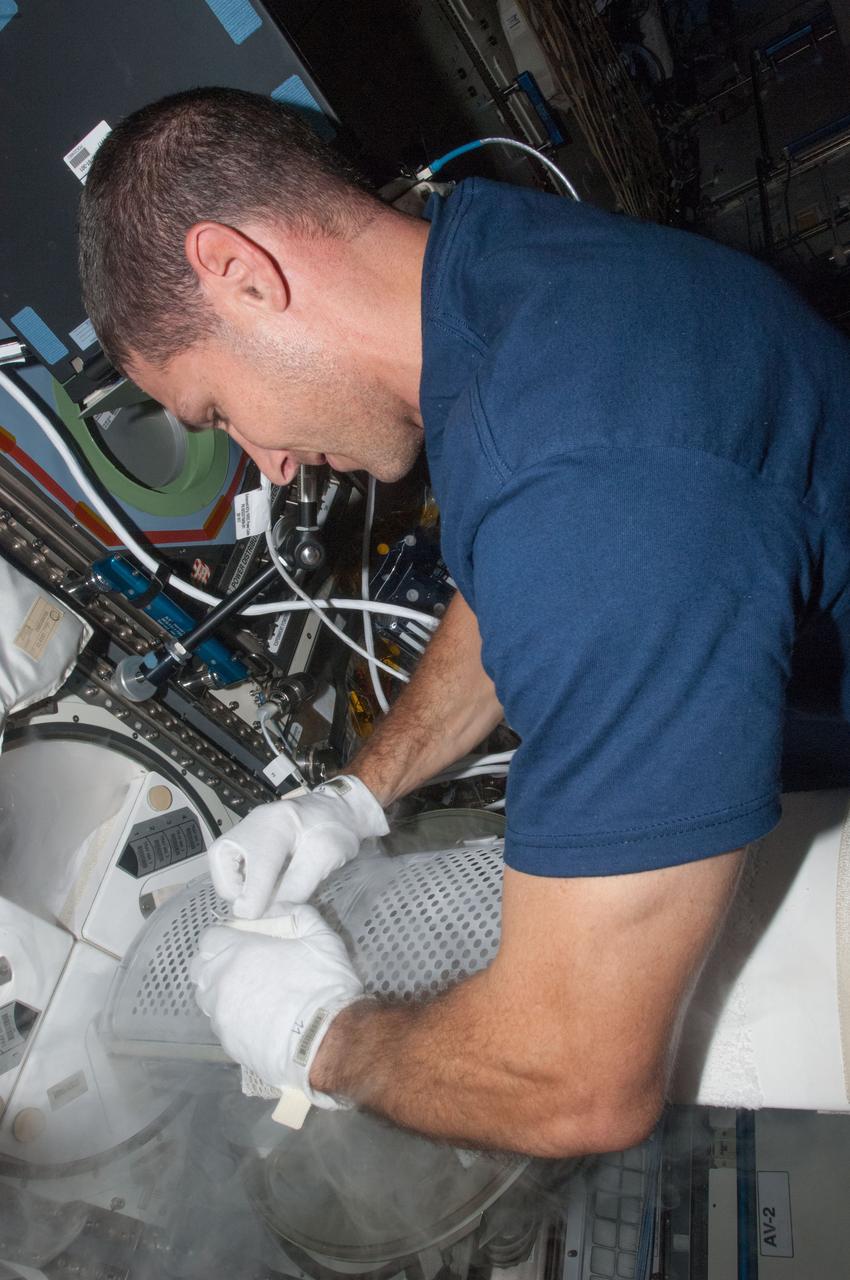
ISS037-E-010721 (5 Oct. 2013) --- A specimen of human blood or a body fluid like saliva and urine is stowed by astronaut Michael Hopkins onboard the International Space Station on Oct. 5, 2013. The objects of post-mission research by scientists on the ground, all the various aforementioned biological samples have to be frozen until the return to Earth.
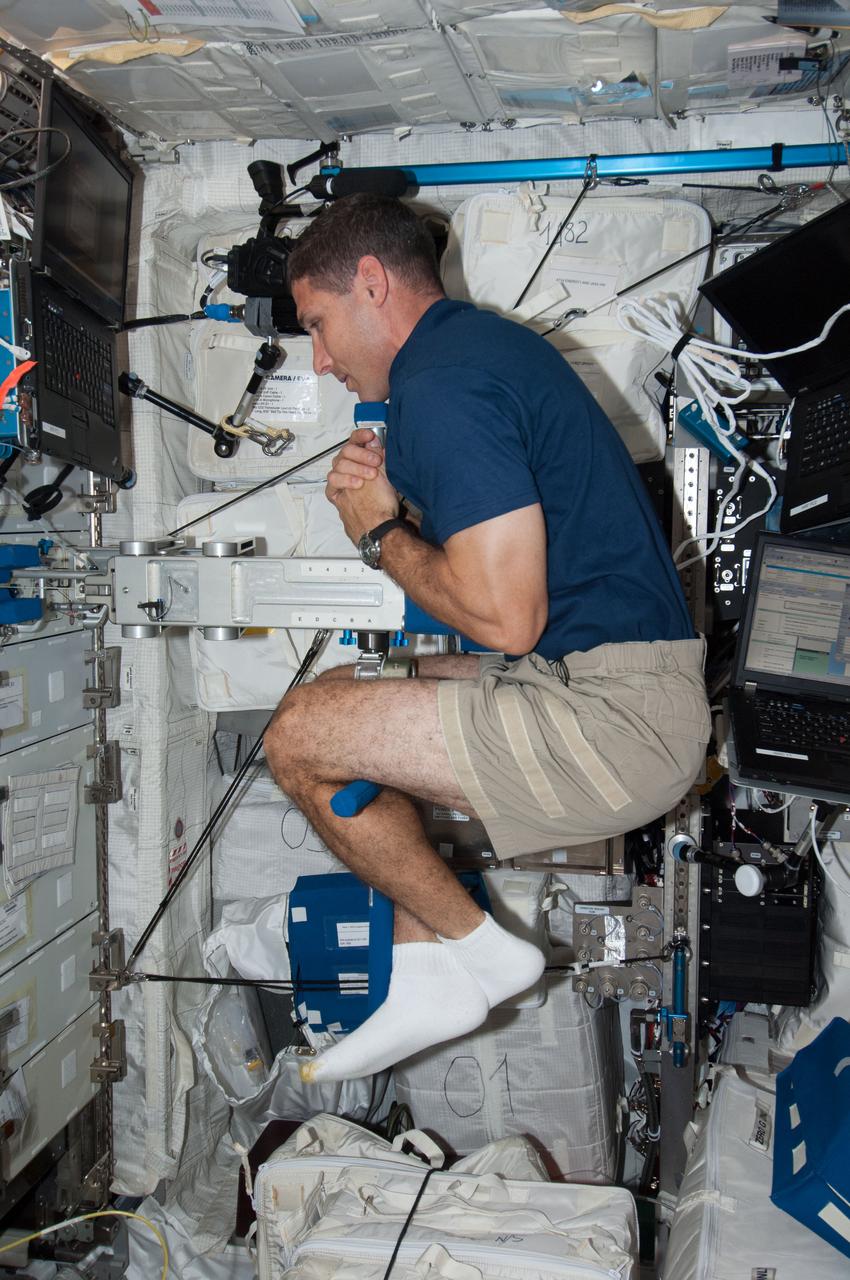
ISS037-E-006475 (3 Oct. 2013) --- NASA astronaut Michael Hopkins, Expedition 37 flight engineer, performs Body Mass Measurement activities using the Space Linear Acceleration Mass Measurement Device (SLAMMD) in the Columbus laboratory aboard the Earth-orbiting International Space Station.
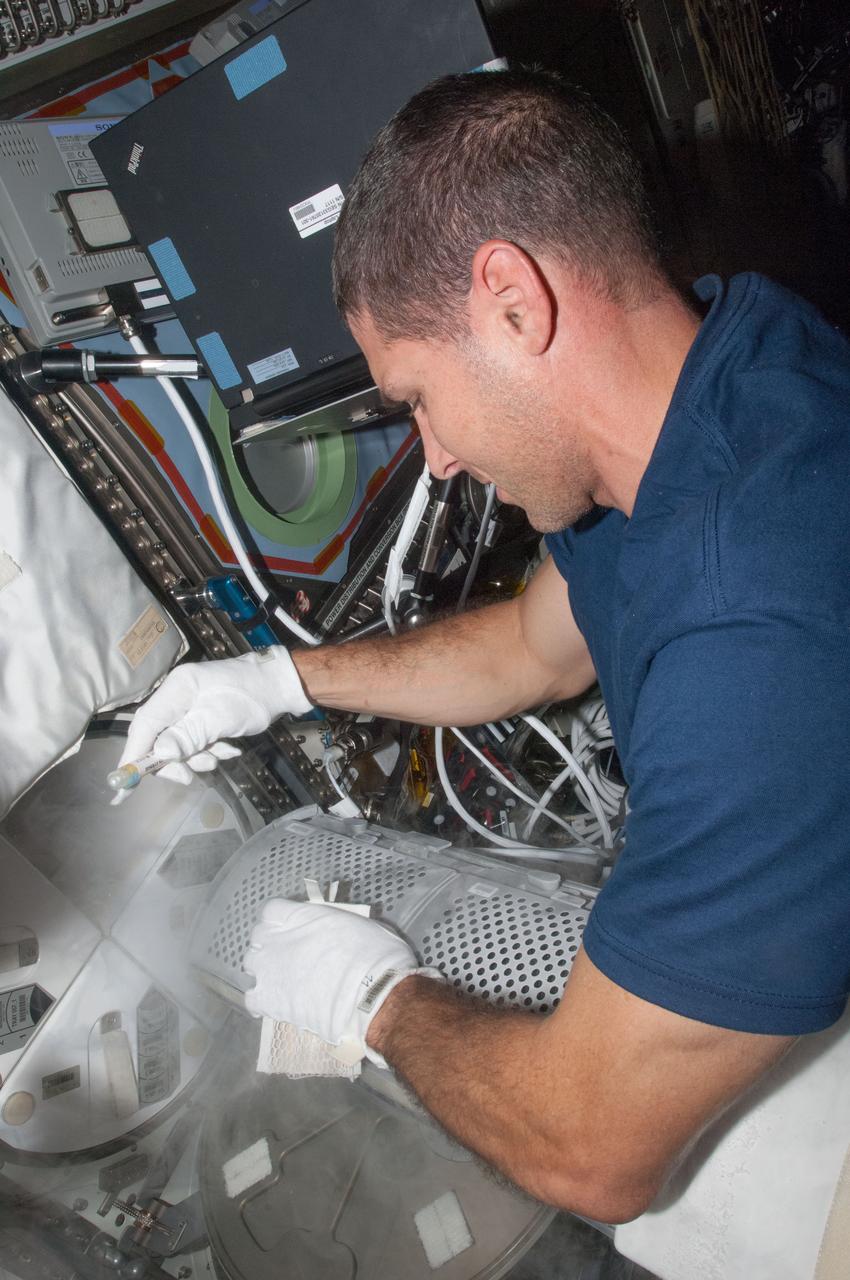
ISS037-E-010725 (5 Oct. 2013) --- NASA astronaut Michael Hopkins, Expedition 37 flight engineer, prepares to insert samples into a Minus Eighty Laboratory Freezer for ISS (MELFI) dewar tray in the International Space Station’s Destiny laboratory.
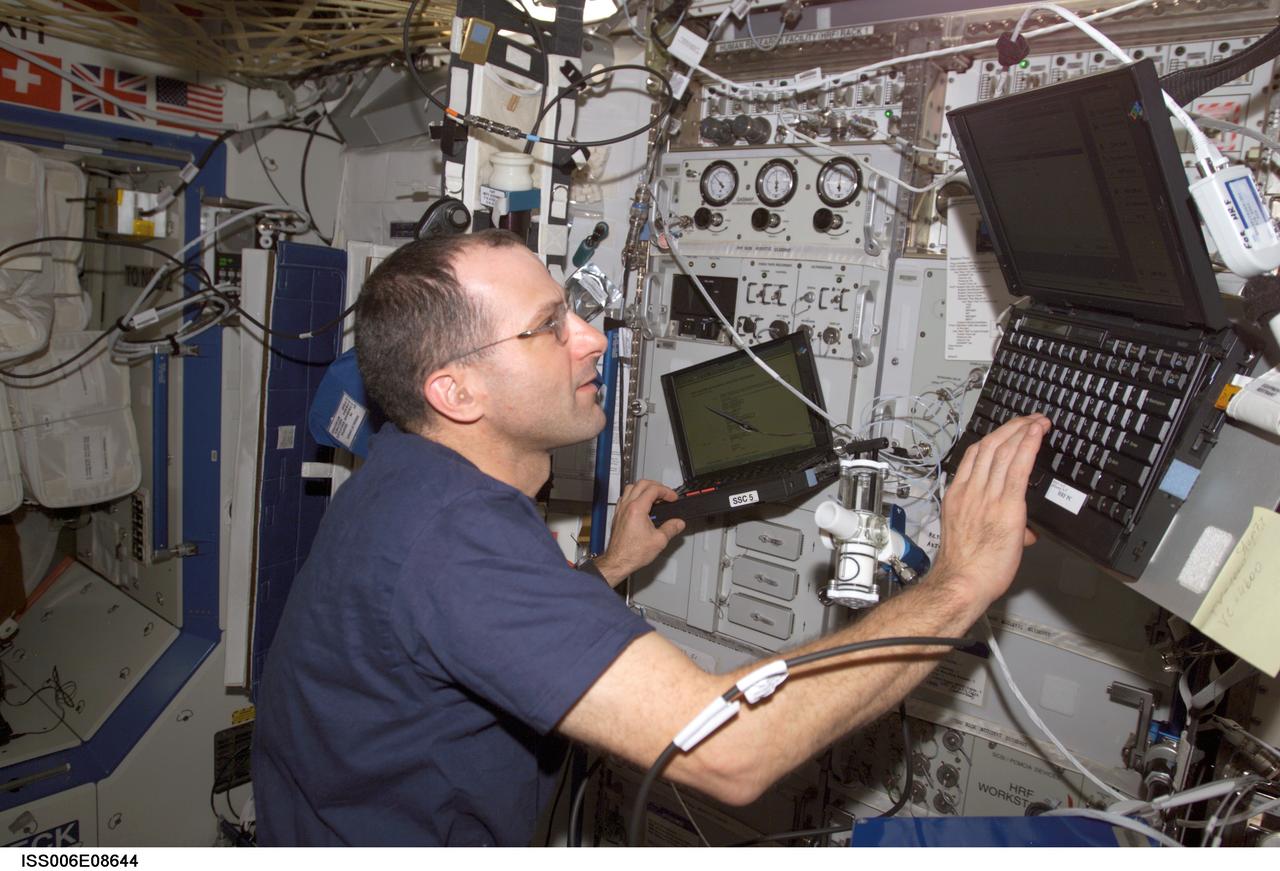
ISS006-E-08644 (9 December 2002) --- Astronaut Donald R. Pettit, Expedition Six NASA ISS science officer, works to set up Pulmonary Function in Flight (PuFF) hardware in preparation for a Human Research Facility (HRF) experiment in the Destiny laboratory on the International Space Station (ISS). Expedition Six is the fourth and final expedition crew to perform the HRF/PuFF Experiment on the ISS.
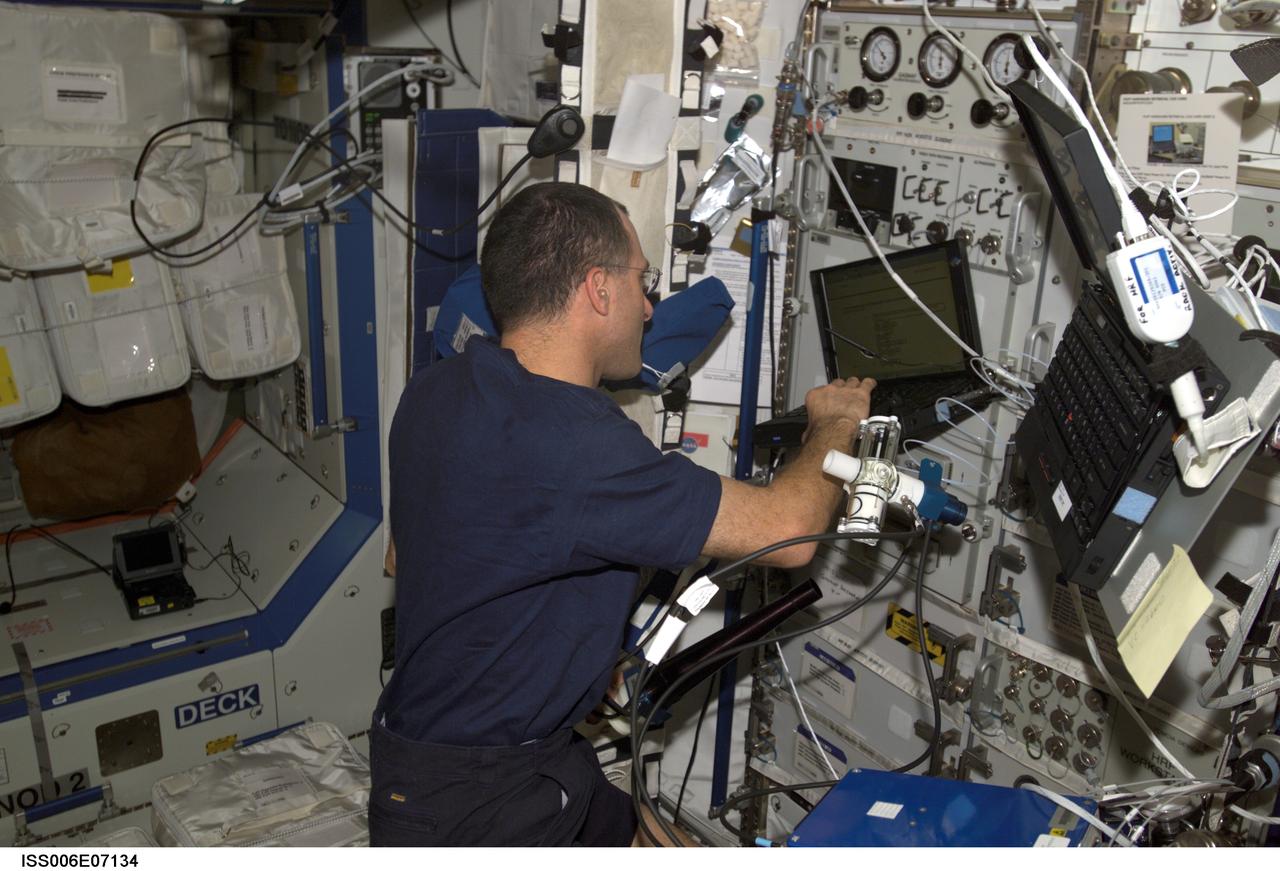
ISS006-E-07134 (9 December 2002) --- Astronaut Donald R. Pettit, Expedition Six NASA ISS science officer, works to set up Pulmonary Function in Flight (PuFF) hardware in preparation for a Human Research Facility (HRF) experiment in the Destiny laboratory on the International Space Station (ISS). Expedition Six is the fourth and final expedition crew to perform the HRF/PuFF Experiment on the ISS.
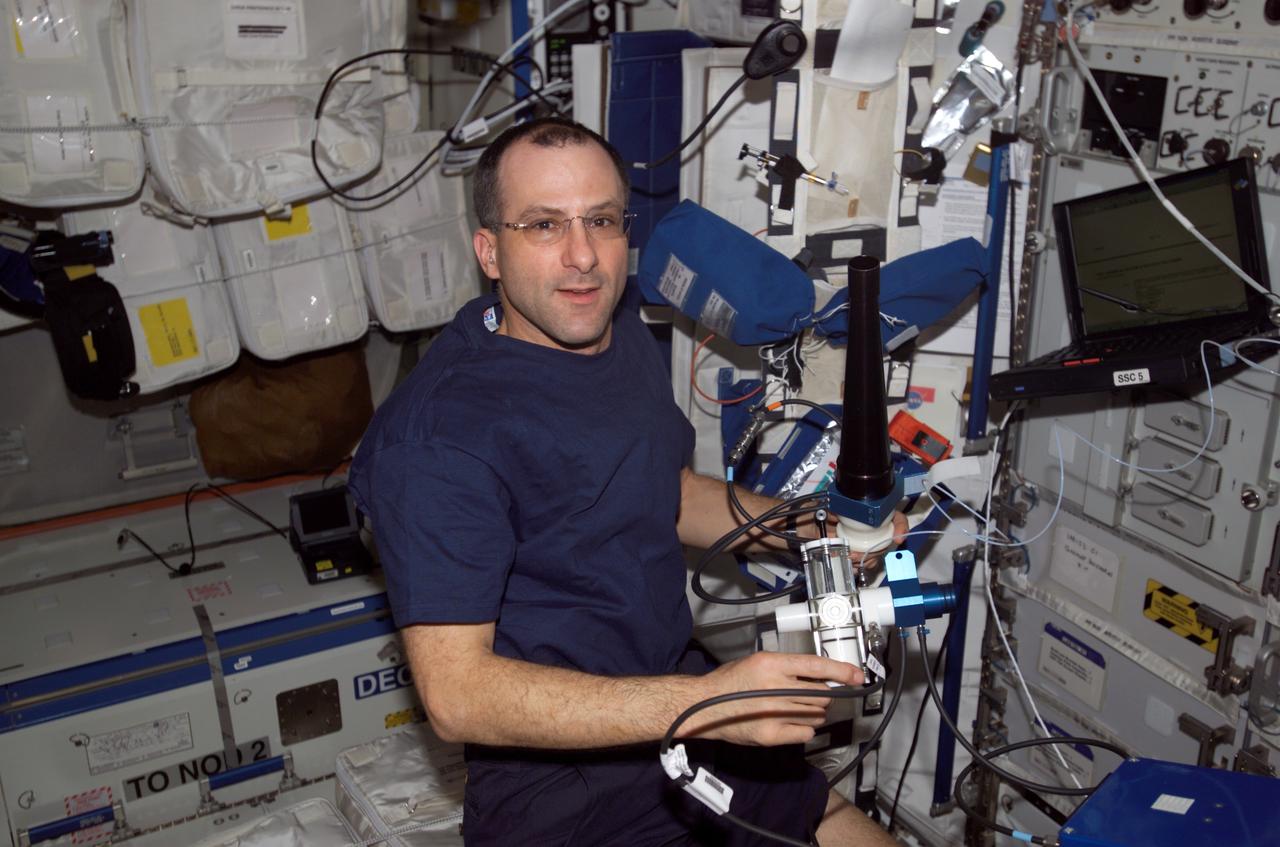
ISS006-E-07133 (9 December 2002) --- Astronaut Donald R. Pettit, Expedition 6 NASA ISS science officer, works to set up Pulmonary Function in Flight (PuFF) hardware in preparation for a Human Research Facility (HRF) experiment in the Destiny laboratory on the International Space Station (ISS). Expedition 6 is the fourth and final expedition crew to perform the HRF/PuFF Experiment on the ISS.
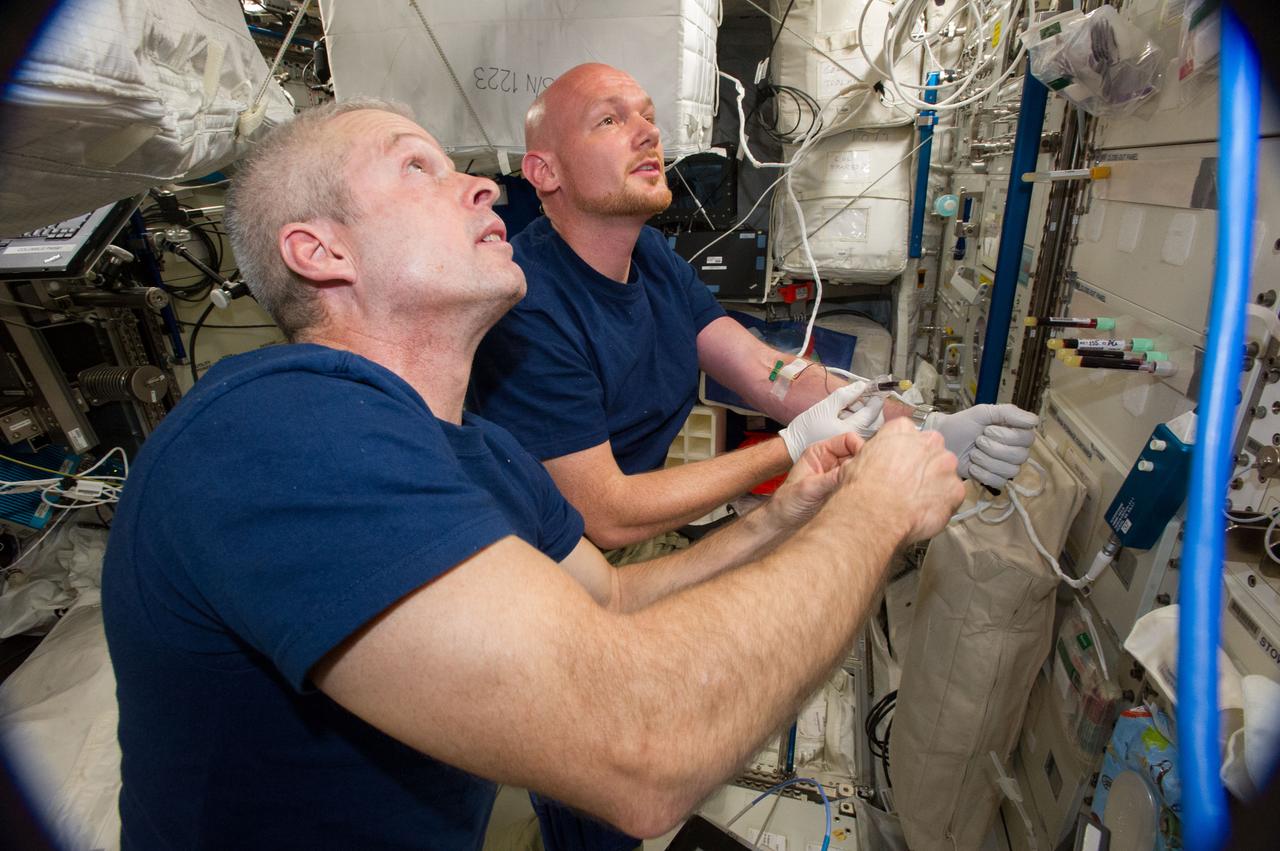
Astronaut Alexander Gerst,Expedition 40 flight engineer (background),and Expedition 40 Commander Steve Swanson are photographed performing blood sample collection in the Columbus module as part of HRF Generic Frozen Blood Collection Operations.
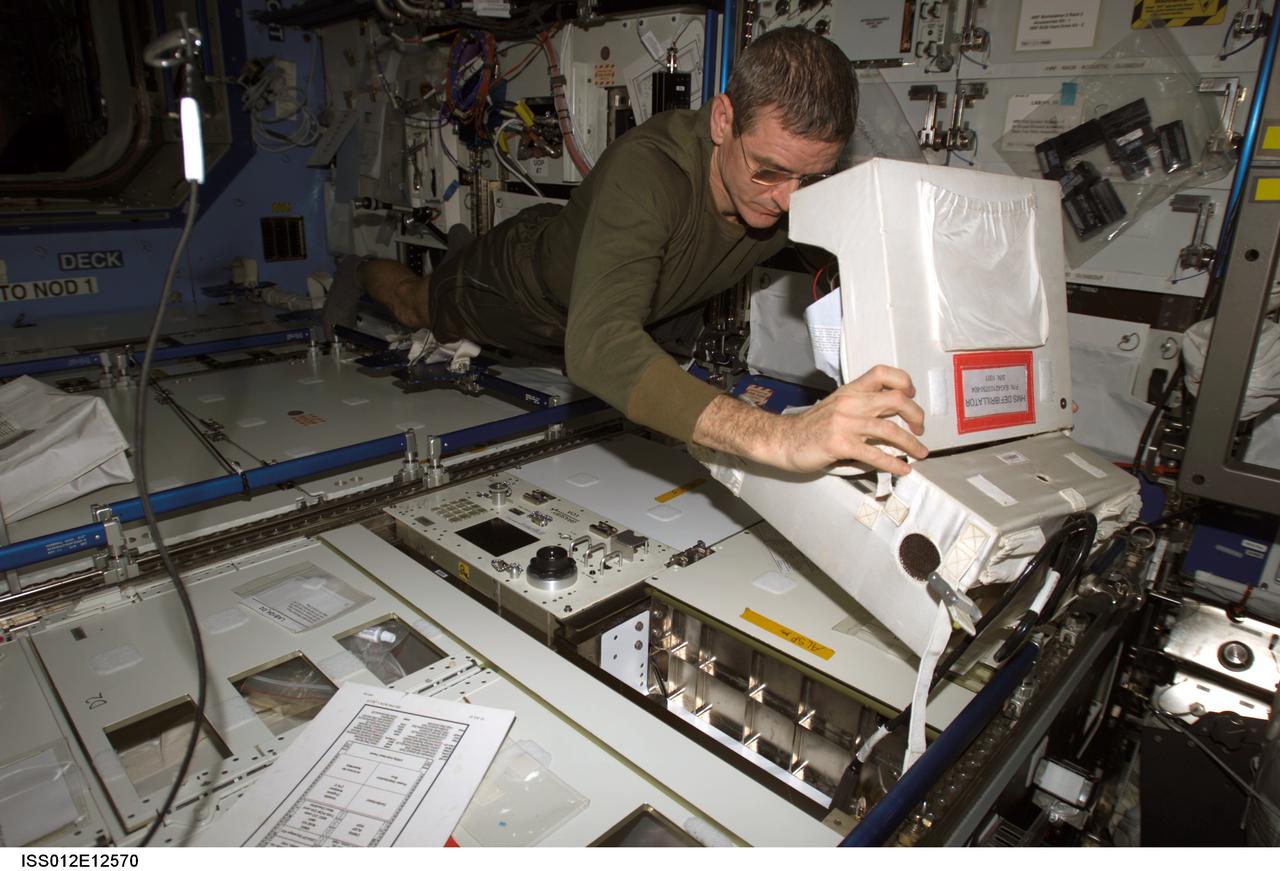
ISS012-E-12570 (16 Dec. 2005) --- Astronaut William S. (Bill) McArthur Jr., Expedition 12 commander and NASA space station science officer, completes a battery charge on a cardiac defibrillator at the Human Research Facility (HRF) in the Destiny laboratory of the International Space Station.
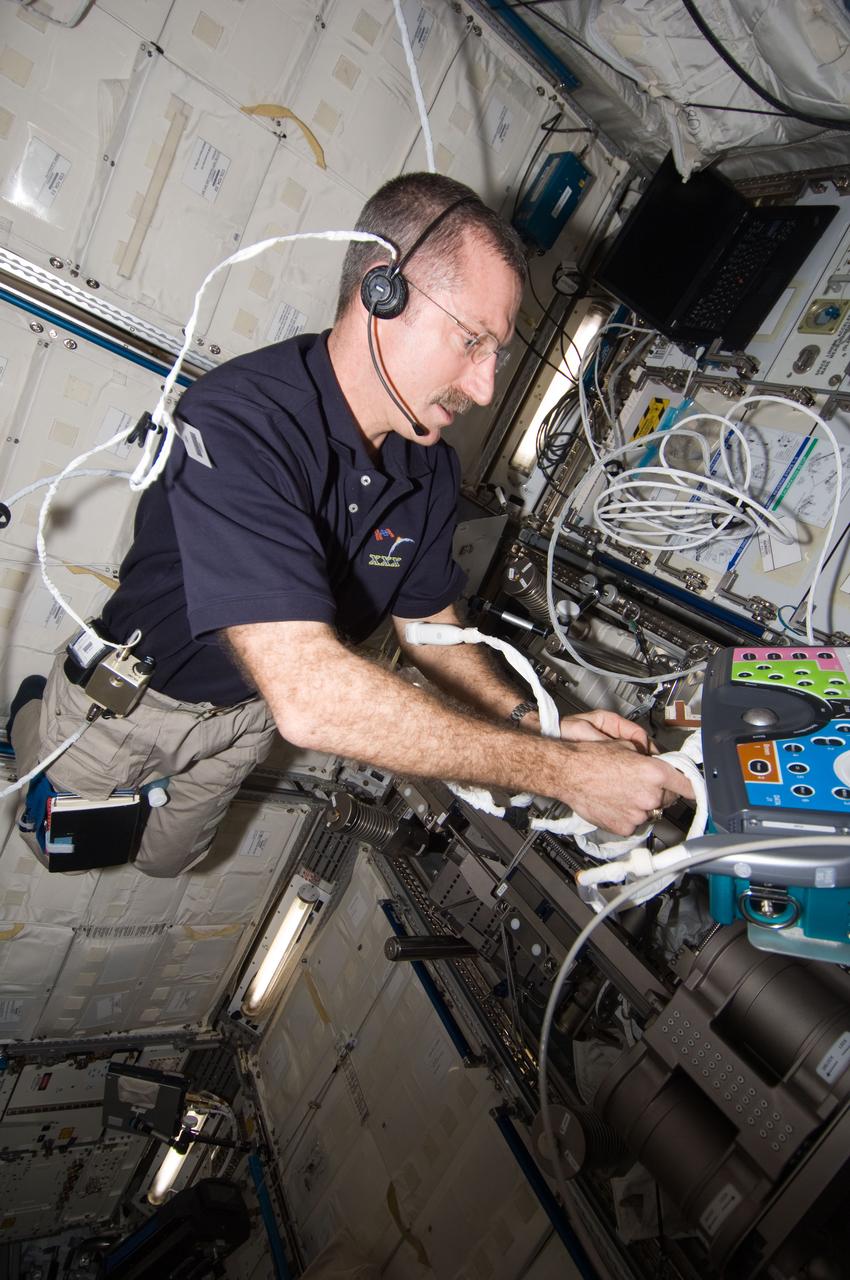
ISS030-E-155938 (20 Jan. 2012) --- NASA astronaut Dan Burbank, Expedition 30 commander, sets up the Integrated Cardiovascular (ICV) Resting Echo Scan at the Human Research Facility (HRF) rack in the Columbus laboratory of the International Space Station.
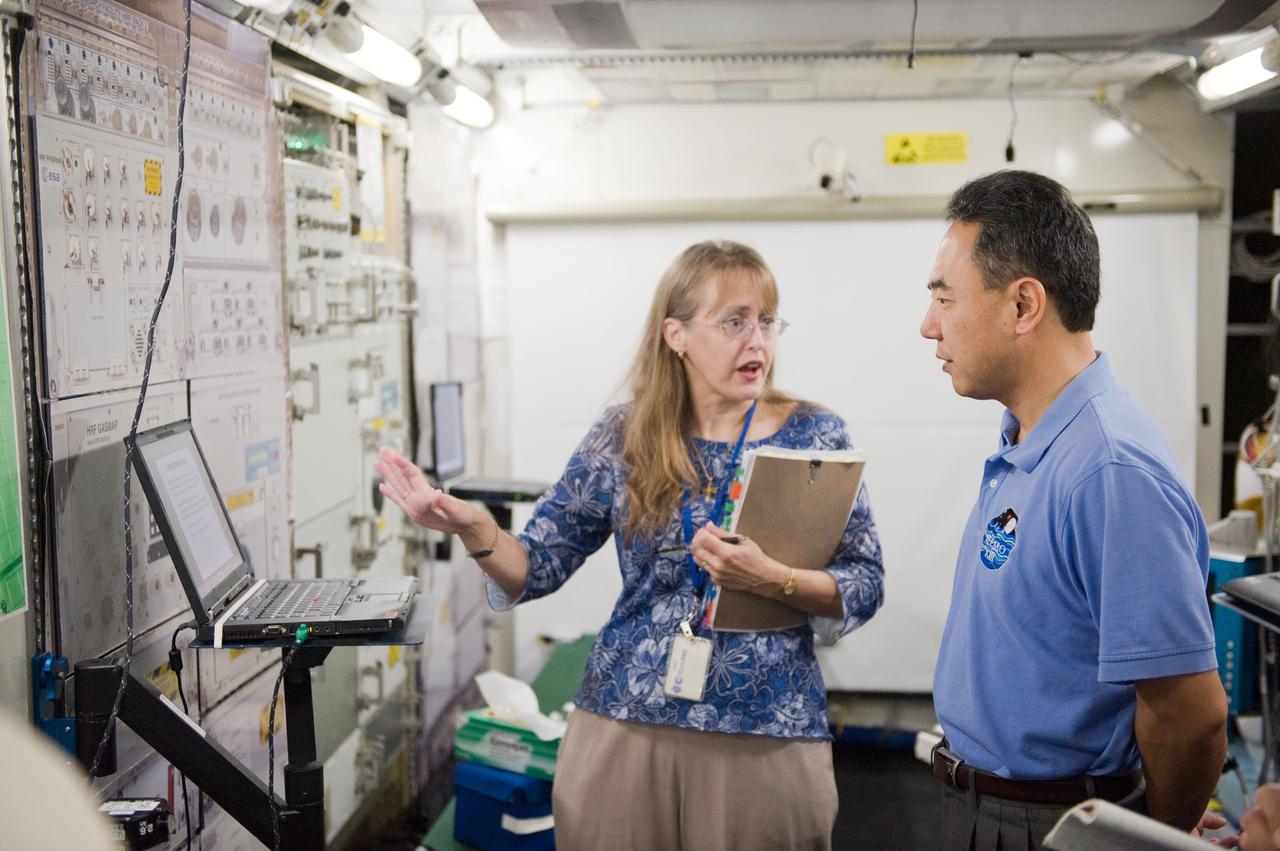
PHOTO DATE: 09-17-10 LOCATION: Bldg. 9NW - ISS Mockups SUBJECT: JAXA astronaut and Expedition 28 crew member Satoshi Furukawa during P HRF Integ Cardio Integration Ops training WORK ORDER: 02810-BS__HRFSATOSHI_09-17-10 PHOTOGRAPHER: BILL STAFFORD
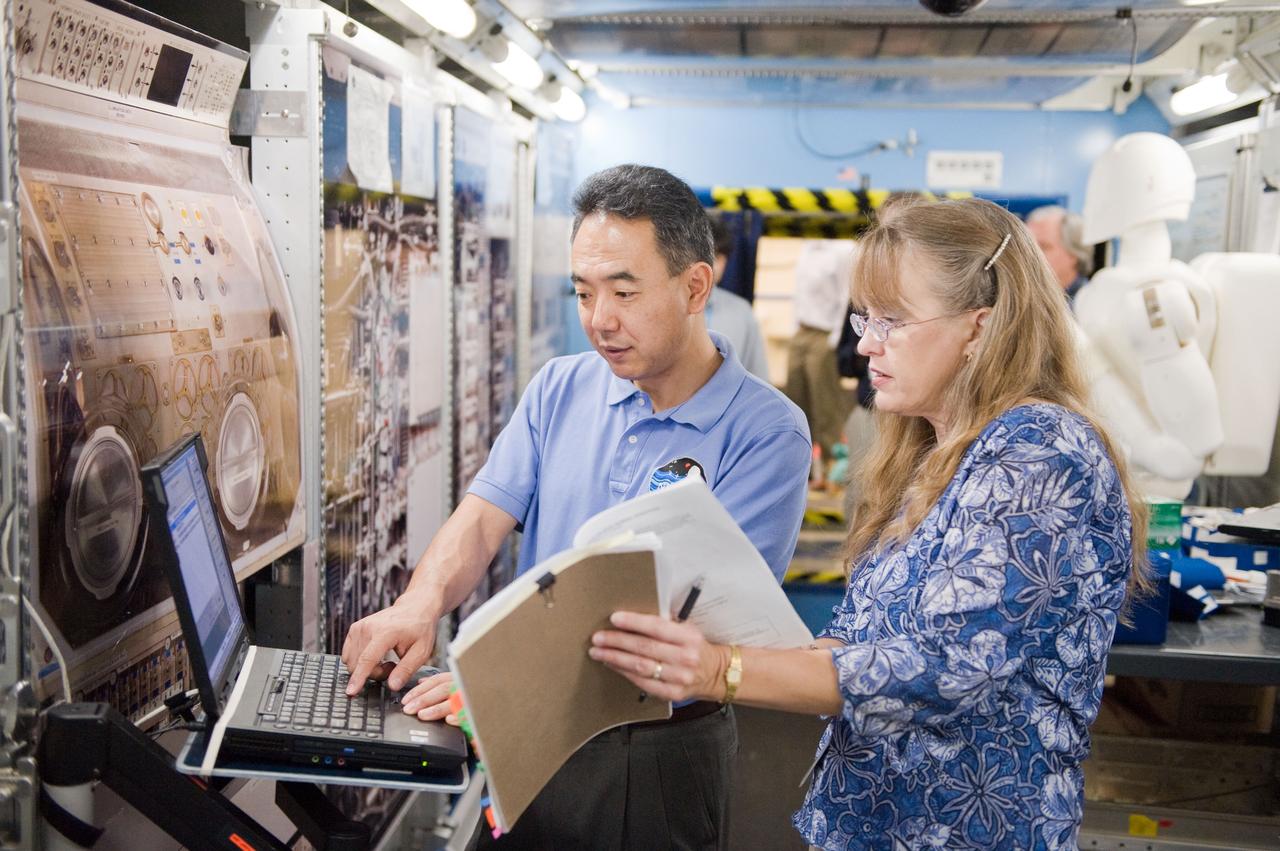
PHOTO DATE: 09-17-10 LOCATION: Bldg. 9NW - ISS Mockups SUBJECT: JAXA astronaut and Expedition 28 crew member Satoshi Furukawa during P HRF Integ Cardio Integration Ops training WORK ORDER: 02810-BS__HRFSATOSHI_09-17-10 PHOTOGRAPHER: BILL STAFFORD
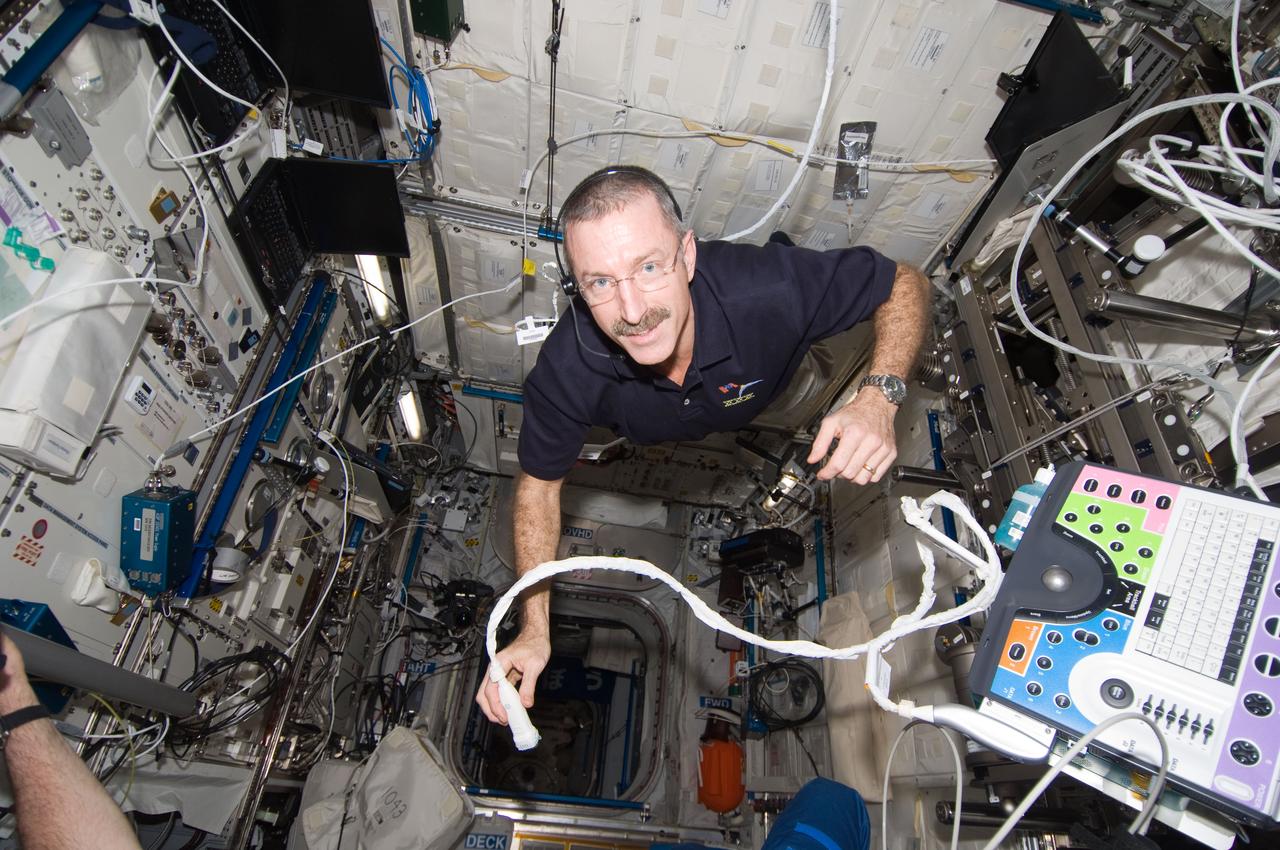
ISS030-E-155942 (20 Jan. 2012) --- NASA astronaut Dan Burbank, Expedition 30 commander, prepares to use the Integrated Cardiovascular (ICV) Resting Echo Scan on a crew member (out of frame) at the Human Research Facility (HRF) rack in the Columbus laboratory of the International Space Station.
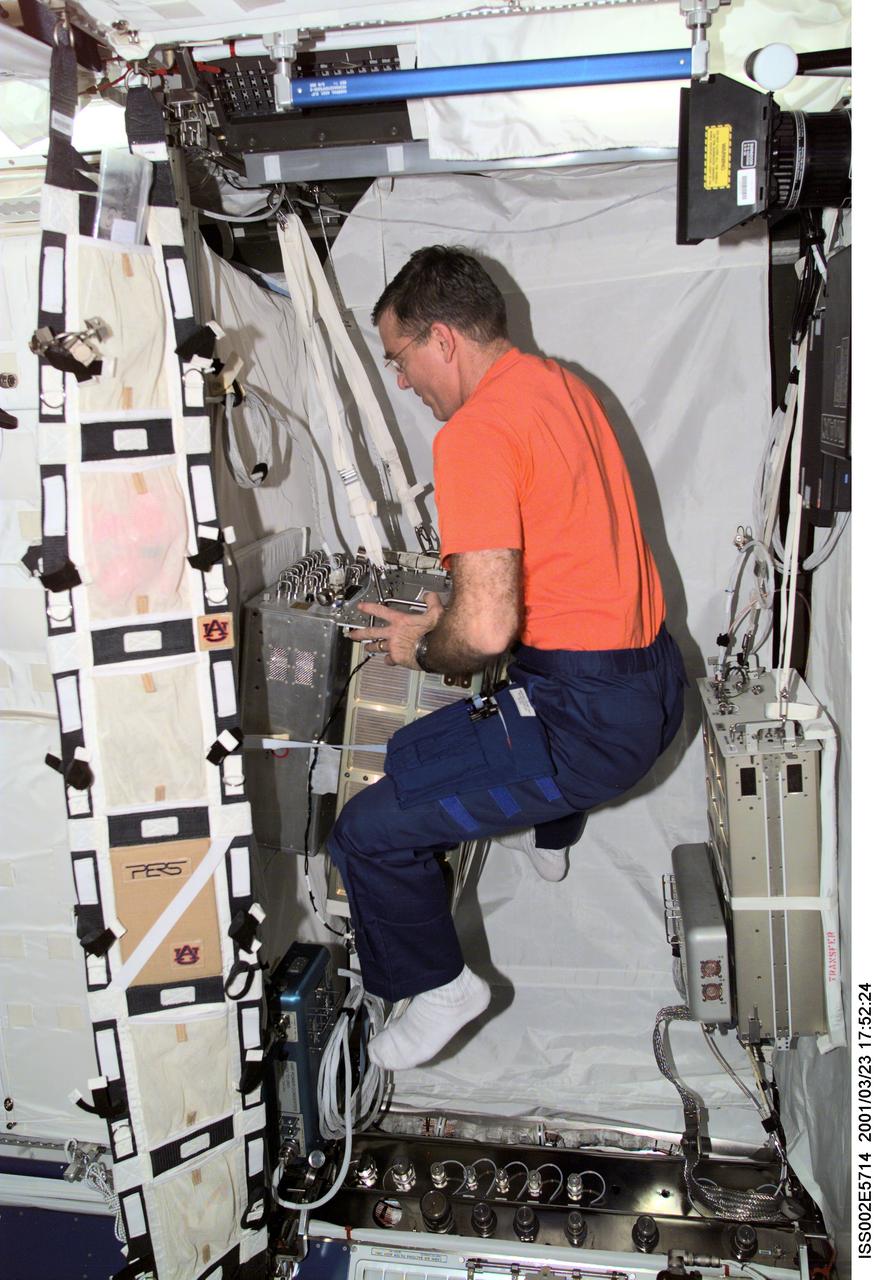
ISS002-E-5714 (23 March 2001) --- Astronaut James S. Voss, Expedition Two flight engineer, sets up the Bonner Ball Neutron Detector (BBND) in the Destiny laboratory. The BBND is connected to the Human Research Facility (HRF). This image was recorded with a digital still camera.
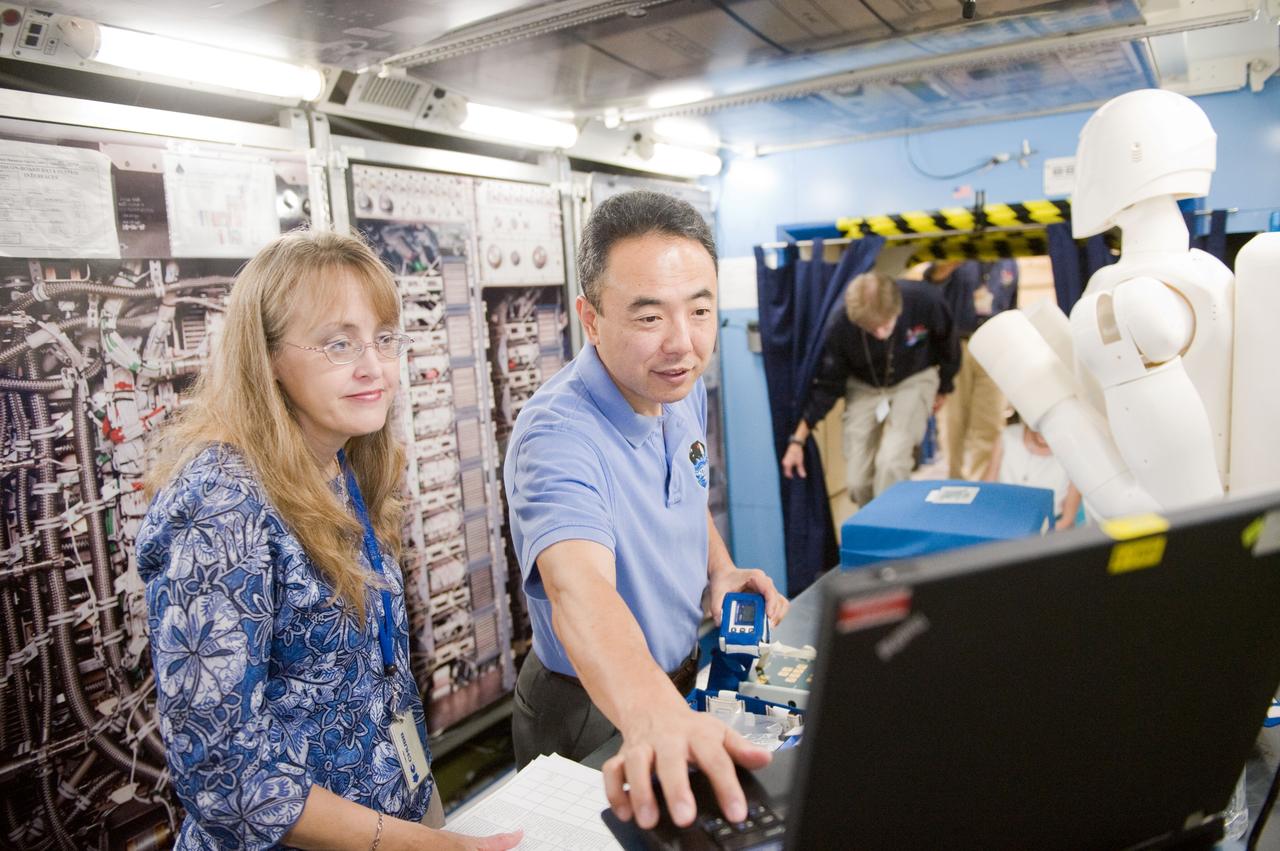
PHOTO DATE: 09-17-10 LOCATION: Bldg. 9NW - ISS Mockups SUBJECT: JAXA astronaut and Expedition 28 crew member Satoshi Furukawa during P HRF Integ Cardio Integration Ops training WORK ORDER: 02810-BS__HRFSATOSHI_09-17-10 PHOTOGRAPHER: BILL STAFFORD
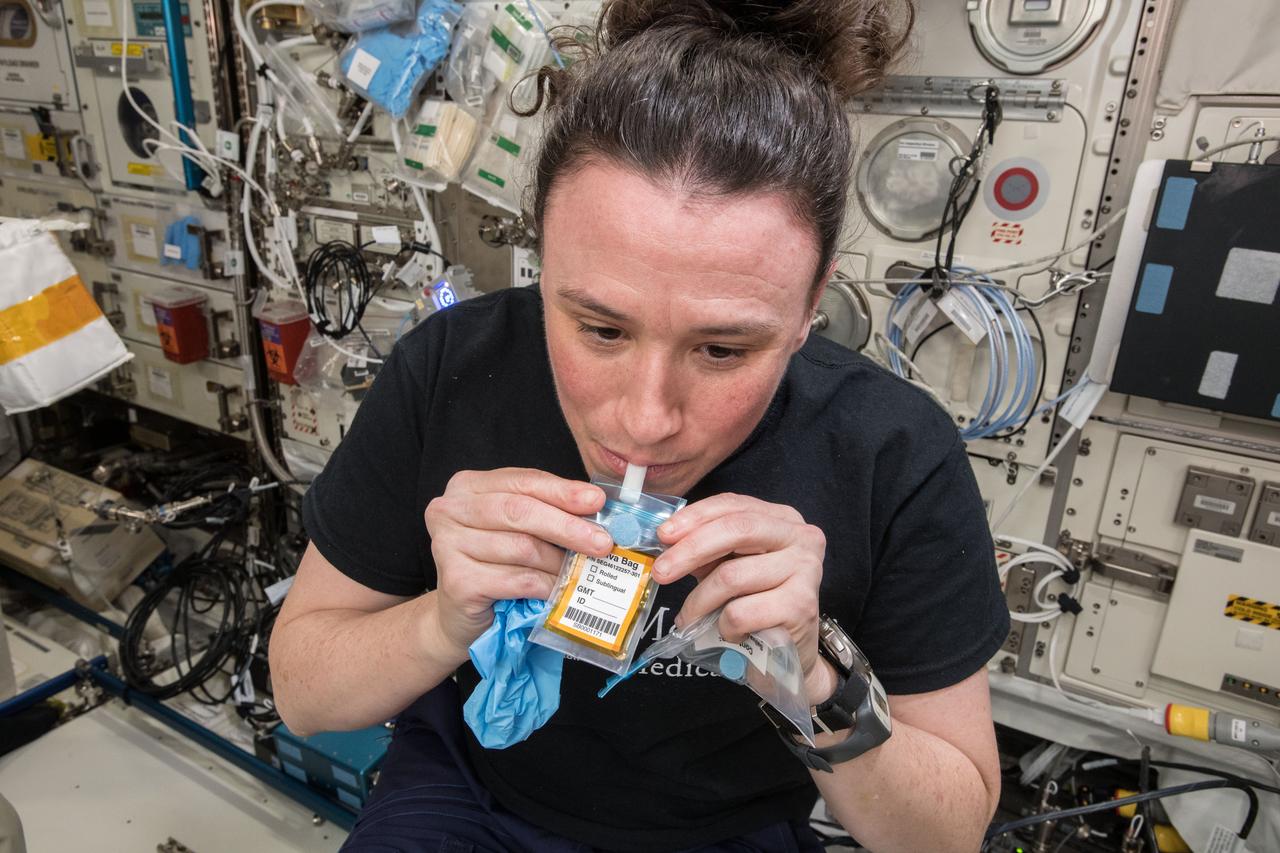
iss056e200842 (10/3/2018) - NASA astronaut Serena Auñón-Chancellor, during Functional Immune saliva collection at the Human Research Facility (HRF), in the Columbus Module. The Functional Immune investigation analyzes blood and saliva samples to determine the changes taking place in crew members’ immune systems during flight.
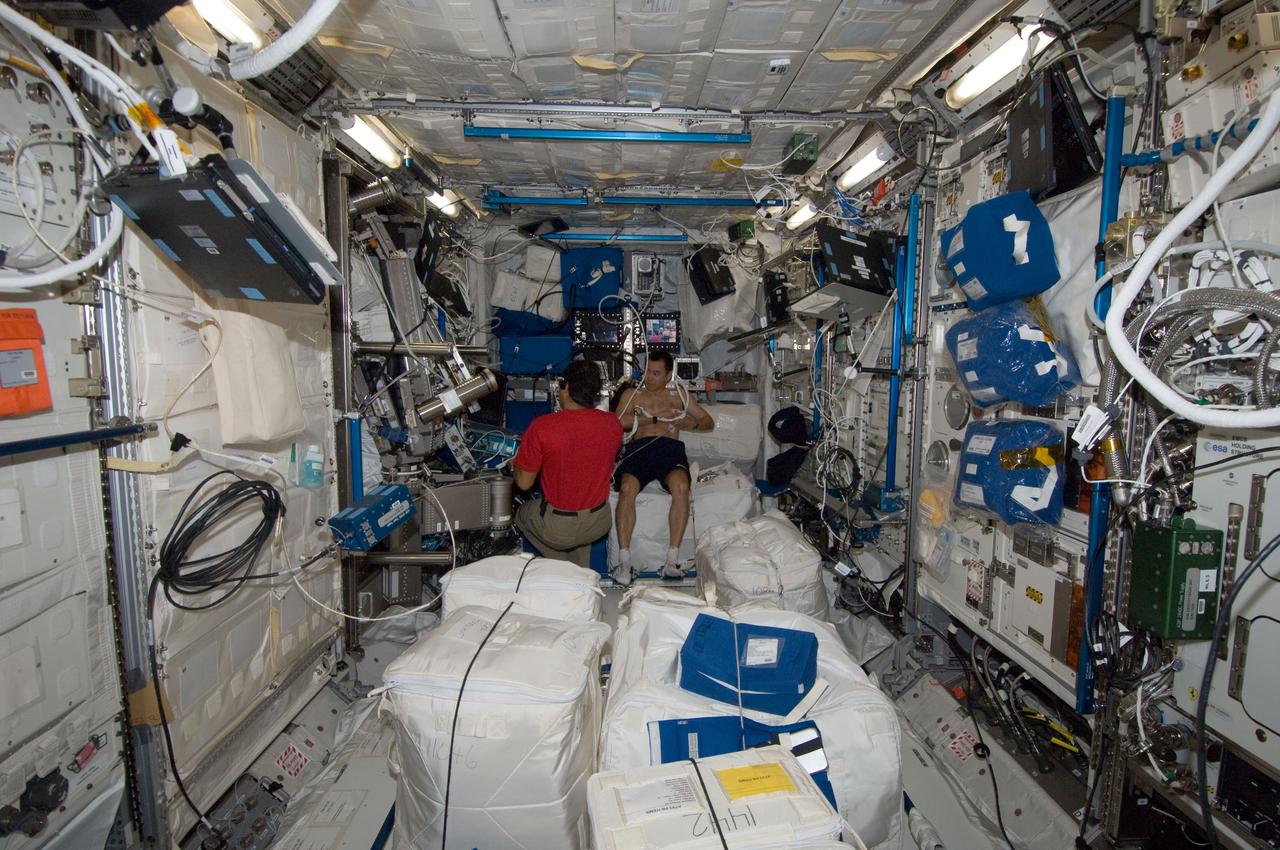
ISS032-E-011853 (1 Aug. 2012) --- NASA astronaut Joe Acaba (left) and Japan Aerospace Exploration Agency astronaut Aki Hoshide, both Expedition 32 flight engineers, perform an Integrated Cardiovascular (ICV) Resting Echo Scan at the Human Research Facility (HRF) rack in the Columbus laboratory of the International Space Station.
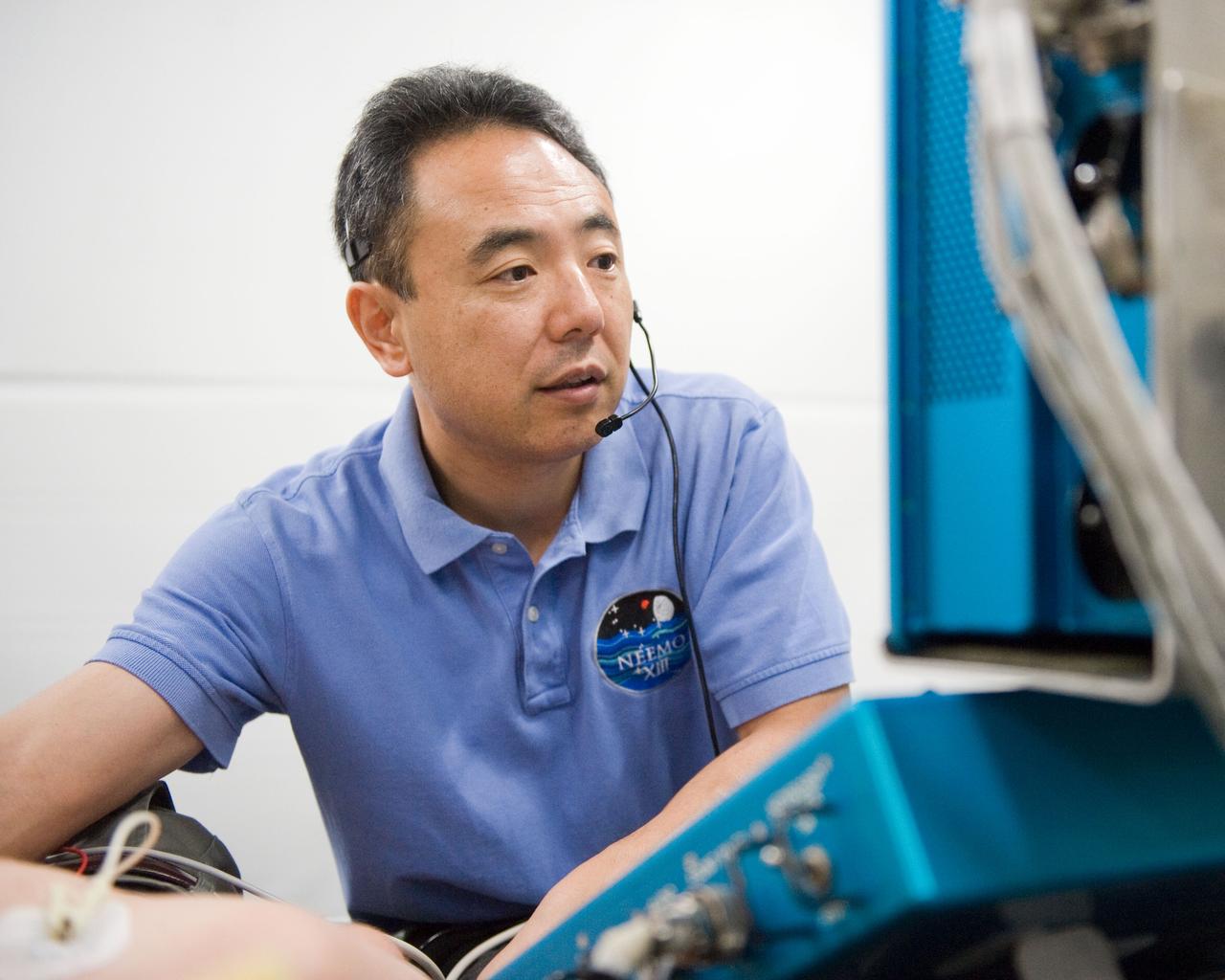
PHOTO DATE: 09-17-10 LOCATION: Bldg. 9NW - ISS Mockups SUBJECT: JAXA astronaut and Expedition 28 crew member Satoshi Furukawa during P HRF Integ Cardio Integration Ops training WORK ORDER: 02810-BS__HRFSATOSHI_09-17-10 PHOTOGRAPHER: BILL STAFFORD
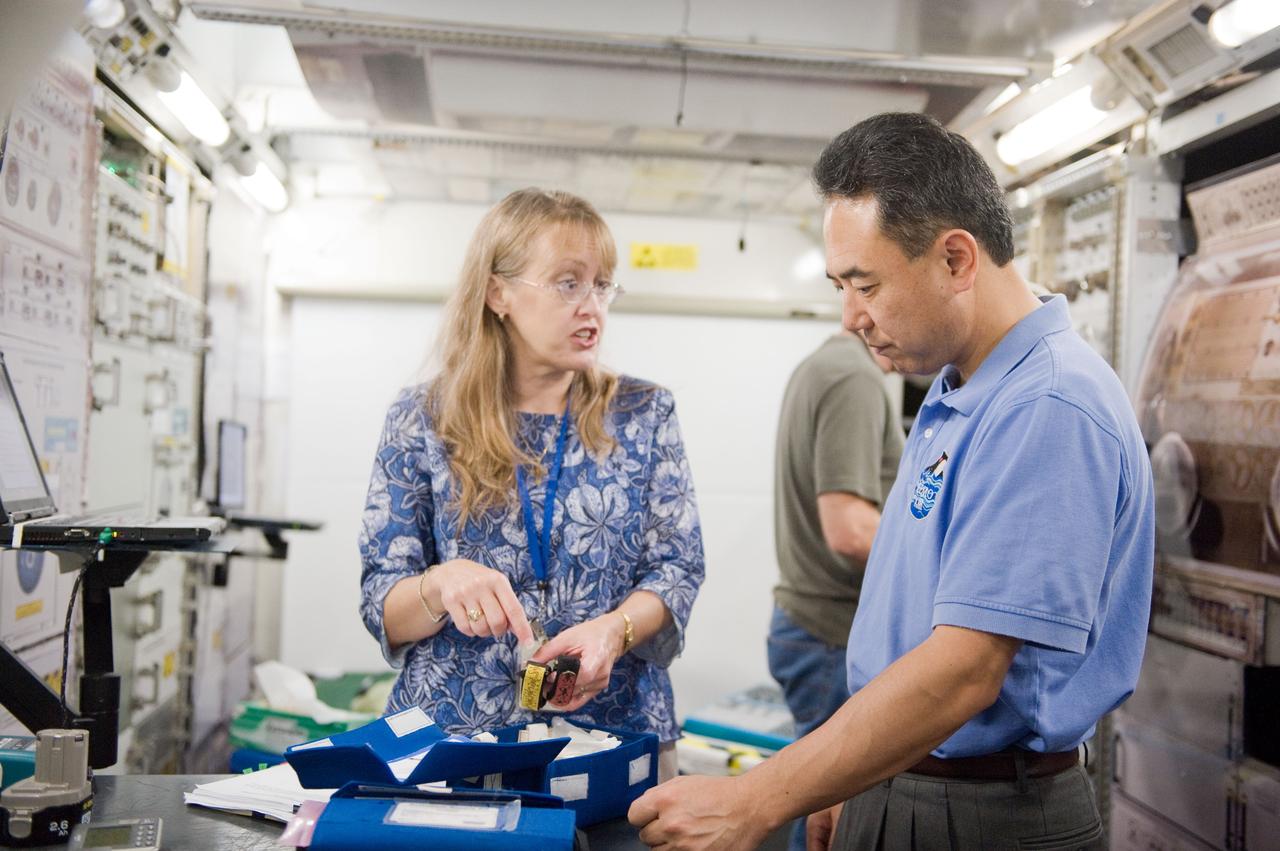
PHOTO DATE: 09-17-10 LOCATION: Bldg. 9NW - ISS Mockups SUBJECT: JAXA astronaut and Expedition 28 crew member Satoshi Furukawa during P HRF Integ Cardio Integration Ops training WORK ORDER: 02810-BS__HRFSATOSHI_09-17-10 PHOTOGRAPHER: BILL STAFFORD
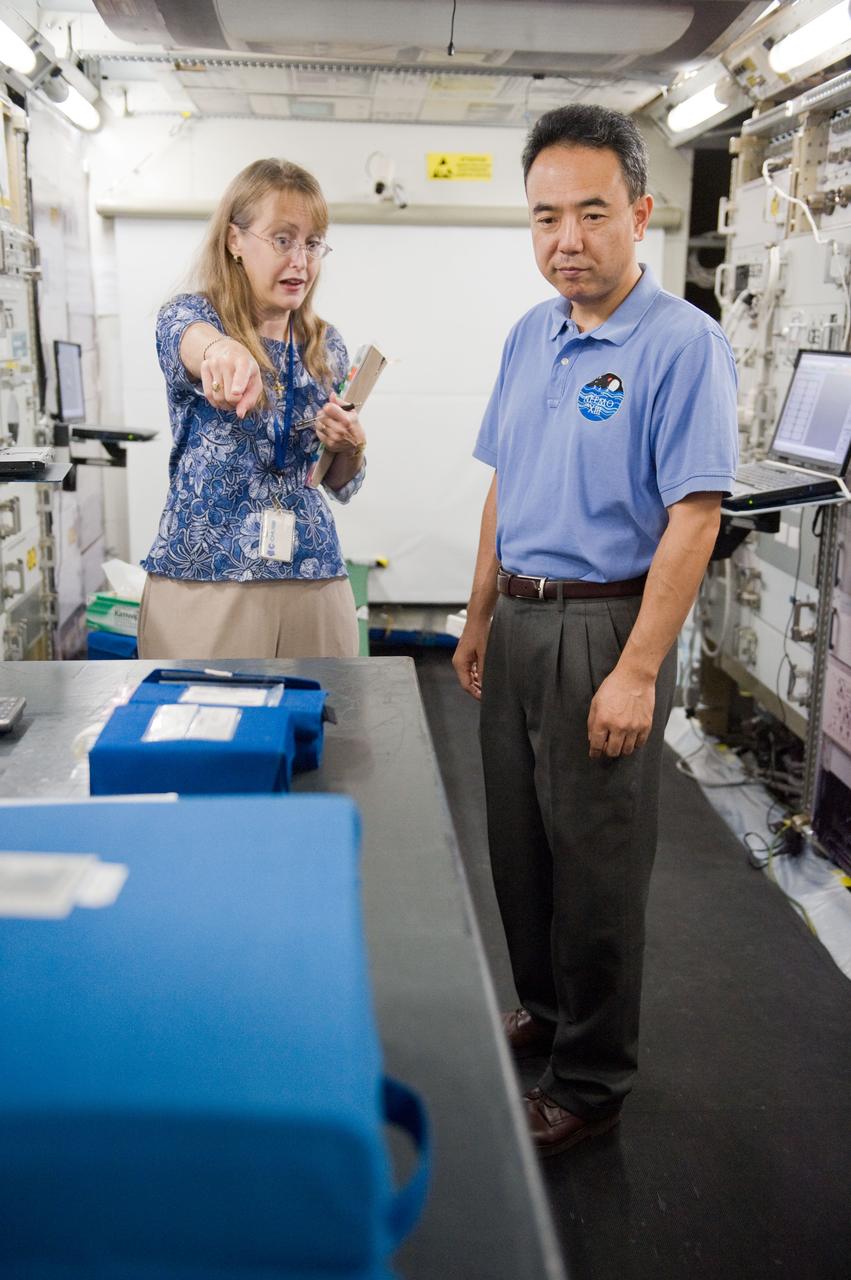
PHOTO DATE: 09-17-10 LOCATION: Bldg. 9NW - ISS Mockups SUBJECT: JAXA astronaut and Expedition 28 crew member Satoshi Furukawa during P HRF Integ Cardio Integration Ops training WORK ORDER: 02810-BS__HRFSATOSHI_09-17-10 PHOTOGRAPHER: BILL STAFFORD
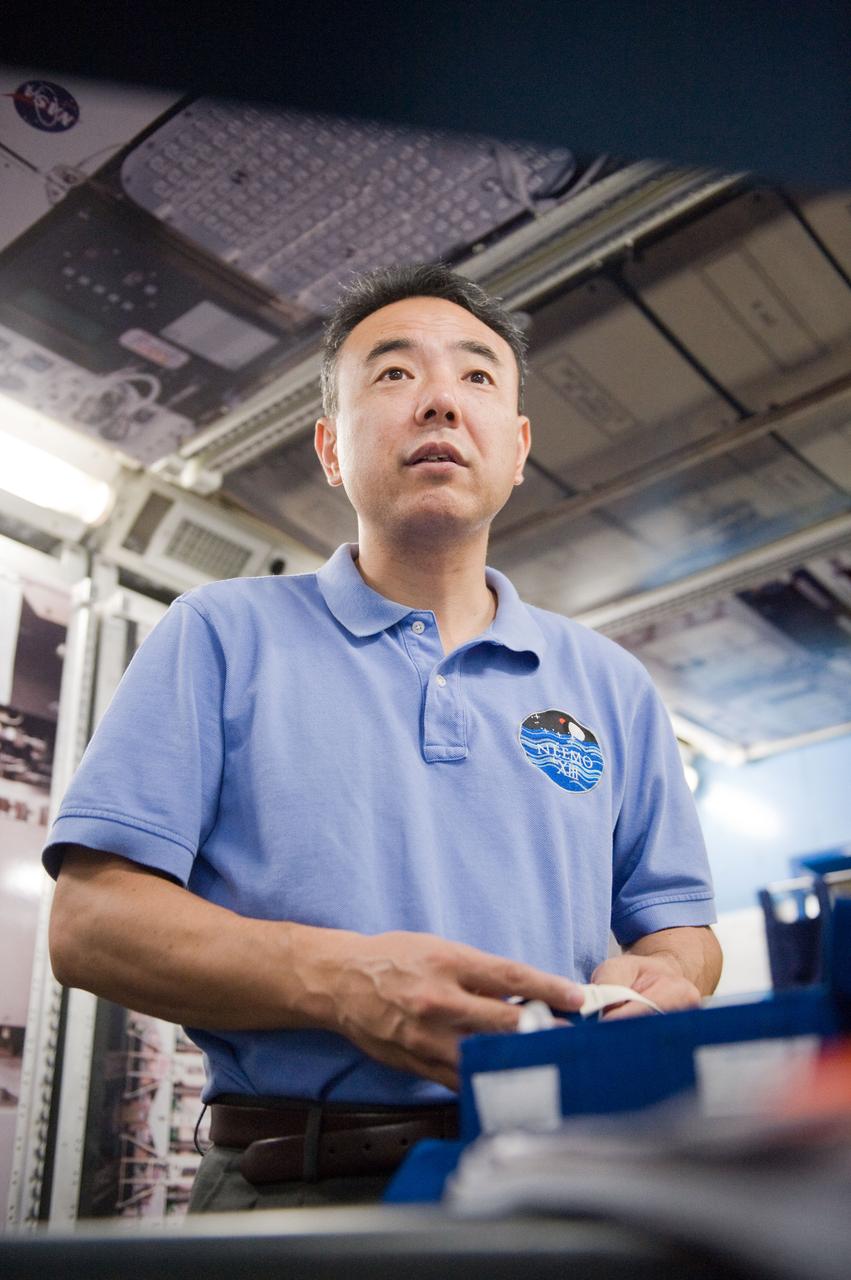
PHOTO DATE: 09-17-10 LOCATION: Bldg. 9NW - ISS Mockups SUBJECT: JAXA astronaut and Expedition 28 crew member Satoshi Furukawa during P HRF Integ Cardio Integration Ops training WORK ORDER: 02810-BS__HRFSATOSHI_09-17-10 PHOTOGRAPHER: BILL STAFFORD
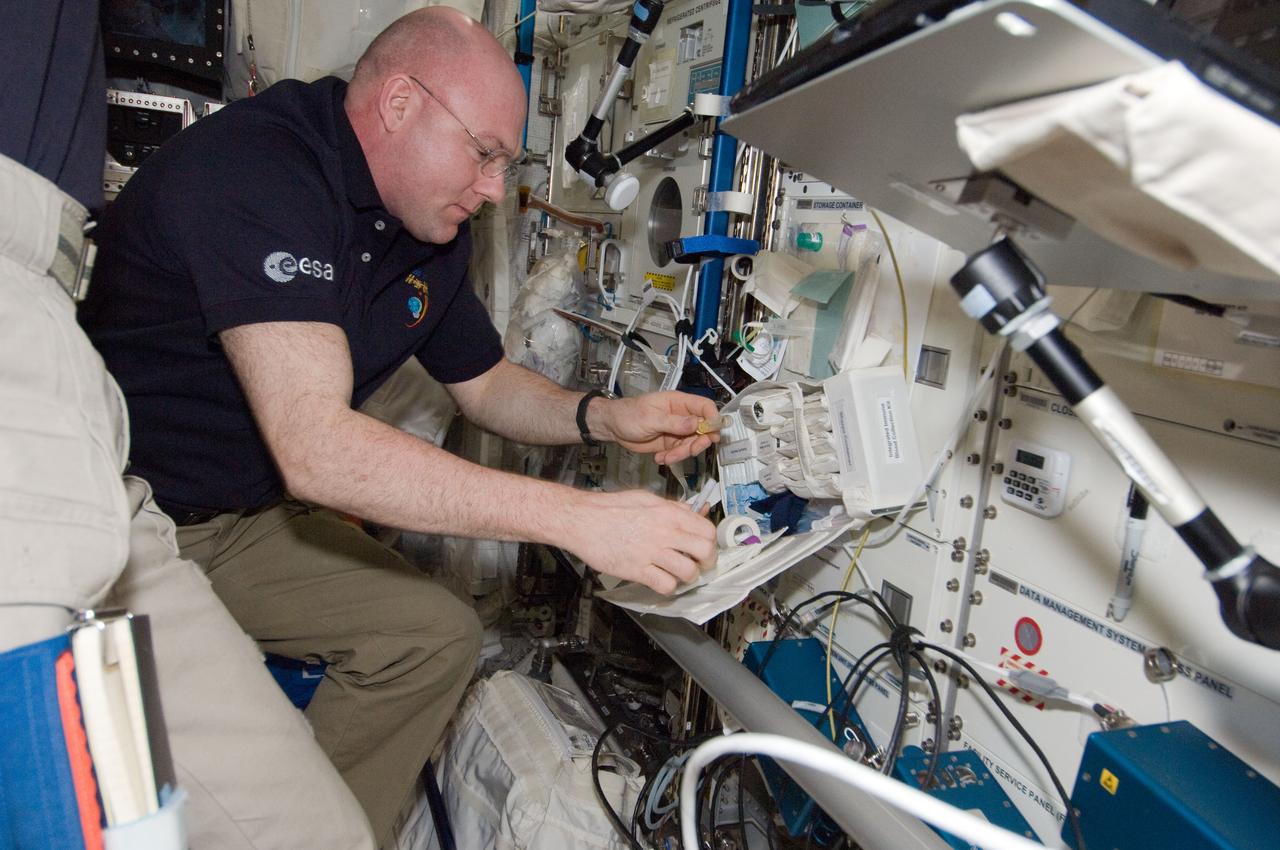
iss030e257689 (4/26/2012) --- European Space Agency (ESA) Andre Kuipers during Integrated Immune Blood Sample Draw at the Human Research Facility (HRF), in the Columbus Module. The Functional Immune investigation analyzes blood and saliva samples to determine the changes taking place in crew members’ immune systems during flight.
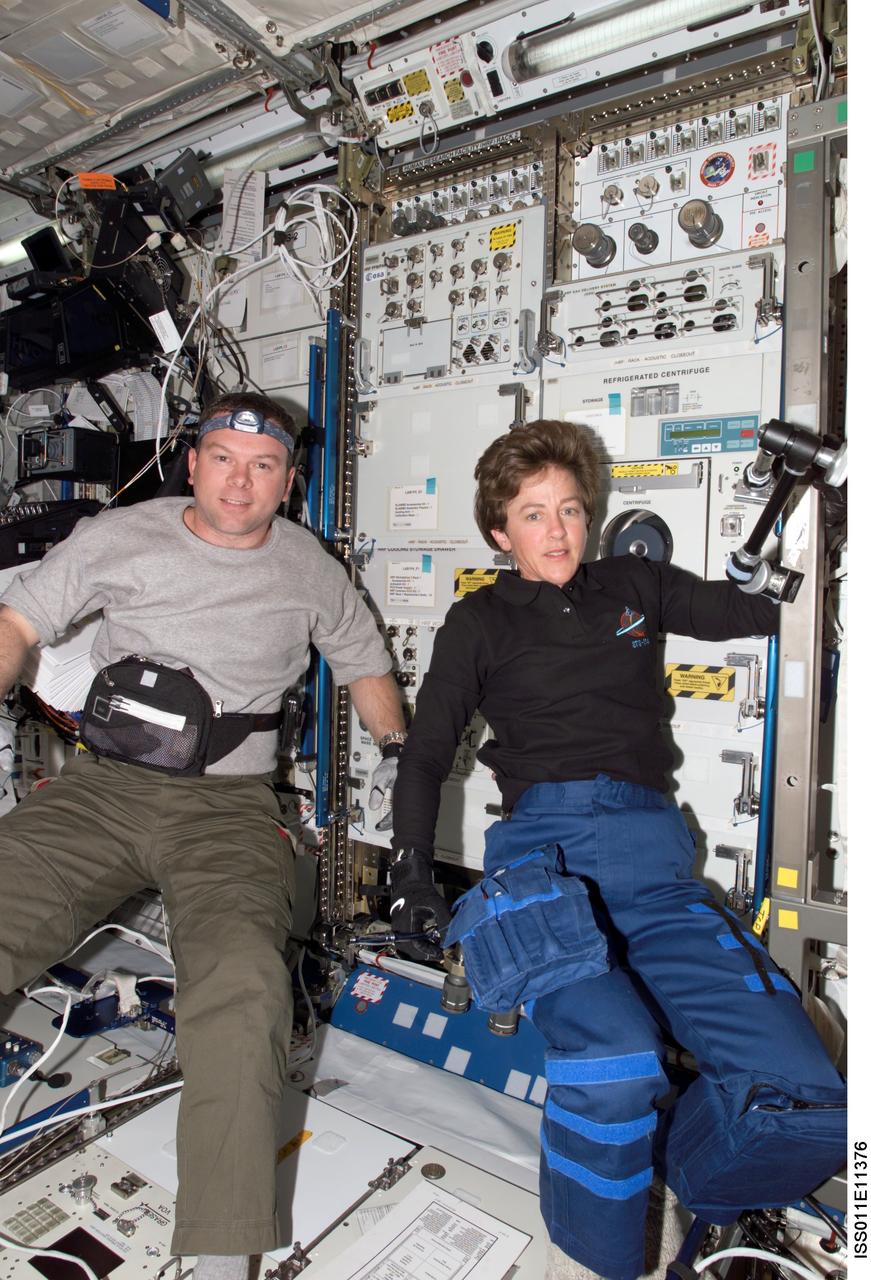
ISS011-E-11376 (31 July 2005) --- Astronauts James M. Kelly (left), STS-114 pilot, and Wendy B. Lawrence, mission specialist, are photographed after installing the new Human Research Facility (HRF) rack 2 in the Destiny laboratory of the International Space Station.
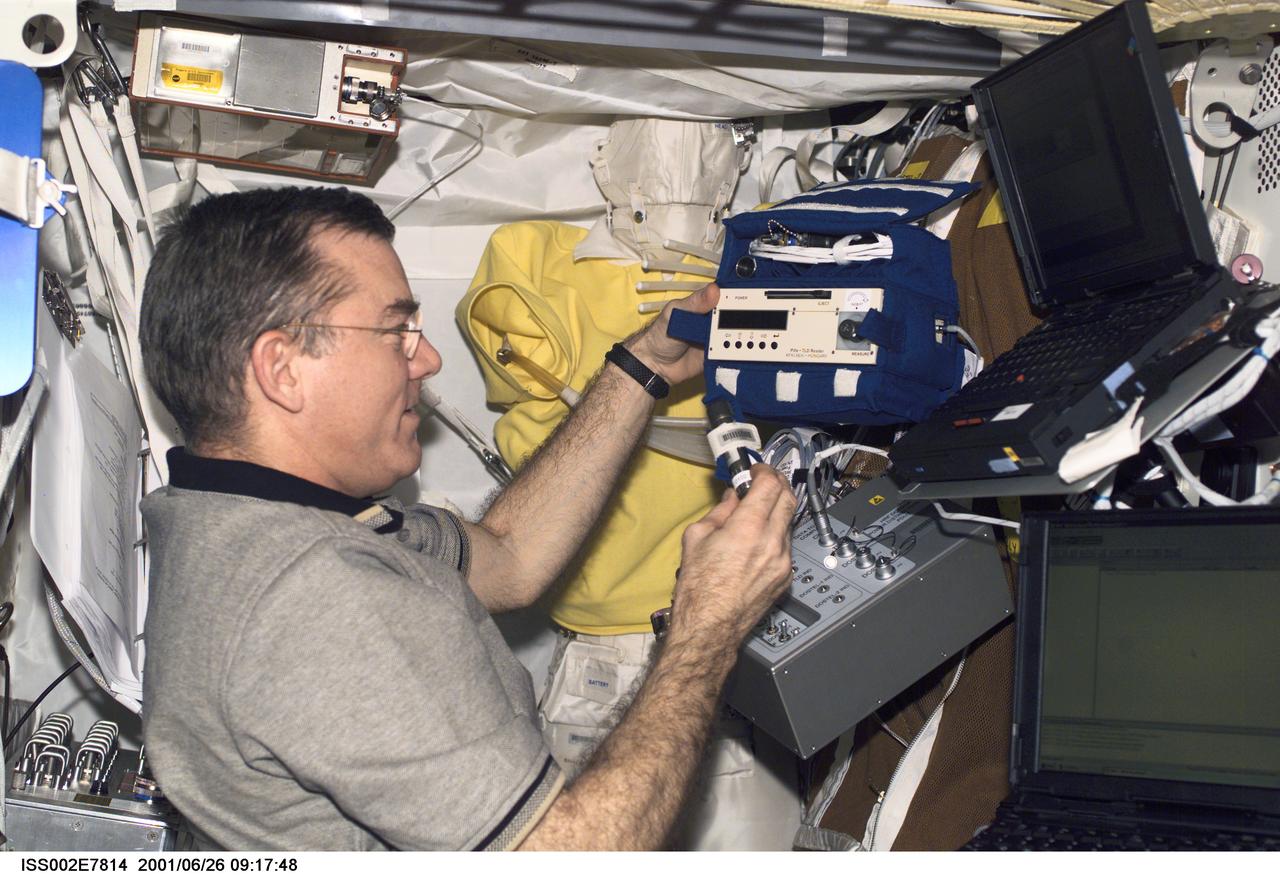
ISS002-E-7814 (26 June 2001) --- James S. Voss, Expedition Two flight engineer, sets up the Human Research Facility's (HRF) Dosimetric Mapping (DOSMAP) Power Distribution Unit (PDU) in Destiny. The image was taken with a digital still camera.
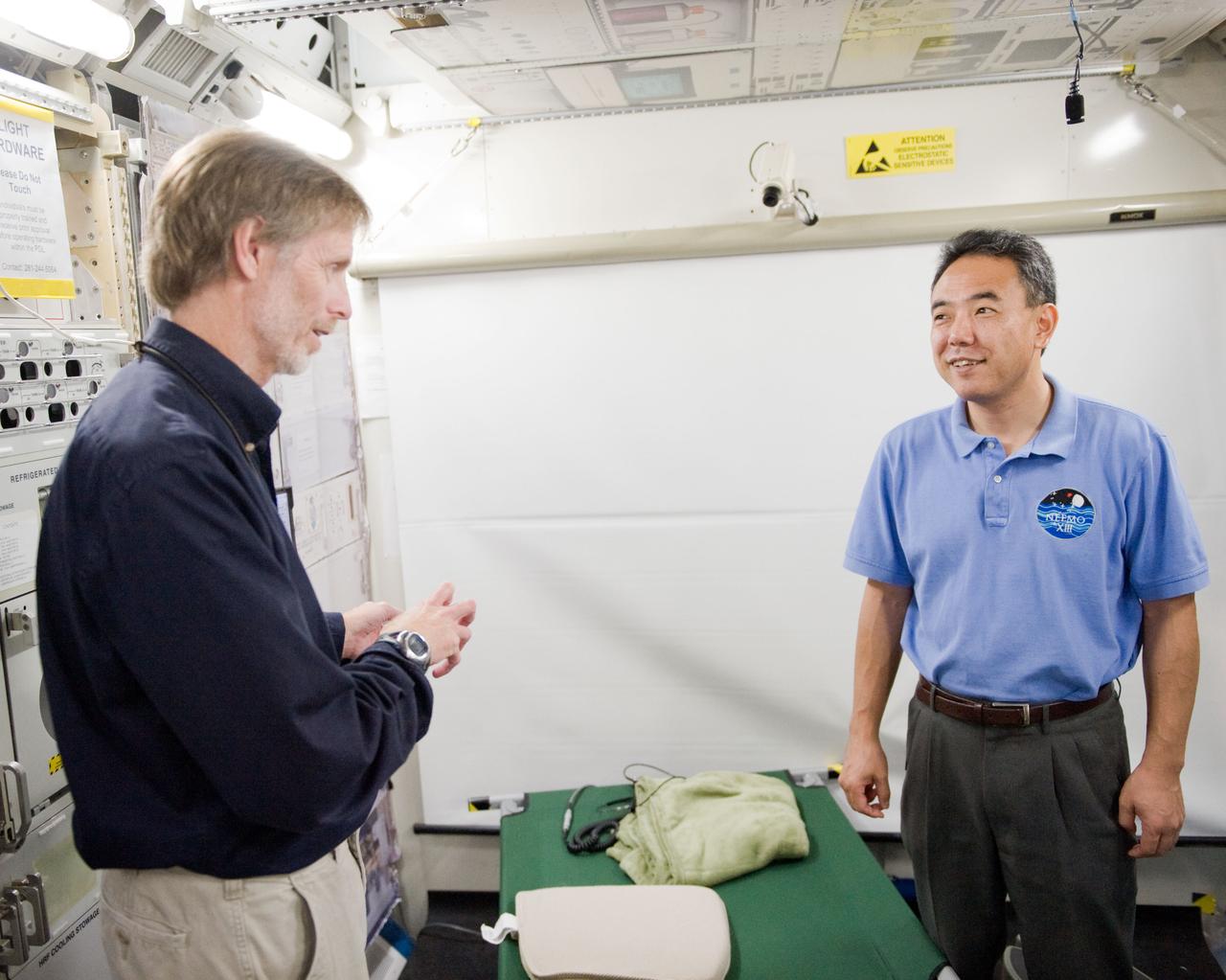
PHOTO DATE: 09-17-10 LOCATION: Bldg. 9NW - ISS Mockups SUBJECT: JAXA astronaut and Expedition 28 crew member Satoshi Furukawa during P HRF Integ Cardio Integration Ops training WORK ORDER: 02810-BS__HRFSATOSHI_09-17-10 PHOTOGRAPHER: BILL STAFFORD
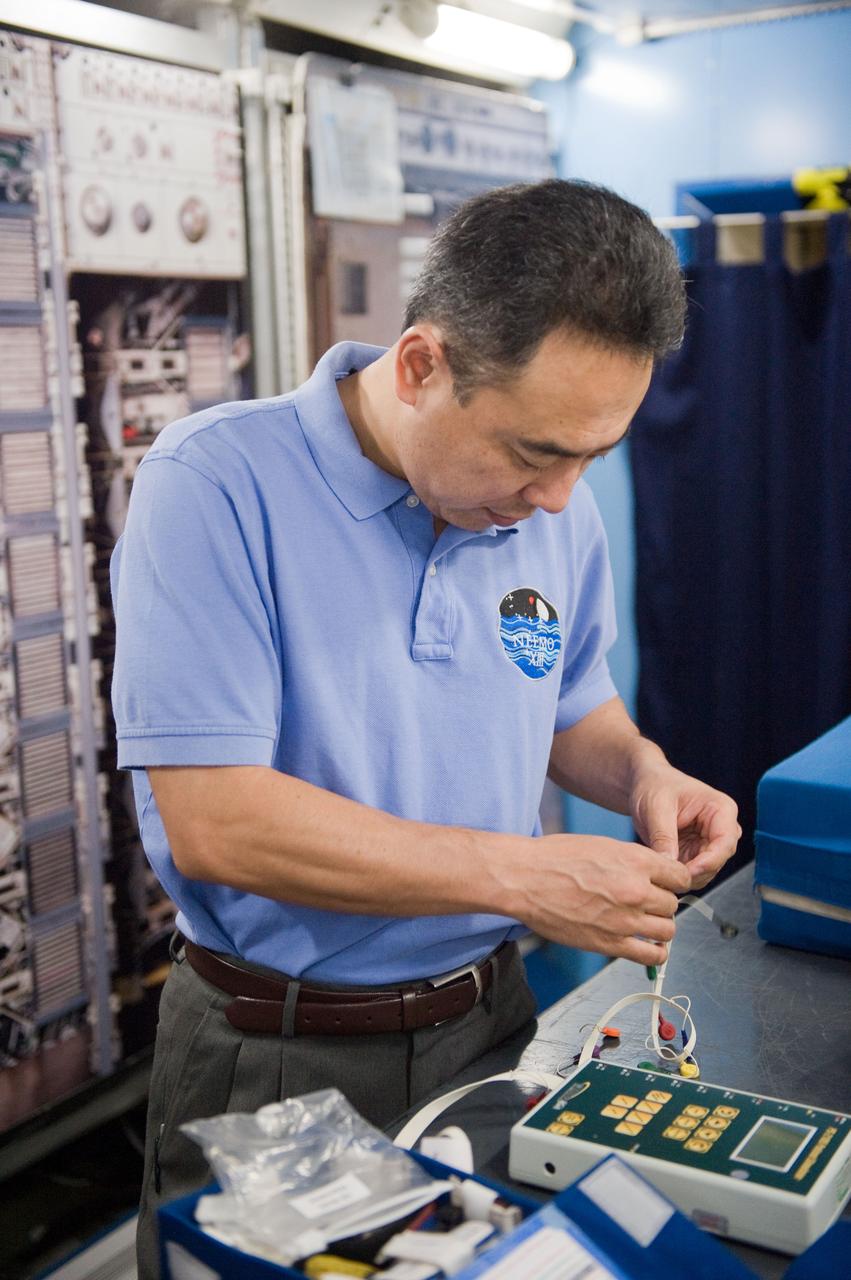
PHOTO DATE: 09-17-10 LOCATION: Bldg. 9NW - ISS Mockups SUBJECT: JAXA astronaut and Expedition 28 crew member Satoshi Furukawa during P HRF Integ Cardio Integration Ops training WORK ORDER: 02810-BS__HRFSATOSHI_09-17-10 PHOTOGRAPHER: BILL STAFFORD
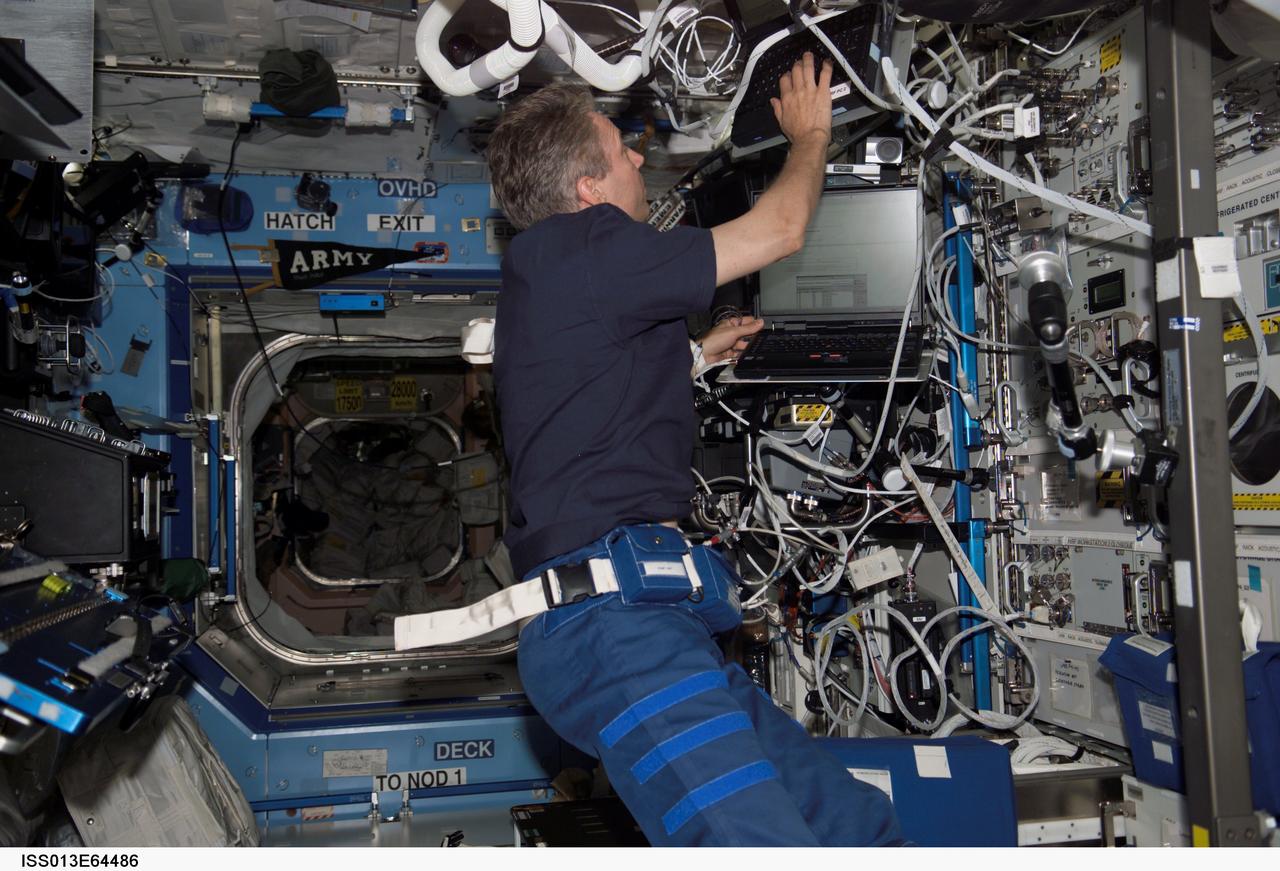
ISS013-E-64486 (25 July 2006) --- European Space Agency (ESA) astronaut Thomas Reiter, Expedition 13 flight engineer, prepares the Human Research Facility (HRF-2) rack for the scheduled upgrade of the Pulmonary Function System (PFS) experiment in the Destiny laboratory of the International Space Station.
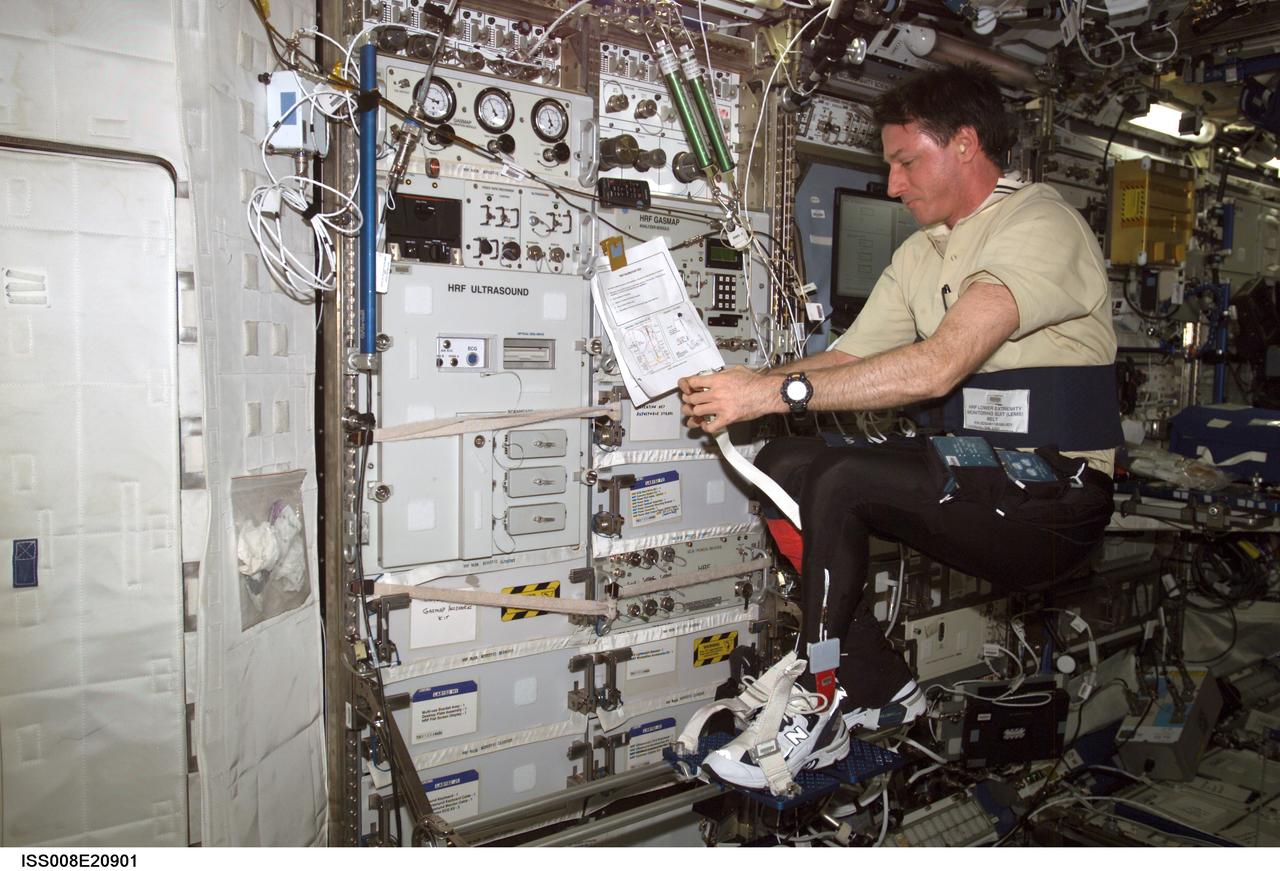
ISS008-E-20901 (7 April 2004) --- Astronaut C. Michael Foale, Expedition 8 commander and NASA ISS science officer, balances on the footplate of a special track attached to the Human Research Facility (HRF) rack in the Destiny laboratory on the International Space Station (ISS) to perform Foot/Ground Reaction Forces During Spaceflight (FOOT) / Electromyography (EMG) calibration operations. Foale is wearing the Lower Extremity Monitoring Suit (LEMS), the cycling tights outfitted with 20 sensors, which measures forces on joints and muscle activity.
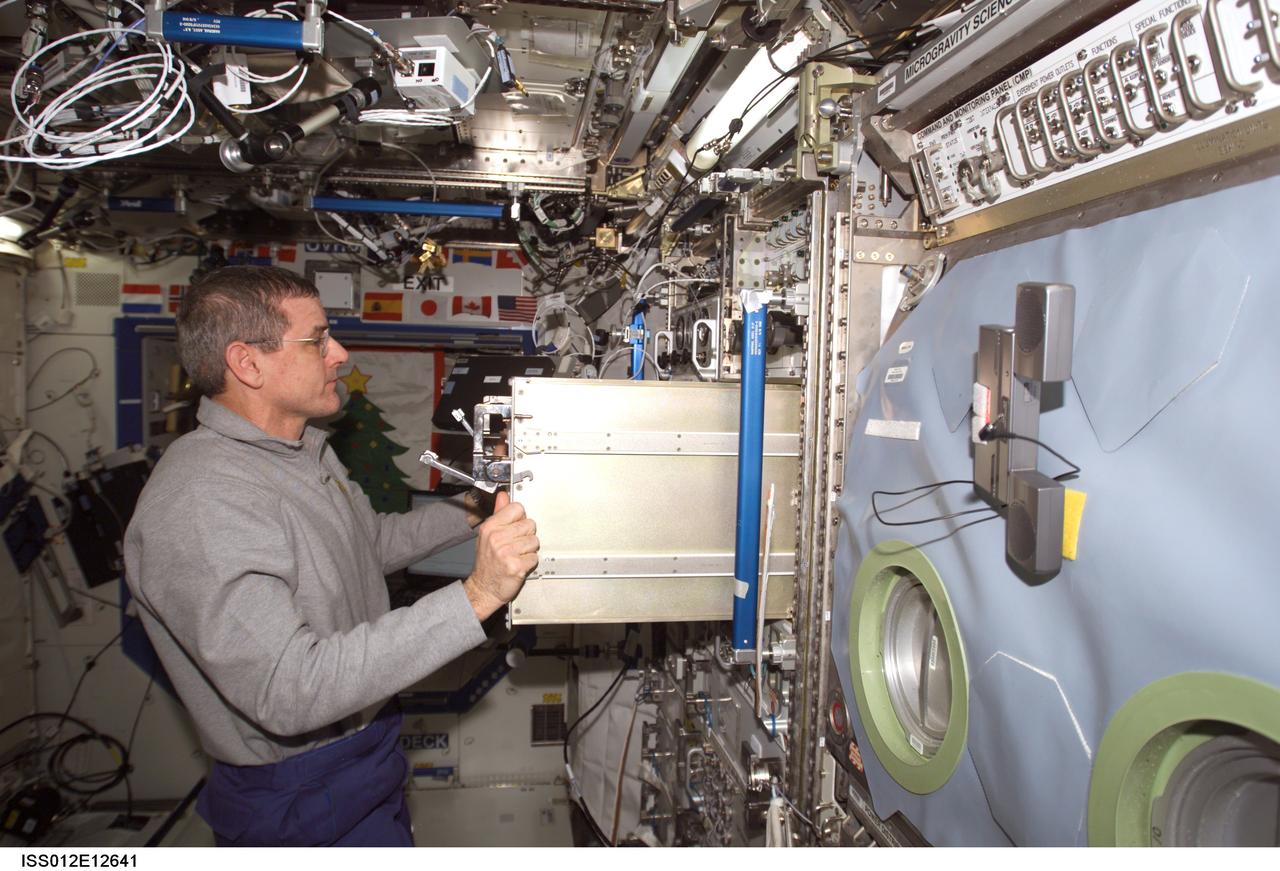
ISS012-E-12641 (16 Dec. 2005) --- Astronaut William S. (Bill) McArthur Jr., Expedition 12 commander and NASA space station science officer, stows the Space Linear Acceleration Mass Measurement Device (SLAMMD) hardware after conducting test operations. SLAMMD hardware was stowed in a stowage drawer on the Human Research Facility (HRF) rack in the Destiny laboratory of the International Space Station.
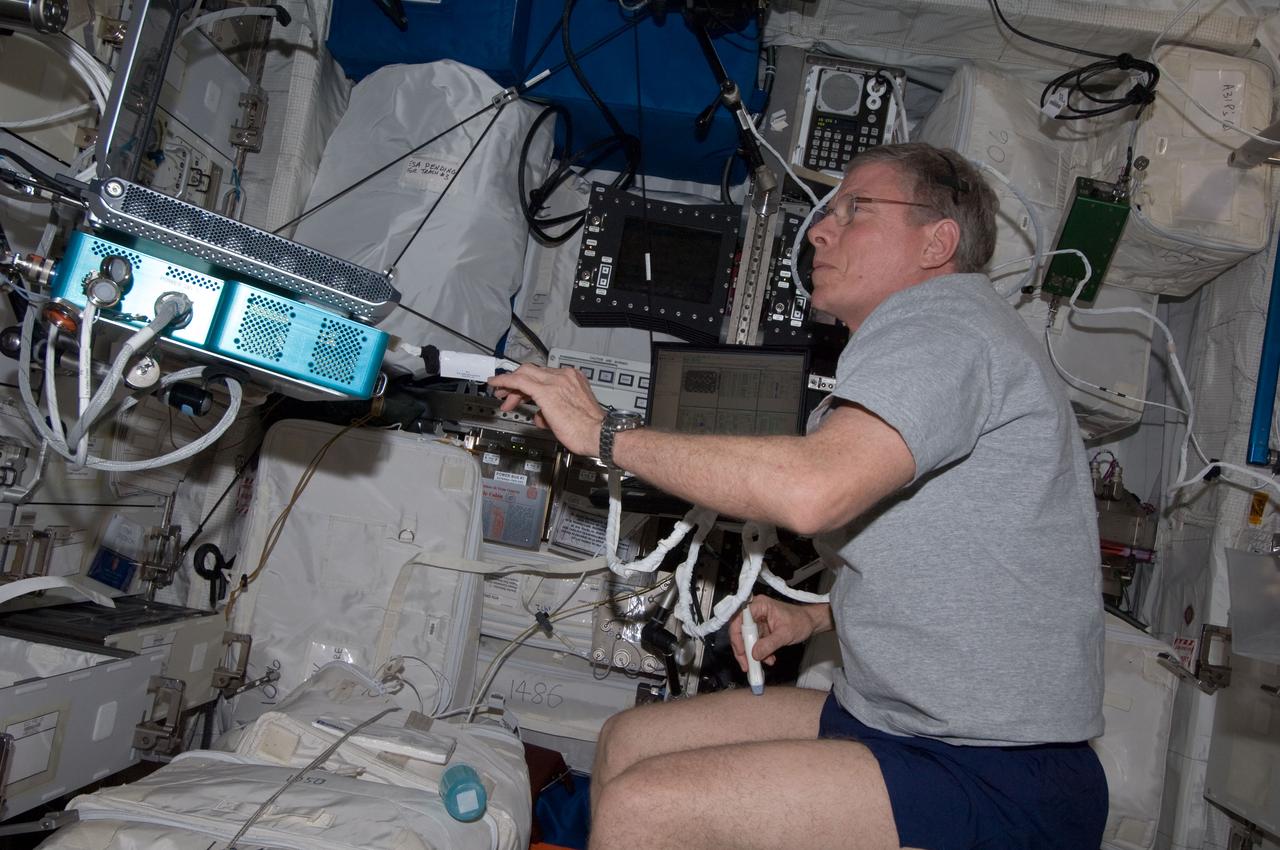
ISS029-E-025270 (3 Oct. 2011) --- NASA astronaut Mike Fossum, Expedition 29 commander, performs a SPRINT leg muscle self scan in the Columbus laboratory of the International Space Station. Fossum powered on the Ultrasound 2 (USND-2) unit and Video Power Converter (VPC) hardware, and connected the VPC to Human Research Facility 1 (HRF-1) in order to perform this activity.
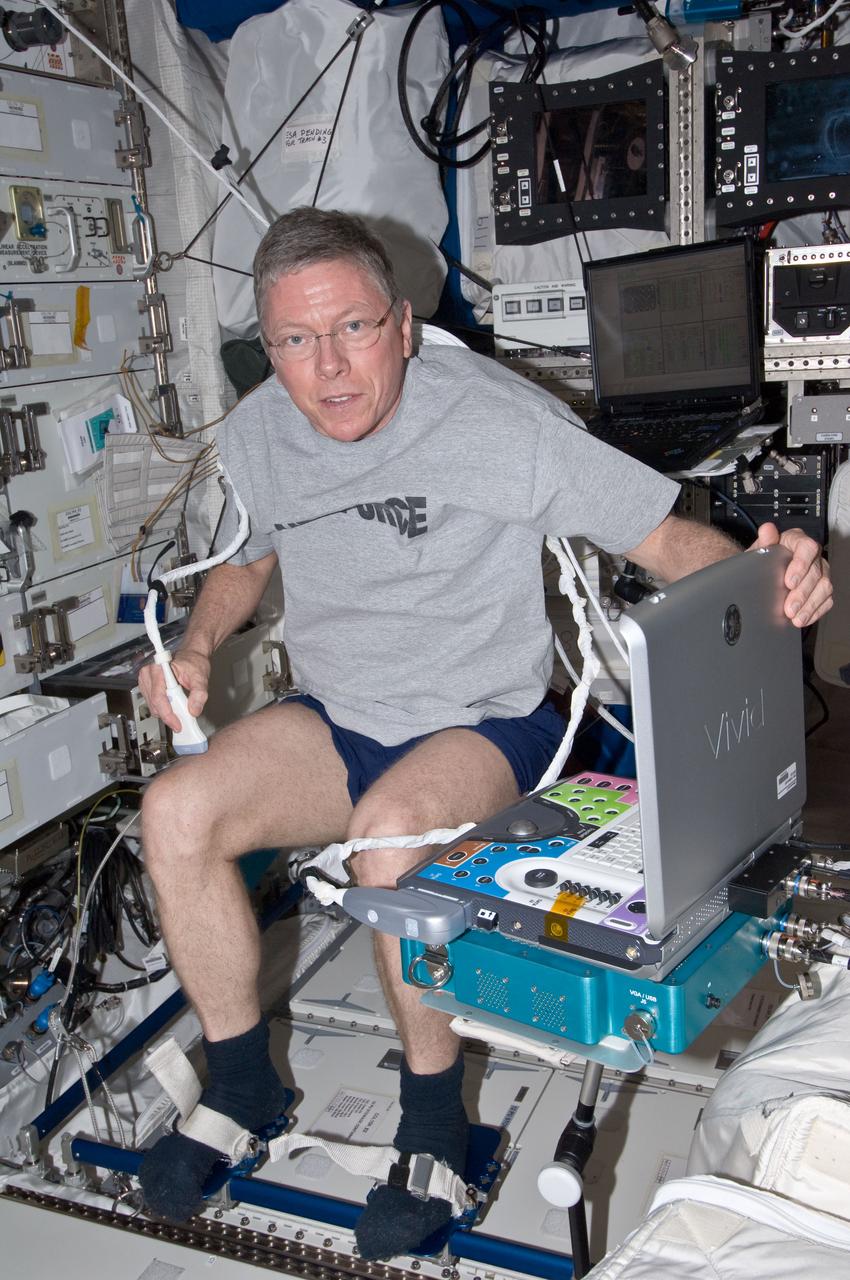
ISS029-E-025280 (3 Oct. 2011) --- NASA astronaut Mike Fossum, Expedition 29 commander, performs a SPRINT leg muscle self scan in the Columbus laboratory of the International Space Station. Fossum powered on the Ultrasound 2 (USND-2) unit and Video Power Converter (VPC) hardware, and connected the VPC to Human Research Facility 1 (HRF-1) in order to perform this activity.
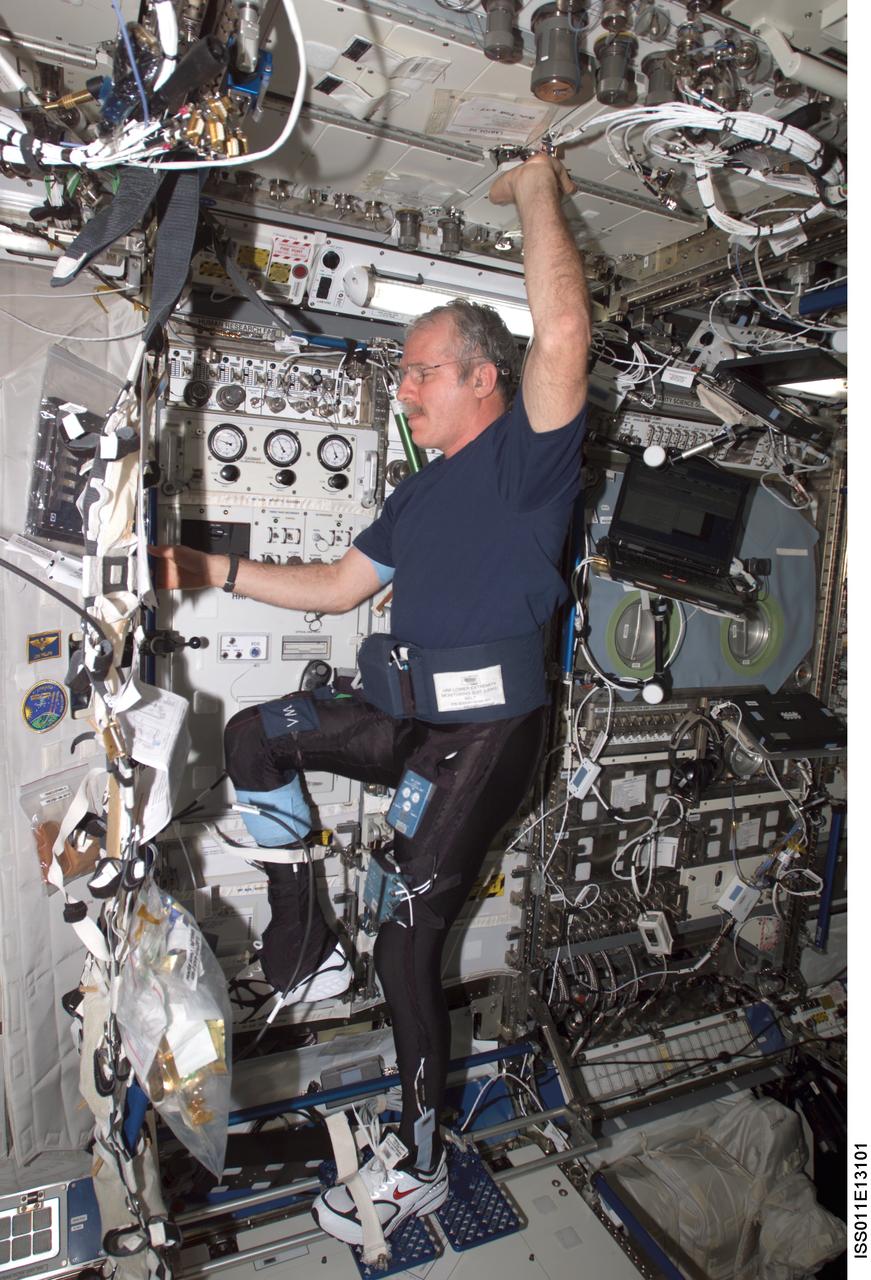
ISS011-E-13101 (16 Sept. 2005) --- Astronaut John L. Phillips, Expedition 11 NASA space station science officer and flight engineer, balances on the footplate of a special track attached to the Human Research Facility (HRF) rack in the Destiny laboratory on the International Space Station to perform Foot/Ground Reaction Forces During Spaceflight (FOOT) / Electromyography (EMG) calibration operations. Phillips is wearing the Lower Extremity Monitoring Suit (LEMS), the cycling tights outfitted with 20 sensors, which measures forces on joints and muscle activity.

ISS022-E-091395 (12 March 2010) --- NASA astronaut Jeffrey Williams, Expedition 22 commander, works with test samples in the Human Research Facility 2 (HRF-2) Refrigerated Centrifuge as a part of the Nutritional Status Assessment (Nutrition) experiment in the Columbus laboratory of the International Space Station. The results of the Nutrition experiment will be used to better understand the time course effects of space flight on human physiology.

iss056e200803 (10/3/2018) - European Space Agency (ESA) astronaut Alexander Gerst and NASA astronaut Serena Auñón-Chancellor, during Functional Immune Blood Sample Draw at the Human Research Facility (HRF), in the Columbus Module. The Functional Immune investigation analyzes blood and saliva samples to determine the changes taking place in crew members’ immune systems during flight.
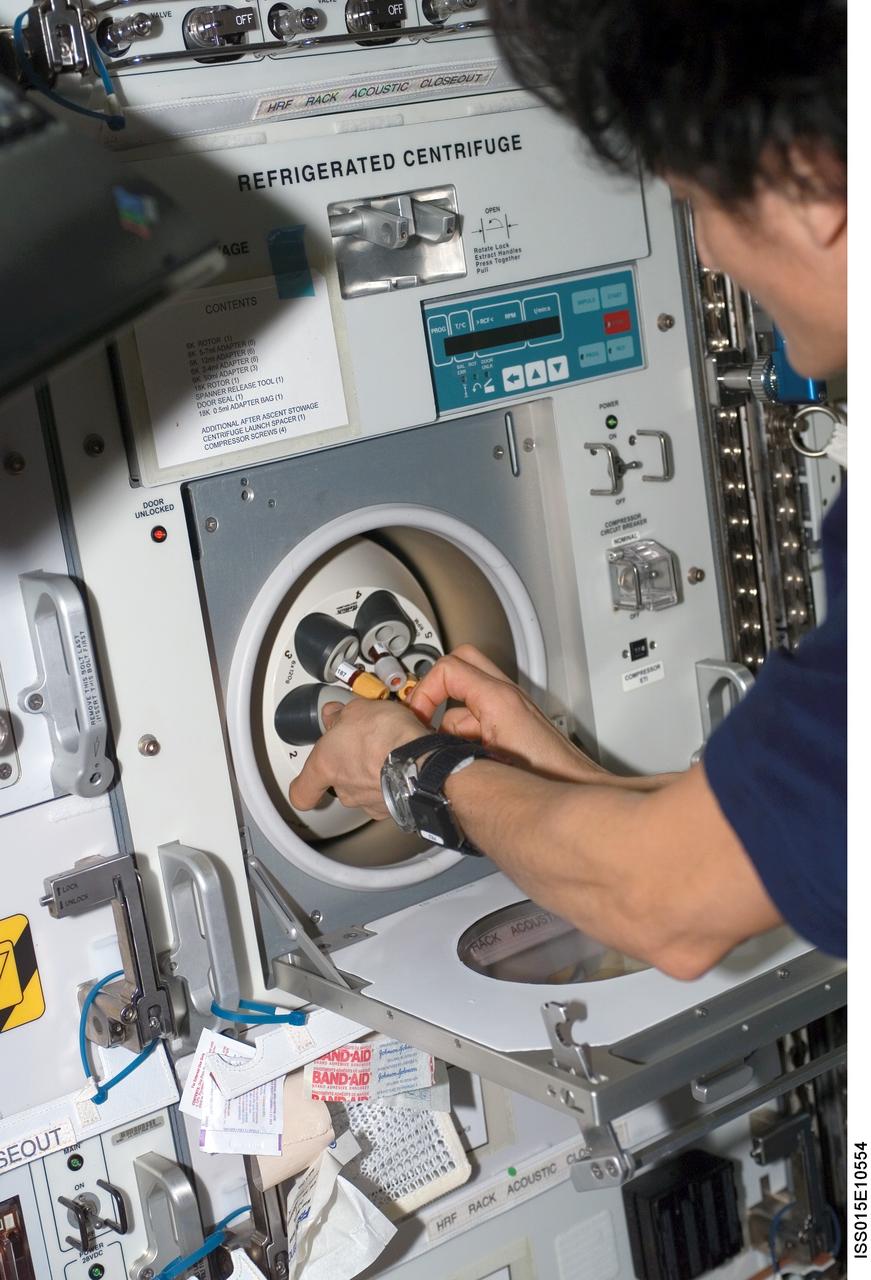
ISS015-E-10554 (1 June 2007) --- Astronaut Sunita L. Williams, Expedition 15 flight engineer, loads test samples in the Human Research Facility 2 (HRF-2) Refrigerated Centrifuge as a part of the Nutritional Status Assessment (Nutrition) experiment in the Destiny laboratory of the International Space Station. The results of the Nutrition experiment will be used to better understand the time course effects of space flight on human physiology.
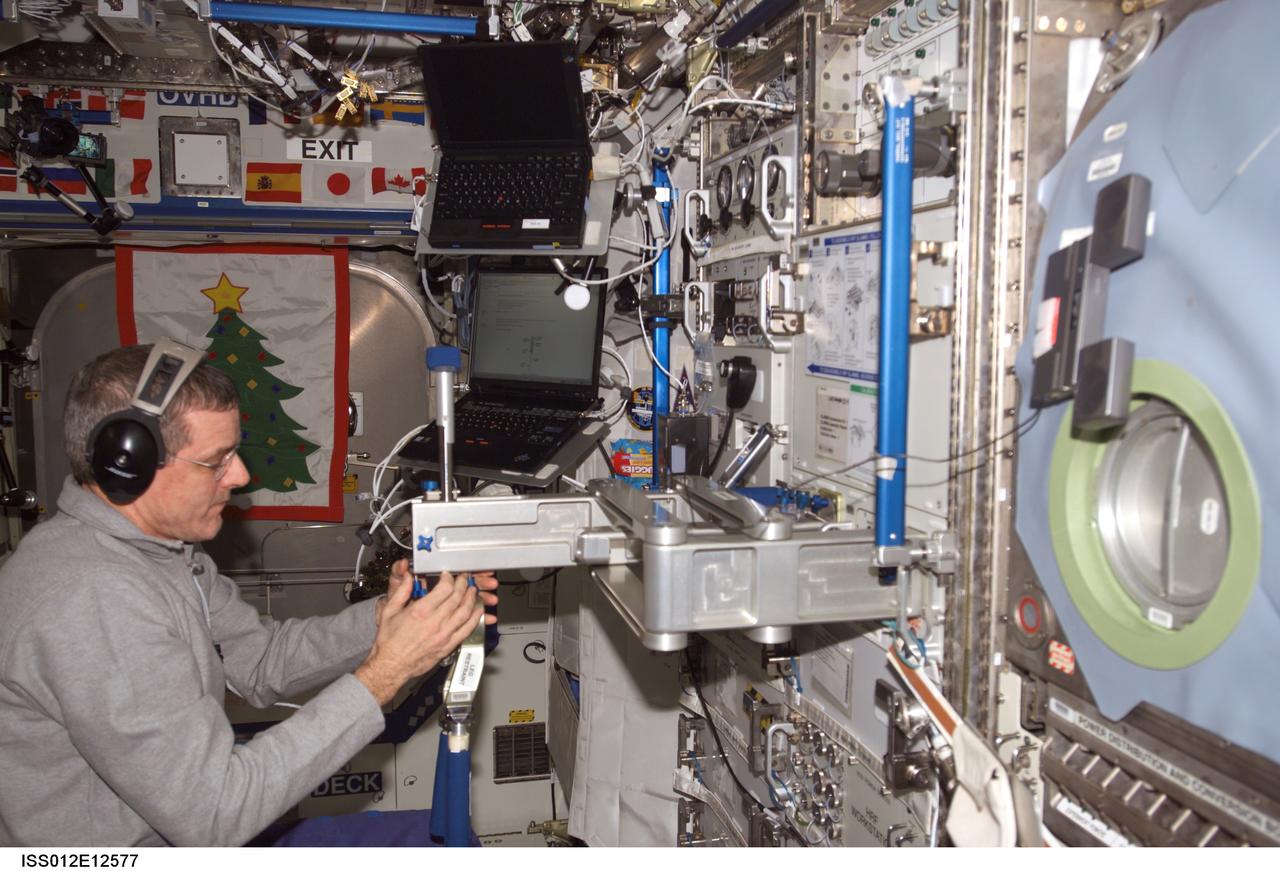
ISS012-E-12577 (16 Dec. 2005) --- Astronaut William S. (Bill) McArthur Jr., Expedition 12 commander and NASA space station science officer, sets up the Space Linear Acceleration Mass Measurement Device (SLAMMD) hardware attached to the Human Research Facility (HRF) rack in the Destiny laboratory of the International Space Station.
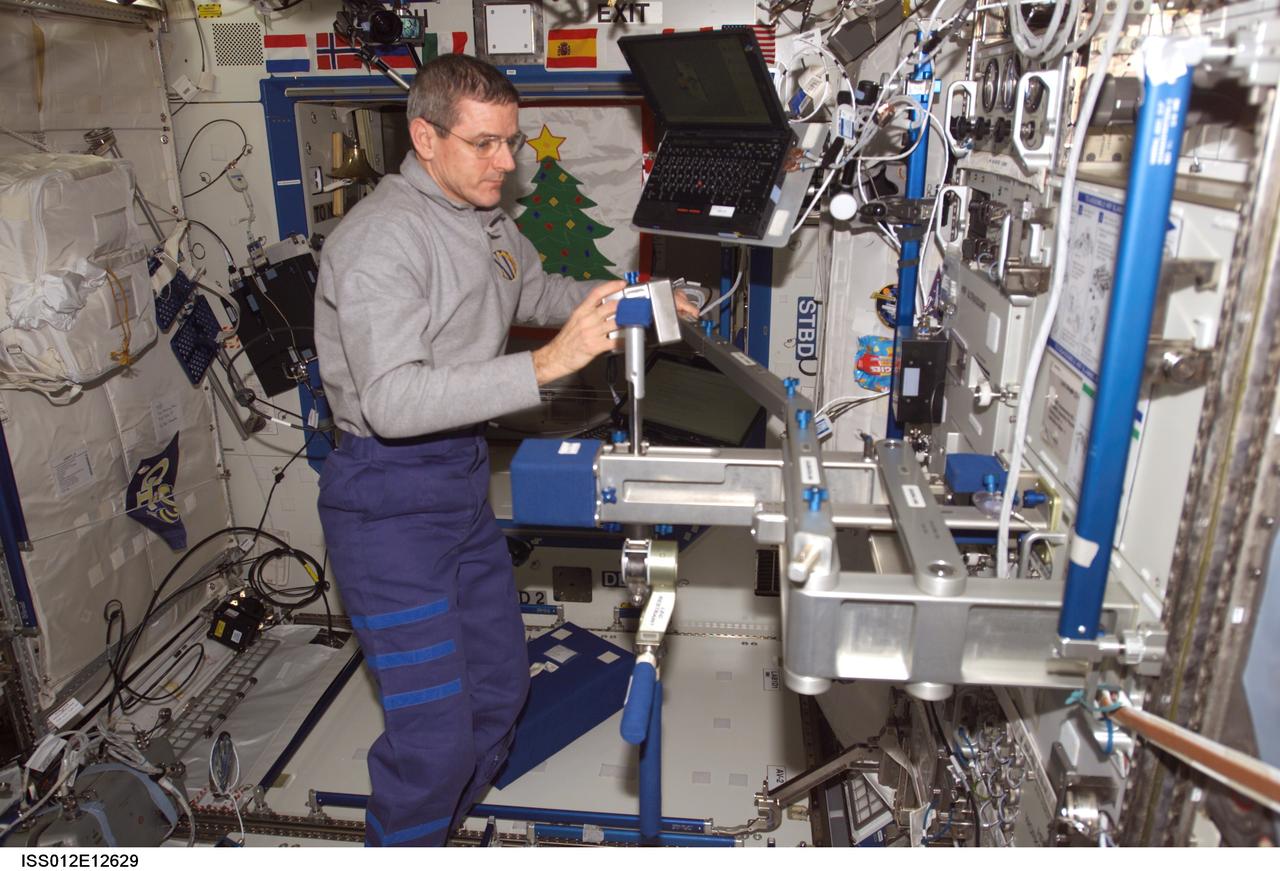
ISS012-E-12629 (16 Dec. 2005) --- Astronaut William S. (Bill) McArthur Jr., Expedition 12 commander and NASA space station science officer, sets up the calibration arm on the Space Linear Acceleration Mass Measurement Device (SLAMMD) attached to the Human Research Facility (HRF) rack in the Destiny laboratory of the International Space Station.
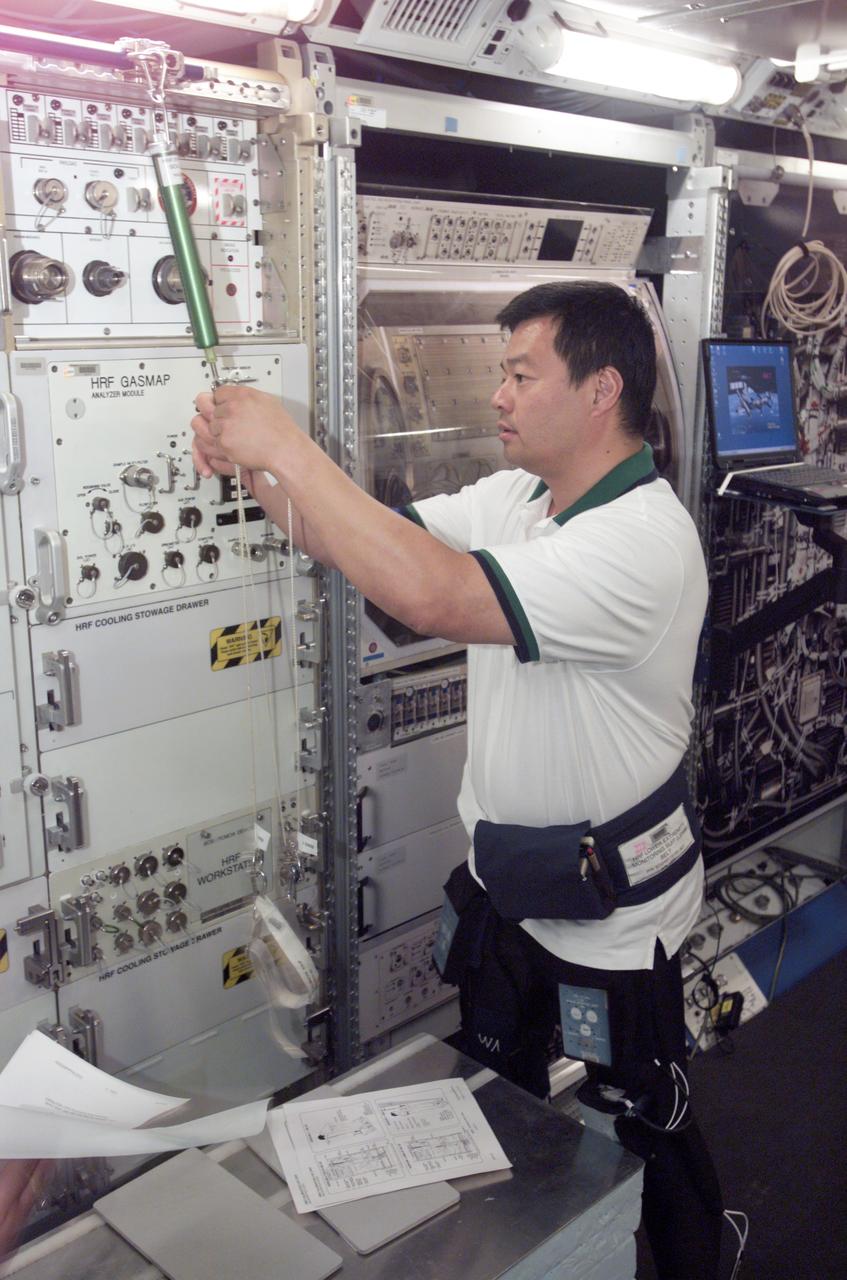
JSC2004-E-35439 (11 August 2004) --- Astronaut Leroy Chiao, Expedition 10 commander and NASA ISS science officer, participates in Foot/Ground Reaction Forces During Spaceflight (FOOT) Integrated nominal operations during Human Research Facility (HRF) training in the International Space Station (ISS) Destiny laboratory mockup/trainer at Johnson Space Center’s Space Vehicle Mockup Facility.

ISS006-E-25010 (7 February 2003) --- Astronaut Kenneth D. Bowersox, Expedition Six mission commander, conducts a Foot/Ground Reaction Forces During Spaceflight (FOOT) – Electromyography (EMG) calibration at the Human Research Facility (HRF) rack in the Destiny laboratory on the International Space Station (ISS). This experiment determines the change in joint angles (muscle activity) of the ankle, knee, and hip.
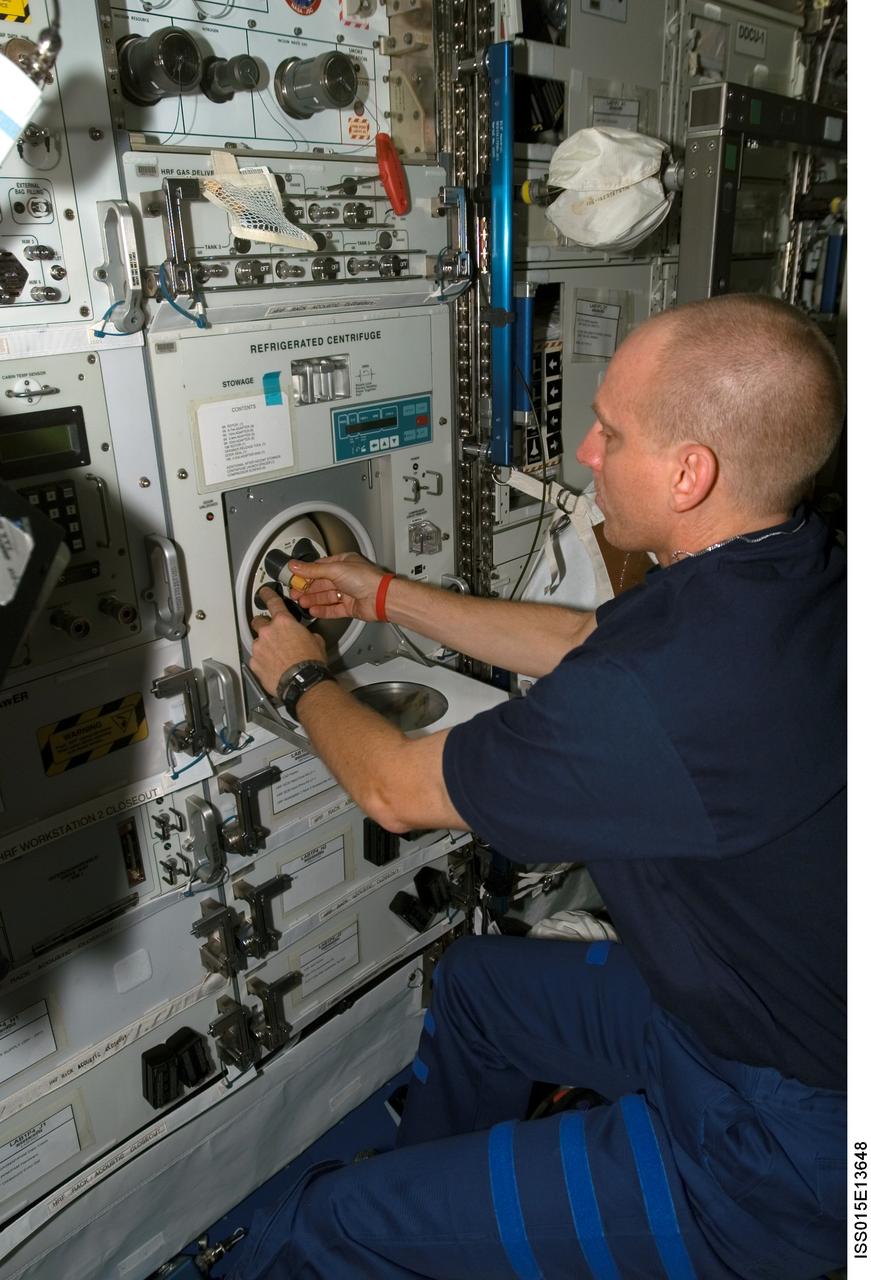
ISS015-E-13648 (25 June 2007) --- Astronaut Clayton Anderson, Expedition 15 flight engineer, works with test samples in the Human Research Facility 2 (HRF-2) Refrigerated Centrifuge as a part of the Nutritional Status Assessment (Nutrition) experiment in the Destiny laboratory of the International Space Station. The results of the Nutrition experiment will be used to better understand the time course effects of space flight on human physiology.
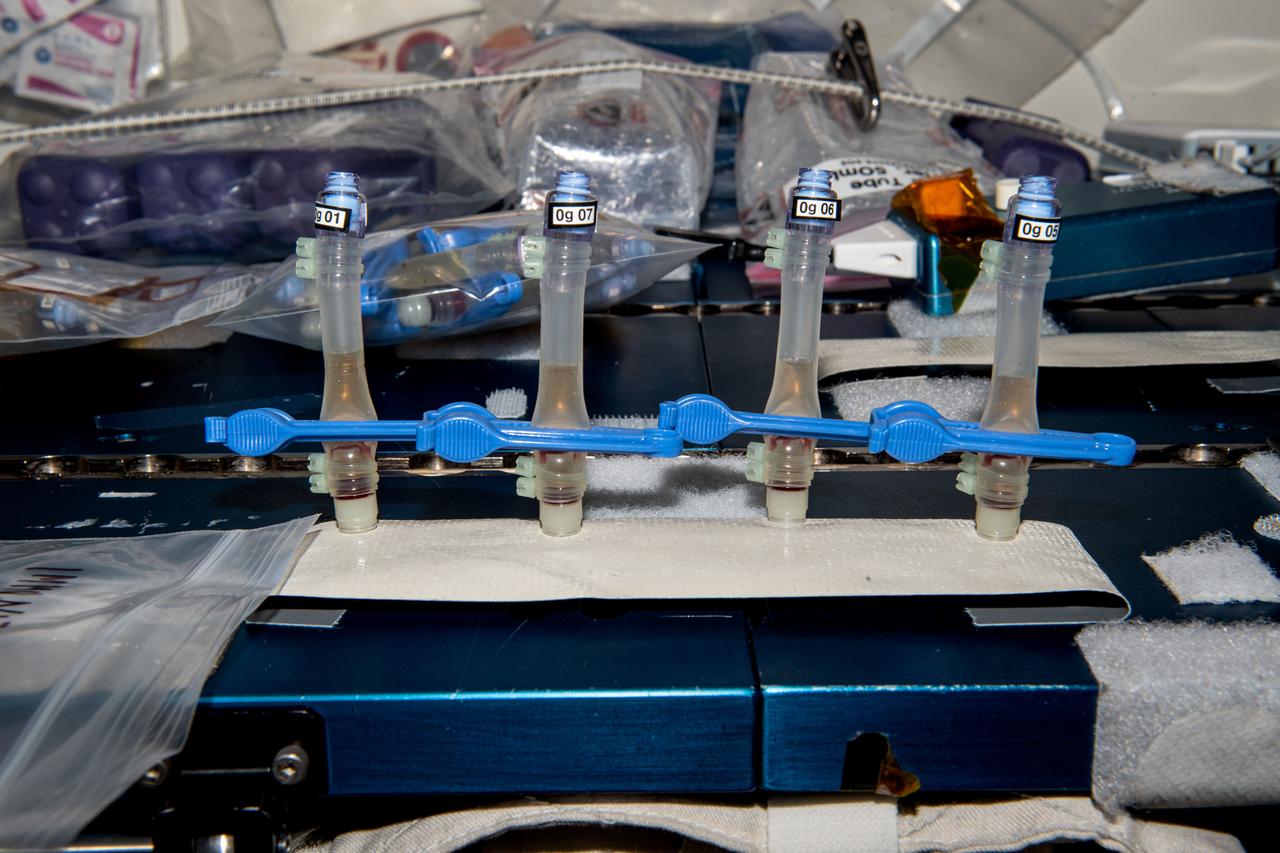
iss069e086233 (9/8/2023) --- A view of sample preparation for centrifuge operations in the Human Research Facility (HRF) centrifuge aboard the International Space Station (ISS). The Monitoring the Cellular Immunity by In Vitro Delayed Type Hypersensitivity (DTH) Assay on the ISS (Immunity Assay) investigation aims to monitor the impact of spaceflight stressors on cellular immune functions in a blood sample, with the help of a functional immune test.
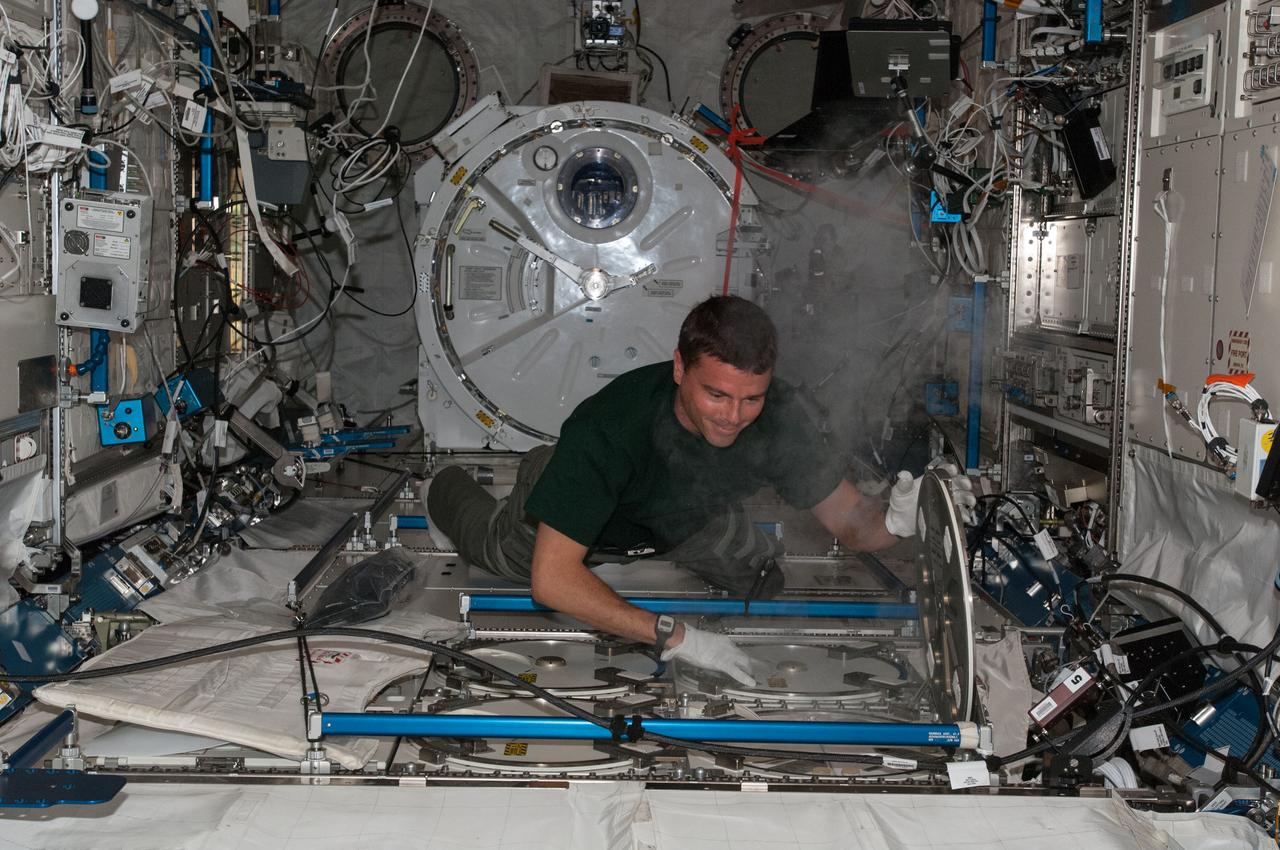
View of Astronaut Reid Wiseman,Expedition 40 flight engineer,inserting urine samples in the Minus Eighty Laboratory Freezer for ISS (MELFI) located in the Japanese Experiment Module (JEM).
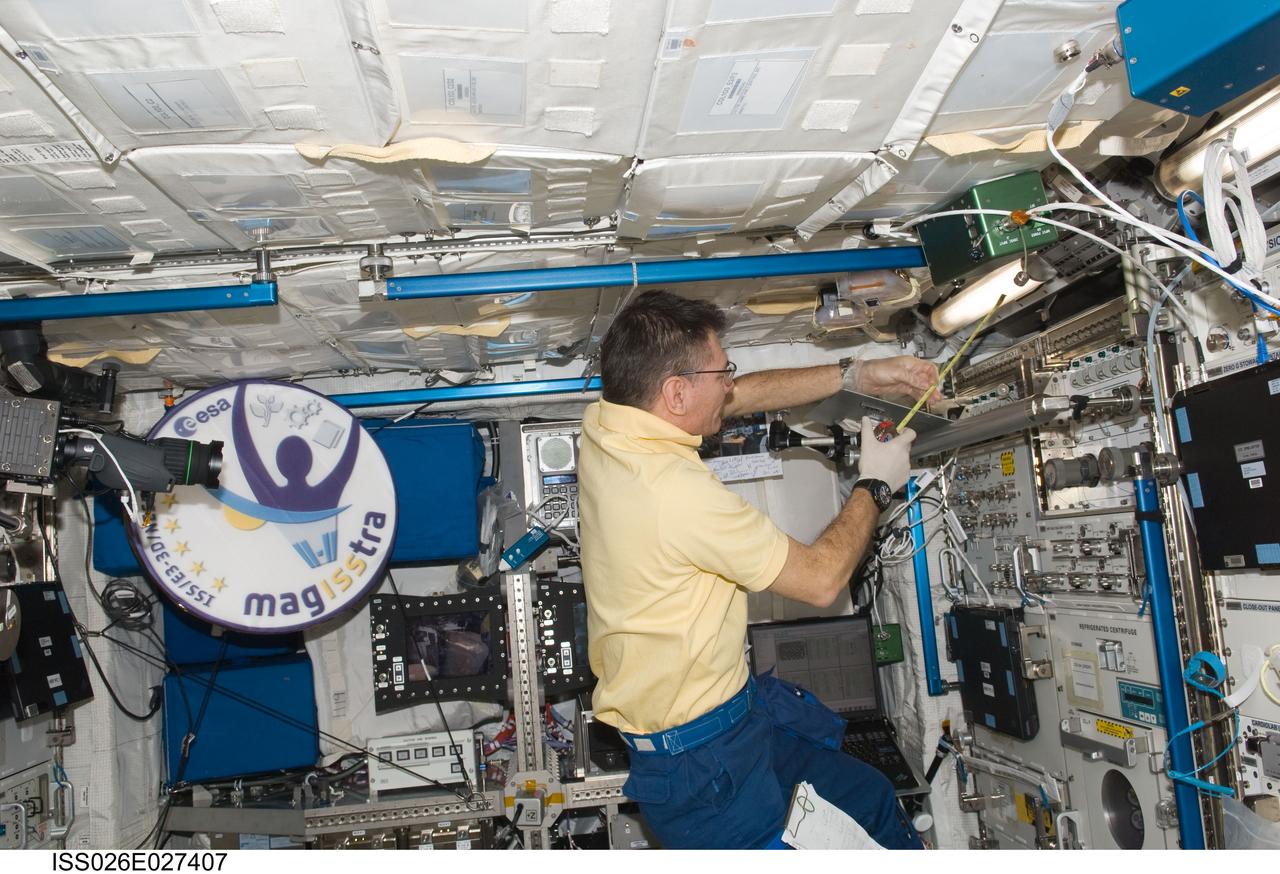
ISS026-E-027407 (16 Feb. 2011) --- European Space Agency astronaut Paolo Nespoli, Expedition 26 flight engineer, works in the Columbus laboratory of the International Space Station.
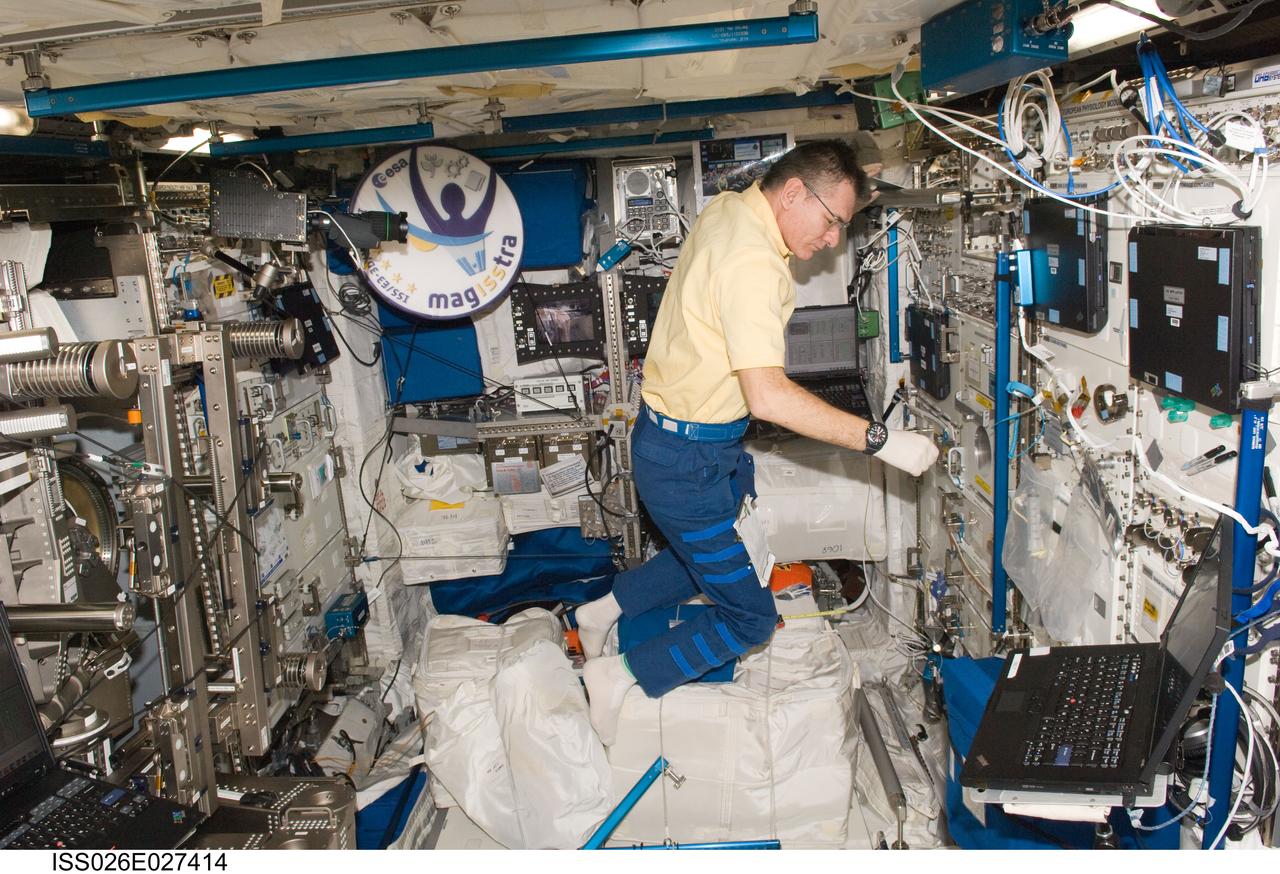
ISS026-E-027414 (16 Feb. 2011) --- European Space Agency astronaut Paolo Nespoli, Expedition 26 flight engineer, works in the Columbus laboratory of the International Space Station.
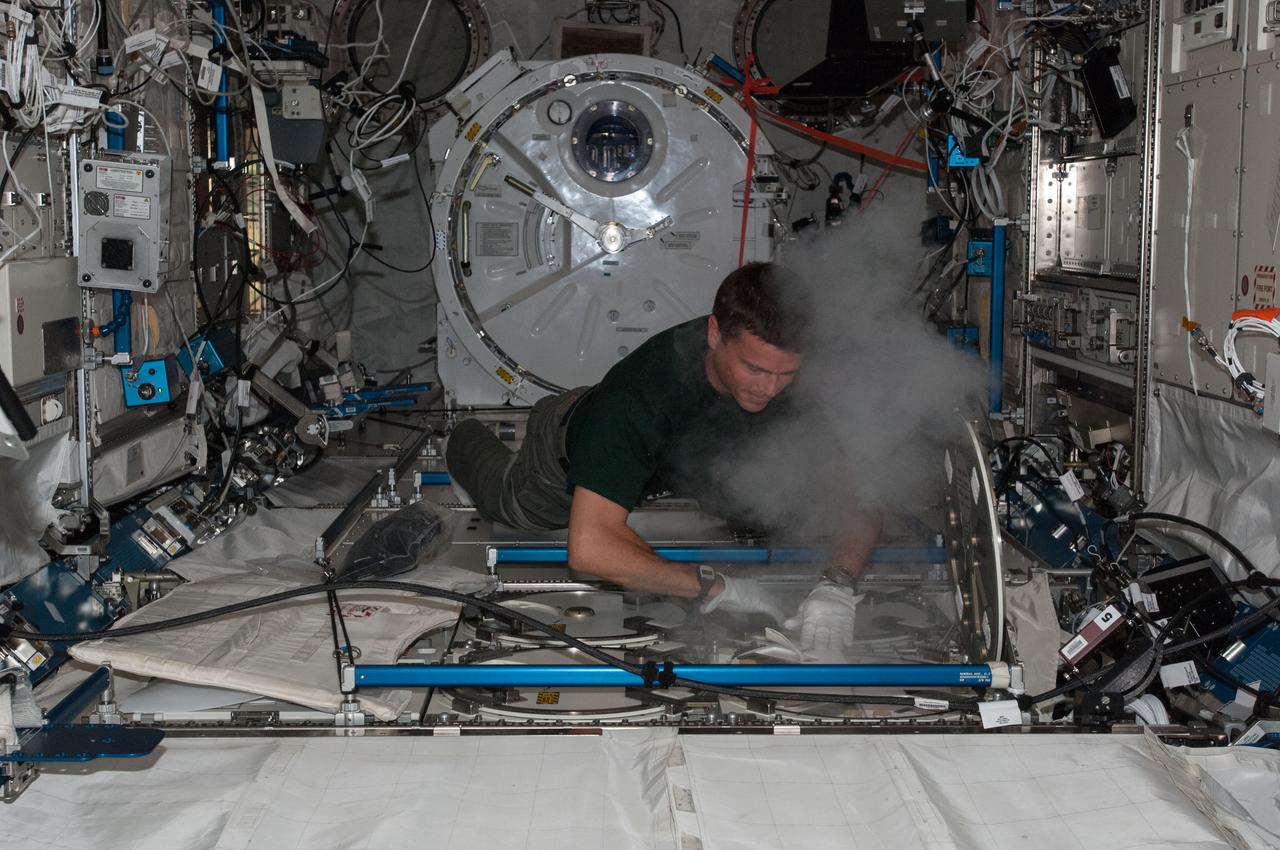
View of Astronaut Reid Wiseman,Expedition 40 flight engineer,inserting urine samples in the Minus Eighty Laboratory Freezer for ISS (MELFI) located in the Japanese Experiment Module (JEM).
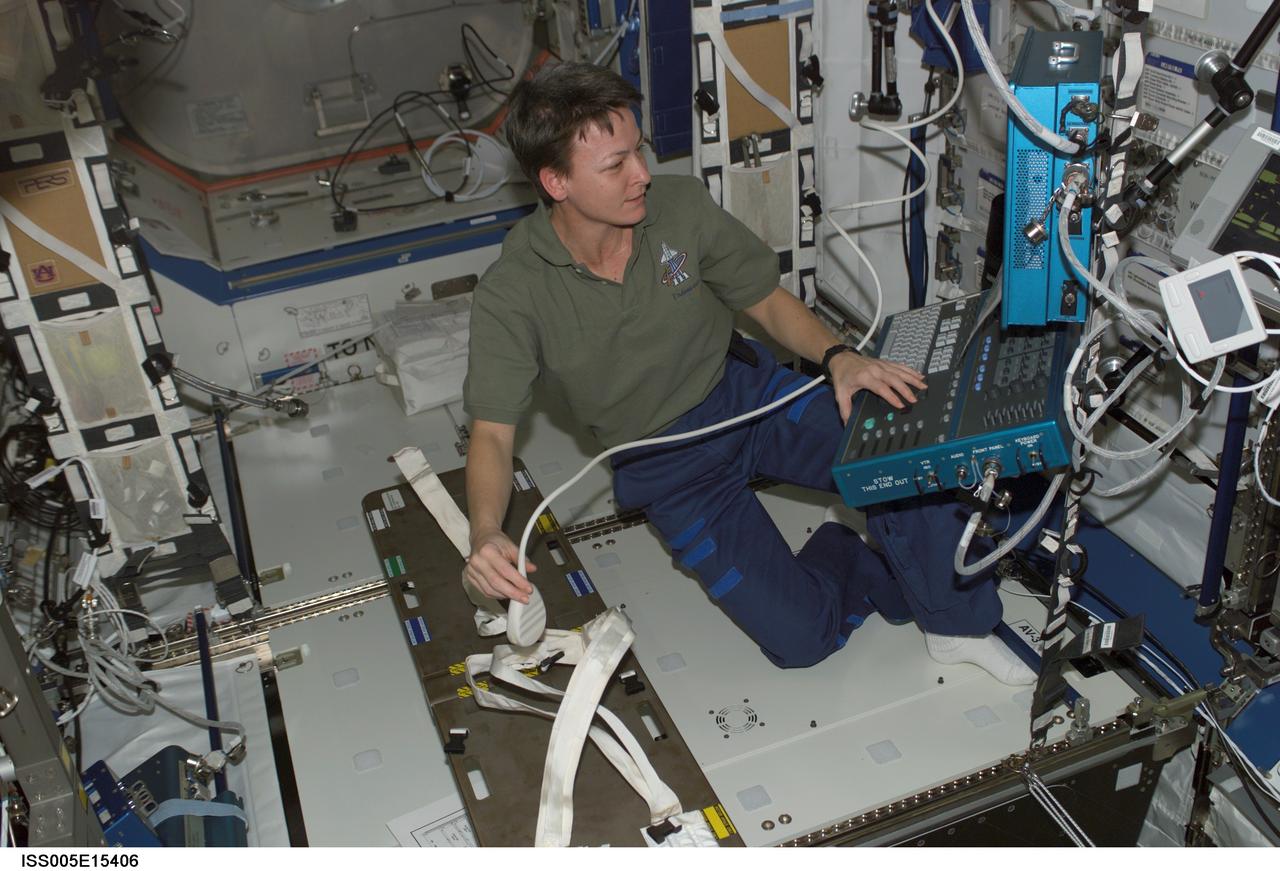
ISS005-E-15406 (23 September 2002) --- Astronaut Peggy A. Whitson, Expedition Five flight engineer, works in the Destiny laboratory on the International Space Station (ISS).
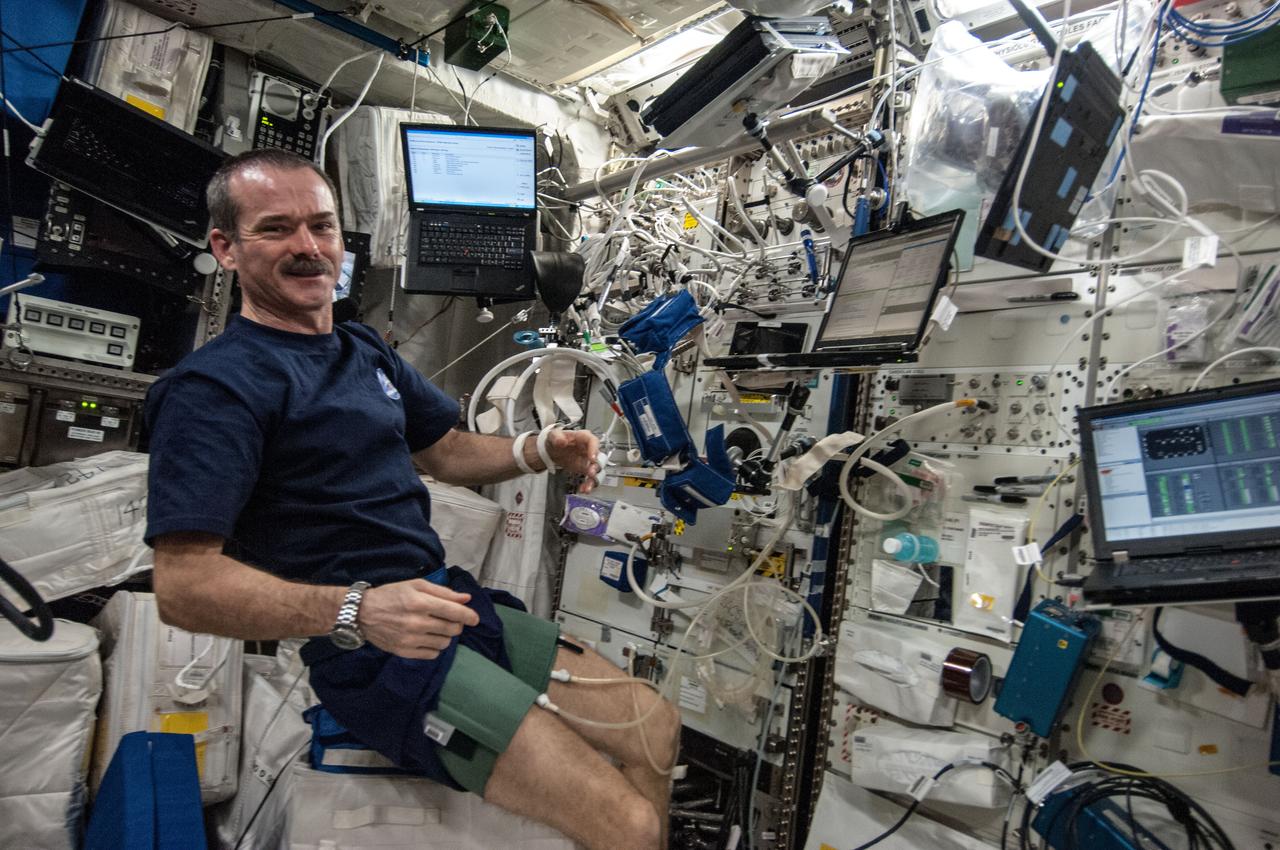
ISS035-E-022357 (17 April 2013) --- In support of the Blood Pressure Regulation Experiment (BP Reg), Expedition 35 Commander Chris Hadfield of the Canadian Space Agency is pictured after having set up the Human Research Facility (HRF) PFS (Pulmonary Function System) and the European Physiology Module (EPM) Cardiolab (CDL) Leg/Arm Cuff System (LACS) and conducting the first ever session of this experiment. The test, which will be repeated using other crew members as well, will help to identify the astronauts who could benefit from countermeasures before returning to Earth. Thus, this method has great potential for astronaut health monitoring during future long-term space flights and it also has important implications for testing of individuals on Earth, especially the elderly, who are at risk for fainting. The research will also allow demonstrating the feasibility of obtaining a set of indicators of overall cardiovascular regulation from the non-invasive measurement of continuous blood pressure.
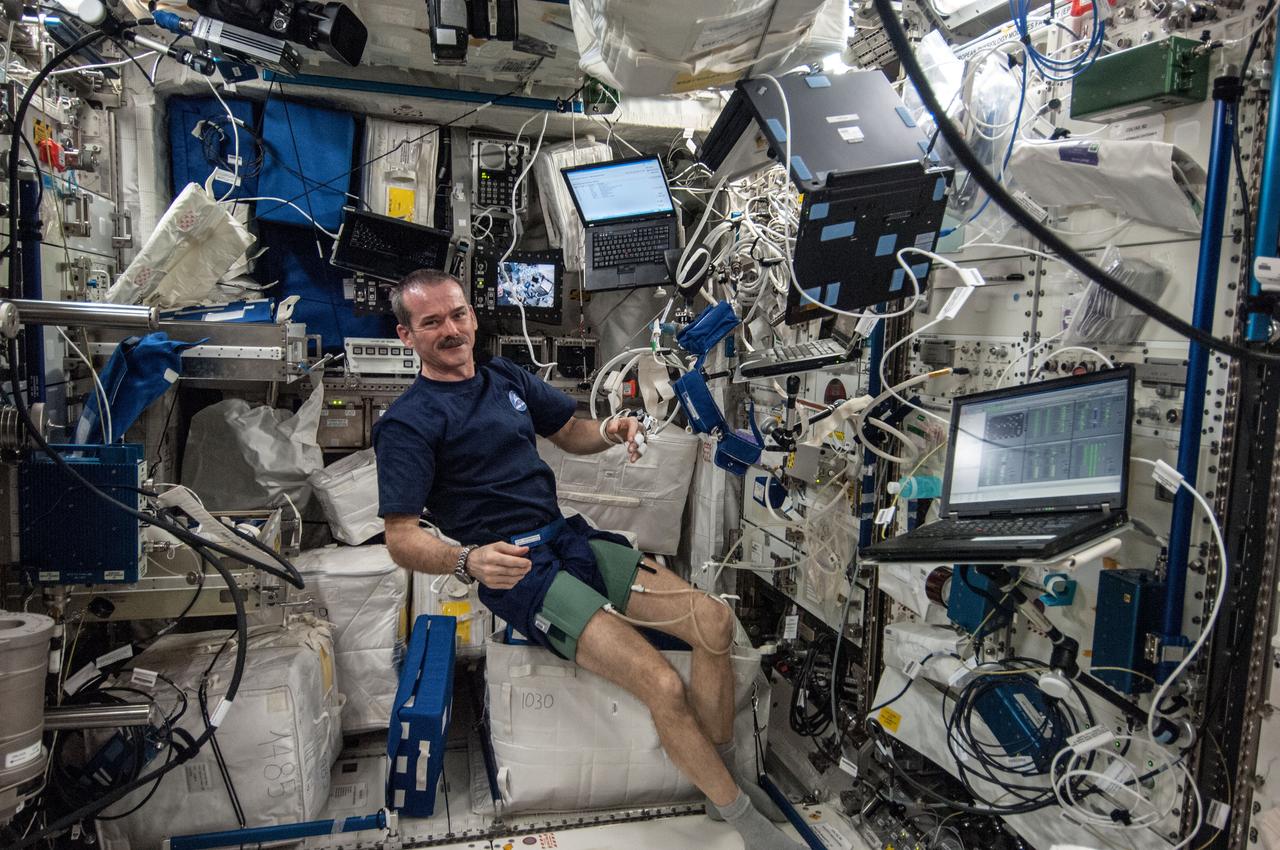
ISS035-E-022356 (17 April 2013) --- In support of the Blood Pressure Regulation Experiment (BP Reg), Expedition 35 Commander Chris Hadfield of the Canadian Space Agency is pictured after having set up the Human Research Facility (HRF) PFS (Pulmonary Function System) and the European Physiology Module (EPM) Cardiolab (CDL) Leg/Arm Cuff System (LACS) and conducting the first ever session of this experiment. The test, which will be repeated using other crew members as well, will help to identify the astronauts who could benefit from countermeasures before returning to Earth. Thus, this method has great potential for astronaut health monitoring during future long-term space flights and it also has important implications for testing of individuals on Earth, especially the elderly, who are at risk for fainting. The research will also allow demonstrating the feasibility of obtaining a set of indicators of overall cardiovascular regulation from the non-invasive measurement of continuous blood pressure.
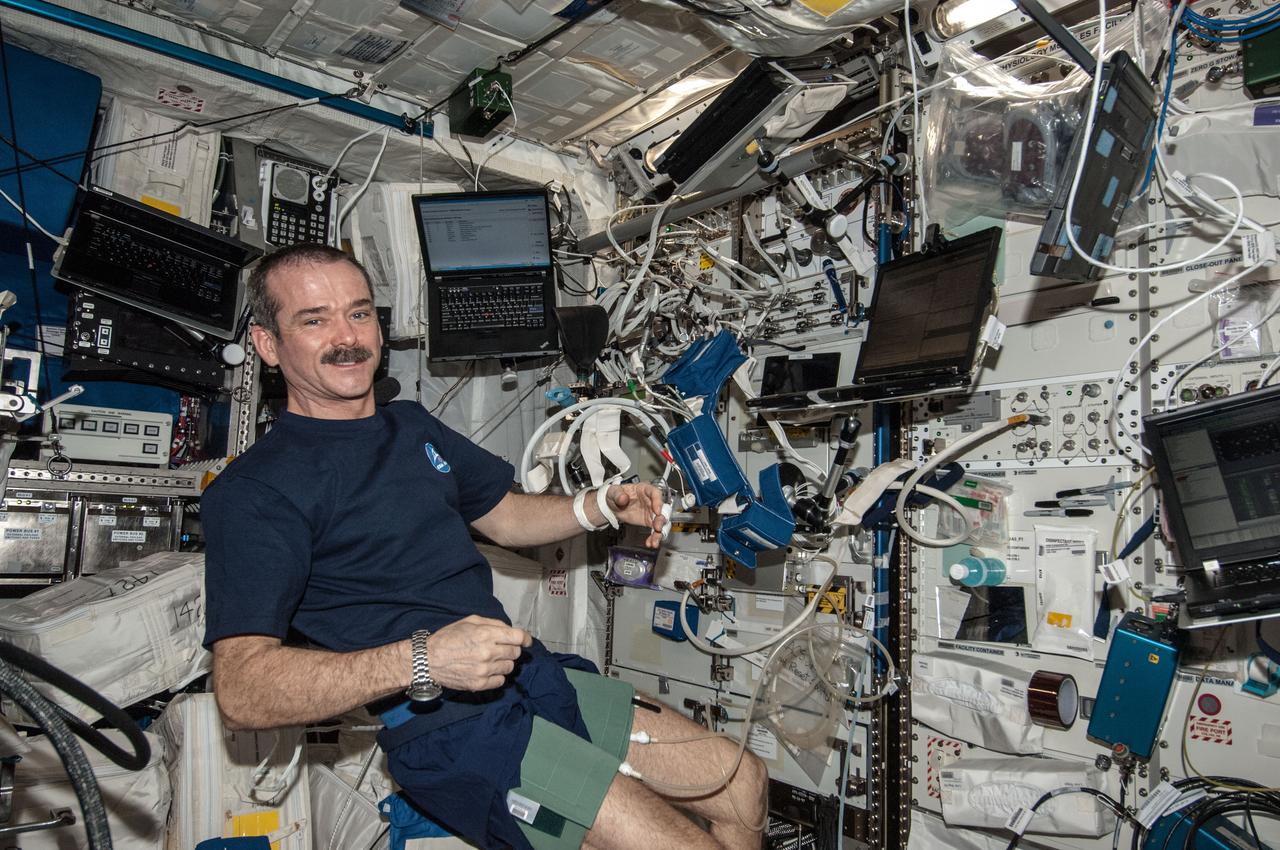
ISS035-E-022360 (17 April 2013) --- In support of the Blood Pressure Regulation Experiment (BP Reg), Expedition 35 Commander Chris Hadfield of the Canadian Space Agency is pictured after having set up the Human Research Facility (HRF) PFS (Pulmonary Function System) and the European Physiology Module (EPM) Cardiolab (CDL) Leg/Arm Cuff System (LACS) and conducting the first ever session of this experiment. The test, which will be repeated using other crew members as well, will help to identify the astronauts who could benefit from countermeasures before returning to Earth. Thus, this method has great potential for astronaut health monitoring during future long-term space flights and it also has important implications for testing of individuals on Earth, especially the elderly, who are at risk for fainting. The research will also allow demonstrating the feasibility of obtaining a set of indicators of overall cardiovascular regulation from the non-invasive measurement of continuous blood pressure.
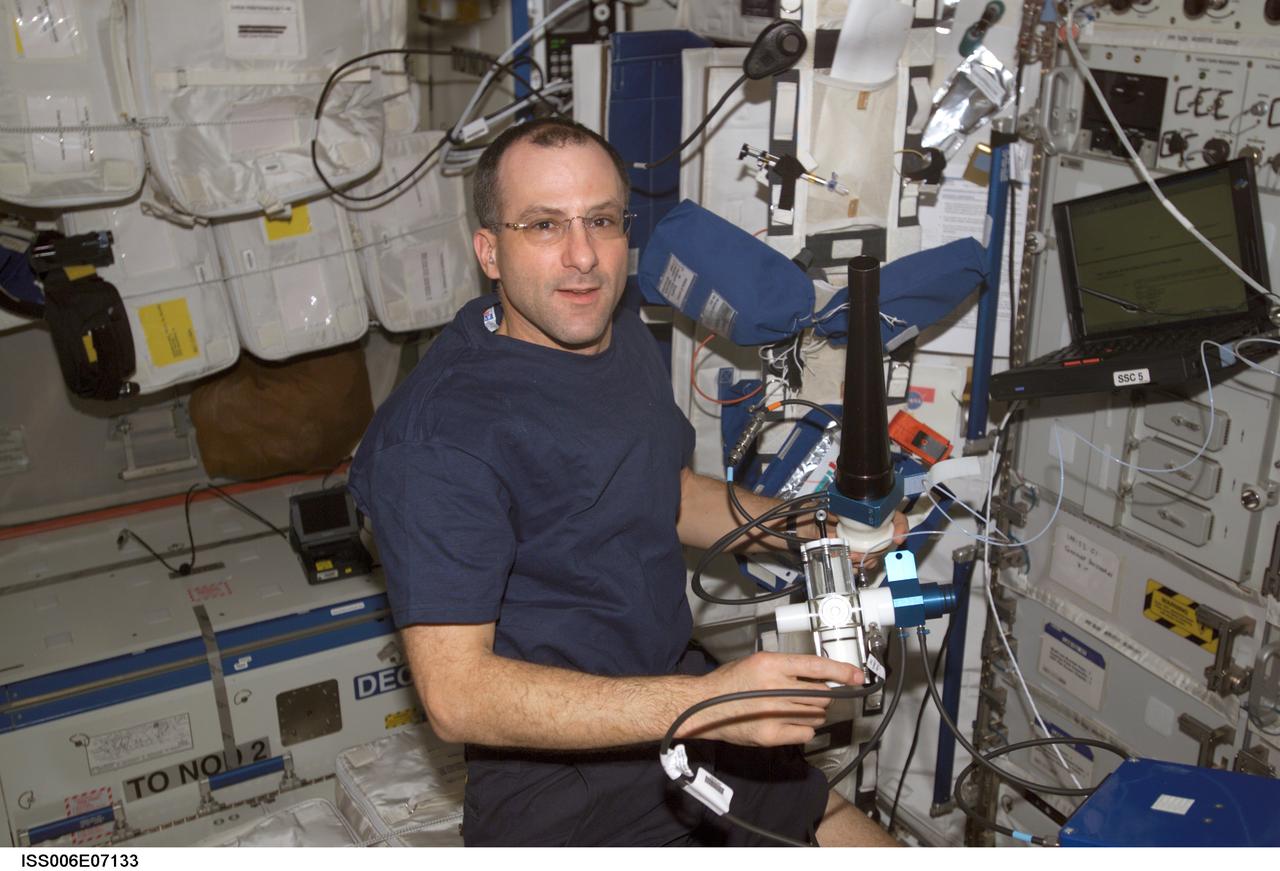
In this International Space Station (ISS) onboard photo, Expedition Six Science Officer Donald R. Pettit works to set up the Pulmonary Function in Flight (PuFF) experiment hardware in the Destiny Laboratory. Expedition Six is the fourth and final crew to perform the PuFF experiment. The PuFF experiment was developed to better understand what effects long term exposure to microgravity may have on the lungs. The focus is on measuring changes in the everness of gas exchange in the lungs, and on detecting changes in respiratory muscle strength. It allows astronauts to measure blood flow through the lungs, the ability of the lung to take up oxygen, and lung volumes. Each PuFF session includes five lung function tests, which involve breathing only cabin air. For each planned extravehicular (EVA) activity, a crew member performs a PuFF test within one week prior to the EVA. Following the EVA, those crew members perform another test to document the effect of exposure of the lungs to the low-pressure environment of the space suits. This experiment utilizes the Gas Analyzer System for Metabolic Analysis Physiology, or GASMAP, located in the Human Research Facility (HRF), along with a variety of other Puff equipment including a manual breathing valve, flow meter, pressure-flow module, pressure and volume calibration syringes, and disposable mouth pieces.
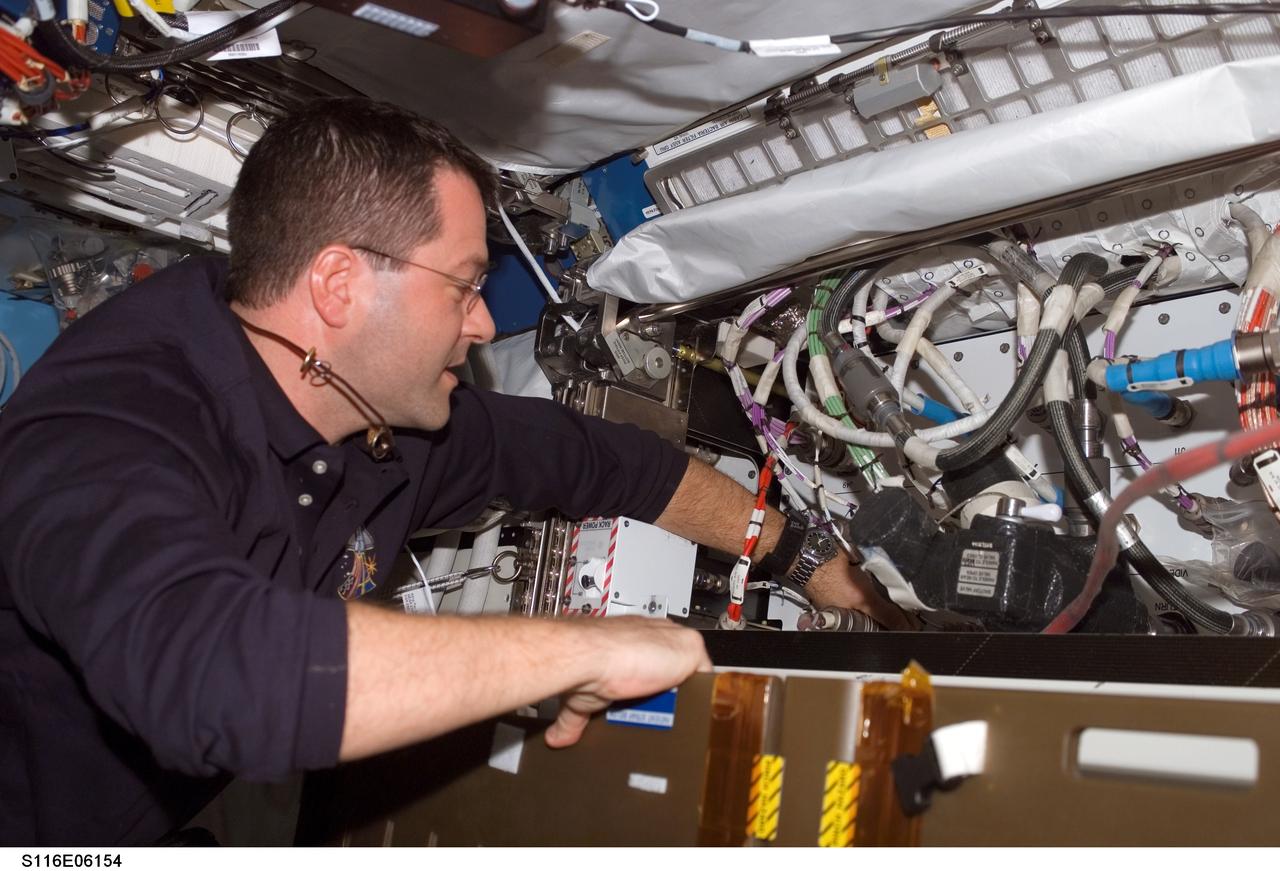
S116-E-06154 (14 Dec. 2006) --- Astronaut Nicholas J. M. Patrick, STS-116 mission specialist, works in the Destiny laboratory of the International Space Station while Space Shuttle Discovery was docked with the station.