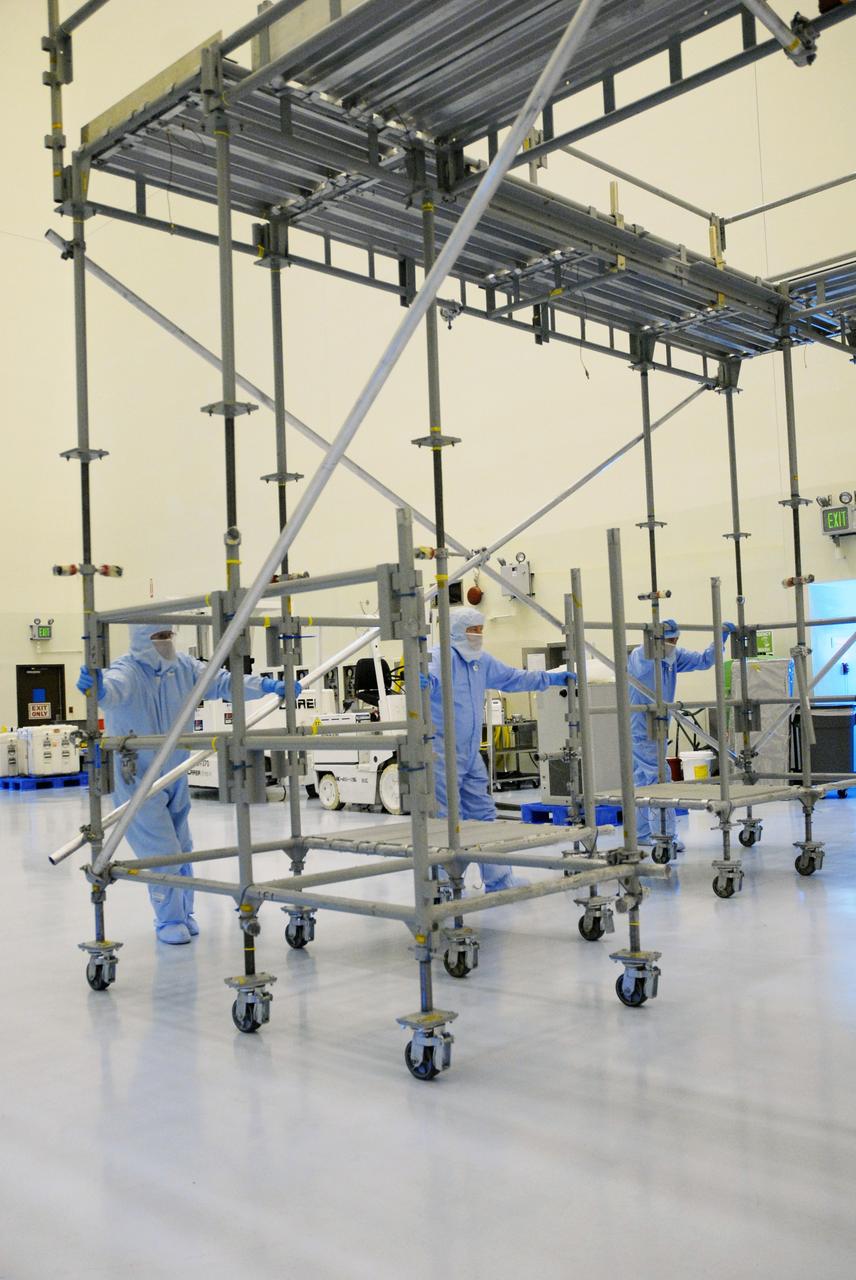
CAPE CANAVERAL, Fla. – In the Payload Hazardous Servicing Facility at NASA's Kennedy Space Center, workers move flight support system (FSS) access scaffolding that will be used to prepare the Hubble Space Telescope, or HST, carriers for the STS-125 servicing mission 4. The FSS will berth, secure and furnish power to Hubble and also contains the soft capture mechanism to be attached to the telescope. Upon completion of STS-125, the Hubble will provide even deeper and more detailed views of the Universe. The STS-125 mission will be the final space shuttle mission to the Hubble Space Telescope. Photo credit: NASA/Jack Pfaller

CAPE CANAVERAL, Fla. – In the Payload Hazardous Servicing Facility at NASA's Kennedy Space Center, equipment is stacked for the flight support system (FSS) access scaffolding that will be used to prepare the Hubble Space Telescope, or HST, carriers for the STS-125 servicing mission 4. The FSS will berth, secure and furnish power to Hubble and also contains the soft capture mechanism to be attached to the telescope. Upon completion of STS-125, the Hubble will provide even deeper and more detailed views of the Universe. The STS-125 mission will be the final space shuttle mission to the Hubble Space Telescope. Photo credit: NASA/Jack Pfaller
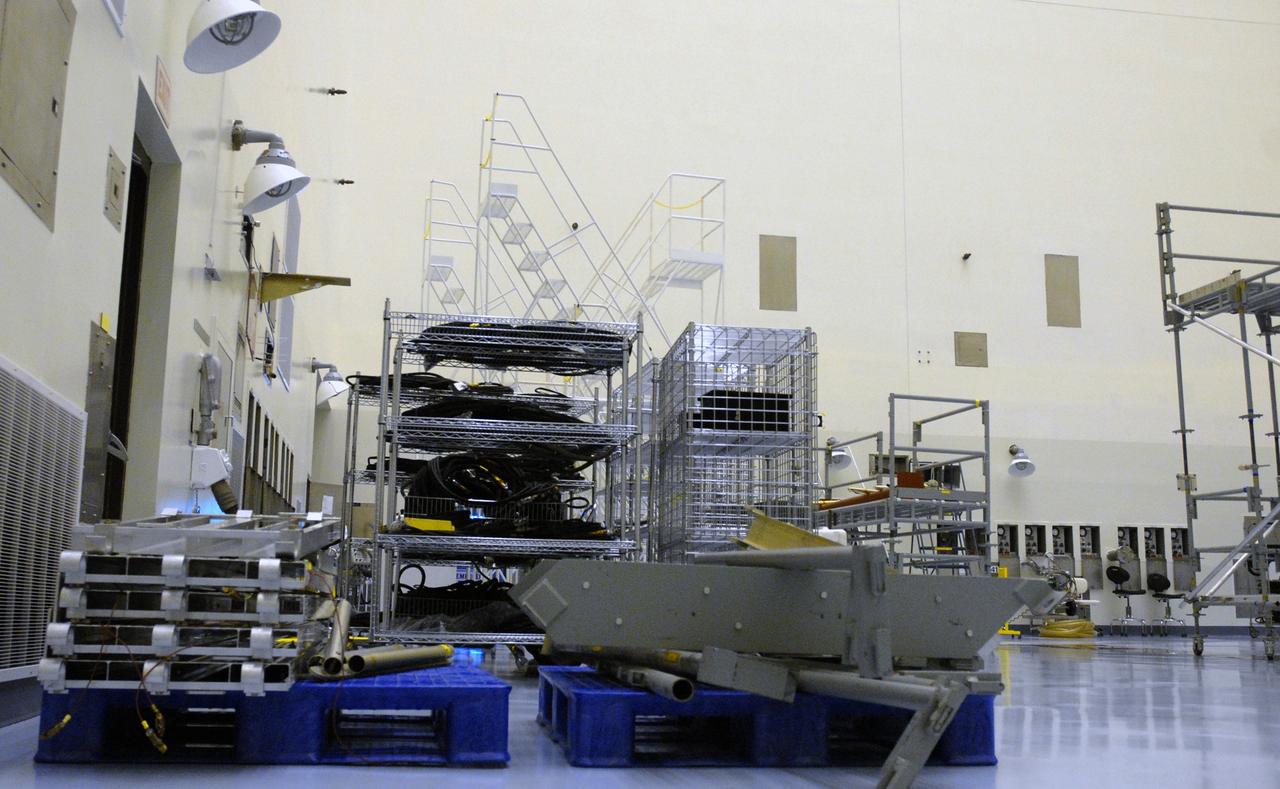
CAPE CANAVERAL, Fla. – In the Payload Hazardous Servicing Facility at NASA's Kennedy Space Center, equipment is stacked for the flight support system (FSS) access scaffolding that will be used to prepare the Hubble Space Telescope, or HST, carriers for the STS-125 servicing mission 4. The FSS will berth, secure and furnish power to Hubble and also contains the soft capture mechanism to be attached to the telescope. Upon completion of STS-125, the Hubble will provide even deeper and more detailed views of the Universe. The STS-125 mission will be the final space shuttle mission to the Hubble Space Telescope. Photo credit: NASA/Jack Pfaller
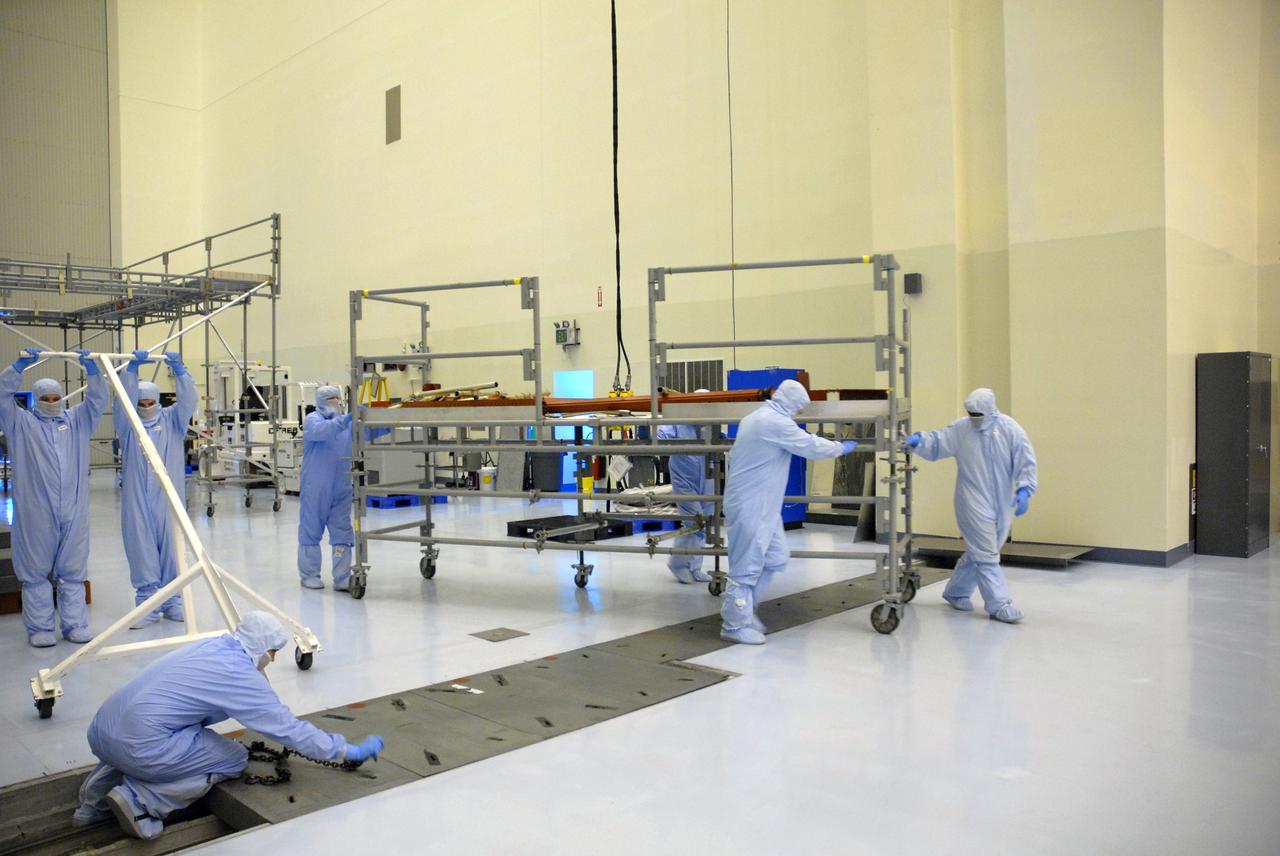
CAPE CANAVERAL, Fla. – In the Payload Hazardous Servicing Facility at NASA's Kennedy Space Center, workers move a piece of flight support system (FSS) access scaffolding. The scaffolding will be used to prepare the Hubble Space Telescope, or HST, carriers for the STS-125 servicing mission 4. The FSS will berth, secure and furnish power to Hubble and also contains the soft capture mechanism to be attached to the telescope. Upon completion of STS-125, the Hubble will provide even deeper and more detailed views of the Universe. The STS-125 mission will be the final space shuttle mission to the Hubble Space Telescope. Photo credit: NASA/Jack Pfaller
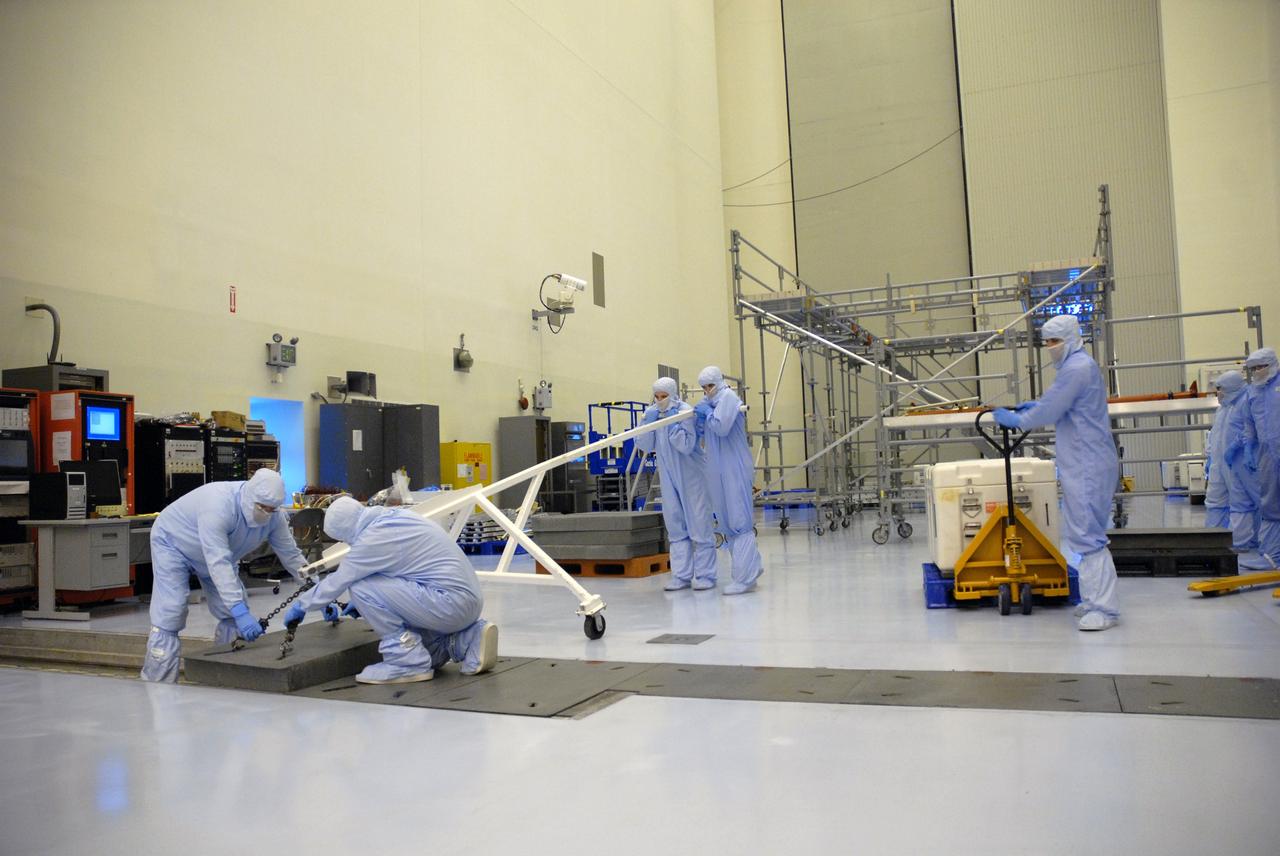
CAPE CANAVERAL, Fla. – In the Payload Hazardous Servicing Facility at NASA's Kennedy Space Center, workers prepare the floor in order to move flight support system (FSS) access scaffolding. The scaffolding will be used to prepare the Hubble Space Telescope, or HST, carriers for the STS-125 servicing mission 4. The FSS will berth, secure and furnish power to Hubble and also contains the soft capture mechanism to be attached to the telescope. Upon completion of STS-125, the Hubble will provide even deeper and more detailed views of the Universe. The STS-125 mission will be the final space shuttle mission to the Hubble Space Telescope. Photo credit: NASA/Jack Pfaller
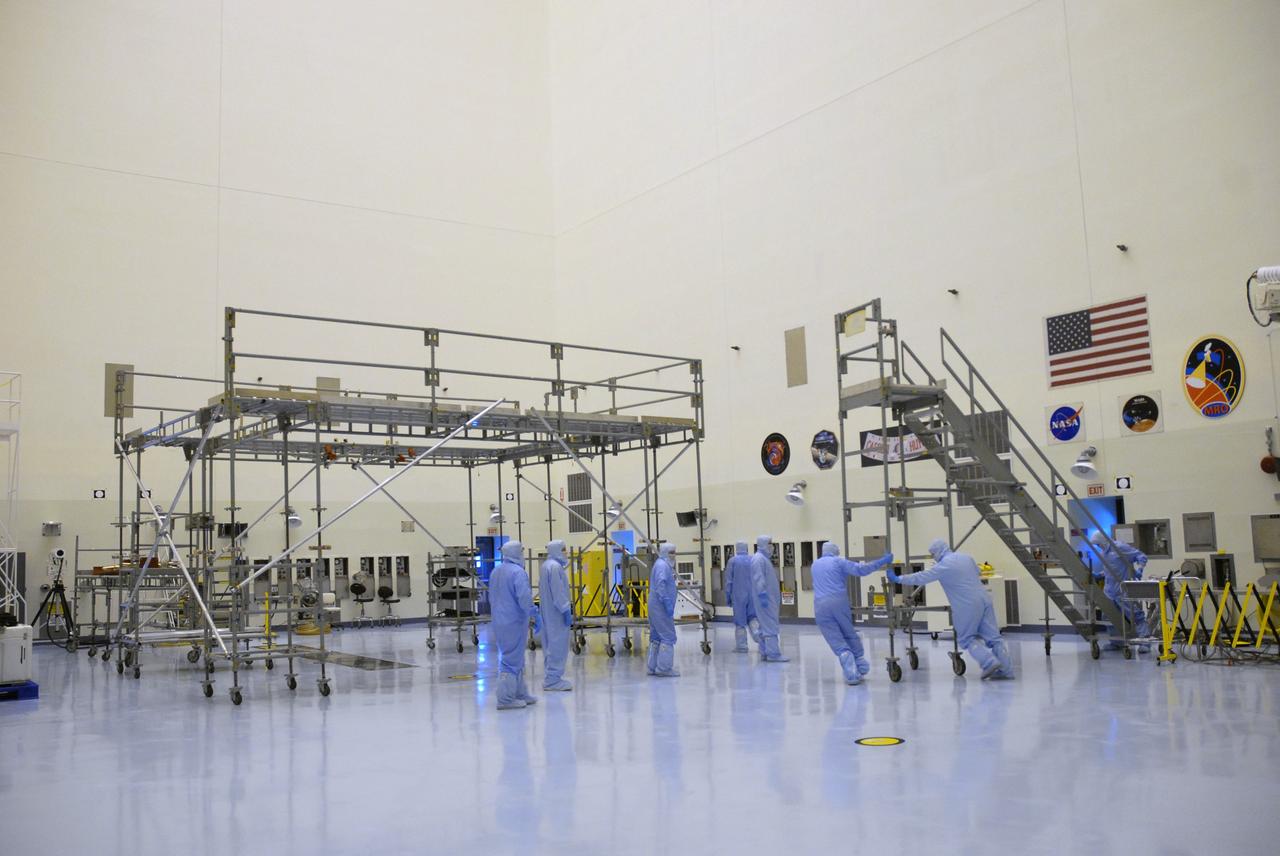
CAPE CANAVERAL, Fla. – In the Payload Hazardous Servicing Facility at NASA's Kennedy Space Center, workers move flight support system (FSS) access scaffolding that will be used to prepare the Hubble Space Telescope, or HST, carriers for the STS-125 servicing mission 4. The FSS will berth, secure and furnish power to Hubble and also contains the soft capture mechanism to be attached to the telescope. Upon completion of STS-125, the Hubble will provide even deeper and more detailed views of the Universe. The STS-125 mission will be the final space shuttle mission to the Hubble Space Telescope. Photo credit: NASA/Jack Pfaller
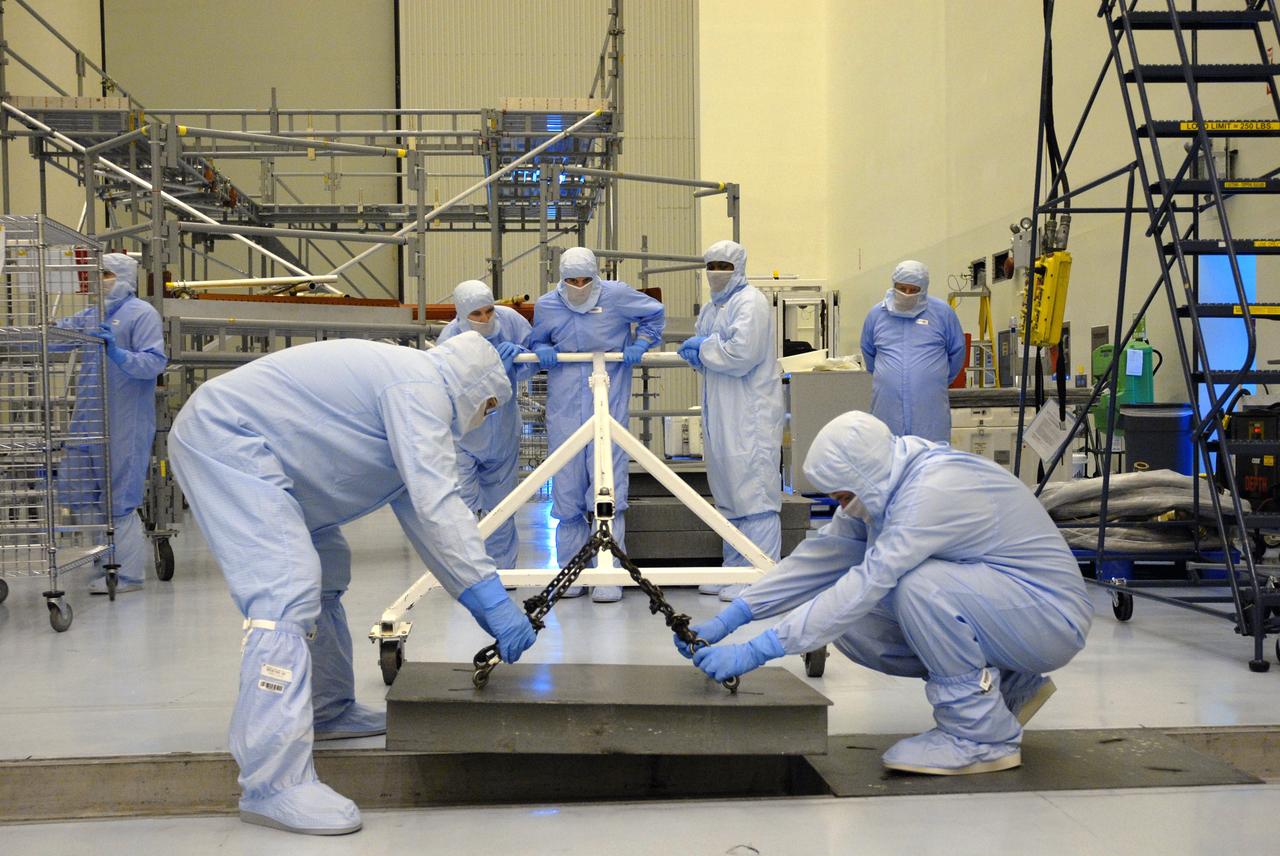
CAPE CANAVERAL, Fla. – In the Payload Hazardous Servicing Facility at NASA's Kennedy Space Center, workers prepare the floor in order to move flight support system (FSS) access scaffolding. The scaffolding will be used to prepare the Hubble Space Telescope, or HST, carriers for the STS-125 servicing mission 4. The FSS will berth, secure and furnish power to Hubble and also contains the soft capture mechanism to be attached to the telescope. Upon completion of STS-125, the Hubble will provide even deeper and more detailed views of the Universe. The STS-125 mission will be the final space shuttle mission to the Hubble Space Telescope. Photo credit: NASA/Jack Pfaller
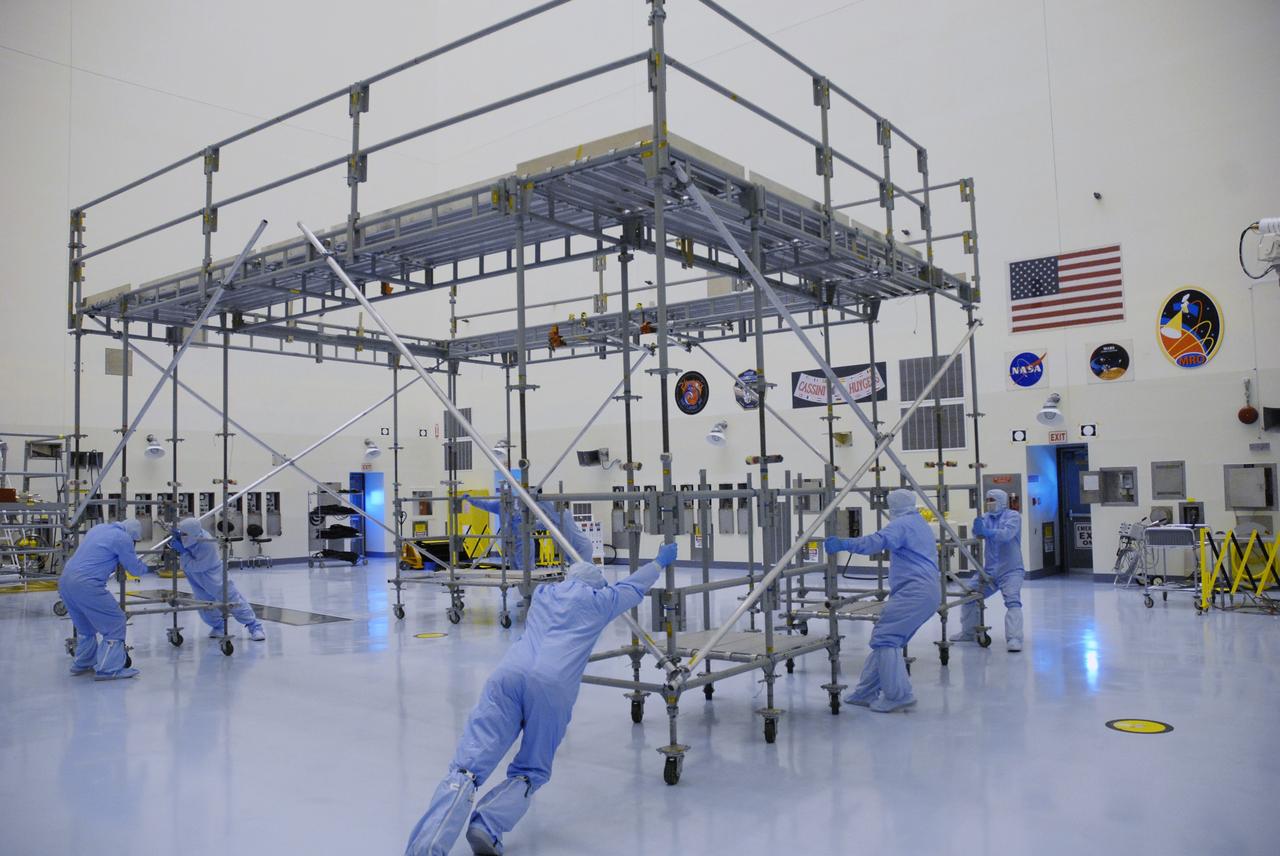
CAPE CANAVERAL, Fla. – In the Payload Hazardous Servicing Facility at NASA's Kennedy Space Center, workers move flight support system (FSS) access scaffolding that will be used to prepare the Hubble Space Telescope, or HST, carriers for the STS-125 servicing mission 4. The FSS will berth, secure and furnish power to Hubble and also contains the soft capture mechanism to be attached to the telescope. Upon completion of STS-125, the Hubble will provide even deeper and more detailed views of the Universe. The STS-125 mission will be the final space shuttle mission to the Hubble Space Telescope. Photo credit: NASA/Jack Pfaller
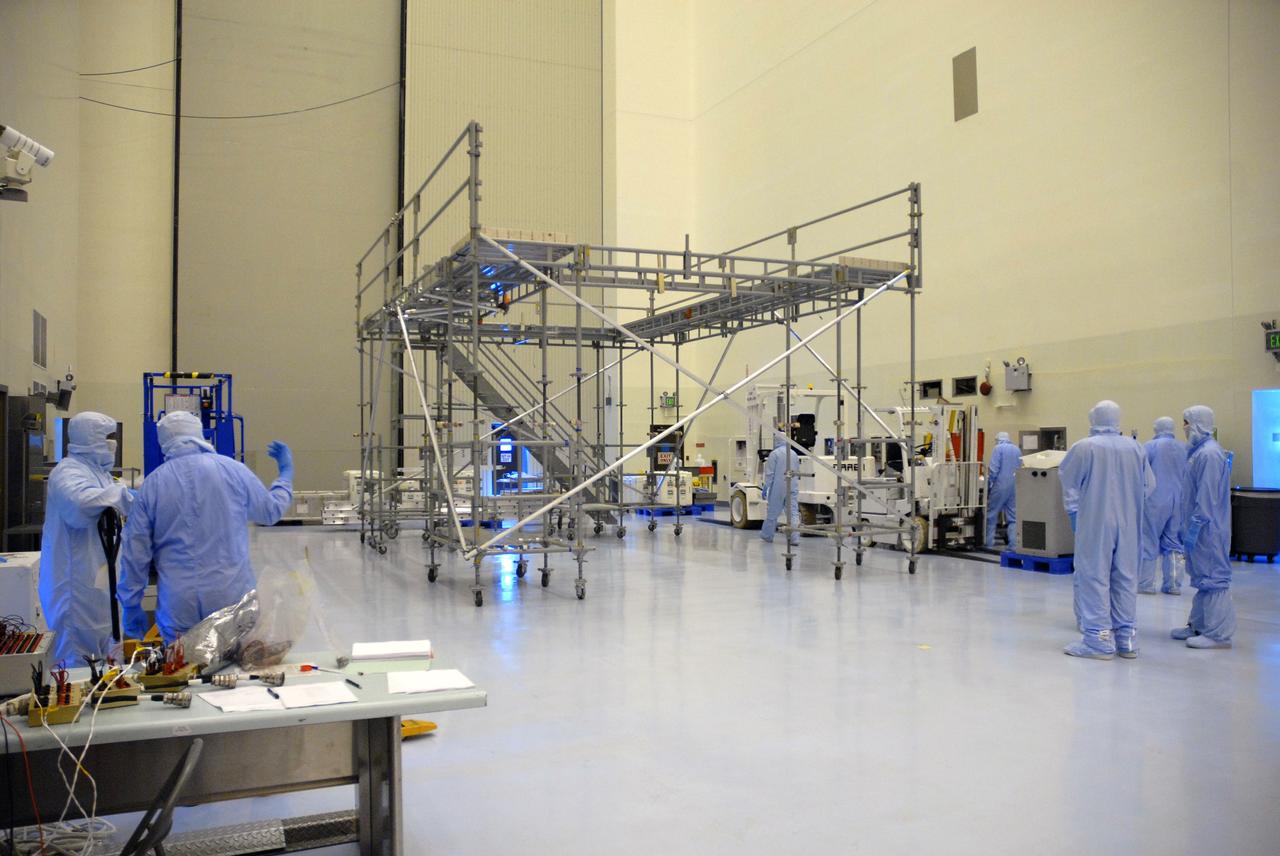
CAPE CANAVERAL, Fla. – In the Payload Hazardous Servicing Facility at NASA's Kennedy Space Center, workers are constructing flight support system (FSS) access scaffolding that will be used to prepare the Hubble Space Telescope, or HST, carriers for the STS-125 servicing mission 4. The FSS will berth, secure and furnish power to Hubble and also contains the soft capture mechanism to be attached to the telescope. Upon completion of STS-125, the Hubble will provide even deeper and more detailed views of the Universe. The STS-125 mission will be the final space shuttle mission to the Hubble Space Telescope. Photo credit: NASA/Jack Pfaller
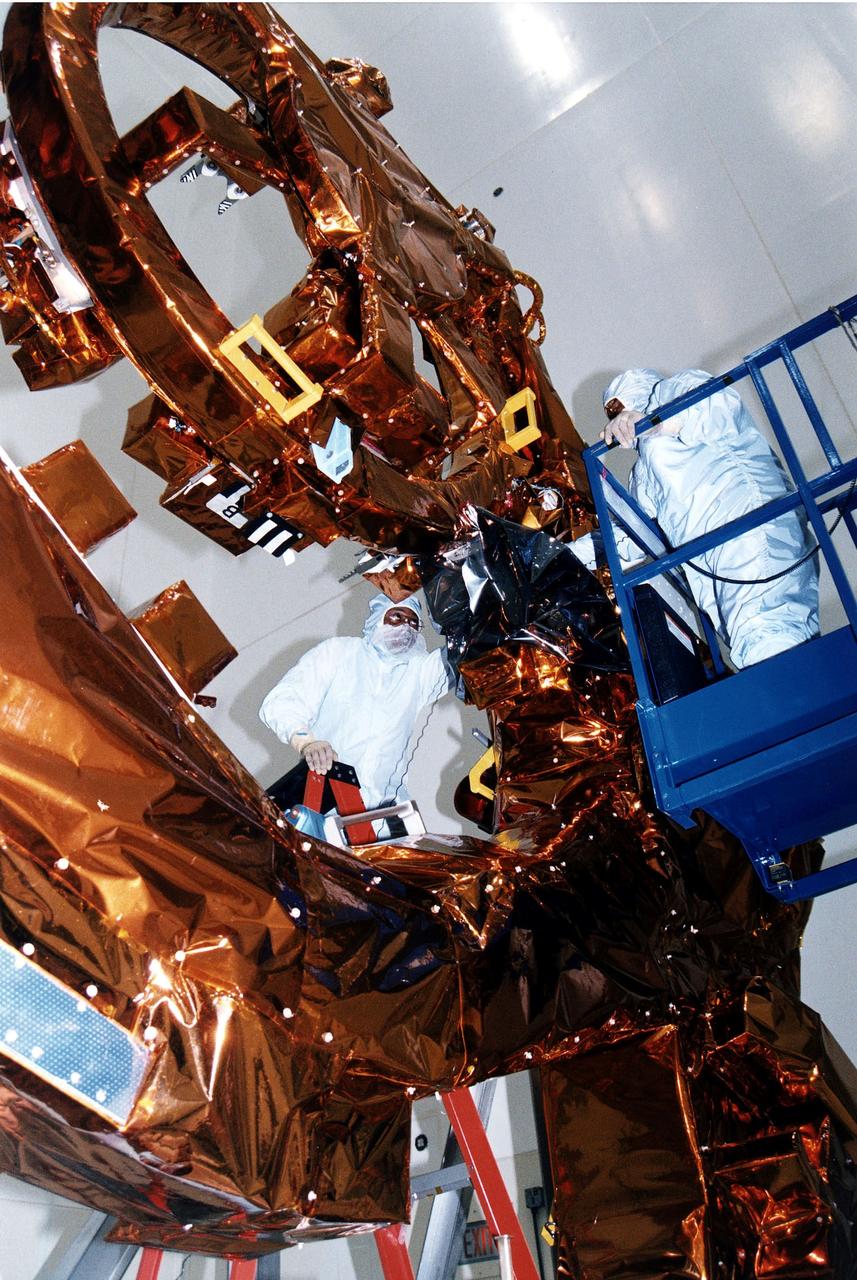
KENNEDY SPACE CENTER, FLA. - Workers in KSC's Vertical Processing Facility make final adjustments to the Flight Support System (FSS) for STS-82, the second Hubble Space Telescope servicing mission. The FSS is reusable flight hardware that provides the mechanical, structural and electrical interfaces between HST, the space support equipment and the orbiter for payload retrieval and on-orbit servicing. Liftoff aboard Discovery is targeted Feb. 11 with a crew of seven.
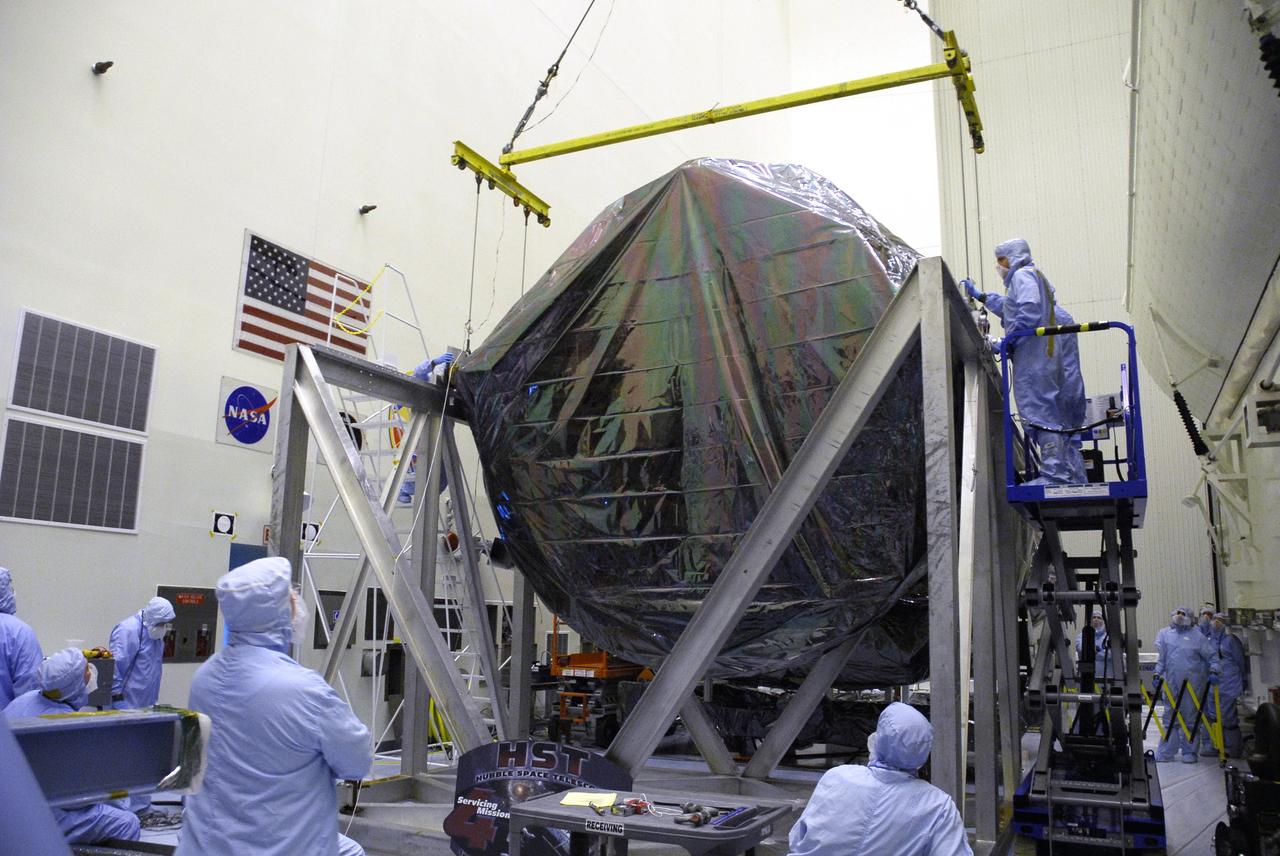
CAPE CANAVERAL, Fla. - In the Payload Hazardous Servicing Facility at NASA’s Kennedy Space Center, an overhead crane lifts the Flight Support System carrier with the Soft Capture Mechanism under protective cover. The carrier is one of four associated with the STS-125 mission to service the Hubble Space Telescope. It will be installed in the payload canister for transfer to Launch Pad 39A. At the pad, all the carriers will be loaded into space shuttle Atlantis’ payload bay. Launch of Atlantis is targeted for Oct. 10. Photo credit: NASA/Cory Huston
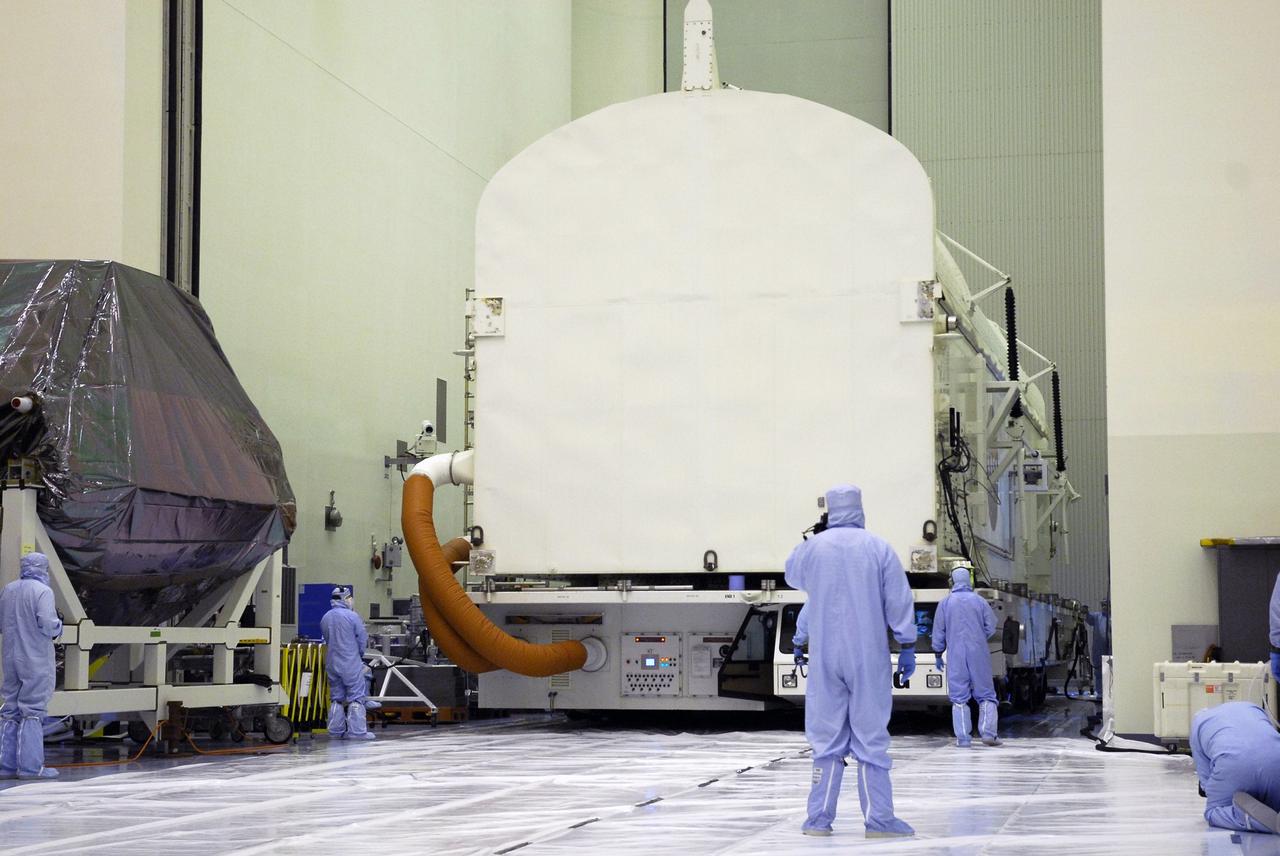
CAPE CANAVERAL, Fla. - The payload canister backs into the Payload Hazardous Servicing Facility at NASA’s Kennedy Space Center. The equipment and carriers associated with the STS-125 mission to service the Hubble Space Telescope will be installed in the canister for transfer to Launch Pad 39A. The canister contains an environmental con¬trol system, signified by the red umbilical lines at left. At the pad, the carriers will be loaded into space shuttle Atlantis’ payload bay. Launch of Atlantis is targeted for Oct. 10. Photo credit: NASA/Cory Huston
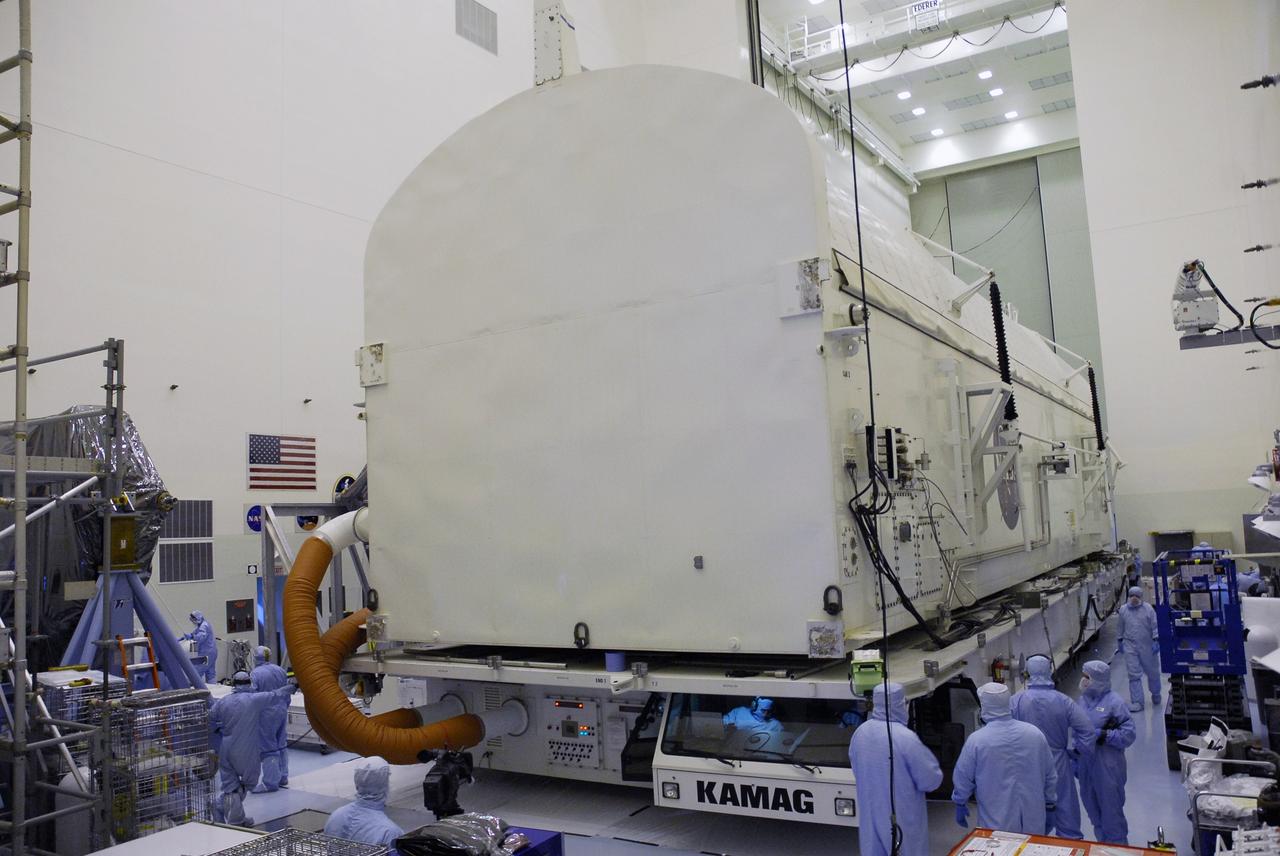
CAPE CANAVERAL, Fla. - The payload canister backs into the Payload Hazardous Servicing Facility at NASA’s Kennedy Space Center. The equipment and carriers associated with the STS-125 mission to service the Hubble Space Telescope will be installed in the canister for transfer to Launch Pad 39A. The canister contains an environmental control system, signified by the red umbilical lines at left. At the pad, the carriers will be loaded into space shuttle Atlantis’ payload bay. Launch of Atlantis is targeted for Oct. 10. Photo credit: NASA/Cory Huston
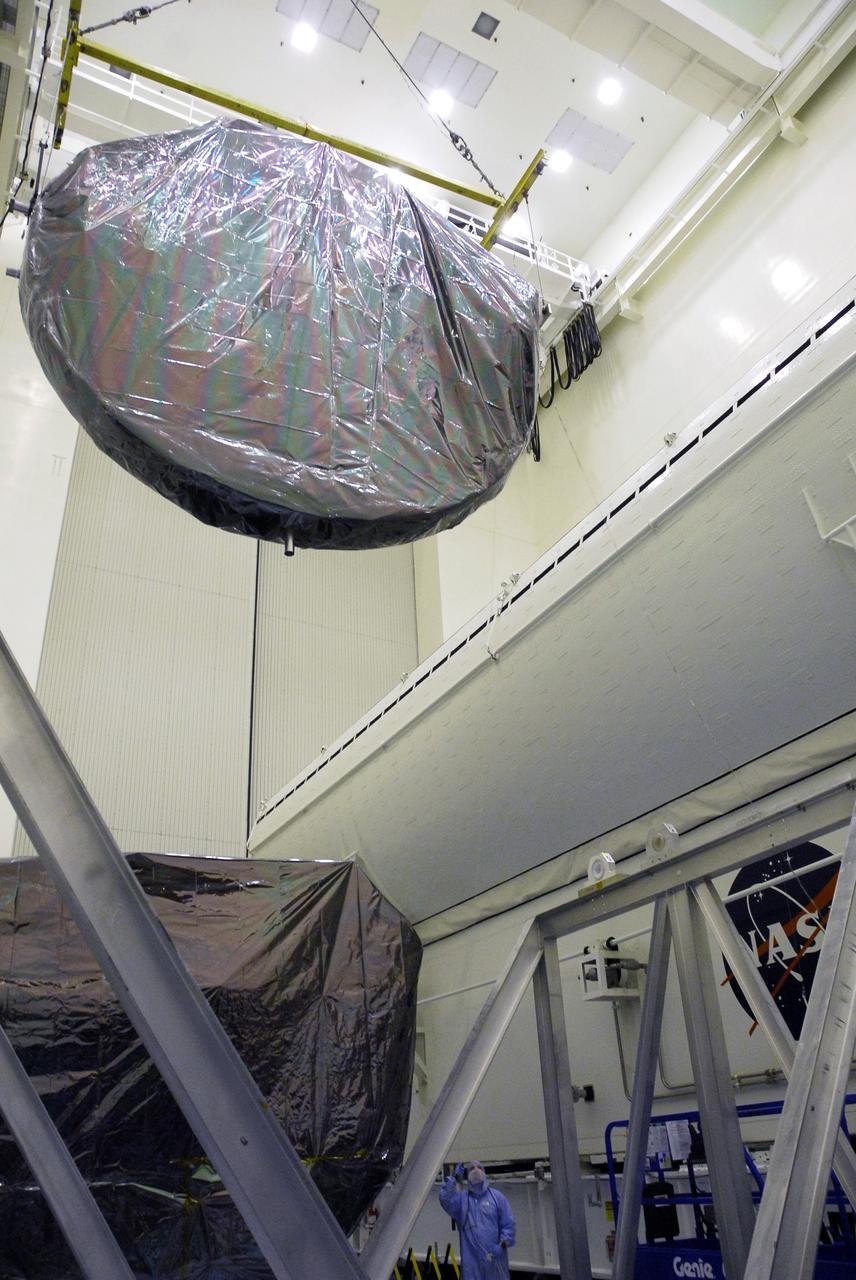
CAPE CANAVERAL, Fla. - In the Payload Hazardous Servicing Facility at NASA’s Kennedy Space Center, an overhead crane moves the Flight Support System carrier with the Soft Capture Mechanism toward the payload canister for transfer to Launch Pad 39A. The carrier is one of four associated with the STS-125 mission to service the Hubble Space Telescope. At the pad, all the carriers will be loaded into space shuttle Atlantis’ payload bay. Launch of Atlantis is targeted for Oct. 10. Photo credit: NASA/Cory Huston
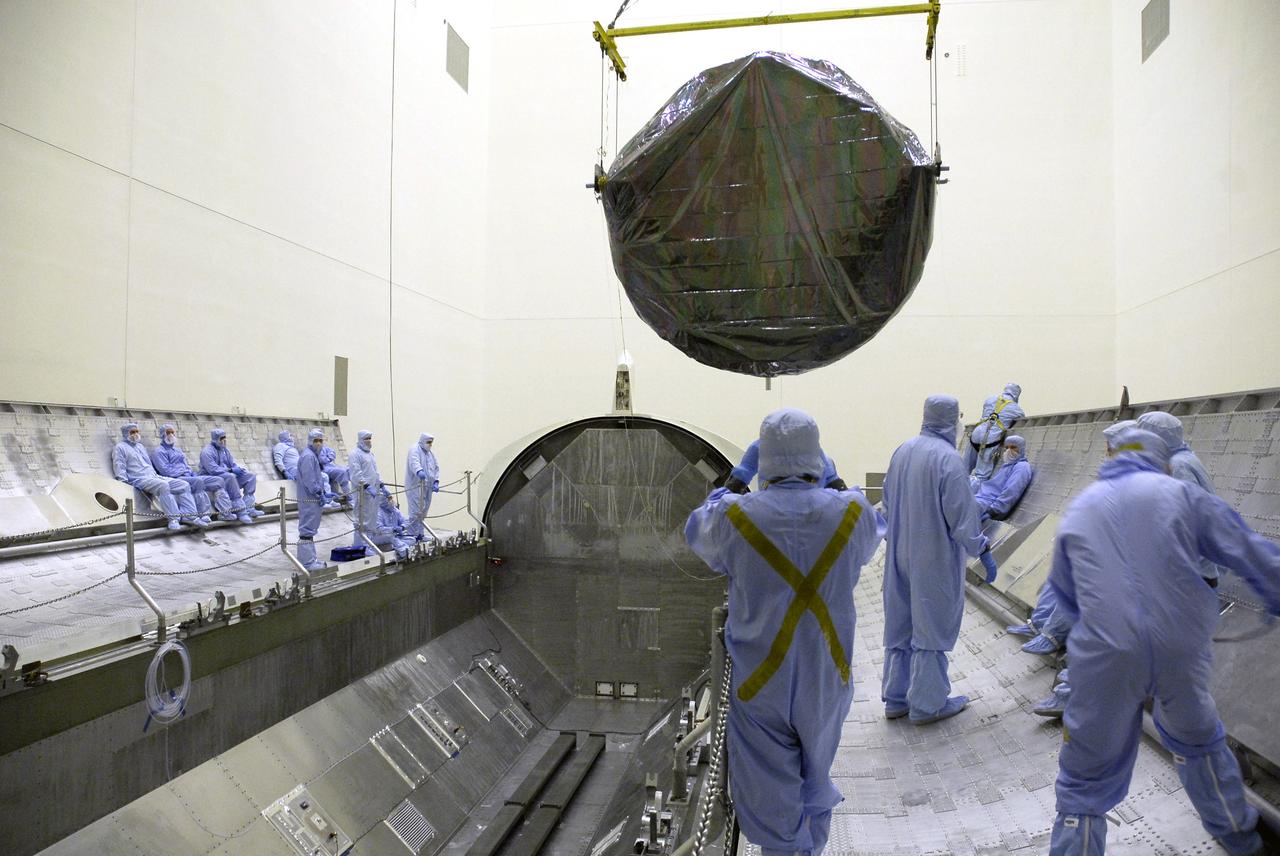
CAPE CANAVERAL, Fla. - In the Payload Hazardous Servicing Facility at NASA’s Kennedy Space Center, workers observe the movement of the crane holding the Flight Support System carrier with the Soft Capture Mechanism. It will be installed in the payload canister for transfer to Launch Pad 39A. The carrier is one of four associated with the STS-125 mission to service the Hubble Space Telescope. At the pad, all the carriers will be loaded into space shuttle Atlantis’ payload bay. Launch of Atlantis is targeted for Oct. 10. Photo credit: NASA/Cory Huston
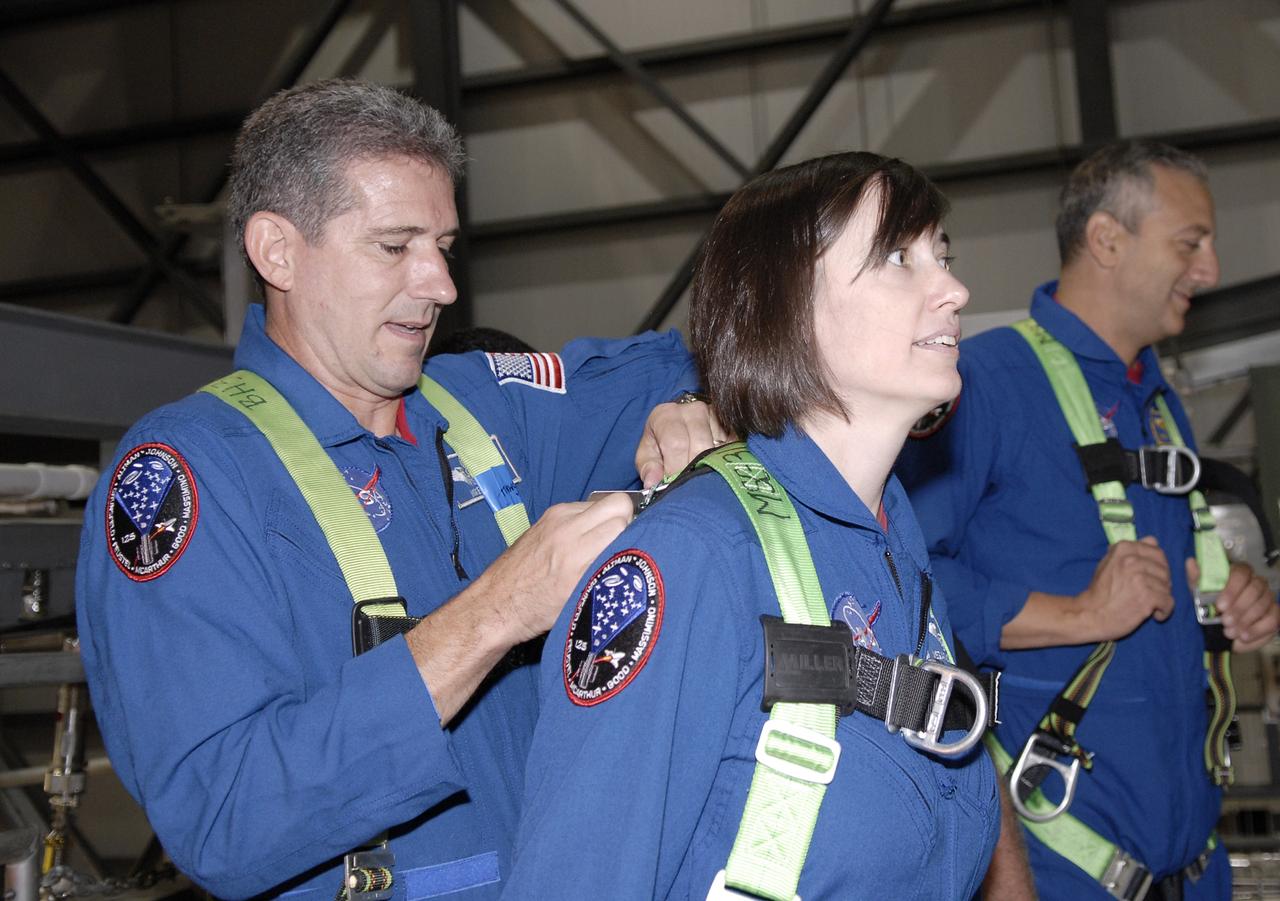
CAPE CANAVERAL, Fla. – In the Orbiter Processing Facility at NASA's Kennedy Space Center, STS-125 Mission Specialist Michael Good helps Mission Specialist Megan McArthur put on a safety harness to look inside space shuttle Atlantis' payload bay. Mission Specialist Mike Massimino also is shown. Crew members are at Kennedy for a crew equipment interface test, which provides hands-on experience with hardware and equipment for their mission. Atlantis is targeted to launch on the STS-125 Hubble Servicing Mission 4 on Oct. 8. Photo credit: NASA/Kim Shiflett
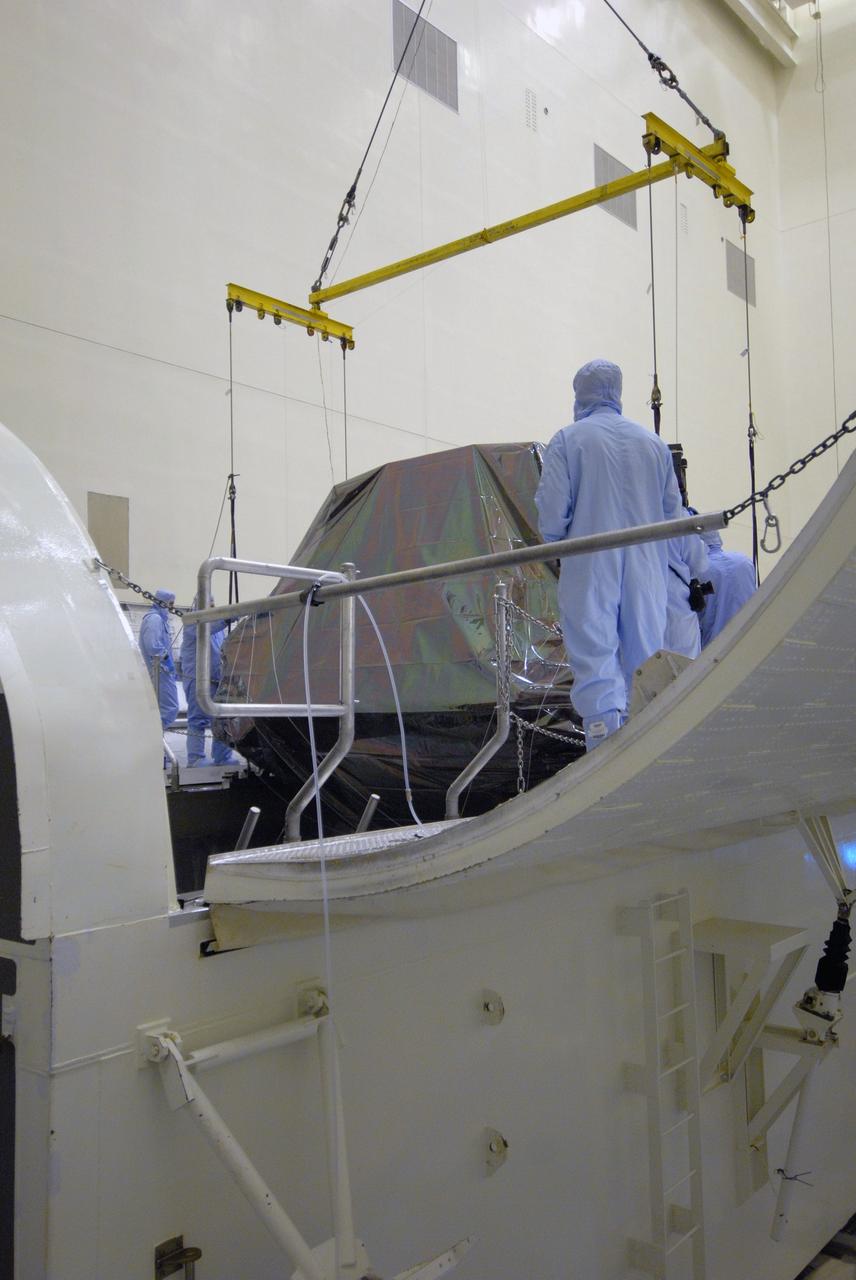
CAPE CANAVERAL, Fla. – In the Payload Hazardous Servicing Facility at NASA's Kennedy Space Center in Florida, an overhead crane lowers the Flight Support System, or FSS, carrier with the Soft Capture Mechanism into the payload canister. The canister will deliver the FSS and other carriers to Launch Pad 39A for installation in space shuttle Atlantis' payload bay. Atlantis' 11-day STS-125 mission to service NASA's Hubble Space Telescope is targeted for launch May 12. It will include five spacewalks in which astronauts will refurbish and upgrade the telescope with state-of-the-art science instruments. As a result, Hubble's capabilities will be expanded and its operational lifespan extended through at least 2014. Photo credit: NASA/Jack Pfaller
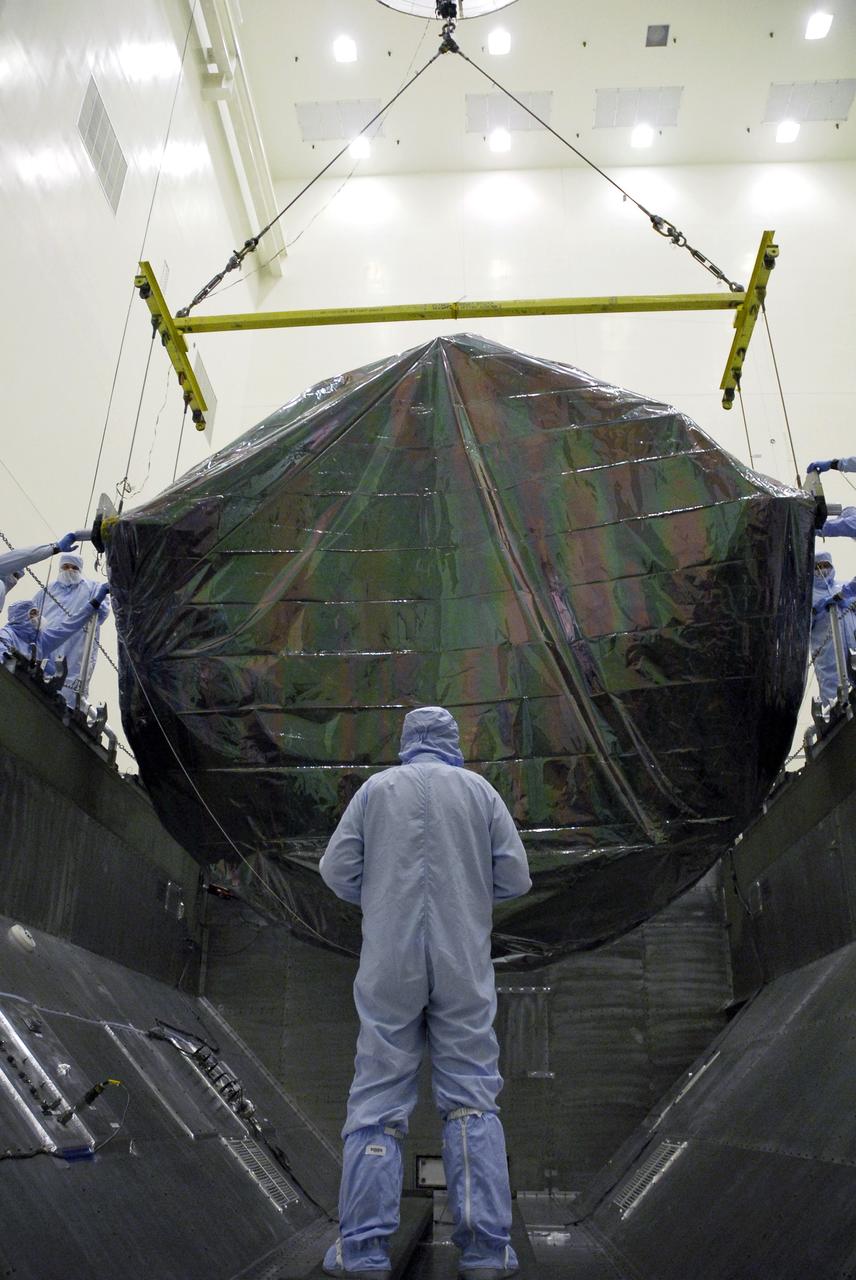
CAPE CANAVERAL, Fla. - In the Payload Hazardous Servicing Facility at NASA’s Kennedy Space Center, workers monitor the movement of the Flight Support System carrier with the Soft Capture Mechanism as it is lowered into the payload canister. The carrier is associated with the STS-125 mission to service the Hubble Space Telescope. The canister will transfer the carrier to Launch Pad 39A. The carrier is one of four associated with the STS-125 mission to service the Hubble Space Telescope. At the pad, all the carriers will be loaded into space shuttle Atlantis’ payload bay. Launch of Atlantis is targeted for Oct. 10. Photo credit: NASA/Cory Huston
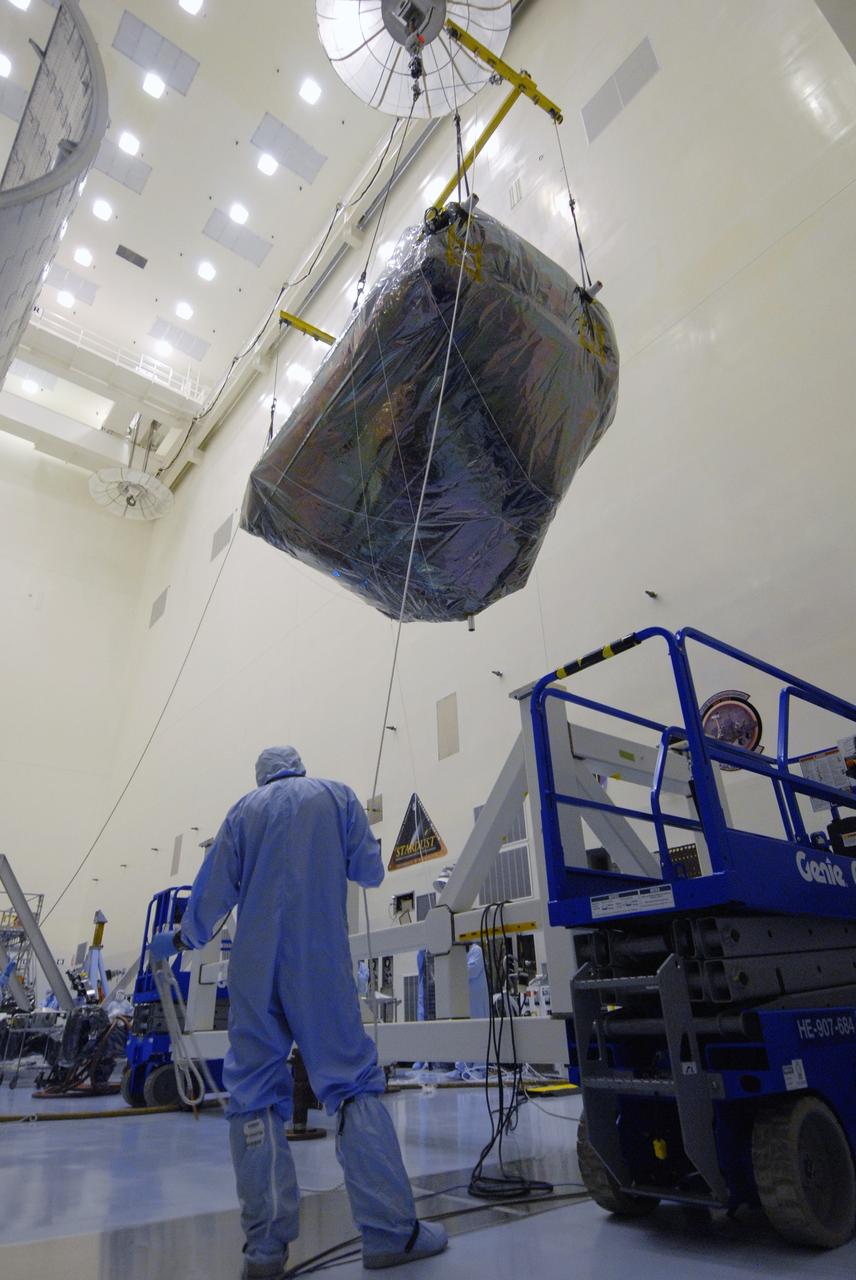
CAPE CANAVERAL, Fla. – In the Payload Hazardous Servicing Facility at NASA's Kennedy Space Center in Florida, an overhead crane is used to lift the Flight Support System, or FSS, carrier with the Soft Capture Mechanism from the workstand. The FSS will be placed in the payload canister and delivered with other carriers to Launch Pad 39A for installation in space shuttle Atlantis' payload bay. Atlantis' 11-day STS-125 mission to service NASA's Hubble Space Telescope is targeted for launch May 12. It will include five spacewalks in which astronauts will refurbish and upgrade the telescope with state-of-the-art science instruments. As a result, Hubble's capabilities will be expanded and its operational lifespan extended through at least 2014. Photo credit: NASA/Jack Pfaller

CAPE CANAVERAL, Fla. - In the Payload Hazardous Servicing Facility at NASA’s Kennedy Space Center, an overhead crane lifts the Flight Support System carrier with the Soft Capture Mechanism under protective cover. The carrier is one of four associated with the STS-125 mission to service the Hubble Space Telescope. It will be installed in the payload canister for transfer to Launch Pad 39A. At the pad, all the carriers will be loaded into space shuttle Atlantis’ payload bay. Launch of Atlantis is targeted for Oct. 10. Photo credit: NASA/Cory Huston
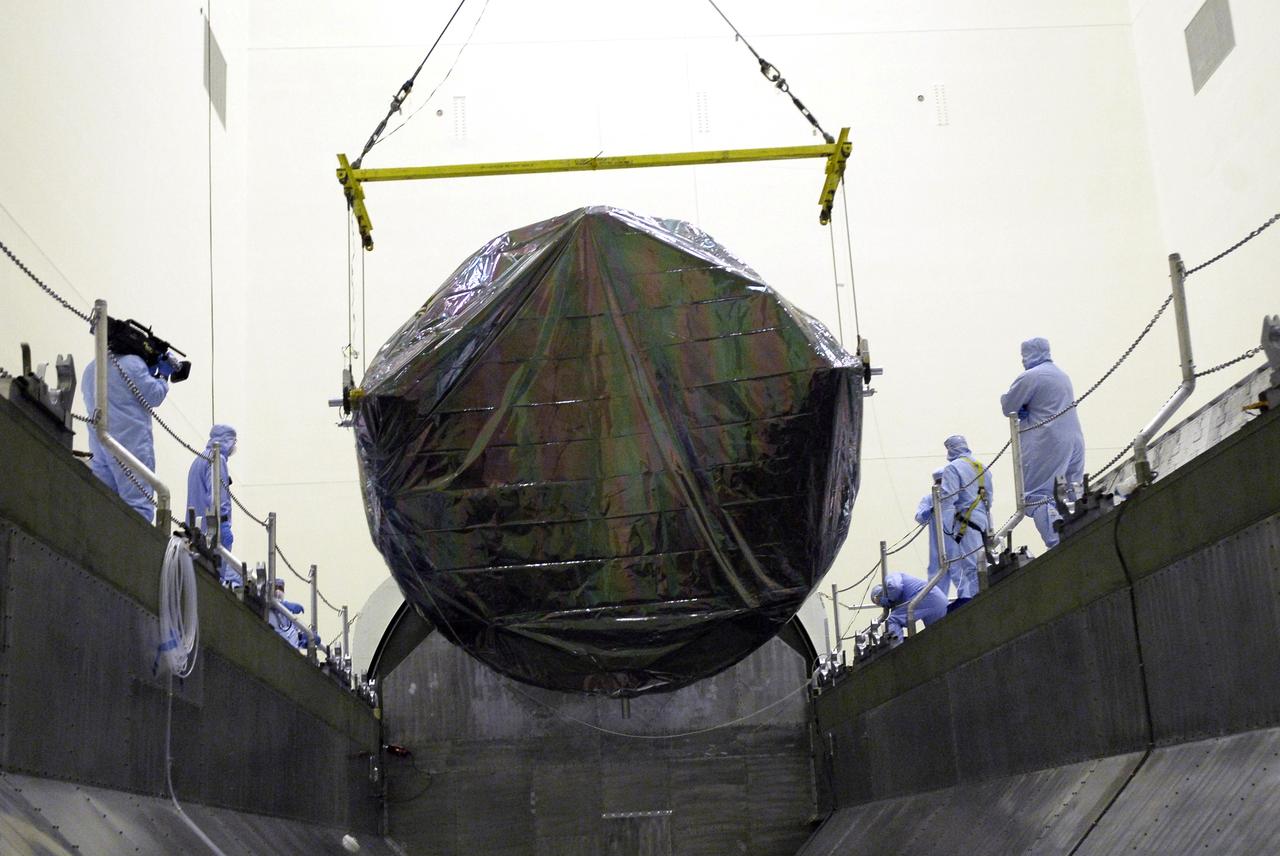
CAPE CANAVERAL, Fla. - In the Payload Hazardous Servicing Facility at NASA’s Kennedy Space Center, the overhead crane lowers the Flight Support System carrier with the Soft Capture Mechanism into the payload canister. The canister will transfer the carrier to Launch Pad 39A. The carrier is one of four associated with the STS-125 mission to service the Hubble Space Telescope. At the pad, all the carriers will be loaded into space shuttle Atlantis’ payload bay. Launch of Atlantis is targeted for Oct. 10. Photo credit: NASA/Cory Huston

CAPE CANAVERAL, Fla. – In the Orbiter Processing Facility at NASA's Kennedy Space Center, members of the STS-125 crew get a close look at space shuttle Atlantis' underside. From left, in their blue uniforms, are Mission Specialist Mike Massimino, Pilot Gregory C. Johnson, Mission Specialists Megan McArthur, John Grunsfeld, Andrew Feustel and Commander Scott Altman. Crew members are at Kennedy for a crew equipment interface test, which provides hands-on experience with hardware and equipment for their mission. Atlantis is targeted to launch on the STS-125 Hubble Servicing Mission 4 on Oct. 8. Photo credit: NASA/Kim Shiflett
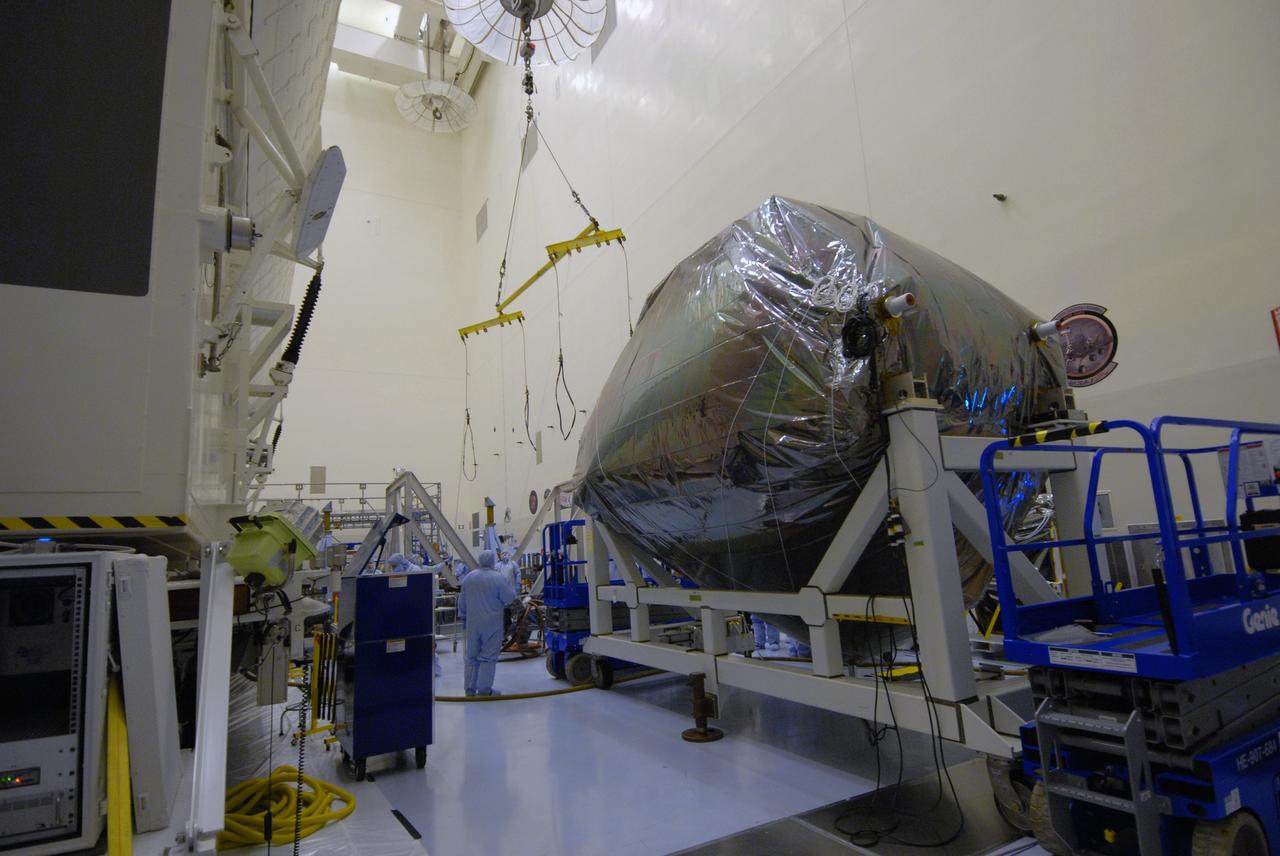
CAPE CANAVERAL, Fla. – In the Payload Hazardous Servicing Facility at NASA's Kennedy Space Center in Florida, the Flight Support System, or FSS, carrier with the Soft Capture Mechanism is waiting to be lifted from the workstand and placed in the payload canister. The canister will deliver the FSS and other carriers to Launch Pad 39A for installation in space shuttle Atlantis' payload bay. Atlantis' 11-day STS-125 mission to service NASA's Hubble Space Telescope is targeted for launch May 12. It will include five spacewalks in which astronauts will refurbish and upgrade the telescope with state-of-the-art science instruments. As a result, Hubble's capabilities will be expanded and its operational lifespan extended through at least 2014. Photo credit: NASA/Jack Pfaller

CAPE CANAVERAL, Fla. - In the Payload Hazardous Servicing Facility at NASA’s Kennedy Space Center, engineers control the movement of the overhead crane lifting the Flight Support System carrier with the Soft Capture Mechanism. It will be installed in the payload canister for transfer to Launch Pad 39A. The carrier is one of four associated with the STS-125 mission to service the Hubble Space Telescope. At the pad, all the carriers will be loaded into space shuttle Atlantis’ payload bay. Launch of Atlantis is targeted for Oct. 10. Photo credit: NASA/Cory Huston
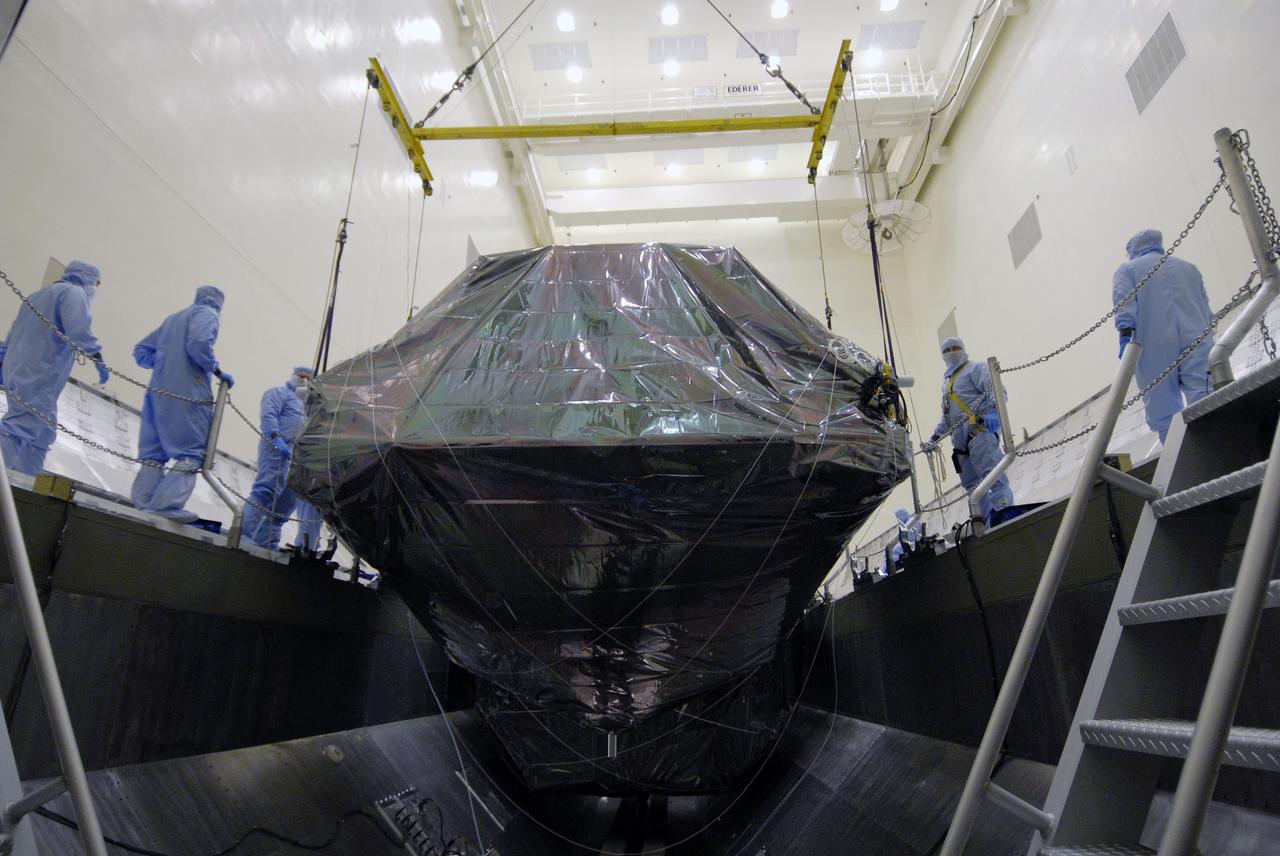
CAPE CANAVERAL, Fla. – In the Payload Hazardous Servicing Facility at NASA's Kennedy Space Center in Florida, an overhead crane lowers the Flight Support System, or FSS, carrier with the Soft Capture Mechanism into the payload canister. The canister will deliver the FSS and other carriers to Launch Pad 39A for installation in space shuttle Atlantis' payload bay. Atlantis' 11-day STS-125 mission to service NASA's Hubble Space Telescope is targeted for launch May 12. It will include five spacewalks in which astronauts will refurbish and upgrade the telescope with state-of-the-art science instruments. As a result, Hubble's capabilities will be expanded and its operational lifespan extended through at least 2014. Photo credit: NASA/Jack Pfaller
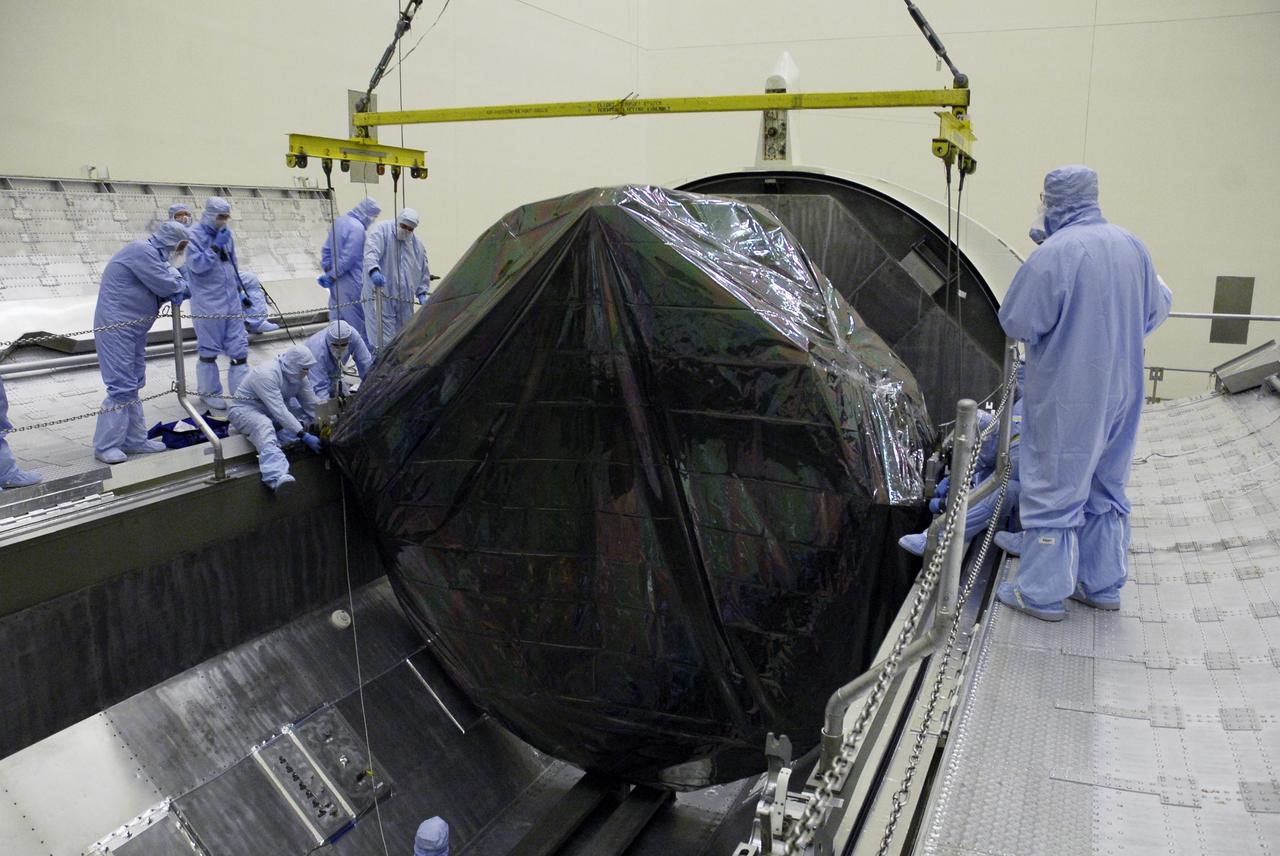
CAPE CANAVERAL, Fla. - In the Payload Hazardous Servicing Facility at NASA’s Kennedy Space Center, workers begin securing the Flight Support System carrier with the Soft Capture Mechanism in the payload canister. The canister will transfer the carrier to Launch Pad 39A. The carrier is one of four associated with the STS-125 mission to service the Hubble Space Telescope. At the pad, all the carriers will be loaded into space shuttle Atlantis’ payload bay. Launch of Atlantis is targeted for Oct. 10. Photo credit: NASA/Cory Huston
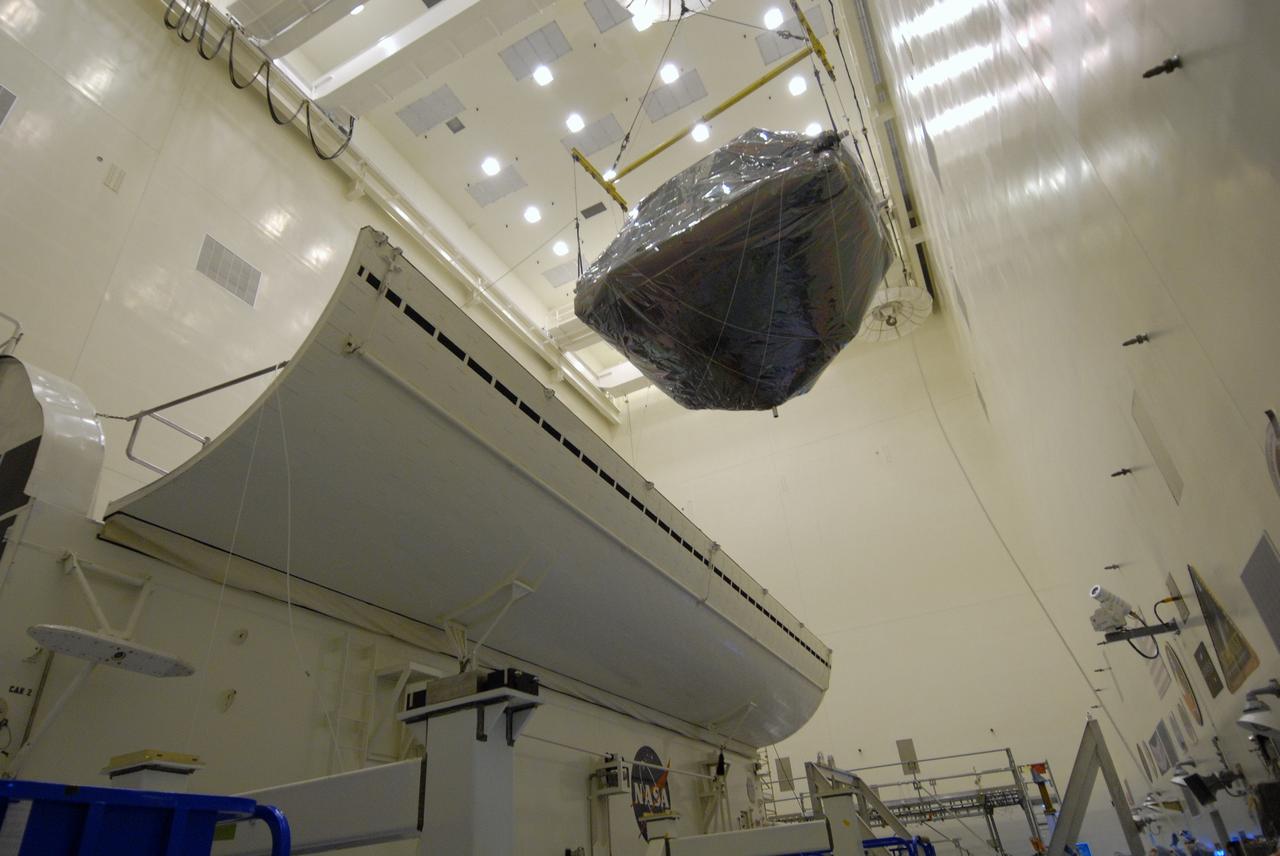
CAPE CANAVERAL, Fla. – In the Payload Hazardous Servicing Facility at NASA's Kennedy Space Center in Florida, an overhead crane moves the Flight Support System, or FSS, carrier with the Soft Capture Mechanism toward the payload canister. The canister will deliver the FSS and other carriers to Launch Pad 39A for installation in space shuttle Atlantis' payload bay. Atlantis' 11-day STS-125 mission to service NASA's Hubble Space Telescope is targeted for launch May 12. It will include five spacewalks in which astronauts will refurbish and upgrade the telescope with state-of-the-art science instruments. As a result, Hubble's capabilities will be expanded and its operational lifespan extended through at least 2014. Photo credit: NASA/Jack Pfaller
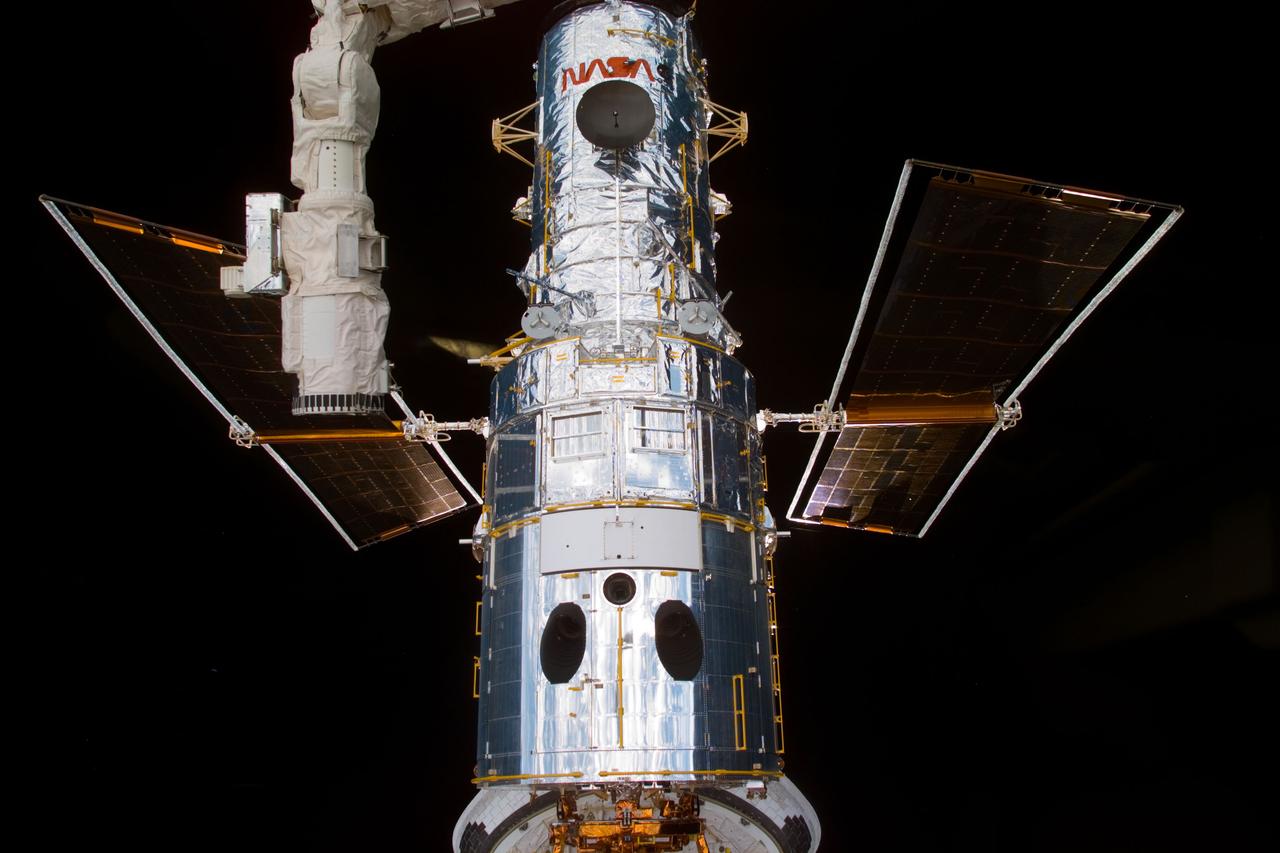
S82-E-5175 (13 Feb. 1997) --- Hubble Space Telescope (HST) after capture berthed on Flight Support system (FSS) in Space Shuttle Discovery's payload bay. This view was taken with an Electronic Still Camera (ESC).
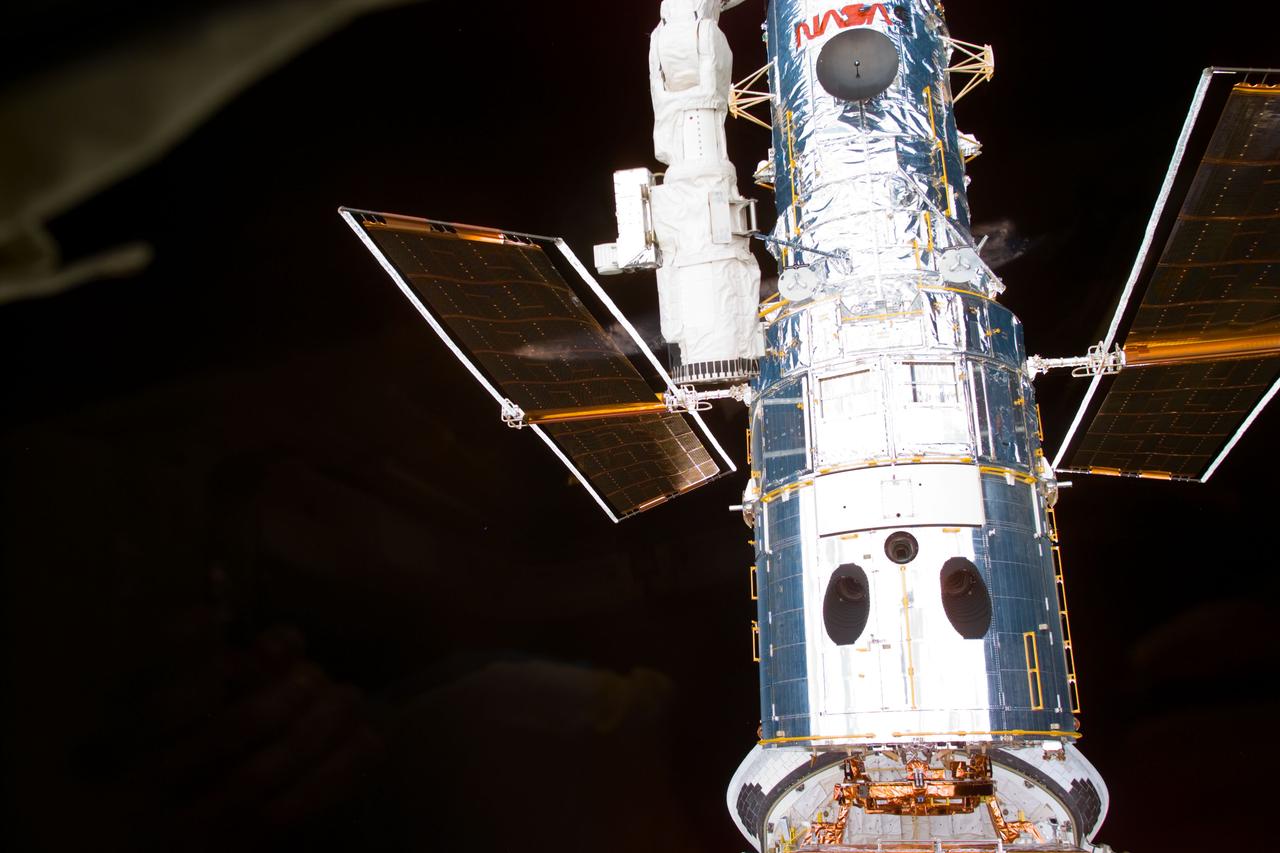
S82-E-5171 (13 Feb. 1997) --- Hubble Space Telescope (HST) after capture berthed on Flight Support system (FSS) in Space Shuttle Discovery's payload bay. This view was taken with an Electronic Still Camera (ESC).
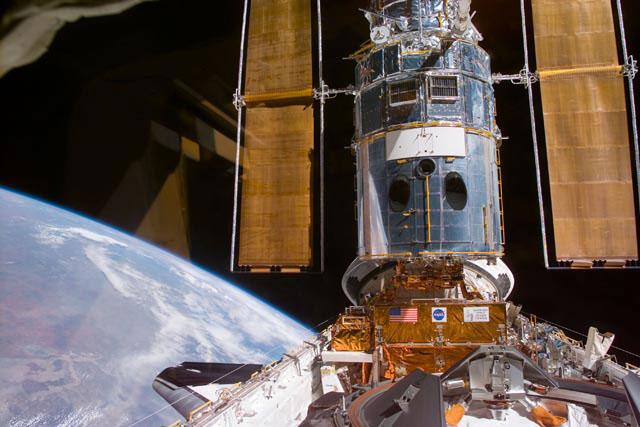
S103-E-5159 (21 December 1999) --- This electronic still camera's view and others in this series showing the Hubble Space Telescope (HST) being berthed in Discovery's bay were recorded during and soon after capture; and they were downlinked at the completion of the mission's first space walk on the following day by the busy STS-103 astronauts. The image was recorded at 19:47:02 GMT, Dec. 21, 1999.
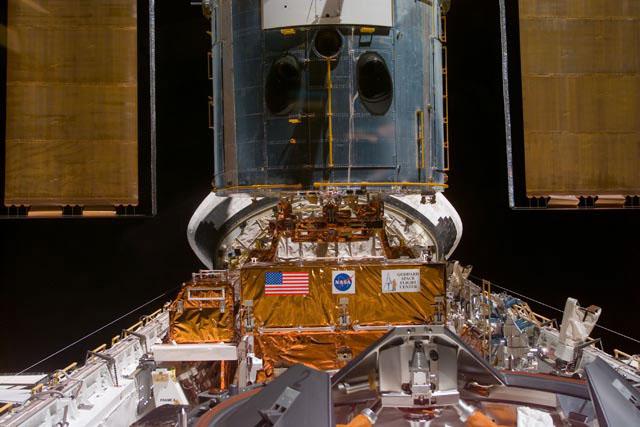
S103-E-5169 (21 December 1999) --- This electronic still camera's view and others in this series showing the Hubble Space Telescope (HST) berthed in Discovery's bay were recorded during capture and downlinked at the completion of the mission's first space walk on the following day by the busy STS-103 astronauts. The image was recorded at 19:49:22 GMT, Dec. 21, 1999.
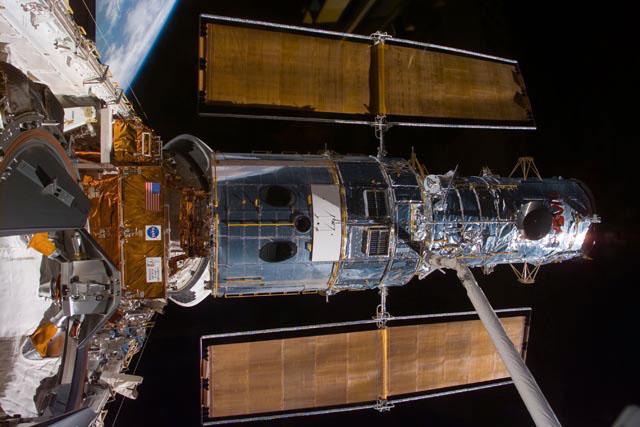
S103-E-5162 (21 December 1999) --- This electronic still camera's view and others in this series showing the Hubble Space Telescope (HST)being berthed in Discovery's bay were recorded during and soon after capture; and they were downlinked at the completion of the mission's first space walk on the following day by the busy STS-103 astronauts. The image was recorded at 19:47:22 GMT, Dec. 21, 1999.
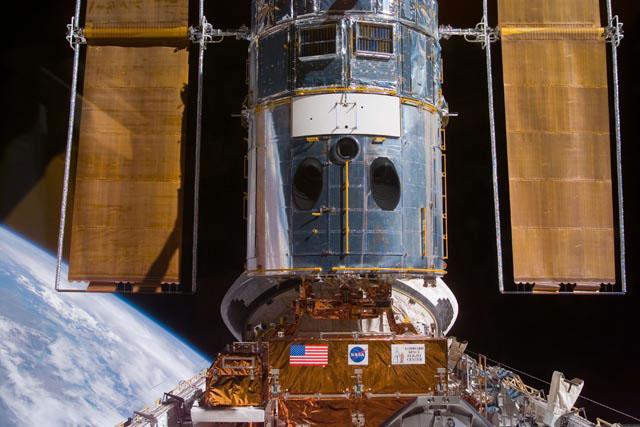
S103-E-5156 (21 December 1999) --- This electronic still camera's view and others in this series showing the Hubble Space Telescope (HST) being berthed in Discovery's bay were recorded during and soon after capture; and they were downlinked at the completion of the mission's first space walk on the following day by the busy STS-103 astronauts. The image was recorded at 19:46:15 GMT, Dec. 21, 1999.
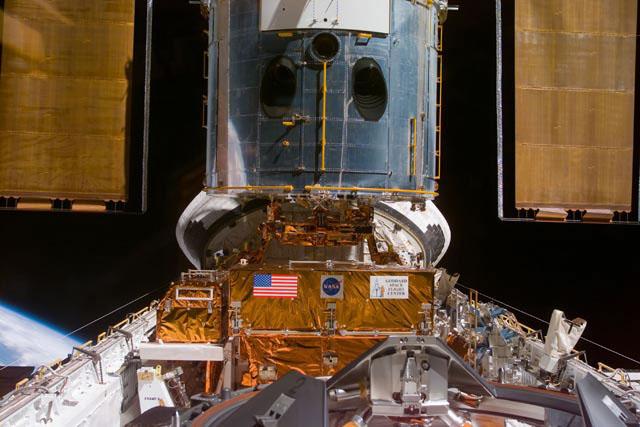
S103-E-5165 (21 December 1999) --- This electronic still camera's view and others in this series showing the Hubble Space Telescope (HST) berthed in Discovery's bay were recorded soon after capture and downlinked at the completion of the mission's first space walk on the following day by the busy STS-103 astronauts. The image was recorded at 19:47:57 GMT, Dec. 21, 1999.
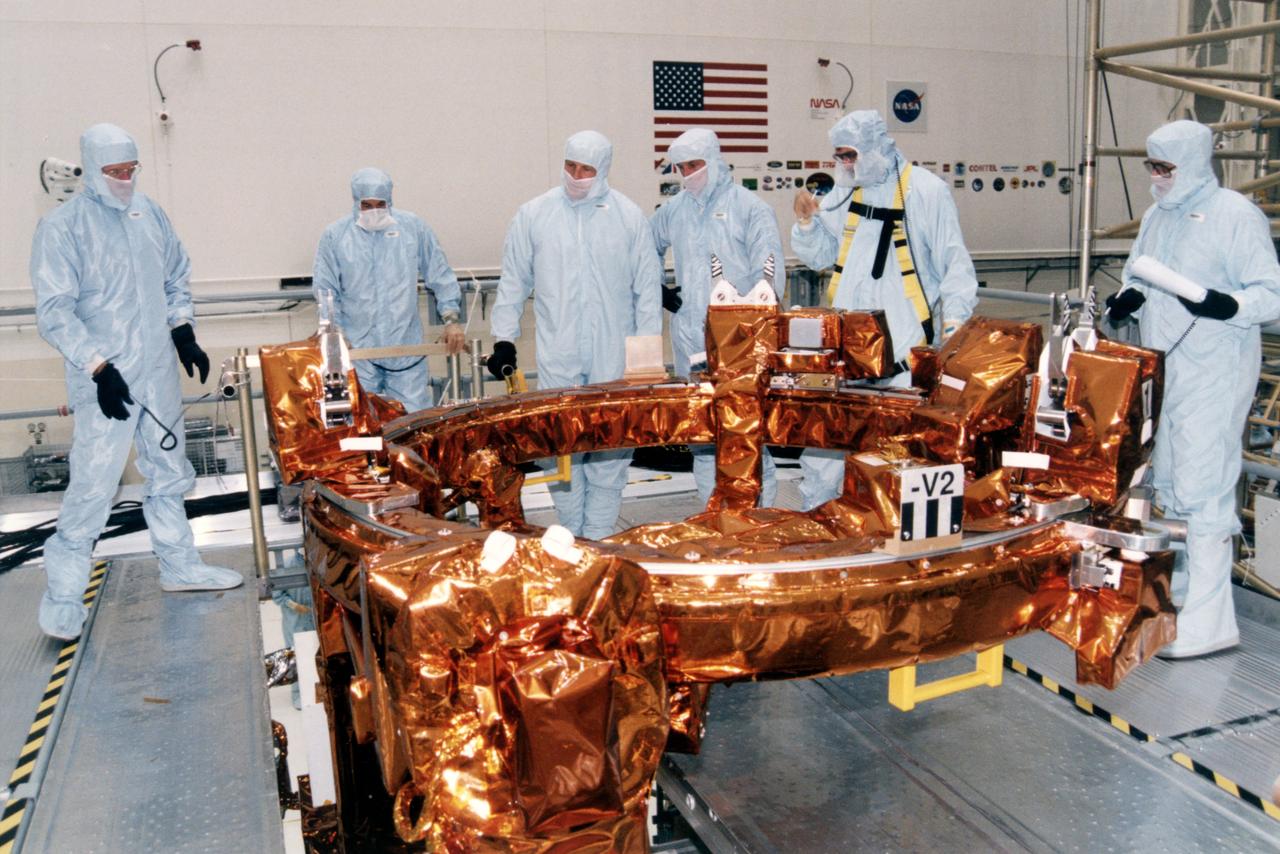
KENNEDY SPACE CENTER, FLORIDA STS-82 PREPARATIONS VIEW --- In the Kennedy Space Center (KSC) Vertical Processing Facility (VPF), the STS-82 crew members familiarize themselves with some of the hardware they will be handling on the second servicing mission to the Hubble Space Telescope (HST). Looking over the Flight Support System (FSS) Berthing and Positioning System (BAPS) ring are astronauts Joseph R. Tanner (far left), Mark C. Lee (third left) and Gregory J. Harbaugh (fourth left); along with several HST processing team members. Tanner, Lee and Harbaugh, along with Steven L. Smith, will perform spacewalks required for servicing of the HST. The telescope was deployed nearly seven years ago and was initially serviced in 1993.
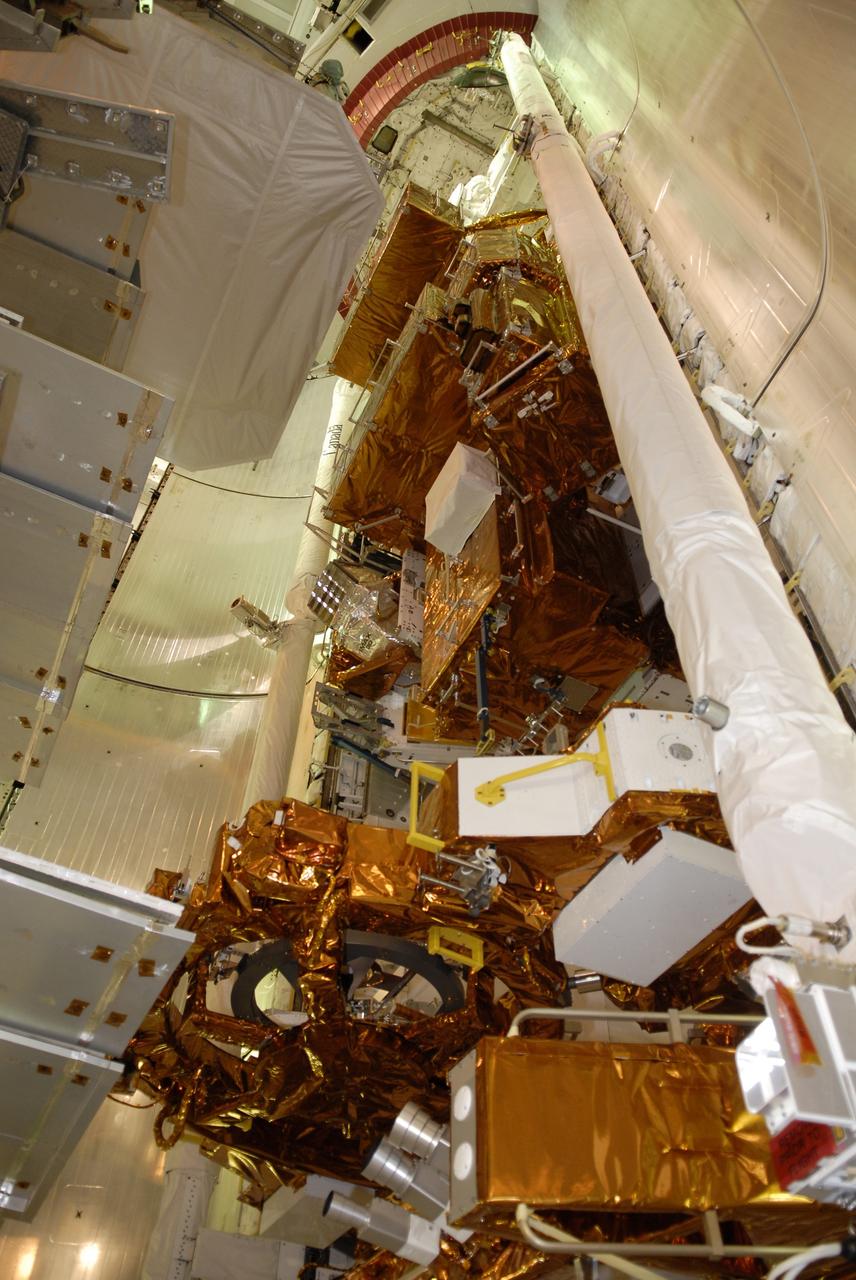
CAPE CANAVERAL, Fla. – On Launch Pad 39A at NASA's Kennedy Space Center in Florida, space shuttle Atlantis' payload bay is filled with hardware for the STS-125 mission to service NASA's Hubble Space Telescope. From the bottom are the Flight Support System with the Soft Capture mechanism and Multi-Use Lightweight Equipment Carrier with the Science Instrument Command and Data Handling Unit, or SIC&DH. At center is the Orbital Replacement Unit Carrier with the Cosmic Origins Spectrograph, or COS, and an IMAX 3D camera. At top is the Super Lightweight Interchangeable Carrier with the Wide Field Camera 3. Atlantis' crew will service NASA's Hubble Space Telescope for the fifth and final time. The flight will include five spacewalks during which astronauts will refurbish and upgrade the telescope with state-of-the-art science instruments. As a result, Hubble's capabilities will be expanded and its operational lifespan extended through at least 2014. Photo credit: NASA/Kim Shiflett
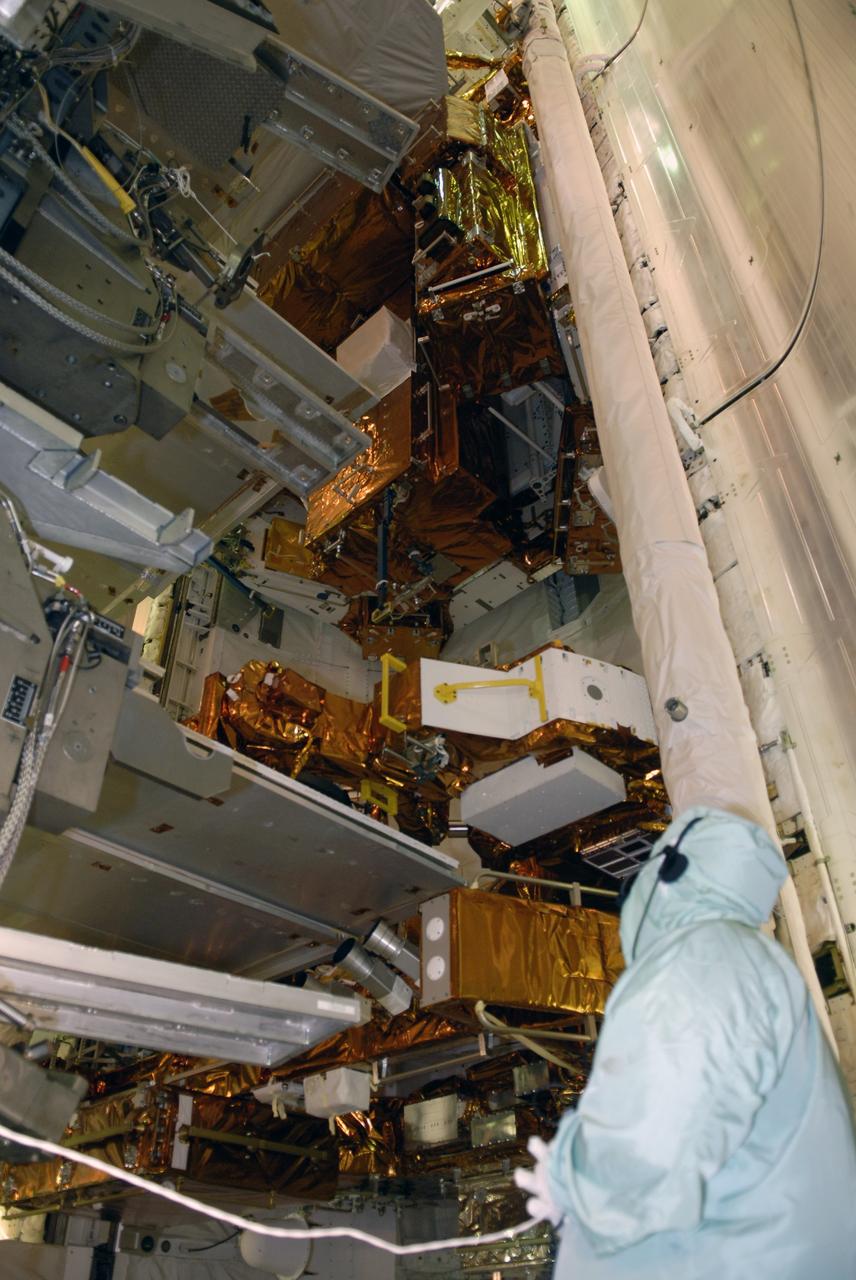
CAPE CANAVERAL, Fla. – On Launch Pad 39A at NASA's Kennedy Space Center in Florida, the payload ground-handling mechanism, known as the PGHM, is retracted after installing the payloads in space shuttle Atlantis' payload bay for the STS-125 mission. Seen here are the service platforms of the PGHM. The payload includes the Flight Support System, or FSS, carrier with the Soft Capture Mechanism; the Multi-Use Lightweight Equipment, or MULE, carrier with the Science Instrument Command and Data Handling Unit, or SIC&DH; the Orbital Replacement Unit Carrier, or ORUC, with the Cosmic Origins Spectrograph, or COS, and an IMAX 3D camera. Atlantis' crew will service NASA's Hubble Space Telescope for the fifth and final time. The flight will include five spacewalks during which astronauts will refurbish and upgrade the telescope with state-of-the-art science instruments. As a result, Hubble's capabilities will be expanded and its operational lifespan extended through at least 2014. Photo credit: NASA/Kim Shiflett
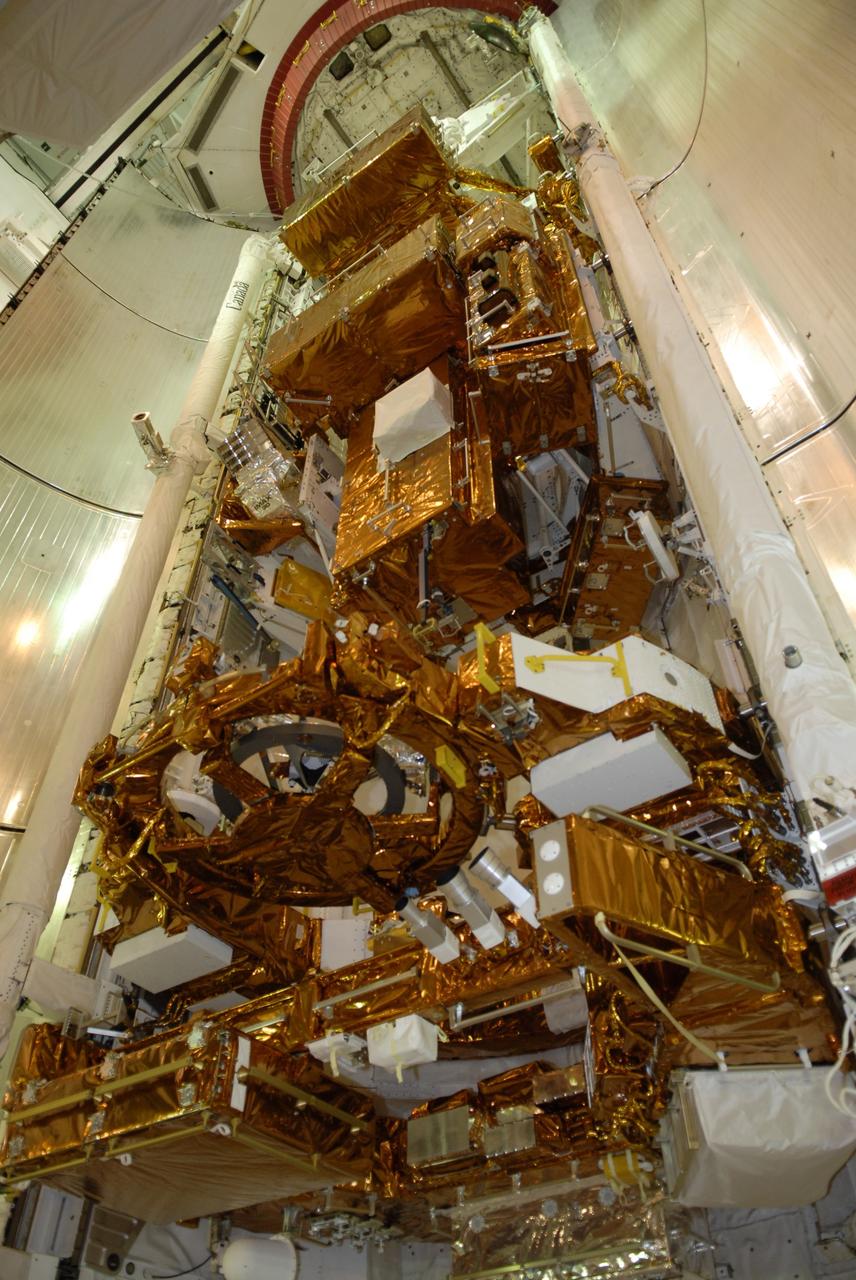
CAPE CANAVERAL, Fla. – On Launch Pad 39A at NASA's Kennedy Space Center in Florida, space shuttle Atlantis' payload bay is filled with hardware for the STS-125 mission to service NASA's Hubble Space Telescope. At the bottom are the Flight Support System with the Soft Capture mechanism and Multi-Use Lightweight Equipment Carrier with the Science Instrument Command and Data Handling Unit, or SIC&DH. At center is the Orbital Replacement Unit Carrier with the Cosmic Origins Spectrograph, or COS, and an IMAX 3D camera. At top is the Super Lightweight Interchangeable Carrier with the Wide Field Camera 3. Atlantis' crew will service NASA's Hubble Space Telescope for the fifth and final time. The flight will include five spacewalks during which astronauts will refurbish and upgrade the telescope with state-of-the-art science instruments. As a result, Hubble's capabilities will be expanded and its operational lifespan extended through at least 2014. Photo credit: NASA/Kim Shiflett
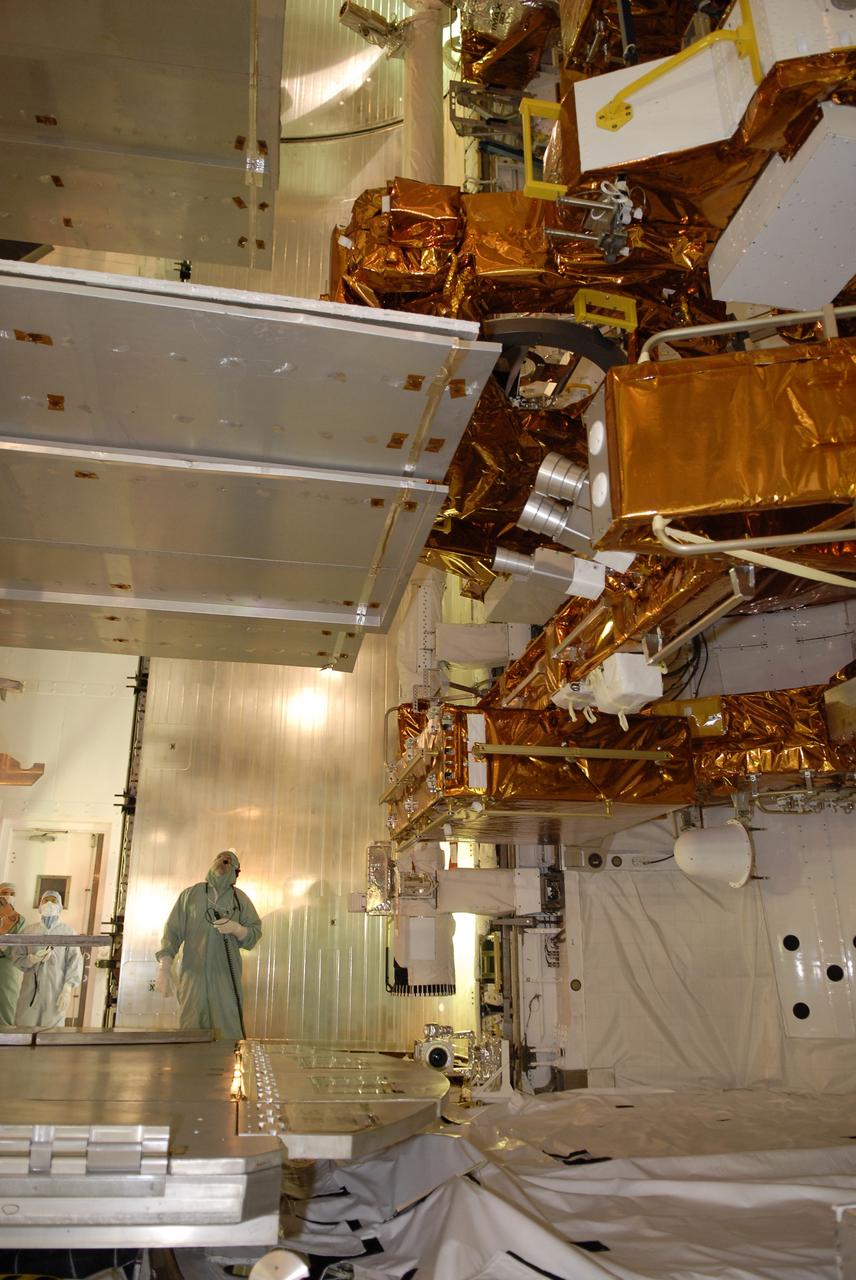
CAPE CANAVERAL, Fla. – On Launch Pad 39A at NASA's Kennedy Space Center in Florida, the payload ground-handling mechanism, known as the PGHM, is retracted after installing the payloads in space shuttle Atlantis' payload bay, at right, for the STS-125 mission. The payload includes the Flight Support System, or FSS, carrier with the Soft Capture Mechanism; the Multi-Use Lightweight Equipment, or MULE, carrier with the Science Instrument Command and Data Handling Unit, or SIC&DH; the Orbital Replacement Unit Carrier, or ORUC, with the Cosmic Origins Spectrograph, or COS, and an IMAX 3D camera. Atlantis' crew will service NASA's Hubble Space Telescope for the fifth and final time. The flight will include five spacewalks during which astronauts will refurbish and upgrade the telescope with state-of-the-art science instruments. As a result, Hubble's capabilities will be expanded and its operational lifespan extended through at least 2014. Photo credit: NASA/Kim Shiflett

CAPE CANAVERAL, Fla. – On Launch Pad 39A at NASA's Kennedy Space Center in Florida, space shuttle Atlantis' payload bay is filled with hardware for the STS-125 mission to service NASA's Hubble Space Telescope. From the bottom are the Flight Support System with the Soft Capture mechanism and Multi-Use Lightweight Equipment Carrier with the Science Instrument Command and Data Handling Unit, or SIC&DH; the Orbital Replacement Unit Carrier with the Cosmic Origins Spectrograph, or COS, and an IMAX 3D camera; and the Super Lightweight Interchangeable Carrier with the Wide Field Camera 3. Atlantis' crew will service NASA's Hubble Space Telescope for the fifth and final time. The flight will include five spacewalks during which astronauts will refurbish and upgrade the telescope with state-of-the-art science instruments. As a result, Hubble's capabilities will be expanded and its operational lifespan extended through at least 2014. Photo credit: NASA/Kim Shiflett
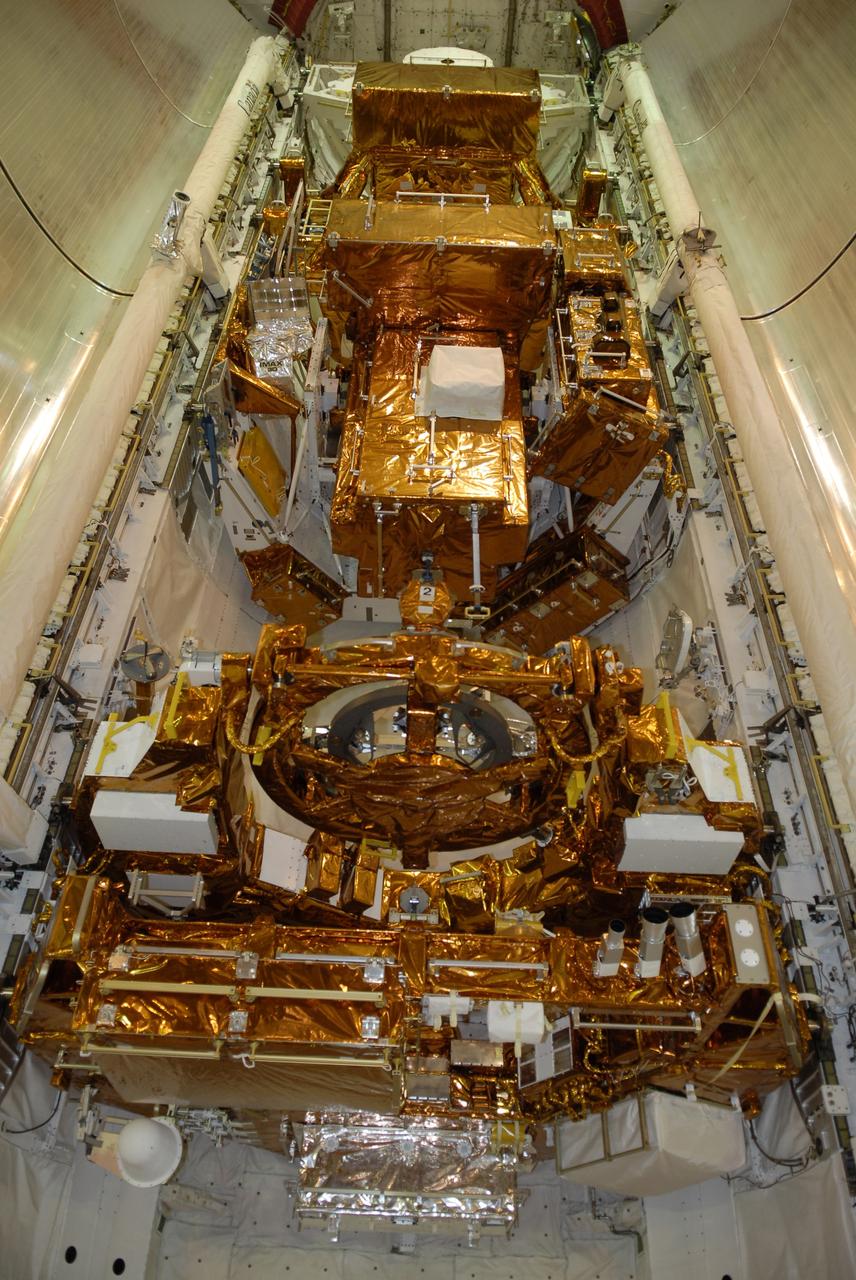
CAPE CANAVERAL, Fla. – On Launch Pad 39A at NASA's Kennedy Space Center in Florida, space shuttle Atlantis' payload bay is filled with hardware for the STS-125 mission to service NASA's Hubble Space Telescope. At the bottom is the Flight Support System with the Soft Capture mechanism. At center is the Orbital Replacement Unit Carrier with the Cosmic Origins Spectrograph, or COS, and an IMAX 3D camera. At top is the Super Lightweight Interchangeable Carrier with the Wide Field Camera 3. Atlantis' crew will service NASA's Hubble Space Telescope for the fifth and final time. The flight will include five spacewalks during which astronauts will refurbish and upgrade the telescope with state-of-the-art science instruments. As a result, Hubble's capabilities will be expanded and its operational lifespan extended through at least 2014. Photo credit: NASA/Kim Shiflett
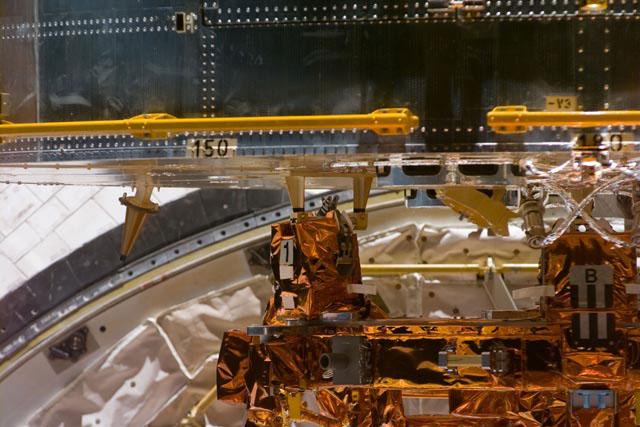
S103-E-5170 (21 December 1999) --- This closeup electronic still camera's view shows the lower portion of the Hubble Space Telescope (HST) as the giant observatory is berthed in Discovery's cargo bay. The gold-shielded apparatus at the bottom of the frame is the flight support system (FSS), a turntable device similar to a "Lazy Susan" because of its ability to rotate and tilt to assist the upcoming servicing tasks. The image was recorded at 19:49:22 GMT, Dec. 21, 1999 but was not able to be downlinked by the astronauts until late on the following day.