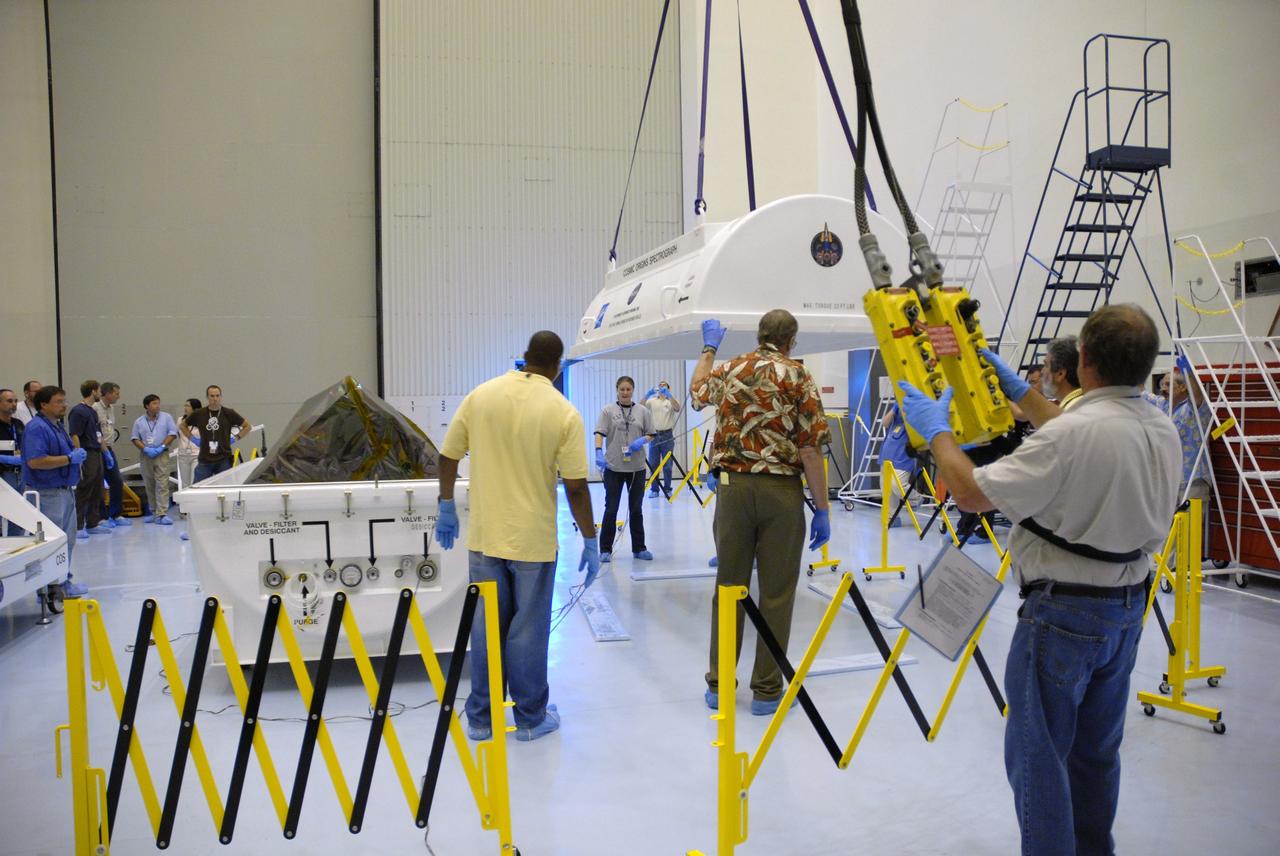
CAPE CANAVERAL, Fla. – In the airlock of the Payload Hazardous Servicing Facility at NASA's Kennedy Space Center, workers from NASA's Goddard Space Flight Center remove the top from the transportation canister in which the Cosmic Origins Spectrograph, or COS, arrived. The COS will be installed on the Hubble Space Telescope on space shuttle Atlantis' STS-125 mission. COS will be the most sensitive ultraviolet spectrograph ever flown on Hubble and will probe the "cosmic web" - the large-scale structure of the universe whose form is determined by the gravity of dark matter and is traced by galaxies and intergalactic gas. COS's far-ultraviolet channel has a sensitivity 30 times greater than that of previous spectroscopic instruments for the detection of extremely low light levels. Launch of STS-125 is targeted for Oct. 8. Photo credit: NASA/Jack Pfaller
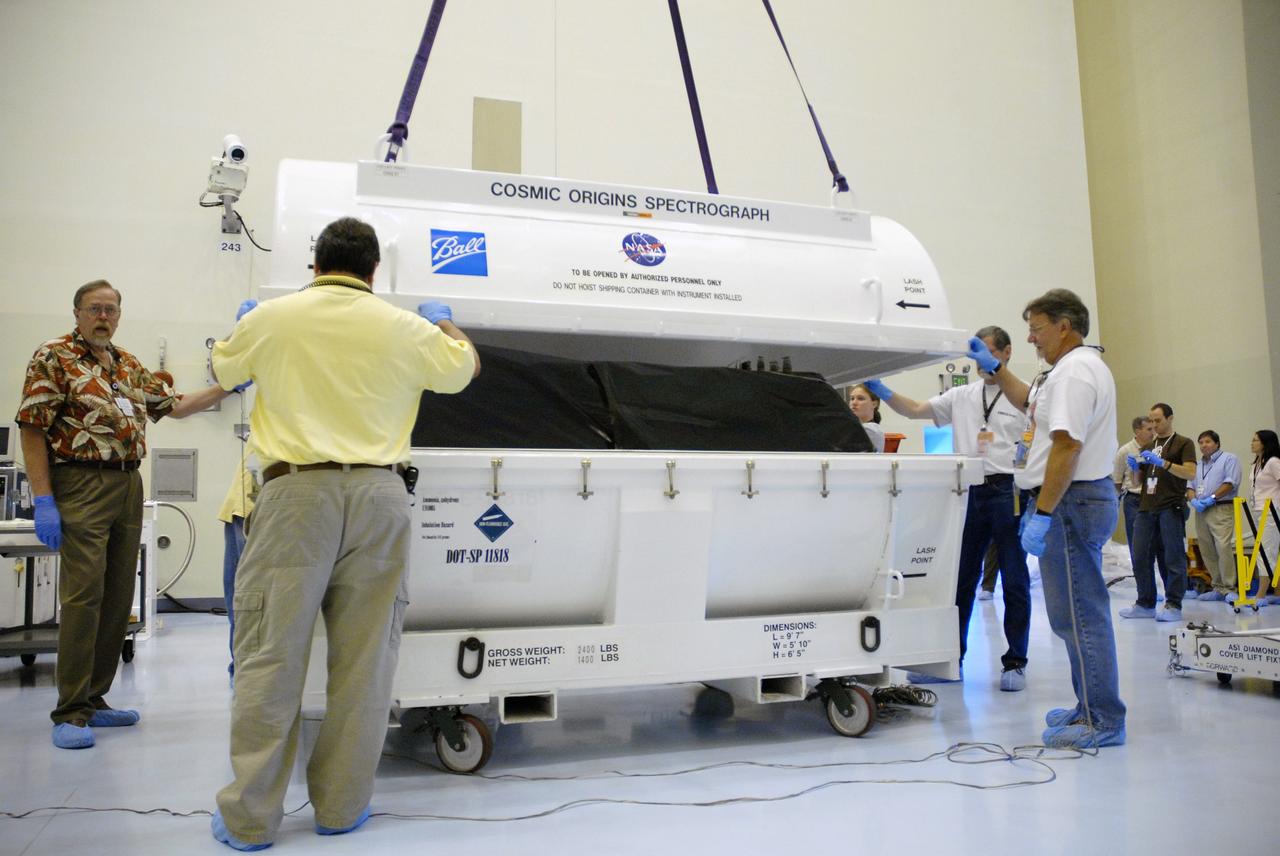
CAPE CANAVERAL, Fla. – In the airlock of the Payload Hazardous Servicing Facility at NASA's Kennedy Space Center, workers from NASA's Goddard Space Flight Center open the transportation canister in which the Cosmic Origins Spectrograph, or COS, is protected. The COS will be installed on the Hubble Space Telescope on space shuttle Atlantis' STS-125 mission. COS will be the most sensitive ultraviolet spectrograph ever flown on Hubble and will probe the "cosmic web" - the large-scale structure of the universe whose form is determined by the gravity of dark matter and is traced by galaxies and intergalactic gas. COS's far-ultraviolet channel has a sensitivity 30 times greater than that of previous spectroscopic instruments for the detection of extremely low light levels. Launch of STS-125 is targeted for Oct. 8. Photo credit: NASA/Jack Pfaller
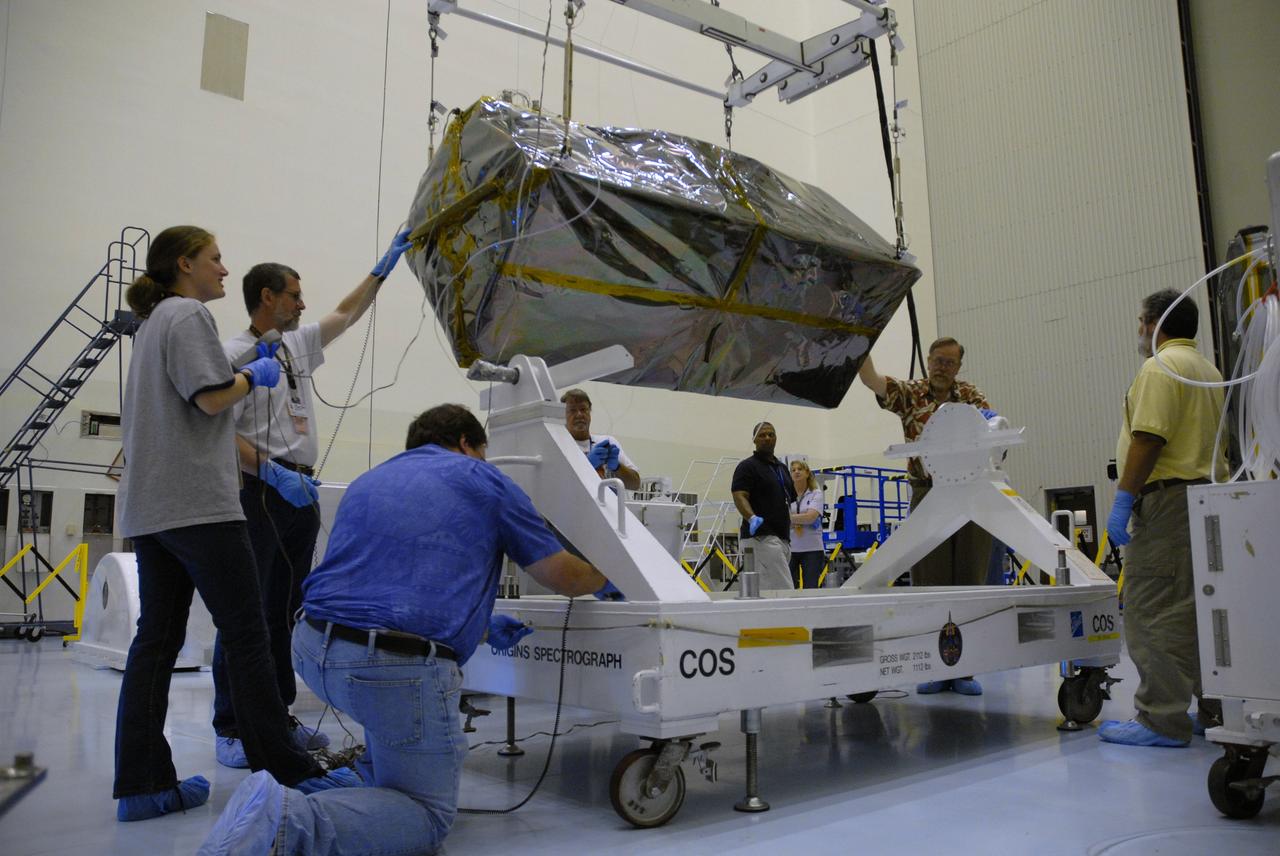
CAPE CANAVERAL, Fla. – In the airlock of the Payload Hazardous Servicing Facility at NASA's Kennedy Space Center, workers from NASA's Goddard Space Flight Center lift the Cosmic Origins Spectrograph, or COS, from its transportation canister onto a dolly for its move into the clean room. The COS will be installed on the Hubble Space Telescope on space shuttle Atlantis' STS-125 mission. COS will be the most sensitive ultraviolet spectrograph ever flown on Hubble and will probe the "cosmic web" - the large-scale structure of the universe whose form is determined by the gravity of dark matter and is traced by galaxies and intergalactic gas. COS's far-ultraviolet channel has a sensitivity 30 times greater than that of previous spectroscopic instruments for the detection of extremely low light levels. Launch of STS-125 is targeted for Oct. 8. Photo credit: NASA/Jack Pfaller
CAPE CANAVERAL, Fla. – In the airlock of the Payload Hazardous Servicing Facility at NASA's Kennedy Space Center, workers from NASA's Goddard Space Flight Center examine the Cosmic Origins Spectrograph, or COS, after the top from its transportation canister is removed. The COS will be installed on the Hubble Space Telescope on space shuttle Atlantis' STS-125 mission. COS will be the most sensitive ultraviolet spectrograph ever flown on Hubble and will probe the "cosmic web" - the large-scale structure of the universe whose form is determined by the gravity of dark matter and is traced by galaxies and intergalactic gas. COS's far-ultraviolet channel has a sensitivity 30 times greater than that of previous spectroscopic instruments for the detection of extremely low light levels. Launch of STS-125 is targeted for Oct. 8. Photo credit: NASA/Jack Pfaller
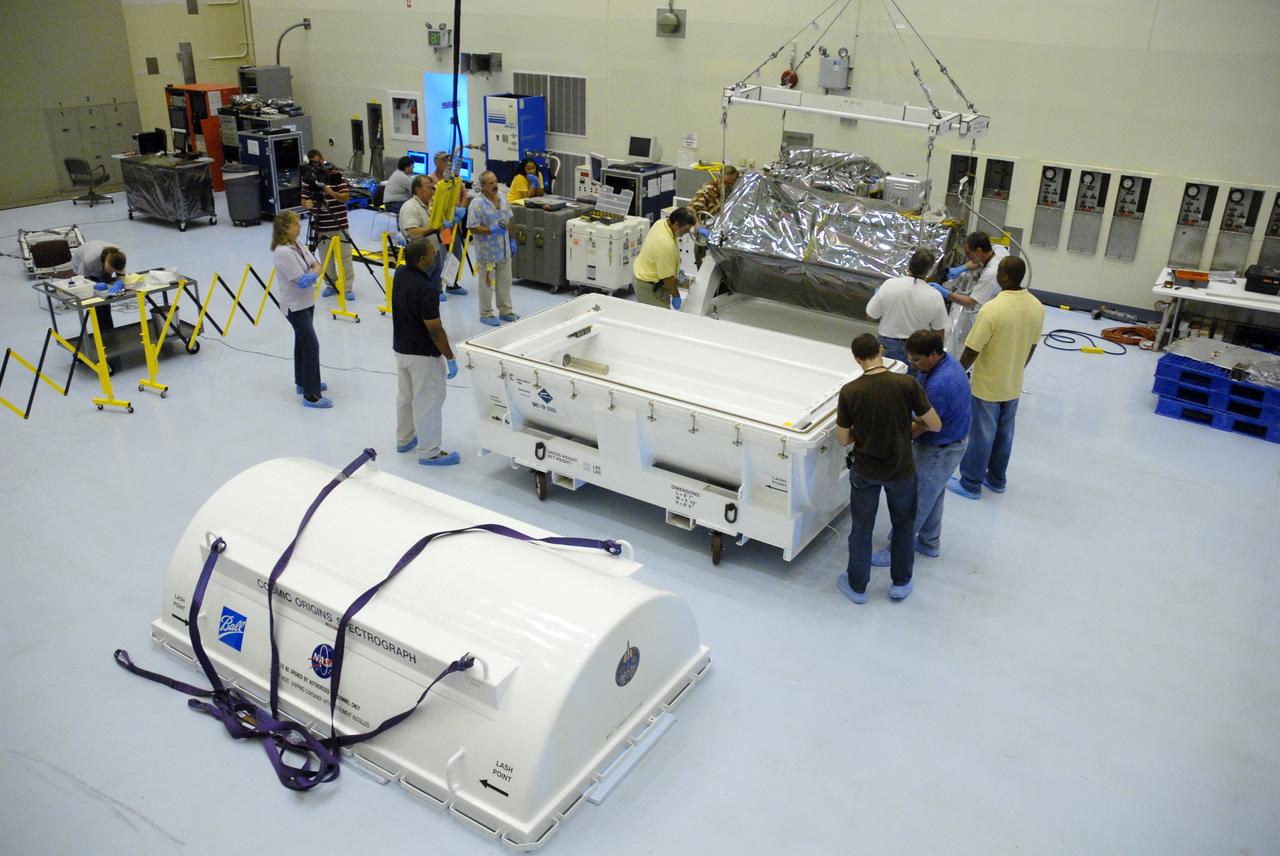
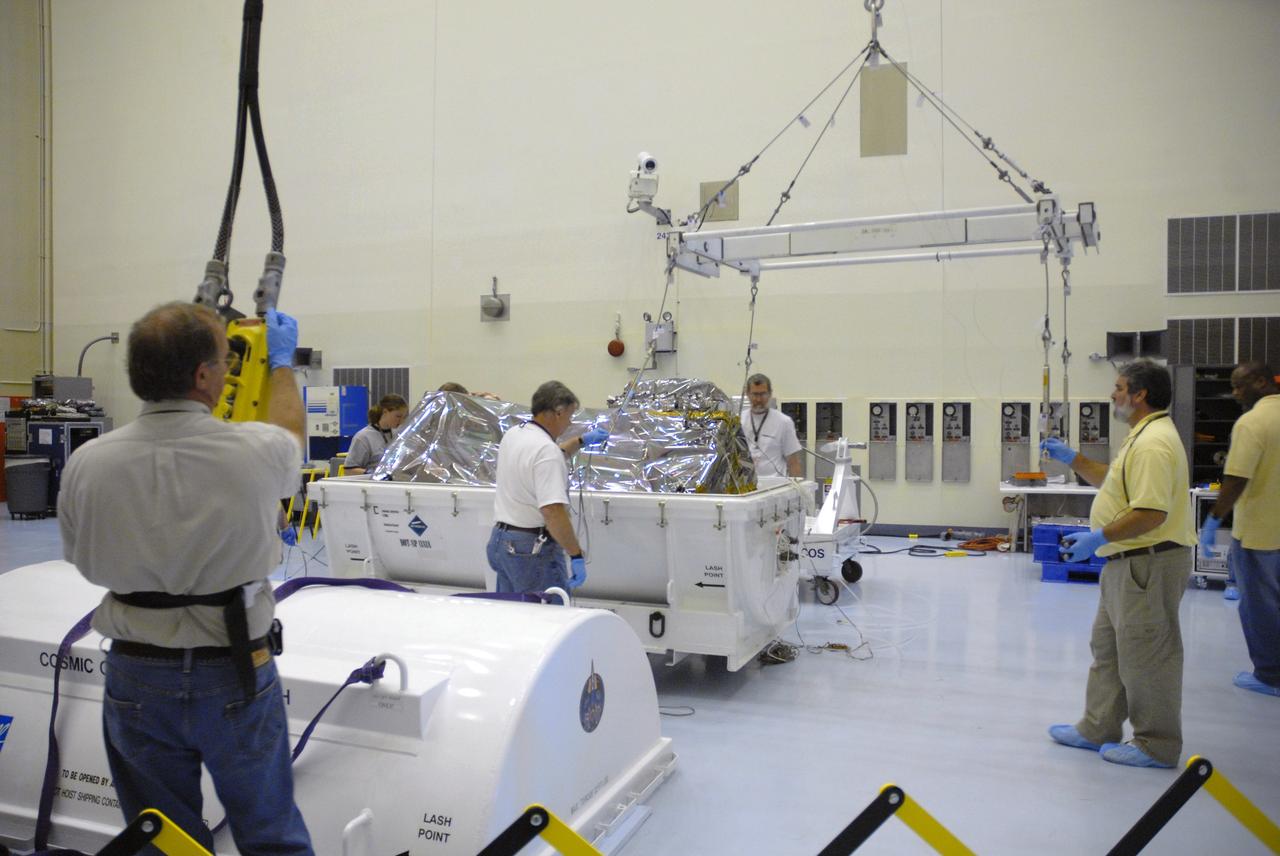
CAPE CANAVERAL, Fla. – In the airlock of the Payload Hazardous Servicing Facility at NASA's Kennedy Space Center, workers from NASA's Goddard Space Flight Center lower the Cosmic Origins Spectrograph, or COS, onto a dolly for its move into the clean room. The COS will be installed on the Hubble Space Telescope on space shuttle Atlantis' STS-125 mission. COS will be the most sensitive ultraviolet spectrograph ever flown on Hubble and will probe the "cosmic web" - the large-scale structure of the universe whose form is determined by the gravity of dark matter and is traced by galaxies and intergalactic gas. COS's far-ultraviolet channel has a sensitivity 30 times greater than that of previous spectroscopic instruments for the detection of extremely low light levels. Launch of STS-125 is targeted for Oct. 8. Photo credit: NASA/Jack Pfaller
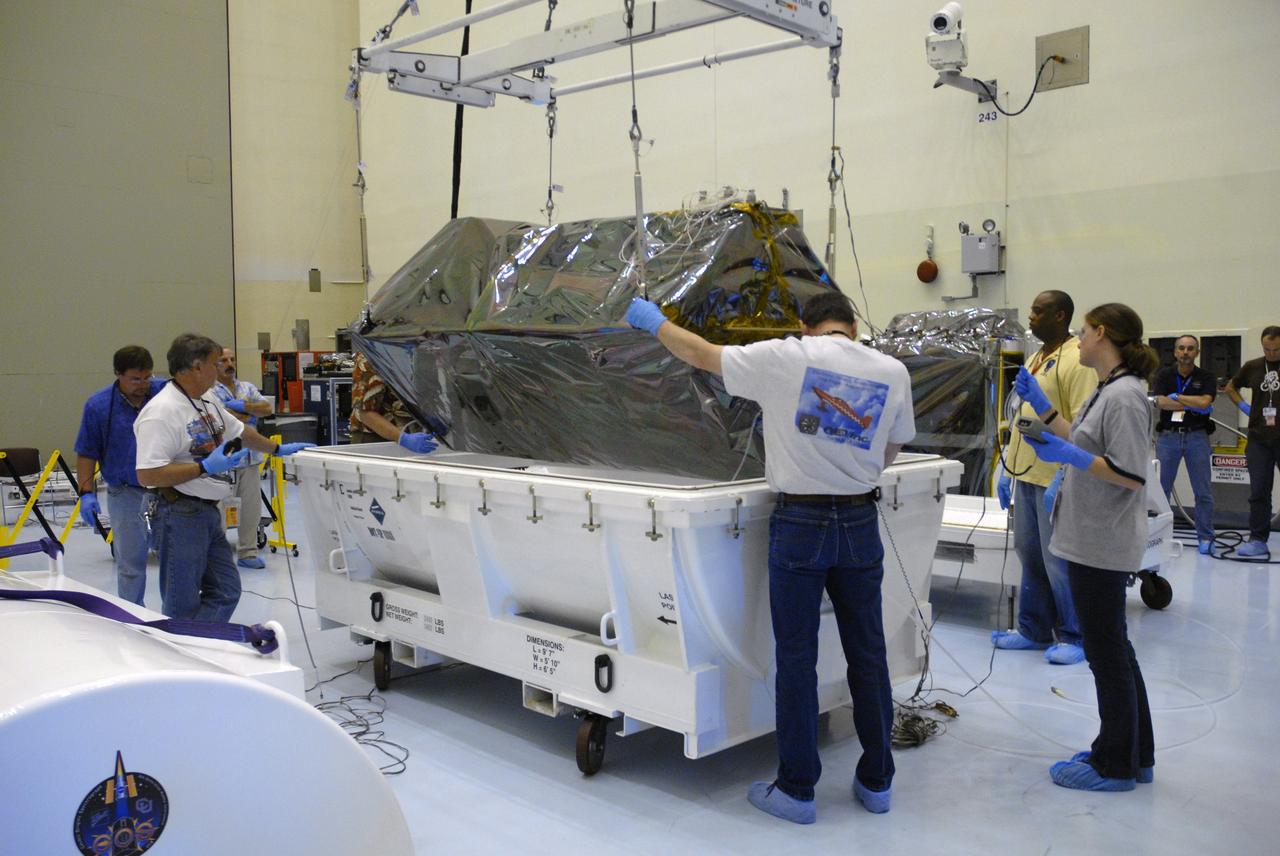
CAPE CANAVERAL, Fla. – In the airlock of the Payload Hazardous Servicing Facility at NASA's Kennedy Space Center, workers from NASA's Goddard Space Flight Center prepare to lift the Cosmic Origins Spectrograph, or COS, from its transportation canister. The COS will be installed on the Hubble Space Telescope on space shuttle Atlantis' STS-125 mission. COS will be the most sensitive ultraviolet spectrograph ever flown on Hubble and will probe the "cosmic web" - the large-scale structure of the universe whose form is determined by the gravity of dark matter and is traced by galaxies and intergalactic gas. COS's far-ultraviolet channel has a sensitivity 30 times greater than that of previous spectroscopic instruments for the detection of extremely low light levels. Launch of STS-125 is targeted for Oct. 8. Photo credit: NASA/Jack Pfaller
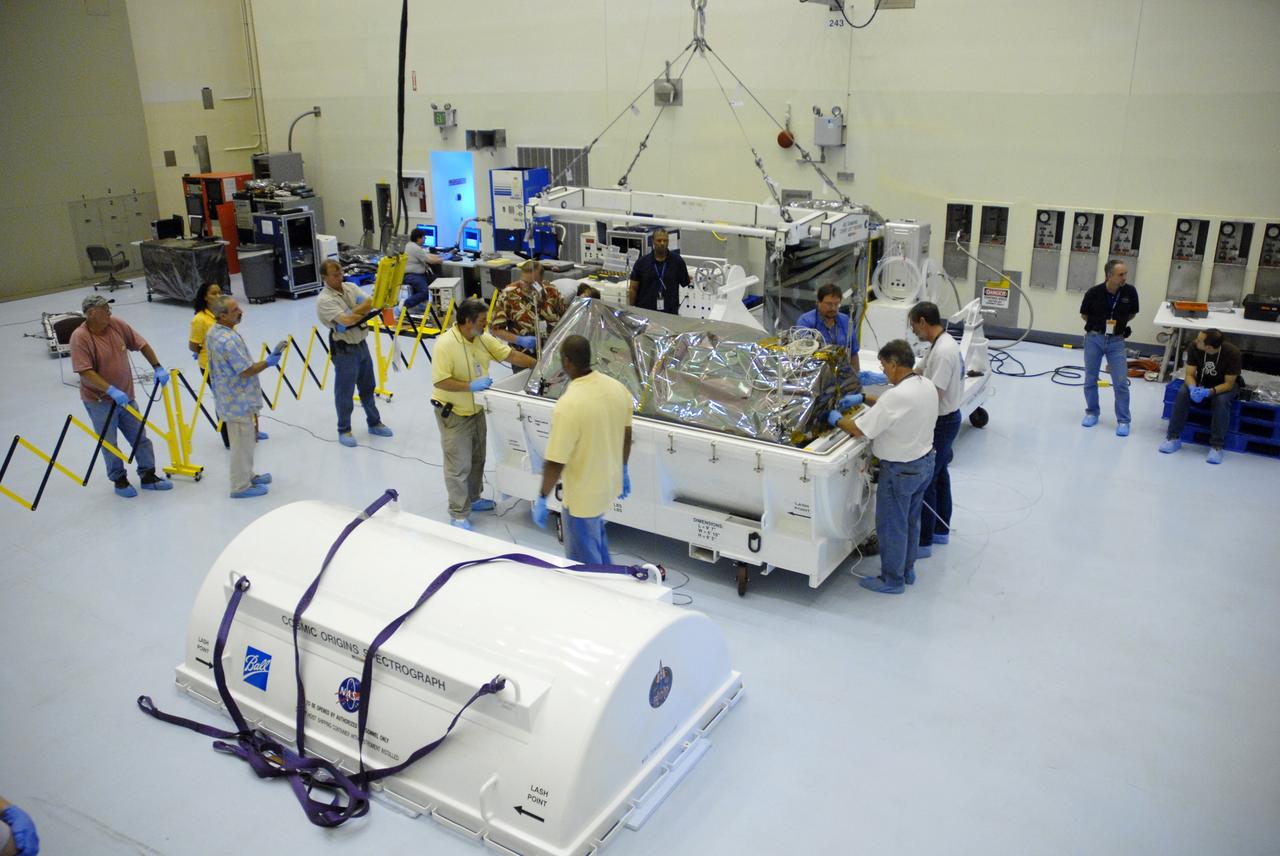
CAPE CANAVERAL, Fla. – In the airlock of the Payload Hazardous Servicing Facility at NASA's Kennedy Space Center, workers from NASA's Goddard Space Flight Center prepare to remove the Cosmic Origins Spectrograph, or COS, from its transportation canister. The COS will be installed on the Hubble Space Telescope on space shuttle Atlantis' STS-125 mission. COS will be the most sensitive ultraviolet spectrograph ever flown on Hubble and will probe the "cosmic web" - the large-scale structure of the universe whose form is determined by the gravity of dark matter and is traced by galaxies and intergalactic gas. COS's far-ultraviolet channel has a sensitivity 30 times greater than that of previous spectroscopic instruments for the detection of extremely low light levels. Launch of STS-125 is targeted for Oct. 8. Photo credit: NASA/Jack Pfaller
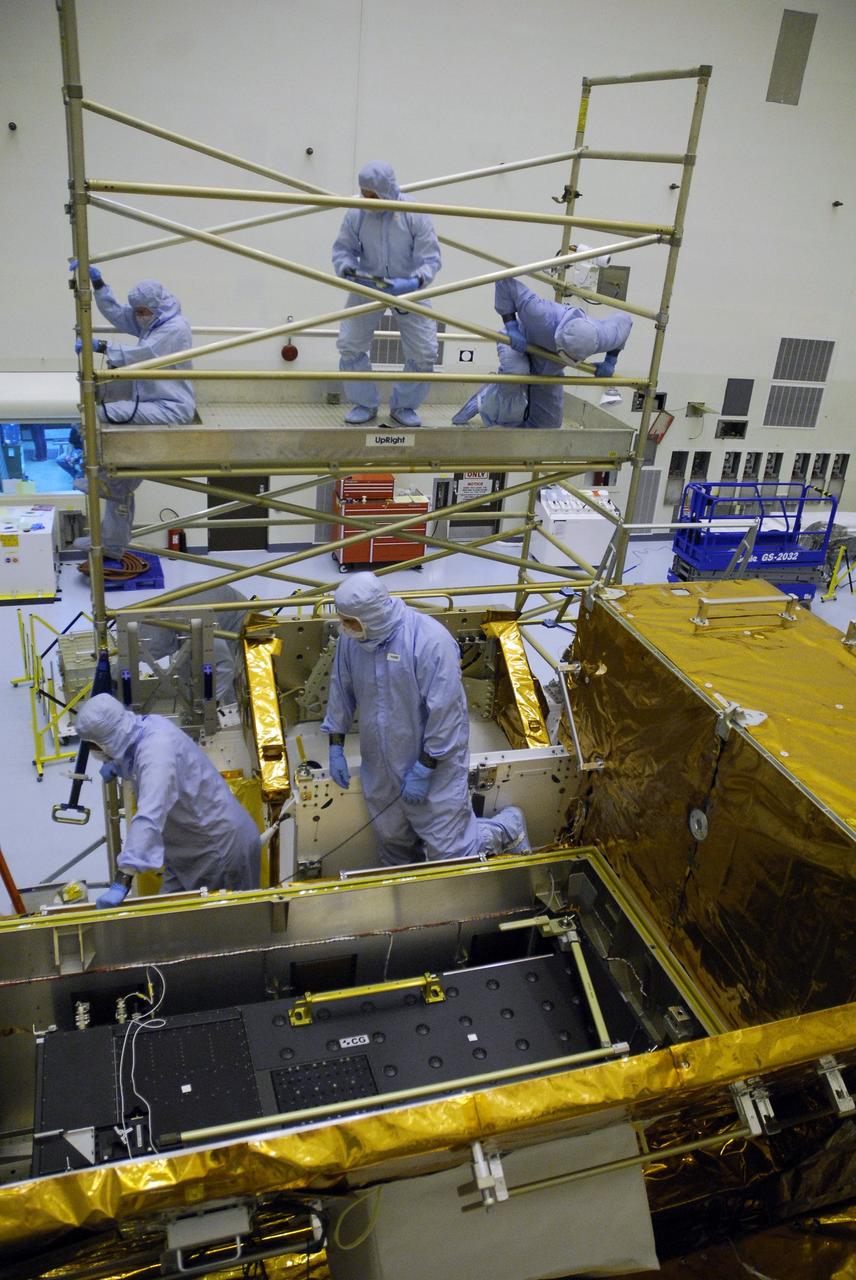
CAPE CANAVERAL, Fla. – In the Payload Hazardous Servicing Facility at NASA’s Kennedy Space Center, crew members with the STS-125 mission get a close look at some of the equipment associated with their mission to service NASA’s Hubble Space Telescope. Looking at the box containing the Cosmic Origins Spectrograph, or COS, on the orbital replacement unit carrier are Mission Specialist Michael Good (upper right, on stand) and HST inspectors. COS will be the most sensitive ultraviolet spectrograph ever flown on Hubble and will probe the "cosmic web" - the large-scale structure of the universe whose form is determined by the gravity of dark matter and is traced by galaxies and intergalactic gas. The STS-125 crew is taking part in a crew equipment interface test, which provides experience handling tools, equipment and hardware they will use on their mission. Space shuttle Atlantis is targeted to launch on the STS-125 mission Oct. 10. Photo credit: NASA/Kim Shiflett