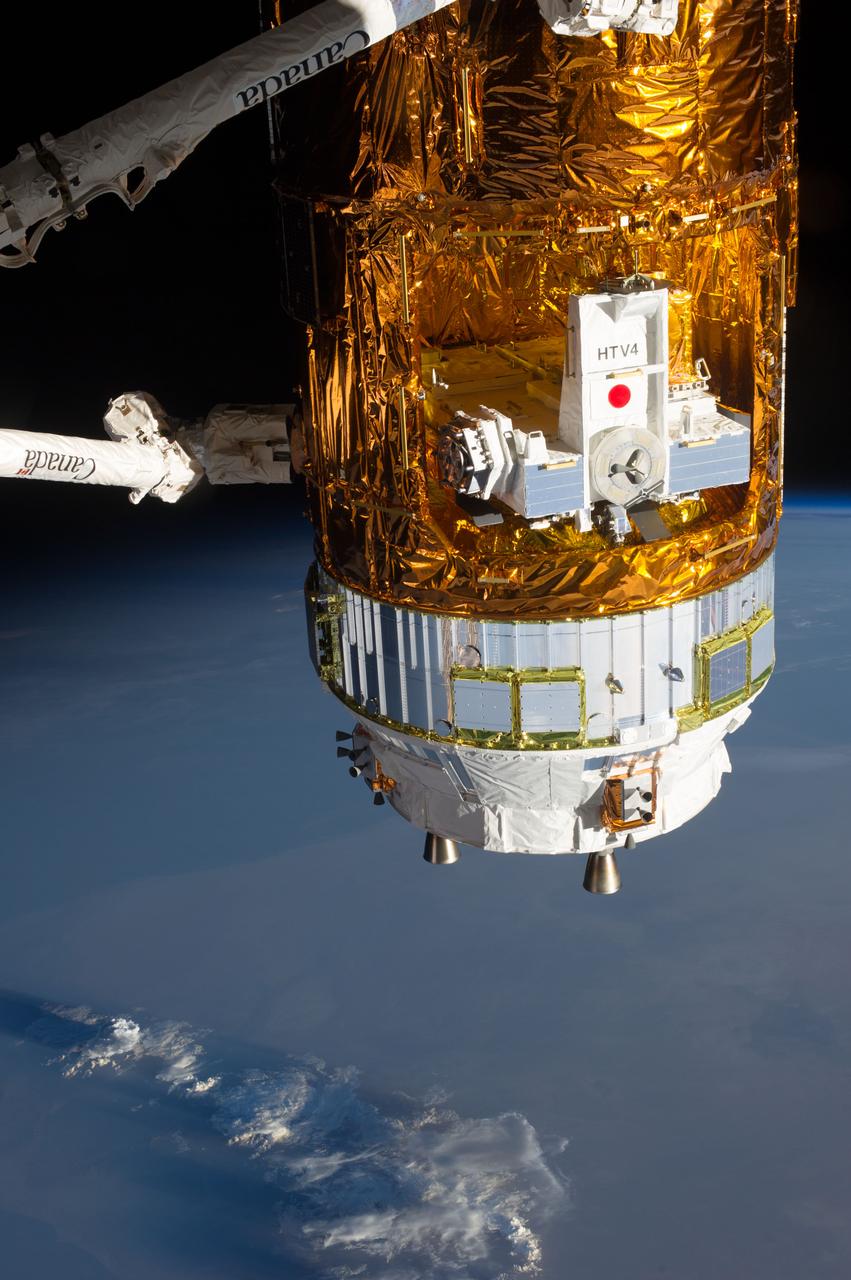
View of Japanese Kounotori H2 Transfer Vehicle-4 (HTV-4) docked to the International Space Station's Harmony Node 2 module. Sent as Twitter message.
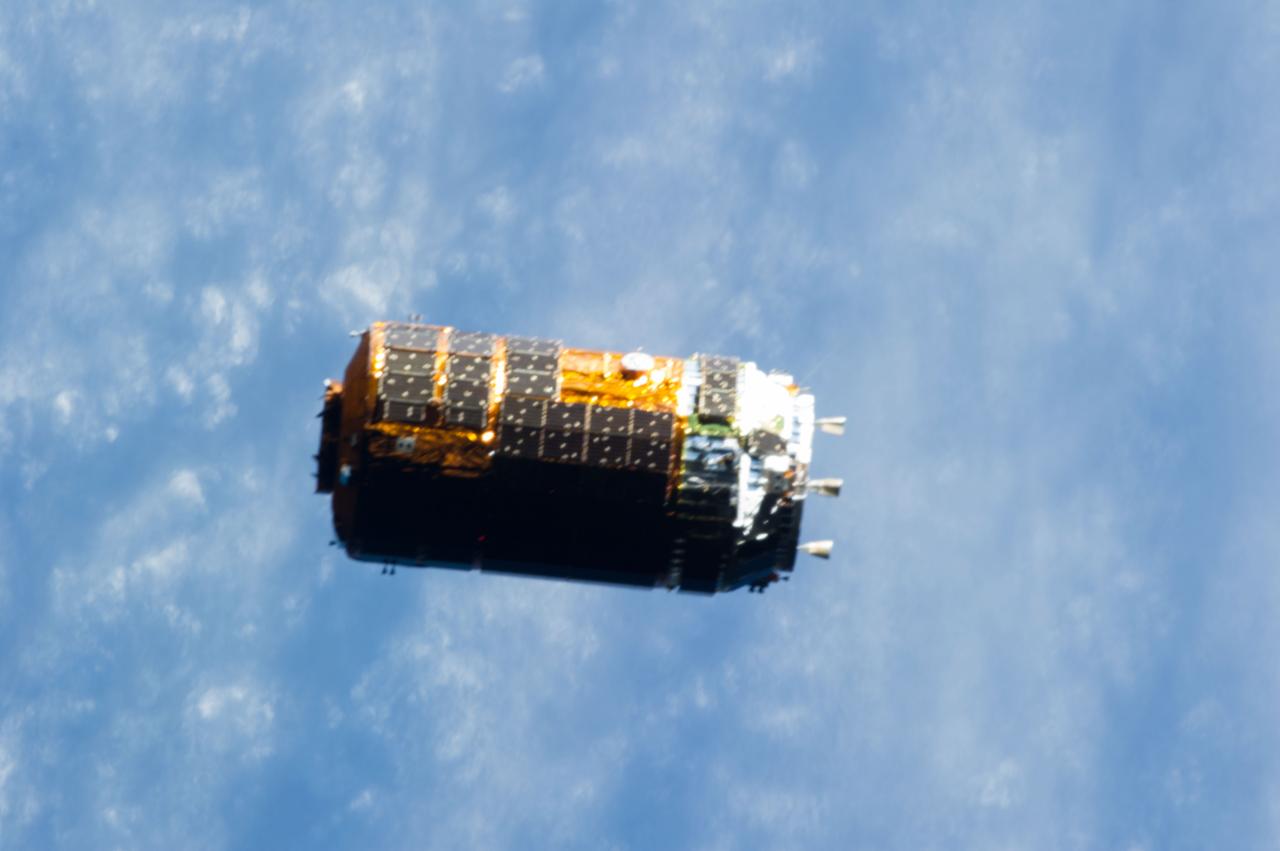
ISS036-E-029963 (9 Aug. 2013) --- The unpiloted Japanese "Kounotori" H2 Transfer Vehicle-4 (HTV-4) approaches the International Space Station. The HTV, a 33-foot-long, 13-foot-diameter unmanned cargo transfer spacecraft, is delivering 3.6 tons of science experiments, equipment and supplies to the orbiting complex. HTV-4 launched from the Tanegashima Space Center in southern Japan on Aug.3 at 3:48 p.m. (Aug. 4 at 4:48 a.m., Japan time).
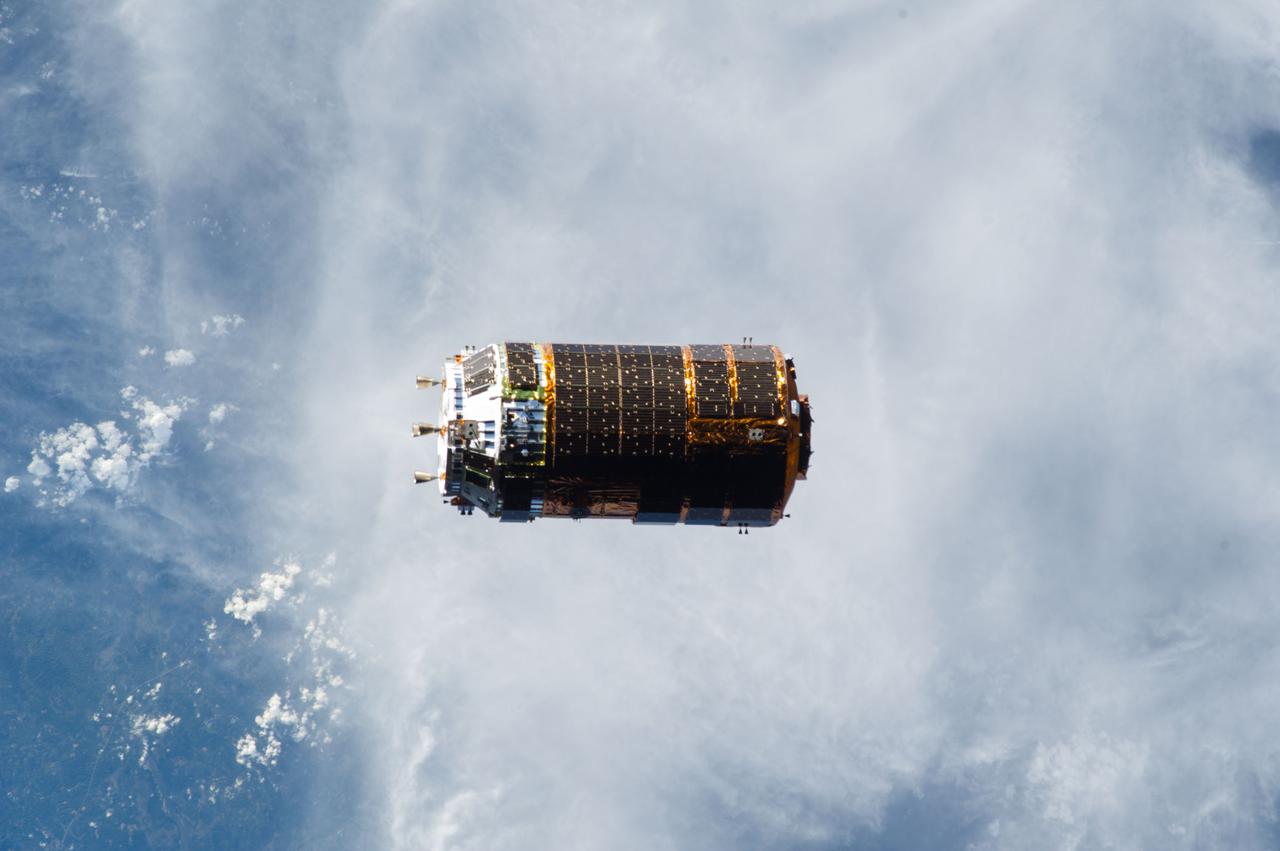
ISS036-E-030064 (9 Aug. 2013) --- The unpiloted Japanese "Kounotori" H2 Transfer Vehicle-4 (HTV-4) approaches the International Space Station. The HTV, a 33-foot-long, 13-foot-diameter unmanned cargo transfer spacecraft, is delivering 3.6 tons of science experiments, equipment and supplies to the orbiting complex. HTV-4 launched from the Tanegashima Space Center in southern Japan on Aug.3 at 3:48 p.m. (Aug. 4 at 4:48 a.m., Japan time).
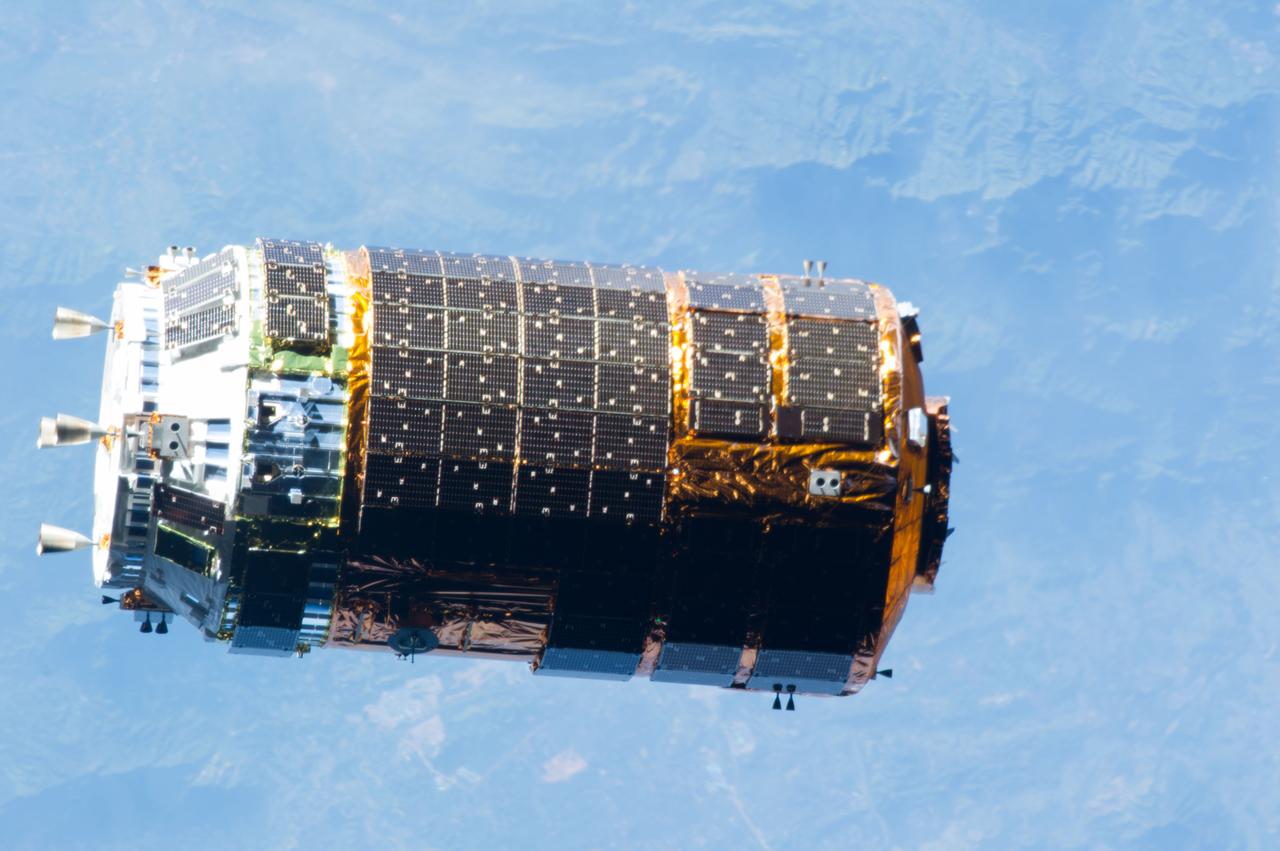
ISS036-E-029969 (9 Aug. 2013) --- The unpiloted Japanese "Kounotori" H2 Transfer Vehicle-4 (HTV-4) approaches the International Space Station. The HTV, a 33-foot-long, 13-foot-diameter unmanned cargo transfer spacecraft, is delivering 3.6 tons of science experiments, equipment and supplies to the orbiting complex. HTV-4 launched from the Tanegashima Space Center in southern Japan on Aug.3 at 3:48 p.m. (Aug. 4 at 4:48 a.m., Japan time).
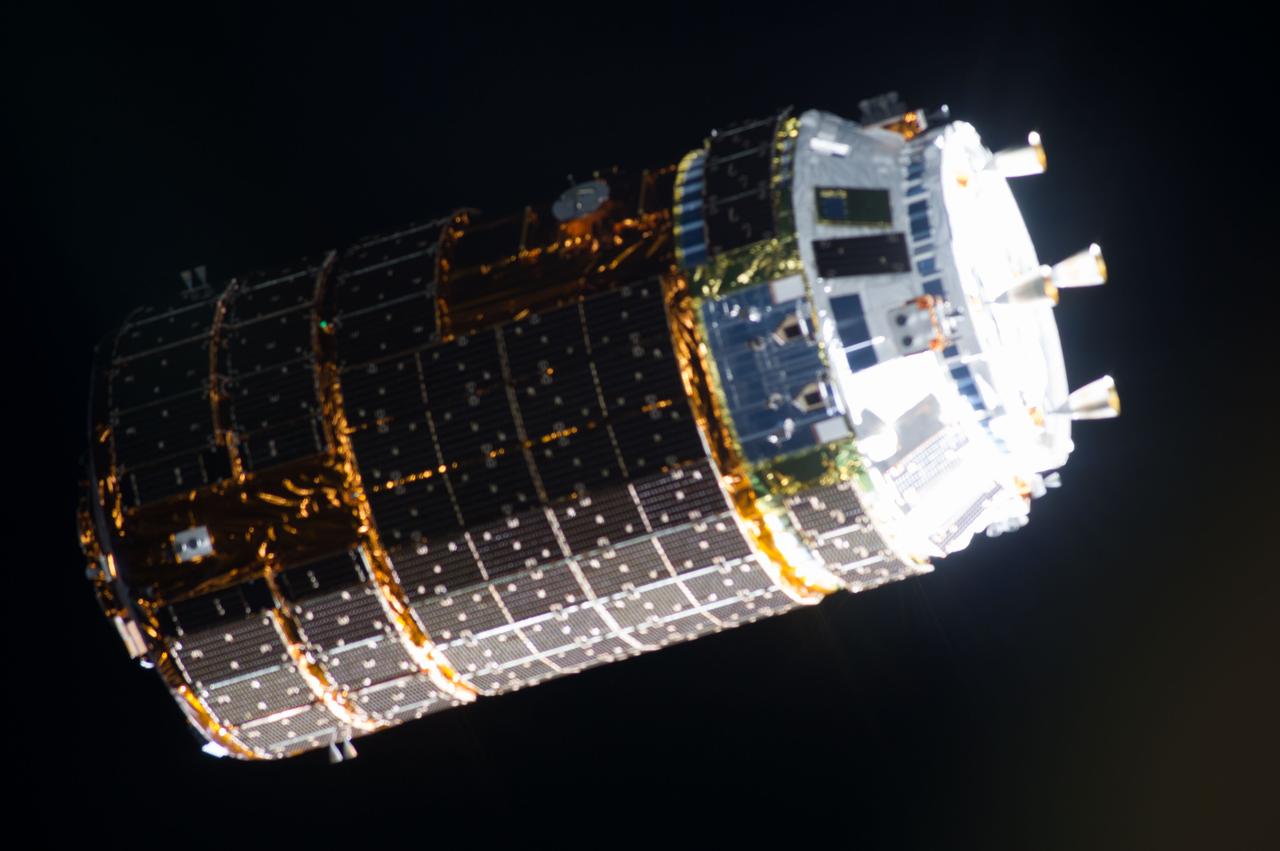
ISS036-E-030067 (9 Aug. 2013) --- The unpiloted Japanese "Kounotori" H2 Transfer Vehicle-4 (HTV-4) approaches the International Space Station. The HTV, a 33-foot-long, 13-foot-diameter unmanned cargo transfer spacecraft, is delivering 3.6 tons of science experiments, equipment and supplies to the orbiting complex. HTV-4 launched from the Tanegashima Space Center in southern Japan on Aug.3 at 3:48 p.m. (Aug. 4 at 4:48 a.m., Japan time).
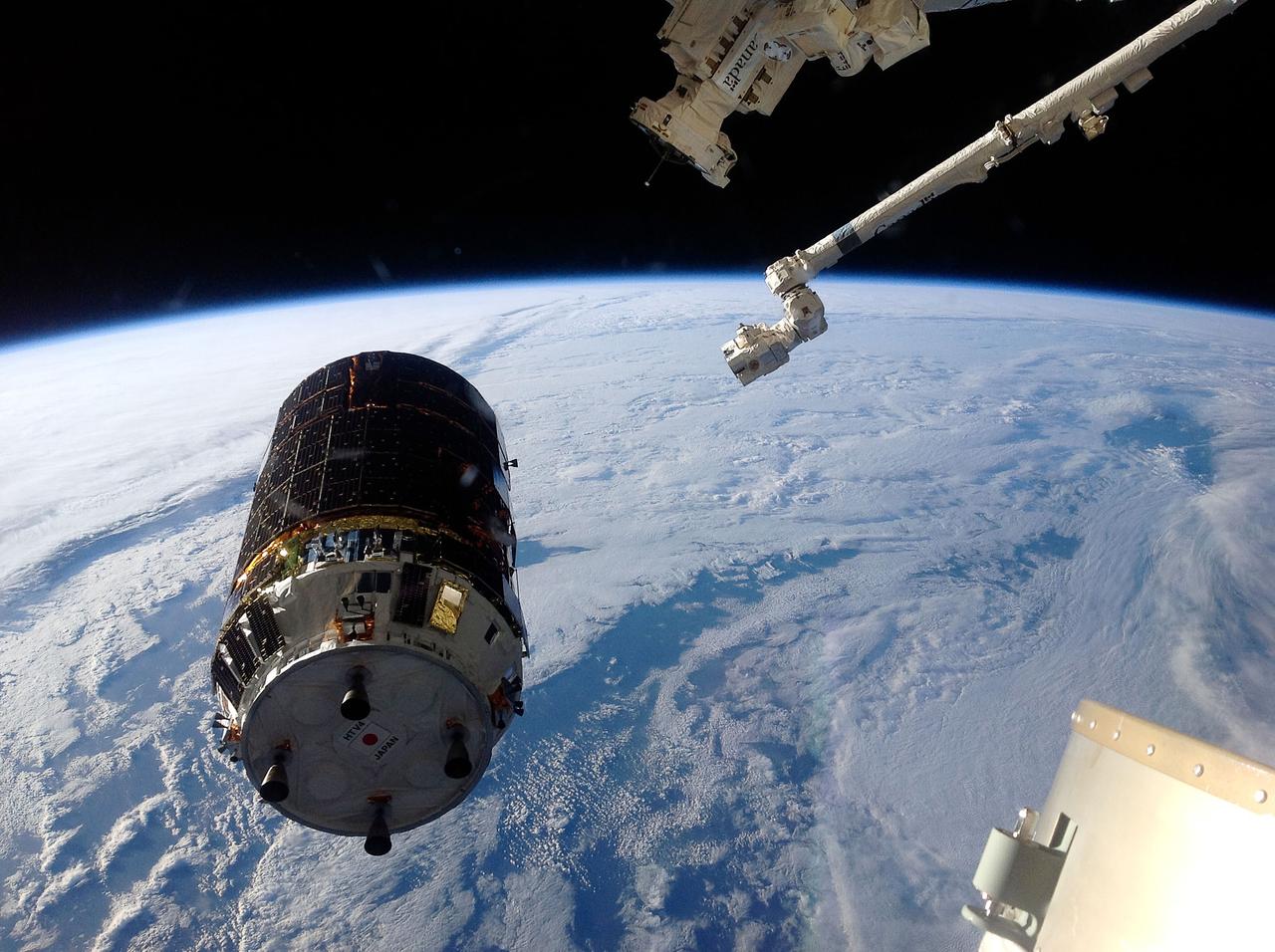
ISS036-E-029800 (9 Aug. 2013) --- The Canadarm2 moves toward the unpiloted Japanese "Kounotori" H2 Transfer Vehicle-4 (HTV-4) as it approaches the International Space Station. The HTV-4 is delivering 3.6 tons of science experiments, equipment and supplies to the orbiting complex. Earth’s horizon and the blackness of space provide the backdrop for the scene.
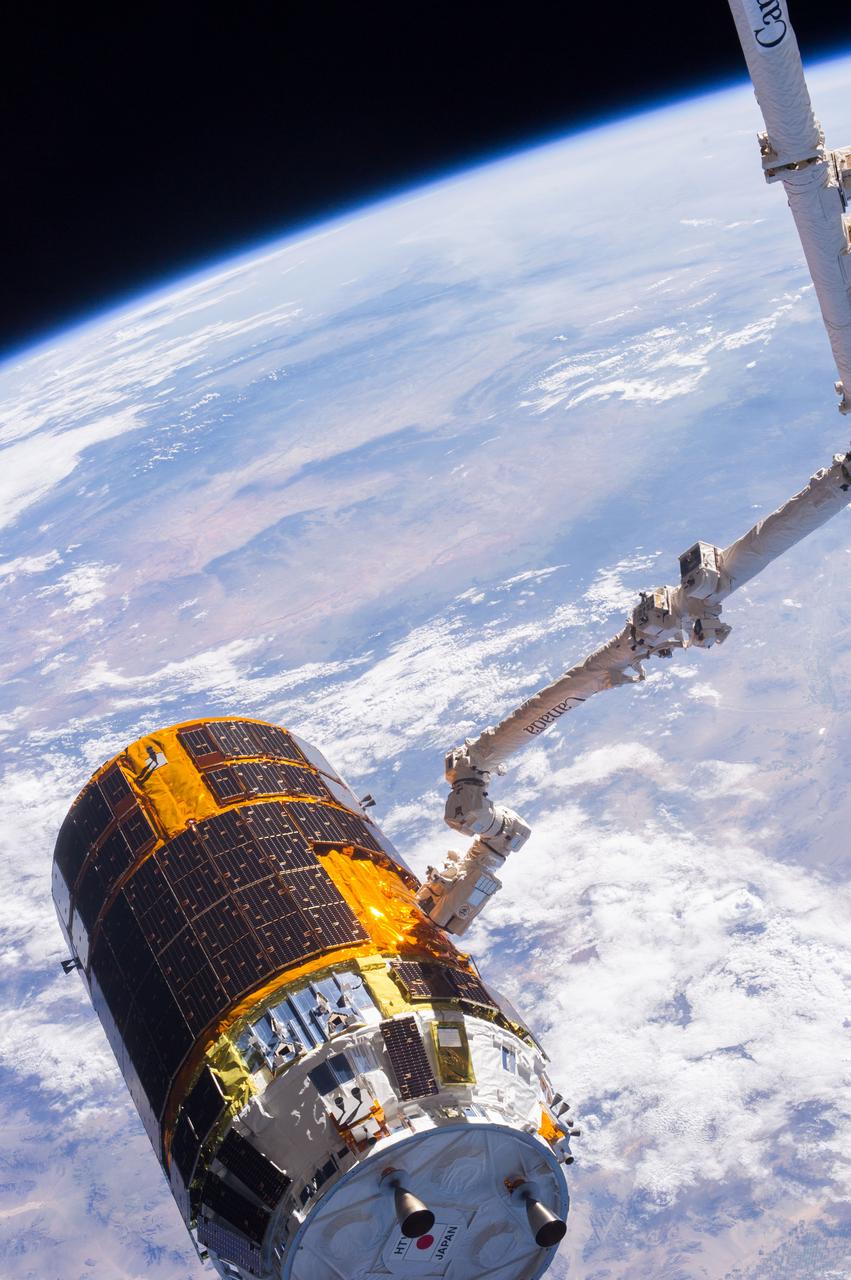
ISS036-E-039501 (04 Sept. 2013) --- One of the Expedition 36 crew members aboard the International Space Station took this picture of the Japanese HTV-4 unmanned cargo spacecraft, backdropped against a land mass on Earth, following its unberthing but just prior to its release from the orbital outpost's Canadarm2. HTV-4, after backing away from the flying complex, headed for re-entry into Earth's atmosphere, burning upon re-entry. HTV-4 was launched by Japan?s Aerospace Exploration Agency (JAXA) on Aug. 4 of this year in order to bring up supplies for the astronauts and cosmonauts onboard the station.
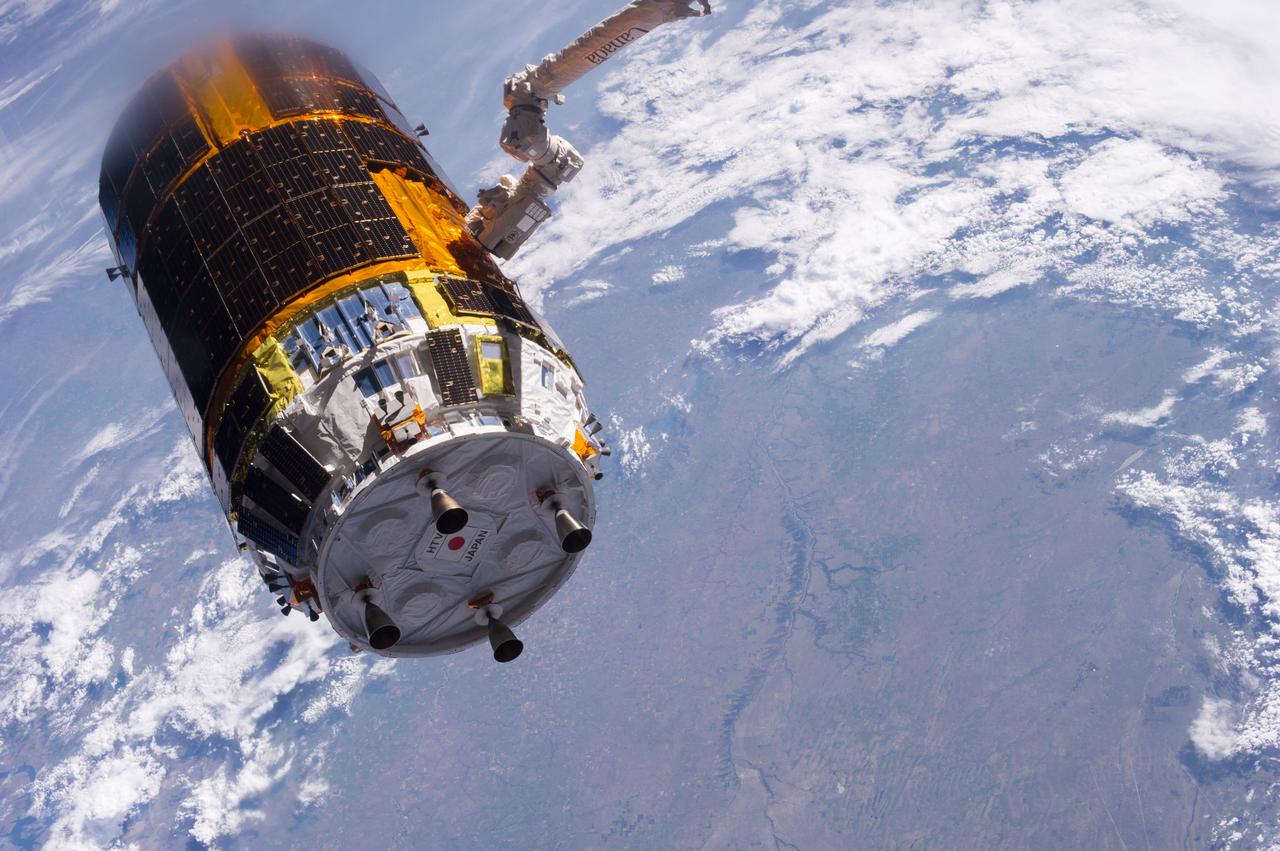
ISS036-E-039523 (04 Sept. 2013) --- One of the Expedition 36 crew members aboard the International Space Station took this picture of the Japanese HTV-4 unmanned cargo spacecraft, backdropped against a land mass on Earth, following its unberthing but just prior to its release from the orbital outpost. HTV-4, after backing away from the flying complex, headed for re-entry into Earth's atmosphere, burning upon re-entry. HTV-4 was launched by Japan?s Aerospace Exploration Agency (JAXA) on Aug. 4 of this year in order to bring up supplies for the astronauts and cosmonauts onboard the station.
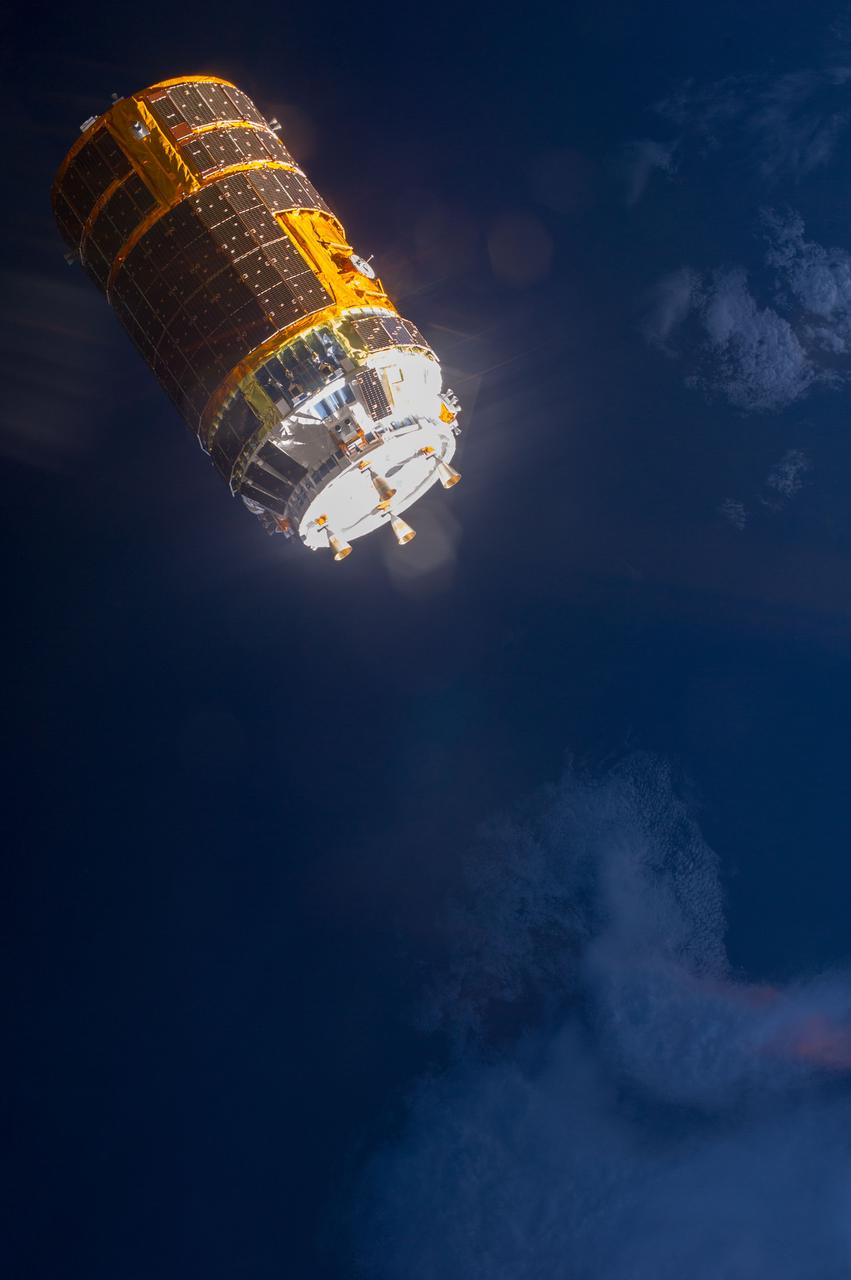
ISS036-E-039553 (04 Sept. 2013) --- One of the Expedition 36 crew members aboard the International Space Station took this picture of the Japanese HTV-4 unmanned cargo spacecraft, backdropped against clouds, following its unberthing and release from the orbital outpost. HTV-4, after backing away from the flying complex, headed for re-entry into Earth's atmosphere, burning upon re-entry. HTV-4 was launched by Japan?s Aerospace Exploration Agency (JAXA) on Aug. 4 of this year in order to bring up supplies for the astronauts and cosmonauts onboard the station.
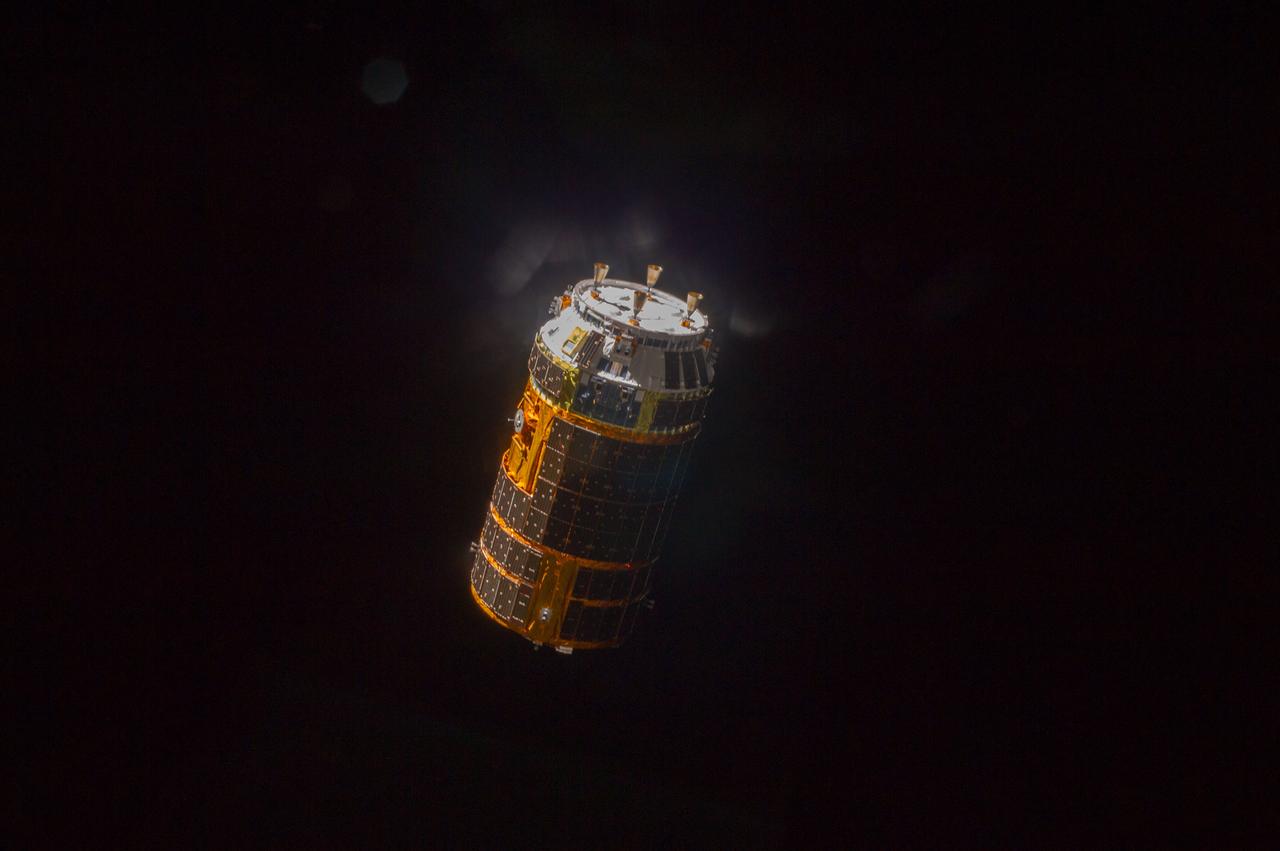
ISS036-E-039563 (04 Sept. 2013) --- One of the Expedition 36 crew members aboard the International Space Station took this picture of the Japanese HTV-4 unmanned cargo spacecraft, surrounded by the darkness of space, following its unberthing and release from the orbital outpost. HTV-4, after backing away from the flying complex, headed for re-entry into Earth's atmosphere, burning upon re-entry. HTV-4 was launched by Japan?s Aerospace Exploration Agency (JAXA) on Aug. 4 of this year in order to bring up supplies for the astronauts and cosmonauts onboard the station.
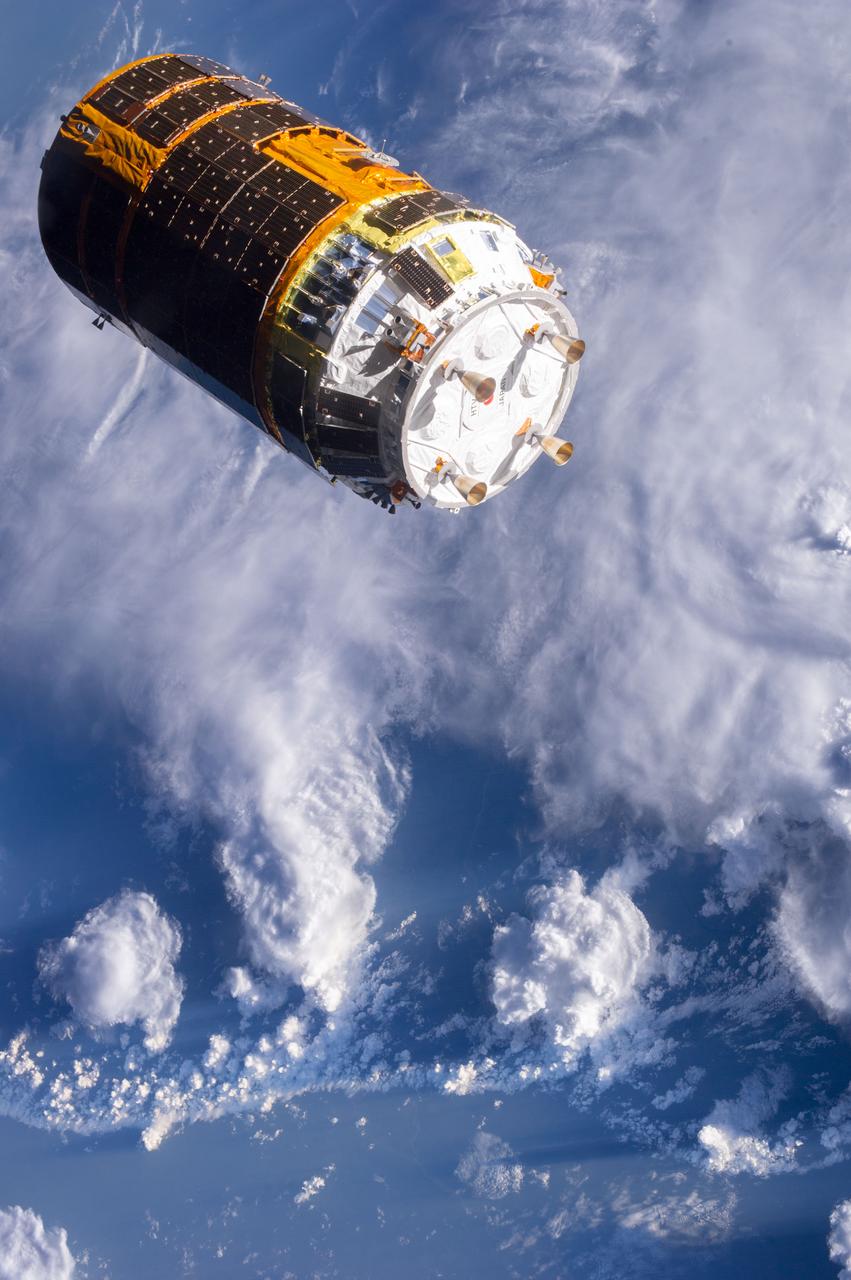
ISS036-E-039541 (04 Sept. 2013) --- One of the Expedition 36 crew members aboard the International Space Station took this picture of the Japanese HTV-4 unmanned cargo spacecraft, backdropped against clouds, following its unberthing and release from the orbital outpost. HTV-4, after backing away from the flying complex, headed for re-entry into Earth's atmosphere, burning upon re-entry. HTV-4 was launched by Japan?s Aerospace Exploration Agency (JAXA) on Aug. 4 of this year in order to bring up supplies for the astronauts and cosmonauts onboard the station.
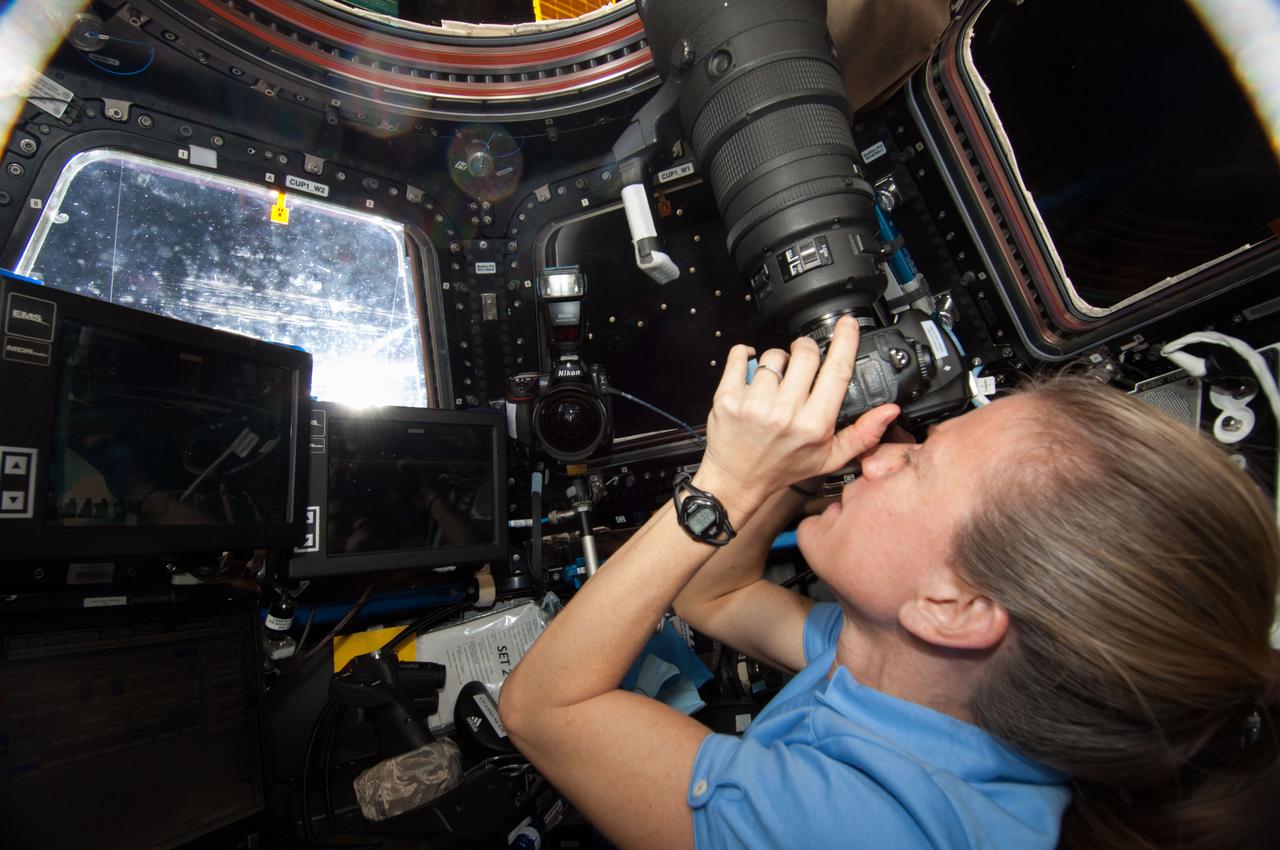
ISS036-E-029856 (9 Aug. 2013) --- At the windows in the International Space Station?s Cupola, NASA astronaut Karen Nyberg, Expedition 36 flight engineer, uses a digital still camera to photograph the approaching unpiloted Japanese "Kounotori" H2 Transfer Vehicle-4 (HTV-4).
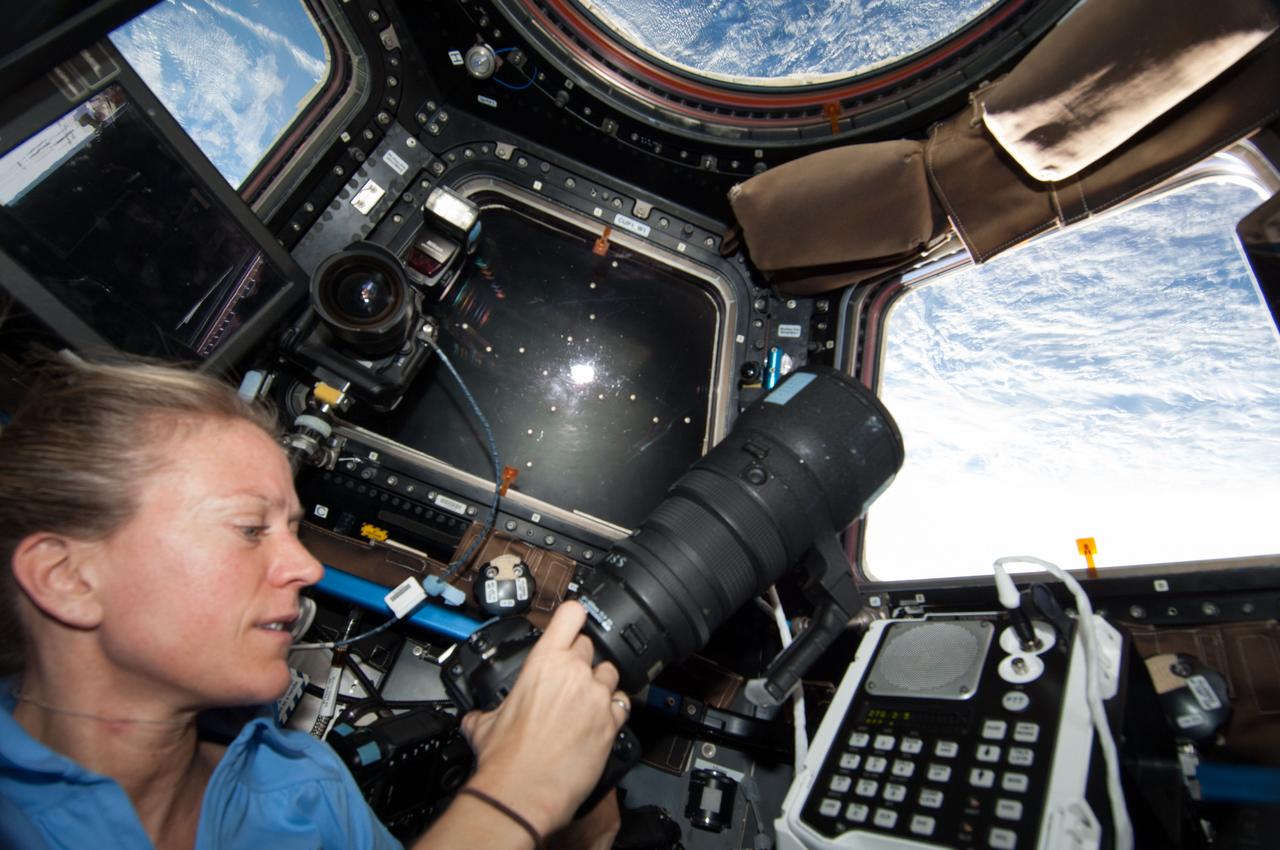
ISS036-E-029852 (9 Aug. 2013) --- At the windows in the International Space Station?s Cupola, NASA astronaut Karen Nyberg, Expedition 36 flight engineer, prepares to use a digital still camera to photograph the approaching unpiloted Japanese "Kounotori" H2 Transfer Vehicle-4 (HTV-4).
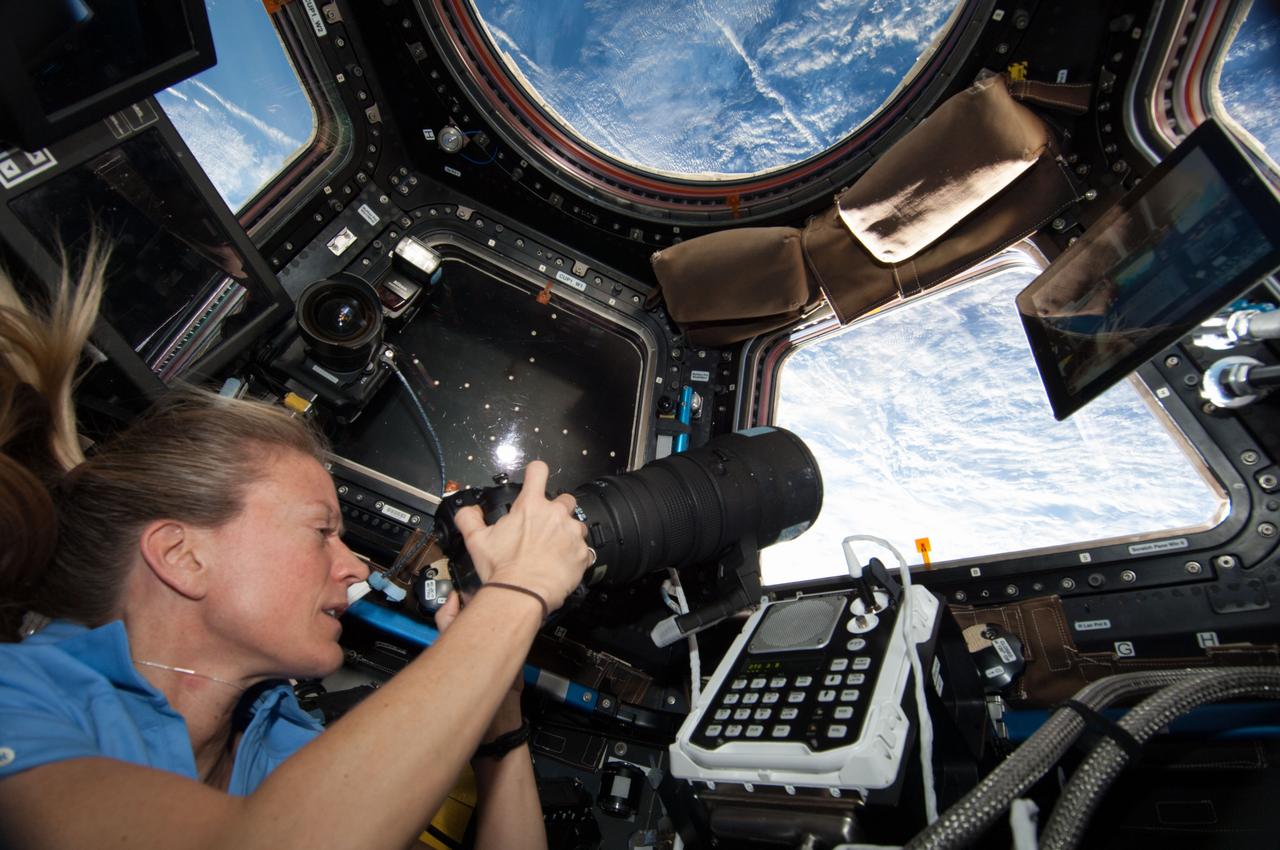
ISS036-E-029853 (9 Aug. 2013) --- At the windows in the International Space Station?s Cupola, NASA astronaut Karen Nyberg, Expedition 36 flight engineer, uses a digital still camera to photograph the approaching unpiloted Japanese "Kounotori" H2 Transfer Vehicle-4 (HTV-4).
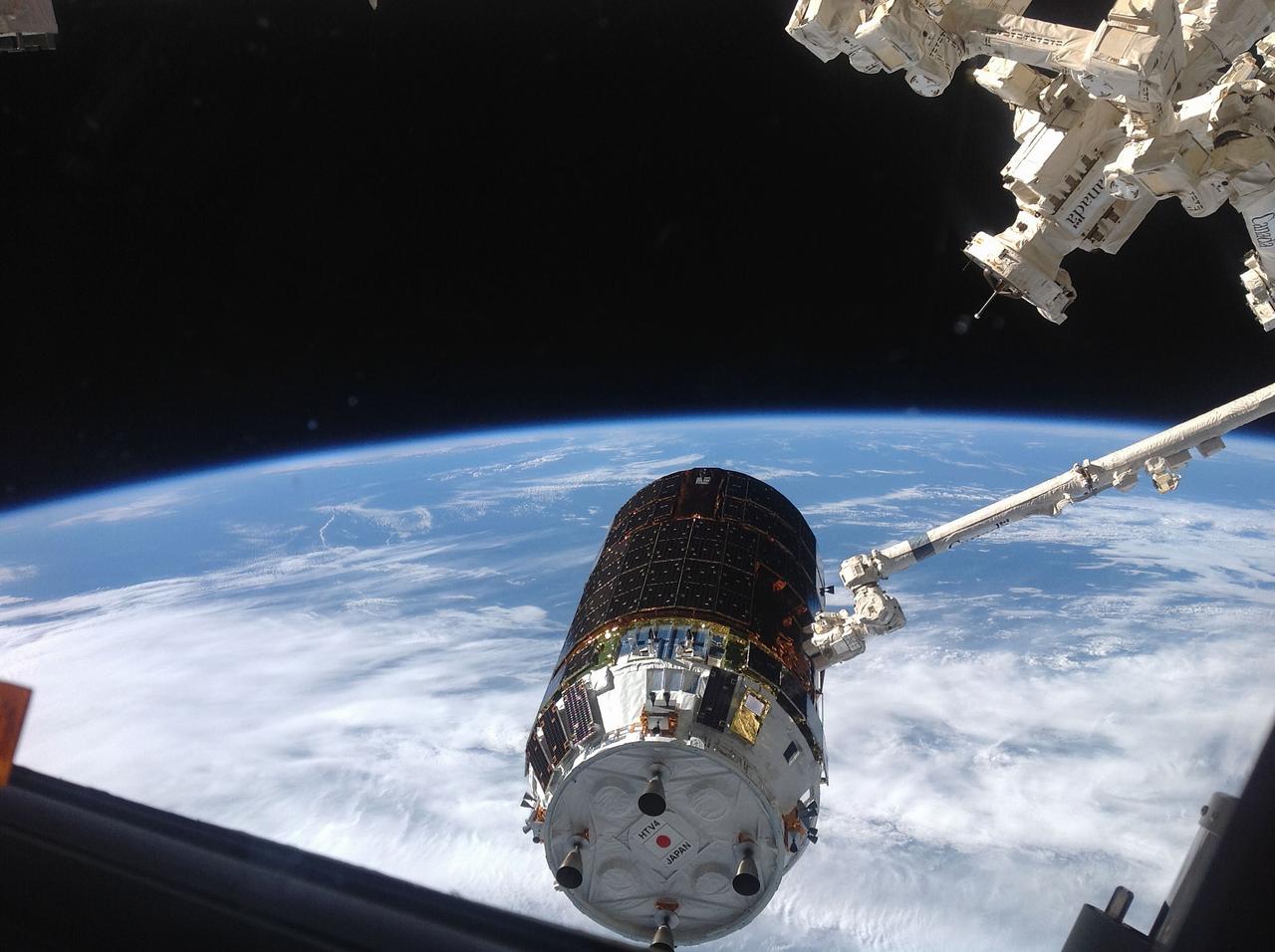
ISS036-E-029801 (9 Aug. 2013) --- The International Space Station's Canadarm2 grapples the unpiloted Japanese "Kounotori" H2 Transfer Vehicle-4 (HTV-4) as it approaches the station, and will attached it to the Earth-facing port of the station's Harmony node. The HTV-4 is delivering 3.6 tons of science experiments, equipment and supplies to the orbiting complex. Earth’s horizon and the blackness of space provide the backdrop for the scene.
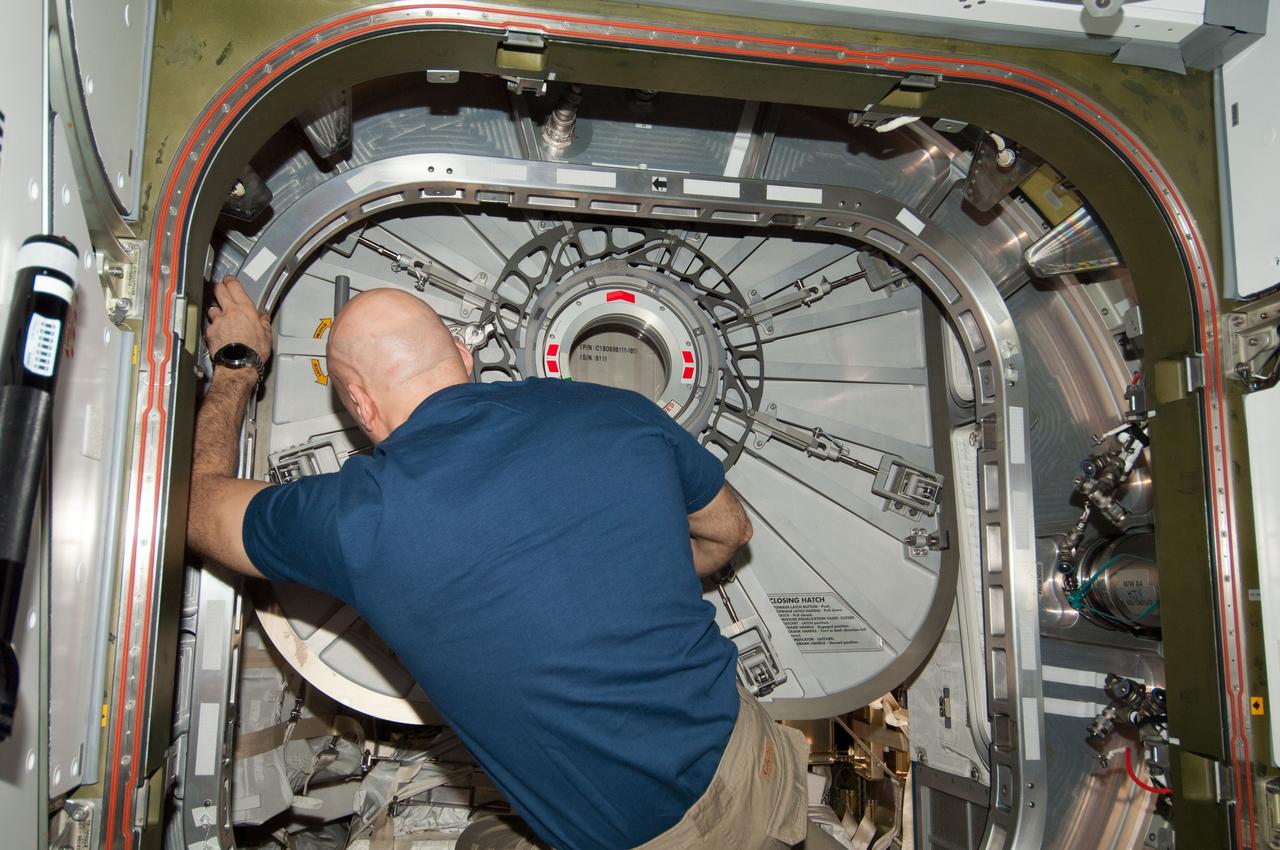
ISS036-E-039129 (3 Sept. 2013) --- European Space Agency astronaut Luca Parmitano, Expedition 36 flight engineer, closes the hatch in the vestibule between the International Space Station’s Harmony node and the Japanese "Kounotori" H2 Transfer Vehicle-4 (HTV-4) in preparation to release the HTV-4 ending its one-month stay at the space station. The automated resupply craft will be grappled by the Canadarm2, removed from the Harmony node and released for a destructive reentry into Earth’s atmosphere.
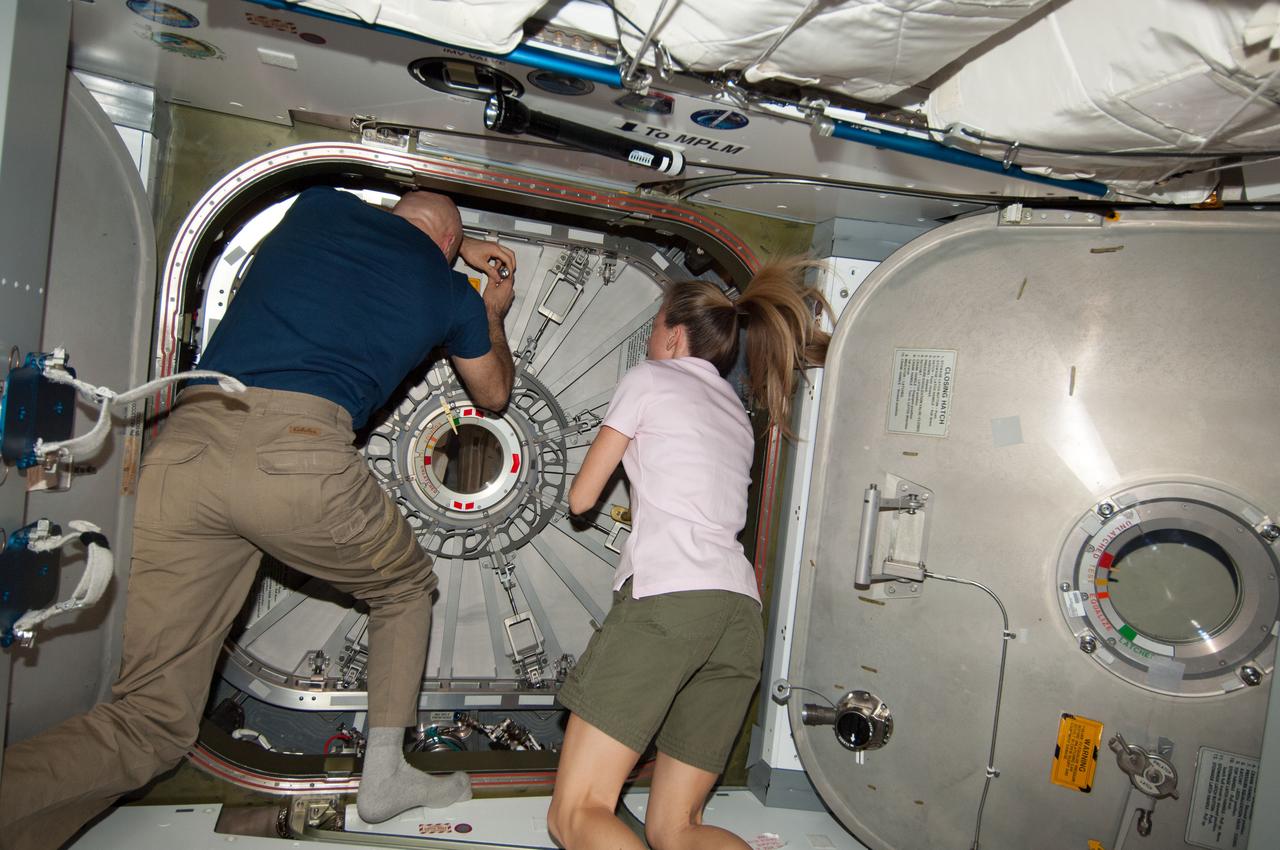
ISS036-E-039132 (3 Sept. 2013) --- European Space Agency astronaut Luca Parmitano and NASA astronaut Karen Nyberg, both Expedition 36 flight engineers, close the hatch in the vestibule between the International Space Station’s Harmony node and the Japanese "Kounotori" H2 Transfer Vehicle-4 (HTV-4) in preparation to release the HTV-4 ending its one-month stay at the space station. The automated resupply craft will be grappled by the Canadarm2, removed from the Harmony node and released for a destructive reentry into Earth’s atmosphere.
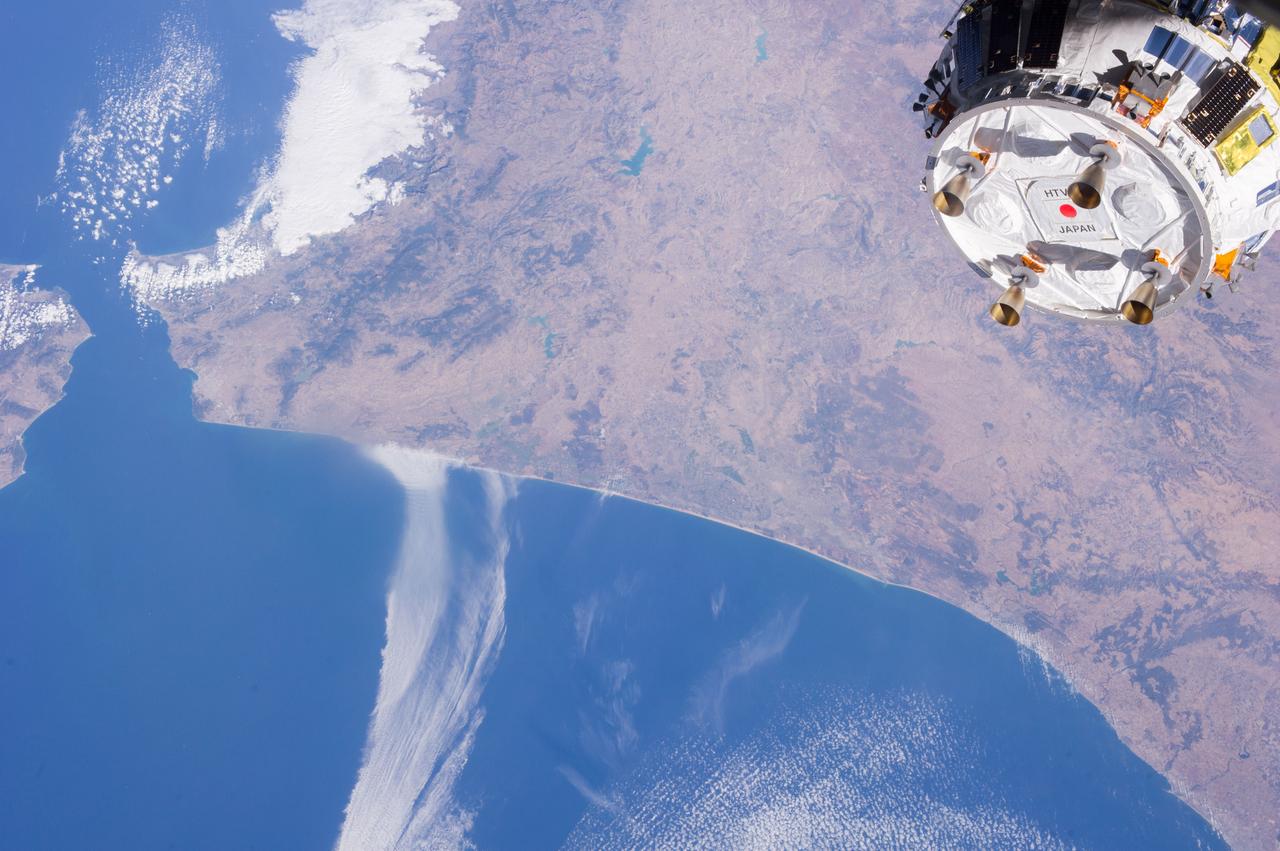
ISS036-E-039525 (04 Sept. 2013) --- One of the Expedition 36 crew members aboard the International Space Station took this picture showing part of the Japanese HTV-4 unmanned cargo spacecraft, backdropped against countries in northern Africa, following its unberthing from the orbital outpost. HTV-4, after backing away from the flying complex, headed for re-entry into Earth's atmosphere, burning upon re-entry. The Strait of Gibraltar, where the Atlantic Ocean and the Mediterranean Sea meet, is in the upper left quadrant of the photo. HTV-4 was launched by Japan?s Aerospace Exploration Agency (JAXA) on Aug. 4 of this year in order to bring up supplies for the astronauts and cosmonauts onboard the station.
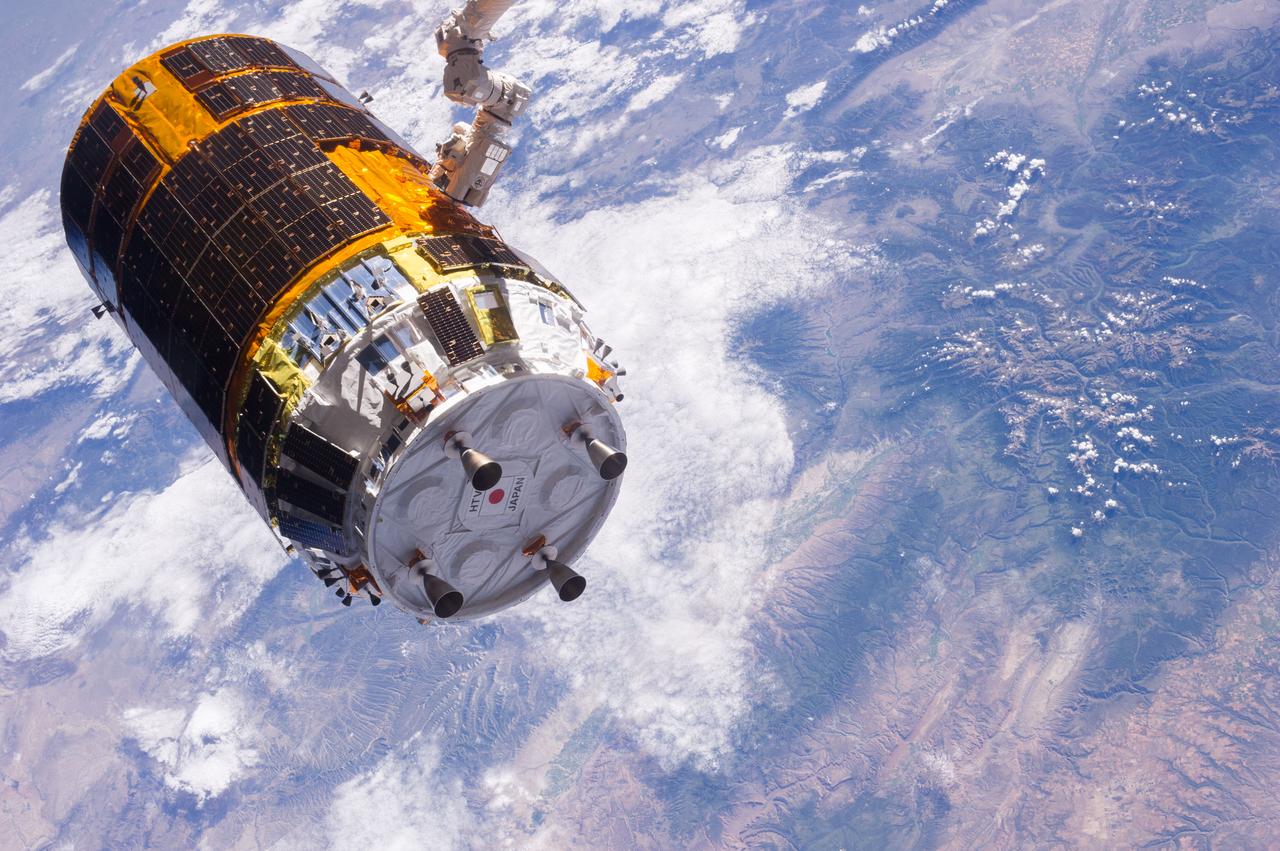
One of the Expedition 36 crew members aboard the International Space Station took this picture of the Japanese HTV-4 unmanned cargo spacecraft,backdropped against a land mass on Earth,following its unberthing but just prior to its release from the orbital outpost's Canadarm2. HTV-4,after backing away from the flying complex,headed for re-entry into Earth's atmosphere,burning upon re-entry. Per Twitter message: Flying over southwestern US, not long before release of #HTV4 by #Canadarm2.
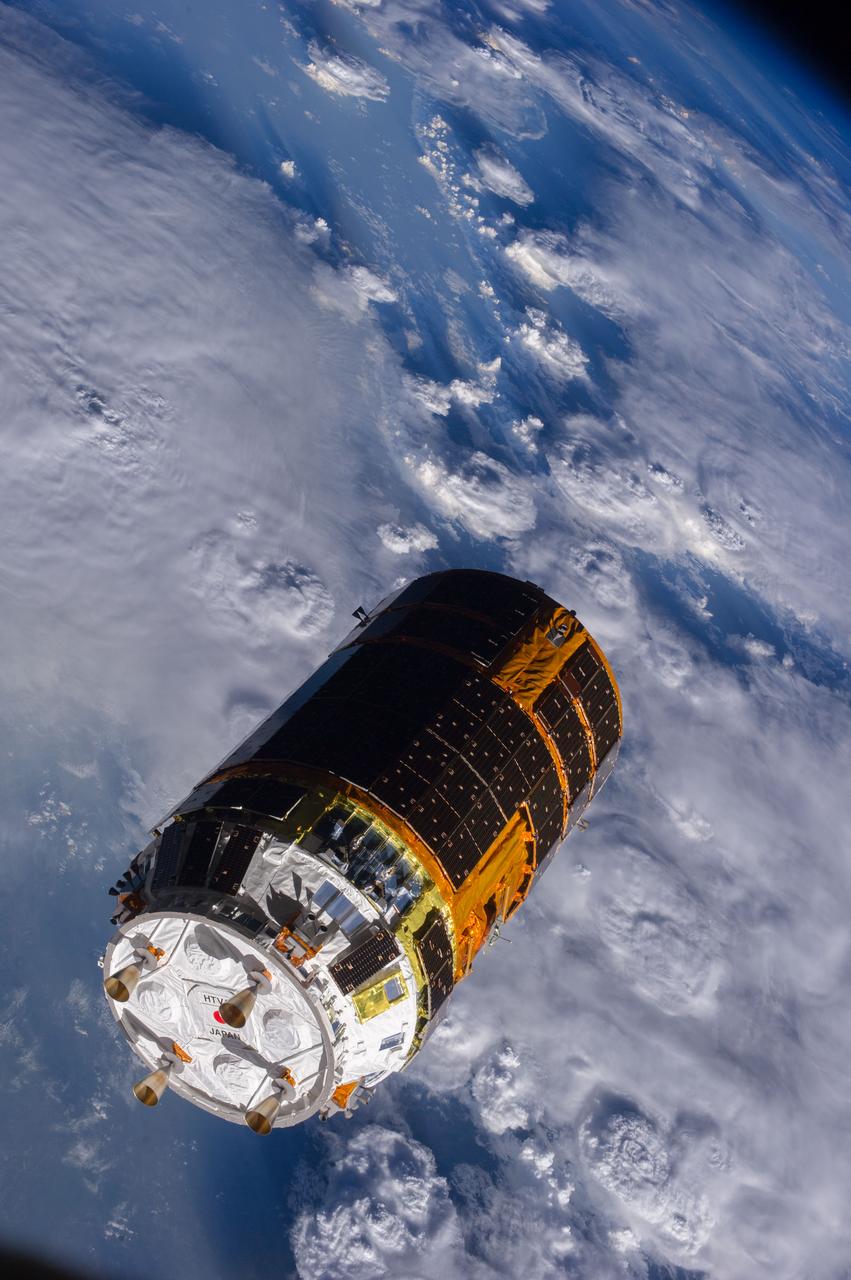
One of the Expedition 36 crew members aboard the International Space Station took this picture of the Japanese HTV-4 unmanned cargo spacecraft,backdropped against the Earth,following its unberthing and release from the orbital outpost. HTV-4,after backing away from the flying complex,headed for re-entry into Earth's atmosphere,burning upon re-entry. Per Twitter message: And, shortly after release of #HTV4, flying over Africa (The storm clouds were amazing).
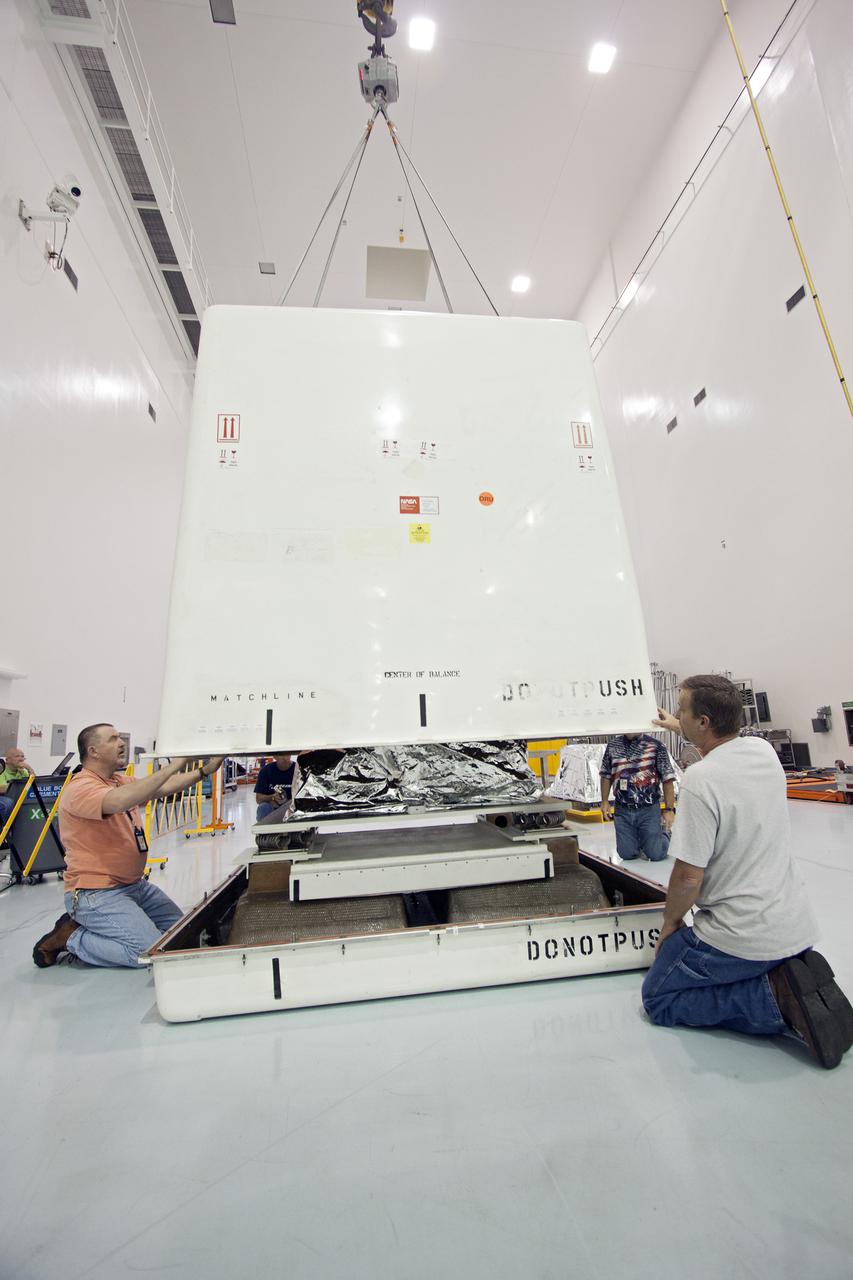
CAPE CANAVERAL, Fla. -- Inside the Space Station Processing Facility at NASA's Kennedy Space Center in Florida, technicians finish lowering the cover of a shipping container that will enclose the orbital replacement unit for the space station's utility transfer assembly. The unit is one of the payloads processed at Kennedy that will be flown to Japan for the HTV-4 launch to the station, which is currently scheduled for this summer. Photo credit: NASA_Jim Grossmann
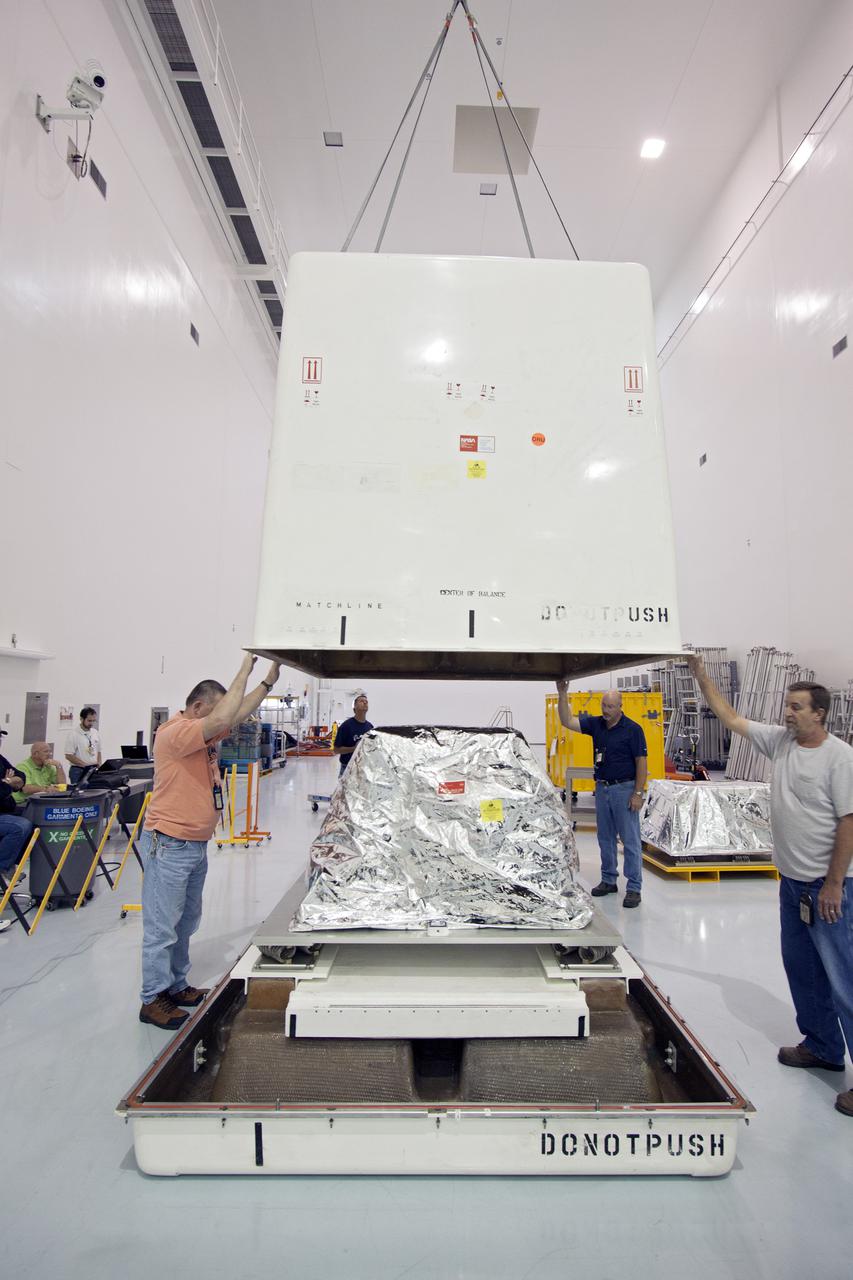
CAPE CANAVERAL, Fla. -- Inside the Space Station Processing Facility at NASA's Kennedy Space Center in Florida, technicians begin to lower the cover of a shipping container that will enclose the orbital replacement unit for the space station's utility transfer assembly. The unit is one of the payloads processed at Kennedy that will be flown to Japan for the HTV-4 launch to the station, which is currently scheduled for this summer. Photo credit: NASA_Jim Grossmann
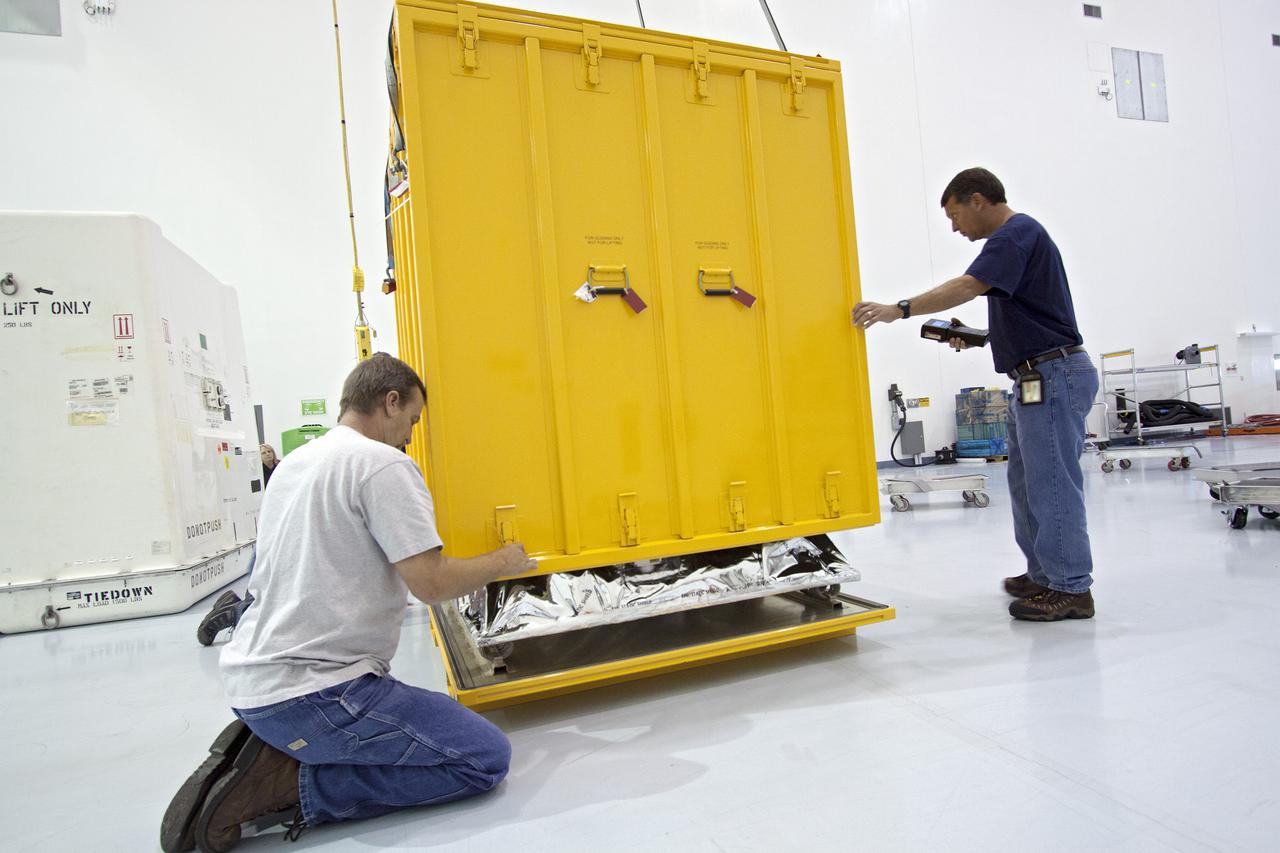
CAPE CANAVERAL, Fla. -- Inside the Space Station Processing Facility at NASA's Kennedy Space Center in Florida, technicians lower the cover of a shipping container that will enclose the orbital replacement unit for the space station's main bus switching unit. The unit is one of the payloads processed at Kennedy that will be flown to Japan for the HTV-4 launch to the station, which is currently scheduled for this summer. Photo credit: NASA_Jim Grossmann
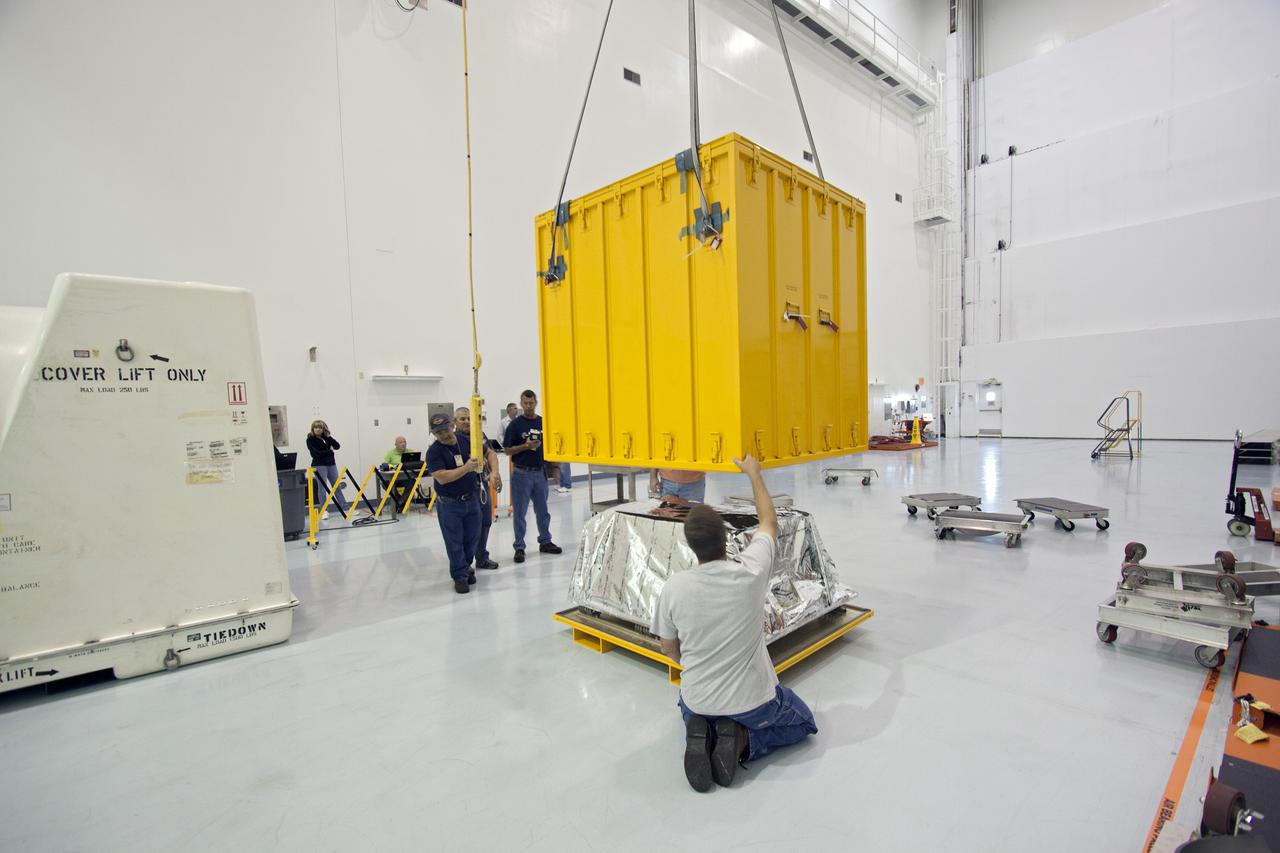
CAPE CANAVERAL, Fla. -- Inside the Space Station Processing Facility at NASA's Kennedy Space Center in Florida, technicians lower the cover of a shipping container that will enclose the orbital replacement unit for the space station's main bus switching unit. The unit is one of the payloads processed at Kennedy that will be flown to Japan for the HTV-4 launch to the station, which is currently scheduled for this summer. Photo credit: NASA_Jim Grossmann
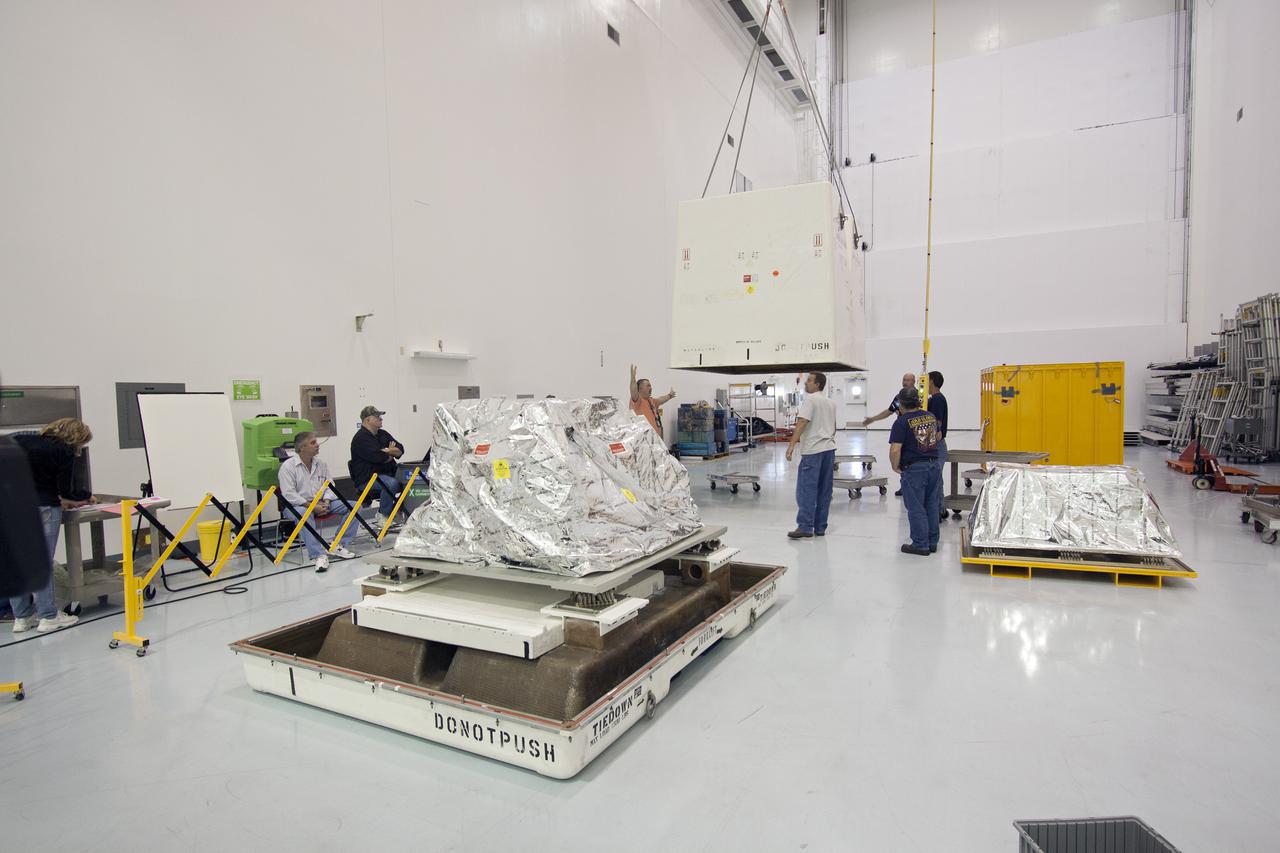
CAPE CANAVERAL, Fla. -- Inside the Space Station Processing Facility at NASA's Kennedy Space Center in Florida, technicians prepare to lower the cover of a shipping container that will enclose the orbital replacement unit for the space station's utility transfer assembly. The unit is one of the payloads processed at Kennedy that will be flown to Japan for the HTV-4 launch to the station, which is currently scheduled for this summer. Photo credit: NASA_Jim Grossmann
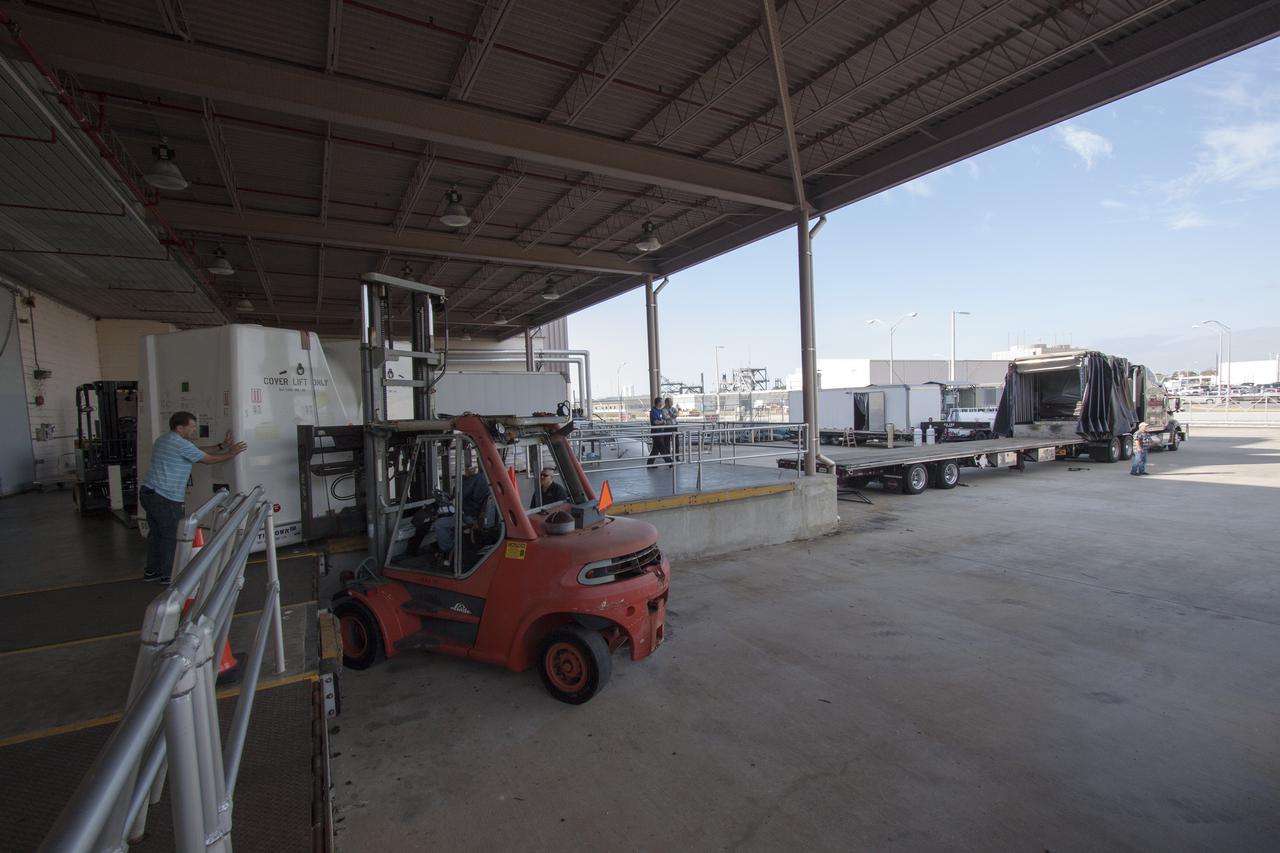
CAPE CANAVERAL, Fla. -- Workers prepare to load the payload shipping containers that hold the unpressurized Orbital Replacement Units ORU for the International Space Station's Main Bus Switching Unit MBSU and Utility Transfer Assembly UTA, as well as the Space Test Program-Houston 4 STP H-4 experiments, on a transport. The payloads were processed at Kennedy and will be trucked to Chicago. From Chicago, they will be moved by air freight to Narita, Japan, where a complicated combination of ground and ocean ferry transfers will be used to deliver them to the Tanegashima Space Center. At Tanegashima the payloads will be turned over to the Japan Aerospace Exploration Agency JAXA in preparation for launch on the H-II Transfer Vehicle 4 HTV-4 mission this summer. Photo credit: NASA_Jim Grossmann
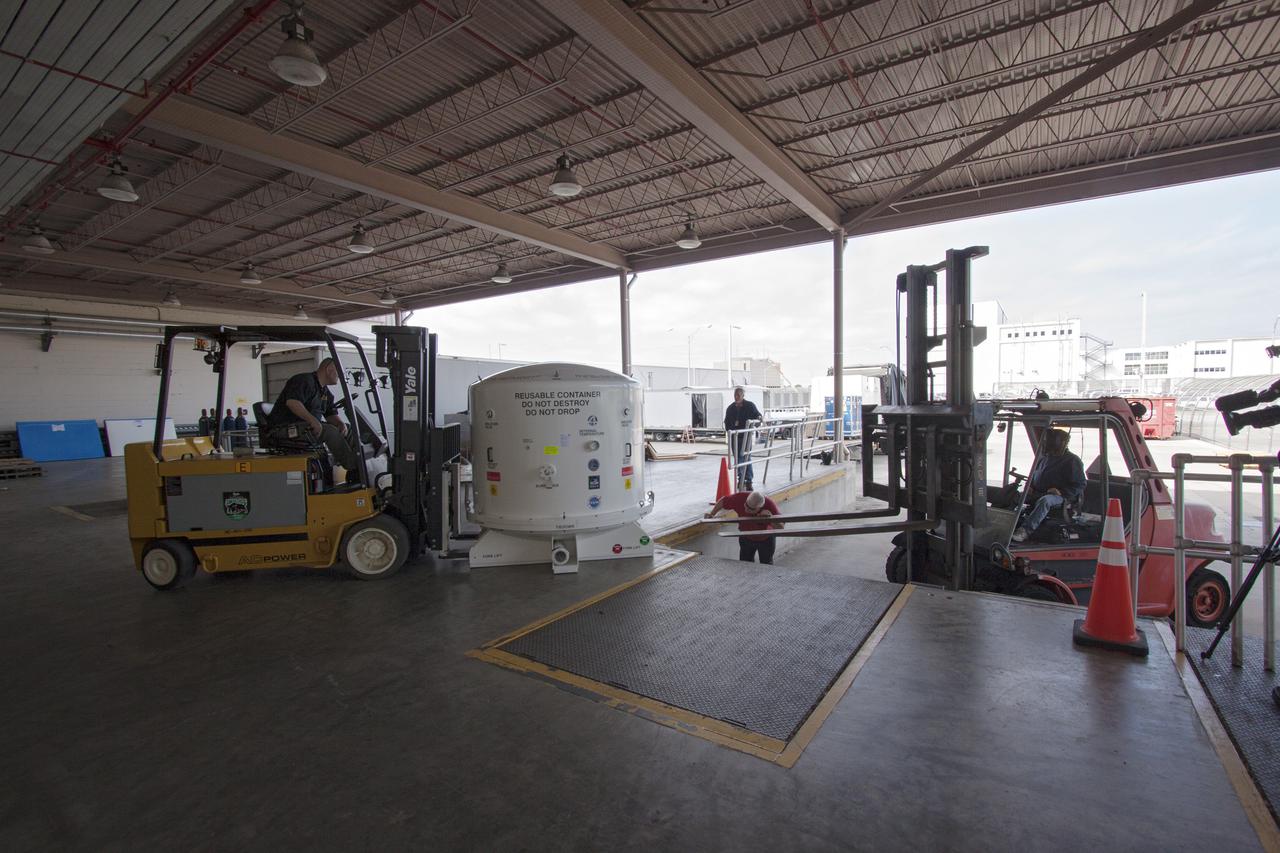
CAPE CANAVERAL, Fla. -- Workers prepare to load the payload shipping container that holds the Space Test Program-Houston 4 STP H-4 experiments on a transport that will also carry containers with the unpressurized Orbital Replacement Units ORU for the International Space Station's Main Bus Switching Unit MBSU and Utility Transfer Assembly UTA. The payloads were processed at Kennedy and will be trucked to Chicago. From Chicago, they will be moved by air freight to Narita, Japan, where a complicated combination of ground and ocean ferry transfers will be used to deliver them to the Tanegashima Space Center. At Tanegashima the payloads will be turned over to the Japan Aerospace Exploration Agency JAXA in preparation for launch on the H-II Transfer Vehicle 4 HTV-4 mission this summer. Photo credit: NASA_Jim Grossmann
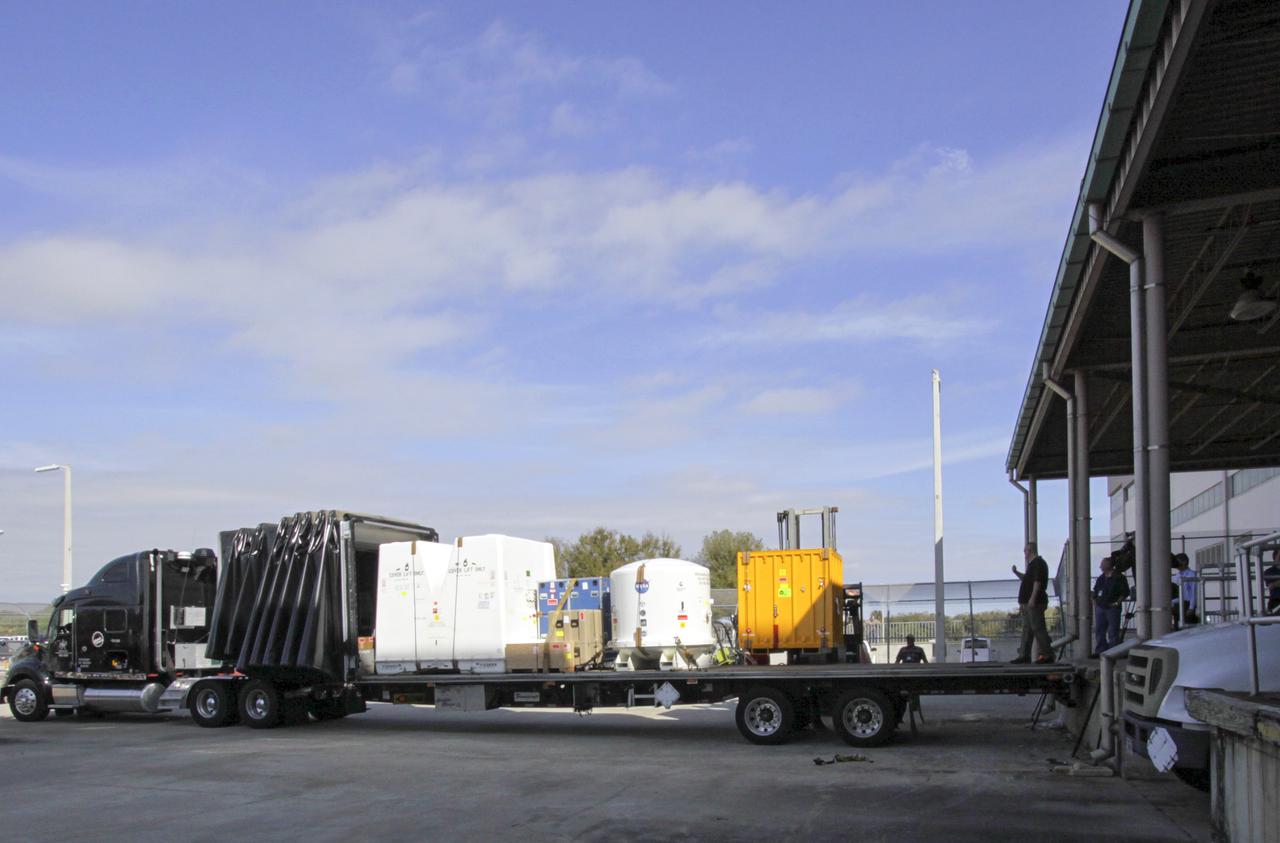
CAPE CANAVERAL, Fla. -- Payload shipping containers that hold the unpressurized Orbital Replacement Units ORU for the International Space Station's Main Bus Switching Unit MBSU and Utility Transfer Assembly UTA, as well as the Space Test Program-Houston 4 STP H-4 experiments, are loaded on a transport. The payloads were processed at Kennedy and will be trucked to Chicago. From Chicago, they will be moved by air freight to Narita, Japan, where a complicated combination of ground and ocean ferry transfers will be used to deliver them to the Tanegashima Space Center. At Tanegashima the payloads will be turned over to the Japan Aerospace Exploration Agency JAXA in preparation for launch on the H-II Transfer Vehicle 4 HTV-4 mission this summer. Photo credit: NASA_Jim Grossmann

ISS036-E-030115 (9 Aug. 2013) --- European Space Agency astronaut Luca Parmitano, Expedition 36 flight engineer, using a Russian AK-1M absorber, samples the air in the newly attached Japanese "Kounotori" H2 Transfer Vehicle-4 (HTV-4) docked to the International Space Station's Harmony node.
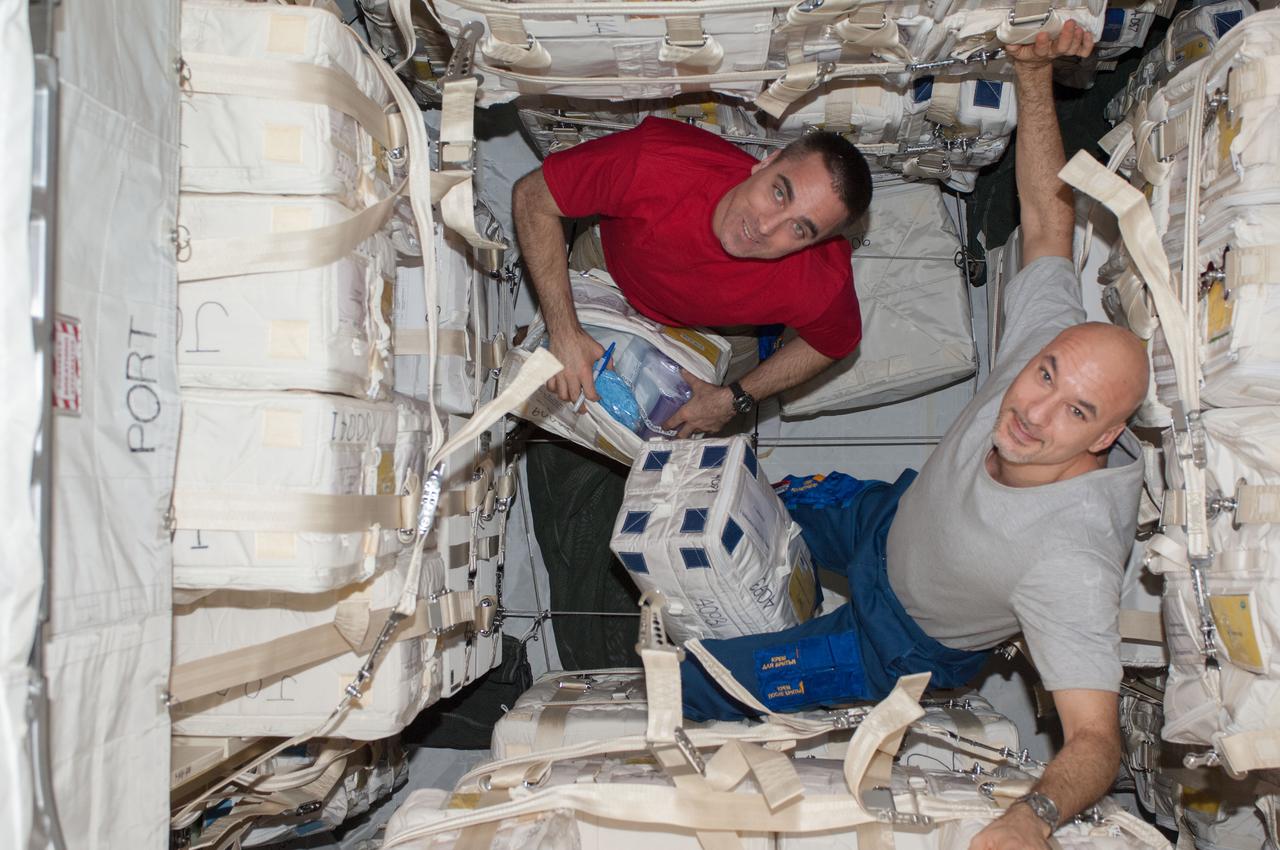
ISS036-E-030128 (10 Aug. 2013) --- NASA astronaut Chris Cassidy (left) and European Space Agency astronaut Luca Parmitano, both Expedition 36 flight engineers, work with the cargo in the newly attached Japanese "Kounotori" H2 Transfer Vehicle-4 (HTV-4) docked to the International Space Station's Harmony node.
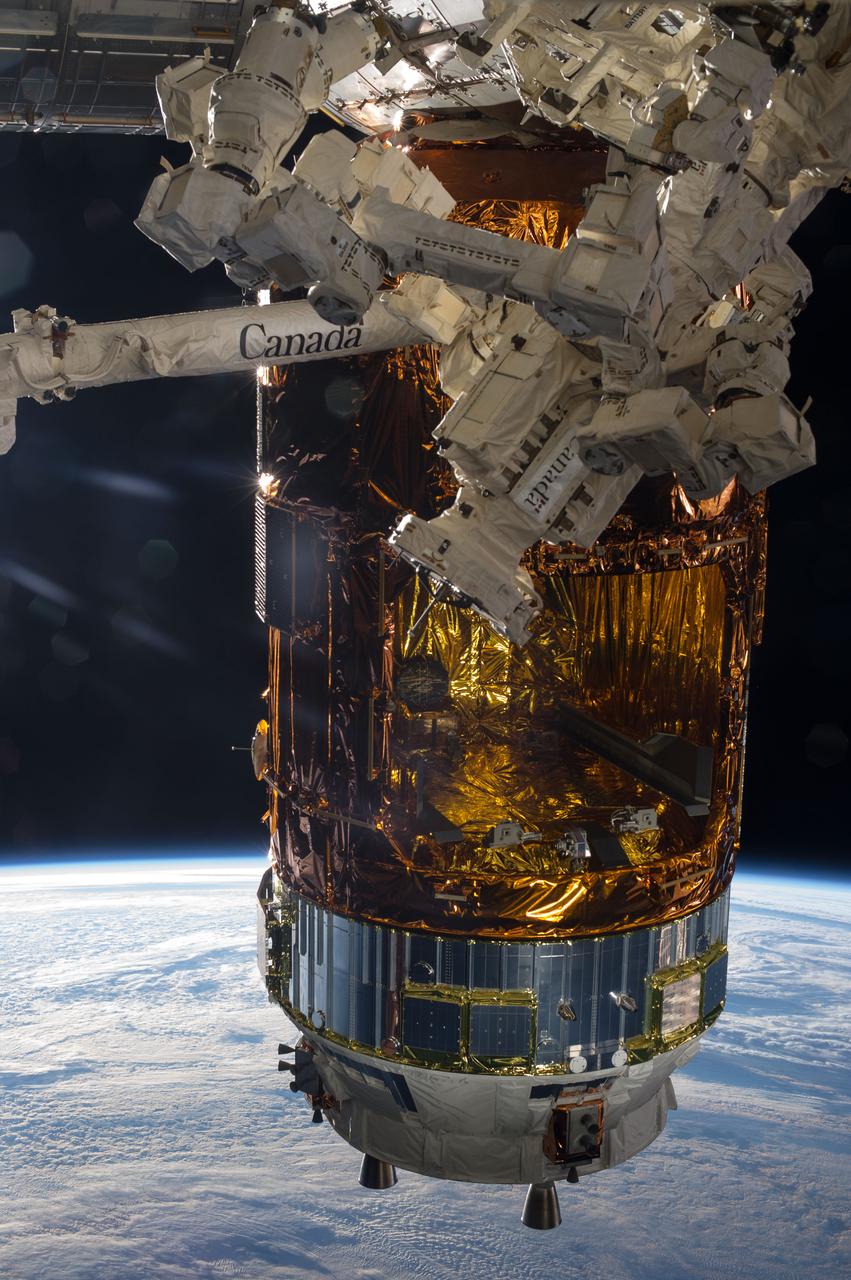
ISS036-E-034656 (19 Aug. 2013) --- The Japanese "Kounotori" H2 Transfer Vehicle-4 (HTV-4), currently attached to the Earth-facing port of the International Space Station's Harmony node, is featured in this image photographed by an Expedition 36 crew member on the station. Earth’s horizon and the blackness of space provide the backdrop for the scene.

ISS036-E-030715 (9 Aug. 2013) --- The Canadarm2 moves toward the unpiloted Japanese "Kounotori" H2 Transfer Vehicle-4 (HTV-4) as it approaches the International Space Station. The HTV-4 is delivering 3.6 tons of science experiments, equipment and supplies to the orbiting complex. A cloud-covered part of Earth provides the backdrop for the scene.
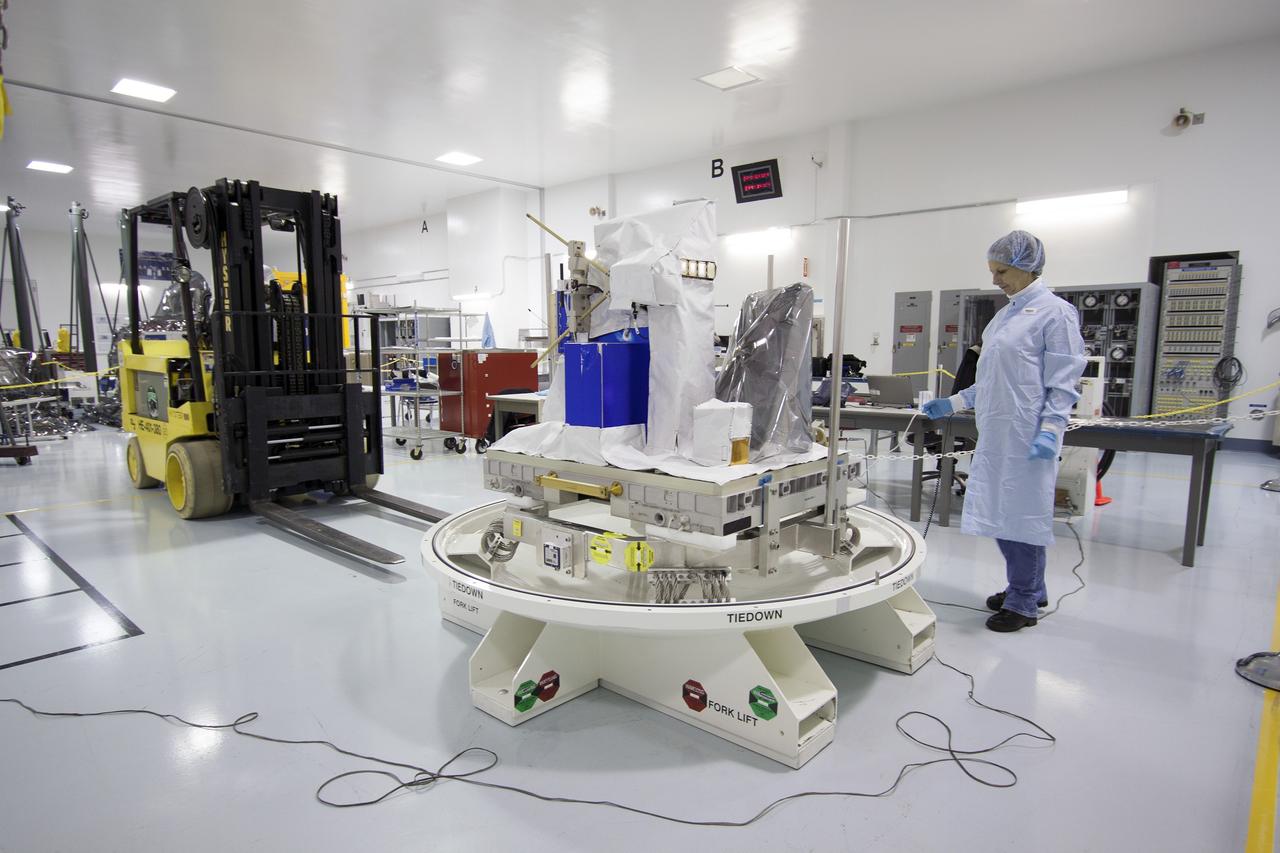
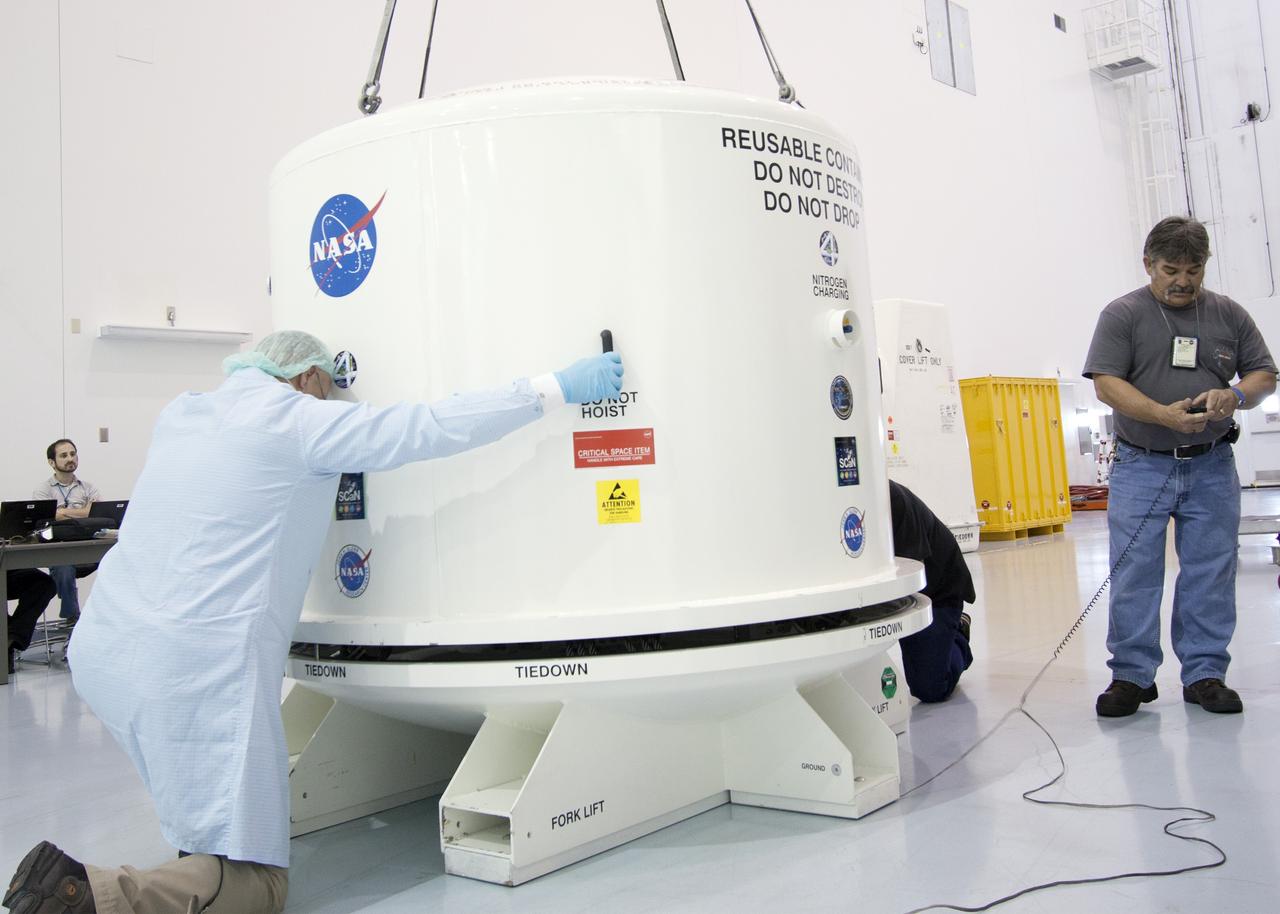
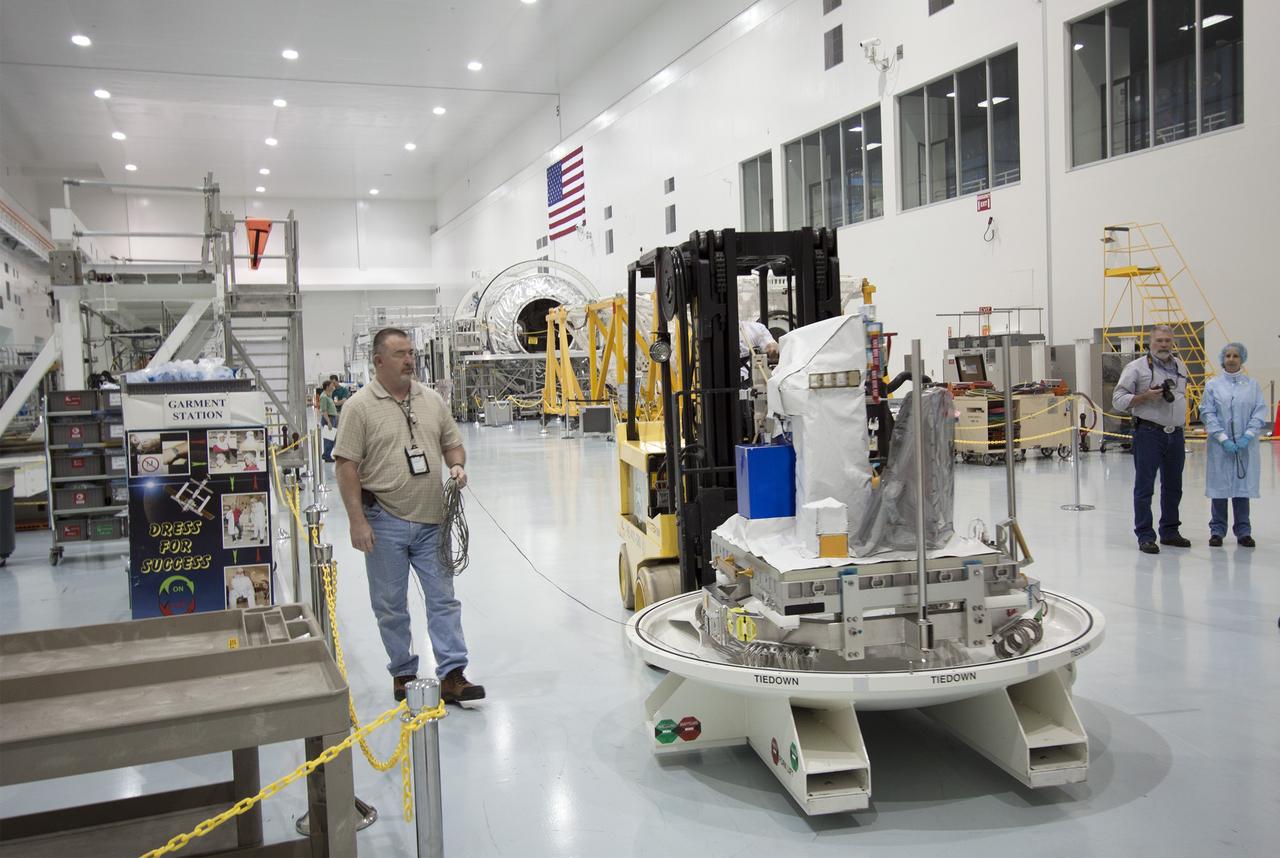
CAPE CANAVERAL, Fla. -- Inside the Space Station Processing Facility at NASA's Kennedy Space Center in Florida, technicians prepare to move the Space Test Program-Houston 4 experiment before installing the shipping container cover that will enclose it. The experiment is one of the payloads processed at Kennedy that will be flown to Japan for the HTV-4 launch to the station, which is currently scheduled for this summer. Photo credit: NASA/Jim Grossmann
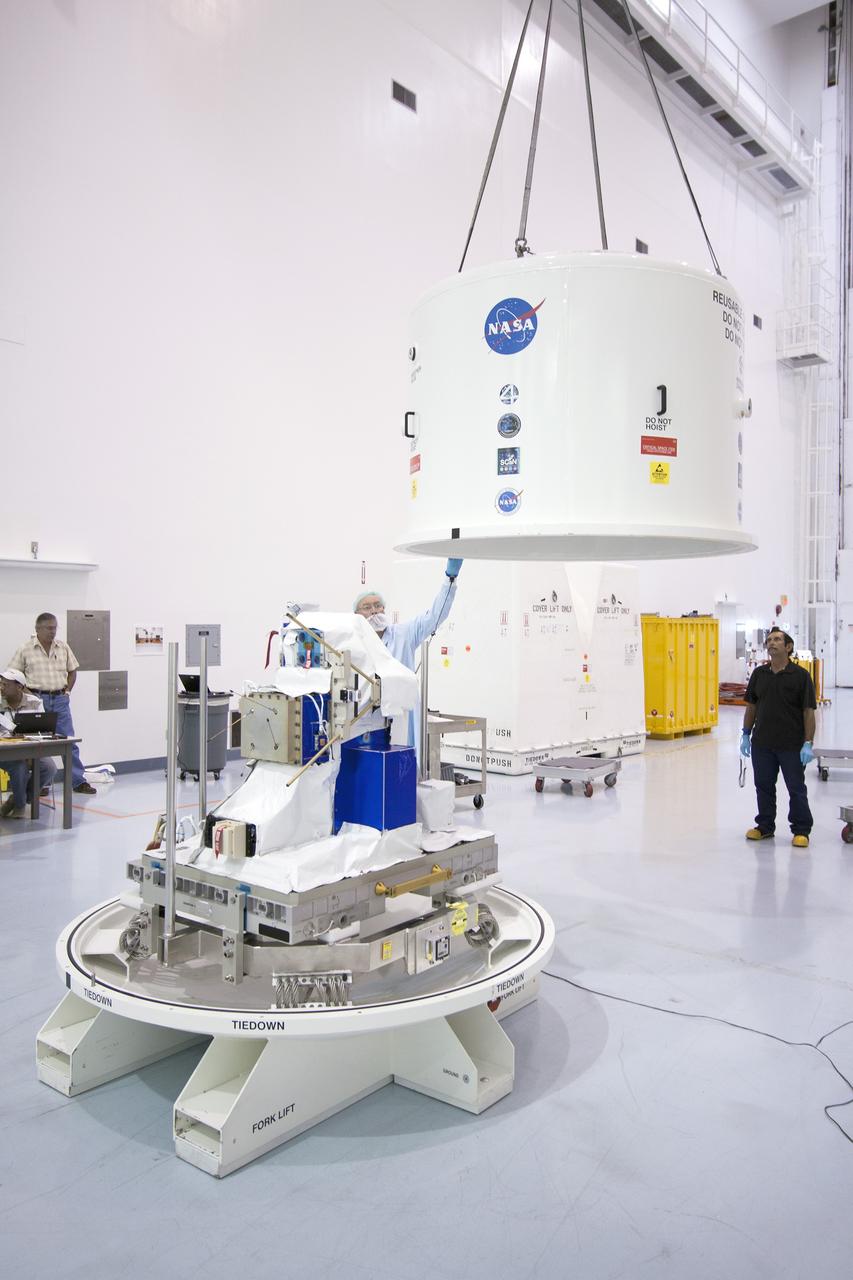
CAPE CANAVERAL, Fla. -- Inside the Space Station Processing Facility at NASA's Kennedy Space Center in Florida, technicians position the cover of the shipping container that will enclose the Space Test Program-Houston 4 experiment. The experiment is one of the payloads processed at Kennedy that will be flown to Japan for the HTV-4 launch to the station, which is currently scheduled for this summer. Photo credit: NASA/Jim Grossmann
CAPE CANAVERAL, Fla. -- Inside the Space Station Processing Facility at NASA's Kennedy Space Center in Florida, technicians install the cover of the shipping container enclosing the Space Test Program-Houston 4 experiment. The experiment is one of the payloads processed at Kennedy that will be flown to Japan for the HTV-4 launch to the station, which is currently scheduled for this summer. Photo credit: NASA/Jim Grossmann
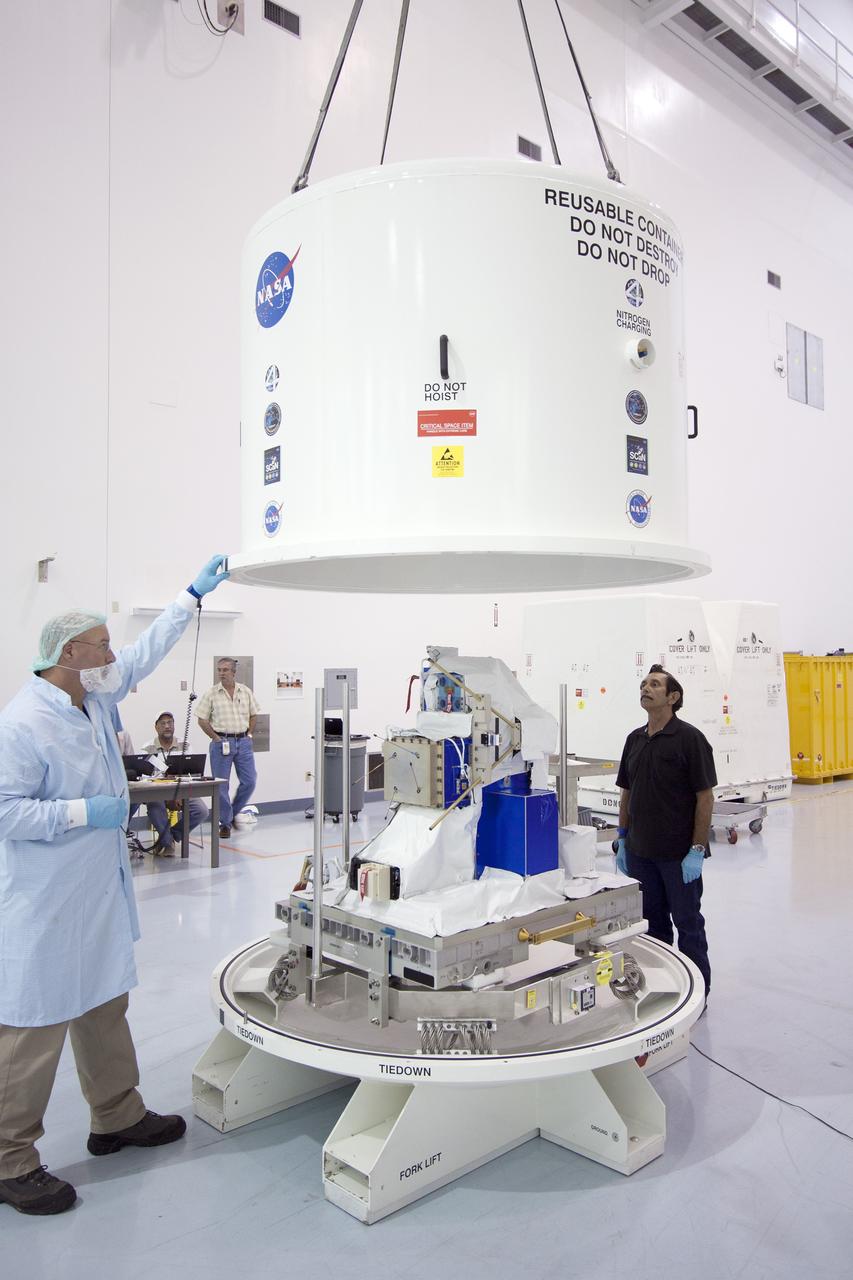
CAPE CANAVERAL, Fla. -- Inside the Space Station Processing Facility at NASA's Kennedy Space Center in Florida, technicians lower the cover of the shipping container that will enclose the Space Test Program-Houston 4 experiment. The experiment is one of the payloads processed at Kennedy that will be flown to Japan for the HTV-4 launch to the station, which is currently scheduled for this summer. Photo credit: NASA/Jim Grossmann
CAPE CANAVERAL, Fla. -- Inside the Space Station Processing Facility at NASA's Kennedy Space Center in Florida, technicians prepare to move the Space Test Program-Houston 4 experiment before installing the shipping container cover that will enclose. The experiment is one of the payloads processed at Kennedy that will be flown to Japan for the HTV-4 launch to the station, which is currently scheduled for this summer. Photo credit: NASA/Jim Grossmann
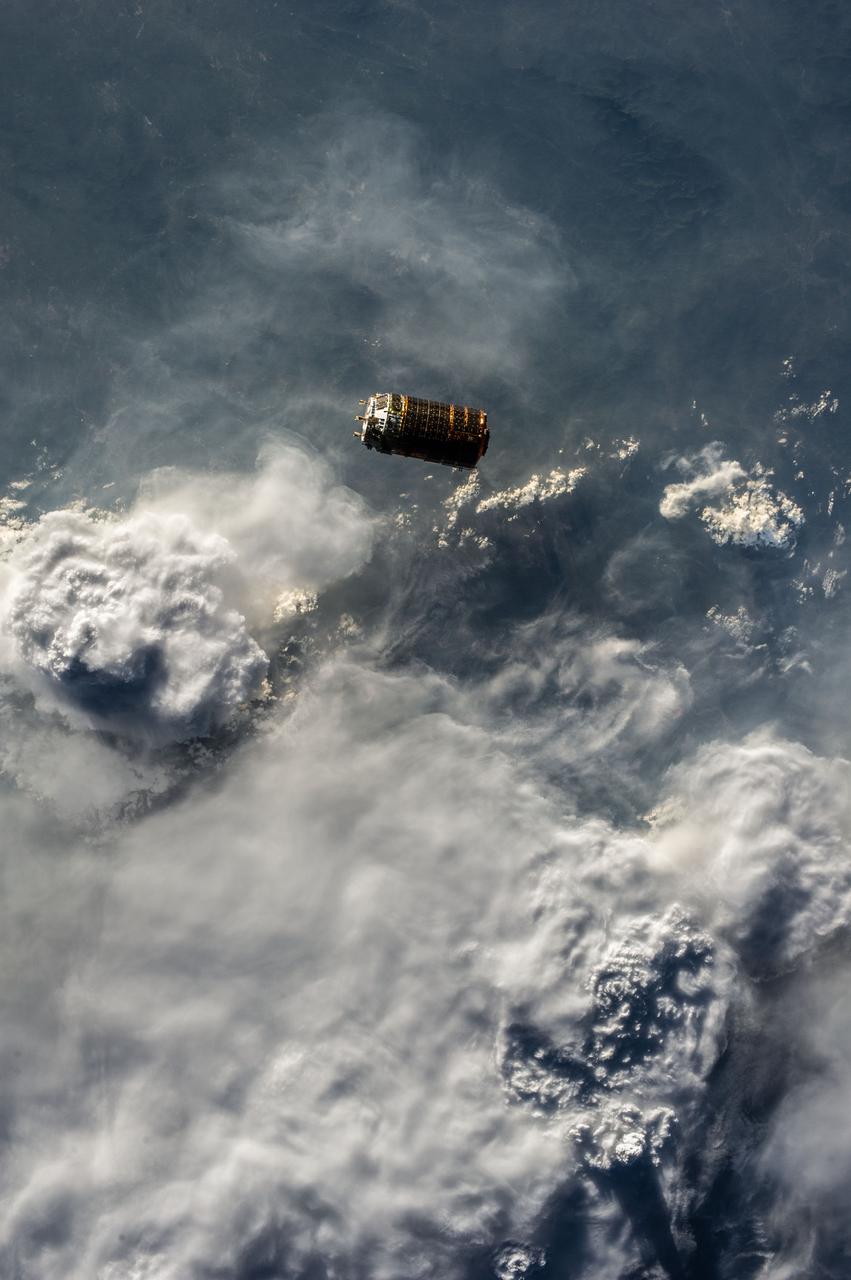
ISS036-E-030638 (9 Aug. 2013) --- The unpiloted Japanese "Kounotori" H2 Transfer Vehicle-4 (HTV-4) approaches the International Space Station. The HTV, a 33-foot-long, 13-foot-diameter unmanned cargo transfer spacecraft, is delivering 3.6 tons of science experiments, equipment and supplies to the orbiting complex. HTV-4 launched from the Tanegashima Space Center in southern Japan on Aug.3 at 3:48 p.m. (Aug. 4 at 4:48 a.m., Japan time). A blue and white part of Earth provides the backdrop for the scene.
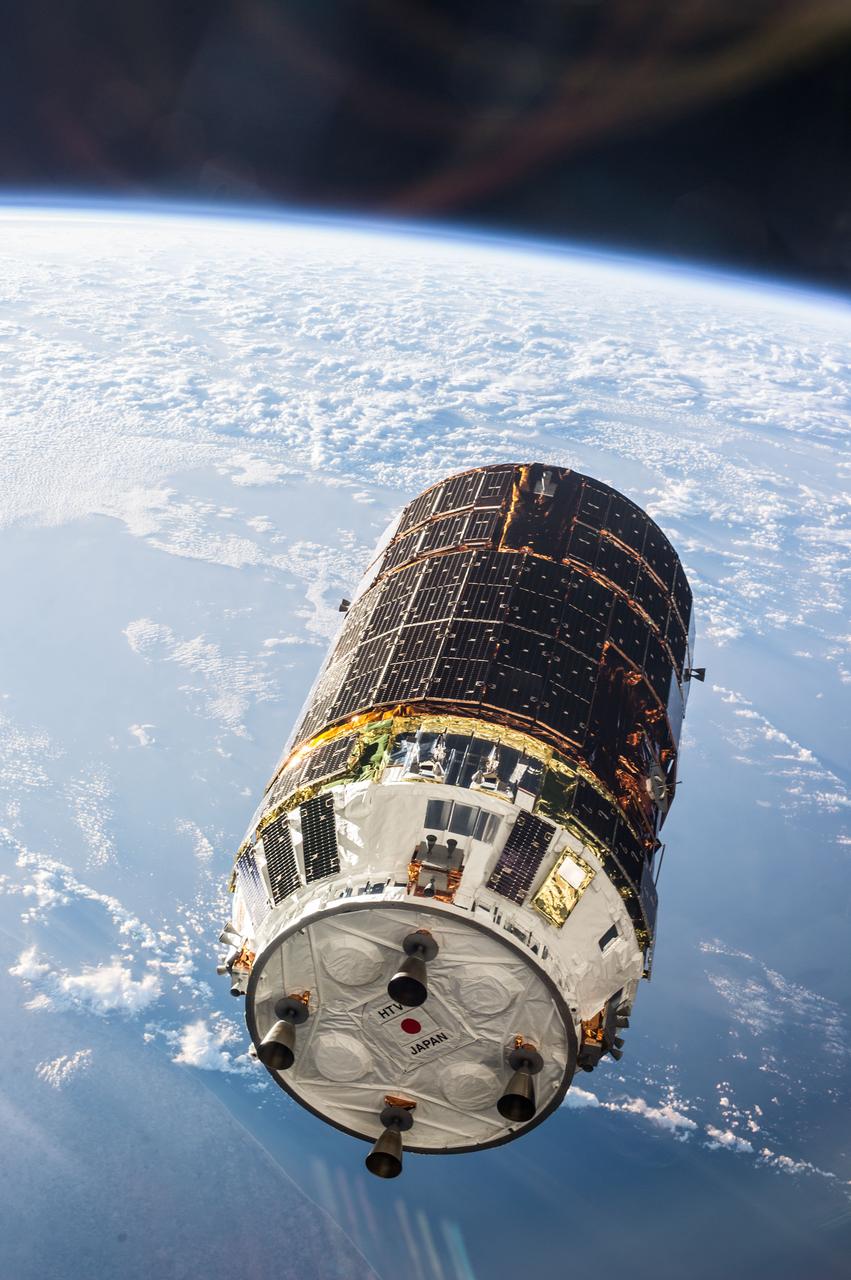
ISS036-E-030702 (9 Aug. 2013) --- The unpiloted Japanese "Kounotori" H2 Transfer Vehicle-4 (HTV-4) approaches the International Space Station. The HTV, a 33-foot-long, 13-foot-diameter unmanned cargo transfer spacecraft, is delivering 3.6 tons of science experiments, equipment and supplies to the orbiting complex. HTV-4 launched from the Tanegashima Space Center in southern Japan on Aug.3 at 3:48 p.m. (Aug. 4 at 4:48 a.m., Japan time). A blue and white part of Earth provides the backdrop for the scene.
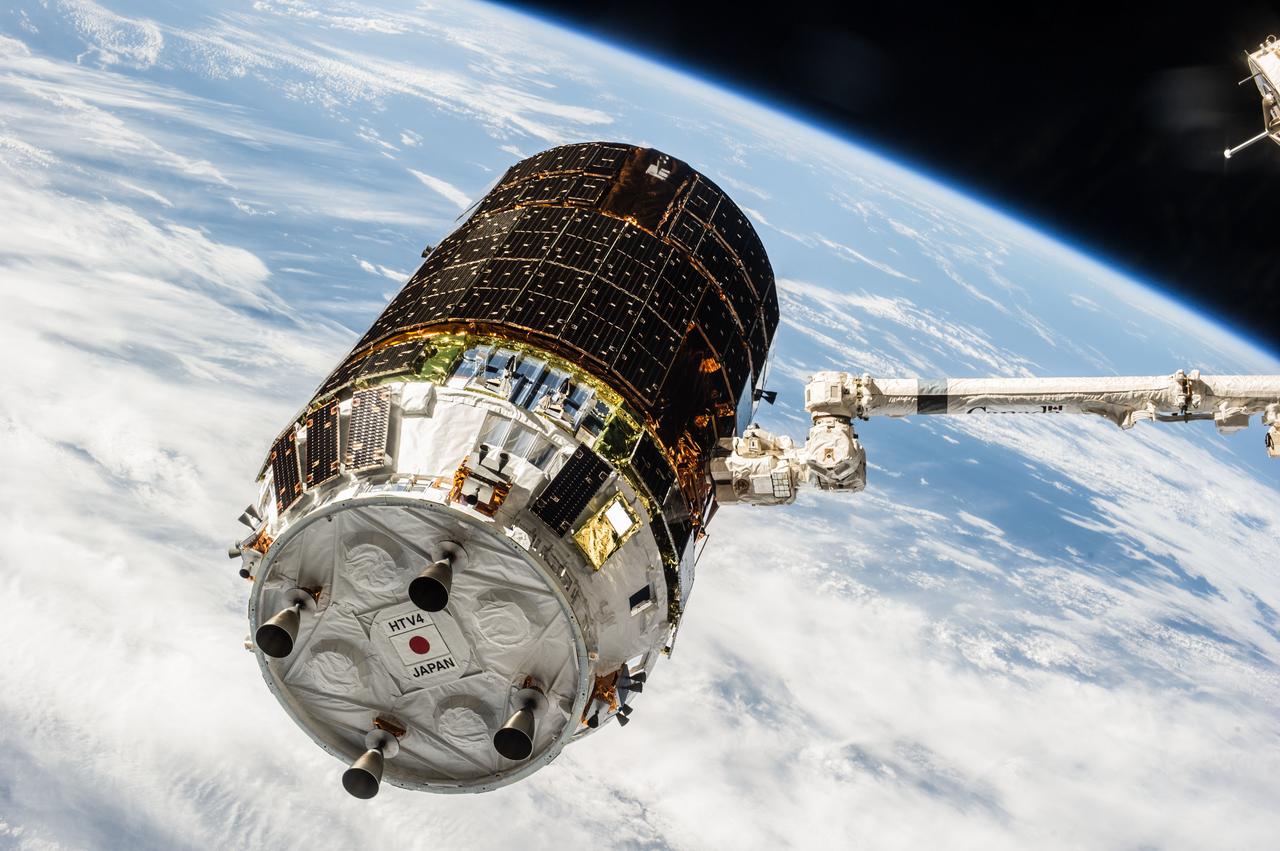
ISS036-E-030730 (9 Aug. 2013) --- The International Space Station's Canadarm2 grapples the unpiloted Japanese "Kounotori" H2 Transfer Vehicle-4 (HTV-4) as it approaches the station, and will attach it to the Earth-facing port of the station's Harmony node. The HTV-4 is delivering 3.6 tons of science experiments, equipment and supplies to the orbiting complex. A blue and white part of Earth provides the backdrop for the scene.
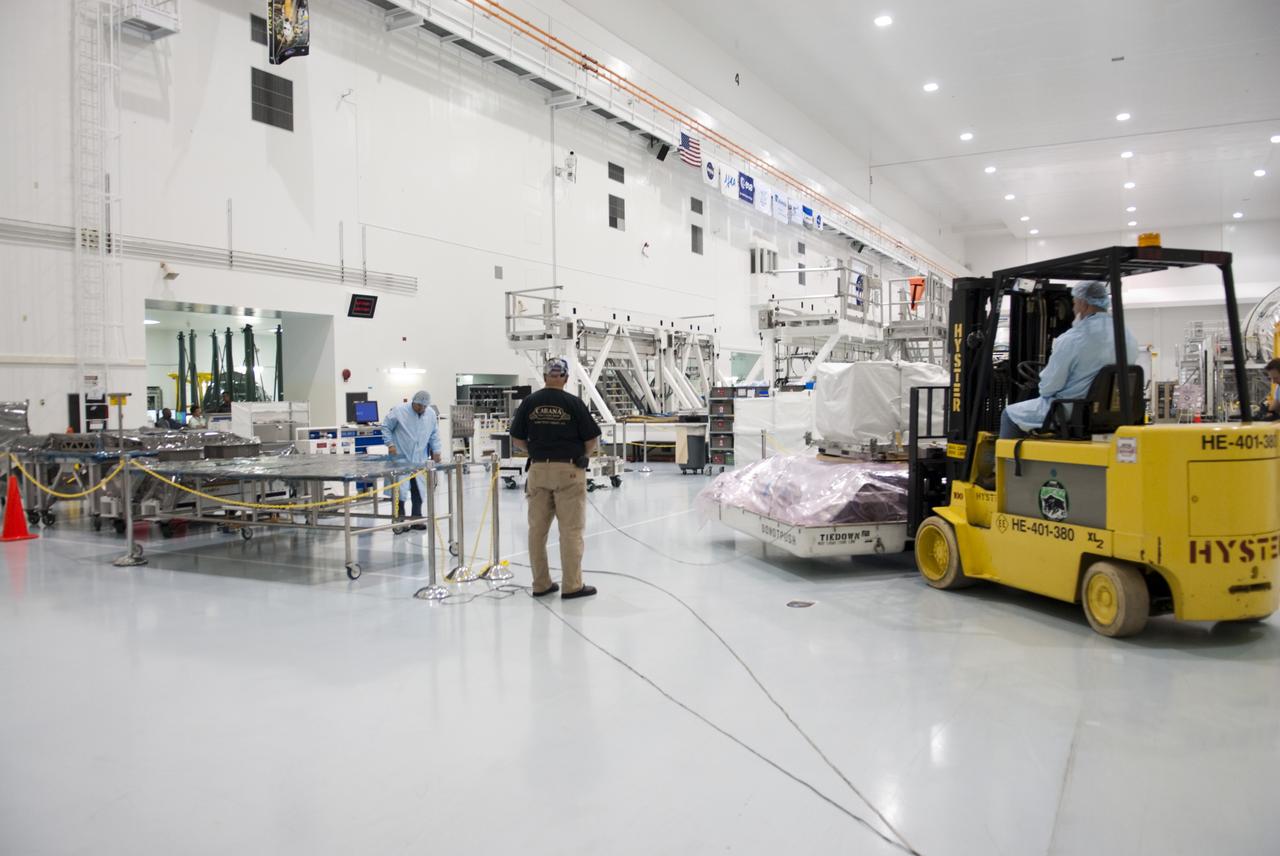
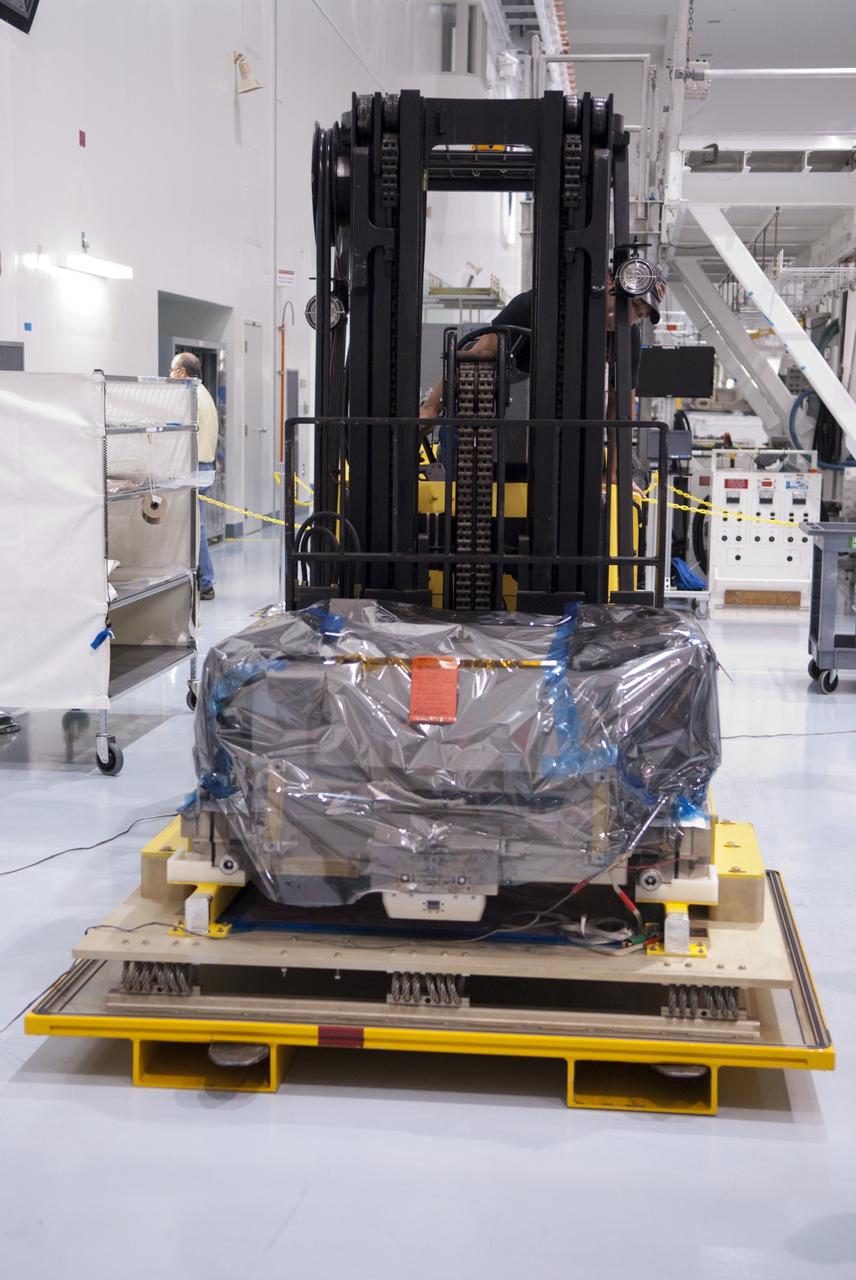
CAPE CANAVERAL, Fla. -- Workers inside the high bay of the Space Station Processing Facility at NASA's Kennedy Space Center in Florida move the orbital replacement unit for the space station's utility transfer assembly that has been placed in the bottom portion of a shipping container. The assembly, which was processed at Kennedy, will be shipped to Japan at the beginning of the year for the HTV-4 launch, which is currently scheduled for 2013. Photo credit: NASA/Charisse Nahser
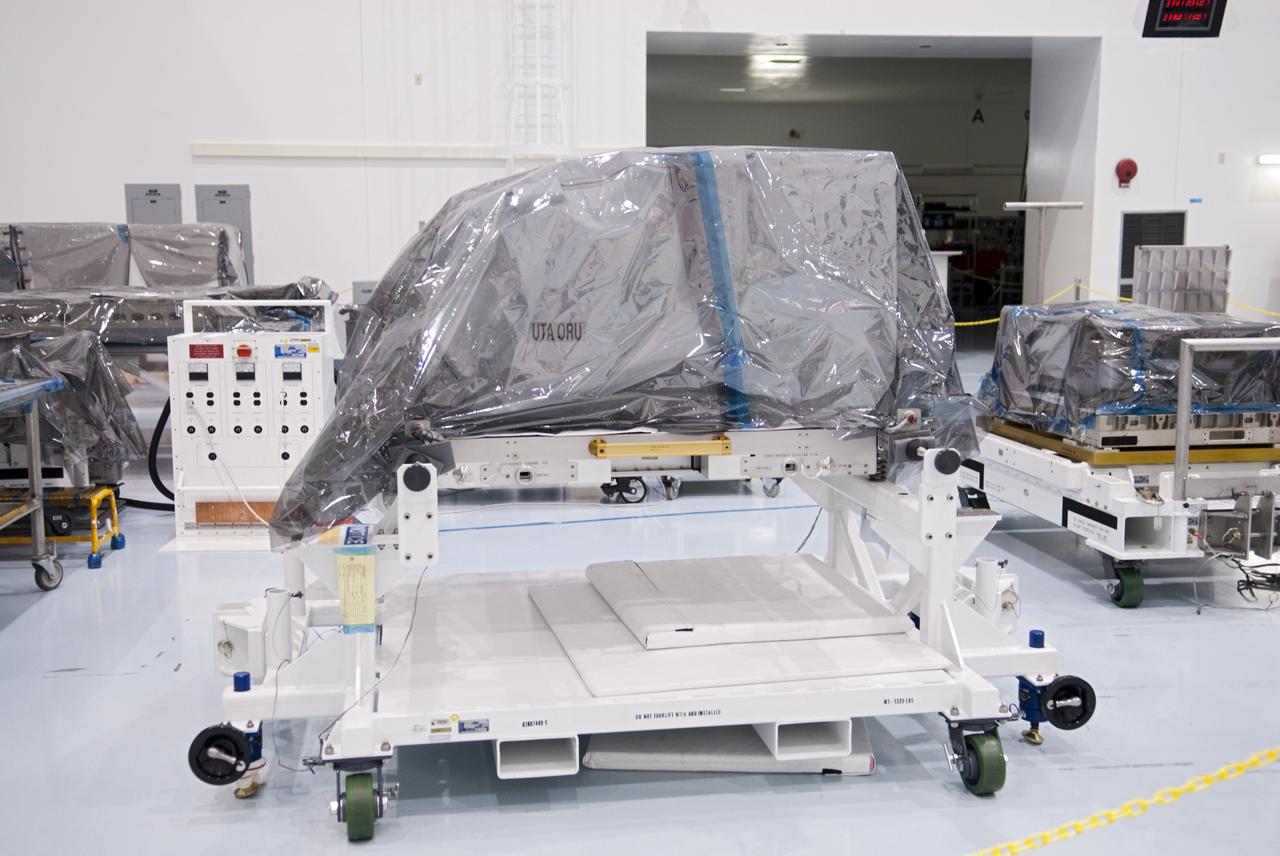
CAPE CANAVERAL, Fla. -- Inside the high bay of the Space Station Processing Facility at NASA's Kennedy Space Center in Florida, the orbital replacement unit for the space station's utility transfer assembly is prepared for placement in a shipping container. The assembly, which was processed at Kennedy, will be shipped to Japan at the beginning of the year for the HTV-4 launch, which is currently scheduled for 2013. Photo credit: NASA/Charisse Nahser
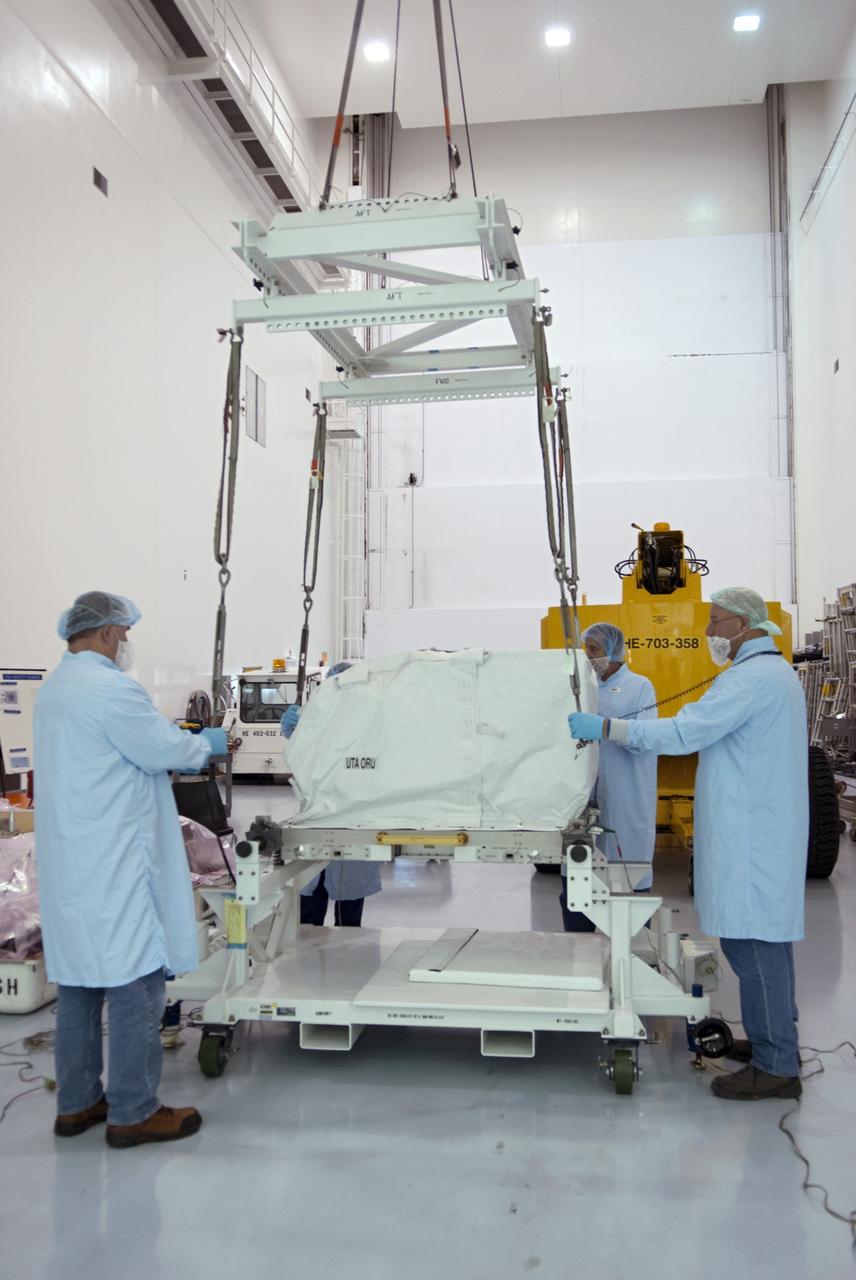
CAPE CANAVERAL, Fla. -- Workers inside the high bay of the Space Station Processing Facility at NASA's Kennedy Space Center in Florida lift the orbital replacement unit for the space station's utility transfer assembly before placing it in a shipping container. The assembly, which was processed at Kennedy, will be shipped to Japan at the beginning of the year for the HTV-4 launch, which is currently scheduled for 2013. Photo credit: NASA/Charisse Nahser
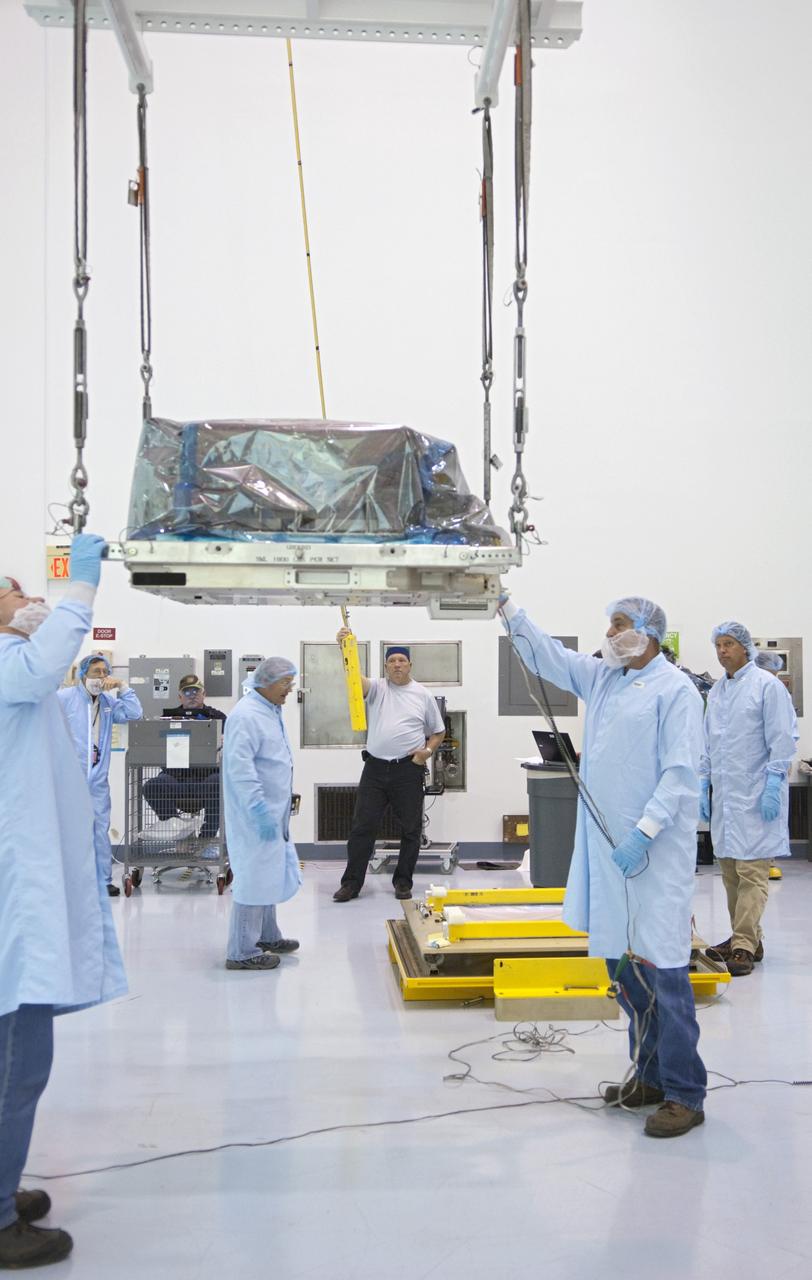
CAPE CANAVERAL, Fla. -- Workers inside the Space Station Processing Facility at NASA's Kennedy Space Center in Florida lift the orbital replacement unit for the space station's main bus switching unit as they prepare to pack the unit in a shipping container. The unit, which was processed at Kennedy, will be shipped to Japan at the beginning of the year for the HTV-4 launch, which is currently scheduled for 2013. Photo credit: NASA/Charisse Nahser
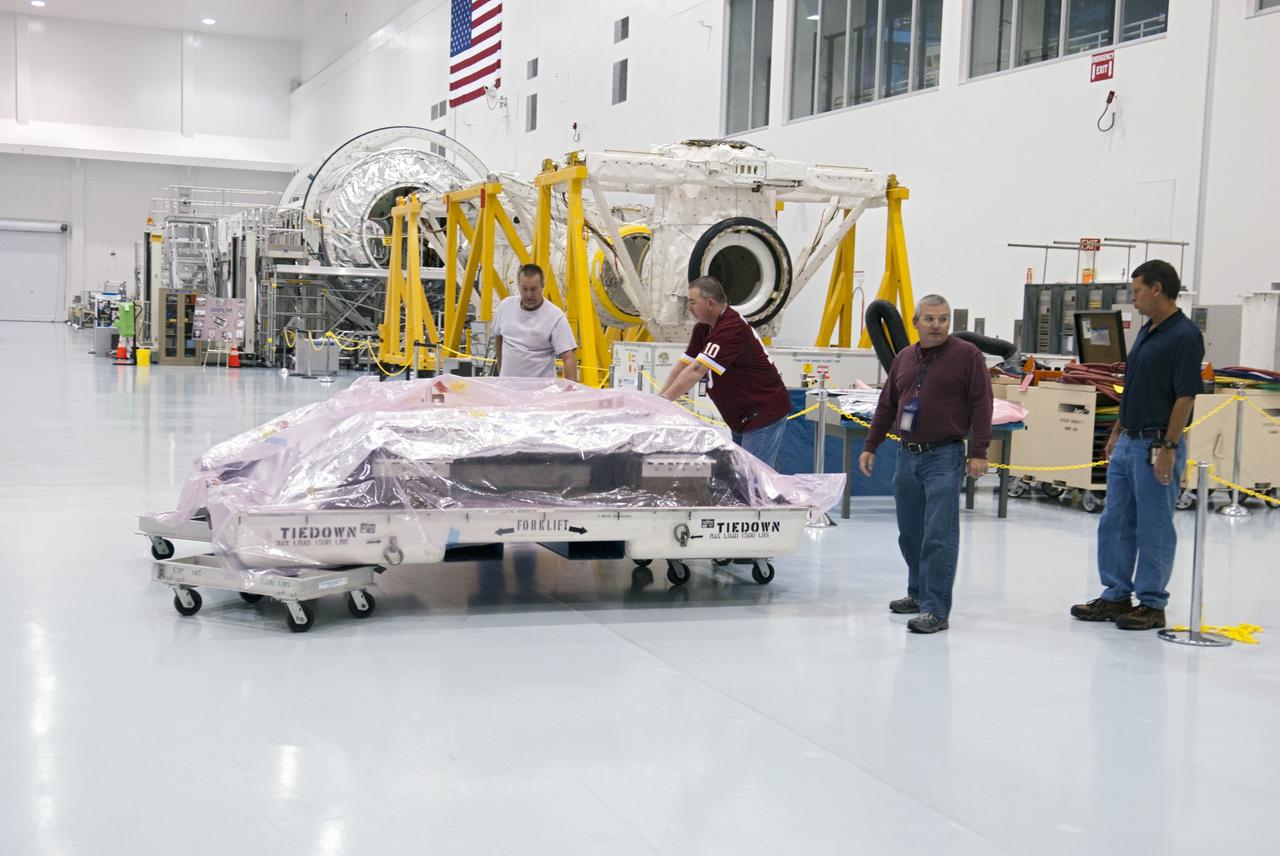
CAPE CANAVERAL, Fla. -- Workers inside the high bay of the Space Station Processing Facility at NASA's Kennedy Space Center in Florida prepare to pack the orbital replacement unit for the space station's utility transfer assembly in a shipping container. The assembly, which was processed at Kennedy, will be shipped to Japan at the beginning of the year for the HTV-4 launch, which is currently scheduled for 2013. Photo credit: NASA/Charisse Nahser
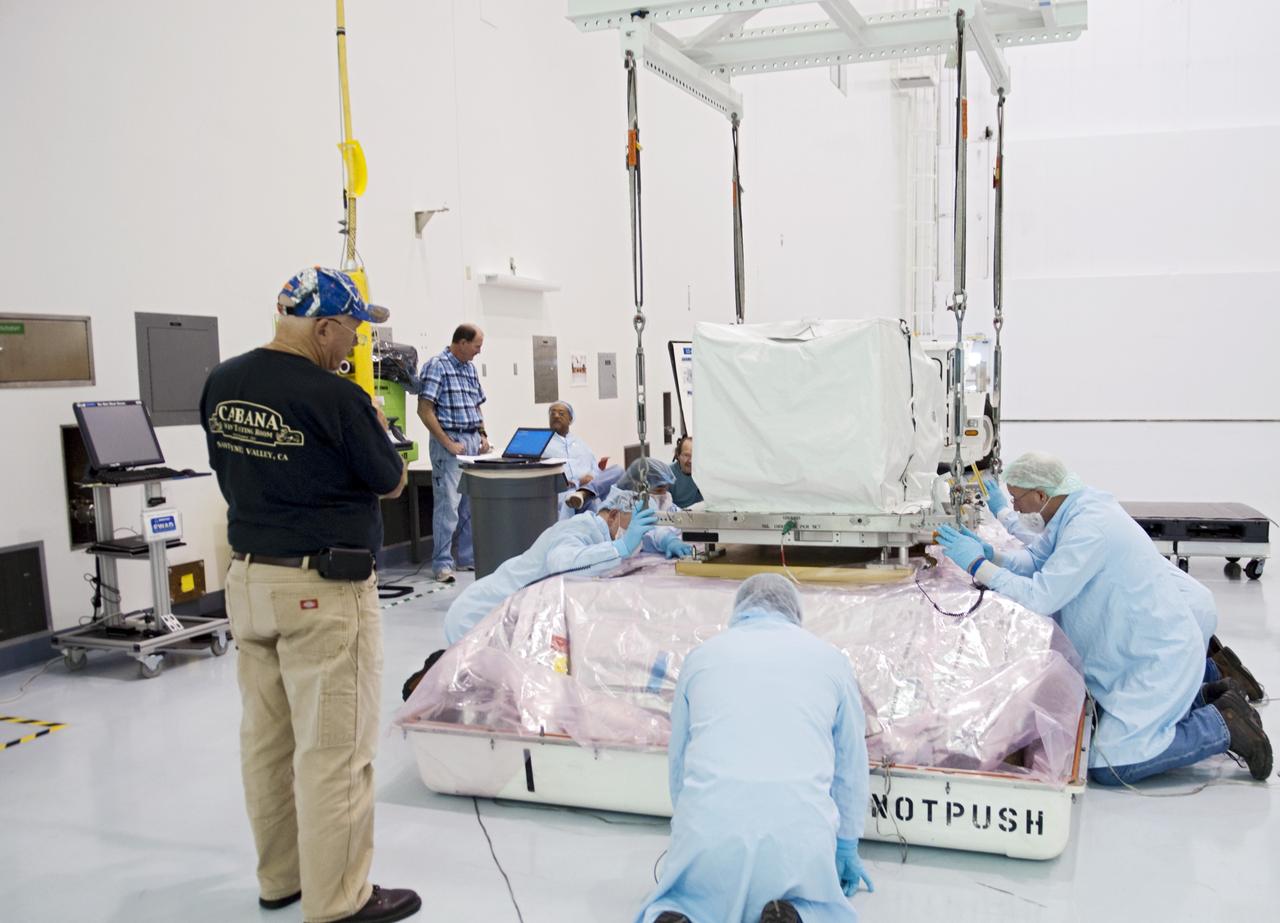
CAPE CANAVERAL, Fla. -- Workers inside the high bay of the Space Station Processing Facility at NASA's Kennedy Space Center in Florida position the orbital replacement unit for the space station's utility transfer assembly on the bottom portion of a shipping container. The assembly, which was processed at Kennedy, will be shipped to Japan at the beginning of the year for the HTV-4 launch, which is currently scheduled for 2013. Photo credit: NASA/Charisse Nahser
CAPE CANAVERAL, Fla. -- Inside the Space Station Processing Facility at NASA's Kennedy Space Center in Florida, workers have prepared the orbital replacement unit for the space station's main bus switching unit to be placed in a shipping container. The unit, which was processed at Kennedy, will be shipped to Japan at the beginning of the year for the HTV-4 launch, which is currently scheduled for 2013. Photo credit: NASA/Charisse Nahser
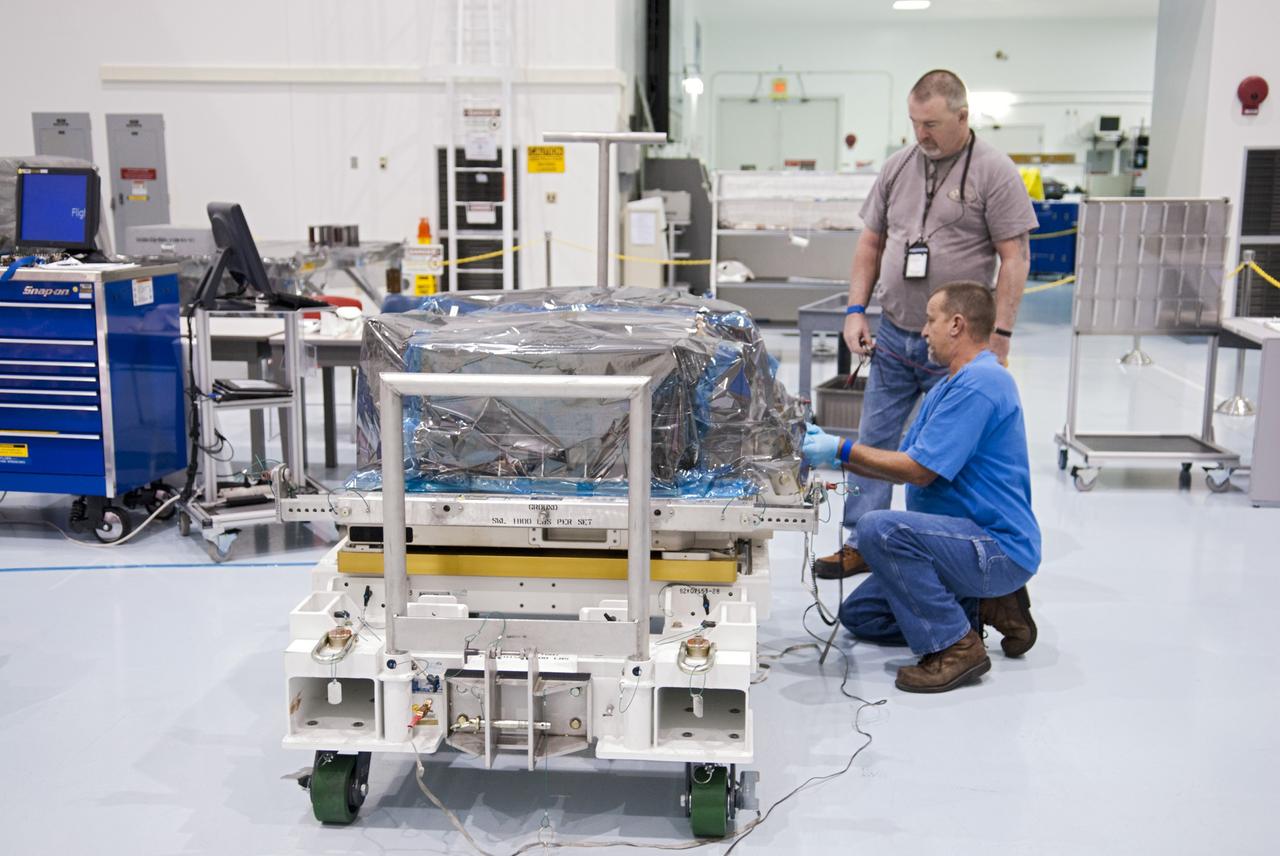
CAPE CANAVERAL, Fla. -- Workers inside the Space Station Processing Facility at NASA's Kennedy Space Center in Florida prepare to pack the orbital replacement unit for the space station's main bus switching unit in a shipping container. The unit, which was processed at Kennedy, will be shipped to Japan at the beginning of the year for the HTV-4 launch, which is currently scheduled for 2013. Photo credit: NASA/Charisse Nahser
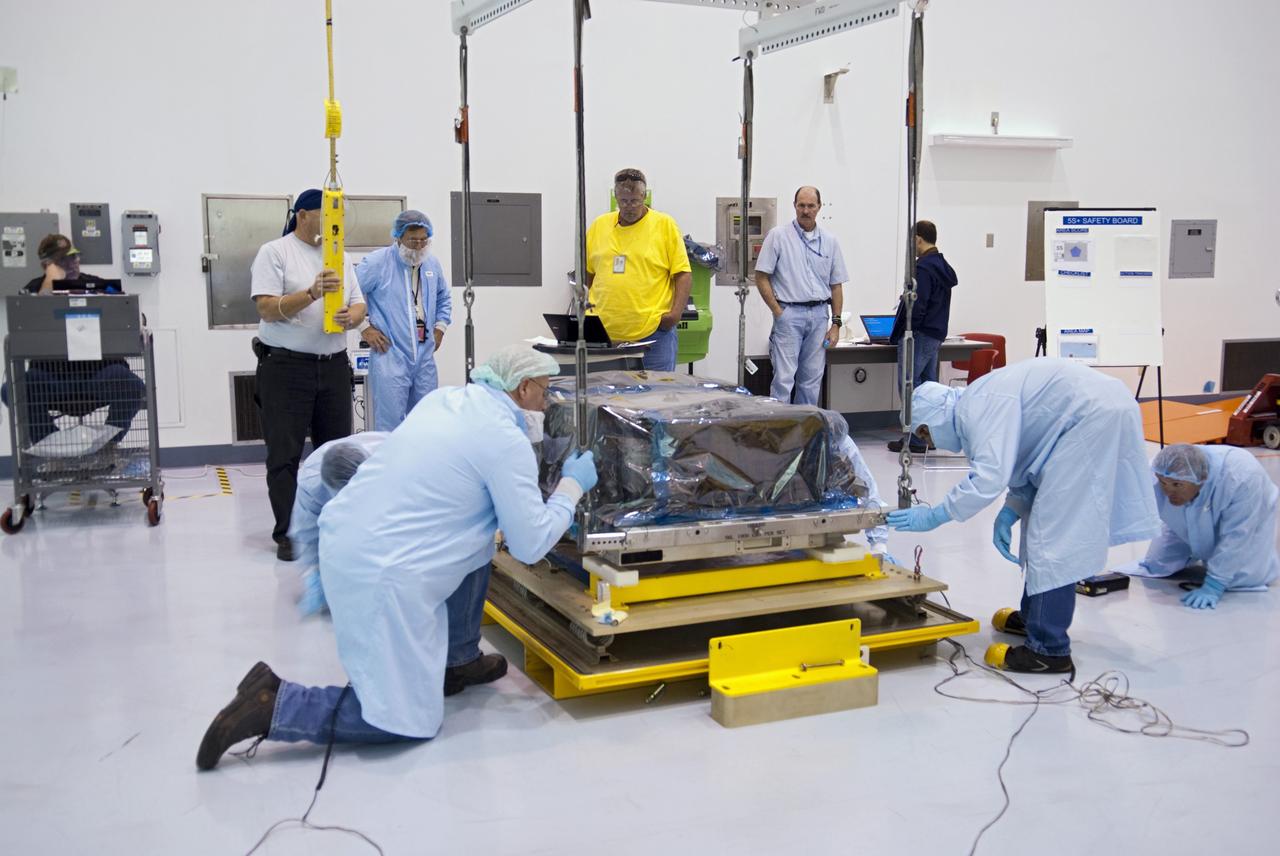
CAPE CANAVERAL, Fla. -- Workers inside the Space Station Processing Facility at NASA's Kennedy Space Center in Florida position the orbital replacement unit for the space station's main bus switching unit as they prepare to pack the unit in a shipping container. The unit, which was processed at Kennedy, will be shipped to Japan at the beginning of the year for the HTV-4 launch, which is currently scheduled for 2013. Photo credit: NASA/Charisse Nahser
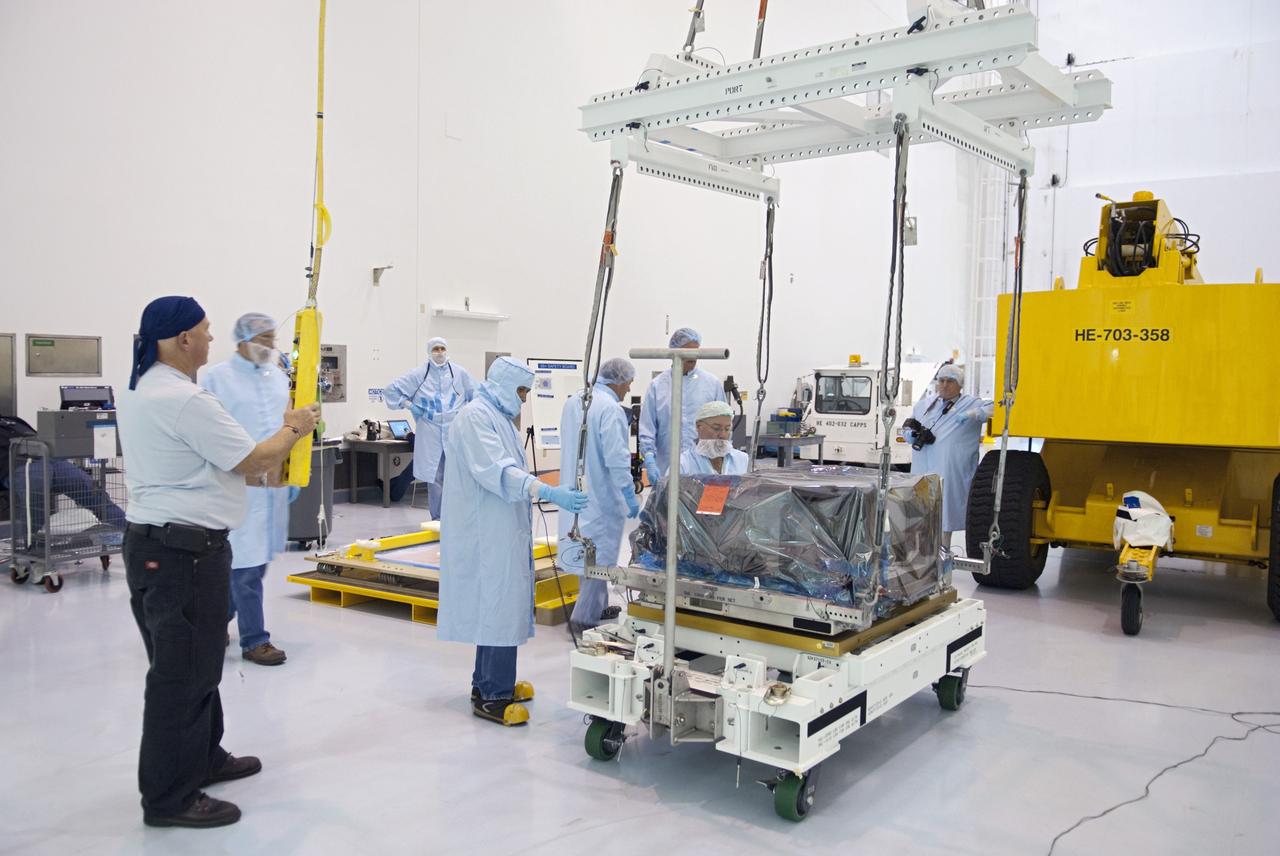
CAPE CANAVERAL, Fla. -- Workers inside the Space Station Processing Facility at NASA's Kennedy Space Center in Florida prepare to pack the orbital replacement unit for the space station's main bus switching unit in a shipping container. The unit, which was processed at Kennedy, will be shipped to Japan at the beginning of the year for the HTV-4 launch, which is currently scheduled for 2013. Photo credit: NASA/Charisse Nahser
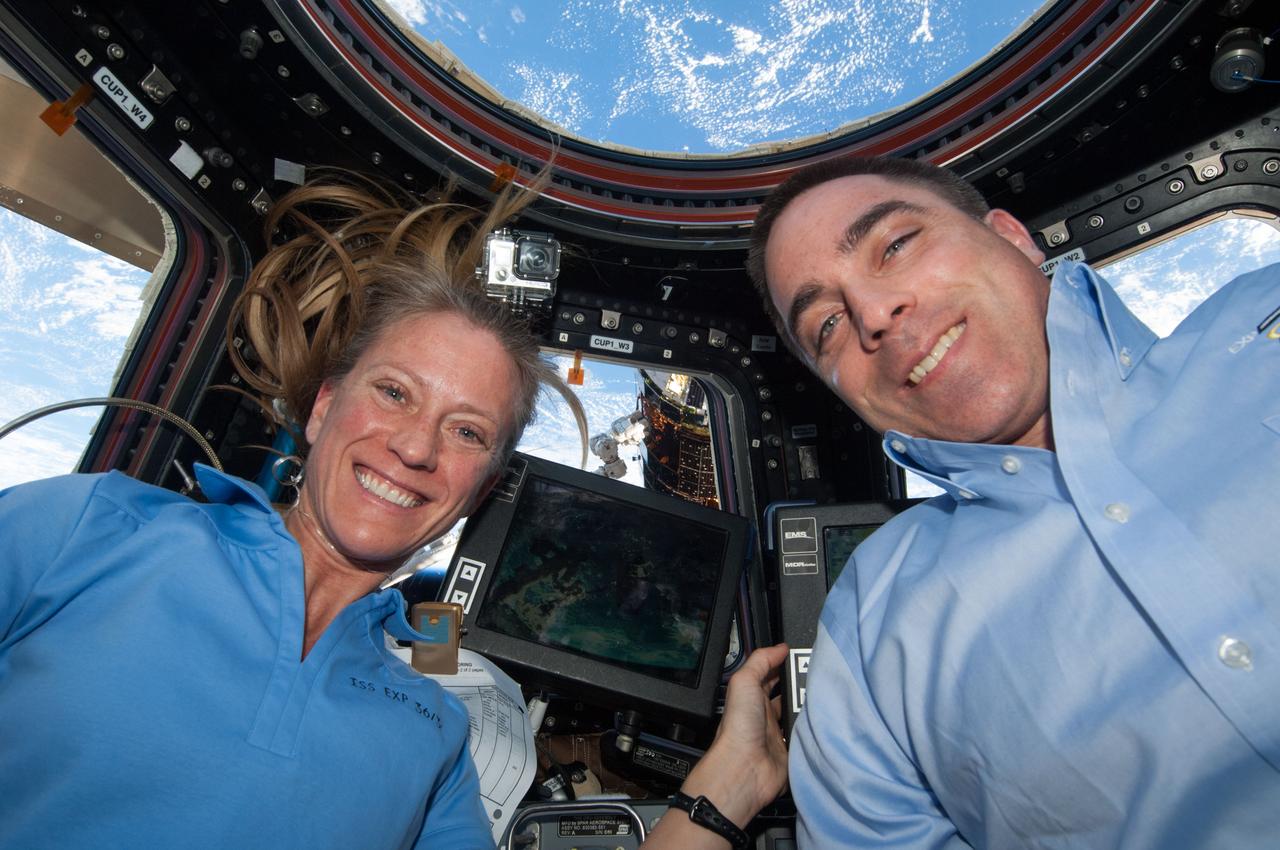
NASA astronauts Karen Nyberg and Chris Cassidy, both Expedition 36 flight engineers, are pictured at the robotic workstation in the Cupola of the International Space Station during rendezvous operations with the approaching unpiloted Japanese Kounotori H2 Transfer Vehicle-4 (HTV-4). The HTV-4 is visible from the Cupola window. Also sent as Twitter message.
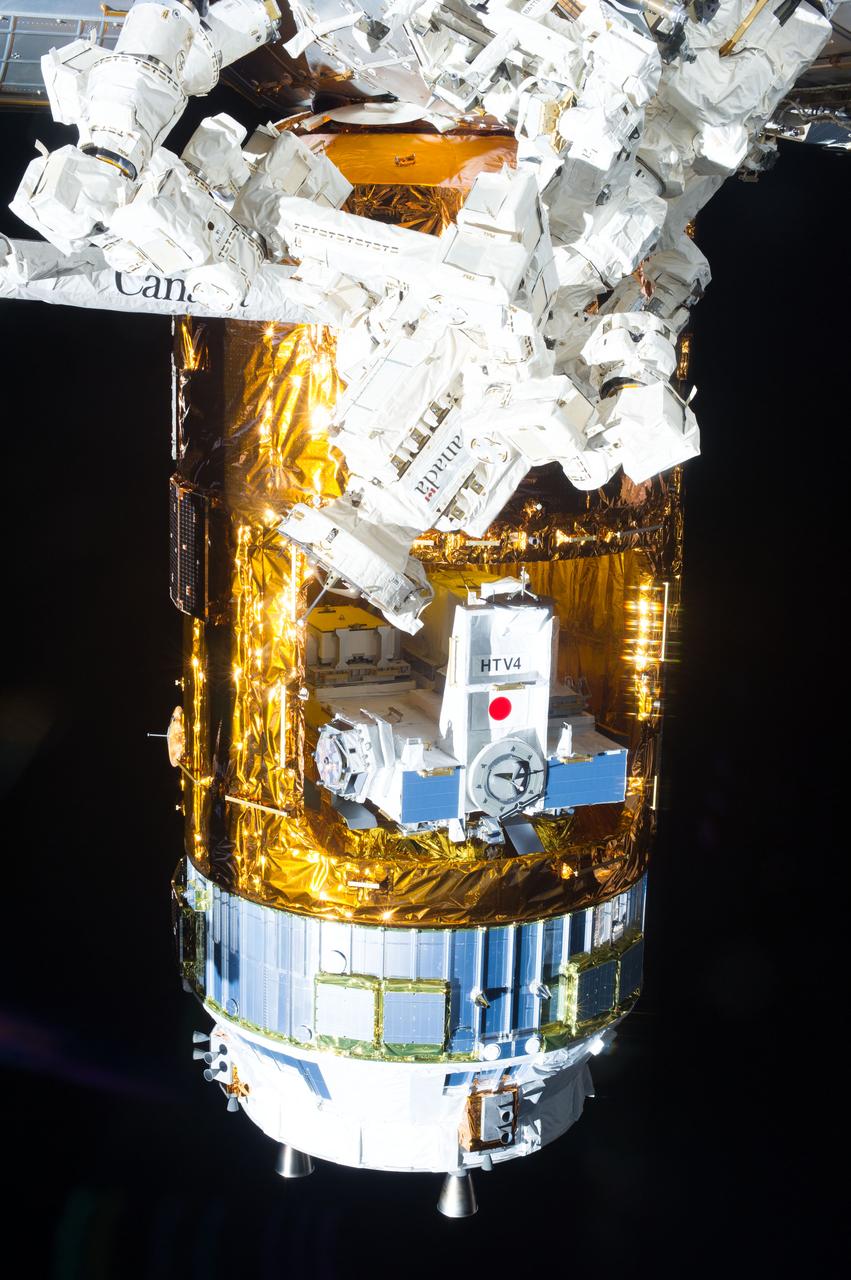
ISS036-E-030742 (9 Aug. 2013) --- The Japanese "Kounotori" H2 Transfer Vehicle-4 (HTV-4), currently attached to the Earth-facing port of the International Space Station's Harmony node, is featured in this image photographed by an Expedition 36 crew member on the station.
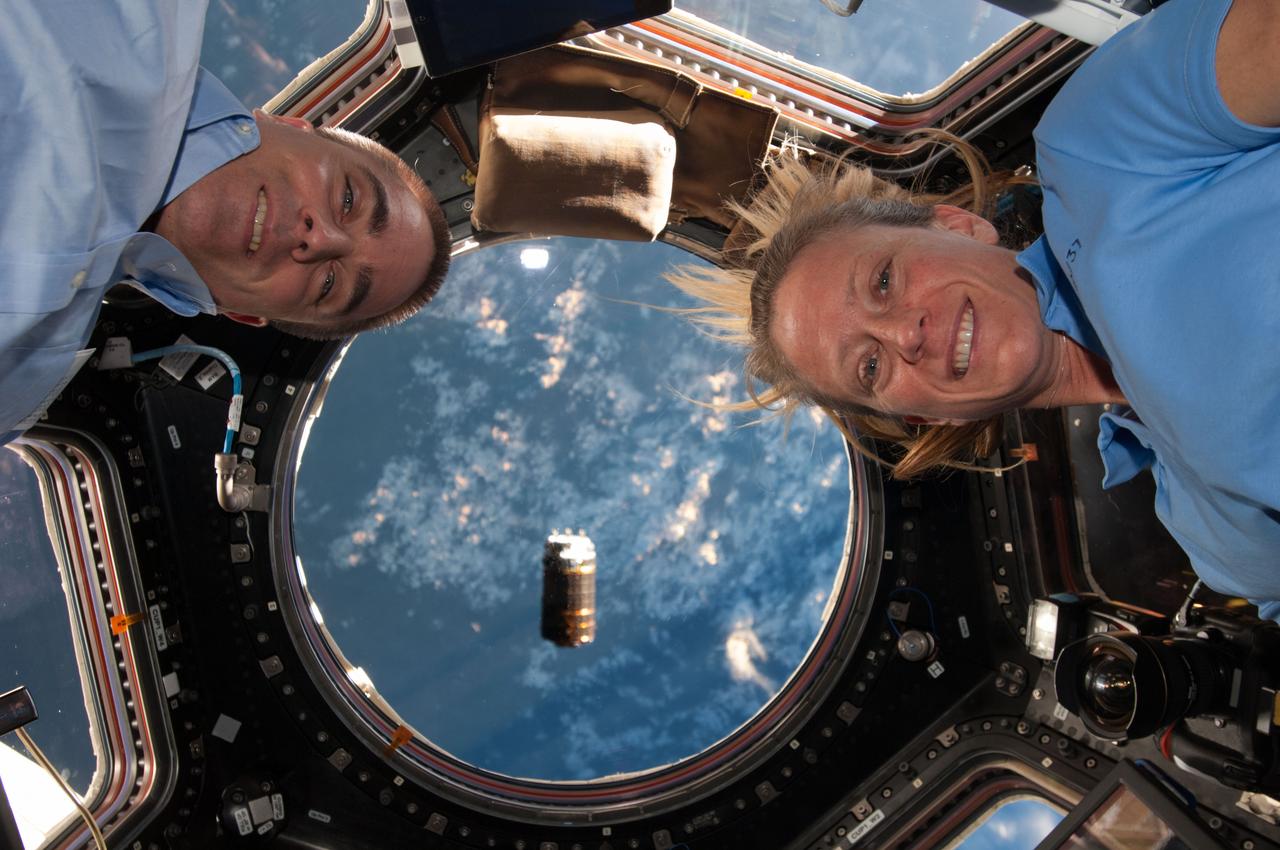
ISS036-E-029764 (9 Aug. 2013) --- NASA astronauts Chris Cassidy and Karen Nyberg, both Expedition 36 flight engineers, are pictured near the windows in the International Space Station’s Cupola as the unpiloted Japanese "Kounotori" H2 Transfer Vehicle-4 (HTV-4) approaches the station (visible at center).
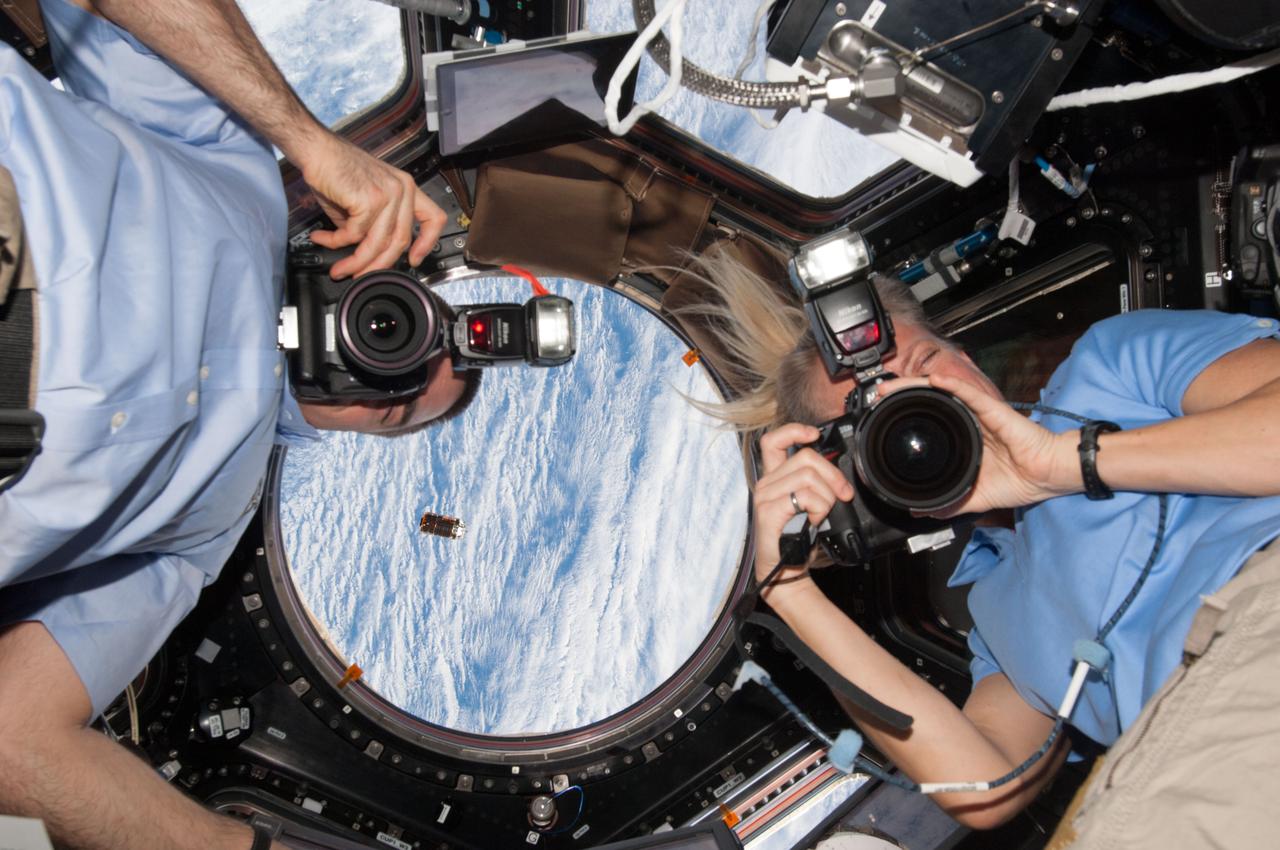
ISS036-E-029739 (9 Aug. 2013) --- NASA astronauts Chris Cassidy and Karen Nyberg, both Expedition 36 flight engineers, are pictured with still cameras in the Cupola of the International Space Station. The Japanese "Kounotori" H2 Transfer Vehicle-4 (HTV-4) is seen approaching the space station through a window.
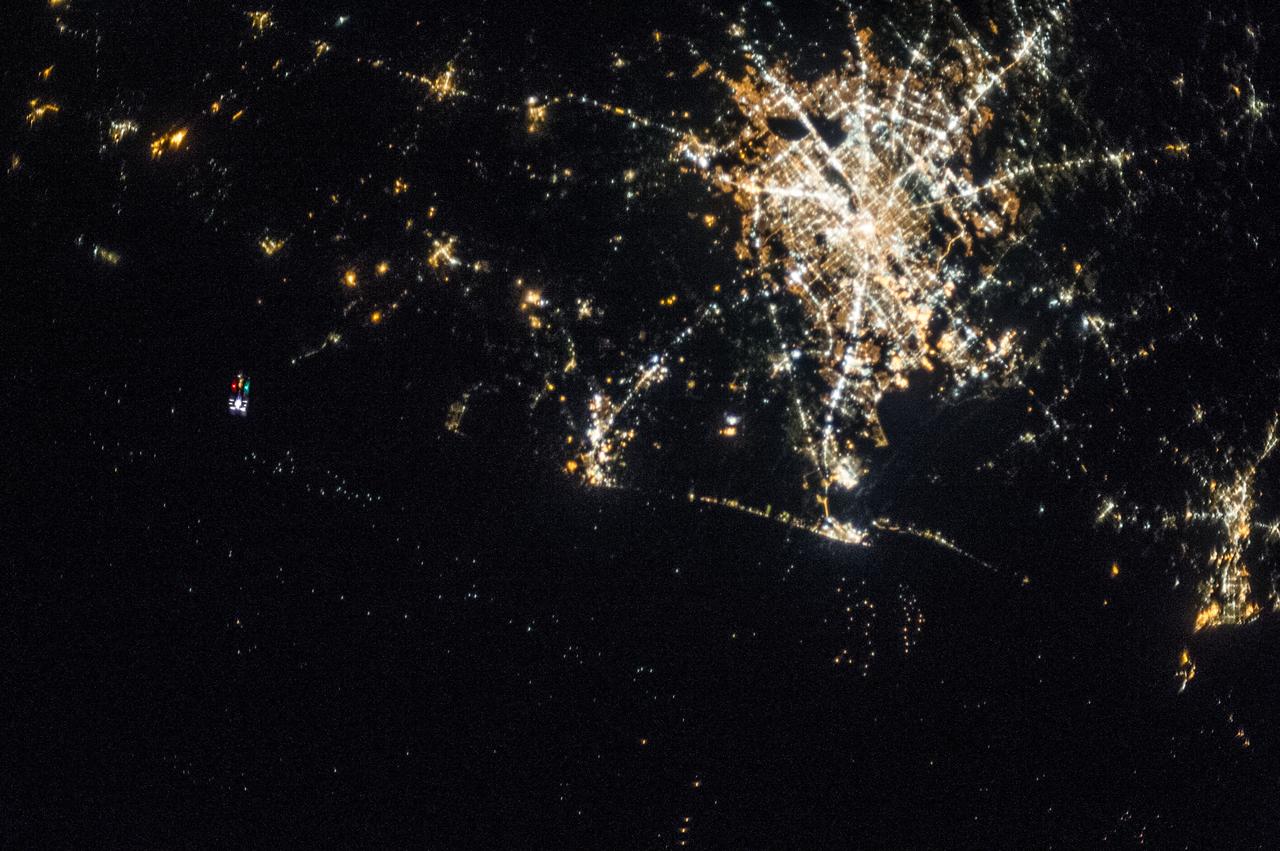
The unpiloted Japanese "Kounotori" H2 Transfer Vehicle-4 (HTV-4) approaches the International Space Station. View taken by the Expedition 36 crew during a night pass. Per Twitter message: #HTV4, with its red & green lights, approaching #ISS from below as we passed over Houston earlier today.
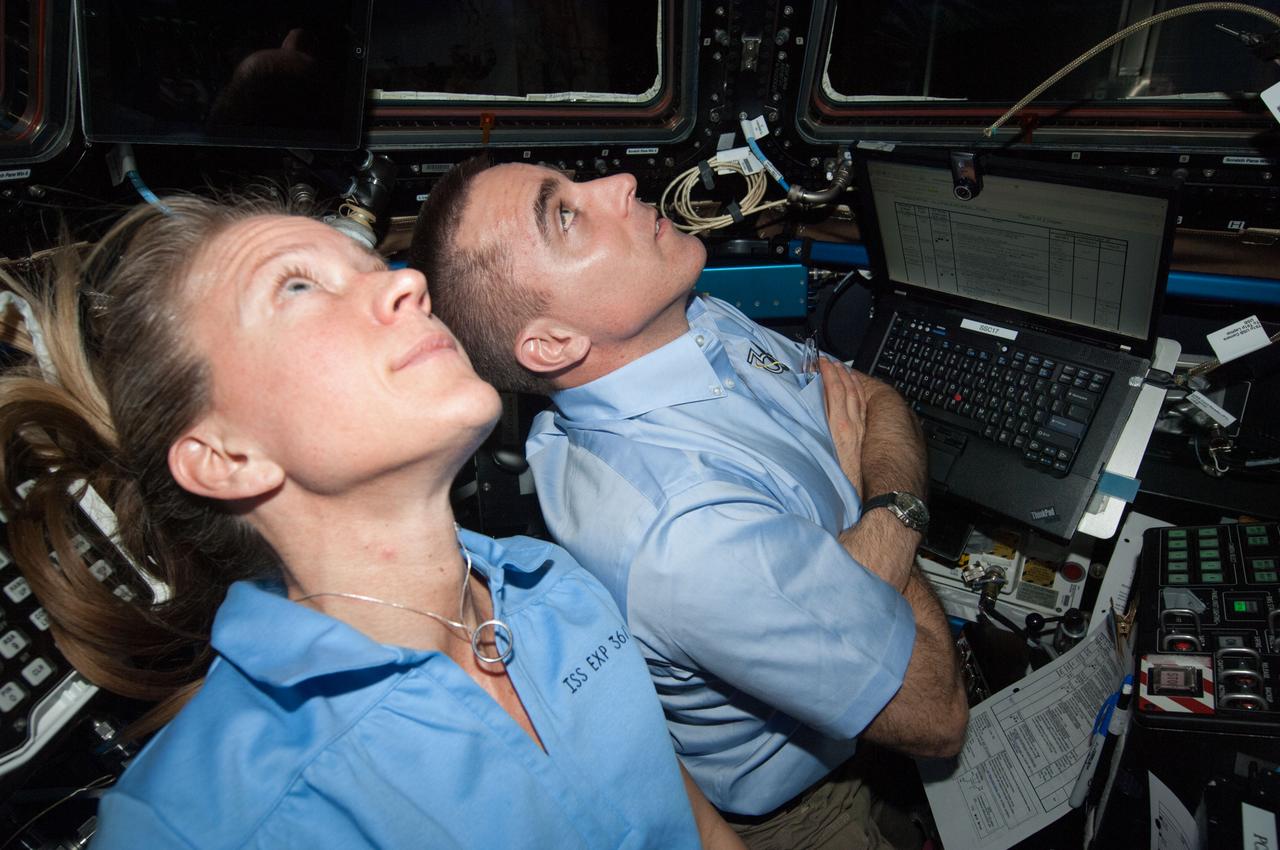
ISS036-E-029883 (9 Aug. 2013) --- NASA astronauts Karen Nyberg and Chris Cassidy, both Expedition 36 flight engineers, are pictured at the robotic workstation in the Cupola of the International Space Station during rendezvous operations with the approaching unpiloted Japanese "Kounotori" H2 Transfer Vehicle-4 (HTV-4).
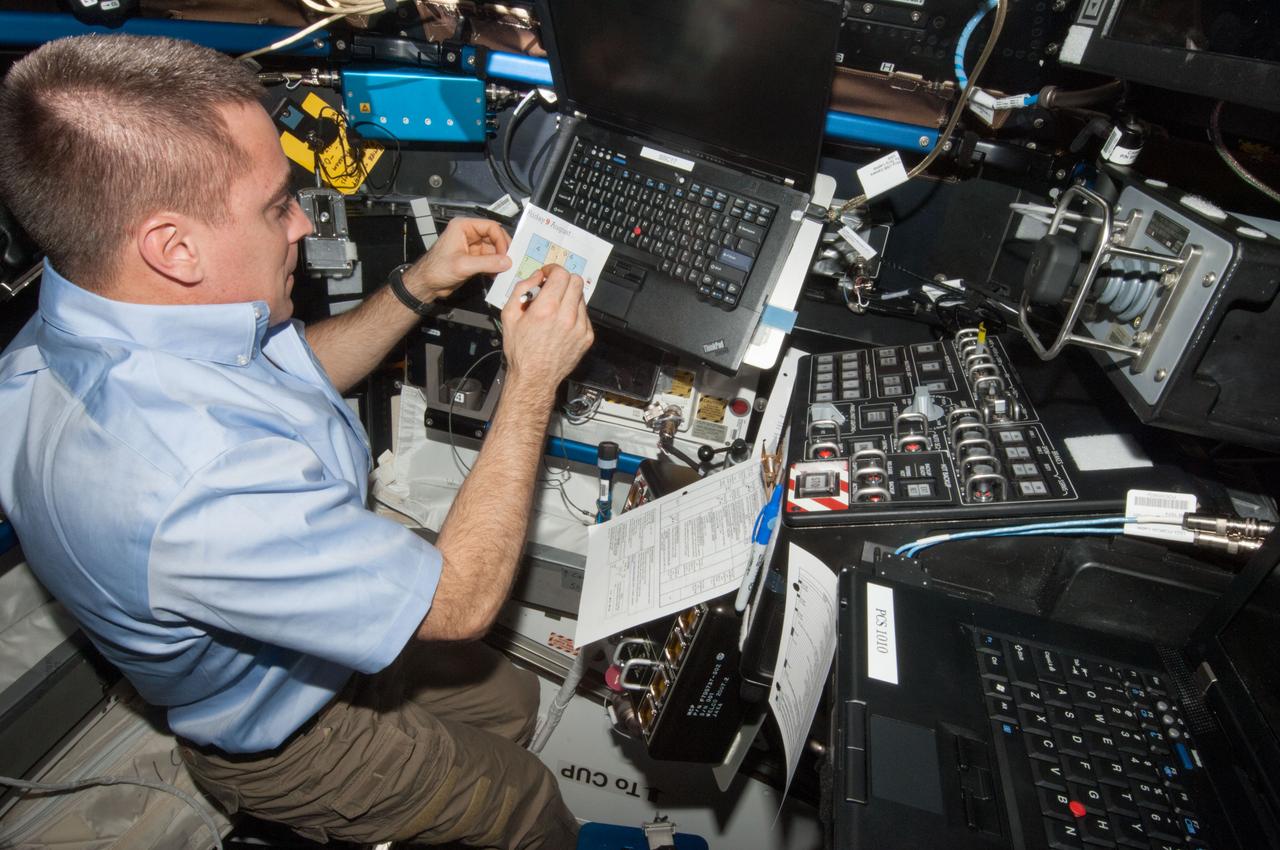
ISS036-E-029877 (9 Aug. 2013) --- NASA astronaut Chris Cassidy, Expedition 36 flight engineer, is pictured at the robotic workstation in the Cupola of the International Space Station during rendezvous operations with the approaching unpiloted Japanese "Kounotori" H2 Transfer Vehicle-4 (HTV-4).
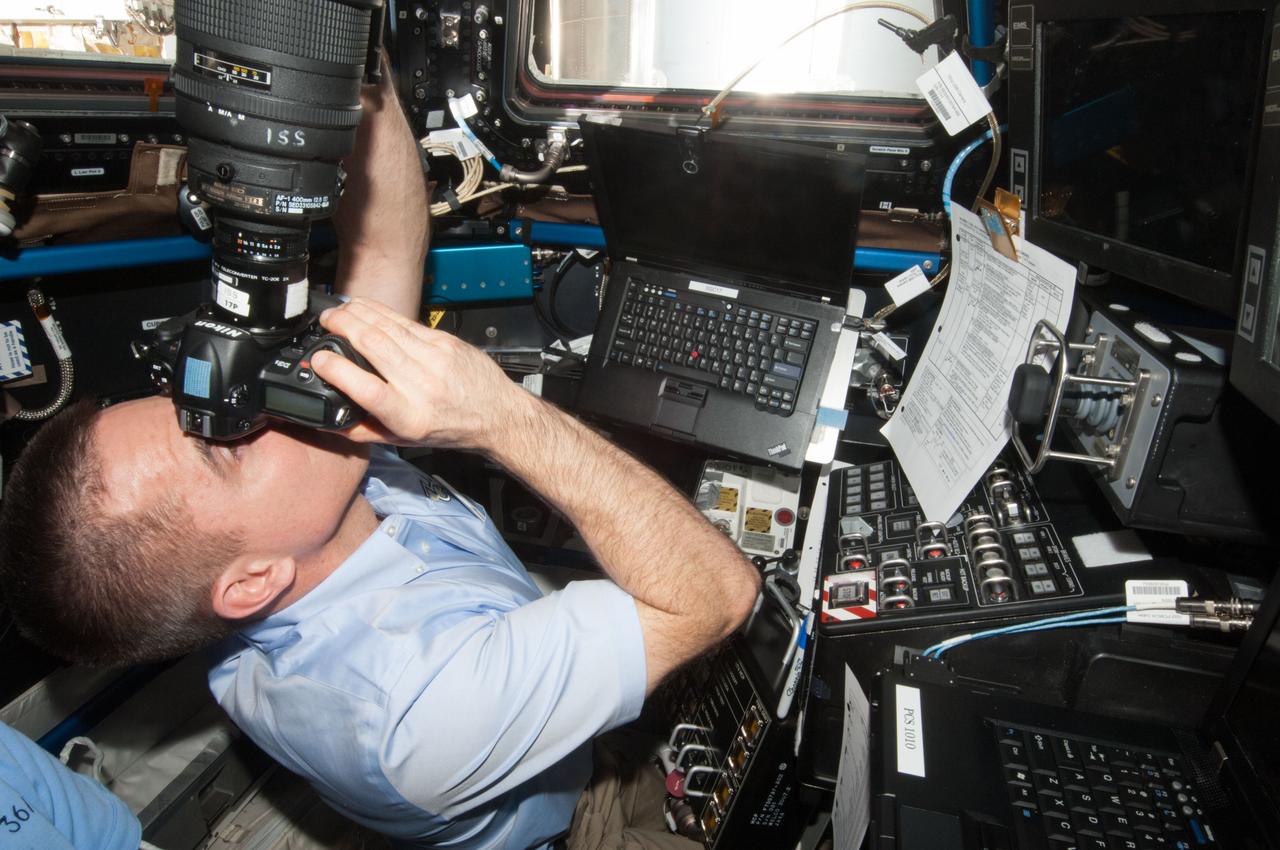
ISS036-E-029897 (9 Aug. 2013) --- At the windows in the International Space Station?s Cupola, NASA astronaut Chris Cassidy, Expedition 36 flight engineer, uses a digital still camera to photograph the approaching unpiloted Japanese "Kounotori" H2 Transfer Vehicle-4 (HTV-4).
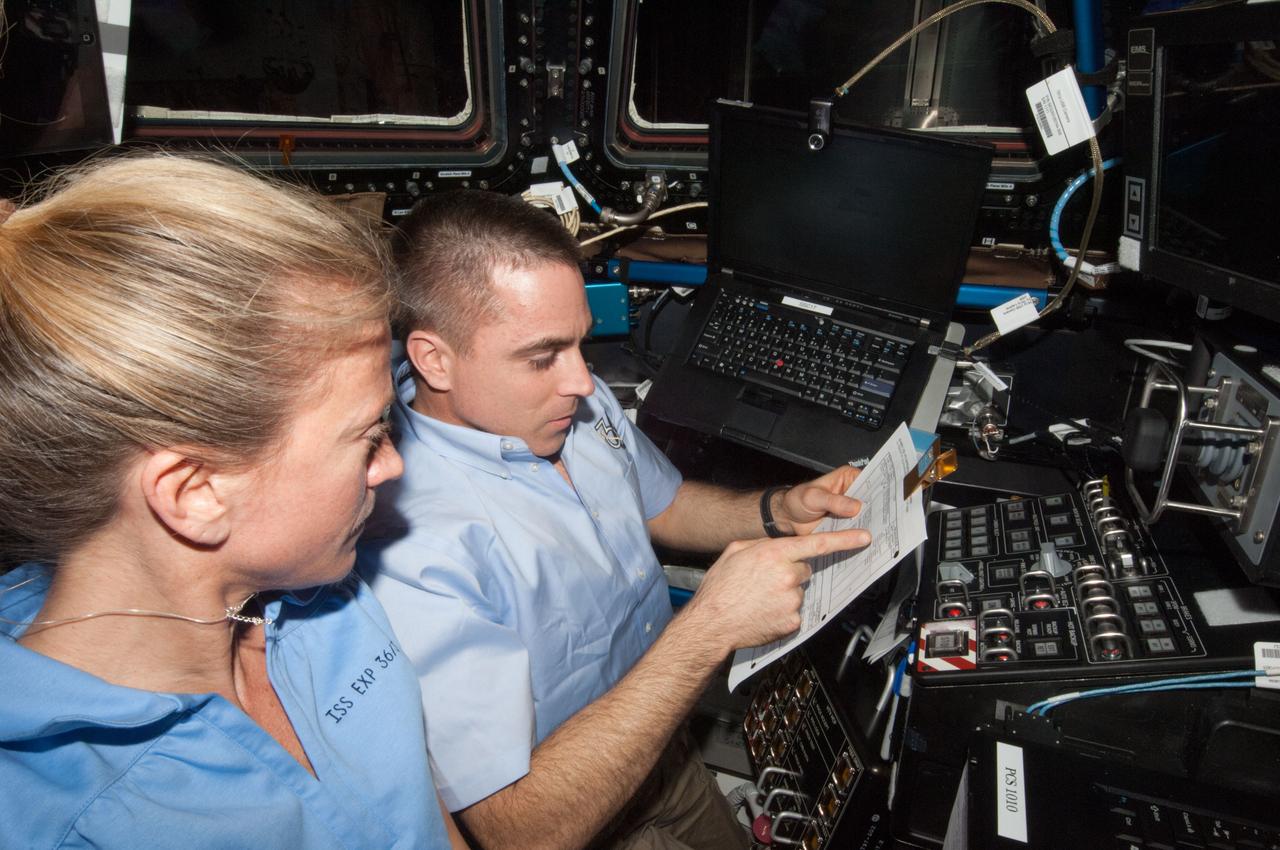
ISS036-E-029902 (9 Aug. 2013) --- NASA astronauts Karen Nyberg and Chris Cassidy, both Expedition 36 flight engineers, are pictured at the robotic workstation in the Cupola of the International Space Station during rendezvous operations with the approaching unpiloted Japanese "Kounotori" H2 Transfer Vehicle-4 (HTV-4).
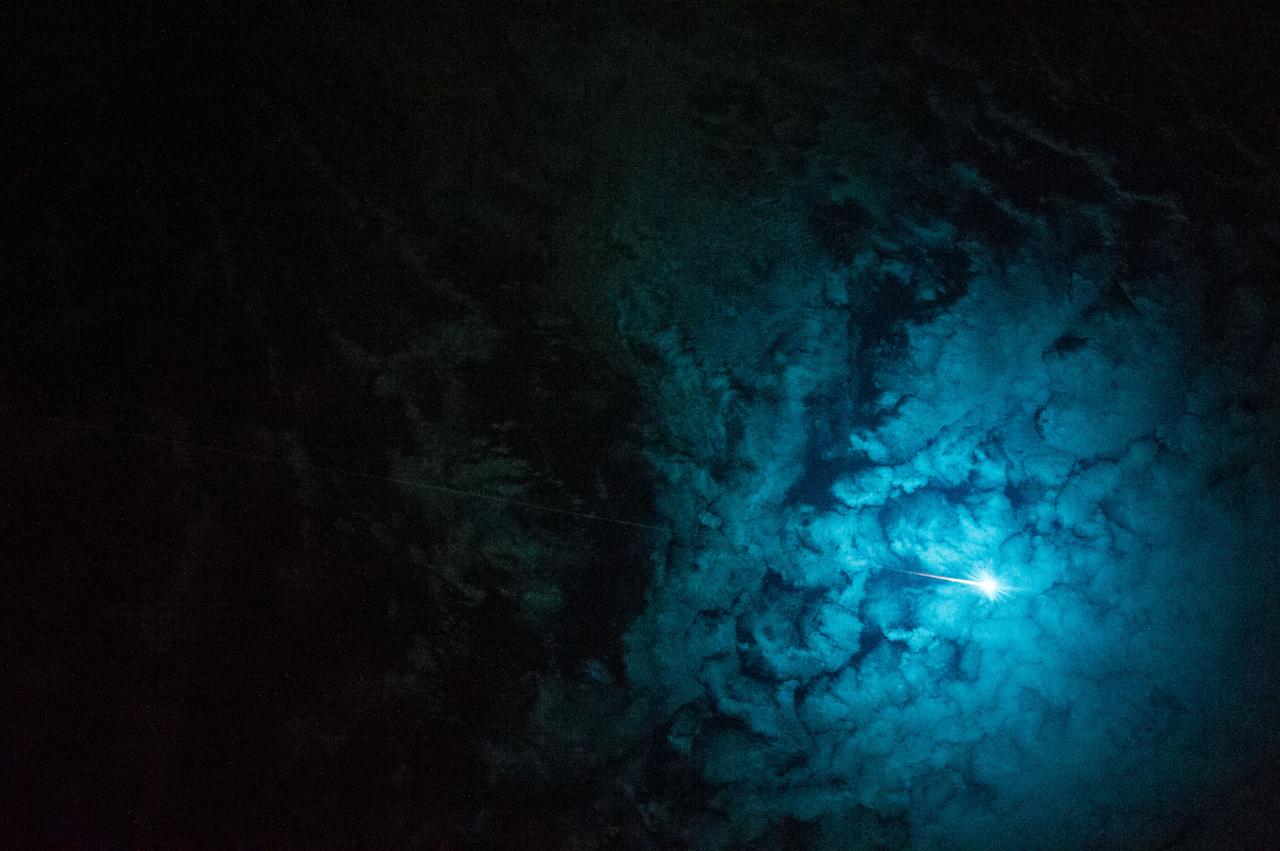
ISS036-E-041384 (7 Sept. 2013) --- A stationary camera onboard the International Space Station took this picture of the Japanese HTV-4 cargo spacecraft as it entered Earth’s atmosphere on Sept. 7, subsequently burning up. HTV-4 was launched by Japan's Aerospace Exploration Agency (JAXA) on Aug. 4 of this year in order to bring up supplies for the astronauts and cosmonauts onboard the station, and after spending a month docked to the orbital outpost, it was released on Sept. 4.
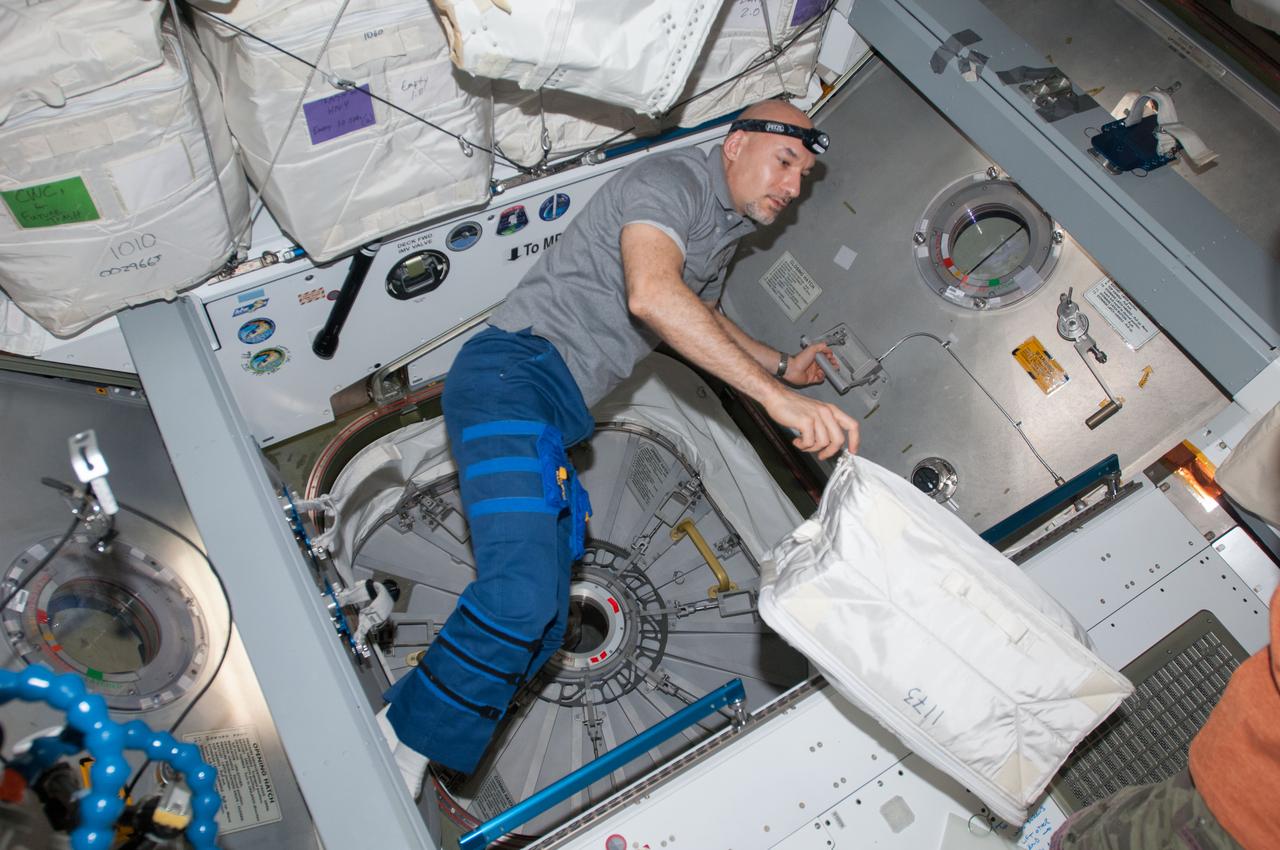
ISS036-E-030213 (9 Aug. 2013) --- European Space Agency astronaut Luca Parmitano, Expedition 36 flight engineer, prepares to open the hatch to the newly attached Japanese "Kounotori" H2 Transfer Vehicle-4 (HTV-4) docked to the International Space Station's Harmony node.
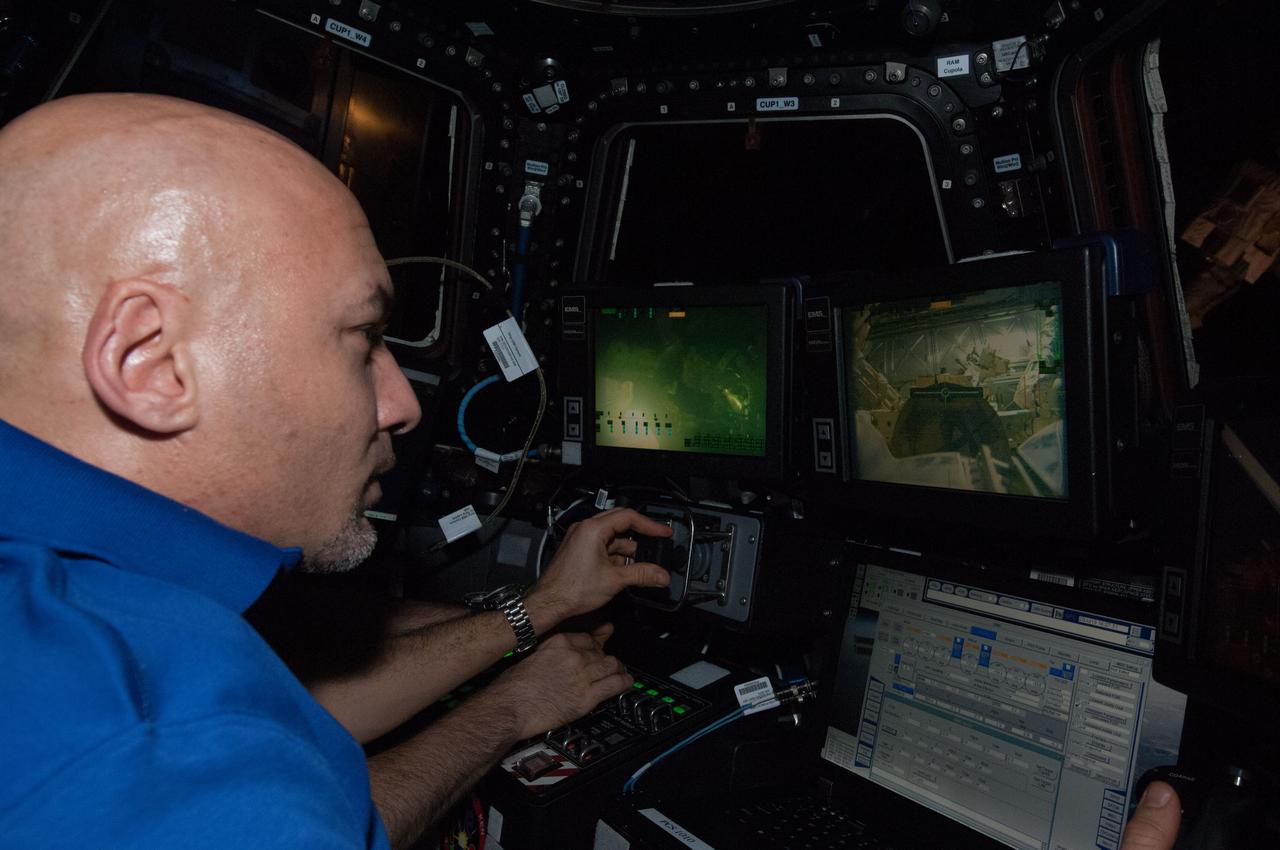
ISS036-E-026283 (29 July 2013) --- In the International Space Station?s Cupola, European Space Agency astronaut Luca Parmitano, Expedition 36 flight engineer, participates in an onboard training activity in preparation for the grapple and berthing of the Japanese ?Kounotori? H2 Transfer Vehicle-4 (HTV-4) set for August 9.
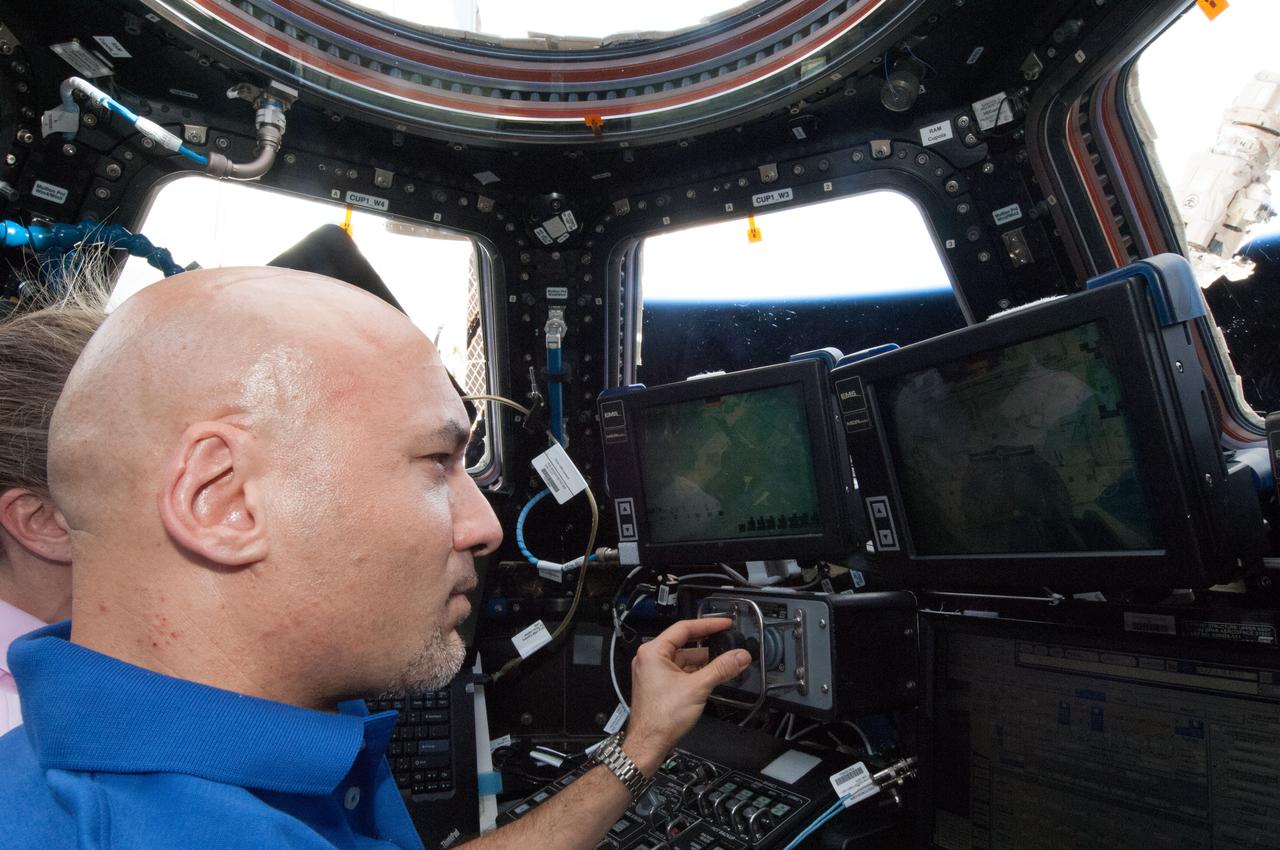
ISS036-E-026326 (29 July 2013) --- In the International Space Station?s Cupola, European Space Agency astronaut Luca Parmitano, Expedition 36 flight engineer, participates in an onboard training activity in preparation for the grapple and berthing of the Japanese ?Kounotori? H2 Transfer Vehicle-4 (HTV-4) set for August 9.
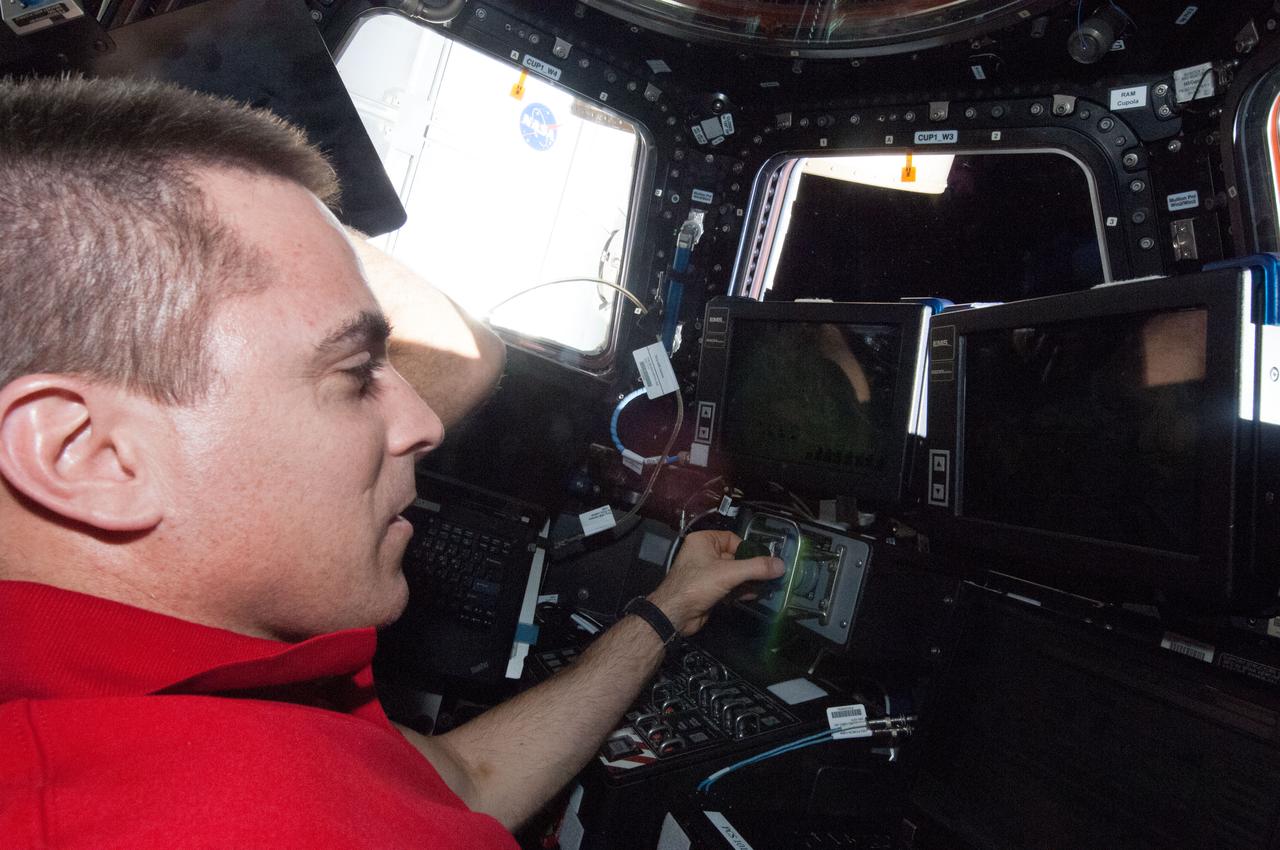
ISS036-E-026298 (29 July 2013) --- In the International Space Station?s Cupola, NASA astronaut Chris Cassidy, Expedition 36 flight engineer, participates in an onboard training activity in preparation for the grapple and berthing of the Japanese ?Kounotori? H2 Transfer Vehicle-4 (HTV-4) set for August 9.
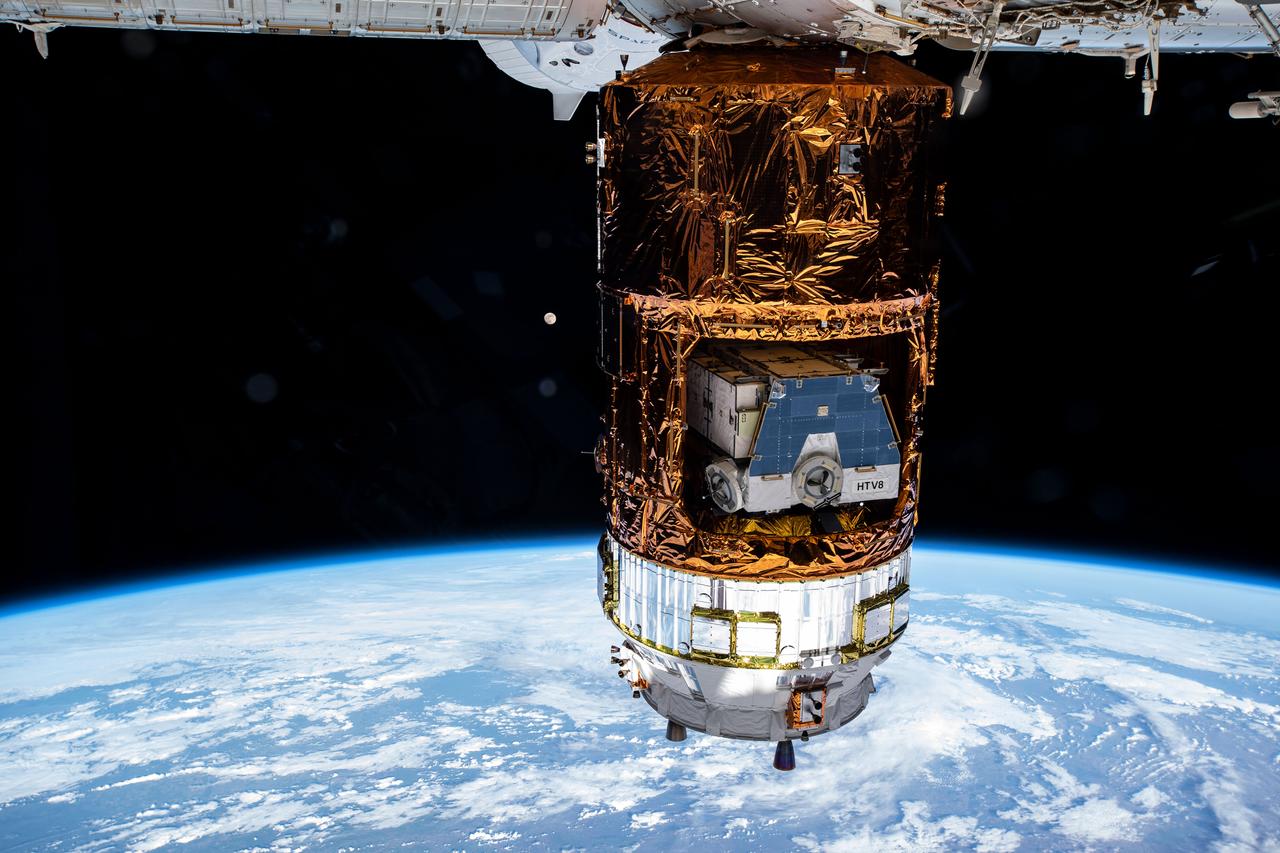
iss063e024519 (June 4, 2020) --- Japan's resupply ship, the H-II Transfer Vehicle-9 (HTV-9), is pictured attached to the International Space Station's Harmony module dwarfing the Moon behind it. Stowed inside the Japanese space freighter is the HTV-8 cargo pallet that was brought up to the station on a previous resupply mission. The pallet contains old nickel-hydrogen batteries for disposal that were disconnected from the station during a series of spacewalks at the end of 2019. Nearly hidden at the top center is the SpaceX Crew Dragon vehicle.
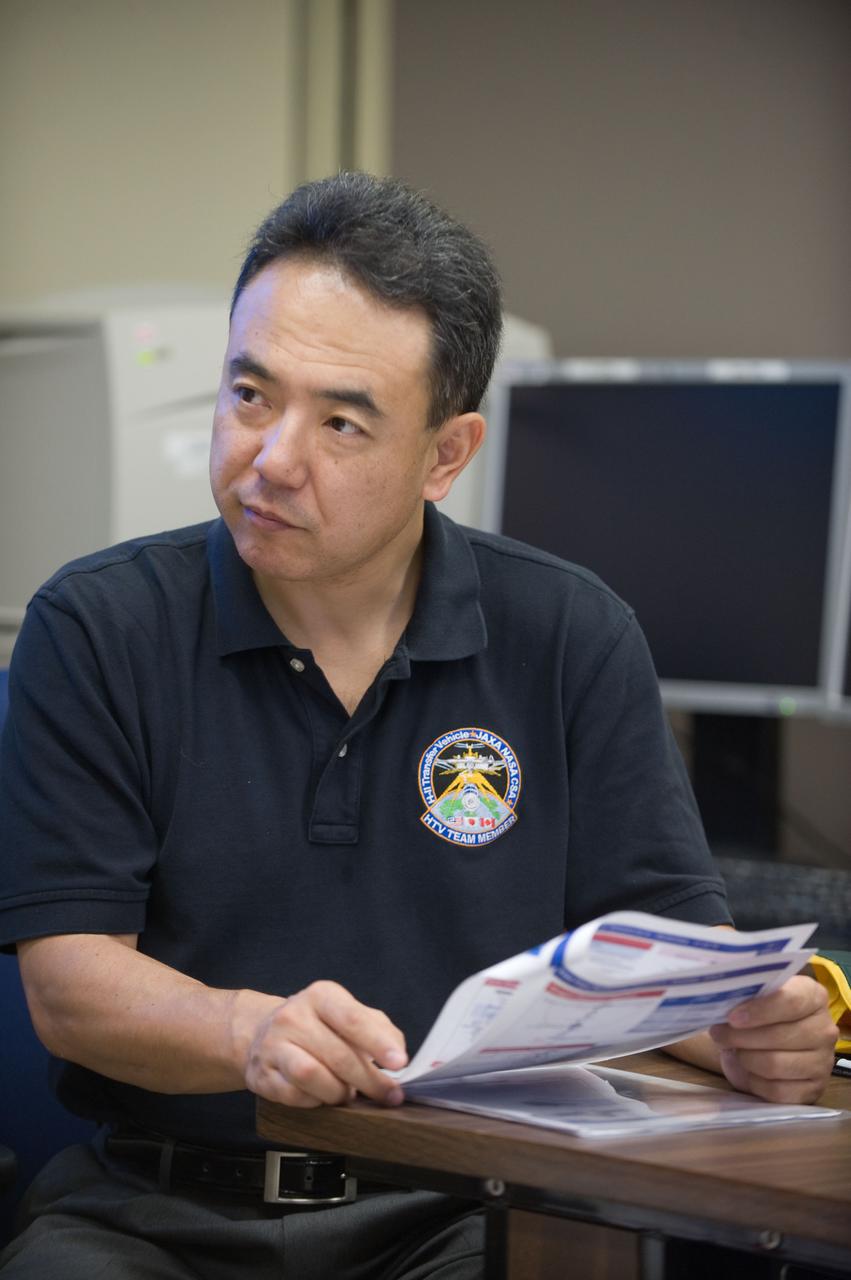
Expedition 28 JAXA Astronaut Satoshi Furukawa and Astronaut Mike Fossum during FF RNDZ ADV 4 training. Training includes HTV rendezvous operation. Photo Date: September 15, 2010. Location: Building 30 - SIM City. Photographer: Robert Markowitz.
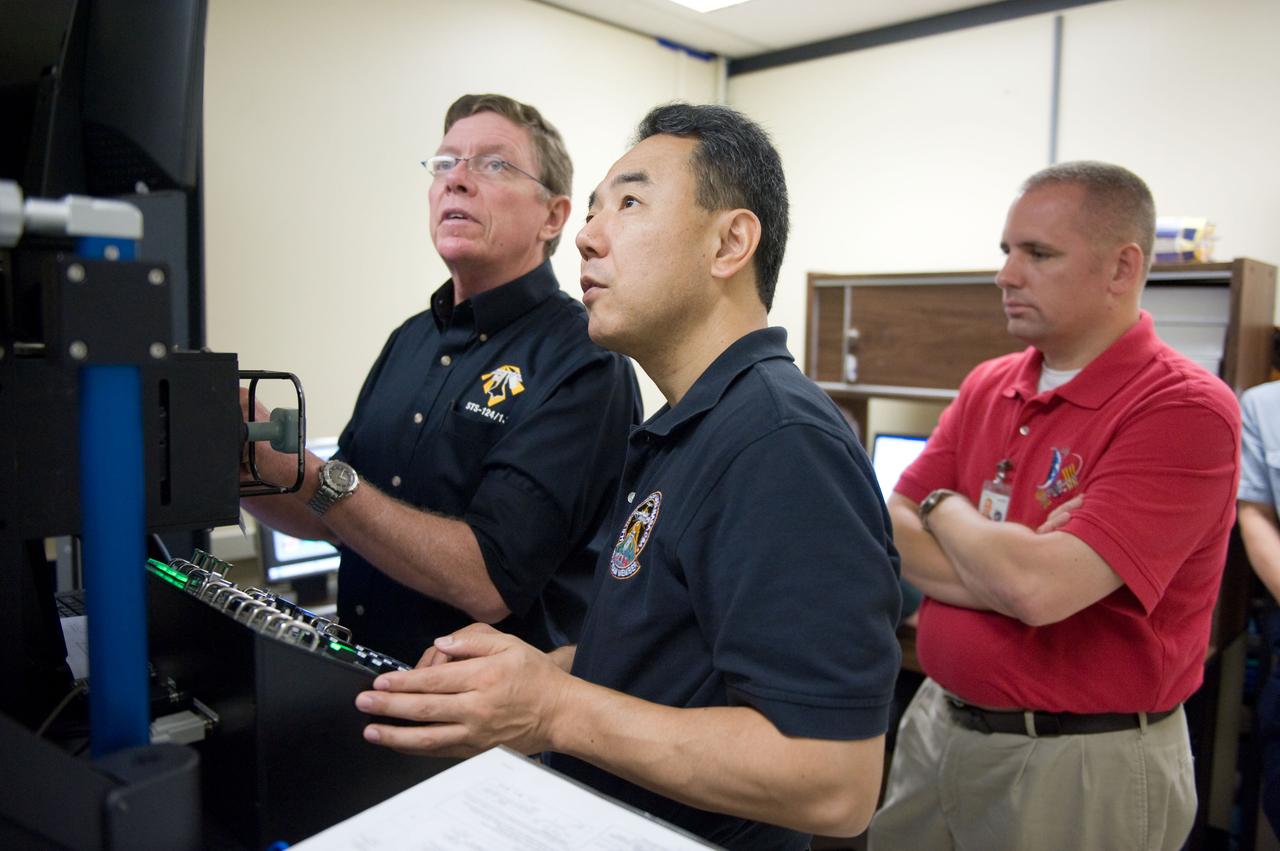
Expedition 28 JAXA Astronaut Satoshi Furukawa and Astronaut Mike Fossum during FF RNDZ ADV 4 training. Training includes HTV rendezvous operation. Photo Date: September 15, 2010. Location: Building 30 - SIM City. Photographer: Robert Markowitz.
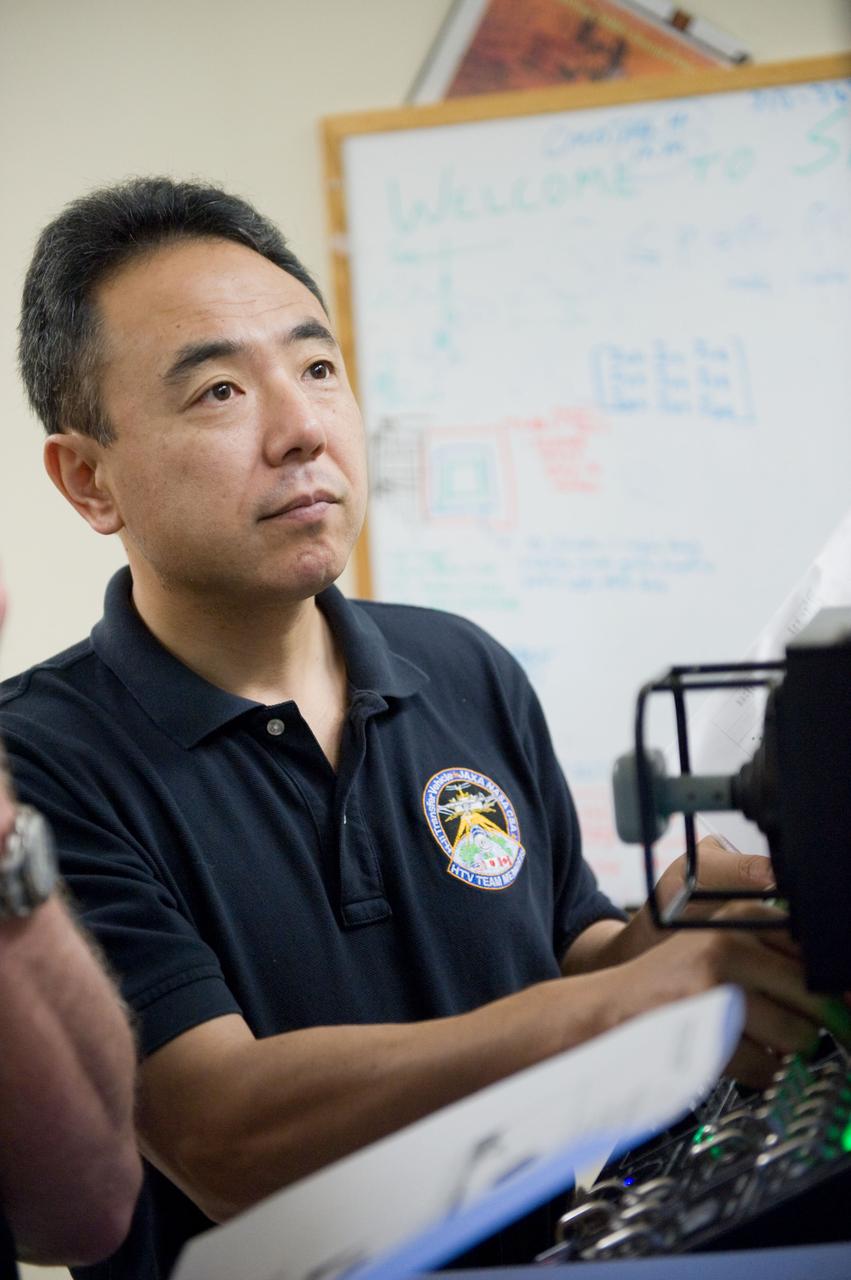
Expedition 28 JAXA Astronaut Satoshi Furukawa and Astronaut Mike Fossum during FF RNDZ ADV 4 training. Training includes HTV rendezvous operation. Photo Date: September 15, 2010. Location: Building 30 - SIM City. Photographer: Robert Markowitz.
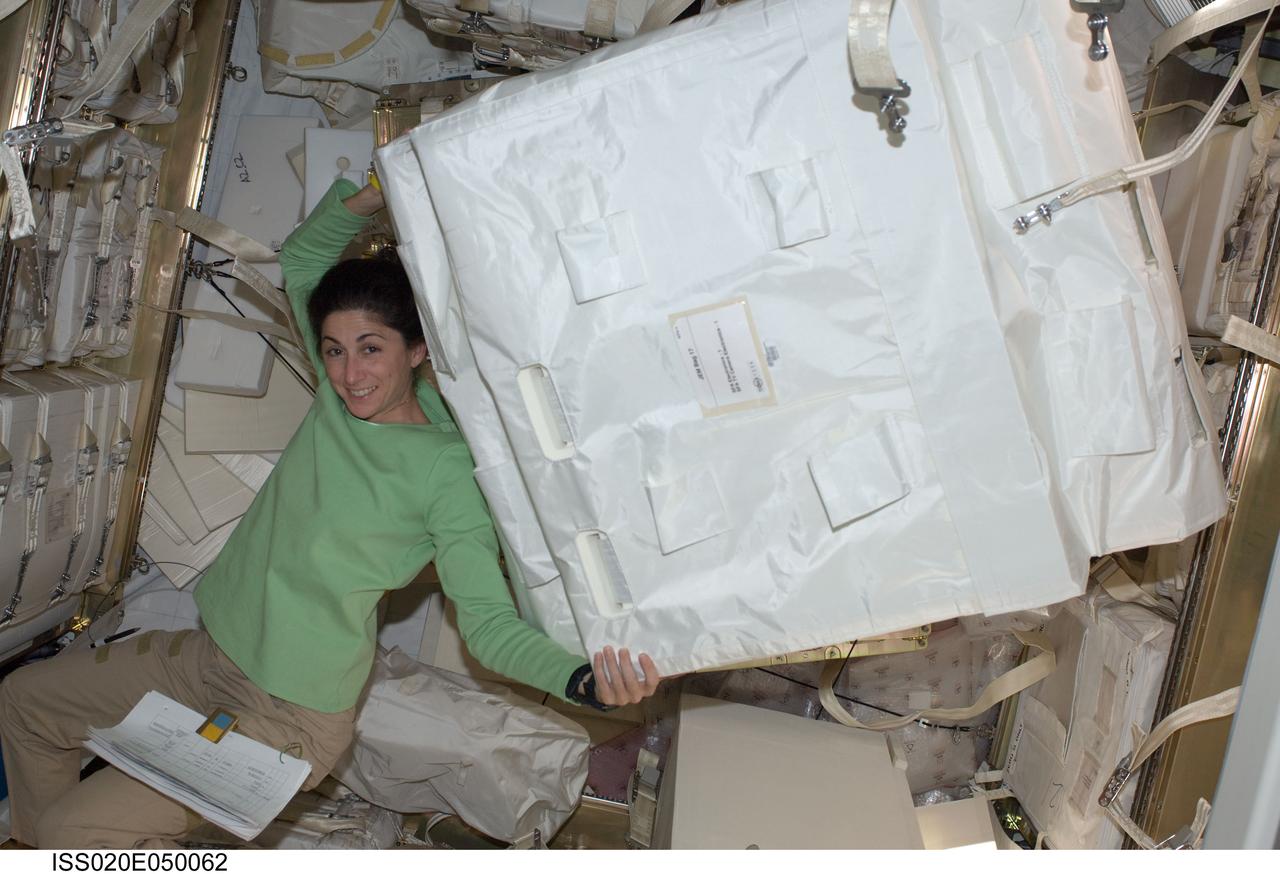
ISS020-E-050062 (4 Oct. 2009) --- NASA astronaut Nicole Stott, Expedition 20/21 flight engineer, moves a stowage container in the Japanese H-II Transfer Vehicle (HTV) docked to the Harmony node of the International Space Station.
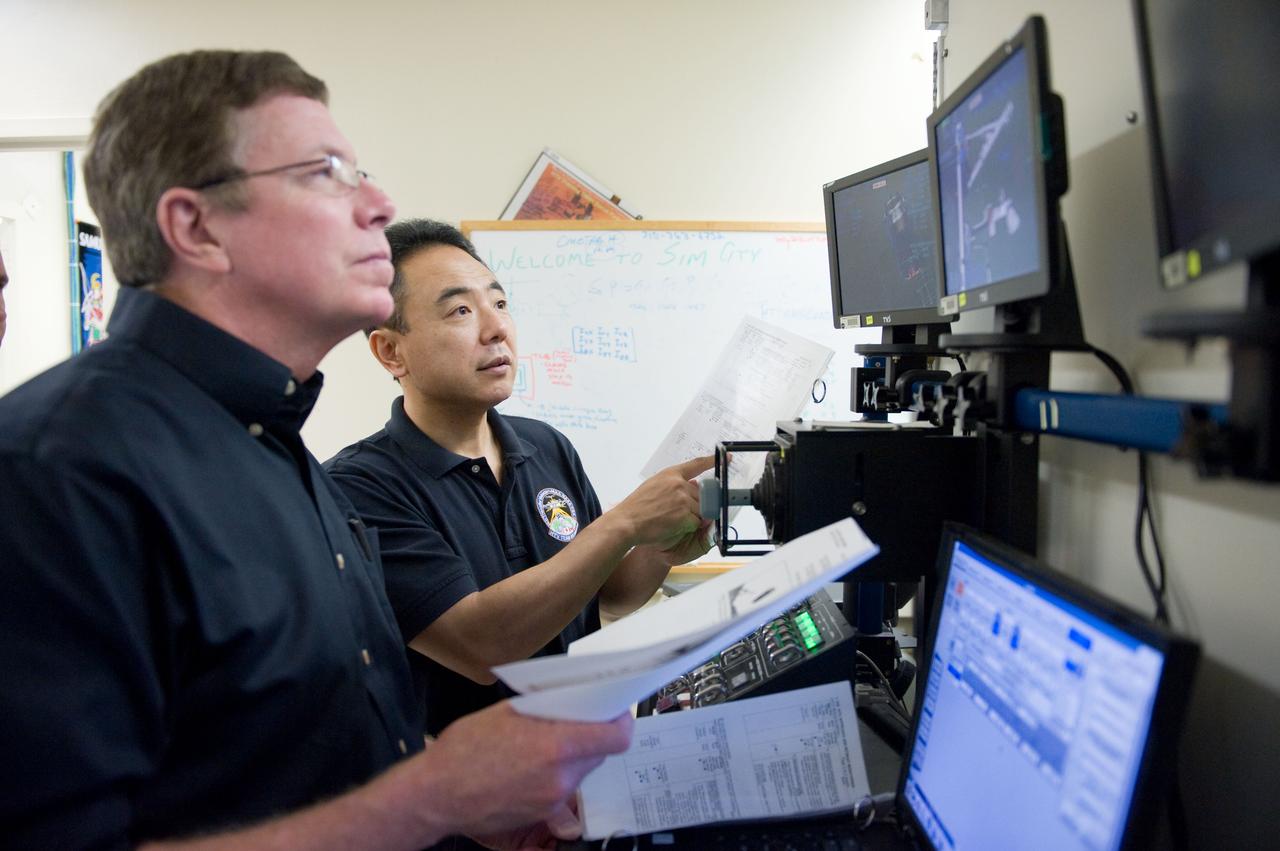
Expedition 28 JAXA Astronaut Satoshi Furukawa and Astronaut Mike Fossum during FF RNDZ ADV 4 training. Training includes HTV rendezvous operation. Photo Date: September 15, 2010. Location: Building 30 - SIM City. Photographer: Robert Markowitz.
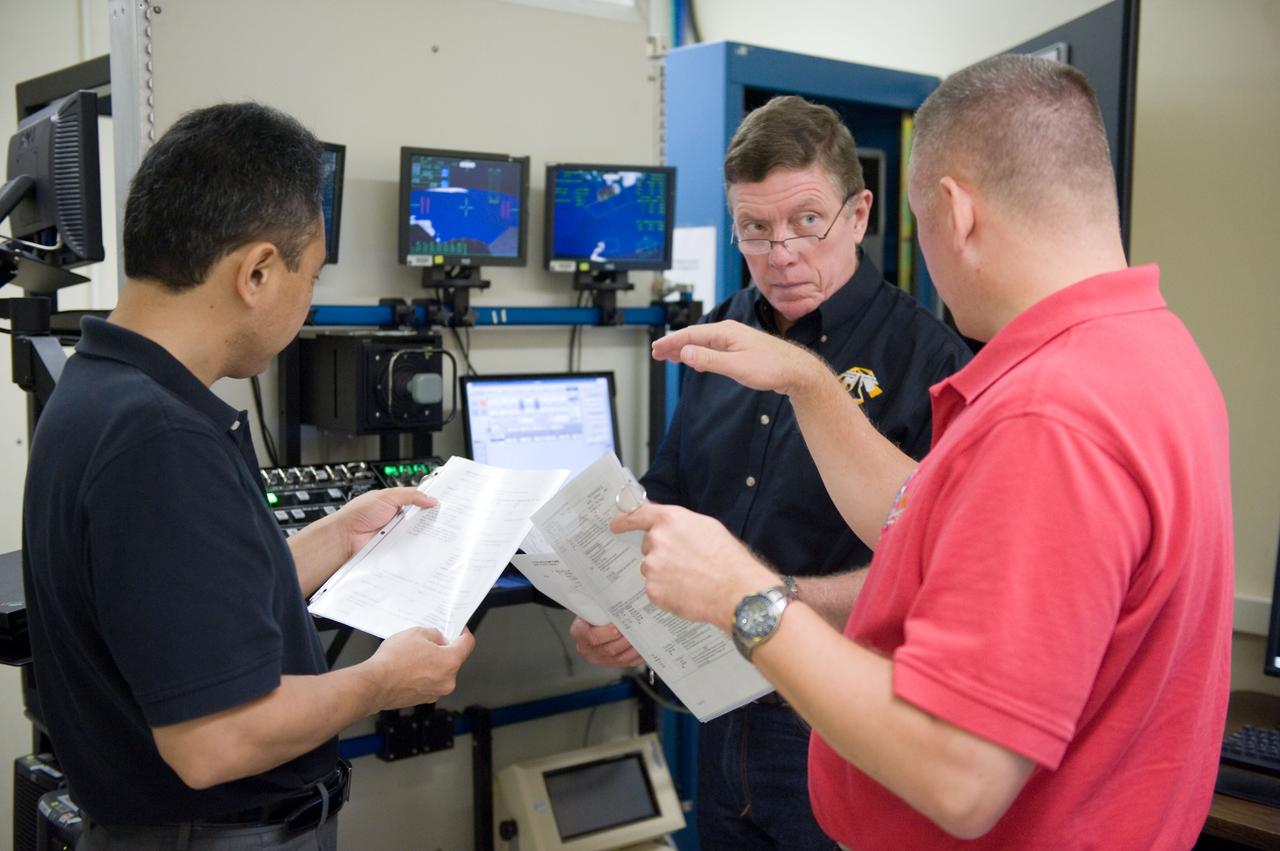
Expedition 28 JAXA Astronaut Satoshi Furukawa and Astronaut Mike Fossum during FF RNDZ ADV 4 training. Training includes HTV rendezvous operation. Photo Date: September 15, 2010. Location: Building 30 - SIM City. Photographer: Robert Markowitz.
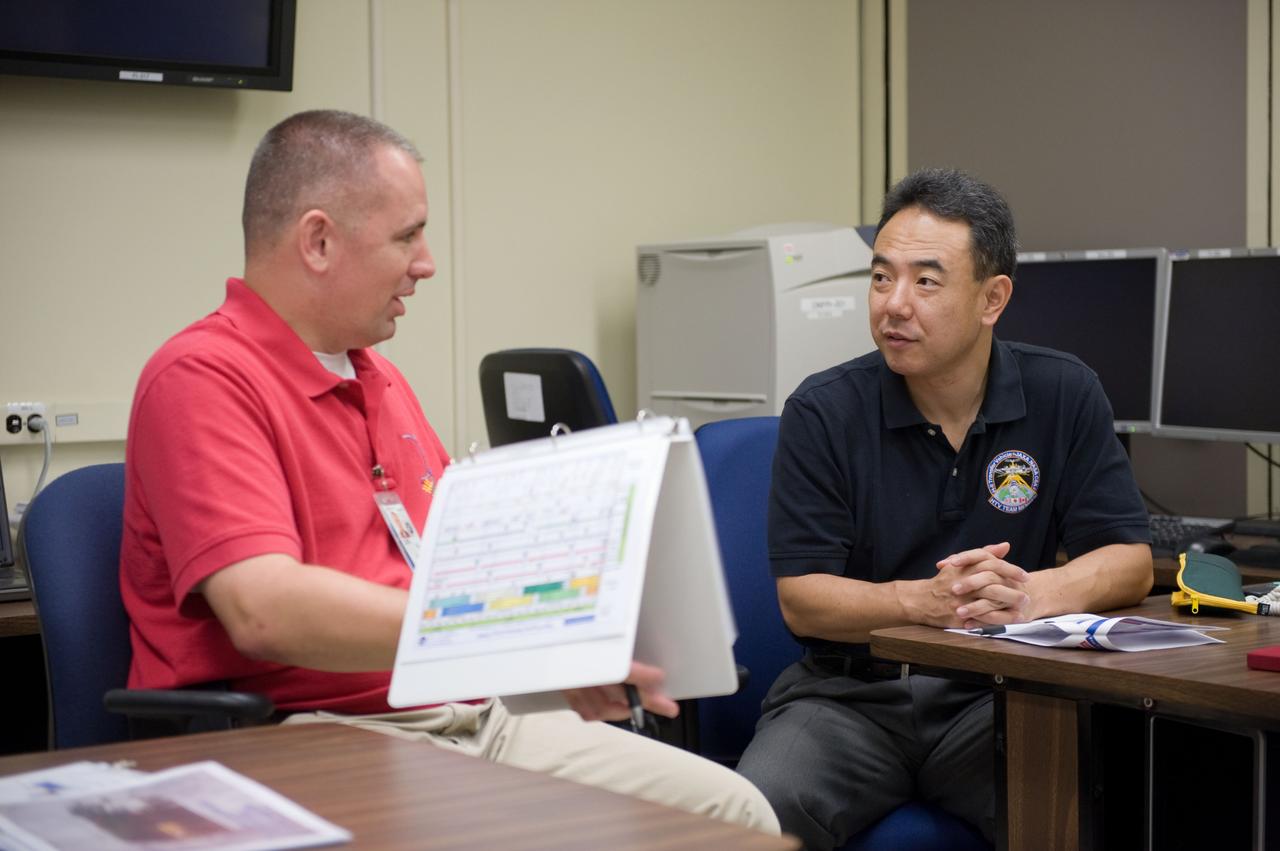
Expedition 28 JAXA Astronaut Satoshi Furukawa and Astronaut Mike Fossum during FF RNDZ ADV 4 training. Training includes HTV rendezvous operation. Photo Date: September 15, 2010. Location: Building 30 - SIM City. Photographer: Robert Markowitz.
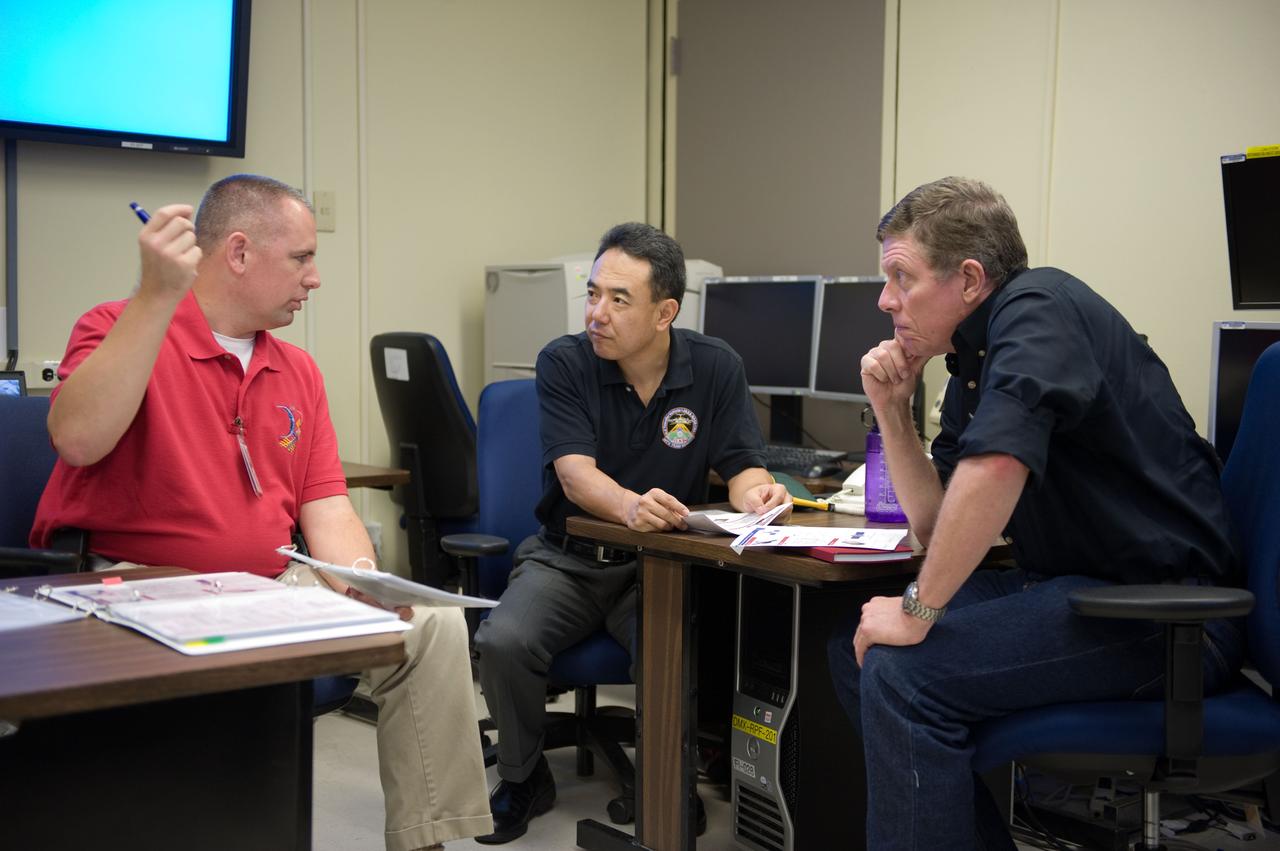
Expedition 28 JAXA Astronaut Satoshi Furukawa and Astronaut Mike Fossum during FF RNDZ ADV 4 training. Training includes HTV rendezvous operation. Photo Date: September 15, 2010. Location: Building 30 - SIM City. Photographer: Robert Markowitz.
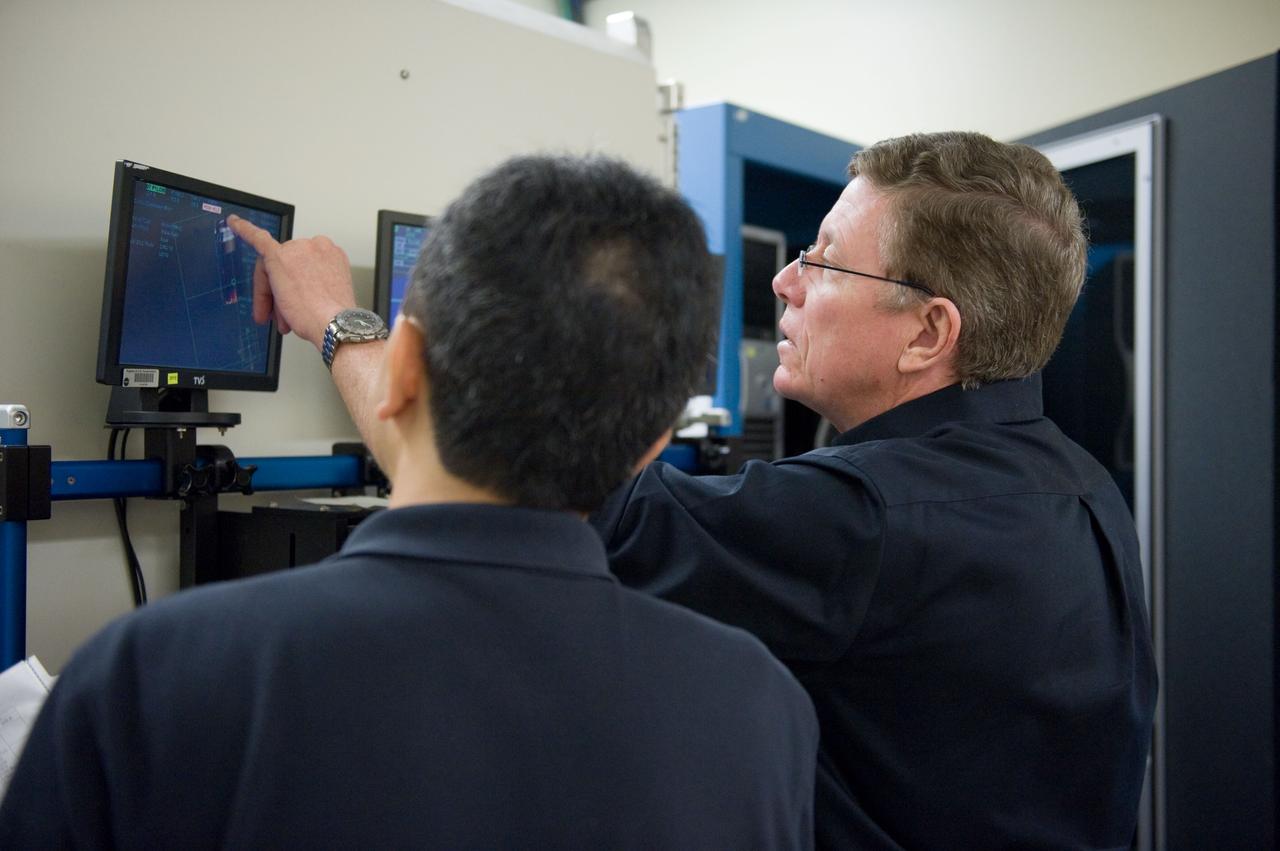
Expedition 28 JAXA Astronaut Satoshi Furukawa and Astronaut Mike Fossum during FF RNDZ ADV 4 training. Training includes HTV rendezvous operation. Photo Date: September 15, 2010. Location: Building 30 - SIM City. Photographer: Robert Markowitz.
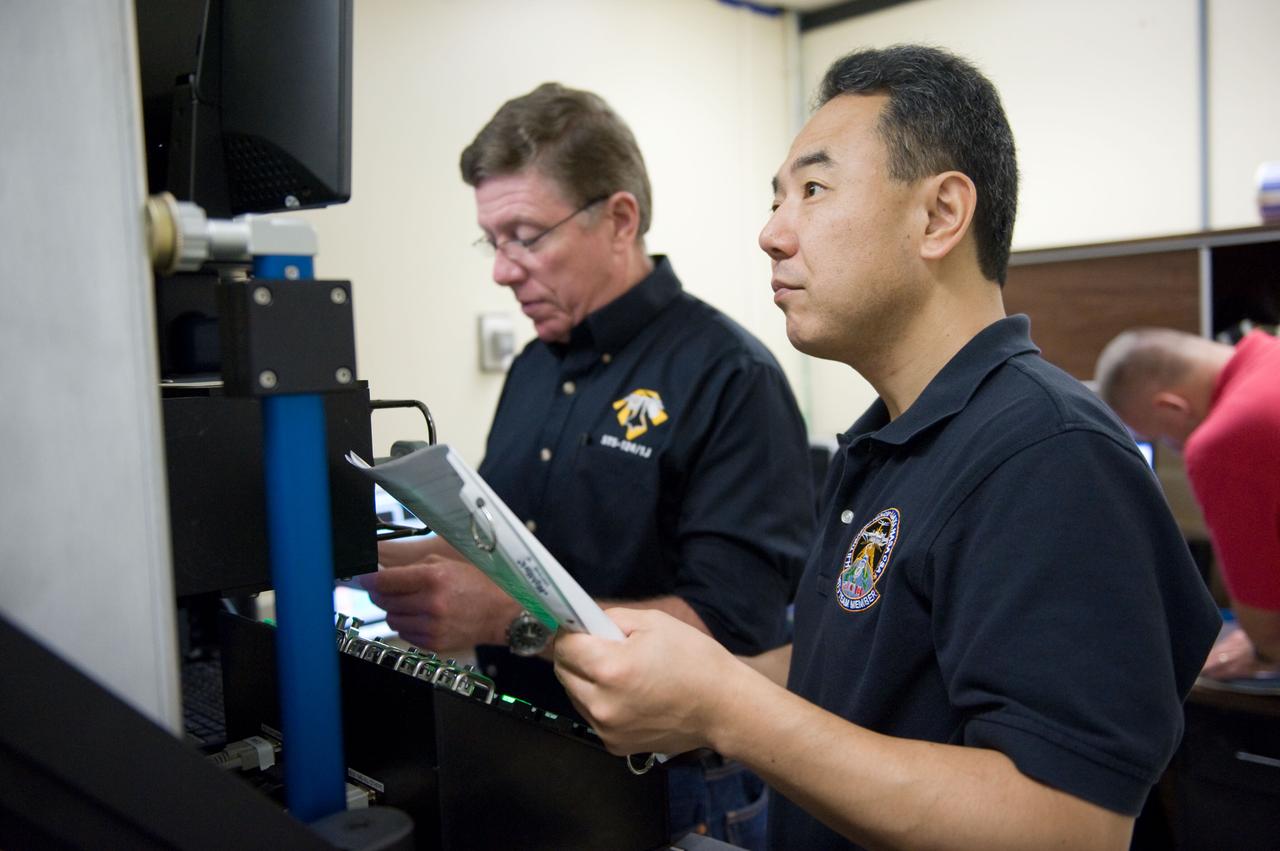
Expedition 28 JAXA Astronaut Satoshi Furukawa and Astronaut Mike Fossum during FF RNDZ ADV 4 training. Training includes HTV rendezvous operation. Photo Date: September 15, 2010. Location: Building 30 - SIM City. Photographer: Robert Markowitz.
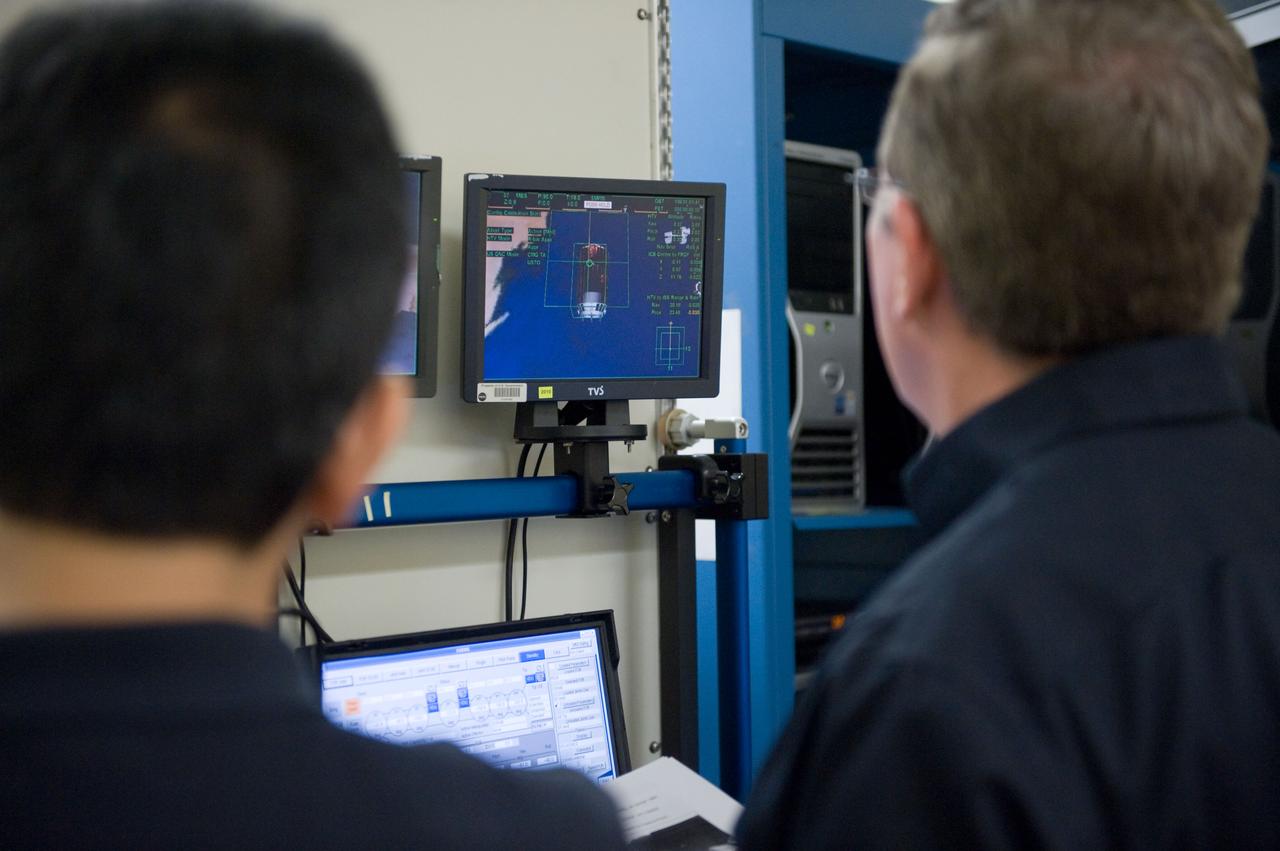
Expedition 28 JAXA Astronaut Satoshi Furukawa and Astronaut Mike Fossum during FF RNDZ ADV 4 training. Training includes HTV rendezvous operation. Photo Date: September 15, 2010. Location: Building 30 - SIM City. Photographer: Robert Markowitz.
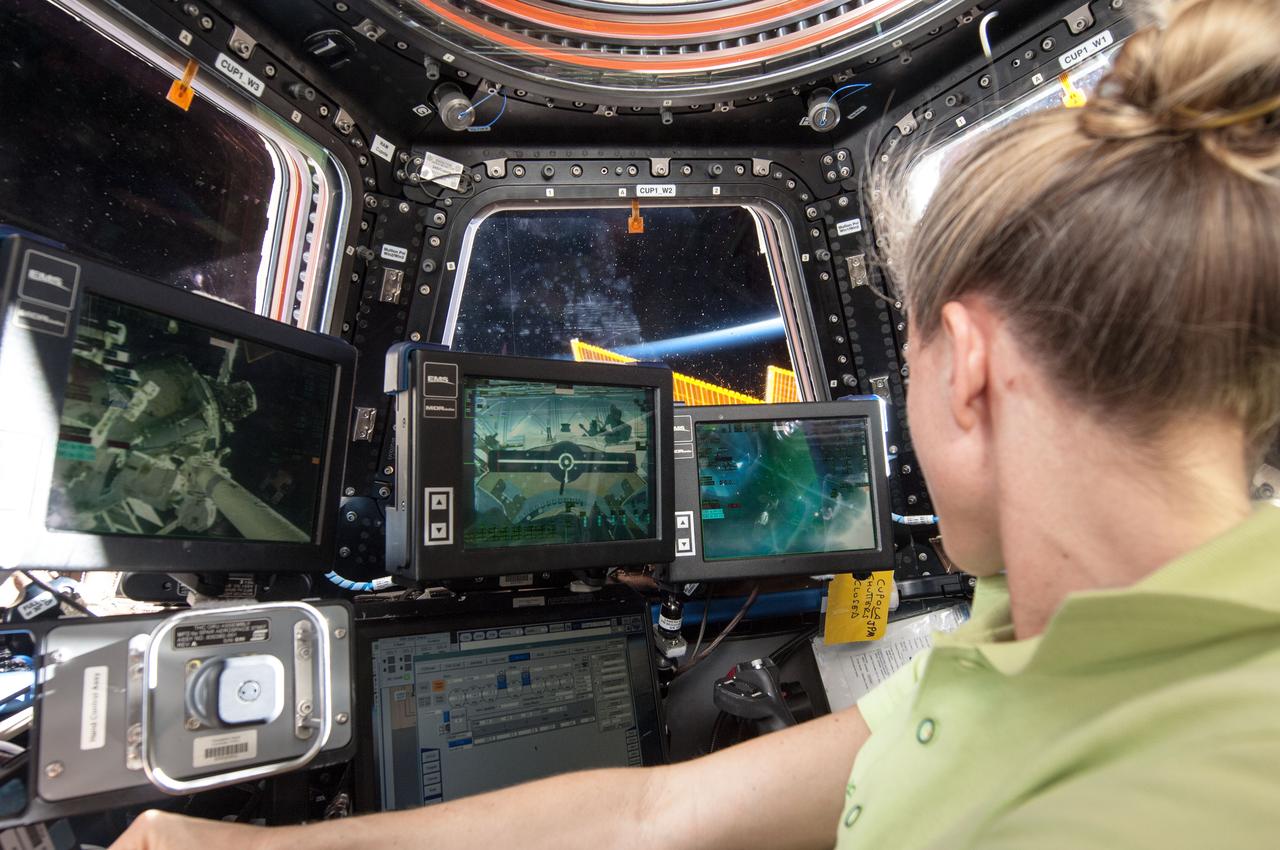
ISS036-E-029229 (5 Aug. 2013) --- At the robotics workstation in the International Space Station?s Cupola, NASA astronaut Karen Nyberg, Expedition 36 flight engineer, participates in onboard training activity in preparation for the grapple and berthing of the Japanese "Kounotori" H2 Transfer Vehicle-4 (HTV-4) set for August 9. Nyberg and NASA astronaut Chris Cassidy will use Canadarm2, the station's Canadian Space Agency-provided robotic arm, to reach out and capture the vehicle for its installation on the Earth-facing port of the Harmony node
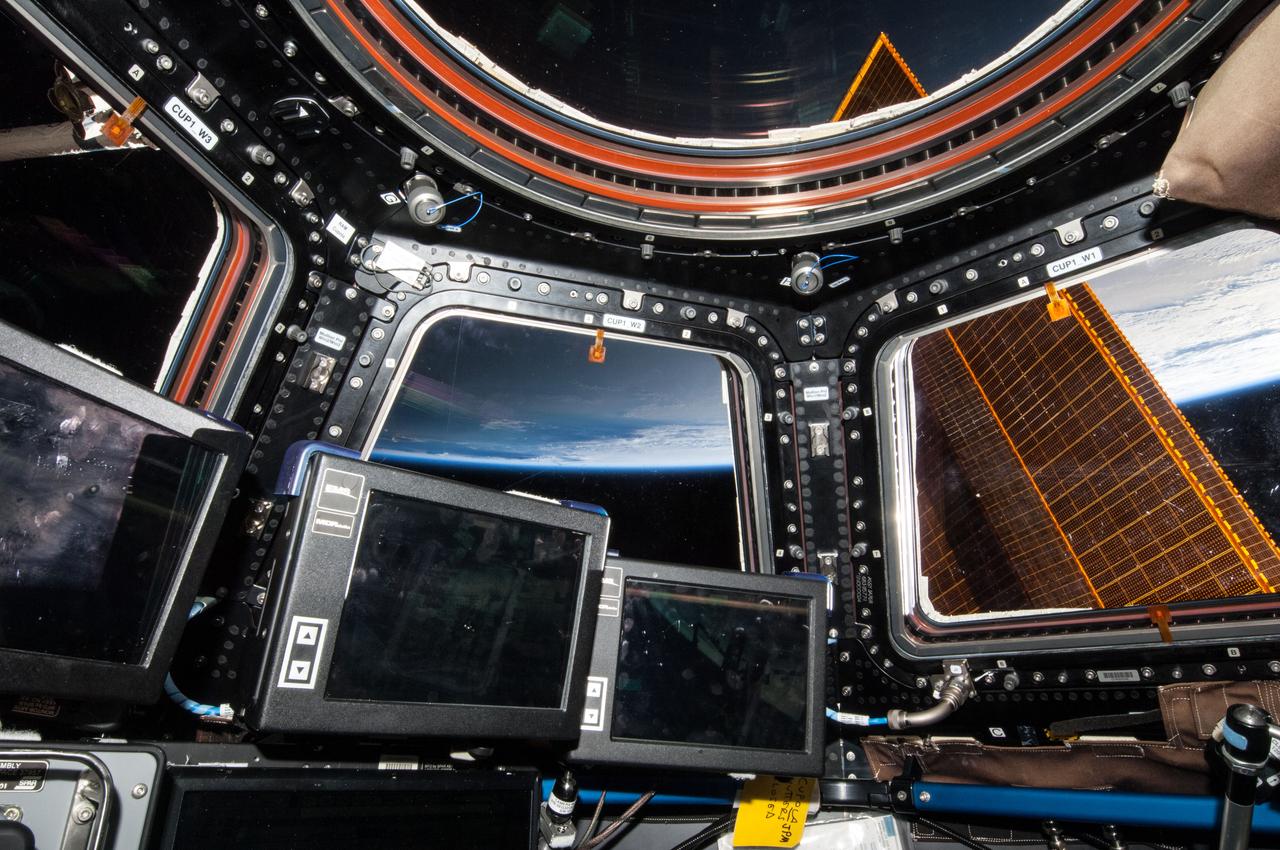
ISS036-E-029203 (5 Aug. 2013) --- The International Space Station?s Cupola robotics workstation is featured in this image photographed by an Expedition 36 crew member during onboard training activity as they prepare for the grapple and berthing of the Japanese "Kounotori" H2 Transfer Vehicle-4 (HTV-4) set for August 9. A station solar array and Earth?s horizon are visible through Cupola?s windows.
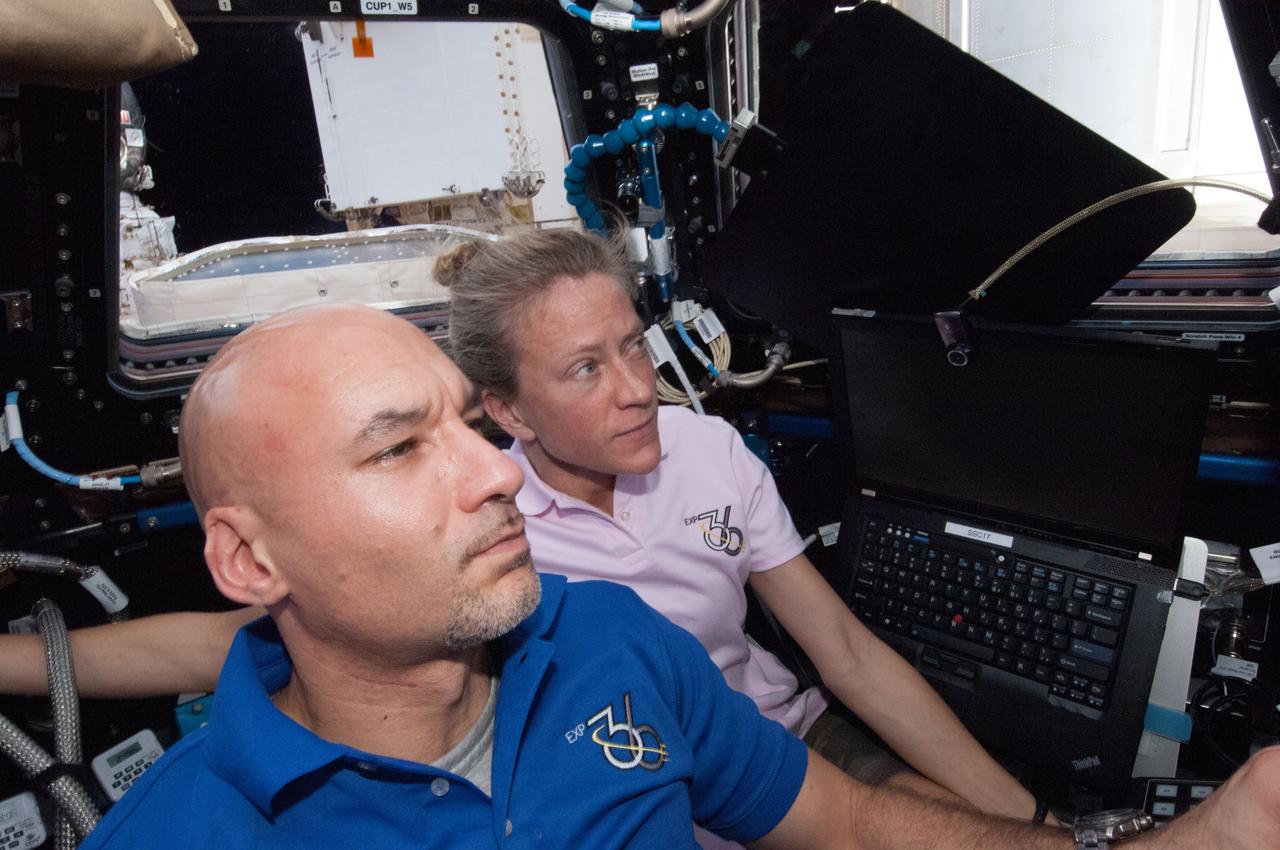
ISS036-E-026332 (29 July 2013) --- In the International Space Station?s Cupola, European Space Agency astronaut Luca Parmitano and NASA astronaut Karen Nyberg, both Expedition 36 flight engineers, participate in an onboard training activity in preparation for the grapple and berthing of the Japanese ?Kounotori? H2 Transfer Vehicle-4 (HTV-4) set for August 9.
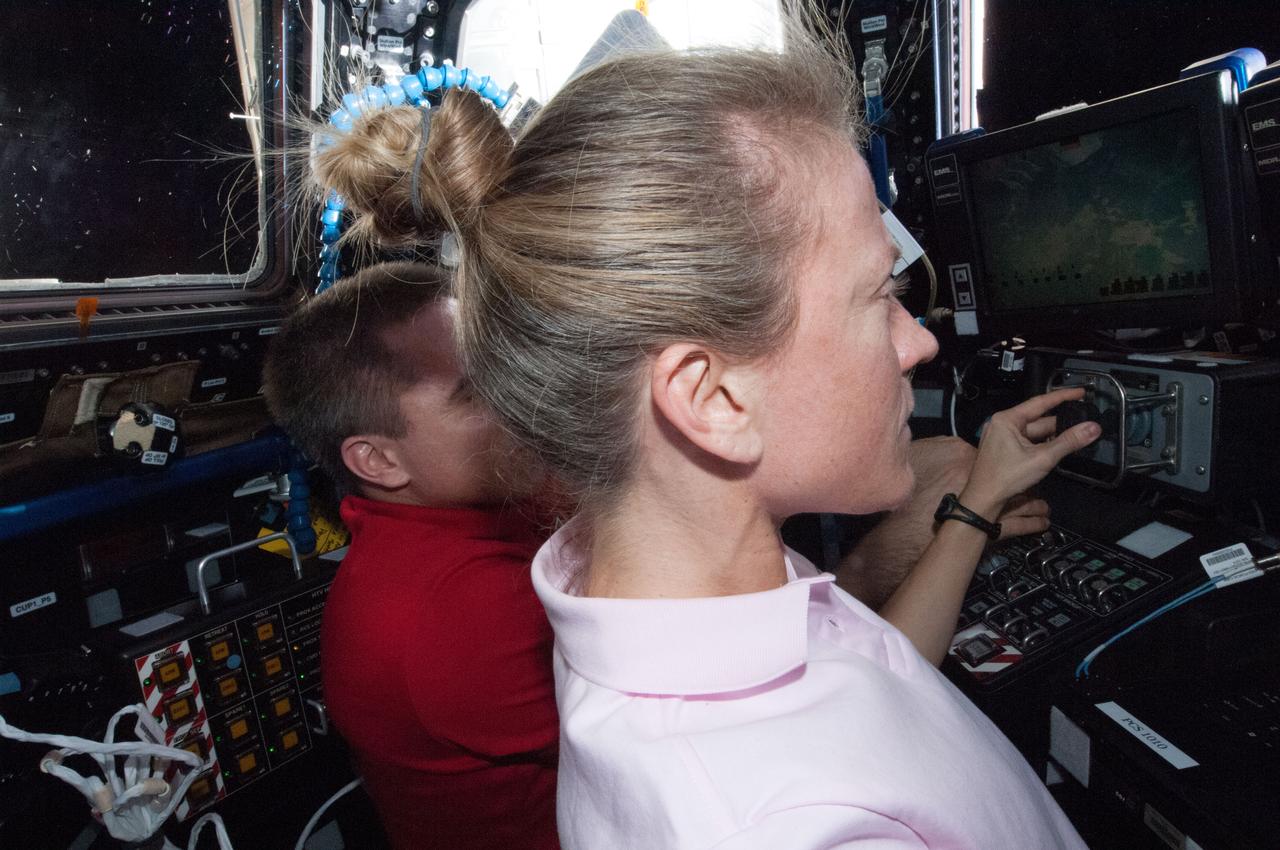
ISS036-E-026306 (29 July 2013) --- In the International Space Station?s Cupola, NASA astronauts Karen Nyberg and Chris Cassidy (partially obscured), both Expedition 36 flight engineers, participate in an onboard training activity in preparation for the grapple and berthing of the Japanese ?Kounotori? H2 Transfer Vehicle-4 (HTV-4) set for August 9.

ISS036-E-029215 (5 Aug. 2013) --- At the robotics workstation in the International Space Station?s Cupola, NASA astronaut Chris Cassidy, Expedition 36 flight engineer, participates in onboard training activity in preparation for the grapple and berthing of the Japanese "Kounotori" H2 Transfer Vehicle-4 (HTV-4) set for August 9. Cassidy and NASA astronaut Karen Nyberg will use Canadarm2, the station's Canadian Space Agency-provided robotic arm, to reach out and capture the vehicle for its installation on the Earth-facing port of the Harmony node.
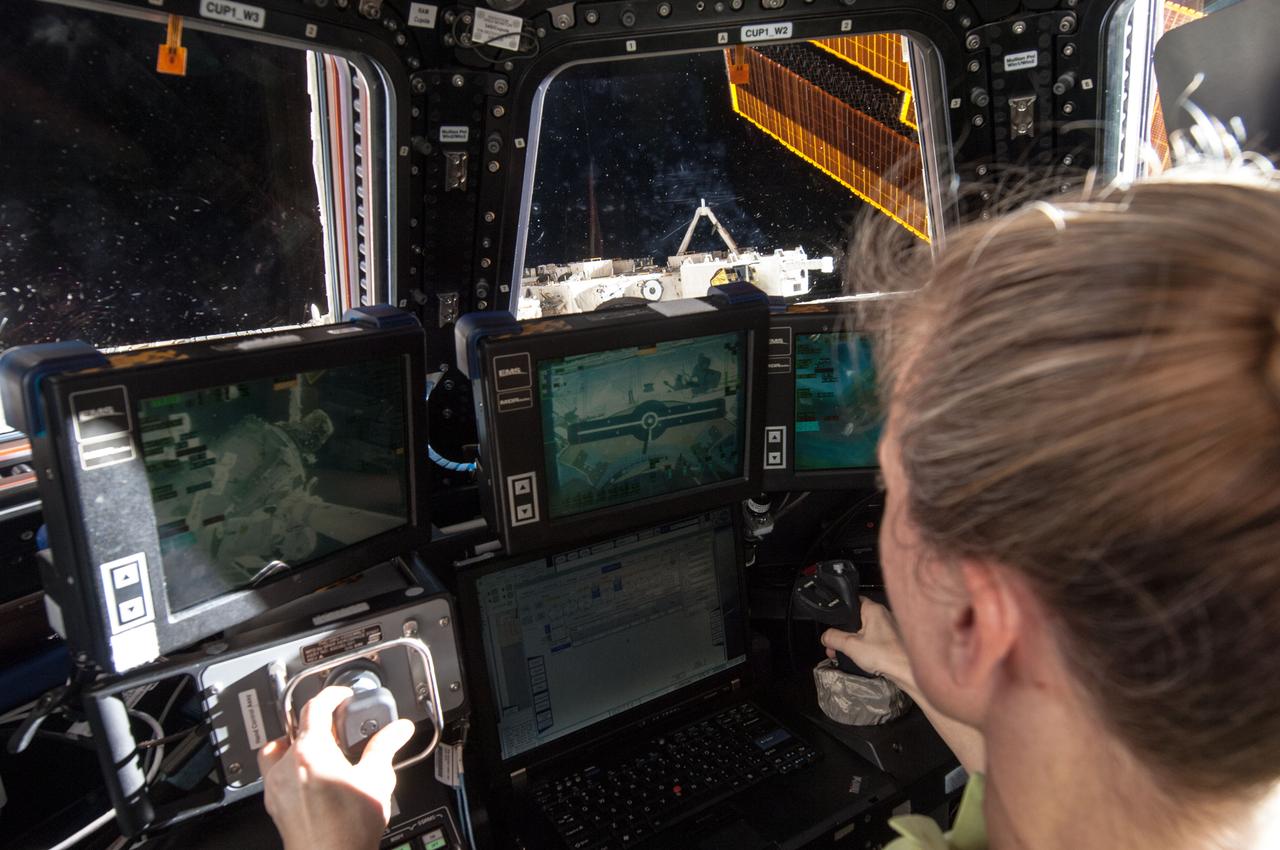
ISS036-E-029227 (5 Aug. 2013) --- At the robotics workstation in the International Space Station?s Cupola, NASA astronaut Karen Nyberg, Expedition 36 flight engineer, participates in onboard training activity in preparation for the grapple and berthing of the Japanese "Kounotori" H2 Transfer Vehicle-4 (HTV-4) set for August 9. Nyberg and NASA astronaut Chris Cassidy will use Canadarm2, the station's Canadian Space Agency-provided robotic arm, to reach out and capture the vehicle for its installation on the Earth-facing port of the Harmony node.
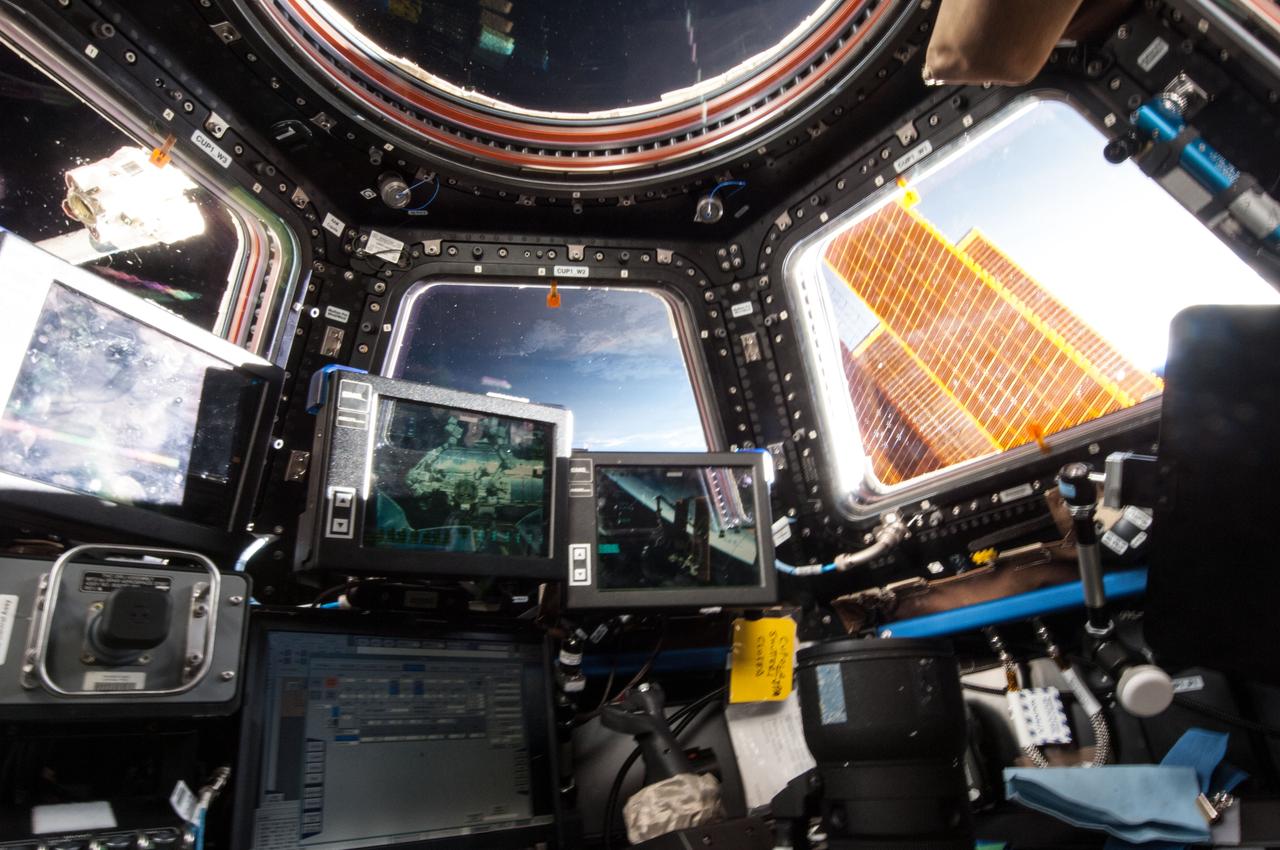
ISS036-E-029210 (5 Aug. 2013) --- The International Space Station?s Cupola robotics workstation is featured in this image photographed by an Expedition 36 crew member during onboard training activity as they prepare for the grapple and berthing of the Japanese "Kounotori" H2 Transfer Vehicle-4 (HTV-4) set for August 9. A station solar array and Earth?s horizon are visible through Cupola?s windows.
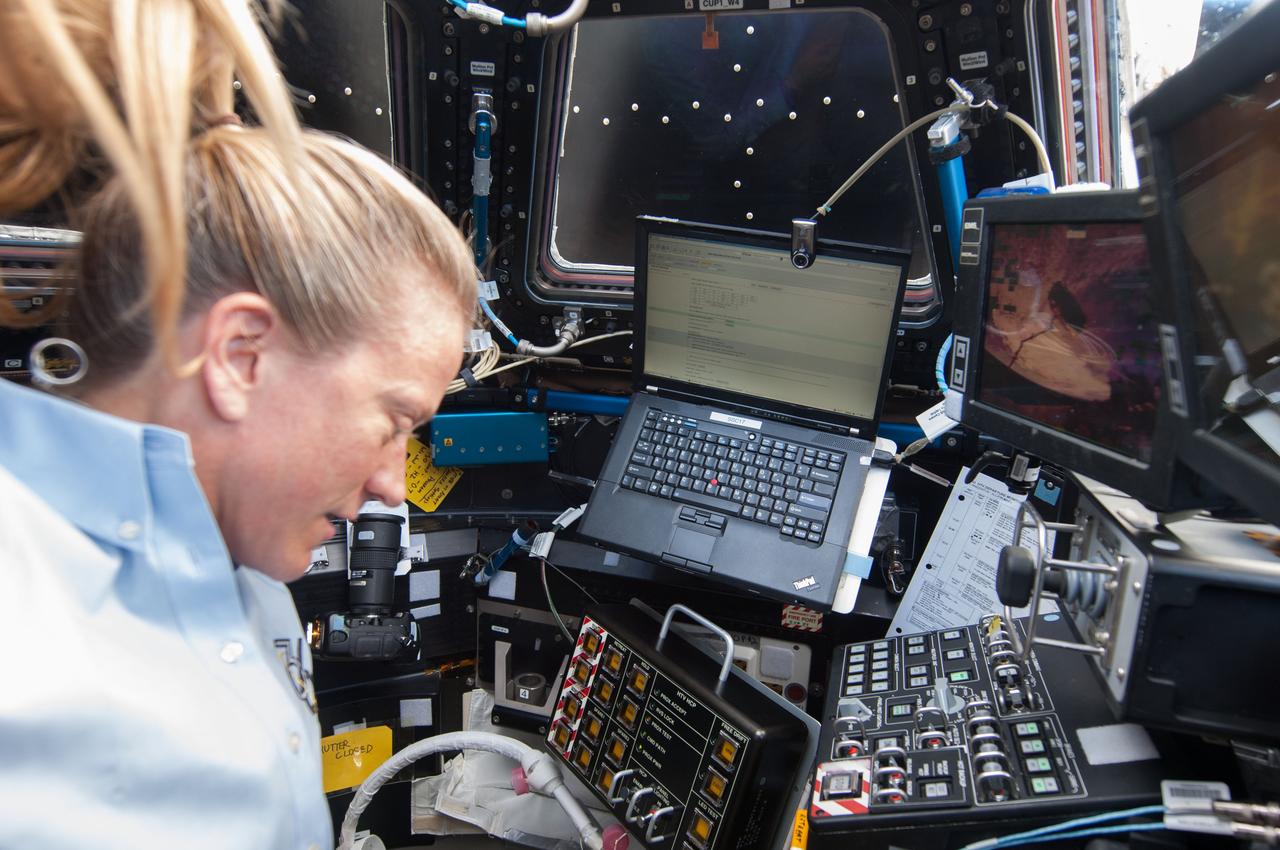
ISS036-E-039458 (3 Sept. 2013) --- NASA astronaut Karen Nyberg, Expedition 36 flight engineer, is pictured in the International Space Station?s Cupola during preparations to release the Japanese "Kounotori" H2 Transfer Vehicle-4 (HTV-4) ending its one-month stay at the space station. The automated resupply craft will be grappled by the Canadarm2, removed from the Harmony node and released for a destructive reentry into Earth?s atmosphere.
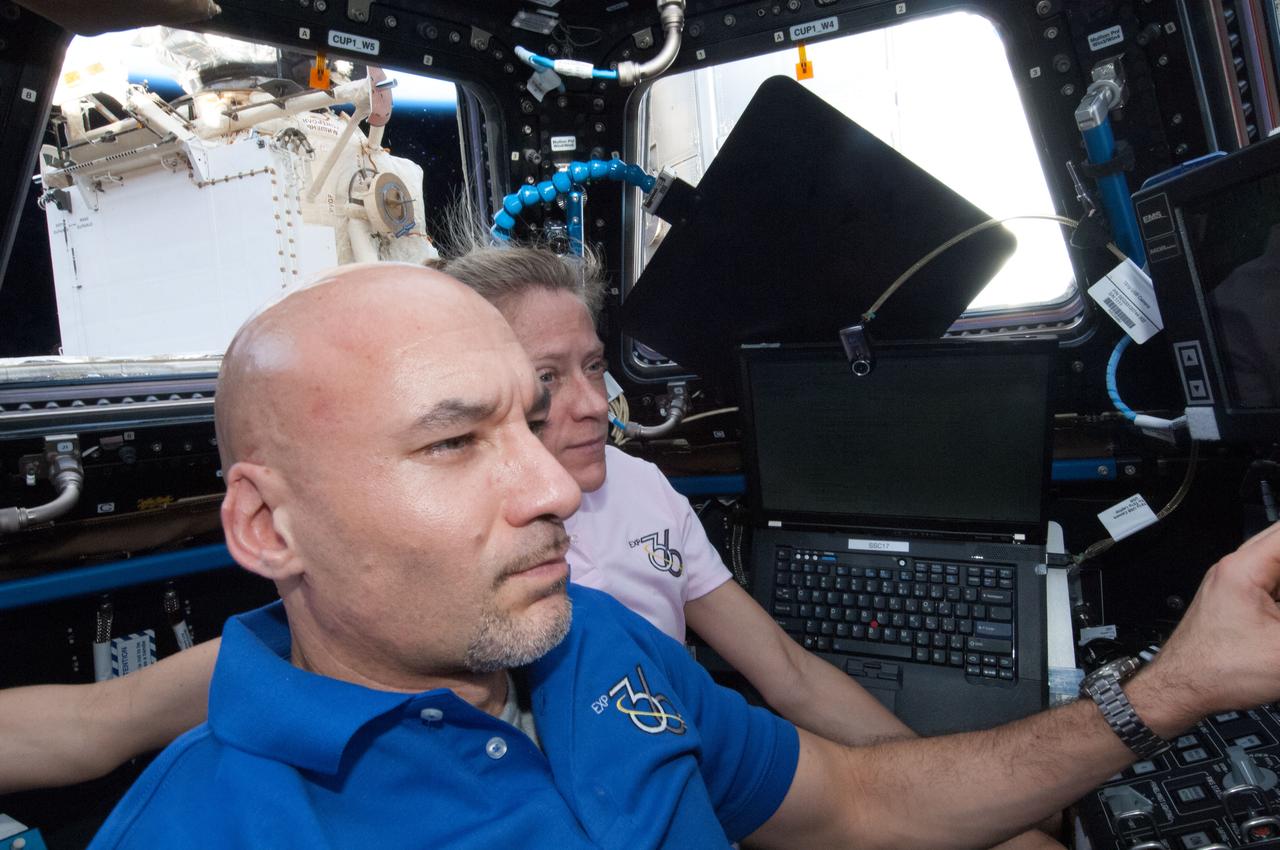
ISS036-E-026331 (29 July 2013) --- In the International Space Station?s Cupola, European Space Agency astronaut Luca Parmitano and NASA astronaut Karen Nyberg, both Expedition 36 flight engineers, participate in an onboard training activity in preparation for the grapple and berthing of the Japanese ?Kounotori? H2 Transfer Vehicle-4 (HTV-4) set for August 9.
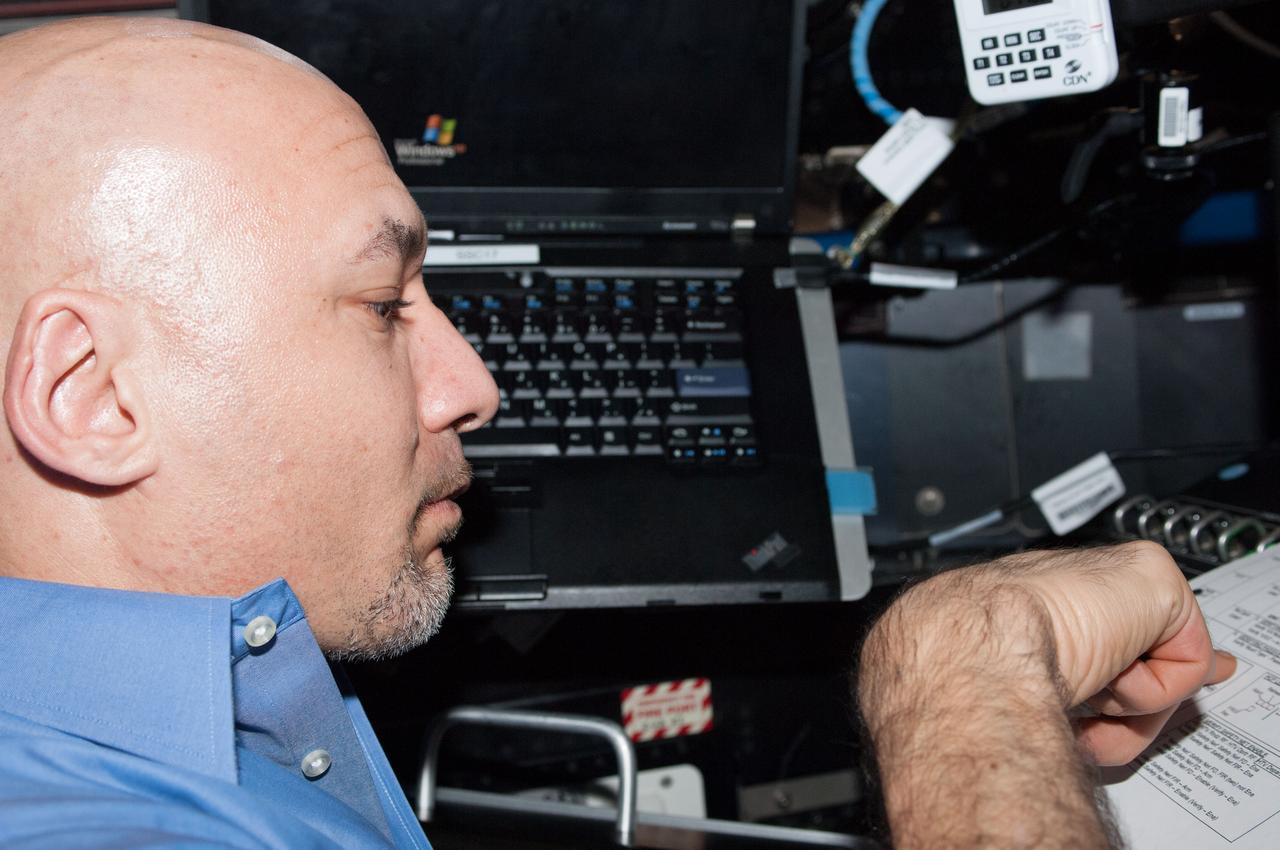
ISS036-E-039425 (3 Sept. 2013) --- European Space Agency astronaut Luca Parmitano, Expedition 36 flight engineer, reads over a procedures checklist in the International Space Station?s Cupola during preparations to release the Japanese "Kounotori" H2 Transfer Vehicle-4 (HTV-4) ending its one-month stay at the space station. The automated resupply craft will be grappled by the Canadarm2, removed from the Harmony node and released for a destructive reentry into Earth?s atmosphere.
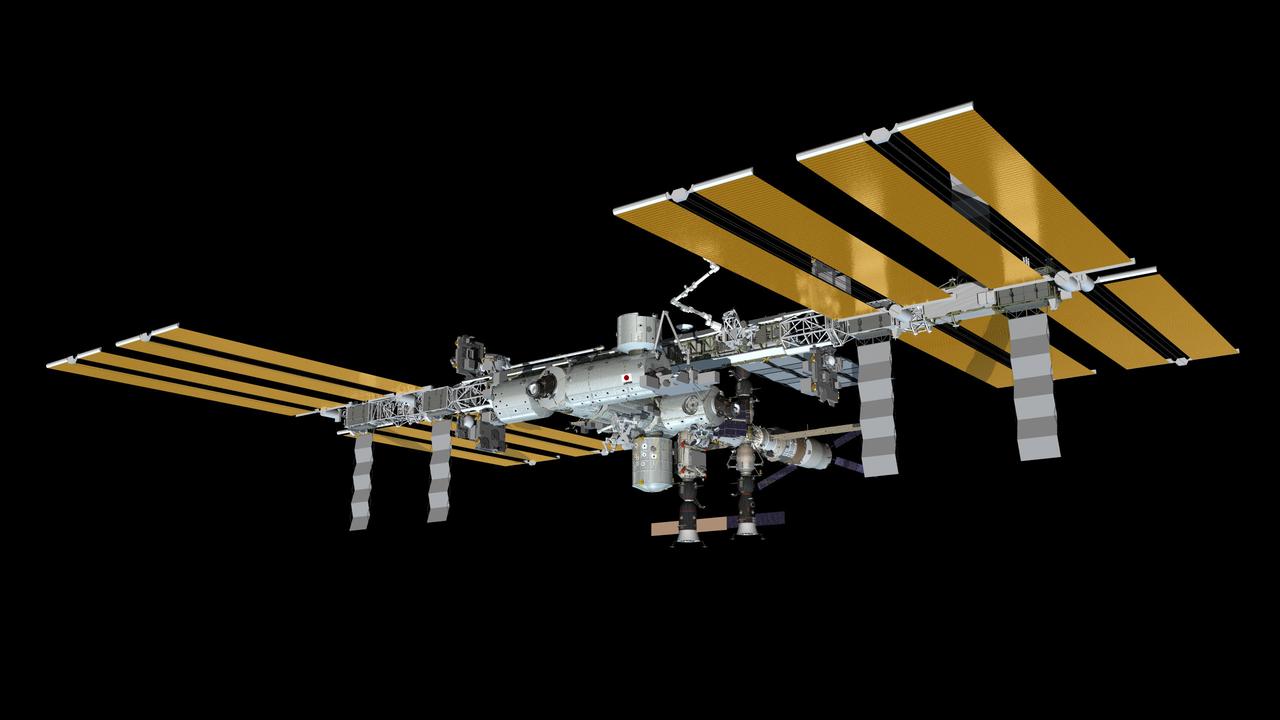
JSC2013-E-080240 (September 2013) --- Computer-generated artist?s rendering of the International Space Station as of Sept. 4, 2013. The unpiloted Japanese "Kounotori" H2 Transfer Vehicle-4 (HTV-4) is unberthed from the Harmony node. Progress 52 resupply vehicle is docked to the Pirs Docking Compartment. European Space Agency?s ?Albert Einstein? Automated Transfer Vehicle (ATV-4) cargo ship is docked to the Zvezda Service Module?s aft port. Soyuz 35 (TMA-09M) is attached to the Rassvet Mini-Research Module 1 (MRM1). Soyuz 34 (TMA-08M) is linked to the Poisk Mini-Research Module 2 (MRM2). Photo credit: NASA
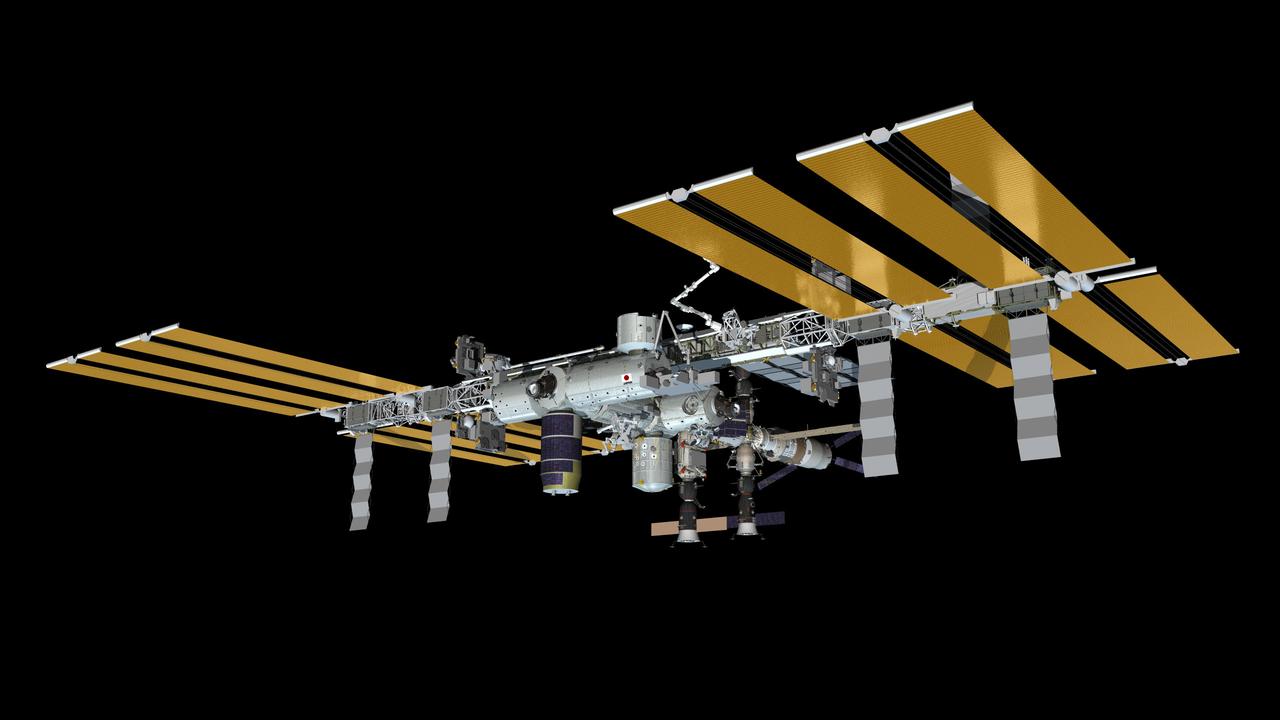
JSC2013-E-080239 (August 2013) --- Computer-generated artist?s rendering of the International Space Station as of Aug. 9, 2013. The unpiloted Japanese "Kounotori" H2 Transfer Vehicle-4 (HTV-4) is berthed to the Harmony node. Progress 52 resupply vehicle is docked to the Pirs Docking Compartment. European Space Agency?s ?Albert Einstein? Automated Transfer Vehicle (ATV-4) cargo ship is docked to the Zvezda Service Module?s aft port. Soyuz 35 (TMA-09M) is attached to the Rassvet Mini-Research Module 1 (MRM1). Soyuz 34 (TMA-08M) is linked to the Poisk Mini-Research Module 2 (MRM2). Photo credit: NASA
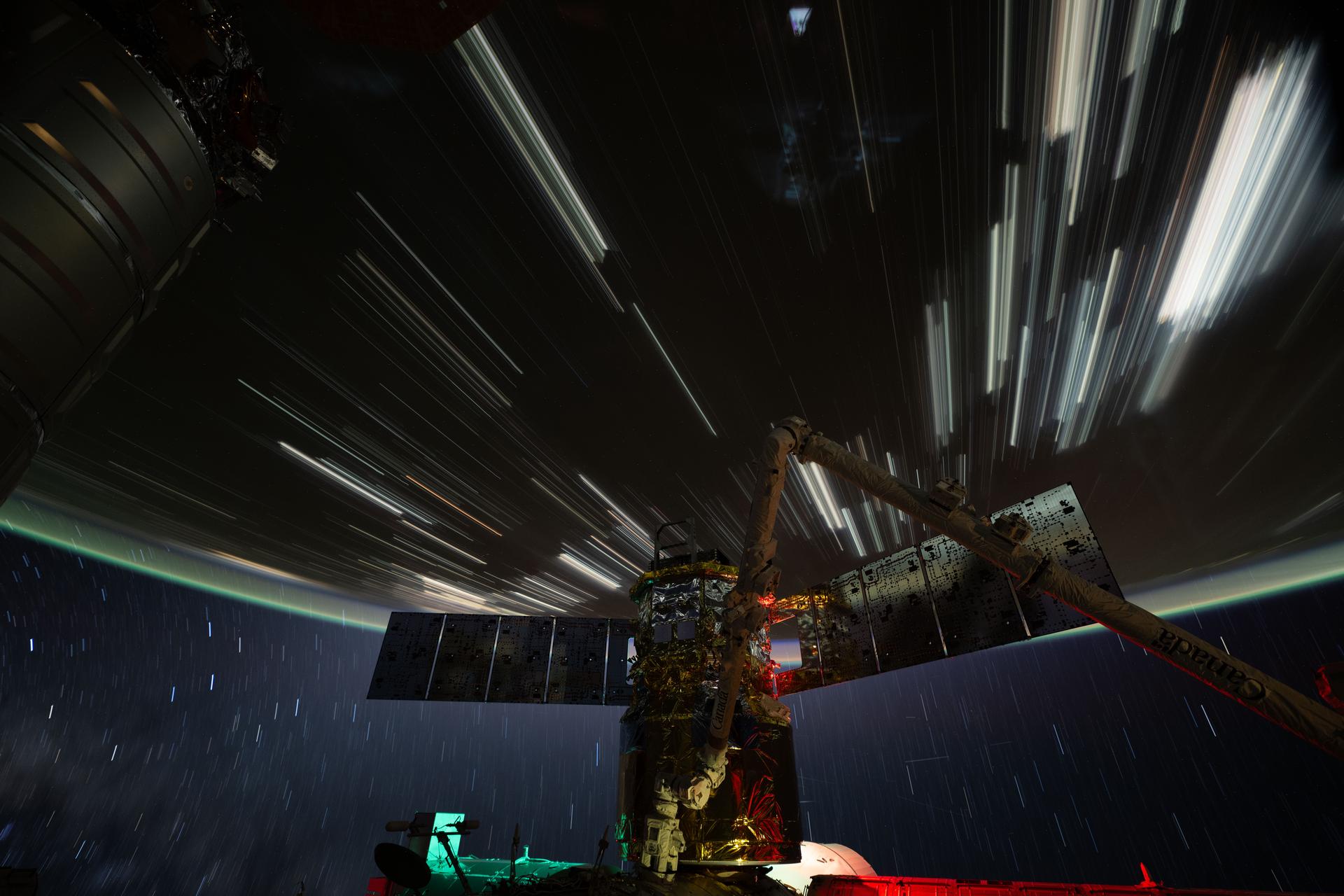
iss074e0319682 (Feb. 19, 2026) --- Star trails and city lights streak across this long-duration photograph taken from the International Space Station as it orbited 261 miles above the China–Mongolia border at approximately 4:42 a.m. local time. In the foreground is JAXA’s (Japan Aerospace Exploration Agency) HTV-X1 cargo craft, berthed to the Harmony module’s Earth-facing port, with the Canadarm2 robotic arm perched on a portable data grapple fixture in front. Credit: NASA/Chris Williams
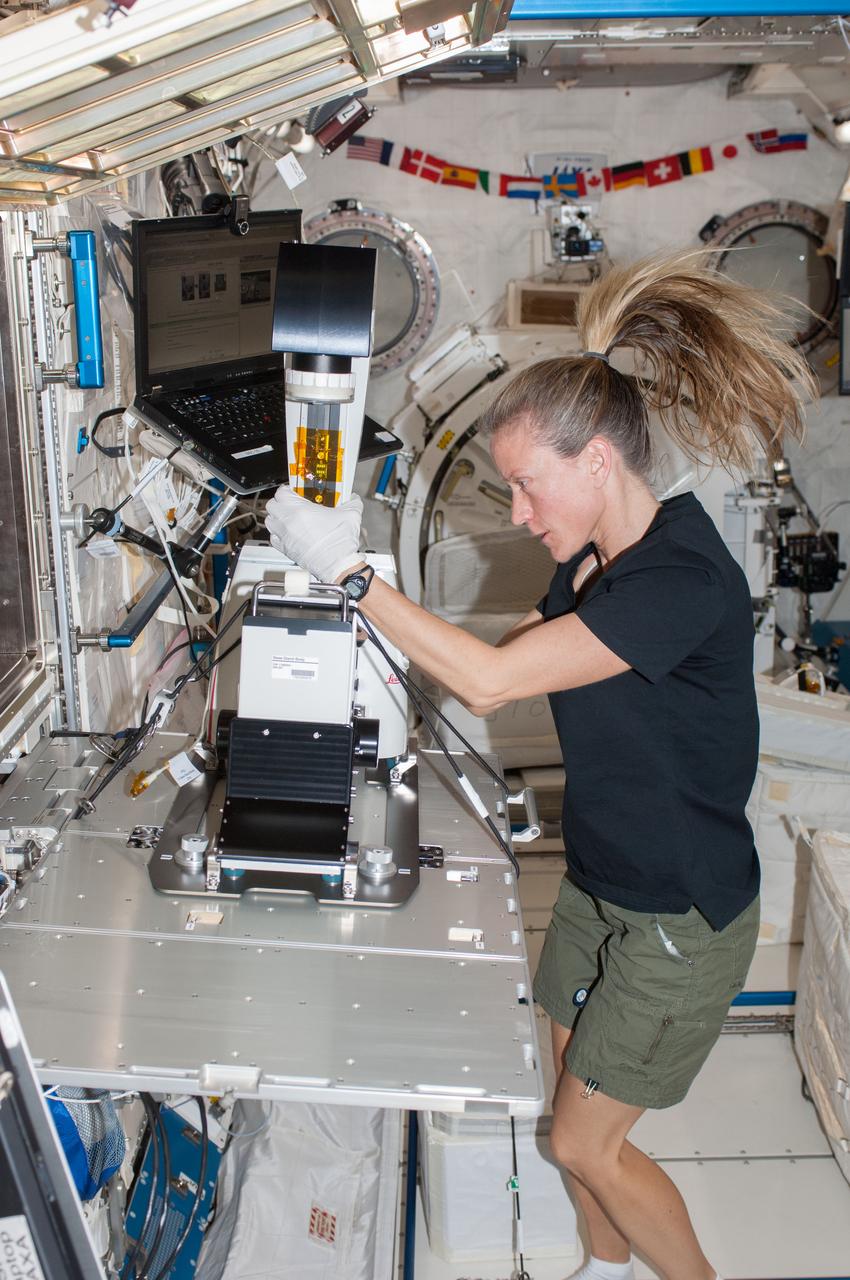
ISS036-E-020938 (17 July 2013) --- NASA astronaut Karen Nyberg, Expedition 36 flight engineer, works to setup the Multi-Purpose Small Payload Rack (MSPR) fluorescence microscope in the Kibo laboratory of the International Space Station. This configuration, along with the leak checks that the crew performed in June, is in preparation for the Aniso Tubule experiment launching on HTV-4 in August. Aniso Tubule will investigate the role of cortical microtubules and microtubule-associated proteins in plant growth while in microgravity.
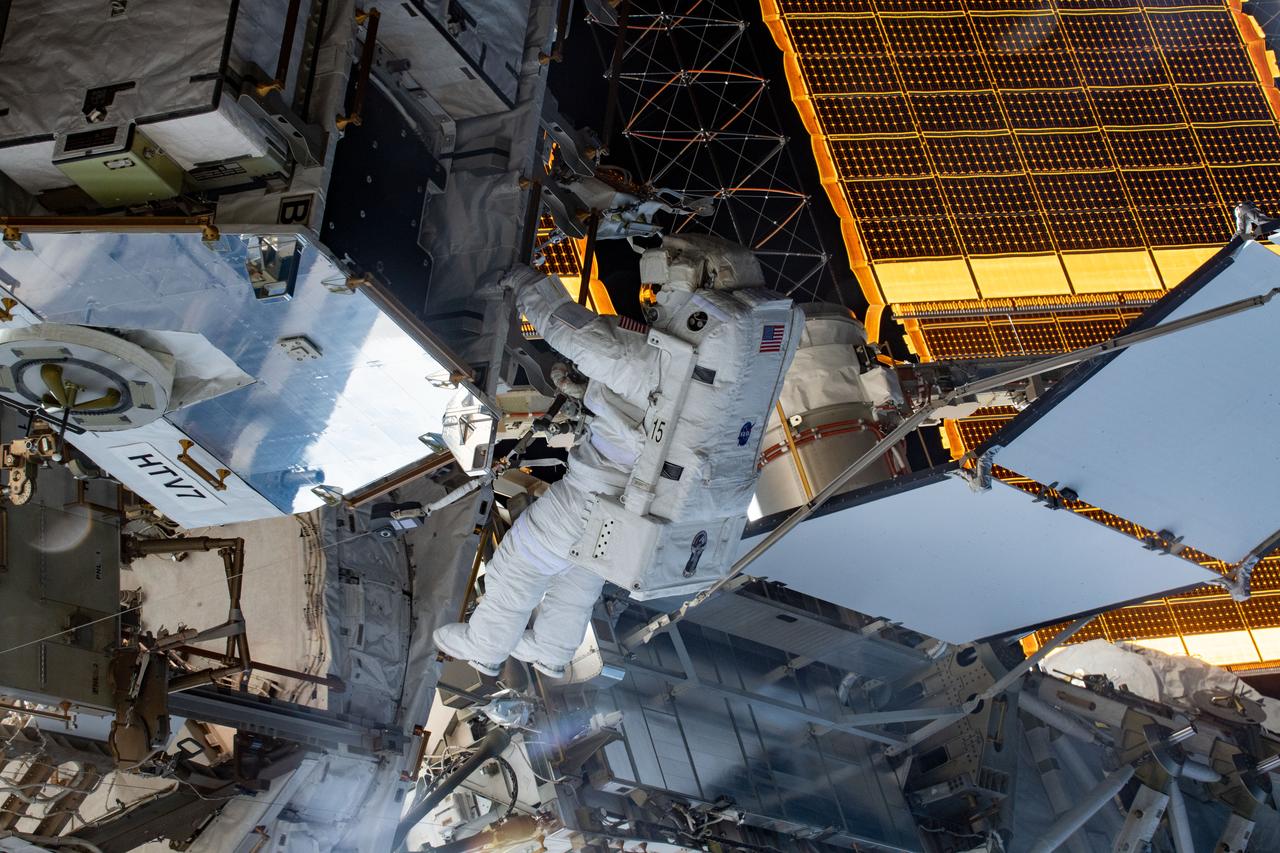
iss059e005281 (March 29, 2019) --- Spacewalker and NASA astronaut Christina Koch retrieves hardware from a pallet delivered on the Japan Aerospace Exploration Agency's (JAXA) HTV-7 (H-II Transfer Vehicle-7) to continue upgrading the International Space Station's power storage capacity. She and fellow spacewalker Nick Hague (out of frame) worked outside in the vacuum of space for six hours and 45 minutes to continue swapping batteries and install adapter plates on the station's Port-4 truss structure.
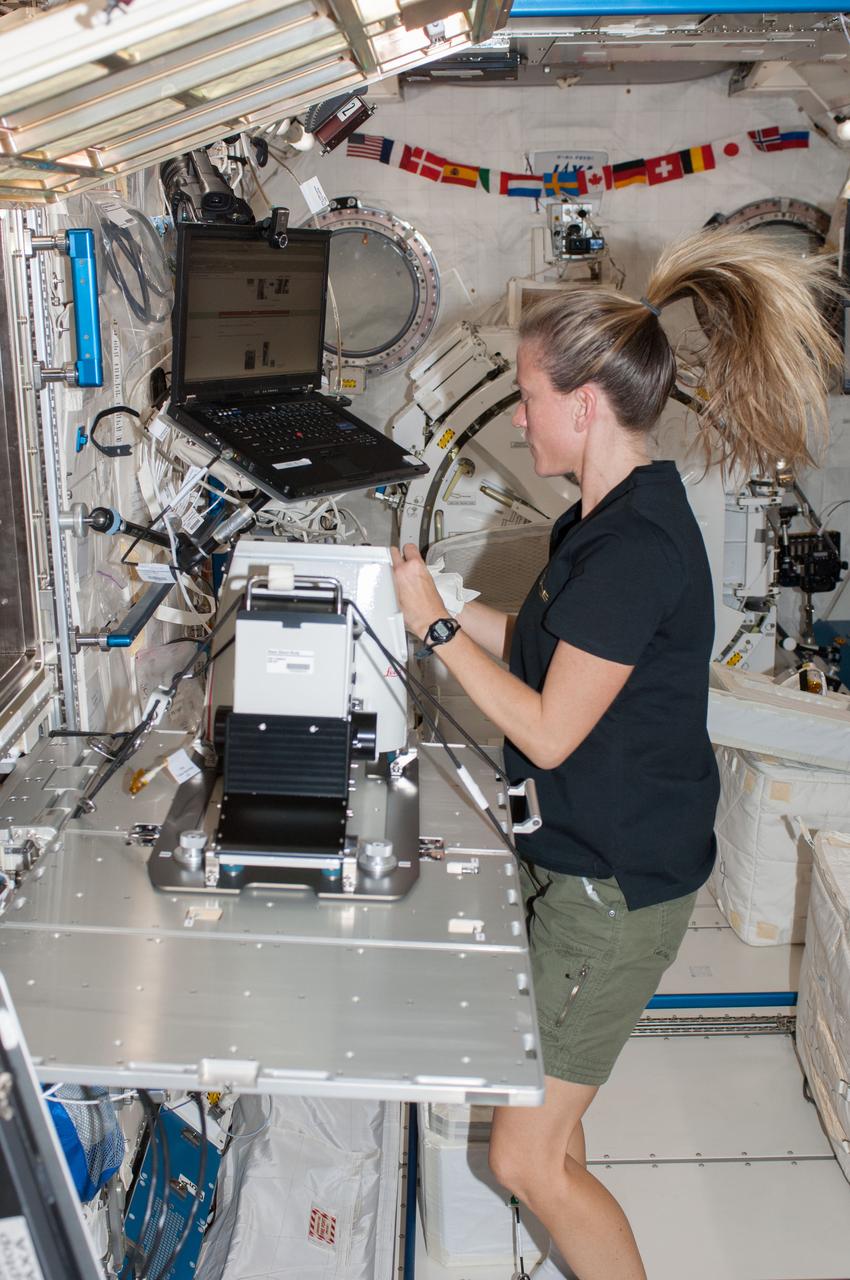
ISS036-E-020935 (17 July 2013) --- NASA astronaut Karen Nyberg, Expedition 36 flight engineer, works to setup the Multi-Purpose Small Payload Rack (MSPR) fluorescence microscope in the Kibo laboratory of the International Space Station. This configuration, along with the leak checks that the crew performed in June, is in preparation for the Aniso Tubule experiment launching on HTV-4 in August. Aniso Tubule will investigate the role of cortical microtubules and microtubule-associated proteins in plant growth while in microgravity.
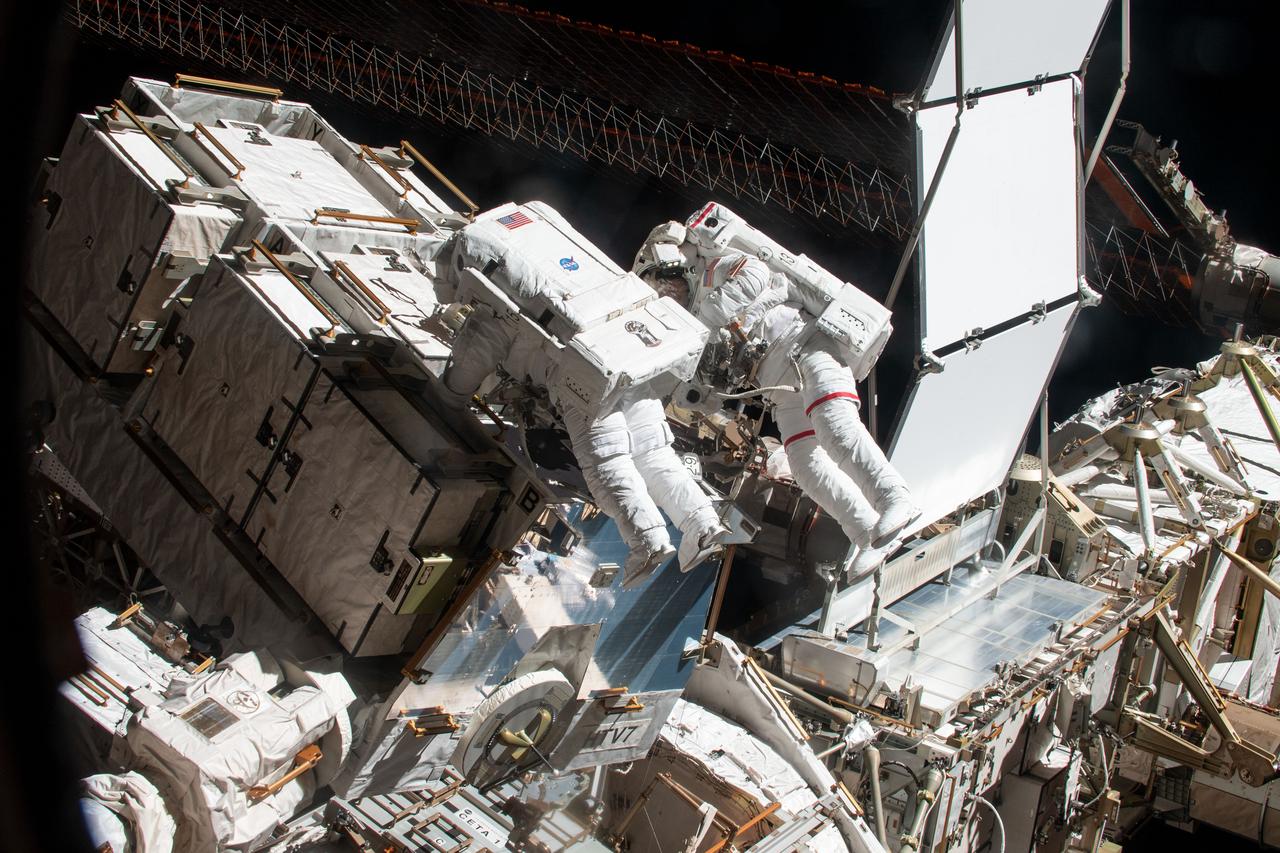
iss059e005401 (March 29, 2019) --- Spacewalkers and NASA astronauts Christina Koch and Nick Hague (suit with red stripe on legs) retrieve hardware from a pallet delivered on the Japan Aerospace Exploration Agency's (JAXA) HTV-7 (H-II Transfer Vehicle-7) to continue upgrading the International Space Station's power storage capacity. The duo worked outside in the vacuum of space for six hours and 45 minutes to continue swapping batteries and install adapter plates on the station's Port-4 truss structure.