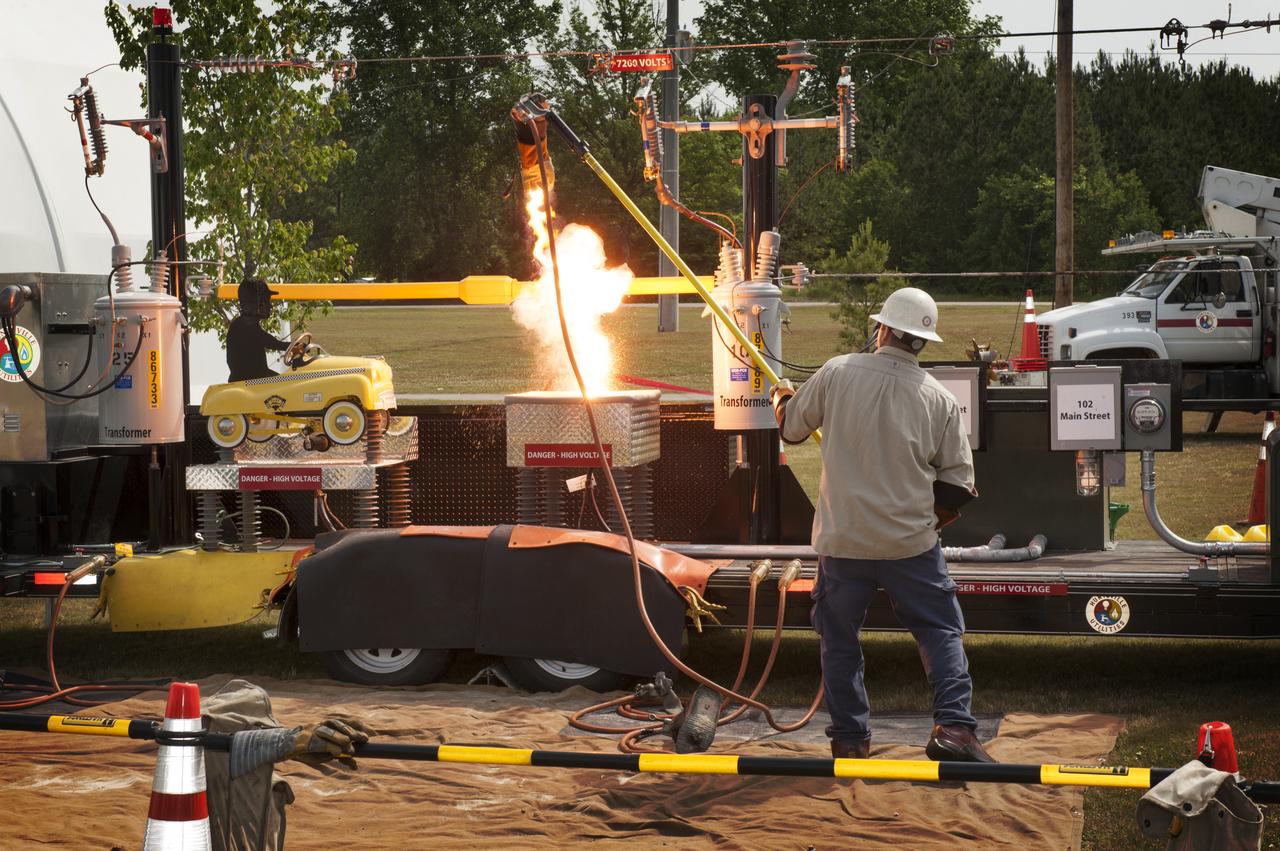
HUNTSVILLE UTILITIES EMPLOYEES GIVE A DEMONSTRATION OF ELECTRICAL SAFETY AND HOW OUR LOCAL ELECTRICAL SYSTEM WORKS AT SHE/EARTH DAY.
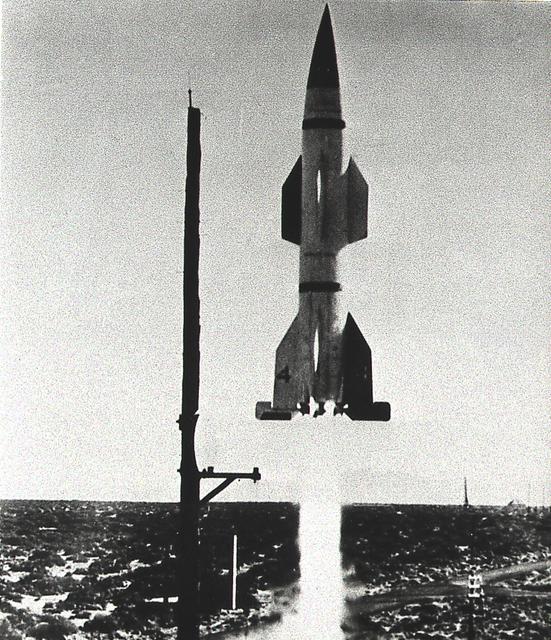
The Hermes A-1 rocket was designed by the U. S. Army after capturing the V-2 rocket from the German army at the conclusion of the Second World War. The Hermes A-1 is a modified V-2 rocket; it utilized the German aerodynamic configuration; however, internally it was a completely new design. This rocket was the first designed by the German Rocket Team at Redstone Arsenal in Huntsville, AL.
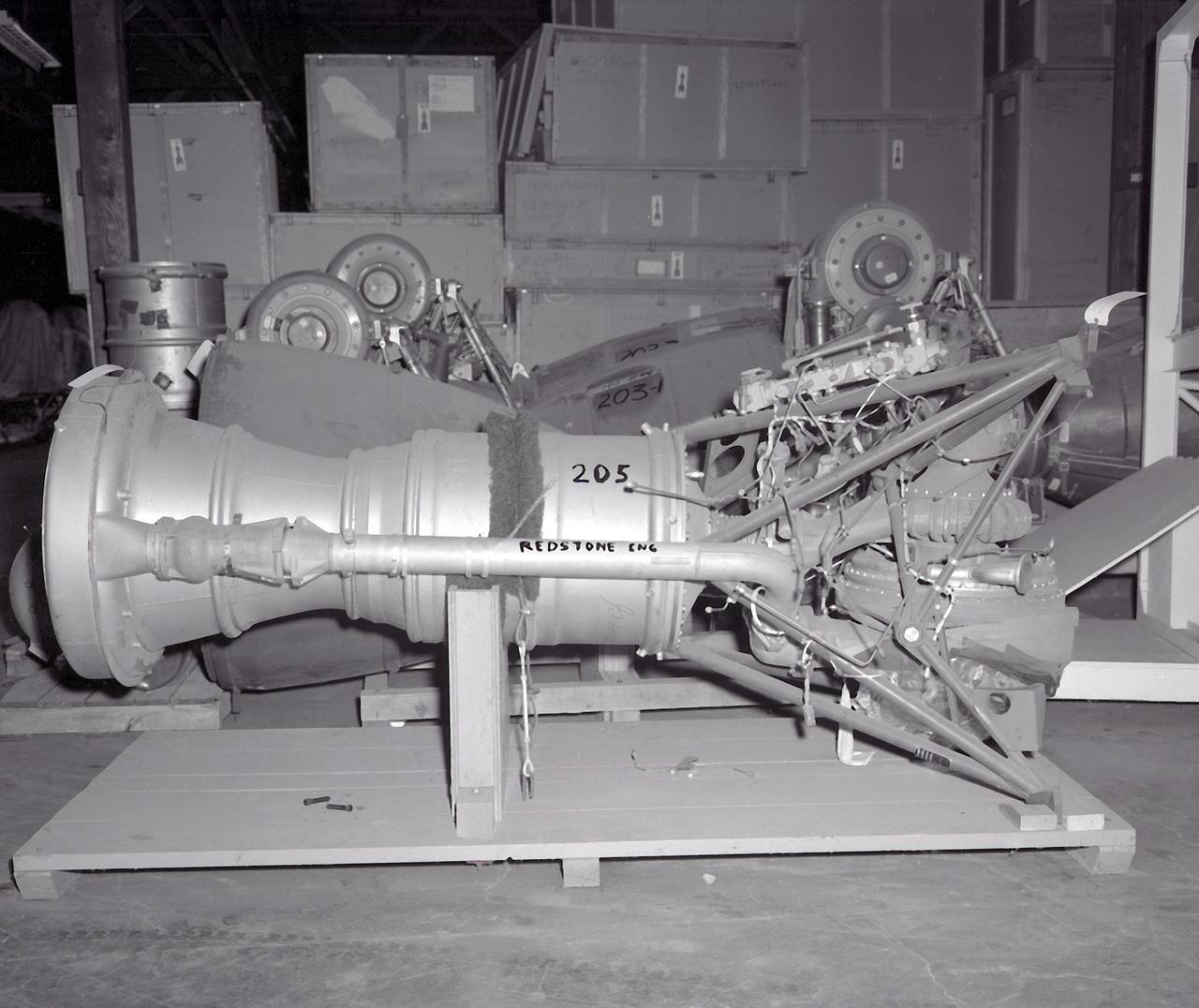
This photograph is of the engine for the Redstone rocket. The Redstone ballistic missile was a high-accuracy, liquid-propelled, surface-to-surface missile developed by the Army Ballistic Missile Agency, Redstone Arsenal, in Huntsville, Alabama, under the direction of Dr. von Braun. The Redstone engine was a modified and improved version of the Air Force's Navaho cruise missile engine of the late forties. The A-series, as this would be known, utilized a cylindrical combustion chamber as compared with the bulky, spherical V-2 chamber. By 1951, the Army was moving rapidly toward the design of the Redstone missile, and the production was begun in 1952. Redstone rockets became the "reliable workhorse" for America's early space program. As an example of its versatility, the Redstone was utilized in the booster for Explorer 1, the first American satellite, with no major changes to the engine or missile.
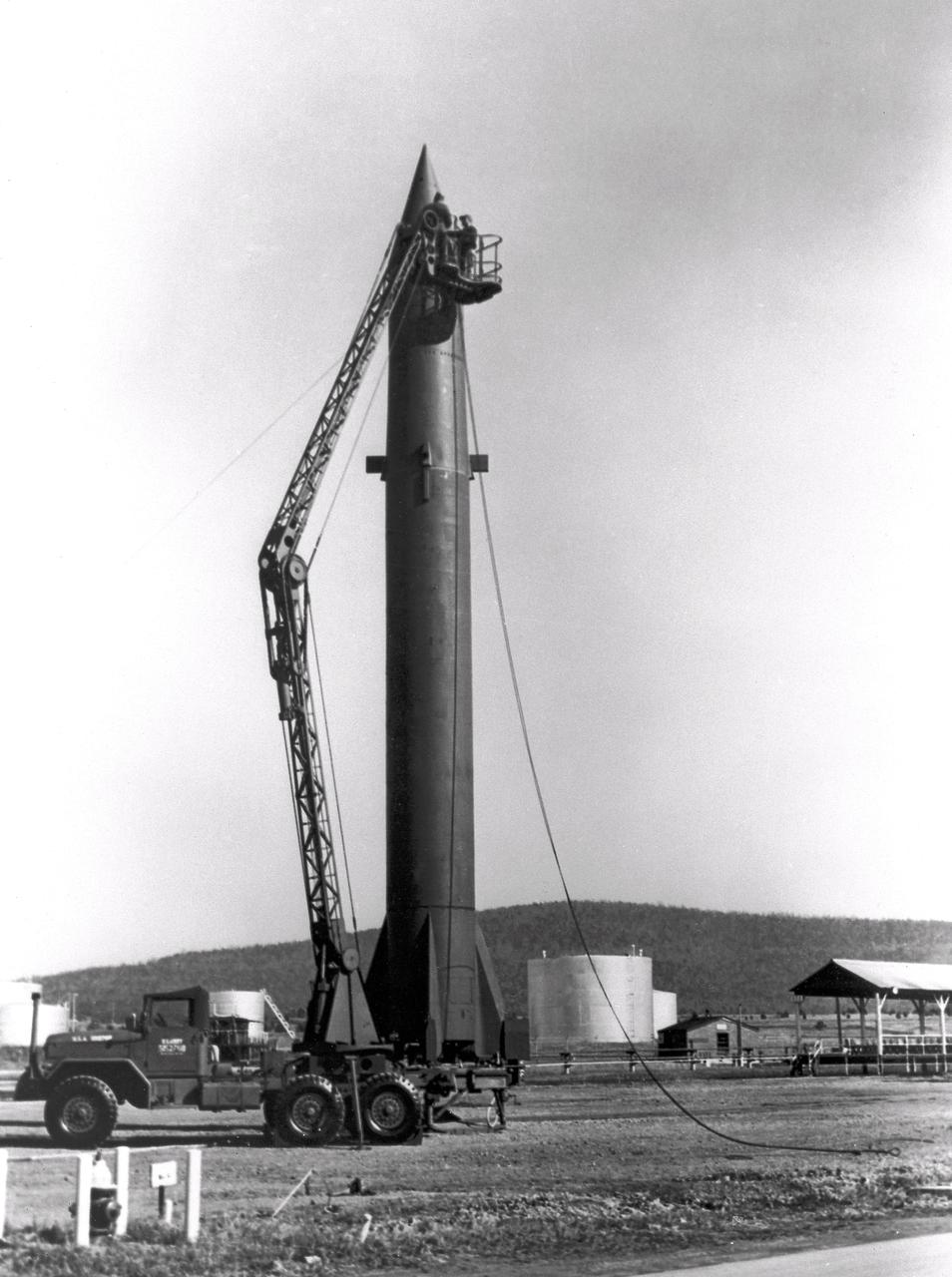
The image depicts Redstone missile being erected. The Redstone ballistic missile was a high-accuracy, liquid-propelled, surface-to-surface missile developed by Army Ballistic Missile Agency, Redstone Arsenal, in Huntsville, Alabama, under the direction of Dr. von Braun. The Redstone engine was a modified and improved version of the Air Force's Navaho cruise missile engine of the late forties. The A-series, as this would be known, utilized a cylindrical combustion chamber as compared with the bulky, spherical V-2 chamber. By 1951, the Army was moving rapidly toward the design of the Redstone missile, and the production was begun in 1952. Redstone rockets became the "reliable workhorse" for America's early space program. As an example of the versatility, Redstone was utilized in the booster for Explorer 1, the first American satellite, with no major changes to the engine or missile
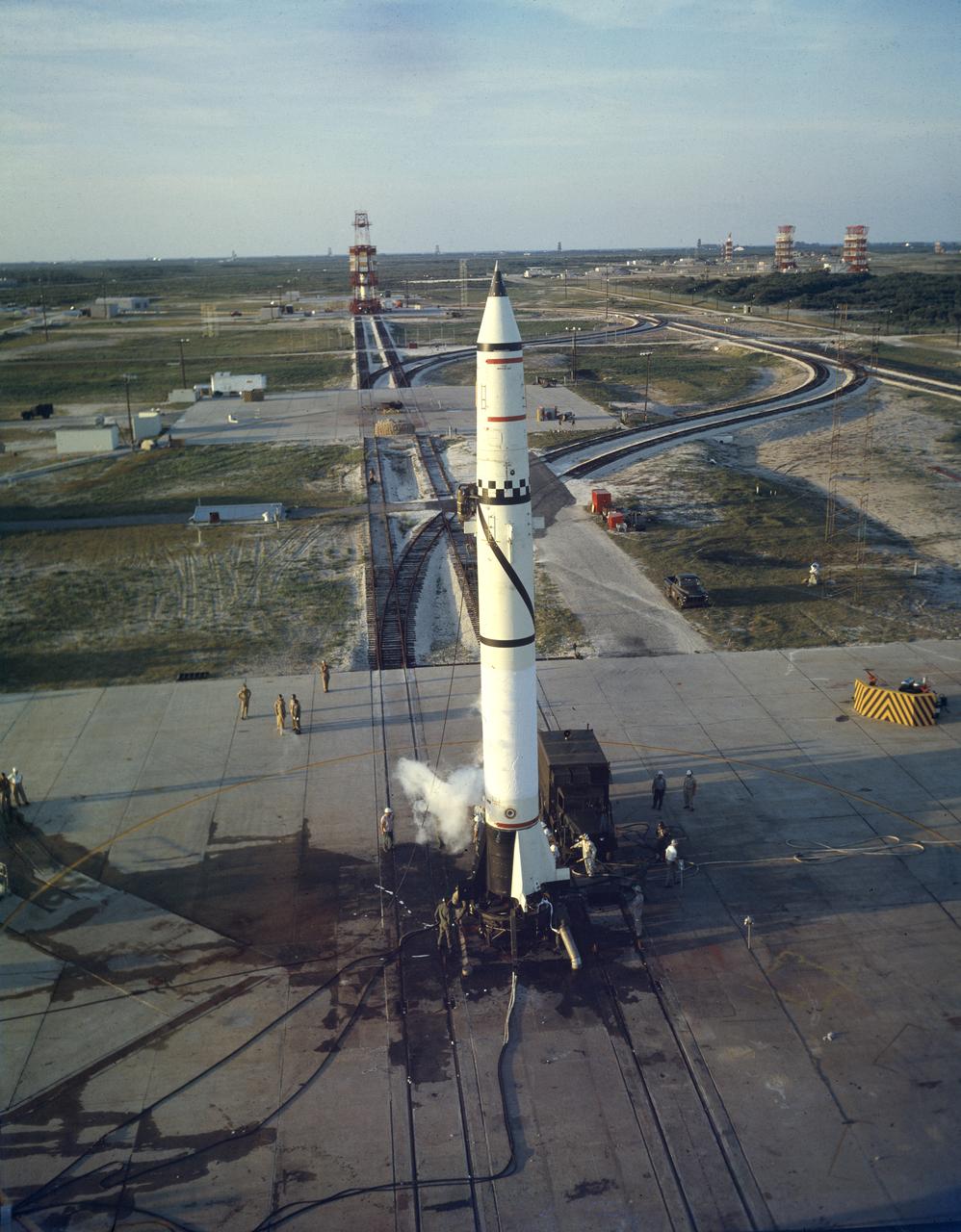
Redstone missile No. 1002 on the launch pad at Cape Canaveral, Florida, on May 16, 1958. The Redstone ballistic missile was a high-accuracy, liquid-propelled, surface-to-surface missile developed by the Army Ballistic Missile Agency, Redstone Arsenal, in Huntsville, Alabama, under the direction of Dr. von Braun. The Redstone engine was a modified and improved version of the Air Force's Navaho cruise missile engine of the late forties. The A-series, as this would be known, utilized a cylindrical combustion chamber as compared with the bulky, spherical V-2 chamber. By 1951, the Army was moving rapidly toward the design of the Redstone missile, and production was begun in 1952. Redstone rockets became the "reliable workhorse" for America's early space program. As an example of the versatility, Redstone was utilized in the booster for Explorer 1, the first American satellite, with no major changes to the engine or missile
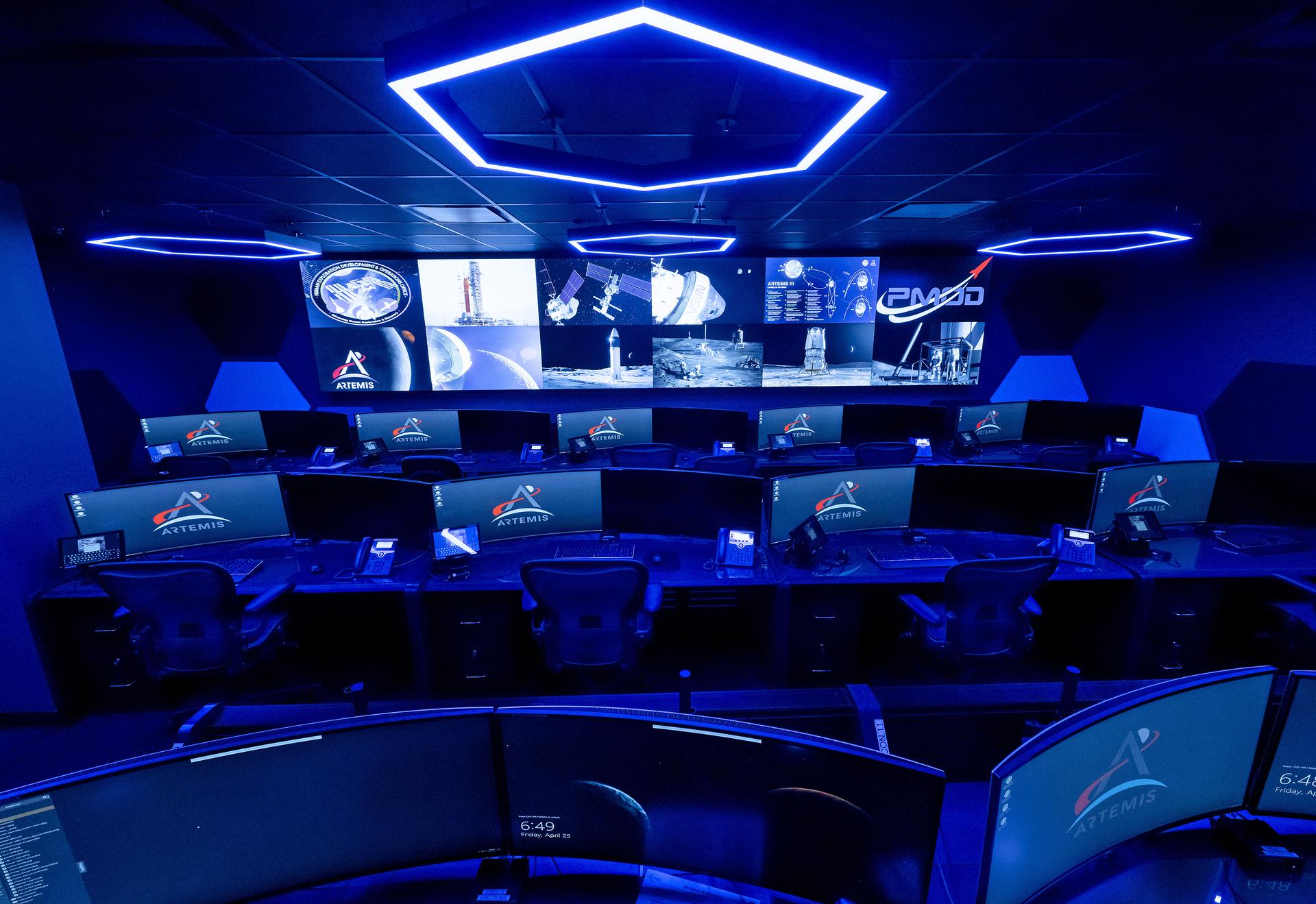
These photos offer a look inside the twin control rooms at NASA’s Marshall Space Flight Center in Huntsville, Alabama, where engineers will monitor Artemis science and future landing operations for Artemis. The LUCA (Lunar Utilization Control Area) and LESA (Lander Engineering Support Area) rooms are part of the Huntsville Operations Support Center at NASA Marshall. The LUCA is specially designed to support a wide variety of science operations on and around the Moon – and beyond. Engineers in the LUCA monitored operations for the Lunar Node-1 experiment, an autonomous navigation payload that was part of the first NASA Commercial Lunar Payload Services (CLPS) launch on Intuitive Machines’ Nova-C lunar lander in 2024. NASA Marshall flight controllers will use the LUCA again for Artemis II to monitor science operations. Beginning with Artemis III, members of the NASA Human Landing System Mission Insight Support Team – a group of engineers, safety leads, flight operations experts, and technical authorities – will work in the LESA. There, they will monitor lander systems in real-time and be involved in key decision-making processes throughout the mission. For more information, contact NASA Marshall’s Office of Communications at 256-544-0034.
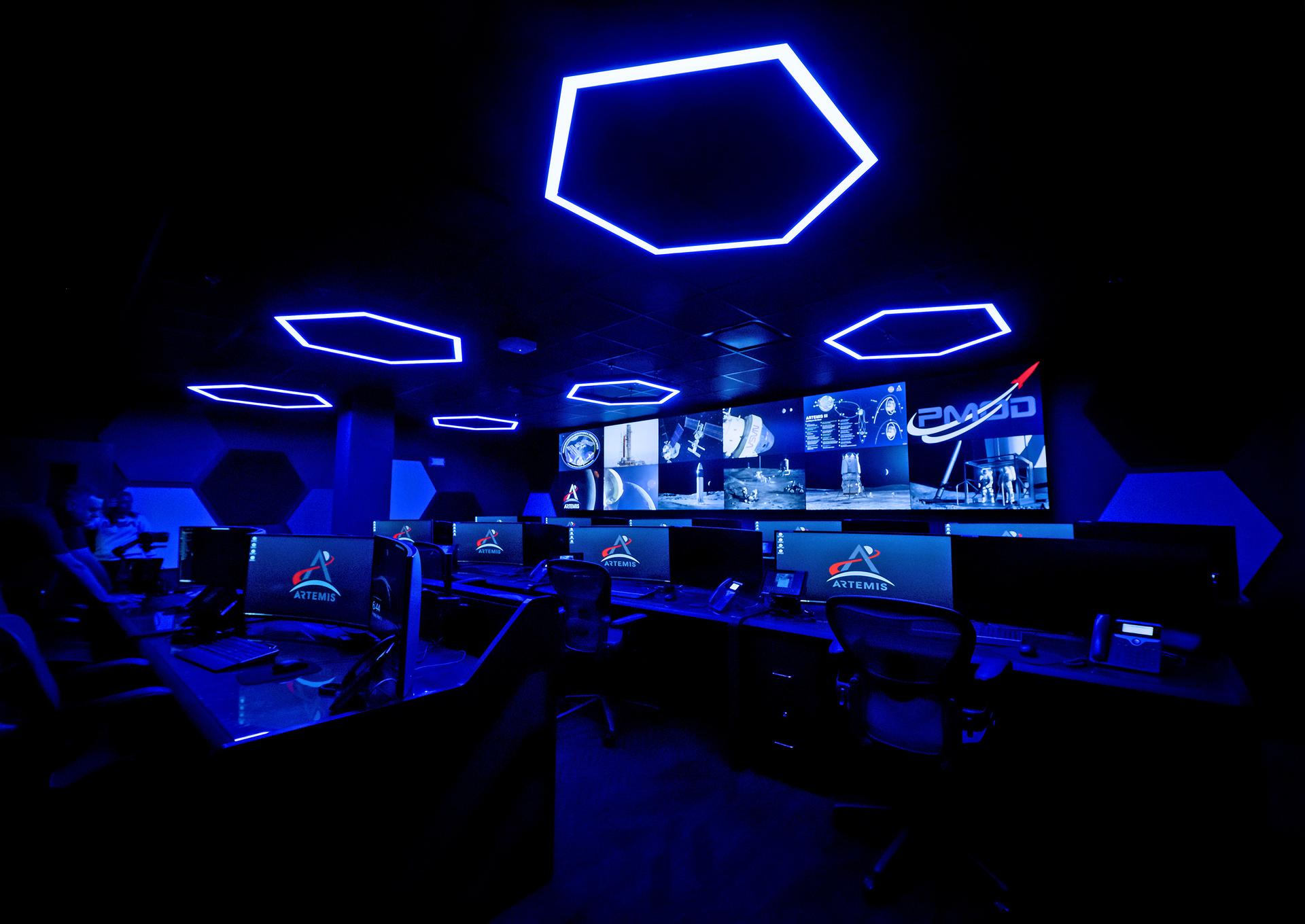
These photos offer a look inside the twin control rooms at NASA’s Marshall Space Flight Center in Huntsville, Alabama, where engineers will monitor Artemis science and future landing operations for Artemis. The LUCA (Lunar Utilization Control Area) and LESA (Lander Engineering Support Area) rooms are part of the Huntsville Operations Support Center at NASA Marshall. The LUCA is specially designed to support a wide variety of science operations on and around the Moon – and beyond. Engineers in the LUCA monitored operations for the Lunar Node-1 experiment, an autonomous navigation payload that was part of the first NASA Commercial Lunar Payload Services (CLPS) launch on Intuitive Machines’ Nova-C lunar lander in 2024. NASA Marshall flight controllers will use the LUCA again for Artemis II to monitor science operations. Beginning with Artemis III, members of the NASA Human Landing System Mission Insight Support Team – a group of engineers, safety leads, flight operations experts, and technical authorities – will work in the LESA. There, they will monitor lander systems in real-time and be involved in key decision-making processes throughout the mission. For more information, contact NASA Marshall’s Office of Communications at 256-544-0034.
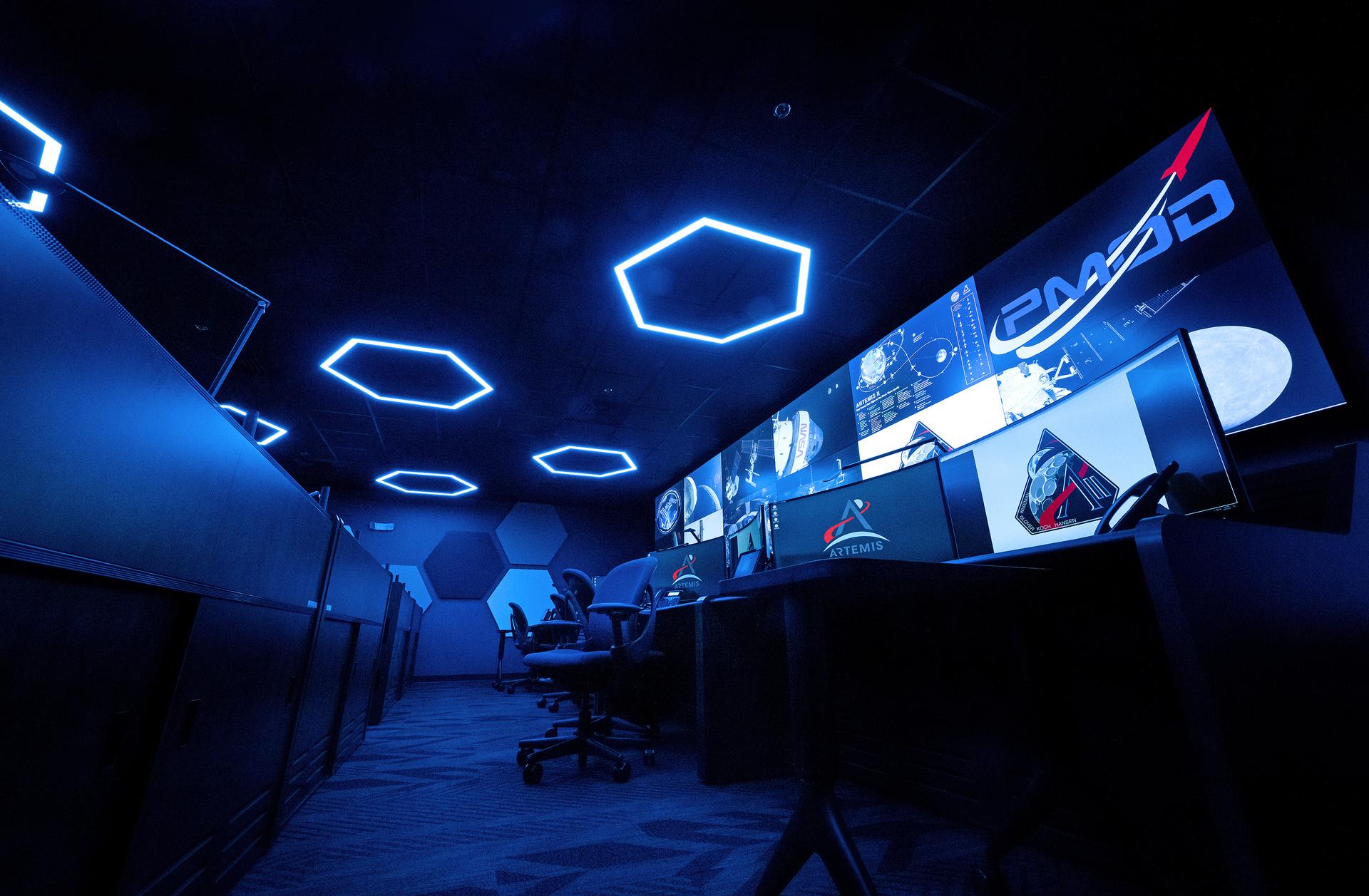
These photos offer a look inside the twin control rooms at NASA’s Marshall Space Flight Center in Huntsville, Alabama, where engineers will monitor Artemis science and future landing operations for Artemis. The LUCA (Lunar Utilization Control Area) and LESA (Lander Engineering Support Area) rooms are part of the Huntsville Operations Support Center at NASA Marshall. The LUCA is specially designed to support a wide variety of science operations on and around the Moon – and beyond. Engineers in the LUCA monitored operations for the Lunar Node-1 experiment, an autonomous navigation payload that was part of the first NASA Commercial Lunar Payload Services (CLPS) launch on Intuitive Machines’ Nova-C lunar lander in 2024. NASA Marshall flight controllers will use the LUCA again for Artemis II to monitor science operations. Beginning with Artemis III, members of the NASA Human Landing System Mission Insight Support Team – a group of engineers, safety leads, flight operations experts, and technical authorities – will work in the LESA. There, they will monitor lander systems in real-time and be involved in key decision-making processes throughout the mission. For more information, contact NASA Marshall’s Office of Communications at 256-544-0034.
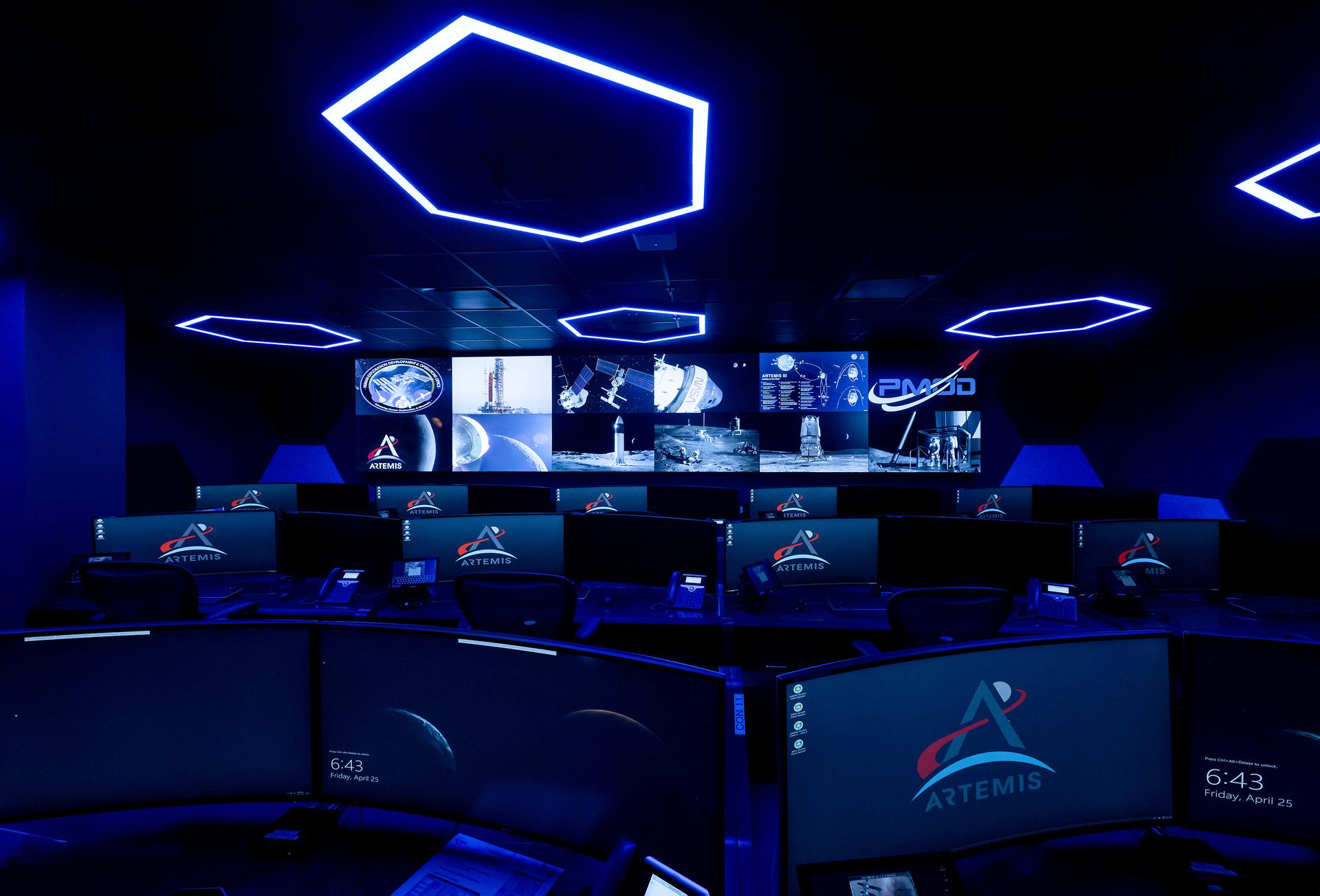
These photos offer a look inside the twin control rooms at NASA’s Marshall Space Flight Center in Huntsville, Alabama, where engineers will monitor Artemis science and future landing operations for Artemis. The LUCA (Lunar Utilization Control Area) and LESA (Lander Engineering Support Area) rooms are part of the Huntsville Operations Support Center at NASA Marshall. The LUCA is specially designed to support a wide variety of science operations on and around the Moon – and beyond. Engineers in the LUCA monitored operations for the Lunar Node-1 experiment, an autonomous navigation payload that was part of the first NASA Commercial Lunar Payload Services (CLPS) launch on Intuitive Machines’ Nova-C lunar lander in 2024. NASA Marshall flight controllers will use the LUCA again for Artemis II to monitor science operations. Beginning with Artemis III, members of the NASA Human Landing System Mission Insight Support Team – a group of engineers, safety leads, flight operations experts, and technical authorities – will work in the LESA. There, they will monitor lander systems in real-time and be involved in key decision-making processes throughout the mission. For more information, contact NASA Marshall’s Office of Communications at 256-544-0034.
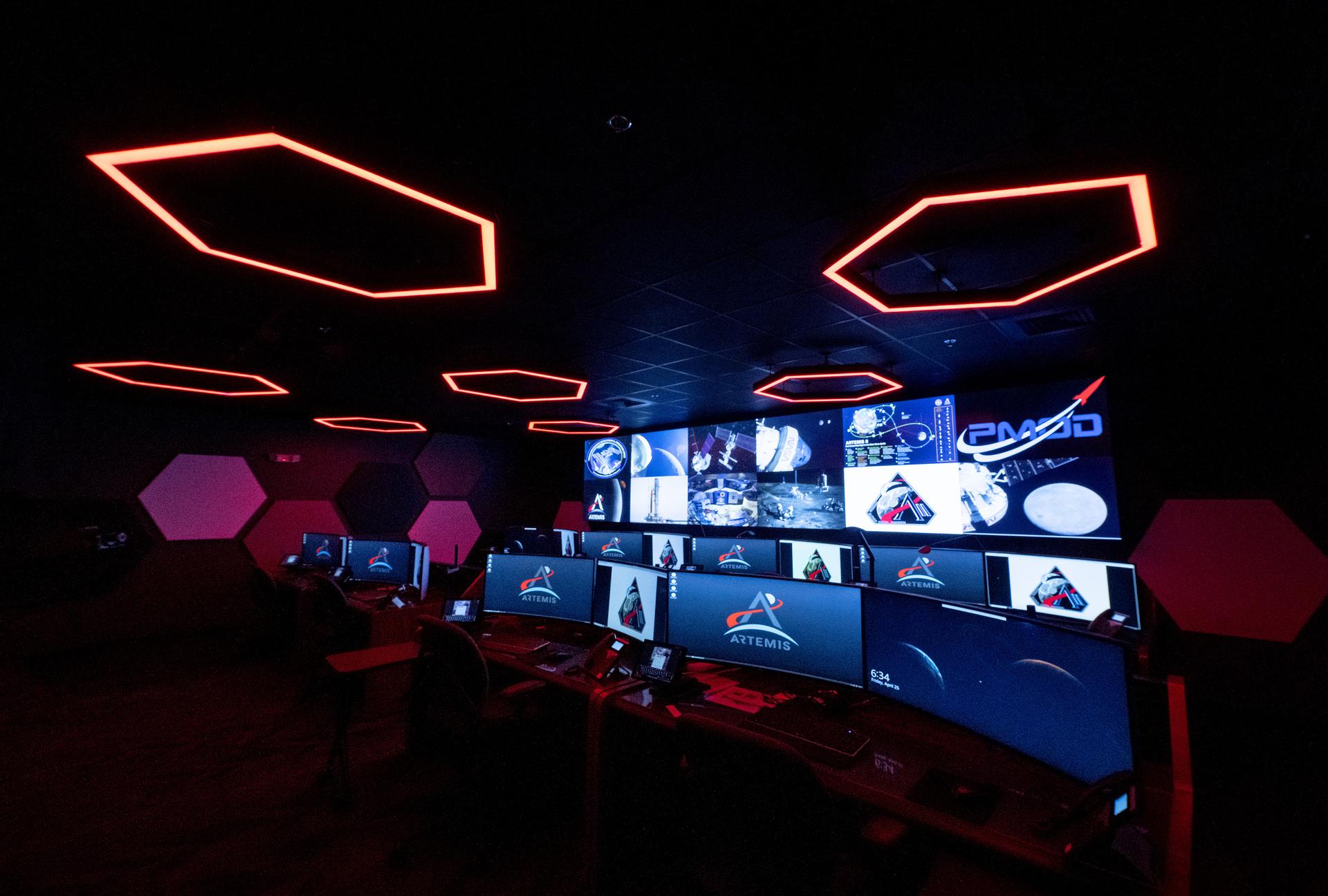
These photos offer a look inside the twin control rooms at NASA’s Marshall Space Flight Center in Huntsville, Alabama, where engineers will monitor Artemis science and future landing operations for Artemis. The LUCA (Lunar Utilization Control Area) and LESA (Lander Engineering Support Area) rooms are part of the Huntsville Operations Support Center at NASA Marshall. The LUCA is specially designed to support a wide variety of science operations on and around the Moon – and beyond. Engineers in the LUCA monitored operations for the Lunar Node-1 experiment, an autonomous navigation payload that was part of the first NASA Commercial Lunar Payload Services (CLPS) launch on Intuitive Machines’ Nova-C lunar lander in 2024. NASA Marshall flight controllers will use the LUCA again for Artemis II to monitor science operations. Beginning with Artemis III, members of the NASA Human Landing System Mission Insight Support Team – a group of engineers, safety leads, flight operations experts, and technical authorities – will work in the LESA. There, they will monitor lander systems in real-time and be involved in key decision-making processes throughout the mission. For more information, contact NASA Marshall’s Office of Communications at 256-544-0034.
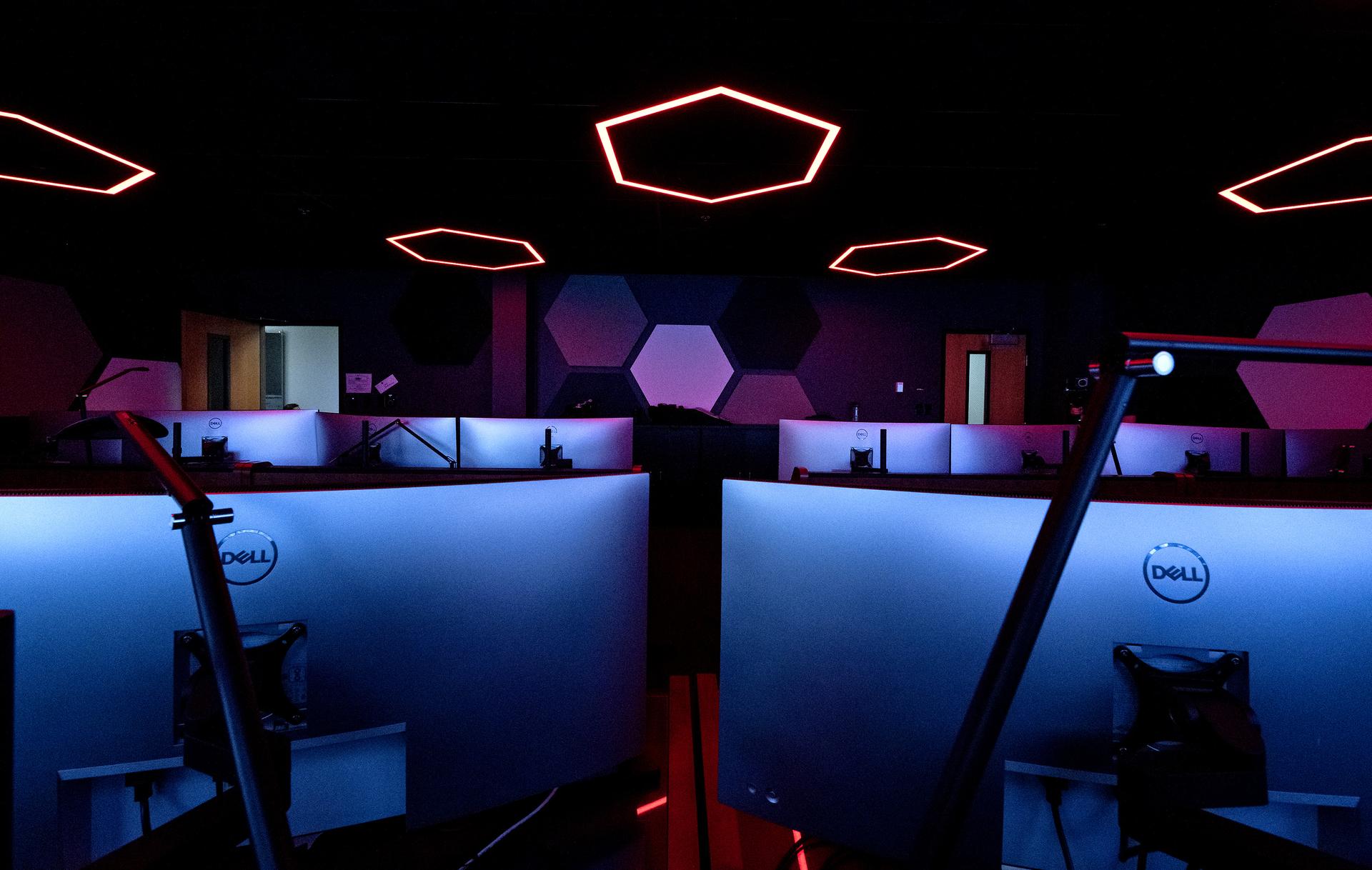
These photos offer a look inside the twin control rooms at NASA’s Marshall Space Flight Center in Huntsville, Alabama, where engineers will monitor Artemis science and future landing operations for Artemis. The LUCA (Lunar Utilization Control Area) and LESA (Lander Engineering Support Area) rooms are part of the Huntsville Operations Support Center at NASA Marshall. The LUCA is specially designed to support a wide variety of science operations on and around the Moon – and beyond. Engineers in the LUCA monitored operations for the Lunar Node-1 experiment, an autonomous navigation payload that was part of the first NASA Commercial Lunar Payload Services (CLPS) launch on Intuitive Machines’ Nova-C lunar lander in 2024. NASA Marshall flight controllers will use the LUCA again for Artemis II to monitor science operations. Beginning with Artemis III, members of the NASA Human Landing System Mission Insight Support Team – a group of engineers, safety leads, flight operations experts, and technical authorities – will work in the LESA. There, they will monitor lander systems in real-time and be involved in key decision-making processes throughout the mission. For more information, contact NASA Marshall’s Office of Communications at 256-544-0034.
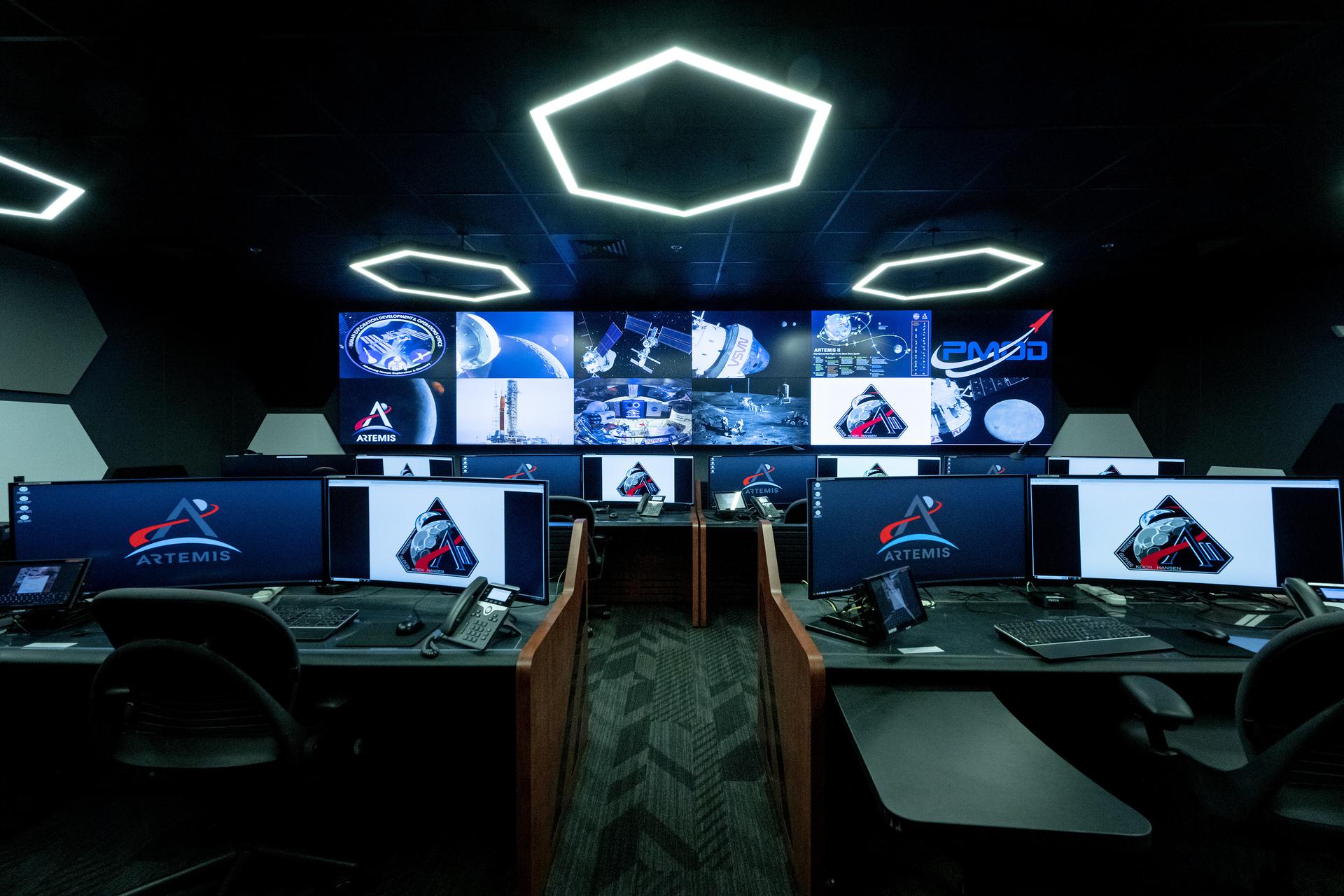
These photos offer a look inside the twin control rooms at NASA’s Marshall Space Flight Center in Huntsville, Alabama, where engineers will monitor Artemis science and future landing operations for Artemis. The LUCA (Lunar Utilization Control Area) and LESA (Lander Engineering Support Area) rooms are part of the Huntsville Operations Support Center at NASA Marshall. The LUCA is specially designed to support a wide variety of science operations on and around the Moon – and beyond. Engineers in the LUCA monitored operations for the Lunar Node-1 experiment, an autonomous navigation payload that was part of the first NASA Commercial Lunar Payload Services (CLPS) launch on Intuitive Machines’ Nova-C lunar lander in 2024. NASA Marshall flight controllers will use the LUCA again for Artemis II to monitor science operations. Beginning with Artemis III, members of the NASA Human Landing System Mission Insight Support Team – a group of engineers, safety leads, flight operations experts, and technical authorities – will work in the LESA. There, they will monitor lander systems in real-time and be involved in key decision-making processes throughout the mission. For more information, contact NASA Marshall’s Office of Communications at 256-544-0034.
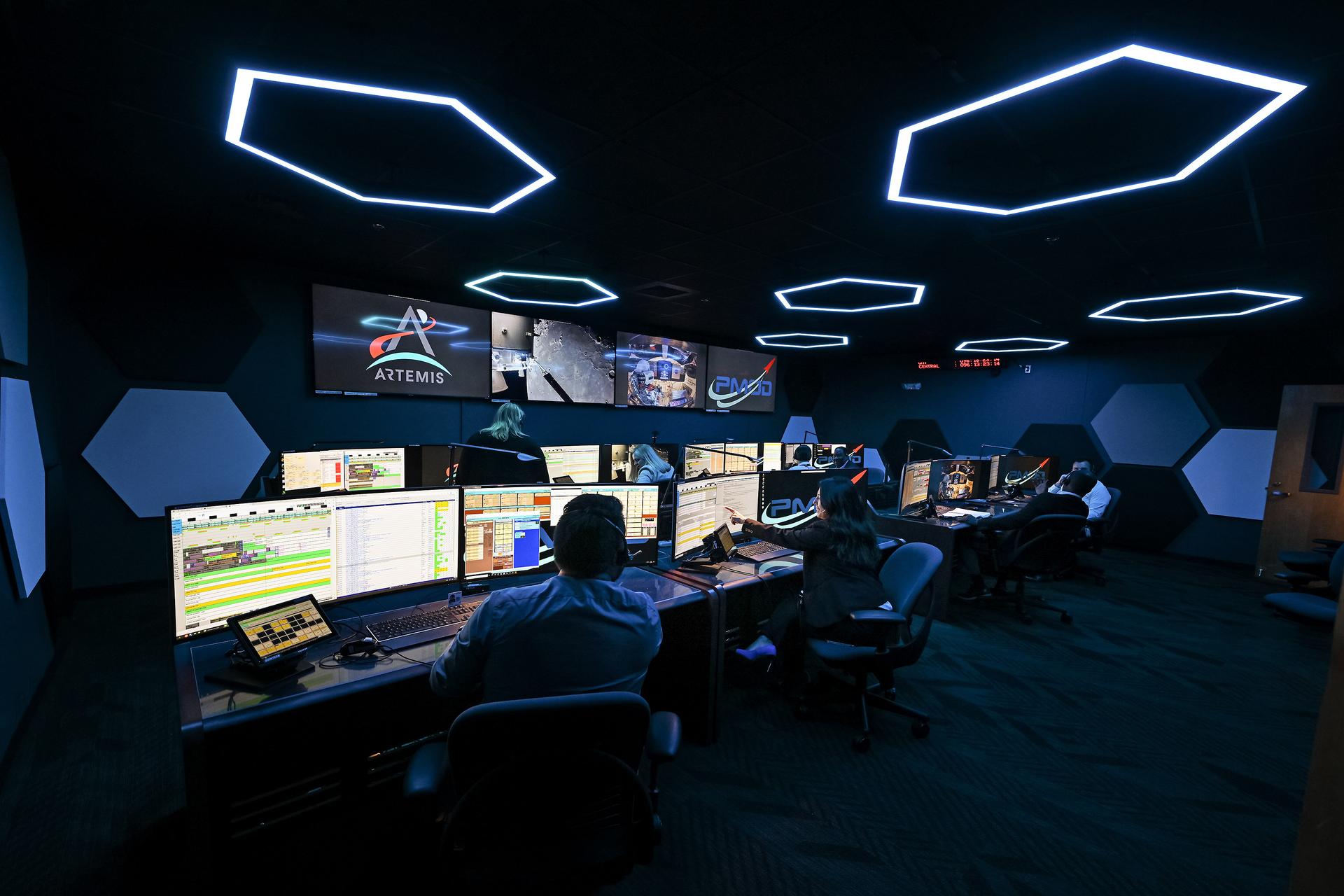
These photos offer a look inside the twin control rooms at NASA’s Marshall Space Flight Center in Huntsville, Alabama, where engineers will monitor Artemis science and future landing operations for Artemis. The LUCA (Lunar Utilization Control Area) and LESA (Lander Engineering Support Area) rooms are part of the Huntsville Operations Support Center at NASA Marshall. The LUCA is specially designed to support a wide variety of science operations on and around the Moon – and beyond. Engineers in the LUCA monitored operations for the Lunar Node-1 experiment, an autonomous navigation payload that was part of the first NASA Commercial Lunar Payload Services (CLPS) launch on Intuitive Machines’ Nova-C lunar lander in 2024. NASA Marshall flight controllers will use the LUCA again for Artemis II to monitor science operations. Beginning with Artemis III, members of the NASA Human Landing System Mission Insight Support Team – a group of engineers, safety leads, flight operations experts, and technical authorities – will work in the LESA. There, they will monitor lander systems in real-time and be involved in key decision-making processes throughout the mission. For more information, contact NASA Marshall’s Office of Communications at 256-544-0034.
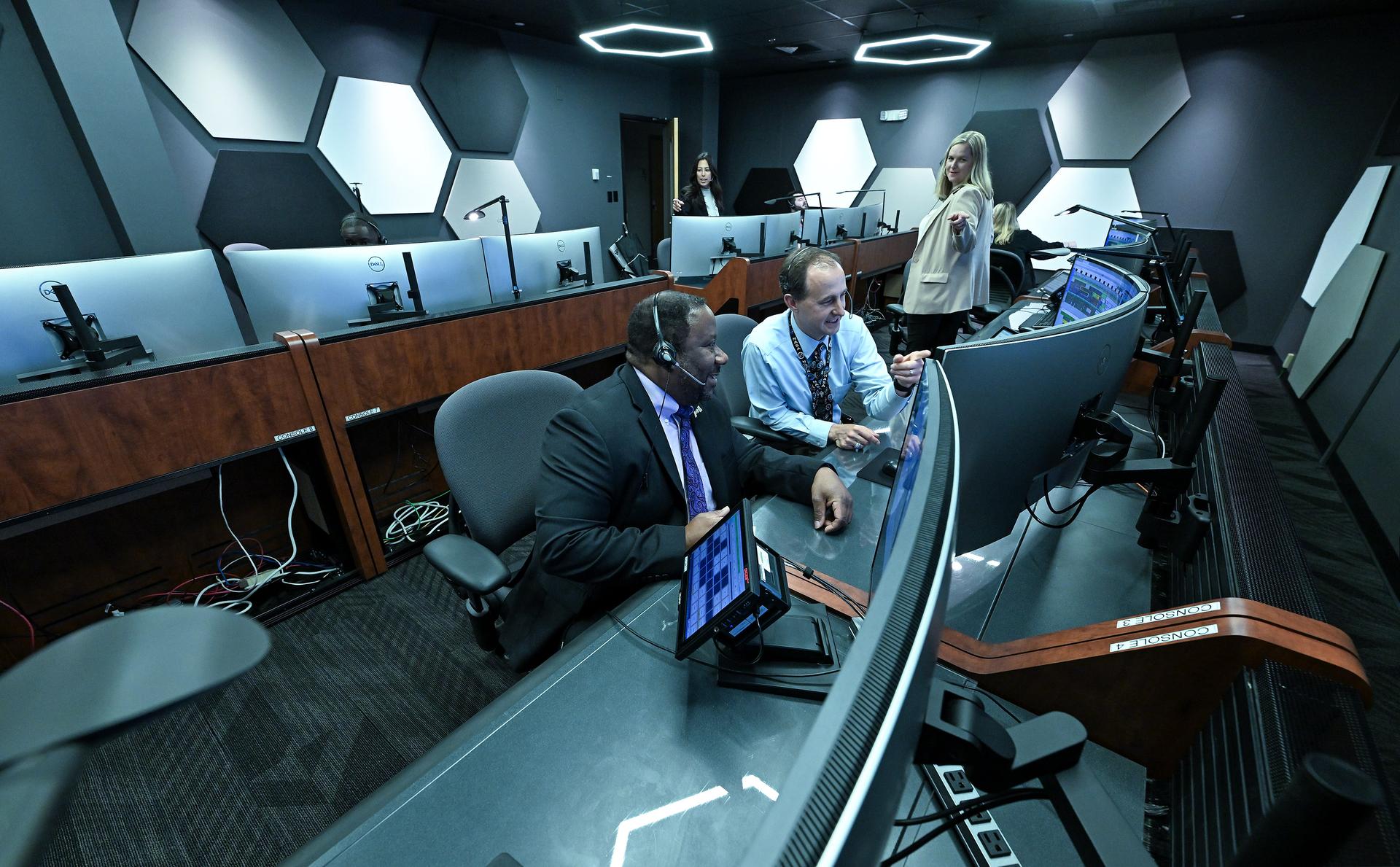
These photos offer a look inside the twin control rooms at NASA’s Marshall Space Flight Center in Huntsville, Alabama, where engineers will monitor Artemis science and future landing operations for Artemis. The LUCA (Lunar Utilization Control Area) and LESA (Lander Engineering Support Area) rooms are part of the Huntsville Operations Support Center at NASA Marshall. The LUCA is specially designed to support a wide variety of science operations on and around the Moon – and beyond. Engineers in the LUCA monitored operations for the Lunar Node-1 experiment, an autonomous navigation payload that was part of the first NASA Commercial Lunar Payload Services (CLPS) launch on Intuitive Machines’ Nova-C lunar lander in 2024. NASA Marshall flight controllers will use the LUCA again for Artemis II to monitor science operations. Beginning with Artemis III, members of the NASA Human Landing System Mission Insight Support Team – a group of engineers, safety leads, flight operations experts, and technical authorities – will work in the LESA. There, they will monitor lander systems in real-time and be involved in key decision-making processes throughout the mission. For more information, contact NASA Marshall’s Office of Communications at 256-544-0034.
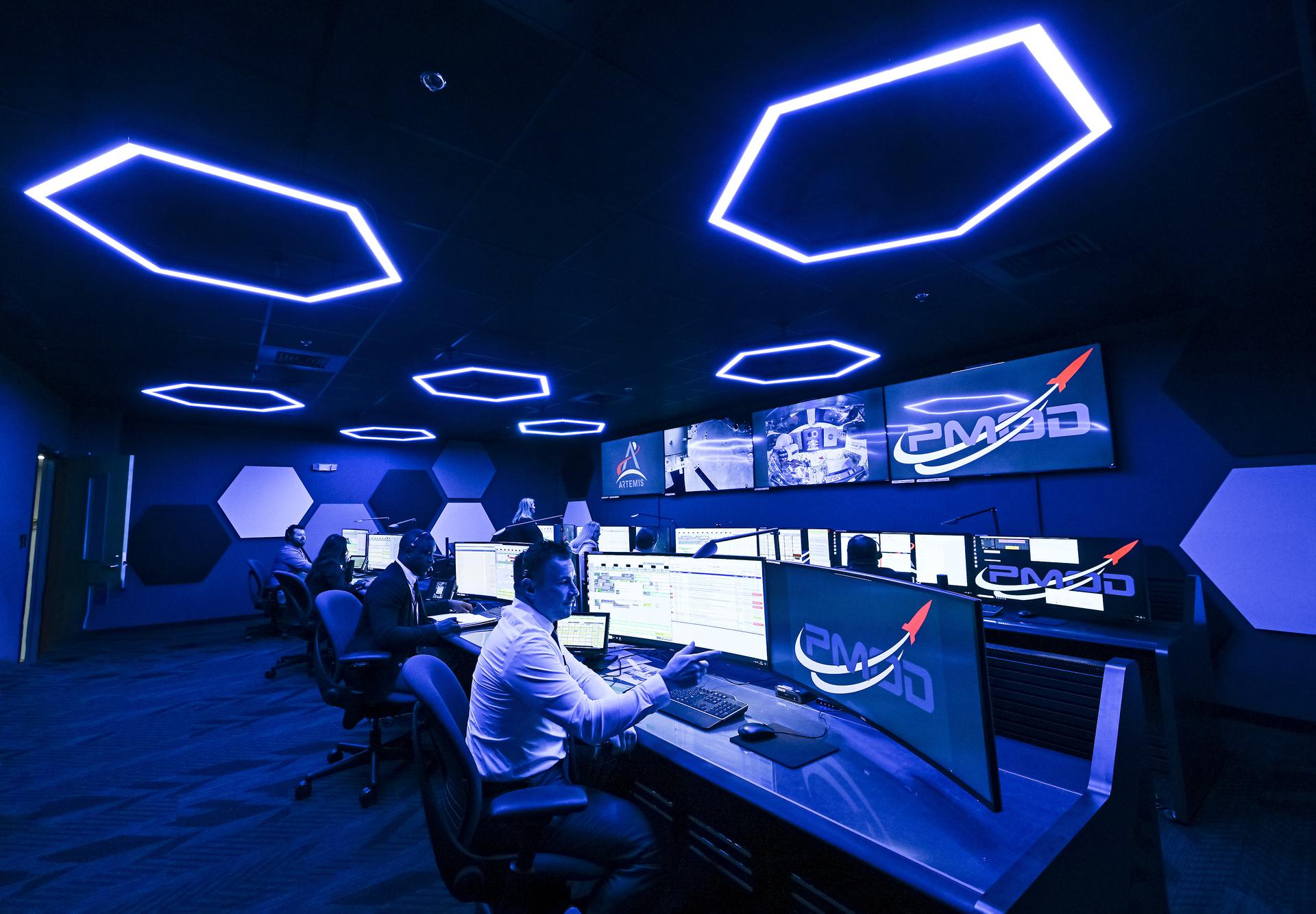
These photos offer a look inside the twin control rooms at NASA’s Marshall Space Flight Center in Huntsville, Alabama, where engineers will monitor Artemis science and future landing operations for Artemis. The LUCA (Lunar Utilization Control Area) and LESA (Lander Engineering Support Area) rooms are part of the Huntsville Operations Support Center at NASA Marshall. The LUCA is specially designed to support a wide variety of science operations on and around the Moon – and beyond. Engineers in the LUCA monitored operations for the Lunar Node-1 experiment, an autonomous navigation payload that was part of the first NASA Commercial Lunar Payload Services (CLPS) launch on Intuitive Machines’ Nova-C lunar lander in 2024. NASA Marshall flight controllers will use the LUCA again for Artemis II to monitor science operations. Beginning with Artemis III, members of the NASA Human Landing System Mission Insight Support Team – a group of engineers, safety leads, flight operations experts, and technical authorities – will work in the LESA. There, they will monitor lander systems in real-time and be involved in key decision-making processes throughout the mission. For more information, contact NASA Marshall’s Office of Communications at 256-544-0034.
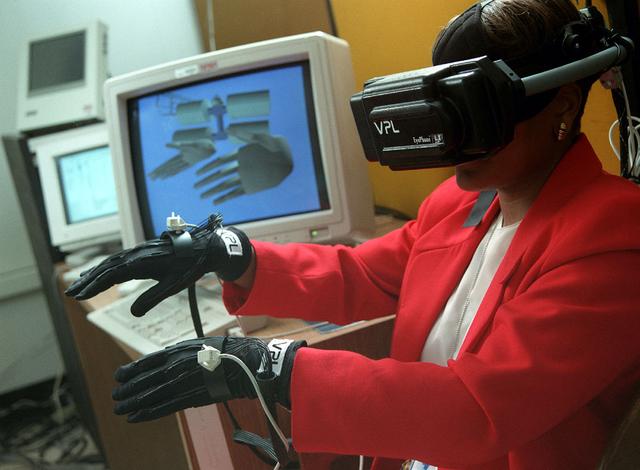
Virtual Reality (VR) can provide cost effective methods to design and evaluate components and systems for maintenance and refurbishment operations. The Marshall Space Flight Centerr (MSFC) in Huntsville, Alabama began to utilize VR for design analysis in the X-34 experimental reusable space vehicle. Analysts at MSFC's Computer Applications and Virtual Environments (CAVE) used Head Mounted Displays (HMD) (pictured), spatial trackers and gesture inputs as a means to animate or inhabit a properly sized virtual human model. These models were used in a VR scenario as a way to determine functionality of space and maintenance requirements for the virtual X-34. The primary functions of the virtual X-34 mockup was to support operations development and design analysis for engine removal, the engine compartment and the aft fuselage. This capability provided general visualization support to engineers and designers at MSFC and to the System Design Freeze Review at Orbital Sciences Corporation (OSC). The X-34 program was cancelled in 2001.

This is a computer generated image of a Shuttle launch utilizing 2nd generation Reusable Launch Vehicle (RLV) flyback boosters, a futuristic concept that is currently undergoing study by NASA's Space Launch Initiative (SLI) Propulsion Office, managed by the Marshall Space Fight Center in Huntsville, Alabama, working in conjunction with the Agency's Glenn Research Center in Cleveland, Ohio. Currently, after providing thrust to the Space Shuttle, the solid rocket boosters are parachuted into the sea and are retrieved for reuse. The SLI is considering vehicle concepts that would fly first-stage boosters back to a designated landing site after separation from the orbital vehicle. These flyback boosters would be powered by several jet engines integrated into the booster capable of providing over 100,000 pounds of thrust. The study will determine the requirements for the engines, identify risk mitigation activities, and identify costs associated with risk mitigation and jet engine development and production, as well as determine candidate jet engine options to pursue for the flyback booster.
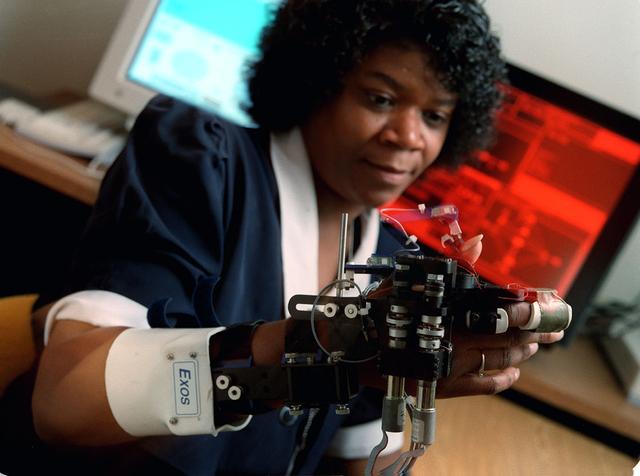
Virtual Reality (VR) can provide cost effective methods to design and evaluate components and systems for maintenance and refurbishment operations. The Marshall Space Flight Center (MSFC) in Huntsville, Alabama began to utilize VR for design analysis in the X-34 experimental reusable space vehicle. Analysts at MSFC's Computer Applications and Virtual Environments (CAVE) used Head Mounted Displays (HMD) (pictured), spatial trackers and gesture inputs as a means to animate or inhabit a properly sized virtual human model. These models were used in a VR scenario as a way to determine functionality of space and maintenance requirements for the virtual X-34. The primary functions of the virtual X-34 mockup was to support operations development and design analysis for engine removal, the engine compartment and the aft fuselage. This capability providedgeneral visualization support to engineers and designers at MSFC and to the System Design Freeze Review at Orbital Sciences Corporation (OSC). The X-34 program was cancelled in 2001.
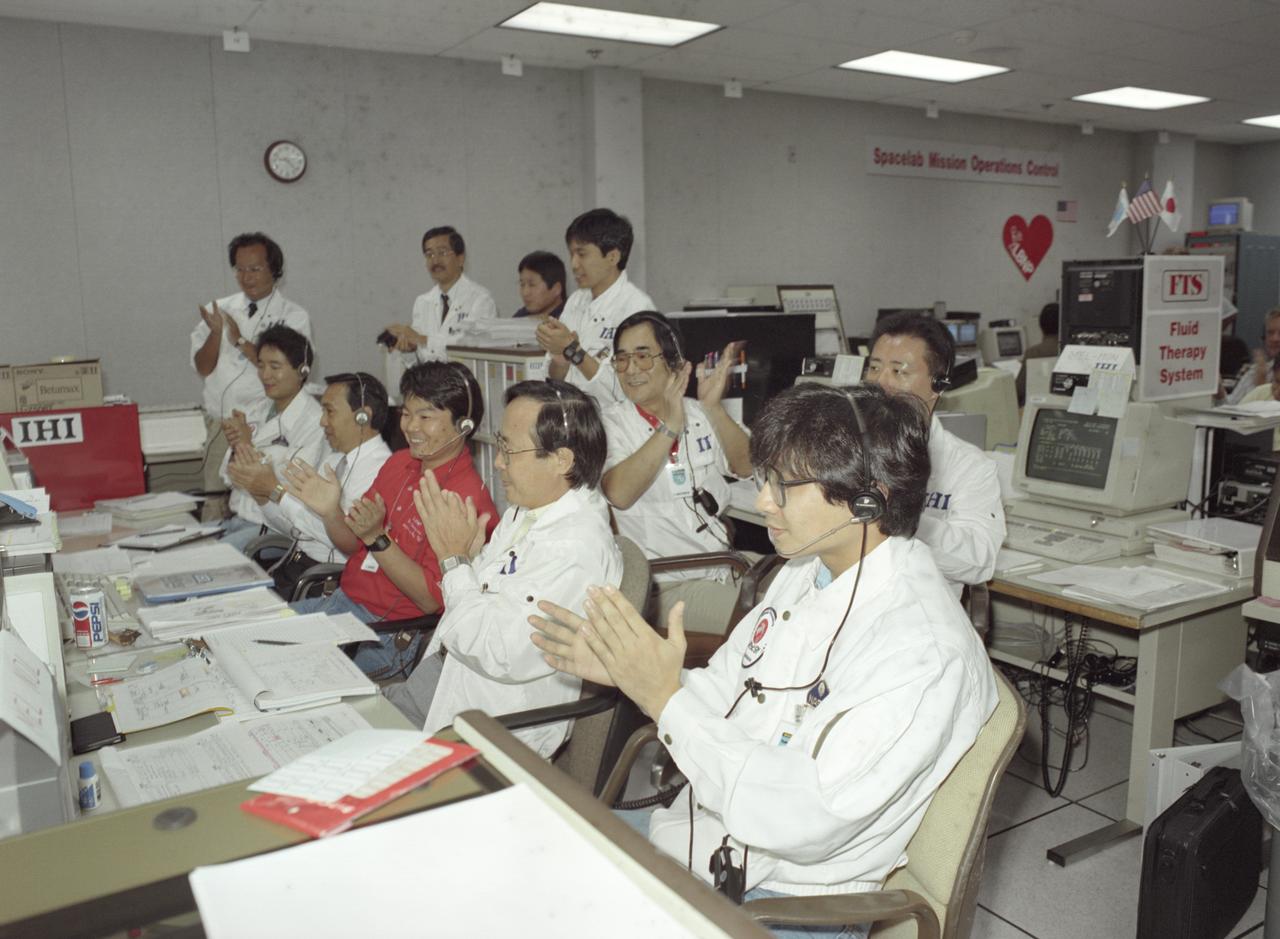
The science laboratory, Spacelab-J (SL-J), flown aboard the STS-47 flight was a joint venture between NASA and the National Space Development Agency of Japan (NASDA) utilizing a manned Spacelab module. The mission conducted 24 materials science and 20 life science experiments, of which 35 were sponsored by NASDA, 7 by NASA, and two collaborative efforts. Materials science investigations covered such fields as biotechnology, electronic materials, fluid dynamics and transport phenomena, glasses and ceramics, metals and alloys, and acceleration measurements. Life sciences included experiments on human health, cell separation and biology, developmental biology, animal and human physiology and behavior, space radiation, and biological rhythms. Test subjects included the crew, Japanese koi fish (carp), cultured animal and plant cells, chicken embryos, fruit flies, fungi and plant seeds, and frogs and frog eggs. Featured together in the Science Operation Area (SOA) are payload specialists’ first Materials Processing Test during NASA/NASDA joint ground activities at the Huntsville Operations Support Center (HOSC) Spacelab Payload Operations Control Center (SL POCC) at Marshall Space Flight Center (MSFC).
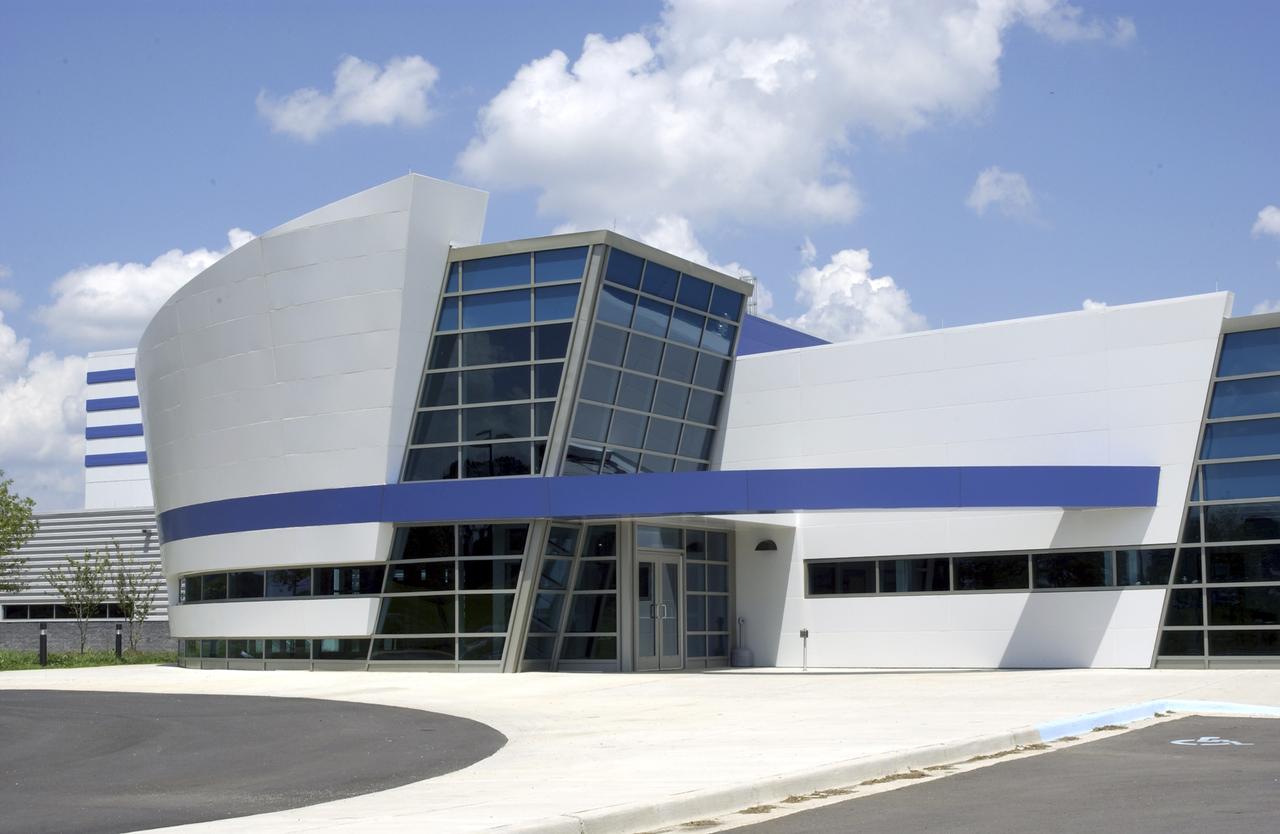
The grand opening of NASA’s new, world-class laboratory for research into future space transportation technologies located at the Marshall Space Flight Center (MSFC) in Huntsville, Alabama, took place in July 2004. The state-of-the-art Propulsion Research Laboratory (PRL) serves as a leading national resource for advanced space propulsion research. Its purpose is to conduct research that will lead to the creation and development of innovative propulsion technologies for space exploration. The facility is the epicenter of the effort to move the U.S. space program beyond the confines of conventional chemical propulsion into an era of greatly improved access to space and rapid transit throughout the solar system. The laboratory is designed to accommodate researchers from across the United States, including scientists and engineers from NASA, the Department of Defense, the Department of Energy, universities, and industry. The facility, with 66,000 square feet of useable laboratory space, features a high degree of experimental capability. Its flexibility allows it to address a broad range of propulsion technologies and concepts, such as plasma, electromagnetic, thermodynamic, and propellant propulsion. An important area of emphasis is the development and utilization of advanced energy sources, including highly energetic chemical reactions, solar energy, and processes based on fission, fusion, and antimatter. The Propulsion Research Laboratory is vital for developing the advanced propulsion technologies needed to open up the space frontier, and sets the stage of research that could revolutionize space transportation for a broad range of applications.
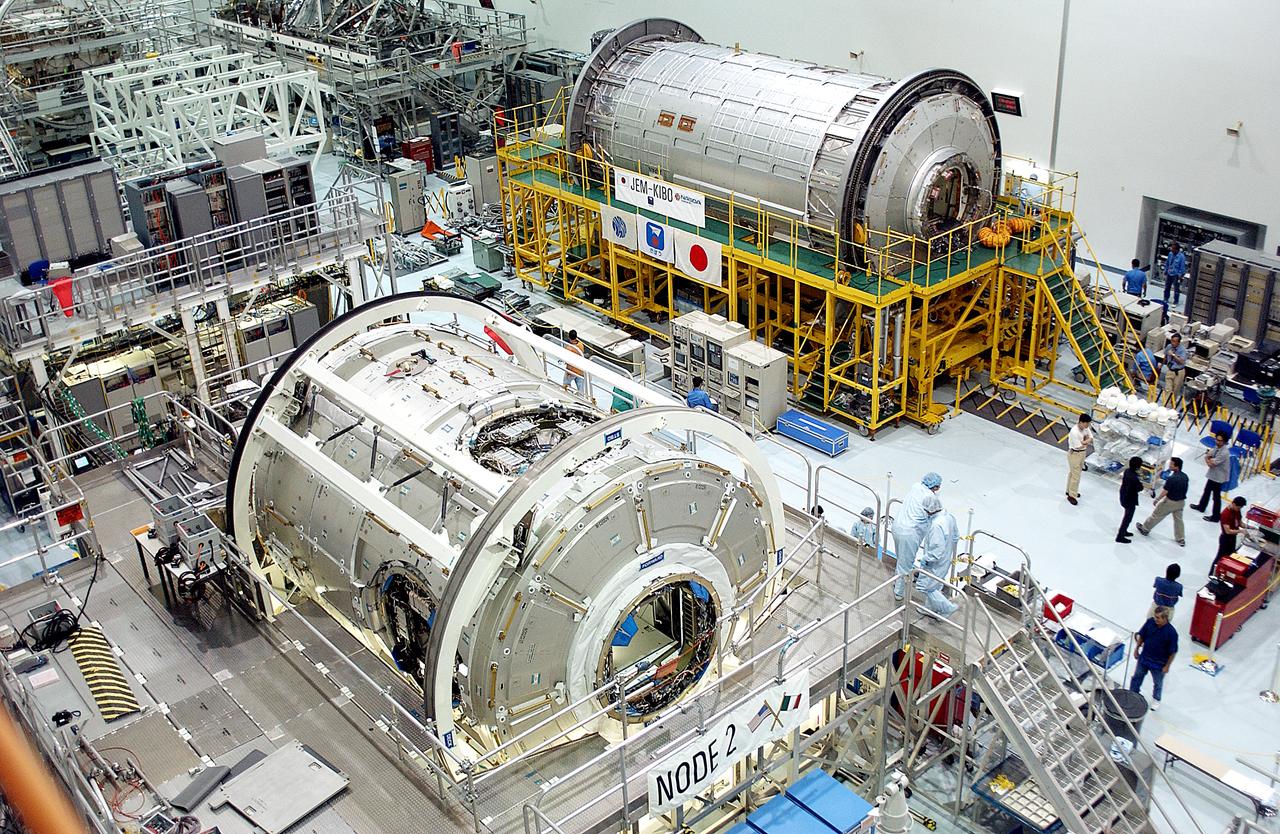
Lining the walls of the Space Station Processing Facility at the Kennedy Space Center (KSC) are the launch awaiting U.S. Node 2 (lower left). and the first pressurized module of the Japanese Experimental Module (JEM) (upper right), named "Kibo" (Hope). Node 2, the "utility hub" and second of three connectors between International Space Station (ISS) modules, was built in the Torino, Italy facility of Alenia Spazio, an International contractor based in Rome. Japan's major contribution to the station, the JEM, was built by the Space Development Agency of Japan (NASDA) at the Tsukuba Space Center near Tokyo and will expand research capabilities aboard the station. Both were part of an agreement between NASA and the European Space Agency (ESA). The Node 2 will be the next pressurized module installed on the Station. Once the Japanese and European laboratories are attached to it, the resulting roomier Station will expand from the equivalent space of a 3-bedroom house to a 5-bedroom house. The Marshall Space Center in Huntsville, Alabama manages the Node program for NASA.
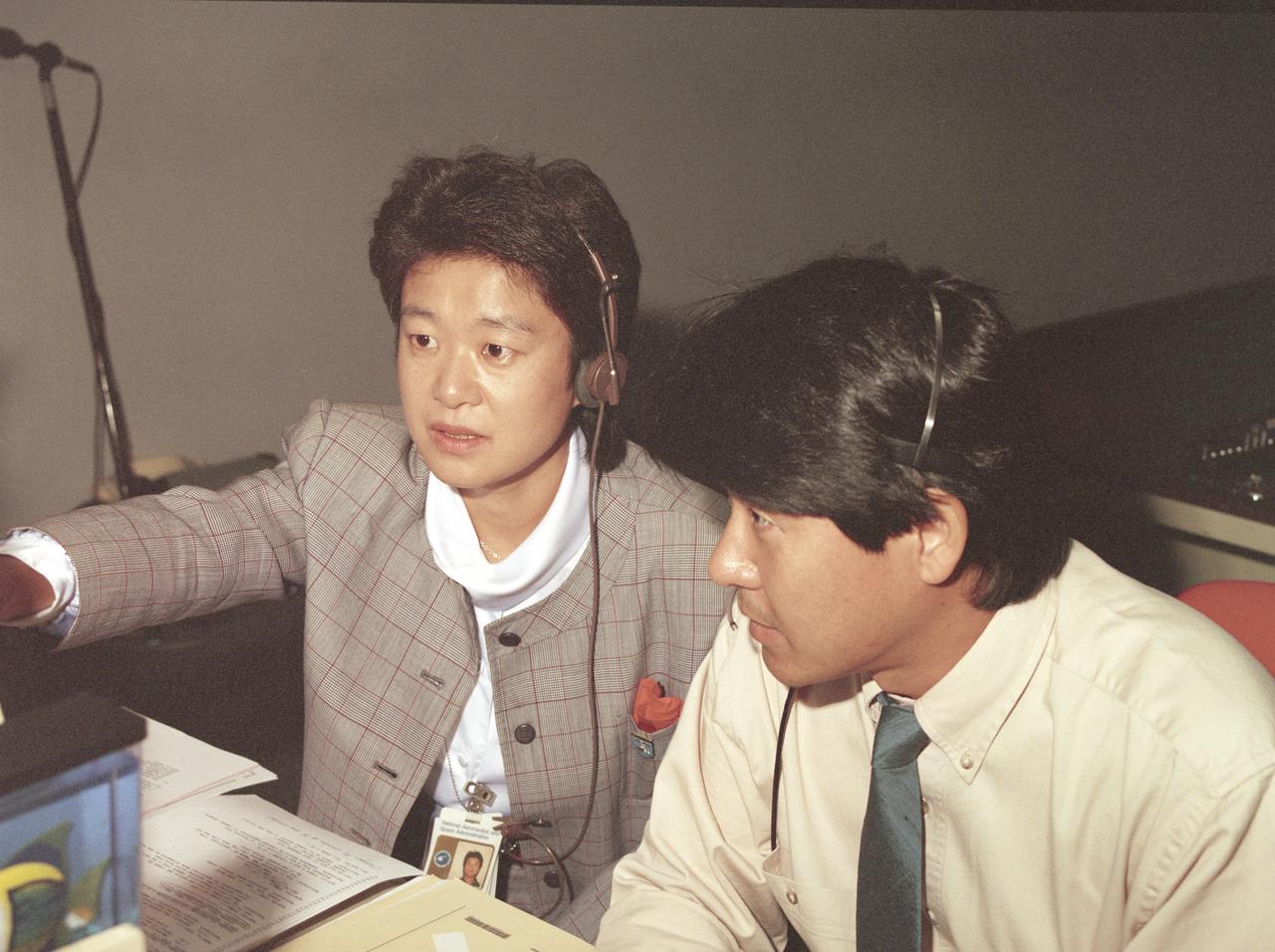
The science laboratory, Spacelab-J (SL-J), flown aboard the STS-47 flight was a joint venture between NASA and the National Space Development Agency of Japan (NASDA) utilizing a manned Spacelab module. The mission conducted 24 materials science and 20 life science experiments, of which 35 were sponsored by NASDA, 7 by NASA, and two collaborative efforts. Materials science investigations covered such fields as biotechnology, electronic materials, fluid dynamics and transport phenomena, glasses and ceramics, metals and alloys, and acceleration measurements. Life sciences included experiments on human health, cell separation and biology, developmental biology, animal and human physiology and behavior, space radiation, and biological rhythms. Test subjects included the crew, Japanese koi fish (carp), cultured animal and plant cells, chicken embryos, fruit flies, fungi and plant seeds, and frogs and frog eggs. Pictured in the Huntsville Operations Support Center (HOSC) Spacelab Payload Operations Control Center (SL POCC) of Marshall Space Flight Center (MSFC) are NASDA alternate payload specialists Dr. Doi and Dr. Mukai.
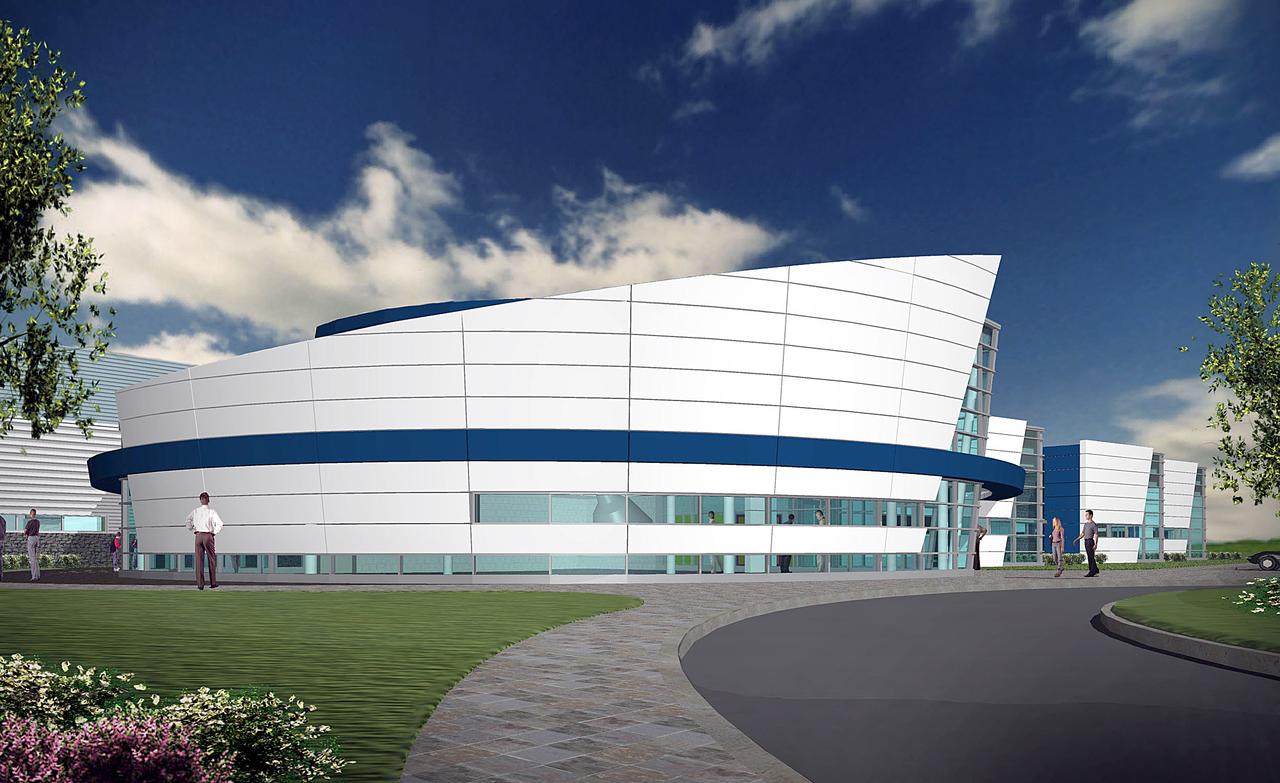
A new, world-class laboratory for research into future space transportation technologies is under construction at the Marshall Space Flight Center (MSFC) in Huntsville, AL. The state-of-the-art Propulsion Research Laboratory will serve as a leading national resource for advanced space propulsion research. Its purpose is to conduct research that will lead to the creation and development of irnovative propulsion technologies for space exploration. The facility will be the epicenter of the effort to move the U.S. space program beyond the confines of conventional chemical propulsion into an era of greatly improved access to space and rapid transit throughout the solar system. The Laboratory is designed to accommodate researchers from across the United States, including scientists and engineers from NASA, the Department of Defense, the Department of Energy, universities, and industry. The facility, with 66,000 square feet of useable laboratory space, will feature a high degree of experimental capability. Its flexibility will allow it to address a broad range of propulsion technologies and concepts, such as plasma, electromagnetic, thermodynamic, and propellantless propulsion. An important area of emphasis will be development and utilization of advanced energy sources, including highly energetic chemical reactions, solar energy, and processes based on fission, fusion, and antimatter. The Propulsion Research Laboratory is vital for developing the advanced propulsion technologies needed to open up the space frontier, and will set the stage of research that could revolutionize space transportation for a broad range of applications.
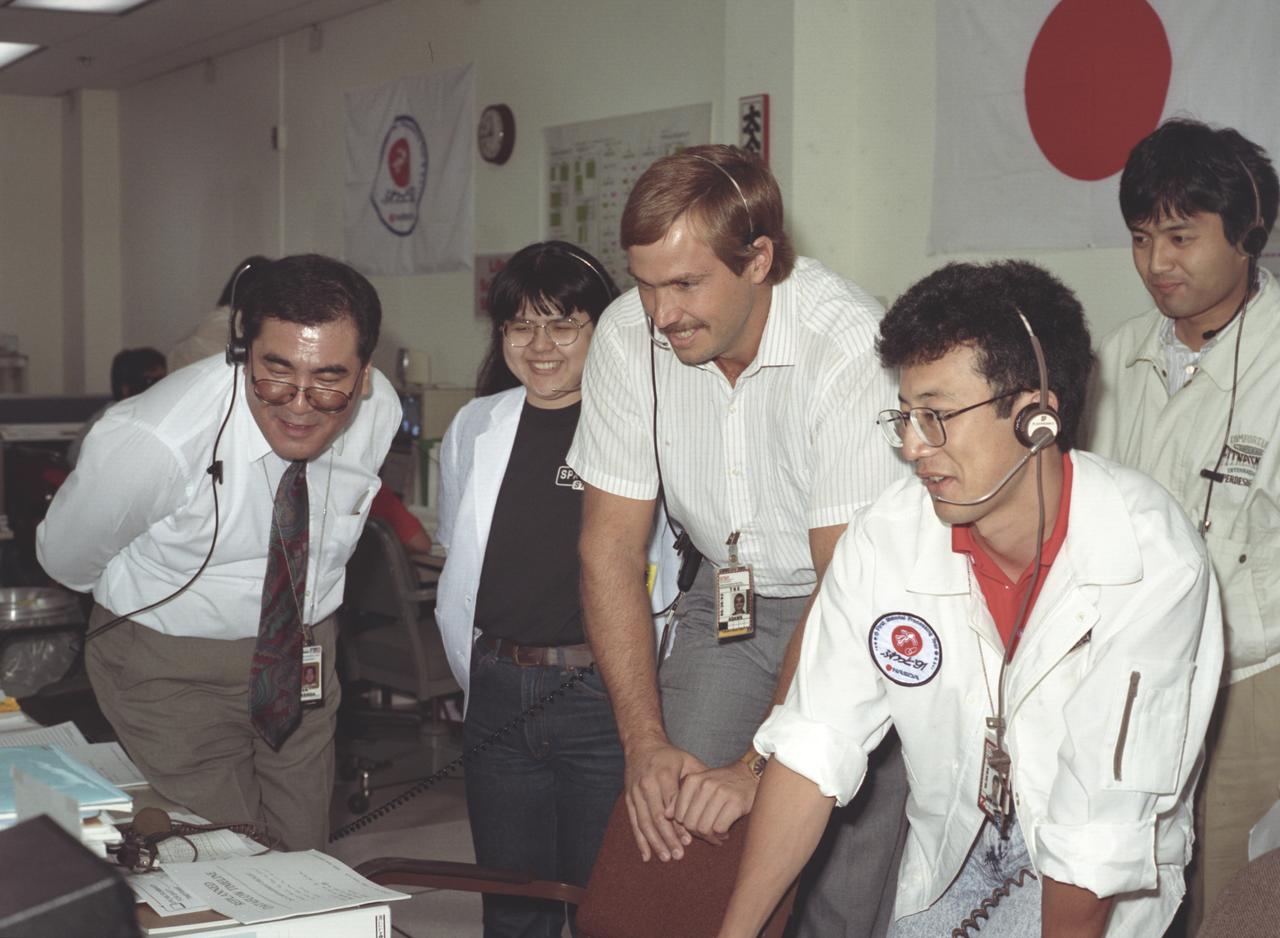
The science laboratory, Spacelab-J (SL-J), flown aboard the STS-47 flight was a joint venture between NASA and the National Space Development Agency of Japan (NASDA) utilizing a manned Spacelab module. The mission conducted 24 materials science and 20 life science experiments, of which 35 were sponsored by NASDA, 7 by NASA, and two collaborative efforts. Materials science investigations covered such fields as biotechnology, electronic materials, fluid dynamics and transport phenomena, glasses and ceramics, metals and alloys, and acceleration measurements. Life sciences included experiments on human health, cell separation and biology, developmental biology, animal and human physiology and behavior, space radiation, and biological rhythms. Test subjects included the crew, Japanese koi fish (carp), cultured animal and plant cells, chicken embryos, fruit flies, fungi and plant seeds, and frogs and frog eggs. Featured together in joint ground activities during the SL-J mission are NASA/NASDA personnel at the Huntsville Operations Support Center (HOSC) Spacelab Payload Operations Control Center (SL POCC) at Marshall Space Flight Center (MSFC).
The science laboratory, Spacelab-J (SL-J), flown aboard the STS-47 flight was a joint venture between NASA and the National Space Development Agency of Japan (NASDA) utilizing a manned Spacelab module. The mission conducted 24 materials science and 20 life science experiments, of which 35 were sponsored by NASDA, 7 by NASA, and two collaborative efforts. Materials science investigations covered such fields as biotechnology, electronic materials, fluid dynamics and transport phenomena, glasses and ceramics, metals and alloys, and acceleration measurements. Life sciences included experiments on human health, cell separation and biology, developmental biology, animal and human physiology and behavior, space radiation, and biological rhythms. Test subjects included the crew, Japanese koi fish (carp), cultured animal and plant cells, chicken embryos, fruit flies, fungi and plant seeds, and frogs and frog eggs. From the Huntsville Operations Support Center (HOSC) Spacelab Payload Operations Control Center (SL POCC), NASDA President, Mr. Yamano, speaks to Payload Specialist Mamoru Mohri, a Japanese crew member aboard the STS-47 Spacelab J mission.
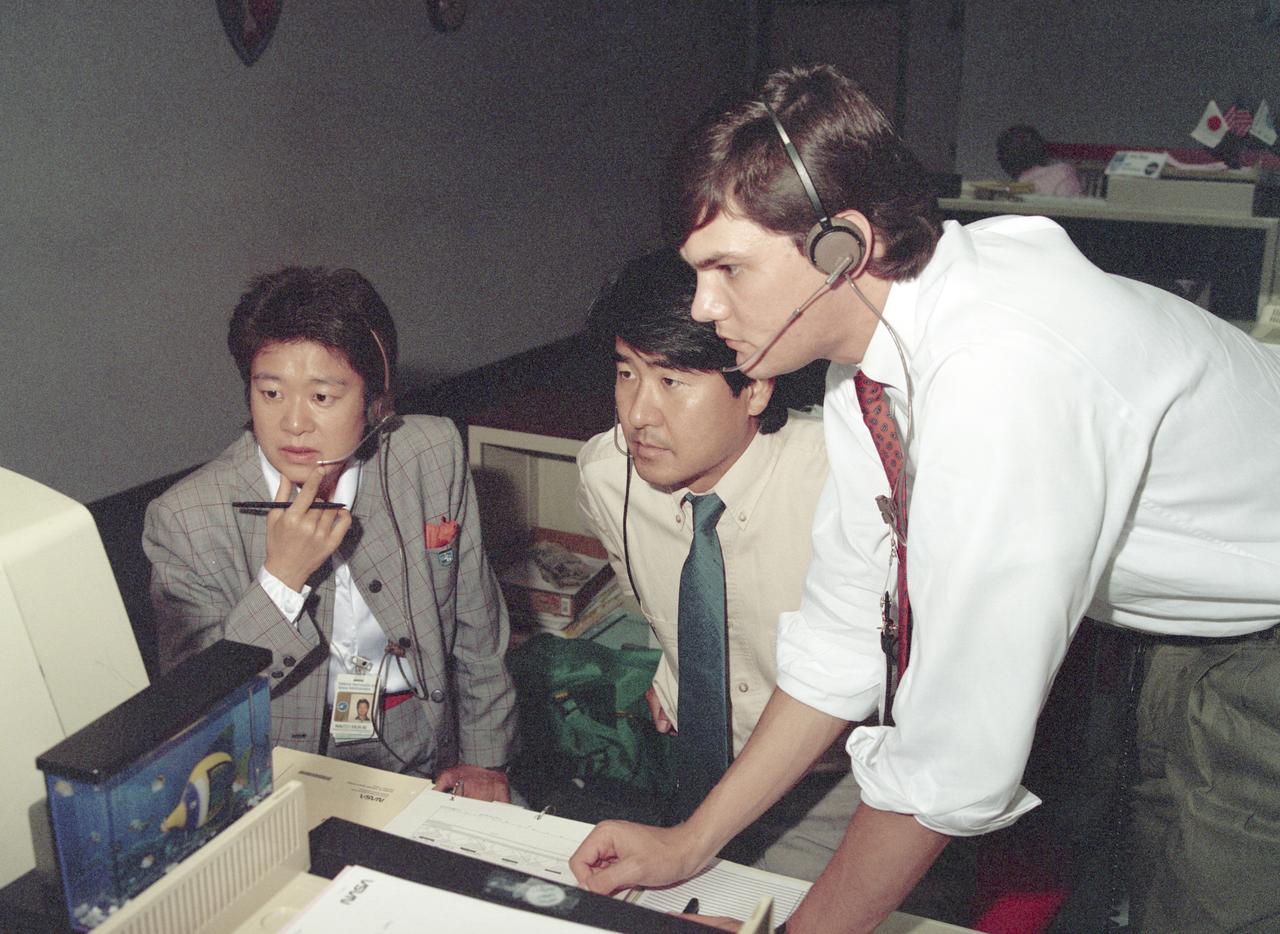
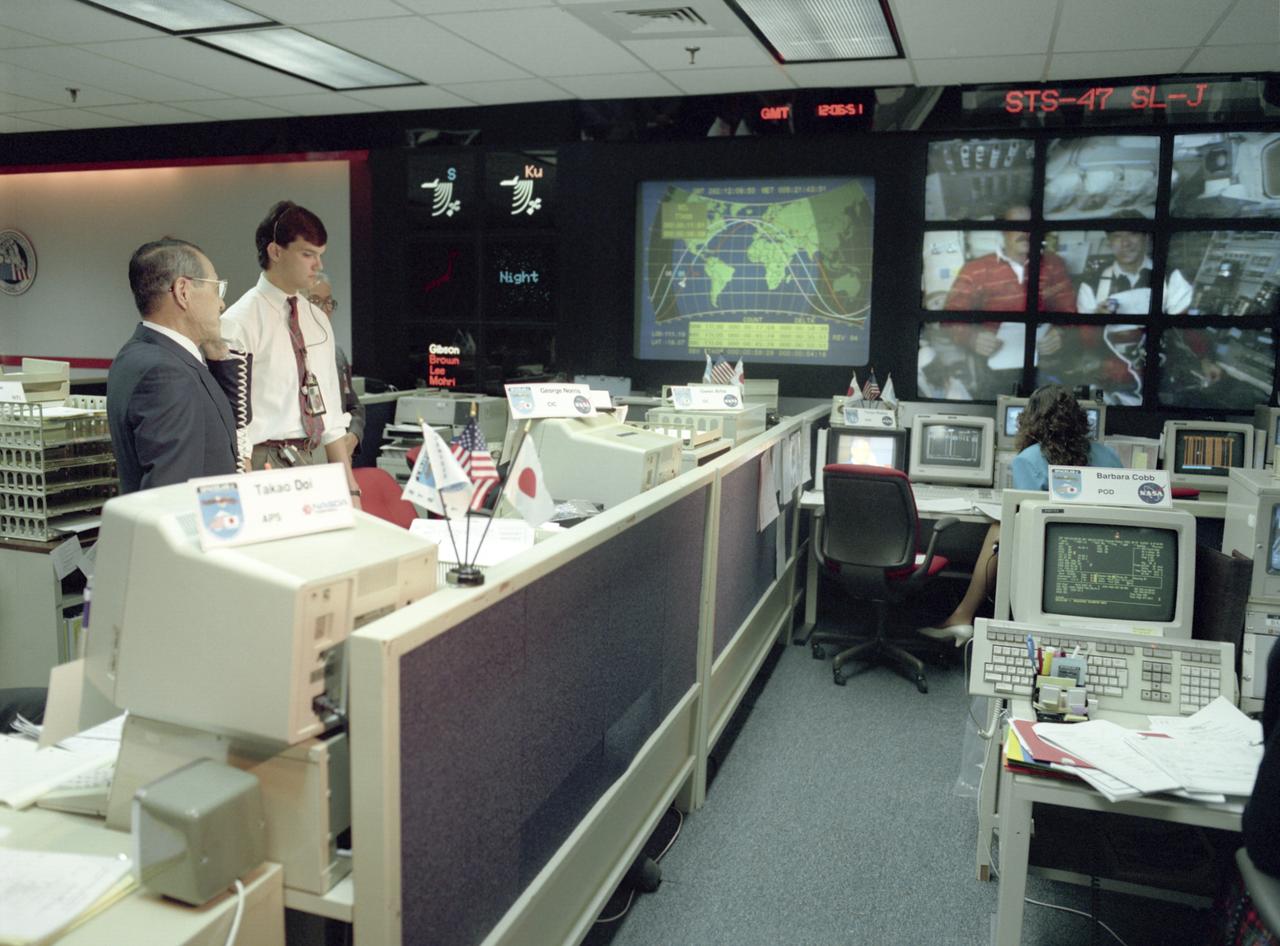
The science laboratory, Spacelab-J (SL-J), flown aboard the STS-47 flight was a joint venture between NASA and the National Space Development Agency of Japan (NASDA) utilizing a manned Spacelab module. The mission conducted 24 materials science and 20 life science experiments, of which 35 were sponsored by NASDA, 7 by NASA, and two collaborative efforts. Materials science investigations covered such fields as biotechnology, electronic materials, fluid dynamics and transport phenomena, glasses and ceramics, metals and alloys, and acceleration measurements. Life sciences included experiments on human health, cell separation and biology, developmental biology, animal and human physiology and behavior, space radiation, and biological rhythms. Test subjects included the crew, Japanese koi fish (carp), cultured animal and plant cells, chicken embryos, fruit flies, fungi and plant seeds, and frogs and frog eggs. Pictured along with George Norris in the Huntsville Operations Support Center (HOSC) Spacelab Payload Operations Control Center (SL POCC) at Marshall Space Flight Center (MSFC) are NASDA alternate payload specialists Dr. Doi and Dr. Mukai.
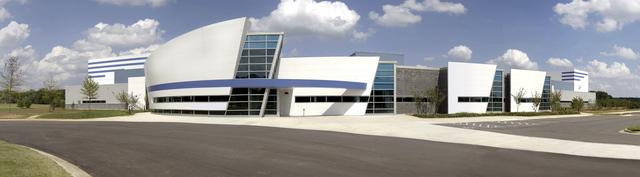
The grand opening of NASA’s new, world-class laboratory for research into future space transportation technologies located at the Marshall Space Flight Center (MSFC) in Huntsville, Alabama, took place in July 2004. The state-of-the-art Propulsion Research Laboratory (PRL) serves as a leading national resource for advanced space propulsion research. Its purpose is to conduct research that will lead to the creation and development of innovative propulsion technologies for space exploration. The facility is the epicenter of the effort to move the U.S. space program beyond the confines of conventional chemical propulsion into an era of greatly improved access to space and rapid transit throughout the solar system. The laboratory is designed to accommodate researchers from across the United States, including scientists and engineers from NASA, the Department of Defense, the Department of Energy, universities, and industry. The facility, with 66,000 square feet of useable laboratory space, features a high degree of experimental capability. Its flexibility allows it to address a broad range of propulsion technologies and concepts, such as plasma, electromagnetic, thermodynamic, and propellant propulsion. An important area of emphasis is the development and utilization of advanced energy sources, including highly energetic chemical reactions, solar energy, and processes based on fission, fusion, and antimatter. The Propulsion Research Laboratory is vital for developing the advanced propulsion technologies needed to open up the space frontier, and sets the stage of research that could revolutionize space transportation for a broad range of applications.

A new, world-class laboratory for research into future space transportation technologies is under construction at the Marshall Space Flight Center (MSFC) in Huntsville, AL. The state-of-the-art Propulsion Research Laboratory will serve as a leading national resource for advanced space propulsion research. Its purpose is to conduct research that will lead to the creation and development of irnovative propulsion technologies for space exploration. The facility will be the epicenter of the effort to move the U.S. space program beyond the confines of conventional chemical propulsion into an era of greatly improved access to space and rapid transit throughout the solar system. The Laboratory is designed to accommodate researchers from across the United States, including scientists and engineers from NASA, the Department of Defense, the Department of Energy, universities, and industry. The facility, with 66,000 square feet of useable laboratory space, will feature a high degree of experimental capability. Its flexibility will allow it to address a broad range of propulsion technologies and concepts, such as plasma, electromagnetic, thermodynamic, and propellantless propulsion. An important area of emphasis will be development and utilization of advanced energy sources, including highly energetic chemical reactions, solar energy, and processes based on fission, fusion, and antimatter. The Propulsion Research Laboratory is vital for developing the advanced propulsion technologies needed to open up the space frontier, and will set the stage of research that could revolutionize space transportation for a broad range of applications. This photo depicts construction workers taking part in a tree topping ceremony as the the final height of the laboratory is framed. The ceremony is an old German custom of paying homage to the trees that gave their lives in preparation of the building site.