
Relative sizes of Kepler habitable zone planets discovered as of 2013 April 18. Except for Earth, these are artists renditions.

Of the 1,030 confirmed planets from Kepler, a dozen are less than twice the size of Earth and reside in the habitable zone of their host stars. In this diagram, the sizes of the exoplanets are represented by the size of each sphere. These are arranged by size from left to right, and by the type of star they orbit, from the M stars that are significantly cooler and smaller than the sun, to the K stars that are somewhat cooler and smaller than the sun, to the G stars that include the sun. The sizes of the planets are enlarged by 25 times compared to the stars. The Earth is shown for reference. http://photojournal.jpl.nasa.gov/catalog/PIA19827

This artist concept depicts Kepler-186f, the first validated Earth-size planet to orbit a distant star in the habitable zone, a range of distance from a star where liquid water might pool on the planet surface.

This artist conception illustrates Kepler-22b, a planet known to comfortably circle in the habitable zone of a sun-like star. It is the first planet that NASA Kepler mission has confirmed to orbit in a star habitable zone.

This artist concept depicts in the foreground planet Kepler-62f, a super-Earth-size planet in the habitable zone of its star, which is seen peeking out from behind the right edge of the planet.

A hypothetical planet is depicted in this artist concept moving through the habitable zone and then further out into a long, cold winter.

This artist concept shows a Super Venus planet on the left, and a Super Earth on the right. Researchers use a concept known as the habitable zone to distinguish between these two types of planets, which exist beyond our solar system.

Dr. Phoebe Cohen, Professor of Geosciences, Williams College, speaks on a panel at the “Ancient Earth, Alien Earths” Event at NASA Headquarters in Washington, DC Wednesday, August 20, 2014. The event was sponsored by NASA, the National Science Foundation (NSF), and the Smithsonian Institution and was moderated by Dr. David H. Grinspoon, Senior Scientist at the Planetary Science Institute. Six scientists discussed how research on early Earth could help guide our search for habitable planets orbiting other stars. Photo Credit: (NASA/Aubrey Gemignani)

Dr. Christopher House, Professor of Geosciences, Pennsylvania State University, speaks on a panel at the “Ancient Earth, Alien Earths” Event at NASA Headquarters in Washington, DC Wednesday, August 20, 2014. The event was sponsored by NASA, the National Science Foundation (NSF), and the Smithsonian Institution and was moderated by Dr. David H. Grinspoon, Senior Scientist at the Planetary Science Institute. Six scientists discussed how research on early Earth could help guide our search for habitable planets orbiting other stars. Photo Credit: (NASA/Aubrey Gemignani)

Dr. Timothy Lyons, Professor of Biogeochemistry, UC Riverside, speaks on a panel at the “Ancient Earth, Alien Earths” Event at NASA Headquarters in Washington, DC Wednesday, August 20, 2014. The event was sponsored by NASA, the National Science Foundation (NSF), and the Smithsonian Institution and was moderated by Dr. David H. Grinspoon, Senior Scientist at the Planetary Science Institute. Six scientists discussed how research on early Earth could help guide our search for habitable planets orbiting other stars. Photo Credit: (NASA/Aubrey Gemignani)

Dr. Dawn Sumner, Professor of Geology, UC Davis, speaks on a panel at the “Ancient Earth, Alien Earths” Event at NASA Headquarters in Washington, DC Wednesday, August 20, 2014. The event was sponsored by NASA, the National Science Foundation (NSF), and the Smithsonian Institution and was moderated by Dr. David H. Grinspoon, Senior Scientist at the Planetary Science Institute. Six scientists discussed how research on early Earth could help guide our search for habitable planets orbiting other stars. Photo Credit: (NASA/Aubrey Gemignani)

An audience member asks the panelists a question at the “Ancient Earth, Alien Earths” Event at NASA Headquarters in Washington, DC Wednesday, August 20, 2014. The event was sponsored by NASA, the National Science Foundation (NSF), and the Smithsonian Institution and was moderated by Dr. David H. Grinspoon, Senior Scientist at the Planetary Science Institute. Six scientists discussed how research on early Earth could help guide our search for habitable planets orbiting other stars. Photo Credit: (NASA/Aubrey Gemignani)
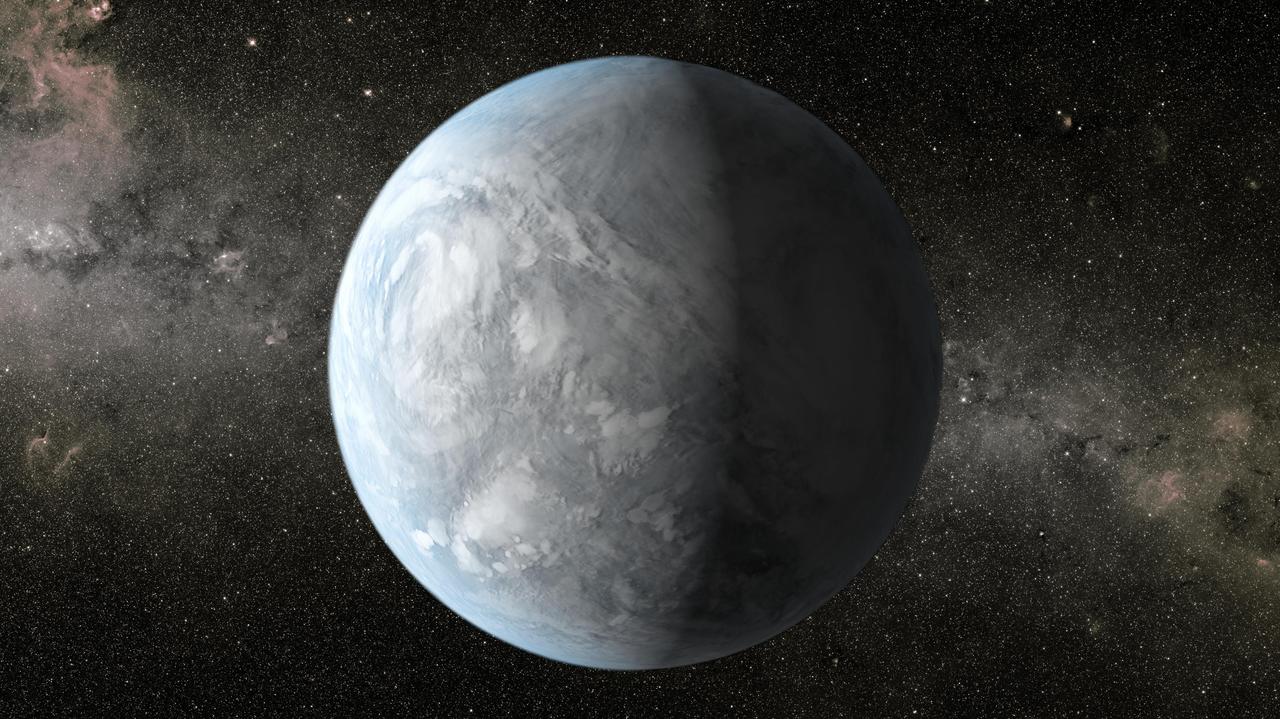
The artist concept depicts Kepler-62e, a super-Earth-size planet in the habitable zone of a star smaller and cooler than the sun, located about 1,200 light-years from Earth in the constellation Lyra.
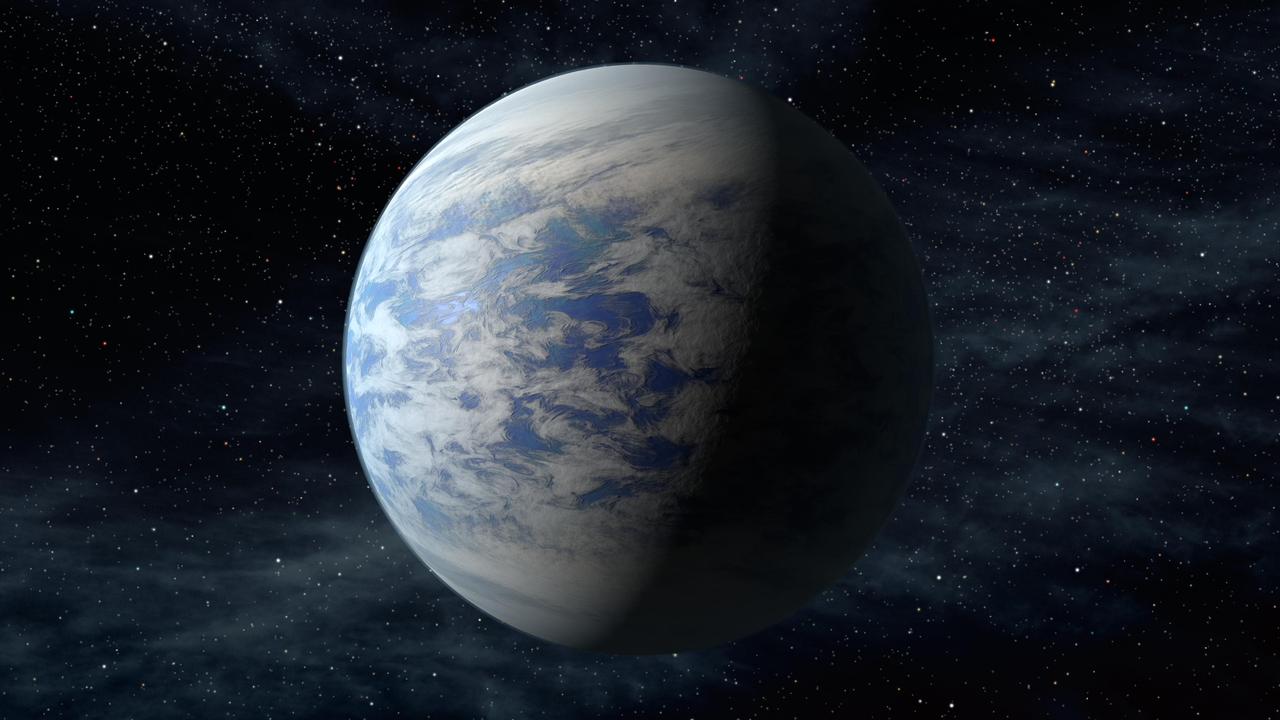
The artist concept depicts Kepler-69c, a super-Earth-size planet in the habitable zone of a star like our sun, located about 2,700 light-years from Earth in the constellation Cygnus.
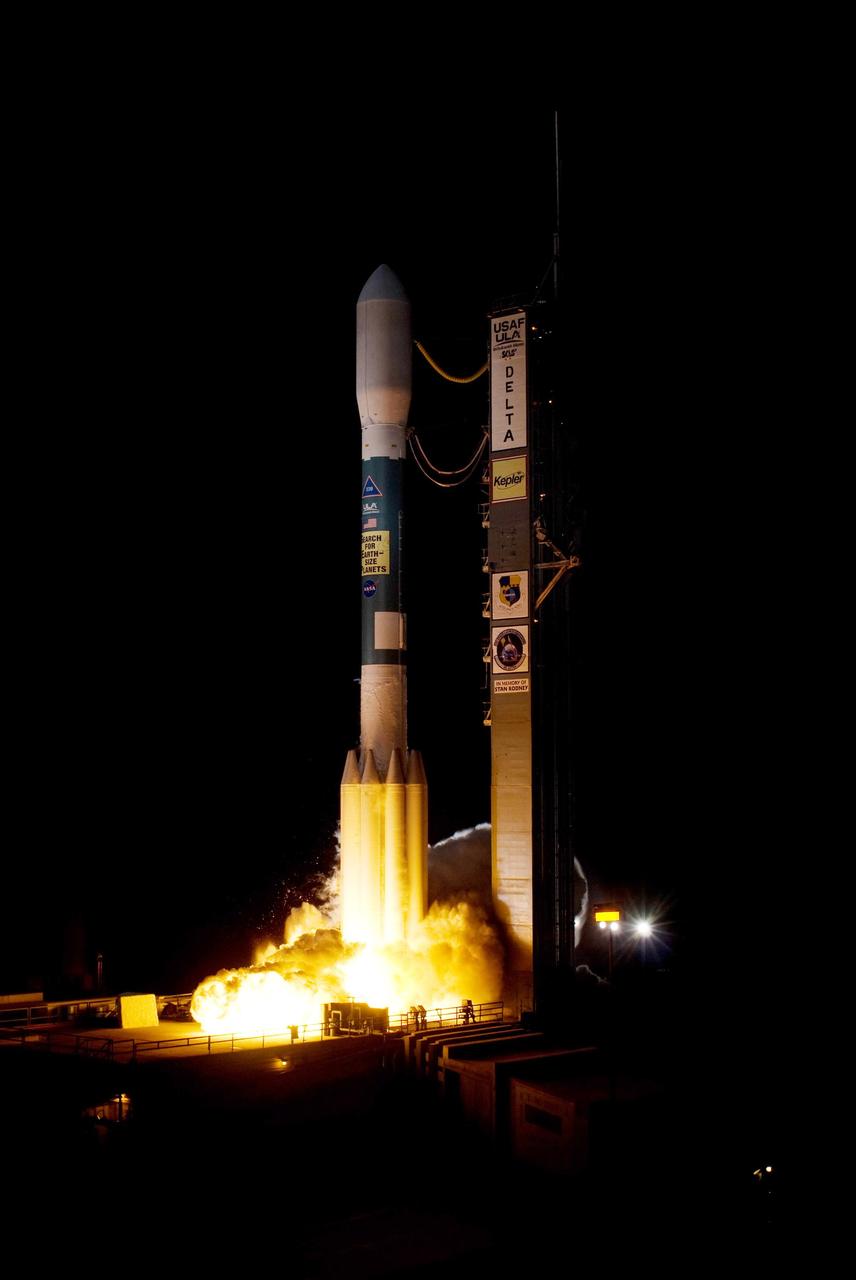
On March 6, 2009, NASA Kepler Space Telescope rocketed into the night skies above Cape Canaveral Air Force Station in Florida to find planets around other stars, called exoplanets, in search of potentially habitable worlds.

The artist concept depicts Kepler-62f, a super-Earth-size planet in the habitable zone of a star smaller and cooler than the sun, located about 1,200 light-years from Earth in the constellation Lyra.
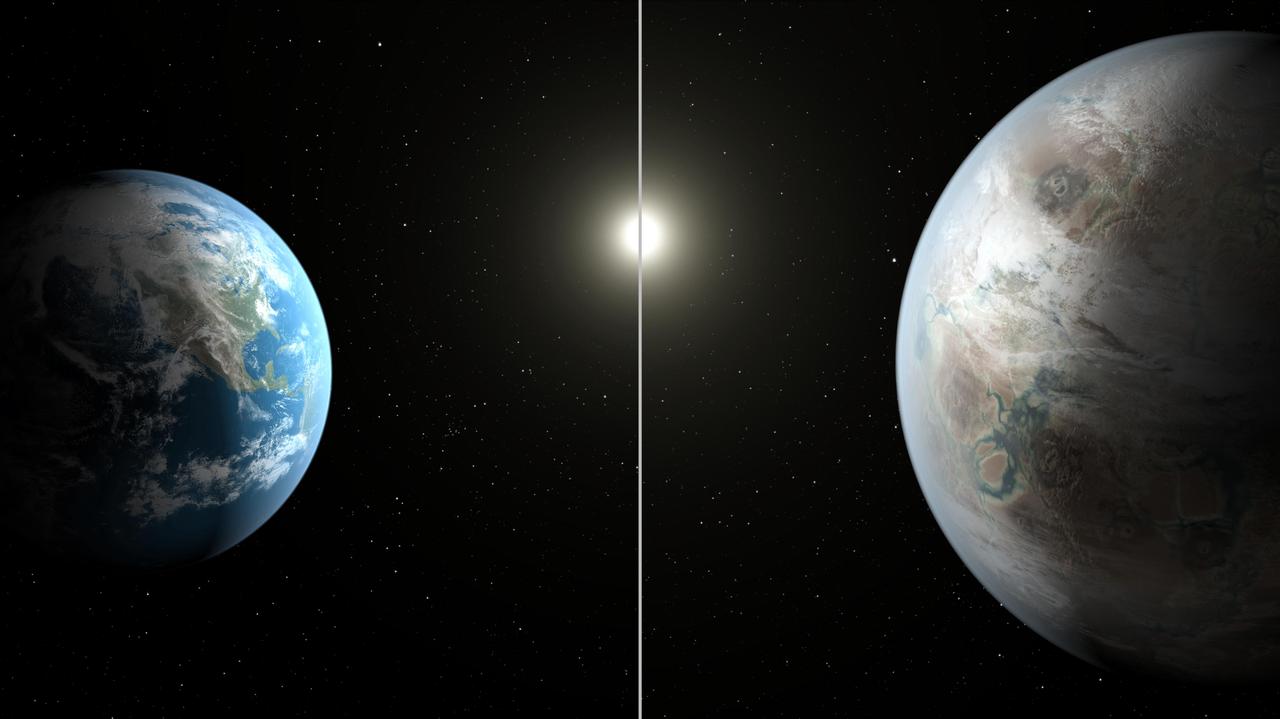
Scientists using data from NASA's Kepler mission have confirmed the first near-Earth-size planet orbiting in the habitable zone of a sun-like star. The habitable zone is the region around a star where temperatures are just right for water to exist in its liquid form. The artist's concept compares Earth (left) to the new planet, called Kepler-452b, which is about 60 percent larger. The illustration represents one possible appearance for Kepler-452b -- scientists do not know whether the planet has oceans and continents like Earth. Both planets orbit a G2-type star of about the same temperature; however, the star hosting Kepler-452b is 6 billion years old, 1.5 billion years older than our sun. As stars age, they become larger, hotter and brighter, as represented in the illustration. Kepler-452b's star appears a bit larger and brighter. http://photojournal.jpl.nasa.gov/catalog/PIA19825
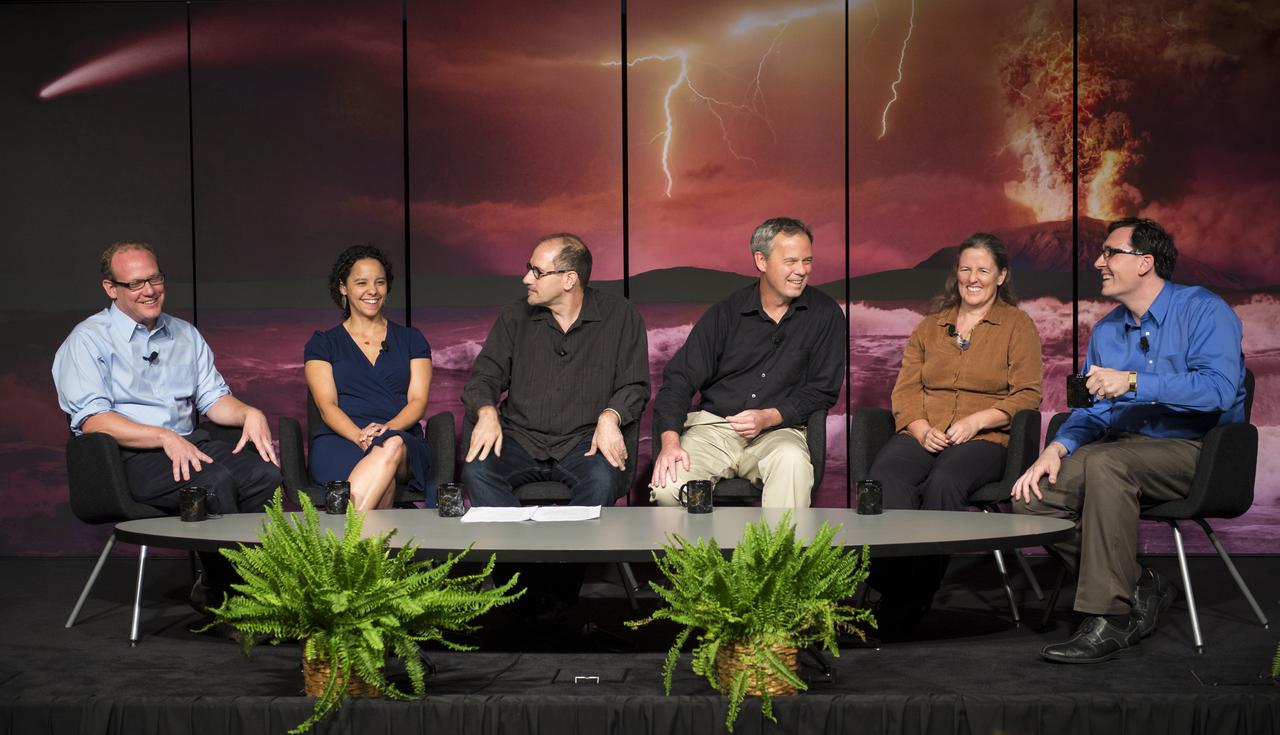
Panelists discuss how research on early Earth could help guide our search for habitable planets orbiting other stars at the “Ancient Earth, Alien Earths” Event at NASA Headquarters in Washington, DC Wednesday, August 20, 2014. The event was sponsored by NASA, the National Science Foundation (NSF), and the Smithsonian Institution and was moderated by Dr. David H. Grinspoon, Senior Scientist at the Planetary Science Institute. Photo Credit: (NASA/Aubrey Gemignani)

Panelists pose for a group photo at the “Ancient Earth, Alien Earths” Event at NASA Headquarters in Washington, DC Wednesday, August 20, 2014. The event was sponsored by NASA, the National Science Foundation (NSF), and the Smithsonian Institution and highlighted how research on early Earth could help guide our search for habitable planets orbiting other stars. Photo Credit: (NASA/Aubrey Gemignani)

Dr. David H. Grinspoon, Senior Scientist, Planetary Science Institute, moderates a panel at the “Ancient Earth, Alien Earths” Event at NASA Headquarters in Washington, DC Wednesday, August 20, 2014. The event was sponsored by NASA, the National Science Foundation (NSF), and the Smithsonian Institution and highlighted how research on early Earth could help guide our search for habitable planets orbiting other stars. Photo Credit: (NASA/Aubrey Gemignani)
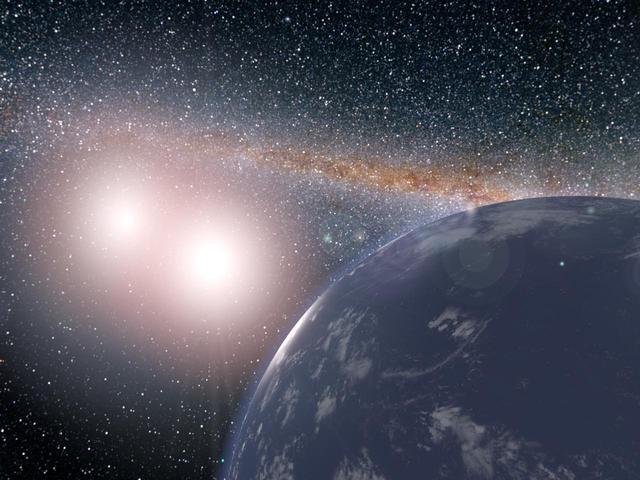
This artist's concept shows a hypothetical planet covered in water around the binary star system of Kepler-35A and B. In a 2017 study in the journal Nature Communications, researchers investigating the climates of exoplanets determined that this hypothetical planet could be habitable, depending on its distance from the two stars. On the far edge of the habitable zone, the hypothetical water-covered planet would have a lot of variation in its surface temperatures. But closer to the stars, near the inner edge of the habitable zone, the global average surface temperatures on the same planet would stay almost constant. https://photojournal.jpl.nasa.gov/catalog/PIA21470
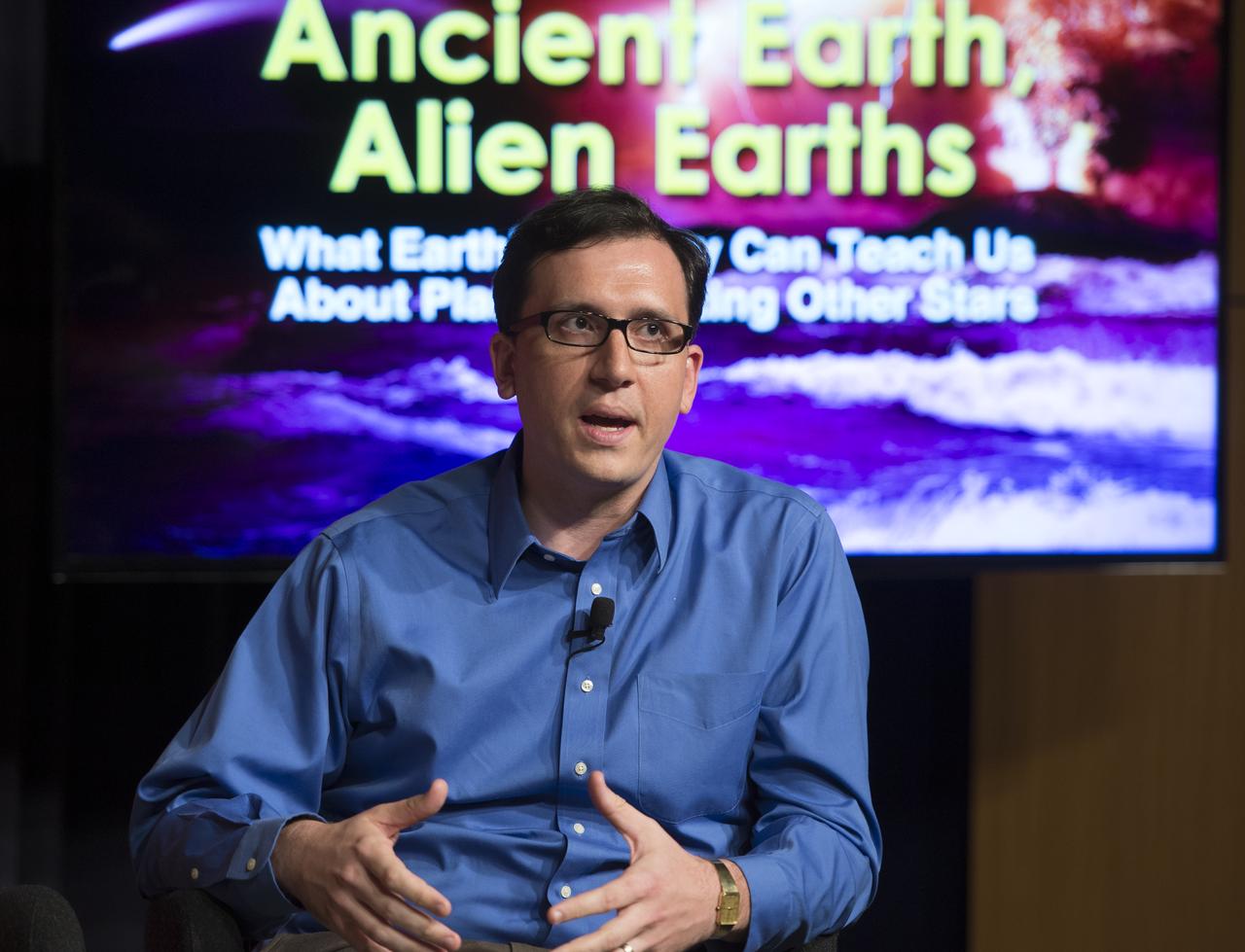
Dr. Shawn Domagal-Goldman, Research Space Scientist, NASA Goddard Space Flight Center, speaks on a panel at the “Ancient Earth, Alien Earths” Event at NASA Headquarters in Washington, DC Wednesday, August 20, 2014. The event was sponsored by NASA, the National Science Foundation (NSF), and the Smithsonian Institution and was moderated by Dr. David H. Grinspoon, Senior Scientist at the Planetary Science Institute. Six scientists discussed how research on early Earth could help guide our search for habitable planets orbiting other stars. Photo Credit: (NASA/Aubrey Gemignani)
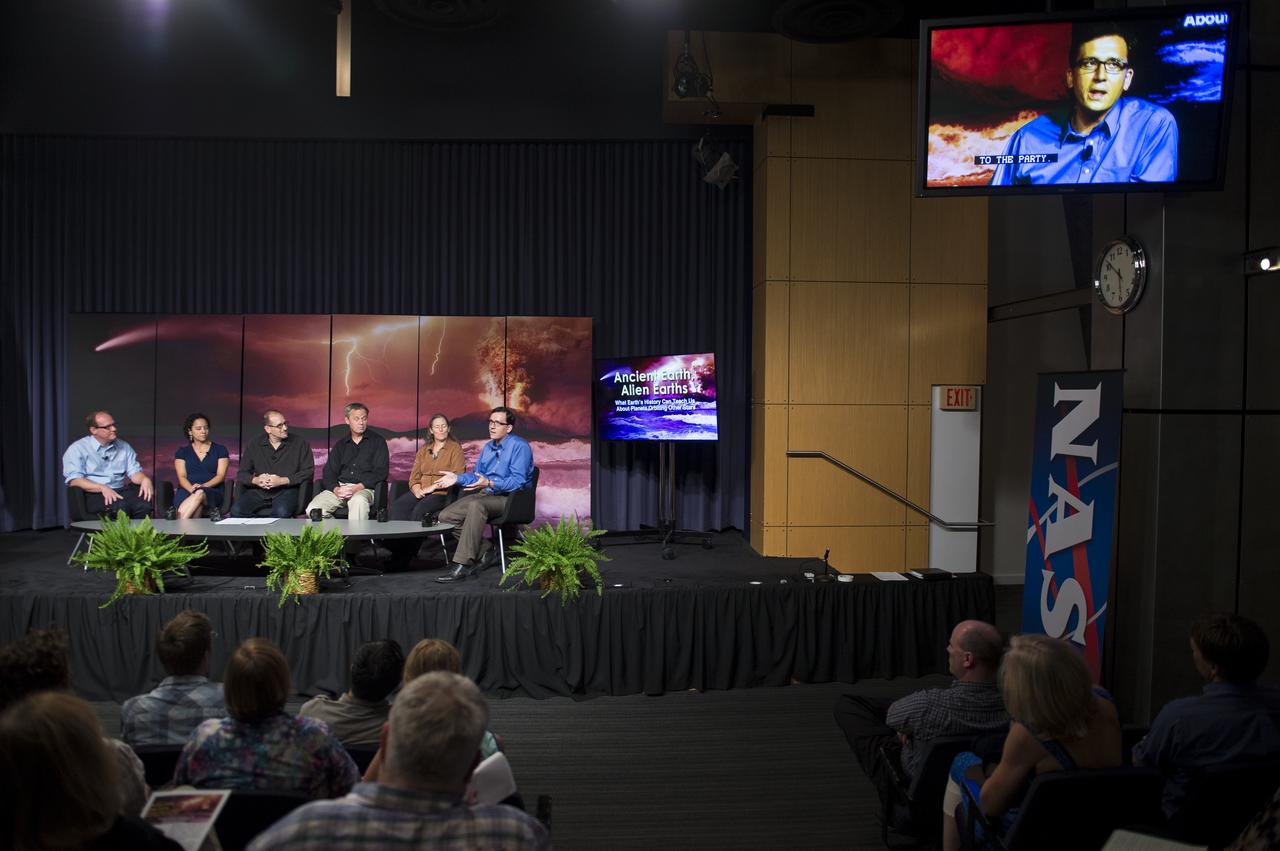
Dr. Shawn Domagal-Goldman, Research Space Scientist, NASA Goddard Space Flight Center, speaks on a panel at the “Ancient Earth, Alien Earths” Event at NASA Headquarters in Washington, DC Wednesday, August 20, 2014. The event was sponsored by NASA, the National Science Foundation (NSF), and the Smithsonian Institution and was moderated by Dr. David H. Grinspoon, Senior Scientist at the Planetary Science Institute. Six scientists discussed how research on early Earth could help guide our search for habitable planets orbiting other stars. Photo Credit: (NASA/Aubrey Gemignani)

This diagram compares our own solar system to Kepler-22, a star system containing the first habitable zone planet -- the sweet spot around a star where temperatures are right for water to exist in its liquid form, discovered by NASA Kepler mission.

The TRAPPIST-1 system contains a total of seven planets, all around the size of Earth. Three of them -- TRAPPIST-1e, f and g -- dwell in their star's so-called "habitable zone." The habitable zone, or Goldilocks zone, is a band around every star (shown here in green) where astronomers have calculated that temperatures are just right -- not too hot, not too cold -- for liquid water to pool on the surface of an Earth-like world. While TRAPPIST-1b, c and d are too close to be in the system's likely habitable zone, and TRAPPIST-1h is too far away, the planets' discoverers say more optimistic scenarios could allow any or all of the planets to harbor liquid water. In particular, the strikingly small orbits of these worlds make it likely that most, if not all of them, perpetually show the same face to their star, the way our moon always shows the same face to the Earth. This would result in an extreme range of temperatures from the day to night sides, allowing for situations not factored into the traditional habitable zone definition. The illustrations shown for the various planets depict a range of possible scenarios of what they could look like. The system has been revealed through observations from NASA's Spitzer Space Telescope and the ground-based TRAPPIST (TRAnsiting Planets and PlanetesImals Small Telescope) telescope, as well as other ground-based observatories. The system was named for the TRAPPIST telescope. http://photojournal.jpl.nasa.gov/catalog/PIA21424

This artist's concept shows NASA's Kepler Space Telescope on its K2 mission. In July 2016, an international team of astronomers announced they had discovered more than 100 new planets using this telescope. The batch includes four planets in the size range of Earth that are orbiting a single dwarf star, depicted in this illustration. Two of these planets are too hot to support life as we know it, but two are in the star's "habitable" zone, where liquid water could exist on the surface. These small, rocky worlds are far closer to their star than Mercury is to our sun. But because the star is smaller and cooler than ours, its habitable zone is much closer. One of the two planets in the habitable zone, K2-72c, has a "year" about 15 Earth-days long -- the time it takes to complete one orbit. This closer planet is likely about 10 percent warmer than Earth. The slightly more distant planet in the habitable zone, K2-72e, has a year lasting 24 Earth days, and would be about 6 percent colder than Earth. http://photojournal.jpl.nasa.gov/catalog/PIA20698
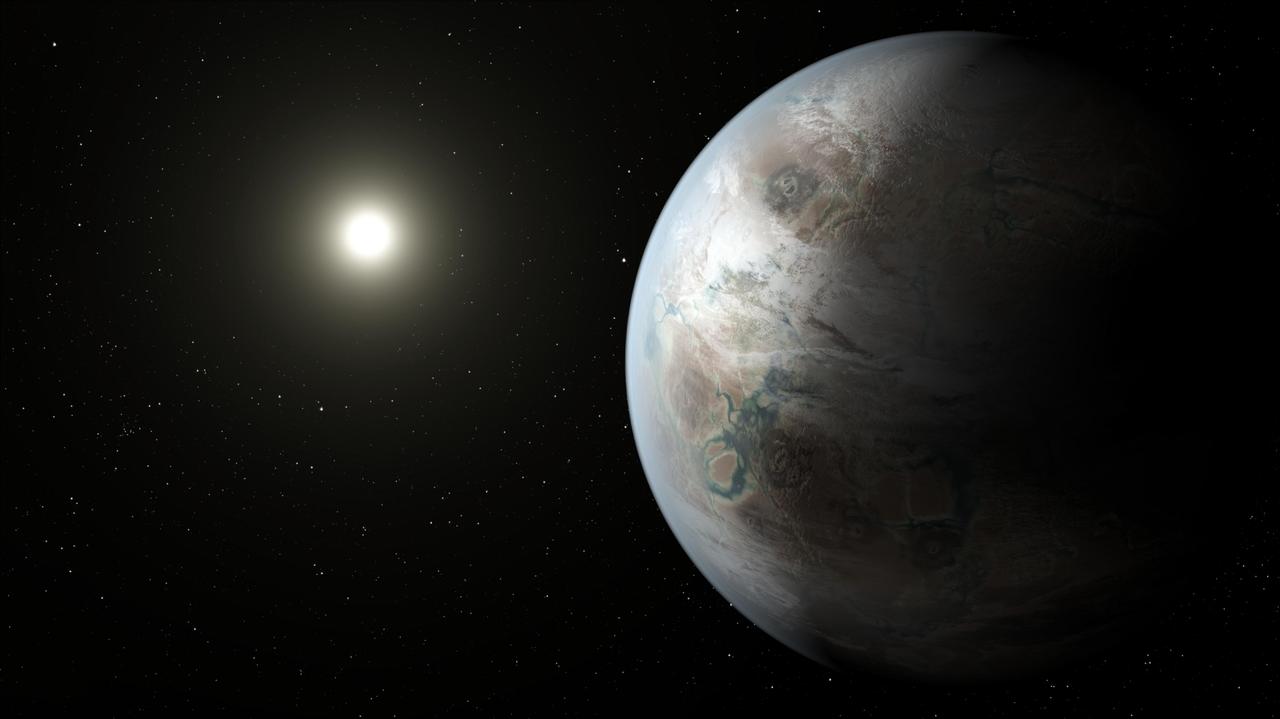
This artist's concept depicts one possible appearance of the planet Kepler-452b, the first near-Earth-size world to be found in the habitable zone of star that is similar to our sun. The habitable zone is a region around a star where temperatures are right for water -- an essential ingredient for life as we know it -- to pool on the surface. Scientists do not know if Kepler-452b can support life or not. What is known about the planet is that it is about 60 percent larger than Earth, placing it in a class of planets dubbed "super-Earths." While its mass and composition are not yet determined, previous research suggests that planets the size of Kepler-452b have a better than even chance of being rocky. Kepler-452b orbits its star every 385 days. The planet's star is about 1,400 light-years away in the constellation Cygnus. It is a G2-type star like our sun, with nearly the same temperature and mass. This star is 6 billion years old, 1.5 billion years older than our sun. As stars age, they grow in size and give out more energy, warming up their planets over time. Scientists and artists considered these facts when creating this illustration. If the planet Kepler-452b does in fact have liquid on its surface and has grown warmer due to the older age of its star, it could possibly be experiencing a runaway greenhouse effect, where oceans would begin to evaporate and contribute to increased cloud cover. This, plus other factors such as the planet's large size, was factored into the hypothetical scenario depicted in this illustration. http://photojournal.jpl.nasa.gov/catalog/PIA19824
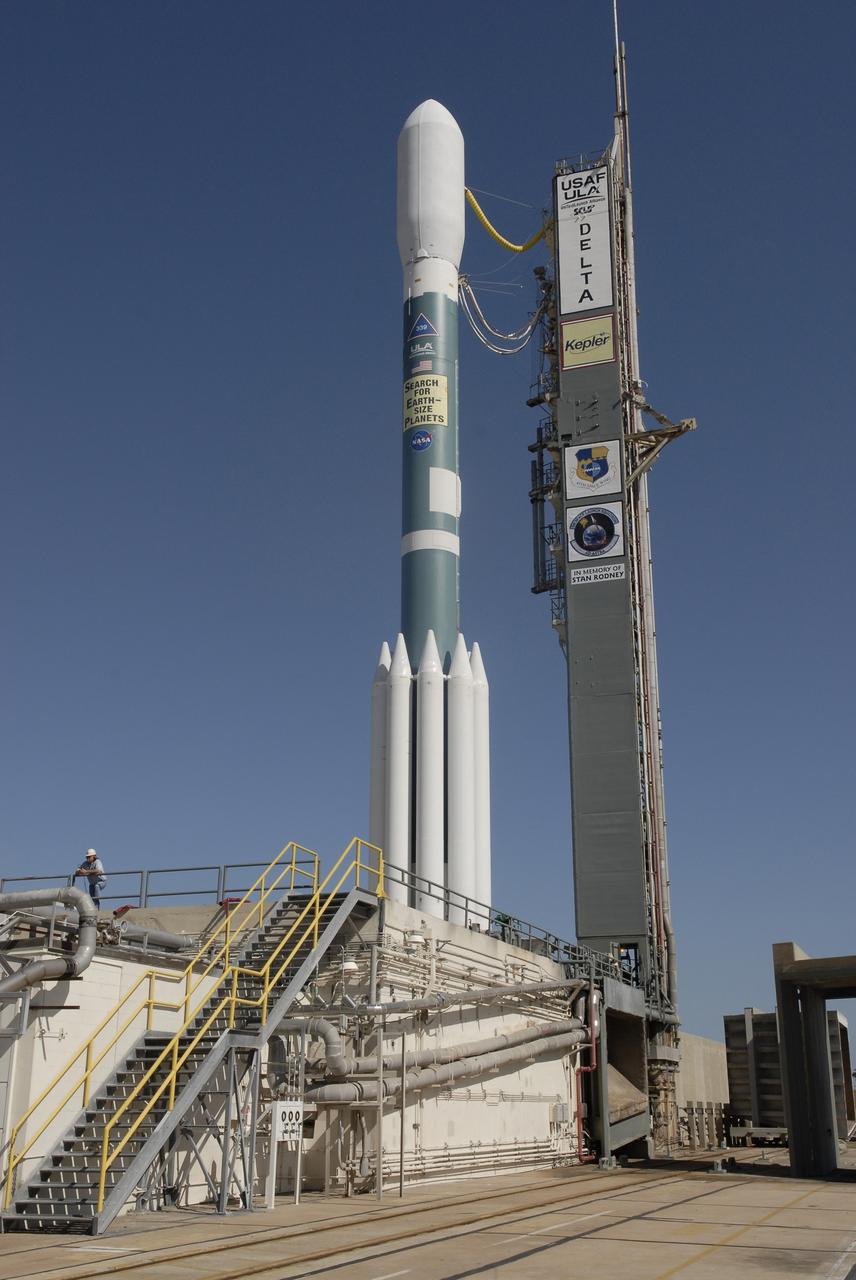
CAPE CANAVERAL, Fla. – After rollback of the mobile service tower on Cape Canaveral Air Force Station's Launch Pad 17-B in Florida, NASA's Kepler spacecraft sits poised for launch atop the United Launch Alliance Delta II 7925 rocket. Kepler is a spaceborne telescope designed to search the nearby region of our galaxy for Earth-size planets orbiting in the habitable zone of stars like our sun. The habitable zone is the region around a star where temperatures permit water to be liquid on a planet's surface. The challenge for Kepler is to look at a large number of stars in order to statistically estimate the total number of Earth-size planets orbiting sun-like stars in the habitable zone. Kepler will survey more than 100,000 stars in our galaxy. Photo credit: NASA/Jack Pfaller
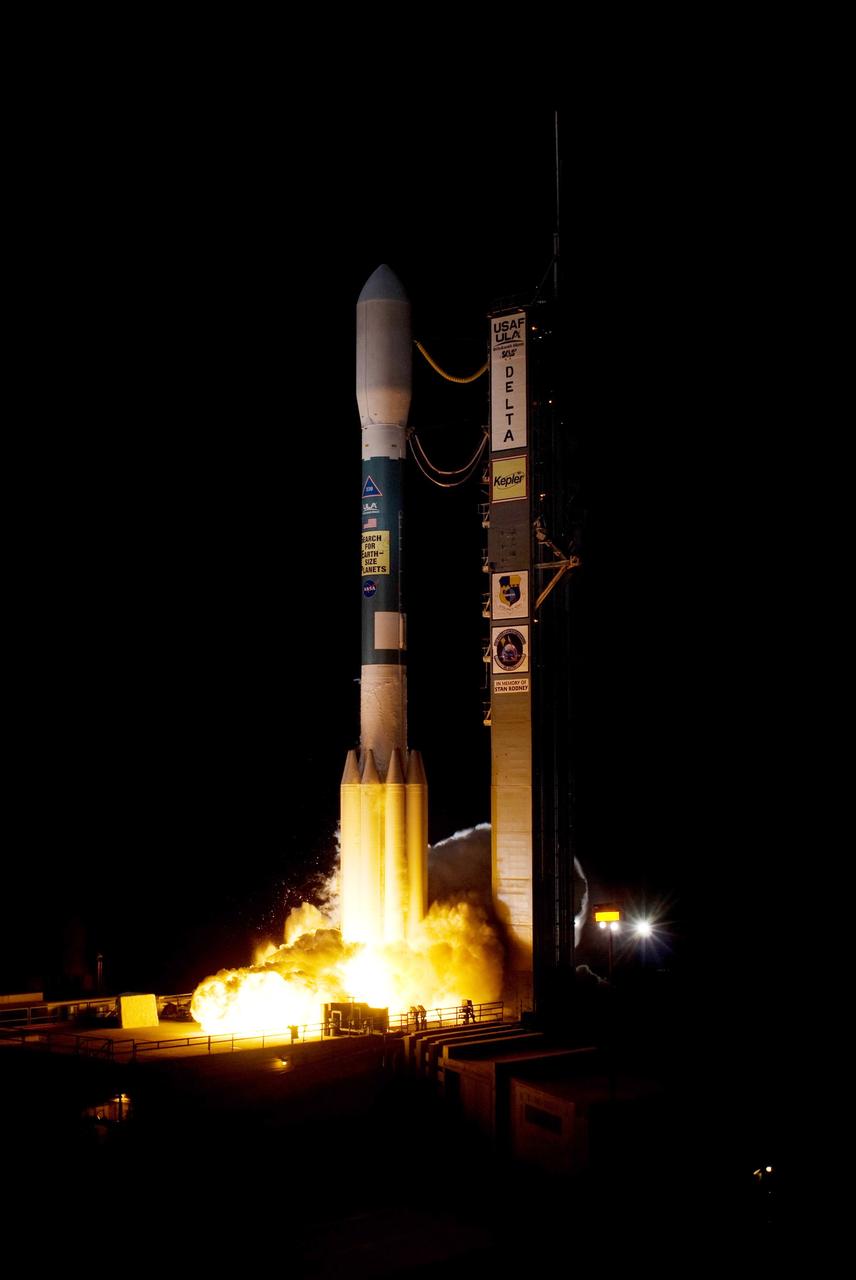
CAPE CANAVERAL, Fla. – On Launch Pad 17-B at Cape Canaveral Air Force Station in Florida, the engines on United Launch Alliance's Delta II rocket carrying NASA's Kepler spacecraft ignite. Liftoff was on time at 10:49 p.m. EST. Kepler is a spaceborne telescope designed to search the nearby region of our galaxy for Earth-size planets orbiting in the habitable zone of stars like our sun. The habitable zone is the region around a star where temperatures permit water to be liquid on a planet's surface. The challenge for Kepler is to look at a large number of stars in order to statistically estimate the total number of Earth-size planets orbiting sun-like stars in the habitable zone. Kepler will survey more than 100,000 stars in our galaxy. Photo credit: NASA/Tony Gray
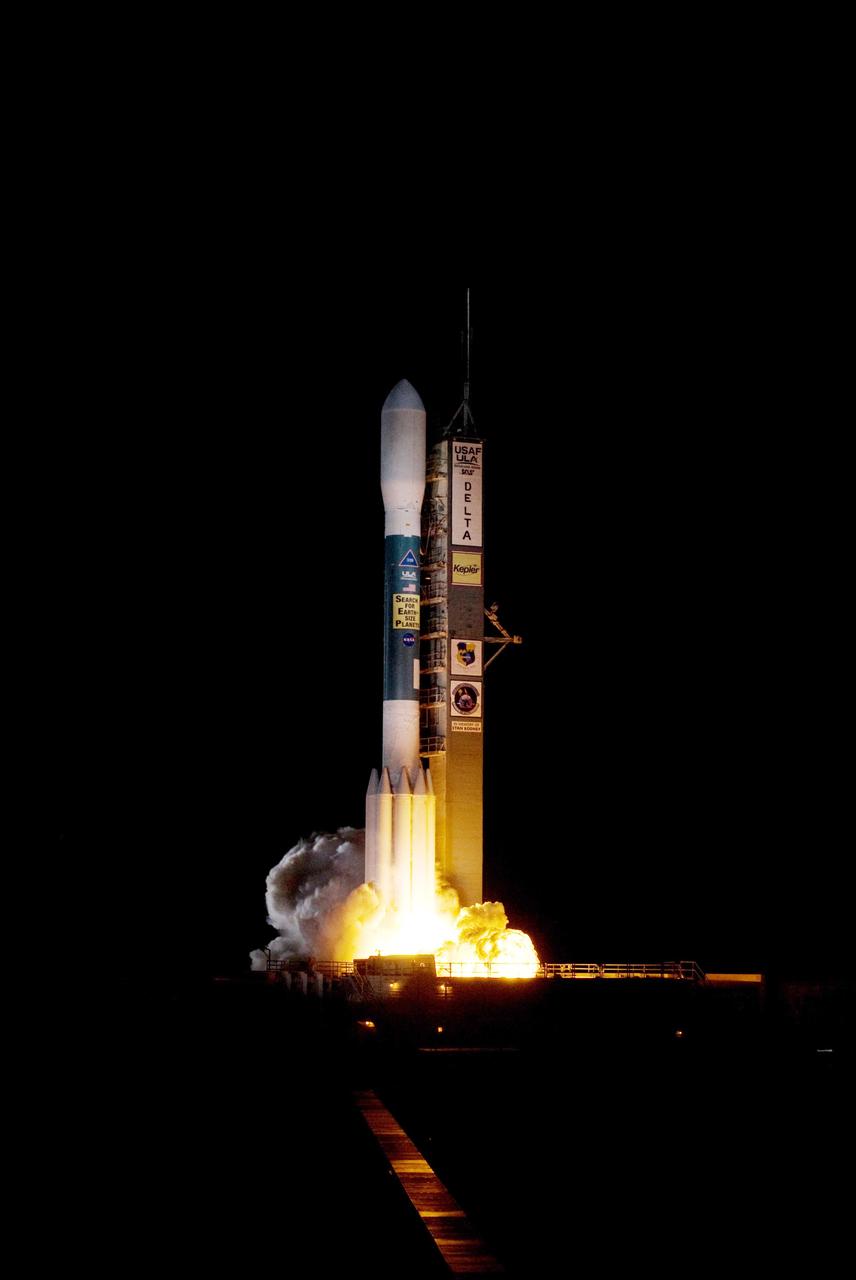
CAPE CANAVERAL, Fla. – On Launch Pad 17-B at Cape Canaveral Air Force Station in Florida, exhaust clouds cascade around the base of United Launch Alliance's Delta II rocket carrying NASA's Kepler spacecraft as the rocket’s engines ignite. Liftoff was on time at 10:49 p.m. EST. Kepler is a spaceborne telescope designed to search the nearby region of our galaxy for Earth-size planets orbiting in the habitable zone of stars like our sun. The habitable zone is the region around a star where temperatures permit water to be liquid on a planet's surface. The challenge for Kepler is to look at a large number of stars in order to statistically estimate the total number of Earth-size planets orbiting sun-like stars in the habitable zone. Kepler will survey more than 100,000 stars in our galaxy. Photo credit: NASA/Sandra Joseph, Kevin O'Connell
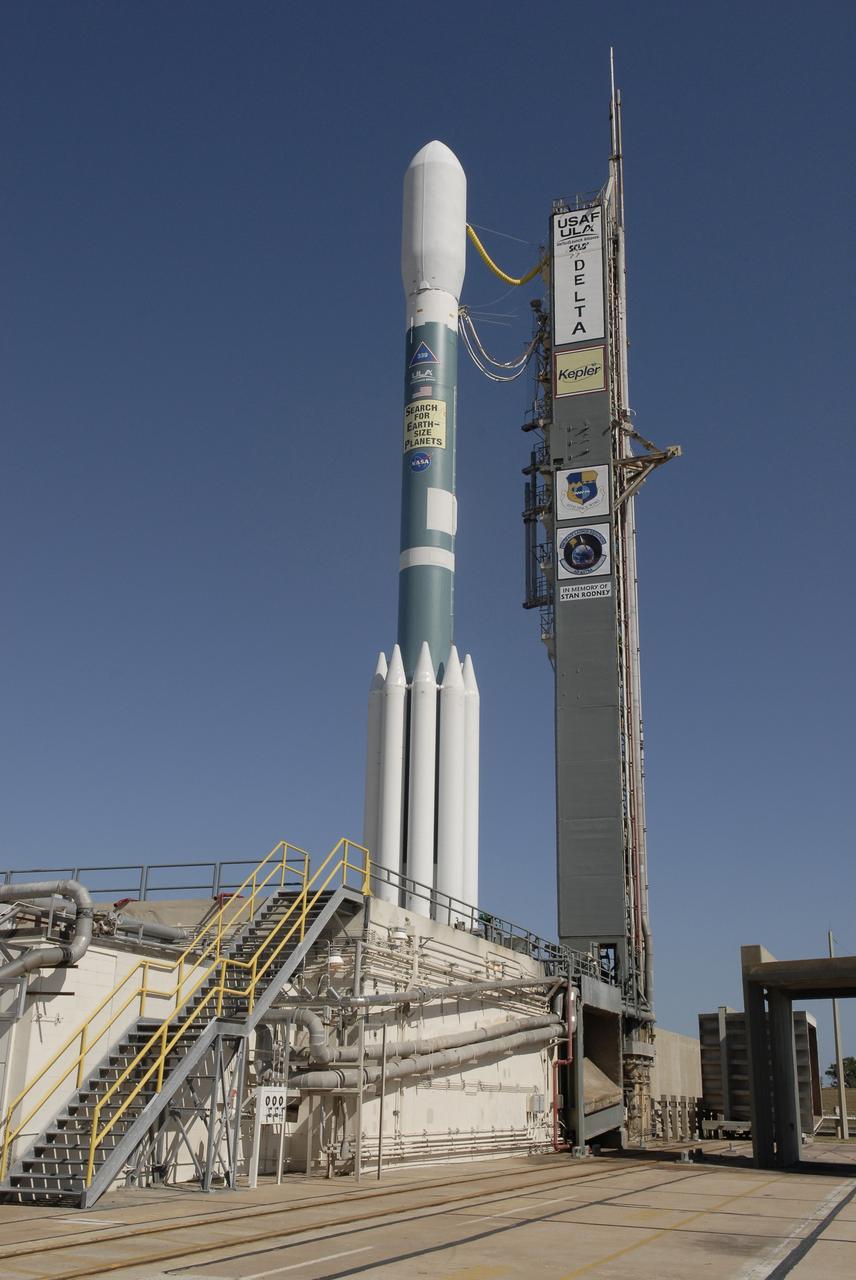
CAPE CANAVERAL, Fla. – After rollback of the mobile service tower on Cape Canaveral Air Force Station's Launch Pad 17-B in Florida, NASA's Kepler spacecraft sits poised for launch atop the United Launch Alliance Delta II 7925 rocket. Kepler is a spaceborne telescope designed to search the nearby region of our galaxy for Earth-size planets orbiting in the habitable zone of stars like our sun. The habitable zone is the region around a star where temperatures permit water to be liquid on a planet's surface. The challenge for Kepler is to look at a large number of stars in order to statistically estimate the total number of Earth-size planets orbiting sun-like stars in the habitable zone. Kepler will survey more than 100,000 stars in our galaxy. Photo credit: NASA/Jack Pfaller
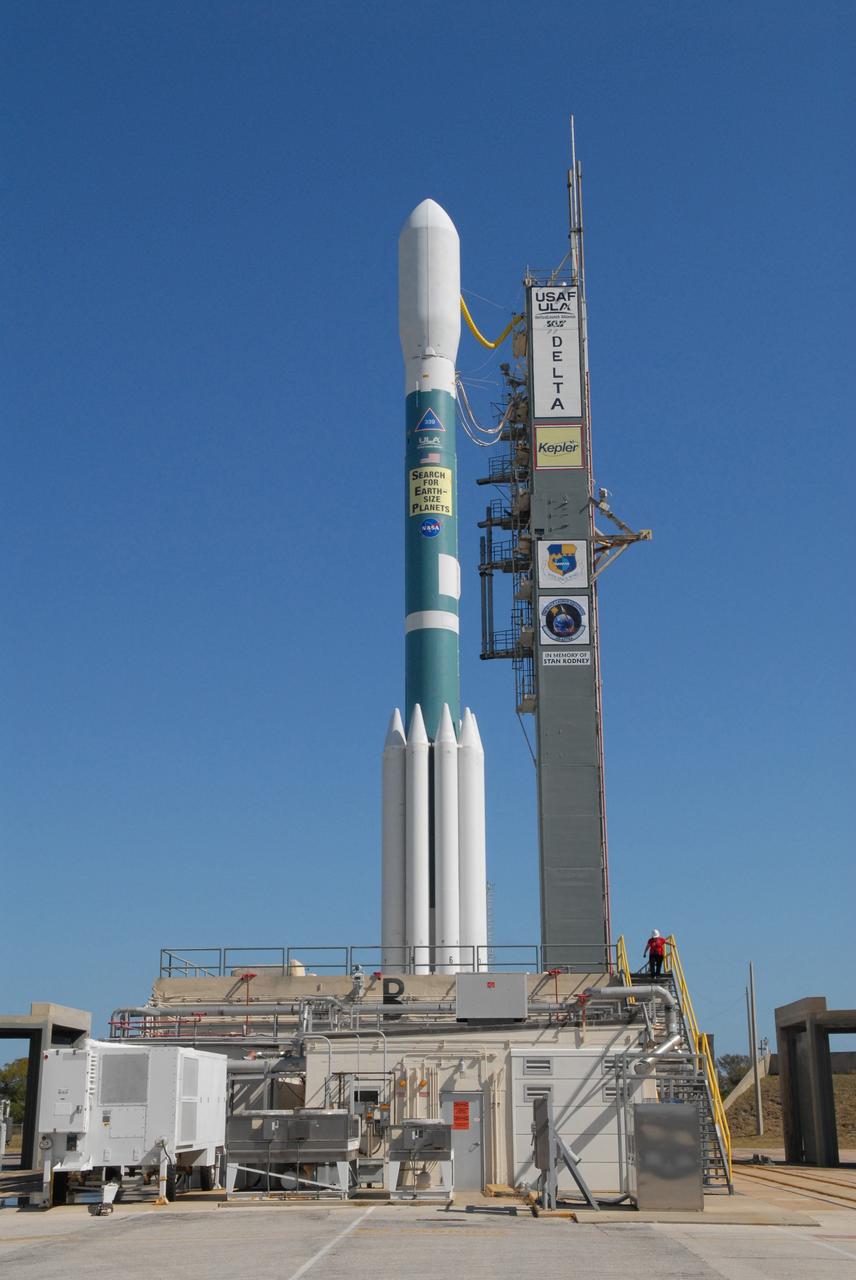
CAPE CANAVERAL, Fla. – The Delta II 7925 rocket stands ready for launch following rollback of the mobile service tower on Launch Pad 17-B at Cape Canaveral Air Force Station in Florida. Atop the rocket is NASA's Kepler spacecraft. Kepler is a spaceborne telescope designed to search the nearby region of our galaxy for Earth-size planets orbiting in the habitable zone of stars like our sun. The habitable zone is the region around a star where temperatures permit water to be liquid on a planet's surface. The challenge for Kepler is to look at a large number of stars in order to statistically estimate the total number of Earth-size planets orbiting sun-like stars in the habitable zone. Kepler will survey more than 100,000 stars in our galaxy. Photo credit: NASA/Jack Pfaller
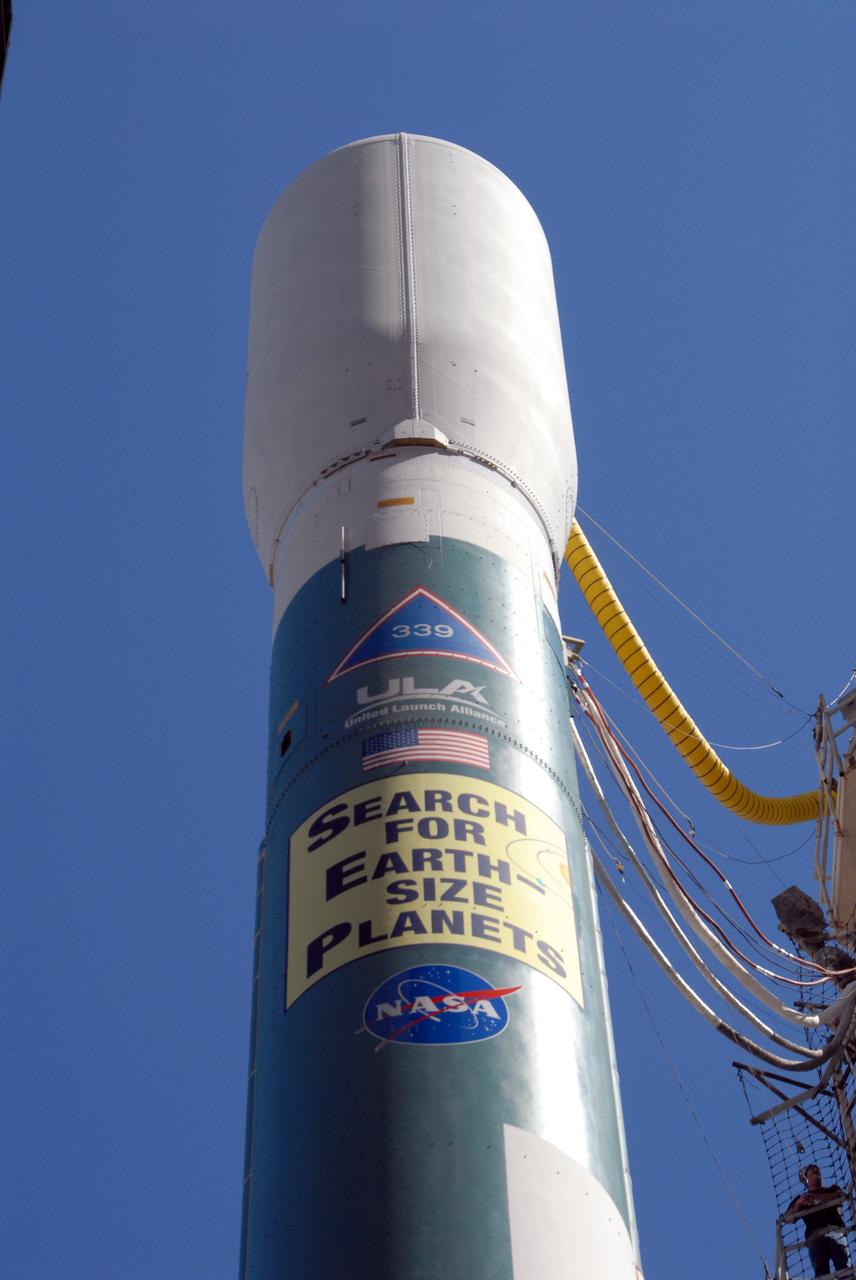
CAPE CANAVERAL, Fla. – The Delta II 7925 rocket stands ready for launch following rollback of the mobile service tower on Launch Pad 17-B at Cape Canaveral Air Force Station. Atop the rocket is NASA's Kepler spacecraft. Kepler is a spaceborne telescope designed to search the nearby region of our galaxy for Earth-size planets orbiting in the habitable zone of stars like our sun. The habitable zone is the region around a star where temperatures permit water to be liquid on a planet's surface. The challenge for Kepler is to look at a large number of stars in order to statistically estimate the total number of Earth-size planets orbiting sun-like stars in the habitable zone. Kepler will survey more than 100,000 stars in our galaxy. Photo credit: NASA/Jack Pfaller
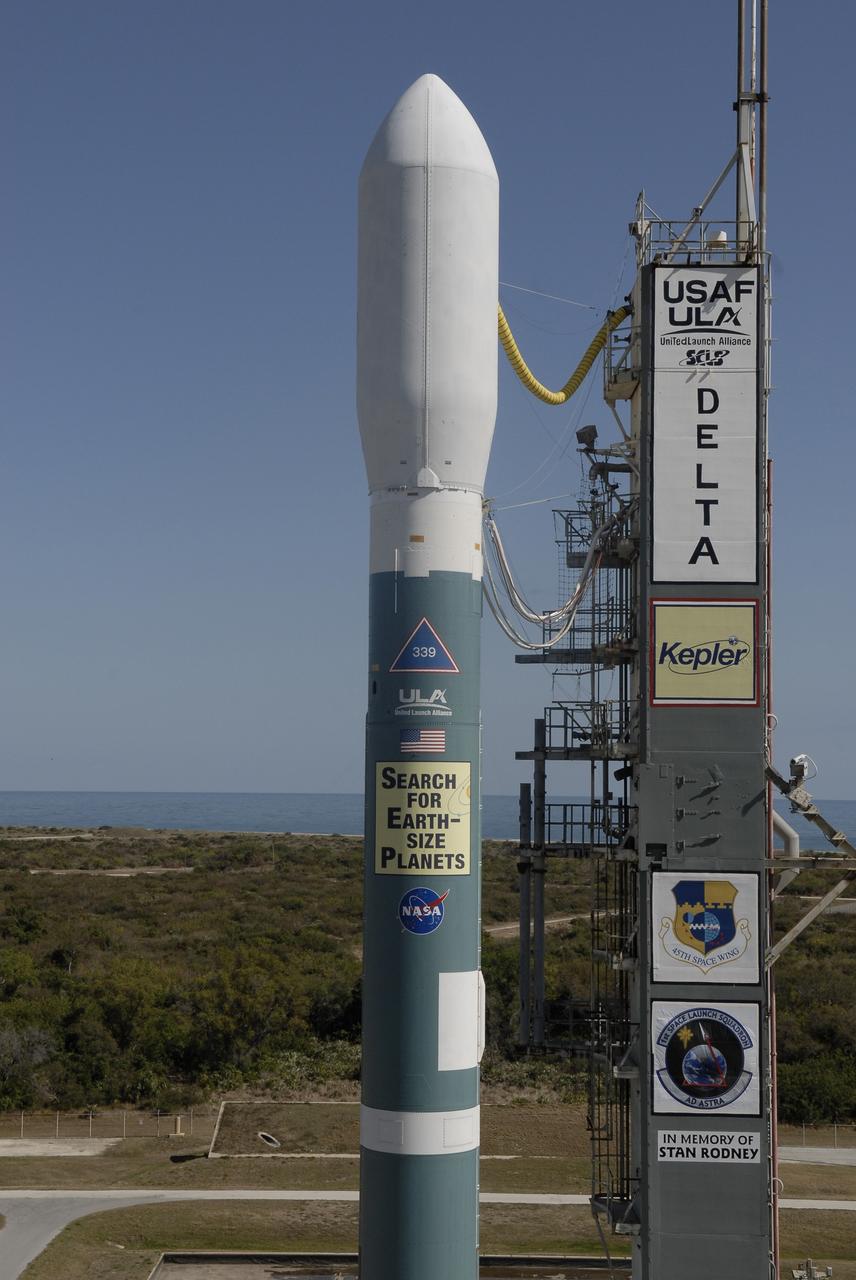
CAPE CANAVERAL, Fla. – Against the backdrop of the Atlantic Ocean, the Delta II 7925 rocket stands ready for launch following rollback of the mobile service tower on Launch Pad 17-B at Cape Canaveral Air Force Station. Atop the rocket is NASA's Kepler spacecraft. Kepler is a spaceborne telescope designed to search the nearby region of our galaxy for Earth-size planets orbiting in the habitable zone of stars like our sun. The habitable zone is the region around a star where temperatures permit water to be liquid on a planet's surface. The challenge for Kepler is to look at a large number of stars in order to statistically estimate the total number of Earth-size planets orbiting sun-like stars in the habitable zone. Kepler will survey more than 100,000 stars in our galaxy. Photo credit: NASA/Jack Pfaller
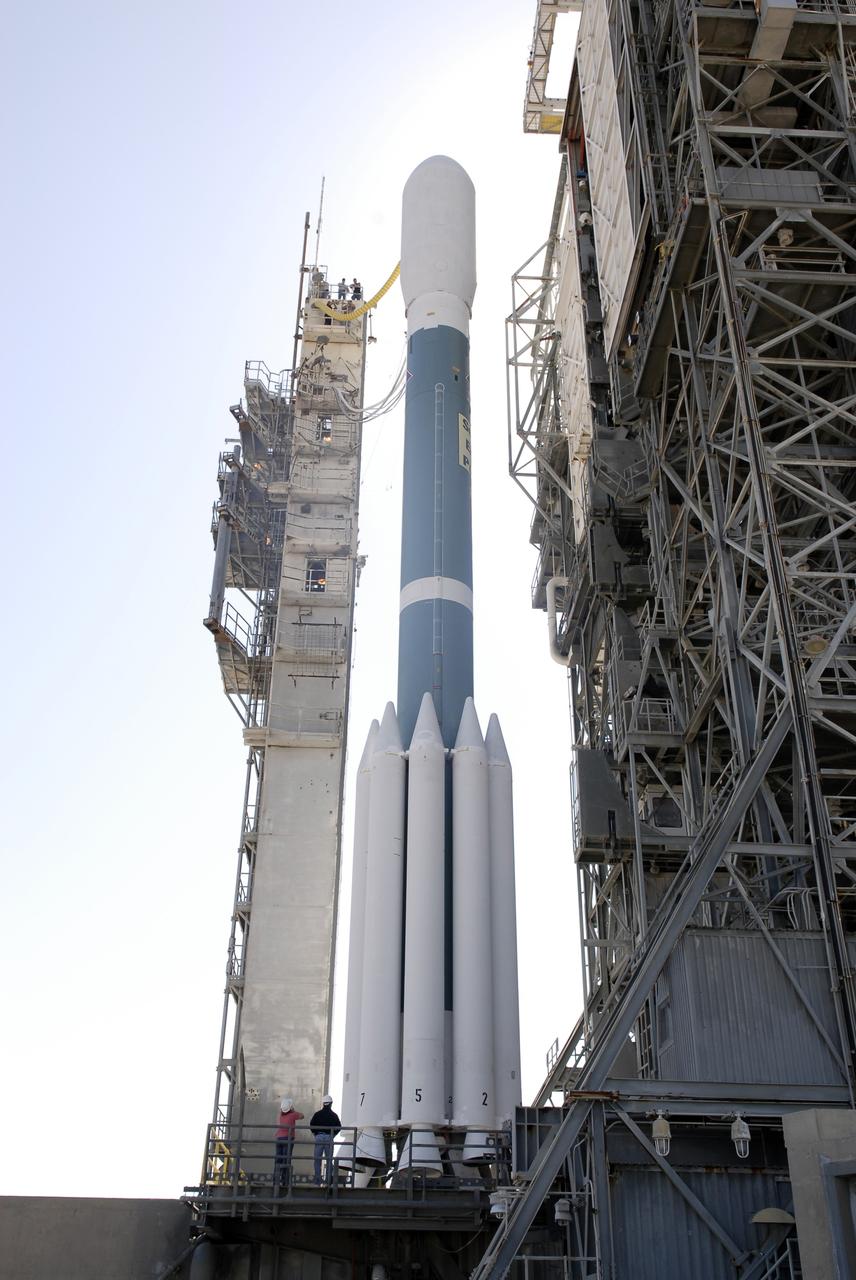
CAPE CANAVERAL, Fla. – The Delta II 7925 rocket stands ready for launch following rollback of the mobile service tower on Launch Pad 17-B at Cape Canaveral Air Force Station in Florida. Atop the rocket is NASA's Kepler spacecraft. Kepler is a spaceborne telescope designed to search the nearby region of our galaxy for Earth-size planets orbiting in the habitable zone of stars like our sun. The habitable zone is the region around a star where temperatures permit water to be liquid on a planet's surface. The challenge for Kepler is to look at a large number of stars in order to statistically estimate the total number of Earth-size planets orbiting sun-like stars in the habitable zone. Kepler will survey more than 100,000 stars in our galaxy. Photo credit: NASA/Jack Pfaller
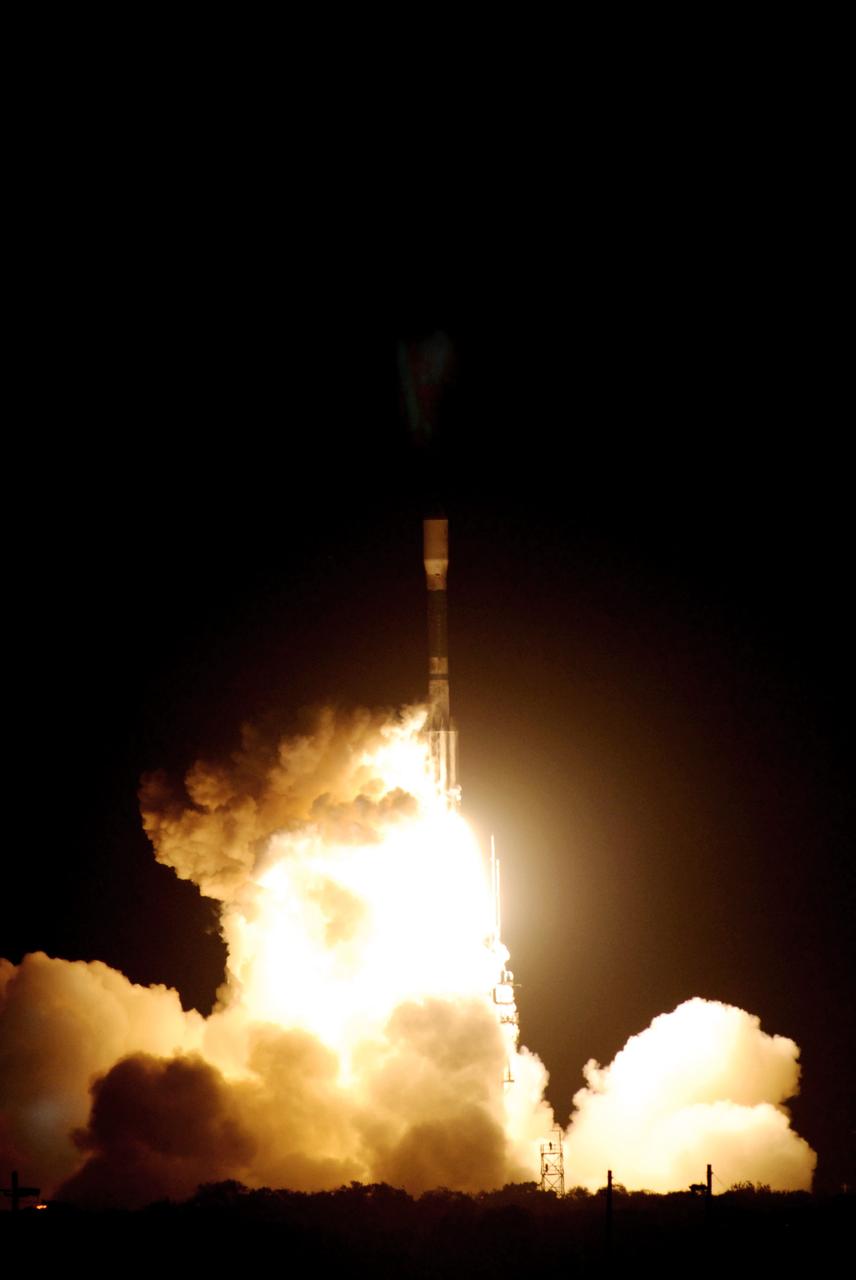
CAPE CANAVERAL, Fla. – United Launch Alliance's Delta II rocket roars into the night sky carrying NASA's Kepler spacecraft. Liftoff from Launch Pad 17-B at Cape Canaveral Air Force Station in Florida was on time at 10:49 p.m. EST. Kepler is a spaceborne telescope designed to search the nearby region of our galaxy for Earth-size planets orbiting in the habitable zone of stars like our sun. The habitable zone is the region around a star where temperatures permit water to be liquid on a planet's surface. The challenge for Kepler is to look at a large number of stars in order to statistically estimate the total number of Earth-size planets orbiting sun-like stars in the habitable zone. Kepler will survey more than 100,000 stars in our galaxy. Photo credit: NASA/Jack Pfaller
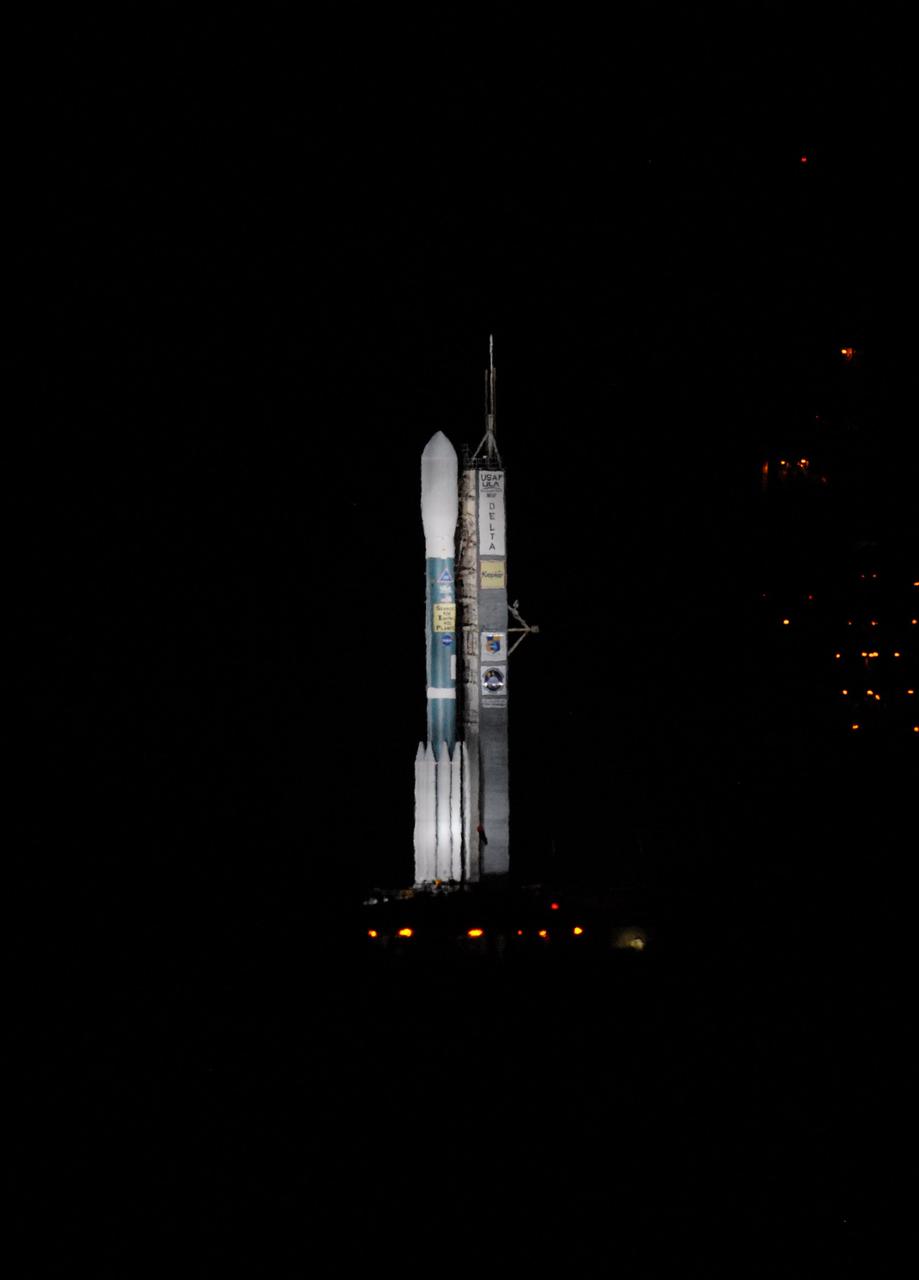
CAPE CANAVERAL, Fla. – United Launch Alliance's Delta II rocket, with NASA's Kepler spacecraft aboard, is bathed in light on Launch Pad 17-B at Cape Canaveral Air Force Station in Florida prior to launch. Liftoff is planned for 10:49 p.m. EST. Kepler is a spaceborne telescope designed to search the nearby region of our galaxy for Earth-size planets orbiting in the habitable zone of stars like our sun. The habitable zone is the region around a star where temperatures permit water to be liquid on a planet's surface. The challenge for Kepler is to look at a large number of stars in order to statistically estimate the total number of Earth-size planets orbiting sun-like stars in the habitable zone. Kepler will survey more than 100,000 stars in our galaxy. Photo credit: NASA/Jack Pfaller
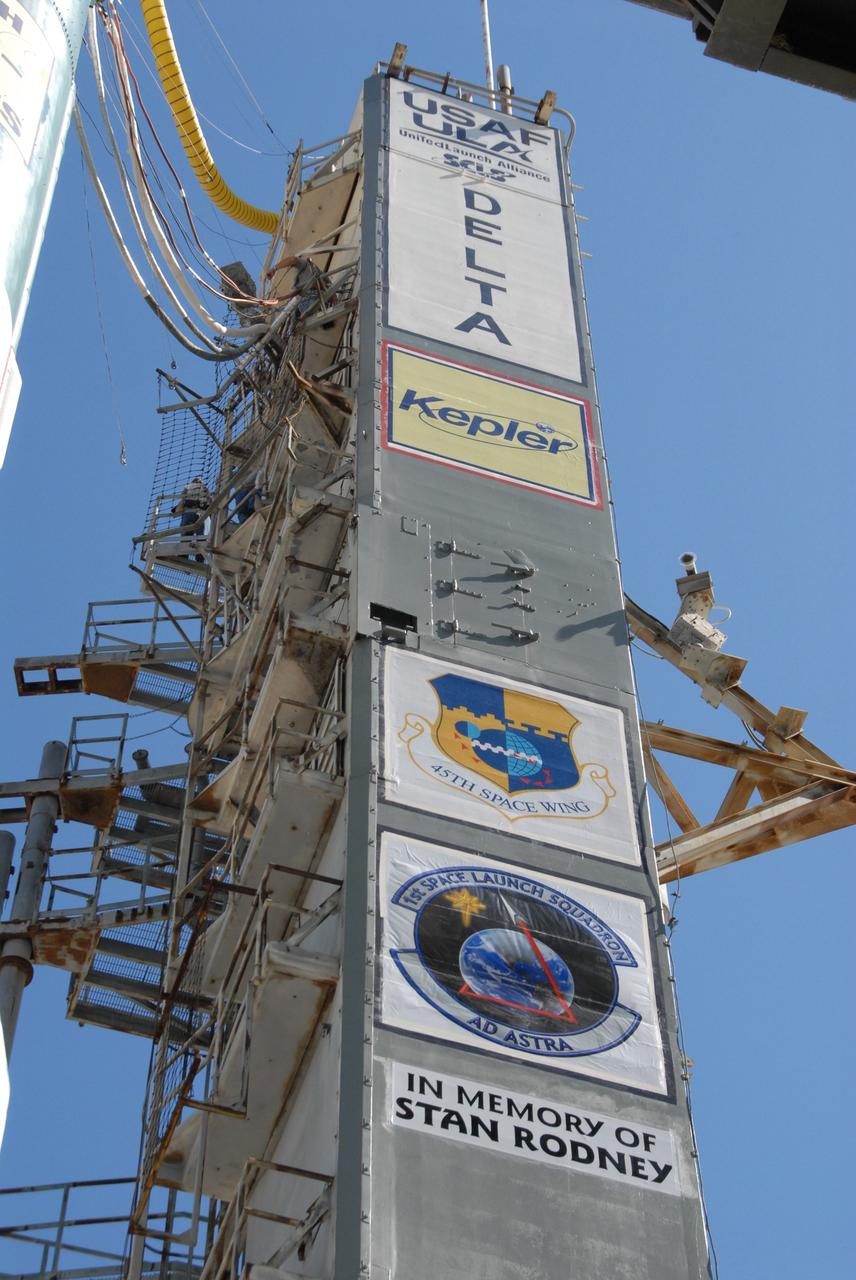
CAPE CANAVERAL, Fla. – The gantry on Launch Pad 17-B at Cape Canaveral Air Force Station in Florida shows the various logos of NASA's Kepler spacecraft launch. Kepler is a spaceborne telescope designed to search the nearby region of our galaxy for Earth-size planets orbiting in the habitable zone of stars like our sun. The habitable zone is the region around a star where temperatures permit water to be liquid on a planet's surface. The challenge for Kepler is to look at a large number of stars in order to statistically estimate the total number of Earth-size planets orbiting sun-like stars in the habitable zone. Kepler will survey more than 100,000 stars in our galaxy. Photo credit: NASA/Jack Pfaller
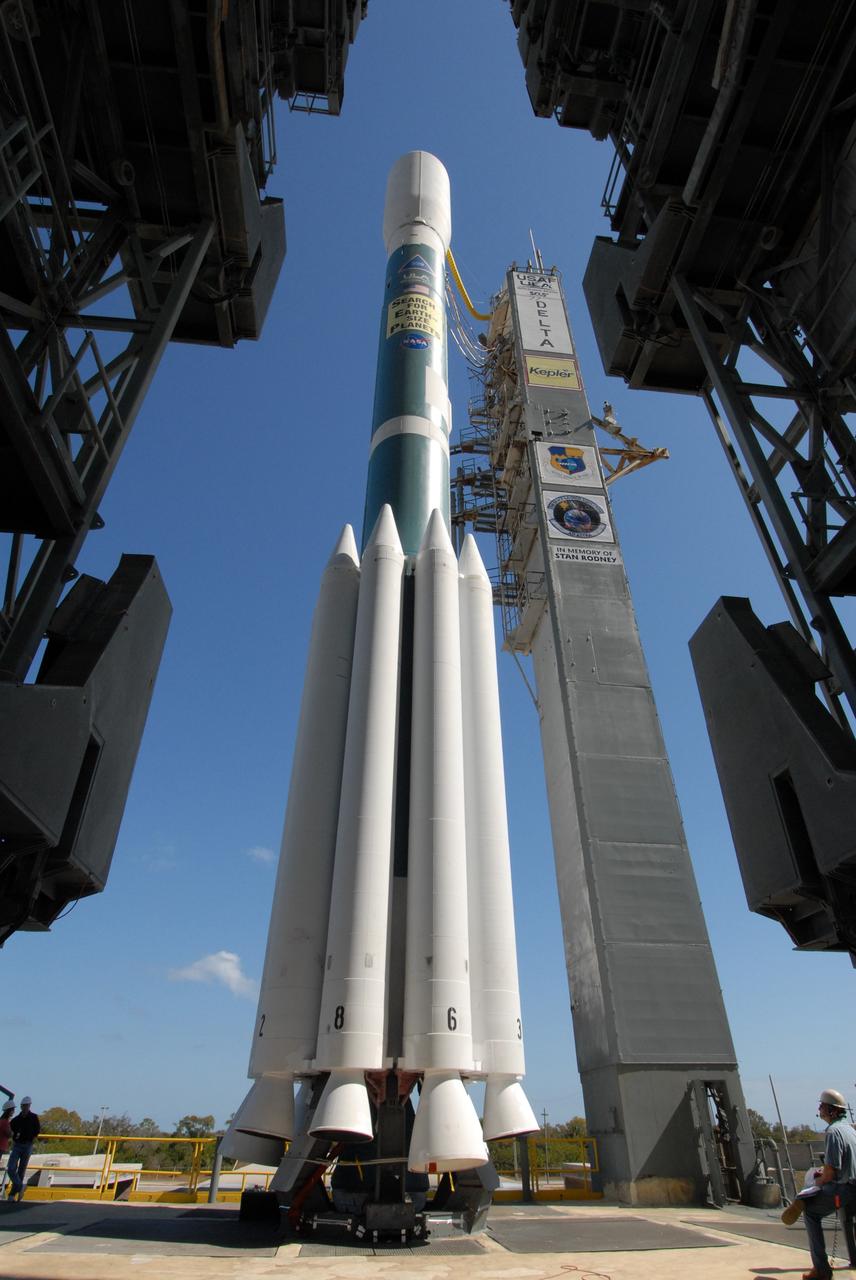
CAPE CANAVERAL, Fla. – The Delta II 7925 rocket stands ready for launch following rollback of the mobile service tower on Launch Pad 17-B at Cape Canaveral Air Force Station. Atop the rocket is NASA's Kepler spacecraft. Kepler is a spaceborne telescope designed to search the nearby region of our galaxy for Earth-size planets orbiting in the habitable zone of stars like our sun. The habitable zone is the region around a star where temperatures permit water to be liquid on a planet's surface. The challenge for Kepler is to look at a large number of stars in order to statistically estimate the total number of Earth-size planets orbiting sun-like stars in the habitable zone. Kepler will survey more than 100,000 stars in our galaxy. Photo credit: NASA/Jack Pfaller
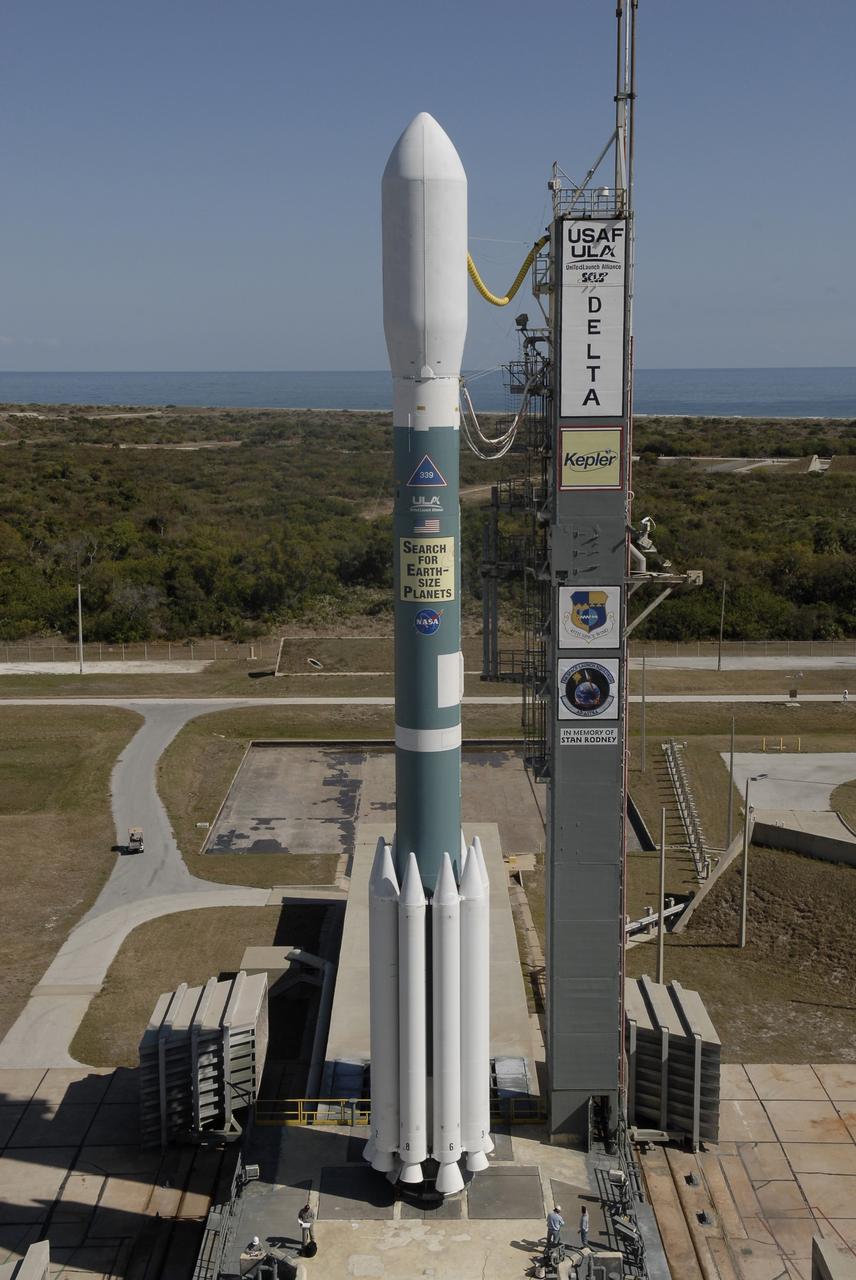
CAPE CANAVERAL, Fla. – After rollback of the mobile service tower on Cape Canaveral Air Force Station's Launch Pad 17-B, in Florida, NASA's Kepler spacecraft sits poised for launch atop the United Launch Alliance Delta II 7925 rocket. Kepler is a spaceborne telescope designed to search the nearby region of our galaxy for Earth-size planets orbiting in the habitable zone of stars like our sun. The habitable zone is the region around a star where temperatures permit water to be liquid on a planet's surface. The challenge for Kepler is to look at a large number of stars in order to statistically estimate the total number of Earth-size planets orbiting sun-like stars in the habitable zone. Kepler will survey more than 100,000 stars in our galaxy. Photo credit: NASA/Jack Pfaller
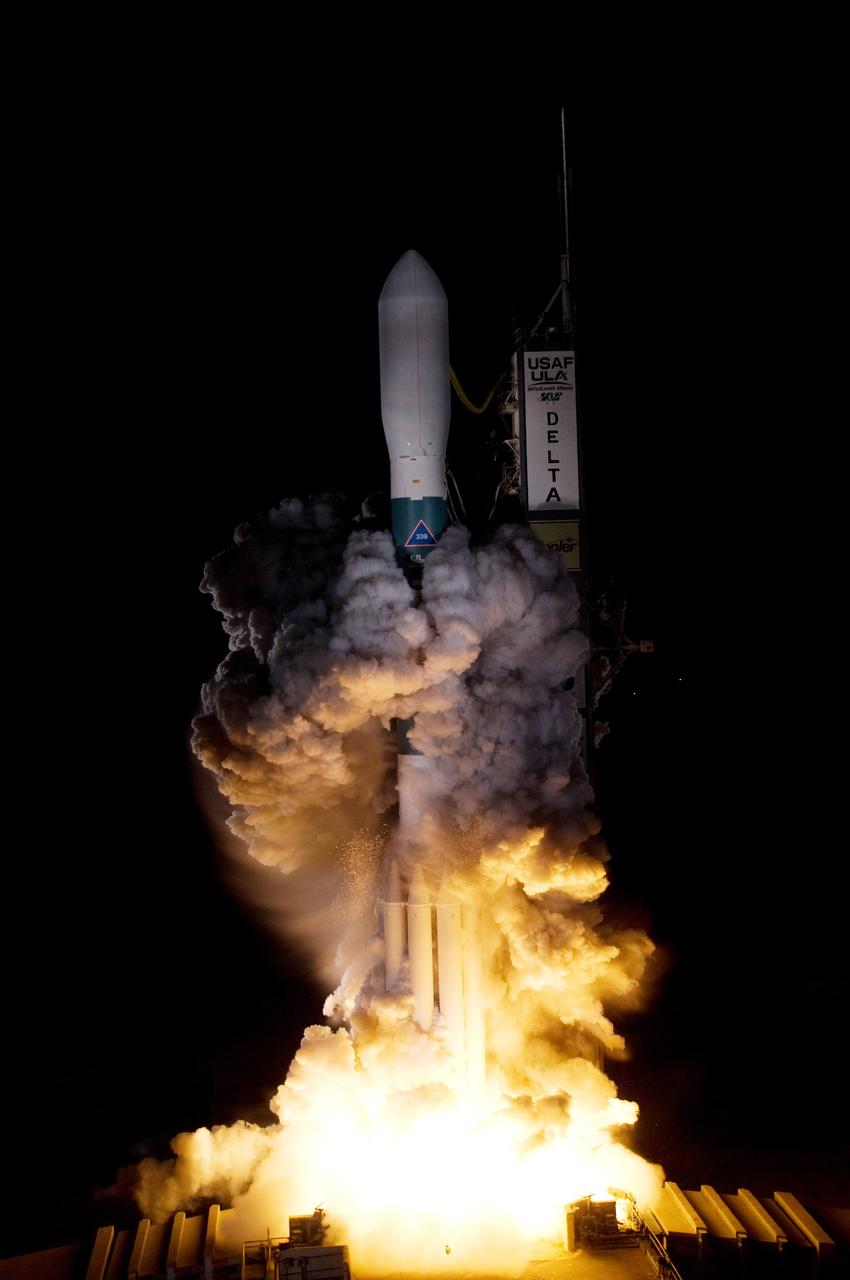
CAPE CANAVERAL, Fla. – On Launch Pad 17-B at Cape Canaveral Air Force Station in Florida, United Launch Alliance's Delta II rocket carrying NASA's Kepler spacecraft rises through the exhaust cloud created by the firing of the rocket’s engines. Liftoff was on time at 10:49 p.m. EST. Kepler is a spaceborne telescope designed to search the nearby region of our galaxy for Earth-size planets orbiting in the habitable zone of stars like our sun. The habitable zone is the region around a star where temperatures permit water to be liquid on a planet's surface. The challenge for Kepler is to look at a large number of stars in order to statistically estimate the total number of Earth-size planets orbiting sun-like stars in the habitable zone. Kepler will survey more than 100,000 stars in our galaxy. Photo credit: NASA/Regina Mitchell-Ryall, Tom Farrar
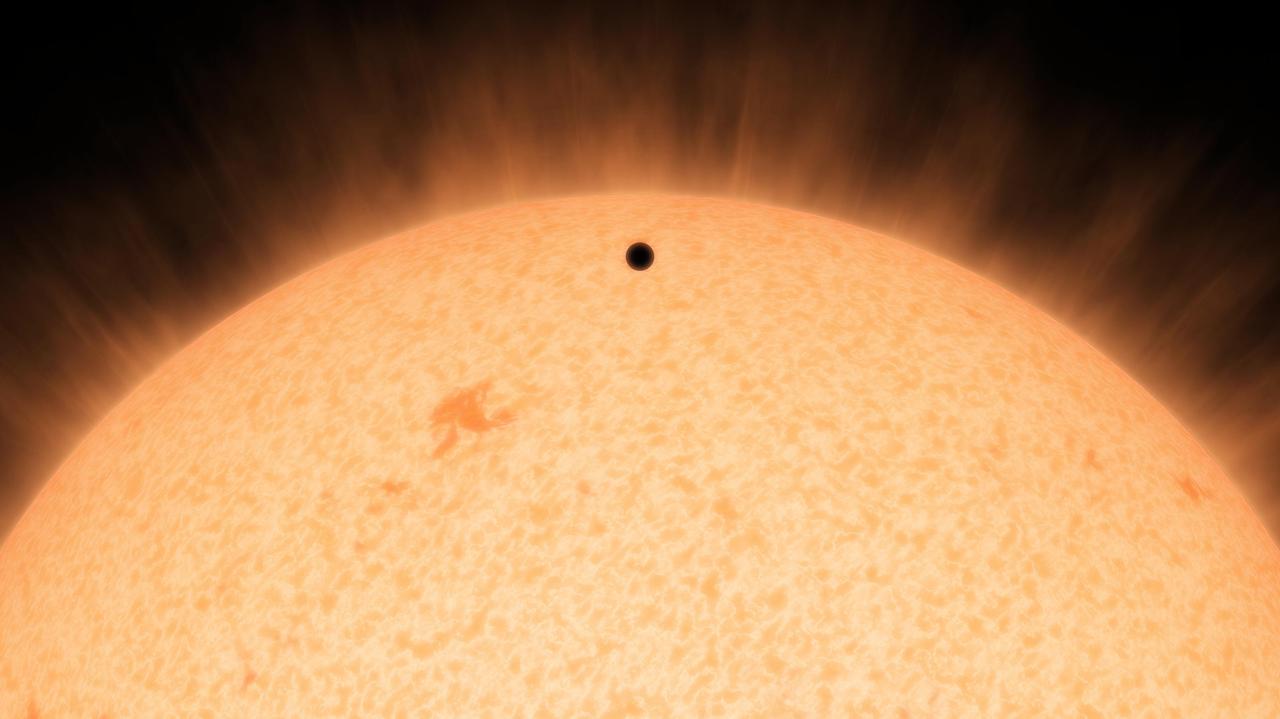
This artist's conception shows the silhouette of a rocky planet, dubbed HD 219134b, as it passes in front of its star. At 21 light-years away, the planet is the closest outside of our solar system that can be seen crossing, or transiting, its star -- a bonus for astronomers because transiting planets make ideal specimens for detailed studies of their atmospheres. It was discovered using the HARPS-North instrument on the Italian 3.6-meter National Galileo Telescope in the Canary Islands, and NASA's Spitzer Space Telescope. The planet, which is about 1.6 times the size of Earth, is also the nearest confirmed rocky planet outside our solar system. It orbits a star that is cooler and smaller than our sun, whipping closely around it in a mere three days. The proximity of the planet to the star means that it would be scorching hot and not habitable. Transiting planets are ideal targets for astronomers wanting to know more about planetary compositions and atmospheres. As a planet passes in front of its star, it causes the starlight to dim, and telescopes can measure this effect. If molecules are present in the planet's atmosphere, they can absorb certain wavelengths of light, leaving imprints in the starlight. This type of technique will be used in the future to investigate potentially habitable planets and search for signs of life. http://photojournal.jpl.nasa.gov/catalog/PIA19831
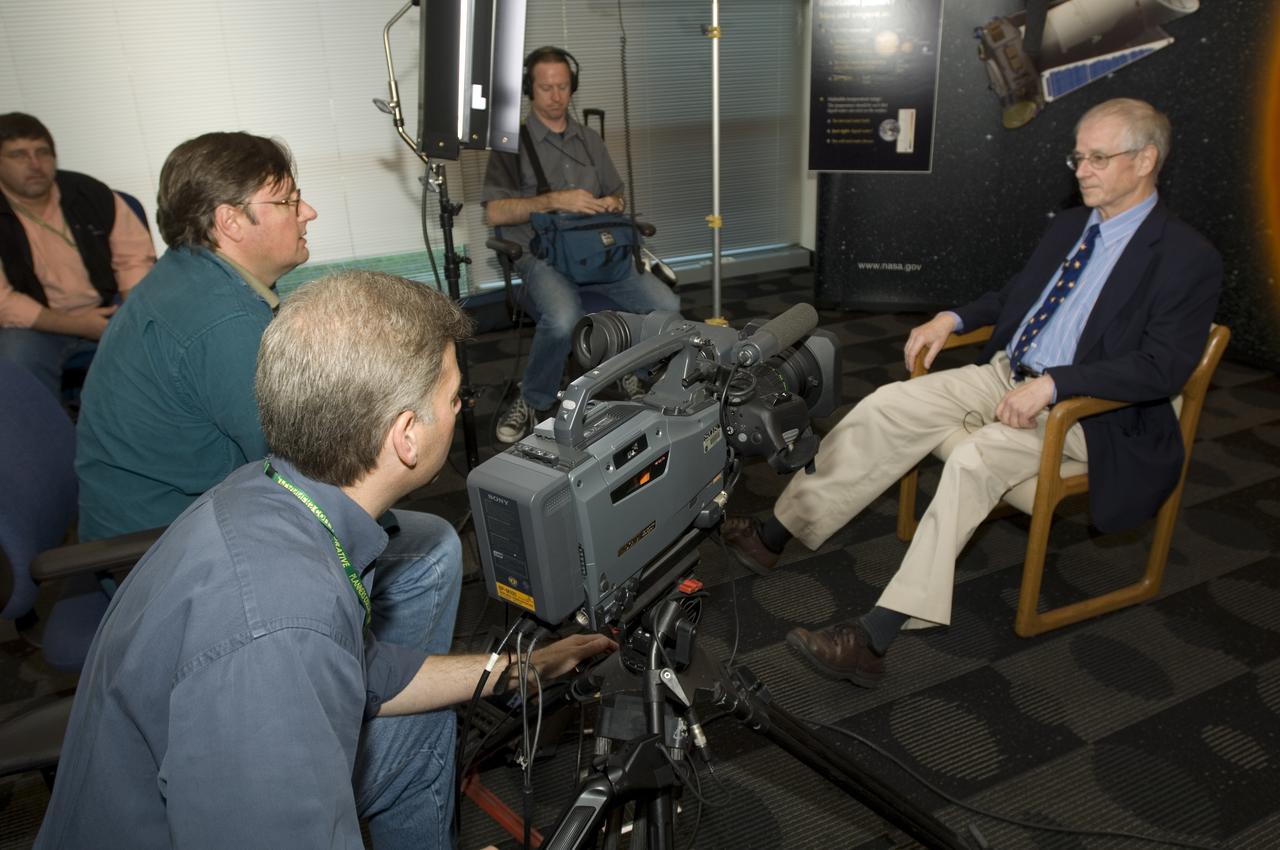
Ames Video group during interviewing Dave Lathem, Harvard Smithsonian Center for Astrophysics, Cambridge, MR at the SETI Institute during a NASA Ames Kepler Mission conference. Dave Maurantonio, Ed Schilling, Bill Moede, and Eric Land, Ames/Planners Video crew (Kepler a search for habitable planets was selected for Discovery Program)

This artist's concept shows exoplanet Kepler-1649c orbiting around its host red dwarf star. This exoplanet is in its star's habitable zone (the distance where liquid water could exist on the planet's surface) and is the closest to Earth in size and temperature found yet in Kepler's data. https://photojournal.jpl.nasa.gov/catalog/PIA23689

This calibration target for Mars 2020's Scanning Habitable Environments with Raman & Luminescence for Organics & Chemicals (SHERLOC) instrument includes five samples of spacesuit material, the first to ever be flown to the Red Planet. By studying how these samples degrade in the Martian environment, engineers can develop better spacesuits. https://photojournal.jpl.nasa.gov/catalog/PIA23303
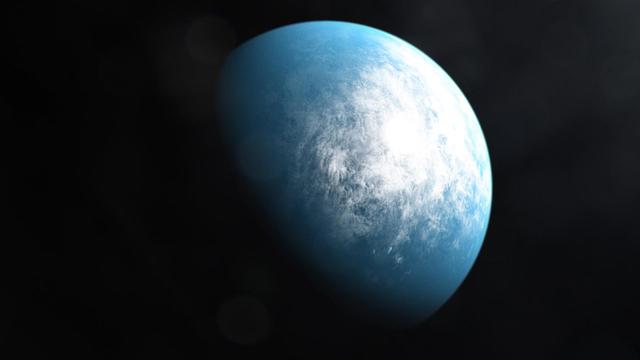
TOI 700, a planetary system 100 light-years away in the constellation Dorado, is home to TOI 700 d, the first Earth-size habitable-zone planet discovered by NASA's Transiting Exoplanet Survey Satellite. https://photojournal.jpl.nasa.gov/catalog/PIA23408
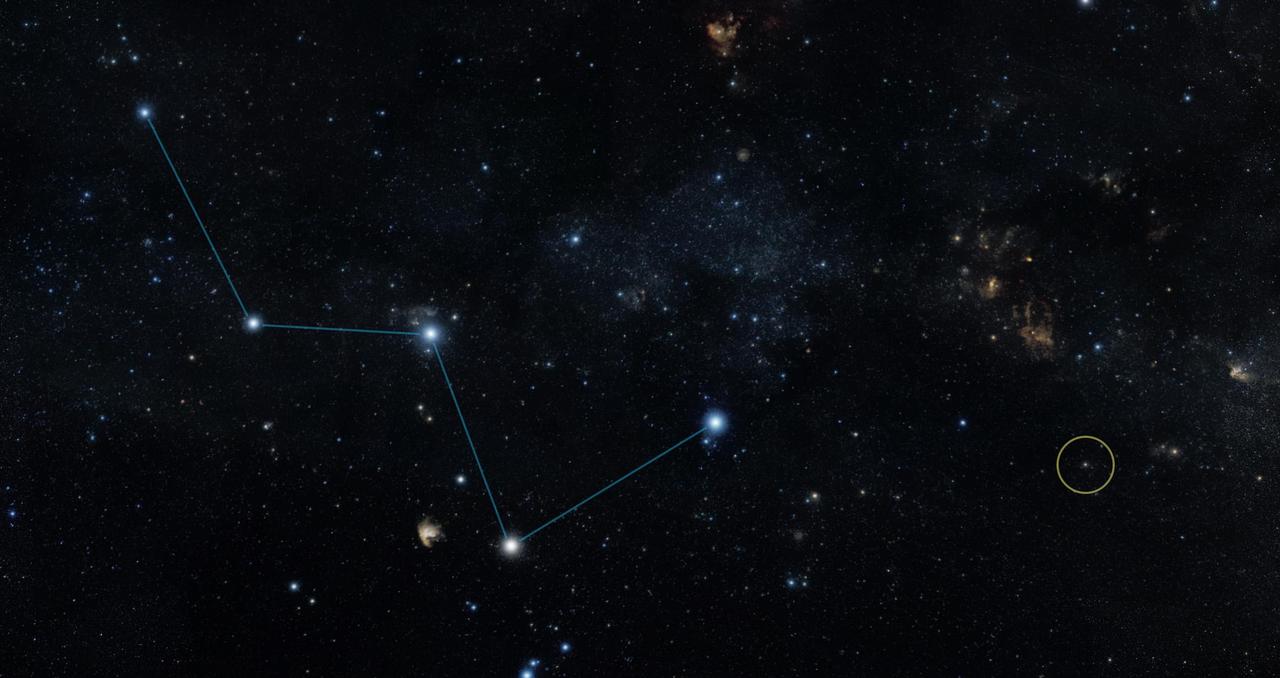
This sky map shows the location of the star HD 219134 (circle), host to the nearest confirmed rocky planet found to date outside of our solar system. The star lies just off the "W" shape of the constellation Cassiopeia and can be seen with the naked eye in dark skies. It actually has multiple planets, none of which are habitable. http://photojournal.jpl.nasa.gov/catalog/PIA19832

“We like to say that Archean Earth is the most alien planet we have geochemical data for,” For astronomers trying to understand which distant planets might have habitable conditions, the role of atmospheric haze has been hazy. To help sort it out, a team of researchers has been looking to Earth – specifically Earth during the Archean era, an epic 1-1/2-billion-year period early in our planet’s history. Read more: <a href="http://go.nasa.gov/2kTBhPU" rel="nofollow">go.nasa.gov/2kTBhPU</a> Caption: When haze built up in the atmosphere of Archean Earth, the young planet might have looked like this artist's interpretation - a pale orange dot. A team led by Goddard scientists thinks the haze was self-limiting, cooling the surface by about 36 degrees Fahrenheit (20 Kelvins) – not enough to cause runaway glaciation. The team’s modeling suggests that atmospheric haze might be helpful for identifying earthlike exoplanets that could be habitable. Credits: NASA’s Goddard Space Flight Center/Francis Reddy
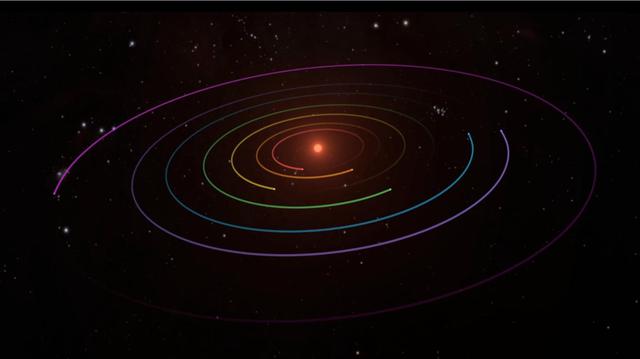
This frame from a video details a system of seven planets orbiting TRAPPIST-1, an ultra-cool dwarf star. Spitzer was able to identify a total of seven rocky worlds, including three in the habitable zone where liquid water might be found. A study established the planets' size, distance from their sun and, for some of them, their approximate mass and density. It also established that some, if not all, of these planets are tidally locked, meaning one face of the planet permanently faces their sun. The system has been revealed through observations from NASA's Spitzer Space Telescope and the ground-based TRAPPIST (TRAnsiting Planets and PlanetesImals Small Telescope) telescope, as well as other ground-based observatories. The system was named for the TRAPPIST telescope. A video is available at http://photojournal.jpl.nasa.gov/catalog/PIA21427

CAPE CANAVERAL, Fla. -- A Ball Aerospace and Technology worker conducts a light sensor test on NASA's Kepler spacecraft. A NASA Discovery mission, Kepler is specifically designed to survey our region of the Milky Way galaxy to discover hundreds of Earth-size and smaller planets in or near the habitable zone and determine how many of the billions of stars in our galaxy have such planets. Kepler will hunt for planets using a specialized one-meter diameter telescope called a photometer to measure the small changes in brightness caused by the transits. Results from this mission will allow us to place our solar system within the continuum of planetary systems in the Galaxy. After processing at Astrotech, Kepler will be carried to its launch pad at Cape Canaveral Air Force Station. NASA's planet-hunting Kepler mission is scheduled to launch no earlier than March 5 atop a United Launch Alliance Delta II rocket. Photo credit: NASA/Kim Shiflett

CAPE CANAVERAL, Fla. -- Ball Aerospace and Technology workers conduct a light test on the solar array panels of NASA's Kepler spacecraft. A NASA Discovery mission, Kepler is specifically designed to survey our region of the Milky Way galaxy to discover hundreds of Earth-size and smaller planets in or near the habitable zone and determine how many of the billions of stars in our galaxy have such planets. Kepler will hunt for planets using a specialized one-meter diameter telescope called a photometer to measure the small changes in brightness caused by the transits. Results from this mission will allow us to place our solar system within the continuum of planetary systems in the Galaxy. After processing at Astrotech, Kepler will be carried to its launch pad at Cape Canaveral Air Force Station. NASA's planet-hunting Kepler mission is scheduled to launch no earlier than March 5 atop a United Launch Alliance Delta II rocket. Photo credit: NASA/Kim Shiflett

CAPE CANAVERAL, Fla. -- Ball Aerospace and Technology workers conduct a light test on the solar array panels of NASA's Kepler spacecraft. A NASA Discovery mission, Kepler is specifically designed to survey our region of the Milky Way galaxy to discover hundreds of Earth-size and smaller planets in or near the habitable zone and determine how many of the billions of stars in our galaxy have such planets. Kepler will hunt for planets using a specialized one-meter diameter telescope called a photometer to measure the small changes in brightness caused by the transits. Results from this mission will allow us to place our solar system within the continuum of planetary systems in the Galaxy. After processing at Astrotech, Kepler will be carried to its launch pad at Cape Canaveral Air Force Station. NASA's planet-hunting Kepler mission is scheduled to launch no earlier than March 5 atop a United Launch Alliance Delta II rocket. Photo credit: NASA/Kim Shiflett

CAPE CANAVERAL, Fla. -- Ball Aerospace and Technology workers conduct a light test on the solar array panels of NASA's Kepler spacecraft. A NASA Discovery mission, Kepler is specifically designed to survey our region of the Milky Way galaxy to discover hundreds of Earth-size and smaller planets in or near the habitable zone and determine how many of the billions of stars in our galaxy have such planets. Kepler will hunt for planets using a specialized one-meter diameter telescope called a photometer to measure the small changes in brightness caused by the transits. Results from this mission will allow us to place our solar system within the continuum of planetary systems in the Galaxy. After processing at Astrotech, Kepler will be carried to its launch pad at Cape Canaveral Air Force Station. NASA's planet-hunting Kepler mission is scheduled to launch no earlier than March 5 atop a United Launch Alliance Delta II rocket. Photo credit: NASA/Kim Shiflett

CAPE CANAVERAL, Fla. -- Ball Aerospace and Technology workers conduct a light test on the solar array panels of NASA's Kepler spacecraft. A NASA Discovery mission, Kepler is specifically designed to survey our region of the Milky Way galaxy to discover hundreds of Earth-size and smaller planets in or near the habitable zone and determine how many of the billions of stars in our galaxy have such planets. Kepler will hunt for planets using a specialized one-meter diameter telescope called a photometer to measure the small changes in brightness caused by the transits. Results from this mission will allow us to place our solar system within the continuum of planetary systems in the Galaxy. After processing at Astrotech, Kepler will be carried to its launch pad at Cape Canaveral Air Force Station. NASA's planet-hunting Kepler mission is scheduled to launch no earlier than March 5 atop a United Launch Alliance Delta II rocket. Photo credit: NASA/Kim Shiflett

CAPE CANAVERAL, Fla. -- Lights are reflected on the solar array panels of NASA's Kepler spacecraft during illumination testing. A NASA Discovery mission, Kepler is specifically designed to survey our region of the Milky Way galaxy to discover hundreds of Earth-size and smaller planets in or near the habitable zone and determine how many of the billions of stars in our galaxy have such planets. Kepler will hunt for planets using a specialized one-meter diameter telescope called a photometer to measure the small changes in brightness caused by the transits. Results from this mission will allow us to place our solar system within the continuum of planetary systems in the Galaxy. After processing at Astrotech, Kepler will be carried to its launch pad at Cape Canaveral Air Force Station. NASA's planet-hunting Kepler mission is scheduled to launch no earlier than March 5 atop a United Launch Alliance Delta II rocket. Photo credit: NASA/Kim Shiflett

This graph presents measured properties of the seven TRAPPIST-1 exoplanets (labeled b through h), showing how they stack up with one another as well as with Earth and the other inner rocky worlds in our own solar system. The relative sizes of the planets are indicated by the circles. All of the known TRAPPIST-1 planets are larger than Mars, with five of them within 15% of the diameter of Earth. The vertical axis shows the uncompressed densities of the planets. Density, calculated from a planet's mass and volume, is the first important step in understanding its composition. Uncompressed density takes into account that the larger a planet is, the more its own gravity will pack the planet's material together and increase its density. Uncompressed density, therefore, usually provides a better means of comparing the composition of planets. The plot shows that the uncompressed densities of the TRAPPIST-1 planets are similar to one another, suggesting they may have all have a similar composition. The four rocky planets in our own solar system show more variation in density compared to the seven TRAPPIST-1 planets. Mercury, for example, contains a much higher percentage of iron than the other three rocky planets and thus has a much higher uncompressed density. The horizontal axis shows the level of illumination that each planet receives from its host star. The TRAPPIST-1 star is a mere 9% the mass of our Sun, and its temperature is much cooler. But because the TRAPPIST-1 planets orbit so closely to their star, they receive comparable levels of light and heat to Earth and its neighboring planets. The corresponding "habitable zones" — regions where an Earth-like planet could potentially support liquid water on its surface — of the two planetary systems are indicated near the top of the plot. The the two zones do not line up exactly because the cooler TRAPPIST-1 star emitting more of its light in the form of infrared radiation that is more efficiently absorbed by an Earth-like atmosphere. Since it takes less illumination to reach the same temperatures, the habitable zone shifts farther away from the star. The masses and densities of the TRAPPIST-1 planets were determined by measurements of slight variations in the timings of their orbits using extensive observations made by NASA's Spitzer and Kepler space telescopes, in combination with data from Hubble and a number of ground-based telescopes. The latest analysis, which includes Spitzer's complete record of over 1,000 hours of TRAPPIST-1 observations, has reduced the uncertainties of the mass measurements to a mere 3-6%. These are among the most accurate measurements of planetary masses anywhere outside of our solar system. https://photojournal.jpl.nasa.gov/catalog/PIA24371

Principal investigator, Scanning Habitable Environments with Raman & Luminescence for Organics & Chemicals (SHERLOC) instrument, JPL, Luther Beegle, gives remarks during a NASA Perseverance rover mission science overview, Tuesday, Feb. 16, 2021, at NASA's Jet Propulsion Laboratory in Pasadena, California. The Perseverance Mars rover is due to land on Mars Thursday, Feb. 18, 2021. A key objective for Perseverance’s mission on Mars is astrobiology, including the search for signs of ancient microbial life. The rover will characterize the planet’s geology and past climate, pave the way for human exploration of the Red Planet, and be the first mission to collect and cache Martian rock and regolith. Photo Credit: (NASA/Bill Ingalls)

CAPE CANAVERAL, Fla. – Workers at Launch Complex 17-B on Cape Canaveral Air Force Station in Florida place sections of the large patch that describes the Kepler spacecraft mission to be launched by the Delta 2 rocket. The Kepler mission is specifically designed to survey our region of the Milky Way galaxy to discover hundreds of Earth-size and smaller planets in or near the habitable zone and determine how many of the billions of stars in our galaxy have such planets. Results from this mission will allow us to place our solar system within the continuum of planetary systems in the Galaxy. Photo credit: NASA/Jim Grossmann

Principal investigator, Scanning Habitable Environments with Raman & Luminescence for Organics & Chemicals (SHERLOC) instrument, JPL, Luther Beegle, gives remarks during a NASA Perseverance rover mission science overview, Tuesday, Feb. 16, 2021, at NASA's Jet Propulsion Laboratory in Pasadena, California. The Perseverance Mars rover is due to land on Mars Thursday, Feb. 18, 2021. A key objective for Perseverance’s mission on Mars is astrobiology, including the search for signs of ancient microbial life. The rover will characterize the planet’s geology and past climate, pave the way for human exploration of the Red Planet, and be the first mission to collect and cache Martian rock and regolith. Photo Credit: (NASA/Bill Ingalls)
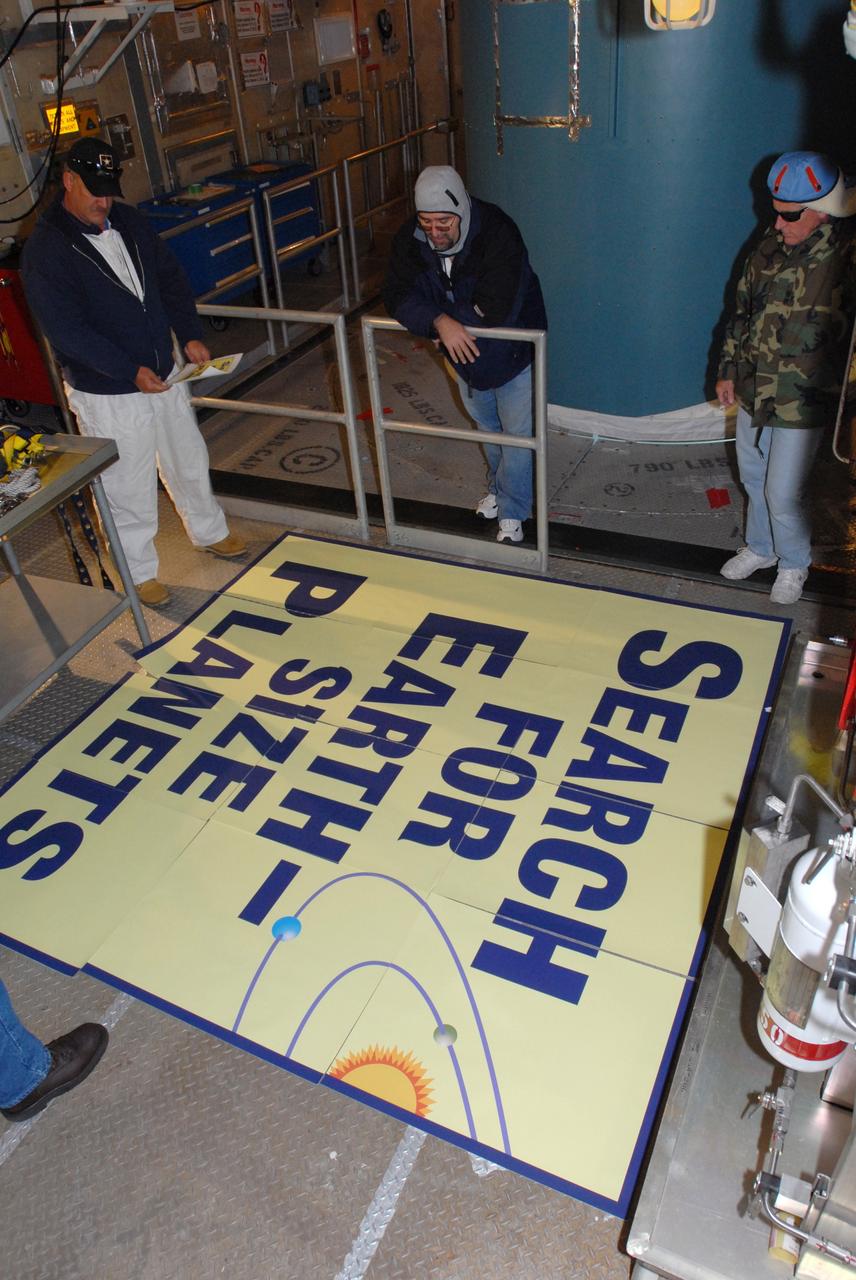
CAPE CANAVERAL, Fla. – Workers at Launch Complex 17-B on Cape Canaveral Air Force Station in Florida check the large patch they will place on the Delta 2 rocket (behind them). The patch describes the Kepler spacecraft mission that will be launched by the rocket. The Kepler mission is specifically designed to survey our region of the Milky Way galaxy to discover hundreds of Earth-size and smaller planets in or near the habitable zone and determine how many of the billions of stars in our galaxy have such planets. Results from this mission will allow us to place our solar system within the continuum of planetary systems in the Galaxy. Photo credit: NASA/Jim Grossmann
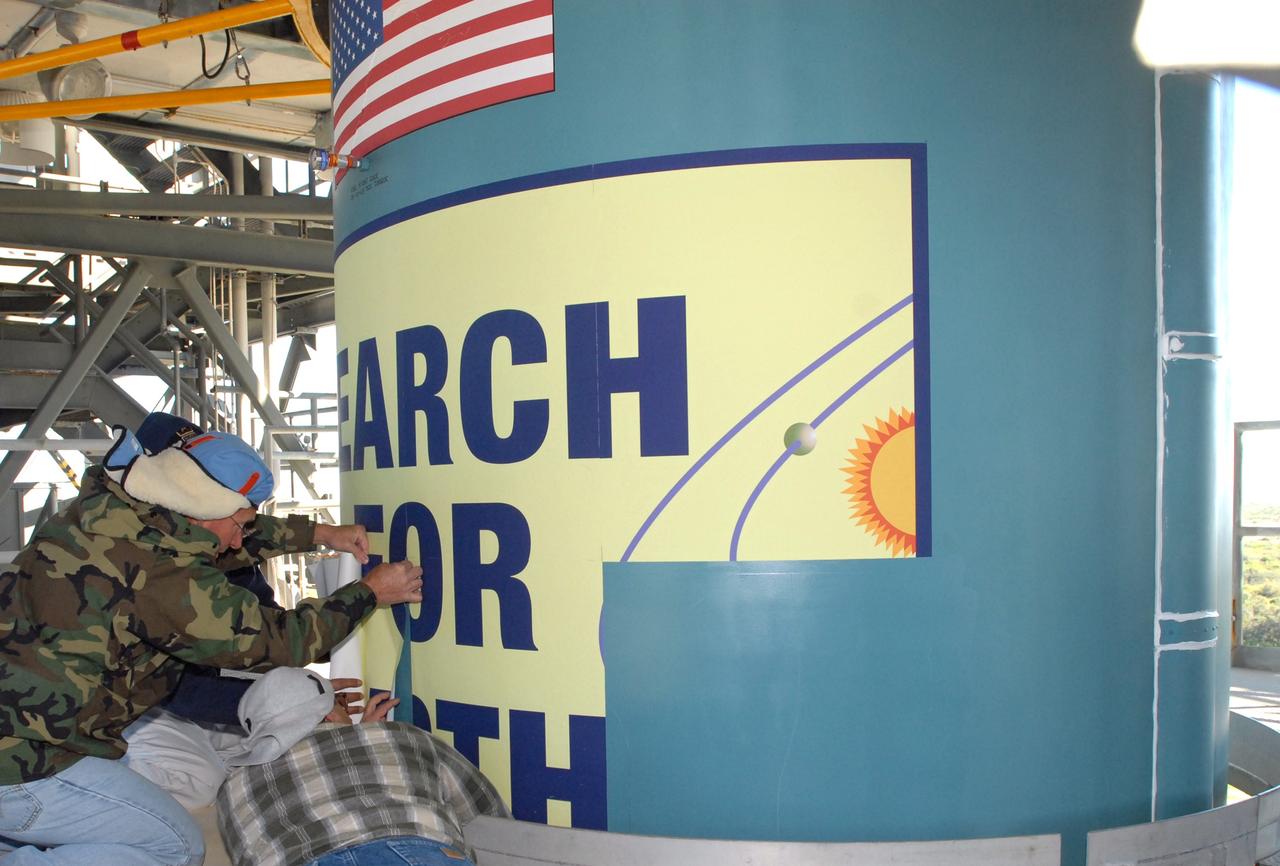
CAPE CANAVERAL, Fla. – Workers at Launch Complex 17-B on Cape Canaveral Air Force Station in Florida place the large patch on the Delta 2 rocket that describes the Kepler spacecraft mission to be launched by the rocket. The Kepler mission is specifically designed to survey our region of the Milky Way galaxy to discover hundreds of Earth-size and smaller planets in or near the habitable zone and determine how many of the billions of stars in our galaxy have such planets. Results from this mission will allow us to place our solar system within the continuum of planetary systems in the Galaxy. Photo credit: NASA/Jim Grossmann
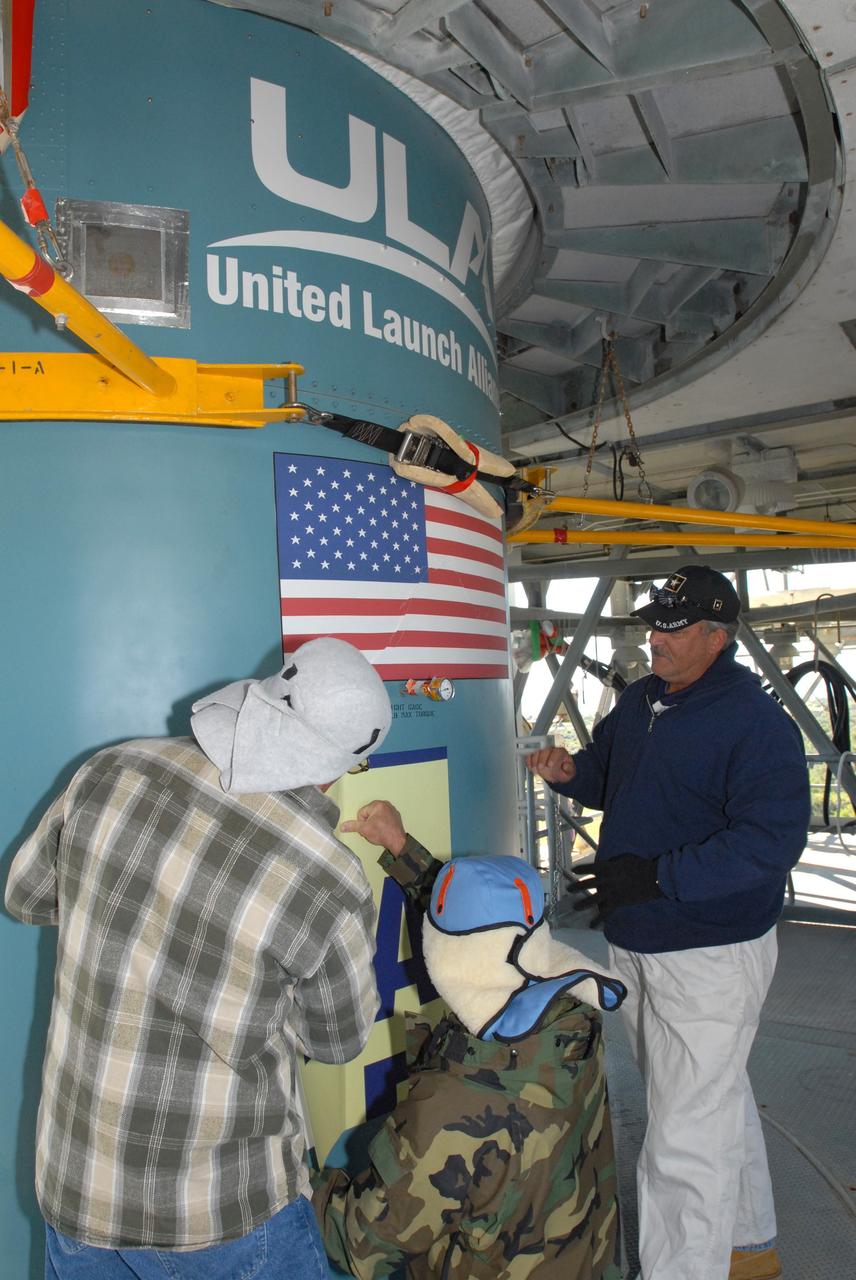
CAPE CANAVERAL, Fla. – Workers at Launch Complex 17-B on Cape Canaveral Air Force Station in Florida place the large patch that describes the Kepler spacecraft mission to be launched on the Delta 2 rocket. The Kepler mission is specifically designed to survey our region of the Milky Way galaxy to discover hundreds of Earth-size and smaller planets in or near the habitable zone and determine how many of the billions of stars in our galaxy have such planets. Results from this mission will allow us to place our solar system within the continuum of planetary systems in the Galaxy. Photo credit: NASA/Jim Grossmann
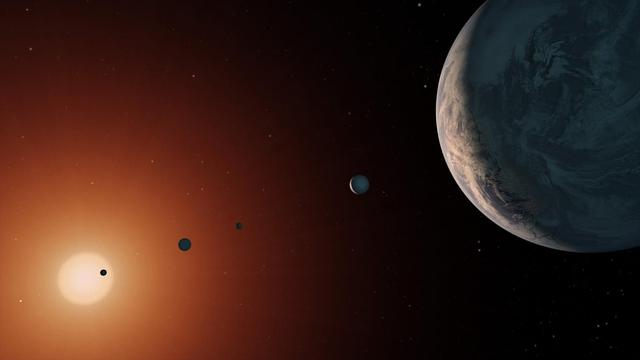
This illustration shows what the TRAPPIST-1 system might look like from a vantage point near planet TRAPPIST-1f (at right). The system has been revealed through observations from NASA's Spitzer Space Telescope and the ground-based TRAPPIST (TRAnsiting Planets and PlanetesImals Small Telescope) telescope, as well as other ground-based observatories. The system was named for the TRAPPIST telescope. The seven planets of TRAPPIST-1 are all Earth-sized and terrestrial, according to research published in 2017 in the journal Nature. TRAPPIST-1 is an ultra-cool dwarf star in the constellation Aquarius, and its planets orbit very close to it. They are likely all tidally locked, meaning the same face of the planet is always pointed at the star, as the same side of our moon is always pointed at Earth. This creates a perpetual night side and perpetual day side on each planet. TRAPPIST-1b and c receive the most light from the star and would be the warmest. TRAPPIST-1e, f and g all orbit in the habitable zone, the area where liquid water is most likely to be detected. But any of the planets could potentially harbor liquid water, depending on their compositions. https://photojournal.jpl.nasa.gov/catalog/PIA21751
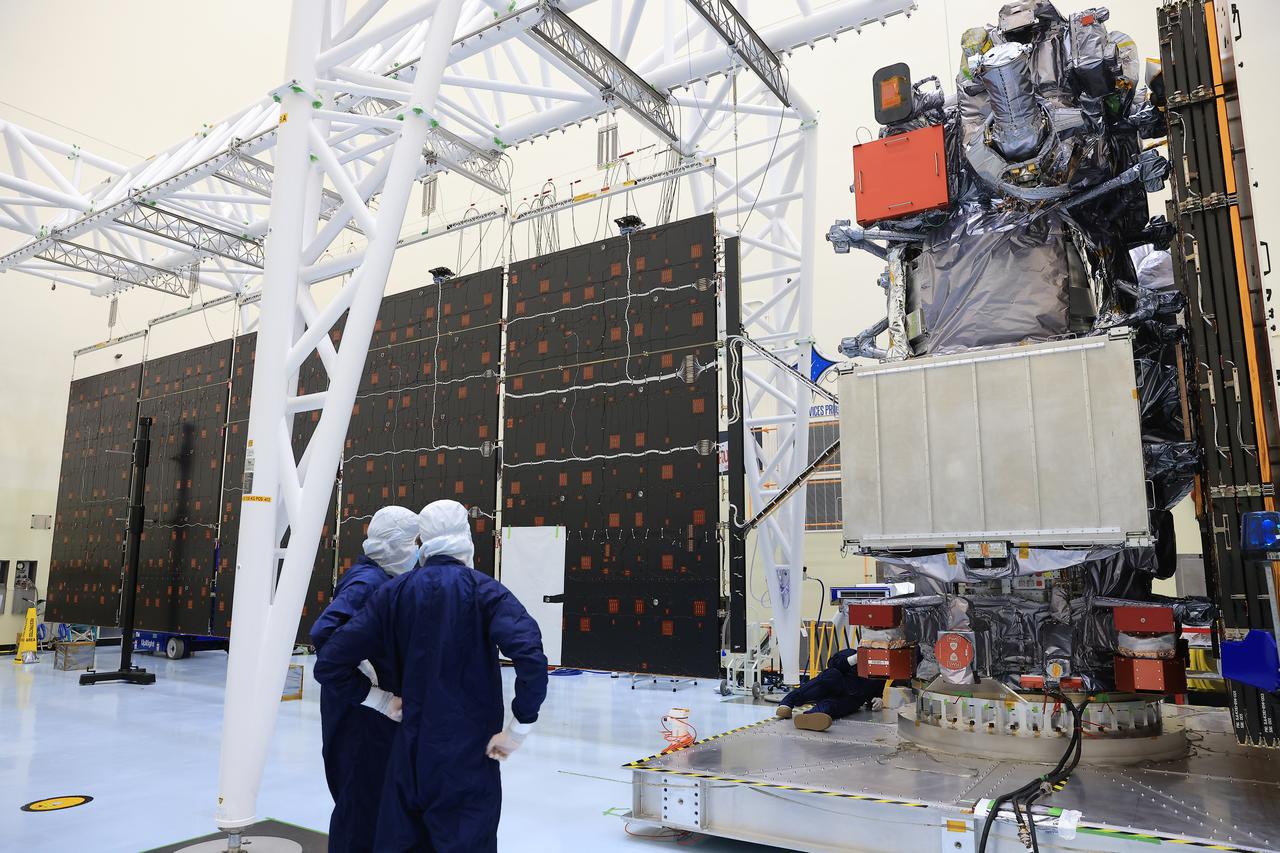
Technicians test and extend one of the two “wings” comprising the solar arrays for NASA’s Europa Clipper spacecraft on Friday, Aug. 23, 2024, at the Payload Hazardous Servicing Facility at the agency’s Kennedy Space Center in Florida. Each array measures about 46.5 feet (14.2 meters) long and about 13.5 feet (4.1 meters) high. The spacecraft needs the massive solar arrays to power to Jupiter’s icy moon Europa to help scientists better understand the astrobiological potential for habitable worlds beyond our planet.

Sara Seager, Professor of Planetary Science at the Massachusetts Institute of Technology, speaks during a press conference, Thursday, Aug. 6, 2009, at NASA Headquarters in Washington about the scientific observations coming from the Kepler spacecraft that was launched this past March. Kepler is NASA's first mission that is capable of discovering earth-sized planets in the habitable zones of stars like our Sun. Photo Credit: (NASA/Paul E. Alers)
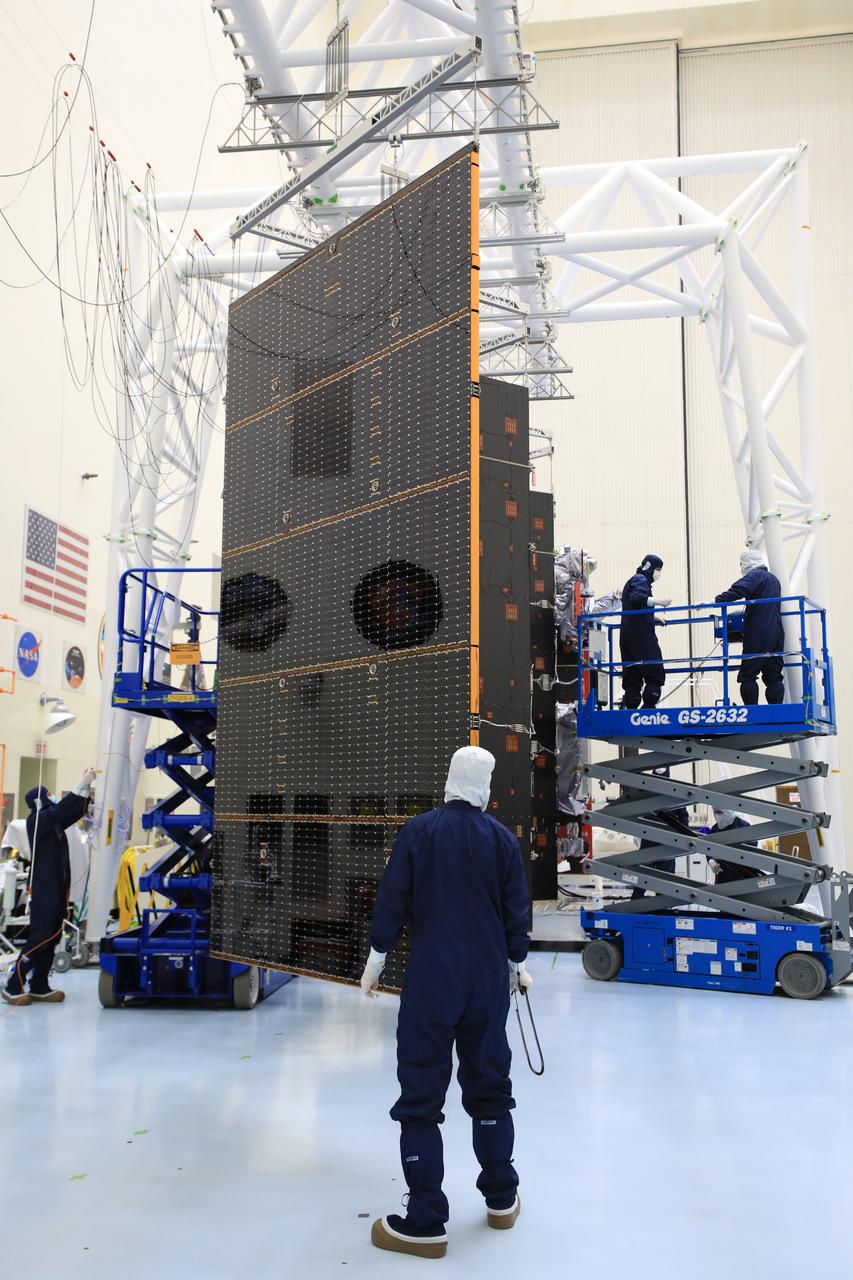
Technicians test and extend one of the two “wings” comprising the solar arrays for NASA’s Europa Clipper spacecraft on Friday, Aug. 23, 2024, at the Payload Hazardous Servicing Facility at the agency’s Kennedy Space Center in Florida. Each array measures about 46.5 feet (14.2 meters) long and about 13.5 feet (4.1 meters) high. The spacecraft needs the massive solar arrays to power to Jupiter’s icy moon Europa to help scientists better understand the astrobiological potential for habitable worlds beyond our planet.
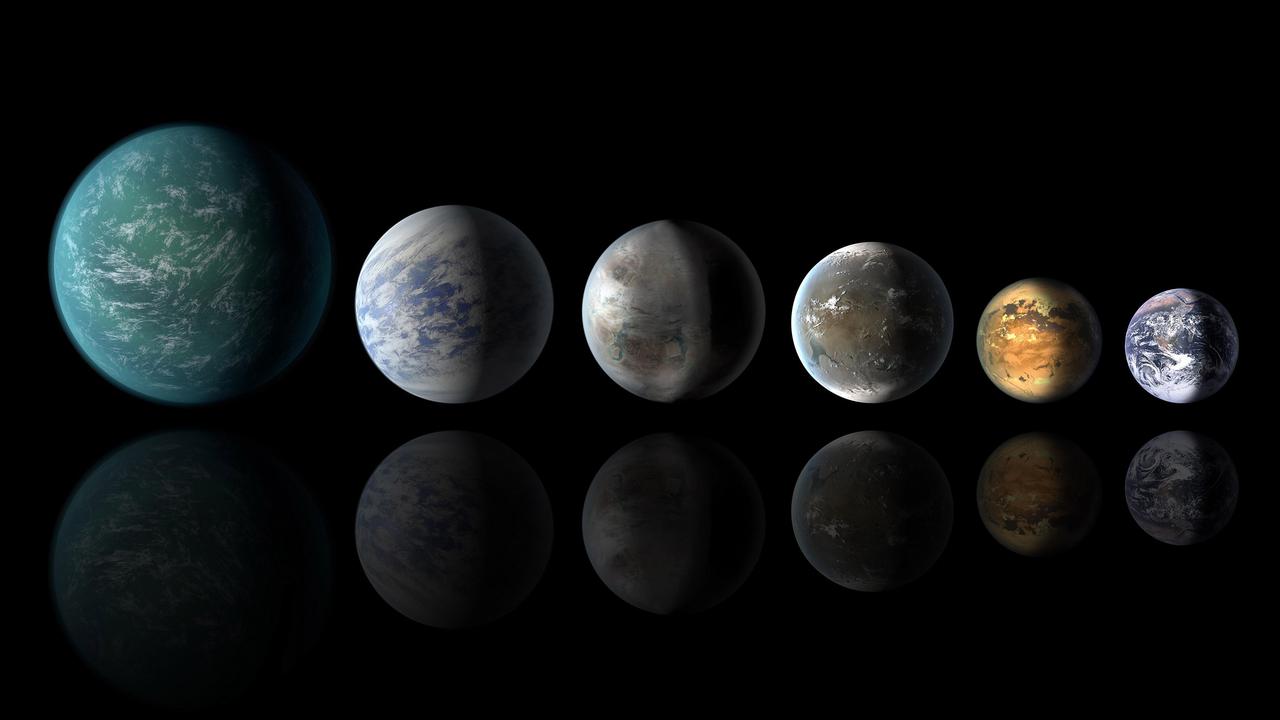
A newly discovered exoplanet, Kepler-452b, comes the closest of any found so far to matching our Earth-sun system. This artist's conception of a planetary lineup shows habitable-zone planets with similarities to Earth: from left, Kepler-22b, Kepler-69c, the just announced Kepler-452b, Kepler-62f and Kepler-186f. Last in line is Earth itself. http://photojournal.jpl.nasa.gov/catalog/PIA19830
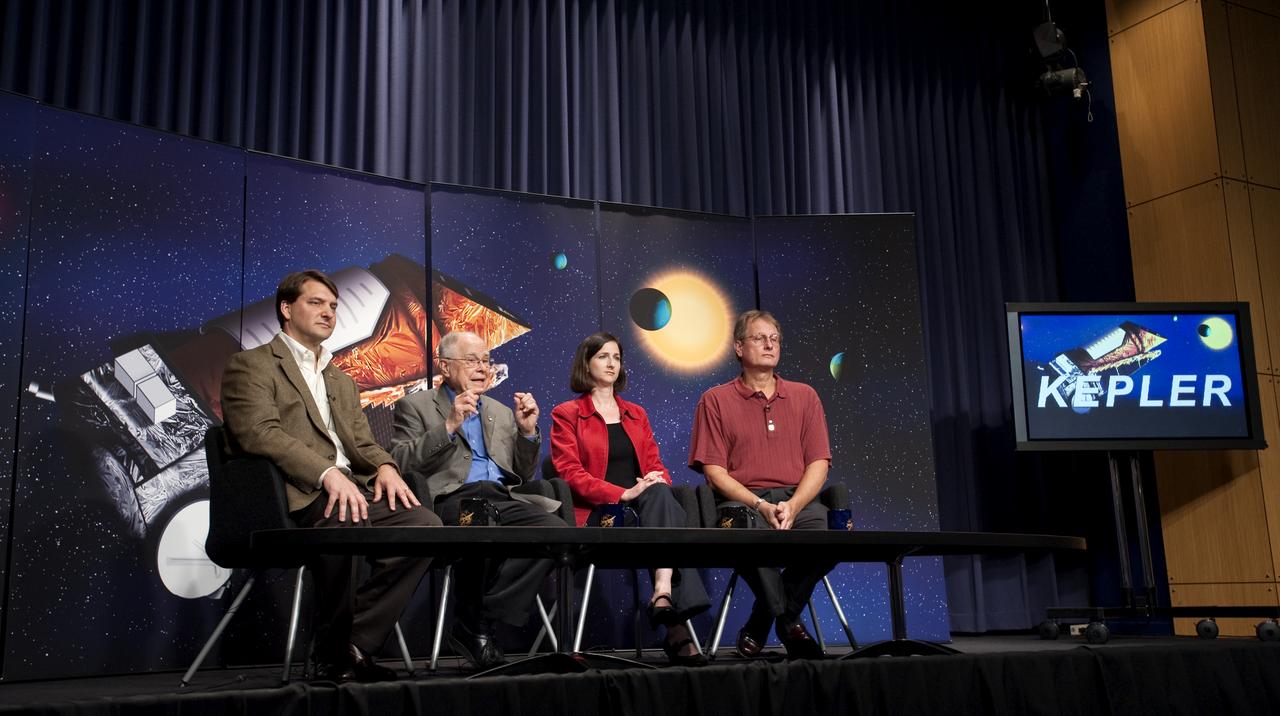
William Bo-Ricki, Kepler principal investigator at NASA's Ames Research Center, second from left, is joined by Jon Morse, left, Sara Seager, and Alan Boss while speaking at a press conference, Thursday, Aug. 6, 2009, at NASA Headquarters in Washington about the scientific observations coming from the Kepler spacecraft that was launched this past March. Kepler is NASA's first mission that is capable of discovering earth-sized planets in the habitable zones of stars like our Sun. Photo Credit: (NASA/Paul E. Alers)
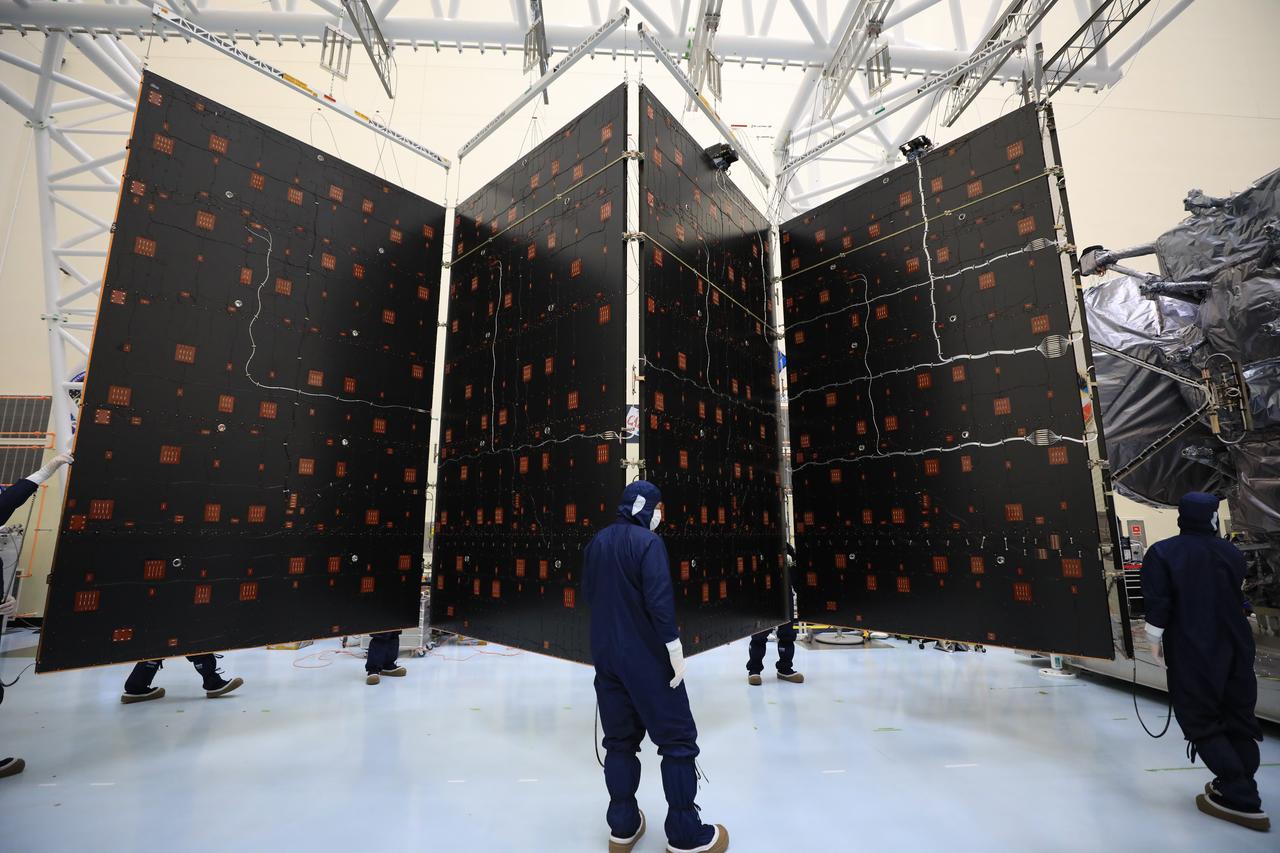
Technicians test and extend one of the two “wings” comprising the solar arrays for NASA’s Europa Clipper spacecraft on Friday, Aug. 23, 2024, at the Payload Hazardous Servicing Facility at the agency’s Kennedy Space Center in Florida. Each array measures about 46.5 feet (14.2 meters) long and about 13.5 feet (4.1 meters) high. The spacecraft needs the massive solar arrays to power to Jupiter’s icy moon Europa to help scientists better understand the astrobiological potential for habitable worlds beyond our planet.
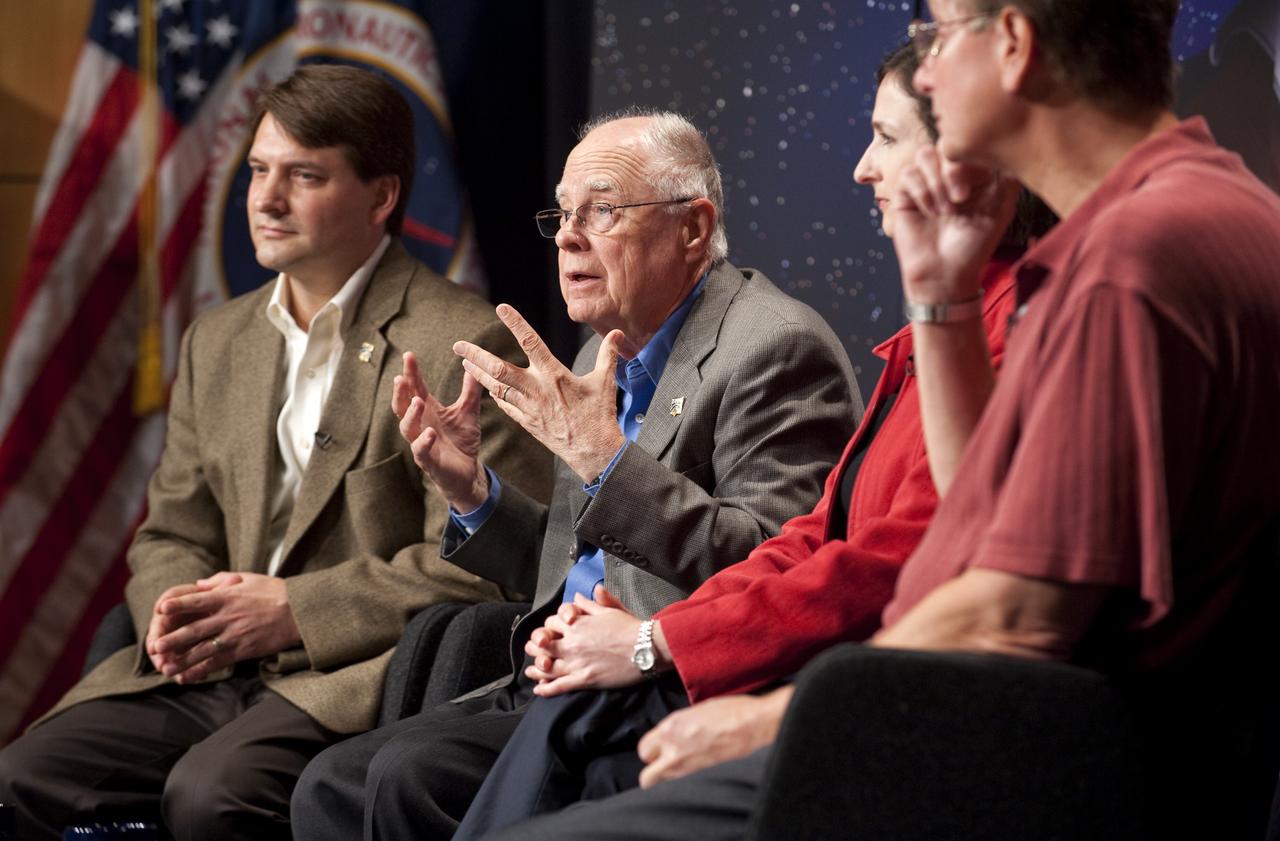
William Bo-Ricki, Kepler principal investigator at NASA's Ames Research Center, second from left, speaks during a press conference, Thursday, Aug. 6, 2009, at NASA Headquarters in Washington about the scientific observations coming from the Kepler spacecraft that was launched this past March as Jon Morse, NASA's Astrophysics Division Director, left, looks on. Kepler is NASA's first mission that is capable of discovering earth-sized planets in the habitable zones of stars like our Sun. Photo Credit: (NASA/Paul E. Alers)
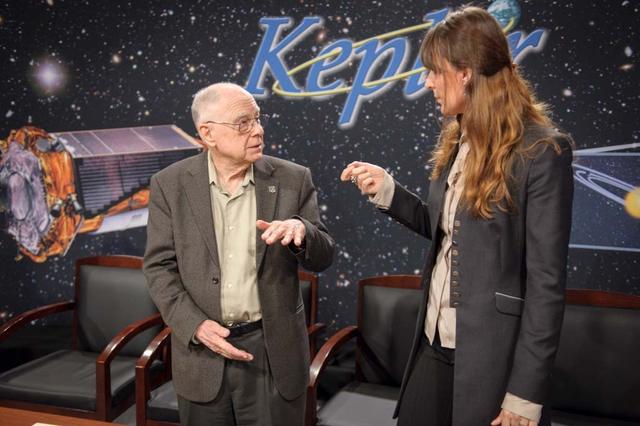
Kepler News Briefing, held in the Syvertson auditorium at the NASA Ames Research Center. The briefing presented discoveries from the continuing Kepler mission (K2). The team discovered some of the smallest planets found in the habitable zone of two newly discovered planetary systems. Bill Borucki (left), Kepler Scientist, Principal Investigator, NASA Ames Lisa Kaltengger (right), Research Group Leader, Max Planck Institute for Astronomy, Heidelberg Germany and Research Associate, Harvard-Smithsonian Center for Astrophysics, Cambridge Massachusetts.
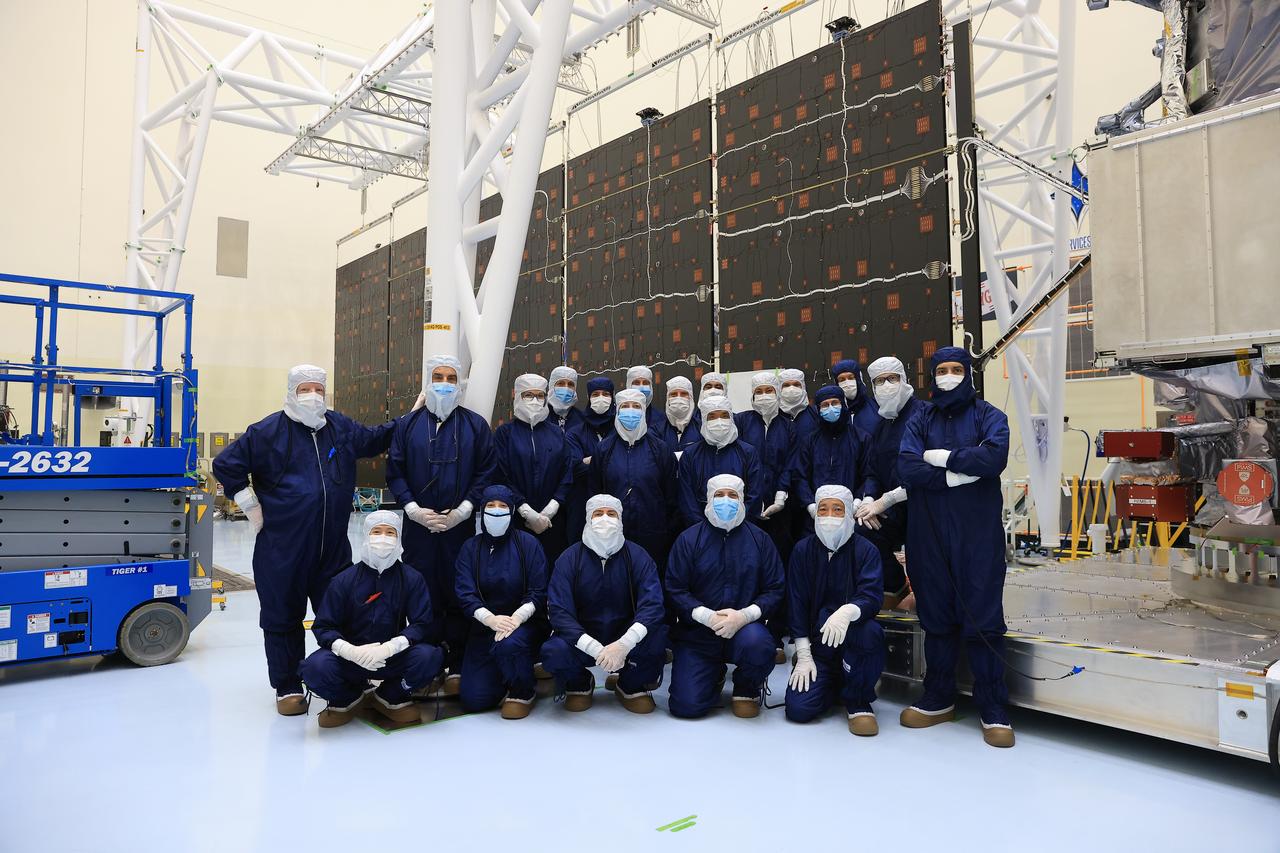
Technicians pose for a photo in front of one of the two “wings” comprising the solar arrays for NASA’s Europa Clipper spacecraft on Friday, Aug. 23, 2024, at the Payload Hazardous Servicing Facility at the agency’s Kennedy Space Center in Florida. Each array measures about 46.5 feet (14.2 meters) long and about 13.5 feet (4.1 meters) high. The spacecraft needs the massive solar arrays to power to Jupiter’s icy moon Europa to help scientists better understand the astrobiological potential for habitable worlds beyond our planet.

William Bo-Ricki, Kepler principal investigator at NASA's Ames Research Center, speaks during a press conference, Thursday, Aug. 6, 2009, at NASA Headquarters in Washington about the scientific observations coming from the Kepler spacecraft that was launched this past March. Kepler is NASA's first mission that is capable of discovering earth-sized planets in the habitable zones of stars like our Sun. Photo Credit: (NASA/Paul E. Alers)
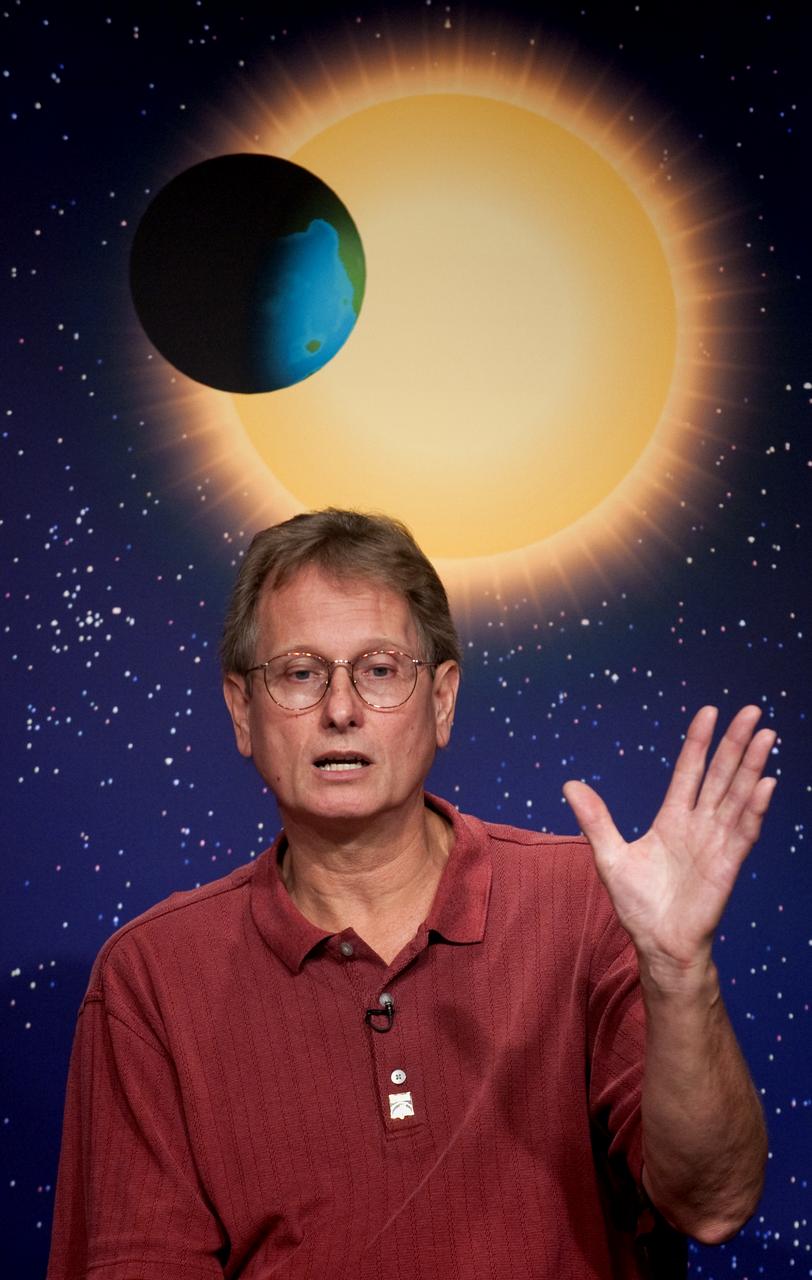
Alan Boss, an astrophyscist at the Carnegie Institution at the Department of Terrestrial Magnetism speaks during a press conference, Thursday, Aug. 6, 2009, at NASA Headquarters in Washington about the scientific observations coming from the Kepler spacecraft that was launched this past March. Kepler is NASA's first mission that is capable of discovering earth-sized planets in the habitable zones of stars like our Sun. Photo Credit: (NASA/Paul E. Alers)
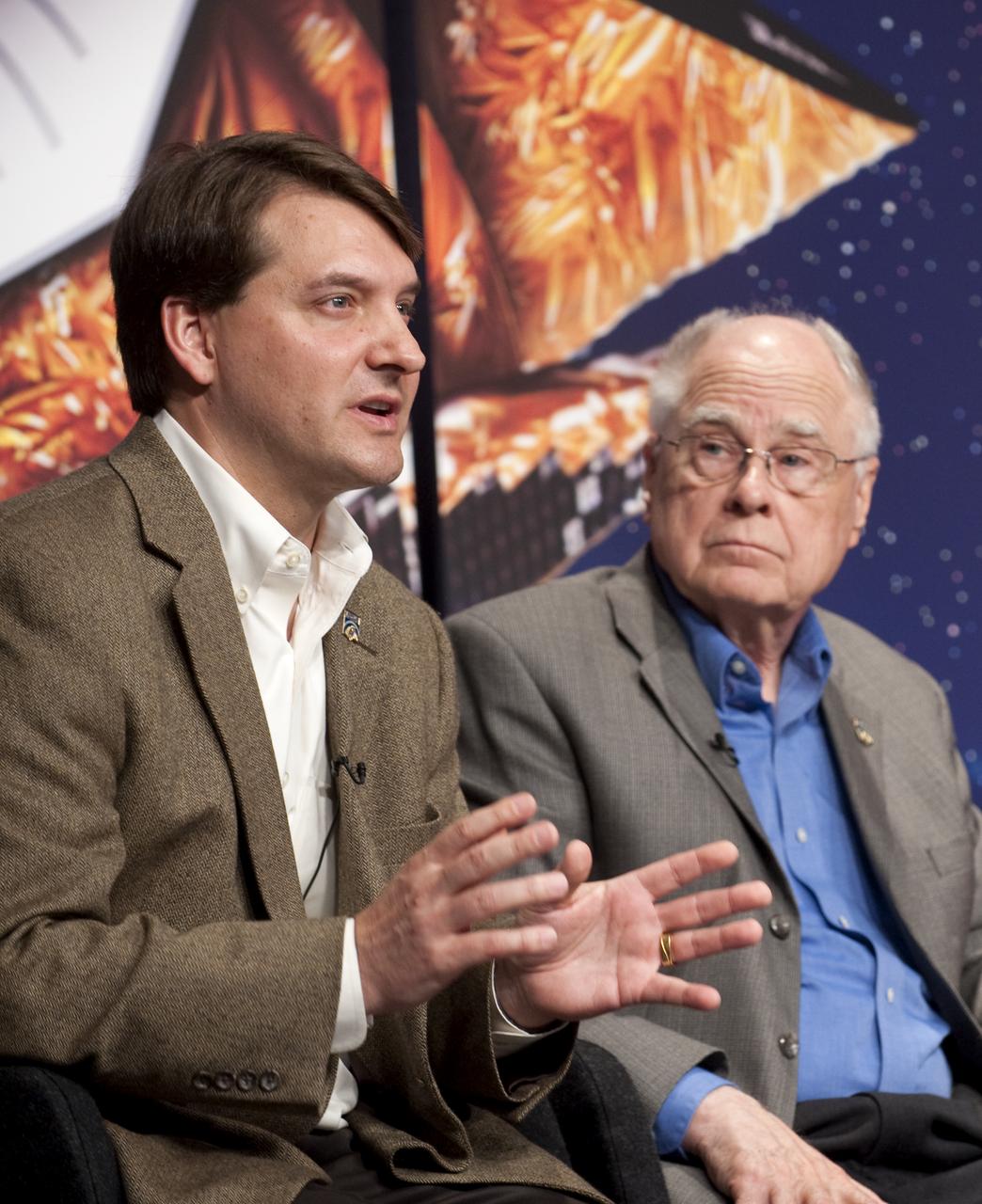
Jon Morse, NASA's Astrophysics Division Director, left, speaks during a press conference, Thursday, Aug. 6, 2009, at NASA Headquarters in Washington about the scientific observations coming from the Kepler spacecraft that was launched this past March asWilliam Bo-Ricki, Kepler principal investigator at NASA's Ames Research Center, looks on. Kepler is NASA's first mission that is capable of discovering earth-sized planets in the habitable zones of stars like our Sun. Photo Credit: (NASA/Paul E. Alers)
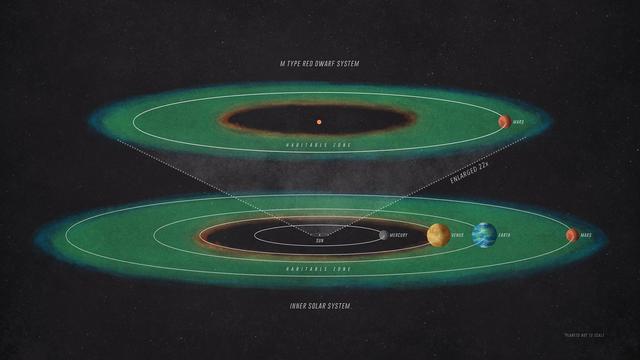
How habitable might an Exo-Mars be? It's a complex question but one that NASA's Mars Atmosphere and Volatile Evolution (MAVEN) mission can help answer. To receive the same amount of starlight as Mars receives from our Sun, a planet orbiting an M-type red dwarf would have to be positioned much closer to its star than Mercury is to the Sun. https://photojournal.jpl.nasa.gov/catalog/PIA22075
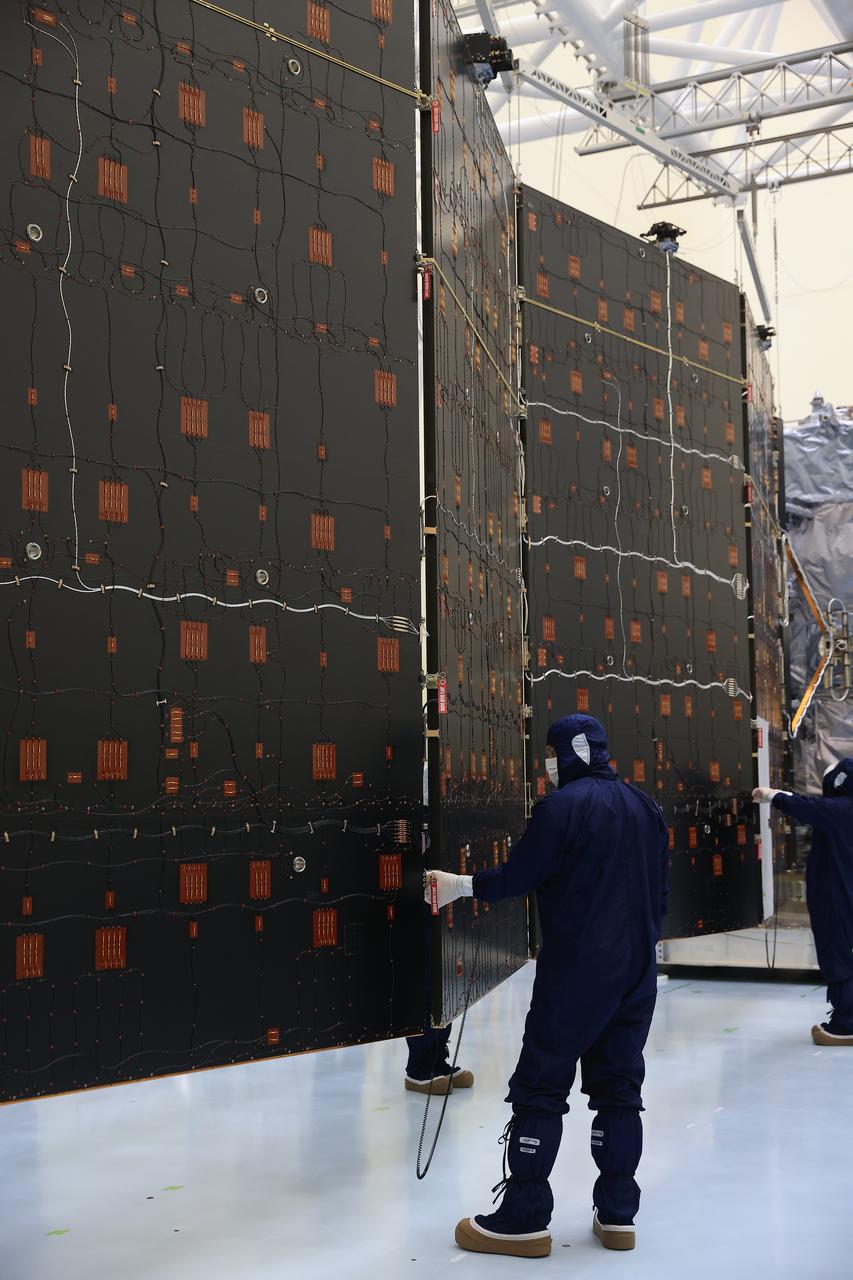
Technicians test and extend one of the two “wings” comprising the solar arrays for NASA’s Europa Clipper spacecraft on Friday, Aug. 23, 2024, at the Payload Hazardous Servicing Facility at the agency’s Kennedy Space Center in Florida. Each array measures about 46.5 feet (14.2 meters) long and about 13.5 feet (4.1 meters) high. The spacecraft needs the massive solar arrays to power to Jupiter’s icy moon Europa to help scientists better understand the astrobiological potential for habitable worlds beyond our planet.
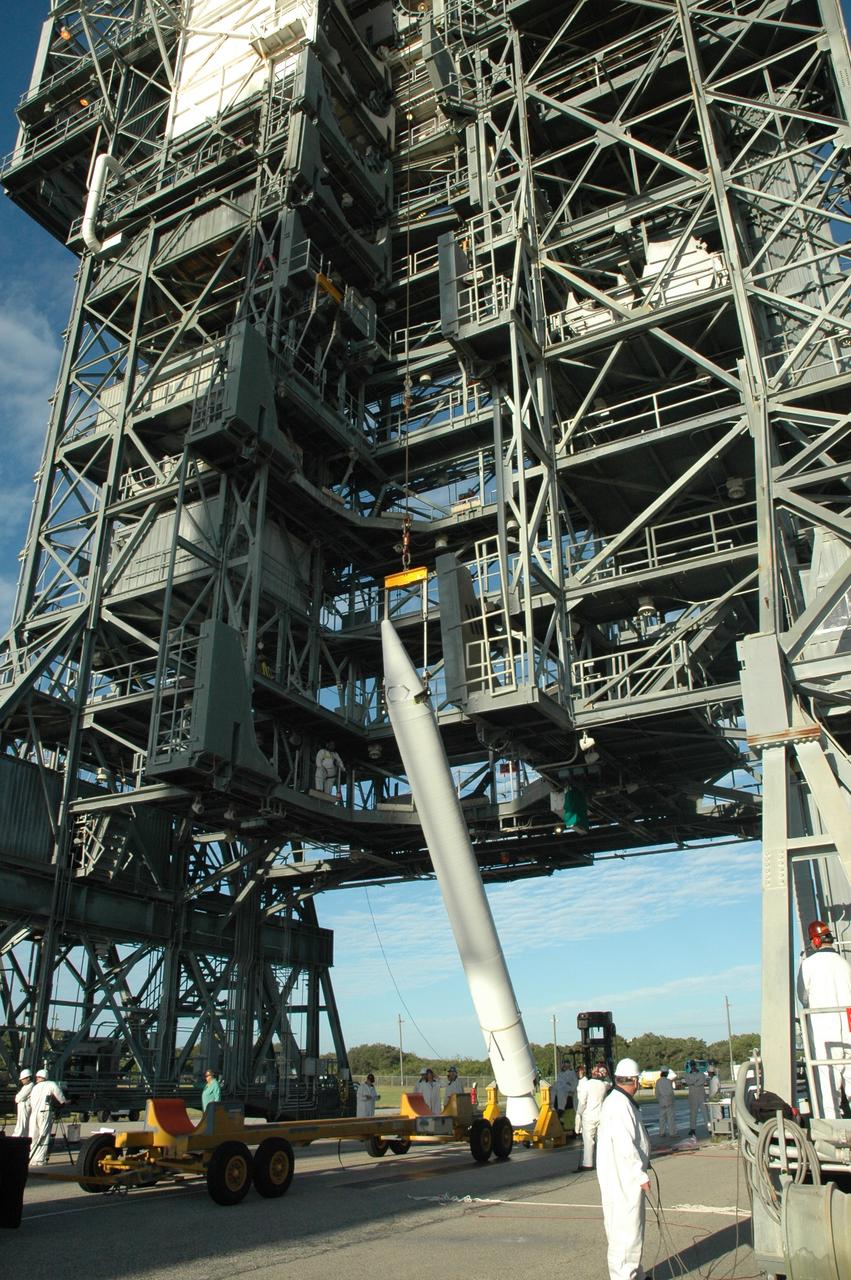
CAPE CANAVERAL, Fla. – On Launch Pad 17-B at Cape Canaveral Air Force Station in Florida, a solid rocket booster is nearly vertical. It will be lifted into the mobile service tower for mating to the first stage of the Kepler's Delta 2 launch vehicle. The Kepler mission is specifically designed to survey our region of the Milky Way galaxy to discover hundreds of Earth-size and smaller planets in or near the habitable zone and determine how many of the billions of stars in our galaxy have such planets. Results from this mission will allow us to place our solar system within the continuum of planetary systems in the Galaxy. NASA's planet-hunting Kepler mission is scheduled to launch no earlier than March 5, 2009. Photo credit: NASA/Jim Grossmann
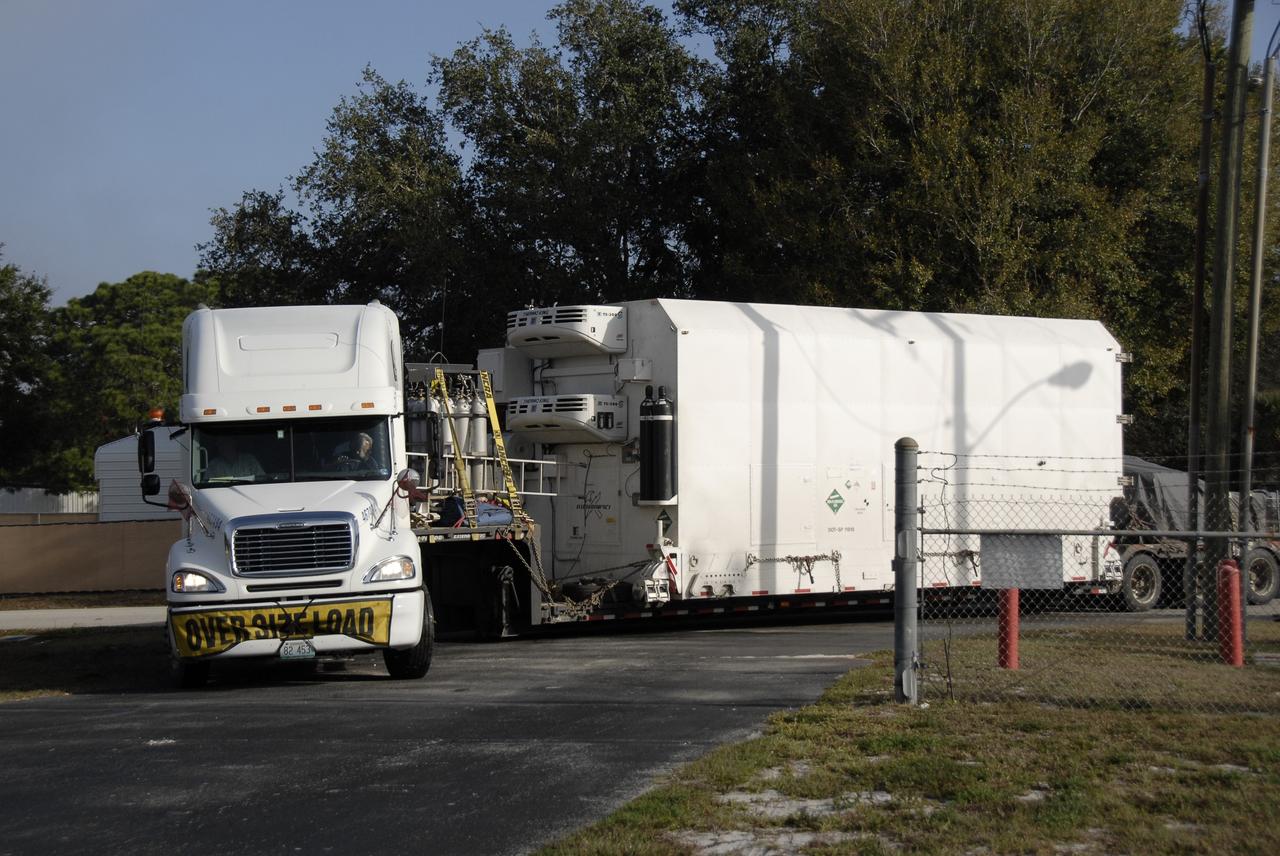
CAPE CANAVERAL, Fla. – A truck with the Kepler spacecraft in tow arrives at Astrotech in Titusville, Fla. A NASA Discovery mission, Kepler is specifically designed to survey our region of the Milky Way galaxy to discover hundreds of Earth-size and smaller planets in or near the habitable zone and determine how many of the billions of stars in our galaxy have such planets. Results from this mission will allow us to place our solar system within the continuum of planetary systems in the Galaxy. The spacecraft will be processed at Astrotech before being carried to its launch pad at Cape Canaveral. .NASA's planet-hunting Kepler mission is scheduled to launch no earlier than March 5, 2009, atop a Delta II rocket. Photo credit: NASA/Kim Shiflett
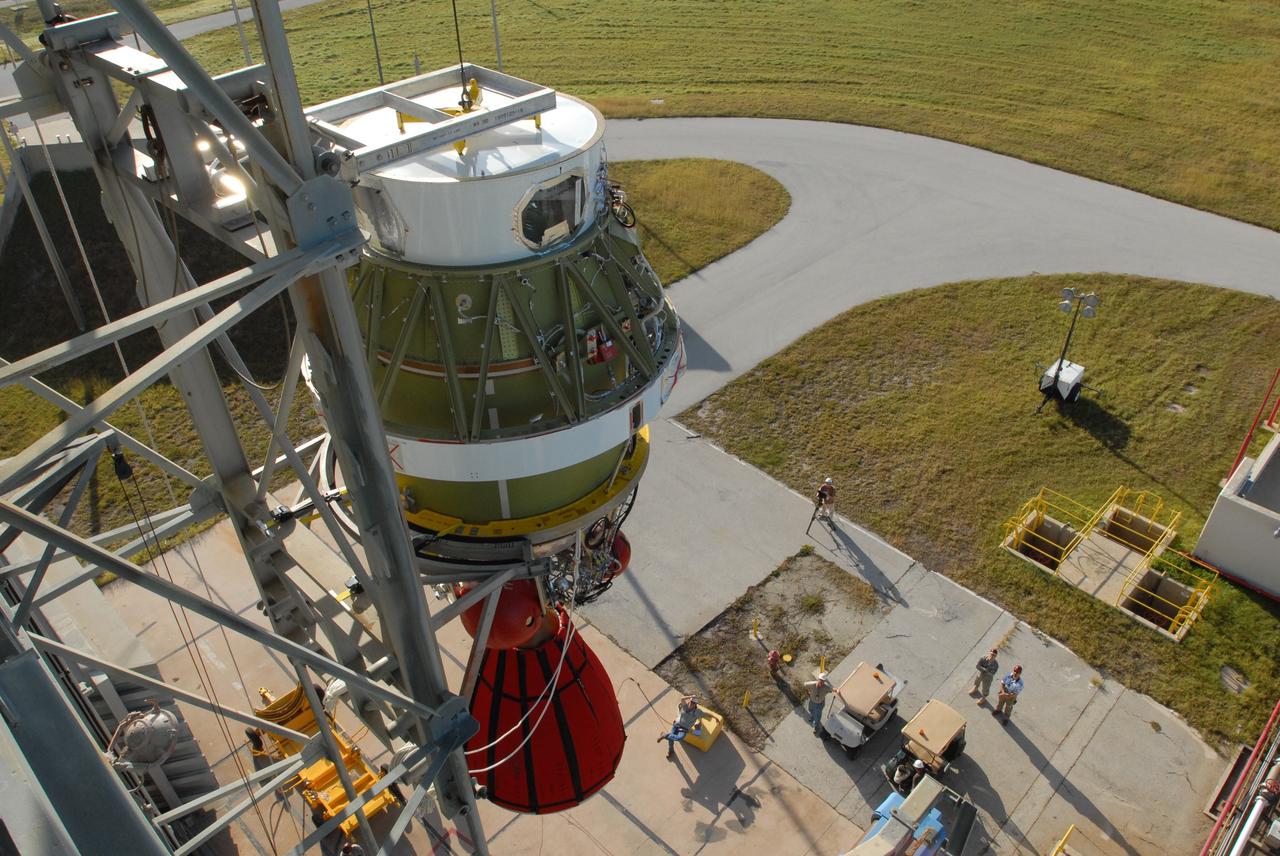
CAPE CANAVERAL, Fla. -- On Complex 17-B at Cape Canaveral Air Force Station in Florida, the second stage of the Delta 2 rocket for the launch of NASA's Kepler spacecraft is lifted alongside the mobile service tower. In the tower, the second stage will be mated to the first stage of the Delta 2. The Kepler mission is specifically designed to survey our region of the Milky Way galaxy to discover hundreds of Earth-size and smaller planets in or near the habitable zone and determine how many of the billions of stars in our galaxy have such planets. Results from this mission will allow us to place our solar system within the continuum of planetary systems in the Galaxy. NASA's planet-hunting Kepler mission is scheduled to launch no earlier than March 5, 2009. Photo credit: NASA/Jim Grossmann
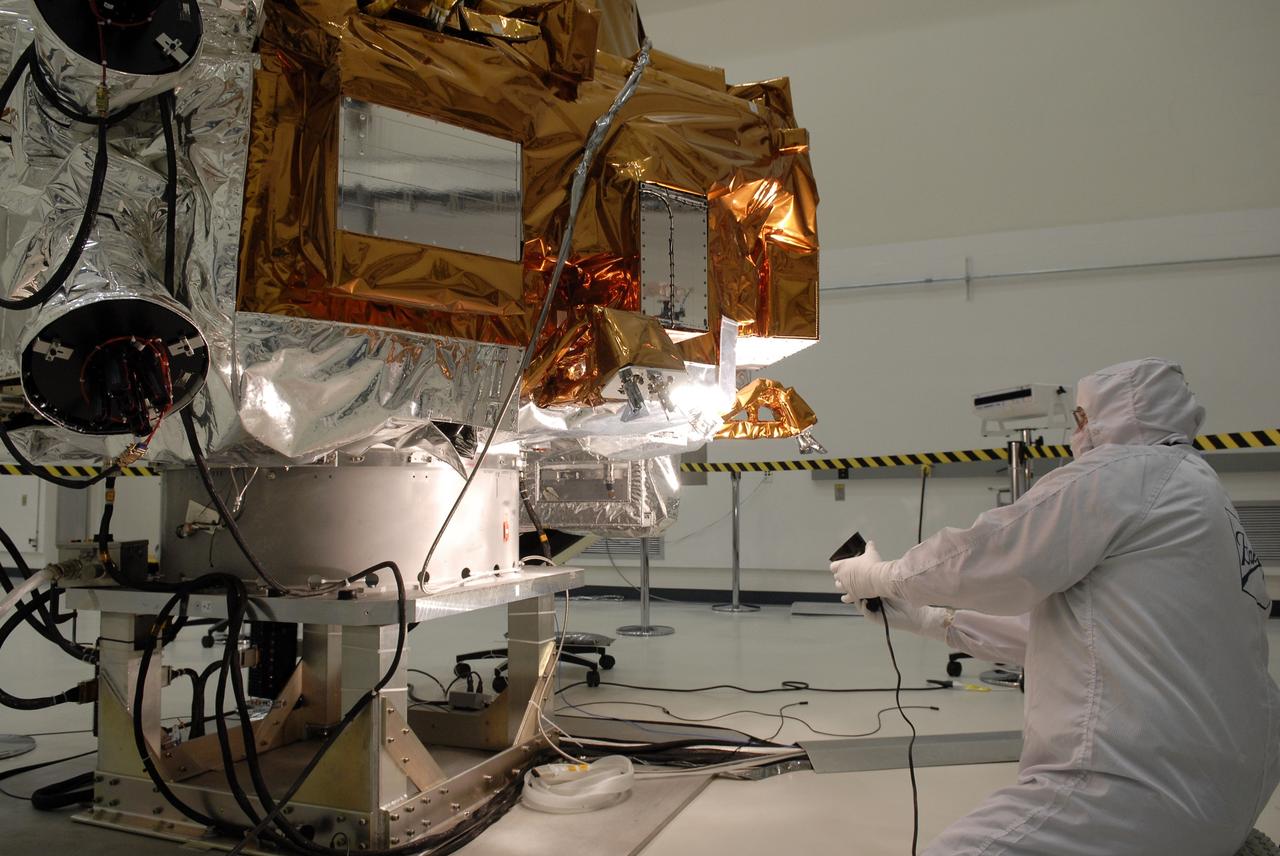
CAPE CANAVERAL, Fla. -- At the Astrotech payload processing facility in Titusville, Fla., a Ball Aerospace and Technologies Corp. worker conducts a light sensor test on NASA's Kepler spacecraft. A NASA Discovery mission, Kepler is specifically designed to survey our region of the Milky Way galaxy to discover hundreds of Earth-size and smaller planets in or near the habitable zone and determine how many of the billions of stars in our galaxy have such planets. Results from this mission will allow us to place our solar system within the continuum of planetary systems in the Galaxy. After processing at Astrotech, Kepler will be carried to its launch pad at Cape Canaveral Air Force Station. .NASA's planet-hunting Kepler mission is scheduled to launch no earlier than March 5 atop a United Launch Alliance Delta II rocket. Photo credit: NASA/Kim Shiflett
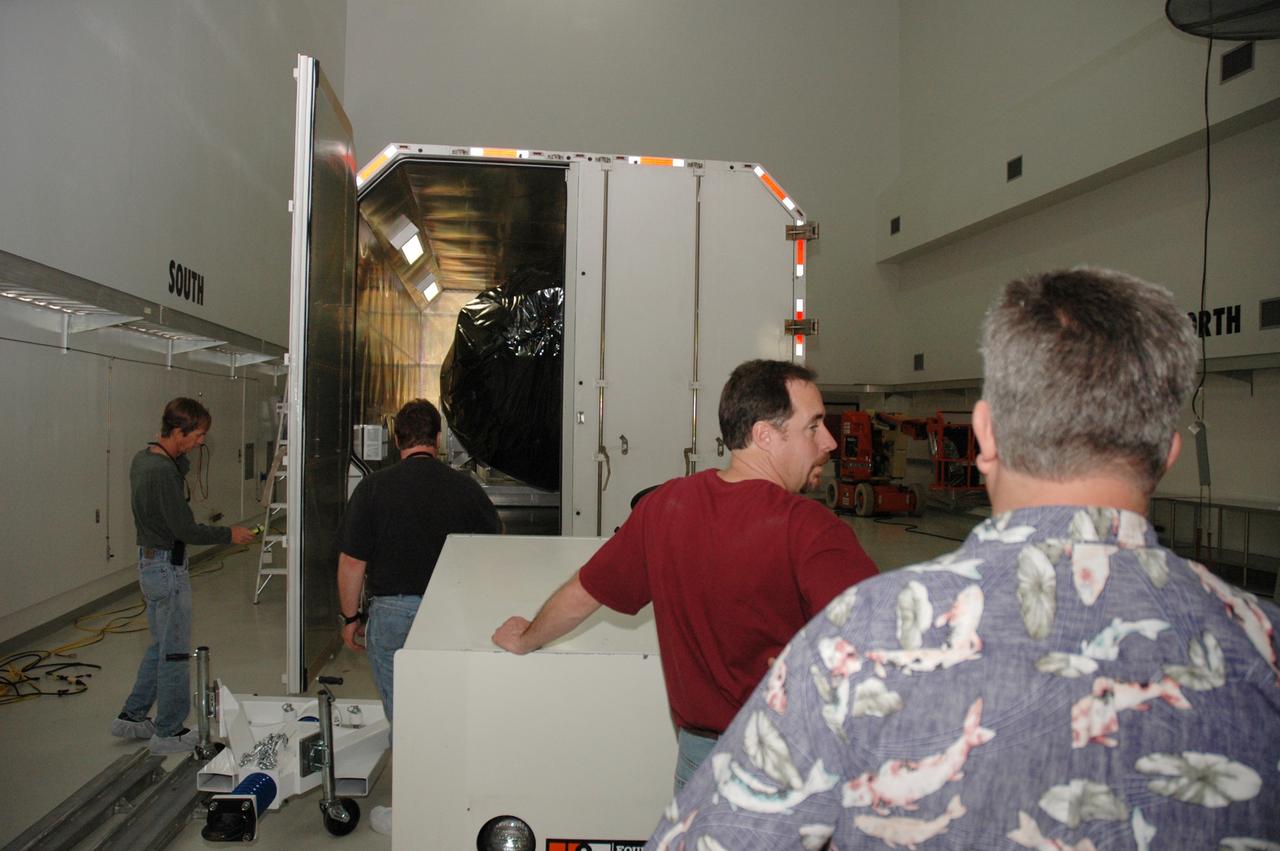
CAPE CANAVERAL, Fla. -- At the Astrotech payload processing facility in Titusville, Fla., doors are opened on the shipping container holding NASA's Kepler spacecraft. After removal from the container, the spacecraft will be rotated to vertical, uncovered and prepared for initial testing. A NASA Discovery mission, Kepler is specifically designed to survey our region of the Milky Way galaxy to discover hundreds of Earth-size and smaller planets in or near the habitable zone and determine how many of the billions of stars in our galaxy have such planets. Results from this mission will allow us to place our solar system within the continuum of planetary systems in the Galaxy. After processing at Astrotech, Kepler will be carried to its launch pad at Cape Canaveral. NASA's planet-hunting Kepler mission is scheduled to launch no earlier than March 5 atop a Delta II rocket. Photo credit: NASA/Chris Rhodes
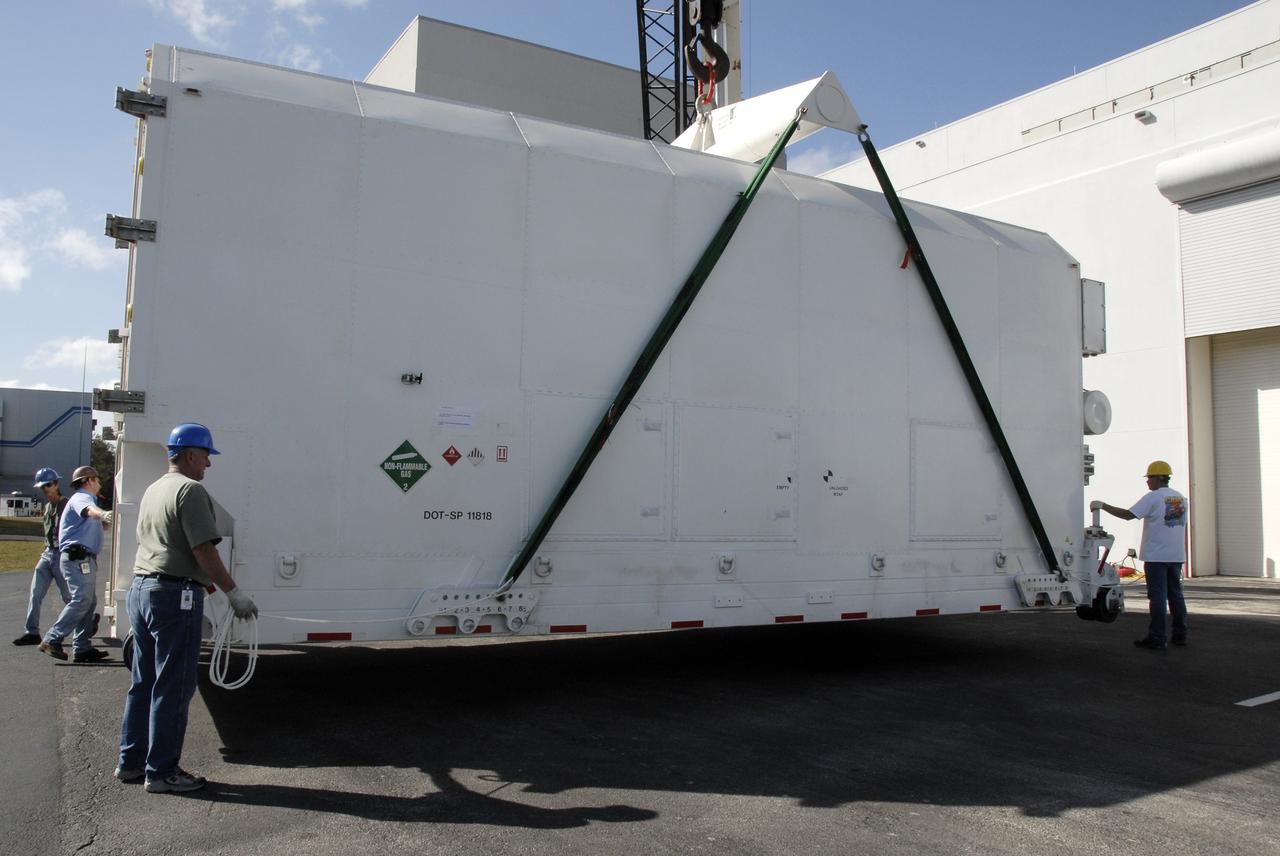
CAPE CANAVERAL, Fla. -- The shipping container holding the Kepler spacecraft is placed on the tarmac outside Astrotech in Titusville, Fla., before being moved inside. A NASA Discovery mission, Kepler is specifically designed to survey our region of the Milky Way galaxy to discover hundreds of Earth-size and smaller planets in or near the habitable zone and determine how many of the billions of stars in our galaxy have such planets. Results from this mission will allow us to place our solar system within the continuum of planetary systems in the Galaxy. The spacecraft will be processed at Astrotech before being carried to its launch pad at Cape Canaveral. .NASA's planet-hunting Kepler mission is scheduled to launch no earlier than March 5, 2009, atop a Delta II rocket. Photo credit: NASA/Kim Shiflett
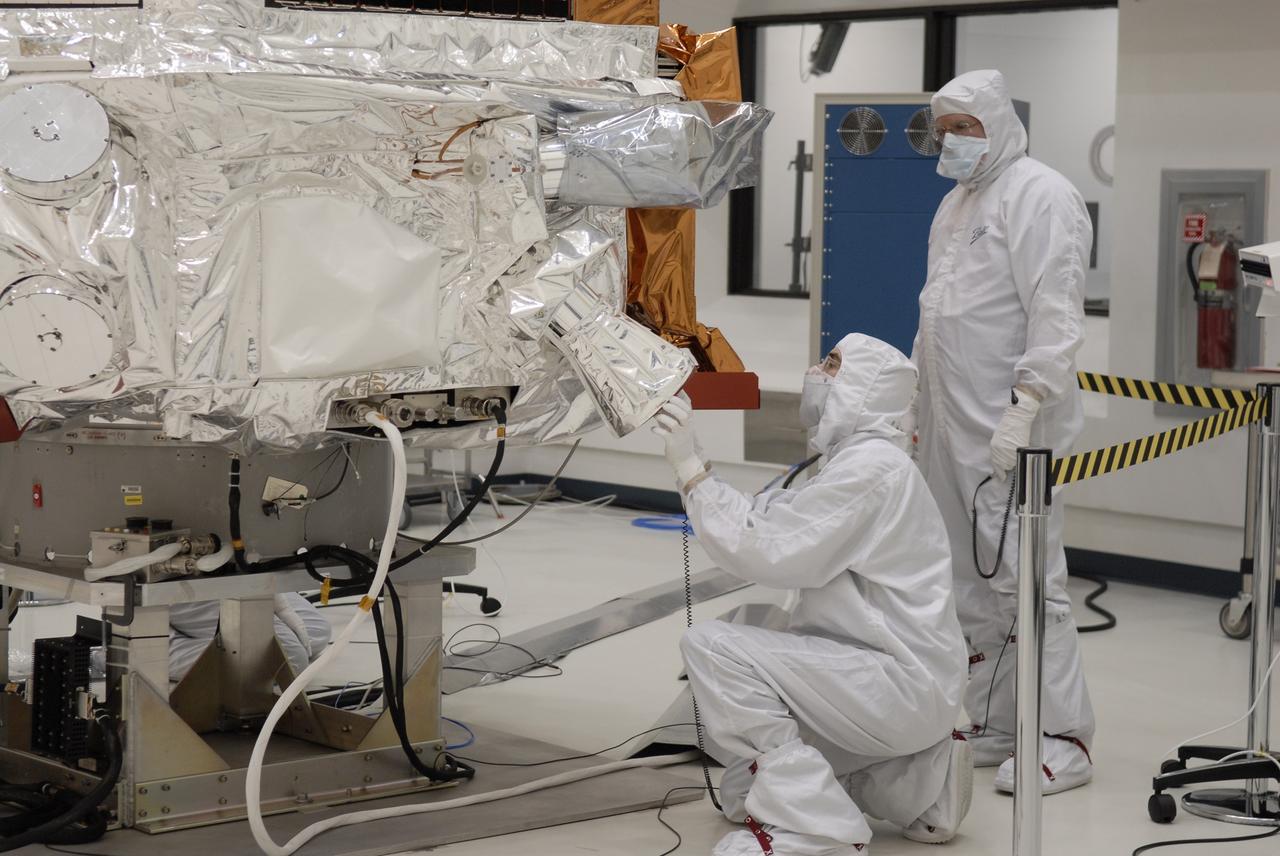
CAPE CANAVERAL, Fla. -- At the Astrotech payload processing facility in Titusville, Fla., NASA's Kepler spacecraft is prepared for testing. A NASA Discovery mission, Kepler is specifically designed to survey our region of the Milky Way galaxy to discover hundreds of Earth-size and smaller planets in or near the habitable zone and determine how many of the billions of stars in our galaxy have such planets. Results from this mission will allow us to place our solar system within the continuum of planetary systems in the Galaxy. After processing at Astrotech, Kepler will be carried to its launch pad at Cape Canaveral. .NASA's planet-hunting Kepler mission is scheduled to launch no earlier than March 5 atop a Delta II rocket. Photo credit: NASA/Kim Shiflett
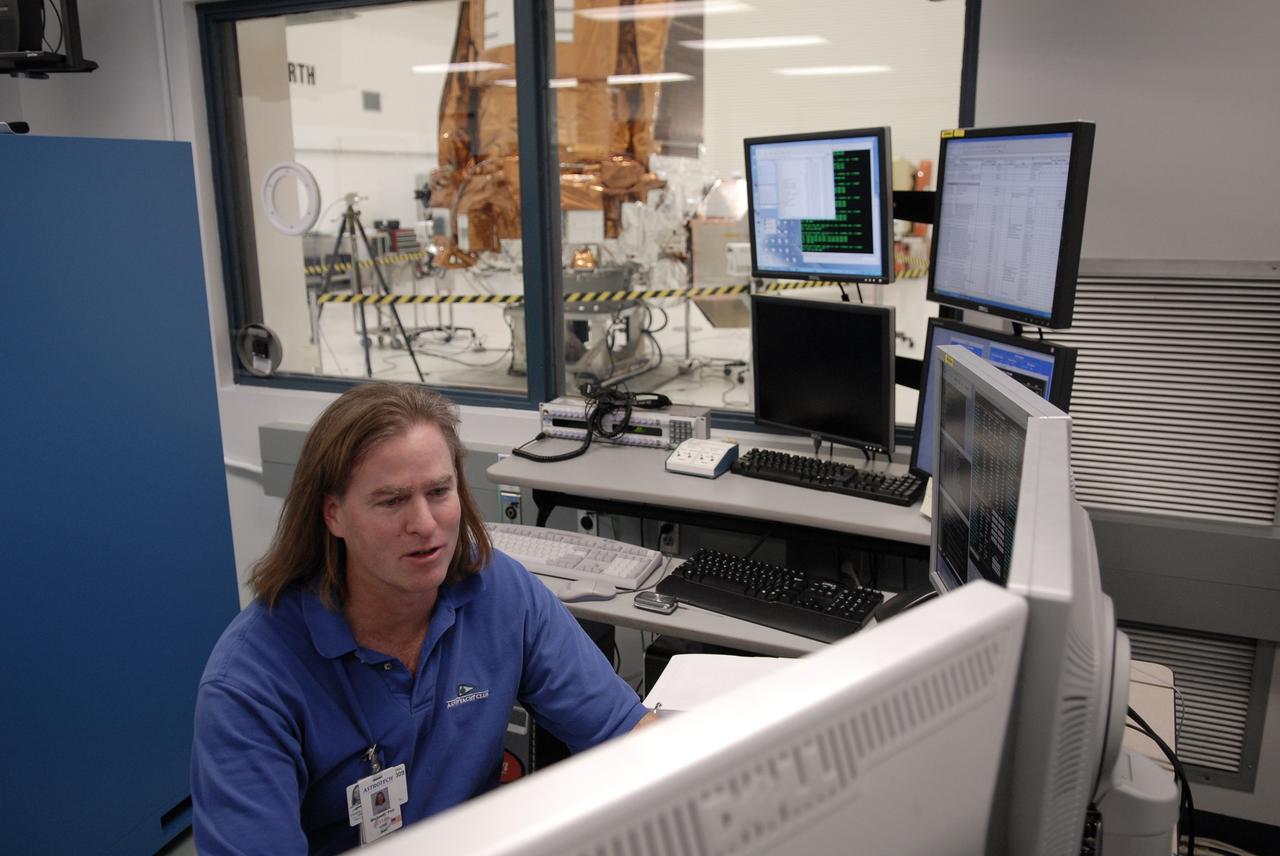
CAPE CANAVERAL, Fla. -- At the Astrotech payload processing facility in Titusville, Fla., a Ball Aerospace and Technologies Corp. technician Phil Mislinski checks data from the light sensor test conducted on NASA's Kepler spacecraft. Ball Aerospace was responsible for the flight segment design and fabrication. A NASA Discovery mission, Kepler is specifically designed to survey our region of the Milky Way galaxy to discover hundreds of Earth-size and smaller planets in or near the habitable zone and determine how many of the billions of stars in our galaxy have such planets. Results from this mission will allow us to place our solar system within the continuum of planetary systems in the Galaxy. After processing at Astrotech, Kepler will be carried to its launch pad at Cape Canaveral Air Force Station. .NASA's planet-hunting Kepler mission is scheduled to launch no earlier than March 5 atop a United Launch Alliance Delta II rocket. Photo credit: NASA/Kim Shiflett
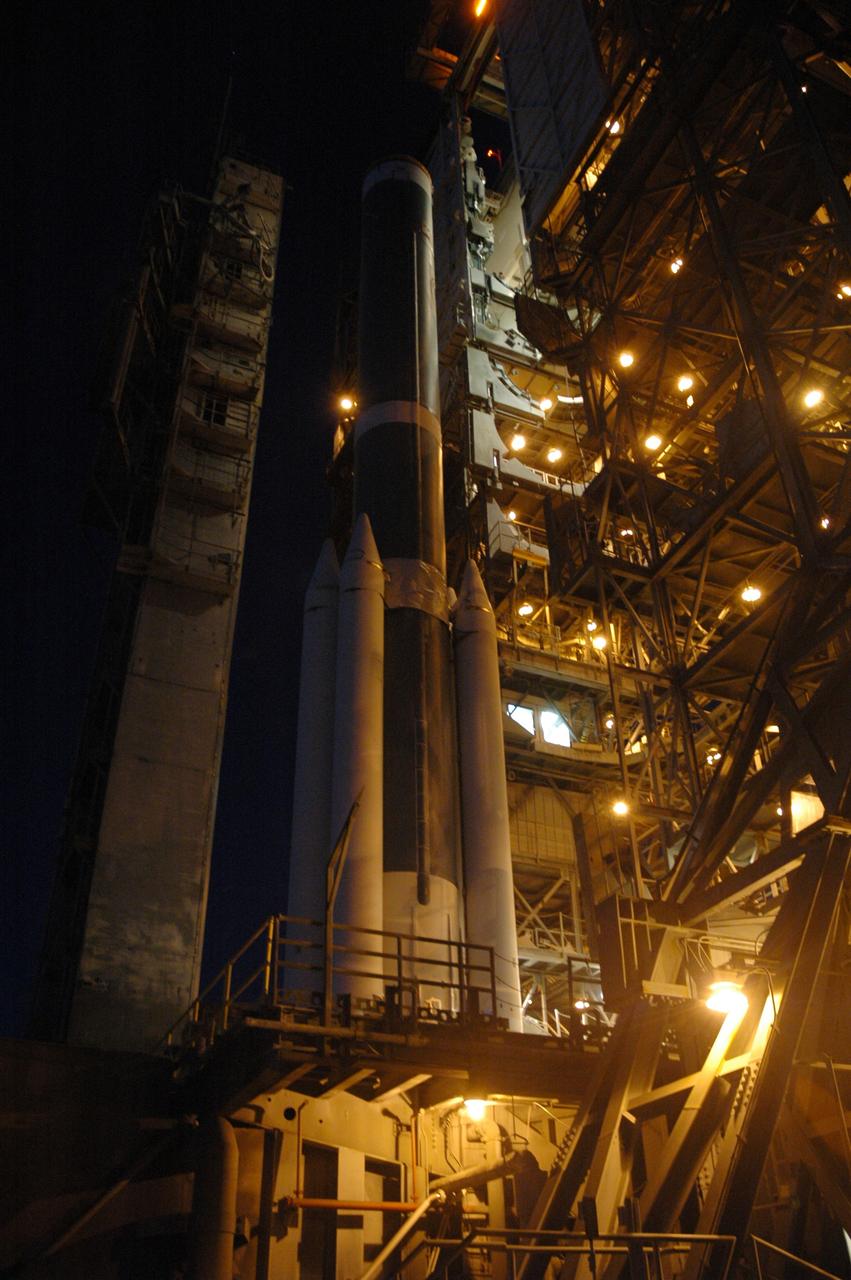
CAPE CANAVERAL, Fla. – On Launch Pad 17-B at Cape Canaveral Air Force Station in Florida, the first stage of the Delta 2 launch vehicle that will carry the Kepler spacecraft into orbit waits for the installation of the final solid rocket boosters. The Kepler mission is specifically designed to survey our region of the Milky Way galaxy to discover hundreds of Earth-size and smaller planets in or near the habitable zone and determine how many of the billions of stars in our galaxy have such planets. Results from this mission will allow us to place our solar system within the continuum of planetary systems in the Galaxy. NASA's planet-hunting Kepler mission is scheduled to launch no earlier than March 5, 2009. Photo credit: NASA/Jim Grossmann
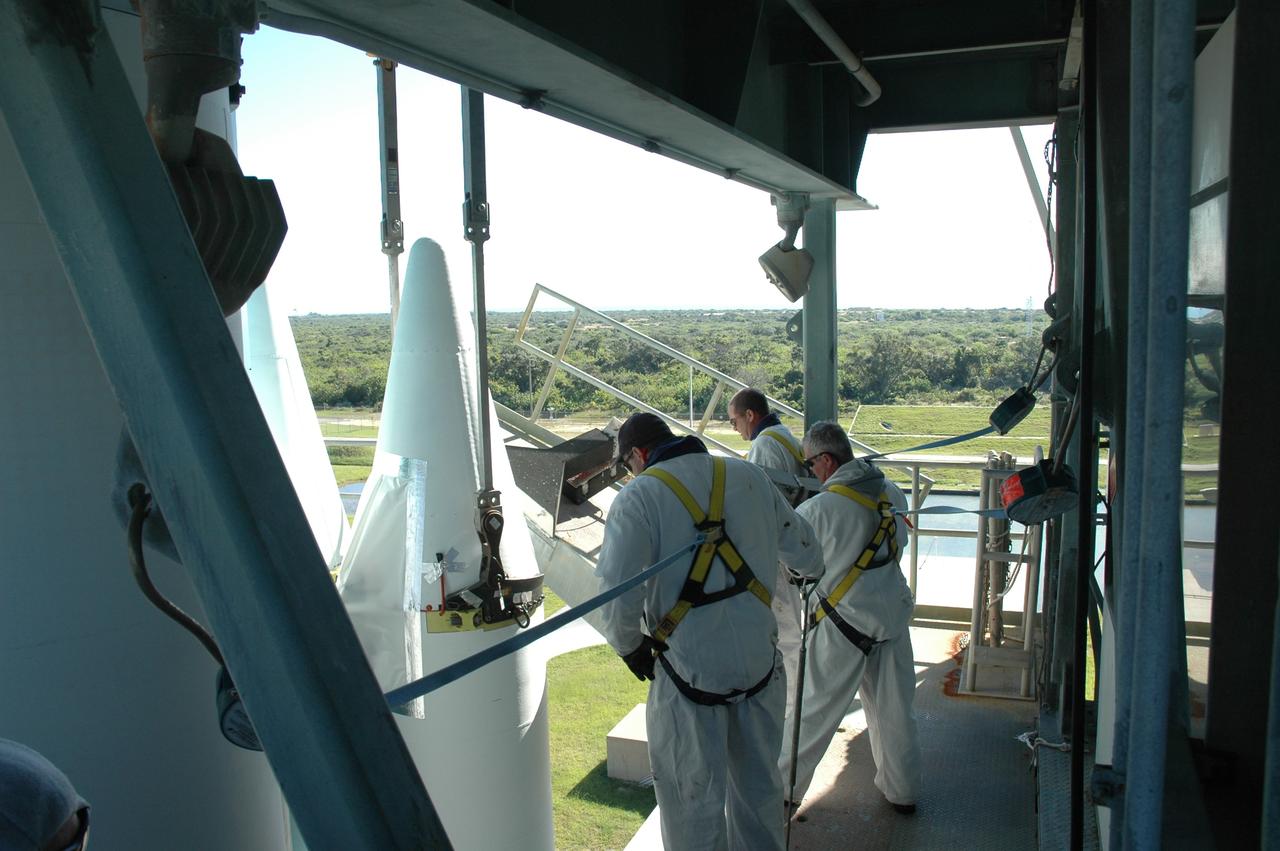
CAPE CANAVERAL, Fla. – On Launch Pad 17-B at Cape Canaveral Air Force Station in Florida, workers on an upper level of the launch tower watch as a strap-on solid rocket booster is lifted into place to mate to the first stage of the Delta 2 launch vehicle that will carry the Kepler spacecraft into orbit. The Kepler mission is specifically designed to survey our region of the Milky Way galaxy to discover hundreds of Earth-size and smaller planets in or near the habitable zone and determine how many of the billions of stars in our galaxy have such planets. Results from this mission will allow us to place our solar system within the continuum of planetary systems in the Galaxy. NASA's planet-hunting Kepler mission is scheduled to launch no earlier than March 5, 2009. Photo credit: NASA/Jim Grossmann
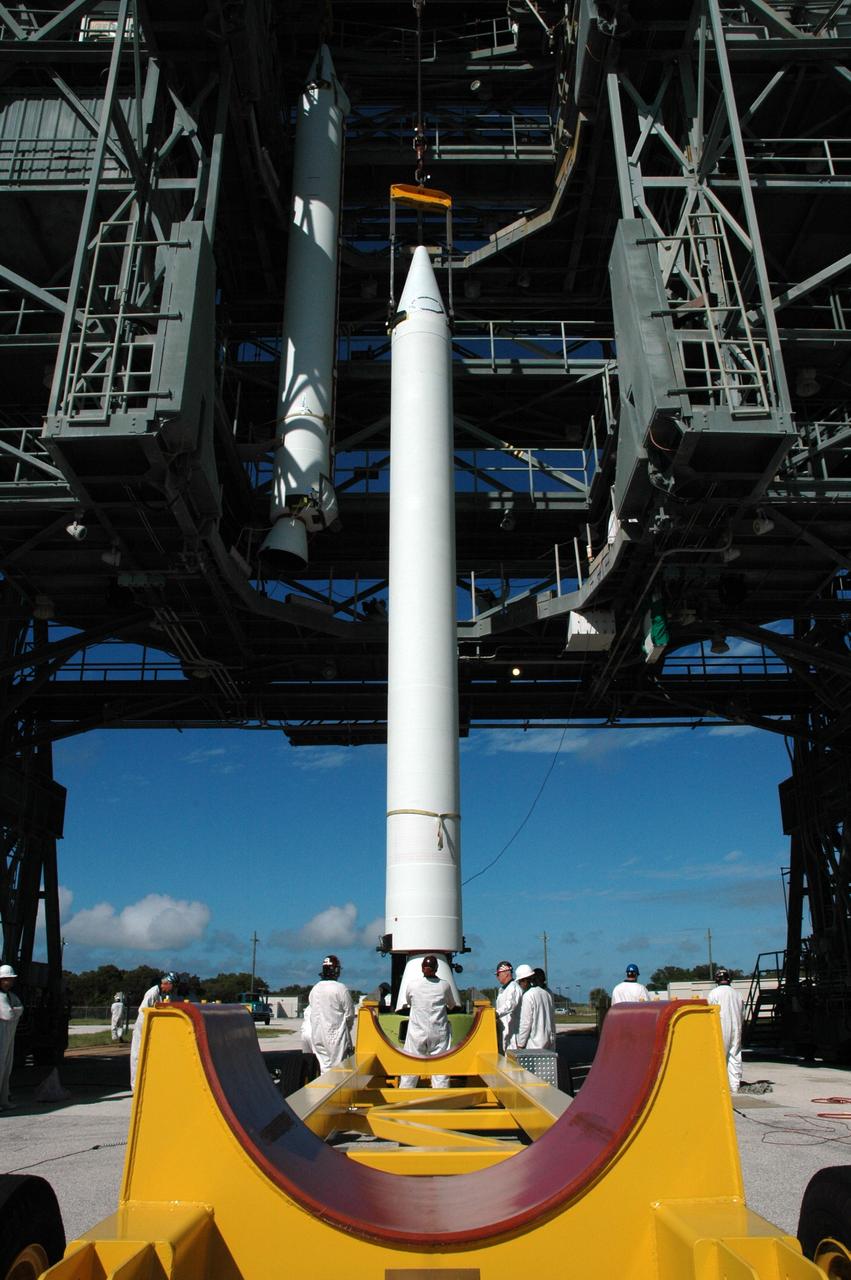
CAPE CANAVERAL, Fla. – On Launch Pad 17-B at Cape Canaveral Air Force Station in Florida, another solid rocket booster is being lifted into the mobile service tower for mating to the first stage of the Kepler's Delta 2 launch vehicle. The Kepler mission is specifically designed to survey our region of the Milky Way galaxy to discover hundreds of Earth-size and smaller planets in or near the habitable zone and determine how many of the billions of stars in our galaxy have such planets. Results from this mission will allow us to place our solar system within the continuum of planetary systems in the Galaxy. NASA's planet-hunting Kepler mission is scheduled to launch no earlier than March 5, 2009. Photo credit: NASA/Jim Grossmann
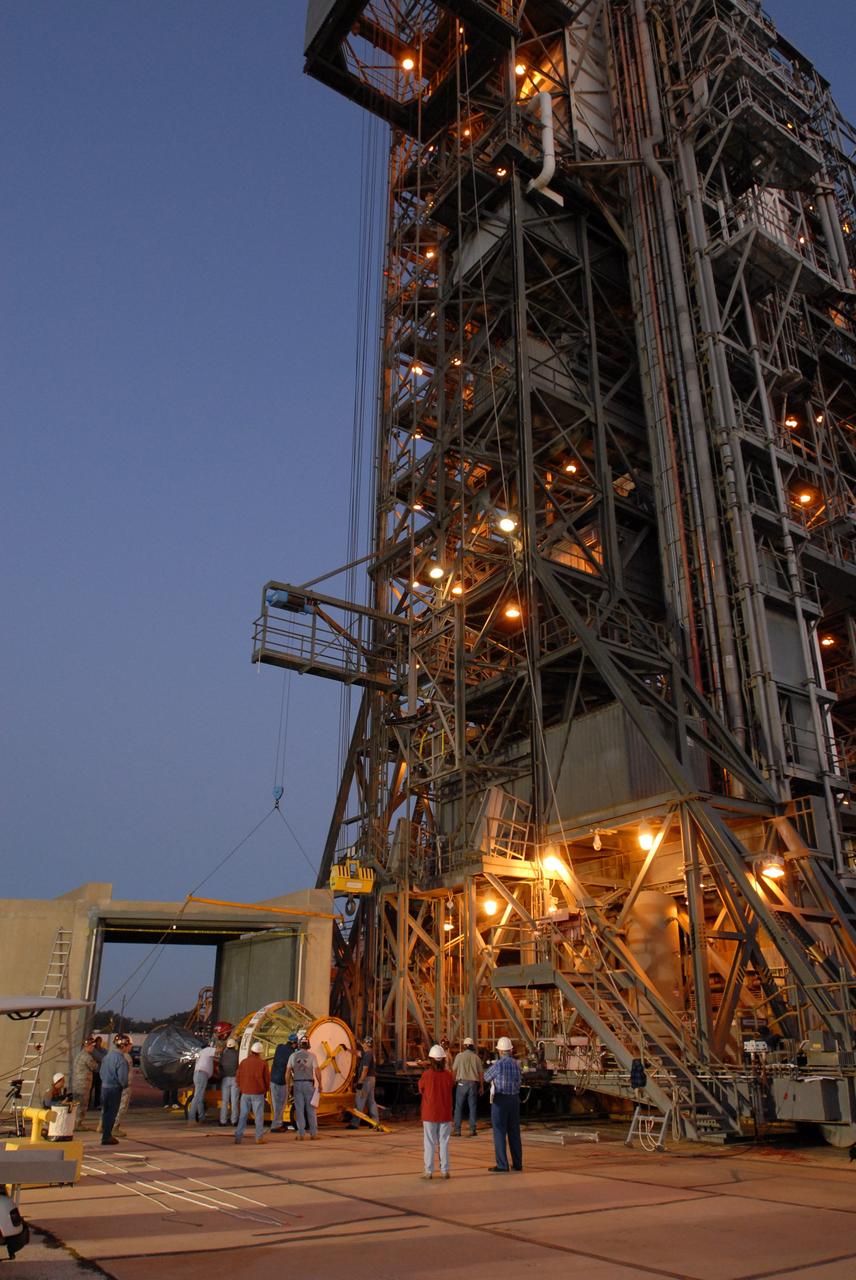
CAPE CANAVERAL, Fla. -- On Complex 17-B at Cape Canaveral Air Force Station in Florida, a crane is lowered toward the second stage of the Delta 2 rocket. Once attached to the second stage, the crane will lift it into the mobile service tower for mating with the first stage. The Delta 2 rocket is the launch vehicle for NASA's Kepler spacecraft. The Kepler mission is specifically designed to survey our region of the Milky Way galaxy to discover hundreds of Earth-size and smaller planets in or near the habitable zone and determine how many of the billions of stars in our galaxy have such planets. Results from this mission will allow us to place our solar system within the continuum of planetary systems in the Galaxy. NASA's planet-hunting Kepler mission is scheduled to launch no earlier than March 5, 2009. Photo credit: NASA/Jim Grossmann
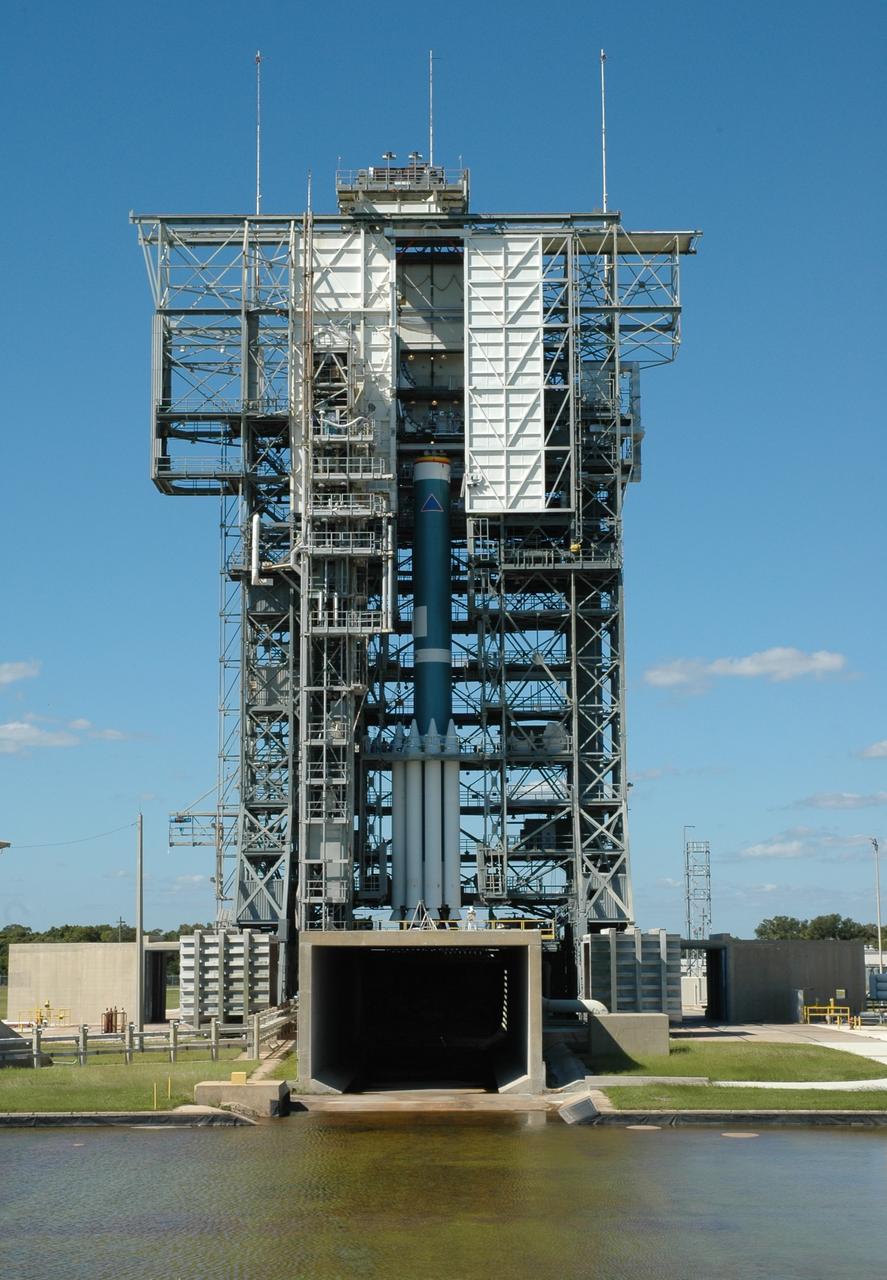
CAPE CANAVERAL, Fla. – On Launch Pad 17-B at Cape Canaveral Air Force Station in Florida, air-lit strap-on solid rocket boosters are added to the first stage of the Delta 2 launch vehicle (seen here) that will carry the Kepler spacecraft into orbit. The Kepler mission is specifically designed to survey our region of the Milky Way galaxy to discover hundreds of Earth-size and smaller planets in or near the habitable zone and determine how many of the billions of stars in our galaxy have such planets. Results from this mission will allow us to place our solar system within the continuum of planetary systems in the Galaxy. NASA's planet-hunting Kepler mission is scheduled to launch no earlier than March 5, 2009. Photo credit: NASA/Jim Grossmann
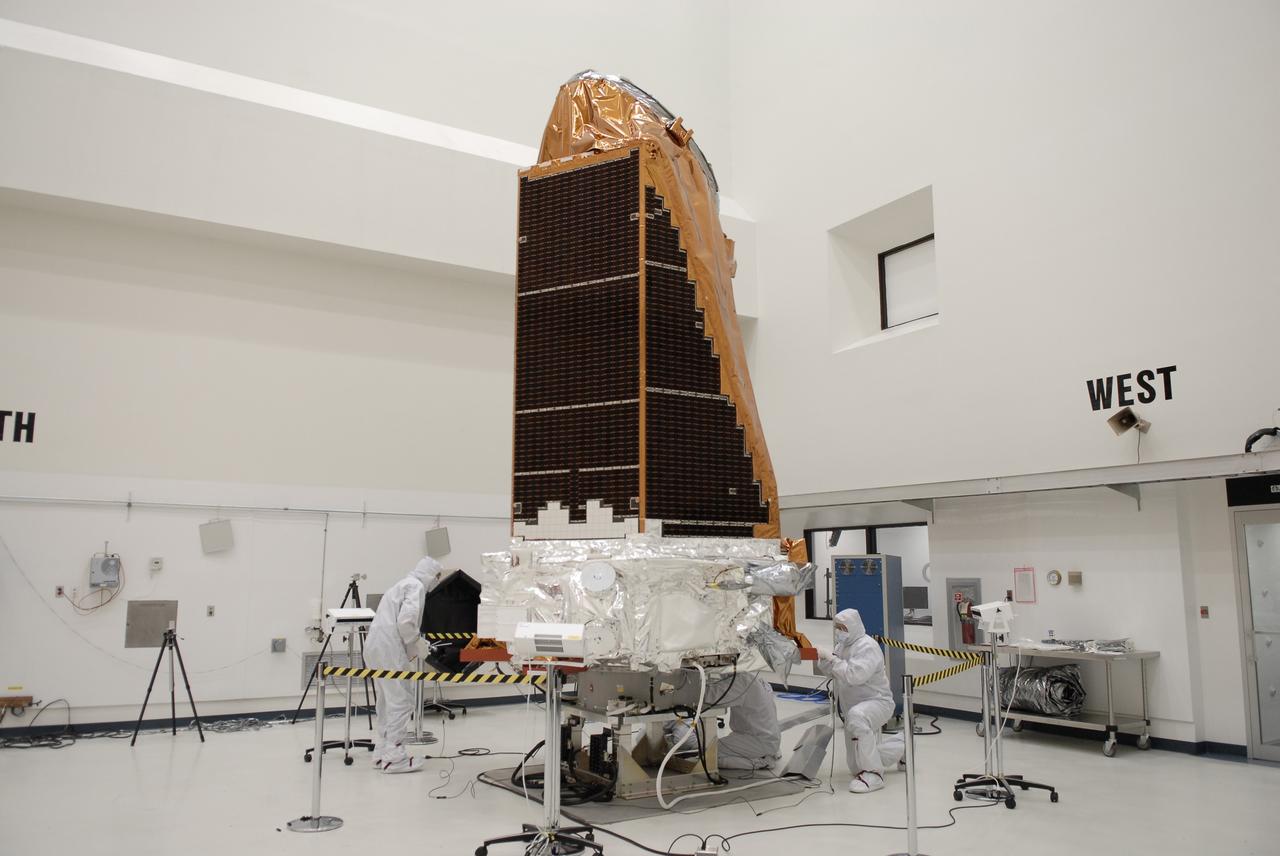
CAPE CANAVERAL, Fla. -- At the Astrotech payload processing facility in Titusville, Fla., workers from Ball Aerospace check the star trackers on NASA's Kepler spacecraft before testing. Star Trackers are small aperture, space-qualified optical products which assure a spacecraft’s accurate navigation in space. A NASA Discovery mission, Kepler is specifically designed to survey our region of the Milky Way galaxy to discover hundreds of Earth-size and smaller planets in or near the habitable zone and determine how many of the billions of stars in our galaxy have such planets. Results from this mission will allow us to place our solar system within the continuum of planetary systems in the Galaxy. After processing at Astrotech, Kepler will be carried to its launch pad at Cape Canaveral. .NASA's planet-hunting Kepler mission is scheduled to launch no earlier than March 5 atop a Delta II rocket. Photo credit: NASA/Kim Shiflett
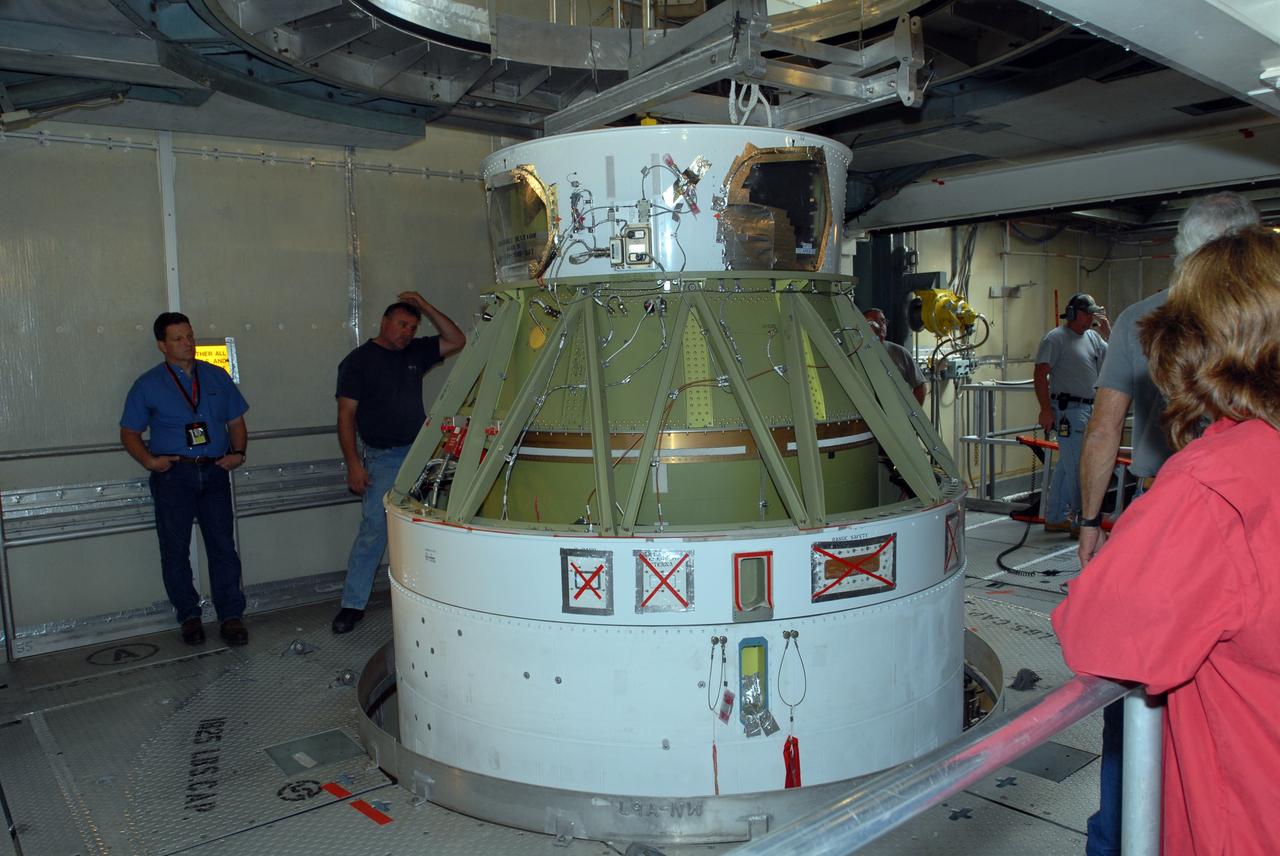
CAPE CANAVERAL, Fla. -- On Complex 17-B at Cape Canaveral Air Force Station in Florida, the second stage has been mated to the first stage of the Delta 2 rocket that will launch NASA's Kepler spacecraft. The Kepler mission is specifically designed to survey our region of the Milky Way galaxy to discover hundreds of Earth-size and smaller planets in or near the habitable zone and determine how many of the billions of stars in our galaxy have such planets. Results from this mission will allow us to place our solar system within the continuum of planetary systems in the Galaxy. NASA's planet-hunting Kepler mission is scheduled to launch no earlier than March 5, 2009. Photo credit: NASA/Jim Grossmann
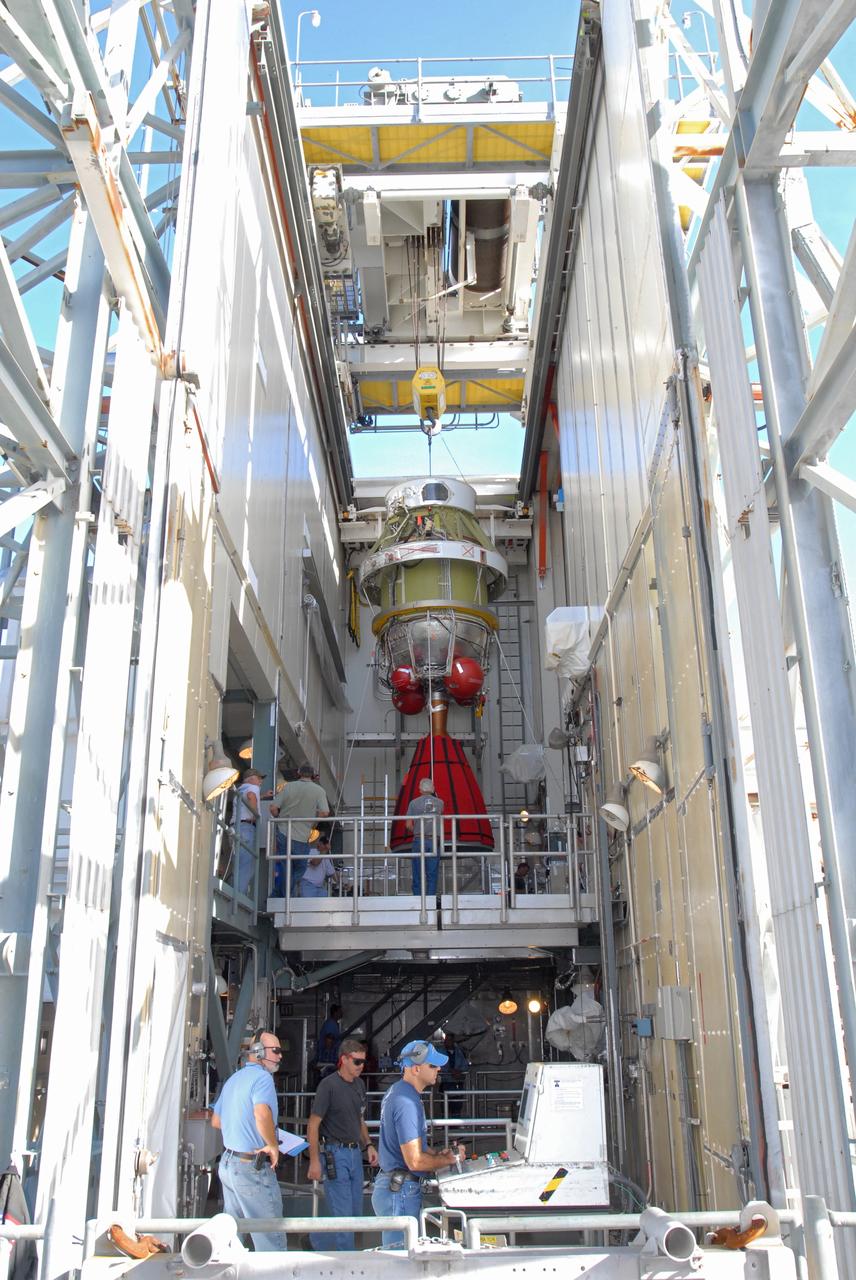
CAPE CANAVERAL, Fla. -- On Complex 17-B at Cape Canaveral Air Force Station in Florida, workers guide the second stage of the Delta 2 rocket into place inside the mobile service tower. The second stage will be mated to the first stage of the Delta 2 for the launch of NASA's Kepler spacecraft. The Kepler mission is specifically designed to survey our region of the Milky Way galaxy to discover hundreds of Earth-size and smaller planets in or near the habitable zone and determine how many of the billions of stars in our galaxy have such planets. Results from this mission will allow us to place our solar system within the continuum of planetary systems in the Galaxy. NASA's planet-hunting Kepler mission is scheduled to launch no earlier than March 5, 2009. Photo credit: NASA/Jim Grossmann
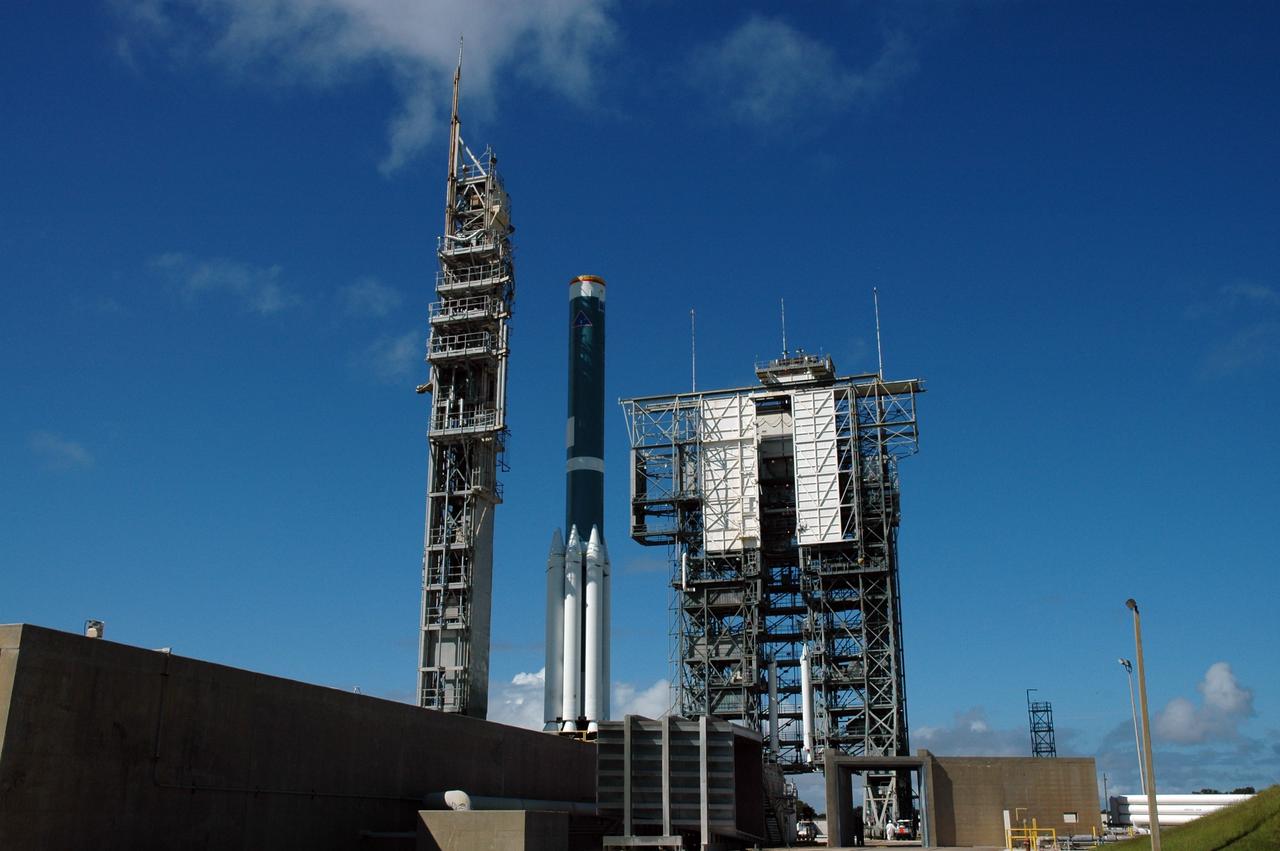
CAPE CANAVERAL, Fla. – On Launch Pad 17-B at Cape Canaveral Air Force Station in Florida, the first stage of the Delta 2 launch vehicle for the Kepler spacecraft (center) waits for the mobile service tower at right and installation of the final three solid rocket boosters. The Kepler mission is specifically designed to survey our region of the Milky Way galaxy to discover hundreds of Earth-size and smaller planets in or near the habitable zone and determine how many of the billions of stars in our galaxy have such planets. Results from this mission will allow us to place our solar system within the continuum of planetary systems in the Galaxy. NASA's planet-hunting Kepler mission is scheduled to launch no earlier than March 5, 2009. Photo credit: NASA/Jim Grossmann
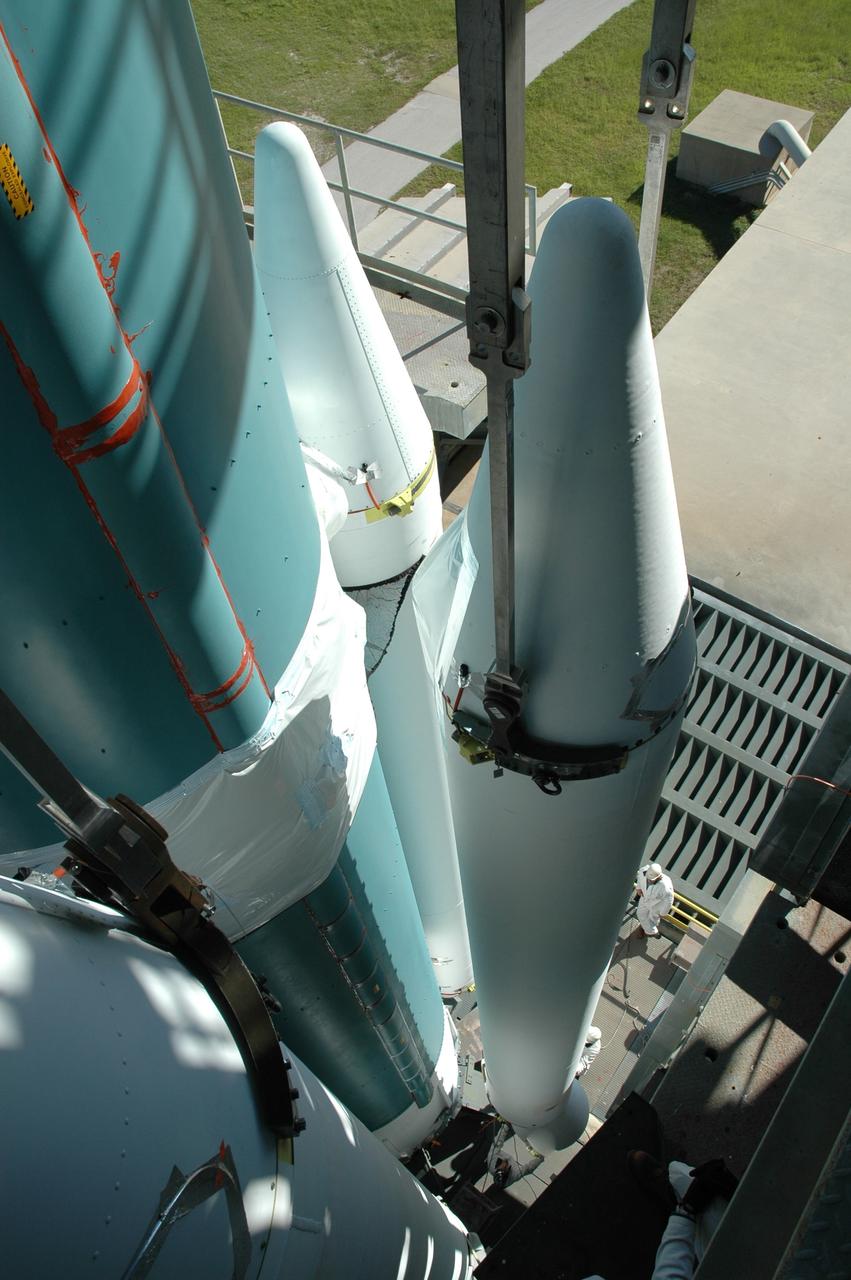
CAPE CANAVERAL, Fla. – On Launch Pad 17-B at Cape Canaveral Air Force Station in Florida, a view from an upper level of the launch tower show air-lit strap-on solid rocket boosters being added to the first stage of the Delta 2 launch vehicle that will carry the Kepler spacecraft into orbit. The Kepler mission is specifically designed to survey our region of the Milky Way galaxy to discover hundreds of Earth-size and smaller planets in or near the habitable zone and determine how many of the billions of stars in our galaxy have such planets. Results from this mission will allow us to place our solar system within the continuum of planetary systems in the Galaxy. NASA's planet-hunting Kepler mission is scheduled to launch no earlier than March 5, 2009. Photo credit: NASA/Jim Grossmann
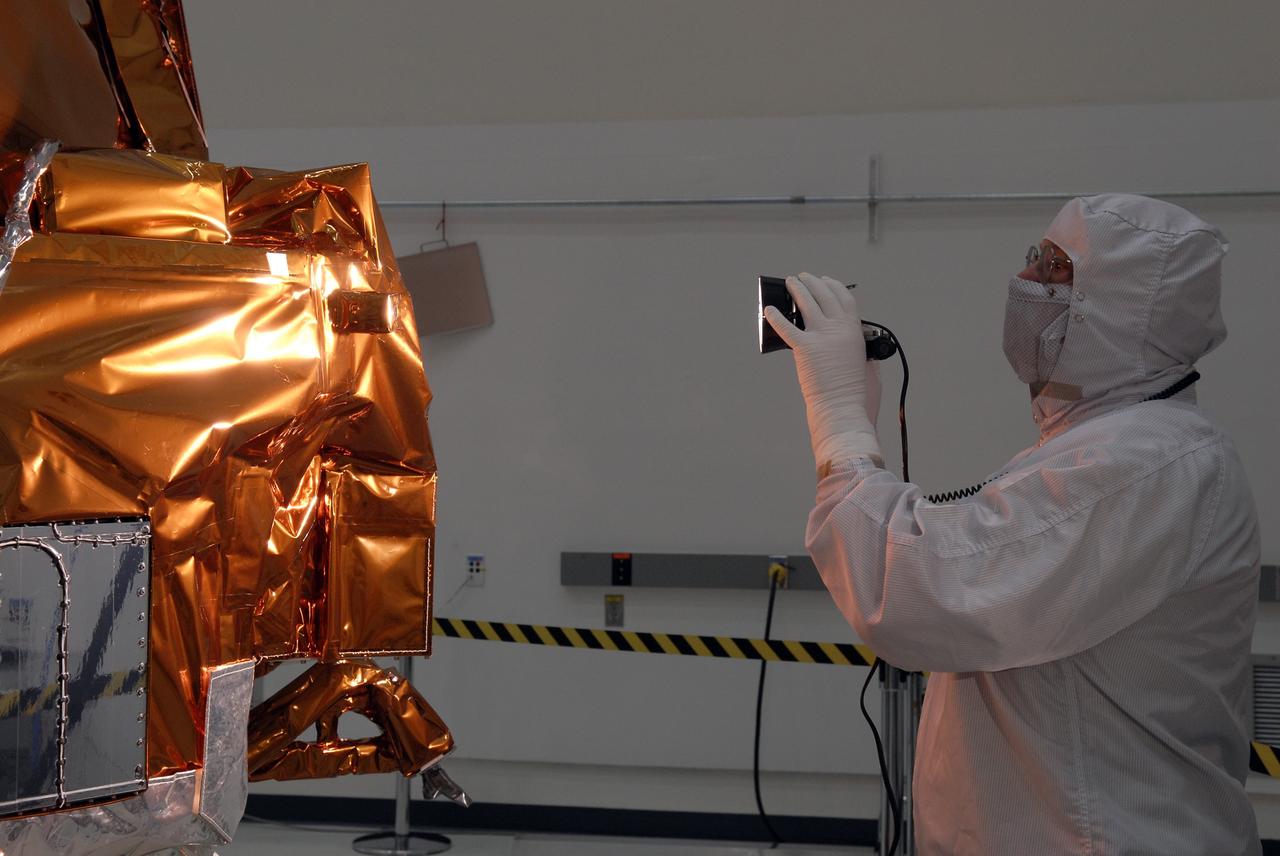
CAPE CANAVERAL, Fla. -- At the Astrotech payload processing facility in Titusville, Fla., a Ball Aerospace and Technologies Corp. worker conducts a light sensor test on NASA's Kepler spacecraft. A NASA Discovery mission, Kepler is specifically designed to survey our region of the Milky Way galaxy to discover hundreds of Earth-size and smaller planets in or near the habitable zone and determine how many of the billions of stars in our galaxy have such planets. Results from this mission will allow us to place our solar system within the continuum of planetary systems in the Galaxy. After processing at Astrotech, Kepler will be carried to its launch pad at Cape Canaveral Air Force Station. .NASA's planet-hunting Kepler mission is scheduled to launch no earlier than March 5 atop a United Launch Alliance Delta II rocket. Photo credit: NASA/Kim Shiflett
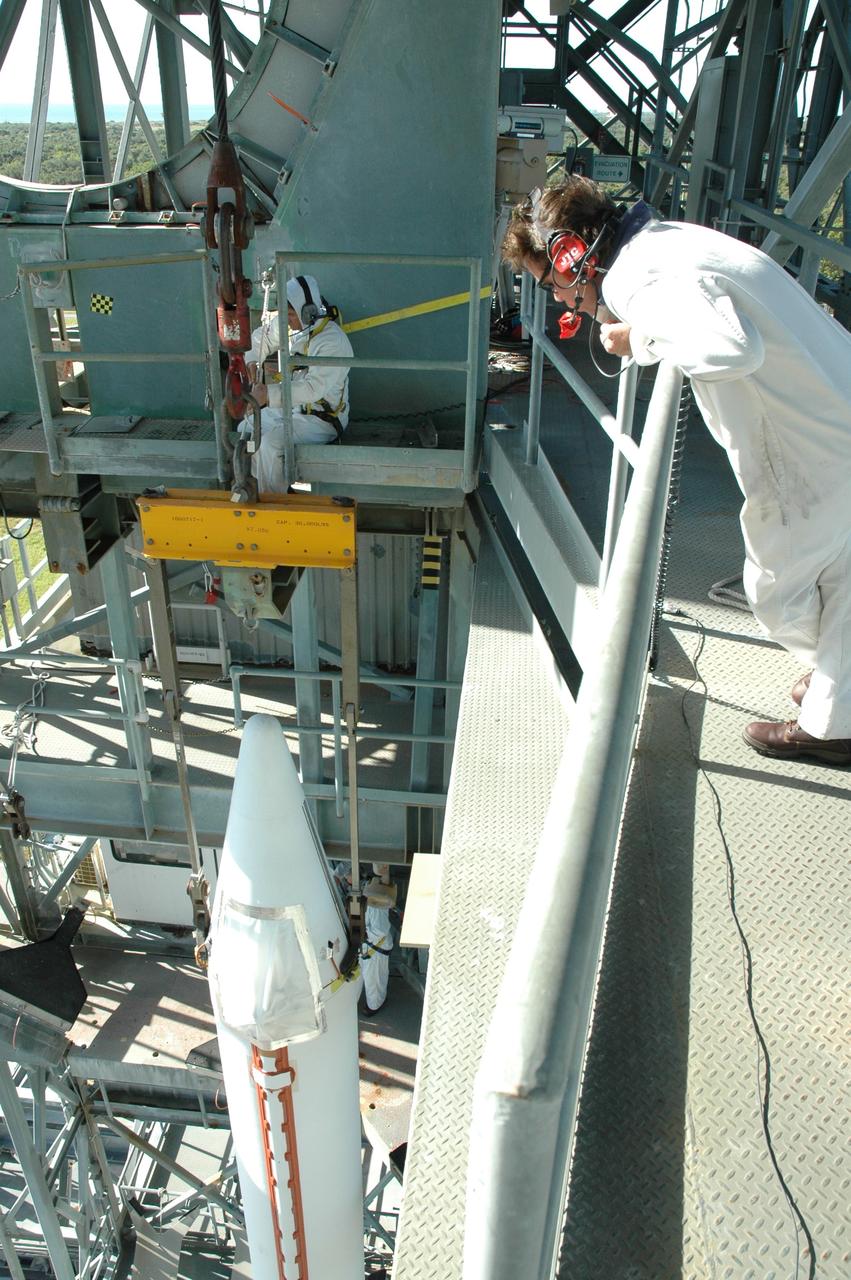
CAPE CANAVERAL, Fla. – On Launch Pad 17-B at Cape Canaveral Air Force Station in Florida, workers oversee the lifting of one of the solid rocket boosters into the mobile service tower for mating to the first stage of the Kepler's Delta 2 launch vehicle. The Kepler mission is specifically designed to survey our region of the Milky Way galaxy to discover hundreds of Earth-size and smaller planets in or near the habitable zone and determine how many of the billions of stars in our galaxy have such planets. Results from this mission will allow us to place our solar system within the continuum of planetary systems in the Galaxy. NASA's planet-hunting Kepler mission is scheduled to launch no earlier than March 5, 2009. Photo credit: NASA/Jim Grossmann
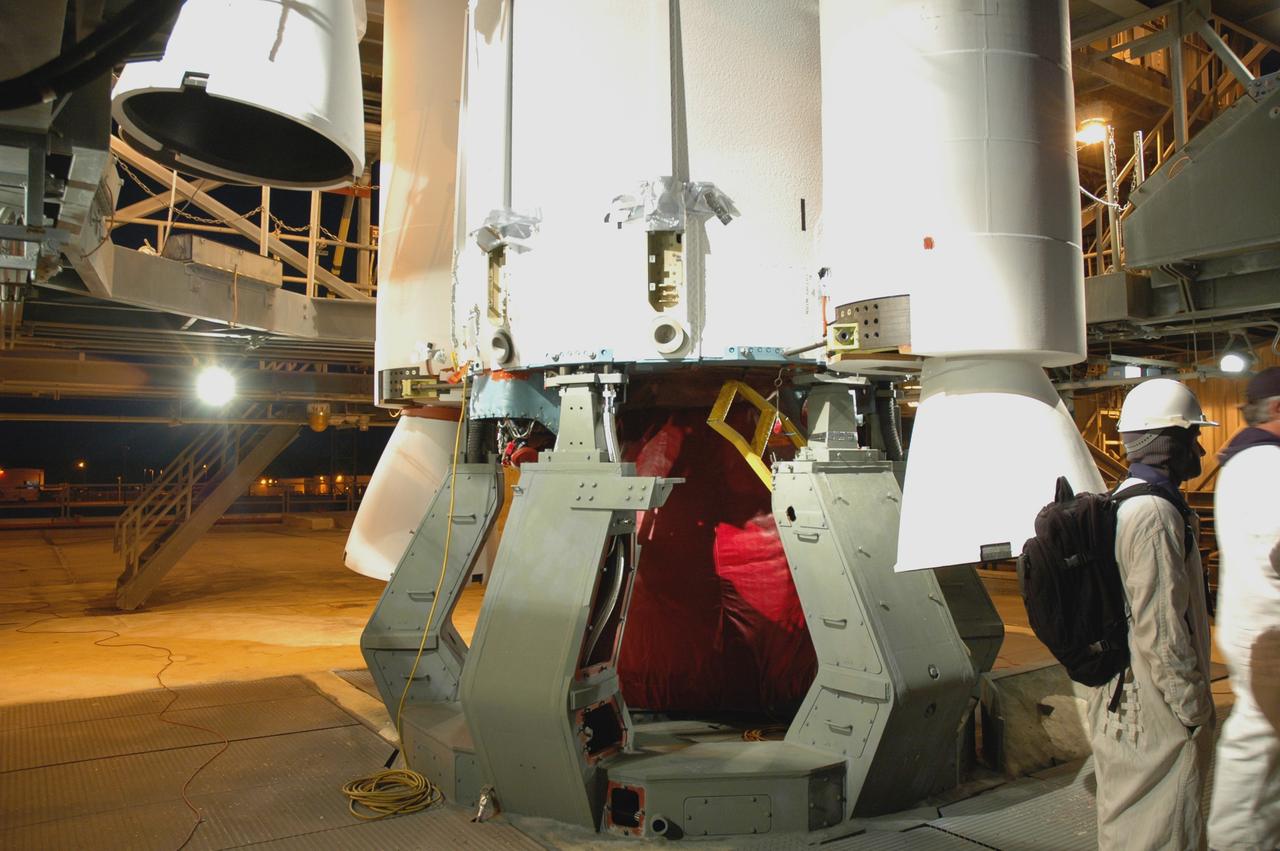
CAPE CANAVERAL, Fla. – On Launch Pad 17-B at Cape Canaveral Air Force Station in Florida, workers prepare the air-lit strap-on solid rocket boosters to be mated onto the Delta 2 launch vehicle that will carry the Kepler spacecraft into orbit. The Kepler mission is specifically designed to survey our region of the Milky Way galaxy to discover hundreds of Earth-size and smaller planets in or near the habitable zone and determine how many of the billions of stars in our galaxy have such planets. Results from this mission will allow us to place our solar system within the continuum of planetary systems in the Galaxy. NASA's planet-hunting Kepler mission is scheduled to launch no earlier than March 5, 2009. Photo credit: NASA/Jim Grossmann
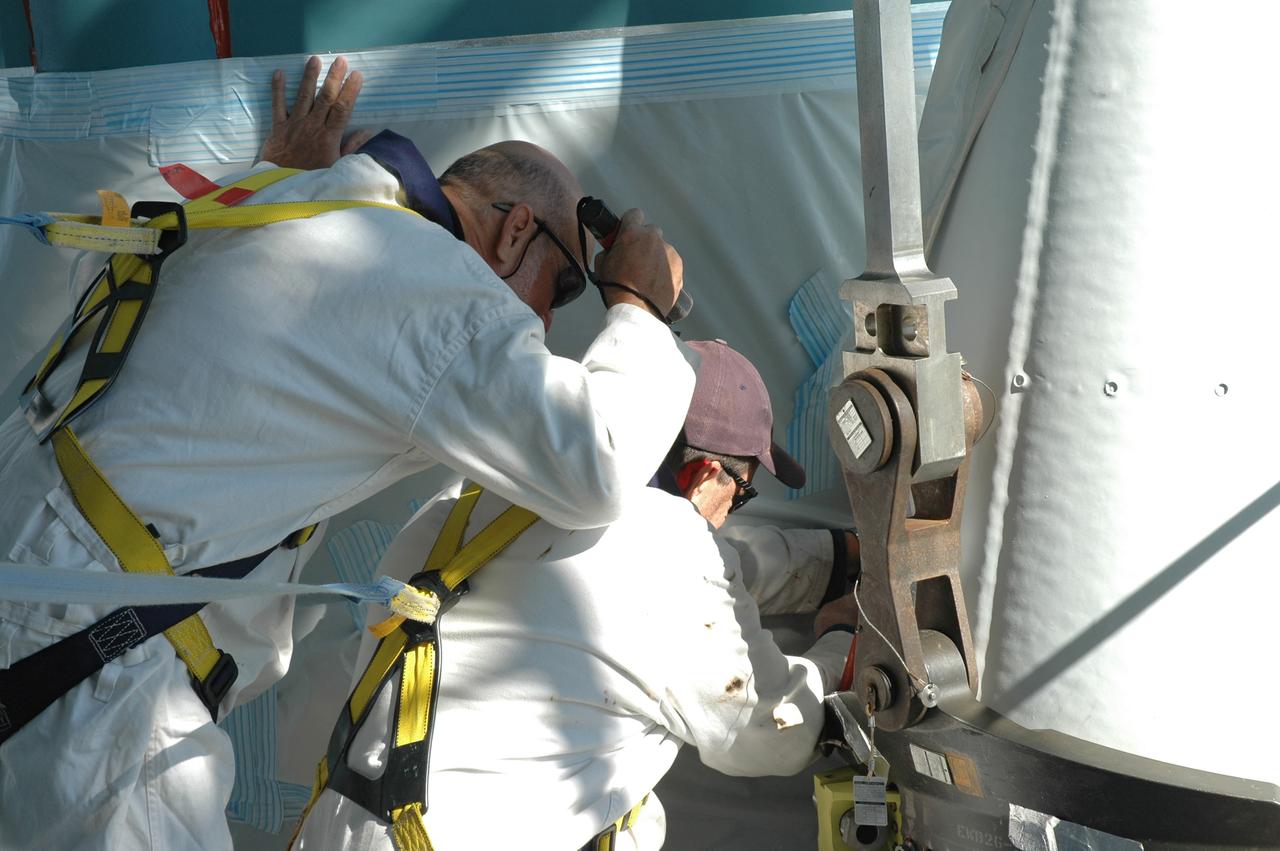
CAPE CANAVERAL, Fla. – On Launch Pad 17-B at Cape Canaveral Air Force Station in Florida, workers make adjustments on one of the solid rocket boosters being mated to the first stage of the Delta 2 launch vehicle that will carry the Kepler spacecraft into orbit. The Kepler mission is specifically designed to survey our region of the Milky Way galaxy to discover hundreds of Earth-size and smaller planets in or near the habitable zone and determine how many of the billions of stars in our galaxy have such planets. Results from this mission will allow us to place our solar system within the continuum of planetary systems in the Galaxy. NASA's planet-hunting Kepler mission is scheduled to launch no earlier than March 5, 2009. Photo credit: NASA/Jim Grossmann
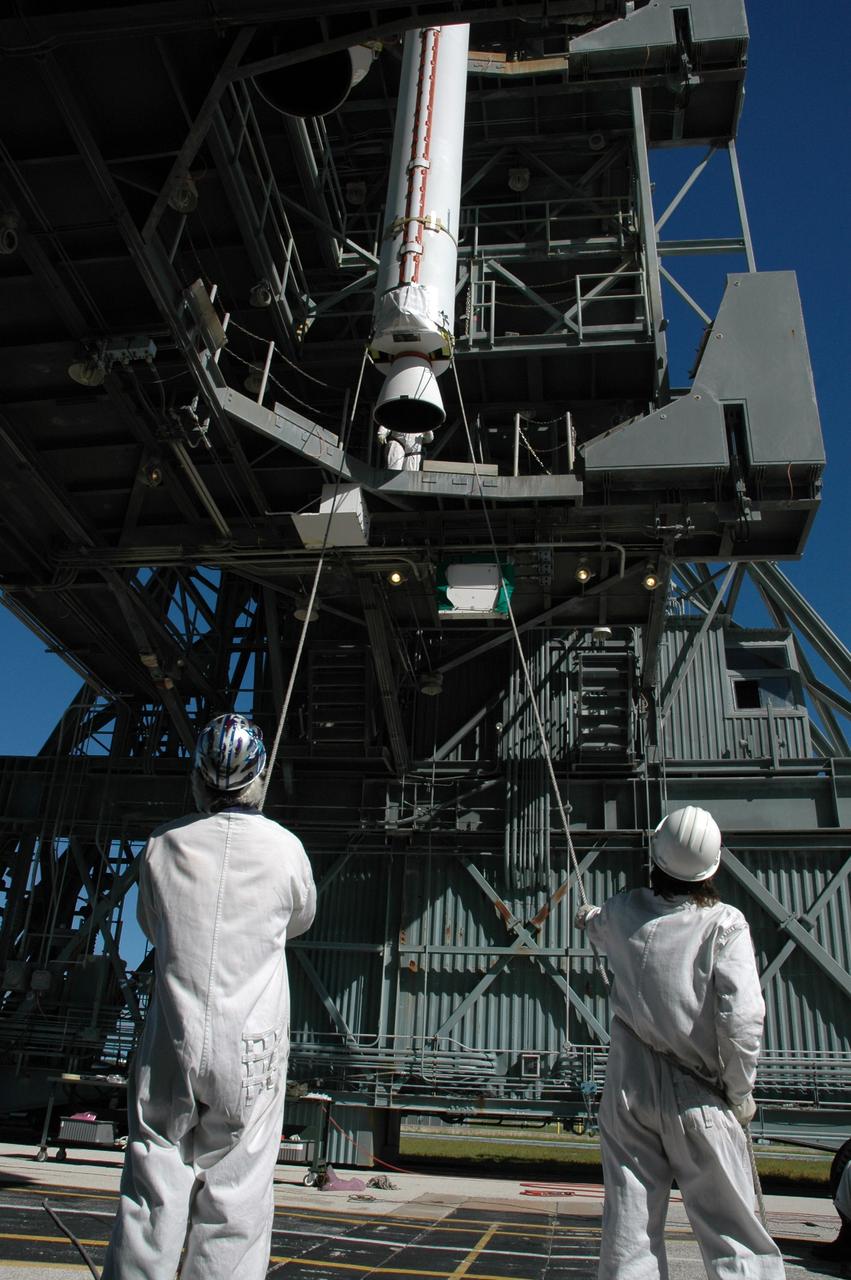
CAPE CANAVERAL, Fla. – On Launch Pad 17-B at Cape Canaveral Air Force Station in Florida, another solid rocket booster is being lifted into the mobile service tower for mating to the first stage of the Kepler's Delta 2 launch vehicle. The Kepler mission is specifically designed to survey our region of the Milky Way galaxy to discover hundreds of Earth-size and smaller planets in or near the habitable zone and determine how many of the billions of stars in our galaxy have such planets. Results from this mission will allow us to place our solar system within the continuum of planetary systems in the Galaxy. NASA's planet-hunting Kepler mission is scheduled to launch no earlier than March 5, 2009. Photo credit: NASA/Jim Grossmann