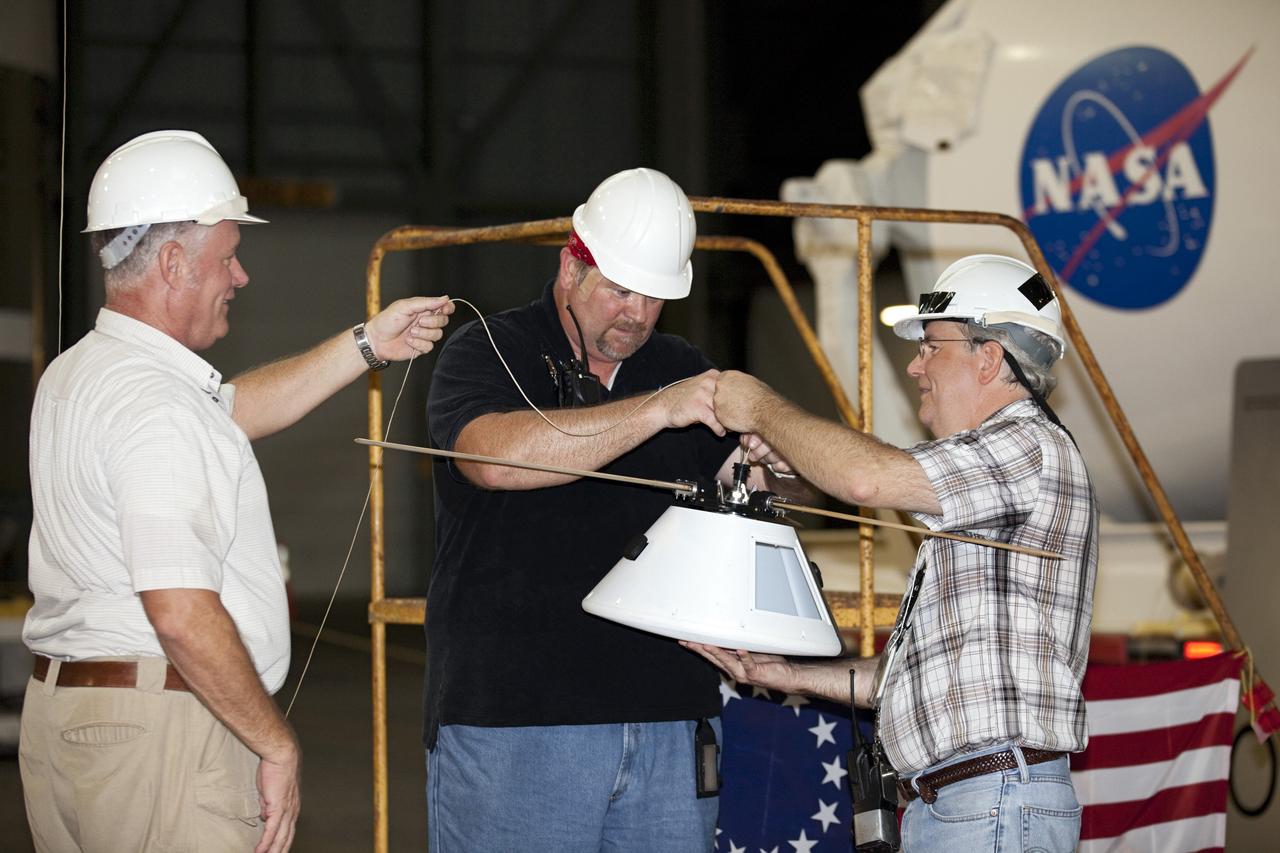
CAPE CANAVERAL, Fla. - NASA Aerospace Engineer Jeff Hagen prepares a model capsule ahead of tests inside the Vehicle Assembly Building at NASA's Kennedy Space Center in Florida to test a rotor system landing design. The design would give a capsule the stability and control of a helicopter, but would not be powered. Instead, the wind passing over the rotors as the capsule descends would make the blades turn, a process called auto-rotation. The intent is to give real spacecraft a soft landing with enough control that they could touch down anywhere in the world, whether it be a runway or parking lot. In other words, wherever a helicopter could land, a spacecraft could land, too. Photo credit: NASA/Kim Shiflett
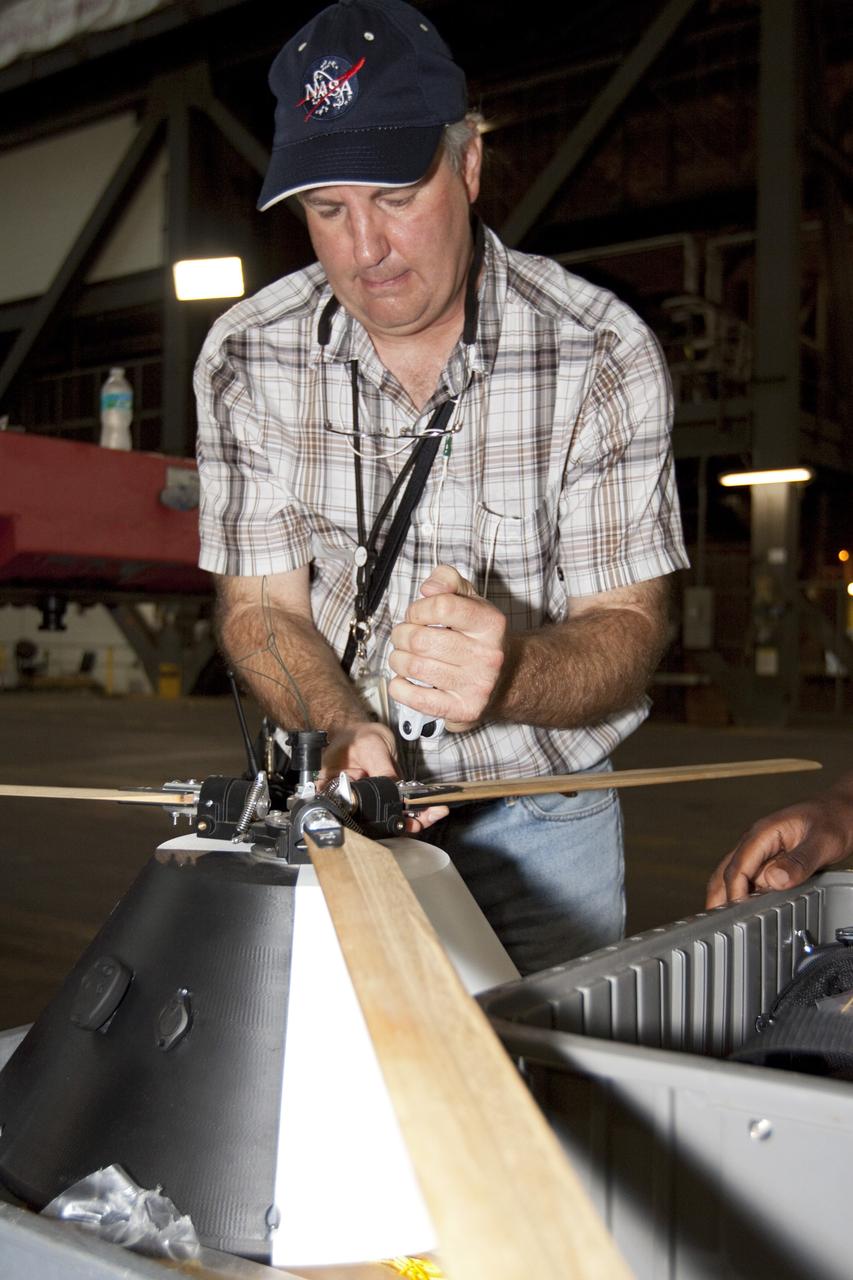
CAPE CANAVERAL, Fla. - NASA's Johnson Space Center Aerospace Engineer Jeff Hagen attaches a rotor to the top of a model capsule ahead of tests inside the Vehicle Assembly Building at NASA's Kennedy Space Center in Florida. The design would give a capsule the stability and control of a helicopter, but would not be powered. Instead, the wind passing over the rotors as the capsule descends would make the blades turn, a process called auto-rotation. The intent is to give real spacecraft a soft landing with enough control that they could touch down anywhere in the world, whether it be a runway or parking lot. In other words, wherever a helicopter could land, a spacecraft could land, too. Photo credit: NASA/Kim Shiflett
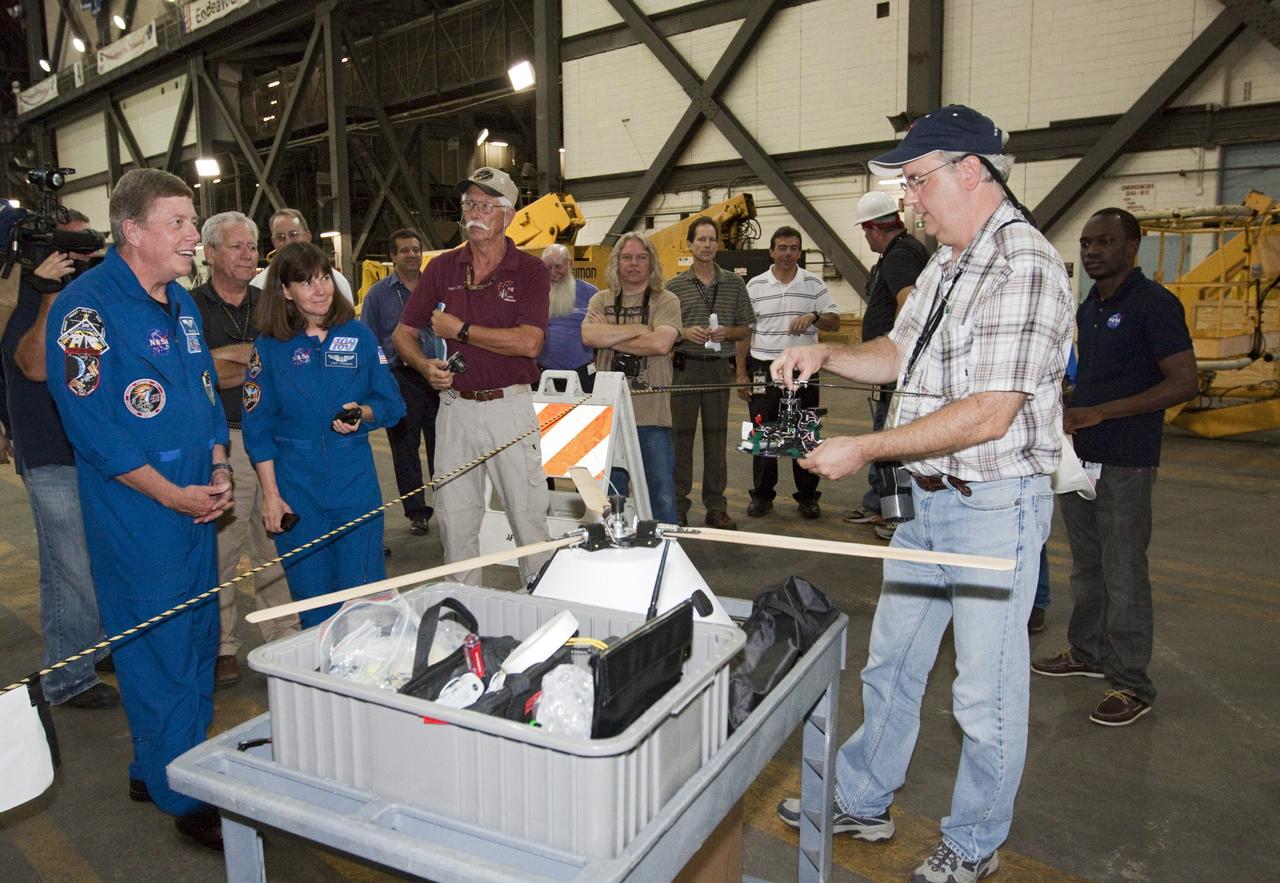
CAPE CANAVERAL, Fla. - Astronauts Mike Fossum and Cady Coleman, both in blue flight suits, look over the model capsule fit with rotor blades ahead of tests inside the Vehicle Assembly Building at NASA's Kennedy Space Center in Florida. NASA's Johnson Space Center Aerospace Engineer Jeff Hagen, right, fields questions about the project. The design would give a capsule the stability and control of a helicopter, but would not be powered. Instead, the wind passing over the rotors as the capsule descends would make the blades turn, a process called auto-rotation. The intent is to give real spacecraft a soft landing with enough control that they could touch down anywhere in the world, whether it be a runway or parking lot. In other words, wherever a helicopter could land, a spacecraft could land, too. Photo credit: NASA/Kim Shiflett
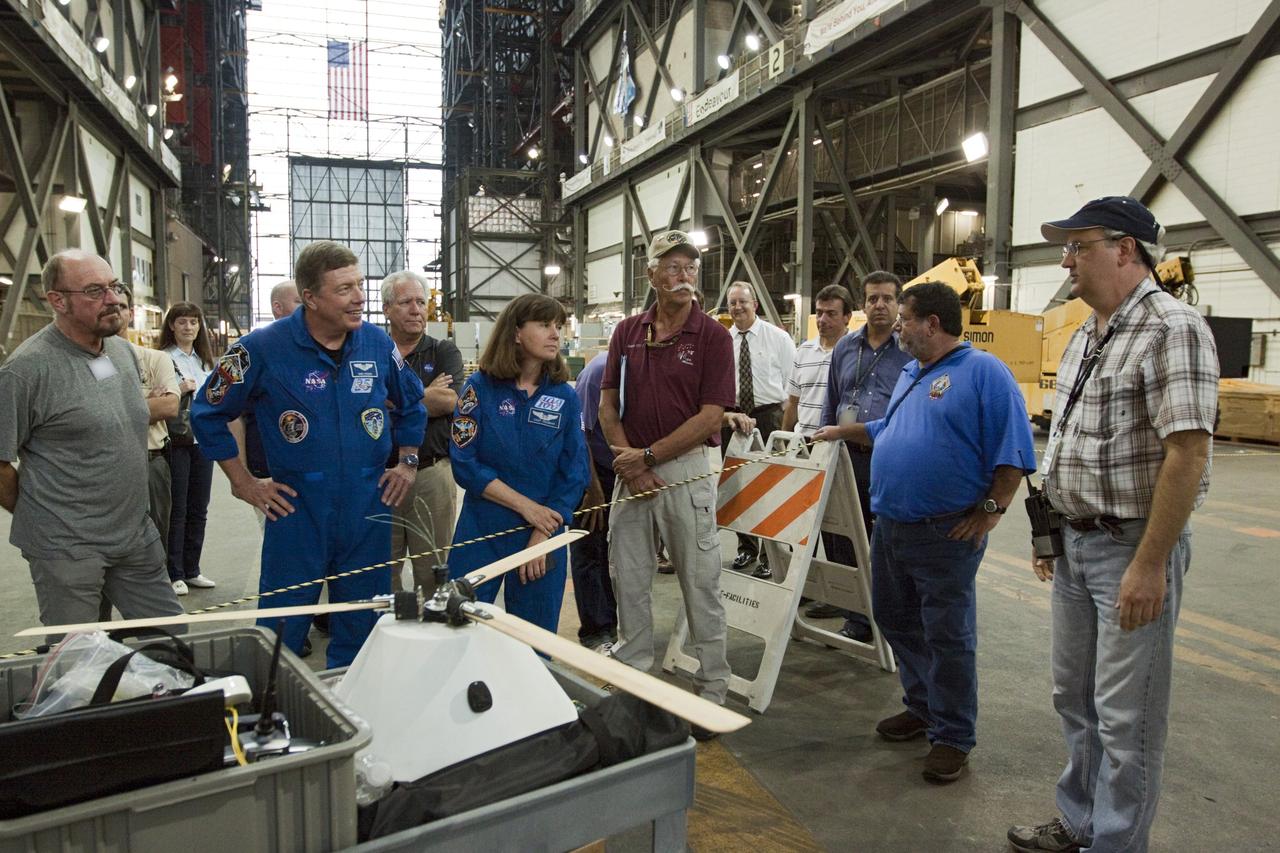
CAPE CANAVERAL, Fla. - Astronauts Mike Fossum and Cady Coleman, both in blue flight suits, listen as NASA's Johnson Space Center Aerospace Engineer Jeff Hagen explains the rotor mechanism for a model capsule ahead of tests inside the Vehicle Assembly Building at NASA's Kennedy Space Center in Florida. The design would give a capsule the stability and control of a helicopter, but would not be powered. Instead, the wind passing over the rotors as the capsule descends would make the blades turn, a process called auto-rotation. The intent is to give real spacecraft a soft landing with enough control that they could touch down anywhere in the world, whether it be a runway or parking lot. In other words, wherever a helicopter could land, a spacecraft could land, too. Photo credit: NASA/Kim Shiflett
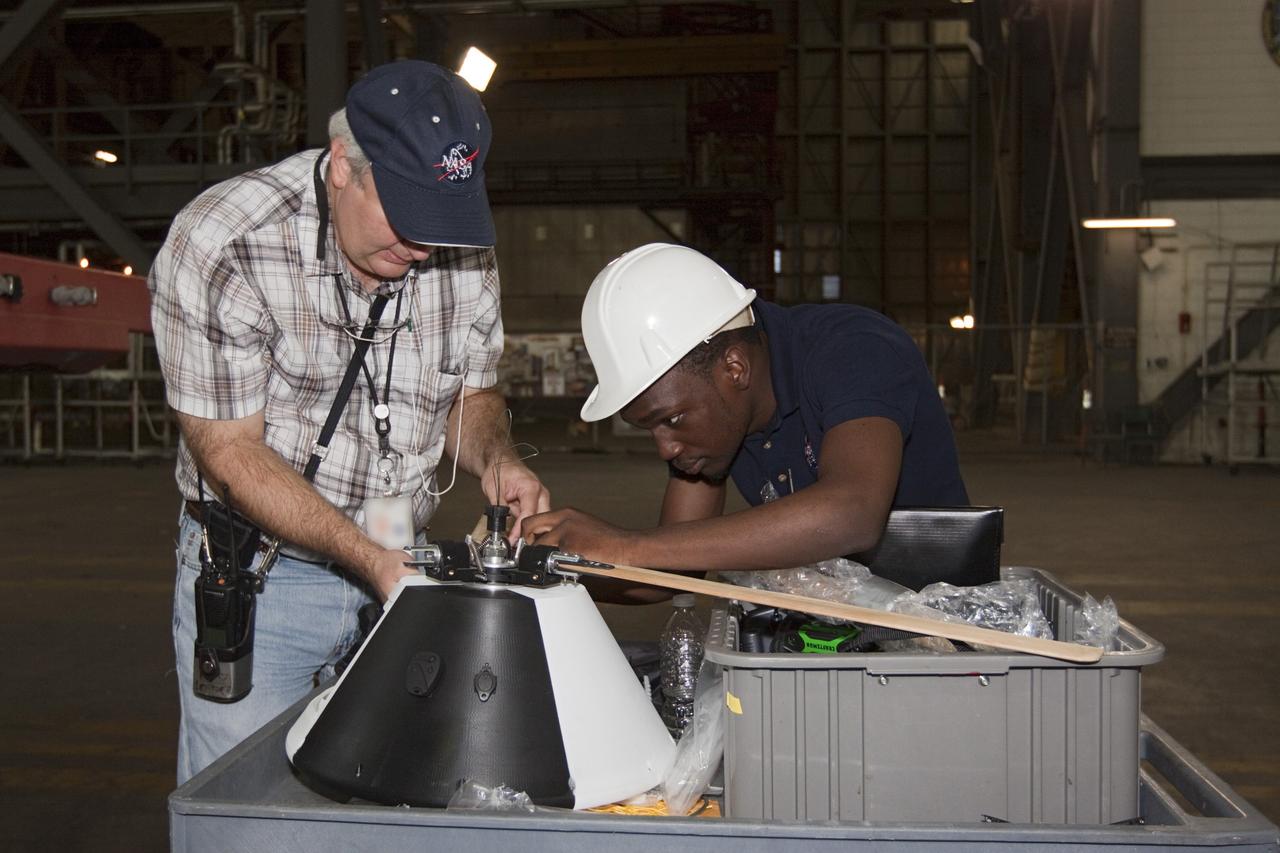
CAPE CANAVERAL, Fla. - NASA's Johnson Space Center Aerospace Engineer Jeff Hagen, left, and engineering intern Emmanuel Nyangweso attach rotors to the top of a model capsule ahead of tests inside the Vehicle Assembly Building at NASA's Kennedy Space Center in Florida. The design would give a capsule the stability and control of a helicopter, but would not be powered. Instead, the wind passing over the rotors as the capsule descends would make the blades turn, a process called auto-rotation. The intent is to give real spacecraft a soft landing with enough control that they could touch down anywhere in the world, whether it be a runway or parking lot. In other words, wherever a helicopter could land, a spacecraft could land, too. Photo credit: NASA/Kim Shiflett
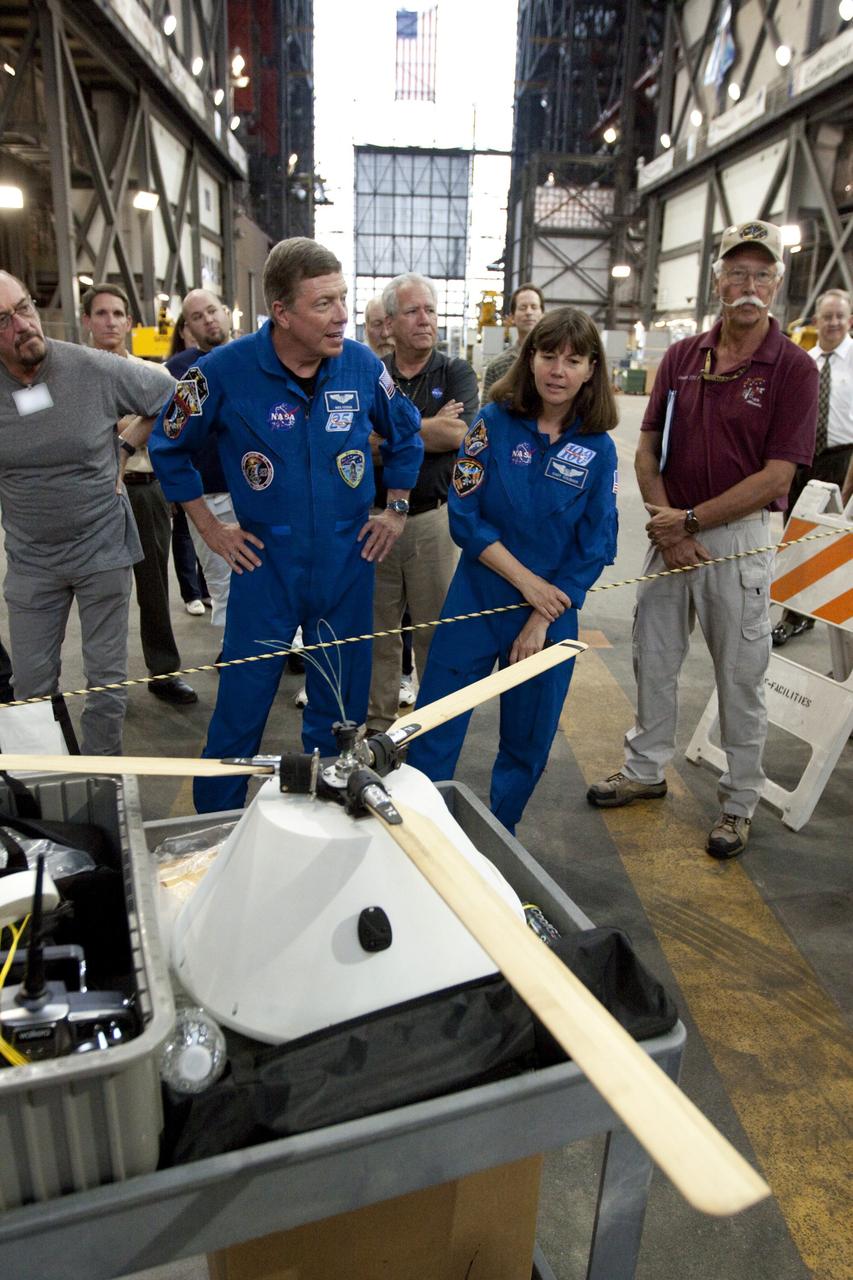
CAPE CANAVERAL, Fla. - Astronauts Mike Fossum and Cady Coleman look over a model capsule fit with rotor blades ahead of tests inside the Vehicle Assembly Building at NASA's Kennedy Space Center in Florida. The design would give a capsule the stability and control of a helicopter, but would not be powered. Instead, the wind passing over the rotors as the capsule descends would make the blades turn, a process called auto-rotation. The intent is to give real spacecraft a soft landing with enough control that they could touch down anywhere in the world, whether it be a runway or parking lot. In other words, wherever a helicopter could land, a spacecraft could land, too. Photo credit: NASA/Kim Shiflett
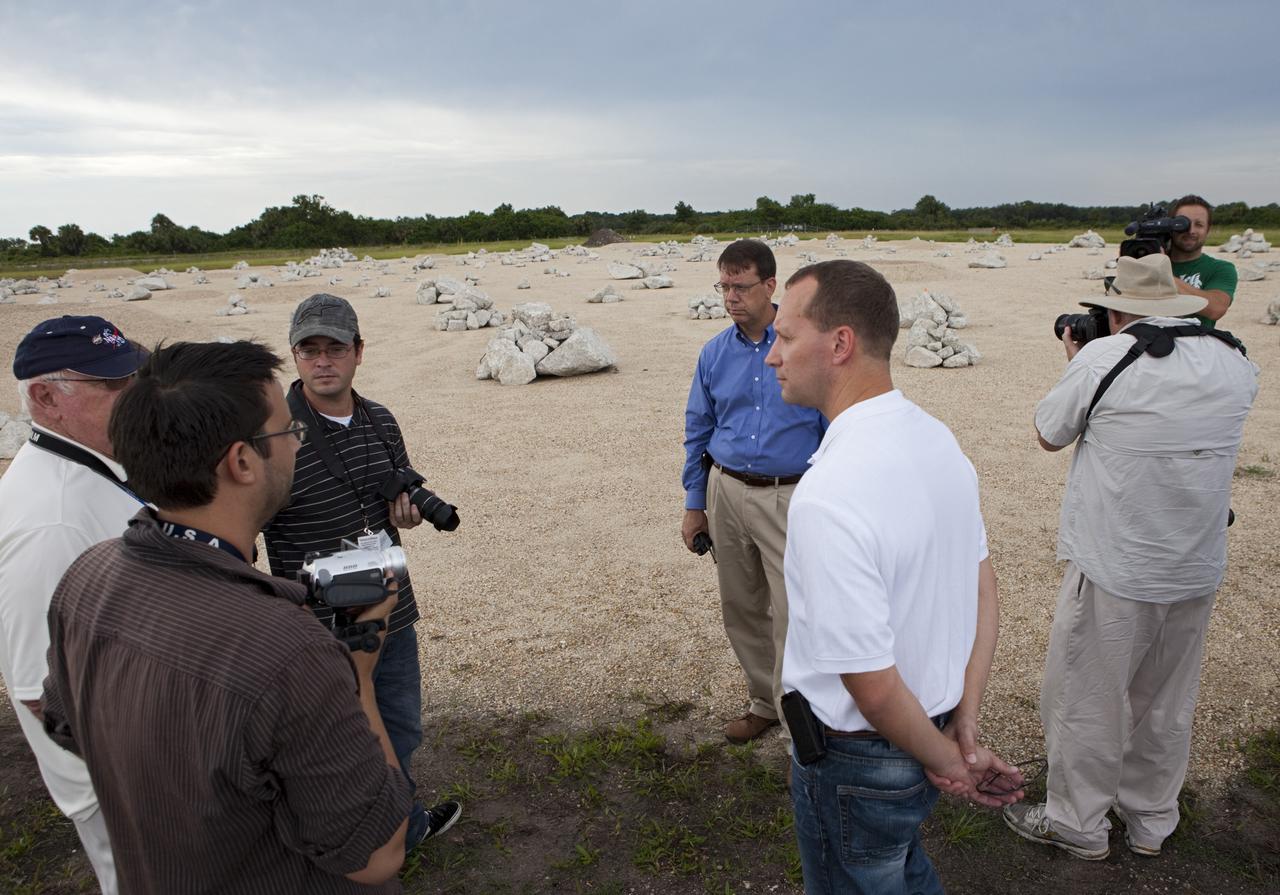
CAPE CANAVERAL, Fla. - At the Autonomous Landing and Hazard Avoidance Technology, or ALHAT, field at the north end of the Shuttle Landing Facility, or SLF, at NASA’s Kennedy Space Center in Florida, members of the media view the hazard field and speak with Morpheus managers. In the white shirt is Jon Olansen, Johnson Space Center Project Morpheus Manager. Behind Olansen is Gregory Gaddis, Kennedy Project Morpheus/ALHAT site manager. Testing of the prototype lander had been ongoing at NASA’s Johnson Space Center in Houston in preparation for its first free-flight test at Kennedy Space Center. The SLF will provide the lander with the kind of field necessary for realistic testing, complete with rocks, craters and hazards to avoid. Morpheus utilizes an autonomous landing and hazard avoidance technology, or ALHAT, payload that will allow it to navigate to clear landing sites amidst rocks, craters and other hazards during its descent. Project Morpheus is one of 20 small projects comprising the Advanced Exploration Systems, or AES, program in NASA’s Human Exploration and Operations Mission Directorate. AES projects pioneer new approaches for rapidly developing prototype systems, demonstrating key capabilities and validating operational concepts for future human missions beyond Earth orbit. For more information on Project Morpheus, visit http://morpheuslander.jsc.nasa.gov/. Photo credit: NASA/Kim Shiflett
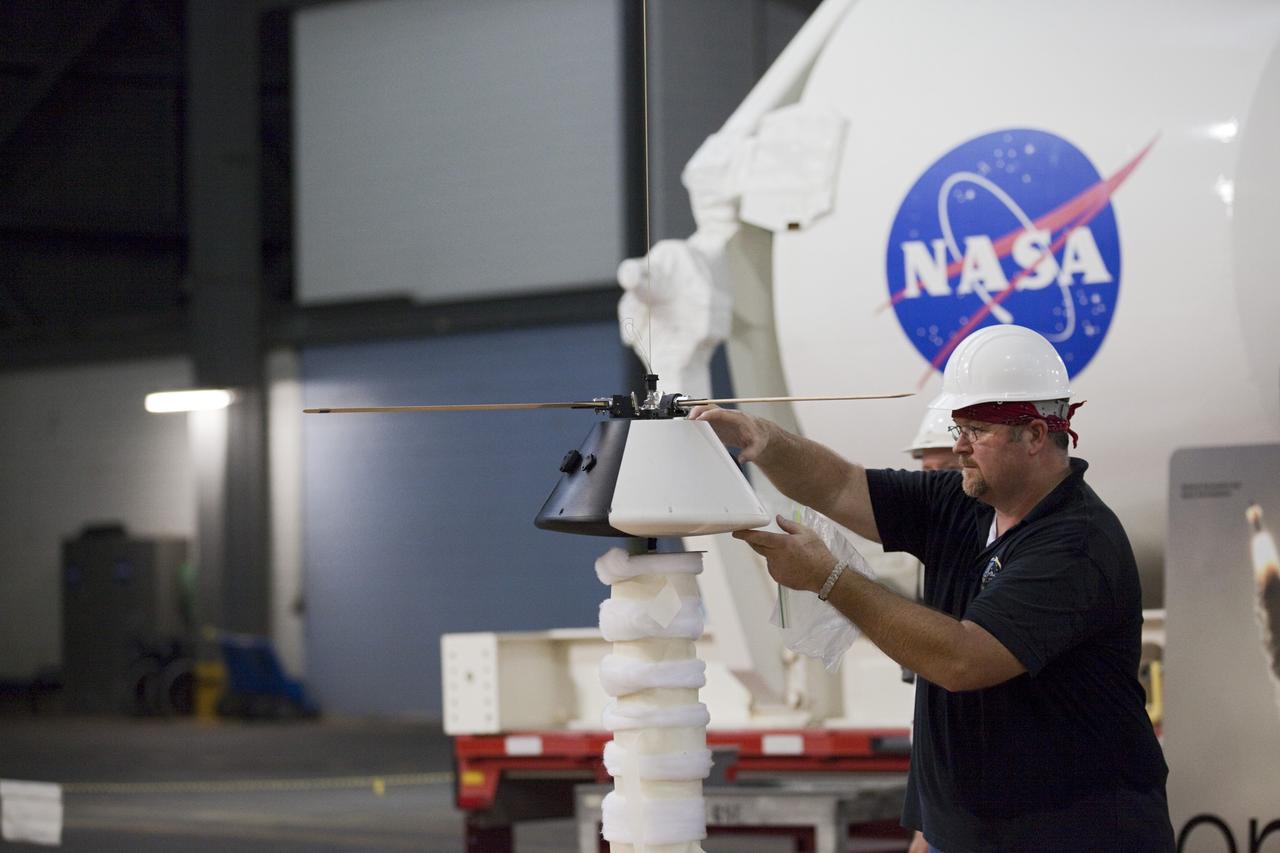
CAPE CANAVERAL, Fla. - Test operators examine a model capsule after a of test inside the Vehicle Assembly Building at NASA's Kennedy Space Center in Florida to test a rotor system landing design. The design would give a capsule the stability and control of a helicopter, but would not be powered. Instead, the wind passing over the rotors as the capsule descends would make the blades turn, a process called auto-rotation. The intent is to give real spacecraft a soft landing with enough control that they could touch down anywhere in the world, whether it be a runway or parking lot. In other words, wherever a helicopter could land, a spacecraft could land, too. Photo credit: NASA/Kim Shiflett
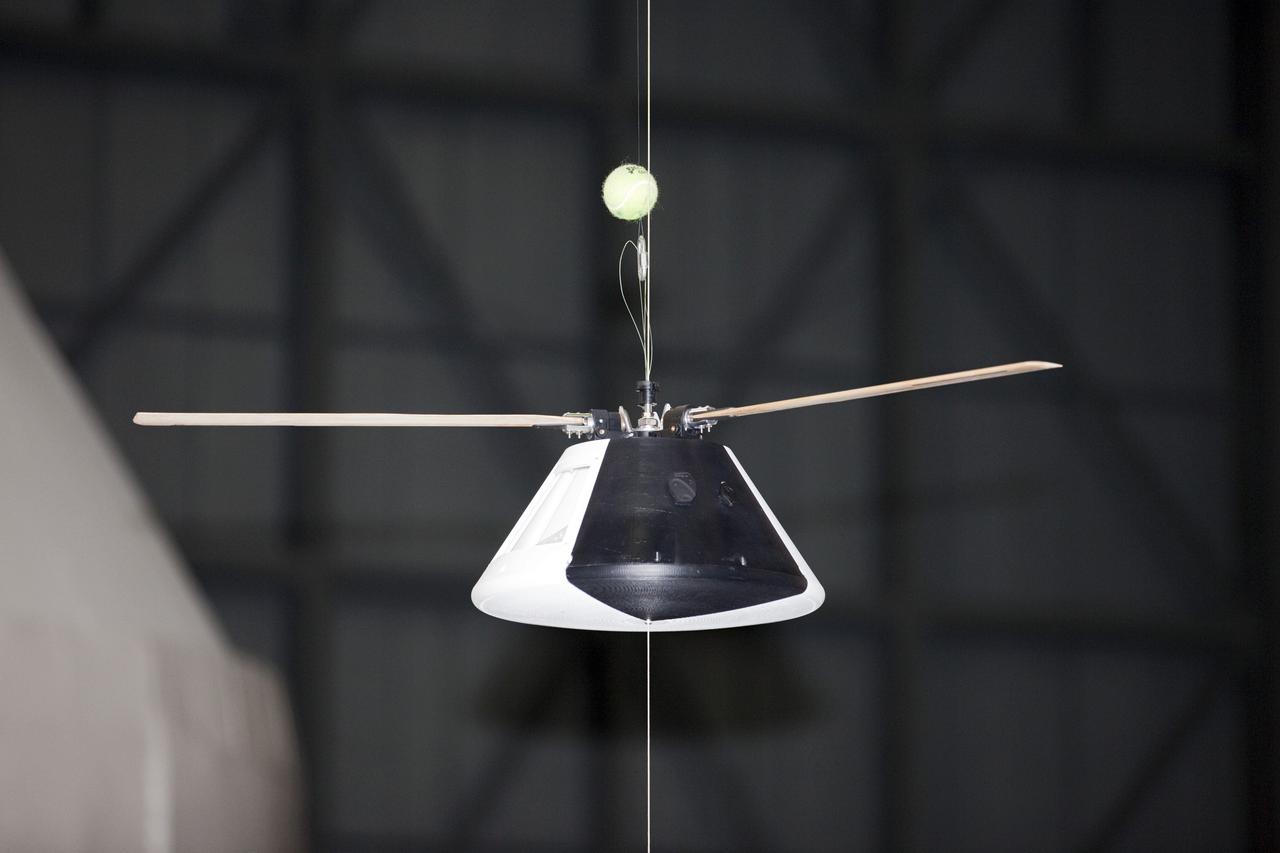
CAPE CANAVERAL, Fla. - A model capsule seen ahead of tests inside the Vehicle Assembly Building at NASA's Kennedy Space Center in Florida to test a rotor system landing design. The design would give a capsule the stability and control of a helicopter, but would not be powered. Instead, the wind passing over the rotors as the capsule descends would make the blades turn, a process called auto-rotation. The intent is to give real spacecraft a soft landing with enough control that they could touch down anywhere in the world, whether it be a runway or parking lot. In other words, wherever a helicopter could land, a spacecraft could land, too. Photo credit: NASA/Kim Shiflett
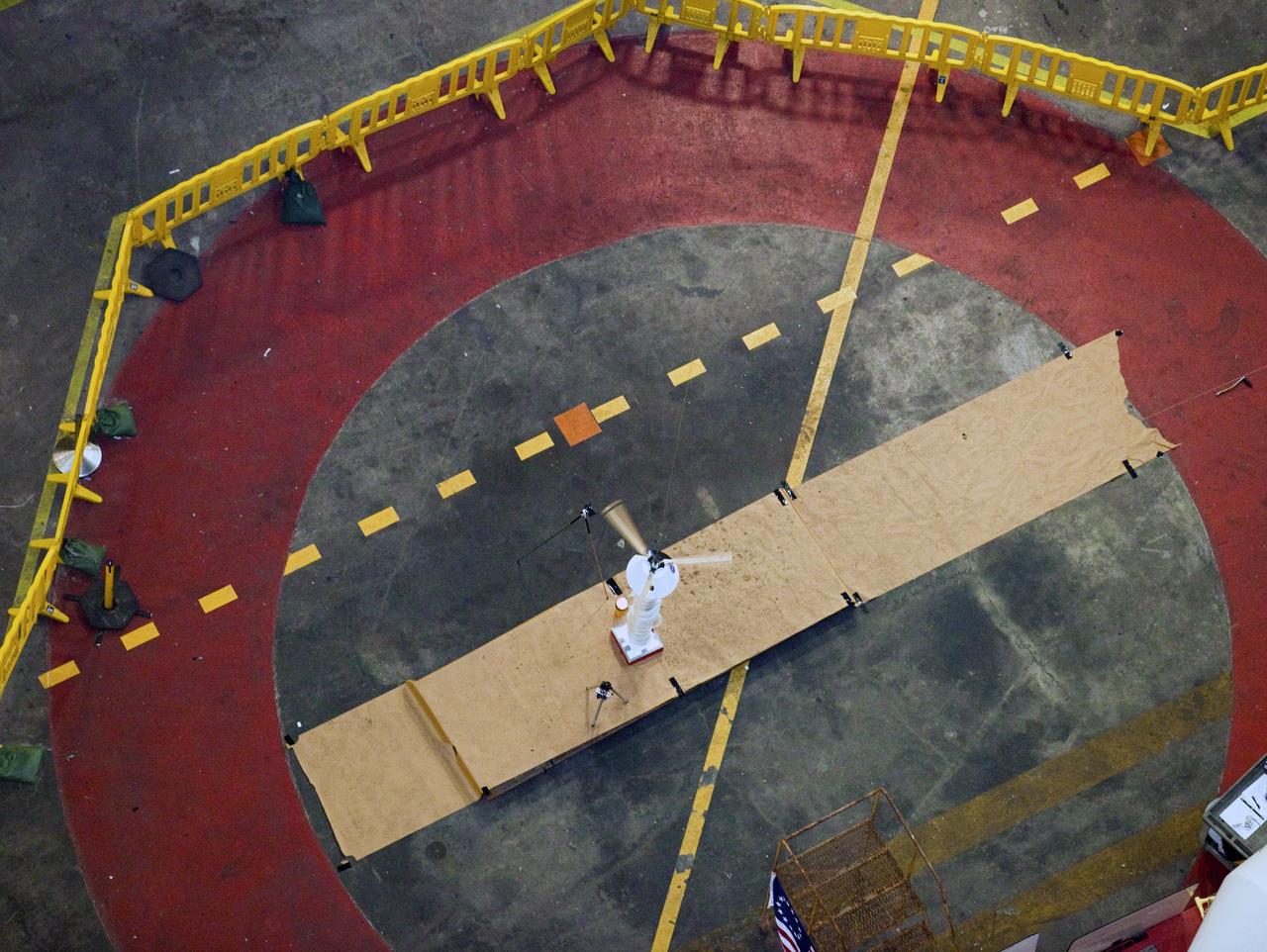
CAPE CANAVERAL, Fla. - A model capsule falls during tests inside the Vehicle Assembly Building at NASA's Kennedy Space Center in Florida to test a rotor system landing design. The design would give a capsule the stability and control of a helicopter, but would not be powered. Instead, the wind passing over the rotors as the capsule descends would make the blades turn, a process called auto-rotation. The intent is to give real spacecraft a soft landing with enough control that they could touch down anywhere in the world, whether it be a runway or parking lot. In other words, wherever a helicopter could land, a spacecraft could land, too. Photo credit: NASA/Kim Shiflett
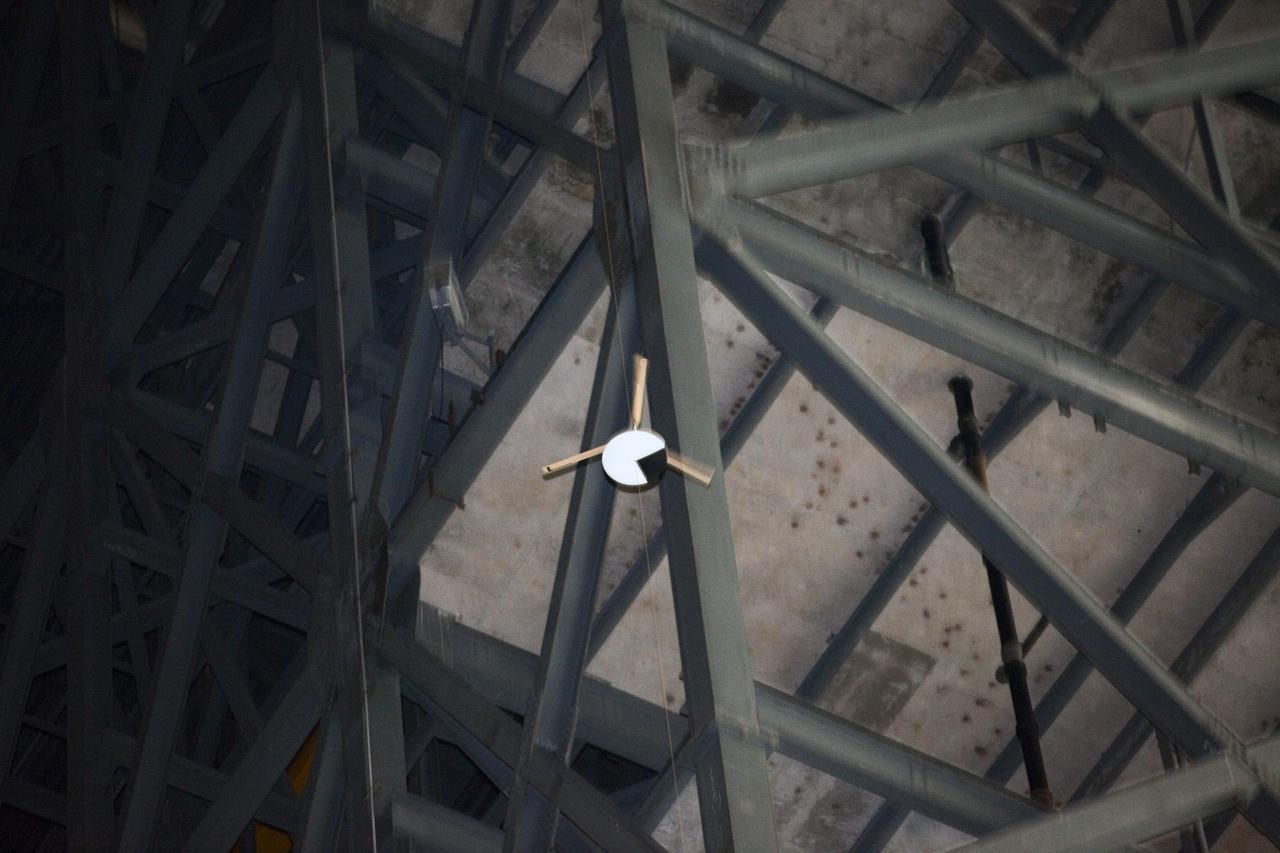
CAPE CANAVERAL, Fla. - A model capsule seen ahead of tests inside the Vehicle Assembly Building at NASA's Kennedy Space Center in Florida to test a rotor system landing design. The design would give a capsule the stability and control of a helicopter, but would not be powered. Instead, the wind passing over the rotors as the capsule descends would make the blades turn, a process called auto-rotation. The intent is to give real spacecraft a soft landing with enough control that they could touch down anywhere in the world, whether it be a runway or parking lot. In other words, wherever a helicopter could land, a spacecraft could land, too. Photo credit: NASA/Kim Shiflett
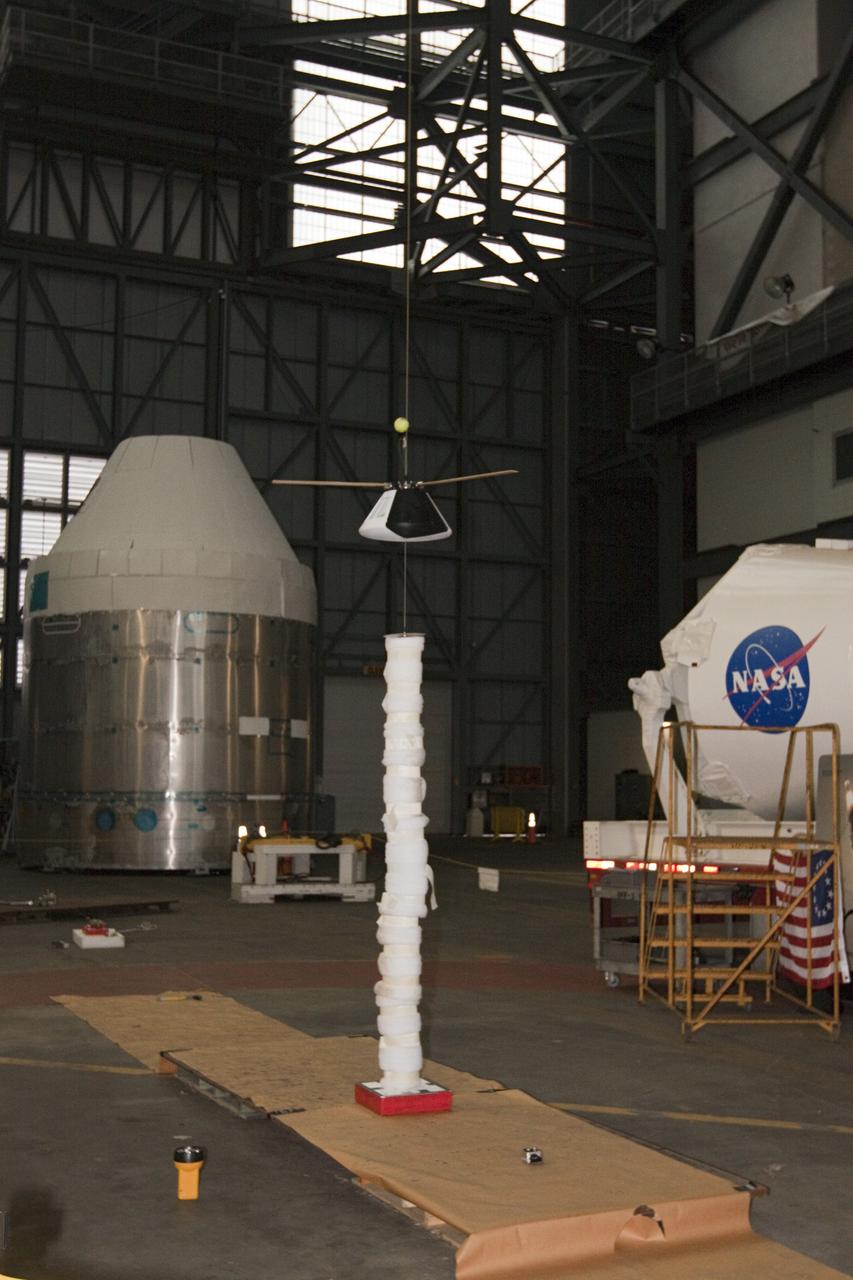
CAPE CANAVERAL, Fla. - A model capsule seen ahead of tests inside the Vehicle Assembly Building at NASA's Kennedy Space Center in Florida to test a rotor system landing design. The design would give a capsule the stability and control of a helicopter, but would not be powered. Instead, the wind passing over the rotors as the capsule descends would make the blades turn, a process called auto-rotation. The intent is to give real spacecraft a soft landing with enough control that they could touch down anywhere in the world, whether it be a runway or parking lot. In other words, wherever a helicopter could land, a spacecraft could land, too. Photo credit: NASA/Kim Shiflett
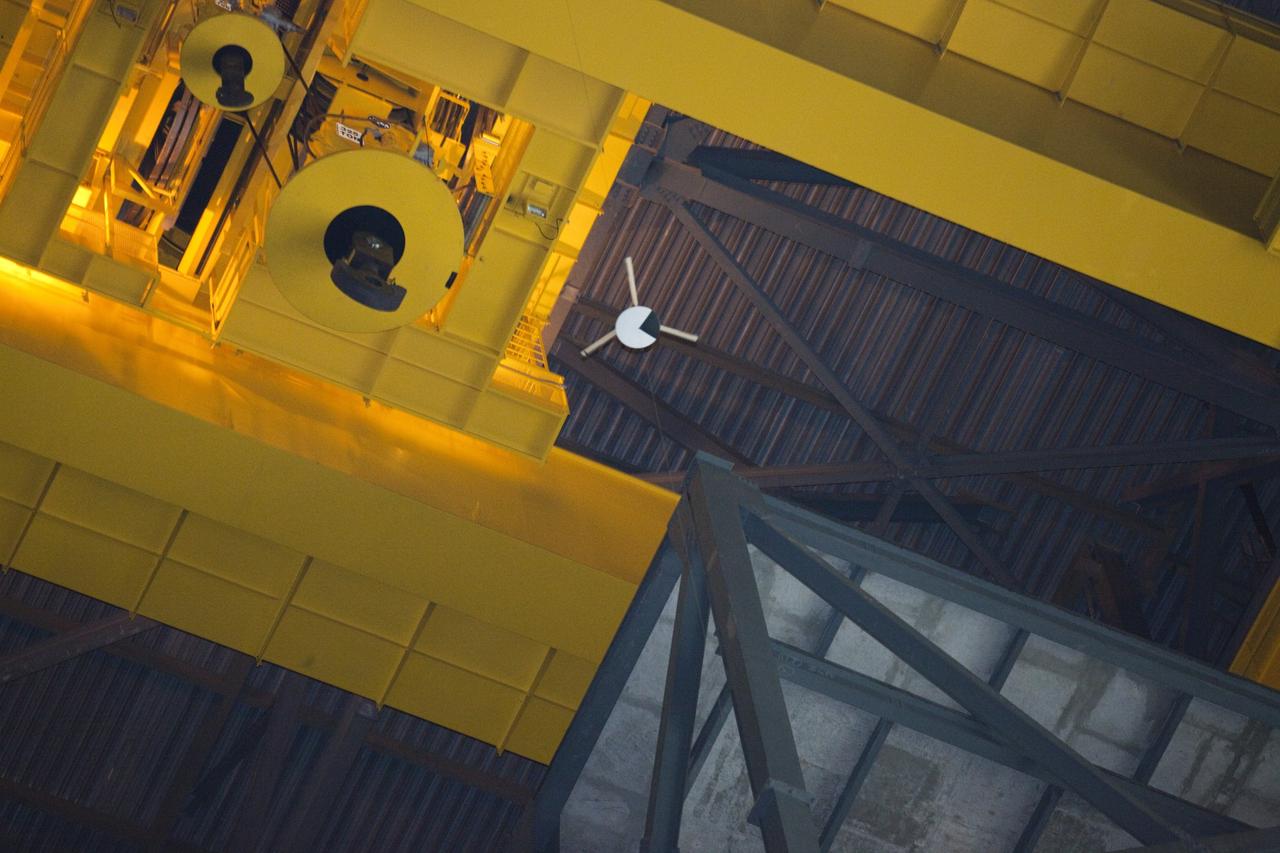
CAPE CANAVERAL, Fla. - A model capsule seen ahead of tests inside the Vehicle Assembly Building at NASA's Kennedy Space Center in Florida to test a rotor system landing design. The design would give a capsule the stability and control of a helicopter, but would not be powered. Instead, the wind passing over the rotors as the capsule descends would make the blades turn, a process called auto-rotation. The intent is to give real spacecraft a soft landing with enough control that they could touch down anywhere in the world, whether it be a runway or parking lot. In other words, wherever a helicopter could land, a spacecraft could land, too. Photo credit: NASA/Kim Shiflett
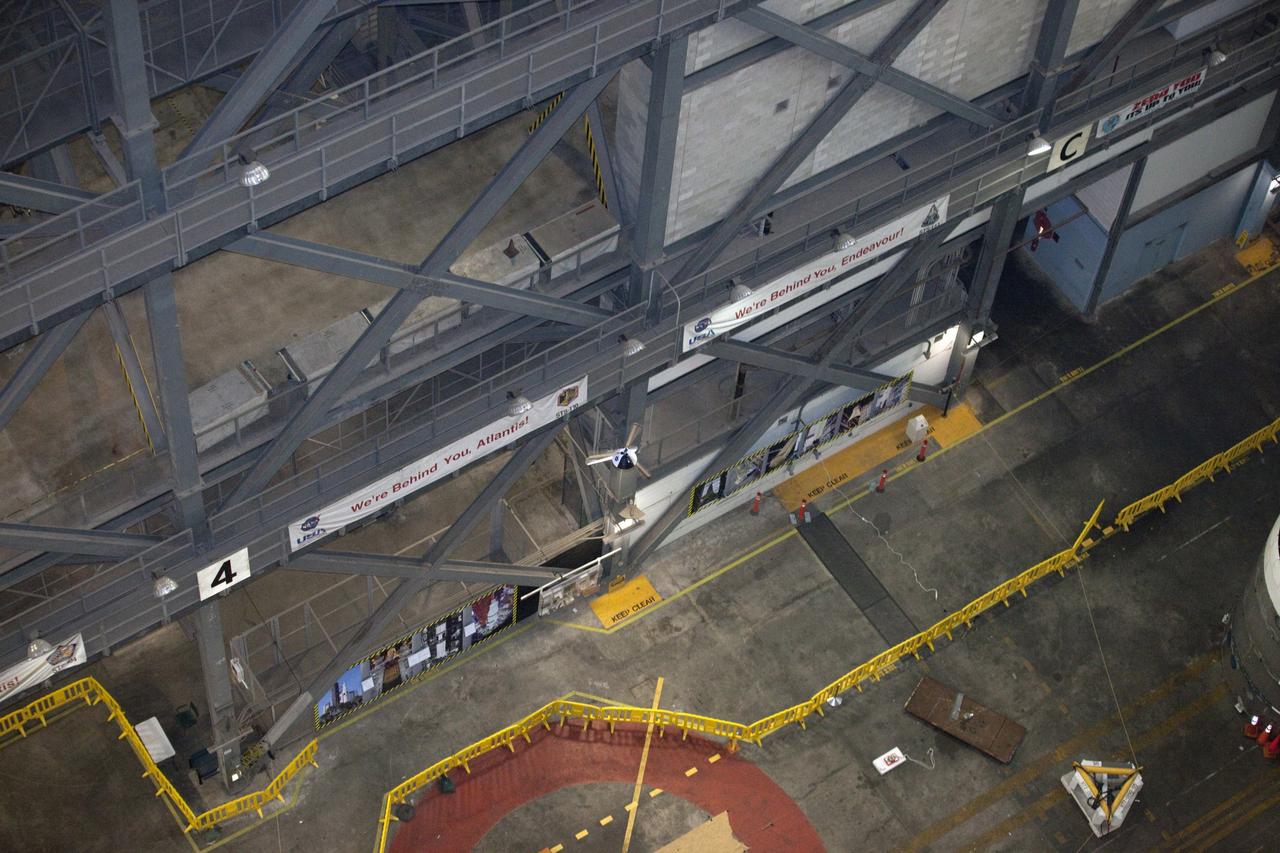
CAPE CANAVERAL, Fla. - A model capsule falls during tests inside the Vehicle Assembly Building at NASA's Kennedy Space Center in Florida to test a rotor system landing design. The design would give a capsule the stability and control of a helicopter, but would not be powered. Instead, the wind passing over the rotors as the capsule descends would make the blades turn, a process called auto-rotation. The intent is to give real spacecraft a soft landing with enough control that they could touch down anywhere in the world, whether it be a runway or parking lot. In other words, wherever a helicopter could land, a spacecraft could land, too. Photo credit: NASA/Kim Shiflett
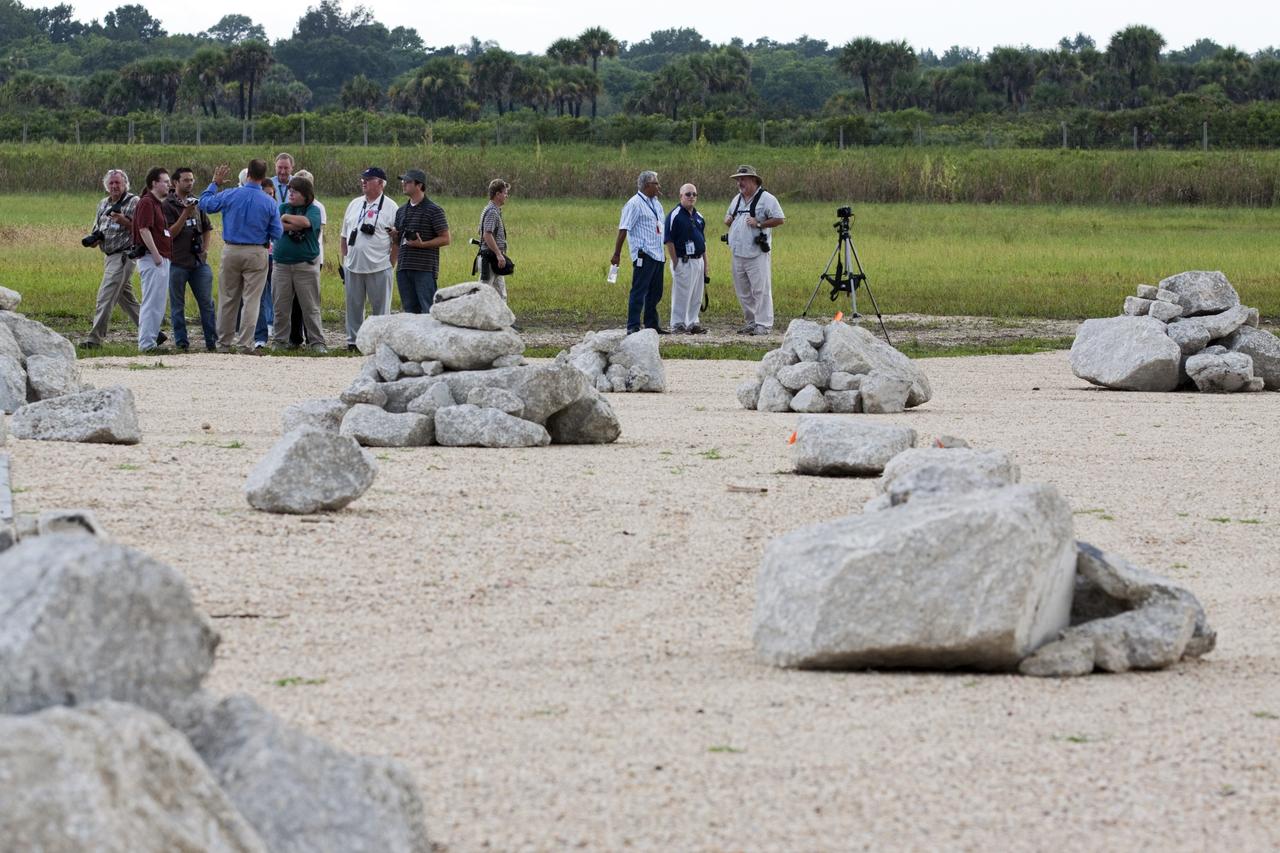
CAPE CANAVERAL, Fla. - At the Autonomous Landing and Hazard Avoidance Technology, or ALHAT, field at the north end of the Shuttle Landing Facility, or SLF, at NASA’s Kennedy Space Center in Florida, members of the media view the hazard field and speak with Morpheus managers. At left, in the blue shirt is Gregory Gaddis, Kennedy Project Morpheus/ALHAT site manager. Testing of the prototype lander had been ongoing at NASA’s Johnson Space Center in Houston in preparation for its first free-flight test at Kennedy Space Center. The SLF will provide the lander with the kind of field necessary for realistic testing, complete with rocks, craters and hazards to avoid. Morpheus utilizes an autonomous landing and hazard avoidance technology, or ALHAT, payload that will allow it to navigate to clear landing sites amidst rocks, craters and other hazards during its descent. Project Morpheus is one of 20 small projects comprising the Advanced Exploration Systems, or AES, program in NASA’s Human Exploration and Operations Mission Directorate. AES projects pioneer new approaches for rapidly developing prototype systems, demonstrating key capabilities and validating operational concepts for future human missions beyond Earth orbit. For more information on Project Morpheus, visit http://morpheuslander.jsc.nasa.gov/. Photo credit: NASA/Kim Shiflett
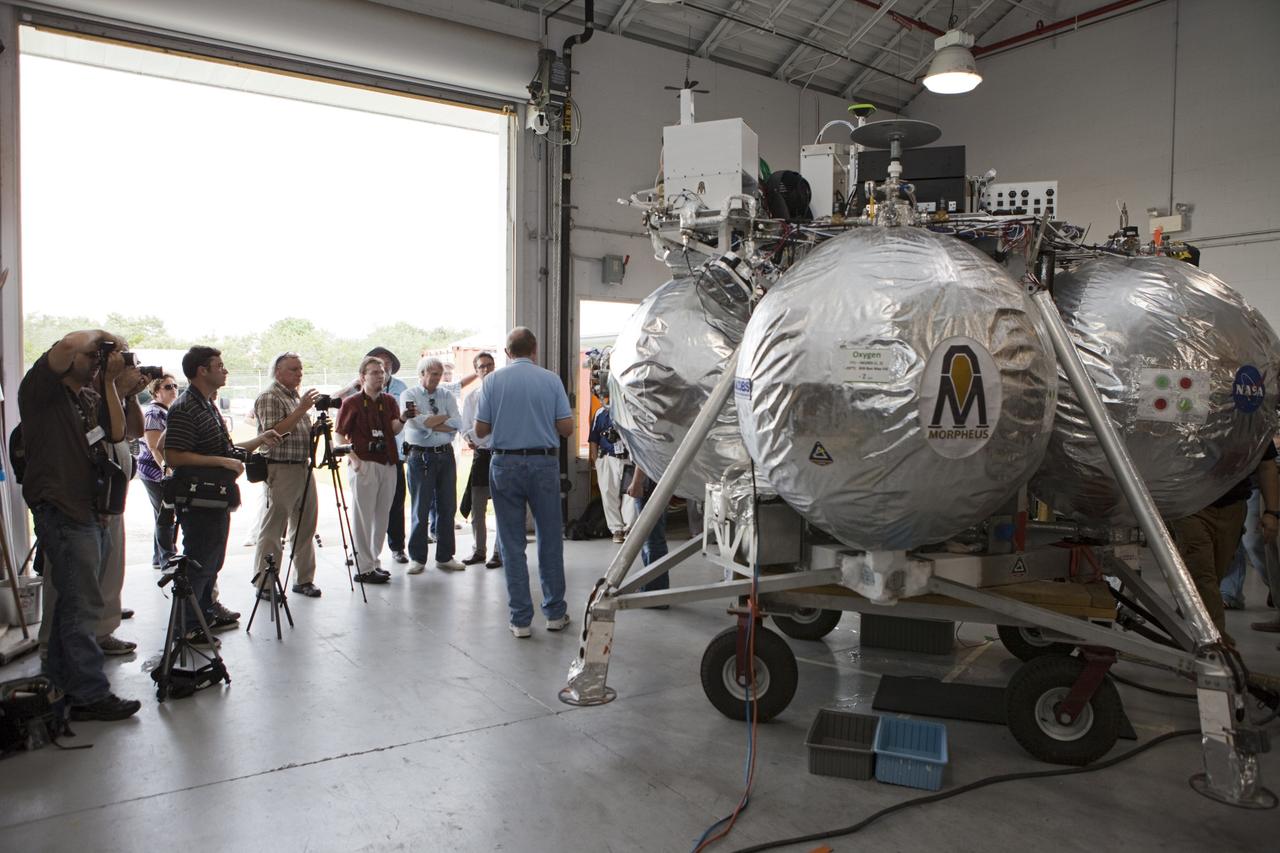
CAPE CANAVERAL, Fla. - At a hangar near the Shuttle Landing Facility, or SLF, at NASA’s Kennedy Space Center in Florida, Chirold Epp, Johnson Space Center Project Manager for ALHAT, speaks to members of the media. In the background is the Morpheus prototype lander, which arrived at Kennedy on July 27. Testing of the prototype lander had been ongoing at NASA’s Johnson Space Center in Houston in preparation for its first free-flight test at Kennedy Space Center. The SLF will provide the lander with the kind of field necessary for realistic testing, complete with rocks, craters and hazards to avoid. Morpheus utilizes an autonomous landing and hazard avoidance technology, or ALHAT, payload that will allow it to navigate to clear landing sites amidst rocks, craters and other hazards during its descent. Project Morpheus is one of 20 small projects comprising the Advanced Exploration Systems, or AES, program in NASA’s Human Exploration and Operations Mission Directorate. AES projects pioneer new approaches for rapidly developing prototype systems, demonstrating key capabilities and validating operational concepts for future human missions beyond Earth orbit. For more information on Project Morpheus, visit http://morpheuslander.jsc.nasa.gov/. Photo credit: NASA/Kim Shiflett
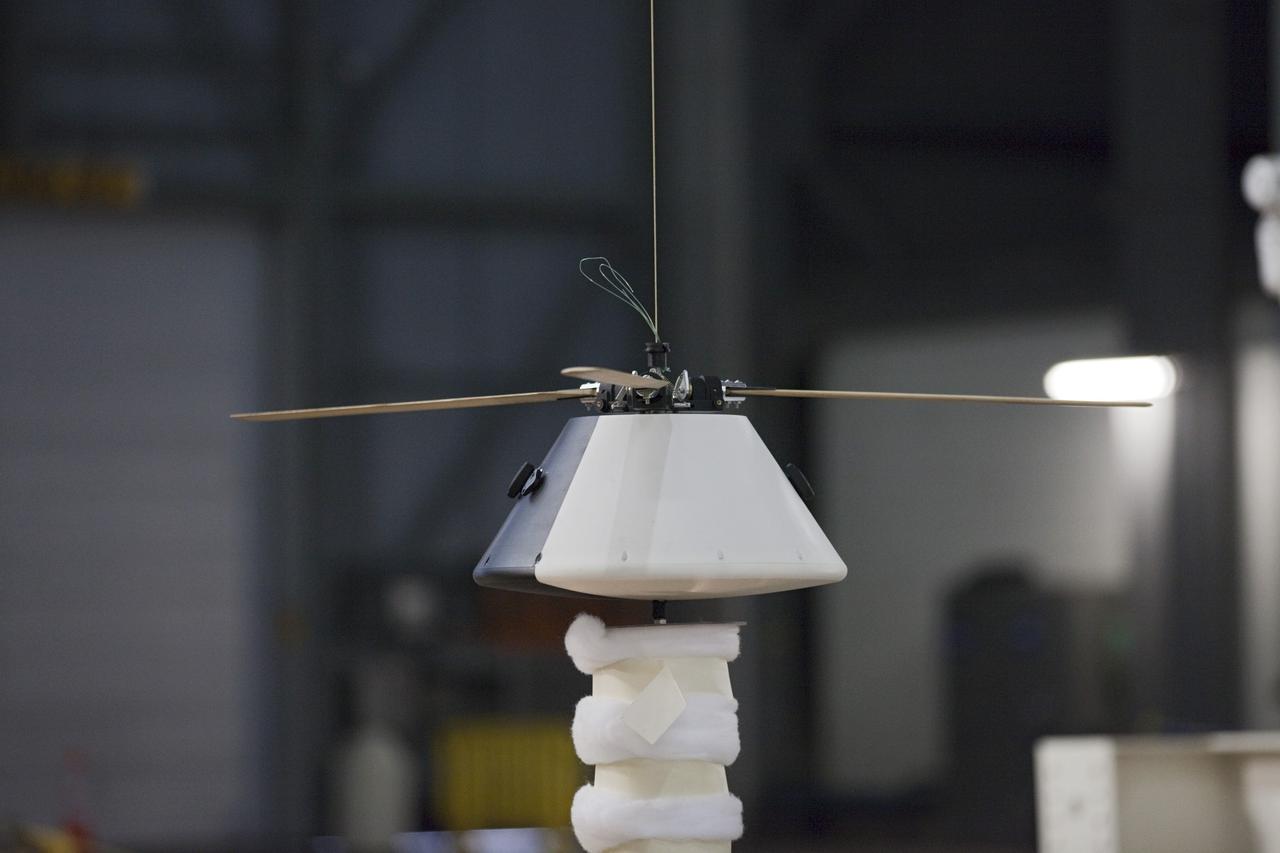
CAPE CANAVERAL, Fla. - A model capsule following a test inside the Vehicle Assembly Building at NASA's Kennedy Space Center in Florida to test a rotor system landing design. The design would give a capsule the stability and control of a helicopter, but would not be powered. Instead, the wind passing over the rotors as the capsule descends would make the blades turn, a process called auto-rotation. The intent is to give real spacecraft a soft landing with enough control that they could touch down anywhere in the world, whether it be a runway or parking lot. In other words, wherever a helicopter could land, a spacecraft could land, too. Photo credit: NASA/Kim Shiflett
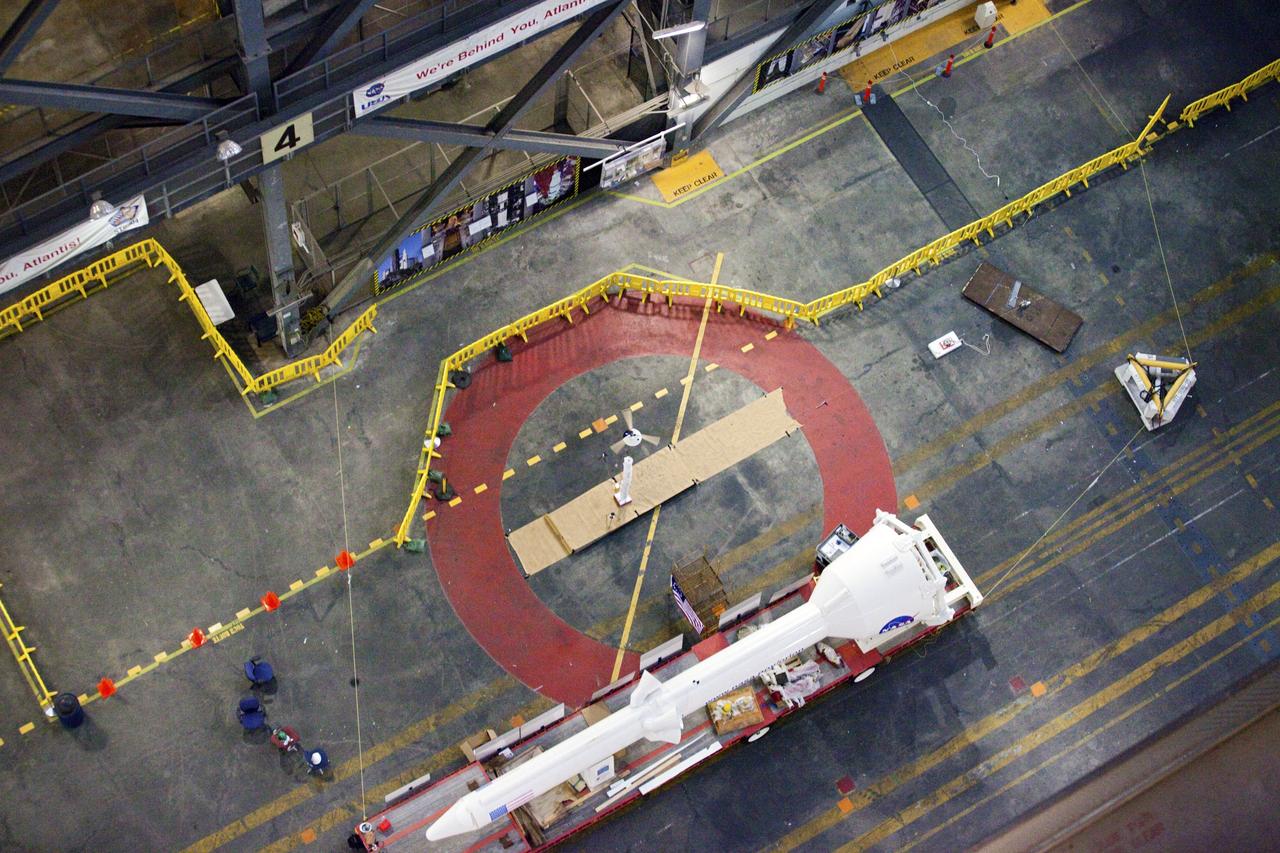
CAPE CANAVERAL, Fla. - A model capsule falls during tests inside the Vehicle Assembly Building at NASA's Kennedy Space Center in Florida to test a rotor system landing design. The design would give a capsule the stability and control of a helicopter, but would not be powered. Instead, the wind passing over the rotors as the capsule descends would make the blades turn, a process called auto-rotation. The intent is to give real spacecraft a soft landing with enough control that they could touch down anywhere in the world, whether it be a runway or parking lot. In other words, wherever a helicopter could land, a spacecraft could land, too. Photo credit: NASA/Kim Shiflett
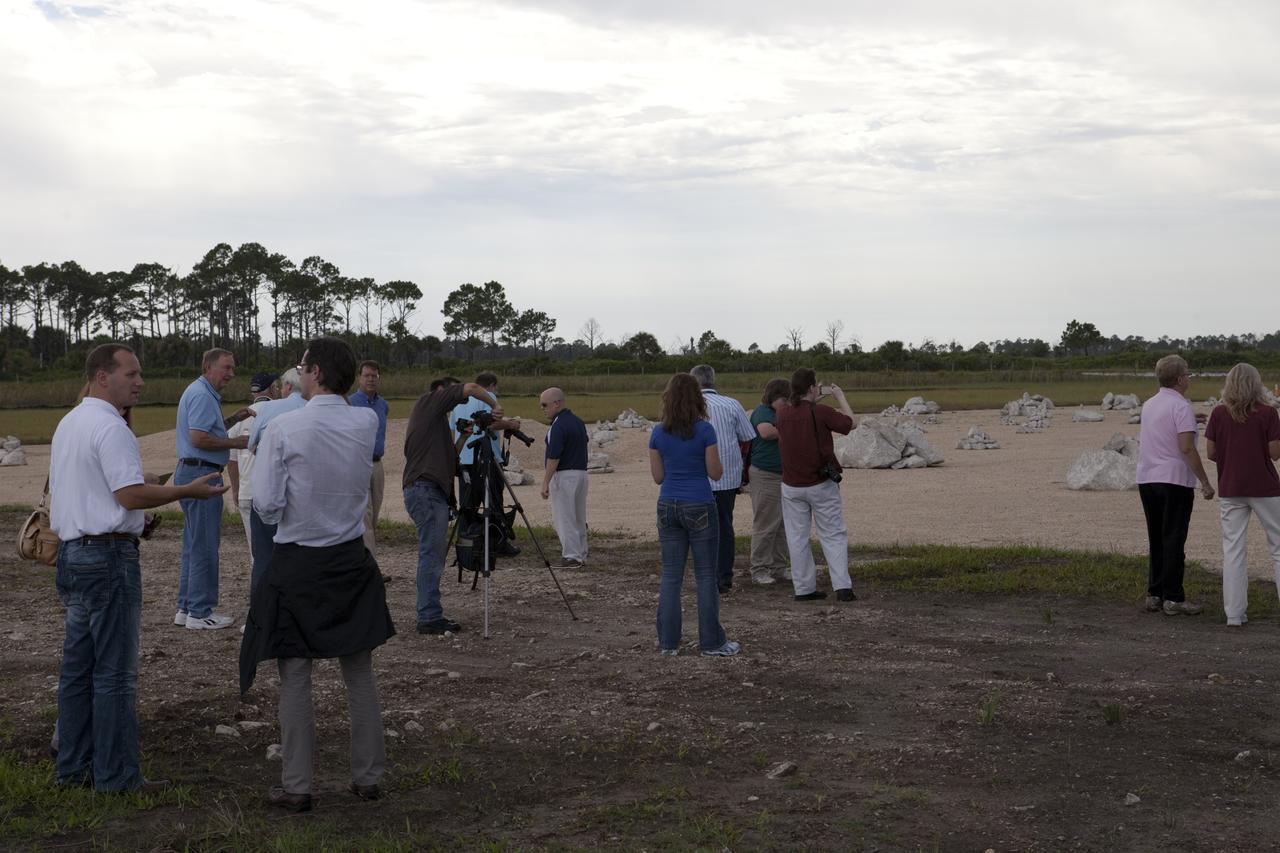
CAPE CANAVERAL, Fla. - At the Autonomous Landing and Hazard Avoidance Technology, or ALHAT, field at the north end of the Shuttle Landing Facility, or SLF, at NASA’s Kennedy Space Center in Florida, members of the media view the hazard field and speak with Morpheus managers. At far left, in the white shirt is Jon Olansen, Johnson Space Center Project Morpheus Manager. At left, in the blue shirt is Chirold Epp, JSC project manager for ALHAT. Testing of the prototype lander had been ongoing at NASA’s Johnson Space Center in Houston in preparation for its first free-flight test at Kennedy Space Center. The SLF will provide the lander with the kind of field necessary for realistic testing, complete with rocks, craters and hazards to avoid. Morpheus utilizes an autonomous landing and hazard avoidance technology, or ALHAT, payload that will allow it to navigate to clear landing sites amidst rocks, craters and other hazards during its descent. Project Morpheus is one of 20 small projects comprising the Advanced Exploration Systems, or AES, program in NASA’s Human Exploration and Operations Mission Directorate. AES projects pioneer new approaches for rapidly developing prototype systems, demonstrating key capabilities and validating operational concepts for future human missions beyond Earth orbit. For more information on Project Morpheus, visit http://morpheuslander.jsc.nasa.gov/. Photo credit: NASA/Kim Shiflett
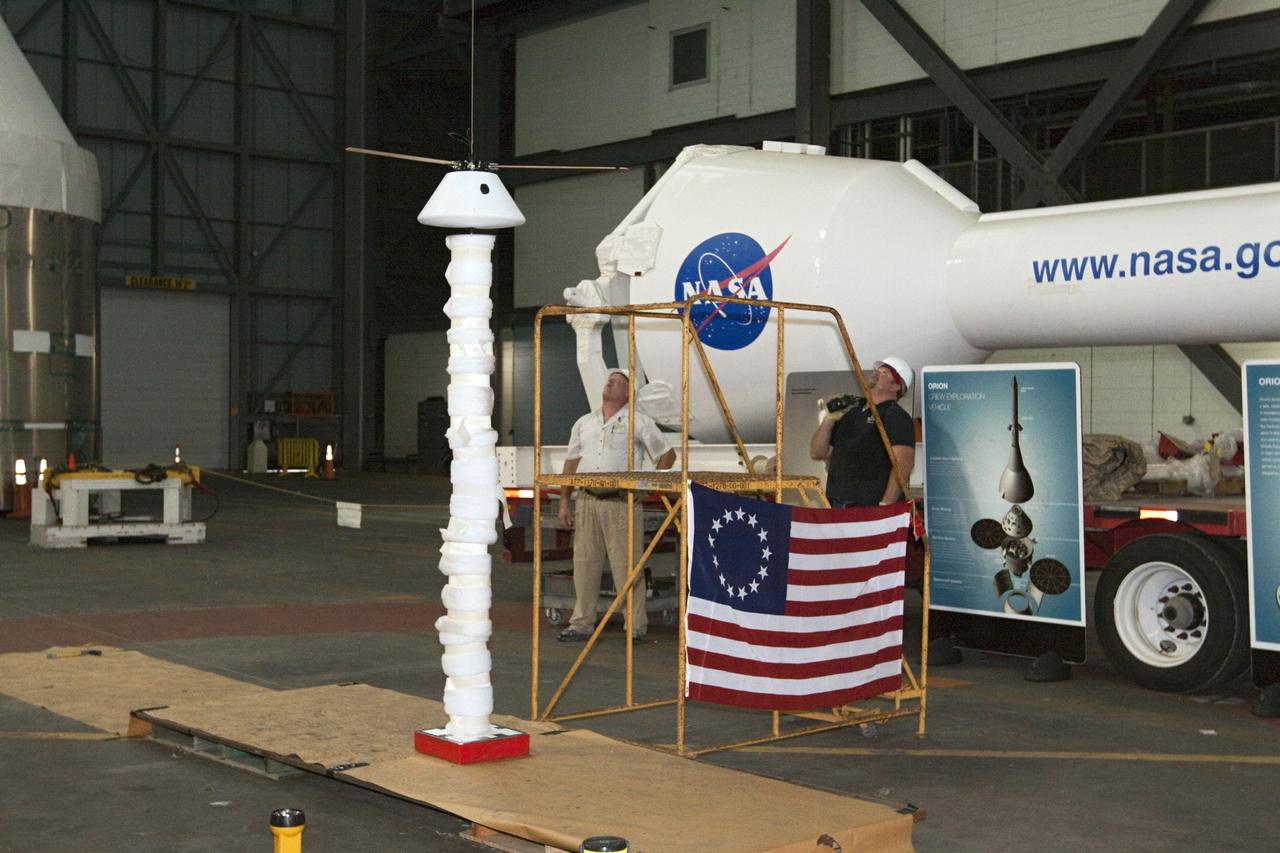
CAPE CANAVERAL, Fla. - Test operators prepare a model capsule ahead of tests inside the Vehicle Assembly Building at NASA's Kennedy Space Center in Florida to test a rotor system landing design. The design would give a capsule the stability and control of a helicopter, but would not be powered. Instead, the wind passing over the rotors as the capsule descends would make the blades turn, a process called auto-rotation. The intent is to give real spacecraft a soft landing with enough control that they could touch down anywhere in the world, whether it be a runway or parking lot. In other words, wherever a helicopter could land, a spacecraft could land, too. Photo credit: NASA/Kim Shiflett